Creating a dining space that feels curated and personal involves more than just selecting a table and chairs. Incorporating art into your dining room transforms the entire atmosphere, turning a functional eating area into a sophisticated gallery-like experience. Whether you prefer a single bold statement or a collection of smaller treasures, the right artwork sets the mood for every meal and celebration. It provides a focal point that anchors the room while reflecting your unique personality and design aesthetic. By carefully choosing pieces that harmonize with your color palette and furniture, you can elevate the dining experience for both your family and your guests.
1. Oversized abstract dining room
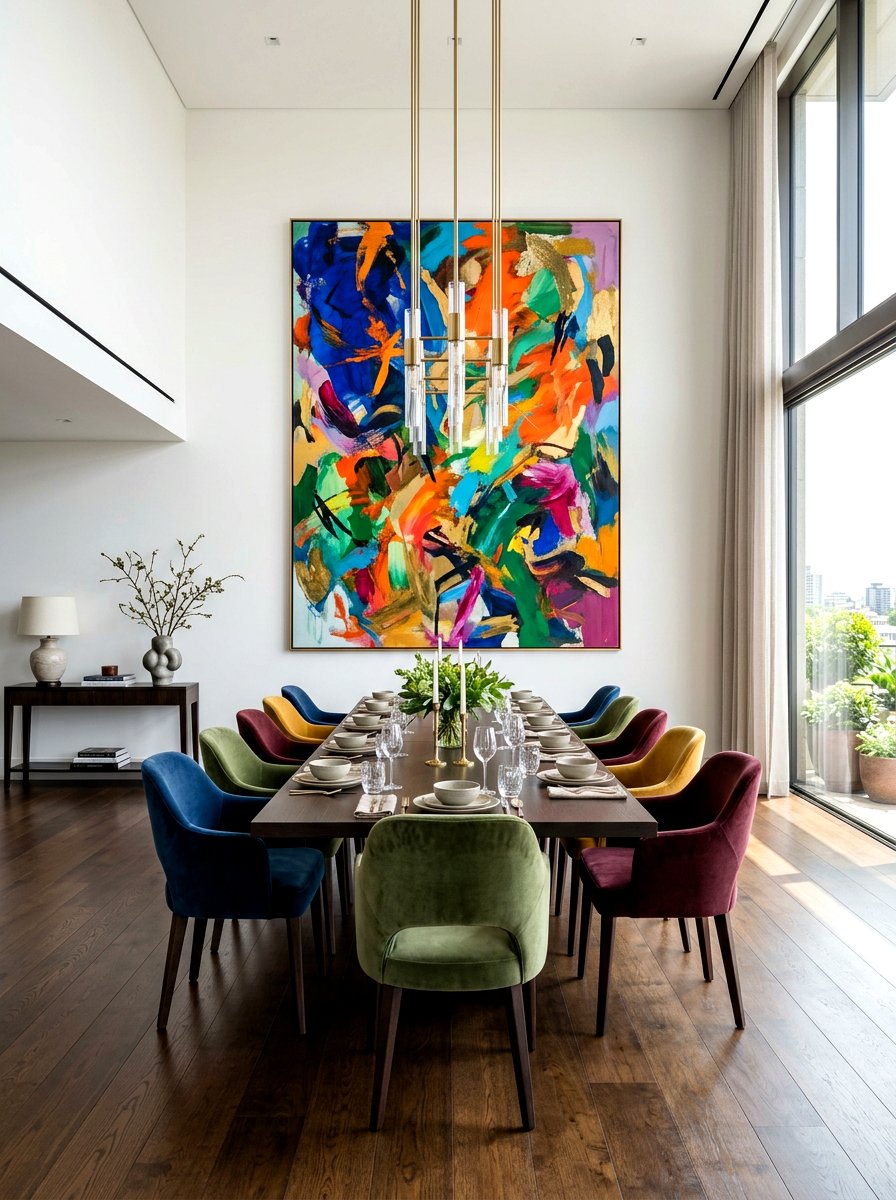
An oversized abstract dining room focuses on a single, massive piece of art that covers a significant portion of the main wall. This approach is perfect for those who want to create a high-impact, sophisticated environment without the clutter of multiple frames. By choosing a canvas with colors that complement your existing furniture, you anchor the entire space and provide a clear focal point. The sheer scale of the art adds a sense of luxury and makes the room feel more expansive and intentional. It also serves as an excellent conversation starter during dinner parties, allowing guests to interpret the movement and emotion of the piece.
2. Eclectic gallery dining room
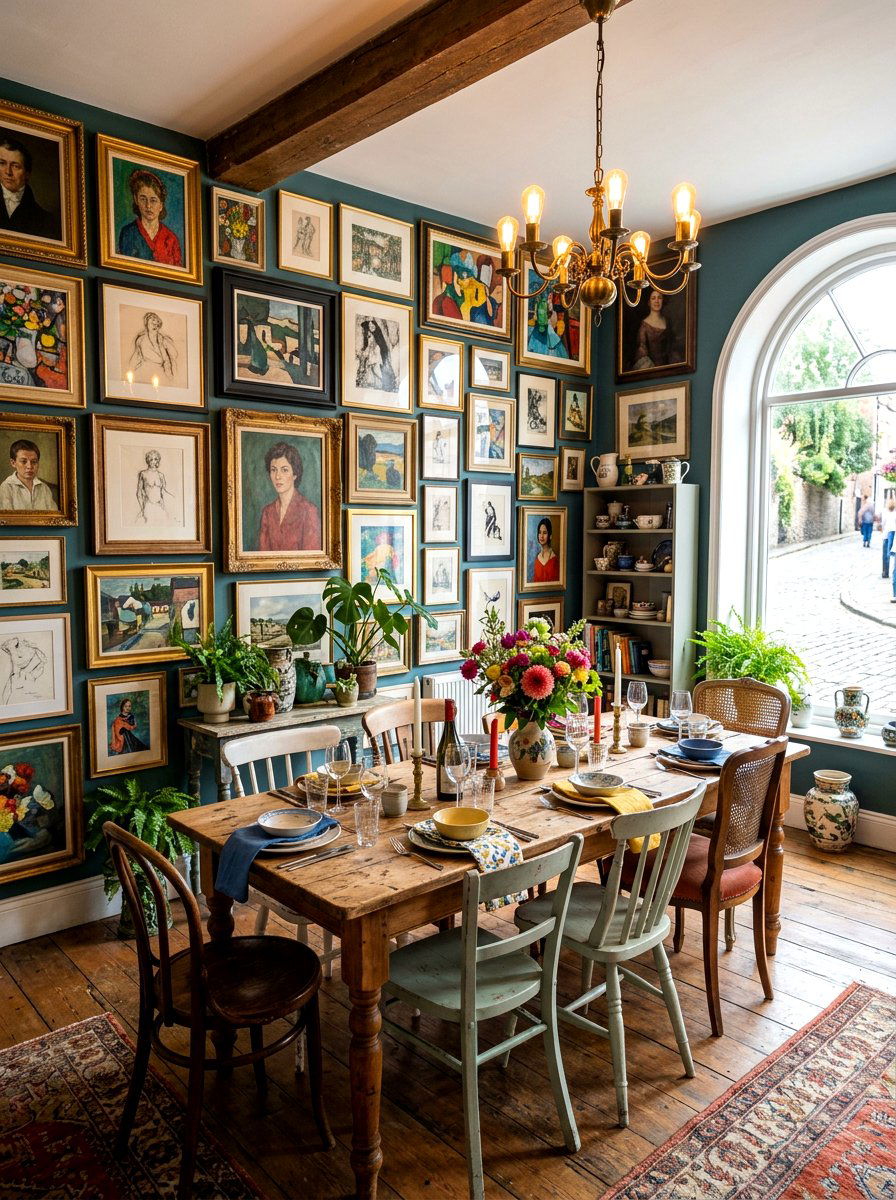
An eclectic gallery dining room celebrates a diverse collection of artwork arranged in a visually stimulating cluster. This design allows you to mix different mediums, such as oil paintings, sketches, and photographs, within a variety of frame styles and sizes. The key to making this look successful is finding a common thread, like a shared color or theme, to prevent the wall from feeling too chaotic. A gallery wall creates a lived-in, soulful atmosphere that tells a personal story. It is especially effective in casual dining areas where you want to foster a warm, inviting, and highly creative vibe for everyone.
3. Dramatic mural dining room
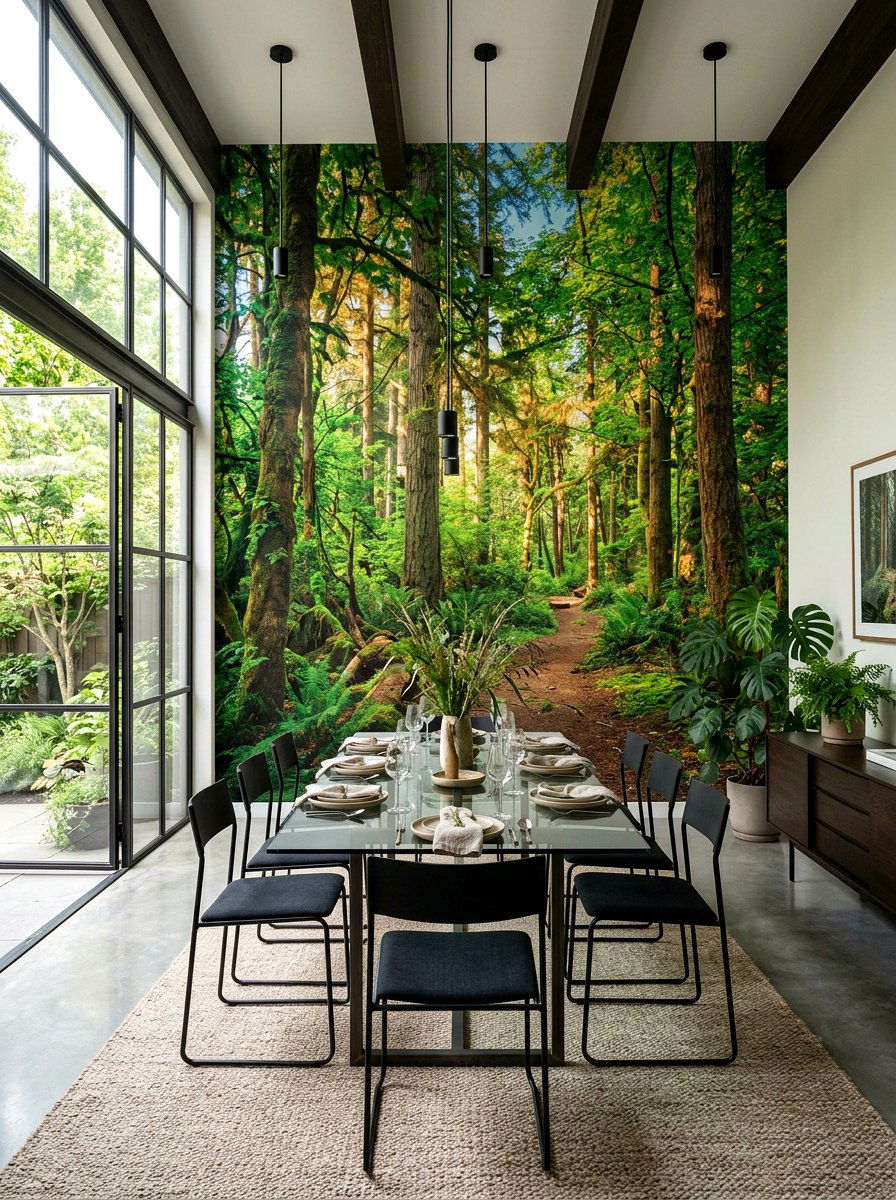
A dramatic mural dining room utilizes an entire wall as a canvas, often featuring a hand-painted scene or high-quality wallpaper. This immersive approach can transport your guests to a lush forest, a misty mountain range, or a vintage European garden. Because the mural covers so much surface area, it acts as both the background and the primary decorative element of the space. To keep the focus on the wall, it is best to pair this look with relatively simple furniture and understated lighting. This creates a deeply atmospheric and unforgettable setting that feels like a private escape within your own home.
4. Botanical print dining room
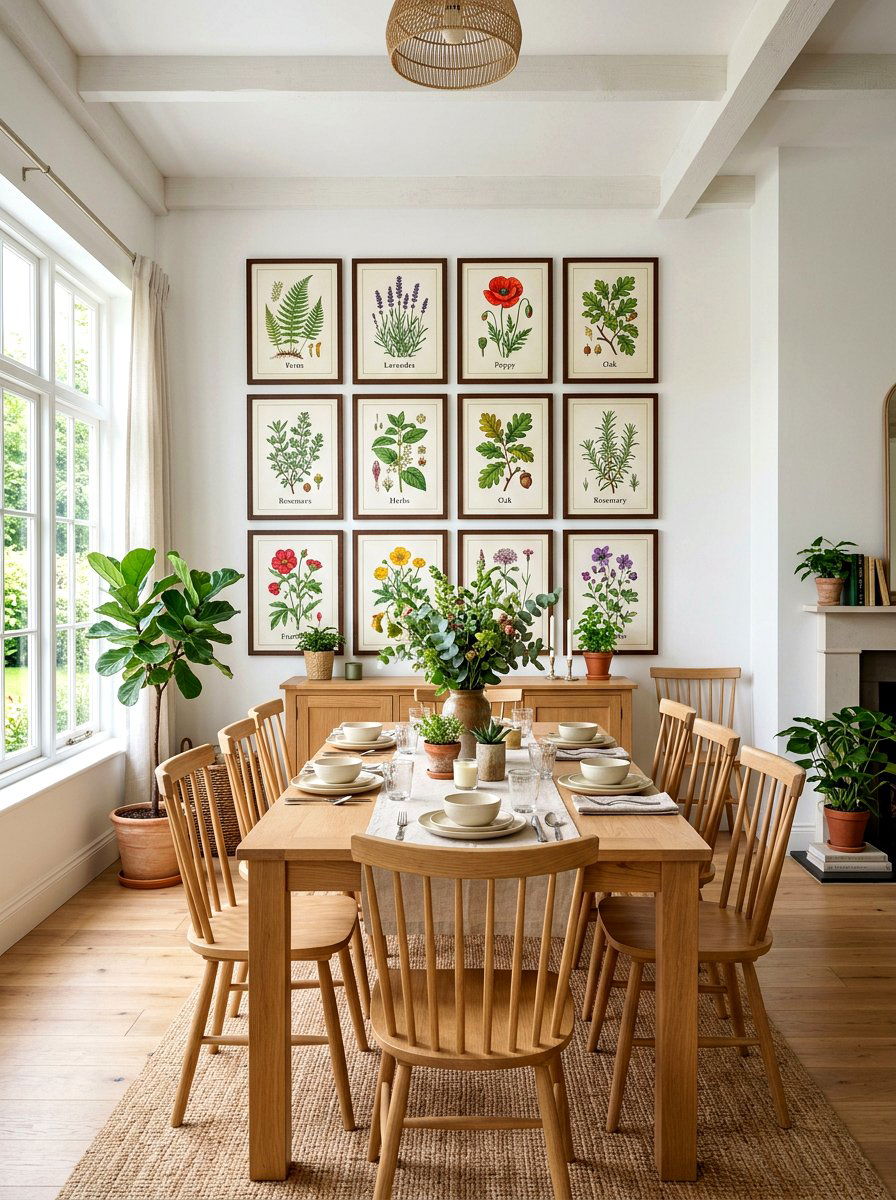
A botanical print dining room brings the beauty of the outdoors inside using framed illustrations of plants, flowers, or leaves. This style is often associated with a fresh, organic aesthetic that promotes a sense of calm and tranquility during mealtime. You can choose a large set of matching botanical prints for a symmetrical, traditional look or mix different species for a more naturalistic feel. Pairing these prints with natural wood furniture and green accents further enhances the biophilic connection. It is an excellent way to brighten up a room and maintain a timeless, classic appeal that never goes out of style.
5. Modern photography dining room
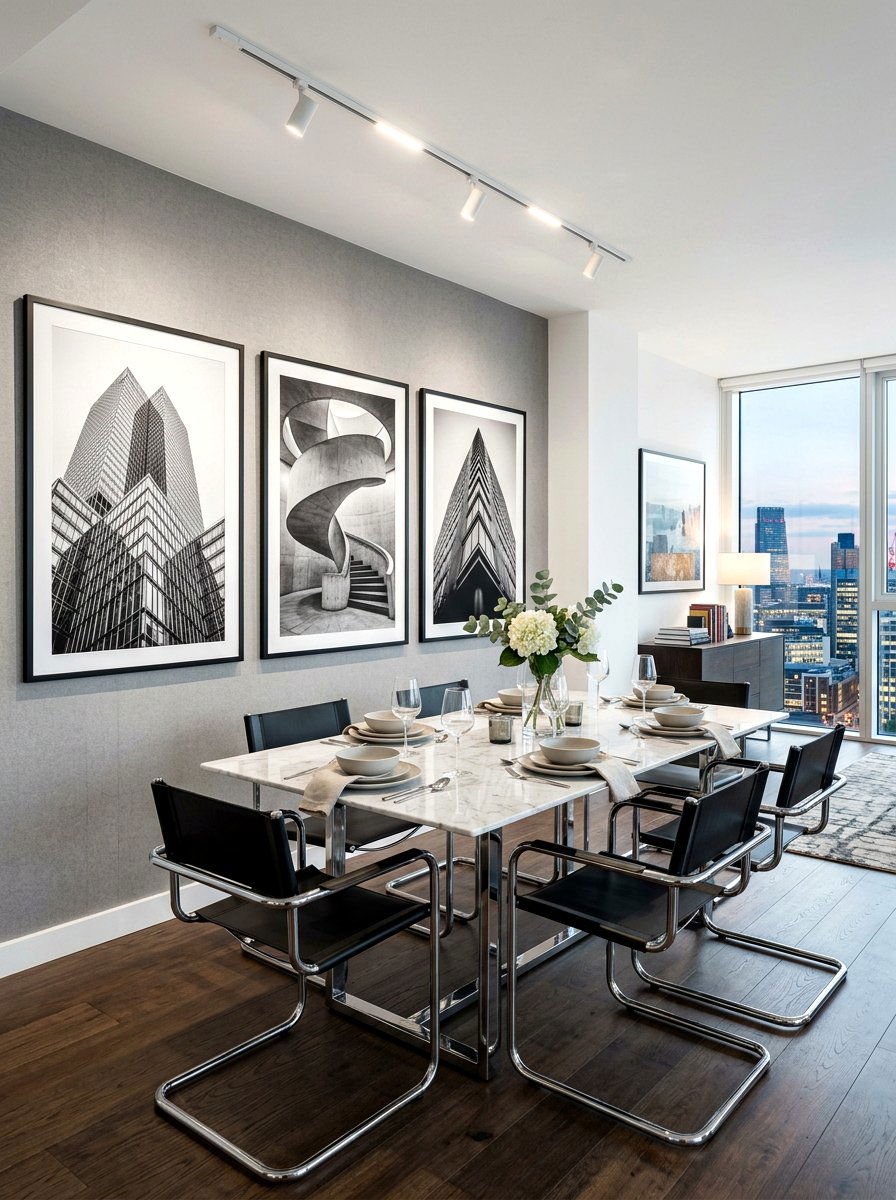
A modern photography dining room centers around high-quality photographic prints that range from striking cityscapes to intimate portraits or nature shots. Photography adds a crisp, contemporary edge to the dining space, especially when presented in sleek, minimalist frames. You might opt for a single large-scale black and white image for a moody and sophisticated look, or a series of vibrant color photos to inject energy into the room. This design style is particularly effective for urban homes or modern apartments where a clean and polished aesthetic is desired. It reflects a love for storytelling and a keen eye for detail.
6. Minimalist line dining room
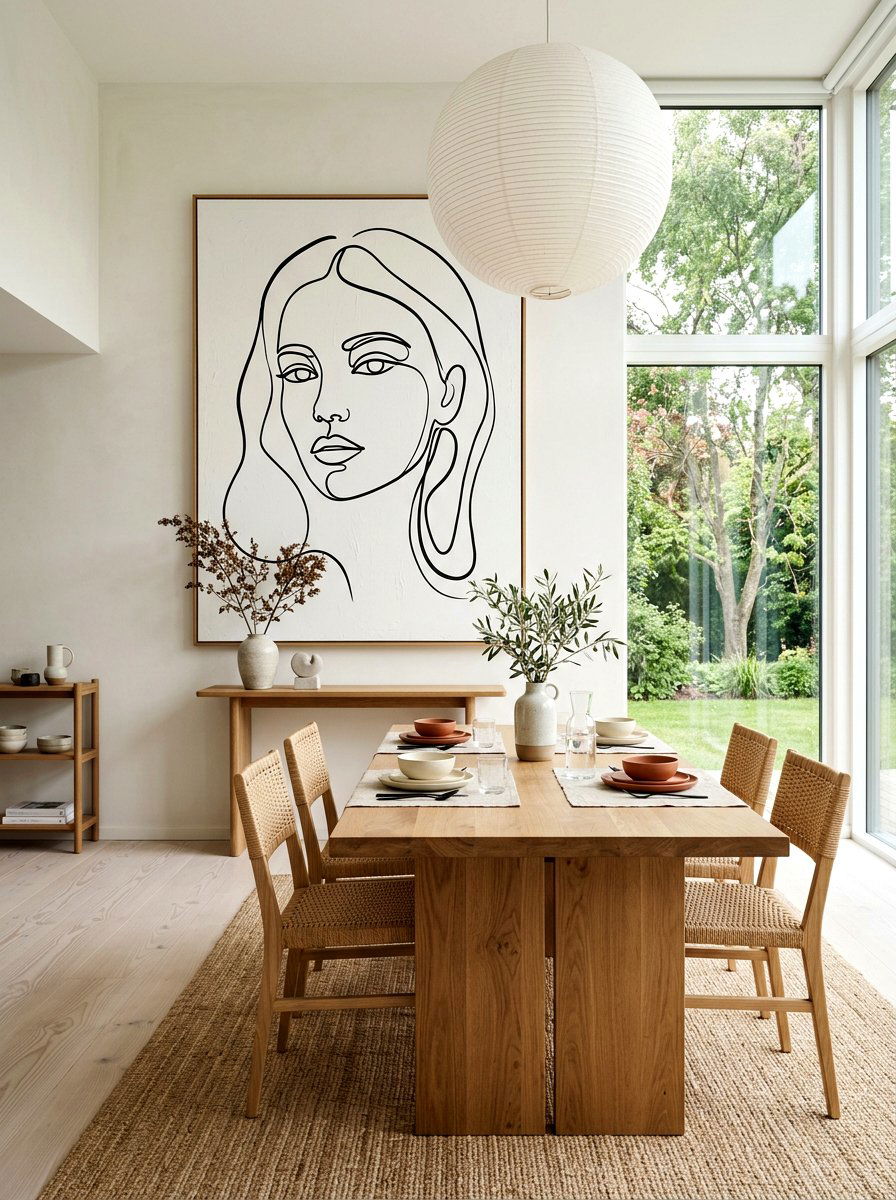
A minimalist line dining room focuses on the beauty of simplicity through continuous line drawings or basic sketches. These pieces often feature human forms, faces, or simple objects rendered in a single color, usually black on a white or neutral background. The lack of visual clutter makes the room feel airy and calm, which is ideal for smaller dining areas or open-concept spaces. Minimalist art allows the architectural features of the room and the quality of the furniture to stand out. It creates a modern, intellectual vibe that is perfect for those who appreciate understated elegance and clean, quiet design.
7. Vintage portrait dining room
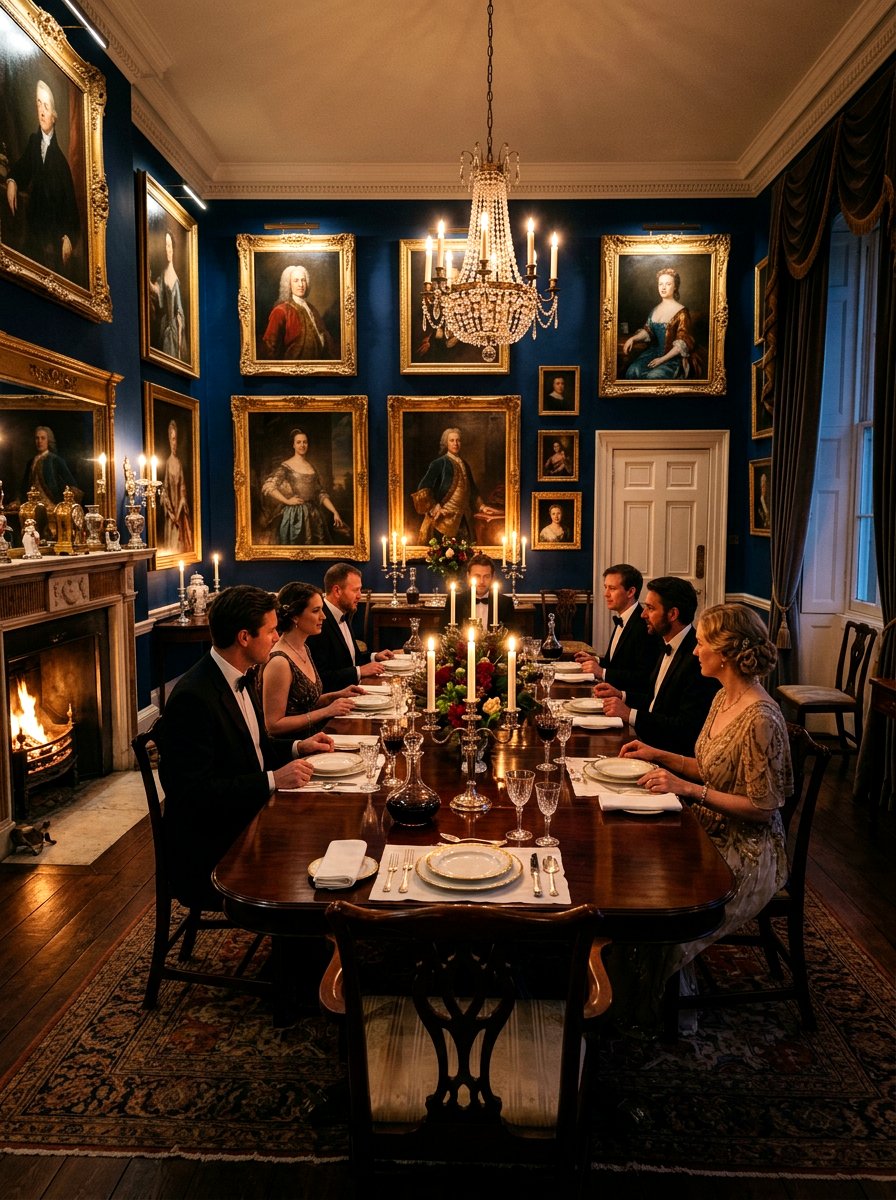
A vintage portrait dining room incorporates antique or reproduction oil paintings of people to add a sense of history and character. These portraits bring a regal and storied feel to the space, making the dining room feel like a refined library or a classic European estate. You can find these pieces at flea markets or thrift stores to ensure a truly unique look. Even if the subjects are strangers, the presence of these "ancestors" adds warmth and a touch of drama. Pairing vintage portraits with dark, moody wall colors and traditional furniture creates a cozy and sophisticated environment for formal dinners.
8. Sculptural wall dining room
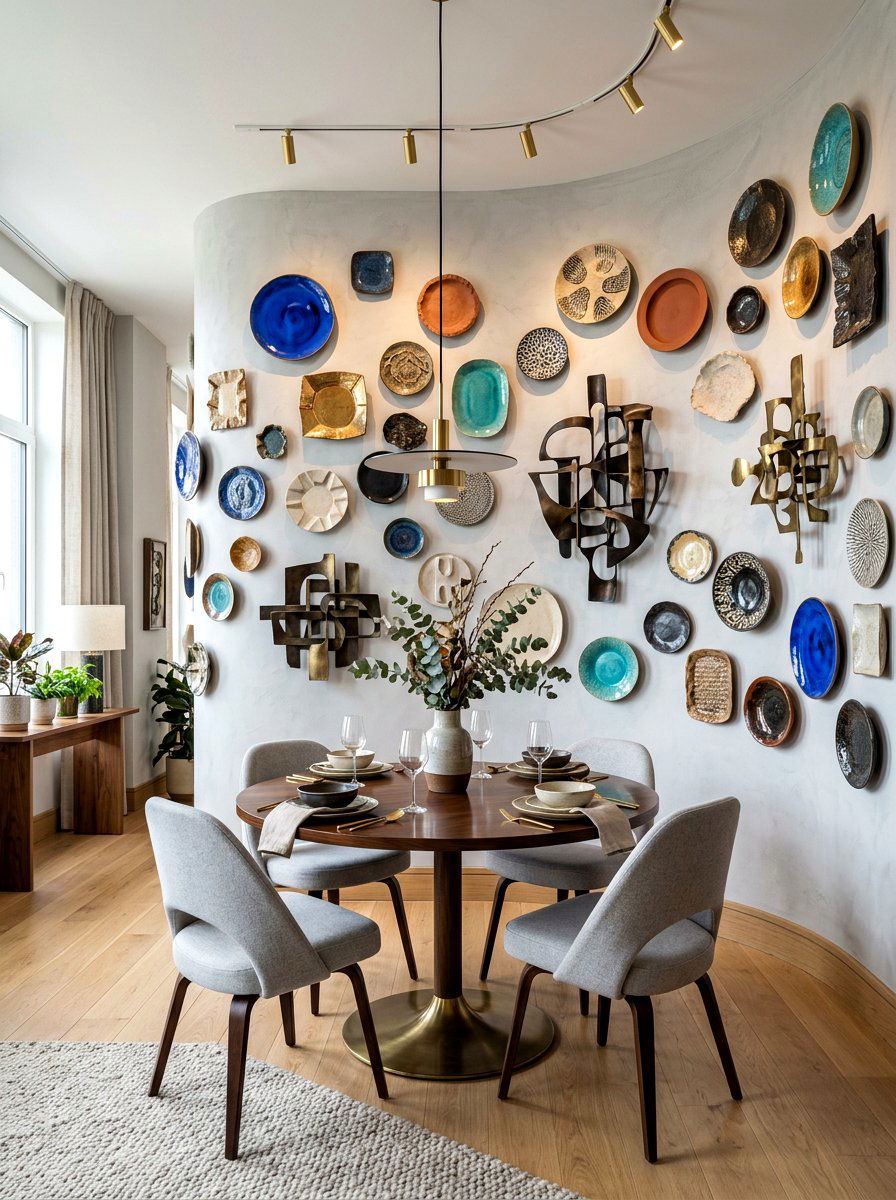
A sculptural wall dining room goes beyond flat canvases by incorporating three-dimensional art pieces that add depth and texture to the space. This could include ceramic wall plates, metal installations, or carved wood panels that cast interesting shadows as the light changes throughout the day. Sculptural art is tactile and engaging, drawing the eye in a way that traditional paintings cannot. It works beautifully in contemporary homes where you want to break up the flat surfaces of the walls. By adding a physical dimension to your decor, you create a dynamic and modern environment that feels curated and highly artistic.
9. Colorful pop dining room
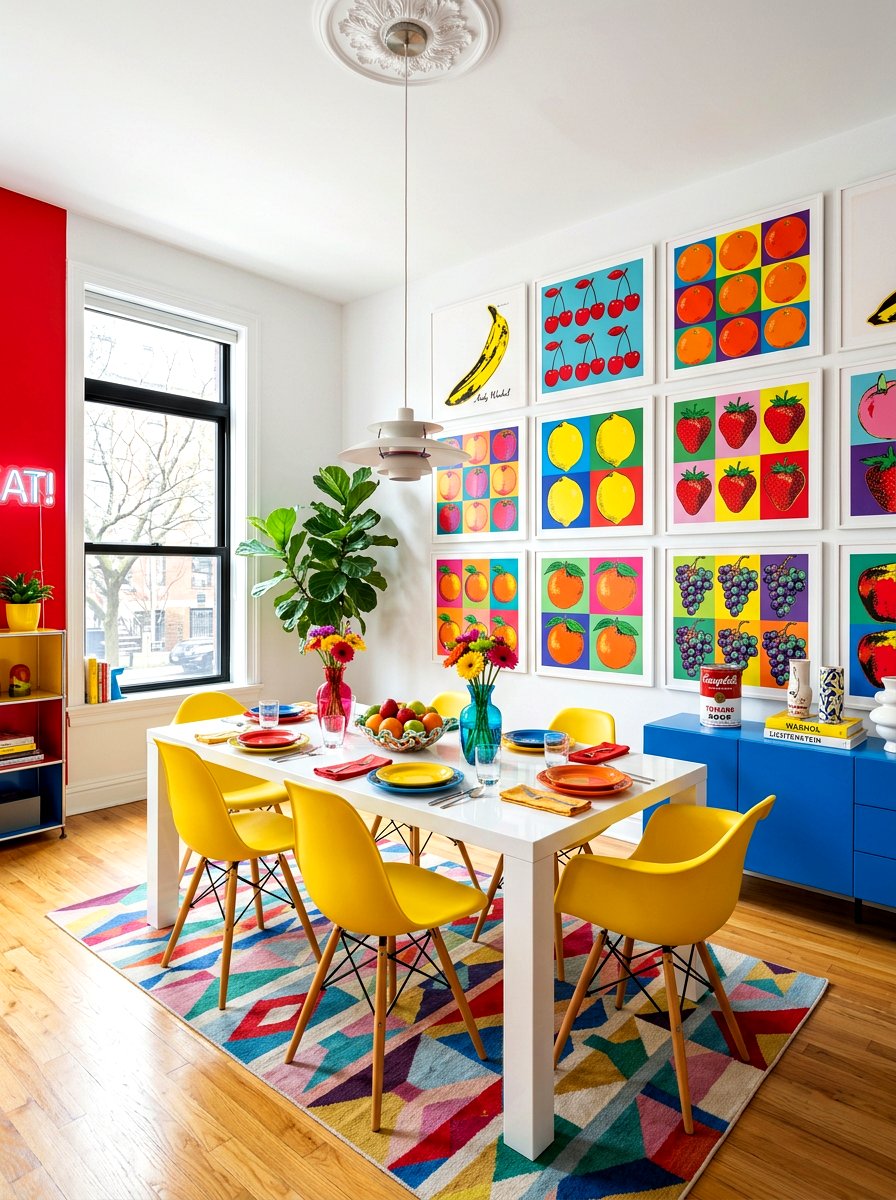
A colorful pop dining room draws inspiration from the vibrant and bold world of pop art. This style often features iconic imagery, bright primary colors, and a sense of playfulness that instantly enlivens any meal. Whether it is a classic Andy Warhol-style print or a modern graphic illustration, pop art brings a high-energy and youthful spirit to the dining area. It is perfect for homeowners who want to move away from formal traditions and embrace a more fun, casual, and social atmosphere. Using colorful art allows you to experiment with eclectic furniture and bold accessories that match the artwork’s intensity.
10. Textured plaster dining room
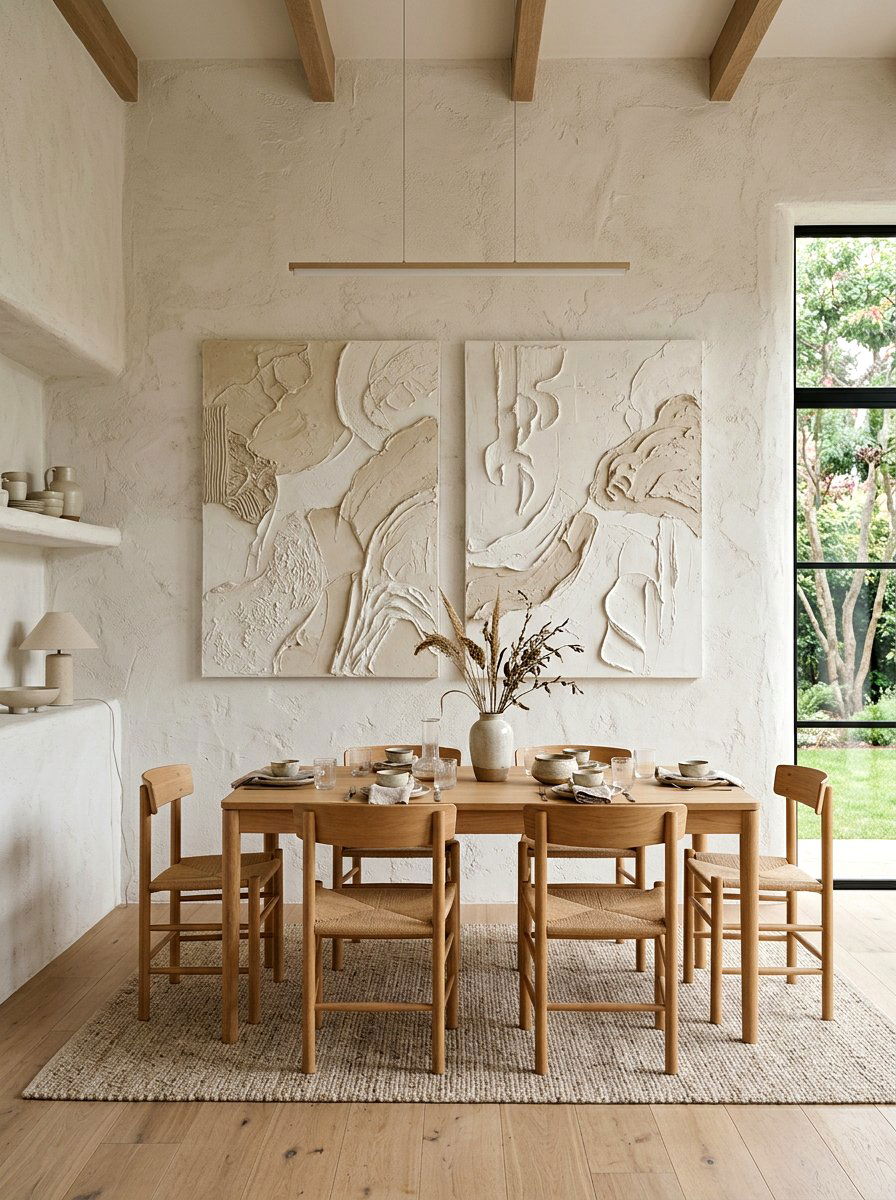
A textured plaster dining room focuses on art created from thick layers of plaster or clay on canvas. These pieces are often monochromatic, relying on the play of light and shadow over the raised surfaces to create visual interest. This subtle yet powerful form of art adds a sophisticated, tactile element to the room without overwhelming it with color. It is a favorite in modern organic and Japandi design styles because it emphasizes natural materials and artisanal craftsmanship. The result is a serene and elevated space that feels grounded, peaceful, and deeply connected to the beauty of raw textures.
11. Moody dark dining room
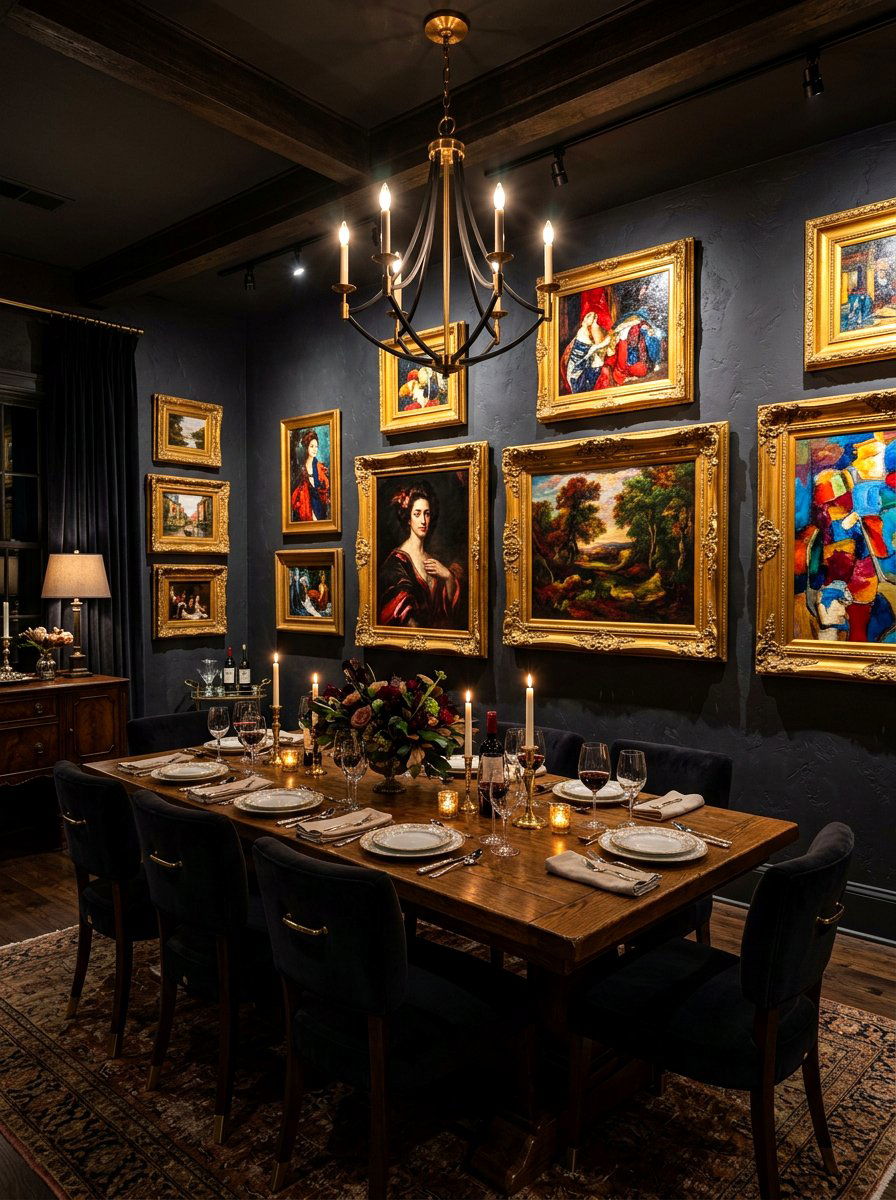
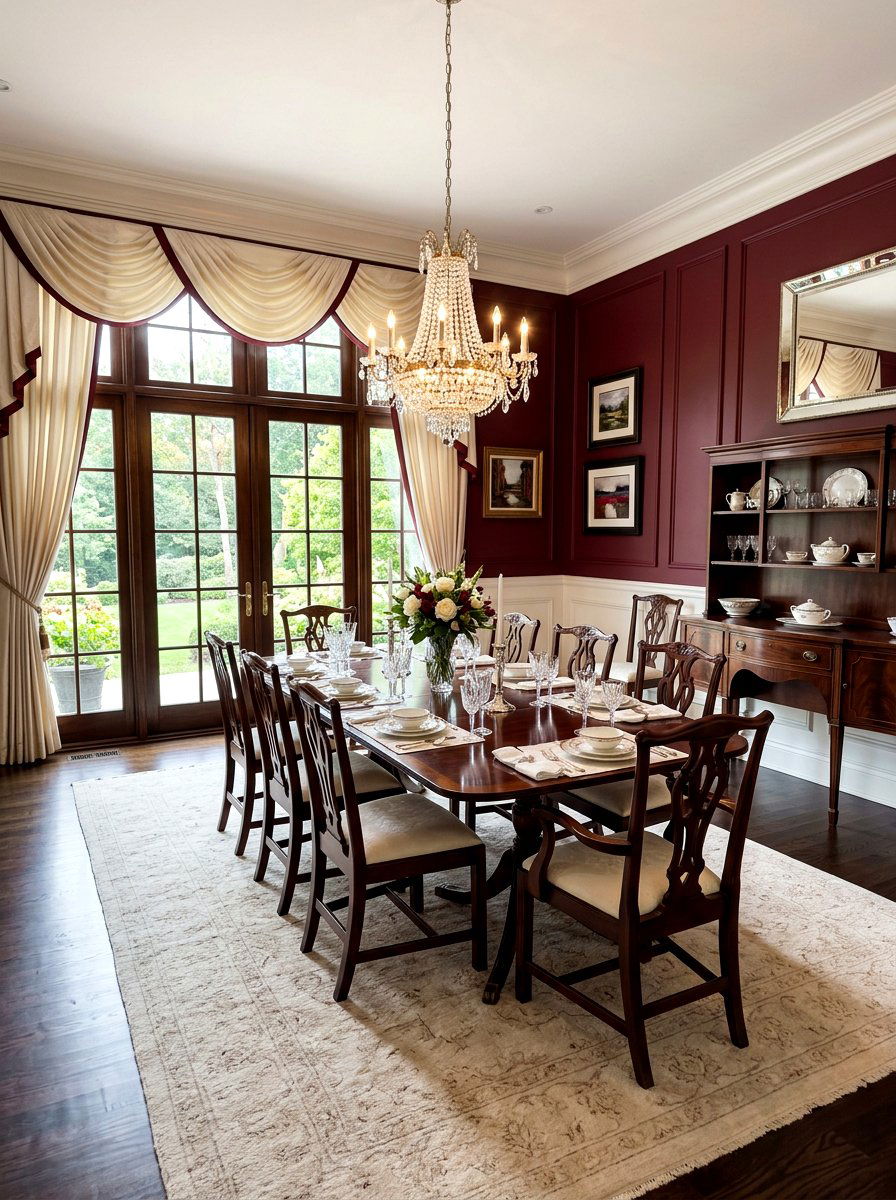
A moody dark dining room uses deep paint colors like charcoal, navy, or forest green as a backdrop for dramatic artwork. The contrast between the dark walls and the art creates a high-end, intimate gallery feel that is perfect for evening entertaining. You can choose pieces with gold leaf frames or vibrant colors that "pop" against the dark background. This design direction is all about creating a cozy, cocoon-like environment where the focus is entirely on the food, the conversation, and the beautiful art. It feels incredibly luxurious and provides a sense of drama that guests will remember long after dinner.
12. Symmetrical frame dining room
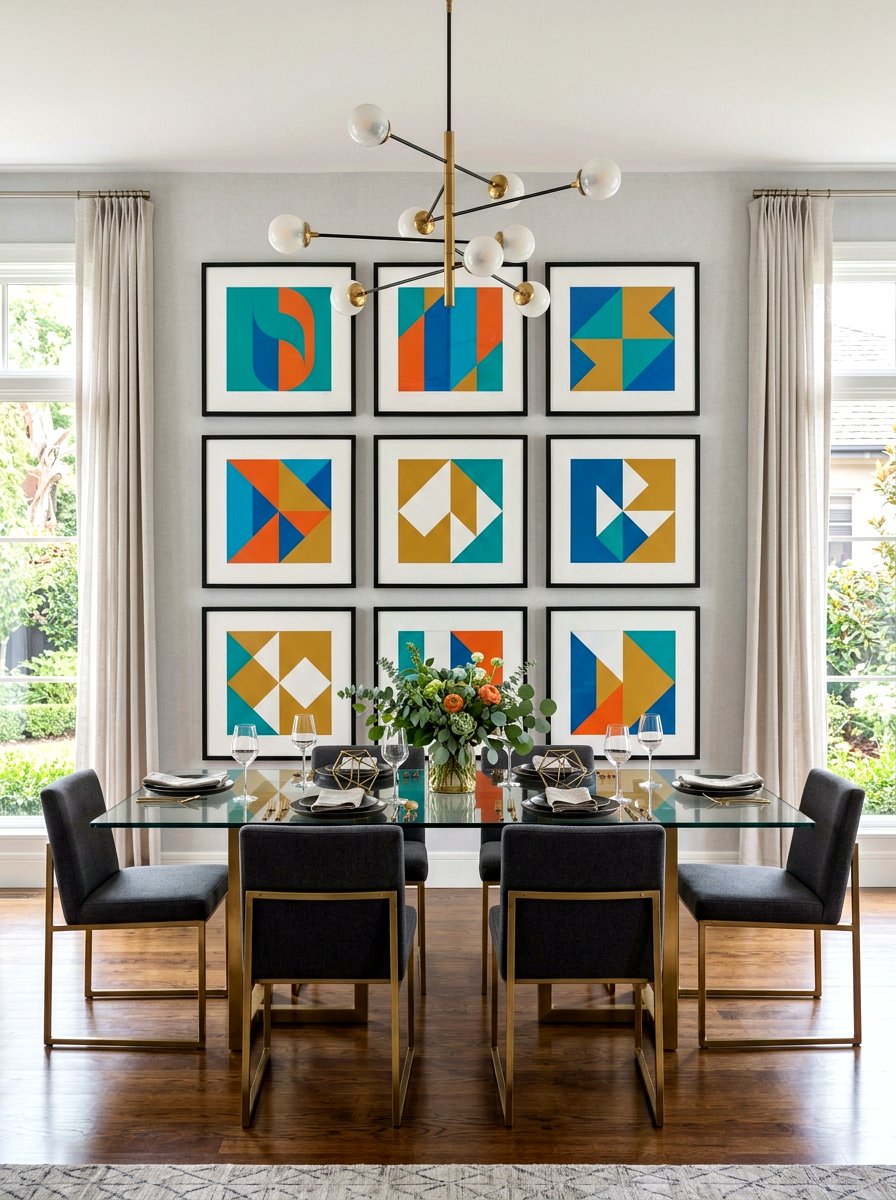
A symmetrical frame dining room uses a balanced arrangement of identical or very similar art pieces to create a sense of order and formality. Often featuring a grid of four, six, or nine frames, this look is incredibly pleasing to the eye and works well over a long sideboard or buffet. By using the same frames and consistent matting, you create a cohesive and polished look that feels intentional and well-designed. This approach is ideal for those who prefer a more traditional or transitional style, as it brings a sense of calm and structural rhythm to the overall dining room layout.
13. Mixed media dining room
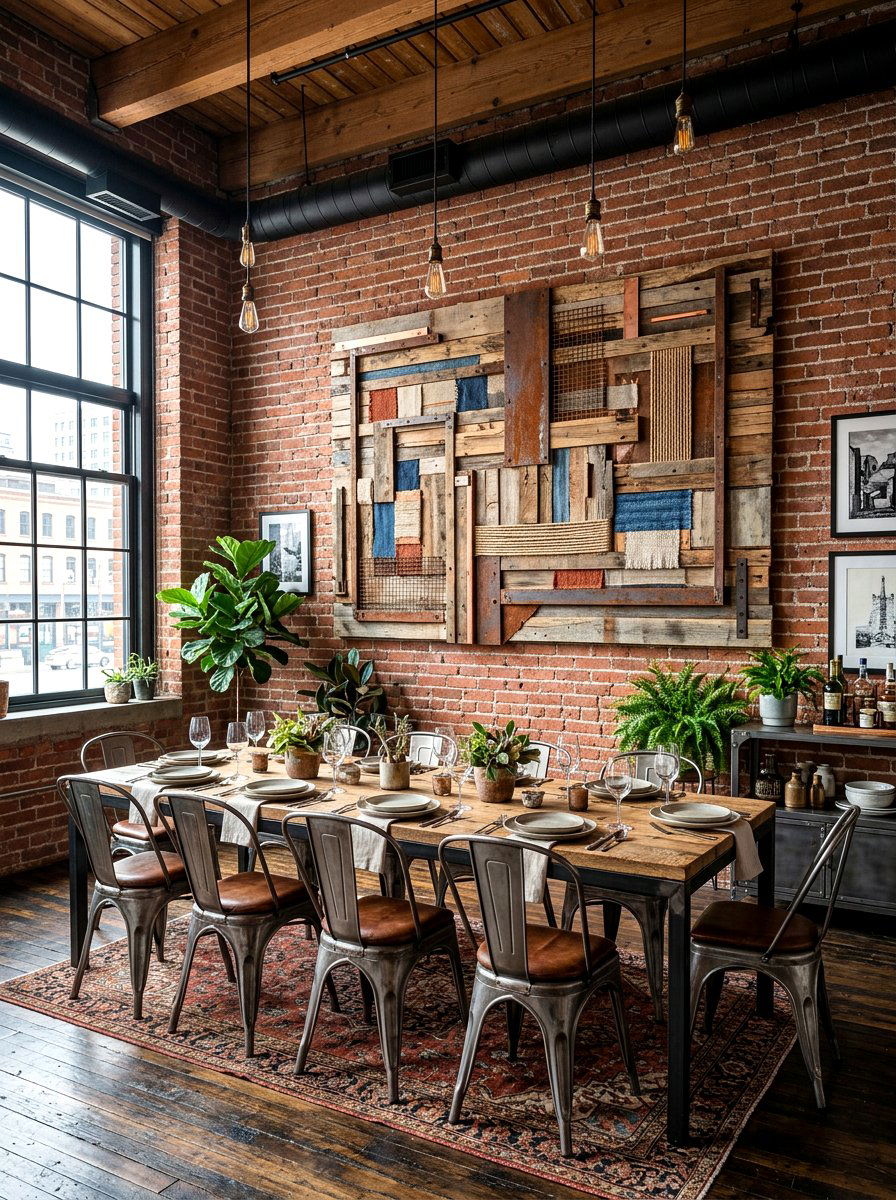
A mixed media dining room features artwork that combines various materials such as paint, fabric, metal, and found objects. This layered approach to art creates a fascinating focal point that invites closer inspection and discussion. Mixed media pieces often have a rustic or industrial feel, making them a great fit for converted lofts or farmhouse-style homes. The variety of textures and colors within a single piece can tie together different elements of your room’s decor, from the metal legs of your table to the soft upholstery of your chairs. It celebrates creativity and unconventional beauty in every detail.
14. Geometric canvas dining room
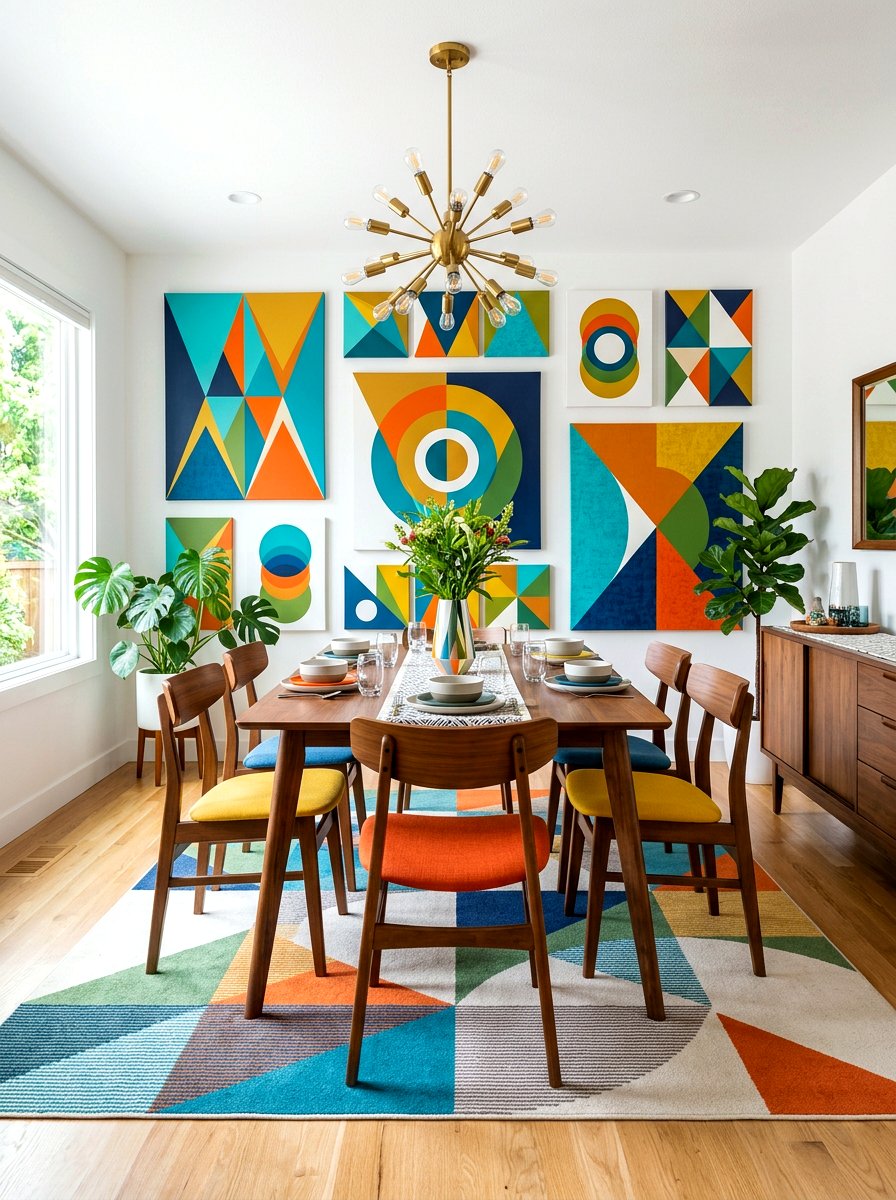
A geometric canvas dining room uses sharp lines, bold shapes, and vibrant color blocks to create a structured and energetic atmosphere. This style of art is inherently modern and works perfectly in spaces with clean architectural lines and contemporary furniture. Geometric art can be used to introduce a specific accent color into the room or to create a sense of movement on a large, blank wall. Because the shapes are often abstract, they do not compete with other patterns in the room, making it easy to style with different textiles. It brings a sense of logic and visual balance to the space.

15. Classic landscape dining room
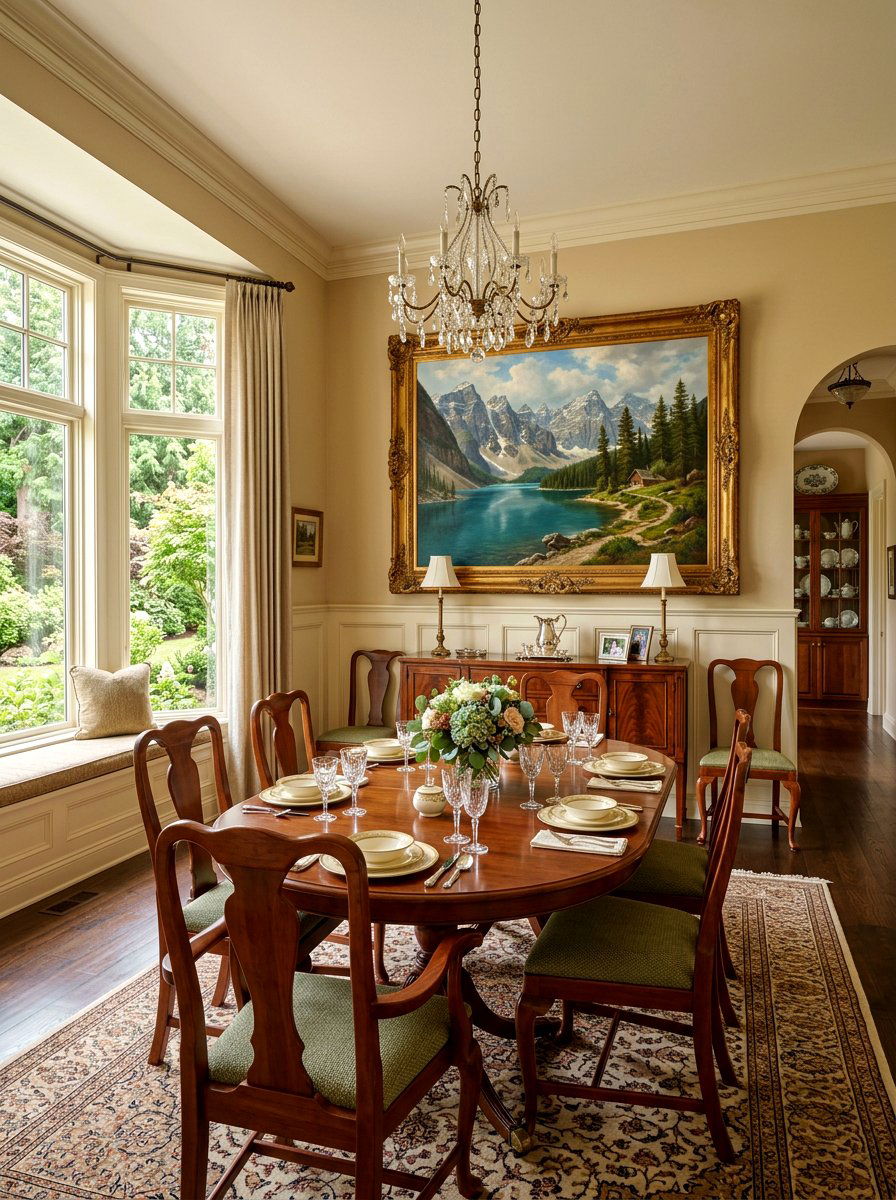
A classic landscape dining room honors the tradition of scenic oil paintings featuring rolling hills, quiet forests, or serene lakes. These pieces bring a sense of peace and timeless beauty to the dining area, making it feel more grounded and traditional. Landscape art often uses earthy tones like brown, green, and blue, which are easy to coordinate with natural wood dining sets. Whether you choose a large-scale original or a series of smaller vintage prints, this look adds a window to the outside world. It is perfect for creating a relaxing environment where family meals feel like a calm retreat.
16. Floating shelf dining room
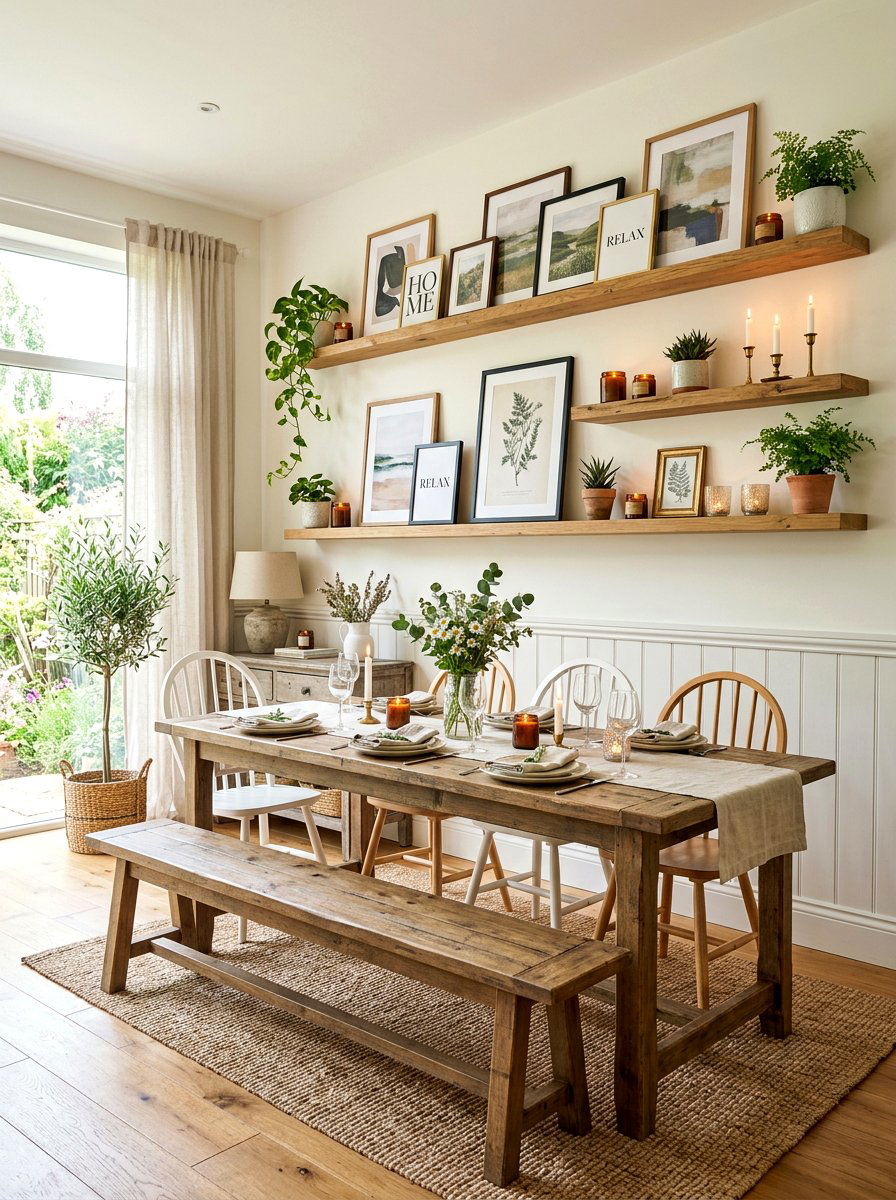
A floating shelf dining room utilizes wall-mounted ledges to display a rotating collection of art and decorative objects. This flexible approach allows you to lean frames of different sizes against the wall, mixing them with small sculptures, candles, and plants. The ability to easily swap out pieces means your dining room can evolve with the seasons or as your personal taste changes. It creates a casual, curated vibe that feels less permanent than hanging art directly on the wall. Floating shelves are also a great solution for adding visual height and interest to a room without needing bulky furniture.
17. Mid century dining room
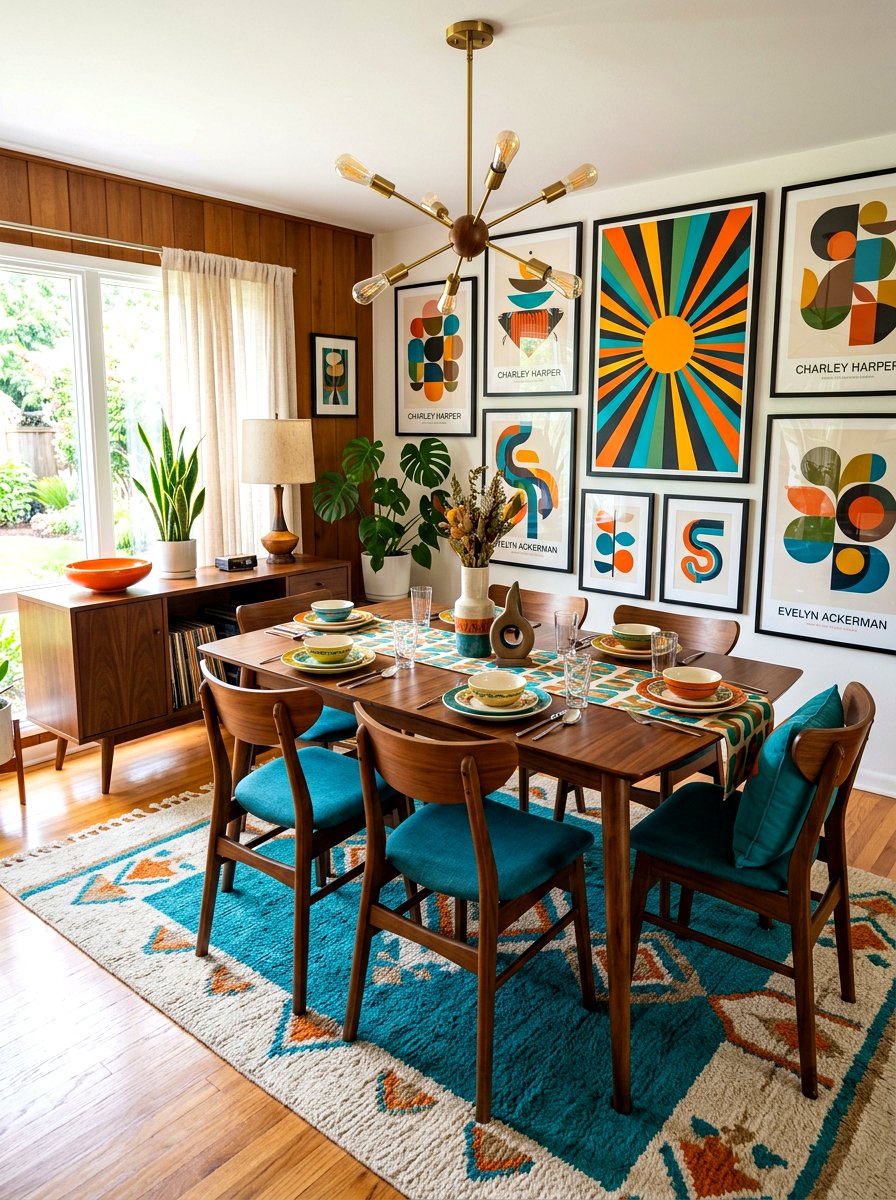
A mid century dining room incorporates art that reflects the optimistic and experimental spirit of the 1950s and 60s. This often includes abstract prints with organic shapes, bold sunburst clocks, or graphic posters with a retro color palette of mustard, teal, and orange. The art in this style is designed to complement the iconic furniture of the era, characterized by tapered legs and warm wood tones. By choosing art that matches this vintage aesthetic, you create a cohesive and nostalgic environment that feels both stylish and approachable. It is a great way to celebrate iconic design history in your home.
18. Black white dining room
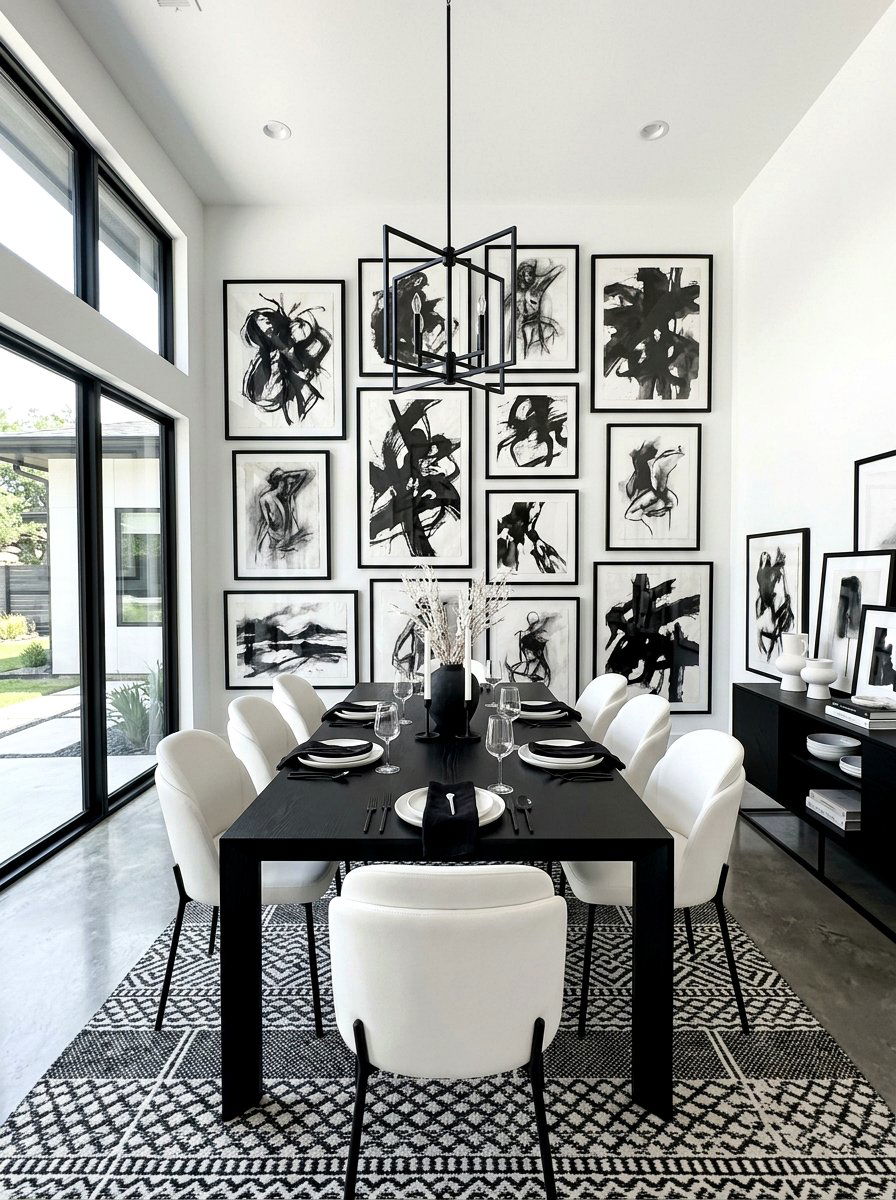
A black white dining room relies on a strictly monochromatic art palette to achieve a timeless and sophisticated look. This can include high-contrast photography, charcoal sketches, or bold ink paintings. The absence of color allows the viewer to focus on composition, lighting, and texture. This style of art is incredibly versatile, as it can fit into almost any decor theme, from ultra-modern to classic traditional. In a dining room with colorful accents, black and white art provides a neutral resting point for the eyes, while in a monochromatic room, it reinforces the sleek and polished overall design aesthetic.
19. Textile art dining room
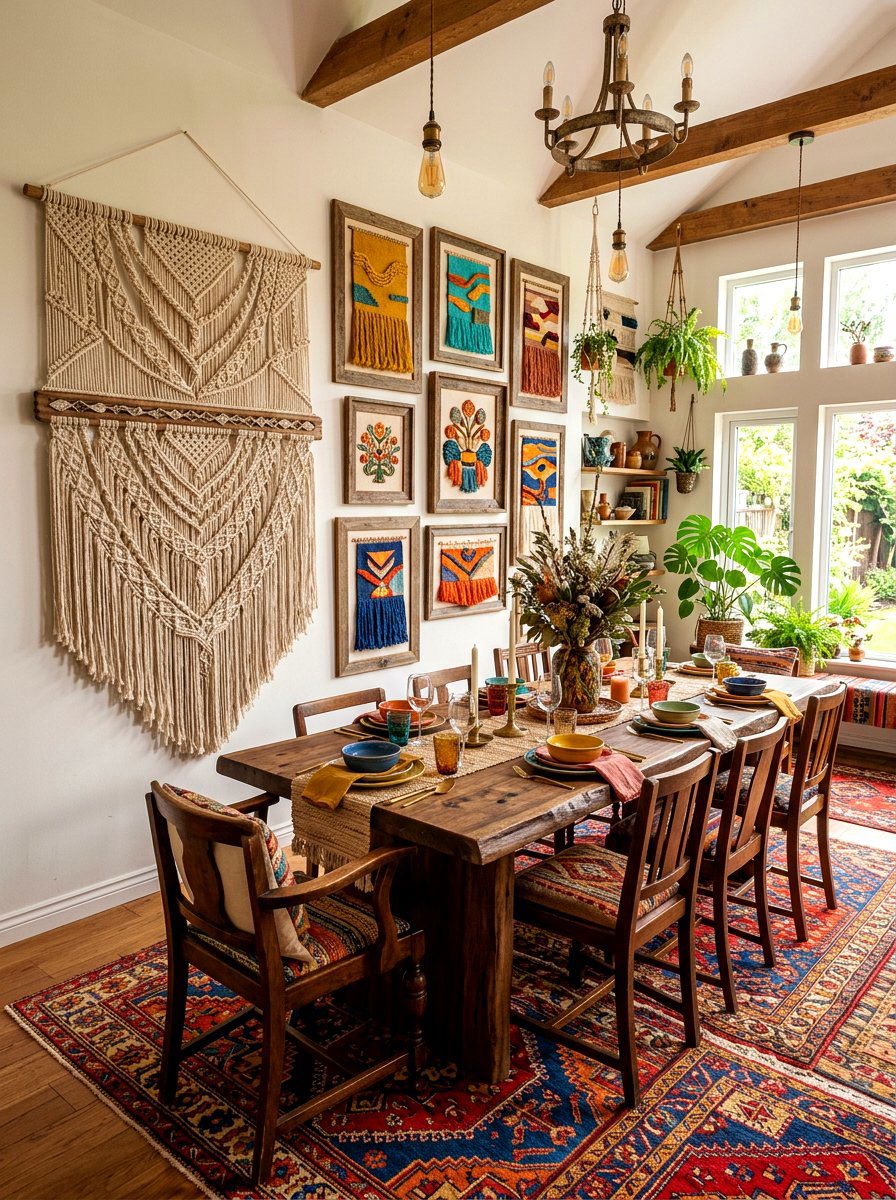
A textile art dining room replaces traditional canvas with woven wall hangings, framed tapestries, or intricate fiber art. This approach introduces a softness and warmth to the space that can help absorb sound, making for a much quieter and more intimate dining experience. Textile art often features rich textures, fringes, and organic patterns that add a bohemian or artisanal touch to the walls. It is an excellent way to introduce color and pattern in a way that feels cozy rather than stark. This style works beautifully in homes that prioritize comfort and a hand-crafted, global design sensibility.
20. Typographic print dining room
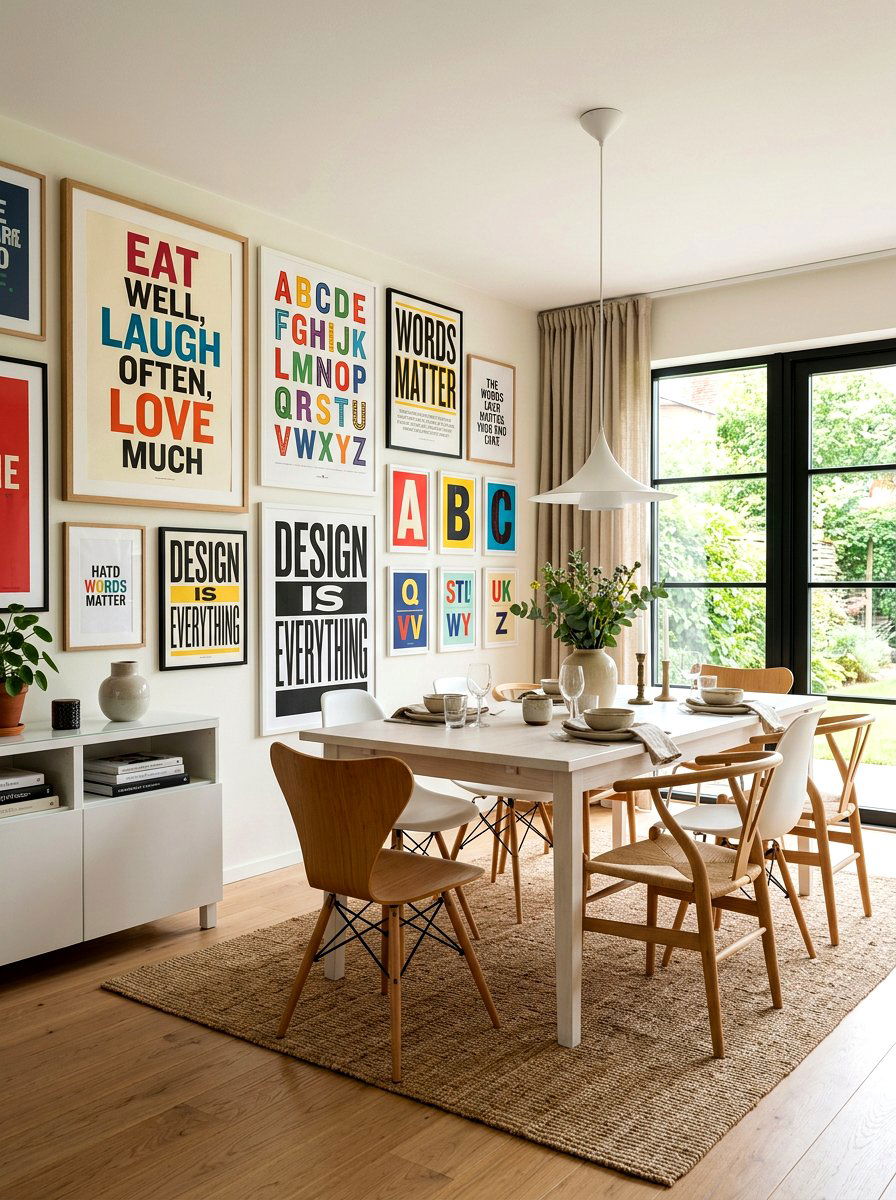
A typographic print dining room uses words, quotes, or letters as the primary artistic element on the walls. This can range from a single bold initial to a favorite poem or a meaningful family motto. Typography adds a graphic and intellectual quality to the room, often serving as a direct reflection of the homeowner's values or sense of humor. When framed simply, these prints look modern and clean, fitting well into contemporary or farmhouse-style dining areas. It is a unique way to personalize the space and create a literal conversation starter that guests can read and enjoy during a meal.
21. Architectural sketch dining room
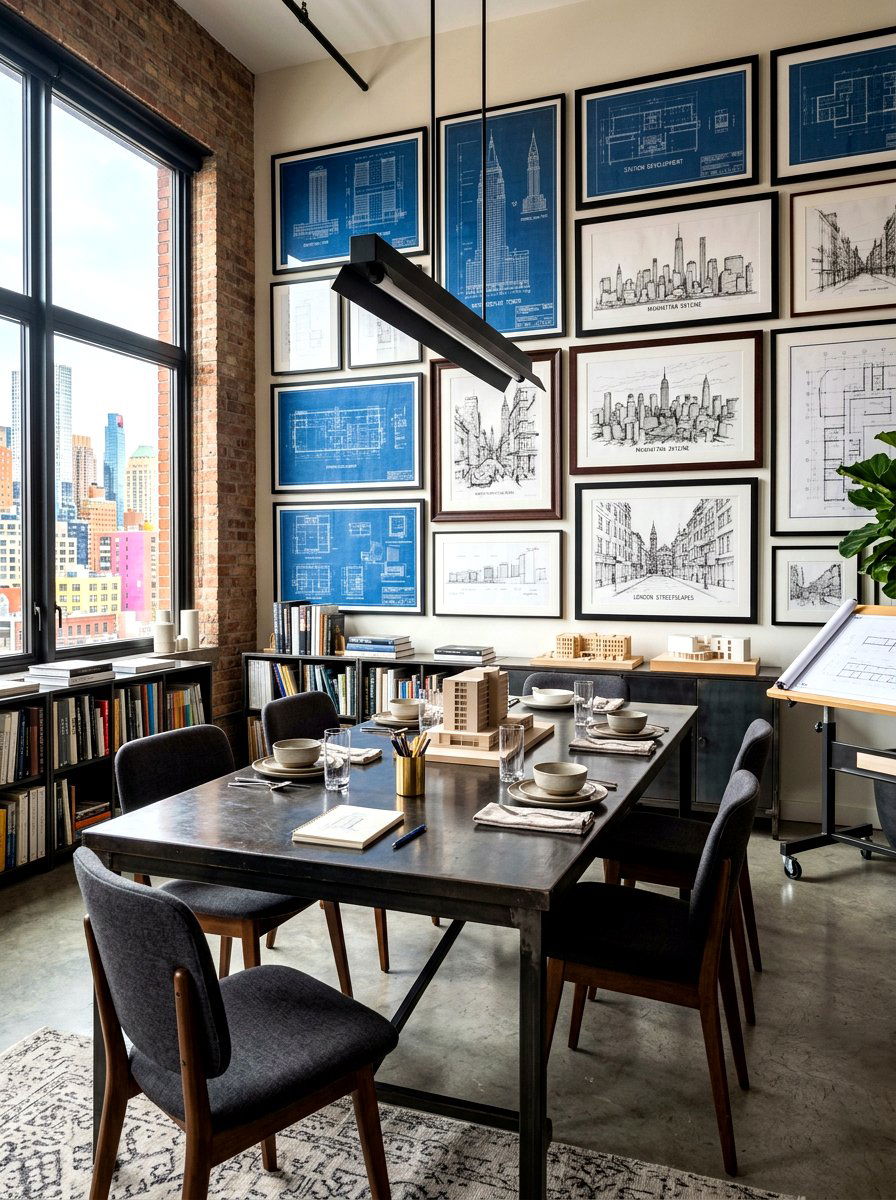
An architectural sketch dining room features technical or artistic drawings of buildings, bridges, or city plans. These pieces often have a refined, vintage feel, especially when printed on aged paper or displayed in traditional wood frames. Architectural art appeals to those who love structure, history, and the beauty of human-made environments. It adds a sophisticated and scholarly vibe to the dining room, making it feel like a space where important ideas are shared. This style works particularly well in urban homes or for anyone who wants to bring a touch of metropolitan elegance to their daily dining experience.
22. Mirror focal dining room
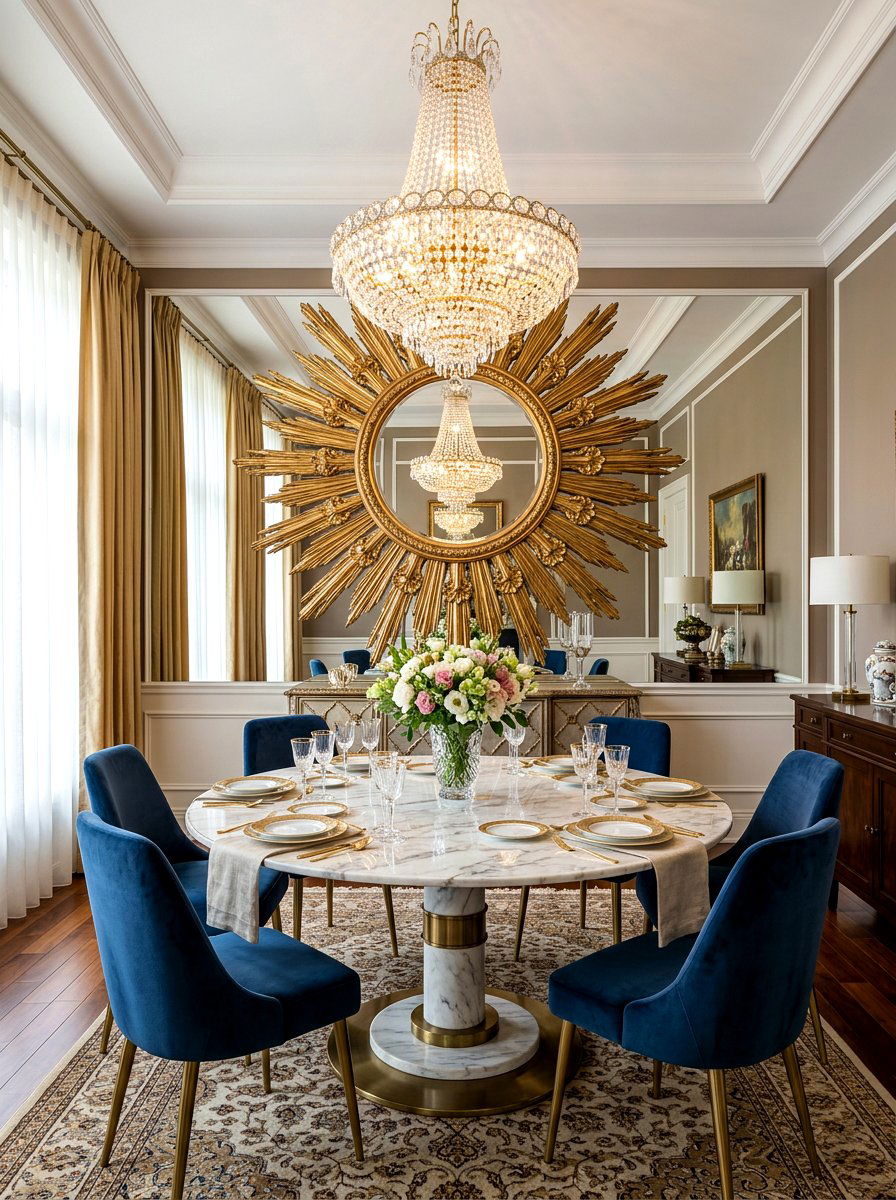
A mirror focal dining room uses an oversized or uniquely shaped mirror as a central work of art. While mirrors are functional, choosing one with an ornate frame or a tinted finish can make it a powerful decorative statement. A large mirror reflects the light from a chandelier, making the dining room feel much brighter and more spacious. It also captures the reflections of the people gathered around the table, adding to the lively energy of a dinner party. By positioning a mirror opposite a window or a piece of art, you can double the visual impact of your room’s best features.
23. Triptych art dining room
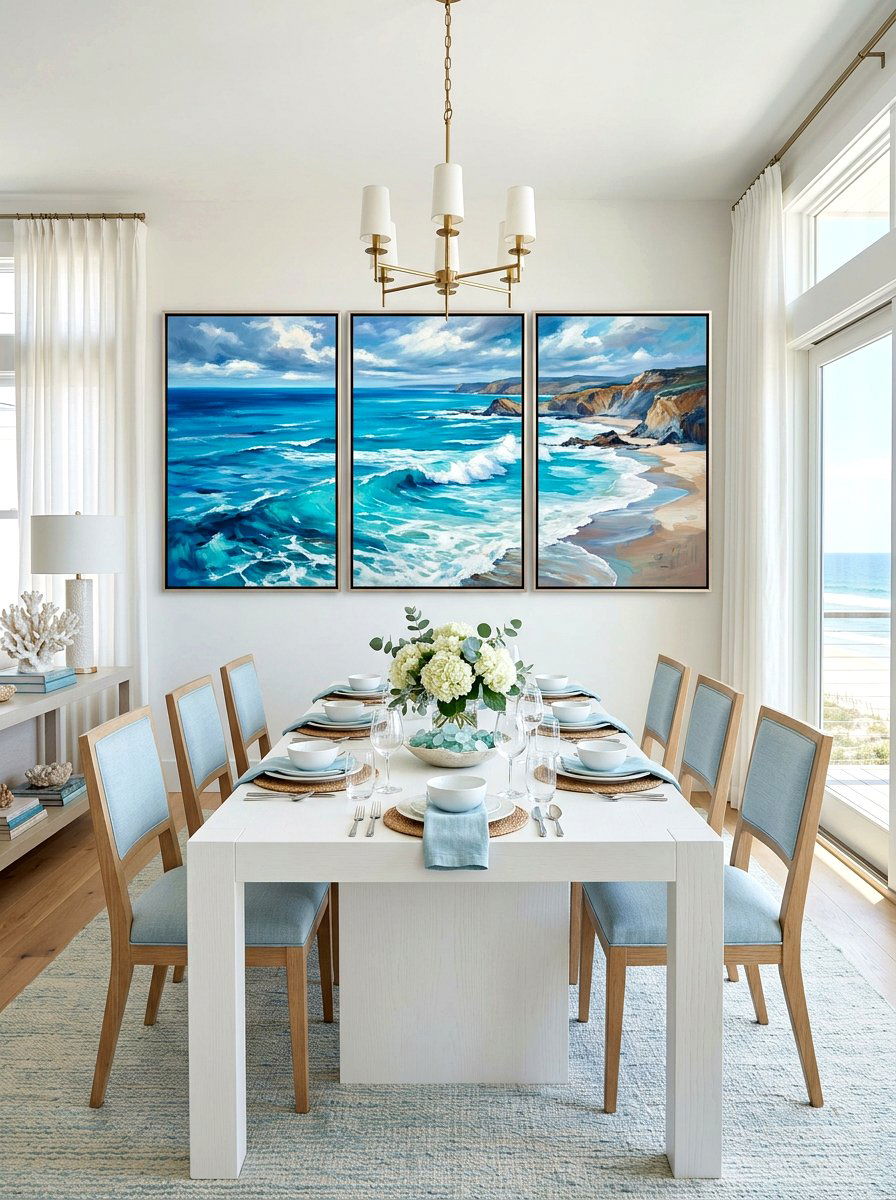
A triptych art dining room features a single image or theme divided into three separate panels that are hung side-by-side. This format creates a wide, cinematic effect that is perfect for filling the space above a long dining table. Triptychs can be abstract, landscapes, or even close-up nature shots. The gaps between the panels add a modern, rhythmic quality to the wall display, making the art feel more dynamic than a single solid piece. This is a great way to handle large wall areas without the art becoming visually overwhelming, as the separation allows the wall color to peek through.
24. Neon sign dining room
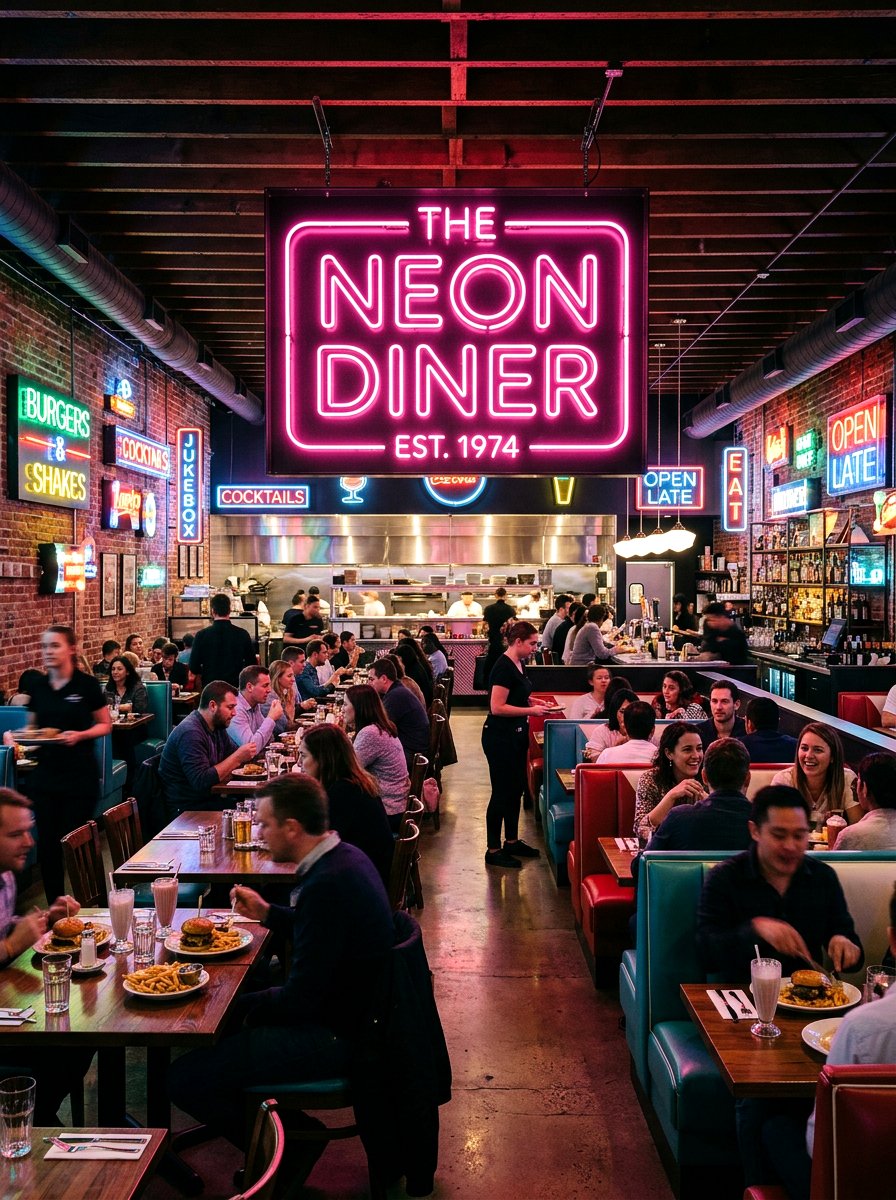
A neon sign dining room introduces a bold, electric glow to the space using custom or vintage light art. This modern approach to wall decor is perfect for creating a trendy, restaurant-like atmosphere in your own home. Neon signs can feature short words, abstract shapes, or colorful symbols that add a pop of vibrant light and personality. Because neon is so bright, it often becomes the primary light source during intimate dinners, casting a colorful hue over the entire room. It is a fun and unexpected choice for those who love contemporary design and want to create a high-energy dining vibe.
25. Coastal theme dining room
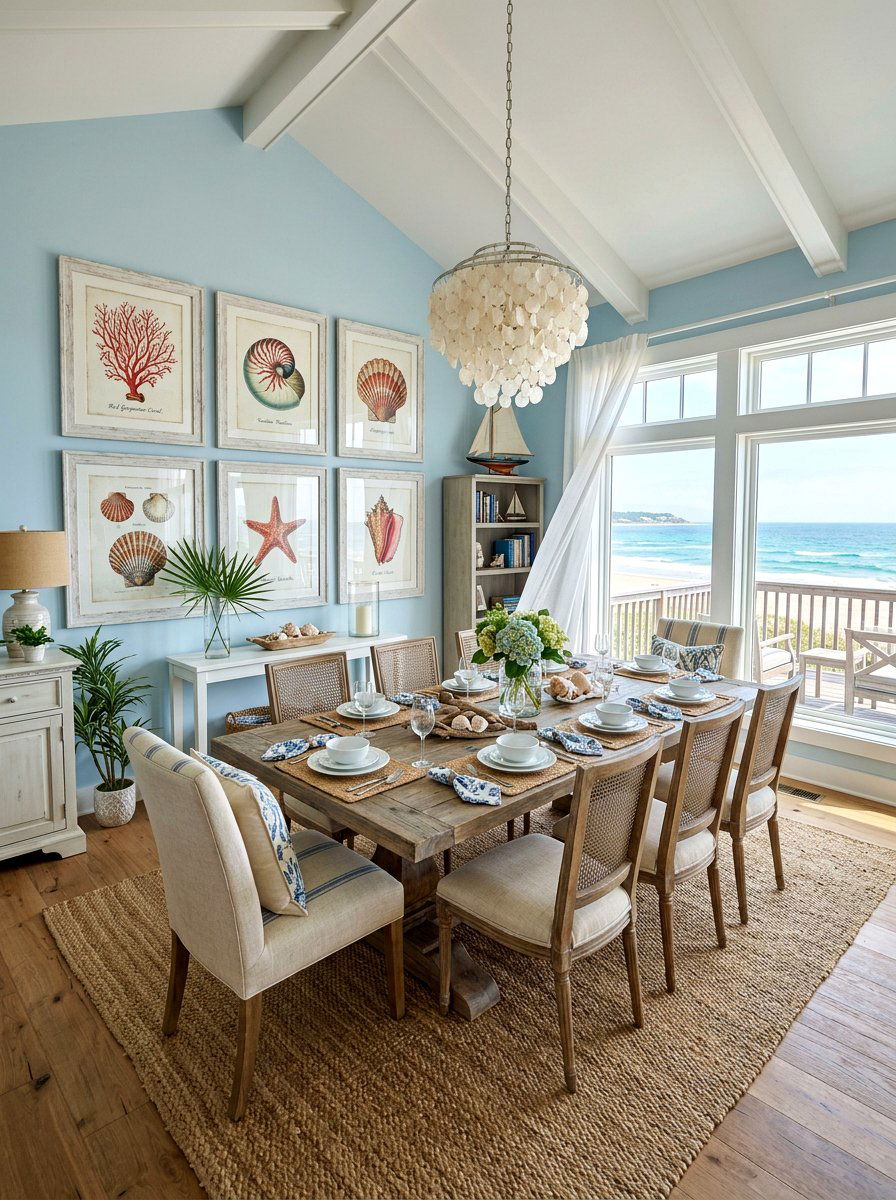
A coastal theme dining room uses art that reflects the serenity and beauty of the seaside. This can include soft watercolor paintings of the ocean, framed coral prints, or photography of sandy beaches and rolling waves. The color palette typically features blues, whites, and sandy neutrals, which create a light and airy environment perfect for casual meals. Coastal art helps to bring a vacation-like feel into the home, promoting a sense of relaxation and ease. Pairing these pieces with light wood furniture and woven textures ensures a cohesive look that feels like a fresh breeze from the coast.
26. Global fusion dining room
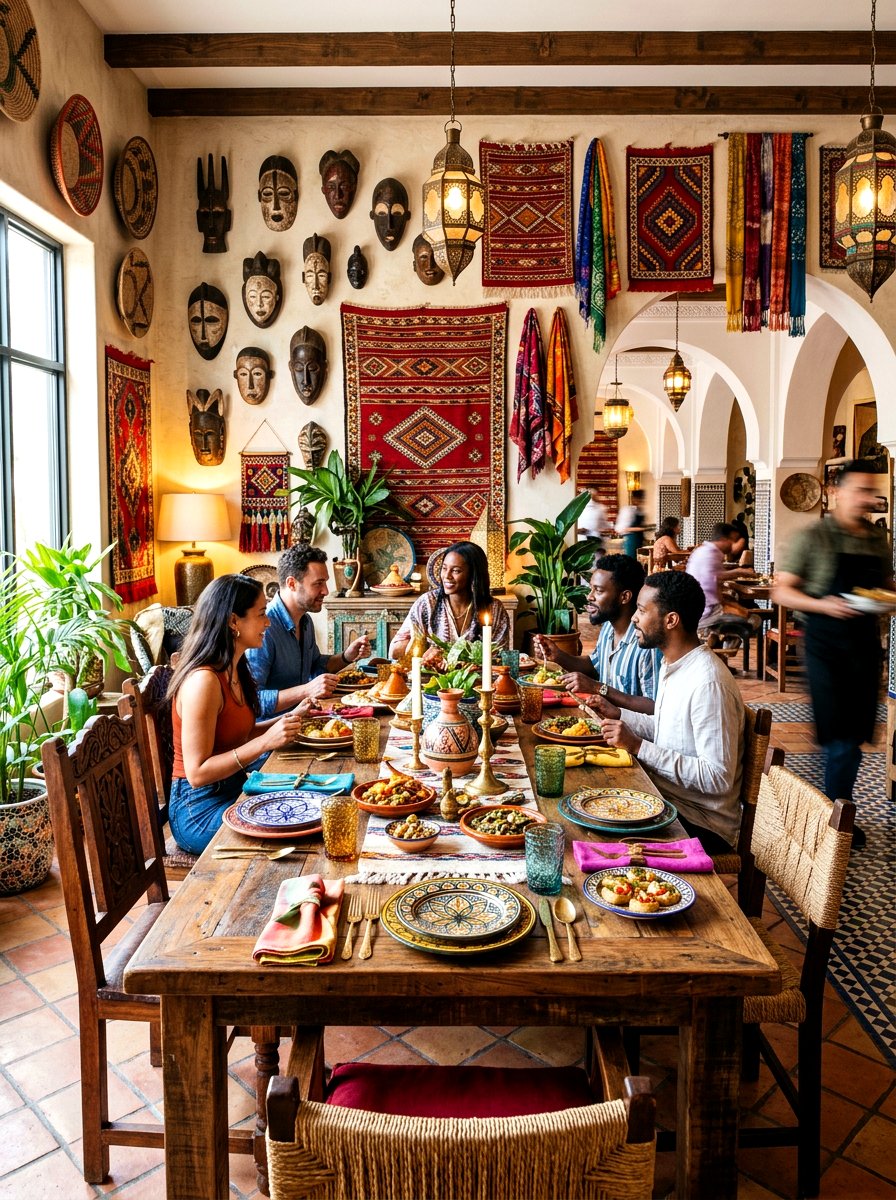
A global fusion dining room showcases art collected from different cultures and travels around the world. This might include African masks, Indian block prints, or Japanese woodblock art arranged together on a single wall. This eclectic and well-traveled look tells a story of adventure and appreciation for global craftsmanship. The mix of vibrant colors, intricate patterns, and unique materials creates a rich and layered environment that is full of visual interest. It is a wonderful way to create a dining space that feels curated over time and reflects a sophisticated, worldly perspective on design and life.
27. Abstract watercolor dining room
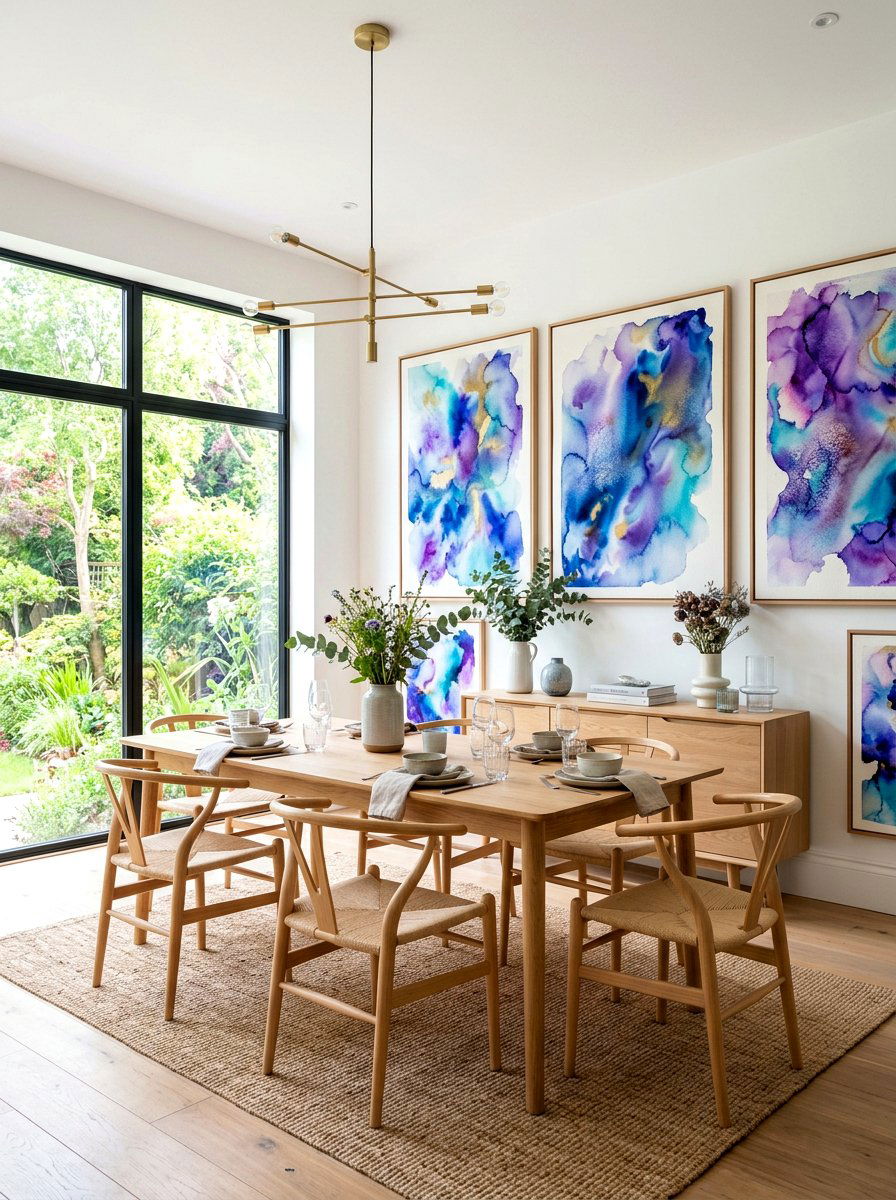
An abstract watercolor dining room focuses on art created with fluid, translucent layers of paint. Watercolor pieces often have a soft, ethereal quality that brings a sense of light and movement to the walls. Because the colors bleed into each other, these paintings feel organic and less structured than traditional oils or acrylics. This style is perfect for creating a gentle and welcoming atmosphere where the art complements the mood without demanding too much attention. Using watercolor art allows you to introduce soft pastel tones or deep, diluted jewel tones that add a touch of artistic elegance to the dining experience.
28. Street art dining room
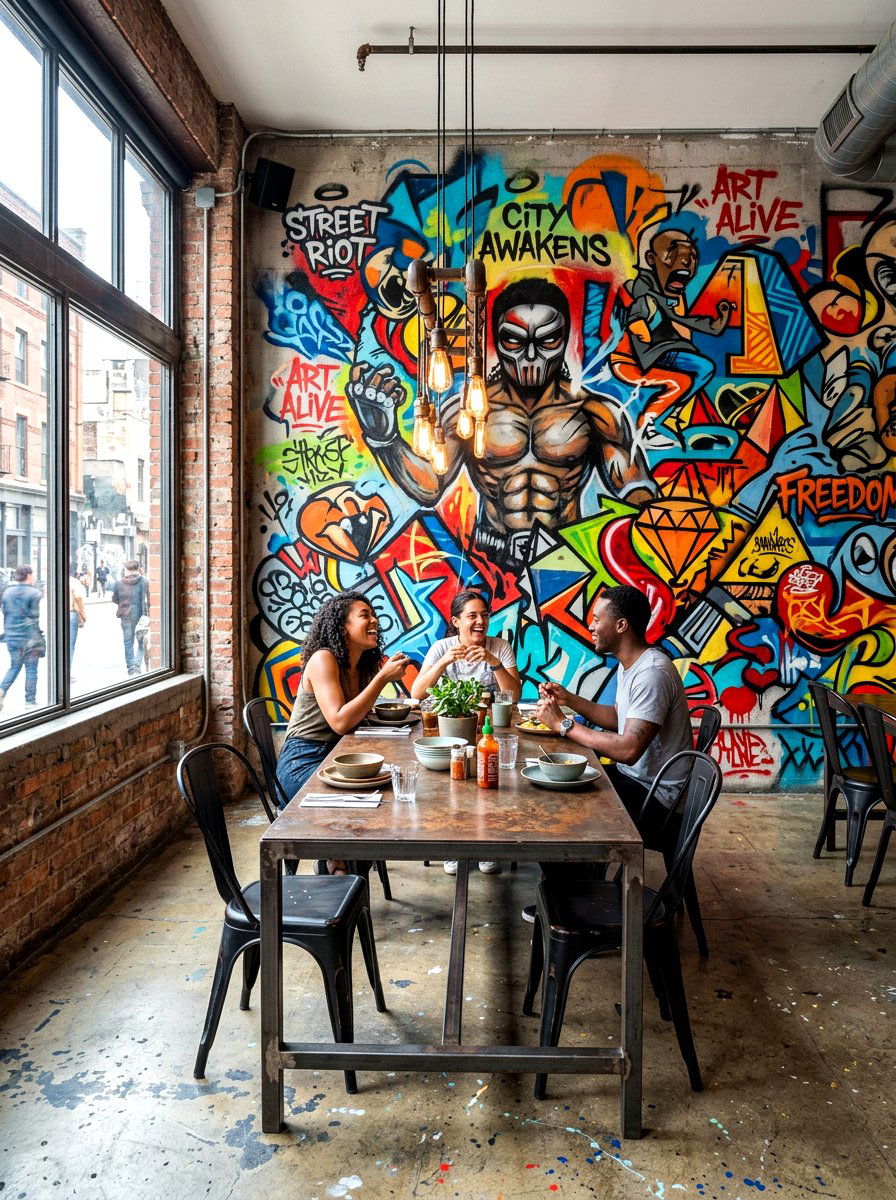
A street art dining room brings the edgy and creative energy of urban murals into the home. This style often features graffiti-inspired designs, bold spray paint textures, and pop culture references. It is a daring choice that works well in industrial lofts or modern homes where you want to make a loud and rebellious statement. Street art is inherently social and expressive, making it a perfect backdrop for lively dinner parties and casual gatherings. By incorporating this raw and energetic form of art, you create a space that feels contemporary, youthful, and completely unique to your personal style.
29. Maximalist wallpaper dining room
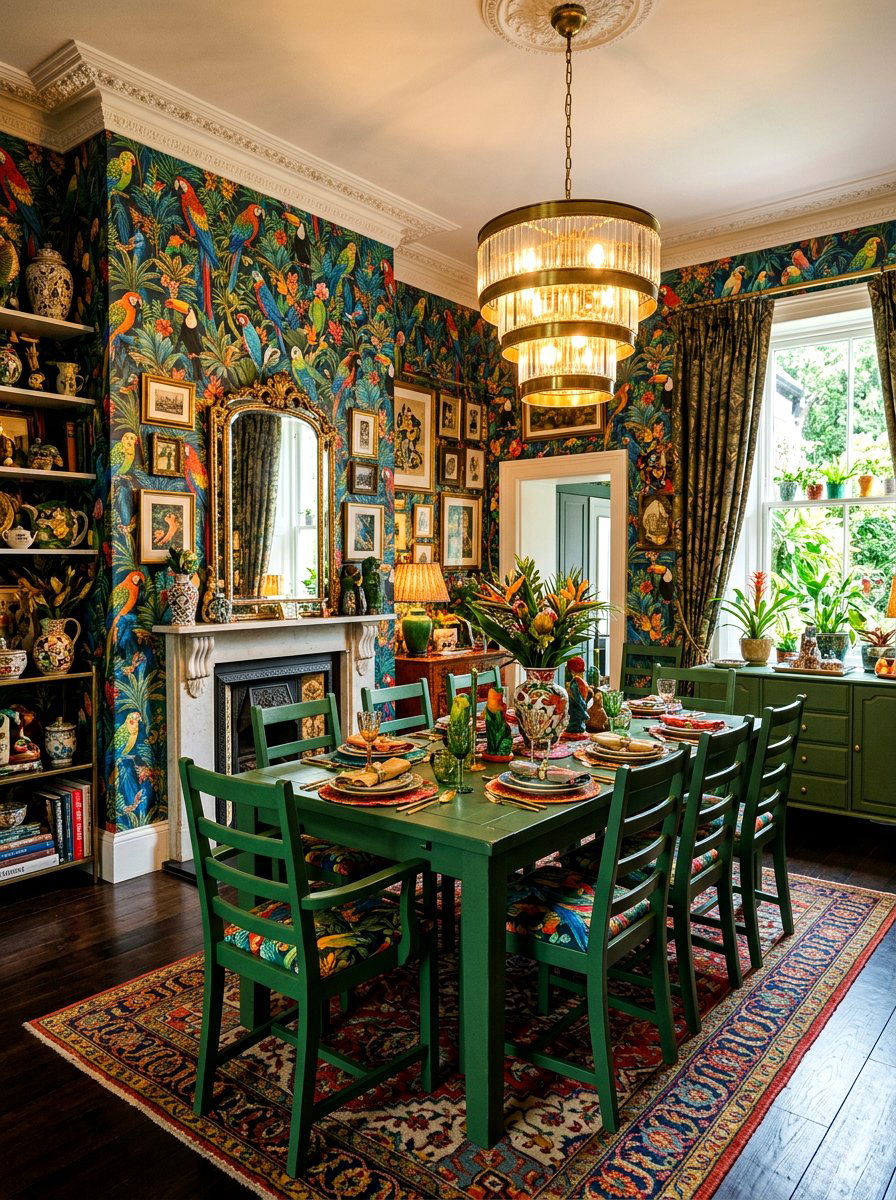
A maximalist wallpaper dining room uses bold, patterned wallpaper as the primary art form on every wall. Instead of hanging individual frames, the walls themselves become the masterpiece, featuring large floral motifs, animal prints, or intricate geometric designs. This all-encompassing approach to decor creates a high-drama environment that is rich in color and detail. To keep the space from feeling too cluttered, it is best to use furniture with simple lines and solid colors. Maximalism celebrates the "more is more" philosophy, resulting in a dining room that is incredibly vibrant, luxurious, and full of captivating visual layers.
30. Earth tone dining room
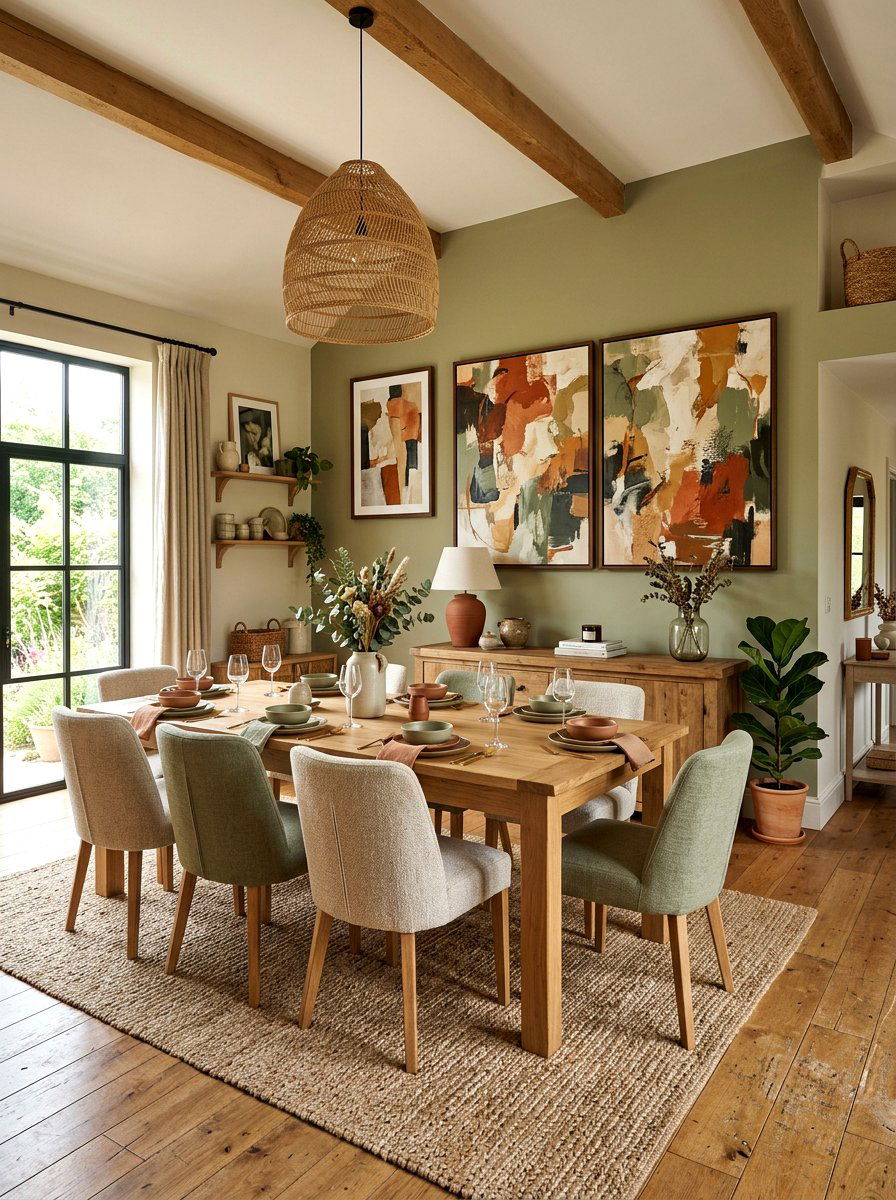
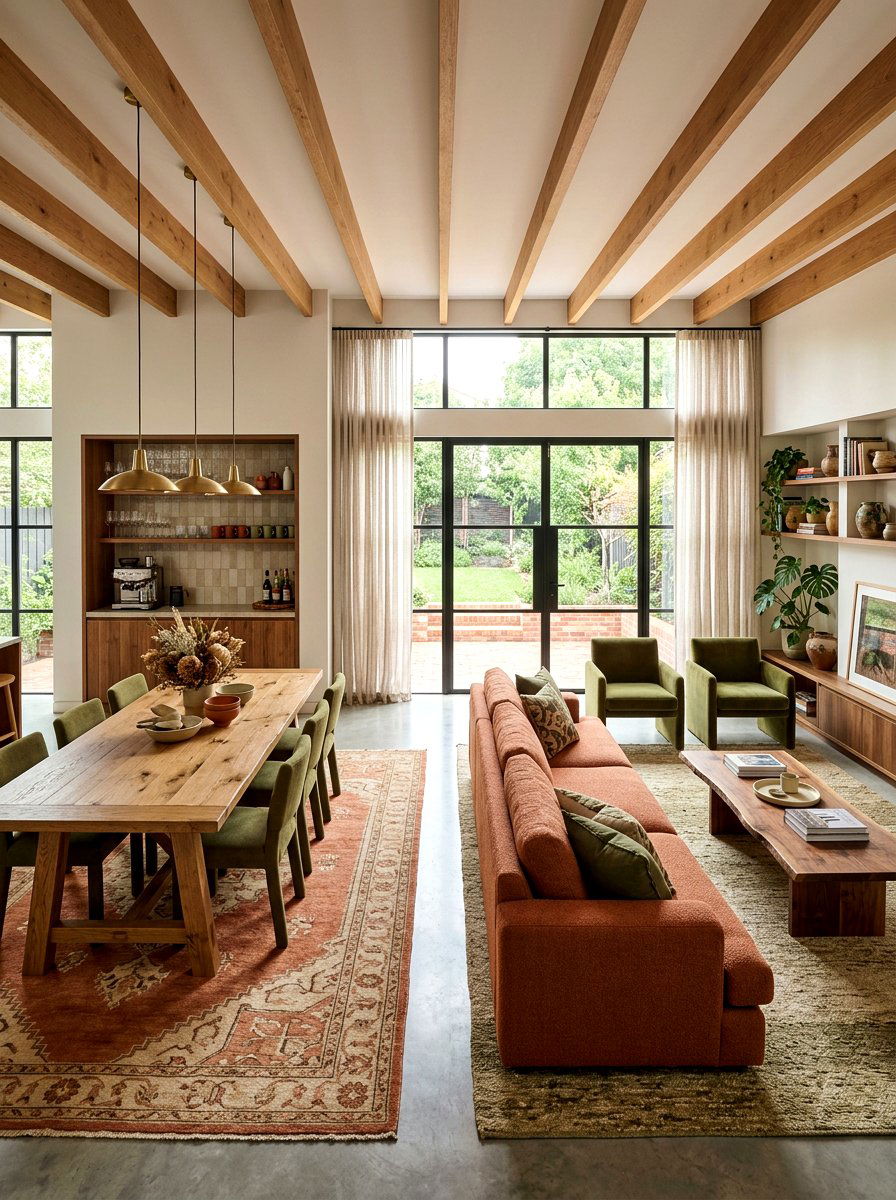
An earth tone dining room uses art that features a palette of browns, terracottas, sages, and ochres to create a grounded and cozy feel. The artwork might include abstract shapes inspired by desert landscapes or minimalist paintings of clay vessels. These warm, natural colors are very easy on the eyes and help to create a soothing environment that is perfect for long, slow dinners with family. This style of art pairs beautifully with other natural elements like linen curtains, clay pottery, and wooden tables. It emphasizes a connection to the earth and creates a space that feels timelessly comfortable.
Conclusion:
Choosing art for your dining room is an exciting opportunity to define the heart of your home. From oversized canvases that make a bold statement to curated gallery walls that tell your personal story, the possibilities for creative expression are truly endless. The right artwork does more than just decorate; it influences the mood, sparks conversation, and makes every meal feel like a special occasion. By considering scale, color, and texture, you can create a harmonious space that reflects your unique style and provides a beautiful backdrop for making memories. Let your walls speak and turn your dining room into a gallery.

Related posts: