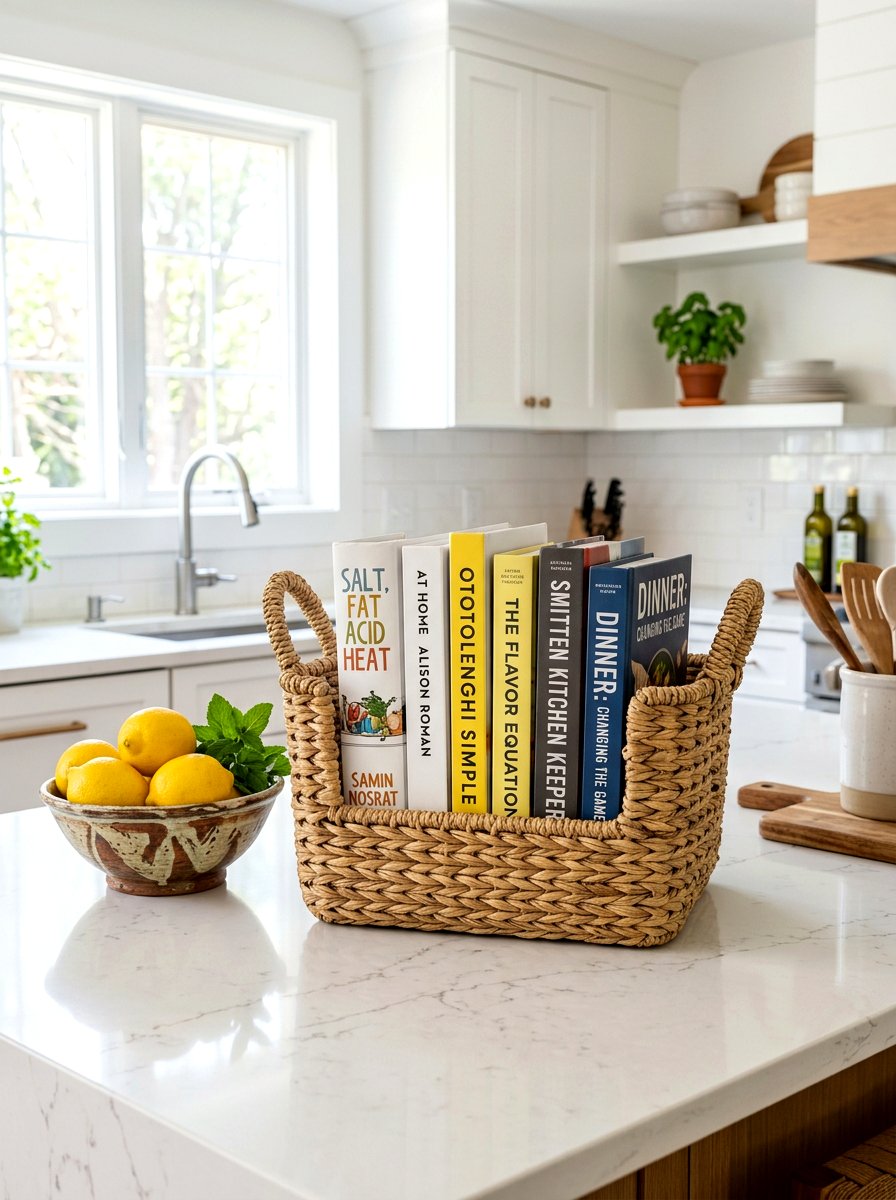
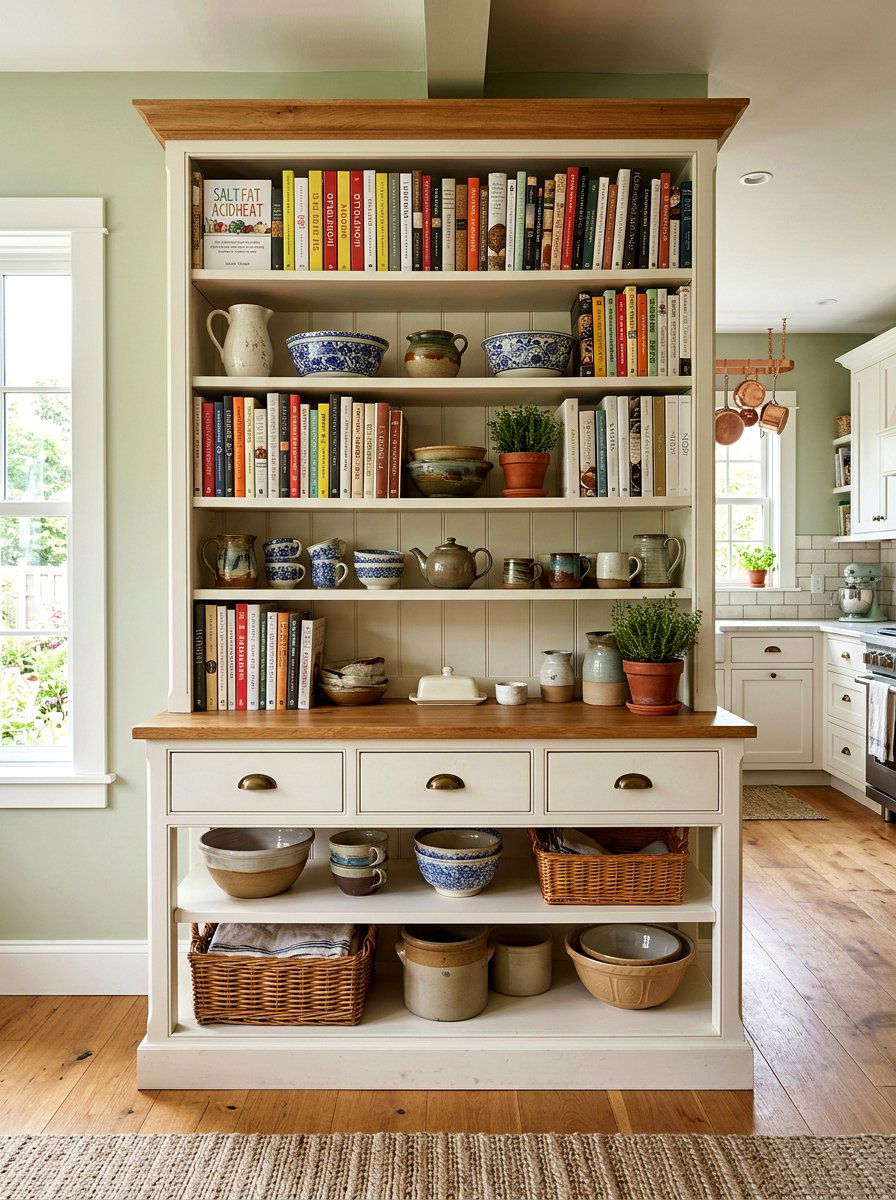
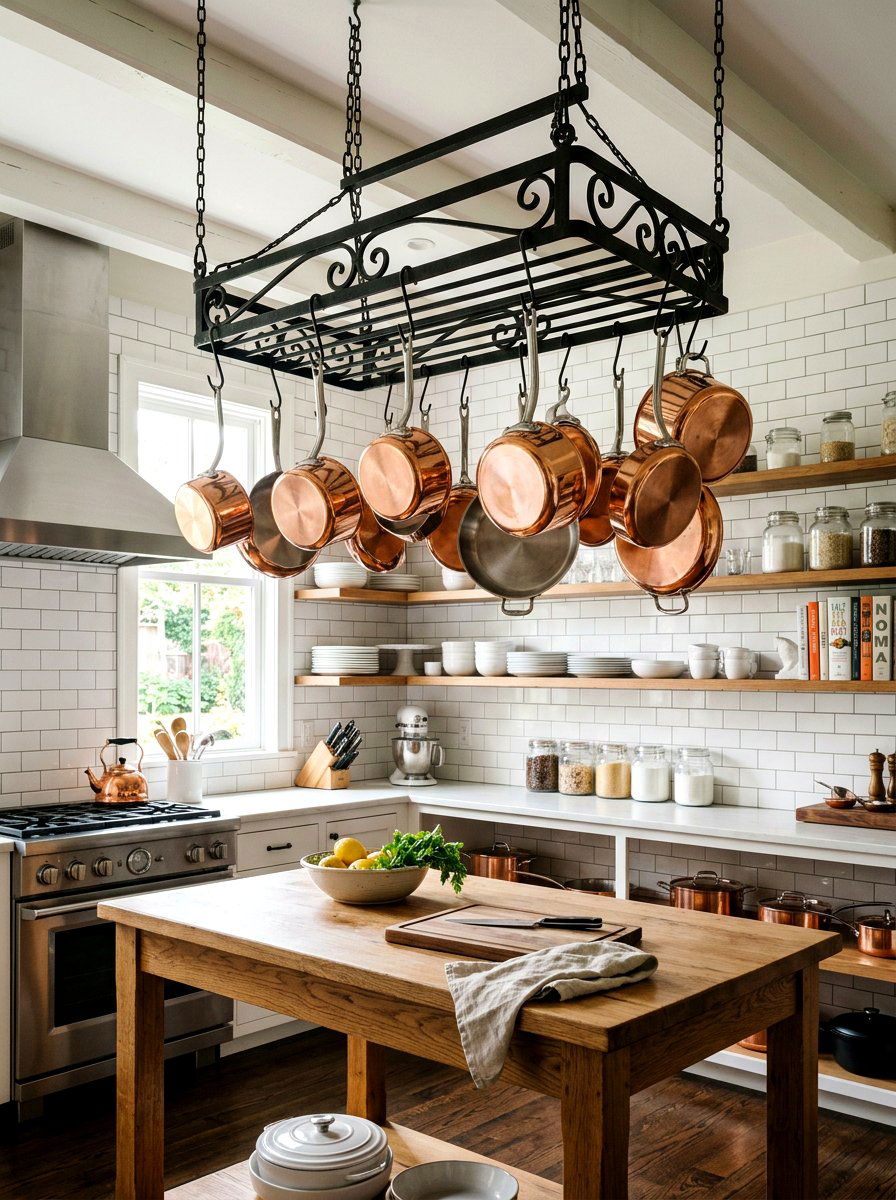
Finding the perfect spot for your culinary collection can transform a functional kitchen into a cozy, inspired sanctuary for any home chef. Cookbooks are more than just instruction manuals; they are vibrant pieces of decor that reflect your personal taste and culinary journey through their colorful spines and beautiful photography. Integrating dedicated shelving into your kitchen layout allows you to clear valuable counter space while keeping your favorite recipes within arm’s reach during meal preparation. Whether you prefer a minimalist look or a rustic farmhouse vibe, well-organized cookbook shelves add a layer of warmth and lived-in charm to the heart of your modern home.
1. Floating Wood Shelf
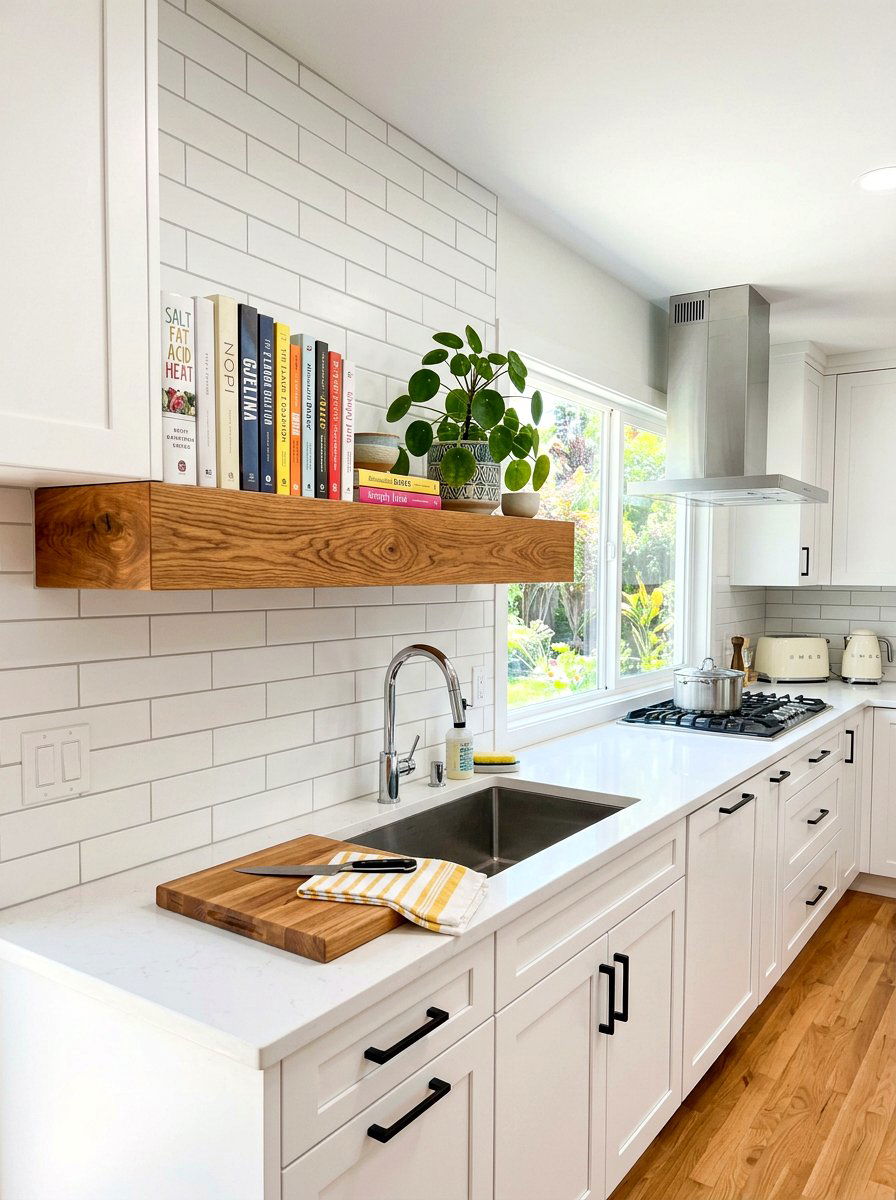
Natural wood floating shelves offer a timeless and versatile way to showcase your favorite recipe books while adding organic texture to your walls. These thick timber planks provide a sturdy platform that can support the weight of heavy, hardbound culinary volumes without the visual clutter of bulky brackets. When you install them against a clean white backsplash or a moody accent wall, the wood grain pops, creating a warm focal point in the room. You can easily style these by leaning books of varying heights alongside small potted herbs or ceramic spice jars. This approach keeps your most-used guides accessible and turns your collection into a beautiful piece of functional wall art.
2. Kitchen Island End Shelf
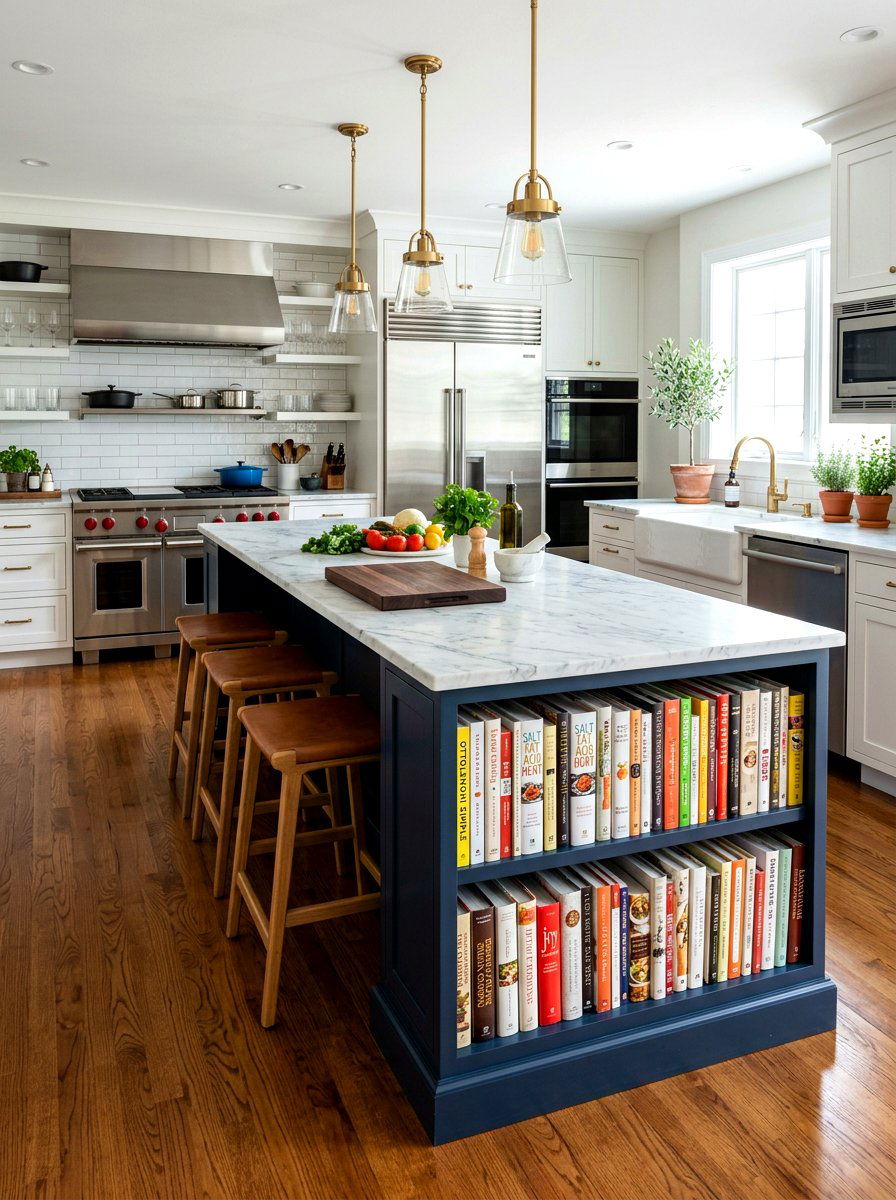
Utilizing the end cap of a kitchen island is a brilliant strategy for maximizing storage in a high-traffic area. Instead of leaving the side panel blank, you can incorporate built-in open shelving specifically sized for deep cookbooks and oversized binders. This placement is incredibly practical because it keeps your recipes close to the main prep zone where you actually do the chopping and mixing. It also helps to break up the solid mass of the cabinetry, making the island feel more like a piece of custom furniture. Stacking books horizontally and vertically on these lower shelves adds visual interest and a welcoming, library-inspired feel to the space.
3. Built In Wall Nook
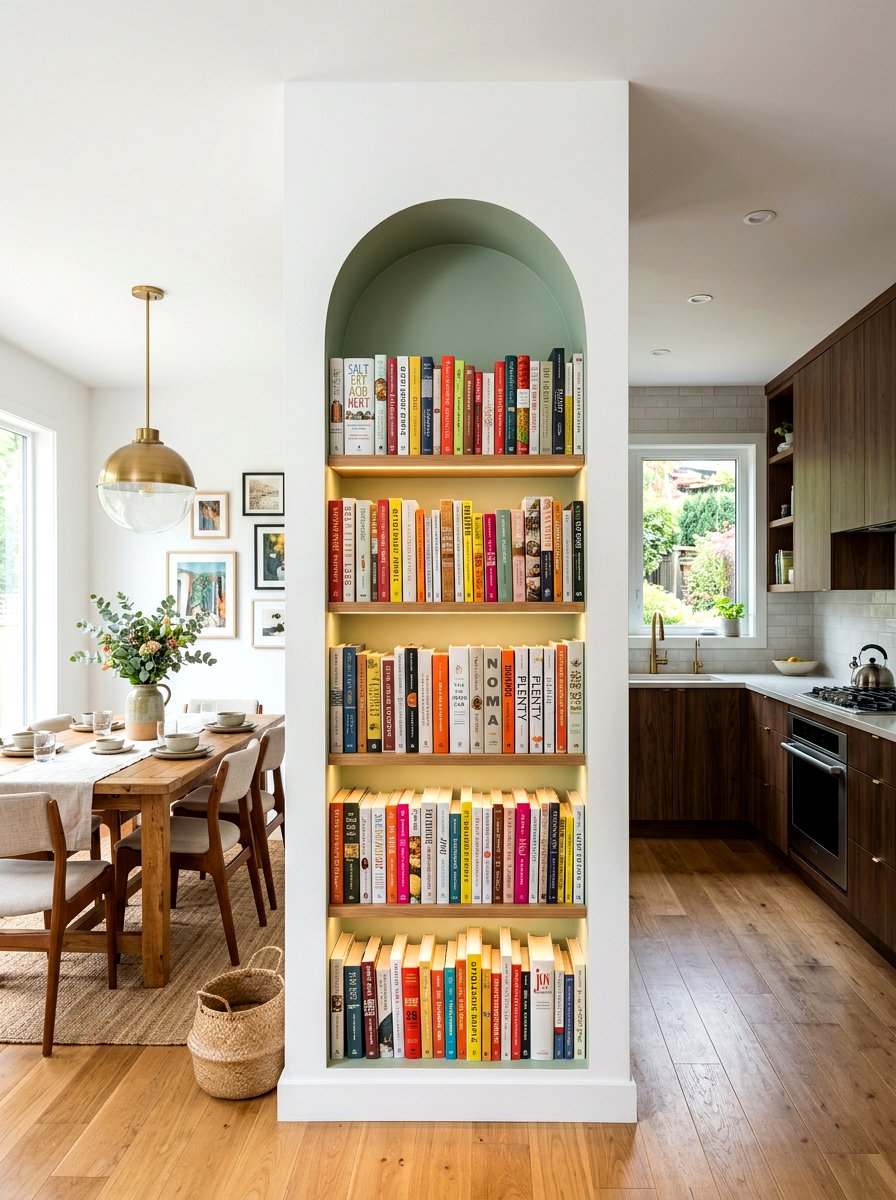
Creating a recessed wall nook provides a sleek and integrated look that saves precious floor and counter area in smaller kitchens. By carving out space between the wall studs, you can design custom cubbies that sit flush with the surrounding surface for a high-end, architectural finish. This design choice is perfect for those who want a streamlined aesthetic without sacrificing the convenience of having their culinary library nearby. You might consider painting the interior of the nook a contrasting color or adding subtle LED strip lighting to highlight the colorful spines. It is a sophisticated way to turn an unused wall segment into a dedicated home for your collection.
4. Over The Range Shelf
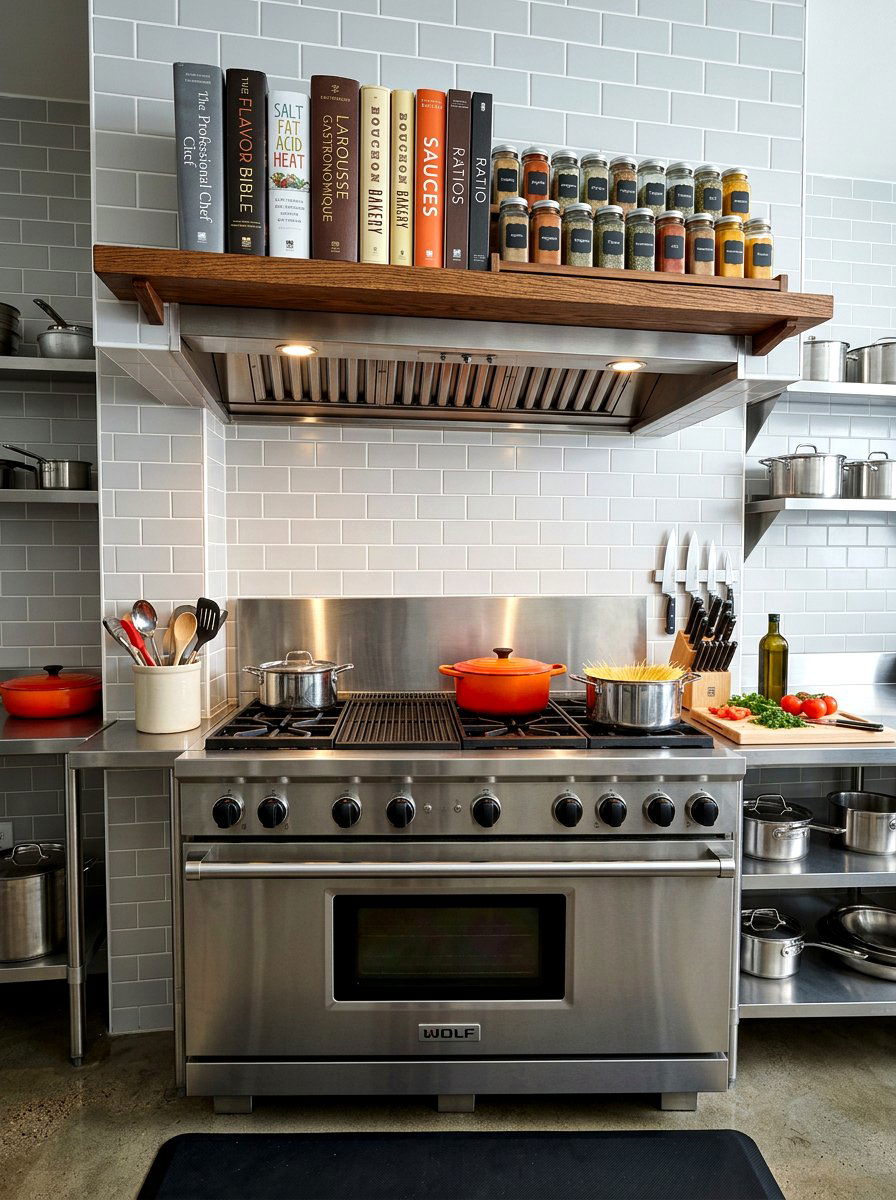
Mounting a sturdy shelf directly above the range or vent hood keeps your essential guides right where the action happens during dinner service. This location ensures that you never have to wander far from the stove to check a measurement or verify a cooking temperature. To ensure the longevity of your books, make sure the shelf is high enough to avoid direct heat while still remaining easy to reach for the average adult. Choosing a material like stainless steel or heat-treated wood ensures durability in this warm environment. It creates a professional chef’s kitchen atmosphere that looks both hardworking and incredibly organized for any busy household.
5. Corner Floating Shelf
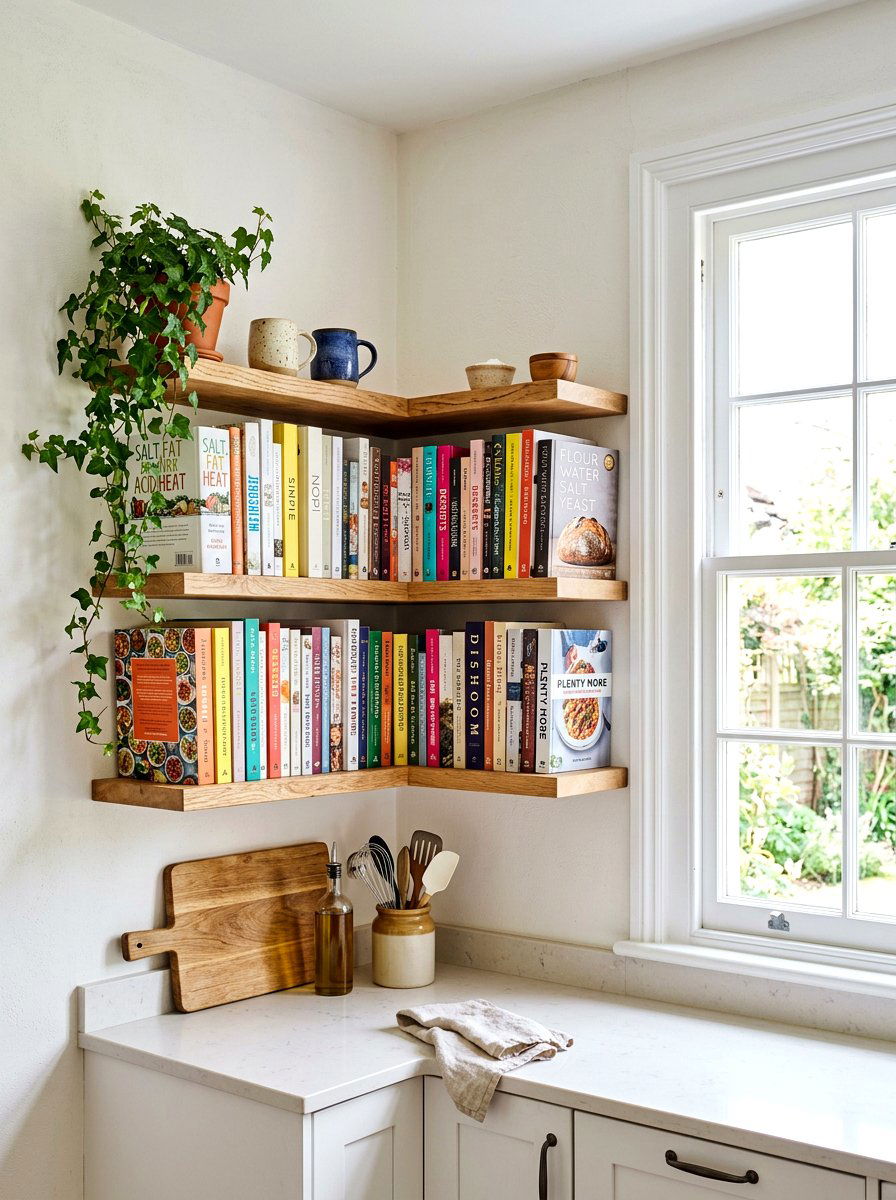
Awkward kitchen corners are often underutilized, but installing custom-fit floating shelves can turn these tricky spots into highly functional storage hubs. L-shaped shelves wrap around the corner seamlessly, providing a continuous surface for a large number of books that might otherwise clutter your cabinets. This setup is particularly effective in galley kitchens or small apartments where every square inch of wall space is precious. You can use the corner depth to tuck away larger coffee table books while keeping smaller recipe pamphlets toward the front edges. It is a smart way to soften the sharp angles of a room while displaying your literary treasures in a creative way.
6. Above The Window Shelf
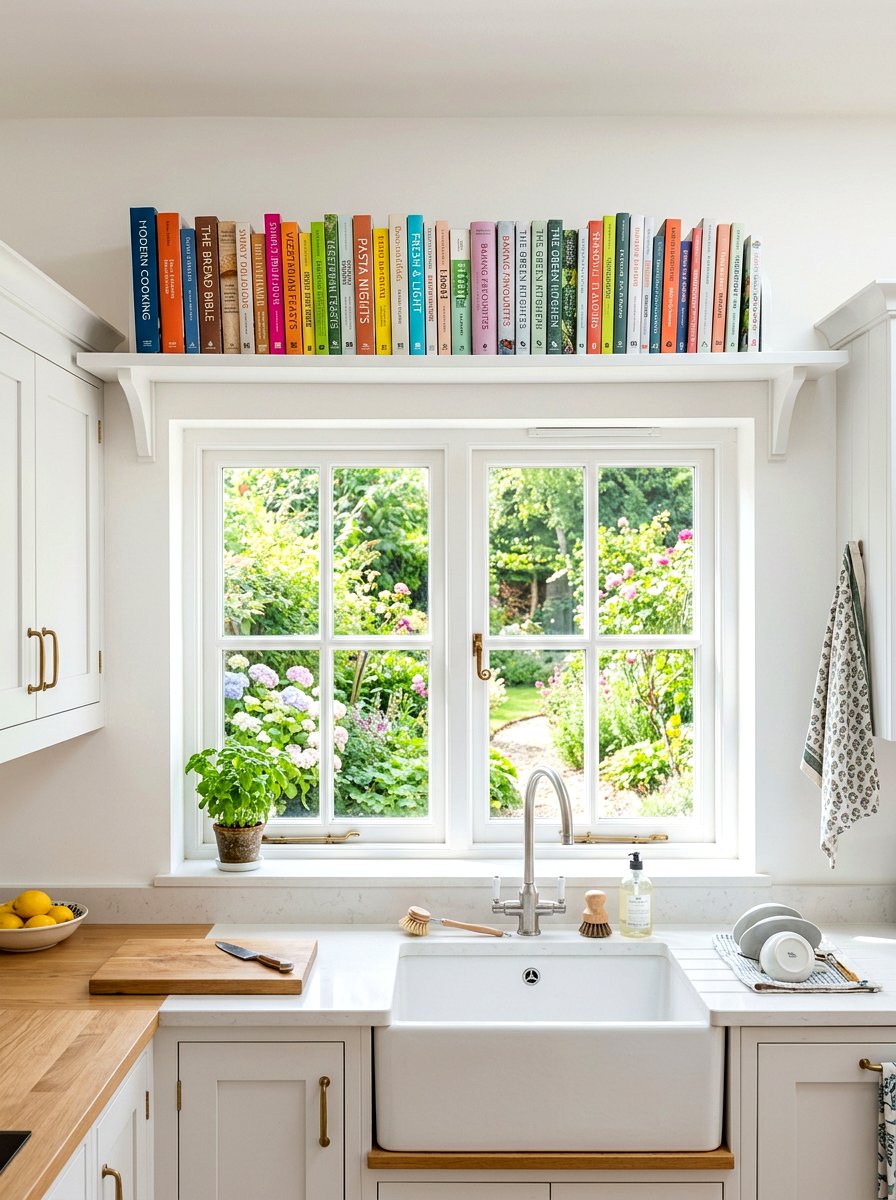
If you are running out of traditional wall space, look upward to the often-ignored area directly above your kitchen window. Running a long, single shelf across the top of the window frame creates an elevated gallery look that draws the eye upward and makes the ceiling feel higher. This is an ideal spot for those special editions or seasonal cookbooks that you don’t need to grab every single day. The natural light from the window below beautifully illuminates the shelf, making it a bright and airy place for your collection to live. It adds a layer of architectural detail that makes your kitchen feel custom-built and thoughtfully designed.
7. Picture Ledge Wall
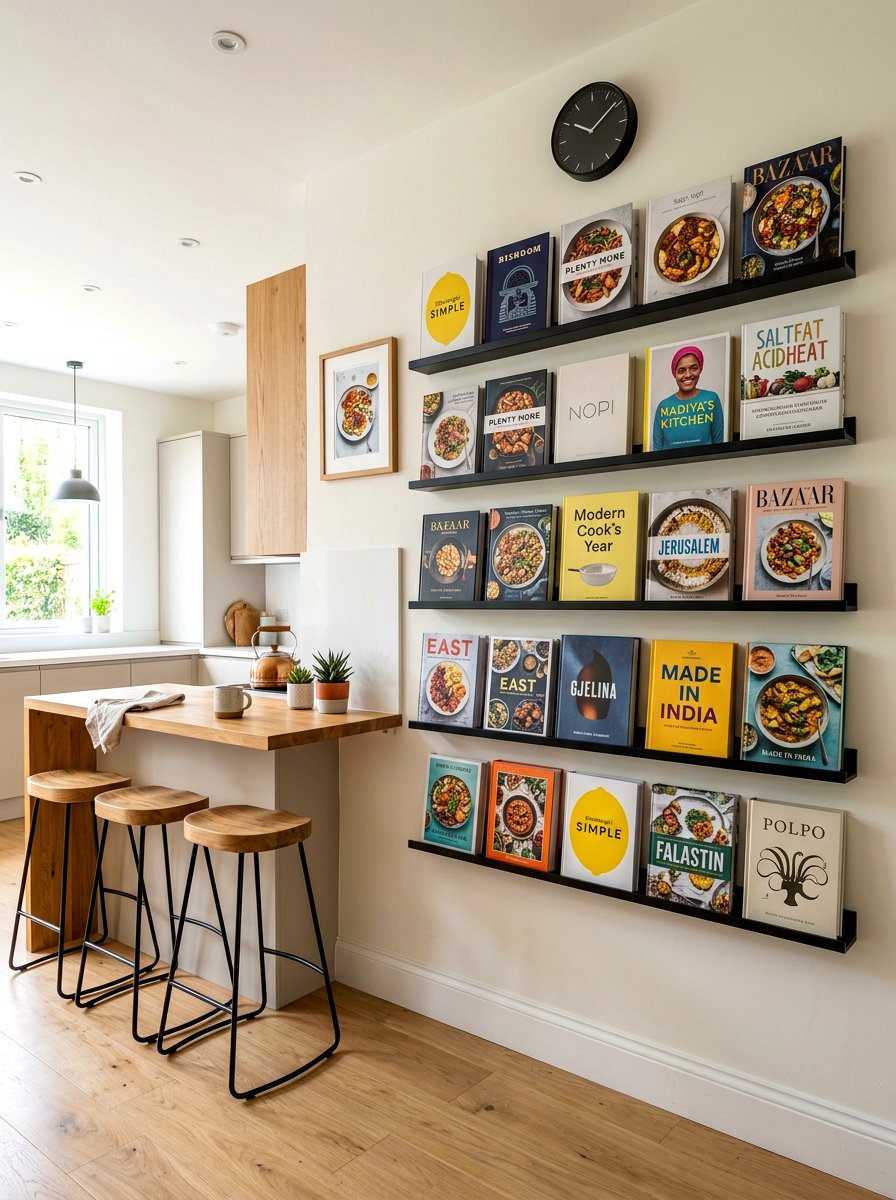
Using narrow picture ledges allows you to display your cookbooks with the covers facing forward, turning them into a rotating gallery of food photography. This forward-facing orientation is perfect for thin paperbacks or beautifully illustrated volumes that deserve to be seen rather than just tucked away. Because ledges are typically shallow, they don't protrude far into the room, making them a great choice for narrow hallways or the space behind a kitchen door. You can stack multiple ledges vertically to create a full library wall effect that feels modern and graphic. This method makes it incredibly easy for kids or guests to pick out a book and start browsing.
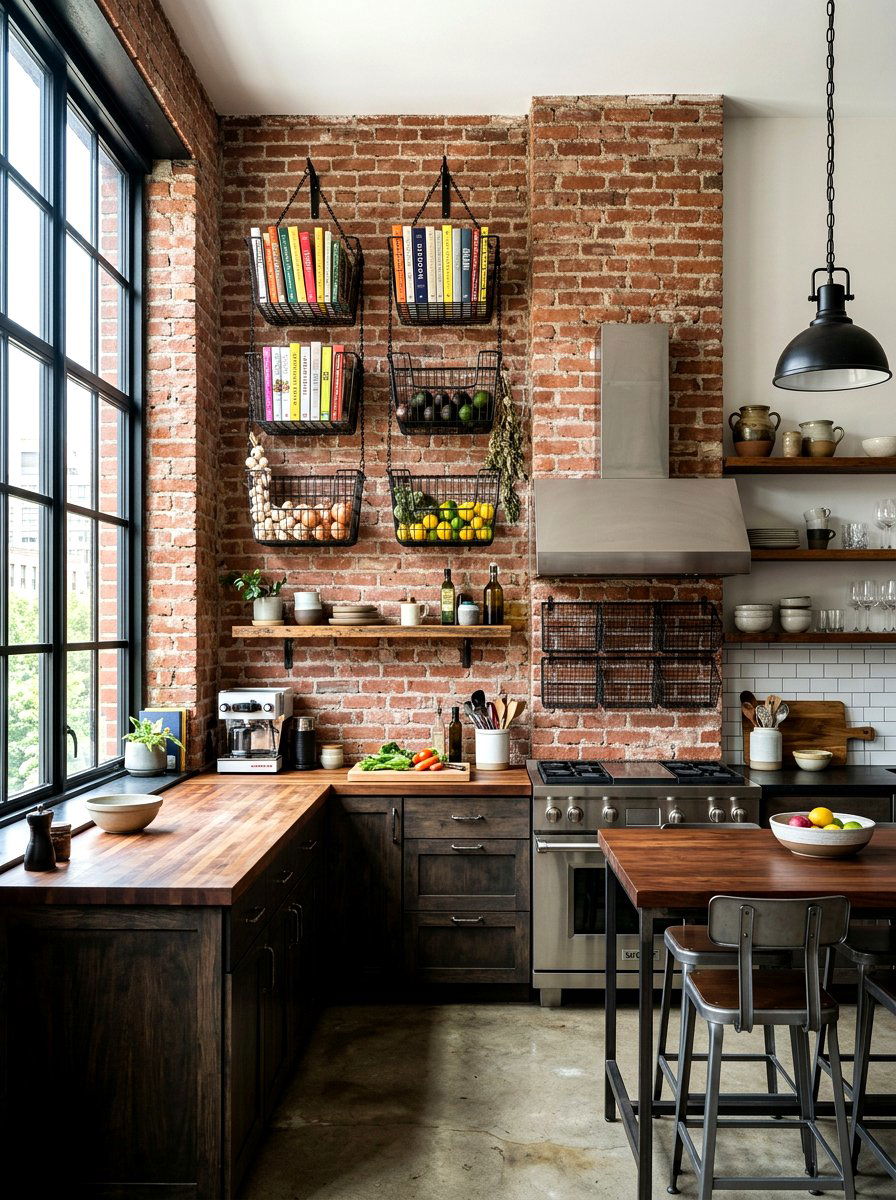
8. Industrial Pipe Shelf
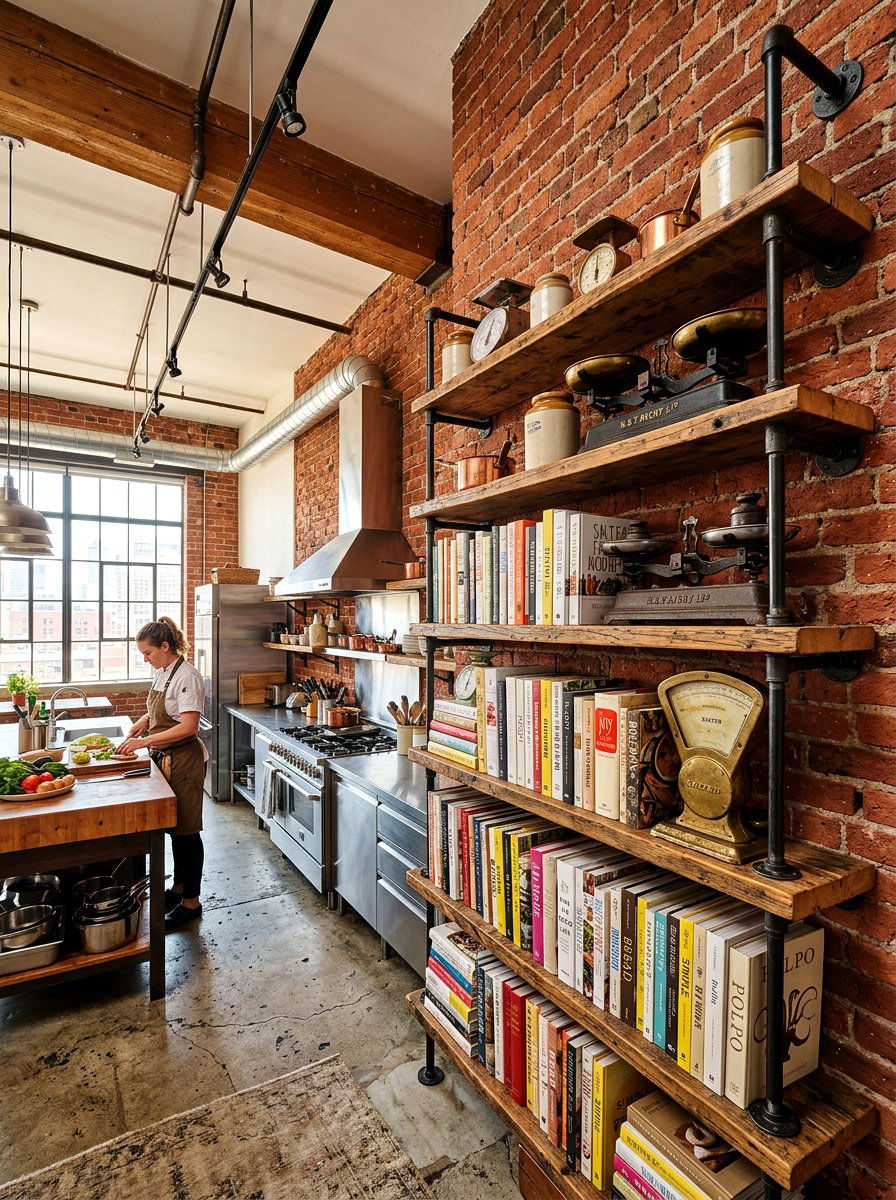
For a kitchen with a more rugged or urban aesthetic, industrial pipe shelving offers a unique and incredibly strong solution for heavy cookbook storage. Combining black iron pipes with reclaimed wood planks creates a sturdy structure that can handle the weight of even the thickest culinary encyclopedias. The open design feels airy and doesn't block sightlines, which is beneficial in open-concept living and dining areas. You can customize the height and width of the shelves to fit perfectly around your existing appliances or pantry doors. This style adds a touch of character and modern edge while providing a reliable and durable home for your most-loved recipe books.
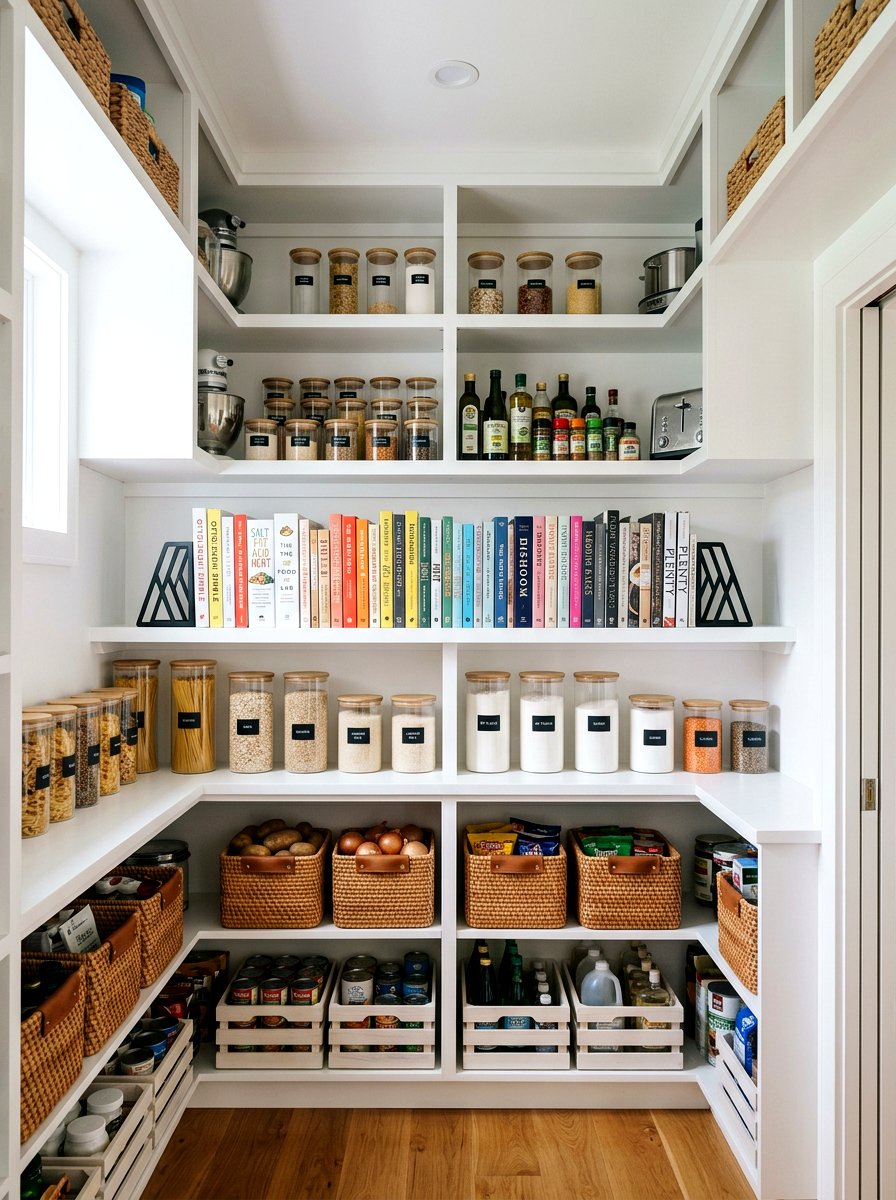
9. Pantry Open Shelving
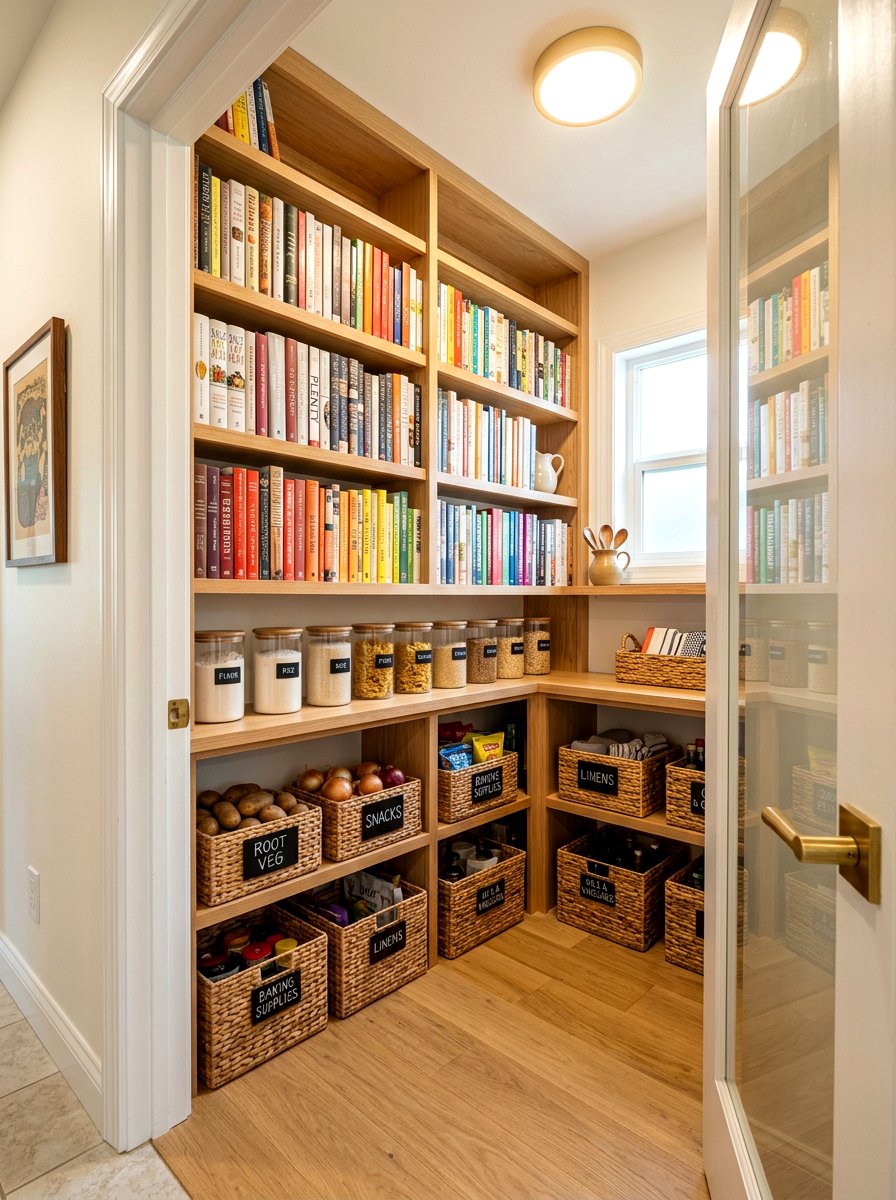
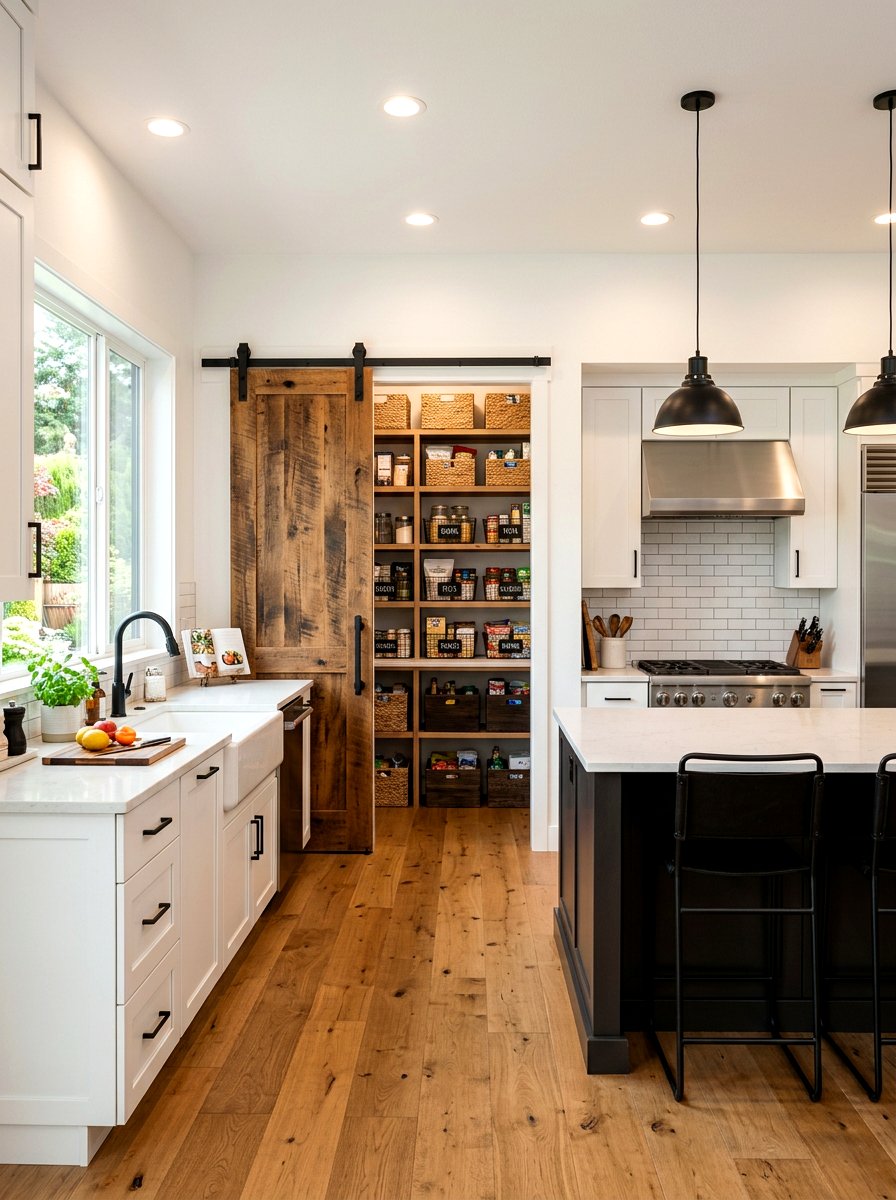
Transforming a portion of your walk-in pantry into an organized cookbook library keeps your collection close to your dry goods and baking supplies. By dedicating one or two eye-level shelves to books, you create a comprehensive meal-planning station right where you check your inventory. This is a great way to keep your kitchen counters completely clear of clutter while still maintaining easy access to your favorite recipes. Using baskets or decorative bookends on these shelves can help keep different categories, such as baking, slow cooking, or international cuisine, neatly separated. It makes the pantry feel like a more integrated and vital part of your daily kitchen routine.
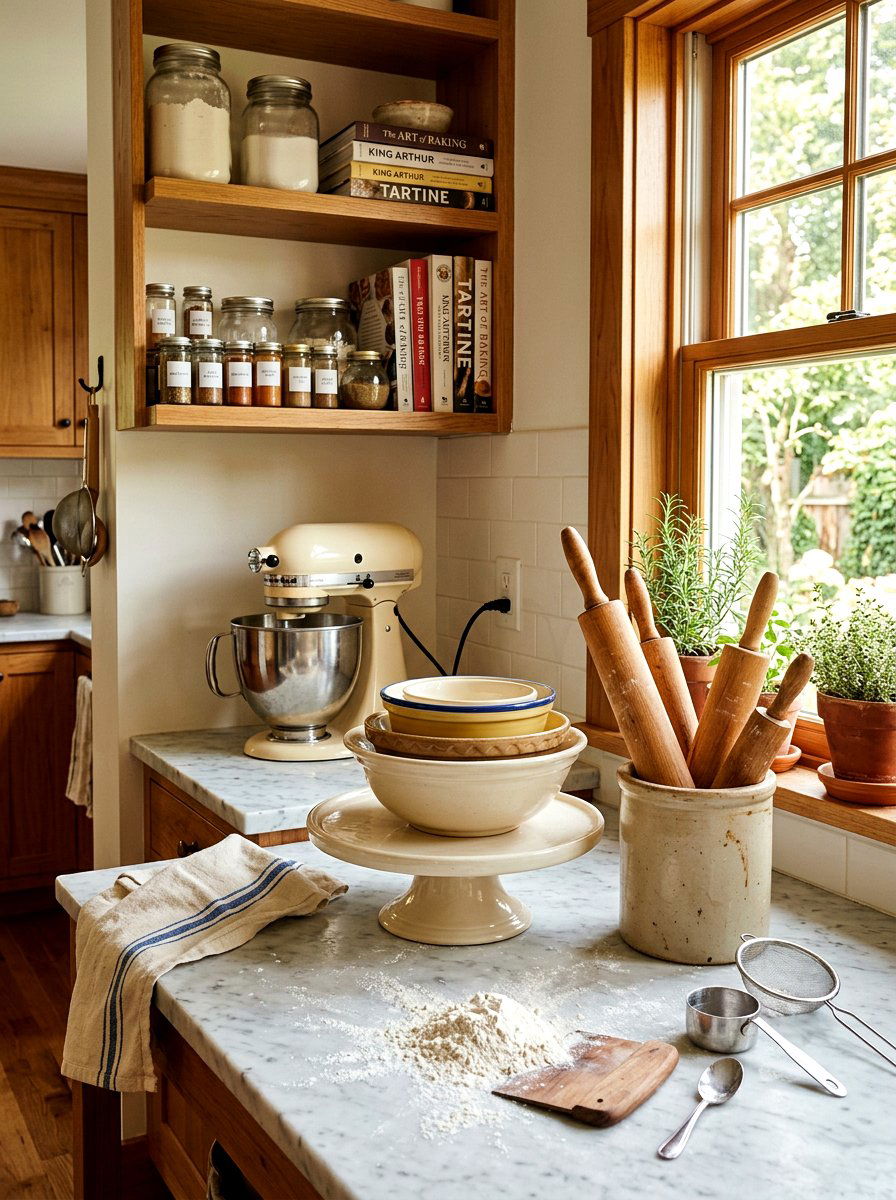
10. Under Cabinet Bookshelf
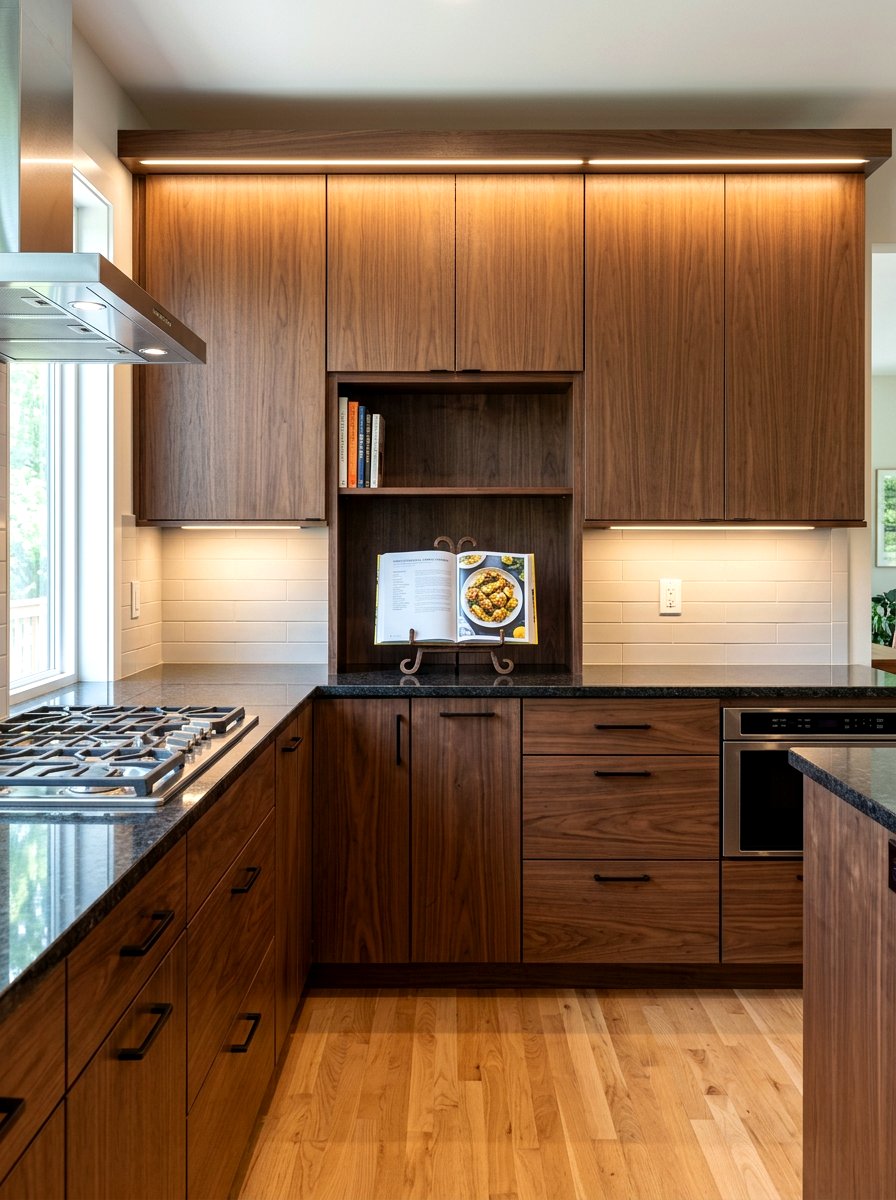
Mounting a small, specialized shelf directly underneath your upper cabinets is a clever way to utilize the often-wasted space above your countertops. These slim units can be custom-made to match your cabinetry, creating a seamless look that appears as though it was part of the original kitchen design. This placement keeps your current "must-read" book at eye level, which is perfect for referencing while you are actively prepping ingredients on the counter below. It prevents the book from getting splashed by sauces or water because it is elevated off the work surface. This solution is a game-changer for anyone who loves following complex recipes in a busy, crowded kitchen.
11. Vintage Wooden Ladder
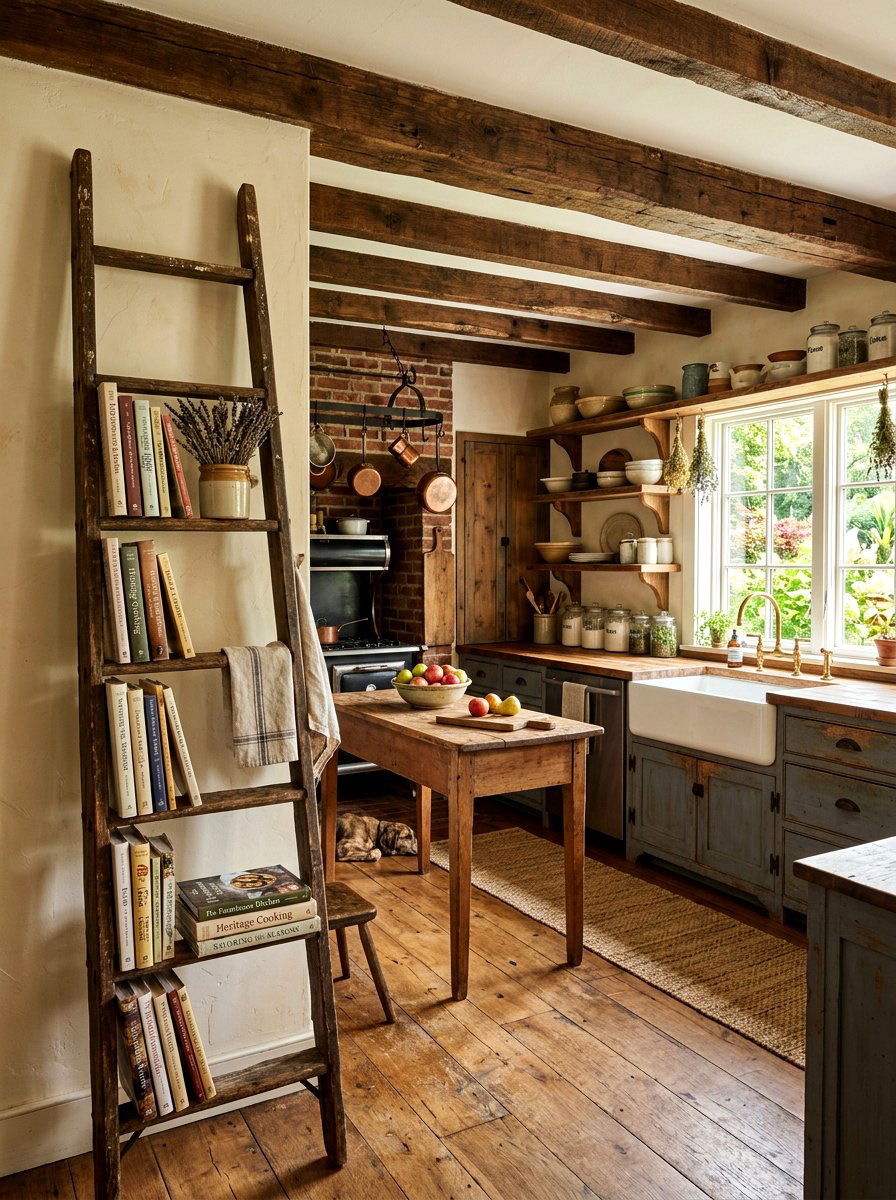
Leaning a vintage wooden ladder against an empty wall provides a charming and portable way to display your cookbooks in a rustic or cottage-style kitchen. Each rung serves as a narrow shelf where you can drape magazines or lean smaller books for an effortless, casual look. This approach is perfect for renters or those who don't want to commit to permanent wall-mounted shelving. You can easily move the ladder to different parts of the room as your needs change or for deep cleaning. Decorating the top rungs with a small trailing plant or a set of vintage kitchen towels enhances the cozy and lived-in feel of the space.
12. Glass Front Cabinet
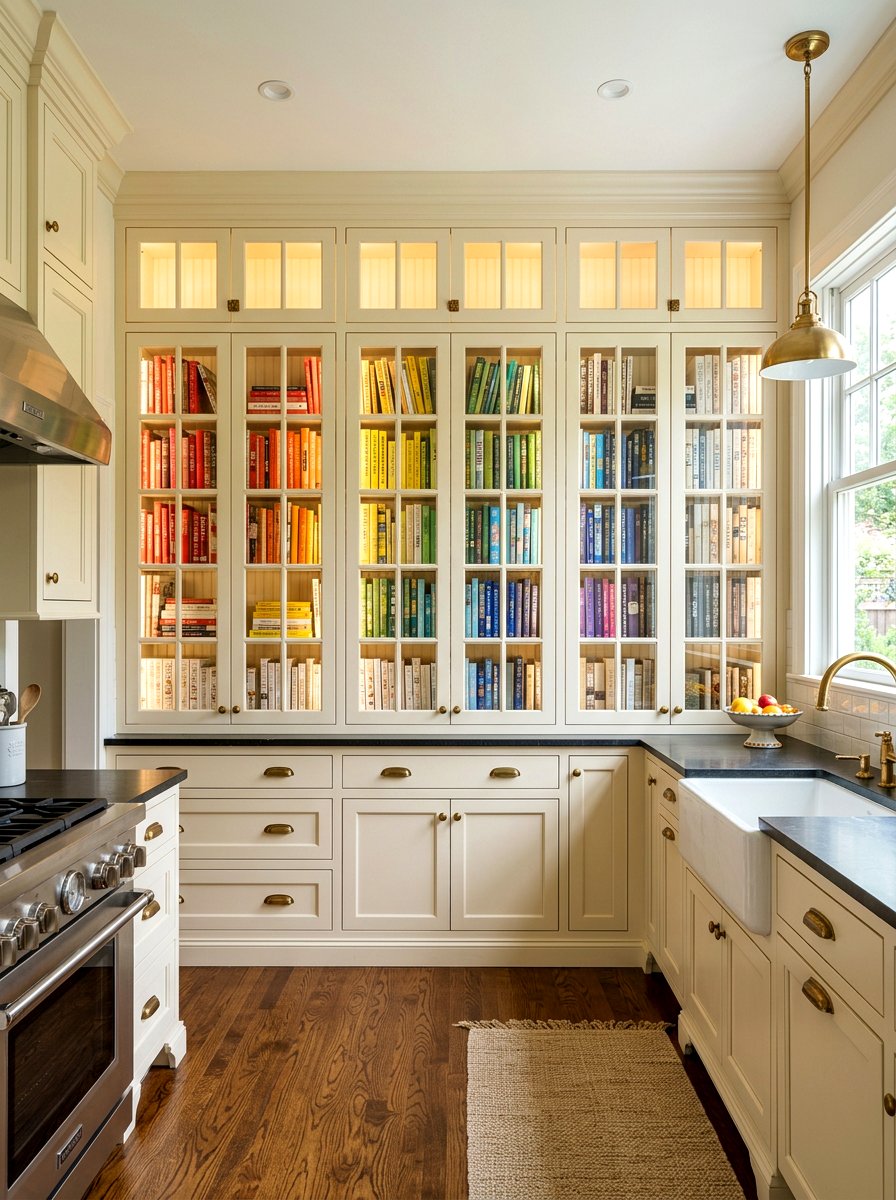
Storing your cookbooks behind glass-front cabinet doors offers the best of both worlds by providing high visibility while protecting them from grease and dust. This method allows you to enjoy the colorful aesthetic of your collection without the maintenance required for open shelving. You can organize the books by spine color or size to create a polished and curated display that looks like a high-end boutique. This is especially effective in traditional or transitional kitchens where you want a clean and tidy appearance. The glass doors reflect light, helping the kitchen feel brighter and more spacious while keeping your valuable first editions safe from common kitchen mishaps.
13. Minimalist Metal Ledge
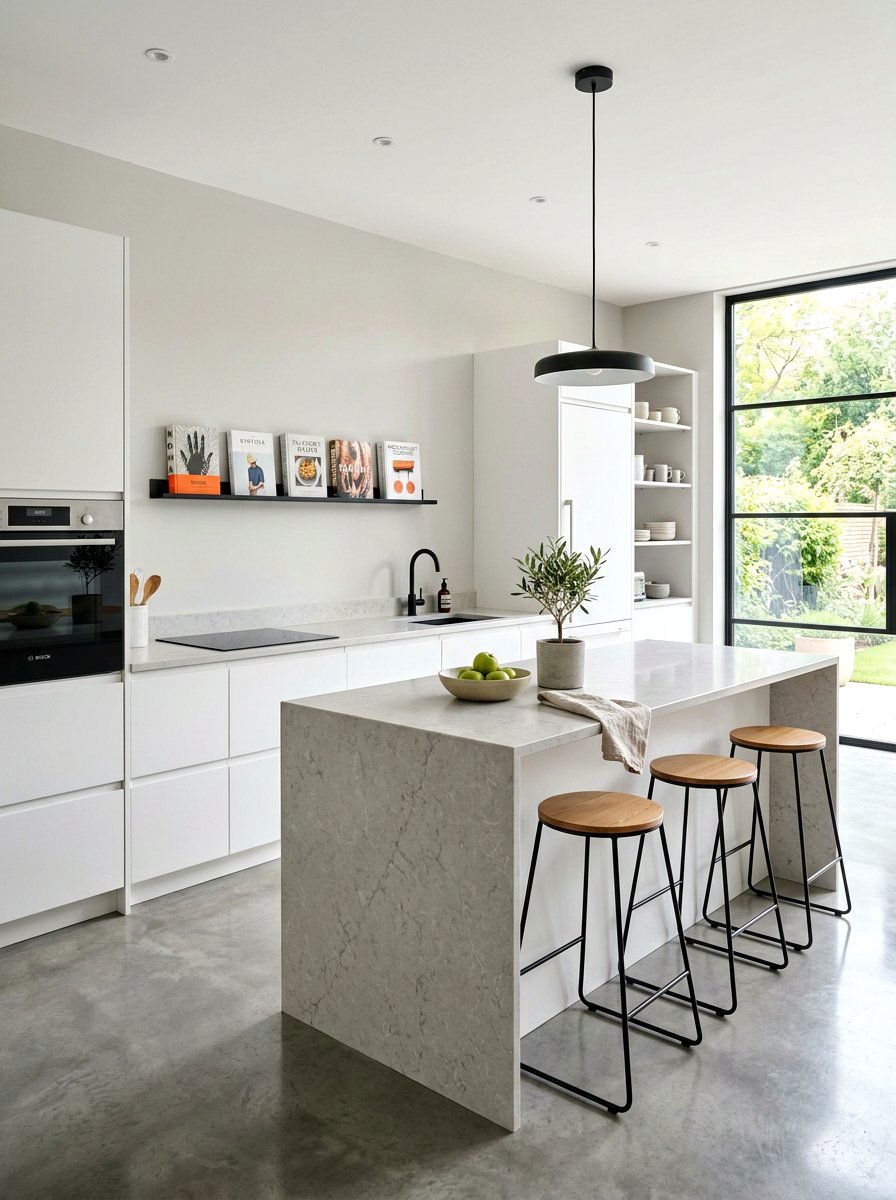
A slim metal ledge provides a sharp and contemporary way to support your cookbooks without adding visual weight to your kitchen walls. These thin steel or aluminum rails are incredibly strong despite their delicate appearance, making them ideal for modern or industrial interiors. Because they are so unobtrusive, the focus remains entirely on the books themselves, which can look like they are floating against the wall. You can find these in various finishes like matte black, brushed brass, or polished chrome to match your kitchen hardware and fixtures perfectly. It is a sophisticated and low-profile choice for anyone who appreciates clean lines and a clutter-free environment.
14. Arched Wall Recess
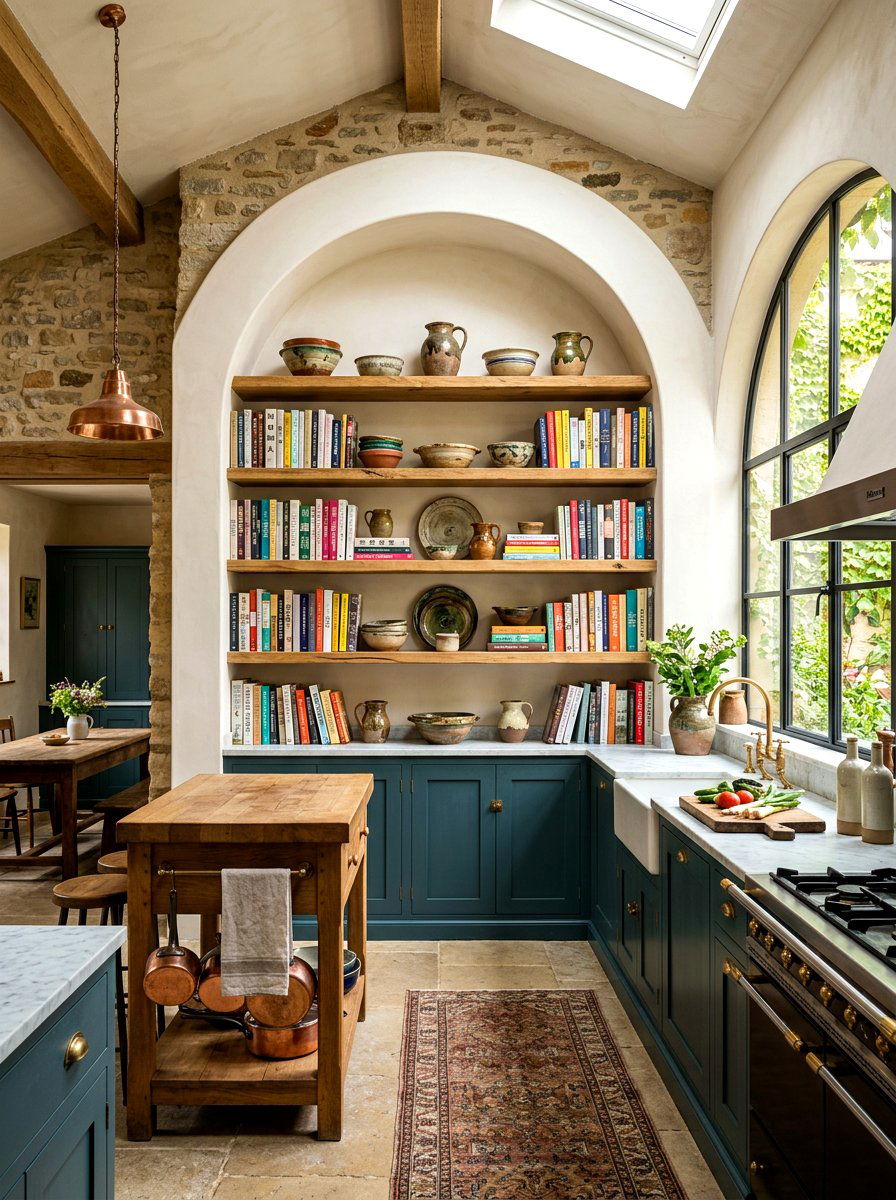
Incorporating an arched wall recess into your kitchen design adds a touch of architectural elegance and soft curves to an otherwise linear space. This built-in feature creates a beautiful alcove that frames your cookbook collection like a piece of fine art. The rounded top provides a classic, Mediterranean or European feel that pairs wonderfully with plastered walls or light-colored cabinetry. You can add wooden shelves inside the arch to create a contrast of materials that feels warm and inviting. This design element serves as a stunning focal point in the room, proving that functional storage can also be a major decorative asset in a well-planned and stylish home.
15. Side Of Refrigerator Shelf
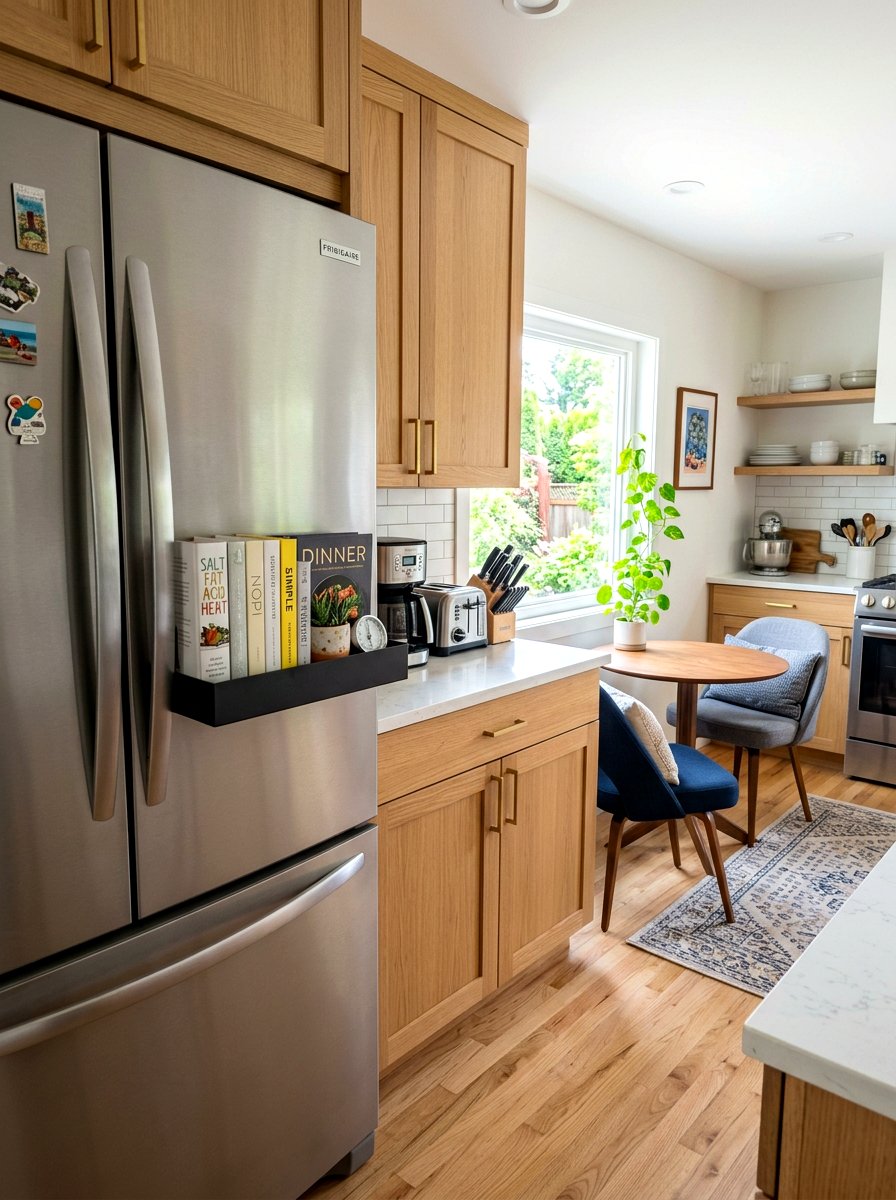
The exposed side of a refrigerator is often a missed opportunity for storage, but it is the perfect spot for a magnetic or slim-profile shelf. Attaching a series of narrow shelves to this surface allows you to keep your most-used cookbooks within easy reach of the fridge and prep area. This is a brilliant space-saving hack for small kitchens where every inch counts and wall space is limited. You can choose wooden or metal options that complement your kitchen’s overall style while providing a sturdy home for your recipe books. It effectively hides the plain side of a major appliance while adding a layer of functional and attractive decor.
16. Ceiling Hung Shelf
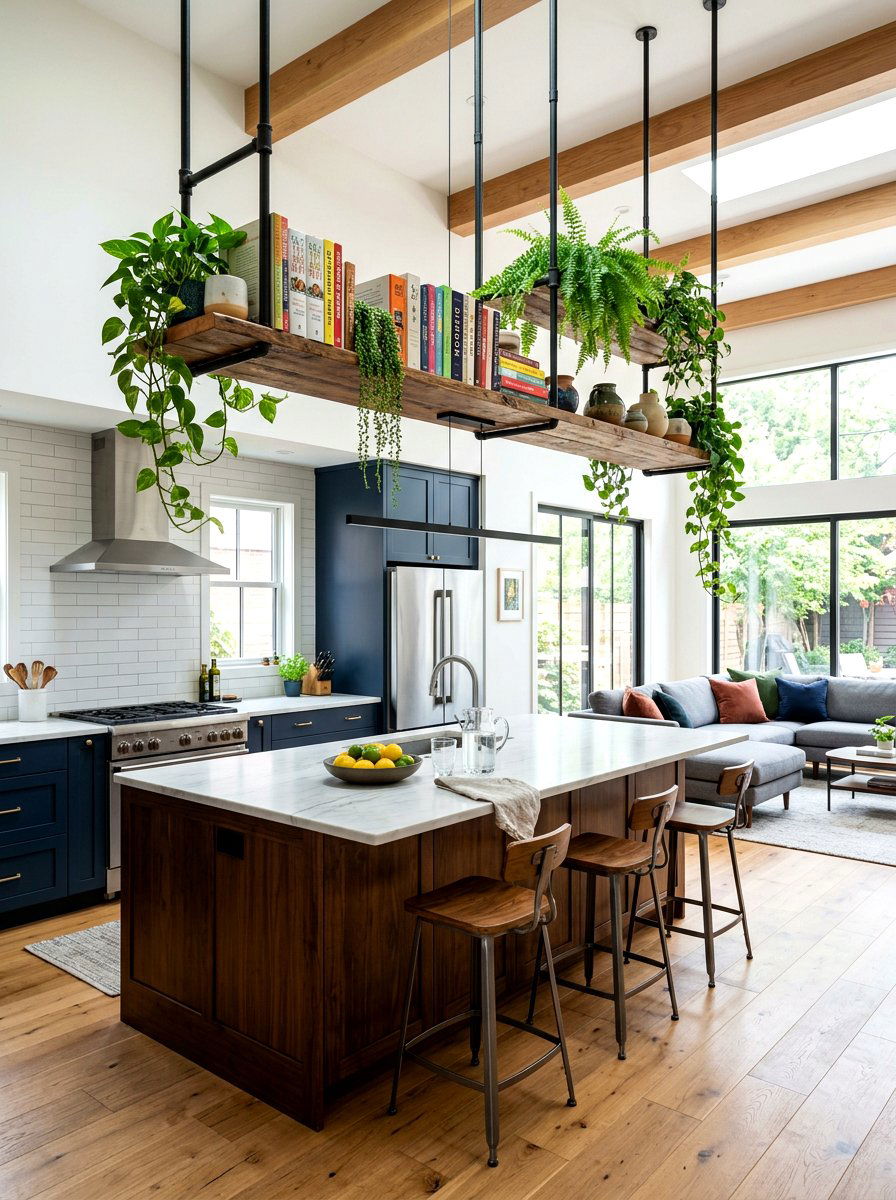
Suspending a shelf from the ceiling using sturdy metal rods or thick ropes is a dramatic and creative way to add cookbook storage above an island. This floating look keeps the sightlines across the kitchen open while providing a unique architectural element that catches the eye immediately. It is an excellent solution for high-ceilinged spaces where wall-mounted shelves might feel too low or disconnected from the rest of the room. You can style the shelf with a mix of books, hanging plants, and decorative glassware to create a multi-dimensional display. This elevated approach ensures your collection is safe from spills while remaining a central part of your design.
17. Floor To Ceiling Bookshelf
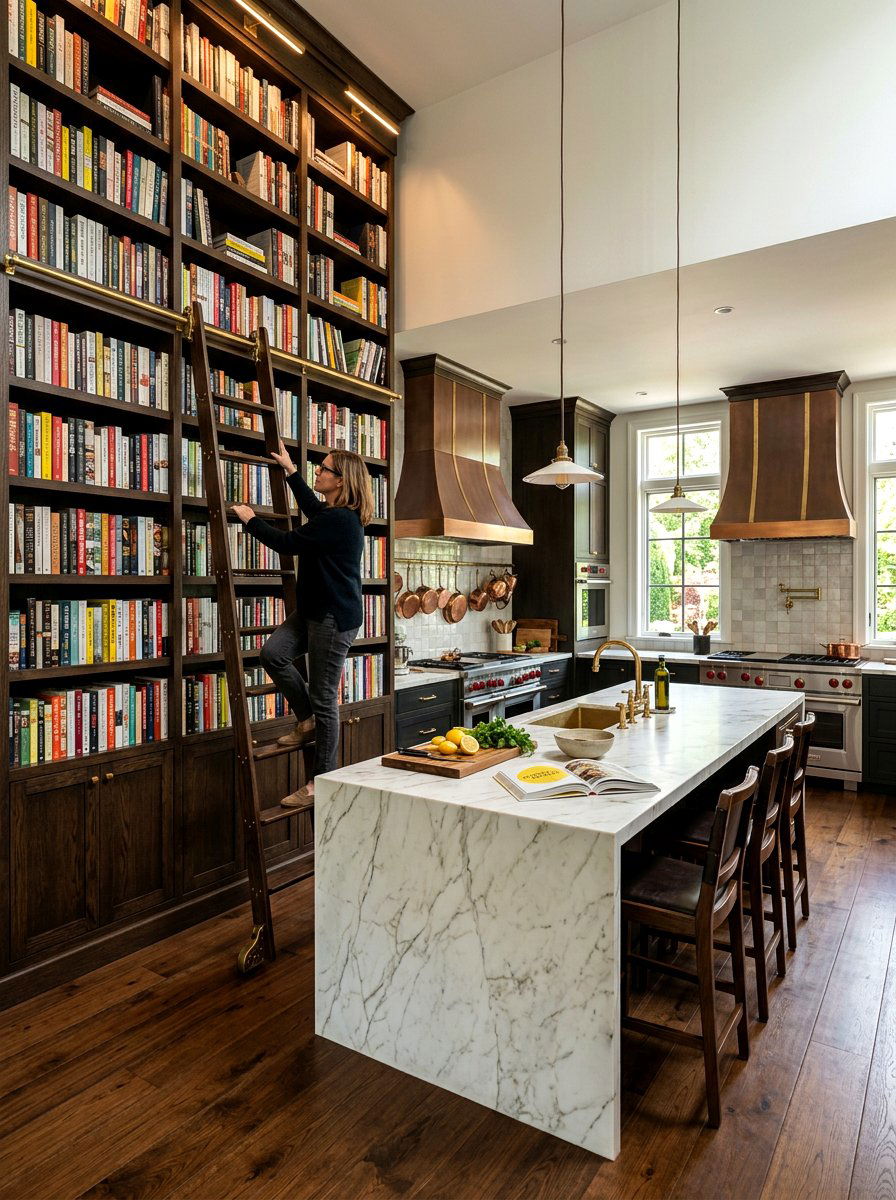
If you are a serious collector with hundreds of volumes, a floor-to-ceiling bookshelf can turn an empty kitchen wall into a stunning culinary library. This grand design choice makes a bold statement and provides enough space to organize your books by region, author, or dietary preference. Including a library-style rolling ladder adds a touch of whimsy and ensures that every single book is accessible, even those on the highest shelves. This setup works beautifully in large, open-plan kitchens where the library can double as a transition between the cooking and living areas. It creates a warm, intellectual atmosphere that celebrates the deep love of cooking and fine literature.
18. Rustic Timber Shelf
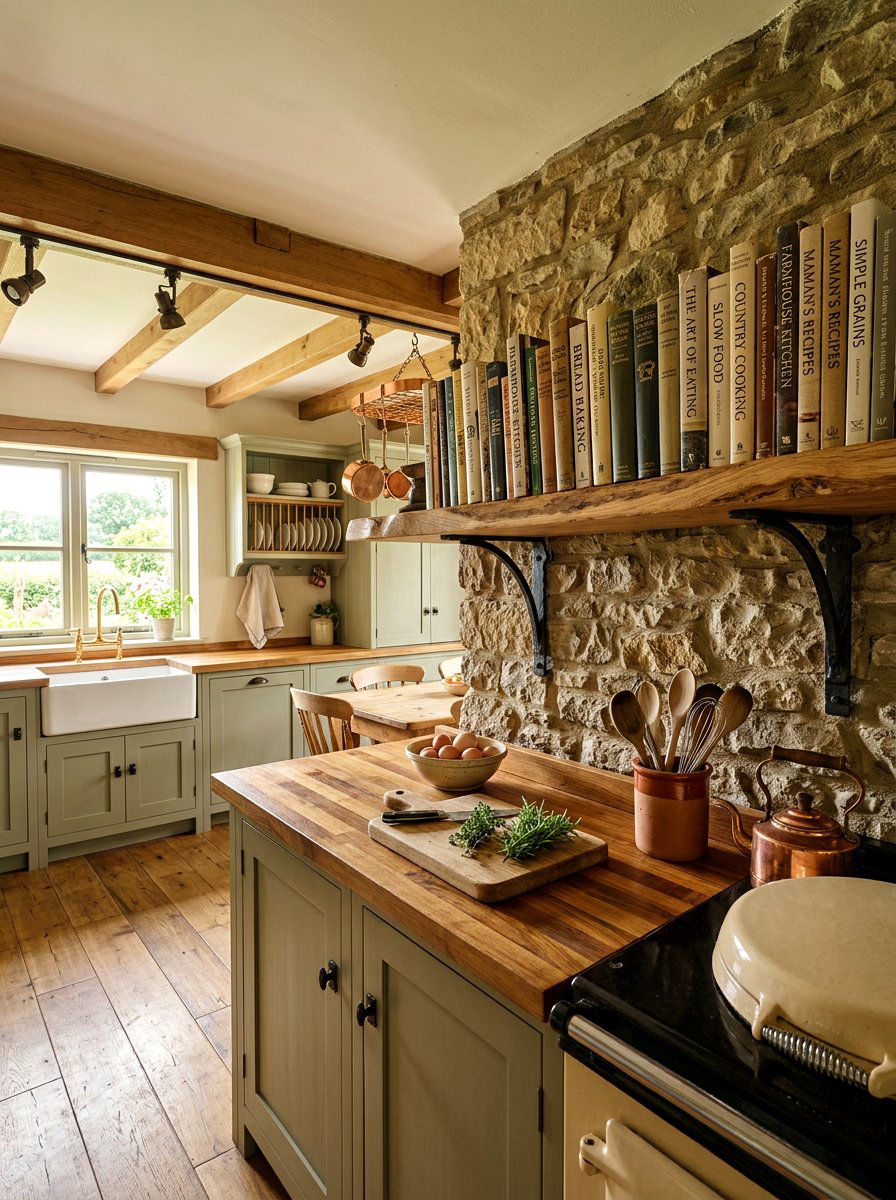
A chunky rustic timber shelf brings a sense of history and warmth to a kitchen, especially when paired with natural stone or brick backsplashes. These heavy-duty shelves are often made from reclaimed wood or live-edge slabs, showing off the natural knots and imperfections of the material. This rugged look is perfect for farmhouse or mountain-style homes where comfort and durability are prioritized over sleek finishes. The thickness of the timber provides a reliable support system for a large number of heavy books without any sagging. Pairing these with wrought iron brackets enhances the handcrafted feel, making your cookbook collection look like a curated part of a cozy homestead.
19. Modern Black Shelf
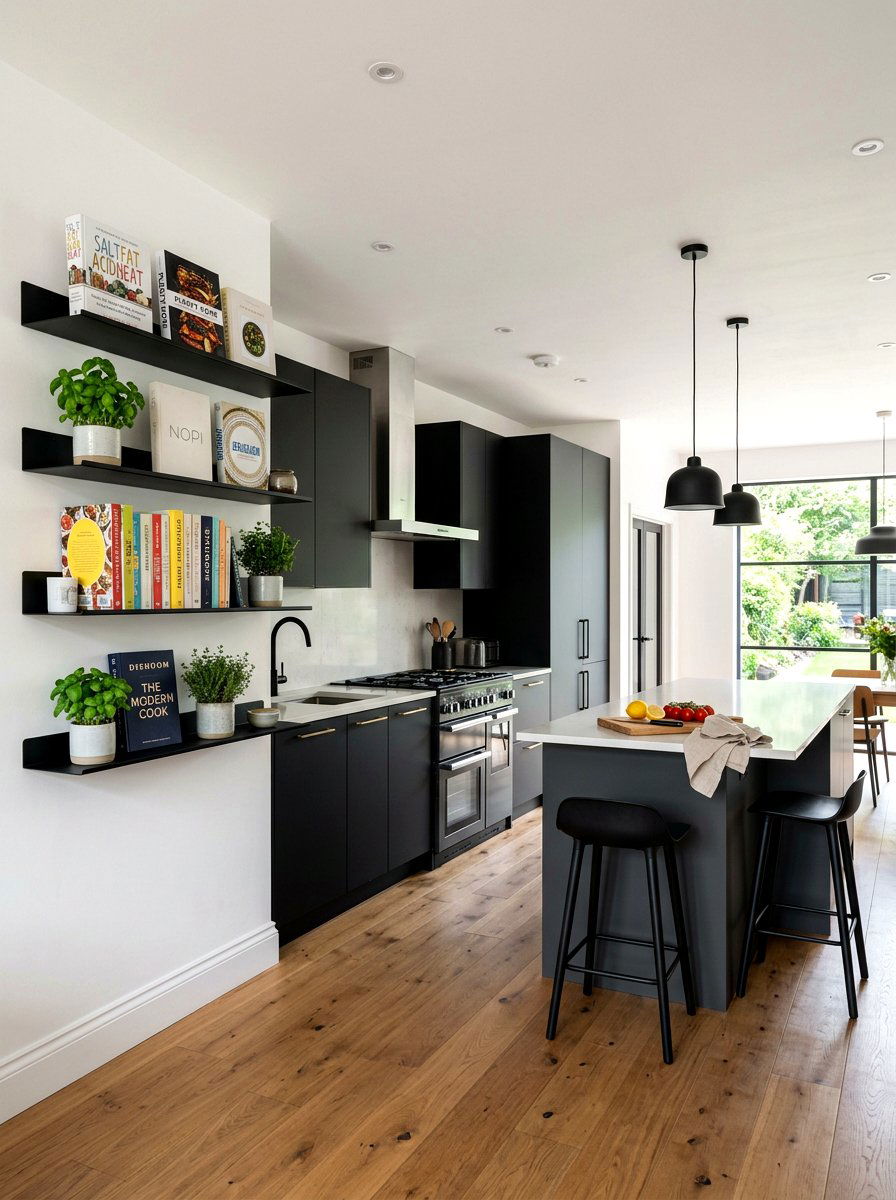
For a high-contrast and sophisticated look, a matte black shelf provides a striking backdrop for the colorful spines of your favorite cookbooks. Black shelving acts like a frame, making the vibrant hues of the book covers stand out and appear more vivid. This style fits seamlessly into contemporary or industrial kitchens where black hardware and lighting fixtures are already present. You can choose a simple floating design or a more complex geometric structure to add visual interest to your walls. The dark finish is also practical as it hides small scuffs and marks that can happen in a busy, high-traffic kitchen area where books are frequently moved.
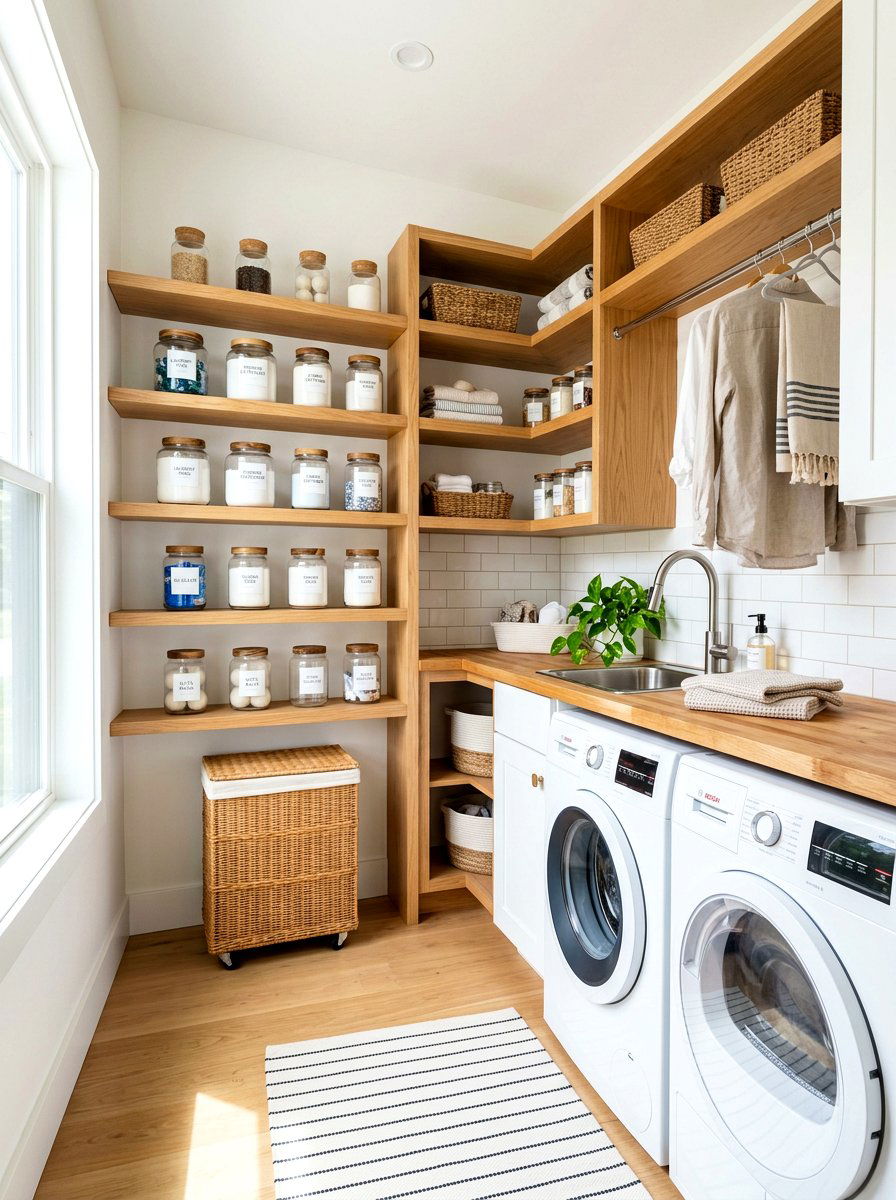

20. White Shaker Shelf
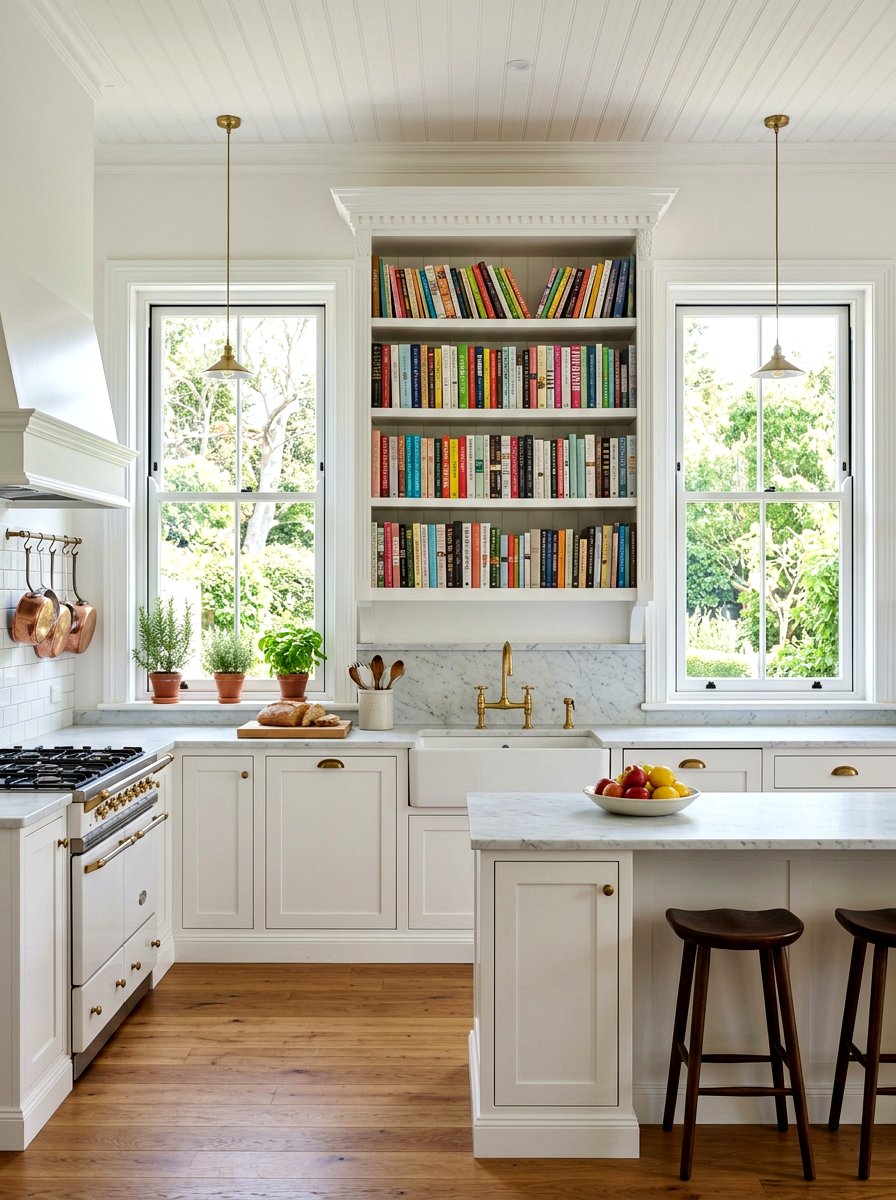
Matching your cookbook shelves to white Shaker-style cabinetry creates a cohesive and classic look that never goes out of style. These shelves often feature traditional crown molding or simple, clean lines that echo the surrounding door panels for a seamless architectural finish. This approach is ideal for homeowners who want their storage to blend in rather than stand out as a separate feature. The bright white color keeps the kitchen feeling light, airy, and exceptionally clean, even if you have a large number of books on display. It is a versatile choice that works well in coastal, traditional, or transitional kitchen designs for a very polished look.
21. Marble Kitchen Shelf
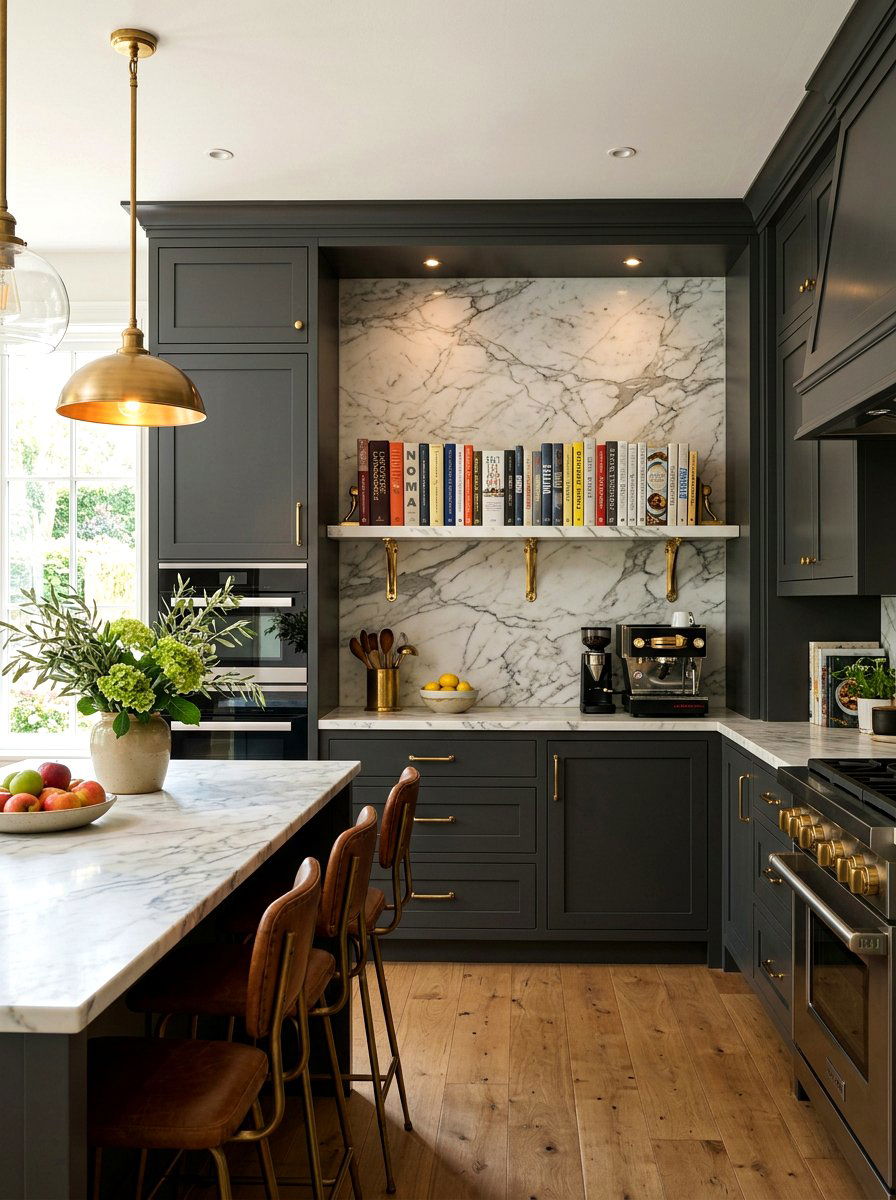
Installing a marble shelf provides a touch of luxury and a cool, smooth surface that is perfect for a high-end culinary space. The natural veining in the stone adds a subtle pattern and movement to your walls, creating a sophisticated environment for your book collection. Marble is incredibly durable and easy to wipe down, making it a practical choice for a room where flour and steam are common. When you pair a marble shelf with brass or gold brackets, you create a glamorous look that elevates the entire room’s aesthetic. It is a stunning way to display your most beautiful books while adding a permanent element of elegance to the wall.
22. Scandi Plywood Shelf
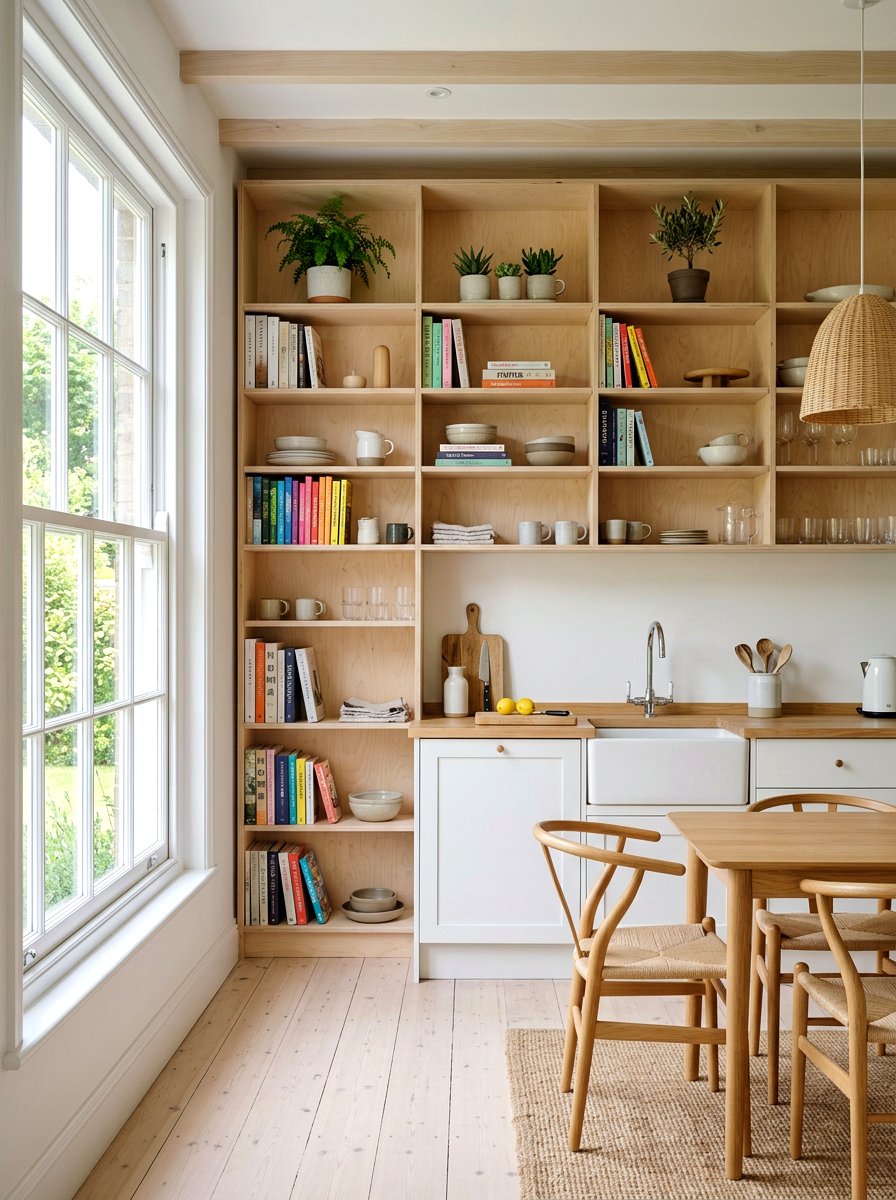
Embracing Scandinavian design with light-toned plywood shelving offers a clean, functional, and budget-friendly way to organize your kitchen library. Plywood has a beautiful, pale grain that works perfectly in minimalist or mid-century modern interiors where simplicity is key. These shelves often feature exposed edges that showcase the layers of the wood, adding a subtle industrial or craft-inspired detail. Because the wood is so light in color, it doesn't overwhelm a small space, allowing the kitchen to feel open and bright. Styling these with a few simple ceramic pieces and neatly stacked books creates a serene and organized atmosphere that is both practical and very visually appealing.
23. Brass Floating Shelf
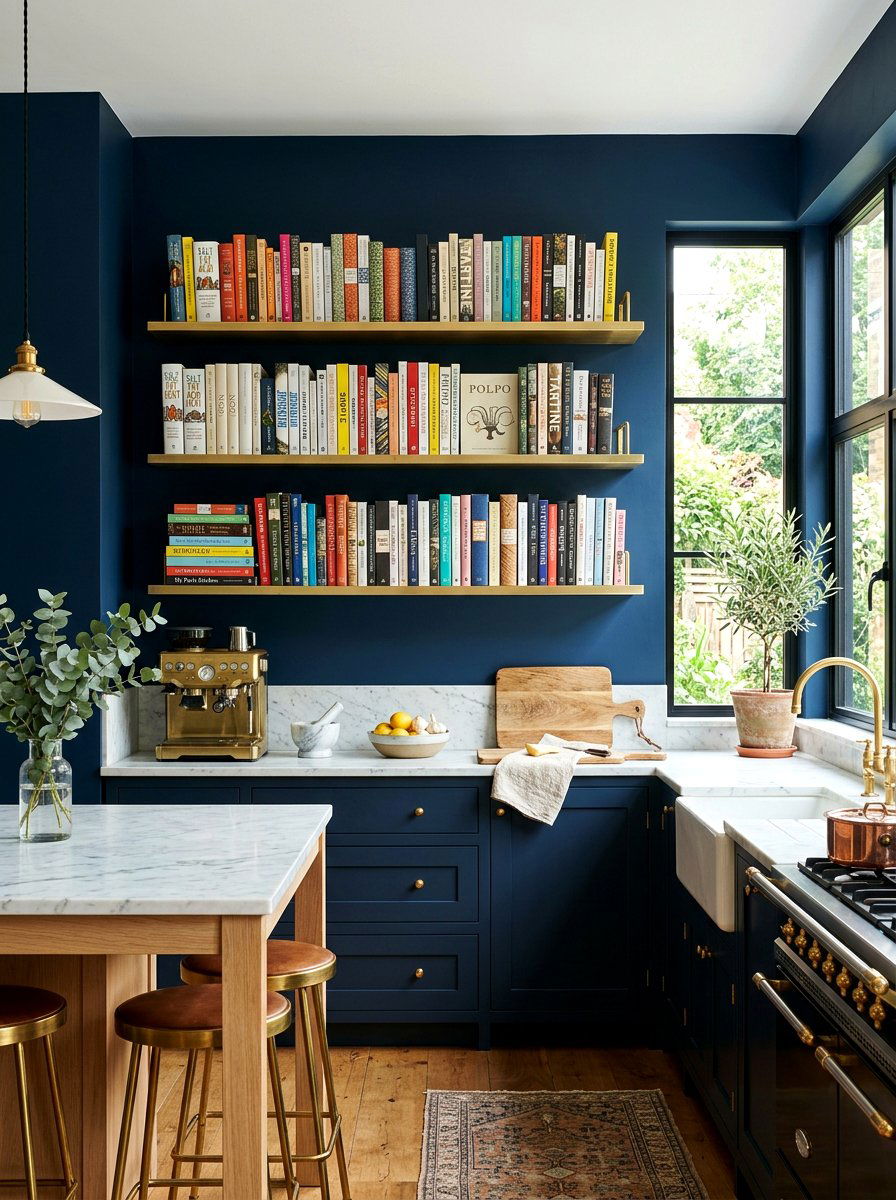
Adding a touch of shine with brass floating shelves can instantly make your kitchen feel more upscale and thoughtfully curated. The warm, golden tones of the metal provide a beautiful contrast to both dark and light cabinetry, acting like jewelry for your walls. These shelves are often very slim and elegant, making them a perfect choice for displaying a select few of your most precious or frequently used cookbooks. Brass develops a lovely patina over time, which adds character and a sense of history to a new kitchen. It is an excellent way to tie in other metallic elements in the room, such as your faucet, cabinet pulls, or lighting.
24. Small Space Wall Shelf
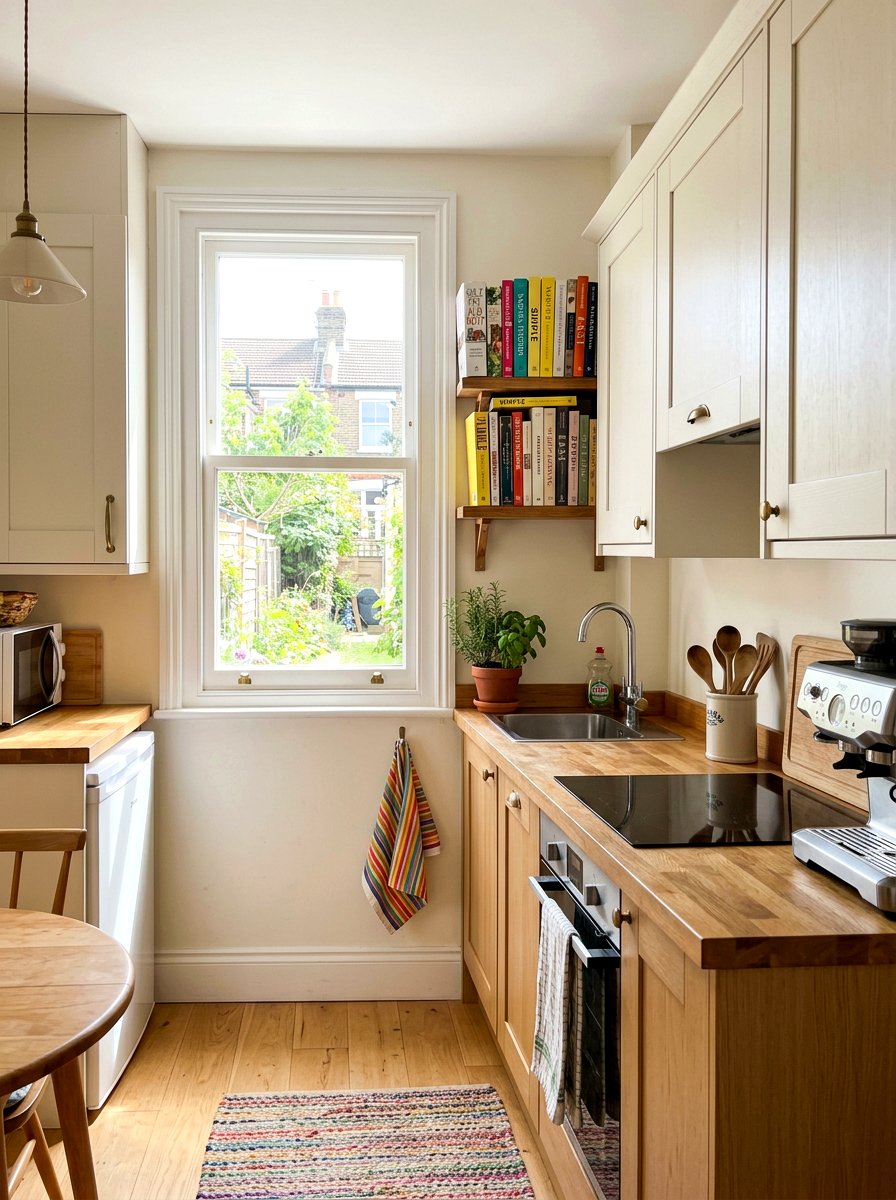
When you are working with a very tiny kitchen, a compact wall shelf can be a lifesaver for keeping your cookbooks organized without taking up any floor area. Look for narrow vertical units or single small ledges that can be tucked into the space between a cabinet and a door frame. These specialized shelves are designed to hold just a few essential volumes, ensuring that you always have your go-to recipes ready to use. Using the vertical height of your walls is the best way to maximize storage in a constrained layout. Even a tiny shelf can make a big difference in how organized and functional your cooking space feels every day.
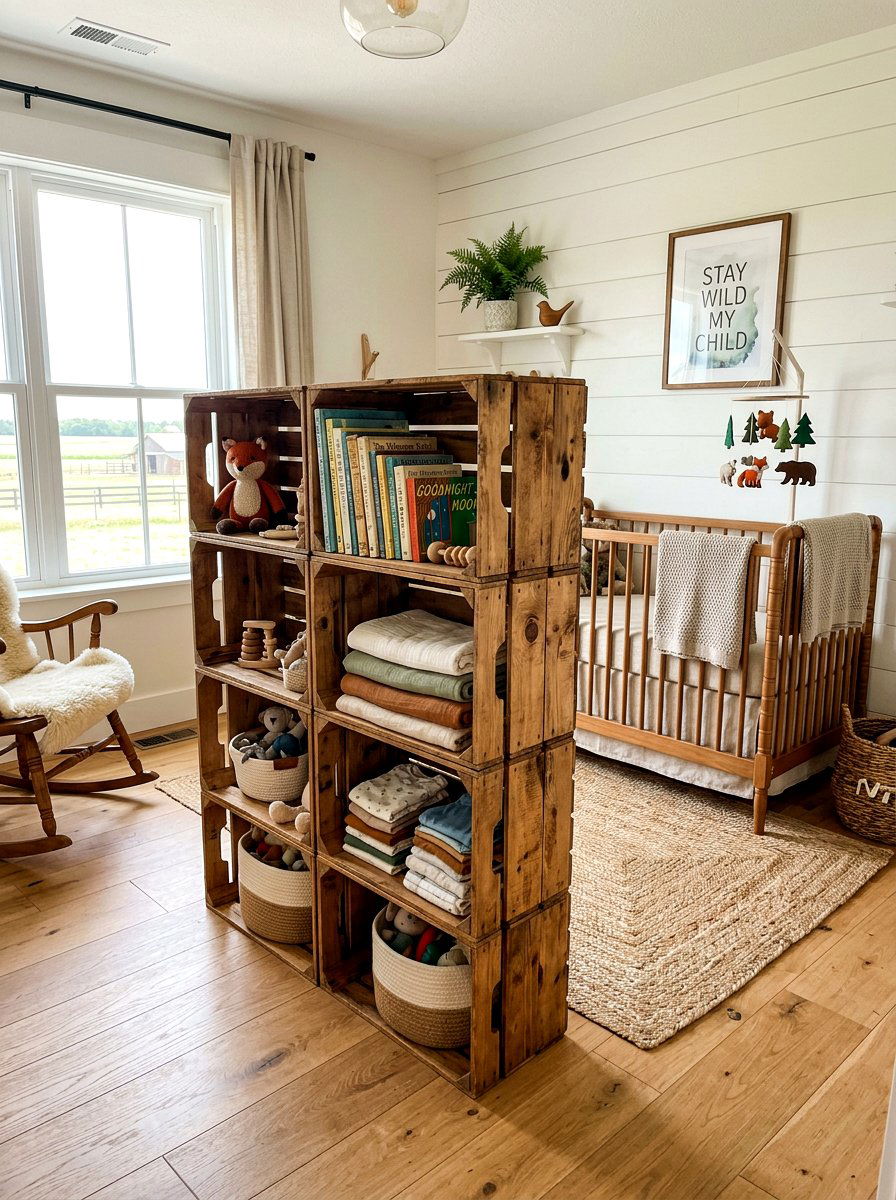
25. Kitchen Command Center
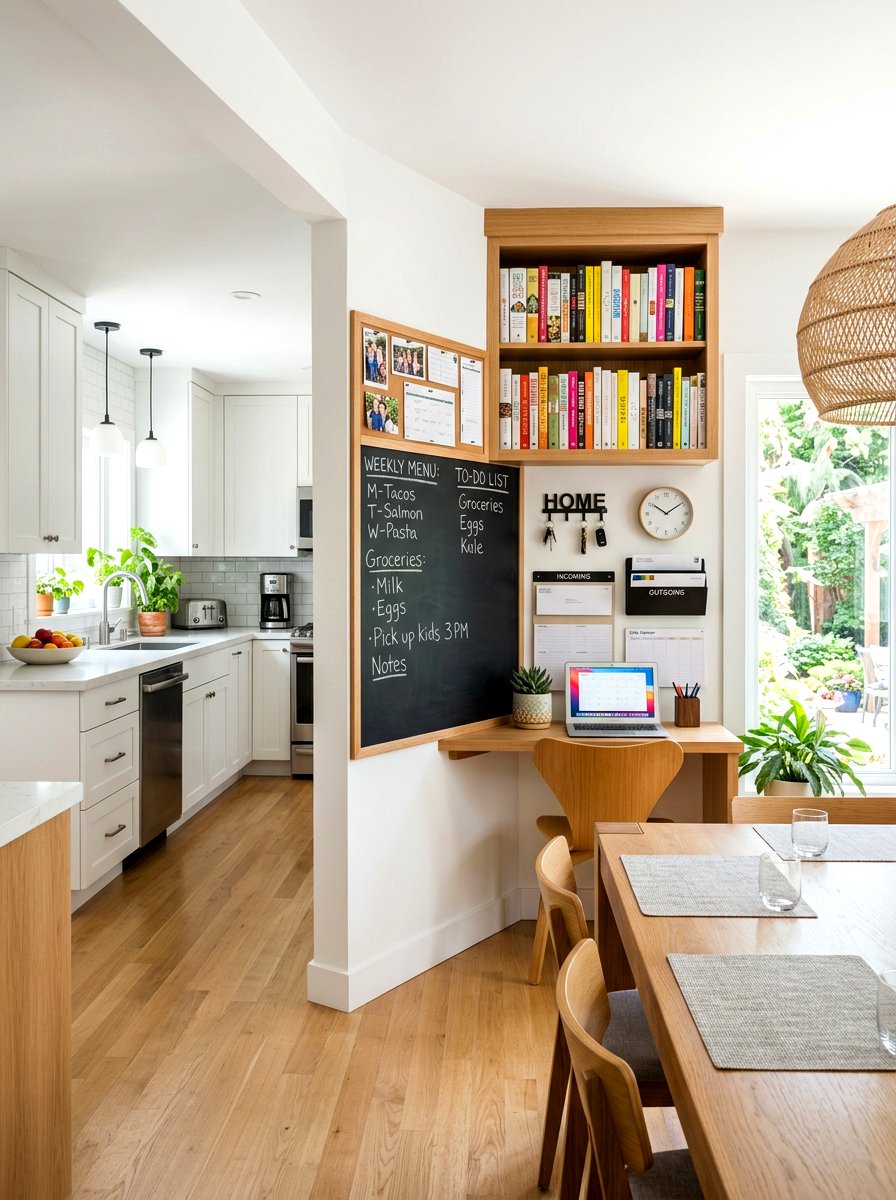
Integrating a cookbook shelf into a larger kitchen command center helps keep your meal planning and home organization in one convenient spot. This area might also include a chalkboard for grocery lists, a charging station for tablets, and a place for mail and keys. By keeping your books here, you can easily flip through recipes while making your weekly shopping list or checking your family calendar. This multifunctional approach ensures that the shelf is used daily and remains a central part of your home’s workflow. It turns the act of cooking from a chore into a well-organized and enjoyable part of your regular family life and routine.
26. Above The Fridge Shelf
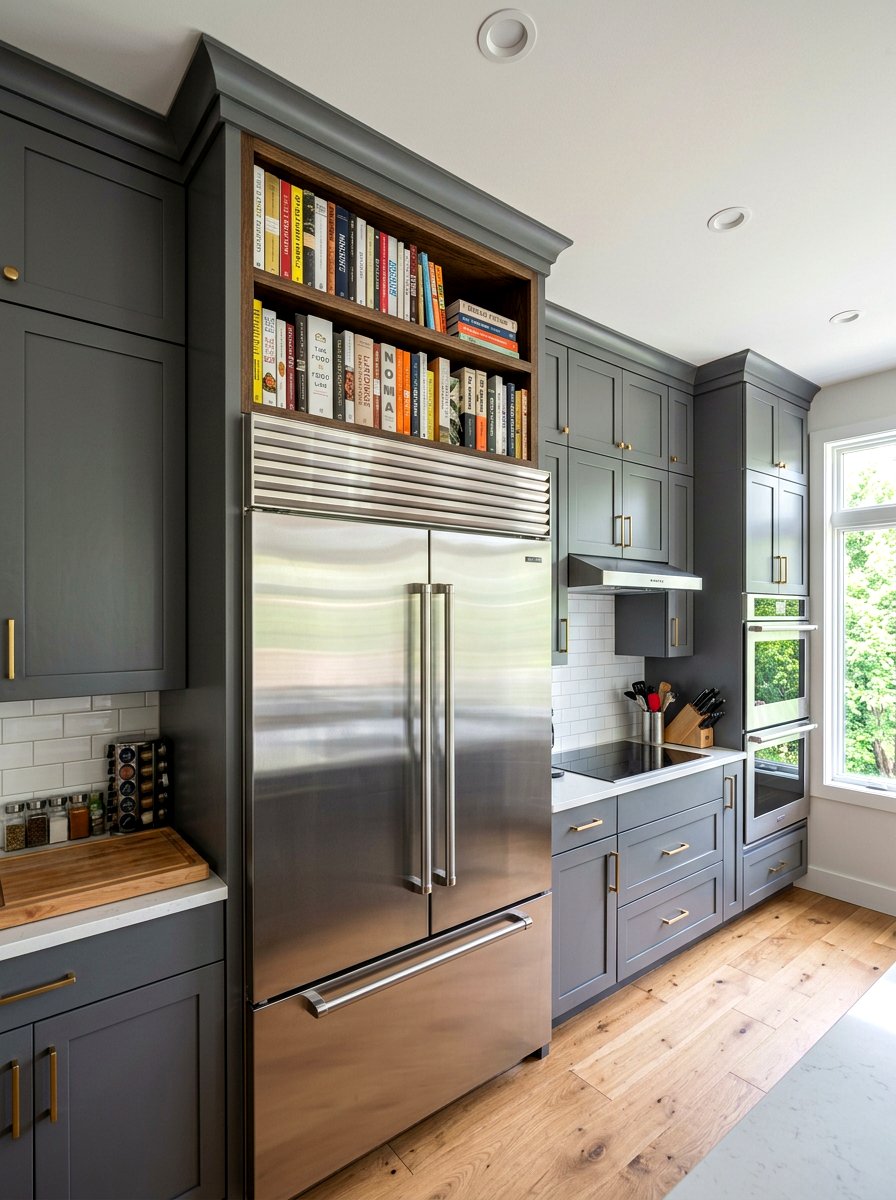
The deep space above a refrigerator is often a black hole for random clutter, but adding a custom shelf can turn it into a valuable book storage area. Because this spot is deep and wide, it can accommodate even your largest and bulkiest cookbooks that don't fit anywhere else. While it might require a small step stool to reach, it is the perfect location for long-term storage of special holiday books or heirloom family recipes. Installing a shelf here makes the appliance look more built-in and purposeful within the kitchen layout. It is a smart way to reclaim lost space and keep your collection organized and out of the way.
27. Breakfast Nook Shelf
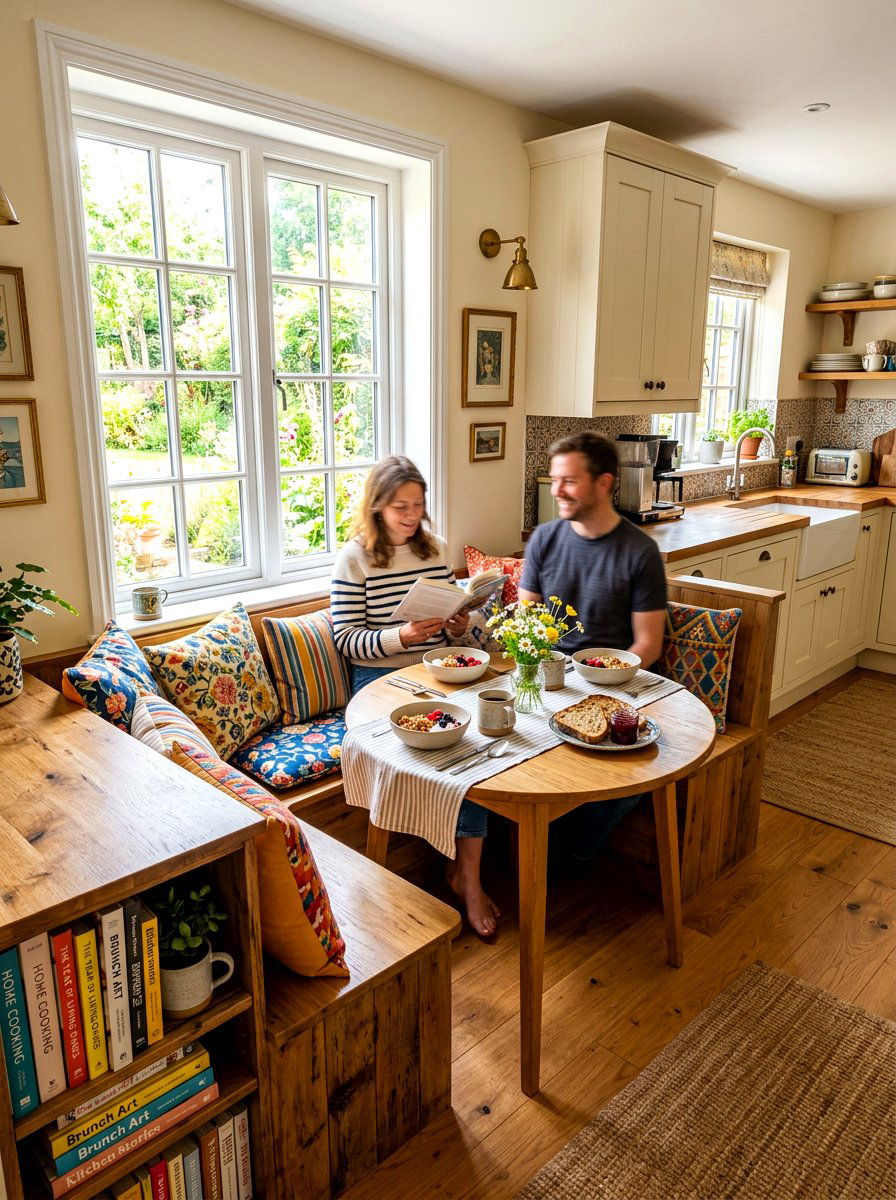
Adding a small bookshelf near your breakfast nook or kitchen table creates a cozy and inviting spot for morning coffee and recipe browsing. This placement encourages a slower pace, allowing you to enjoy your books while you eat or wait for the kettle to boil. You can build a shelf directly into the bench seating or mount a few ledges on the adjacent wall for easy access. This setup makes the dining area feel more like a multipurpose library where family members can gather to plan meals together. It adds a layer of comfort and personality that makes your kitchen feel like the true heart of the home.
28. Butler Pantry Shelf
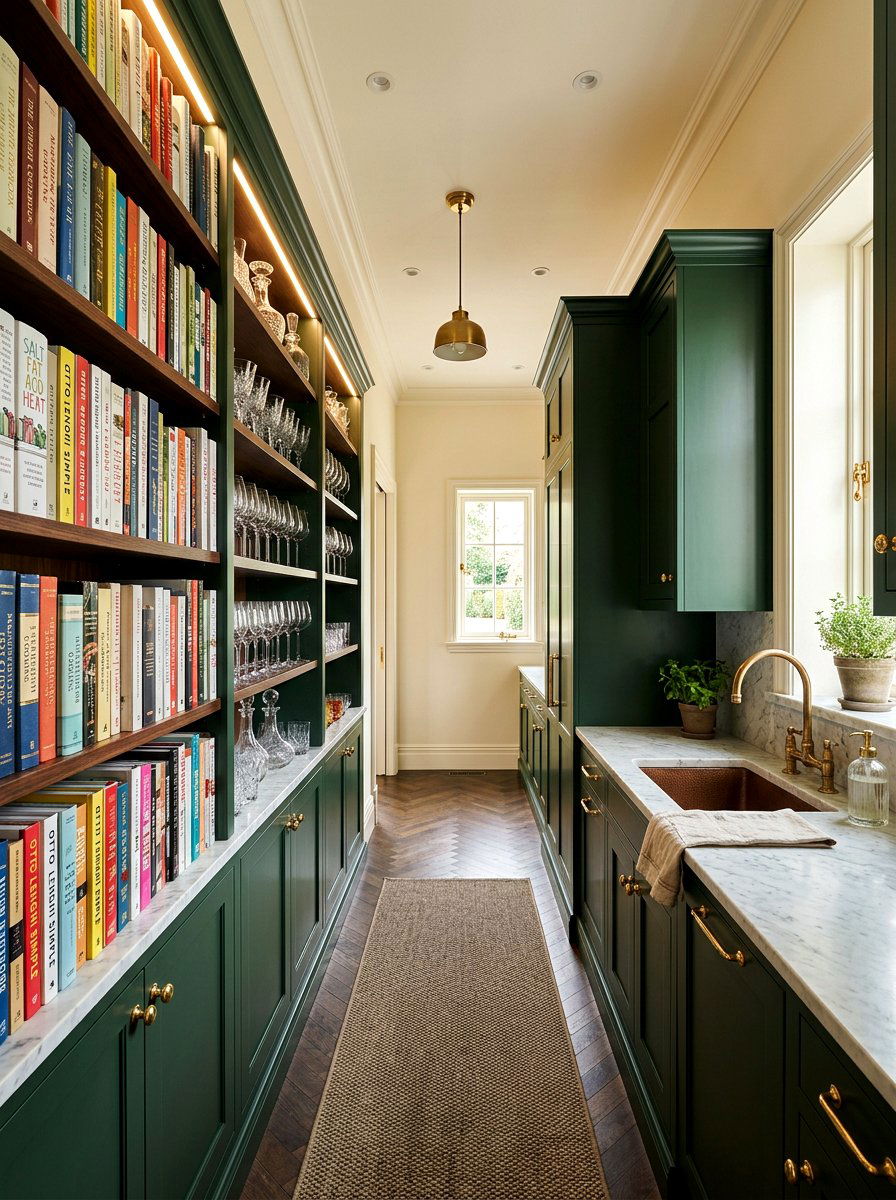
For those lucky enough to have a butler’s pantry, dedicating an entire wall to cookbook shelving creates a magnificent and organized staging area. This transition space between the kitchen and dining room is the perfect quiet spot to store your vast collection of culinary guides and wine books. Since this area is often tucked away from the main cooking heat and grease, your books will stay in pristine condition for years to come. You can use deep, sturdy shelves to house everything from small pamphlets to heavy oversized volumes. It turns a functional pass-through into a sophisticated and beautiful gallery for any serious home cook or entertainer.
29. Sliding Barn Door Shelf
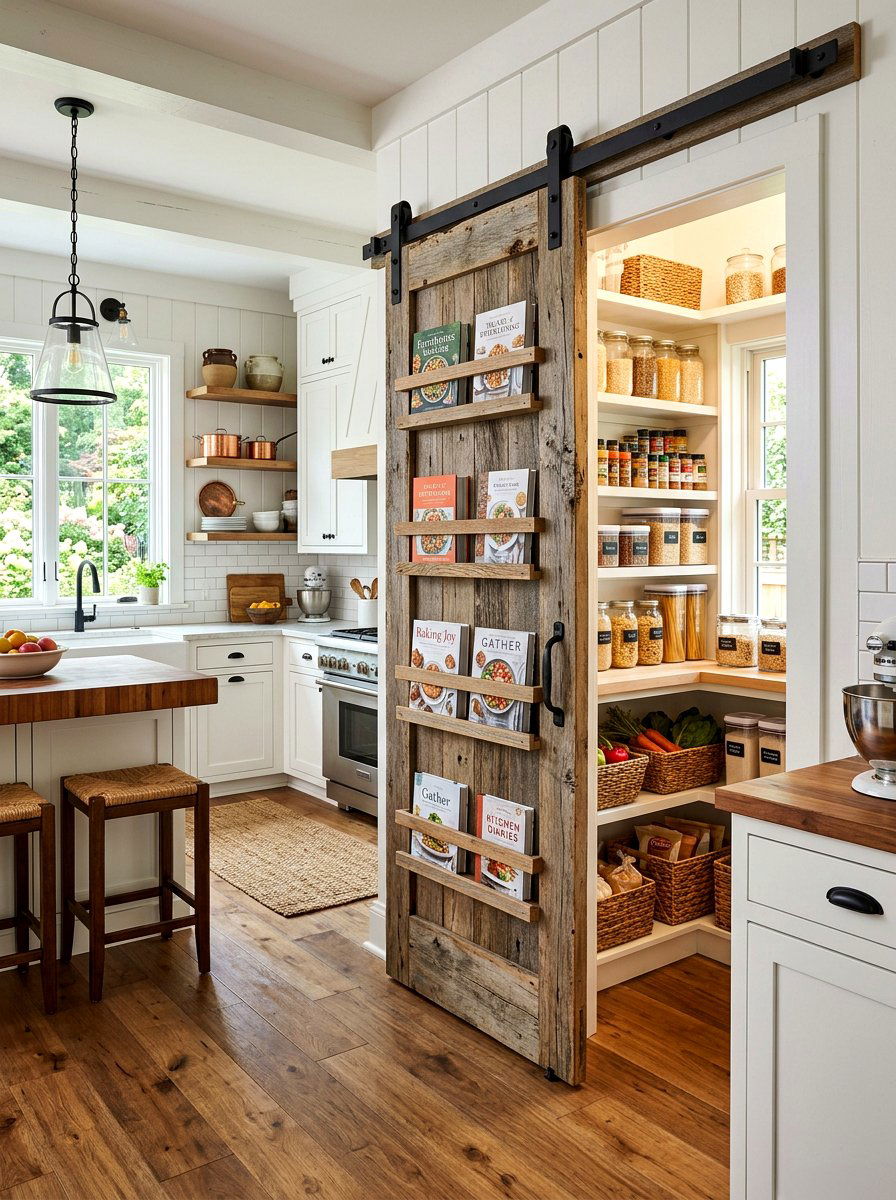
A creative and unexpected way to store cookbooks is to incorporate shallow shelving onto the front of a sliding barn door or a pantry door. This ingenious design uses the vertical surface of the door to hold several rows of books with the covers facing out. As you slide the door open and closed, your collection moves with it, creating a dynamic and space-saving feature in the kitchen. This is a perfect solution for homes where wall space is limited but door surfaces are available. It adds a unique architectural element that guests will surely admire while keeping your favorite recipes highly visible and very easy to grab.
30. Vertical Plate Rack Shelf
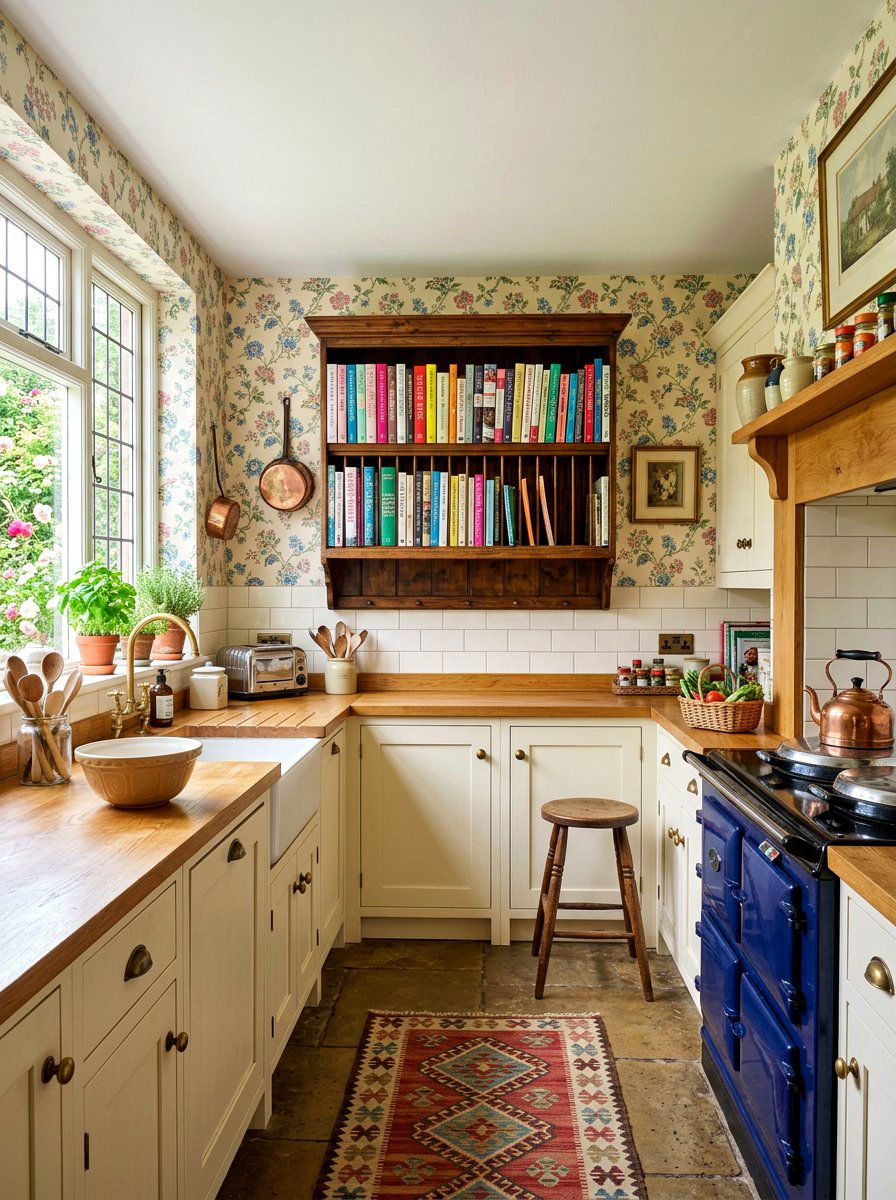
Repurposing a traditional vertical plate rack for cookbook storage offers a unique and organized way to keep your books standing upright and easy to see. The slats of the rack act as natural dividers, preventing the books from flopping over or becoming a messy pile on the shelf. This method is especially useful for thinner books and magazines that struggle to stand up on their own. You can find wall-mounted plate racks in various styles, from rustic wood to sleek metal, to match your kitchen’s existing decor. It provides a tidy, structured look that makes finding the exact recipe you need a quick and simple task every time.
Conclusion:
Designing a dedicated space for your cookbook collection is an investment in both the functionality and the beauty of your kitchen. From sleek floating ledges to expansive floor-to-ceiling libraries, the right shelving solution can completely transform how you interact with your favorite recipes every single day. By moving your books off the crowded countertops and onto thoughtfully placed shelves, you create a more organized environment that inspires creativity and joy during the cooking process. Whether you choose to highlight a few cherished volumes or display an entire library, these ideas ensure your culinary treasures are always protected, accessible, and an integral part of your home's unique style.

Related posts: