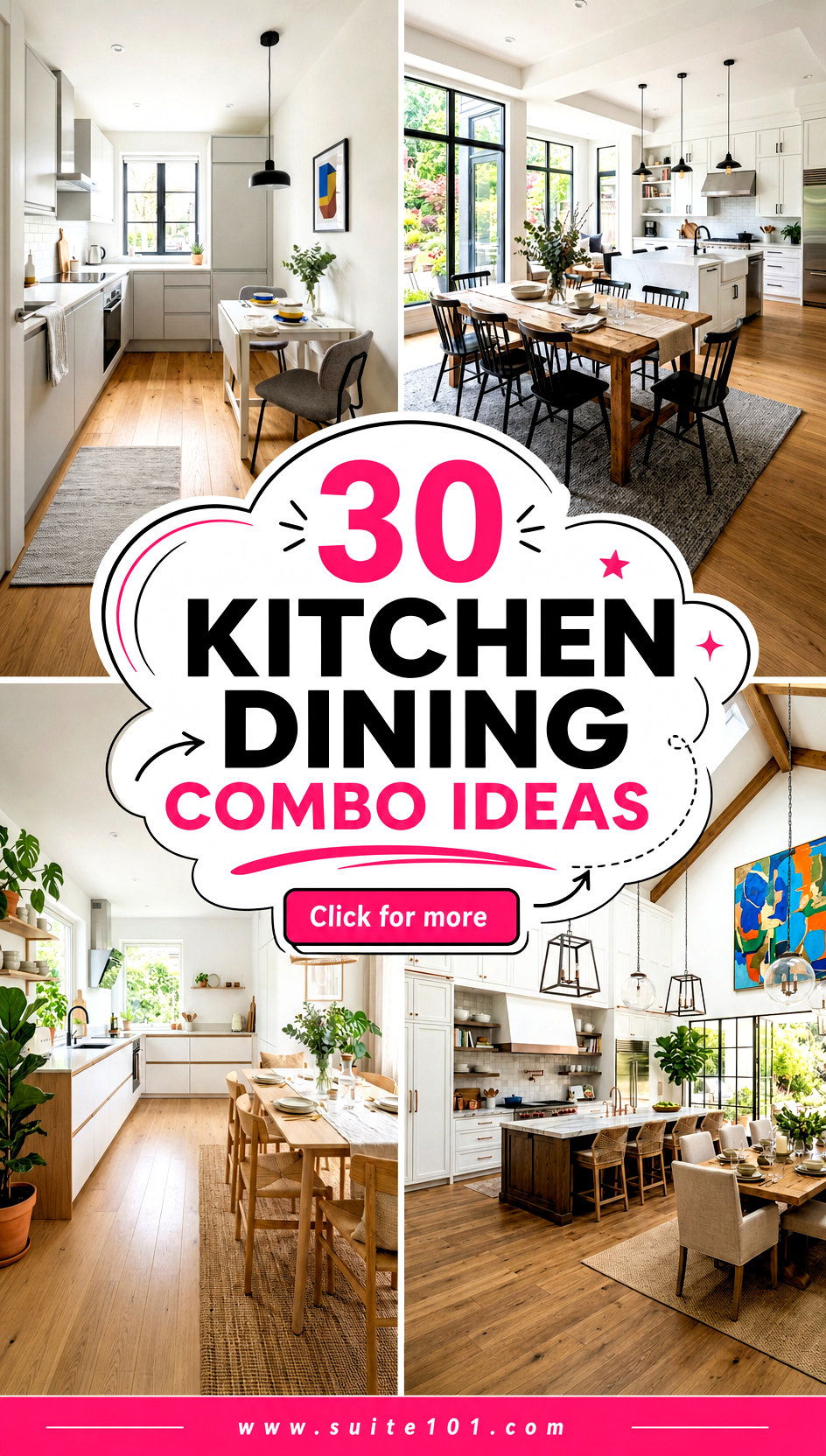
Creating a cohesive kitchen dining combo is the ultimate way to maximize your home's footprint while fostering a social atmosphere. This design approach breaks down physical barriers to allow for better flow and conversation between the chef and the guests. Whether you are dealing with a tiny city apartment or a sprawling suburban layout, merging these two functional zones requires careful planning and a keen eye for aesthetics. By aligning your color palettes and furniture choices, you can create a seamless transition that feels intentional and stylish. This guide explores various ways to blend these spaces effectively for a modern lifestyle without sacrificing any functionality or visual appeal.
1. Small Apartment Kitchen Dining
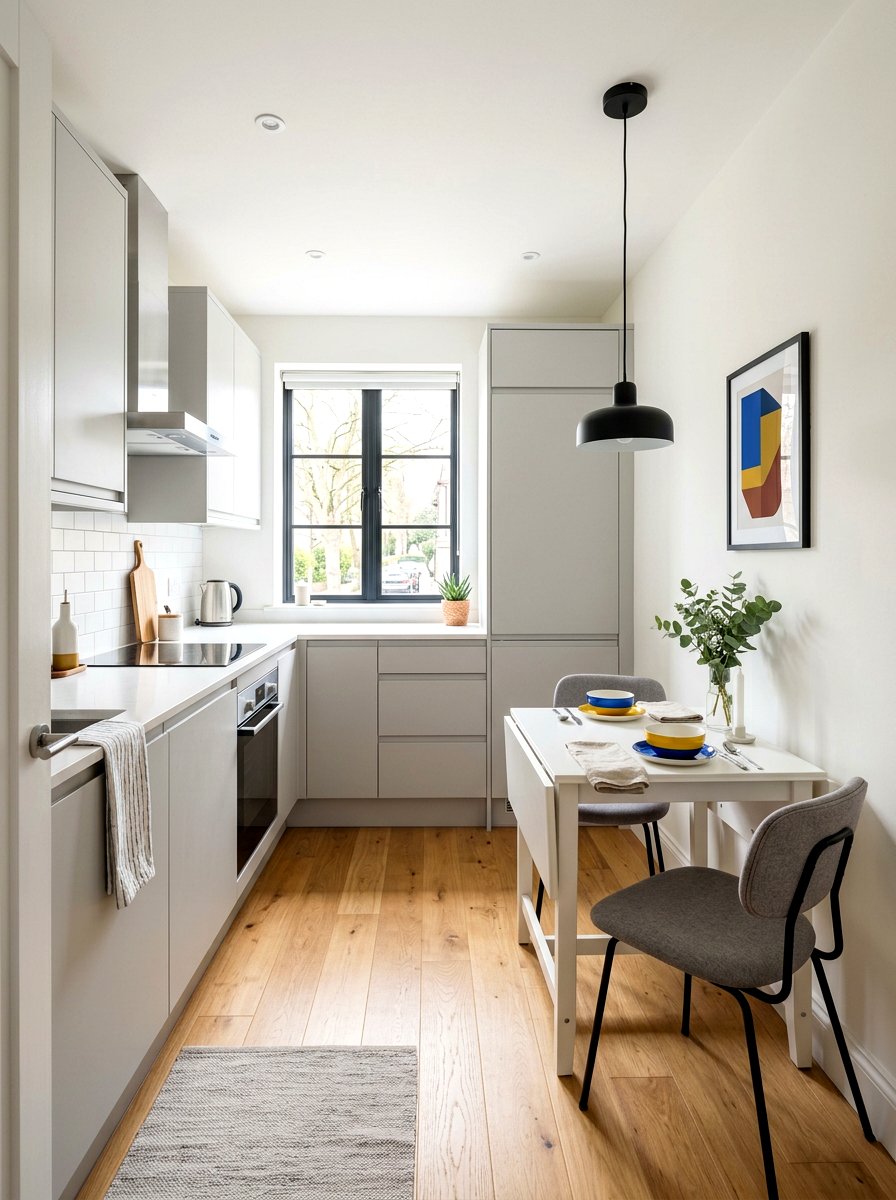
Making the most of a tiny footprint requires a clever approach to merging your cooking and eating zones. You can easily maximize limited square footage by selecting furniture that serves dual purposes. For instance, a slim drop-leaf table can sit against a wall when not in use and expand during mealtime. This setup ensures that your walking paths remain clear while you are busy preparing food. Using light colors and reflective surfaces will help the entire area feel much more open and airy. By keeping the decor consistent across both sections, the small space looks organized rather than cluttered. It is all about balance and smart furniture choices.
2. Open Concept Kitchen Dining
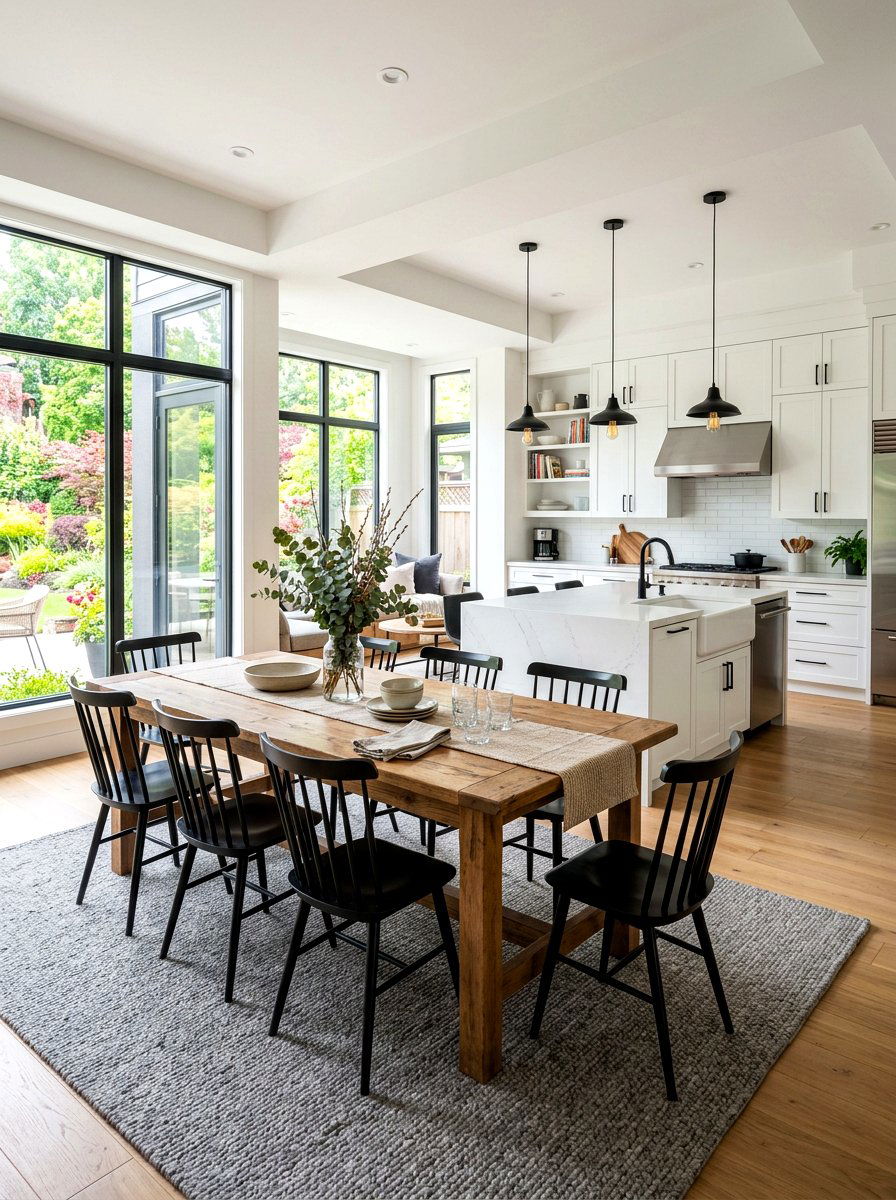
Do you want to create a sense of unity in your large living space while maintaining distinct functional areas? Open concept layouts thrive when you use visual cues like rugs and lighting to define the transition from prep to plate. Placing a large area rug under the dining table helps anchor the eating zone without needing a wall. You should also consider matching your cabinetry hardware with the metal finishes on your dining chairs for a professional look. This creates a rhythmic flow that guides the eye across the room. Large windows and glass doors can further enhance the openness by inviting natural light to fill the space.
3. Kitchen Island Table Extension
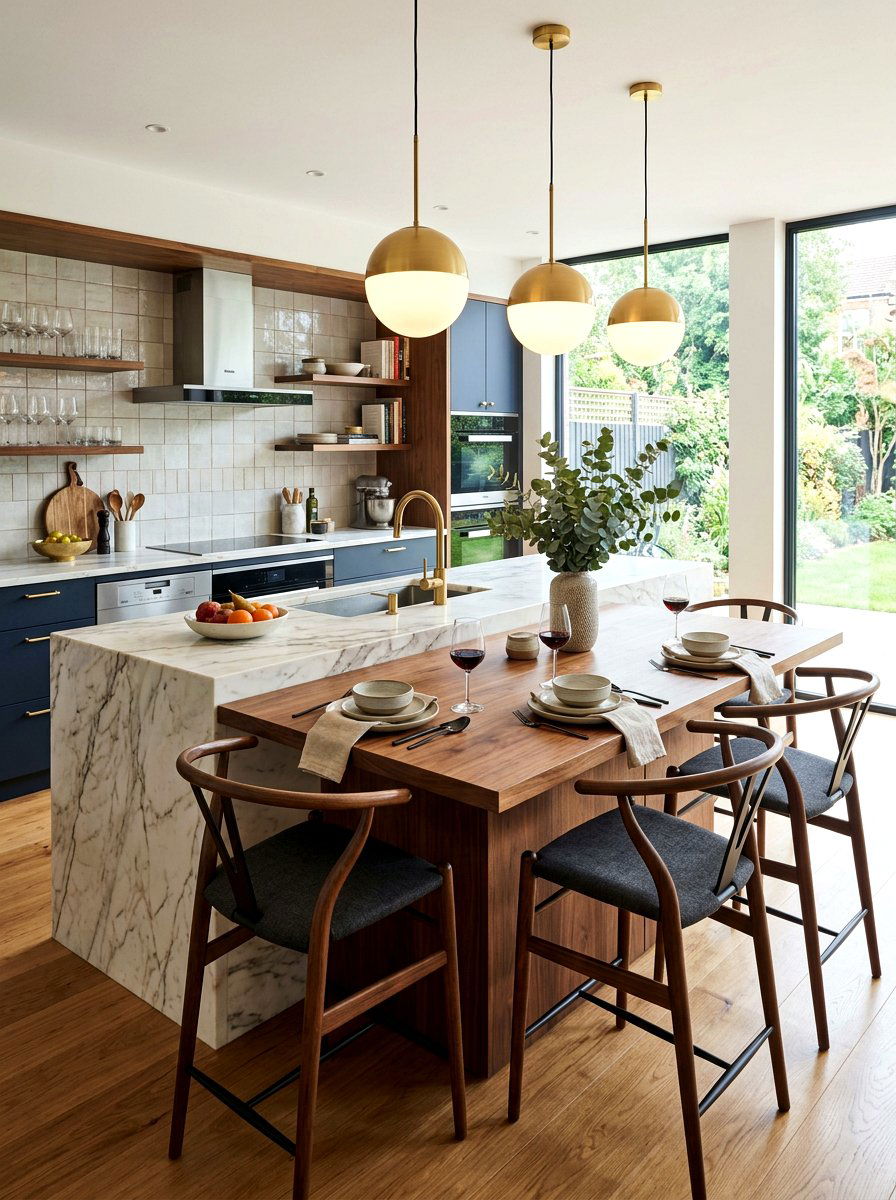
Integrating a dining surface directly into your kitchen island creates a multifunctional hub that serves as the heart of the home. This layout is perfect for families who enjoy casual breakfasts or quick snacks while the primary cook is working. You can choose a tiered island where the dining portion is slightly lower or higher than the prep counter. This height difference naturally separates the tasks while keeping everyone in the same conversation circle. Using a contrasting material for the table extension, such as a thick wood slab against stone, adds a beautiful tactile element. It turns a simple workspace into a sophisticated architectural feature for your modern home.
4. Farmhouse Kitchen Dining Room
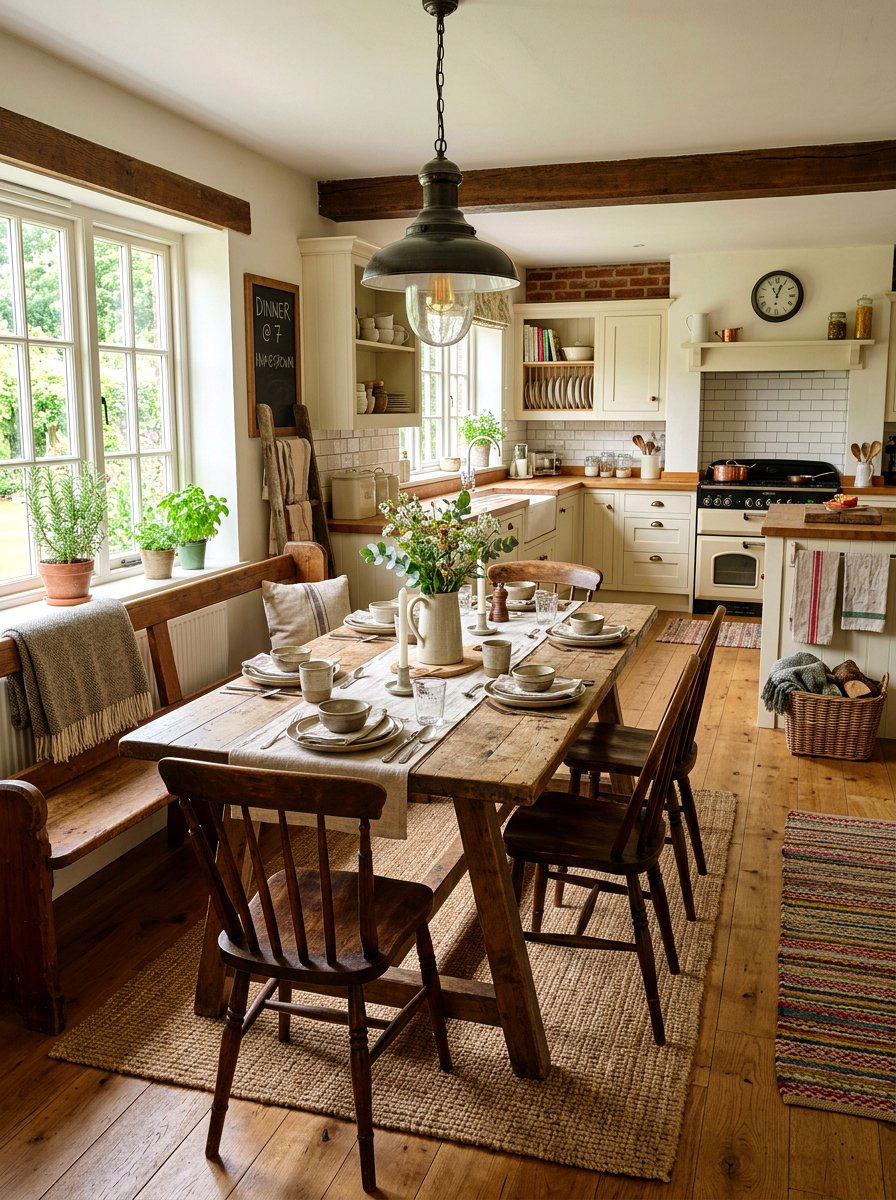
Have you ever dreamed of a warm and inviting space that feels like a cozy retreat? A farmhouse-style combination uses natural materials and rustic finishes to create a welcoming environment for all your guests. You should look for a long trestle table made of reclaimed wood to serve as the main focal point. Pair it with a mix of bench seating and traditional spindle chairs to keep the vibe casual and lived-in. Soft, neutral tones on the walls and cabinets will provide a clean backdrop for the rich textures of the wood. Adding a large pendant light with a vintage finish can tie the entire rustic theme together.
5. Modern Minimalist Kitchen Dining
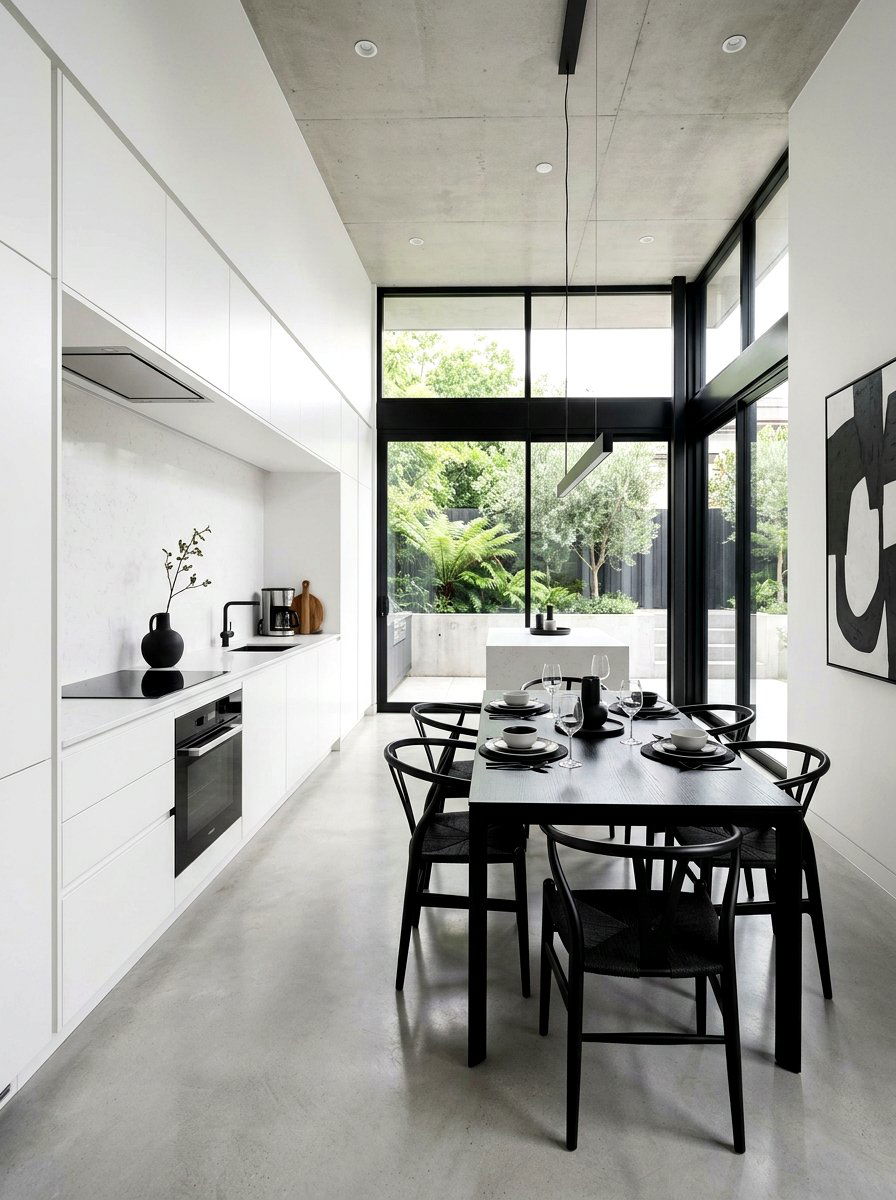
Clean lines and a clutter-free environment are the hallmarks of a successful minimalist kitchen and eating area. You can achieve this look by selecting handleless cabinetry and a sleek, monolithic dining table that mimics the kitchen’s aesthetic. Using a monochrome color palette, such as whites, grays, or blacks, creates a high-end feel that is easy to maintain. It is important to hide small appliances in deep drawers to keep the countertops looking sharp and professional. The lack of visual noise allows the architecture of the room to shine through. This style is perfect for those who appreciate a calm and very organized living environment.
6. Banquette Seating Kitchen Area
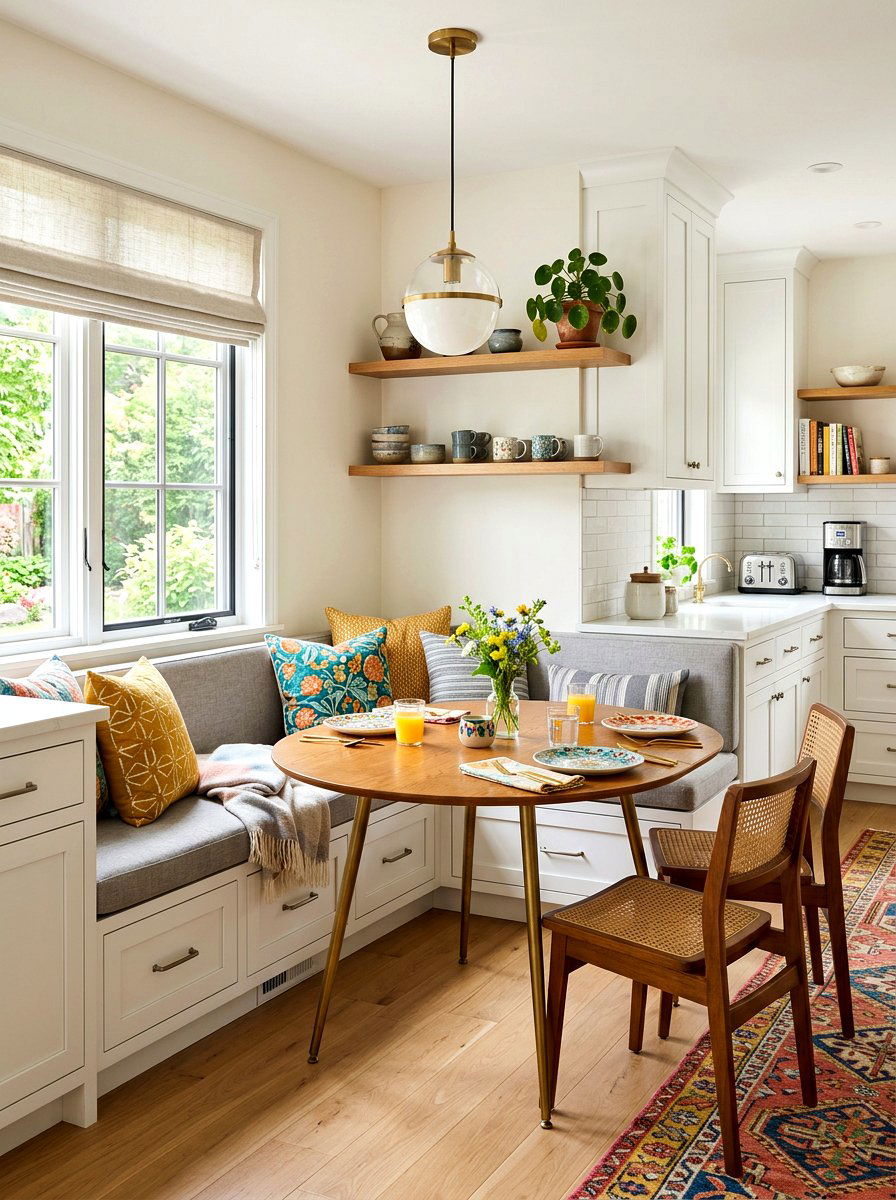
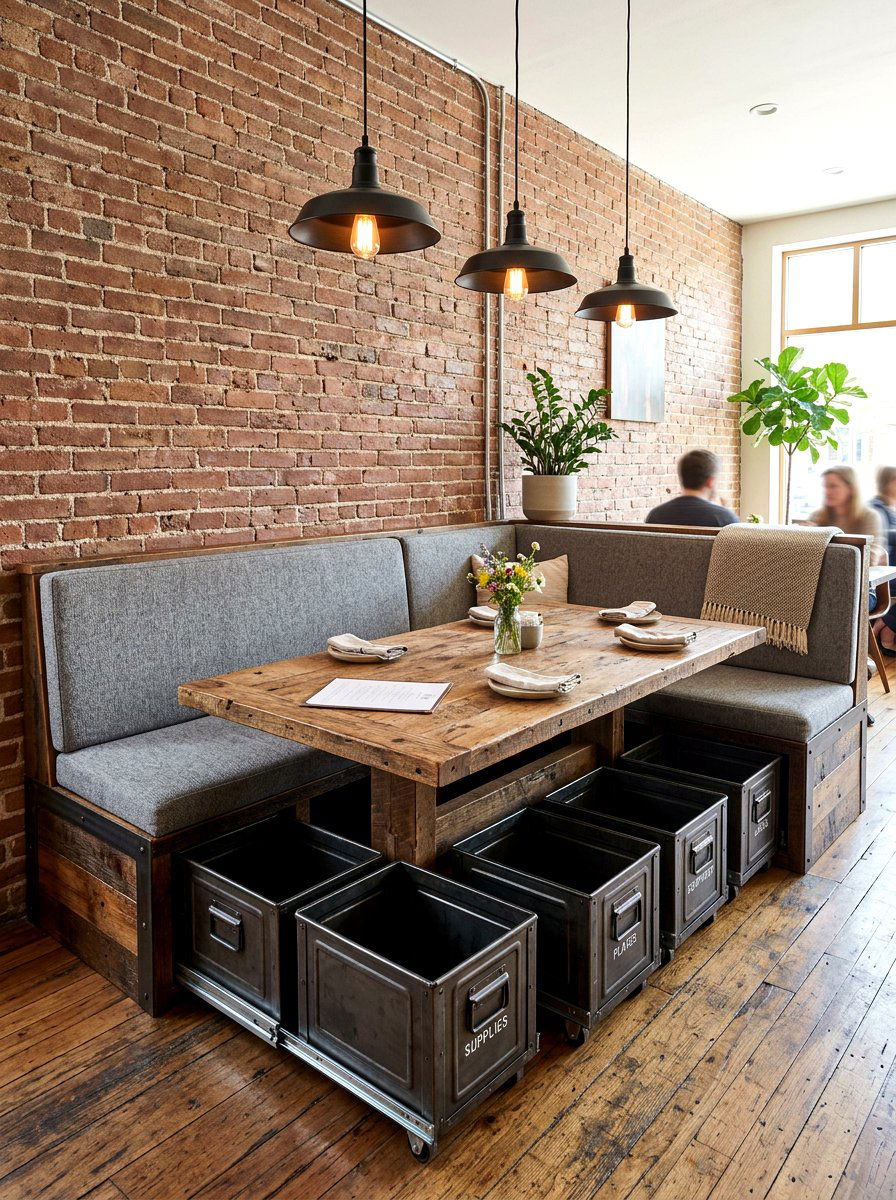
Building a custom banquette into a corner of your kitchen is a fantastic way to save space while adding a cozy, restaurant-like feel. This seating arrangement allows you to push the dining table closer to the wall, which opens up more floor space for walking. You can even include hidden storage drawers beneath the benches to keep linens and seasonal items out of sight. Choosing a durable, wipeable fabric for the cushions ensures that the area stays looking fresh even after messy family meals. This layout works exceptionally well in smaller homes where every square inch counts. It turns an unused corner into a stylish and functional nook.
7. Industrial Kitchen Dining Space
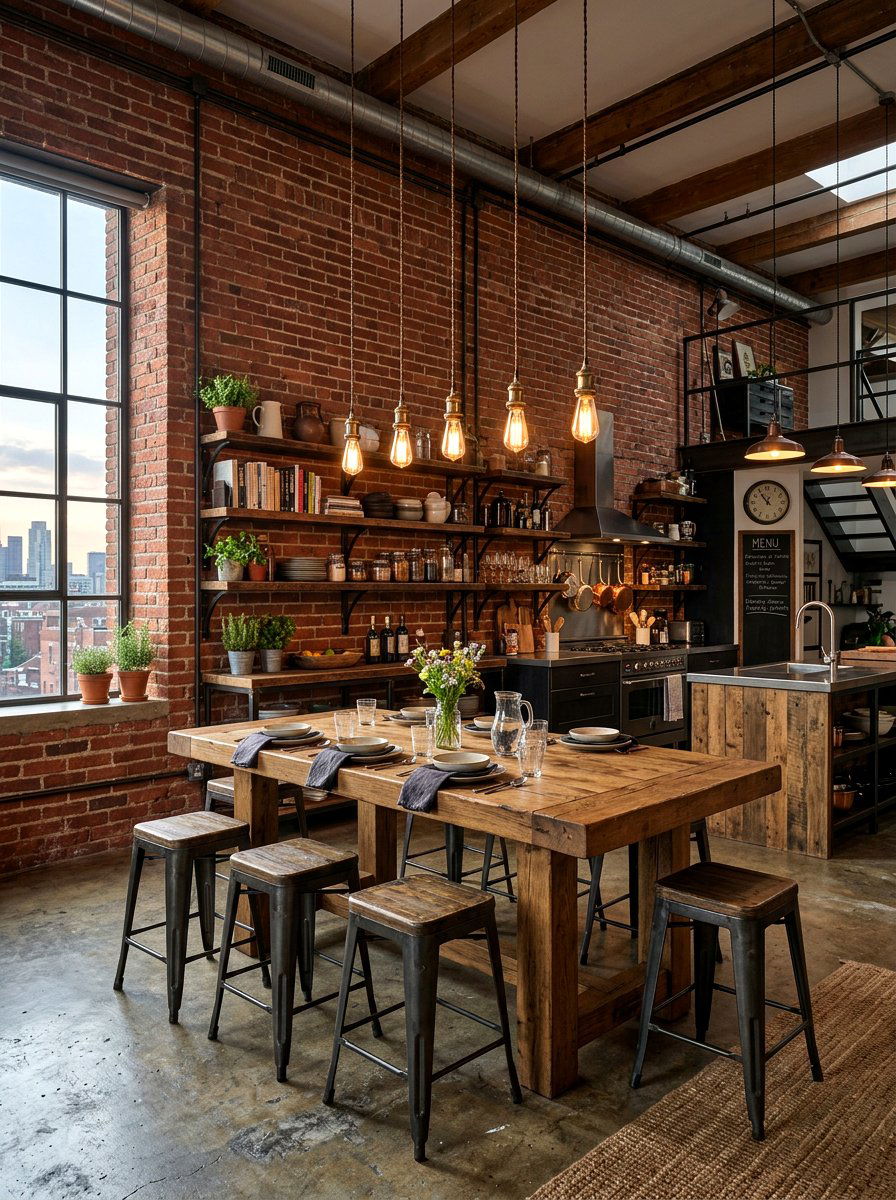
Exposed brick, metal accents, and raw wood are essential elements for creating an edgy industrial vibe in your shared space. You can easily incorporate this look by using heavy-duty shelving and stools made of iron and distressed timber. A large, factory-style clock or a series of Edison bulb pendants can serve as the perfect finishing touch. The key is to embrace the imperfections and the rugged nature of the materials used throughout the room. Neutral grays and deep blacks work best for the cabinetry to ground the space. This design direction is ideal for urban lofts or anyone wanting a bold, modern, and very masculine interior.
8. Scandinavian Kitchen Dining Room
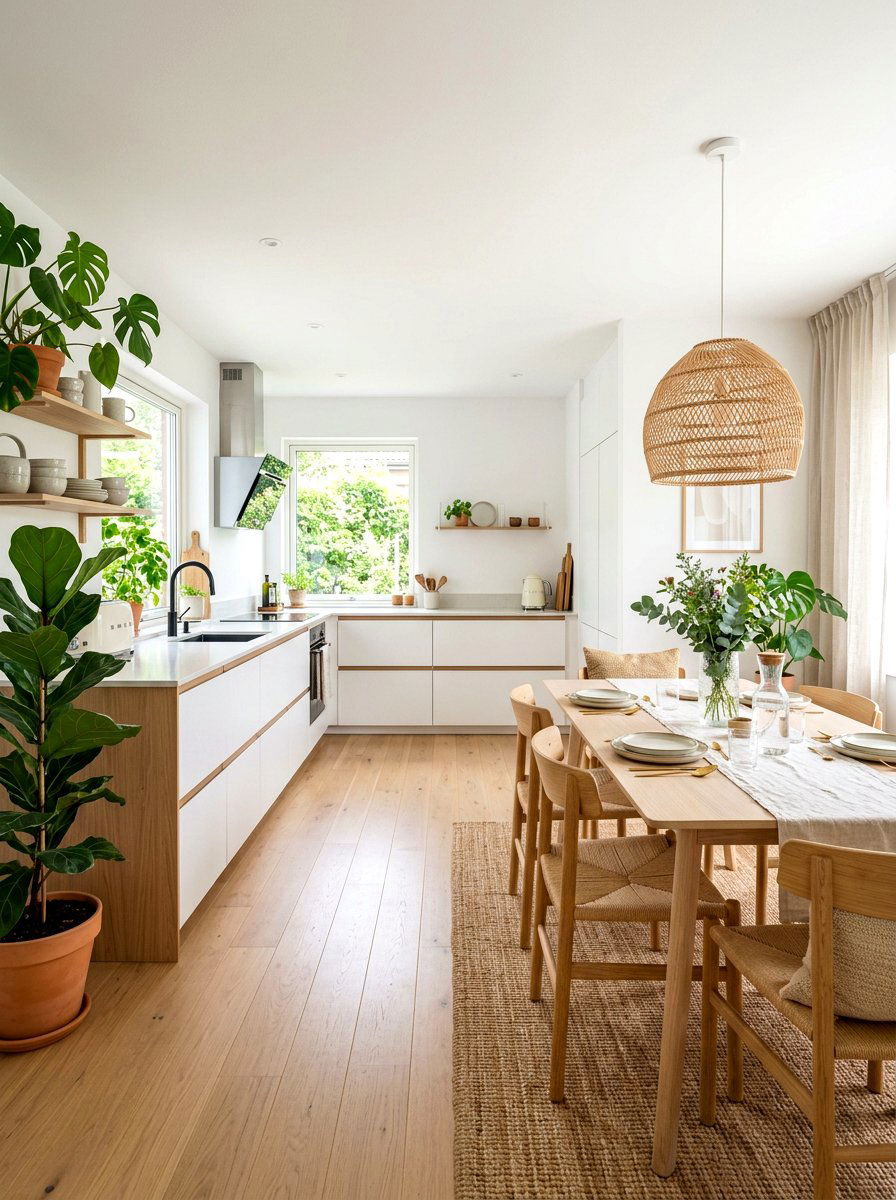
Soft wood tones and plenty of natural light are what make the Scandinavian approach to design so incredibly popular and timeless. You should focus on using light oak or pine for both your flooring and your dining furniture to create a sense of continuity. Keep the walls a crisp white to bounce light into every corner of the room. Adding a few green plants and some simple woven textiles will bring warmth and life to the minimalist setup. This style emphasizes "hygge, " or a feeling of cozy contentment, making it perfect for long dinners with friends. It is a clean, bright, and very functional way to live.
9. Round Table Kitchen Combo
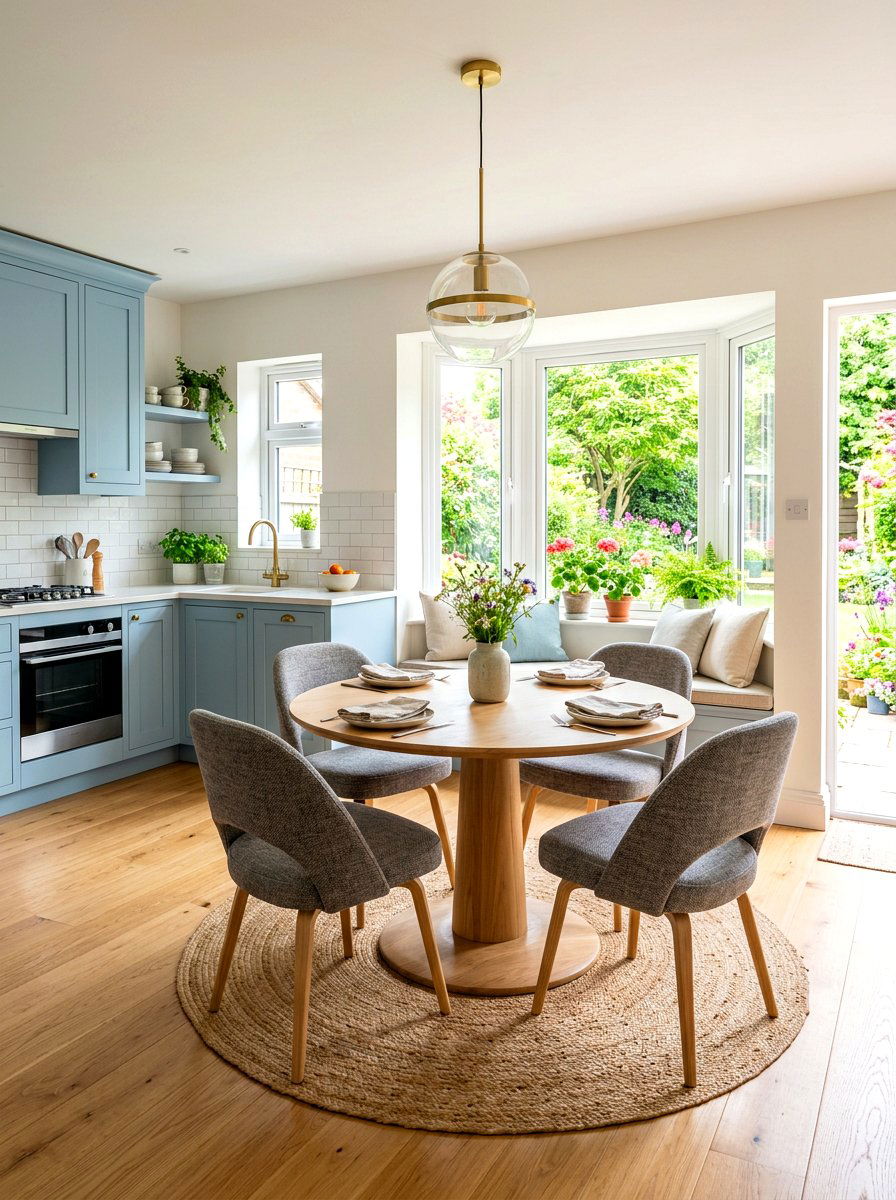
Choosing a round table for your kitchen and dining area is a smart move if you want to improve the flow of movement. Unlike rectangular tables, a round surface has no sharp corners, which makes it much easier to navigate around in a busy kitchen. It also fosters a more intimate dining experience where everyone can see each other clearly. You can place the table in the center of the room or tucked into a bay window for a charming view. Using a pedestal base for the table provides more legroom and allows you to squeeze in extra chairs when needed. It is a versatile and classic layout.
10. Galley Kitchen Dining Space
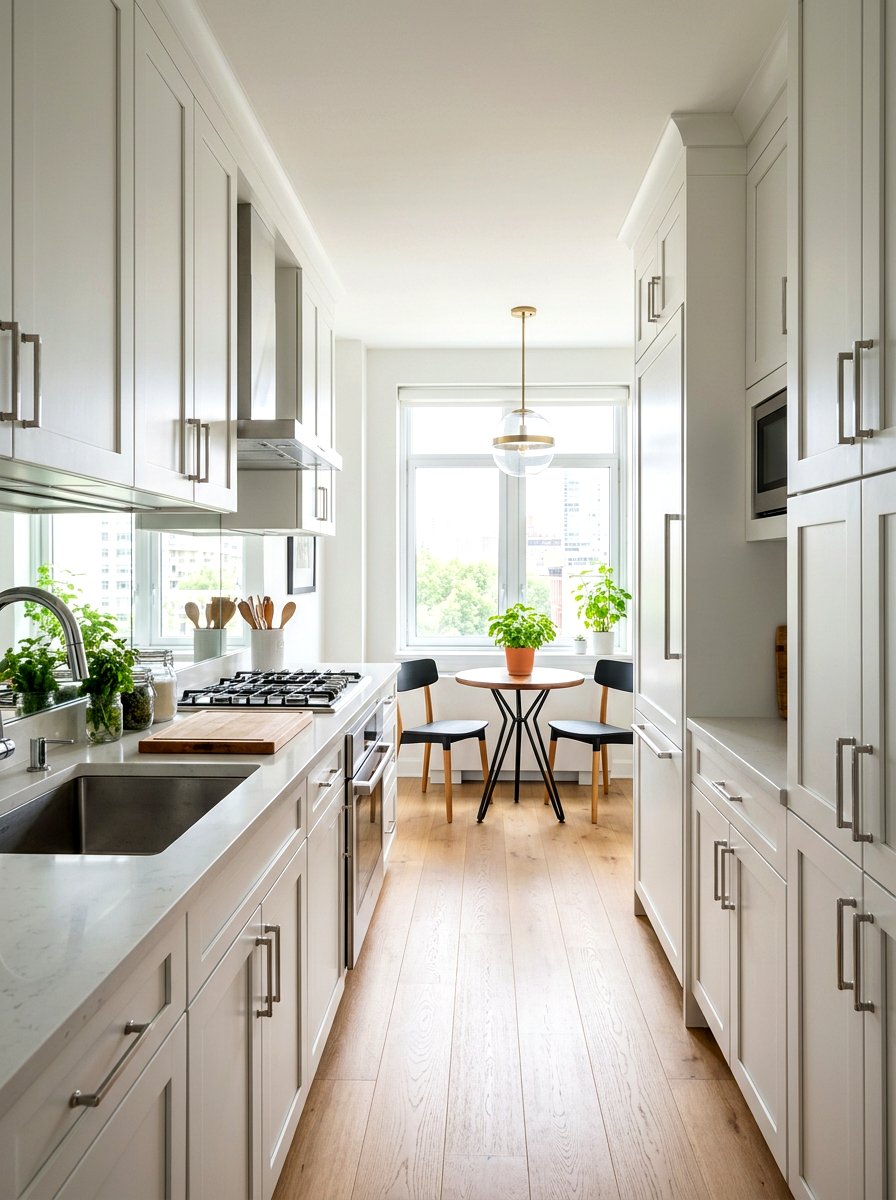
Can you fit a dining area into a long and narrow galley kitchen? The answer is yes, especially if you utilize one end of the room for a compact breakfast bar or a slim bistro set. Placing a small table at the far end of the kitchen run draws the eye through the space and makes it feel longer. You should use light-colored cabinets to prevent the narrow walkway from feeling too cramped or dark. Mirrored backsplashes can also help by reflecting the rest of the room and creating an illusion of more width. This setup is highly efficient for individuals or couples who want a functional cooking and eating path.
11. L Shaped Kitchen Dining
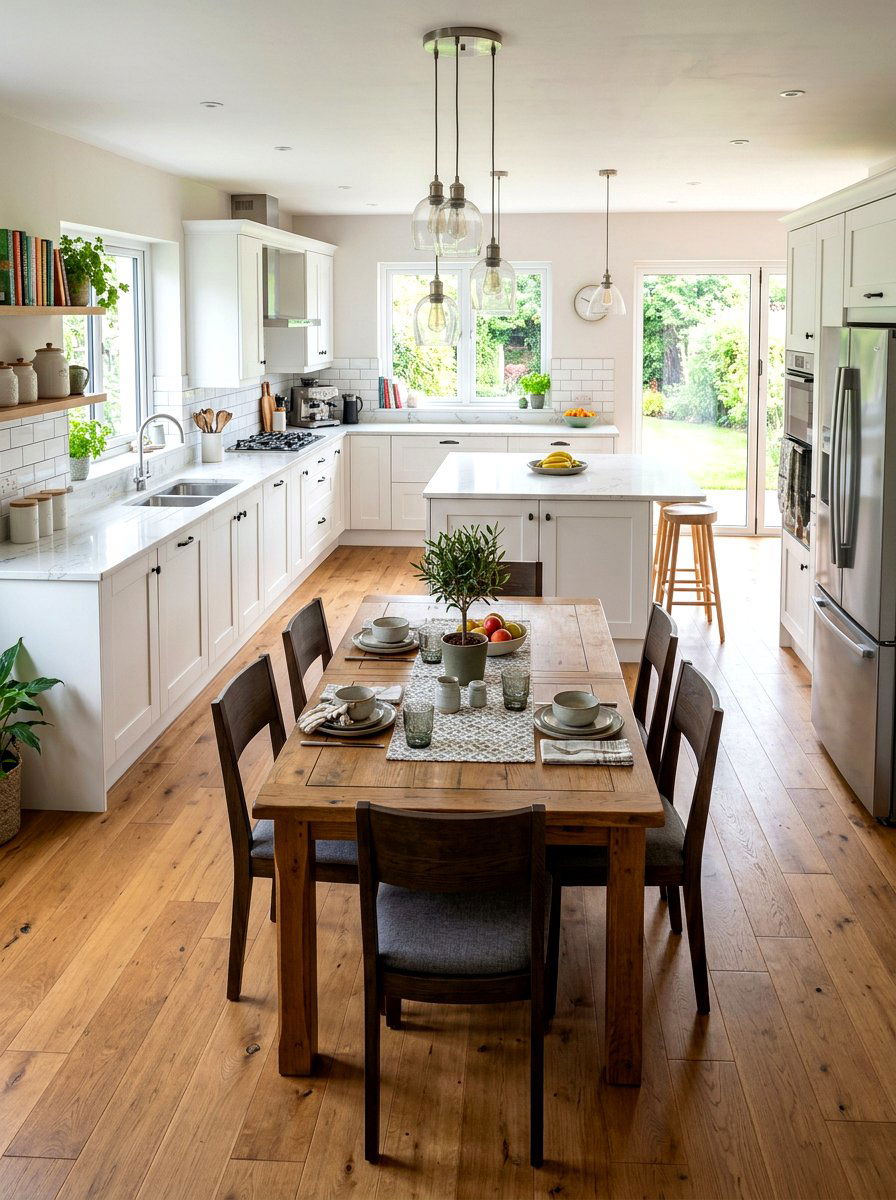
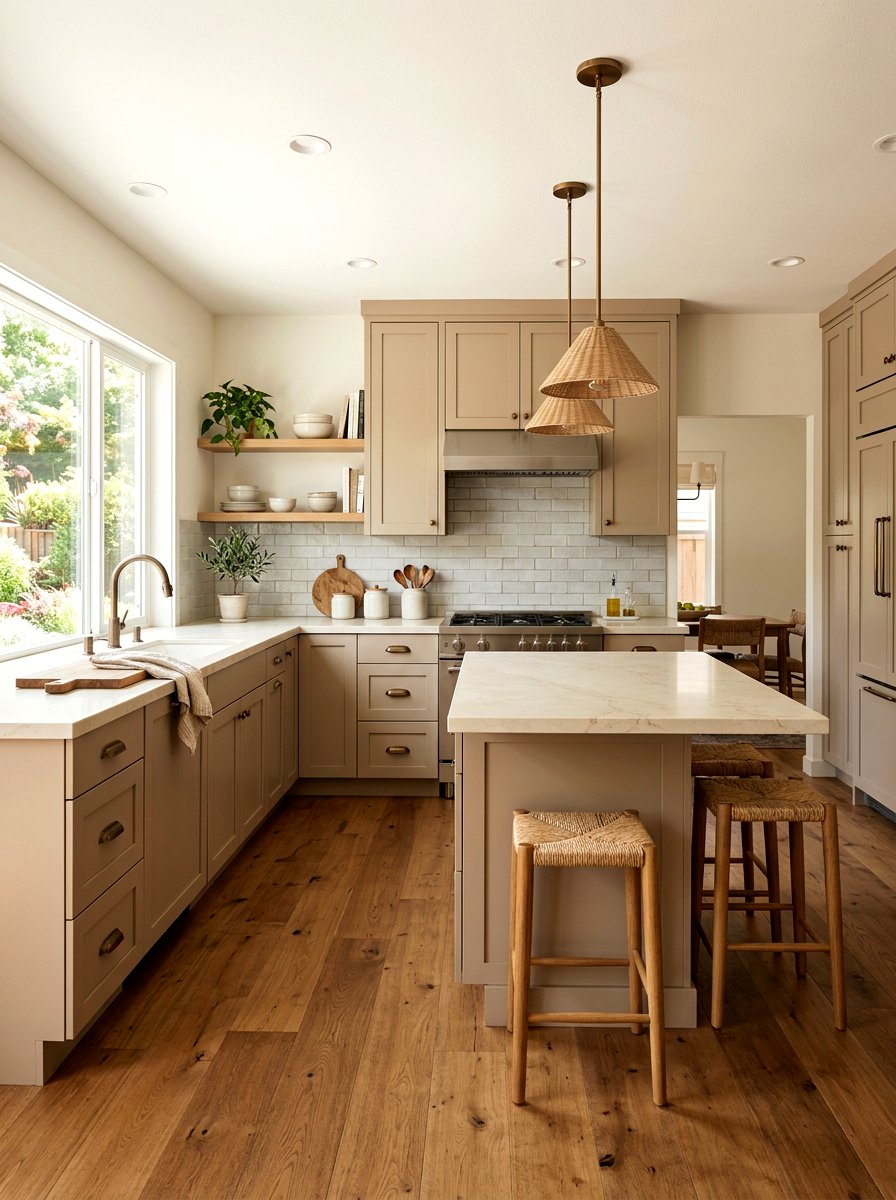
Utilizing the corner of an L-shaped kitchen layout is a classic way to integrate a dining table without disrupting the workflow. You can place a rectangular or square table right in the open area created by the two perpendicular cabinet runs. This keeps the dining zone close to the prep area, making it very easy to serve meals quickly. It also allows for a clear distinction between the cooking zone and the relaxation zone. To make the space feel more cohesive, consider using the same material for the dining table and the kitchen countertops. This layout is highly adaptable for families of all sizes and lifestyles.
12. Luxury Kitchen Dining Area
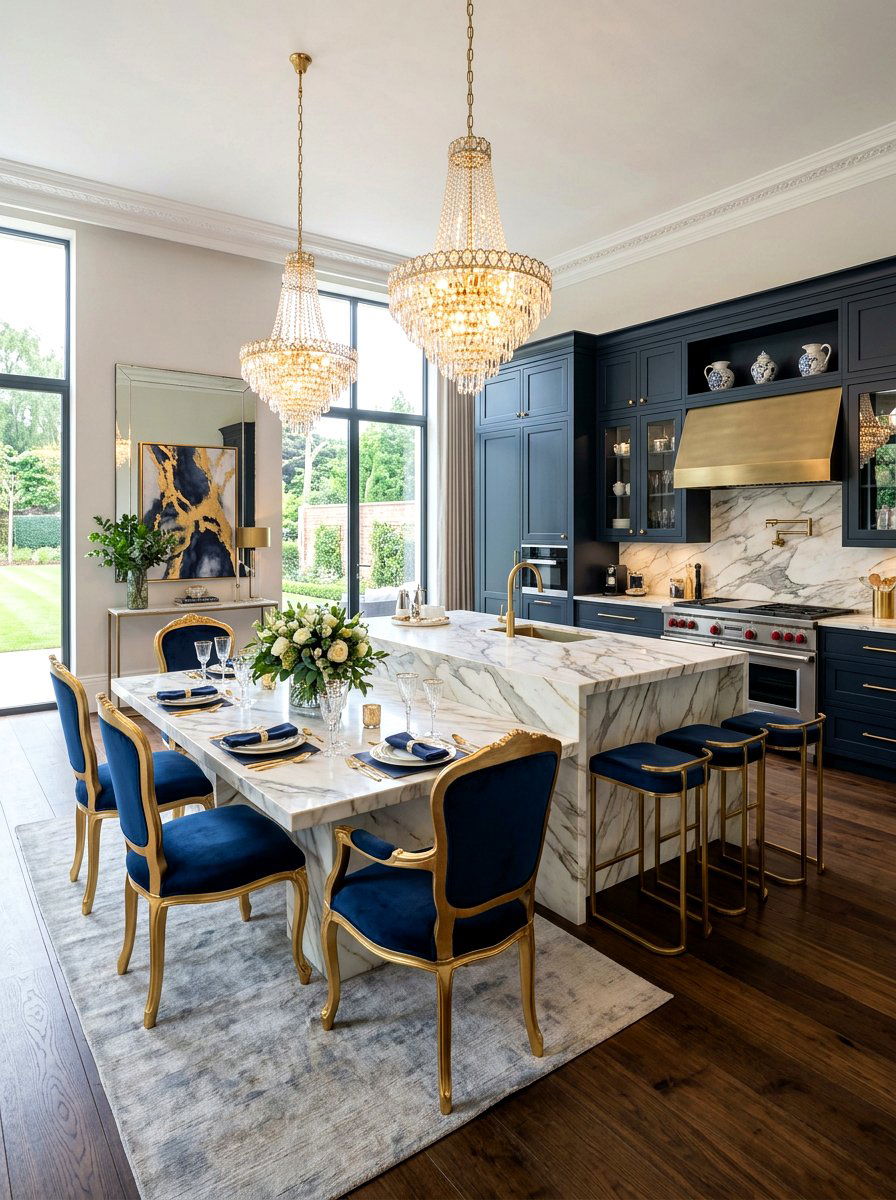
High-end materials like marble, gold accents, and velvet upholstery can elevate your kitchen and eating space into a true showstopper. You should consider a waterfall marble island that transitions into a bespoke dining surface for a seamless and expensive look. Large, dramatic chandeliers hanging over the eating area will provide a focal point that screams luxury and sophistication. Use deep, rich colors for the cabinetry to contrast with the bright stone surfaces. This design style is all about making a statement and providing a five-star experience in the comfort of your own home. It is perfect for those who love to host formal dinner parties.
13. Boho Kitchen Dining Room
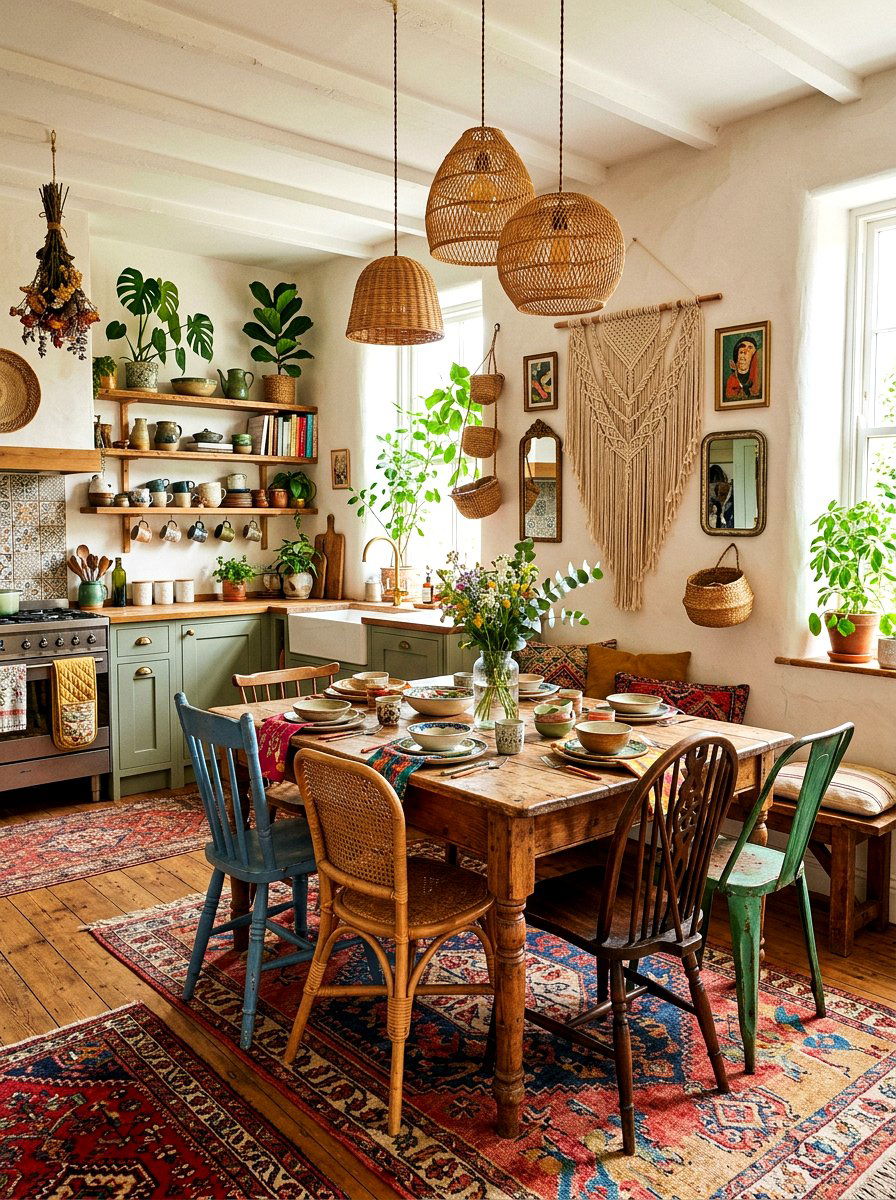
Are you a fan of eclectic patterns, natural textures, and a relaxed, artistic atmosphere? A bohemian-inspired combo allows you to mix and match different styles of chairs and decor for a unique look. You can incorporate woven rattan pendants, macrame wall hangings, and plenty of colorful rugs to define the space. The key is to keep the foundation simple and then layer on the personality through accessories and textiles. This approach makes the room feel cozy, lived-in, and full of character. It is a great way to showcase your personal travels and interests. A boho kitchen is always warm, inviting, and truly one-of-a-kind.
14. Mid Century Kitchen Dining
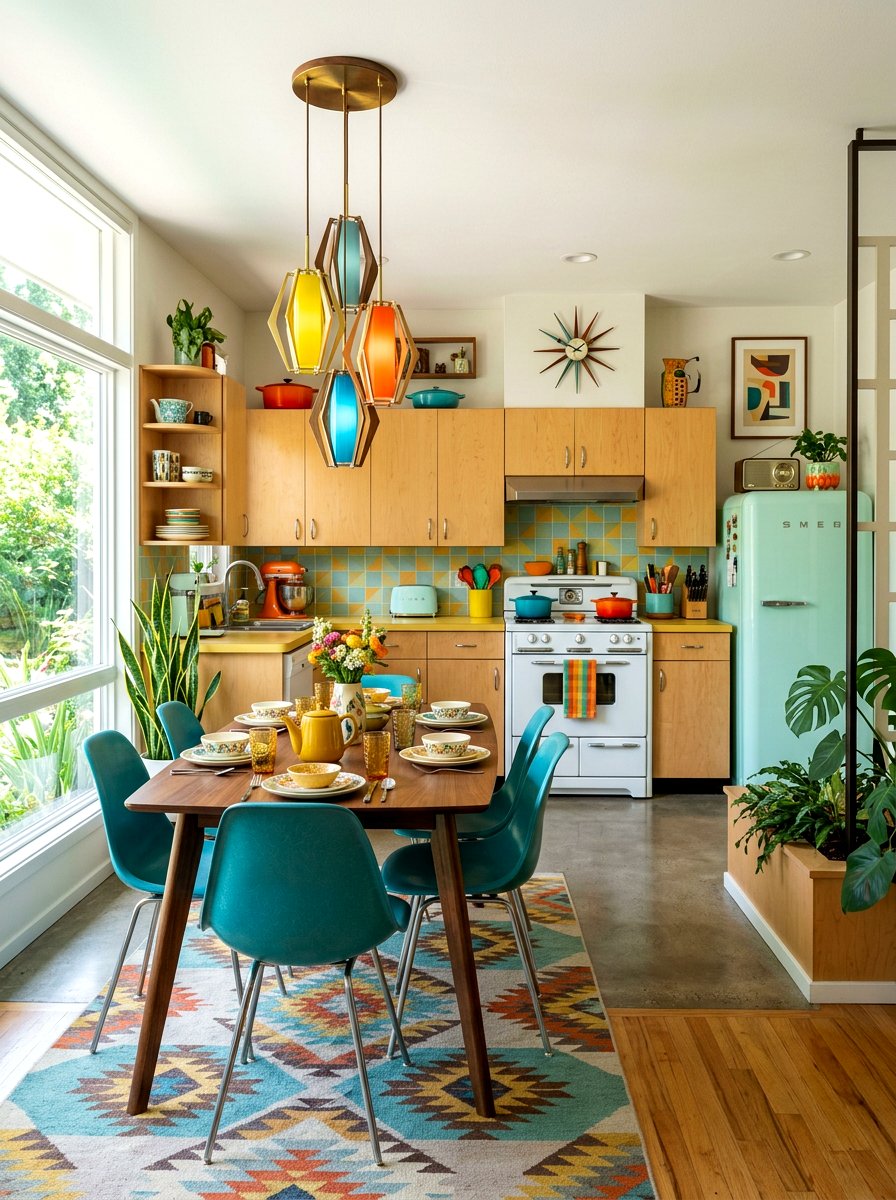
Retro shapes and bold colors define the mid-century modern aesthetic, which remains a favorite for many homeowners today. You can bring this look into your kitchen by choosing splayed-leg chairs and a sleek walnut dining table. Look for cabinetry with clean lines and maybe a pop of mustard yellow or teal for the backsplash. Large, geometric pendant lights will add that essential 1950s flair to the entire room. This style is all about balancing form and function while keeping the space looking fresh and playful. It works well in both small apartments and larger suburban homes. The iconic furniture pieces will never go out of style.
15. Traditional Kitchen Dining Area
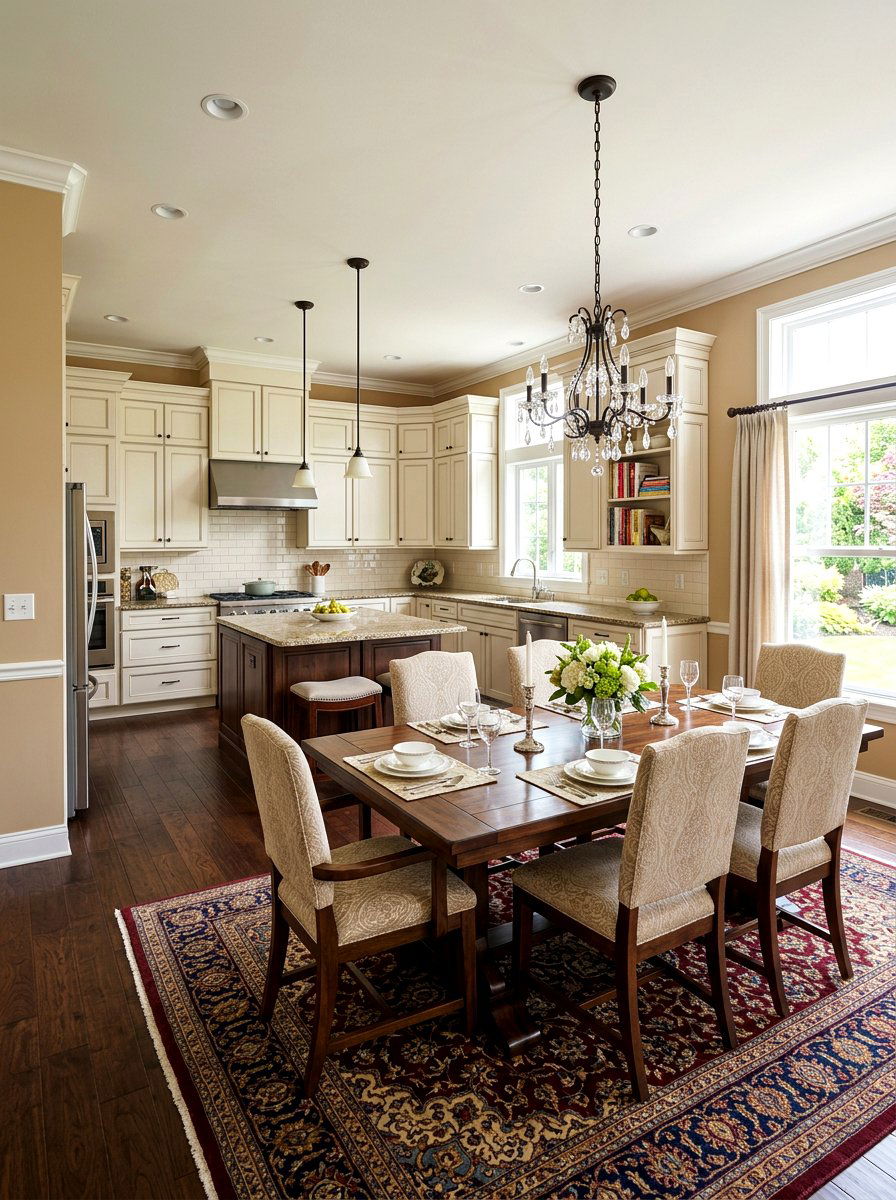
Timeless elegance is the core of a traditional kitchen and dining combination. You should focus on classic details like crown molding, recessed-panel cabinets, and a sturdy wooden dining set. A neutral color palette of creams, beiges, and soft whites will ensure that the space remains sophisticated for years to come. Adding a formal area rug under the table can help to separate the dining zone from the hard surfaces of the kitchen. This design is perfect for families who appreciate a sense of history and order in their home. It feels grounded, reliable, and very comfortable for daily living and special holiday gatherings.
16. Coastal Kitchen Dining Room
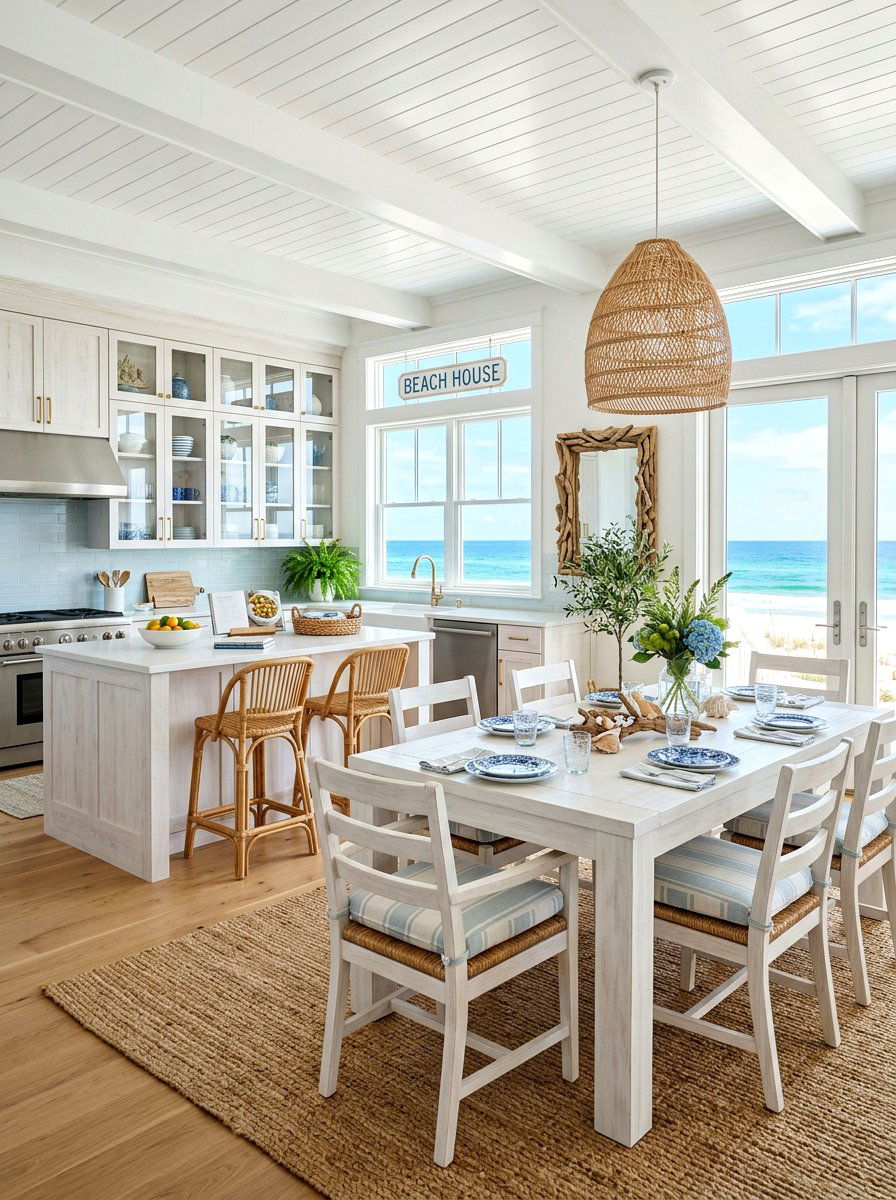
Light blues, sandy neutrals, and natural fibers can turn your kitchen and eating area into a breezy beach-inspired sanctuary. You should use white-washed wood for the dining table and chairs to mimic the look of driftwood. Keep the cabinetry light and airy, perhaps with glass-front doors to display your favorite coastal-themed dishes. Large windows that let in plenty of sunshine are essential for making the space feel like a true summer retreat. Adding a few navy blue accents can provide a nice contrast without overwhelming the calm atmosphere. This style is perfect for creating a relaxing environment that feels like a permanent vacation.
17. Kitchen Breakfast Nook Combo
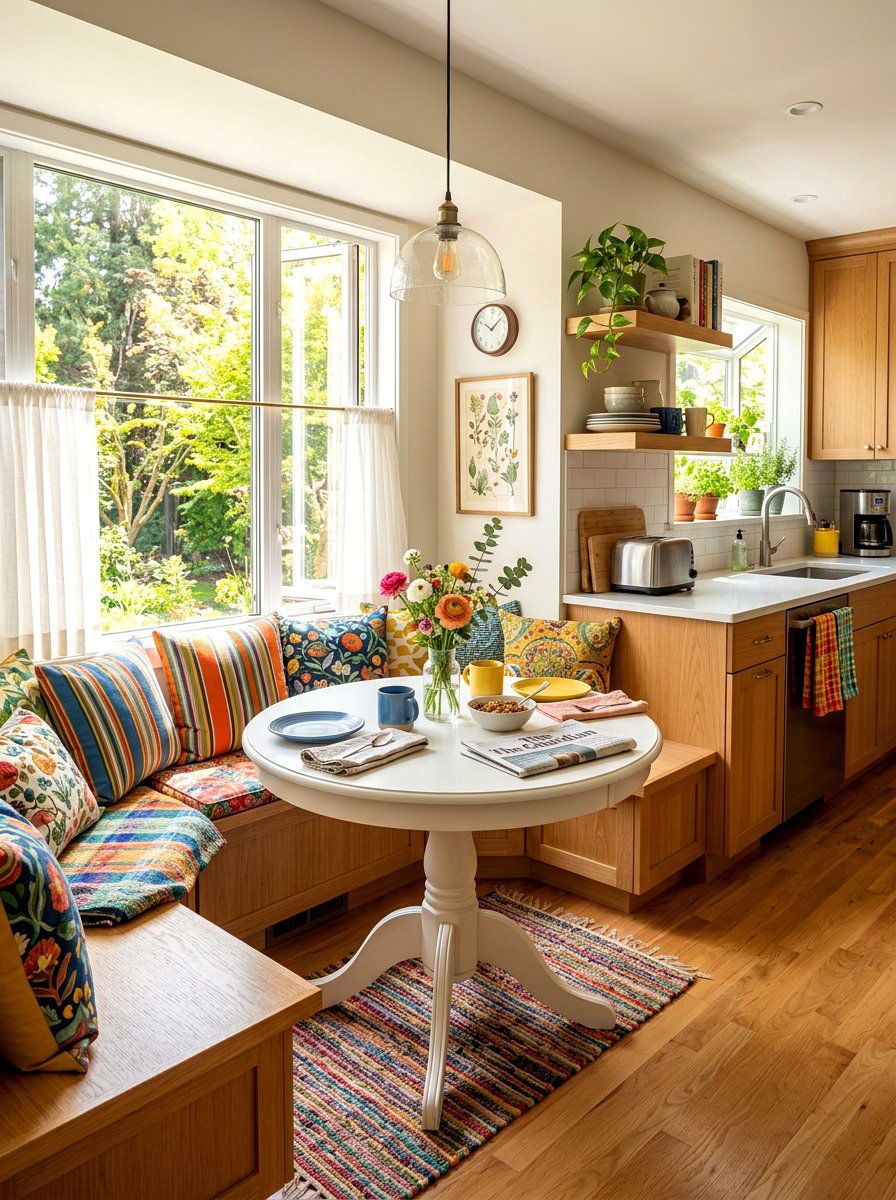
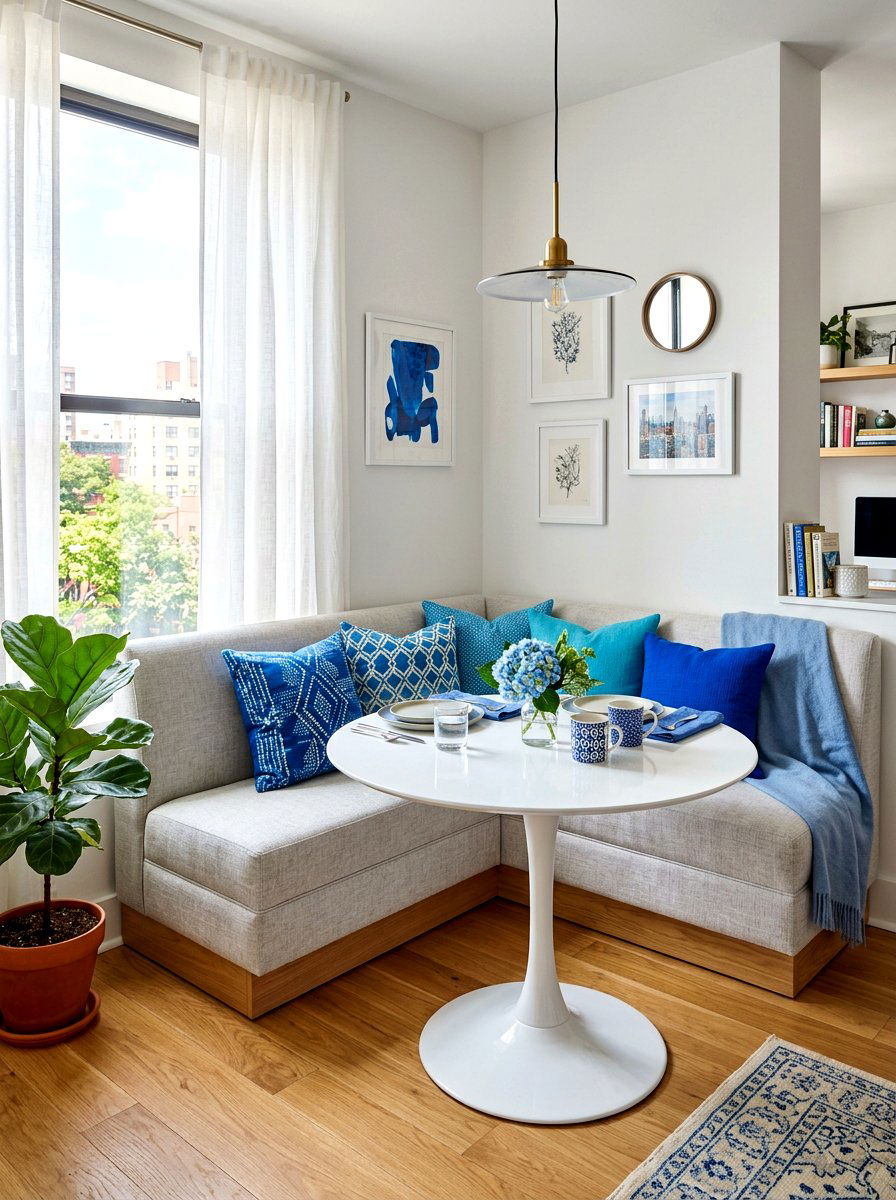
Creating a dedicated breakfast nook within your kitchen layout provides a casual spot for morning coffee and quick family meals. You can tuck a small table and a couple of chairs into a sunny corner or near a window for the best light. This area doesn't need much space to be effective and charming. Use bright colors and fun patterns for the seat cushions to make the nook feel distinct from the more functional prep area. It is a great way to use "dead space" that might otherwise go to waste. A breakfast nook adds a layer of comfort and personality to any kitchen design.
18. Dark Kitchen Dining Space
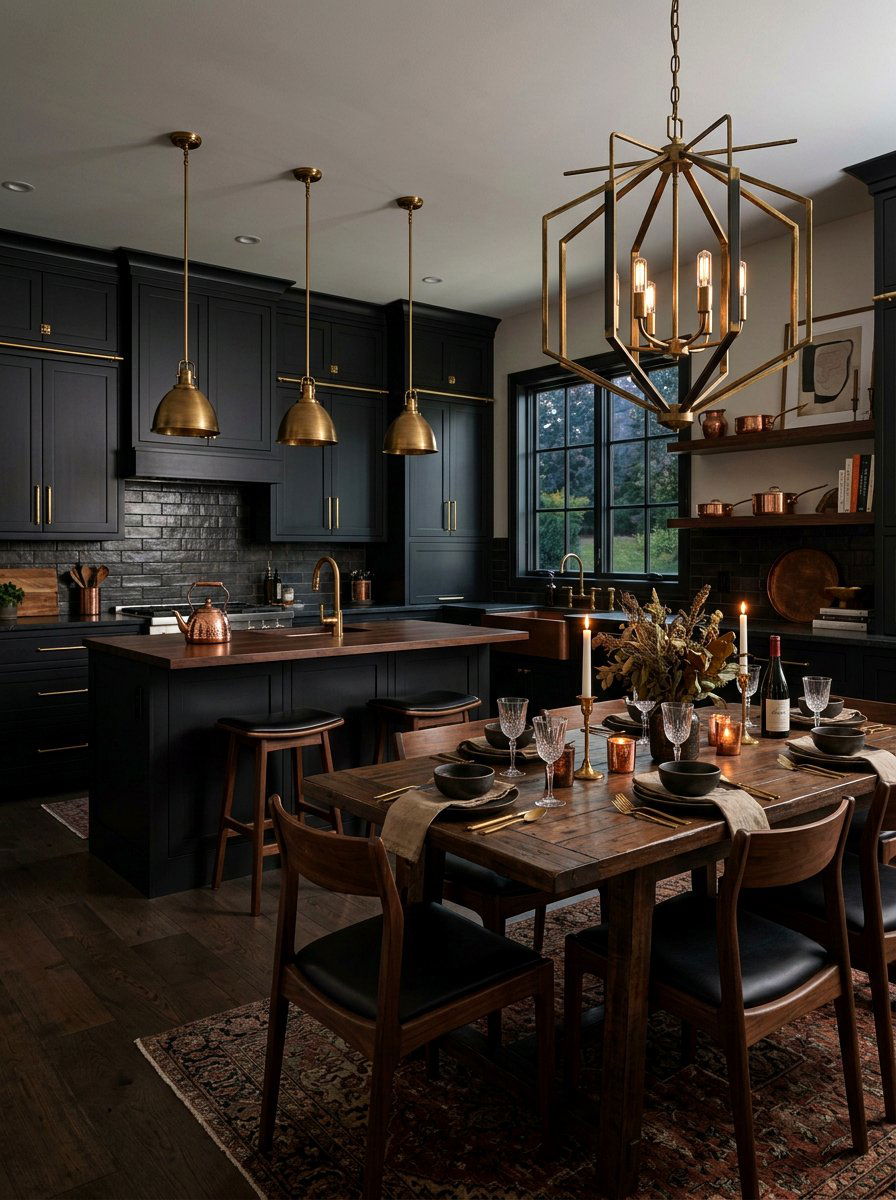
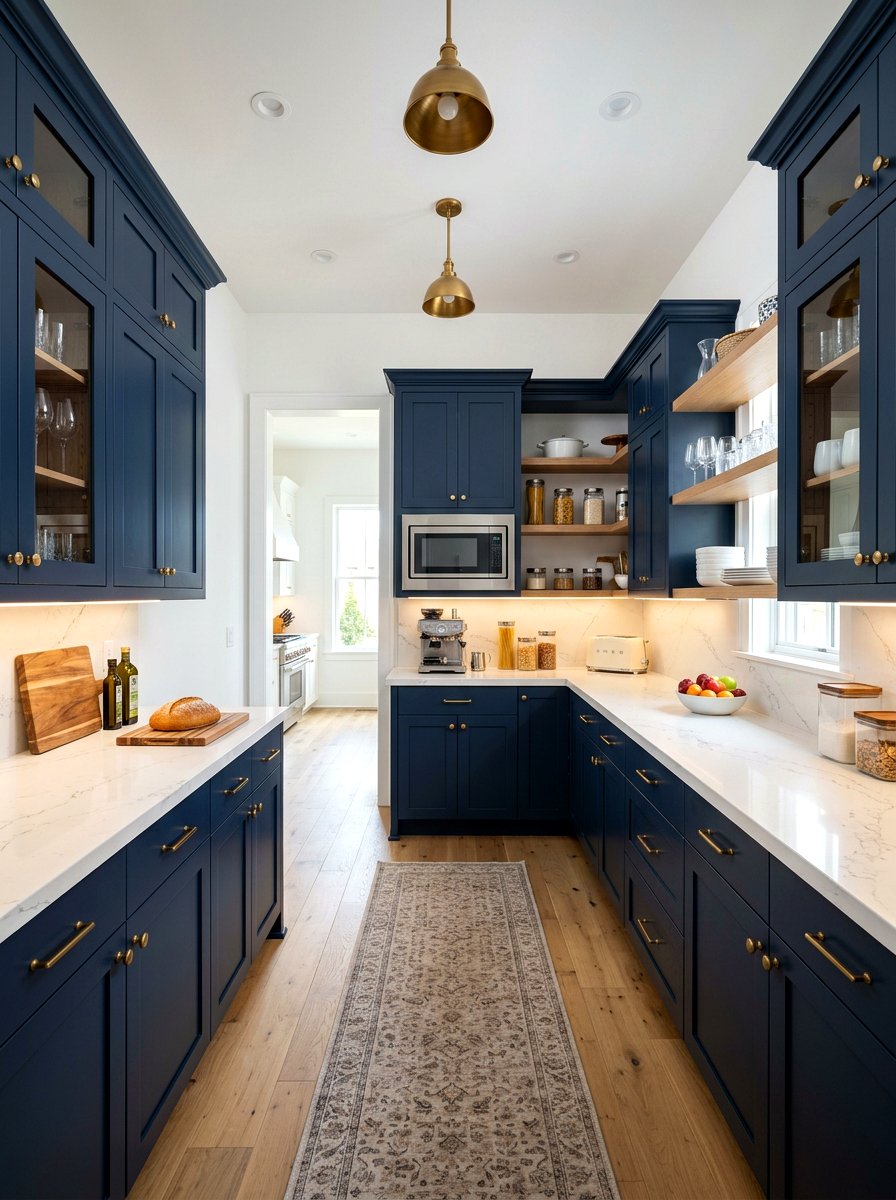
Bold and moody interiors are a growing trend for those who want to create a dramatic and intimate atmosphere. You can achieve this by using deep navy, forest green, or even matte black for your cabinets and dining furniture. Balance the dark tones with high-quality lighting and metallic accents like brass or copper to keep it from feeling too heavy. A dark wood dining table can look incredibly sophisticated against a charcoal wall. This style is particularly effective for evening entertaining, as it creates a cozy and mysterious vibe. It is a brave choice that results in a very high-end and designer look.
19. White Kitchen Dining Room
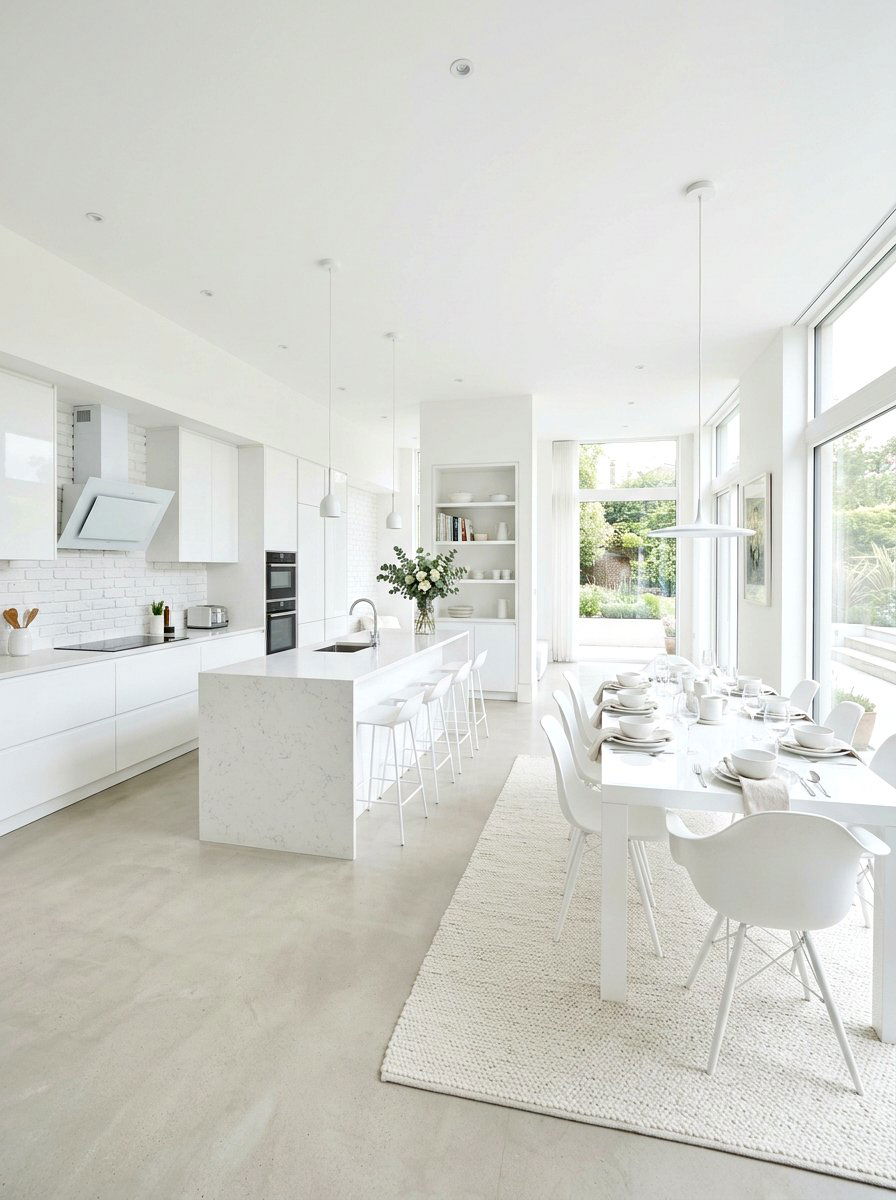
There is nothing more classic or refreshing than an all-white kitchen and dining combination. This approach makes the entire room feel massive and incredibly clean, which is perfect for smaller homes. You can prevent it from looking clinical by adding different textures, such as a white brick backsplash or a shaggy white rug. Using a mix of glossy and matte finishes will also add depth and interest to the monochromatic scheme. Light-colored wooden chairs can provide just enough warmth to make the space feel inviting. It is a timeless choice that allows you to easily change your accent colors whenever you feel like it.
20. Rustic Kitchen Dining Area
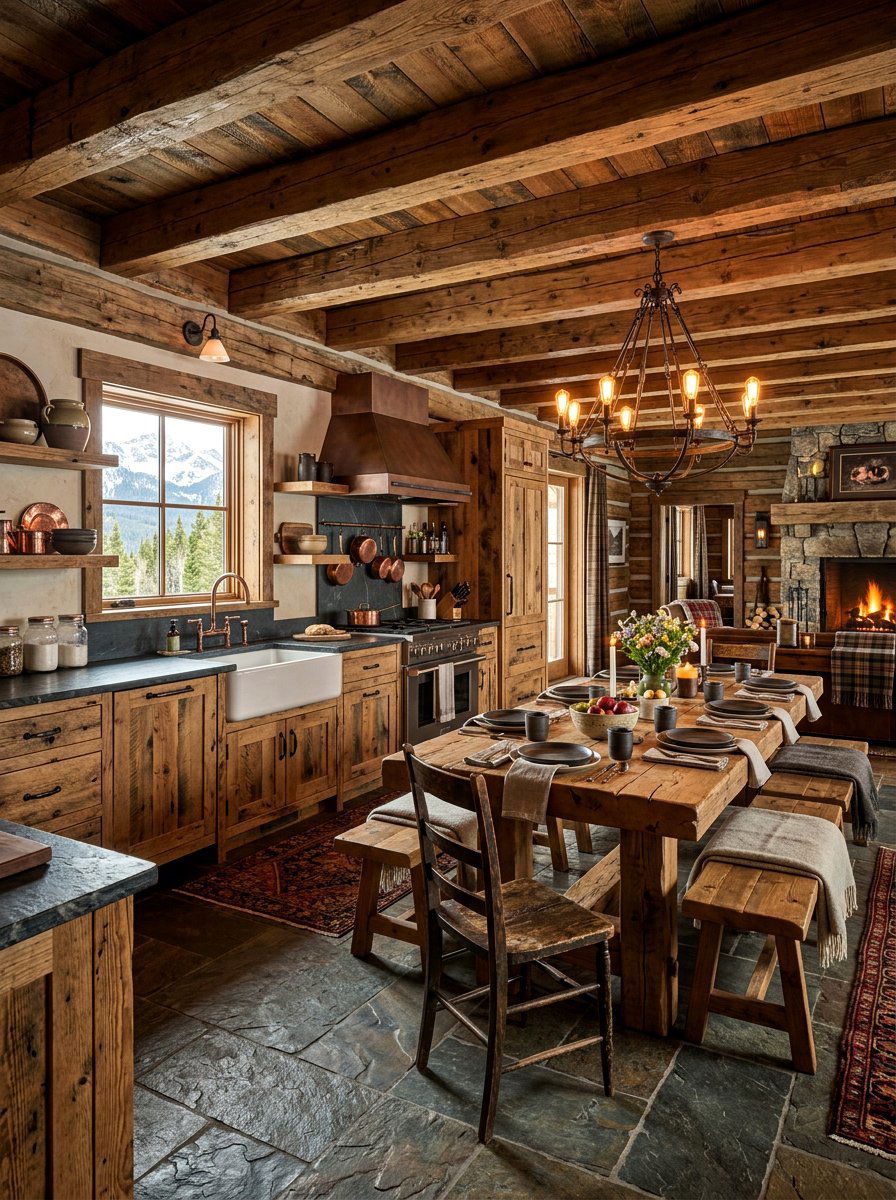
Emphasizing the beauty of raw nature is the key to a successful rustic kitchen and eating space. You should look for furniture and cabinetry that showcases the natural grain and knots of the wood. Incorporating stone elements, like a slate floor or a rock backsplash, can further enhance the earthy feel of the room. A large, chunky wooden table is a must-have for anchoring the dining zone. Use warm, dimmable lighting to create a glowing atmosphere that feels like a mountain lodge. This style is perfect for those who want their home to feel sturdy, grounded, and very closely connected to the outdoors.
21. Contemporary Kitchen Dining Setup
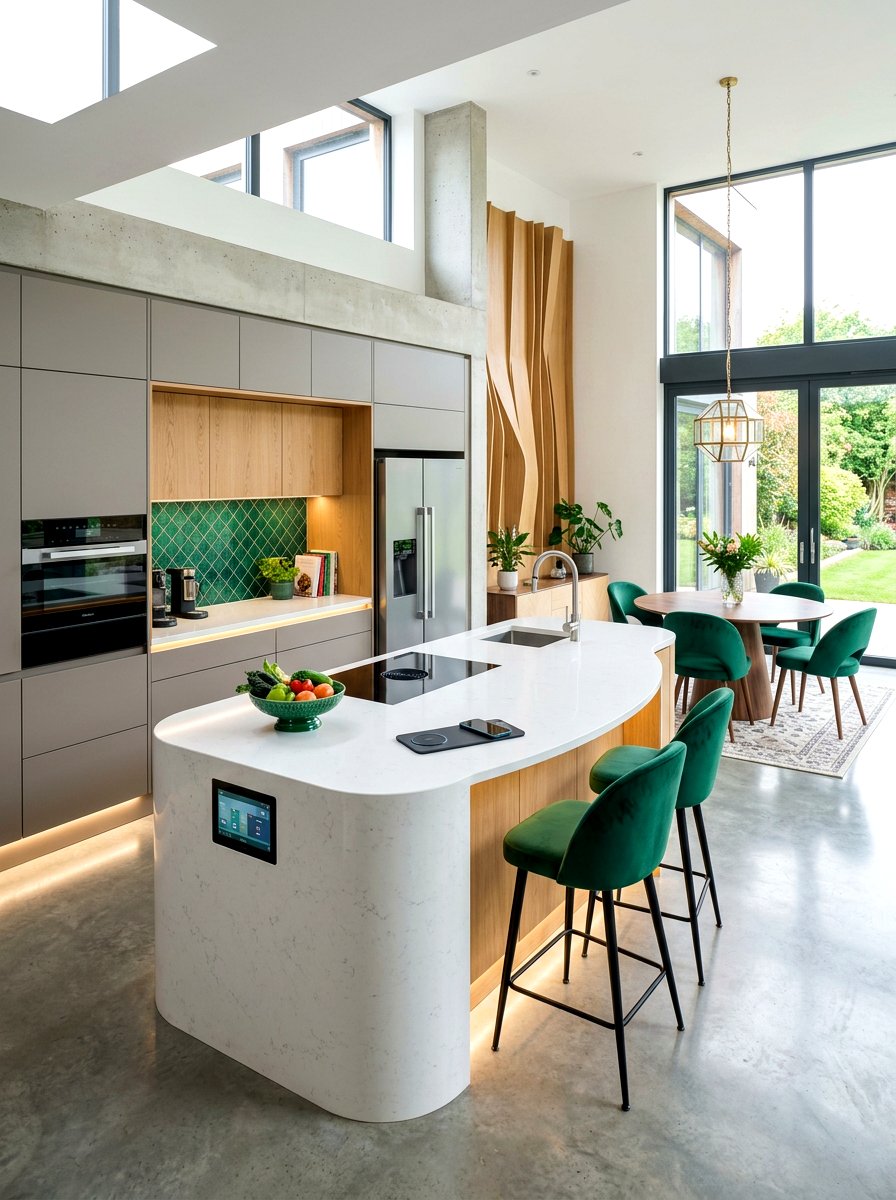
Modern design in 2025 is all about soft curves and integrated technology for a smooth living experience. You can incorporate this by choosing a kitchen island with rounded edges that flow into a curved dining bench. Use high-tech appliances that blend into the cabinetry for a seamless look. A neutral color palette with one bold "clash" of color, like a deep red or emerald green, can make the space feel very current. Smart lighting that changes temperature based on the time of day will help set the perfect mood for both cooking and dining. This setup is for the forward-thinking homeowner who loves sleek innovation.
22. Two Tone Kitchen Dining
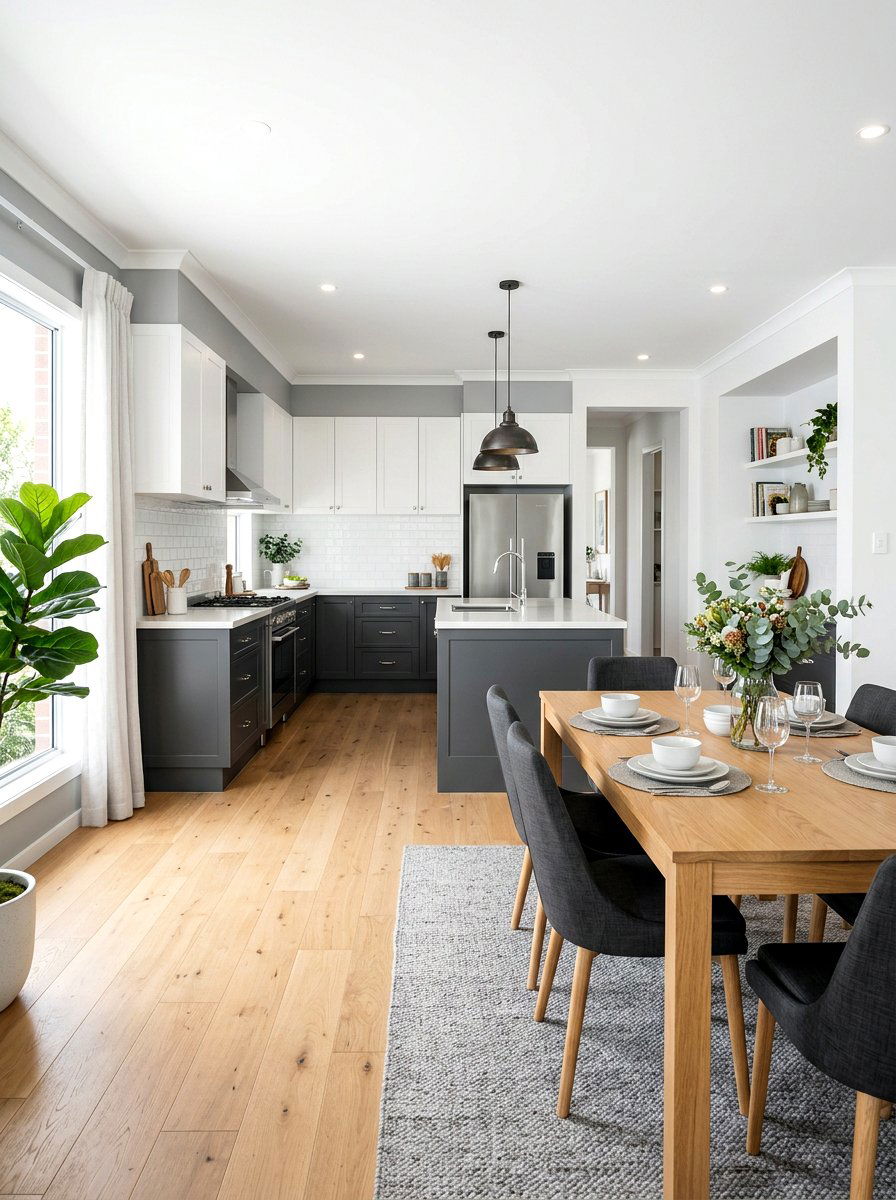
Using two different colors for your kitchen cabinets is a brilliant way to add depth and personality to a shared space. You can pair dark lower cabinets with light upper ones to keep the room feeling airy while adding some grounding weight. Extend this two-tone concept to your dining area by choosing chairs that match the lower cabinet color. This creates a visual bridge that ties the two functional zones together perfectly. It is a modern and very stylish way to break up the monotony of a single-colored room. Two-tone designs are versatile and allow you to experiment with your favorite color combinations.
23. Eclectic Kitchen Dining Space
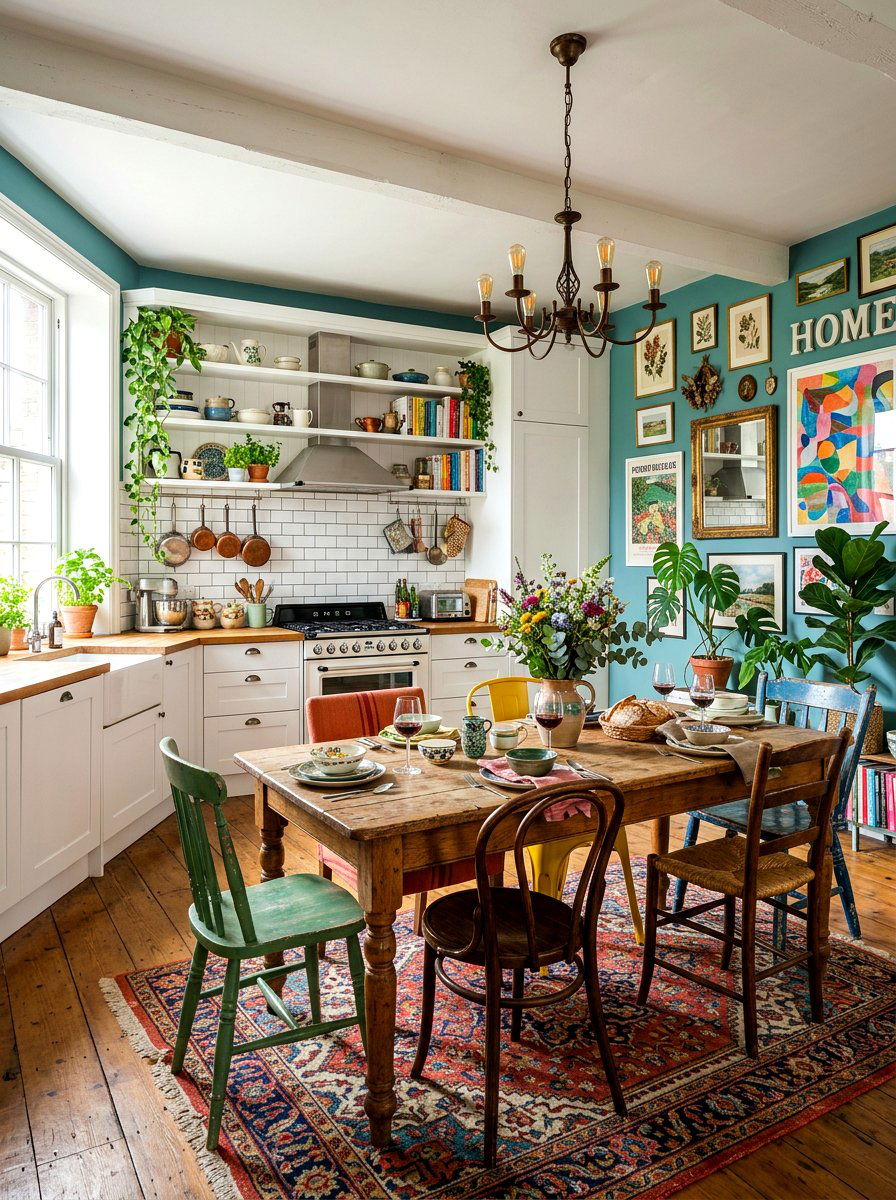
If you love to break the rules, an eclectic kitchen and dining combo is the perfect playground for your creativity. You can mix a modern, sleek kitchen with an antique farmhouse dining table and mismatched vintage chairs. The secret to making this work is to find a common thread, such as a similar color palette or a repeated material. This style allows your personality to shine through every corner of the room. It feels curated over time rather than bought from a single showroom. An eclectic space is always a great conversation starter and feels very warm and personal to the homeowner.
24. Hidden Kitchen Dining Table
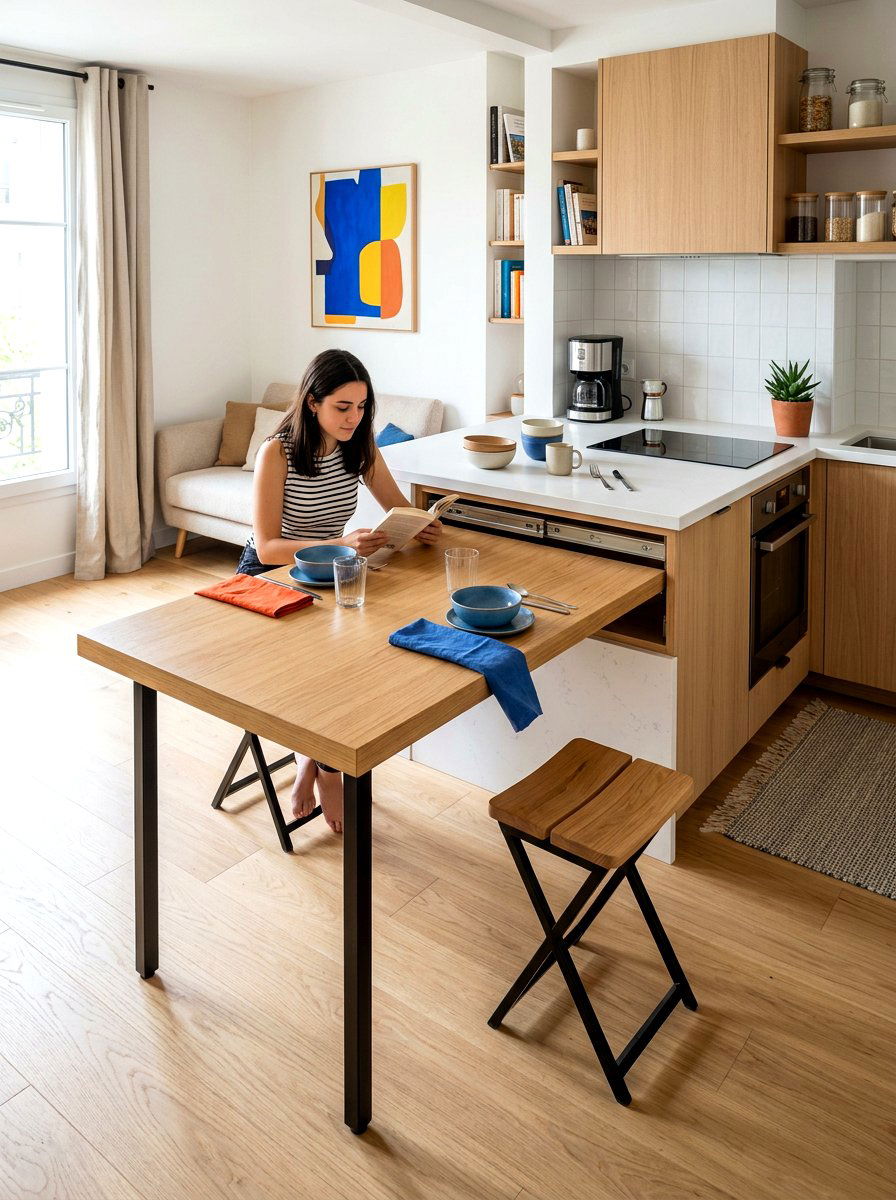
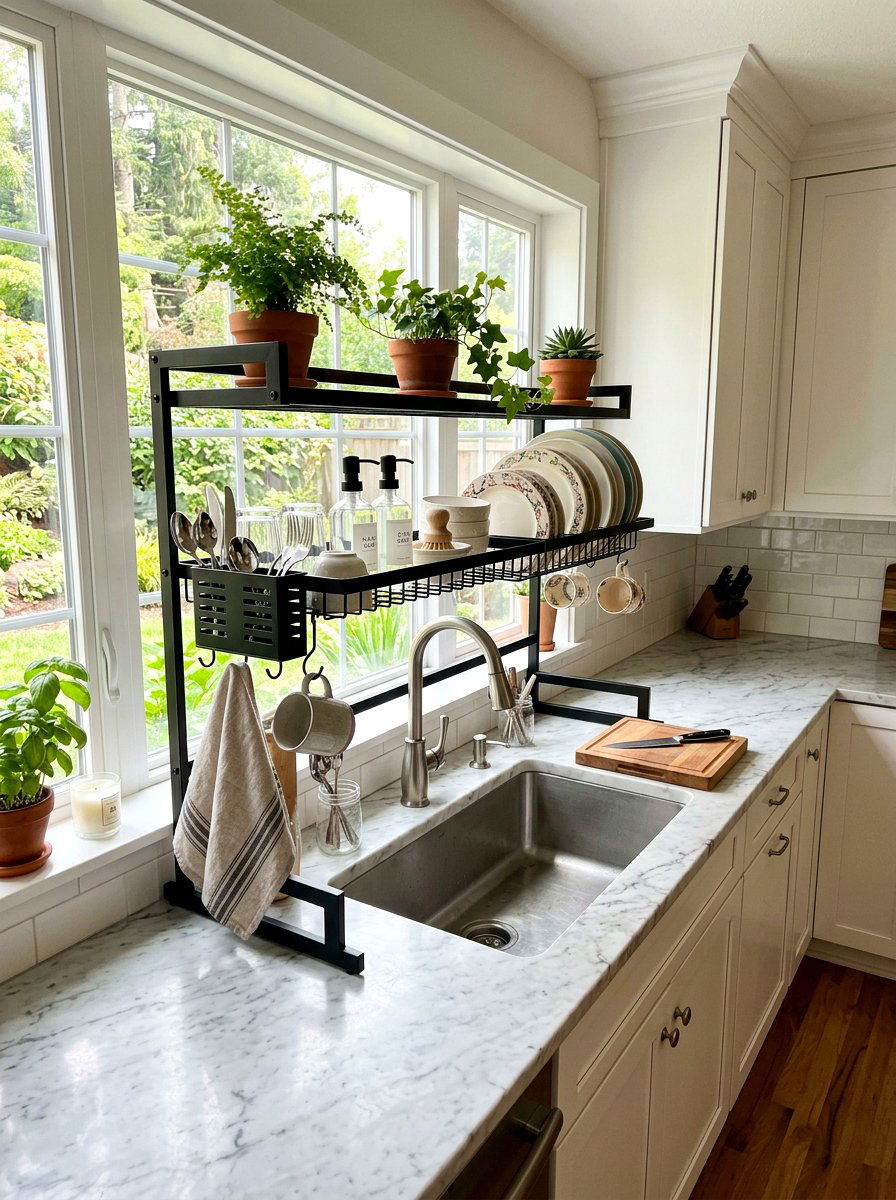
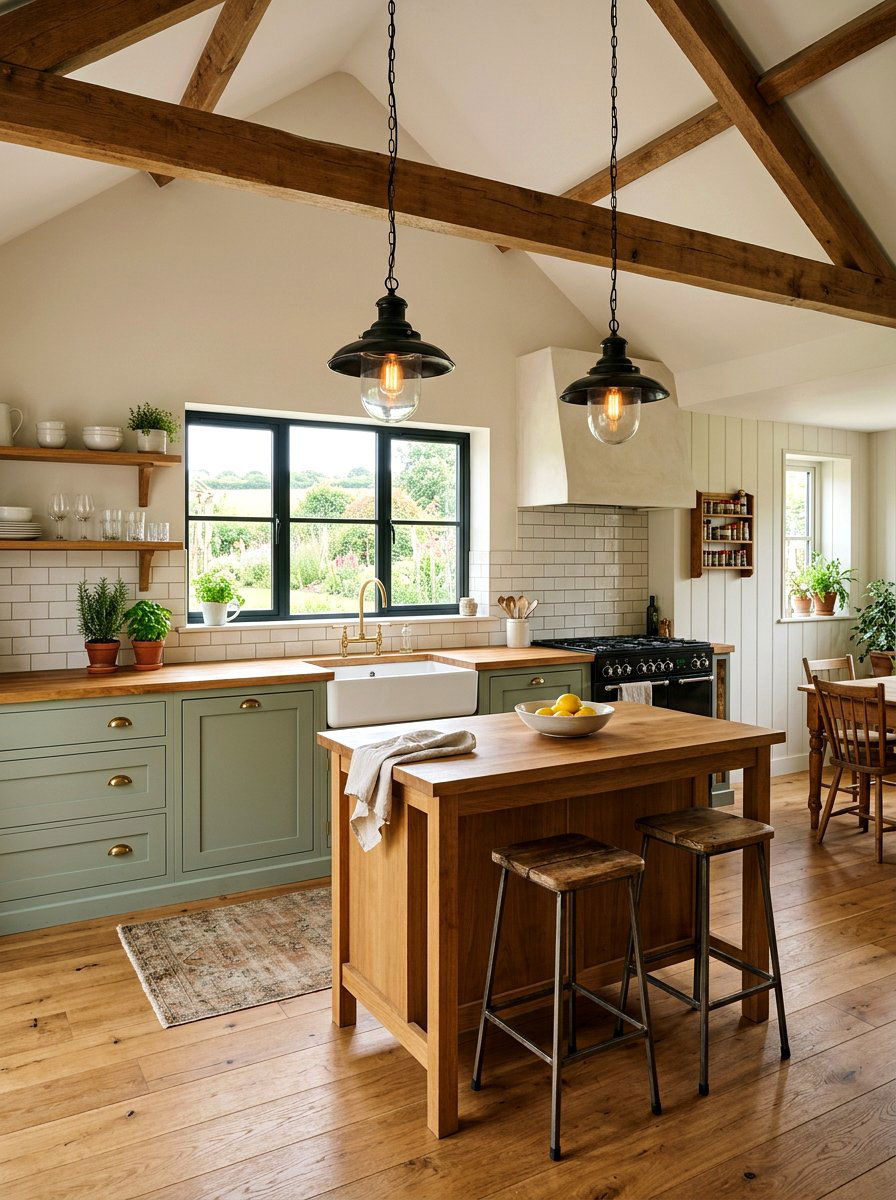
For those living in extremely compact spaces, a hidden or pull-out dining table is a total game-changer. You can have a table that slides out from under the kitchen counter only when you need it for a meal. This keeps the floor space completely clear for other activities during the rest of the day. Some designs even allow the table to fold down from a wall cabinet. Using stools that can be tucked away or used as side tables further maximizes the utility of the area. It is a highly innovative solution for studio apartments or very tiny cottages where every inch is precious.
25. Marble Kitchen Dining Room
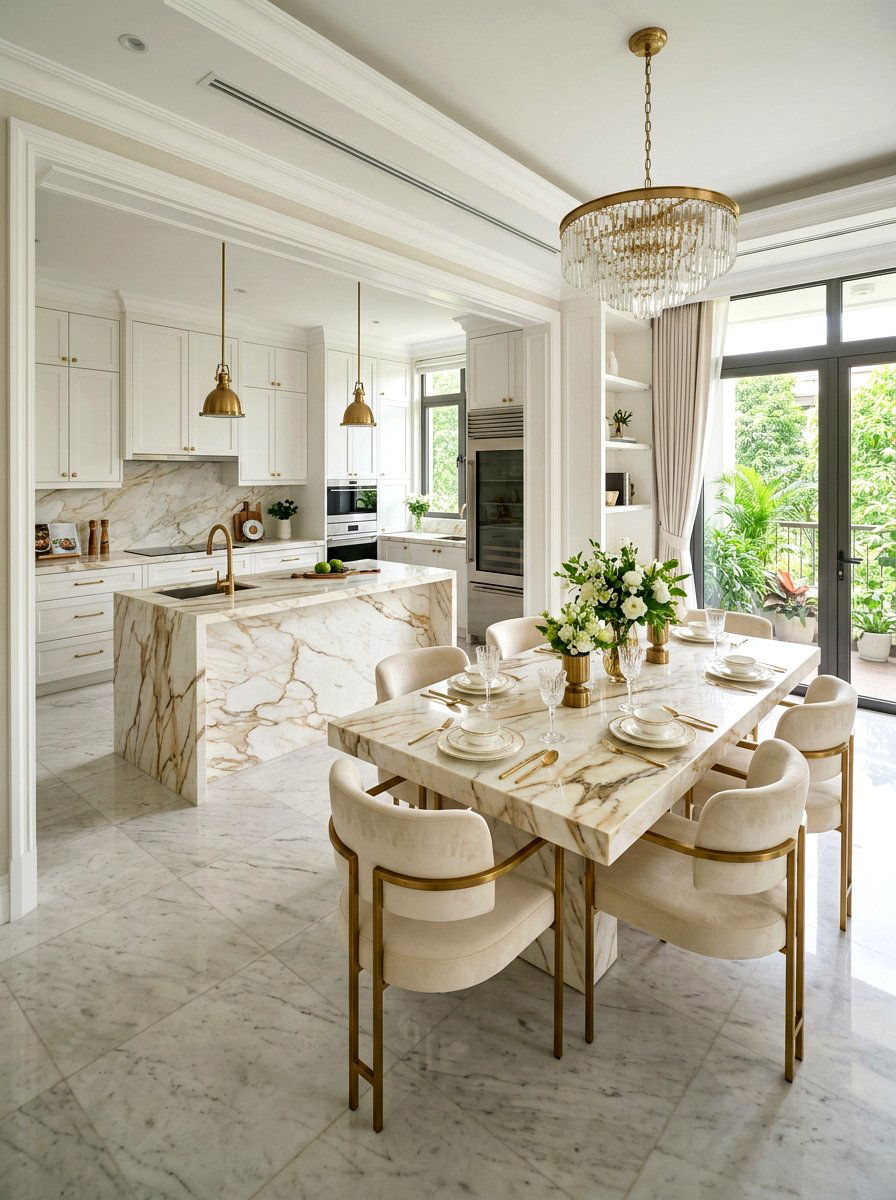
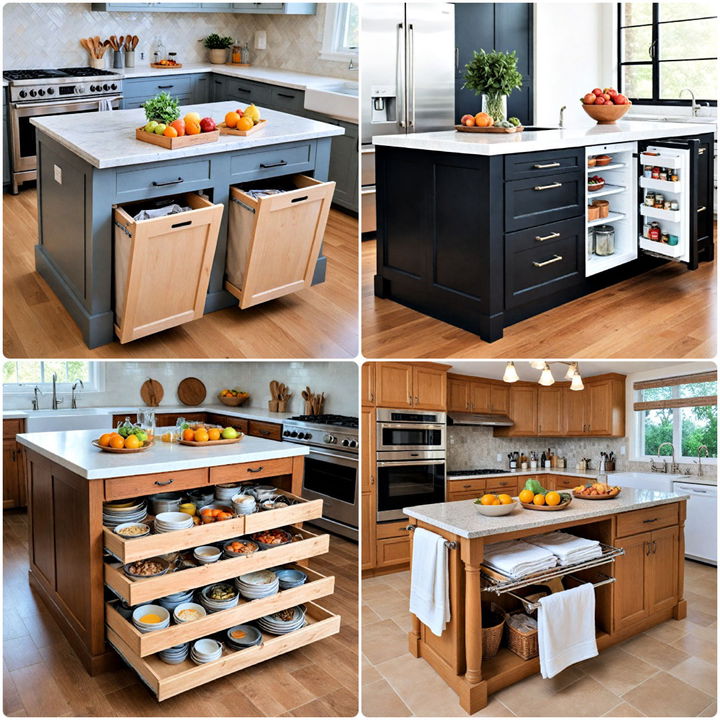
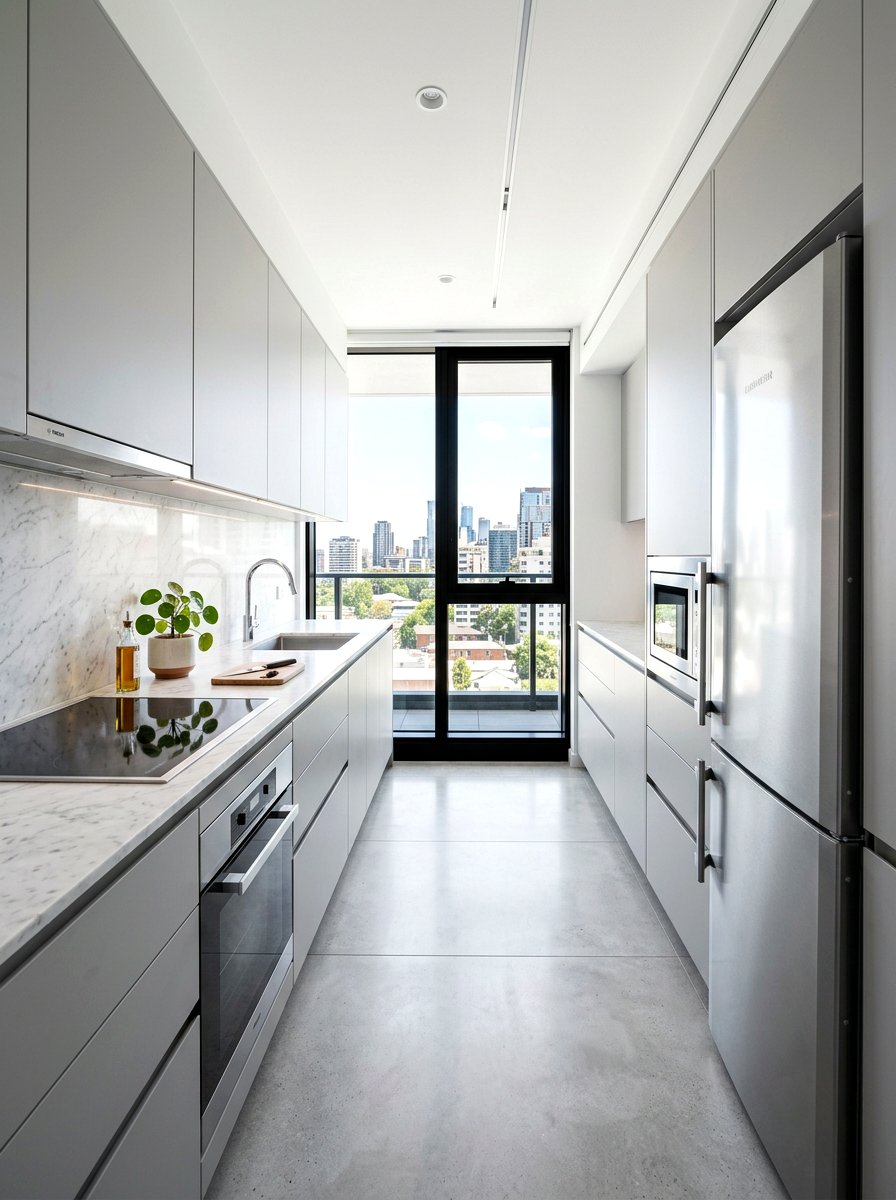
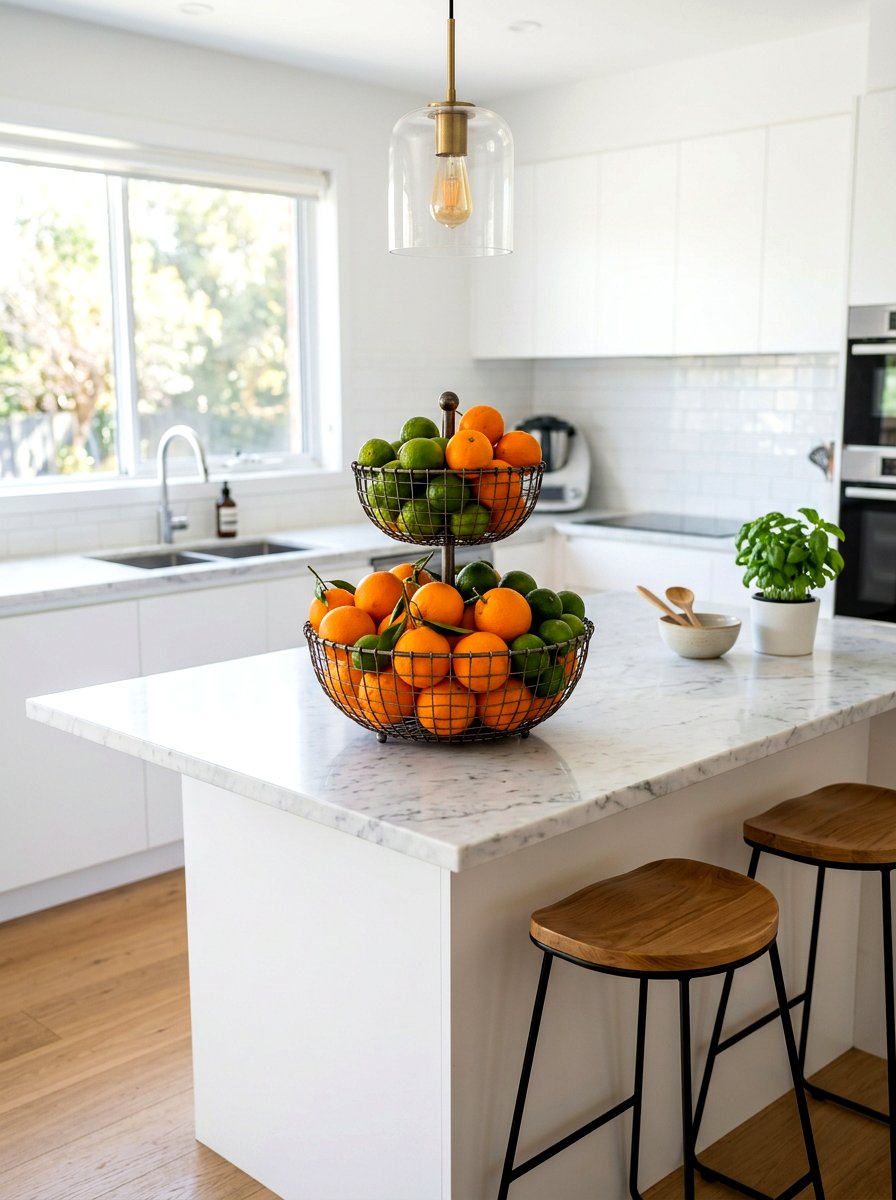
Marble is the ultimate symbol of elegance and can be used to create a stunningly cohesive kitchen and dining area. You should consider using the same slab of marble for your countertops and a custom-made dining table top. This creates a luxurious "flow" that makes the entire room feel like a single, high-end installation. Pair the stone with sleek, gold-trimmed chairs to enhance the expensive vibe. Because marble is a natural material, every piece is unique, adding a level of artistry to your home. It is a durable and beautiful choice that will stay in style for many decades to come.
26. Wood Kitchen Dining Space
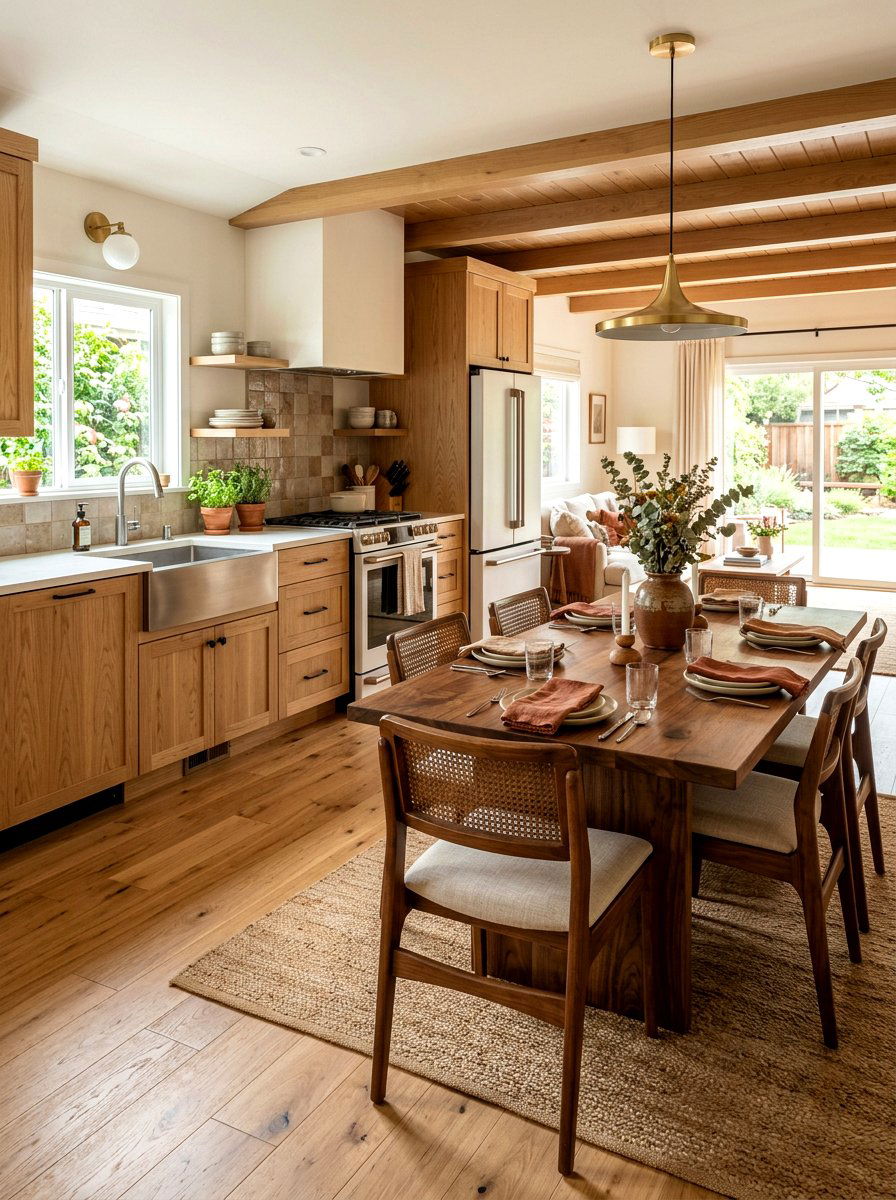
Warm wood tones can make even the most modern kitchen feel cozy and approachable. You can use wood for your flooring, cabinetry, and dining furniture to create a seamless and organic environment. Mixing different types of wood, like oak and walnut, can add a layer of sophistication and depth to the design. Just ensure that the undertones of the woods are compatible to keep the look cohesive. This style is incredibly versatile and works well with almost any other color or material. A wood-heavy space feels timeless, sturdy, and always very welcoming for family and friends who visit your home.
27. Bright Kitchen Dining Area
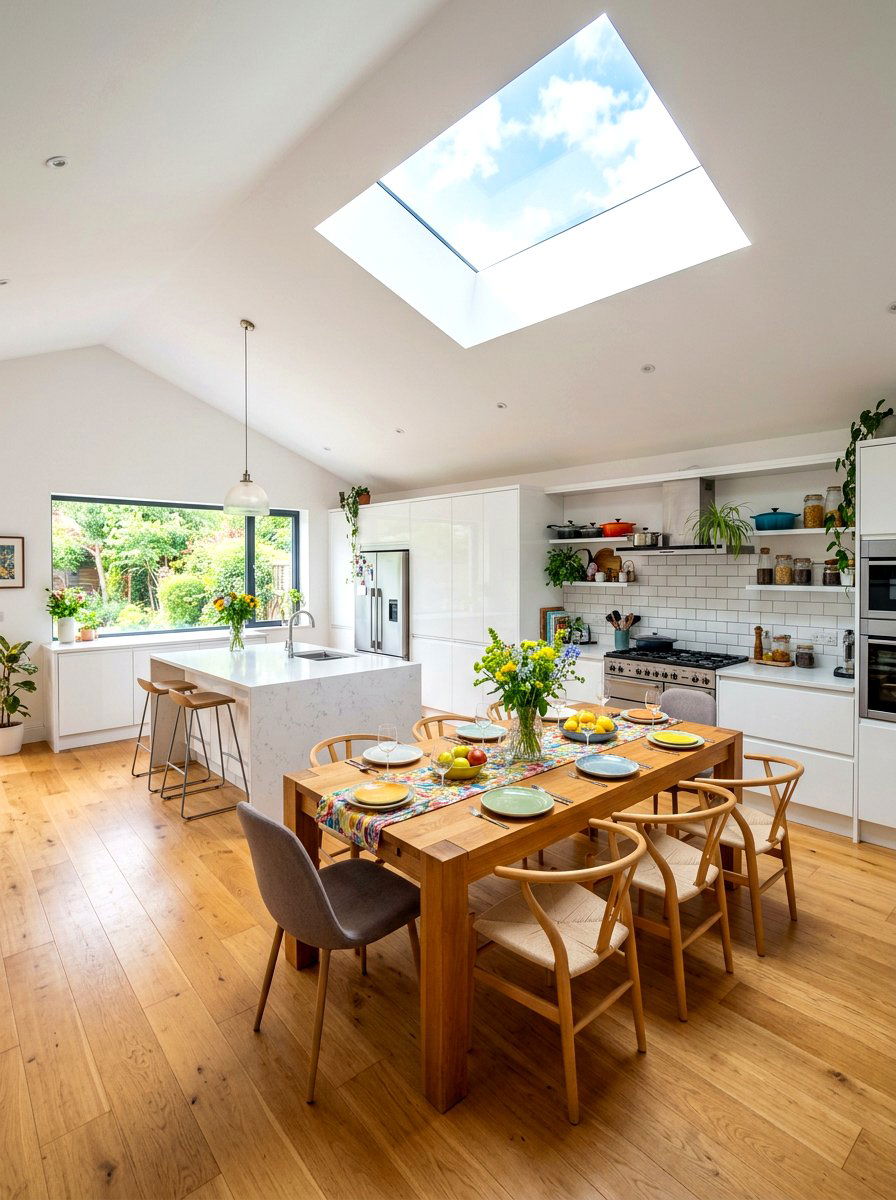
Maximizing natural light is the best way to make a kitchen and dining combo feel energetic and spacious. You should position your dining table directly under a skylight or next to a wall of large windows. Use light-reflecting materials like polished stone and glossy cabinets to bounce the sunshine around the room. Keeping window treatments minimal or non-existent will allow the maximum amount of light to enter. A bright space not only looks better but also improves your mood while you are cooking or enjoying a meal. It creates a cheerful and very healthy atmosphere for your daily life and social gatherings.
28. High Ceiling Kitchen Dining
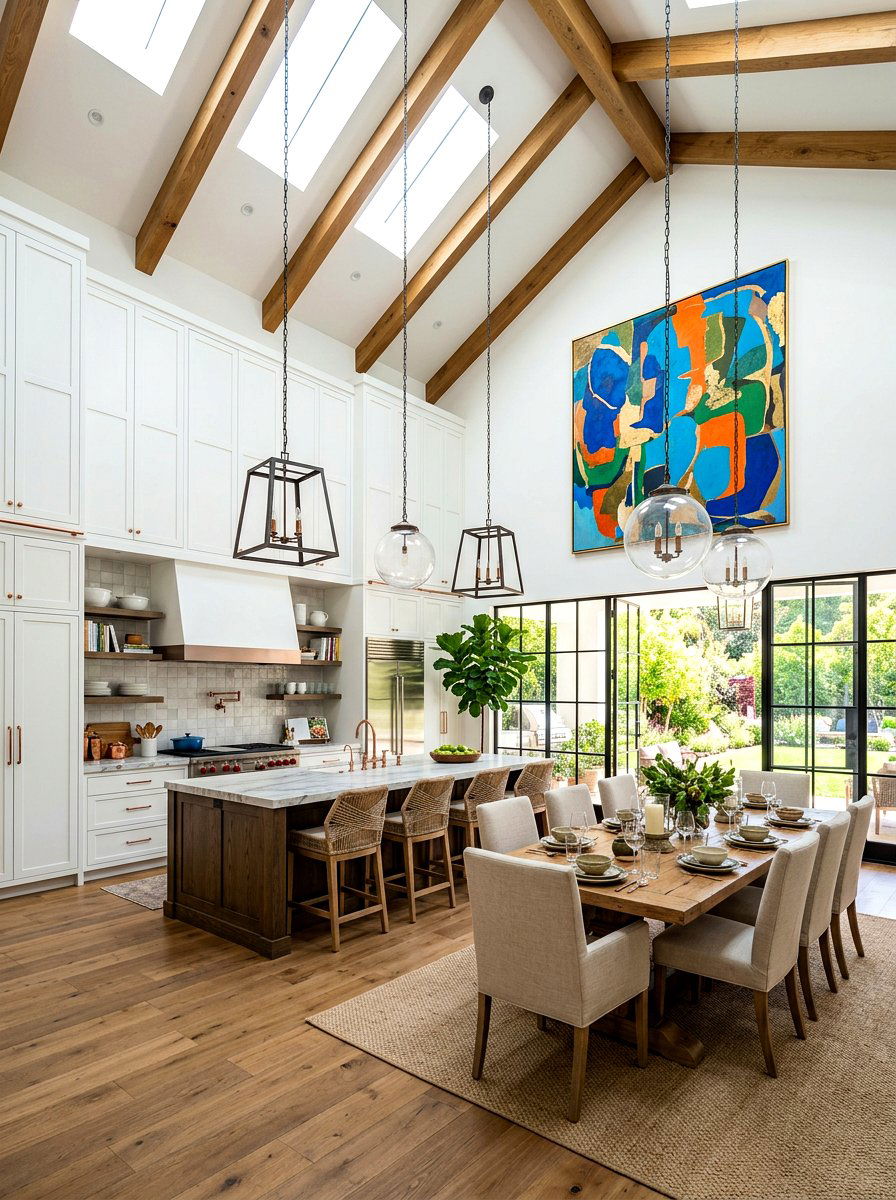
If your home features high ceilings, you have a wonderful opportunity to play with verticality in your shared space. You can use tall cabinetry that reaches all the way to the top to maximize storage and emphasize the height. Hanging oversized pendant lights at different levels over the dining table will fill the vertical void and create a dramatic focal point. You could even consider a mezzanine level that overlooks the kitchen and dining area for a truly architectural feel. Large-scale artwork on the high walls can also help to ground the space. This layout feels incredibly grand, airy, and very impressive to guests.
29. Transitional Kitchen Dining Setup
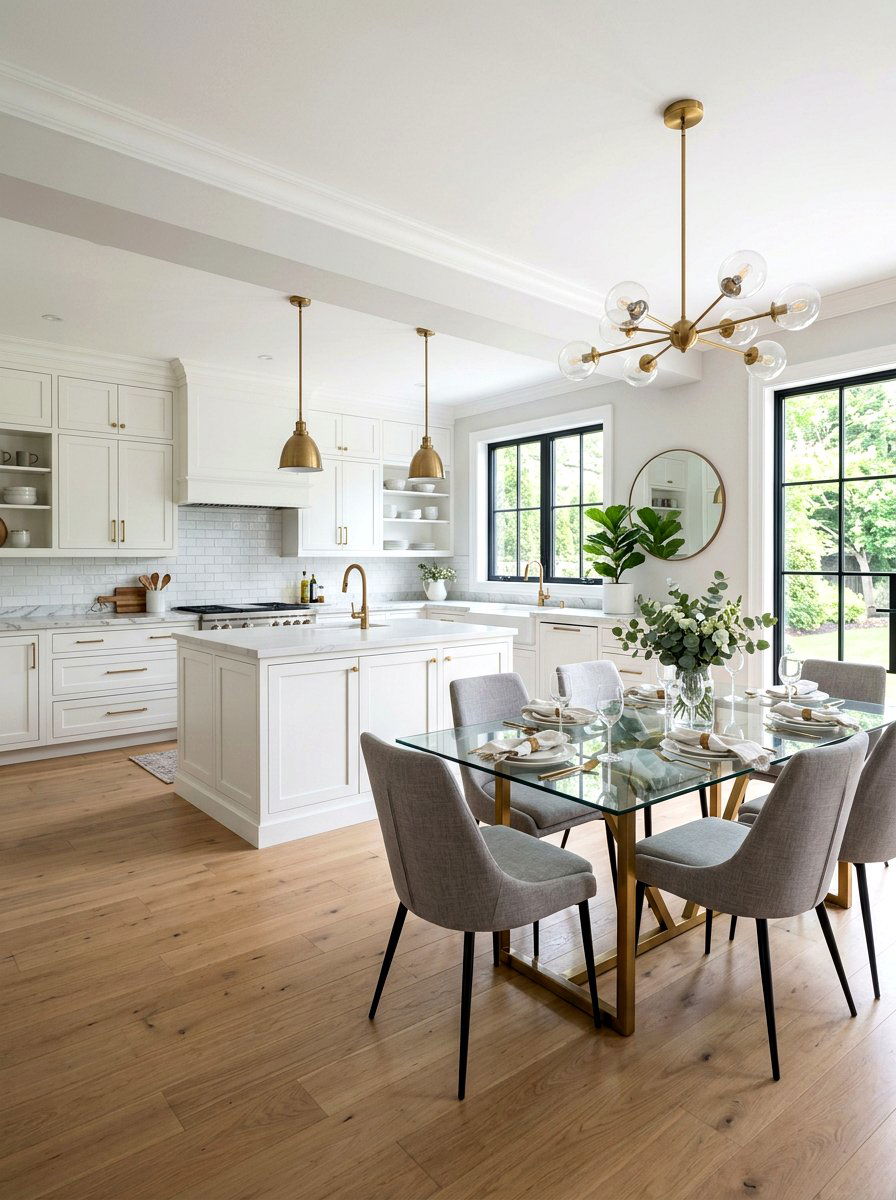
The transitional style is perfect for those who want to blend the comfort of traditional design with the clean lines of modernism. You can achieve this by pairing classic Shaker-style cabinets with a contemporary glass dining table and sleek chairs. Use a neutral color palette but add interest through different textures and mixed metal finishes. This approach creates a balanced and harmonious space that doesn't feel too stuck in one era. It is a very popular choice because it is both functional and aesthetically pleasing for a wide range of tastes. A transitional kitchen and dining combo always feels timeless and sophisticated.
30. Colorful Kitchen Dining Area
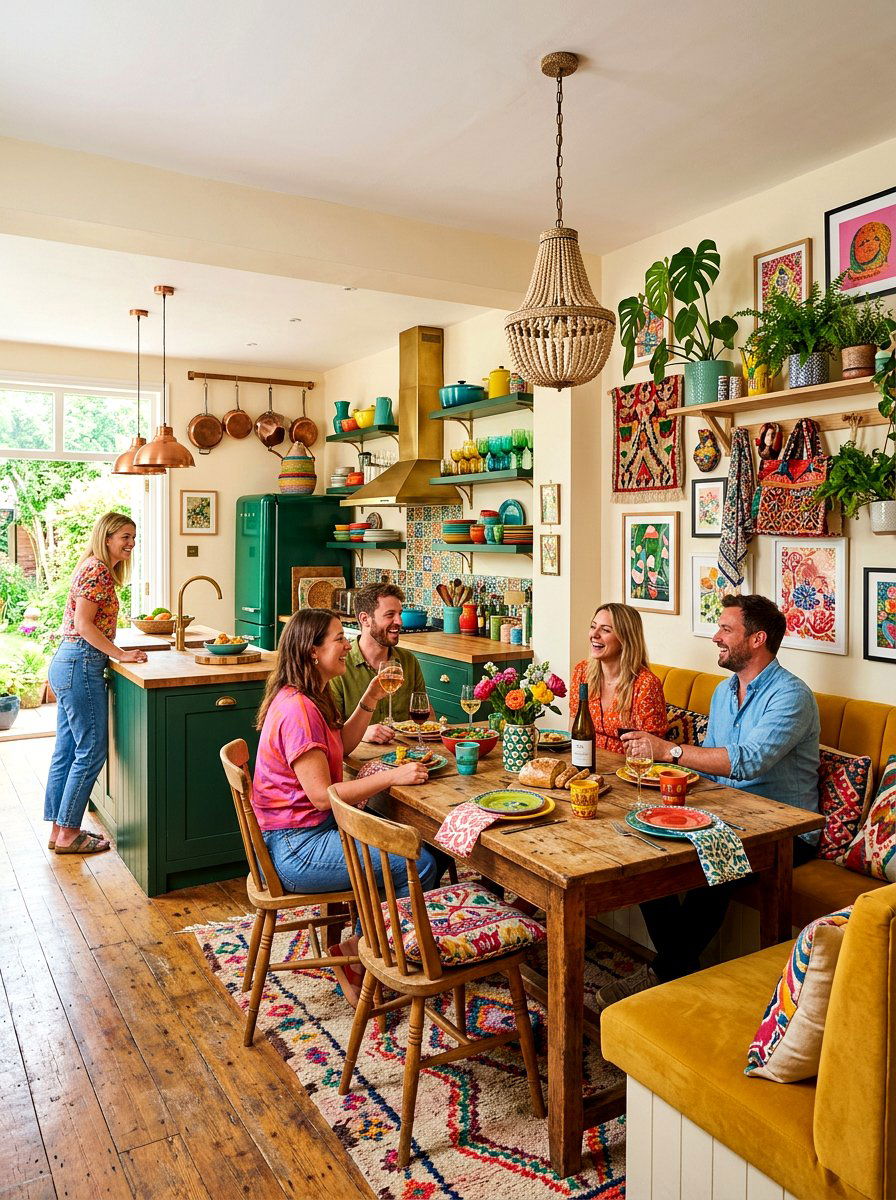
Are you ready to move away from the neutral trend and embrace bold, vibrant hues in your home? A colorful kitchen and dining area can be incredibly energizing and unique. You could choose deep emerald green cabinets and pair them with a mustard yellow dining bench for a sophisticated contrast. The key is to pick one or two main colors and repeat them in your accessories, such as dishware and artwork. Using a neutral floor and ceiling will help to balance the intensity of the colors. A colorful space reflects a confident personality and makes every meal feel like a special, festive occasion.
Conclusion:
Designing a functional and beautiful kitchen dining combo is all about balancing practicality with your personal aesthetic. As we have explored throughout this guide, there are countless ways to merge these two essential areas of the home effectively. You can choose to go bold with colors or keep things calm with a minimalist palette. The most successful layouts prioritize flow and accessibility, ensuring that everyone feels comfortable whether they are cooking or eating. By focusing on cohesive materials and smart furniture placement, you will create a space that feels unified. Ultimately, your kitchen and dining area should reflect your unique daily lifestyle and family needs perfectly.

Related posts: