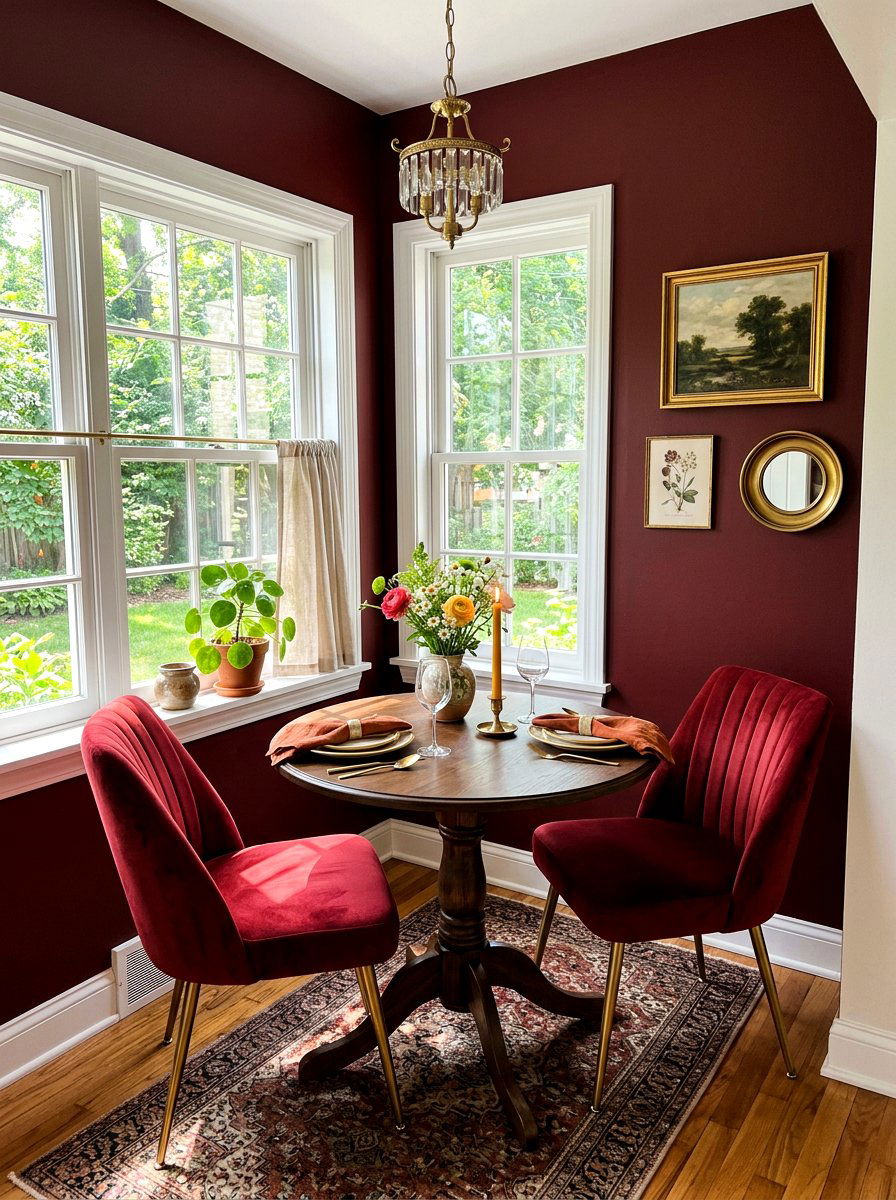
Mediterranean design brings a timeless sense of warmth and history into the home, making it a perfect choice for creating an inviting dining space. This style focuses on natural materials like stone, wood, and clay to build an environment that feels grounded yet incredibly sophisticated. Whether you are drawn to the sun-bleached look of the Greek islands or the earthy, rustic tones of a Tuscan villa, the Mediterranean aesthetic offers endless versatility. By focusing on architectural details such as arched doorways and textured walls, you can easily transform a basic room into a coastal sanctuary. These spaces are designed for long meals and deep conversation with friends.
1. Rustic wood dining table
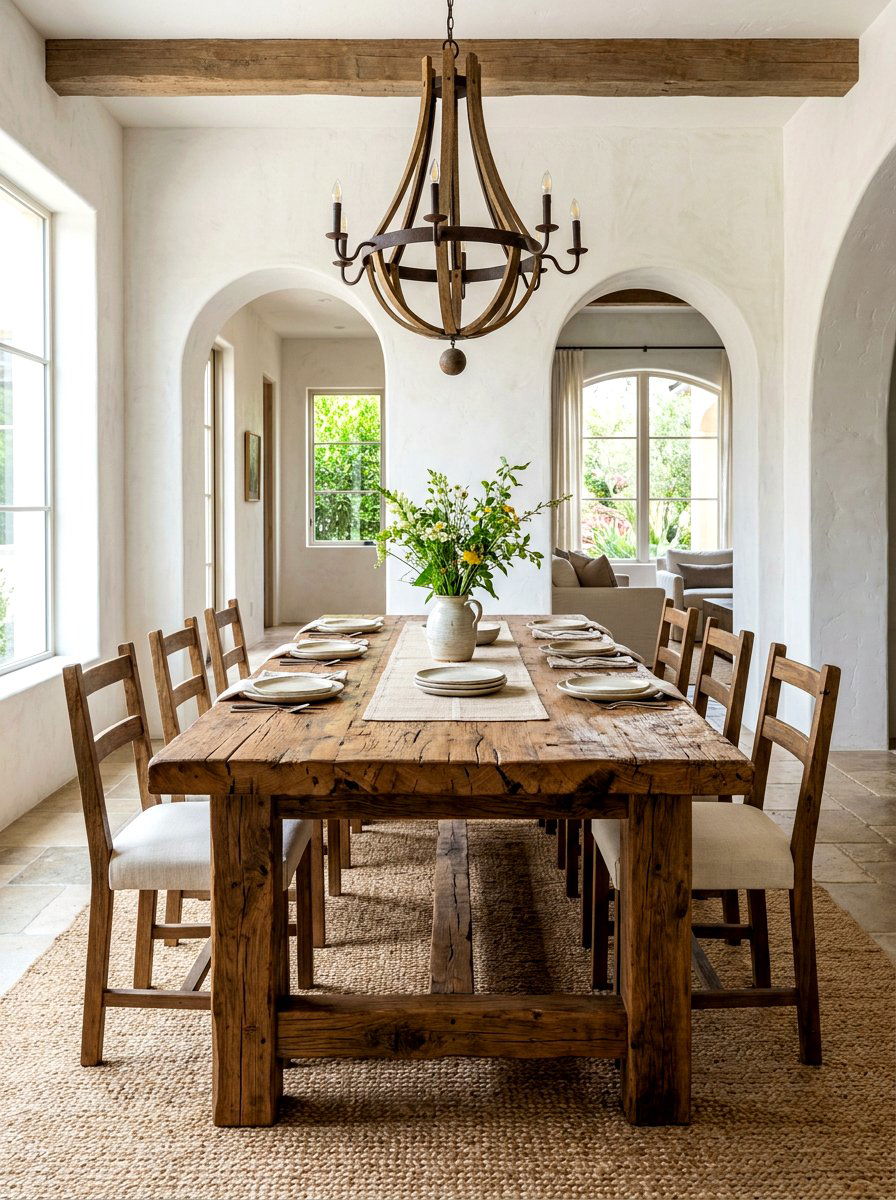
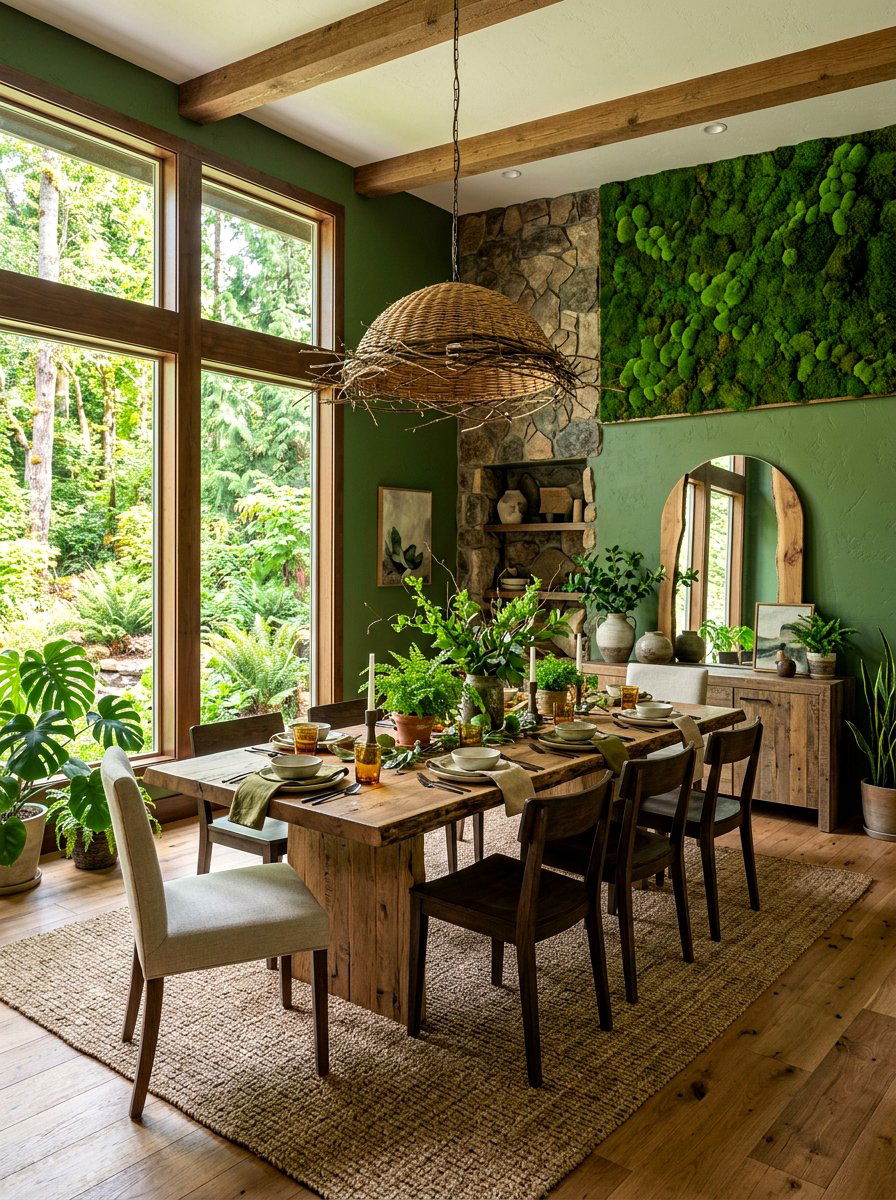
A solid timber table acts as the perfect anchor for any Mediterranean space because it brings a sense of history and permanence to the room. Look for reclaimed wood or thick oak pieces that feature natural knots and visible grain to emphasize a raw, organic feel. These tables often have chunky legs or a trestle base which provides a sturdy foundation for large family gatherings. Choosing a matte or oil finish rather than a high-gloss one keeps the look authentic and relaxed. The natural imperfections in the wood tell a story of craftsmanship and durability. It creates a beautiful contrast against smooth plaster walls or cool tile floors.
2. Arched dining room doorway
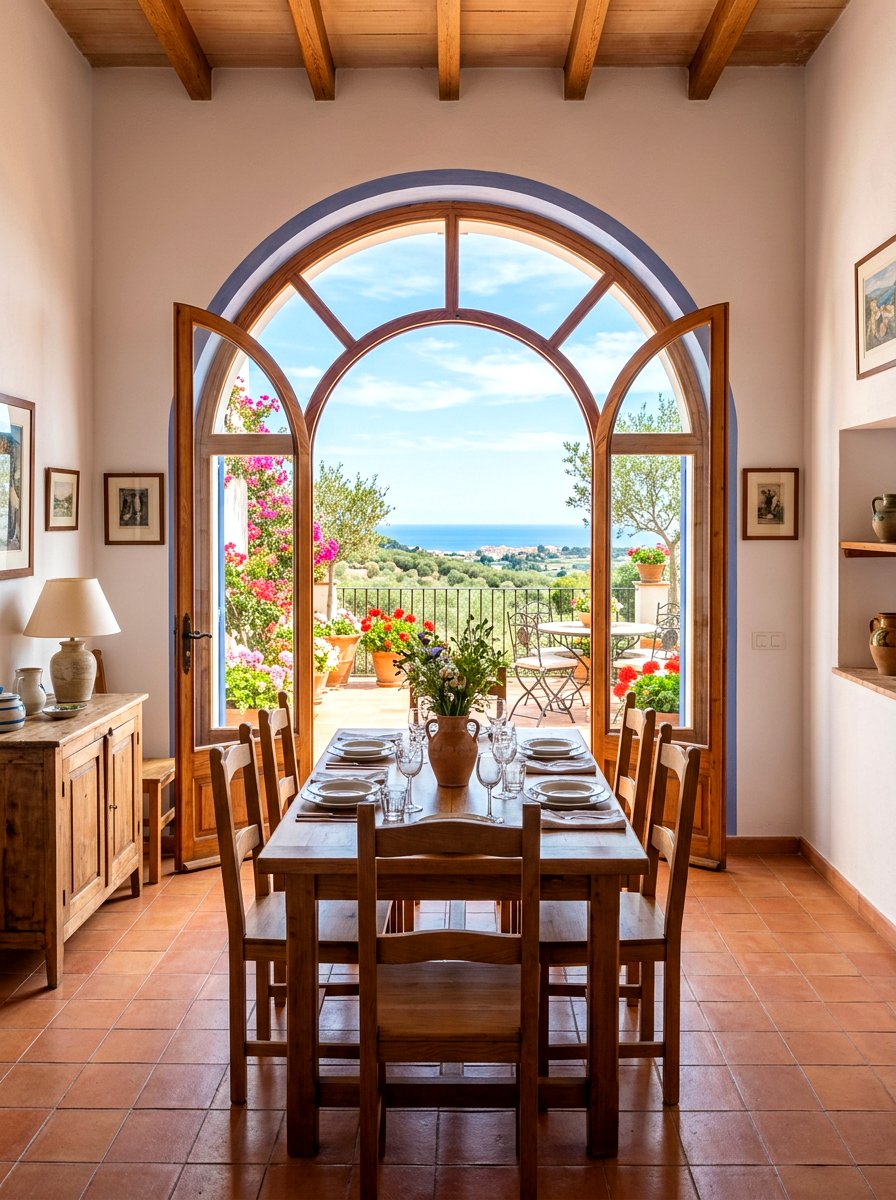
Incorporating soft architectural curves is a hallmark of Mediterranean design that helps to break up the harsh lines of a standard room. An arched doorway creates a sense of flow and movement, drawing the eye from the dining area into adjacent spaces like the kitchen or terrace. This feature mimics the traditional masonry found in coastal villas across Southern Europe and North Africa. You can emphasize the arch by leaving it simple and clean-lined or by adding a decorative stone surround for extra texture. It provides a soft, romantic frame for the dining set and makes the entire room feel much more intentional and grand.
3. Terracotta tile floor
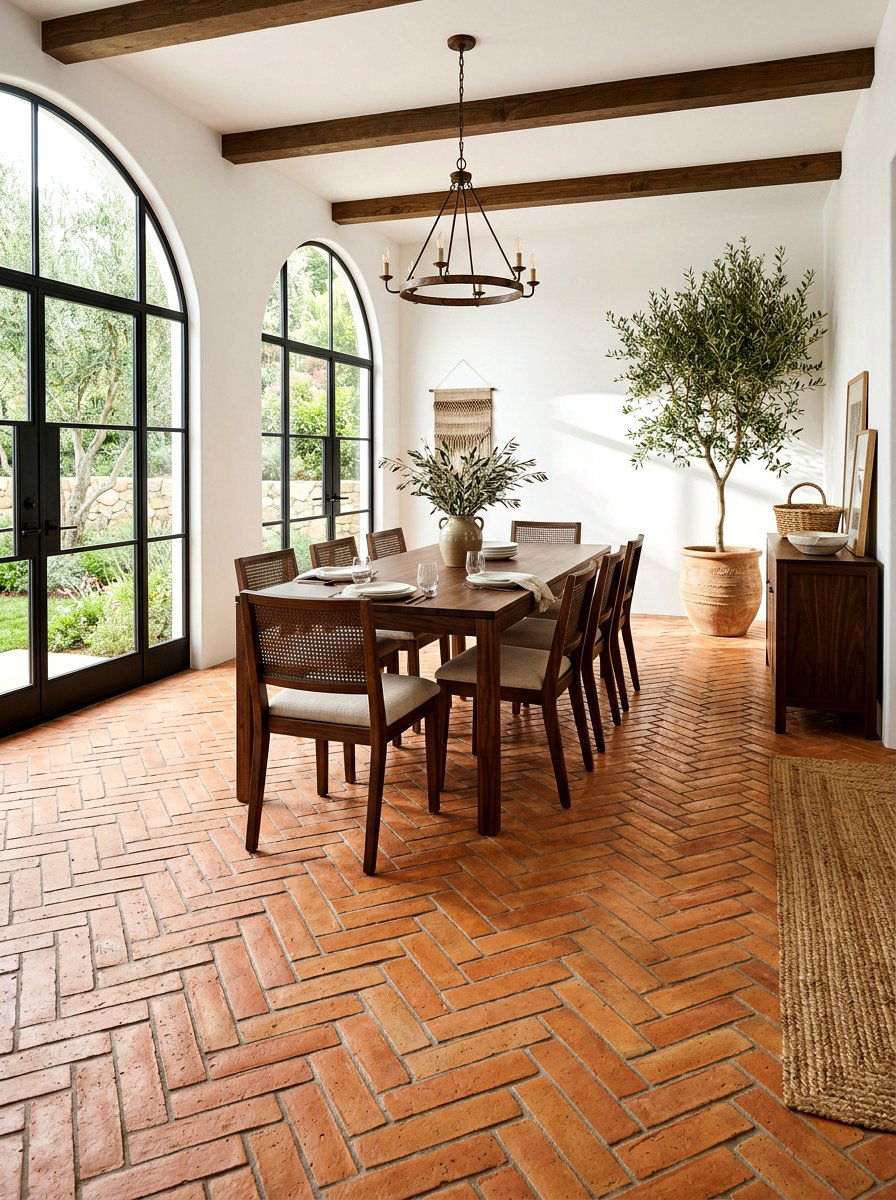
Nothing defines the Mediterranean aesthetic quite like the warm, reddish-orange glow of authentic terracotta tiles under your feet. These clay tiles offer a rustic charm that feels both traditional and incredibly durable for a high-traffic area like a dining room. You can choose from various shapes like classic squares, elegant hexagons, or intricate interlocking patterns to suit your personal style. The natural color variations in the clay ensure that no two tiles are exactly alike, adding a unique character to the floor. Pair these warm tones with neutral walls and light wood furniture to keep the space feeling bright and airy.
4. Wrought iron chandelier
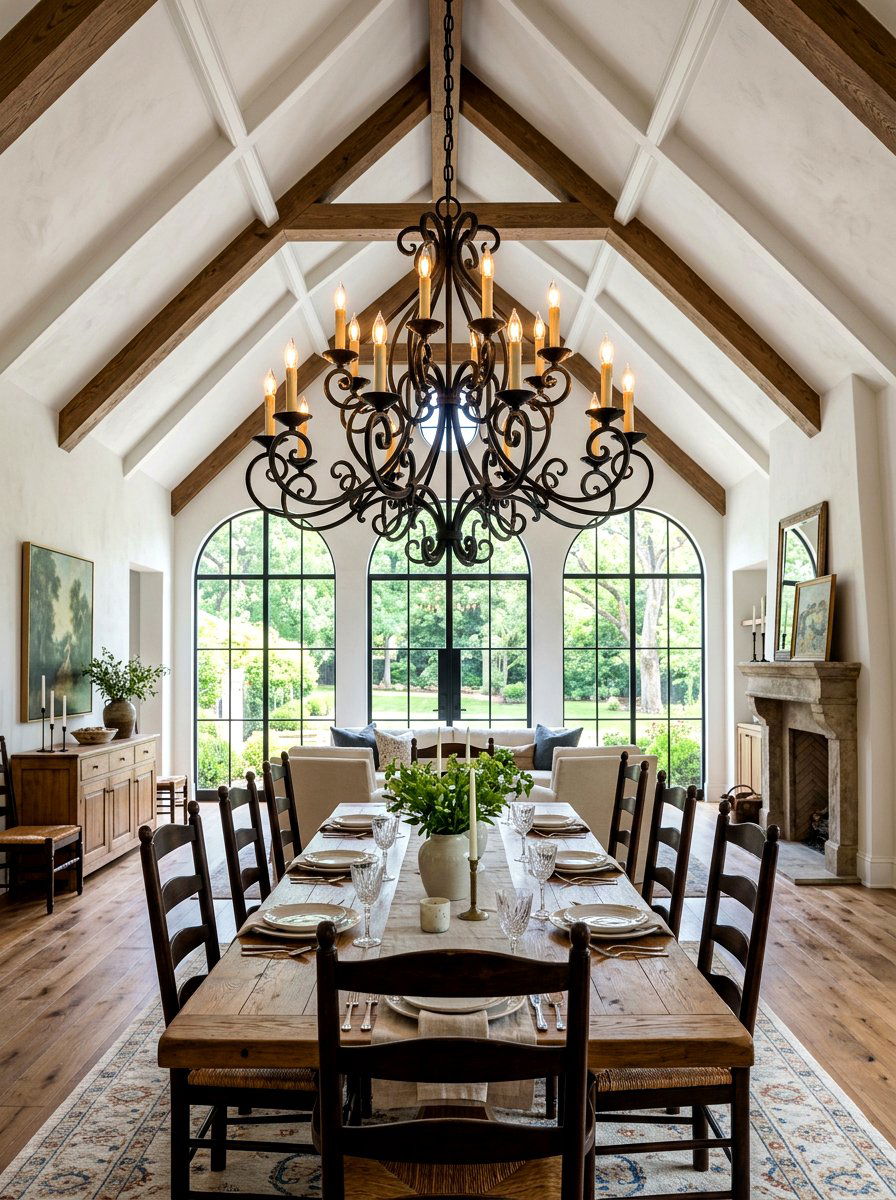
A black wrought iron light fixture adds a touch of old-world elegance and a necessary bit of visual weight to the ceiling. These chandeliers often feature scrolled metalwork, candle-style bulbs, or simple geometric shapes that provide a beautiful contrast to softer decor elements. The dark metal finish stands out beautifully against white or cream-colored ceilings, acting as a striking focal point above the dining table. Whether you choose a massive tiered piece for a formal room or a simple linear lantern for a casual nook, the material remains a timeless staple. It bridges the gap between rustic farmhouse and sophisticated European villa styles.
5. White plaster walls
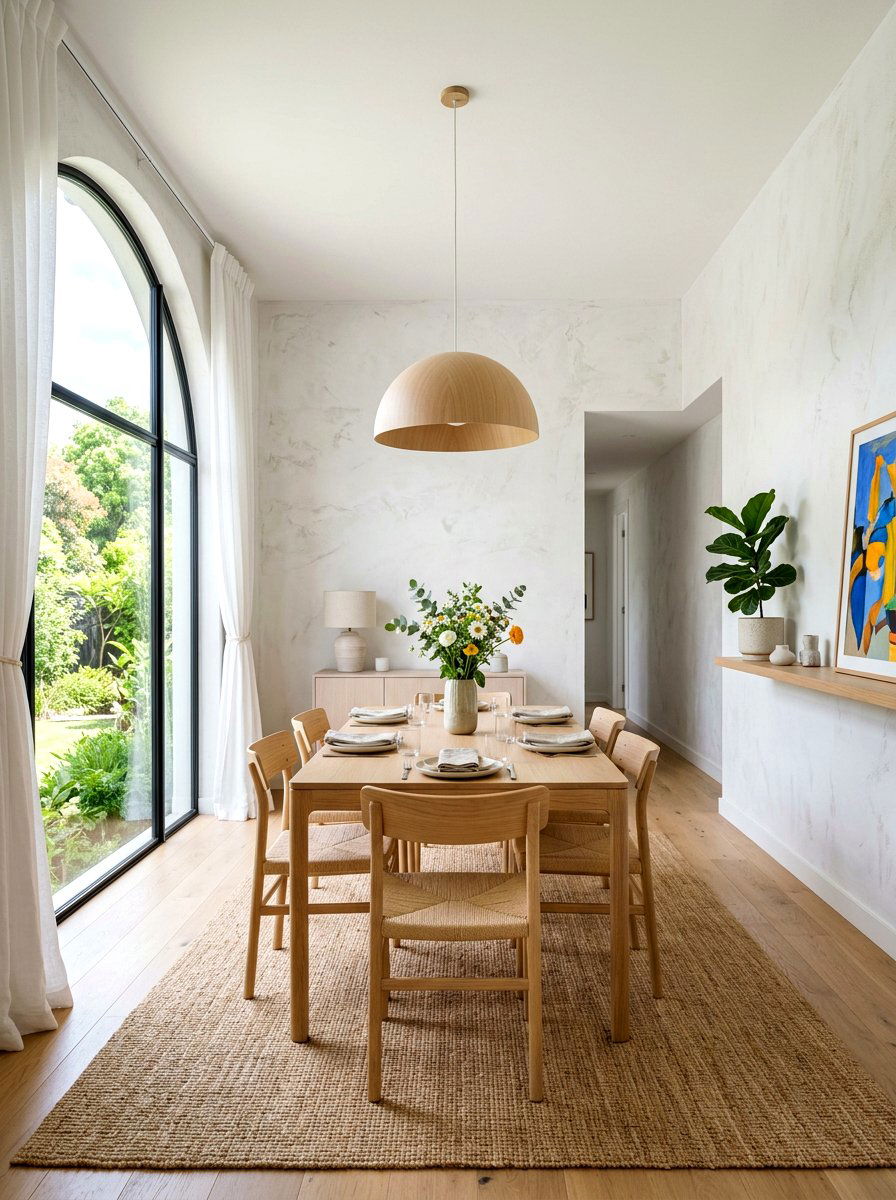
Hand-applied plaster walls provide a soft, tactile finish that reflects natural light in a way that standard flat paint simply cannot achieve. This textured surface adds depth and a sense of age to the dining room, making the walls feel like they belong in a historic villa. By keeping the color a crisp white or a very light cream, you create a neutral backdrop that allows your furniture and art to pop. The subtle ripples and imperfections in the plaster finish give the room a soul and a handmade quality. It is a simple yet effective way to achieve that sun-drenched coastal look.
6. Coastal blue dining room
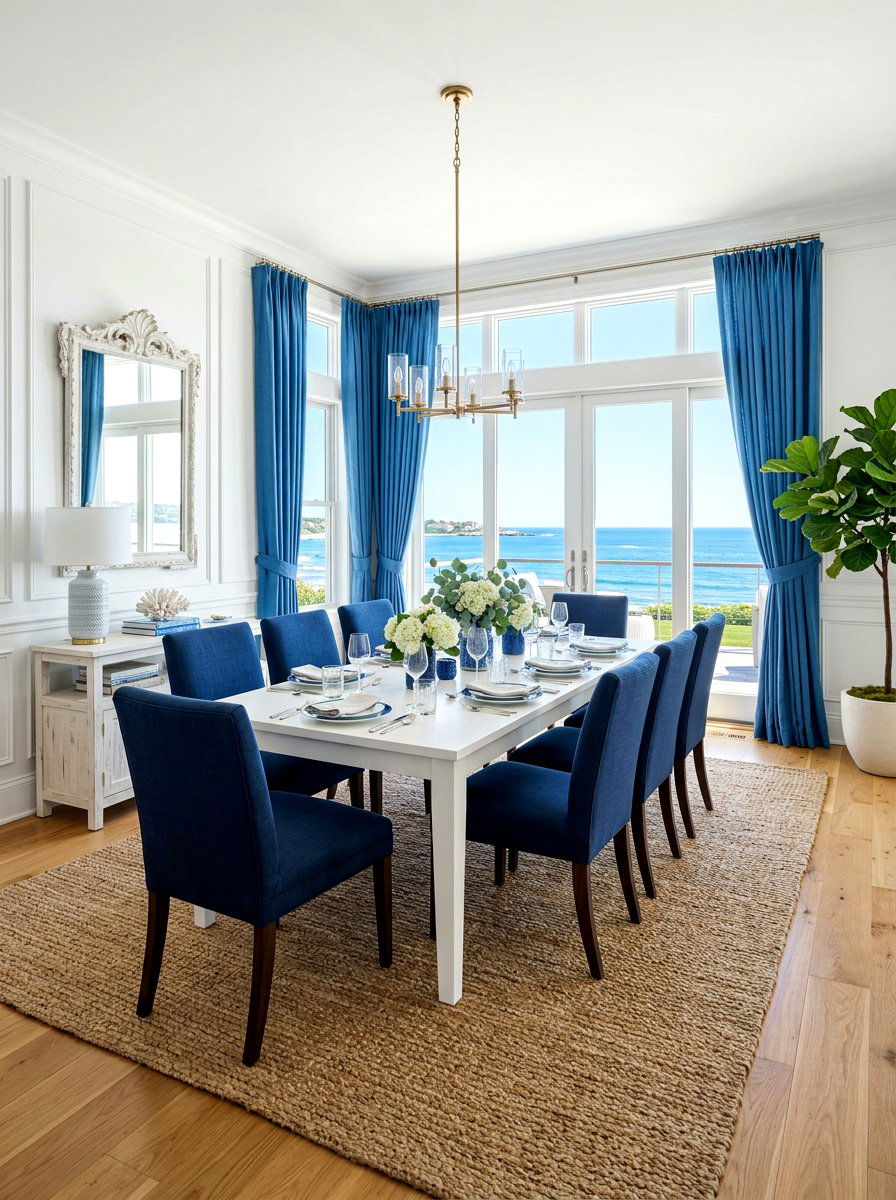
Bringing the colors of the sea into your dining space creates a refreshing and serene environment that is quintessential to the Mediterranean lifestyle. Incorporate shades of navy, azure, or turquoise through upholstered chairs, patterned curtains, or a large piece of wall art. These cool tones balance the warmth of wood and terracotta, preventing the room from feeling too heavy or dark. You can even go bold by painting a single accent wall in a deep Mediterranean blue to create a sense of drama. This color palette instantly evokes memories of the ocean and creates a very relaxing backdrop for entertaining.
7. Exposed wood ceiling beams
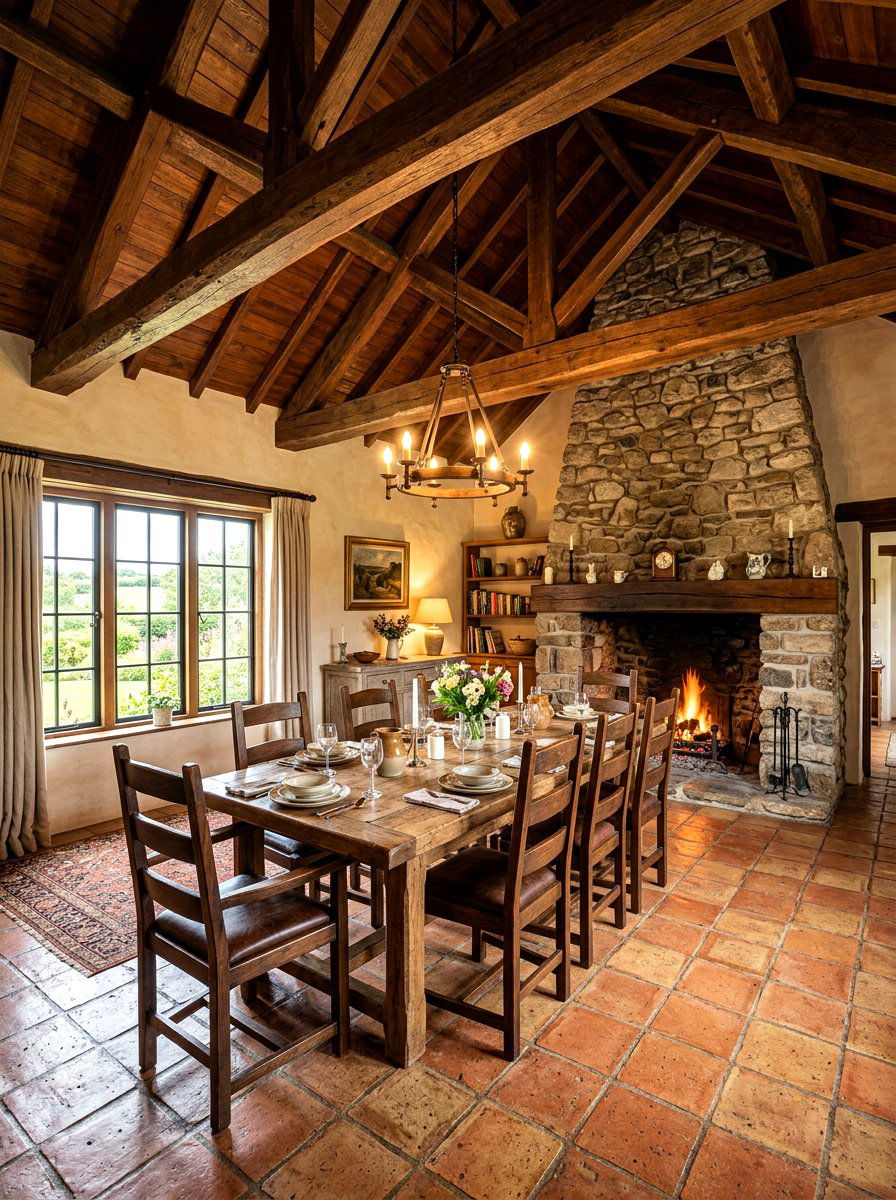
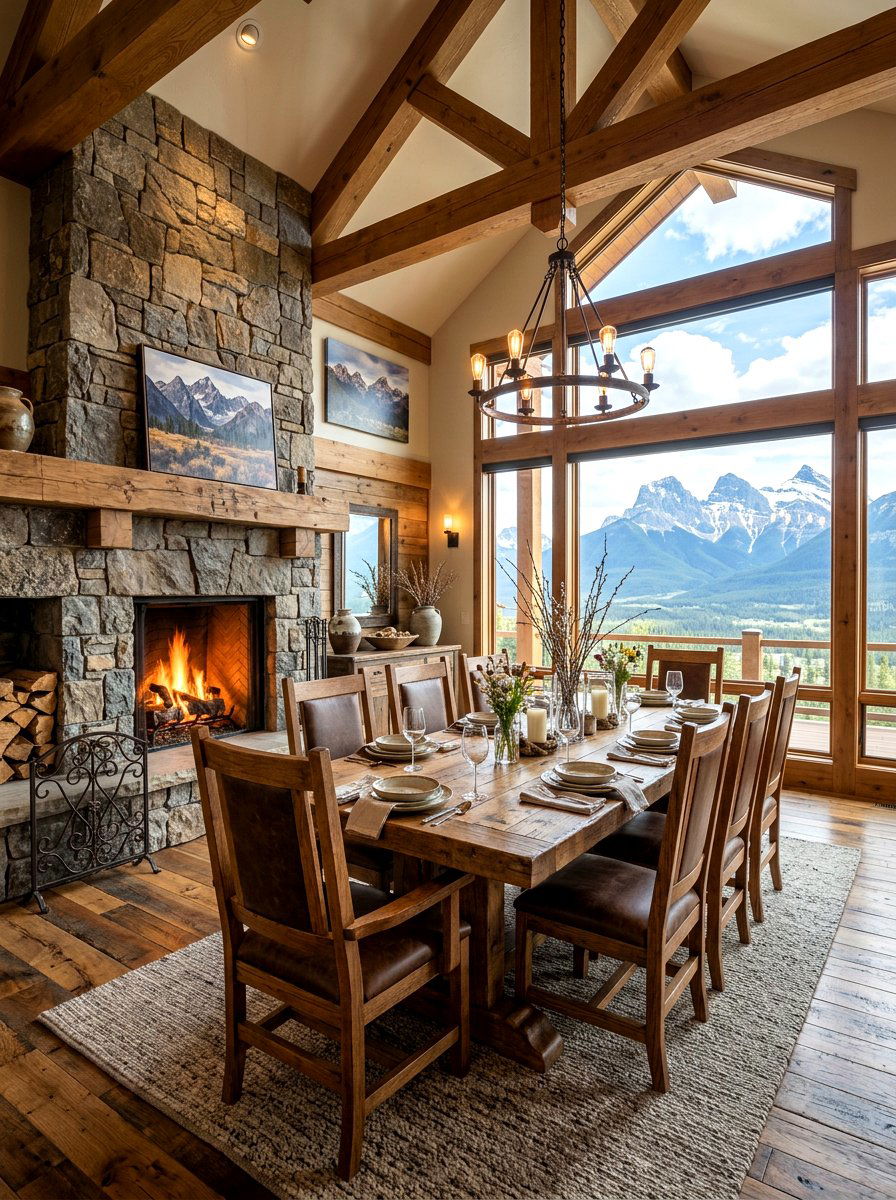
Structural ceiling beams add a sense of height and architectural interest that transforms the entire atmosphere of a dining room. Rough-hewn timber beams in a dark stain provide a rustic, grounded feel that makes the space feel cozy and historic. If you prefer a lighter look, you can leave the wood in its natural pale state or even paint it a soft off-white to blend with the ceiling. These beams lead the eye upward and help define the layout of the room, especially in open-concept floor plans. They provide a beautiful sense of scale and craftsmanship that is hard to replicate otherwise.
8. Modern Mediterranean dining room
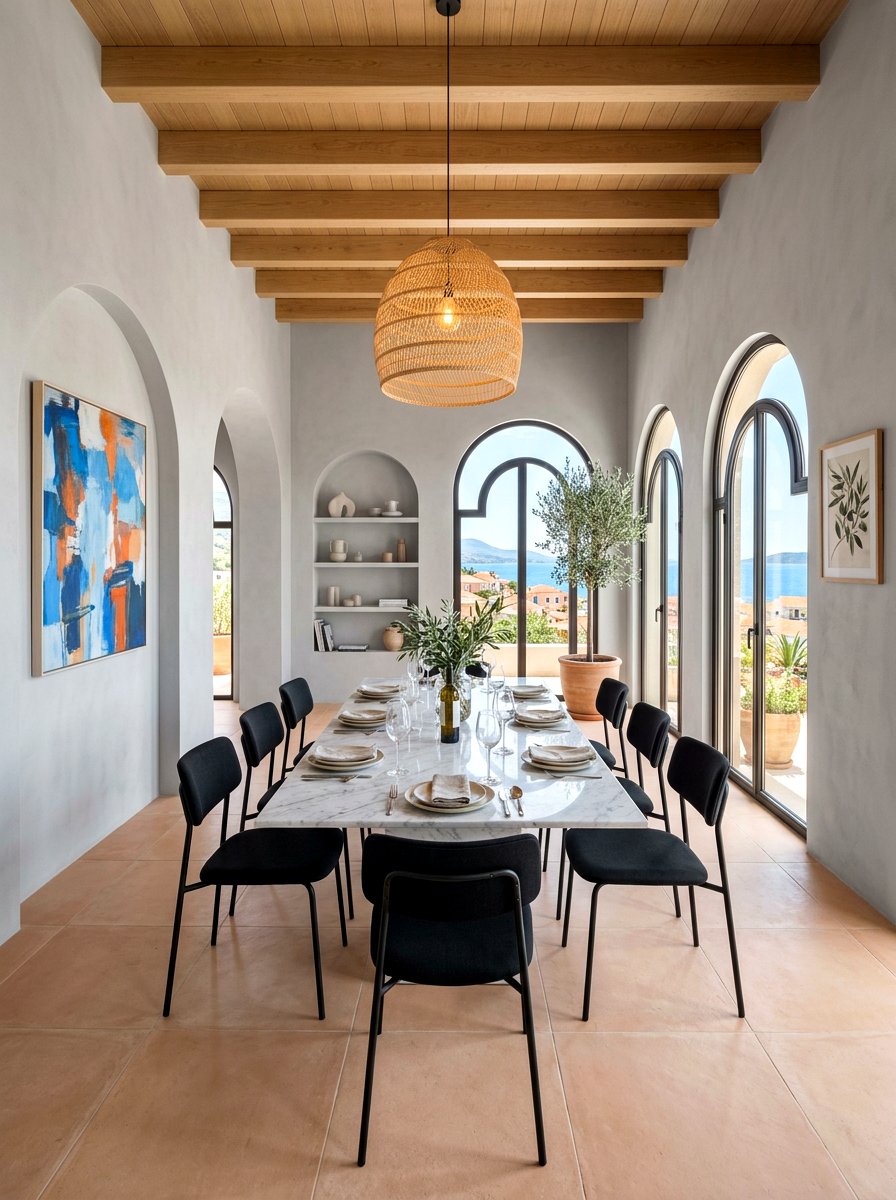
Blending traditional textures with clean, contemporary lines creates a sophisticated "Moditerranean" look that feels fresh and current. You can achieve this by pairing a rustic stone floor with a sleek, minimalist dining table and slim-profile chairs. The key is to keep the color palette limited to neutrals and use high-quality materials like marble, smooth plaster, and light-toned woods. Avoid excessive ornamentation and instead focus on the beauty of the materials themselves and the architectural shapes within the room. This approach results in a space that feels calm, organized, and luxurious without losing the warmth and soul of the original Mediterranean inspiration.
9. Stone wall dining room
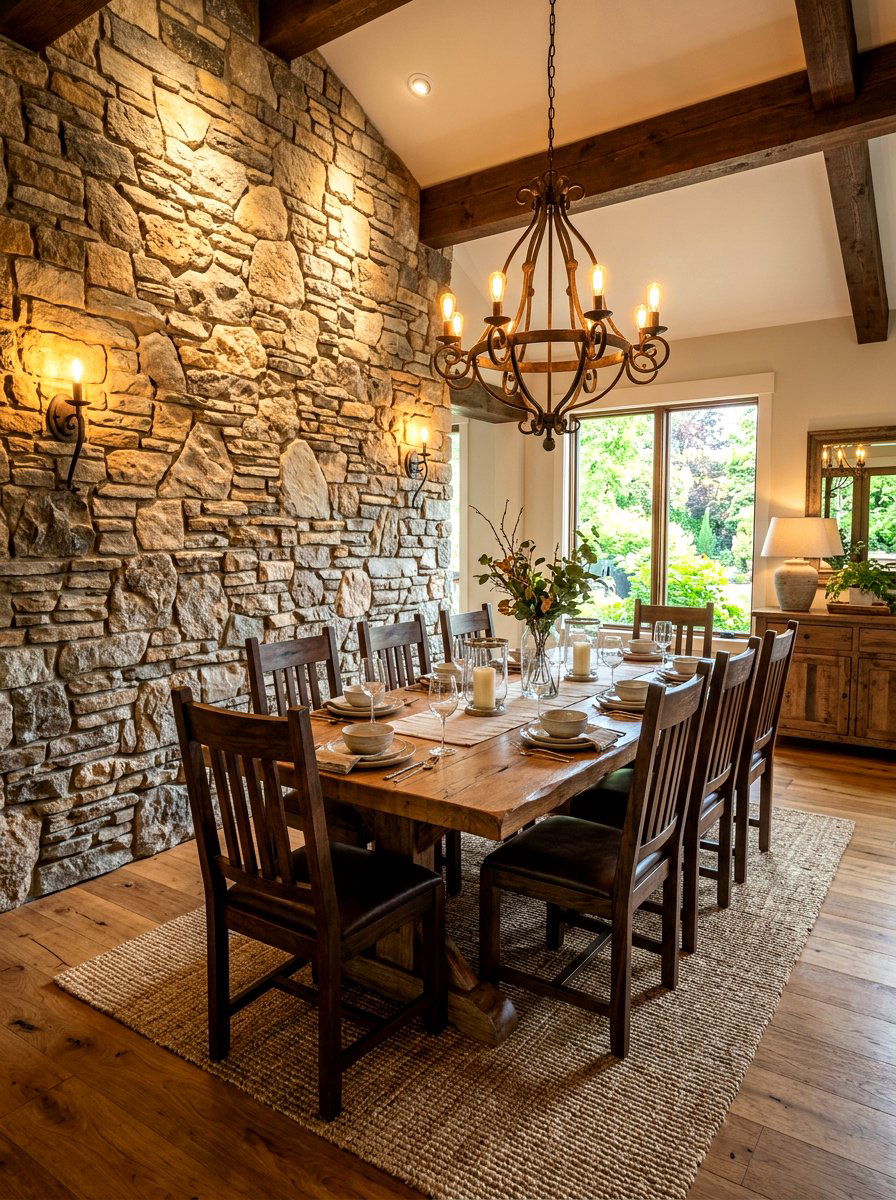
A feature wall made of natural fieldstone or limestone adds an incredible amount of texture and a rugged, permanent feel to the space. This architectural element makes the dining room feel like it was carved directly out of a cliffside in Italy or Greece. The varying shapes and colors of the stones provide a natural focal point that requires very little additional decoration. You can keep the rest of the room simple with clean-lined furniture to let the masonry shine. Lighting is particularly important here, as wall-grazing fixtures can highlight the deep shadows and unique textures of the stone at night.
10. Linen upholstered dining chairs
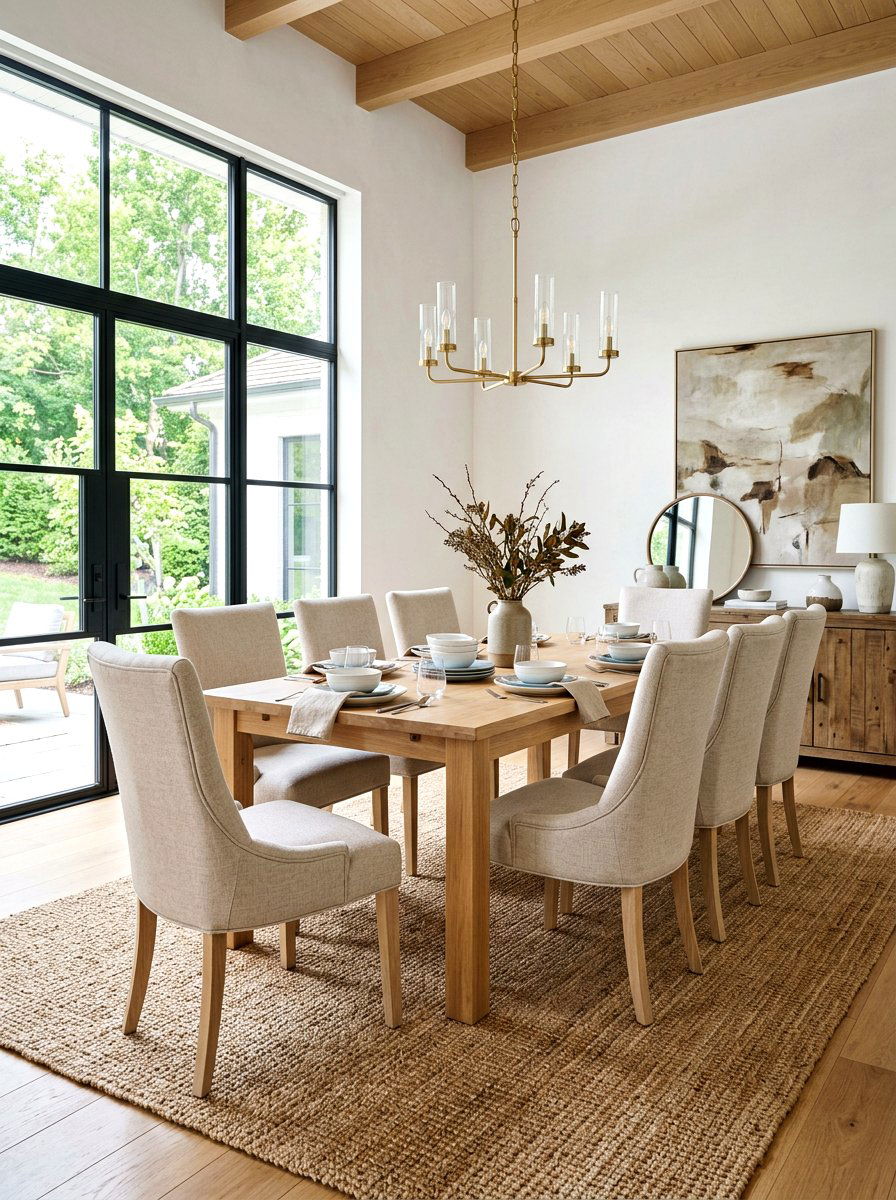
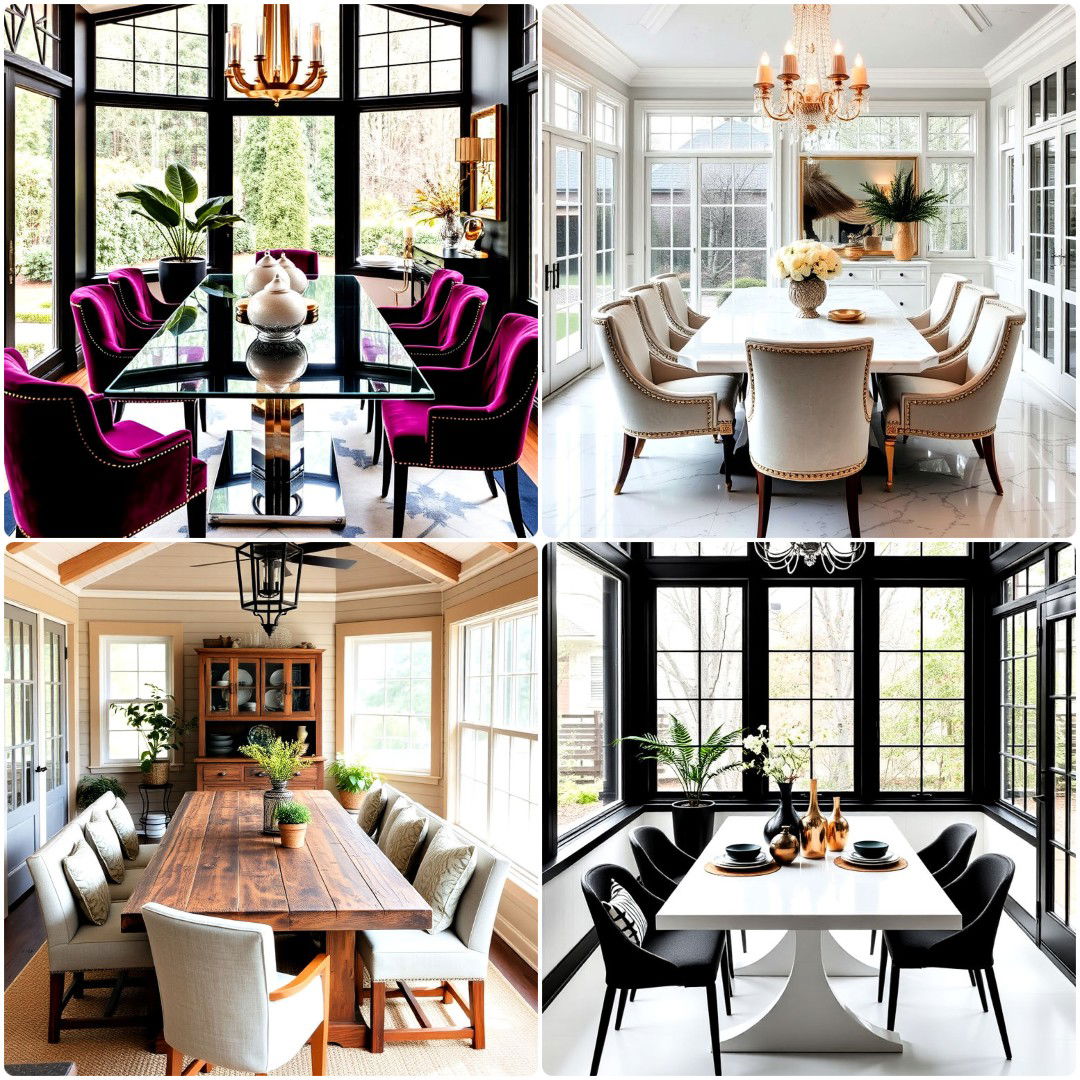
Linen is the ultimate Mediterranean fabric because it is breathable, natural, and offers a relaxed yet refined appearance. Upholstering your dining chairs in high-quality linen in shades of oatmeal, sand, or ivory adds a soft layer of comfort to the room. The fabric has a beautiful, slight texture that complements other organic materials like wood and stone perfectly. Slipcovered chairs are a great option for a more casual, coastal look that is also very practical for cleaning. This choice of upholstery helps to soften the hard surfaces of the room and makes the dining experience feel much more luxurious.
11. Spanish revival dining room
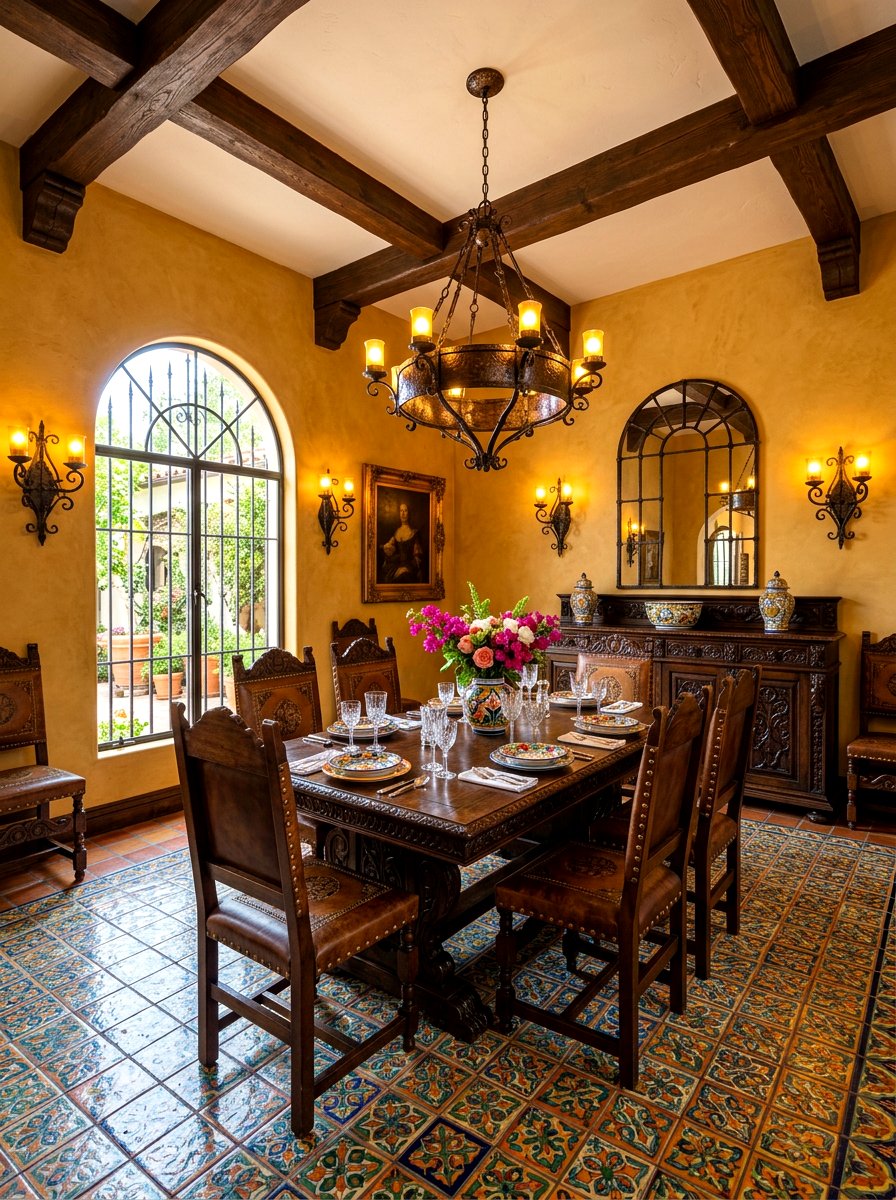
Drawing inspiration from Spanish colonial architecture involves using heavy dark wood, colorful tiles, and ornate metal details to create a rich environment. A grand carved sideboard and high-backed wooden chairs can give the room a sense of formality and tradition. You can incorporate hand-painted Spanish tiles as a decorative border or even on the tabletop for a vibrant pop of color and pattern. This style often embraces deeper earth tones like ochre, sienna, and burgundy to create a space that feels warm and historic. It is a bold choice that celebrates craftsmanship and the cultural heritage of the Iberian Peninsula.
12. Olive tree indoor decor
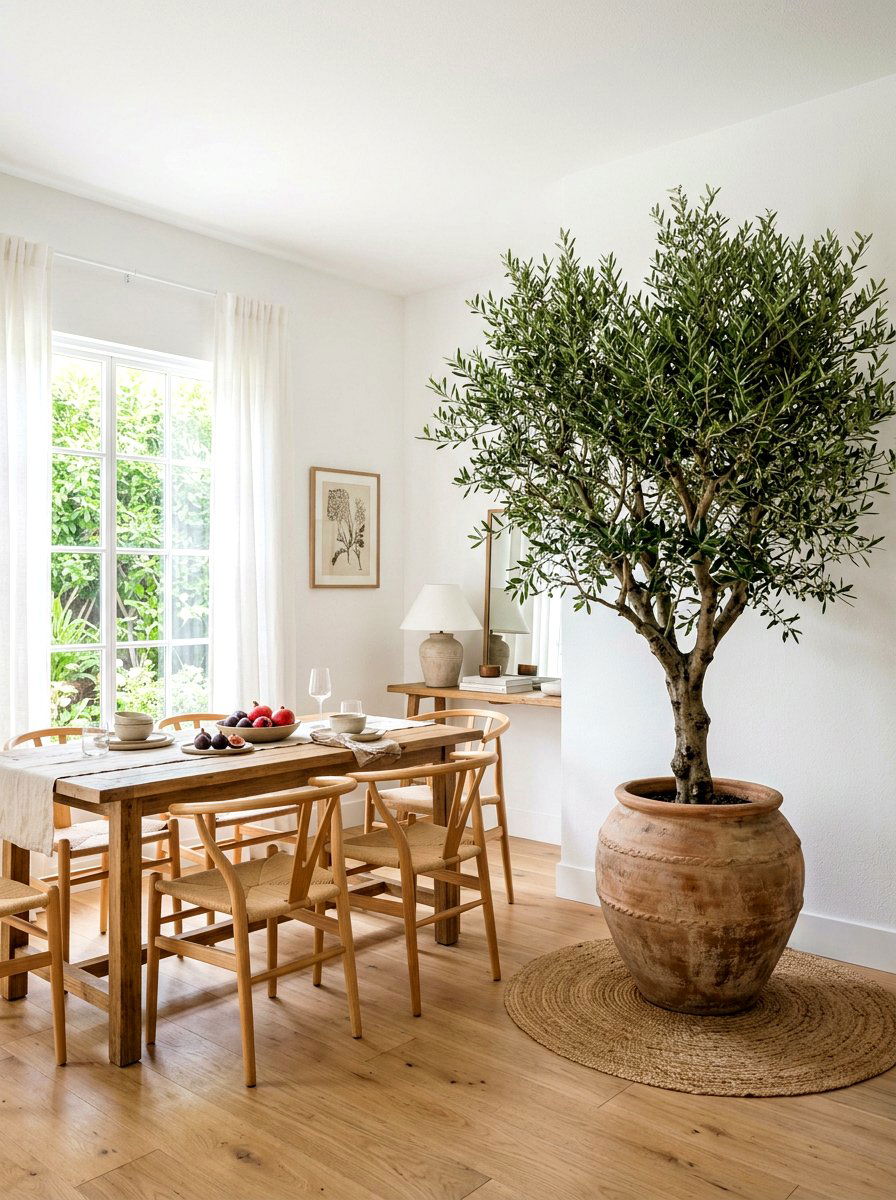
An indoor olive tree is perhaps the most iconic plant associated with the Mediterranean, bringing a touch of the outdoors inside. Its silvery-green leaves and twisted trunk add a soft, organic shape to the corner of a dining room or next to a sideboard. Placing a large tree in a textured clay pot or a woven basket provides a natural focal point that feels fresh and lively. If you do not have enough natural light for a real tree, a high-quality faux version can still provide the same aesthetic benefit. It reinforces the connection to the landscape and the agricultural roots of the region.
13. Greek style dining room
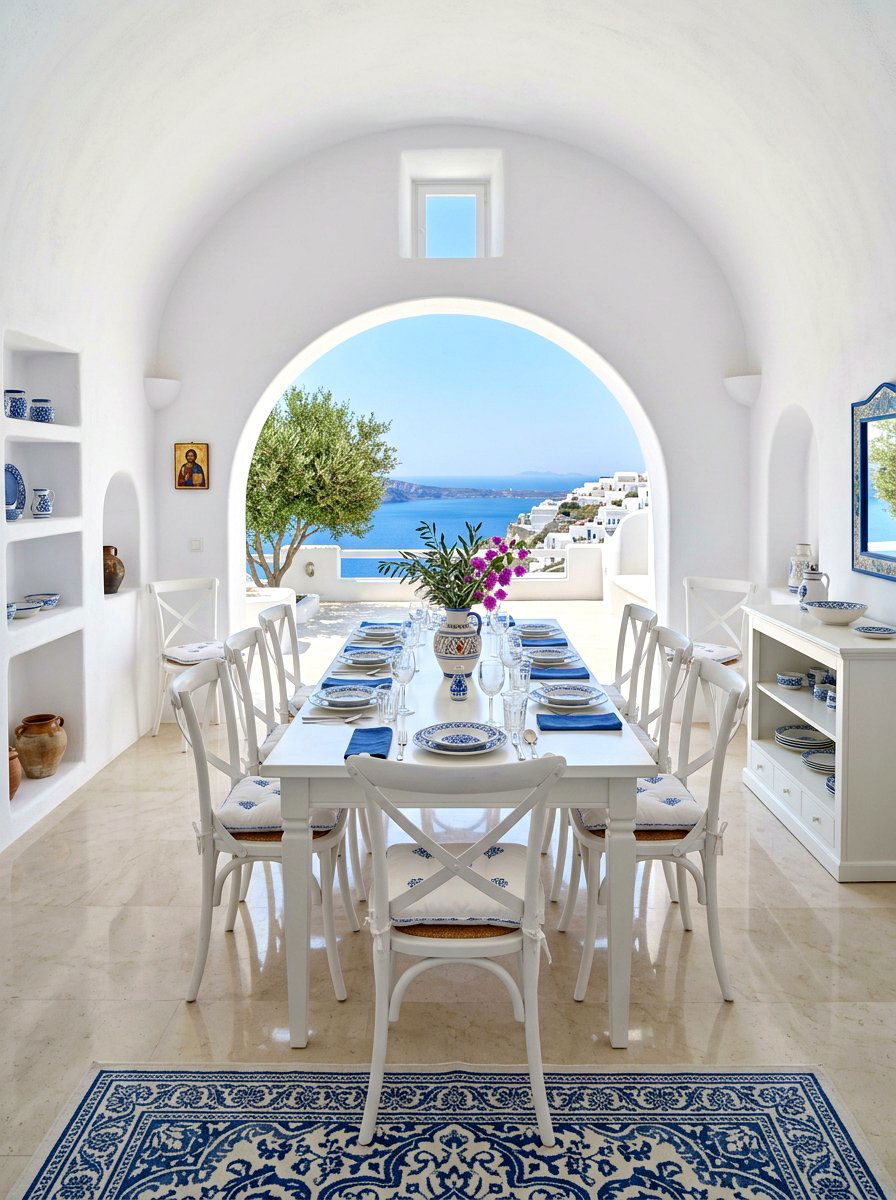
The Greek aesthetic is often characterized by a strict palette of white and blue combined with minimalist furniture and smooth, rounded edges. Think of whitewashed walls, a simple chunky white table, and blue-toned accents that mimic the iconic look of Santorini. This style prioritizes light and airiness, making it perfect for smaller dining rooms that need to feel more spacious. You can add texture through woven rugs or simple pottery to keep the room from feeling too sterile. The overall effect is one of pure, sun-washed simplicity that feels incredibly refreshing and modern while remaining deeply rooted in Mediterranean history.
14. Woven rattan dining chairs
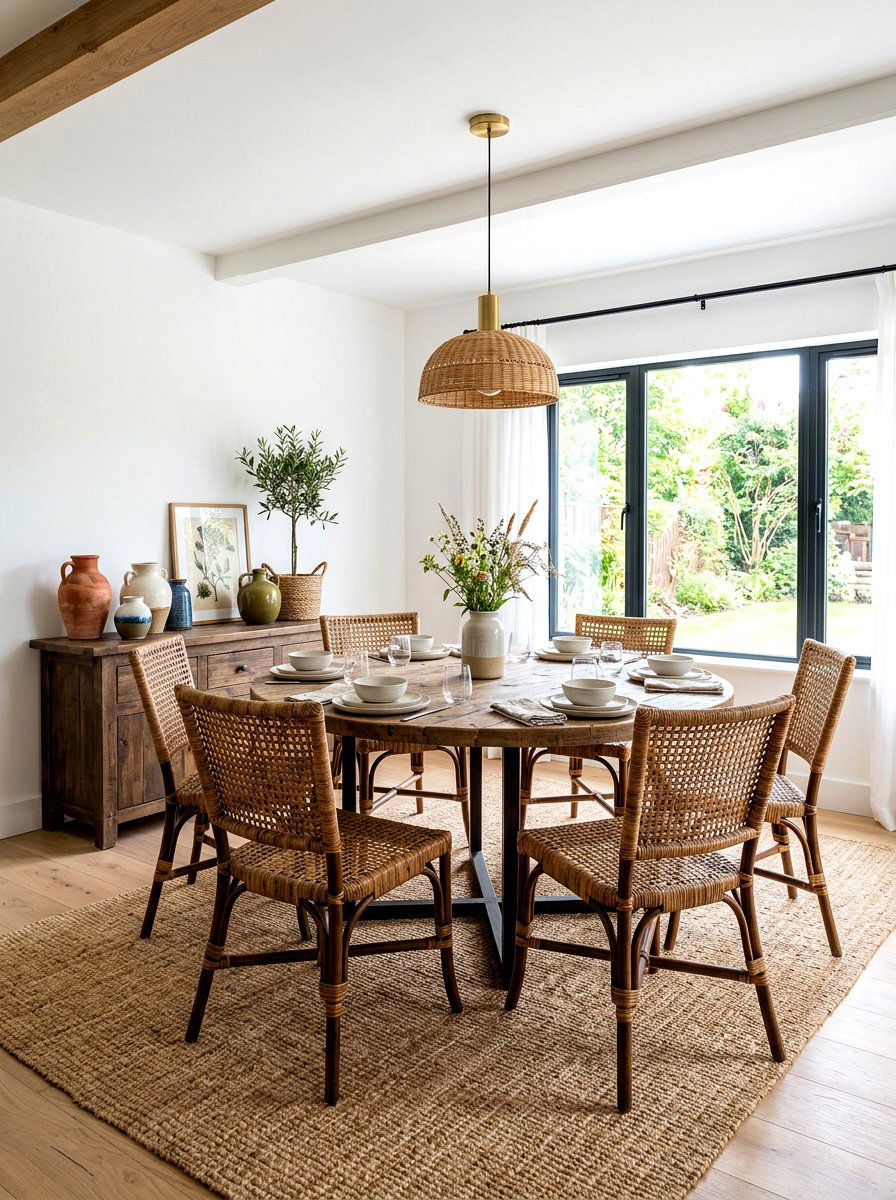
Incorporating rattan or wicker chairs is a fantastic way to add natural texture and a lightweight feel to your dining arrangement. These woven materials bring a casual, breezy vibe that is perfect for a Mediterranean-inspired home. Rattan is incredibly durable and flexible, allowing for beautiful curved shapes that complement the arched architecture often found in these spaces. Pair them with a solid wood table to balance the weight of the furniture and create a layered, organic look. The natural golden tones of the fibers warm up the room and coordinate beautifully with other materials like jute and linen for a cohesive design.
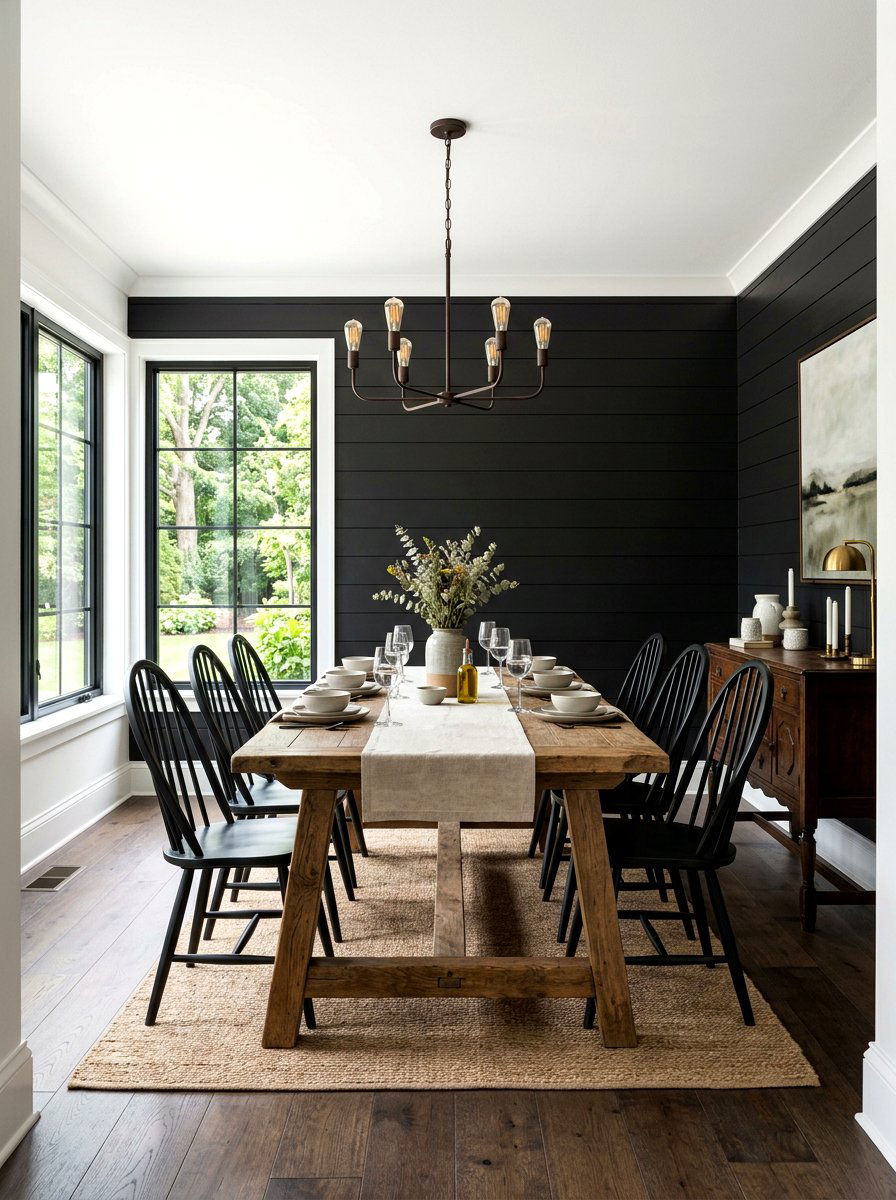
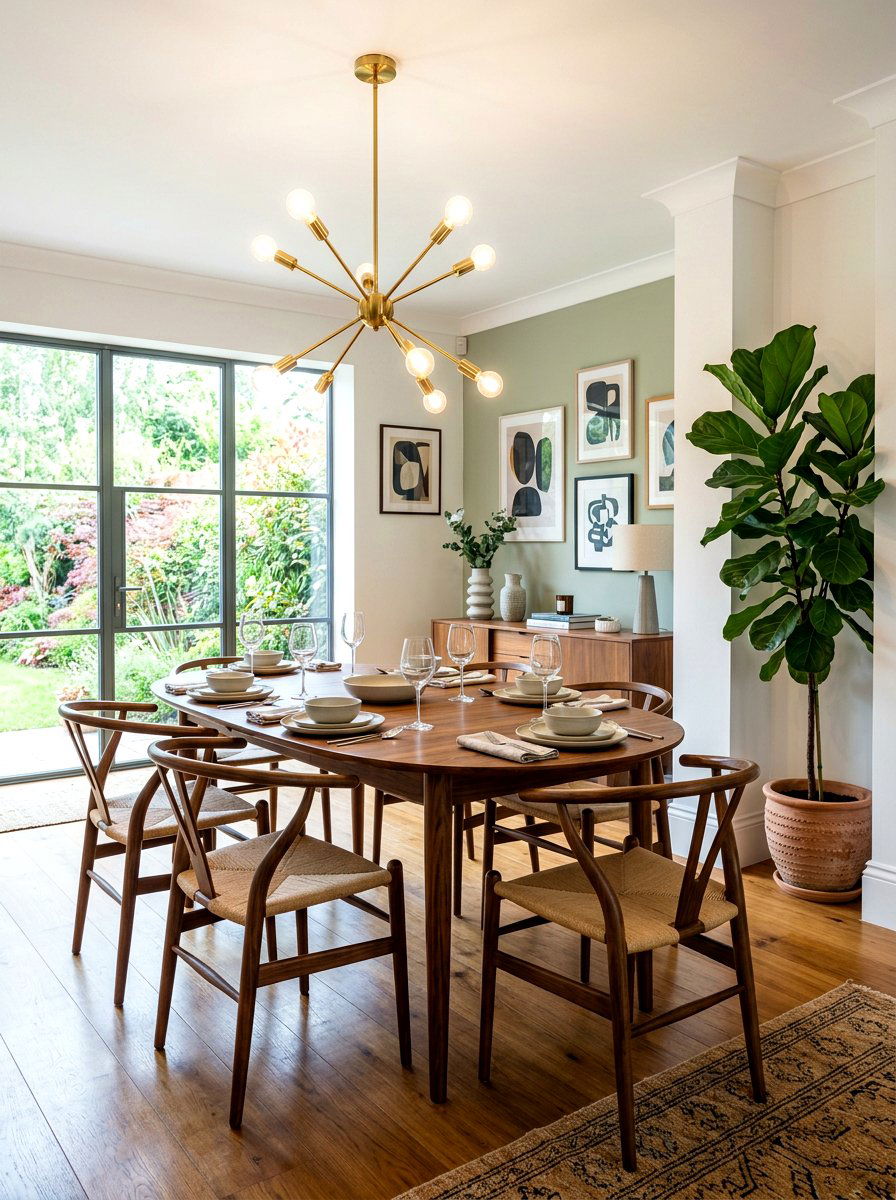
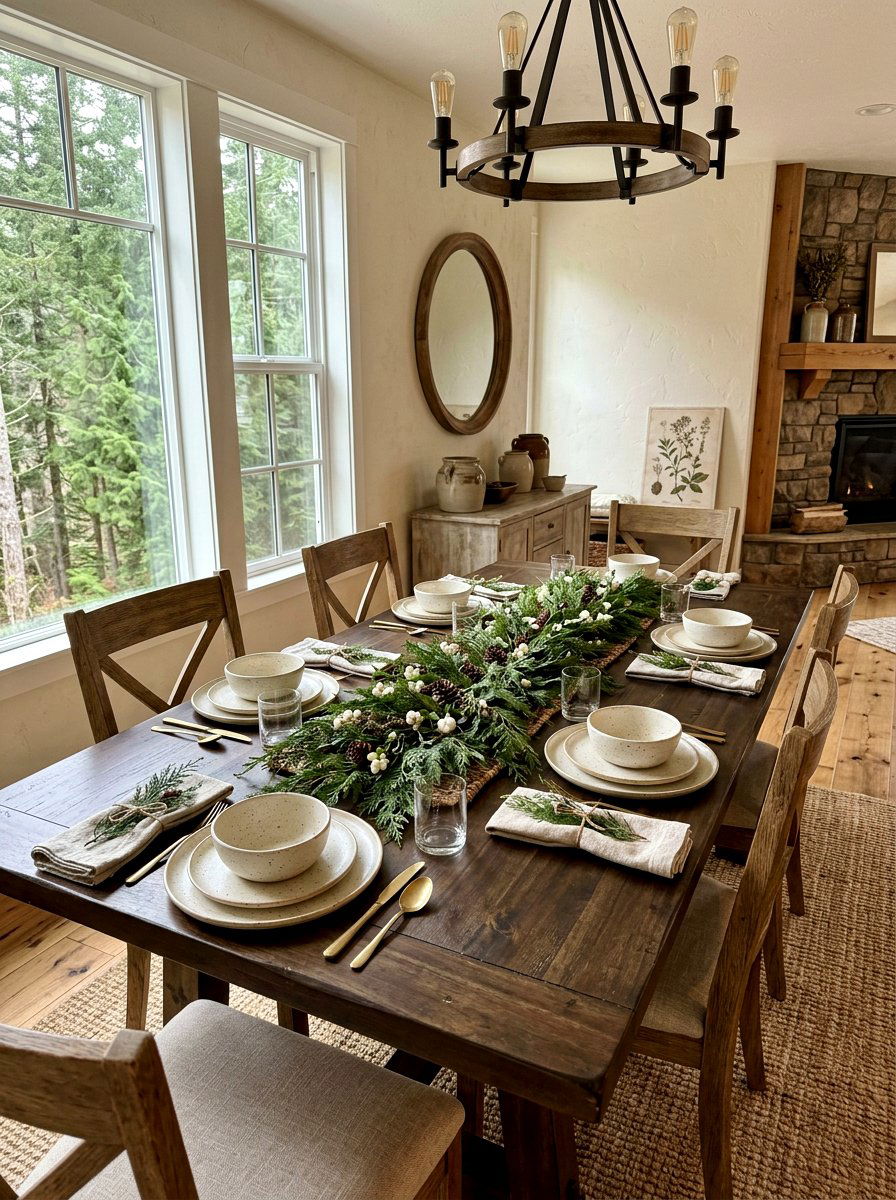
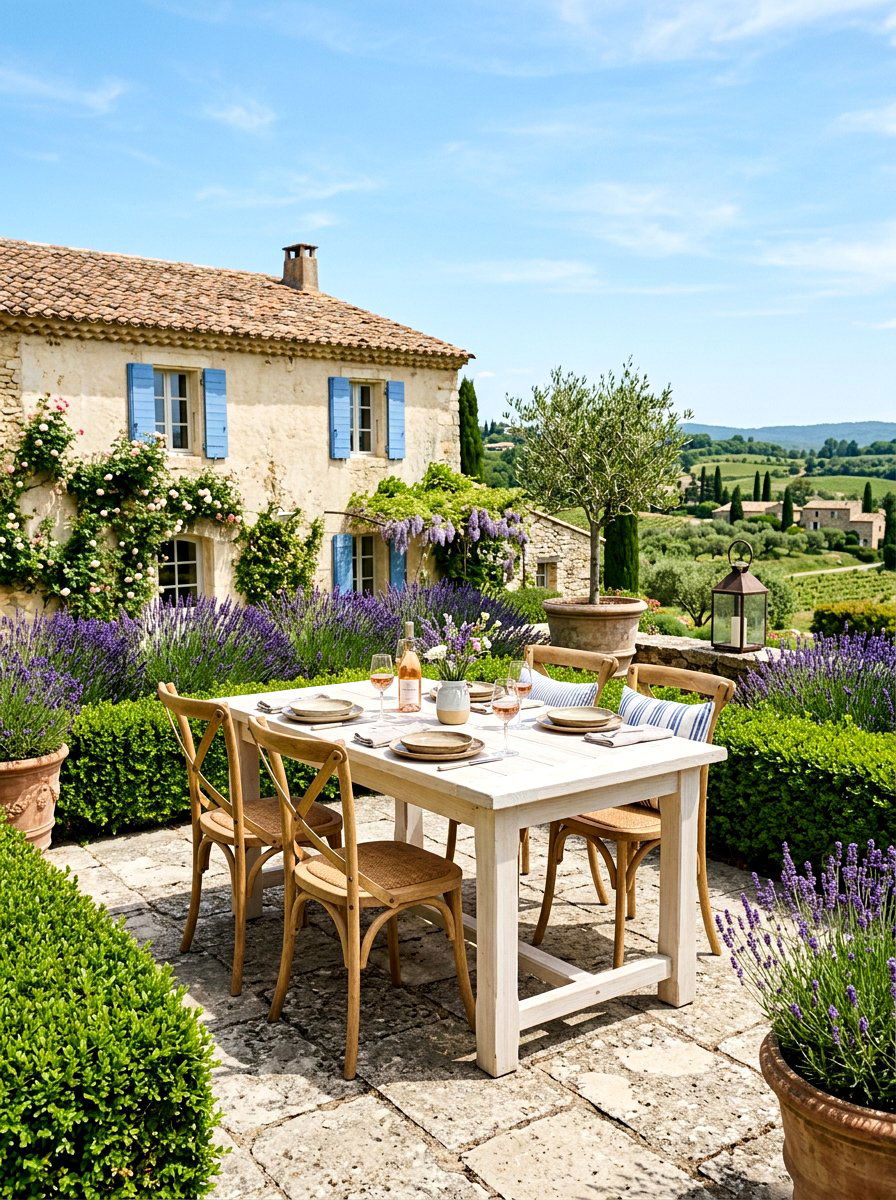
15. Tadelakt wall finish
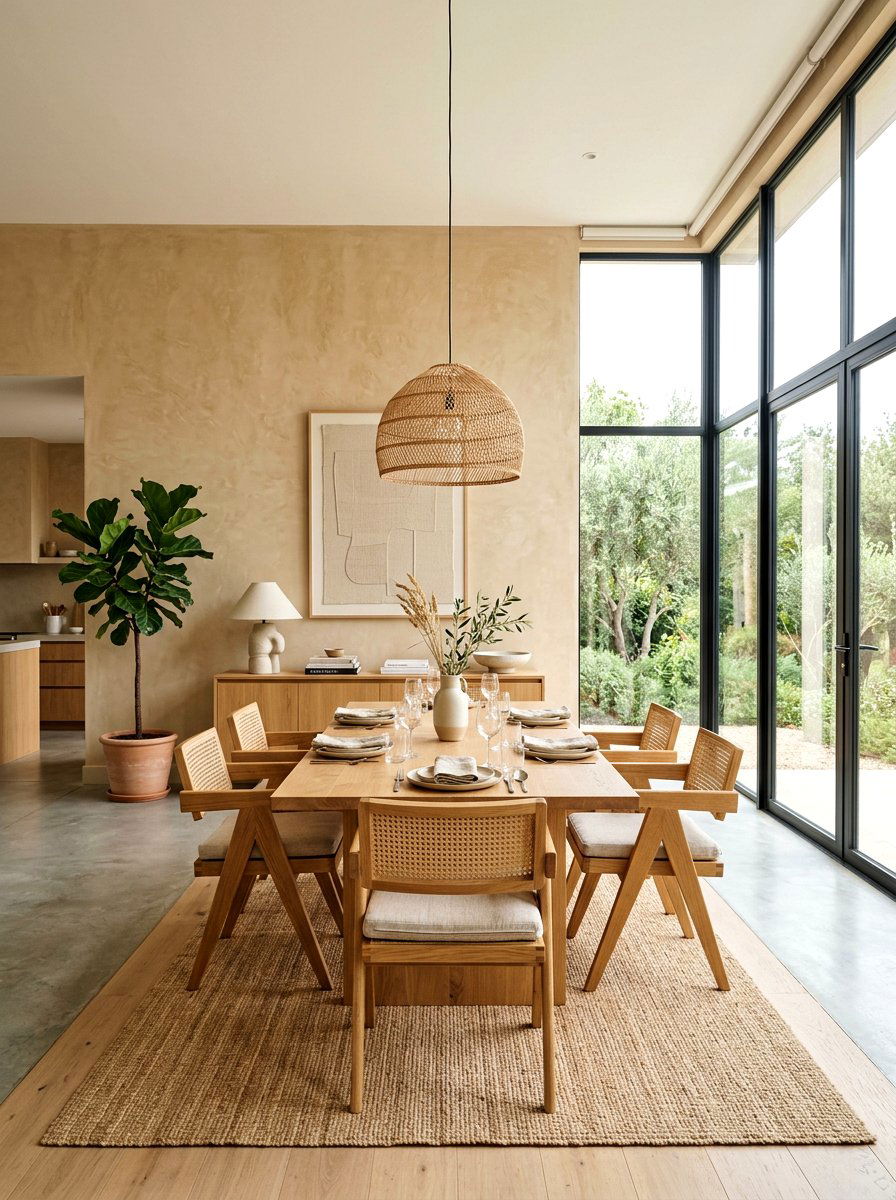
Tadelakt is a traditional Moroccan lime plaster that is polished with stones to create a smooth, waterproof, and slightly shiny surface. Using this finish in a dining room offers a unique, luxurious texture that feels incredibly ancient and artisanal. It has a beautiful depth of color and a soft sheen that reflects light in a very subtle, moody way. Tadelakt is often applied in earthy tones like soft beige, dusty rose, or warm grey to create a seamless and serene backdrop. Because it is hand-applied, the finish has slight variations that give the walls a life and character that paint cannot match.
16. Tuscan style dining room
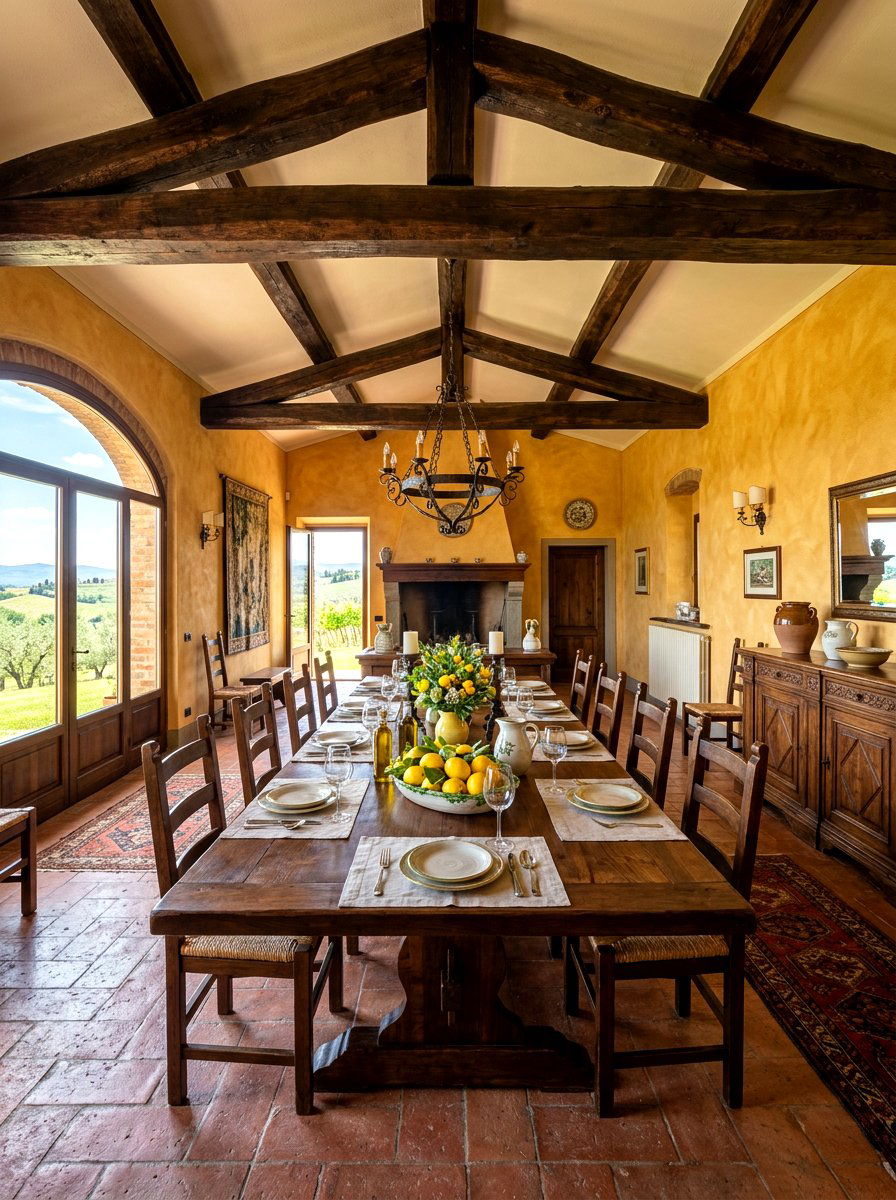
The Tuscan look is all about creating a cozy, lived-in feel through the use of warm earth tones and sturdy rustic furniture. This style often features plaster walls in shades of ochre or terracotta, dark wood ceiling beams, and a large communal dining table. You can add decorative touches like wrought iron wall sconces, ceramic pitchers filled with herbs, and a large bowl of lemons as a centerpiece. The goal is to make the room feel like a welcoming farmhouse in the heart of the Italian countryside. It is a timeless style that prioritizes comfort, family, and the celebration of good food.
17. Patterned floor tile
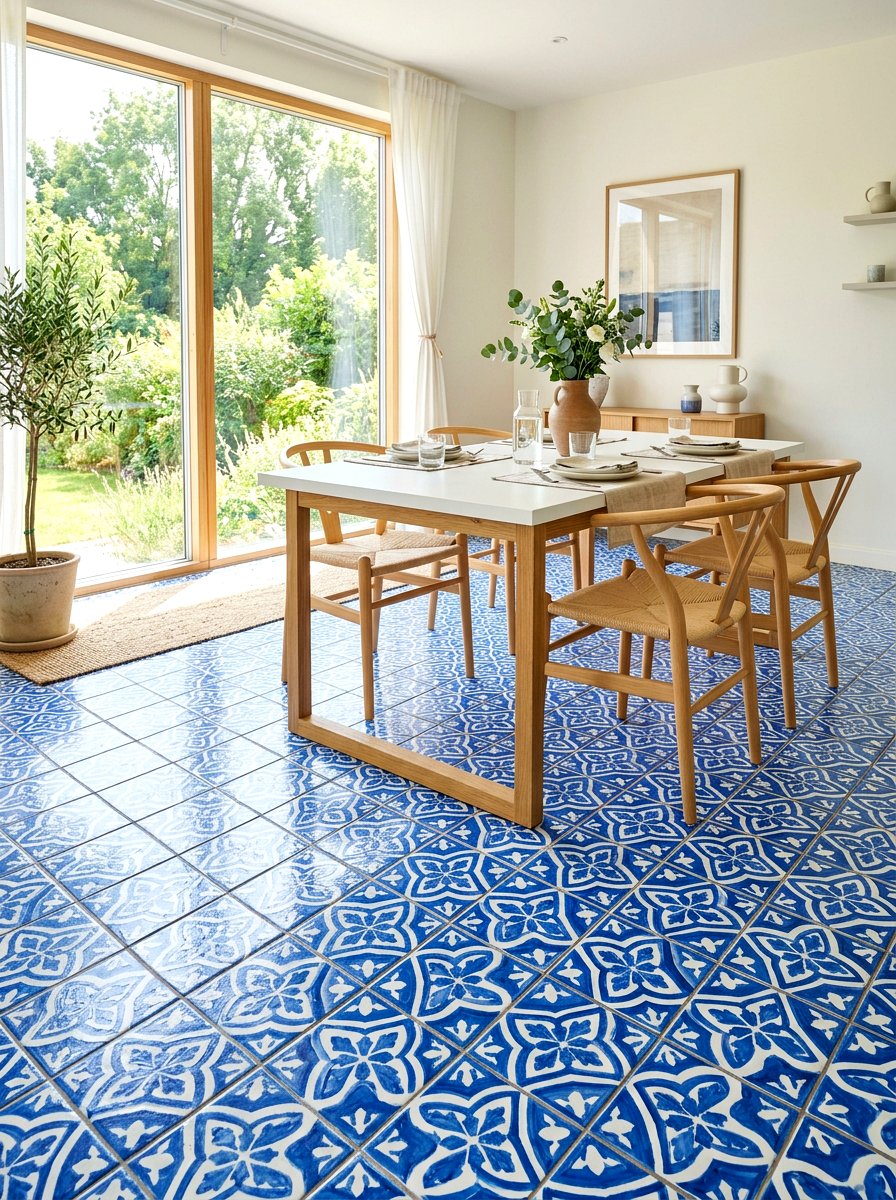
Using intricately patterned cement or ceramic tiles on the floor can turn the entire base of the room into a work of art. Mediterranean patterns often include geometric shapes, floral motifs, or Moorish designs in shades of blue, green, and terracotta. This is a great way to add visual interest and color to a dining room without cluttering the walls or the table. If a full tiled floor feels too overwhelming, you can create a "tile rug" effect directly under the dining table framed by a solid border. It provides a durable and beautiful surface that handles spills and heavy foot traffic with ease.
18. Large arched windows
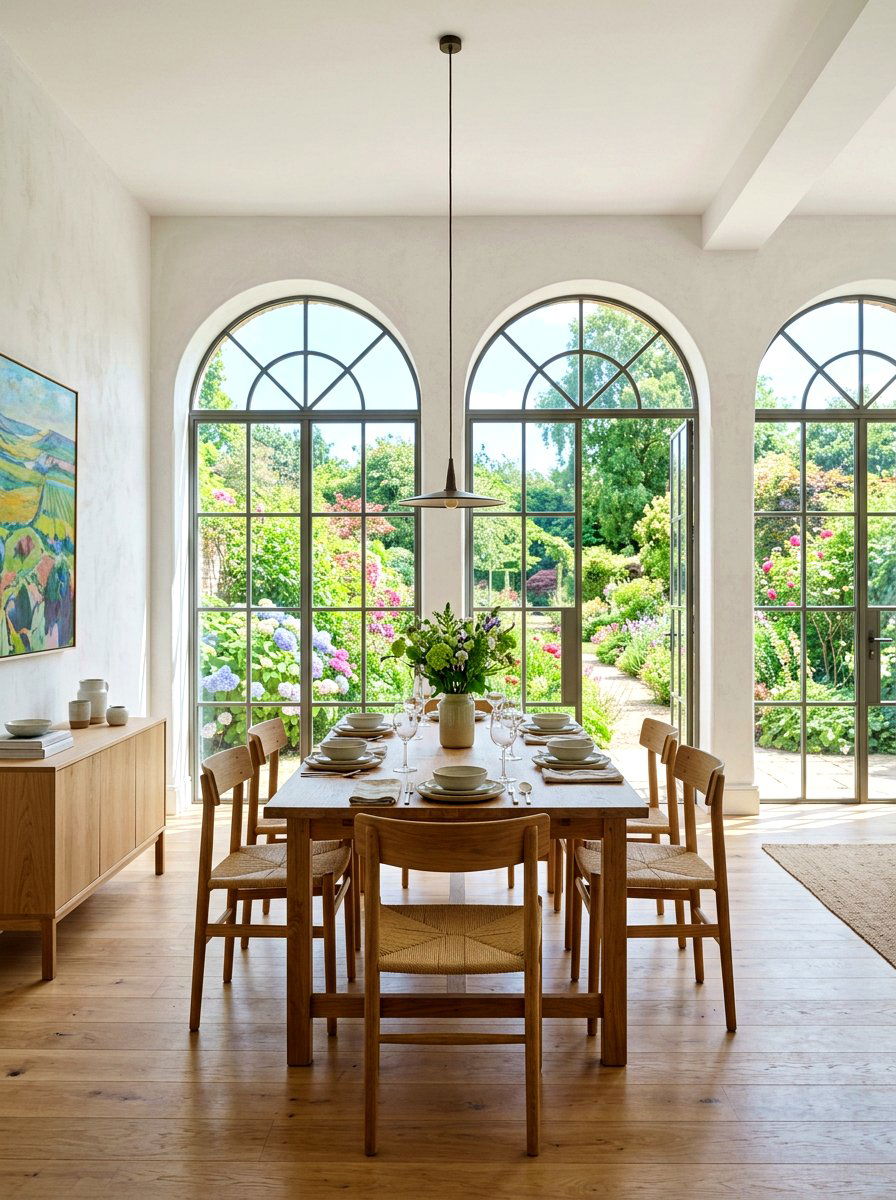
Installing large arched windows is a dramatic architectural choice that floods the dining room with natural light and provides a stunning frame for the outdoors. The curve of the window echoes the other arched elements in the room, creating a harmonious and balanced design. These windows often feature thin black metal frames or traditional white wood casements, depending on the specific Mediterranean sub-style you are following. Leaving them mostly uncovered or using simple sheer curtains allows the architectural shape to remain the focal point. It blurs the line between the interior and the garden, making the room feel much larger and more connected.
19. Minimalist Mediterranean dining room
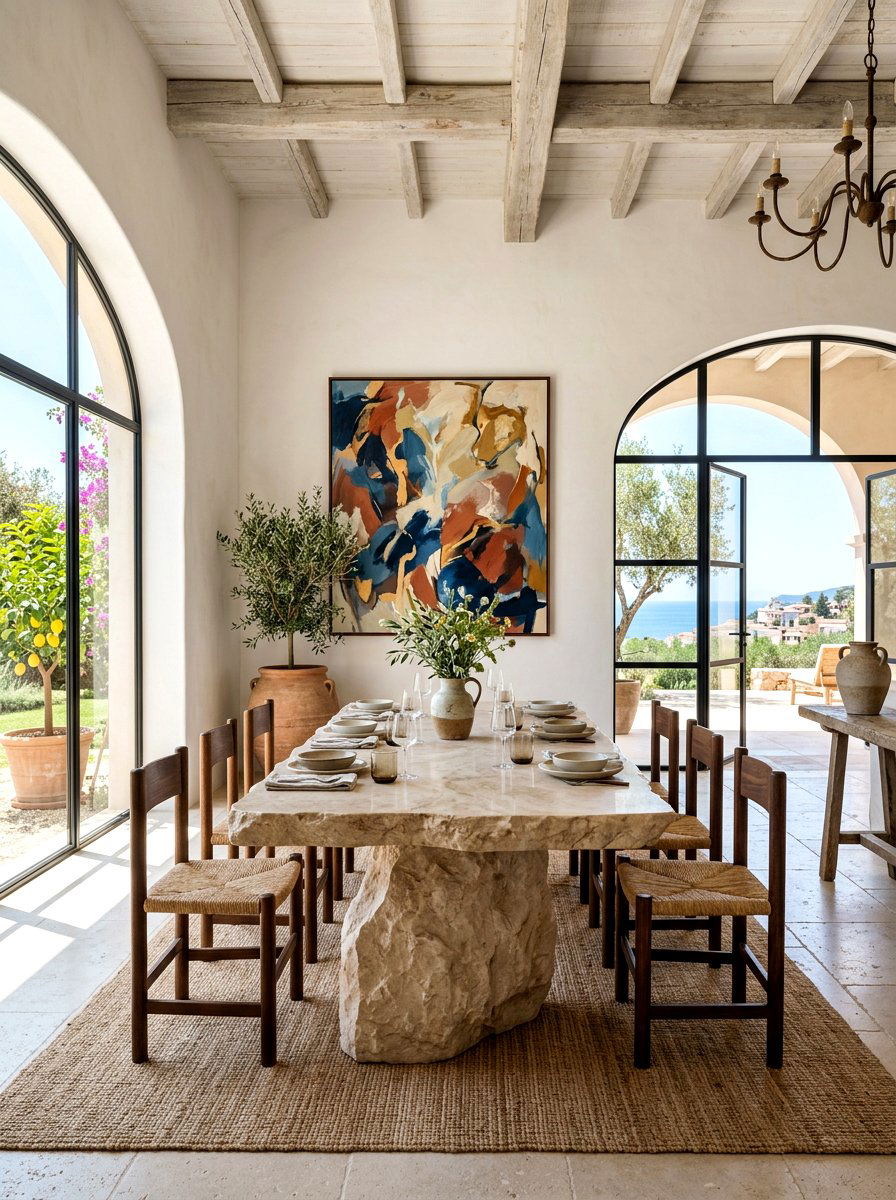
A minimalist approach to this style focuses on a few high-quality, high-impact pieces and a very restrained color palette. Choose a single sculptural dining table made of stone or light oak and pair it with simple, modern chairs to keep the layout clean. The focus shifts to the textures of the materials, such as the grain of the wood, the weave of a rug, or the matte finish of the walls. This design style avoids clutter and unnecessary decor, allowing the architecture and the natural light to take center stage. The result is a sophisticated, tranquil space that feels both historic and incredibly contemporary.
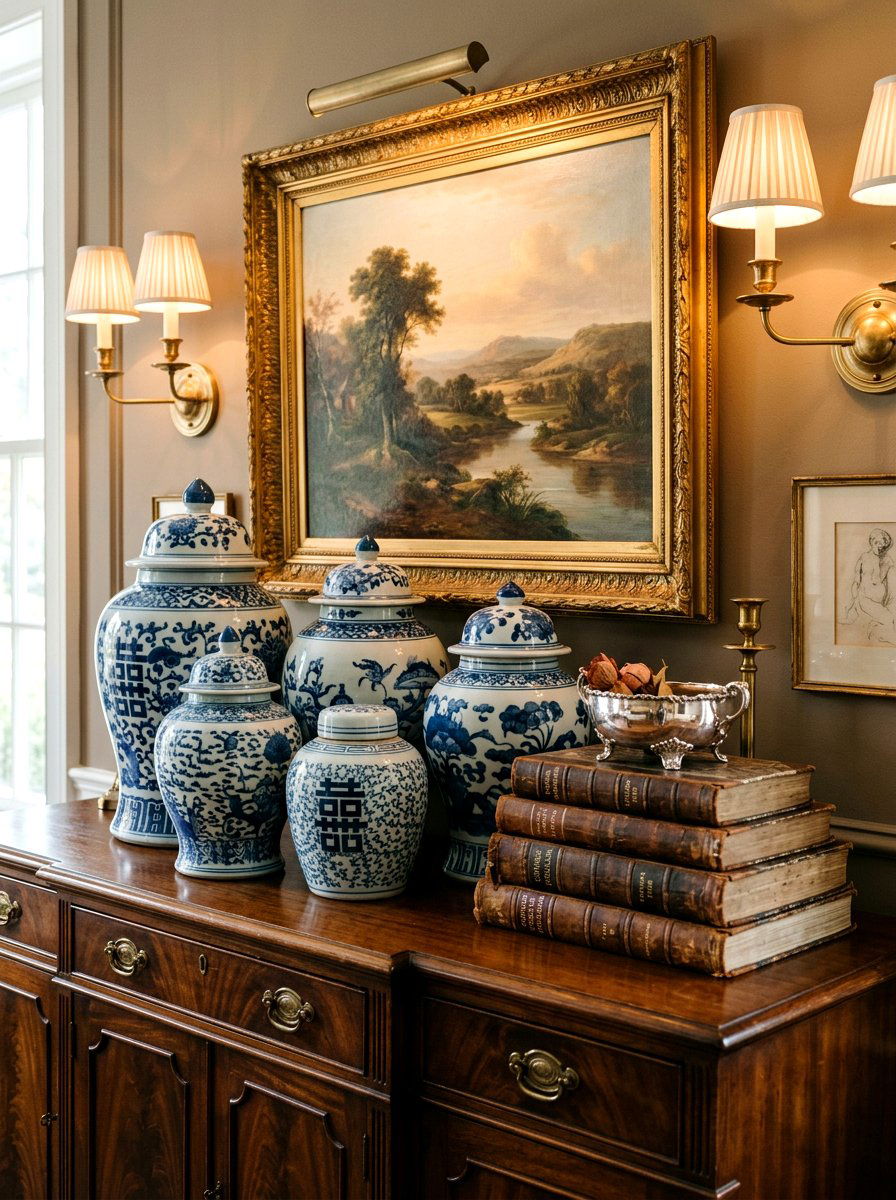
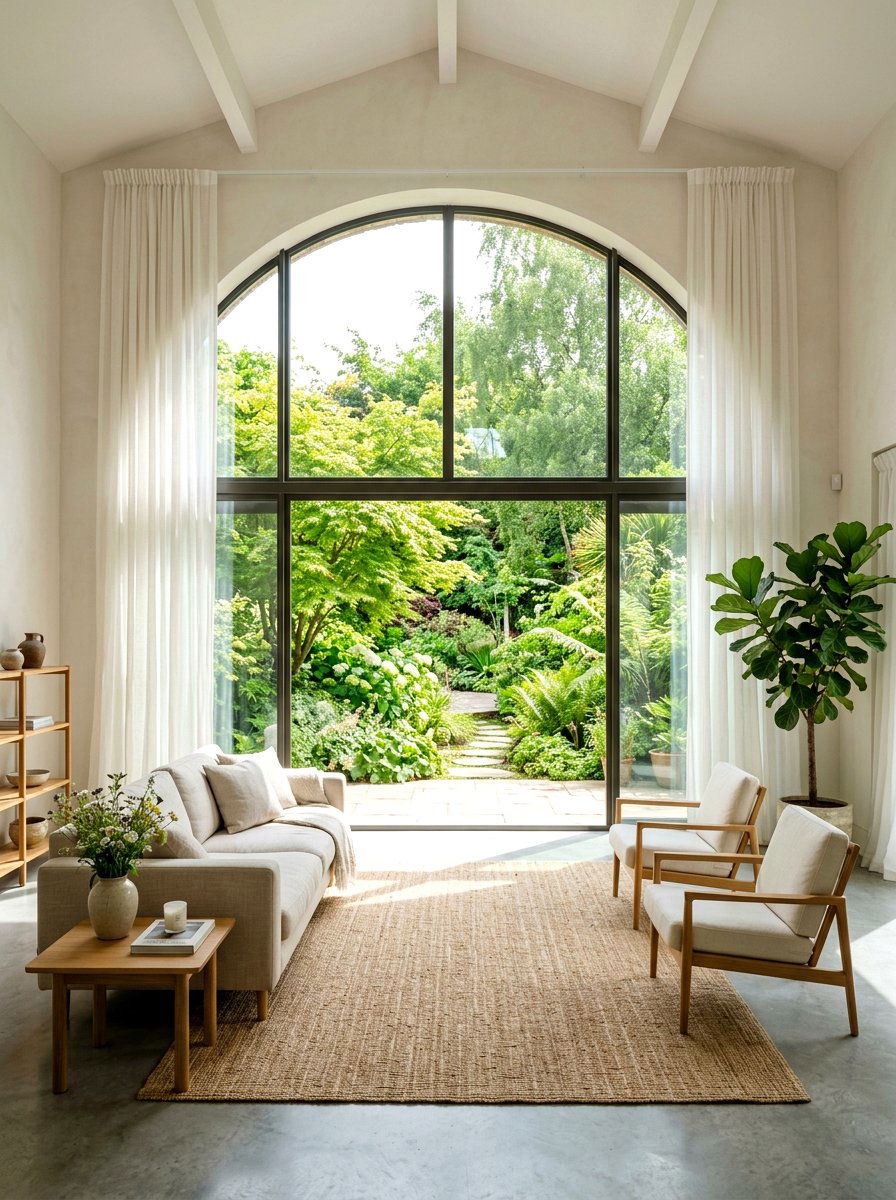
20. Farmhouse Mediterranean dining room
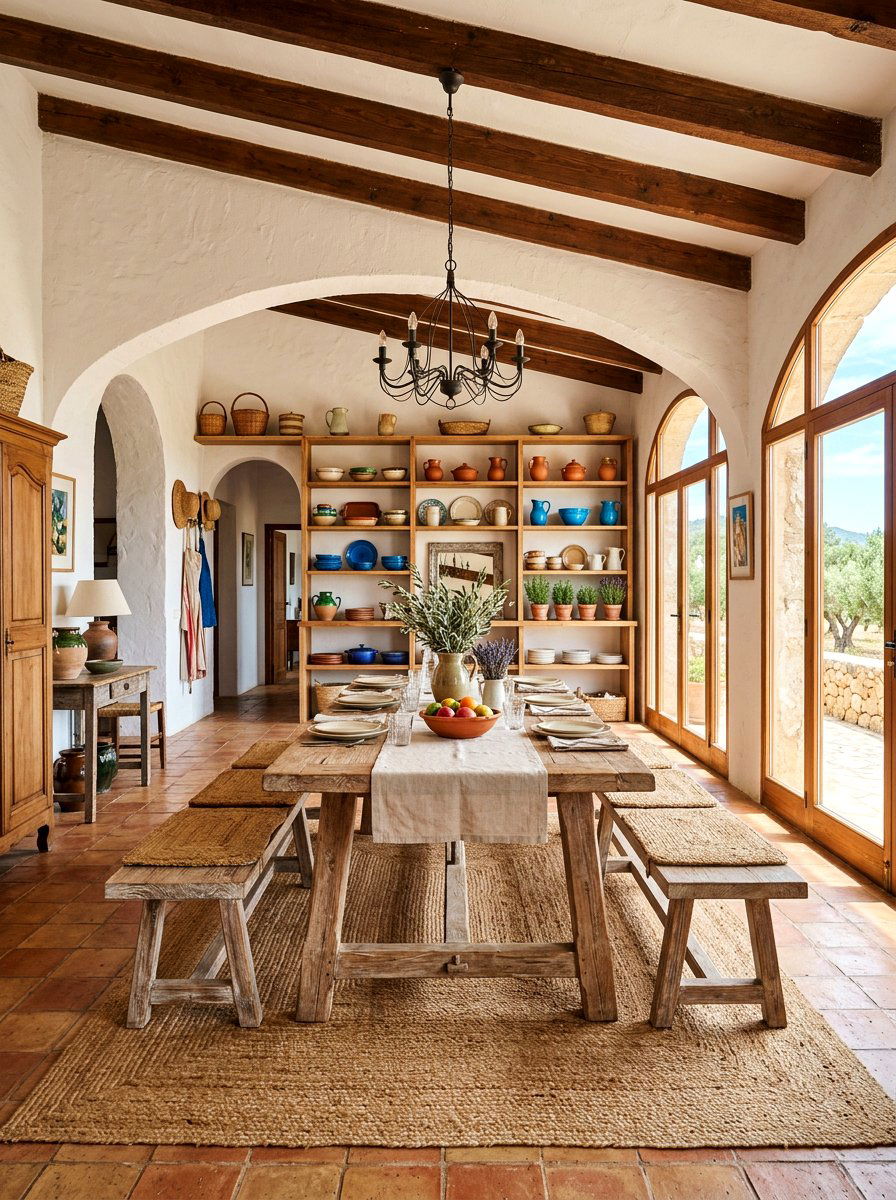
Combining the rustic charm of a farmhouse with Mediterranean elements creates a space that feels very grounded and unpretentious. Look for distressed wood finishes, large open shelving for displaying ceramics, and a mix of vintage and new furniture. A long harvest table paired with a combination of wooden benches and chairs creates a flexible and inviting seating arrangement for large groups. This style often incorporates natural fibers like cotton and wool, along with plenty of greenery and simple pottery. It is a practical and beautiful way to design a dining room that is built for daily use and family life.
21. Clay pottery decor
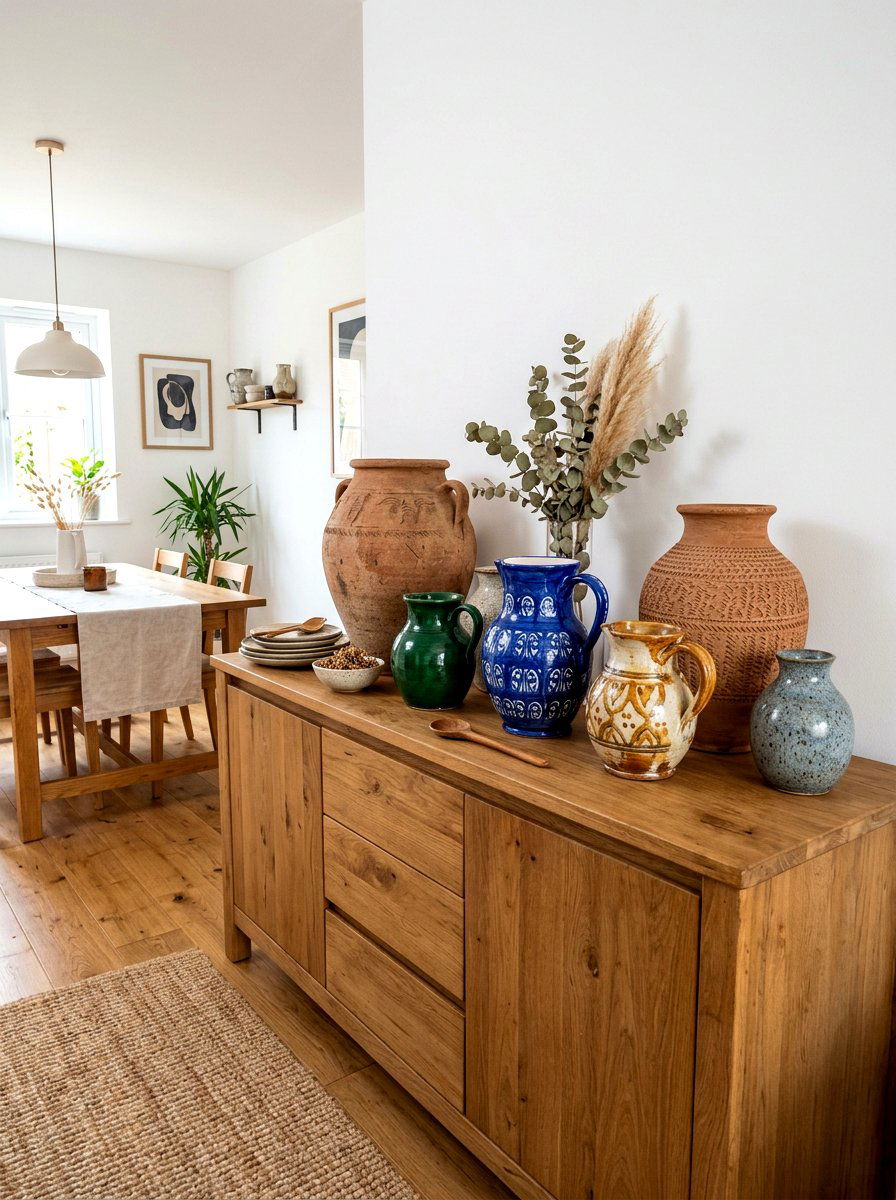
Decorating with handmade clay pottery is an easy and effective way to bring Mediterranean soul into your dining room. Large terracotta urns, glazed ceramic pitchers, and simple earthenware bowls can be displayed on a sideboard, in wall niches, or as a table centerpiece. These items showcase the artisanal heritage of the region and add a variety of textures and earthy colors to the space. You can choose pieces with traditional hand-painted designs or stick to raw, unglazed clay for a more rustic and organic look. They serve as beautiful reminders of the Mediterranean's rich history of craftsmanship and functional art.
22. Natural jute rug
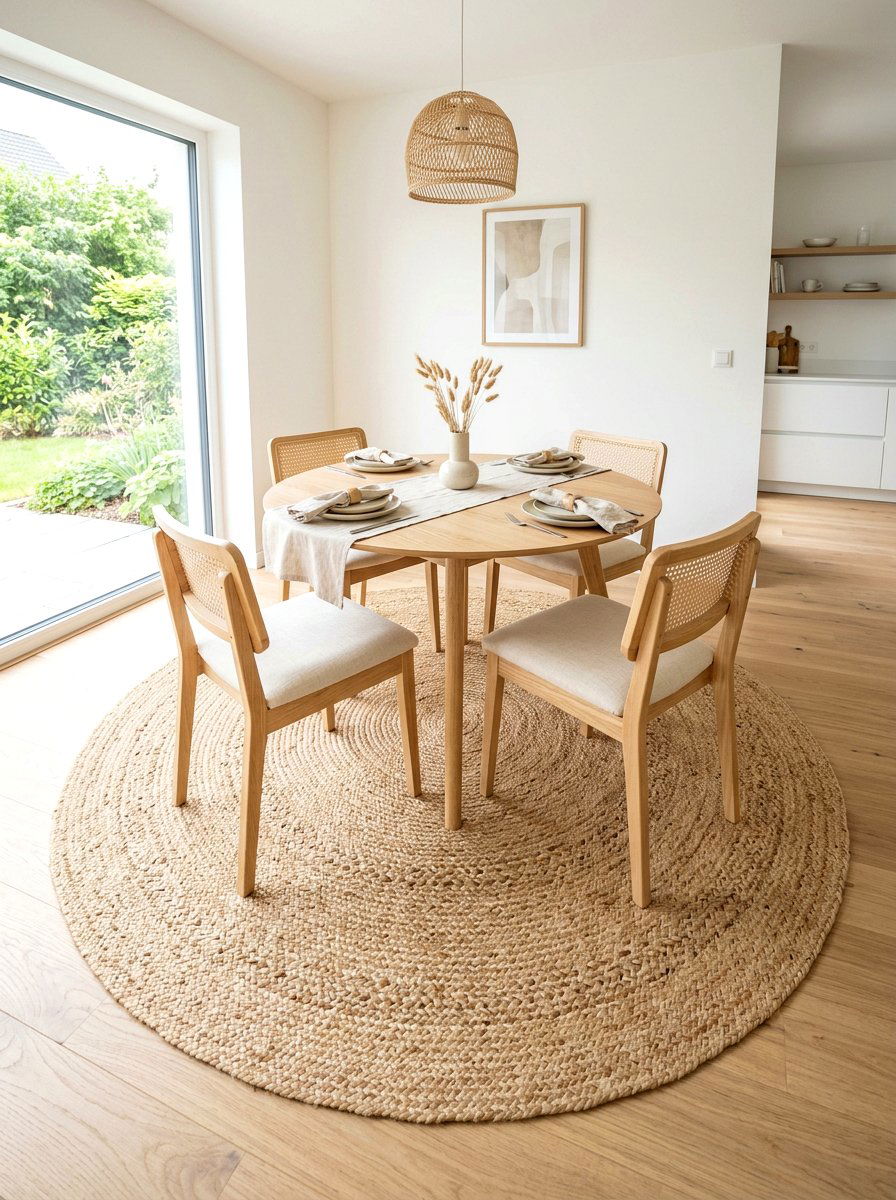
A large jute or sisal rug provides an essential layer of natural texture that anchors the dining furniture and protects the floor. These rugs are incredibly durable and offer a neutral, sandy color that complements almost any Mediterranean color palette. The coarse weave of the jute adds a tactile element to the room that feels very organic and grounded. It is a practical choice for a dining area because it hides crumbs and dirt well and is easy to maintain. Placing a soft rug over a hard tile or stone floor also helps with acoustics, making the room feel much more comfortable and quiet.
23. Built in wall niches
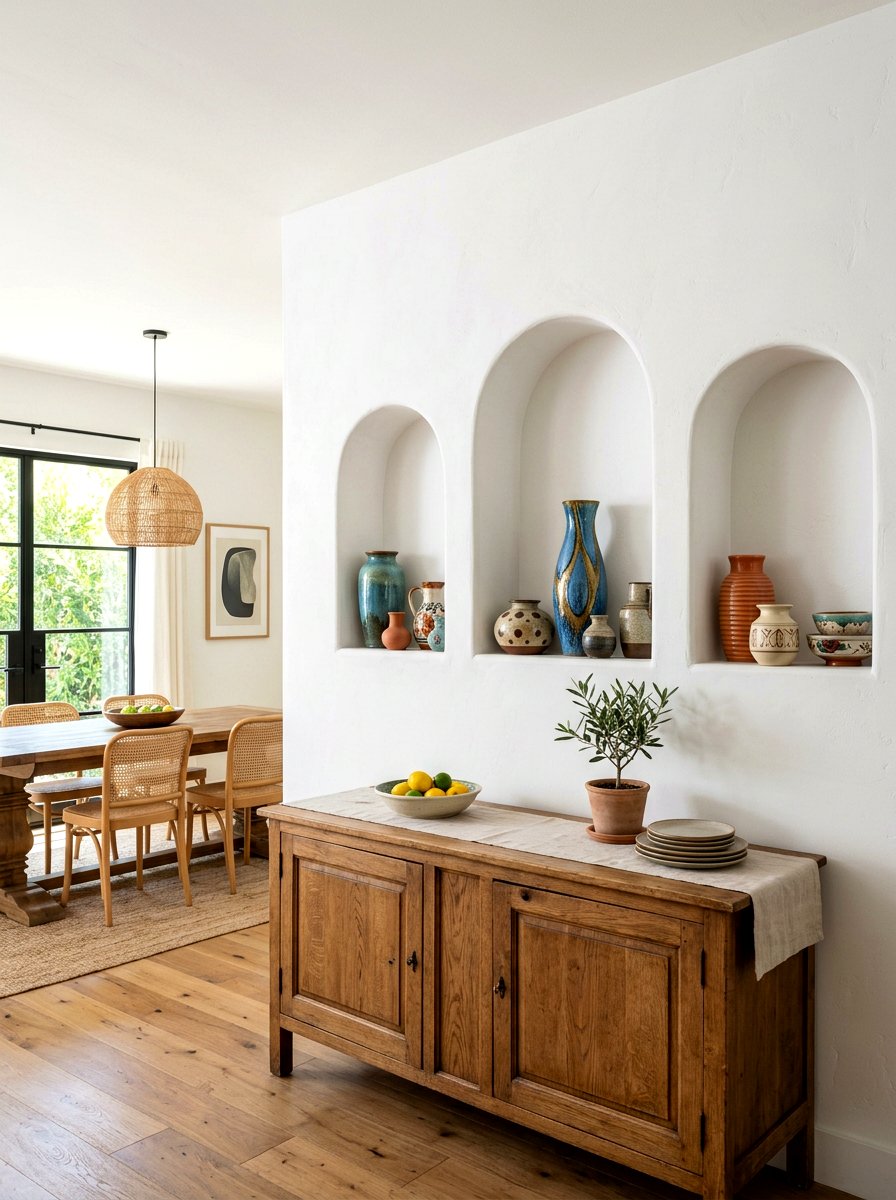
Architectural wall niches are a classic Mediterranean feature that provides a unique way to display decor without using extra furniture. These recessed shelves are often built directly into the thick plaster walls and feature a curved top to match the arches in the room. They are perfect for showcasing a collection of vintage pottery, cookbooks, or small pieces of art. Lighting the inside of the niches can create a beautiful focal point and add a warm glow to the room in the evening. This feature adds structural interest and a sense of history, making the walls feel much more substantial and custom.
24. French country Mediterranean dining room
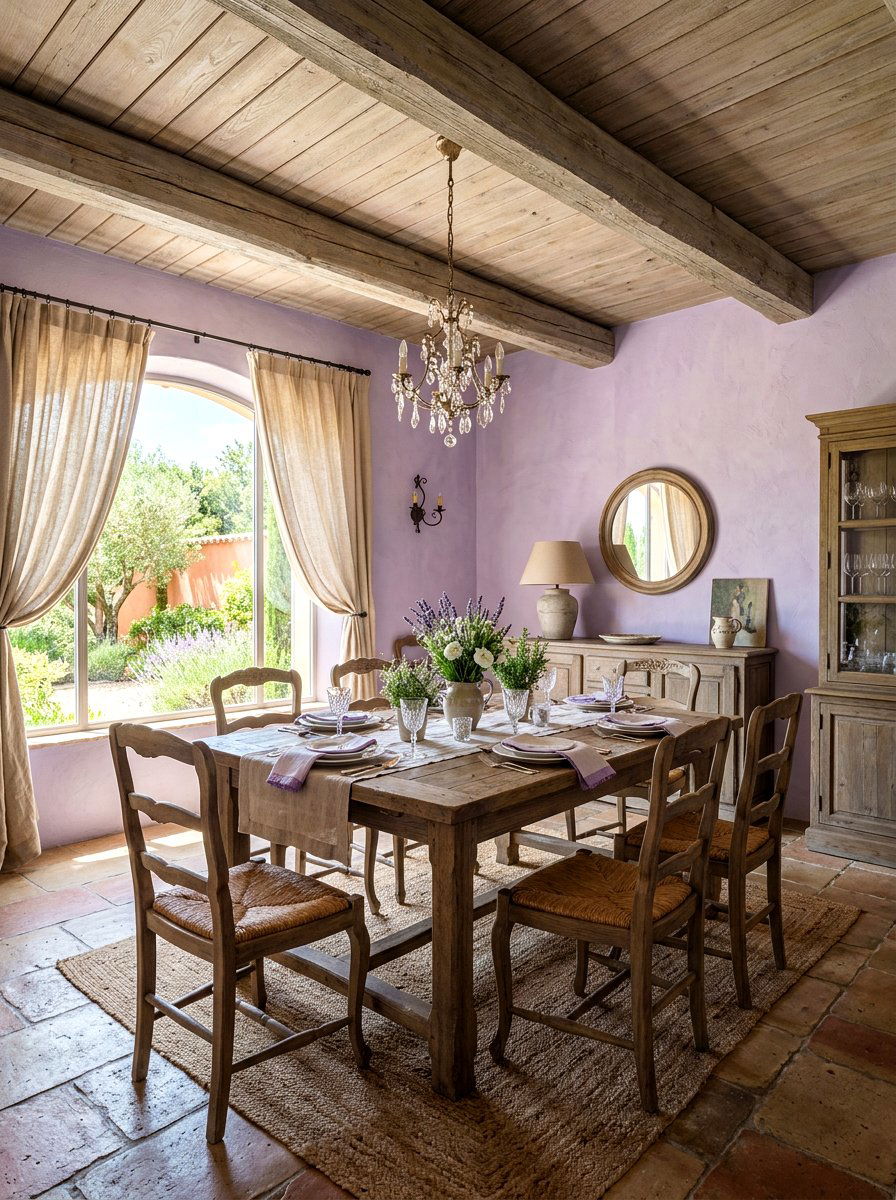
Blending the elegance of French country style with Mediterranean textures results in a dining room that feels sophisticated and romantic. This look often includes soft pastel colors like lavender, sage, and pale blue paired with weathered wood and wrought iron. Look for chairs with cabriole legs or a table with a scalloped edge to add a touch of feminine charm to the space. Natural linen curtains and a crystal chandelier can elevate the room, while a stone floor keeps it feeling authentic. It is a beautiful way to achieve a look that is both grand and approachable for formal dining.
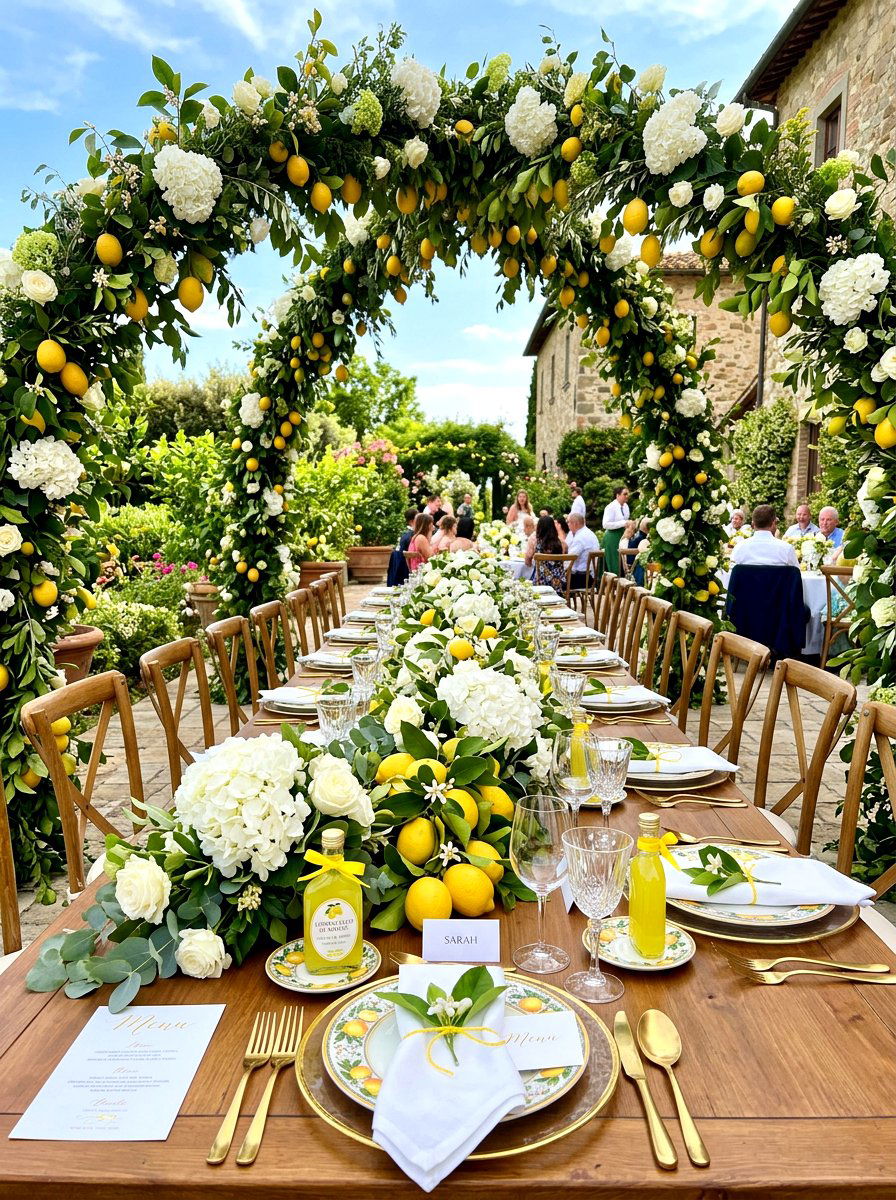
25. Marble top dining table
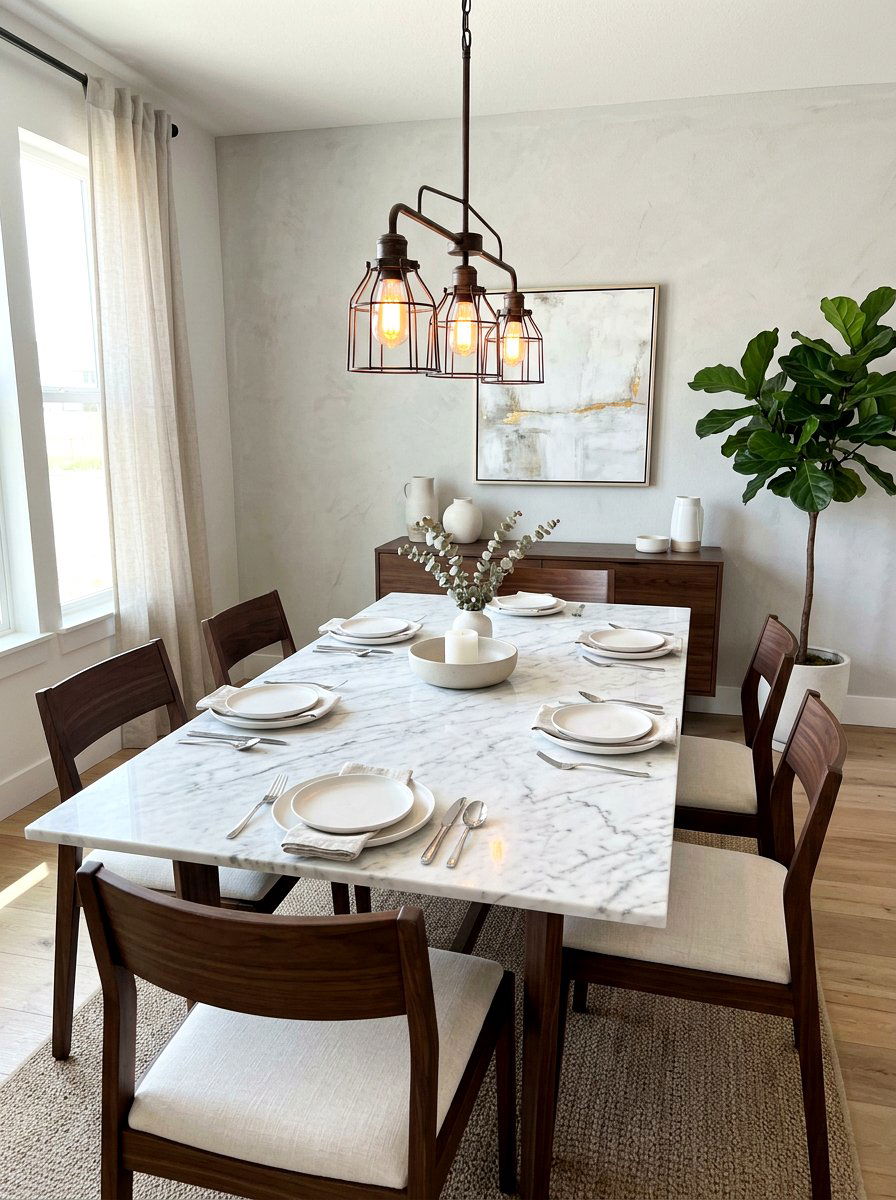
A marble dining table adds a cool, luxurious element that provides a stunning contrast to the warmer wood and clay textures in the room. White marble with subtle grey or gold veining is a classic choice that reflects light and makes the entire space feel more elegant. This natural stone is incredibly durable and becomes more beautiful over time as it develops a unique patina. Pair it with wooden chairs or a jute rug to keep the look from feeling too cold or formal. The heavy weight of the marble gives the table a sense of permanence and grandeur that is truly impressive.
26. Vaulted ceiling dining room
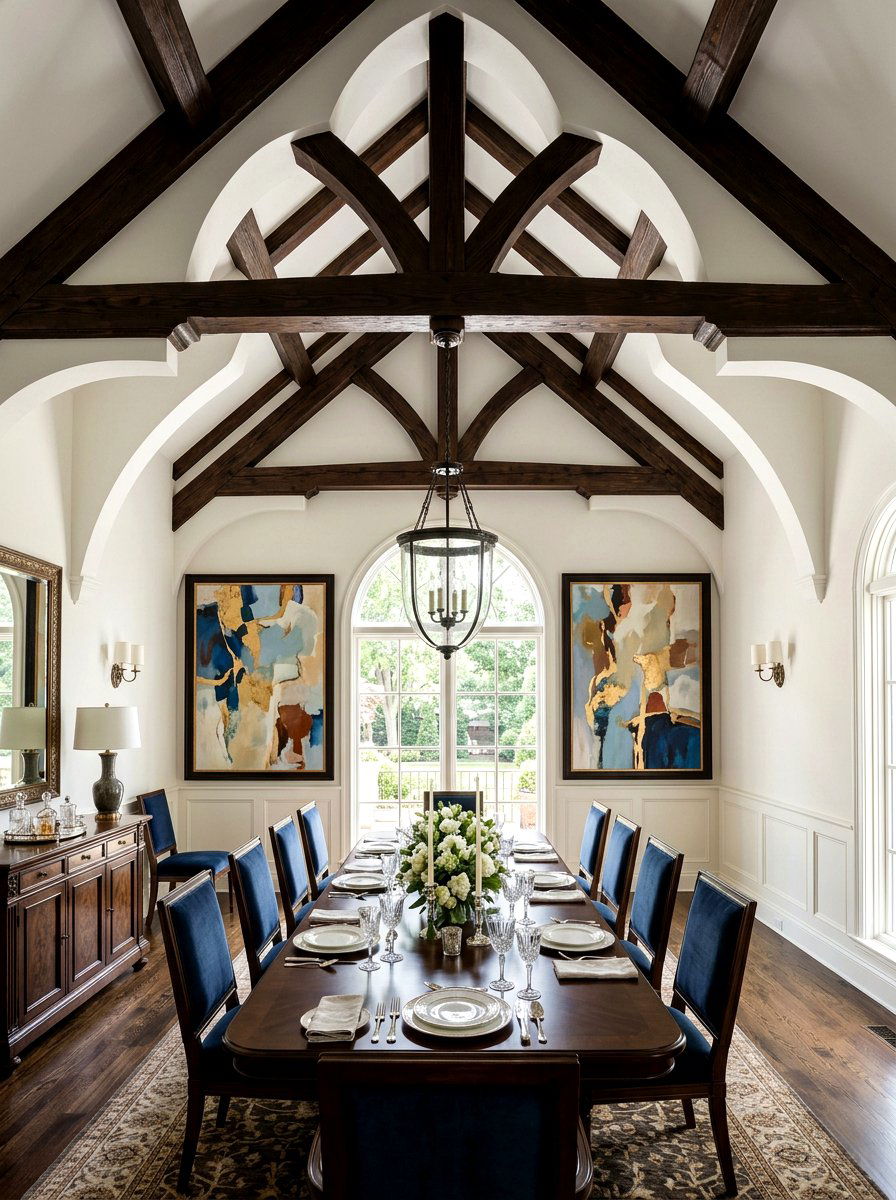
A vaulted or cathedral ceiling creates a dramatic sense of volume and grandeur that makes any dining room feel like a palace. High ceilings allow for larger light fixtures and more architectural detail, such as exposed beams or decorative plaster work. This extra vertical space helps the room feel airy and open, which is ideal for warmer climates or smaller floor plans. You can paint the ceiling a light color to enhance the feeling of height or use dark wood to create a more intimate and cozy atmosphere. It is a spectacular feature that adds a significant amount of value and character.
27. Indoor outdoor dining room
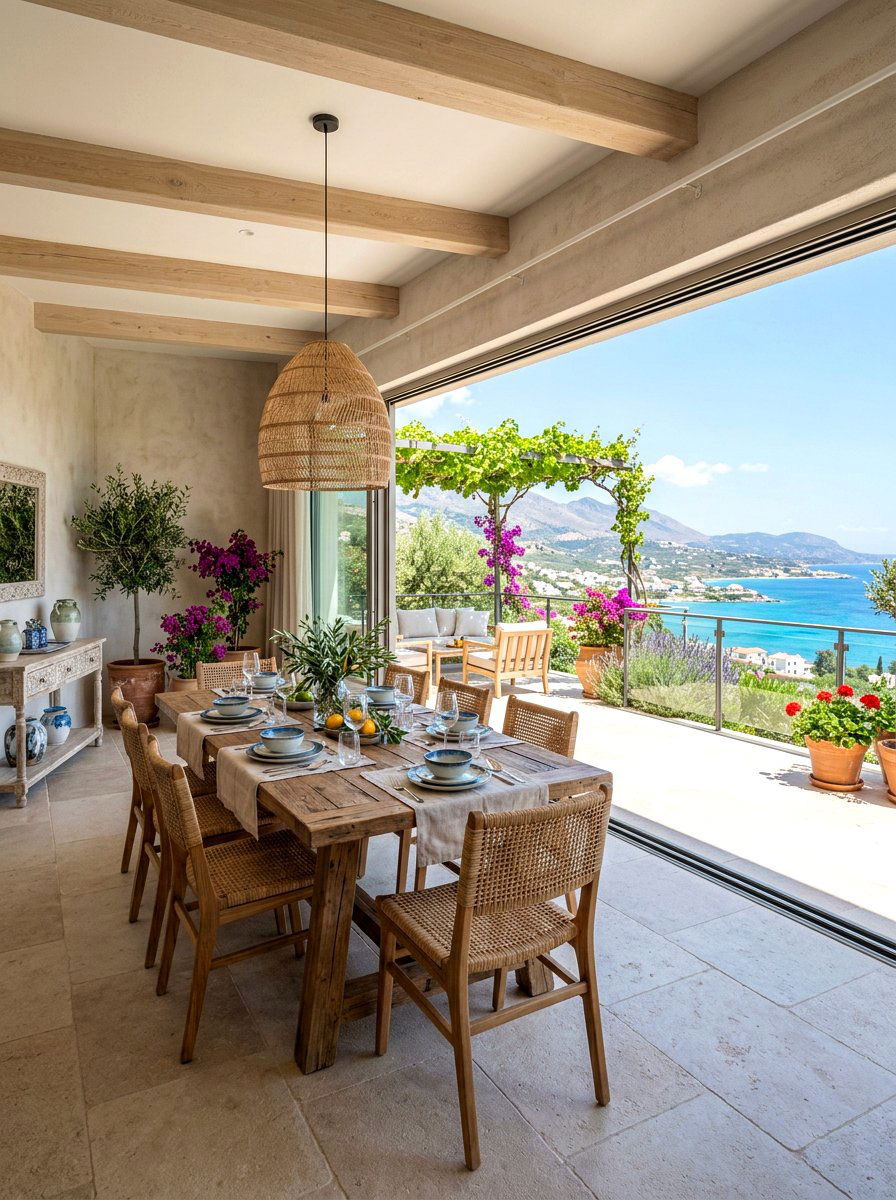
The Mediterranean lifestyle is all about connecting with nature, so a dining room that opens directly onto a patio or garden is ideal. Large folding glass doors or a series of French doors can blur the line between the interior and the exterior spaces. Using the same flooring material inside and out creates a seamless transition that makes the entire area feel much larger. This setup allows you to enjoy fresh air and natural views while dining, creating a vacation-like atmosphere every single day. It is the ultimate way to embrace the sun-drenched, relaxed spirit of coastal living and entertaining.
28. Vintage wood sideboard
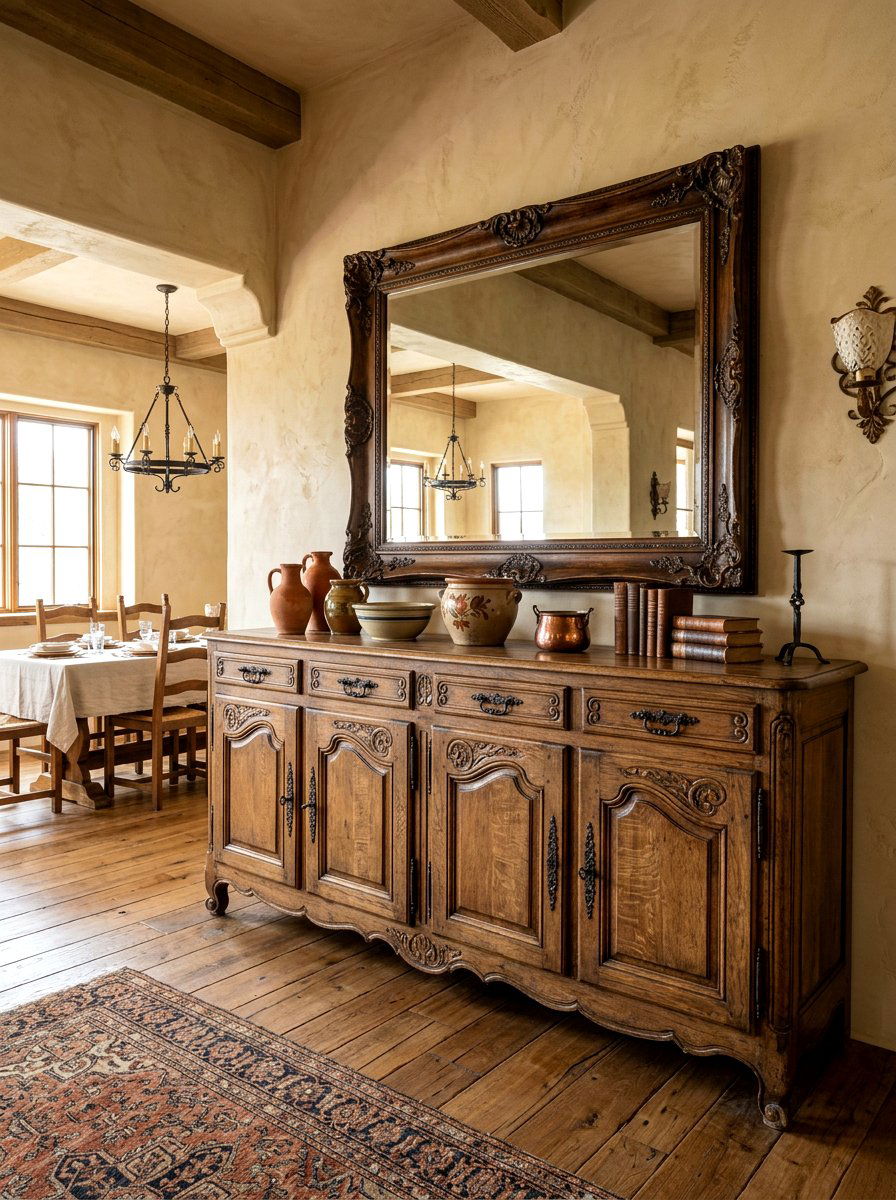
A vintage or antique sideboard provides essential storage for your dining room while adding a layer of historical character. Look for pieces with hand-carved details, distressed wood finishes, or original iron hardware to bring a sense of soul to the room. The top of the sideboard is a perfect place to create a curated display of Mediterranean decor like clay urns, framed art, and a large mirror. This piece of furniture acts as a functional anchor for one side of the room and helps to balance the visual weight of a large dining table. It feels personal and unique.
29. Earth tone dining room
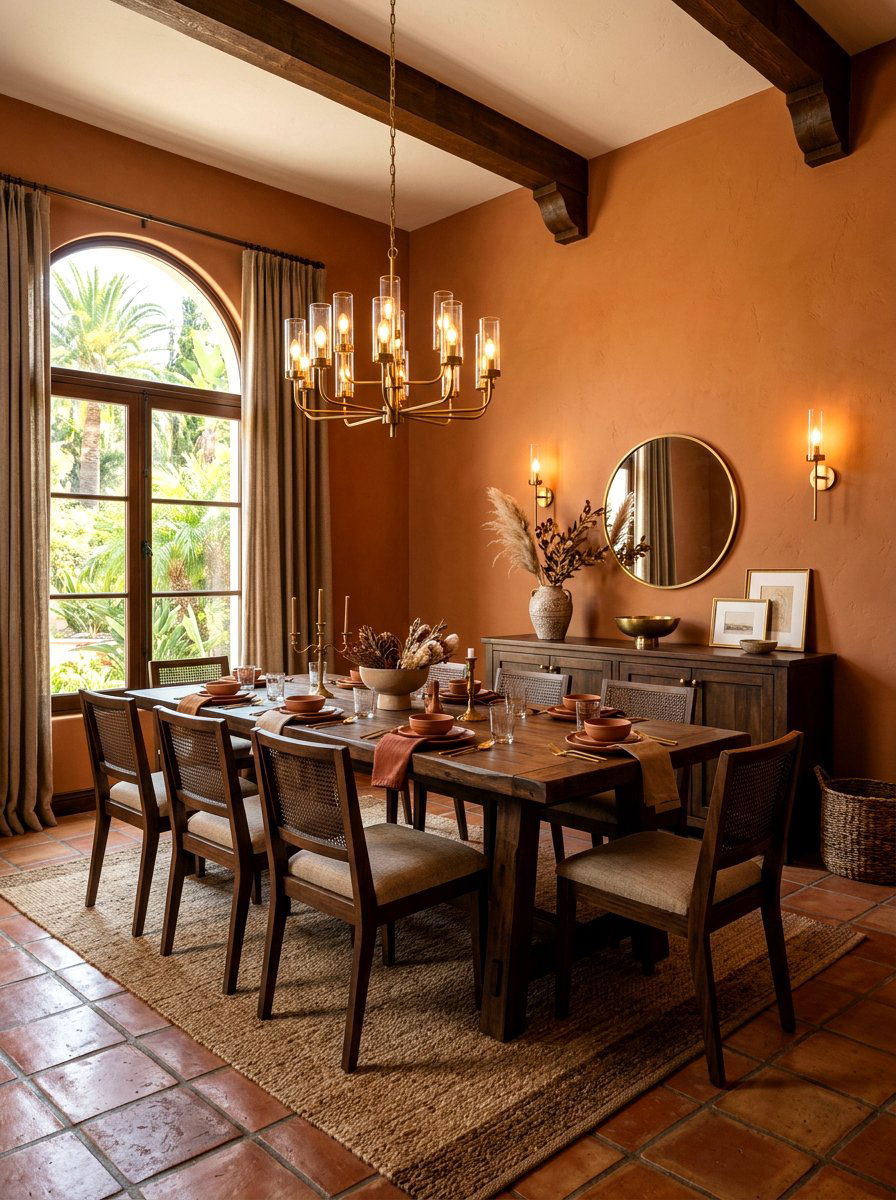
Focusing on a palette of sienna, ochre, umber, and terracotta creates a dining room that feels incredibly warm, grounded, and welcoming. These colors mimic the natural landscape of the Mediterranean and provide a cozy backdrop for shared meals. You can use these tones on the walls through textured paint or plaster, or incorporate them through soft furnishings like rugs and curtains. Pairing these deep, warm colors with natural wood and brass accents adds a touch of sophistication and depth. The result is a space that feels rich, organic, and timeless, perfectly capturing the essence of a sun-kissed European villa.
30. Mediterranean bistro dining room
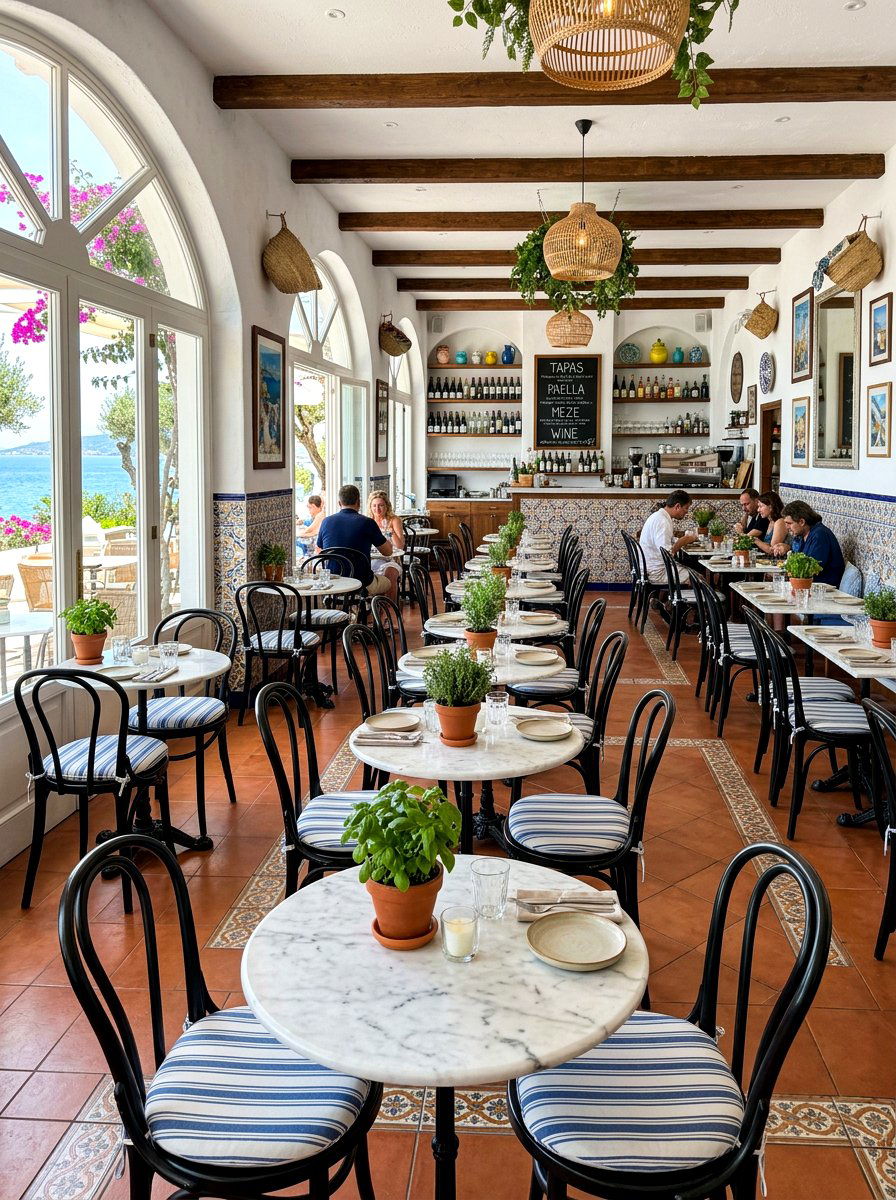
A bistro-inspired dining area offers a casual and charming environment that is perfect for small spaces or breakfast nooks. Think of small round marble tables, bentwood chairs, and a chalkboard for the daily menu. You can add a touch of Mediterranean flair with blue and white patterned cushions, a collection of small potted herbs, and a vintage-style lantern above the table. This look is all about simplicity, comfort, and the joy of a quick meal or a cup of coffee. It brings the vibrant energy of a coastal cafe into your home, making even the simplest meal feel like a special occasion.
Conclusion:
The Mediterranean dining room is more than just a place to eat; it is a celebration of history, nature, and community. By incorporating architectural elements like arches and textured walls along with natural materials such as wood, stone, and terracotta, you can create a space that feels both luxurious and comfortable. Whether you prefer a modern, minimalist approach or a richly decorated Spanish revival style, the core principles of warmth and authenticity remain the same. This design aesthetic invites you to slow down and enjoy the company of others in a sun-drenched and beautiful environment. It is a timeless choice that will remain stylish and inviting for many years to come.

Related posts: