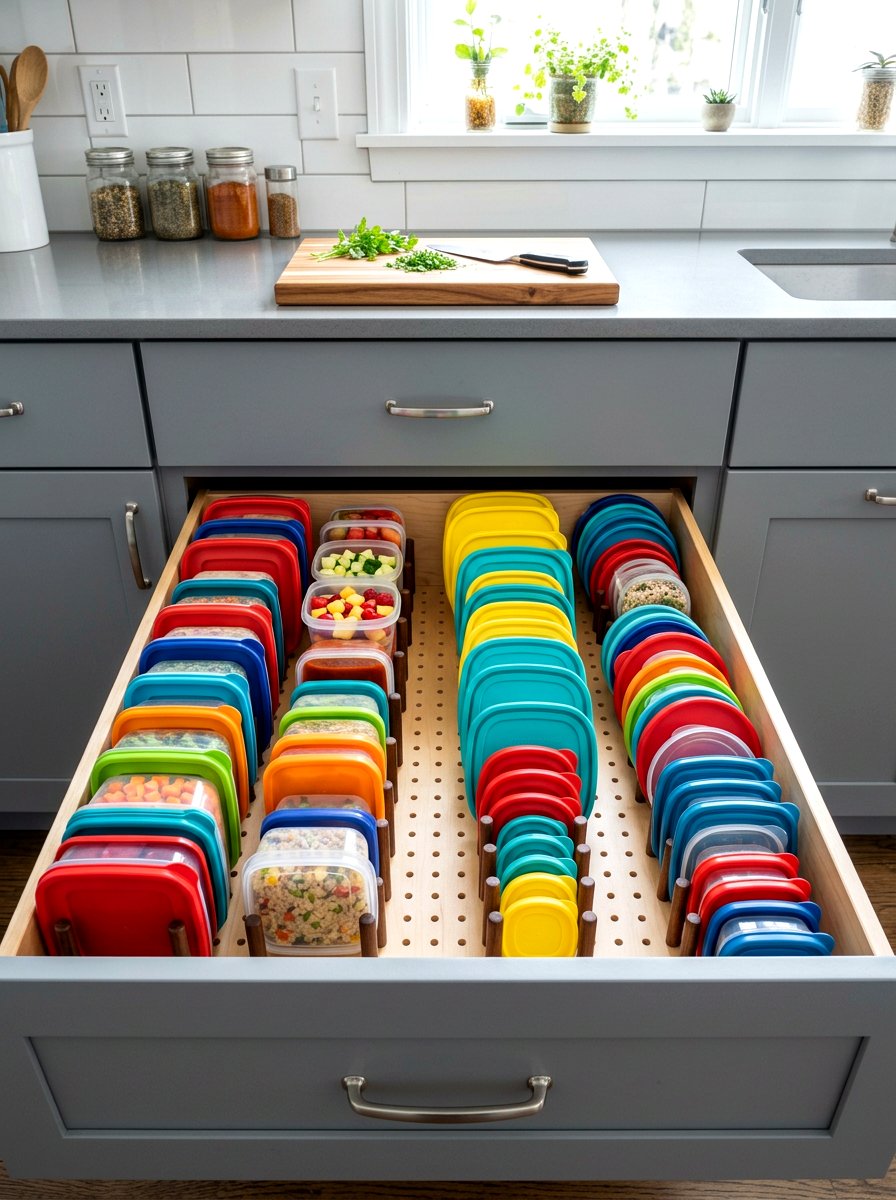
Designing a mudroom that balances daily utility with a beautiful aesthetic is the key to creating a truly organized home environment. These transition zones act as the primary defense against outdoor elements like dirt, rain, and snow while providing a designated landing spot for every family member's gear. Whether you are working with a spacious back entry or a compact hallway corner, smart storage solutions can transform a chaotic pile of shoes and coats into a streamlined gallery of organization. Modern mudrooms now integrate elements of interior design that reflect the rest of your home, using high-quality materials and thoughtful layouts.
1. Built In Mudroom Bench
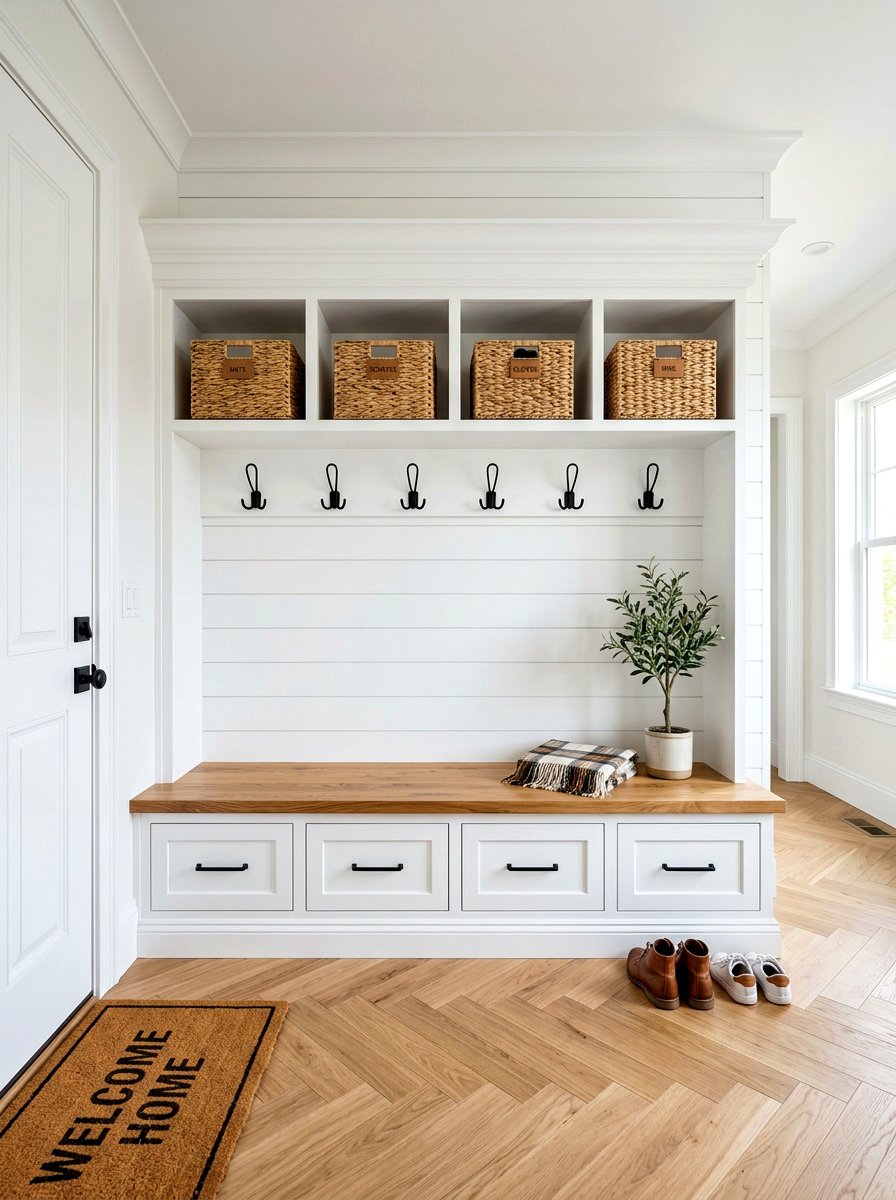
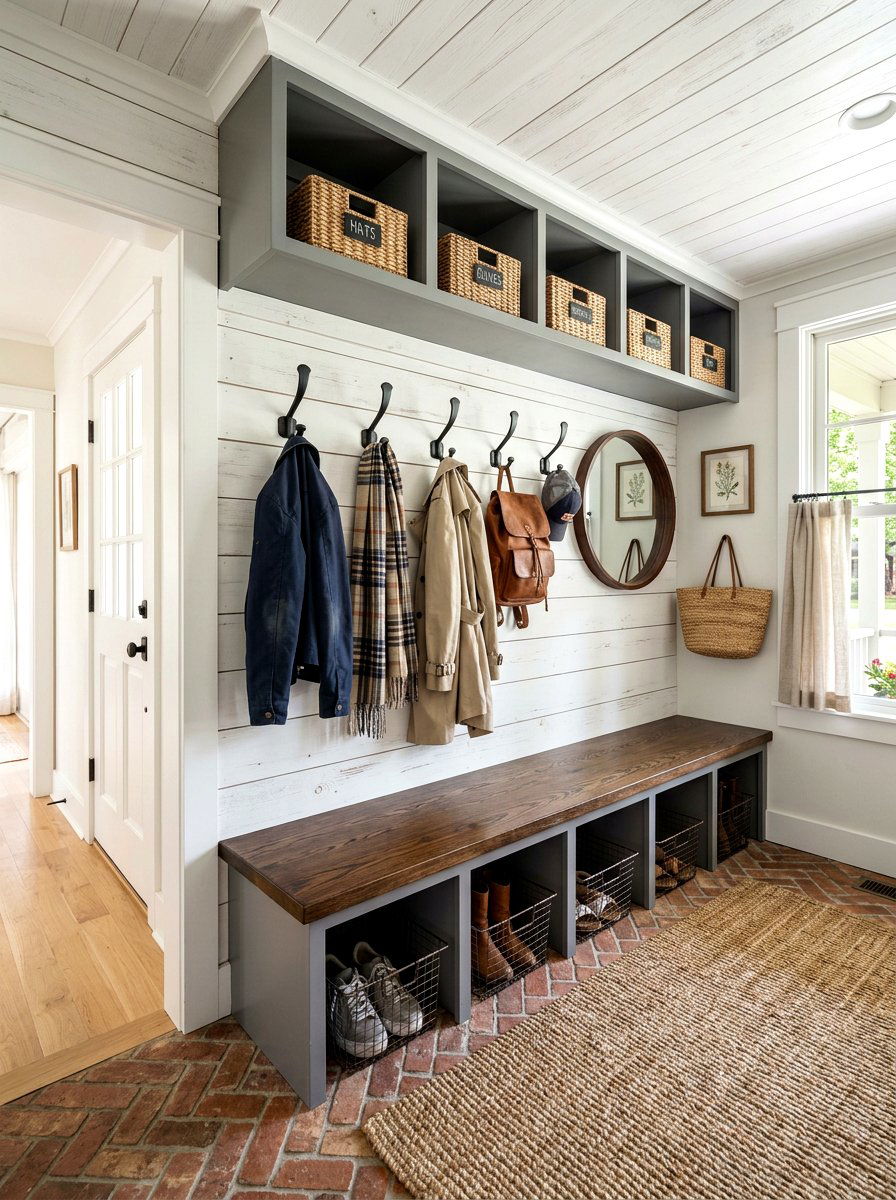
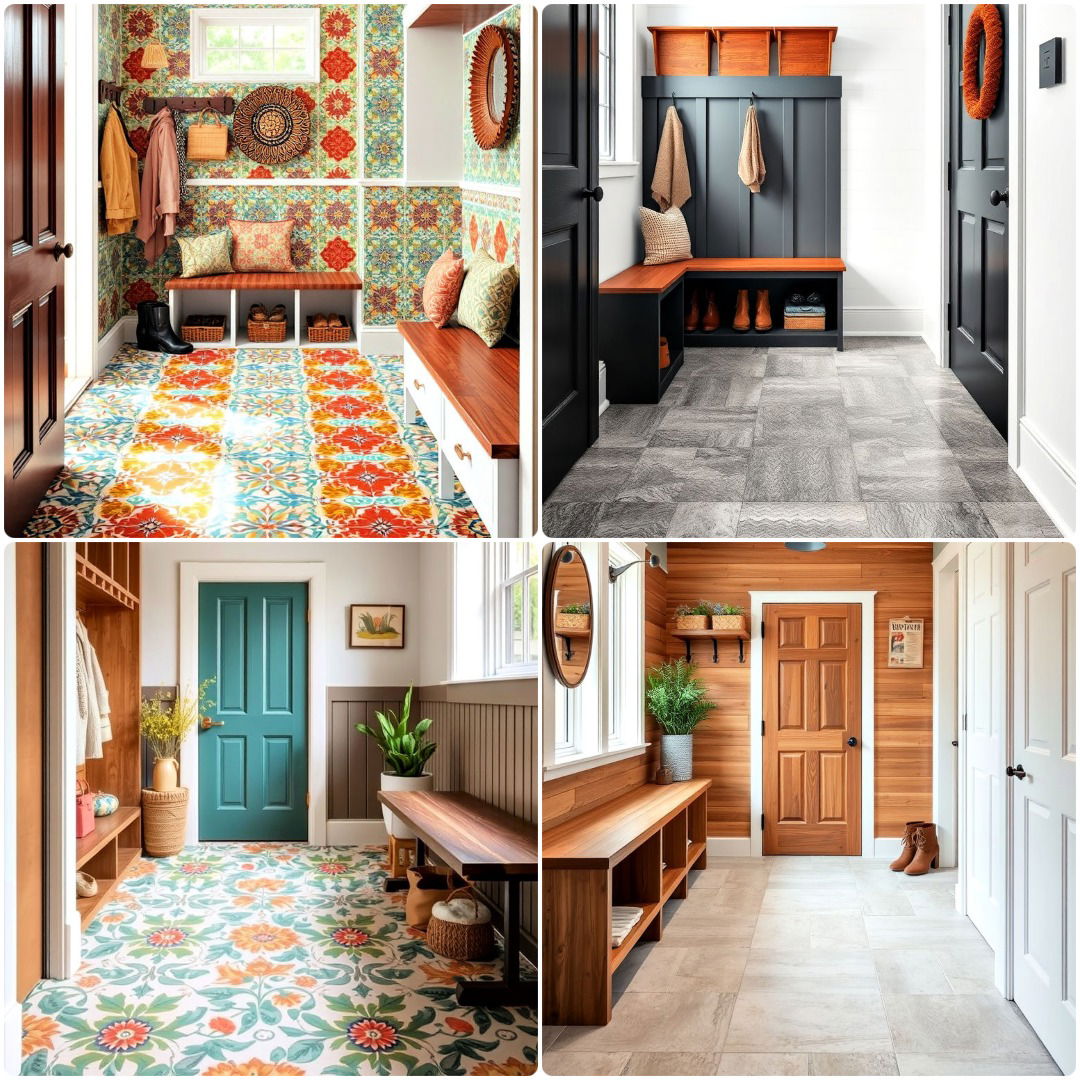
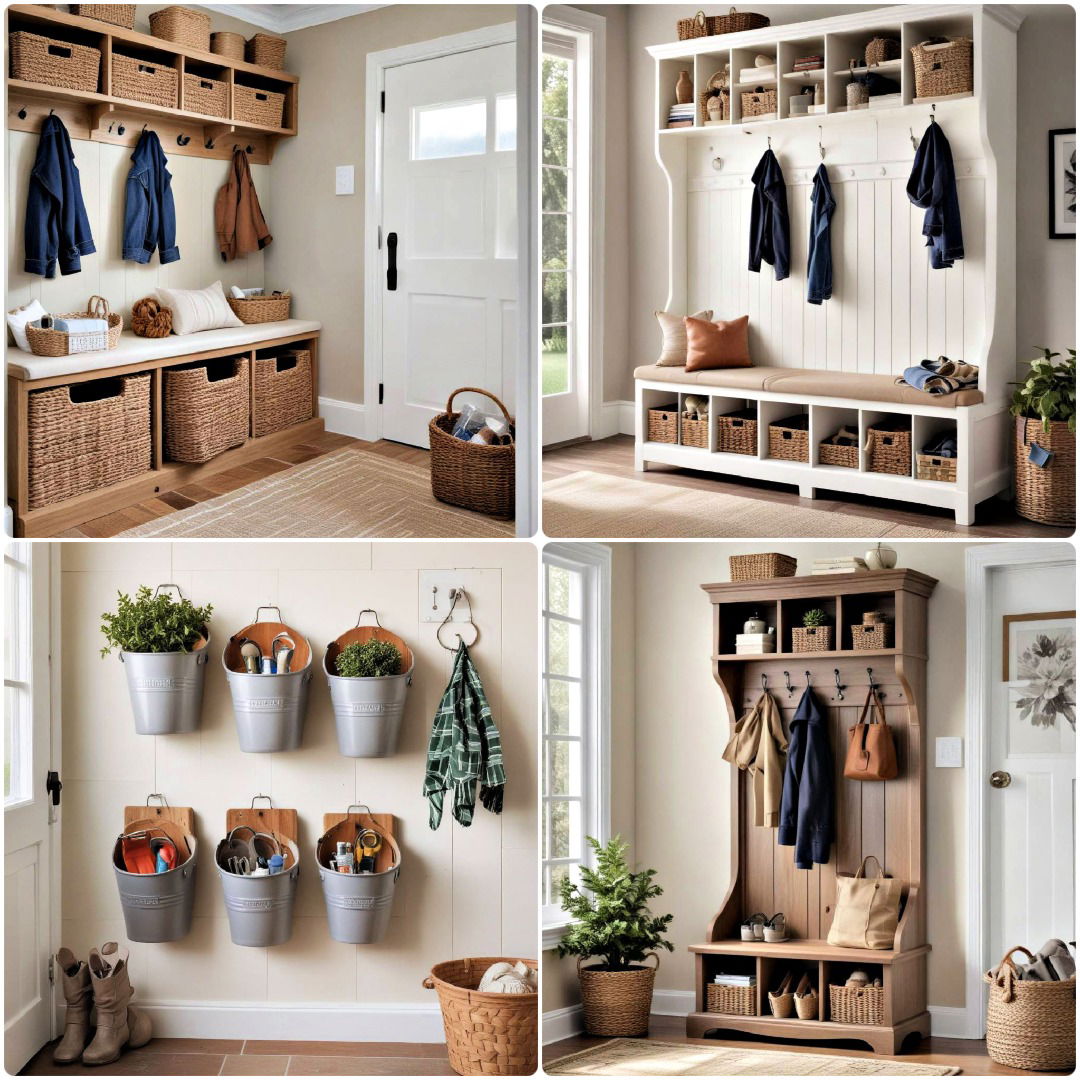
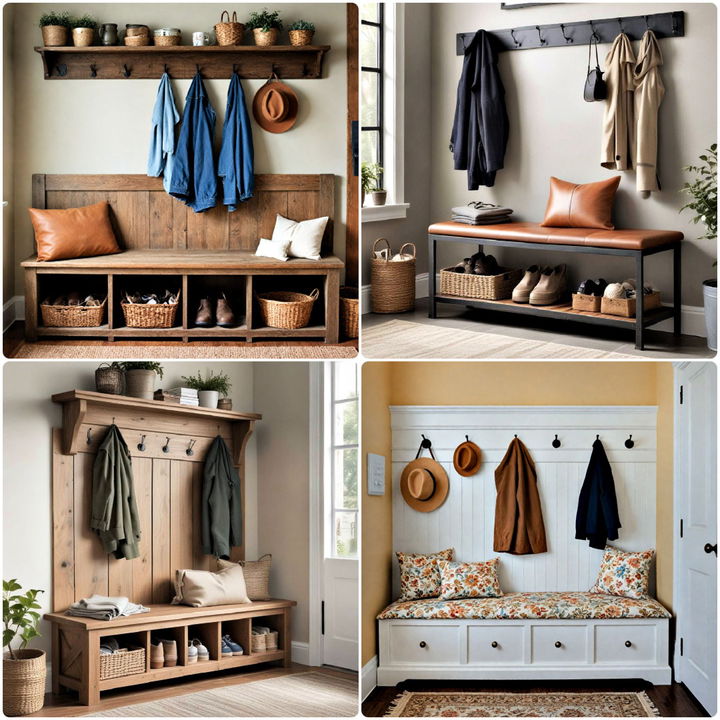
A built-in mudroom bench serves as the functional anchor of a well-organized entryway, providing a dedicated space for sitting while putting on or removing shoes. This design choice creates a permanent and sturdy fixture that integrates seamlessly with the surrounding walls and cabinetry for a high-end look. By choosing a built-in option, you can customize the height and depth to fit your family's specific needs perfectly. These benches often feature solid wood tops or painted finishes that match the architectural trim of the house. Integrating a bench into the wall layout allows for better traffic flow compared to freestanding furniture pieces that might shift over time.
2. Mudroom Lockers With Doors
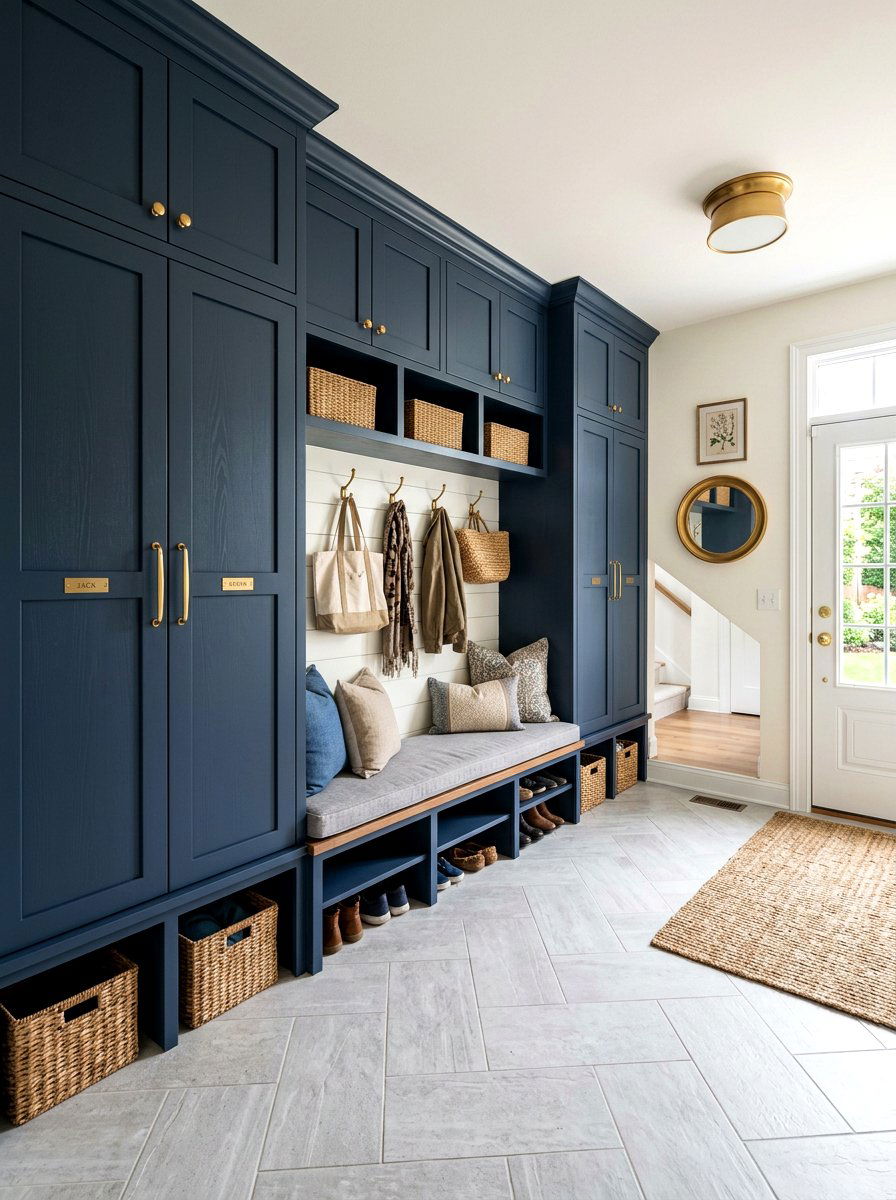
Mudroom lockers with doors are the ultimate solution for homeowners who prefer a clean and minimalist aesthetic by hiding daily clutter. Each family member can have their own tall cabinet to store bulky coats, sports equipment, and backpacks out of sight. These doors can feature classic shaker-style panels or modern flat-front designs to complement your home’s interior architecture. Internal shelving and hooks within the lockers ensure that every item has a specific place, preventing the interior from becoming a mess. Utilizing closed storage like this helps maintain a sense of calm in high-traffic areas, making the transition from outside to inside much more peaceful.
3. Small Mudroom Cubbies
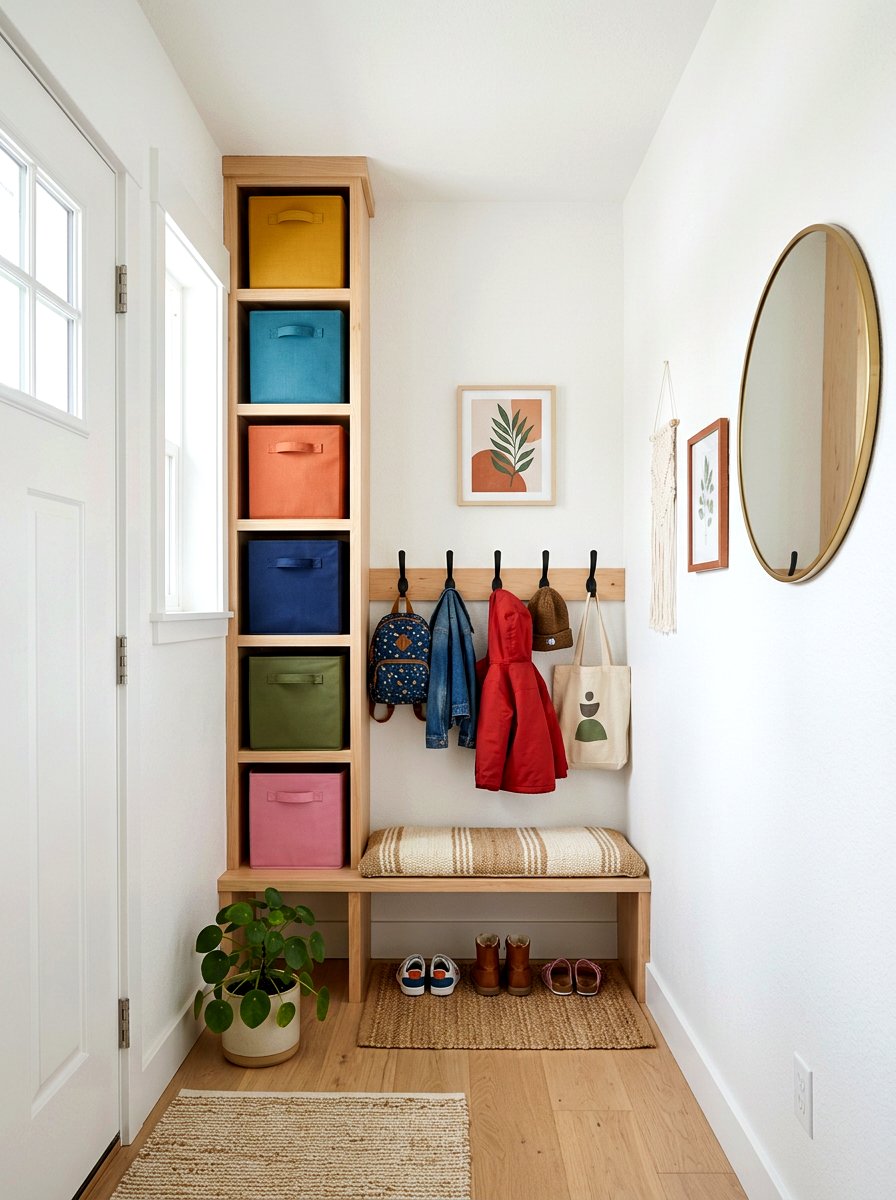
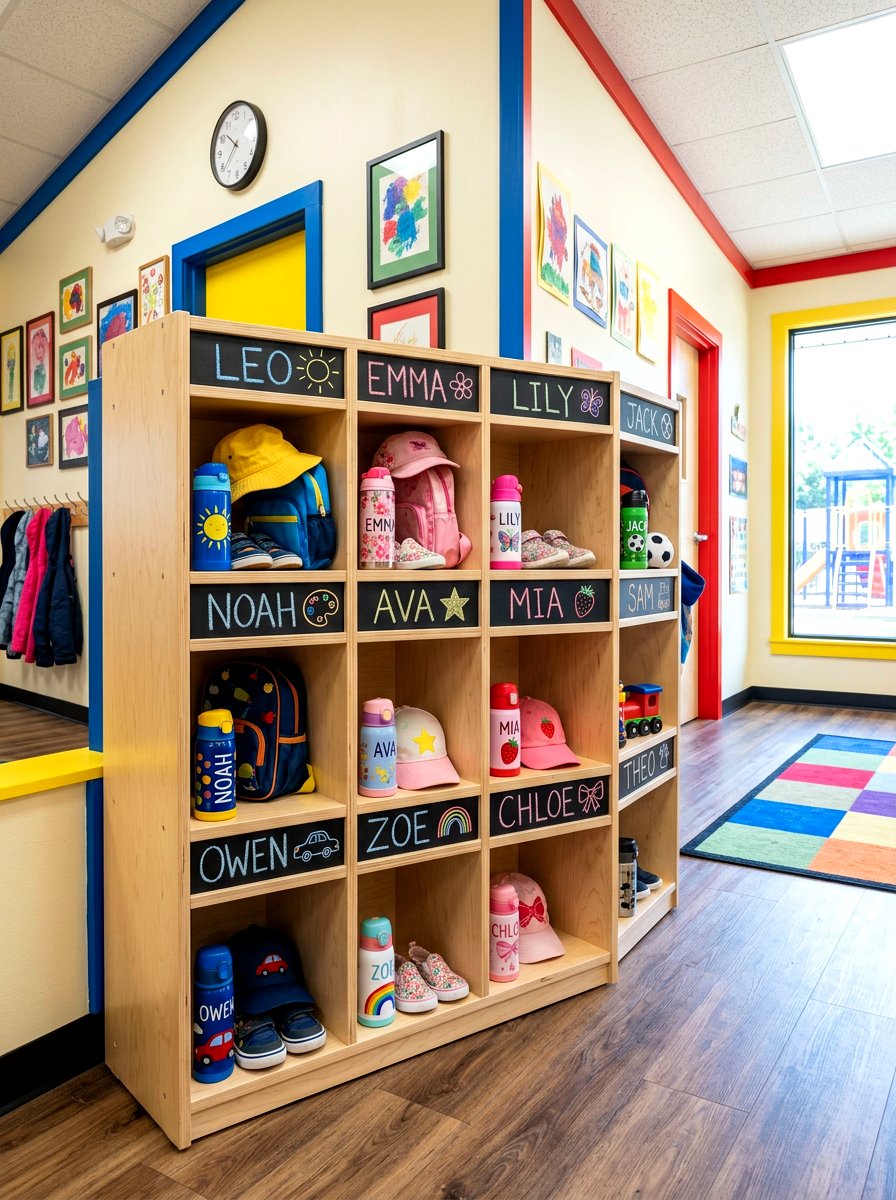
Small mudroom cubbies offer a compact yet highly effective way to manage organization in tighter spaces or narrow hallways. These box-like compartments can be stacked vertically or arranged horizontally to maximize every inch of available wall space without overwhelming the room. Cubbies are particularly helpful for children, as the open-front design allows them to easily grab their lunchboxes or school bags during the morning rush. You can paint the interior of each cubby a different color to designate personal zones or keep them uniform for a cohesive look. Adding small decorative bins inside the cubbies further enhances the organization of loose items like hats.
4. Mudroom Wall Hooks
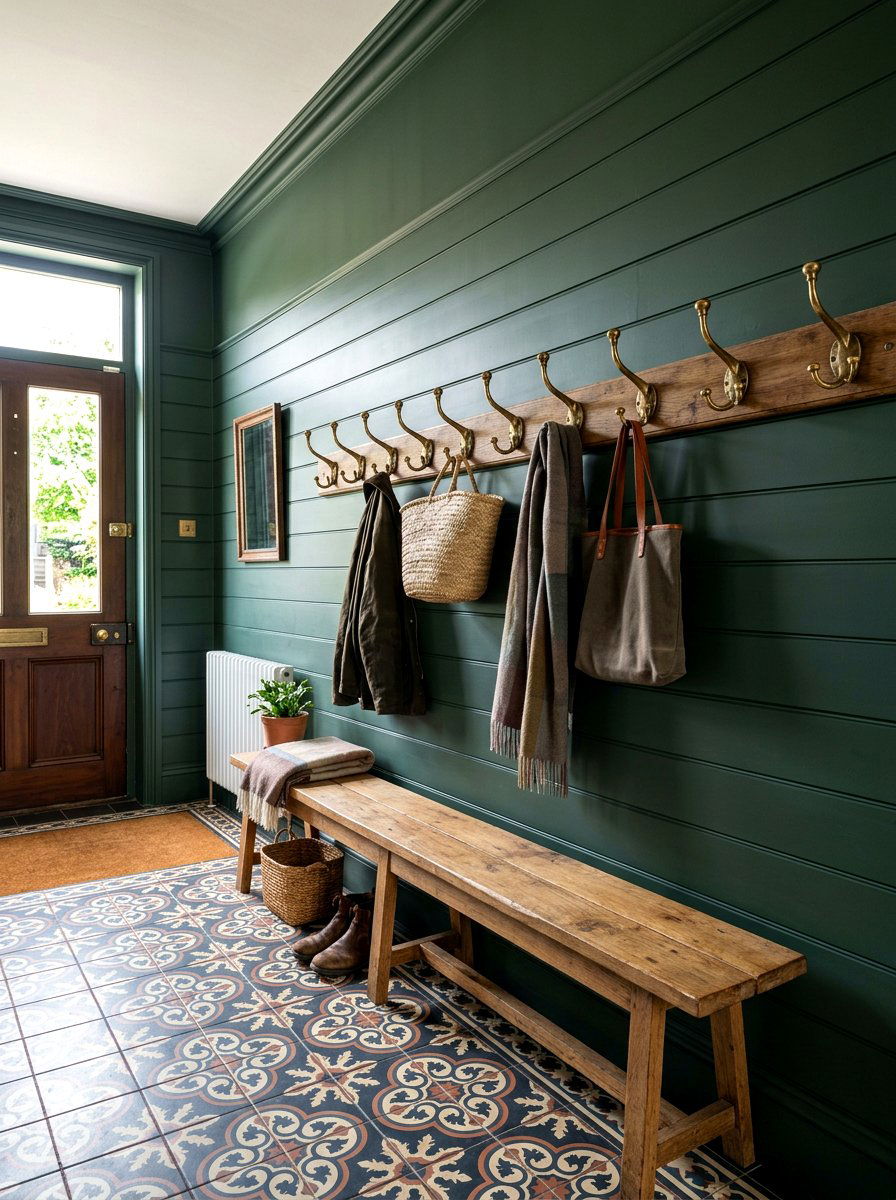
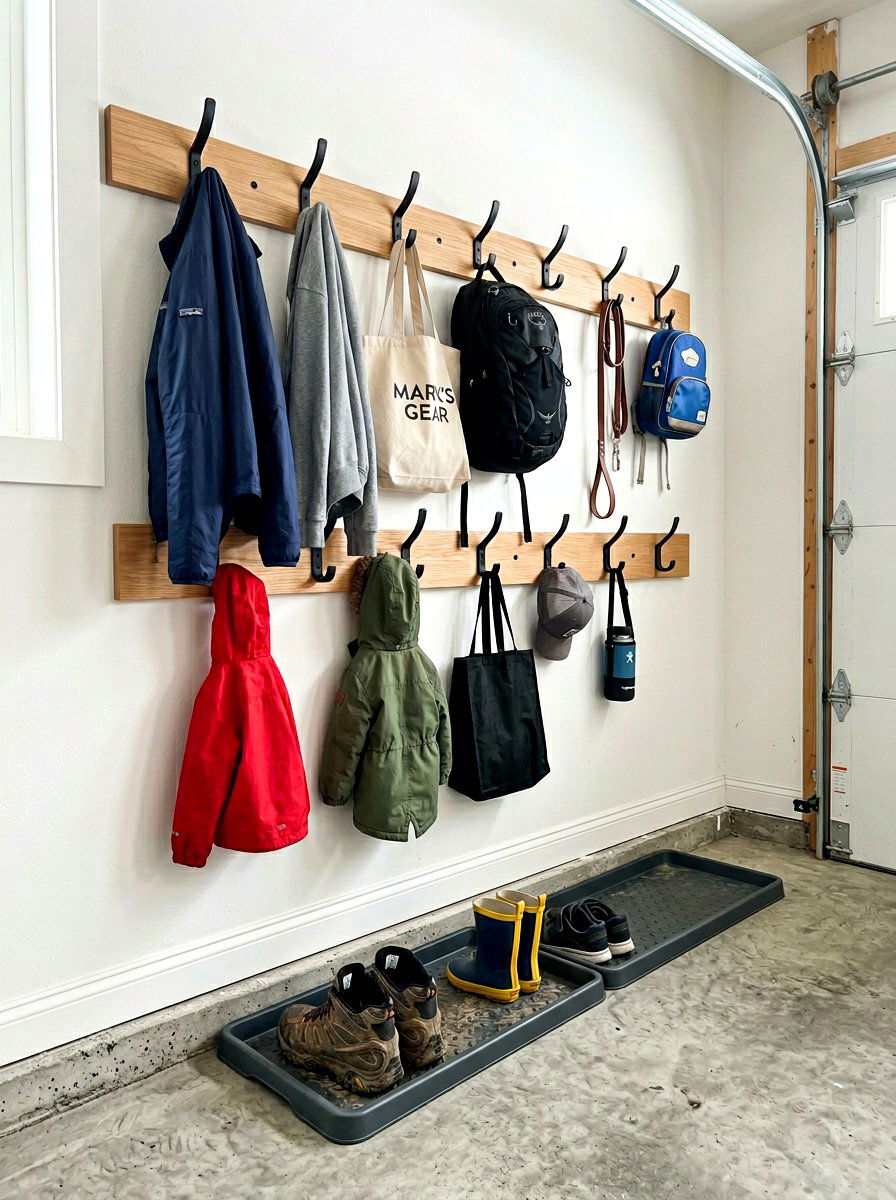
Mudroom wall hooks provide a simple and accessible storage method that encourages everyone in the household to hang up their belongings immediately. Placing hooks at various heights ensures that even small children can reach their own gear, fostering independence and keeping the floor clear. Heavy-duty metal hooks in finishes like matte black, antique brass, or polished chrome can serve as stylish accents against a painted or paneled wall. Using a series of hooks along a single wall creates a rhythmic visual pattern that adds character to the room. This approach is ideal for drying damp jackets quickly after a rainy day outdoors.
5. Modern Mudroom Cabinets
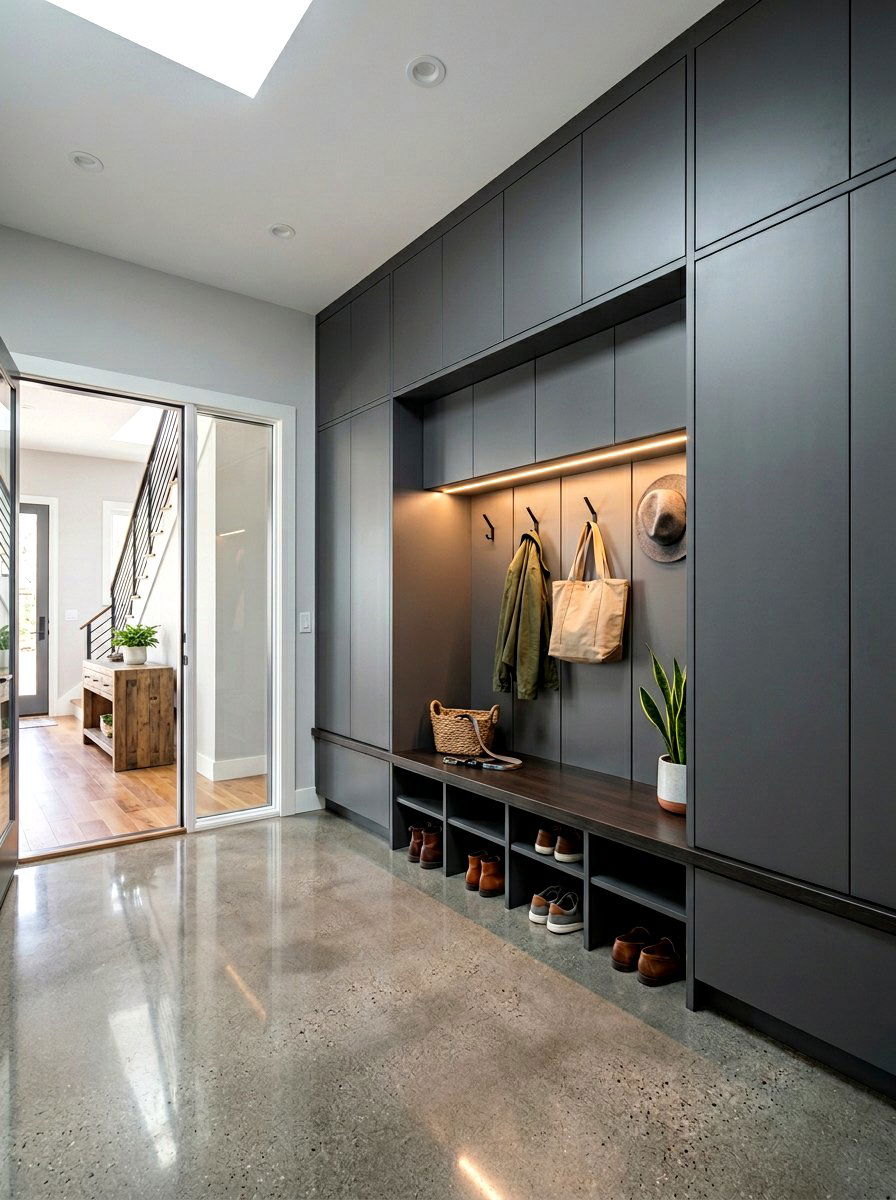
Modern mudroom cabinets focus on sleek lines, handleless designs, and sophisticated color palettes like charcoal gray or deep navy. These units often span from floor to ceiling to capture maximum storage potential for seasonal items that are not used every day. By incorporating integrated hardware or push-to-open mechanisms, the cabinetry feels more like a part of the wall than a traditional piece of furniture. Lighting is frequently built into the cabinetry to highlight specific areas and improve visibility during early morning departures. This design style is perfect for contemporary homes where the mudroom is visible from the main living areas and needs to look polished.
6. Mudroom Shoe Storage
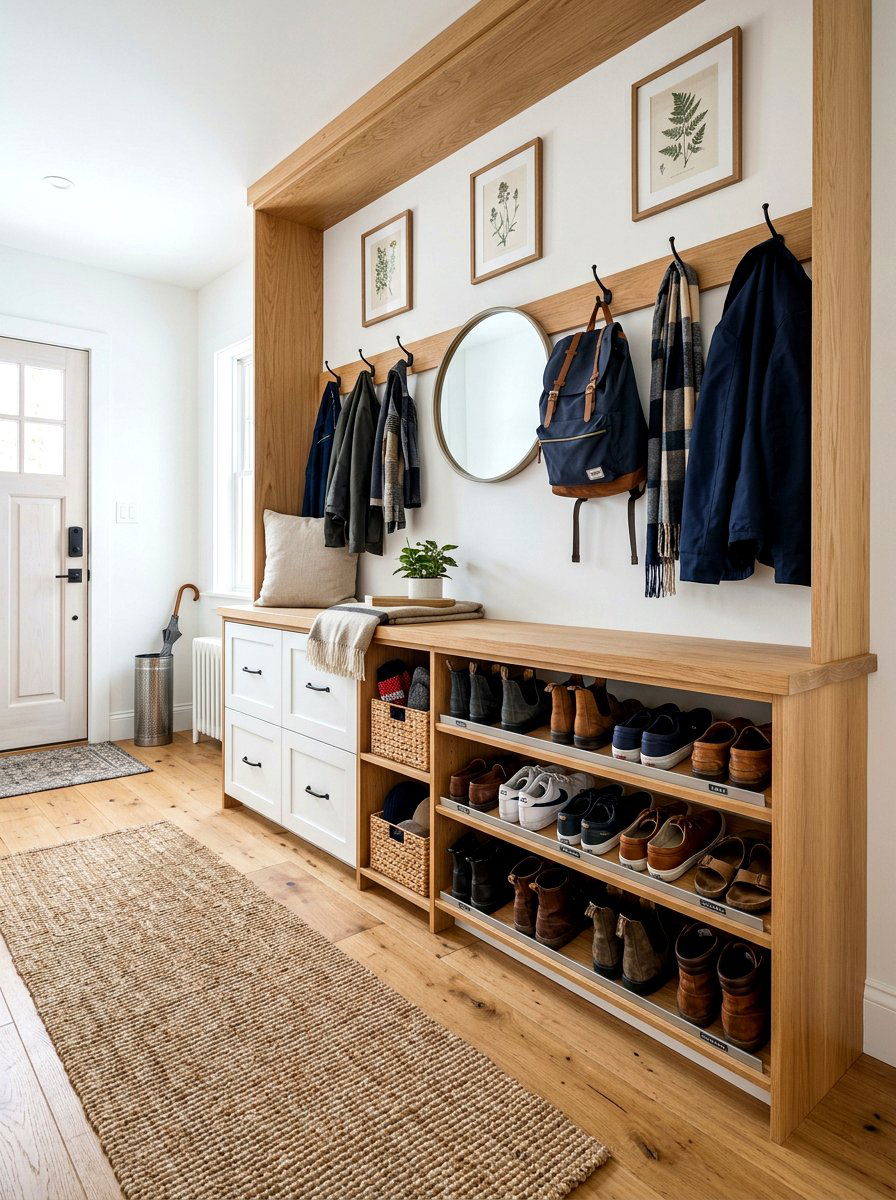
Mudroom shoe storage is a critical component for maintaining a clean home and preventing the tracking of dirt and debris across floors. Dedicated shoe shelves or pull-out drawers under a seating area keep footwear neatly aligned and easily accessible for daily use. Slanted shelves with a lip are particularly effective for displaying shoes, while deep drawers can hide away bulky winter boots or athletic cleats. Using durable and easy-to-clean materials like laminate or treated wood ensures that wet or muddy soles do not damage the storage unit over time. A well-planned shoe zone significantly reduces the morning search for matching pairs.
7. Corner Mudroom Bench
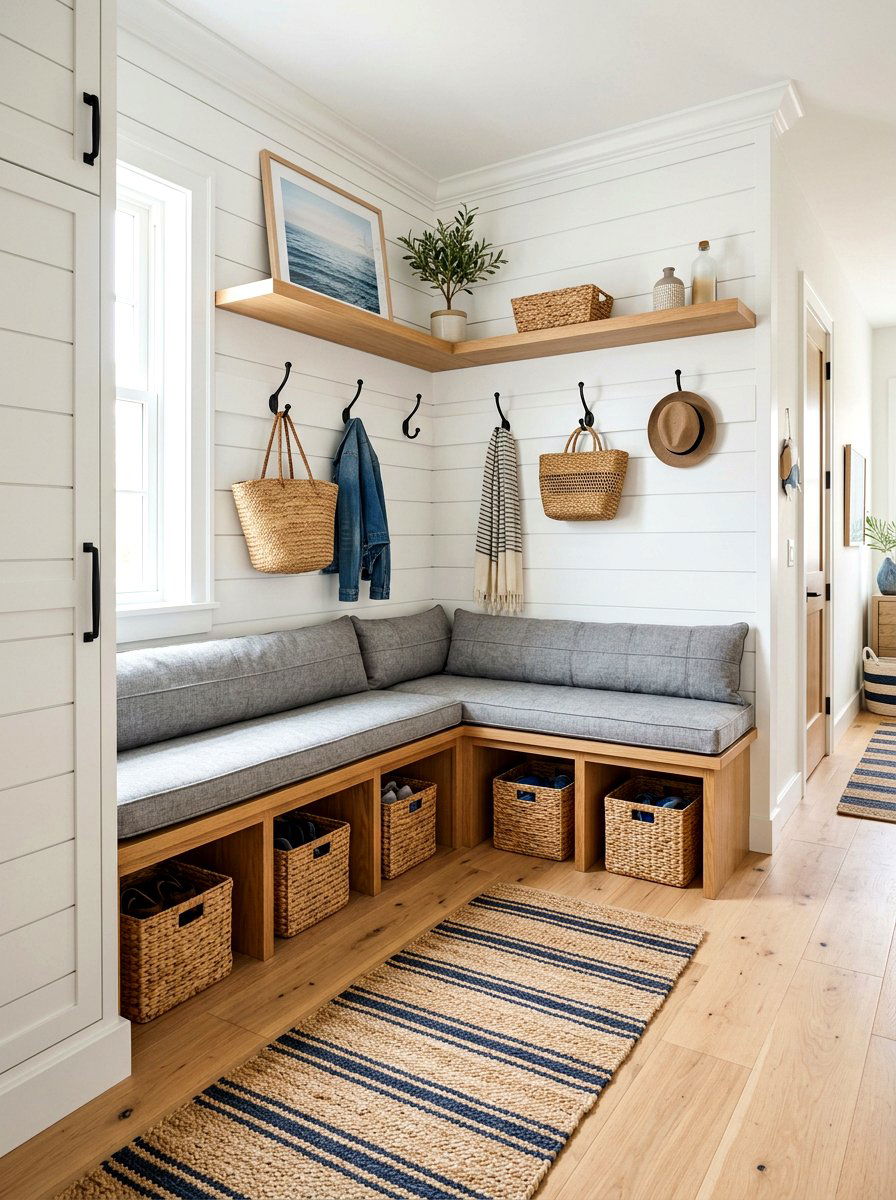
A corner mudroom bench is an ingenious way to utilize often-wasted space in an L-shaped entryway or a small vestibule. By wrapping the seating around two walls, you create an inviting nook that provides more surface area for sitting and storage than a straight bench. This configuration allows for additional hooks and shelving to be installed on both walls, effectively doubling the organization capacity in a small footprint. Corner units often become the focal point of the room, especially when styled with comfortable cushions and decorative pillows. It is a smart architectural solution for maximizing functionality in homes with unconventional floor plans.
8. Mudroom Storage Drawers
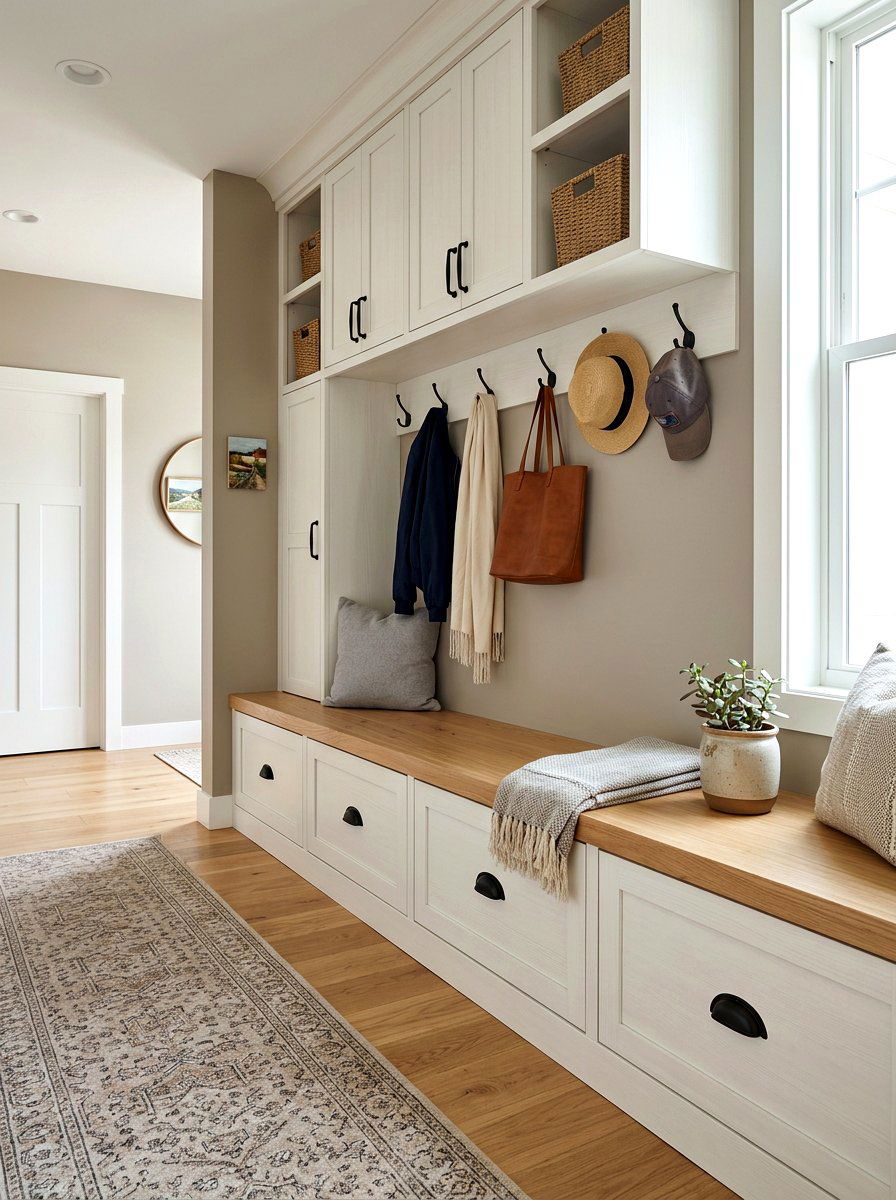
Mudroom storage drawers provide a sophisticated way to organize smaller accessories like gloves, scarves, and pet leashes that often get lost on open shelves. Soft-close drawer slides add a touch of luxury and prevent the noise of slamming, which is beneficial in a busy household environment. Deep drawers located at the base of a mudroom unit are perfect for stashing heavy items or off-season gear that needs to be tucked away. You can customize the drawer fronts with unique hardware to match the rest of your home’s decor. These drawers help keep the entire mudroom looking tidy by containing items that lack a uniform shape.
9. Mudroom Open Shelving
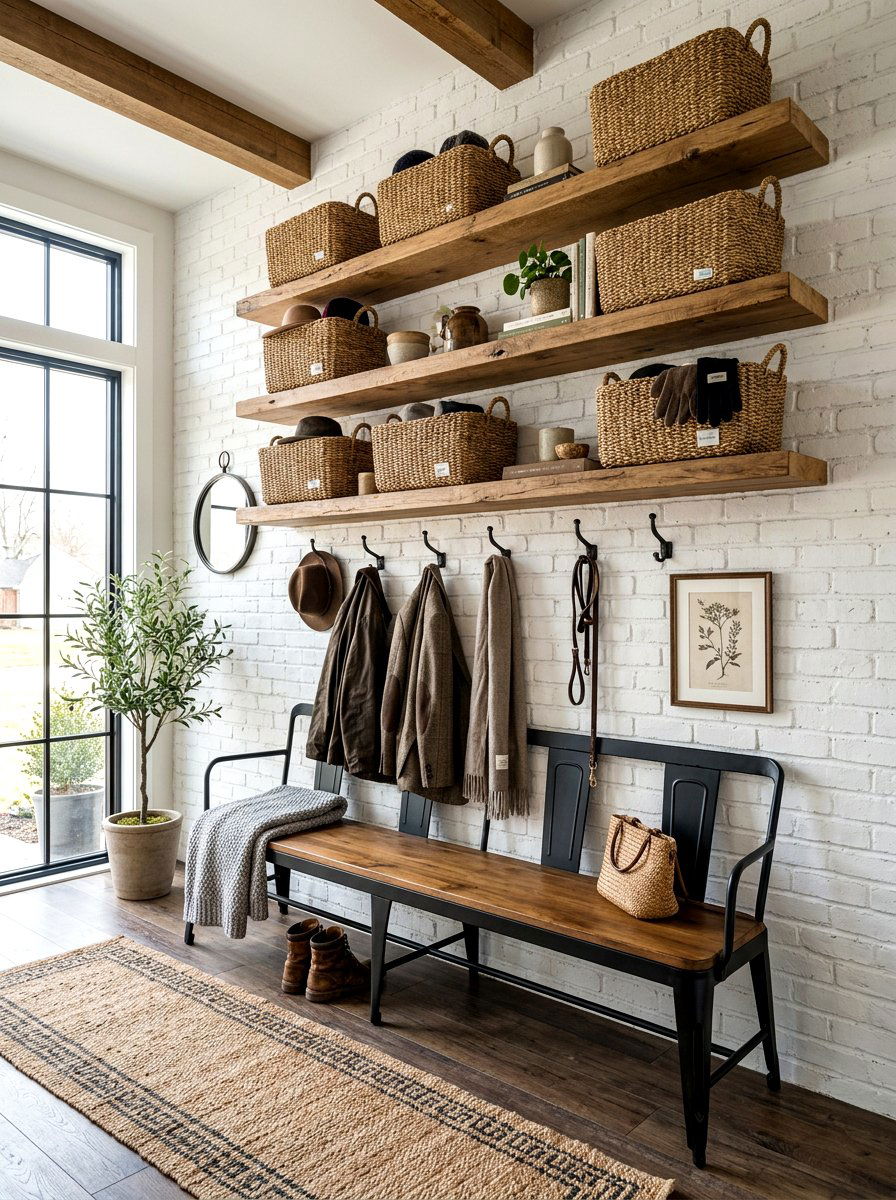
Mudroom open shelving creates an airy and accessible feel, making it easy to see exactly where everything is located at a glance. This design is perfect for displaying attractive storage bins or baskets that add texture and color to the functional space. Floating shelves can be installed above a bench to hold decorative items or frequently used grab-and-go essentials like sunglasses and keys. Because there are no doors to open, this style of storage is extremely efficient for families with a fast-paced lifestyle. Wood shelves with live edges or painted finishes can be used to introduce different design elements into the mudroom.
10. Overhead Mudroom Storage
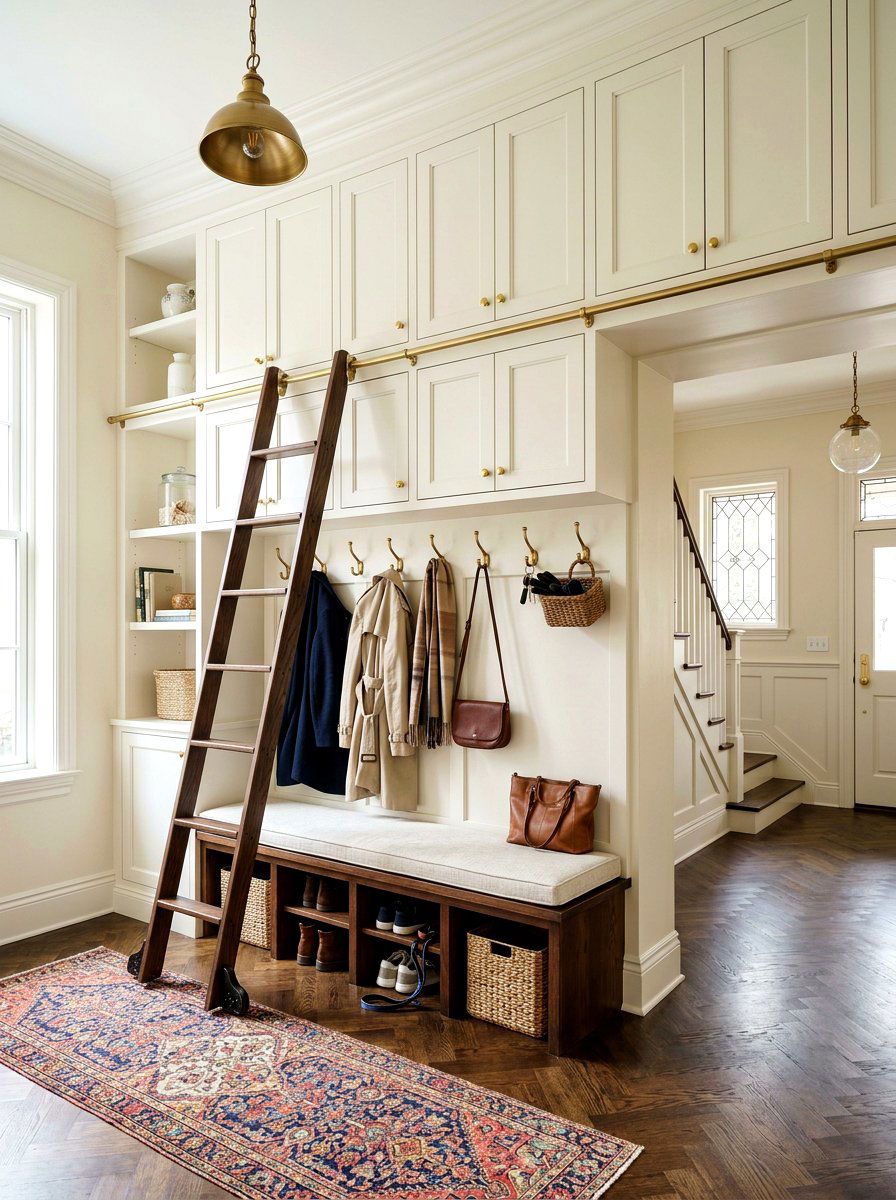
Overhead mudroom storage utilizes the often-neglected space near the ceiling to house items that are only needed occasionally throughout the year. Installing deep cabinets or open cubbies above the main locker area provides a perfect home for holiday decor, camping gear, or seasonal sports equipment. Using a consistent cabinetry style for these upper units creates a seamless look that draws the eye upward, making the ceiling appear higher. For very high ceilings, a library-style rolling ladder can be added as both a functional tool and a striking design feature. This vertical approach ensures that the primary active zones remain clutter-free for daily activities.
11. Hidden Mudroom Storage
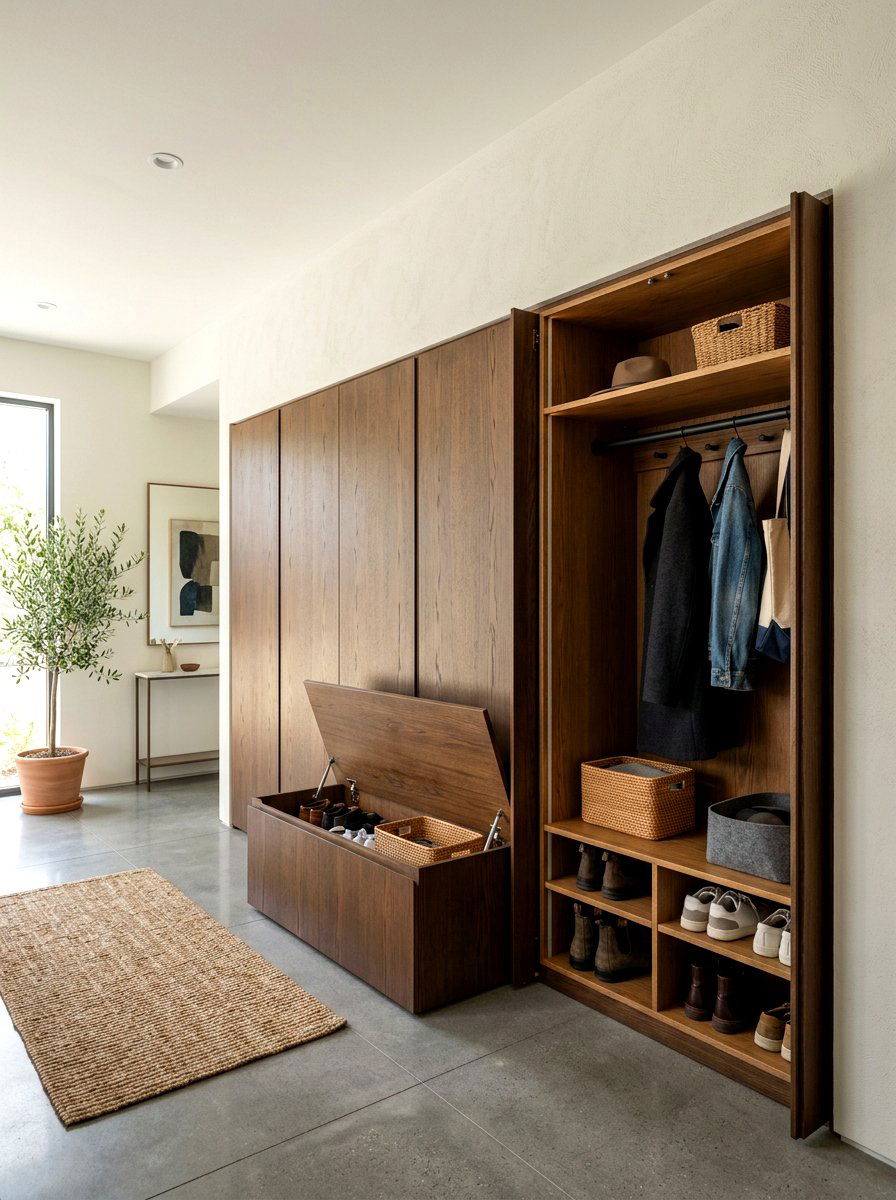
Hidden mudroom storage is designed for homeowners who want their entryway to appear like a formal foyer while retaining all the utility of a workspace. This can involve secret compartments behind wall paneling or benches with hinged tops that reveal deep storage wells for bulky items. Integrated closets with bypass doors can also hide entire shelving systems when they are not in use, keeping the aesthetic clean. This approach works exceptionally well in homes where the mudroom entrance is shared with the main guest entry. By concealing the functional elements, you maintain a high level of design sophistication without sacrificing the necessary organization.
12. Mudroom Basket Storage
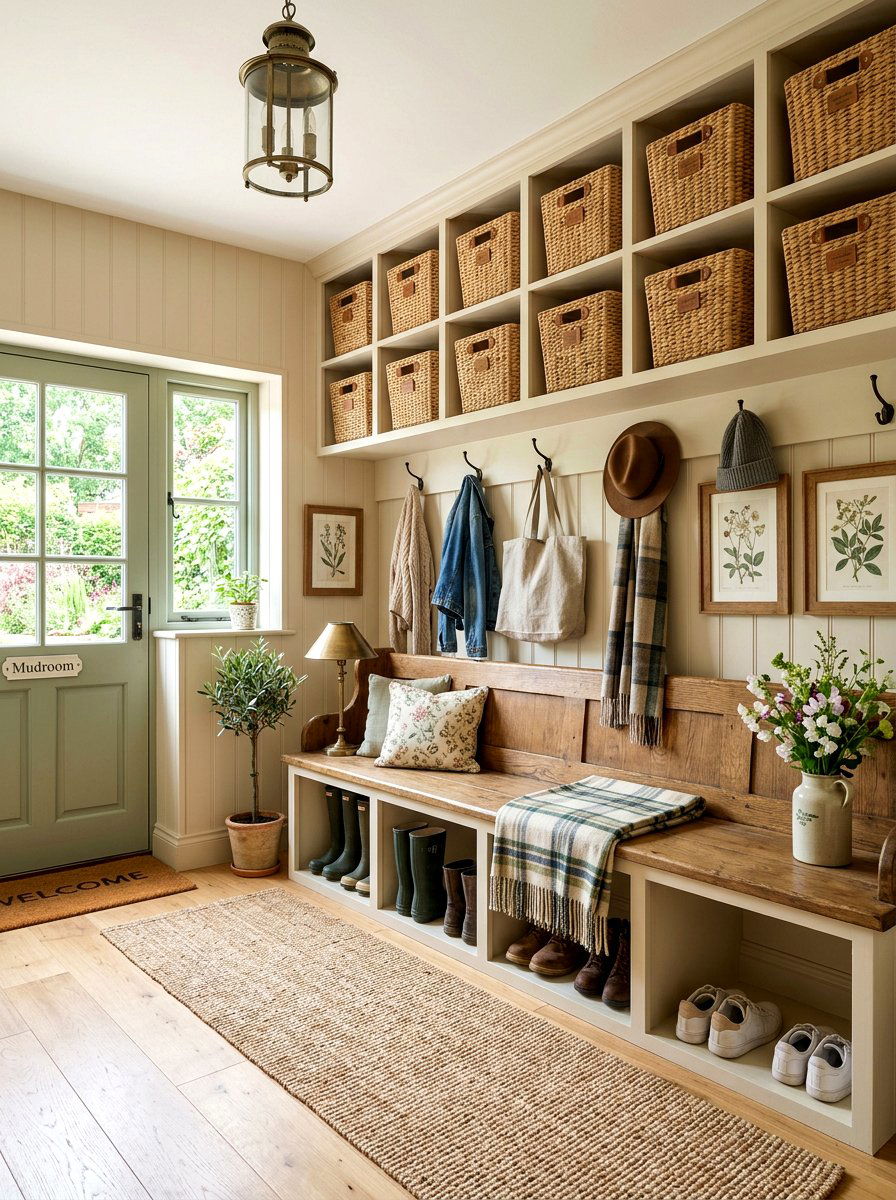
Mudroom basket storage introduces a warm, organic texture to the room while providing a flexible way to sort different types of gear. Woven wicker, seagrass, or wire baskets can be placed in open cubbies to act as removable drawers for each family member. This allows individuals to bring their entire basket to another room to sort through contents or clean them out easily. Baskets are excellent for containing oddly shaped items like balls, helmets, or gardening tools that don't sit well on flat shelves. They also hide the visual clutter of many small items, creating a more uniform and pleasing appearance across the storage unit.
13. Narrow Mudroom Cabinet
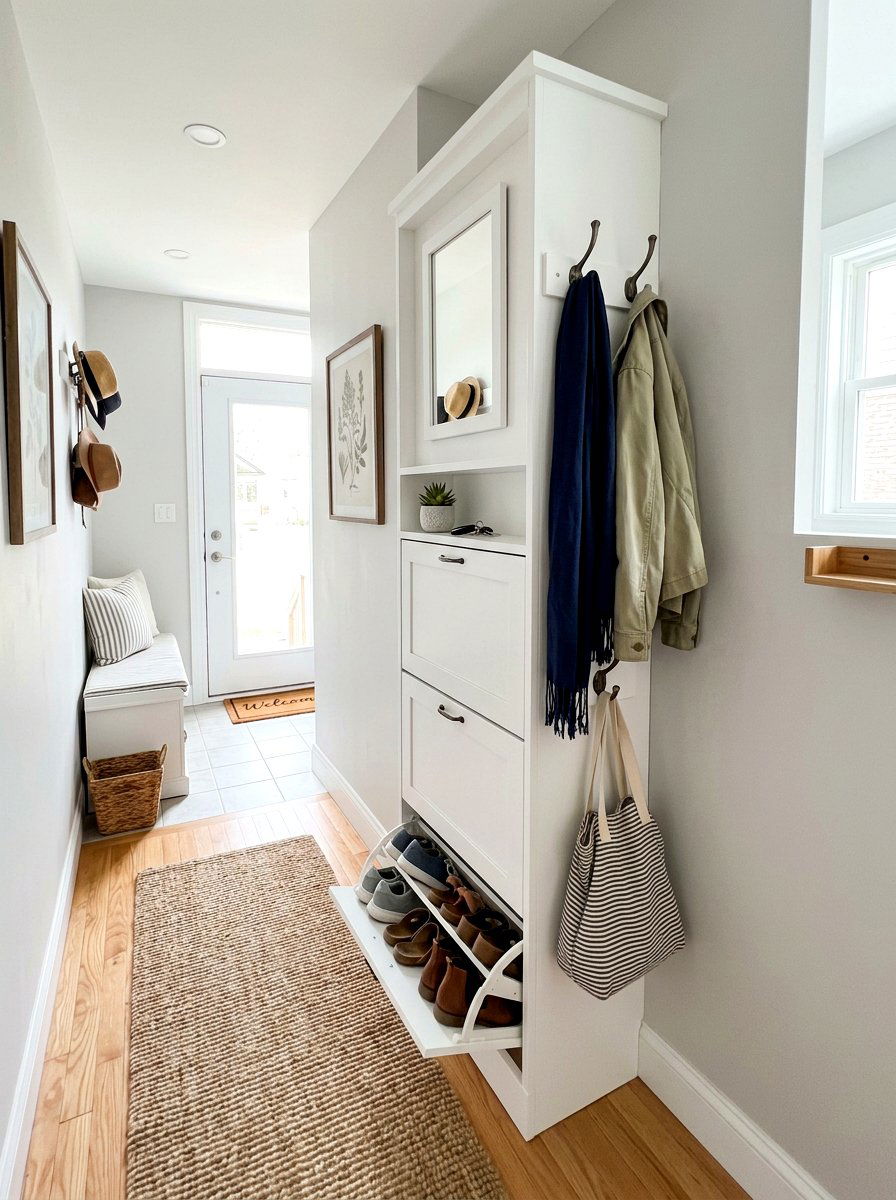
A narrow mudroom cabinet is the perfect solution for homes with limited floor space or those that utilize a side hallway as an entry point. These slim units focus on vertical storage, offering a series of hooks and small shelves within a shallow depth that doesn 't obstruct foot traffic. Many narrow designs feature flip-down shoe compartments that save significant space compared to traditional swinging doors. Even in a tight corridor, a well-designed narrow cabinet can provide a designated spot for mail, keys, and lightweight jackets. It demonstrates that you don' t need a massive room to create a highly functional and organized transition area.
14. Shiplap Mudroom Wall
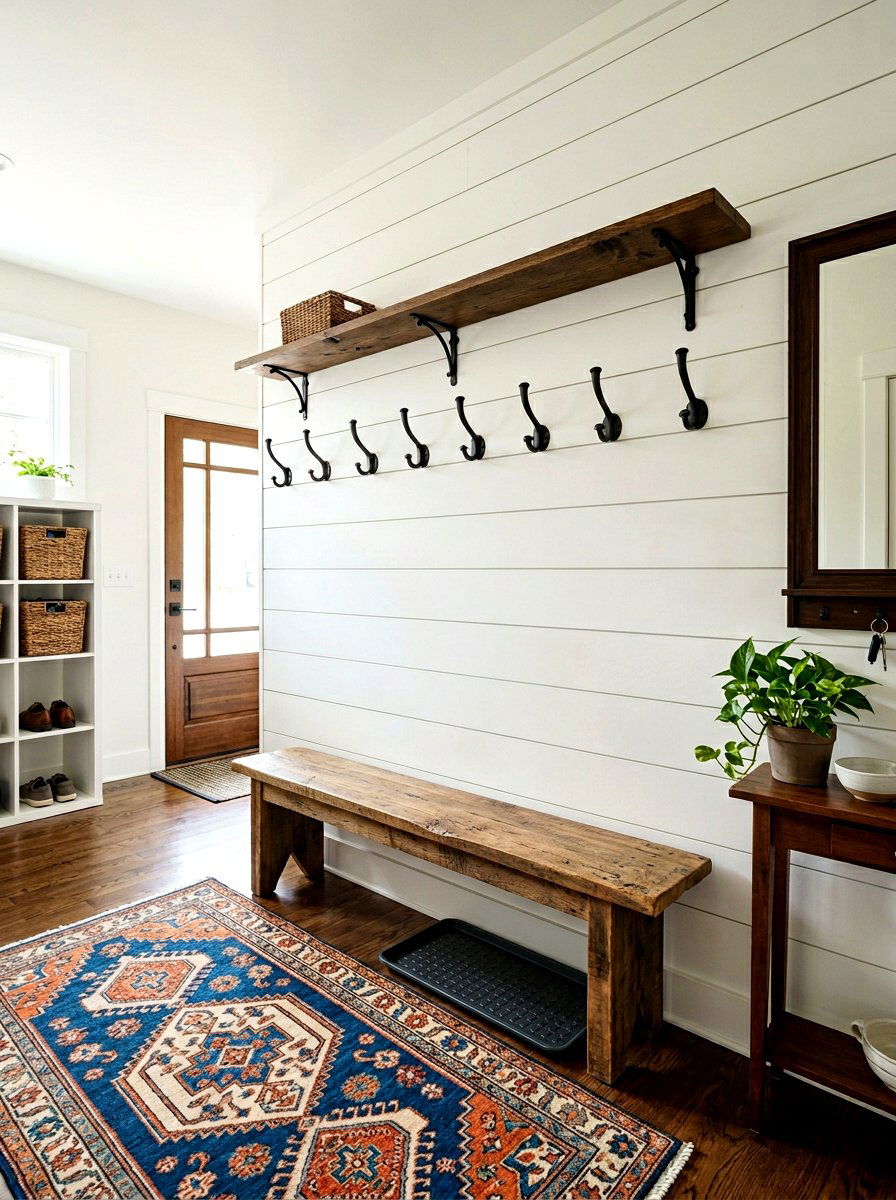
A shiplap mudroom wall adds instant architectural interest and a classic farmhouse feel to the entry space while providing a durable surface for hooks. The horizontal lines of the wooden planks help to visually widen a narrow room, making it feel more spacious and inviting. Shiplap is particularly practical in a mudroom because it can withstand the scuffs and bumps of daily use better than standard drywall. When painted in a crisp white or a soft neutral, it provides a beautiful backdrop for dark metal hooks and natural wood benches. This wall treatment anchors the storage components, making them feel like an intentional part of the design.
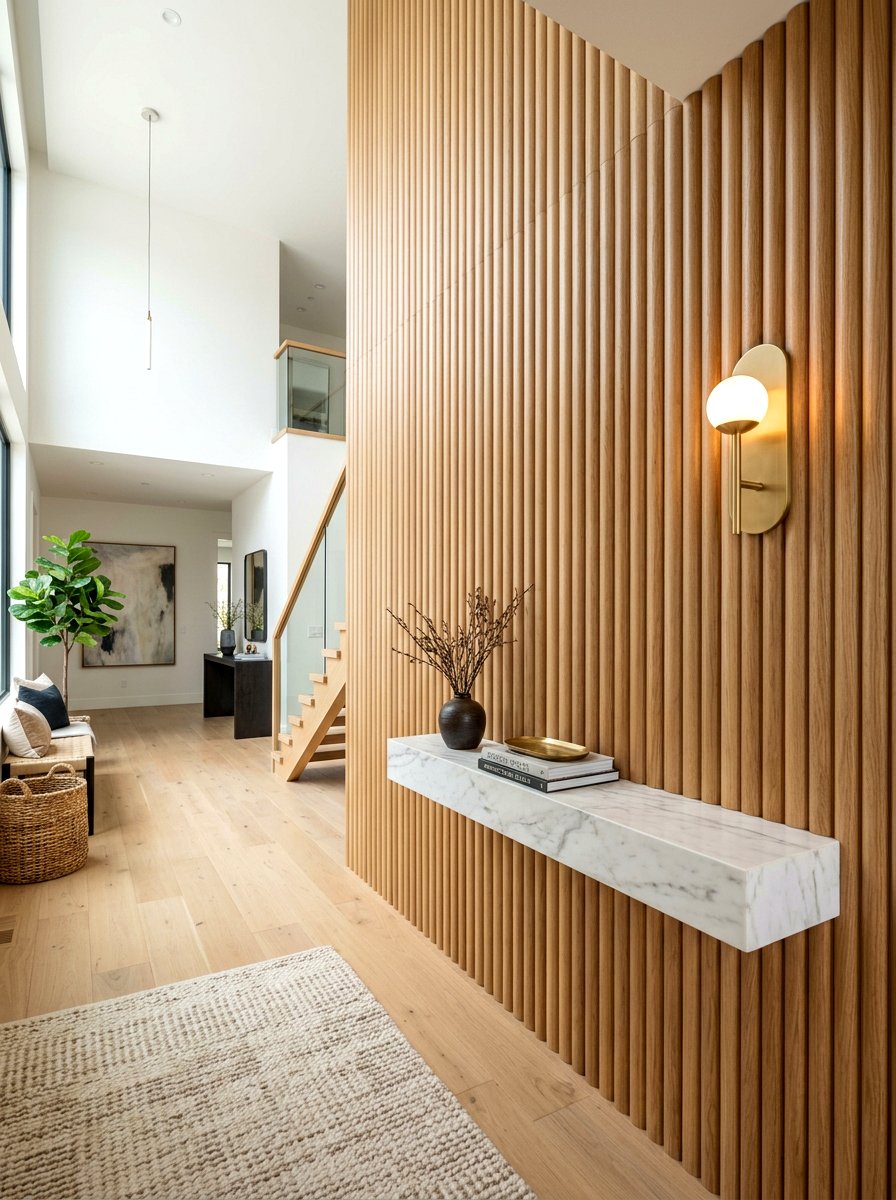
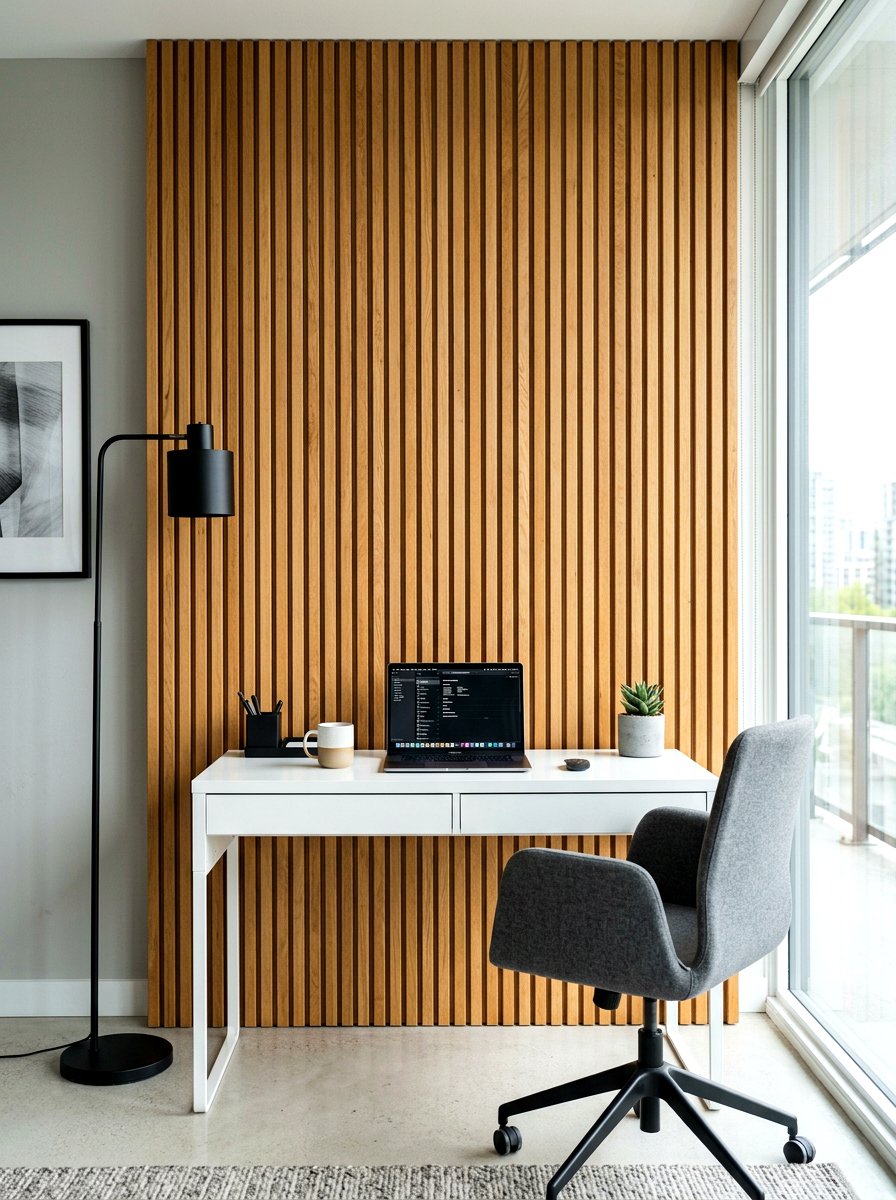
15. Entryway Mudroom Unit
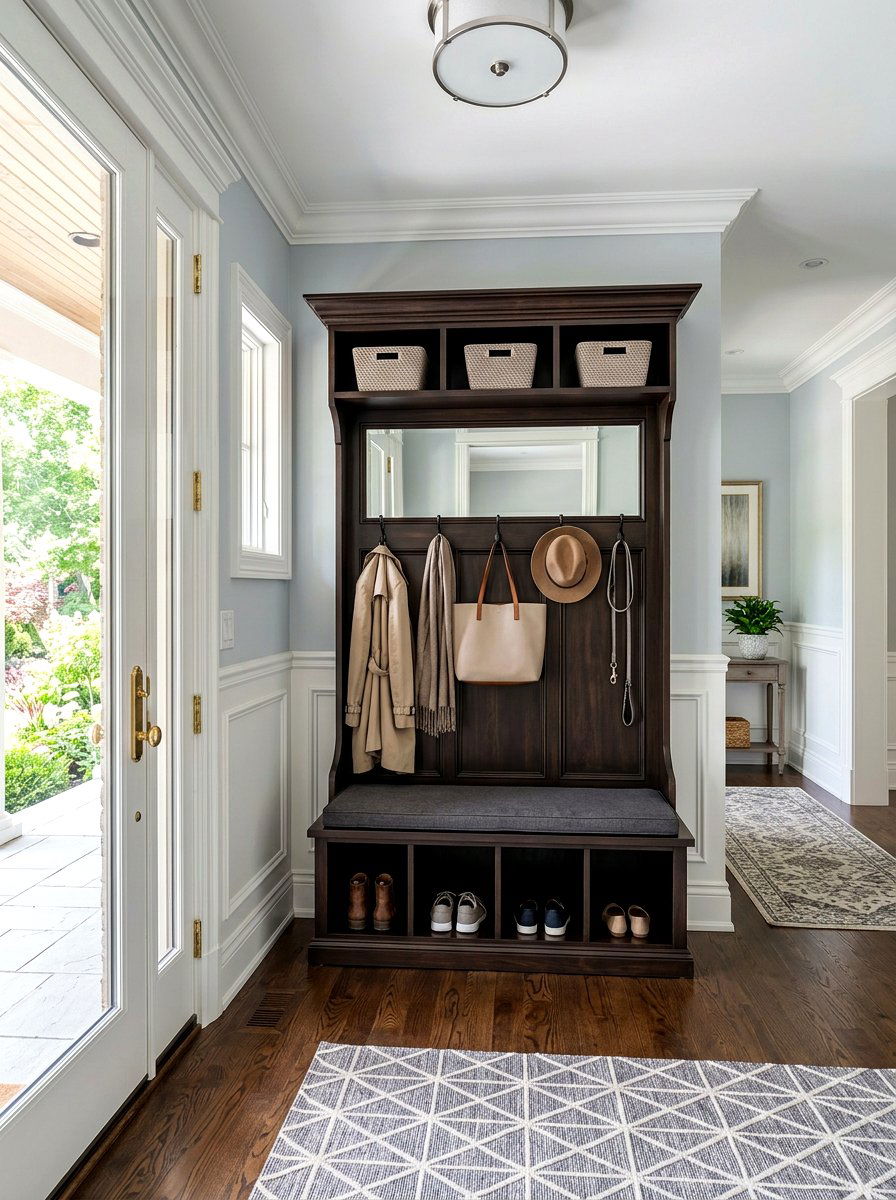
An entryway mudroom unit combines various storage elements into one cohesive piece of furniture that can be placed directly in a front foyer. These units typically include a bench, hooks, and overhead shelving, acting as an all-in-one organization station for homes without a dedicated mudroom. Because these pieces are often visible to guests, they are designed with high-quality finishes and decorative details that enhance the home’s first impression. Choosing a unit that matches the style of your living room furniture creates a smooth transition between the entry and the rest of the house. It is an efficient way to add structure to an open-plan layout.
16. Mudroom Built In Lighting
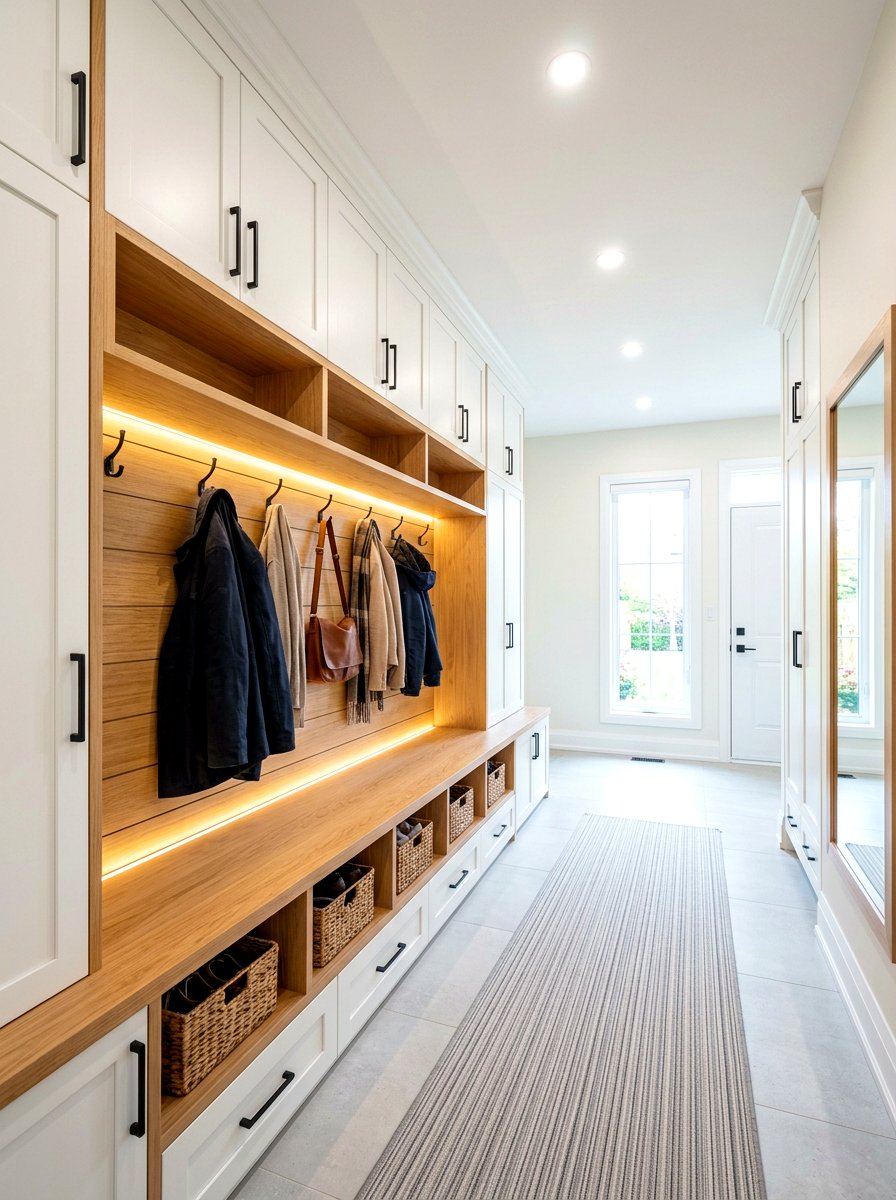
Mudroom built-in lighting is an essential feature that improves the functionality of the space during the dark early mornings or late evenings. LED strip lights can be recessed into the underside of overhead cabinets or shelves to illuminate the bench area and hooks. This task lighting makes it much easier to find specific items and see what you are doing while lacing up shoes. Motion-sensor lights are a popular modern addition, automatically turning on when someone enters the room with their hands full. Well-placed lighting also highlights the textures and colors of your cabinetry, making the mudroom feel more like a high-end designer space.
17. Custom Mudroom Cabinetry
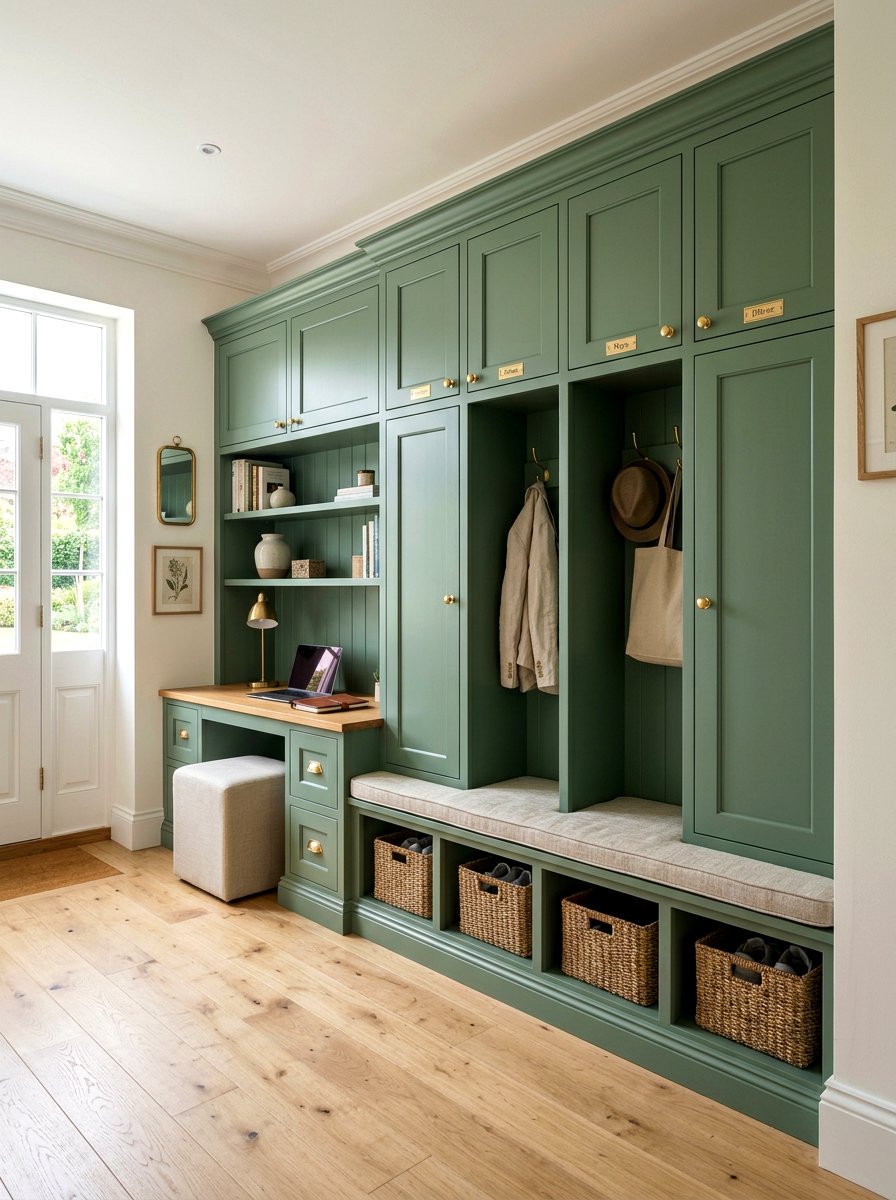
Custom mudroom cabinetry allows for a tailored storage solution that fits your family's lifestyle and the unique dimensions of your home perfectly. You can specify the exact number of lockers, the height of the bench, and the inclusion of specialized features like charging stations for electronics. Custom designs can also work around architectural challenges like sloped ceilings, windows, or existing plumbing and electrical outlets. By choosing your own materials, hardware, and paint colors, you ensure that the mudroom feels like a natural extension of your personal style. This investment in high-quality craftsmanship adds significant value and long-term organization to the property.
18. Padded Mudroom Bench
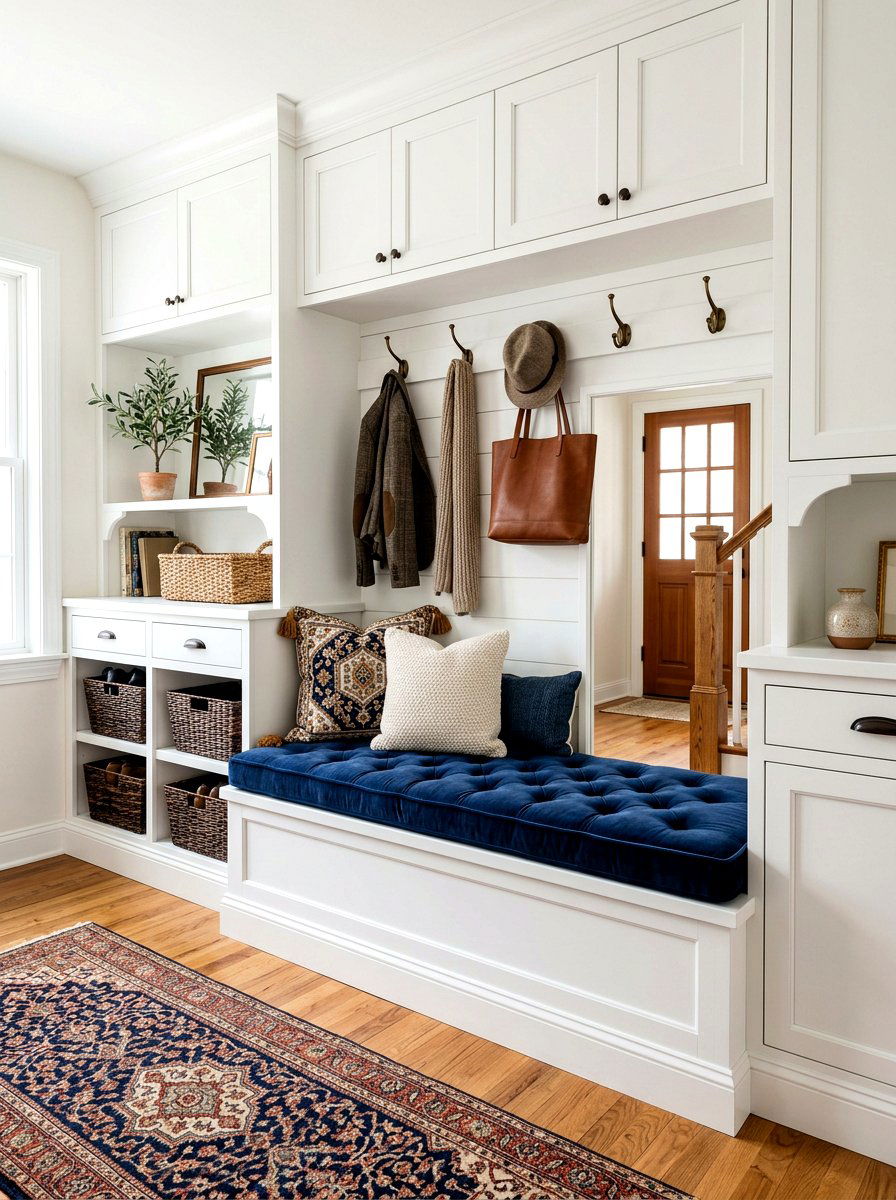
A padded mudroom bench adds a layer of comfort and softness to a space that is often dominated by hard surfaces like wood and tile. Upholstering the seat of your bench with a durable, stain-resistant fabric makes it a more inviting place to sit and relax for a moment. You can choose patterns or colors that coordinate with your home’s decor to add a touch of personality to the room. Removable cushions are a practical choice, as they can be easily cleaned if they get dirty from outdoor gear. This simple addition transforms a purely functional storage area into a cozy and welcoming part of the home.
19. Mudroom Tile Flooring
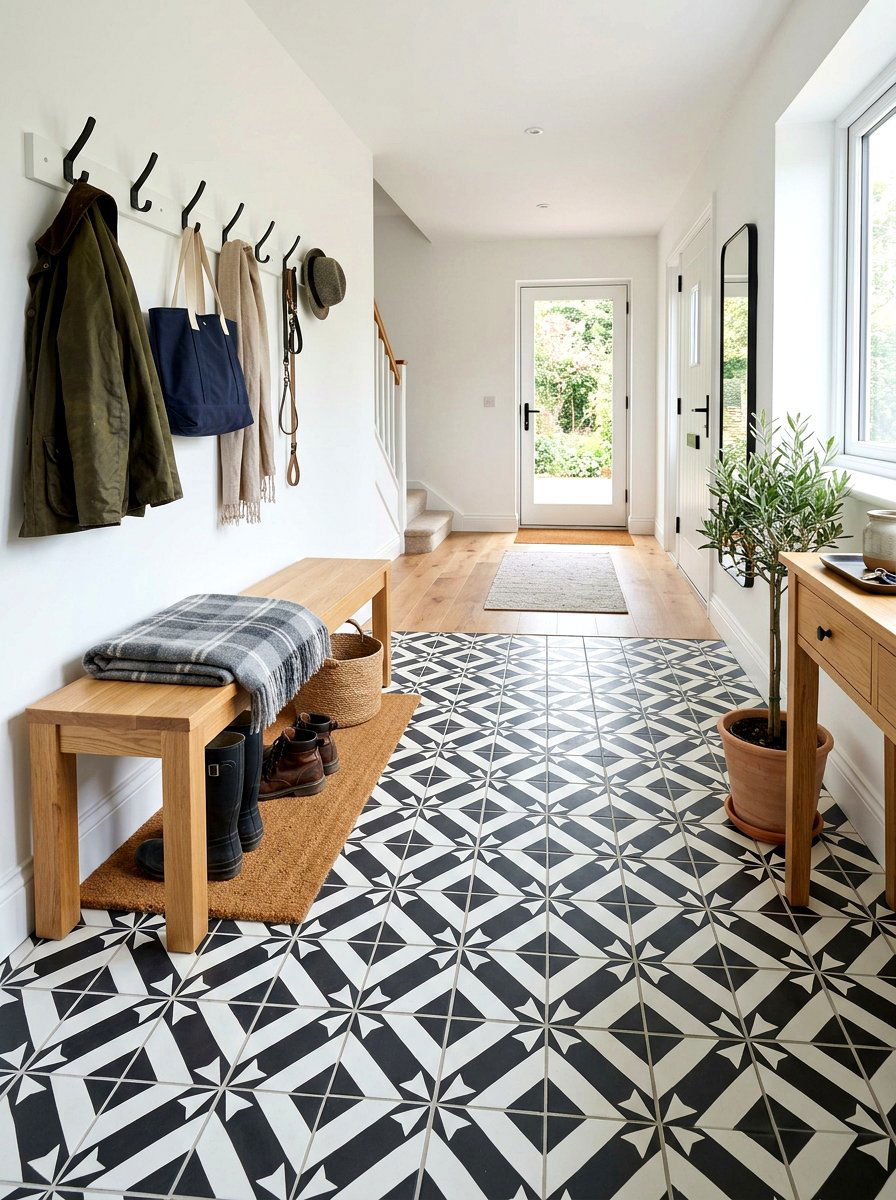
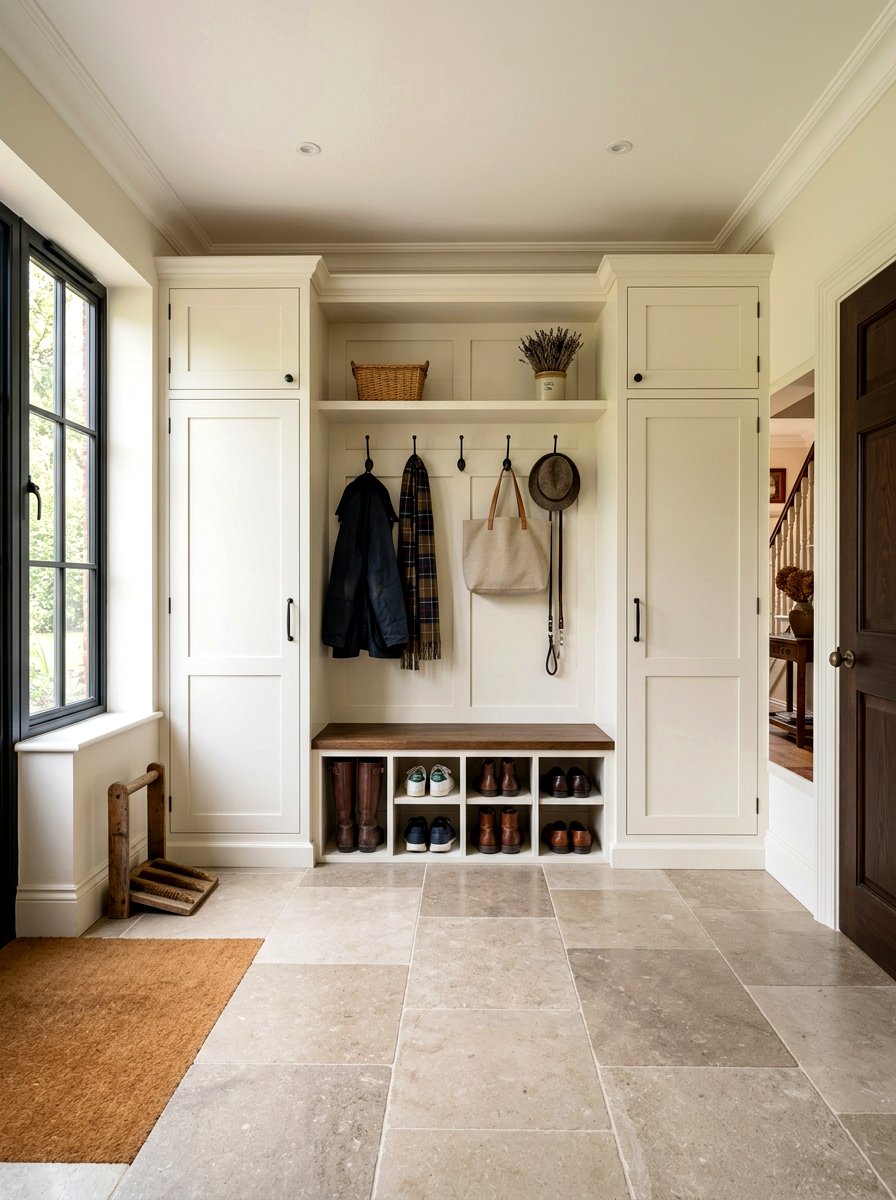
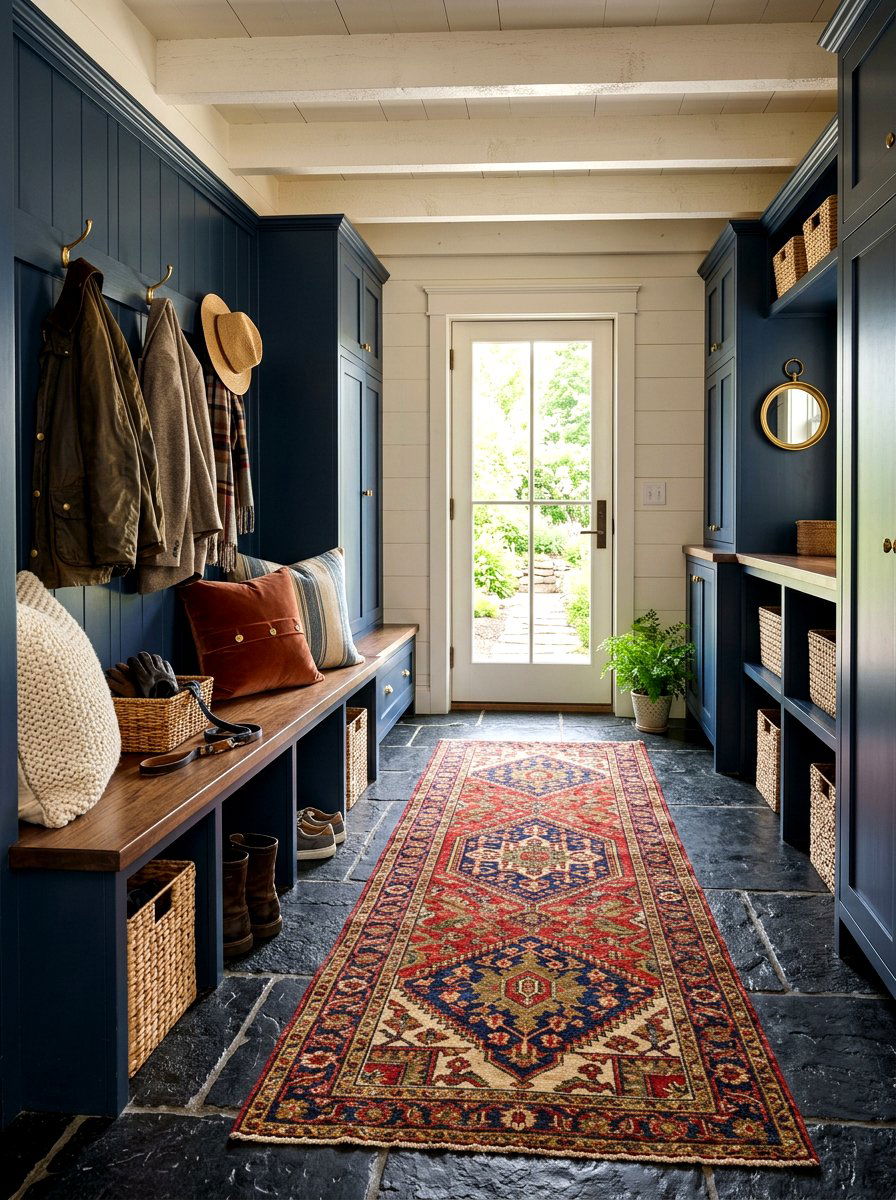
Mudroom tile flooring is the most practical choice for a high-traffic entry zone because of its extreme durability and water resistance. Porcelain or ceramic tiles can withstand the weight of heavy furniture and the constant scraping of boots without showing signs of wear. Many homeowners choose patterned tiles, such as cement-look or herringbone layouts, to add a decorative element that also helps hide dirt. Large-format tiles with minimal grout lines are easier to clean and maintain over time. Selecting a slip-resistant texture is crucial for safety, ensuring that the floor remains stable even when wet from rain or snow tracked in from outside.

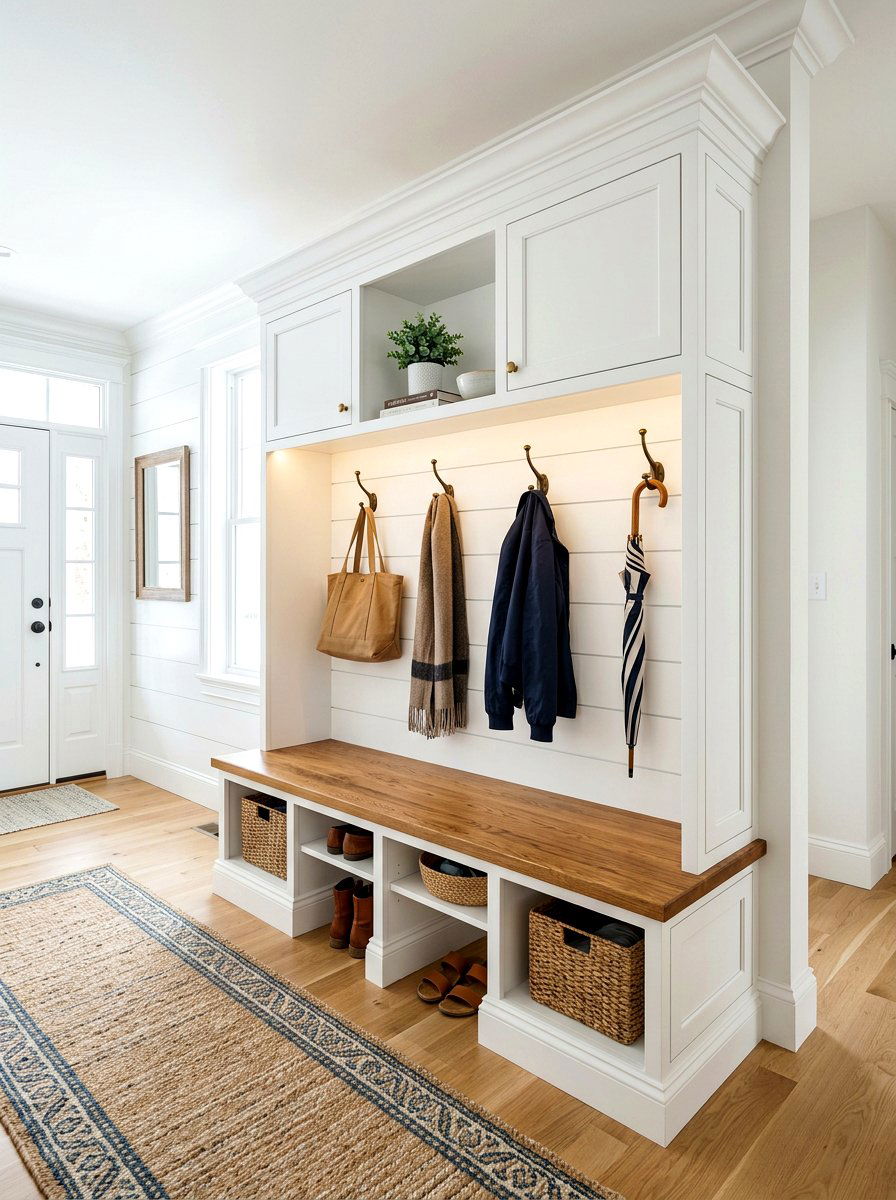
20. Mudroom Chalkboard Wall
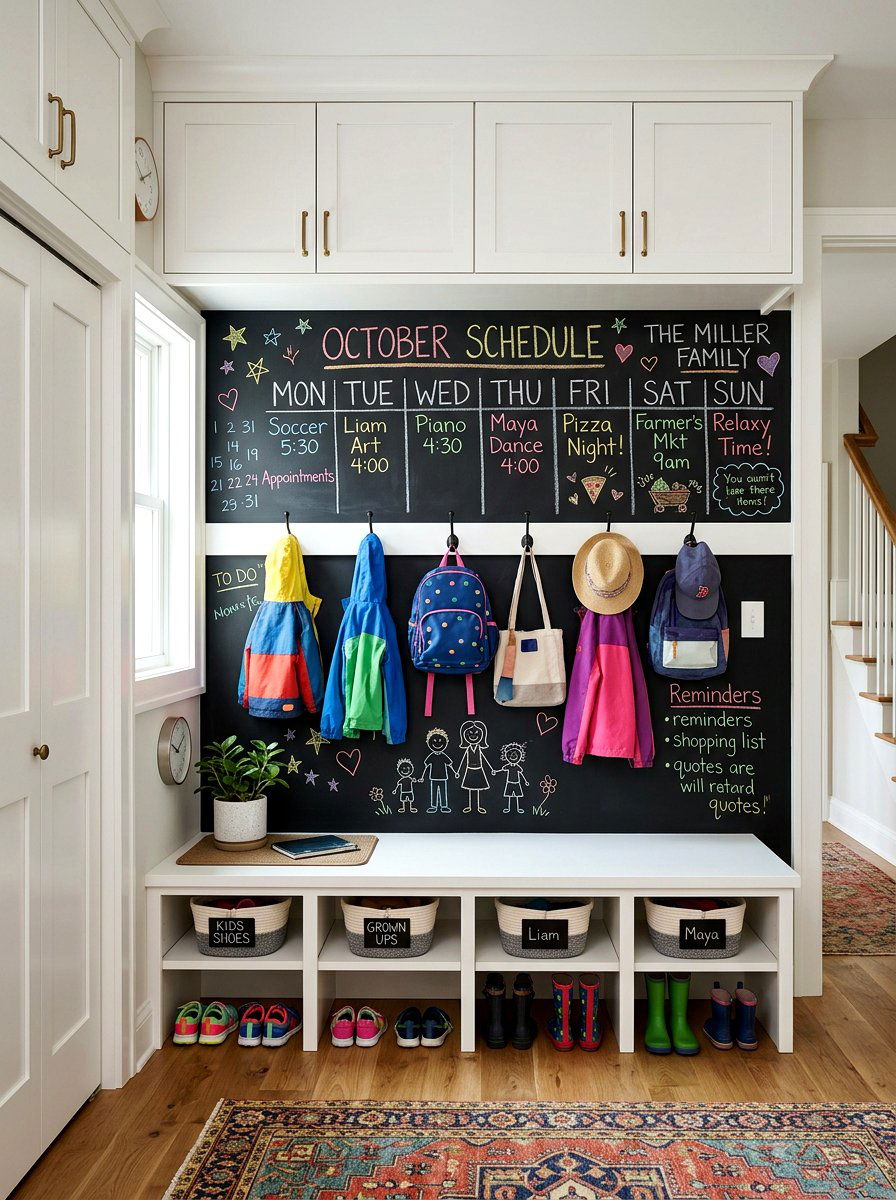
A mudroom chalkboard wall serves as a central communication hub where the family can leave notes, write grocery lists, and track weekly schedules. This interactive design element adds a playful and creative touch to the organization zone, making it more than just a place to store coats. Kids can use the lower sections of the wall for drawing, while the upper sections are reserved for important reminders and calendars. Painting a single wall or a section of cabinetry with chalkboard paint creates a bold visual statement that contrasts beautifully with lighter wood tones. It keeps everyone on the same page during the busy morning transition.
21. Mudroom Wall Mirror
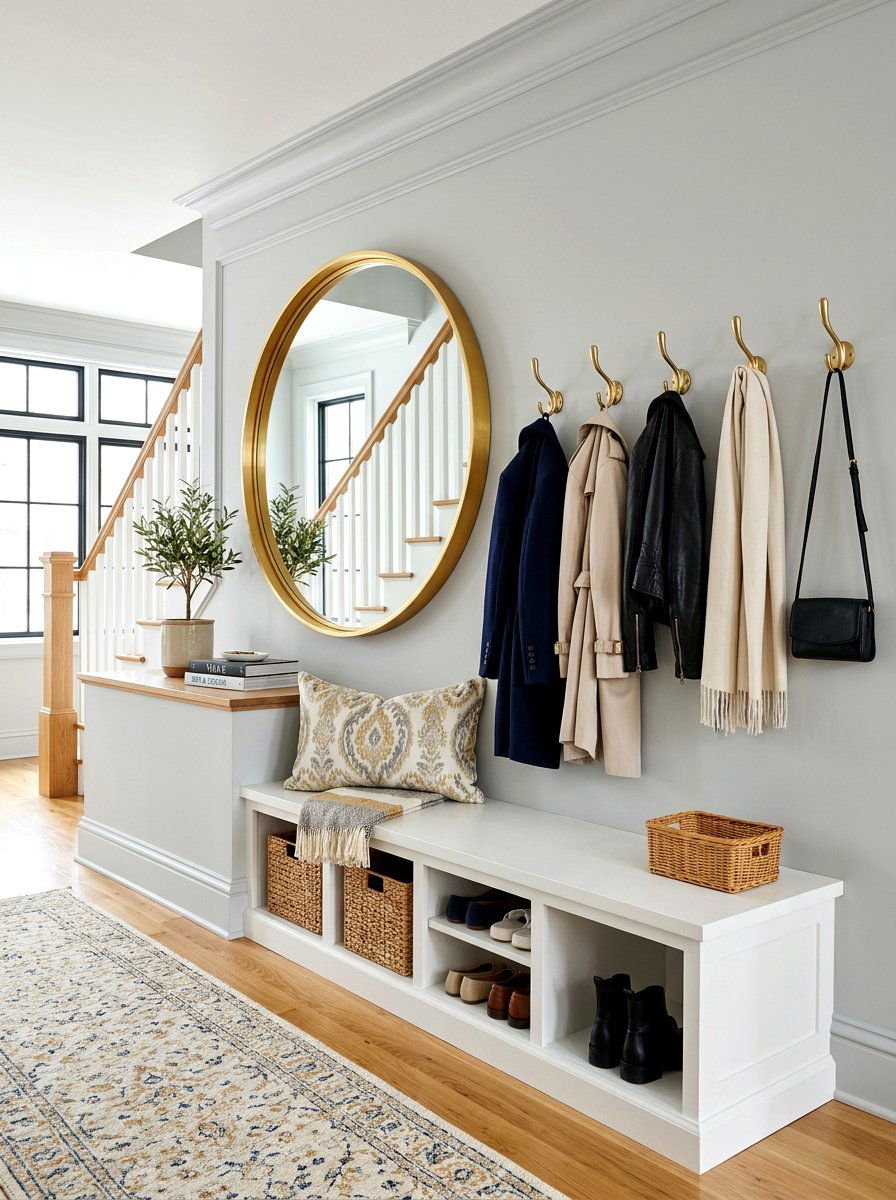
A mudroom wall mirror is a functional and aesthetic addition that allows family members to do a quick check of their appearance before heading out. Mirrors also serve to reflect light around the room, making a small or windowless mudroom feel much brighter and more expansive. A large, framed mirror can act as a beautiful focal point, while a series of smaller mirrors can add a modern, gallery-like feel to the wall. Positioning a mirror opposite a window or a light source maximizes its brightening effect. It is a simple yet effective way to add a touch of elegance to a hardworking utility space.
22. Mudroom Laundry Combo
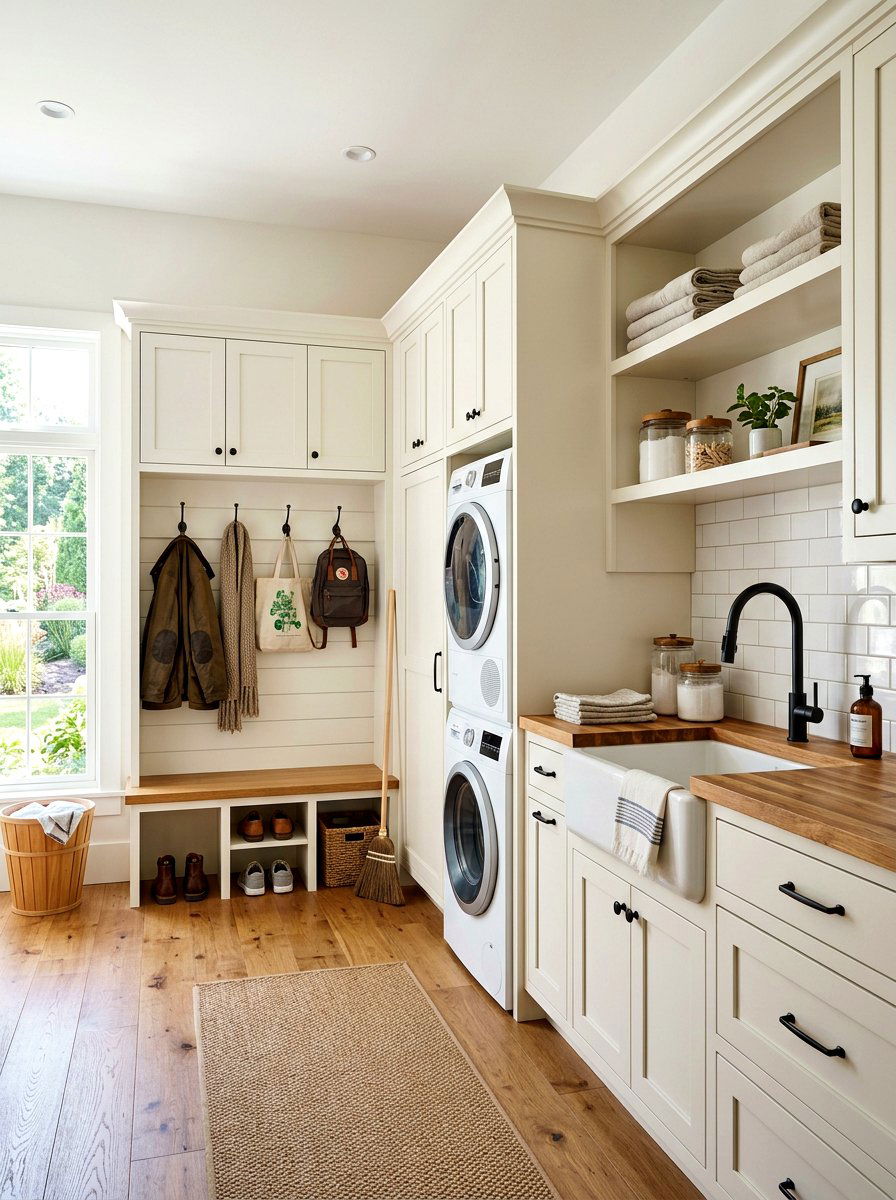
A mudroom laundry combo is a highly efficient design that consolidates two essential utility functions into one hard-working room. This layout allows for dirty clothes and wet towels to be dropped directly into the washer as soon as they enter the house. Integrated cabinetry can house the appliances while providing ample counter space for folding laundry or sorting mail. This dual-purpose space is perfect for active families who deal with a lot of sports gear or outdoor messes. By combining these rooms, you free up square footage in other parts of the home while creating a centralized zone for all household maintenance tasks.
23. Mudroom Command Center
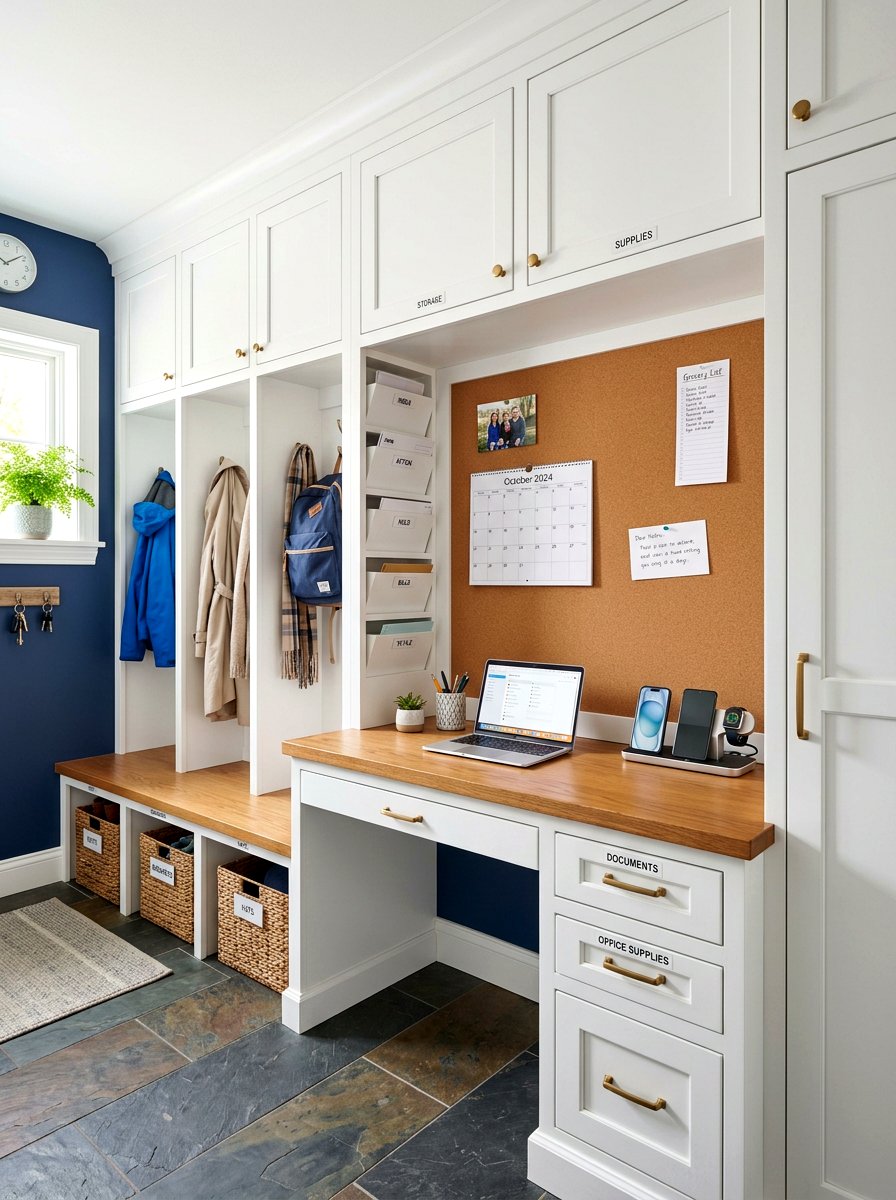
A mudroom command center focuses on organizing the mental load of a household by providing a dedicated spot for mail, keys, and electronics. This area often includes a small desk or a series of wall-mounted organizers to sort incoming paperwork and school forms. Built-in charging stations with USB ports ensure that phones and tablets are powered up and ready to go for the next day. By giving these small but important items a specific home, you prevent them from cluttering up kitchen counters or dining tables. A command center makes the mudroom the true brain of the home, keeping daily life running smoothly.
24. Mudroom Sliding Doors
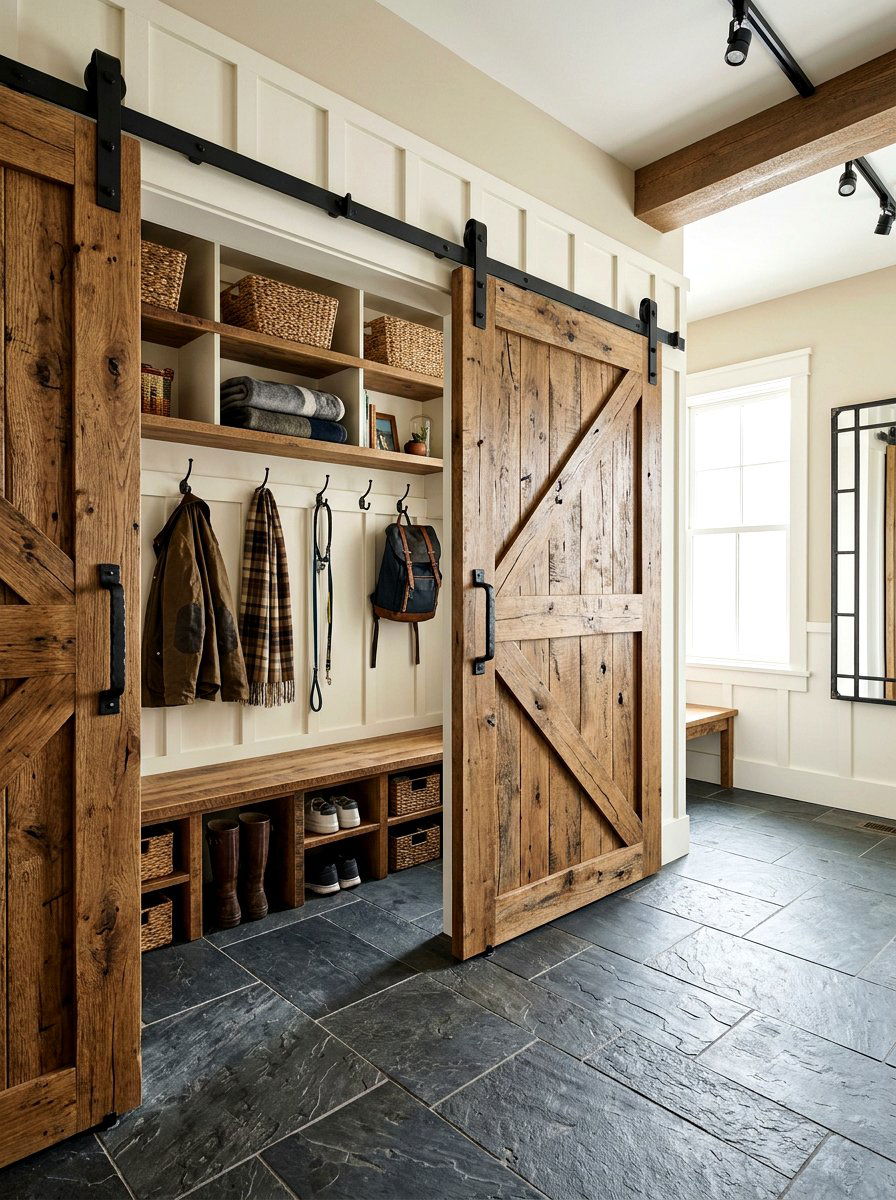
Mudroom sliding doors, often in the style of barn doors, offer a stylish and space-saving way to close off storage areas when they are not in use. These doors slide along a track, meaning they don't require the clearance space of a traditional swinging door, which is ideal for narrow hallways. You can use large sliding panels to hide an entire wall of cubbies and hooks, instantly tidying up the room for guests. The hardware itself can serve as a decorative industrial or rustic accent that adds character to the entryway. Sliding doors provide a flexible solution for maintaining a clean and organized aesthetic.
25. Mudroom Coat Rack
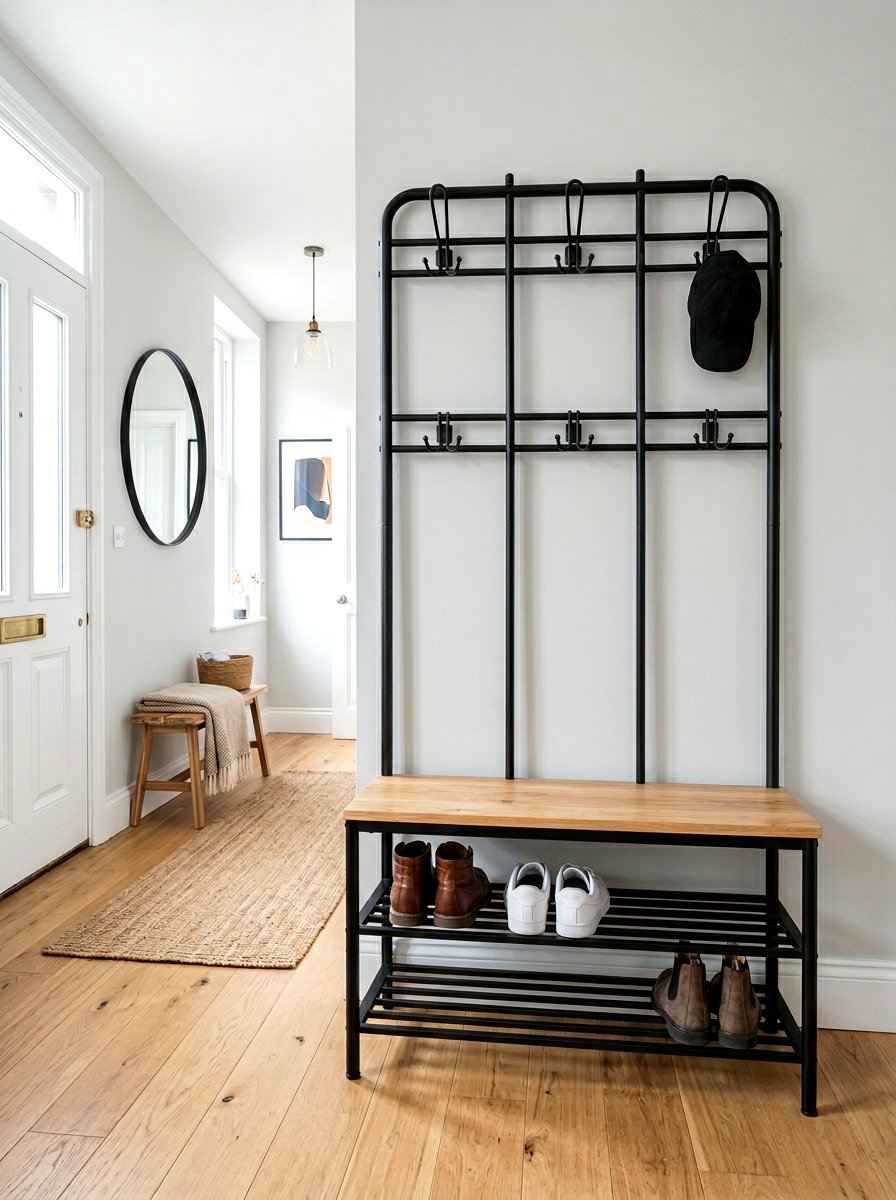
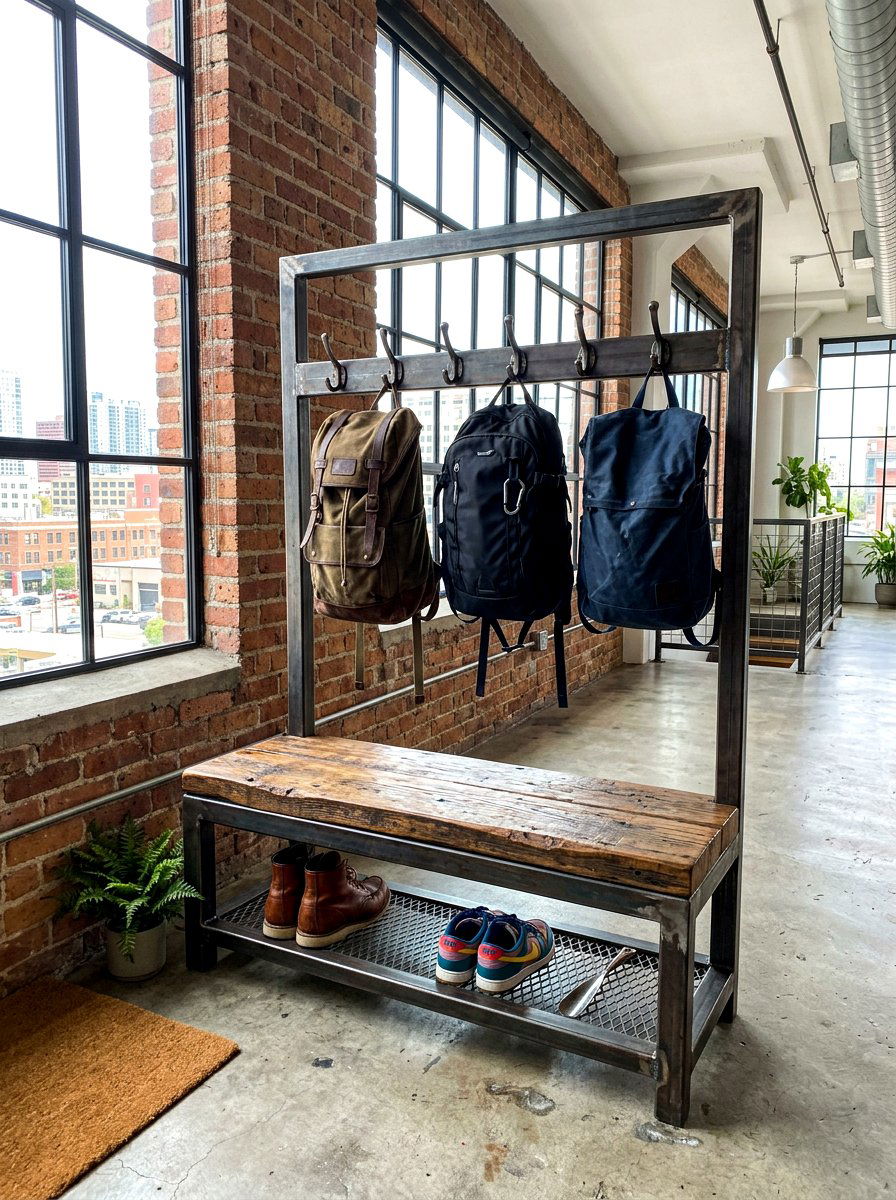
A mudroom coat rack can be a beautiful freestanding piece or a wall-mounted rail that provides additional hanging space for guests and residents alike. While built-in hooks are great for permanent storage, a dedicated rack can handle the overflow of heavy winter coats during the colder months. Modern designs often incorporate a shelf at the top for hats and a small bench or tray at the bottom for shoes. Choosing a rack with a unique architectural shape can make it a statement piece in your entryway. It offers a flexible storage option that can be moved or adjusted as your family’s needs change over time.
26. Industrial Mudroom Hooks
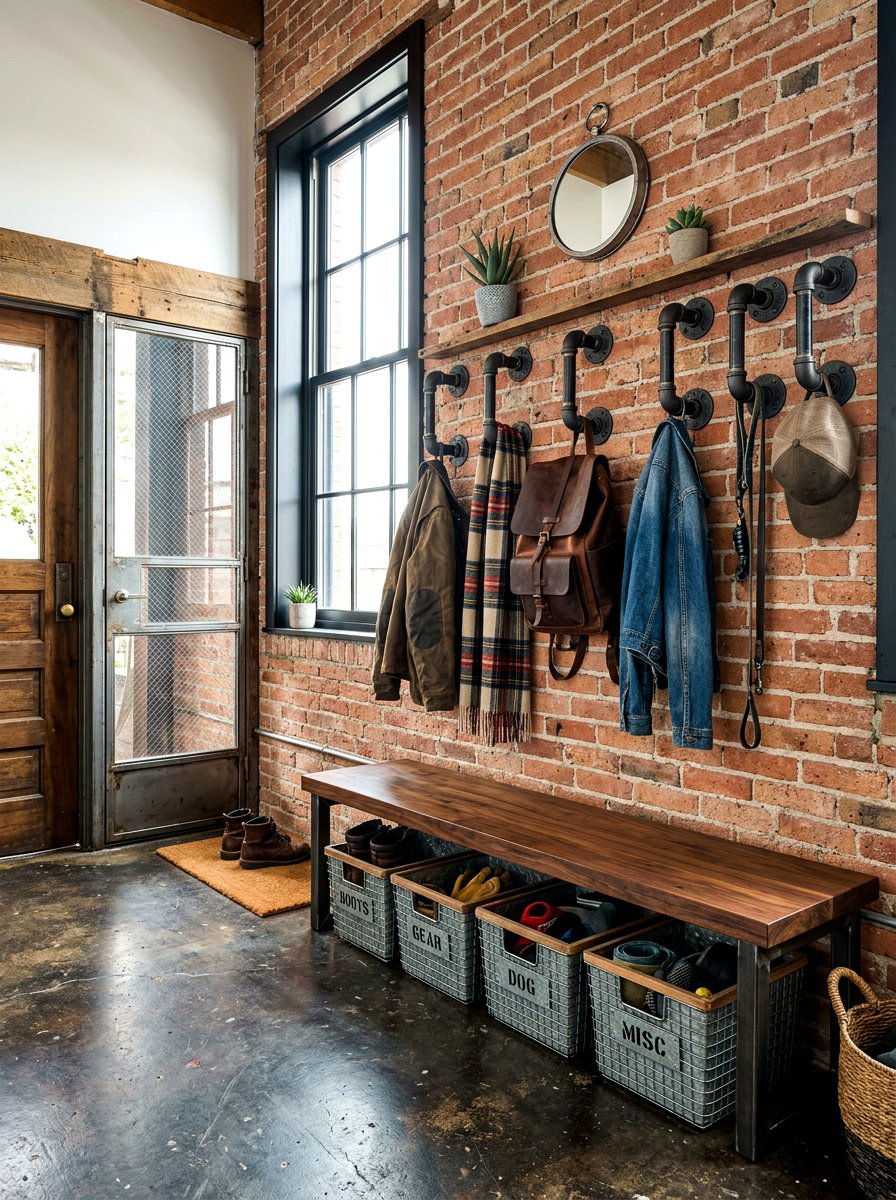
Industrial mudroom hooks, often made from repurposed iron pipes or heavy-duty black steel, add a rugged and modern edge to the storage area. These hooks are incredibly strong and can easily support the weight of heavy backpacks and thick winter parkas without bending. Their simple, functional aesthetic pairs perfectly with reclaimed wood benches and brick or concrete-look tile floors. This style is particularly well-suited for families who want a mudroom that can take a lot of use while still looking cool and intentional. The dark metal finish provides a sharp contrast against light-colored walls, creating a striking visual pattern in the entry.
27. Mudroom Wallpaper Backing
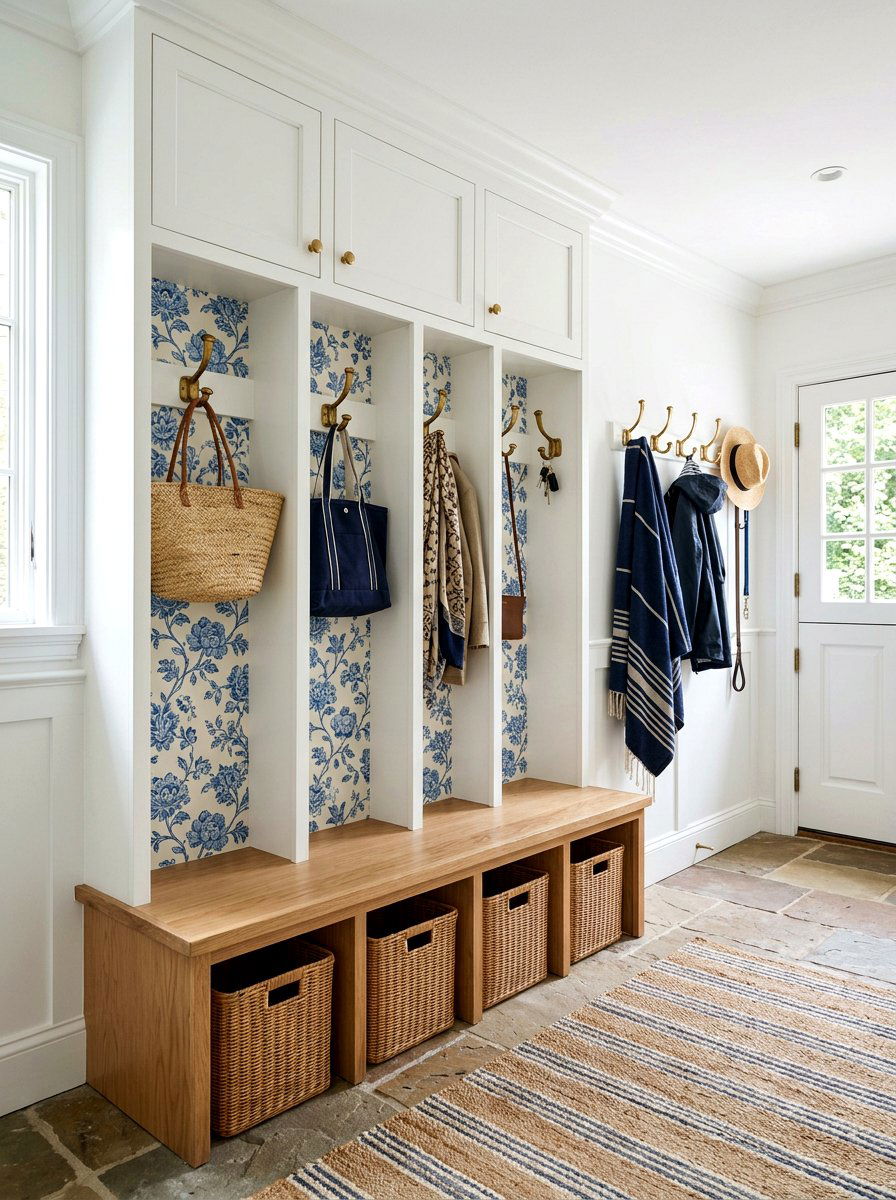
Mudroom wallpaper backing is a clever way to add a pop of color and pattern to the inside of open lockers or behind a row of hooks. Since mudrooms are often smaller spaces, they are the perfect place to experiment with bold or whimsical wallpaper designs that might be overwhelming in a larger room. A floral, geometric, or textured grasscloth pattern can provide a beautiful backdrop that makes the functional storage elements feel more like a curated display. This design detail adds a layer of sophistication and personal style to the room. Using a washable or high-quality vinyl wallpaper ensures that it remains durable against wet jackets.
28. Minimalist Mudroom Design
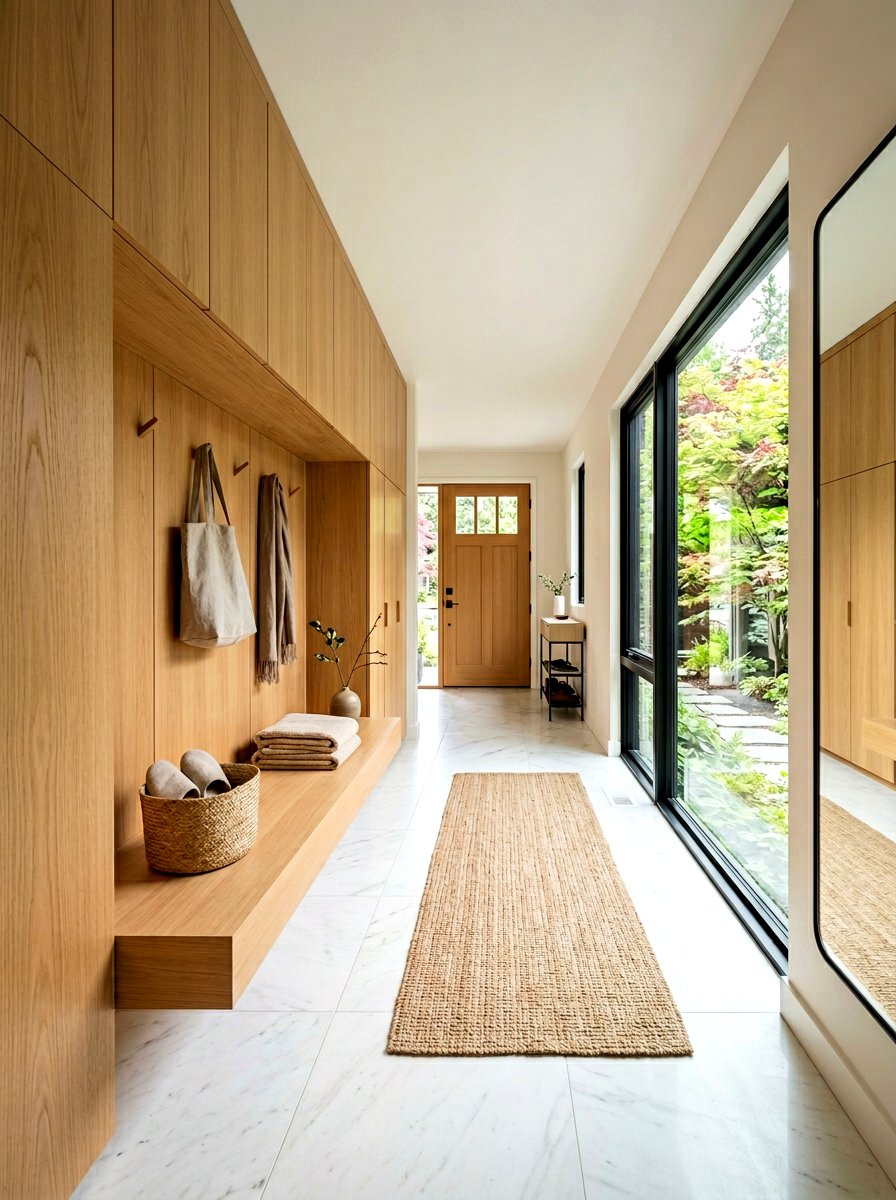
A minimalist mudroom design focuses on the principle of "less is more, " using clean lines and a limited color palette to create a serene environment. This approach often utilizes handleless cabinetry and hidden storage to minimize visual noise and keep the focus on the architectural form of the room. Every element is carefully chosen for its functionality, ensuring that only the most necessary items are kept on display. A minimalist space feels incredibly calm and organized, providing a peaceful transition from the outside world into the home. Using high-quality materials like natural stone and smooth wood ensures the design feels luxurious rather than sparse.
29. Natural Wood Mudroom
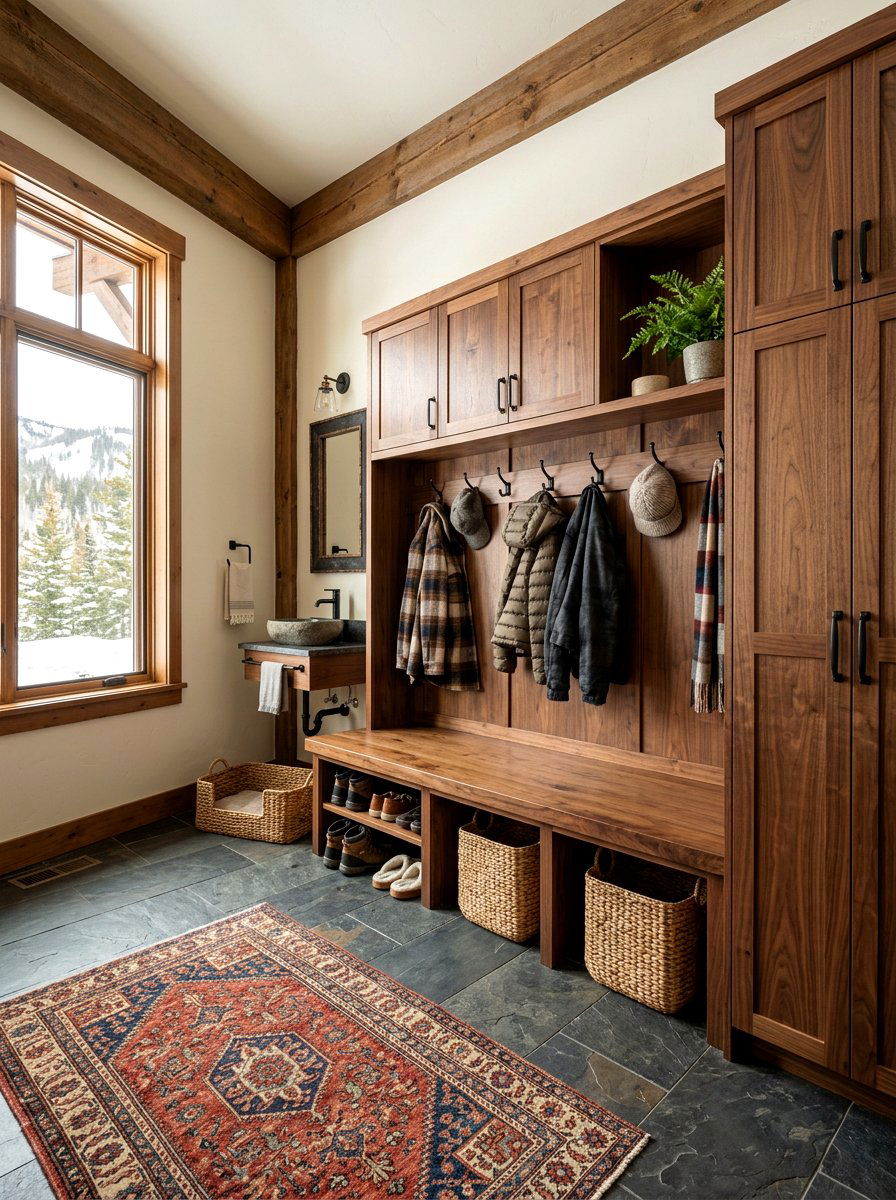
A natural wood mudroom brings the warmth and beauty of the outdoors inside, creating a cozy and inviting atmosphere for the home's entrance. Using woods like oak, walnut, or pine for the cabinetry and benches adds a timeless quality that coordinates well with many different interior styles. The natural grain and texture of the wood provide a sense of organic luxury that ages beautifully over time. You can choose to leave the wood in its natural state with a clear protective coat or use a light stain to enhance its character. This design choice makes the mudroom feel more like a high-end living space than a utility room.
30. Floating Mudroom Shelves
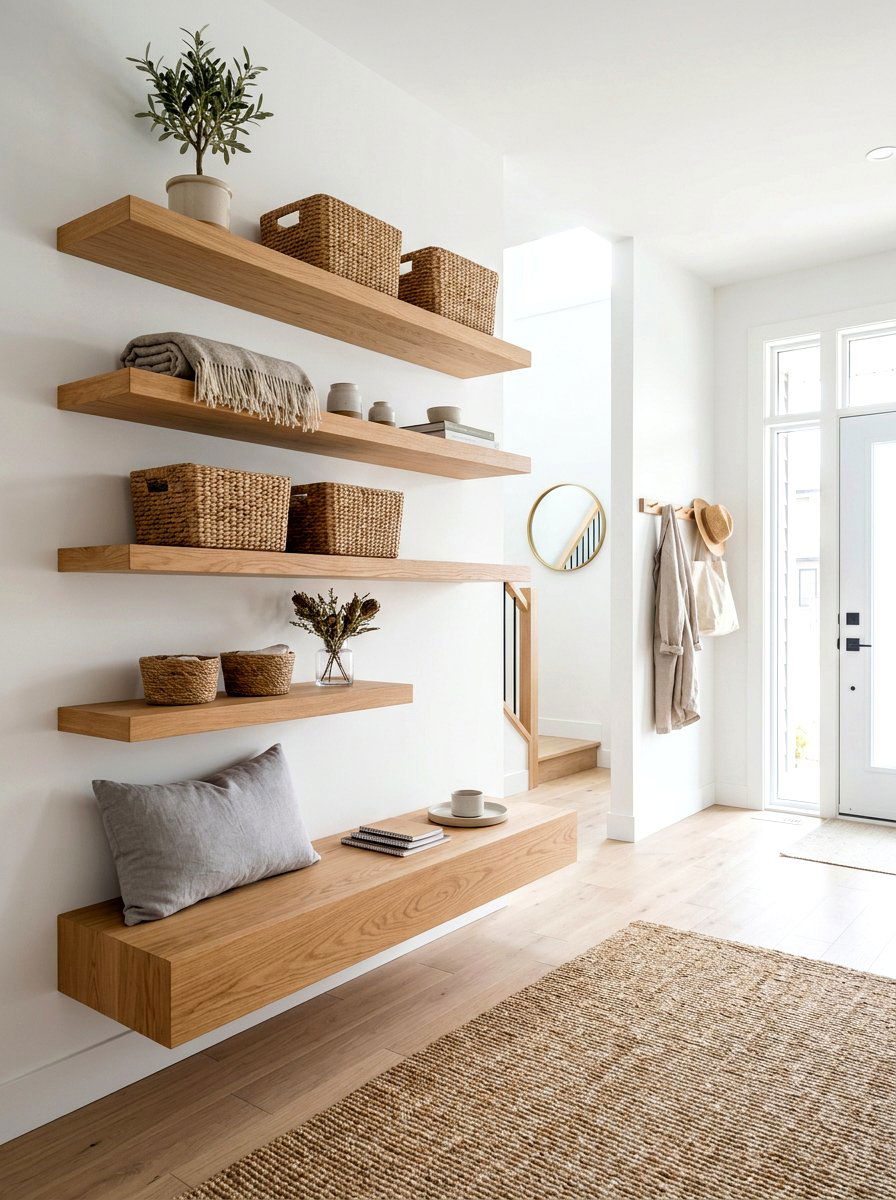
Floating mudroom shelves offer a modern and lightweight storage solution that makes the wall appear less cluttered than traditional bulky cabinets. These shelves are anchored directly into the wall without visible supports, creating a clean and streamlined look that is perfect for contemporary homes. They can be used to hold decorative baskets, seasonal accessories, or even a small plant to add life to the room. Floating shelves are particularly effective in small mudrooms because they allow more of the wall to remain visible, which helps the space feel larger. They provide a versatile platform for displaying both functional items and personal decor.
Conclusion:
A well-designed mudroom is more than just a storage space; it is a vital part of a functioning home that simplifies daily life. By thoughtfully choosing storage elements like built-in benches, custom cabinetry, and durable flooring, you can create a room that handles the chaos of coming and going with ease. Whether you prefer the rustic charm of a shiplap wall or the sleek look of modern minimalist cabinets, the key is to tailor the space to your family’s unique needs. Investing in quality organization today ensures that your entryway remains a welcoming and tidy environment for years to come, making every arrival home a pleasant experience.

Related posts: