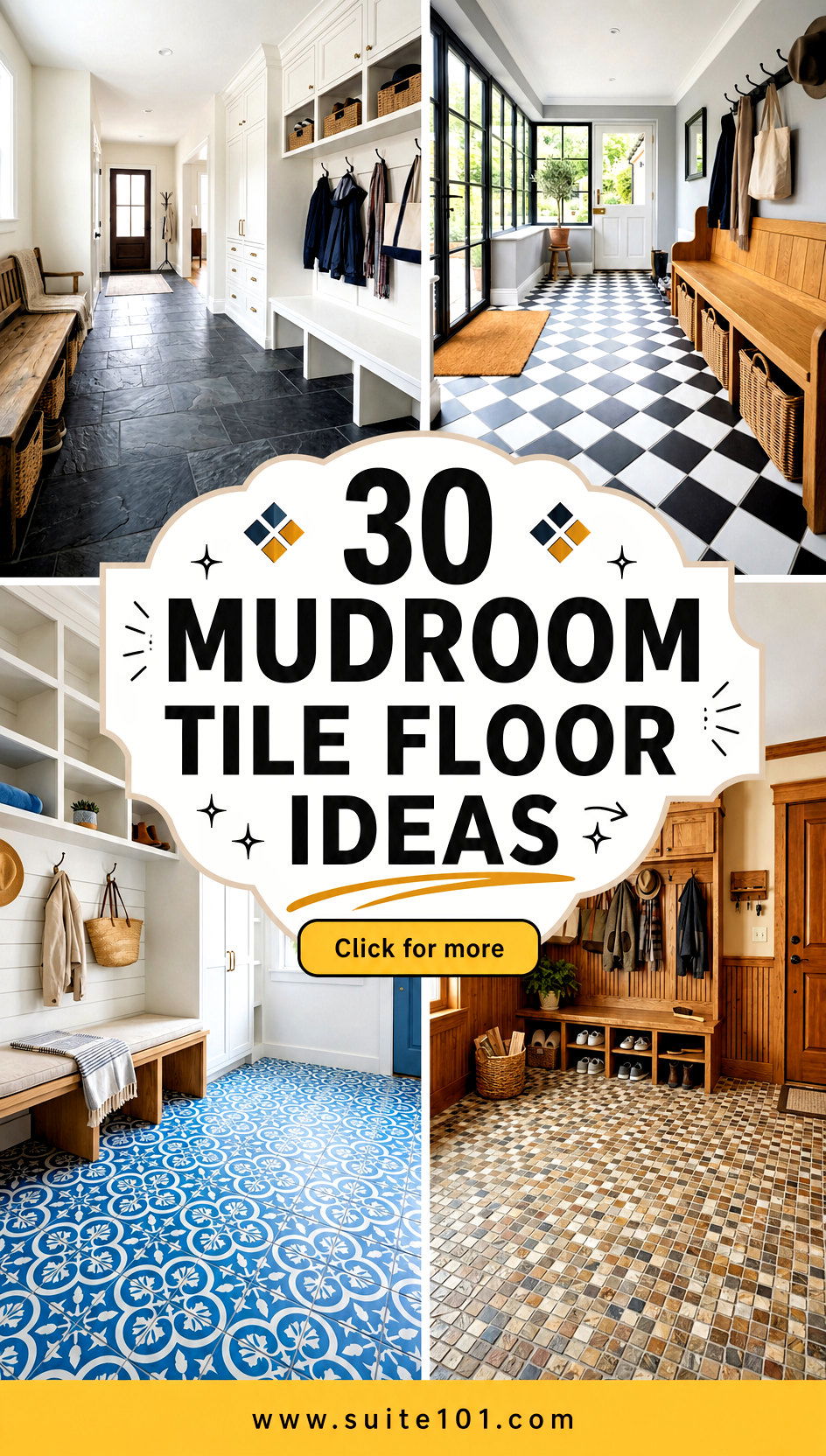
Creating a functional yet beautiful transition space starts right beneath your feet, especially in a busy entryway. The mudroom serves as the ultimate buffer between the messy outdoors and your clean indoor sanctuary. Choosing the perfect flooring is essential because this area faces constant foot traffic, wet umbrellas, and muddy paws every single day. You want a material that combines rugged durability with undeniable style to set the tone for your entire home. From classic stone textures to modern geometric patterns, the right tile can completely transform a utilitarian space into a stunning design statement that welcomes guests warmly. Let's explore the best options for your home.
1. Slate Mudroom Floor
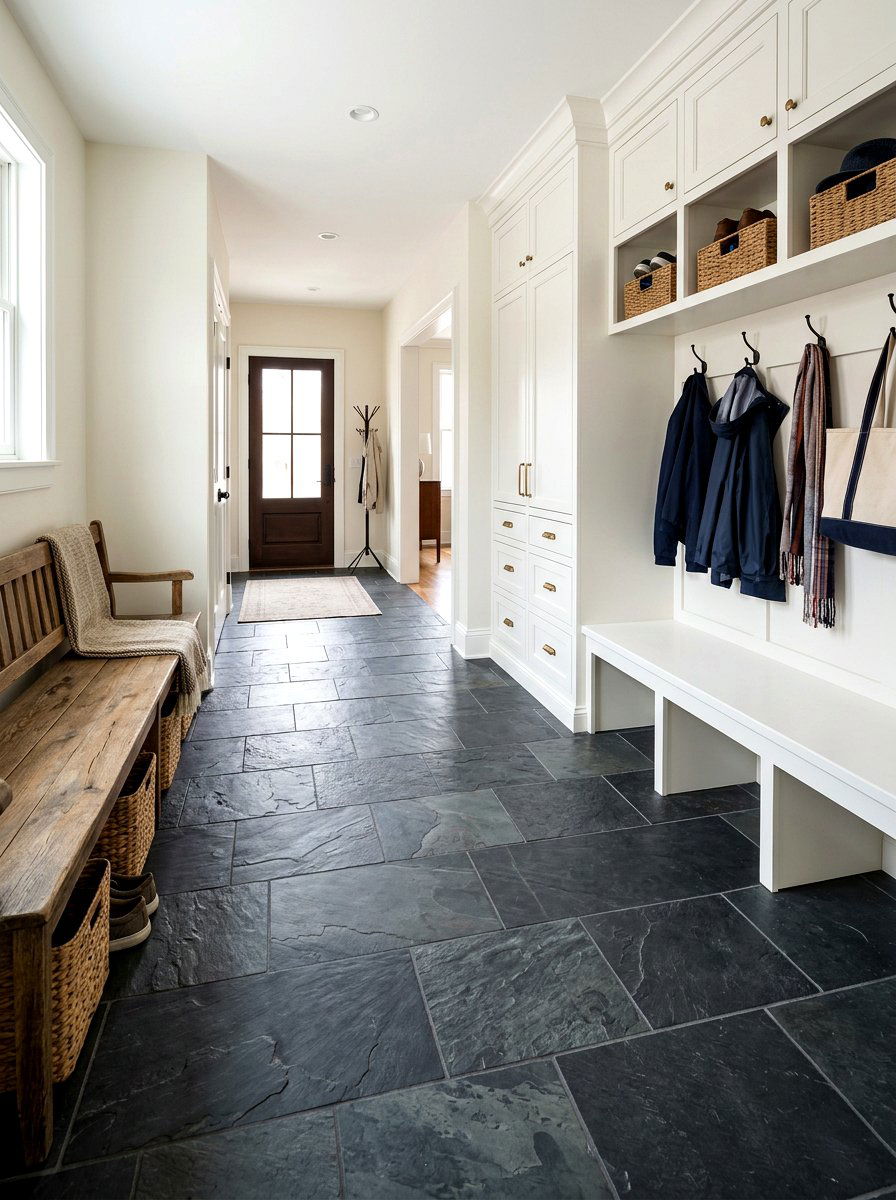
Natural slate is a top choice for entryways because it offers incredible durability and a timeless look. This natural stone has a unique cleft texture that provides excellent slip resistance, which is vital when people come inside with wet shoes. The deep charcoal and earthy tones of slate hide dirt and debris remarkably well, making your cleaning routine much easier. You can install slate in various sizes, ranging from small squares to large rectangular slabs, depending on the size of your space. It feels incredibly grounded and organic, pairing beautifully with wooden benches and bright white cabinetry for a classic high-contrast look that never goes out of style.
2. Herringbone Mudroom Floor
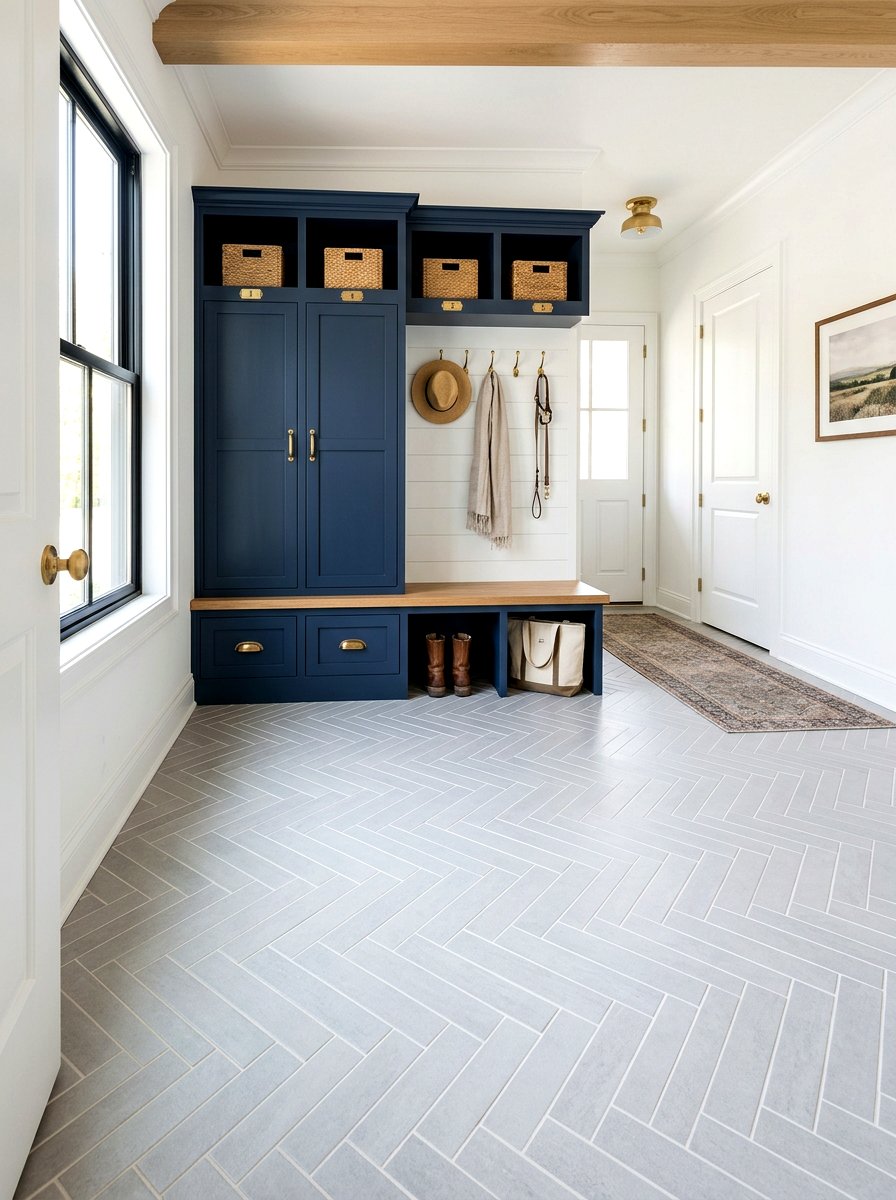
A herringbone pattern creates an elegant sense of movement that leads the eye into the rest of the home. This classic layout can be achieved with any rectangular tile, whether you prefer a rustic brick look or a polished porcelain finish. By laying the tiles at forty-five-degree angles, you add architectural interest to an often-overlooked area. This design works exceptionally well in narrow mudrooms because the diagonal lines trick the eye into thinking the floor is wider than it actually is. It is a sophisticated way to elevate a functional space while maintaining the heavy-duty performance required for a busy family entry point.
3. Checkered Mudroom Tile
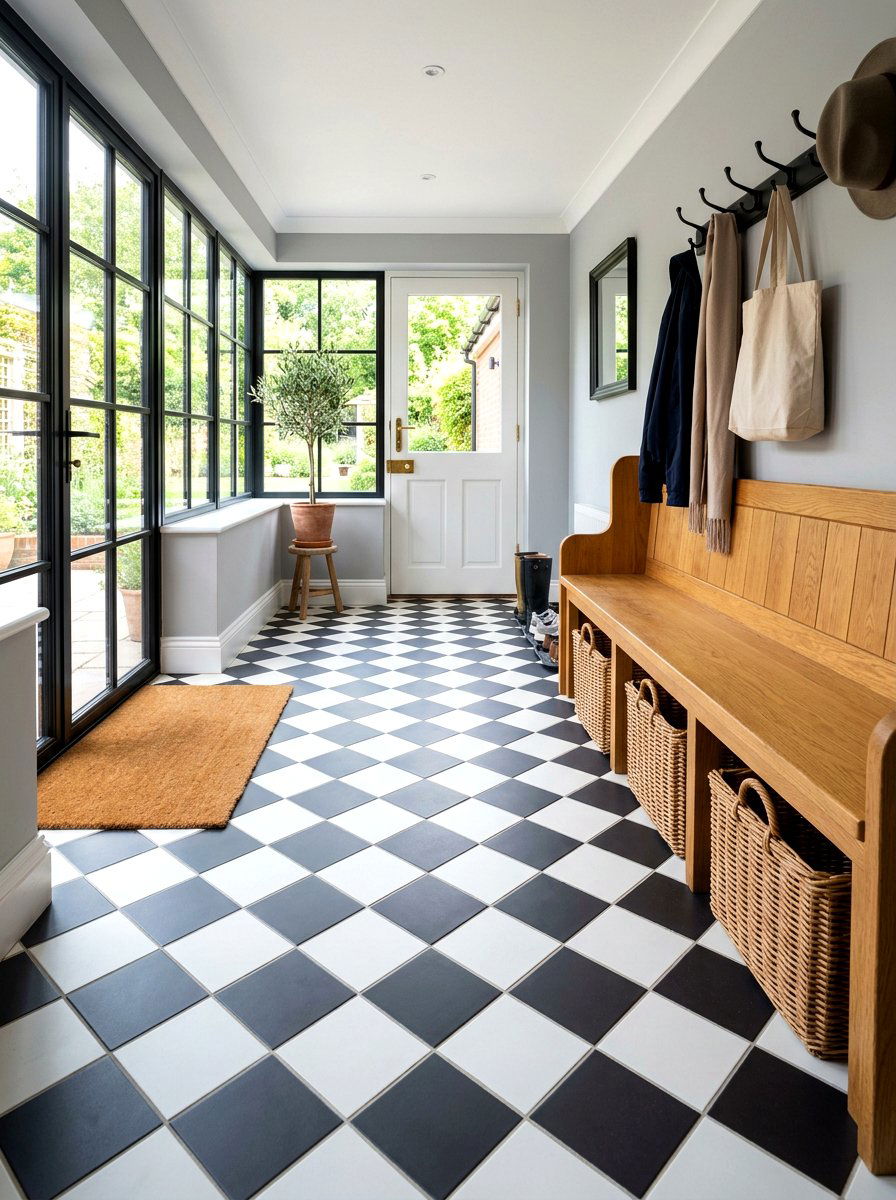
Checkered floors bring a sense of vintage charm and classic order to any entryway. While the traditional black and white combination is always a winner, you can modernize the look by using softer tones like charcoal and light gray. This pattern provides a strong visual anchor and works beautifully with built-in cubbies and brass hardware. Because it is a repeating geometric layout, it hides occasional scuff marks better than a solid-colored floor. Whether you use marble, porcelain, or cement tiles, the checkered design offers a timeless aesthetic that feels both playful and formal, making it a perfect choice for those who love traditional styles.
4. Brick Look Mudroom Tile
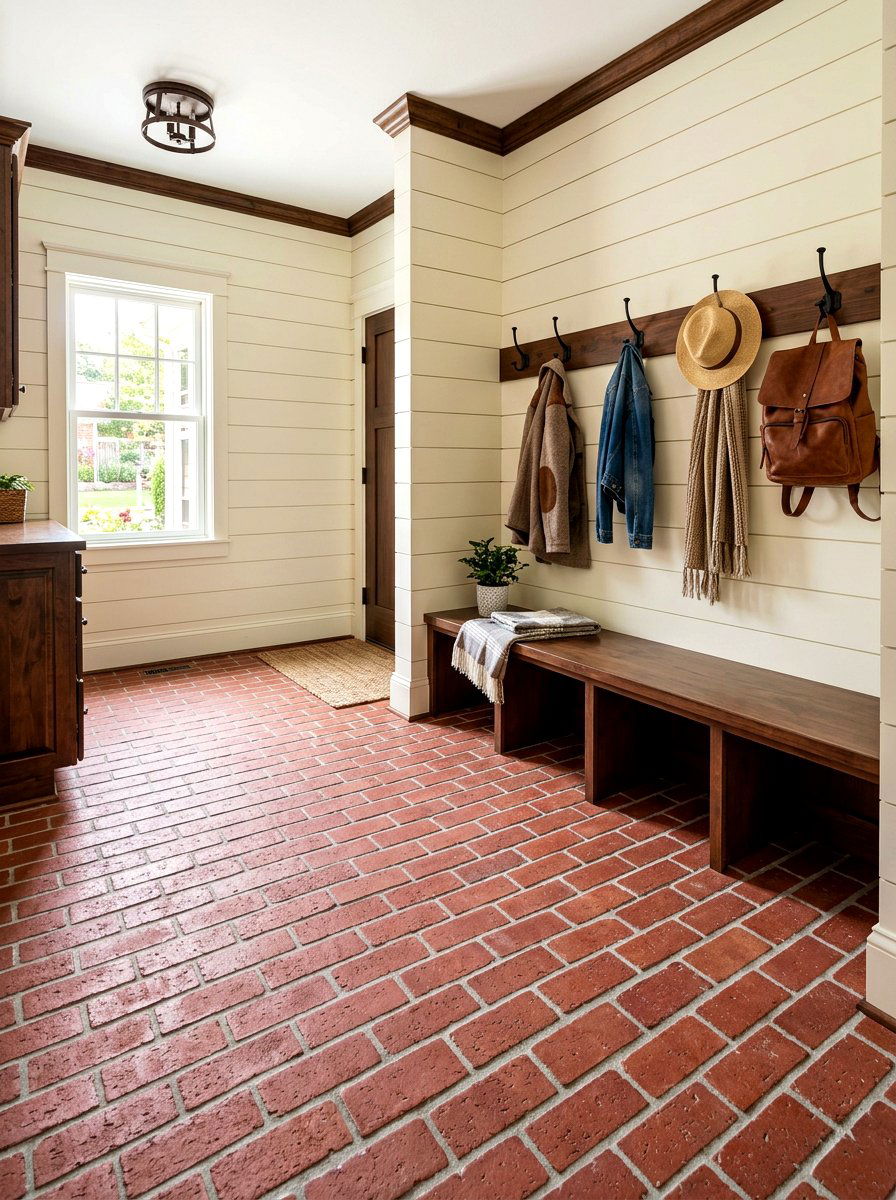
Porcelain tiles that mimic the appearance of real brick are incredibly popular for creating a cozy, farmhouse-inspired atmosphere. Real brick can be porous and difficult to clean, but these porcelain versions offer the same warmth with much better moisture resistance. They come in various shades, from traditional red to modern white-washed or sandy beige tones. Laying them in a traditional running bond or a decorative basketweave pattern adds instant character and texture to the mudroom. This style is especially effective at hiding dried mud and dust, making it one of the most practical and low-maintenance options for families living in rainy or snowy climates.
5. Hexagon Mudroom Floor
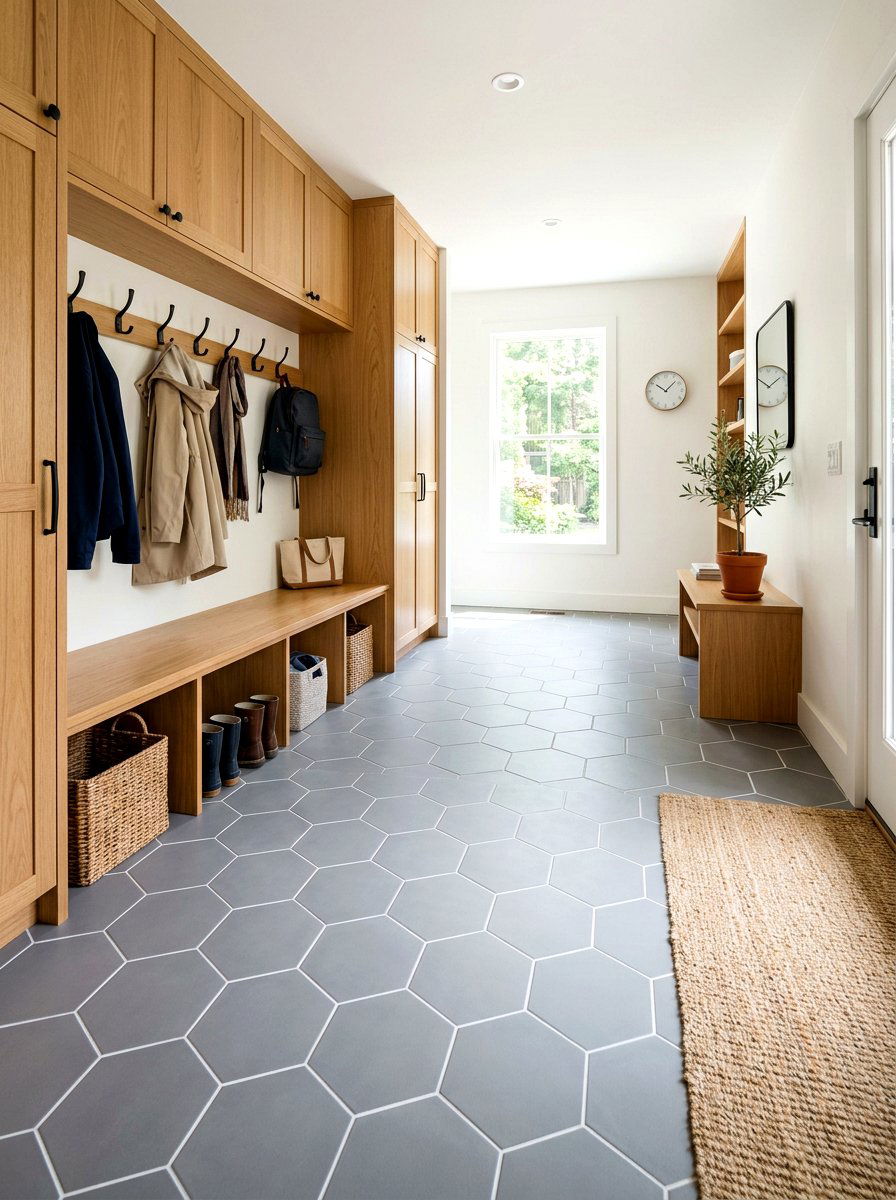
Hexagon tiles are a major trend because they offer a playful, honeycomb-inspired look that breaks away from standard squares. Available in various sizes, large hexagons provide a modern and clean aesthetic, while smaller ones feel more vintage and intricate. You can even mix different shades of the same color to create a subtle gradient effect across the floor. This shape is naturally eye-catching and provides a lot of grout lines, which increases the overall slip resistance of the surface. It is a fantastic way to introduce a geometric element into your home design without it feeling too overwhelming or overly complicated.
6. Patterned Mudroom Tile
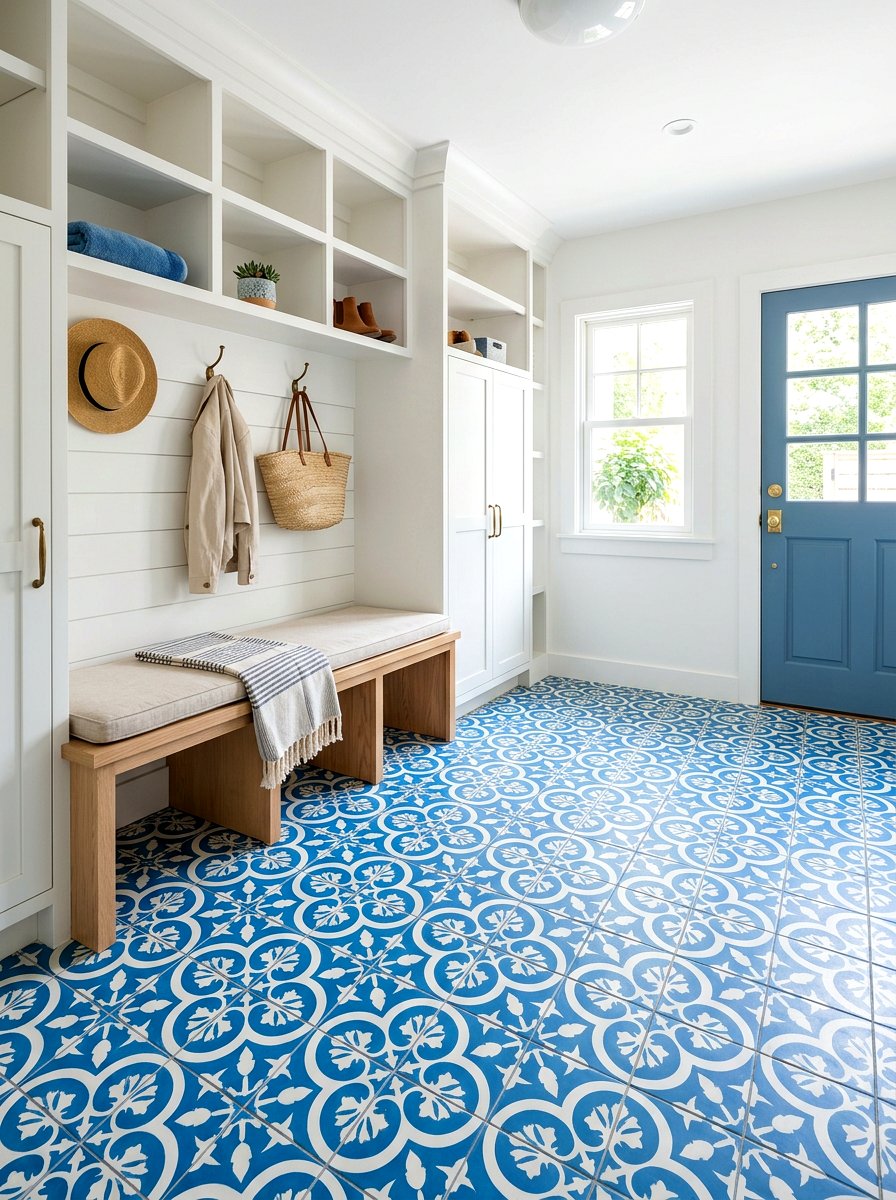
Patterned tiles, particularly encaustic cement styles, allow you to inject bold personality and color into your entryway. These designs often feature intricate floral or kaleidoscopic motifs that turn the floor into a piece of art. Because the mudroom is typically a smaller, enclosed area, it is the perfect place to experiment with a daring design that might feel too busy for a larger living room. Patterned tiles are also excellent for busy households as the busy designs camouflage dirt and debris until you have time to mop. They pair perfectly with simple, neutral walls and sleek cabinetry for a balanced look.
7. Terracotta Mudroom Tile
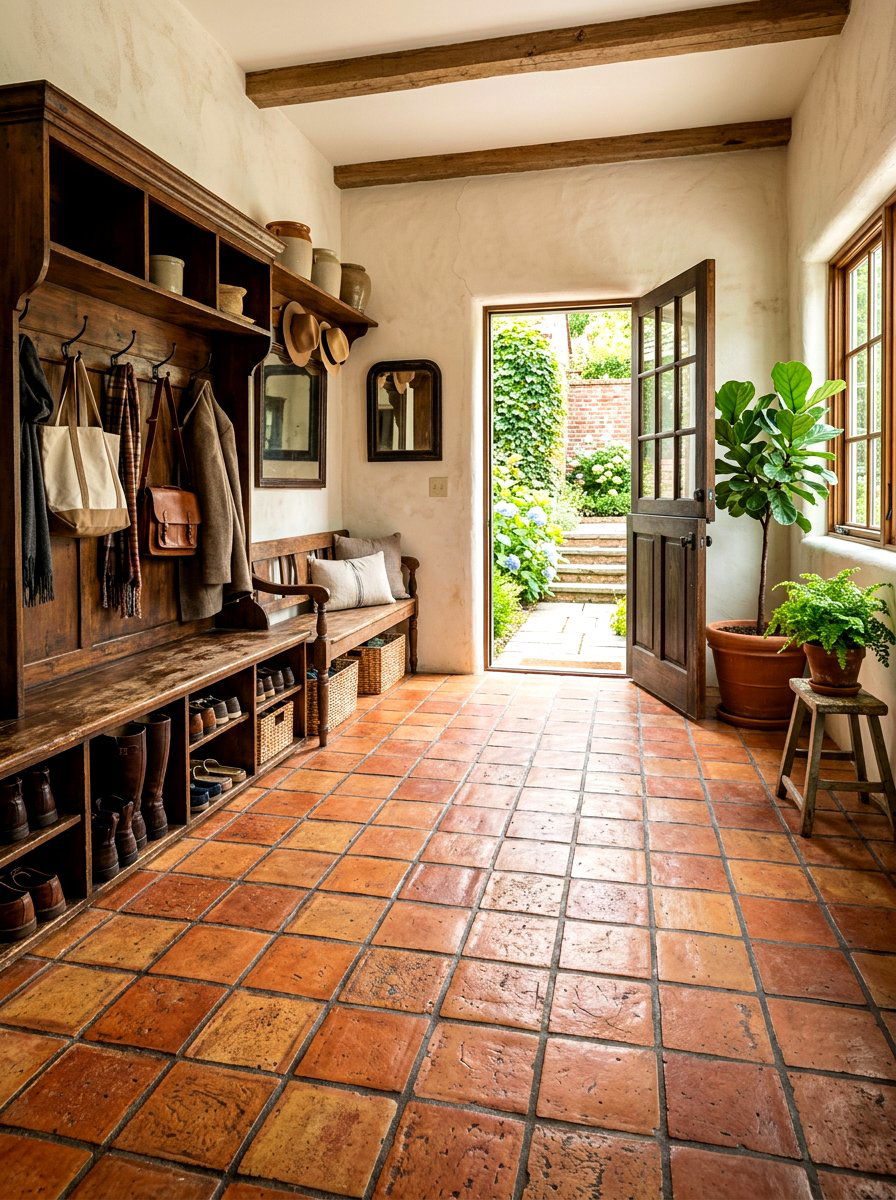
Terracotta floors bring an instant sense of warmth and Mediterranean charm to your home entrance. These clay-based tiles feature rich, earthy tones ranging from deep orange to soft peach, which create a very welcoming first impression. Their natural texture is inherently slip-resistant, providing a safe surface for children and pets. Terracotta is a classic material that looks even better as it ages and develops a slight patina over time. It is a wonderful choice for those who want a rustic or bohemian vibe. To keep it looking its best, ensure the tile is properly sealed to protect against moisture and heavy staining.
8. Black And White Mudroom Floor
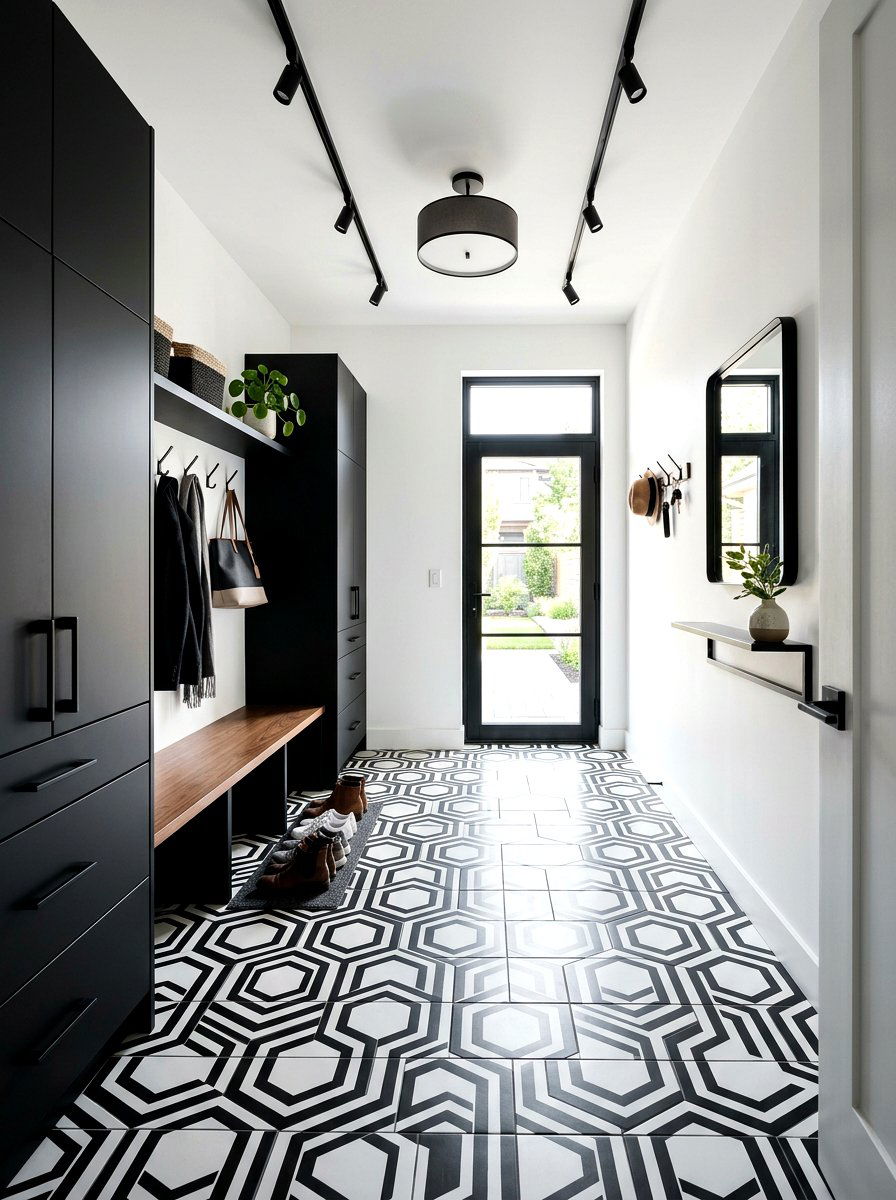
A black and white floor is the height of timeless sophistication and works with almost any interior style. You can achieve this look through small penny tiles, large marble slabs, or intricate geometric patterns. The high contrast creates a clean and organized feeling, which is exactly what most people want in a mudroom. This color palette acts as a neutral base, allowing you to change your wall colors or decor accessories frequently without needing to replace the flooring. It feels crisp and modern while still paying homage to classic design traditions, ensuring your mudroom will look stylish for many years to come.
9. Wood Look Tile Mudroom
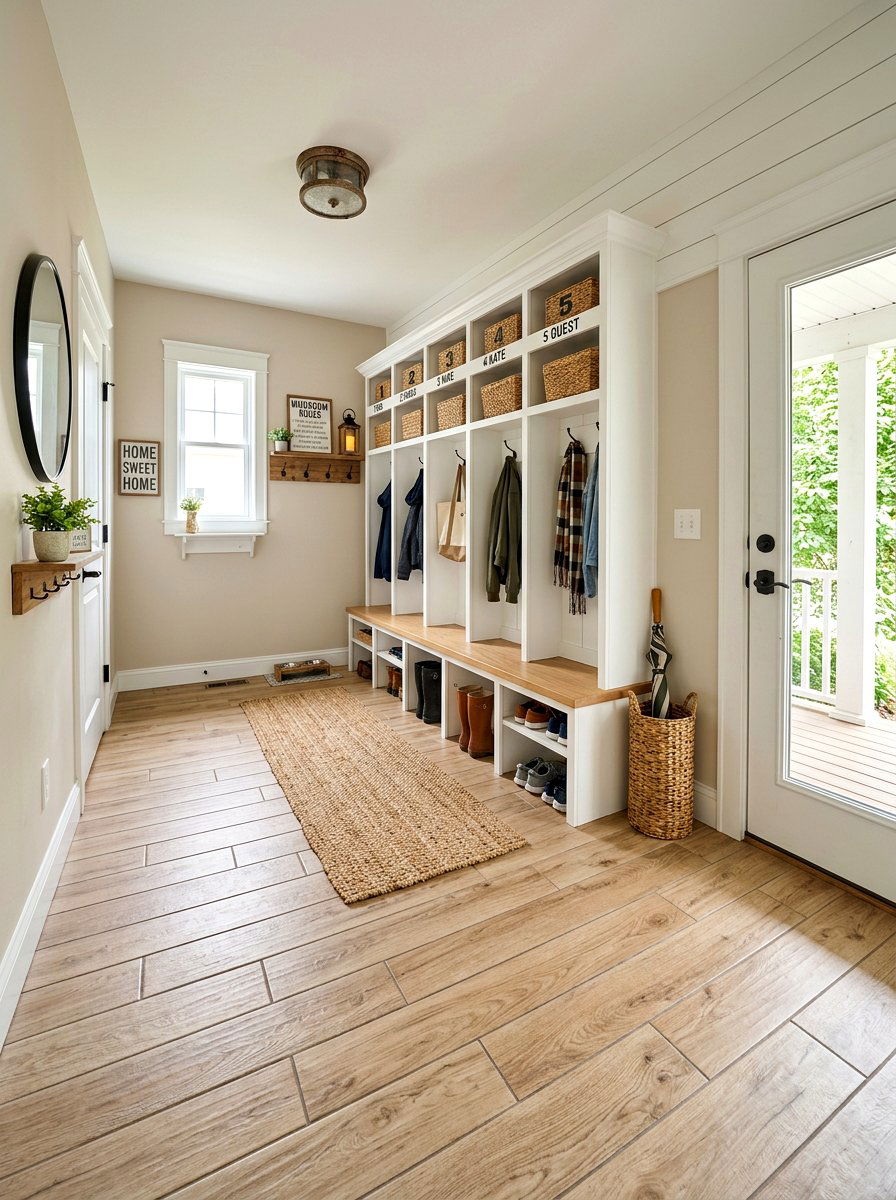
Wood-look porcelain tile offers the cozy warmth of hardwood with the indestructible nature of ceramic. Since real wood can easily warp or scratch when exposed to water and grit, these tiles are the ideal solution for an entryway. They feature realistic grain patterns and textures that are almost indistinguishable from the real thing. You can choose from wide-plank oak styles to rustic reclaimed wood finishes. This flooring is incredibly easy to clean and does not require the sanding or refinishing that natural wood demands. It provides a seamless transition if the rest of your home features traditional hardwood flooring.
10. Porcelain Mudroom Floor
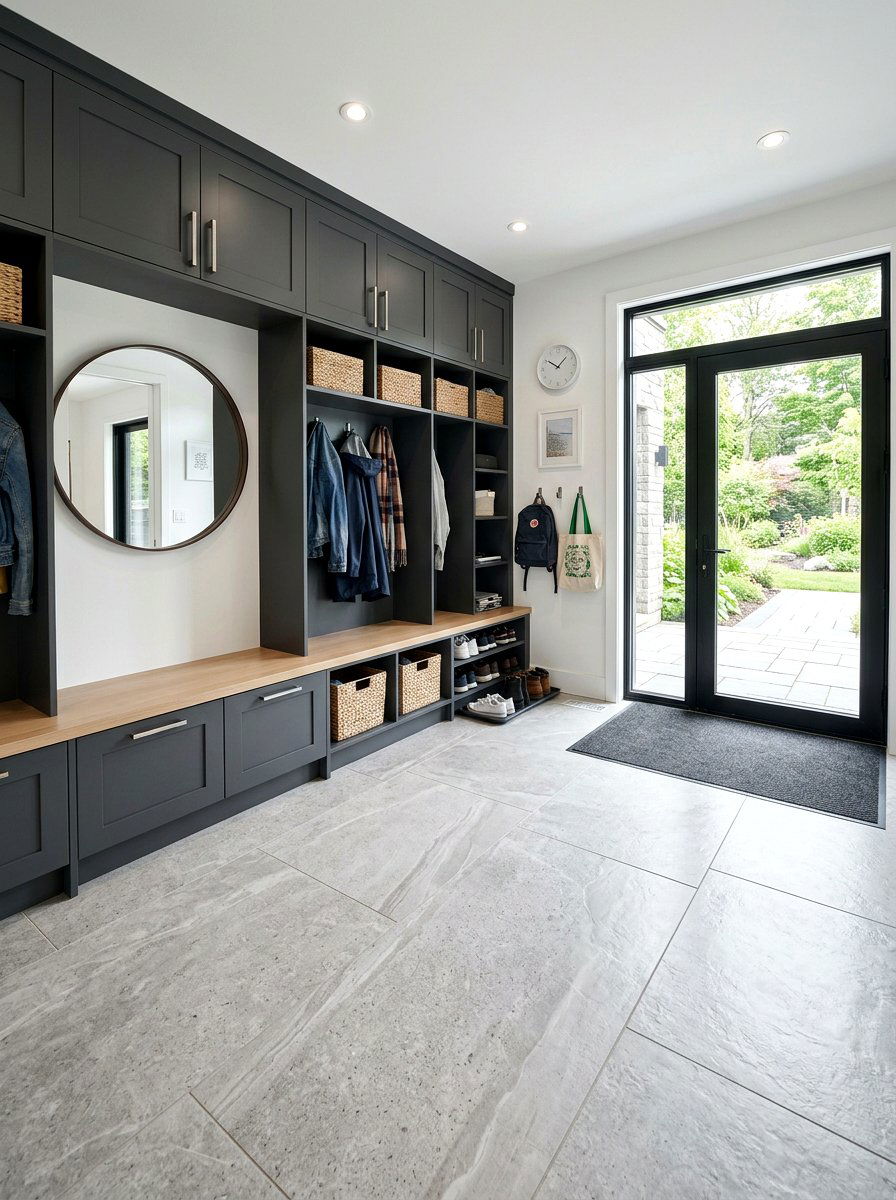
Porcelain is arguably the most durable material available for high-traffic zones like the mudroom. It is fired at extremely high temperatures, making it denser and less porous than standard ceramic tile. This means it is highly resistant to water, stains, and scratches from heavy boots or pet claws. Porcelain comes in an endless variety of colors and finishes, allowing you to mimic more expensive materials like stone or marble for a fraction of the cost. It is a worry-free flooring choice that stands up to the toughest daily conditions while looking brand new for decades with very minimal maintenance required.
11. Limestone Mudroom Floor
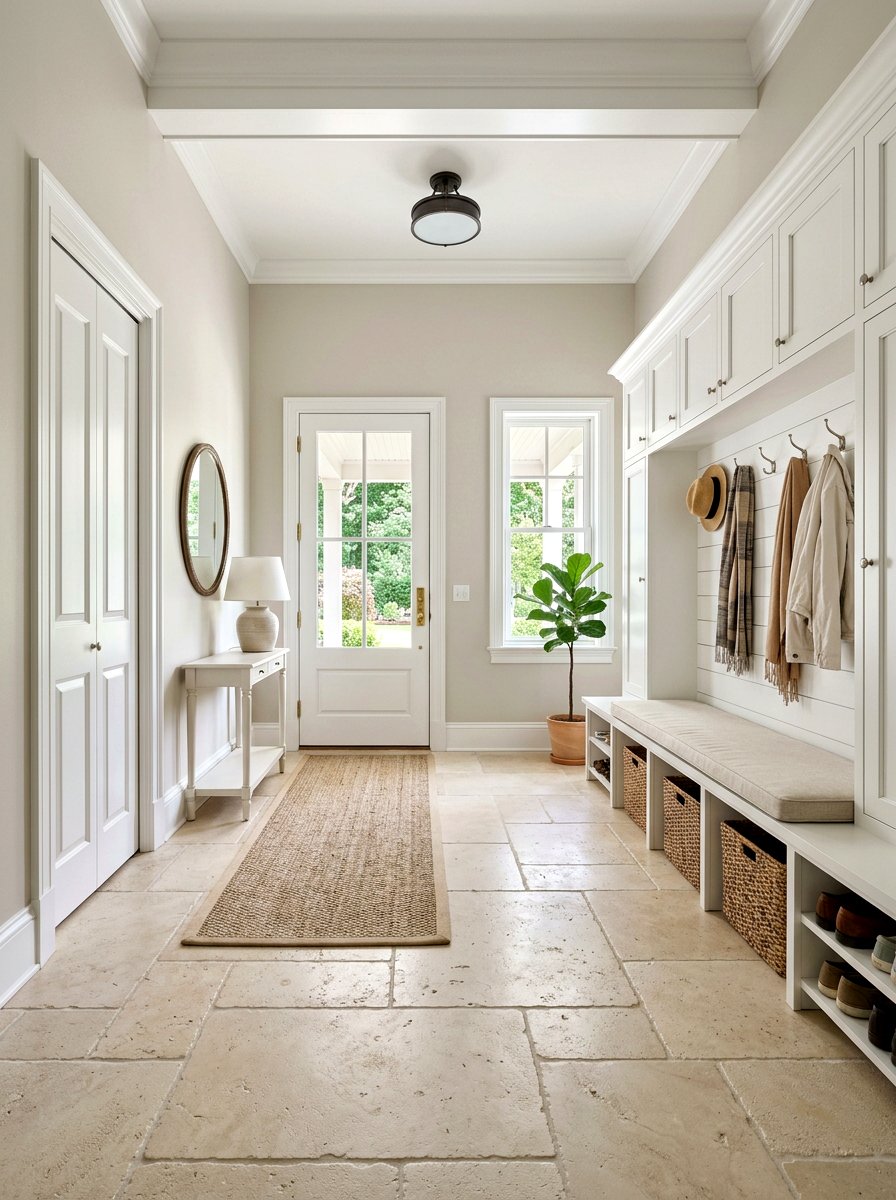
Limestone is a beautiful natural stone that brings a soft, refined elegance to a mudroom. It often comes in neutral shades like beige, tan, and soft gray, which help to brighten up areas that might lack natural light. The subtle fossils and mineral veining within the stone provide a unique, organic texture that adds depth to the floor. While limestone is slightly softer than slate or porcelain, it is still very durable when properly sealed. It creates a serene and high-end atmosphere that makes the entryway feel like an extension of the main living space rather than just a utility room.
12. Pebble Mudroom Tile
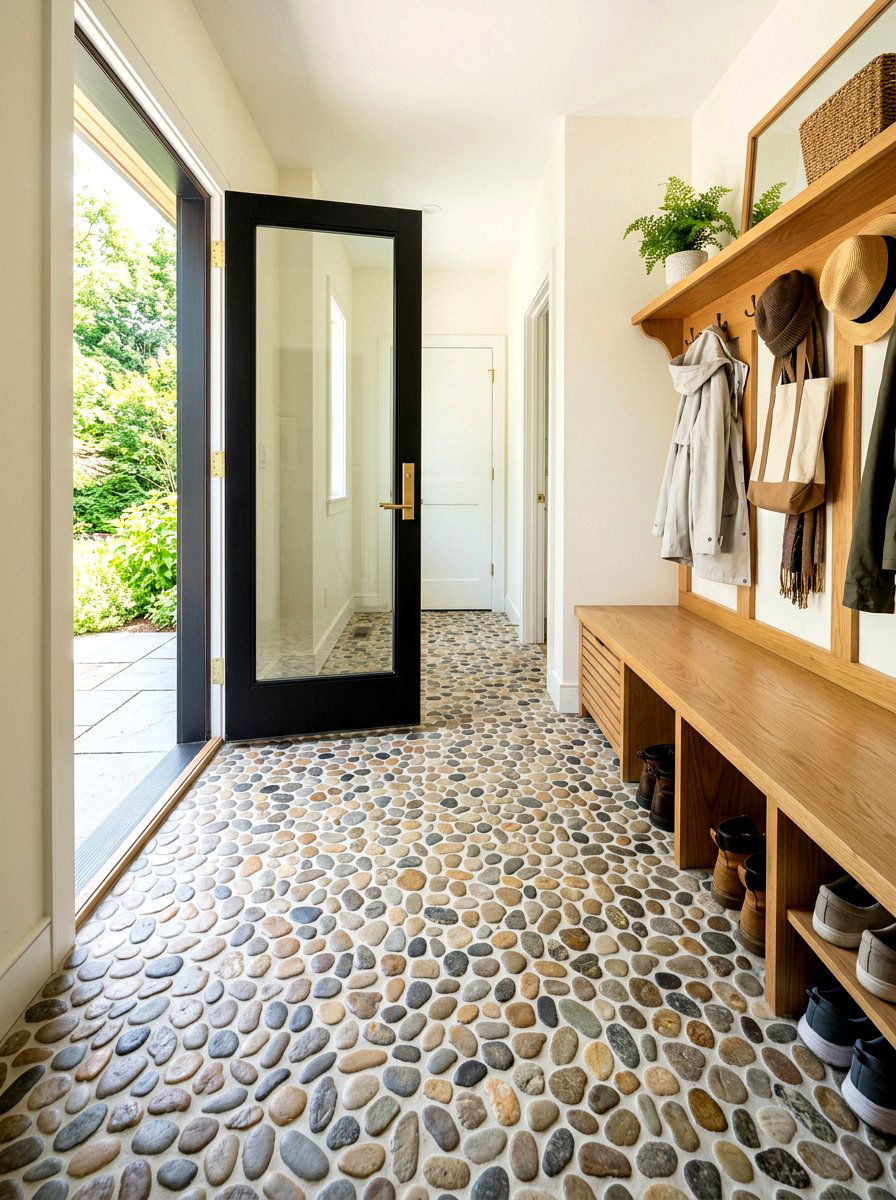
For a unique and organic feel, pebble tiles are an excellent choice that brings a touch of nature indoors. These tiles consist of smooth, rounded stones mounted on a mesh backing, creating a highly textured and slip-resistant surface. They feel wonderful underfoot, providing a subtle massaging sensation as you walk. Pebble floors are particularly effective at hiding dirt and water spots because of their variegated colors and irregular shapes. This style works beautifully in homes with a coastal, rustic, or spa-like aesthetic. It is a creative way to make a bold statement while ensuring the highest level of safety.
13. Penny Tile Mudroom Floor
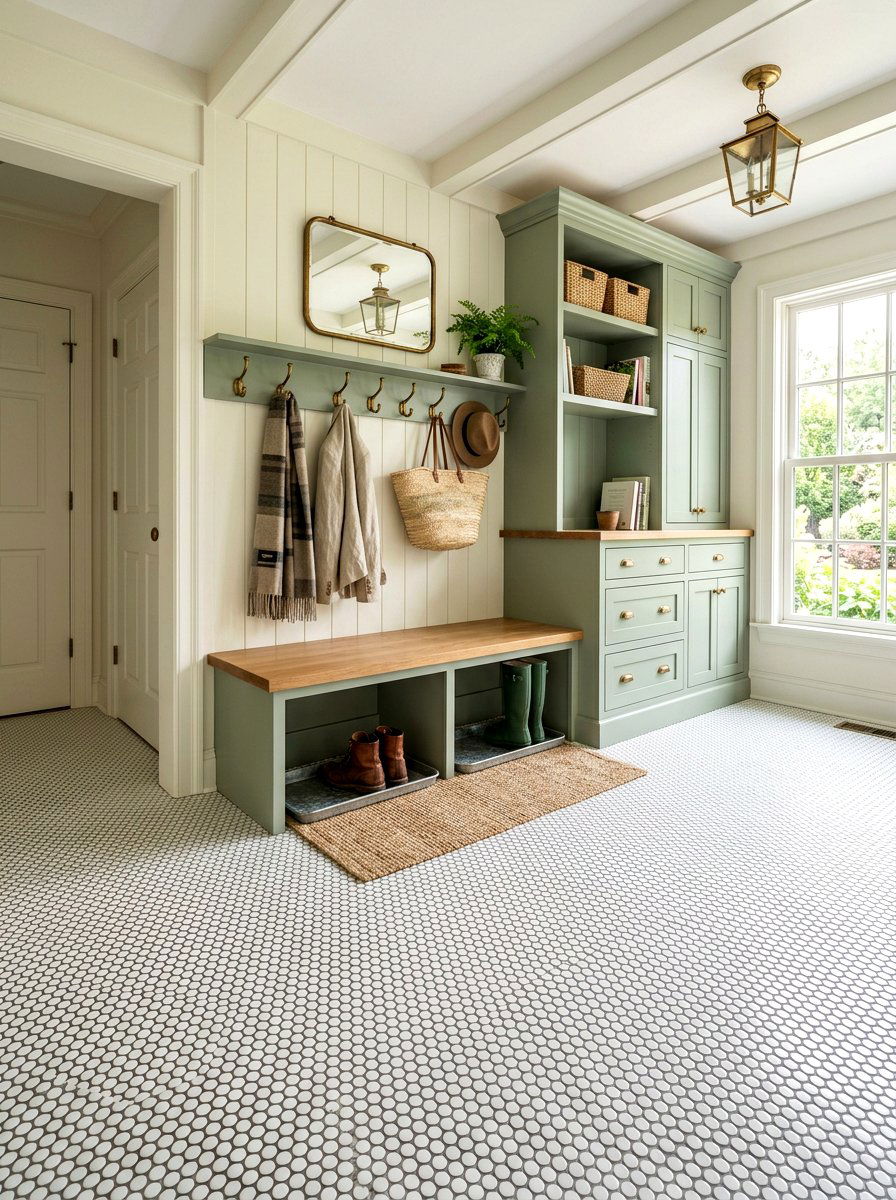
Penny tiles are small, circular mosaics that offer a charming and vintage aesthetic. They provide a massive amount of grout lines, which creates an exceptionally slip-resistant surface perfect for rainy climates. You can use a single color for a clean look or create custom patterns, borders, and even words with different colored tiles. This versatility makes them a favorite for designers who want to add a personalized touch to a home. Penny tiles are also very forgiving on slightly uneven subfloors because they can easily follow the contours of the ground. They are a timeless classic that adds texture.
14. Marble Mudroom Floor
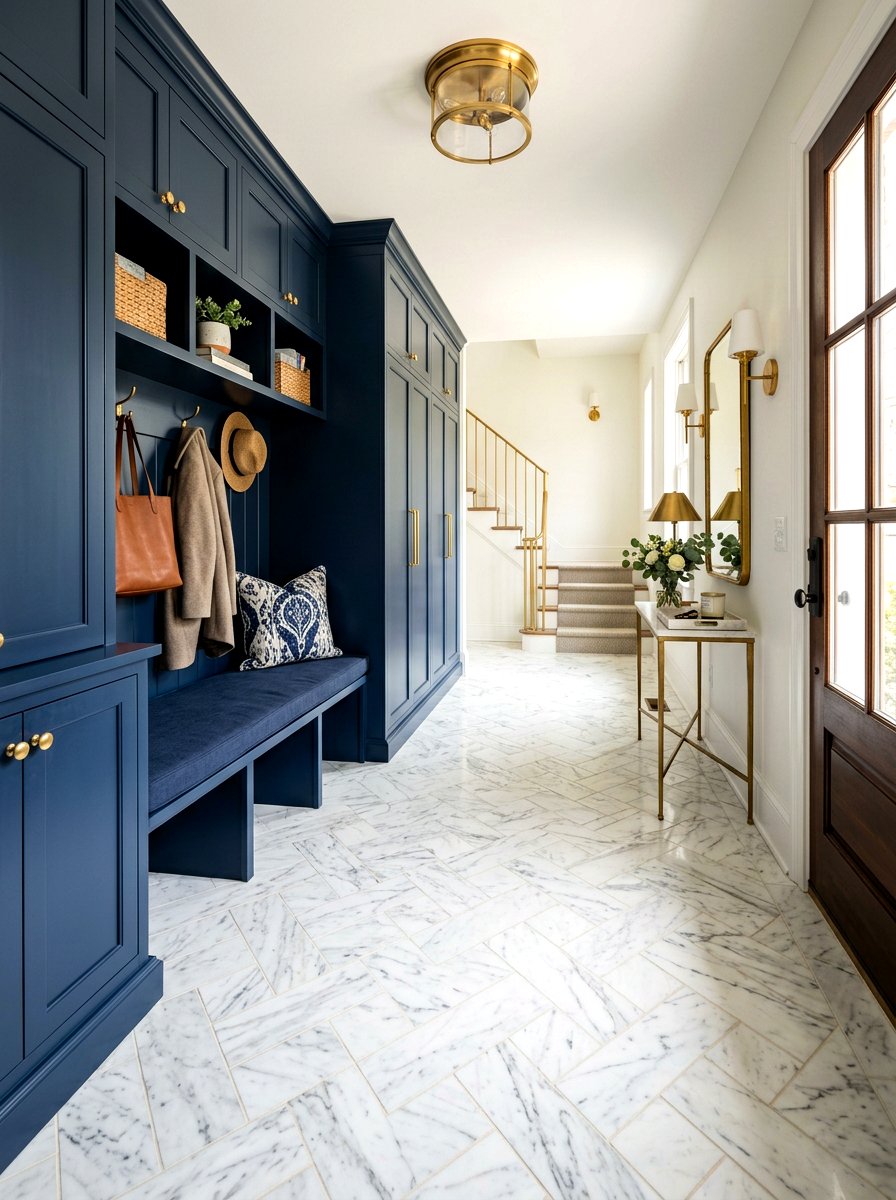
If you want to create a luxury entrance, nothing beats the timeless beauty of natural marble. Known for its iconic veining and luminous finish, marble makes even a small mudroom feel grand and expensive. While it is a softer stone, using a honed finish instead of a polished one can help hide scratches and provide better traction. Pairing marble with high-end millwork and designer lighting transforms the mudroom into a high-fashion space. It is important to seal marble regularly to prevent staining from mud or moisture, but the stunning visual impact is well worth the occasional maintenance it requires.
15. Large Format Mudroom Tile
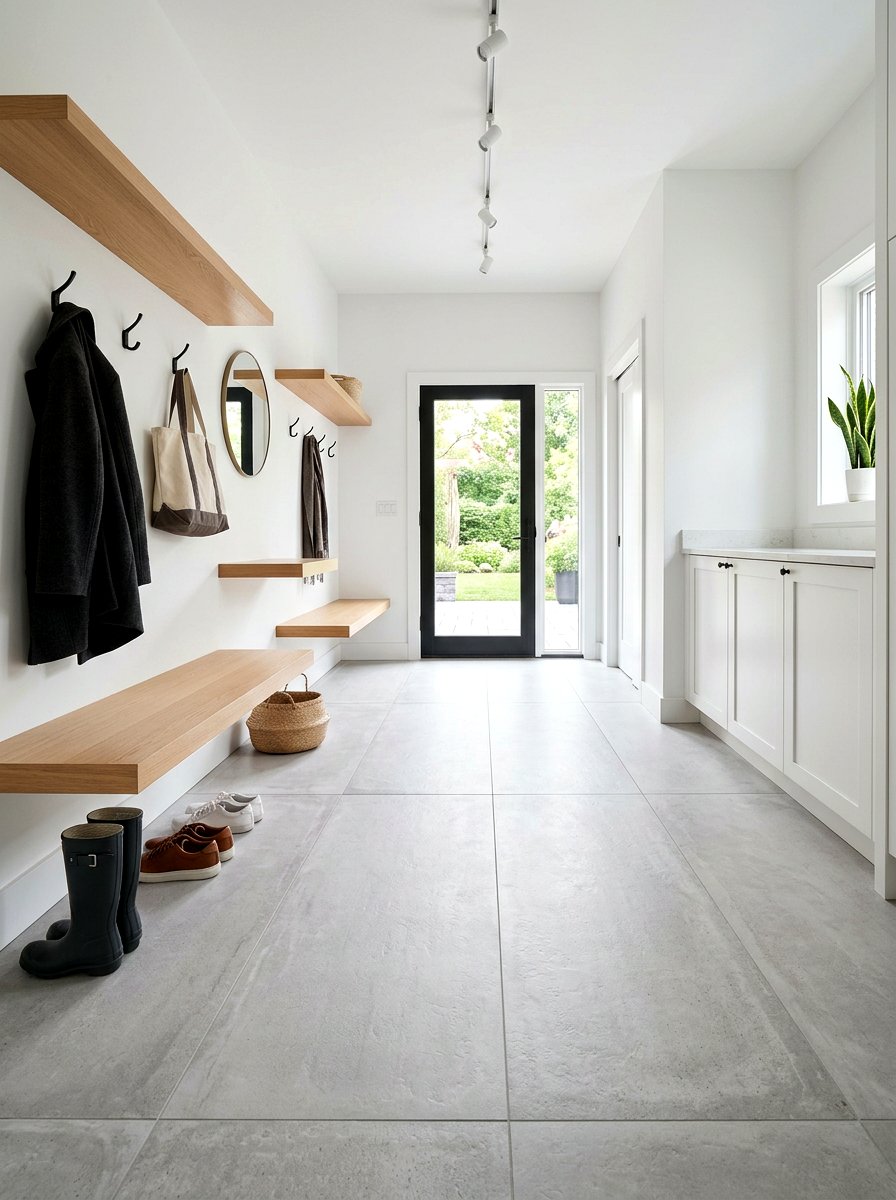
Large format tiles are those that measure at least twenty-four inches on one side, creating a sleek and modern appearance. Because there are fewer grout lines, the floor looks much more continuous and expansive, which can help a small mudroom feel significantly larger. Cleaning is also much easier because there is less space for dirt to become trapped. These tiles often come in stone or concrete looks, providing a minimalist backdrop that lets your cabinetry and decor shine. It is a sophisticated, clean-lined choice that works perfectly in contemporary homes where a clutter-free and streamlined aesthetic is the primary goal.
16. Dark Gray Mudroom Tile
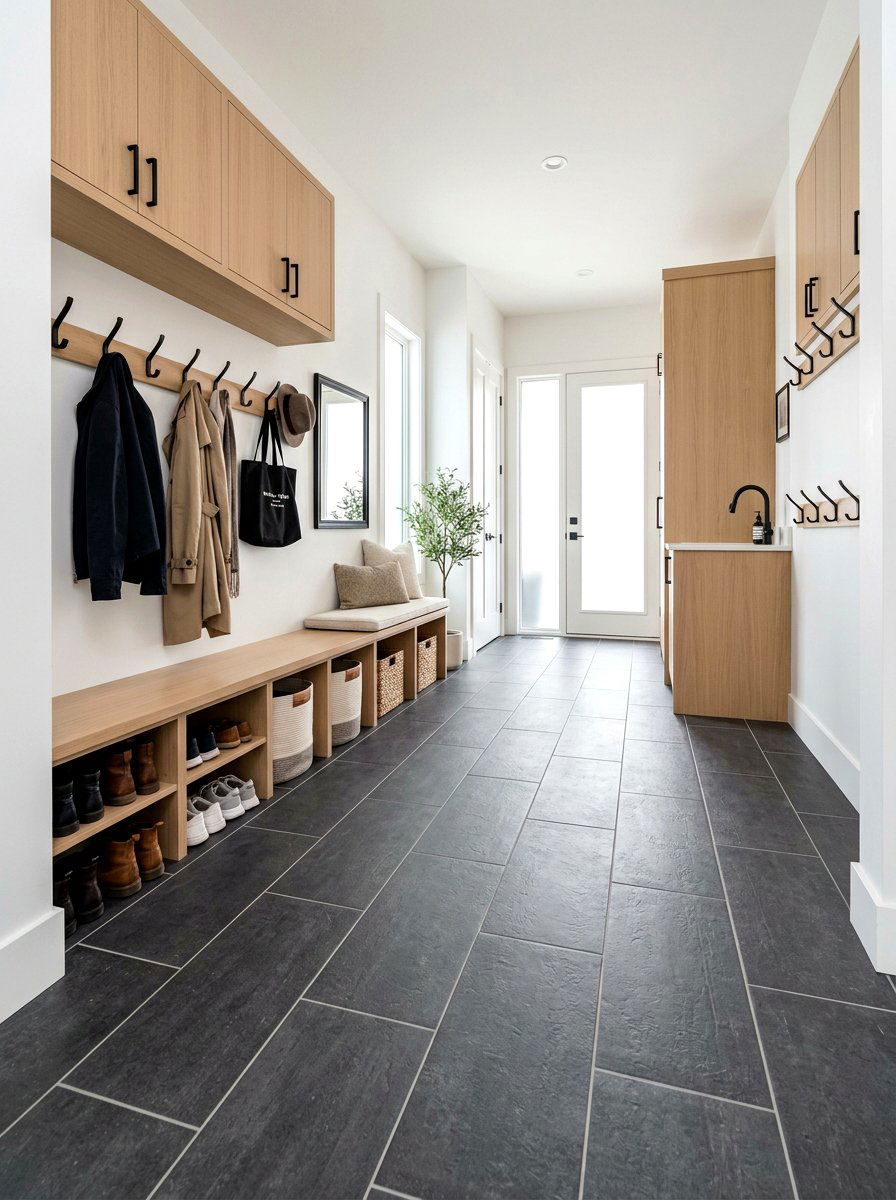
Dark gray tile is a practical favorite for entryways because it is the ultimate color for hiding dirt and mud. Whether you choose a matte porcelain or a natural charcoal stone, this color provides a moody and grounded foundation for the room. It contrasts beautifully with light-colored walls and wood tones, creating a balanced and modern look. Darker floors also tend to feel more substantial and durable, which is psychologically comforting in a hard-working space. Since gray is a neutral tone, it will not clash with your seasonal decor, making it a versatile long-term investment for any busy household.
17. Blue Patterned Mudroom Floor
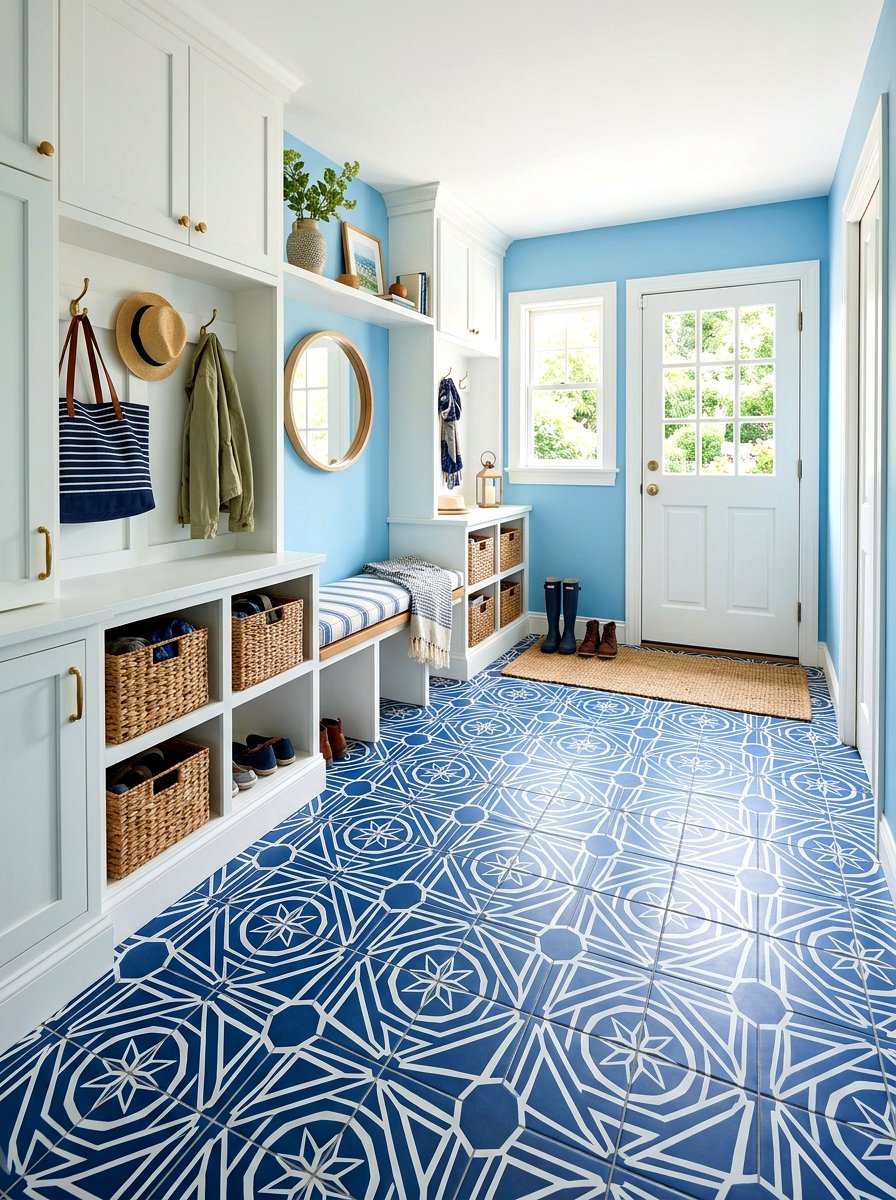
Blue patterned tiles are a fantastic way to add a splash of color and personality to your entryway. From light sky-blue florals to deep navy geometric shapes, blue brings a calming and refreshed energy to the space. It pairs exceptionally well with white or gray cabinetry and can give your mudroom a slight coastal or cottage-inspired feel. Patterned tiles are also excellent for hiding the daily wear and tear that comes from a high-traffic entry. Choosing a cool-toned floor can make a small, cramped mudroom feel airier and more open, providing a cheerful welcome every time you step through the door.
18. Moroccan Mudroom Tile
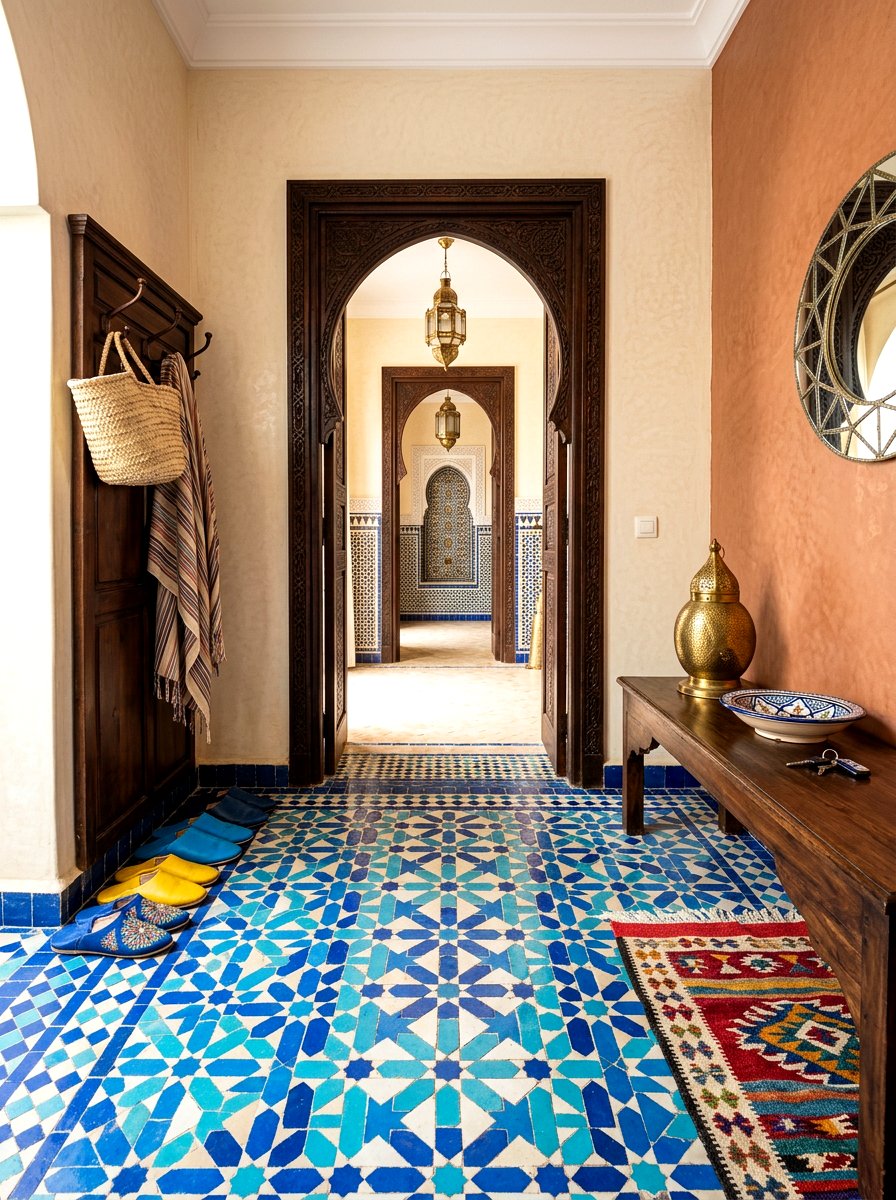
Moroccan-inspired tiles, often called Arabesque or Zellige styles, feature intricate shapes and vibrant patterns that add an exotic flair. These tiles often have slight variations in color and texture, giving the floor a handcrafted and authentic look. They are perfect for homeowners who want their mudroom to have a worldly and artistic vibe. The complex patterns are not only beautiful but also very effective at disguising dust and small debris. Using these tiles in a mudroom allows you to showcase a unique design style in a smaller area where it can truly be the star of the whole design show.
19. Subway Tile Mudroom Floor
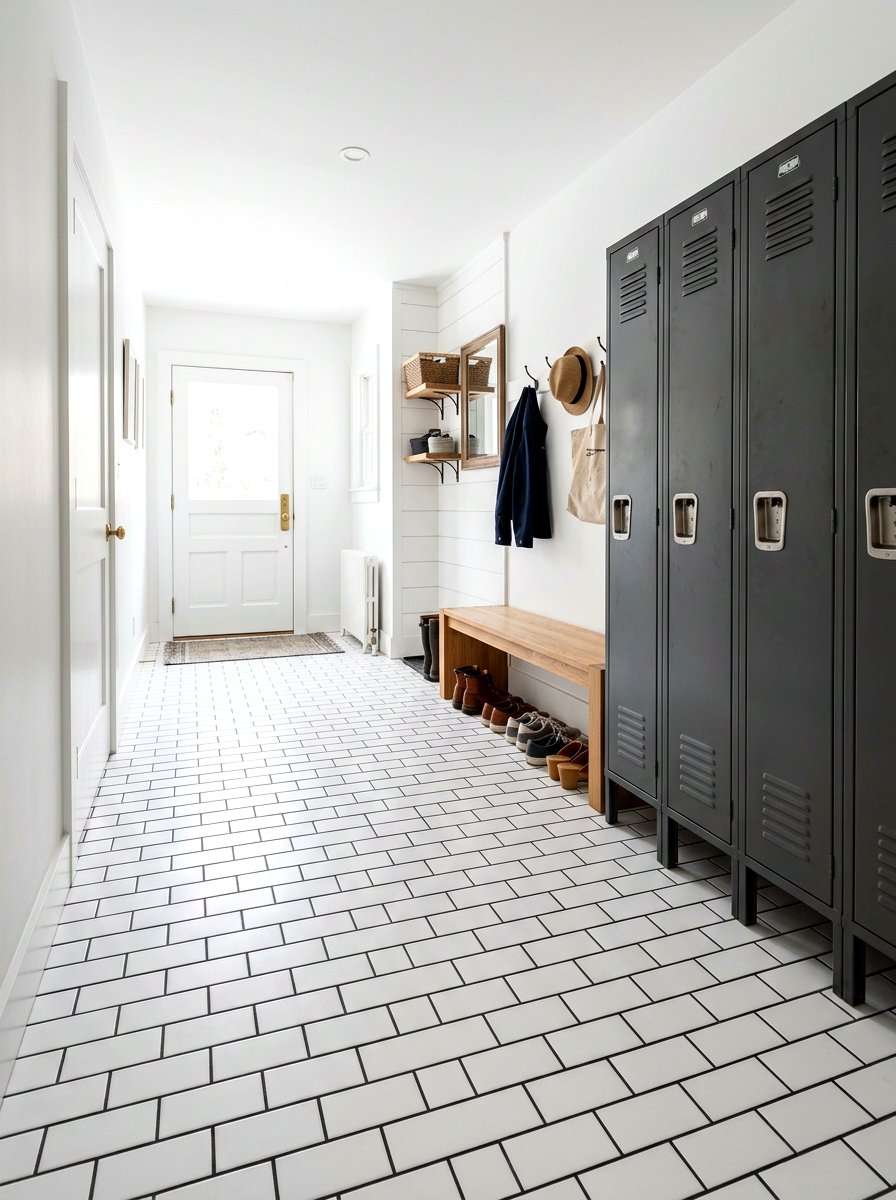
While typically seen on walls, subway tiles can be used on floors to create a clean, traditional look. When used for flooring, it is important to choose a version specifically rated for foot traffic with a non-slip finish. Laying them in a classic offset pattern or a vertical stack can provide a sense of order and simplicity. Using a darker grout with light-colored subway tiles is a smart move for a mudroom, as it highlights the pattern while hiding dirt. This is a budget-friendly and stylish option that feels very organized, making it a great choice for those who love minimalist or industrial designs.
20. Travertine Mudroom Floor
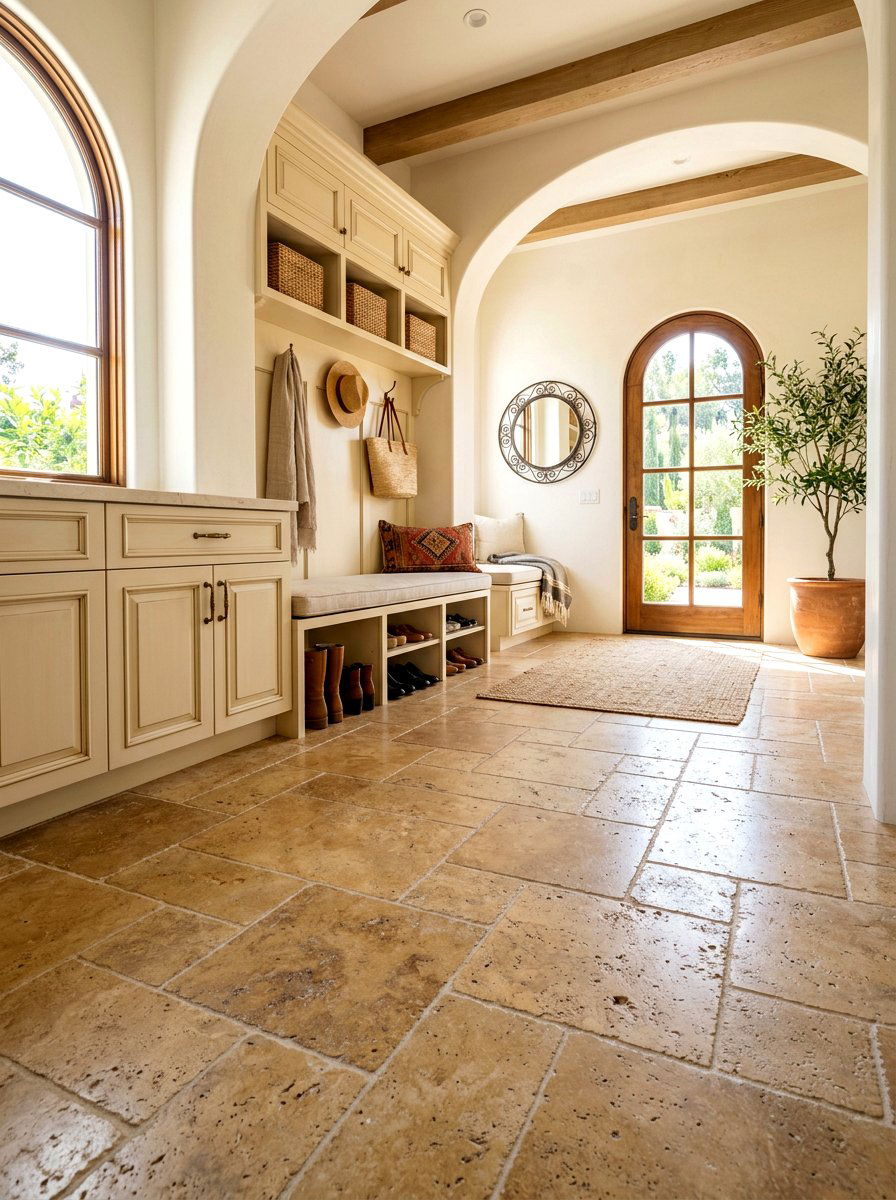
Travertine is a natural limestone that features unique pits and holes, which are often filled for a smoother finish. This stone offers a warm, creamy palette that makes any entryway feel bright and inviting. The natural variations in the stone ensure that no two tiles are exactly alike, providing a custom and high-end look. Travertine is quite durable and can handle heavy foot traffic well, provided it is properly sealed. Its earthy appearance works perfectly with rustic or traditional home styles. It brings a sense of timeless European charm to your home, making the transition from outside to inside feel very elegant.
21. Mosaic Mudroom Tile
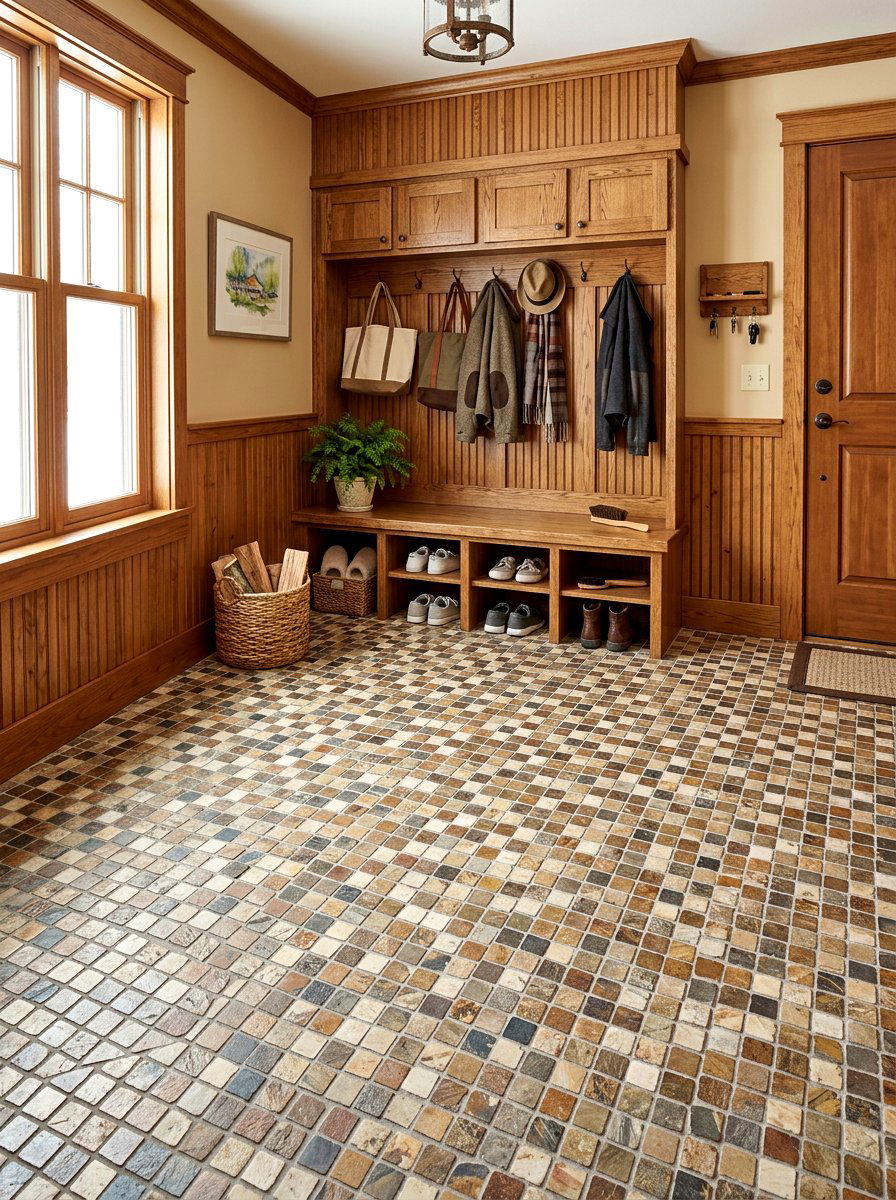
Mosaic tiles consist of small pieces of stone, glass, or porcelain arranged to create a detailed surface. The frequent grout lines provide excellent grip, making this one of the safest flooring options for wet entryways. Mosaics allow for incredible creativity, from simple repetitive squares to complex custom designs. They add a layer of fine detail and texture that larger tiles simply cannot match. Because they are so small, they are also incredibly strong and resistant to cracking under heavy loads. This makes them a durable and artistic choice for a mudroom that needs to be both safe and visually interesting.
22. Concrete Look Mudroom Floor
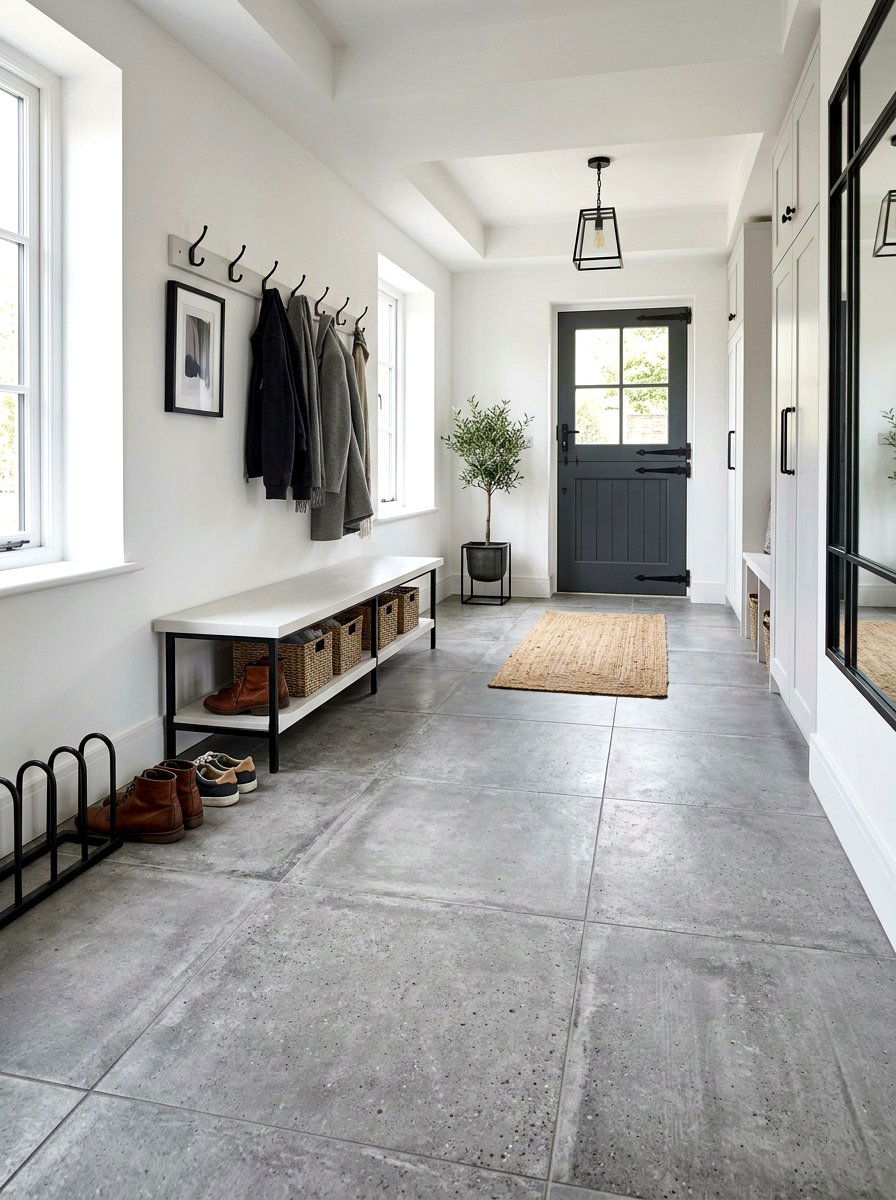
For those who love an industrial or modern aesthetic, concrete-look porcelain tiles are an outstanding choice. They provide the cool, urban vibe of poured concrete without the risk of cracking or the need for frequent resealing. These tiles come in various shades of gray and feature subtle mottled textures that hide dust and scuffs perfectly. They provide a very clean and neutral foundation that works well with metal hardware and reclaimed wood accents. This style is particularly effective in large mudrooms or those that connect directly to a garage, as it creates a seamless and professional-looking transition between the different spaces.
23. Diagonal Mudroom Tile
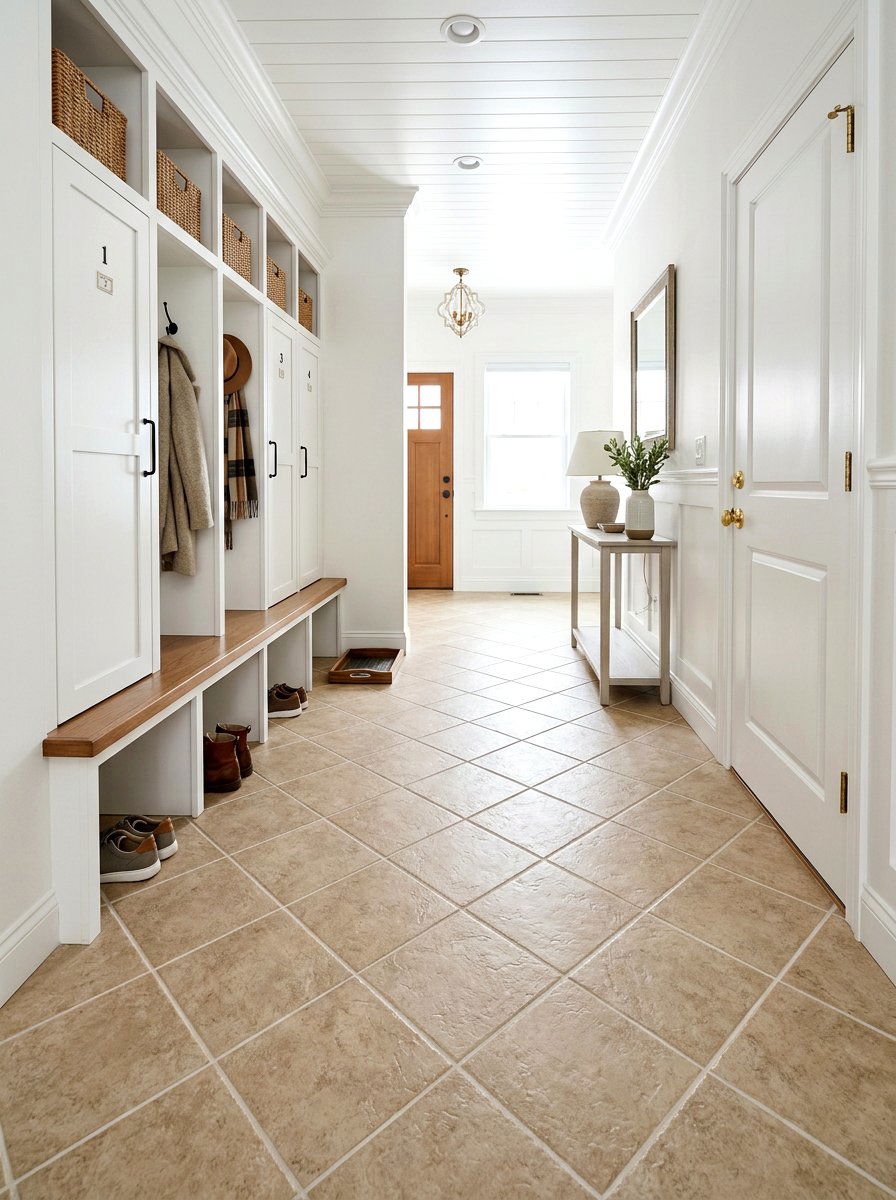
Installing your tiles on a diagonal, or a forty-five-degree angle, is a simple trick that can make any room feel wider and more expensive. This layout draws the eye to the corners of the room rather than the walls, creating an illusion of more floor space. It works with almost any square or rectangular tile, from simple porcelain to expensive natural stone. While it requires more precise cutting during installation, the visual payoff is significant. It adds a touch of custom design to a standard floor and helps to break up the "boxy" feel of many utility rooms, making the space feel more intentional.
24. Green Mudroom Floor
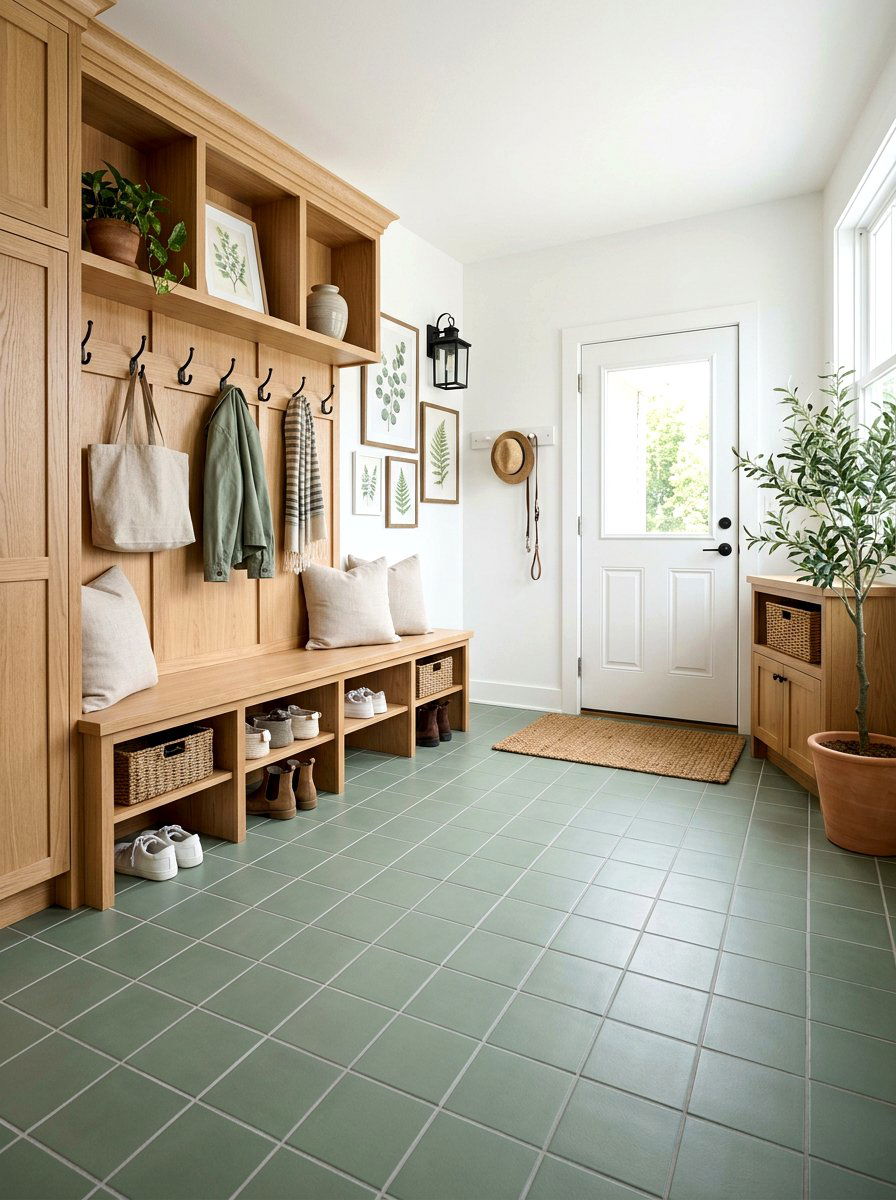
Green is becoming a popular choice for mudroom floors because it connects the interior of the home with the natural world outside. From soft sage to deep forest green, this color palette feels fresh and calming. Green tiles look stunning when paired with natural wood benches and brass hooks. This choice is perfect for homes with gardens or those located in wooded areas, as it reflects the surrounding environment. Using a patterned green tile can add even more character, making the mudroom feel like a lush and vibrant entryway that breathes life into the home every single day.
25. Vintage Mudroom Tile
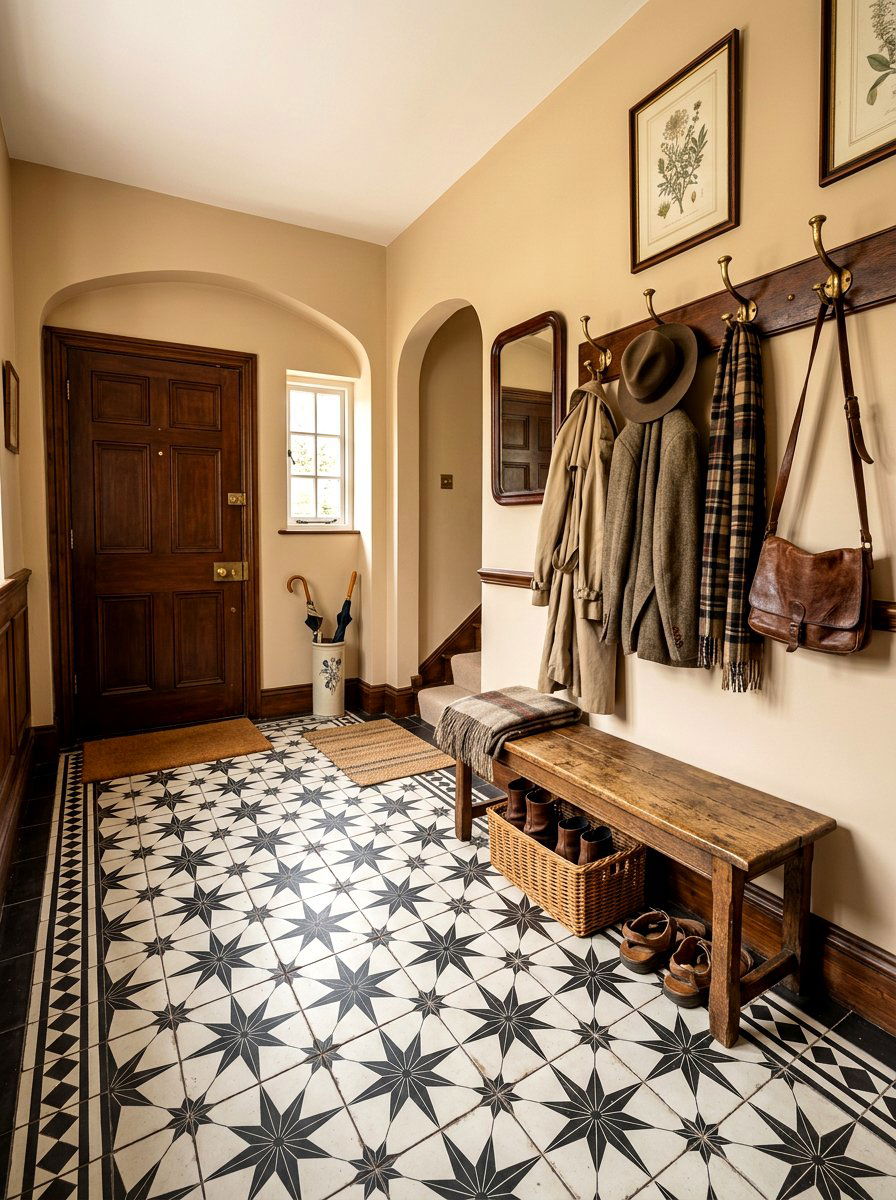
Vintage-style tiles often feature motifs from the Victorian or Edwardian eras, such as star-and-cross patterns or intricate borders. These designs add immediate history and character to a home, even if it is a new build. They often come in classic color combinations like black, white, and ochre. Choosing a vintage floor is a great way to make your mudroom feel like it has a story to tell. These tiles are usually made of durable porcelain, so you get the old-world look with modern-day performance. It is a charming way to create a nostalgic and cozy atmosphere for your family and guests.
26. Farmhouse Mudroom Floor
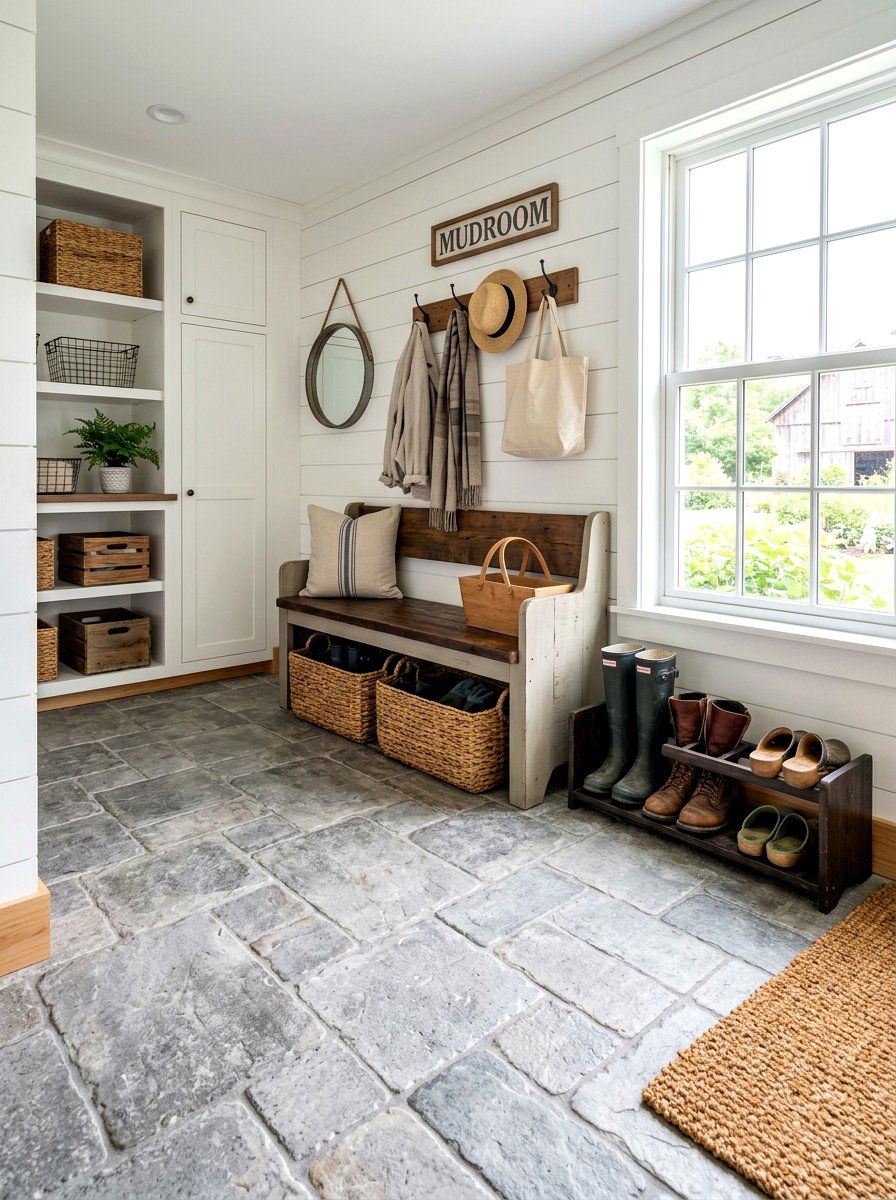
The farmhouse aesthetic is all about comfort, practicality, and a bit of rustic charm. For a farmhouse mudroom, look for tiles with a matte finish and a slightly weathered or tumbled appearance. Neutral tones, brick textures, or simple patterns like stripes or checkers work best for this style. The goal is to create a floor that looks like it can handle a little bit of mess without losing its beauty. This style is very forgiving and pairs perfectly with woven baskets, shiplap walls, and sturdy wooden furniture. It creates a welcoming, lived-in feel that is perfect for busy, active families.
27. Modern Slate Mudroom Floor
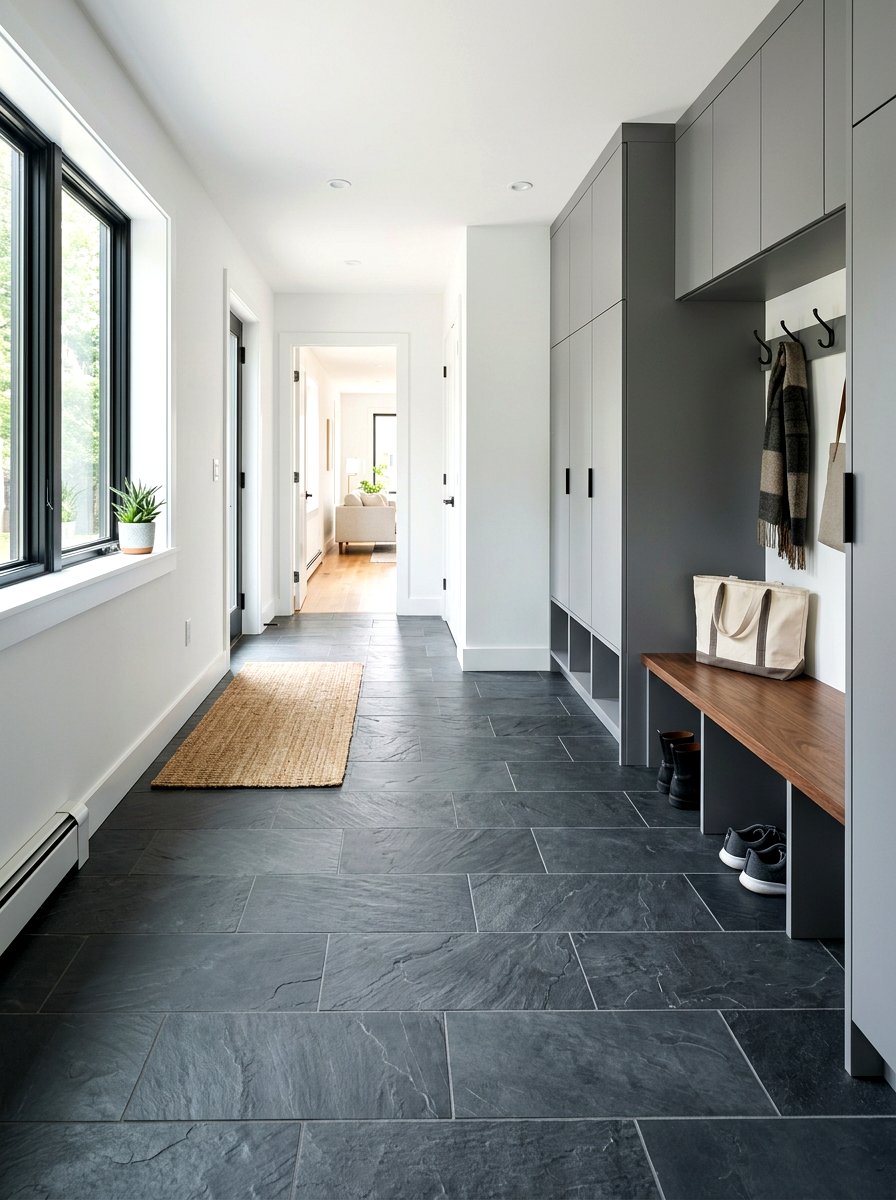
Modern slate designs often utilize large, rectangular planks rather than traditional squares. This gives the natural stone a much more contemporary and streamlined appearance. By choosing slate in a consistent, dark charcoal color, you create a very sophisticated and high-contrast look that fits perfectly in a modern home. The natural texture remains, providing the necessary slip resistance, but the layout feels fresh and updated. This is a great way to use a traditional material in a way that feels completely current. It is an enduring choice that balances the ruggedness of nature with the clean lines of modern architecture.
28. Neutral Mudroom Tile
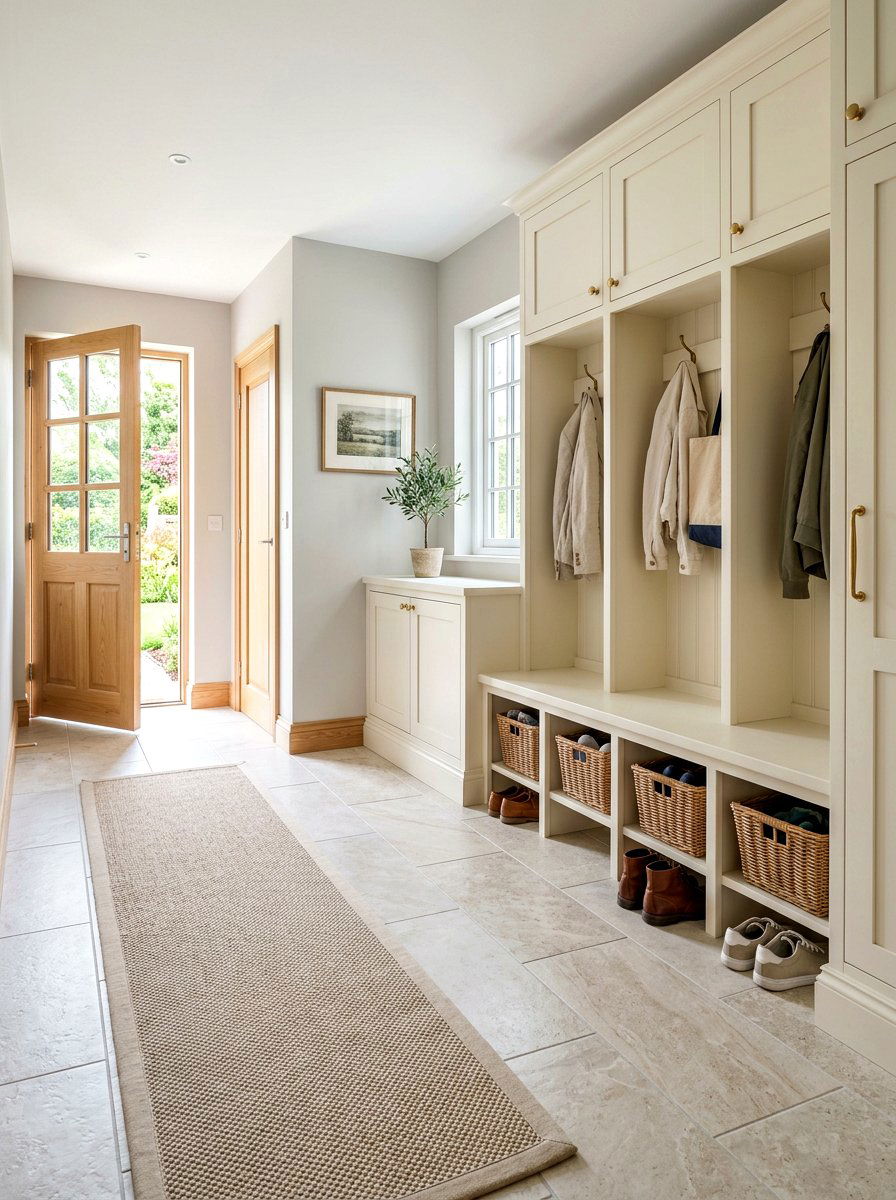
Neutral tiles in shades of beige, cream, or light gray are a safe and timeless choice for any entryway. These colors reflect light, helping to make a windowless mudroom feel much brighter and more inviting. A neutral floor acts as a blank canvas, allowing you to add color through rugs, pillows, or wall art. To keep a neutral floor from looking boring, choose a tile with a bit of texture or a subtle stone-look grain. This provides visual interest without being too loud. It is a practical and stylish choice that will appeal to future buyers if you ever decide to sell.
29. Geometric Mudroom Floor
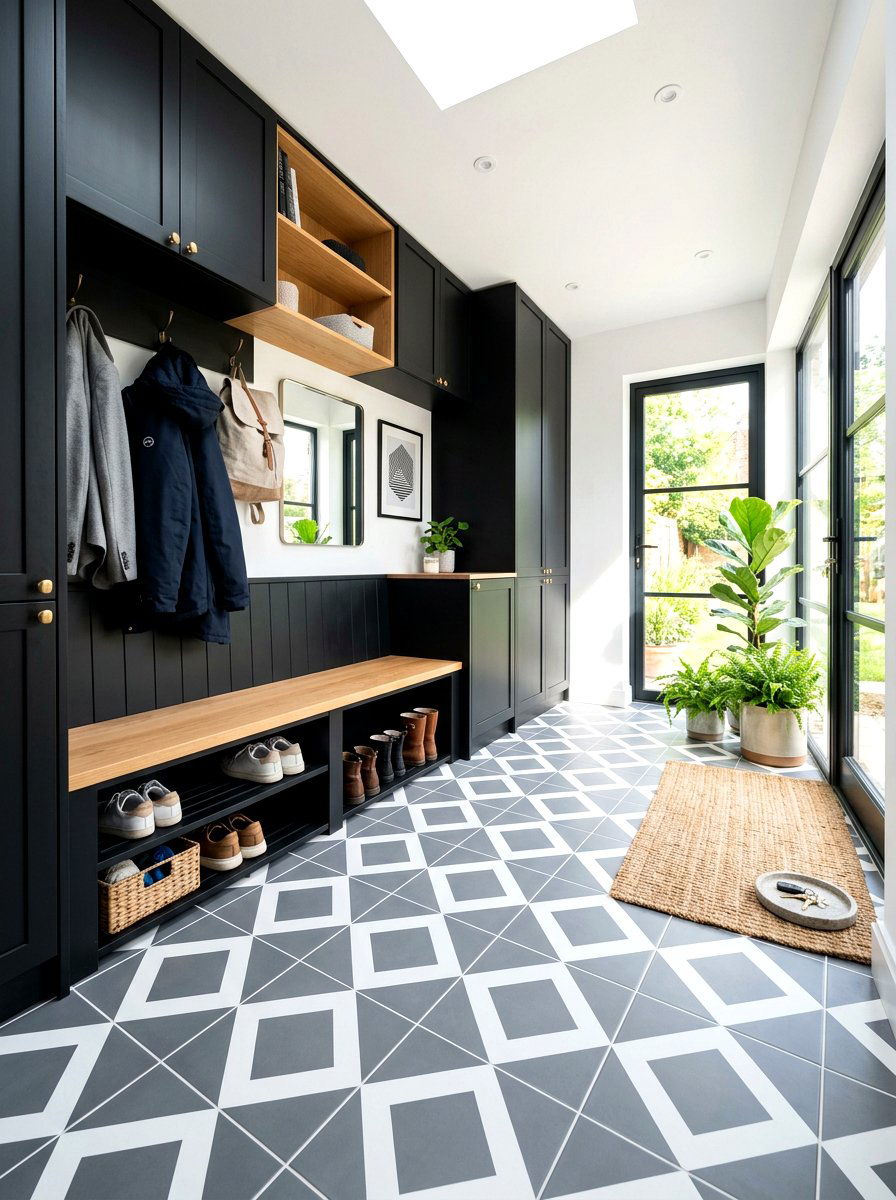
Geometric tiles feature bold shapes like triangles, diamonds, or overlapping circles to create a dynamic and energetic floor. This is a great way to add a modern, artistic touch to your mudroom. Because the shapes are so defined, these floors often become the main focal point of the entire space. You can choose a monochromatic geometric design for a subtle look or go with multi-colored tiles for a high-impact statement. This style works exceptionally well in homes with a contemporary or mid-century modern vibe. It shows off your design confidence and makes the everyday task of entering the home feel more exciting.
30. Basketweave Mudroom Tile
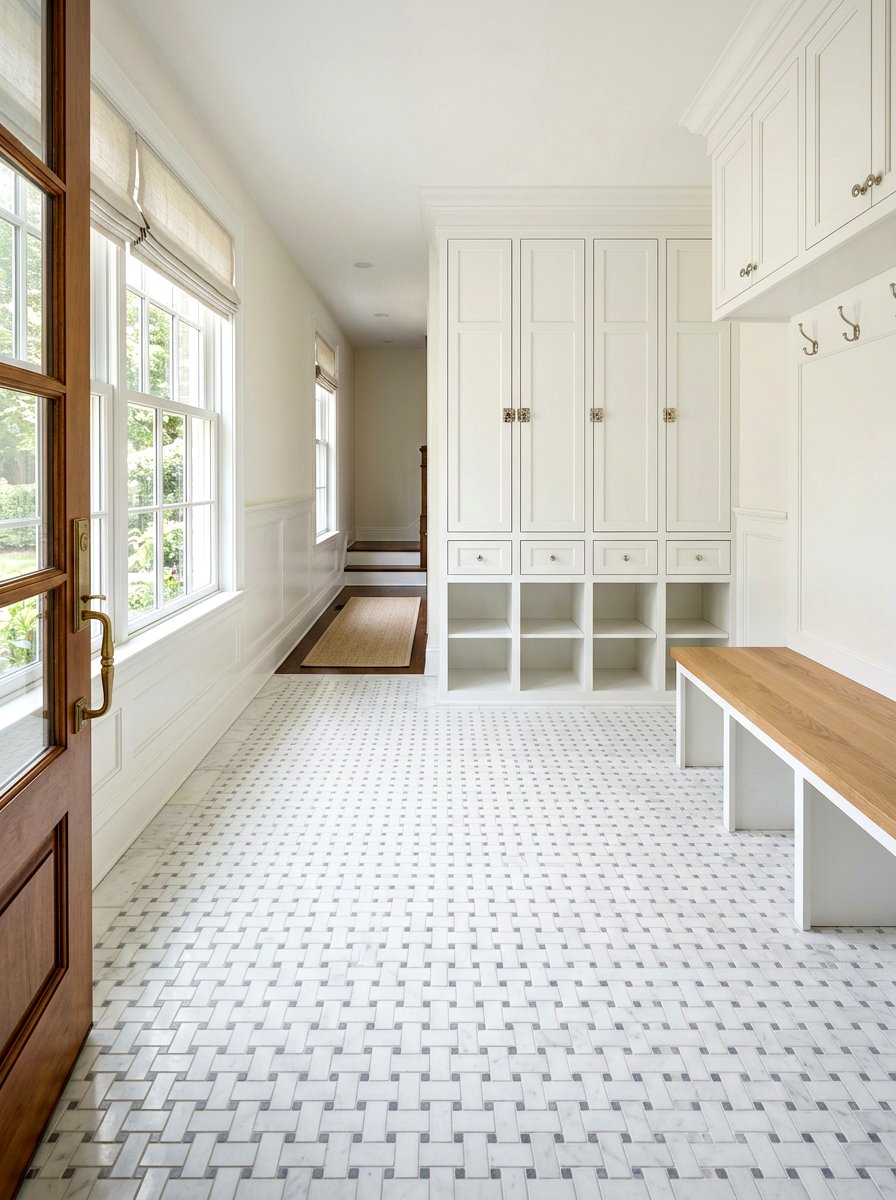
Basketweave is a classic pattern that uses rectangular tiles and small square accents to mimic the look of a woven basket. This design is incredibly detailed and adds a layer of sophisticated texture to the mudroom floor. It is traditionally seen in marble but can also be found in porcelain or ceramic versions. The pattern provides plenty of grout lines for traction and creates a very high-end, traditional feel. It is a wonderful choice for homeowners who want a floor that looks intricate and well-crafted. Basketweave patterns are timeless and bring a sense of refined craftsmanship to your home's busiest entrance.
Conclusion:
Selecting the right mudroom tile is a vital decision that balances your personal style with the practical needs of your daily life. Whether you are drawn to the rugged beauty of natural slate, the intricate patterns of cement tile, or the classic charm of a checkered layout, the floor sets the foundation for a successful entryway. A well-designed mudroom not only protects the rest of your home from dirt and moisture but also provides a warm and organized welcome every time you return home. By prioritizing durability and slip resistance while choosing a design you love, you can create a Pinterest-worthy space.

Related posts: