Creating a Mediterranean sanctuary in your own backyard starts with the timeless elegance of olive trees. These resilient plants offer more than just fruit; they provide a textured, silvery-green canopy that transforms any outdoor space into a serene retreat. Whether you have a sprawling estate or a compact suburban lot, incorporating an olive grove brings a sense of history and natural beauty to your landscape. The soft, shimmering leaves catch the light beautifully during the golden hour, while the gnarled trunks add architectural interest that only improves with age. By focusing on sustainable, drought-tolerant elements, you can design a space that is both environmentally friendly and visually stunning.
1. Mediterranean gravel patio
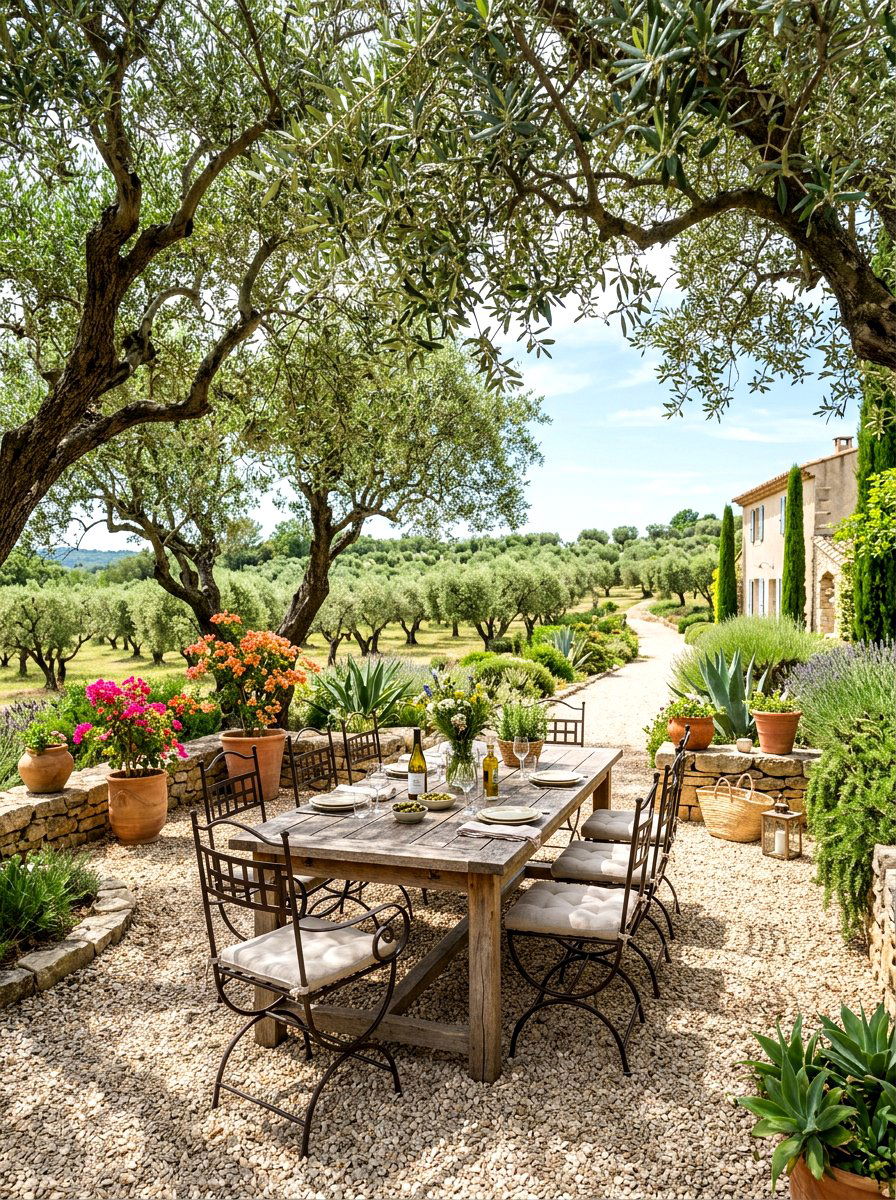
Imagine stepping out onto a crunching layer of light-colored pea gravel that perfectly reflects the summer sun. A Mediterranean gravel patio is the quintessential companion for an olive grove, offering a permeable surface that is as practical as it is beautiful. This type of flooring creates a relaxed, rustic vibe that encourages long afternoons spent outdoors. You can arrange a weathered wooden table and some wrought-iron chairs to complete the look. The neutral tones of the gravel make the sage-colored leaves of the olive trees pop, creating a cohesive and calming environment. It is an affordable way to achieve a high-end European aesthetic without complex masonry.
2. Olive tree lighting
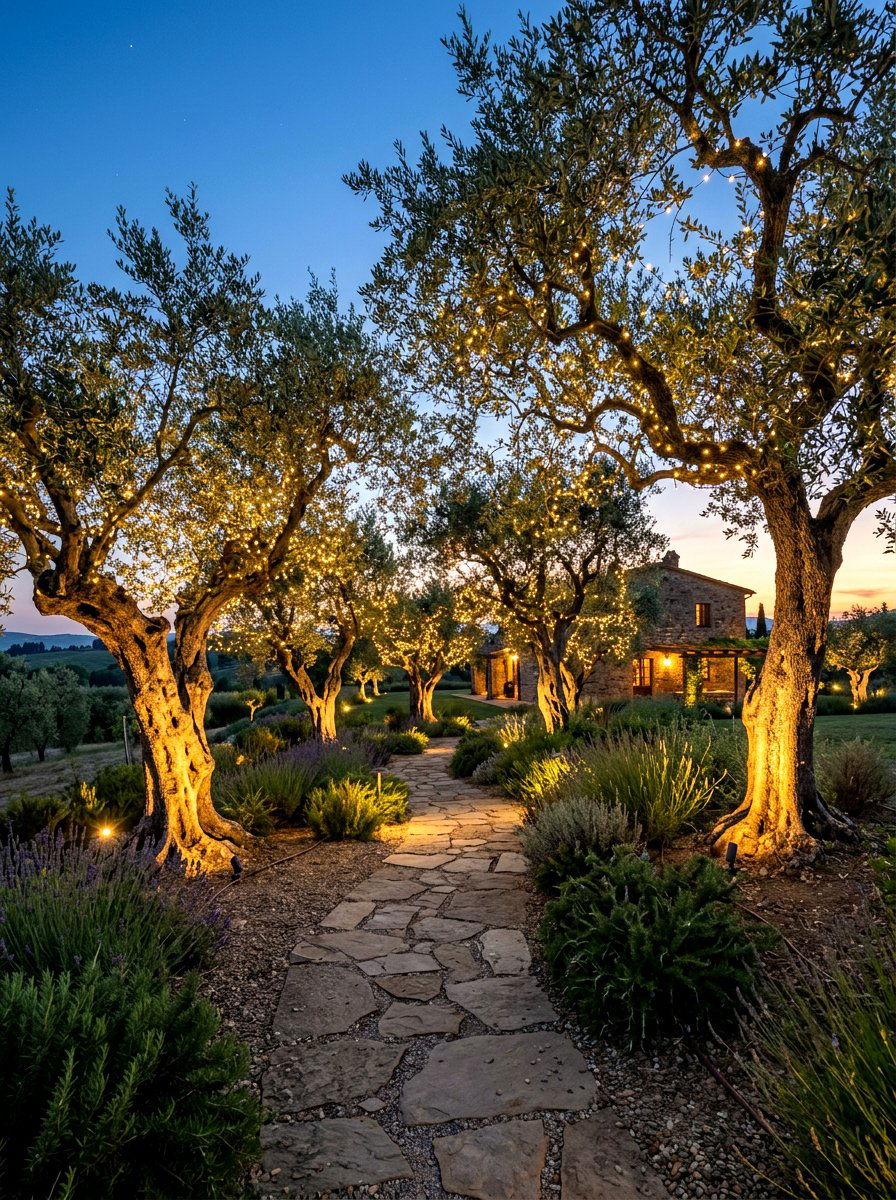
When the sun begins to set, your backyard can transform into a magical evening escape with the right olive tree lighting. Placing small, warm-toned LED spotlights at the base of each tree highlights the intricate texture of the trunks and the delicate leaf structure above. This technique, known as up-lighting, creates dramatic shadows and a sense of depth throughout the garden. You might also consider weaving thin fairy lights through the lower branches for a more whimsical, starry effect. Good lighting ensures your olive grove remains a focal point after dark, making the outdoor space feel safe, inviting, and professional.
3. Rustic stone wall
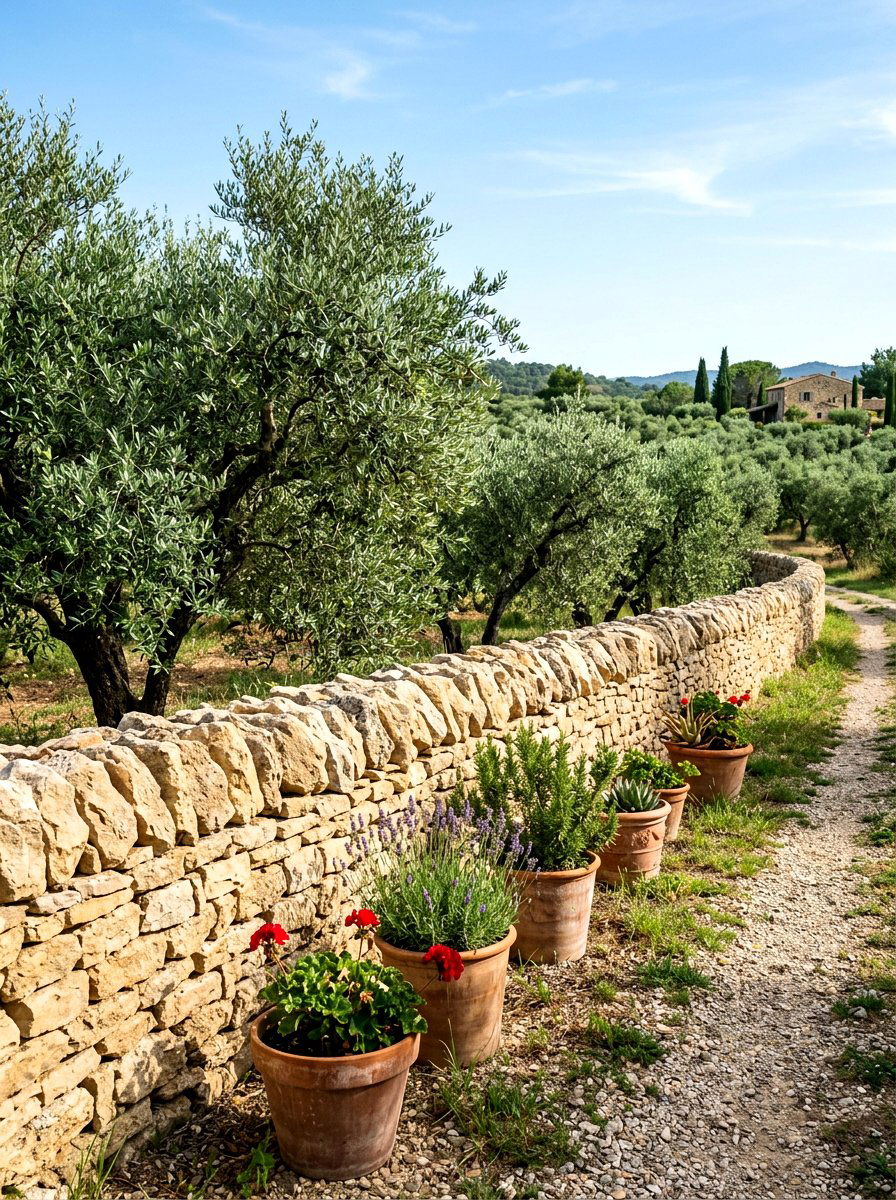
Building a rustic stone wall provides a beautiful structural boundary that anchors your olive grove to the earth. Using local, irregular stones in earthy shades of tan and gray mimics the traditional landscapes found in Italy or Greece. These walls can serve as retaining structures for sloped yards or simply as decorative low borders that define different garden zones. The rough texture of the stone provides a stunning contrast to the soft, airy foliage of the trees. Over time, moss or small succulents can grow in the crevices, adding even more character and a sense of permanence to your timeless backyard design.
4. Modern drought tolerant landscaping
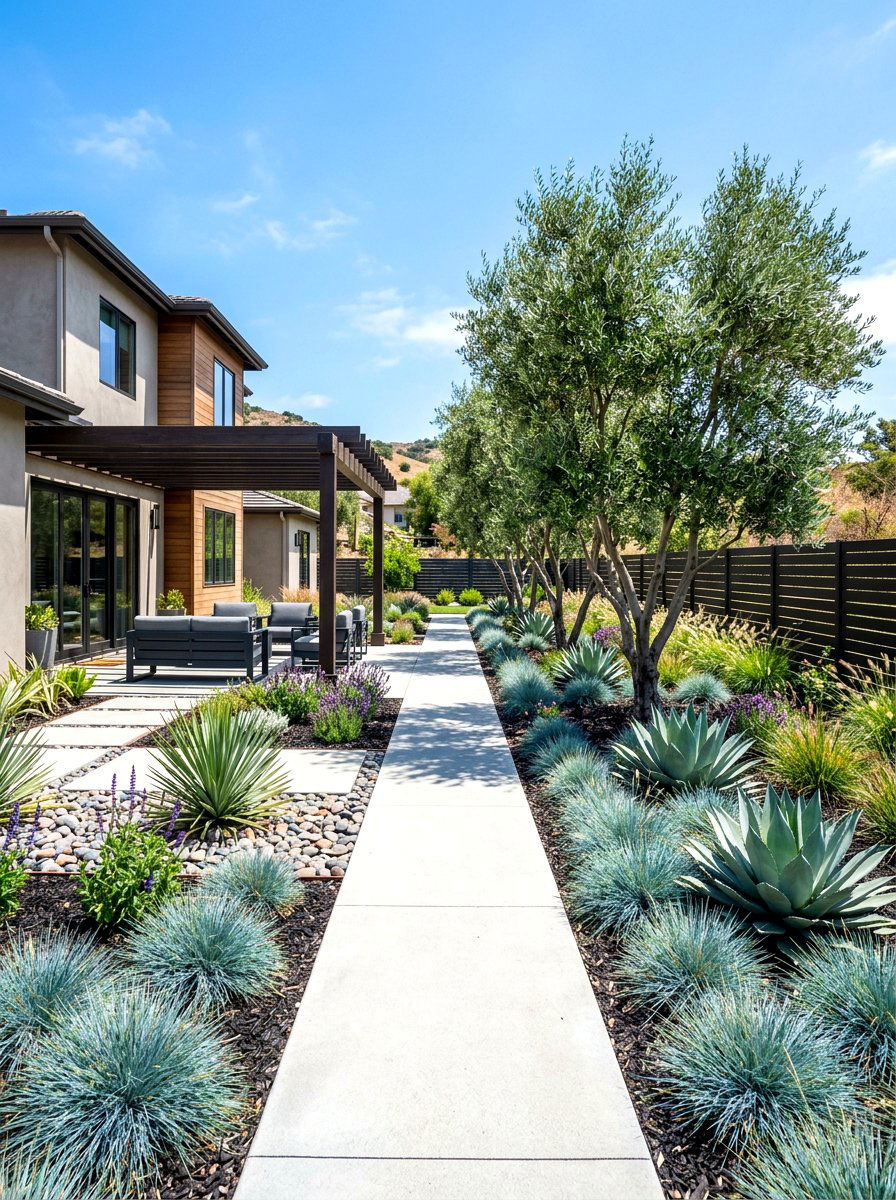
Embracing modern drought tolerant landscaping allows you to enjoy a lush-looking backyard without the high water bill or constant maintenance. Olive trees are the stars of this approach because they thrive in arid conditions once they are fully established. You can pair them with other water-wise plants like agave, blue fescue, and ornamental grasses to create a contemporary look. Using clean lines and a restricted color palette helps keep the design feeling organized and sophisticated. This sustainable choice is perfect for homeowners who want a beautiful garden that respects the environment while providing a cool, shaded area for summer relaxation.
5. Small olive grove courtyard
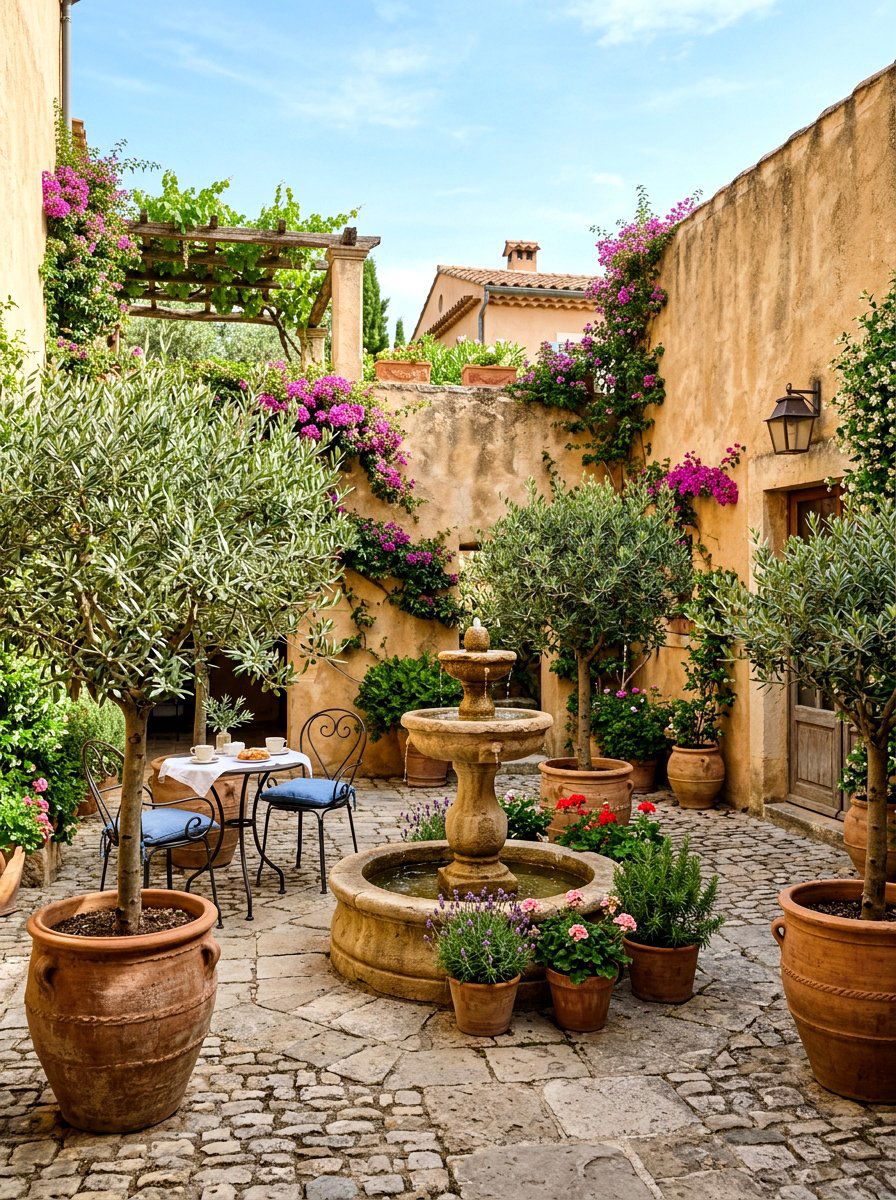
Even a compact urban space can feel like a hidden villa with a small olive grove courtyard. By placing a few carefully chosen trees in a semi-enclosed area, you create a sense of privacy and intimacy. Use large terracotta pots if you cannot plant directly into the ground, as this allows you to control the soil quality and move the trees if needed. A central water feature or a small bistro set can turn this tiny area into your favorite spot for morning coffee. The vertical growth of the trees draws the eye upward, making a small yard feel much larger and more lush.
6. Outdoor dining under olive trees
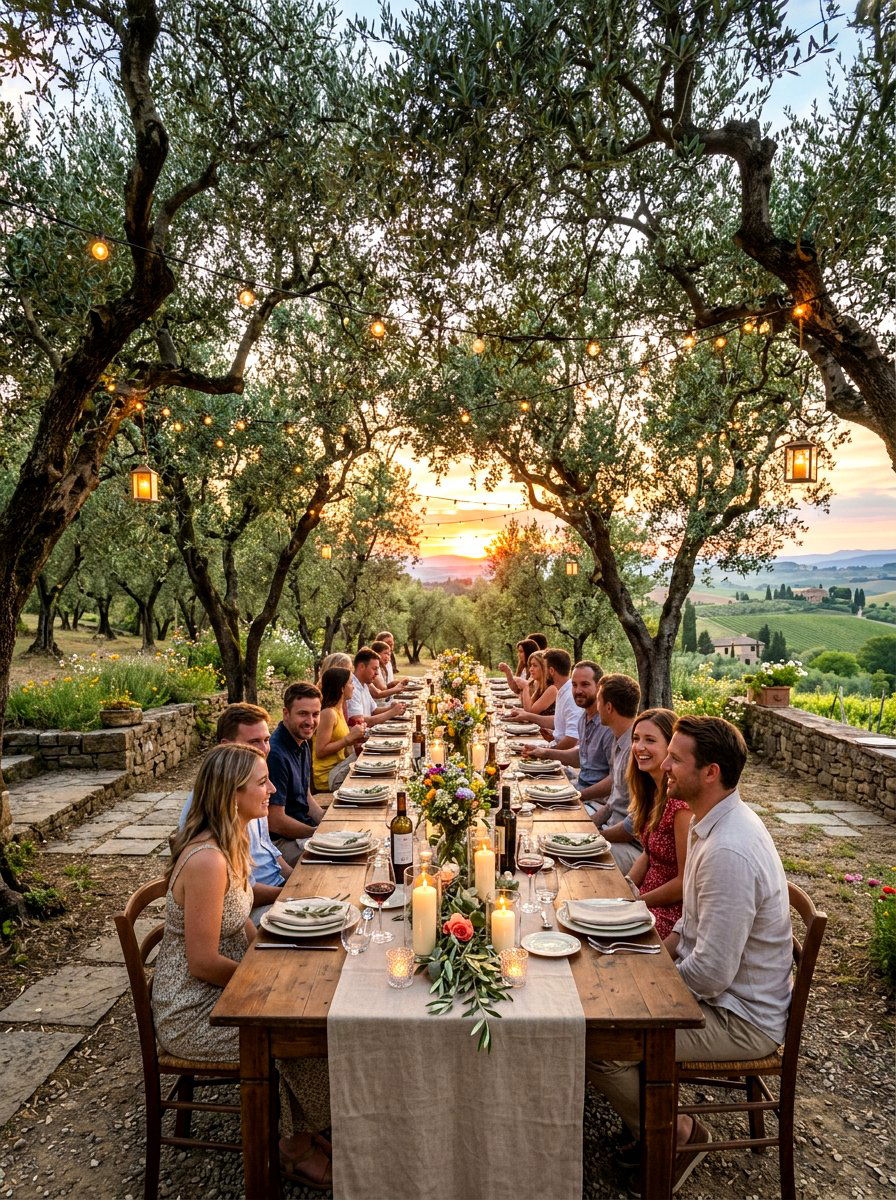
There is nothing quite as romantic as hosting an outdoor dining experience under the dappled shade of mature olive trees. Setting up a long, farmhouse-style table directly beneath the canopy creates a natural "outdoor room" that feels protected and special. The soft rustle of the leaves and the cool breeze through the branches provide the perfect ambiance for dinner parties or family gatherings. You can hang lanterns or candles from the sturdy limbs to provide a soft glow as the night progresses. This design layout encourages a slow, Mediterranean pace of life where meals are celebrated and enjoyed in the open air.
7. Potted olive trees on deck
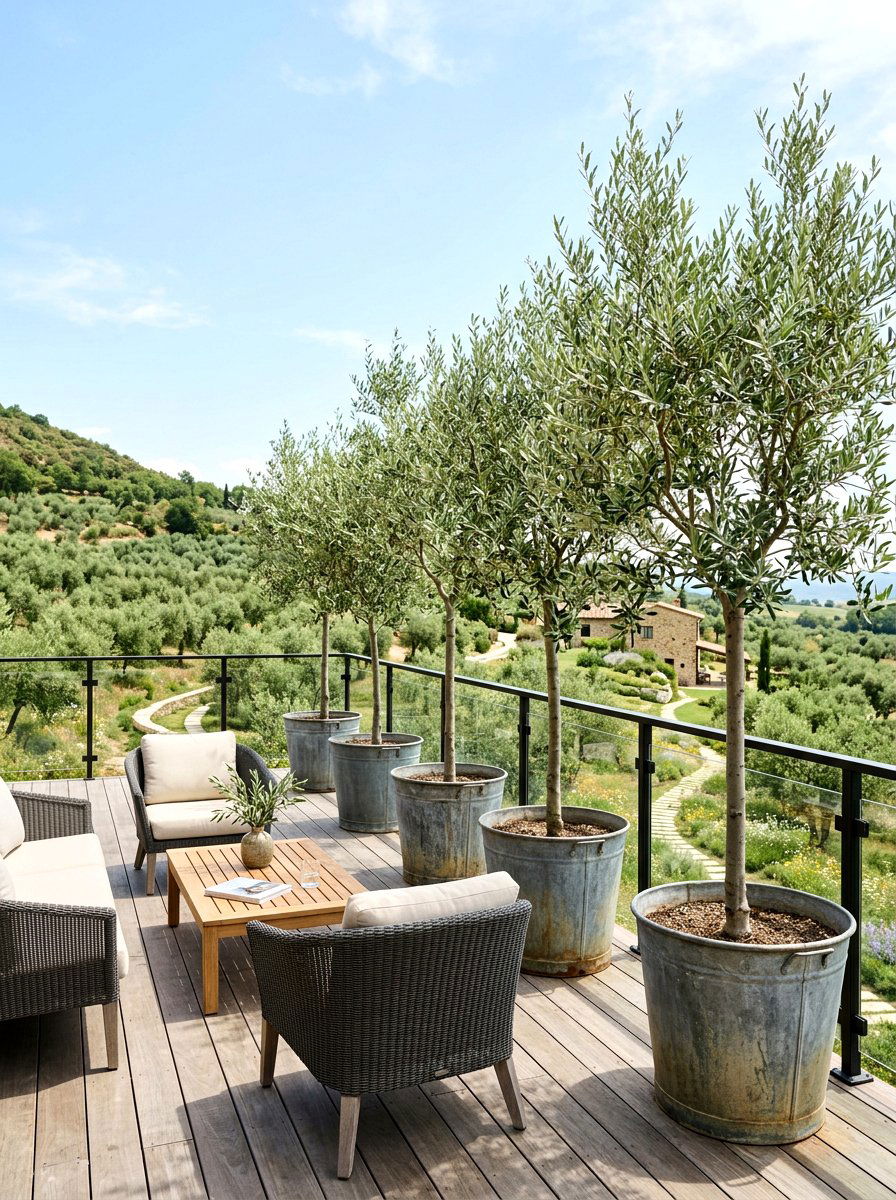
If your backyard is dominated by a wooden deck, you can still enjoy the grove aesthetic by using potted olive trees. Large, architectural containers made of weathered zinc, concrete, or classic clay can house these trees beautifully while adding a modern touch. Positioning the pots in clusters or rows along the perimeter of the deck creates a living screen that provides shade and a bit of privacy from neighbors. Potted trees are also easier to protect during particularly harsh winters since they can be moved closer to the house. This flexible design idea brings life and greenery to hard-scaped areas effortlessly.
8. Lavender and olive tree garden
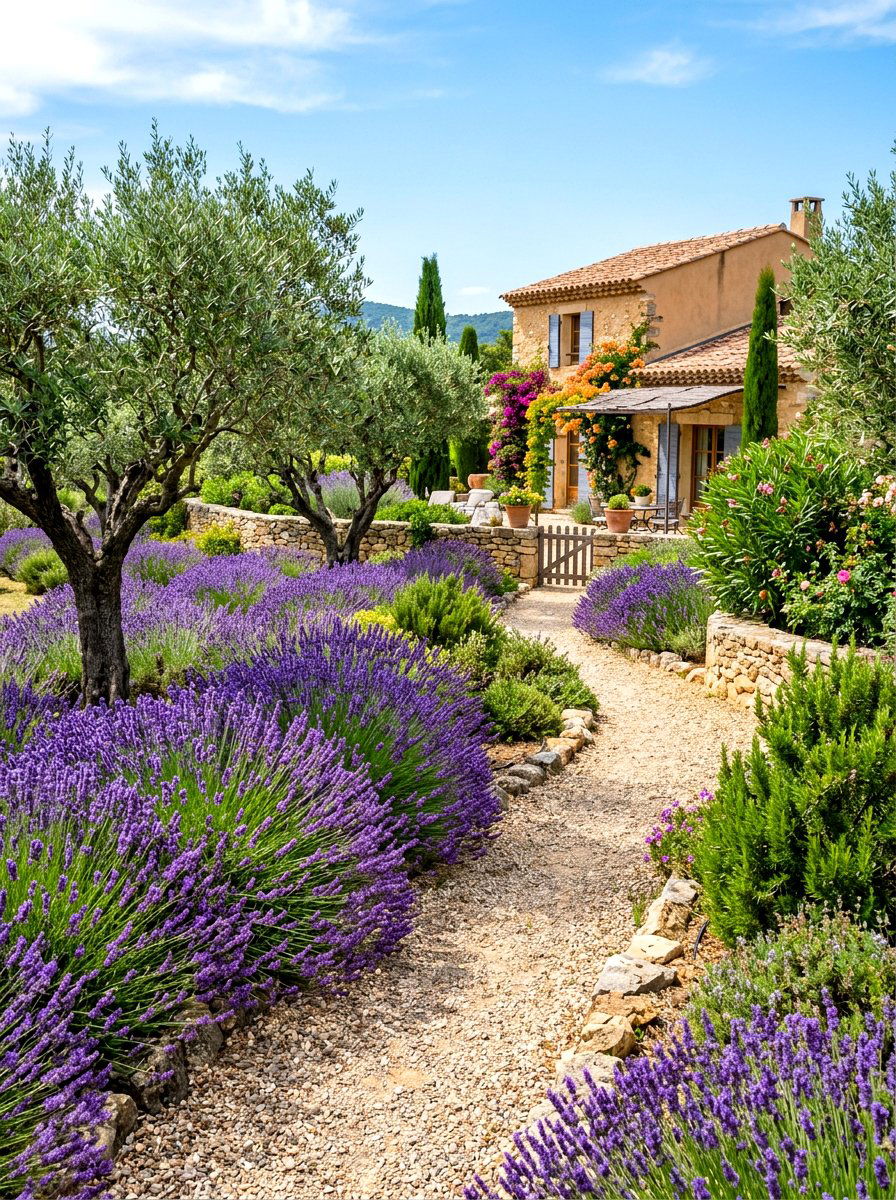
Creating a lavender and olive tree garden is a classic pairing that appeals to both the eyes and the nose. The purple blooms of the lavender provide a stunning color contrast to the silver-green leaves of the olives, while both plants share similar sun and water requirements. Planting large drifts of lavender around the base of your trees creates a soft, carpet-like effect that fills the air with a relaxing fragrance. This combination attracts beneficial pollinators like bees and butterflies, making your backyard feel alive and vibrant. It is a low-maintenance way to achieve a high-impact, sensory-rich Mediterranean landscape design.
9. Gravel walkway with olive trees
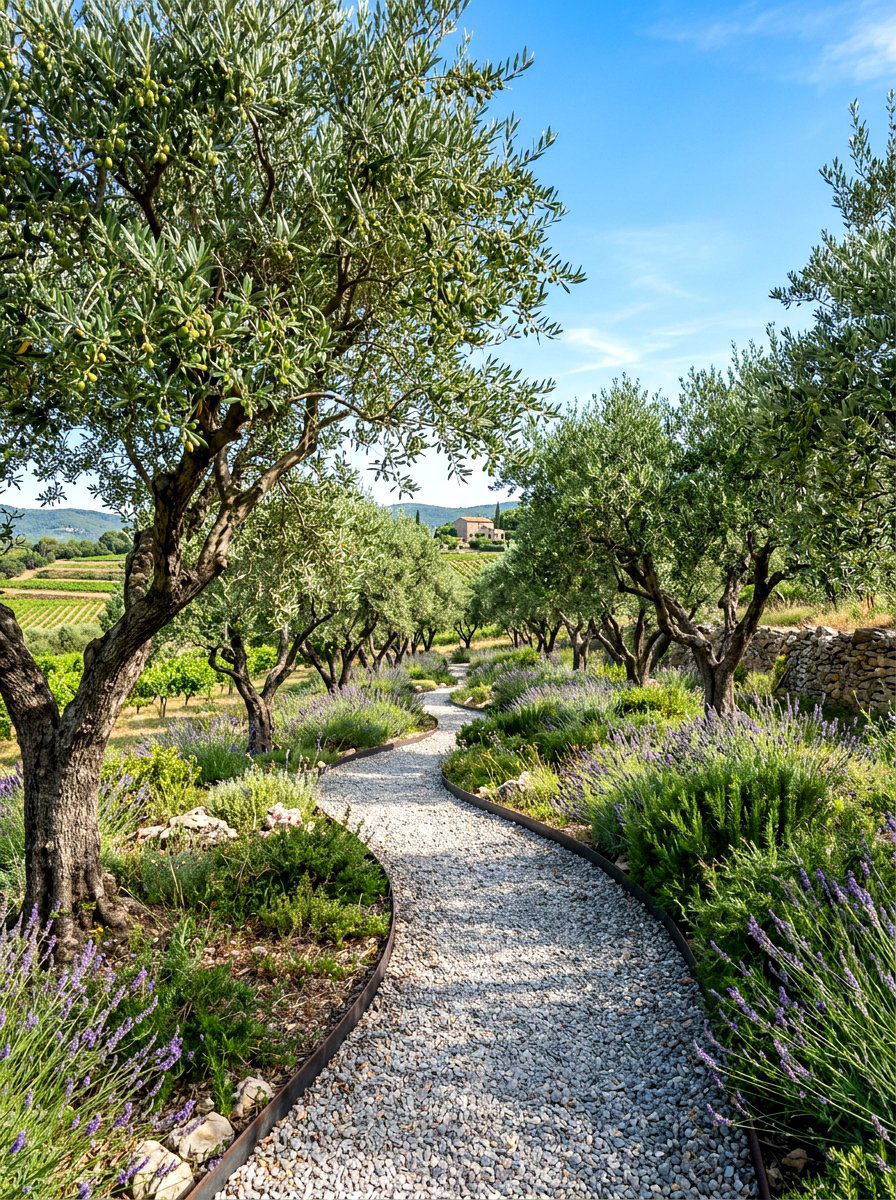
A winding gravel walkway with olive trees on either side creates a beautiful sense of journey through your backyard. The path guides guests through the space, allowing them to appreciate the texture of the bark and the movement of the leaves up close. Use a dark metal or stone edging to keep the gravel contained and to give the path a clean, finished look. Planting low-growing herbs like creeping thyme between the stones adds a pleasant scent whenever someone walks by. This simple architectural element breaks up large expanses of lawn and adds a professional, landscaped feel to any size property.
10. Tuscan style backyard
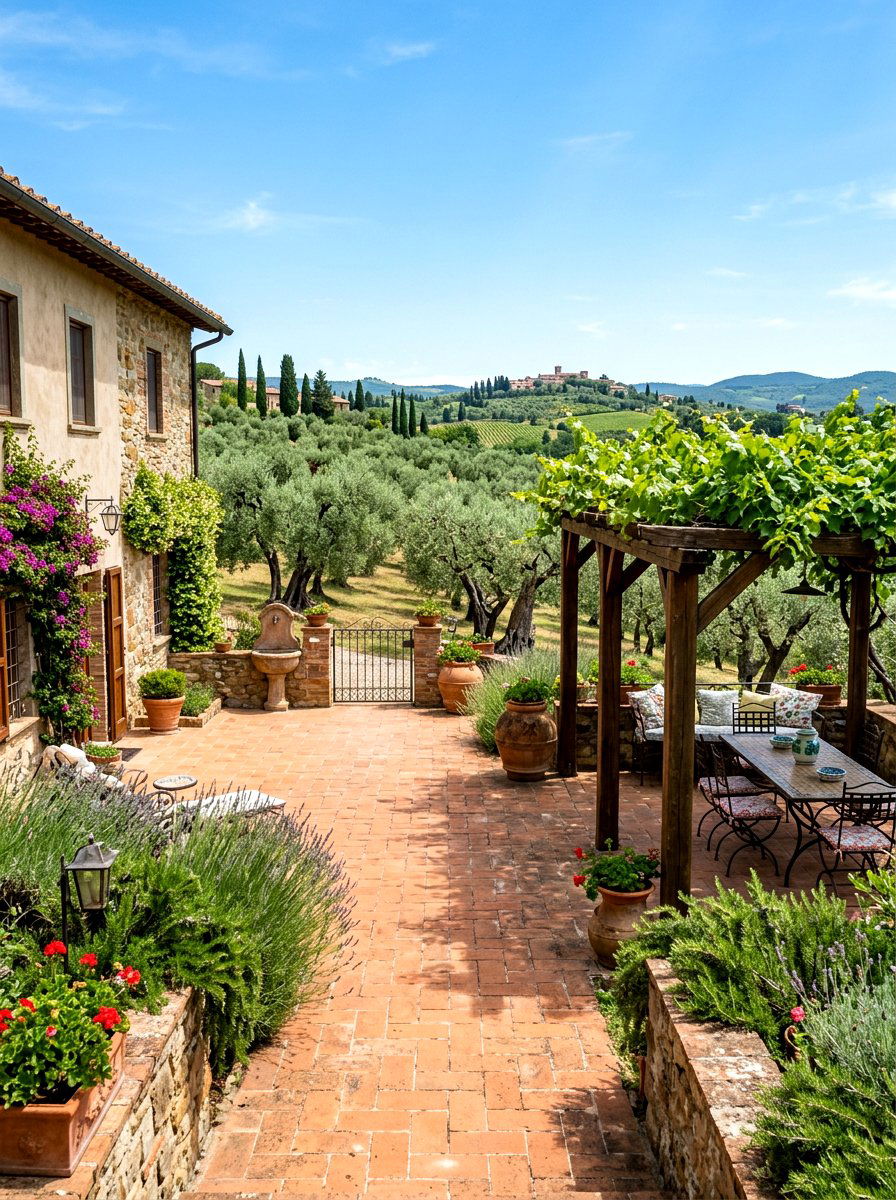
To capture the essence of the Italian countryside, focus on a Tuscan style backyard that emphasizes warm tones and natural materials. Combine your olive grove with terracotta tiles, wrought iron accents, and sun-washed plaster walls. You might include a vine-covered pergola nearby to provide additional shade and a place for climbing grapes or roses. The goal is to create a space that feels old-world and lived-in, where the passage of time only adds to the beauty of the materials. This design style is perfect for those who love a warm, earthy aesthetic that feels both sophisticated and incredibly comfortable.
11. Olive tree privacy screen
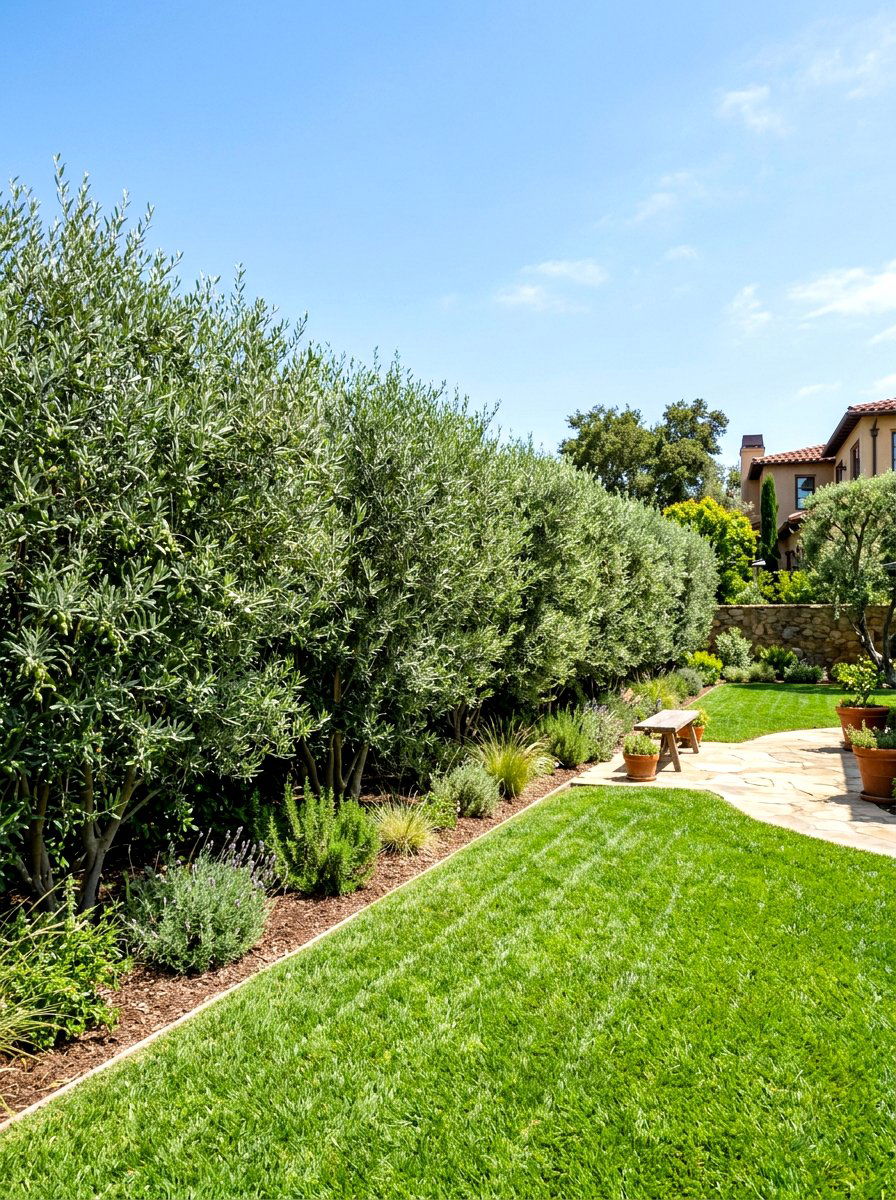
Using a row of closely planted trees creates an effective olive tree privacy screen that looks much more natural than a wooden fence. Because olive trees are evergreen, they provide a consistent green wall that stays beautiful throughout the year. You can prune them into a more formal hedge shape or let them grow naturally for a softer, more relaxed appearance. The dense branches help to muffle street noise and block the view from neighboring houses, creating a quiet sanctuary for your family. This living fence also serves as a beautiful backdrop for lower flower beds or a pristine green lawn.
12. Minimalist olive tree garden
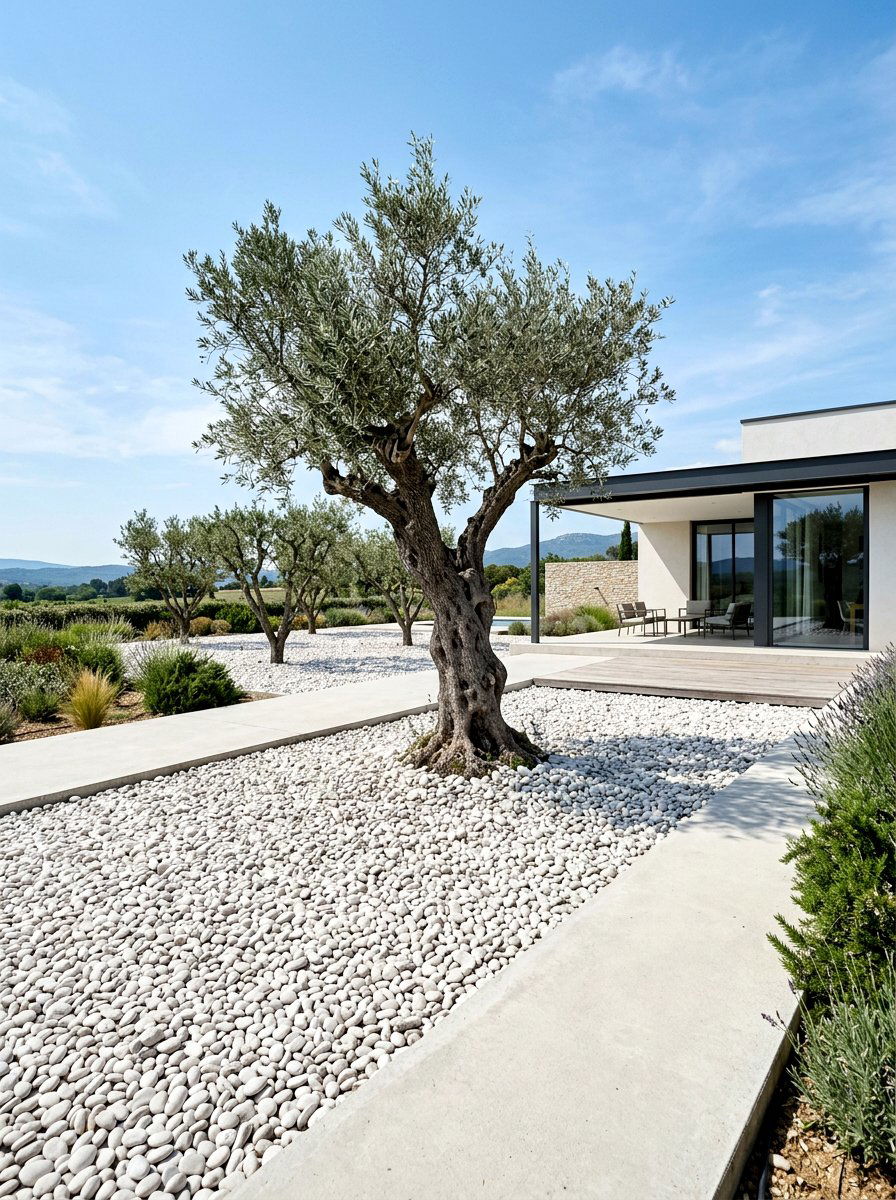
A minimalist olive tree garden focuses on a "less is more" philosophy, highlighting the sculptural beauty of the trees themselves. In this design, you might use only one or two specimen trees as the primary focus, surrounded by a clean field of white pebbles or smooth concrete. By removing distracting elements, you allow the viewer to appreciate the twisting trunks and the play of light on the leaves. This style works exceptionally well with modern architecture, providing a bridge between the sharp lines of a house and the organic shapes of nature. It creates a very calm, gallery-like atmosphere.
13. Olive tree seating area
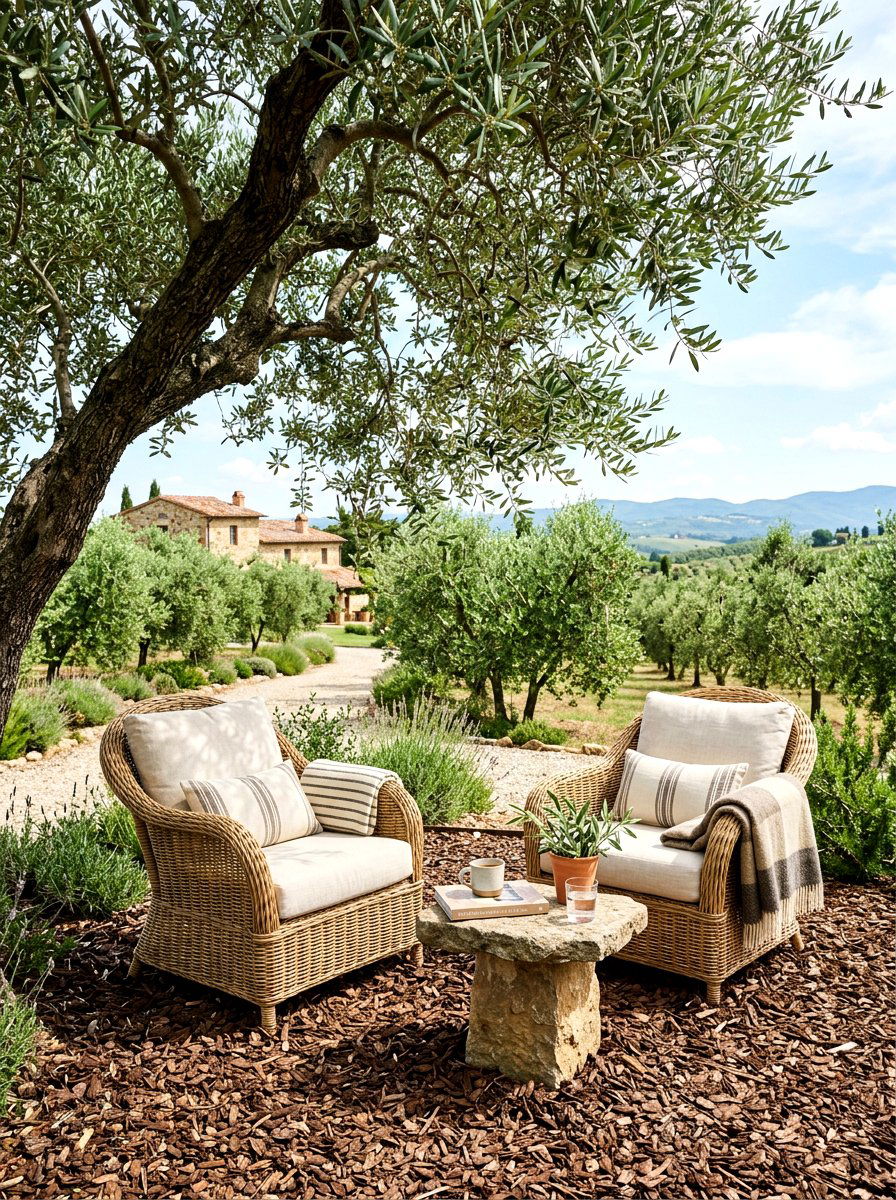
An olive tree seating area is all about creating a dedicated spot for relaxation and quiet reflection. Instead of a large dining table, opt for a pair of comfortable lounge chairs or a built-in stone bench nestled right against the trunk. Surrounding the base with a thick layer of mulch or fine gravel keeps the area clean and well-defined. This spot becomes a cool refuge during the heat of the day, where you can read a book or simply enjoy the sounds of the garden. The presence of the tree overhead provides a sense of security and a deep connection to the natural world.
14. Mediterranean herb garden
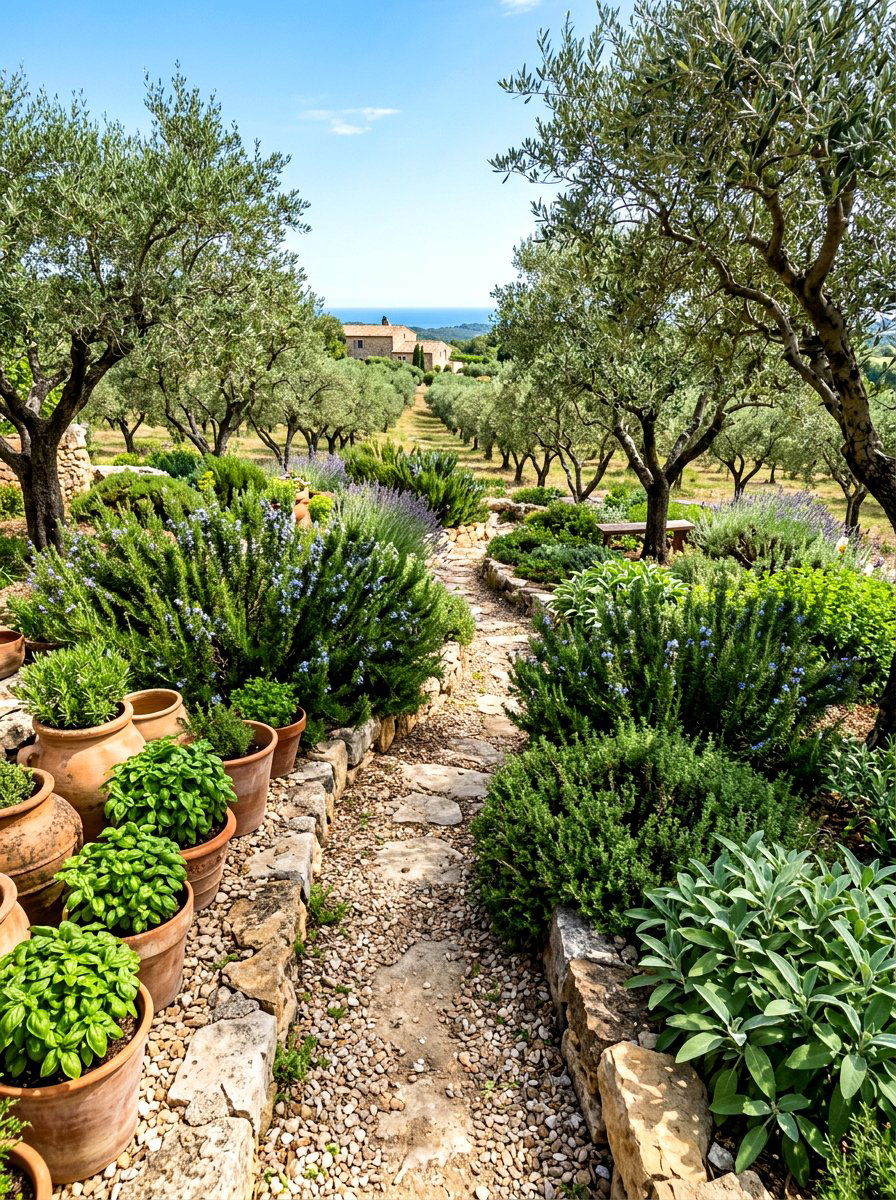
Integrating a Mediterranean herb garden within your olive grove is a practical and beautiful way to use your space. Plant rosemary, sage, oregano, and thyme in the sunny gaps between the trees. Not only do these plants thrive in the same well-drained soil as the olives, but they also provide fresh ingredients for your kitchen. The varying textures and shades of green from the herbs add depth to the ground level of your landscape. The scent of sun-warmed herbs combined with the rustle of olive leaves creates an immersive experience that transports you directly to a coastal hillside in Spain.
15. Terraced olive grove
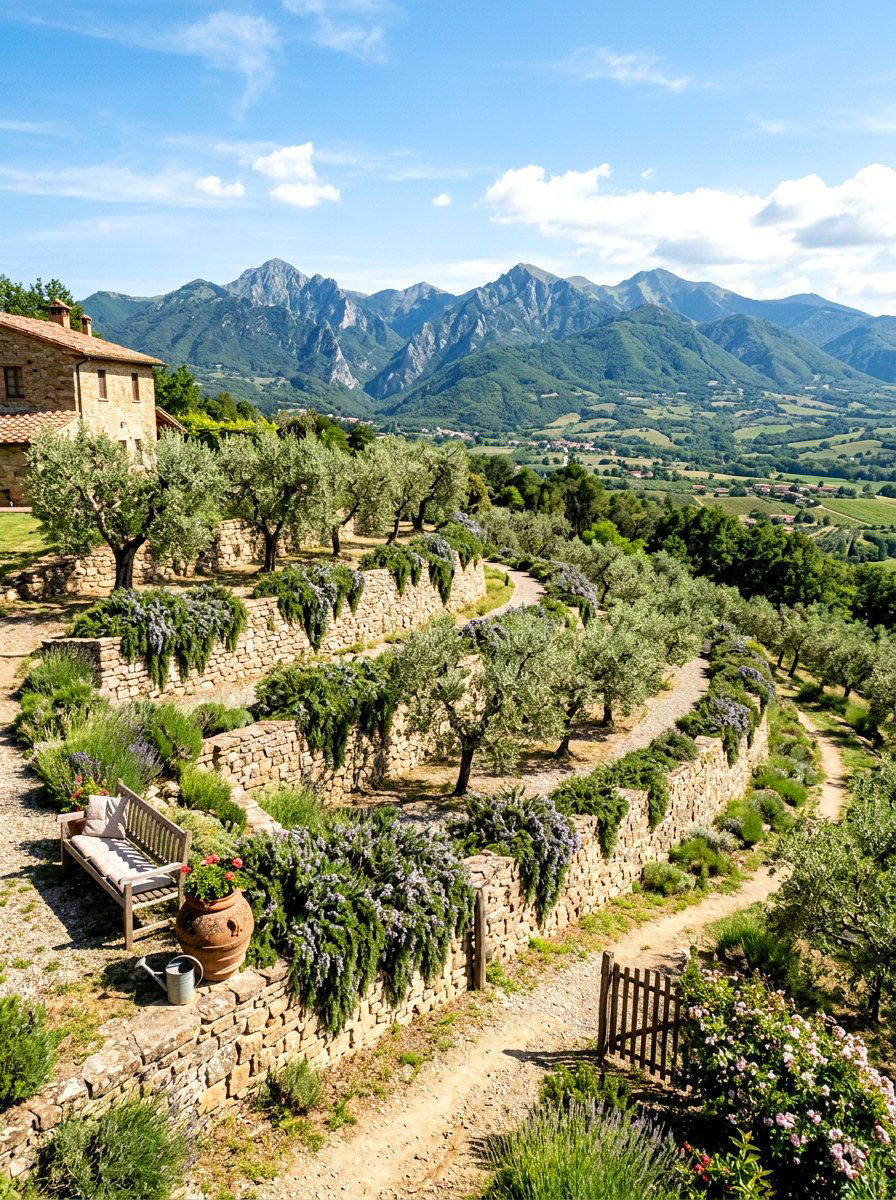
If your backyard has a significant slope, a terraced olive grove is the perfect solution to manage the terrain while adding visual interest. Use stone or timber retaining walls to create level planting "steps" where each tree can thrive. This layered look provides a sense of abundance and makes the most of vertical space. Irrigation is often easier to manage on terraces, and the different levels allow you to view the trees from various heights. You can plant trailing plants like rosemary or ivy along the edges of the walls to soften the hard lines and create a lush, cascading green effect.
16. Olive tree around swimming pool
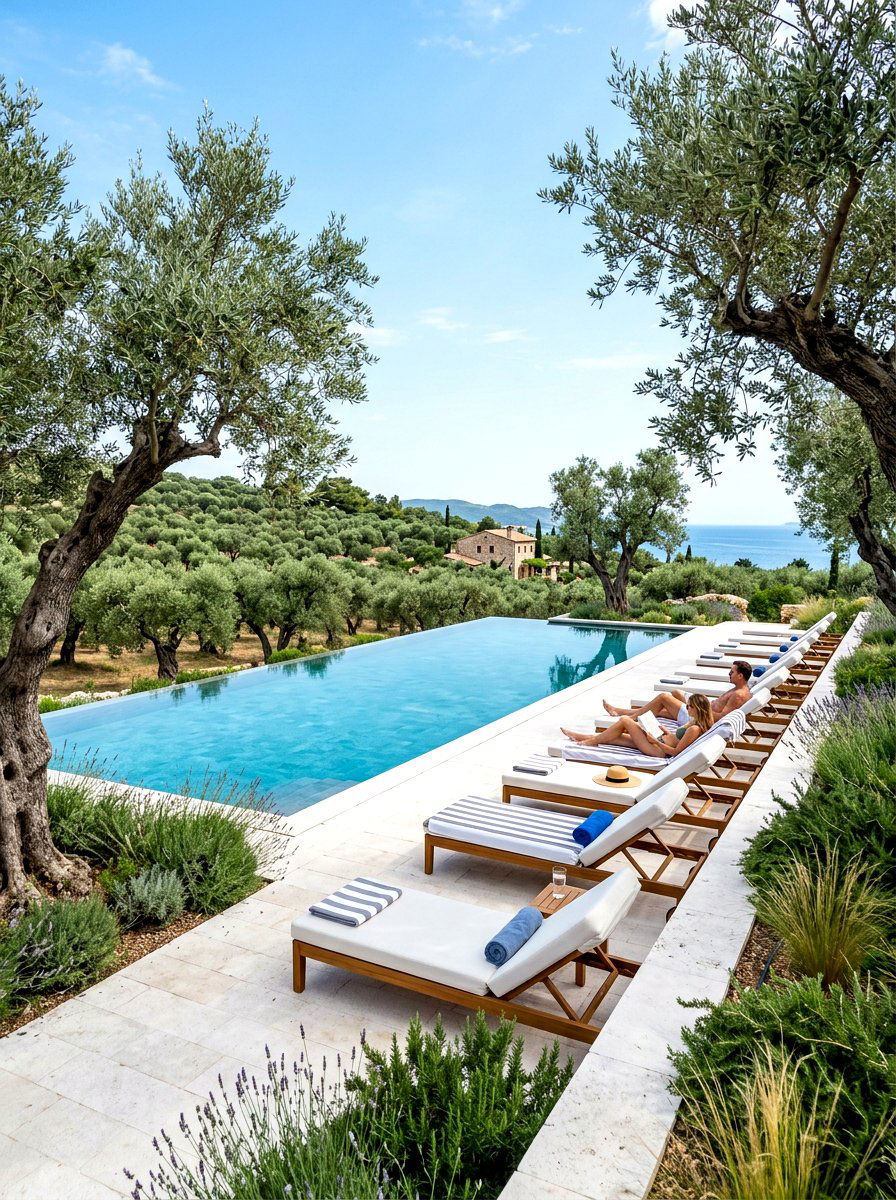
Planting an olive tree around a swimming pool adds an instant resort-like feel to your outdoor living area. The silvery leaves look stunning against the blue water, and since olive trees are generally clean and don't drop much debris, they are ideal for poolside landscaping. They provide much-needed shade for loungers without the mess of falling flowers or large leaves. Position them far enough back to avoid root issues but close enough to frame the view of the pool. The combination of water and ancient-looking trees creates a high-end, Mediterranean vacation vibe that you can enjoy every single day.
17. Fire pit in olive grove
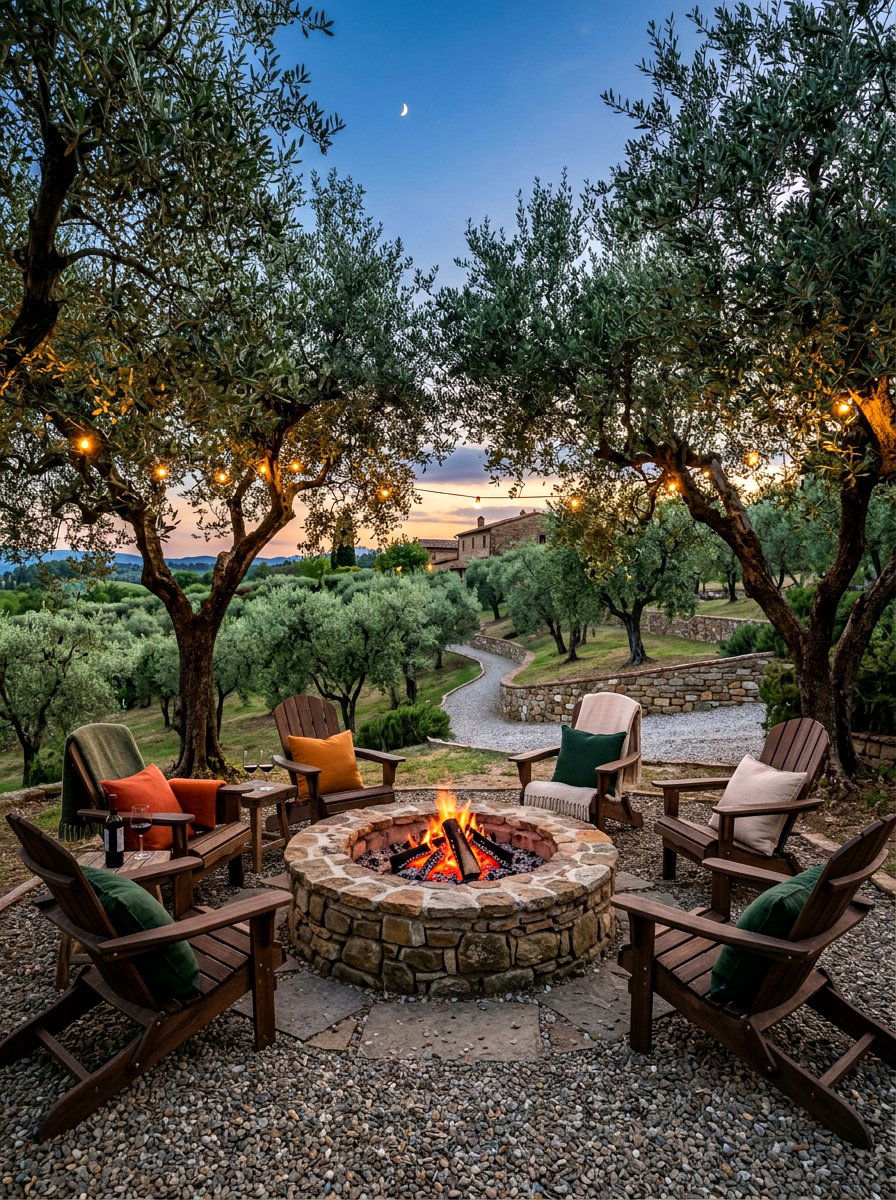
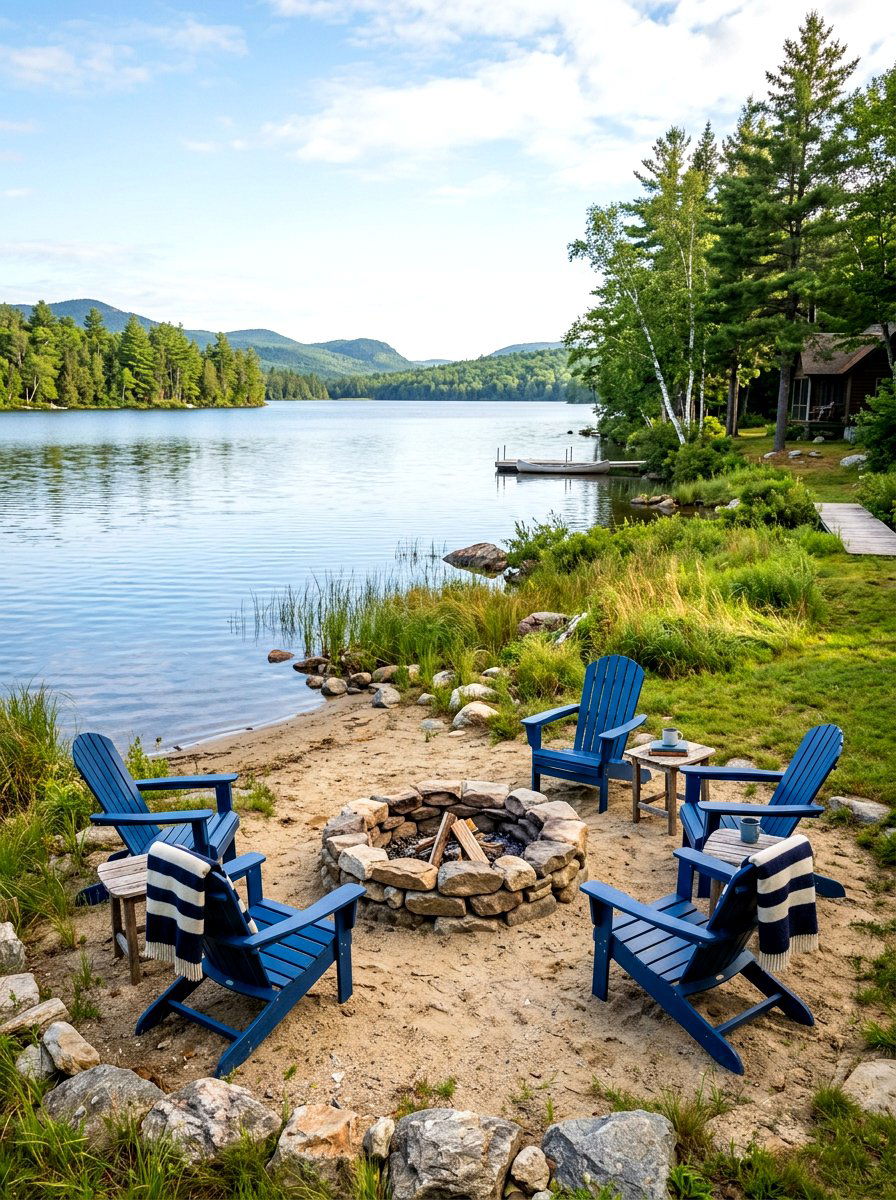
Integrating a fire pit in an olive grove extends the usability of your backyard into the cooler months. Imagine a circular stone fire pit surrounded by comfortable seating, all tucked beneath the protective branches of your trees. The contrast between the orange glow of the flames and the cool silver of the olive leaves is visually striking. This setup creates a cozy gathering spot for roasting marshmallows or sharing stories with friends. It grounds the space and provides a central focal point that draws people into the heart of the garden, making the grove feel like a true destination on your property.
18. Xeriscape garden
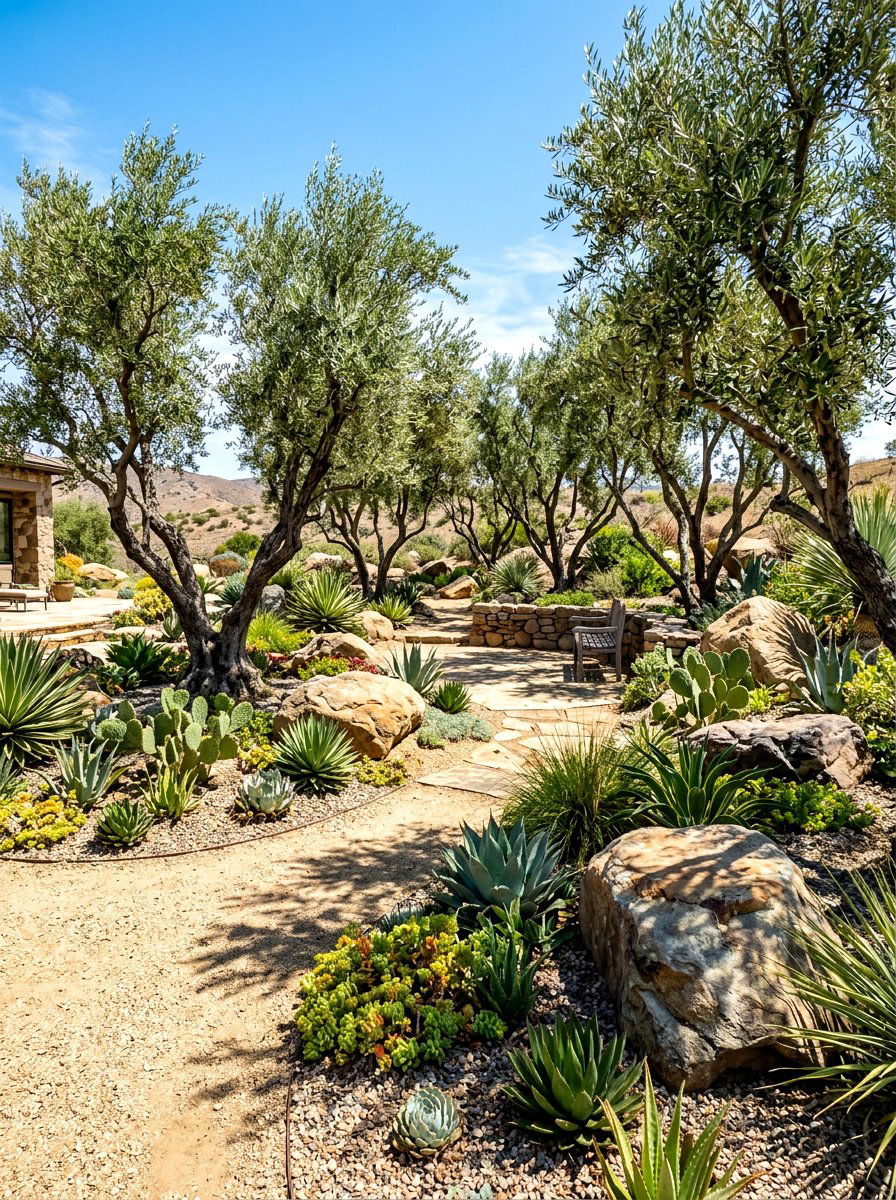
A xeriscape garden featuring olive trees is the ultimate choice for an eco-conscious homeowner living in a dry climate. This design focuses on minimizing water usage by using native, drought-resistant plants and efficient irrigation. Pair your olive trees with succulents, desert spoons, and decorative boulders to create a rugged yet refined look. Instead of a thirsty lawn, use decomposed granite or large river rocks to cover the ground. This style of backyard is incredibly low-maintenance once established, allowing you to spend more time enjoying the view and less time pulling weeds or moving sprinklers around the yard.
19. Olive tree focal point
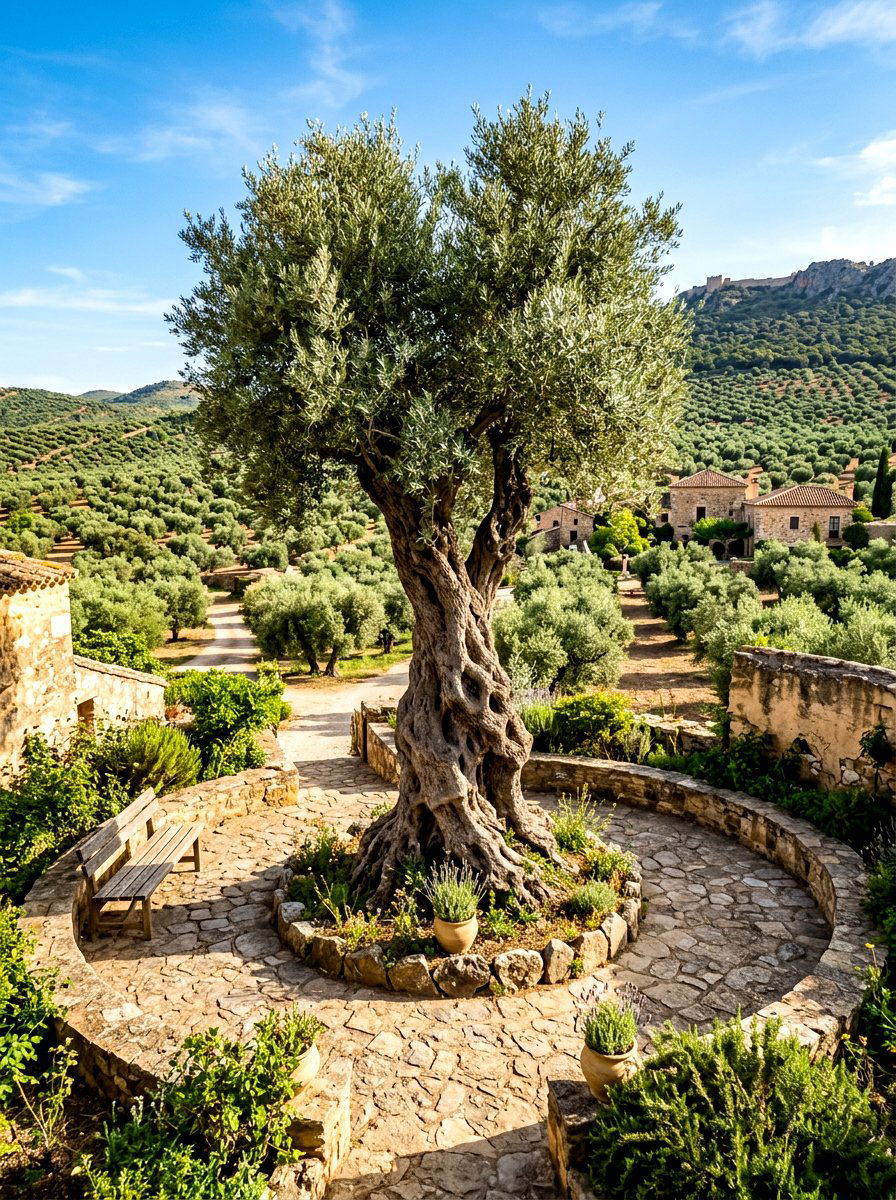
Sometimes, a single, majestic olive tree focal point is all you need to anchor an entire backyard design. By choosing an older, "specimen" tree with a thick, gnarled trunk, you create an instant sense of history. Surround this tree with a circular stone path or a manicured patch of grass to draw the eye directly to it. You can place a single piece of garden art or a simple bench nearby to emphasize its importance. This approach works well in both large and small yards, providing a strong sense of structure and a clear center around which everything else can be organized.
20. Shrub border for olive trees
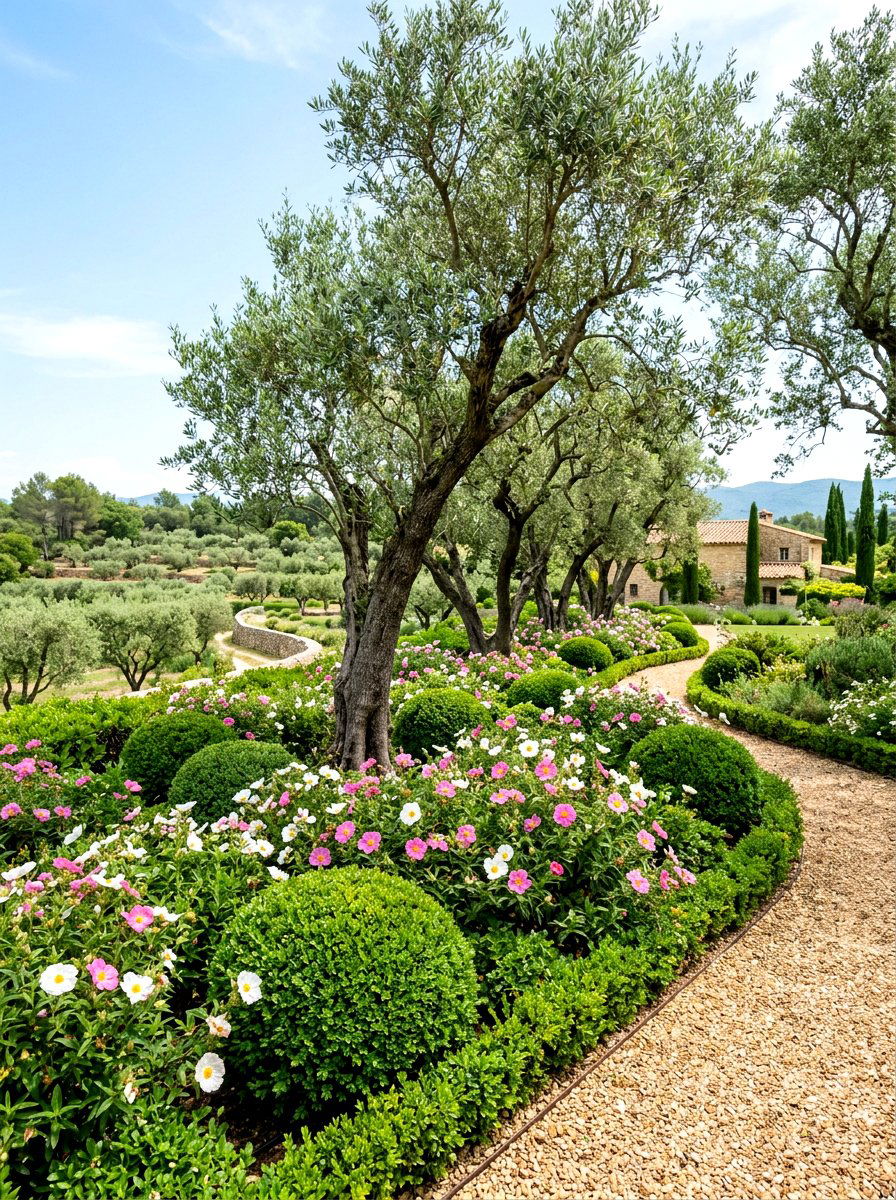
Creating a diverse shrub border for olive trees helps to fill in the mid-level of your landscape, making the garden feel more established and layered. Use a mix of evergreen and flowering shrubs like boxwood, oleander, or rockrose to provide year-round interest. These plants can be pruned into tidy spheres or allowed to grow into more organic shapes to suit your overall design theme. The varying heights and colors of the shrubs create a beautiful foreground for the taller olive trees, hiding any bare trunks and providing a rich tapestry of textures that keeps the garden looking full and healthy.
21. Natural stone paving
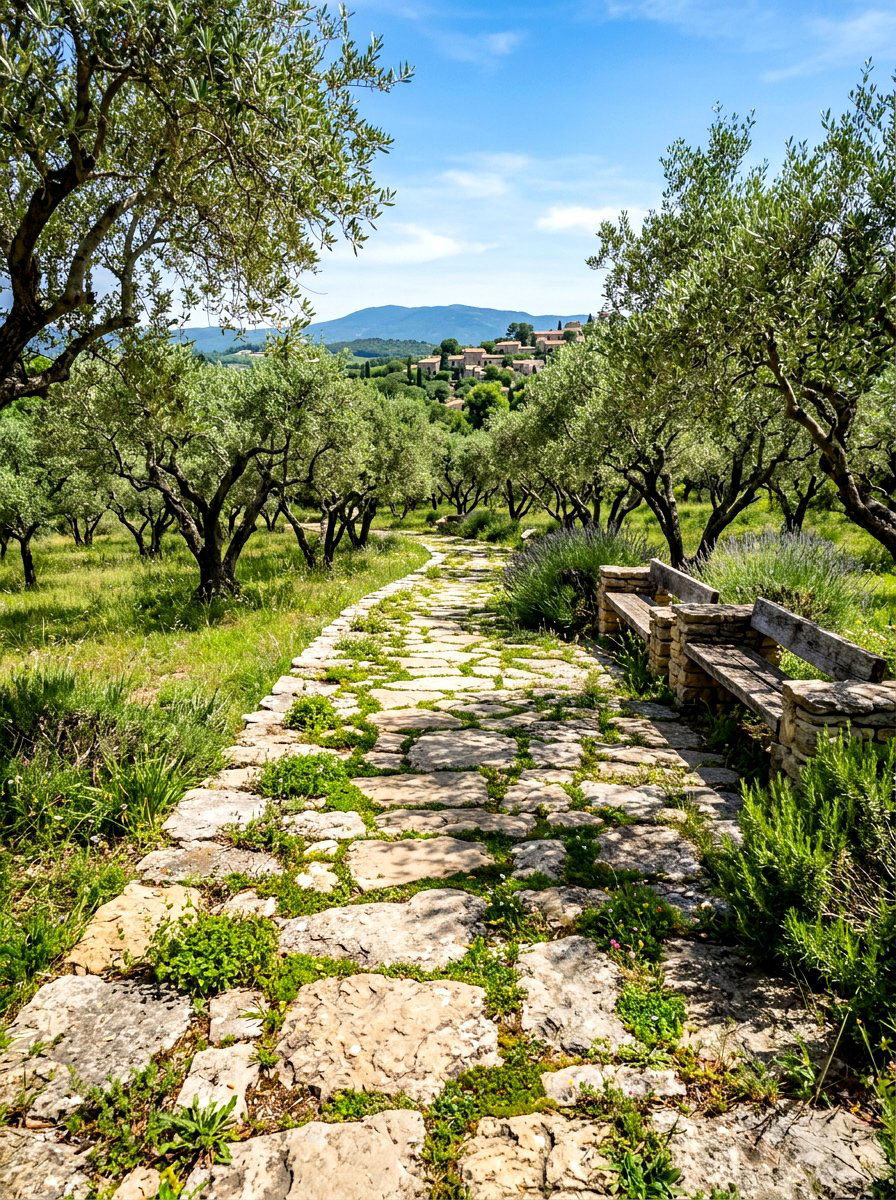
Using natural stone paving beneath your olive grove provides a high-quality, durable surface for walking and entertaining. Materials like flagstone, slate, or tumbled travertine offer an organic look that blends seamlessly with the natural environment. You can leave small gaps between the stones for moss or "step-ables" like chamomile to grow, which softens the overall appearance. The heavy weight and solid feel of natural stone ground the airy branches of the olive trees, creating a balanced and harmonious design. This is a long-lasting investment that adds significant value to your home while providing a clean, elegant outdoor floor.
22. Olive tree orchard layout
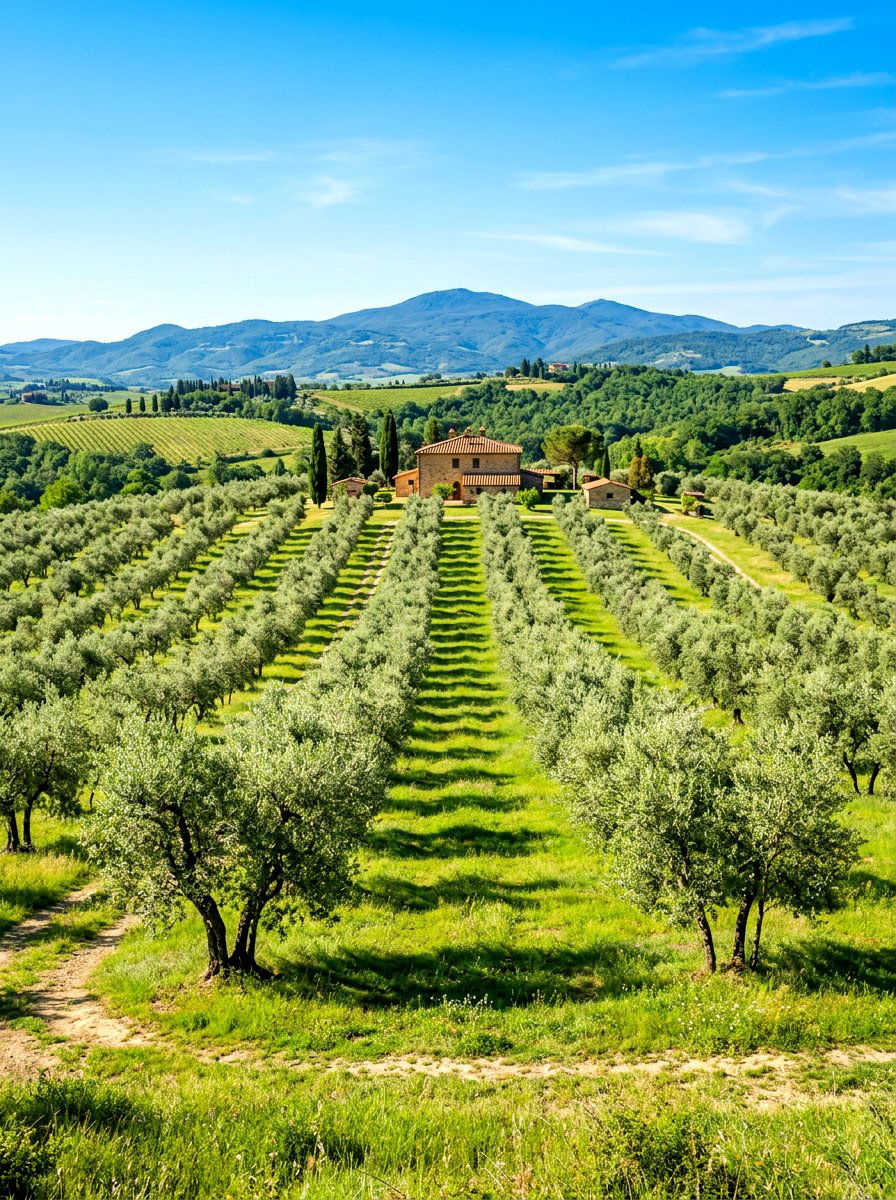
For a truly traditional look, consider an olive tree orchard layout where the trees are planted in organized, evenly spaced rows. This formal arrangement pays homage to traditional Mediterranean farming and creates a strong sense of rhythm and perspective in the backyard. You can keep the ground beneath the trees as mown grass, or for a more rustic feel, let wildflowers grow between the rows. This layout is particularly effective in larger, rectangular yards where you want to create a sense of scale and abundance. It makes the garden feel purposeful and very well-maintained, like a private estate.
23. Spanish style courtyard
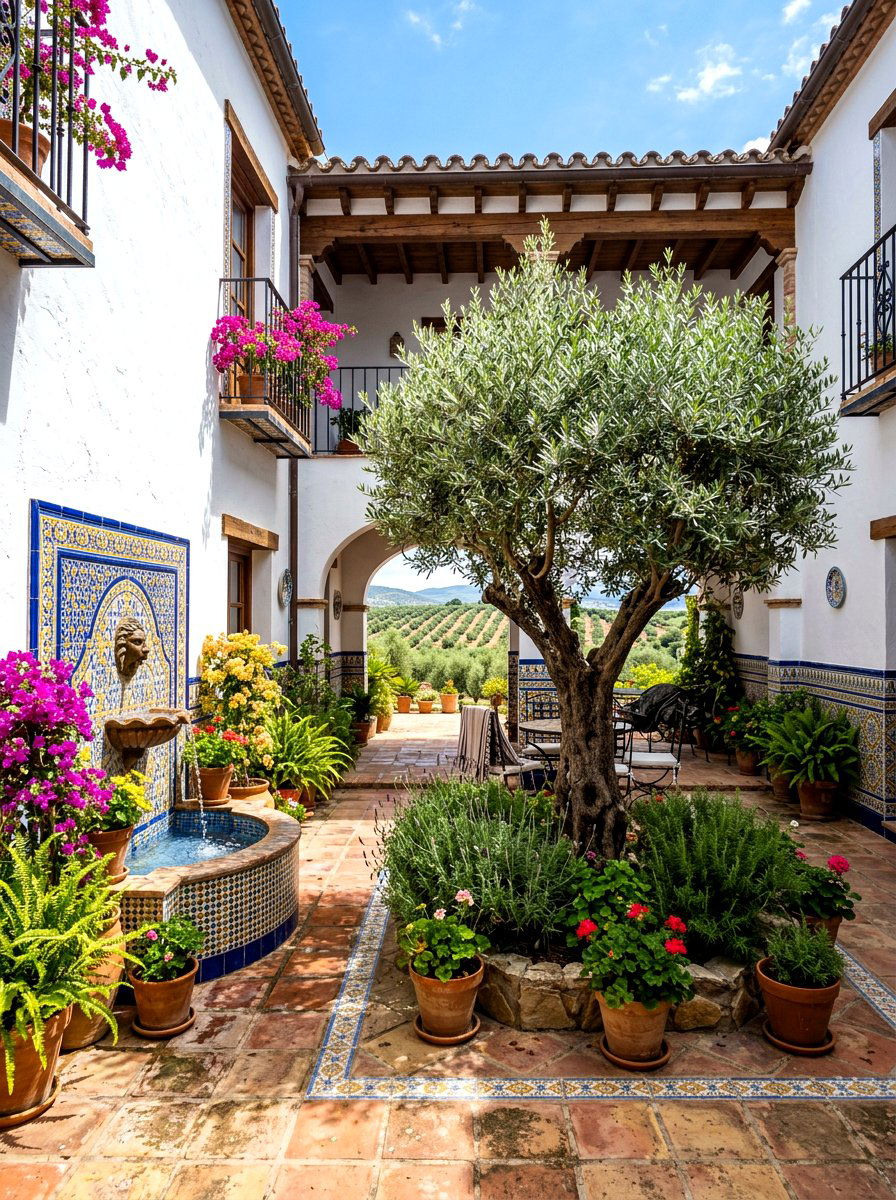
A Spanish style courtyard often features a central olive tree surrounded by vibrant tiles and a splashing wall fountain. The sound of water combined with the shimmering leaves creates a multi-sensory experience that is incredibly cooling during hot summer days. Use bright, patterned talavera tiles for accents on stairs or around the tree base to add a pop of color. High walls provide shade and privacy, turning the space into an outdoor sanctuary. This design style is perfect for urban homes where you want to block out the noise of the city and create your own private piece of Mediterranean paradise.
24. Olive tree and wild grass garden
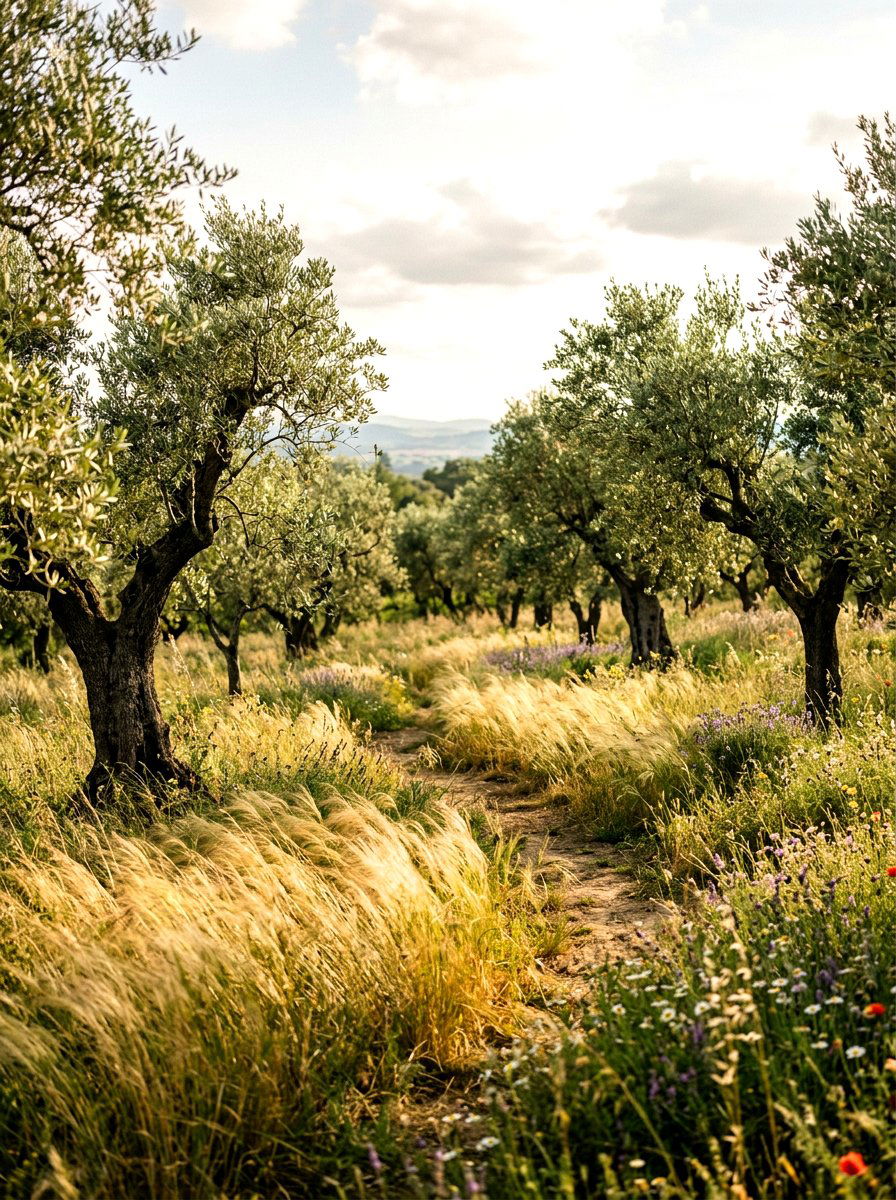
The combination of an olive tree and wild grass garden offers a softer, more romantic aesthetic that feels very contemporary. Planting tall, airy grasses like Mexican feather grass or Pennisetum around your olive trees creates a beautiful sense of movement whenever the wind blows. The golden tones of the dried grass in autumn look spectacular against the evergreen olive leaves. This low-maintenance design requires very little pruning or water once established. It is an ideal choice for a "meadow-style" backyard that looks effortless and natural, providing a relaxing backdrop that changes beautifully with each passing season.
25. Farmhouse style olive grove
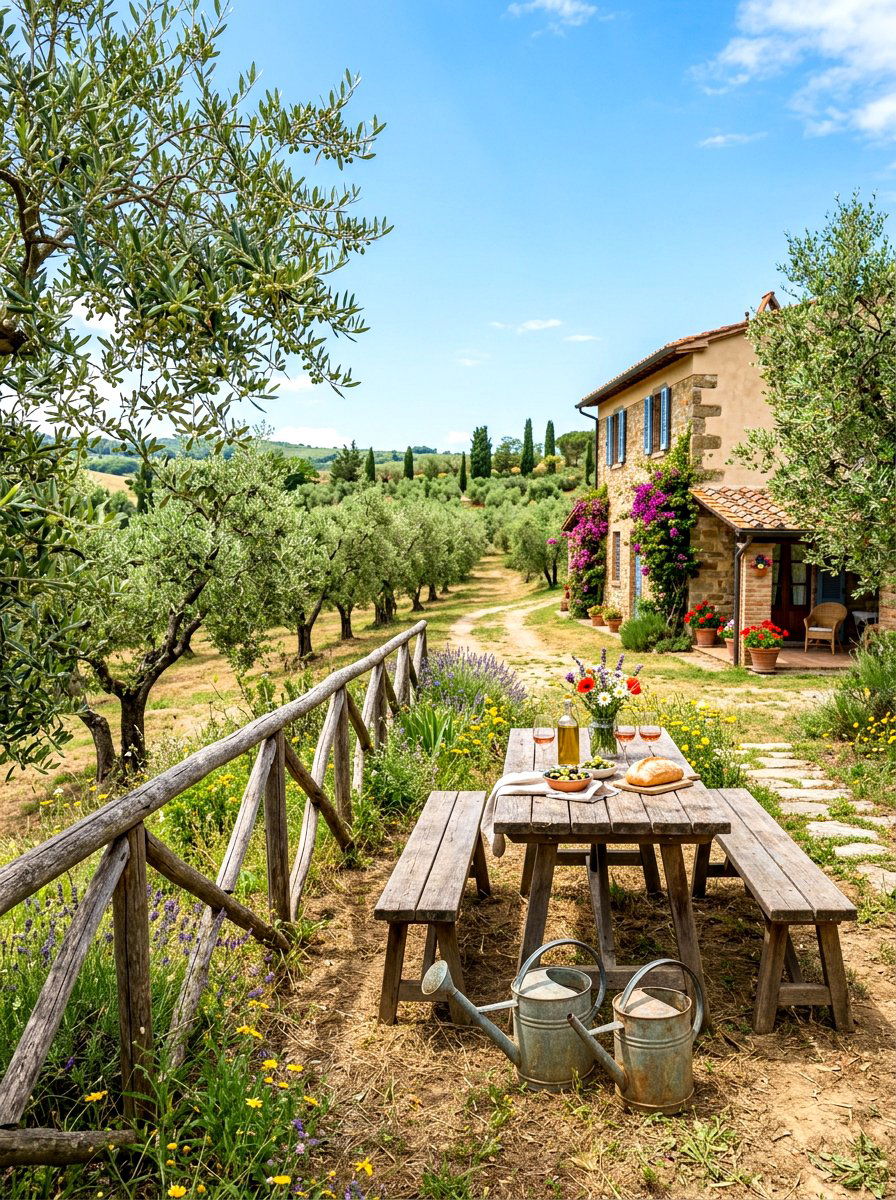
A farmhouse style olive grove blends the rustic charm of a working farm with modern garden sensibilities. Use elements like reclaimed wood fences, galvanized metal planters, and simple wooden benches to create a relaxed, casual environment. This design isn 't about perfection; it' s about comfort and utility. You might include a large, rustic table for family meals and a small area for a vegetable patch nearby. The olive trees provide the necessary shade and structure to keep the farmhouse vibe feeling sophisticated. It is a welcoming, family-friendly approach to landscaping that feels both timeless and very practical for daily life.
26. Zen garden with olive trees
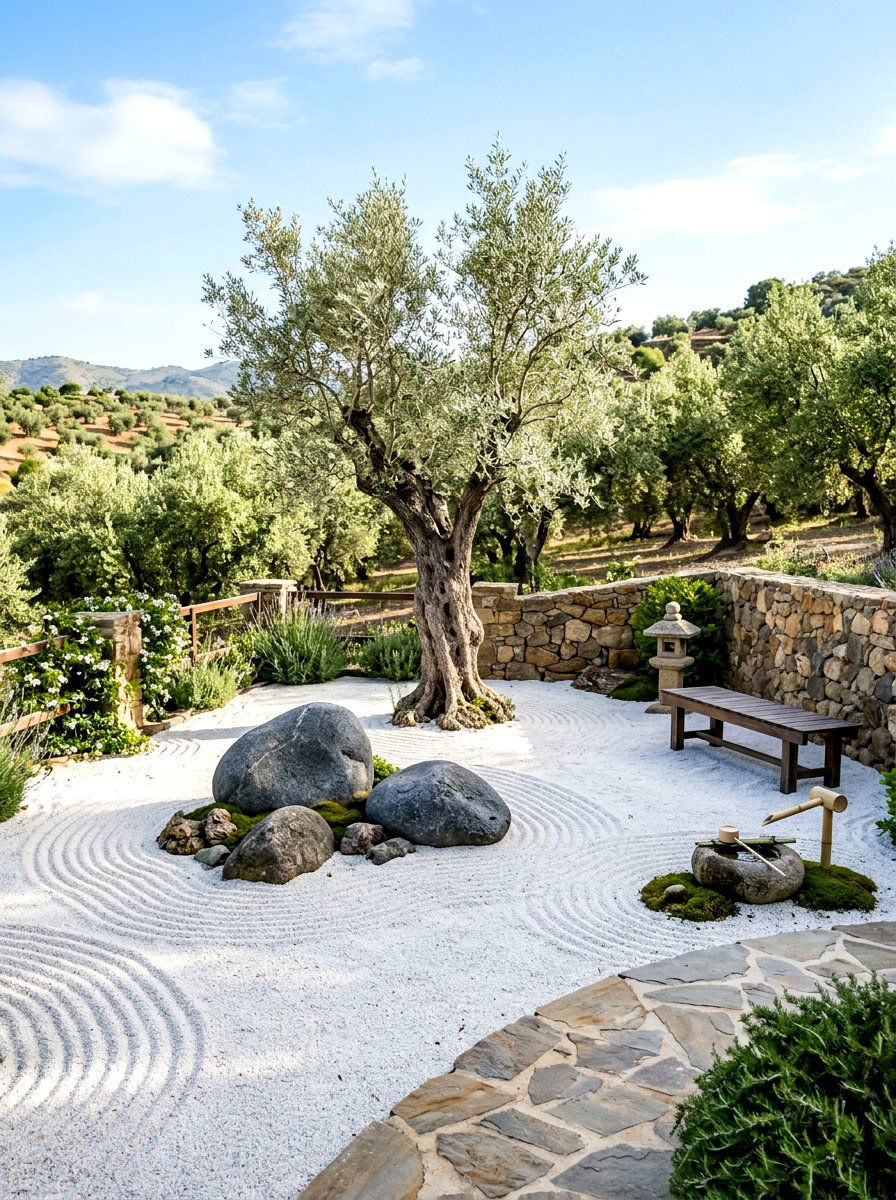
Integrating olive trees into a Zen garden provides a unique Mediterranean twist on a traditional Japanese concept. Use the trees as the primary vertical elements, surrounded by carefully raked sand or fine gravel and a few large, moss-covered boulders. The quiet, contemplative nature of the olive tree — with its slow growth and silver hues — fits perfectly with the Zen philosophy of peace and mindfulness. This design encourages you to slow down and appreciate the simple beauty of nature. It is a wonderful way to create a dedicated meditation or relaxation space in a busy suburban or urban backyard environment.
27. Climbing roses and olive trees
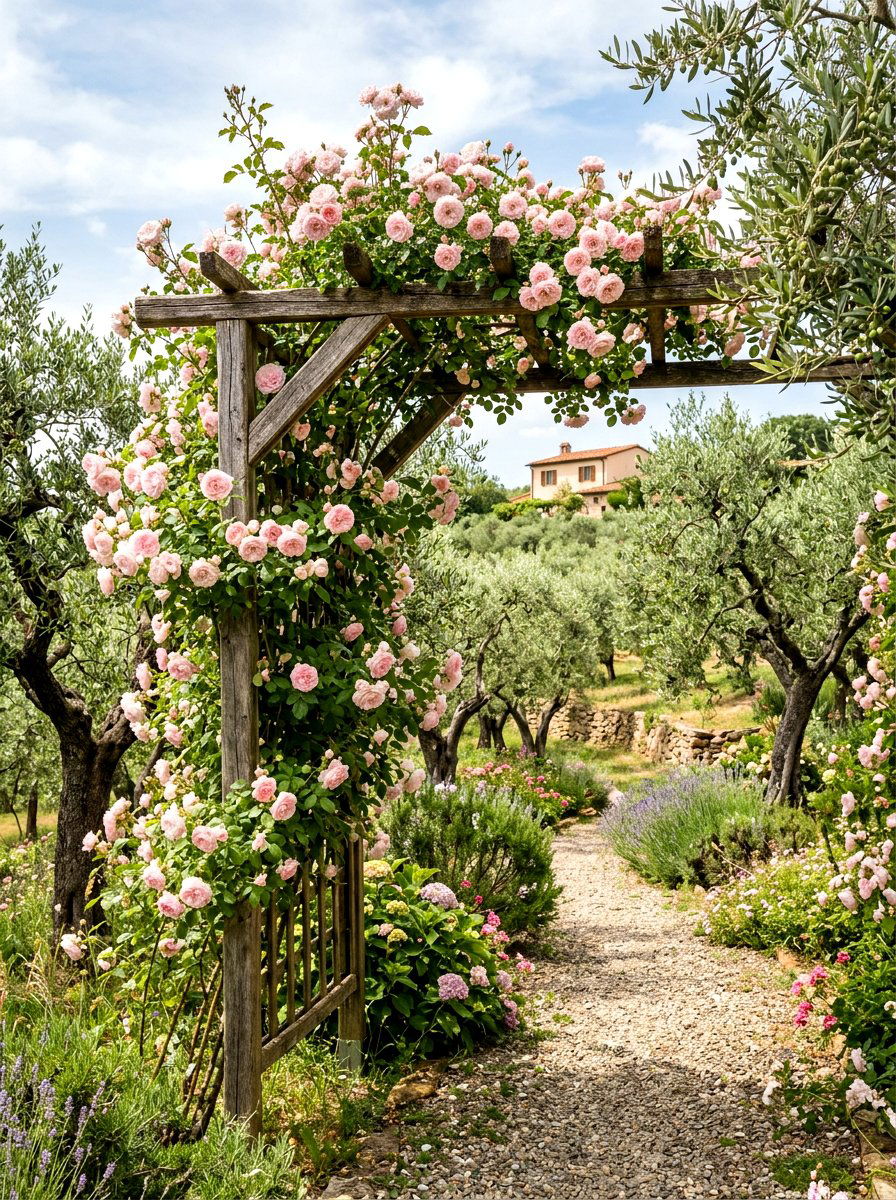
Pairing climbing roses and olive trees brings a classic, romantic elegance to your backyard. You can train hardy climbing roses to grow up a nearby trellis or even loosely through the lower branches of established trees. The colorful, fragrant blooms provide a soft contrast to the structured, silver-green leaves of the olives. Choose pastel shades like blush pink or creamy white to maintain a sophisticated Mediterranean color palette. This combination is particularly beautiful during the spring and summer months when the roses are in full bloom, adding a layer of floral beauty that makes the grove feel like a fairy tale.
28. Raised garden beds
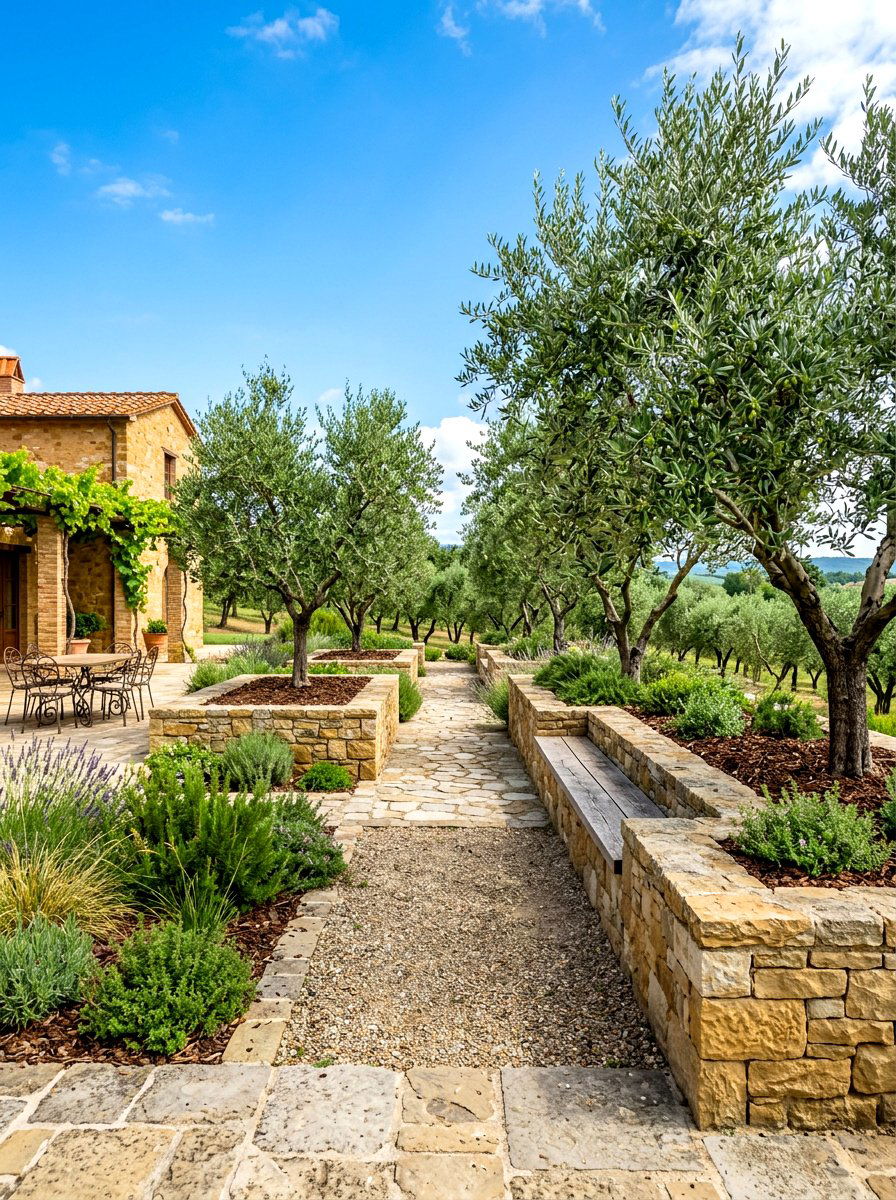
Using raised garden beds for olive trees is an excellent way to ensure perfect drainage while creating a strong architectural feature. You can build these beds out of stone, brick, or rot-resistant timber at a height that also provides extra seating around the perimeter. Filling the beds with a custom soil mix allows the trees to grow faster and healthier than they might in compacted ground soil. This design also helps to define the "grove" area within a larger backyard, making it feel like a deliberate and high-end design choice. It is a practical solution for yards with poor soil.
29. Water feature in olive grove
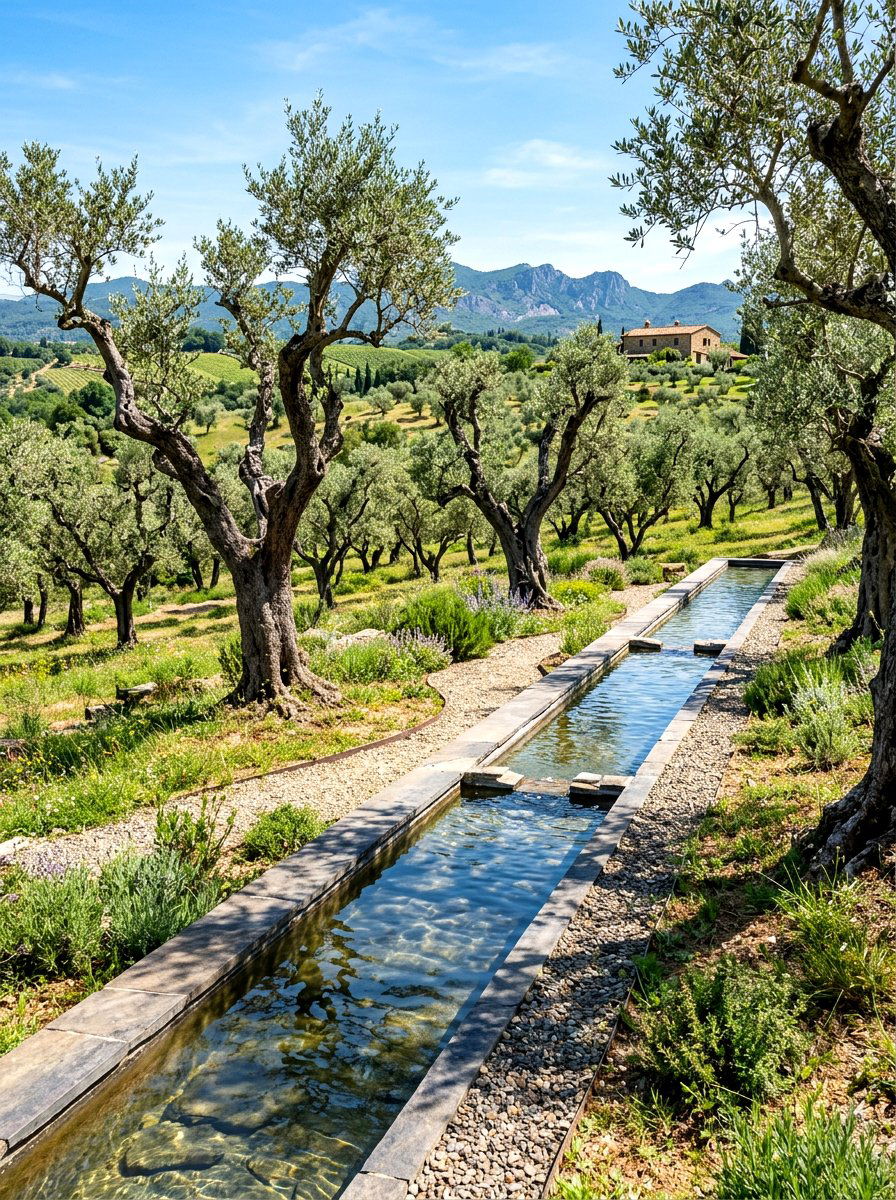
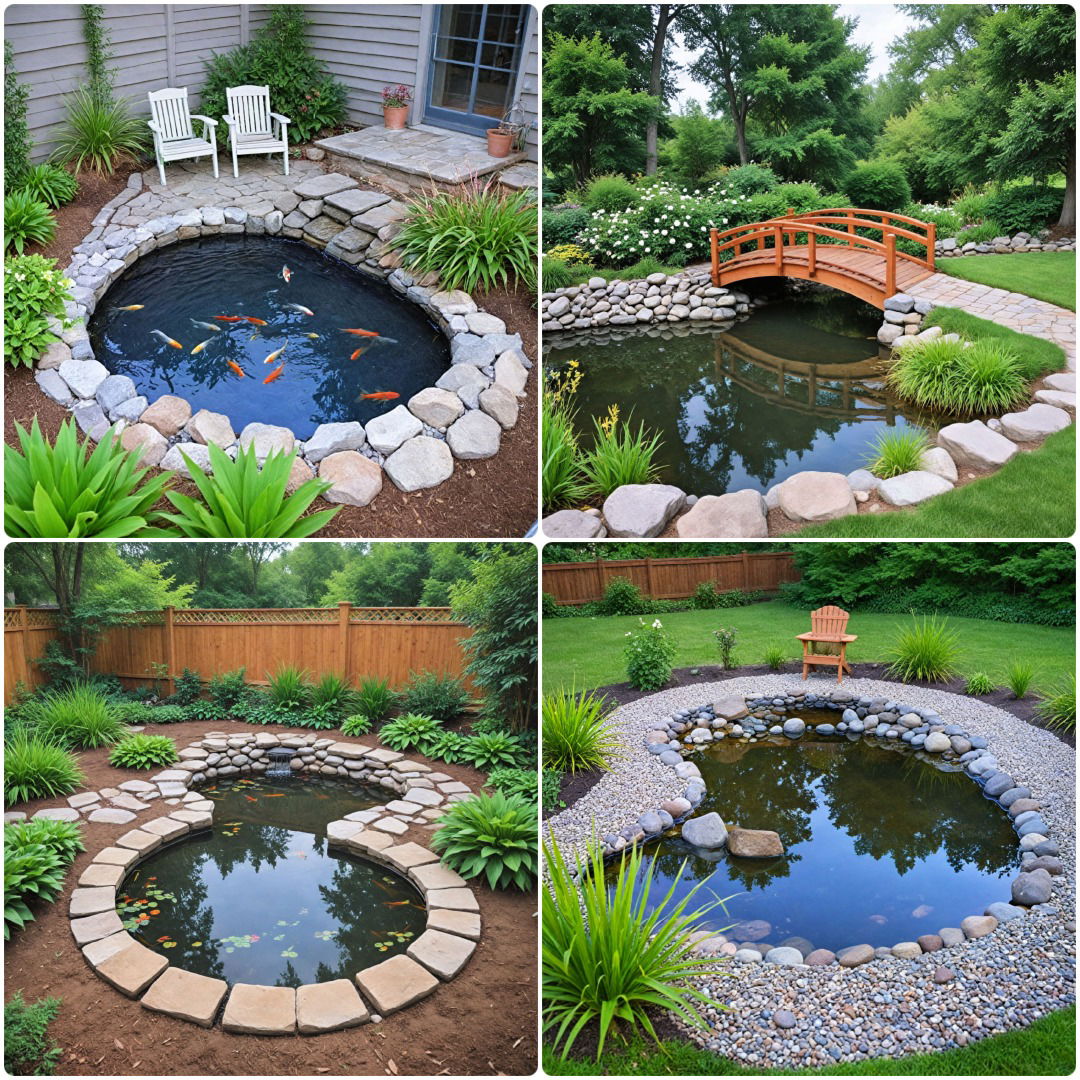
Adding a water feature in an olive grove creates a focal point that is both visually stunning and incredibly soothing. Whether it’s a simple stone birdbath, a bubbling boulder, or a sleek modern rill, the sound of water enhances the peaceful atmosphere of the trees. The reflection of the silvery leaves in a still pond or trough adds another layer of visual interest to the garden. Water also attracts local birds and wildlife, making the space feel more connected to the ecosystem. Position the feature where it can be seen and heard from your main seating area for maximum enjoyment.
30. Hammock between olive trees
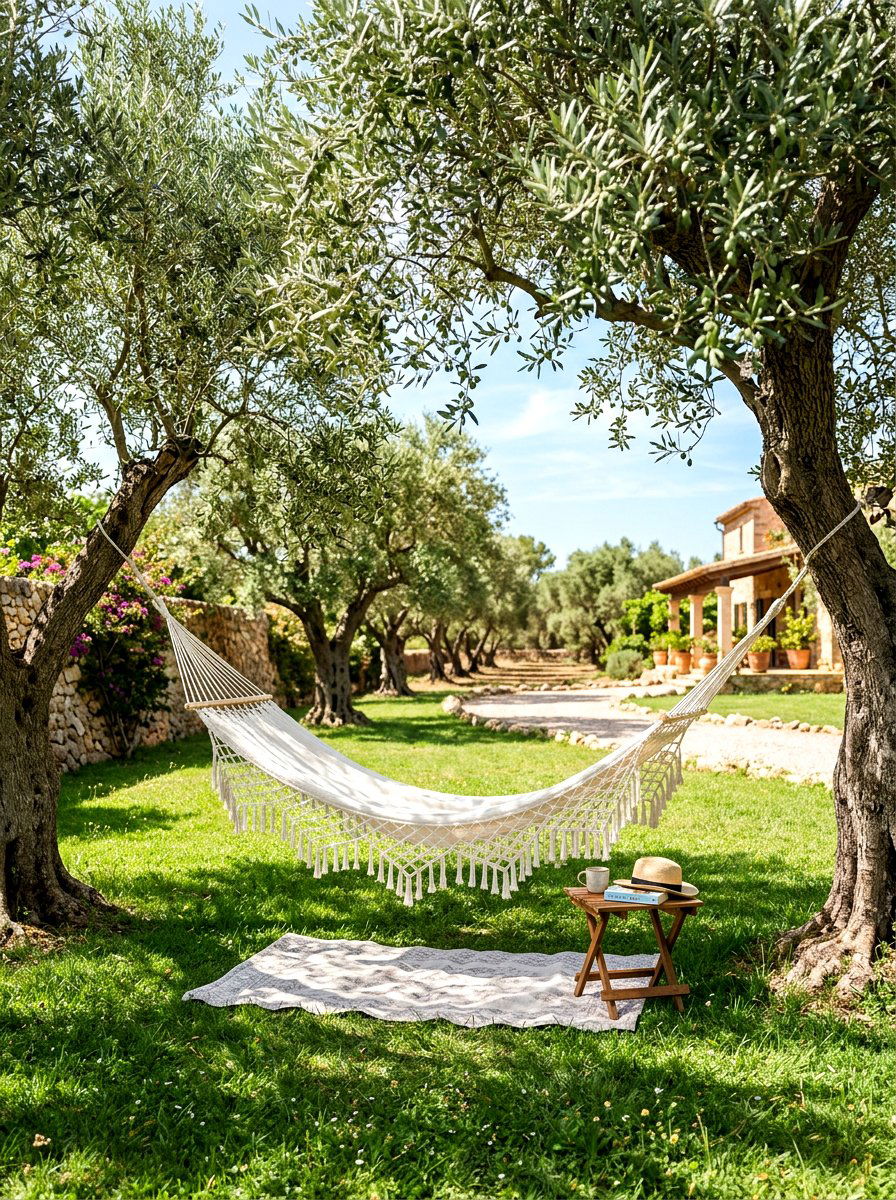
There is perhaps no better way to enjoy your backyard than by hanging a hammock between olive trees. If the trees are mature and have sturdy trunks, they provide the perfect natural support for a rope or fabric hammock. This creates an instant vacation spot right at home, where you can sway gently in the breeze while looking up through the canopy. If the trees are still young, you can use a freestanding hammock stand placed in the center of the grove. It serves as a visual invitation to relax and enjoy the outdoor space you have worked so hard to create.
Conclusion:
Transforming your backyard with a thoughtfully designed olive grove is a long-term investment in both beauty and tranquility. These trees are not only iconic symbols of peace and resilience, but they also provide a versatile foundation for a wide range of landscaping styles, from rustic Italian villas to sleek modern retreats. By focusing on complementary elements like natural stone, drought-tolerant plants, and warm ambient lighting, you can create a cohesive space that feels like a true escape from the daily grind. As your olive trees grow and mature over the years, your backyard will only become more enchanting and valuable.

Related posts: