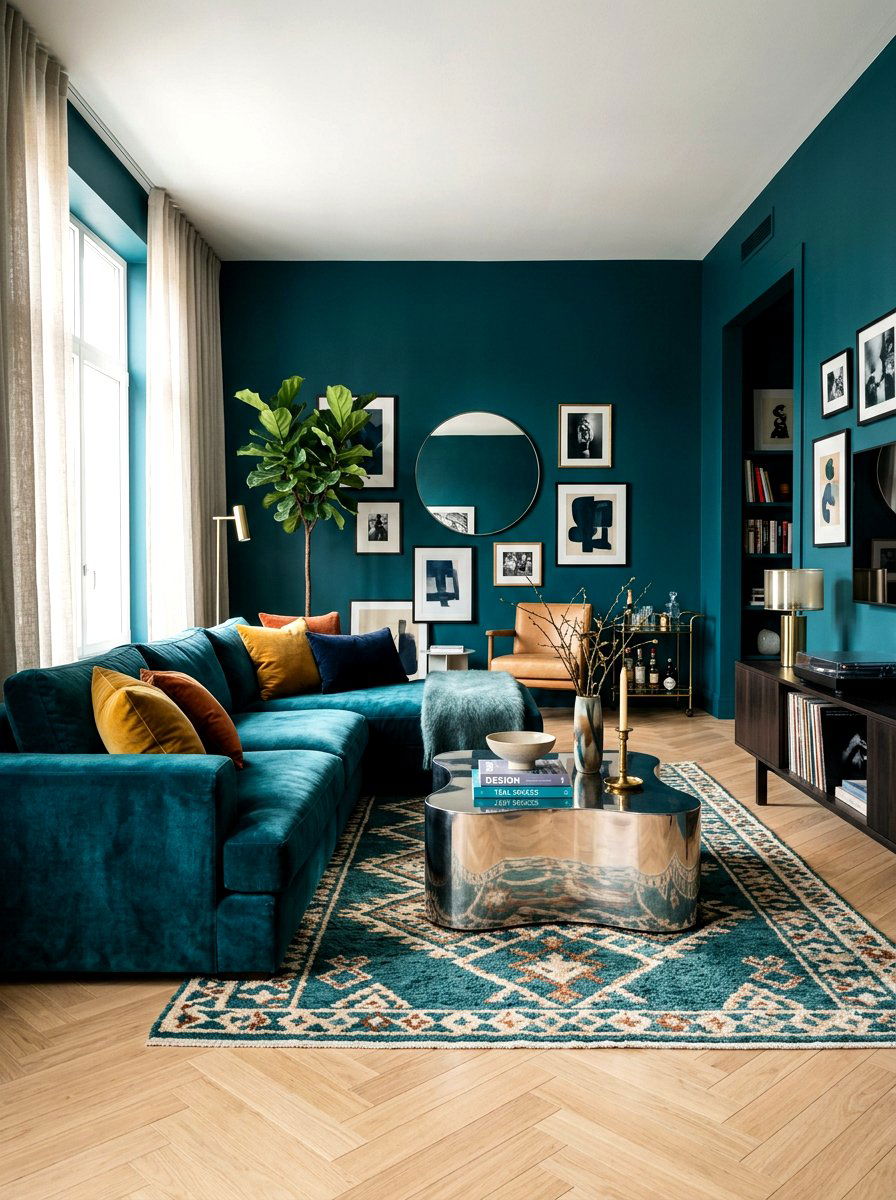
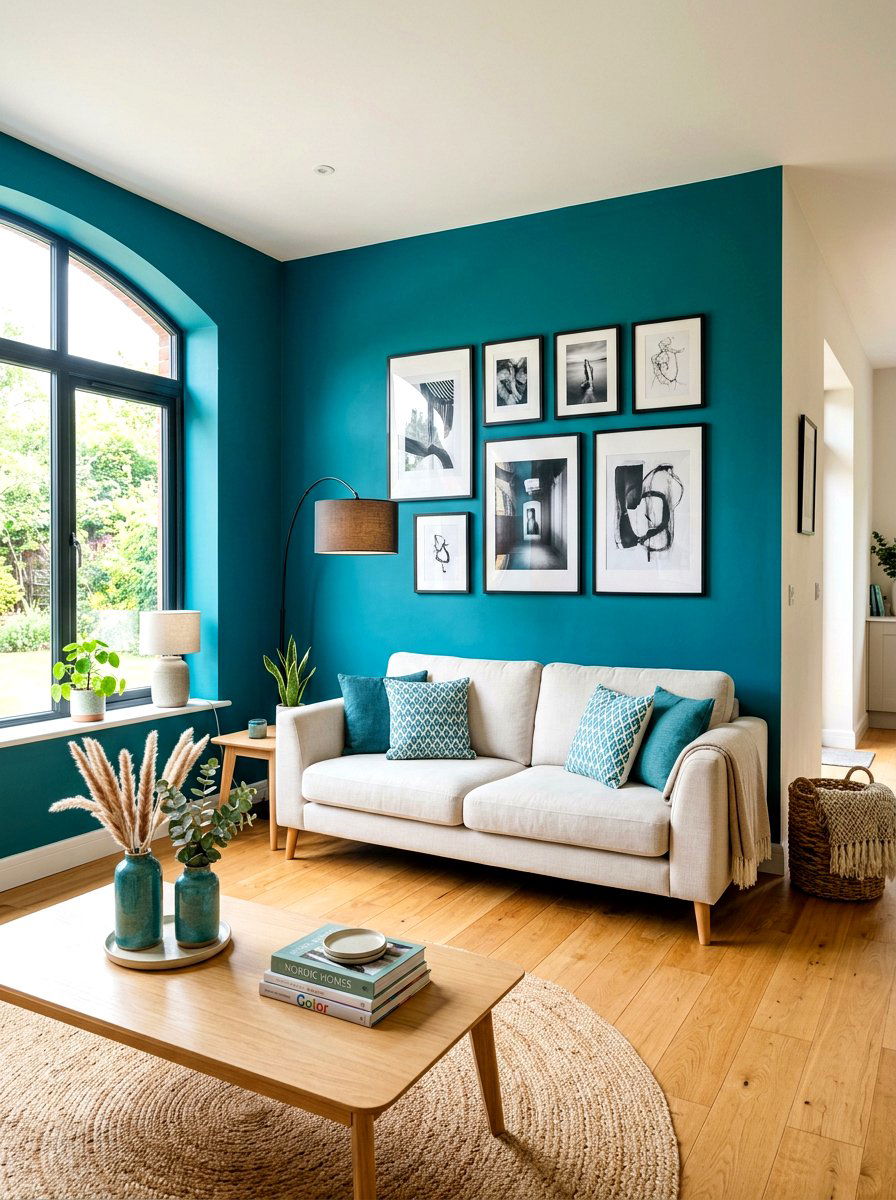
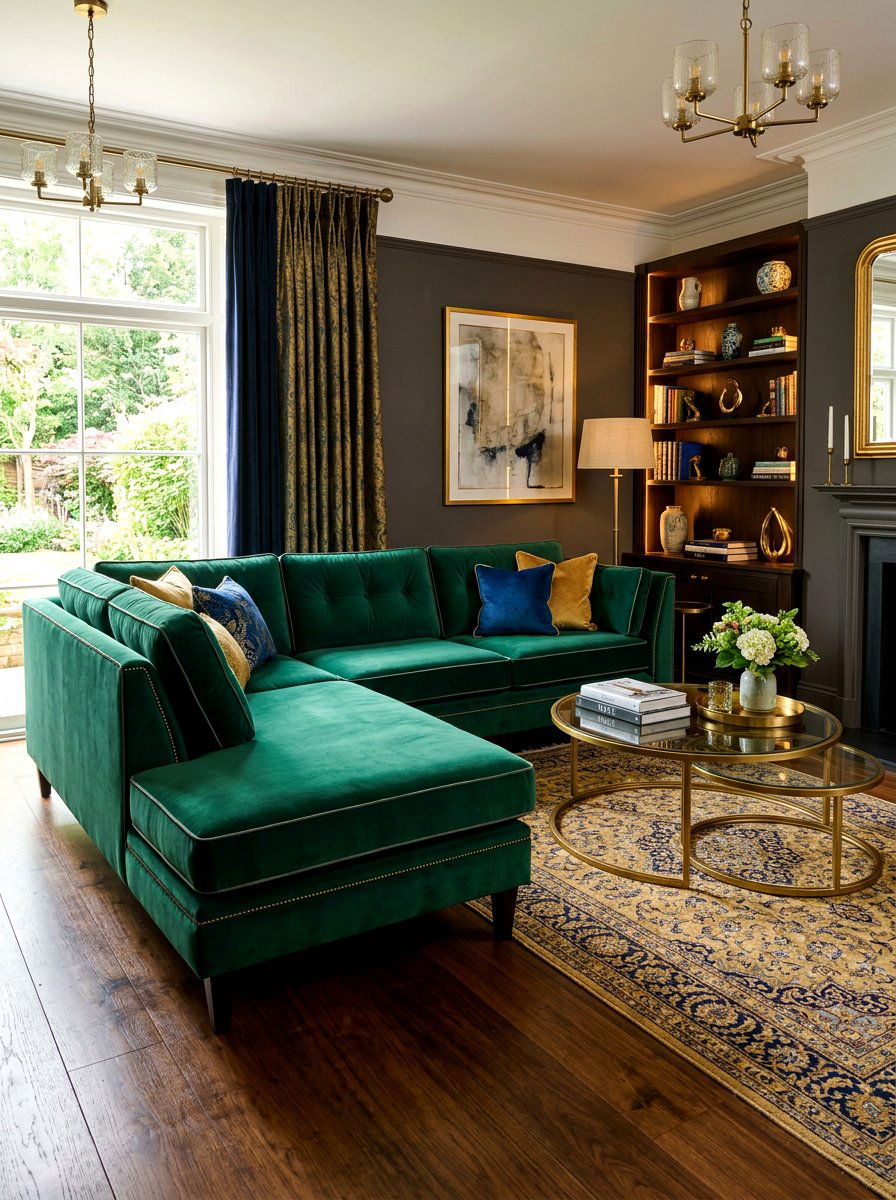
Combining the organic warmth of sun-baked clay with the soothing tranquility of misty forest leaves creates a living space that feels both grounded and incredibly fresh. The terracotta and sage green palette has surged in popularity because it perfectly balances the "hot" energy of orange-red tones with the "cool" serenity of muted greens. This color story draws heavily from nature, mimicking the effortless beauty of a desert landscape or a Mediterranean garden. When you implement these shades in your living room, you are not just choosing colors; you are creating a sanctuary that promotes emotional stability and relaxation. Whether you prefer a modern, minimalist aesthetic or a cozy, rustic farmhouse vibe, this versatile duo provides a sophisticated foundation that works across various textures like velvet, linen, and raw wood.
1. Sage green accent wall living room
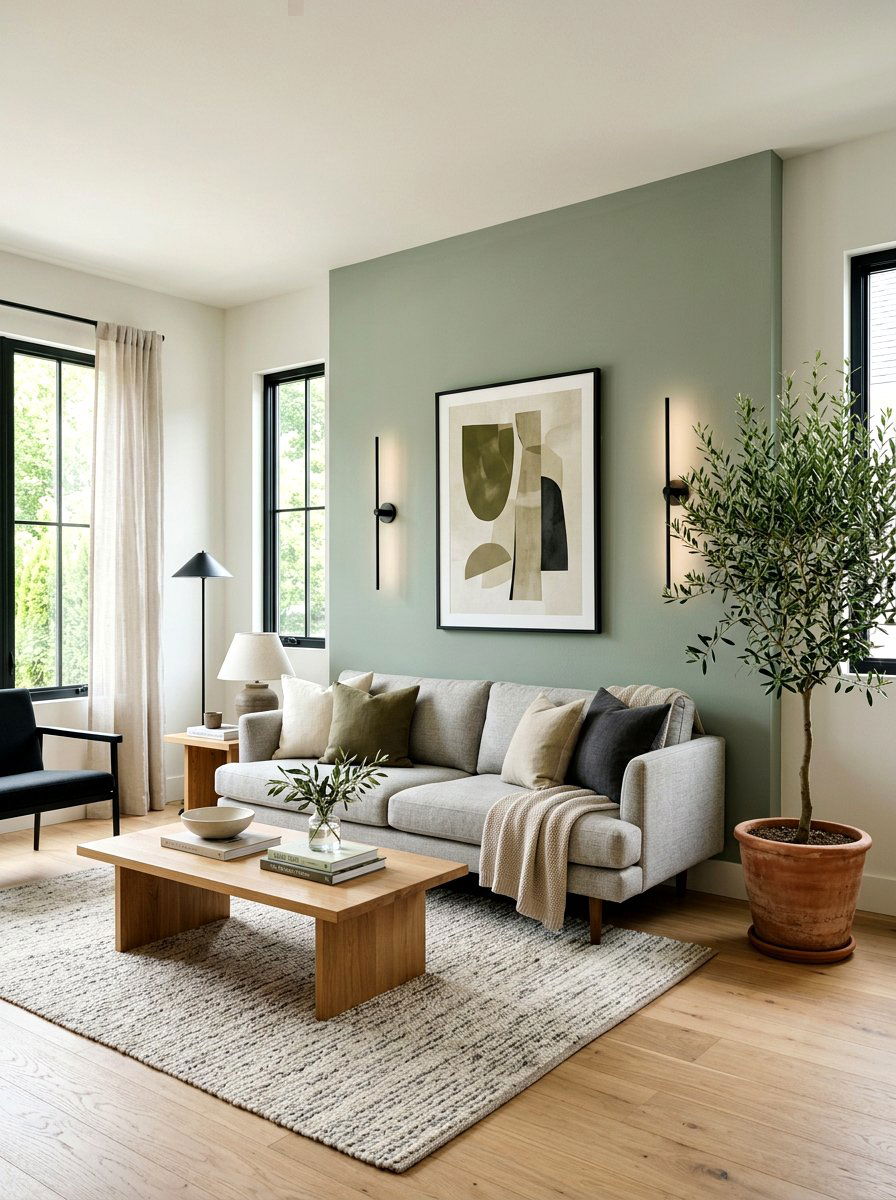
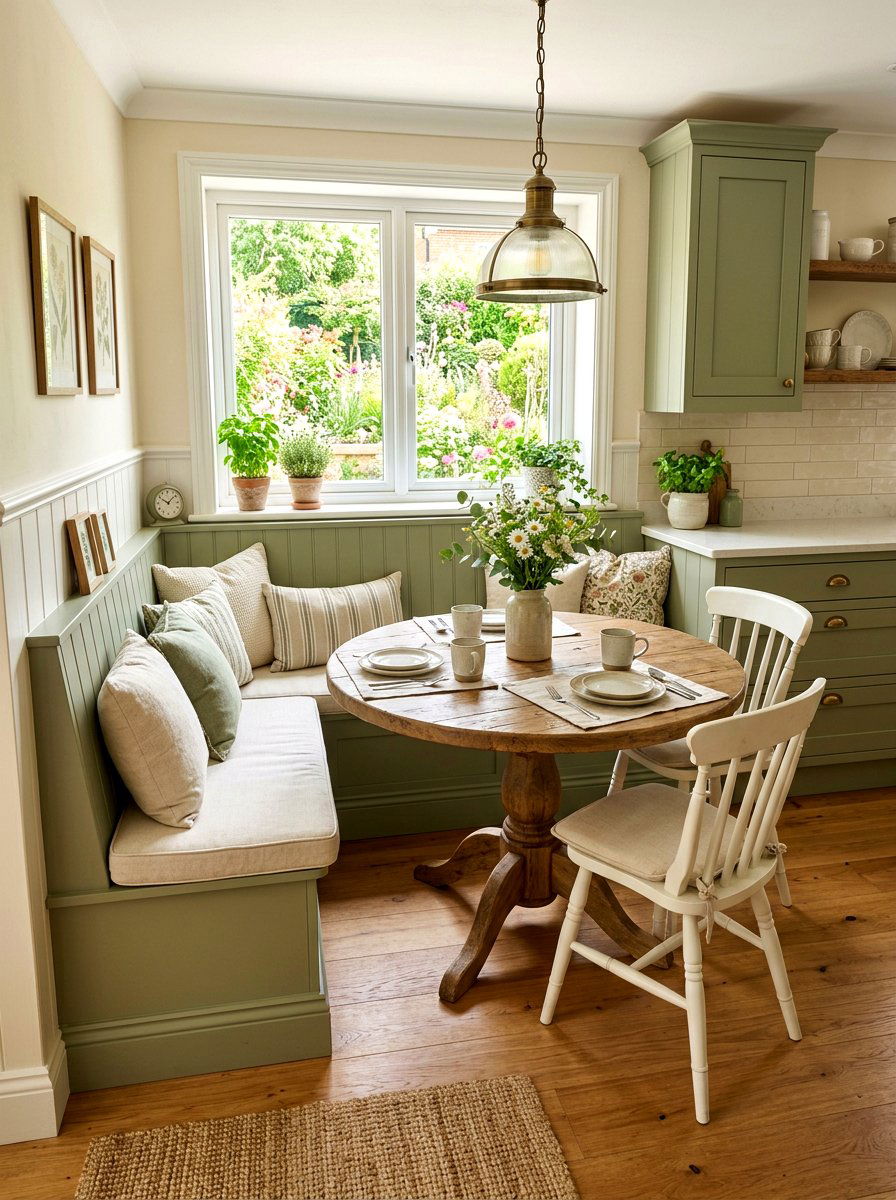
Choosing a sage green accent wall for your main seating area provides a soft, organic foundation that mimics the tranquility of nature. This specific shade of green acts as a colored neutral, offering more personality than a standard gray while remaining incredibly easy on the eyes. When you pair this cool-toned backdrop with warm clay-toned furniture, the entire room immediately feels more balanced and cozy. You can enhance this look by adding wooden shelving or black metal frames to create a sophisticated contrast. The green wall serves as a lush canvas that makes every other decorative element in the space pop with intentionality and style.
2. Terracotta velvet sofa living room
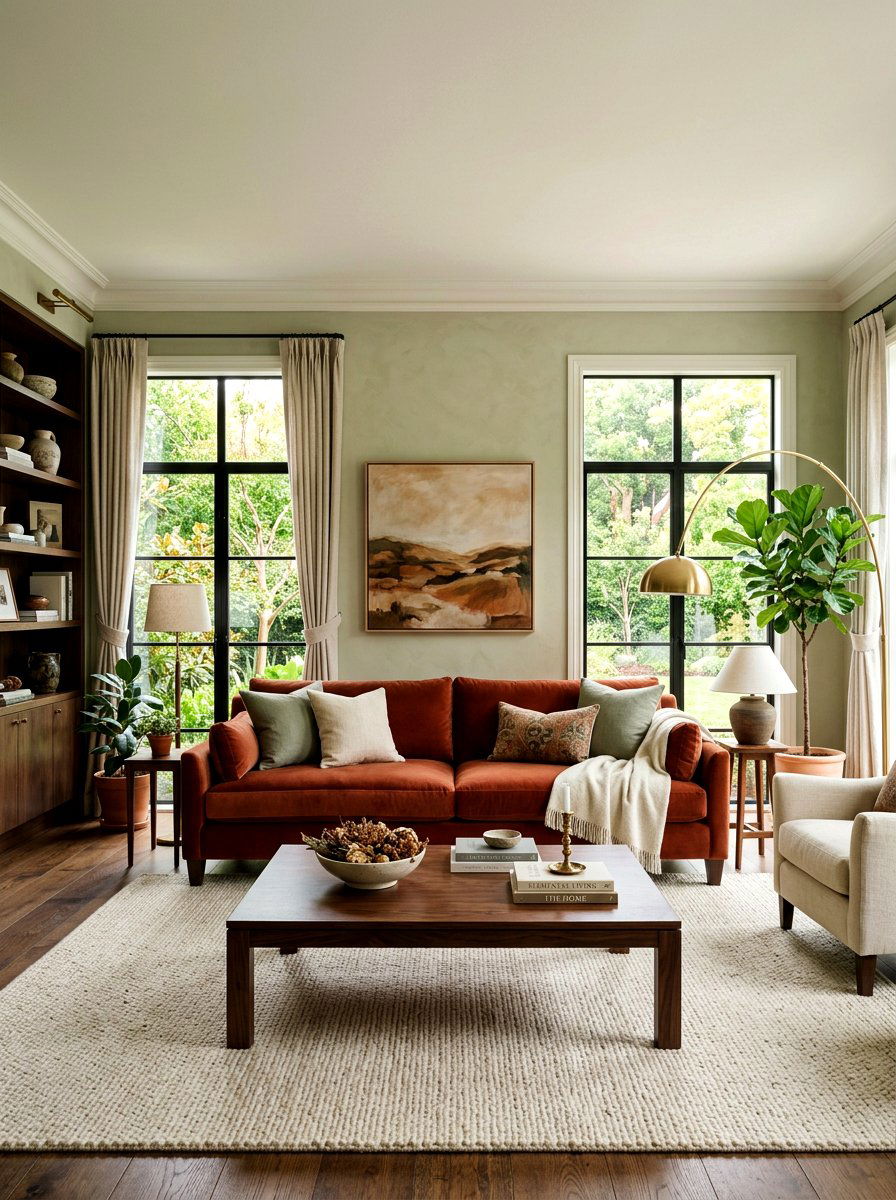
A terracotta velvet sofa acts as a powerful focal point that radiates warmth and luxury in a well-lit living space. The rich texture of velvet catches the light beautifully, shifting between deep burnt orange and soft copper tones throughout the day. To keep the look modern, surround the sofa with muted sage green accents, such as a large indoor plant or soft sage window treatments. This combination prevents the bold sofa from feeling overwhelming while grounding the room in earthy elegance. Adding a few cream-colored throw blankets can further soften the visual weight, ensuring the seating area looks inviting rather than strictly formal.
3. Modern farmhouse sage living room
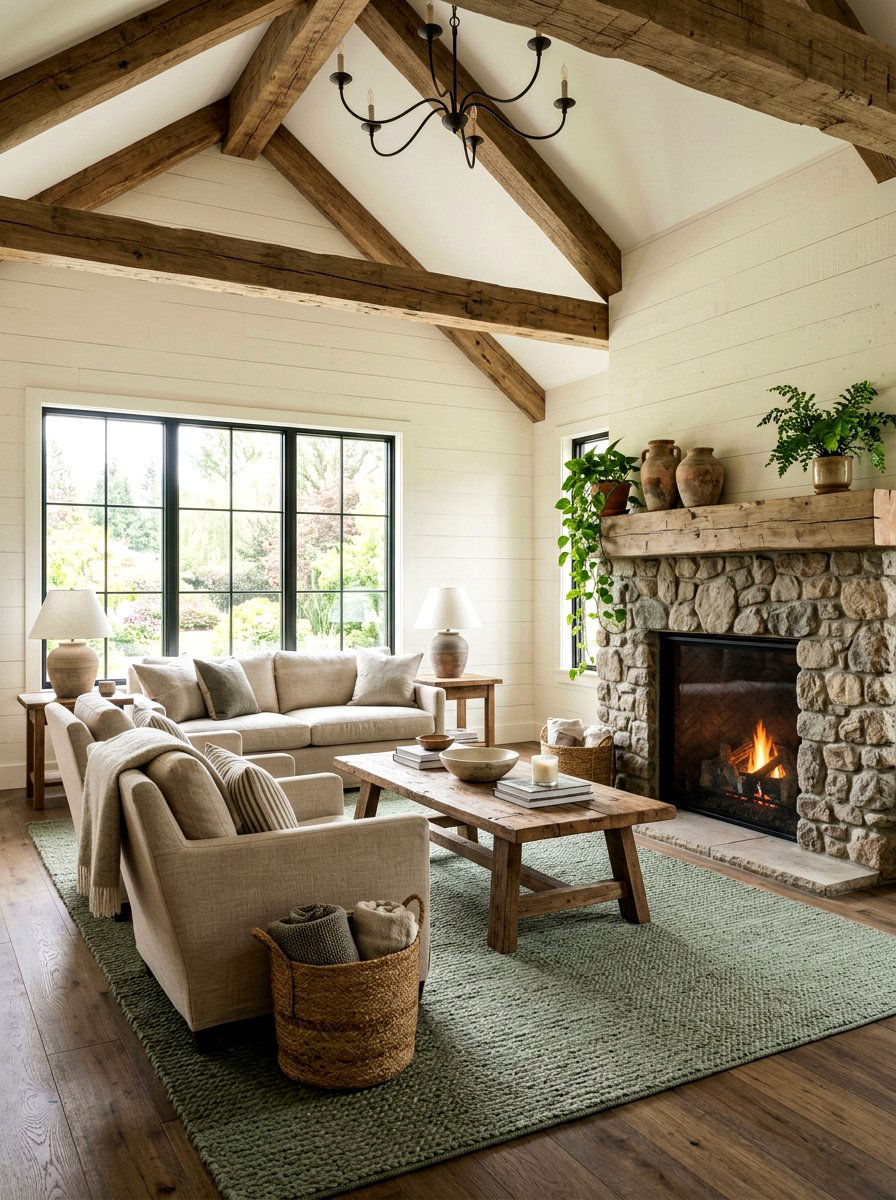
The modern farmhouse aesthetic thrives on natural elements, making sage green and terracotta the perfect color team for this style. Imagine a living room with creamy white walls, large exposed wooden beams, and a soft sage green rug that anchors the space. Introduce terracotta through smaller but impactful details like handcrafted ceramic vases on the mantel or a weathered clay pot sitting by the hearth. This approach brings a sense of history and artisan craftsmanship into a contemporary home. By layering these colors with textured fabrics like chunky knits and linen, you create a soulful interior that feels loved and lived-in.
4. Boho terracotta and sage living room
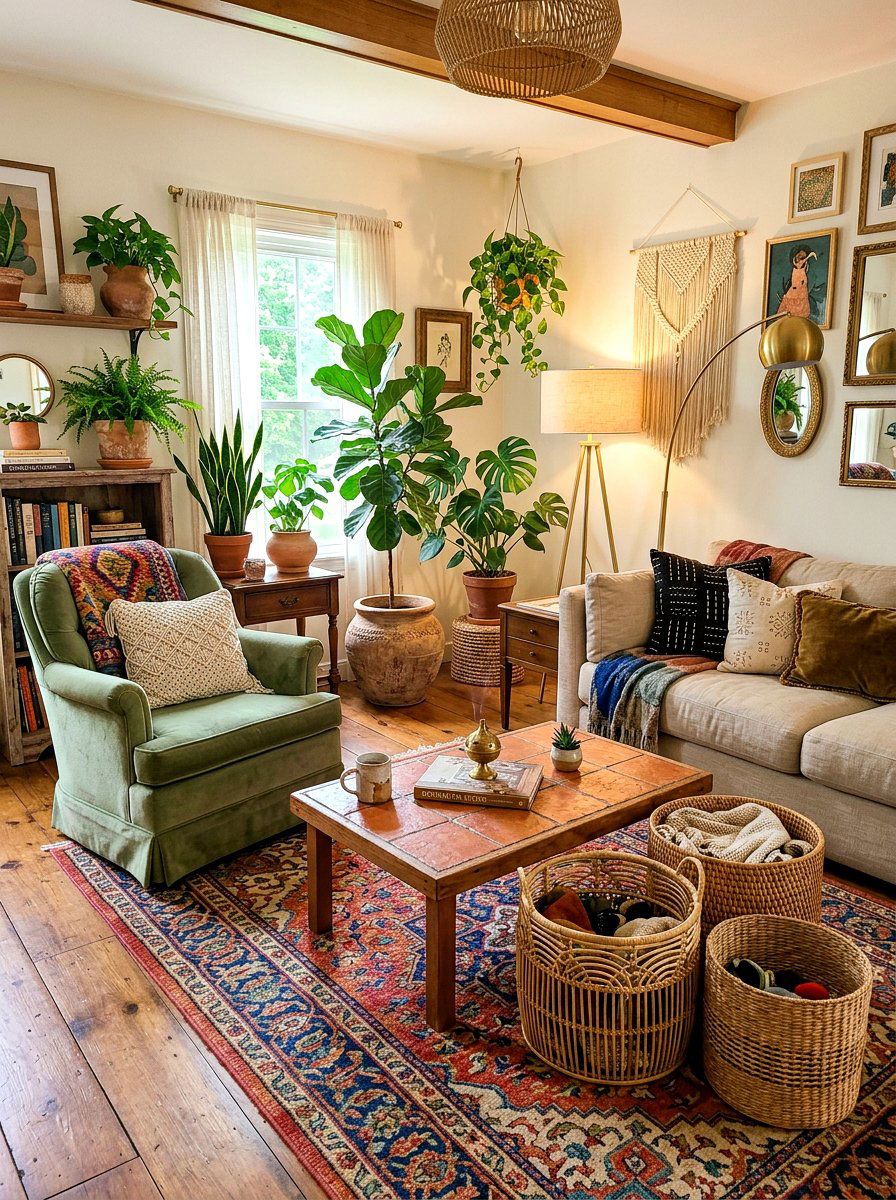
Bohemian design is all about embracing vibrant life and artistic expression through layered textures and global-inspired patterns. In a boho living room, you can go bold by mixing a deep sage green armchair with terracotta-patterned floor cushions and plenty of woven rattan furniture. The key to this look is the abundance of greenery; cascading ivy and tall ferns look stunning against sun-baked clay pots. Use macramé wall hangings and vintage brass accents to tie the room together. This earthy palette allows the space to feel eclectic and energetic without becoming chaotic, as the natural hues provide a consistent and calming visual thread.
5. Mediterranean terracotta floor living room
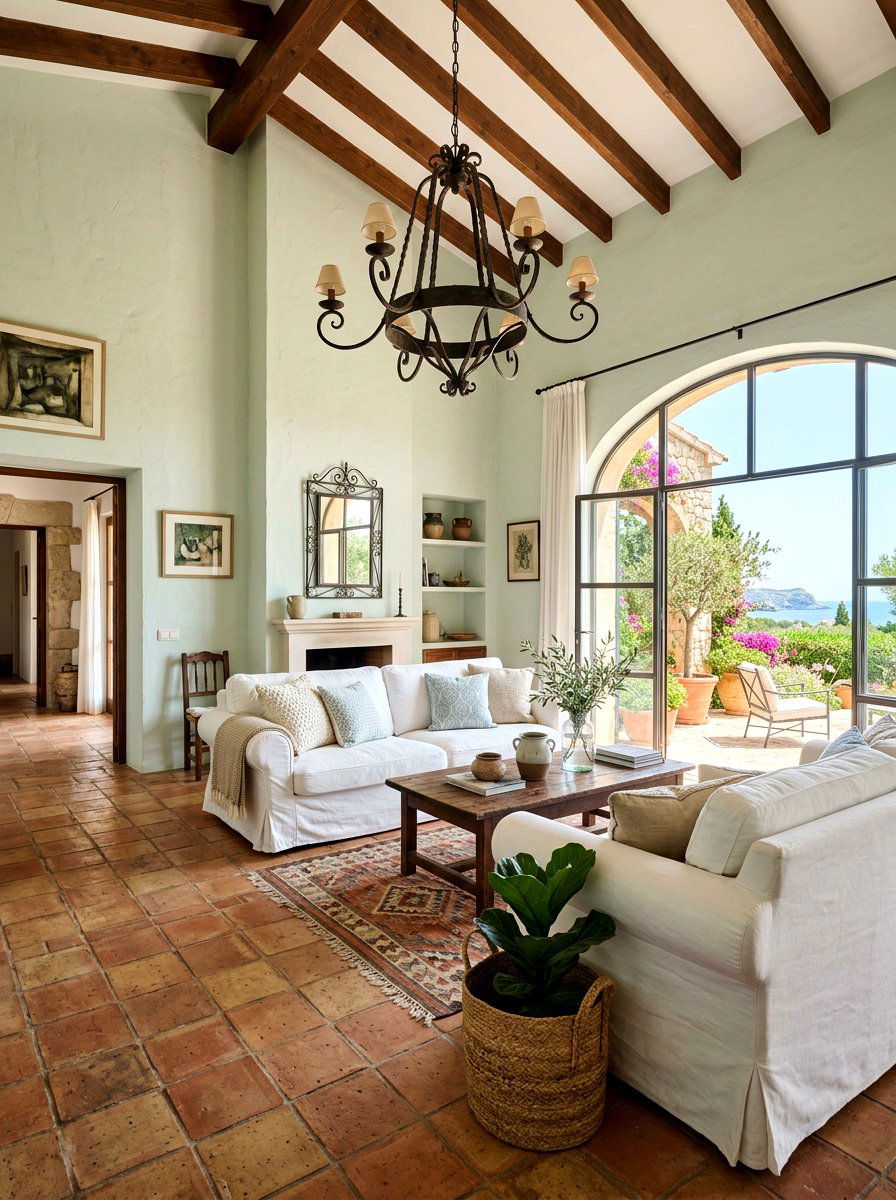
Authentic Mediterranean design often starts from the ground up with traditional terracotta floor tiles that offer a timeless, rustic appeal. These warm-toned floors provide a durable and beautiful base that pairs exceptionally well with soft sage green walls or upholstered seating. To prevent the space from feeling too heavy or dark, keep the ceiling and trim in a crisp, bright white. This contrast allows the earthy floor and the cool green walls to breathe, creating an airy Hacienda vibe. Adding wrought iron lighting fixtures and natural stone accents will further enhance the European charm, making your home feel like a coastal villa.
6. Sage green built in bookshelf living room
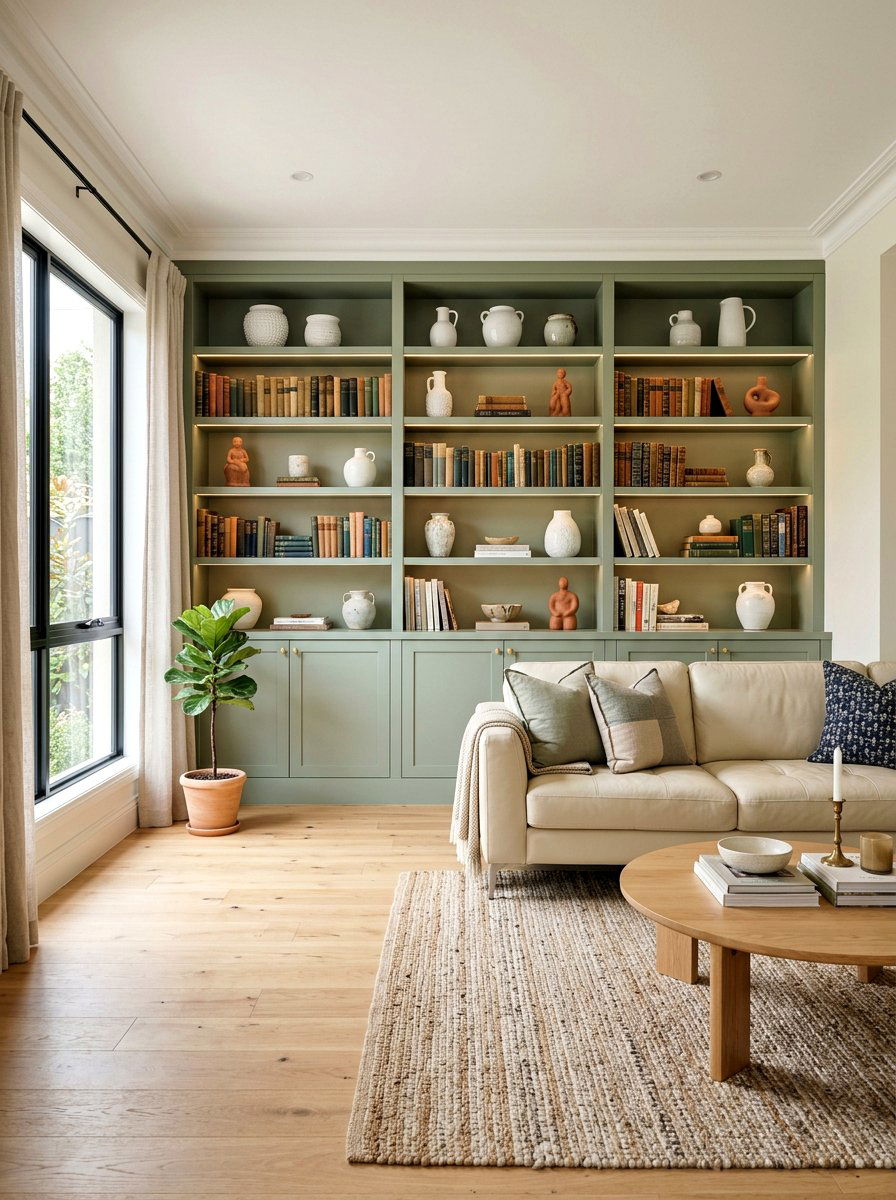
Painting your built-in bookshelves in a muted sage green is a sophisticated way to add depth and architectural interest to your living room. The green hue provides a refreshing background for book spines, white ceramics, and small terracotta sculptures. This design choice creates a seamless transition between your decor and the walls, making the room feel more expansive and cohesive. To balance the cool green cabinetry, use warm wooden furniture and terracotta-toned rugs in the center of the room. This setup creates a scholarly yet inviting atmosphere that encourages quiet reflection and relaxation amidst a beautifully curated collection of items.
7. Terracotta and sage gallery wall living room
A gallery wall is an excellent way to introduce a specific color palette without repainting the entire room. Curate a collection of abstract art prints that feature swirling terracotta shapes and botanical sage green illustrations. Using a mix of light oak and black frames will help bridge the gap between the two colors, adding a contemporary touch to the display. Position the gallery wall above a neutral linen sofa to serve as the visual anchor of the space. This allows you to experiment with different shades of the palette, from dusty peach to deep forest green, creating a dynamic and personalized focal point.
8. Industrial brick and sage living room
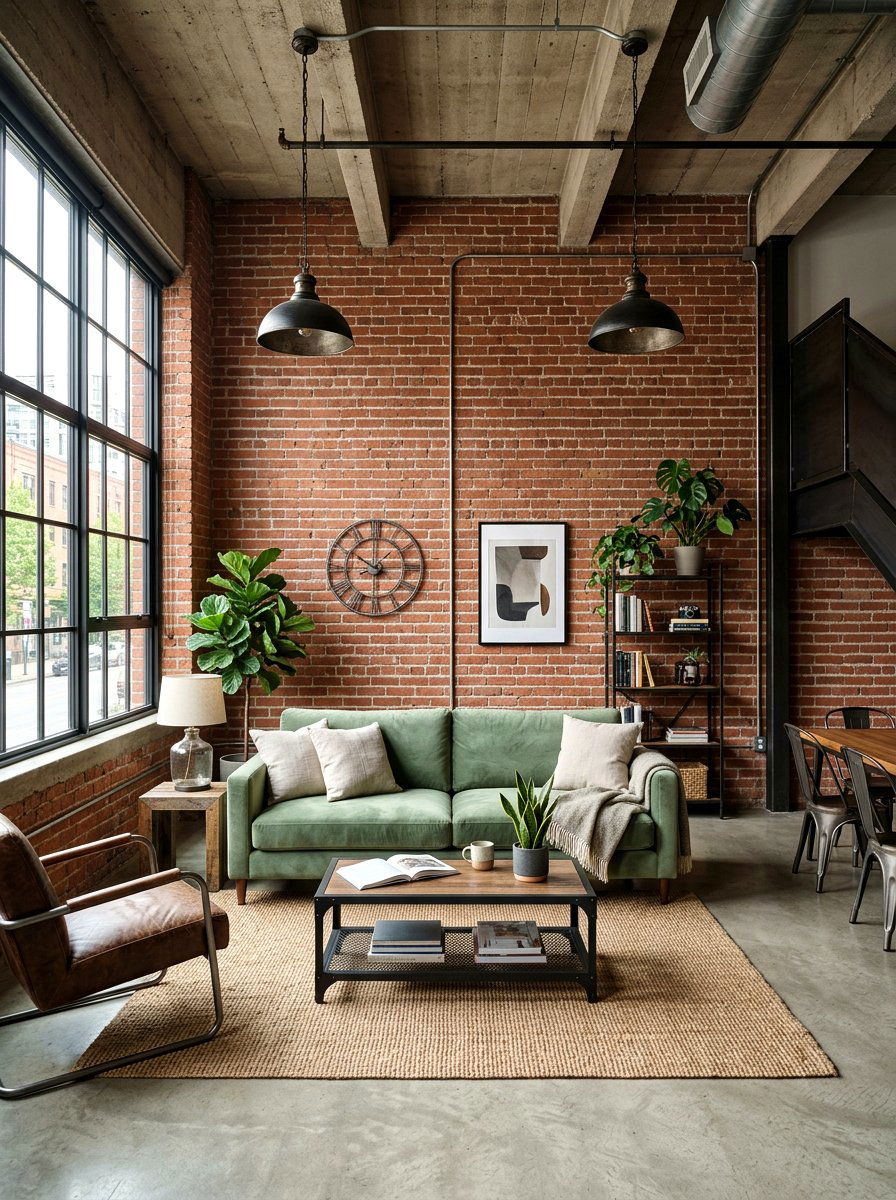
If your living room features exposed red brick walls, you already have a natural terracotta element that adds raw, industrial character. Soften the ruggedness of the brick by introducing sage green through a large sectional sofa or floor-to-ceiling drapes. The coolness of the sage balances the fiery tones of the brick, creating a modern loft aesthetic that feels warm and approachable. Use industrial-style lighting with Edison bulbs to highlight the texture of the walls and the softness of the green fabrics. This combination of "hard" architectural elements and "soft" organic colors results in a balanced, stylish, and comfortable urban sanctuary.
9. Minimalist sage and terracotta living room
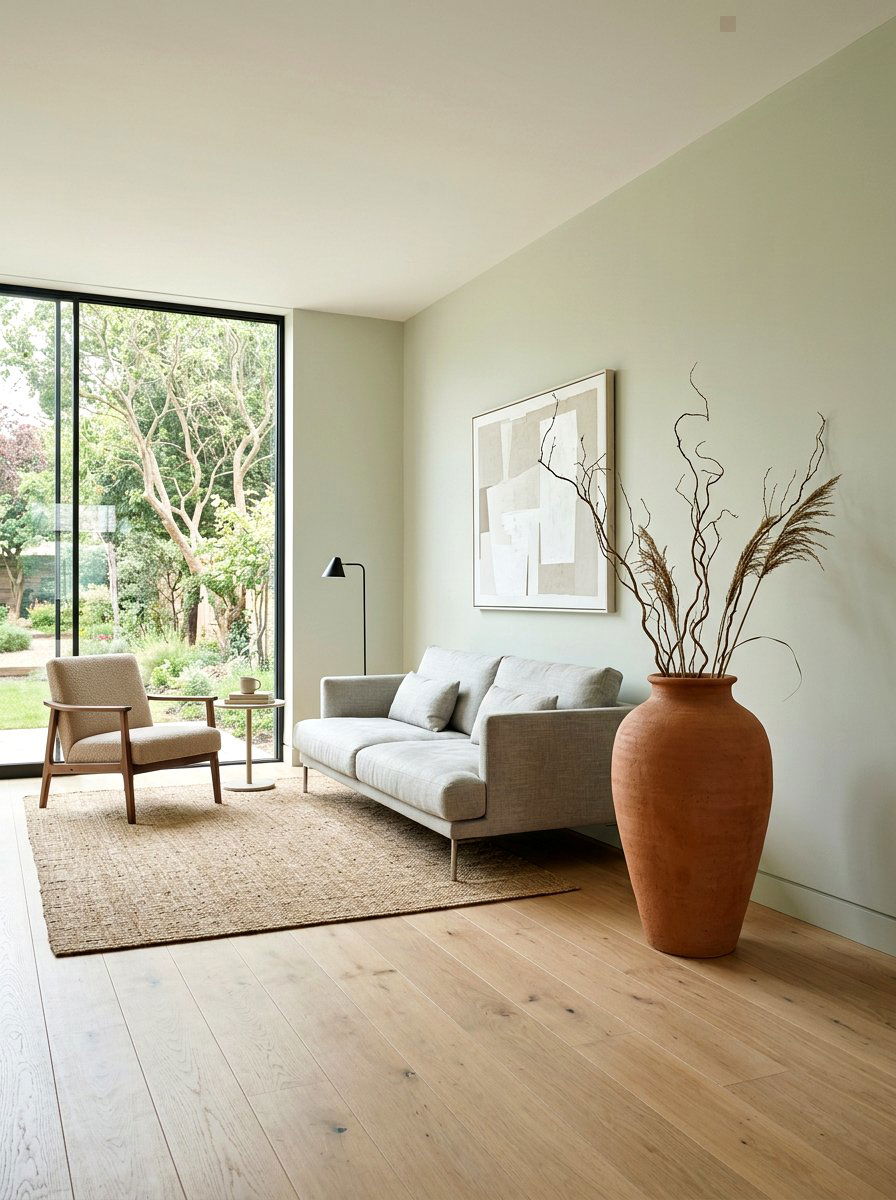
Achieving a minimalist look with sage and terracotta requires a focus on high-quality materials and clean, simple lines. Start with a very light sage green wall color and keep furniture silhouettes sleek and functional. A single terracotta accent, such as a large ceramic floor vase or one statement chair, provides just enough warmth to prevent the room from feeling clinical. Avoid clutter by choosing pieces that serve both a functional and aesthetic purpose. The subtle interplay between the two colors creates a sense of peacefulness and order, proving that you don't need a lot of items to make a powerful design statement.
10. Sage green window curtain living room
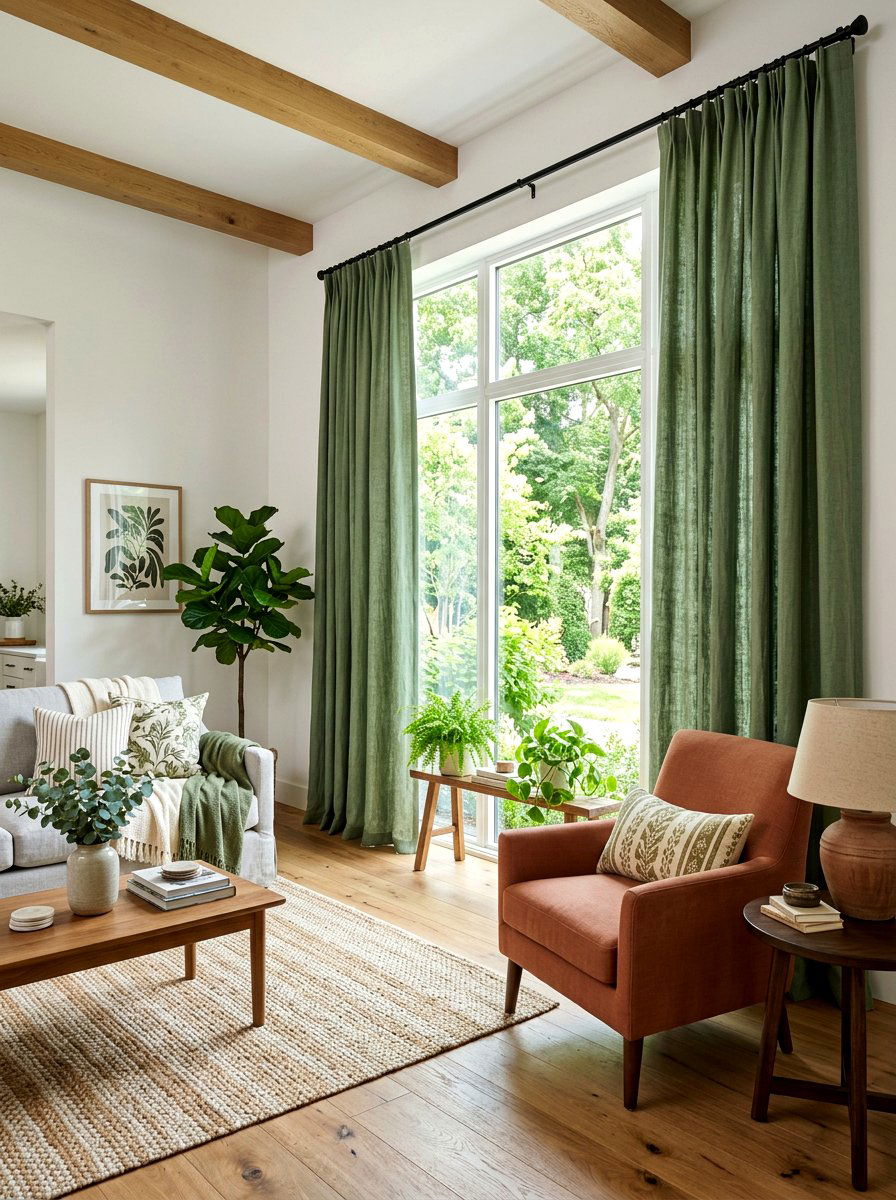
Hanging sage green curtains is a simple yet effective way to frame your view of the outdoors while bringing color into the interior. Opt for lightweight linen or cotton fabrics that allow natural light to filter through, casting a soft green glow across the room. These curtains look particularly striking when positioned near terracotta-colored accessories, such as a clay lamp or a rust-toned side table. The vertical lines of the drapes add height to the room, while the earthy color connects the space to the garden outside. This approach is perfect for those who want a flexible and easily changeable decor element.
11. Terracotta clay wall living room
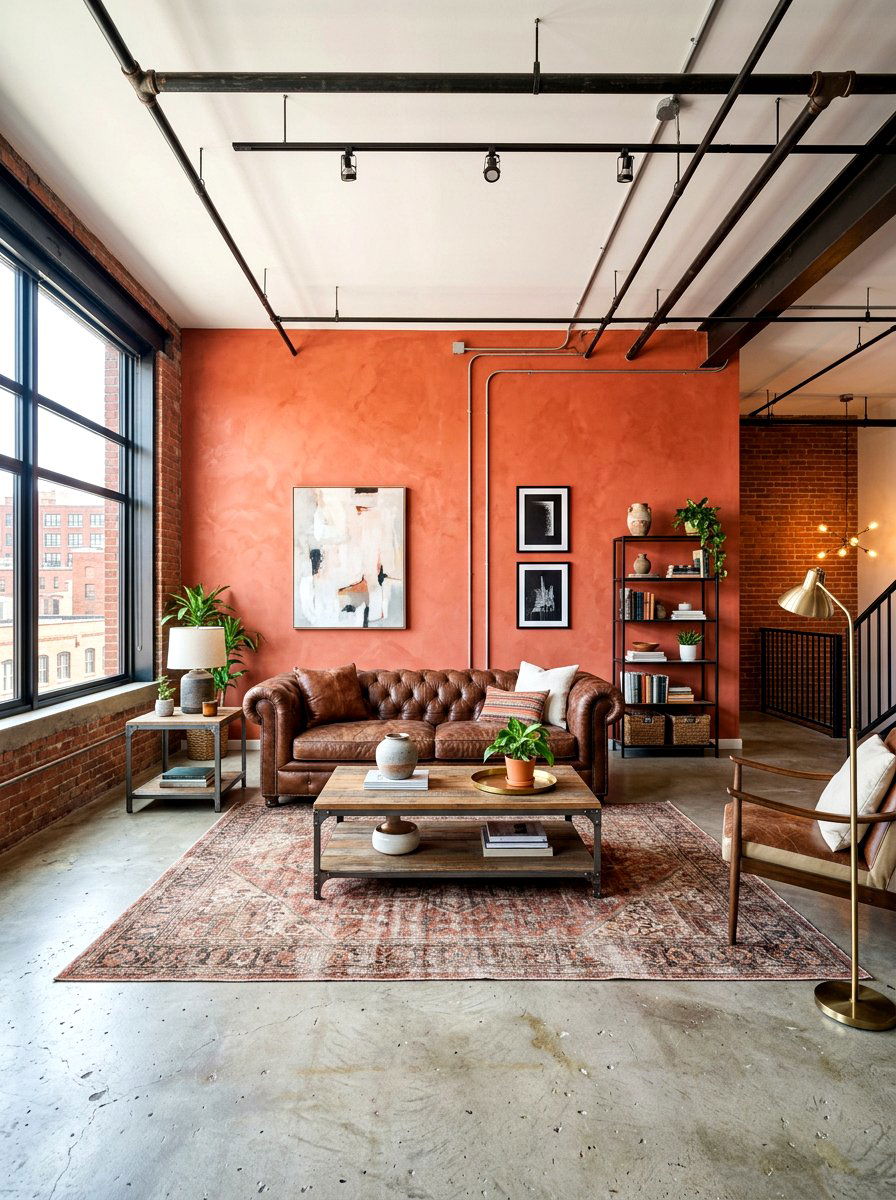
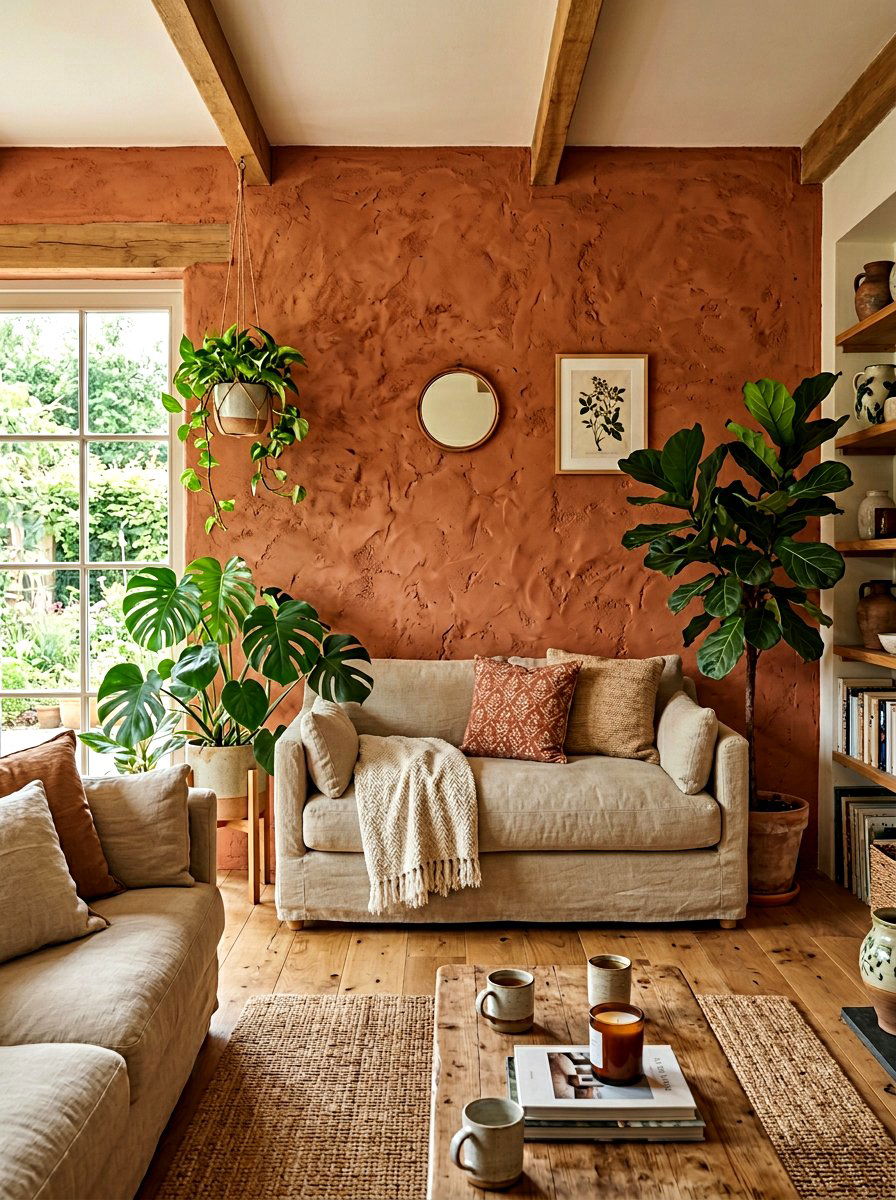
A textured terracotta clay wall brings an incredible sense of depth and artisanal beauty to a modern living room. Whether achieved through pigmented plaster or a specialized matte paint finish, the result is a velvety surface that feels ancient yet contemporary. To keep the space from feeling too enclosed, balance the intense warmth of the walls with plenty of sage green plants and light gray or cream furniture. The tactile nature of the wall creates a cozy, cocoon-like environment that is perfect for evening relaxation. Incorporating natural wood and brass accents will elevate the look, adding a touch of refined luxury.
12. Scandinavian sage and terracotta living room
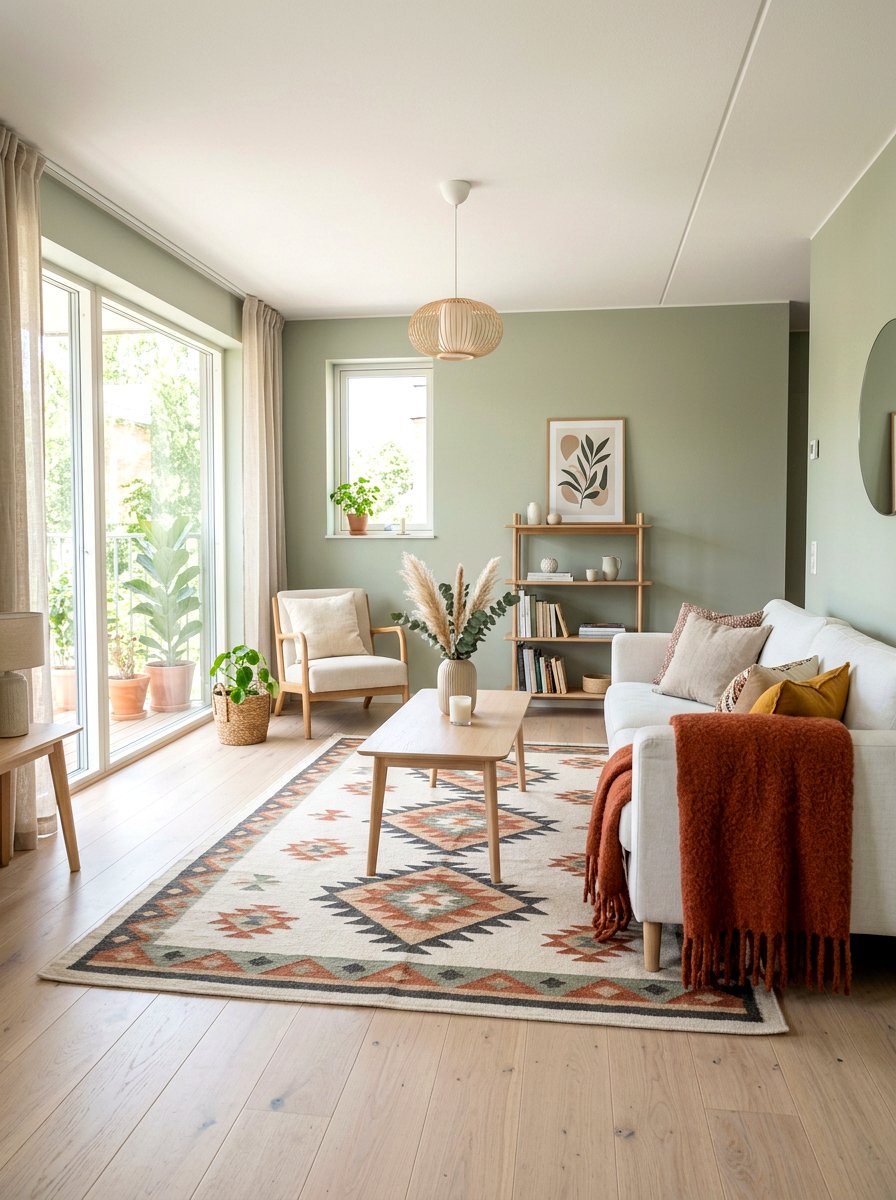
Scandinavian design often focuses on light, airy spaces and natural materials, which makes the sage and terracotta duo a natural fit. Use a very pale sage for the walls and pair it with light-toned wood furniture, such as ash or birch. Introduce the terracotta through high-quality textiles like a wool throw or a simple geometric area rug. This "Scandi-Boho" hybrid look emphasizes comfort and functionality while maintaining a very clean aesthetic. The pops of terracotta add a necessary "hygge" warmth to the cool green and white foundation, making the living room feel sunny and welcoming even on the coldest days.
13. Terracotta throw pillow living room decor
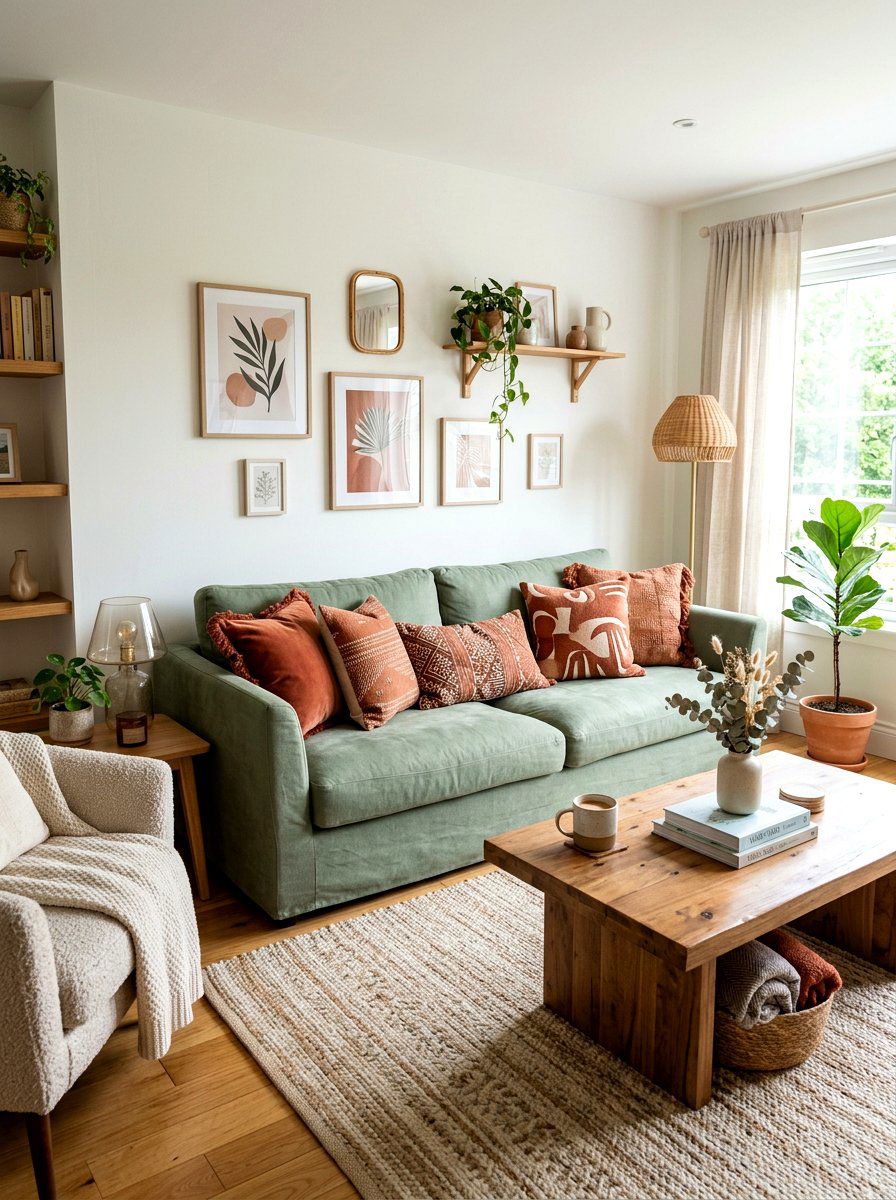
If you are hesitant to commit to large pieces of furniture, using terracotta throw pillows is a fantastic way to test the palette. Arrange a variety of pillows in different textures — like chunky wool, smooth linen, and embroidered cotton — on a sage green sofa. This layering technique adds visual interest and physical comfort to your seating area. You can also mix in some neutral cream or beige pillows to act as a buffer between the two main colors. This small-scale application of the trend allows you to easily update your living room's look for different seasons while maintaining a cohesive and stylish earth-toned theme.
14. Sage green sectional sofa living room
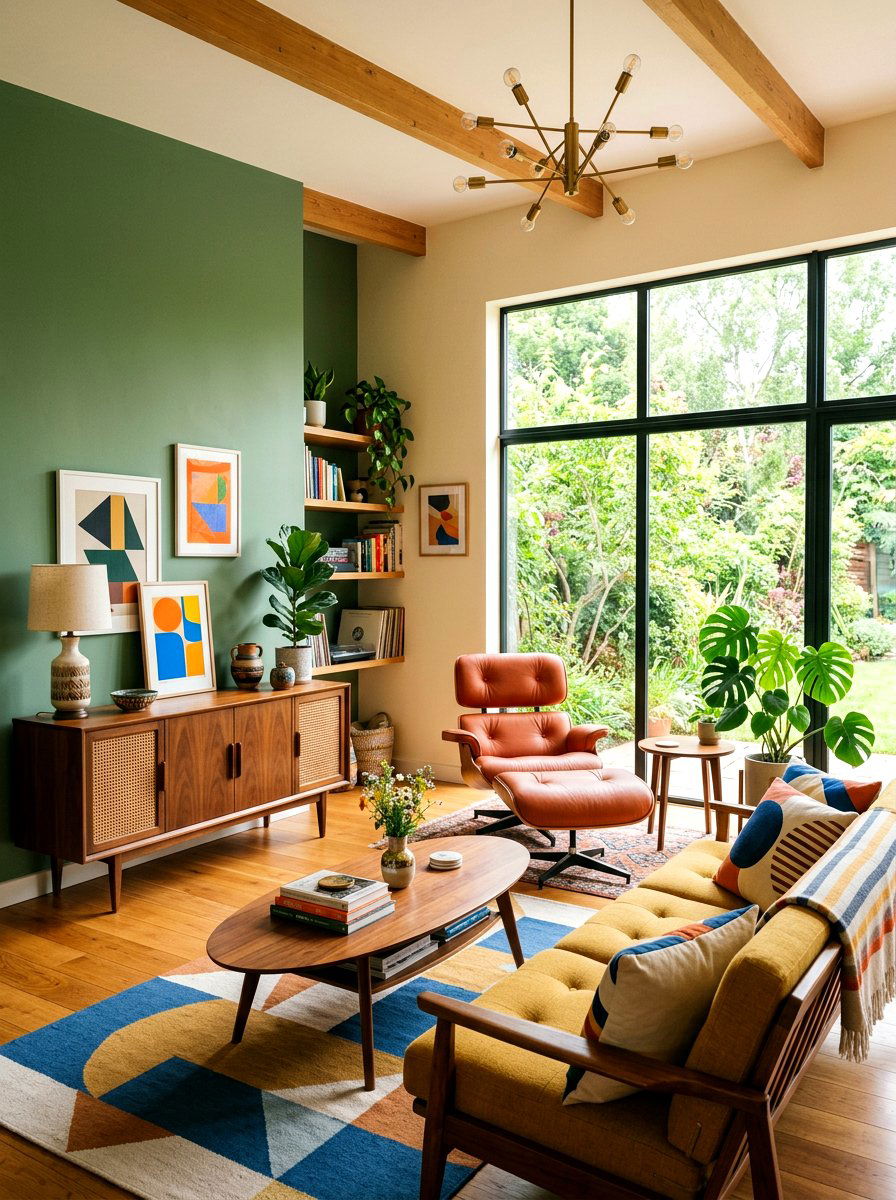
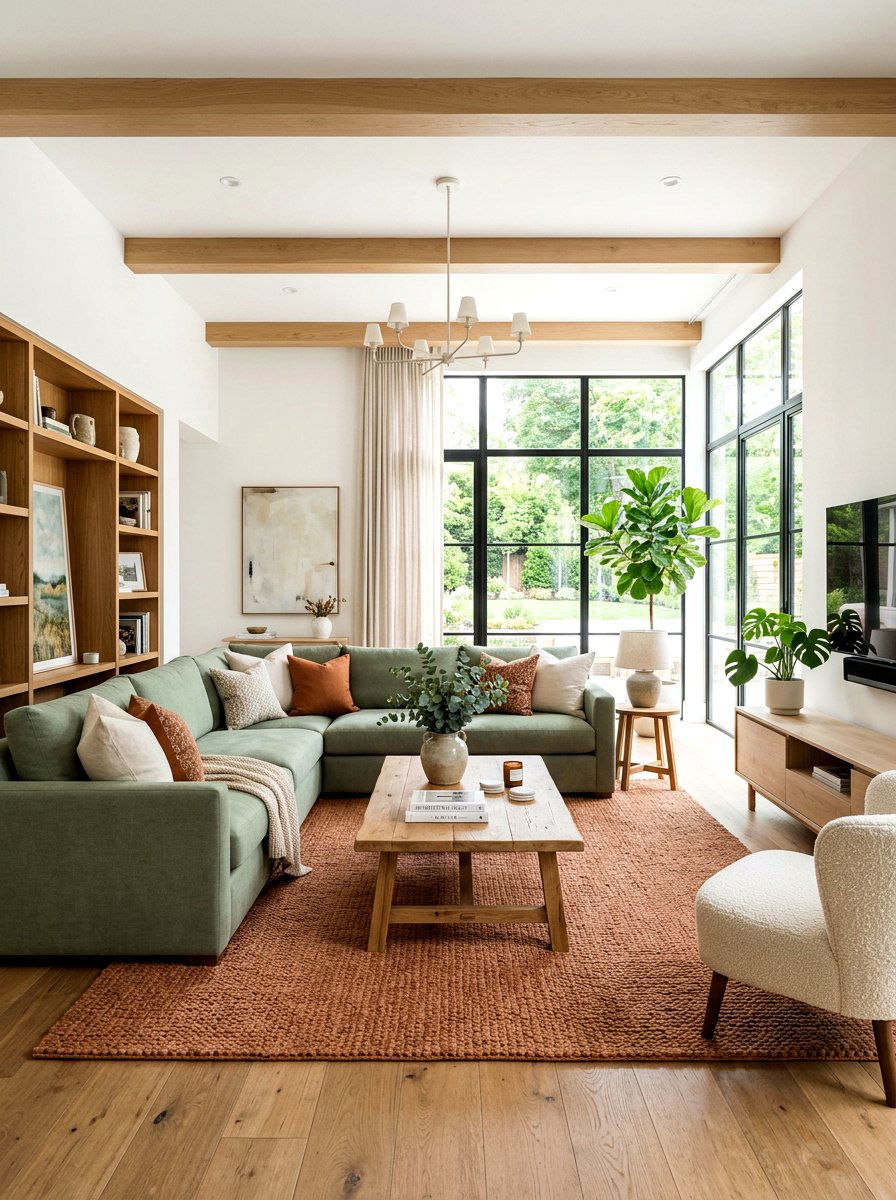
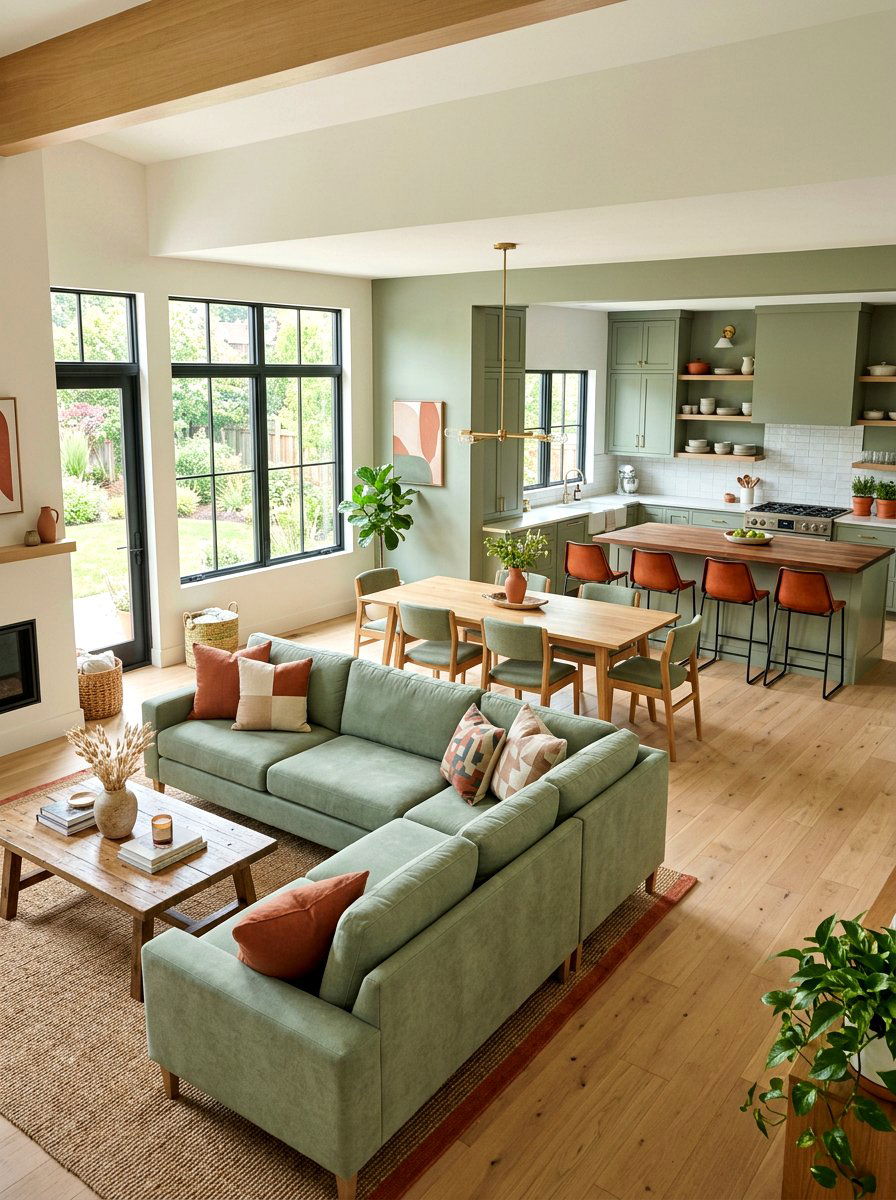
A large sage green sectional sofa can anchor a spacious living room, providing ample seating while serving as a major design element. Sage green is an excellent choice for a large piece because it is visually receding, meaning it doesn't overwhelm the room despite its size. To add warmth and energy to the arrangement, place a terracotta coffee table in the center or use a rug with rust-colored accents. This setup creates a harmonious and inviting hub for family gatherings. The green sofa feels like a breath of fresh air, making the entire living area feel more expansive and connected to the natural world.
15. Mid century modern sage living room
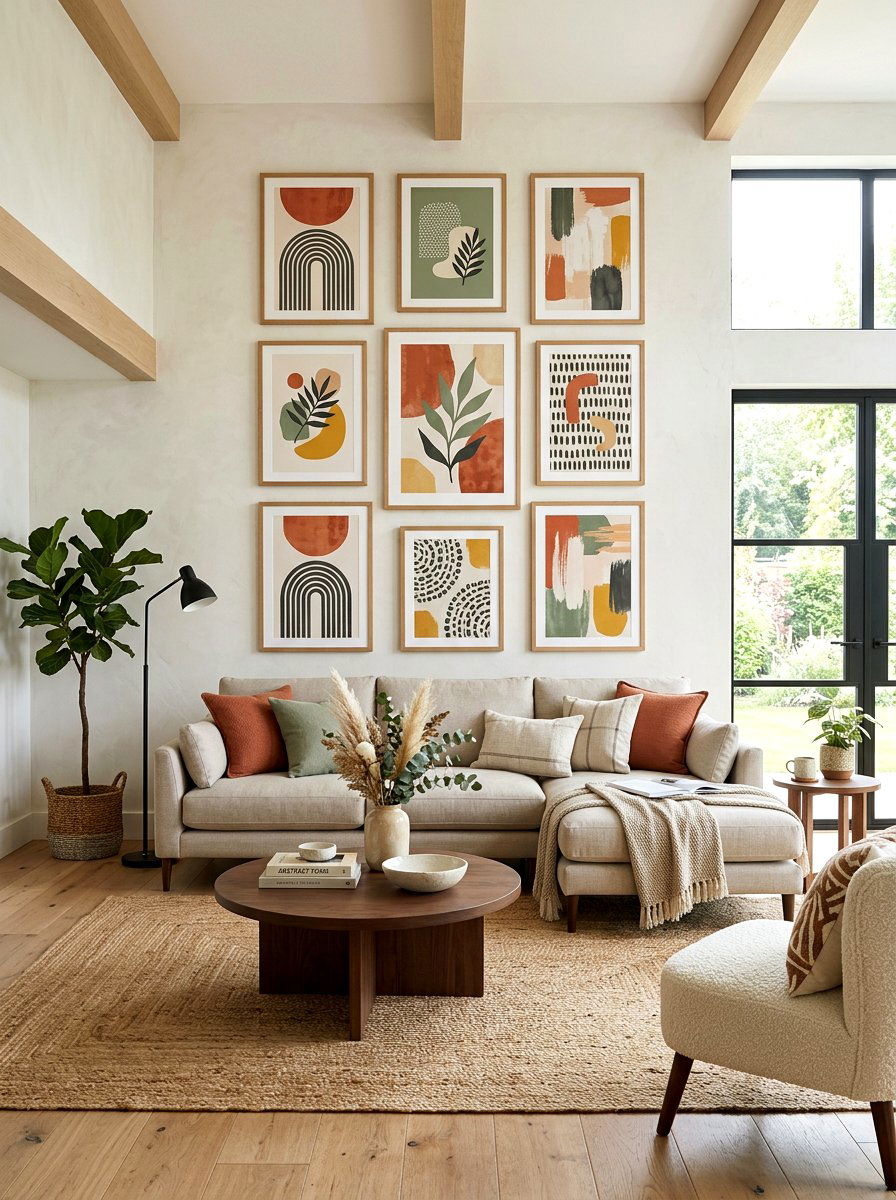
The mid-century modern style often utilizes bold, earthy tones, making the combination of sage and terracotta feel incredibly authentic to the era. Pair a classic tapered-leg wooden sideboard with a sage green accent wall and a terracotta-colored lounge chair. The warm wood tones of the furniture act as a perfect bridge between the cool green and the fiery orange. Use geometric patterns in your textiles to maintain the retro vibe, but keep the colors muted to ensure the look remains sophisticated and modern. This approach creates a stylish, curated space that celebrates iconic design while feeling entirely current and comfortable.
16. Terracotta leather armchair living room
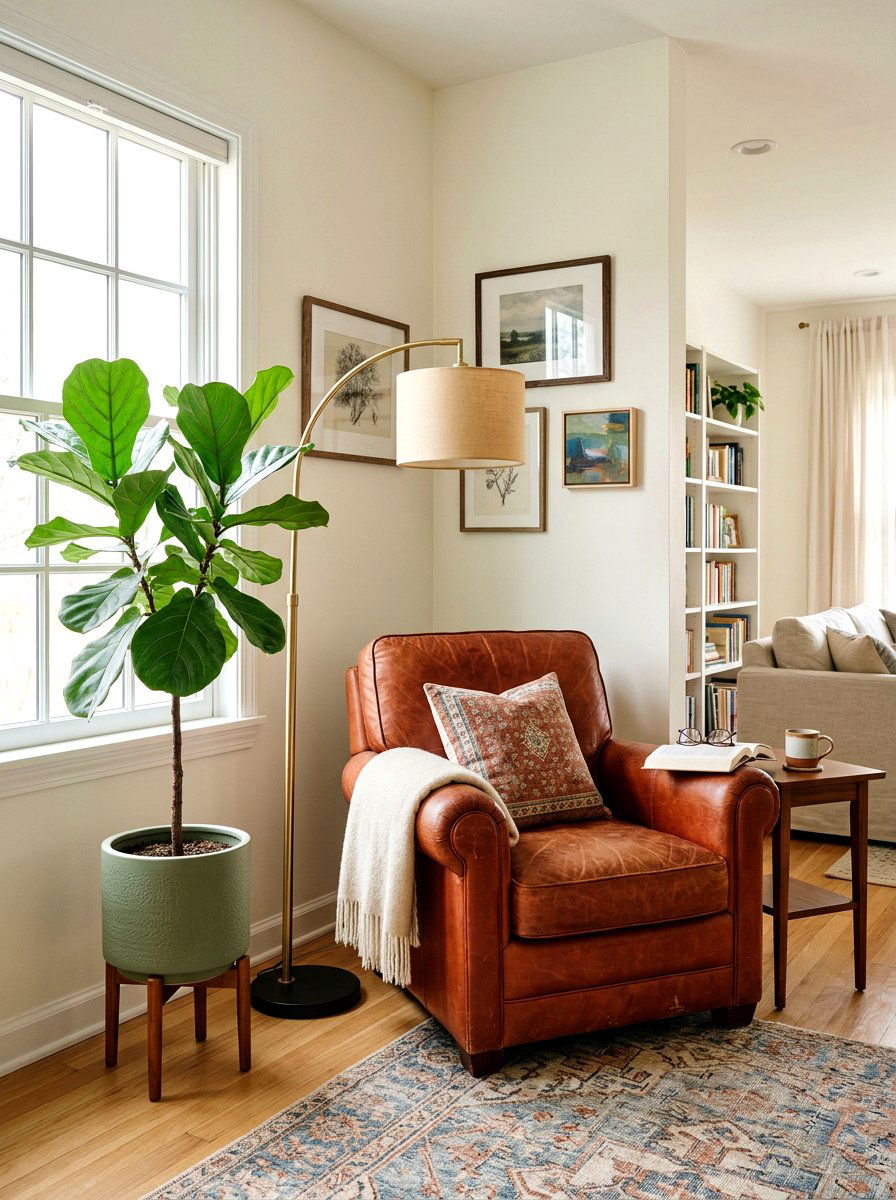
A terracotta leather armchair brings a sense of timeless luxury and rugged durability to a living room setting. Leather in this specific shade of burnt orange or deep clay develops a beautiful patina over time, adding character to the space. Position the chair in a corner next to a tall, leafy plant and a sage green floor lamp to create a cozy reading nook. The contrast between the smooth, warm leather and the soft green surroundings is visually satisfying and physically inviting. This piece serves as a "neutral" with a kick, providing a pop of color that remains grounded in an organic, earthy aesthetic.
17. Sage green botanical wallpaper living room
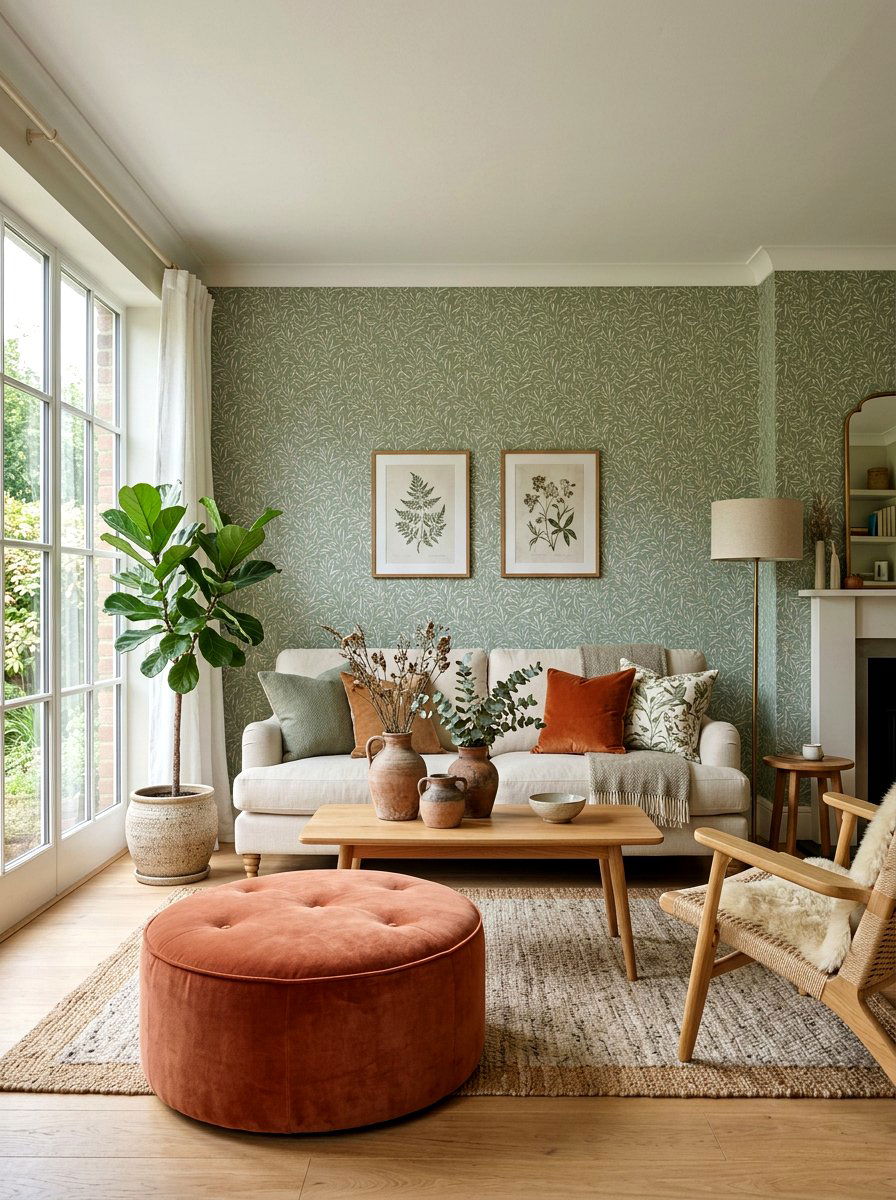
Botanical wallpaper featuring sage green leaves or vines can transform a plain living room into a lush indoor garden. This design choice adds a layer of pattern and whimsical charm that solid paint colors cannot provide. To ground the busy pattern, incorporate solid terracotta elements like a velvet ottoman or a set of clay vases on a console table. The warmth of the terracotta balances the cool, repeating greenery of the wallpaper, preventing the room from feeling too cold or overly feminine. This combination is particularly effective in spaces with plenty of natural light, where the colors can truly shine and vibrate.
18. Terracotta fireplace mantel living room
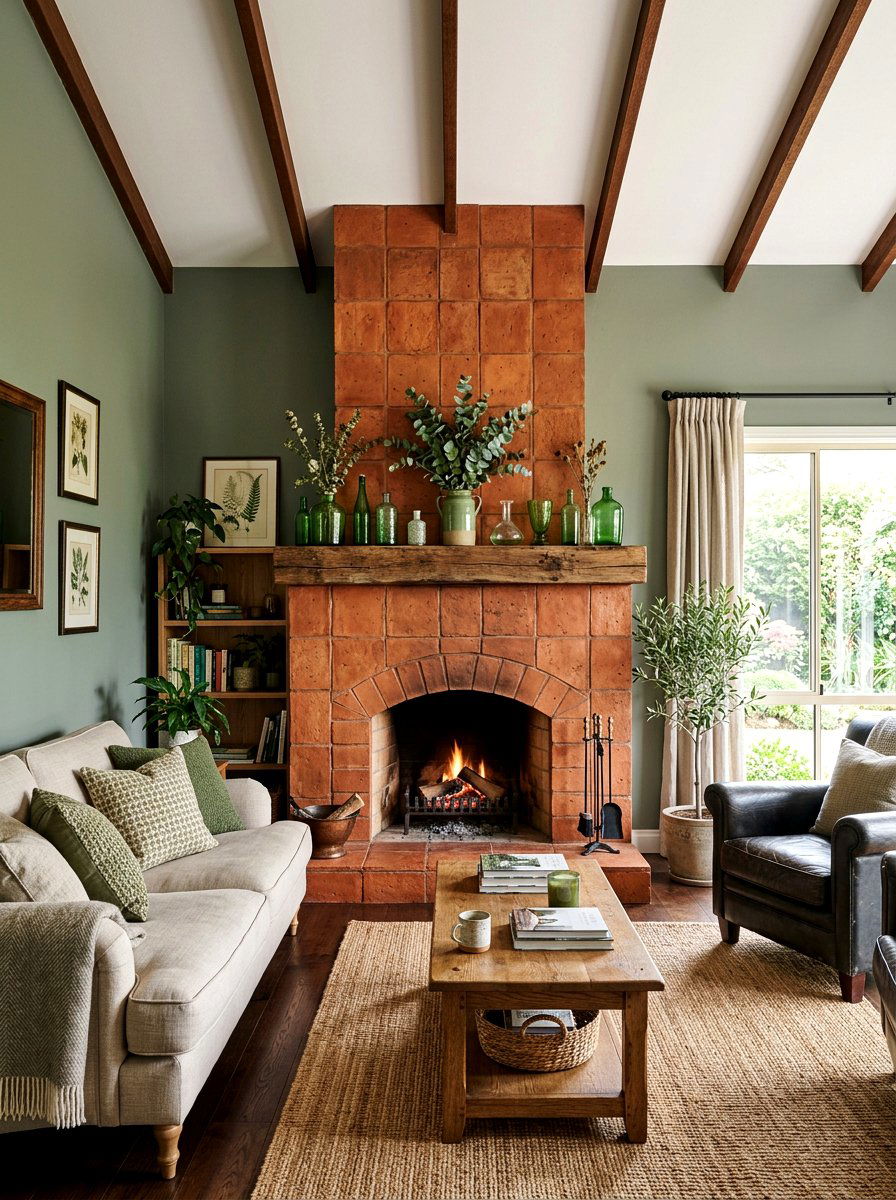
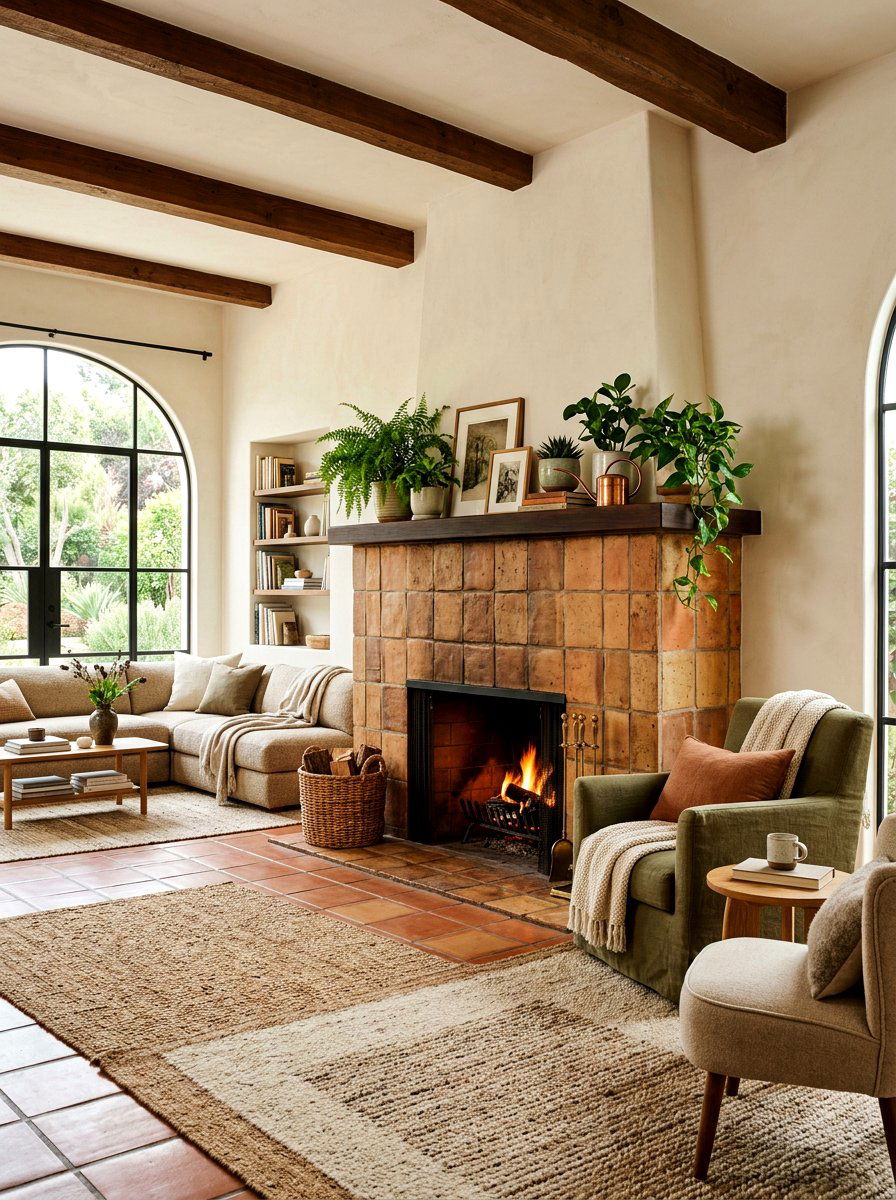
The fireplace is the heart of the home, and highlighting it with terracotta can create an exceptionally warm and inviting focal point. Consider using handmade terracotta tiles for the hearth or painting the mantel in a deep, matte clay shade. Surround the fireplace with sage green walls or built-in cabinets to create a beautiful, high-contrast look that draws the eye. The natural association between fire and terracotta makes this a very intuitive design choice. During the summer, decorate the mantel with dried sage bunches and green glass bottles to keep the area looking fresh and vibrant even when the fire isn't lit.
19. Coastal sage and terracotta living room
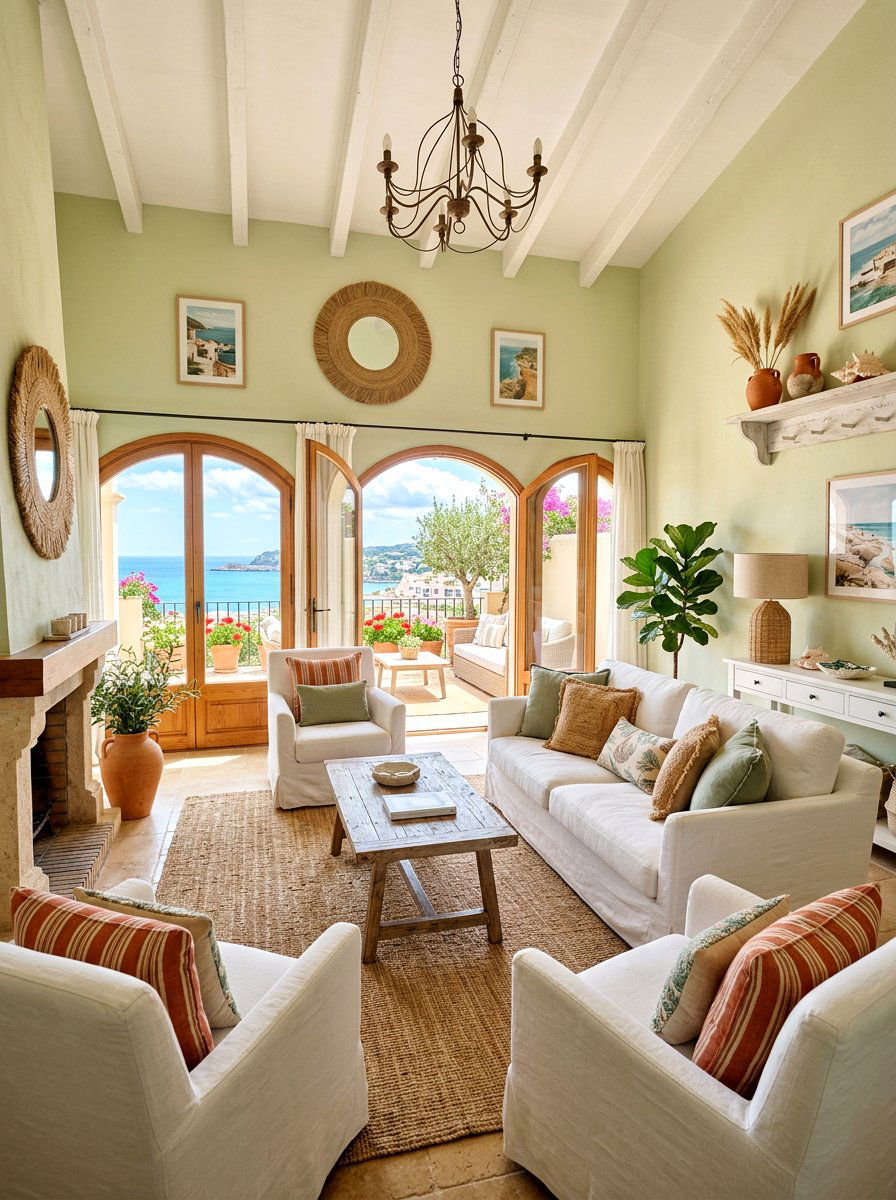
Traditional coastal design often uses blues and whites, but a sage and terracotta palette offers a unique, "Mediterranean-coastal" alternative. Think of the colors of seaside cliffs and scrubby coastal plants. Use a light sage green for the main upholstery and incorporate terracotta through striped rugs or textured wall hangings. This look feels relaxed and breezy but has an added layer of earthy sophistication. Natural fibers like seagrass, jute, and driftwood are the perfect companions for this color story, enhancing the organic feel and making the living room feel like a peaceful retreat by the water's edge.
20. Dark sage green living room walls
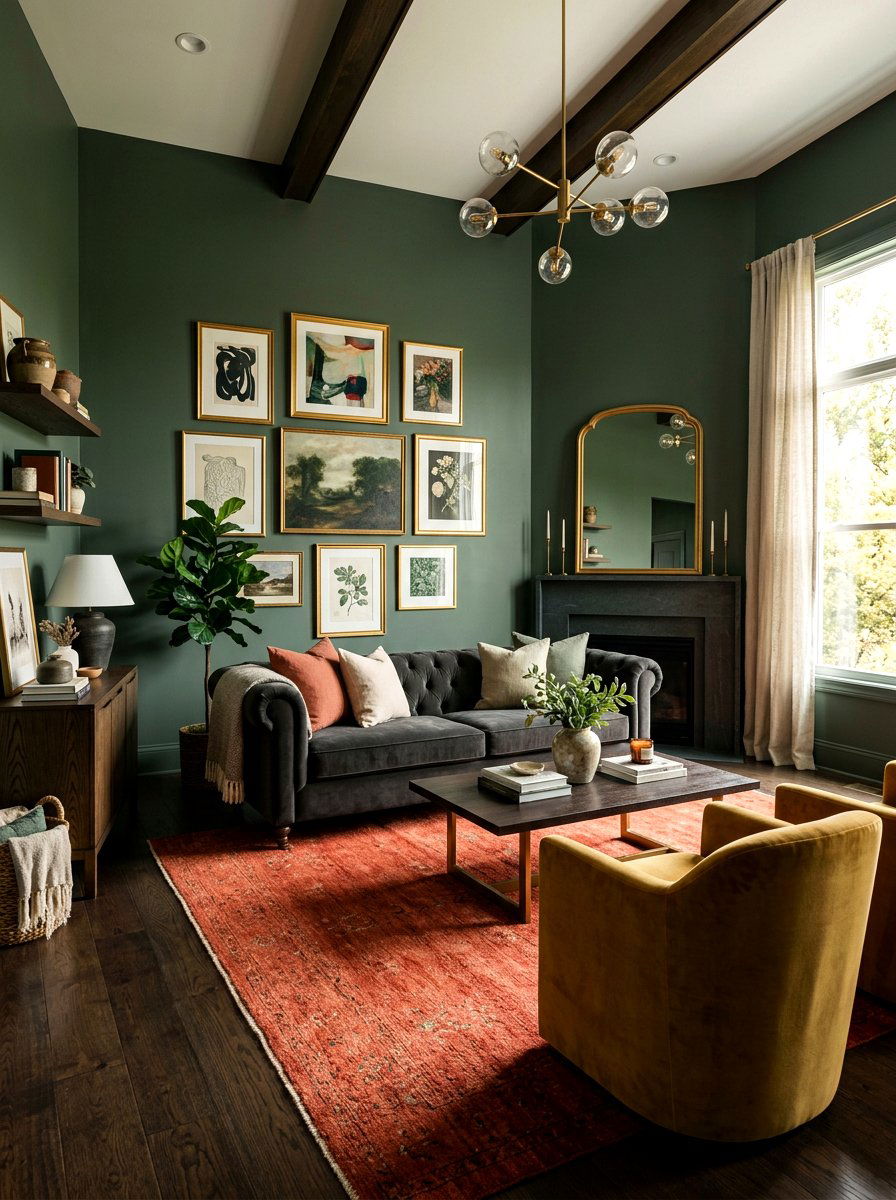
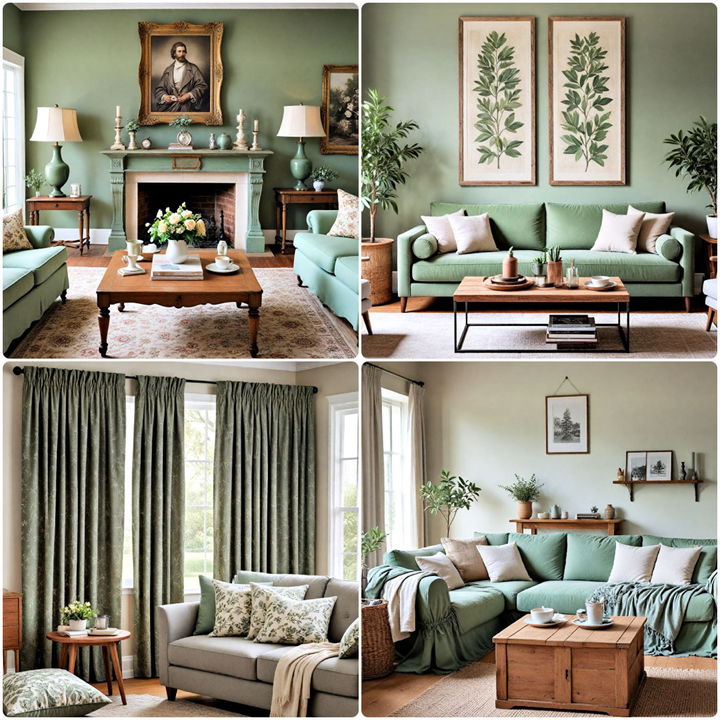
For a more dramatic and moody atmosphere, opt for a deep, saturated sage green on all four walls. This "cocooning" effect makes the living room feel incredibly intimate and high-end. To prevent the dark walls from feeling gloomy, use bright terracotta accents to inject energy and light into the space. A rust-colored rug or a vibrant piece of art will glow against the dark green backdrop. This color combination is perfect for a media room or a formal lounge where you want to create a sense of theater and luxury. Adding metallic accents like gold or brass will further elevate the sophisticated mood.
21. Burnt orange terracotta accent living room
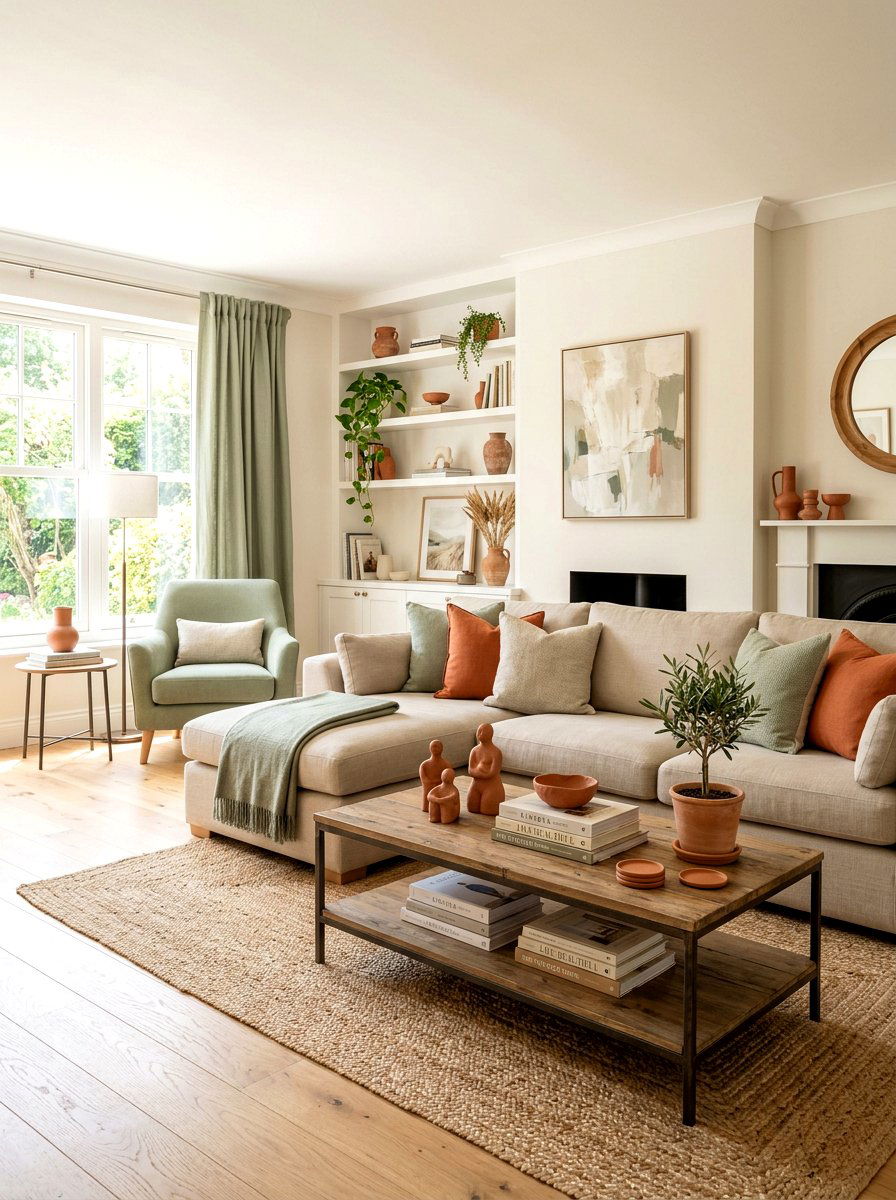
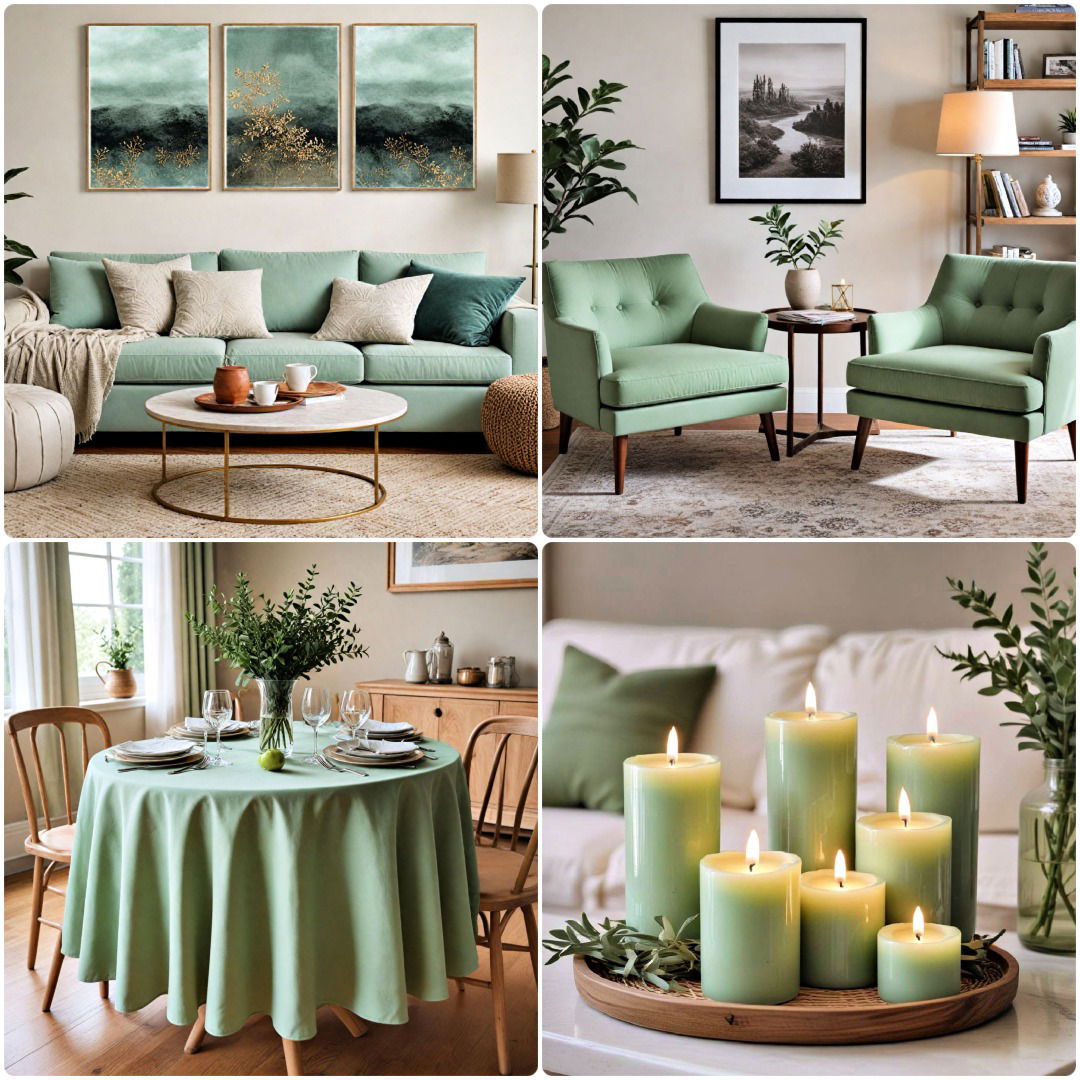
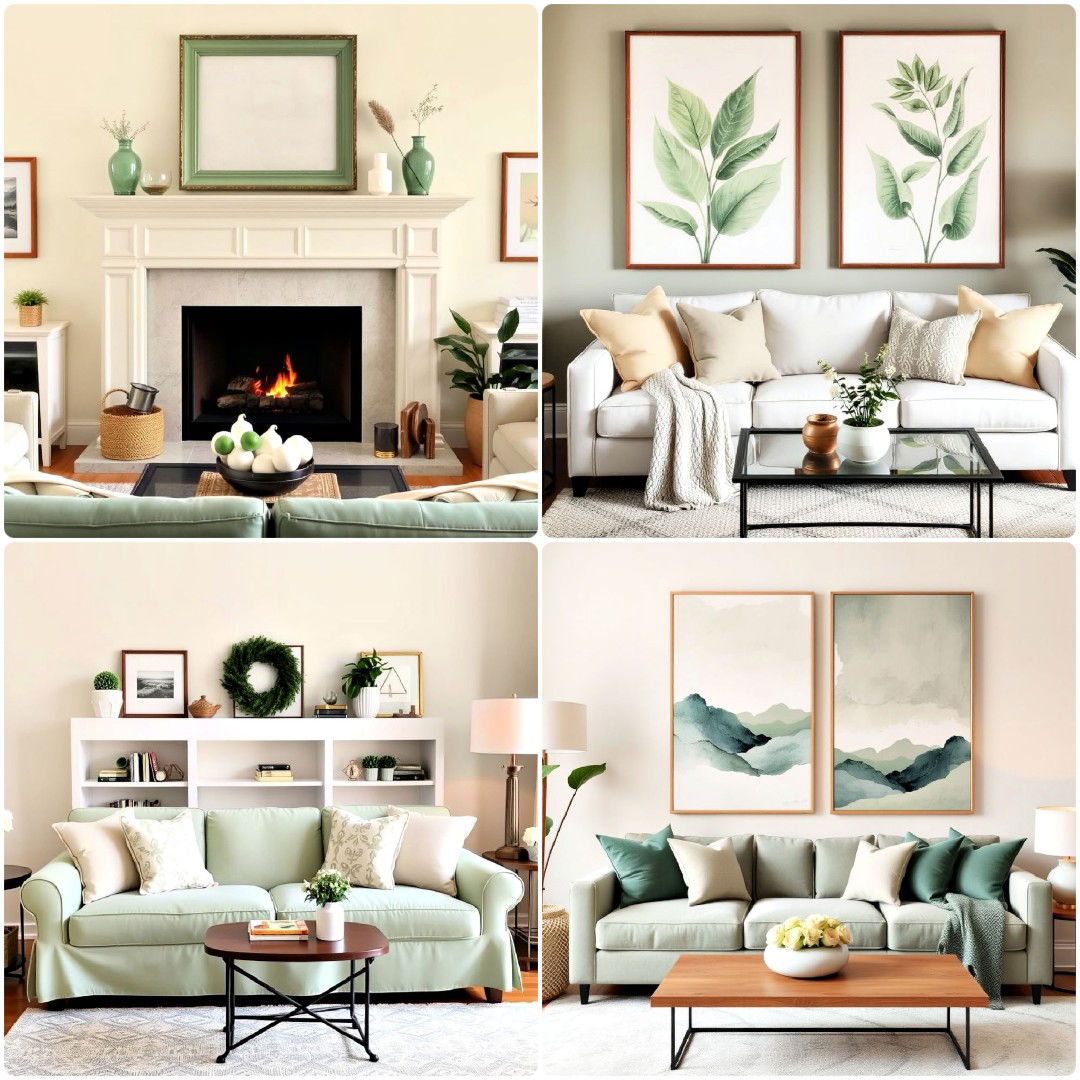
If you prefer a mostly neutral living room, using burnt orange terracotta as a strategic accent can add just the right amount of warmth. Start with a foundation of sage green and off-white, then layer in terracotta through small decor items like coasters, bookends, and candles. This approach allows the warm hue to act as a "spark" that enlivens the calm green environment. It is an easy way to experiment with the trend without a massive investment. The key is to distribute the terracotta evenly throughout the room so that the eye moves naturally from one warm point to the next, creating a sense of flow.
22. Sage green and wood furniture living room
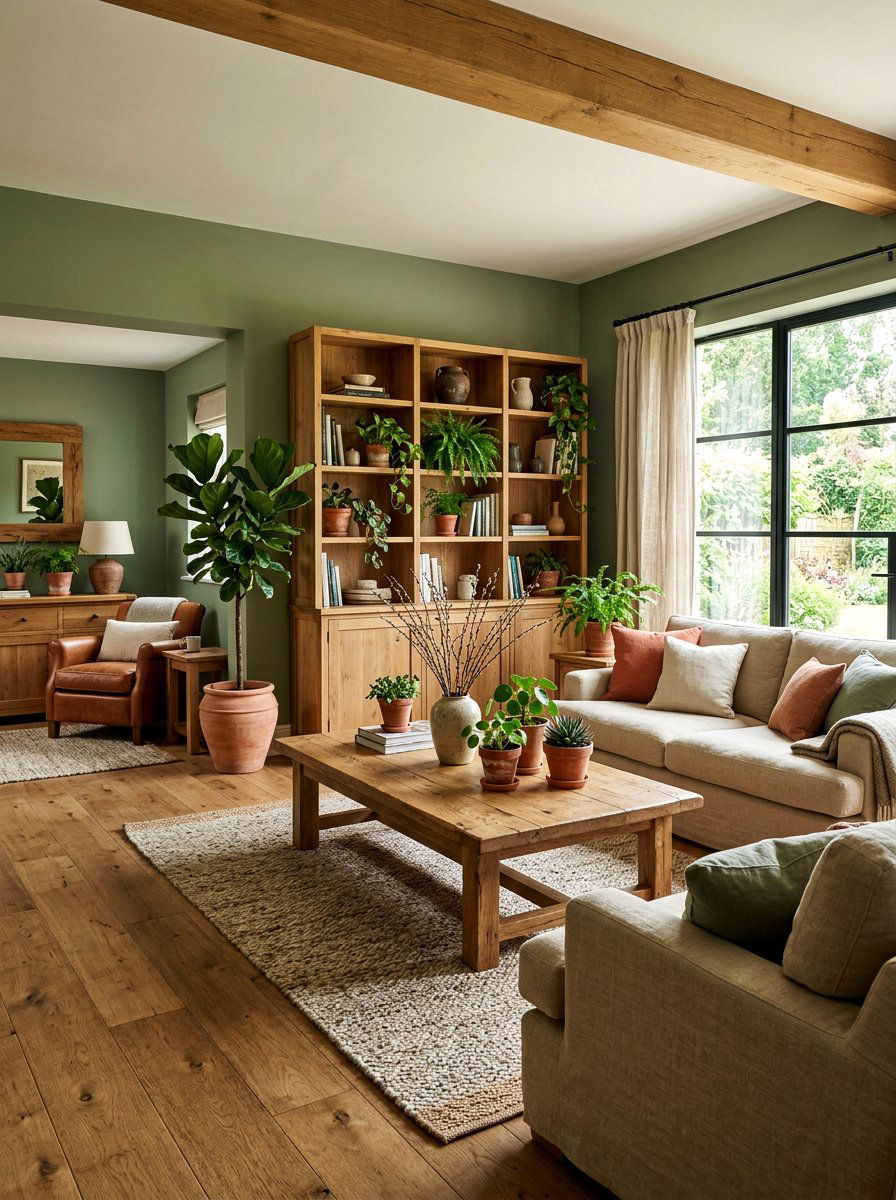
Sage green and natural wood are a match made in heaven, as they both represent different aspects of the forest. In a living room, pairing sage green walls with a large oak dining table or a walnut coffee table creates a space that feels deeply connected to the earth. To complete the palette, add terracotta elements like woven baskets with rust-colored details or clay-potted plants. The grain of the wood adds a layer of texture that enhances the organic feel of the green and orange tones. This combination is timeless and works well in almost any architectural style, from traditional to ultra-modern.
23. Terracotta painted ceiling living room
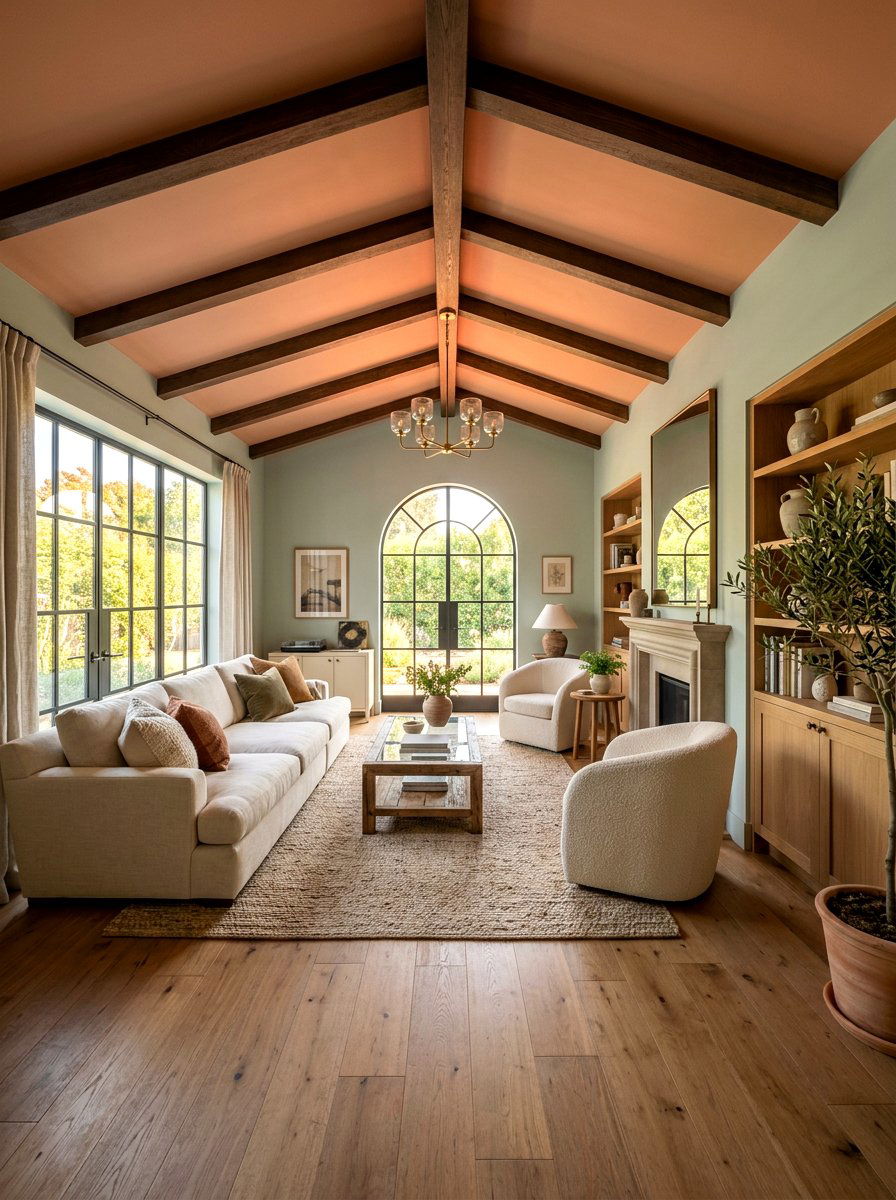
Painting the ceiling in a soft terracotta shade is a bold design move that can make a room feel much cozier and more architecturally interesting. This "fifth wall" adds a surprising pop of color that draws the eye upward and can help make a very large room feel more intimate. To keep the balance, paint the walls a light, misty sage green and use neutral-colored furniture. The warm glow from the ceiling mimics the feeling of a late afternoon sunset, creating a relaxing environment for winding down in the evening. This unconventional approach shows a high level of design confidence and creativity.
24. Traditional sage living room
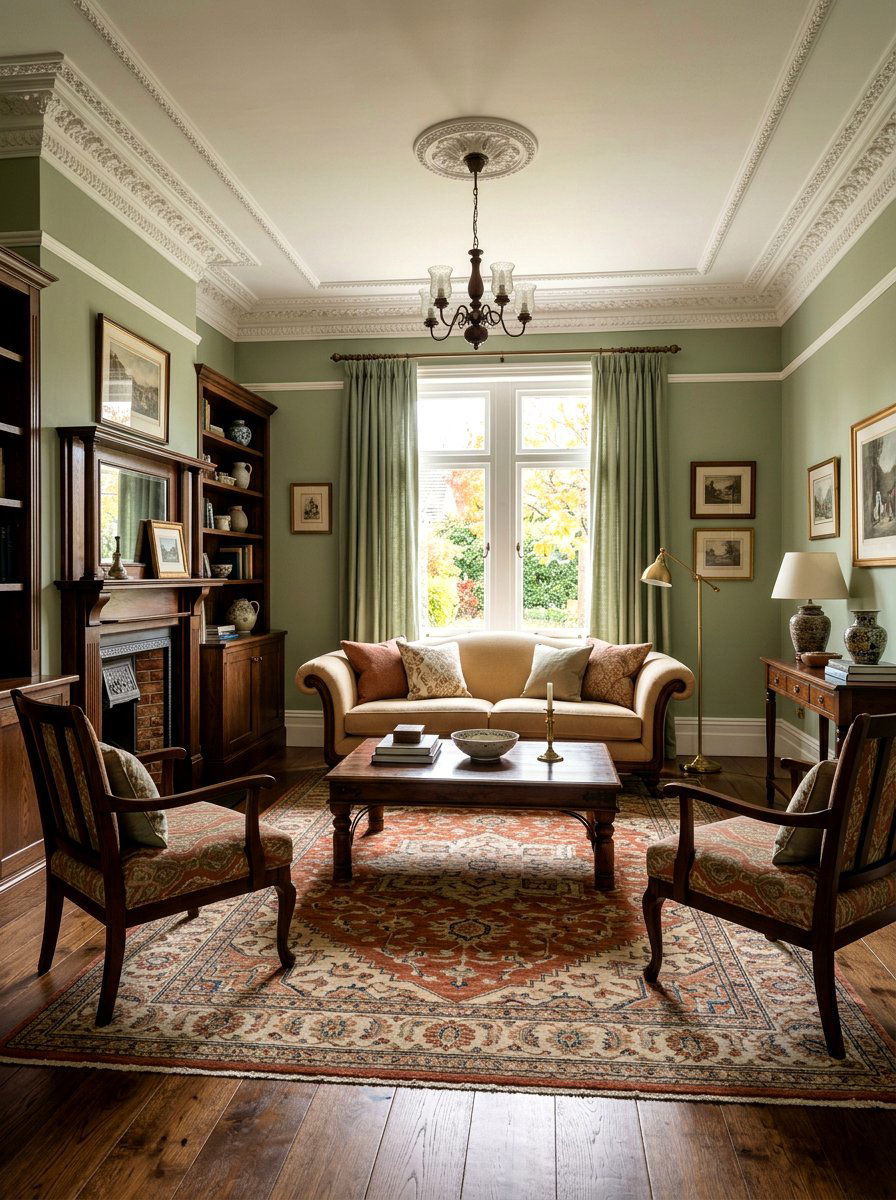
In a more traditional setting, sage green can be used as a sophisticated wall color that highlights classic architectural details like crown molding and wainscoting. Pair the green walls with a traditional rug that features terracotta and cream patterns to ground the space. Use antique-inspired furniture with dark wood finishes to add a sense of history and weight. This application of the color palette feels very "English Countryside, " offering a look that is both elegant and incredibly comfortable. By sticking to classic shapes and muted tones, you create a timeless living room that will remain stylish for many years to come.
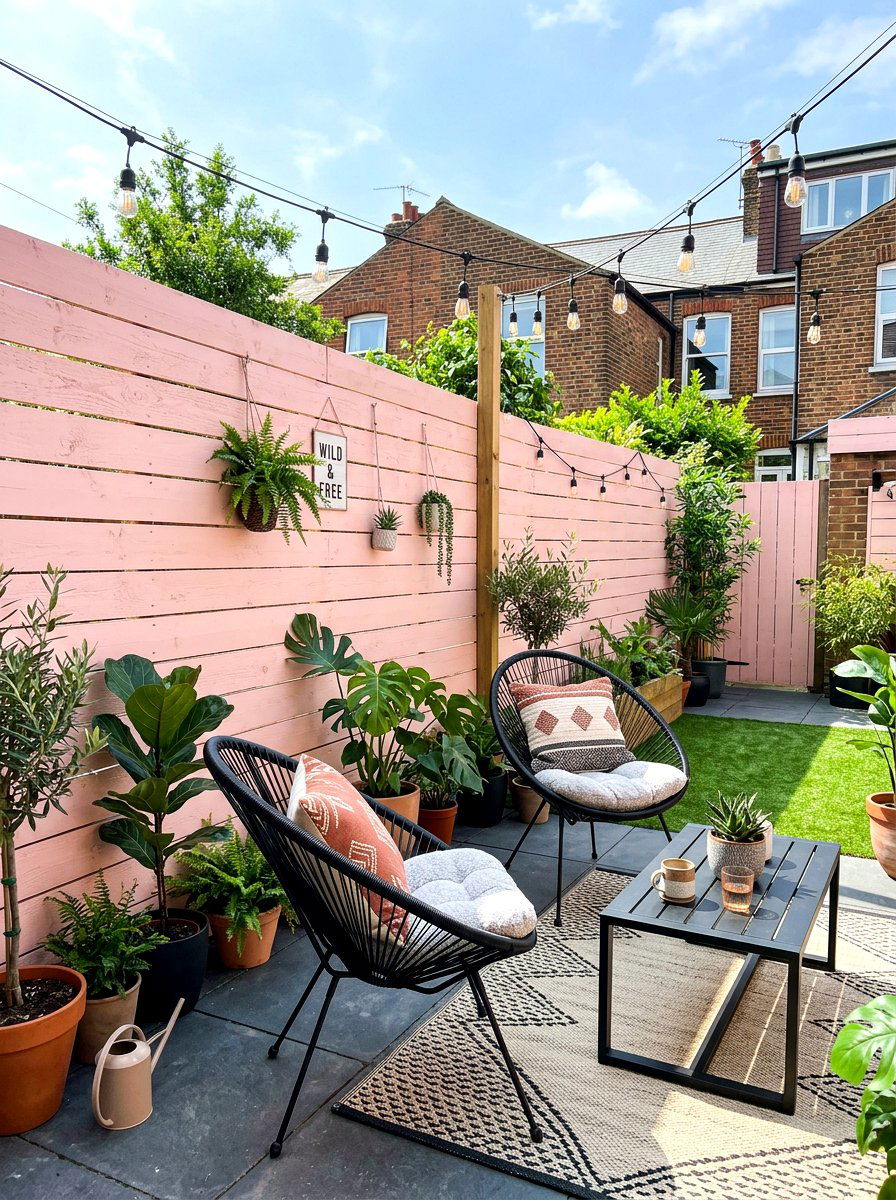
25. Sage green velvet chair living room
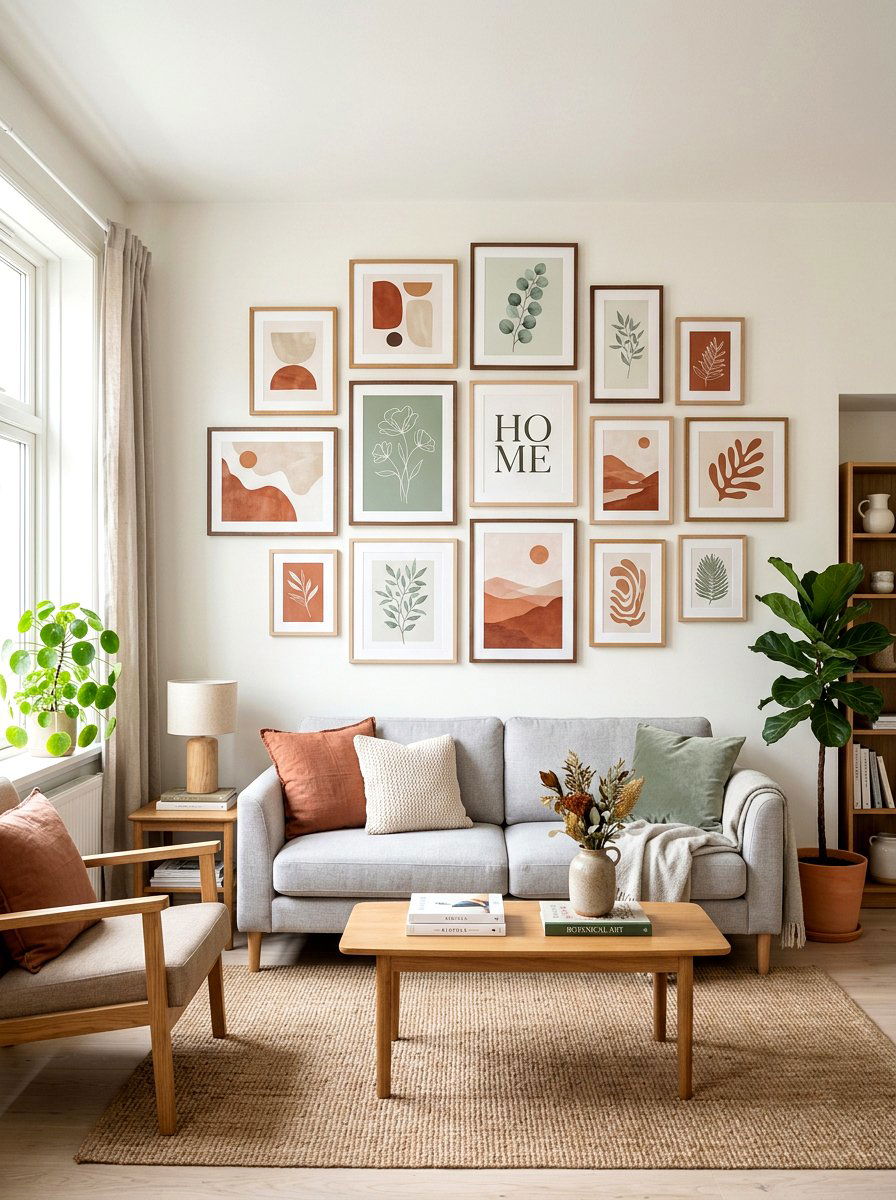
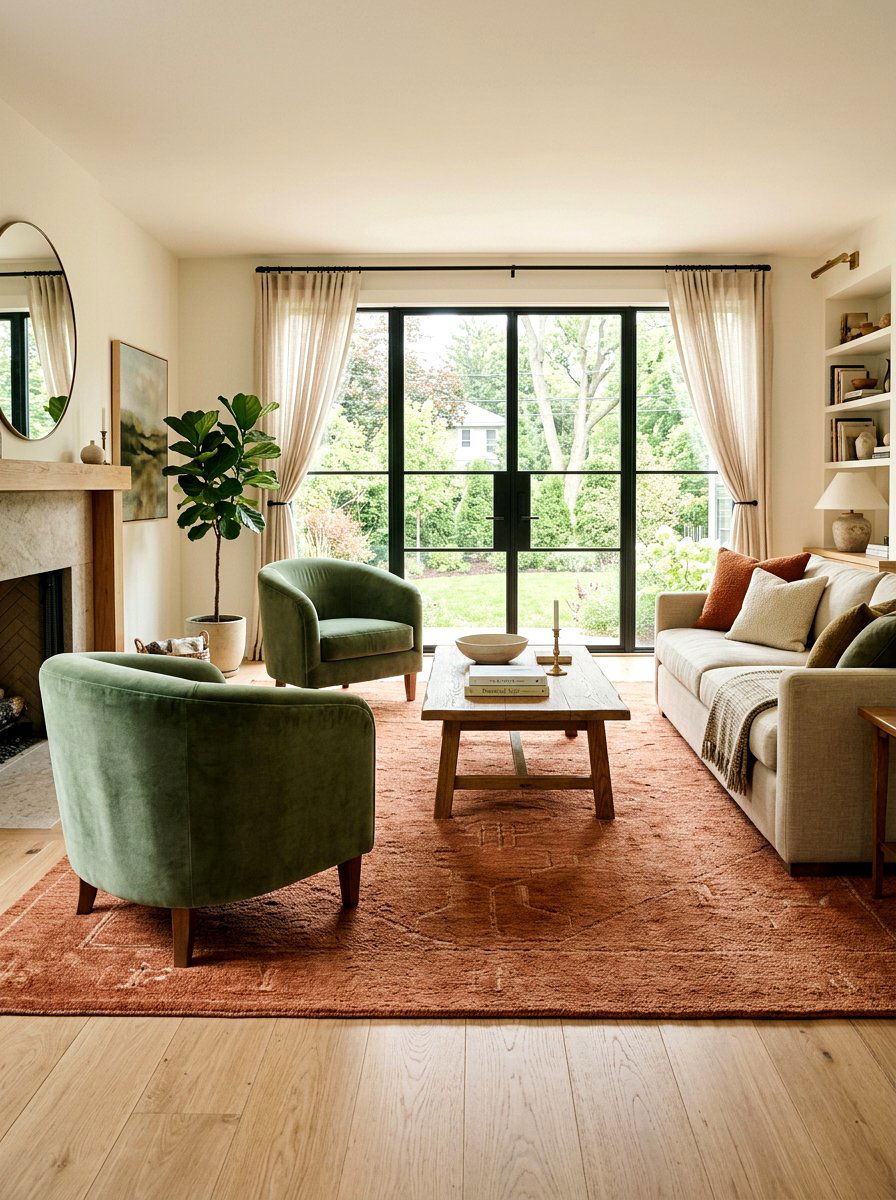
Adding a pair of sage green velvet chairs to your living room is a great way to introduce luxury and a soft pop of color. The shimmer of the velvet adds a level of sophistication that flat cotton fabrics simply cannot match. Place these chairs across from a terracotta-colored sofa or next to a clay-tiled fireplace to create a balanced conversation area. The coolness of the green velvet provides a refreshing contrast to the warm elements in the room, making the seating area feel dynamic and well-thought-out. This setup is perfect for entertaining guests in a space that feels both stylish and welcoming.
26. Terracotta and sage gallery wall living room
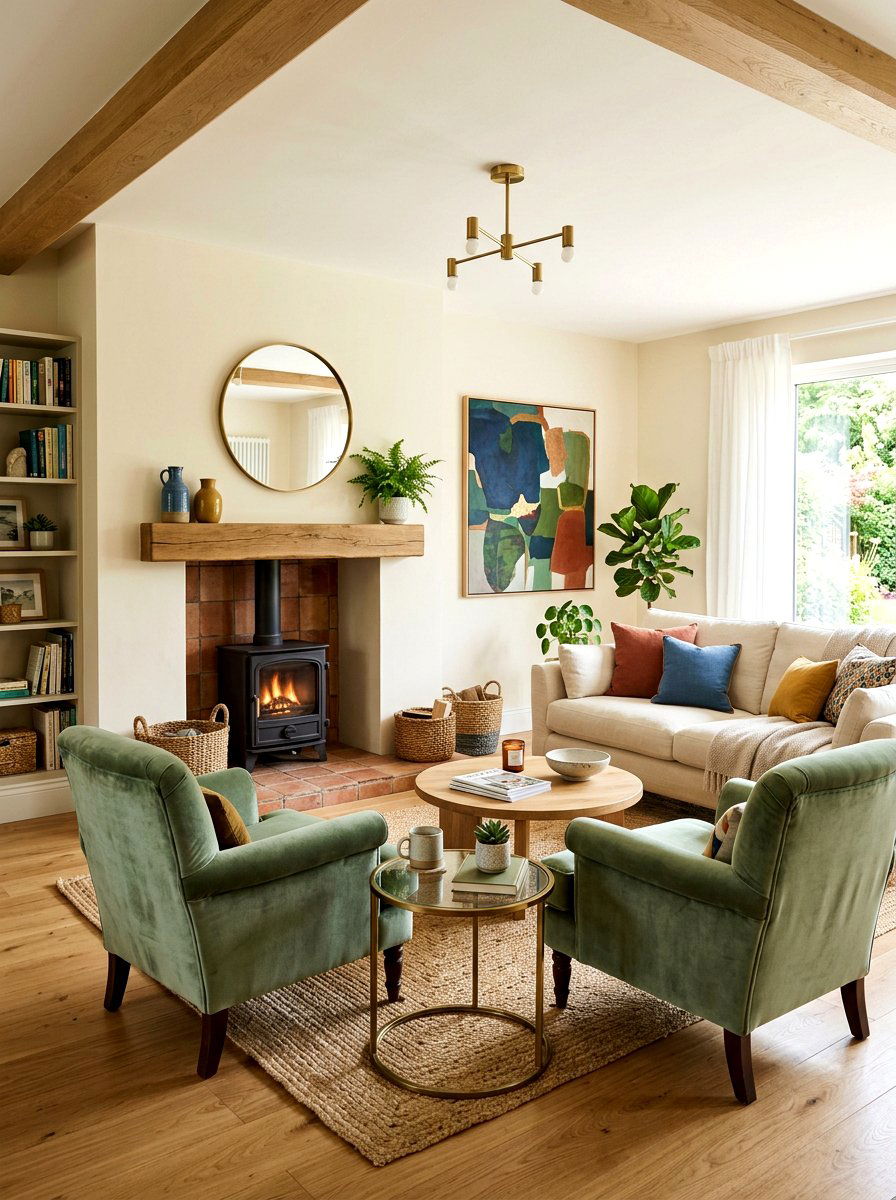
A gallery wall dedicated to the terracotta and sage palette can act as a stunning visual centerpiece for your living space. Mix framed botanical prints, abstract clay-toned paintings, and perhaps even a small piece of woven textile art. The variety of textures and interpretations of the two colors will add depth and personality to the room. By keeping the frames consistent — either all black, white, or light wood — you can ensure the collection feels like a unified piece of art. This is a great way to display your personal style while reinforcing the earthy, natural theme that defines the entire living room.
27. Sage green velvet chair living room
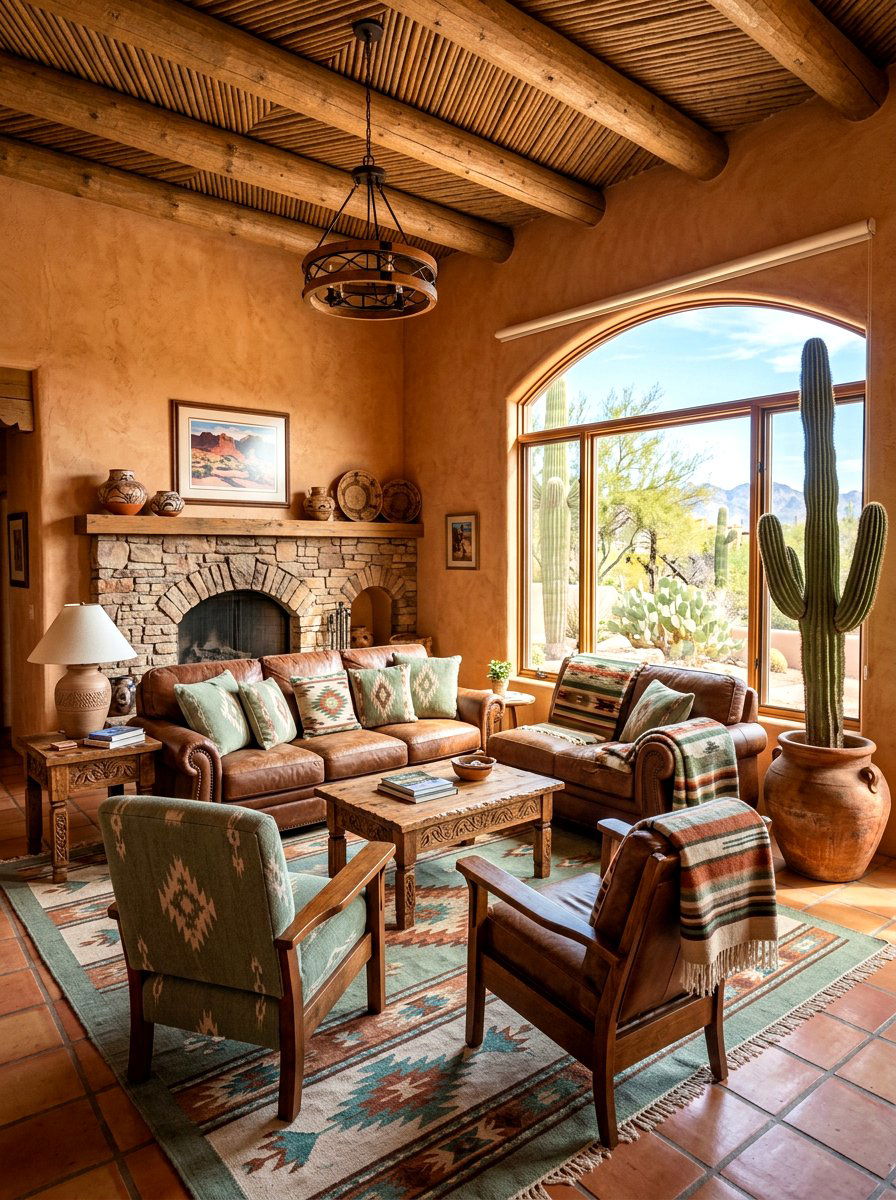
Incorporating sage green velvet chairs into a living room design offers a touch of refined comfort that works beautifully with earthy accents. The soft, tactile nature of velvet makes these chairs an inviting spot for guests, while the muted green shade acts as a calming influence on the room's energy. When placed near a large terracotta-colored rug, the visual contrast creates a sophisticated balance of warm and cool tones. This pairing is particularly effective in rooms with plenty of natural wood, as the different organic elements work together to create a cohesive, nature-inspired sanctuary that feels both high-end and approachable.
28. Southwestern terracotta living room
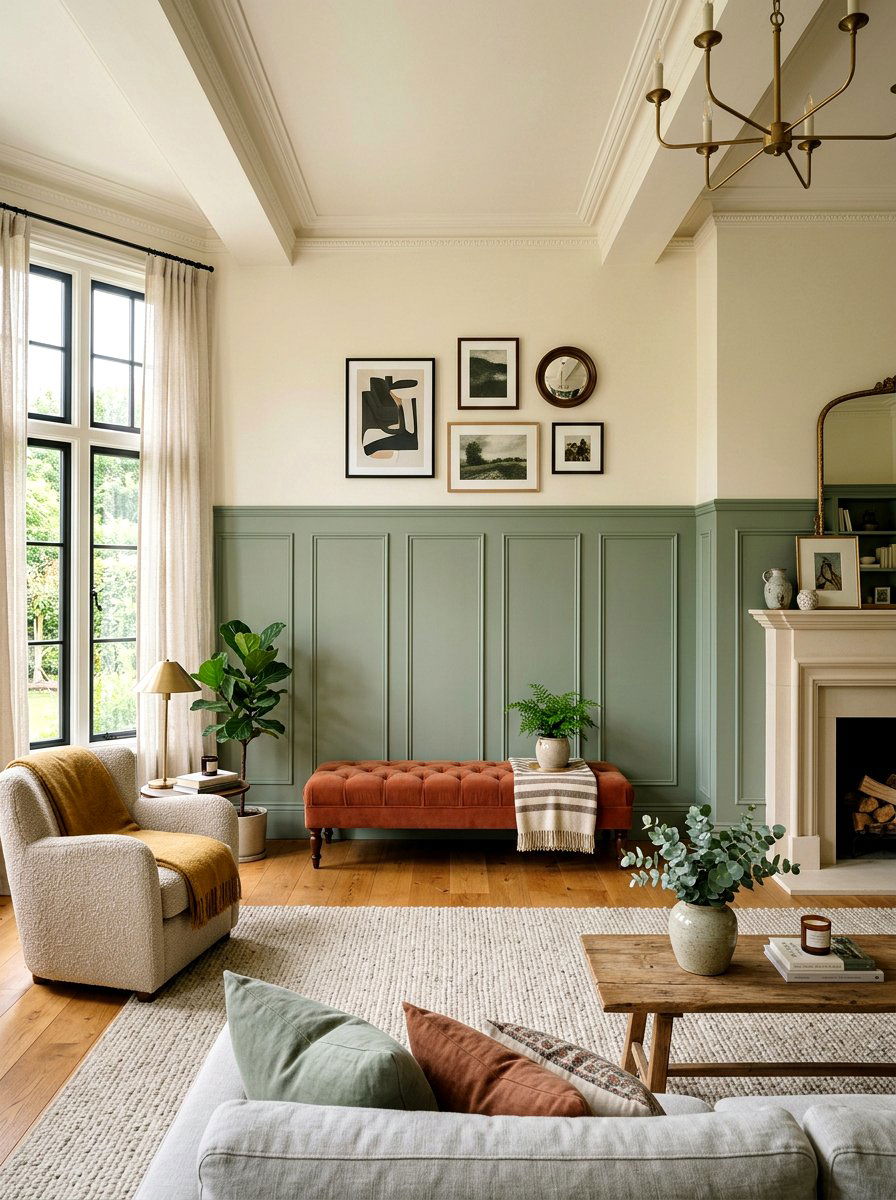
Southwestern design naturally revolves around terracotta tones, but adding sage green can modernize and soften the look significantly. Use a desert-inspired color palette with sun-baked orange walls and introduce sage through patterned textiles like Navaj-style rugs or woven blankets. The green acts as a cooling agent, reminiscent of sagebrush and cacti, which prevents the room from feeling too "hot" or dusty. Incorporate natural materials like leather, stone, and raw wood to enhance the authentic feel. This style celebrates the rugged beauty of the desert while providing a comfortable and serene indoor environment that feels connected to the vast landscape outside.
29. Sage green wainscoting living room
Adding sage green wainscoting to the lower half of your living room walls is a fantastic way to introduce color and architectural character simultaneously. The paneling adds a layer of formal elegance, while the sage green color keeps the vibe relaxed and organic. Above the wainscoting, use a warm cream or a very light terracotta paint to create a sophisticated two-tone look. This design choice is perfect for traditional or transitional homes where you want to add some "visual weight" to the room without making it feel small or dark. It provides a beautiful backdrop for wooden furniture and terracotta-toned art.
30. Terracotta and sage open concept living room
In an open-concept living area, using a terracotta and sage palette can help define different functional zones while maintaining a sense of flow. You might use a large sage green sectional to anchor the living area and then use terracotta-tiled backsplash or clay-colored bar stools in the adjacent kitchen. Repeating small accents of both colors throughout the entire open space — like green plants in terracotta pots or sage and orange throw pillows — will tie the different areas together visually. This creates a cohesive and harmonious home environment where the transitions between lounging, dining, and cooking feel natural and effortless.
Conclusion:
Embracing the terracotta and sage color combination is a surefire way to create a living room that feels both trend-forward and timelessly grounded. This organic duo thrives because it mimics the natural harmony found in the world around us, offering a perfect equilibrium of warm and cool energies. Whether you decide to go bold with a velvet sofa or keep it subtle with curated ceramic accents, the result will be a space that radiates comfort and sophistication. By layering different textures and materials, you can tailor this palette to fit your unique personal style, ensuring your home remains a peaceful sanctuary for years to come.

Related posts: