Creating a stunning table does not always require expensive floral arrangements or rare botanicals from a florist. In fact, many of the most beautiful and vibrant decor elements are likely sitting right in your kitchen refrigerator or garden beds. Vegetable centerpieces have become a major trend for those seeking a farm-to-table aesthetic that feels both organic and sustainable. These edible arrangements offer incredible textures, rich earthy colors, and a unique architectural quality that standard flowers often lack. Whether you are planning a rustic wedding, a casual brunch, or a formal dinner party, using fresh produce as decor is a creative way to celebrate nature's bounty while remaining eco-friendly and budget-conscious.
1. Purple Kale Centerpiece
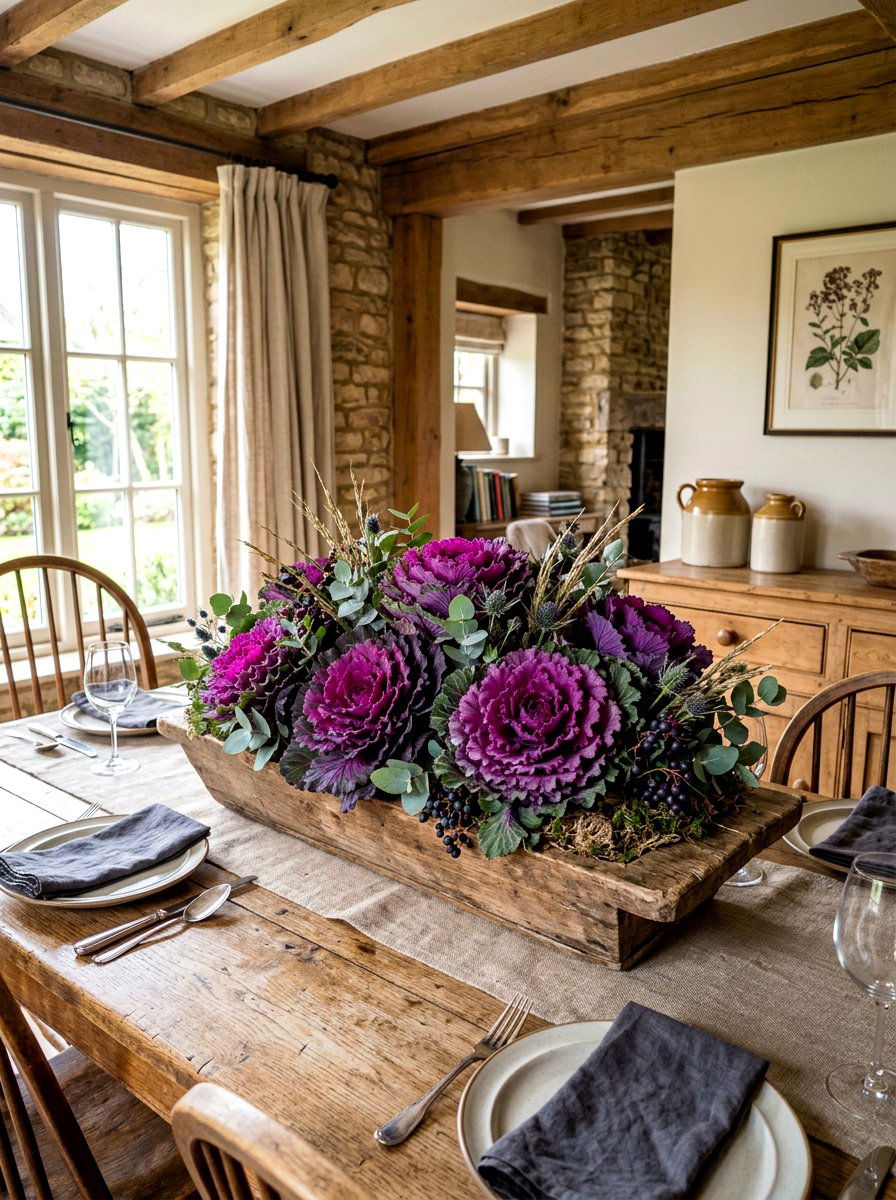
Have you ever noticed how the deep, ruffled edges of purple kale resemble the intricate petals of an exotic flower? This hardy leafy green is a spectacular choice for a centerpiece because it provides incredible volume and a moody, jewel-toned color palette. You can arrange several heads of ornamental kale in a low wooden trough or a rustic stone bowl to create a lush, textured look. Their sturdy stems make them easy to position, and they stay fresh for a long time without wilting quickly. To add more depth, consider tucking in a few sprigs of dark berries or deep red roses. The contrast between the rough leaves and soft petals is truly striking.
2. Artichoke Table Centerpiece
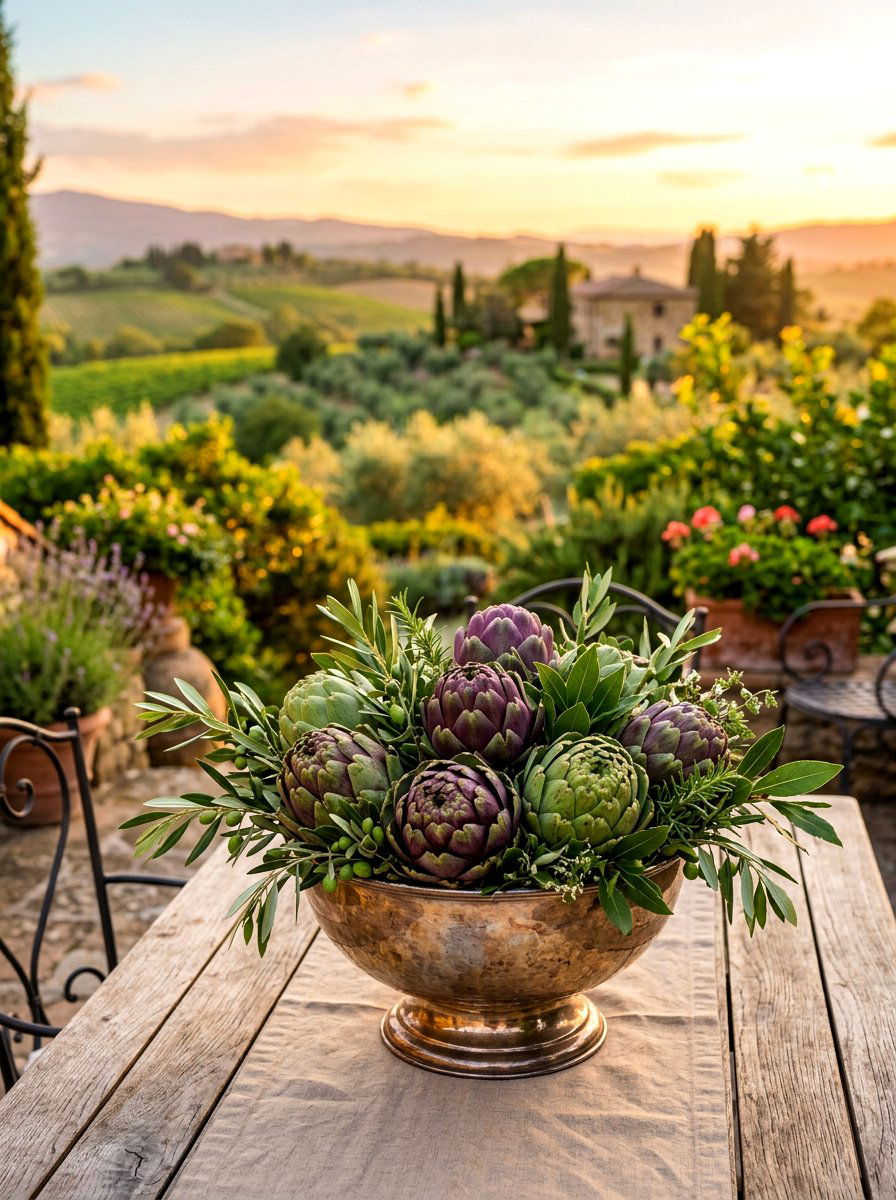
Artichokes bring a unique architectural quality to any table setting that few other vegetables can match. Their geometric, scale-like leaves create a sophisticated and modern look that works perfectly in both formal and casual environments. You can place large, globe-shaped artichokes directly on a linen table runner or nestle them inside a silver bowl for a touch of elegance. For a more dynamic arrangement, try mixing green and purple varieties to play with different shades. If you want a taller display, you can carefully insert wooden skewers into the base of the artichokes and place them in a glass vase alongside some fresh eucalyptus or olive branches.
3. Asparagus Bundle Centerpiece
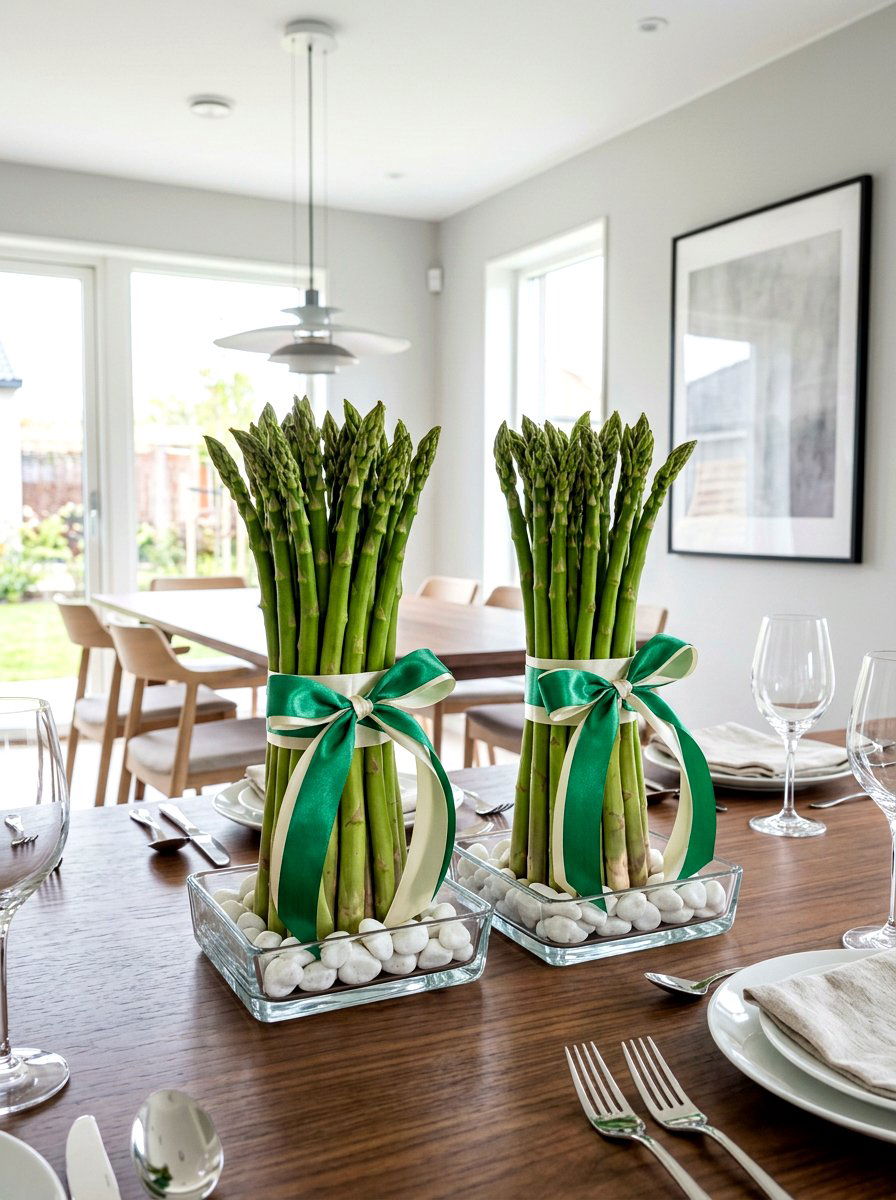
Imagine a series of tall, slender bundles of bright green asparagus tied together with simple twine or elegant silk ribbons. This design is perfect for a spring-themed brunch or a garden party where you want a clean, vertical element on the table. By standing the bundles upright in shallow glass dishes filled with just a bit of water, you keep the stalks crisp and vibrant throughout your event. The straight lines of the asparagus provide a wonderful contrast to round plates and soft napkins. For an added decorative touch, you can surround the base of the bundles with small white river stones or tiny, delicate spring blossoms.
4. Cabbage Bowl Centerpiece
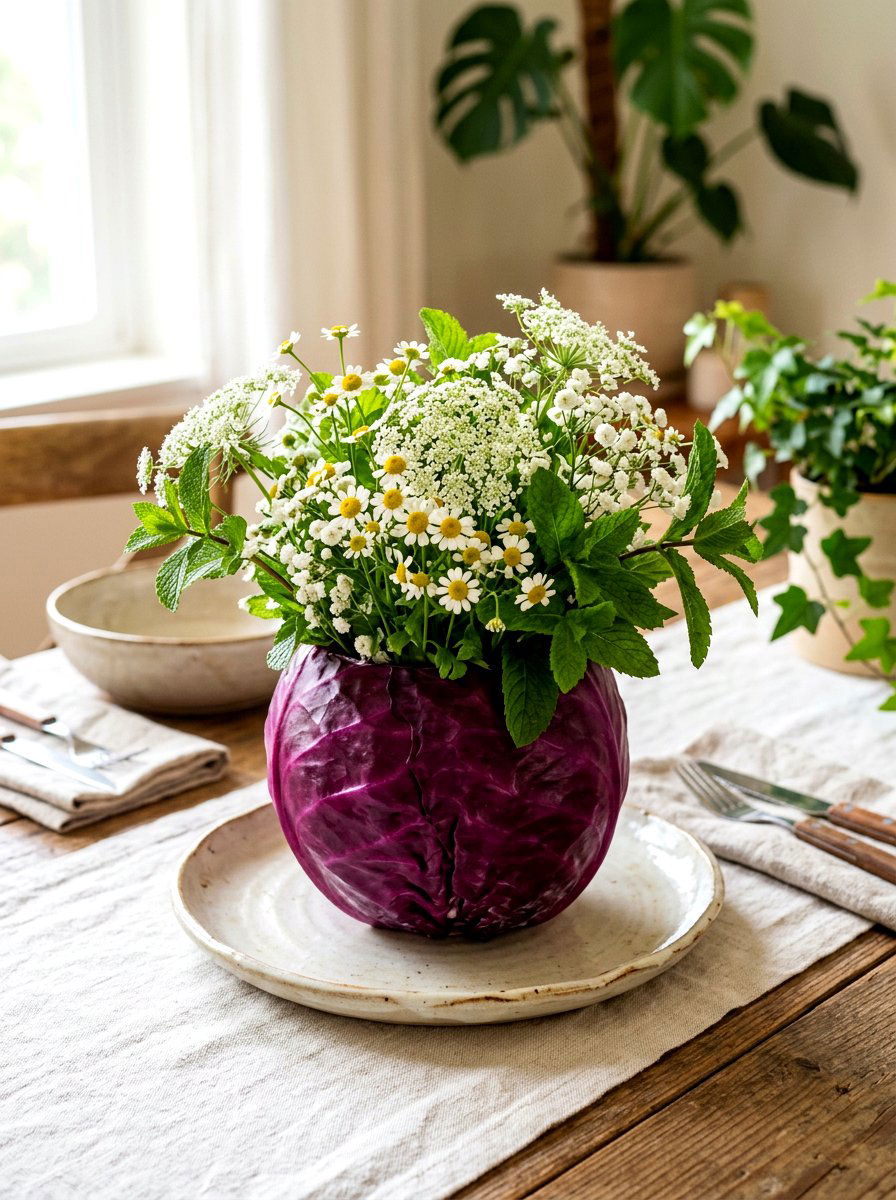
Using a large, hollowed-out cabbage as a natural vase is a brilliant way to incorporate organic shapes into your decor. Red or green cabbages work exceptionally well for this because their thick, outer leaves can be gently peeled back to resemble a blooming rose. Once you have removed the core, you can place a small glass or wet floral foam inside to hold a selection of wildflowers or herbs. This setup looks stunning as a standalone focal point on a round dining table. The waxy texture of the cabbage leaves provides a beautiful backdrop for soft garden roses, chamomile flowers, or even fragrant sprigs of fresh mint.
5. Rainbow Carrot Centerpiece
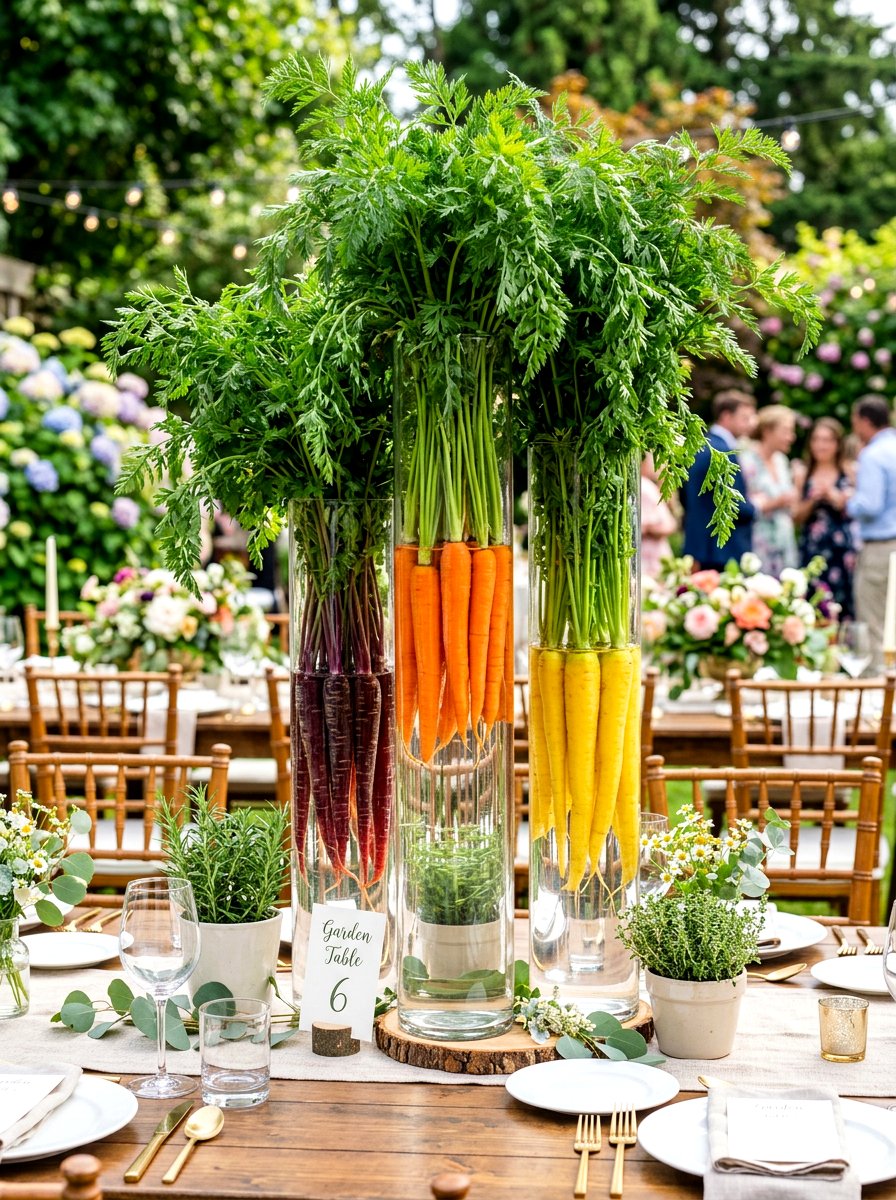
Carrots are much more than a simple side dish when you leave their lush, feathery green tops intact and display them in clear vases. Rainbow carrots, with their vibrant shades of purple, yellow, and deep orange, offer a spectacular color gradient that instantly brightens up a room. You can arrange them in tall, narrow cylinders so the roots are visible through the glass, showcasing their natural, earthy beauty. The contrast between the bright orange roots and the delicate, airy green tops creates a playful yet sophisticated look. This arrangement is particularly effective for outdoor gatherings or farmhouse-style dinners where you want to emphasize a fresh, harvest-inspired theme.
6. Bell Pepper Centerpiece
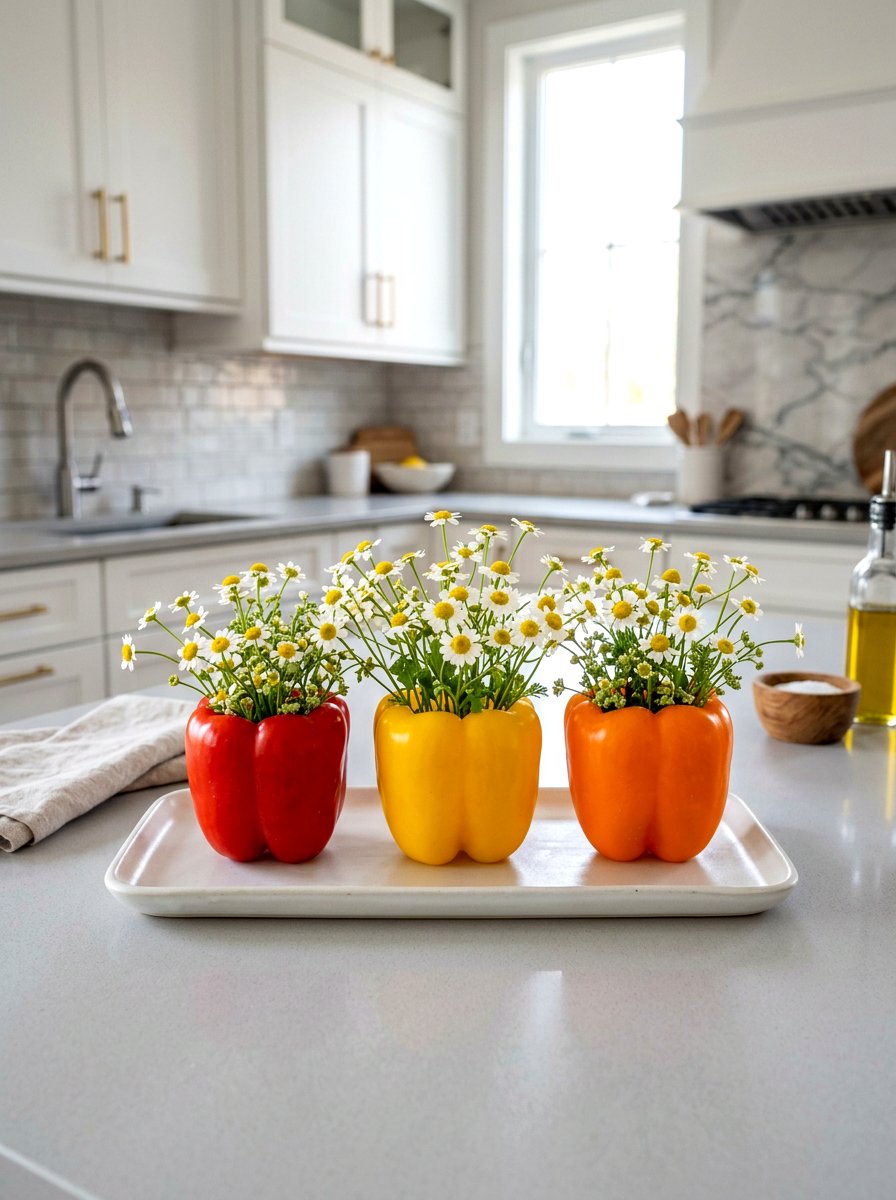
Vibrant bell peppers in shades of red, yellow, and orange can serve as colorful, miniature vases for small floral sprigs or herbs. By carefully slicing off the tops and removing the seeds, you create a sturdy, water-tight container that adds a pop of glossy color to each place setting. These look charming when grouped together in the center of the table on a ceramic platter. You can fill them with water and insert small stems of baby’s breath, marigolds, or even parsley. This idea is not only visually appealing but also incredibly cost-effective. Guests will love the unexpected and playful use of such a common, everyday kitchen staple.
7. Radish Bouquet Centerpiece
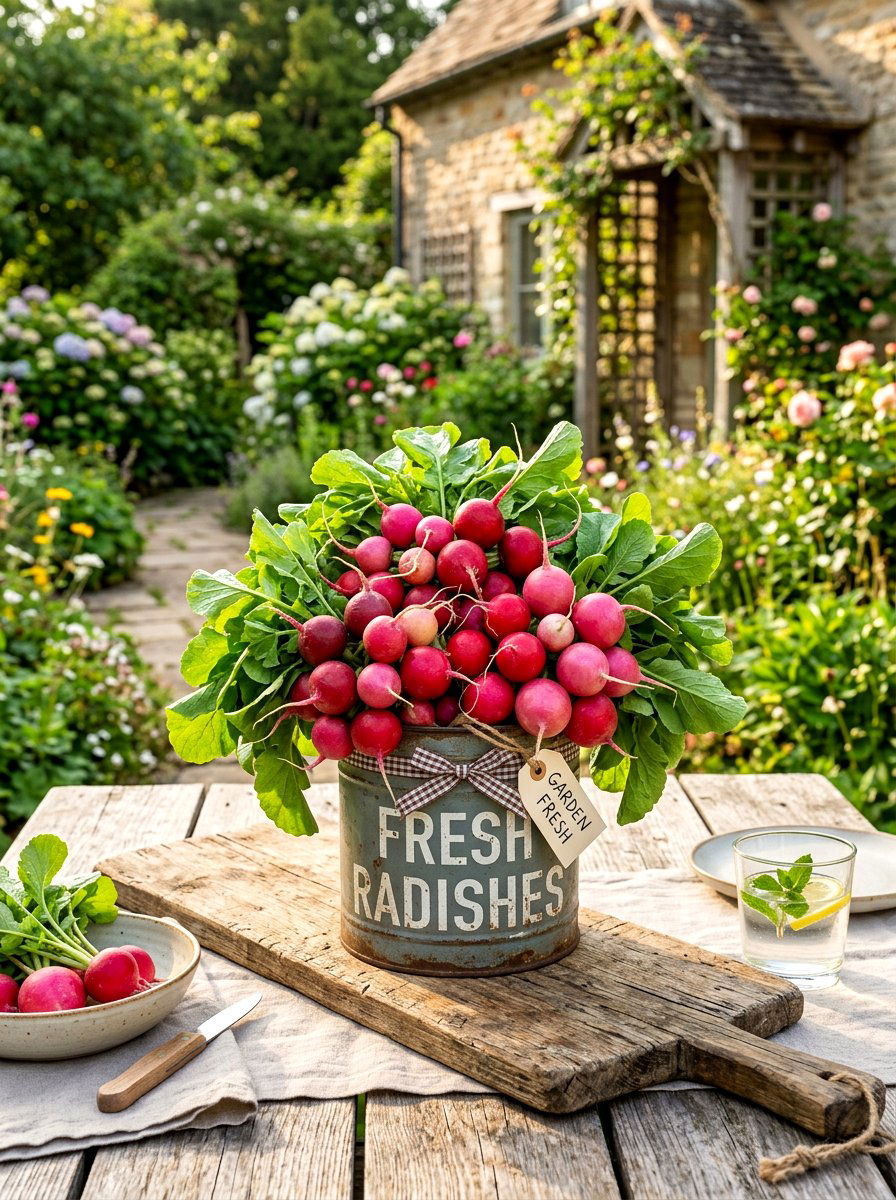
Small but mighty, radishes offer a brilliant splash of pink and crimson that can rival any traditional flower. When you leave the bright green leaves attached, they provide a built-in filler that makes the arrangement look full and garden-fresh. You can cluster several bunches of radishes in a shallow wooden crate or a vintage tin for a rustic, European market feel. To keep them looking their best, mist the leaves with water occasionally to maintain their crispness. The peppery, white-tipped roots look beautiful when paired with light-colored linens and simple white dishware. It is a whimsical choice that feels both effortless and intentionally styled for a summer meal.
8. Heirloom Tomato Centerpiece
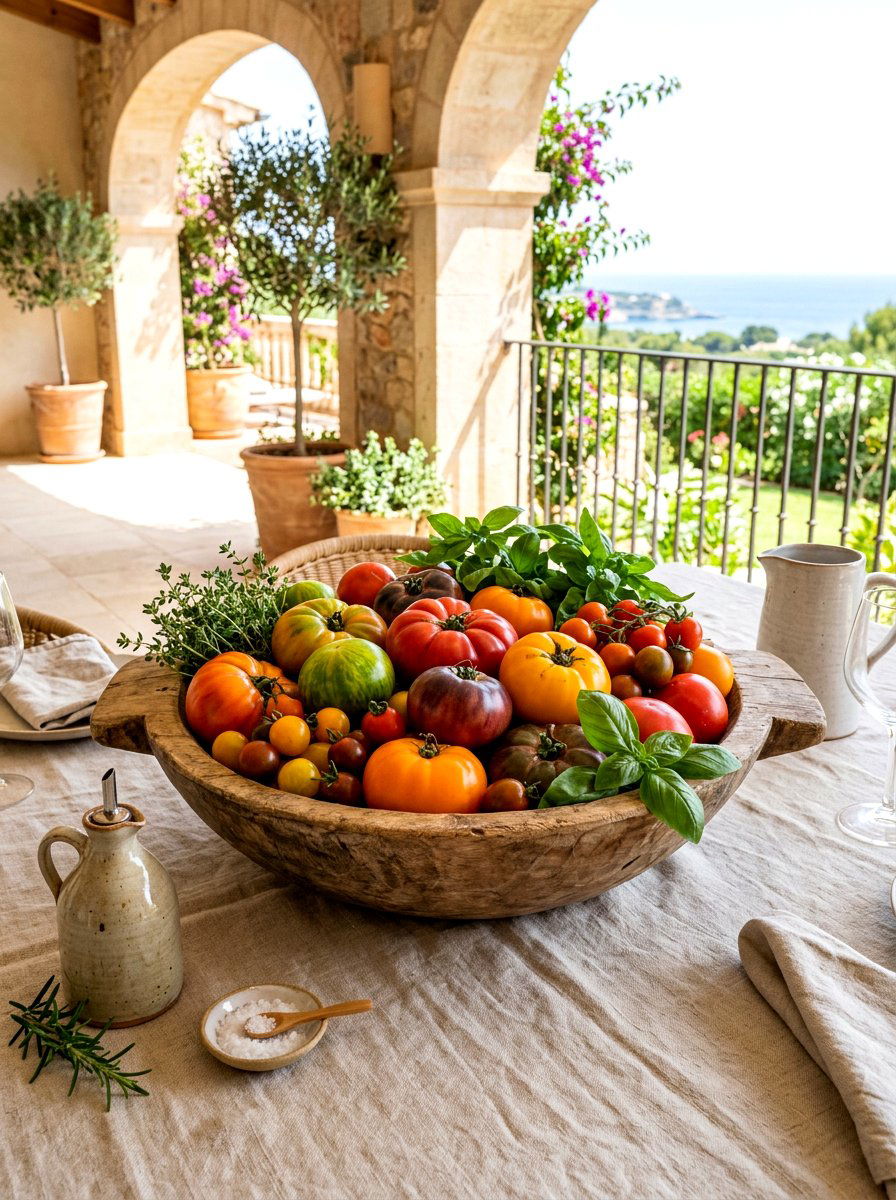
Heirloom tomatoes are naturally beautiful with their irregular shapes and stunning variety of colors, ranging from deep burgundy to striped green. Placing a large bowl of these tomatoes in the center of your table creates an instant, Mediterranean-inspired focal point. You don’t even need much else to make this look complete; the natural textures and rich colors do all the work. For a more elaborate display, you can scatter smaller cherry tomatoes across the table runner like edible gems. Pairing them with fresh basil leaves and bowls of high-quality olive oil adds a sensory element to the decor that hints at the delicious meal that is about to be served.
9. Corn Husk Centerpiece
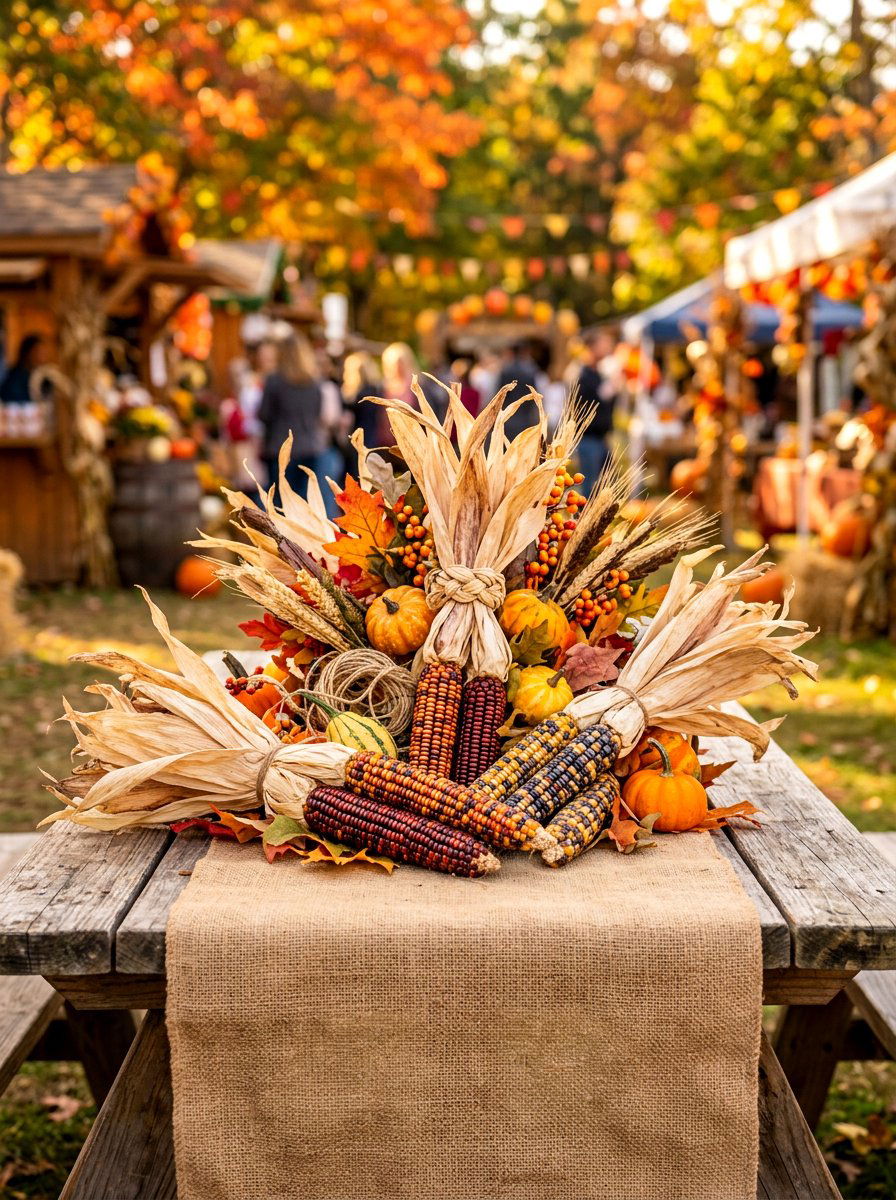
For a warm, autumnal feel, nothing beats the rustic charm of dried or fresh corn husks arranged down the center of a long table. You can peel back the husks to reveal the colorful kernels of flint corn or "Indian corn, " which features beautiful speckled patterns. Laying these across a burlap runner creates a textured, layered look that feels cozy and inviting. You can also incorporate stalks of wheat or dried leaves to enhance the seasonal theme. This style of centerpiece is perfect for Thanksgiving or any fall harvest celebration where you want to lean into a traditional, country-inspired aesthetic that celebrates the end of the growing season.
10. Broccoli Flower Centerpiece
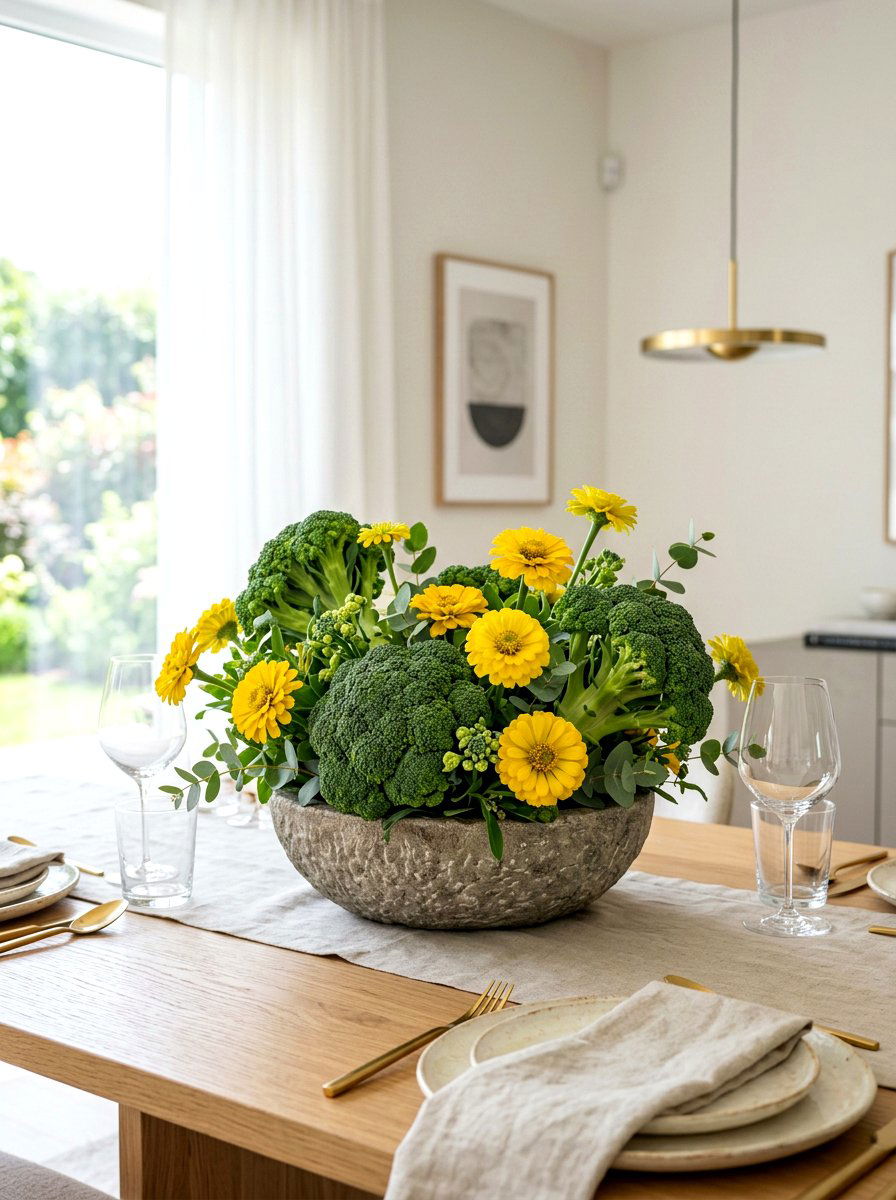
Broccoli might seem like an unusual choice for decor, but its dense, tightly packed florets look remarkably like a cluster of tiny green buds. When mixed with actual flowers, it provides a unique texture and a rich, dark green color that helps other blooms stand out. You can use large heads of broccoli as a "base" in a low floral arrangement, sticking other stems directly into the gaps between the florets. It works surprisingly well with white hydrangeas or yellow zinnias. This unexpected use of a common vegetable is a great conversation starter and adds an element of surprise to your table design that guests will certainly appreciate.
11. Eggplant Purple Centerpiece
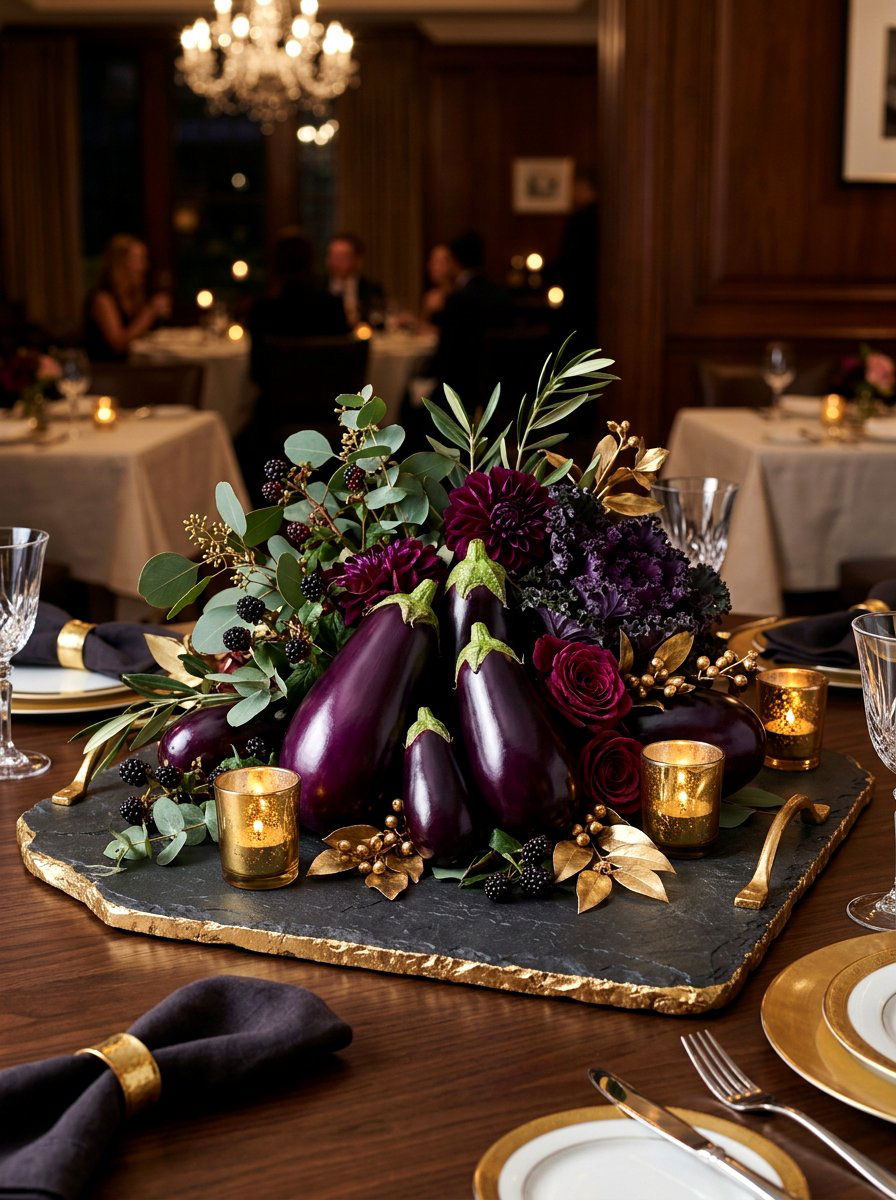
The deep, glossy purple of a ripe eggplant is one of the most sophisticated colors found in nature. Using several eggplants of different sizes can create a dramatic and moody centerpiece that feels incredibly high-end. You can arrange them on a dark slate board or a silver tray to emphasize their shine and rich hue. Their smooth surface reflects candlelight beautifully, making them an excellent choice for an evening dinner party. To add some contrast, you might pair them with soft green herbs or even some metallic accents like gold-painted walnuts. This monochromatic approach is sleek, modern, and undeniably elegant for a contemporary home setting.
12. Zucchini Table Runner
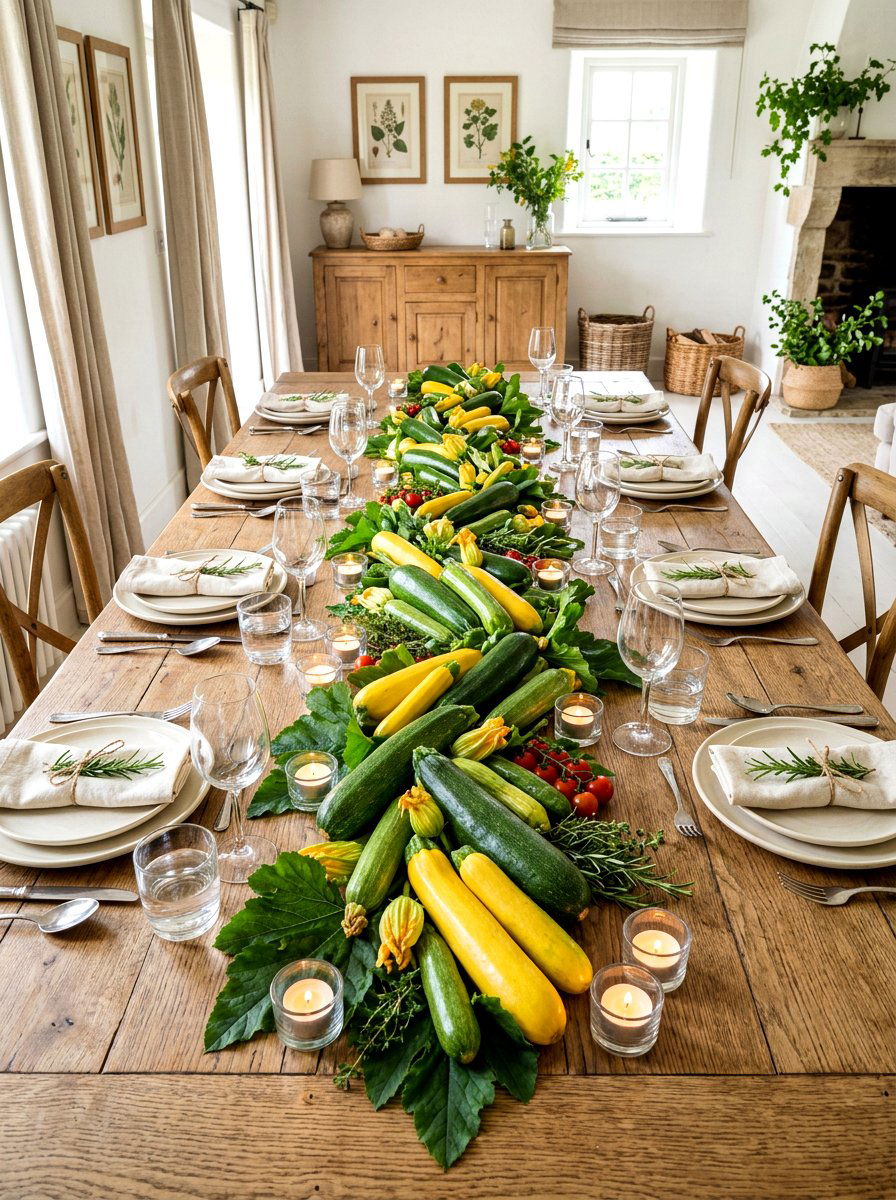
Long, slender zucchinis and summer squashes can be used to create an organic, winding table runner that flows down the center of your dining space. By alternating green zucchinis with bright yellow straightneck squash, you create a rhythmic pattern that is visually engaging. You can nestle small tea light candles or tiny succulent pots in the curves of the vegetables to add layers of height and light. This low-profile arrangement is great for long rectangular tables because it doesn't obstruct the view between guests sitting across from each other. It feels very fresh and is an excellent way to use an overabundance of summer garden produce.
13. Garlic Bulb Centerpiece
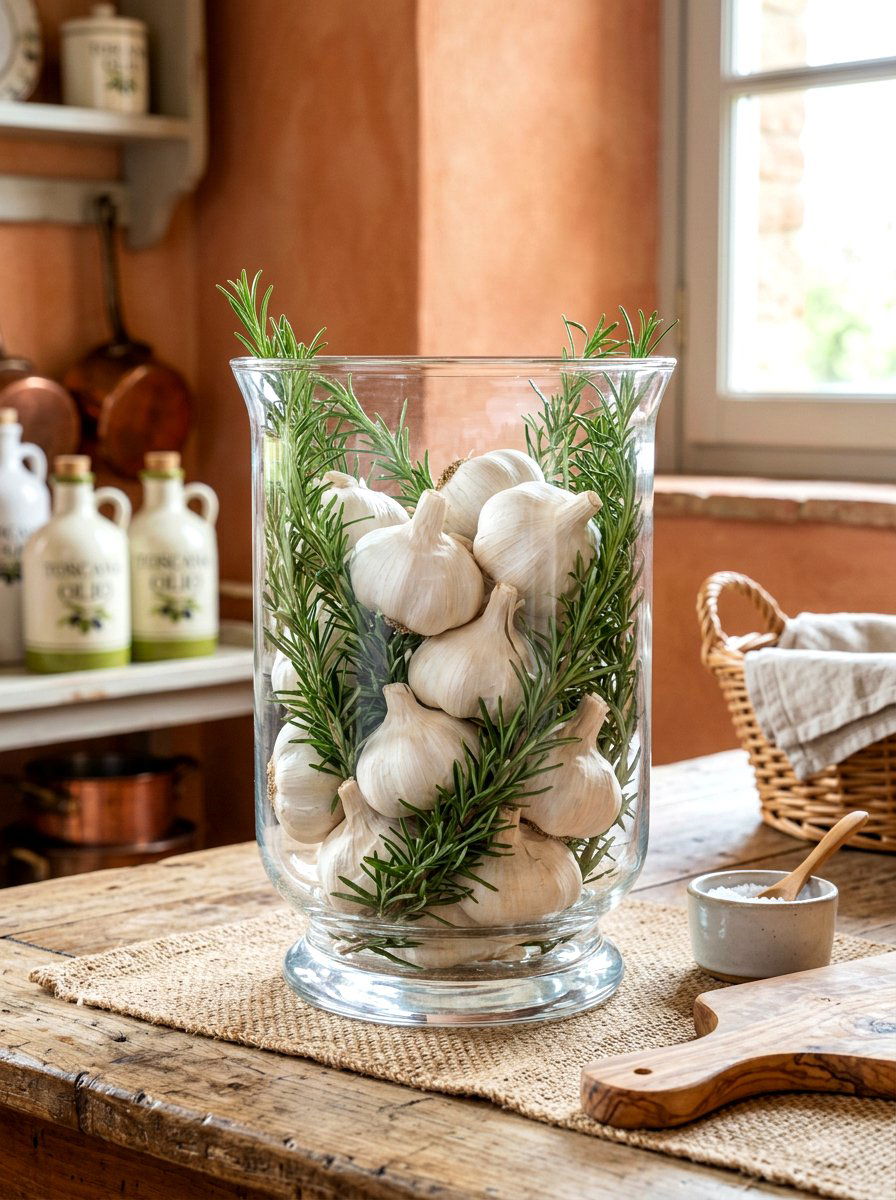
There is something undeniably rustic and charming about a pile of white garlic bulbs mixed with dried herbs or olive branches. This look is perfect for a Tuscan-themed dinner or a casual Italian feast where the ingredients are the star of the show. You can fill a large glass hurricane jar with loose bulbs or string them together to create a textured garland that rests on the table. The papery, white skins of the garlic provide a clean and neutral palette that works with almost any color scheme. Adding a few sprigs of rosemary or thyme nearby will release a subtle, savory fragrance that enhances the dining atmosphere.
14. Pea Pod Centerpiece
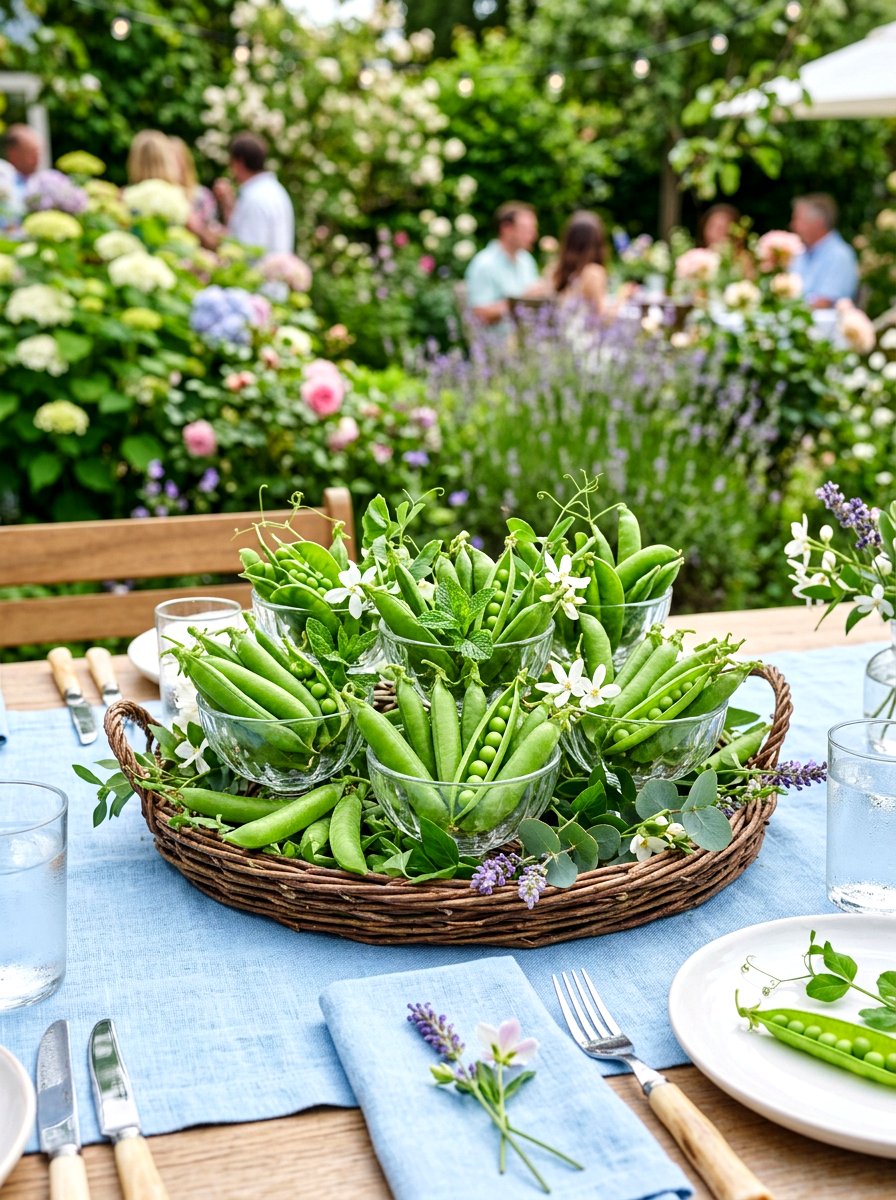
Fresh pea pods offer a delicate and whimsical touch that is perfect for a light, spring-inspired table setting. You can fill small glass bowls with vibrant green snap peas or snow peas and place them at each end of the table. Their curved shapes and bright color look beautiful when highlighted by natural sunlight. For a more creative approach, you can open a few pods to reveal the perfectly round peas inside, adding a sense of detail and texture. These look wonderful when paired with light blue linens or pale yellow accents. It is a simple, understated idea that feels very refined and celebrates the arrival of new growth.

15. Beetroot Earthy Centerpiece
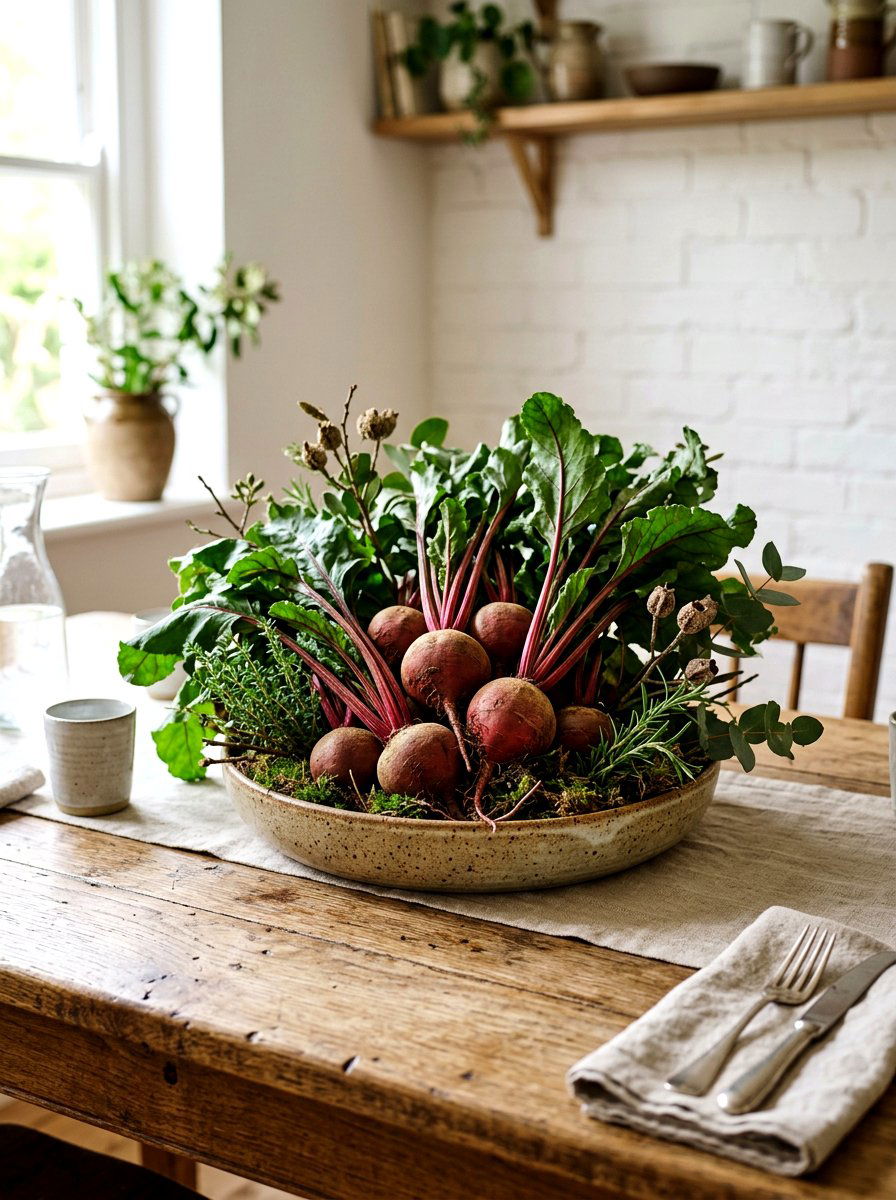
Beetroots are prized for their intense, earthy colors and their long, dramatic stems with dark green leaves. If you can find beets with the greens still attached, you have a ready-made arrangement that feels very artistic and raw. Placing them in a shallow ceramic dish allows the deep red roots to contrast against the dark foliage. You can also use golden beets to add a variety of warm tones to the display. This type of centerpiece feels very grounded and is ideal for an autumn dinner featuring root vegetables. The natural dirt on the skin can even be left for an authentic, straight-from-the-earth farmhouse appearance.
16. Gourd Fall Centerpiece
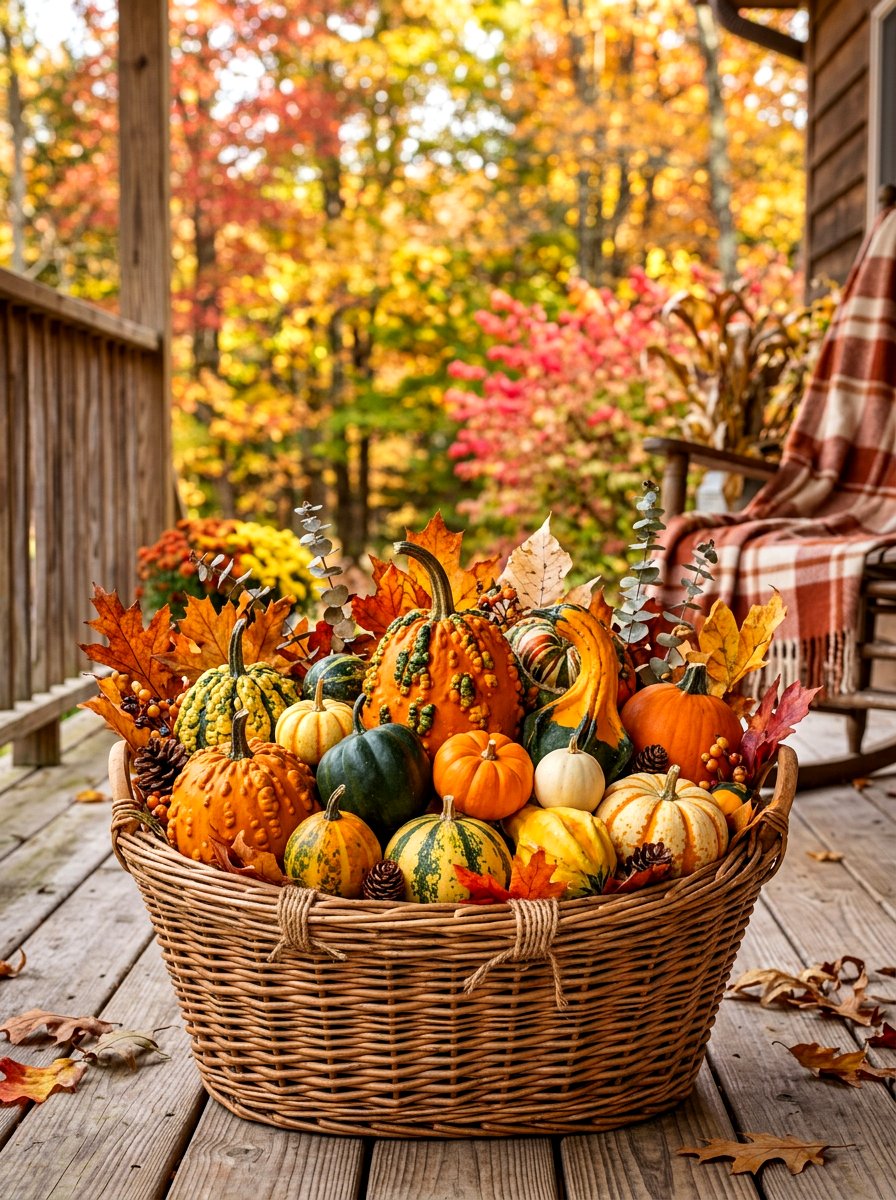
When the air turns crisp, a collection of assorted gourds becomes the quintessential decorative element for any home. These come in such a wide variety of shapes, sizes, and textures that no two arrangements will ever look the same. You can pile them high in a large wicker basket or scatter them along the length of a mantel or table. From bumpy "swan neck" gourds to smooth, round mini pumpkins, the diversity is endless. Using a mix of muted greens, creams, and oranges keeps the look sophisticated rather than overly bright. It is a timeless way to bring the essence of the autumn season indoors for everyone.
17. Chili Pepper Centerpiece
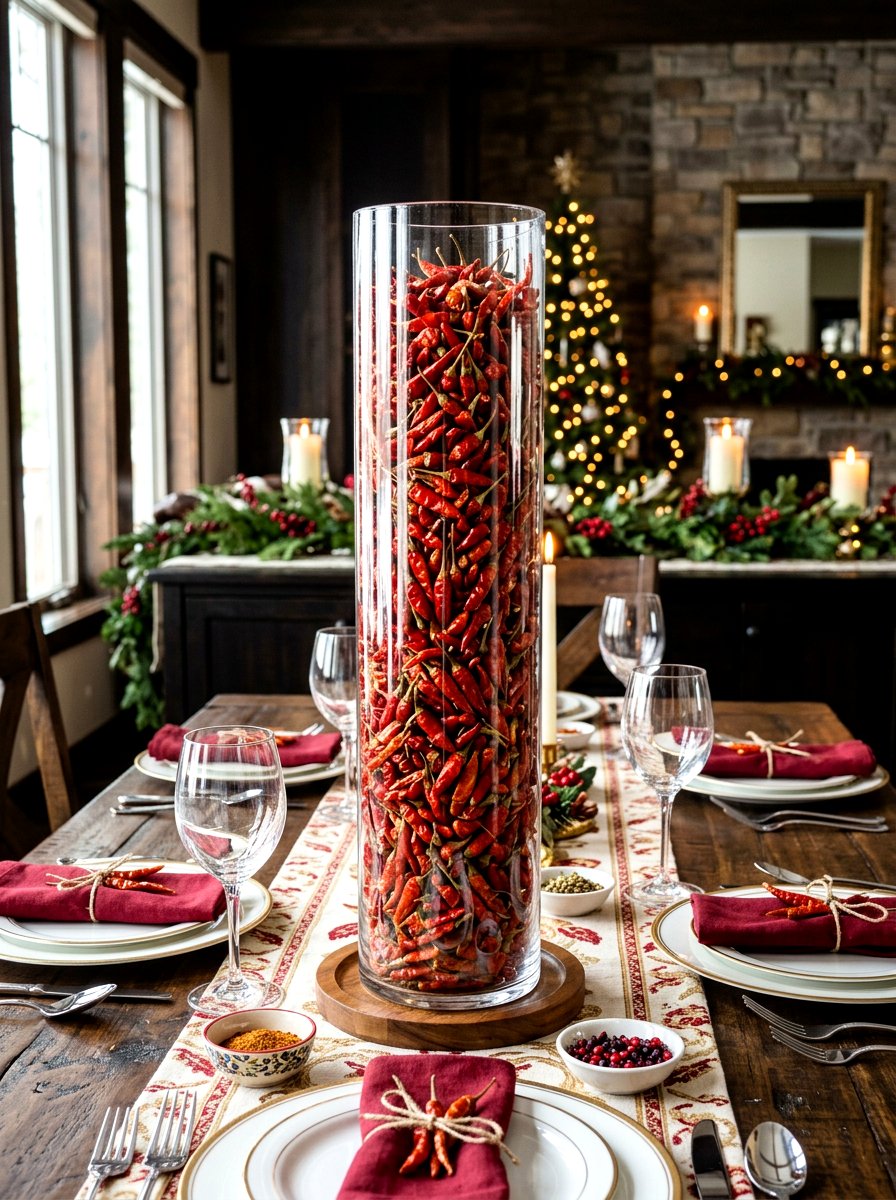
If you want to add a spicy and energetic vibe to your party, a centerpiece featuring bright red chili peppers is the way to go. You can fill a clear glass vase with hundreds of small dried chilies to create a bold, monochromatic pillar of color. Alternatively, fresh chilies on the vine can be draped over the edges of a bowl for a more organic feel. The vibrant red against a white tablecloth creates a high-contrast look that feels festive and exciting. This is a particularly great choice for a Mexican-themed dinner or a summer barbecue where you want the decor to match the bold flavors of the food.
18. Mushroom Forest Centerpiece
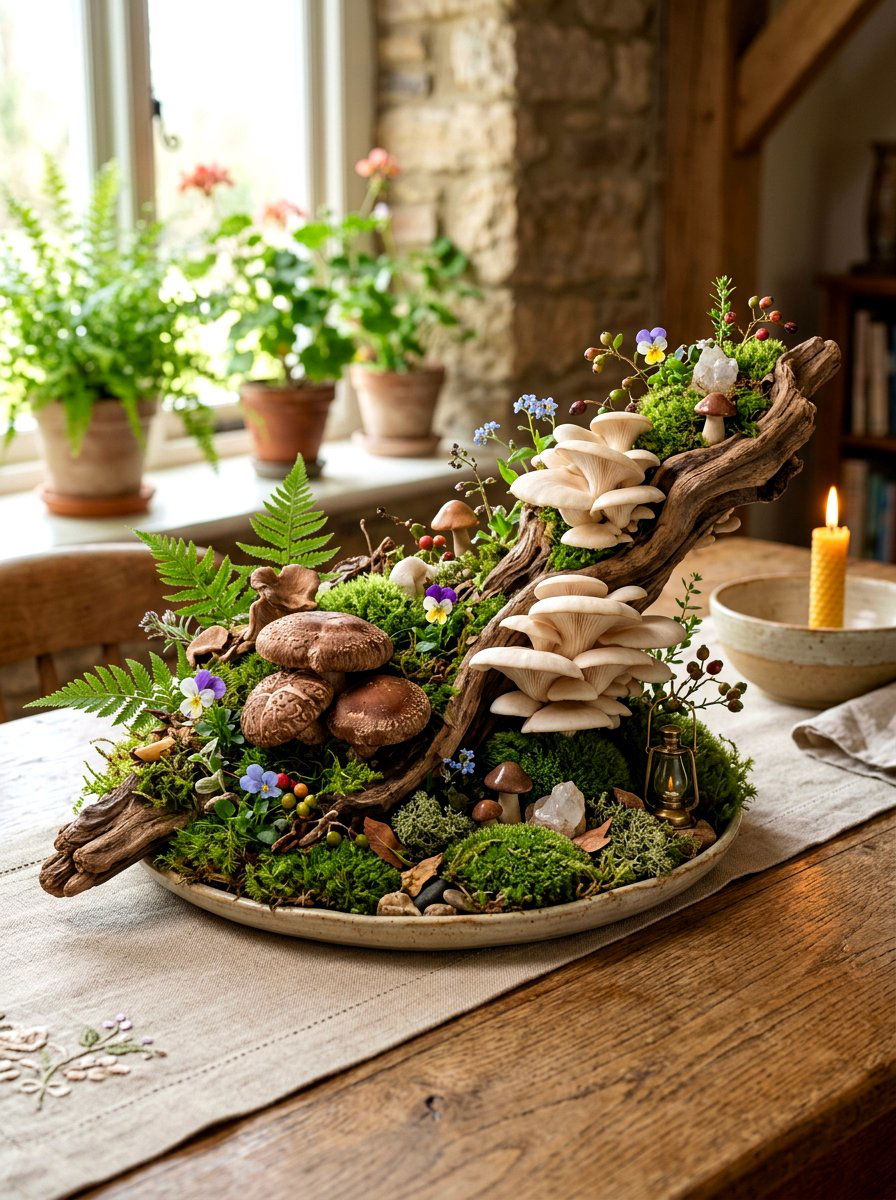
For a truly unique and woodland-inspired look, consider using various types of edible mushrooms like oyster, shiitake, or portobello. These can be arranged on a bed of damp moss or tucked into a piece of driftwood to create a miniature forest floor scene on your table. Their muted browns, tans, and creams offer a very natural and calming color palette. This style of centerpiece is incredibly trendy for "cottagecore" enthusiasts and those who love a whimsical, fairytale aesthetic. To complete the look, you can add small twigs, pinecones, or even some battery-operated fairy lights to give the arrangement a magical, glowing effect during dinner.
19. Celery Stalk Centerpiece
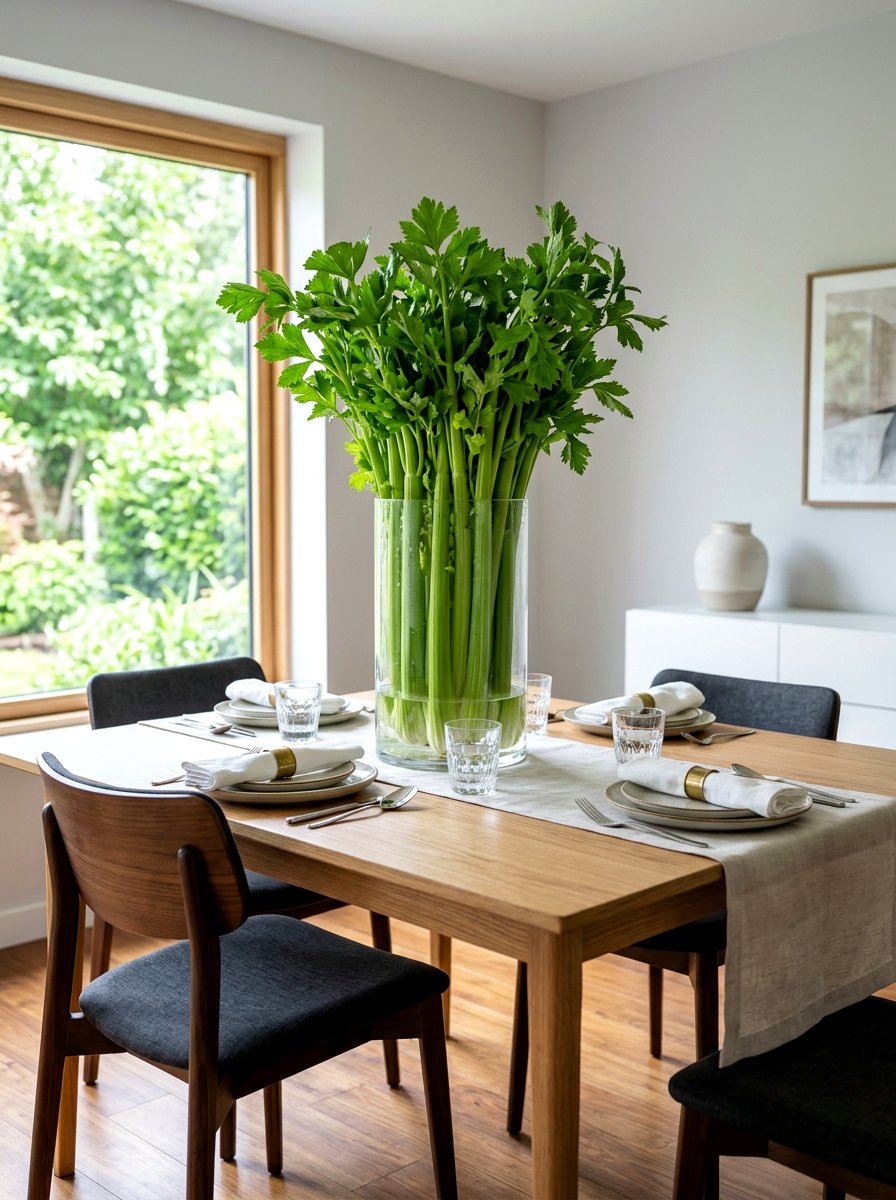
Celery is often overlooked, but its tall, structural stalks and pale green leaves can be quite beautiful when displayed correctly. You can cut the base of a celery bunch so it stands upright in a tall glass cylinder, creating a sleek and modern look. The vertical lines of the stalks provide a sense of height without being too bulky or distracting. The light, refreshing green color pairs beautifully with crisp white linens and clear glassware. If you want to add more interest, you can place several stalks in a row down the center of the table, creating a "hedge" effect that feels very clean and contemporary for a lunch gathering.

20. Leek Bouquet Centerpiece
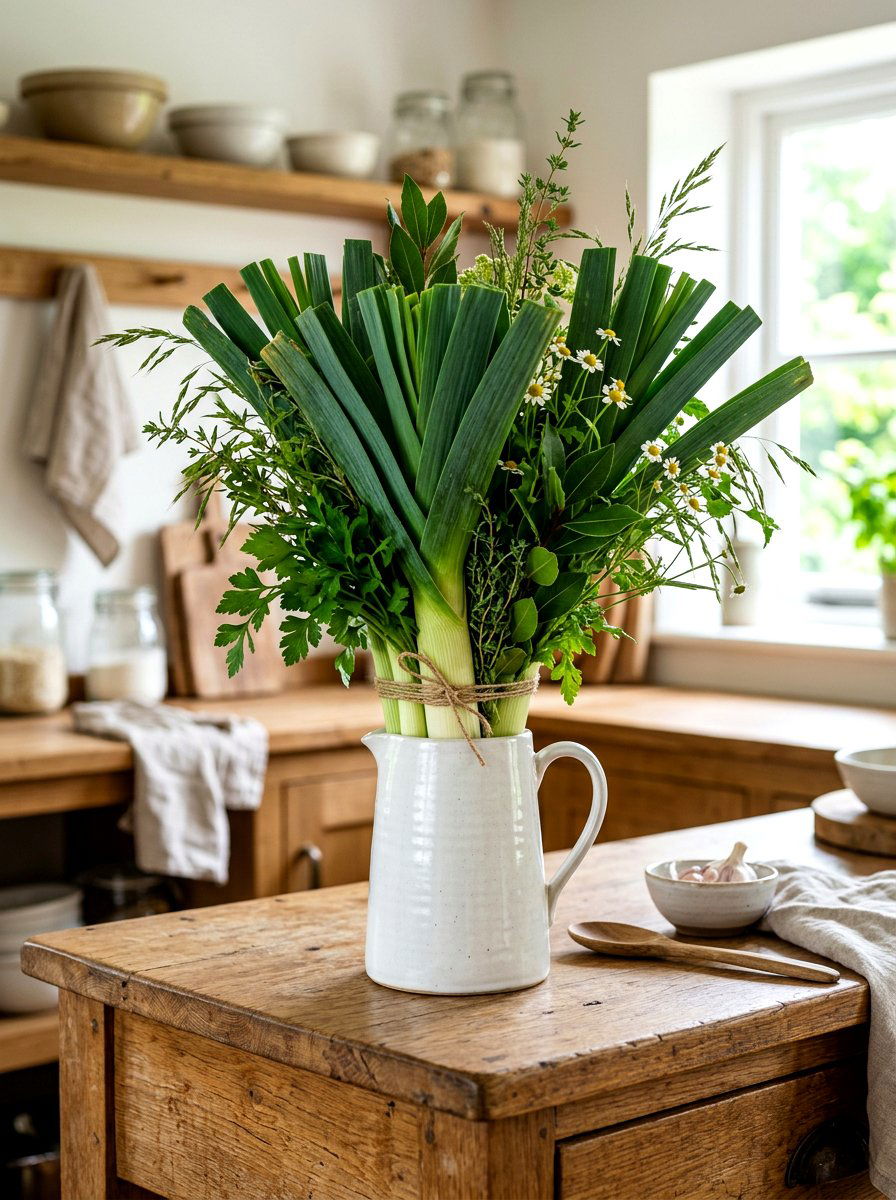
Leeks offer a stunning gradient of color, from a pure white base to a deep, forest green at the tips of their long leaves. Their fan-like tops have a sculptural quality that makes them a great alternative to traditional greenery. You can tie a bunch of leeks together and place them in a wide-mouthed pitcher or a rustic bucket. The long, flat leaves drape gracefully, adding movement and texture to your table. They look especially good in a kitchen-centered setting where the focus is on fresh, seasonal ingredients. This arrangement is simple to put together but looks like it was designed by a professional stylist.
21. Brussels Sprout Centerpiece
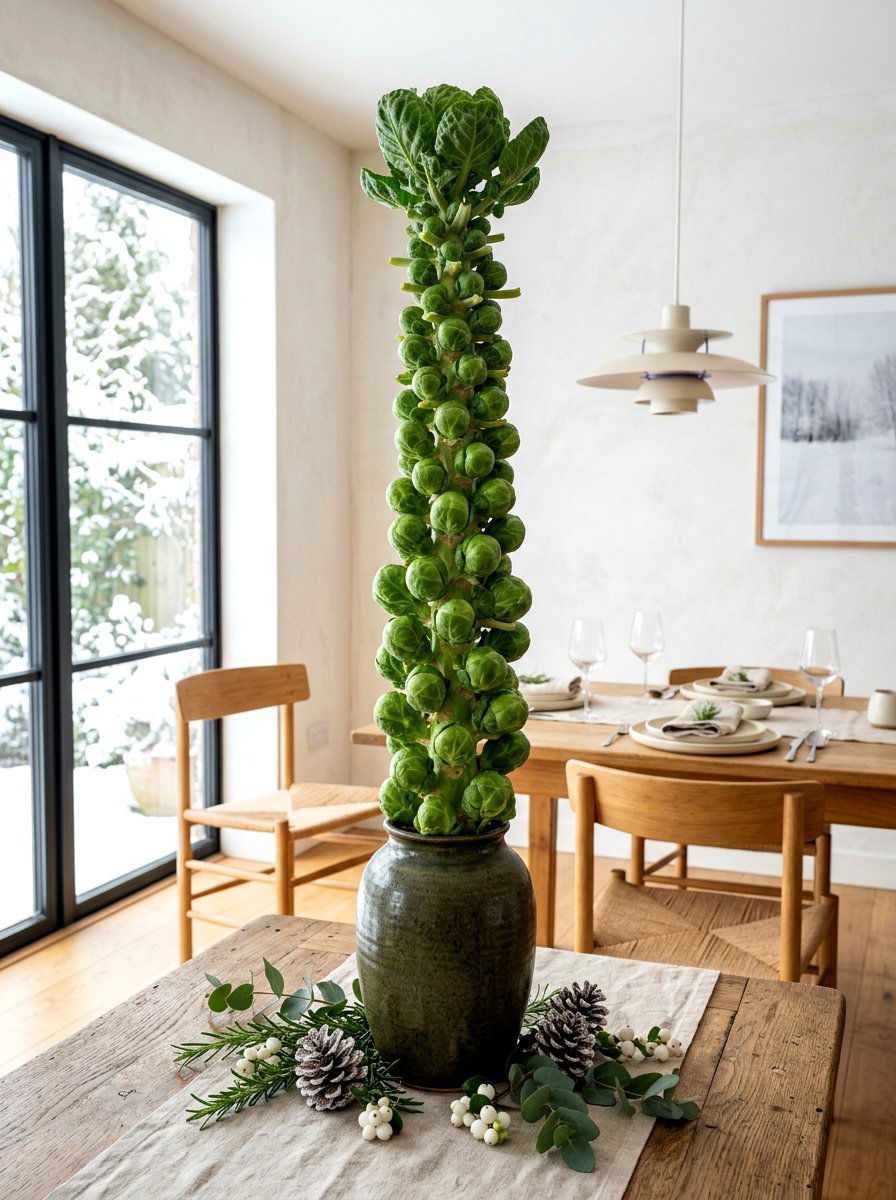
Brussels sprouts still attached to their thick, woody stalks are a fascinating and unusual decorative element. The stalk itself acts as a natural pillar, with the tiny, cabbage-like sprouts spiraling around it in a beautiful pattern. You can place one or two of these stalks in a heavy vase or lay them horizontally along a table runner. The light green color is very versatile and fits well with both winter and fall decor. Because they are so sturdy, these stalks can last for days without any special care. It is a great way to showcase the interesting way that food grows while adding a vertical, textural component.
22. Fennel Bulb Centerpiece
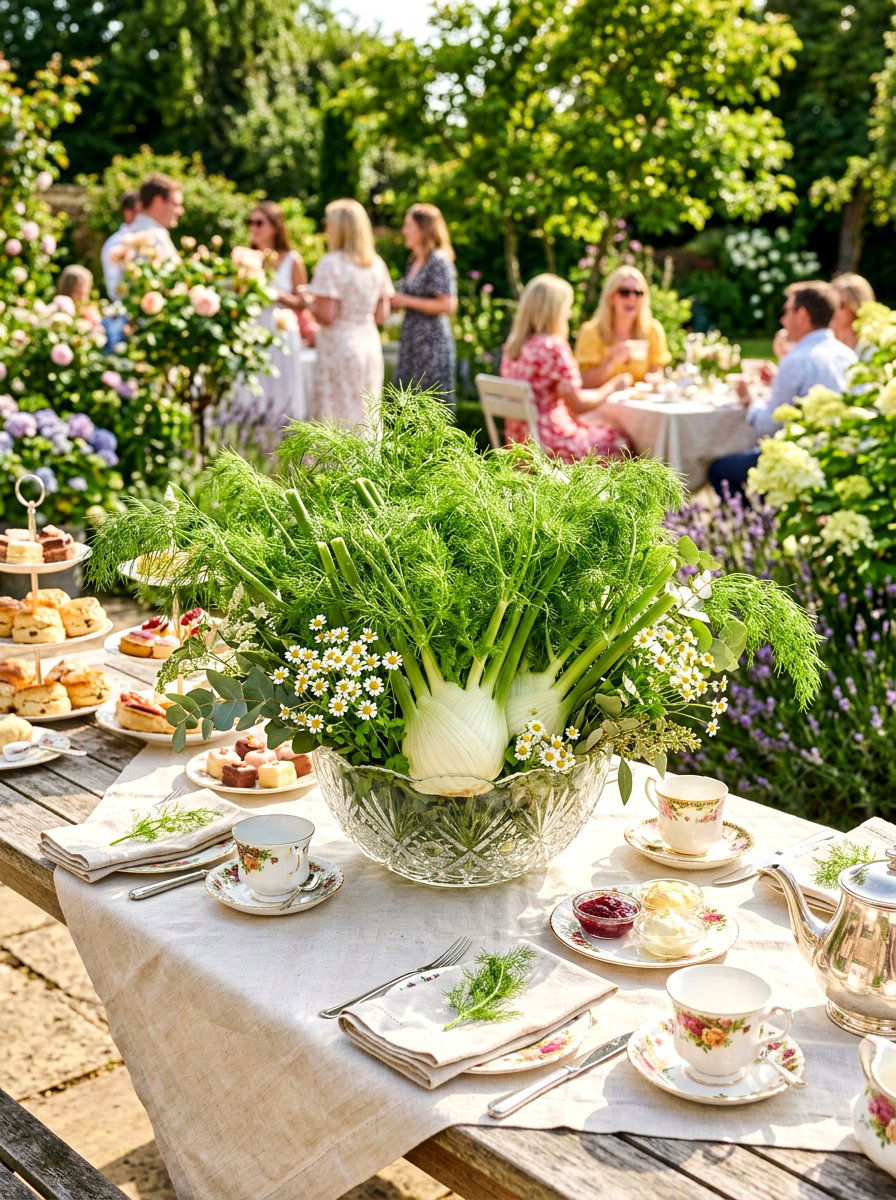
Fennel is a gorgeous vegetable with a large, white bulb and delicate, feathery fronds that look almost like dill or ferns. Placing a few fennel bulbs in a clear glass bowl allows you to appreciate their unique shape and the soft texture of their tops. The light green fronds add a wonderful sense of airiness and height to any arrangement. Fennel also has a subtle, sweet anise scent that can provide a pleasant aromatic experience for your guests. This vegetable looks very elegant when paired with white flowers or light-colored citrus fruits like lemons. It is a sophisticated choice for a refined afternoon garden tea party.
23. Bok Choy Centerpiece
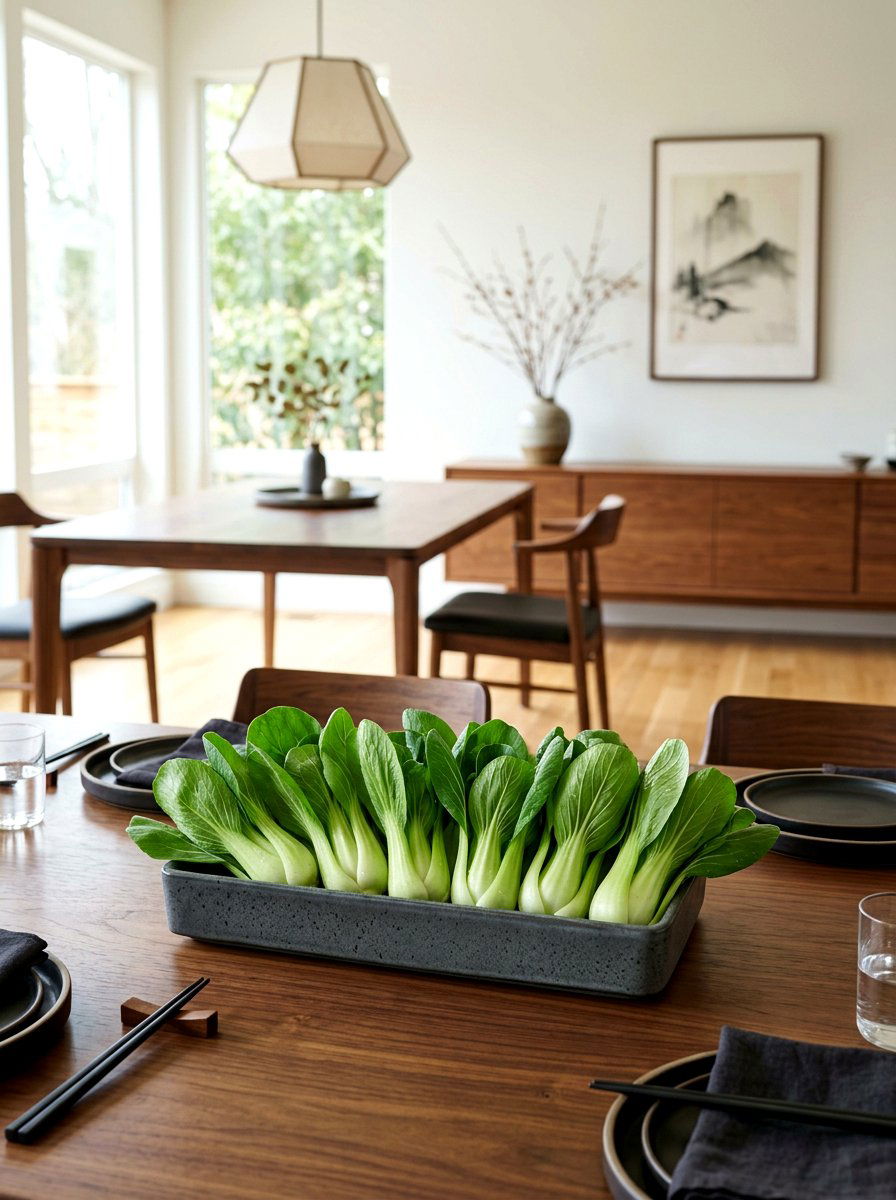
Bok choy has a wonderful contrast between its thick, crunchy white stems and its dark, leafy green tops. This color split makes it a very visually interesting vegetable to use in a centerpiece. You can arrange several heads of baby bok choy in a low, rectangular ceramic dish for a clean and minimalist look. The smooth, curved stems have a sculptural feel that works well in modern or Asian-inspired interiors. Because bok choy is relatively small, it is easy to tuck into larger arrangements as a filler that provides both bulk and color. It stays fresh and crisp for a long time when kept in a bit of water.
24. Swiss Chard Centerpiece
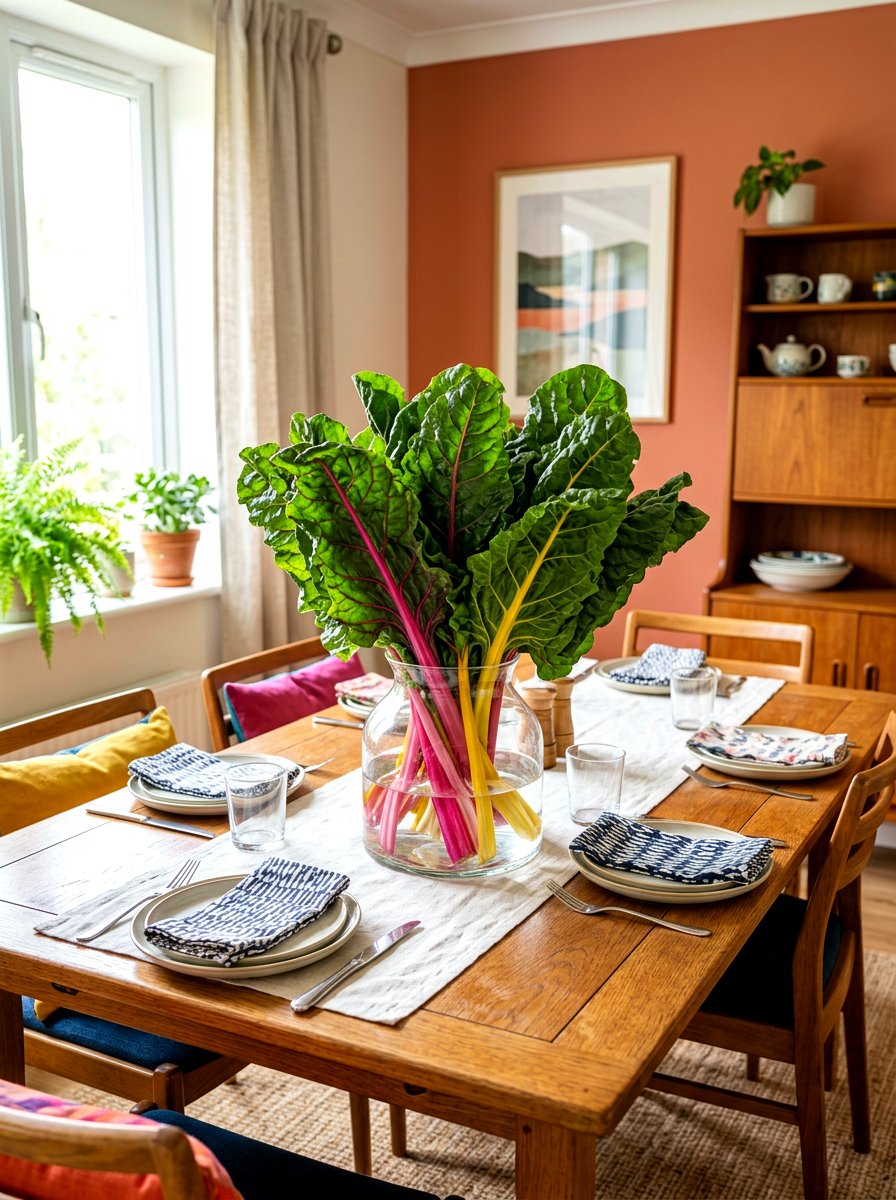
Swiss chard is famous for its "rainbow" varieties, featuring stems in brilliant shades of pink, yellow, orange, and red. These colorful stems, combined with large, crinkled green leaves, make for a spectacular and vibrant centerpiece. You can treat them just like a bouquet of flowers, placing them in a simple glass vase to let the colors shine. The long, straight stems provide great height, while the broad leaves add a sense of lushness. This is an excellent choice for a summer dinner where you want to celebrate the full spectrum of garden colors. It is a bold, energetic look that will definitely capture everyone's attention.
25. Ginger Root Centerpiece
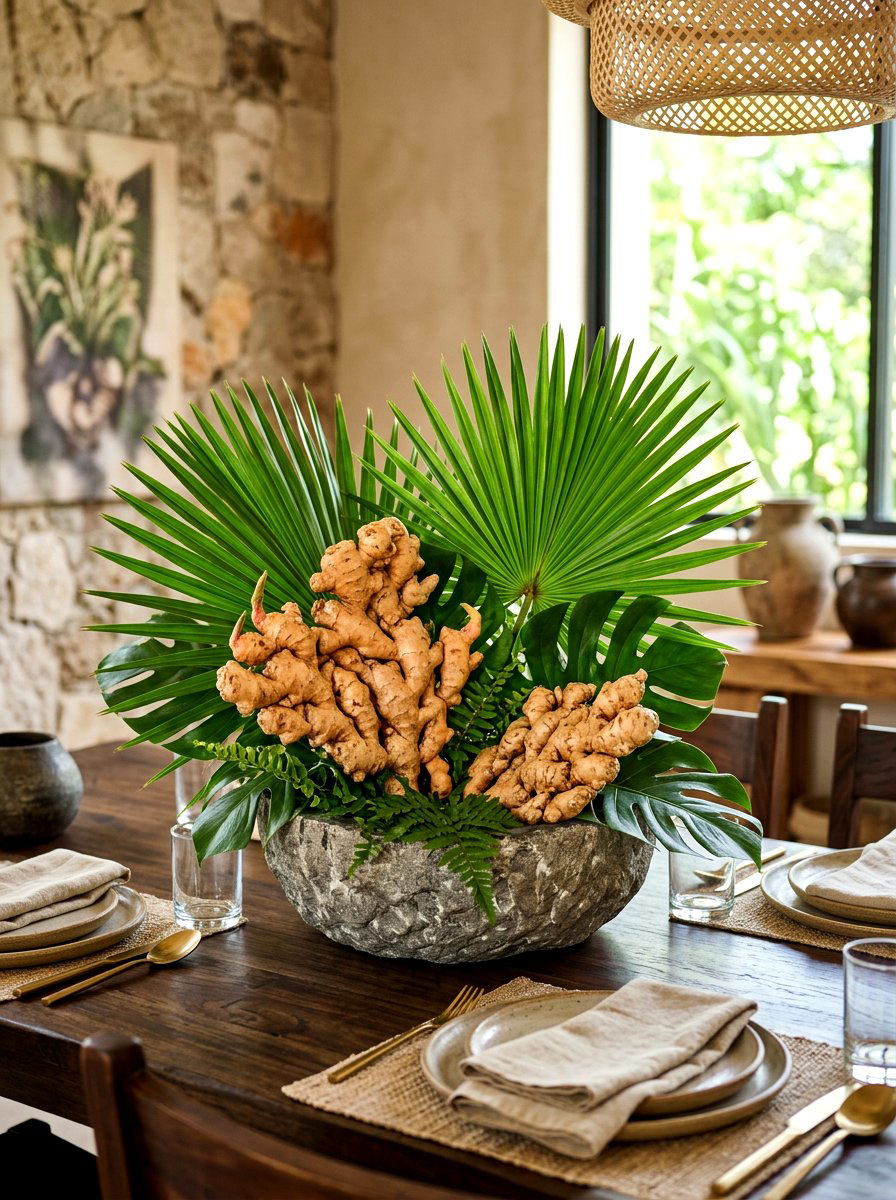
For a more earthy and exotic feel, you can use large, knobby pieces of fresh ginger root as part of your table decor. Their irregular shapes and sandy brown color provide a wonderful organic texture that feels very grounded. You can pile ginger roots in a shallow stone bowl or scatter them among some tropical leaves like monstera or palm. This look is perfect for a menu featuring bold, spicy flavors. The warm tones of the ginger skin look beautiful under soft, warm lighting. You can even combine them with fresh turmeric roots to add some bright orange accents to the natural brown palette.
26. Romaine Lettuce Centerpiece
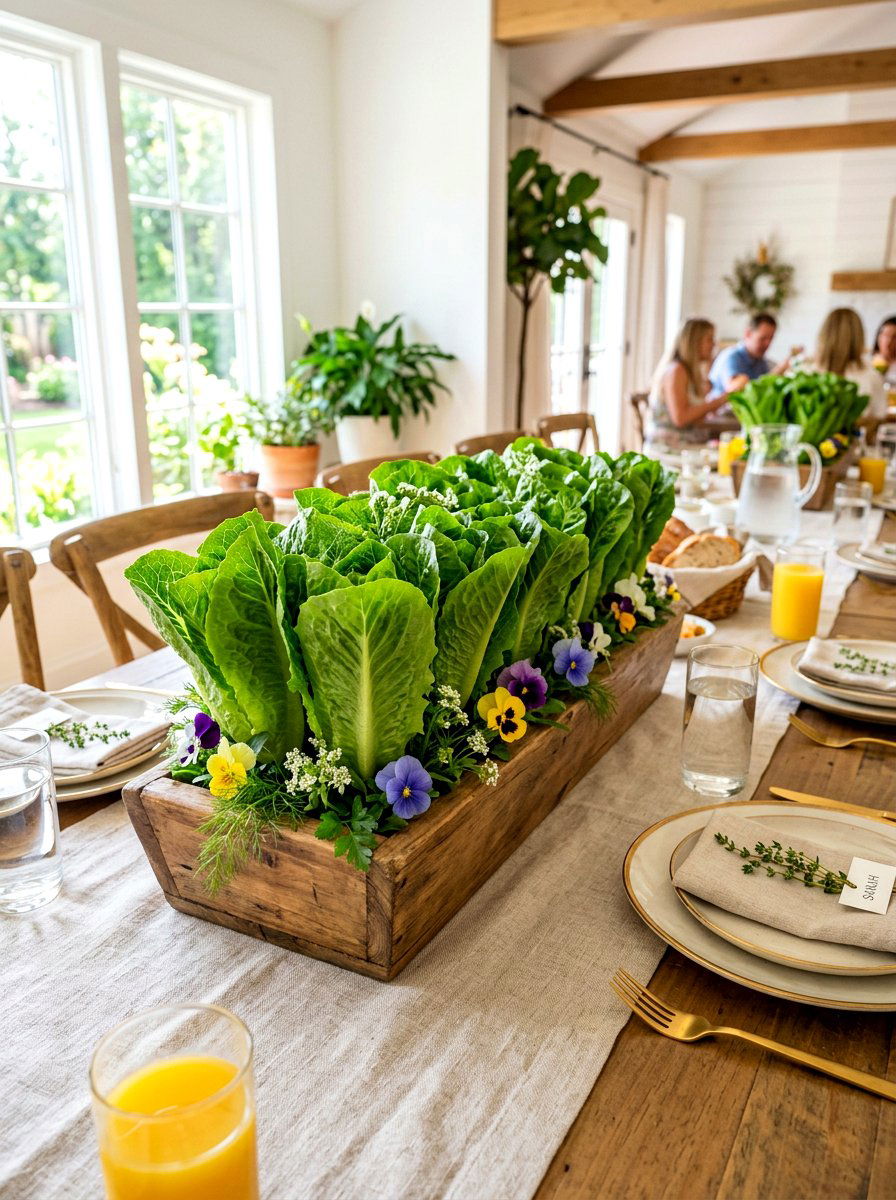
A full head of Romaine lettuce has a lovely, elongated shape and a beautiful range of green tones. If you stand several heads of lettuce upright in a wooden trough, they look like a mini indoor garden. This "living" centerpiece feels very fresh and vibrant, making it ideal for a healthy brunch or a spring luncheon. You can even tuck small edible flowers like pansies or nasturtiums between the leaves for a pop of color. The verticality of the leaves adds interest without blocking the view across the table. It is a very simple and affordable way to bring a sense of life and greenery to your dining room.
27. Onion Harvest Centerpiece
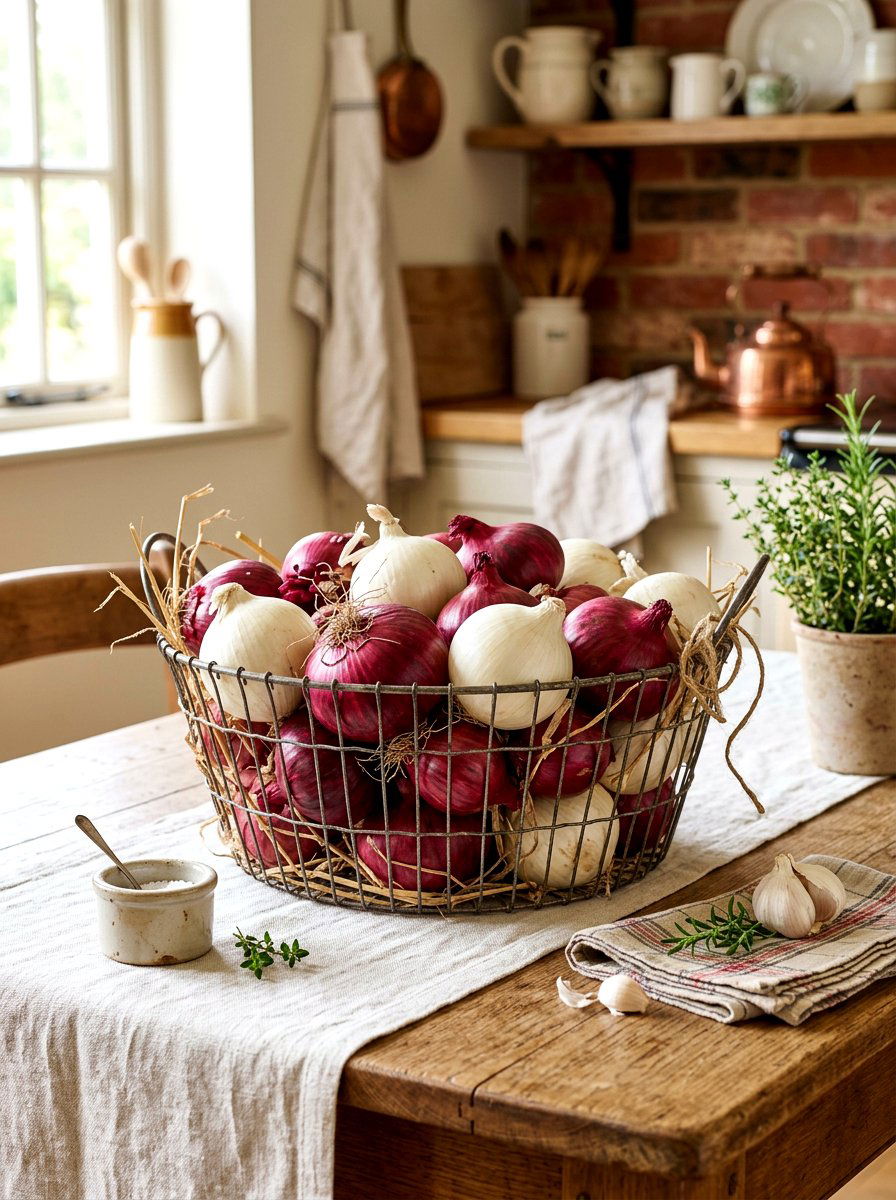
Red, white, and yellow onions can be surprisingly beautiful when displayed in bulk. Their papery, translucent skins have a wonderful texture that catches the light in a very subtle way. You can fill a large wire basket with an assortment of different onions to create a rustic, harvest-themed centerpiece. Red onions, in particular, offer a lovely deep purple hue that adds a touch of richness to the table. This style of decor is very practical because you can simply use the onions for cooking after your event is over. It feels very honest and unpretentious, which is perfect for a casual family-style dinner gathering.
28. Cauliflower White Centerpiece
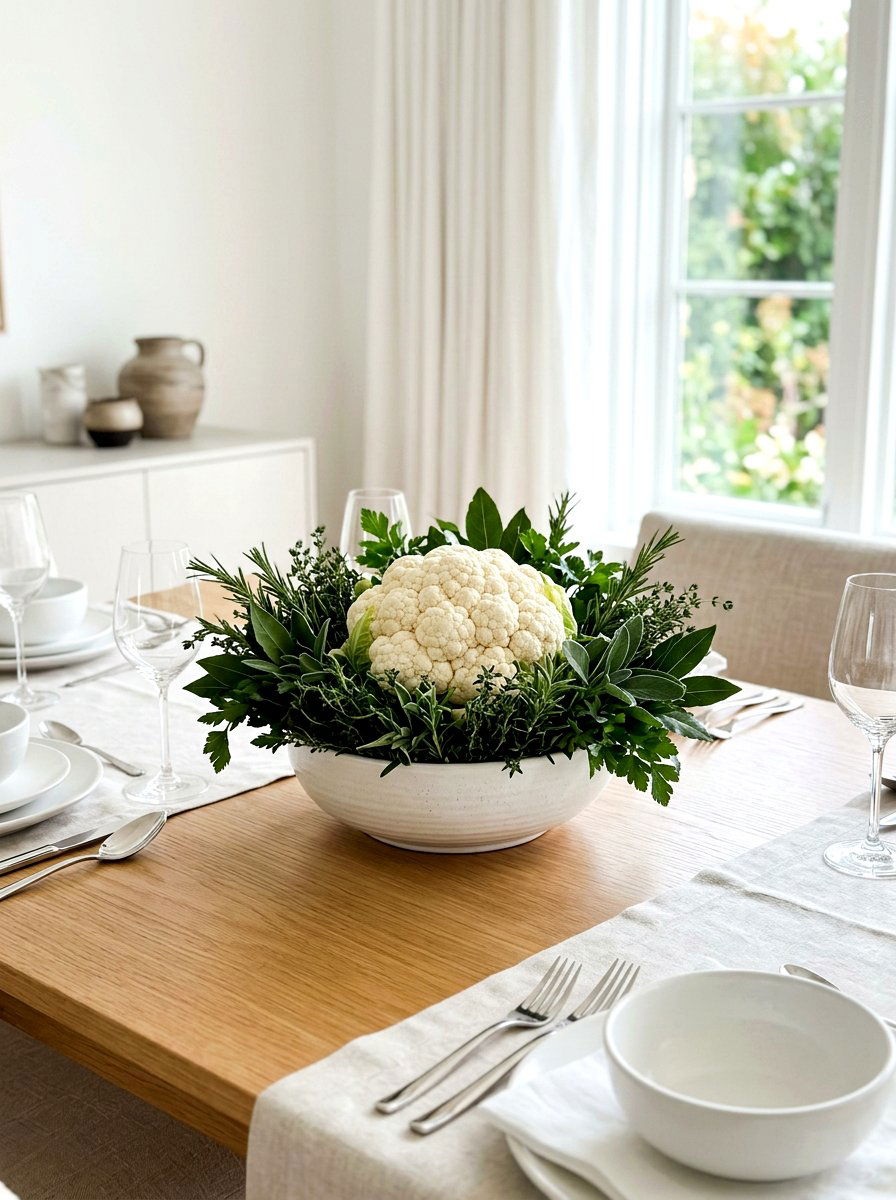
White cauliflower has a dense, cloud-like texture that can look very elegant and sophisticated. You can use a whole head of cauliflower as a focal point in a low arrangement, surrounding it with dark green leaves or herbs for contrast. The pure white color makes it look almost like a large, exotic flower. For a more modern look, you can break the cauliflower into smaller florets and arrange them in a glass cylinder like white stones. This creates a very clean and monochromatic aesthetic that works well with silver or gold table accents. It is a versatile vegetable that can be styled to look either rustic or very refined.
29. Green Bean Centerpiece
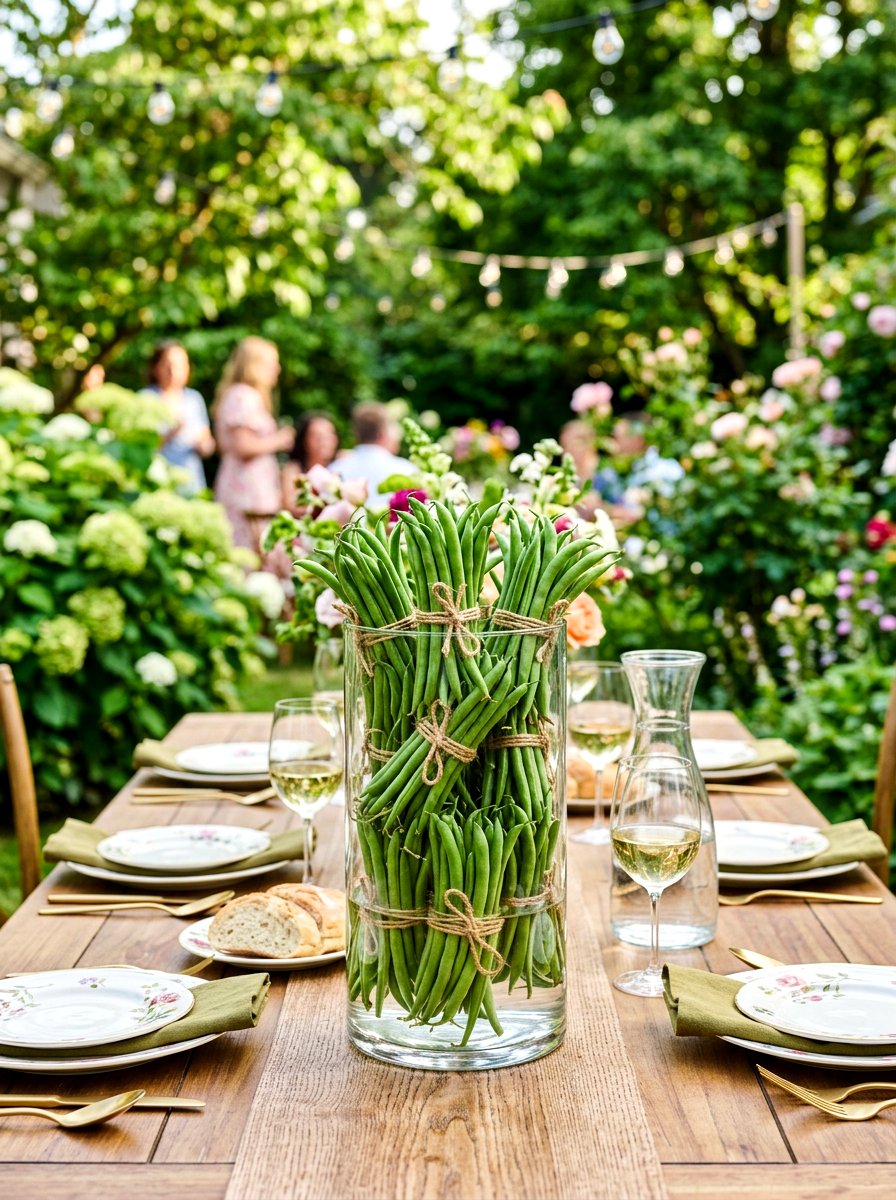
Bundles of fresh green beans can be used to create a charming and delicate decorative element. You can tie small bunches of beans with thin twine and place them around the base of a larger centerpiece or use them to decorate individual place settings. Their long, thin shape is very elegant and adds a fine-textured detail to the table. If you want something more substantial, you can fill a tall glass vase with upright green beans for a striking vertical display. They provide a beautiful, consistent green color that feels very fresh and healthy. It is an easy way to incorporate natural elements into a smaller table setting.
30. Mixed Vegetable Centerpiece
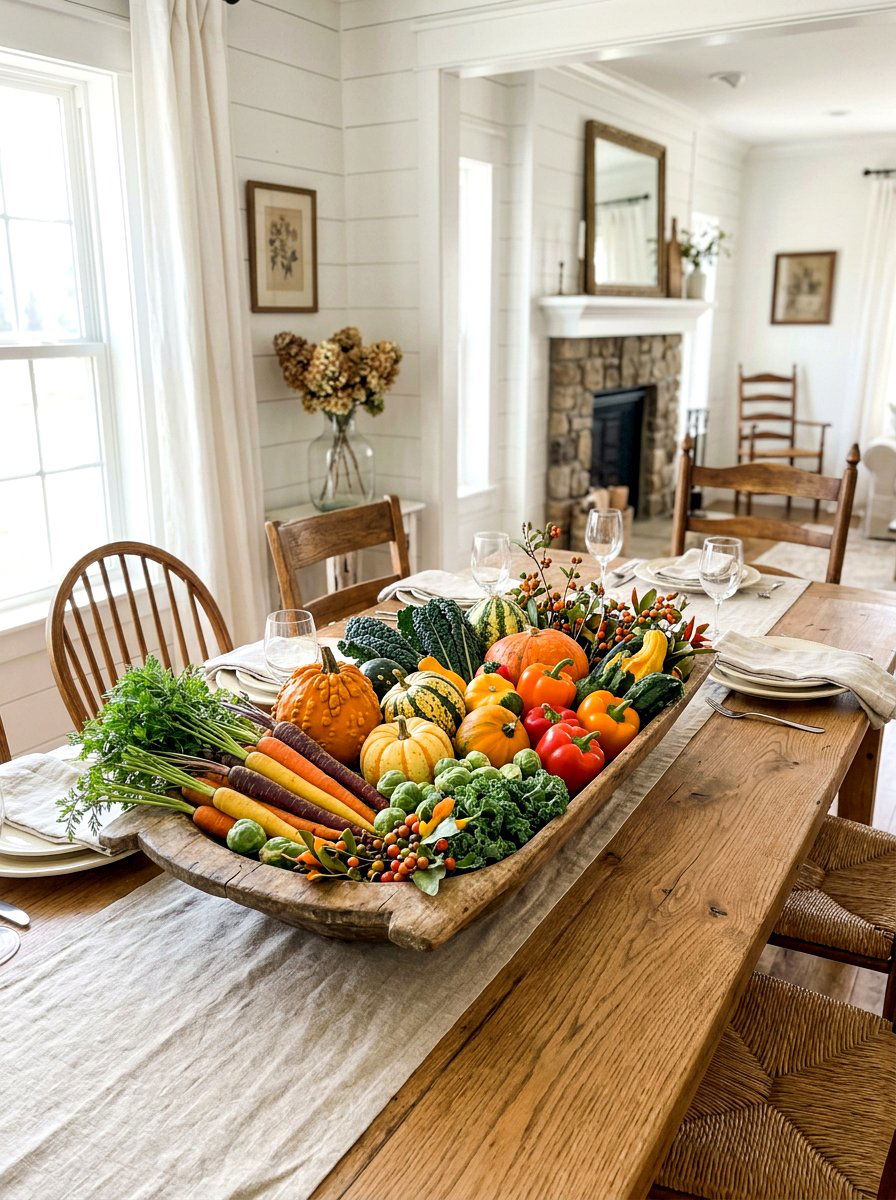
Sometimes the best look comes from a diverse mix of everything the season has to offer. A large wooden dough bowl filled with a variety of textures — bumpy gourds, smooth peppers, leafy kale, and colorful carrots — creates a rich and abundant focal point. This "cornucopia" style of decorating celebrates variety and feels very festive. You can layer the different vegetables so that the colors complement each other, with larger items at the bottom and smaller, more delicate pieces on top. This approach allows you to use whatever is freshest and most beautiful at the market, ensuring that your table always reflects the current moment in the garden.
Conclusion:
Incorporating vegetables into your home decor is a wonderful way to bring a touch of nature's artistry into your living space. These centerpiece ideas prove that you do not need a large budget or professional floral skills to create something truly memorable and beautiful. By looking at everyday produce through a creative lens, you can discover incredible textures, colors, and forms that elevate any dining experience. Whether you choose the architectural elegance of an artichoke or the playful colors of rainbow carrots, your table will feel personal, organic, and full of life. It is a sustainable and stylish way to celebrate both food and design simultaneously.

Related posts: