Creating a sanctuary within your home often begins in the bathroom, where the choice of a vanity sets the entire stylistic tone. Wood vanities have become a staple for homeowners seeking to blend organic warmth with modern functionality in their private retreats. Whether you are drawn to the rugged charm of reclaimed timber or the sleek lines of a mid-century walnut piece, wood offers a versatile foundation that ages gracefully. This guide explores thirty distinct wood vanity concepts designed to elevate your space with timeless appeal and natural texture. From compact solutions for powder rooms to expansive double units for master suites, these ideas celebrate the unique beauty of natural grain patterns in every bathroom.
1. Floating Oak Vanity
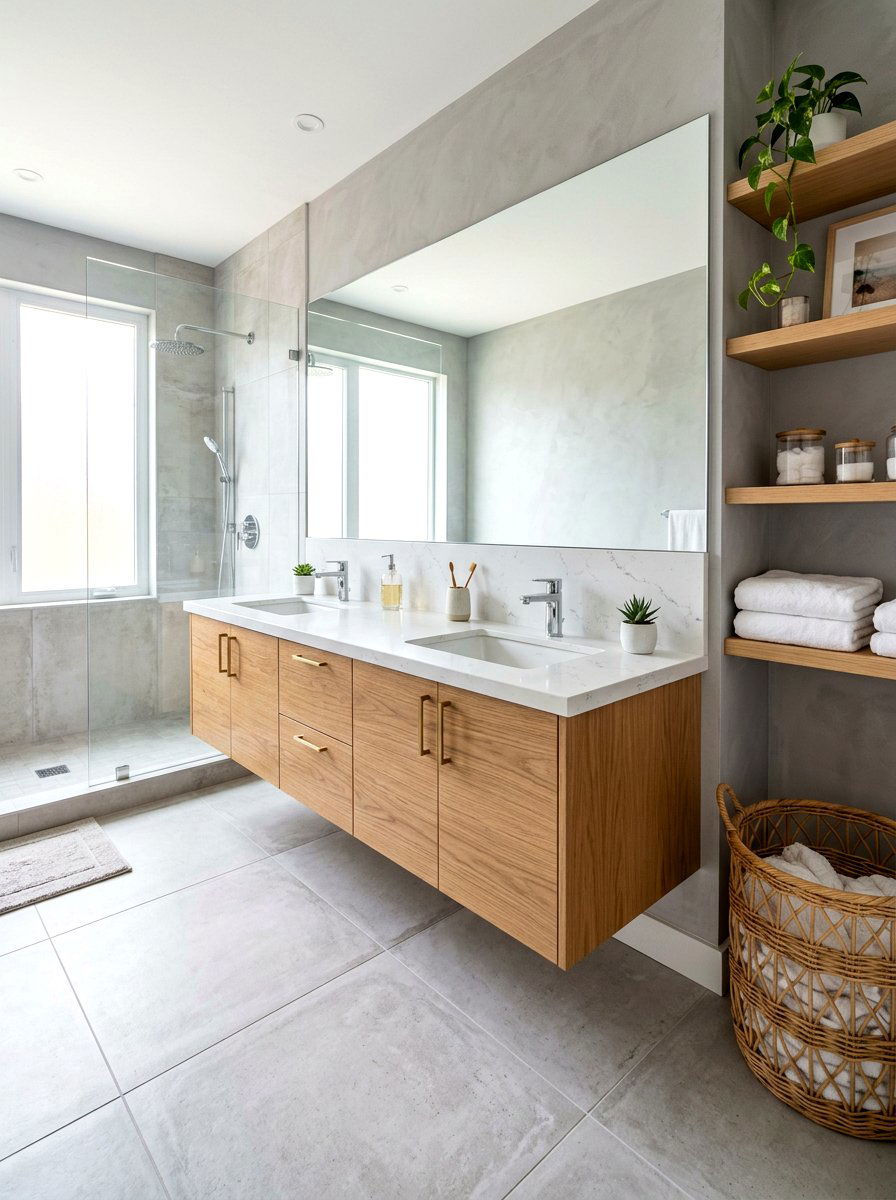
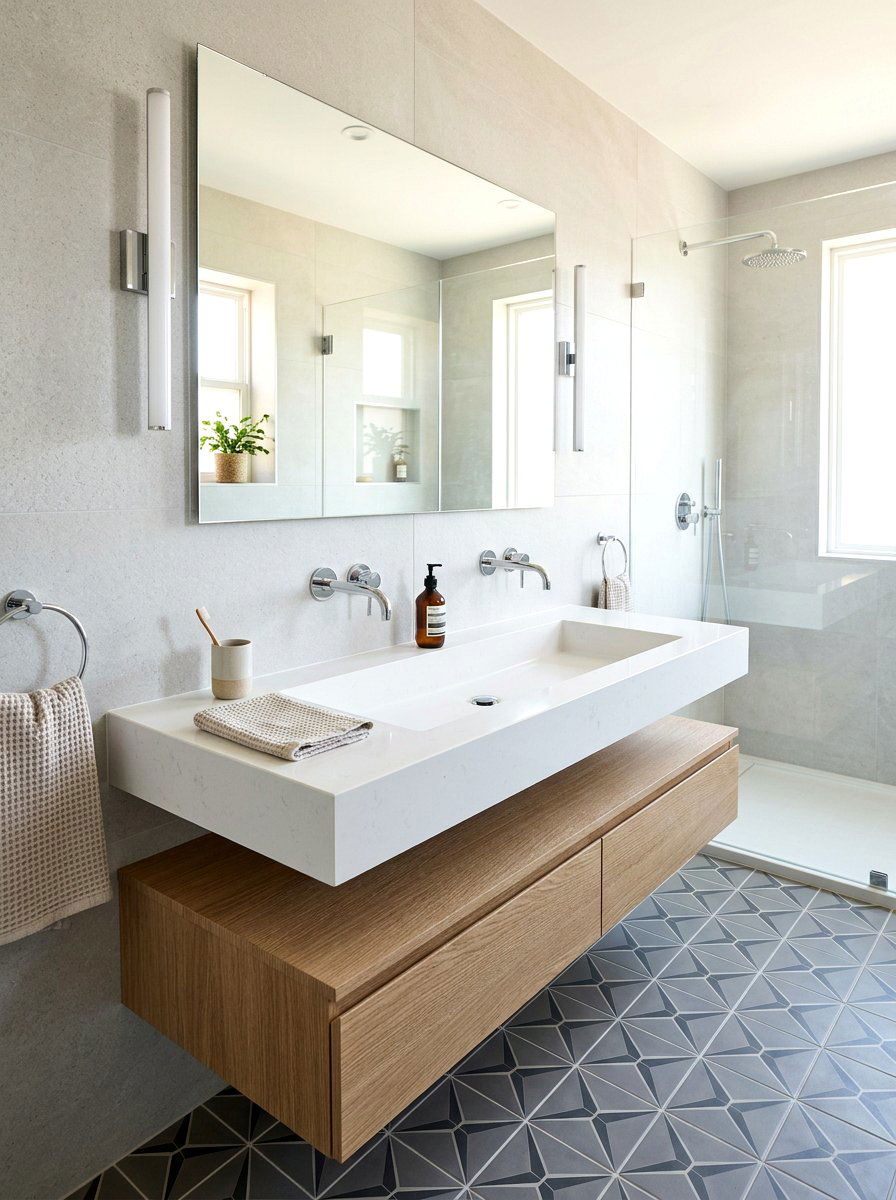
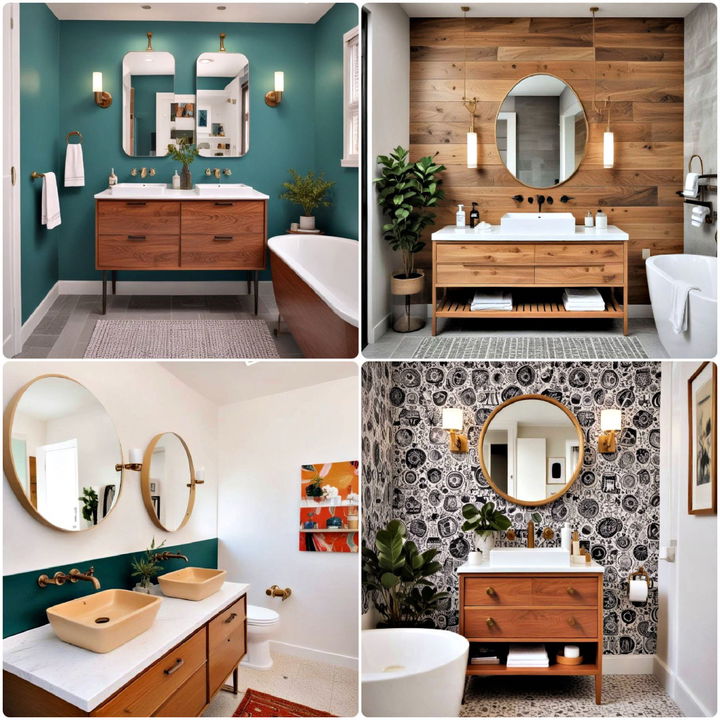
Floating oak vanities are a premier choice for those looking to create a sense of openness and modern sophistication in their bathroom. By mounting the unit directly to the wall, you expose more floor space, which immediately makes the room feel larger and more airy. White oak is particularly popular for this design due to its tight grain and resistance to moisture, ensuring your investment stays beautiful for decades. You can pair this look with a thick quartz countertop and sleek, minimal faucets to lean into a contemporary aesthetic. The natural light honey tones of the oak provide a stunning contrast against dark floor tiles or vibrant patterned wallpaper.
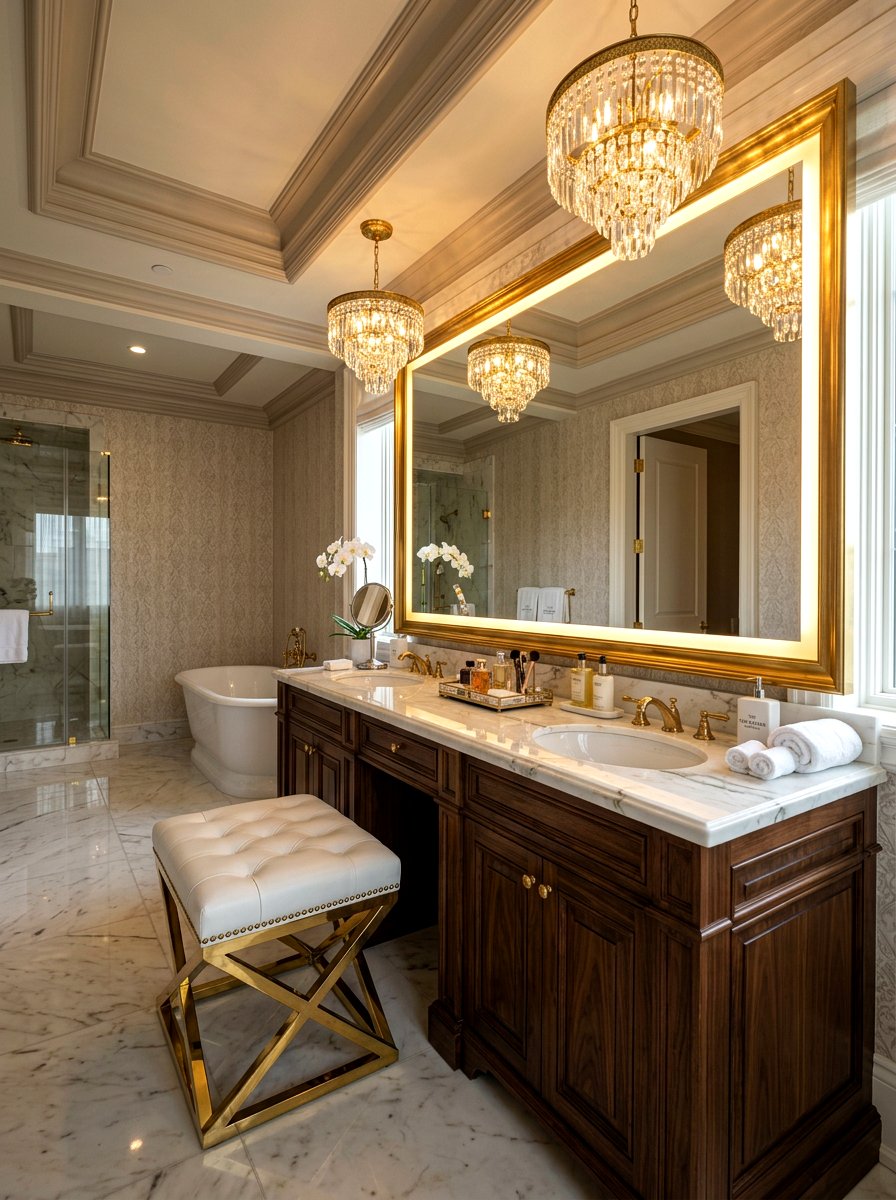
2. Double Walnut Vanity
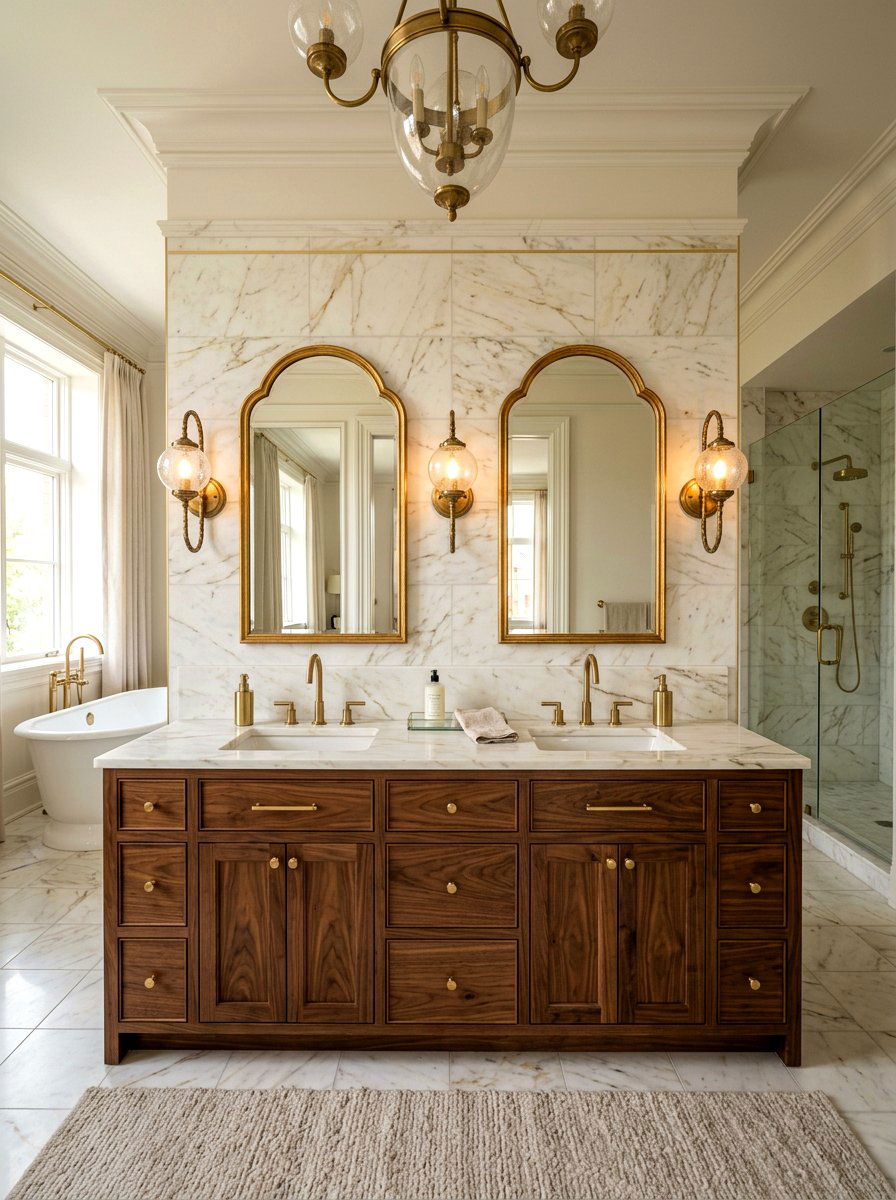
Double walnut vanities are the ultimate luxury upgrade for any master bathroom that needs to accommodate two people during the morning rush. Walnut is highly prized for its deep, rich chocolate tones and sophisticated swirling grain that adds instant weight and elegance to a room. When you choose a double configuration, you gain significant countertop real estate and substantial storage for all your daily essentials. This wood type works beautifully with brushed brass or gold hardware, which complements the warm undertones of the timber perfectly. Adding a large, frameless mirror above the unit helps reflect light and showcases the walnut’s premium finish as a focal point.
3. Reclaimed Wood Vanity
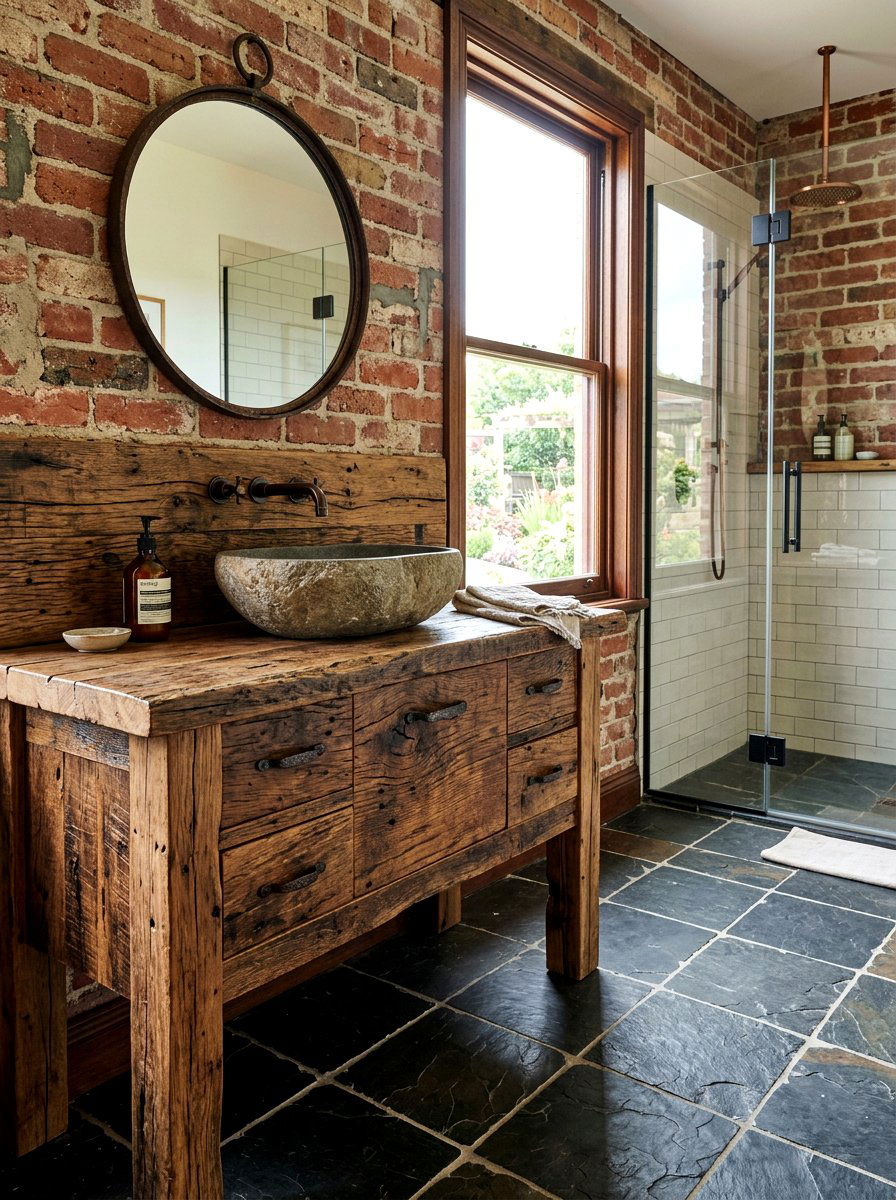
Reclaimed wood vanities bring a sense of history and unique character that new materials simply cannot replicate in a standard home renovation. These pieces are often crafted from salvaged barn wood or antique floorboards, featuring original nail holes, knots, and weathered textures that tell a story. This style is perfect for homeowners who want to embrace an eco-friendly design while adding a rugged, tactile element to their bathroom. Because each piece of reclaimed timber is different, your vanity will be a one-of-a-kind statement that feels both grounded and authentic. Pairing it with a simple white ceramic sink keeps the focus on the wood’s beautiful, aged patina.
4. Mid Century Modern Wood Vanity
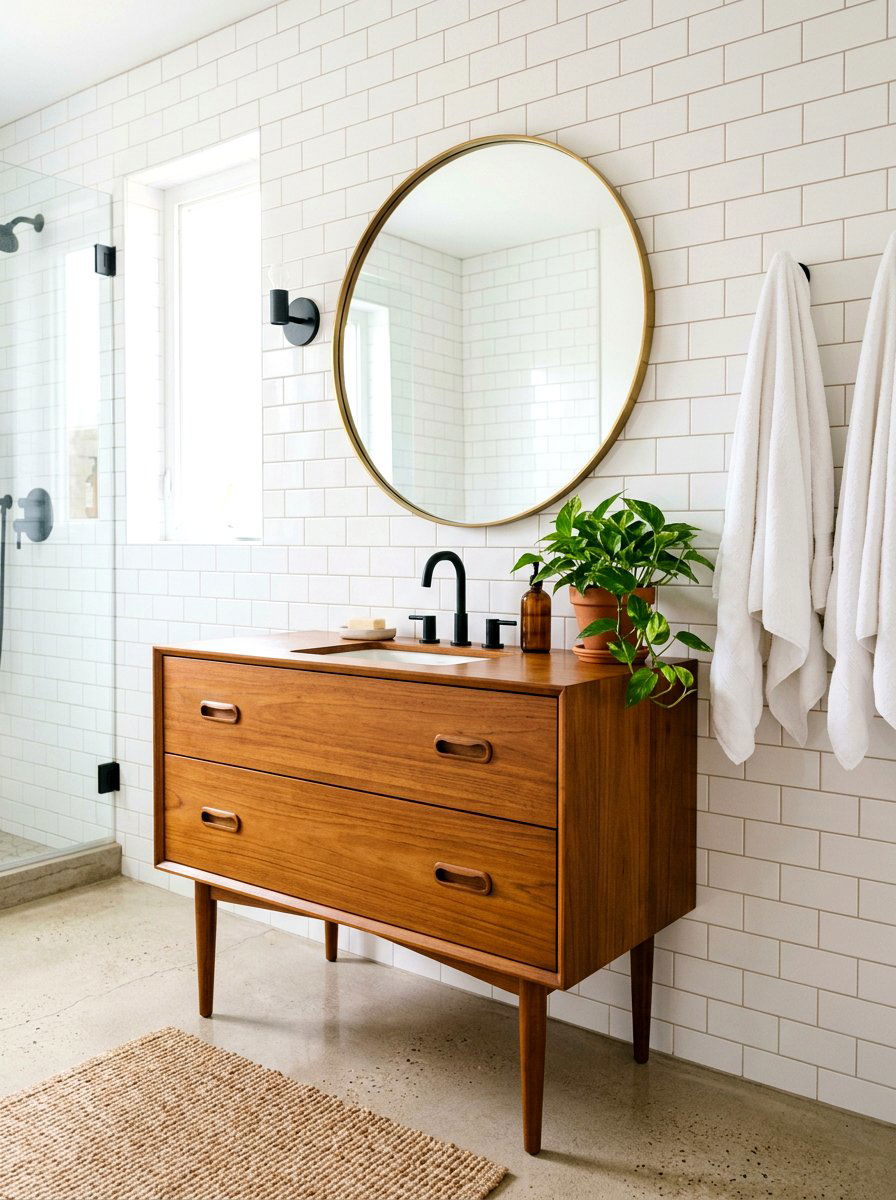
Mid-century modern wood vanities are characterized by their iconic tapered legs, clean geometric lines, and warm teak or walnut finishes that feel nostalgic yet fresh. This design era focuses on simplicity and functional beauty, making it a timeless choice for any bathroom size or layout. Look for units that feature integrated wooden handles or sleek finger pulls to maintain the streamlined silhouette that defines this popular interior style. Placing a mid-century piece against a backdrop of subway tile or geometric patterns creates a balanced look that bridges the gap between vintage and modern. It is an excellent way to introduce high-end furniture vibes into a utilitarian space.
5. Light Wood Bathroom Vanity
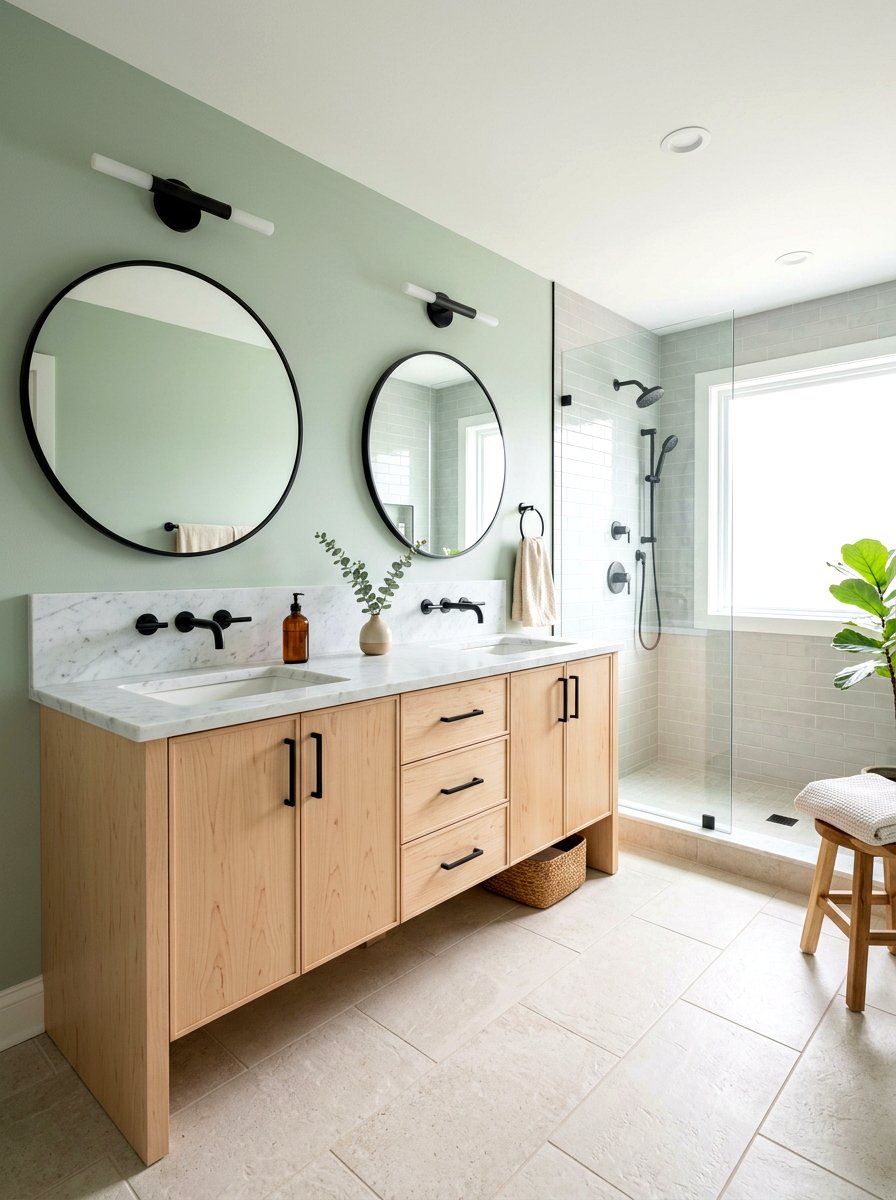
Light wood bathroom vanities are perfect for creating a spa-like environment that feels tranquil, clean, and incredibly refreshing every time you enter. Using species like maple, birch, or light ash allows you to maintain a bright color palette without sacrificing the warmth that natural timber provides. These vanities pair exceptionally well with white marble tops and matte black fixtures for a high-contrast look that feels current and intentional. In smaller bathrooms with limited natural light, a light wood finish helps bounce brightness around the room rather than absorbing it. This choice is ideal for those who prefer a "less is more" approach to their home decor.
6. Dark Wood Bathroom Vanity
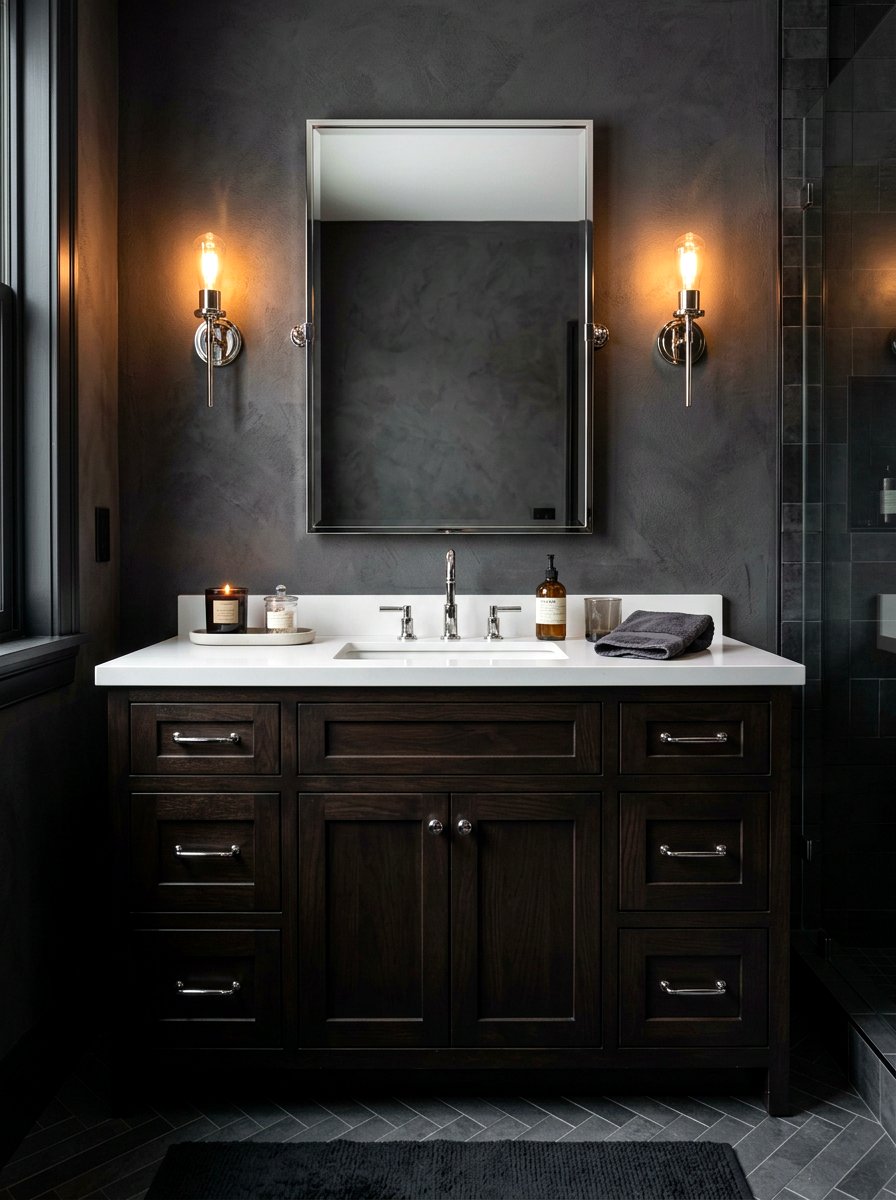
Dark wood bathroom vanities offer a sense of drama and grounded elegance that makes a bold statement in any high-end residential design. Choosing deep stains like espresso, mahogany, or dark cherry can turn a simple vanity into a majestic piece of furniture that anchors the space. This style works best in bathrooms with ample lighting or large windows to ensure the dark tones do not make the room feel too small. Combining a dark vanity with a crisp white countertop creates a classic, sophisticated aesthetic that never goes out of style. It is a fantastic option for creating a moody, intimate atmosphere in a guest powder room.
7. Teak Wood Bathroom Vanity
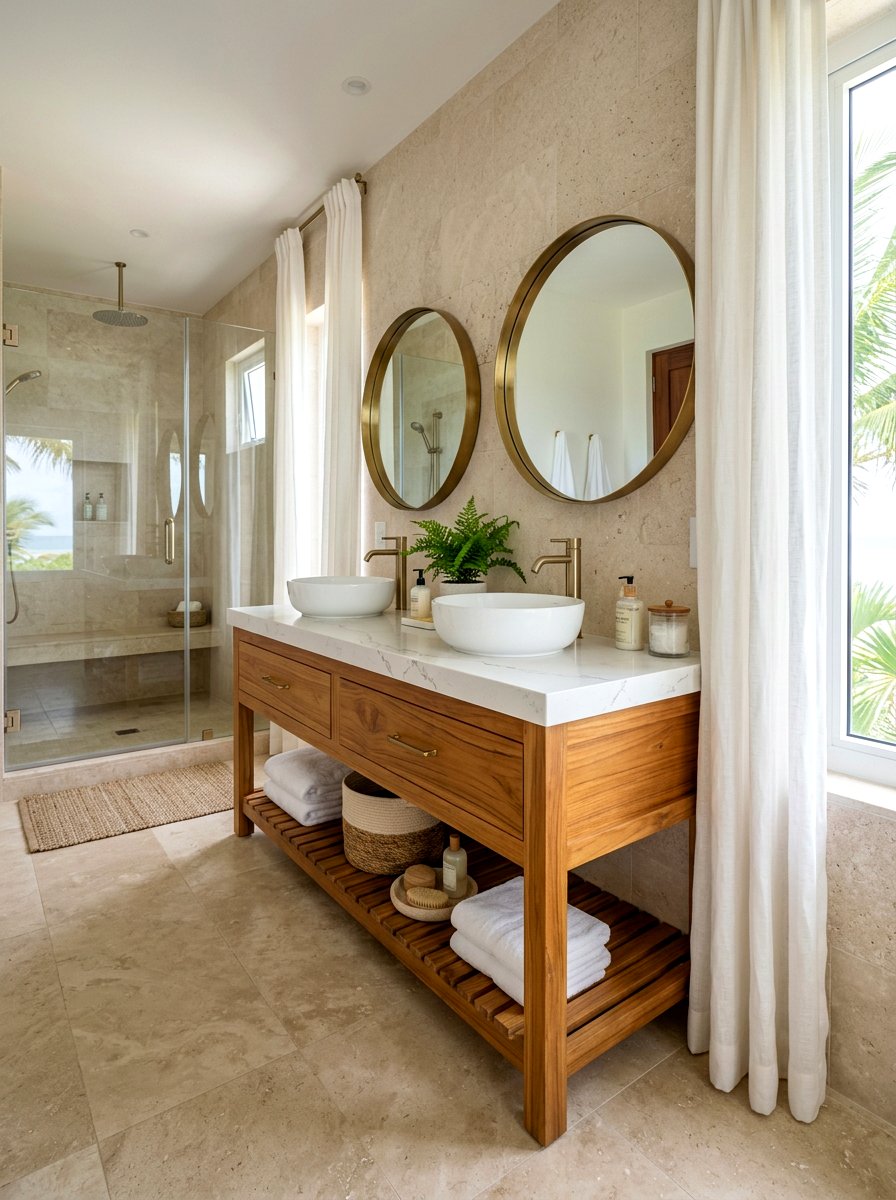
Teak wood bathroom vanities are the gold standard for durability and water resistance, making them an excellent investment for humid bathroom environments. Because teak is naturally rich in oils, it repels moisture better than almost any other wood species, preventing warping or rot over many years of use. This wood has a beautiful golden-brown hue that deepens over time, offering a rich look that feels both tropical and incredibly high-end. Many homeowners choose teak for slatted designs or open-shelf vanities to emphasize a coastal or resort-inspired vibe. When you want a piece that combines extreme longevity with effortless beauty, teak is the most reliable material choice.
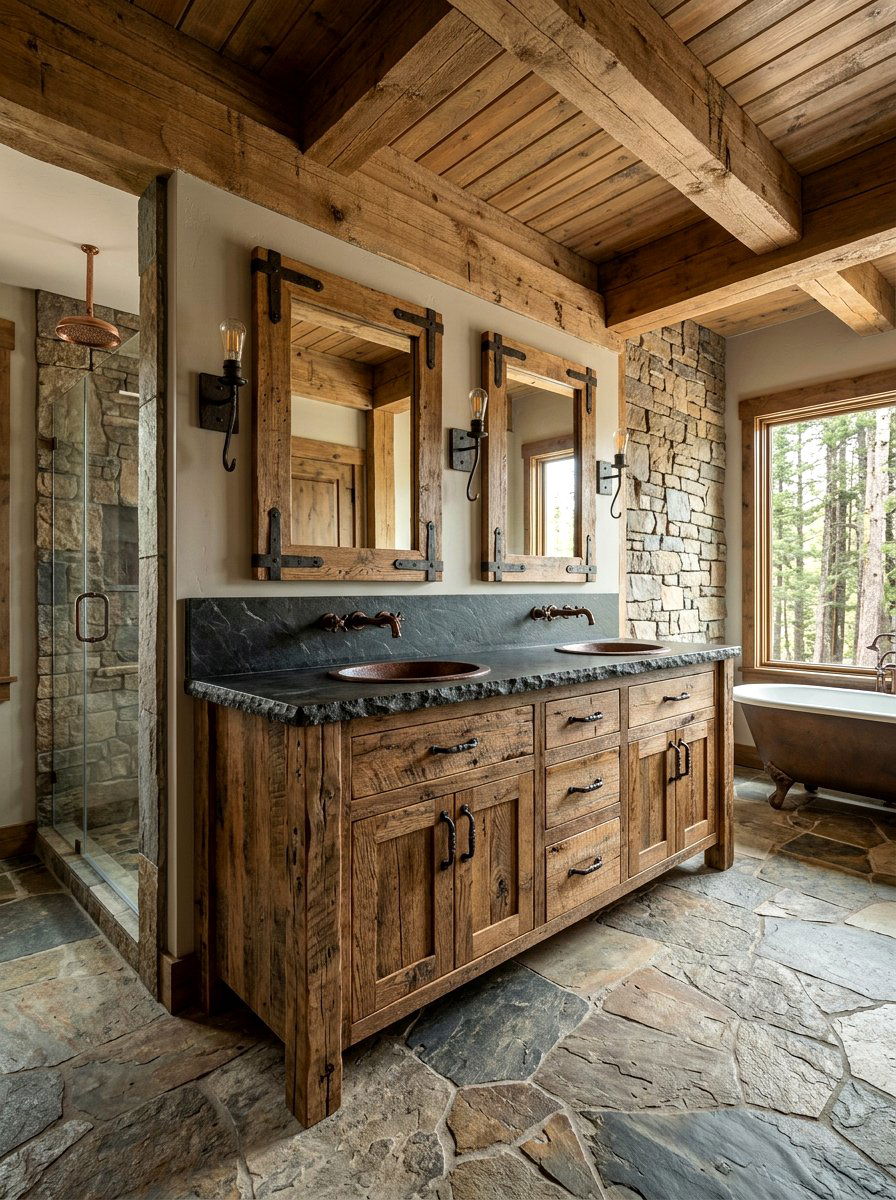
8. Rustic Wood Vanity
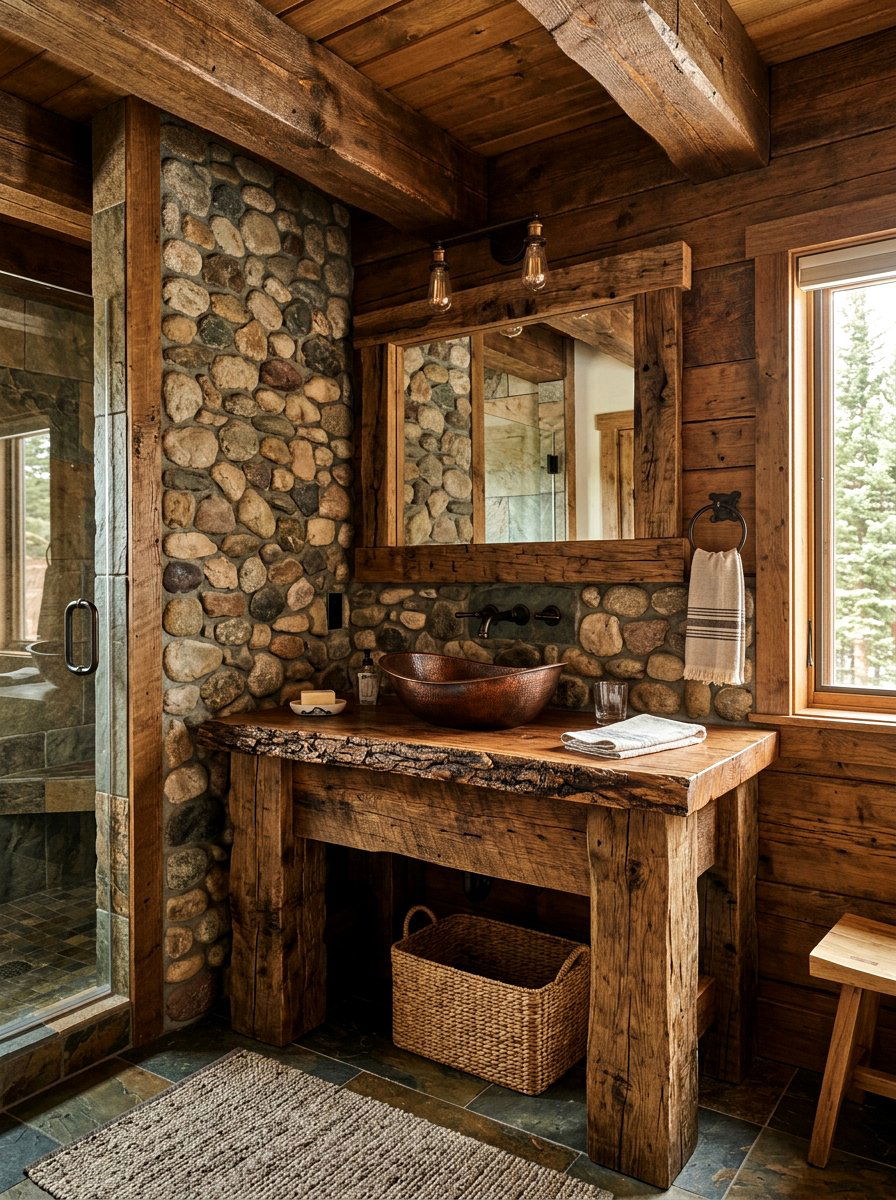
Rustic wood vanities are all about celebrating the raw, unrefined beauty of nature with chunky profiles and heavy textures that feel solid and dependable. This style often uses thick-cut timber with visible saw marks or live edges to create a sense of being in a cozy mountain cabin. It is a great way to ground a bathroom that might otherwise feel cold due to extensive tile or stone surfaces. You can enhance the rustic feel by using wrought iron hardware or a stone vessel sink carved from a single piece of river rock. The result is a space that feels lived-in, comfortable, and full of rugged charm.
9. Farmhouse Wood Vanity
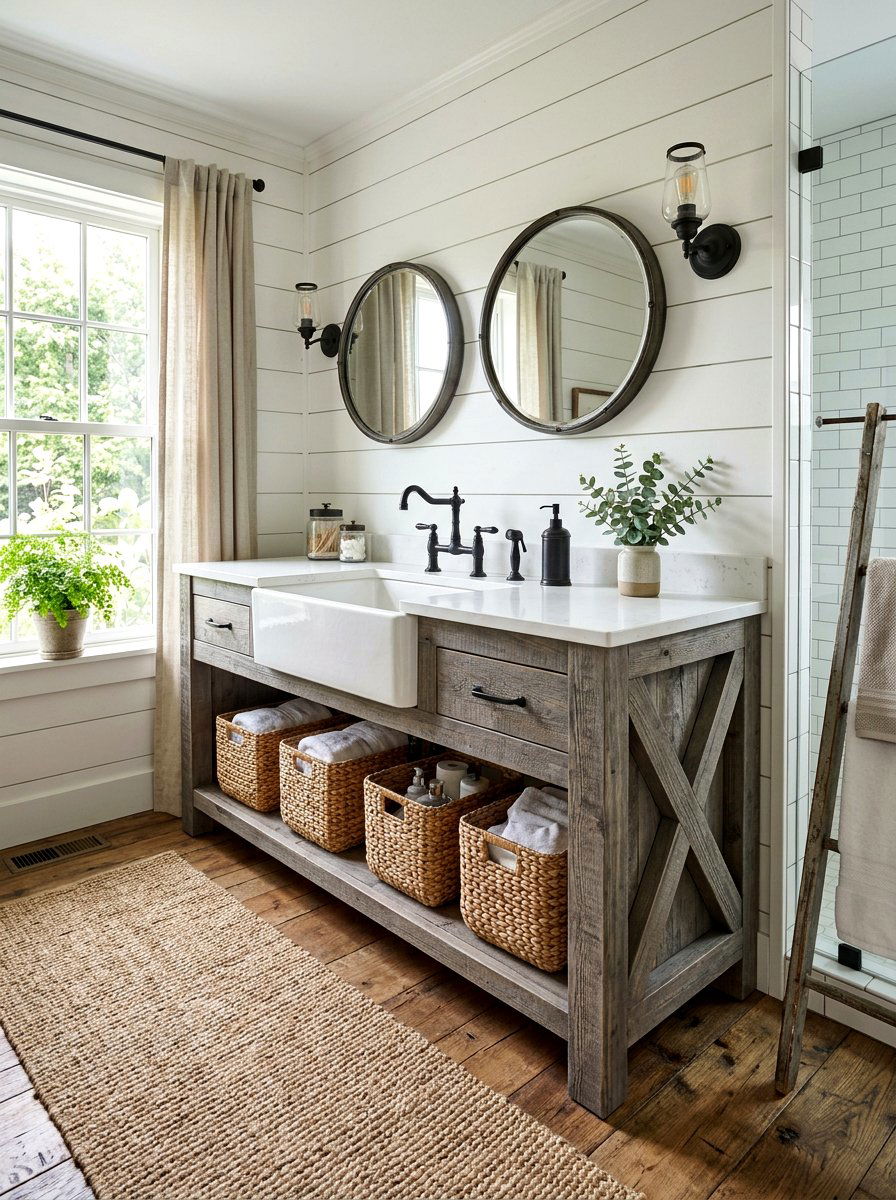
Farmhouse wood vanities often feature classic details like X-brace side panels, shiplap-style cabinet doors, and sturdy freestanding bases that evoke a traditional homestead feel. This design is incredibly popular for those wanting to create a cozy, family-friendly bathroom that feels warm and inviting to guests. Usually finished in a medium oak or a weathered gray stain, these vanities look best when paired with apron-front sinks and bridge-style faucets. The generous proportions of farmhouse furniture mean you will have plenty of room for towels and toiletries tucked away in deep drawers. It is a charming choice that balances utility with a very specific, beloved country aesthetic.
10. Small Wood Vanity
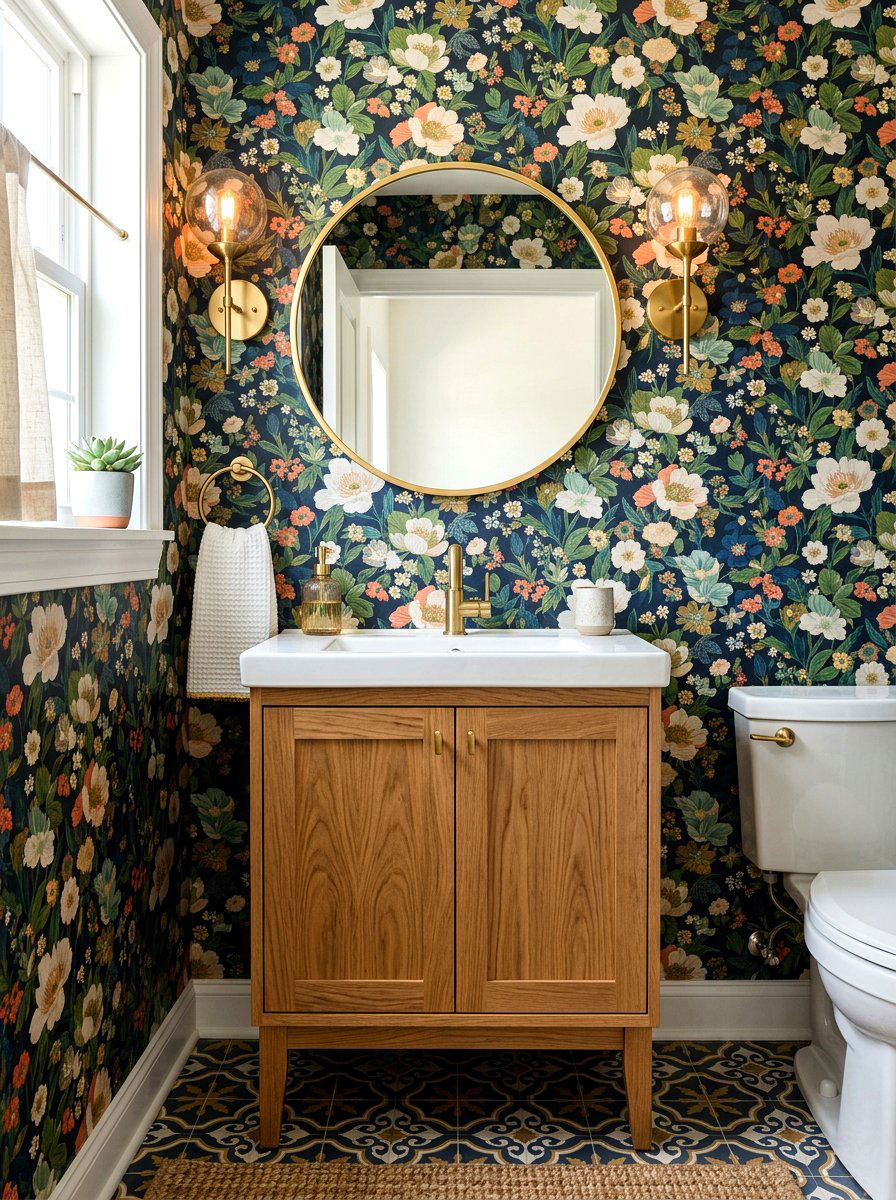
Small wood vanities prove that you do not need a massive bathroom to enjoy the beauty and warmth of high-quality timber furniture. Even in a tiny powder room, a 24-inch or 30-inch wood unit can become a stunning focal point that adds much-needed texture. Look for compact designs that maximize storage through clever drawer layouts or open lower shelves for folded hand towels. Choosing a light wood finish can help keep the small area from feeling cramped while still providing that organic touch. By selecting a high-quality wood piece for a small space, you elevate the entire room's design without needing excessive square footage.
11. Wood Vanity with Marble Top
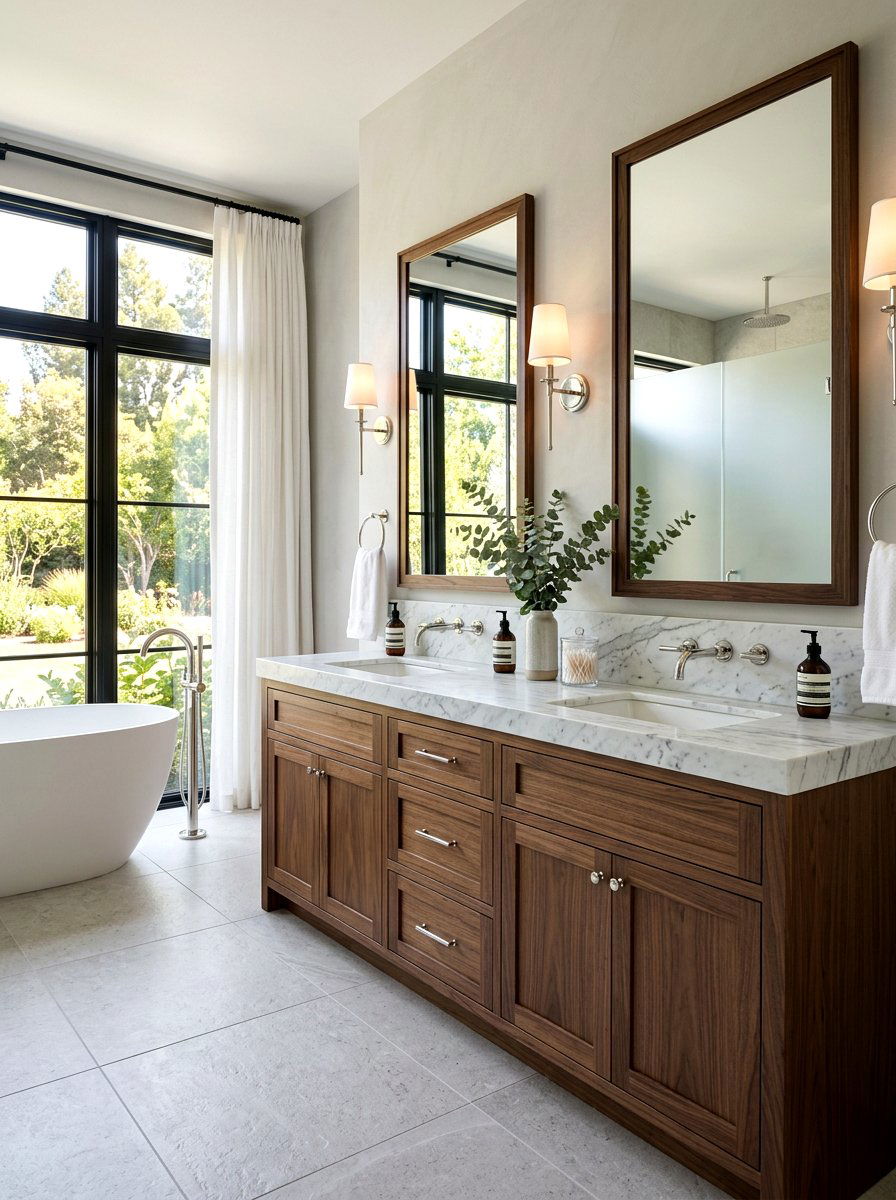
A wood vanity with a marble top represents the perfect marriage between the warmth of the earth and the cool elegance of stone. The natural veining in a Carrara or Calacatta marble slab complements the organic grain patterns of oak or walnut beautifully. This combination is a favorite in luxury home design because it feels balanced, sophisticated, and inherently high-end. The contrast between the soft wood texture and the smooth, cold surface of the marble creates a sensory experience that feels very premium. Keeping the cabinetry simple allows the natural beauty of both materials to shine without competing for attention in the bathroom.
12. Natural Wood Vanity
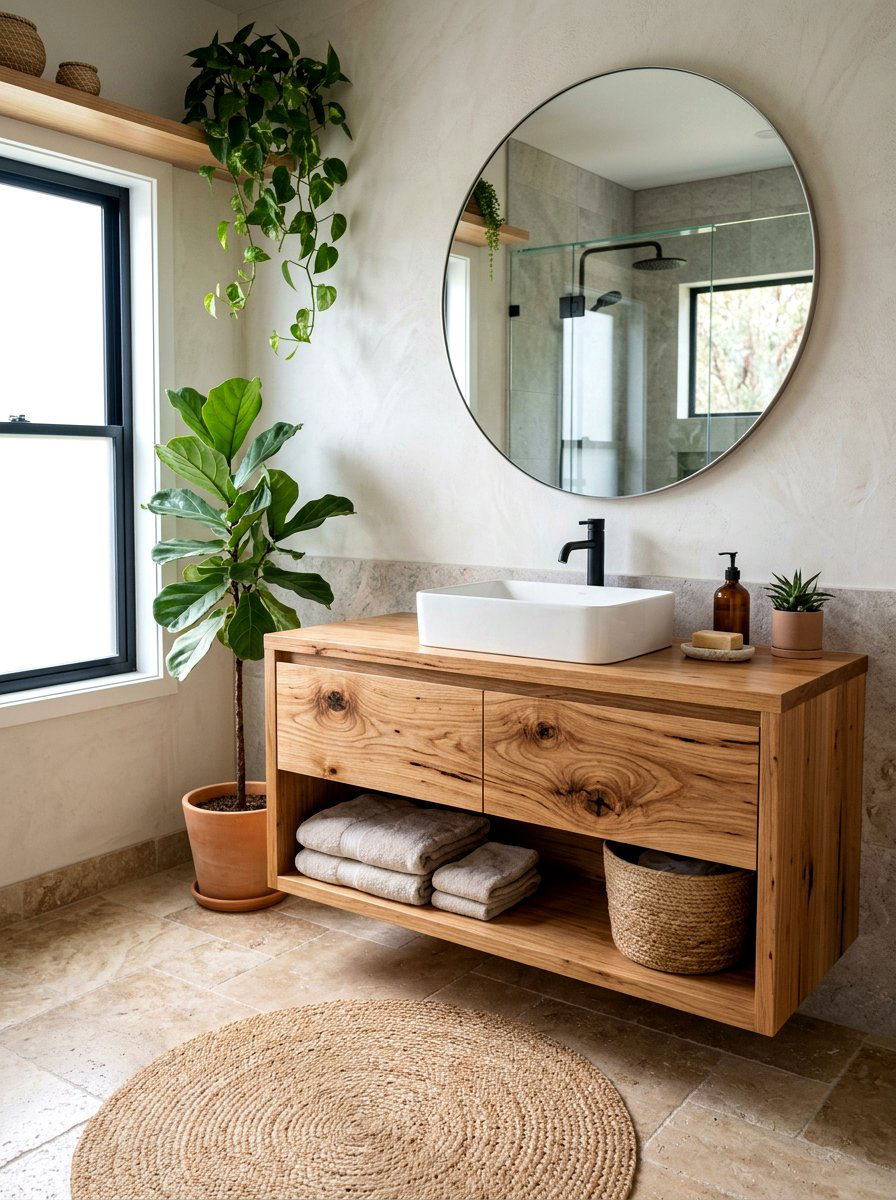
Natural wood vanities celebrate the timber exactly as it is, often using clear sealants rather than heavy stains to preserve the original color. This approach highlights every unique knot and grain swirl, making the furniture feel like a piece of art straight from the forest. It is a popular choice for organic modern or bohemian bathroom designs where the focus is on authenticity and raw materials. Because the wood is not altered by colorants, it brings a very pure, honest energy to the space that feels refreshing and calming. This style works best when surrounded by indoor plants, stone accents, and soft, neutral-colored linens.
13. Minimalist Wood Vanity
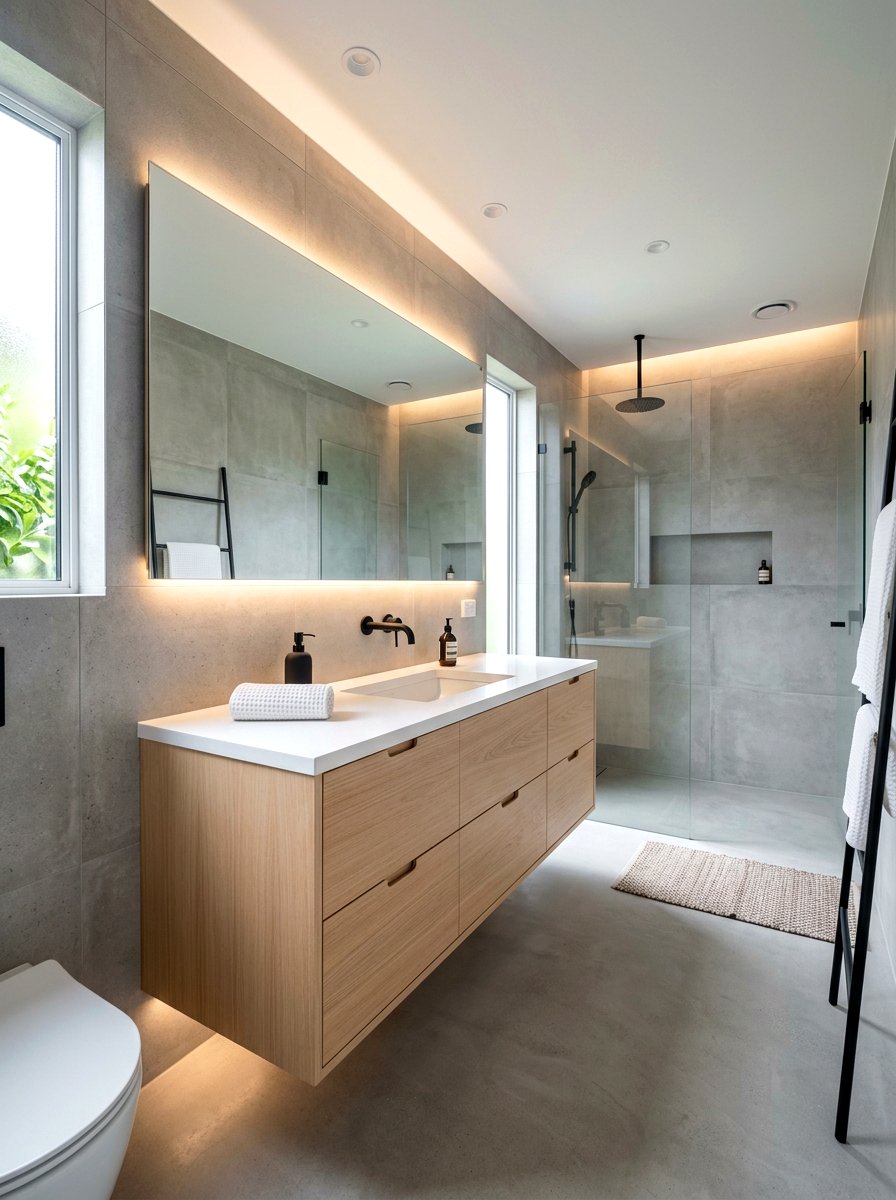
Minimalist wood vanities focus on essential forms, often featuring handle-less drawers and perfectly flush cabinet doors for a seamless, architectural look. This design style is perfect for those who want to reduce visual clutter and emphasize the quality of the wood itself. By removing ornate hardware and complex moldings, the focus shifts entirely to the color and texture of the chosen timber species. Usually constructed with a floating base, these vanities create a sharp, clean line that defines the modern bathroom layout. It is the ideal choice for creating a quiet, contemplative space where the beauty of natural materials speaks for itself.
14. Floating Walnut Vanity
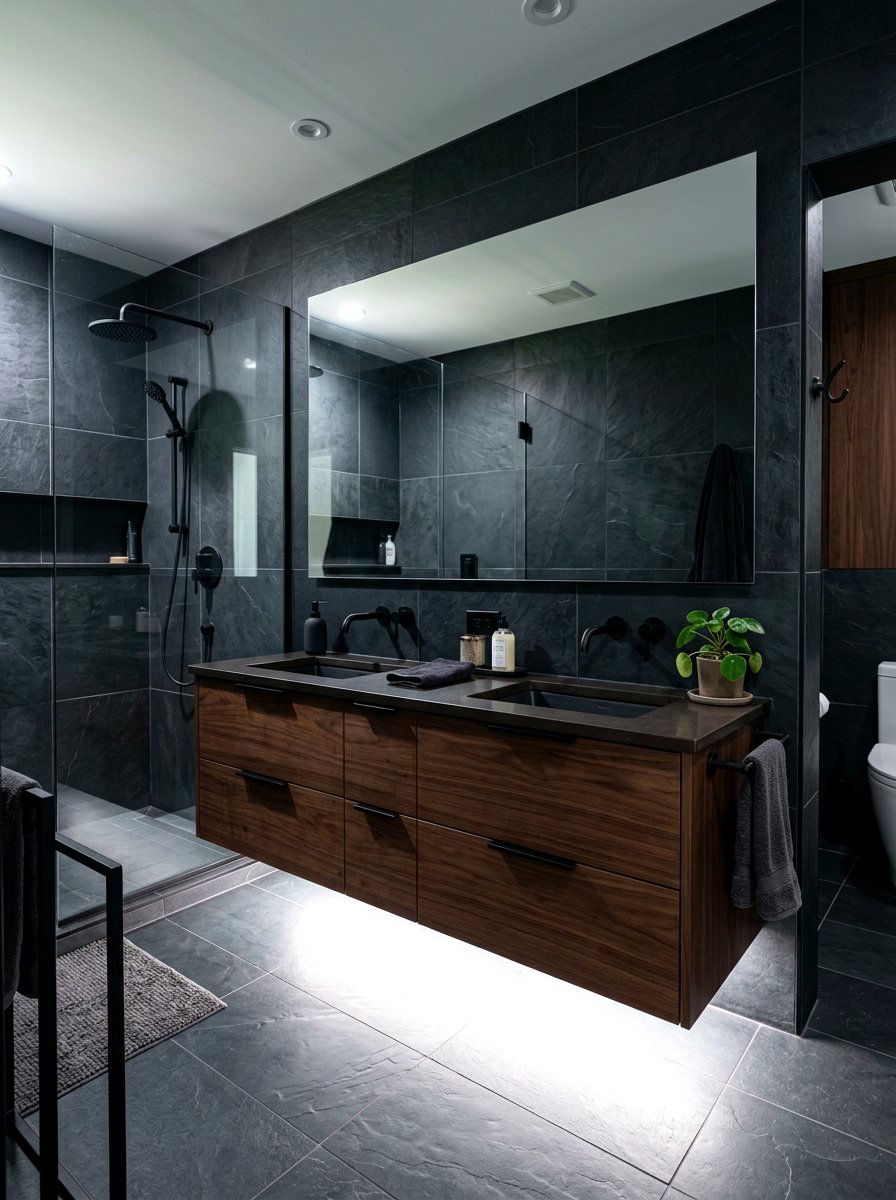
A floating walnut vanity combines the rich, dark tones of a premium hardwood with the modern, weightless appeal of a wall-mounted installation. This specific combination is often seen in high-end penthouse bathrooms or minimalist master suites where luxury meets contemporary design. The deep brown hues of the walnut provide a sophisticated backdrop for under-cabinet LED lighting, which can make the vanity appear to hover over the floor. Because walnut is such a strong material, it can support large, heavy countertops even when suspended. It is a striking choice for anyone looking to create a masculine, moody, yet incredibly stylish bathroom environment.
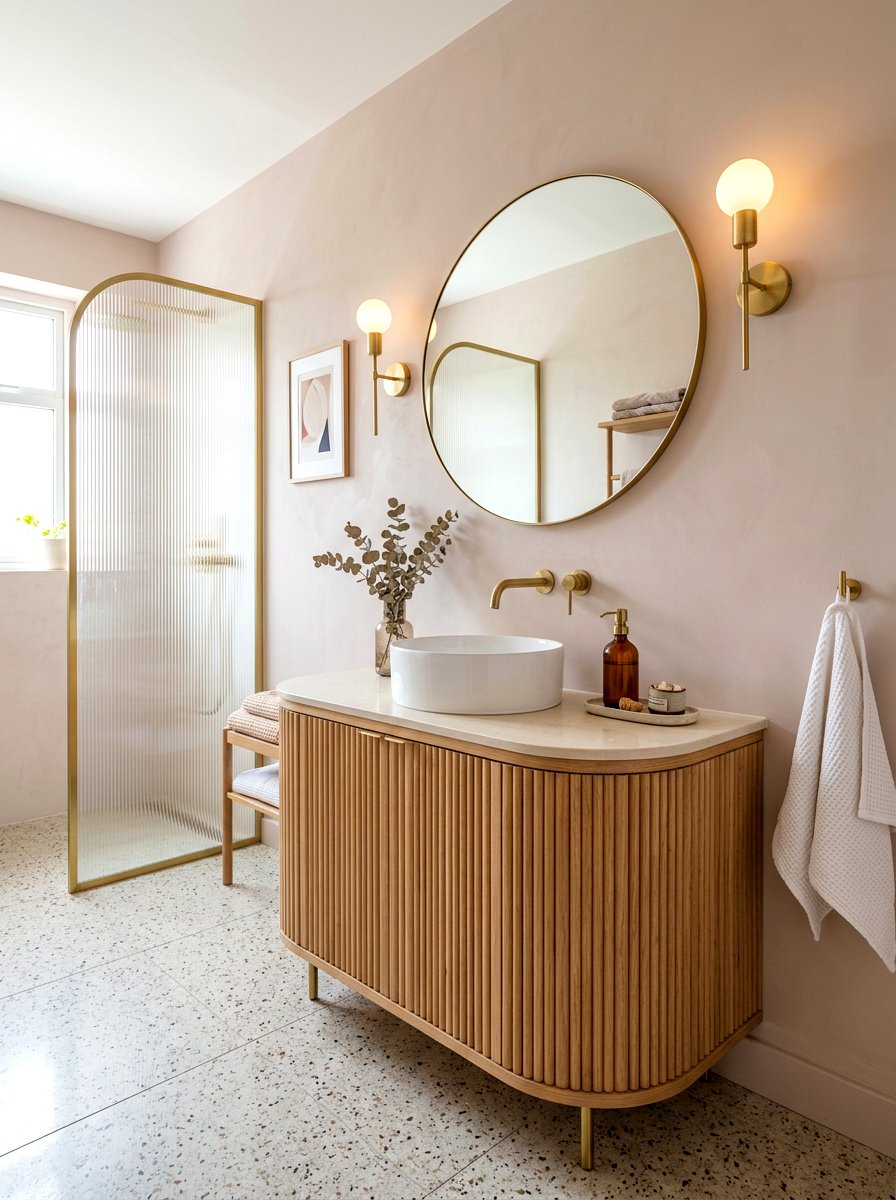
15. Single Wood Vanity
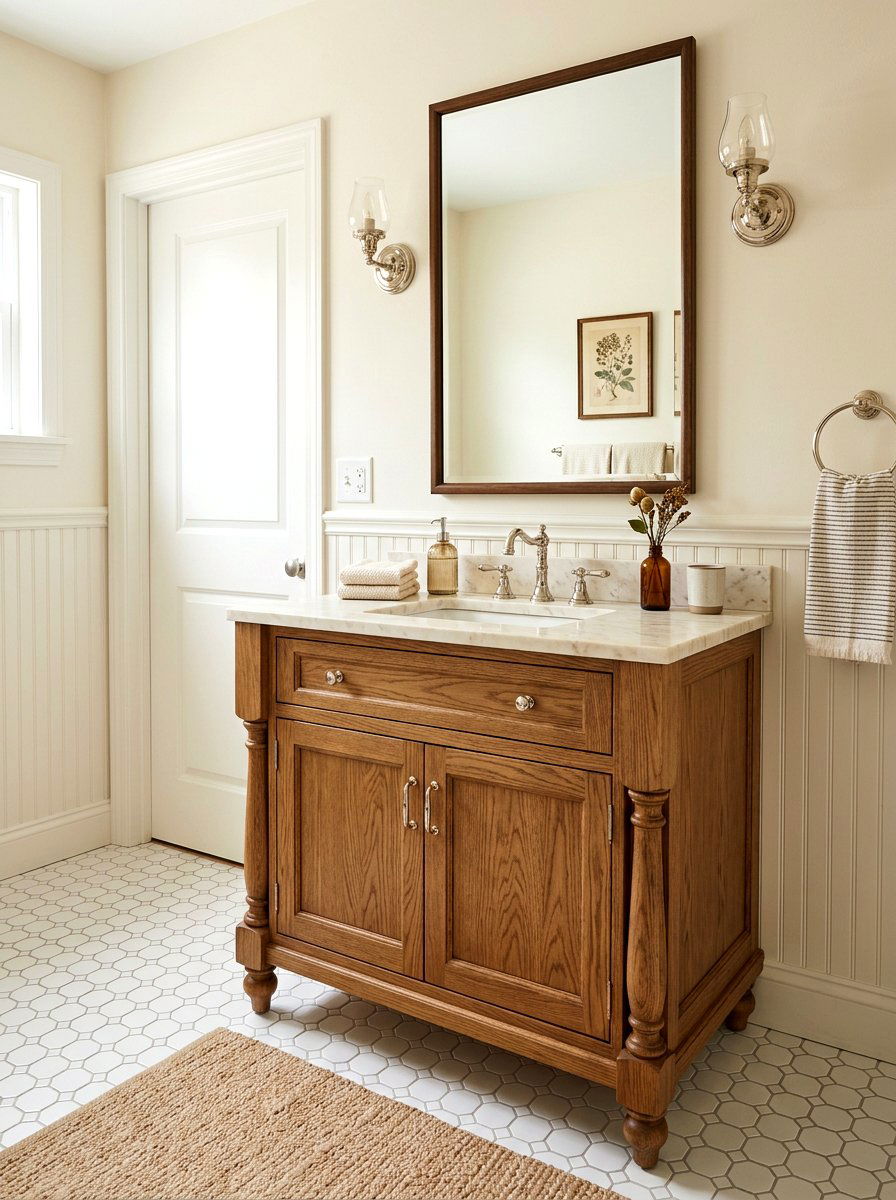
Single wood vanities are versatile workhorses that can fit into almost any bathroom layout, from a guest ensuite to a secondary children’s bathroom. While they are smaller than double units, they still offer a significant opportunity to introduce warmth and texture through beautiful wood cabinetry. You can choose a freestanding model with elegant furniture-style feet or a more modern blocky design that sits flush with the floor. A single vanity allows for more flexibility with the surrounding wall space, giving you room for larger mirrors or decorative sconces. It is a practical yet beautiful way to ensure every bathroom in your home feels cohesive and well-designed.
16. Distressed Wood Vanity
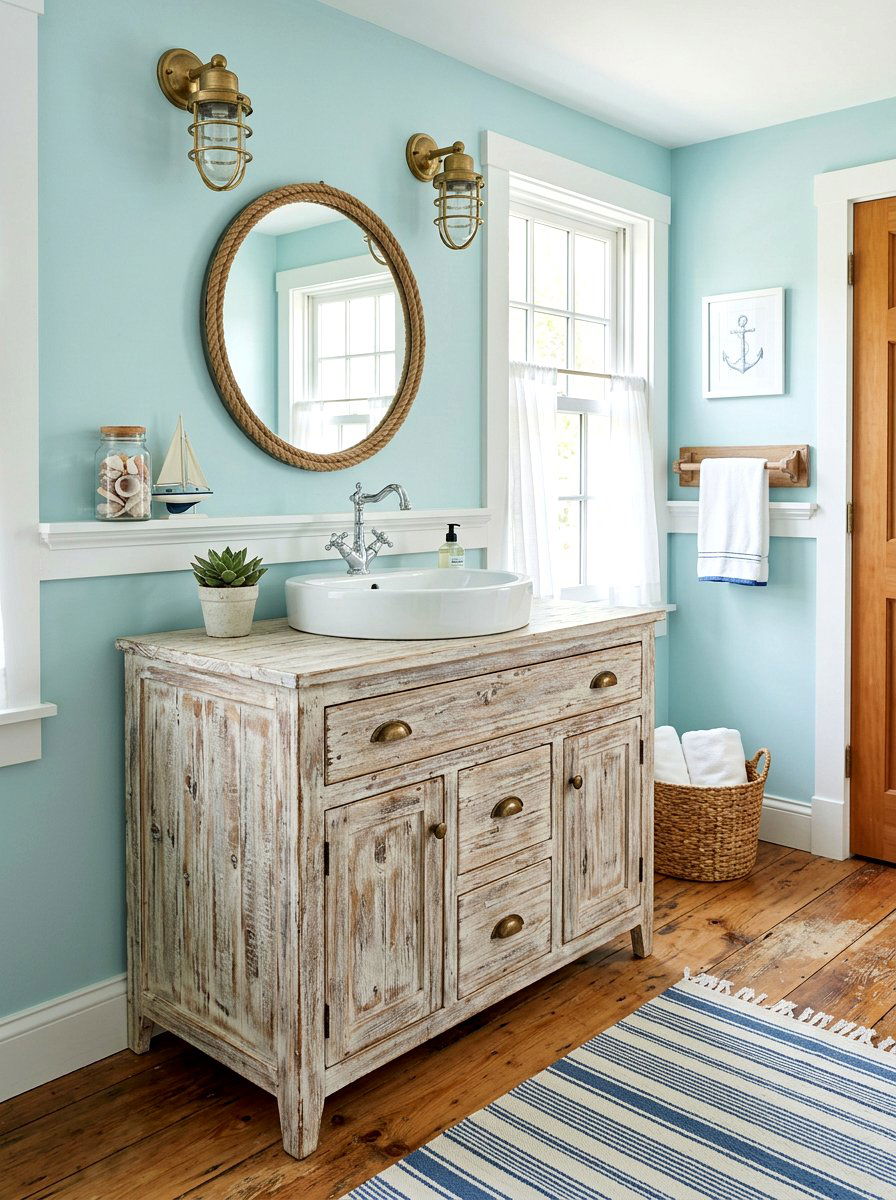
Distressed wood vanities are perfect for homeowners who love the "shabby chic" or coastal cottage look where furniture feels aged and loved. This style involves intentional sanding, denting, or light whitewashing of the wood to create an appearance of years of gentle wear and tear. The result is a piece that feels relaxed and unpretentious, making the bathroom feel more like a comfortable room rather than a sterile utility space. Distressed finishes are also very practical for busy households, as new scratches or dings simply blend into the existing texture. It is a charming, low-maintenance option that adds significant visual interest through its varied surfaces.
17. Wood Vanity with Black Hardware
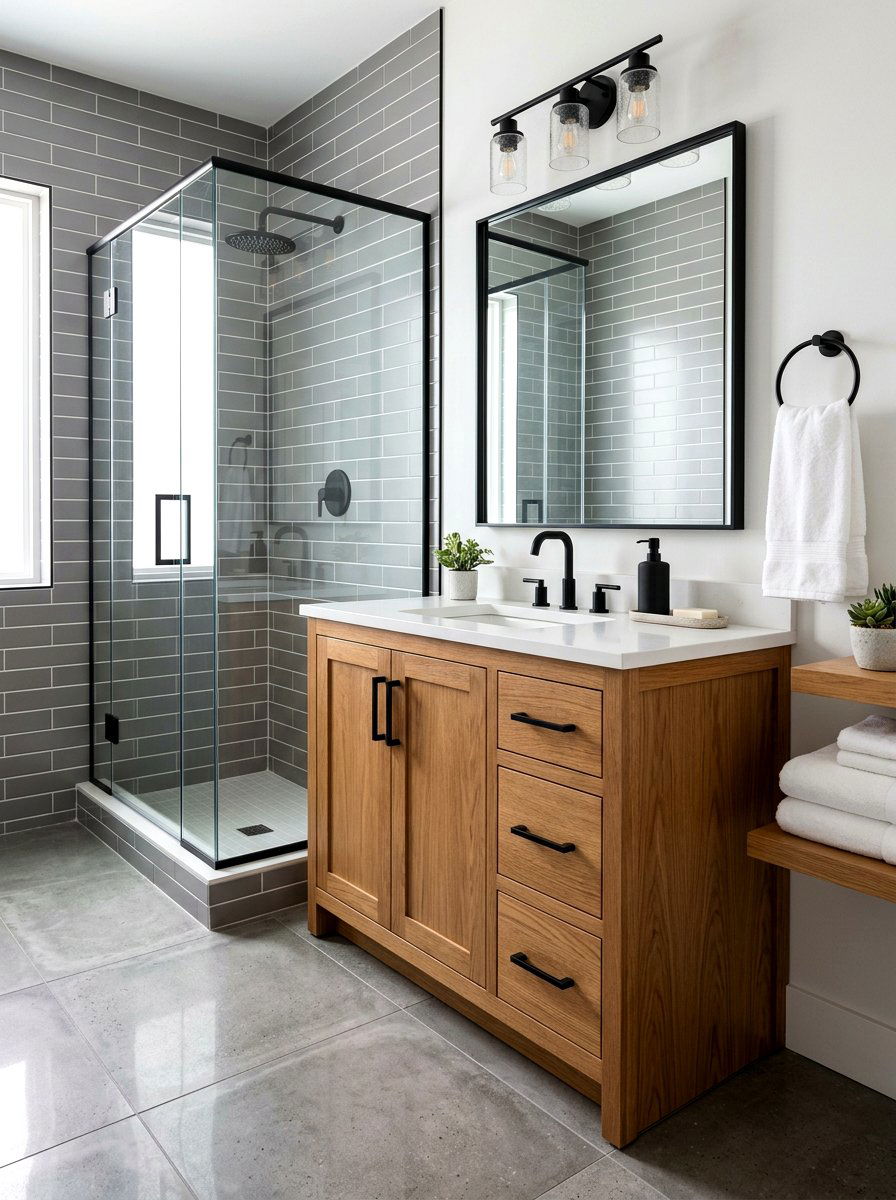
Choosing a wood vanity with black hardware is a fantastic way to lean into the popular industrial or modern farmhouse trends. The starkness of matte black handles and faucets provides a crisp, modern edge that pops against the warm brown or tan tones of the wood. This high-contrast look is visually stimulating and helps to define the different elements of the vanity area clearly. Whether you have a light oak or a dark walnut cabinet, black hardware adds a sense of "coolness" and structural definition to the piece. It is one of the easiest ways to update a classic wood vanity and make it feel current.
18. Live Edge Wood Vanity
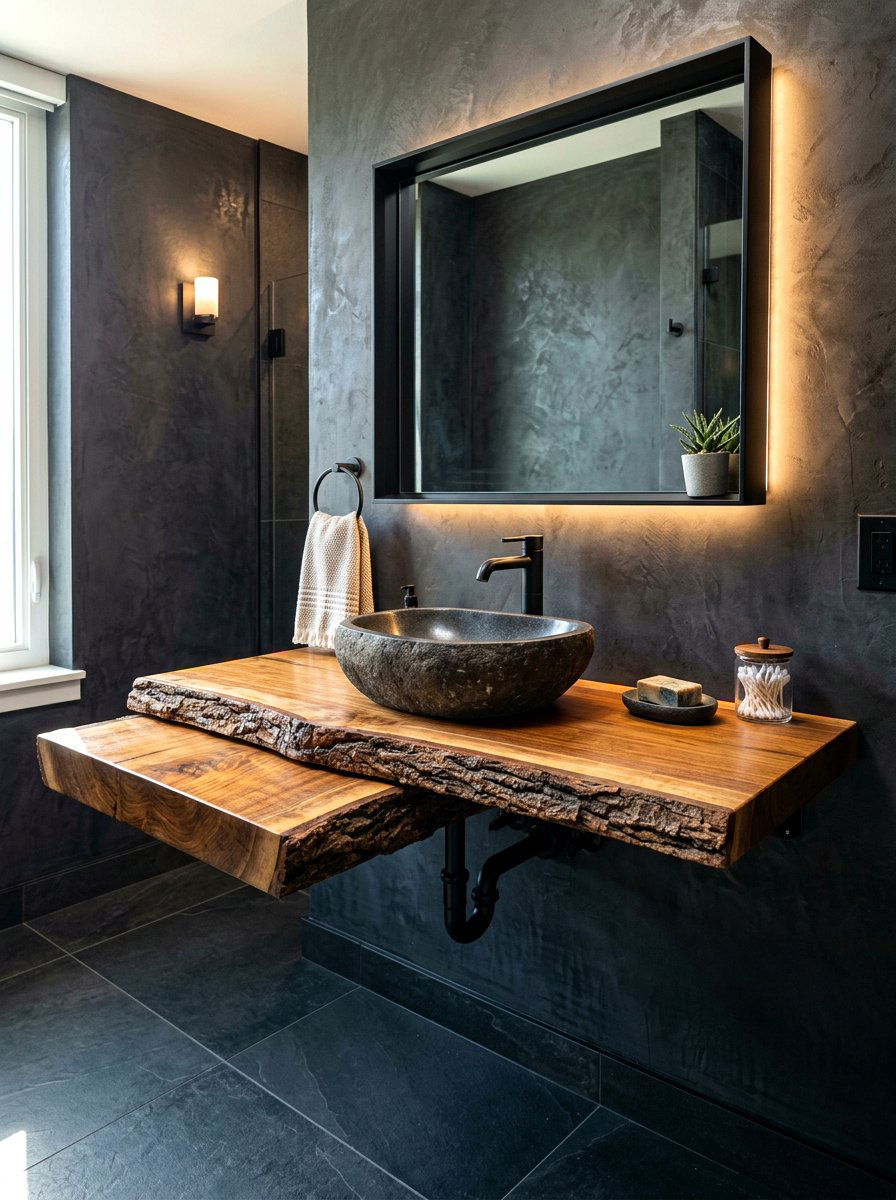
Live edge wood vanities are for those who want to make a bold, artistic statement by keeping the natural, irregular edge of the tree visible. Often used as a countertop or a thick floating shelf, the live edge preserves the original contour of the trunk, including any bark or jagged textures. This style turns a functional bathroom element into a centerpiece of natural sculpture that is completely unique to your home. Because no two trees grow the same way, your vanity will be a completely one-of-a-kind piece that brings a piece of the wild indoors. It works exceptionally well in modern, rustic, or eclectic bathroom settings.
19. Scandi Wood Vanity
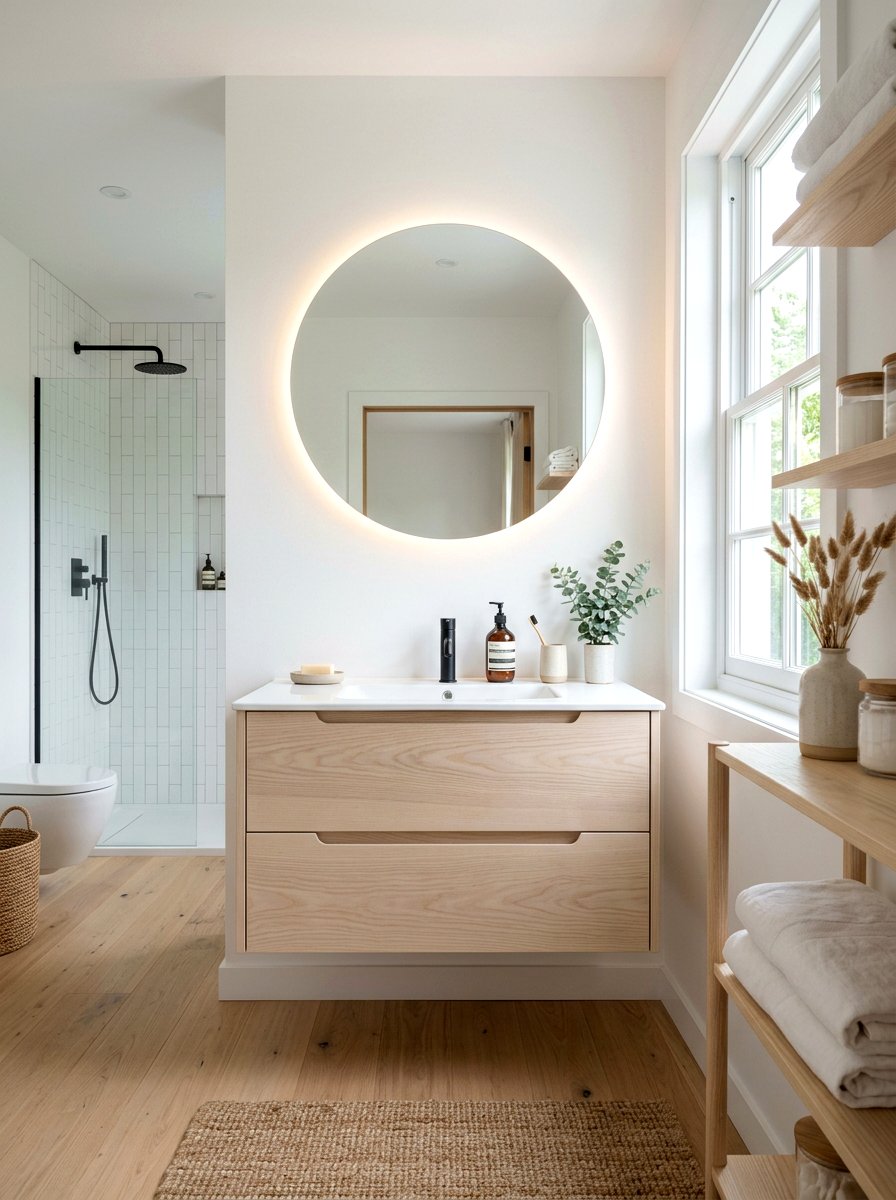
Scandi wood vanities are the epitome of the Nordic design philosophy, focusing on light-colored timbers like ash, pine, or pale oak. These pieces usually feature very clean lines, functional storage, and a light, airy finish that makes the bathroom feel bright and spacious. The Scandinavian aesthetic often pairs these light wood units with white walls, round mirrors, and simple ceramic accessories for a peaceful look. This style avoids any unnecessary ornamentation, allowing the light-colored grain to provide the subtle texture needed to keep the room from feeling too sterile. It is a perfect choice for anyone wanting to create a functional, serene sanctuary.
20. Cherry Wood Vanity
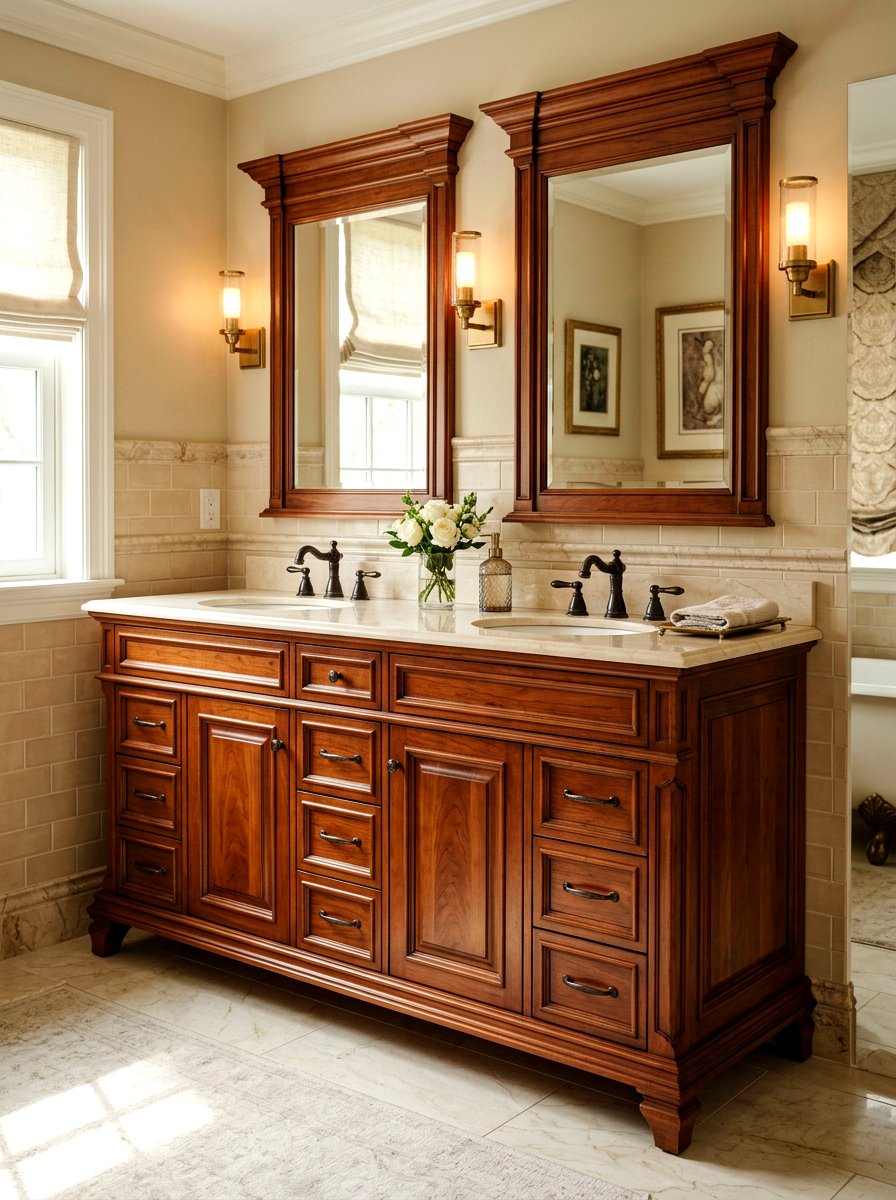
Cherry wood vanities are known for their beautiful reddish-brown hues and smooth, fine grain that darkens beautifully as it is exposed to light. This wood species brings a sense of traditional warmth and formal elegance that is perfect for classic or transitional bathroom designs. Cherry is a very durable hardwood that takes finishes exceptionally well, resulting in a lustrous, polished surface that feels luxurious to the touch. Because it deepens in color over time, a cherry vanity becomes more beautiful the longer you own it. It pairs wonderfully with cream-colored stone tops and traditional oil-rubbed bronze fixtures for a timeless, sophisticated appearance.
21. Maple Wood Vanity
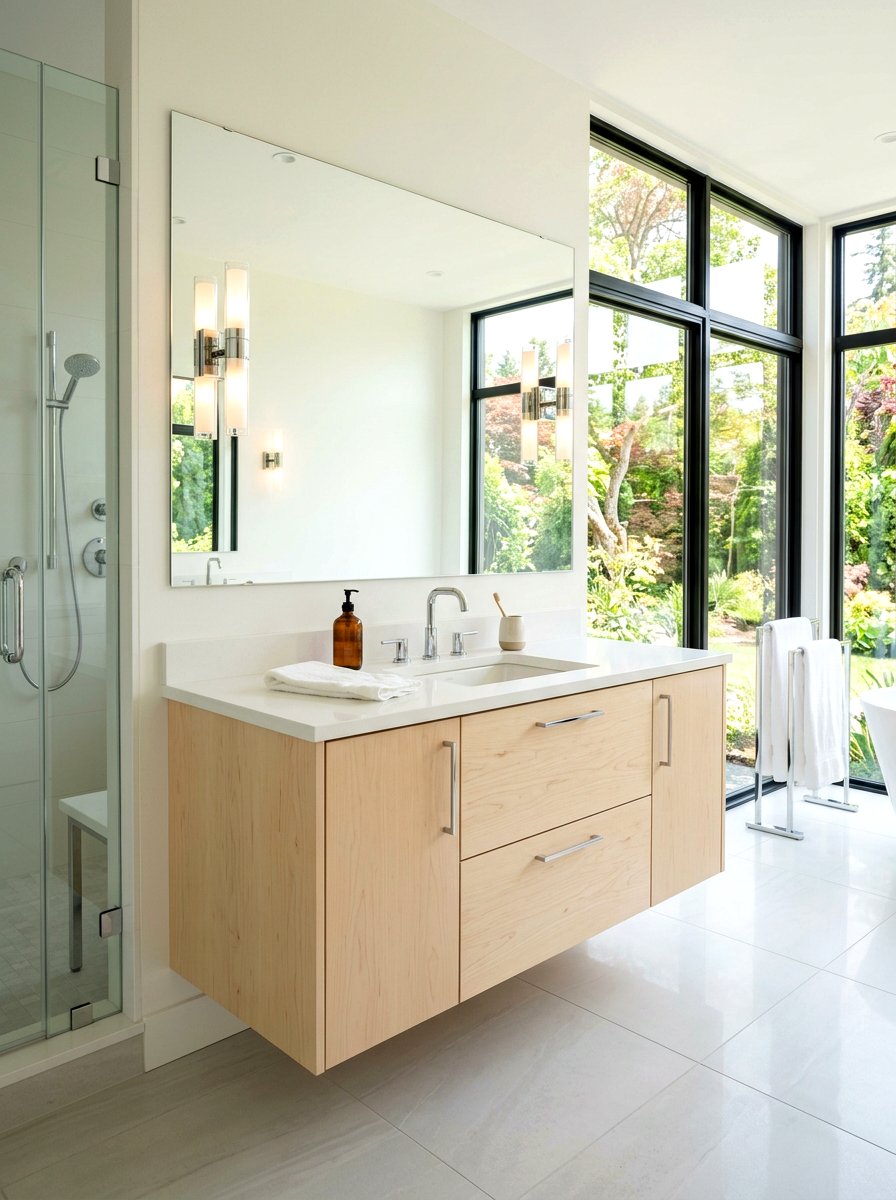
Maple wood vanities are a favorite for contemporary bathrooms because of their incredibly smooth grain and very light, creamy color. Maple is one of the hardest and most durable domestic woods, making it resistant to the daily bumps and scratches common in busy family bathrooms. Its consistent texture allows for a very clean look that does not distract from other design elements like bold tile or colorful wallpaper. Because maple is so light, it can also be stained to mimic more expensive woods while still retaining its superior structural integrity. It is an excellent all-around choice for a high-quality, long-lasting bathroom renovation project.
22. Wood Vanity with Vessel Sink
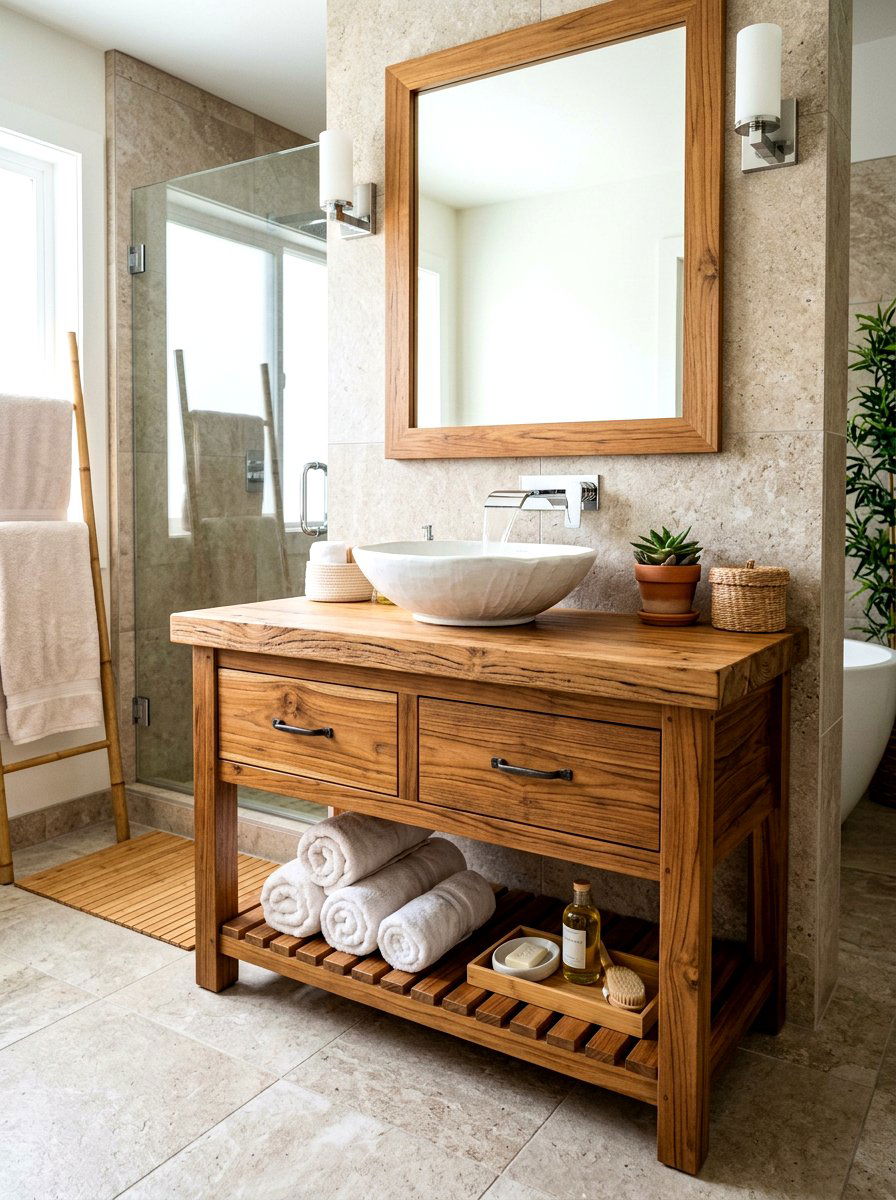
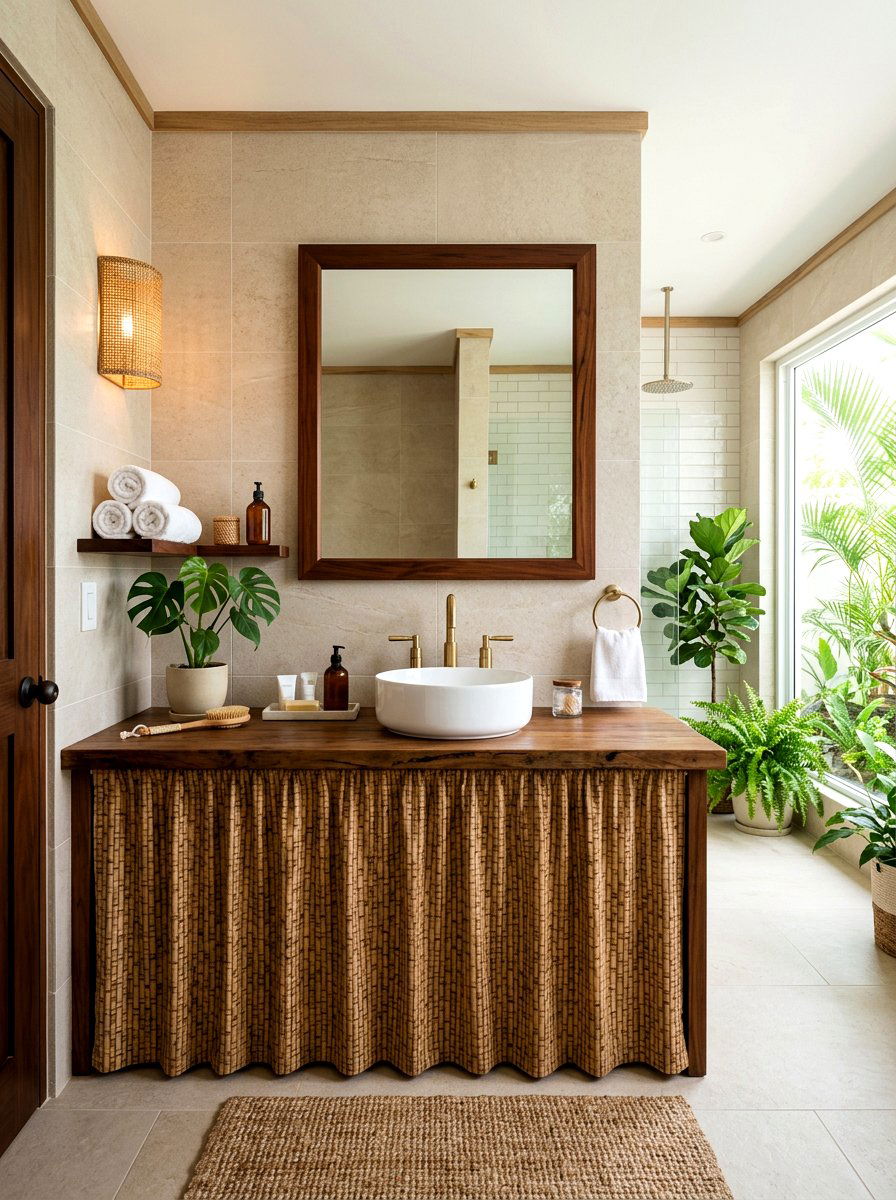
A wood vanity with a vessel sink creates a high-impact, spa-like focal point by placing the basin on top of the wooden surface rather than inside it. This arrangement allows you to showcase a beautiful wooden countertop, whether it is a solid slab of teak or a polished piece of walnut. Vessel sinks come in various materials like stone, glass, or copper, which all look stunning when perched atop a warm timber base. This design also provides a bit more storage space inside the cabinet because the sink does not take up room below the counter. It is a stylish, modern choice that feels very intentional and custom-made.
23. Slat Wood Vanity
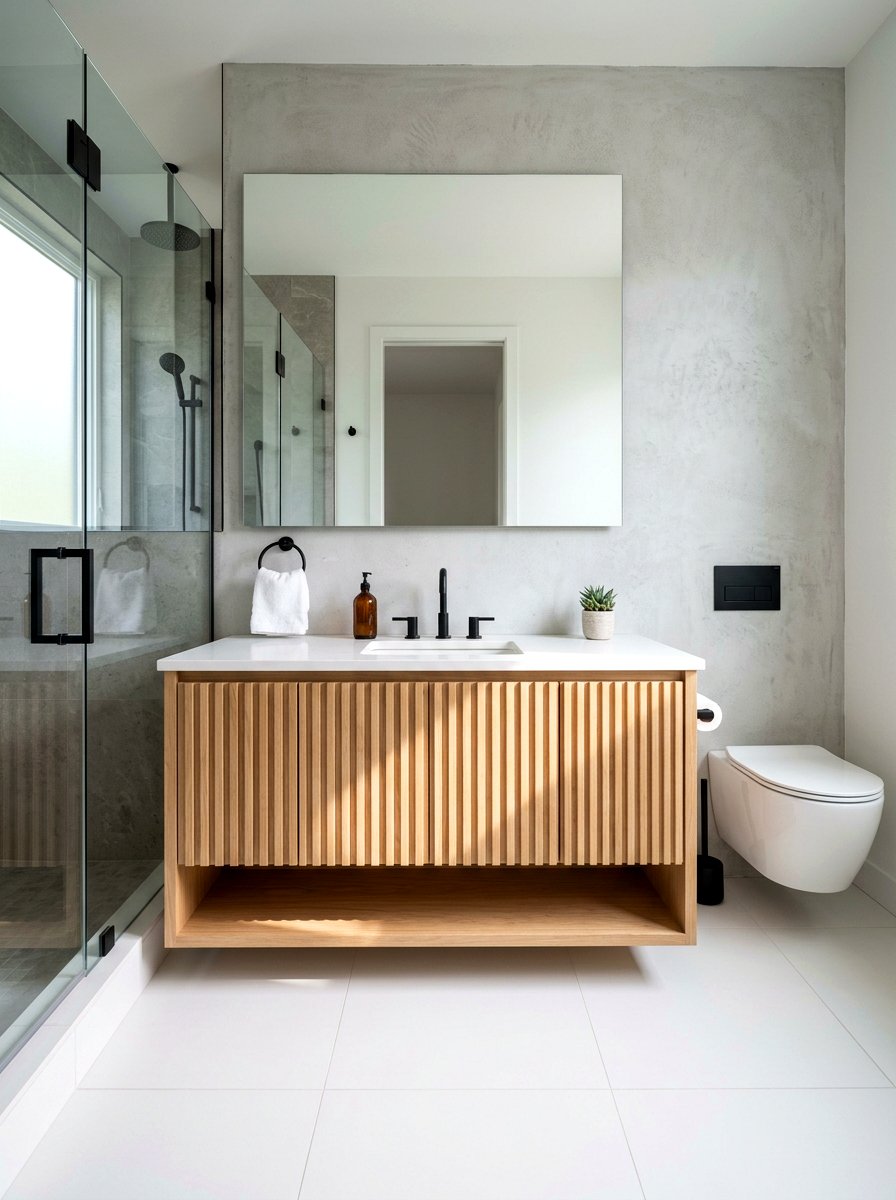
Slat wood vanities feature vertical or horizontal wooden strips on the cabinet fronts, creating a deep, architectural texture that is very trendy in 2025. This design is inspired by Japanese and Scandinavian influences, offering a rhythmic pattern that adds visual interest without using bold colors. The gaps between the slats can provide subtle ventilation for the cabinet interior while creating a beautiful play of light and shadow across the vanity. Usually crafted from light oak or teak, slat vanities look best in minimalist or modern bathrooms where they serve as the primary textural element. It is a sophisticated way to add depth and modern flair to your space.
24. Industrial Wood Vanity
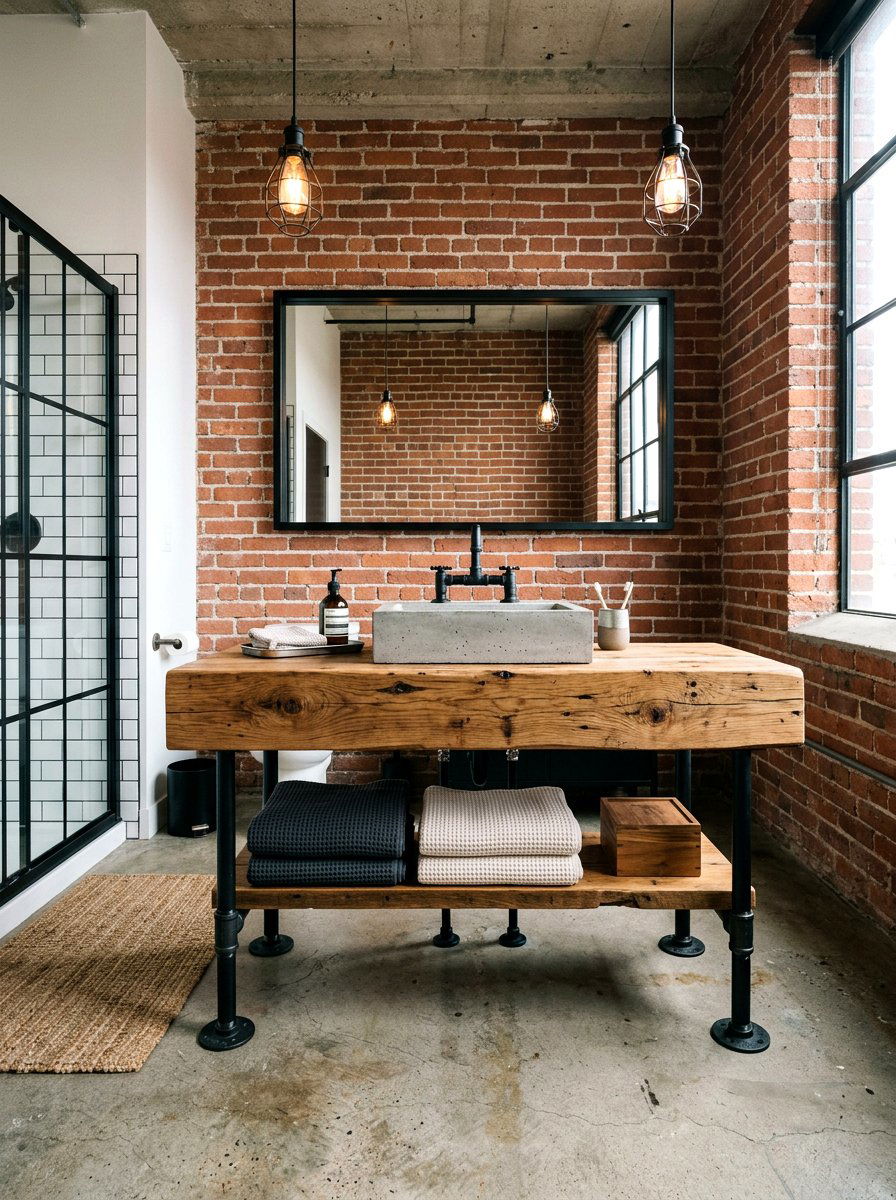
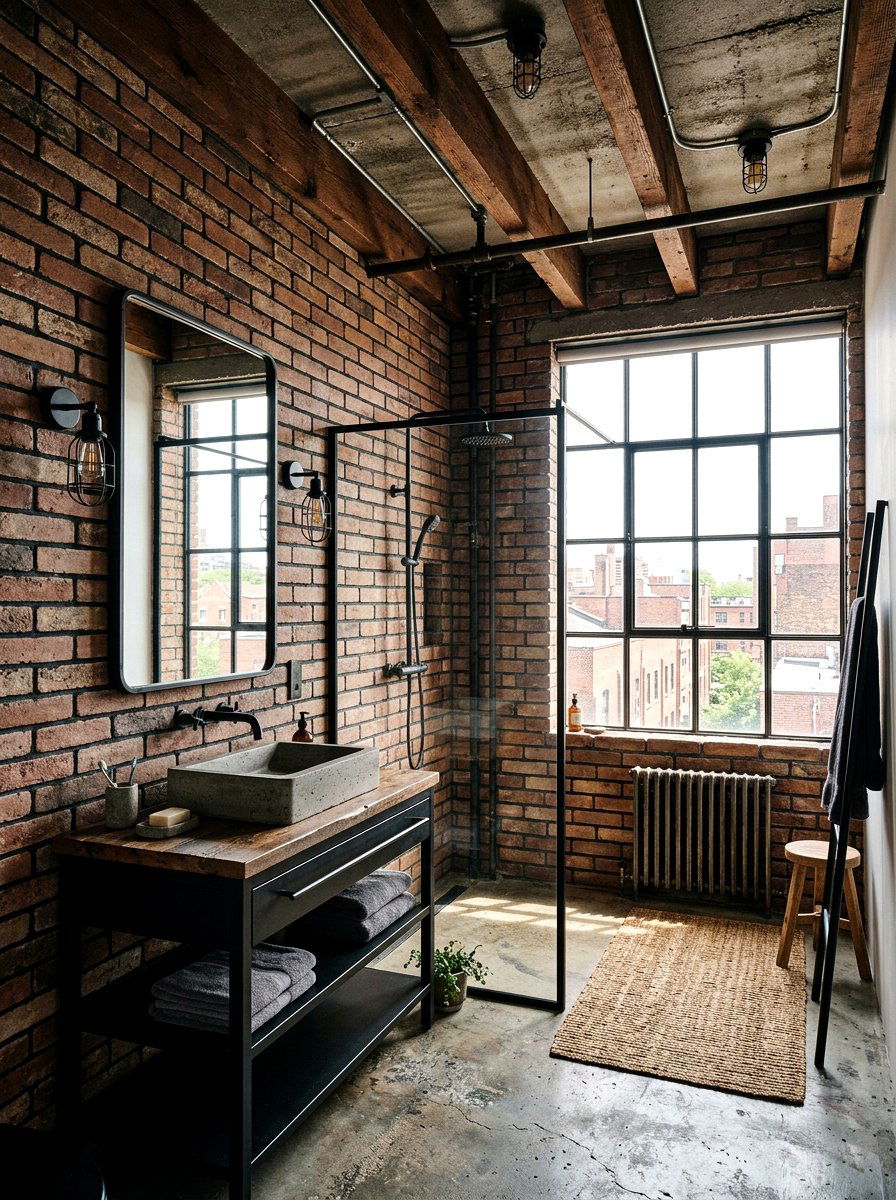
Industrial wood vanities often combine thick, heavy timber with metal accents like steel legs, exposed bolts, or pipe-style hardware. This look is inspired by old factories and urban lofts, emphasizing strength, utility, and raw materials in a very modern way. A popular configuration is a thick reclaimed wood top supported by a matte black metal frame, creating an open-shelf look that is both stylish and functional. This style works perfectly in homes with exposed brick walls, concrete floors, or large windows. It is a rugged and masculine design choice that feels incredibly sturdy and full of modern urban character.
25. Barn Wood Vanity
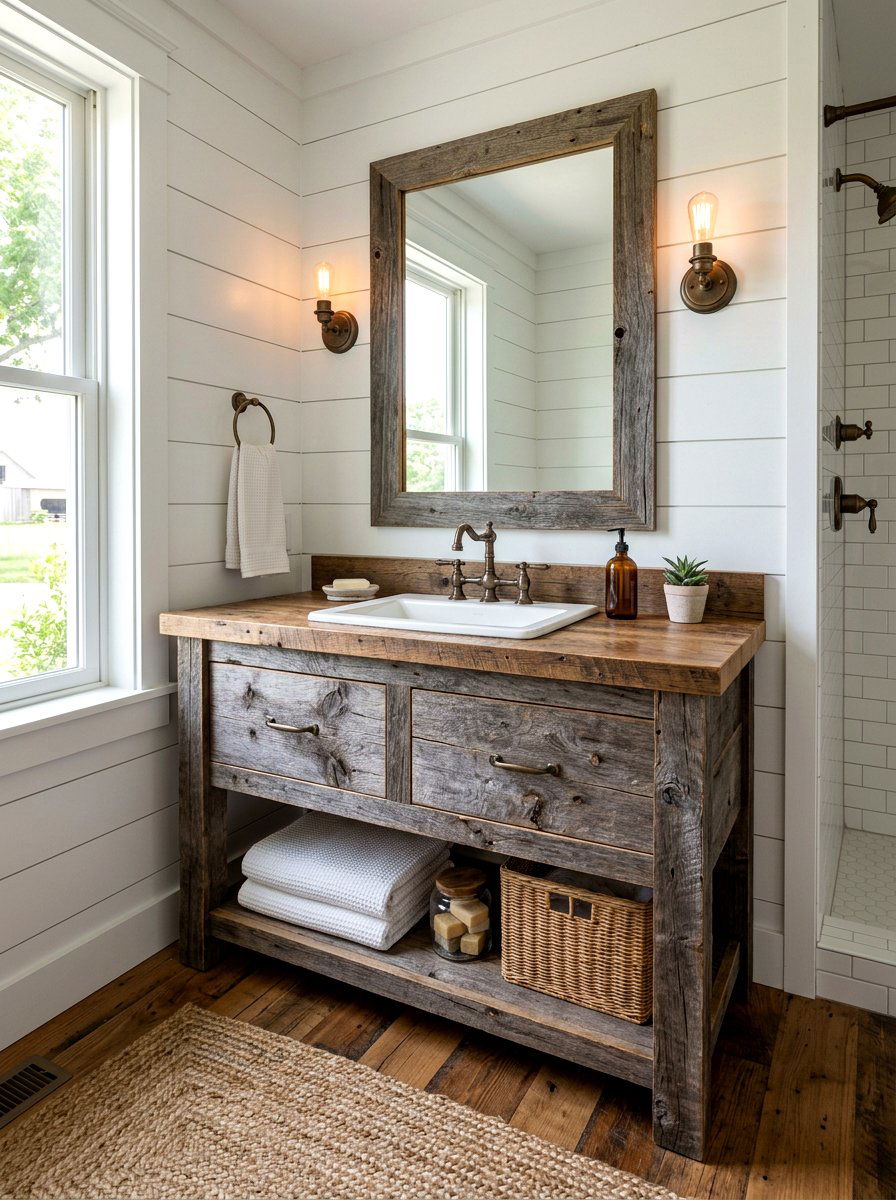
Barn wood vanities utilize authentic timber salvaged from old rural structures, offering a level of weathered patina and silver-gray tones that are hard to replicate. These vanities bring an immediate sense of history and warmth to the bathroom, making it feel like a part of a long-standing homestead. The wood often features unique markings from its previous life, such as old tool marks or natural aging from the elements. This choice is perfect for a farmhouse or coastal theme where you want the furniture to have a soft, lived-in feel. It pairs beautifully with white porcelain and simple, timeless fixtures for a classic look.
26. Gray Wood Vanity
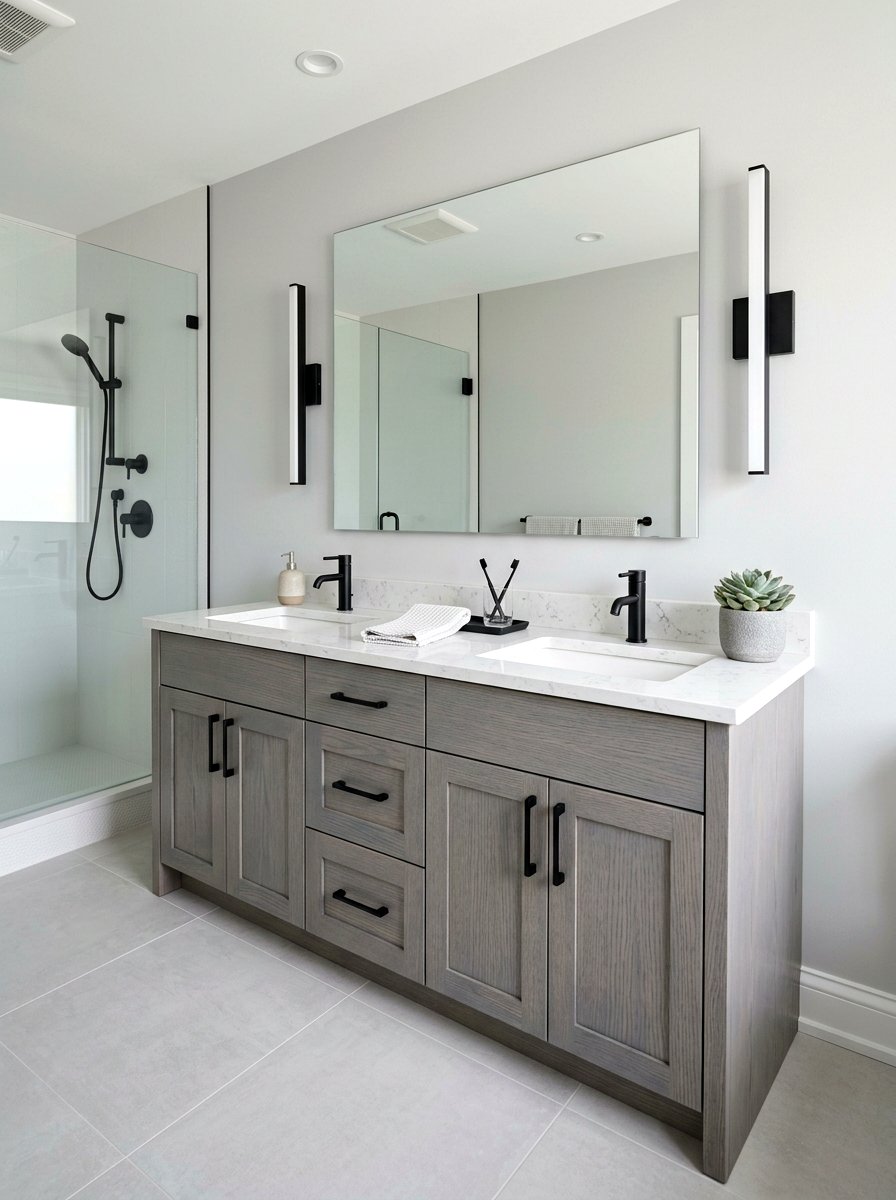
Gray wood vanities offer a modern twist on the natural wood look by using stains that emphasize the cool, ashy tones of the timber. This color palette is incredibly versatile, working well in both contemporary and traditional settings where you want a neutral but textured foundation. Gray-stained oak or maple provides a sophisticated backdrop that can lean towards a coastal vibe or a sleek metropolitan aesthetic depending on the hardware. It is a great alternative for those who find traditional brown wood too warm but still want the organic feel of a grain pattern. This color choice hides water spots and dust remarkably well for easy maintenance.
27. Birch Wood Vanity
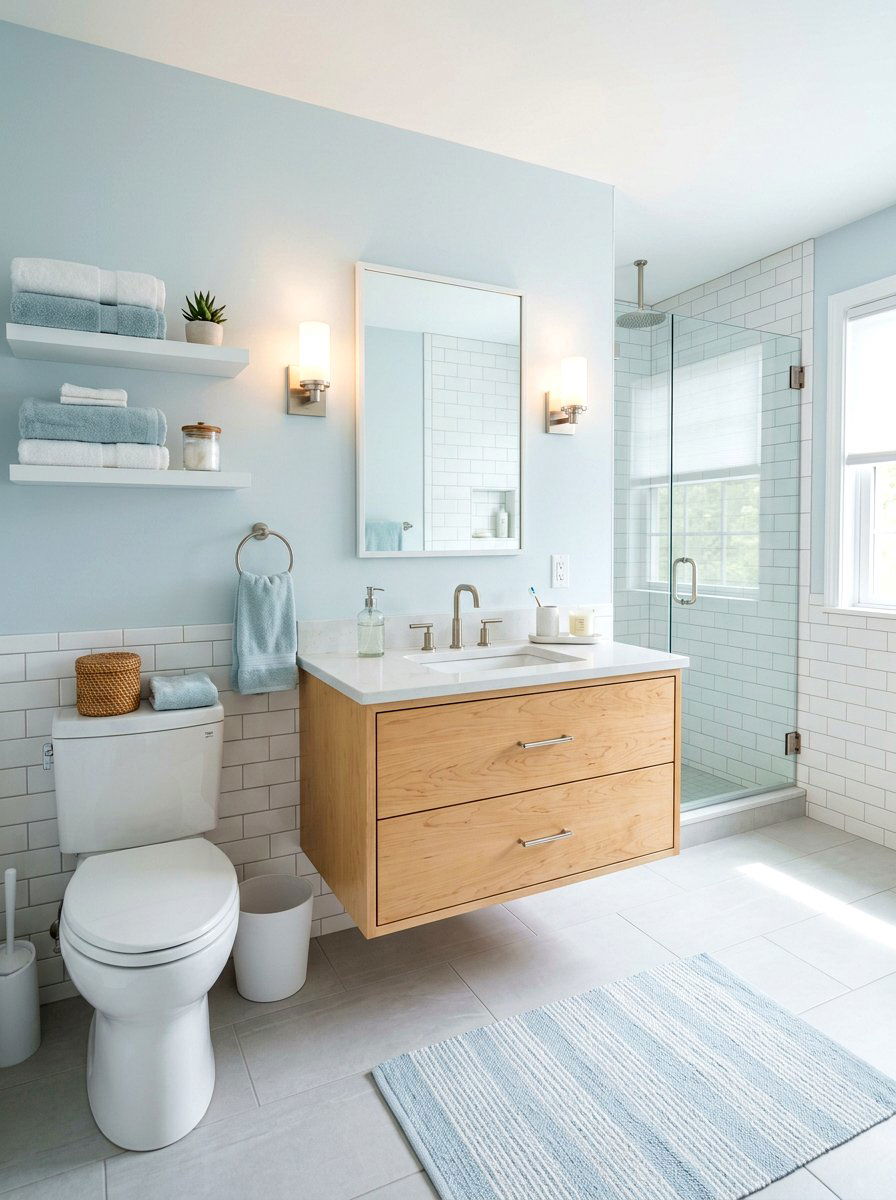
Birch wood vanities are an excellent budget-friendly option that does not sacrifice the beauty of real wood for cost. Birch has a very fine, even grain and a light color that can easily be stained to look like much more expensive species like maple or cherry. It is a strong, stable wood that resists warping, making it perfectly suitable for the humid environment of a primary bathroom. Because birch is widely available, it is often used for clean-lined, modern designs that look much more high-end than their price tag suggests. It is a smart choice for a stylish guest bathroom or a modern rental property.
28. Bamboo Wood Vanity
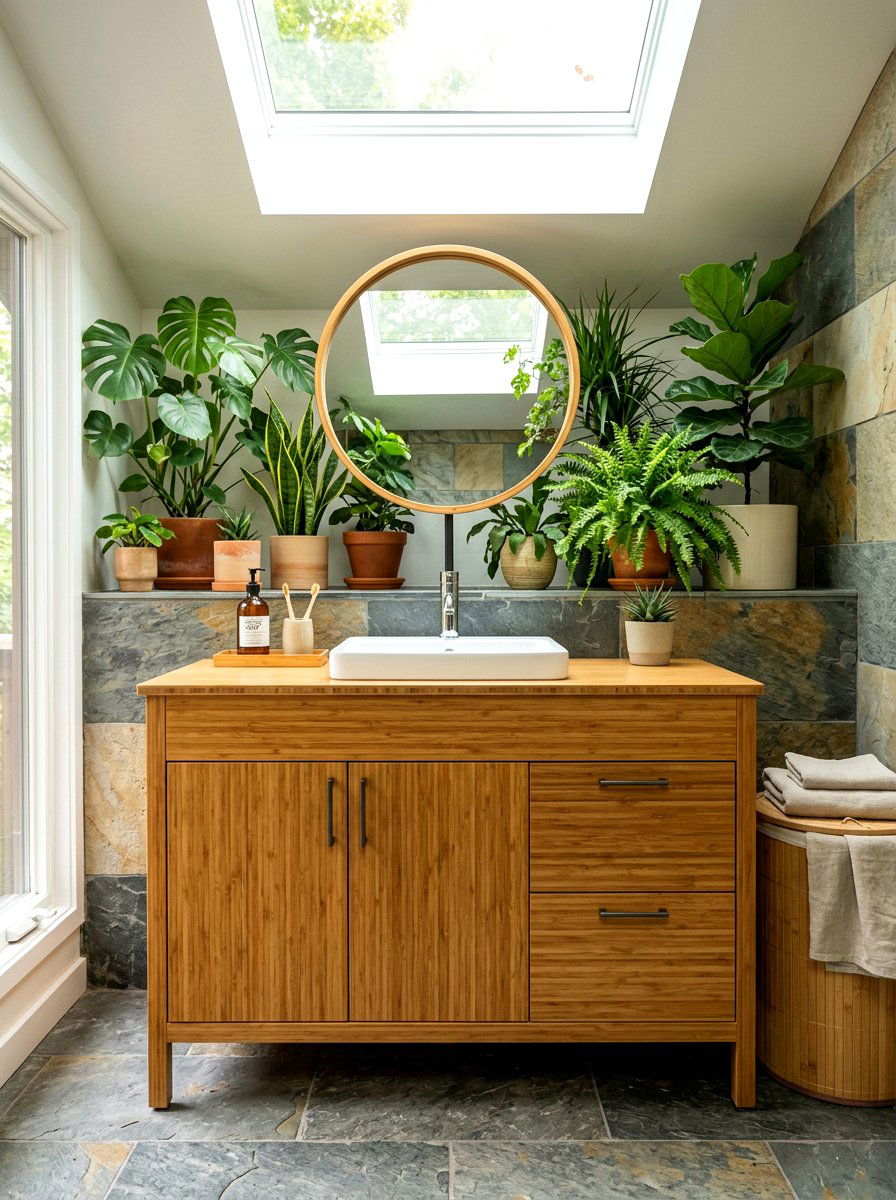
Bamboo wood vanities are a top choice for eco-conscious homeowners because bamboo is a rapidly renewable resource that grows much faster than traditional hardwood trees. Despite being a grass, bamboo is incredibly hard and water-resistant once it is processed into boards, making it ideal for the bathroom. It features a unique, linear grain pattern that looks very modern and pairs perfectly with "green" or sustainable design themes. Choosing a bamboo vanity often signifies a commitment to modern, responsible living while still enjoying a warm and beautiful organic texture. It feels fresh, innovative, and perfectly suited for a bright, plant-filled bathroom oasis.
29. Pine Wood Vanity
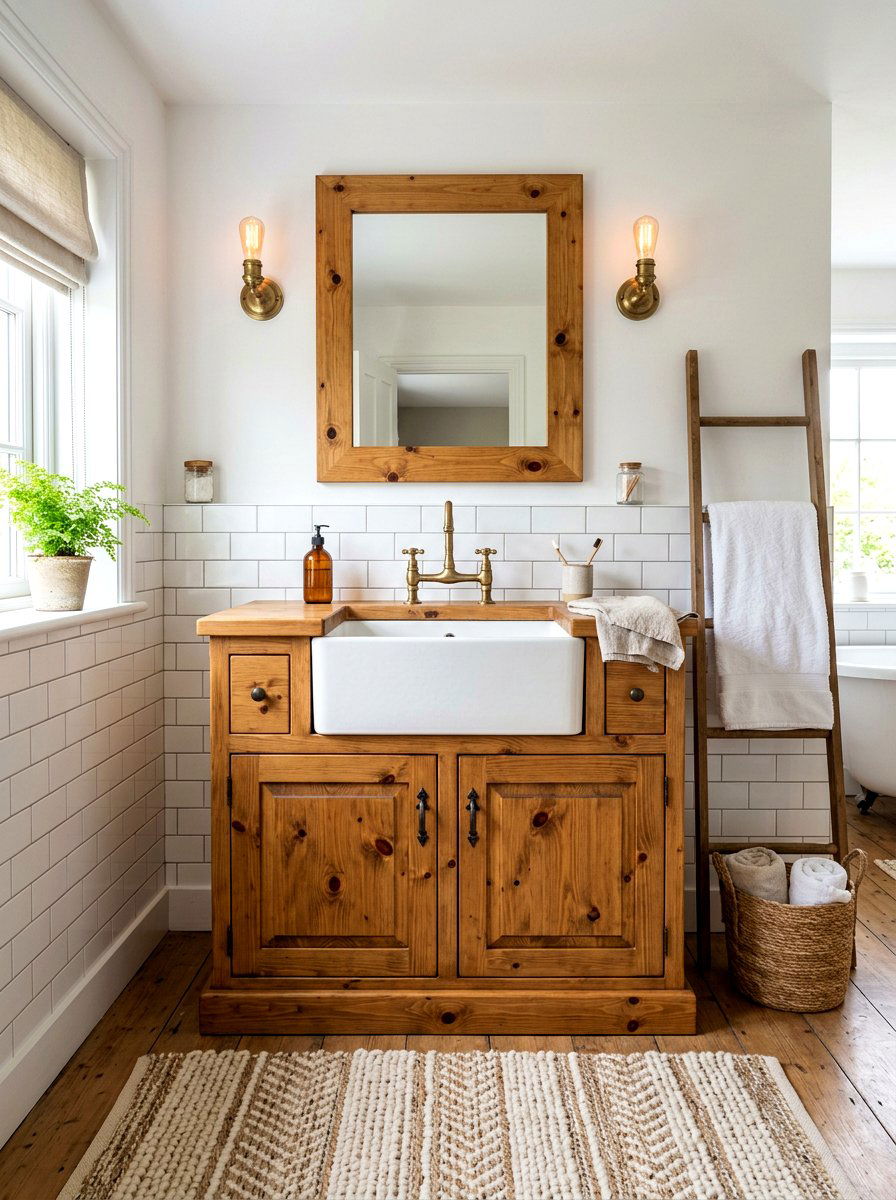
Pine wood vanities are the hallmark of traditional country and rustic styles, offering a soft, pale color and characteristic dark knots that create a very cozy feel. While pine is a softer wood, it is often chosen for its affordability and the way it takes on a beautiful yellow or honey patina as it ages. Many pine vanities are built with a more substantial, chunkier profile to emphasize their solid, handmade nature. This wood type is perfect for a guest cabin or a family home where a relaxed, unpretentious atmosphere is the goal. It brings a friendly, familiar warmth that makes any guest feel instantly at home.
30. Vintage Wood Vanity
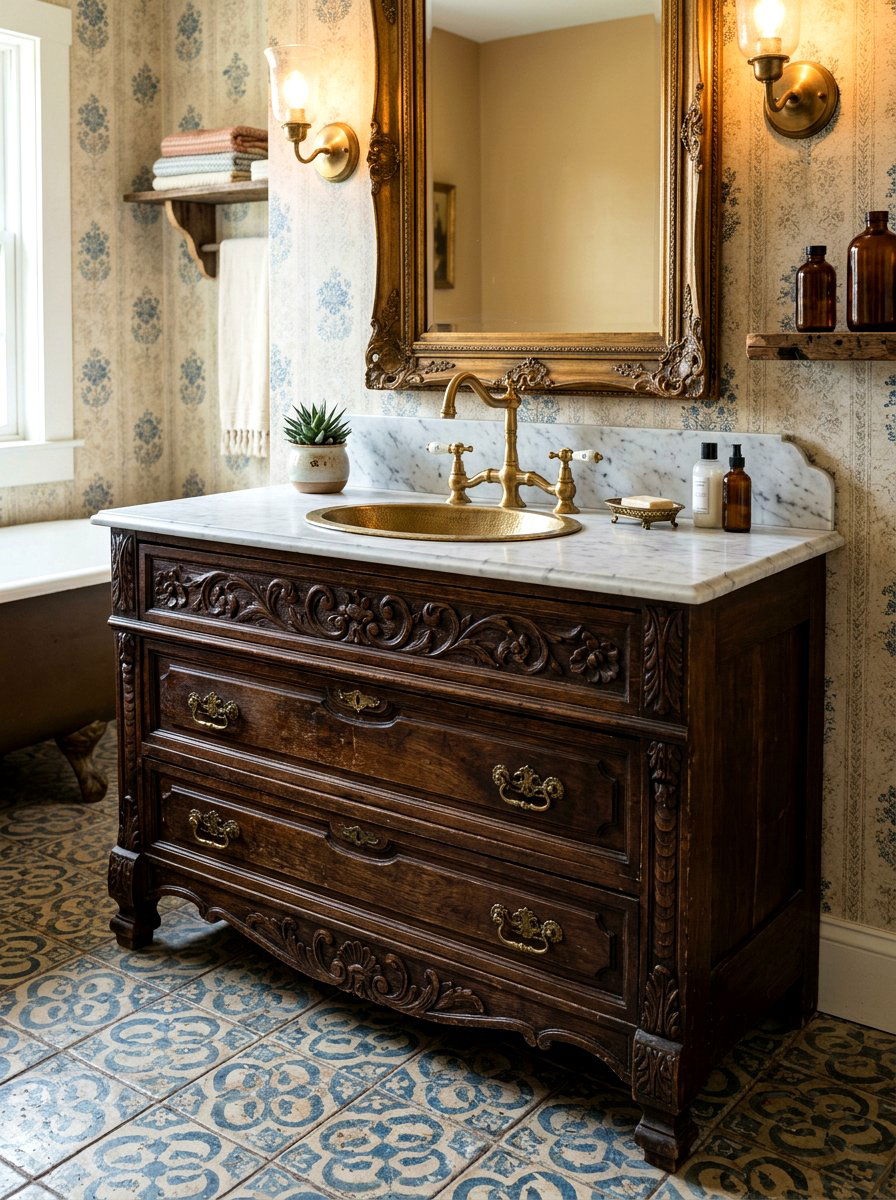
Vintage wood vanities are often created by repurposing antique dressers or sideboards into functional bathroom pieces, adding an unparalleled sense of charm and history. By cutting a hole for a sink and sealing the top with a waterproof finish, you can turn a beautiful old piece of furniture into a one-of-a-kind vanity. This approach allows you to introduce intricate carvings, unique drawer pulls, and classic proportions that modern mass-produced units lack. It is a wonderful way to give a second life to a beloved antique while ensuring your bathroom has a character that cannot be found in any showroom.
Conclusion:
Choosing a wood vanity is a commitment to bringing lasting warmth and natural beauty into one of the most important rooms of your home. Whether you select the modern elegance of a floating walnut unit or the rugged history of a reclaimed timber piece, wood provides an organic anchor that makes any space feel more inviting. By considering the unique properties of different species like teak for moisture resistance or oak for durability, you can ensure your vanity remains a centerpiece for years. We hope these thirty ideas have inspired you to explore the endless possibilities that wood offers for your next bathroom transformation.

Related posts: