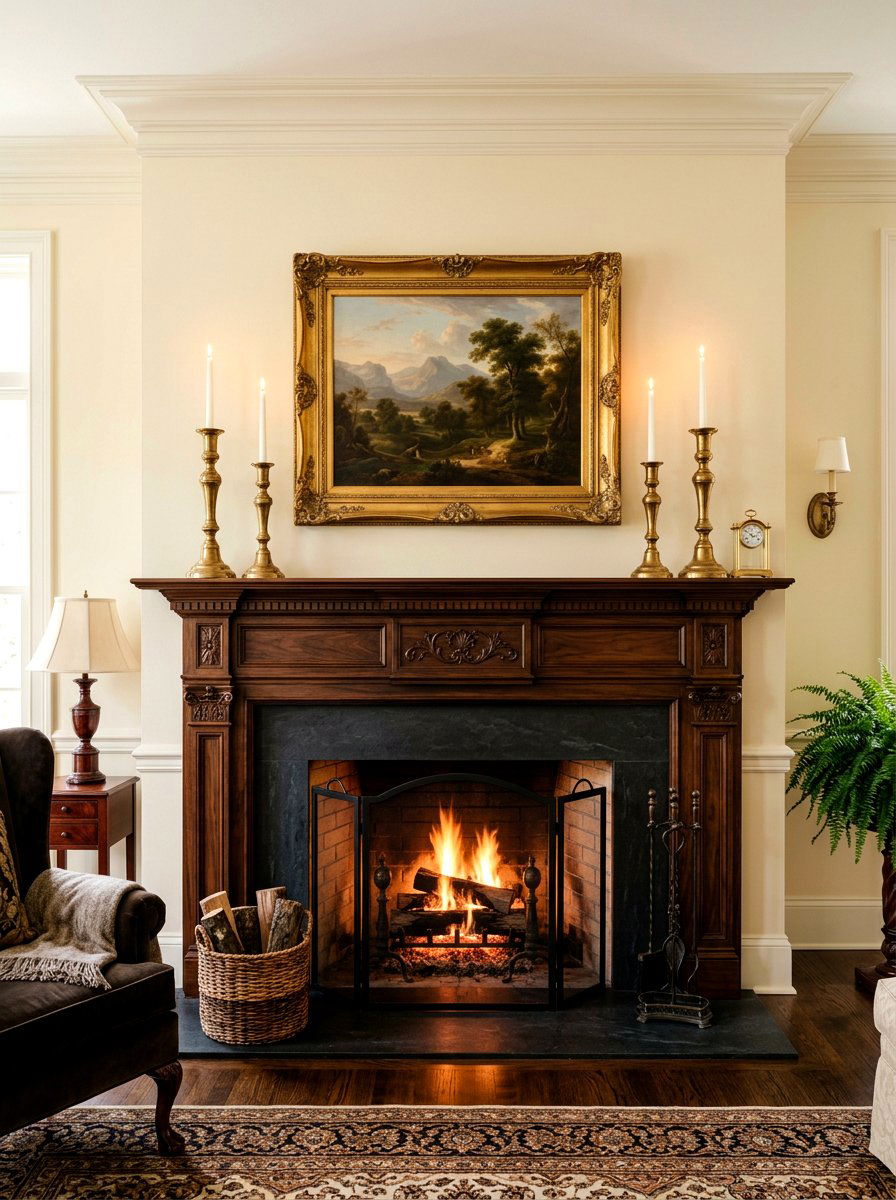
Brown is making a massive comeback in the world of interior design, stepping away from its dated reputation and emerging as the ultimate modern neutral. For years, cool grays and stark whites dominated our feeds, but homeowners are now craving the warmth, stability, and organic comfort that only earthy tones can provide. This "brown renaissance" is all about creating a sanctuary that feels grounded and sophisticated. Whether you are drawn to deep espresso hues, creamy lattes, or rugged tan leathers, there is a way to make this versatile color work for any aesthetic. From mid-century modern layouts to cozy Japandi retreats, brown serves as a timeless foundation that pairs beautifully with almost every color in the rainbow. It invites a sense of history and soul into a space, making it feel lived-in and luxurious simultaneously. By layering different textures and tones, you can transform a simple living area into a rich, multidimensional haven that feels both trendy and classic for years to come.
1. Chocolate brown living room
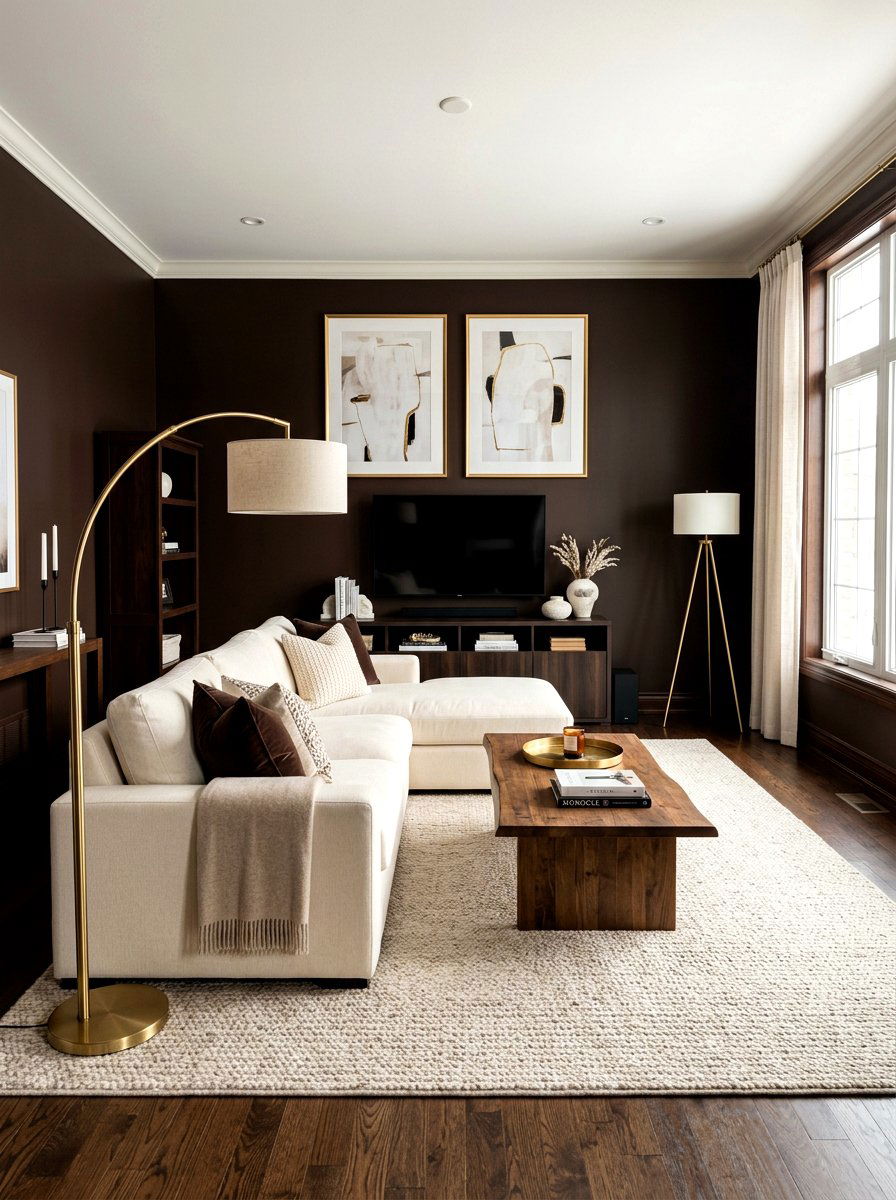
Chocolate brown offers a sense of deep sophistication that works beautifully in both large and small spaces. This rich shade creates a cozy atmosphere that feels like a warm embrace when you enter the room. To keep the space from feeling too heavy, you can balance the dark walls with creamy white furniture and light-colored flooring. Adding a large plush rug in a neutral tone helps to anchor the seating area while providing a soft contrast to the dark walls. Natural light plays a vital role in making chocolate tones pop, so keep window treatments minimal to let the sun highlight the rich undertones. Incorporating a few metallic accents, like brass lamps or gold frames, adds a touch of glamour that prevents the deep brown from looking flat or dull.
2. Mocha mousse living room
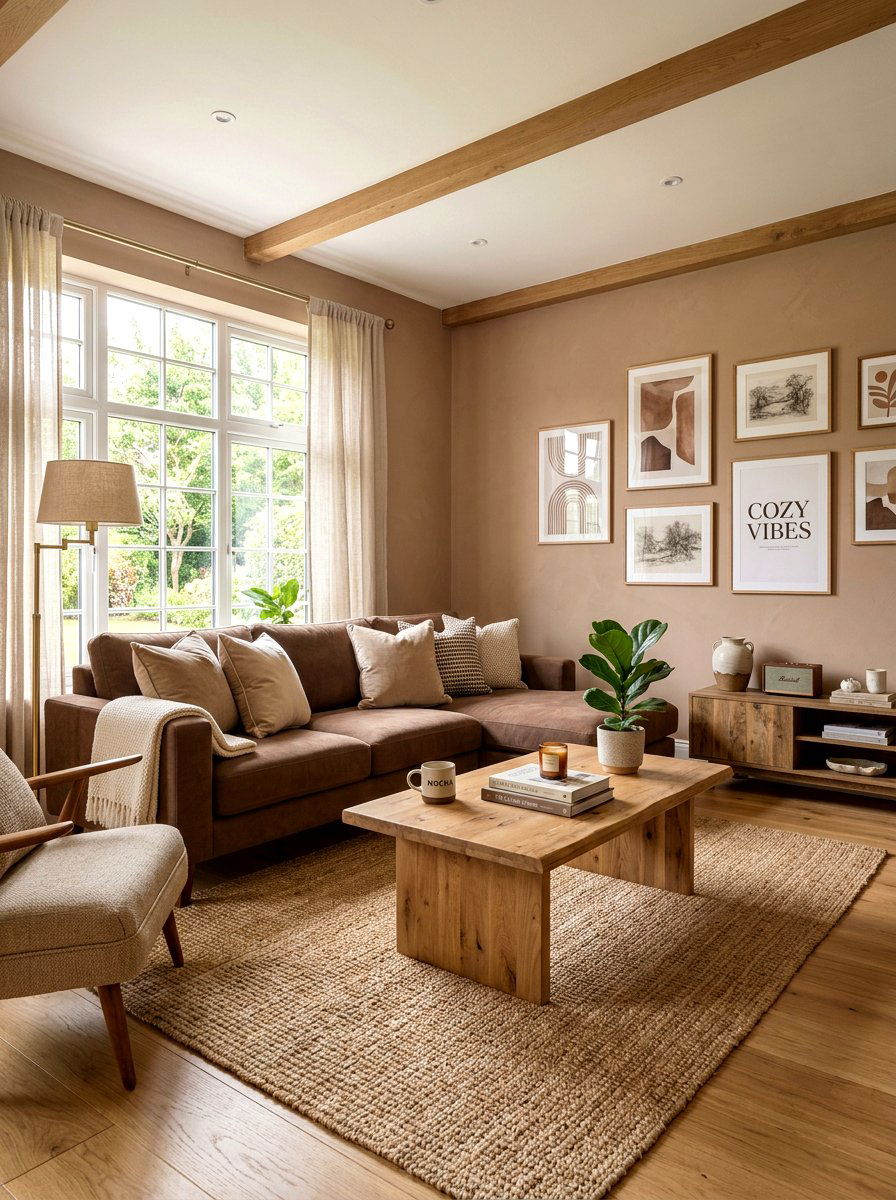
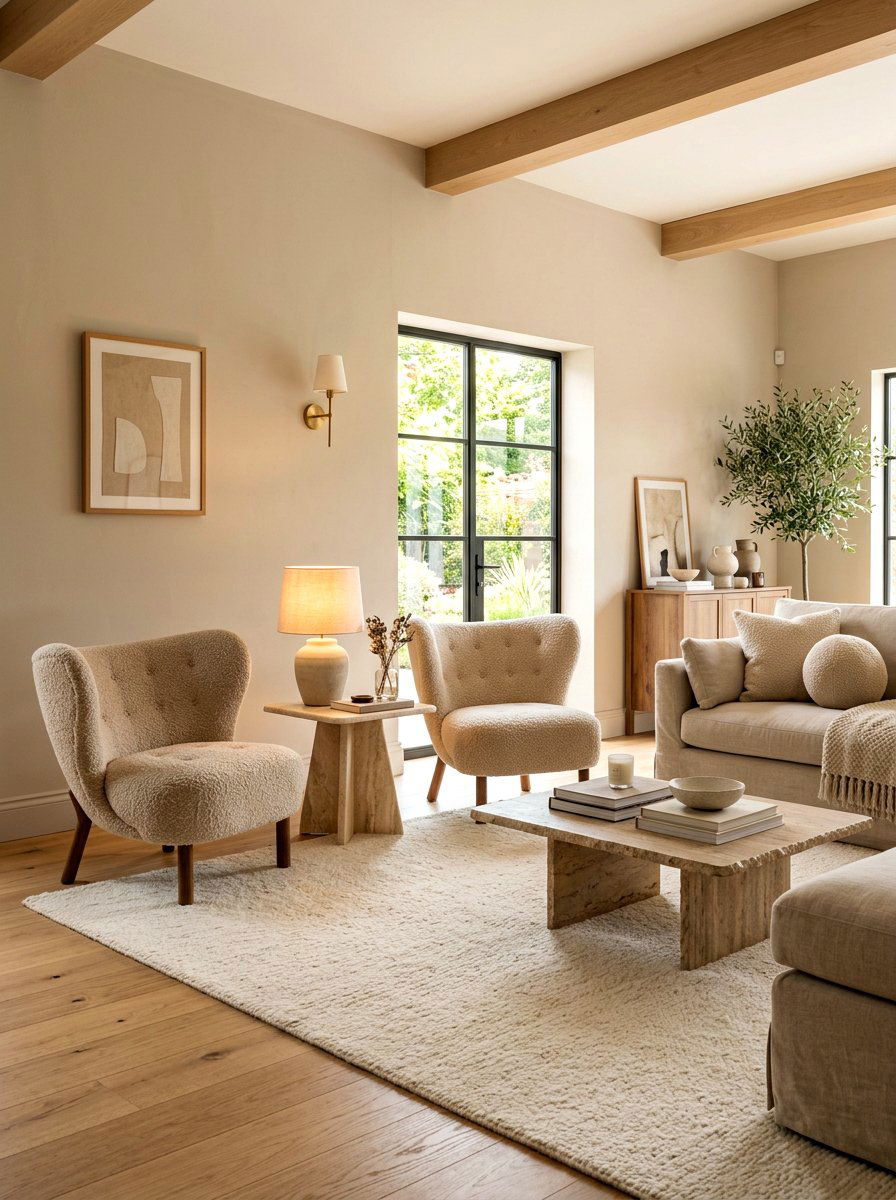
Mocha mousse is a softer, more ethereal take on traditional brown that brings a soothing and delicious vibe to your main gathering area. This specific shade sits perfectly between a deep tan and a light cocoa, offering a versatile backdrop for contemporary furniture. You can lean into the softness of this color by using tonal variations across your upholstery and curtains. Think of a mocha-colored fabric sofa paired with slightly lighter beige pillows and a soft wool throw. This creates a monochromatic look that is far from boring because the subtle shifts in shade provide visual depth. It is an excellent choice for those who want a cozy retreat that feels airy and light rather than moody. Using natural fibers like jute or linen further enhances the organic, calming quality of this trendy color.
3. Tan leather sofa living room
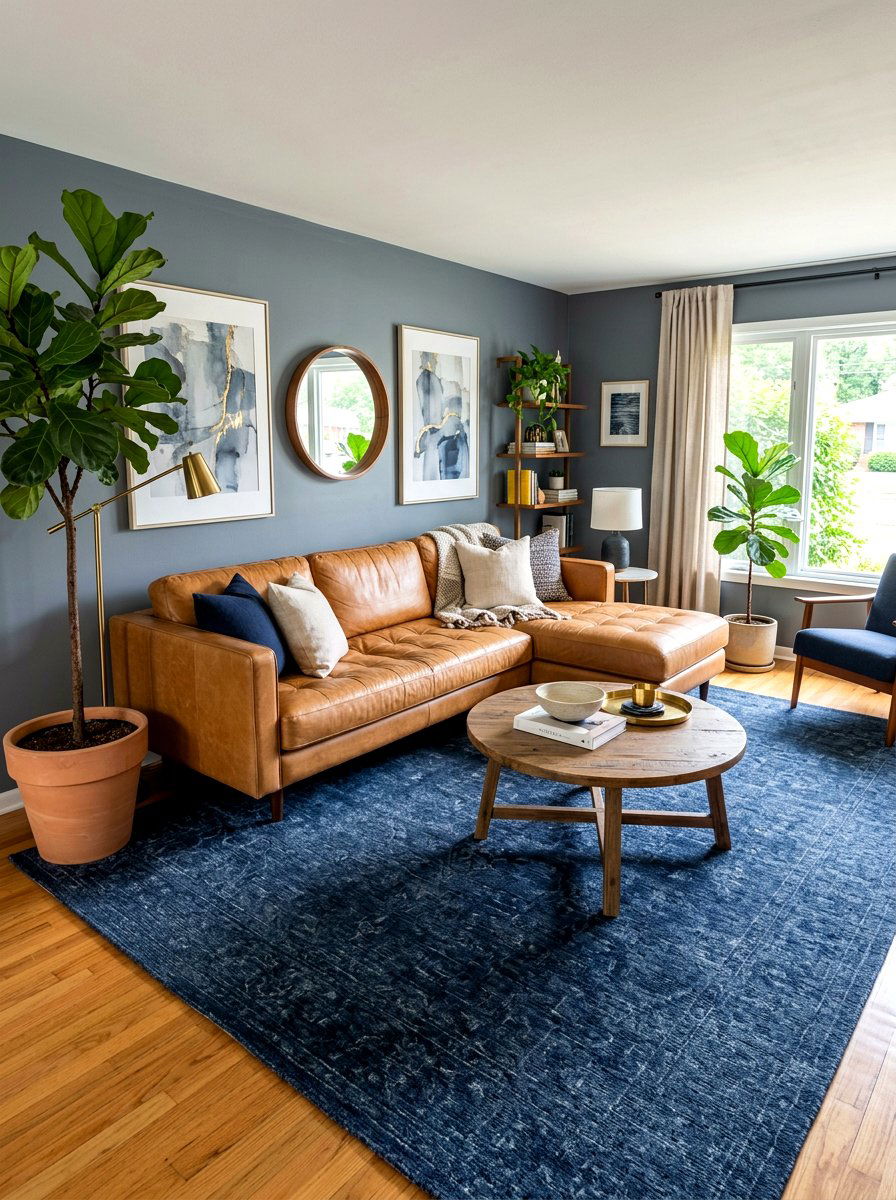
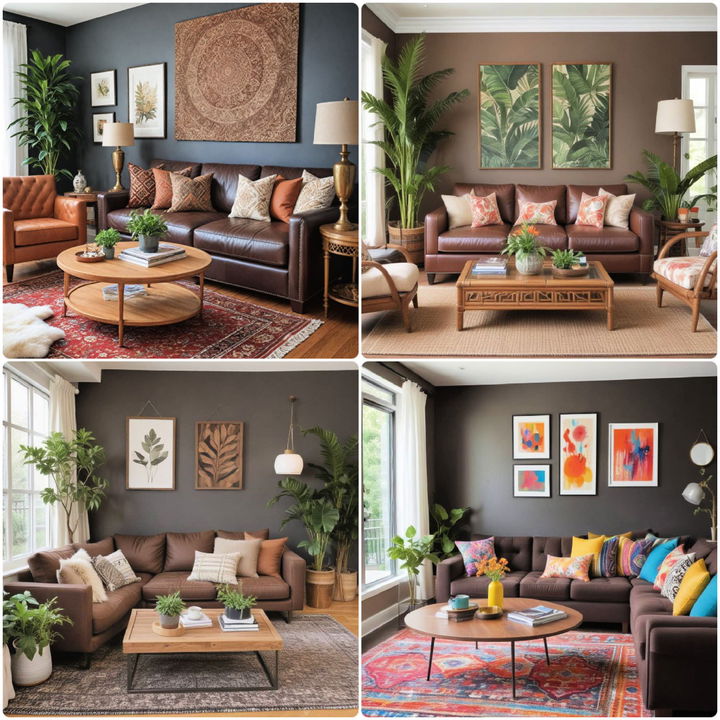
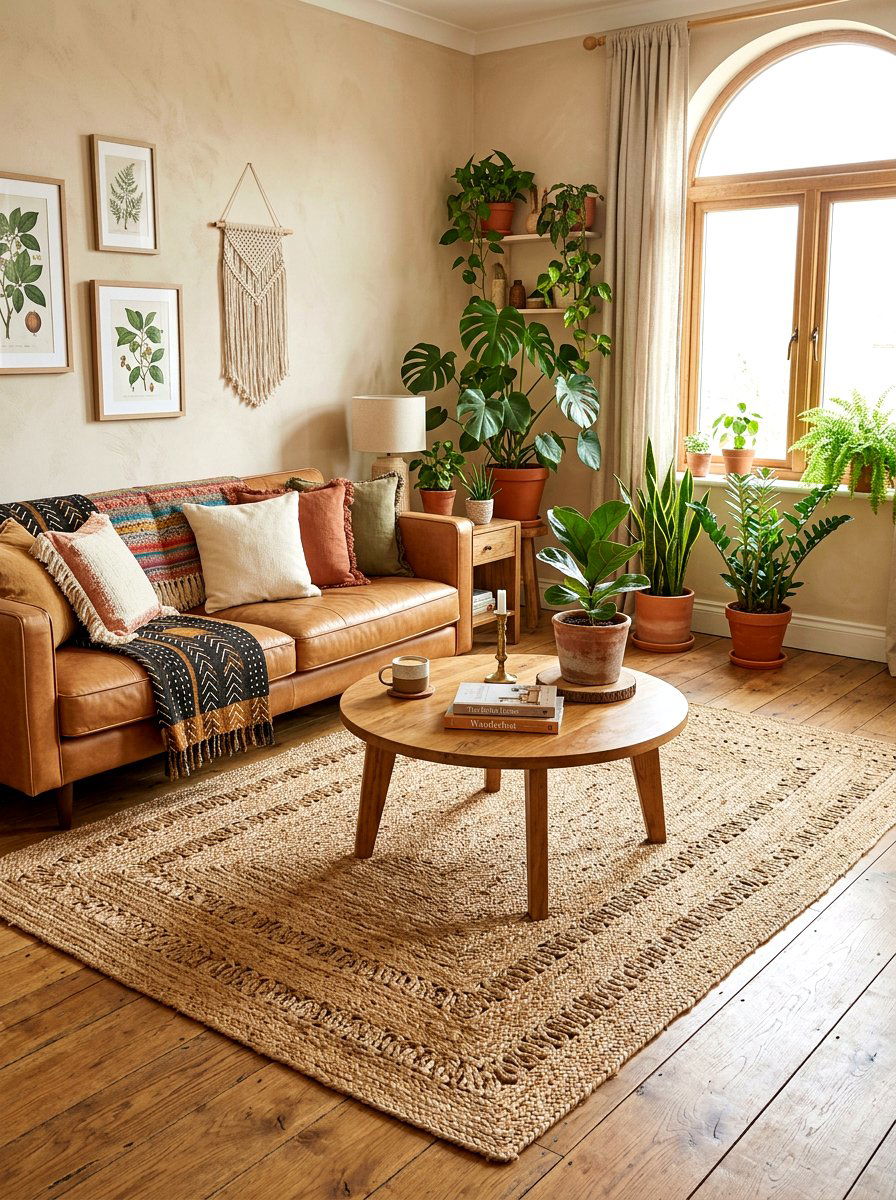
A tan leather sofa is a classic staple that instantly elevates the style of any living room. The warm, amber undertones of the leather bring a sense of history and durability that fabric simply cannot match. To style this piece, surround it with cool-toned accents like slate gray walls or a navy blue rug to create a striking visual balance. The contrast between the warm leather and cool surroundings makes the sofa the undisputed focal point of the space. You can also add life to the room with plenty of green indoor plants, which look stunning against the caramel-colored hide. Using a mix of throw blankets in different materials, such as chunky knits or soft cotton, adds a layer of comfort that invites guests to sit back and relax for hours.
4. Brown and sage green living room
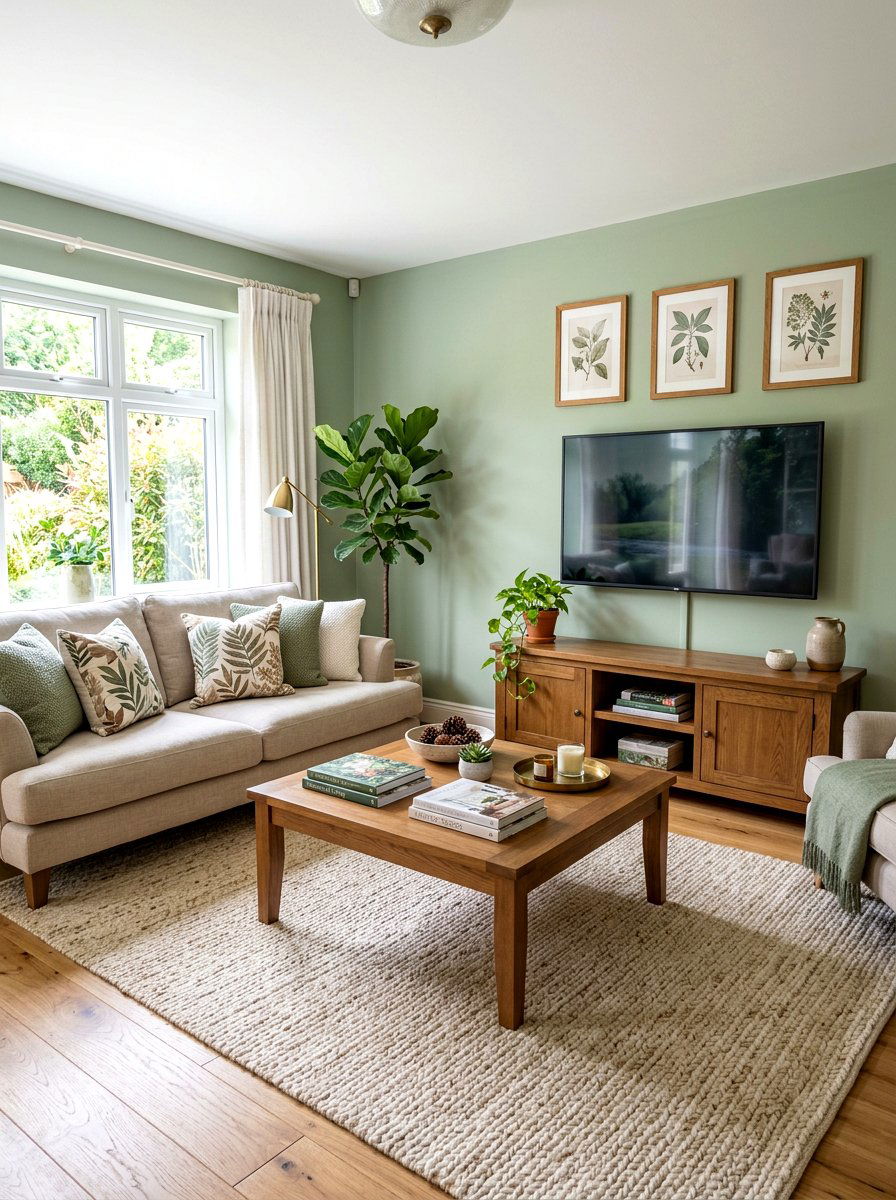
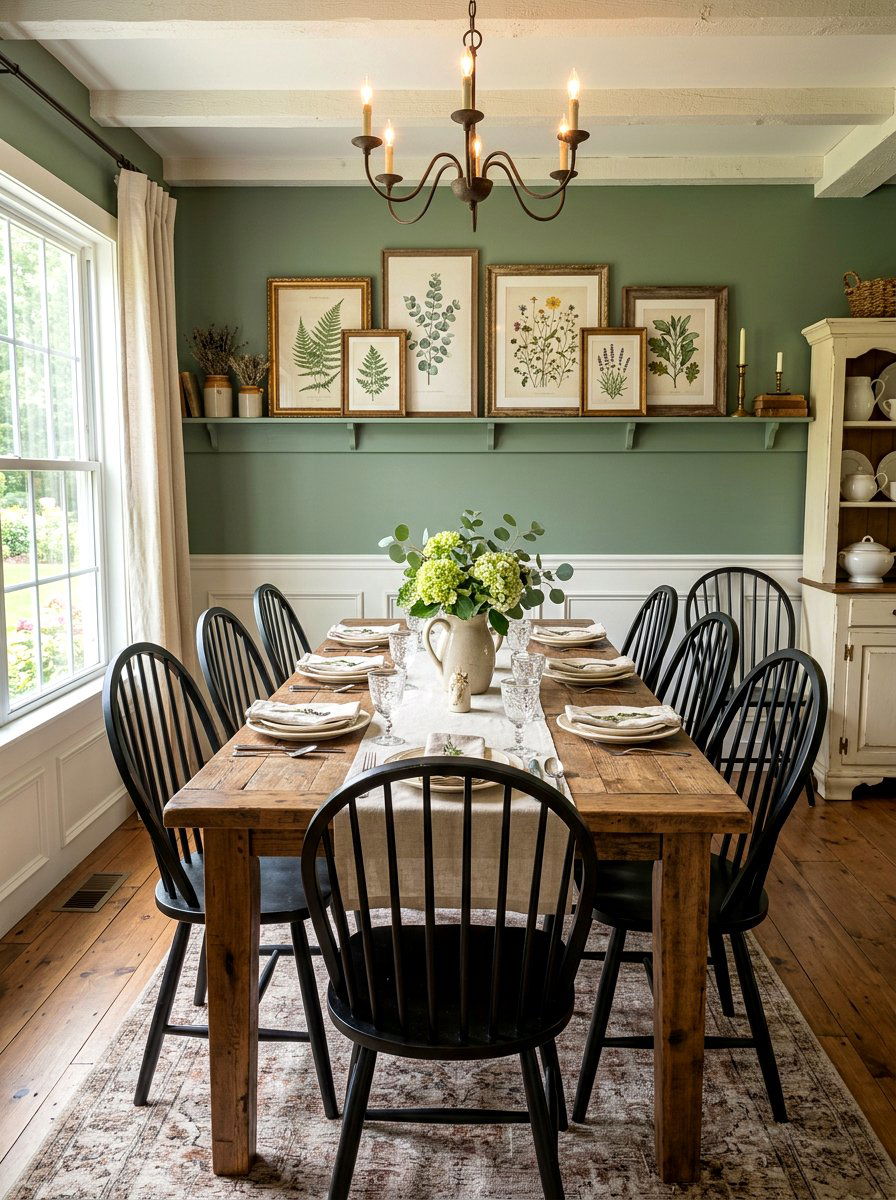
Combining brown with sage green creates a biophilic sanctuary that feels deeply connected to the natural world. This color pairing works best when you use a medium brown for the furniture and a soft, muted green for the walls or large-scale textiles. The result is a space that feels calm, refreshed, and incredibly balanced. You can introduce wooden elements like a reclaimed oak coffee table to bridge the gap between the two colors. Adding botanical prints or actual living greenery will emphasize the earthy theme and bring a sense of the outdoors inside. This palette is particularly effective in rooms with plenty of natural light, as the sun brings out the vibrant yet soothing qualities of both shades. It is a timeless choice for anyone seeking a peaceful and harmonious home environment.
5. Modern caramel living room
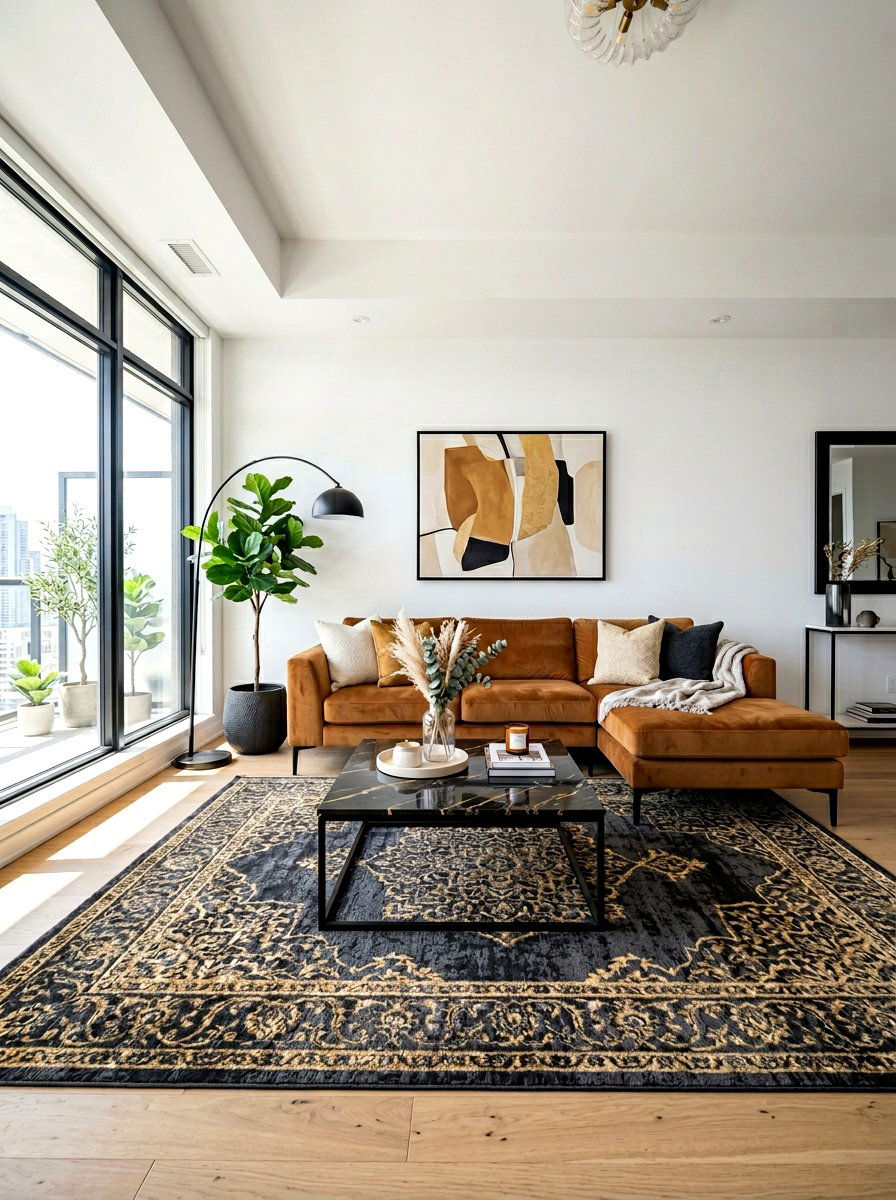
Caramel is a luscious, buttery shade of brown that adds instant warmth and a sense of luxury to a modern living area. This color looks exceptional when applied to high-quality materials like velvet or silk, which catch the light and show off the golden undertones. In a modern setting, you can pair caramel seating with sleek black metal accents and minimalist white walls for a high-contrast look that feels very current. The warmth of the caramel prevents the modern design from feeling too cold or clinical. Try incorporating a large abstract rug that features bits of caramel, cream, and charcoal to tie all the elements of the room together. This approach creates a space that is sophisticated enough for entertaining guests while remaining comfortable enough for daily family life.
6. Rustic dark wood living room
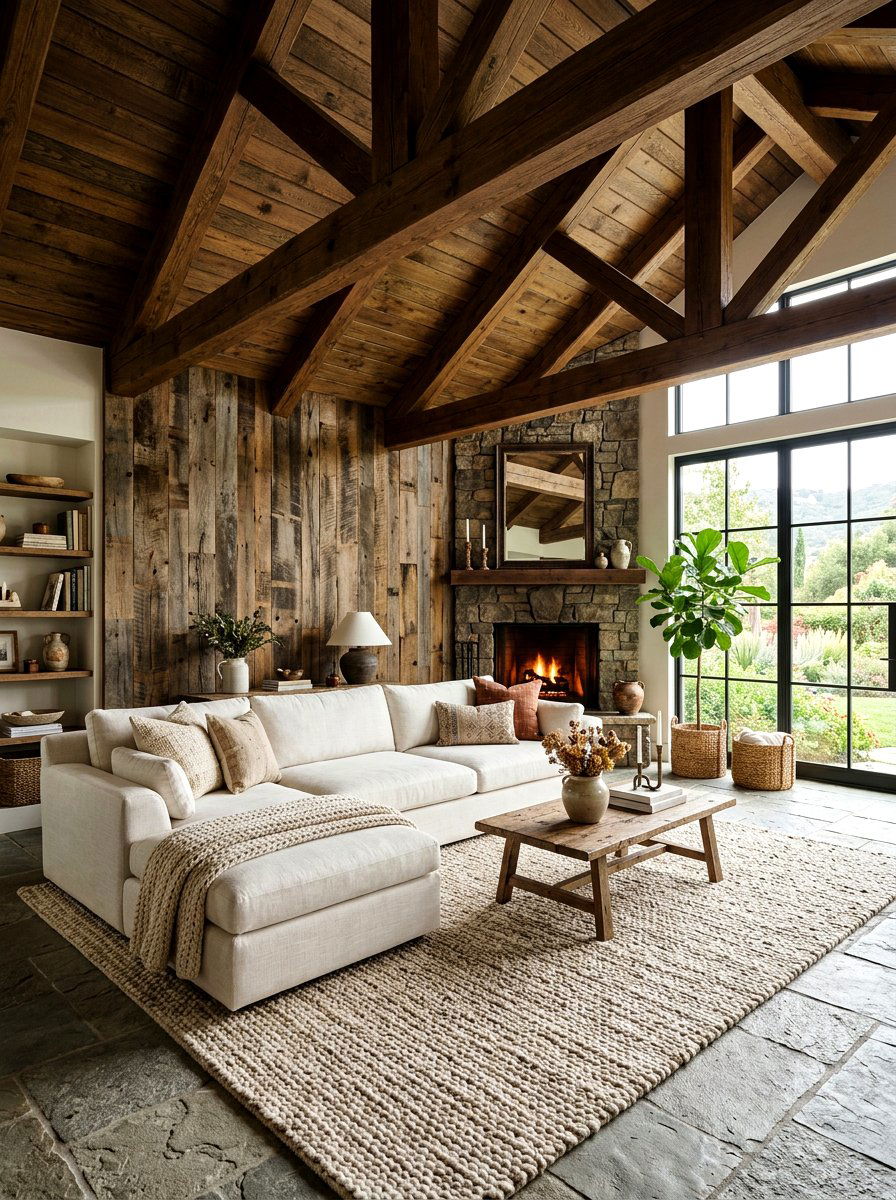
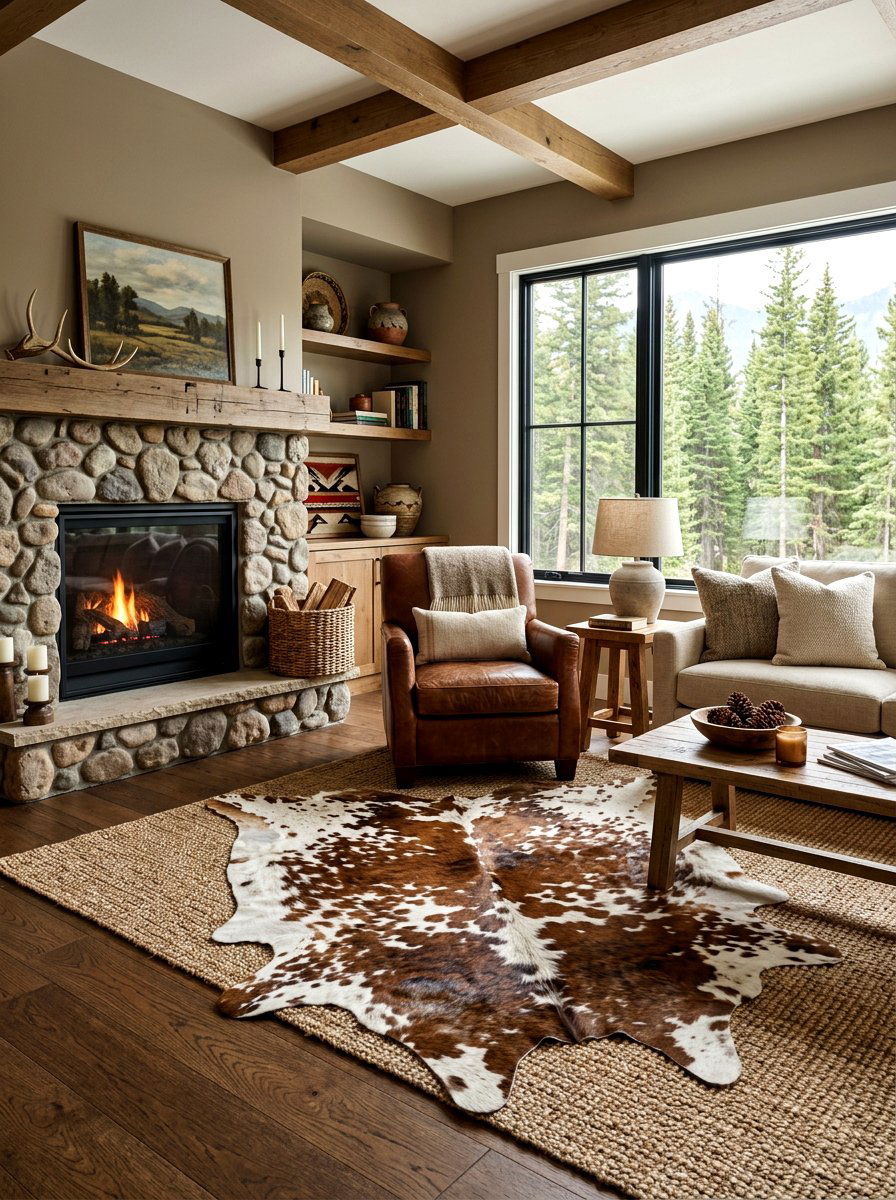
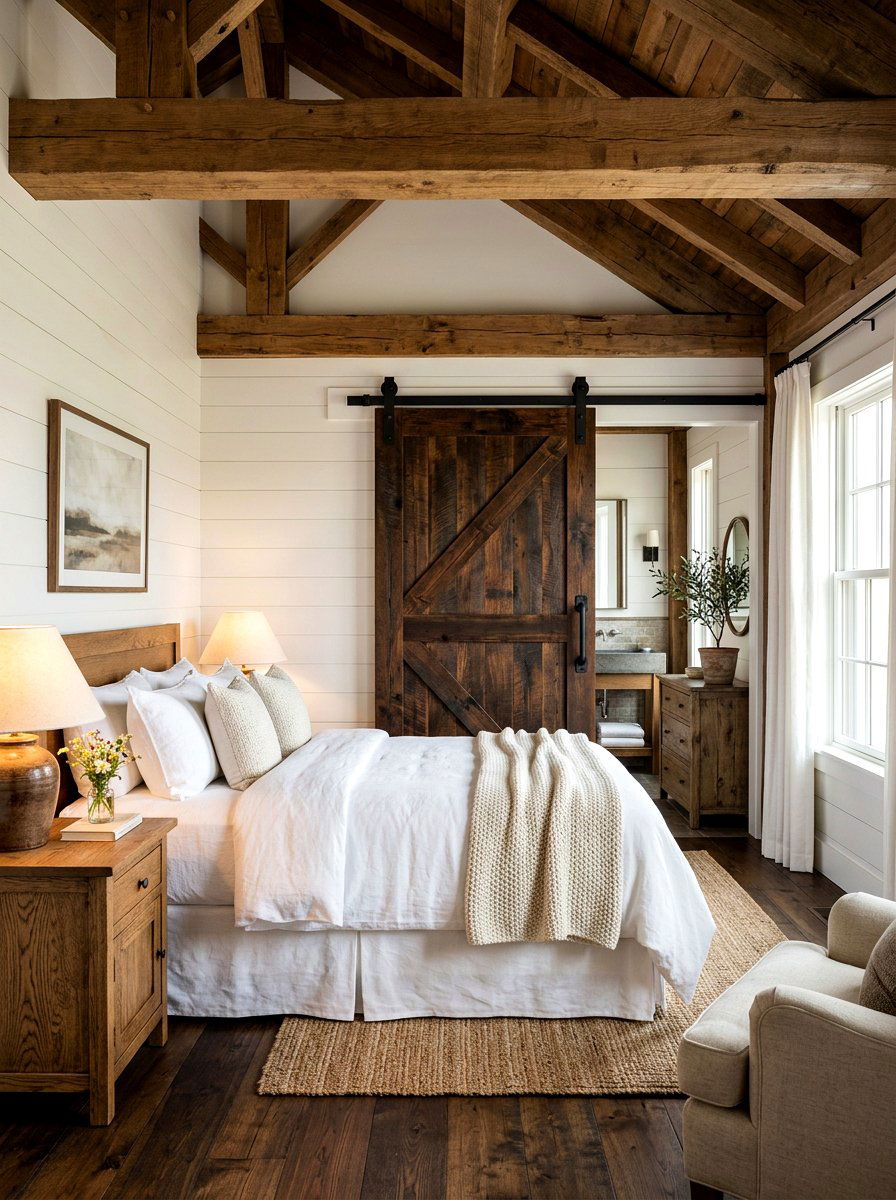
For a home that feels like a cozy mountain retreat, a rustic dark wood theme is the perfect choice. This design relies heavily on exposed architectural features like ceiling beams, reclaimed wood wall panels, and heavy timber furniture. The deep, dark brown of the wood provides a rugged foundation that feels incredibly sturdy and permanent. To keep the room from feeling like a dark cave, use light-colored textiles for your rugs and curtains. A large cream-colored sectional sofa provides a soft landing spot and brightens the overall aesthetic. Incorporating stone elements, such as a large hearth or slate flooring, adds to the natural, earthy vibe. This style is all about celebrating the beauty of raw materials and creating a space that feels grounded and connected to the landscape.
7. Brown and navy blue living room
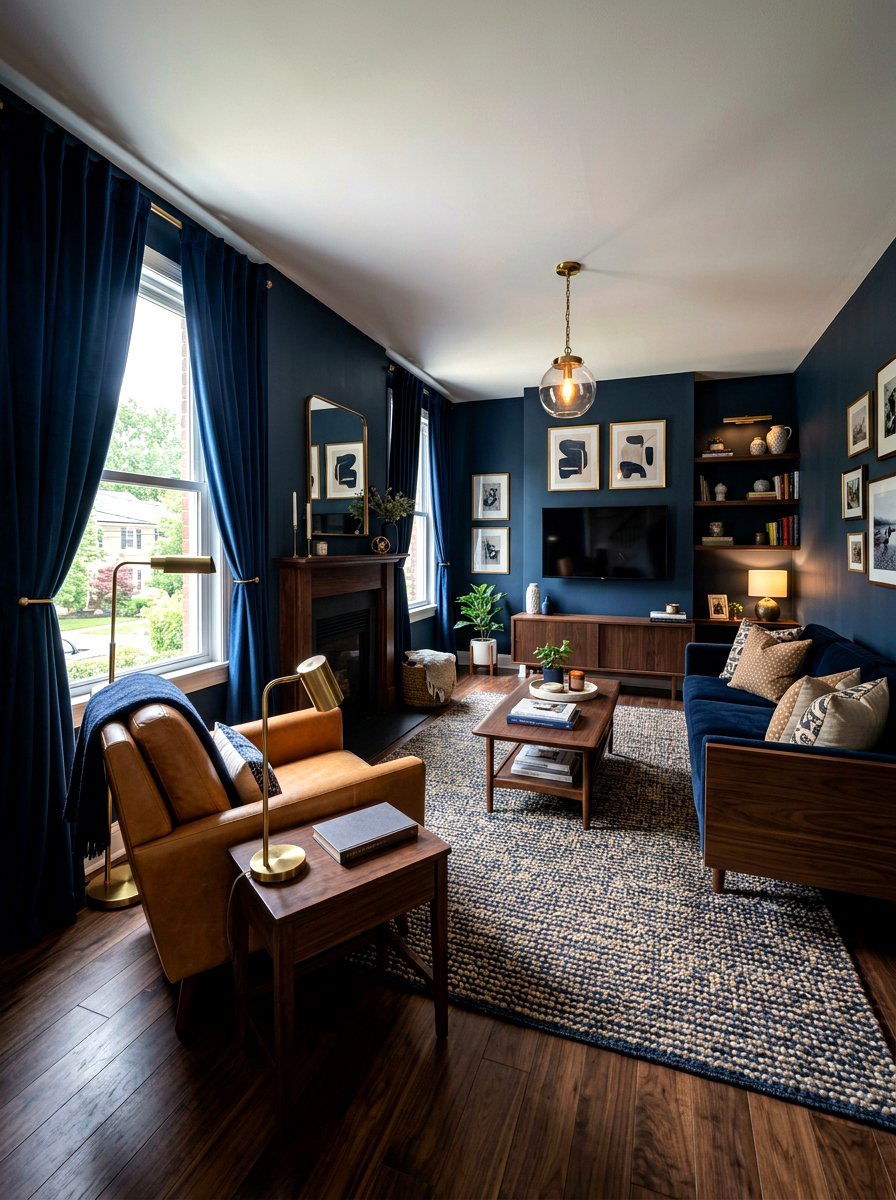
Brown and navy blue is a classic, masculine-leaning color combination that exudes confidence and timeless elegance. Dark brown wood furniture looks exceptionally striking against deep navy walls, creating a moody and intimate atmosphere. If you prefer a lighter look, you can reverse the roles by using a pale tan for the walls and adding navy blue velvet chairs and navy patterned curtains. The richness of the blue provides a sharp contrast to the earthy brown, making the entire room feel more dynamic and intentional. Using silver or chrome accents can add a modern, polished finish to this traditional pairing. It is a sophisticated choice for a formal sitting room or a library-style living area where you want to promote a sense of focus and calm.
8. Bohemian tan living room
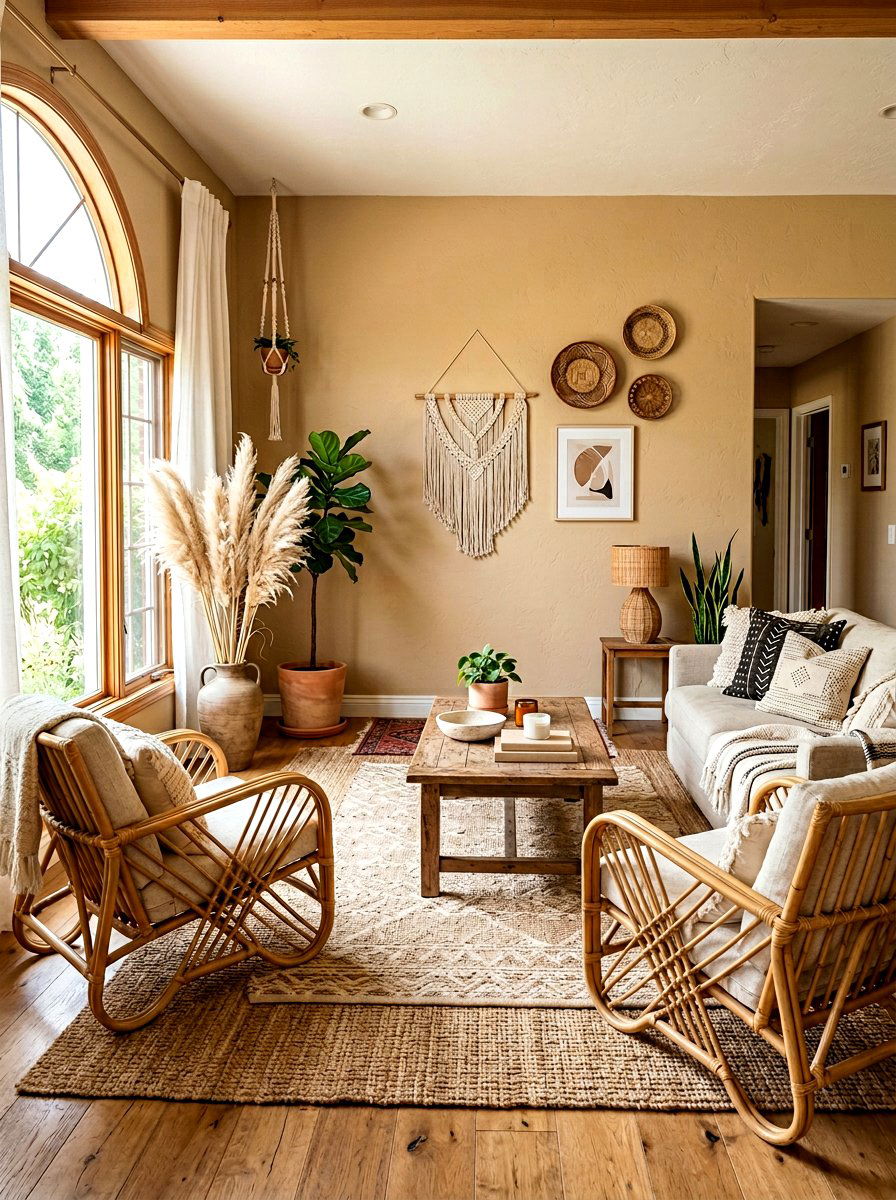
The bohemian style thrives on warm, sandy tan tones that serve as a neutral backdrop for eclectic decor and global finds. In a boho living room, you might see a light tan rug, rattan furniture, and plenty of woven wall hangings. The key is to layer different shades of tan and beige to create a relaxed, "undone" look that feels effortless. You can add pops of color through Moroccan-style pillows or colorful kilim rugs, but the primary brown palette keeps the space feeling cohesive. Using plenty of natural textures, like dried pampas grass, wicker baskets, and macrame, adds tactile interest. This design approach is perfect for those who want a creative, artistic home that feels warm and inviting without being overly formal or structured.
9. Japandi brown living room
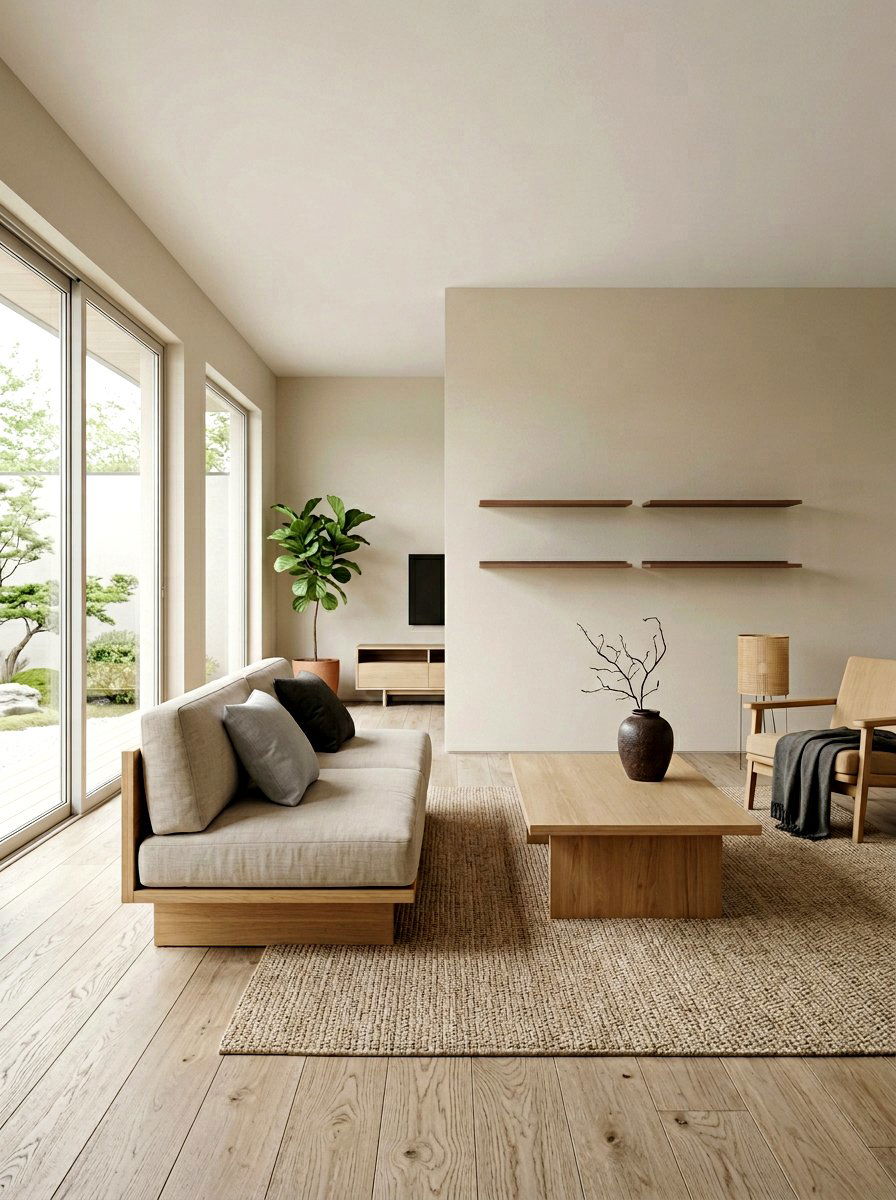
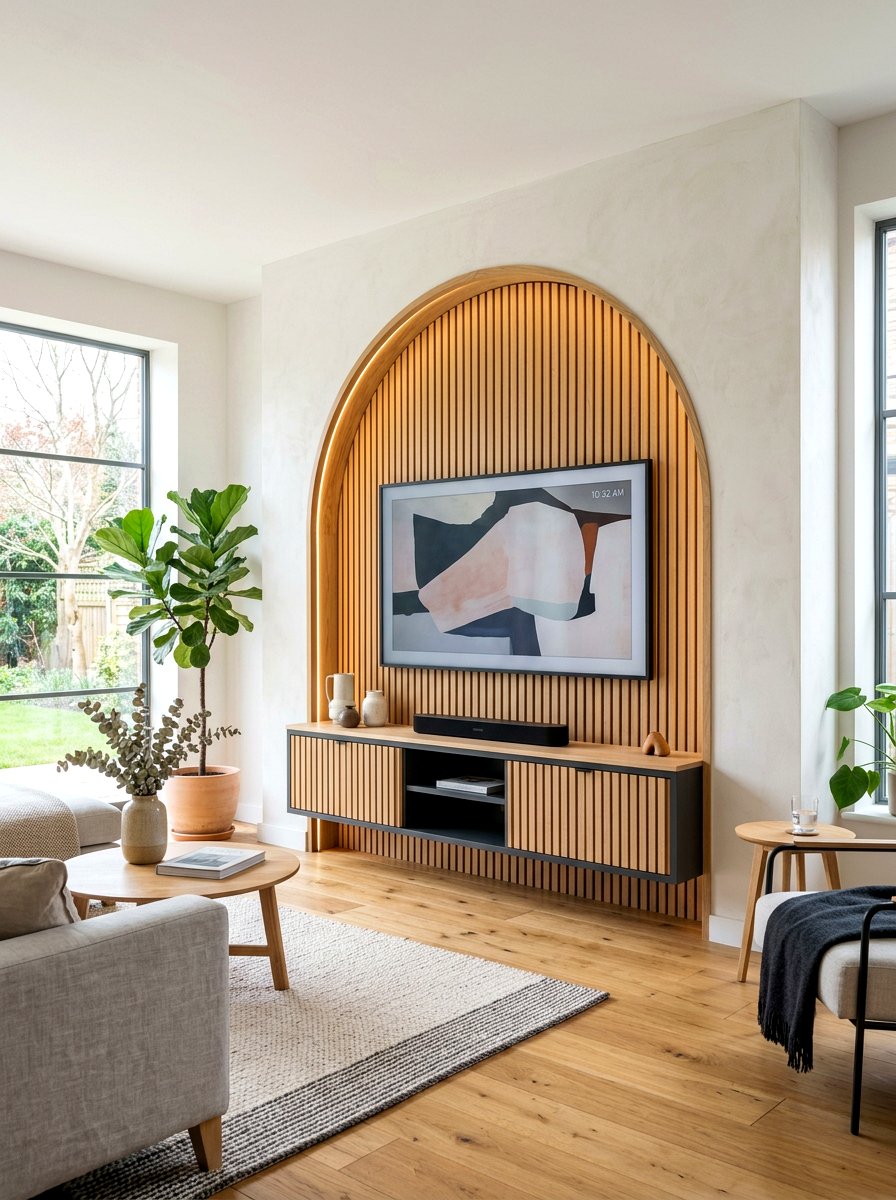
Japandi design combines the cozy functionality of Scandinavian interiors with the minimalist elegance of Japanese aesthetics. In a Japandi living room, brown is used sparingly and intentionally through light-toned woods and earthy ceramics. The color palette focuses on "greige" and soft oatmeal, with deeper brown accents appearing in thin-lined furniture or decorative vases. This creates a space that is incredibly serene and free of unnecessary clutter. Low-slung furniture in oak or walnut provides a sense of grounding and helps the room feel more spacious. To maintain the peaceful vibe, use soft, diffused lighting and keep the decor to a minimum. Every piece in a Japandi room should serve a purpose and contribute to a feeling of "wabi-sabi, " or finding beauty in simplicity and natural imperfection.
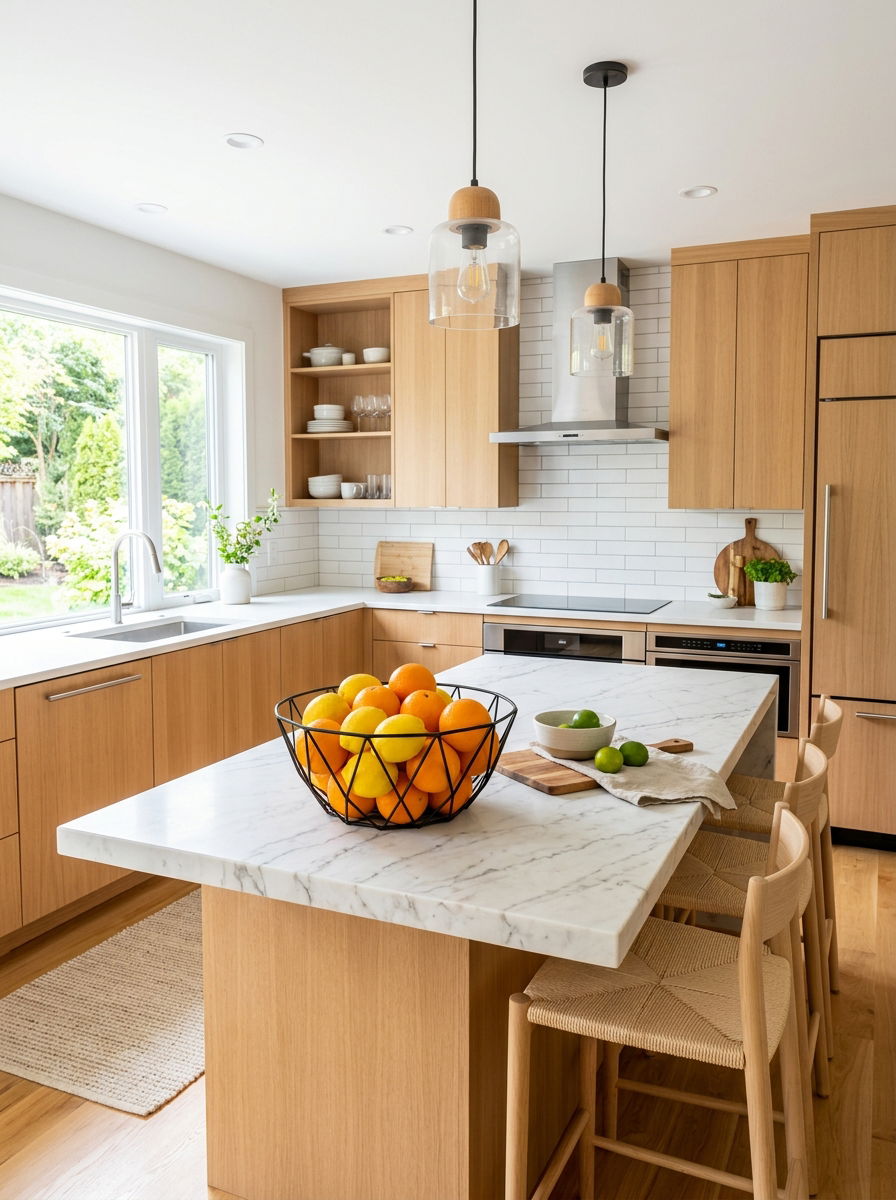
10. Mid century modern walnut living room
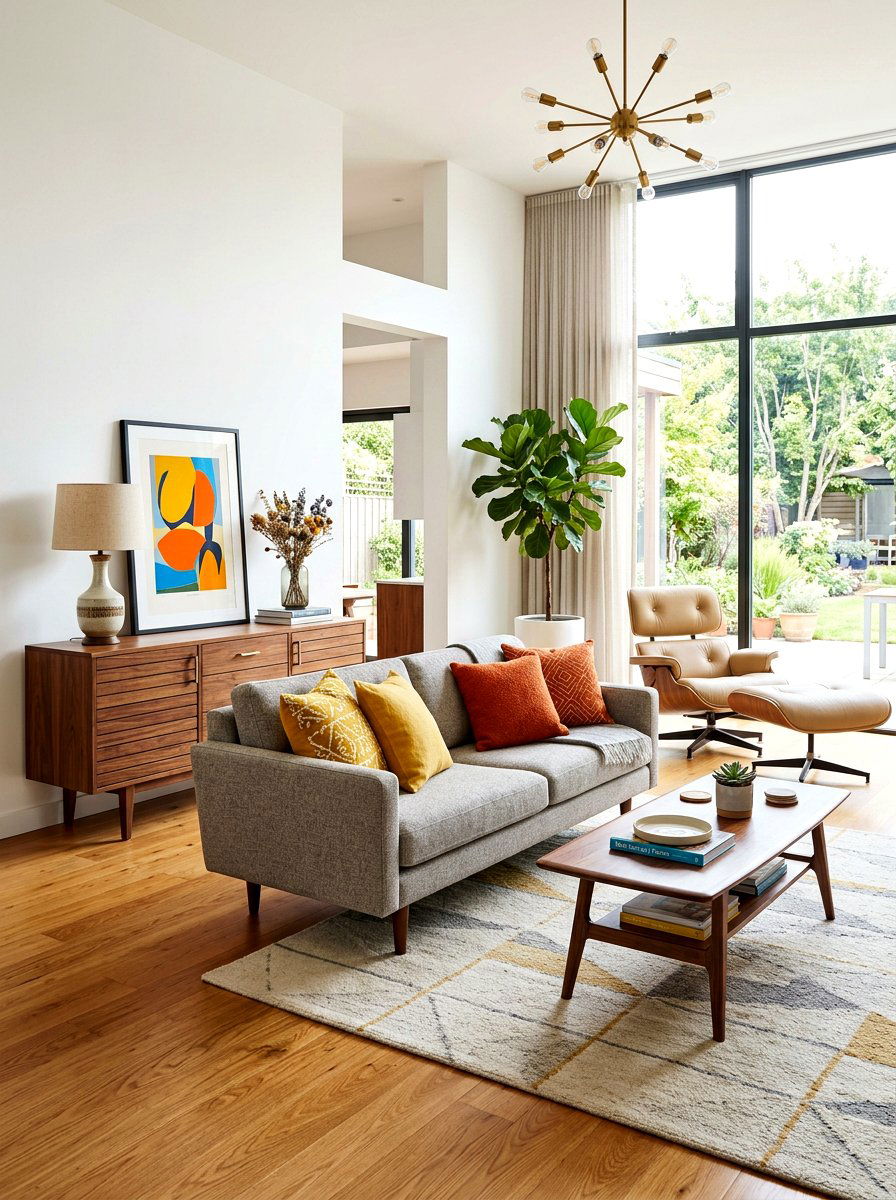
Mid-century modern design is famous for its use of rich walnut wood, which features a beautiful grain and a medium-to-dark brown tone. A living room inspired by this era usually features iconic tapered legs on sofas, sideboards, and coffee tables. The warm walnut wood provides a sense of nostalgia and craftsmanship that defines the mid-century look. To modernize this style, pair your walnut pieces with bold, saturated colors like mustard yellow or burnt orange. These colors were popular in the 1950s and 60s and they still look fantastic against the dark wood today. A large, low-profile sofa in a neutral fabric allows the architectural lines of the wooden furniture to take center stage. This design style is perfect for those who appreciate clean lines and timeless furniture that doubles as art.
11. Brown and terracotta living room
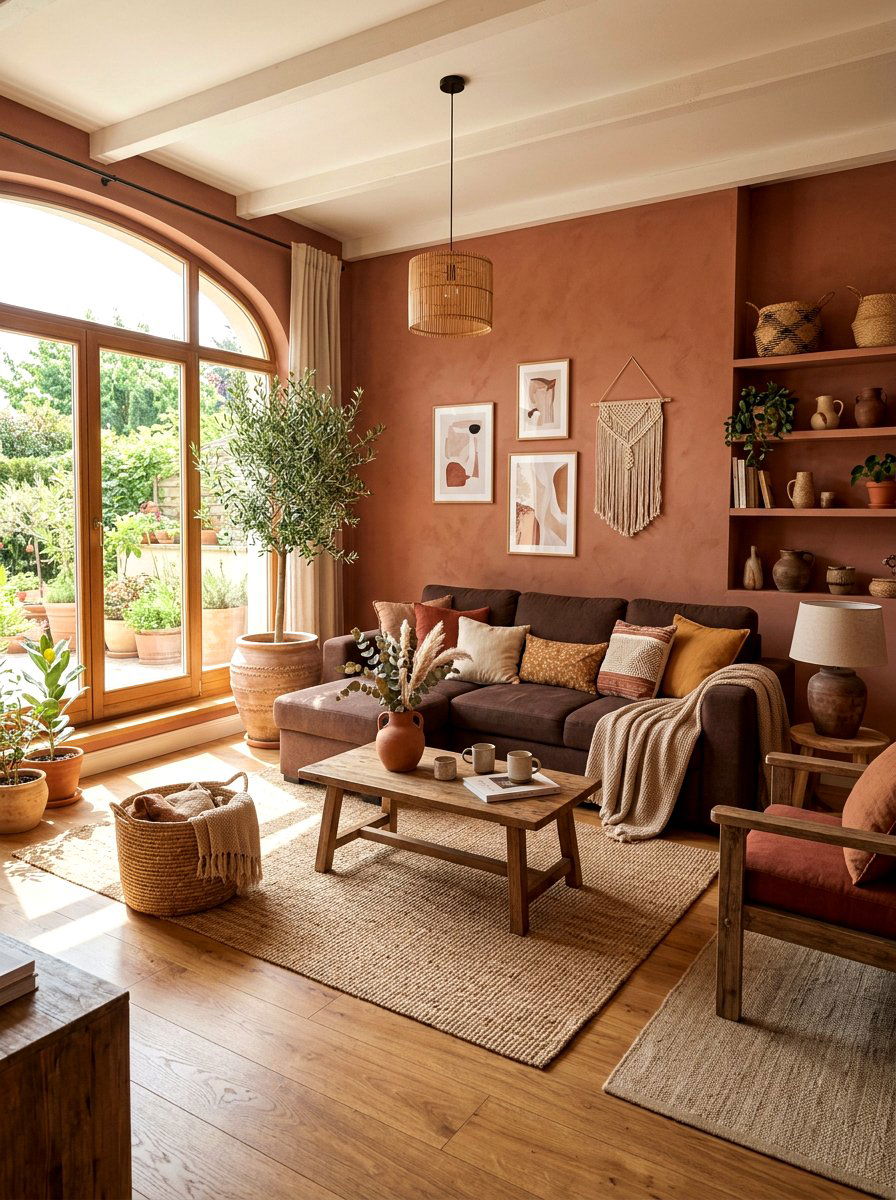
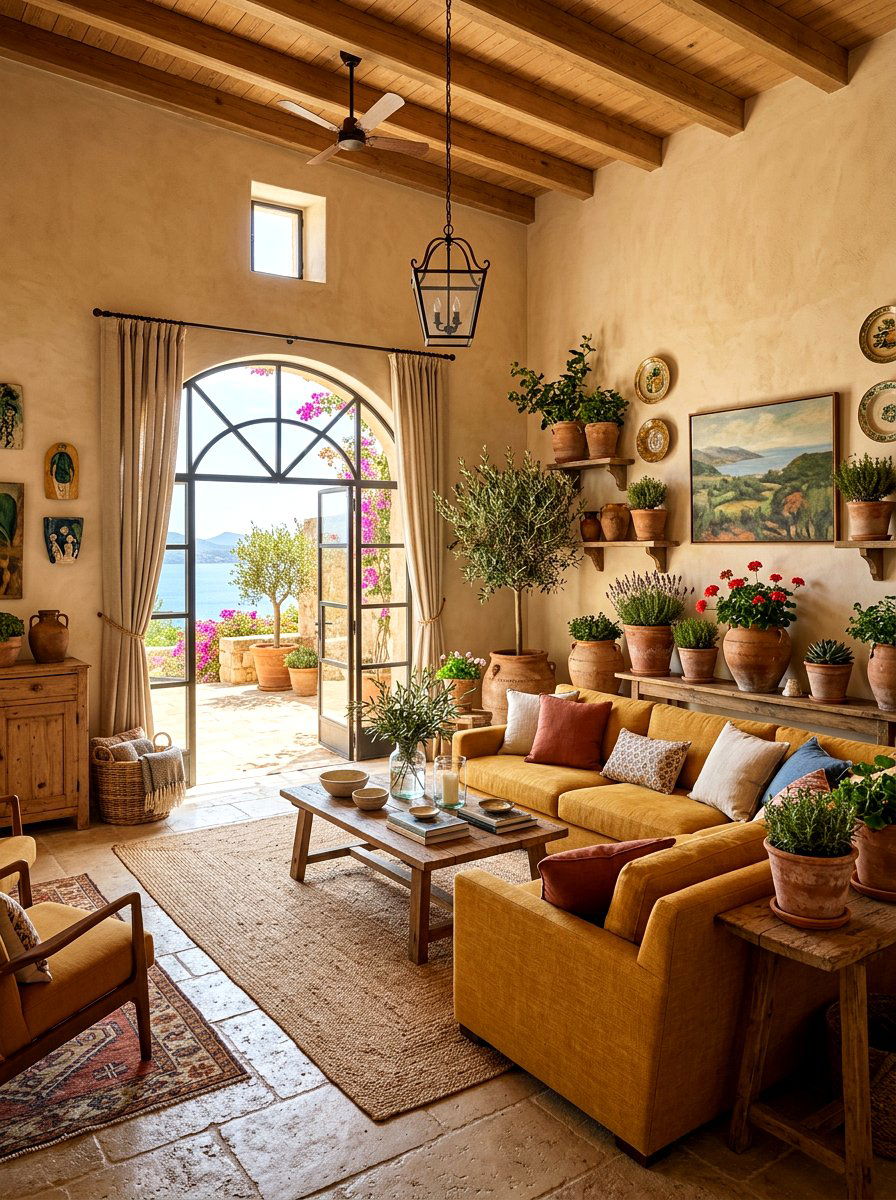
Terracotta and brown are a match made in heaven because they both share warm, reddish undertones. This combination creates a sun-drenched, Mediterranean feel that makes a living room feel vibrant and full of life. You can use a deep chocolate brown for your main seating and paint the walls in a soft, dusty terracotta. This creates a warm, enveloping effect that is perfect for relaxation. Introduce plenty of clay pots, woven baskets, and linen textiles to lean into the organic theme. If you want to add a bit of contrast, small touches of turquoise or teal can provide a refreshing pop against the warm background. This palette is especially effective in rooms that receive a lot of afternoon sun, as the light makes the terracotta walls glow with a beautiful, radiant energy.
12. Velvet chocolate sofa living room
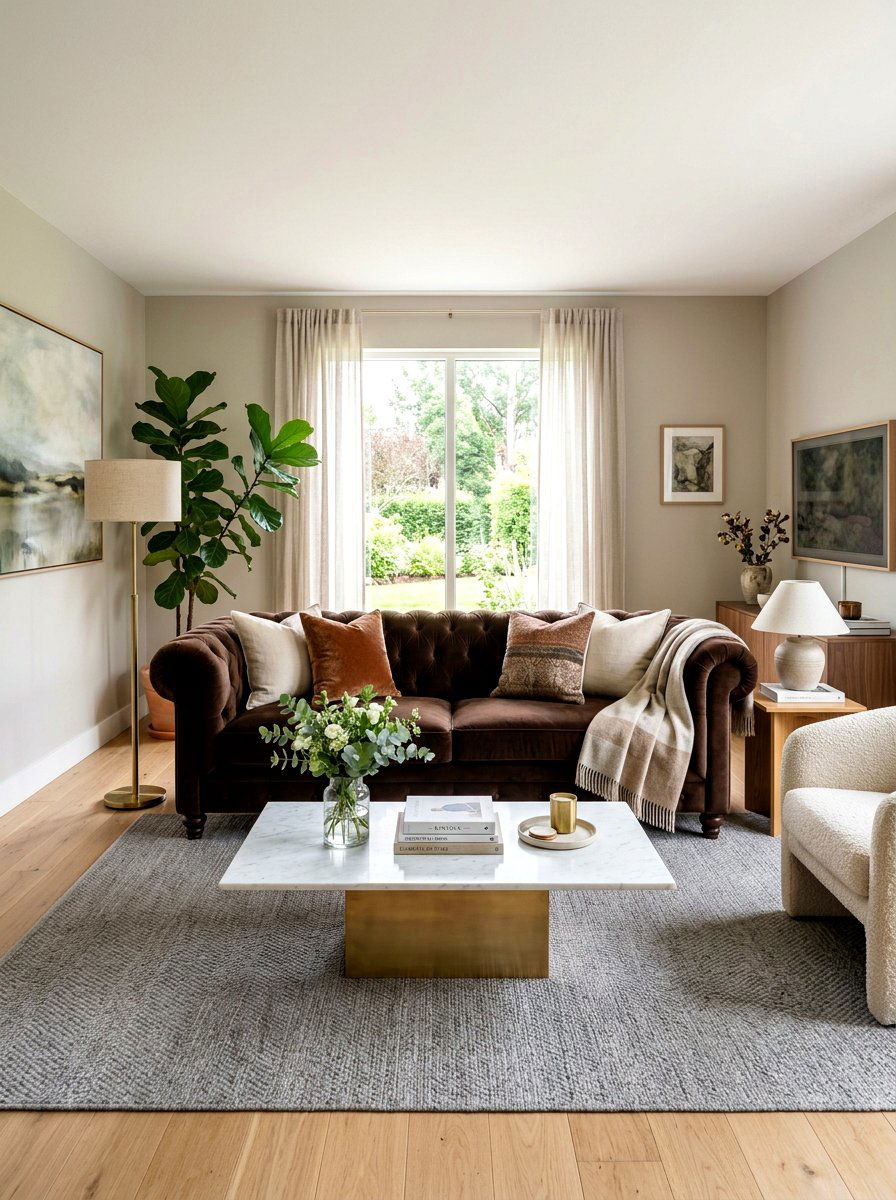
There is nothing quite as luxurious as a deep chocolate brown velvet sofa. The way the light hits the velvet fabric creates highlights and shadows that give the brown a multi-dimensional, shimmering quality. This piece of furniture instantly becomes the jewel of the living room, suggesting a sense of opulence and comfort. To style around a velvet sofa, use lighter, matte textures for the surrounding elements to let the velvet shine. A smooth marble coffee table and a flat-weave wool rug provide a nice contrast to the plushness of the couch. Keep the wall colors light and neutral to ensure the dark sofa doesn't overwhelm the space. This design is perfect for anyone who wants a sophisticated, high-end look that still feels incredibly soft and inviting for a movie night or quiet evening.
13. Minimalist beige and brown living room
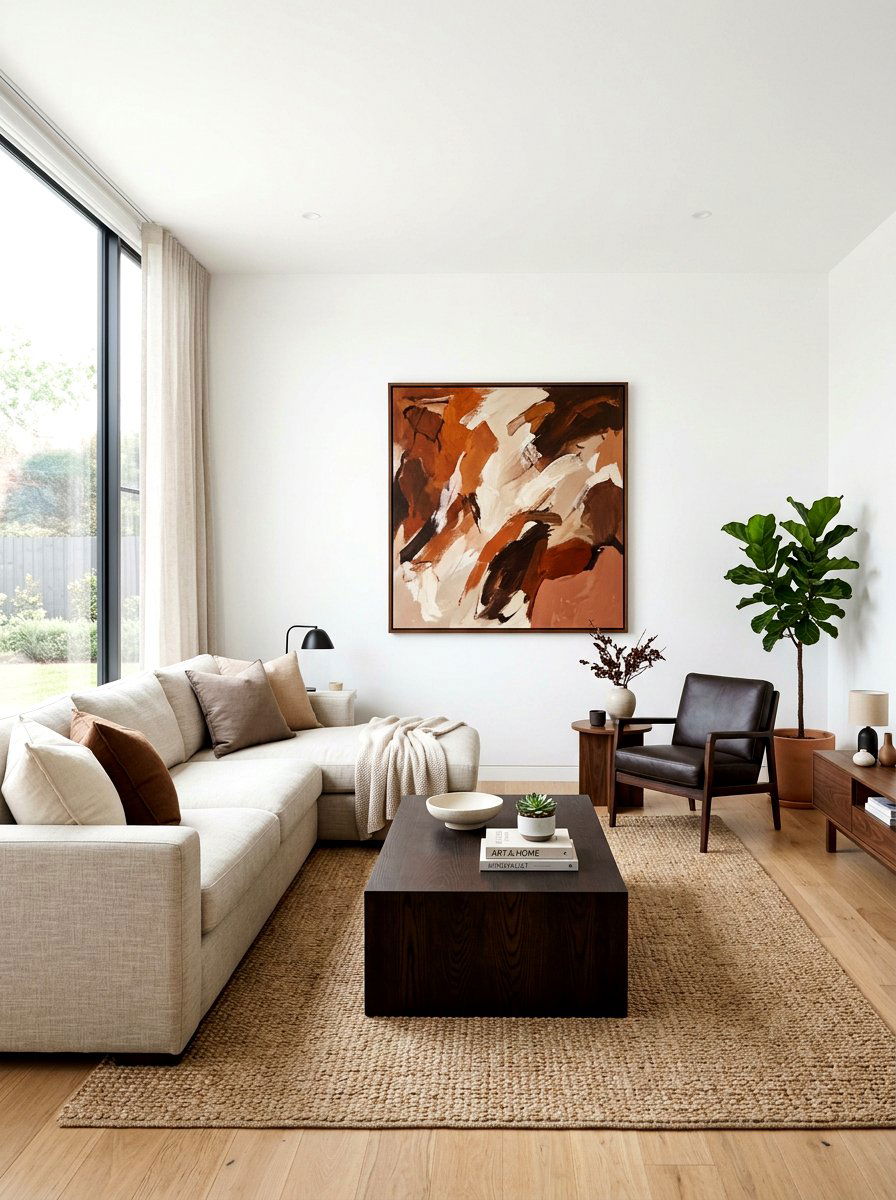
Minimalism doesn't have to mean white and gray; a beige and brown palette can be just as clean while offering more warmth. In this design, the focus is on a few high-quality pieces and a very restrained color scheme. Think of a light beige sectional paired with a dark espresso wood coffee table and a single brown accent chair. The contrast between the light and dark shades provides all the visual interest you need without the help of bright colors. Use large-scale art with simple, earthy subjects to fill the walls without cluttering them. This style is perfect for creating a headspace that is calm and organized. By sticking to a strict neutral palette, you allow the shapes and silhouettes of your furniture to be the stars of the show, creating a gallery-like feeling.
14. Brown and blush pink living room
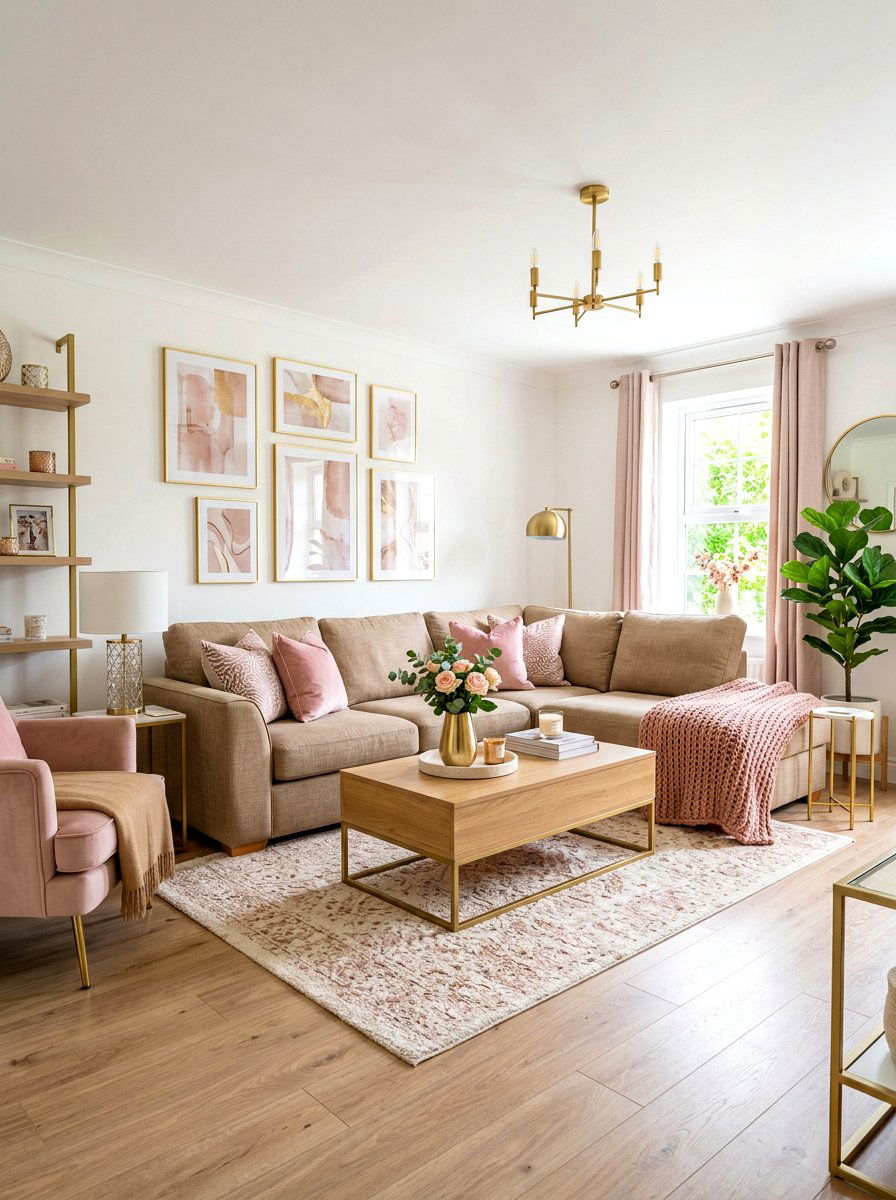
For a softer, more feminine take on the brown trend, try pairing it with blush pink. This combination is incredibly trendy because the ruggedness of the brown balances the sweetness of the pink perfectly. A light brown or tan sofa looks beautiful when adorned with soft pink velvet pillows and a rose-colored throw. You can even bring in pink through subtle architectural details, like a pale pink fireplace surround or abstract art. The brown provides a grounded, sophisticated edge that keeps the pink from looking too youthful or "saccharine. " Using light-toned wood furniture and gold metal accents can further enhance the chic, modern vibe of this palette. It is an ideal choice for a primary living area where you want a playful yet polished atmosphere that feels fresh and unexpected.
15. Dark espresso living room
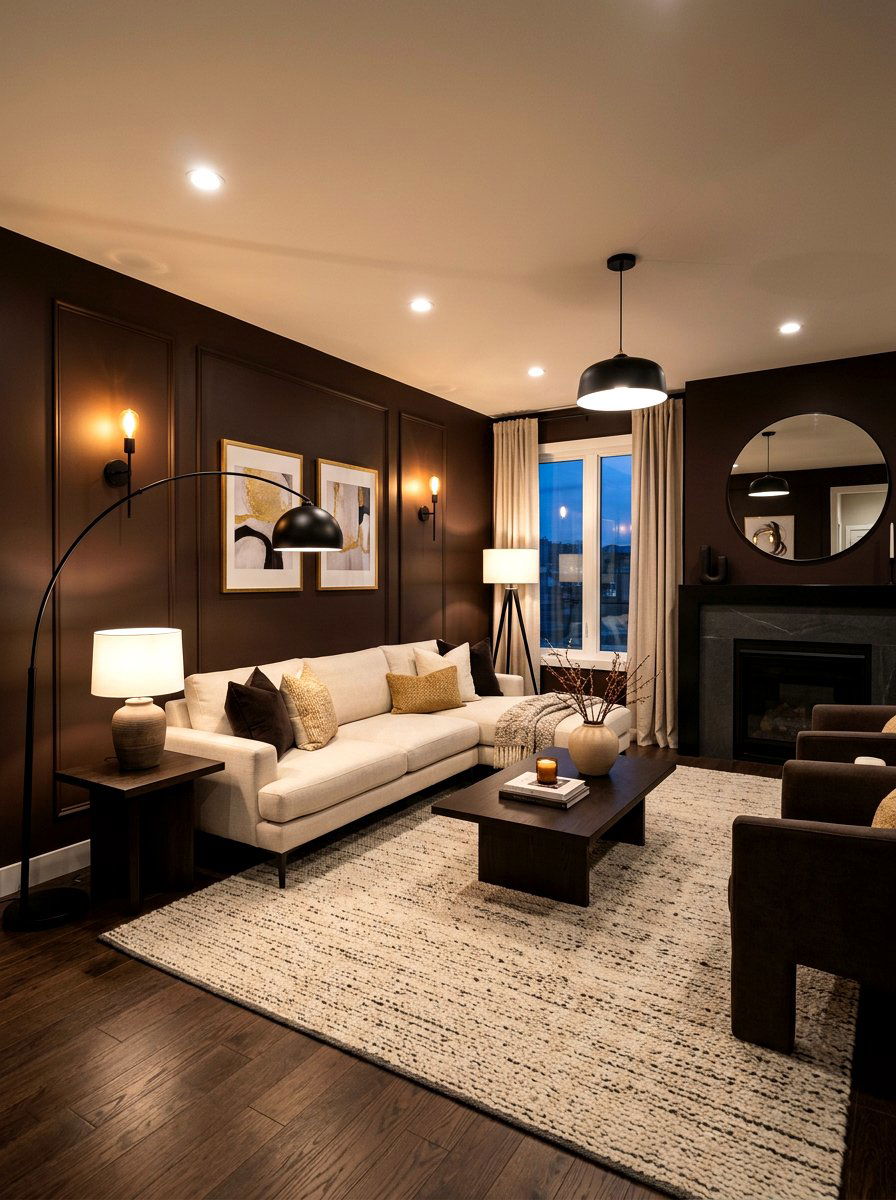
Espresso is a nearly-black shade of brown that offers intense drama and a high-end, executive feel. When used on walls, it creates a moody, "gentleman's club" vibe that is perfect for a cozy den or a formal lounge. To pull off this look successfully, you need to be strategic with your lighting. Use multiple sources of warm light, like floor lamps, sconces, and candles, to create a layered glow that highlights the corners of the room. Balance the dark walls with light-colored seating, such as a white or cream-colored sofa, to prevent the space from feeling too heavy. Adding textures like faux fur and silk will catch the light and add a sense of luxury. This style is all about embracing the dark side of design to create a space that feels exclusive, intimate, and deeply stylish.
16. Brown and charcoal grey living room
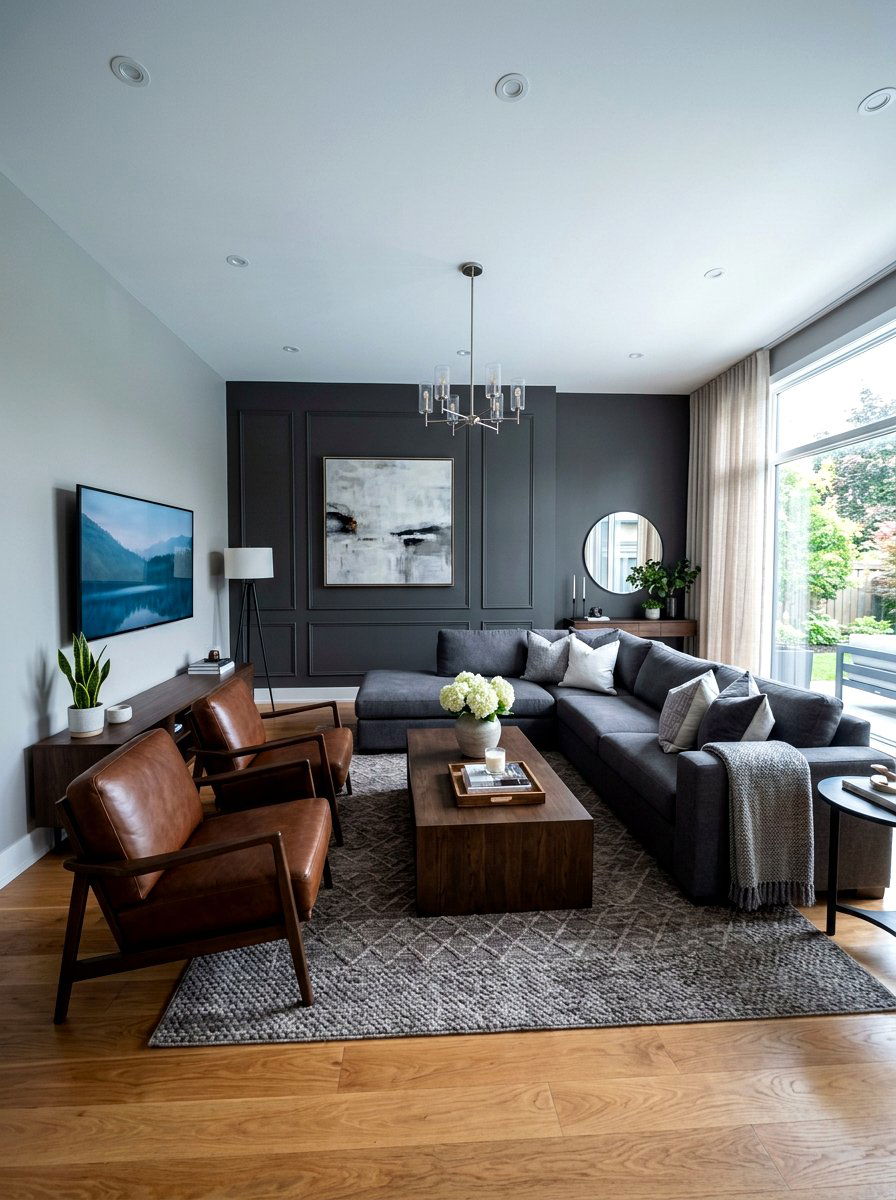
While gray has been the dominant neutral for years, pairing it with brown is the new way to make it feel updated and warm. This combination creates a sophisticated, transitional look that works well in modern apartments. A charcoal gray sofa looks excellent when paired with brown leather armchairs and a dark wood media console. The brown adds a layer of organic warmth that prevents the gray from feeling too cold or industrial. To tie the two colors together, look for a rug or pillows that incorporate both shades in a subtle pattern. This palette is very forgiving and practical for families, as both colors hide wear and tear better than lighter neutrals. It is a smart, professional-looking choice that feels current without being overly influenced by passing fads.
17. Transitional latte living room
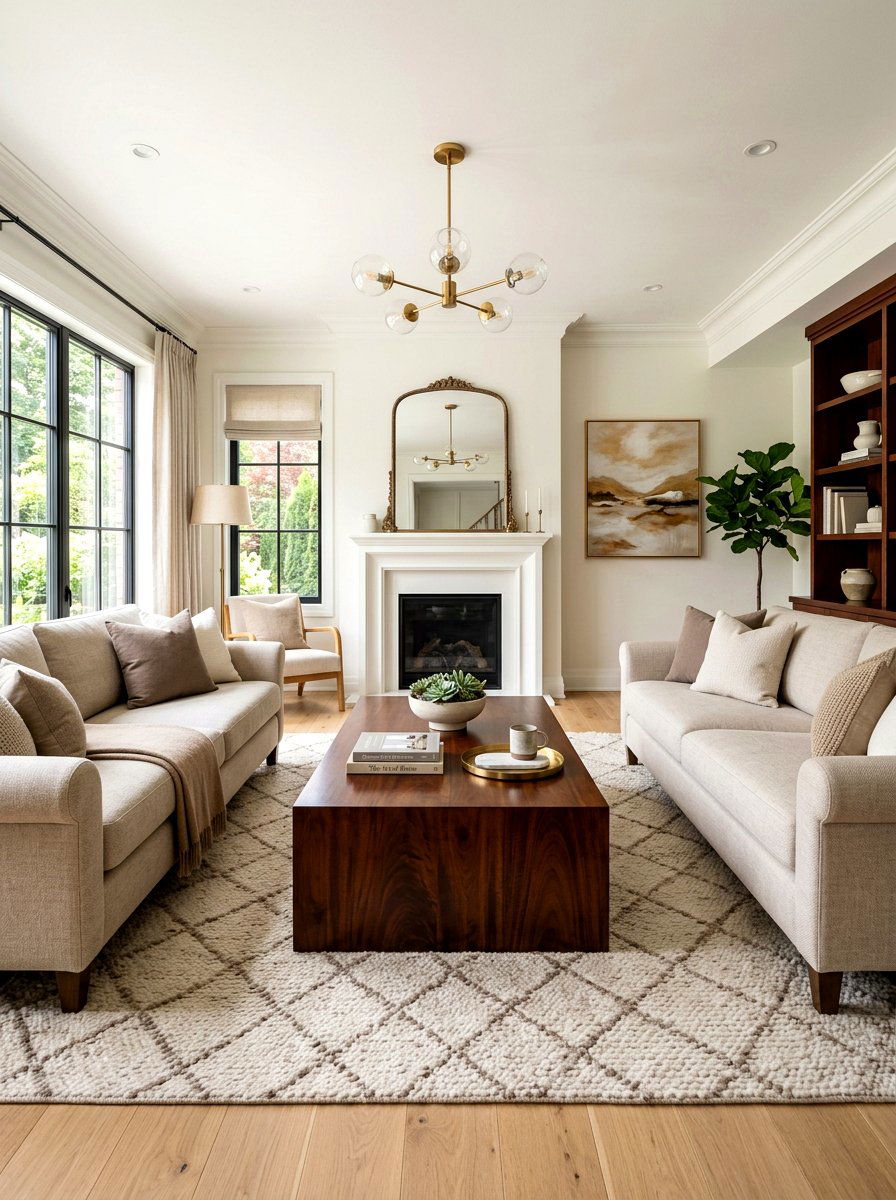
Transitional style bridges the gap between traditional and contemporary, and a latte-inspired palette is the perfect medium. This look uses soft, creamy browns and off-whites to create a space that feels balanced and timeless. Furniture often features classic silhouettes but with modern, simplified details. For example, you might have a traditional rolled-arm sofa upholstered in a light latte-colored linen fabric. Pair this with a dark mahogany coffee table for a touch of classic elegance. The walls should be a warm white to keep the space feeling bright and airy. Using a mix of textures, like a soft wool rug and smooth wooden surfaces, adds the necessary depth to keep the neutral palette interesting. This design is ideal for those who want a comfortable, high-quality home that never goes out of style.
18. Brown and mustard yellow living room
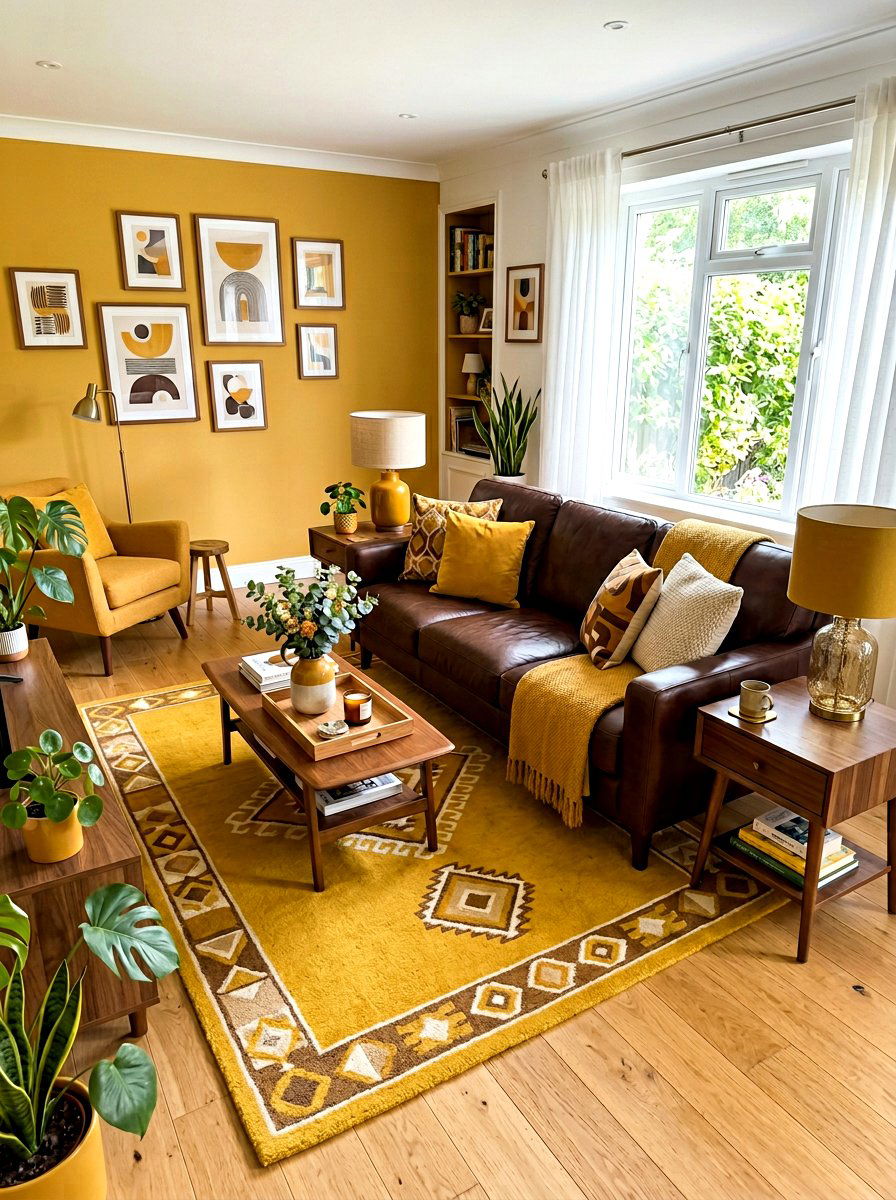
If you want your living room to feel sunny and energetic, pair brown with mustard yellow. Mustard is a deep, earthy yellow that shares the same warm undertones as most brown shades, making them natural partners. A dark brown leather sofa looks incredibly vibrant when you add mustard yellow cushions and a patterned yellow rug. This combination has a slightly retro, 1970s vibe that is very popular in modern "eclectic" homes. You can further enhance this look by adding mid-century wooden furniture and plenty of vintage-inspired accessories. The brown keeps the yellow from feeling too loud, while the yellow prevents the brown from looking dull. It is a cheerful, inviting palette that is perfect for a family room where you spend a lot of time playing and relaxing.
19. Organic modern brown living room
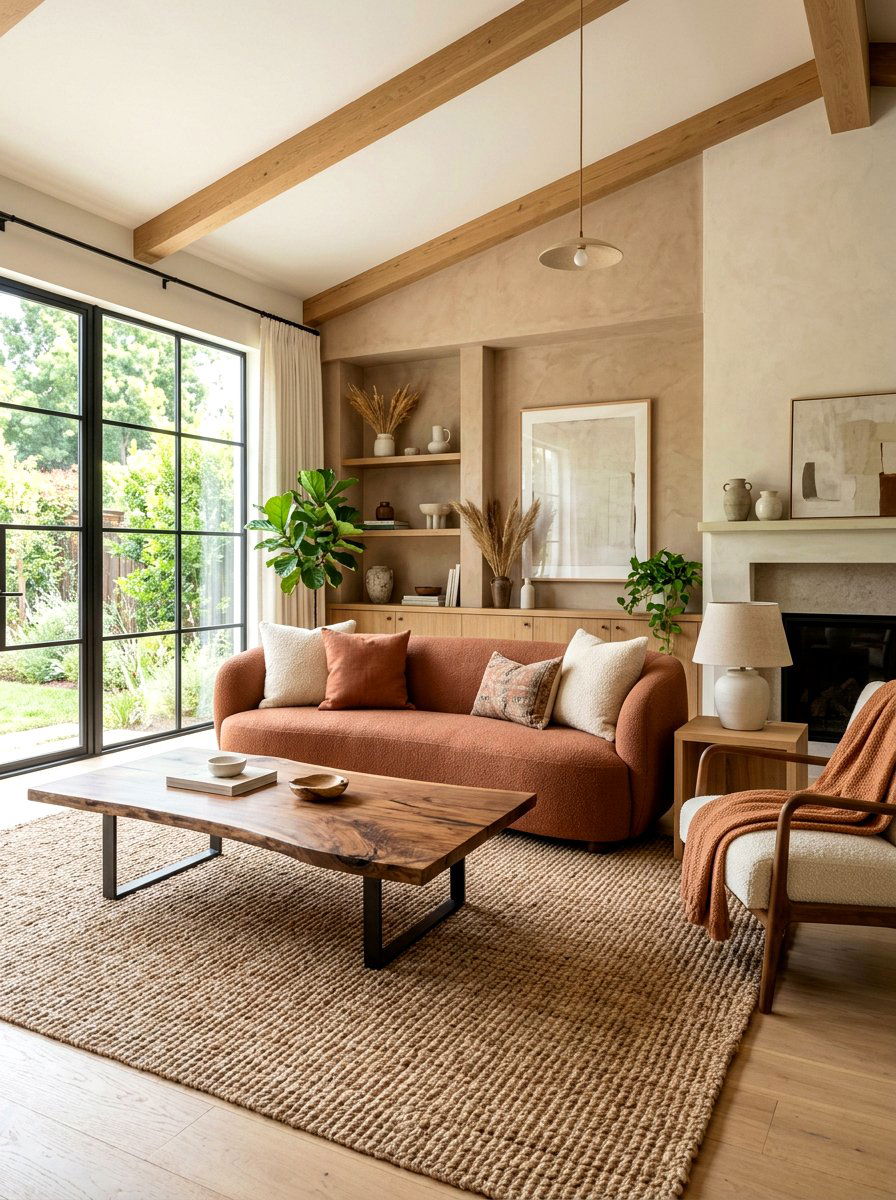
Organic modern design is all about bringing the beauty of nature indoors through curved lines and natural materials. In a brown-themed organic modern room, you will find plenty of raw wood, stone, and unbleached cotton. The color palette focuses on "mushy" browns — shades that look like wet clay, dried bark, or sandy soil. Furniture often has soft, rounded edges rather than sharp corners, creating a sense of flow and ease. A large wooden coffee table with a live-edge top is a perfect center-piece for this look. Use plenty of textured neutrals, like a chunky jute rug and bouclé pillows, to add tactile interest. This style is incredibly popular on Pinterest because it feels both luxurious and approachable, offering a peaceful sanctuary that feels far away from the stresses of modern life.
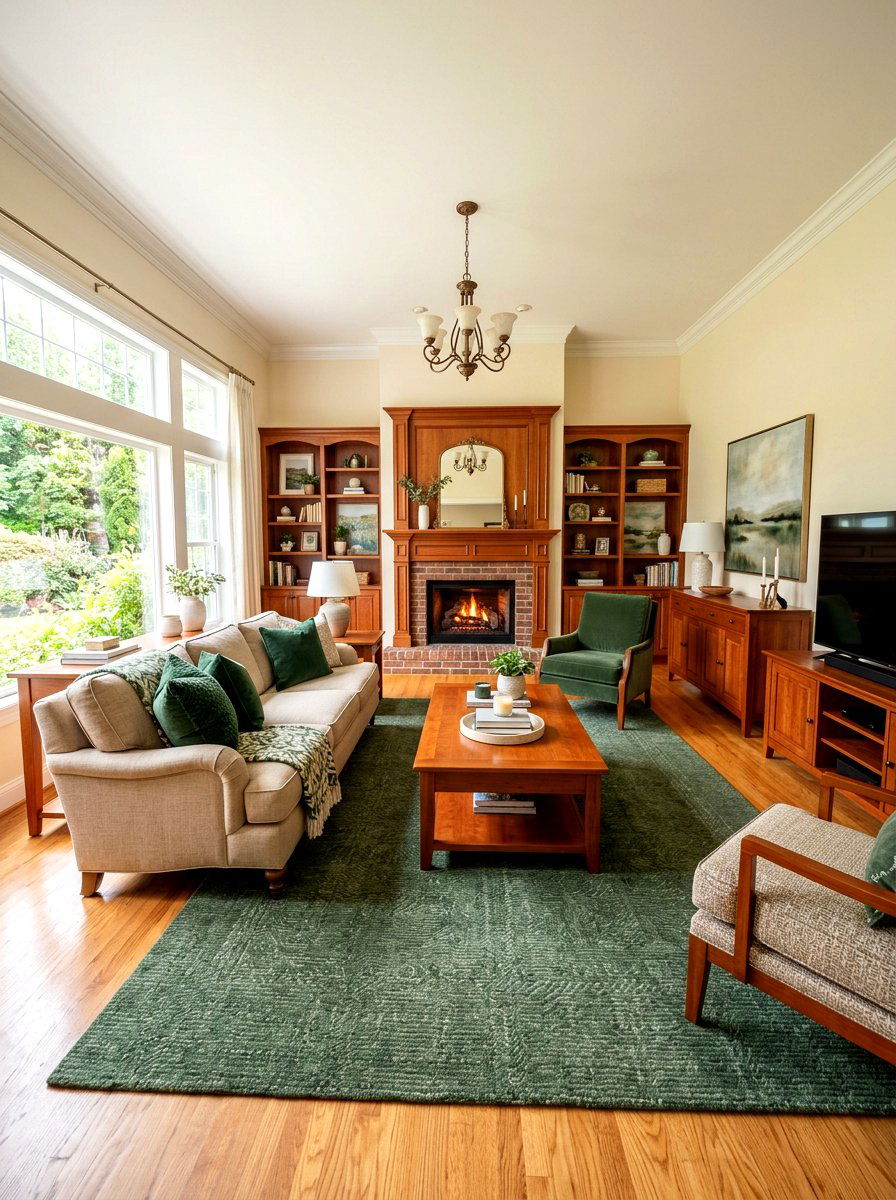
20. Brown and cream living room
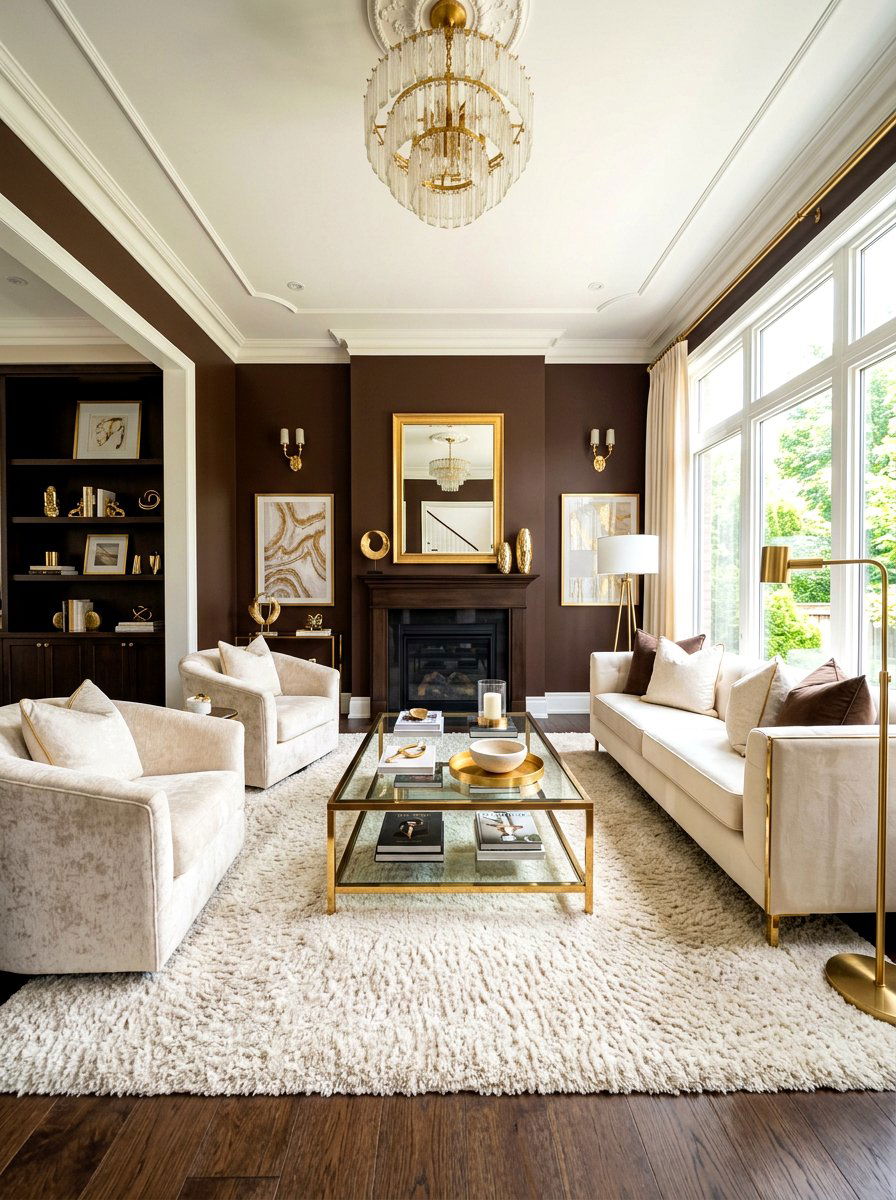
The combination of brown and cream is the ultimate "quiet luxury" palette. It is a high-contrast pairing that feels incredibly crisp and expensive. To achieve this look, use a deep chocolate or espresso brown for the large pieces, like the sofa or a feature wall, and use a bright, warm cream for everything else. Think of cream-colored curtains, a cream shag rug, and cream-colored armchairs. The darkness of the brown makes the cream look even brighter and cleaner, while the cream keeps the brown from feeling overwhelming. This palette works beautifully with polished marble, light-toned woods, and sparkling glass accents. It is a sophisticated choice for a formal living room where you want to impress guests with a design that feels impeccably curated, bright, and airy.
21. Industrial brown living room
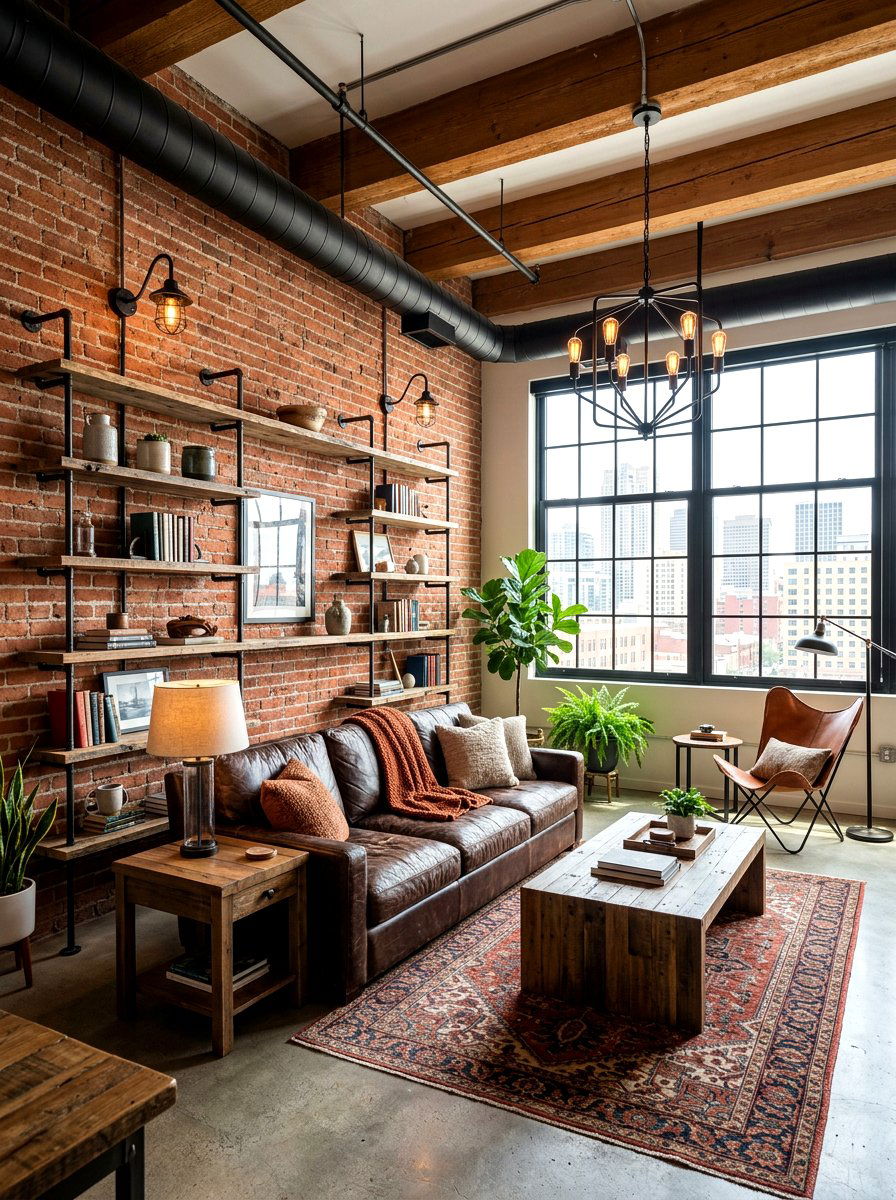
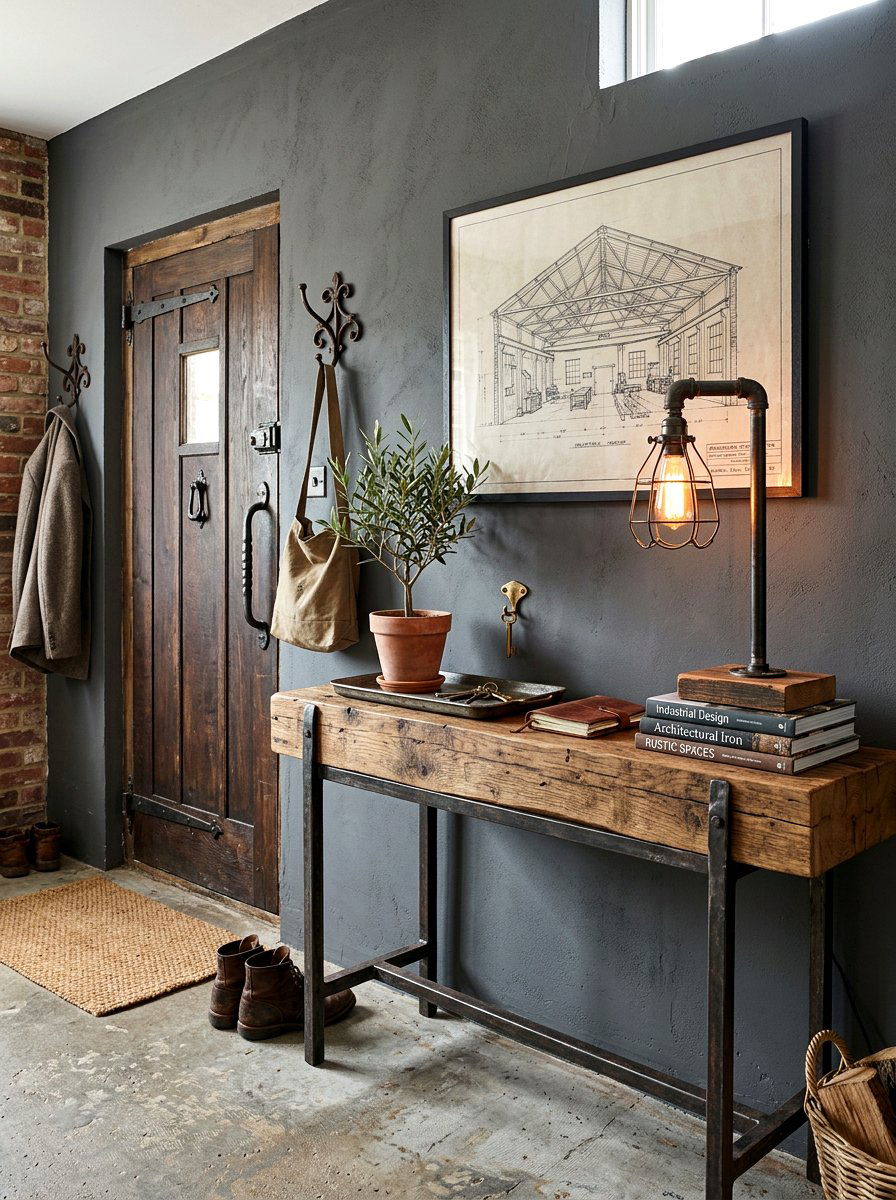
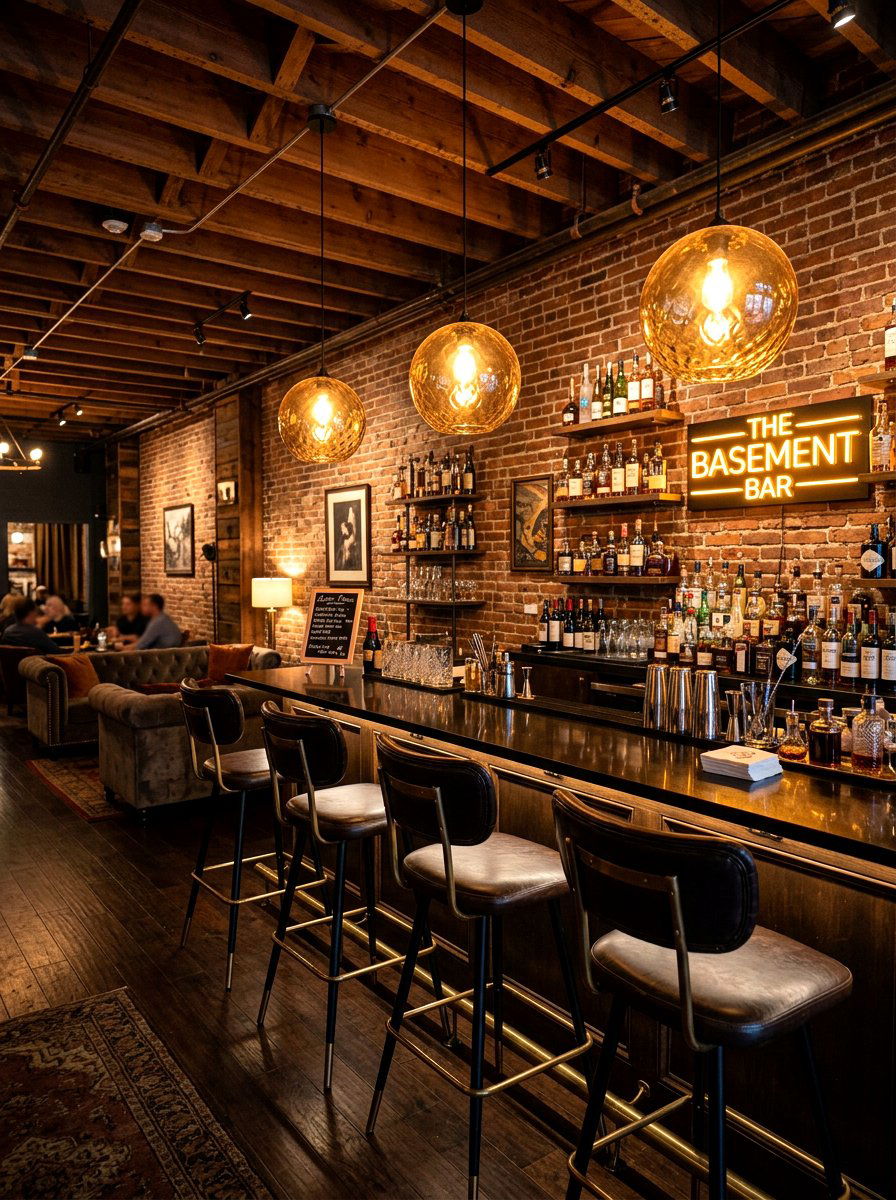
Industrial design often features raw, unfinished materials, and brown is the primary color that brings warmth to these spaces. Think of exposed red brick walls, dark leather sofas, and weathered wood shelving. The "brown" in an industrial room comes from these functional materials rather than paint. To keep the look from feeling too harsh, introduce soft textiles like oversized wool blankets and plush floor pillows. Large metal-framed windows and black iron accents provide the necessary structure and contrast. The combination of cold metal and warm brown wood or leather creates a balanced, urban vibe that feels very "big city. " This style is perfect for loft-style living or for anyone who appreciates a rugged, masculine aesthetic that prioritizes durability and a history of use.
22. Brown and burnt orange living room
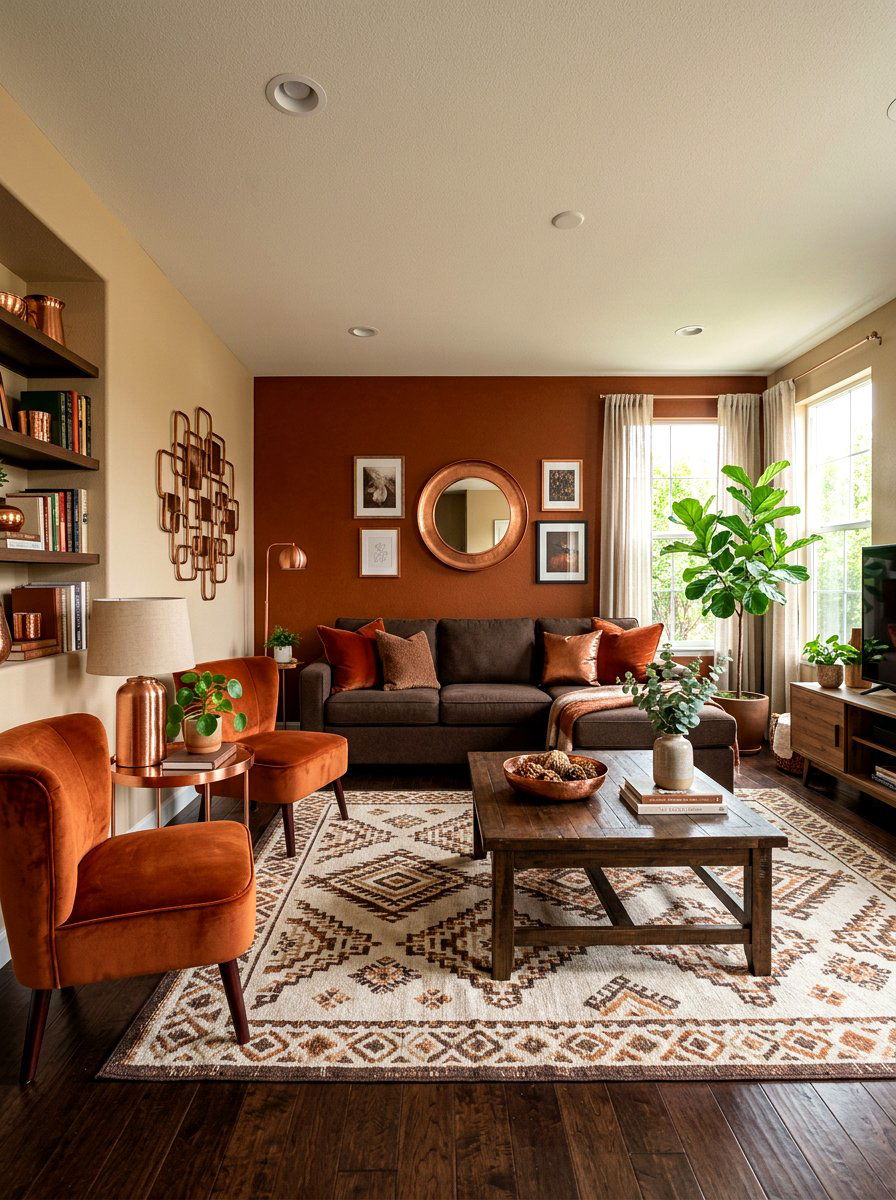
For a space that feels like a permanent autumn day, pair brown with burnt orange. This color duo is warm, inviting, and deeply comforting. A dark brown fabric sofa looks wonderful against an accent wall painted in a soft, muted orange. Alternatively, you can keep the walls neutral and bring in the orange through large-scale art and velvet accent chairs. This palette is particularly successful when you use different textures, like a leather ottoman and a soft mohair throw. The richness of the burnt orange brings out the hidden red and gold tones in the brown, making the entire room feel more vibrant. Adding a few copper or bronze decorative pieces will complement the warm tones and add a touch of metallic shine that elevates the overall design.
23. Traditional mahogany living room
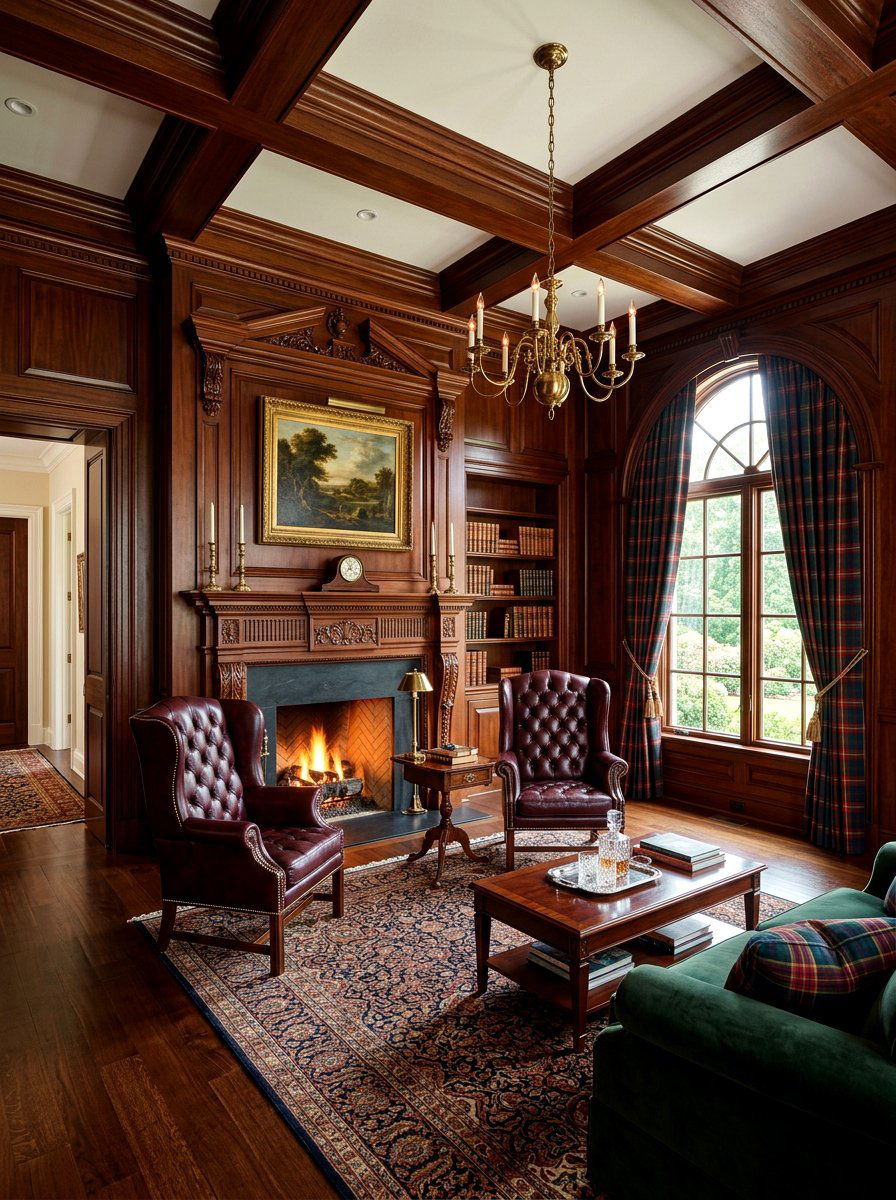
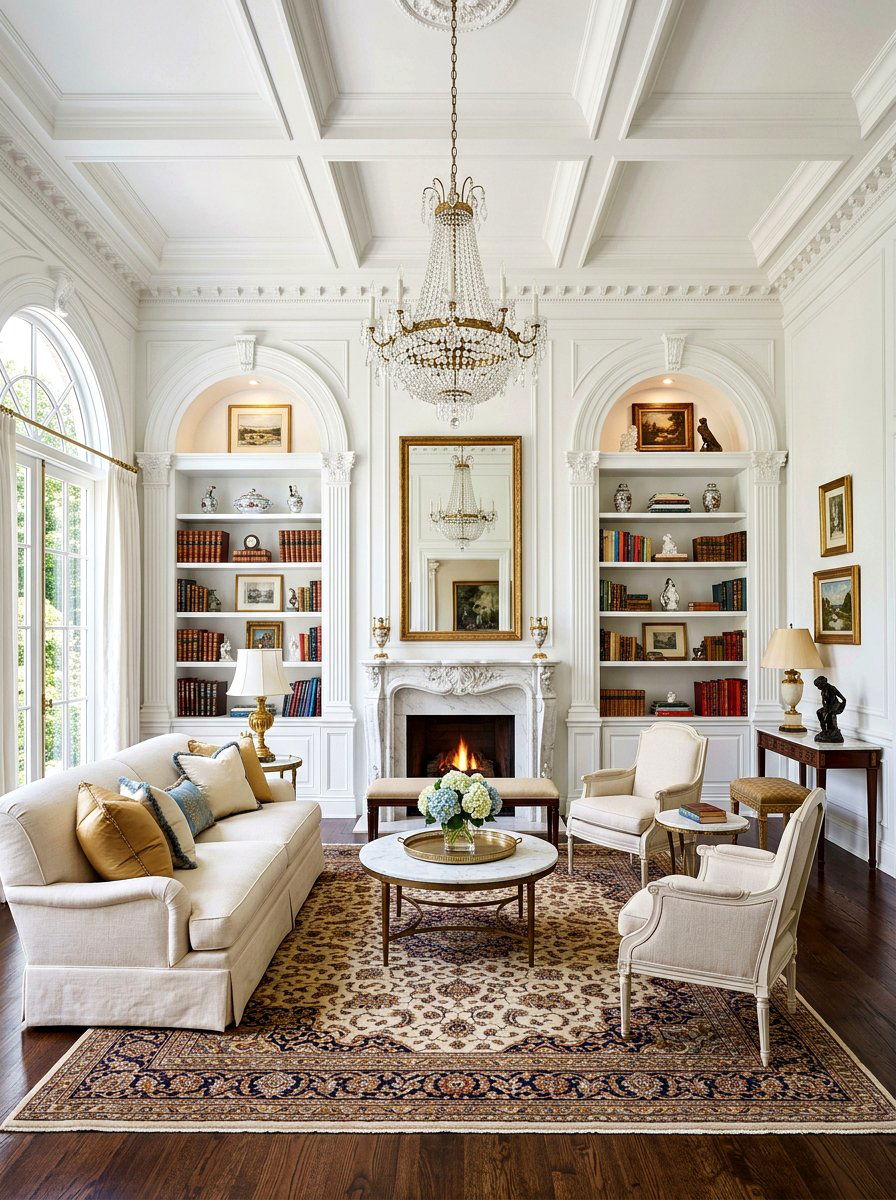
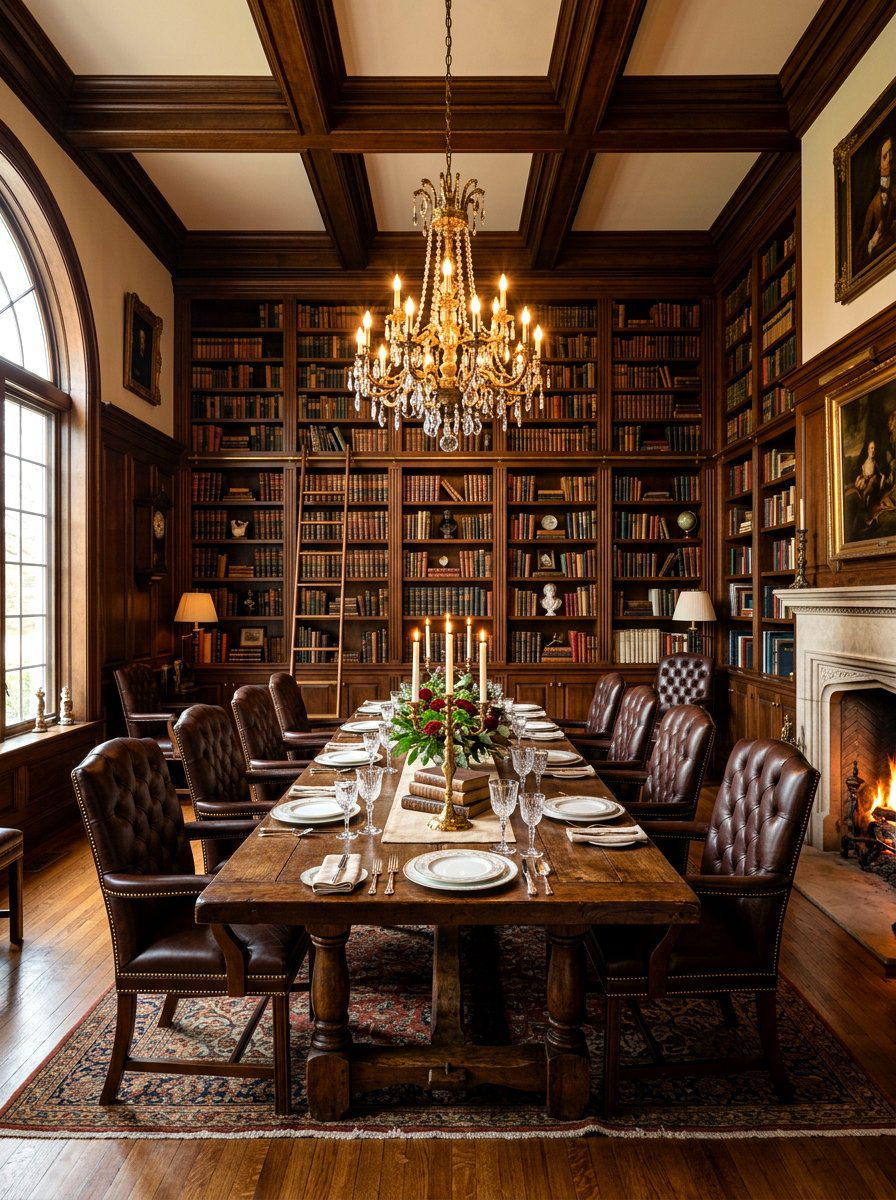
Traditional design often relies on dark, polished woods like mahogany or cherry to create a sense of history and grandeur. In a traditional brown living room, the focus is on formal symmetry and high-quality craftsmanship. You might see a pair of tufted leather Wingback chairs facing a grand fireplace, with a dark mahogany coffee table in between. The walls could be adorned with traditional wainscoting painted in a warm tan or beige to complement the dark wood. Use classic patterns like plaid, damask, or floral prints for the pillows and window treatments to add a layer of sophistication. This style is perfect for those who love a classic, "Old World" feel that suggests a sense of stability, heritage, and timeless luxury that will never go out of style.
24. Small brown living room
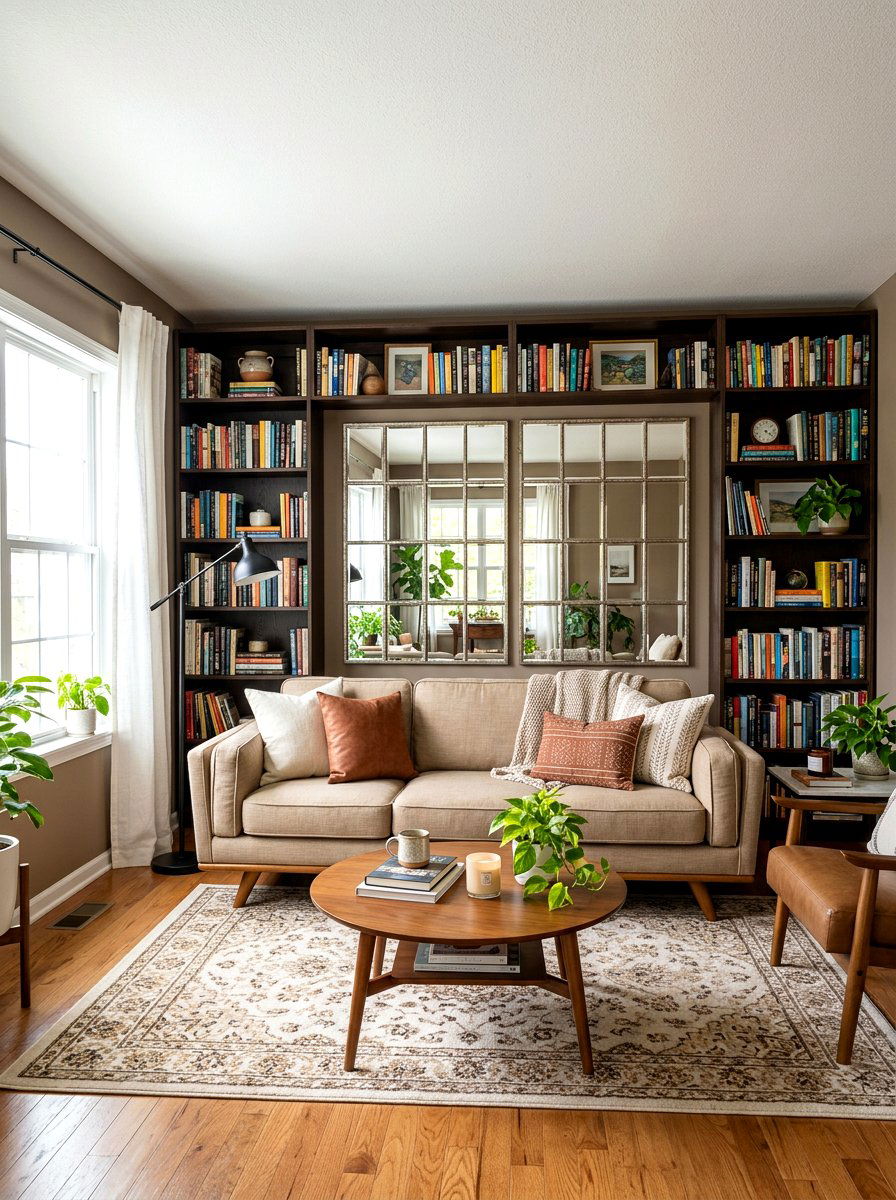
You might think dark colors make a small room feel smaller, but brown can actually create a cozy, "jewel box" effect that makes a tiny space feel more intentional. The key to using brown in a small living room is to vary the shades and use plenty of mirrors to reflect light. A light tan sofa with legs — which allows you to see the floor underneath — helps the room feel more open. Use vertical elements like tall brown bookshelves or long curtains to draw the eye upward and create the illusion of height. Keep the floor color light to provide a sense of space, and use glass or acrylic tables to minimize visual clutter. This approach turns a small area into a warm, intimate nook that feels like a stylish retreat rather than a cramped space.
25. Brown and teal living room
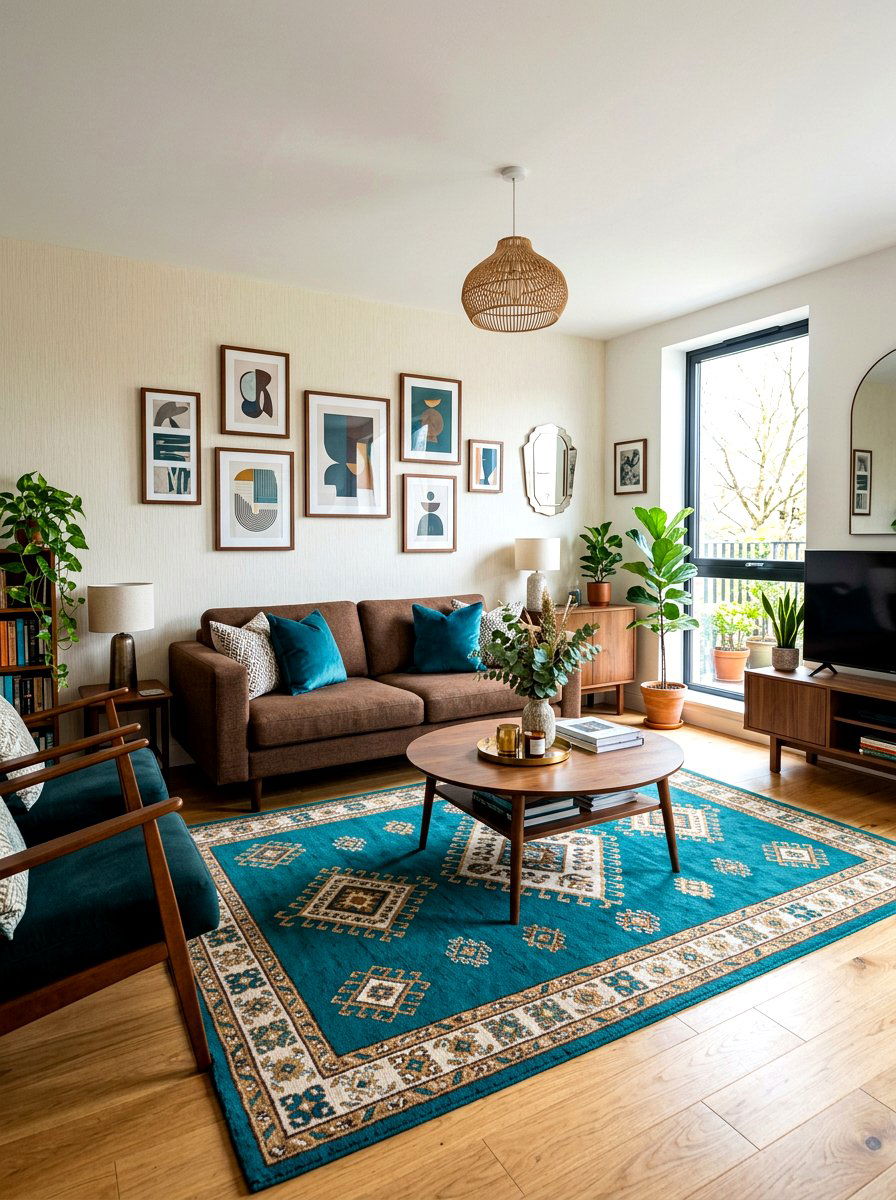
Brown and teal is a sophisticated, high-energy pairing that feels very contemporary. Teal is a cool, vibrant color that provides a refreshing contrast to the warm, earthy nature of brown. A medium brown sofa looks incredible with teal velvet pillows and a teal-patterned area rug. This combination works because the two colors sit across from each other on the color wheel, creating a natural visual harmony. To keep the room from feeling too busy, use a neutral cream or light gray for the walls. You can also introduce brown through wooden elements like a mid-century sideboard or a group of picture frames. This palette is perfect for a creative individual who wants a living room that feels bold, unique, and full of personality without sacrificing comfort.
26. Luxe brown and gold living room
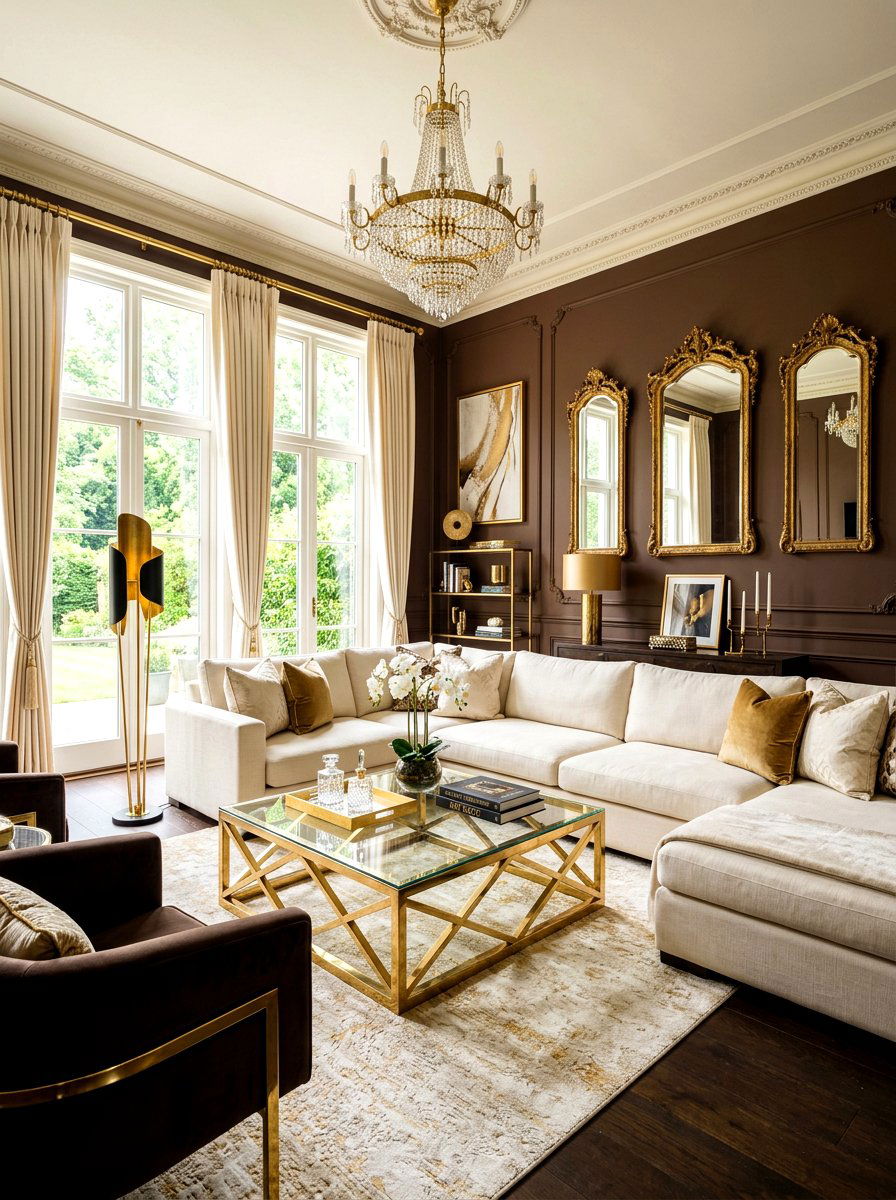
If your goal is pure opulence, combine deep brown tones with shimmering gold accents. This pairing is a classic for a reason; it looks expensive and sophisticated in any setting. Use a dark chocolate paint for the walls to create a moody backdrop, then layer in gold-framed mirrors, gold-based coffee tables, and gold-threaded textiles. The darkness of the brown makes the gold "pop" and look even more brilliant. To keep the room feeling modern, use clean-lined furniture rather than overly ornate pieces. A large cream-covered sectional can provide a necessary break from the intense color, ensuring the space remains comfortable and inviting. This is the perfect design for a primary entertaining space where you want to create a sense of occasion and a truly high-end atmosphere.
27. Brown and white living room
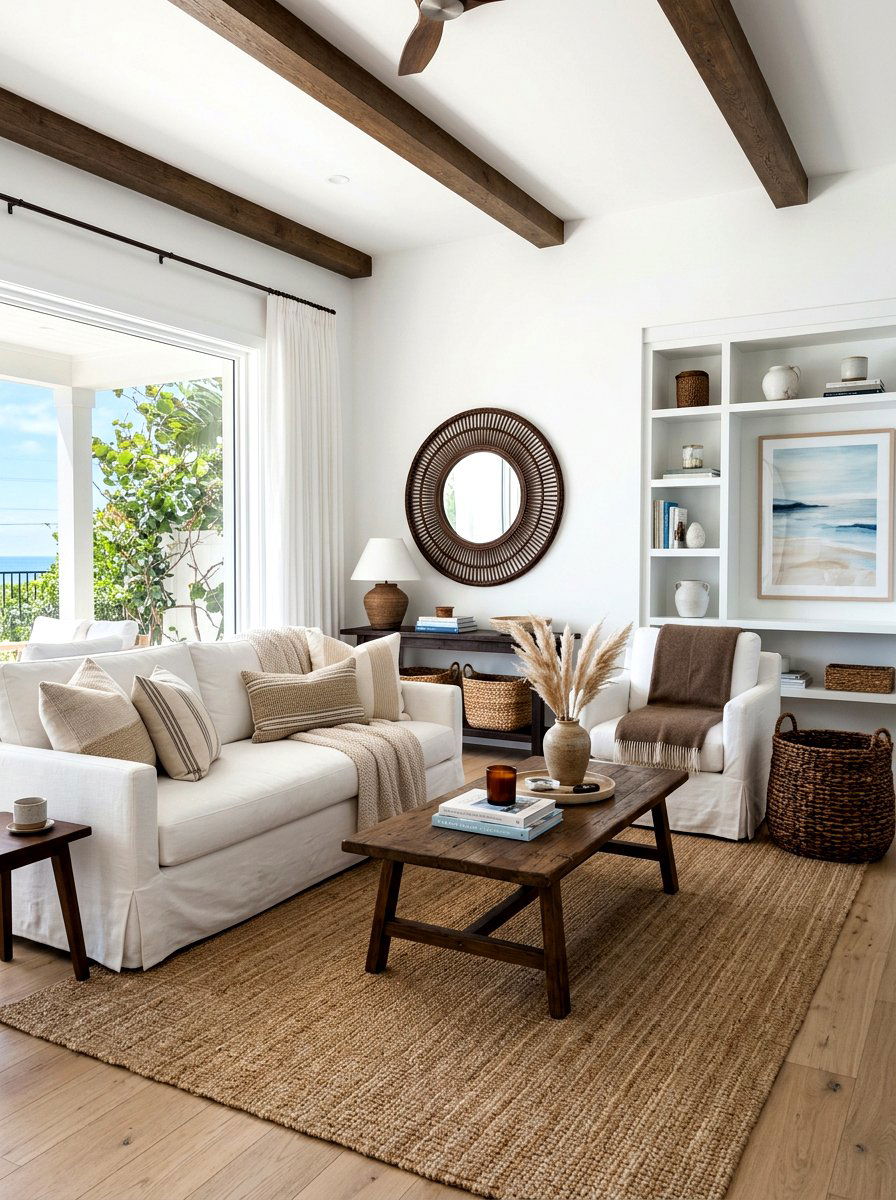
For a look that is fresh, clean, and effortlessly chic, stick to a strict brown and white palette. This design relies on the high contrast between crisp white walls and dark brown furniture. It feels very coastal and breezy, especially if you use materials like linen and light oak. A white slipcovered sofa paired with a dark brown woven rug and a few dark wood accent pieces creates a look that is both relaxed and polished. The key is to keep the room clutter-free to maintain the airy feeling. Add plenty of natural light and perhaps a few green plants to keep the space from feeling too stark. This minimalist approach is perfect for those who want a home that feels like a serene sanctuary, free of visual noise and unnecessary distractions.
28. Cinnamon and wood living room
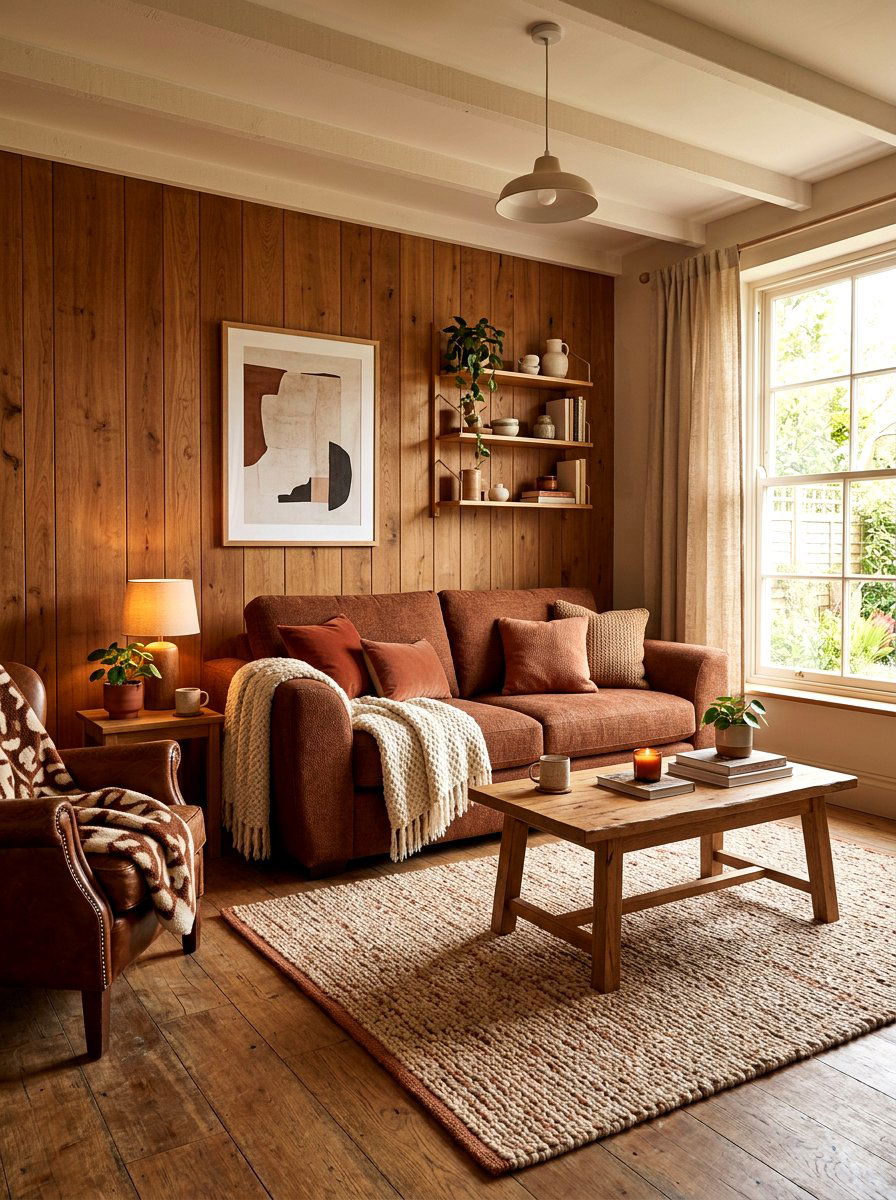
Cinnamon is a warm, spicy shade of brown that has strong red undertones, making it feel incredibly cozy and seasonal. This color looks beautiful when paired with various wood tones, from light pine to dark walnut. In a cinnamon-themed living room, you might see a sofa in a warm rust-brown fabric and walls painted in a soft, sandy beige. This creates a "monochrome-adjacent" look that feels very layered and interesting. Use plenty of tactile fabrics like wool, fleece, and corduroy to enhance the "warm and spicy" vibe. This palette is perfect for creating a family gathering space that feels like it’s always ready for a cozy winter evening. Adding a few black accents, like a modern floor lamp or black picture frames, provides the necessary structure to keep the warm colors grounded.
29. Coastal brown and blue living room
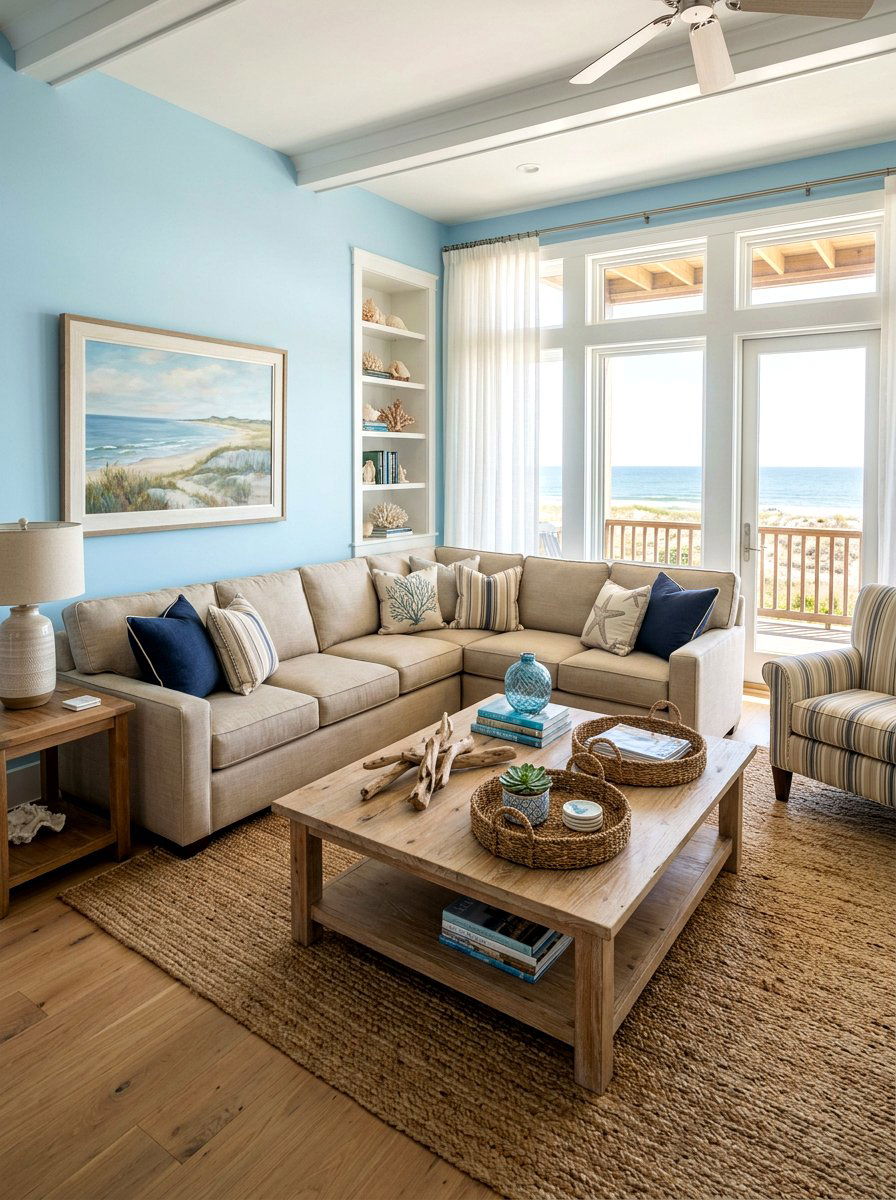
While many people associate coastal design with blue and white, adding brown brings a necessary "sandy" element that makes the look feel more authentic. Think of the colors of driftwood, sea oats, and sandy beaches. A light tan linen sofa paired with soft sky-blue walls and a jute rug creates a space that feels like a beach house retreat. Use light-toned woods like white oak or birch for your tables and shelving to keep the look breezy. Incorporate natural textures like sea-grass baskets and shell-filled jars to emphasize the nautical theme. This palette is incredibly calming and perfect for a living room where you want to feel relaxed and "away from it all. " It is a sophisticated, grown-up take on the traditional beach house aesthetic that feels very timeless.
30. Monochrome brown living room
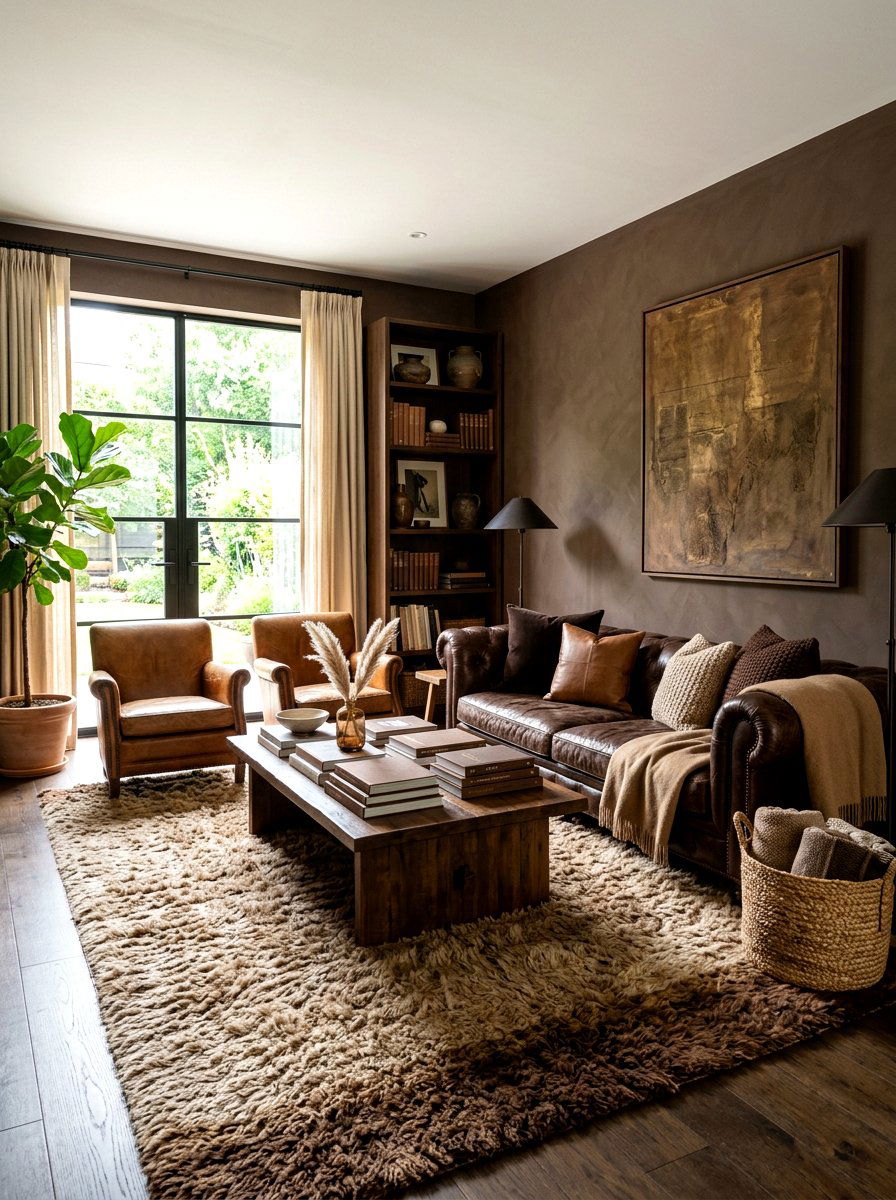
A monochrome look is achieved by using different shades and tints of a single color, and brown is one of the best colors for this technique. By layering everything from pale beige and tan to deep espresso and chocolate, you create a room that is incredibly rich and full of depth. The key to a successful monochrome room is varying the textures; if everything is the same shade and the same fabric, it will look flat. Instead, pair a smooth leather sofa with a shaggy wool rug, silk pillows, and a matte-painted wall. This creates a sensory experience that feels very intentional and high-end. A monochrome brown room feels stable, warm, and sophisticated, offering a timeless design that is far more interesting and complex than a simple white or gray space.
Conclusion:
Brown has officially reclaimed its place as a cornerstone of high-end interior design, offering a warmth and versatility that other neutrals simply cannot match. Whether you choose to go bold with deep chocolate walls or keep it subtle with sandy tan textiles, this earthy hue provides a grounded foundation for a truly comfortable home. By experimenting with different color pairings — like the freshness of sage green or the luxury of gold — you can tailor the brown trend to fit your personal style perfectly. Remember that the secret to a stunning brown living room lies in the layering of textures and the strategic use of lighting to bring out the hidden depths of the color. As we move away from cold, clinical spaces, brown invites us to create homes that are not only beautiful to look at but also deeply soothing to live in. Embrace the brown renaissance and transform your living area into a sophisticated, timeless sanctuary that feels like a warm welcome every time you walk through the front door.

Related posts: