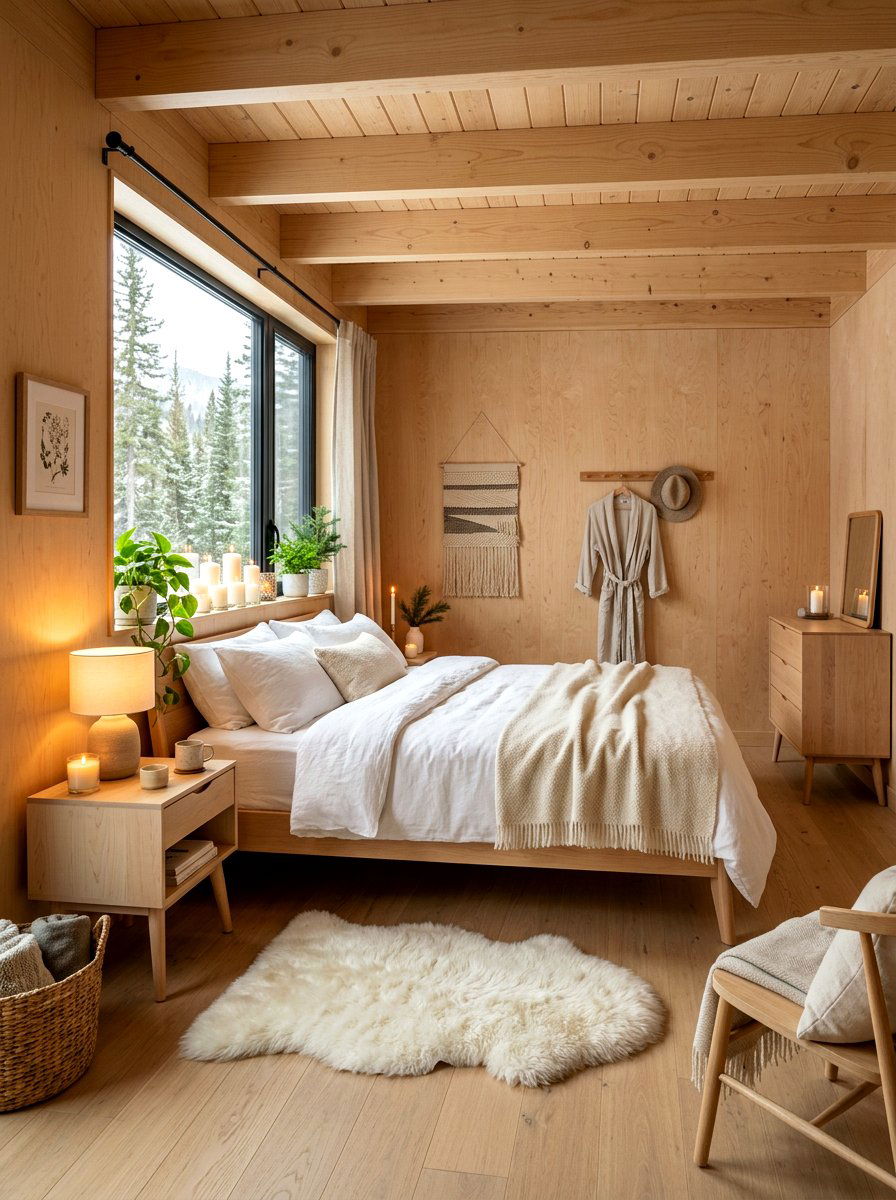
Stepping into the world of mountain living starts with a breathtaking exterior that harmonizes perfectly with the rugged landscape. A well-designed chalet is more than just a shelter; it is a visual statement that blends traditional warmth with modern architectural ingenuity. Whether you are dreaming of a cozy getaway tucked in the pines or a sleek contemporary masterpiece overlooking snowy peaks, the exterior sets the entire mood. High-quality materials like natural stone, weathered timber, and expansive glass play a vital role in creating that iconic alpine aesthetic. Exploring these diverse design possibilities allows homeowners to find the perfect balance between rustic charm and sophisticated luxury for their unique retreat.
1. Modern Black Wood Facade
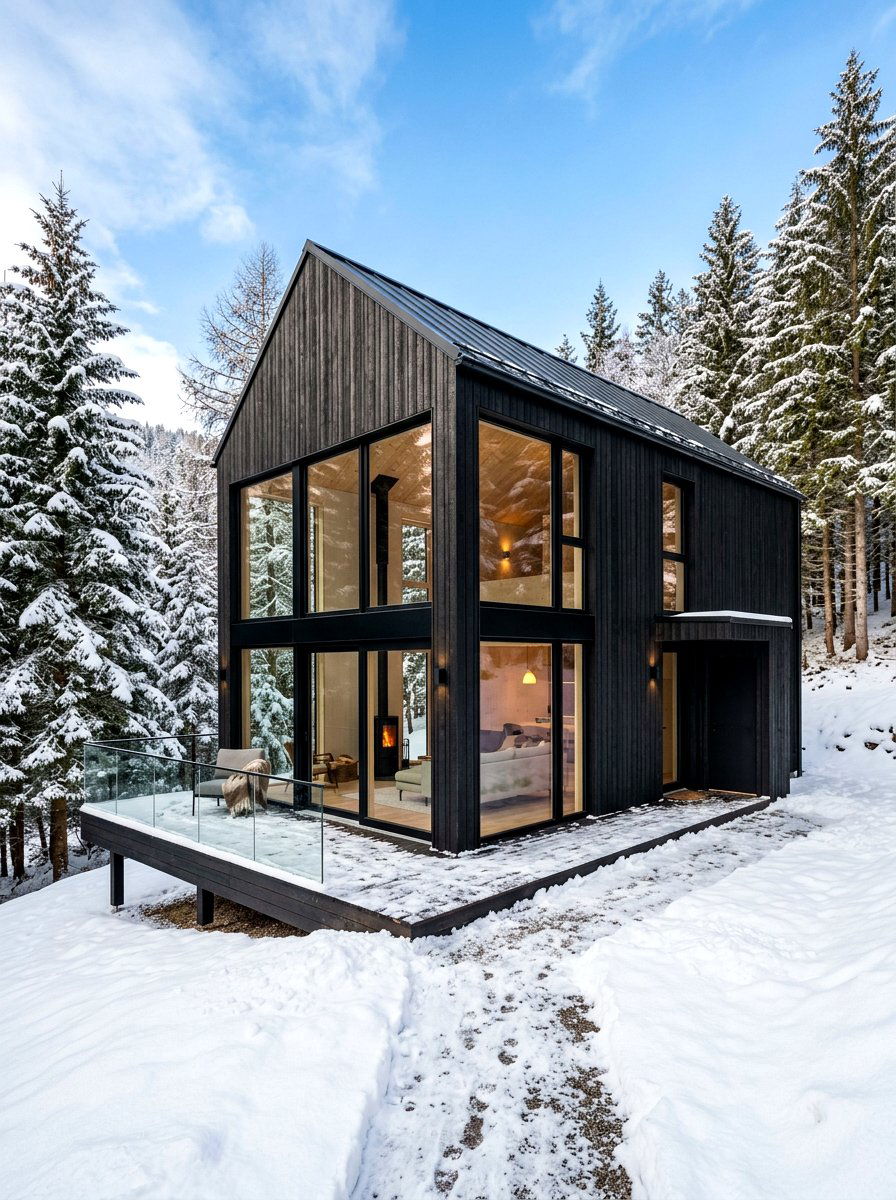
A modern black wood facade offers a striking contrast against the natural greens of a forest or the white backdrop of winter snow. This bold color choice gives the traditional chalet a contemporary edge that feels incredibly sophisticated and timeless. By using charred wood or dark-stained cedar, the structure recedes into the shadows of the trees while maintaining a strong architectural presence. Large windows are often framed in black metal to match the siding, creating a seamless and cohesive look. This specific style is perfect for those who want a minimalist aesthetic that still feels warm, organic, and deeply connected to the surrounding wilderness.
2. Classic A Frame Cabin
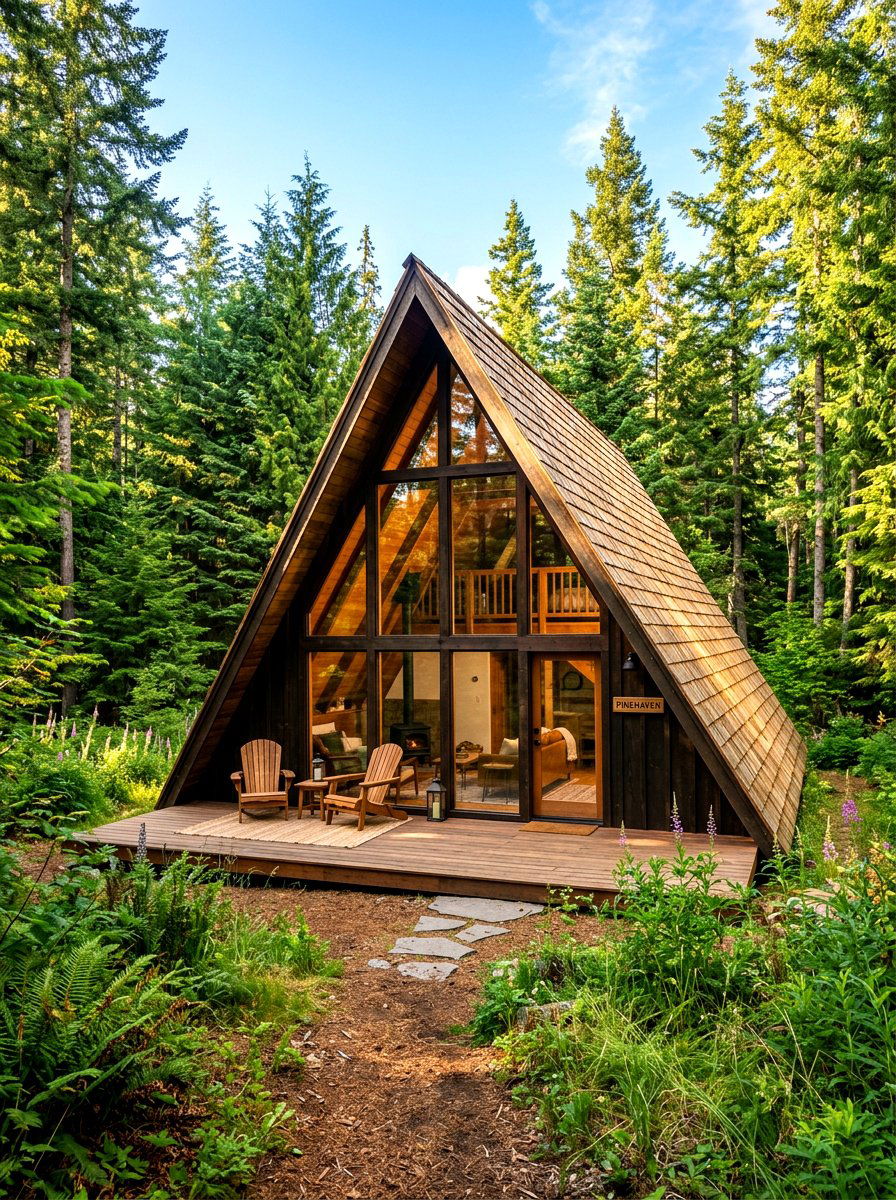
The classic A-frame cabin remains a favorite for mountain lovers due to its iconic triangular shape and structural simplicity. This design is highly functional in snowy regions as the steep roof pitch prevents heavy snow accumulation from damaging the building. Modern versions often replace the entire front wall with glass to invite massive amounts of natural light and frame spectacular views. Using natural pine or cedar planks for the exterior walls adds a sense of tradition and coziness. This architectural style is ideal for smaller lots or vacation homes where a dramatic and intimate connection with the outdoors is the primary goal.
3. Natural Stone Timber House
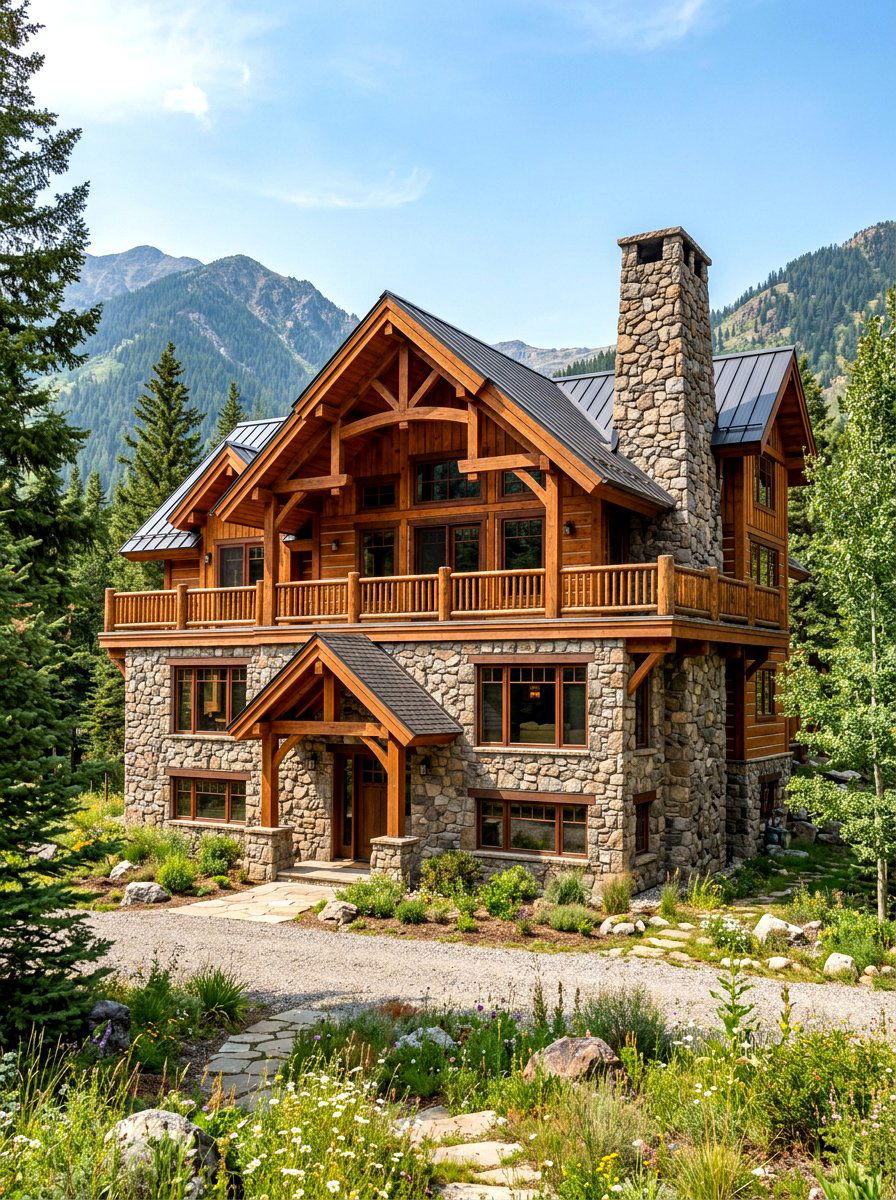
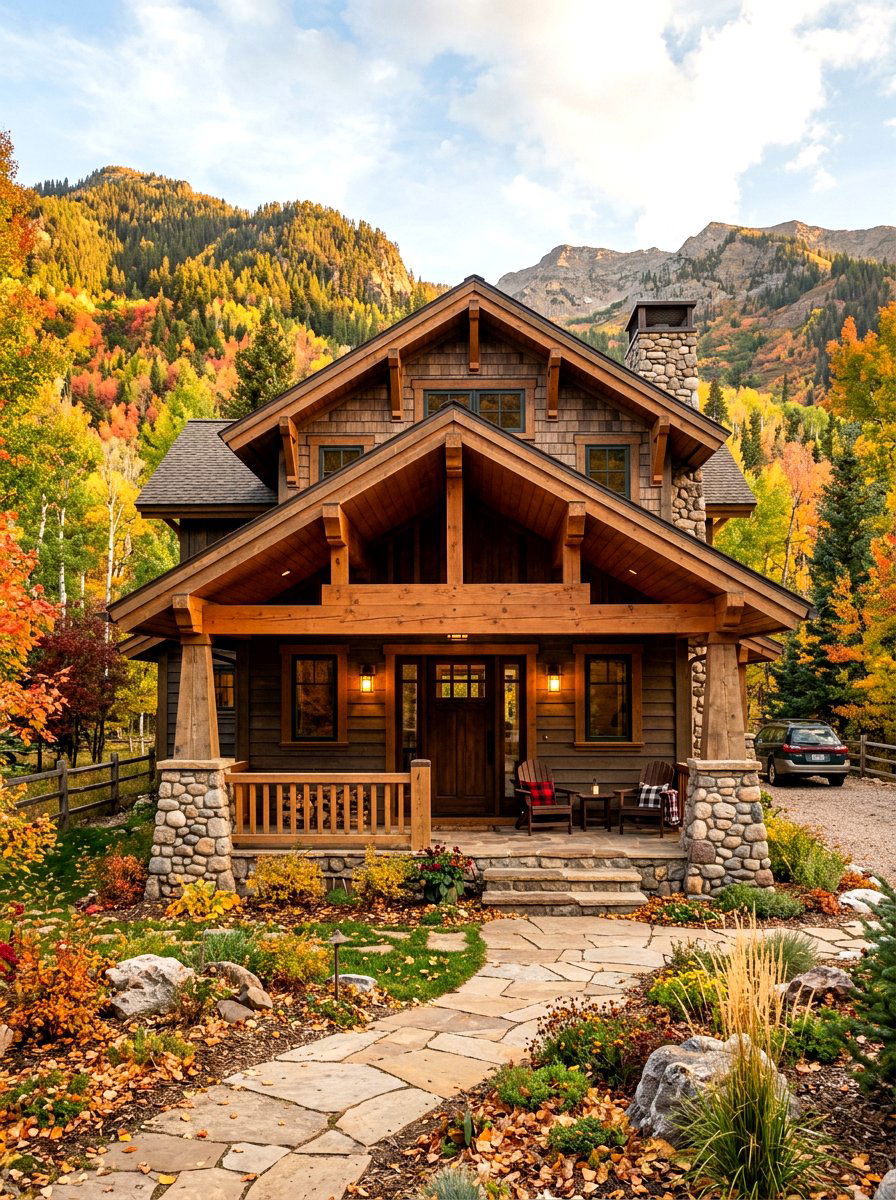
A natural stone timber house combines the two most fundamental alpine materials to create a structure that feels permanent and grounded. Typically, the lower level is clad in rugged fieldstone or river rock to protect against moisture and provide a sturdy foundation. The upper levels transition into warm, textured wood timbers that offer a softer and more inviting appearance. This layered approach creates visual depth and anchors the home firmly into the hillside. Exposed rafter tails and heavy wooden beams further enhance the craftsmanship. It is a timeless choice that honors old-world mountain traditions while providing a very luxurious feel.
4. Glass Front Mountain Lodge
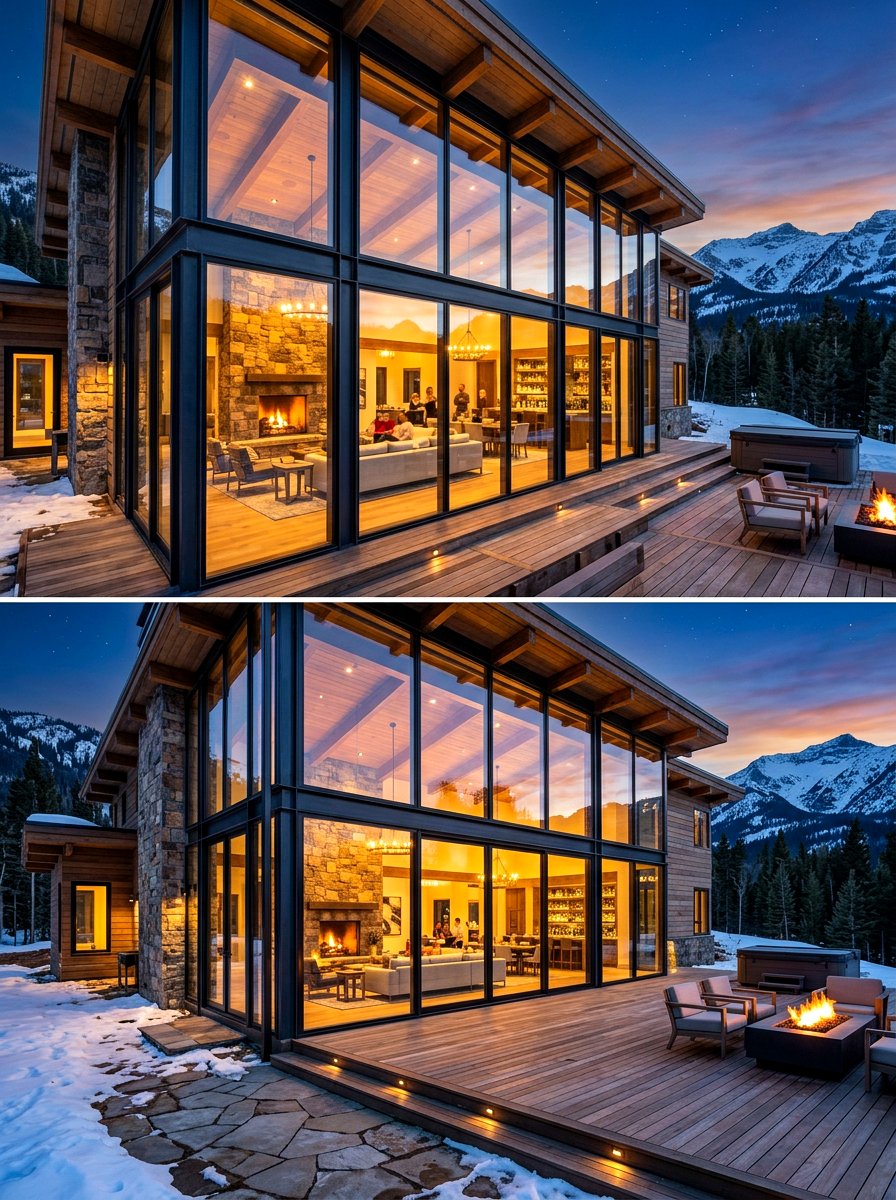
A glass front mountain lodge is designed specifically for those who live for the view and want a seamless transition. By utilizing massive panes of glass across the entire front elevation, the interior living spaces feel like an extension of the forest. This design requires careful engineering to maintain energy efficiency while providing such an expansive transparent surface. Slender steel or wood frames support the glass, ensuring that the architectural lines remain clean and unobstructed. During the evening, the internal glow of the home turns the building into a stunning lantern in the woods. It is the pinnacle of modern luxury chalet design.
5. Scandinavian Wood Chalet
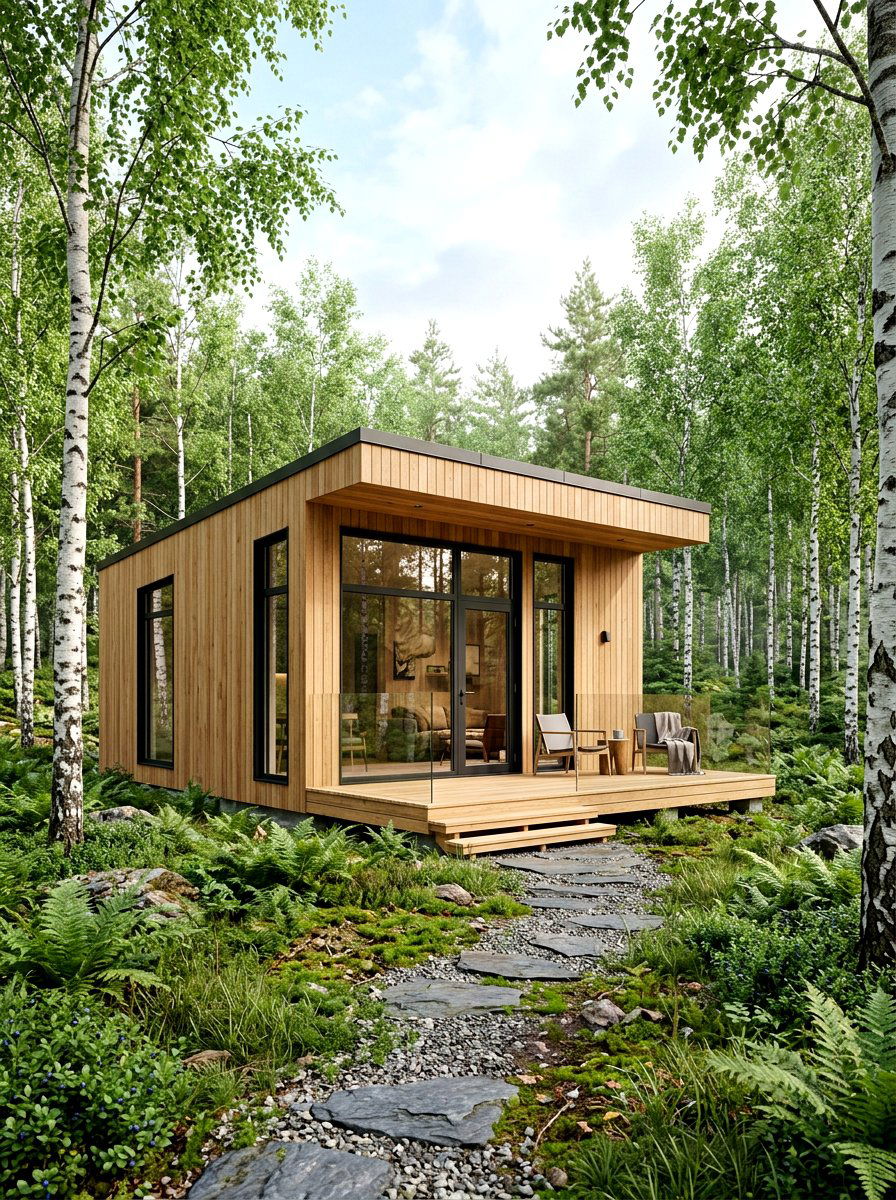
The Scandinavian wood chalet focuses on light-colored timbers and minimalist silhouettes to create a serene and airy mountain retreat. Often featuring light oak or blonde pine, these structures emphasize clean lines and a lack of ornate decoration. The simplicity of the design allows the natural grain of the wood to take center stage. Large, simple window openings and flat or low-sloped roofs are common features that distinguish this style from more traditional alpine designs. This approach creates a calm atmosphere that feels modern yet deeply rooted in Nordic traditions of functional beauty and respect for the natural environment.
6. Swiss Alpine Style Home
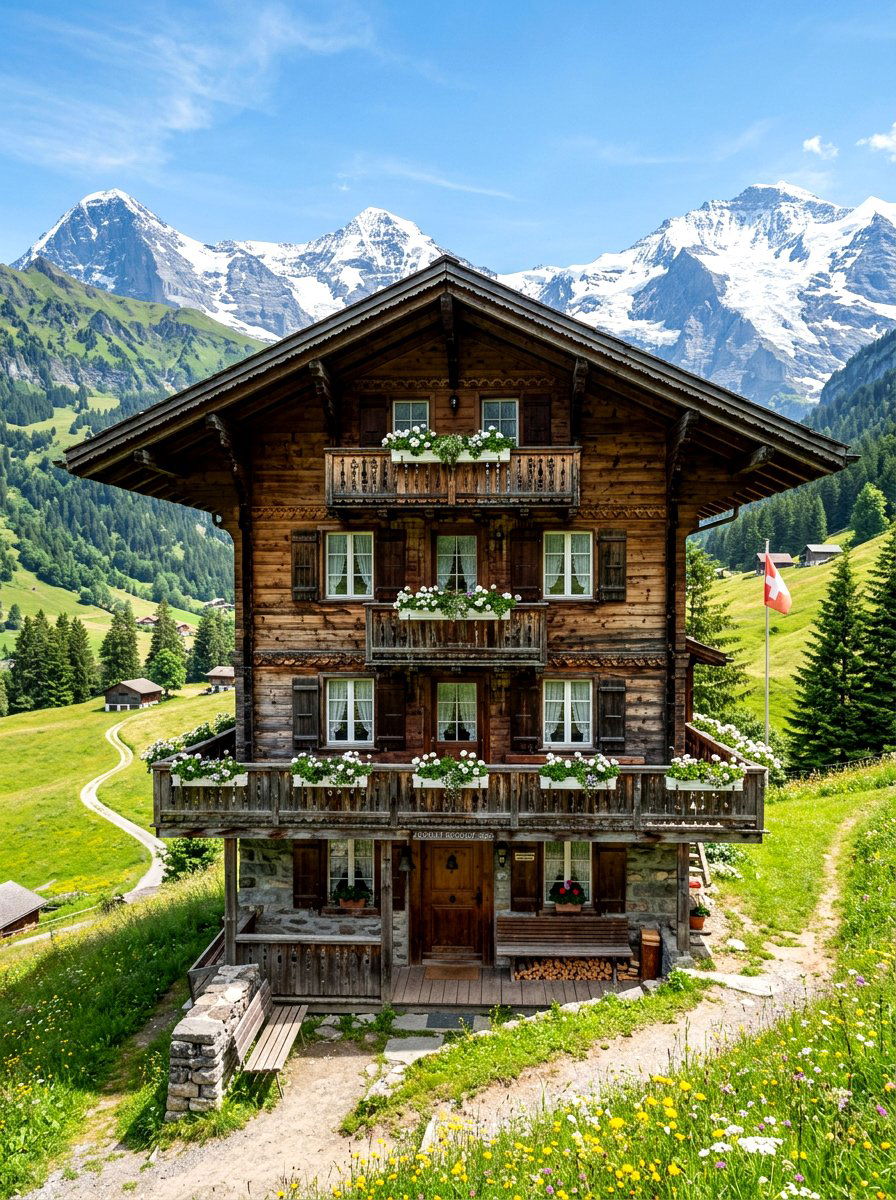
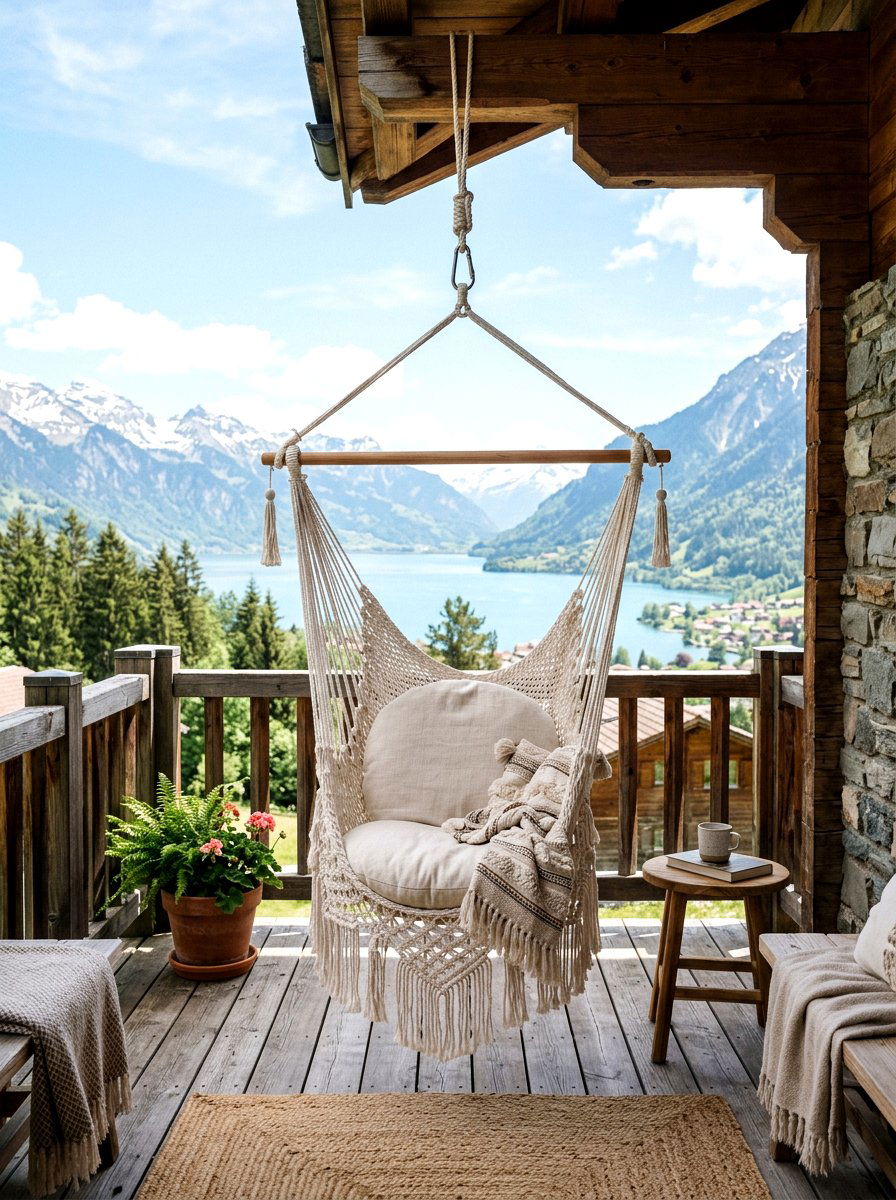
A Swiss alpine style home is characterized by its wide, gently sloping roof and deeply overhanging eaves that protect balconies. This traditional design often includes intricate wood carvings and decorative balustrades that add a layer of historical charm and personality. The use of weathered timber for the siding gives the home a lived-in feel that harmonizes with old-growth forests. Stone accents on the chimney or foundation provide a sense of stability and permanence. These homes are designed to be both sturdy and beautiful, offering a classic look that has defined mountain architecture for centuries across the European Alps.
7. Vertical Cedar Siding House
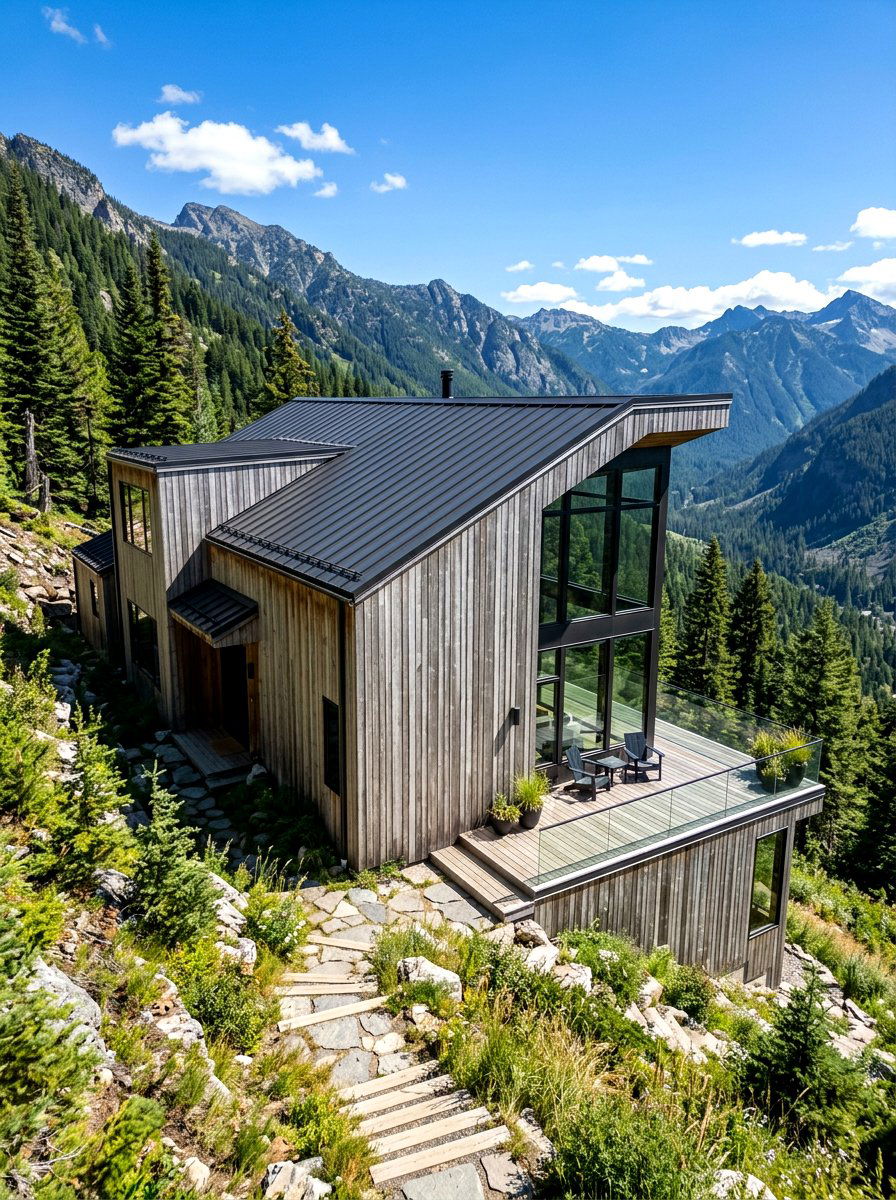
Choosing vertical cedar siding house design creates a sense of height and elegance that makes even a small cabin feel grand. Unlike horizontal siding, vertical planks draw the eye upward toward the canopy of the trees and the mountain peaks. This orientation also helps with water runoff, making it a practical choice for wet or snowy climates. Cedar is a preferred material because of its natural resistance to decay and its beautiful silver-gray patina that develops over time. When paired with dark metal roofing, the result is a sophisticated and modern exterior that feels exceptionally well-integrated with its woodland setting.
8. White Stucco Chalet Facade
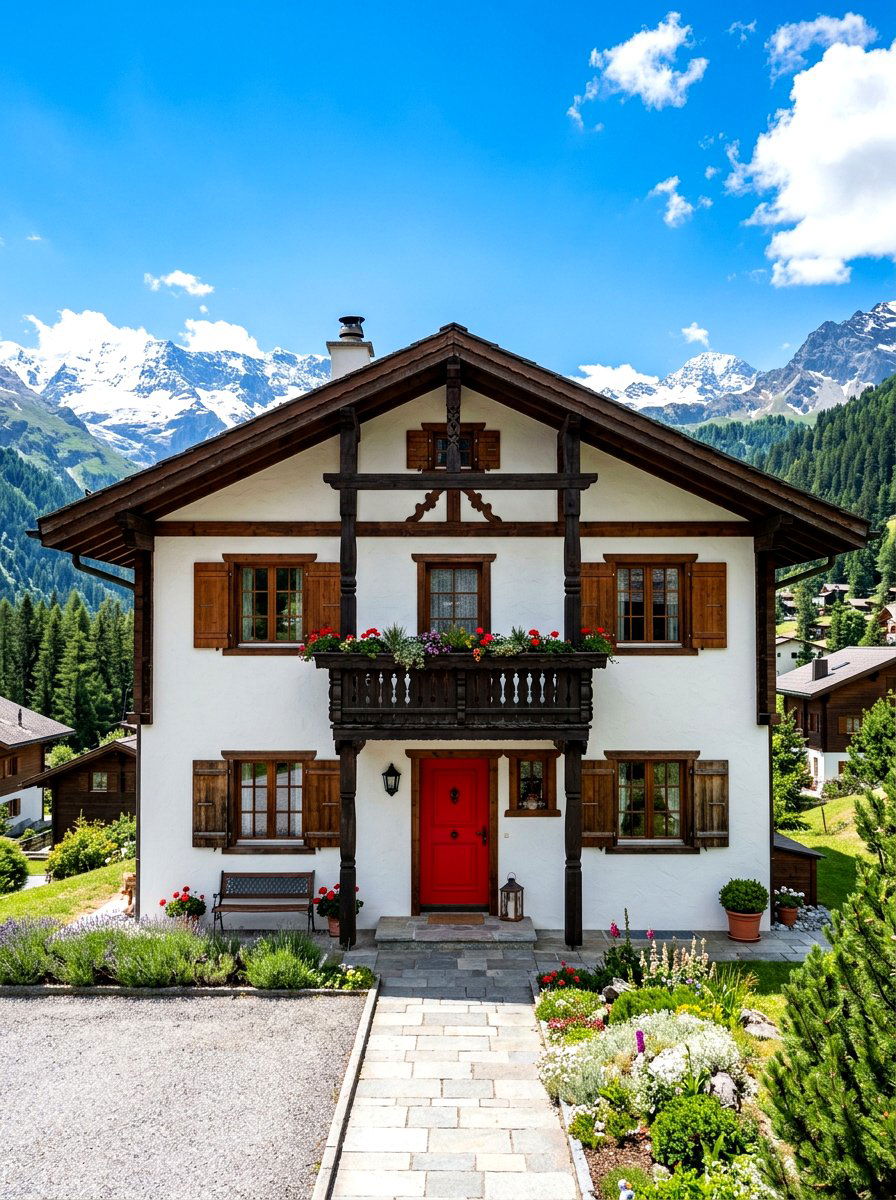
A white stucco chalet facade provides a refreshing and bright alternative to the typical all-wood mountain homes often found in forests. The smooth, light-colored surface reflects sunlight and creates a crisp contrast against the dark textures of nearby trees and rocks. Often, this style is combined with dark timber framing or wooden window shutters to maintain that essential alpine character. The masonry feel of the stucco suggests durability and provides excellent insulation for harsh winter weather. This design is particularly popular in higher altitudes where the bright white walls mirror the surrounding snow caps for a very clean look.
9. Large Cantilevered Deck House
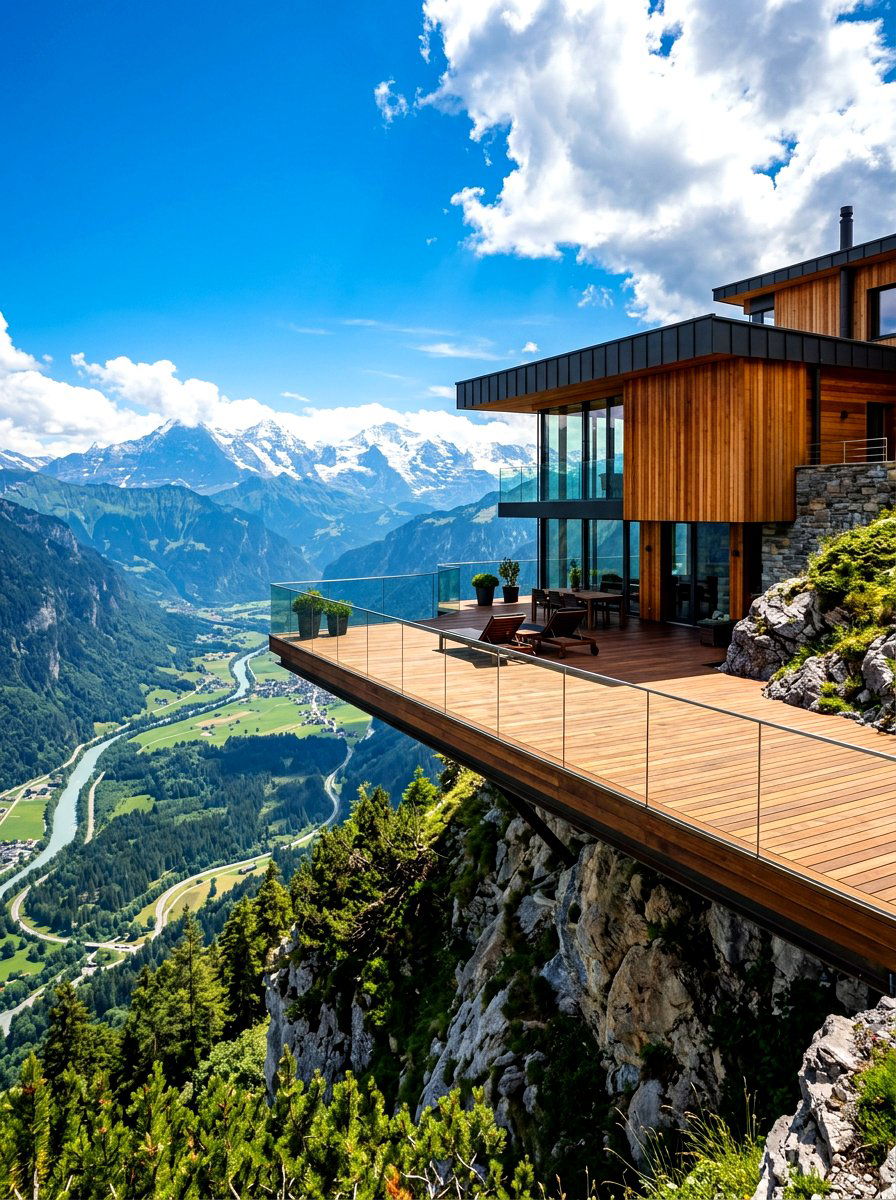
A large cantilevered deck house takes advantage of sloping terrain to create dramatic outdoor living spaces that float above the ground. By extending the floor joists or using steel supports, the deck can reach out over a cliff or steep hillside. This provides the homeowners with unobstructed, 180-degree views of the landscape while creating a stunning architectural silhouette from below. The area beneath the cantilevered section can be used as a sheltered patio or kept open to maintain the natural flora. It is a bold engineering choice that emphasizes the thrill and beauty of living on the edge of nature.
10. Floor To Ceiling Window Lodge
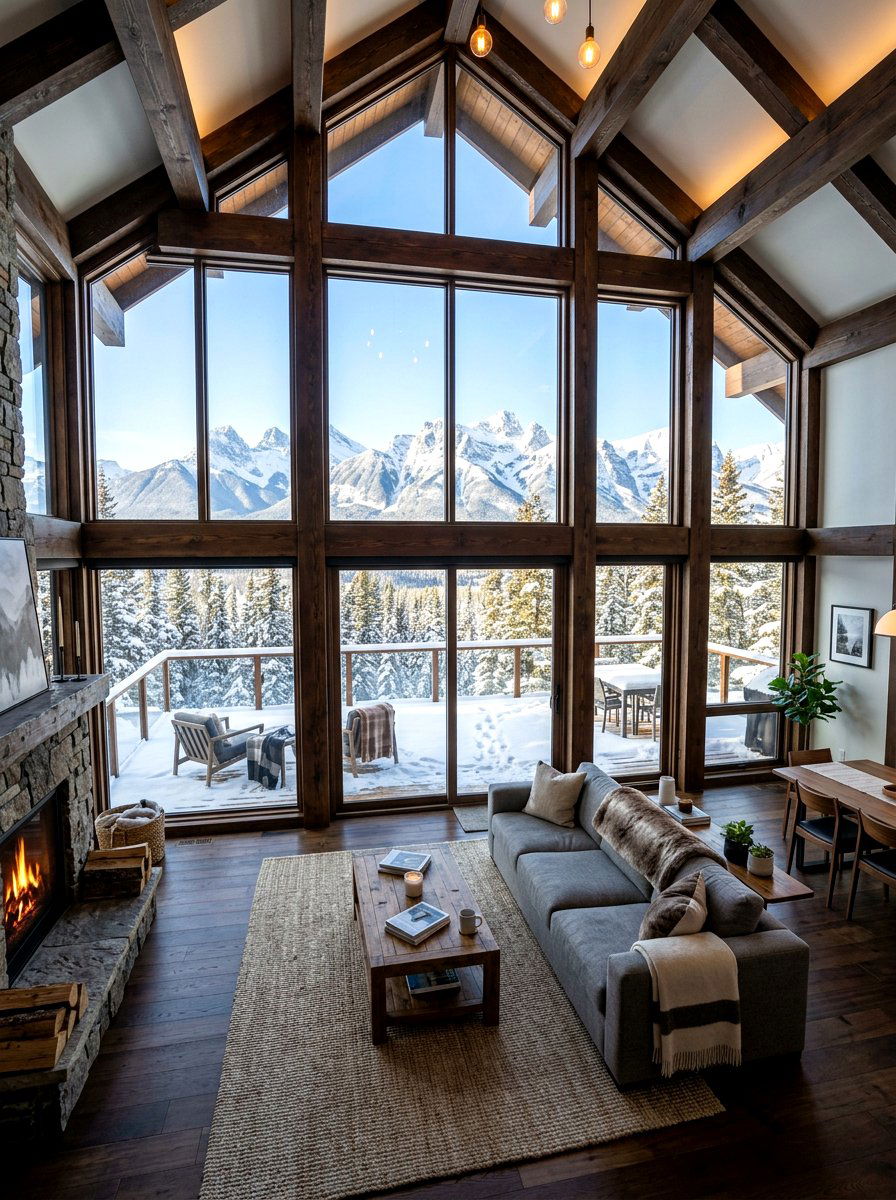
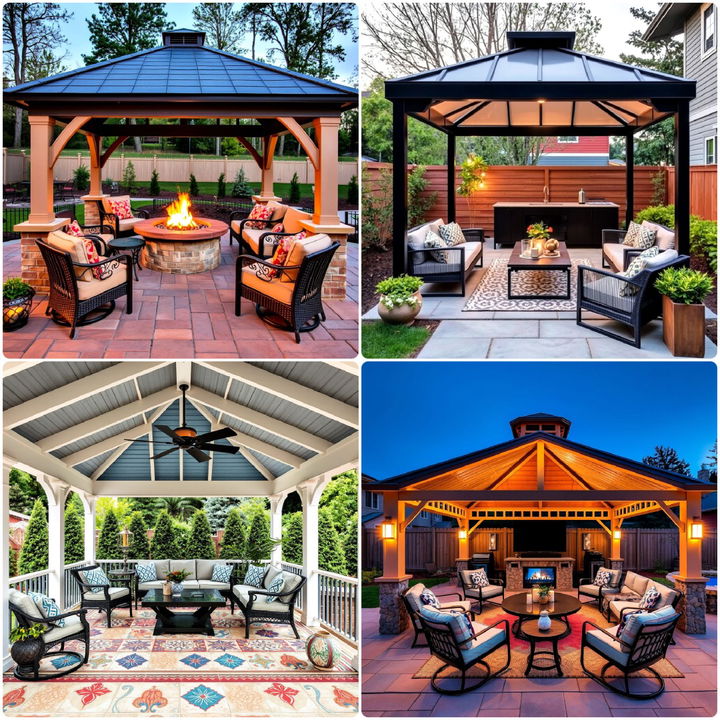
A floor to ceiling window lodge maximizes the connection between the indoor sanctuary and the majestic outdoor world surrounding the home. These massive windows are usually strategically placed in the main living area to capture the most impressive vistas available on the property. High-performance glazing is used to ensure the home remains warm even when the outside temperatures drop significantly during the winter months. The transparency of the glass breaks down the barrier between the occupants and the forest, allowing sunlight to flood the space. This design creates a bright, open atmosphere that feels expansive, luxurious, and completely immersed in nature.
11. Dark Metal Roof Cabin
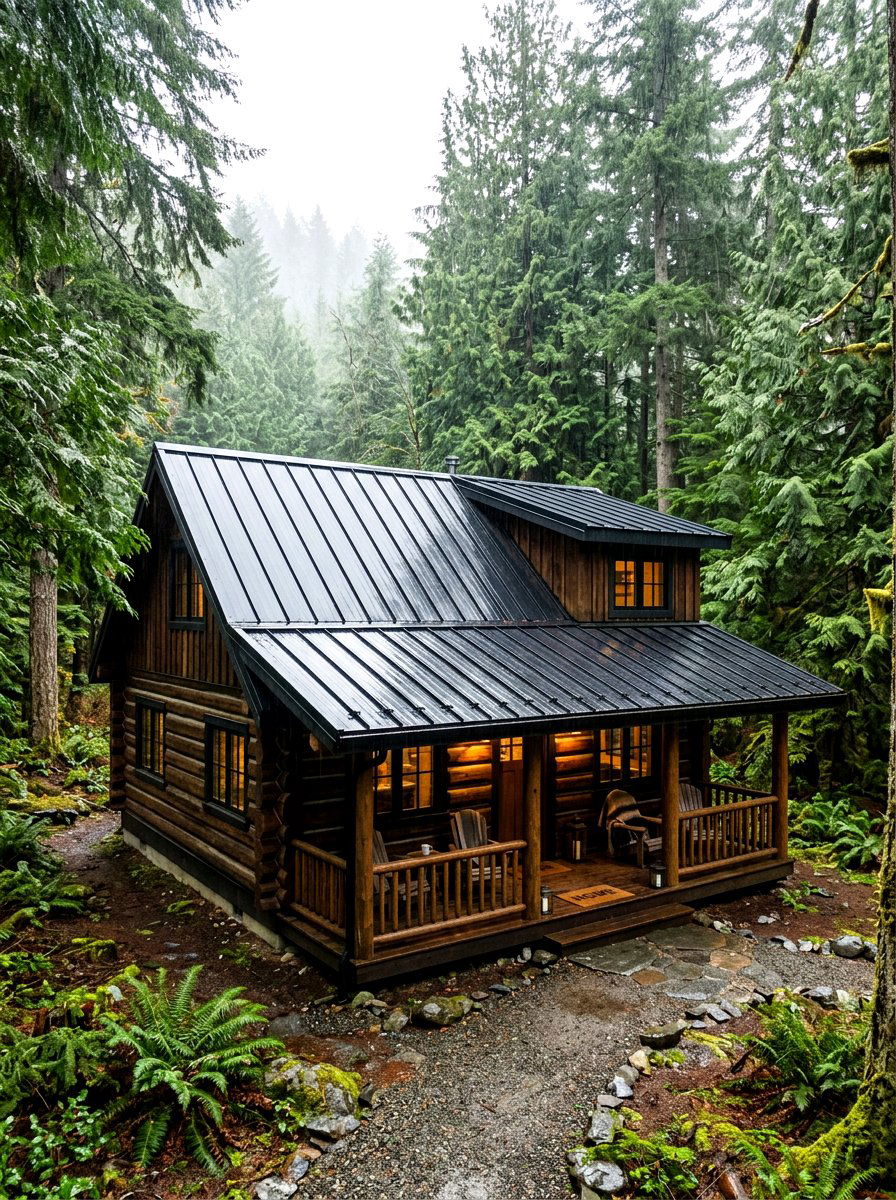
A dark metal roof cabin combines rugged durability with a sleek, modern aesthetic that is becoming increasingly popular in mountain regions. Metal roofing is highly sought after for its ability to shed snow quickly and its superior resistance to fire and wind. When finished in a matte black or deep charcoal, it provides a sharp, clean cap to the home that complements natural wood siding perfectly. The standing seams create subtle vertical lines that add texture to the roof without being distracting. This choice is both a practical investment for long-term maintenance and a stylish design element for a contemporary chalet.
12. Rugged Stone Base House
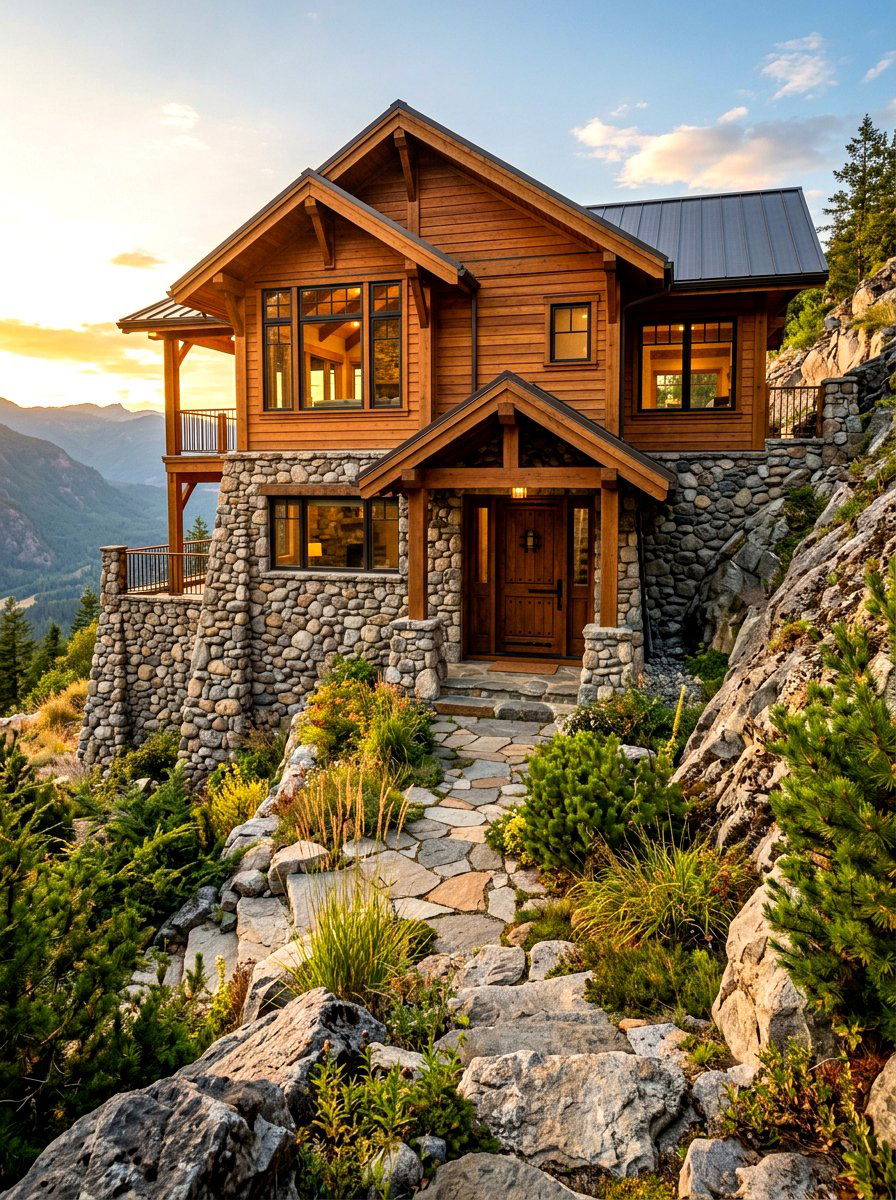
A rugged stone base house uses heavy masonry at the ground level to create a visual and structural anchor for the home. Large, irregular stones or precisely cut blocks are used to build up the first floor or the foundation walls. This prevents the wood siding from coming into contact with ground moisture and snow drifts, which extends the life of the materials. Visually, the weight of the stone suggests that the building has grown naturally out of the mountain itself. Transitioning to lighter wood materials on the upper stories creates a balanced and pleasing aesthetic that feels both strong and cozy.
13. Mixed Material Exterior Lodge
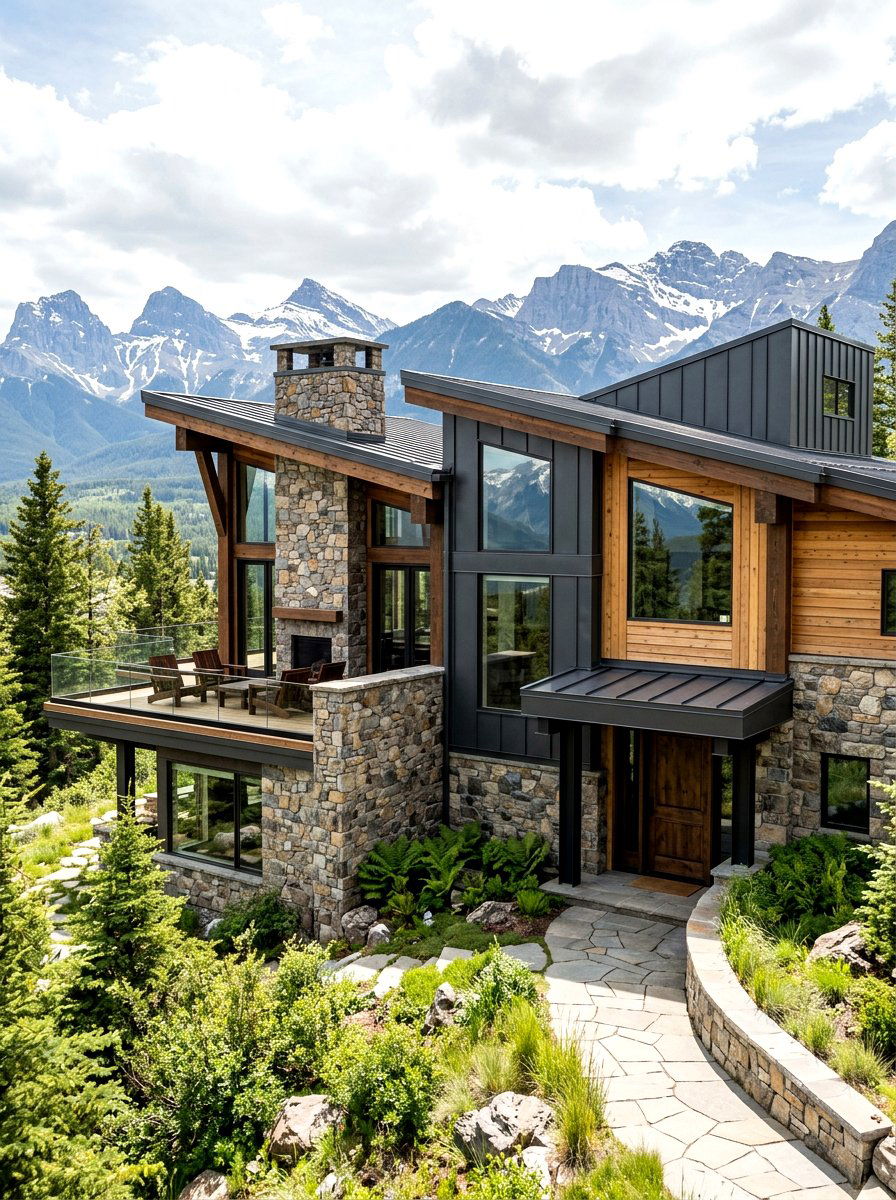
A mixed material exterior lodge utilizes a variety of textures to create a visually rich and interesting facade that never feels boring. By combining wood planks, natural stone, metal panels, and glass, architects can highlight different sections of the home and define its geometry. For example, a stone-clad entryway might lead to a wood-sided wing with a metal-roofed porch. This approach allows the home to break up its mass and feel more like a collection of integrated structures rather than one monolithic block. The careful curation of these materials ensures a modern, custom look that stands out in any landscape.
14. Exposed Steel Timber Chalet
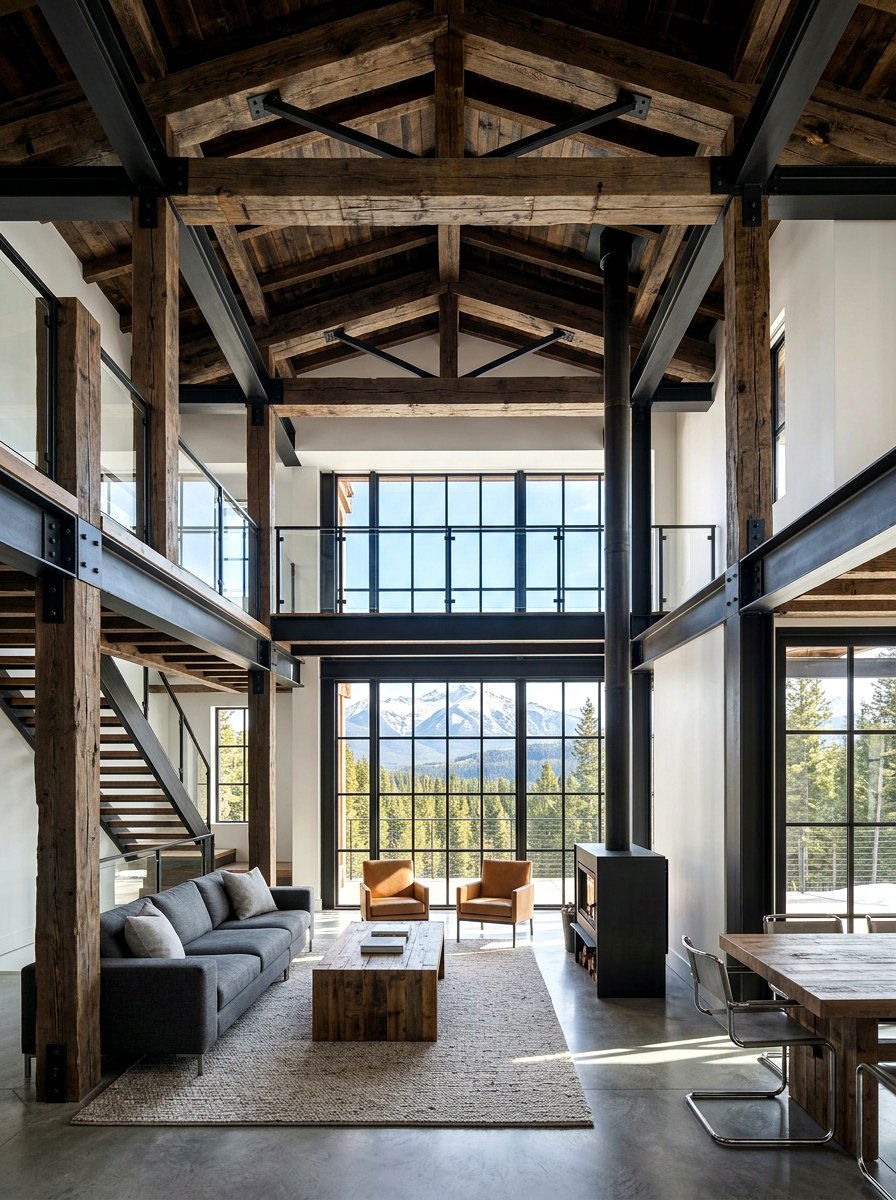
An exposed steel timber chalet brings an industrial edge to the traditional mountain home by showcasing the structural bones of the building. Heavy black steel beams are used alongside massive wooden timbers to support the roof and create wide-open interior spaces. On the exterior, these steel connections and supports are left visible, adding a sense of modern engineering and strength. The contrast between the cold, smooth steel and the warm, textured wood creates a sophisticated aesthetic that is perfect for contemporary mountain living. This style is often seen in modern ski resorts where strength and style must go hand in hand.
15. Wraparound Wooden Porch House
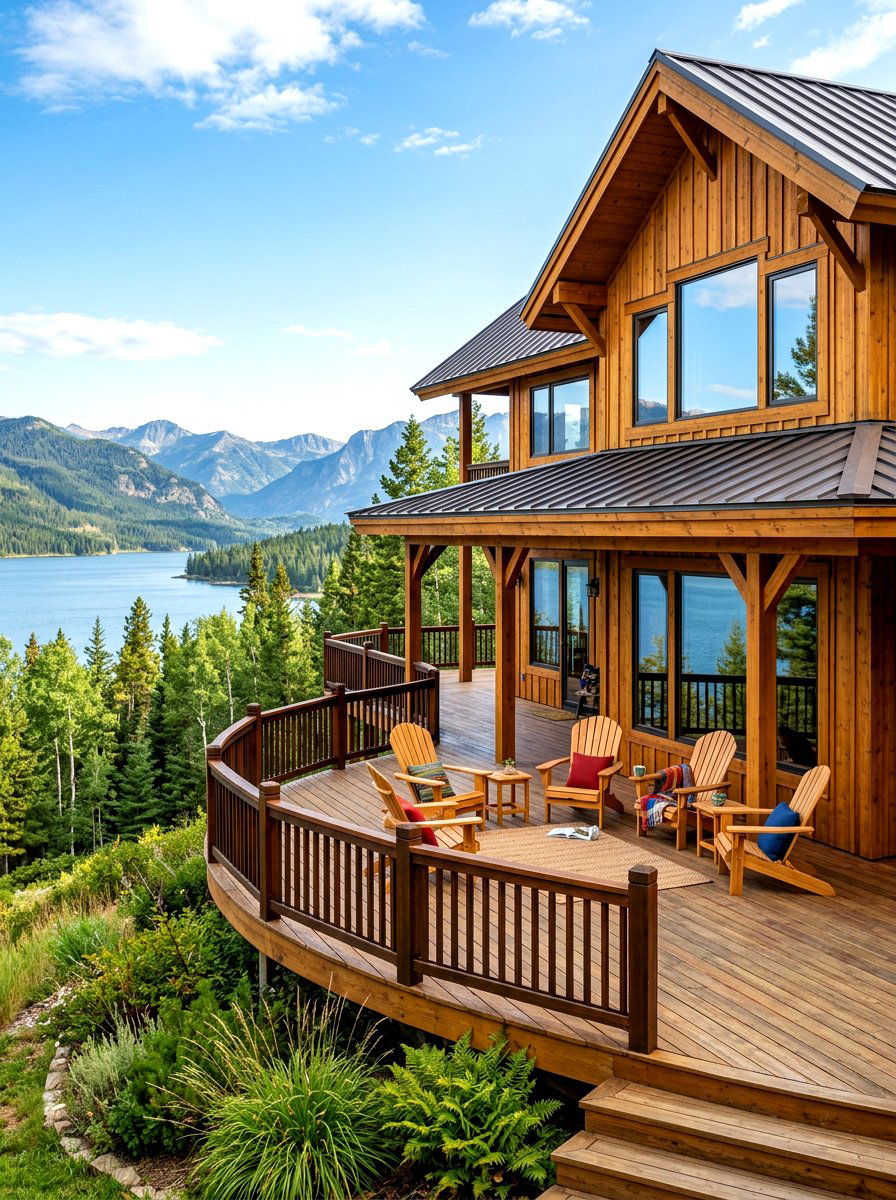
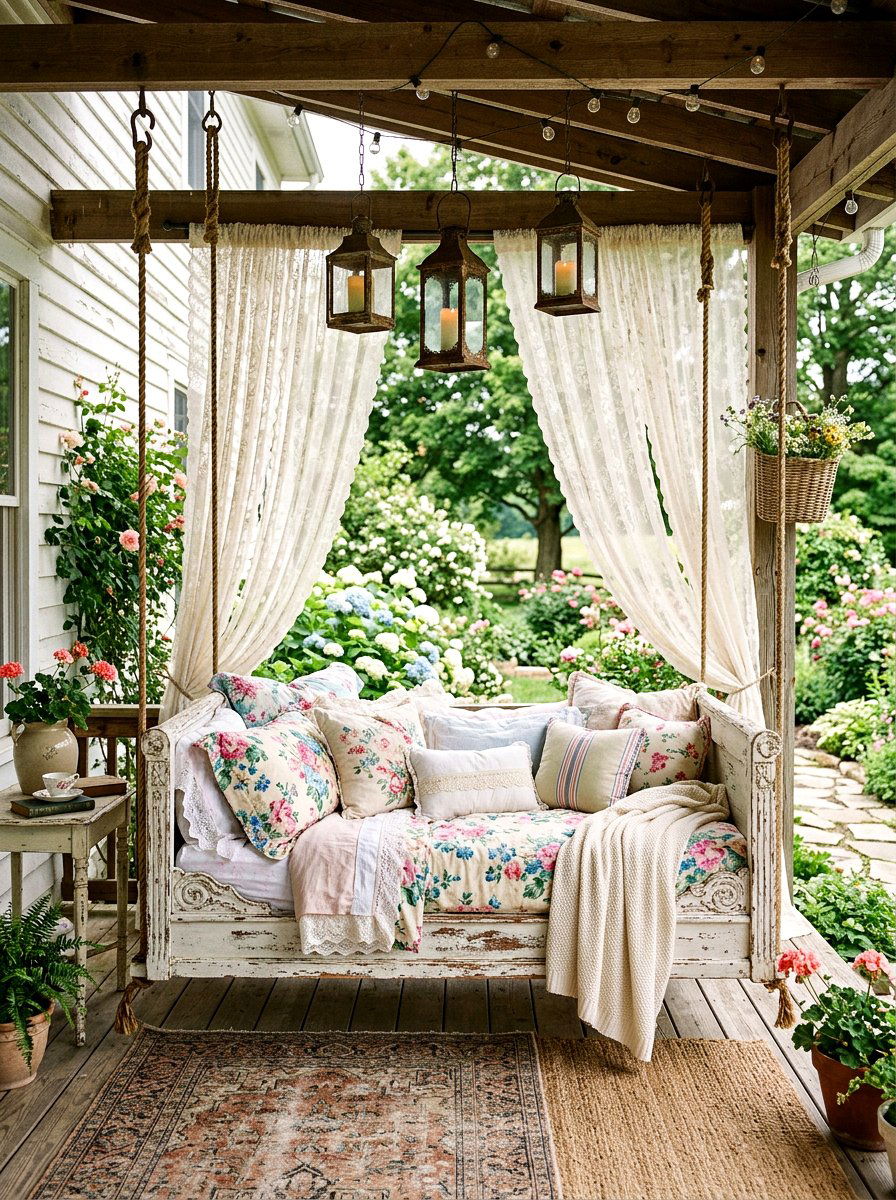
A wraparound wooden porch house is the ultimate choice for those who want to maximize their outdoor enjoyment and living space. This design feature provides a sheltered walkway and seating area on multiple sides of the home, allowing you to follow the sun. It also protects the exterior walls and windows from the elements, reducing maintenance needs over time. Using high-quality decking materials and sturdy wooden railings creates a rustic and welcoming atmosphere that invites guests to linger outdoors. Whether you are drinking coffee in the morning or watching the stars at night, a wraparound porch offers a perfect perspective.
16. Minimalist Square Box Chalet
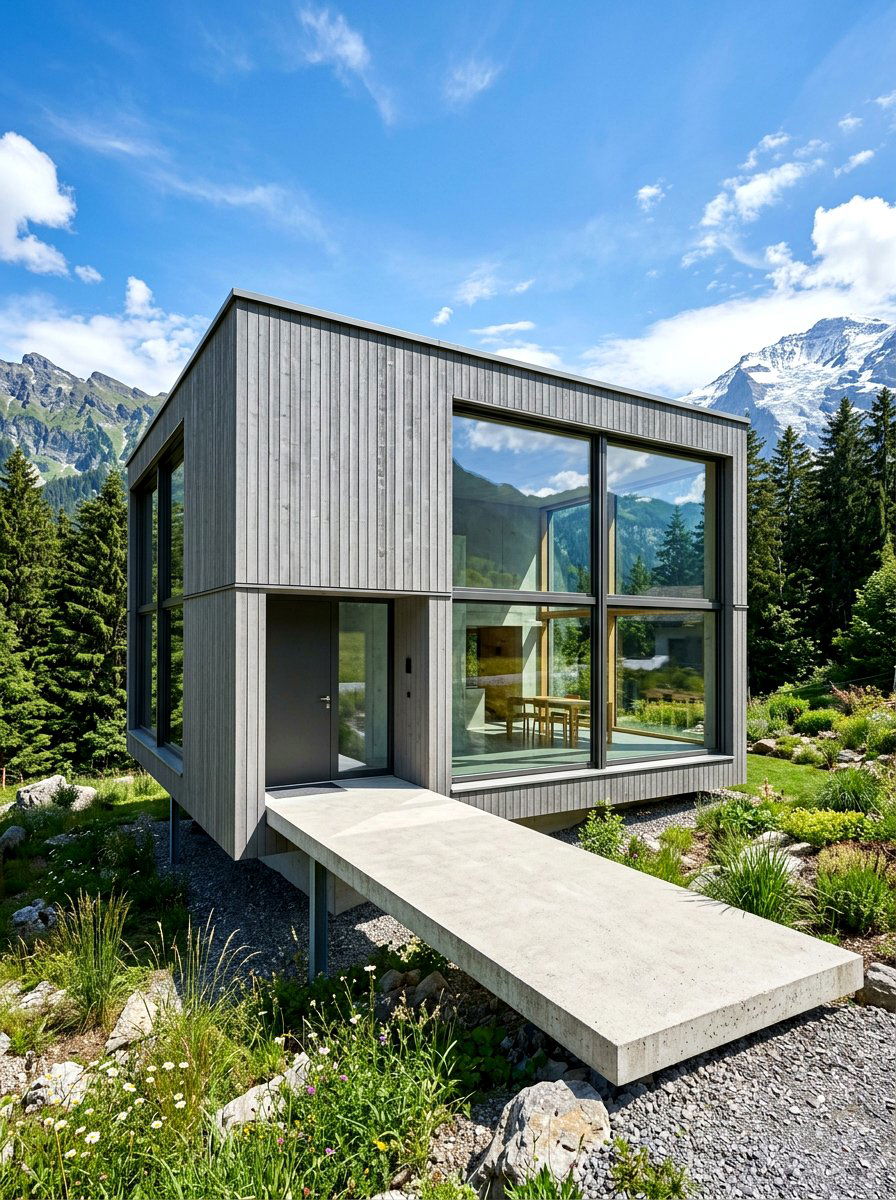
A minimalist square box chalet ignores traditional pitched roofs in favor of clean, geometric lines and a very compact footprint. This design often features flat roofs that can be used as additional terrace space or planted with local greenery for insulation. The simplicity of the square shape makes the building process more efficient and creates a very modern, gallery-like appearance in the woods. Large, square windows are placed strategically to frame specific views like a series of living paintings. This style is perfect for homeowners who prefer an understated and contemporary look that emphasizes architectural form over traditional alpine decoration.
17. Traditional Log Cabin Facade
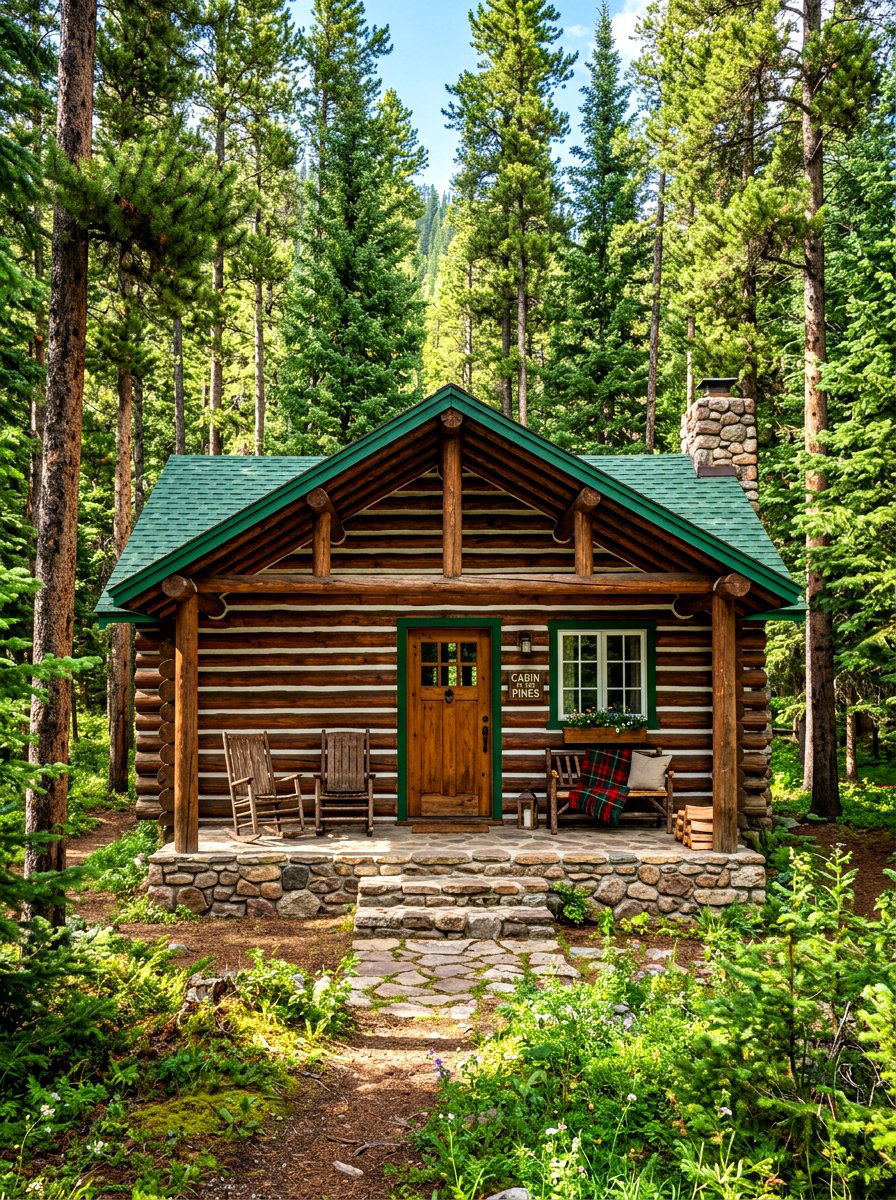
A traditional log cabin facade evokes a deep sense of history and nostalgia for the early days of mountain exploration and living. Using full-round or square-cut logs creates a thick, insulated wall that is incredibly sturdy and provides a unique, textured appearance. The natural knots and variations in the wood give the home a handmade quality that cannot be replicated by modern siding materials. Wide chinking between the logs adds a rhythmic visual pattern that is synonymous with mountain retreats. This style feels warm, protective, and authentic, making it a timeless choice for those who want a true cabin experience.
18. Dark Vertical Siding House
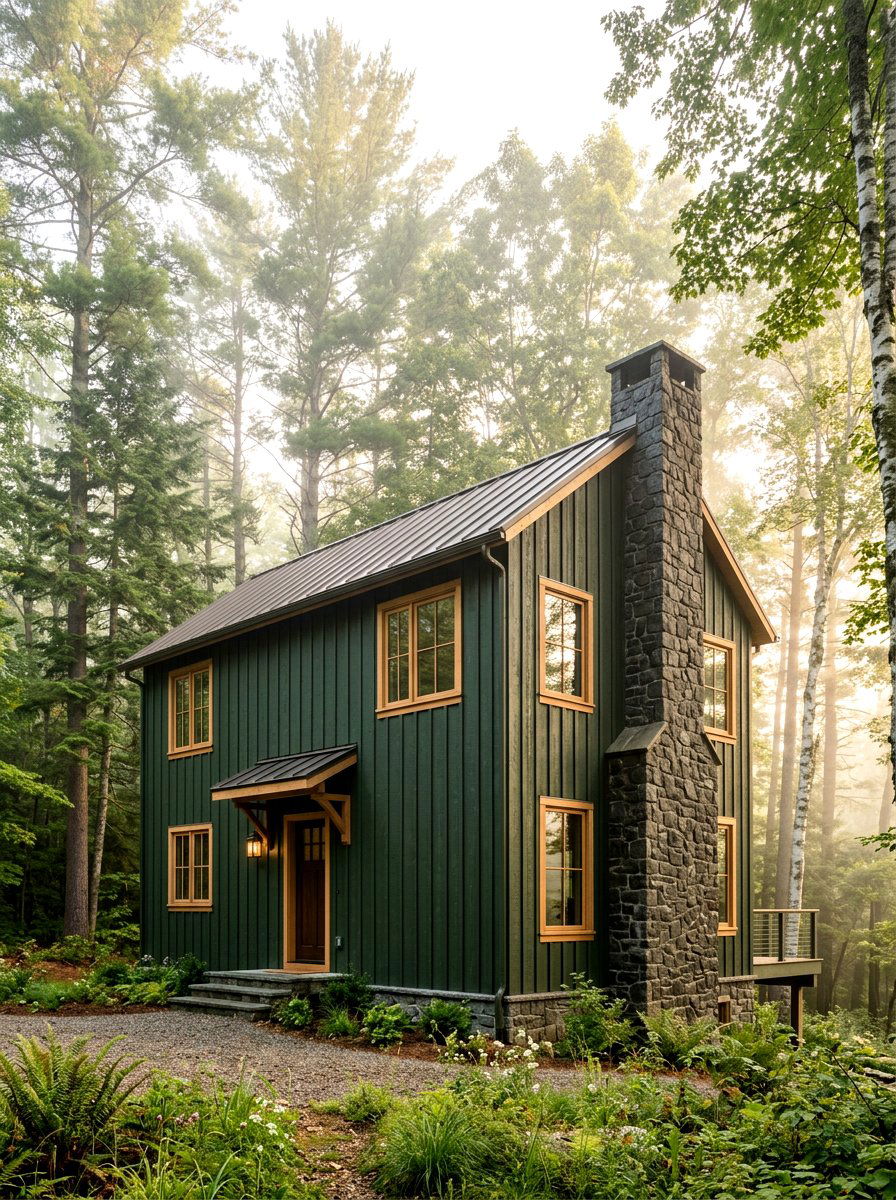
A dark vertical siding house uses deep colors and upward lines to create a dramatic and elegant presence in the forest. Choosing a color like forest green, navy blue, or charcoal gray allows the home to blend beautifully with the shadows of the tall trees. The vertical orientation of the boards creates a sleek and continuous look that minimizes visible seams and emphasizes the height of the structure. This design often pairs well with light wood accents around the windows or doors to provide a necessary touch of warmth. It is a sophisticated way to achieve a modern cabin look without being minimalist.
19. Exterior Floating Staircase Chalet
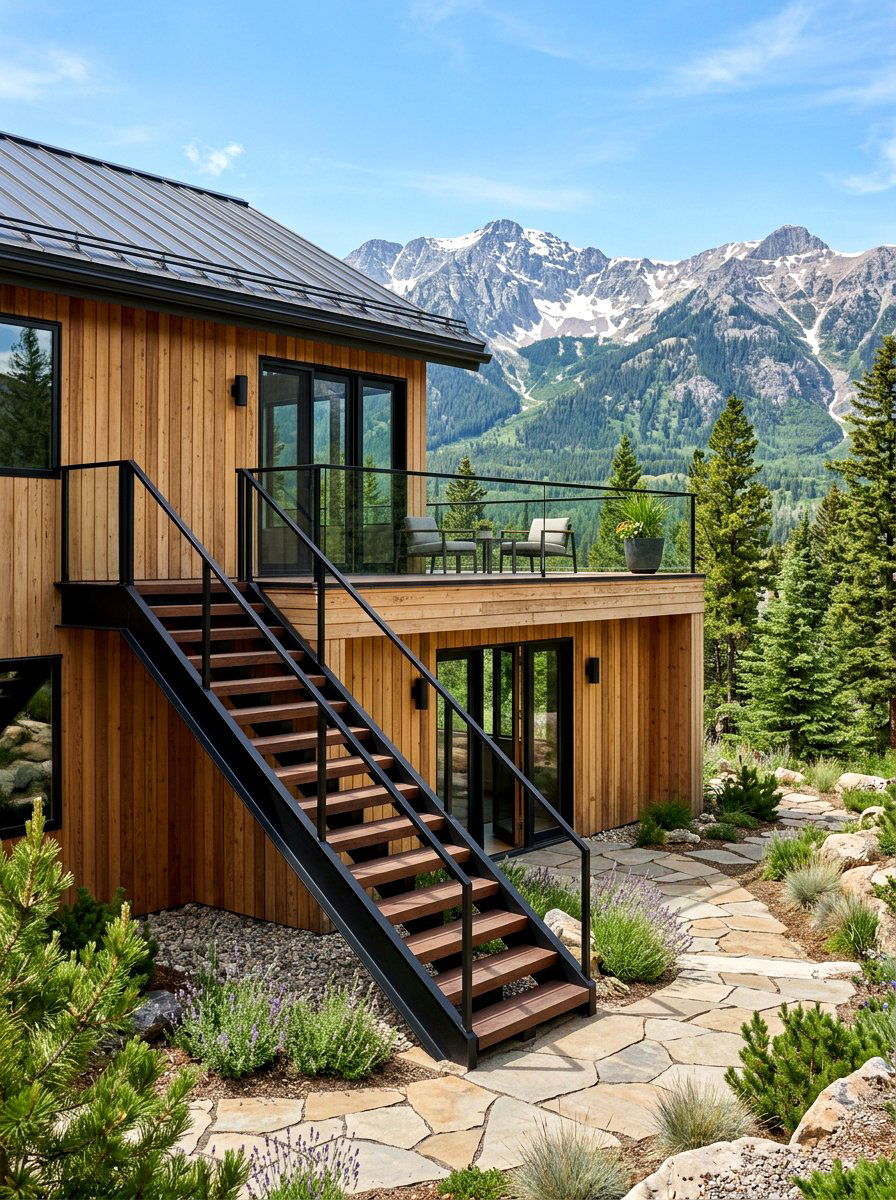
An exterior floating staircase chalet uses architectural stairs as a major design feature to connect different levels of the property or home. These staircases are often made from a combination of steel and thick wooden treads, appearing to hover against the side of the building. This adds a sense of lightness and modern flair to the exterior while providing functional access to upper-level balconies or roof terraces. The open design of the stairs ensures that views are not blocked and light can still pass through the structure. It is a striking detail that turns a simple transition into a work of art.
20. Tall Stone Chimney Lodge
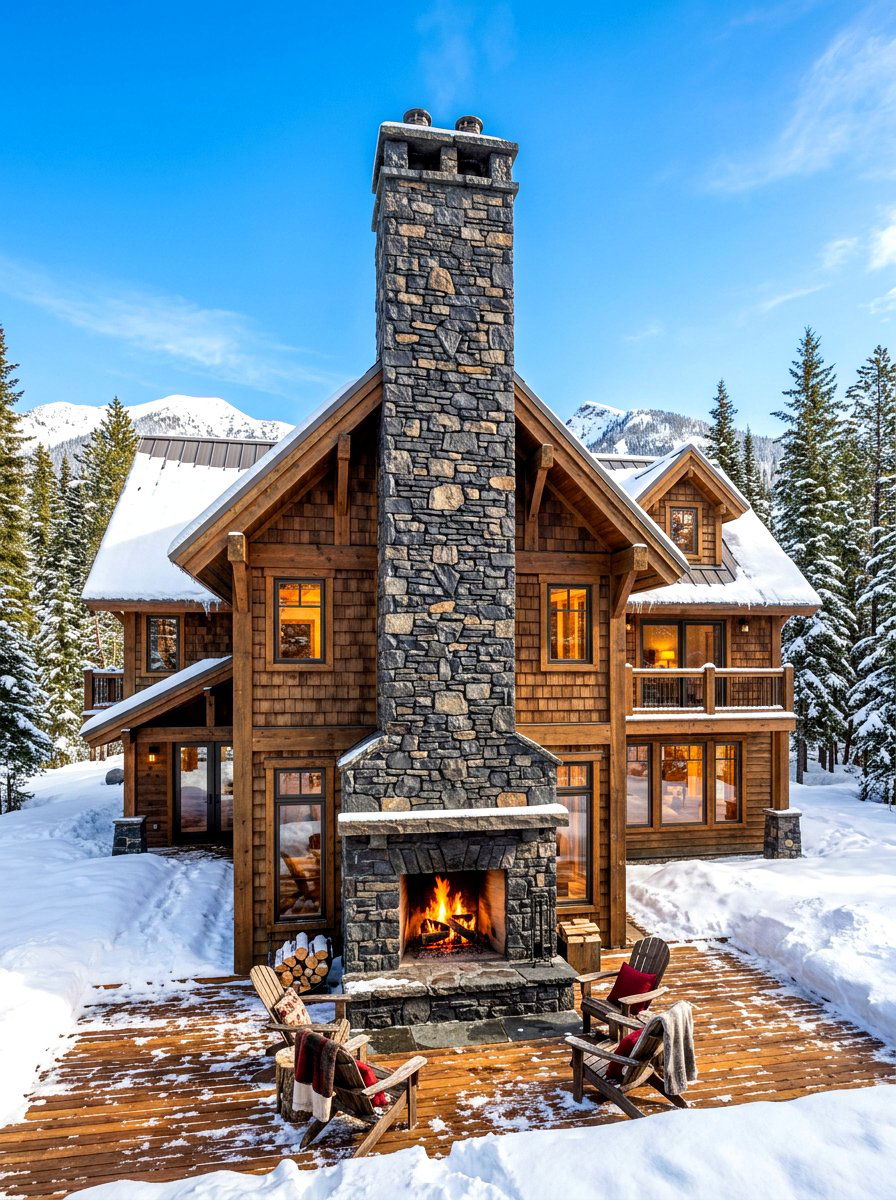
A tall stone chimney lodge features a massive masonry stack that often runs the entire height of the home as a focal point. This chimney is not only functional for a roaring interior fireplace but also serves as a strong vertical element for the exterior design. Using local stones of varying sizes and colors adds texture and a sense of history to the facade. The chimney often stands out against the wood siding, providing a visual anchor that suggests warmth and comfort within. It is a classic alpine feature that never goes out of style and adds significant character to any mountain home.
21. Single Slope Roof Cabin
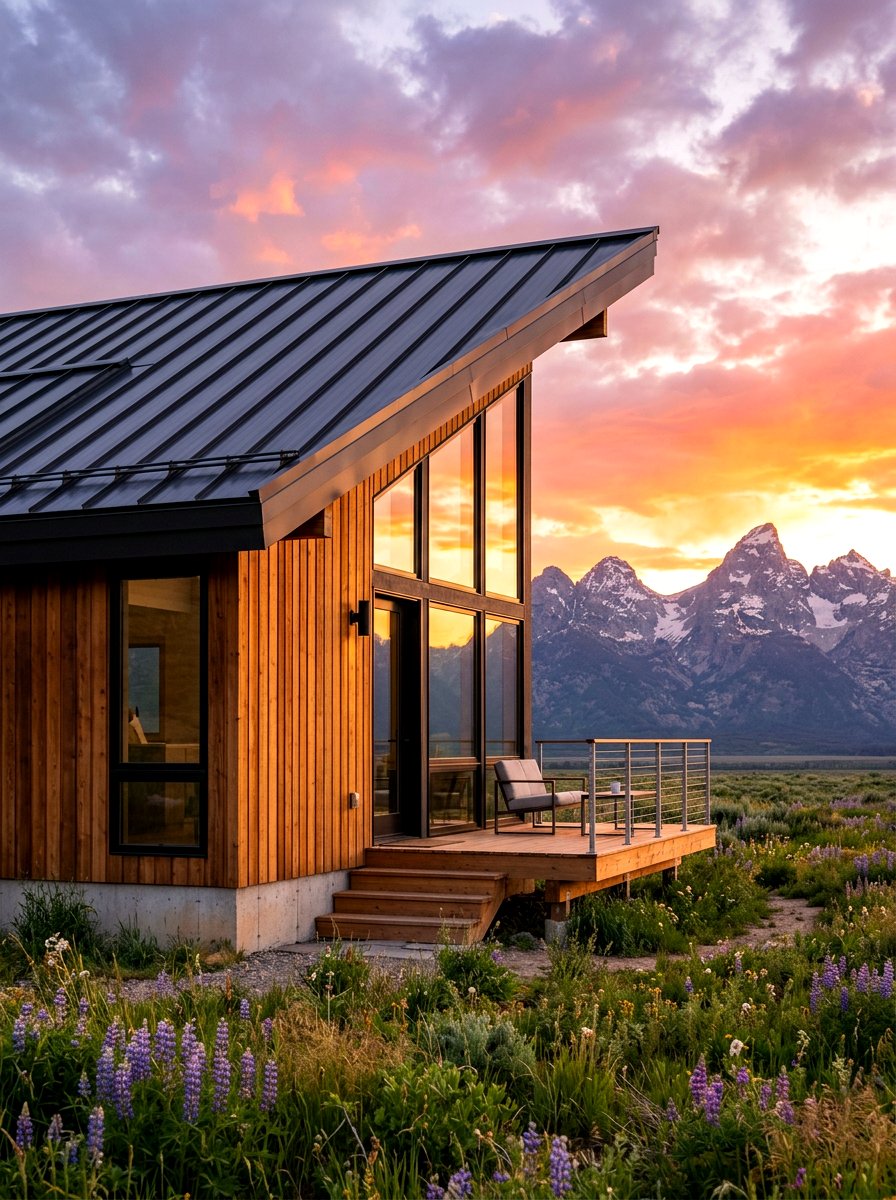
A single slope roof cabin, also known as a shed roof design, offers a very modern and clean alternative to the gabled roof. The roof tilts in one direction, allowing for high ceilings on one side and a more intimate feel on the other. This design is excellent for managing snow runoff and can be used to direct water away from the main entrance or decks. Large windows are typically placed on the tall wall to capture sunlight and provide expansive views of the peaks. The simplicity of the roofline gives the cabin a sleek, contemporary silhouette that feels fresh and innovative.
22. Full Glass Wall Chalet
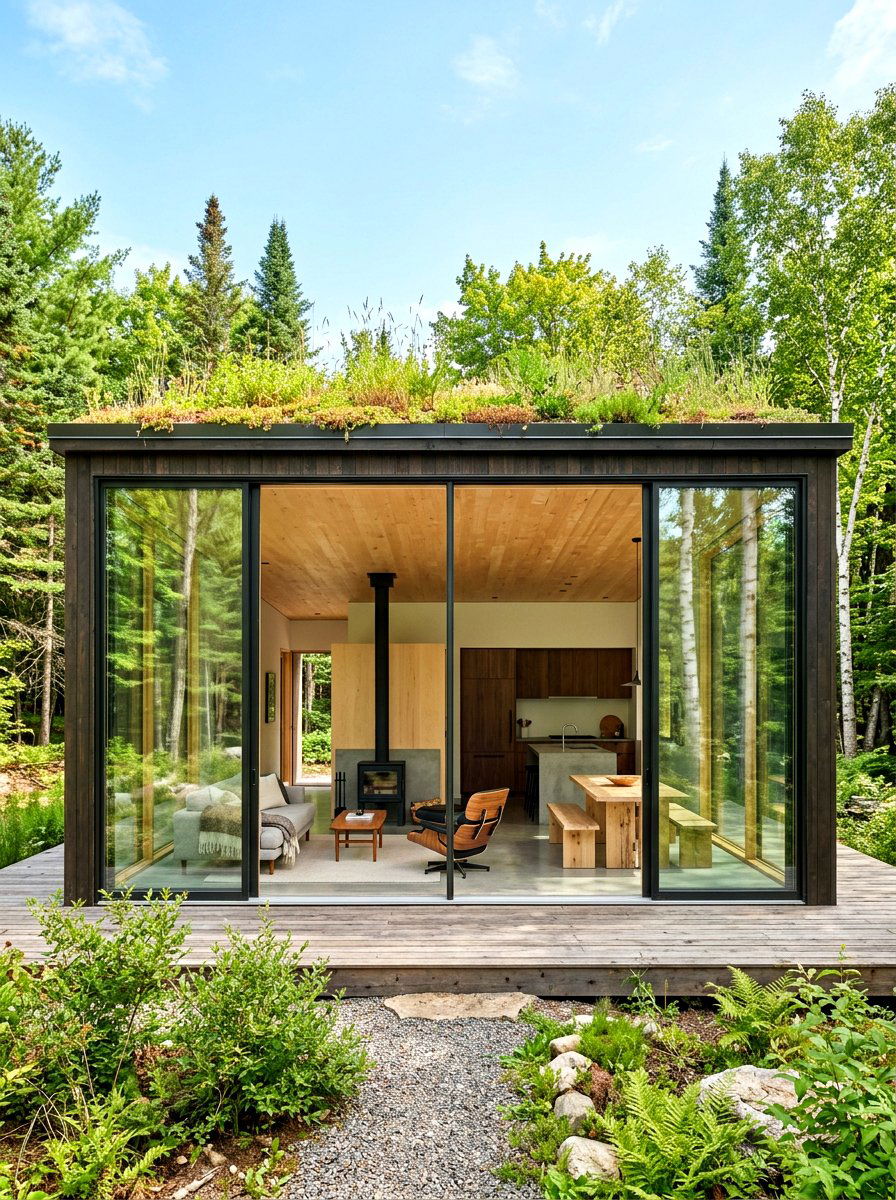
A full glass wall chalet pushes the boundaries of transparency to create a home that feels like it is barely there at all. Entire elevations are replaced with high-performance glass systems that can sometimes slide open to blur the line between inside and out. This design is most effective on secluded lots where privacy is provided by the natural landscape and forest. The reflection of the trees on the glass surface helps the building disappear into its surroundings during certain times of the day. It provides the occupants with an unparalleled experience of living directly within the beauty of the changing mountain seasons.
23. Elevated Mountain Stilt House
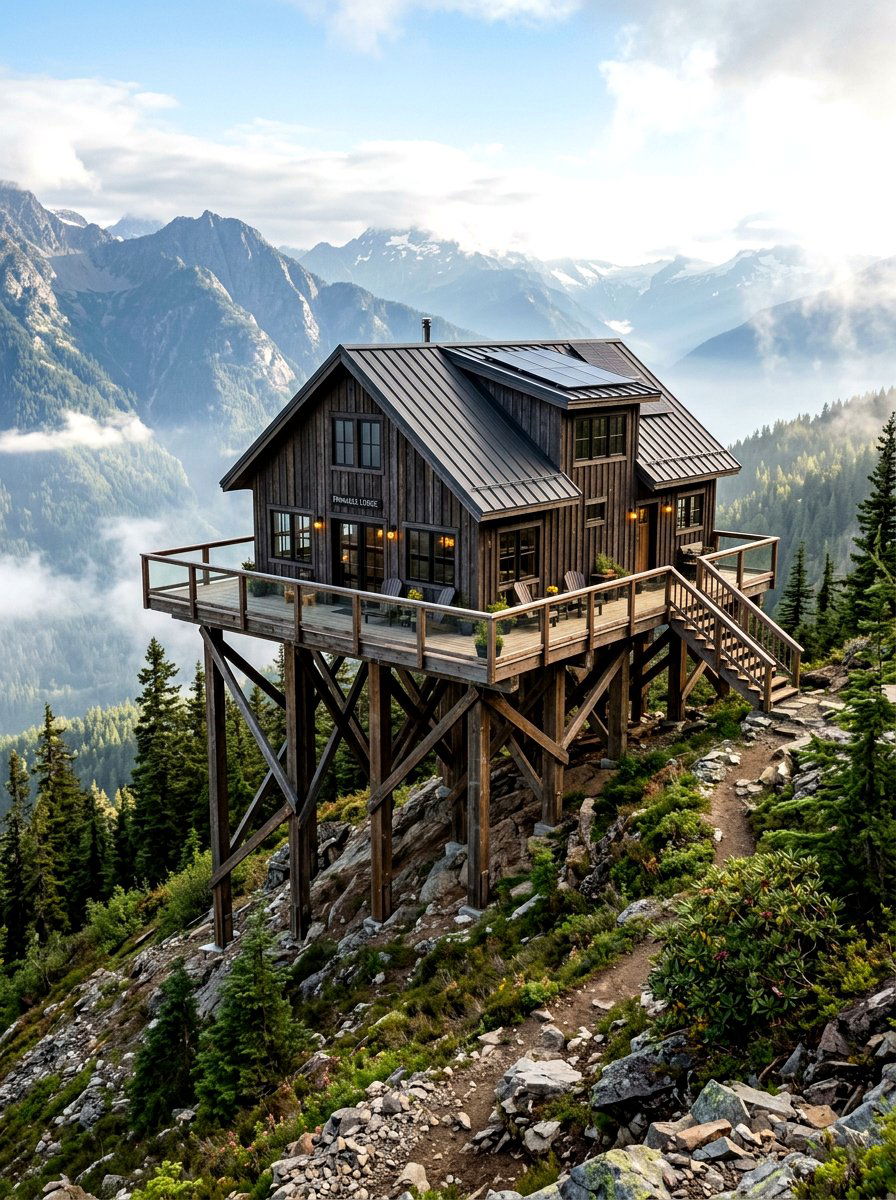
An elevated mountain stilt house is a practical and visually interesting solution for building on very steep or uneven terrain. By supporting the main living structure on heavy timber or steel pilings, the home can sit high above the ground with minimal impact. This elevation provides superior views that would otherwise be blocked by the immediate hillside or vegetation. The space beneath the house can be left open for natural drainage and air circulation, or used for sheltered storage. This design gives the chalet a unique, perched appearance that feels like a modern treehouse for adults in the mountains.
24. Shou Sugi Ban Facade
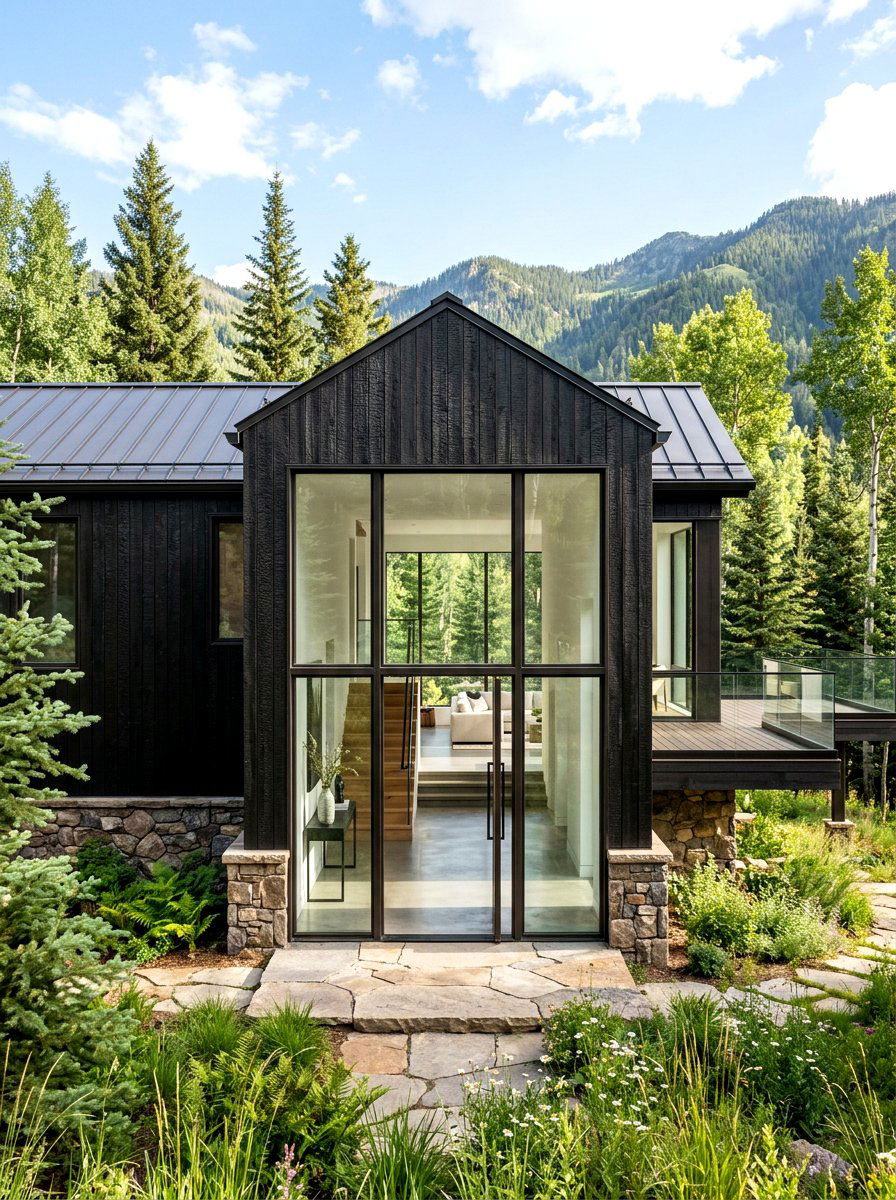
A Shou Sugi Ban facade uses the ancient Japanese technique of charring wood to create a beautiful and highly durable exterior finish. The burning process protects the wood from rot, insects, and fire while creating a deep, textured black or silver-gray appearance. This finish is incredibly low-maintenance and develops a stunning patina over the years that feels both ancient and very modern. When used on a mountain chalet, the dark, carbonized wood creates a powerful visual statement that contrasts elegantly with natural stone and bright interiors. It is a sophisticated choice for homeowners seeking a unique and sustainable building material.
25. Carved Wood Balcony Chalet
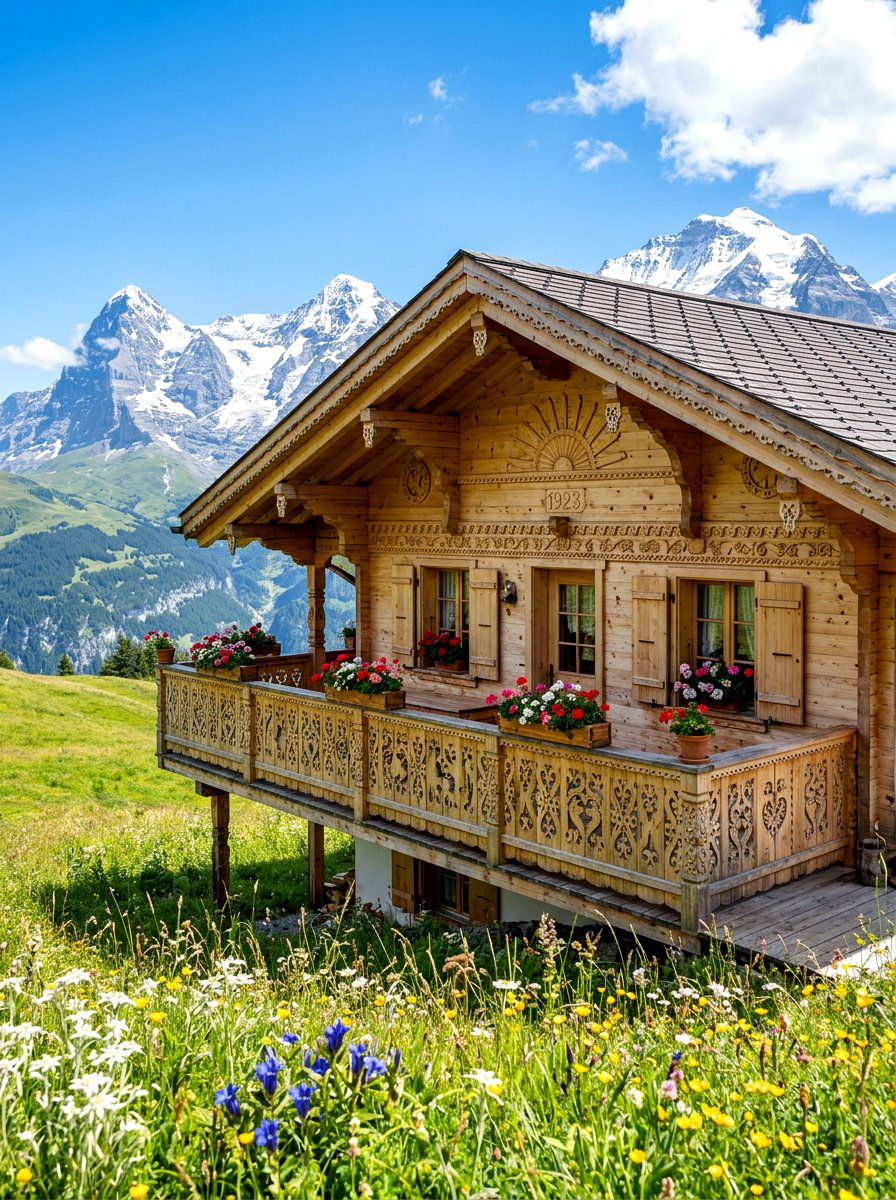
A carved wood balcony chalet brings a touch of artisanal craftsmanship and traditional folk art to the exterior of the mountain home. Intricate patterns and shapes are cut into the railings and support beams, creating beautiful shadows and visual interest. These details often tell a story or reflect the heritage of the local region, adding a layer of soul to the architecture. The balconies provide essential outdoor space for enjoying the fresh air and views, while the carvings make them a decorative highlight of the facade. This style is perfect for those who appreciate the human touch in their home design.
26. Twin Gabled Mountain Home
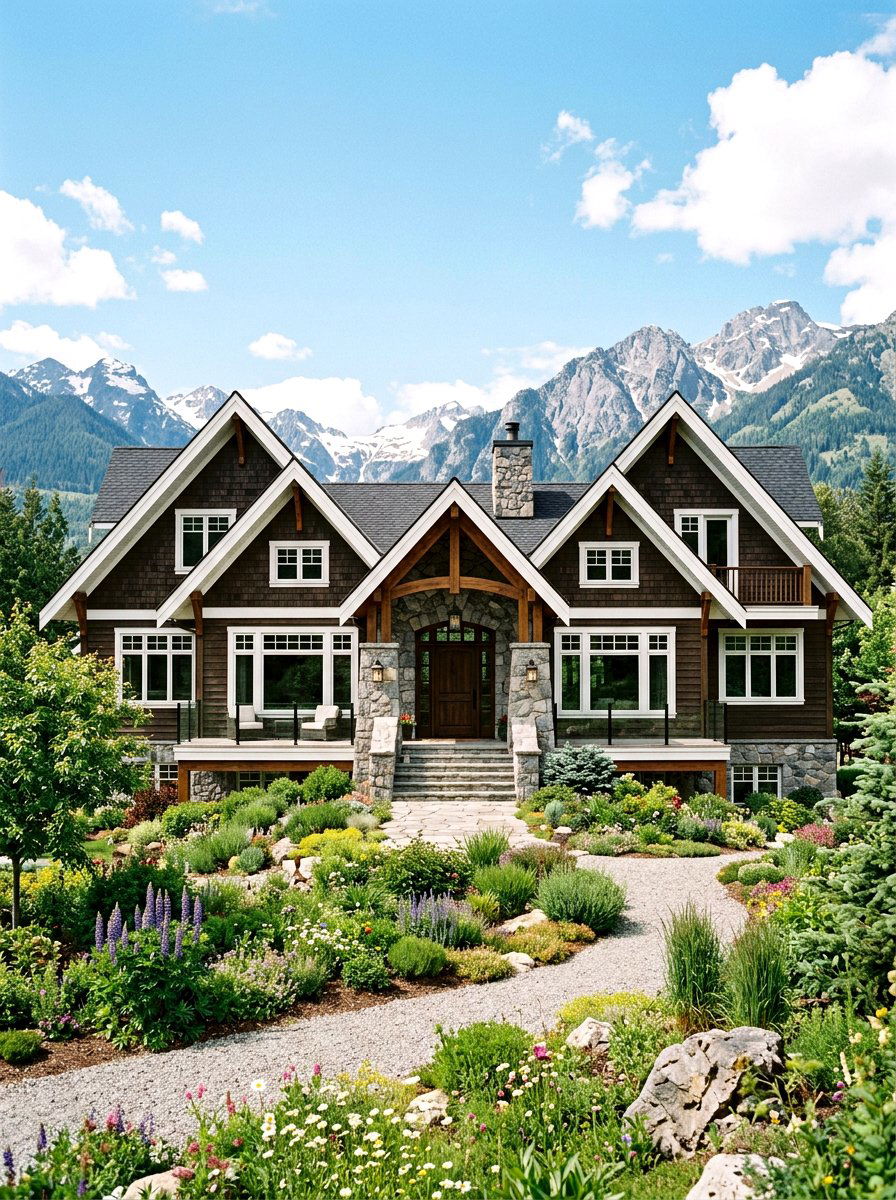
A twin gabled mountain home features two primary roof peaks that create a symmetrical and balanced appearance from the front. This design often indicates a large interior layout with two distinct wings, perhaps separating the living areas from the private bedrooms. The repeating triangular shapes of the gables create a rhythmic and pleasing visual pattern that feels traditional yet grand. Using consistent materials across both gables ensures the home looks cohesive, while large windows tucked under the eaves keep the interiors bright. This classic architectural form provides a sense of stability and elegance that is well-suited for a larger family retreat.
27. Large Outdoor Sun Terrace
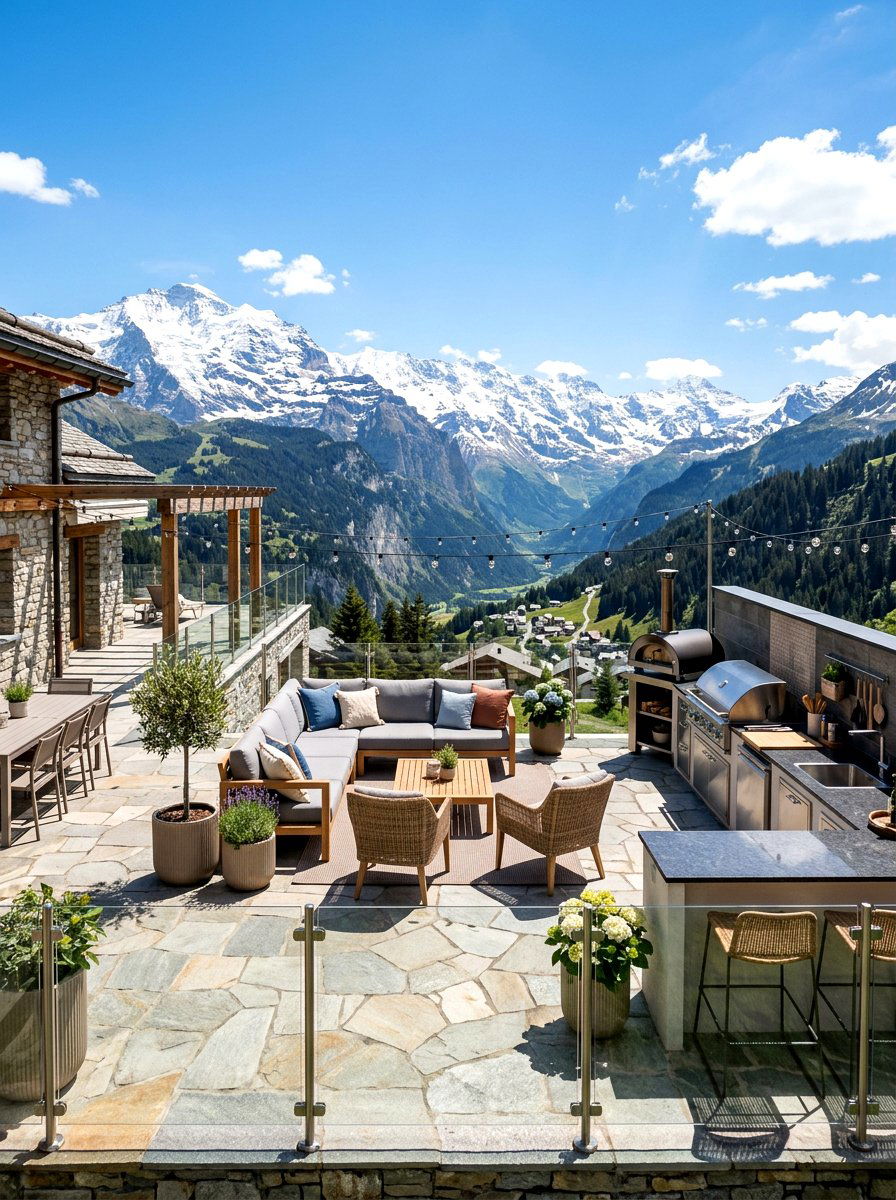
A large outdoor sun terrace is a vital feature for mountain living, providing a dedicated space for soaking up the rays during warmer months. These terraces are often built on top of lower-level rooms or garages to maximize the usable square footage of the property. Using durable stone pavers or high-quality wood decking ensures the surface can withstand the intense mountain sun and heavy winter snow. Built-in seating, outdoor kitchens, and fire pits turn the terrace into the primary entertainment hub of the home. This design emphasizes the importance of the outdoor lifestyle and provides a comfortable place to relax.
28. Modern Concrete Timber House
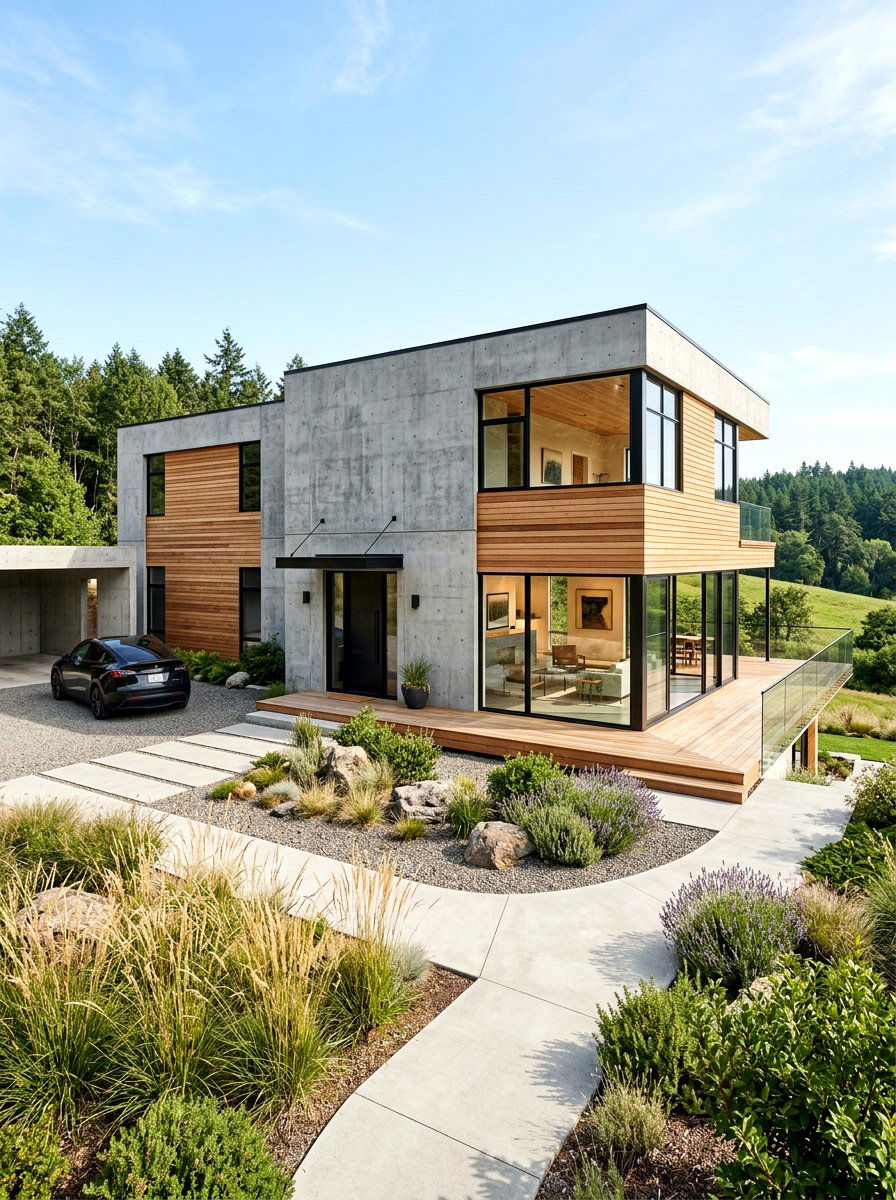
A modern concrete timber house blends the industrial strength of poured concrete with the natural warmth of wooden planks for a unique aesthetic. Concrete is often used for the main structure or ground level to provide incredible thermal mass and fire resistance. The wood is then layered on top as siding or used for accent walls to soften the look and add organic texture. This combination creates a very sophisticated and permanent feel that is perfect for a contemporary luxury lodge. The clean, gray surface of the concrete provides a neutral backdrop that makes the natural colors of the wood stand out.
29. Integrated Exterior Accent Lighting
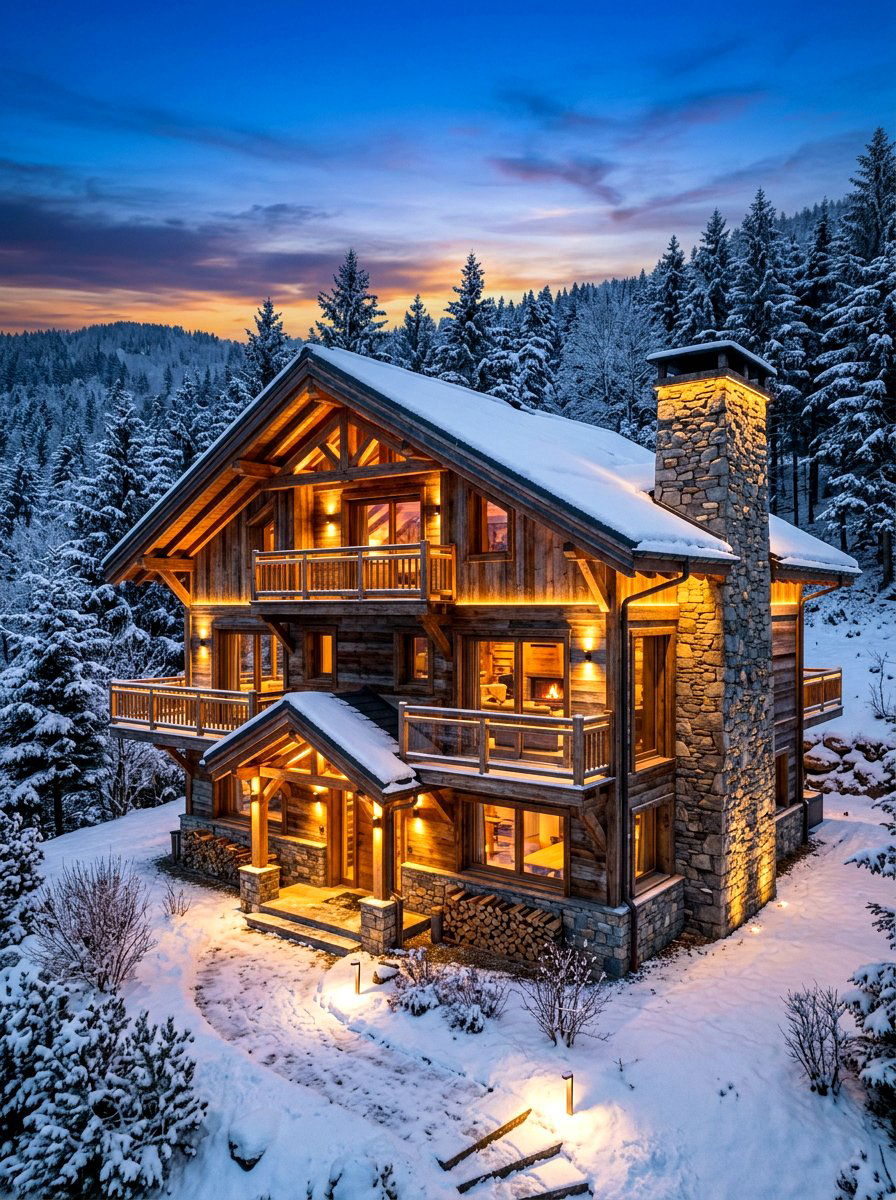
Integrated exterior accent lighting turns the mountain chalet into a stunning visual masterpiece after the sun goes down. Small, powerful LED lights are built directly into the eaves, stairs, and decks to highlight the architectural features and provide safety. Uplighting the stone chimney or the large wooden columns adds depth and drama to the facade, making the home glow warmly in the dark woods. This lighting is usually designed to be subtle and warm, avoiding harsh glares that would disrupt the natural nighttime environment. It ensures the home is welcoming and beautiful during every hour of the day and night.
30. Built In Slope Garage
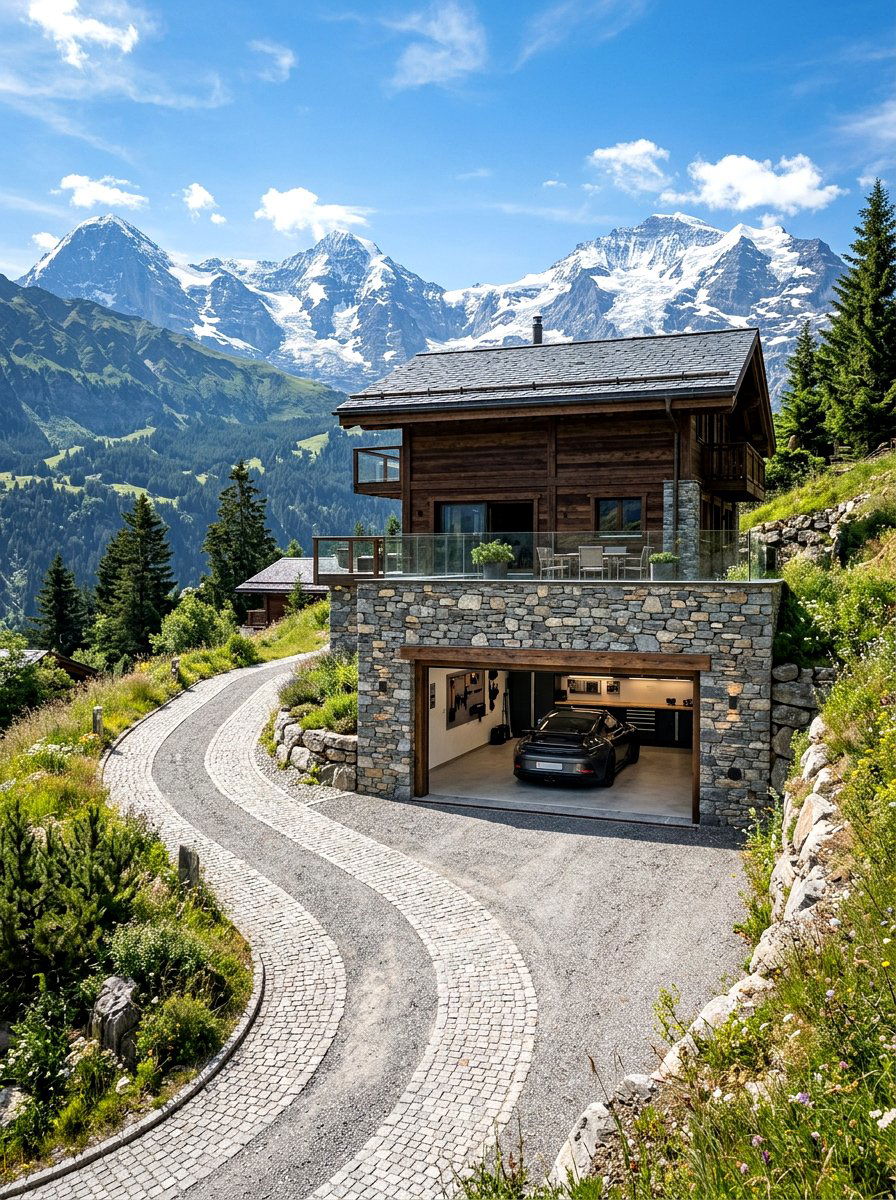
A built in slope garage is a clever architectural solution that hides the vehicle storage within the natural hillside or the lower level. This prevents a large garage door from dominating the main facade of the home and preserves the aesthetic of the chalet. The driveway often winds up to the entry, where the garage is tucked discreetly under a deck or an upper-floor living space. Using stone or dark-colored materials for the garage section helps it recede visually. This design is highly functional for snowy areas, providing sheltered access to the home while maintaining the beauty of the overall mountain architecture.
Conclusion:
Designing the exterior of a mountain chalet is an exciting journey that requires balancing structural needs with personal style and environmental respect. From the timeless appeal of a traditional Swiss-style lodge to the sleek, minimalist lines of a modern glass-front retreat, the possibilities are truly endless. The key to a successful design lies in choosing materials that harmonize with the natural landscape while providing the durability needed for high-altitude living. By focusing on elements like stone, timber, and expansive windows, you can create a home that feels like a sanctuary. Each of these thirty ideas offers a unique perspective on what it means to live beautifully in the mountains.

Related posts: