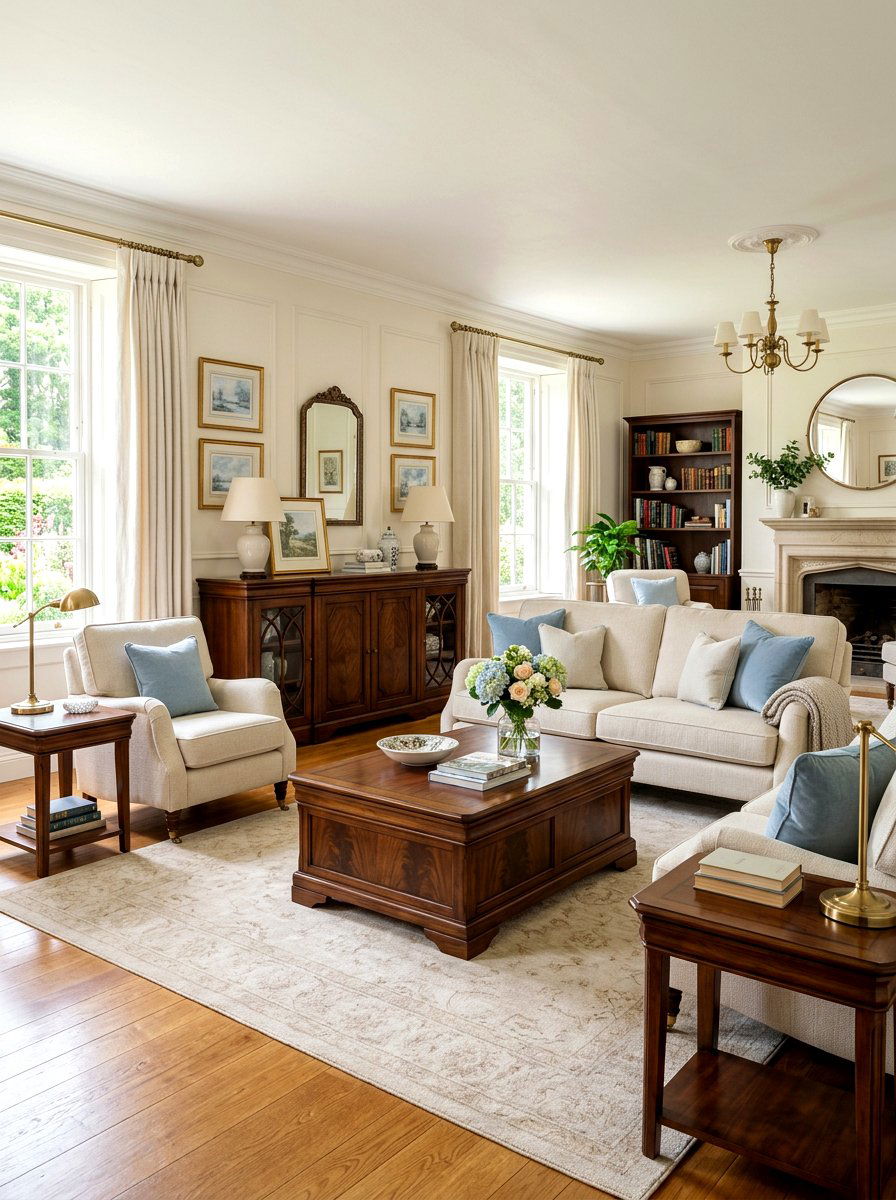
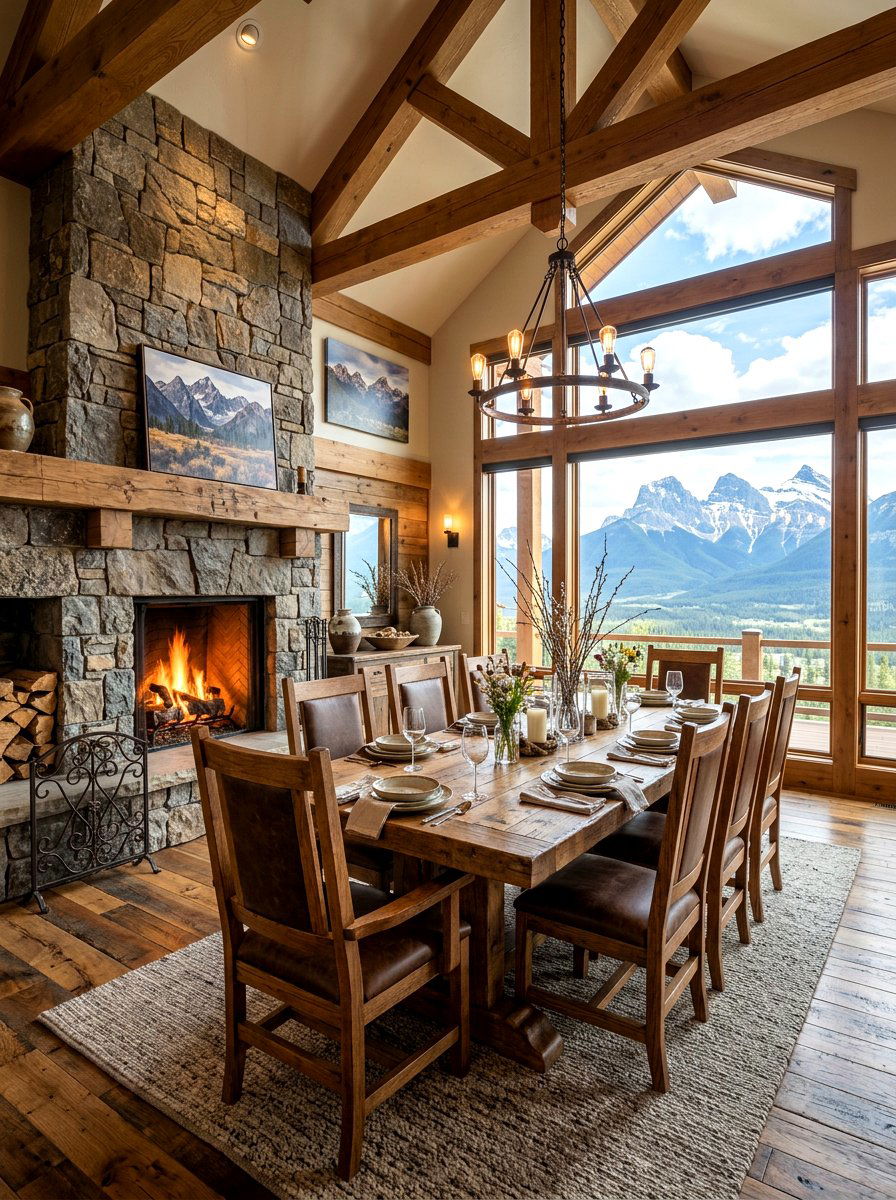
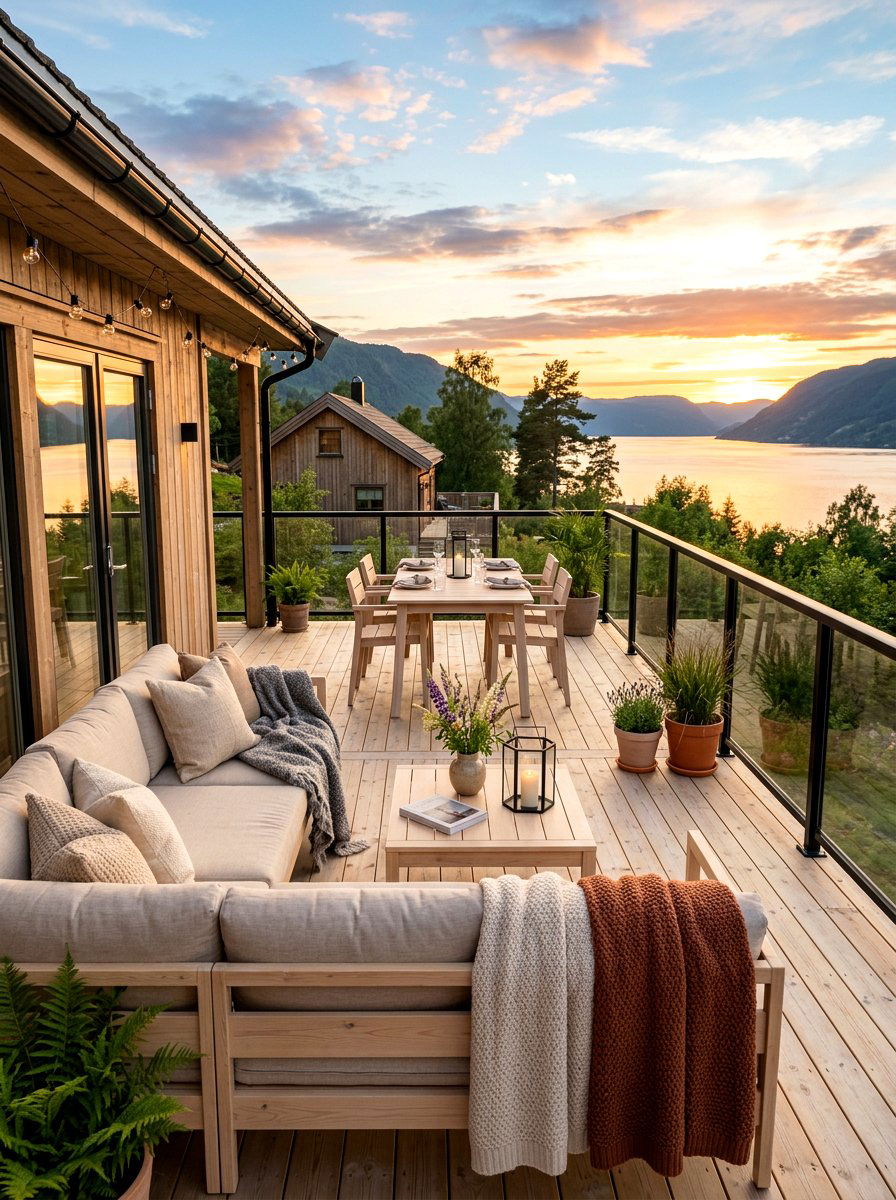
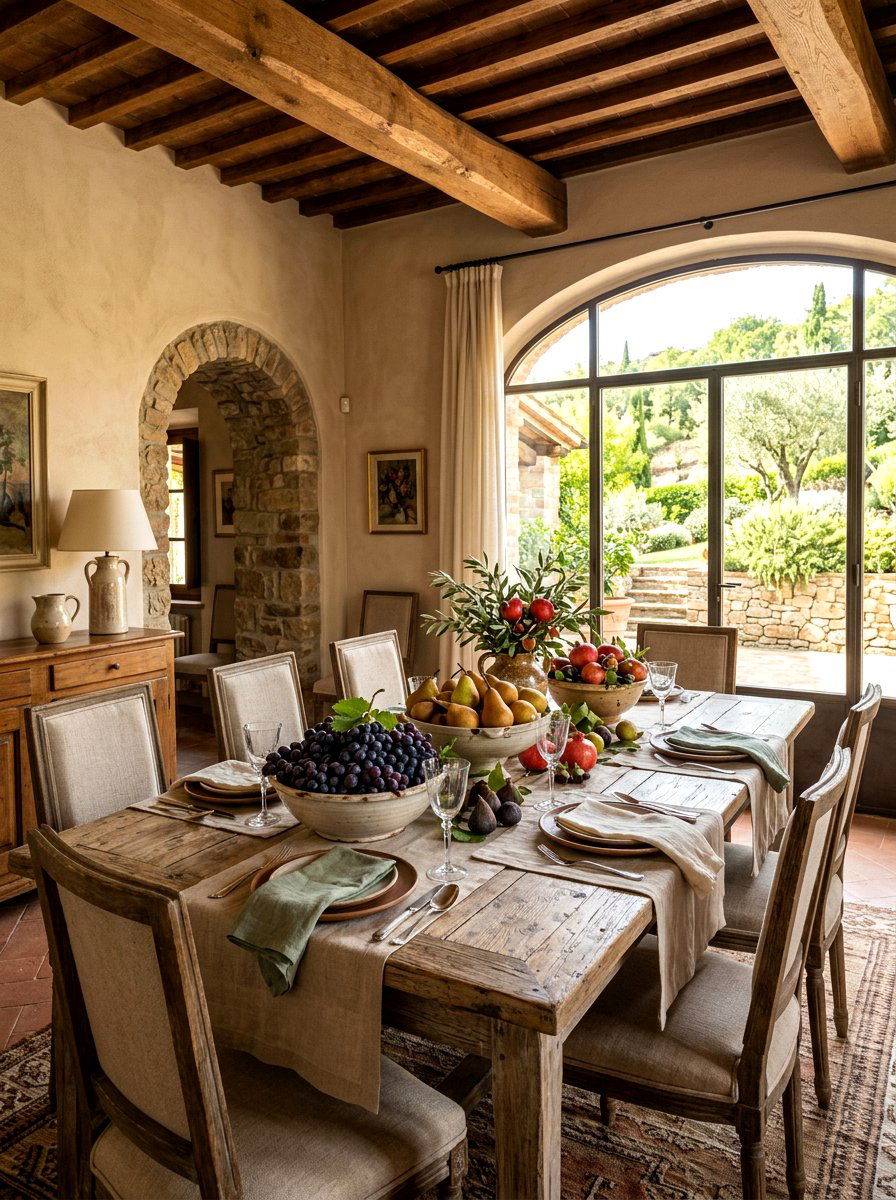
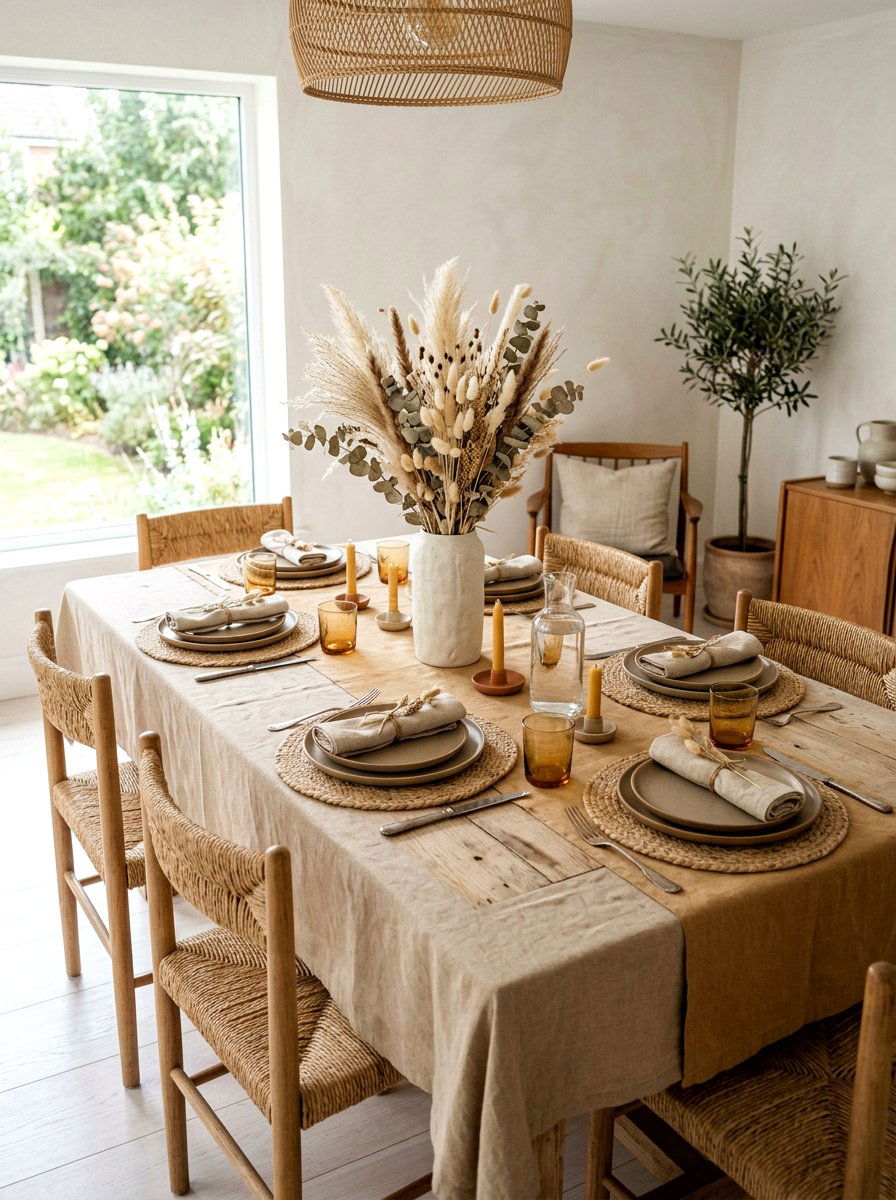
Traditional dining rooms remain a cornerstone of home design because they offer a sense of stability and timeless elegance that modern styles often lack. These spaces are designed specifically for gathering, celebrating, and creating lasting memories with family and friends in a dedicated environment. When you step into a classic dining area, you immediately feel the warmth of rich wood finishes, the texture of high-quality fabrics, and the intentionality behind every decorative choice. From formal wainscoting to sparkling crystal chandeliers, traditional design celebrates heritage and craftsmanship. This collection explores thirty unique ways to bring that sophisticated look into your own home, ensuring your dining space feels both welcoming and impressive for years to come.
1. Mahogany Dining Table
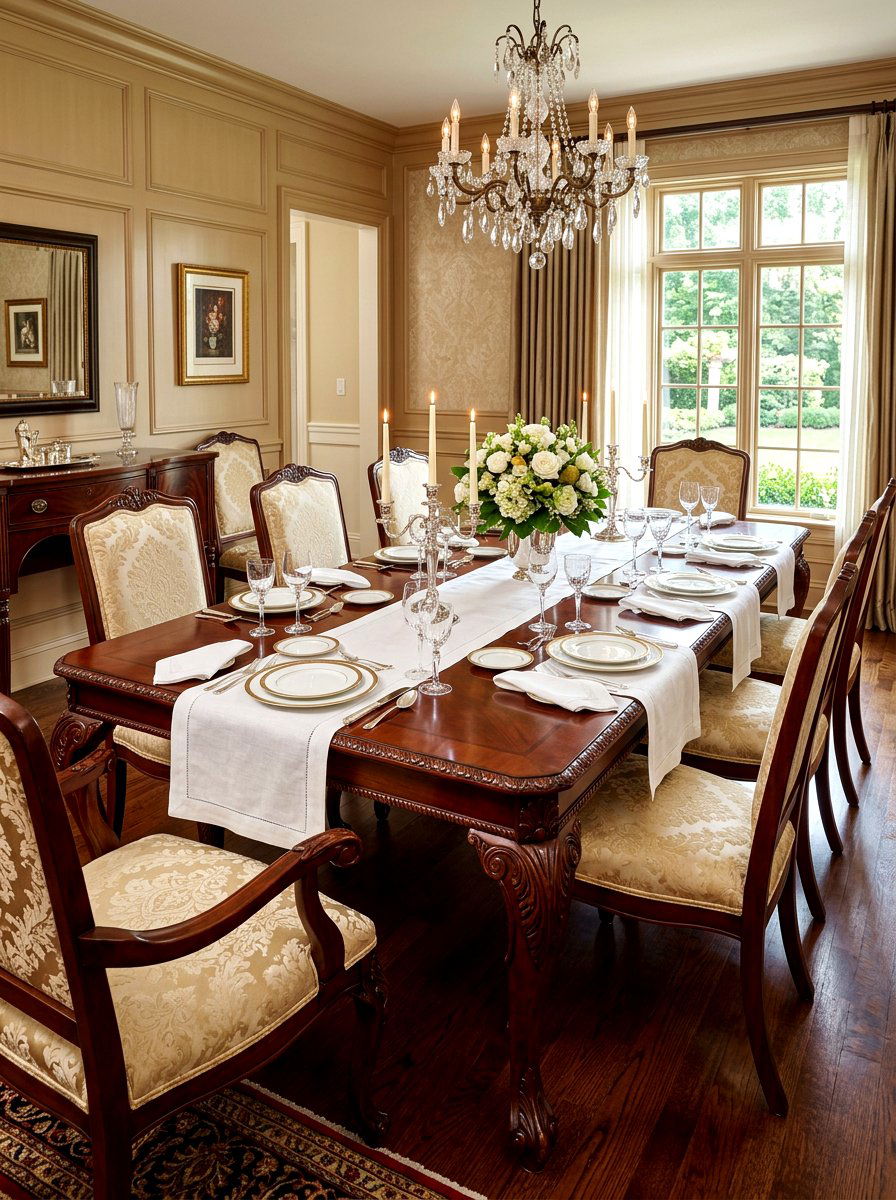
The mahogany dining table stands as a quintessential pillar of traditional home design. Known for its deep reddish-brown hue and incredibly fine grain, this wood brings an immediate sense of gravity and warmth to any formal space. These tables often feature hand-carved legs or elegant pedestal bases that showcase superior craftsmanship. Because mahogany is a dense hardwood, it offers exceptional durability that allows it to become a cherished family heirloom passed down through generations. When polished to a high sheen, the surface reflects the glow of candlelight and chandeliers, enhancing the room's overall ambiance. Pairing this substantial piece with matching chairs creates a cohesive, stately atmosphere for formal entertaining.
2. Crystal Chandelier Lighting
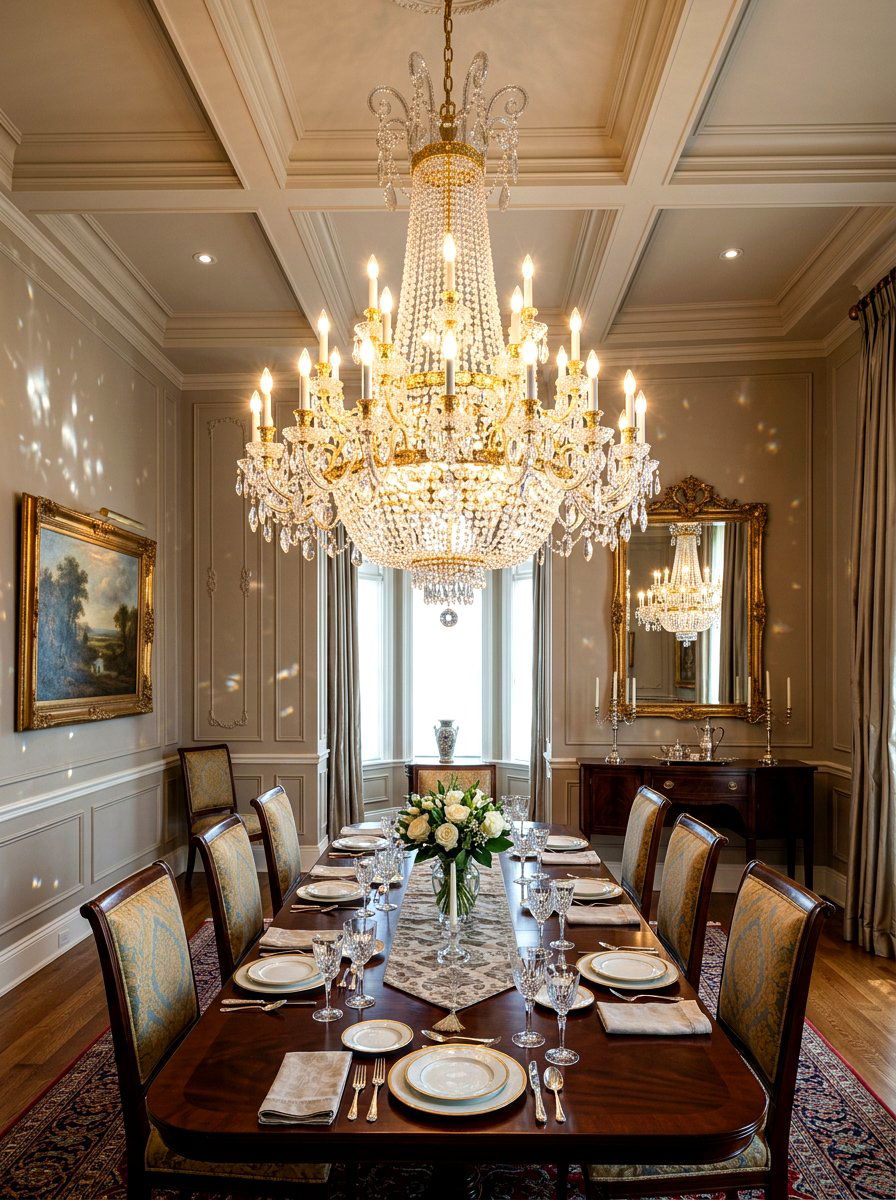
Nothing signals formal elegance quite like a sparkling crystal chandelier hanging majestically above a perfectly set table. This lighting fixture serves as the room’s jewelry, catching the light and dispersing it in a dazzling array of prisms across the walls. In traditional design, the size and scale of the chandelier are crucial for balancing the proportions of a large dining table. Whether it is a classic tiered design or a more delicate Marie Antoinette style, the presence of glass and metal adds a layer of luxury. Installing a dimmer switch allows you to control the mood, transitioning from bright practical light to a soft, romantic glow that enhances every meal.
3. Formal Wainscoting Walls
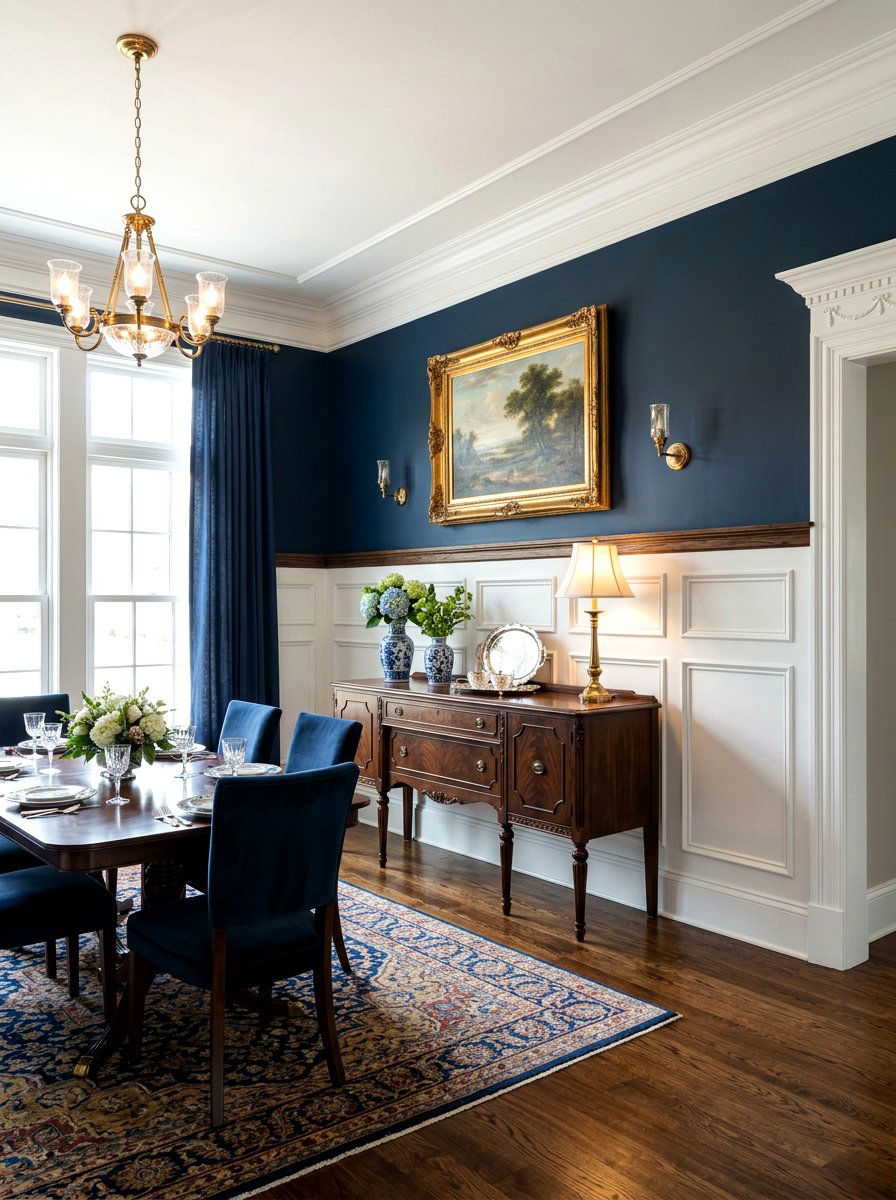
Installing formal wainscoting is one of the most effective ways to add architectural interest and a sense of history to a dining room. This classic wall treatment involves adding wooden panels or molding to the lower half of the walls, creating a crisp and structured look. Typically painted in a clean white or cream, wainscoting provides a beautiful contrast against darker paint colors or patterned wallpaper on the upper wall. It protects the walls from chair scuffs while adding a layer of sophisticated texture. This detail helps to ground the room and defines the perimeter, making the space feel more finished, expensive, and historically grounded in design.
4. Persian Area Rugs
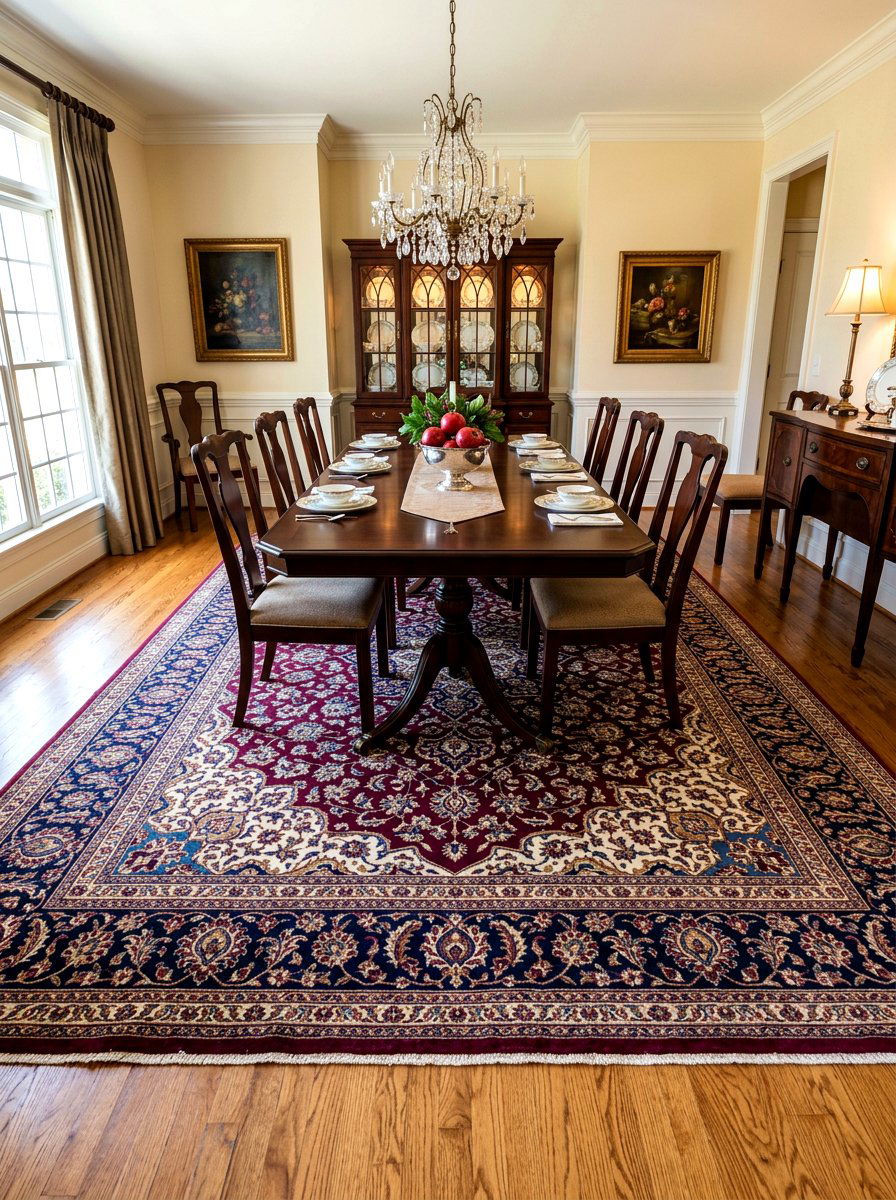
A high-quality Persian area rug acts as the anchor for a traditional dining room, providing both comfort underfoot and a rich visual foundation. These rugs often feature intricate patterns and deep, saturated colors like burgundy, navy, and gold that hide stains while adding warmth. When choosing a rug, it is essential to ensure it is large enough so that all chair legs remain on the rug even when pulled out. The soft wool texture contrasts beautifully with the hard surfaces of the wooden table and floor. A well-chosen rug ties all the colors of the room together, creating a harmonious and cozy environment for long dinner conversations.
5. Blue Willow China
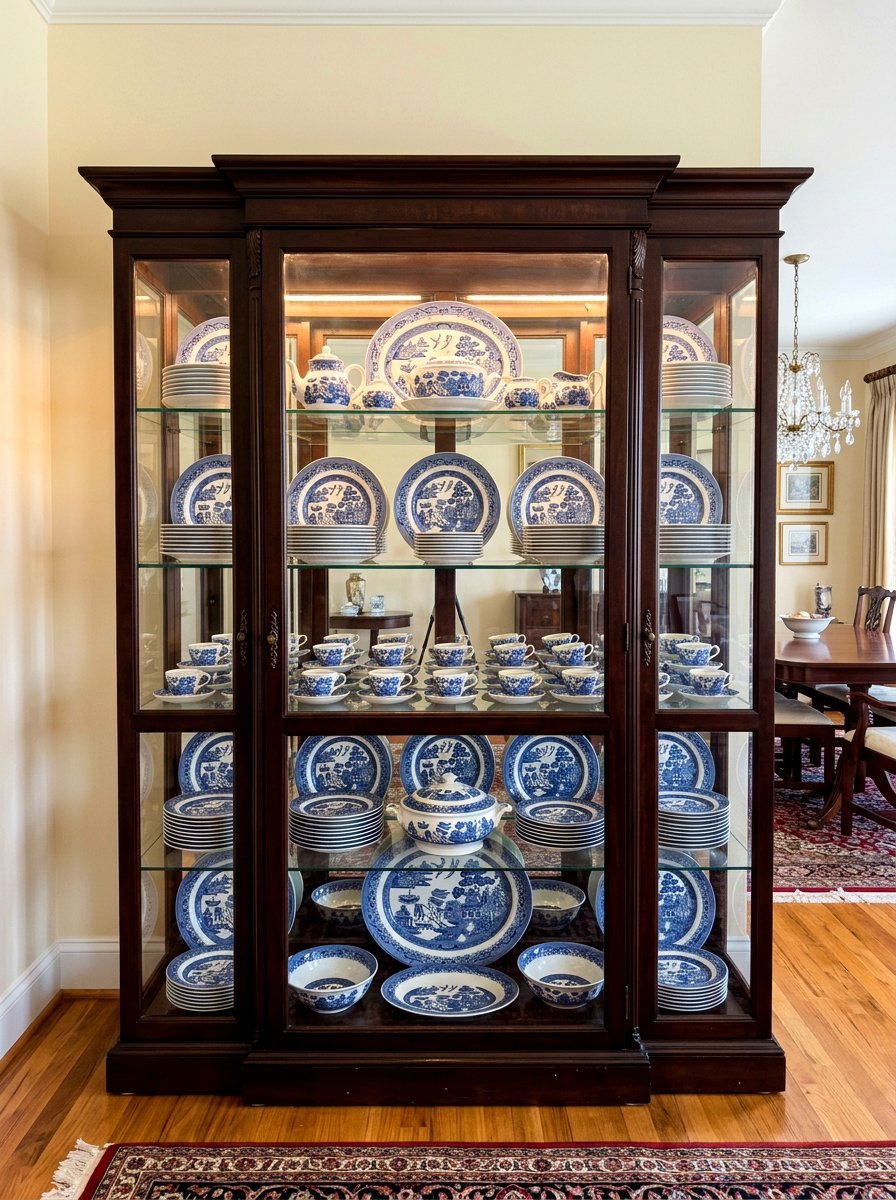
Displaying Blue Willow china is a time-honored tradition that brings a touch of classic pattern and story-telling to the dining room. This iconic blue and white porcelain pattern adds a sophisticated pop of color that pairs perfectly with dark wood furniture. You can showcase these pieces in a china cabinet or mount them directly onto the wall for a curated gallery look. The crisp contrast of blue against white feels fresh yet deeply rooted in history. Using these dishes for special occasions elevates the dining experience, connecting the present with past generations. It is a simple way to introduce timeless charm and refined character to your space.
6. Tufted Velvet Chairs
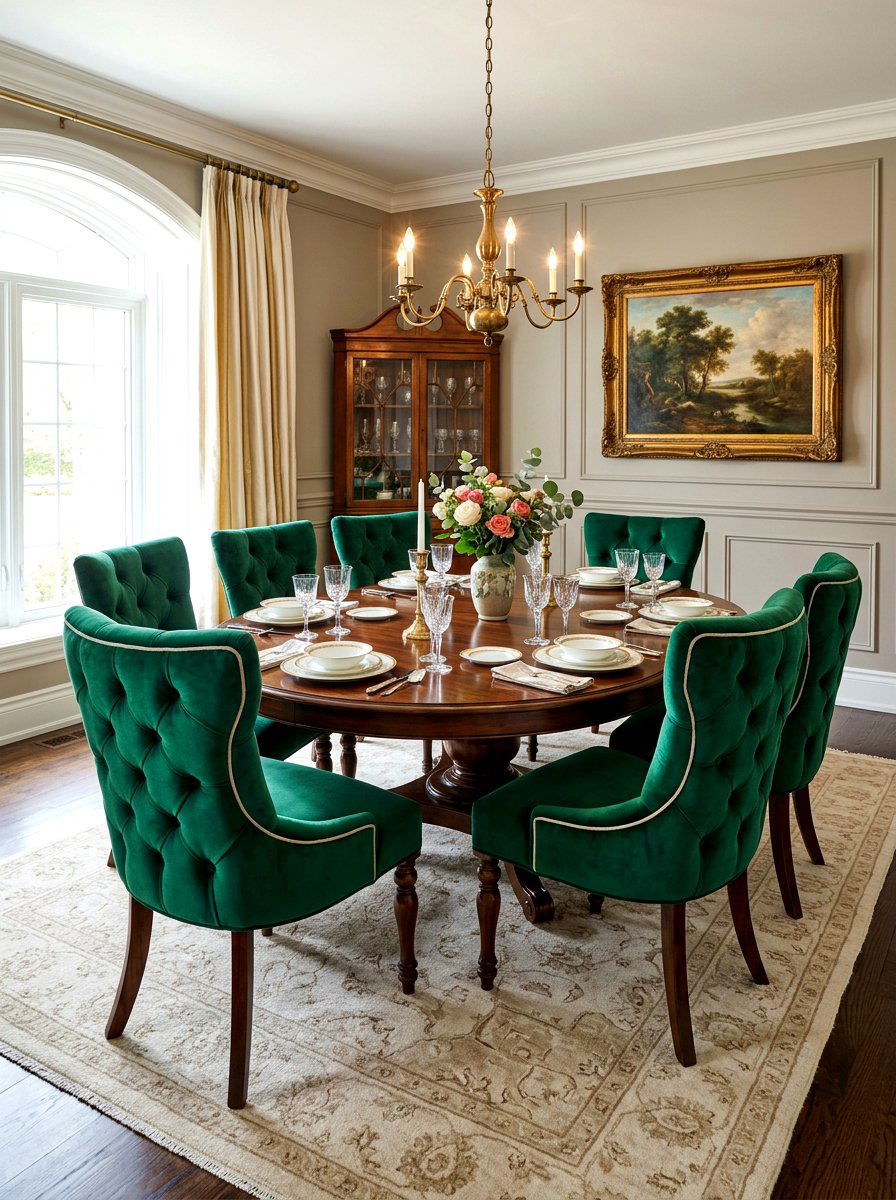
Upholstered chairs featuring tufted velvet bring a sense of tactile luxury and physical comfort to the traditional dining experience. The deep button detailing adds visual depth and a classic aesthetic that feels both royal and inviting. Velvet is a resilient fabric that holds deep jewel tones beautifully, such as emerald green, sapphire blue, or royal plum. These chairs encourage guests to linger longer at the table, transforming a simple meal into a comfortable social event. Pairing tufted seating with a heavy wooden table creates a balanced juxtaposition between soft and hard materials. This choice ensures your dining room feels high-end, comfortable, and visually rich for every guest.
7. Floral Wallpaper Design
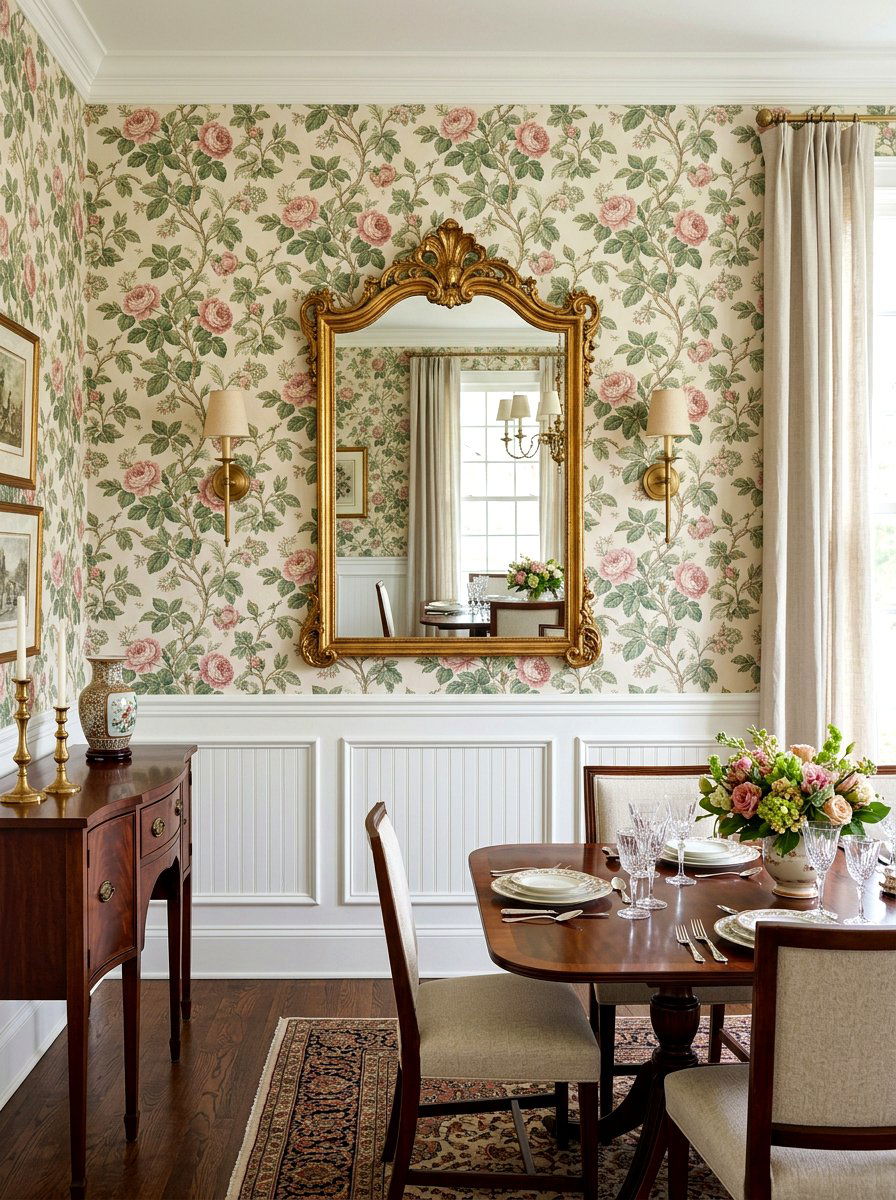
Incorporating a floral wallpaper design is a classic way to introduce color, pattern, and a sense of nature into a traditional dining room. Traditional florals often feature muted tones and intricate botanical illustrations that evoke a sense of an English garden or a vintage manor. When applied above wainscoting, the wallpaper becomes a beautiful backdrop for artwork and mirrors without overwhelming the entire space. The organic shapes of the flowers provide a soft contrast to the straight lines of the furniture and architectural trim. This design choice adds a layer of personality and femininity, making the room feel more intimate, curated, and visually interesting for your visitors.
8. Buffet Sideboard Storage
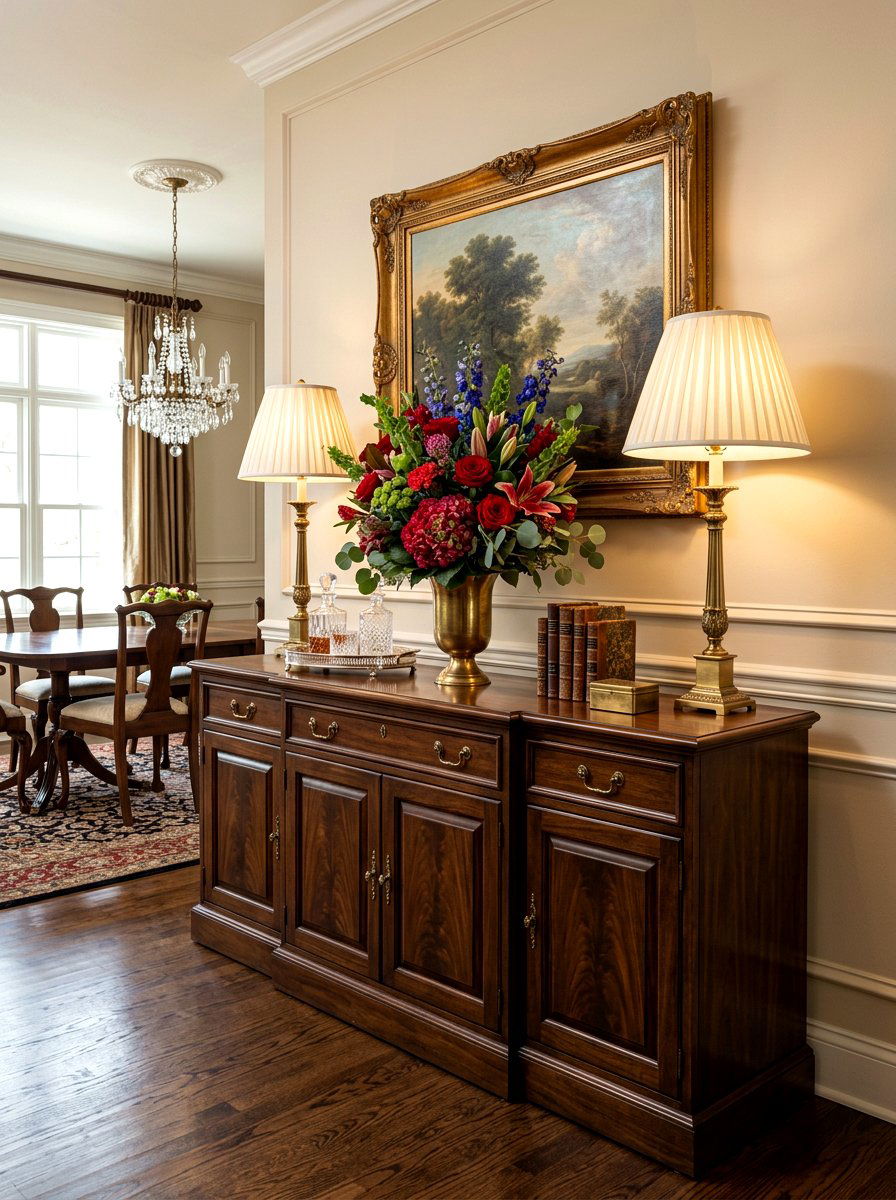
A buffet sideboard is an essential furniture piece that provides both practical storage and a beautiful surface for decor. In a traditional dining room, these pieces are often made of dark wood with ornate metal hardware and decorative carvings. They are perfect for storing linens, silverware, and serving platters that are only used on special occasions. During dinner parties, the top surface serves as a convenient station for serving food or displaying a selection of drinks. Decorating the buffet with a pair of lamps, a stack of books, or a large floral arrangement adds a personal touch that completes the room’s formal layout.
9. Brass Wall Sconces
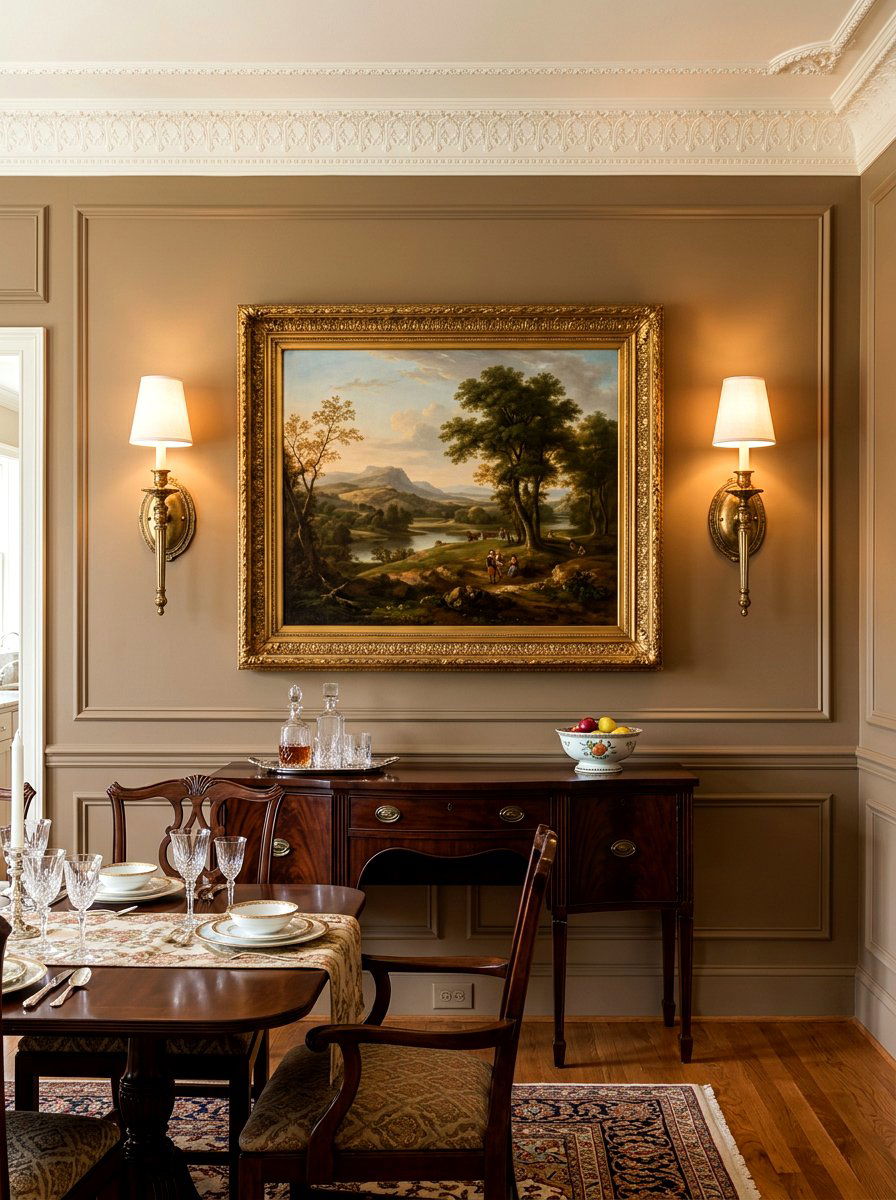
Brass wall sconces provide an elegant secondary light source that adds depth and a warm glow to the perimeter of the room. These fixtures are often placed in pairs on either side of a mirror, a piece of art, or a buffet. The metallic finish of the brass introduces a touch of vintage charm and sophistication that complements other traditional hardware in the space. Sconces help to eliminate shadows in the corners of the room, making the dining area feel larger and more welcoming. They are especially effective when used with small fabric shades, which soften the light and add another layer of traditional texture and detail.
10. Heavy Silk Drapes
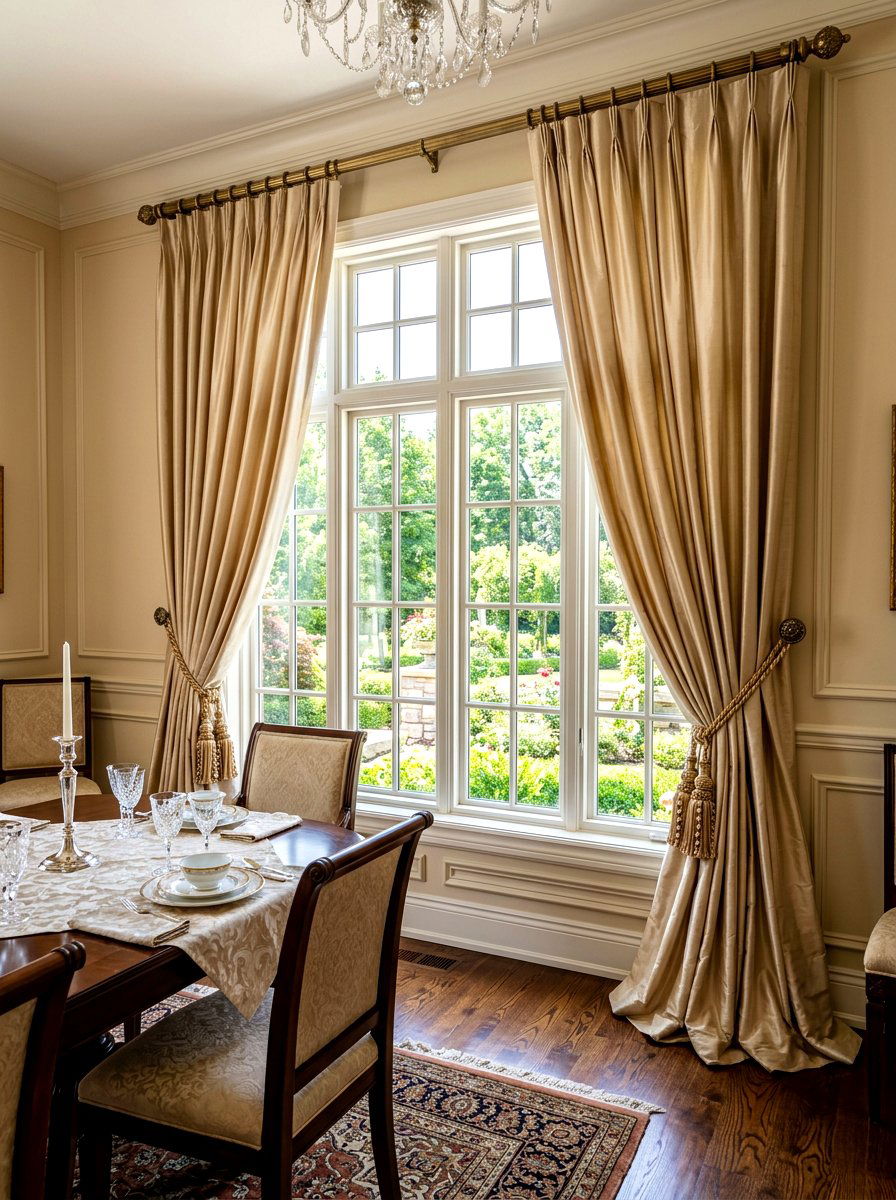
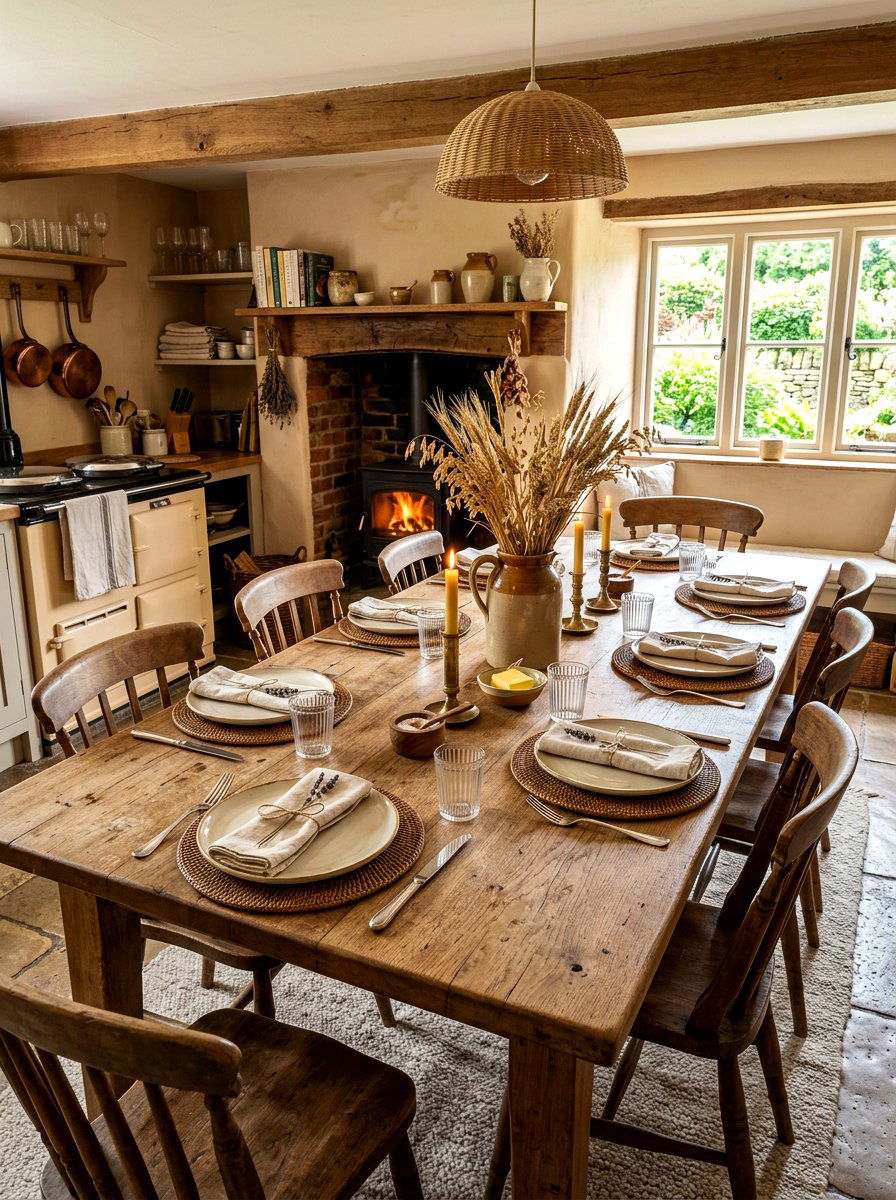
Dressing the windows with heavy silk drapes is a hallmark of traditional design that adds drama and luxury to the dining space. These curtains provide excellent insulation and light control while creating a soft, vertical element that draws the eye upward. In a traditional setting, drapes are often hung high and wide to make the windows appear larger and more impressive. Adding details like decorative tie-backs, fringe, or tassels further enhances the formal feel. The slight sheen of silk reflects light beautifully, adding a subtle glow to the room during the day and a rich, cocoon-like feeling during evening meals under soft light.
11. Oil Painting Portraits
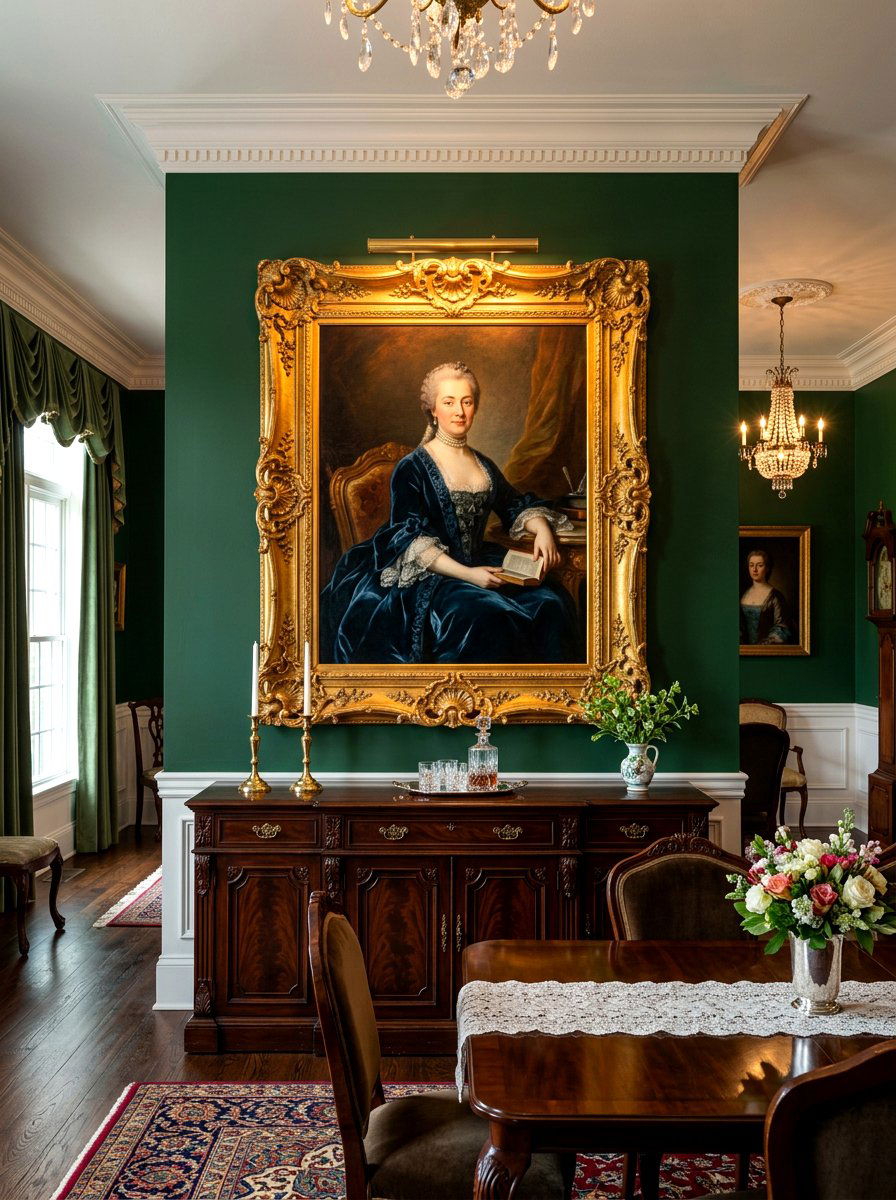
Hanging an oil painting portrait or a classic landscape provides a sense of history and intellectual weight to the dining room walls. These pieces of art often feature rich colors and ornate gold frames that act as a focal point. In traditional design, large-scale art helps to fill the vertical space and adds a layer of narrative and personality. Whether it is a family heirloom or a found vintage piece, an oil painting feels more substantial than modern prints. The texture of the brushstrokes and the depth of the pigments contribute to an atmosphere of refined culture, making the room feel like a private gallery.
12. Round Pedestal Table
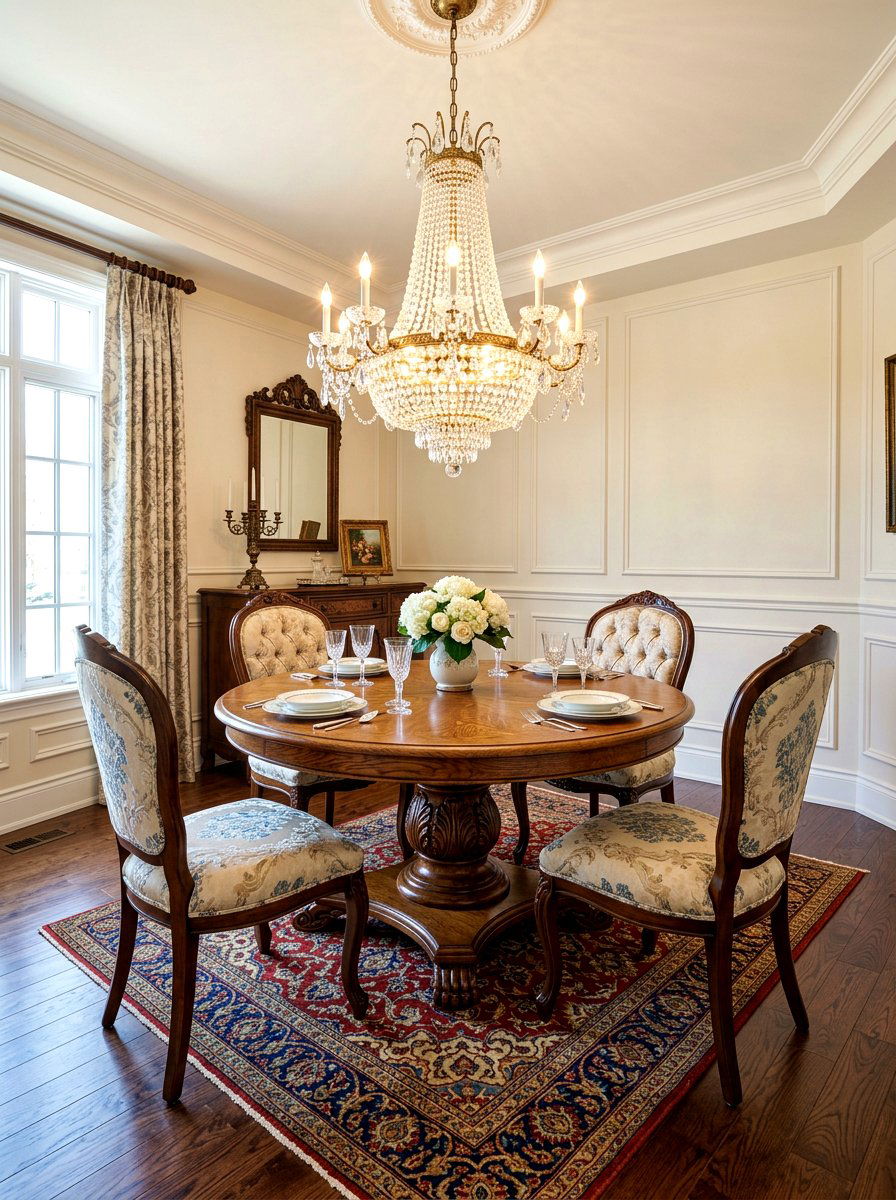
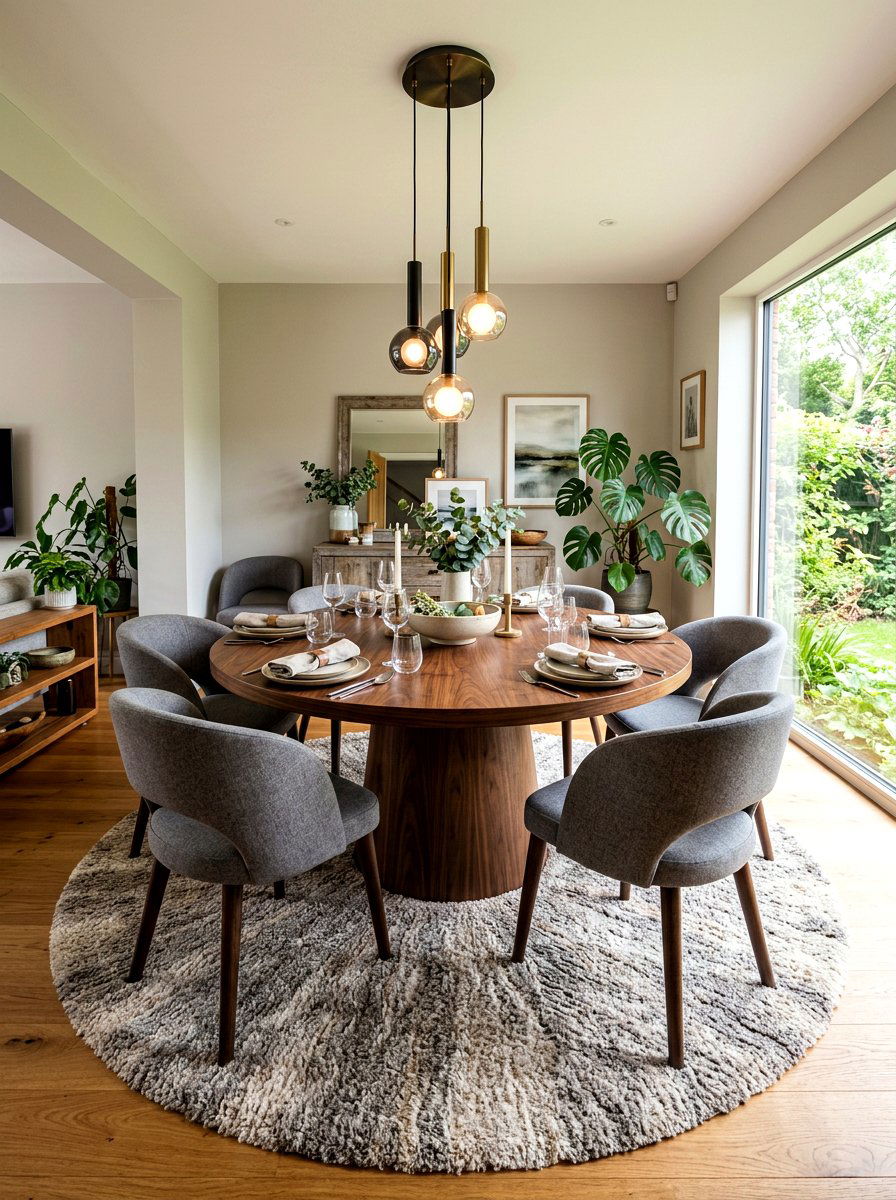
A round pedestal table is an excellent choice for creating an intimate and conversational atmosphere in a traditional dining room. Unlike rectangular tables, the round shape eliminates sharp corners and ensures that every guest can see and speak to one another easily. The central pedestal base provides ample legroom and adds a classic architectural silhouette to the center of the space. Often crafted from dark oak or walnut, these tables look stunning when centered under a large chandelier. This layout works particularly well in square rooms or smaller dining areas, offering a sense of flow and softness that encourages a relaxed yet formal dining experience.
13. Coffered Ceiling Detail
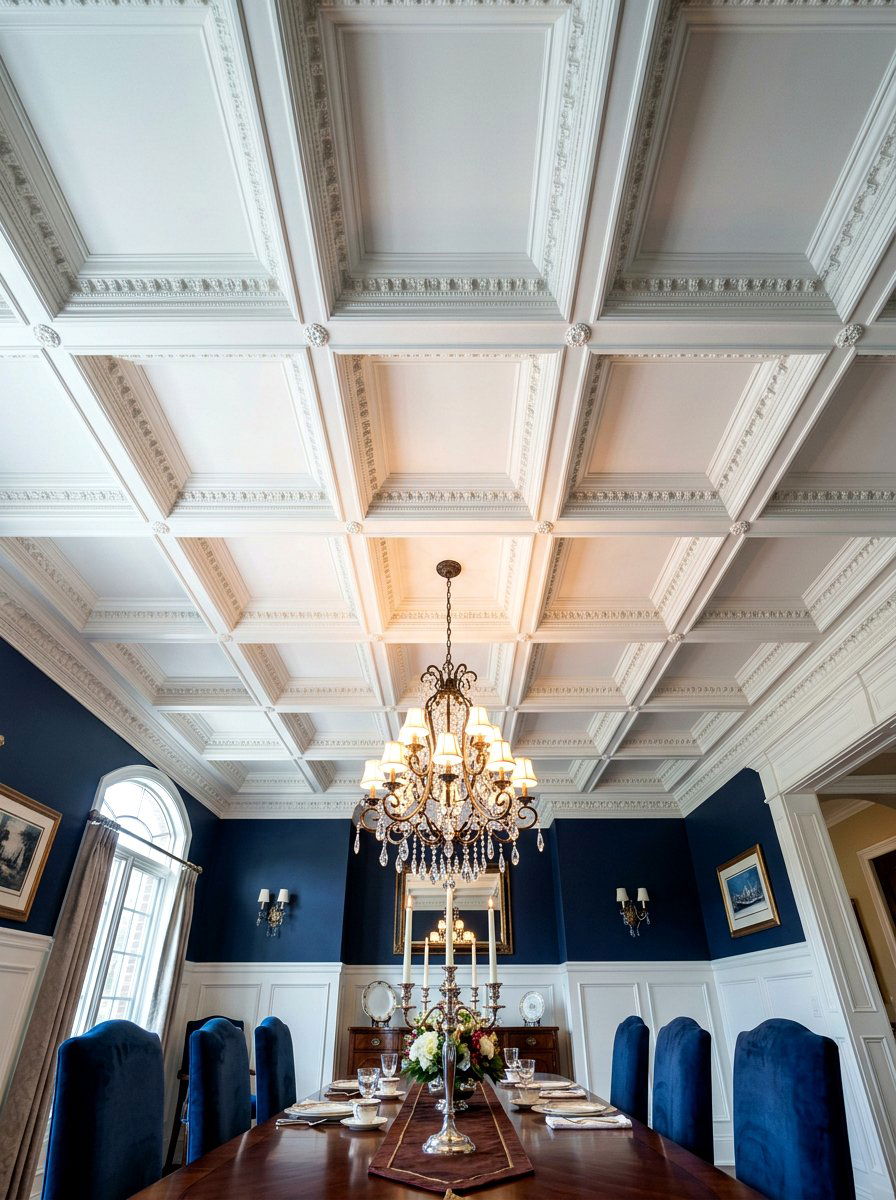
A coffered ceiling adds a powerful architectural statement that brings a sense of grandeur and structure to the dining room. This design features a grid of recessed panels framed by decorative beams, creating a three-dimensional effect that draws the eye upward. In a traditional space, the panels can be painted a soft white to match the trim, or a subtle contrasting color to highlight the detail. This feature not only improves the room's acoustics but also gives the space a sense of permanence and historical significance. It is a sophisticated way to finish the "fifth wall, " making the entire dining experience feel more upscale and architectural.
14. Striped Upholstery Fabric
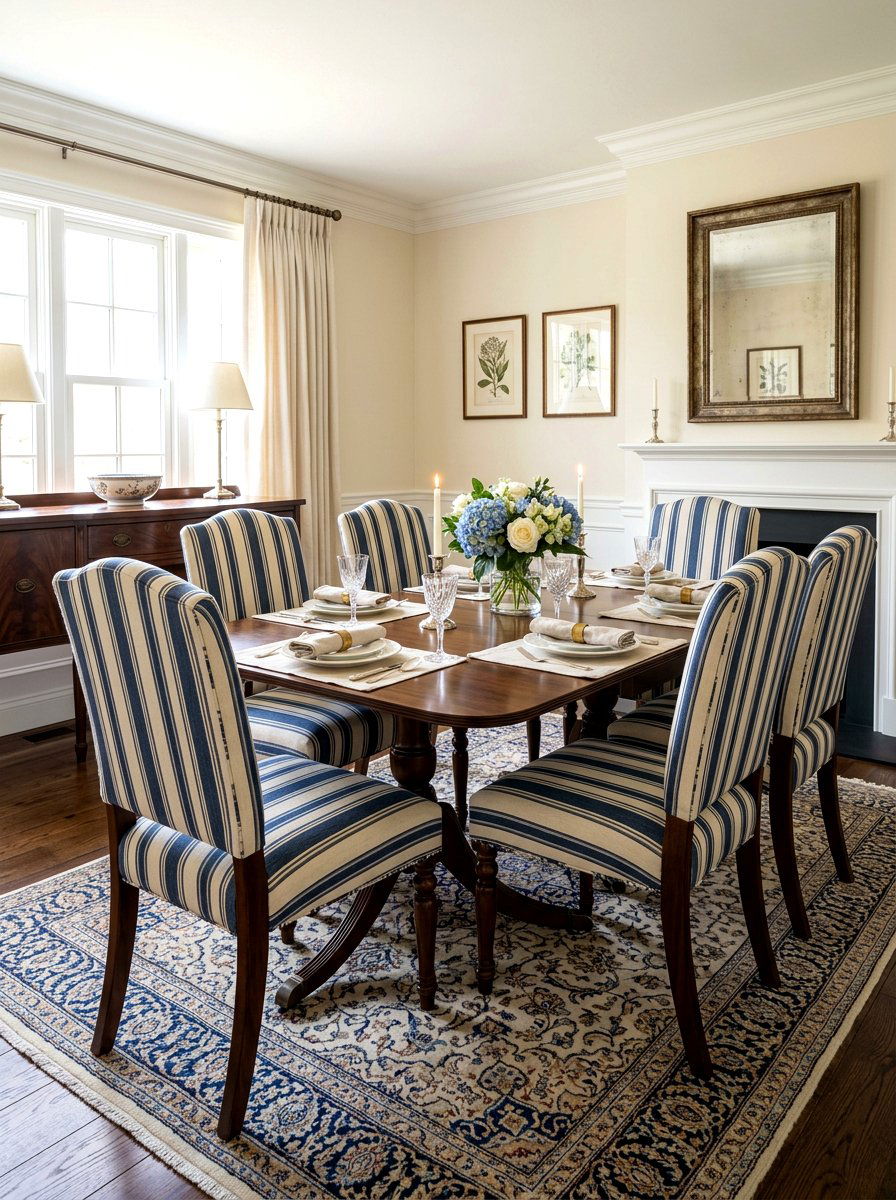
Striped upholstery fabric is a classic pattern that adds a sense of order and traditional charm to dining room seating. Whether used on all chairs or just as an accent on the end pieces, stripes provide a timeless look that never goes out of style. Neutral stripes in cream and beige offer a subtle texture, while bolder colors like navy or burgundy create a more formal and patriotic feel. The vertical lines of the stripes help to elongate the chairs and provide a clean, structured appearance. This pattern pairs exceptionally well with other traditional elements like floral wallpaper or Oriental rugs, creating a balanced and layered design.
15. Antique Gold Mirrors
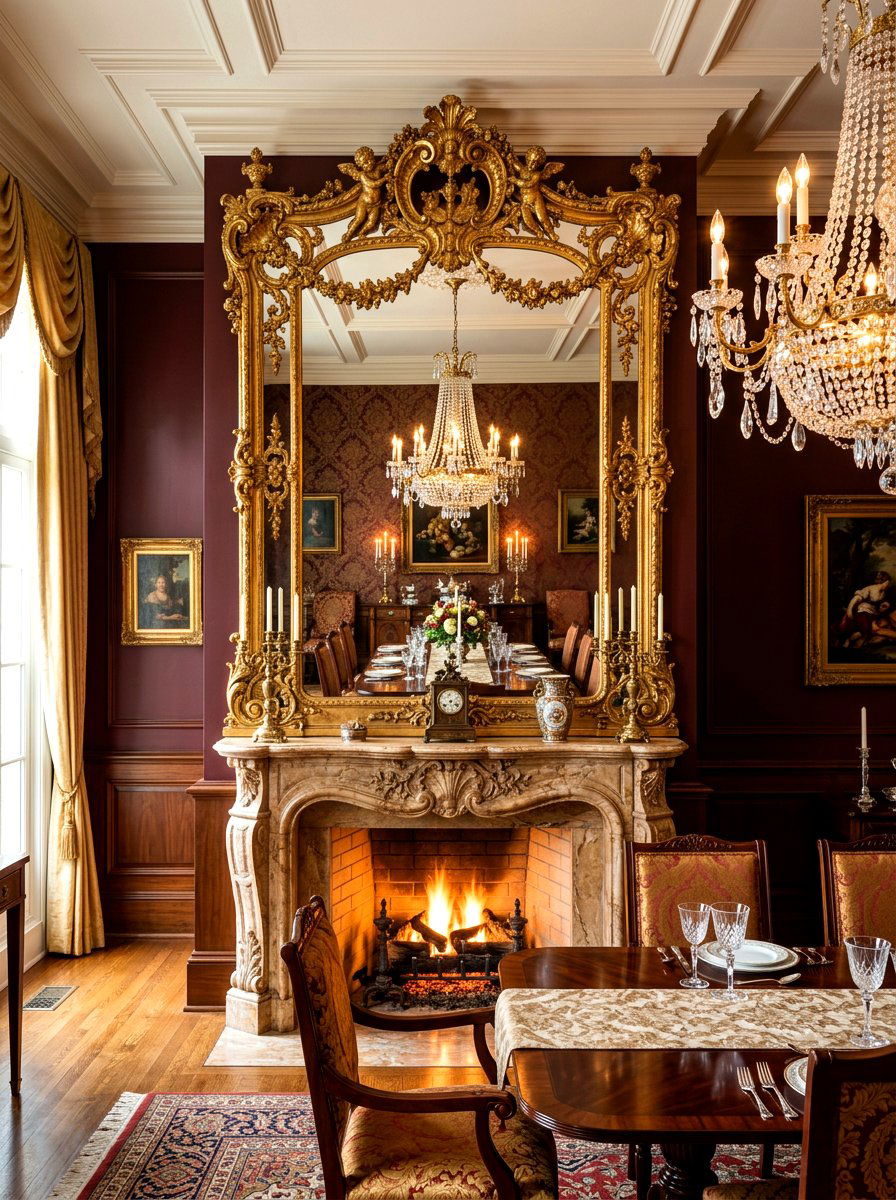
Placing a large antique gold mirror on one of the main walls is a strategic way to brighten and enlarge a traditional dining room. The reflective surface bounces light from the chandelier throughout the space, creating a lively and sparkling environment. A heavy, ornate gold frame adds a touch of opulence and serves as a piece of art in its own right. Mirrors are often hung above a buffet or mantel to create a centered, symmetrical focal point. This design choice adds a layer of depth to the room and allows guests to see the beauty of the table setting from multiple angles, enhancing the visual experience.
16. Classic China Cabinet
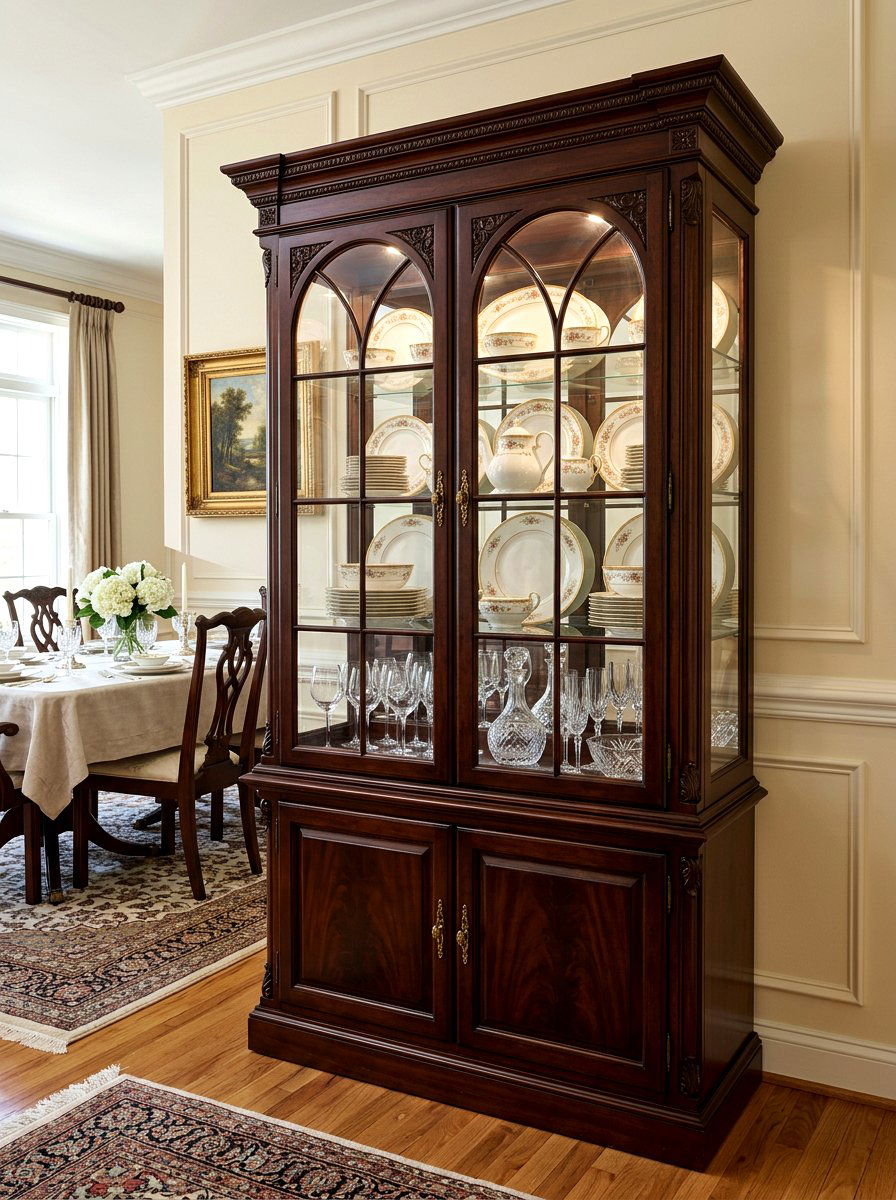
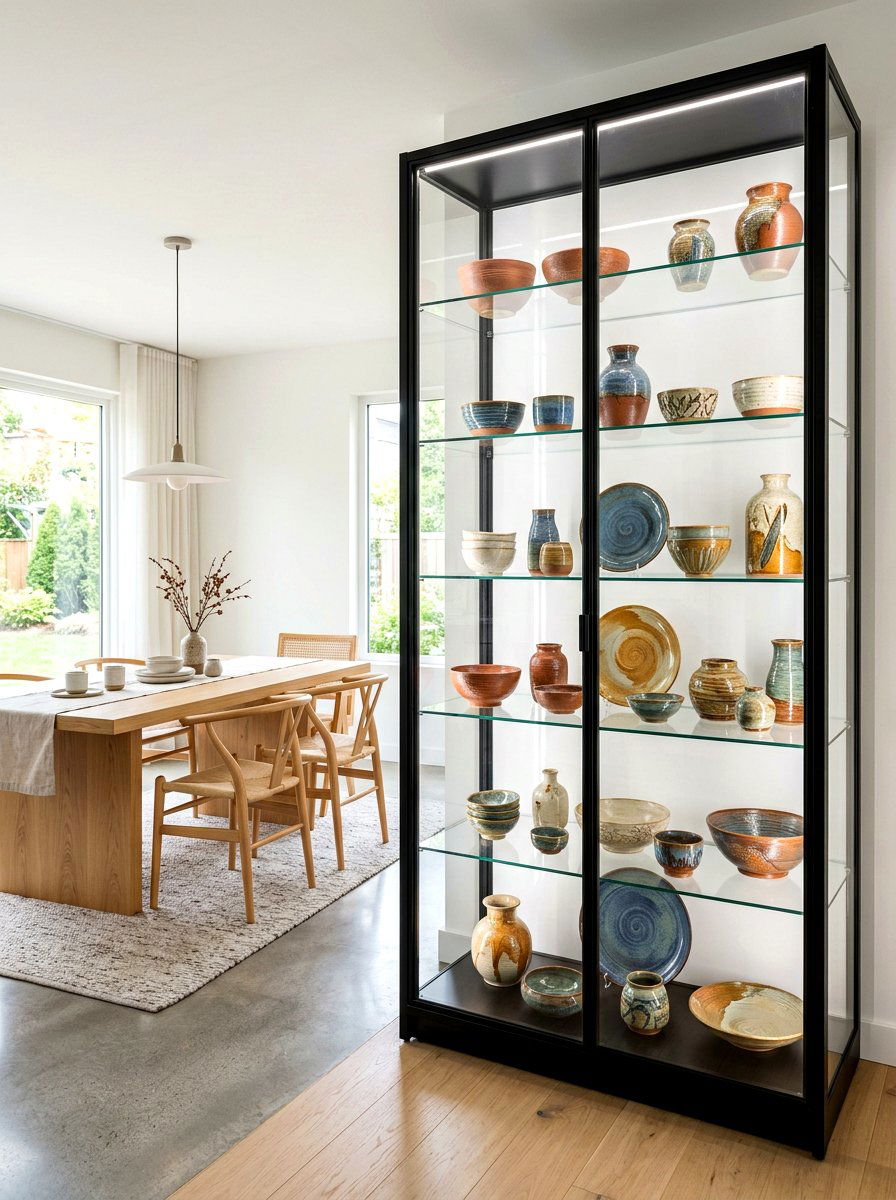
A classic china cabinet is a beautiful and functional addition that allows you to showcase your finest dinnerware while keeping it protected. These tall pieces of furniture often feature glass-front doors, interior lighting, and intricate woodwork that adds a sense of height to the room. Inside, you can artfully arrange sets of porcelain, crystal glassware, and silver serving pieces. This display not only tells a story of your personal style but also adds a layer of sparkling texture to the space. A well-stocked china cabinet serves as a testament to the tradition of hosting and the importance of family gatherings in a formal setting.
17. Navy Blue Walls
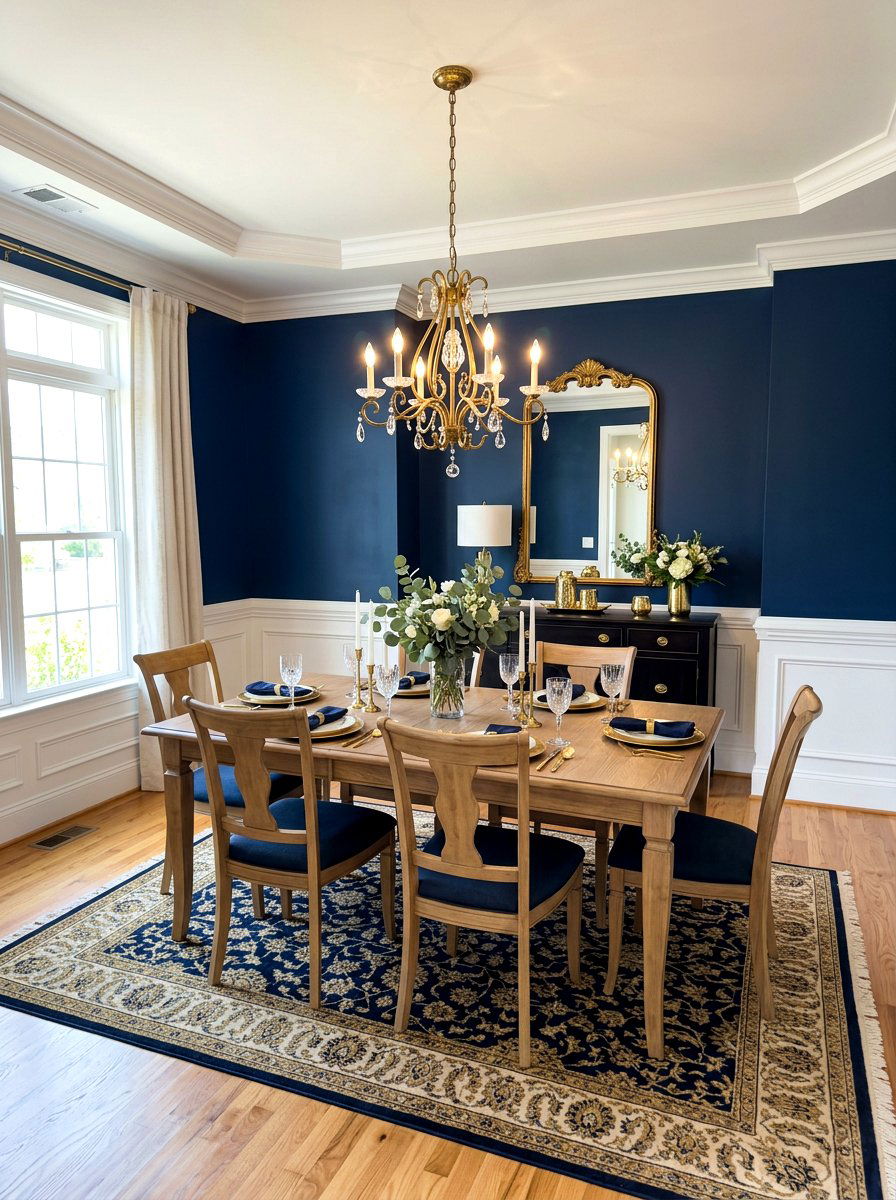
Choosing navy blue for the walls is a bold yet traditional move that creates a cozy and sophisticated atmosphere. This deep, saturated color provides a stunning backdrop for white trim, gold frames, and dark wood furniture. Navy blue has a way of making the walls recede, which can actually make a dining room feel more intimate and focused. During evening meals, the dark walls absorb light in a way that makes candlelight and chandeliers pop with extra brilliance. This color choice feels timeless and formal, offering a modern edge to traditional design while maintaining a sense of classic decorum and visual richness.
18. Hardwood Parquet Floors
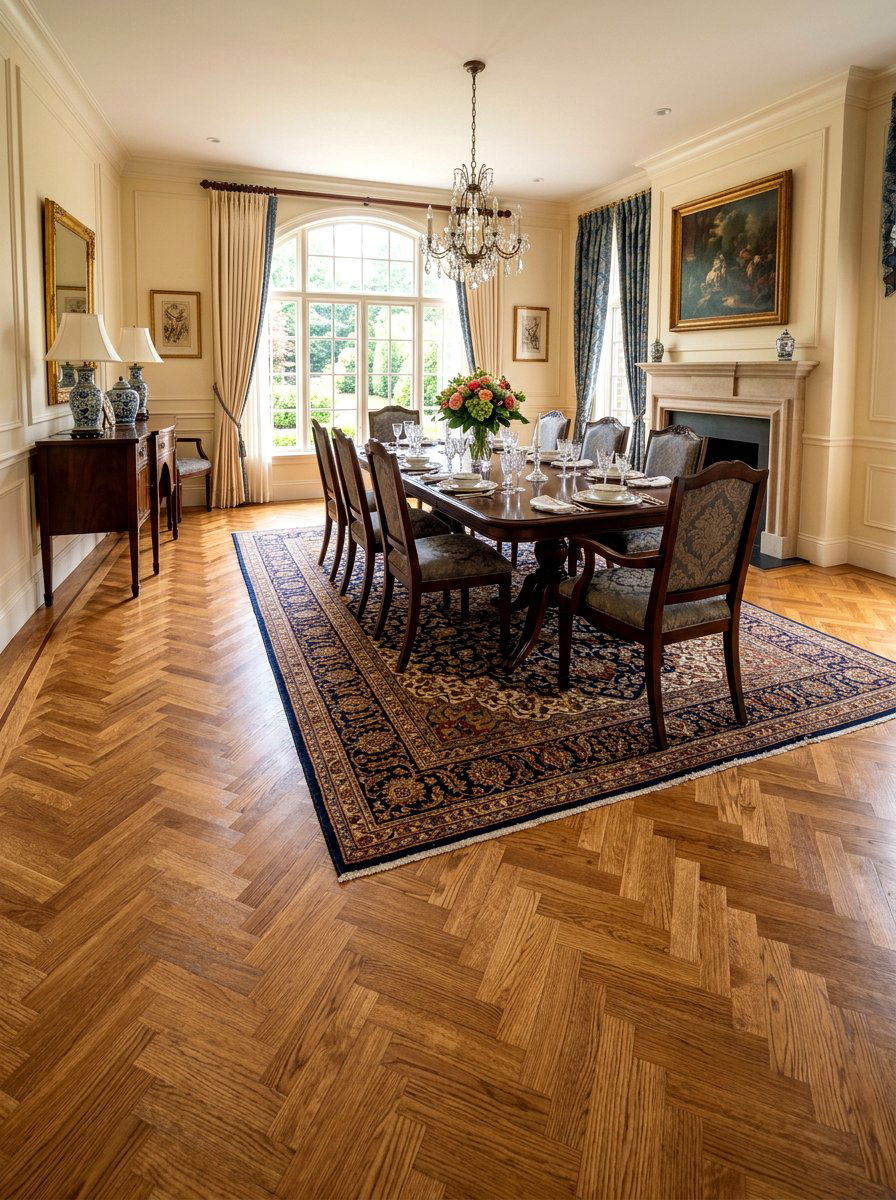
Hardwood parquet floors bring a level of intricate pattern and historical charm that simple planks cannot match. These floors are created by arranging small pieces of wood in geometric patterns, such as herringbone or chevron, which adds a sense of luxury and craftsmanship. In a traditional dining room, the varied tones of the wood create a beautiful, textured foundation for the furniture. Parquet flooring has been used in European estates for centuries and continues to be a symbol of high-end design. The visual movement of the floor adds a subtle layer of interest that complements the formal lines of a traditional table and chairs.
19. Silver Candelabra Centerpiece
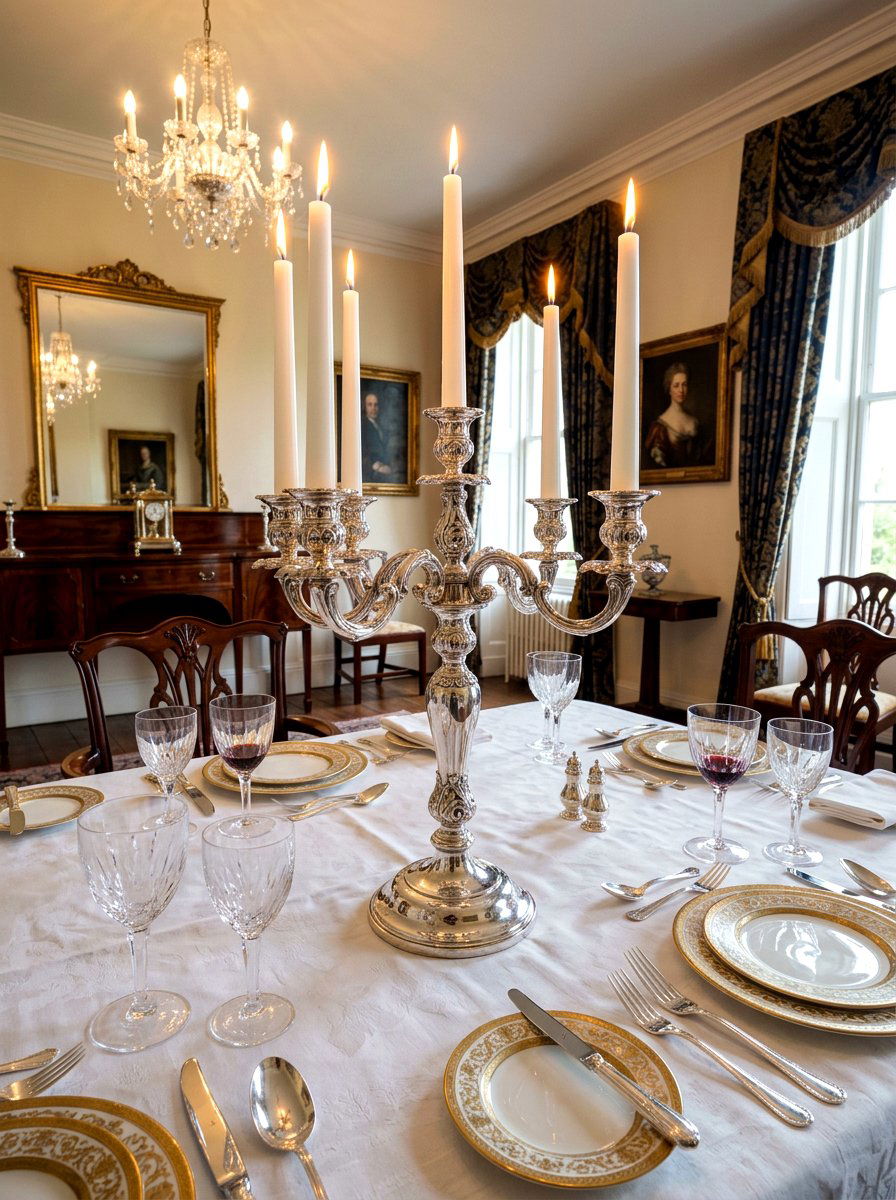
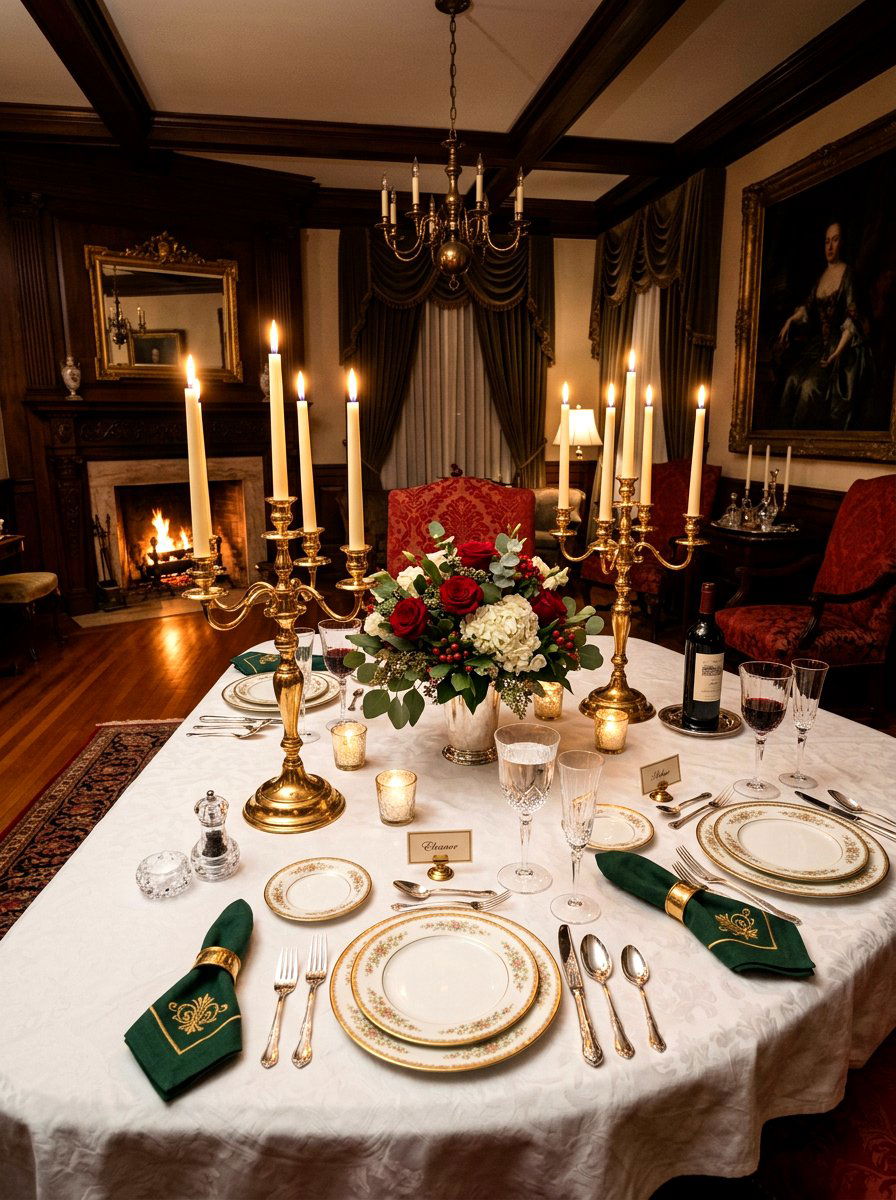
A silver candelabra centerpiece is the ultimate finishing touch for a traditional dining table. The height and metallic shine of the silver add a sense of drama and importance to the table setting. When filled with tall taper candles, the candelabra provides a soft, flickering light that creates a romantic and formal ambiance. This classic accessory reflects the light from the chandelier and adds a touch of vintage glamour to the meal. Whether used alone or paired with fresh greenery and flowers, a silver candelabra serves as a timeless focal point that signals a special occasion and a commitment to elegant hosting.
20. French Door Entryway
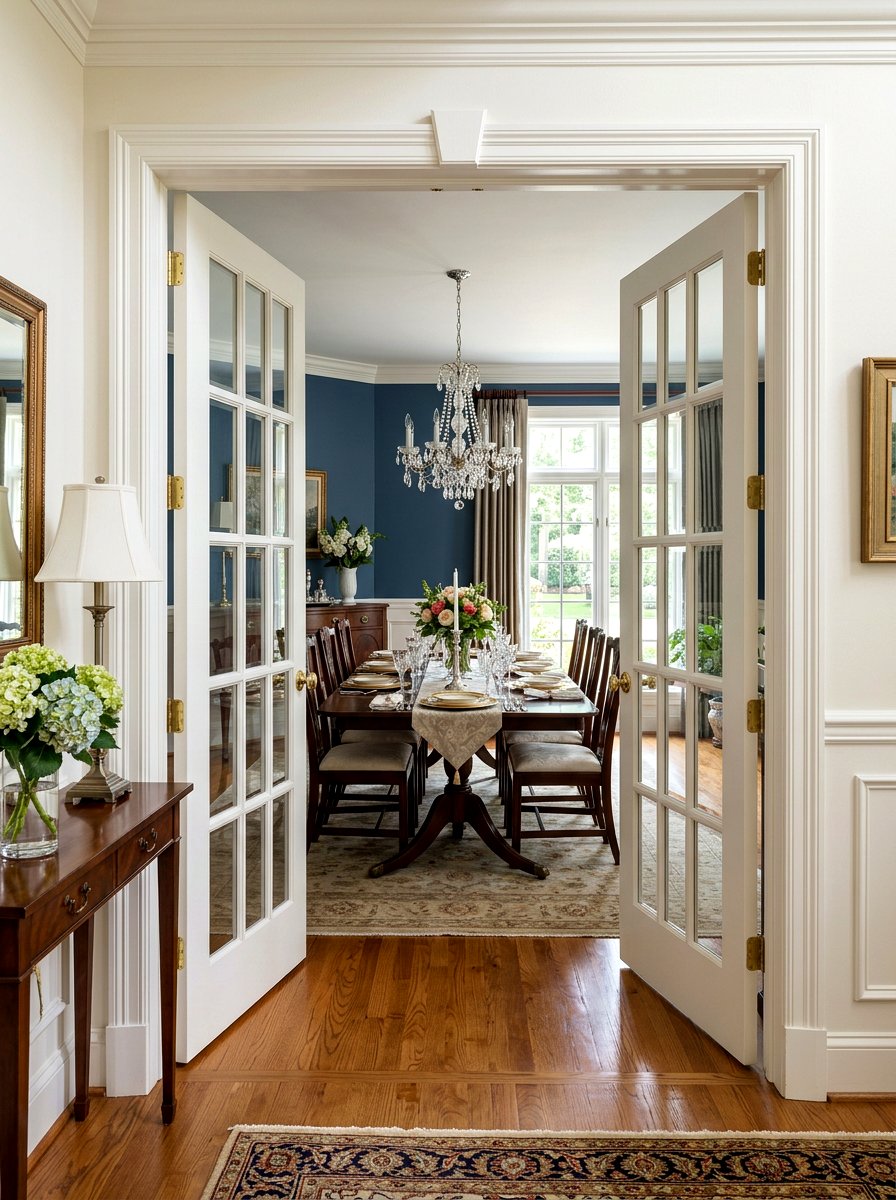
Installing a set of French doors as the entrance to the dining room adds a sense of ceremony and architectural beauty. These glass-paned doors allow light to flow between rooms while providing the option to close off the space for a more private and intimate dining experience. The symmetrical design of French doors aligns perfectly with traditional design principles. They provide a beautiful frame for the view into the dining room, highlighting the table and chandelier from the hallway or living area. This feature elevates the transition into the room, making every arrival feel like a grand entrance into a well-appointed and sophisticated space.
21. Trestle Dining Table
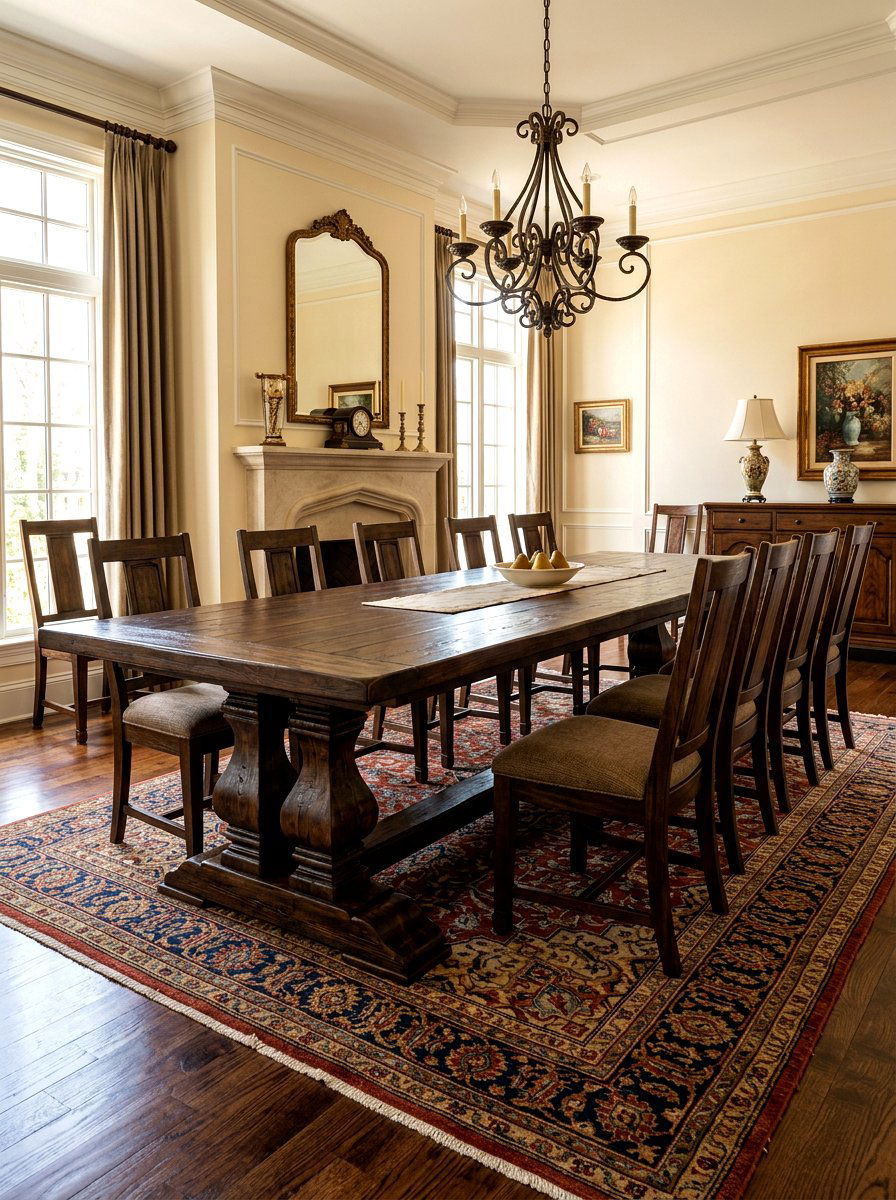
The trestle dining table is a historic design that offers both incredible stability and a sense of rustic elegance. Characterized by two or three sturdy supports connected by a longitudinal beam, this table style has been used in dining halls for centuries. In a traditional home, a polished mahogany or oak trestle table provides a substantial and grounded look. The absence of legs at the corners allows for more flexible seating arrangements, making it easy to accommodate extra guests during large gatherings. This table style feels permanent and historic, bridging the gap between formal sophistication and the warmth of a family-oriented, traditional home environment.
22. Toile Pattern Decor
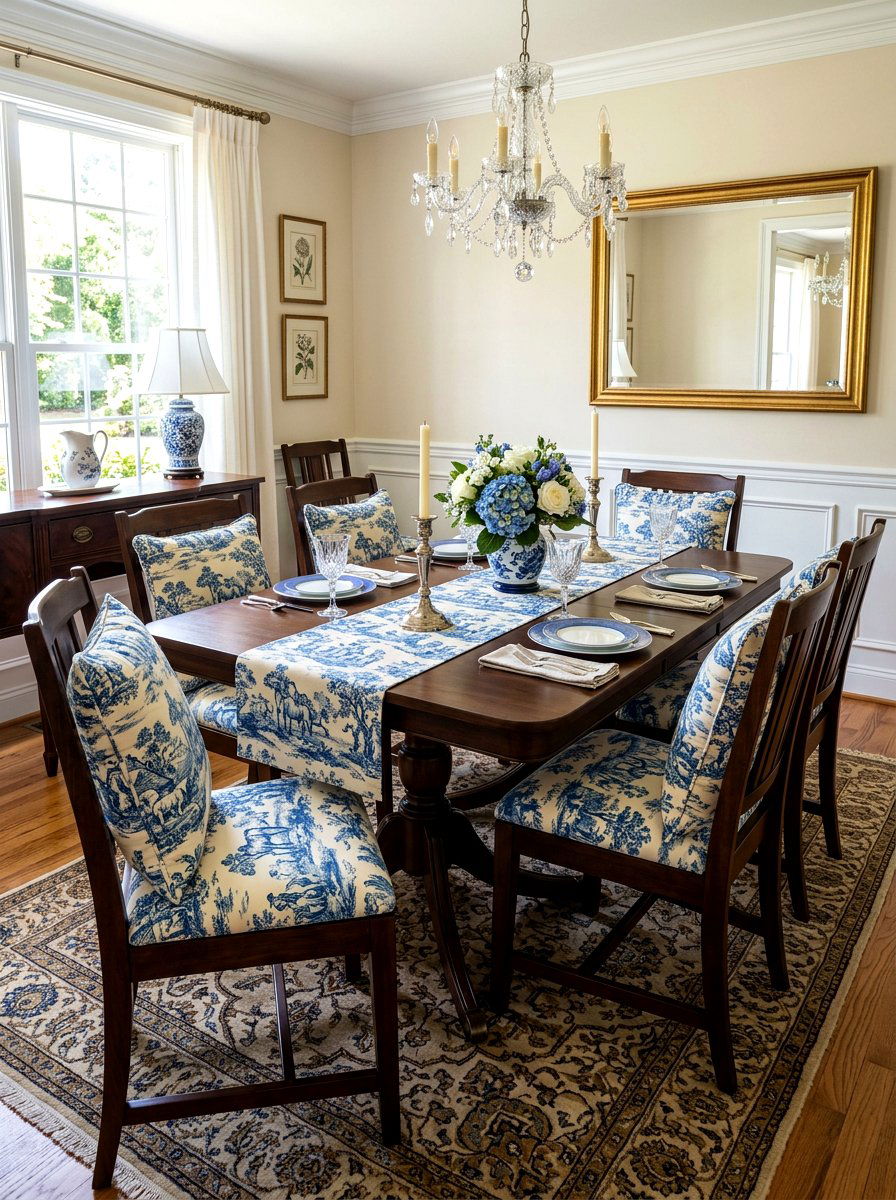
Toile pattern decor brings a charming, narrative quality to the traditional dining room through its classic scenes of pastoral life. This monochromatic print, usually in blue, red, or black on a cream background, can be used for seat cushions, table runners, or even window treatments. The intricate detail of the pattern adds a layer of visual interest that feels sophisticated and historically inspired. Toile works beautifully when paired with solid colors and natural wood tones, preventing the room from feeling too busy. It introduces a touch of French country elegance that softens the formality of the space while maintaining a traditional and curated aesthetic.
23. Built In Bookshelves
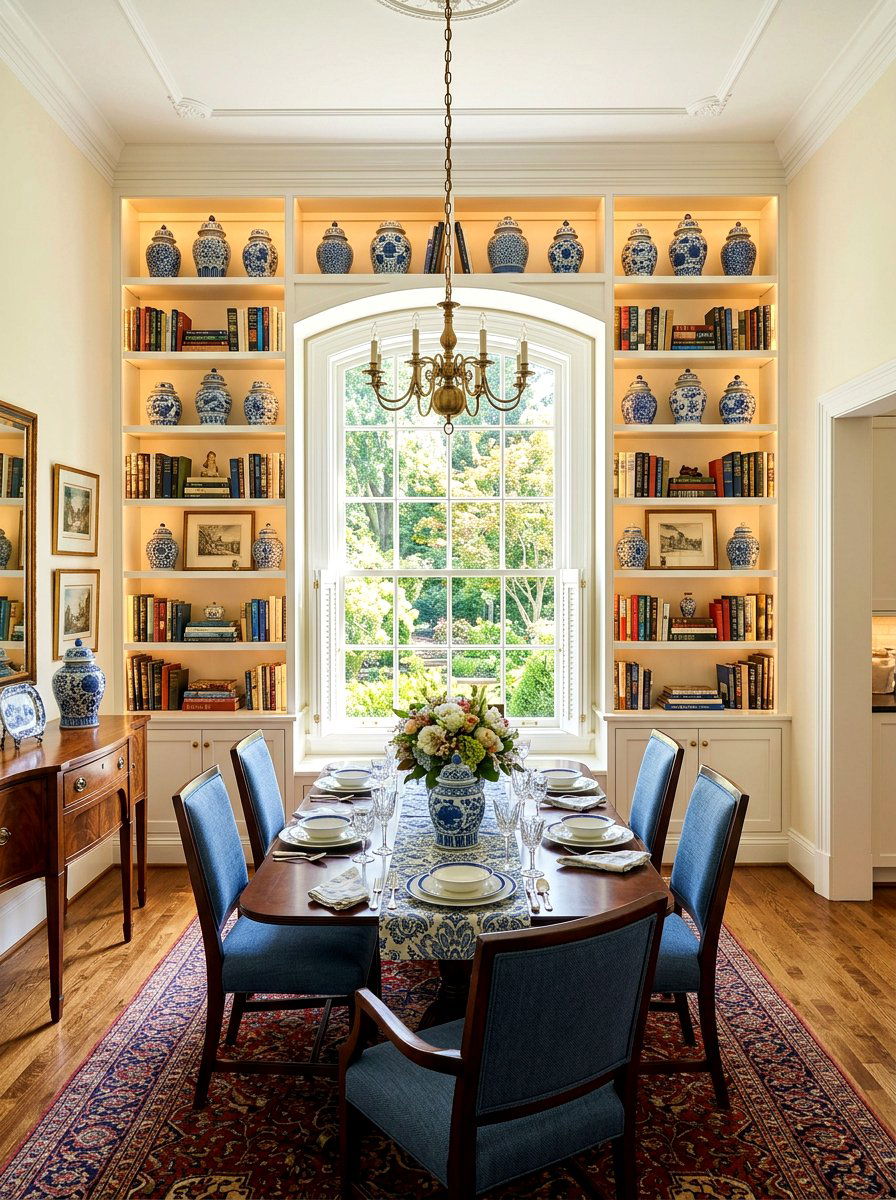
Incorporating built-in bookshelves into a dining room creates a multi-functional space that feels like a private library or a cozy study. This design choice adds a massive amount of architectural character and provides a place to display not just books, but also fine china and collectibles. The vertical lines of the shelving draw the eye upward, making the ceiling feel higher and the room more substantial. When filled with leather-bound books and decorative objects, the shelves add a layer of warmth and intellectual charm. This setup encourages the dining room to be used throughout the day, not just for meals, enhancing its value.
24. Traditional Fireplace Mantel
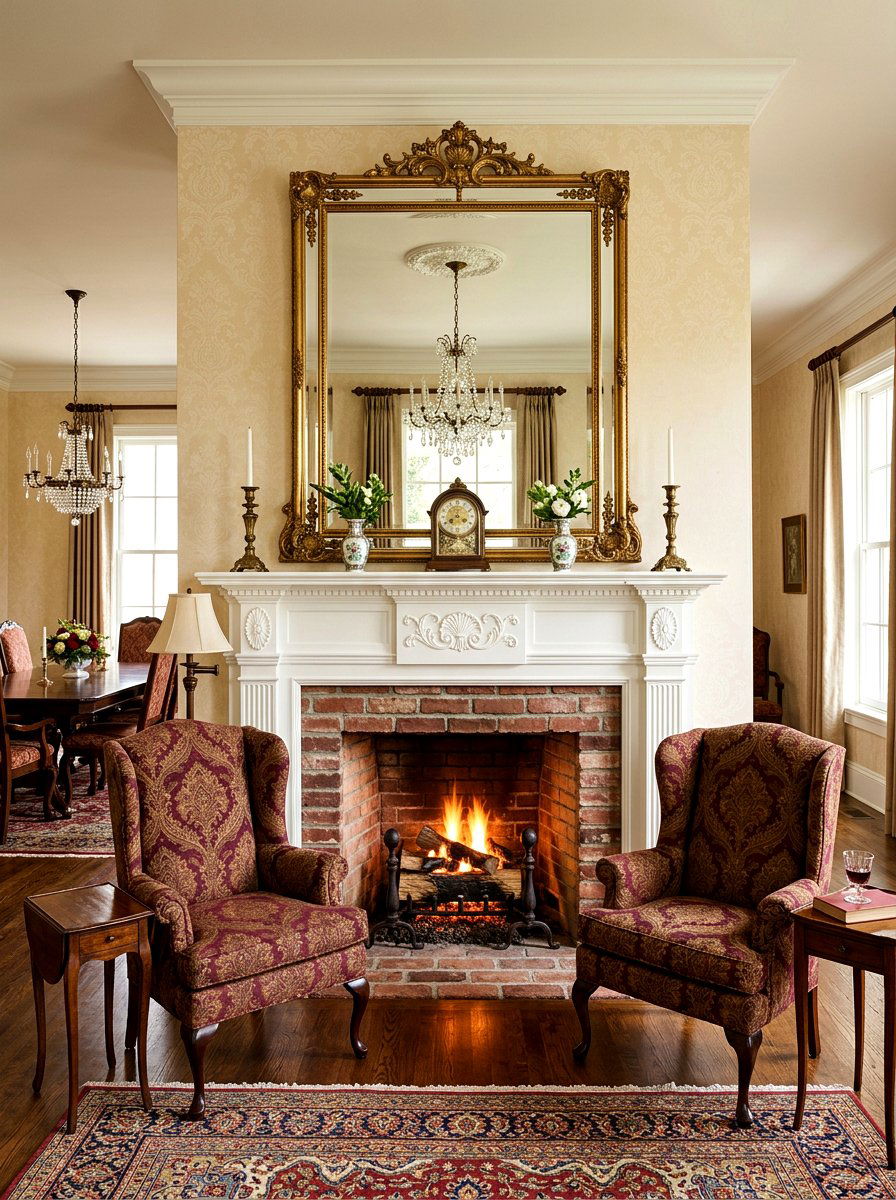
A traditional fireplace mantel serves as a secondary focal point that brings immense warmth and a cozy atmosphere to the dining room. Often crafted from carved wood or marble, the mantel provides a surface for displaying seasonal decor, candles, or a large mirror. A crackling fire during a winter dinner party adds a sensory layer that makes the meal feel truly special and memorable. The symmetry of a fireplace naturally aligns with the layout of a formal dining table. Even when not in use, the architectural presence of the mantel adds a sense of history and structural elegance that defines the room's character and charm.
25. Bay Window Seating
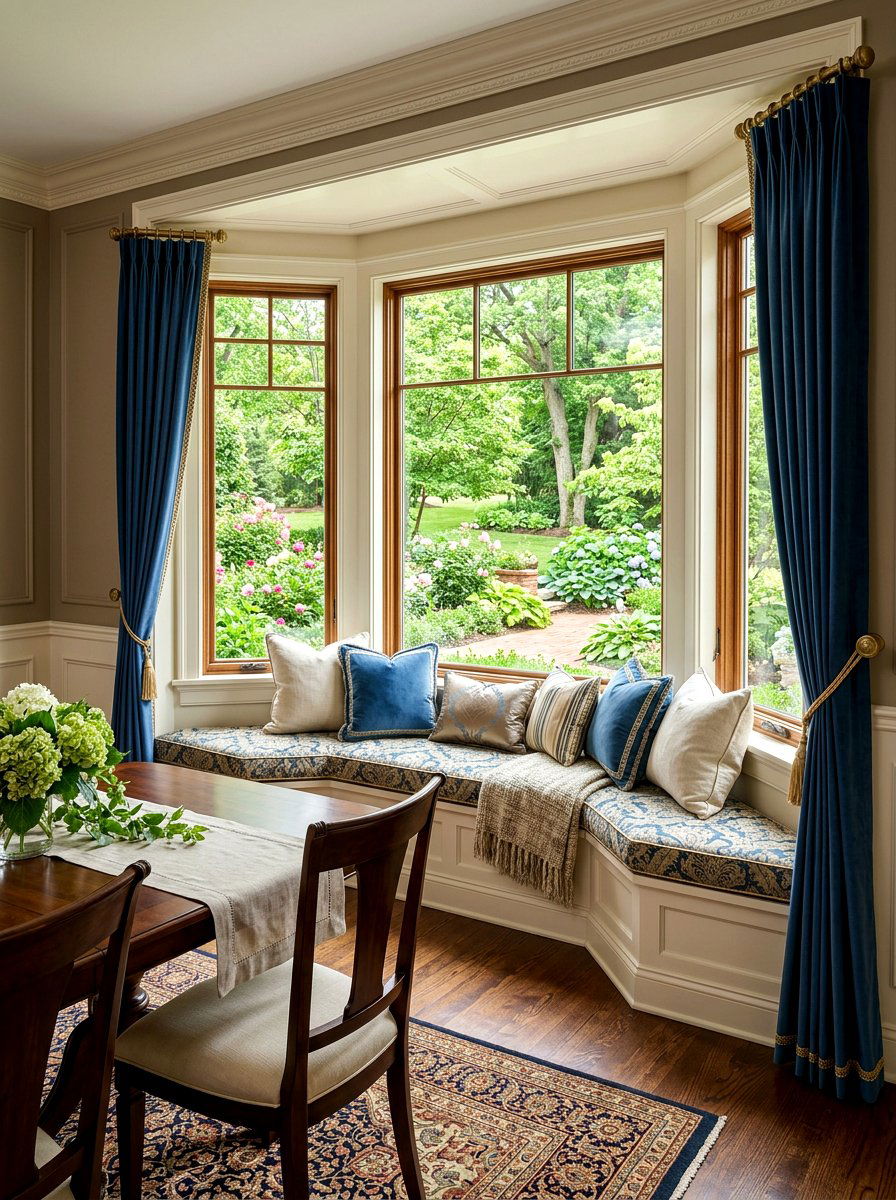
Bay window seating offers a charming and light-filled nook that adds a sense of depth to a traditional dining room. This architectural feature involves a window space projecting outward, often fitted with a custom upholstered bench or a small secondary table. It provides a perfect spot for morning coffee or casual conversation before the main meal begins. In a traditional setting, the bay window is often dressed with elegant roman shades or drapes that match the rest of the room. This design element maximizes natural light and provides a beautiful view of the garden, creating a connection between the interior elegance and the natural world outside.
26. Crown Molding Trim
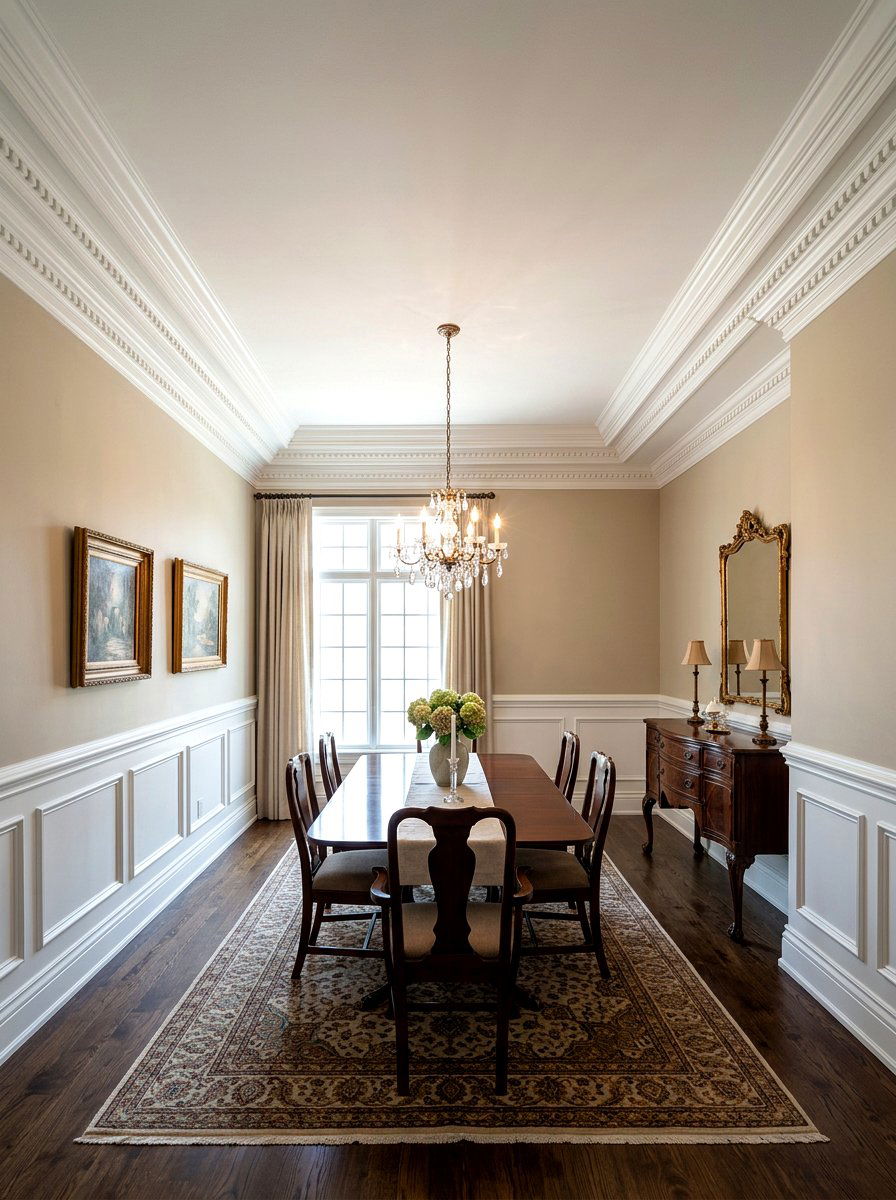
Crown molding is the ultimate finishing touch that bridges the gap between the walls and the ceiling, adding a polished and expensive look. This decorative trim comes in various profiles, from simple and clean to highly ornate and layered. In a traditional dining room, wide crown molding helps to frame the space and adds a sense of architectural completion. When painted the same color as the wainscoting and door frames, it creates a cohesive and structured environment. This detail helps to hide imperfections and gives the room a sense of height and grandeur, ensuring that every corner of the dining area feels intentional.
27. Upholstered Wingback Chairs
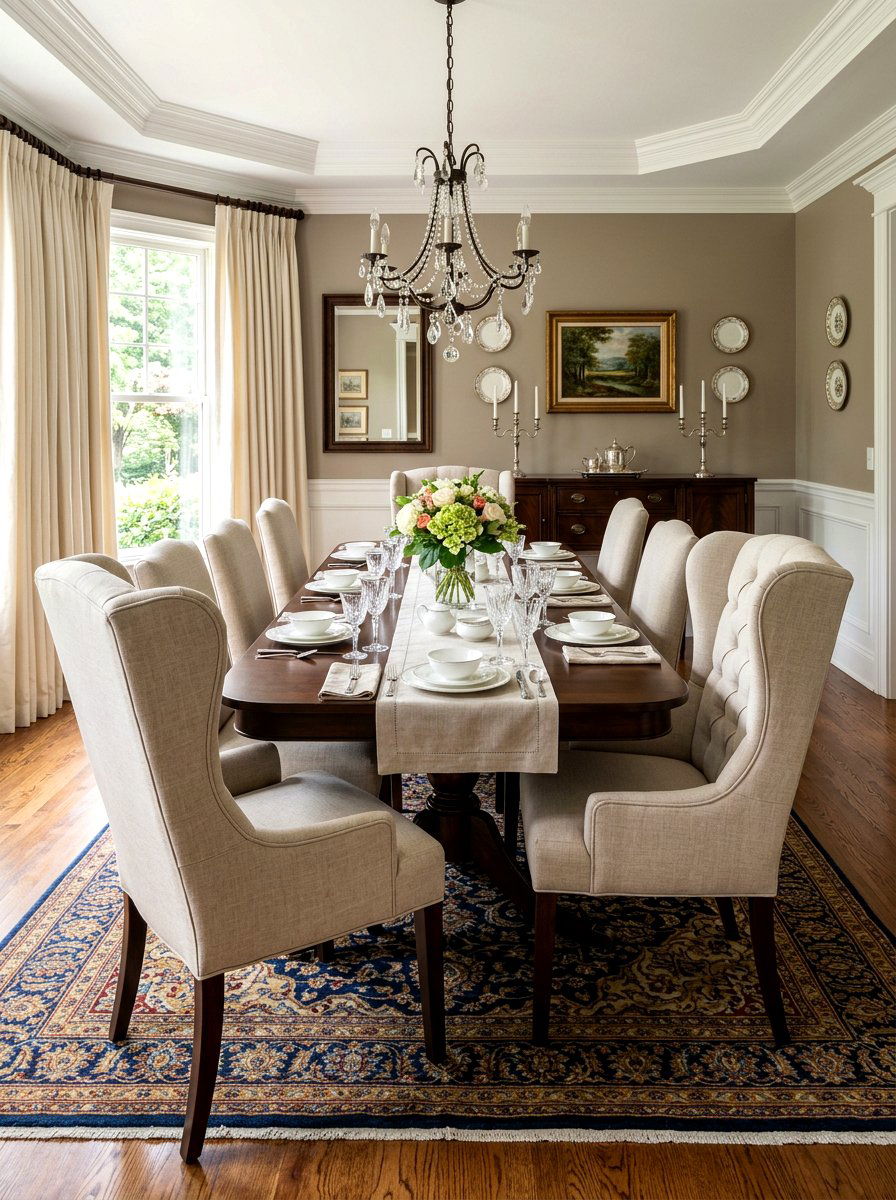
Upholstered wingback chairs placed at the heads of the table add a sense of authority and extra comfort to the dining arrangement. These high-backed chairs with side "wings" were originally designed to trap heat from a fireplace, but today they serve as a symbol of traditional luxury. Using a different fabric for these end chairs, such as a bold damask or a rich leather, helps to break up the monotony of a matching set. The substantial size of wingback chairs makes the table feel more impressive and grounded. They provide a cozy, cocoon-like seating experience that encourages the host to relax and enjoy the evening.
28. Ginger Jar Accessories
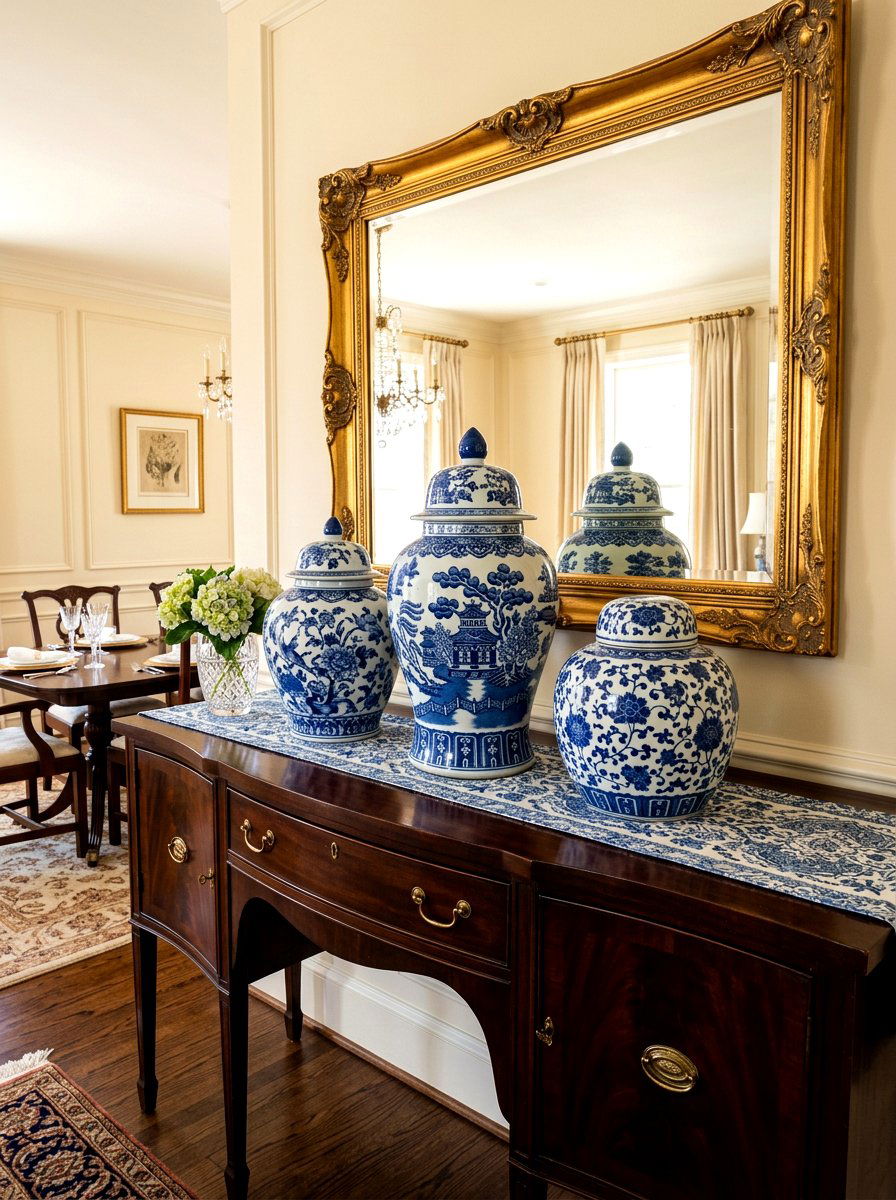
Ginger jars are iconic traditional accessories that bring a sense of global history and vibrant pattern to the dining room. These ceramic jars, often featuring classic blue and white motifs, look stunning when displayed in pairs on a buffet, mantel, or as part of a table centerpiece. Their curved silhouettes provide a soft contrast to the straight lines of the furniture and architectural trim. Ginger jars add a pop of color and a layer of sophisticated styling that feels curated over time. Whether used as vases for fresh flowers or as standalone decorative pieces, they are a simple yet effective way to enhance the traditional aesthetic.
29. Checkered Floor Tiles
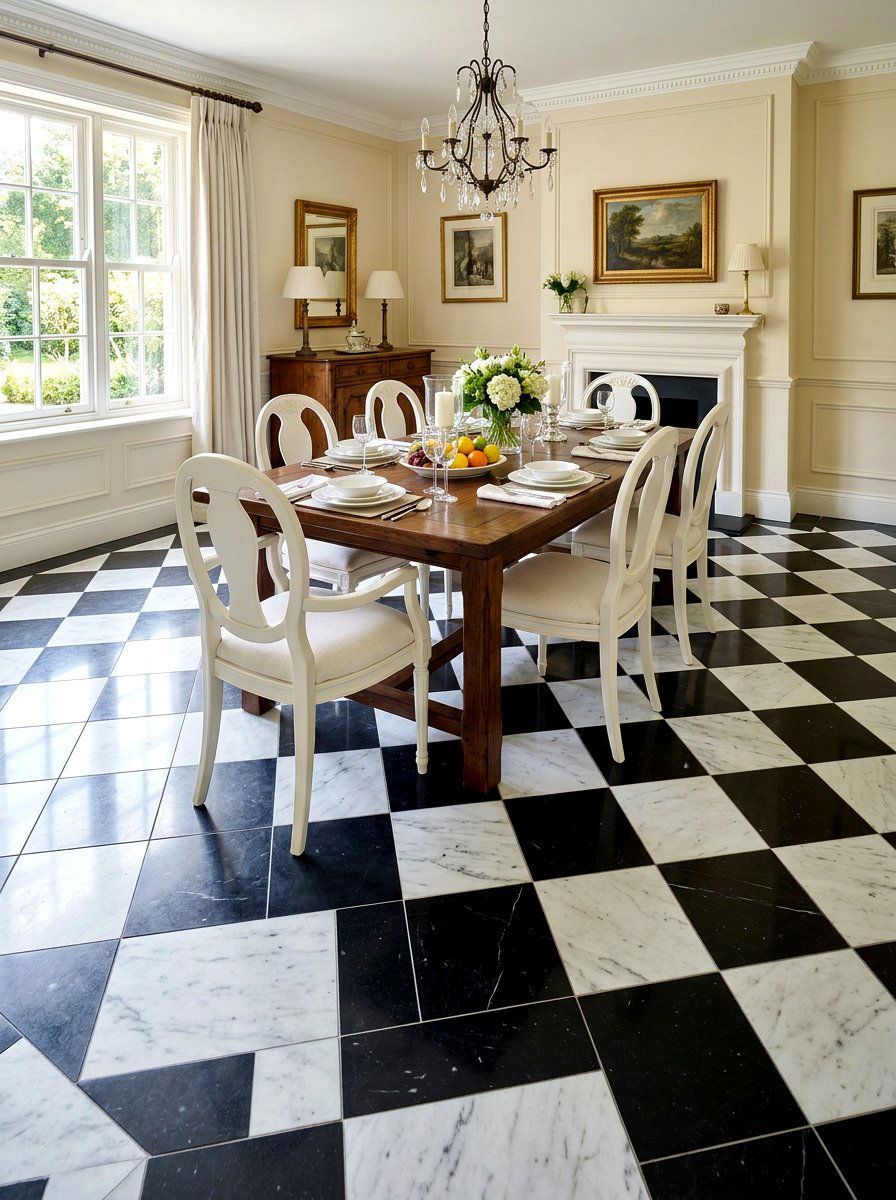
A black and white checkered floor provides a dramatic and classic foundation that instantly elevates the formality of a dining room. This pattern has been a staple in grand estates for centuries and offers a sense of timeless rhythm and order. The high contrast between the tiles creates a clean, graphic look that pairs beautifully with rich wood furniture and colorful rugs. Checkered floors are not only visually striking but also incredibly durable and easy to clean, making them a practical choice for a high-traffic dining area. This design choice makes a bold statement while remaining firmly rooted in traditional interior design principles.
30. Formal Place Settings
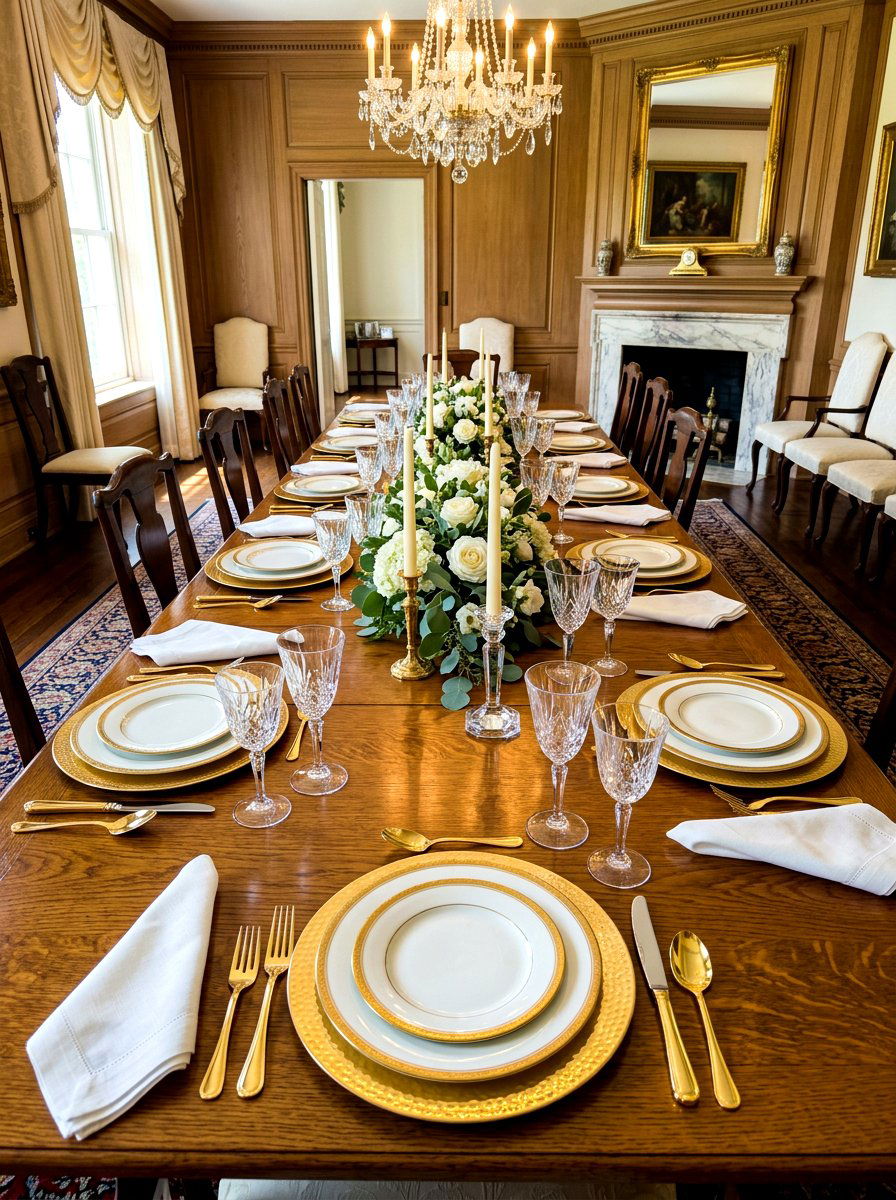
The way you set the table is the final layer of design that brings a traditional dining room to life. Formal place settings involve layering chargers, dinner plates, and bread plates with fine silverware and crystal glassware. Using linen napkins with decorative rings and personalized place cards adds a sense of occasion and care for your guests. A well-set table reflects the light from the chandelier and serves as a beautiful centerpiece in its own right. This attention to detail transforms a simple meal into a sophisticated event, honoring the tradition of hosting and creating a welcoming environment for every person who sits down.
Conclusion:
Traditional dining rooms continue to captivate homeowners because they prioritize quality, symmetry, and a sense of permanence in an ever-changing world. By incorporating elements like rich mahogany furniture, sparkling crystal lighting, and intricate architectural details, you create a space that feels deeply personal yet universally elegant. Whether you choose to go bold with navy walls or keep things classic with neutral tones and floral patterns, the goal is to foster an environment where people feel special and connected. These thirty ideas prove that traditional design is far from boring; instead, it is a rich tapestry of history and craftsmanship that makes every meal a celebration.

Related posts: