Creating a layered traditional living room is an art form that focuses on building depth through a curated mix of textures, historical patterns, and timeless architectural details. This specific design style avoids the coldness of modern minimalism by embracing a rich, lived-in atmosphere that feels both sophisticated and incredibly welcoming. You can achieve this unique look by intentionally stacking different elements, such as placing a vintage rug over a natural fiber base or mixing various fabrics like silk and velvet across your seating. Every corner of a well-layered room should tell a story through carefully selected accents that stand the test of time while providing a sense of comfort.
1. Traditional Living Room Rug Layering
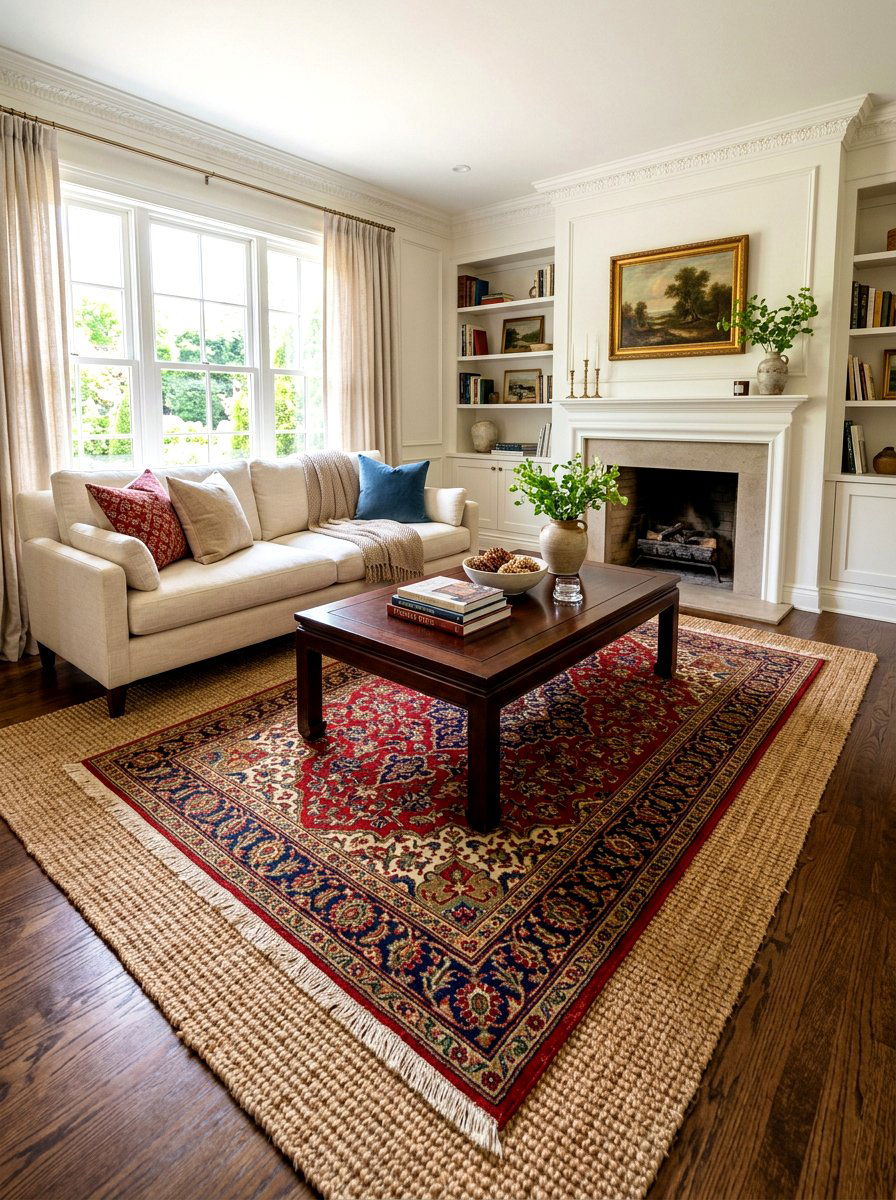
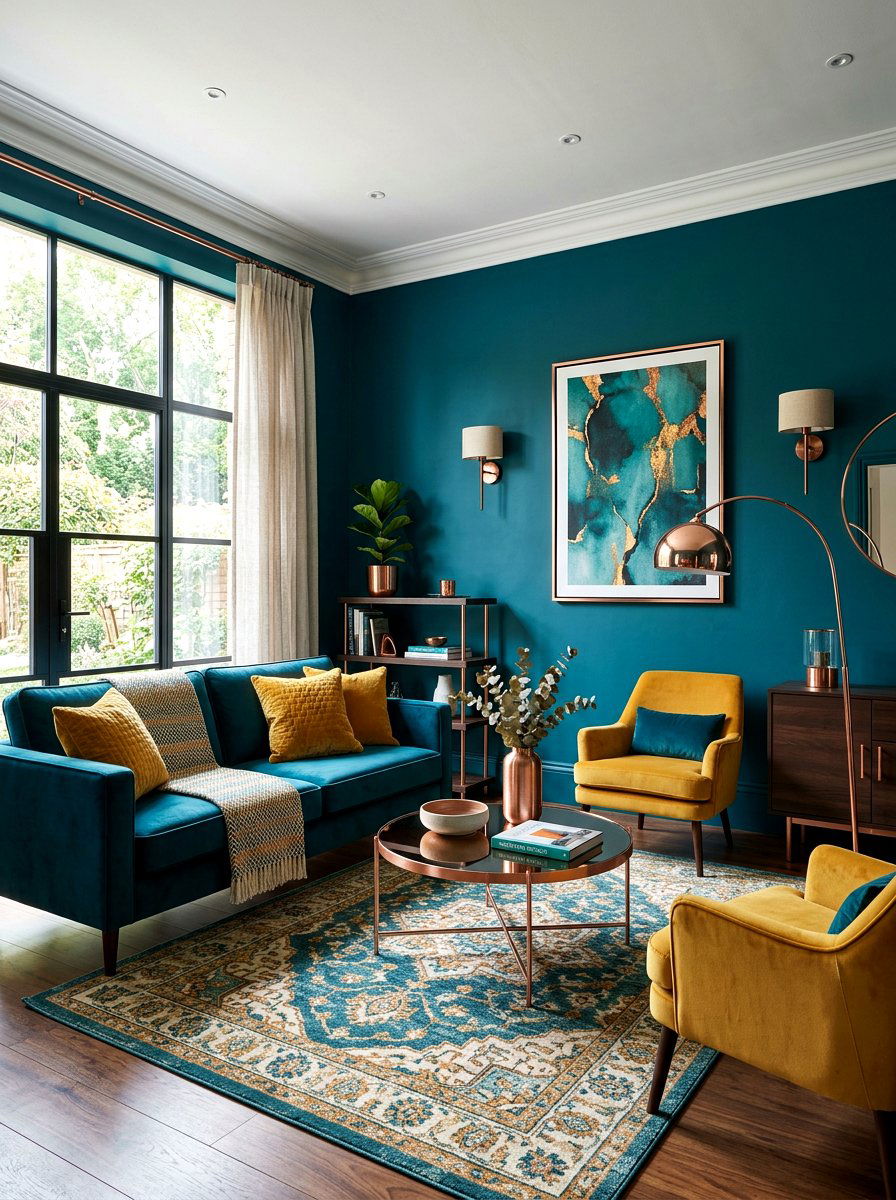
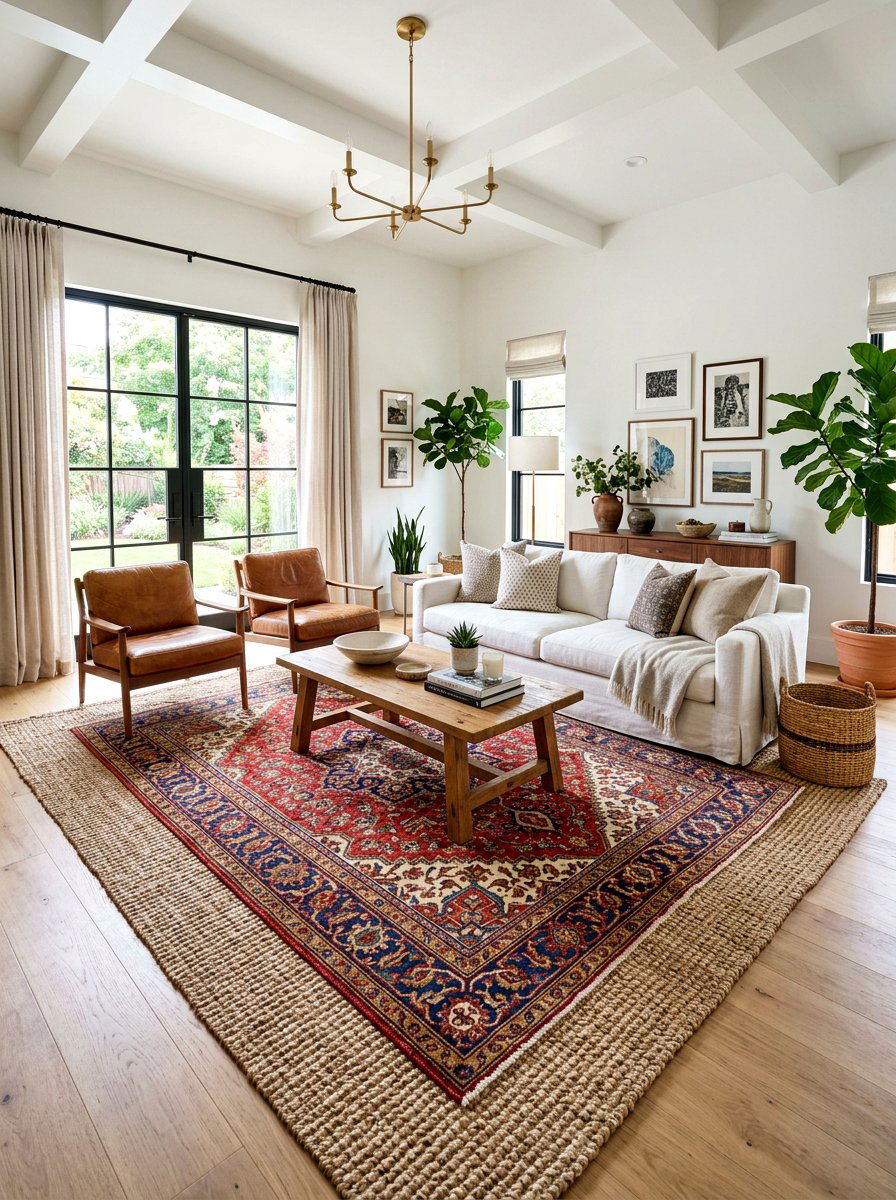
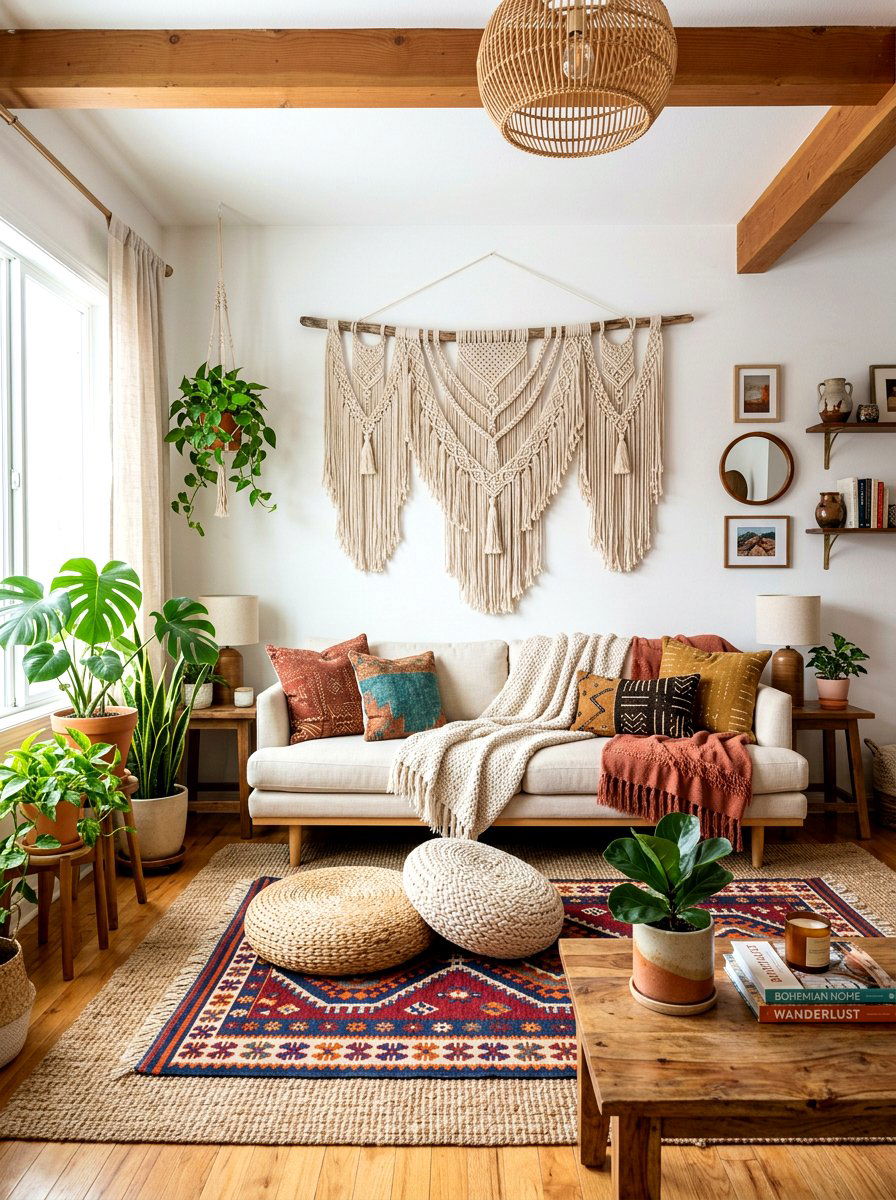
Start your design from the ground up by using a large, neutral jute or sisal rug to cover the majority of the floor area. This natural foundation provides an organic texture that grounds the entire room and adds a subtle rustic touch. On top of this base, place a smaller, colorful Persian or Oriental rug to anchor the main seating group. This second layer introduces intricate patterns and rich jewel tones that draw the eye toward the center of the space. The contrast between the rough natural fibers and the soft wool of the patterned rug creates an immediate sense of depth. This simple technique makes the room feel more intentional and professionally styled.
2. Classic Living Room Molding Details
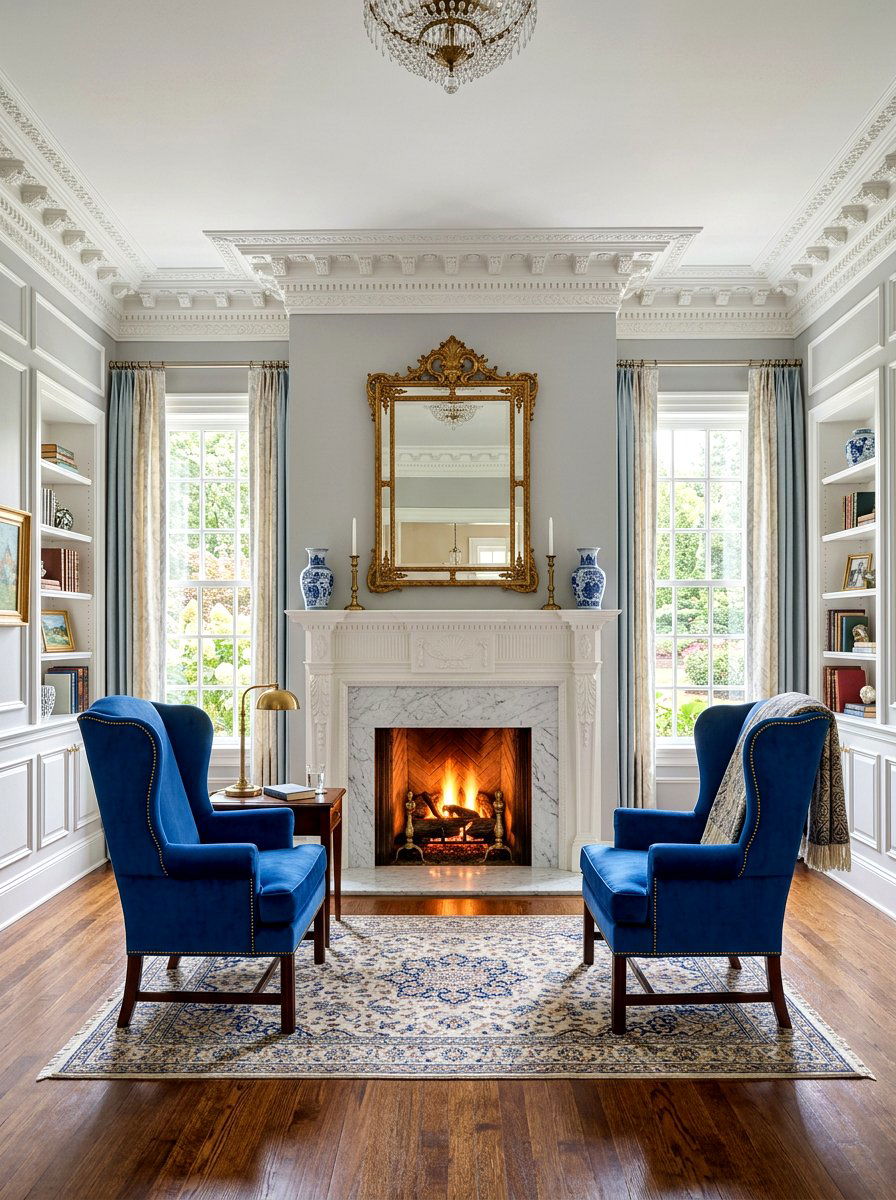
Enhance the architectural character of your space by installing classic crown molding and decorative wall panels. These structural elements provide a permanent layer of sophistication that defines the boundaries of the room. When you add detailed trim around the ceiling and windows, it creates a sense of history and permanence that is essential for a traditional aesthetic. You can paint the molding in a slightly different sheen than the walls to make the details pop under soft lighting. This layering of architectural features adds visual weight and ensures the room feels high-end even before you bring in any furniture. It serves as the perfect backdrop for your curated antique collection.
3. Traditional Living Room Gallery Wall
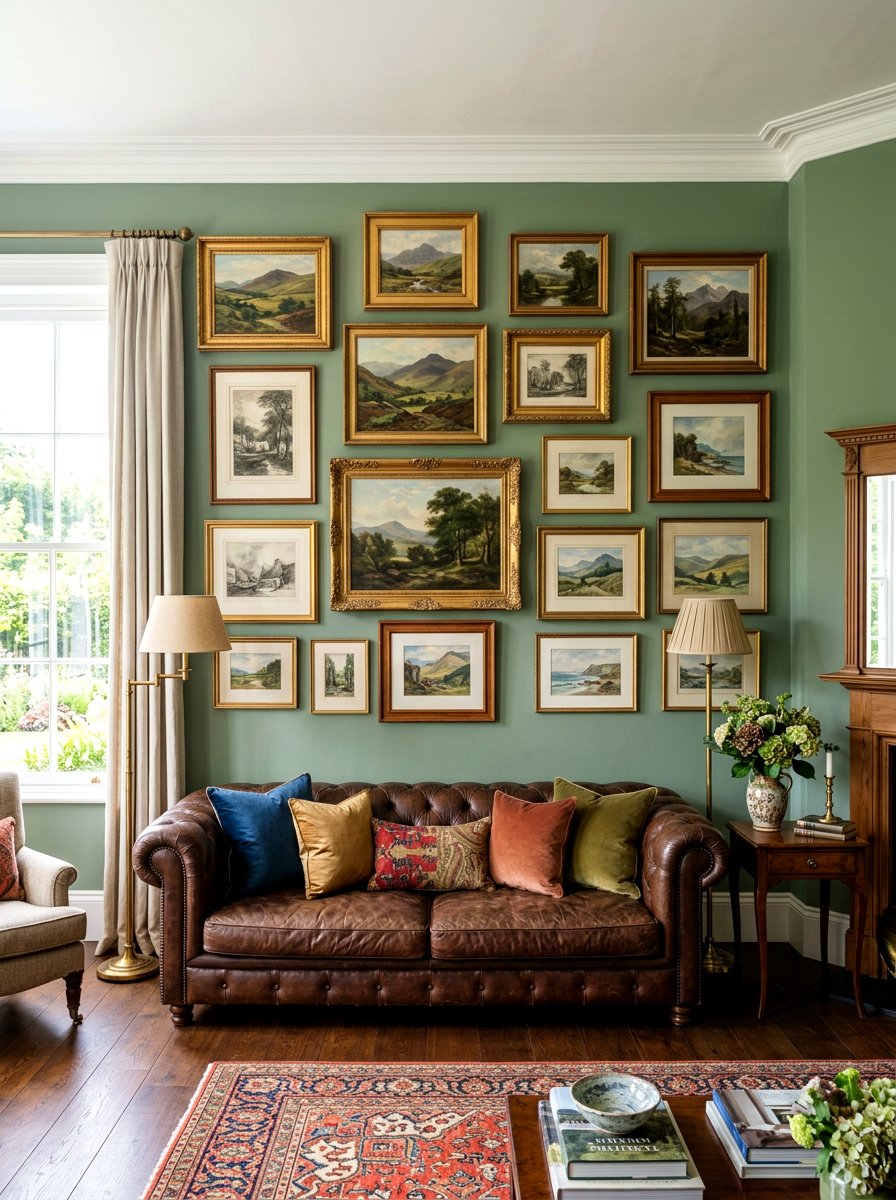
Create a meaningful focal point by arranging a diverse gallery wall that features a mix of framed oil paintings, vintage sketches, and personal photographs. Instead of using matching frames, try selecting various gold-leafed, dark wood, and silver frames to give the collection a more gathered-over-time appearance. You can further layer this display by using fabric mats instead of standard paper ones to introduce extra texture. Arrange the pieces in a slightly asymmetrical but balanced layout to keep the eye moving across the wall. This personal touch adds a layer of soul and history to the living room, making the entire space feel more intimate and deeply connected to your life.
4. Blue And White Traditional Living Room
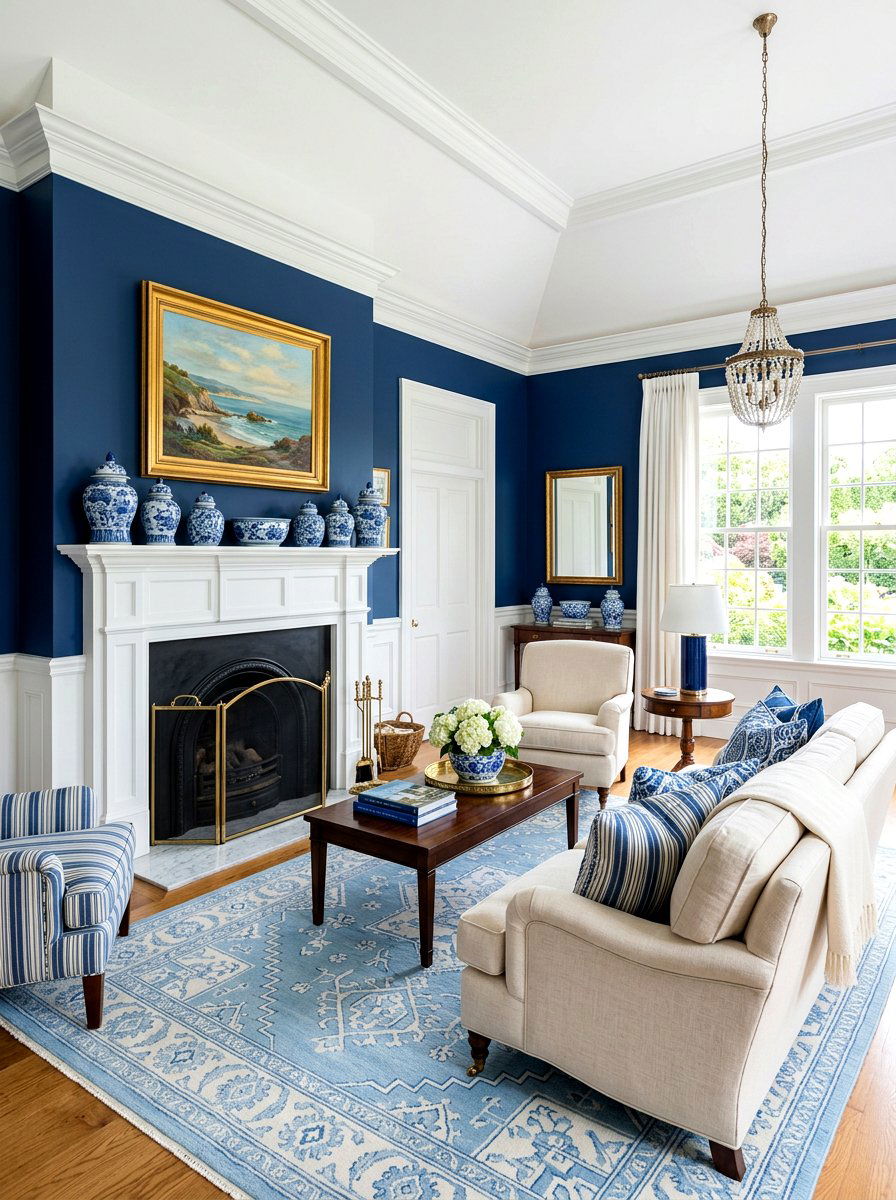
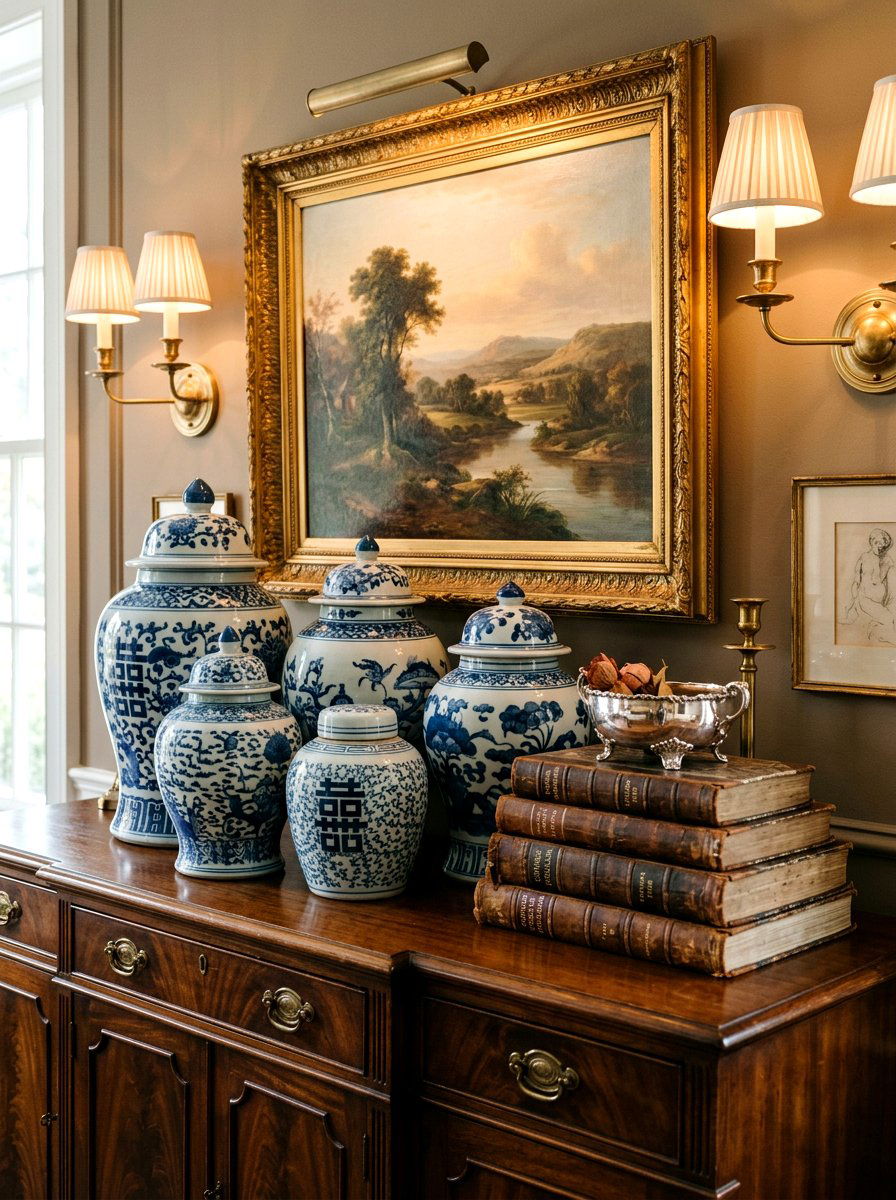
A timeless blue and white color palette offers a crisp yet classic foundation for a layered traditional space. You can start with soft cream walls and then layer in various shades of navy, indigo, and sky blue through your textiles and decorative accessories. Incorporate classic ginger jars on the mantel or bookshelves to add a touch of Chinoiserie elegance. Mixing different blue patterns, such as a large-scale floral print with a smaller geometric stripe, helps the room feel dynamic rather than flat. This color combination is incredibly versatile and works well with both dark mahogany furniture and lighter oak pieces. It creates a serene and sophisticated atmosphere that never goes out of style.
5. Traditional Living Room Built In Shelves
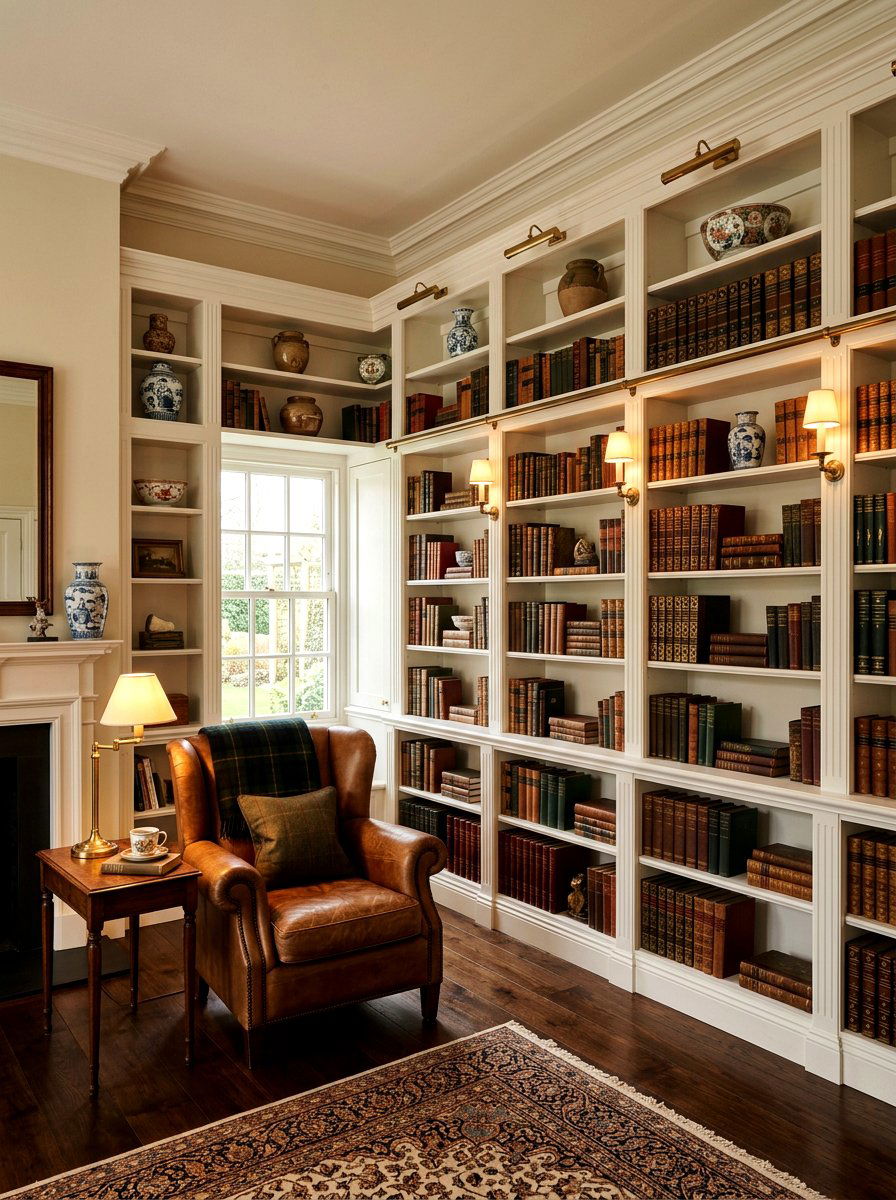
Custom built-in bookshelves offer a fantastic opportunity to layer both functional storage and decorative elements into your living room. Instead of just filling the shelves with books, try mixing in framed artwork, ceramic vases, and small sculptural pieces to create visual interest. You can even paint the back of the bookshelves a contrasting color or line them with a subtle grasscloth wallpaper to add an extra layer of texture. Arranging some books horizontally and others vertically creates a more relaxed and curated look. These built-ins anchor the room and provide a sense of structure while allowing you to showcase the items that reflect your personal design style.
6. Velvet Sofa Traditional Living Room
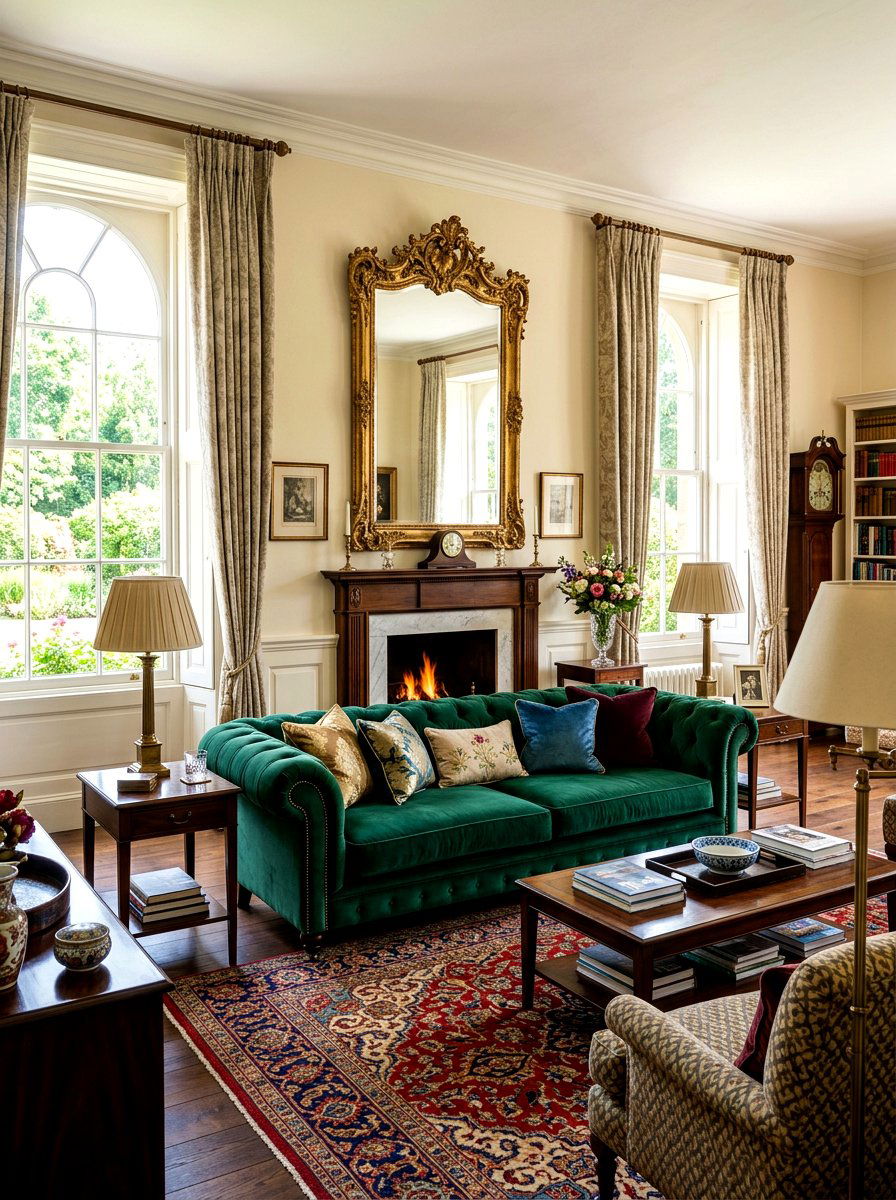
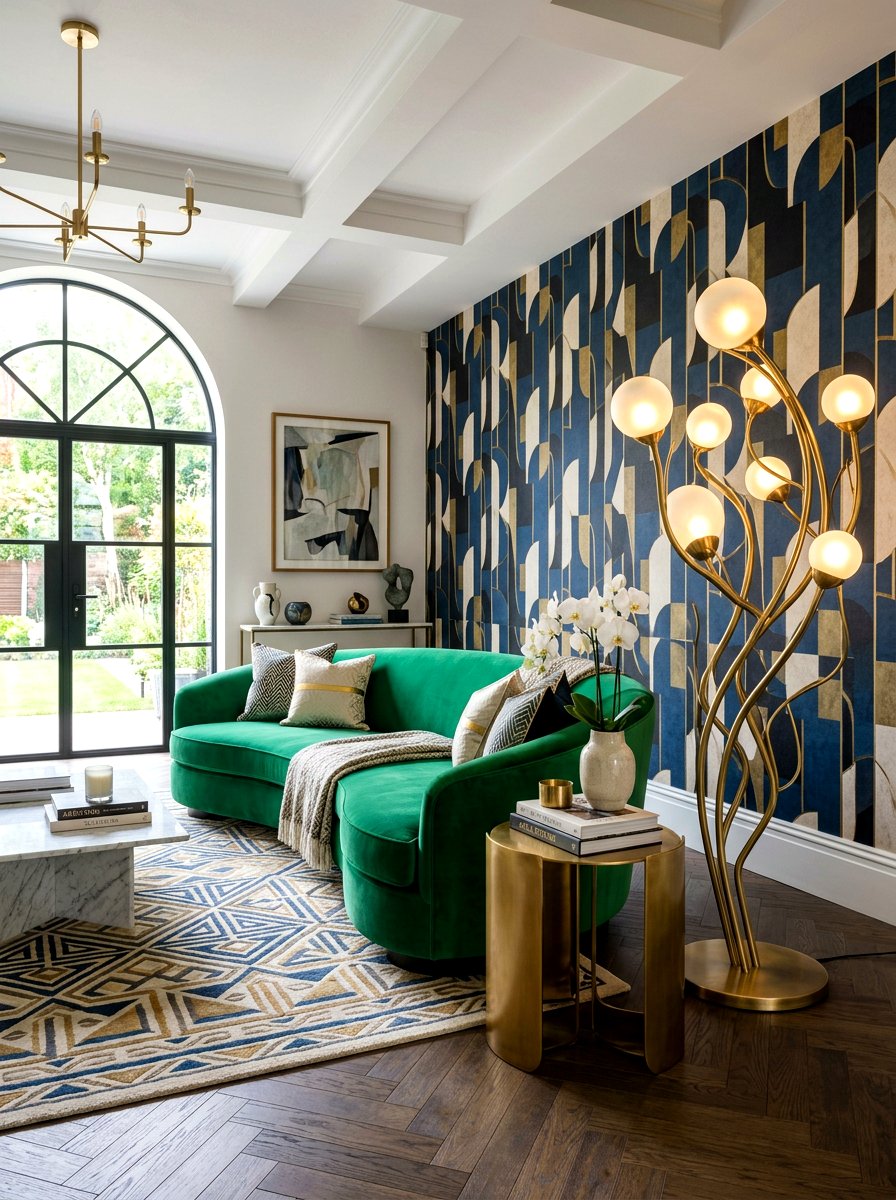
Introduce a sense of luxury and tactile comfort by choosing a classic velvet sofa as the centerpiece of your living area. The deep texture of velvet catches the light beautifully and adds a layer of richness that flat fabrics simply cannot match. A deep emerald green or a warm navy blue velvet sofa provides a stunning focal point that feels both regal and inviting. To layer the look further, add several throw pillows in contrasting materials like linen or silk. This mix of fabrics prevents the sofa from feeling too heavy and adds to the overall sensory experience of the room. It is a perfect way to balance comfort with high-end traditional style.
7. Traditional Living Room Window Treatments
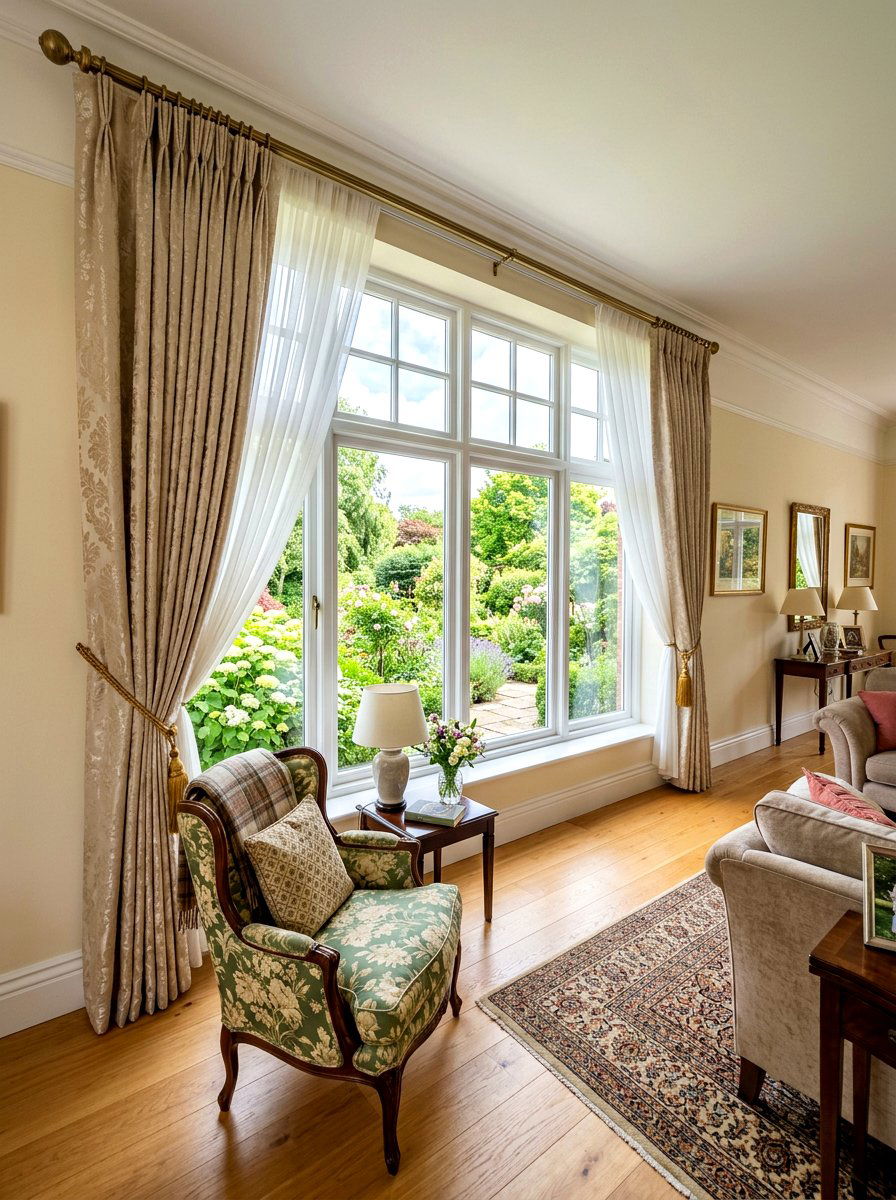
Layering your window treatments is a hallmark of traditional design that adds both function and elegance to the space. Start with a light-filtering sheer curtain to provide privacy while still allowing natural light to brighten the room. Over the sheers, install heavy floor-to-length drapes in a rich fabric like damask or thick linen. Using a decorative curtain rod with ornate finials adds another subtle layer of detail to the window area. This combination not only helps with insulation but also softens the hard lines of the windows and walls. The result is a more polished and finished look that frames the views of your garden or street perfectly.
8. Antique Furniture Traditional Living Room
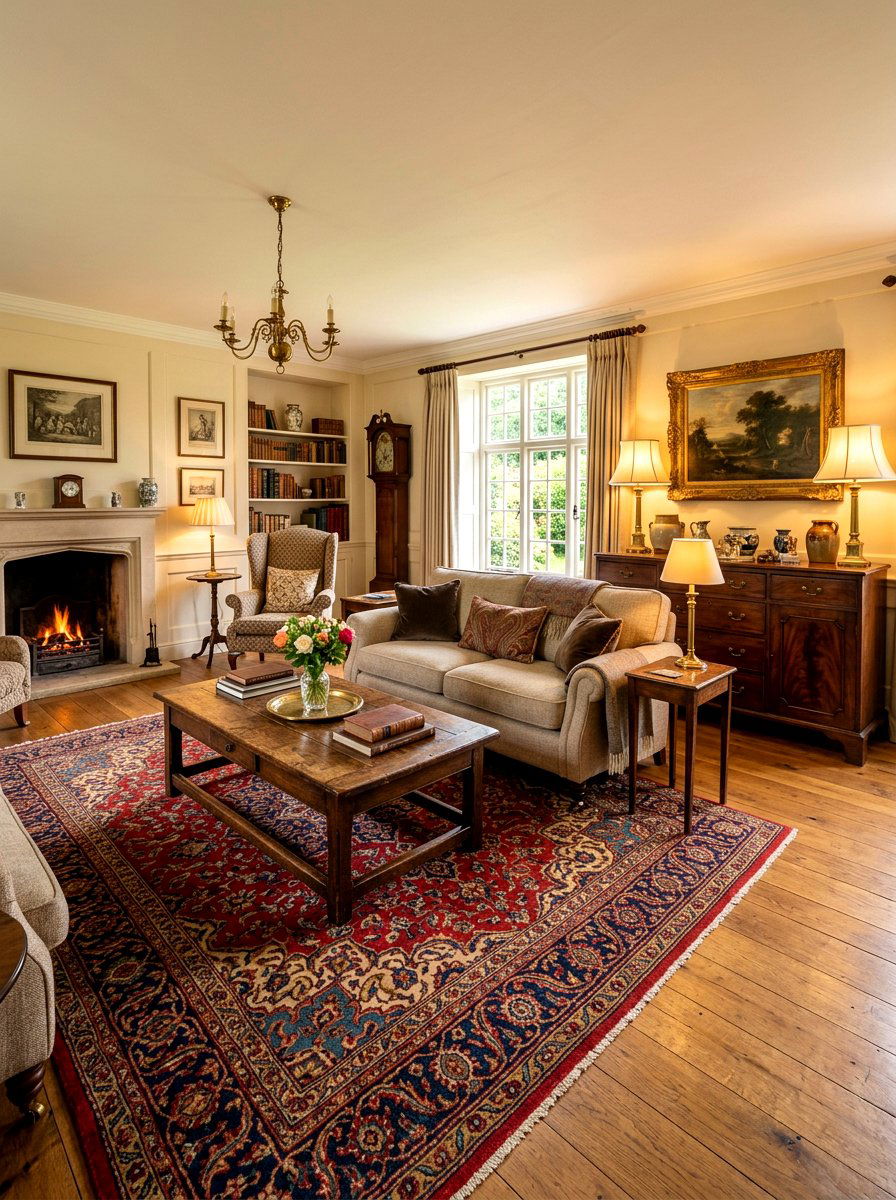
Incorporate a few pieces of antique furniture to give your living room a sense of history and character. A dark wood mahogany sideboard or an old oak coffee table can serve as a beautiful anchor for the rest of the room. These older pieces often feature unique craftsmanship and wood grains that modern furniture lacks. You can layer these antiques with more contemporary pieces to keep the room from feeling like a museum. Placing a stack of modern art books on a vintage chest or a sleek lamp on a traditional side table creates a wonderful contrast. This blend of eras makes the room feel authentic and thoughtfully curated over many years.
9. Traditional Living Room Fireplace Decor
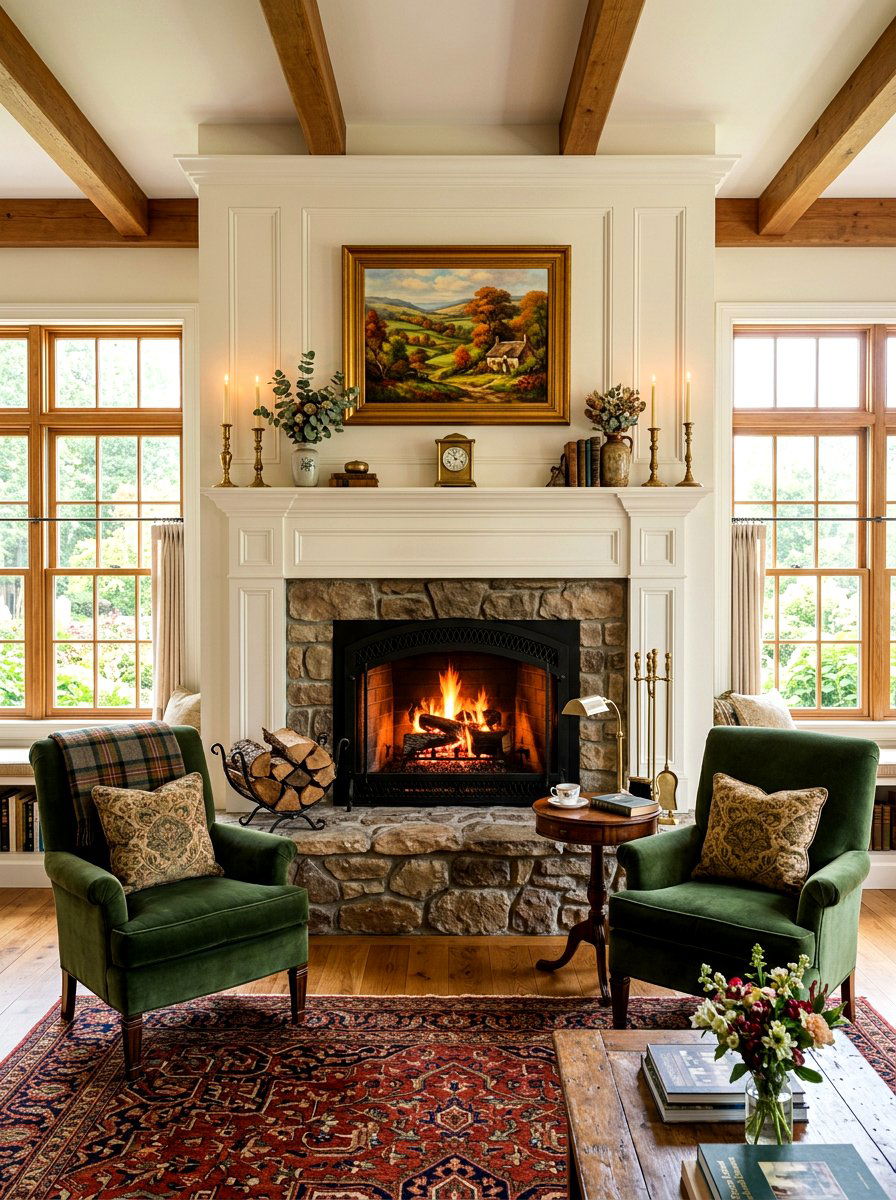
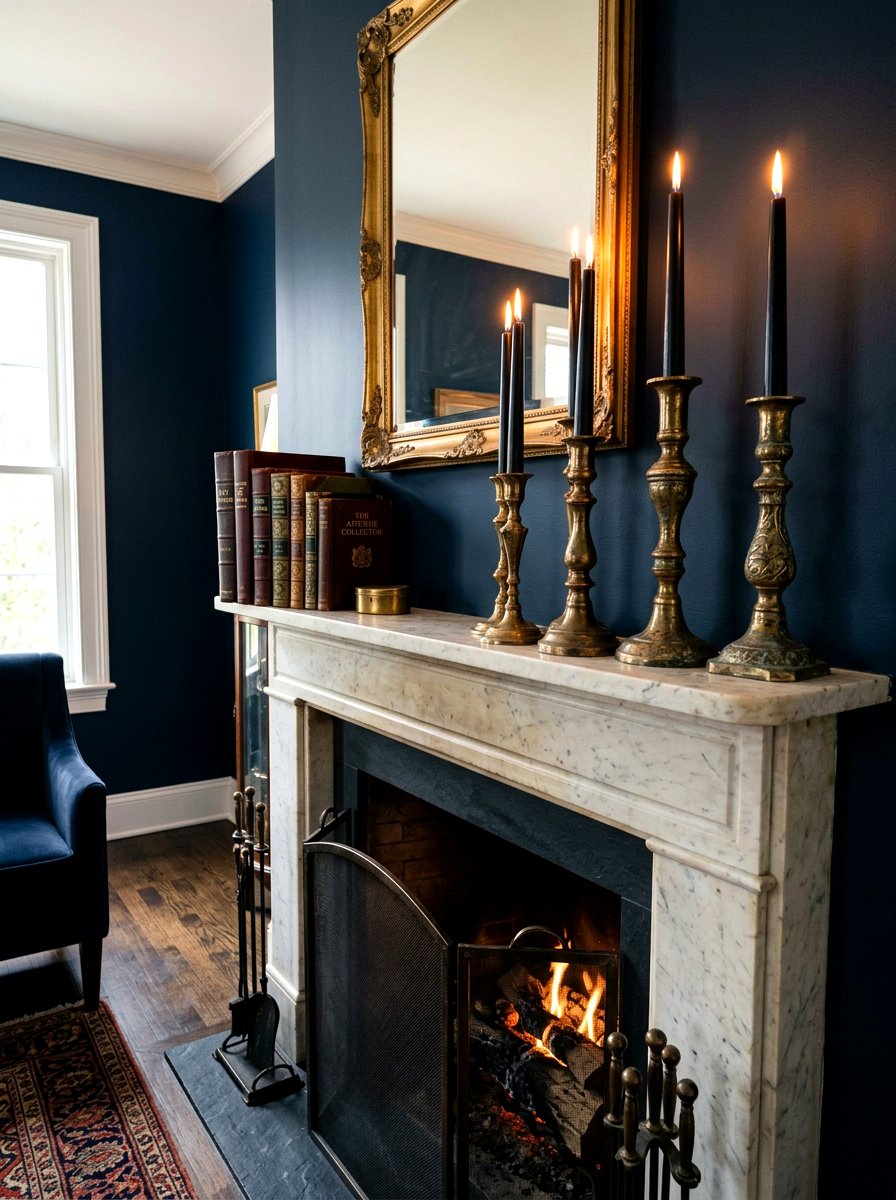
The fireplace is often the heart of a traditional living room and provides a perfect stage for layering decor. Start by leaning a large, ornate mirror or a piece of landscape art against the wall above the mantel. Then, add smaller items like brass candlesticks, a vintage clock, or small potted plants at varying heights. This creates a tiered look that draws the eye upward and emphasizes the height of the room. During the colder months, you can layer a basket of birch logs next to the hearth to add a rustic, cozy texture. A well-decorated fireplace anchors the seating arrangement and makes the entire room feel much more grounded.
10. Floral Pattern Traditional Living Room
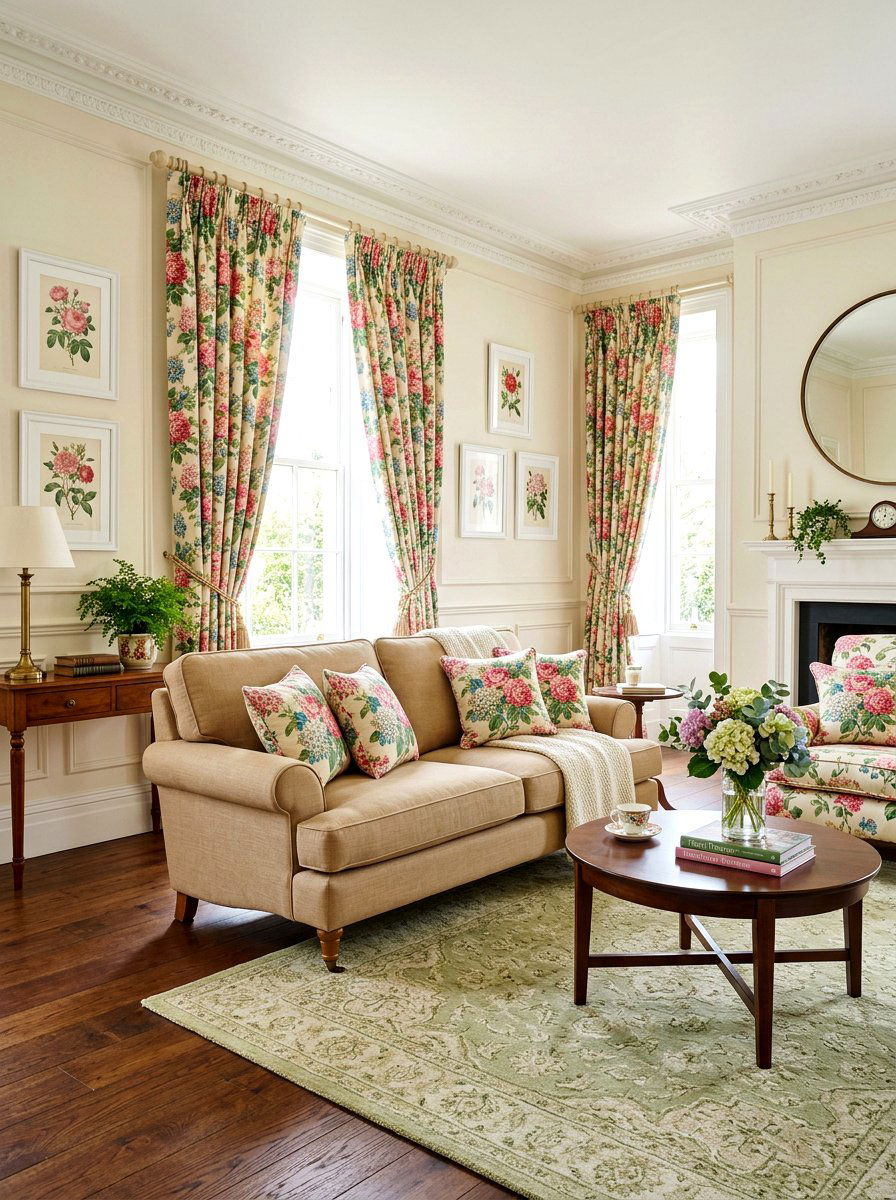
Embrace the charm of traditional style by incorporating various floral patterns throughout your living space. You can use a large-scale botanical print for your main drapery and then layer in smaller floral patterns on throw pillows or an upholstered accent chair. The key to making this work is to keep the color palette consistent so the patterns complement each other rather than clash. Mixing florals with solid colors or subtle stripes helps to ground the room and prevents it from feeling overwhelmed by prints. This approach adds a natural, garden-inspired layer that brings a sense of freshness and timeless beauty to the interior design, making it feel very cozy.
11. Traditional Living Room Brass Accents
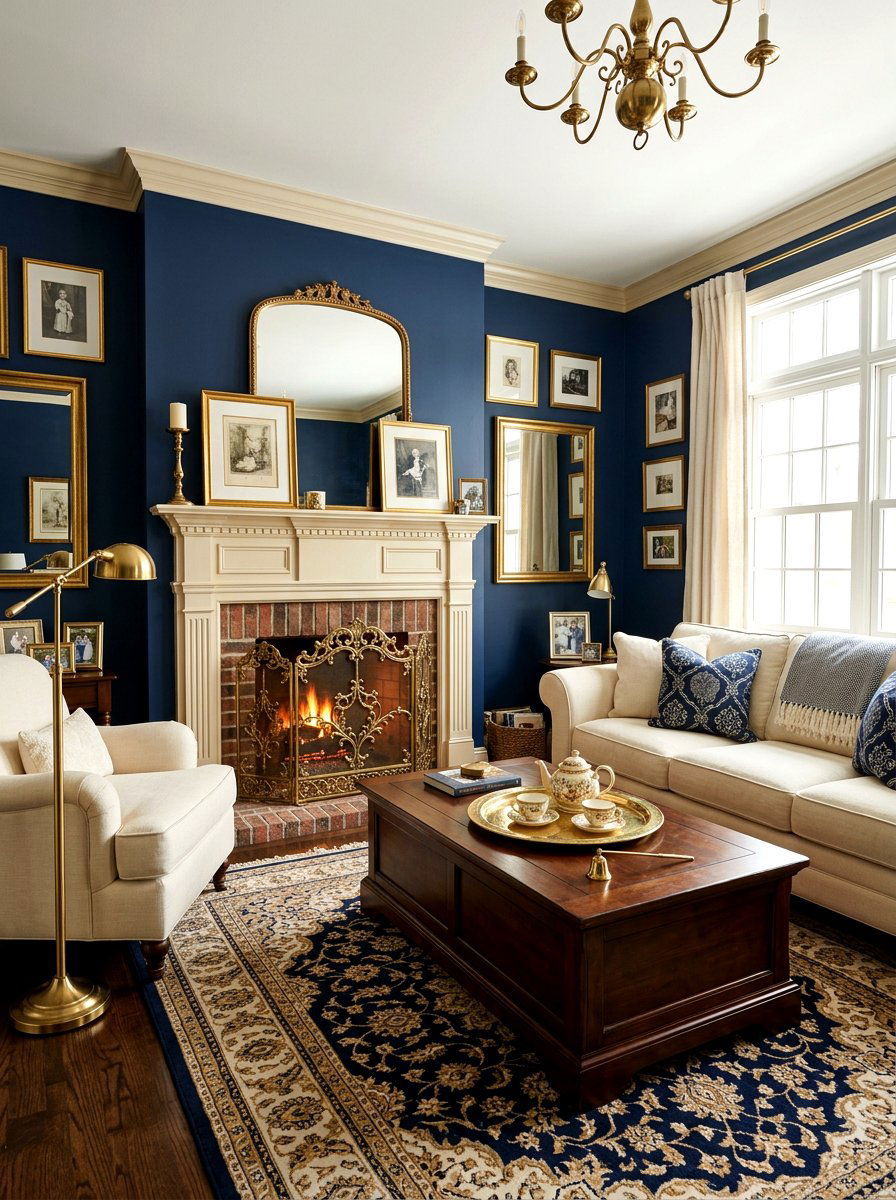
Warm metallic finishes like unlacquered brass add a layer of glow and sophistication to a traditional living room. You can incorporate brass through your picture frames, fireplace tools, and small decorative bowls placed on coffee tables. Brass floor lamps or wall sconces provide a classic lighting option that develops a beautiful patina over time. These metallic touches reflect light around the room, making the space feel brighter and more dynamic. Pairing brass with dark wood furniture creates a high-contrast look that feels very refined. It is a simple way to add a touch of glamour without being too flashy, ensuring the room remains elegant and grounded in tradition.
12. Symmetrical Traditional Living Room Layout
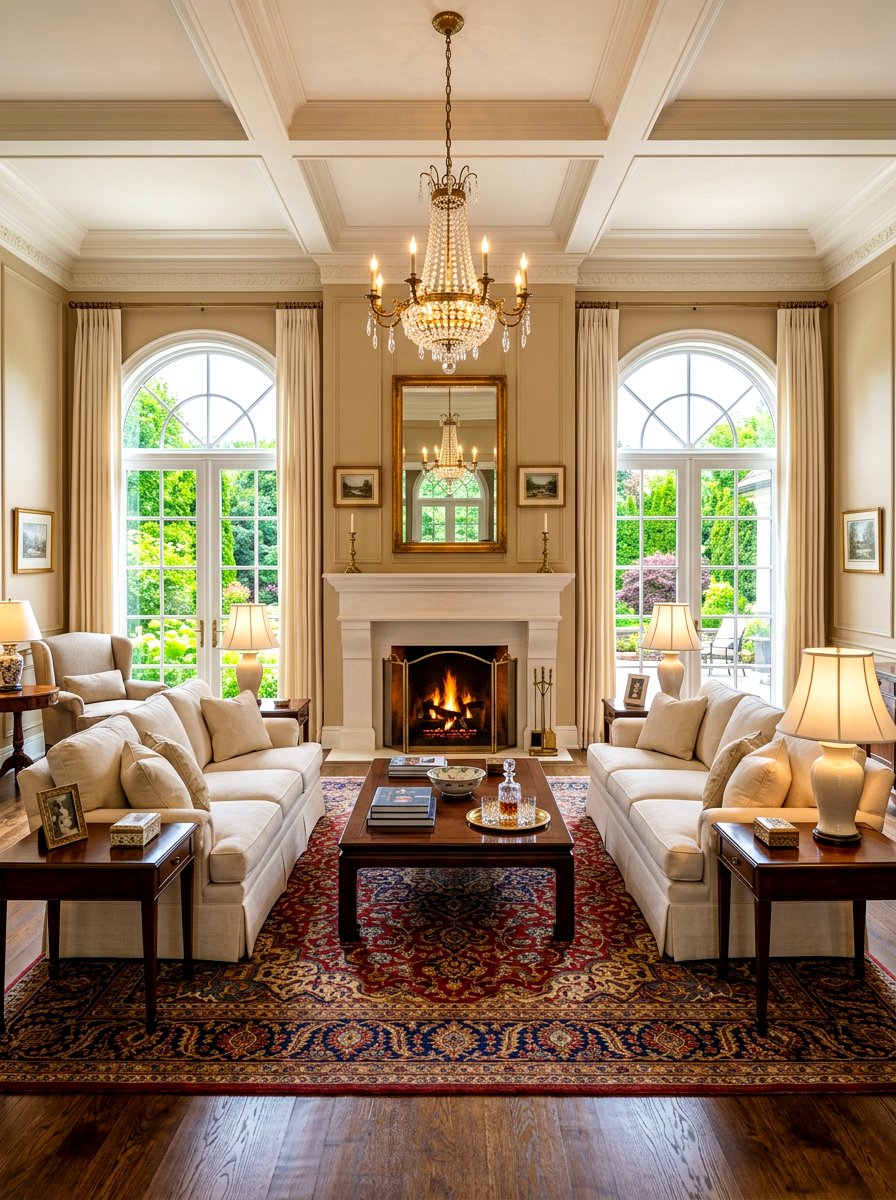
Symmetry is a foundational principle of traditional design that creates a sense of order and formal elegance. You can achieve this by placing two identical sofas facing each other or by flanking a fireplace with matching armchairs. Using pairs of lamps, side tables, and artwork further reinforces this balanced look. This structured layout makes the room feel more spacious and organized, providing a clear path for conversation. While the layout is formal, you can layer in softer elements like plush rugs and throw blankets to keep the space feeling comfortable. A symmetrical arrangement is naturally pleasing to the eye and provides a solid foundation for more eclectic decorative layers.
13. Traditional Living Room Coffered Ceiling
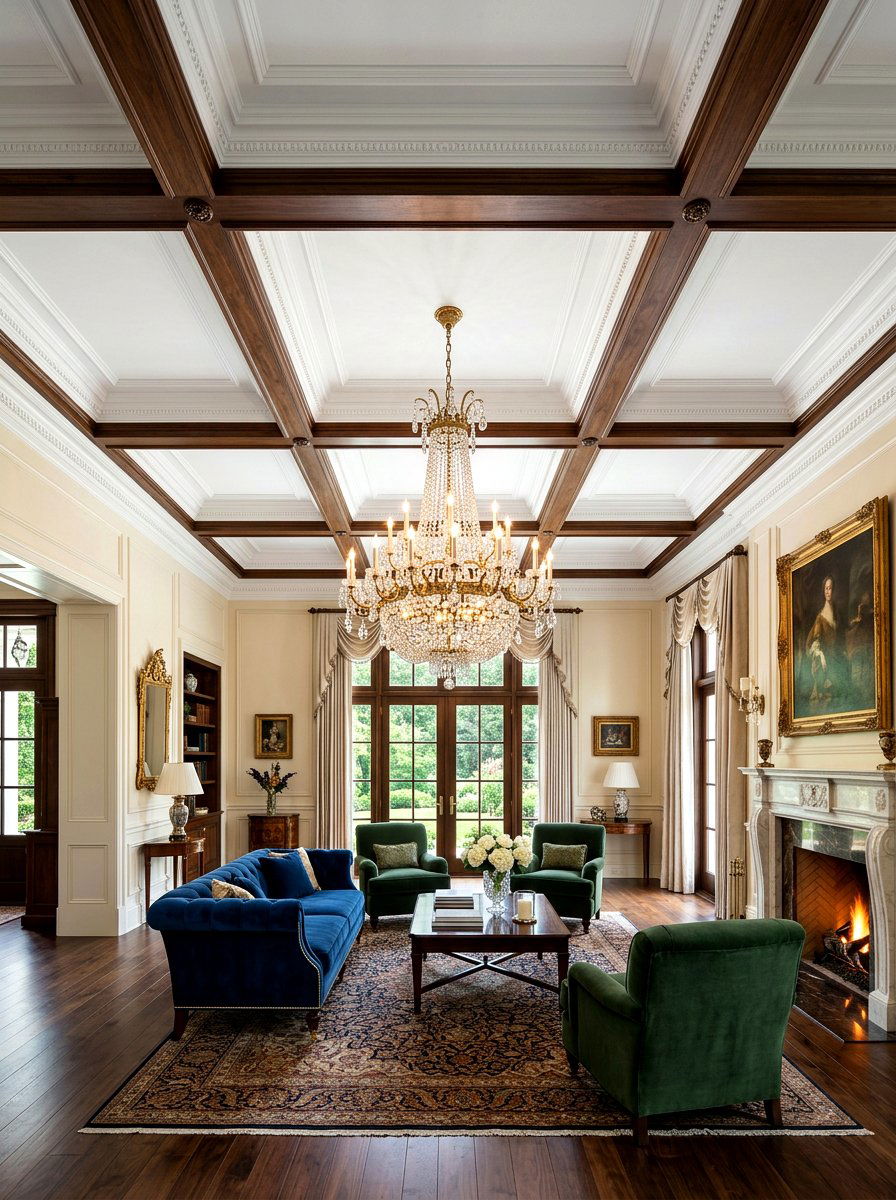
A coffered ceiling adds a magnificent layer of architectural interest and height to a traditional living room. These recessed panels create a grid-like pattern that gives the ceiling a three-dimensional quality and makes the room feel much more grand. You can paint the interior of the panels a slightly lighter or darker shade than the beams to emphasize the depth. This feature works particularly well in large living rooms with high ceilings, as it helps to break up the vast surface area. A coffered ceiling also provides the perfect opportunity to install a central chandelier or several recessed lights to further enhance the room's overall ambiance and sophisticated feel.
14. Neutral Layered Traditional Living Room
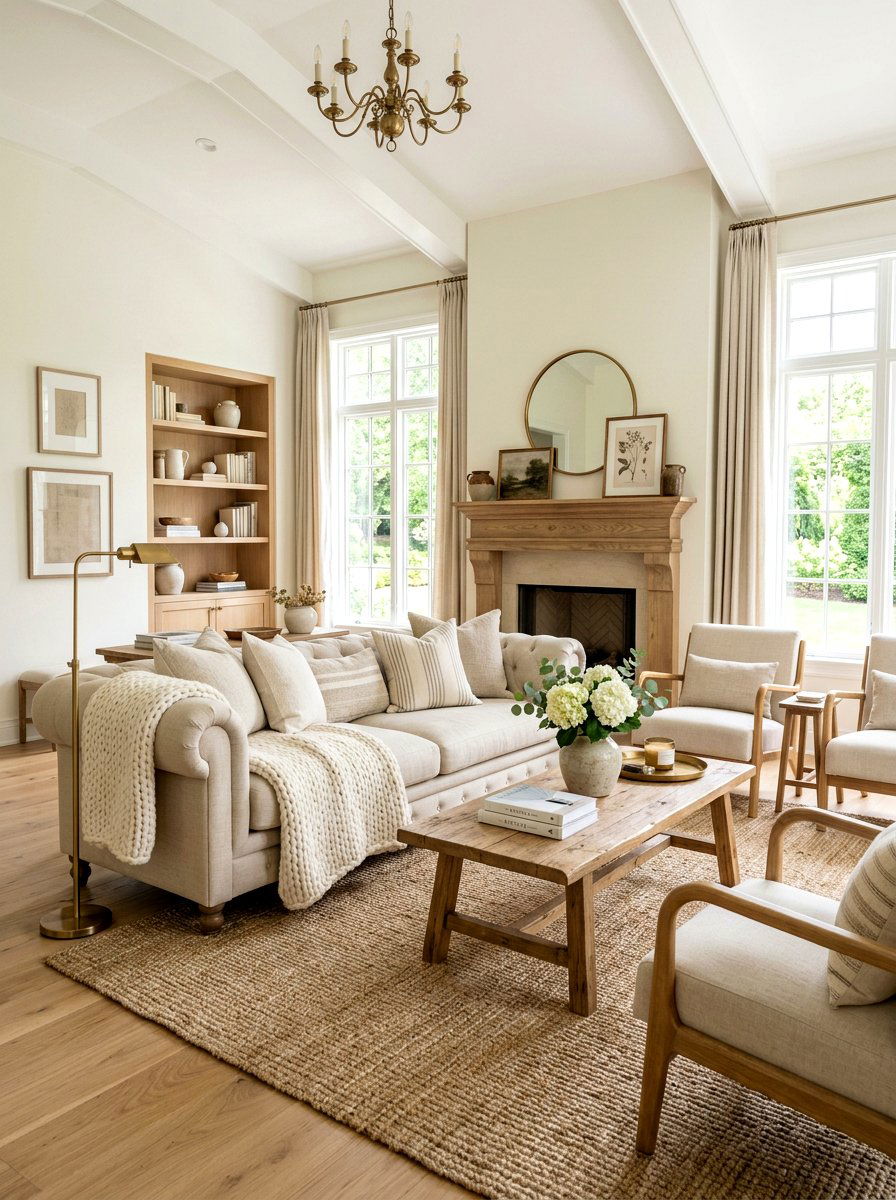
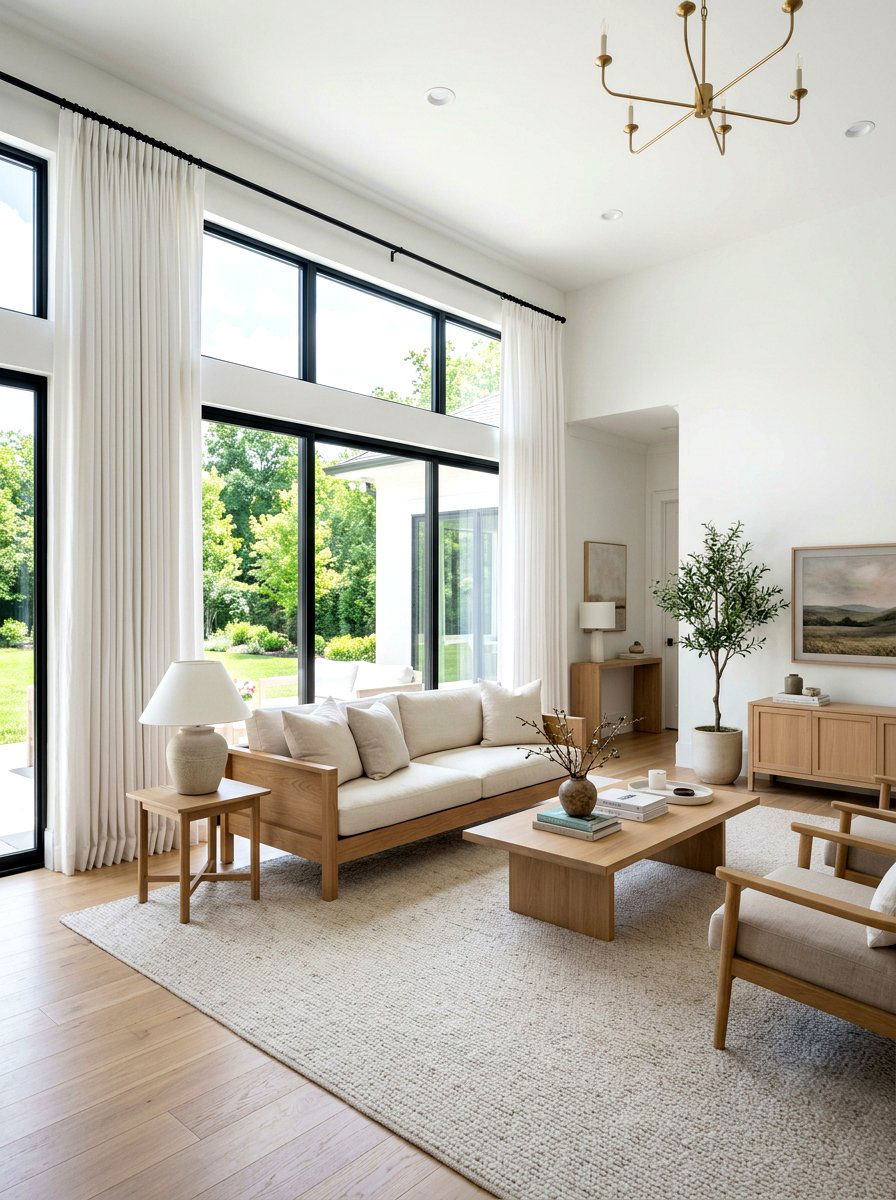
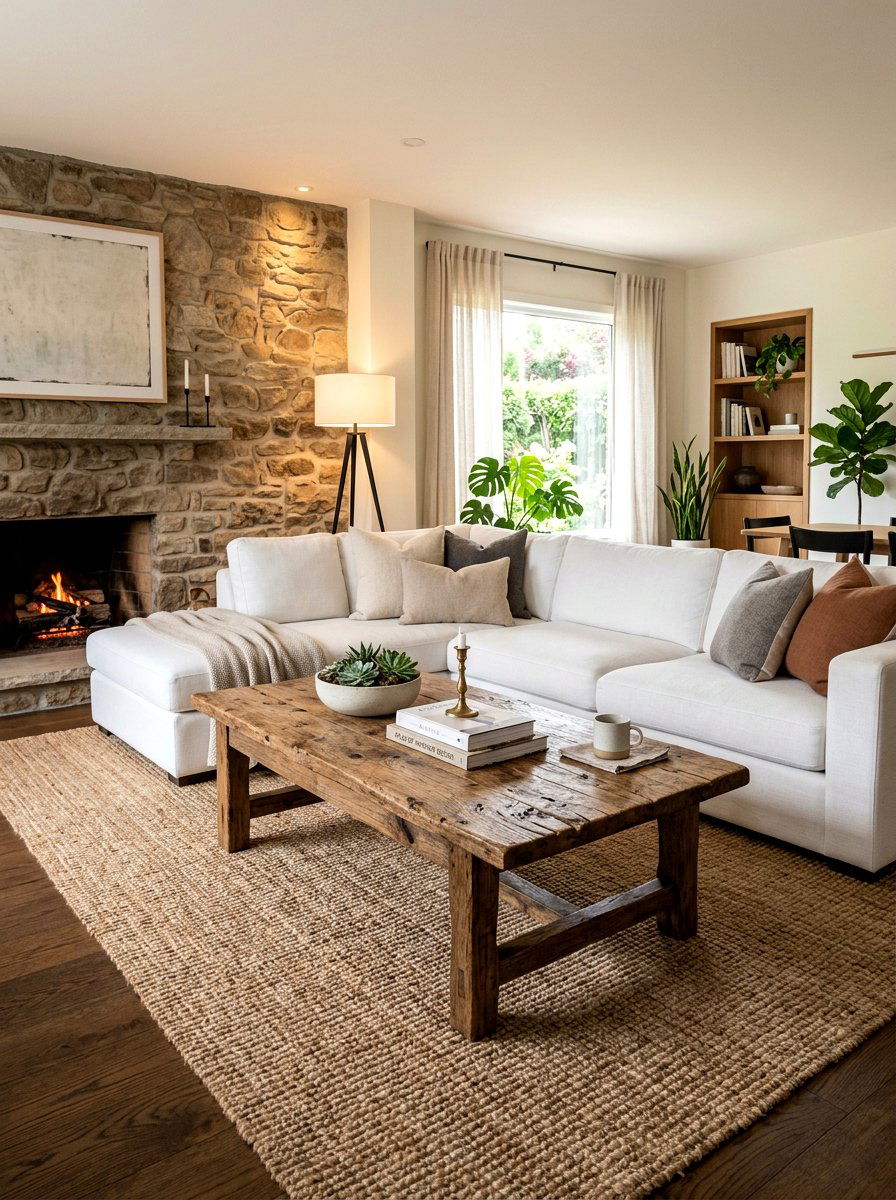
Creating a layered look with a neutral color palette focuses heavily on the variation of textures and subtle shades. Use a mix of cream, beige, taupe, and ivory across your walls, furniture, and textiles to build a calm and cohesive environment. Layer a chunky knit wool throw over a smooth linen sofa to introduce tactile contrast. Incorporating different natural materials like a light wood coffee table and a stone fireplace surround adds organic interest without the need for bold colors. This approach results in a room that feels incredibly airy and timeless. The subtle layers prevent the neutral space from feeling boring, instead making it look very high-end and inviting.
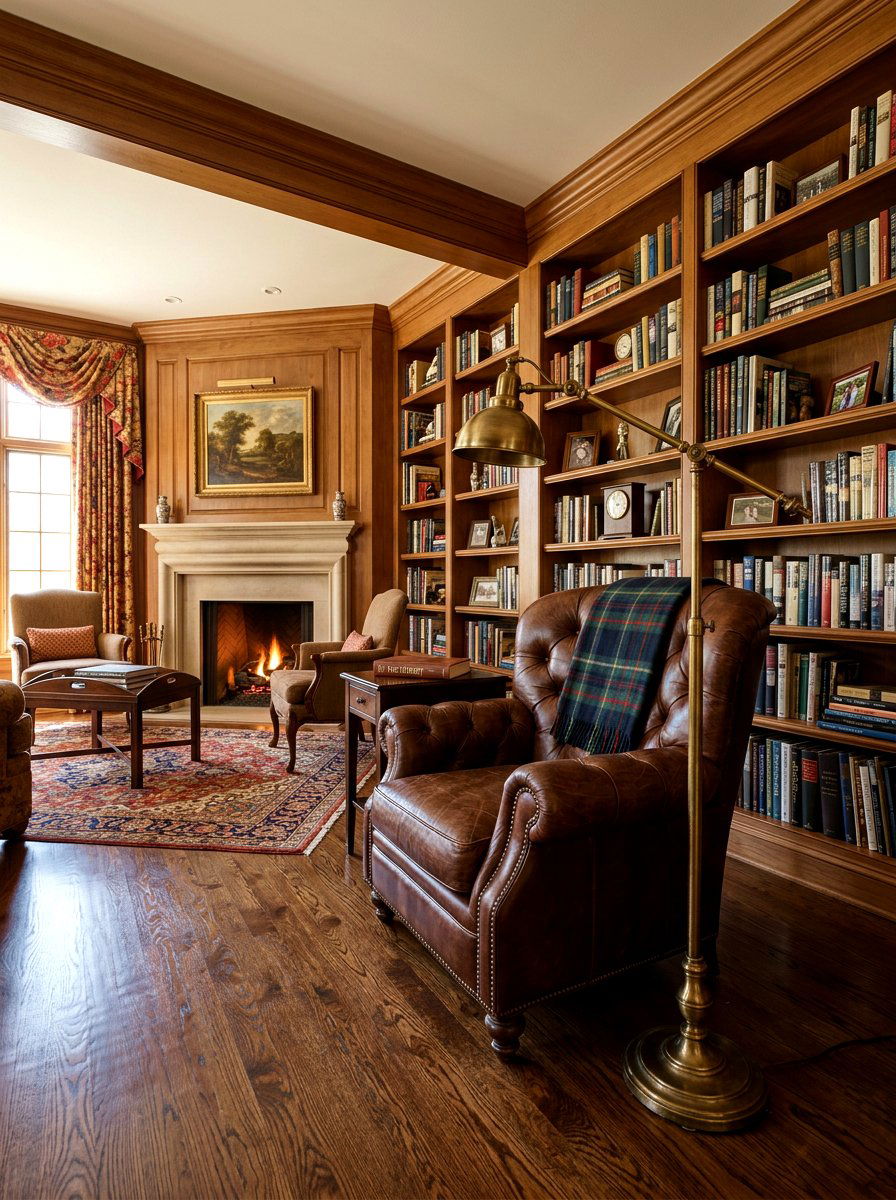
15. Traditional Living Room Skirted Furniture
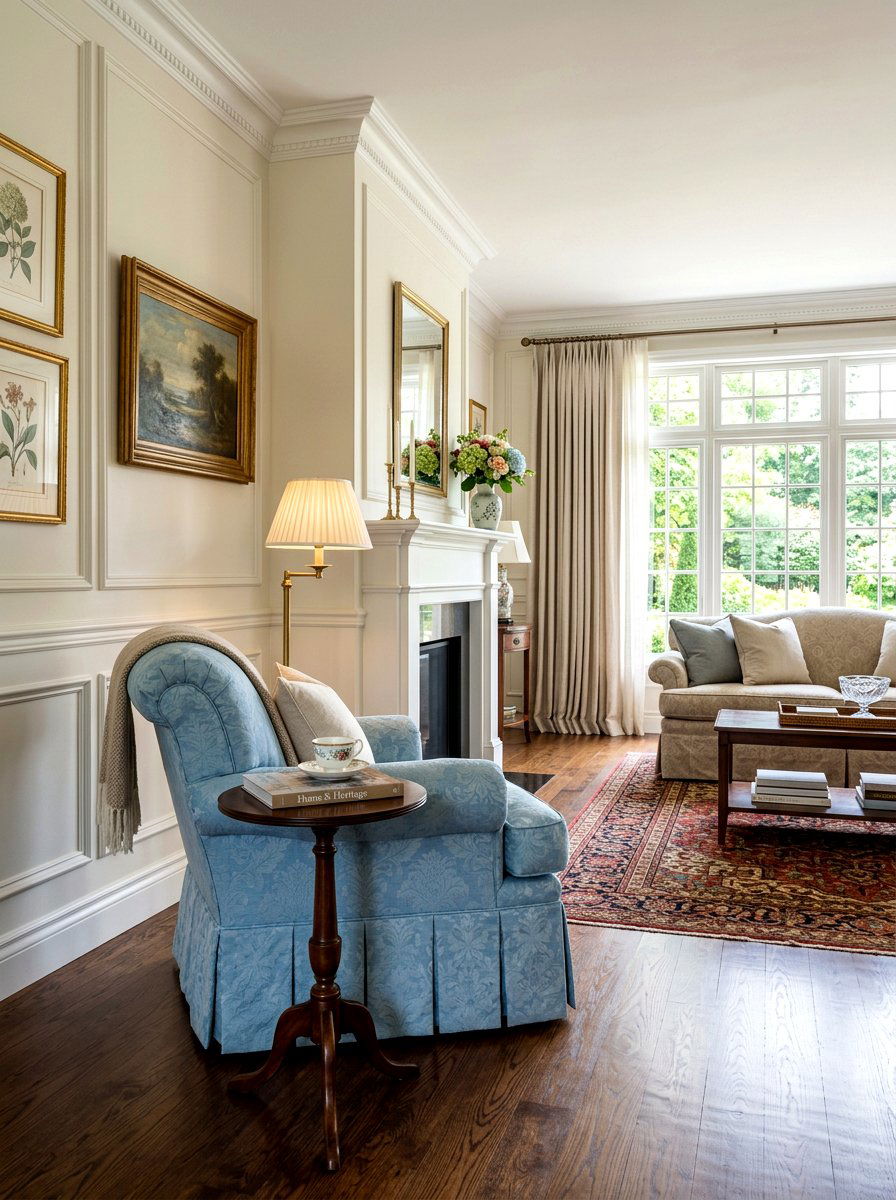
Skirted furniture is a classic traditional element that adds a layer of softness and hides the legs of chairs or sofas for a more tailored look. A skirted armchair in a pretty linen or a heavy cotton fabric brings a sense of traditional charm to any seating group. This detail helps to ground the furniture and creates a clean, continuous line from the seat to the floor. You can use skirted pieces to balance out leggy furniture like a thin wood coffee table or a metal side table. This variety in furniture styles adds visual weight to the room and makes the seating area feel more substantial and intentionally designed for comfort.
16. Dark Wood Traditional Living Room
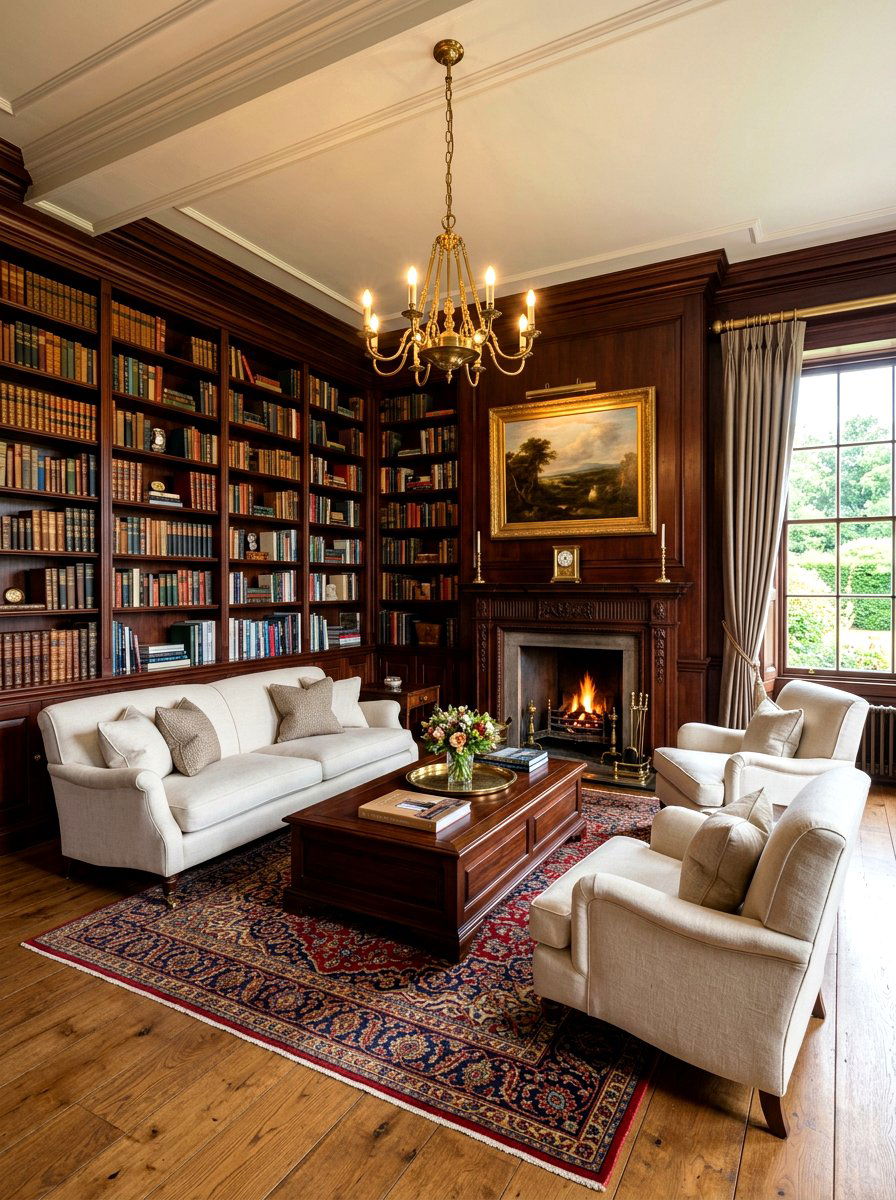
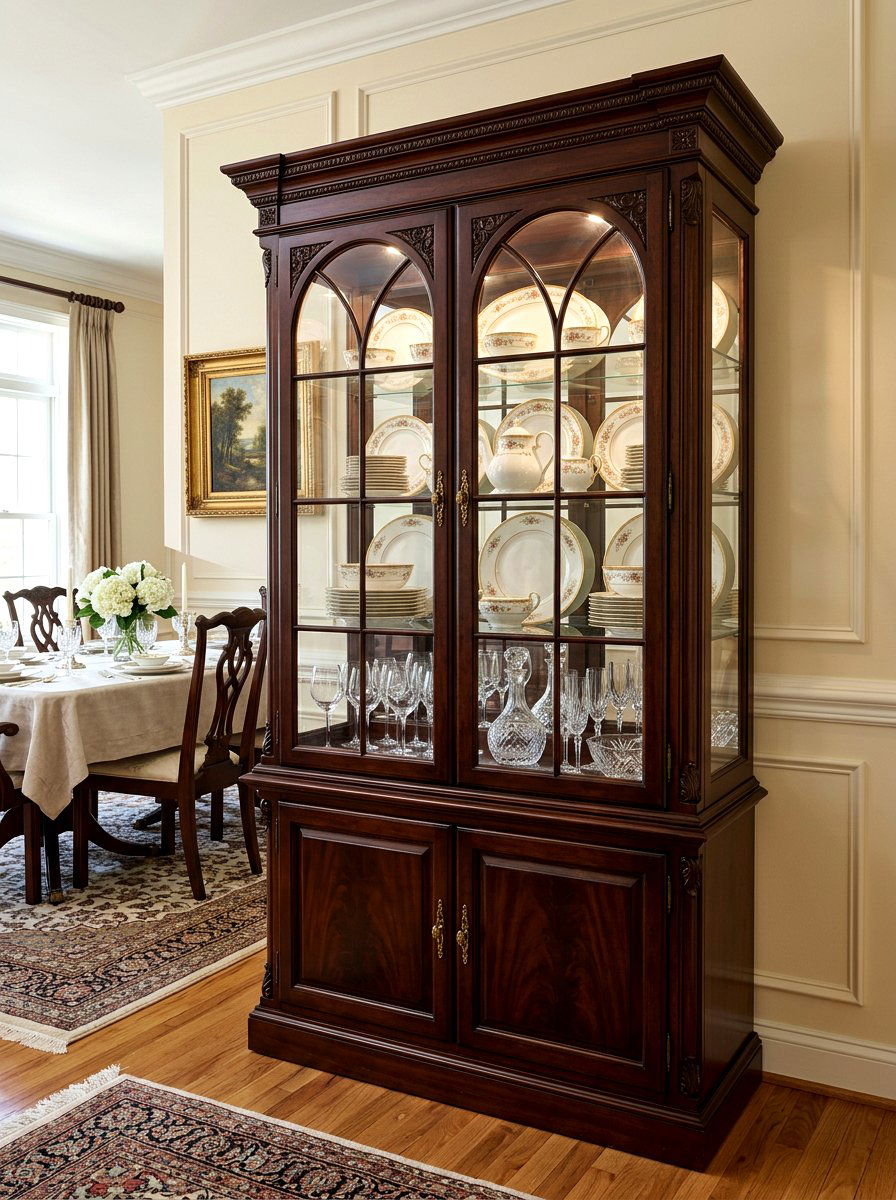
Dark wood finishes like mahogany, cherry, or walnut provide a rich and grounding layer that is essential for many traditional homes. You can use dark wood through large pieces like a grand piano, a formal dining table in an open-plan space, or a heavy desk. These deep tones offer a beautiful contrast against lighter walls and soft-colored upholstery. To prevent the room from feeling too heavy, layer in brighter elements like white ceramic lamps or a light-colored rug. The warmth of the dark wood creates a cozy and sophisticated atmosphere that feels anchored in history. It provides a timeless foundation that works well with almost any color palette or design.
17. Traditional Living Room Chandelier Lighting
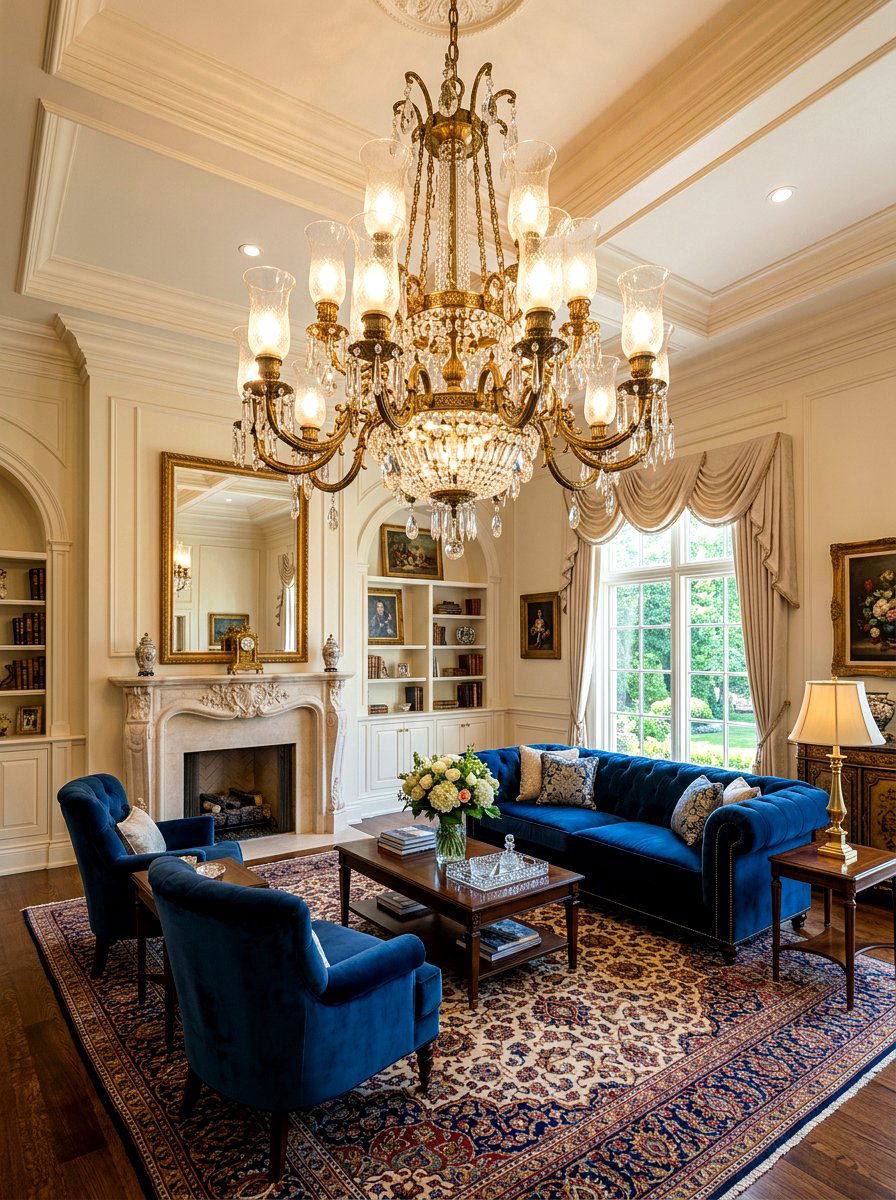
A central chandelier acts as a stunning jewelry piece for your living room, adding a layer of elegance and overhead light. Choose a classic design with crystal drops, brass arms, or even a tiered candle-style fixture to fit the traditional theme. The scale of the chandelier should be large enough to make a statement but not so big that it overwhelms the room. This light source creates a beautiful glow that highlights the other layers of the space, such as the molding and furniture. Placing the chandelier on a dimmer switch allows you to adjust the mood, making the room feel more formal or intimate depending on the time of day.
18. Layered Pillow Traditional Living Room
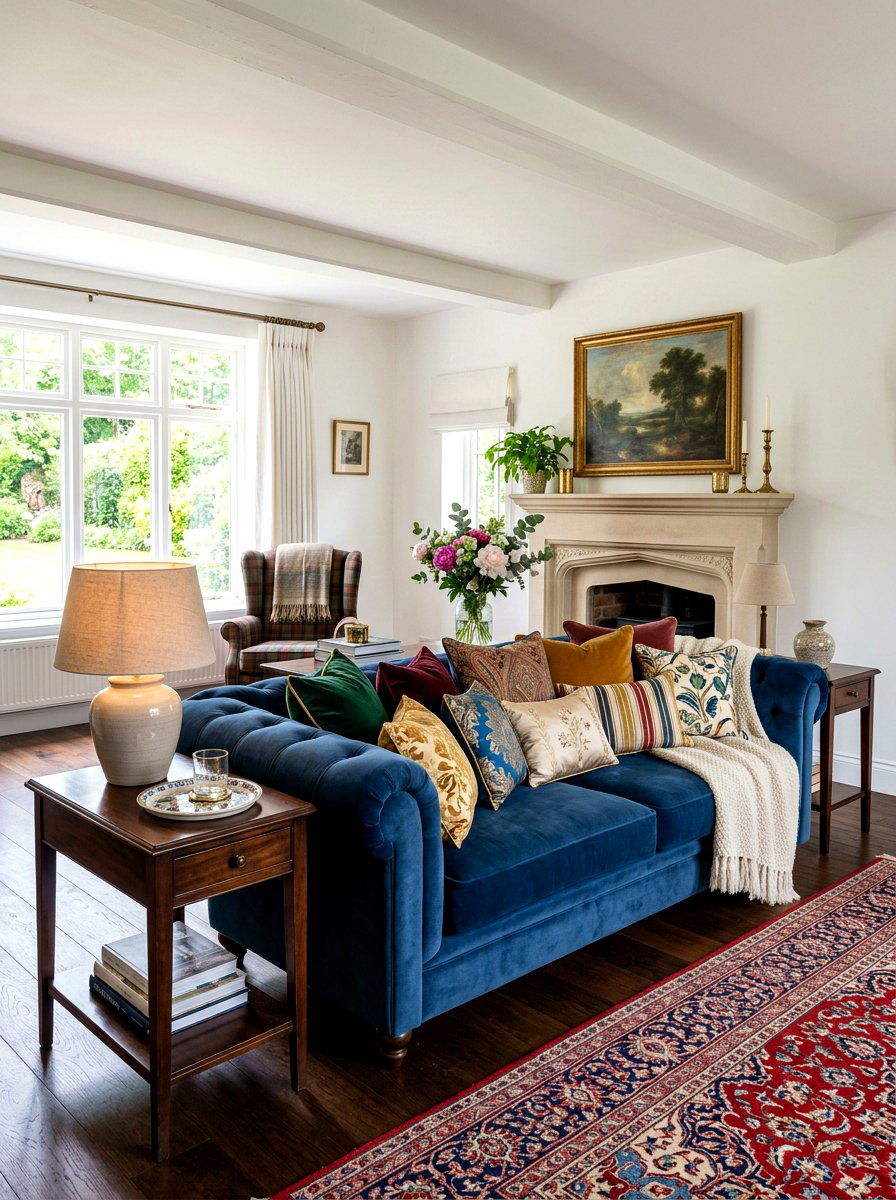
One of the easiest ways to add immediate comfort and style to your living room is by layering various throw pillows on your seating. Start with two large, solid-colored pillows in a sturdy fabric like velvet at the back. Then, layer in medium-sized pillows with a classic pattern like a floral or a plaid. Finish the look with a smaller, rectangular lumbar pillow that features a unique texture or fringe detail. Mixing different sizes and patterns creates a lush and inviting look that encourages relaxation. This layer of soft goods allows you to easily update the room's color scheme or seasonal feel without making any major changes to the furniture.
19. Traditional Living Room Wallpaper Accents
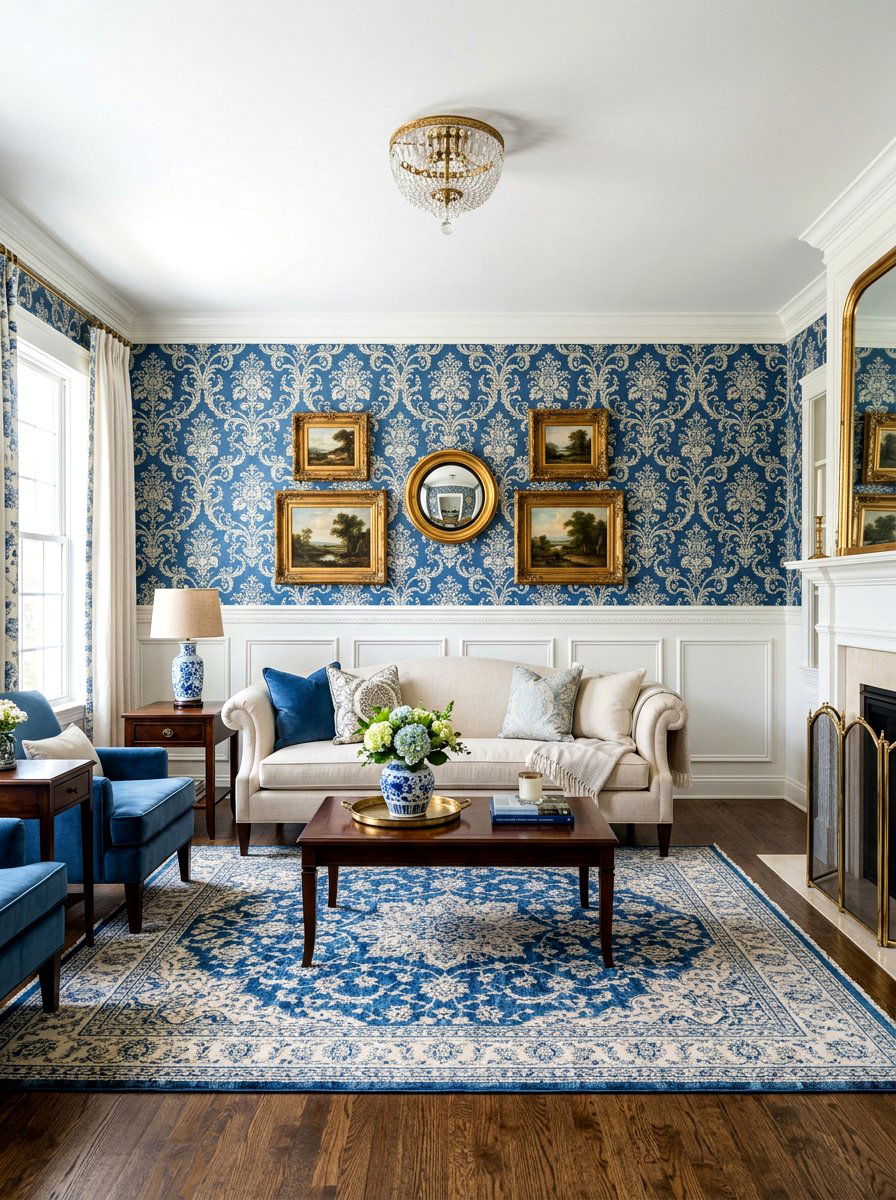
Wallpaper is a fantastic way to add a layer of pattern and color to the walls of a traditional living room. You can choose a classic damask, a subtle grasscloth, or a romantic floral design to create a beautiful backdrop. If you are hesitant to wallpaper the entire room, consider using it on a single accent wall or inside the back of your built-in bookshelves. The texture of the paper adds a dimension that paint simply cannot achieve. It makes the walls feel more substantial and intentional. Wallpaper ties together the different colors in the room and provides a cohesive theme that anchors all your other decorative choices and furniture.
20. Traditional Living Room Mirror Placement
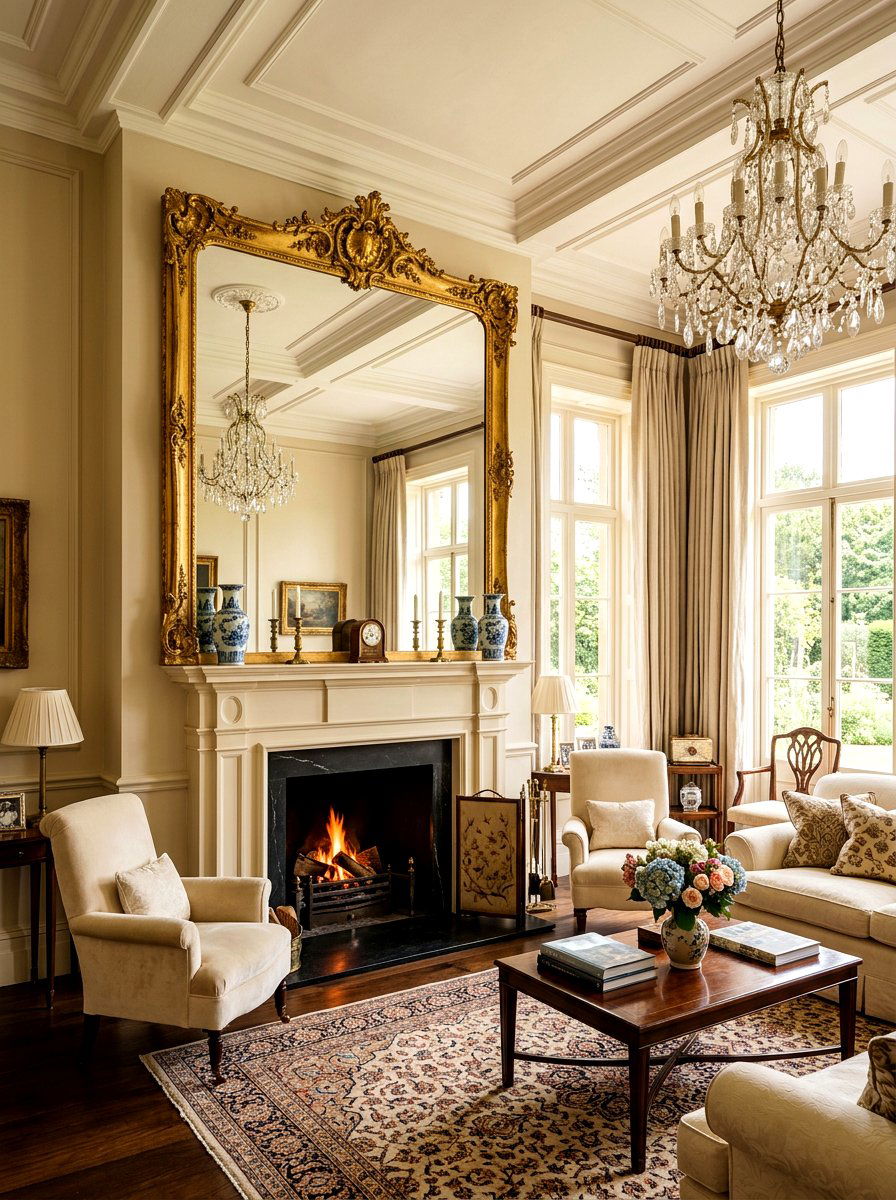
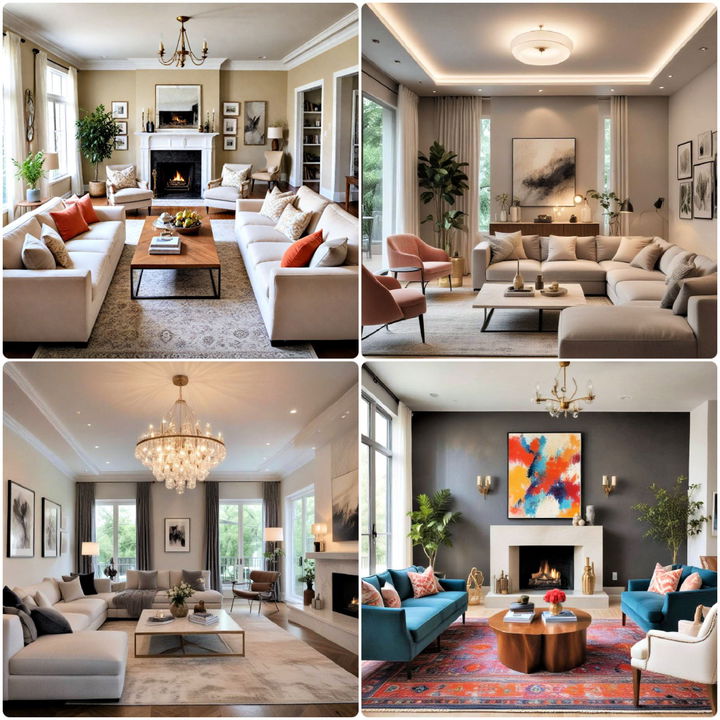
Strategically placing mirrors in your living room adds a layer of light and the illusion of more space. A large, gold-leafed mirror hung above a mantel or a sideboard reflects the room 's details and makes the area feel twice as large. You can also lean a tall floor mirror in a corner to bounce natural light into darker spots. The frame of the mirror itself acts as a decorative element that contributes to the traditional aesthetic. Choosing a mirror with antique-style glass adds a layer of vintage charm and character. This functional yet beautiful addition enhances the overall visual depth and brightness of your home' s most important gathering space.
21. Green Traditional Living Room Decor
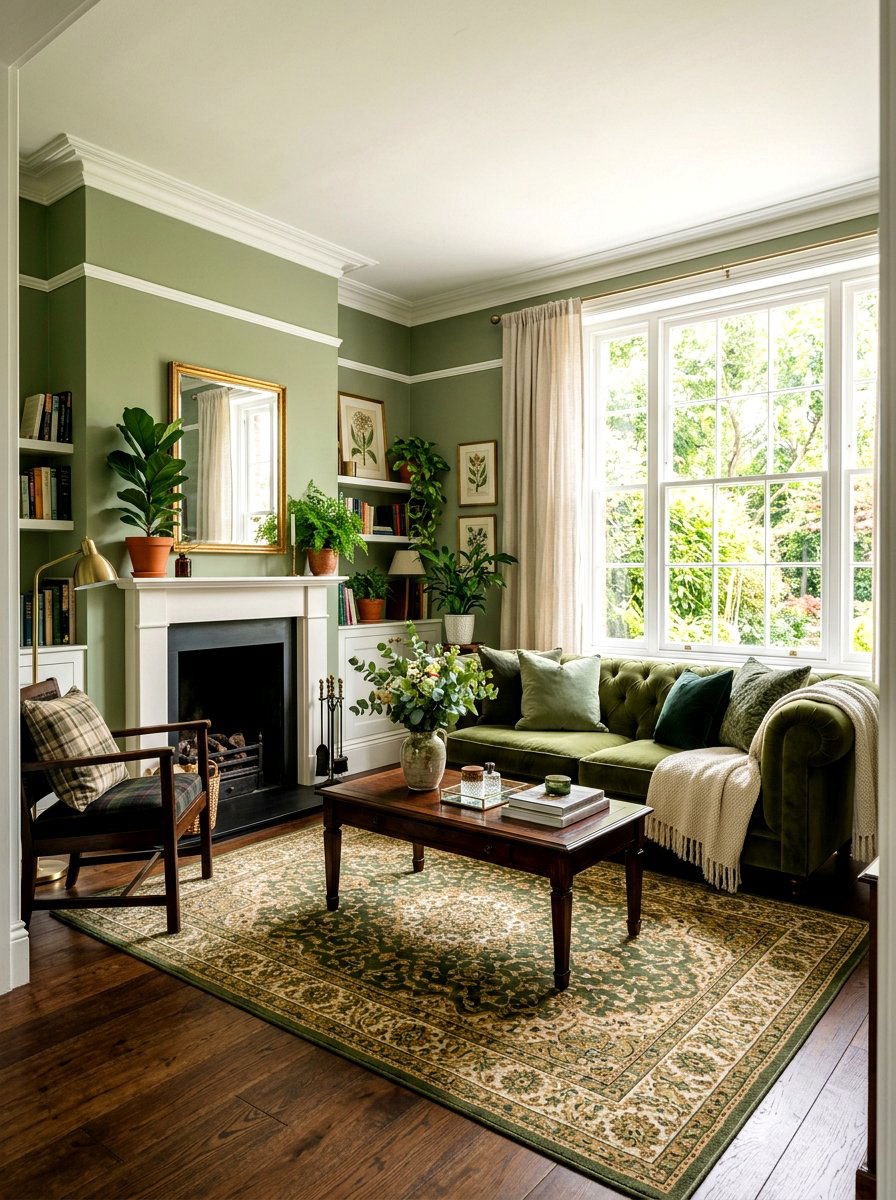
Incorporating various shades of green brings a layer of nature and freshness into a traditional living room. You can use a deep forest green for the walls to create a moody and sophisticated environment or opt for soft sage green accents through pillows and curtains. Green pairs beautifully with dark wood furniture and brass hardware, creating a very classic and grounded look. To layer this further, add real indoor plants like a tall fiddle leaf fig or small ferns on side tables. These living elements add a tactile and organic layer that makes the room feel more vibrant and energized. Green is a versatile color that evokes a sense of calm.
22. Traditional Living Room Library Nook
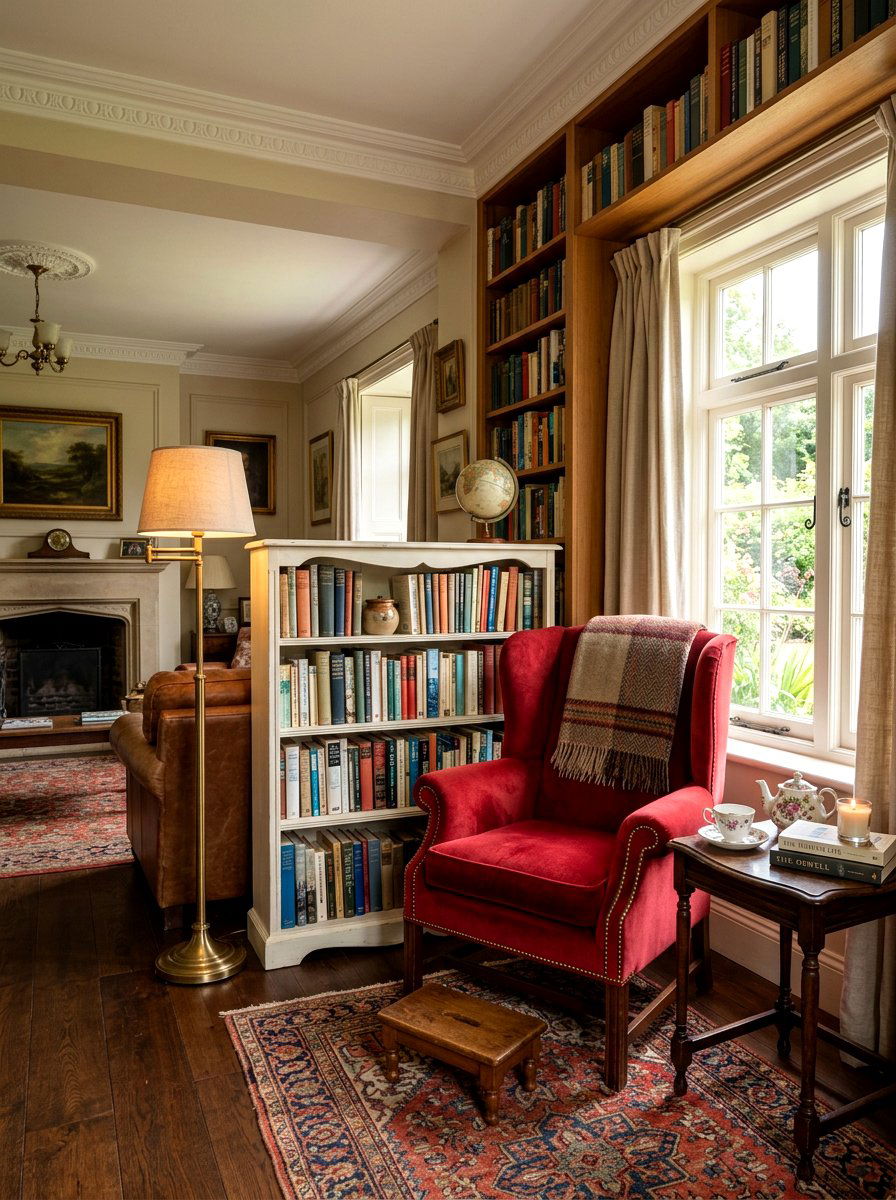
A cozy library nook is a perfect way to add a layered, intellectual vibe to a traditional living room. You can create this by placing a comfortable wingback chair next to a small bookshelf and a dedicated floor lamp. Adding a small side table for your tea and a stack of books makes the space feel functional and inviting. Layer a soft wool rug under the chair to define the area as a separate zone for relaxation. This corner provides a quieter spot for reading while still being part of the main living space. It adds a sense of history and personality, showing that the room is actually lived in and used.
23. Layered Lighting Traditional Living Room
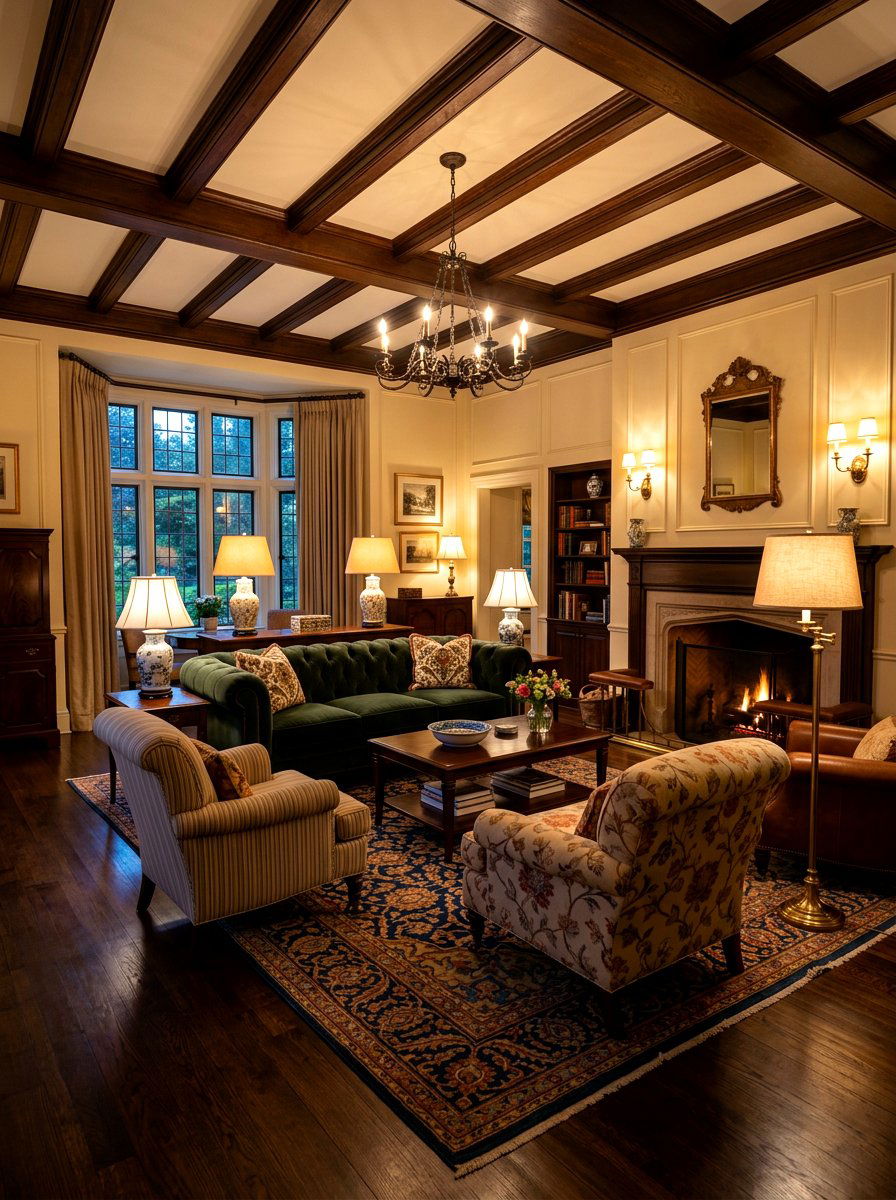
Effective lighting in a traditional room should be layered at different heights to create a warm and versatile atmosphere. Instead of relying on a single overhead light, use a combination of floor lamps, table lamps, and wall sconces. Place table lamps on sideboards and end tables to provide soft, eye-level light for conversation. Use a dedicated floor lamp next to a reading chair for task lighting. Wall sconces flanking a mirror or fireplace add a decorative and elegant layer of glow. This variety allows you to adjust the light levels based on the time of day or the occasion, ensuring the room always feels cozy and perfectly illuminated.
24. Traditional Living Room Ottoman Coffee Table
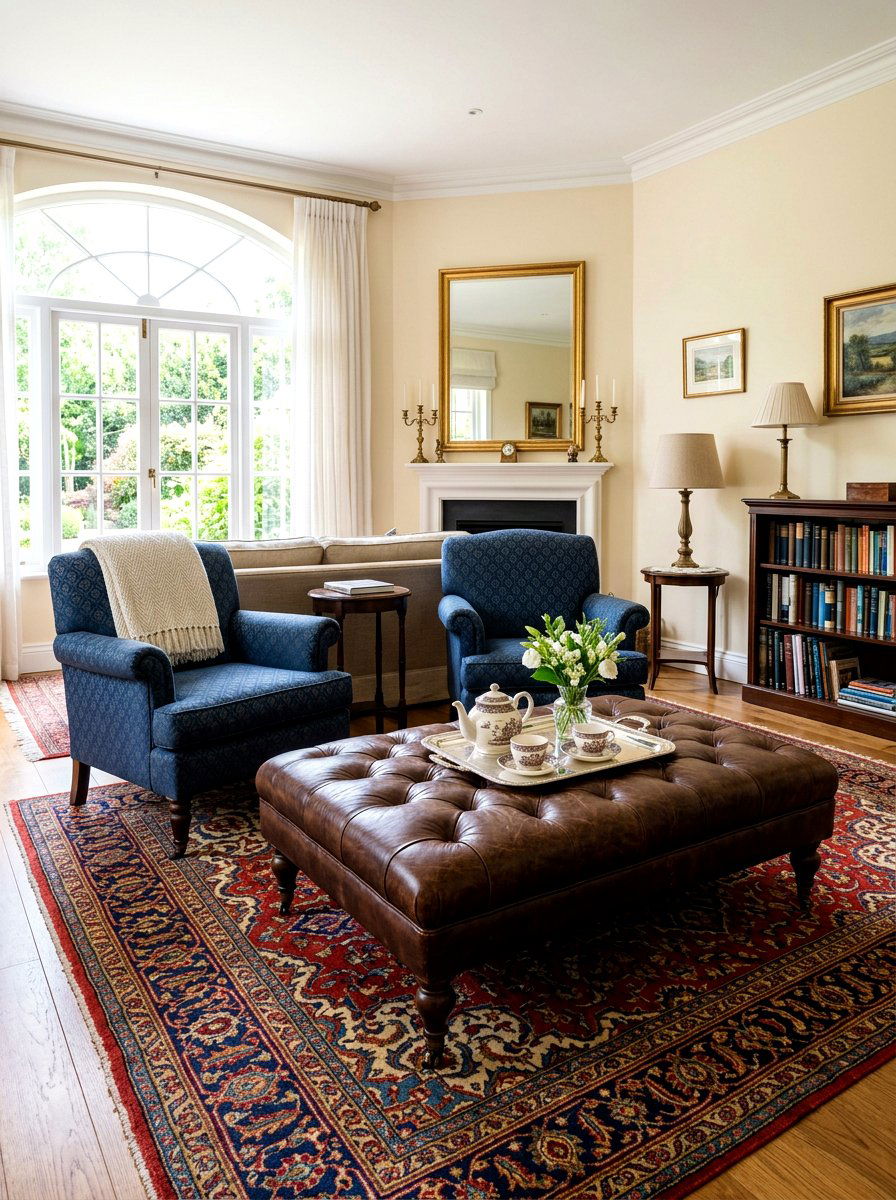
Replacing a standard hard-surface coffee table with a large, upholstered ottoman adds a layer of softness and versatility to the living room. Choose an ottoman in a durable fabric like leather or a heavy linen weave that complements your seating. You can layer a large wooden or silver tray on top of the ottoman to provide a stable surface for drinks and decorative items. This piece of furniture also serves as extra seating when you have guests or a comfortable place to rest your feet. The rounded edges of an ottoman help to soften the overall look of the room, making it feel more approachable and family-friendly.
25. Plaid Pattern Traditional Living Room
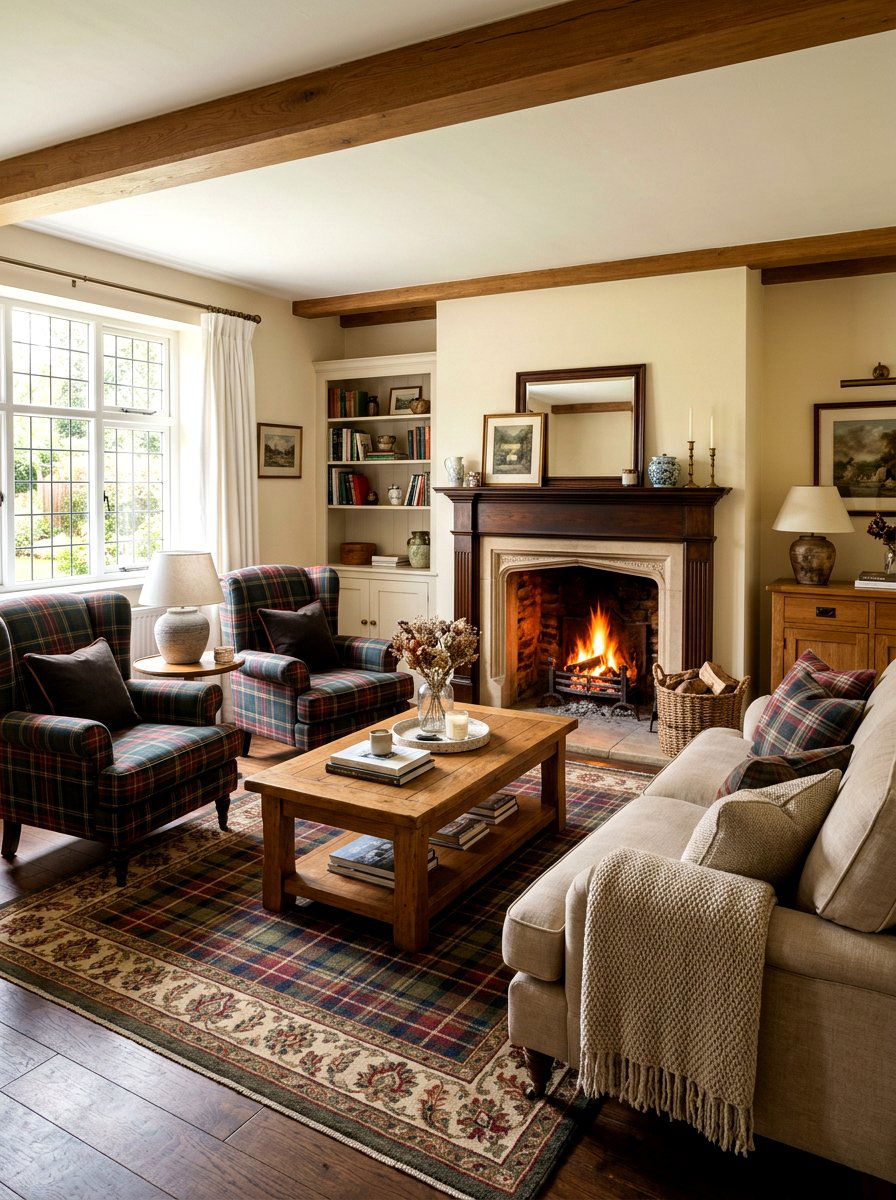
Plaid is a classic traditional pattern that introduces a sense of heritage and cozy structure to a living space. You can incorporate plaid through a pair of accent chairs, a large throw blanket, or even a set of custom pillows. Choosing a plaid with neutral tones like beige and navy keeps the look sophisticated and easy to mix with other patterns. If you want a more bold look, a traditional tartan can add a layer of warmth and historical charm. Plaid works particularly well in the colder months to make the room feel extra snug. It provides a structured geometric layer that balances out softer floral or organic patterns.
26. Traditional Living Room Wainscoting Style
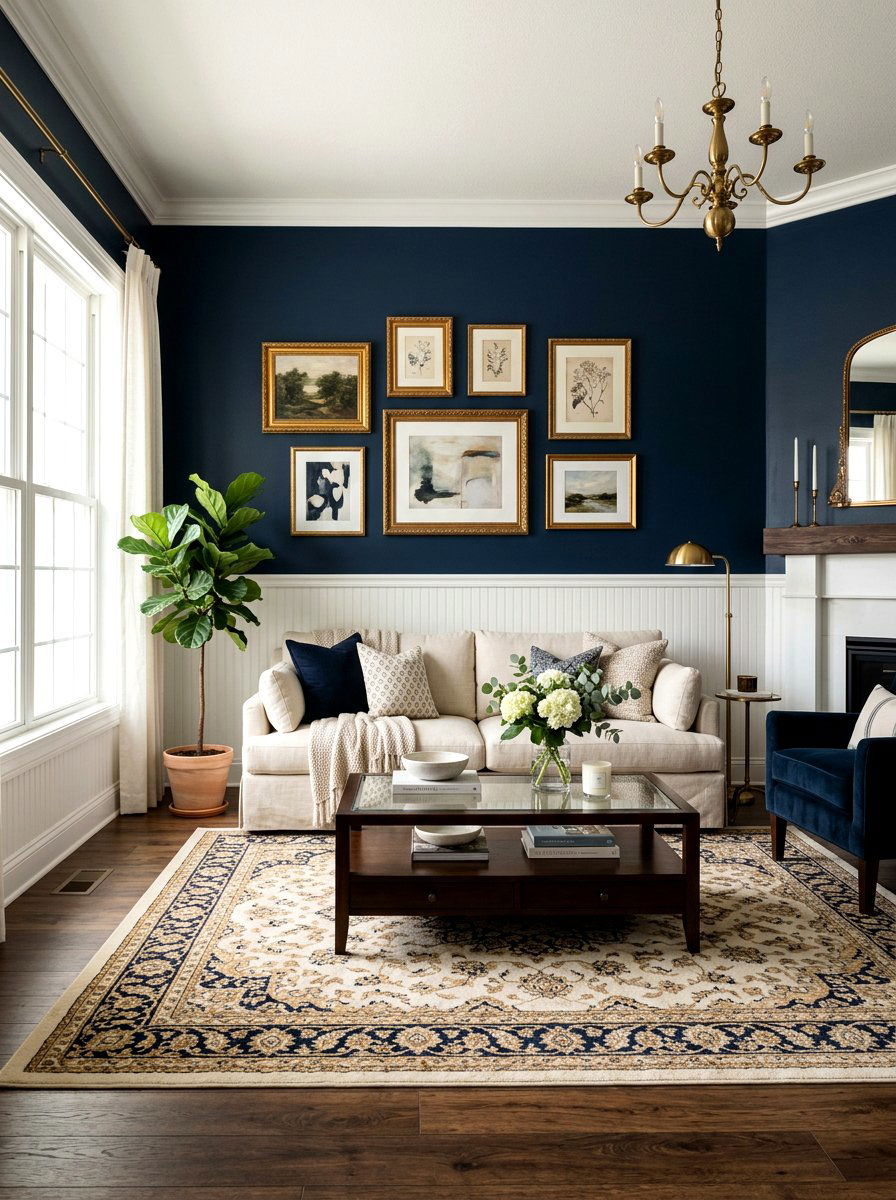
Installing wainscoting or beadboard on the lower half of your walls adds a beautiful layer of architectural detail and protection. This classic treatment breaks up the wall surface and provides a sense of formality that is perfect for traditional homes. You can paint the wainscoting a crisp white to contrast with a darker wall color above or keep it all one shade for a more subtle look. This layer of woodwork adds a tactile quality to the walls and emphasizes the horizontal lines of the room. It also serves as a great backdrop for placing furniture against, as it creates a clear boundary and a finished, high-end appearance.
27. Gold Frame Traditional Living Room
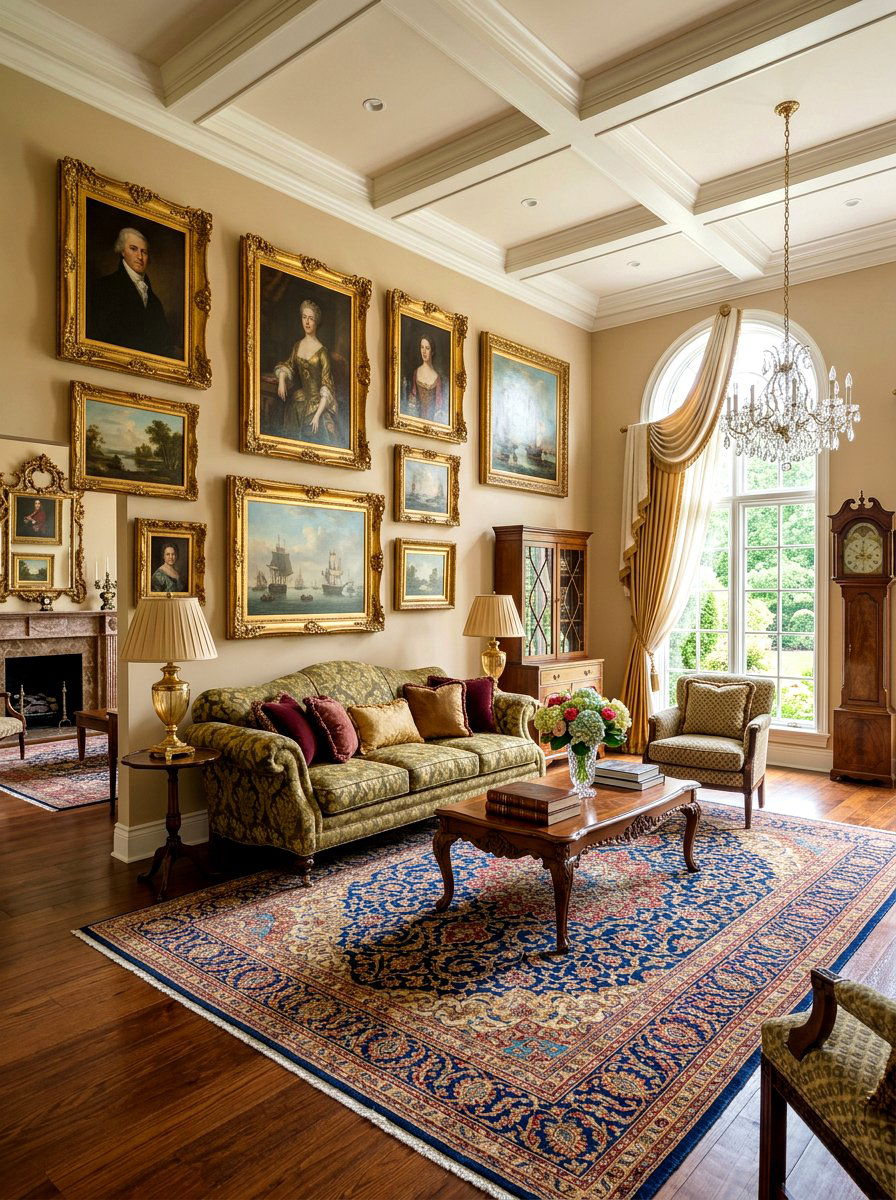
Gold frames are a quintessential traditional element that adds a layer of warmth and luxury to any wall display. Whether you are framing a large oil painting or a series of small family photos, a gold-leafed frame provides a timeless and elegant touch. The metallic sheen catches the light and draws attention to the artwork inside. You can mix different styles of gold frames, from ornate and chunky to thin and simple, to create a more collected and layered gallery. This detail works beautifully against both light and dark wall colors, providing a consistent theme that ties the room's art collection together with a touch of formal glamour.
28. Traditional Living Room Silk Drapery
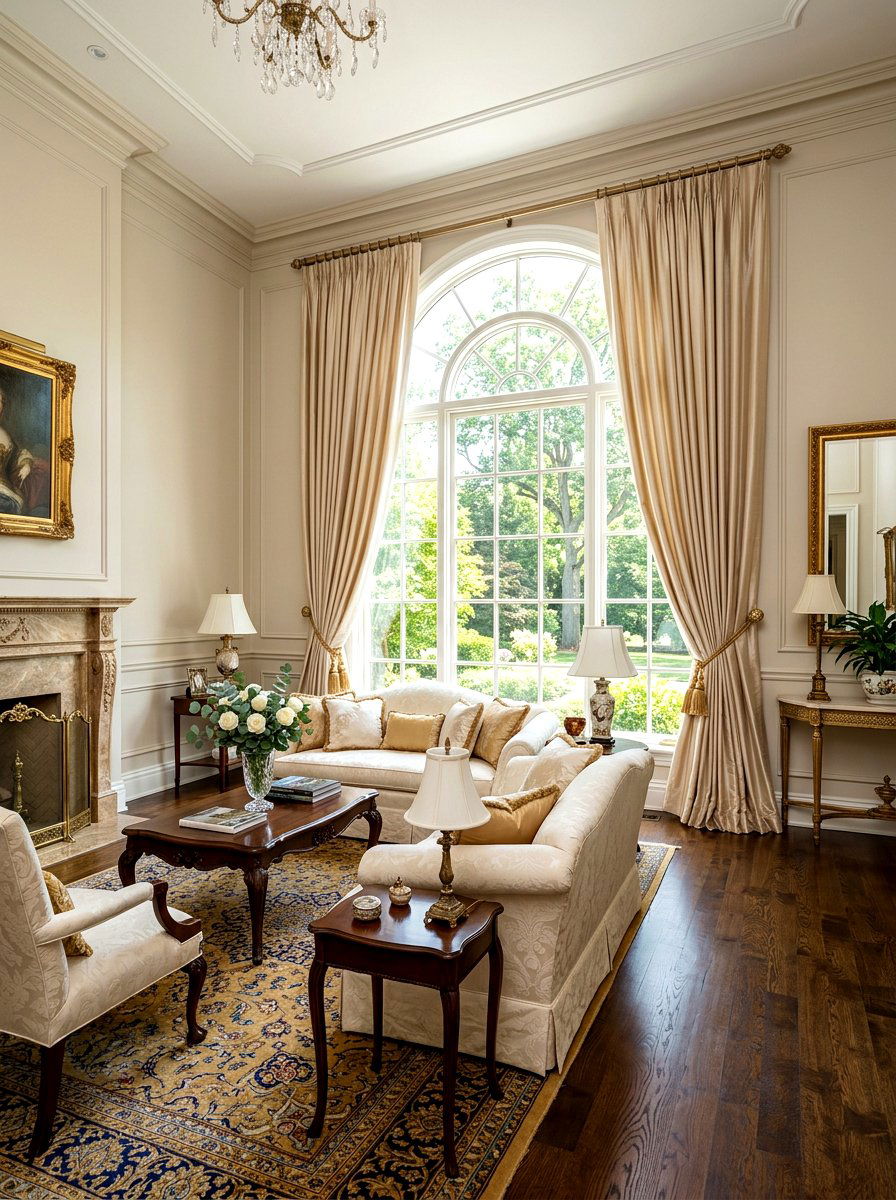
For a truly high-end and luxurious layer, consider using silk drapery for your window treatments. The natural sheen of silk adds a subtle glow and a sense of movement to the room as the fabric catches the light. Silk drapes often feature a beautiful drape and weight that feels much more formal than linen or cotton. You can further layer this look by adding a contrasting trim or tassel tiebacks to the curtains. While silk is more delicate, it provides an unparalleled level of sophistication and texture. It is a perfect choice for a formal living room where you want to emphasize a sense of timeless elegance and refined taste.
29. Warm Tones Traditional Living Room
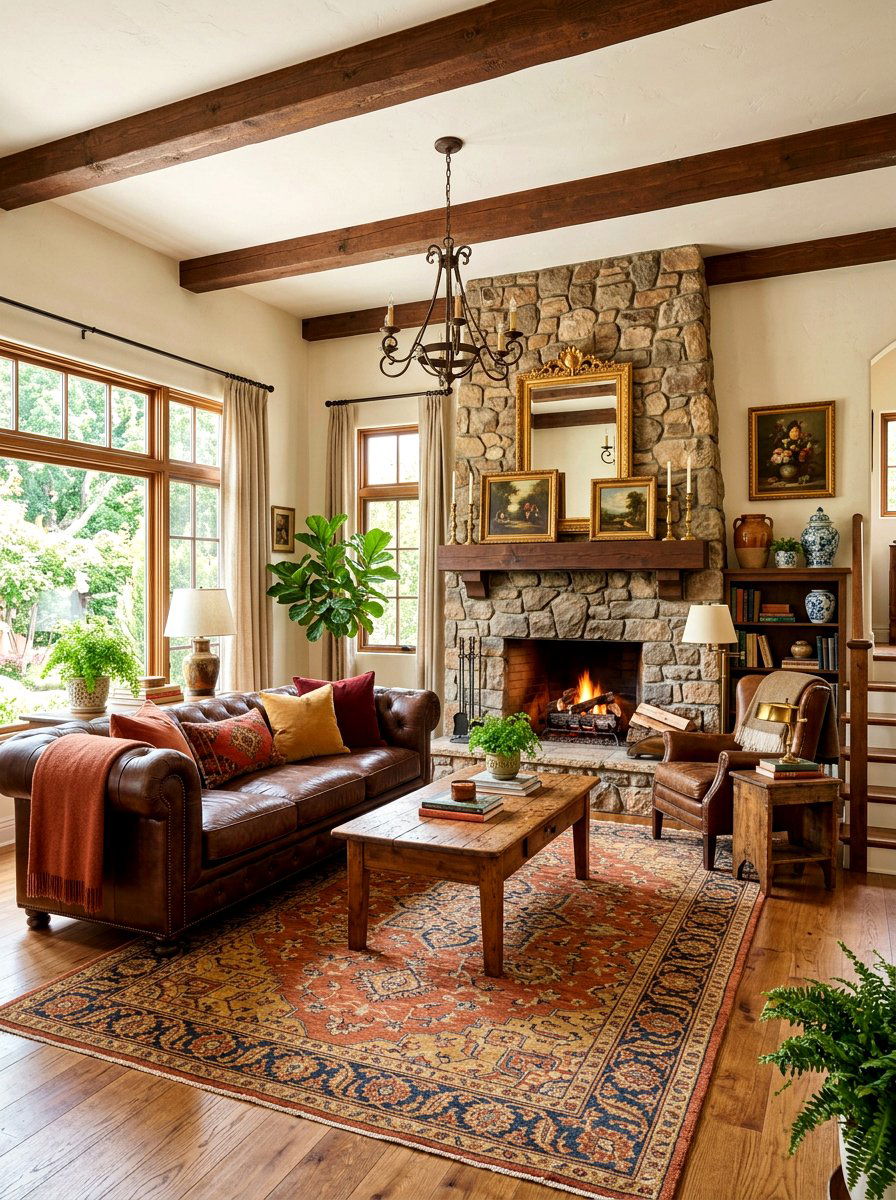
Building a room around warm tones like terracotta, gold, and warm browns creates a layer of coziness that is perfect for traditional living spaces. Use these colors across your upholstery, rugs, and decorative accents to evoke a sense of comfort and stability. Layering a warm ochre velvet pillow on a chocolate brown leather sofa provides a rich and inviting color story. These earthy shades pair beautifully with natural wood finishes and brass hardware. This color palette makes the room feel more grounded and less sterile, providing a welcoming environment for family and friends to gather. It is a timeless approach that always feels very homey and sophisticated.
30. Traditional Living Room Statement Rug
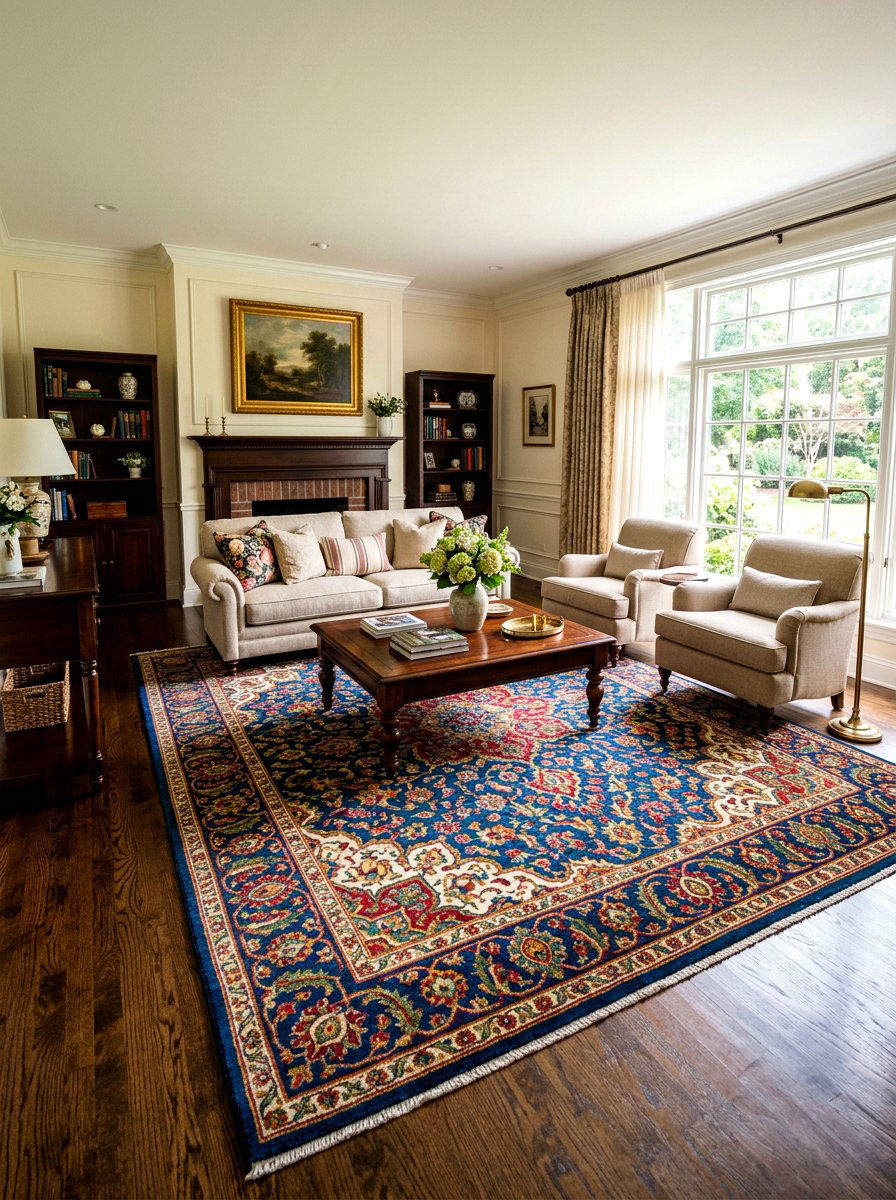
A single, large-scale statement rug can act as the primary layer that ties all other design elements in your living room together. Choose a rug with a bold traditional pattern or a unique color combination that reflects your personal style. This rug anchors the furniture and provides a soft foundation for the entire space. You can pull colors from the rug's pattern to use for your throw pillows, curtains, and artwork, creating a cohesive and well-designed look. A high-quality wool rug not only adds visual interest but also provides a layer of warmth and sound insulation, making the living room feel much more comfortable and quiet.
Conclusion:
Designing a layered traditional living room is a rewarding process that allows you to express your personality through a mix of history, comfort, and style. By thoughtfully combining various textures, patterns, and architectural details, you create a space that feels curated and timeless rather than just decorated. The key is to start with a strong foundation, such as beautiful molding or a quality rug, and then build upward with furniture and accessories that you truly love. This approach ensures your living room is not only visually stunning for guests but also an incredibly cozy and inviting sanctuary for your family to enjoy every day.

Related posts: