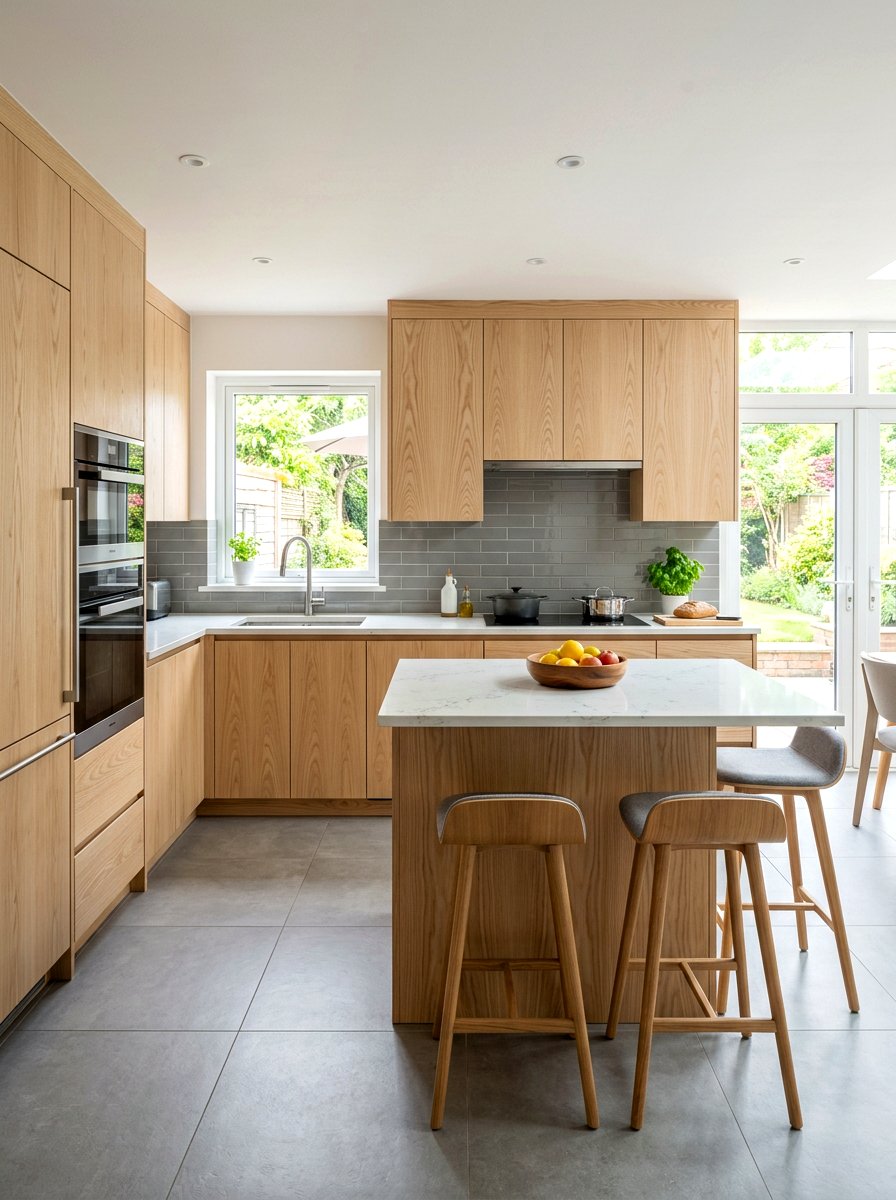
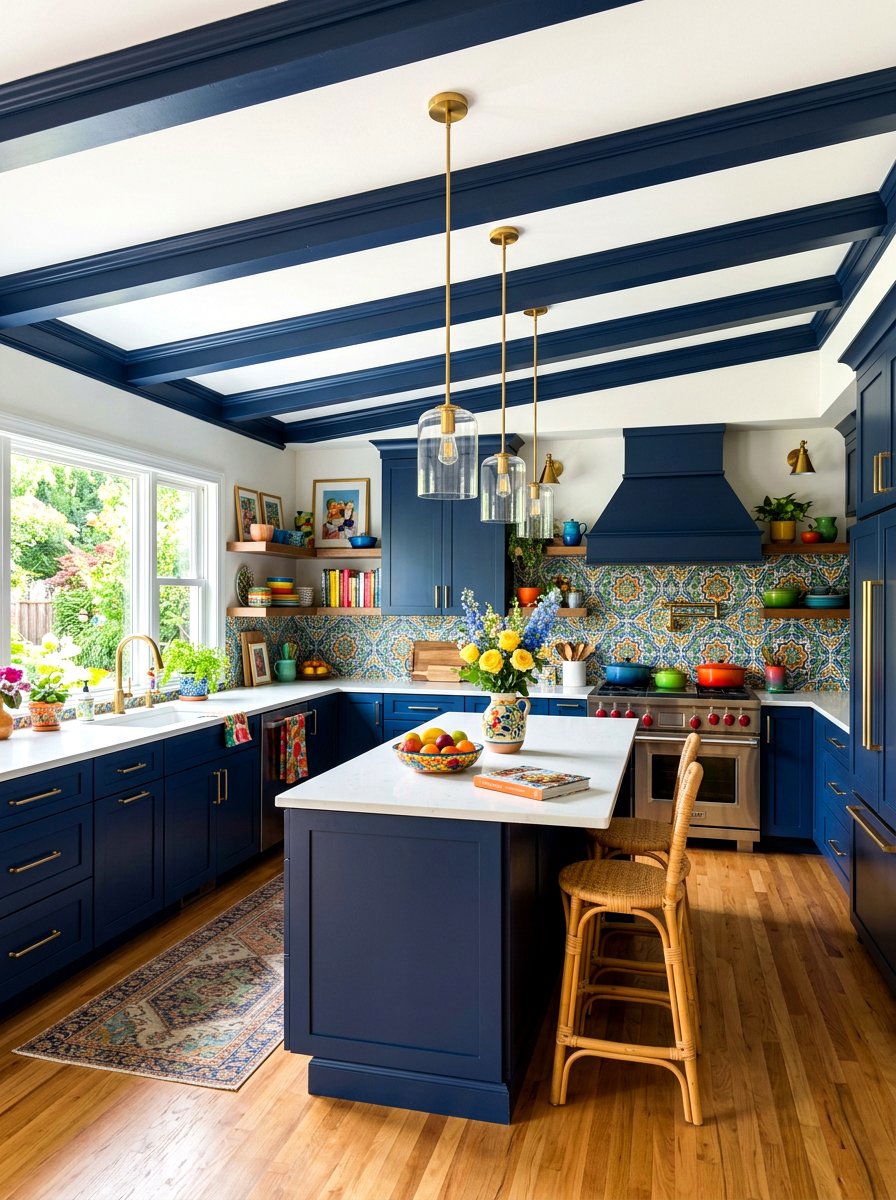
The beauty of a green and wood kitchen lies in its ability to bring the peacefulness of nature directly into the heart of your home. This combination has become a timeless staple in interior design because it perfectly balances organic warmth with a refreshing splash of color. Whether you prefer the soft, muted tones of sage or the bold, dramatic impact of forest green, pairing these hues with natural wood creates a space that feels both grounded and sophisticated. Homeowners are increasingly moving away from clinical white designs in favor of these richer, more textured palettes that offer a sense of comfort and character for everyday living.
1. Sage green and oak kitchen
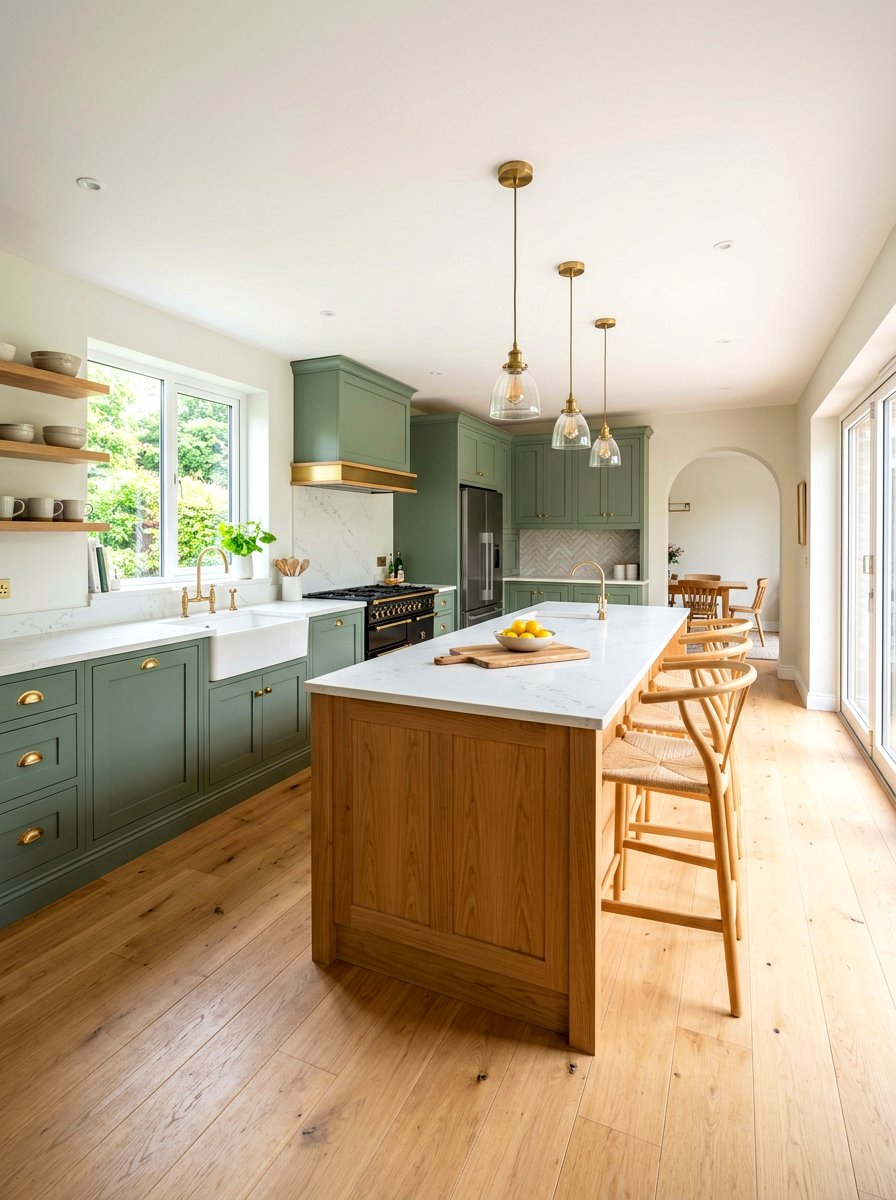
Sage green and oak represent one of the most popular and harmonious pairings for a modern home. The soft, grayish-green undertones of sage provide a subtle backdrop that allows the natural grain and honey-colored warmth of oak to truly stand out. You can achieve this look by installing sage green shaker-style cabinets along the perimeter while using a large natural oak island as a focal point. This combination works exceptionally well in spaces with plenty of natural light, as it creates an airy and organic atmosphere. Adding brushed brass hardware and white quartz countertops will help bridge the two finishes, creating a seamless and sophisticated transition.
2. Forest green and walnut kitchen
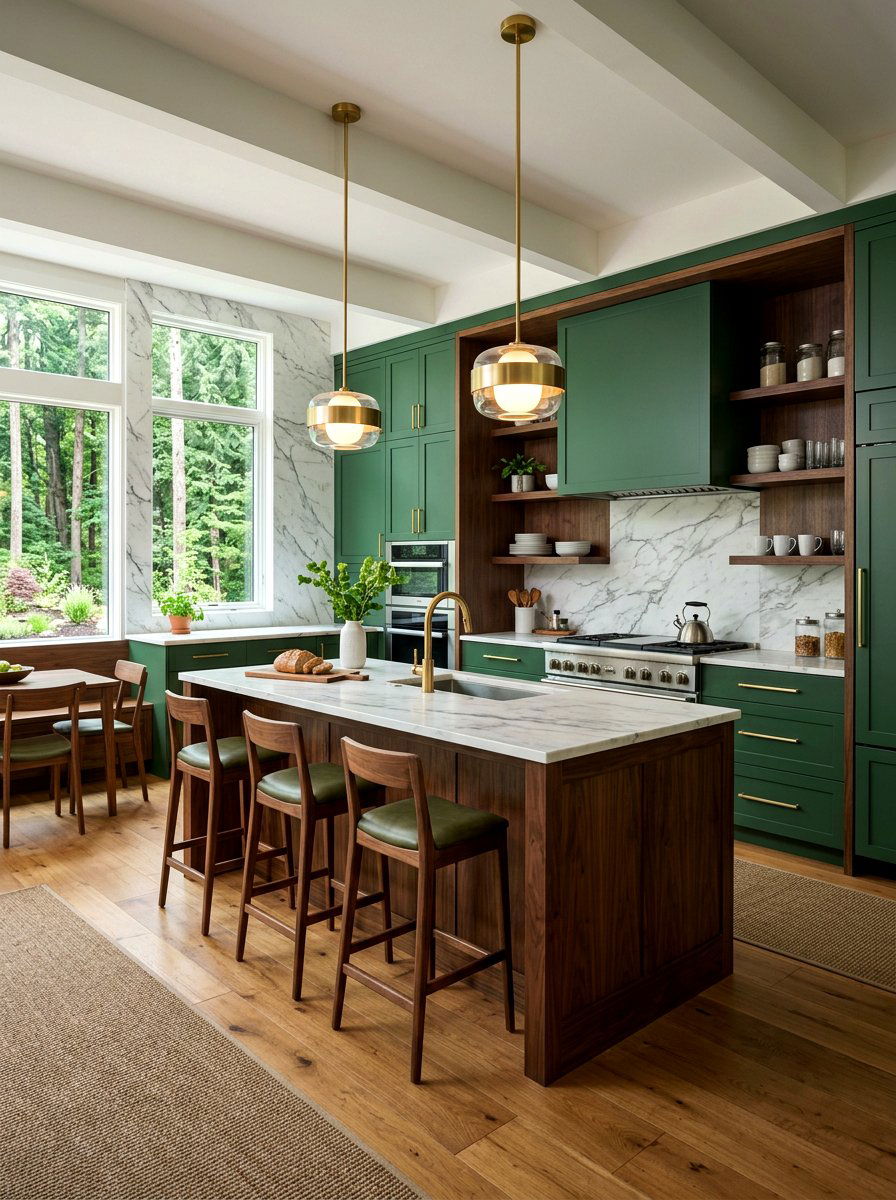
Forest green and walnut offer a luxurious and moody aesthetic that is perfect for homeowners who want to make a bold statement. The deep, saturated tones of forest green provide a rich contrast to the dark, elegant swirls of walnut wood. This design often features floor-to-ceiling green cabinetry paired with walnut open shelving or a walnut butcher block countertop on a central island. To keep the space from feeling too heavy, designers frequently incorporate white marble backsplashes or light-colored flooring. The result is a high-end, sophisticated kitchen that feels incredibly intimate and cozy, making it an ideal environment for evening entertaining and gourmet cooking.
3. Olive green and reclaimed wood kitchen
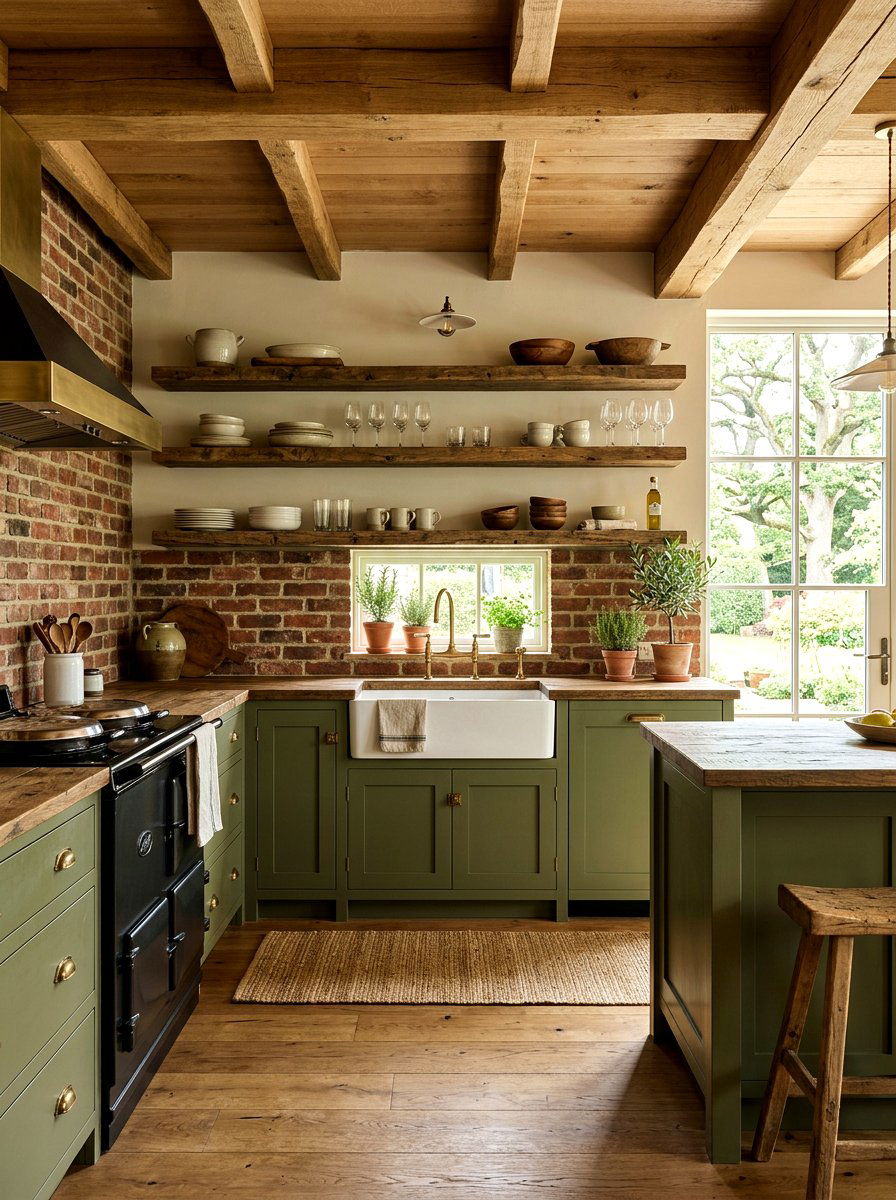
Olive green and reclaimed wood are the ultimate duo for creating a rustic or French country-inspired kitchen. The earthy, yellow-based tones of olive green naturally complement the weathered textures and varied patinas found in salvaged timber. In this setup, you might see olive green lower cabinets paired with a backsplash of antique brick or stone, while the upper storage consists of chunky reclaimed wood shelves. This approach celebrates the beauty of imperfection and brings a sense of history to the space. It is a fantastic choice for those who want their kitchen to feel lived-in, warm, and deeply connected to the natural world around them.
4. Emerald green and mahogany kitchen
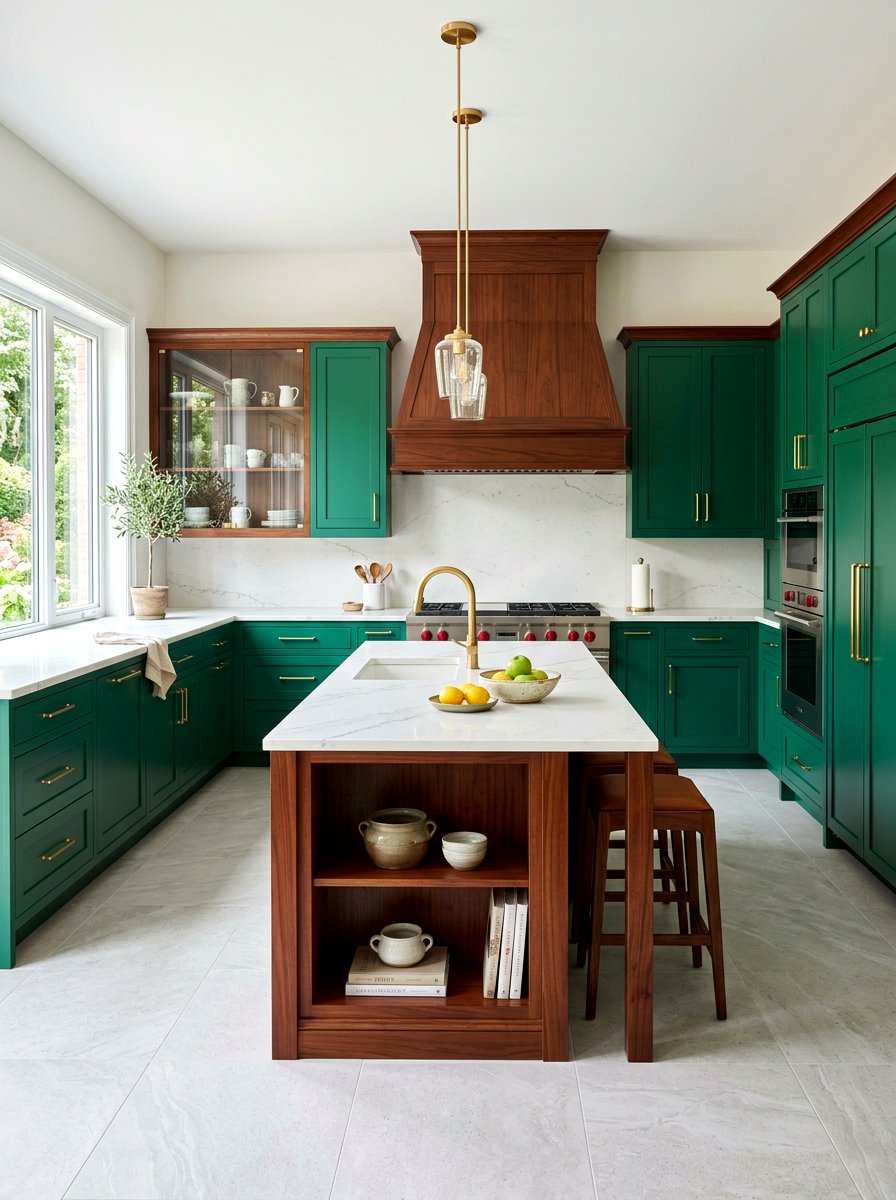
Emerald green and mahogany create a vibrant and high-contrast look that leans into mid-century modern or traditional elegance. The jewel-toned brightness of emerald green brings a sense of energy and life, which is beautifully grounded by the deep reddish-brown hues of mahogany wood. This combination often utilizes flat-panel cabinets in emerald green to maintain a sleek profile, paired with mahogany trim or a mahogany-clad vent hood. Because both colors are quite strong, it is helpful to use neutral flooring like light gray tile or polished concrete to balance the visual weight. This style is perfect for those who enjoy a sophisticated, high-fashion interior.
5. Mint green and light wood kitchen
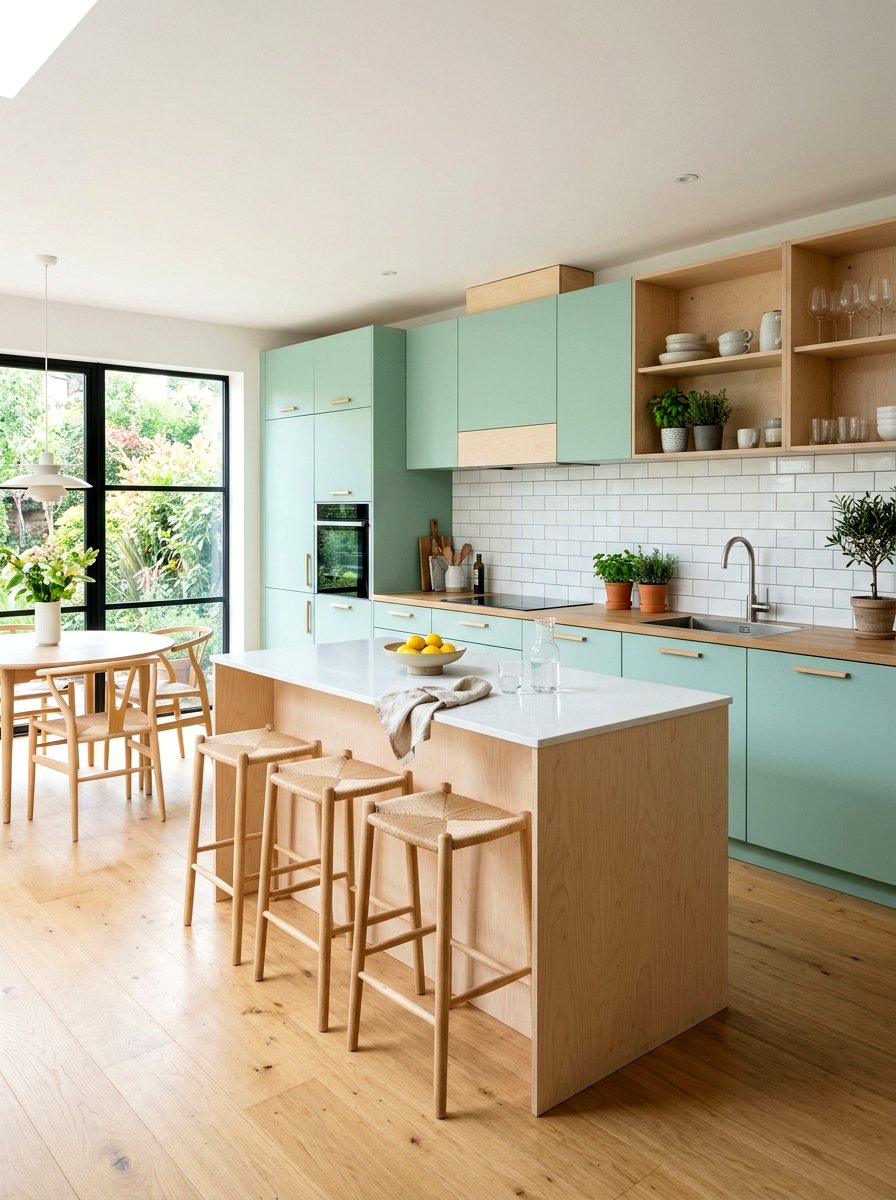
Mint green and light wood offer a fresh, Scandinavian-inspired vibe that makes even the smallest kitchen feel bright and expansive. The soft pastel quality of mint green reflects light beautifully, while pale woods like birch or ash add just enough warmth without darkening the room. This design theme typically involves minimalist slab cabinets and clean lines, often omitting heavy hardware for a more streamlined appearance. To enhance the Scandi feel, you can add white tile backsplashes and light-colored stone surfaces. This look is incredibly popular for apartments or modern suburban homes where a clean, cheerful, and uncluttered aesthetic is highly desired by the residents.
6. Hunter green and dark wood kitchen
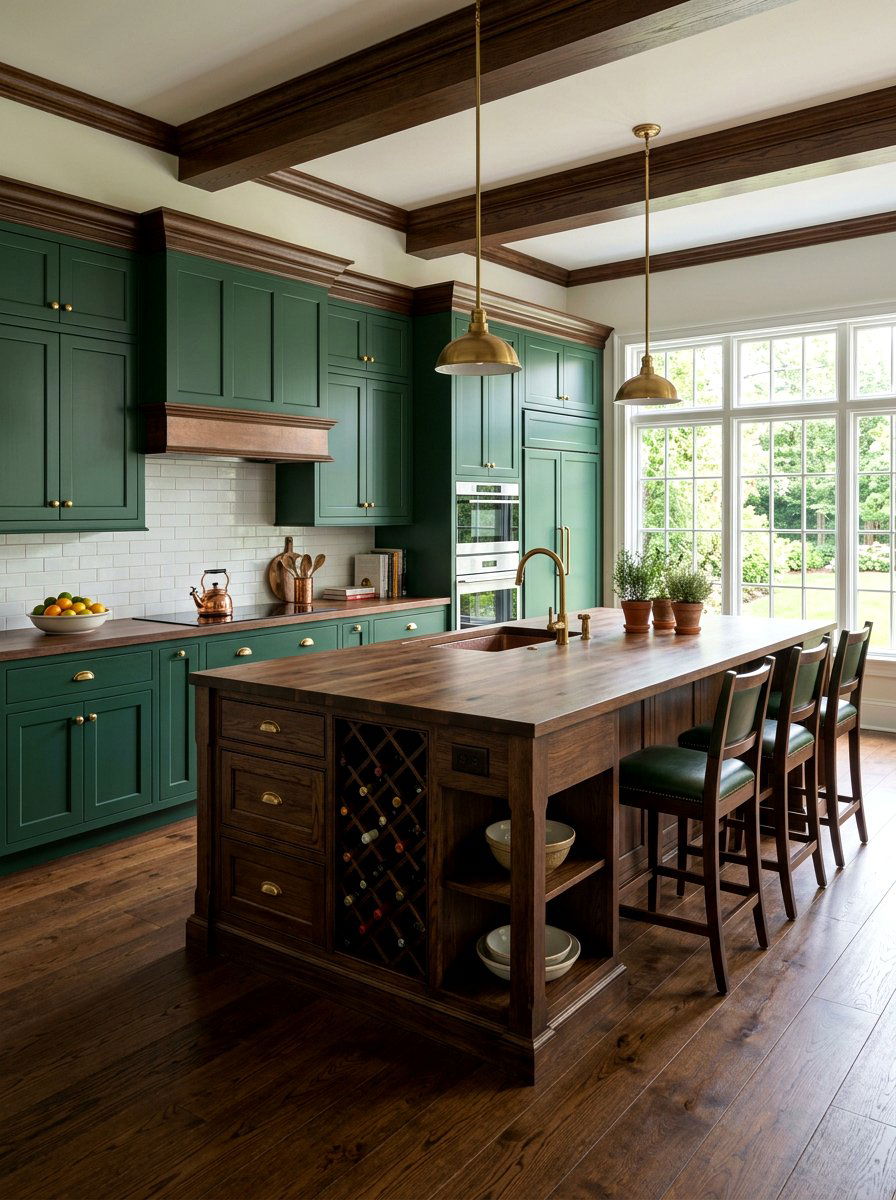
Hunter green and dark wood provide a classic, heritage-inspired look that feels like it belongs in a grand manor or a cozy mountain cabin. The dark, pine-like tones of hunter green are exceptionally stable and provide a strong visual anchor for the space. When paired with dark-stained woods like ebony or dark oak, the kitchen takes on a regal and protective quality. This style often benefits from traditional details like crown molding, integrated wine racks, and farmhouse sinks. To prevent the dark colors from overwhelming the room, large windows or high-quality task lighting are essential to highlight the beautiful textures of the wood and the paint.
7. Teal and warm wood kitchen
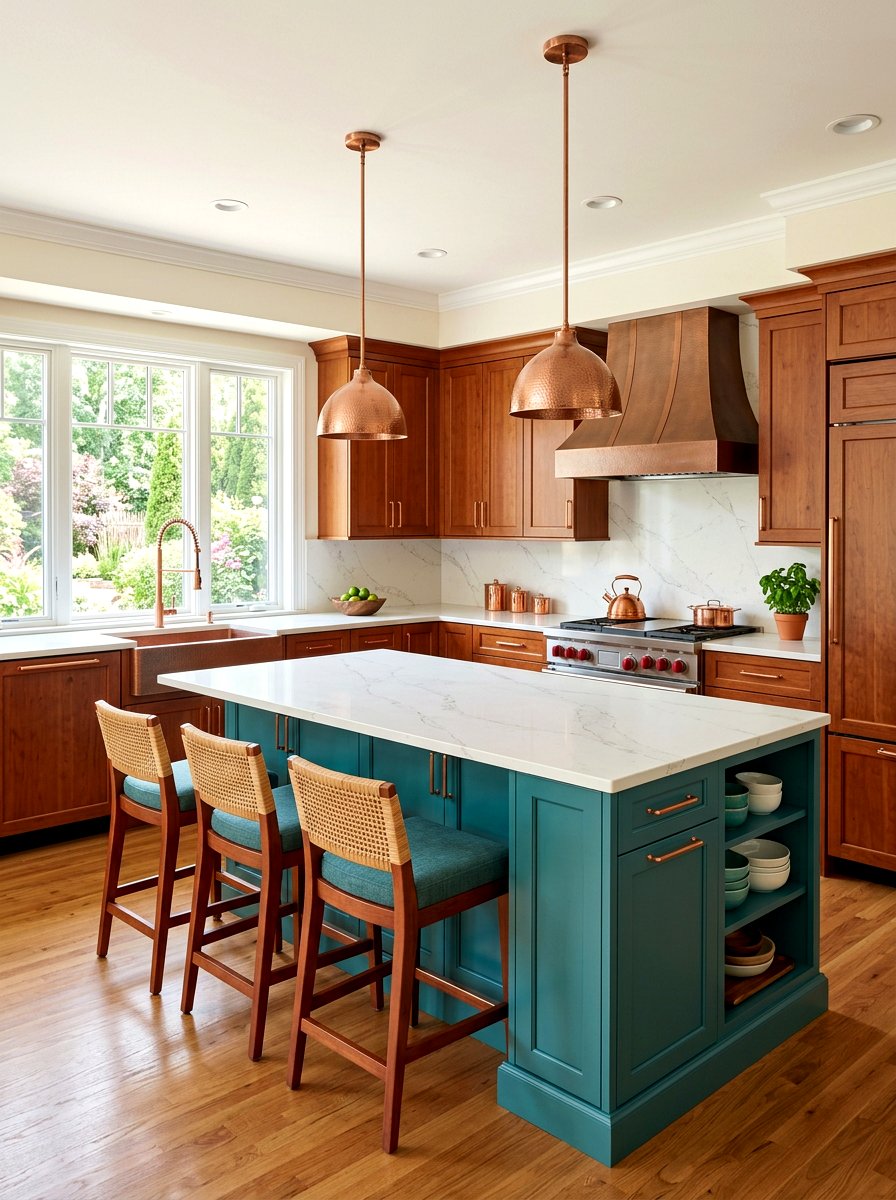
Teal and warm wood offer a unique and slightly modern twist on the green-and-wood trend. Teal sits perfectly between green and blue, providing a sophisticated depth that works wonderfully with the orange and red undertones of warm woods like cherry or stained pine. This combination is often used in transitional designs where traditional cabinet shapes meet contemporary color palettes. A teal island can serve as a stunning centerpiece against a backdrop of warm wood perimeter cabinets. Adding copper or gold fixtures can further accentuate the warmth of the wood and the vibrancy of the teal, resulting in a kitchen that feels curated and artistic.
8. Seafoam green and birch kitchen
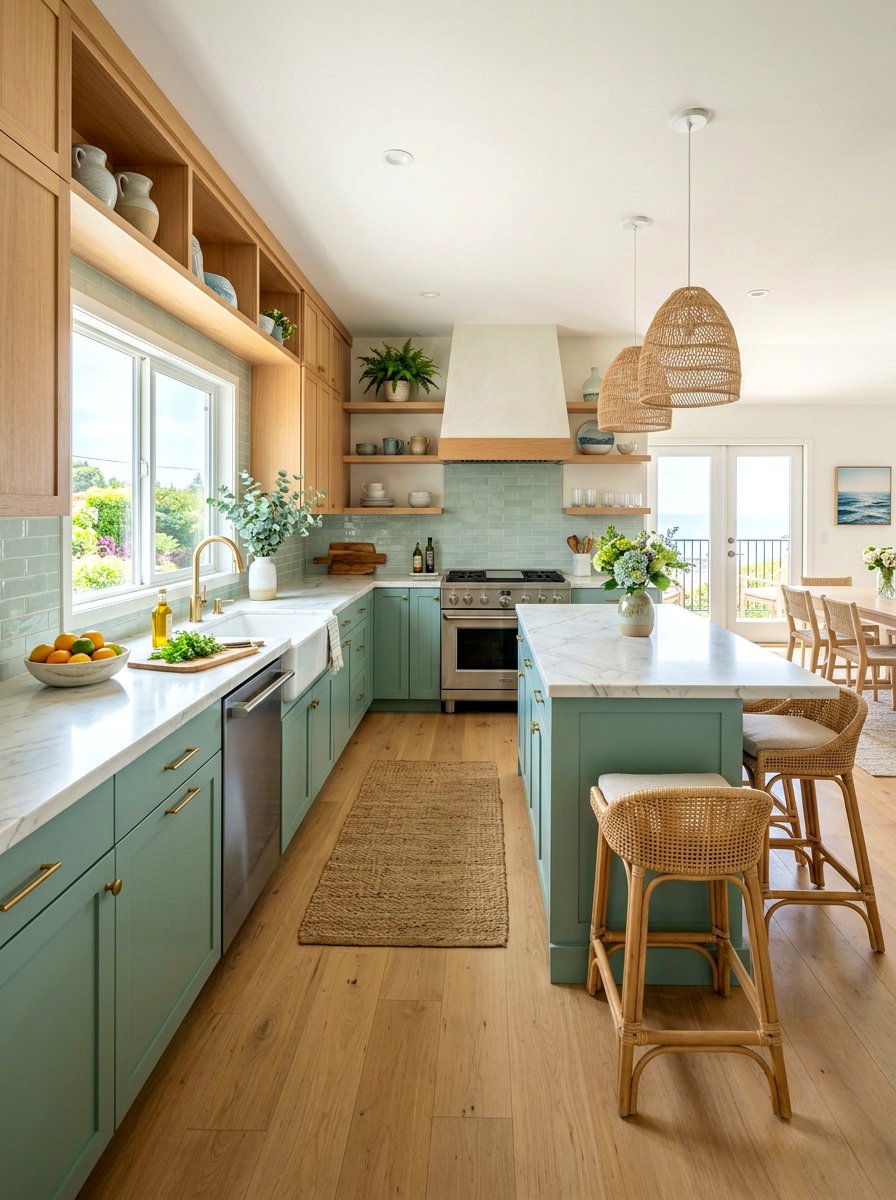
Seafoam green and birch create a coastal, breezy atmosphere that is perfect for a light-filled kitchen. The pale, watery tones of seafoam green bring a sense of tranquility and softness to the room, which is perfectly matched by the fine grain and light color of birch wood. This design often features seafoam-painted lower cabinets and birch upper cabinets or shelving to keep the visual weight low. It is an excellent choice for vacation homes or anyone who wants their kitchen to feel like a permanent summer retreat. Natural textures like rattan stools and woven pendant lights can help complete this relaxed and inviting coastal aesthetic.
9. Moss green and cherry wood kitchen
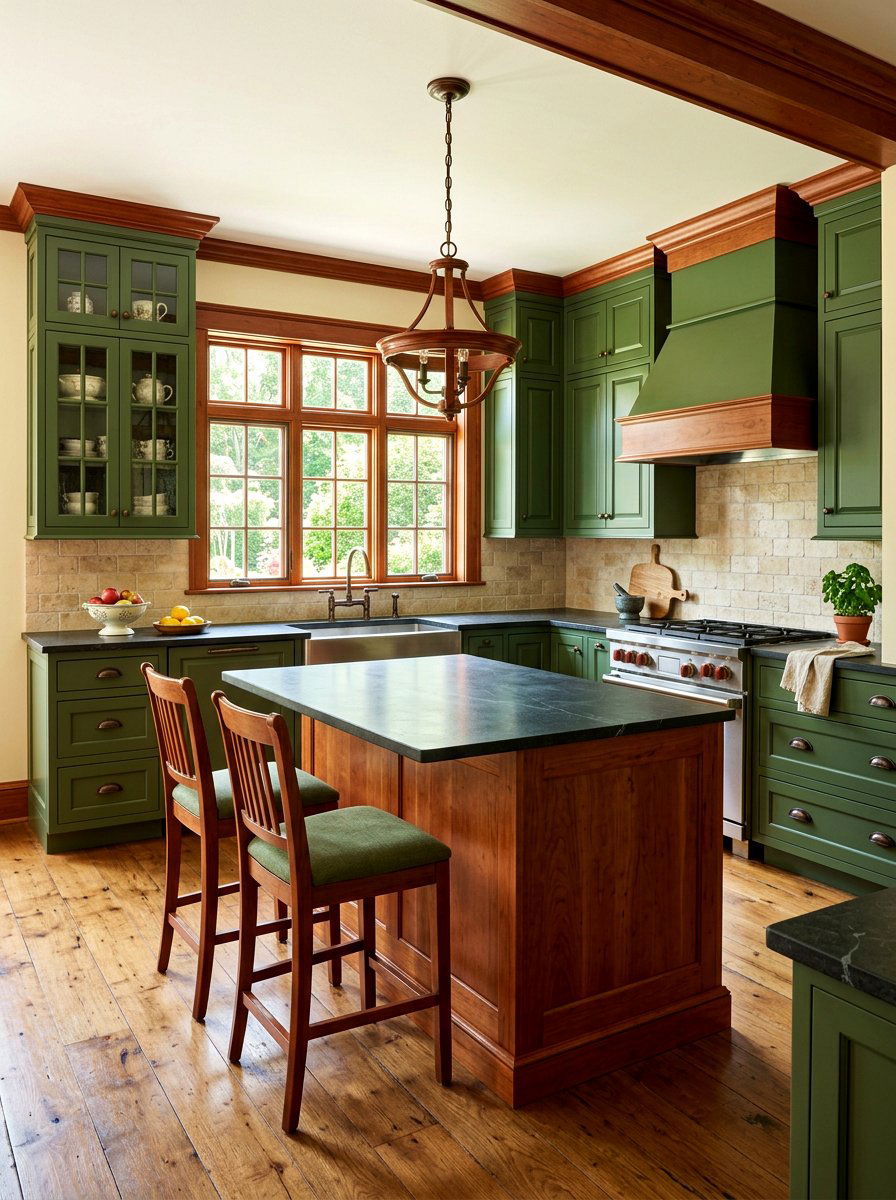
Moss green and cherry wood provide a sophisticated and grounded palette that feels deeply connected to the forest floor. The muted, brownish-green of moss green acts as a perfect neutral that tames the natural red highlights of cherry wood. In this design, you might see moss green cabinetry accented by cherry wood trim, or perhaps a cherry wood island standing against a wall of moss green units. This combination is timeless and resists looking dated because it relies on colors found frequently in nature. It works best with natural stone countertops and bronze hardware, creating a warm, inviting space that feels established and solid.
10. Pastel green and pine kitchen
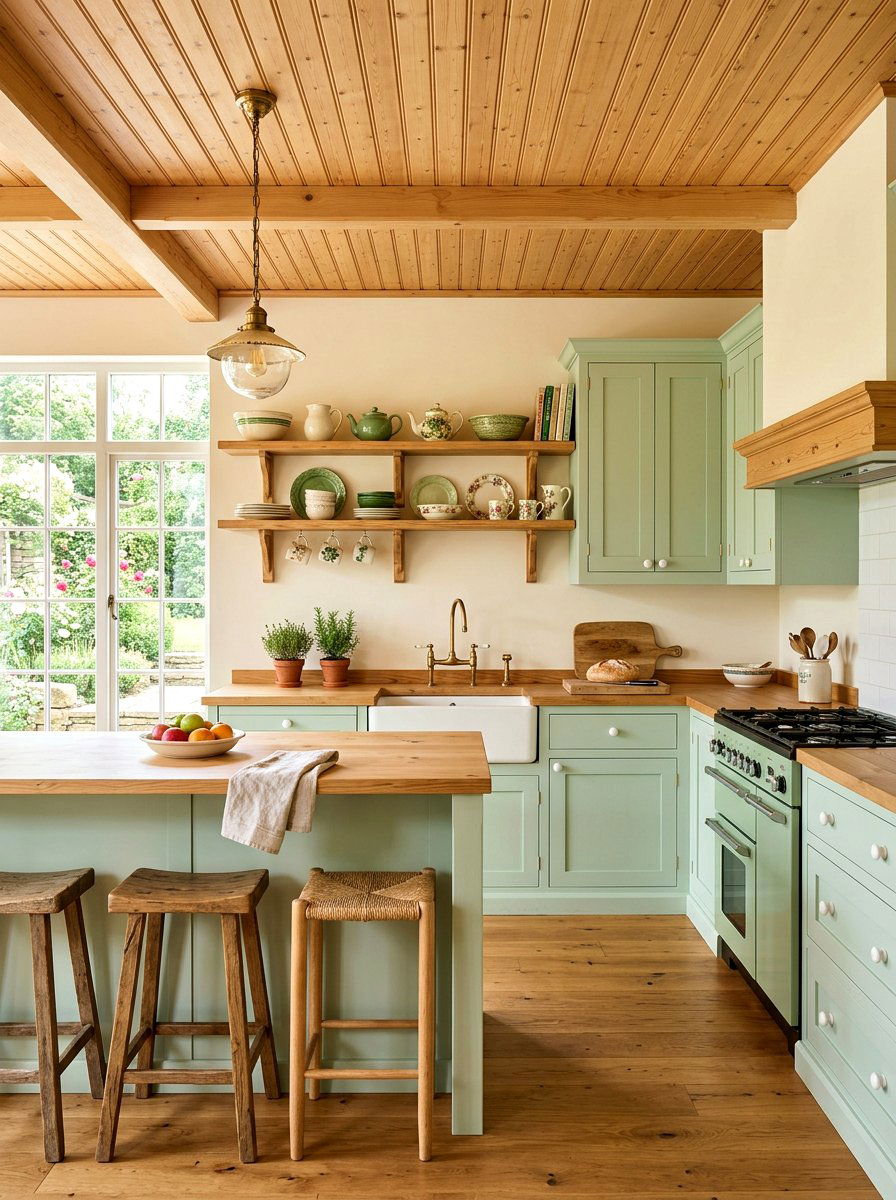
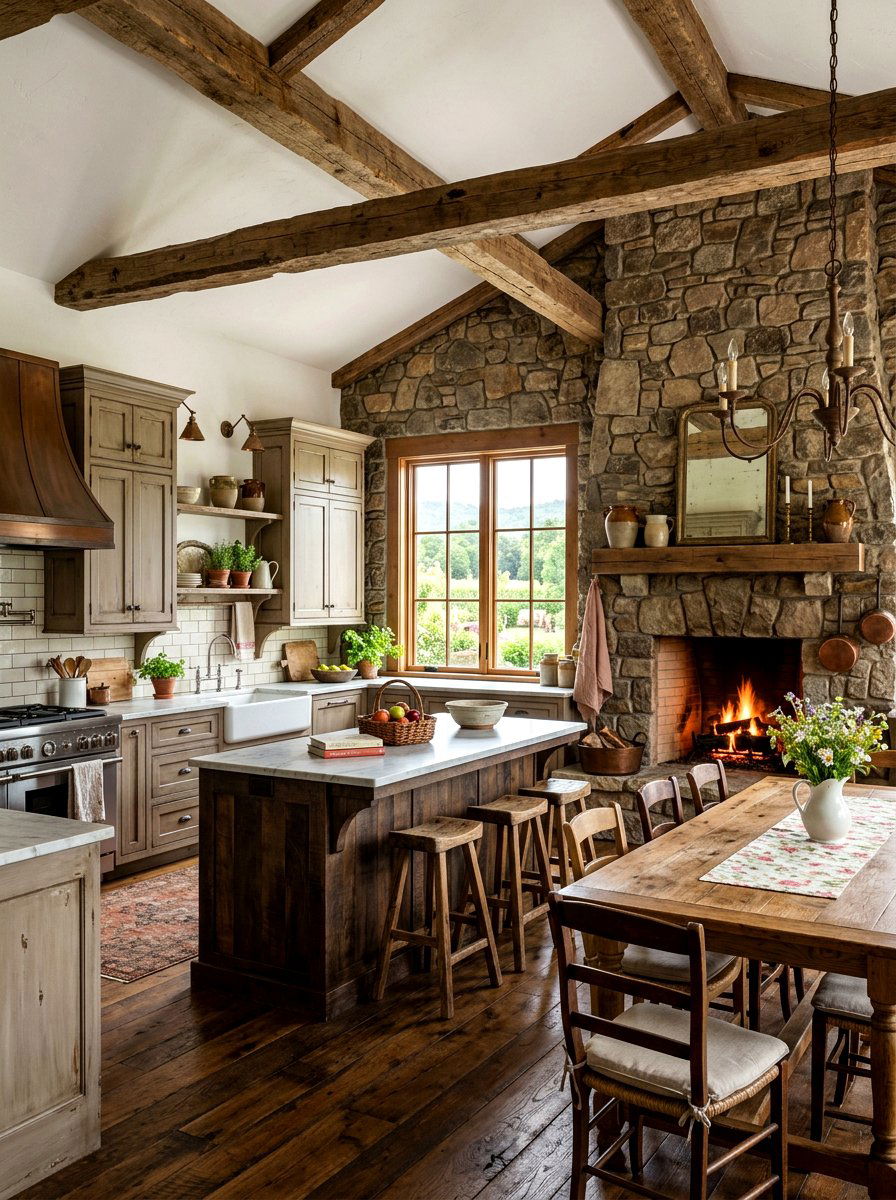
Pastel green and pine are a delightful combination for those seeking a cottage-core or vintage-inspired kitchen look. The soft, milky tones of pastel green provide a cheerful and feminine touch that softens the rugged, knotted appearance of natural pine wood. This design often incorporates open pine shelving, pine beadboard ceilings, or even a pine-topped prep table. The result is a space that feels incredibly homey and unpretentious, perfect for family gatherings and casual baking. Using white ceramic hardware and floral accents can further enhance the charming, nostalgic feel of this design, making the kitchen feel like a cozy sanctuary for the whole family.
11. Deep green and cedar kitchen
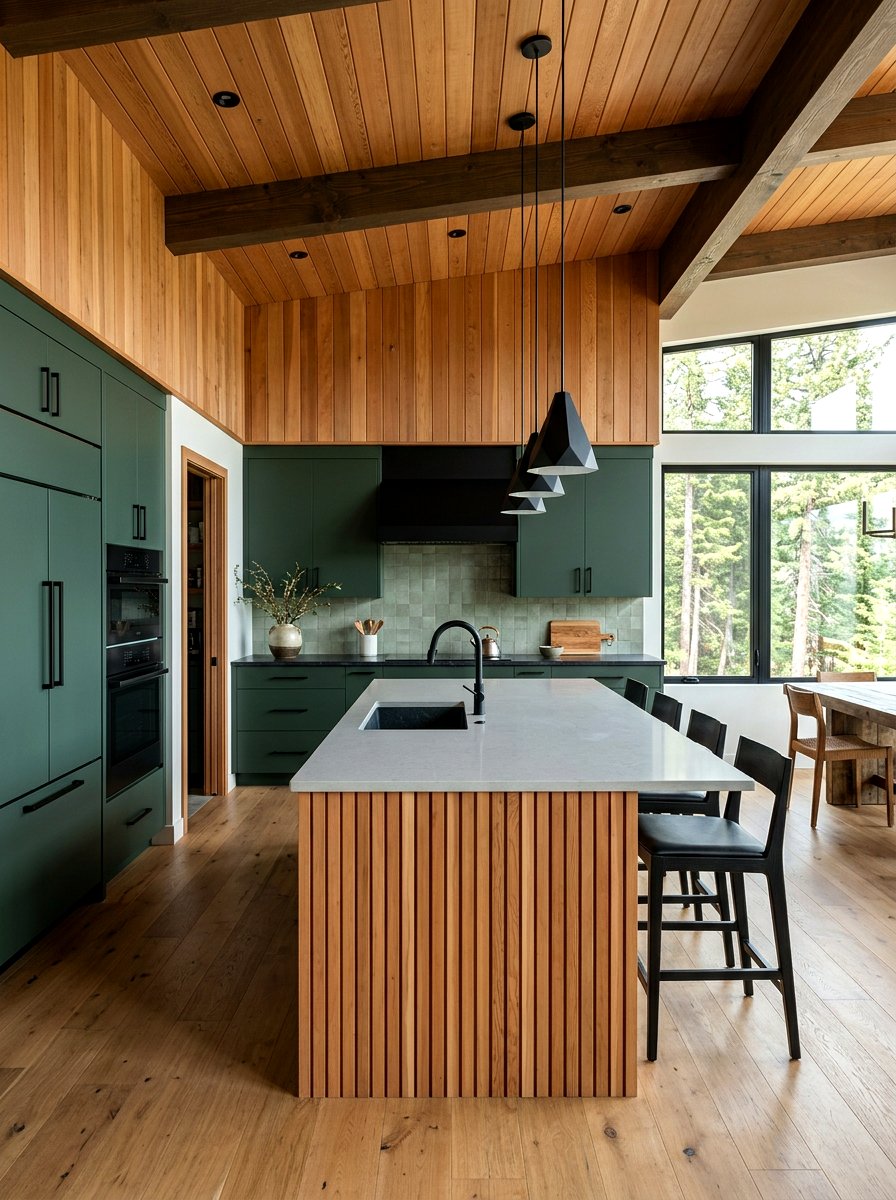
Deep green and cedar create a dramatic, organic look that is often seen in modern lodge or architectural homes. The rich, dark green tones provide a sense of luxury, while the distinct grain and aromatic quality of cedar wood add a powerful sensory element to the kitchen. This design might feature vertical cedar slats on an island or a ceiling, contrasted against smooth, matte deep green cabinetry. Because cedar is naturally moisture-resistant, it is a practical as well as beautiful choice for the kitchen environment. This pairing feels very high-end and custom, offering a unique take on the traditional green and wood color scheme.
12. Pale green and ash wood kitchen
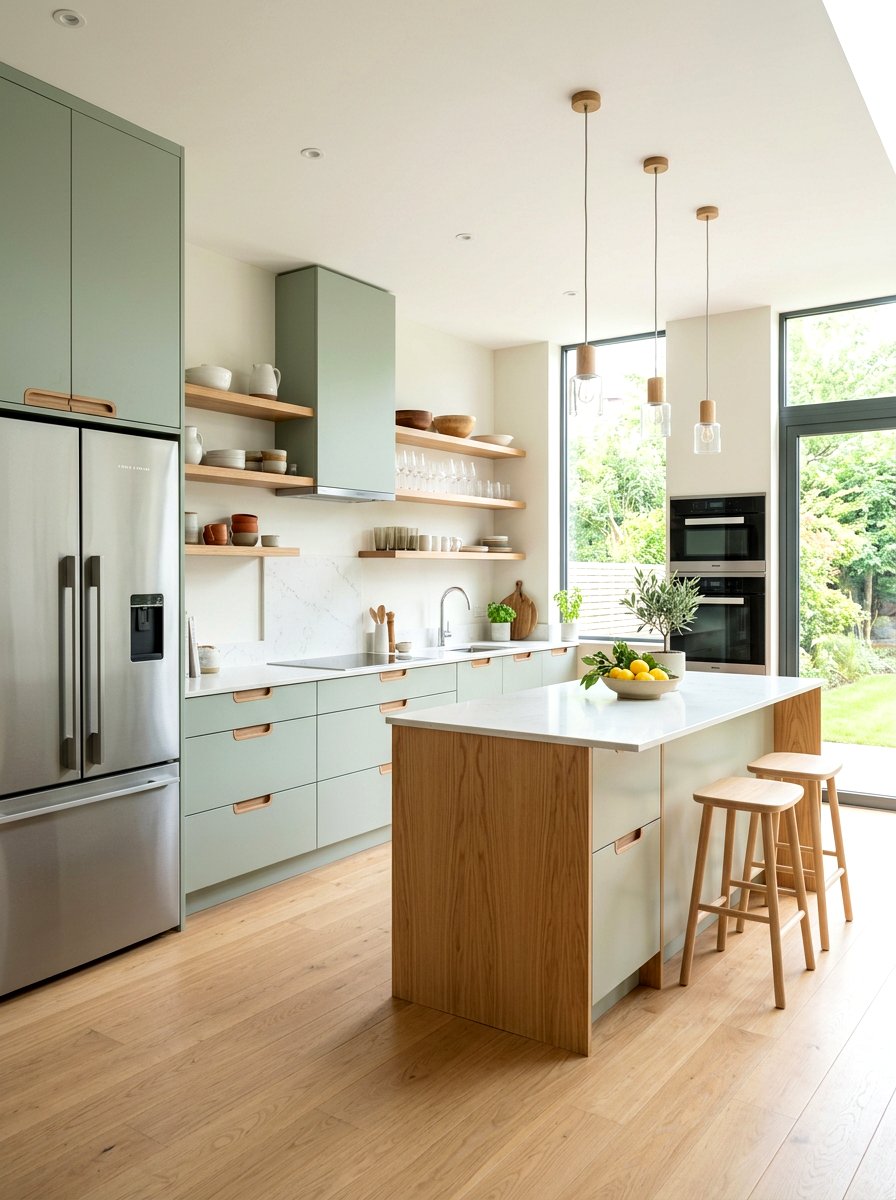
Pale green and ash wood offer a subtle, sophisticated look that prioritizes texture and light. Ash wood is known for its beautiful, straight grain and light color, which pairs effortlessly with very light, almost silver-green hues. This combination is ideal for a minimalist or contemporary kitchen where the goal is to create a sense of calm and order. You might see pale green cabinets with integrated ash wood handles or ash wood open shelving that blends into the wall. This look is very modern and works well with stainless steel appliances and glass accents, providing a clean and professional appearance that remains warm and approachable.
13. Army green and rustic wood kitchen
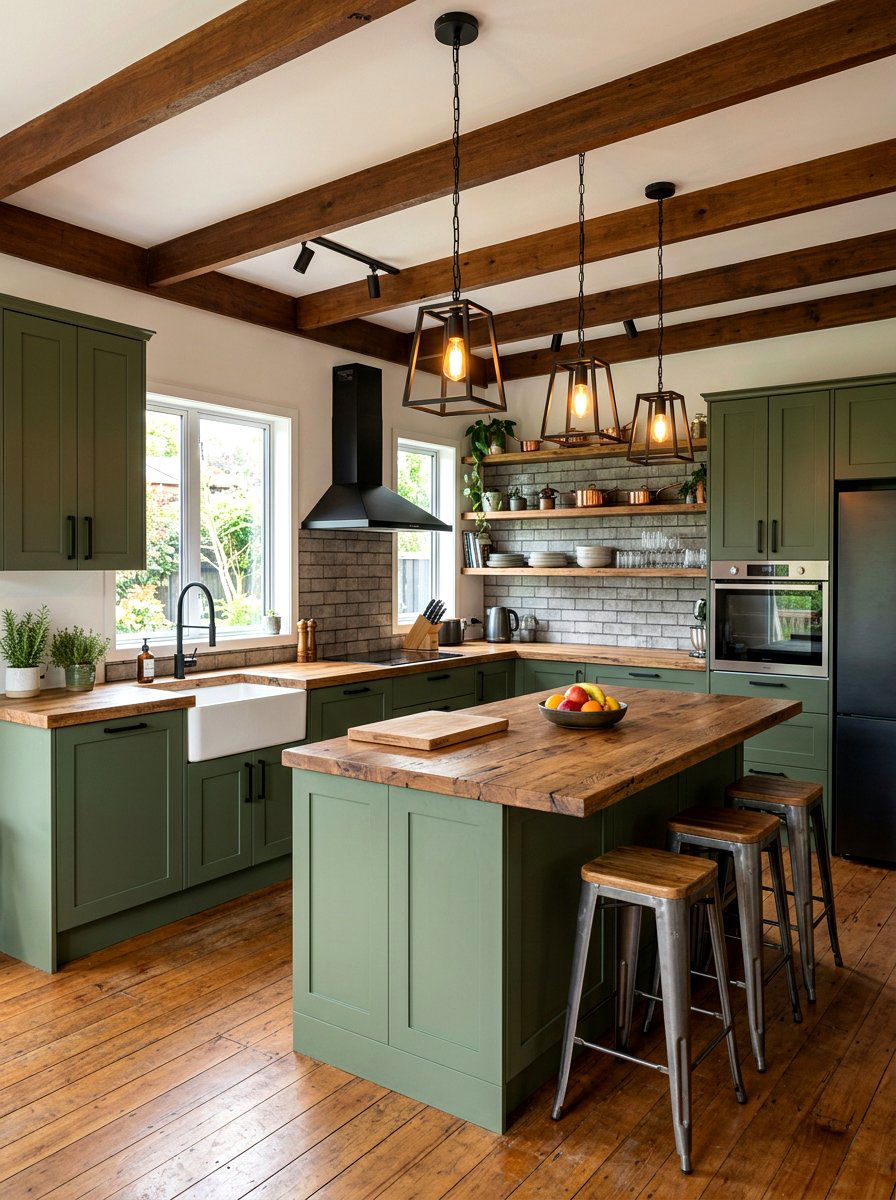
Army green and rustic wood provide a utilitarian yet stylish look that works perfectly in industrial or farmhouse settings. The flat, matte quality of army green is tough and practical, making it a great choice for high-traffic family kitchens. When paired with heavily textured rustic wood — such as wood with visible saw marks or nail holes — the kitchen takes on a sturdy, hand-built feel. This design often incorporates matte black hardware and industrial lighting fixtures to lean into the rugged aesthetic. It is a fantastic option for those who want a kitchen that looks better as it ages and can handle the rigors of daily use.
14. Kelly green and mid century wood kitchen
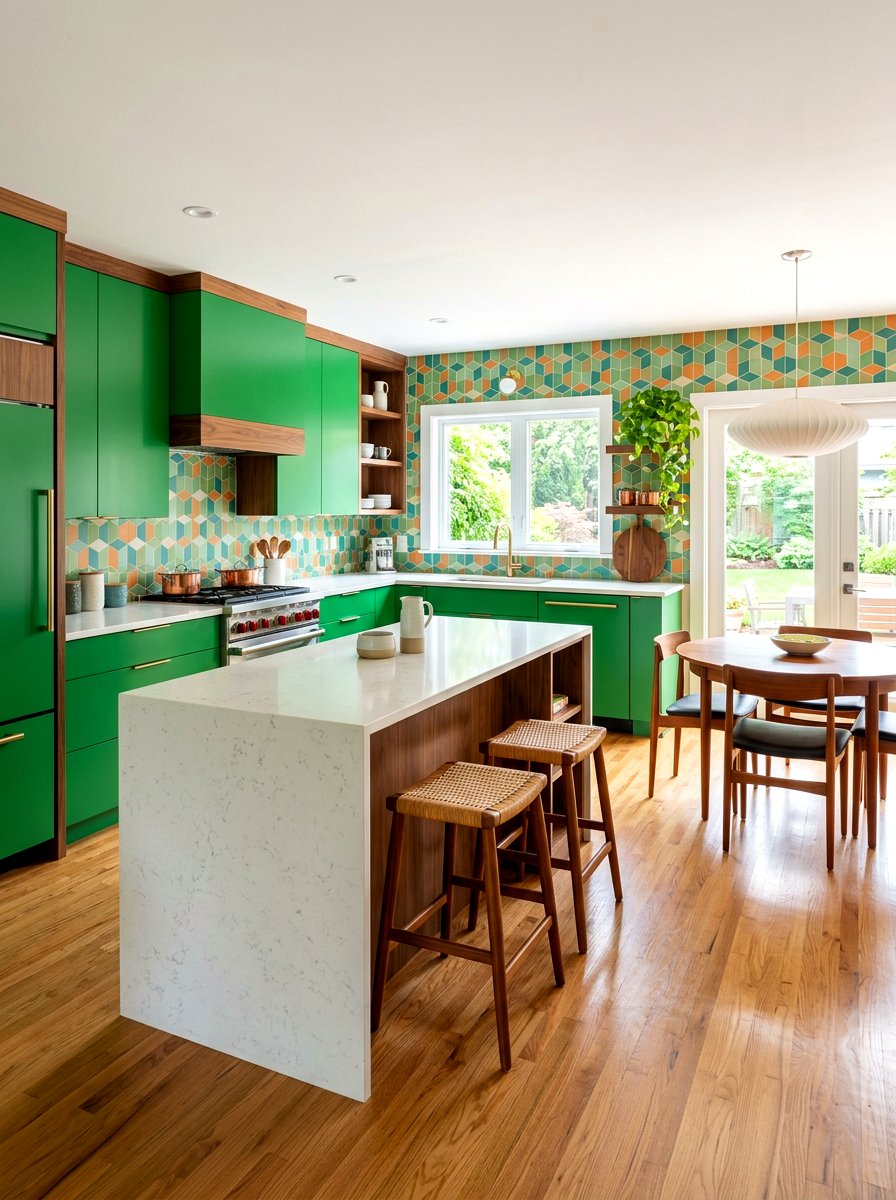
Kelly green and mid-century wood are for the homeowner who isn't afraid of a little vintage flair and high energy. Kelly green is a bright, true green that pops brilliantly against the warm, medium-toned woods like teak or walnut that are characteristic of mid-century design. This look often features tapered furniture legs, geometric patterns, and sleek, handle-less cabinetry. A Kelly green island can act as a playful focal point in a kitchen otherwise dominated by beautiful wood grains. This combination feels optimistic and stylish, bridging the gap between retro inspiration and modern living in a way that feels fresh and exciting.

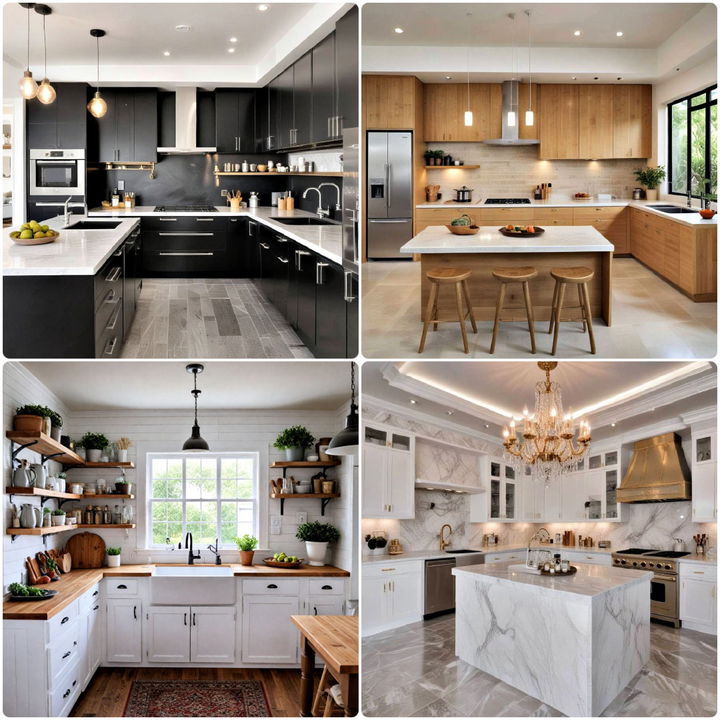
15. Green cabinets and wood island
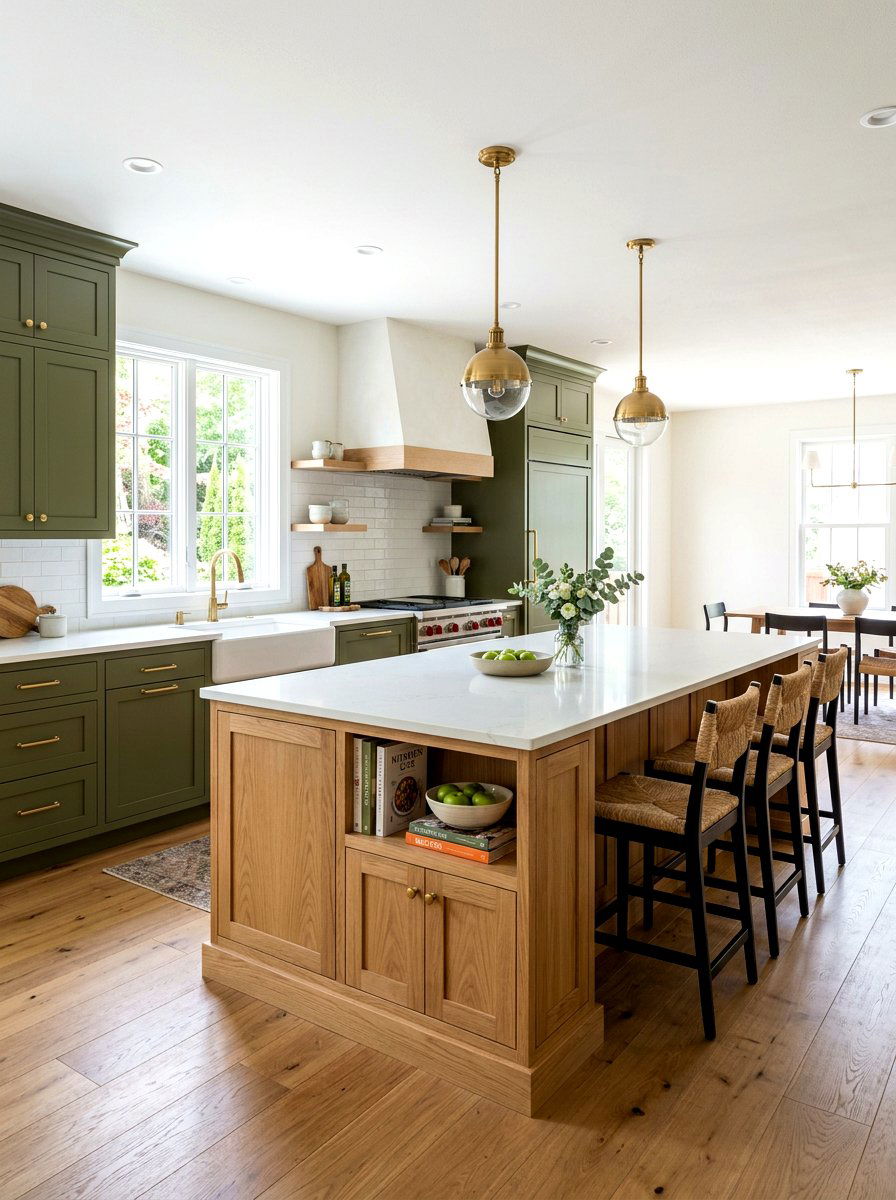
A green cabinet and wood island configuration is a classic way to execute a two-tone kitchen design with professional results. By painting the perimeter cabinets a beautiful shade of green — like olive or sage — and leaving the central island in its natural wood state, you create a clear focal point in the room. This setup provides a perfect balance of color and warmth, ensuring the room feels vibrant but also grounded. The wood island acts like a piece of furniture, adding texture and a sense of craftsmanship to the space. It is an extremely versatile layout that works with almost any style, from traditional to modern.
16. Wood cabinets and green backsplash
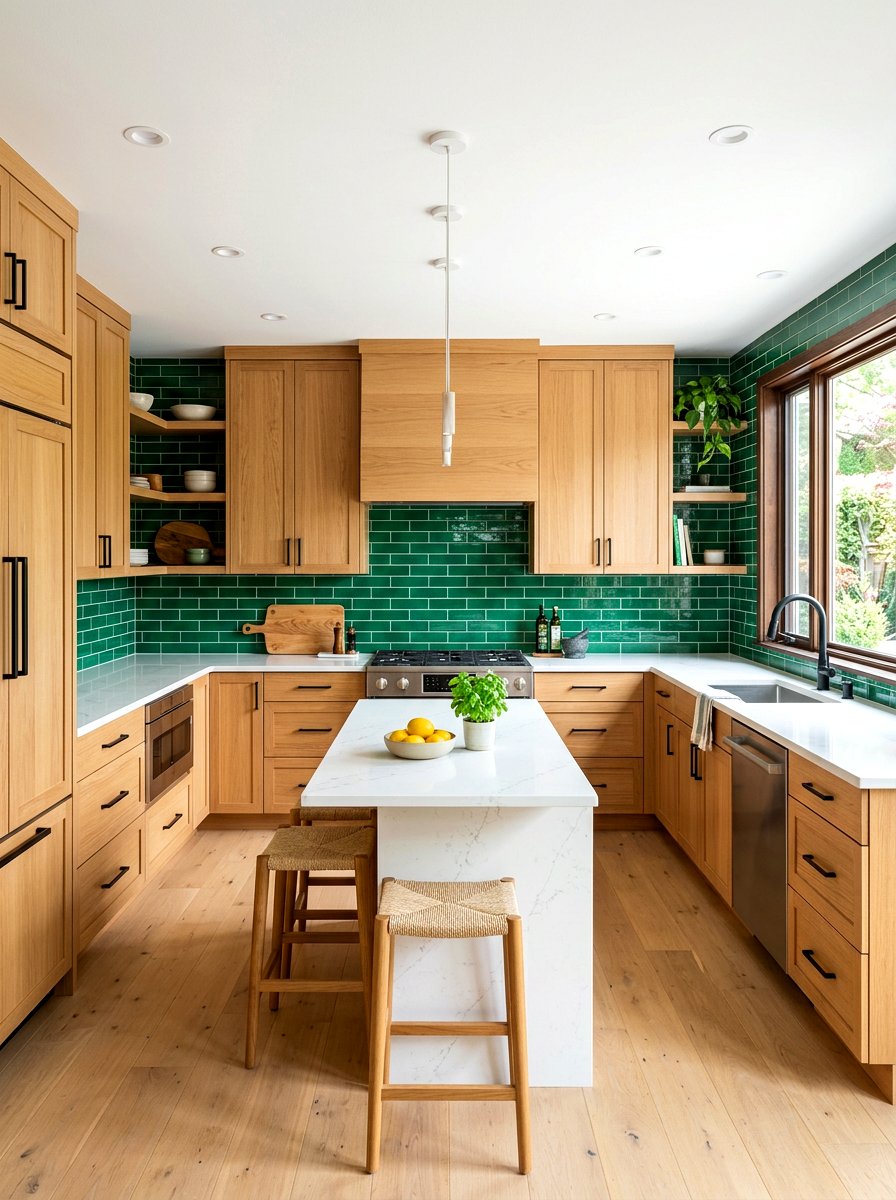
Wood cabinets and a green backsplash offer a clever way to introduce color without committing to fully painted cabinetry. The natural beauty of wood cabinets, whether they are light oak or dark walnut, provides a neutral foundation that allows a green backsplash to shine. You can choose from a variety of green tiles, such as emerald subway tiles, sage green zellige, or even a solid slab of green marble. This approach adds a pop of personality at eye level and can completely change the mood of the kitchen. It is an excellent strategy for those who love the timelessness of wood but want a modern touch.
17. Green walls and wood cabinetry
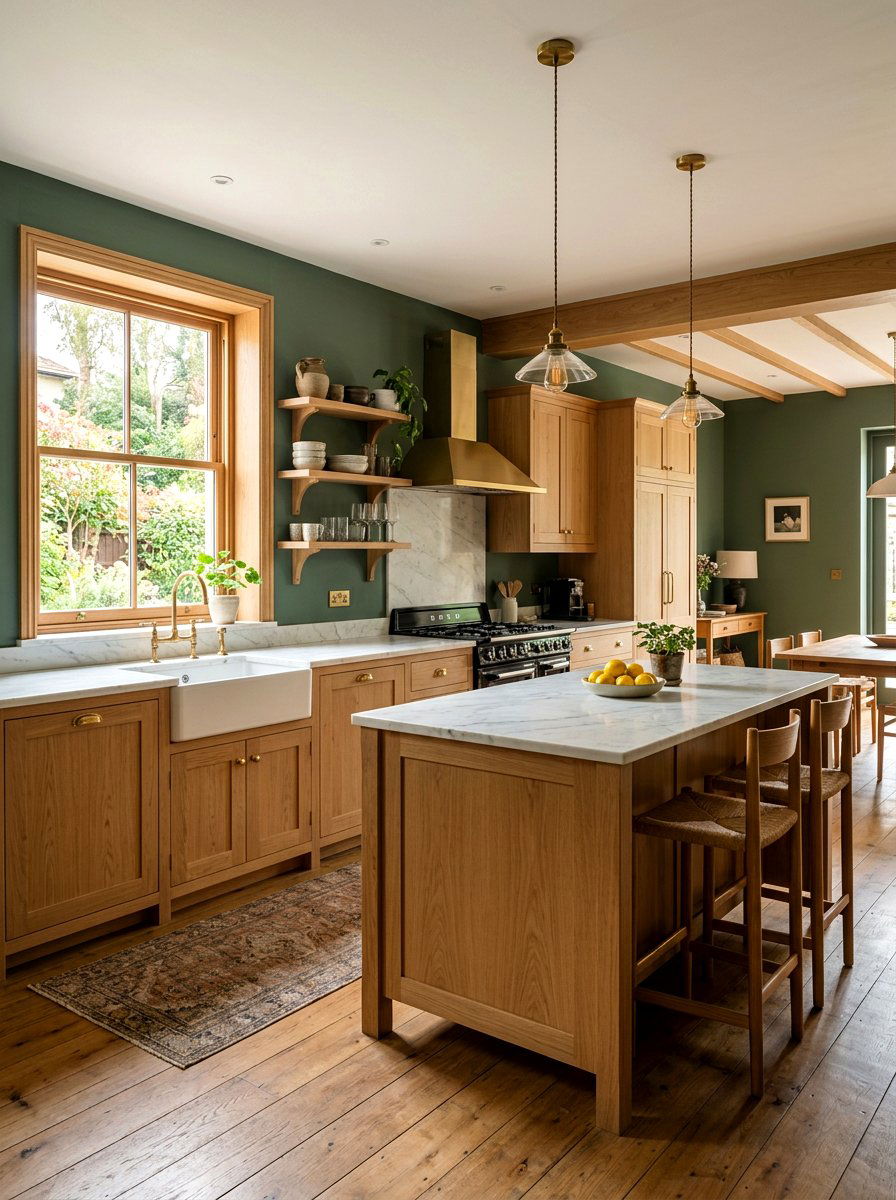
Green walls and wood cabinetry create a cohesive and immersive environment that feels like a cozy forest retreat. By painting the walls in a deep or muted green, you allow the wood cabinets to "pop" against the darker background. This design choice is particularly effective in kitchens with high ceilings or large windows where the dark walls won't feel too enclosing. The combination of organic wood textures against a solid green backdrop creates a sophisticated layered effect. To tie the look together, consider using wood trim around the windows or a wood-planked ceiling to mirror the textures of the cabinetry on the walls.
18. Wood ceiling and green kitchen
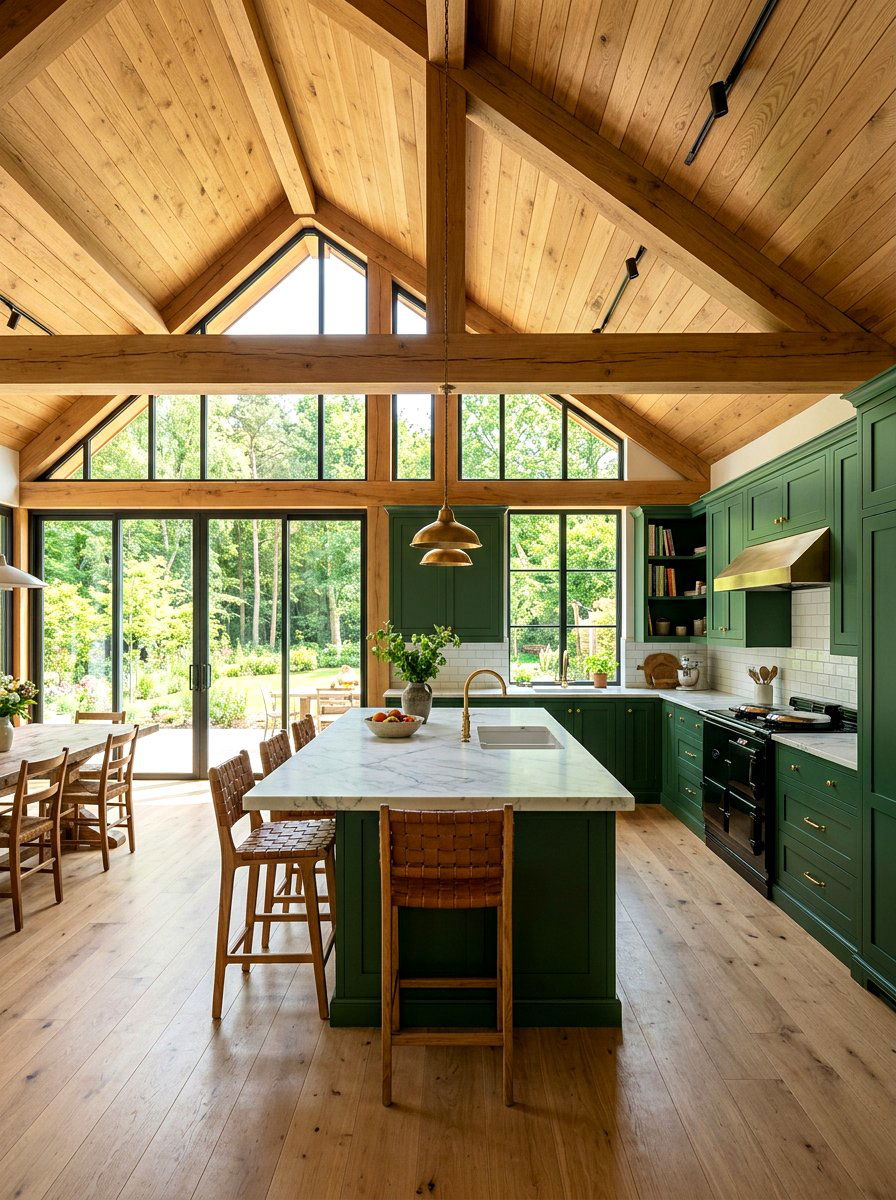
A wood ceiling and green kitchen design draws the eye upward and adds incredible architectural interest to the space. Whether you use reclaimed wood planks, modern tongue-and-groove boards, or exposed timber beams, a wood ceiling provides a warm "lid" to the room that balances green cabinetry below. This setup is especially effective in open-concept homes where you want to define the kitchen area without using walls. The warmth of the wood overhead makes the green cabinets feel more intimate and grounded. This combination is a favorite for designers looking to create a high-end, custom feel that maximizes every surface of the room.
19. Green shelving and wood units
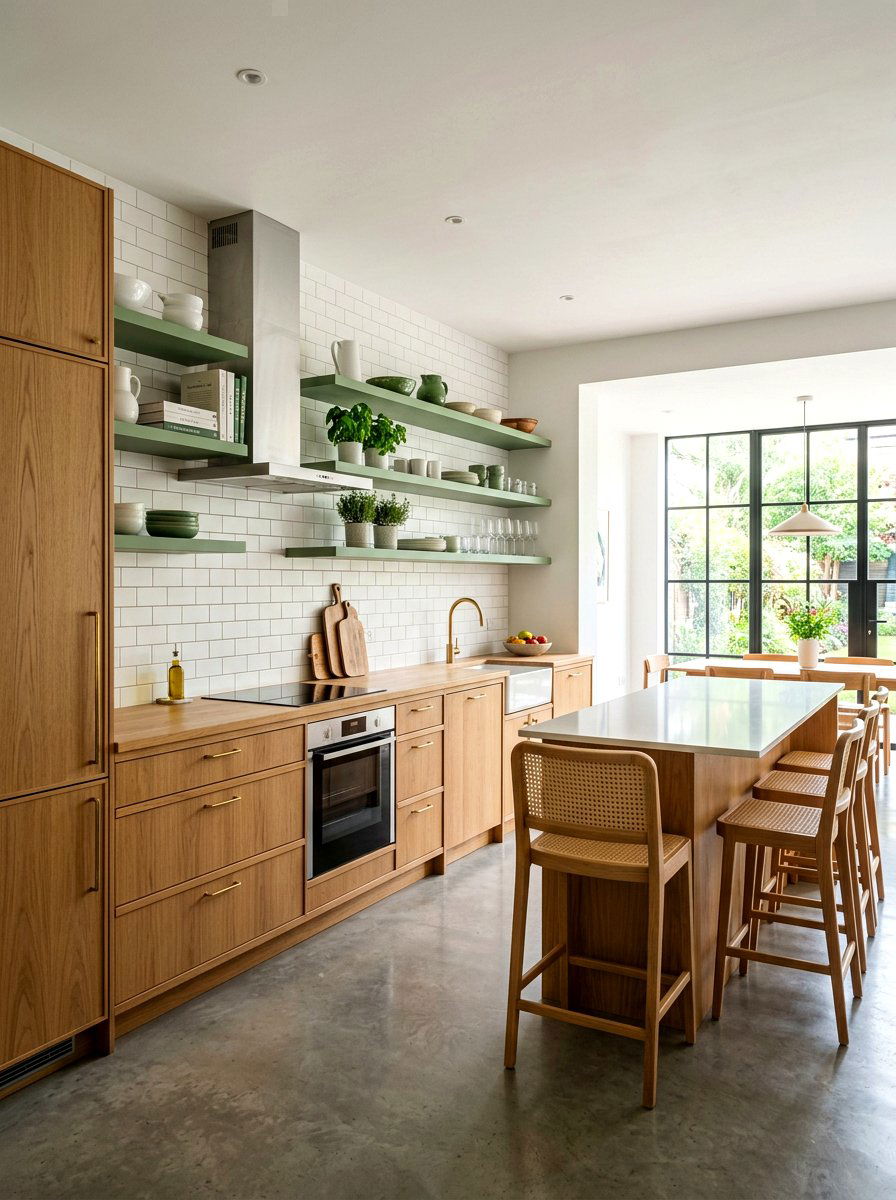
Green shelving and wood units provide a playful and modern way to mix materials in a contemporary kitchen. Instead of standard upper cabinets, you can install floating green shelves against a backsplash, paired with natural wood base units. This creates an open and airy feel that is perfect for displaying favorite ceramics or cookbooks. The contrast between the solid color of the shelves and the natural grain of the wood units adds a layer of visual interest that keeps the kitchen from feeling static. This look is very popular in modern apartments and urban homes where space and light are at a premium.
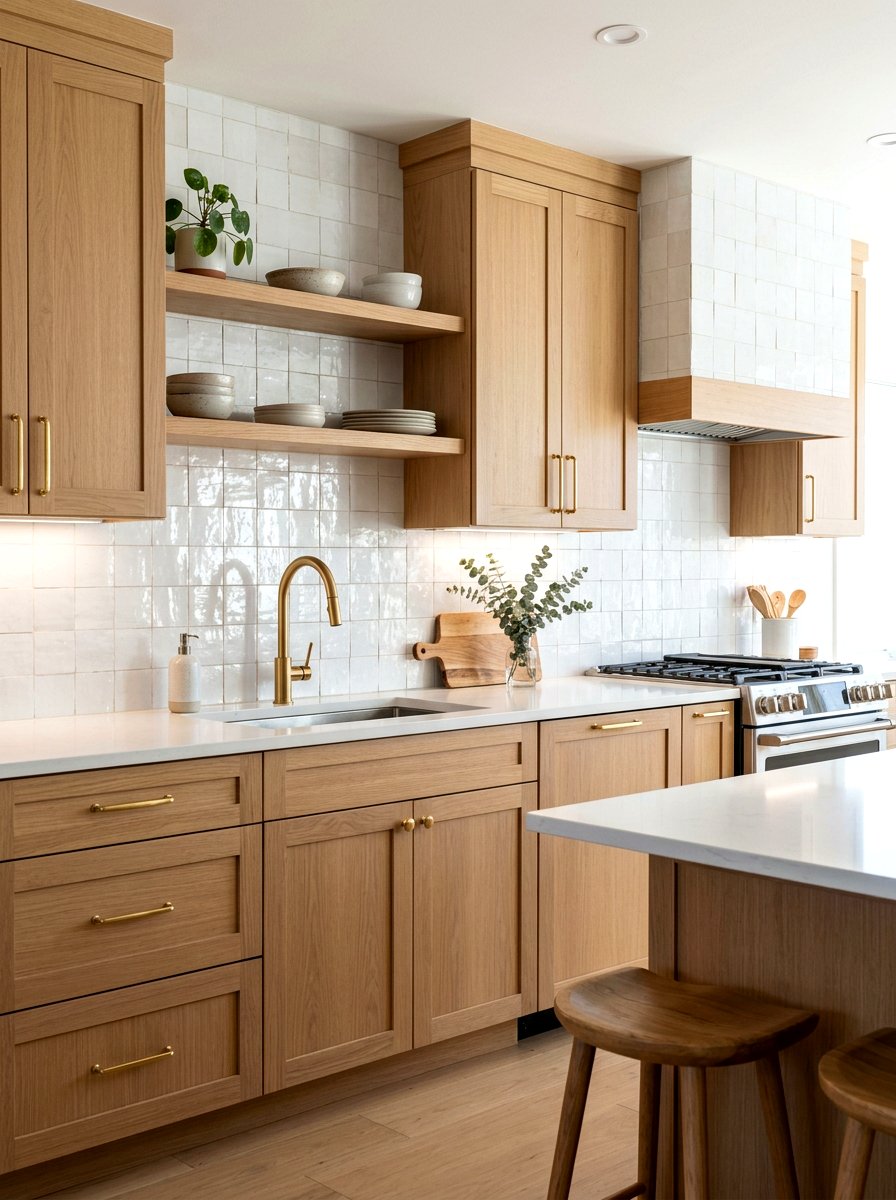
20. Wood flooring and green kitchen
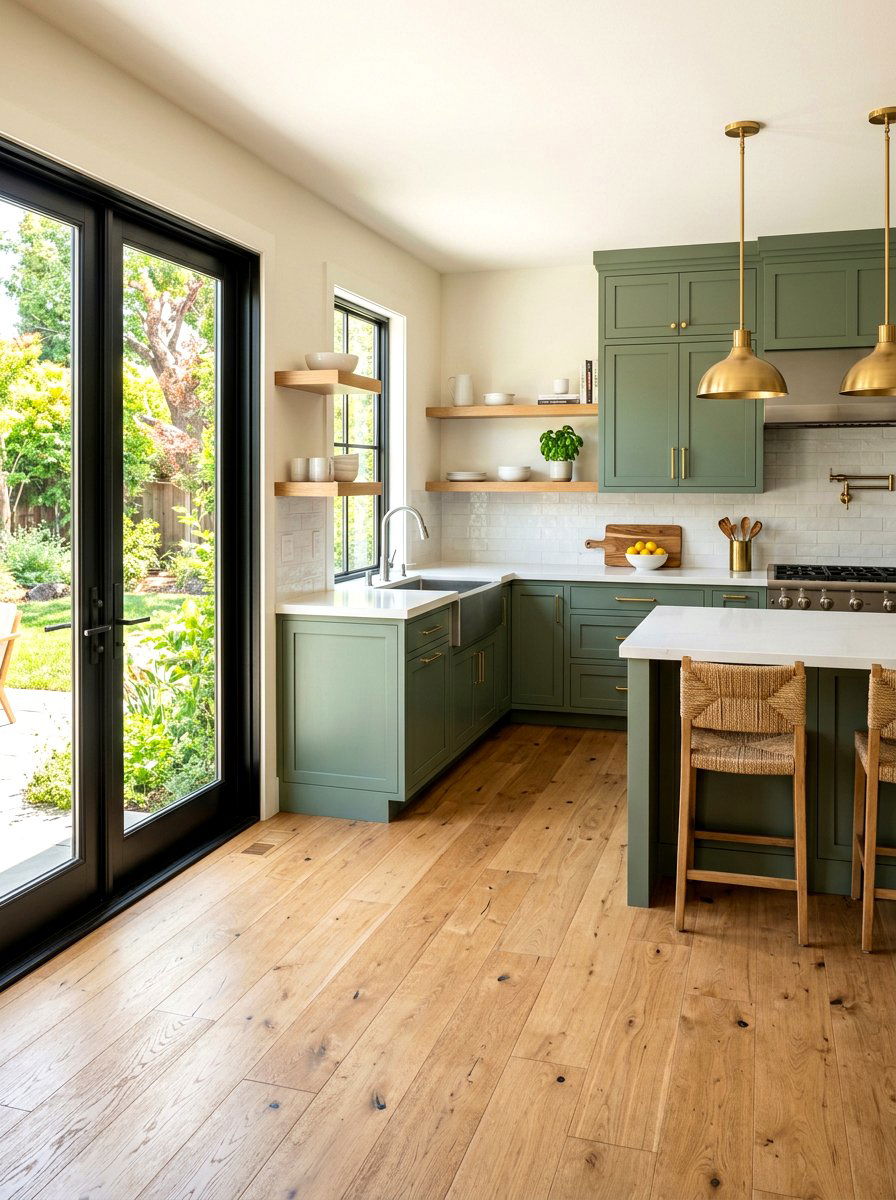
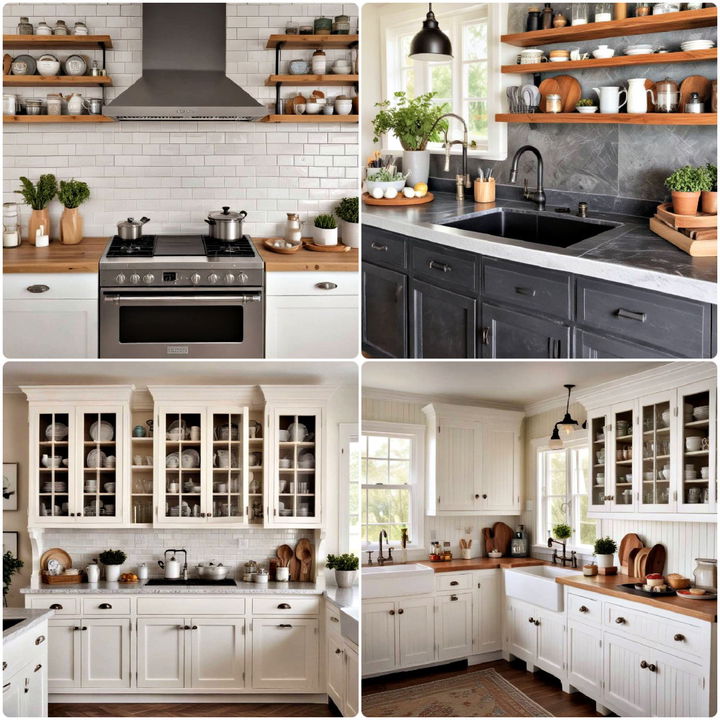
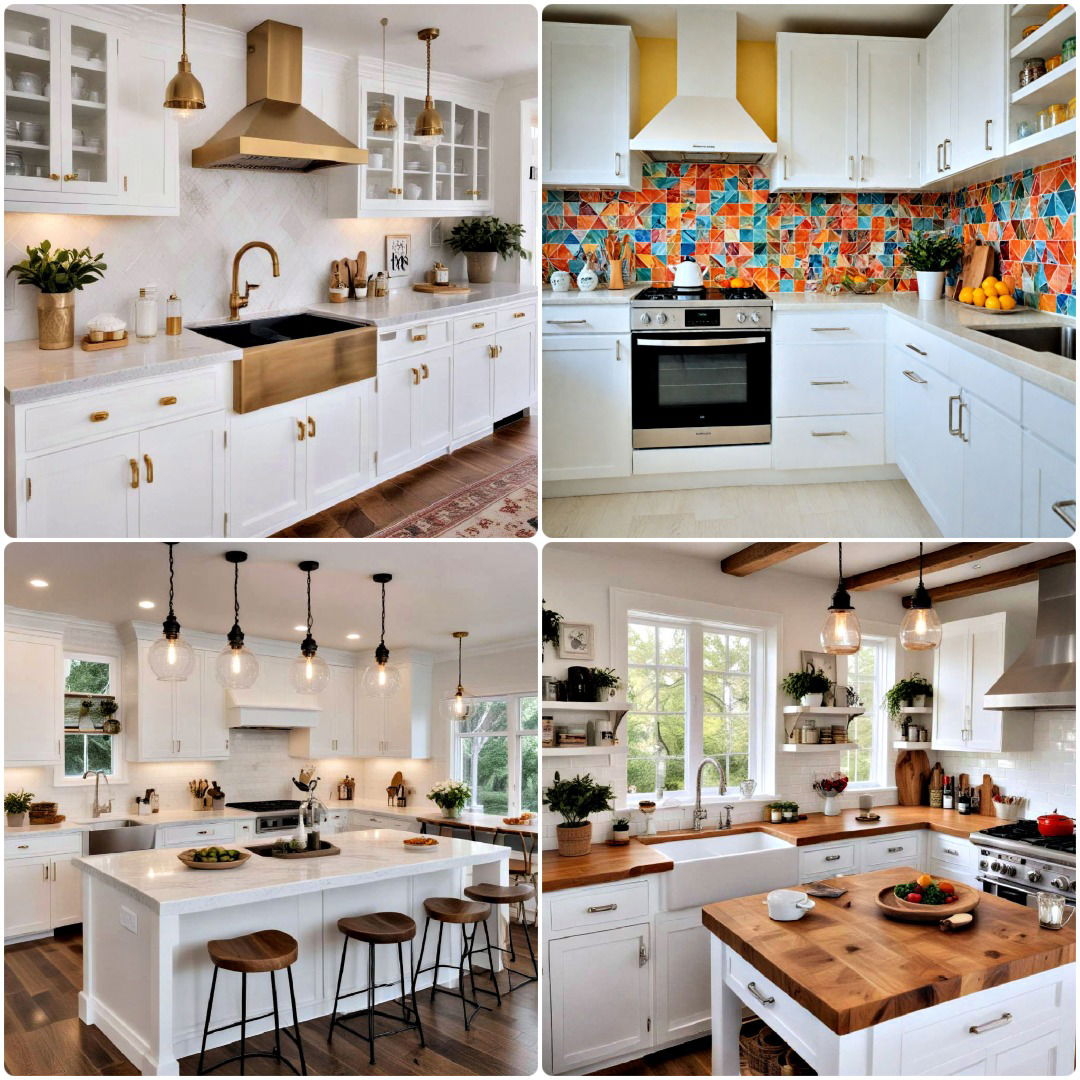
Wood flooring and a green kitchen are the foundation of a nature-inspired home design. The warmth and durability of hardwood floors — like white oak or wide-plank pine — provide a natural base that makes green cabinets feel right at home. This combination works because the floor acts as a massive wooden accent that complements the green tones perfectly. Whether you choose a light finish for a Scandinavian look or a dark stain for a more traditional feel, the wood floor anchors the color palette. It is a timeless choice that adds significant value to the home while providing a comfortable surface for long hours of cooking.
21. Green island and wood perimeter
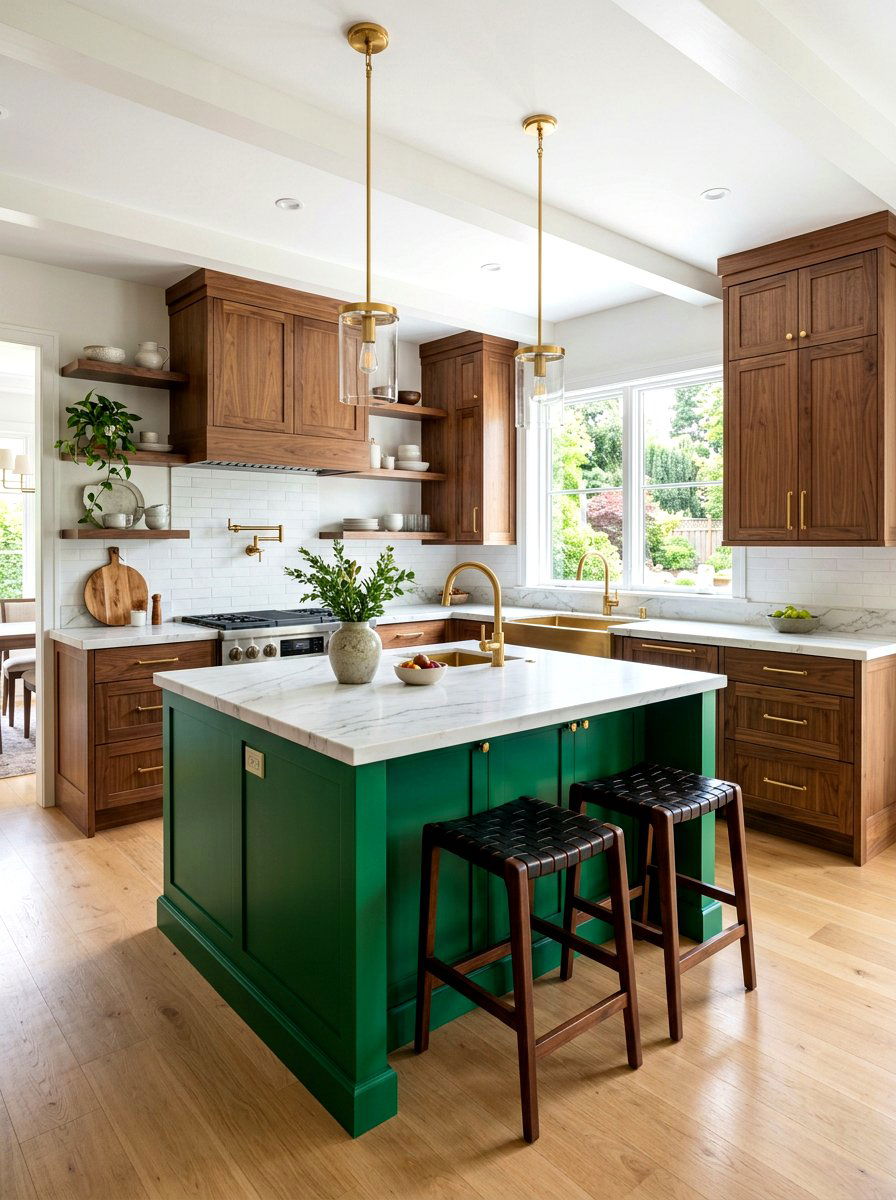
A green island and wood perimeter design is the inverse of the traditional two-tone look, offering a unique and sophisticated alternative. By keeping the perimeter cabinets in a natural wood finish, you maintain a classic and warm feel throughout the majority of the space. The green island then becomes a bold, jewel-like centerpiece that adds character and a sense of luxury. This is a great way to experiment with bolder greens, like emerald or hunter green, because the color is confined to a single area. It creates a stunning visual hierarchy that guides the eye toward the center of the kitchen.
22. Eucalyptus green and bamboo kitchen
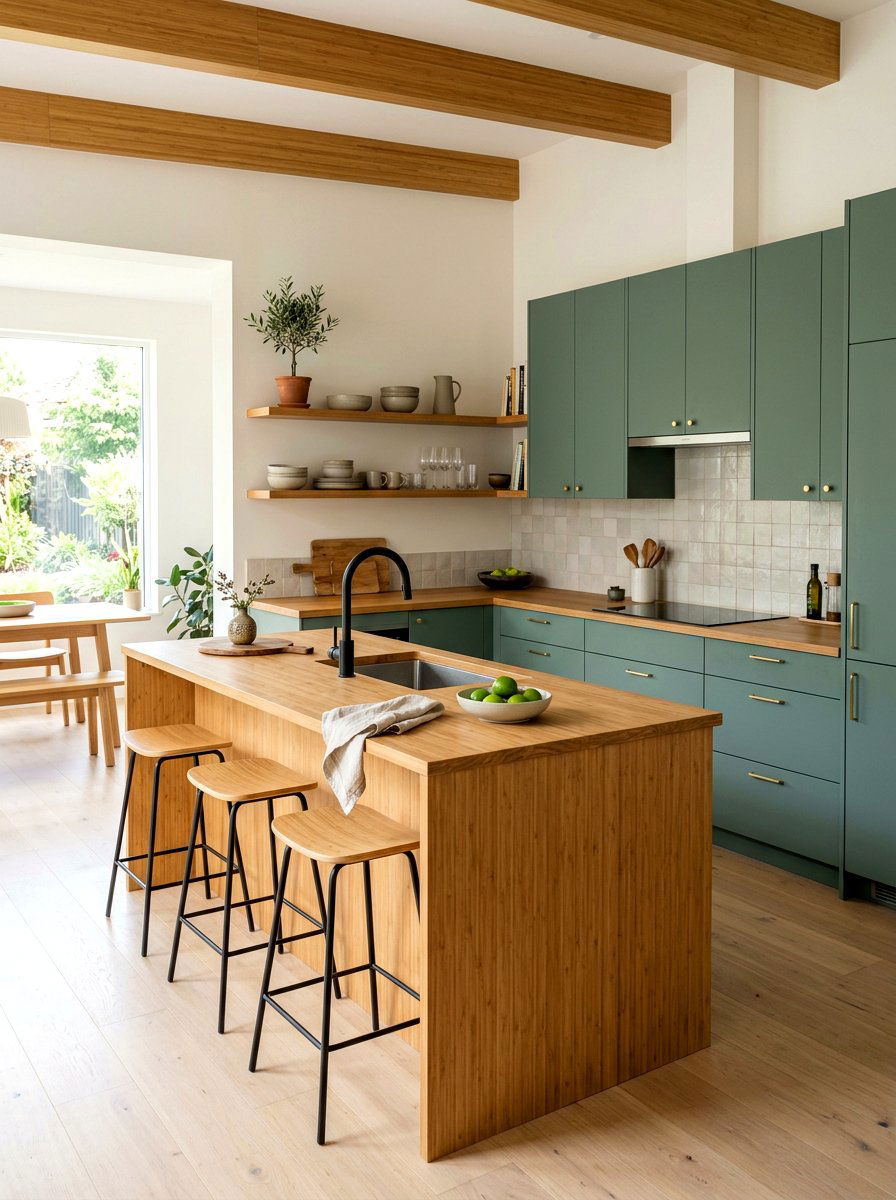
Eucalyptus green and bamboo represent a fresh, eco-friendly, and modern approach to kitchen design. Eucalyptus green is a soft, silvery-green that mimics the leaves of the plant, providing a calming and sophisticated backdrop. Bamboo wood is a sustainable material with a unique linear grain that adds a subtle texture to the space. This combination is often used in minimalist or "zen" inspired kitchens where the focus is on natural materials and simplicity. The result is a kitchen that feels incredibly light, airy, and peaceful, making it the perfect environment for a healthy and mindful lifestyle in a busy modern world.
23. Pistachio green and oak kitchen
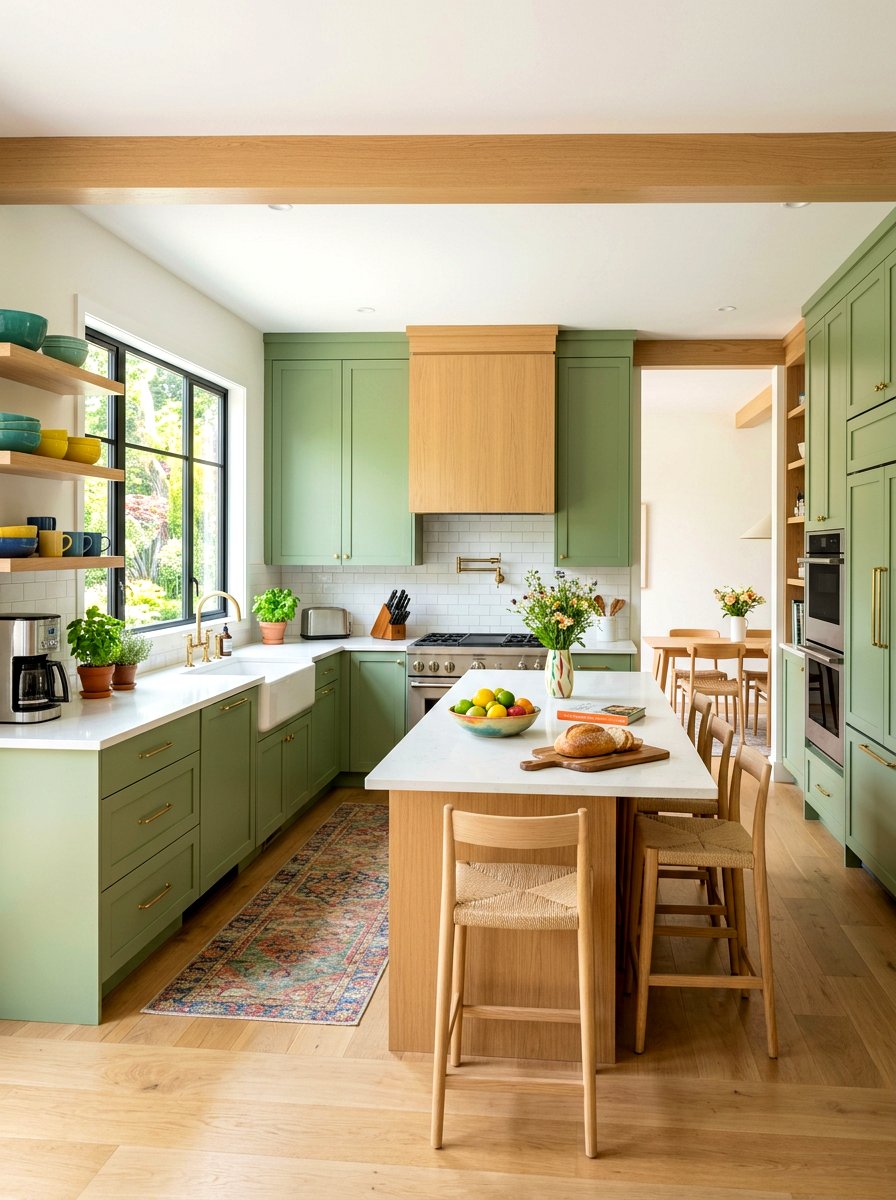
Pistachio green and oak offer a lighthearted and cheerful palette that is perfect for a family-oriented kitchen. The bright, creamy tones of pistachio green bring a sense of playfulness and light to the room, which is beautifully grounded by the sturdy and familiar grain of oak. This combination works well with white countertops and fun, colorful accessories. It is a great choice for those who want a kitchen that feels updated and modern but still retains a sense of warmth and approachability. Using light oak flooring can further unify the space, making it feel cohesive, bright, and ready for everyday life.
24. Pine green and reclaimed timber
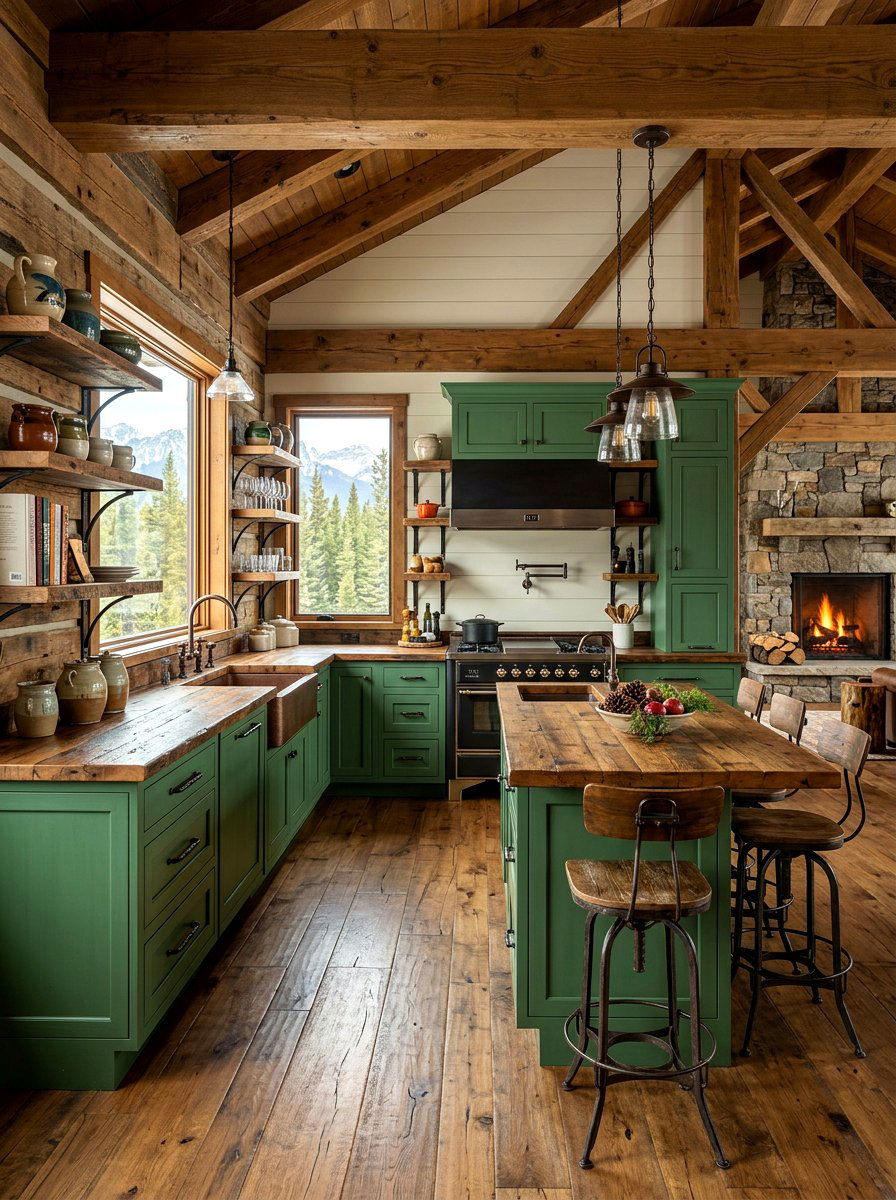
Pine green and reclaimed timber create a rugged, masculine, and deeply textured kitchen that feels like a high-end cabin. The dark, saturated tones of pine green provide a sophisticated alternative to black or navy, while reclaimed timber adds a sense of history and strength. This design often features thick wooden countertops and open shelving made from old barn wood. The combination is exceptionally durable and forgiving, making it perfect for those who actually use their kitchen for heavy cooking and entertaining. Adding iron hardware and warm, dimmable lighting can enhance the cozy and protective feel of this very impressive design.
25. Green pantry and wood furniture
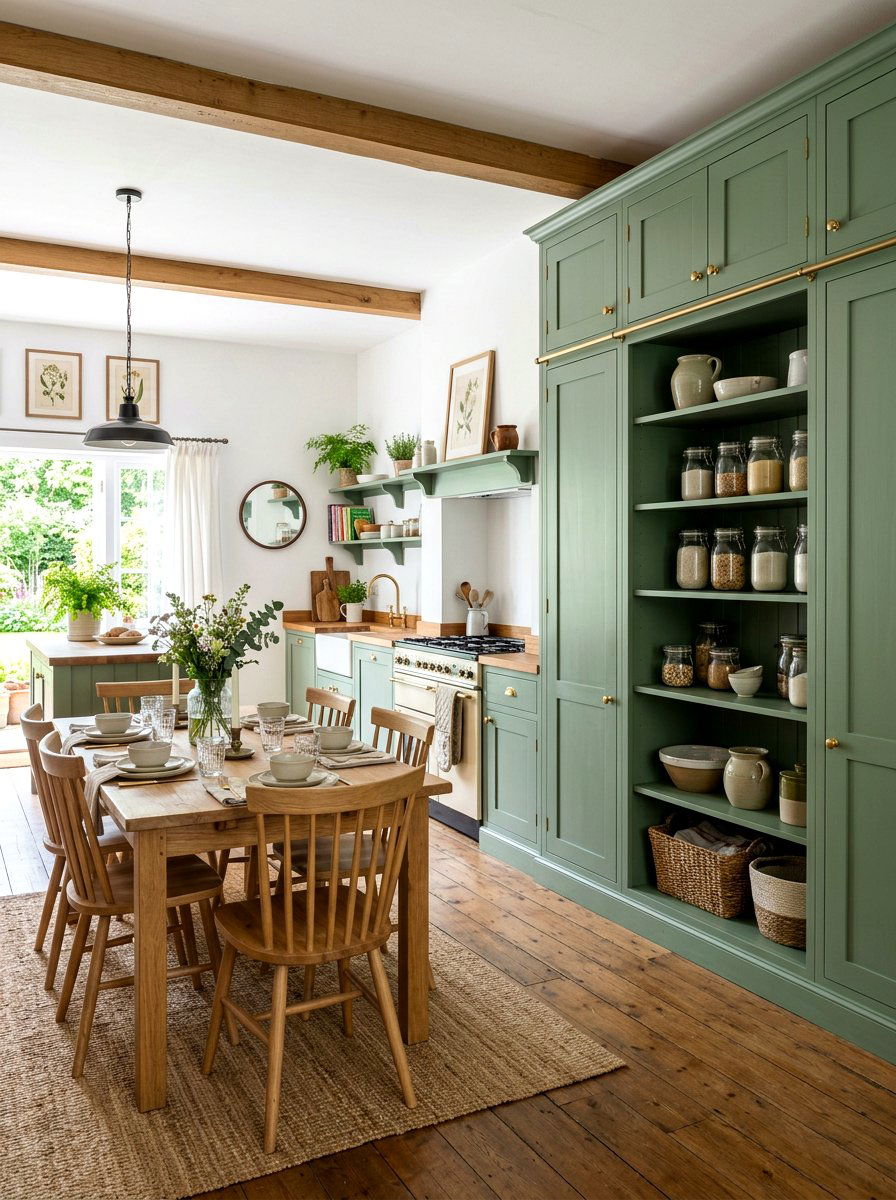
A green pantry and wood furniture approach allows you to introduce the green-and-wood theme in a more flexible and modular way. You can paint a built-in pantry or a standalone hutch in a beautiful shade of green while keeping the rest of the kitchen furniture, like the dining table and chairs, in natural wood. This creates a curated, "collected over time" look that feels more personal and less like a showroom. It is a great strategy for traditional or farmhouse-style homes where you want to add a splash of color without overwhelming the classic architectural details of the room.
26. Wood beams and green kitchen
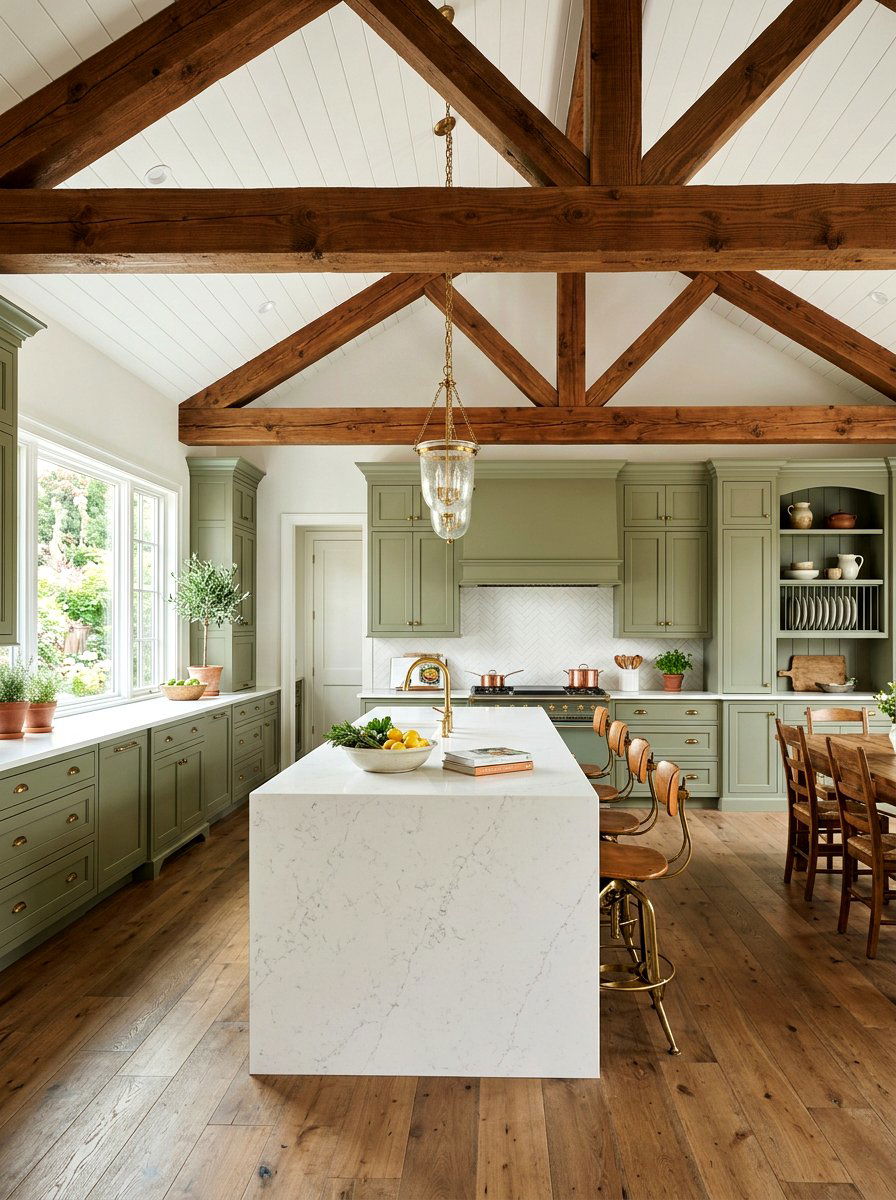
Wood beams and a green kitchen are a match made in design heaven for those who love architectural character. Exposed ceiling beams in a natural or dark wood finish provide a sense of structure and history that makes green cabinetry feel more established. Whether the beams are structural or decorative, they add a layer of warmth at the highest point of the room. This setup is particularly effective in kitchens with vaulted ceilings, as the beams help to "lower" the visual height and make the space feel more intimate. The combination of green and wood overhead creates a stunning and professional finish.
27. Lime green and dark wood kitchen
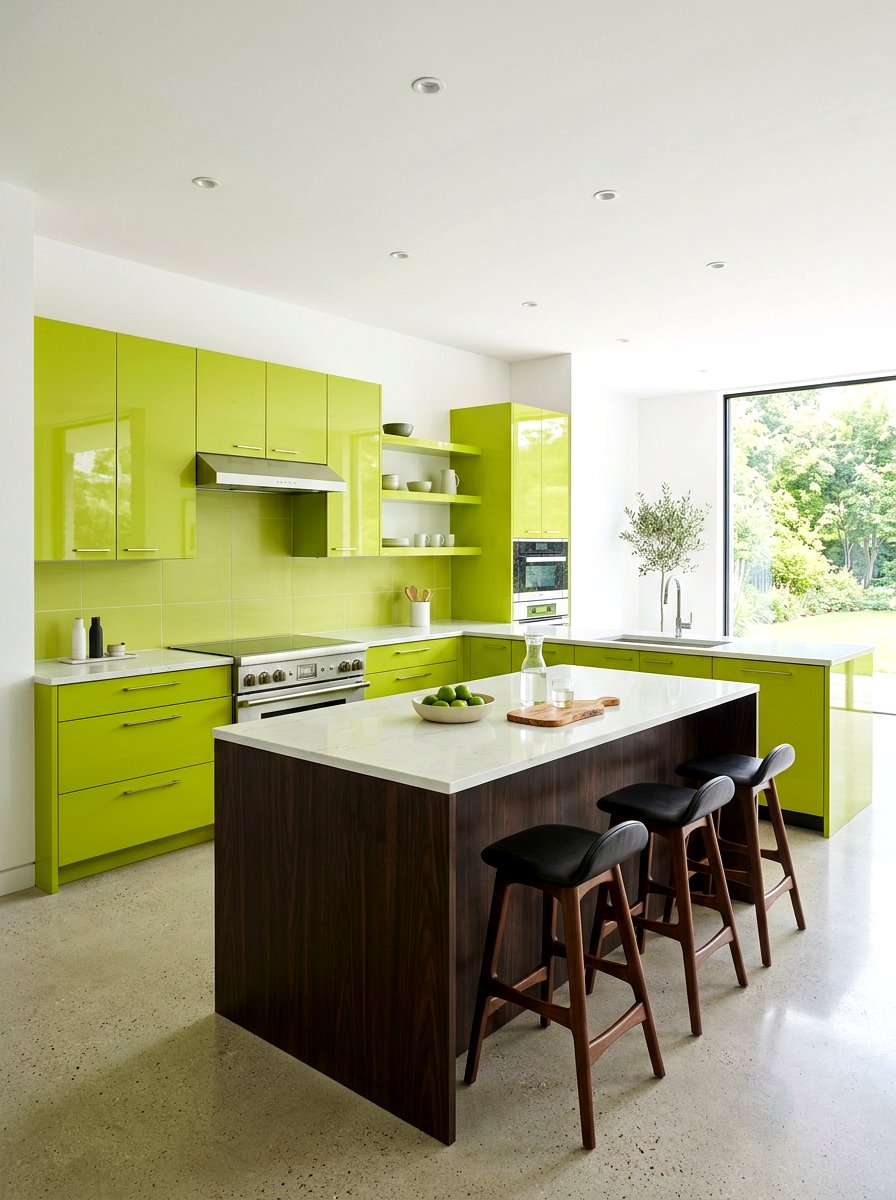
Lime green and dark wood offer a high-contrast and contemporary look that is perfect for modern urban homes. Lime green is a bold, citrusy hue that brings an immediate sense of energy and brightness to the kitchen. When paired with very dark woods like espresso-stained oak or walnut, the green becomes even more vibrant. This combination is often used in sleek, high-gloss designs where the goal is to create a high-impact visual statement. It is a daring choice that works best in spaces with minimalist styling and sharp, clean lines, providing a fresh and exciting take on traditional kitchen palettes.
28. Chartreuse and teak kitchen
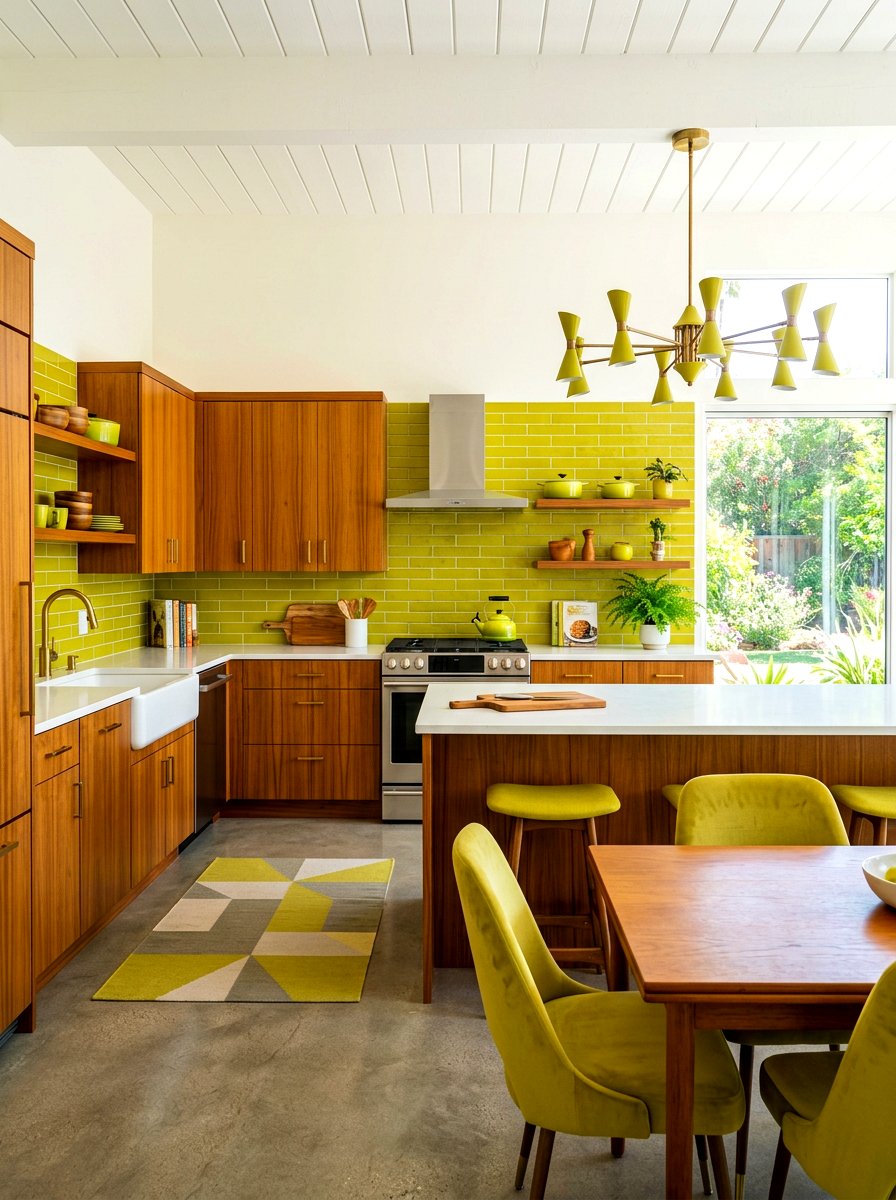
Chartreuse and teak create a sophisticated, mid-century modern aesthetic that feels incredibly stylish and curated. Chartreuse, a mix of yellow and green, has a unique vintage quality that pairs perfectly with the rich oils and golden hues of teak wood. This combination is often seen in high-end architect-designed homes where every material is chosen for its color and texture. A chartreuse backsplash or a few chartreuse-fronted cabinets can bring a teak kitchen to life. This look is artistic and refined, appealing to those who want a kitchen that reflects their love for mid-century design and modern color theory.
29. Juniper green and walnut kitchen
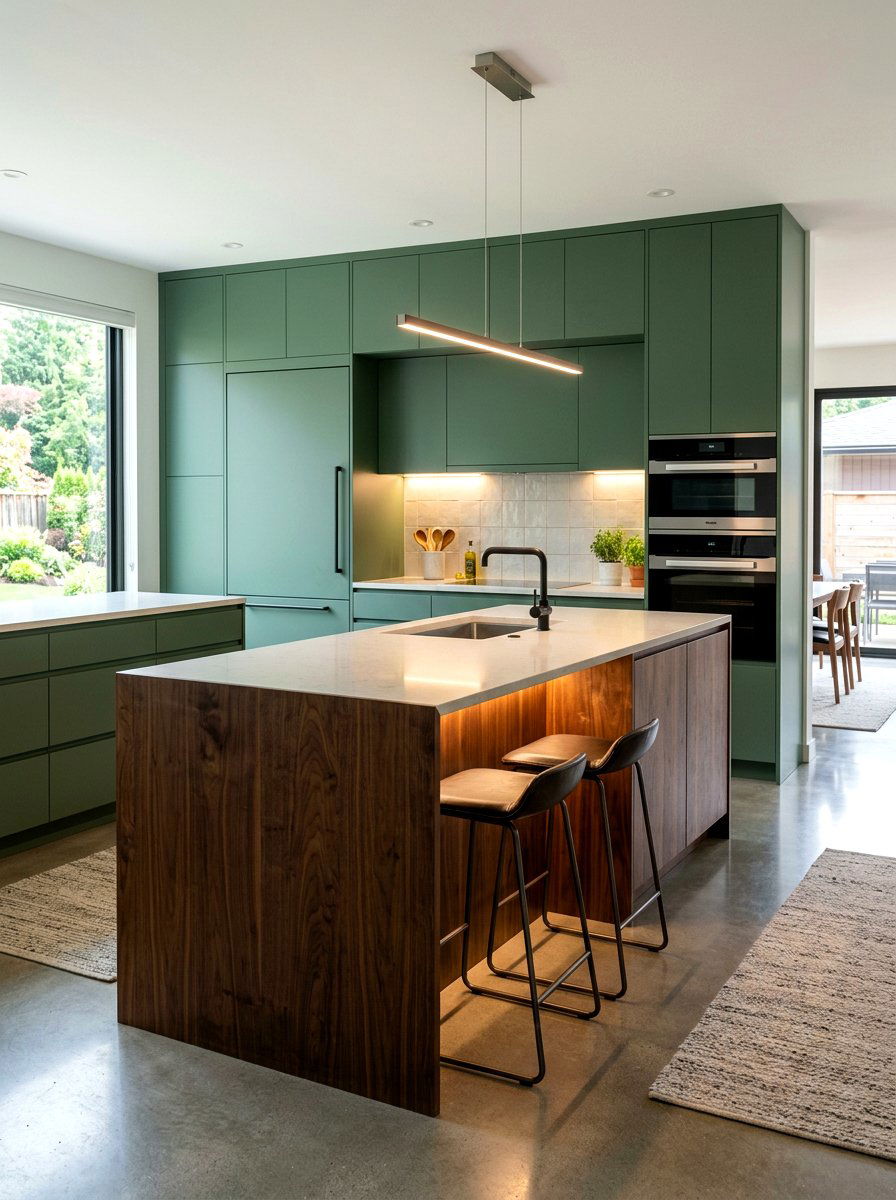
Juniper green and walnut provide a cool-toned, elegant, and very modern palette for the contemporary home. Juniper green is a muted, bluish-green that feels professional and calm, acting as a sophisticated neutral. Walnut wood adds a rich, dark warmth that prevents the cool green from feeling too cold. This design often utilizes flat-panel cabinets and integrated lighting to create a seamless, high-end appearance. It is a fantastic choice for open-concept living areas because the colors are subtle enough to blend into the rest of the home's decor while still providing plenty of visual interest and luxury.
30. Verdigris green and oak kitchen
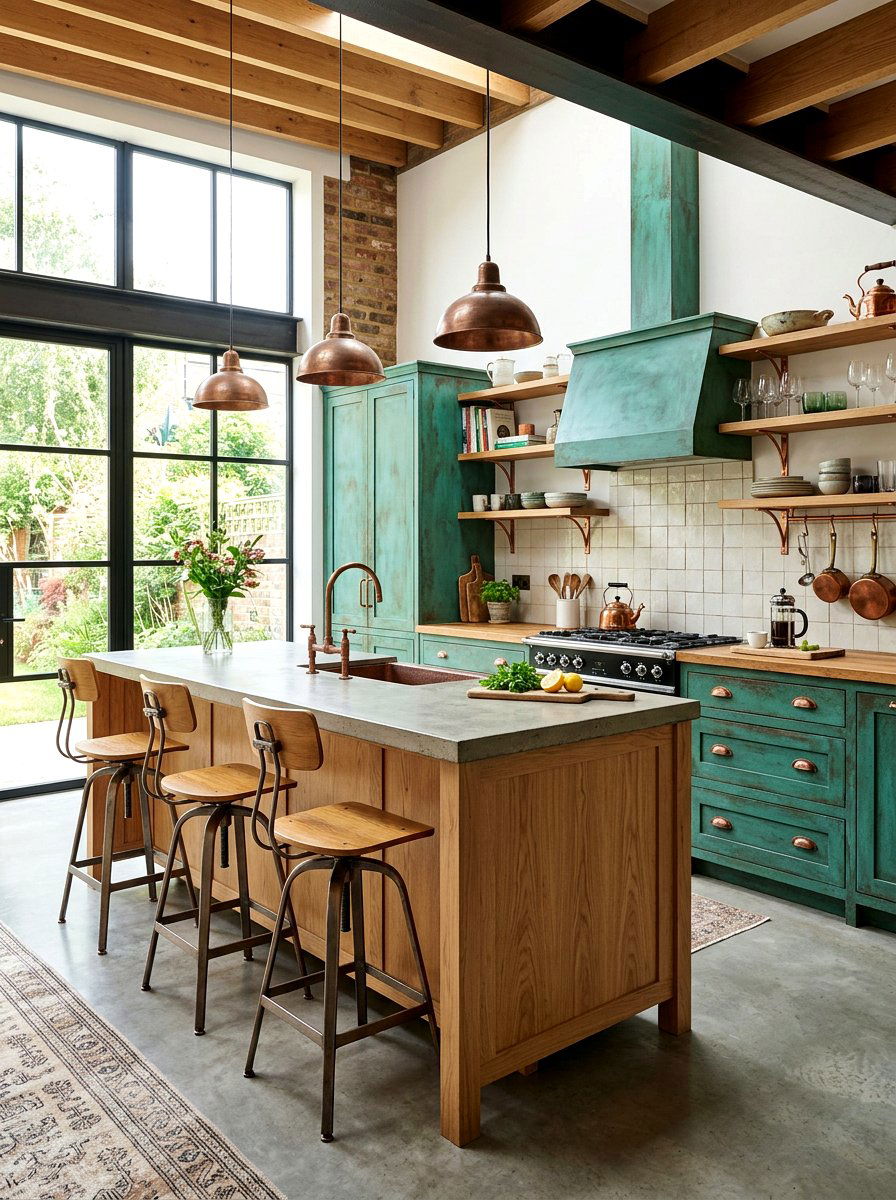
Verdigris green and oak create a unique, slightly industrial, and artistic look that celebrates the beauty of age and oxidation. Verdigris is the color of aged copper, a complex green-blue that looks stunning against the natural, golden tones of oak. This combination can be achieved through specialty paint finishes or even real copper accents that have been allowed to patina. When paired with simple oak cabinetry, the result is a kitchen that feels like a work of art. It is a great choice for those who want something truly different and appreciate materials that change and grow more beautiful over time.
Conclusion:
The enduring appeal of a green and wood kitchen lies in its ability to adapt to almost any home style while remaining deeply connected to natural aesthetics. By mixing various shades of green with different wood species, you can create a space that ranges from light and airy to dark and dramatic. This design choice is not just a passing trend; it is a thoughtful return to organic materials and colors that provide a sense of calm in our busy lives. Whether you choose a subtle sage or a bold forest green, pairing it with the warmth of wood ensures your kitchen will remain a beautiful, inviting, and timeless heart of your home for many years to come.

Related posts: