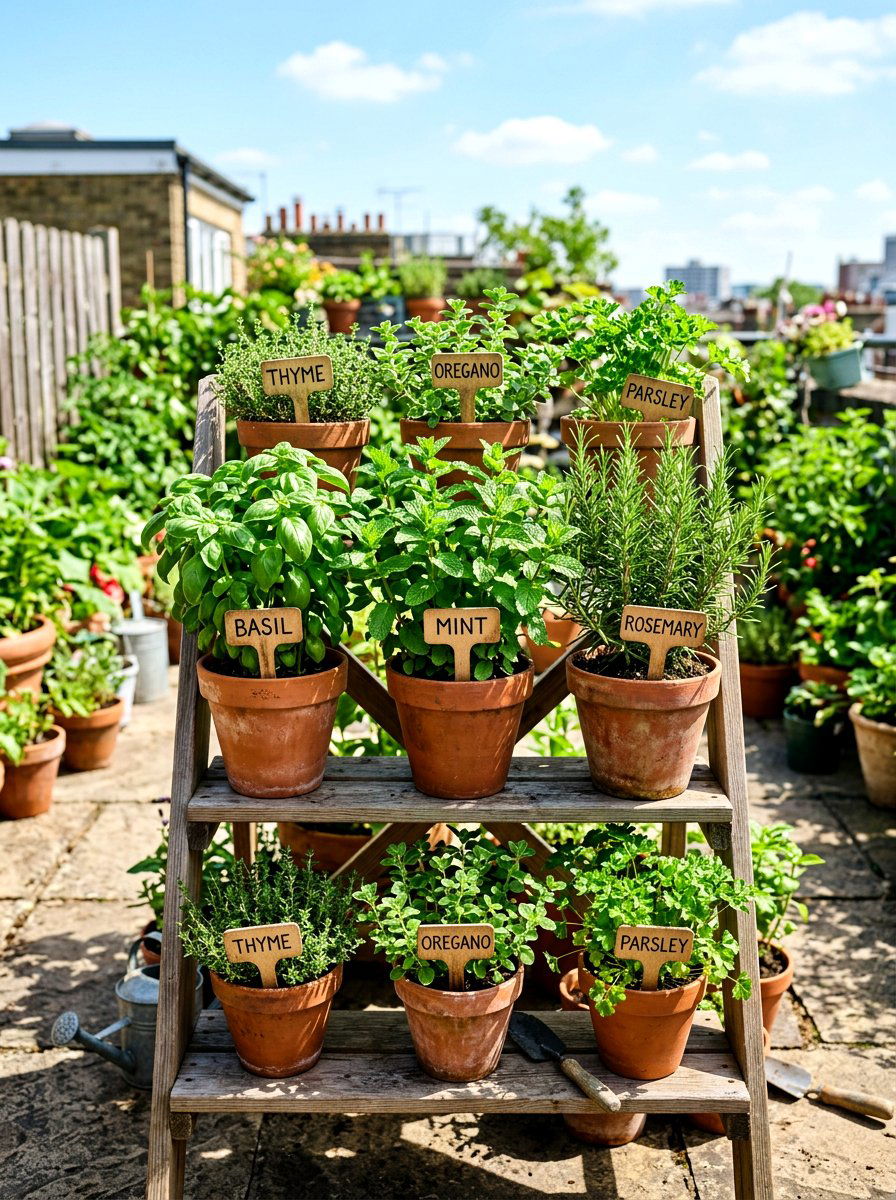
Hanging plants are a fantastic way to transform your living space into a lush sanctuary without sacrificing any valuable floor area. Adding greenery at eye level or above creates a dynamic visual layer that makes any room feel more alive and vibrant. Whether you live in a small apartment or a sprawling house, vertical gardening offers endless possibilities for style and creativity. These aerial displays draw the eye upward, making ceilings appear taller and interiors more spacious. From cascading vines in the kitchen to delicate ferns in the bathroom, hanging plants bring nature indoors in the most elegant and practical way imaginable for modern homes today.
1. Hanging Plant Living Room Corner
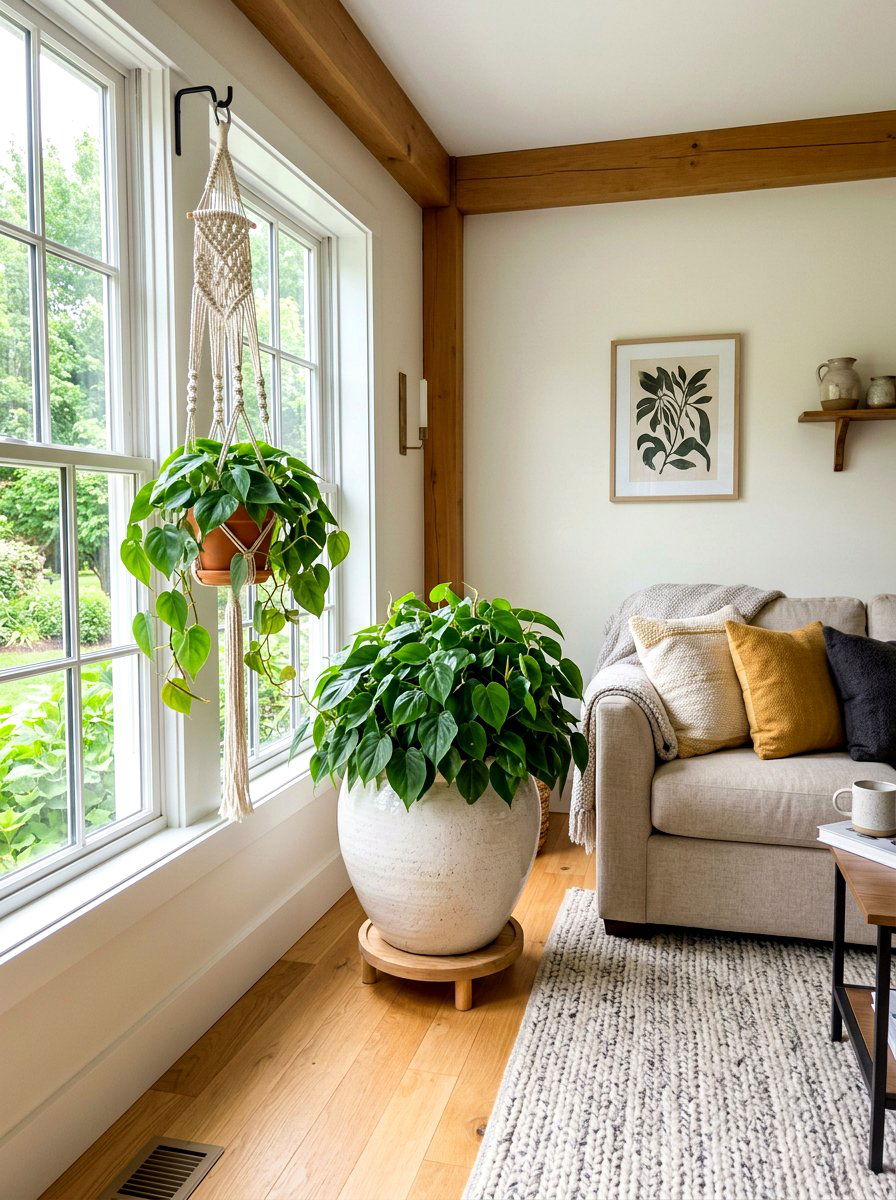
A living room corner provides the perfect backdrop for a cascading plant display. By using a sturdy ceiling hook, you can hang a large ceramic pot filled with a lush Heartleaf Philodendron. This setup adds a pop of natural color to an often-neglected space. Positioning the plant near a window ensures it receives plenty of indirect light to thrive. You can vary the heights of multiple hangers to create a tiered jungle effect. This arrangement softens sharp architectural lines and makes the seating area feel much more inviting. It is a simple way to introduce organic shapes into a modern or traditional living room layout easily and effectively.
2. Hanging Plant Kitchen Window
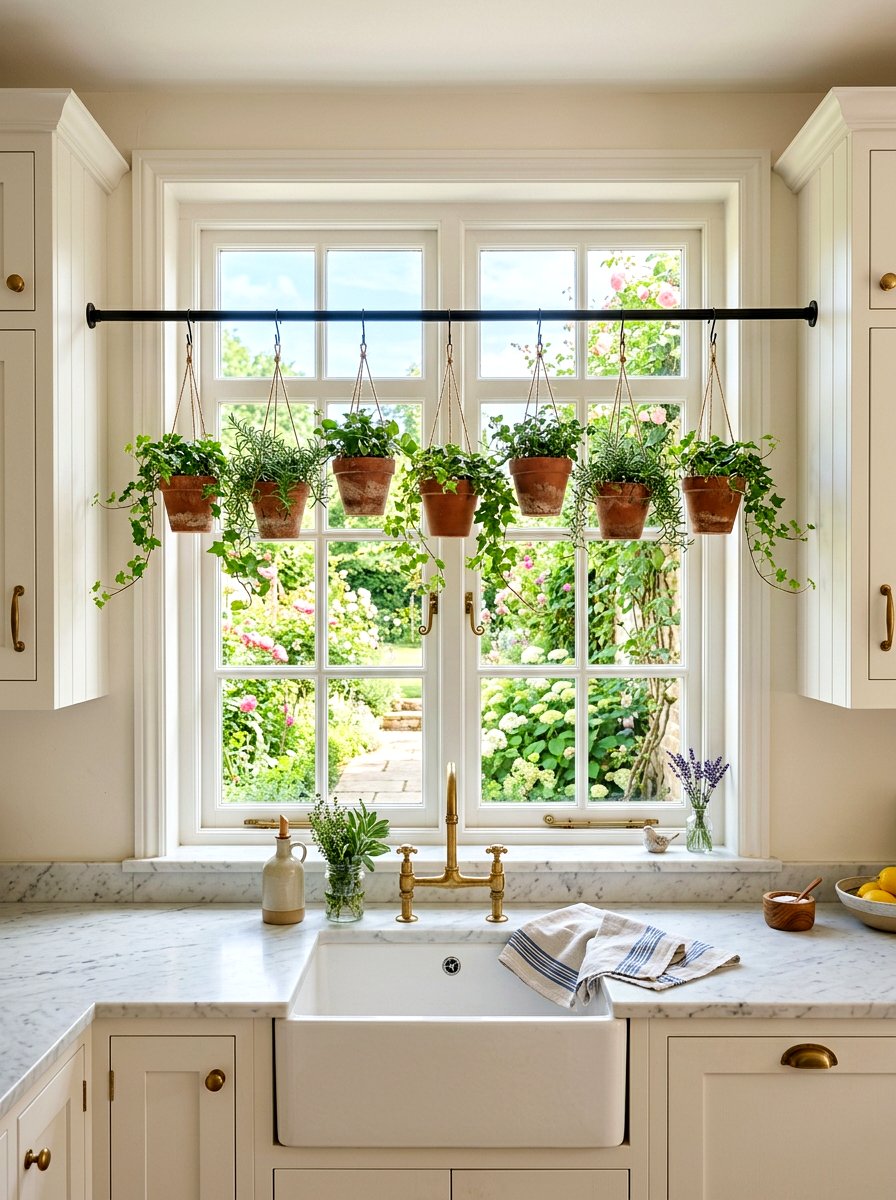
Installing hanging plants in a kitchen window brings a refreshing burst of life to the heart of your home. You can use a sleek metal rod across the window frame to suspend several small terracotta pots. Trailing herbs like creeping rosemary or English Ivy look stunning as they catch the morning sunlight. This design choice keeps your countertops clear for food preparation while still providing a view of lush greenery. The humidity from cooking often benefits tropical varieties, keeping them healthy and vibrant throughout the year. It creates a cozy, cottage-core aesthetic that makes washing dishes or preparing meals a much more pleasant experience every day.
3. Hanging Plant Above Dining Table
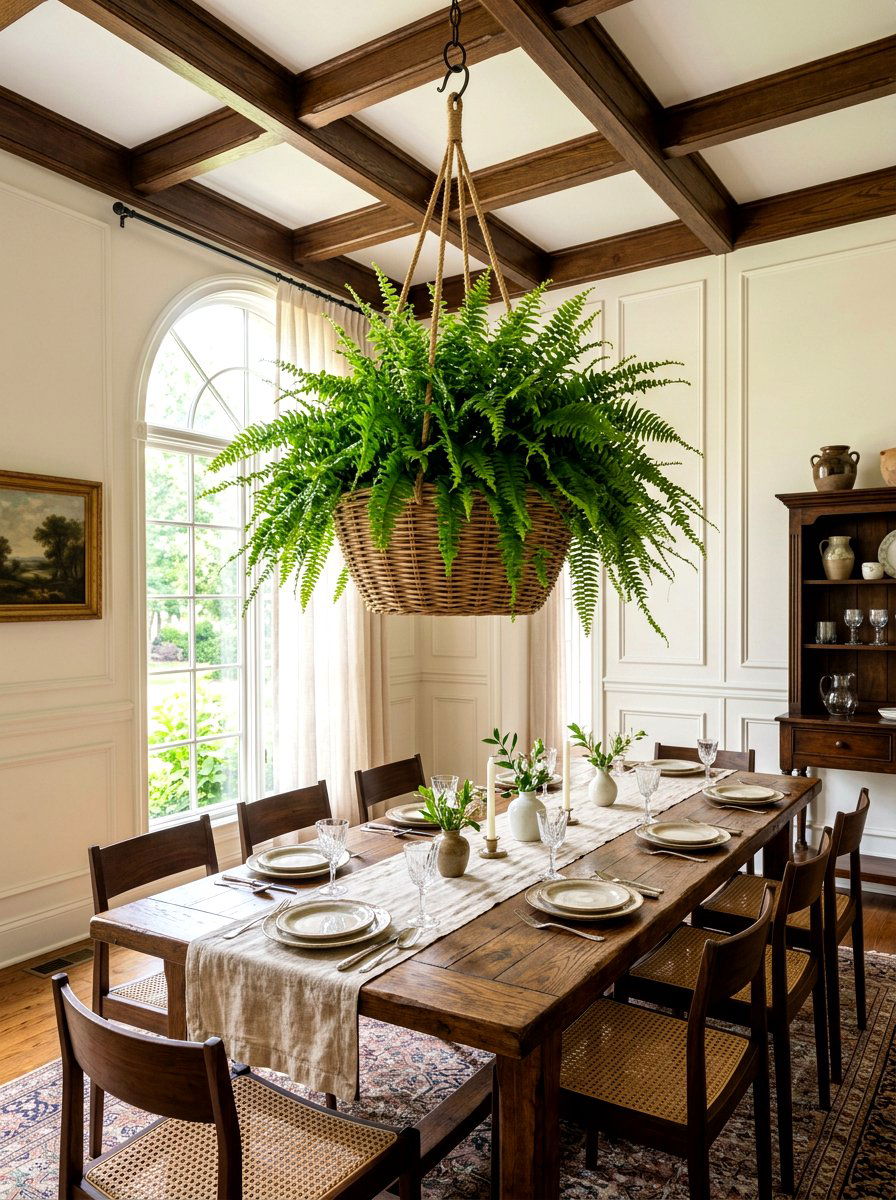
Suspending a large plant directly above the dining table creates a breathtaking natural centerpiece that sparks conversation. Instead of a traditional chandelier, consider a heavy-duty hook holding a wide basket of Boston Ferns or a large Spider Plant. The arching fronds create a leafy canopy that feels intimate and sophisticated during dinner parties. Ensure the plant is hung at a height where it does not obstruct views across the table. This green "living light fixture" adds texture and softens the overall look of a formal dining room. It works beautifully with wooden furniture and neutral linens, bringing a sense of outdoor freshness to every meal.
4. Hanging Plant Bedroom Ceiling
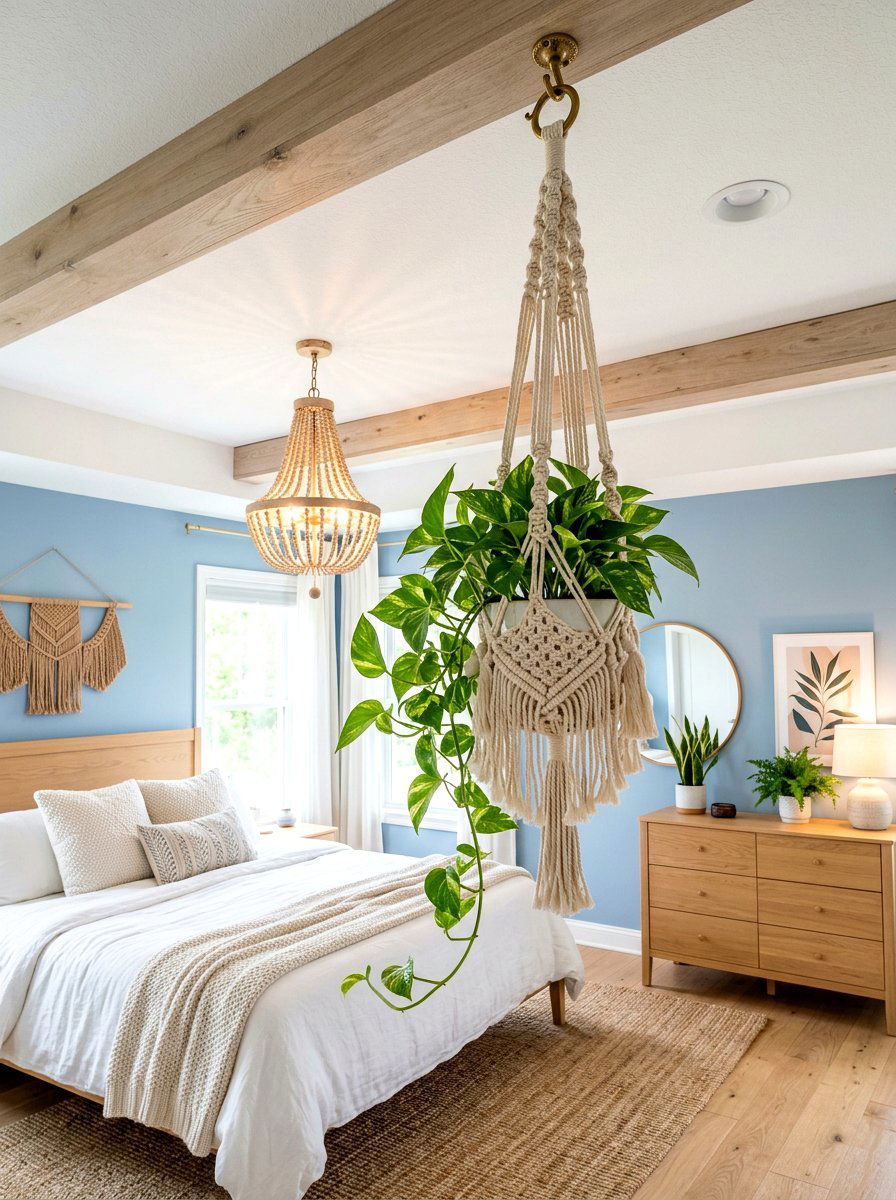
Adding a hanging plant to a bedroom ceiling promotes a serene and restful atmosphere perfect for unwinding at night. Placing a Golden Pothos in a soft macrame hanger near the corner of the room adds a gentle, bohemian touch. The trailing vines can grow quite long, creating a waterfall of green that contrasts beautifully against white or pastel walls. Many indoor plants help purify the air, which can lead to a better night’s sleep. By elevating the greenery, you keep the nightstand clutter-free for books and lamps. This simple addition turns a standard bedroom into a peaceful, botanical retreat that feels incredibly cozy.
5. Hanging Plant Bathroom Shower
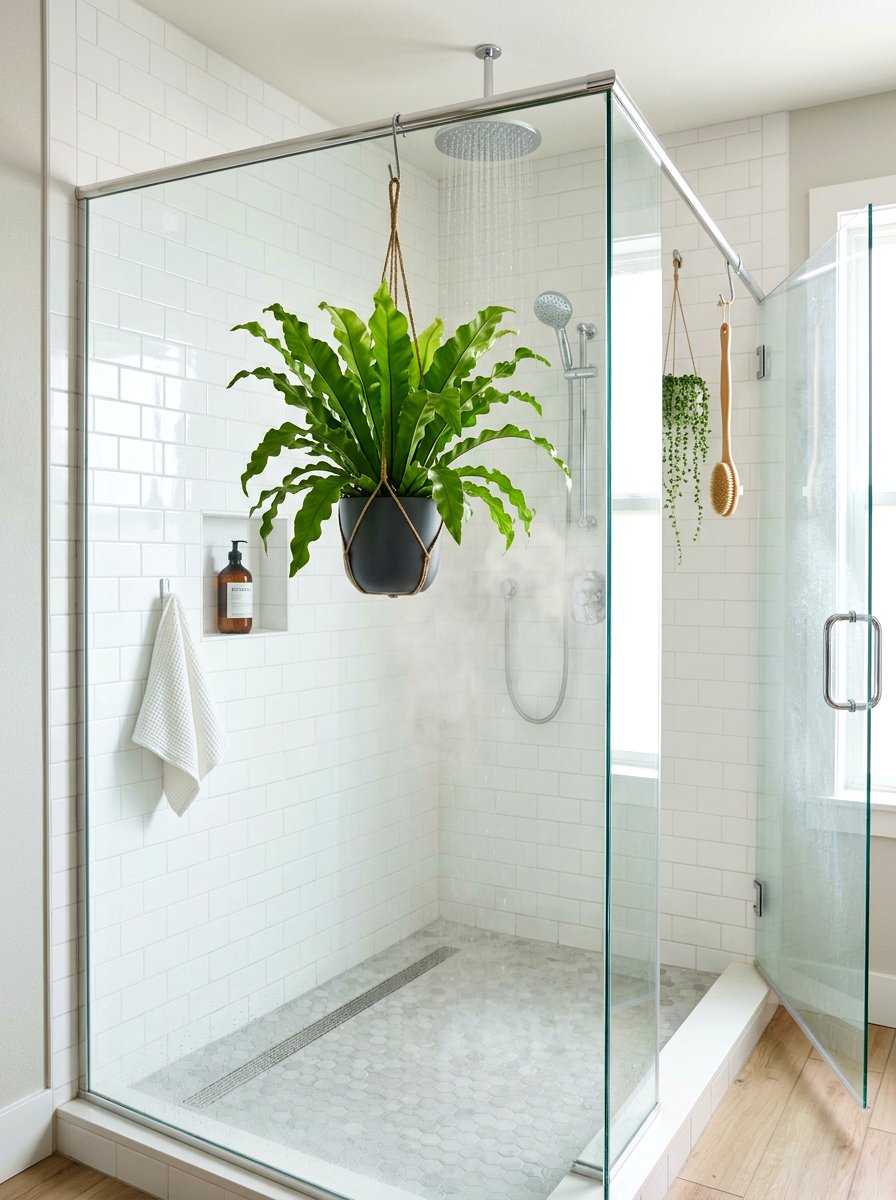
The bathroom shower area is an ideal environment for moisture-loving plants like ferns or orchids. You can hang a sleek plastic or ceramic pot from the shower curtain rod or a dedicated ceiling hook. The steam from daily showers mimics a tropical habitat, allowing these plants to flourish with very little extra effort. A lush Bird’s Nest Fern adds a spa-like quality to the space, making your morning routine feel more luxurious. The green foliage looks striking against white tiles or glass enclosures. It is an easy way to breathe life into a functional room that often lacks natural decor or soft textures.
6. Hanging Plant Home Office
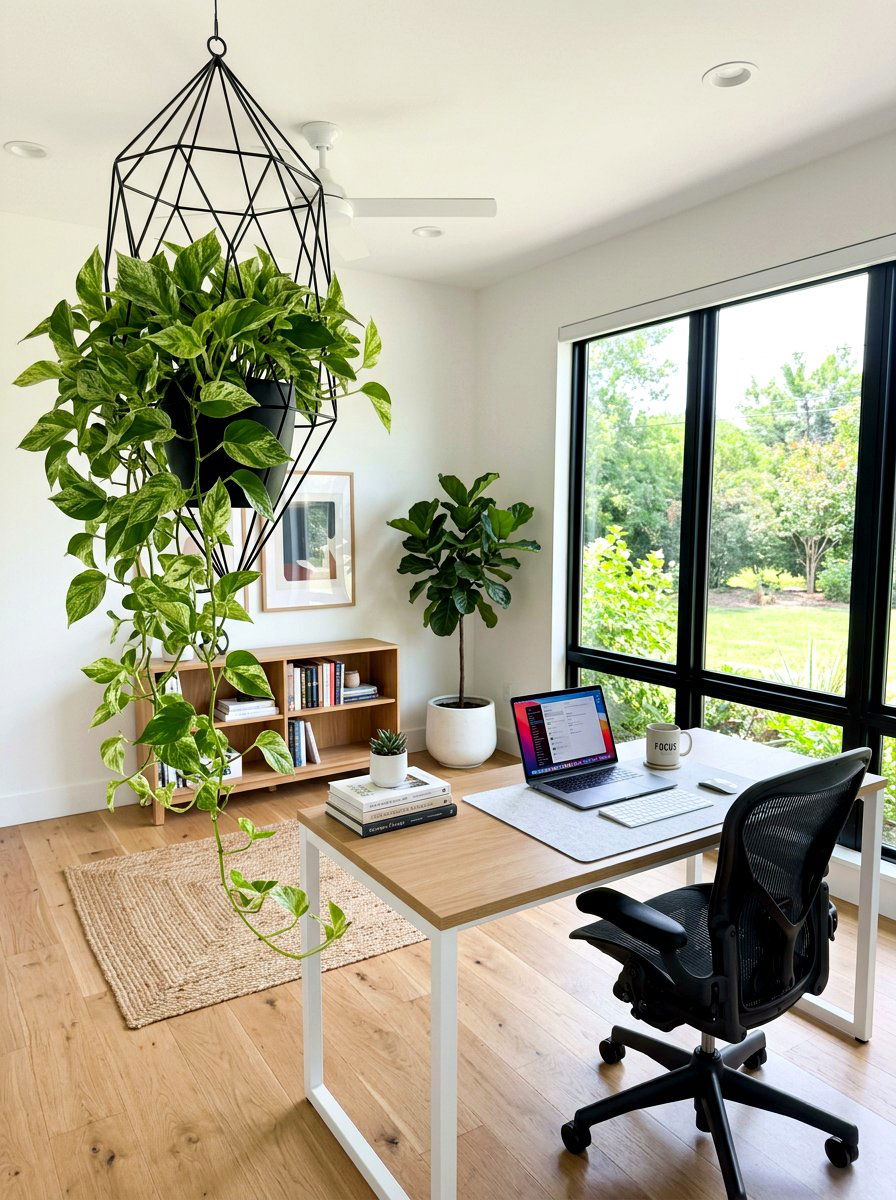
Integrating a hanging plant into your home office can significantly boost productivity and reduce daily stress levels. Suspending a Marble Queen Pothos near your desk brings a calming element to your workspace without occupying valuable surface area for monitors or papers. The sight of living greenery can help rest your eyes during long hours of computer work. Using a modern geometric hanger adds a professional yet stylish touch to the room’s overall design. It fills the vertical space behind your chair, providing an impressive and professional background for video calls. This small change makes a standard office feel more personalized and inspiring to work in.
7. Hanging Plant Entryway Wall
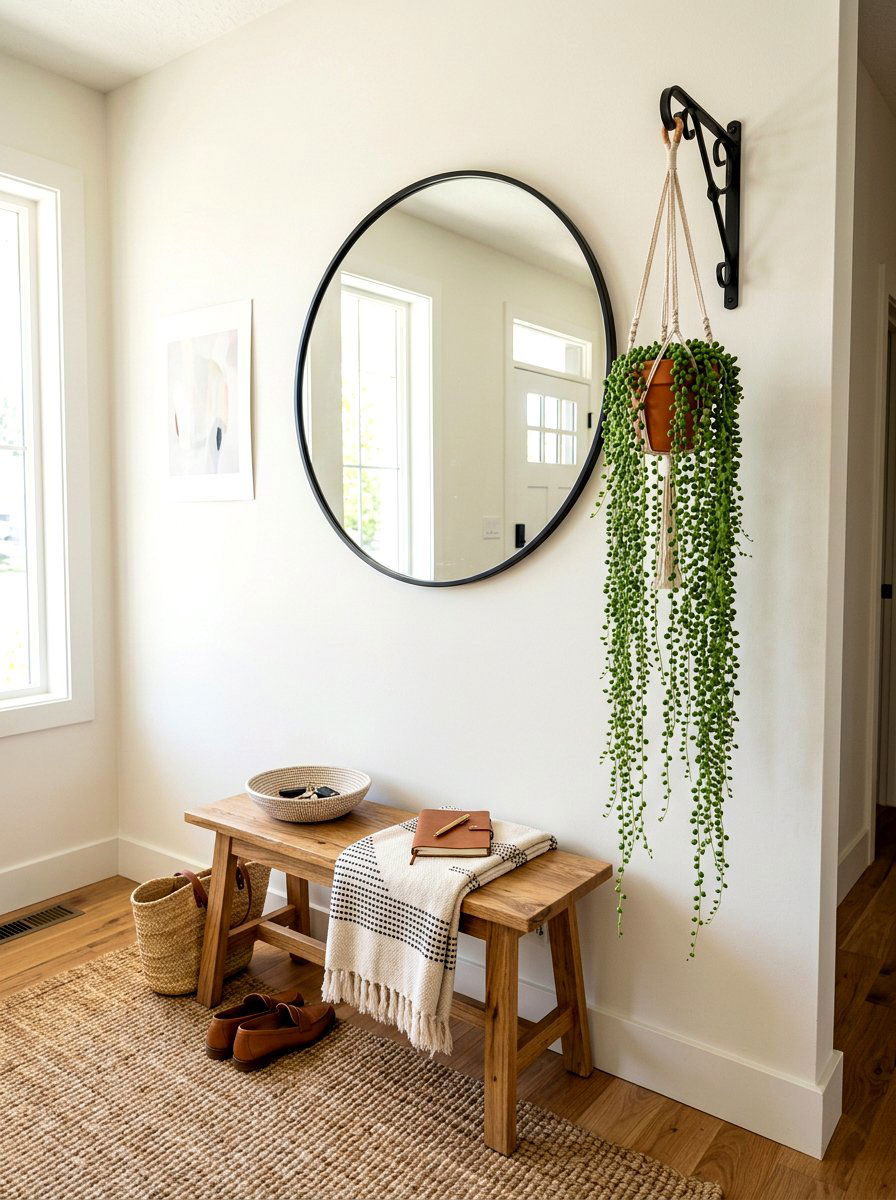
An entryway wall is the first thing guests see, so why not make a statement with a hanging plant? Use a decorative wall-mounted bracket to hold a trailing String of Pearls or a delicate Ivy. This setup greets everyone with a touch of nature as soon as they step through the door. It adds visual height to a narrow hallway or a small foyer area without blocking the walking path. Pairing the plant with a small mirror or a coat rack creates a functional and stylish vignette. This design approach makes your home feel welcoming and well-cared for from the very first moment anyone enters.
8. Hanging Plant Reading Nook
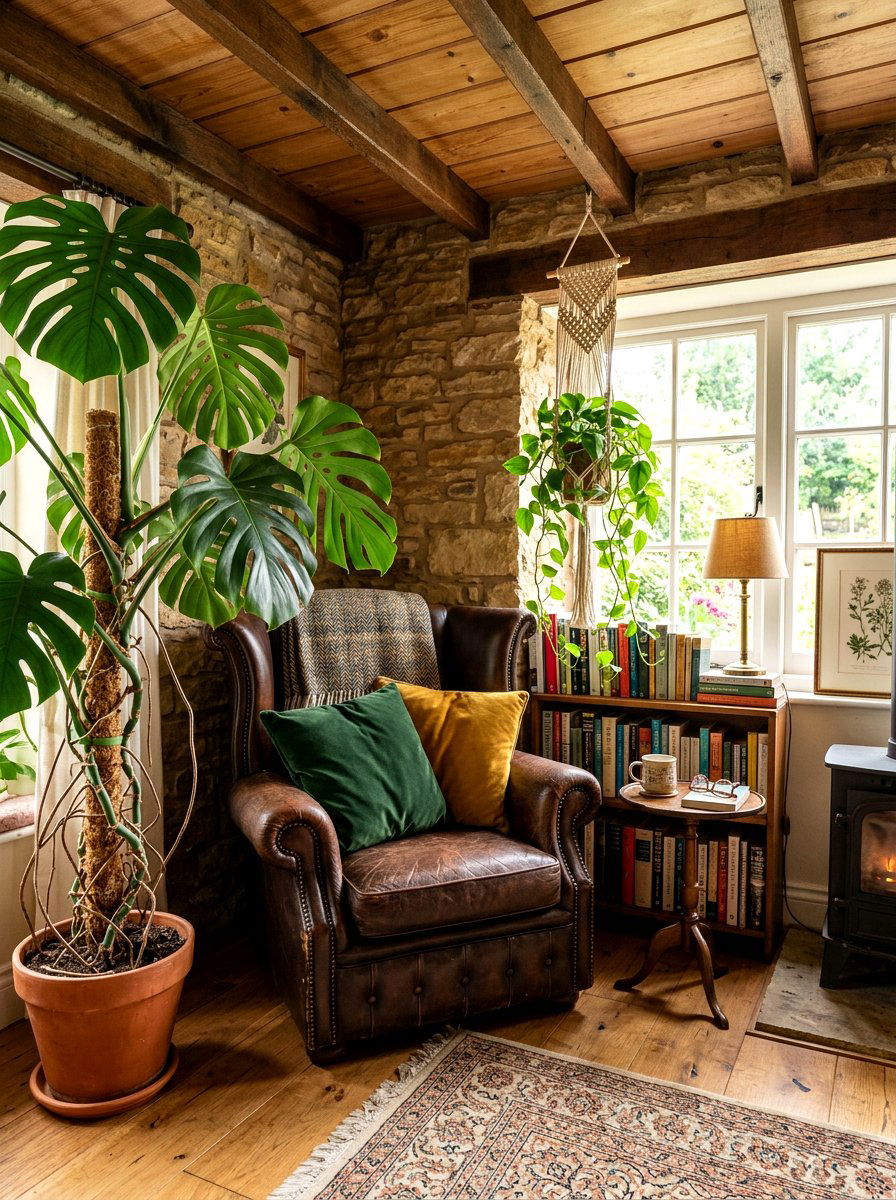
Creating a reading nook with a hanging plant above your favorite armchair adds a sense of seclusion and comfort. A large, bushy plant like a Hoya or a Swiss Cheese Plant can be positioned to partially frame the seating area. The cascading leaves create a natural screen that makes the space feel private and quiet for getting lost in a book. Using a warm-toned wooden hanger or a jute macrame cord enhances the cozy, rustic vibe. This layout encourages relaxation and provides a beautiful focal point in a quiet corner of the house. It effectively defines the area as a dedicated spot for personal downtime.
9. Hanging Plant Sunroom Ceiling
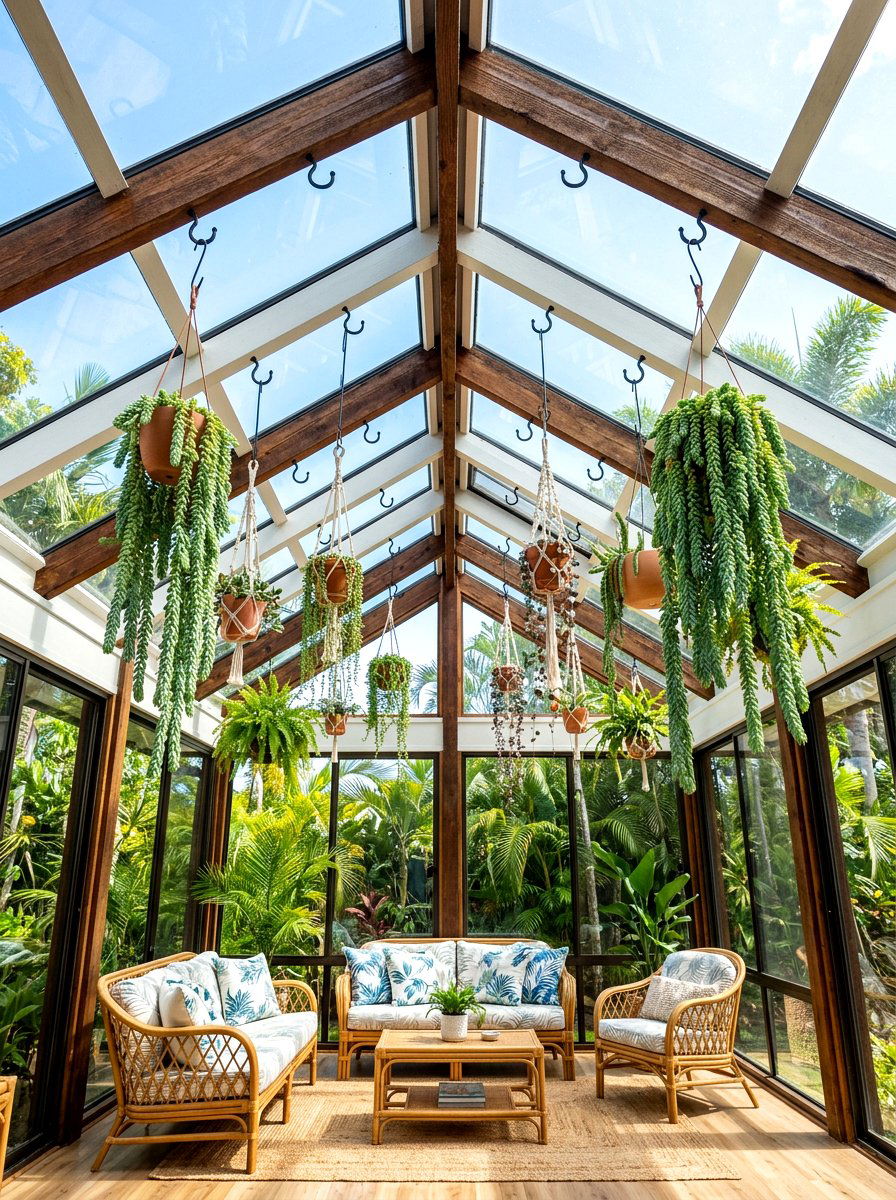
A sunroom ceiling is practically begging for a large collection of hanging plants to maximize the abundant natural light. You can install several hooks at varying levels to create a dense, aerial garden filled with sun-loving succulents like Burro’s Tail. The high light levels will encourage rapid growth and vibrant colors in your foliage. This arrangement turns the sunroom into a true indoor-outdoor bridge that stays green all year round. Combining different pot styles and textures adds a curated, eclectic look to the space. It is the perfect way to enjoy a garden-like atmosphere even when the weather outside is cold or rainy.
10. Hanging Plant Staircase Railing
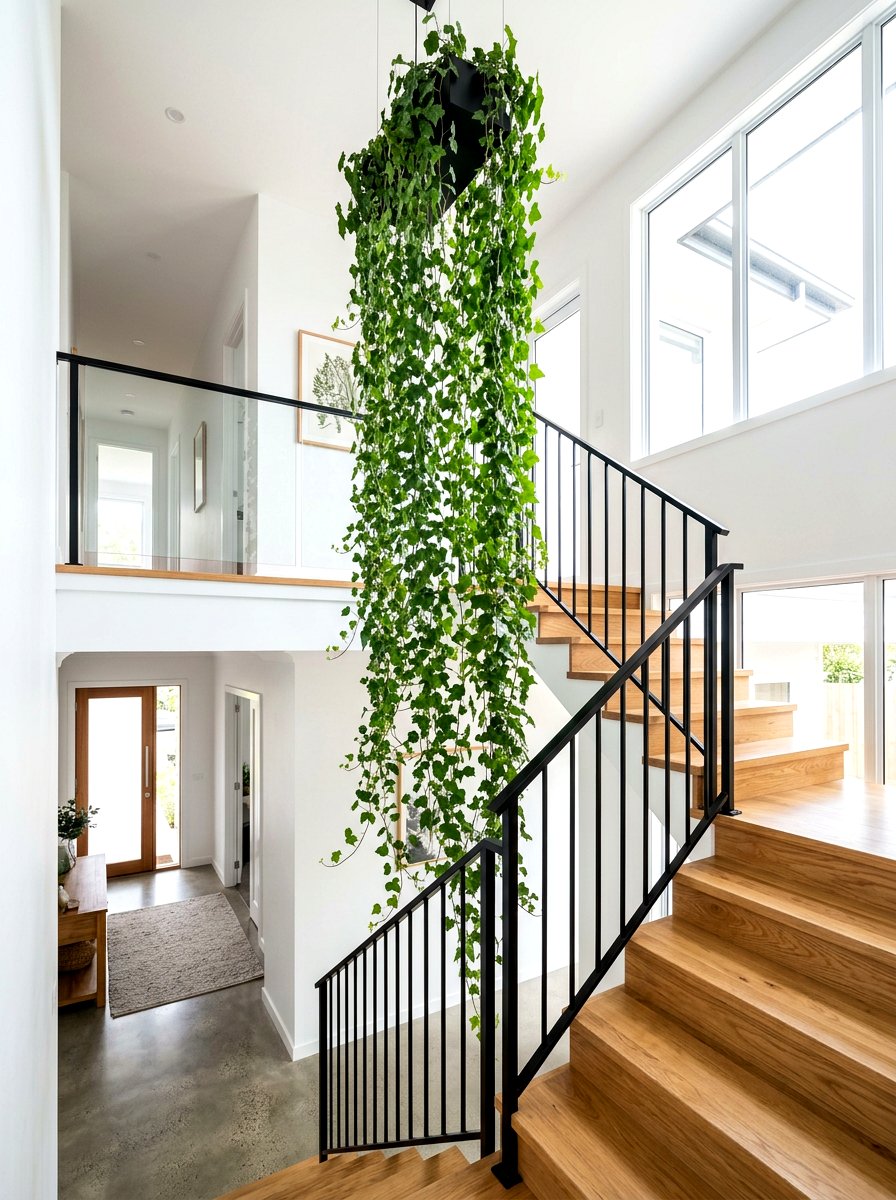
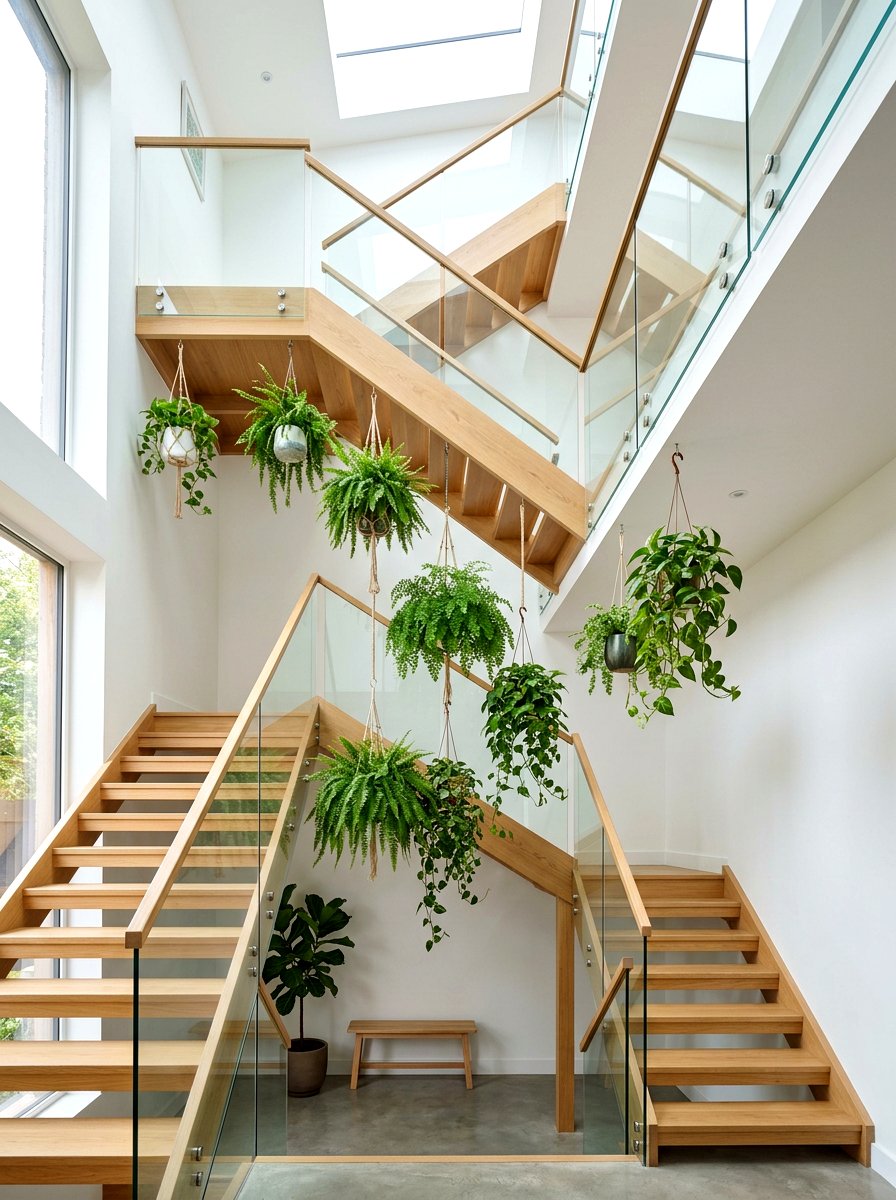
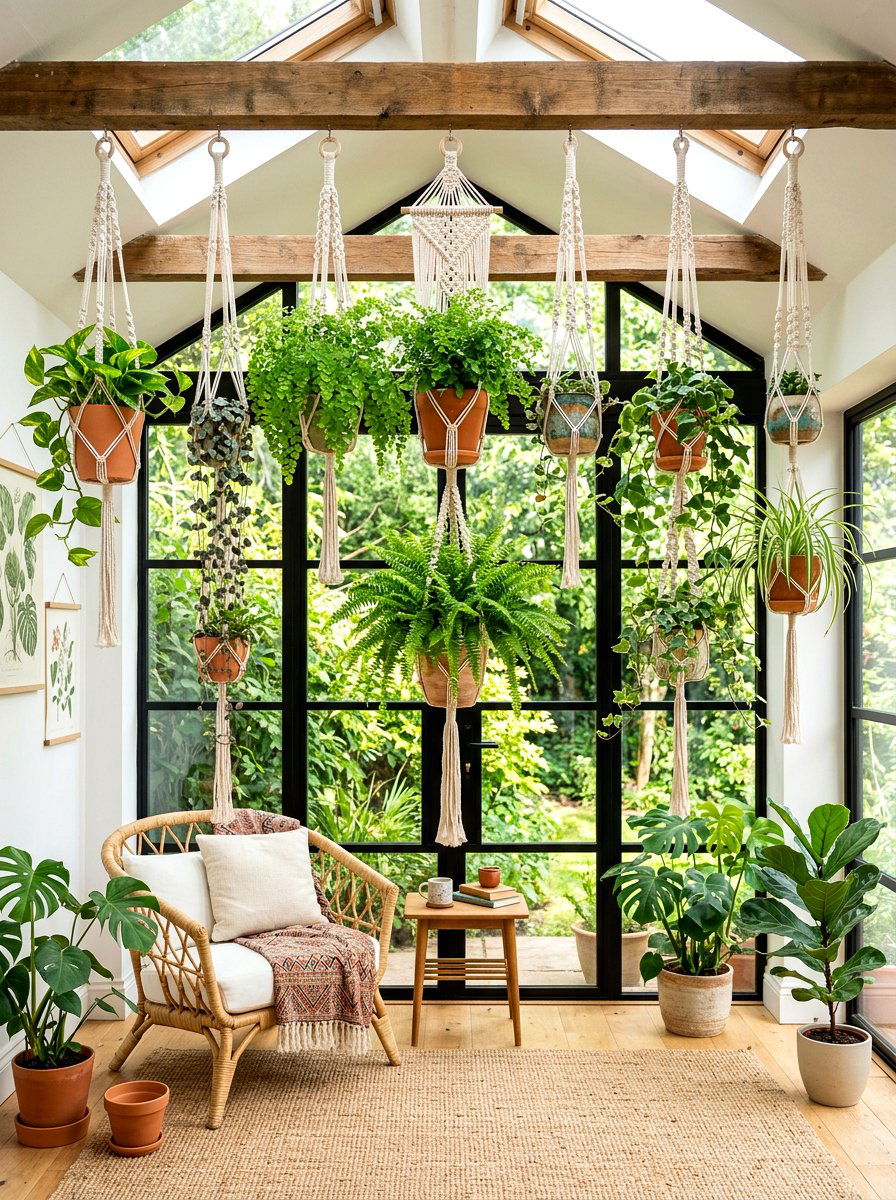
Utilizing the empty space over a staircase railing for hanging plants is a brilliant design move for multi-level homes. Long, trailing plants like the Inch Plant or English Ivy can be suspended from the ceiling above the stairs. As the vines grow downward, they follow the flow of the staircase, adding movement and visual interest to a transitional area. This setup draws the eye through the house, connecting the upper and lower floors with a common thread of greenery. It makes the vertical climb feel more interesting and transforms a functional architectural feature into a stunning botanical display that everyone will notice and admire.
11. Hanging Plant Open Shelving
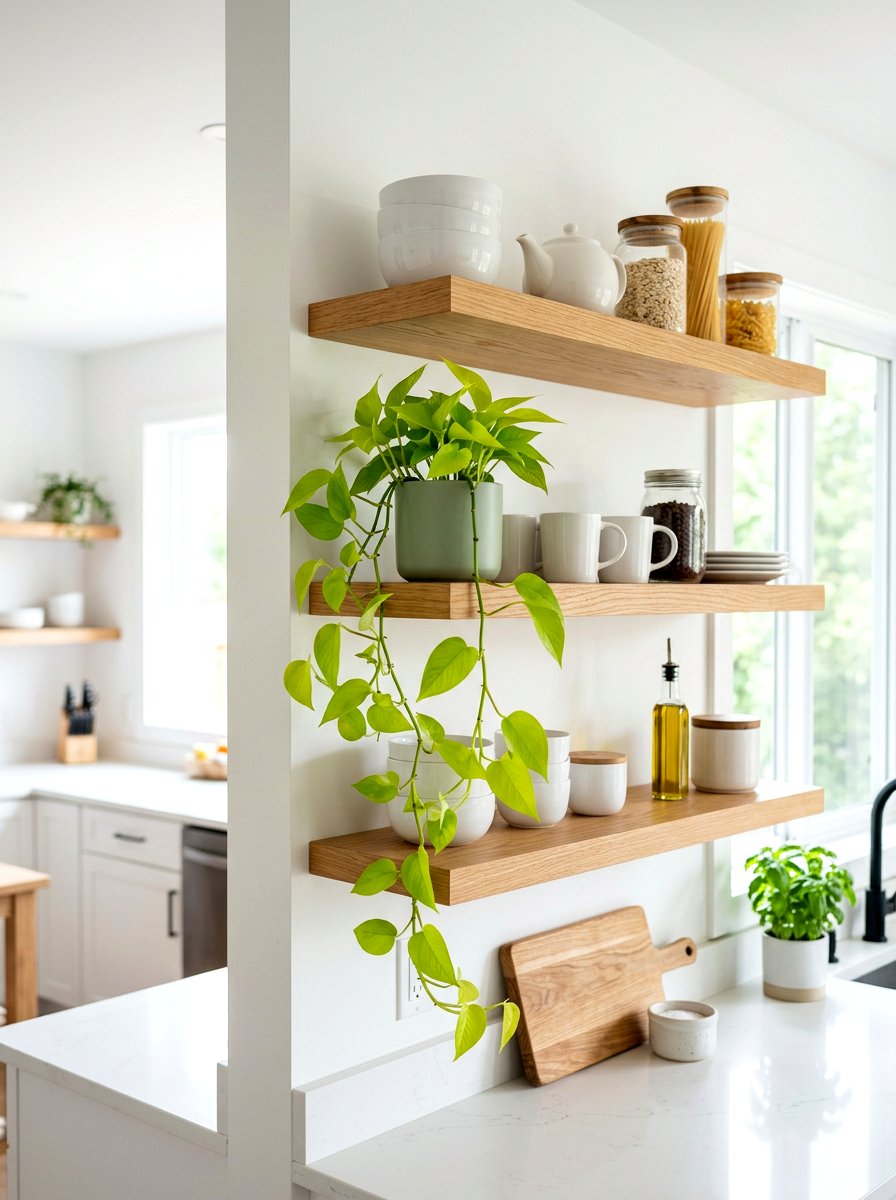
Open shelving in a kitchen or living room provides a great opportunity to tuck in a small hanging plant for extra depth. While most plants sit on the shelf, a small trailing variety in a tiny hanging pot can dangle from the front edge. This creates layers of foliage that make the shelf look more professional and styled. A Neon Pothos adds a bright flash of chartreuse that contrasts well with dark books or white ceramics. It breaks up the horizontal lines of the shelving unit with organic, flowing shapes. This technique is perfect for adding a touch of nature to a minimalist or modern shelving arrangement.
12. Hanging Plant Above Bed
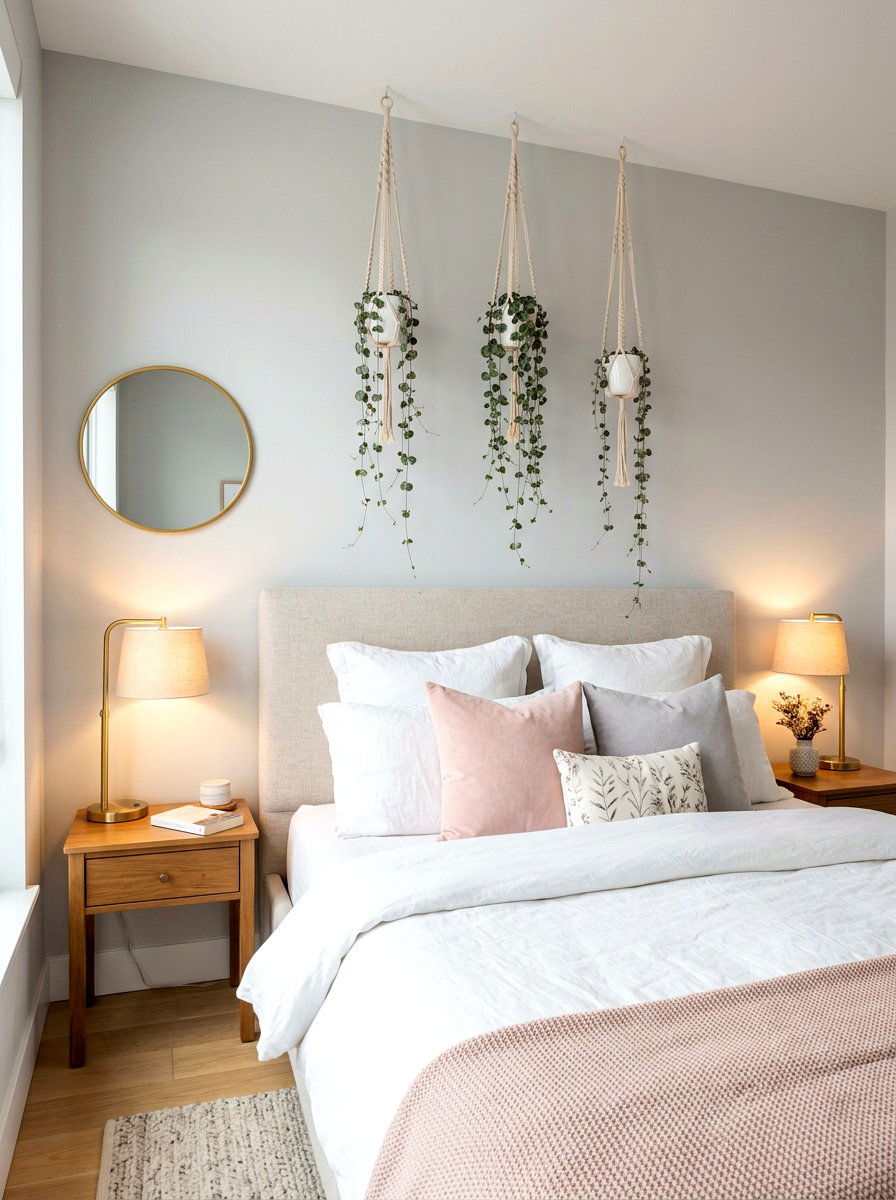
Suspending a plant directly above the bed headboard creates a dreamy and ethereal look in a master suite. Using a series of small, lightweight planters with trailing String of Hearts can form a delicate "living curtain" behind your pillows. This design choice adds a romantic and soft feel to the bedroom decor. Ensure the hooks are securely fastened and the plants are easy to reach for watering. The subtle movement of the leaves in a gentle breeze adds a tranquil energy to the space. It is a unique alternative to traditional wall art that brings a fresh, organic element to your sleeping quarters.
13. Hanging Plant Glass Door
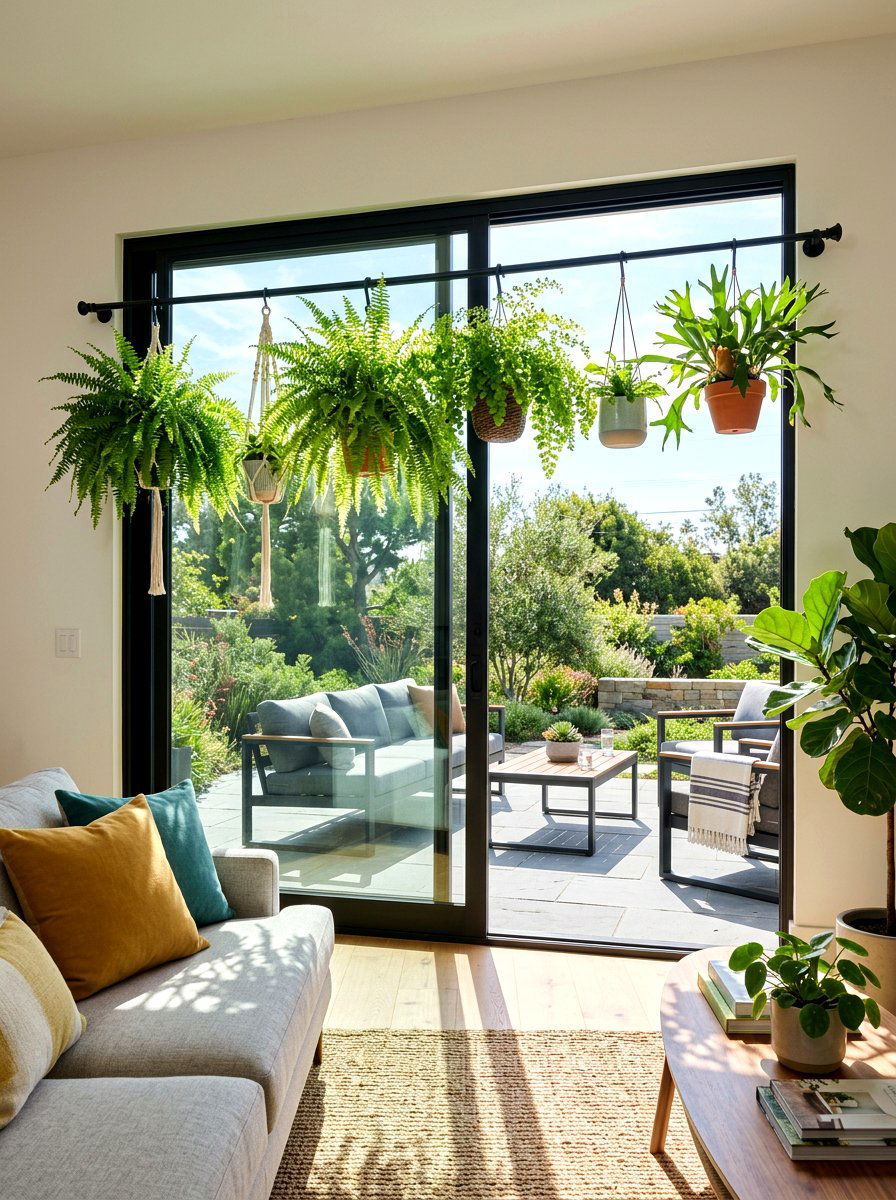
A sliding glass door or a large patio entrance is a prime spot for hanging plants that need significant sunlight. By installing a tension rod or ceiling hooks just inside the glass, you can create a screen of greenery. Large ferns or cascading vines act as a natural filter for the sunlight, reducing glare while maintaining your view. This setup works perfectly for homes with limited wall space near windows. It blurs the line between the interior and the garden outside, making the room feel much larger. The plants stay healthy in the bright light, creating a vibrant focal point for the entire room.
14. Hanging Plant Small Apartment
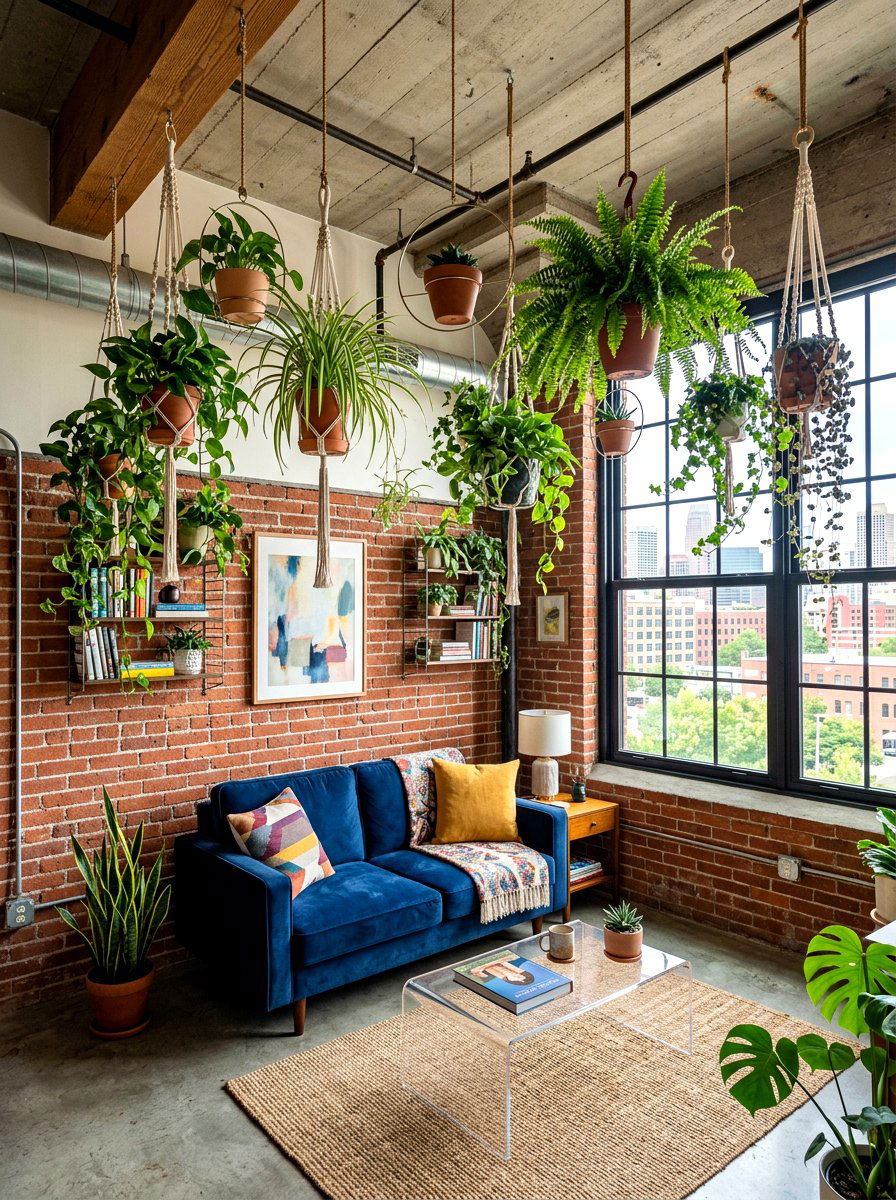
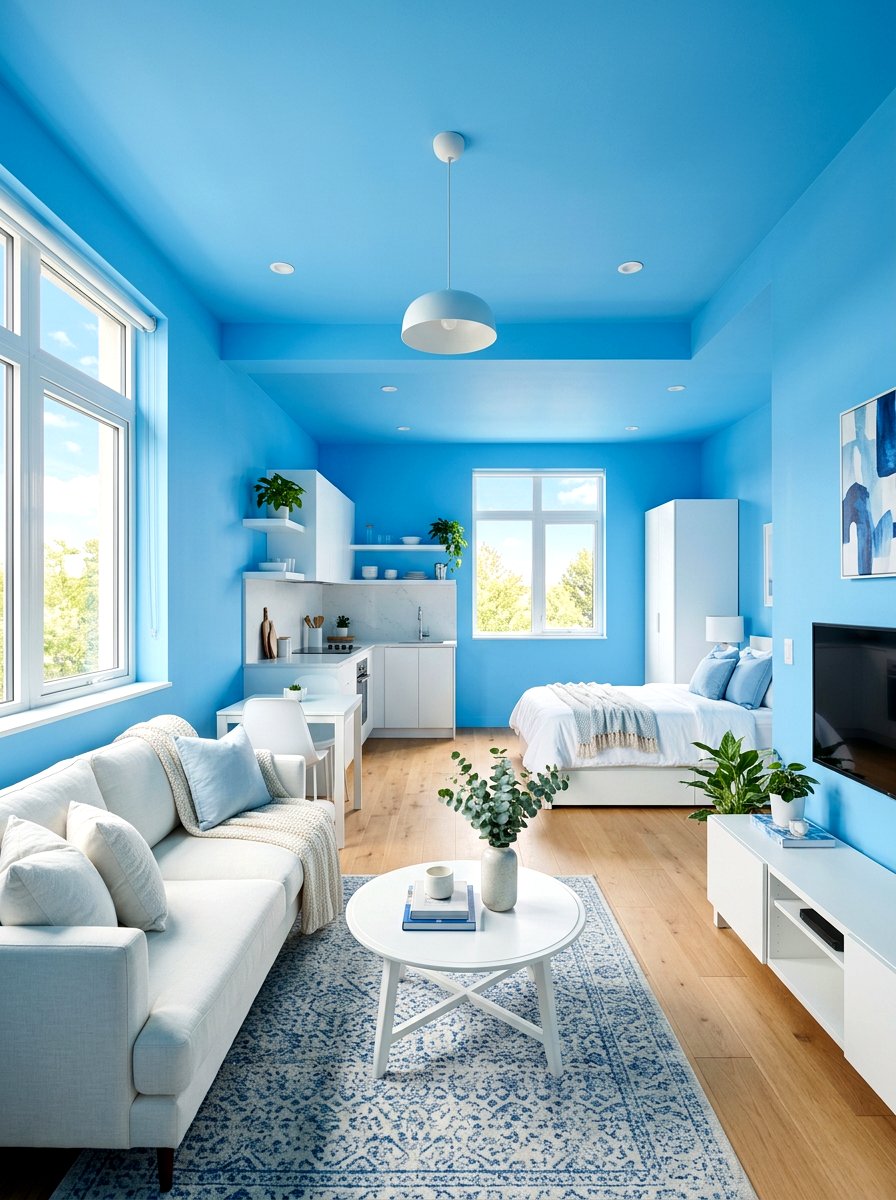
In a small apartment, floor space is a luxury, making hanging plants the ultimate solution for urban gardeners. Suspending a variety of easy-care plants from the ceiling allows you to have a lush indoor garden without losing room for furniture. Using clear or white pots can help maintain an airy and open feel in a cramped living area. Grouping a few plants at different heights in a sunny corner creates a "mini jungle" effect that adds personality to a rental space. It is a renter-friendly way to decorate, as small ceiling holes are easy to patch later. This approach brings life to every square inch.
15. Hanging Plant Indoor Porch
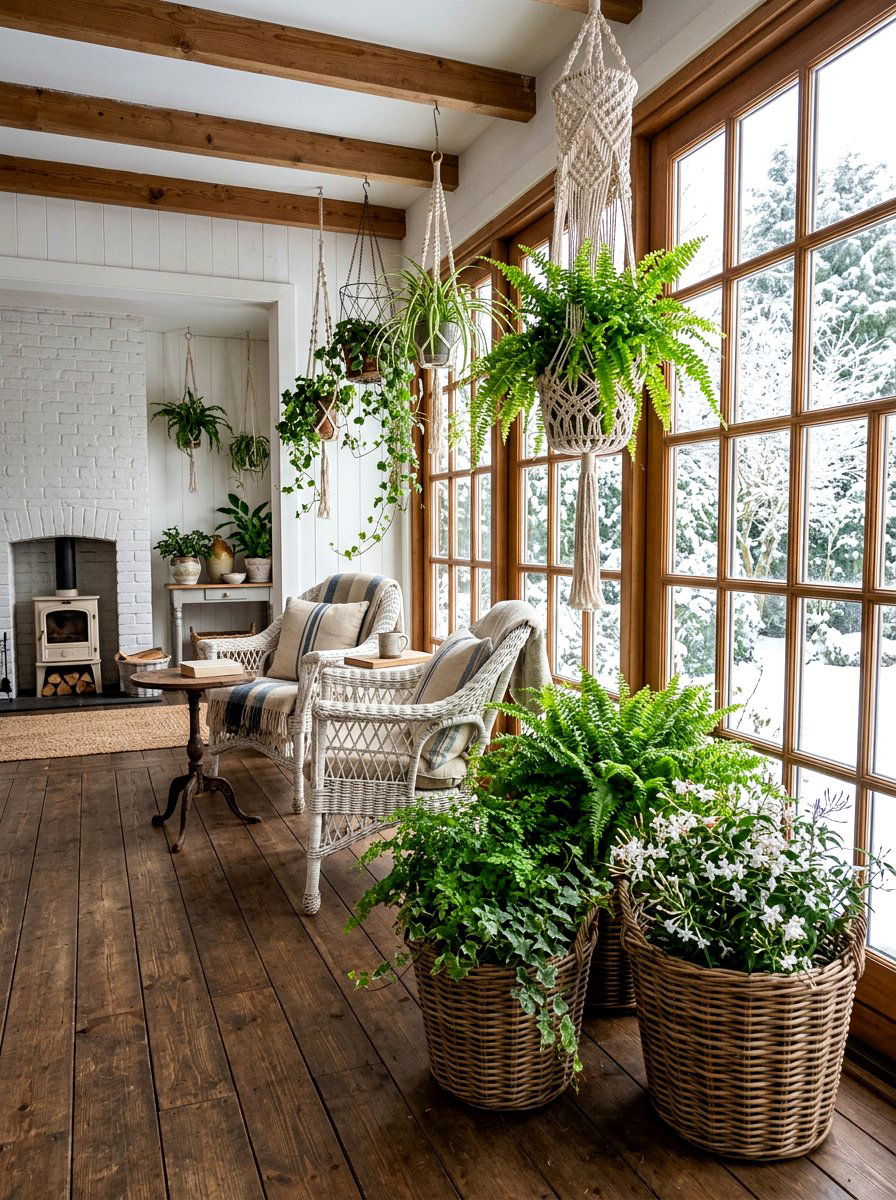
An indoor porch or enclosed veranda is a wonderful place to hang large, dramatic plants that can handle cooler temperatures. Ferns, ivies, and certain types of jasmine can be hung in large baskets to create a lush, conservatory-like environment. This setup makes the porch feel like a cozy extension of the garden, even during the winter months. Using traditional wicker or wire baskets adds a classic, timeless appeal to the decor. The plants provide a bit of privacy from neighbors while still letting in plenty of natural light. It is an inviting space to enjoy a morning coffee surrounded by beautiful, cascading green foliage.
16. Hanging Plant Breakfast Nook
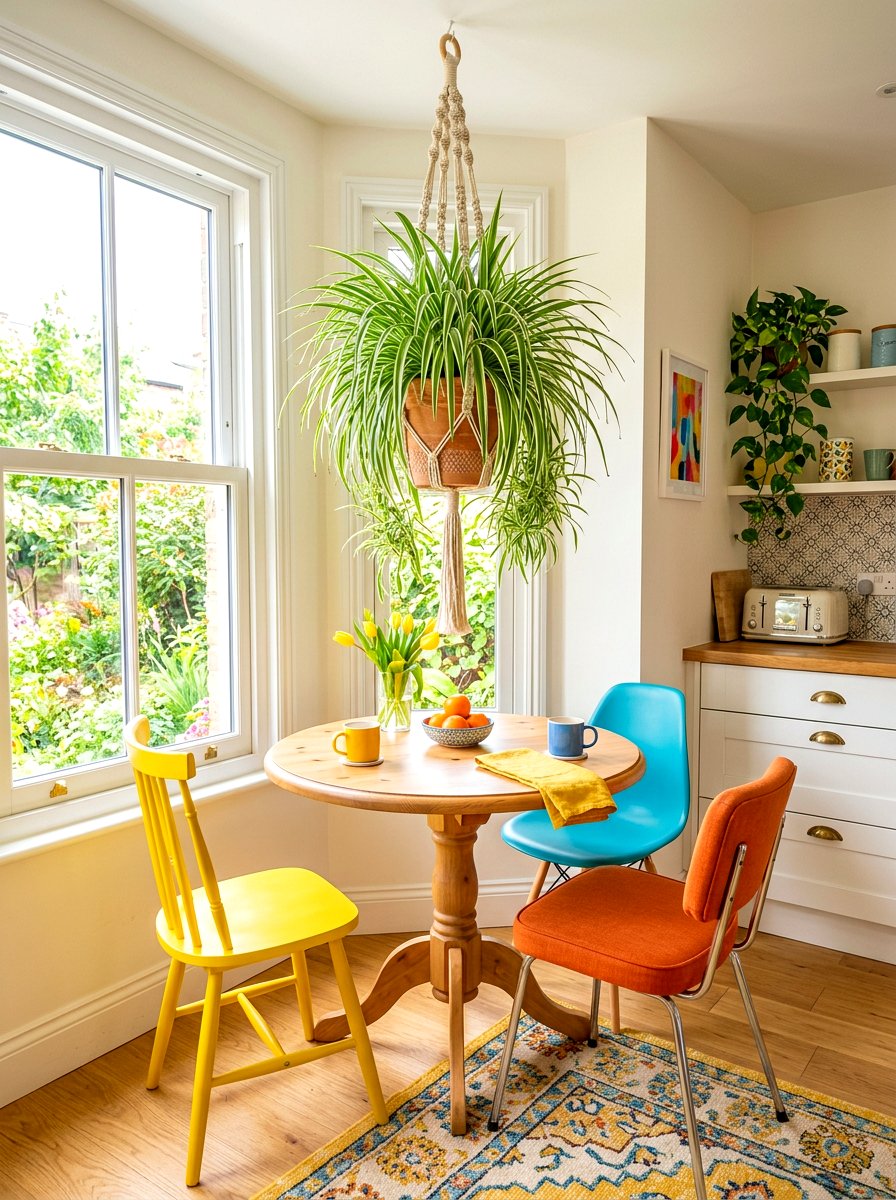
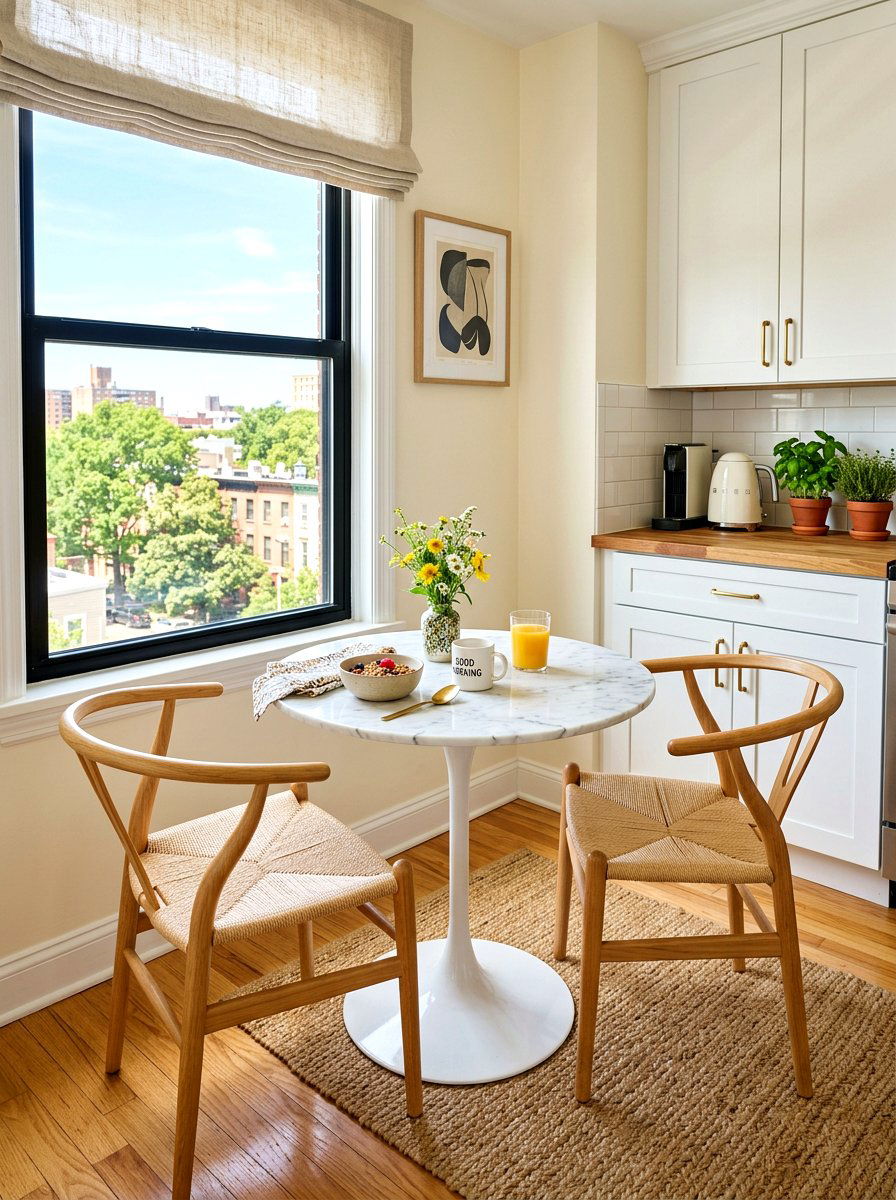
A breakfast nook feels much more intimate and charming with a hanging plant positioned over the table. A small, bushy plant like a Spider Plant or a Grape Ivy adds a touch of freshness to your morning routine. The delicate, arching leaves create a sense of enclosure without feeling heavy or dark. This design works particularly well in small, sunny corners where space for floor plants is limited. Choosing a colorful ceramic pot that matches your kitchen decor ties the whole look together. It makes the nook feel like a special destination within the home, perfect for starting the day with a peaceful and natural vibe.
17. Hanging Plant Hallway Wall
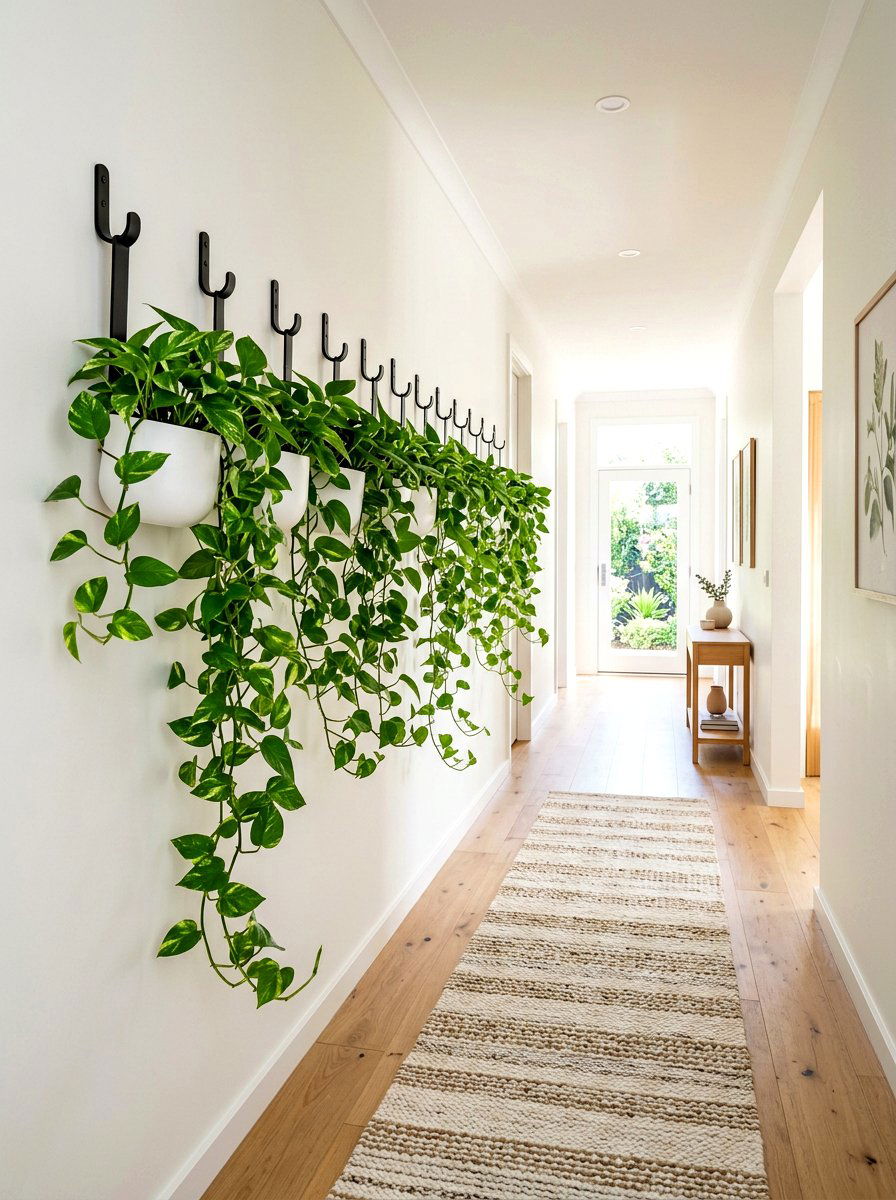
Hallways are often dark and narrow, but a well-placed hanging plant can instantly brighten the area. Use a series of wall-mounted hooks to hang a row of uniform pots with trailing plants like Pothos. This creates a rhythmic green border that guides you through the house. The organic shapes of the leaves help soften the long, straight lines of a typical corridor. If the hallway lacks natural light, consider using low-light varieties or artificial lights to keep the plants looking their best. This simple addition makes a transitional space feel like a curated part of the home rather than just a way to get from room to room.
18. Hanging Plant Loft Space
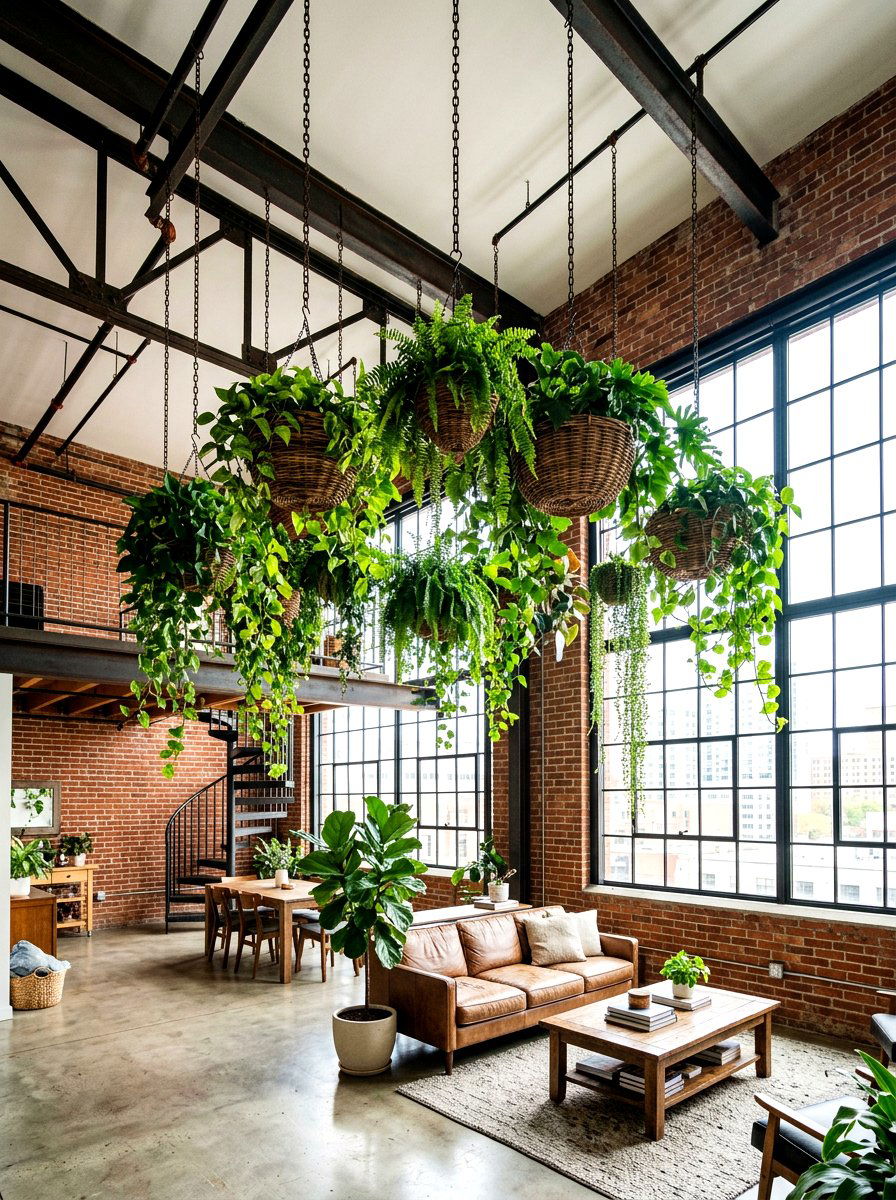
Loft spaces with high ceilings offer the perfect vertical canvas for extra-large hanging plant displays. You can use long chains to suspend massive baskets of cascading foliage from the structural beams. This emphasizes the height of the room and fills the large volume of empty air with life. A combination of different trailing species creates a rich, textured look that feels modern and industrial. The plants help absorb sound, making large open lofts feel much quieter and more comfortable. This bold design choice makes a strong visual impact and turns the ceiling into a primary decorative feature of the entire living area.
19. Hanging Plant Window Frame
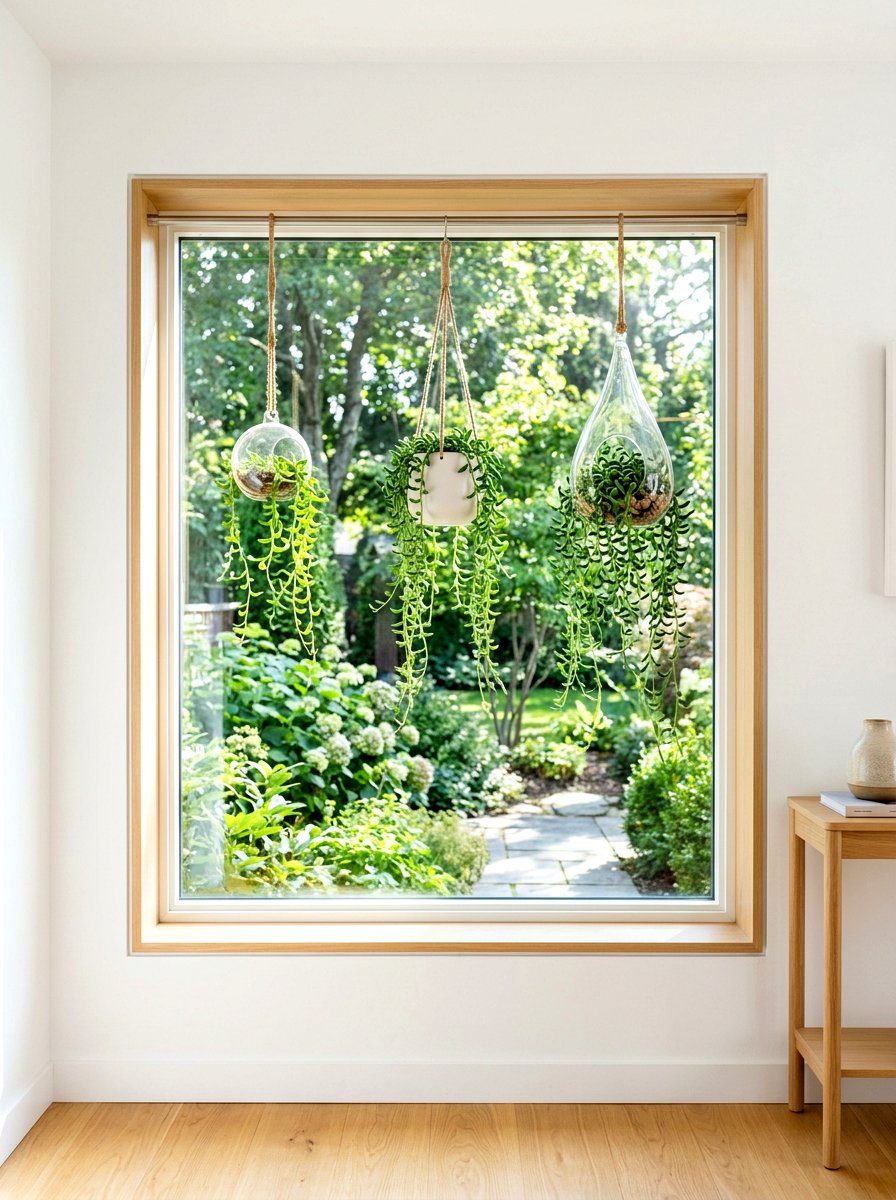
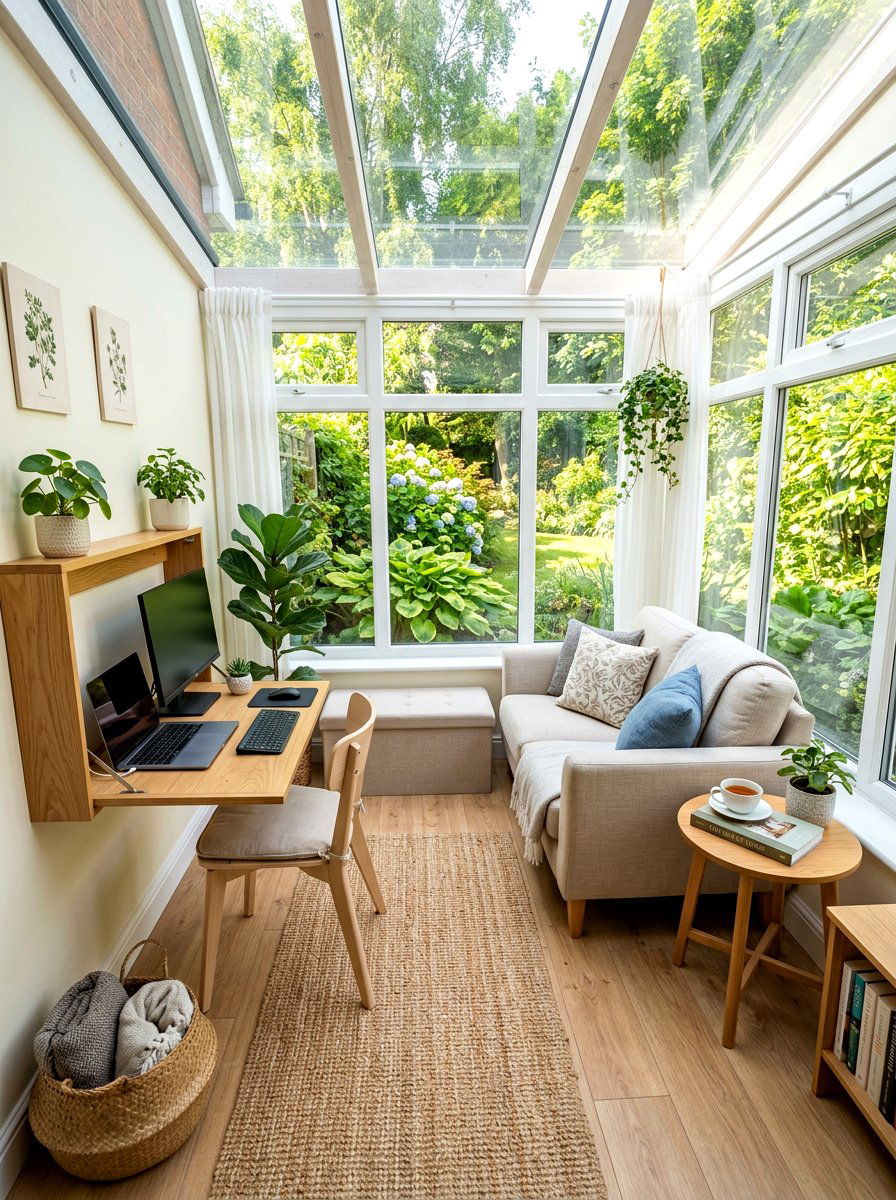
Specifically hanging plants within the window frame itself creates a beautiful frame for your outdoor view. By attaching small hooks to the top of the casing, you can hang lightweight glass terrariums or small pots. This keeps the greenery at eye level where it can be appreciated every time you look outside. Trailing succulents like String of Bananas look amazing when they are backlit by the sun. This method is excellent for kitchens or bathrooms where you want to add decor without cluttering the windowsill. It creates a layered look that combines the indoor environment with the natural world outside the glass.
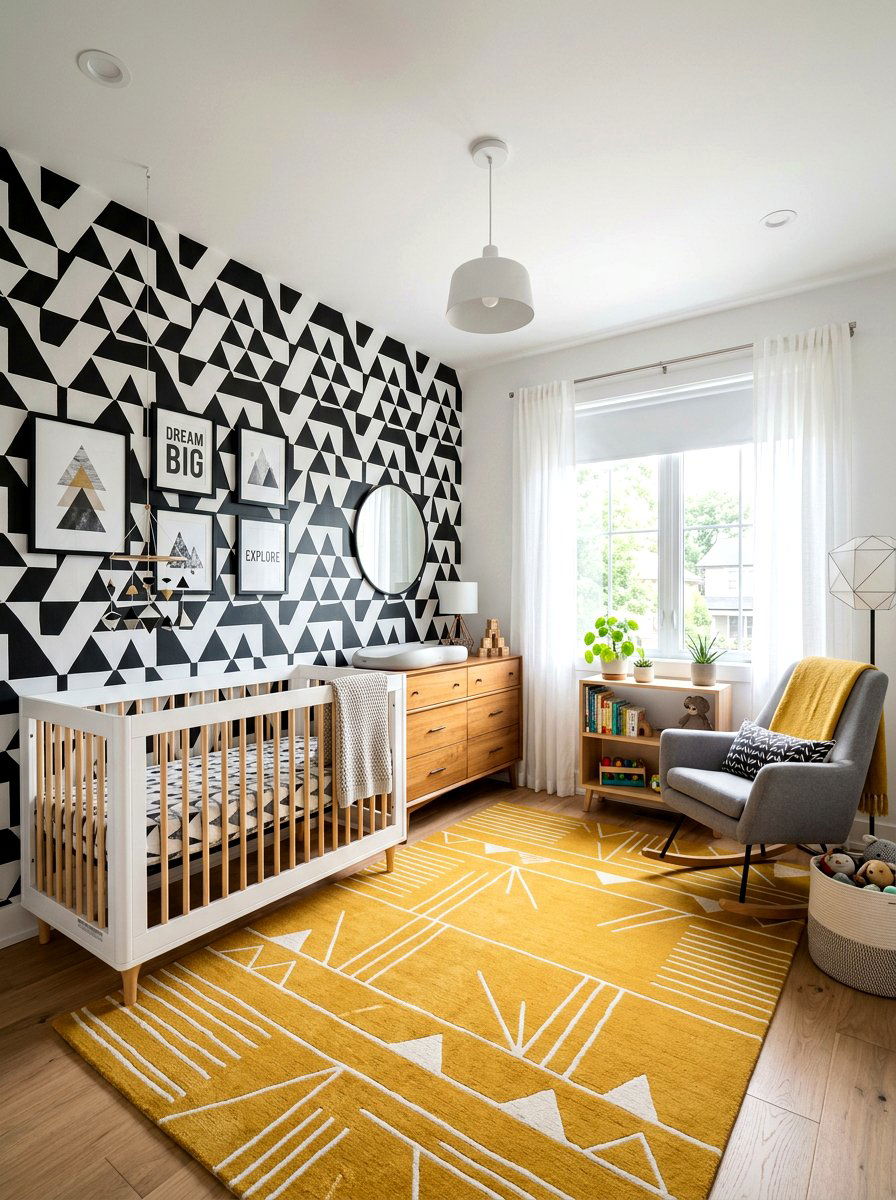
20. Hanging Plant Vertical Wall
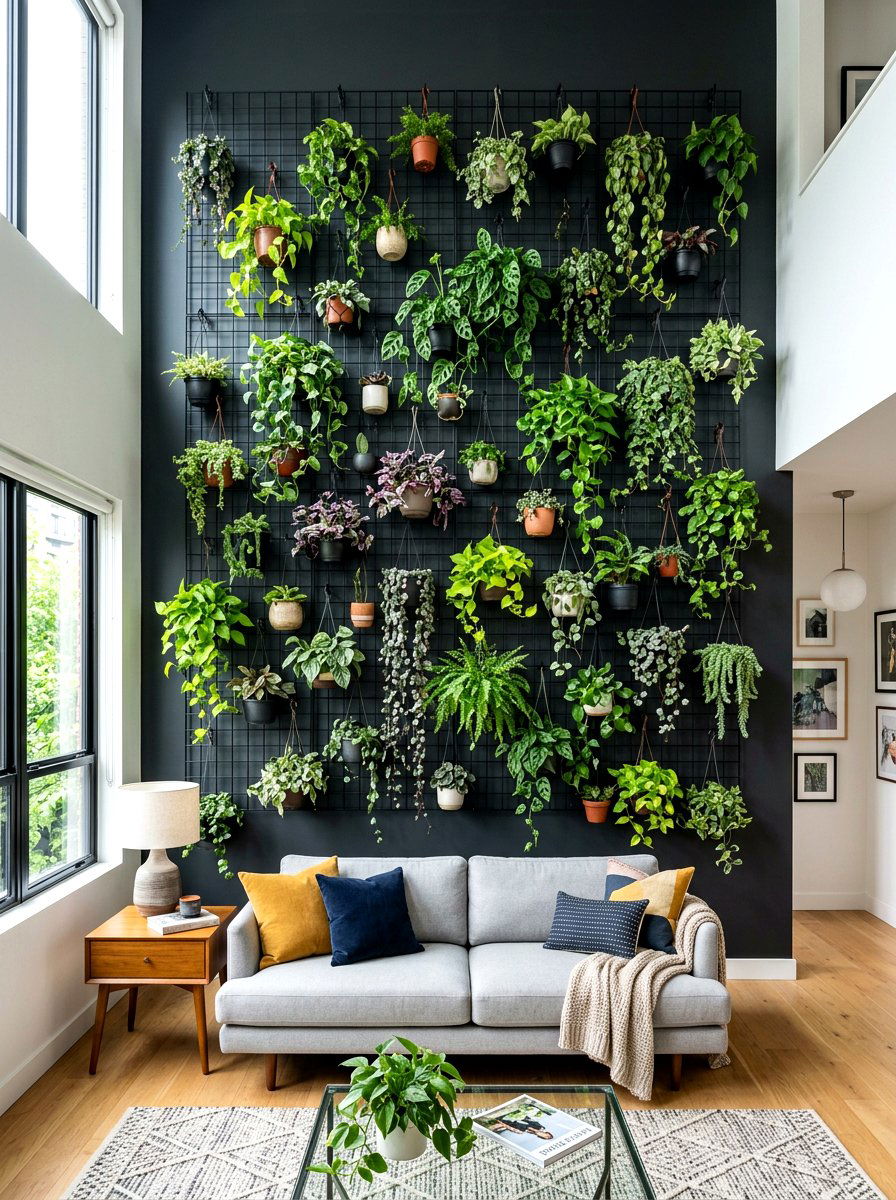
A vertical wall of hanging plants is a stunning way to create a living art piece in any room. You can install a grid system or multiple wall hooks to hang a collection of similar plants across a large surface. This creates a dense wall of greenery that acts as a natural wallpaper. Using a mix of different leaf textures and shades of green adds depth and visual interest. It is a great solution for blank walls that feel too large for a single piece of art. This setup is particularly effective in modern or minimalist homes where a clean, organized look is preferred.
21. Hanging Plant Mudroom Area
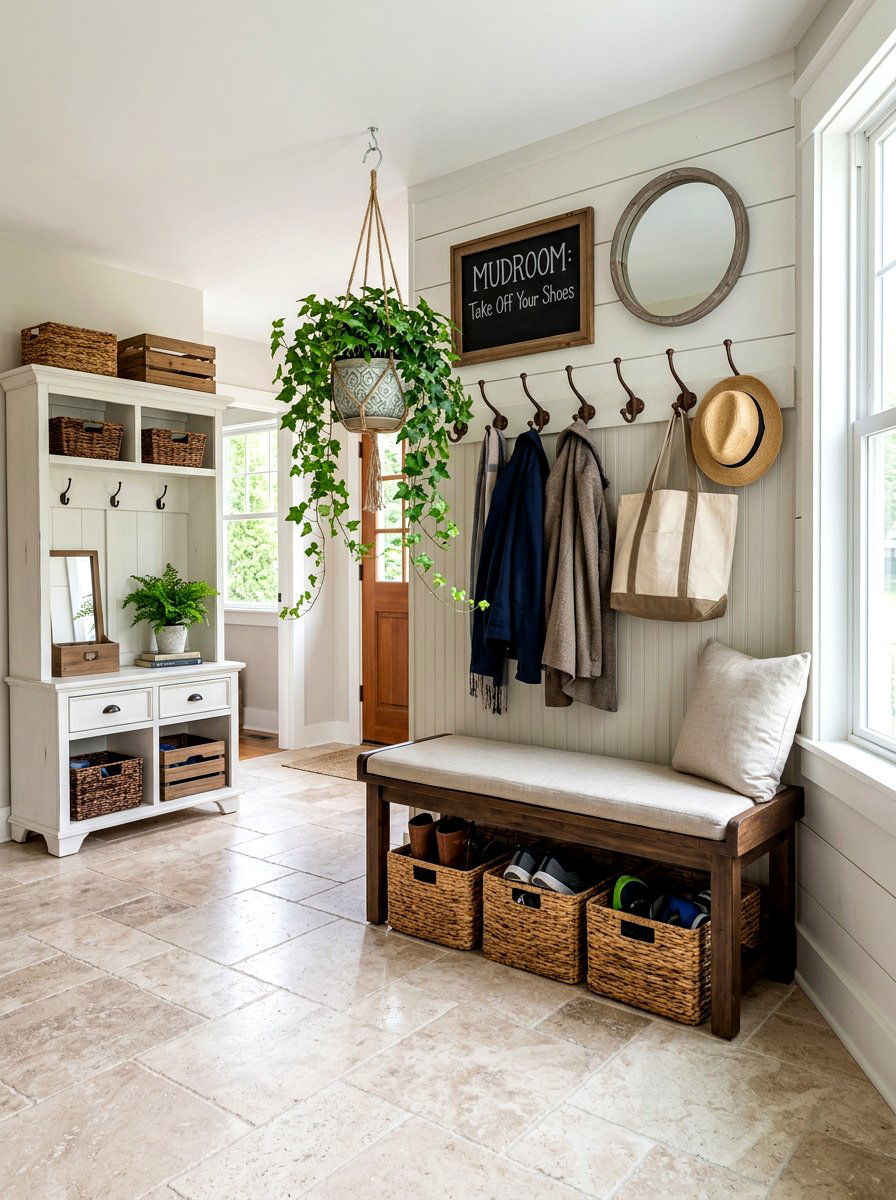
The mudroom is often a purely functional space, but adding a hanging plant can make it feel much more welcoming. A simple pot of English Ivy hanging near the coat hooks adds a touch of softness to the hard surfaces of benches and cabinets. This small detail makes the transition from outdoors to indoors feel more seamless. Since mudrooms are often near the entryway, they get a lot of traffic, and a hanging plant stays safely out of the way. It brings a bit of garden freshness to a room typically filled with boots and bags, making the daily routine feel a little more pleasant.
22. Hanging Plant Nursery Room
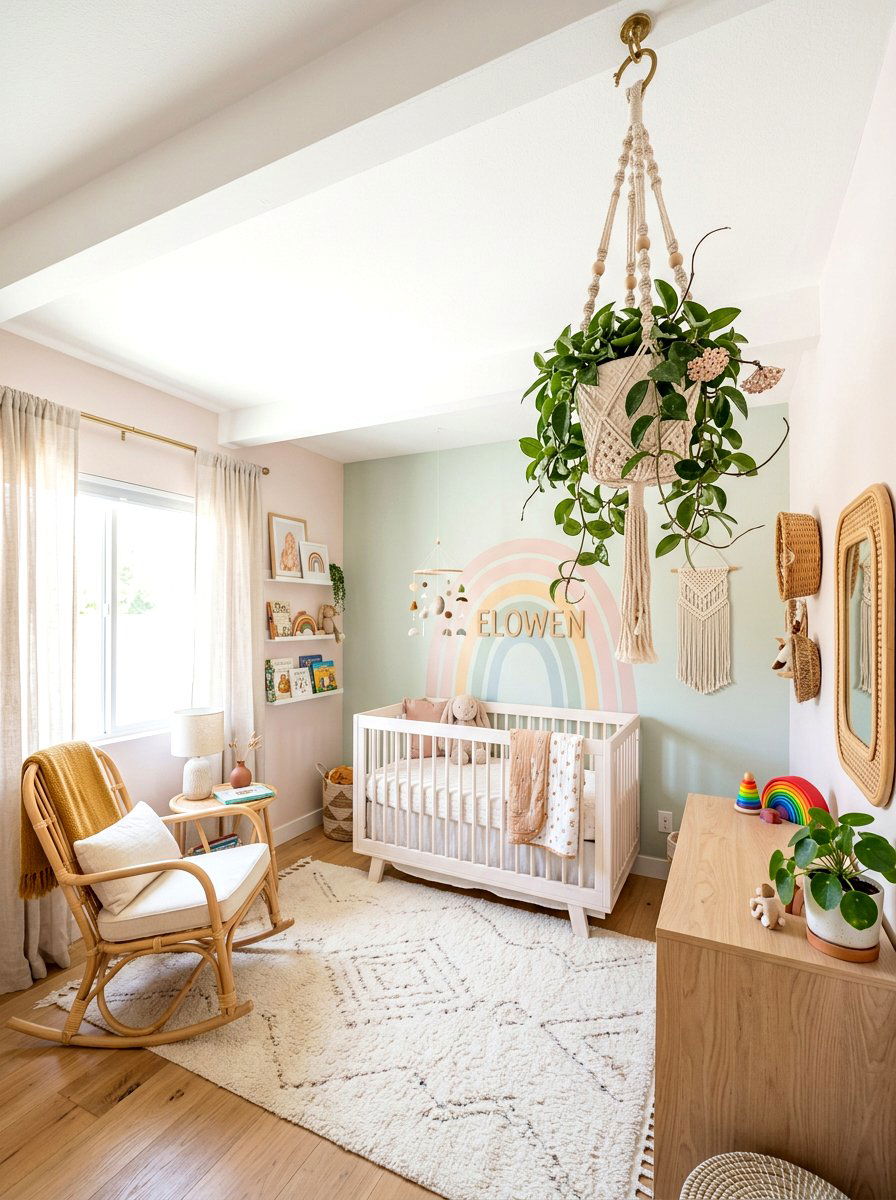
In a nursery, hanging plants are a safe way to introduce greenery because they are kept well out of reach of curious little hands. A soft, trailing plant like a Hoya hung in a high corner adds a calming and natural element to the decor. The green color is soothing and fits perfectly with almost any nursery theme, from boho to modern. Many plants also help to naturally clean the air, which is a great benefit for a baby’s room. Choosing a lightweight plastic pot ensures safety while still providing the beauty of a real plant. It adds a sophisticated touch that grows with the child.
23. Hanging Plant Room Divider
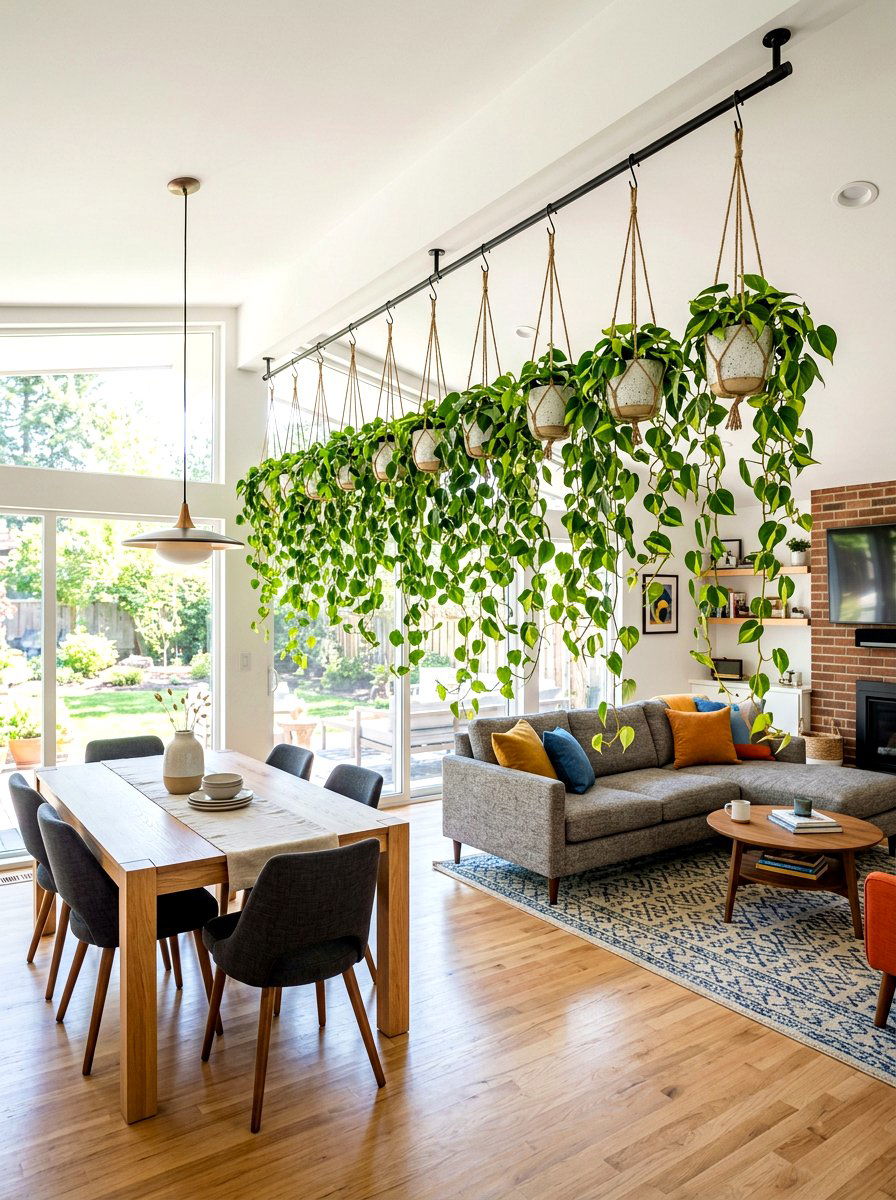
Using hanging plants as a room divider is a creative way to separate different areas in an open-concept home. By hanging a row of identical plants from a long rod or a series of ceiling hooks, you can create a "green curtain. " This provides a visual boundary between a living area and a dining space without blocking light or making the room feel closed off. Trailing vines like Philodendron grow quickly and can eventually form a thick, living screen. This design is much more interesting than a standard wall or folding screen and brings a constant sense of nature into the middle of your floor plan.
24. Hanging Plant Minimalist Room
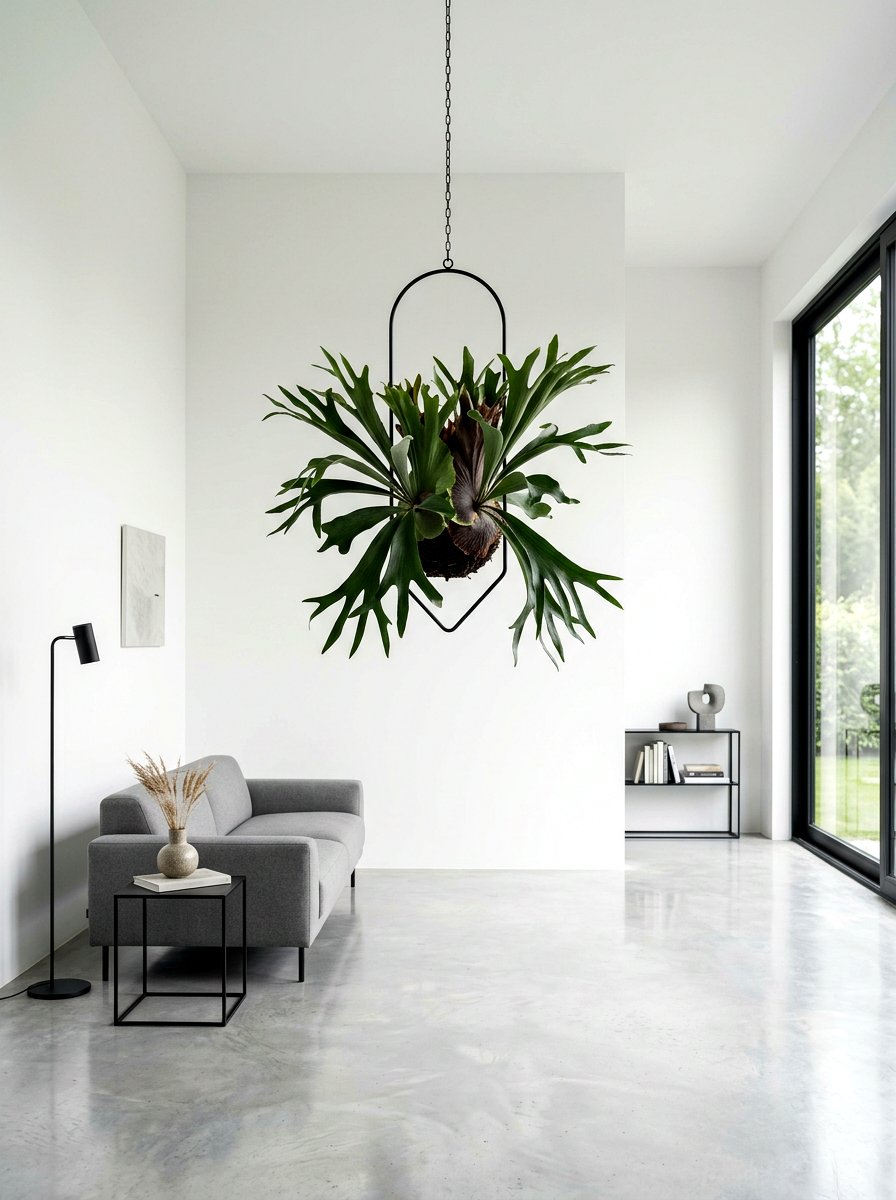
In a minimalist room, a single, well-placed hanging plant can serve as the primary focal point. A sleek, black metal hanger holding a architectural plant like a Staghorn Fern adds drama and character to a clean space. The organic form of the plant stands out against simple furniture and neutral colors. This approach follows the "less is more" philosophy, where one high-quality piece makes a bigger impact than many small ones. It keeps the floor clear and maintains the uncluttered look that is essential to minimalist design. The green foliage provides a necessary pop of life that keeps the room from feeling too sterile.
25. Hanging Plant Industrial Pipe
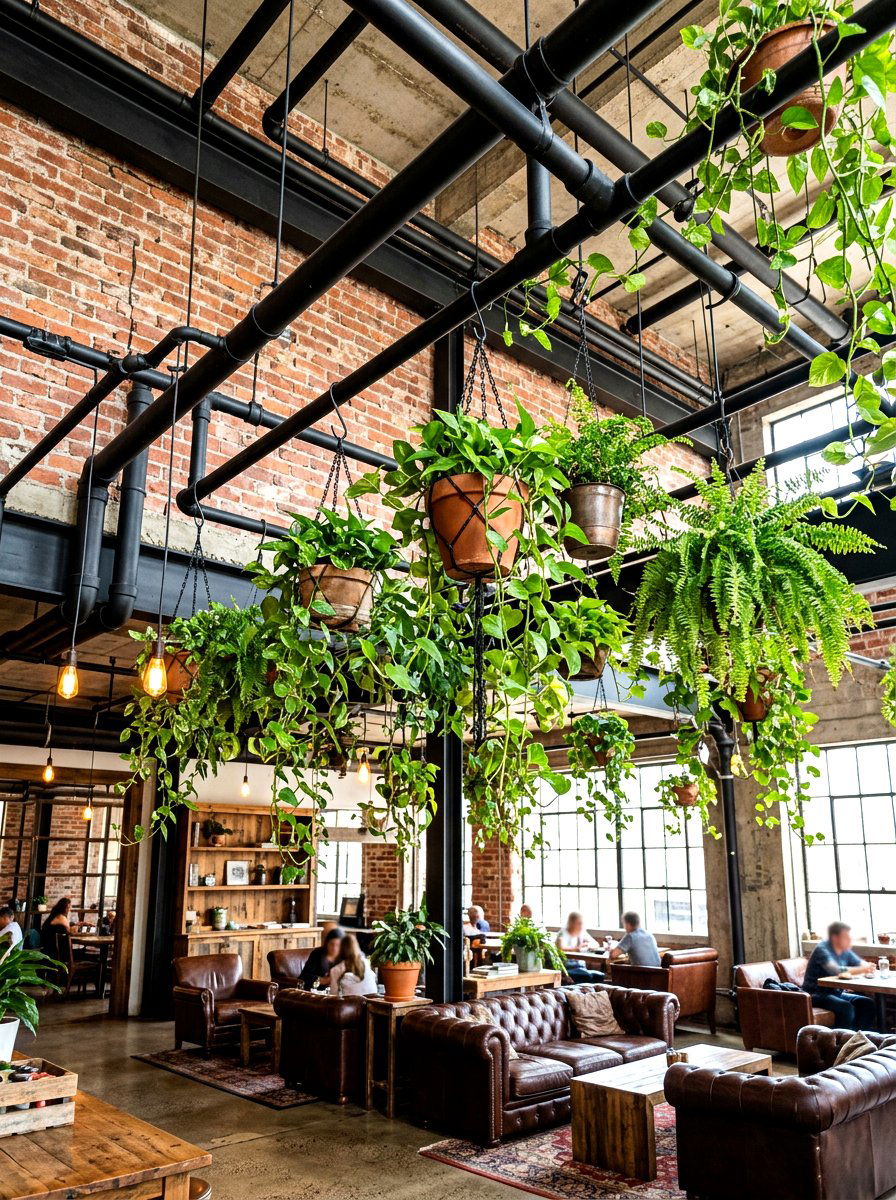
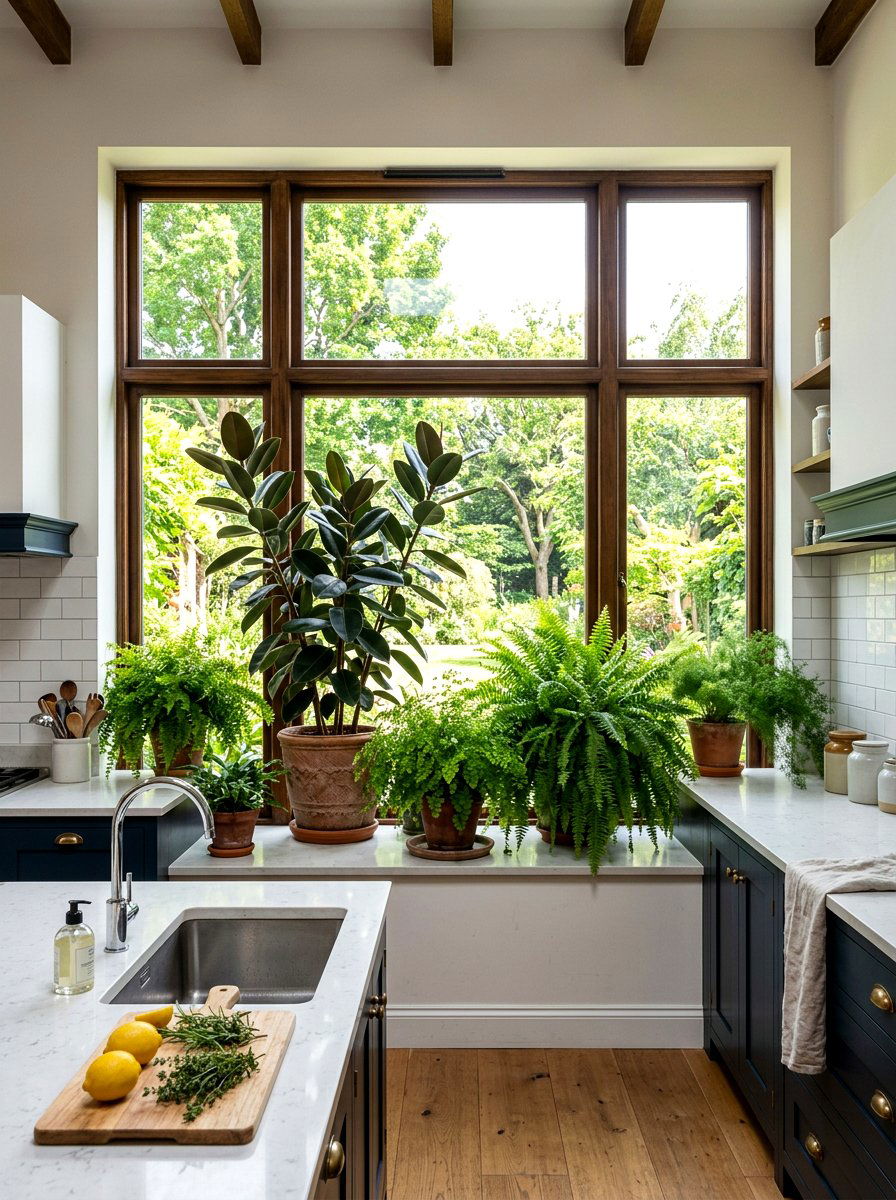
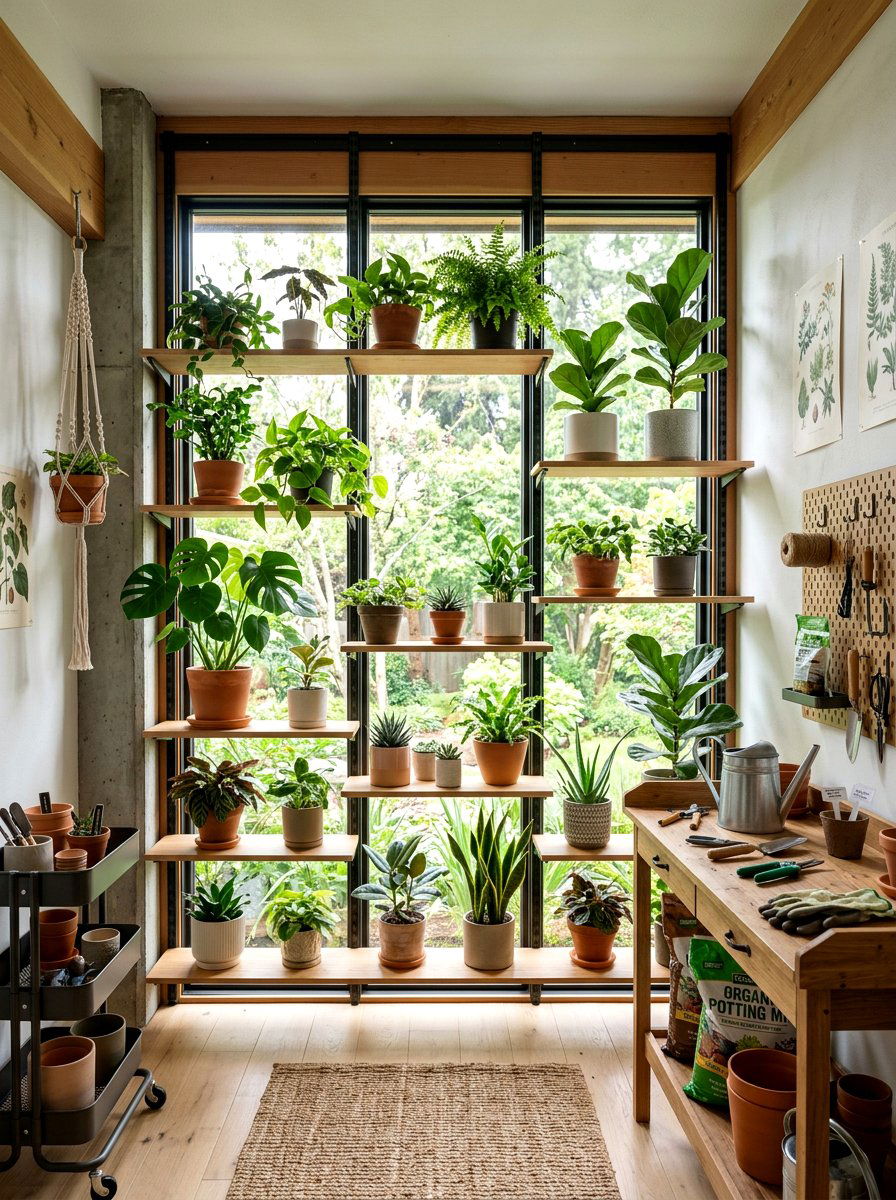
For an industrial-style home, hanging plants from exposed metal pipes adds a brilliant contrast between the man-made and the natural. You can loop macrame hangers or use simple "S" hooks to attach pots to the pipes. This look works particularly well in lofts or converted spaces with high, open ceilings. The soft, flowing leaves of a Pothos or a Boston Fern soften the hard edges of metal and concrete. It creates a "reclaimed nature" vibe that is very popular in modern interior design. This setup is easy to customize and can be moved around along the pipes to change the look whenever you want.
26. Hanging Plant Macrame Wall
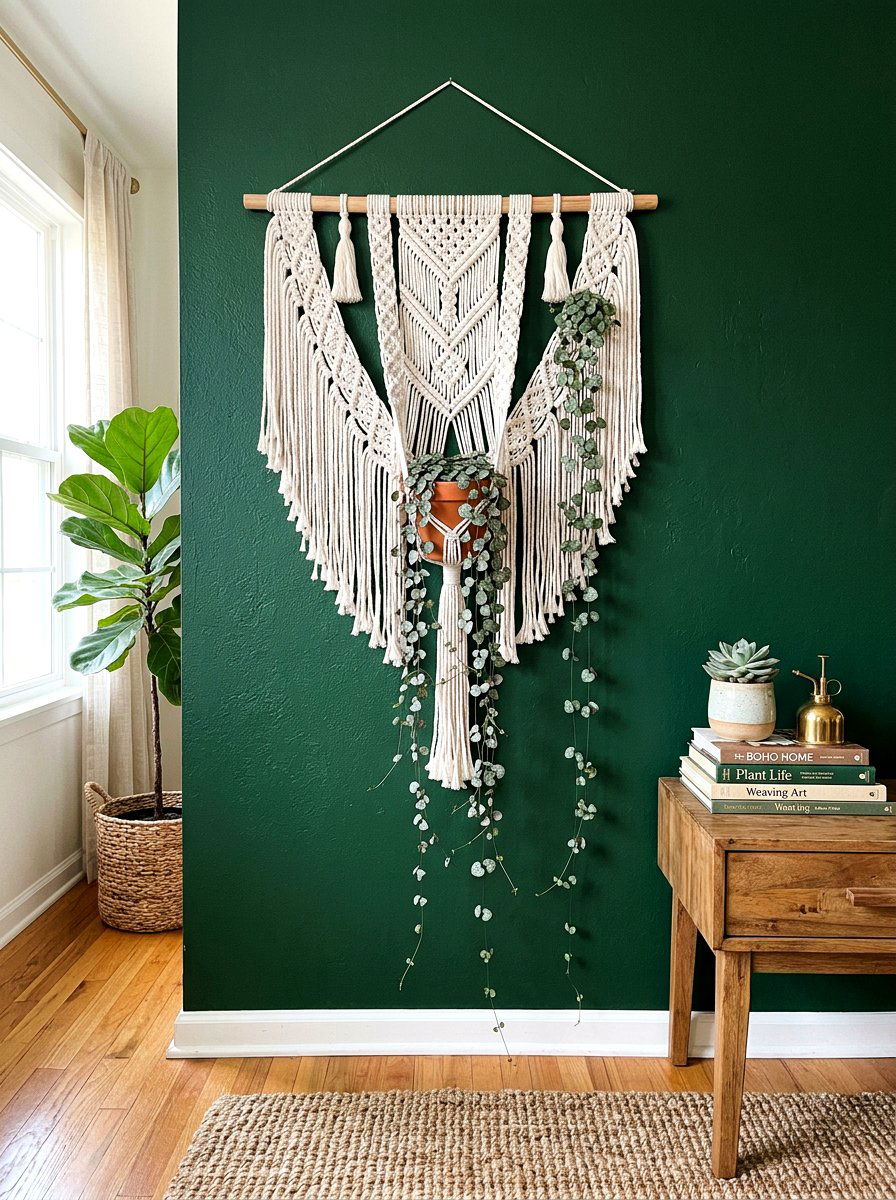
A macrame wall hanging that incorporates a plant is a classic bohemian design choice that adds a lot of texture to a room. This type of display often features intricate knots and long fringes that hold a small pot in the center. It serves as both wall art and a functional planter, making it perfect for small spaces. Hanging a delicate String of Hearts from a white or cream macrame cord looks stunning against a dark-colored accent wall. It brings a handmade, artisanal feel to the room that is very cozy and inviting. This setup is ideal for bedrooms, living rooms, or any space that needs a bit of personality.
27. Hanging Plant Skylight Area
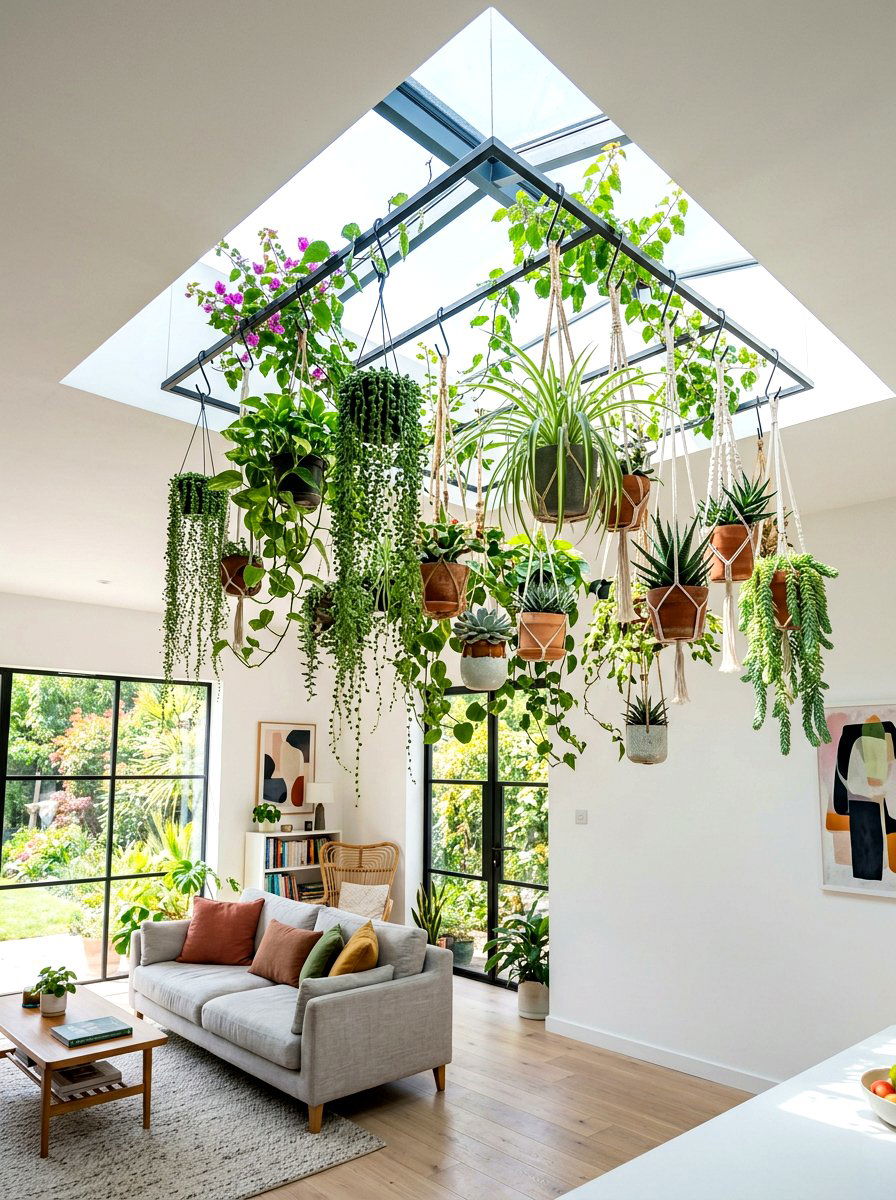
If you are lucky enough to have a skylight, hanging plants directly beneath it will provide them with the ultimate light source. Sun-loving varieties like Burro’s Tail or flowering vines will thrive in the direct overhead sun. This arrangement draws the eye upward to the architectural feature of the skylight, making the room feel taller and brighter. The plants will grow quickly and vibrantly, creating a lush canopy in the center of the room. It is a fantastic way to utilize the unique lighting conditions of your home to create a dramatic and healthy indoor garden. This display looks particularly impressive in kitchens or living areas.
28. Hanging Plant Powder Room
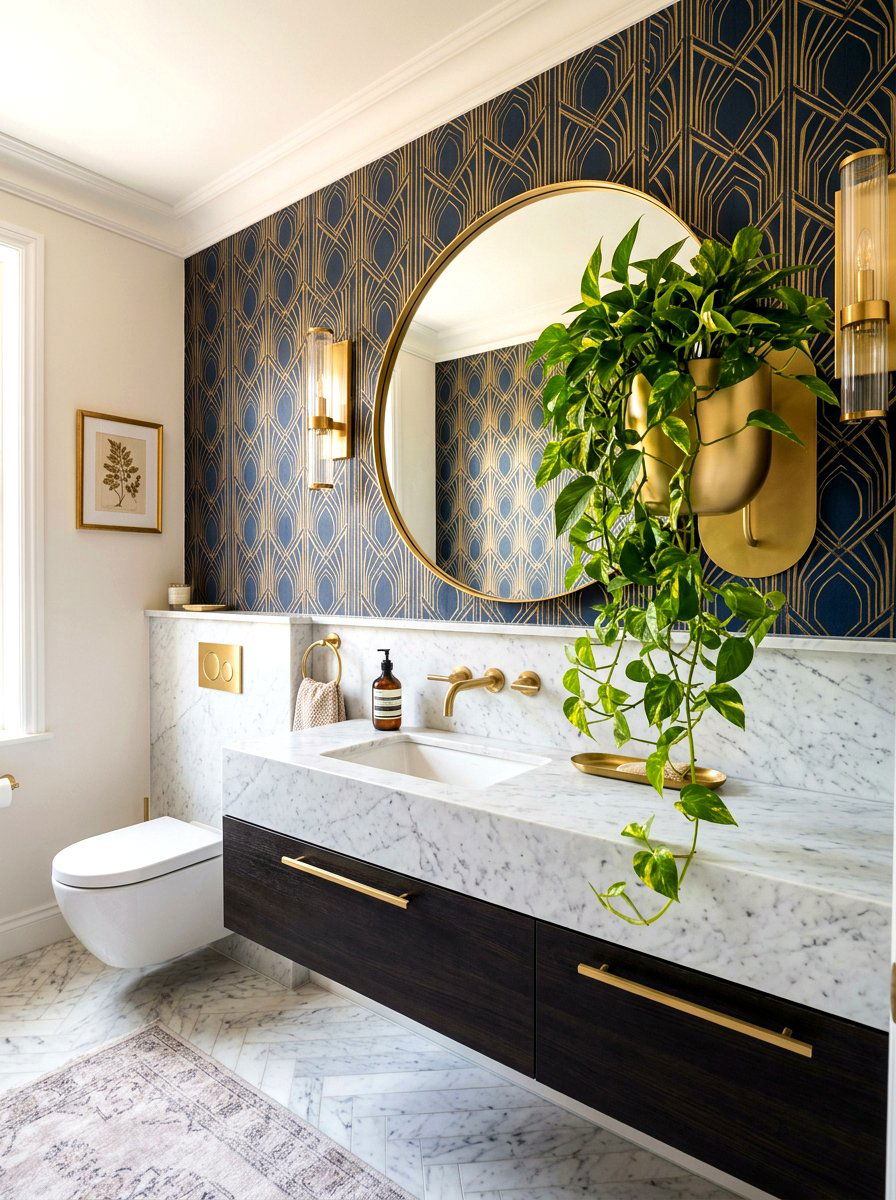
The powder room is a small space where every design choice counts, and a hanging plant adds a lot of value. A single plant in a stylish hanger near the mirror adds a touch of luxury and freshness for guests. Since powder rooms are often windowless, you can use low-light tolerant plants like a ZZ plant or even a high-quality artificial trailing vine. It breaks up the hard surfaces of the sink and toilet with a bit of organic texture. This small addition makes the room feel more considered and upscale. It is a simple way to elevate a functional space into a beautiful part of the home decor.
29. Hanging Plant Basement Bar
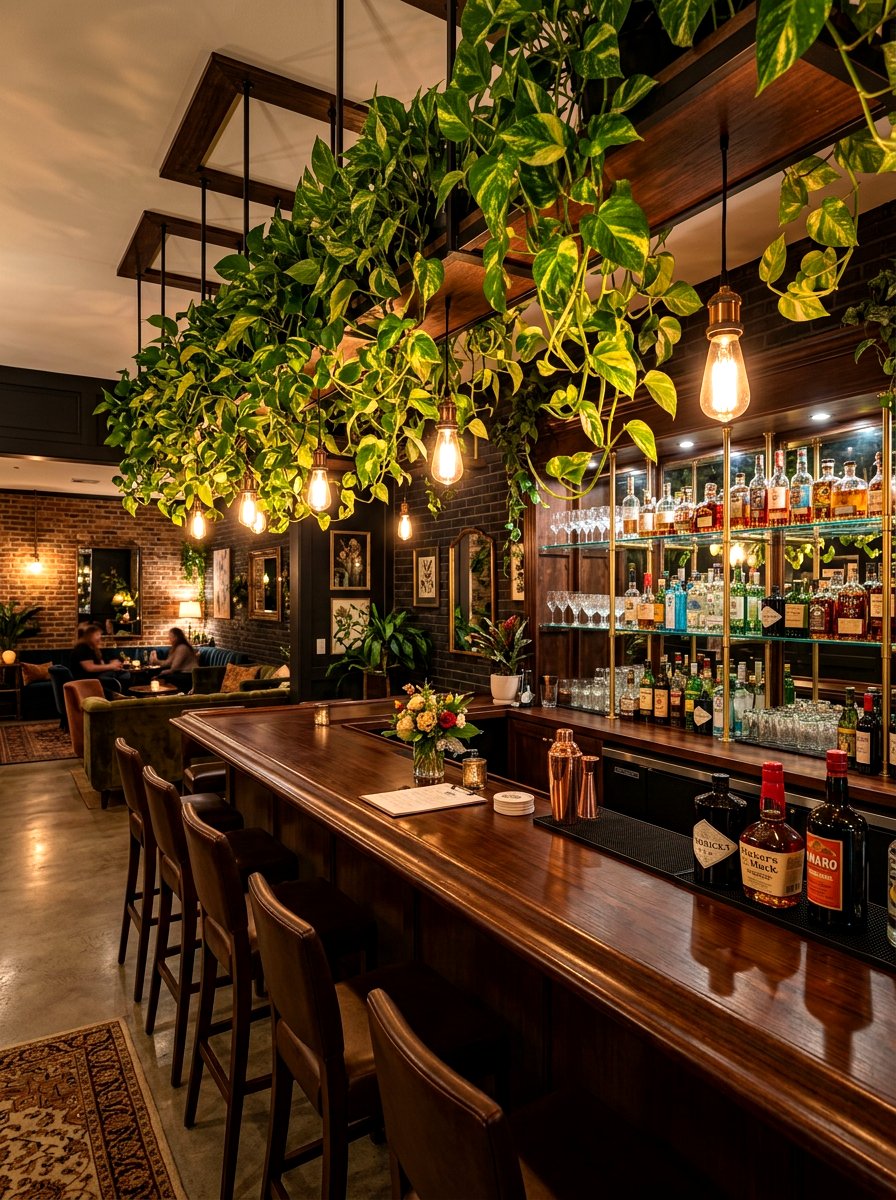
A basement bar area can sometimes feel dark and enclosed, but hanging plants can help bring it to life. By suspending easy-care plants from the ceiling or a rack above the bar, you add a layer of freshness to the space. Variegated Pothos can brighten up a dim corner with its light-colored leaves. This setup creates a cool, "speakeasy garden" vibe that is very popular for entertaining. The greenery looks great next to glassware and bottles, adding a sophisticated touch to your home bar. It is a simple way to make a subterranean room feel much more inviting and connected to the upper floors.
30. Hanging Plant Attic Space
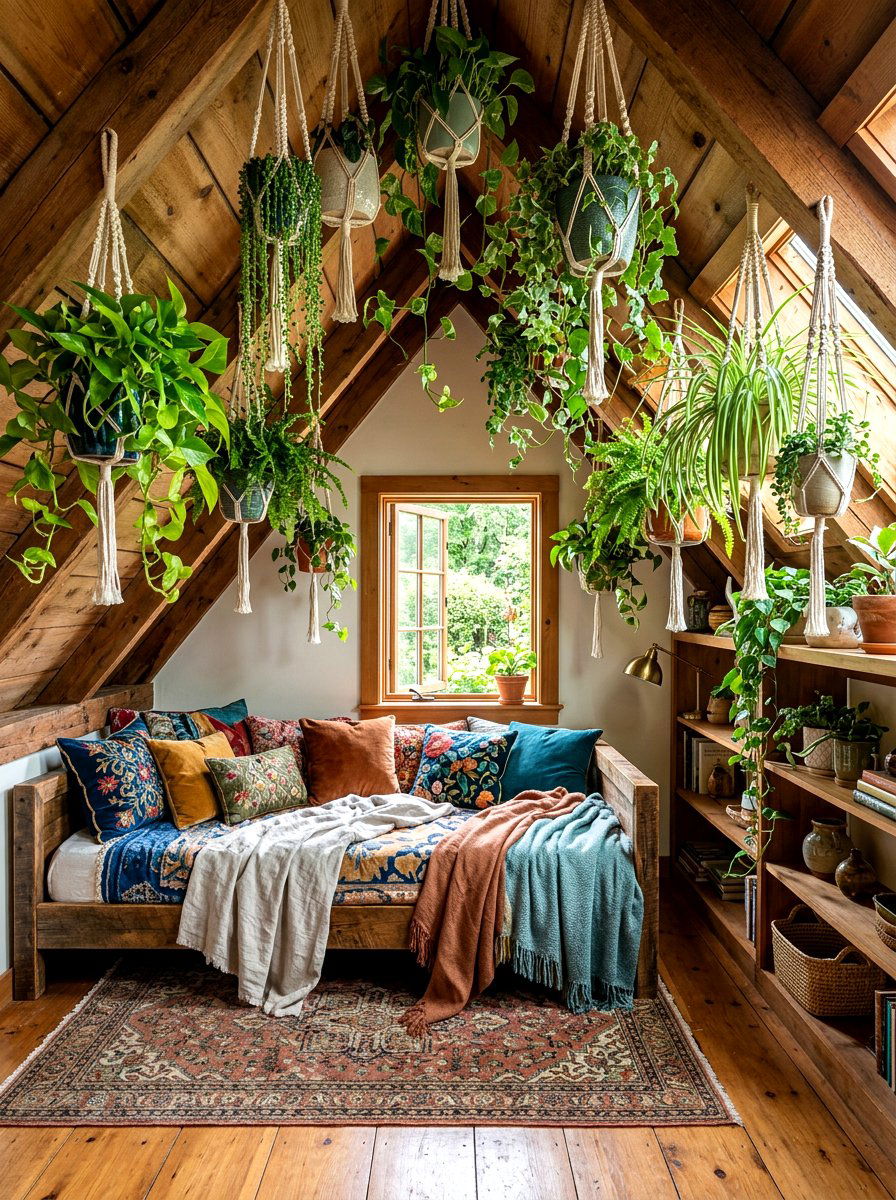
An attic room with sloped eaves is a unique architectural challenge that hanging plants can help solve. You can hang plants from the highest point of the sloped ceiling to make the space feel taller and less cramped. Trailing plants that follow the angle of the roof create a cozy, "secret garden" atmosphere in a guest room or home office. Using lightweight planters is key for these angled surfaces. This approach turns an awkward attic layout into a charming and character-filled retreat. It makes the most of every inch of space, bringing the beauty of the outdoors into the very top of your home perfectly.
Conclusion:
Hanging indoor plants are more than just a trend; they are a versatile design tool that can enhance every corner of your home. By utilizing vertical space, you can introduce the calming benefits of nature into rooms where floor space is limited. Whether you prefer the intricate knots of macrame or the clean lines of modern metal hangers, there is a style to fit every interior. Greenery helps purify the air and softens the hard edges of furniture, creating a more inviting and healthy living environment. Experimenting with different heights and locations will help you create a personalized indoor jungle that looks stunning from every angle.

Related posts: