Imagine the fragrant aroma of fresh basil, rosemary, and mint filling your home while you prepare a delicious evening meal for your family. An indoor herb garden is more than just a culinary convenience; it is a vibrant living decor element that breathes life into your kitchen and living spaces. Whether you live in a sprawling farmhouse or a compact city apartment, cultivating your own herbs ensures you always have organic, flavorful ingredients at your fingertips. From sleek high-tech hydroponic systems to charming upcycled mason jars, the possibilities for integrating greenery into your interior design are truly endless and incredibly rewarding.
1. Kitchen Windowsill Herb Garden
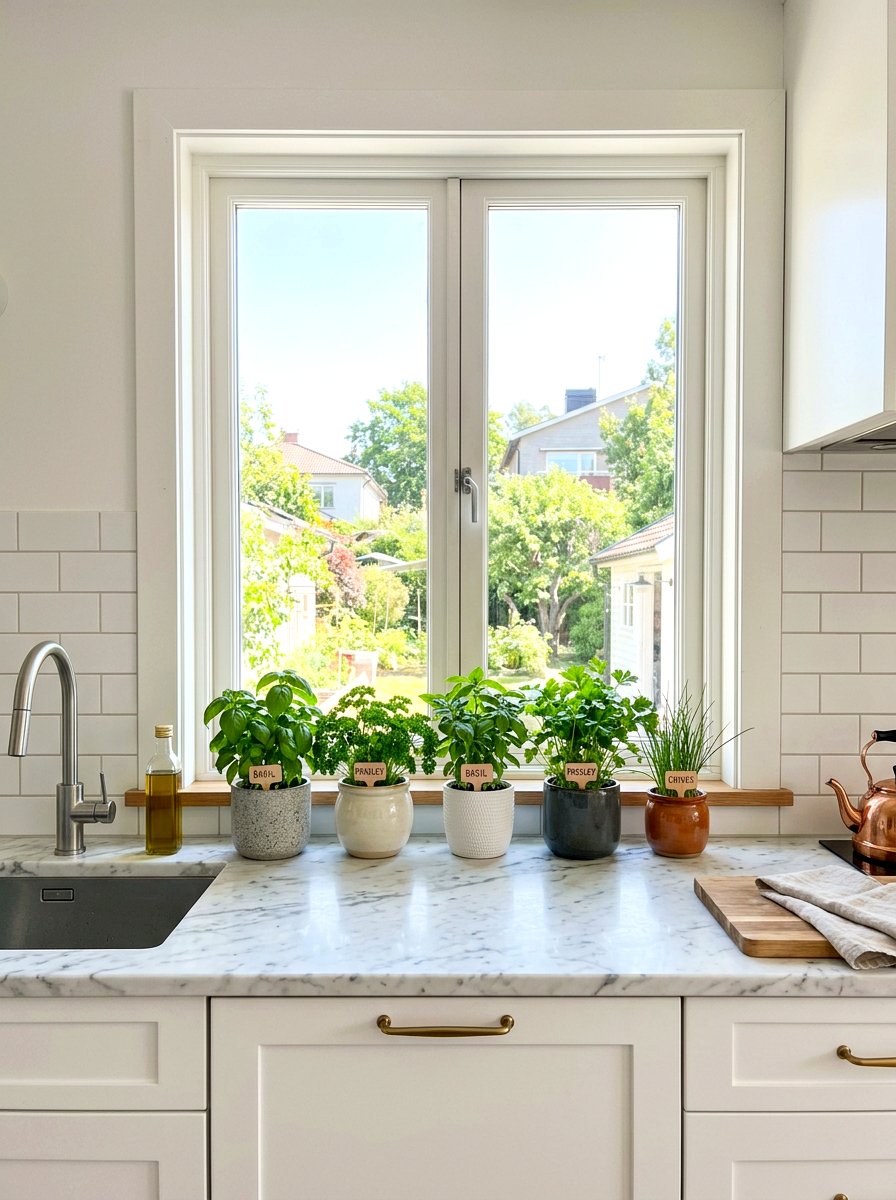
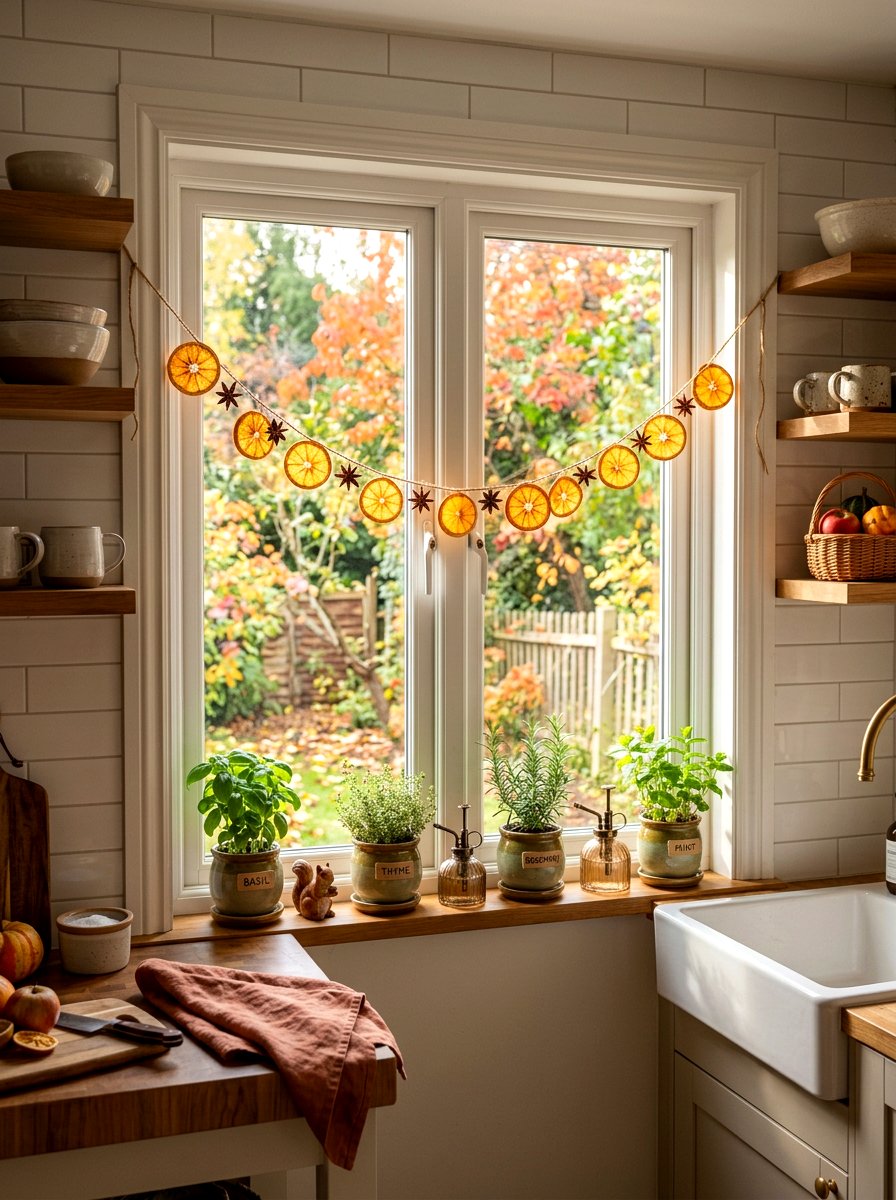
The classic kitchen windowsill herb garden remains a favorite because it places fresh greens exactly where you need them most while utilizing natural light. Positioning your favorite herbs like parsley or chives on a sunny ledge ensures they receive the necessary four to six hours of sunlight required for healthy growth. You can use a variety of small, individual pots or a single long trough that spans the width of the window frame. This setup not only provides a convenient harvest for your daily cooking but also creates a beautiful, natural screen that softens the view of the outdoors and improves air quality.
2. Vertical Wall Mounted Herb Planter
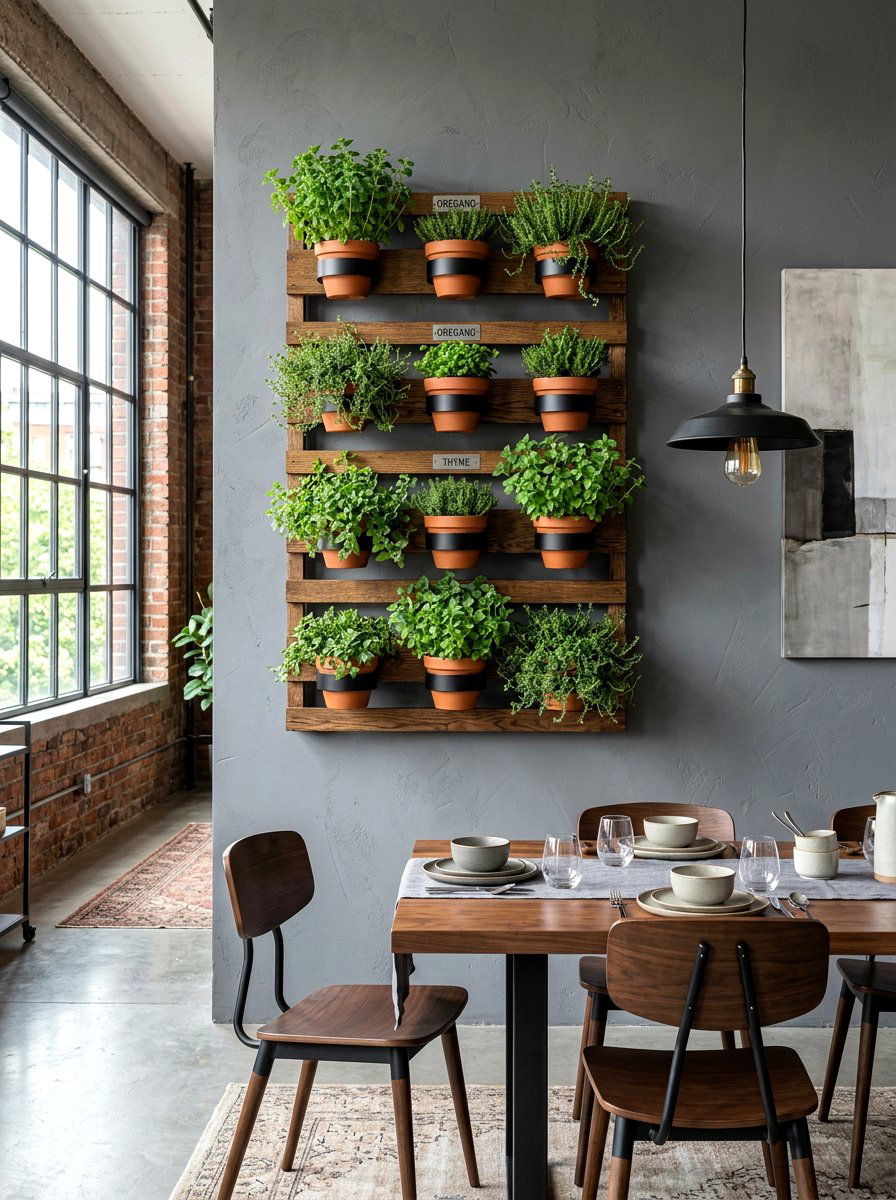
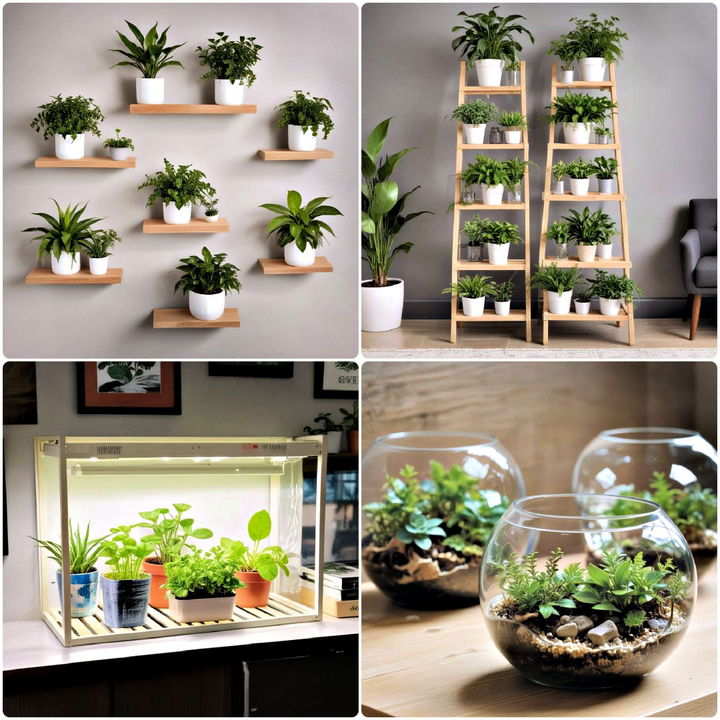
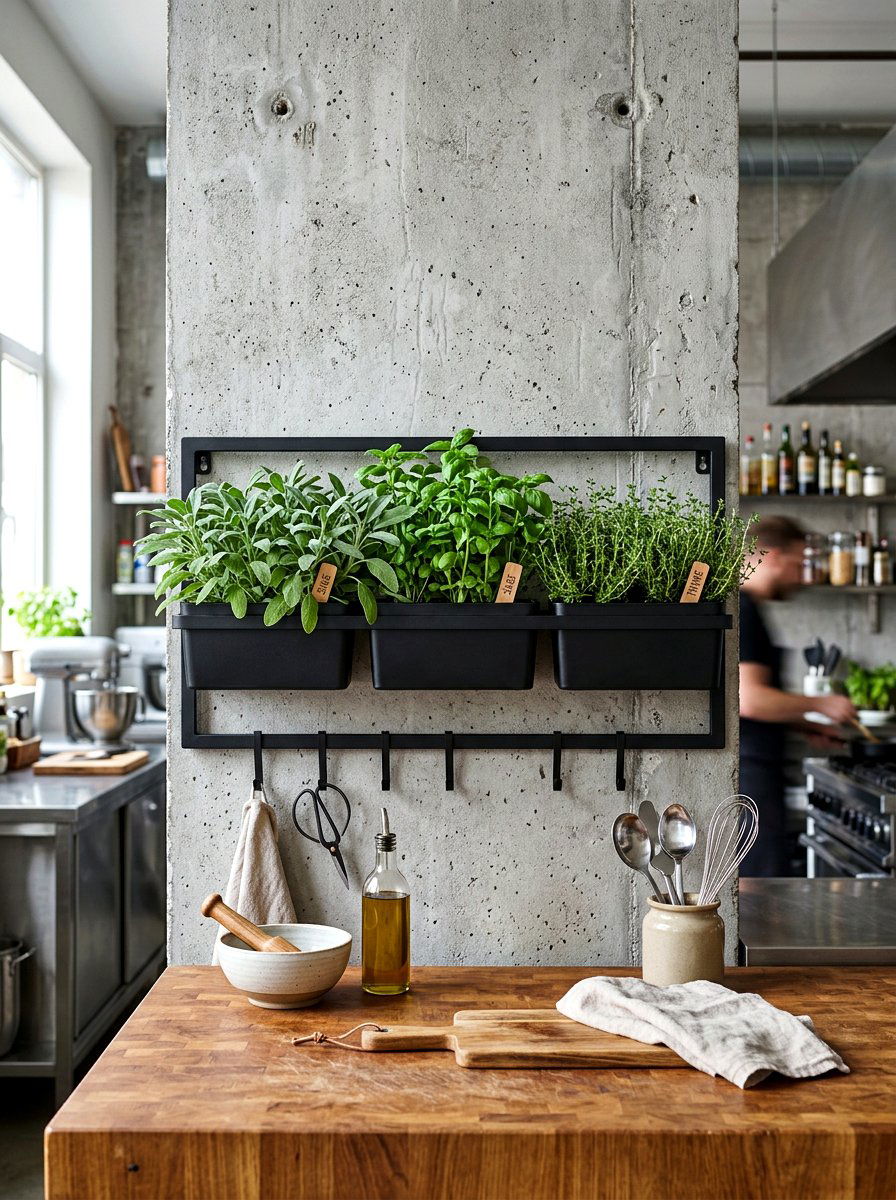
When counter space is limited, a vertical wall mounted herb planter offers a brilliant solution that doubles as a piece of living art. These systems utilize vertical height, allowing you to grow a wide variety of herbs in a compact footprint. You can choose modular pockets, wooden slats with attached pots, or sleek metal frames that hold several small containers in a grid pattern. This design approach creates a striking focal point in a dining room or kitchen area. Proper drainage is essential for wall units, so many modern versions include a built-in reservoir or specialized liners to protect your interior walls.
3. Hanging Macrame Herb Pots
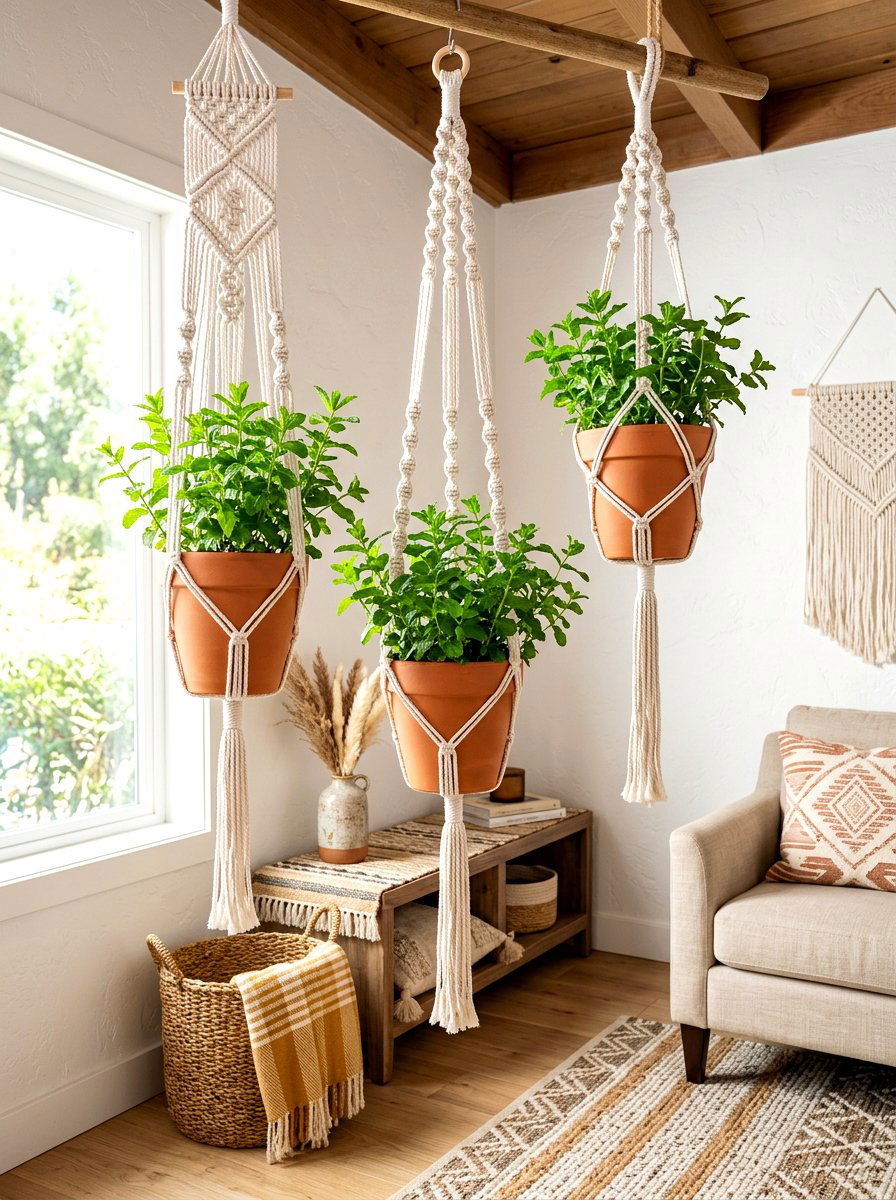
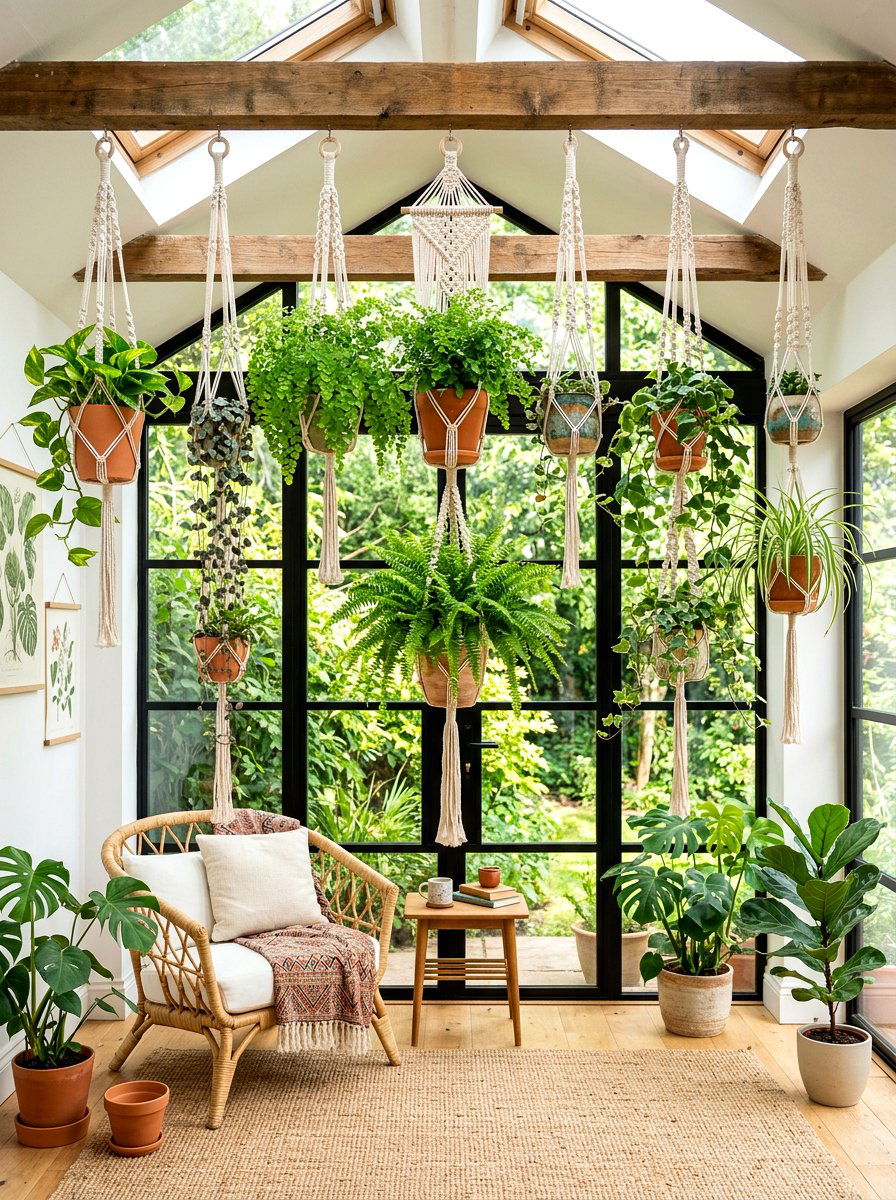
Hanging macrame herb pots bring a soft, bohemian aesthetic to your home while keeping your surfaces clear of clutter. These woven hangers can be suspended from ceiling hooks or a sturdy curtain rod, allowing herbs like mint or trailing rosemary to cascade beautifully. The texture of the cotton rope paired with lush green foliage adds warmth and visual interest to any corner of the room. By varying the lengths of the cords, you can create a dynamic, tiered effect that draws the eye upward. This method is particularly effective in high-traffic kitchens where you want to keep plants away from busy workspaces.
4. Hydroponic Indoor Growing System
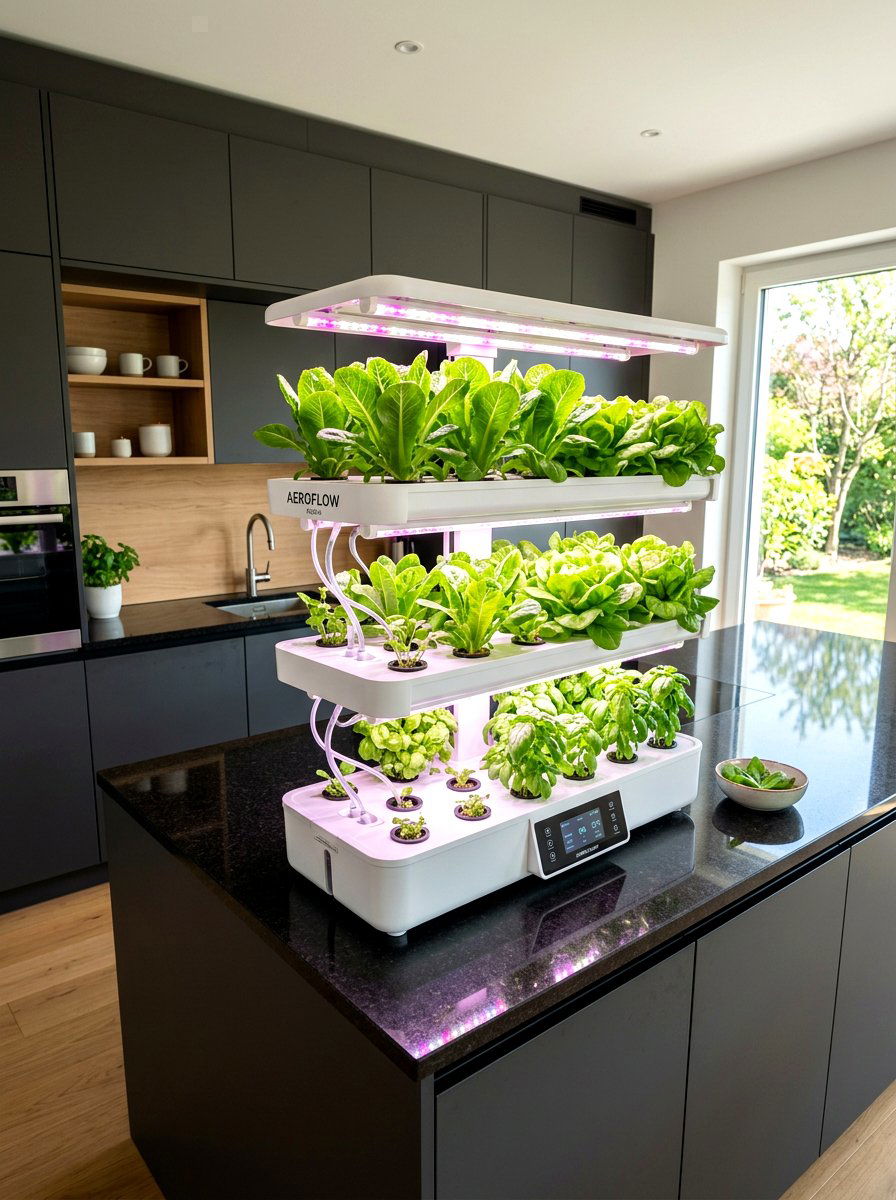
A hydroponic indoor growing system is the ultimate choice for tech-savvy gardeners who want a high yield with minimal daily maintenance. These soil-free setups use nutrient-rich water and automated LED grow lights to produce herbs significantly faster than traditional soil methods. Most systems come with built-in timers that manage the light cycles and water pumps, making them perfect for beginners or those with busy lifestyles. The sleek, modern design of these units fits perfectly on a contemporary countertop or an office desk. Because the environment is strictly controlled, you can enjoy a consistent harvest of herbs throughout every season.
5. Tiered Wooden Herb Ladder
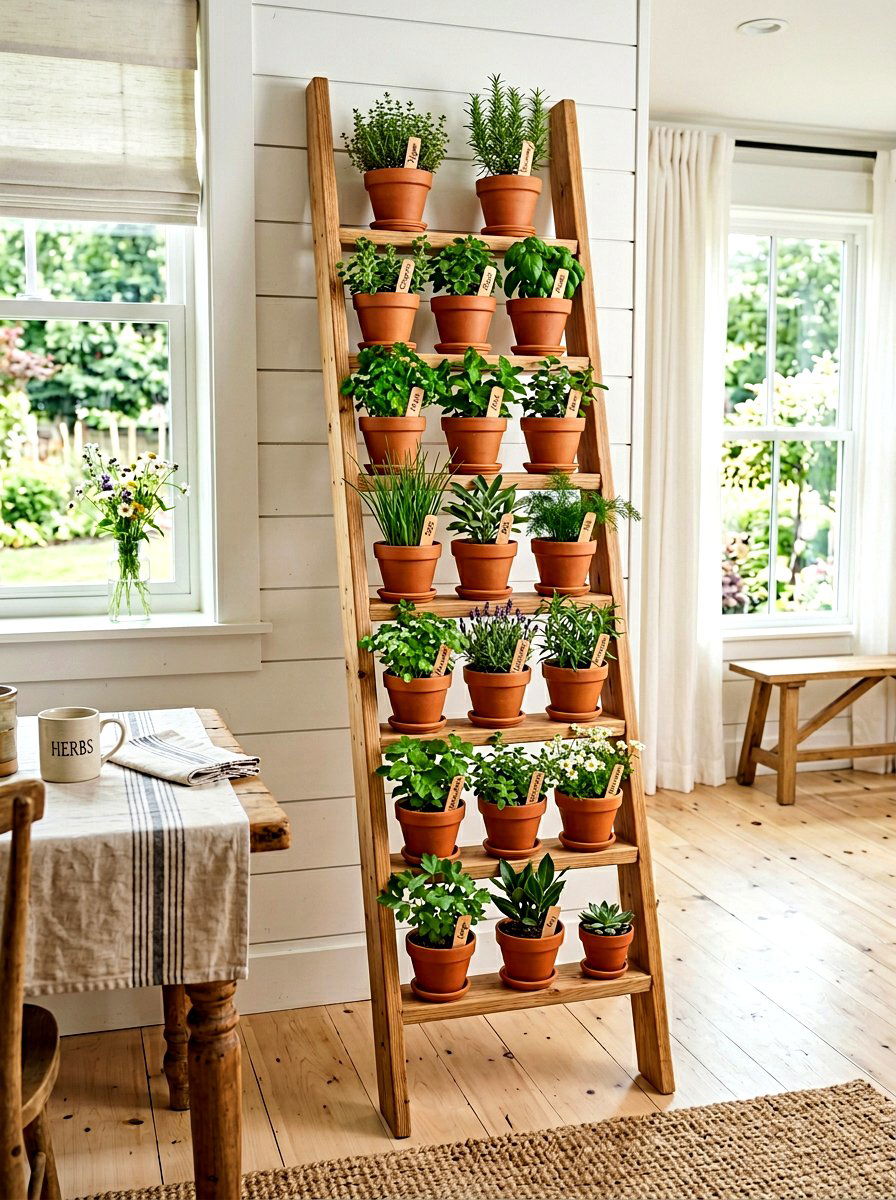
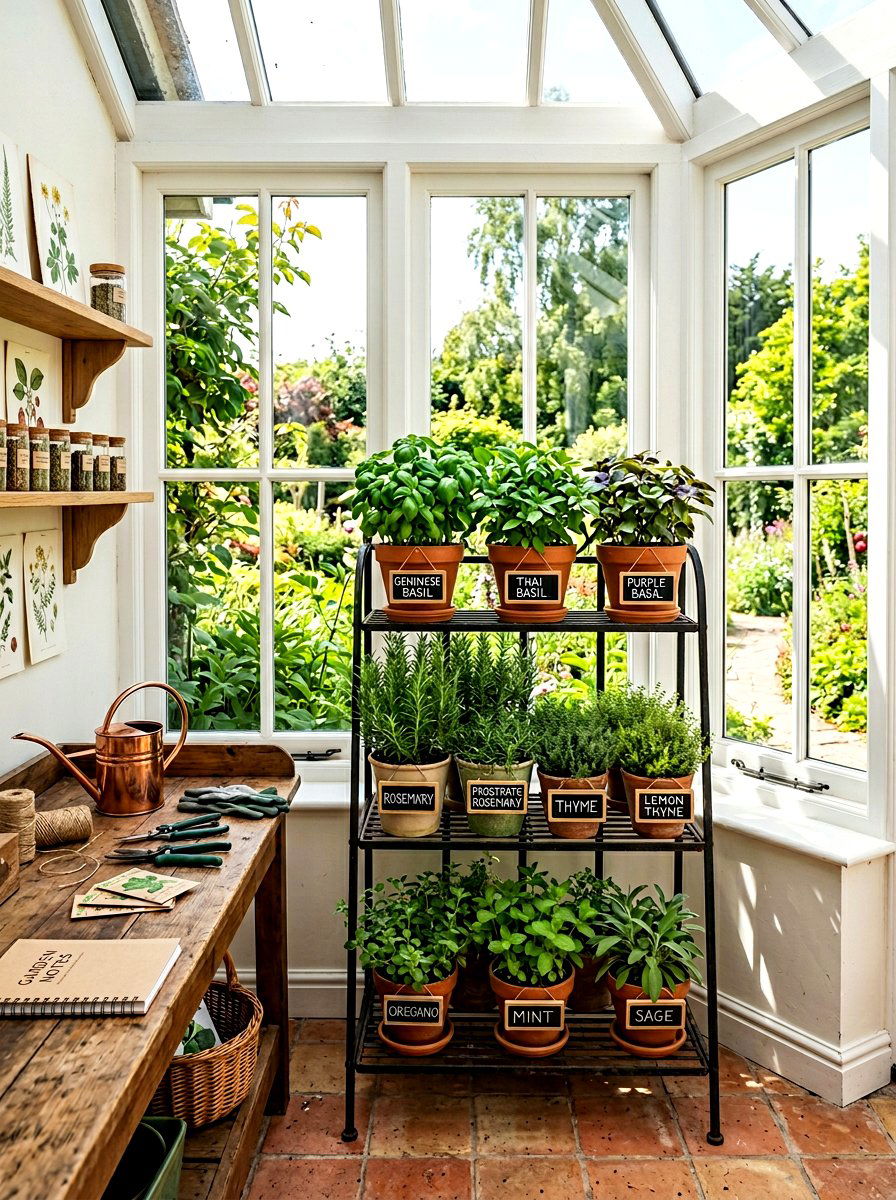
A tiered wooden herb ladder provides a rustic and charming way to display multiple plant varieties in a single dedicated area. This free-standing structure features several shelves or rungs at different heights, allowing each herb pot to receive adequate light and airflow. It is an excellent choice for a sun-drenched corner of a breakfast nook or a patio transition space. You can paint the wood to match your existing furniture or leave it with a natural finish for a more organic feel. The vertical stacking of the herbs makes it easy to label each shelf, keeping your gardening efforts organized and visually appealing.
6. Magnetic Fridge Herb Tins
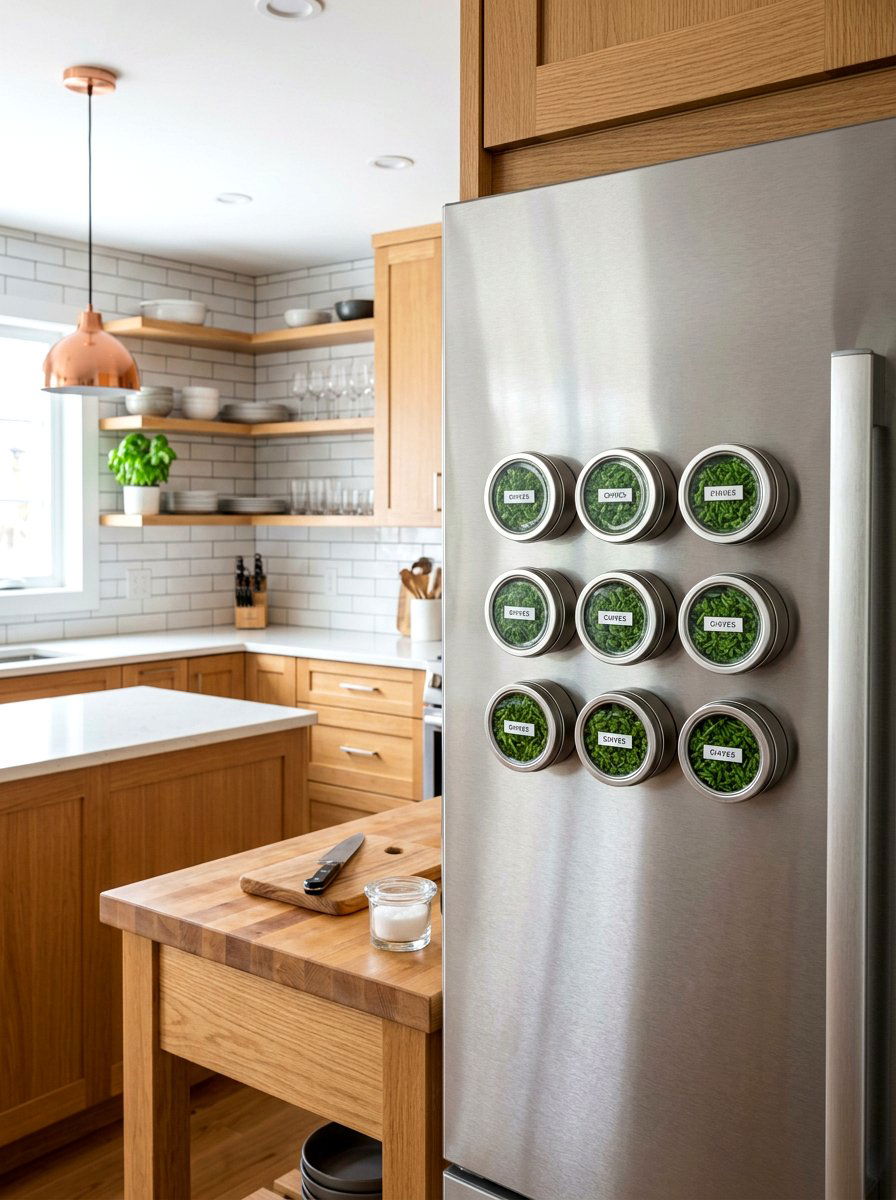
Magnetic fridge herb tins are a clever and space-saving innovation that turns the side of your refrigerator into a functional kitchen garden. Small, lightweight metal containers equipped with strong magnets can hold compact herbs like thyme or oregano right where you can see them. These tins often feature clear lids, allowing you to monitor soil moisture and plant health at a glance. It is important to ensure your fridge isn't in a dark corner, as these plants still require some ambient light to thrive. This setup is perfect for apartment dwellers who want to maximize every square inch of their kitchen.
7. Recycled Mason Jar Herb Garden
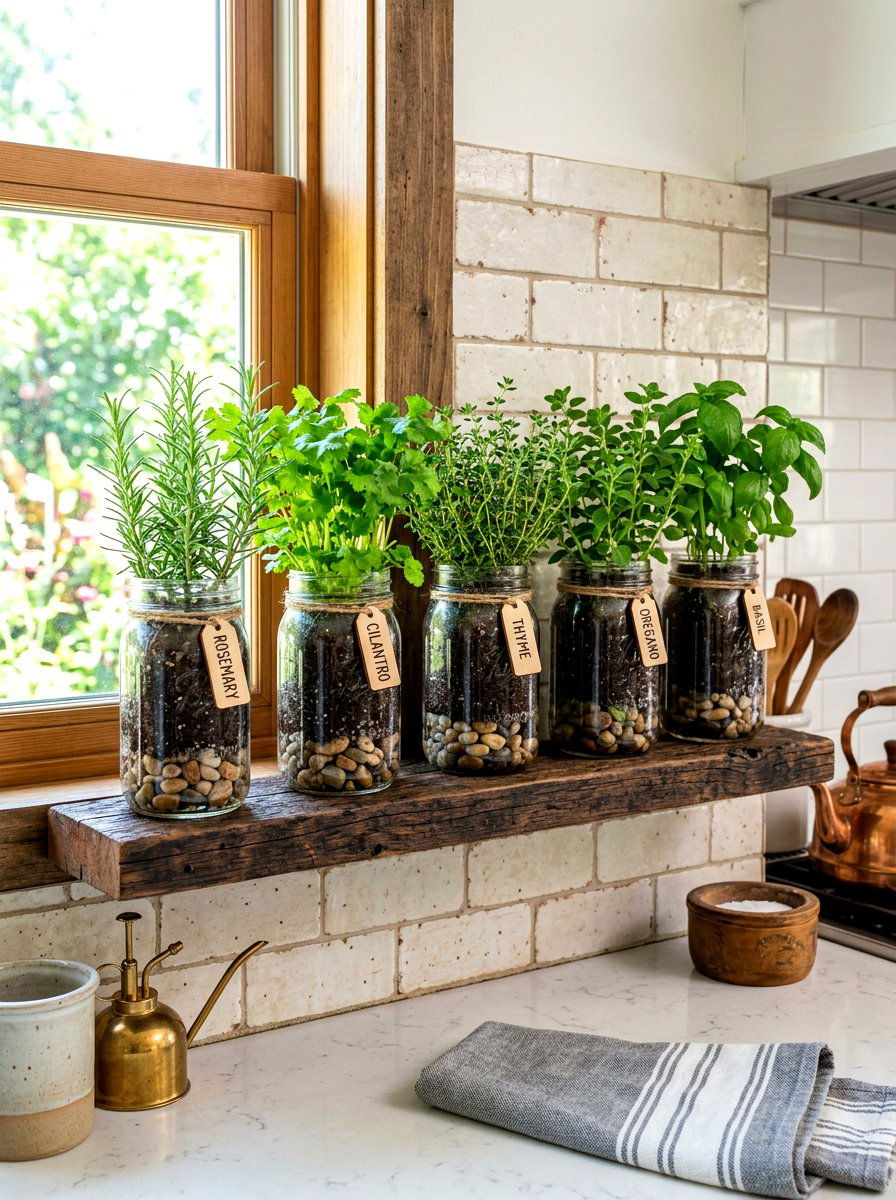
The recycled mason jar herb garden is a timeless DIY project that combines sustainability with a cozy, farmhouse aesthetic. Clear glass jars allow you to see the root systems and soil levels, which can be a fascinating visual element in your home. To ensure proper health, you should add a layer of small pebbles at the bottom for drainage since jars typically lack holes. These jars can be grouped together on a tray or mounted to a piece of reclaimed wood for a more permanent wall display. Using different sizes of jars creates a relaxed, collected look that feels personal and approachable.
8. Floating Shelf Herb Display
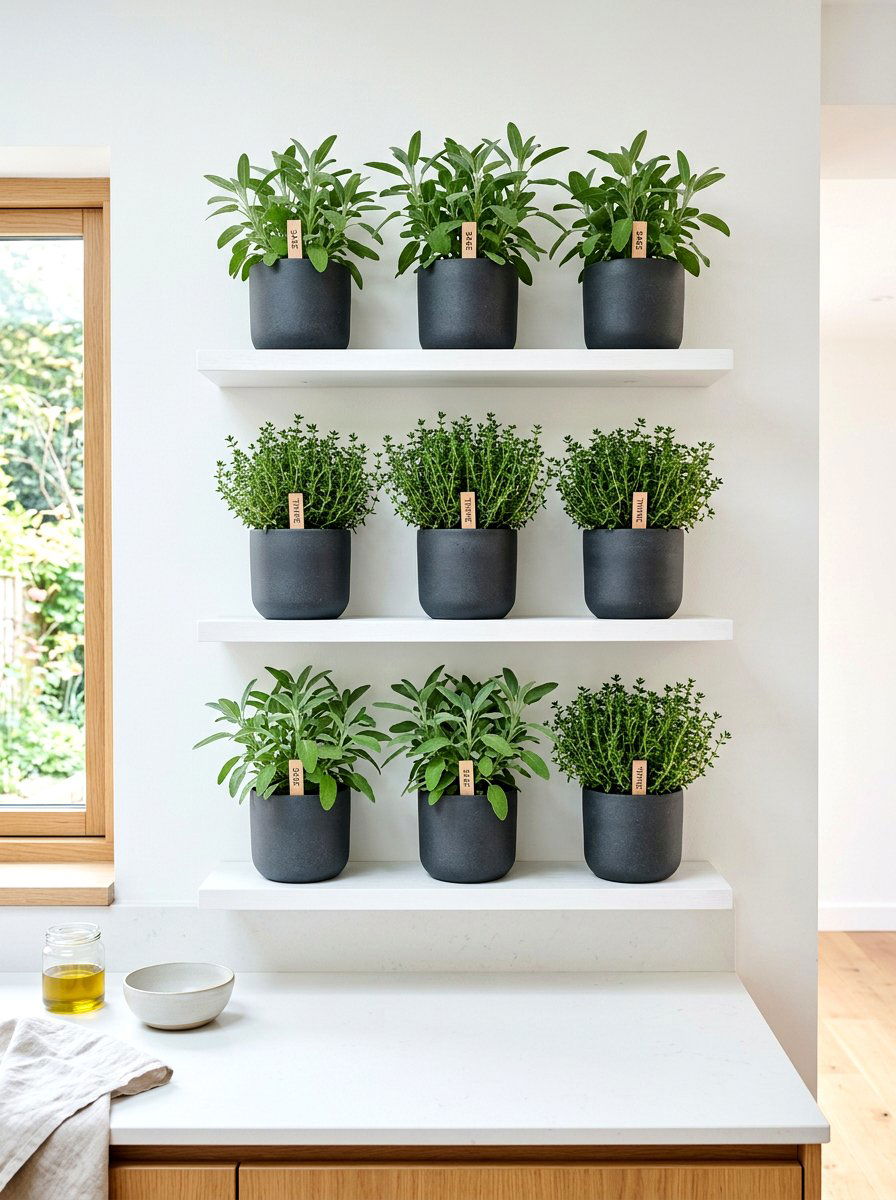
A floating shelf herb display offers a clean and minimalist way to integrate greenery into your kitchen or dining area without bulky furniture. By installing a series of thin shelves directly onto the wall, you can line up matching pots for a streamlined and organized appearance. This design choice works exceptionally well in modern or Scandinavian-style interiors where simplicity is key. You can choose shelves that match your wall color for a seamless look or use natural wood for a warmer touch. The height of the shelves can be adjusted to accommodate taller herbs like basil or woody rosemary plants.
9. Smart Electric Indoor Garden
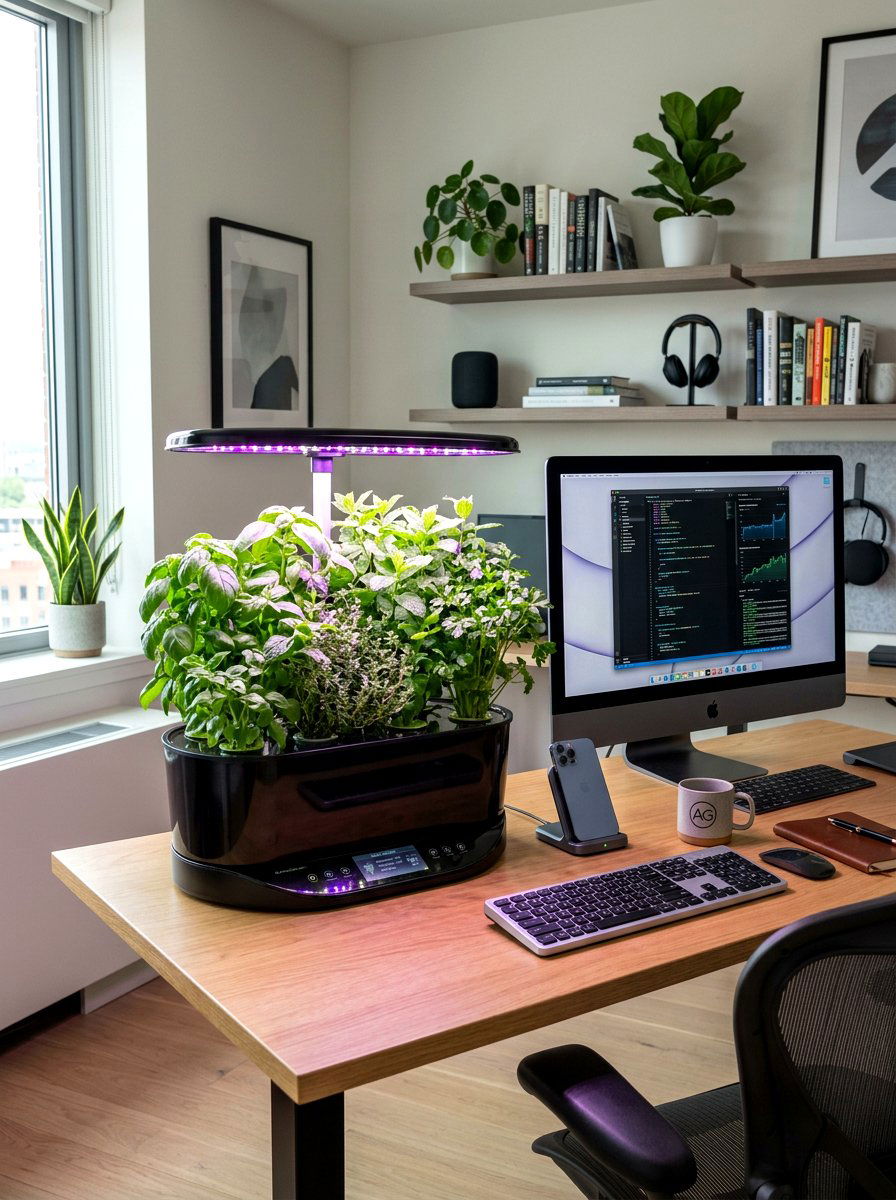
Investing in a smart electric indoor garden takes the guesswork out of plant care by using sensors and integrated technology. These advanced units often connect to a smartphone app that notifies you when it is time to add water or nutrients to the reservoir. The built-in full-spectrum LED lights mimic natural sunlight, ensuring your herbs stay vibrant and flavorful even in basement apartments or dark rooms. These gardens are designed to be self-sufficient, making them an ideal gift for anyone who loves fresh ingredients but lacks the time for traditional gardening. Their compact, polished design fits seamlessly into any high-end kitchen.
10. Copper Pipe Herb Rack
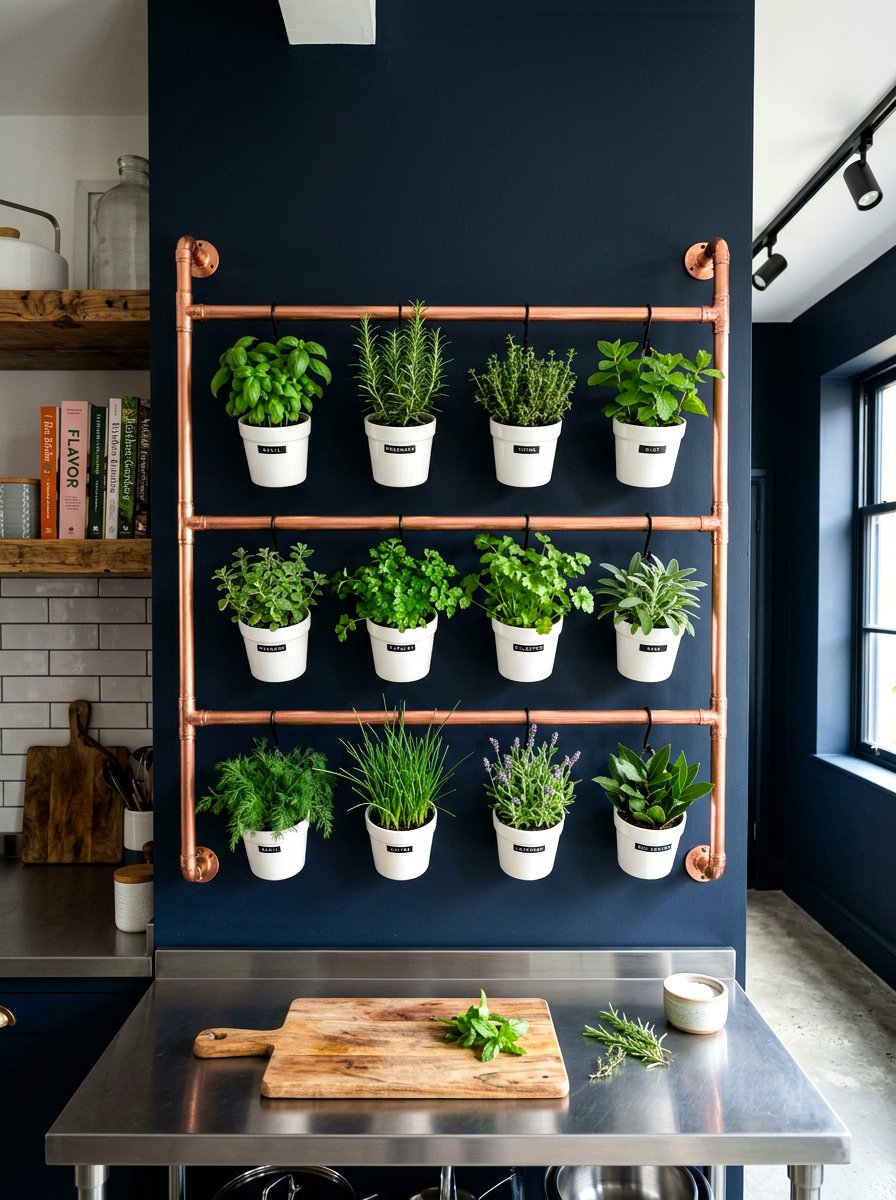
A copper pipe herb rack adds a touch of industrial elegance and warm metallic tones to your interior design scheme. This custom-built structure uses standard copper plumbing pipes and fittings to create a sturdy frame from which you can hang small pots using S-hooks. The rose-gold hue of the copper contrasts beautifully against the deep green leaves of herbs like sage or cilantro. This setup is highly customizable, allowing you to build a rack that fits perfectly under a cabinet or over a kitchen island. Over time, the copper will develop a unique patina, adding even more character to your home.
11. Minimalist White Ceramic Pots
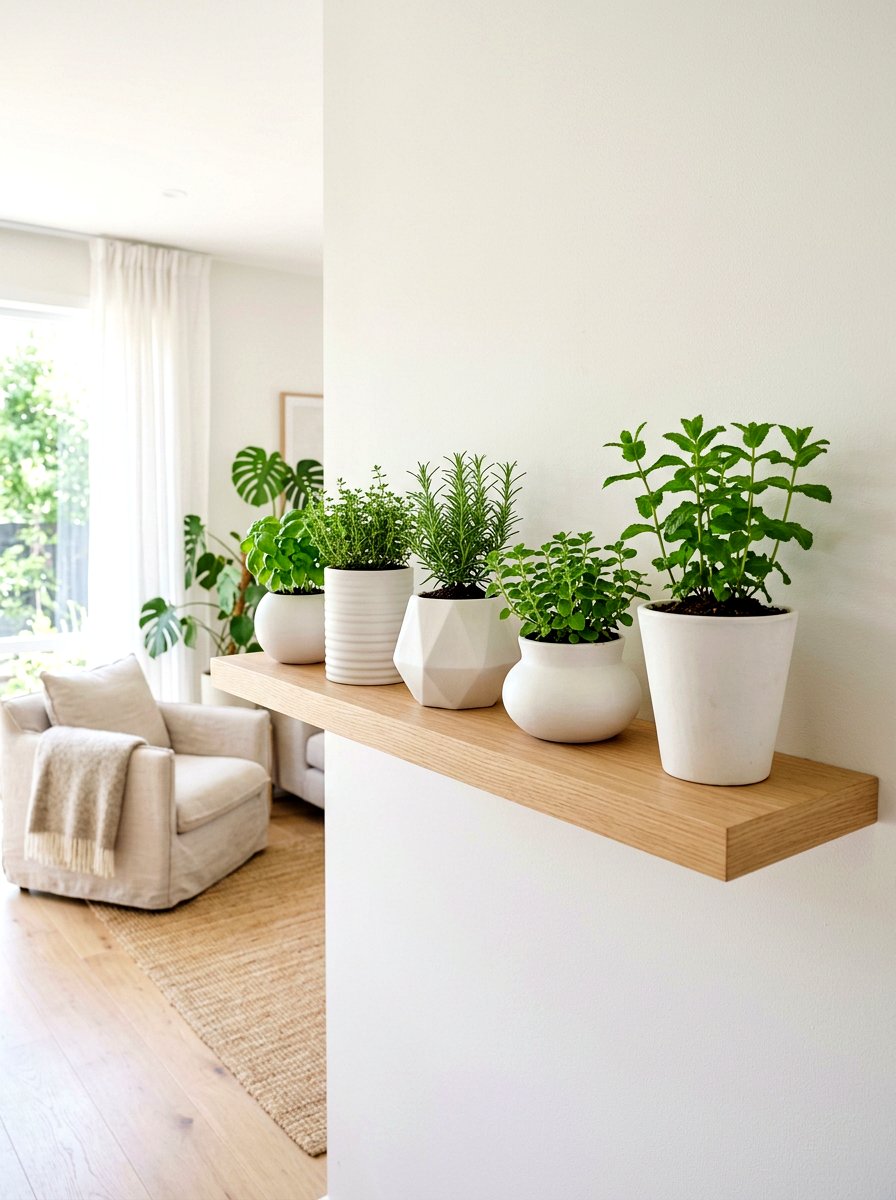
Minimalist white ceramic pots are the gold standard for a clean, sophisticated indoor herb garden that never goes out of style. The crisp white finish of the clay provides a neutral backdrop that makes the different textures and shades of green foliage truly pop. Choosing pots in various geometric shapes but keeping the color consistent creates a curated and intentional look on a countertop or shelf. Many ceramic pots also come with matching saucers to catch excess water, protecting your surfaces from moisture damage. This style is perfect for those who want their indoor garden to feel like an extension of their decor.
12. Upcycled Pallet Herb Wall
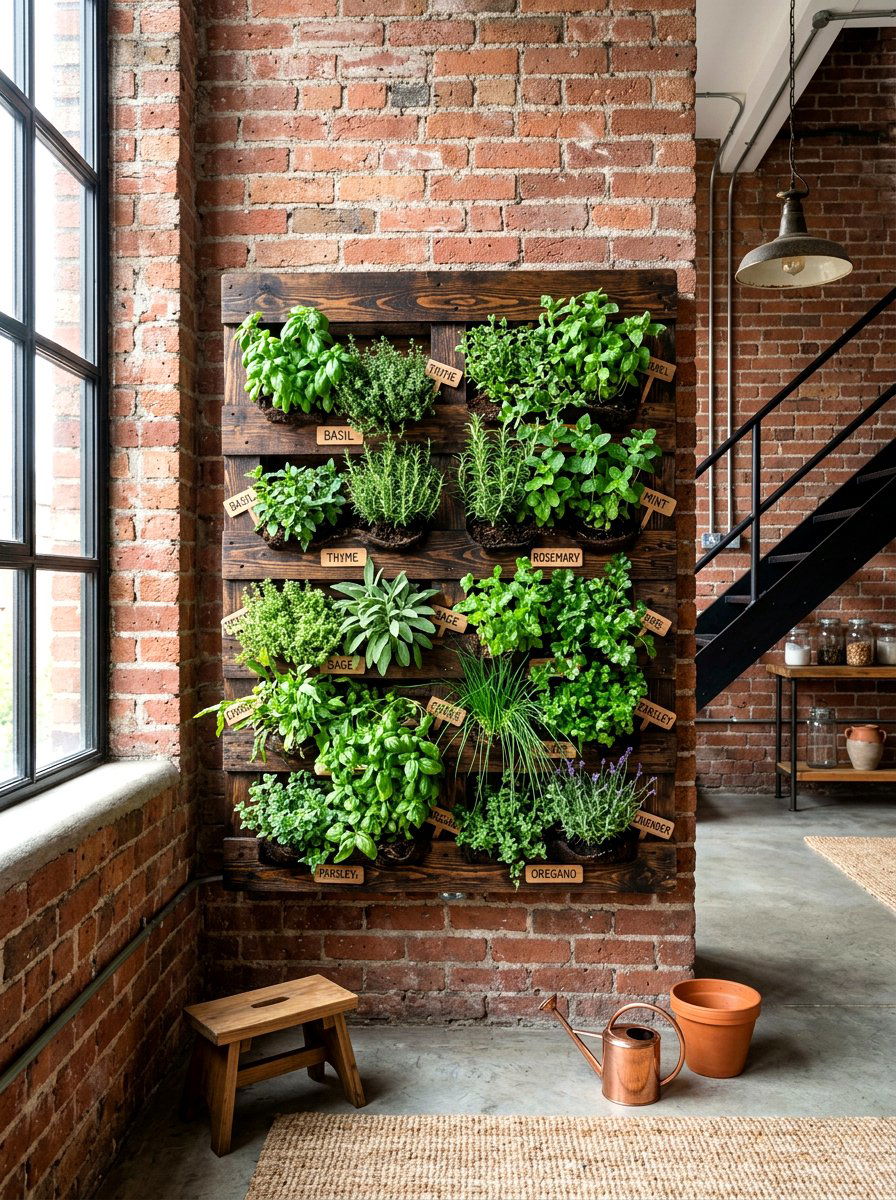
An upcycled pallet herb wall is a budget-friendly and eco-conscious way to create a large-scale vertical garden inside your home. By repurposing a wooden shipping pallet, you can create rows of deep pockets perfect for housing several different herb varieties simultaneously. This project adds a rugged, textural element to a mudroom or a spacious kitchen wall. You can sand and stain the wood to match your flooring or leave it raw for a more industrial or rustic vibe. Because pallets are large, this setup allows you to grow bigger batches of herbs for drying or making homemade pesto.
13. Rolling Herb Cart For Kitchen
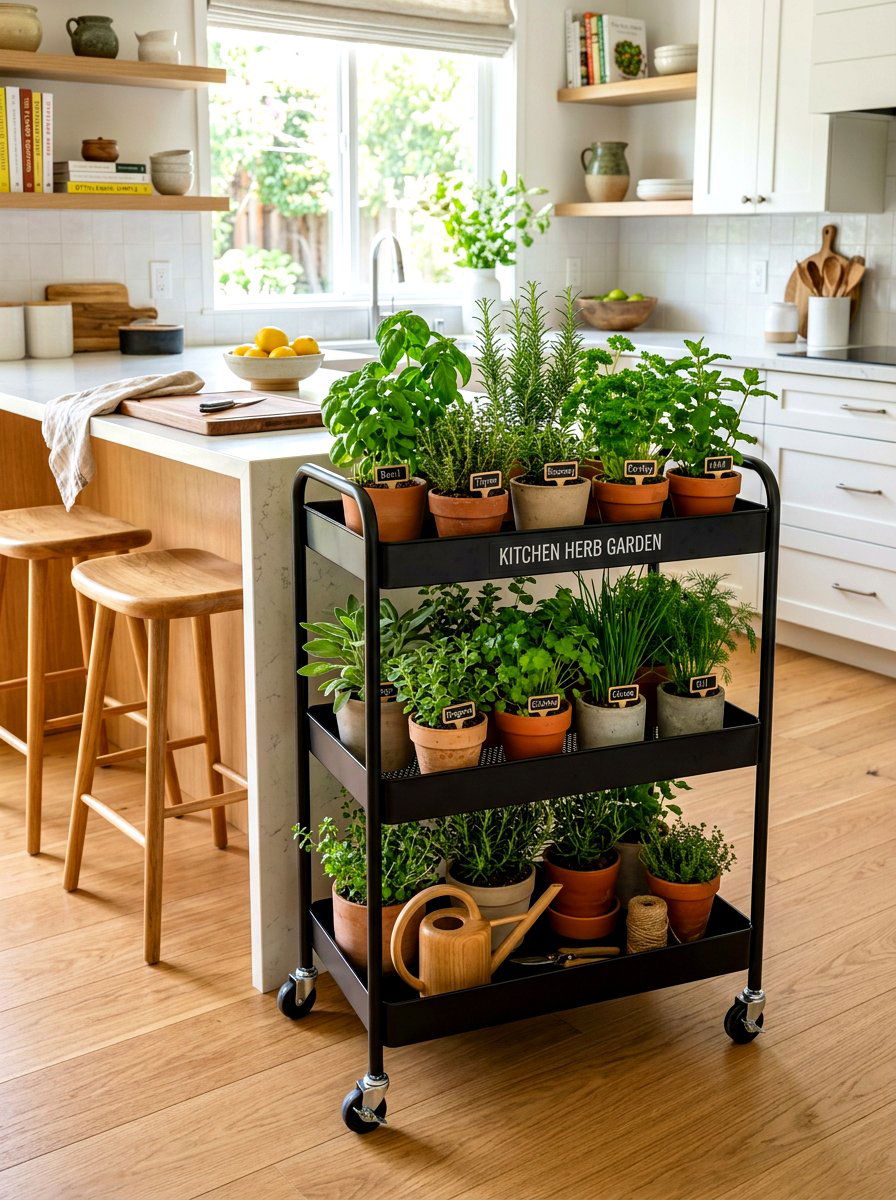
A rolling herb cart for the kitchen provides unmatched flexibility for the home gardener who likes to rearrange their space. Using a multi-tiered metal or wooden utility cart, you can create a mobile garden that moves to follow the sun throughout the day. This is particularly helpful in homes where light conditions change significantly between morning and afternoon. The bottom shelves can be used to store gardening tools, extra soil, and watering cans, keeping everything organized in one stylish place. When you are ready to cook, simply wheel the entire cart over to your prep station for instant access.
14. Chalkboard Label Herb Planters
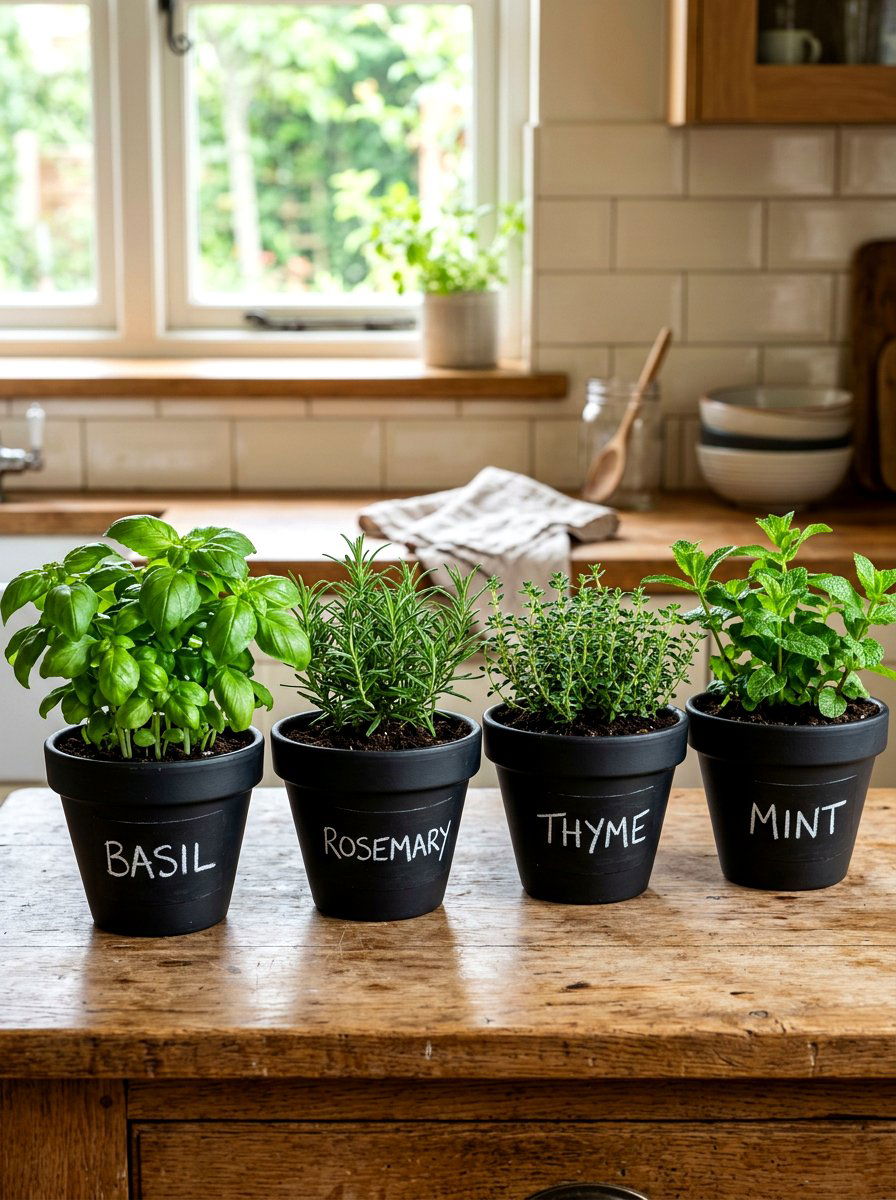
Chalkboard label herb planters are both functional and charming, allowing you to easily identify your plants while adding a playful touch. You can find pots with pre-applied chalkboard paint or easily create your own using a small brush and a jar of specialty paint. This feature is incredibly helpful for distinguishing between similar-looking herbs like flat-leaf parsley and cilantro. Beyond just names, you can use the chalkboard surface to note the date of planting or specific watering requirements for each variety. It is a great way to involve children in the gardening process by letting them write out the labels.

15. Indoor Greenhouse For Seedlings
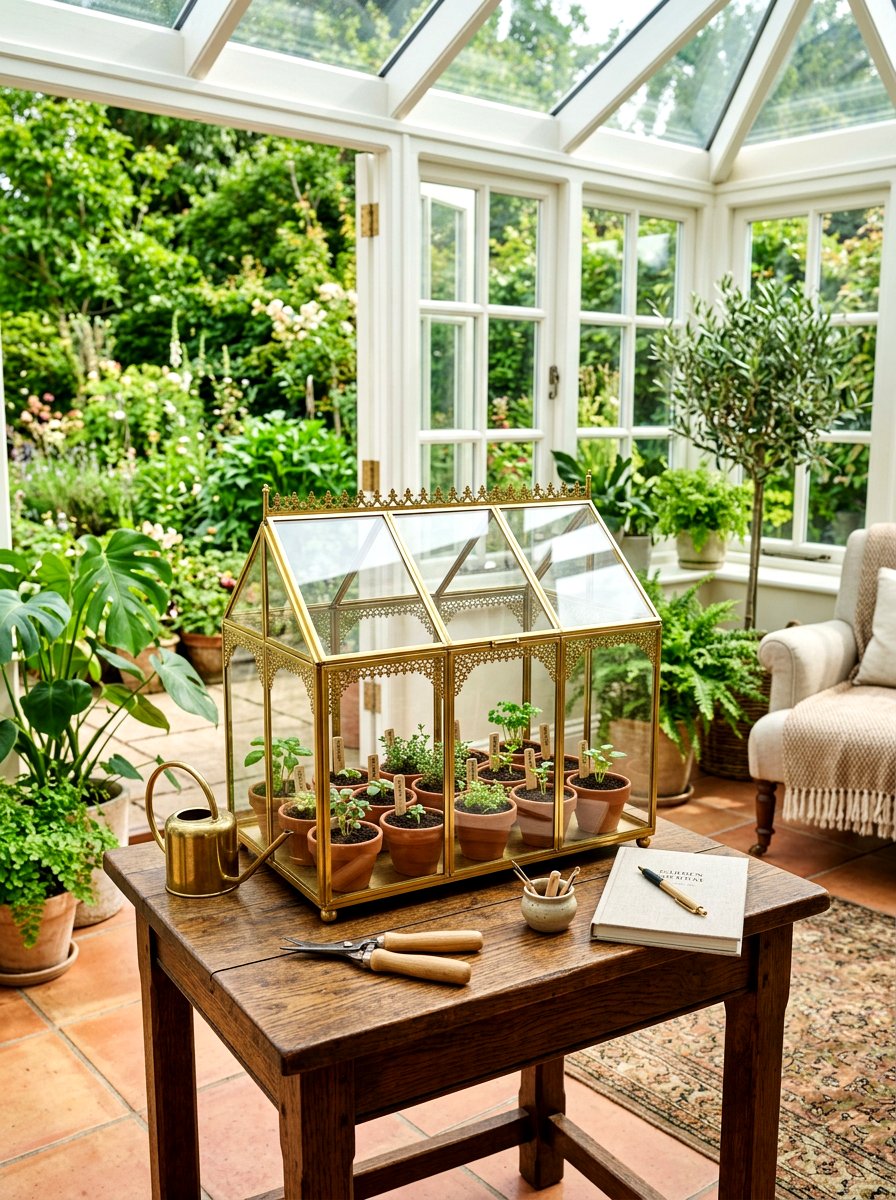
An indoor greenhouse for seedlings provides the perfect controlled environment for starting your herb garden from scratch during the colder months. These small, glass-enclosed structures or plastic-covered shelving units trap heat and moisture, mimicking a tropical climate that encourages rapid germination. Placing a miniature greenhouse on a side table or a deep windowsill creates a lovely architectural focal point while protecting delicate young plants from drafts. Once your herbs have grown a few inches tall, you can transplant them into larger decorative pots to be displayed throughout the house. It is a rewarding way to watch the entire lifecycle of your food.
16. Terracotta Herb Pot Cluster
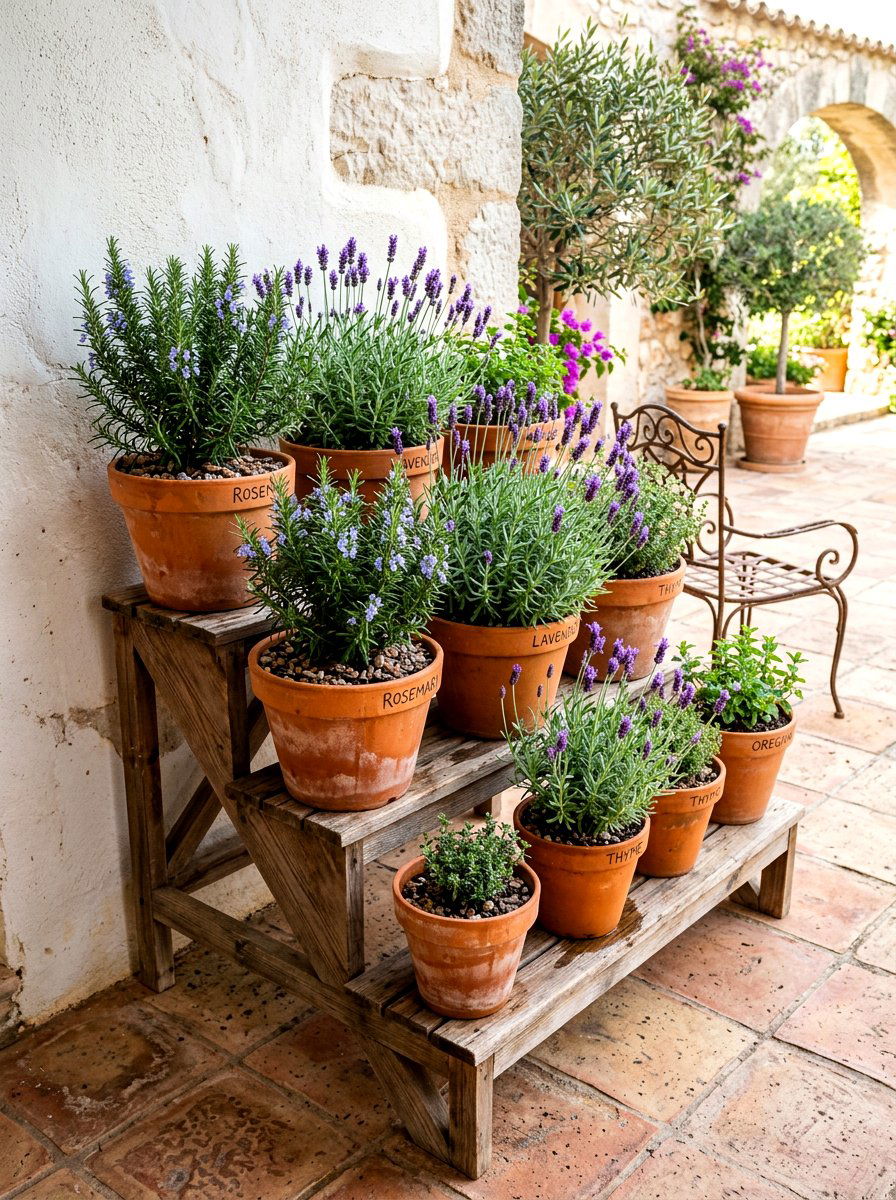
A terracotta herb pot cluster is a classic choice that brings a warm, earthy Mediterranean feel to your indoor gardening space. The porous nature of the clay allows the soil to breathe and prevents the roots from becoming waterlogged, which is ideal for herbs like rosemary and thyme. Grouping several pots of different heights and diameters creates a visually interesting arrangement on a plant stand or floor display. The natural orange hue of the terracotta pairs beautifully with nearly any color palette, from neutral whites to deep blues. As the pots age, they develop a beautiful mineral crust that adds vintage charm.
17. Pegboard Herb Garden Organizer
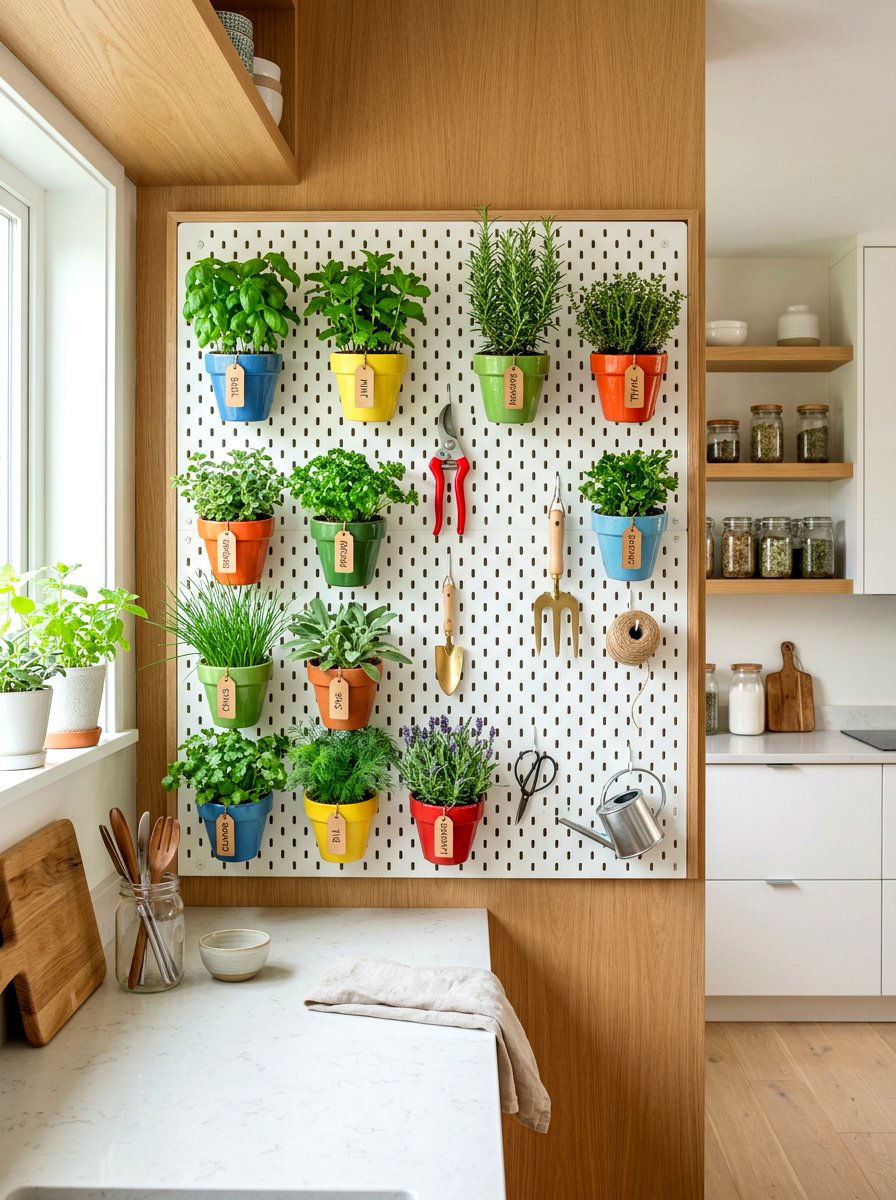
A pegboard herb garden organizer is a highly versatile and modern way to utilize wall space for your culinary greens. By mounting a large pegboard in your kitchen, you can use specialized hooks and baskets to hold lightweight plastic or metal herb pots. This system allows you to easily move plants around as they grow or as you add new varieties to your collection. You can also hang scissors and twine directly next to the herbs for quick harvesting. Painting the pegboard a bold color can turn this functional storage solution into a vibrant accent wall that celebrates your love for fresh cooking.
18. Scandinavian Style Herb Display
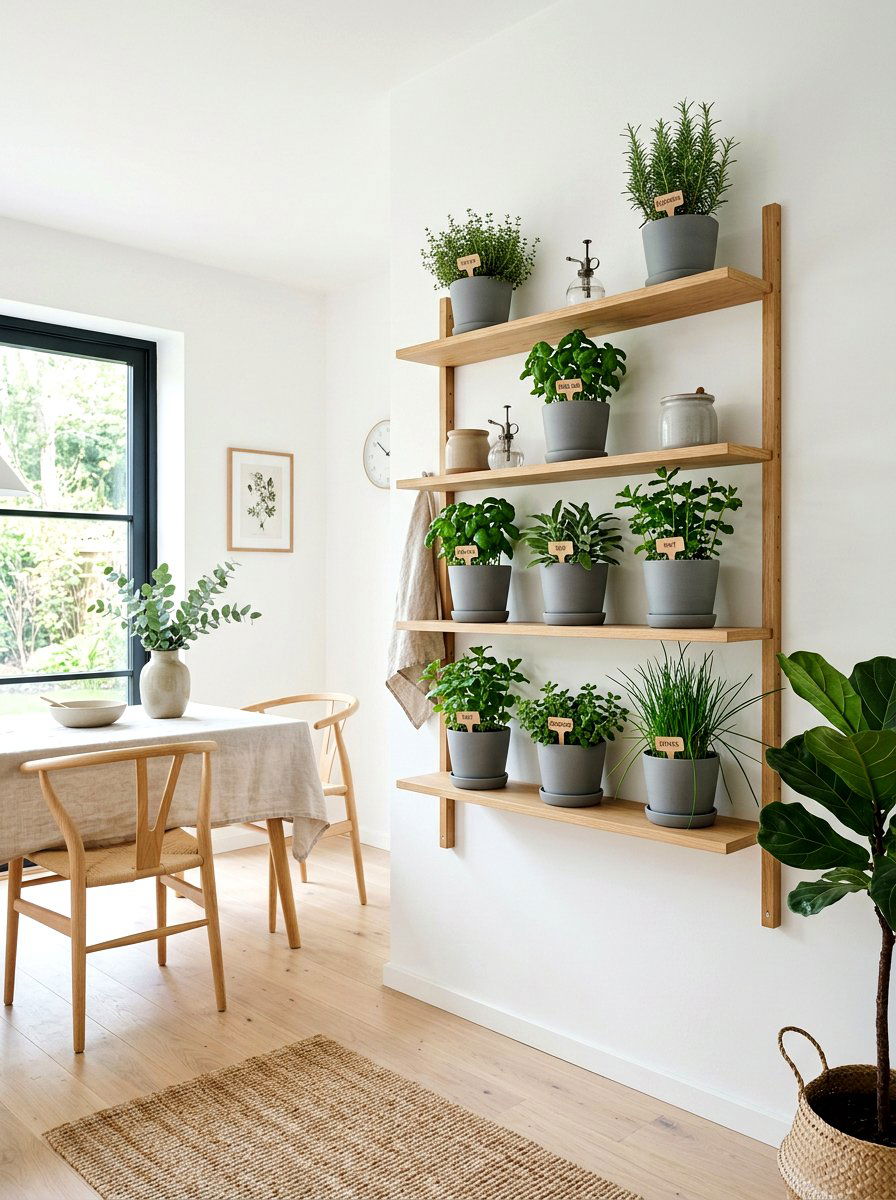
The Scandinavian style herb display focuses on clean lines, natural materials, and a sense of calm "hygge" in the home. This look often features light-colored woods like birch or pine paired with simple, matte-finished pots in shades of grey, white, or soft charcoal. The herbs are typically spaced out to avoid a cluttered appearance, allowing the natural form of each plant to be appreciated. This design approach works perfectly in bright, airy rooms with plenty of natural light. By keeping the styling minimal, the focus remains on the freshness and vitality of the herbs, creating a peaceful and inviting atmosphere.
19. Modern Industrial Pipe Shelving
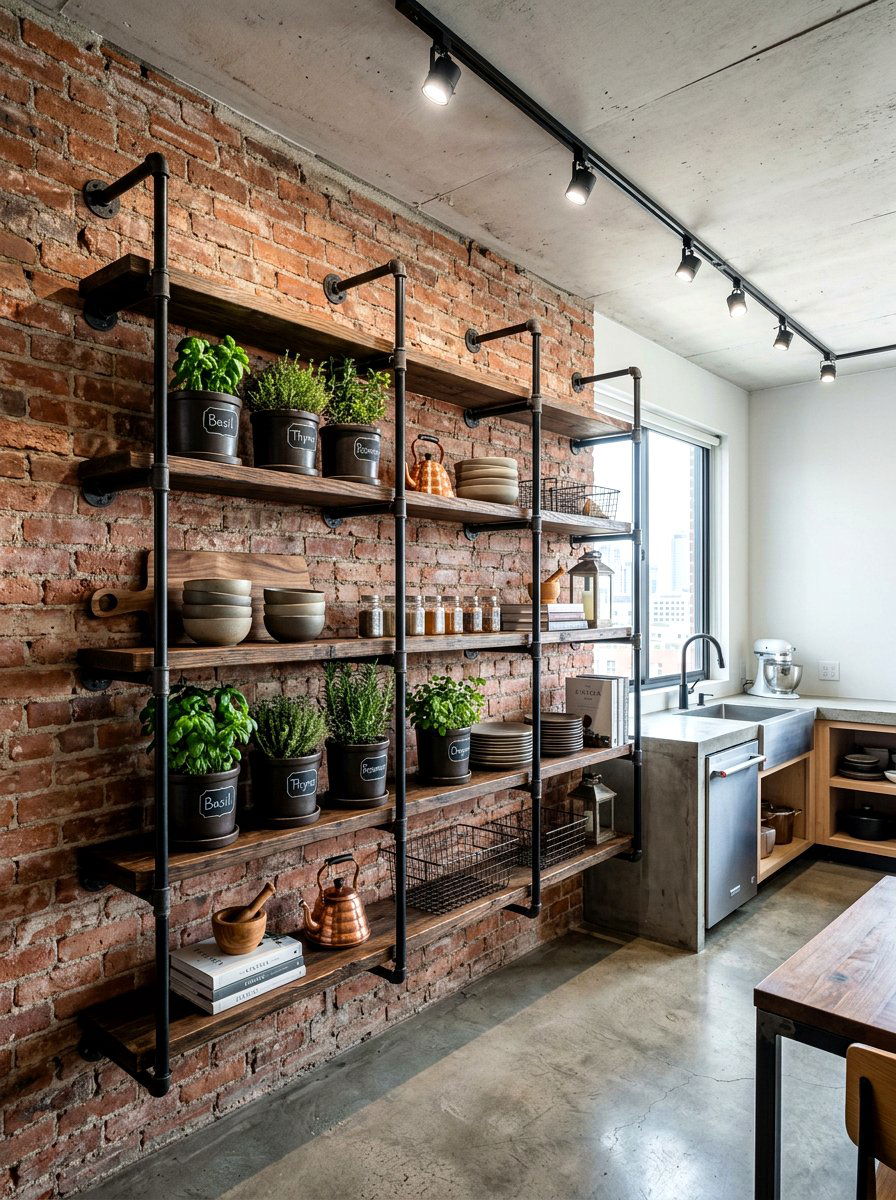
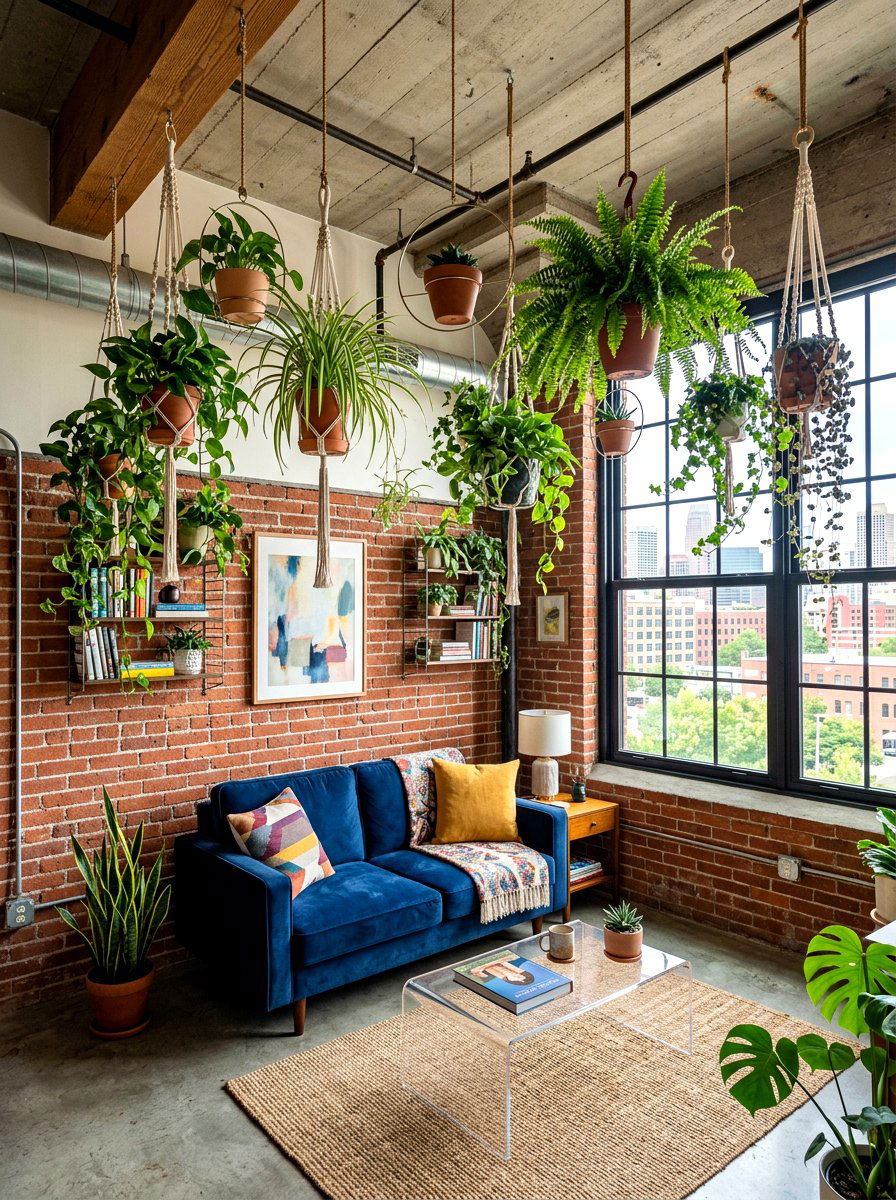
Modern industrial pipe shelving offers a bold and sturdy way to support a heavy collection of indoor herb pots. Using black iron pipes and thick reclaimed wood planks, you can build a custom wall unit that can handle the weight of large ceramic containers and moist soil. This aesthetic is perfect for loft-style apartments or homes with exposed brick and concrete elements. The dark metal contrasts sharply with the vibrant greens of the herbs, making them stand out as a central feature of the room. This type of shelving is incredibly durable and provides a permanent, high-end look for your indoor garden.
20. Window Mounted Suction Pots
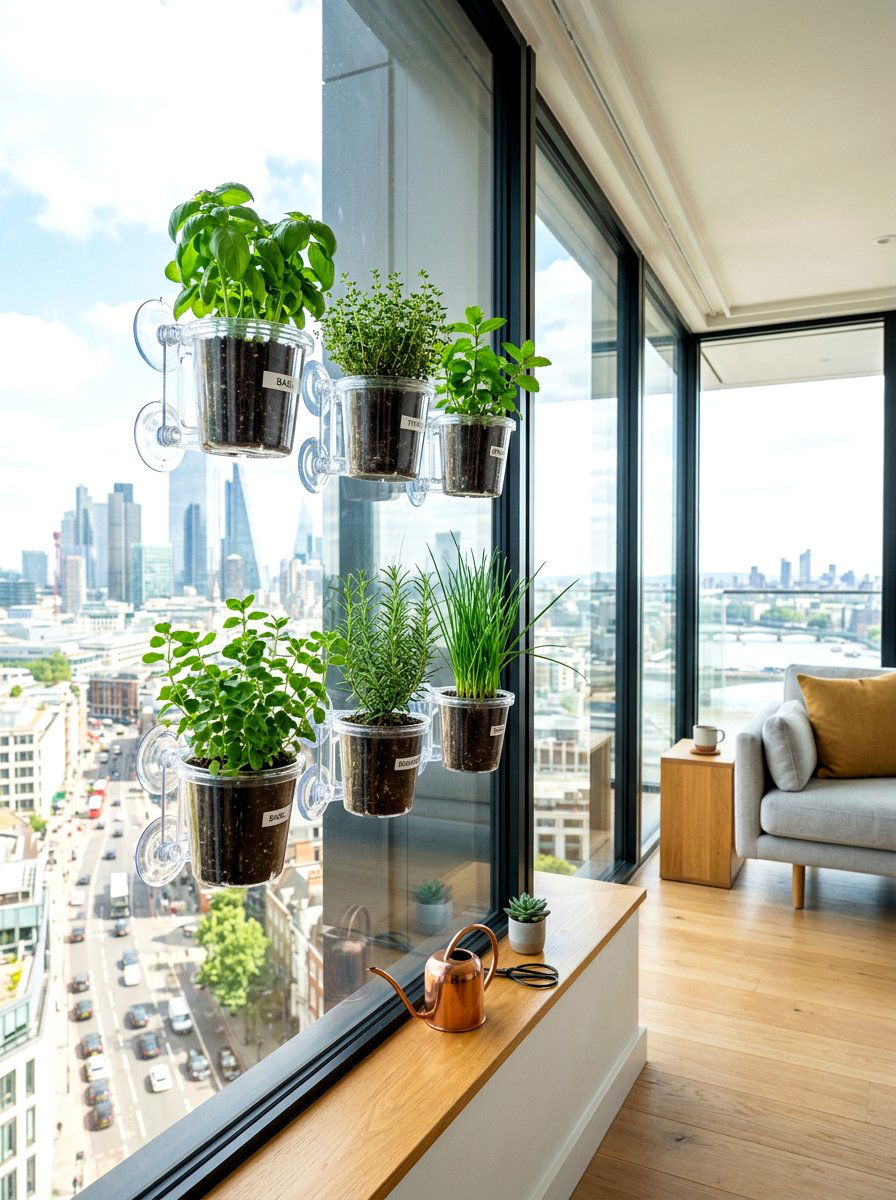
Window mounted suction pots are an ingenious invention for those who have absolutely zero counter or floor space to spare. These clear or opaque plastic containers use high-strength suction cups to attach directly to the glass of your windows. This ensures your herbs get the absolute maximum amount of sunlight possible without being blocked by curtains or furniture. It is a fantastic option for small studio apartments or kitchens with very narrow ledges. Many designs include a secondary inner pot for easy watering and drainage. Watching your herbs grow right on the glass provides a unique and modern perspective on indoor gardening.
21. Bamboo Herb Garden Rack
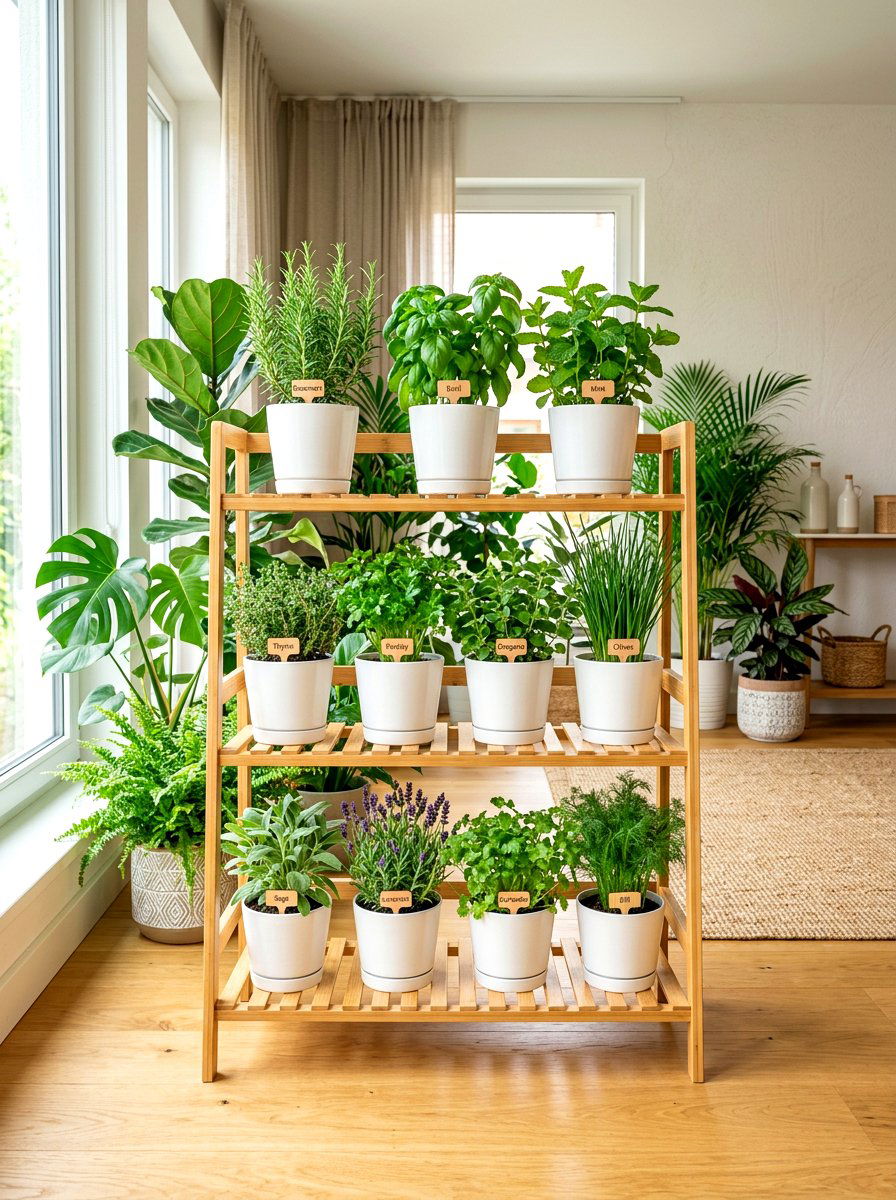
A bamboo herb garden rack is a sustainable and lightweight option that adds a touch of Zen-like tranquility to your living space. Bamboo is naturally water-resistant and highly durable, making it an excellent material for humid kitchen environments. Most racks are designed with multiple tiers, providing ample space for a diverse selection of herbs without taking up much room. The light, honey-colored wood creates a soft and natural look that complements boho or tropical interior styles. Because bamboo grows so quickly, choosing this material is also an eco-friendly decision that supports a healthier planet while beautifying your home's interior.
22. Under Cabinet LED Lighting
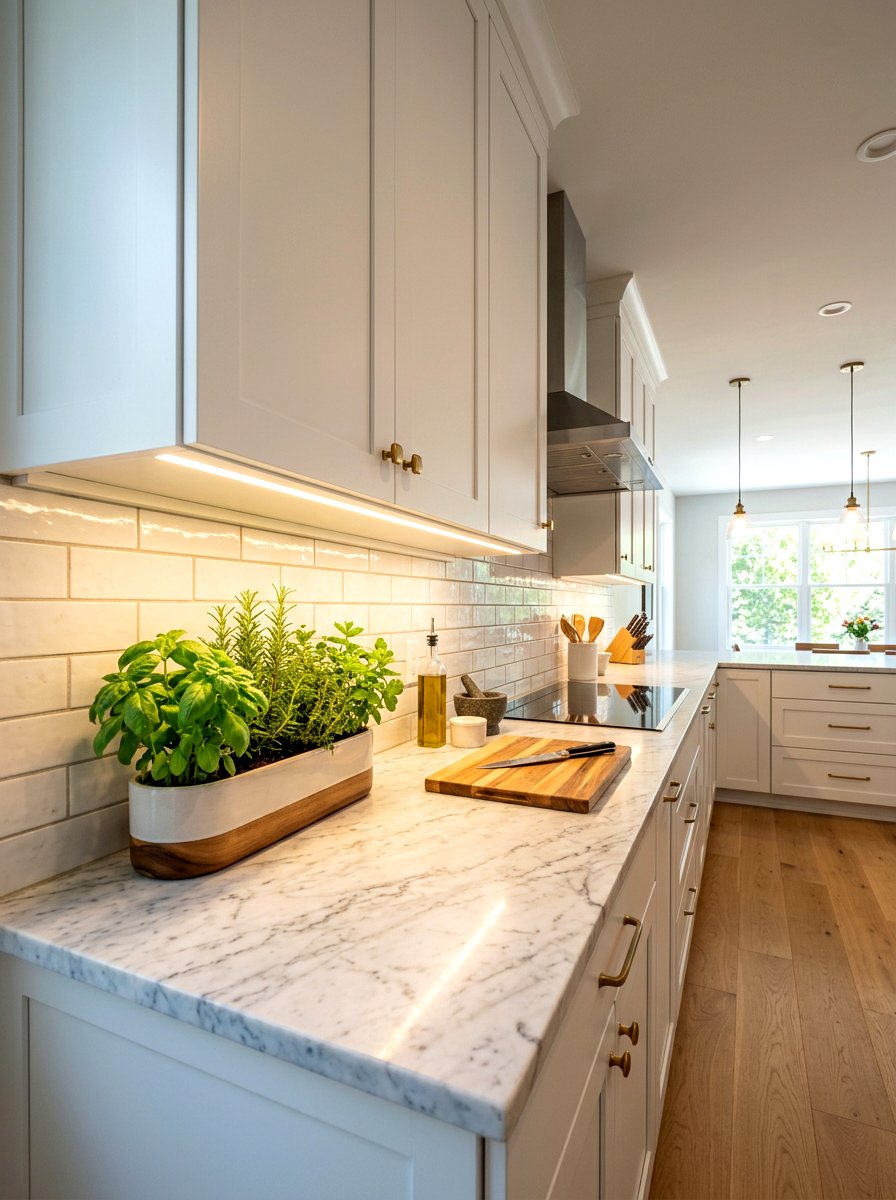
Installing under cabinet LED lighting is a game-changer for kitchens that lack sufficient natural light for growing herbs. These thin, discreet light strips can be mounted directly to the underside of your upper cabinets, providing the specific light spectrum plants need to thrive. This turns your otherwise dark countertops into a productive growing zone for basil, mint, and parsley. Many LED systems are dimmable and come with timers, allowing you to control the environment perfectly. This setup not only helps your plants grow but also provides excellent task lighting for your food preparation, making your entire kitchen feel brighter and more modern.
23. Concrete Herb Planter Trio
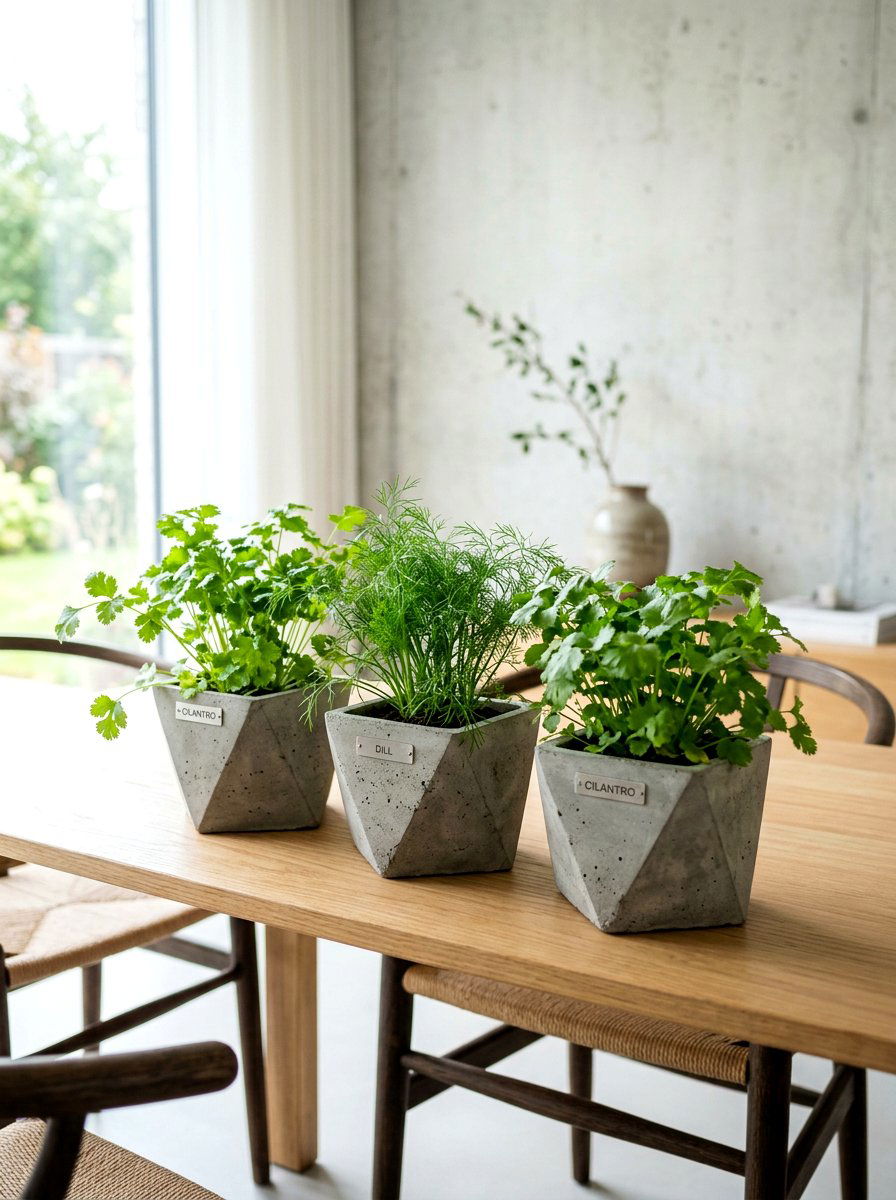
A concrete herb planter trio brings a contemporary and architectural feel to your indoor garden arrangement. The heavy, textured surface of the concrete provides a wonderful contrast to the delicate and soft leaves of herbs like cilantro or dill. These planters are often handmade, featuring unique variations in color and finish that give them a custom, high-end appearance. Concrete is also excellent at regulating soil temperature, which can help keep sensitive herb roots stable. Arranging three planters in a tight group on a dining table or entryway console creates a sophisticated and balanced look that feels solid and intentional.
24. Vintage Tea Tin Garden
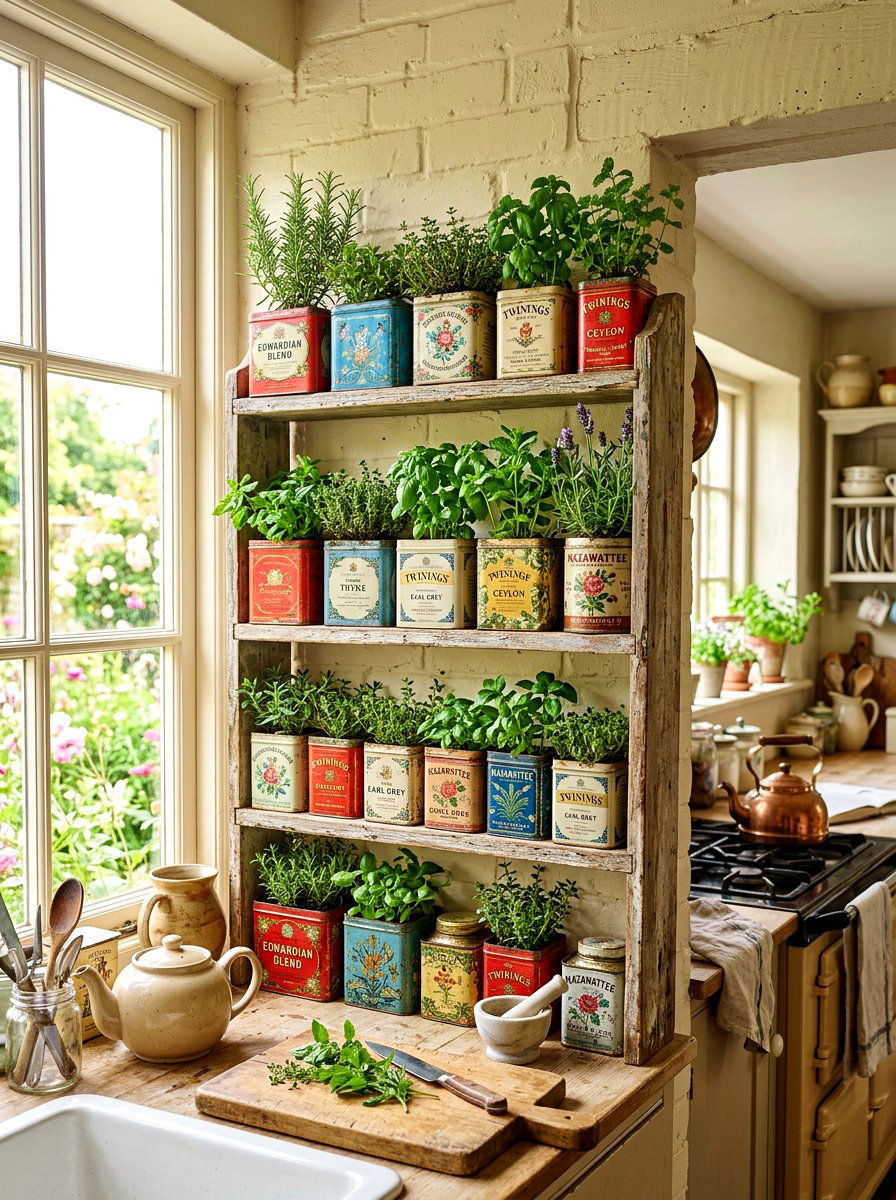
A vintage tea tin garden is a delightful way to repurpose old containers and add a sense of history to your kitchen. Searching for colorful, antique tins at flea markets or thrift stores allows you to create a one-of-a-kind display that tells a story. Each tin can house a different herb, and the varied heights and graphic designs create a charmingly eclectic look on a shelf or windowsill. Be sure to use a hammer and nail to carefully poke drainage holes in the bottom of the metal tins before planting. This project is a perfect marriage of sustainable upcycling and nostalgic, traditional home decor.
25. Farmhouse Wire Basket Holder
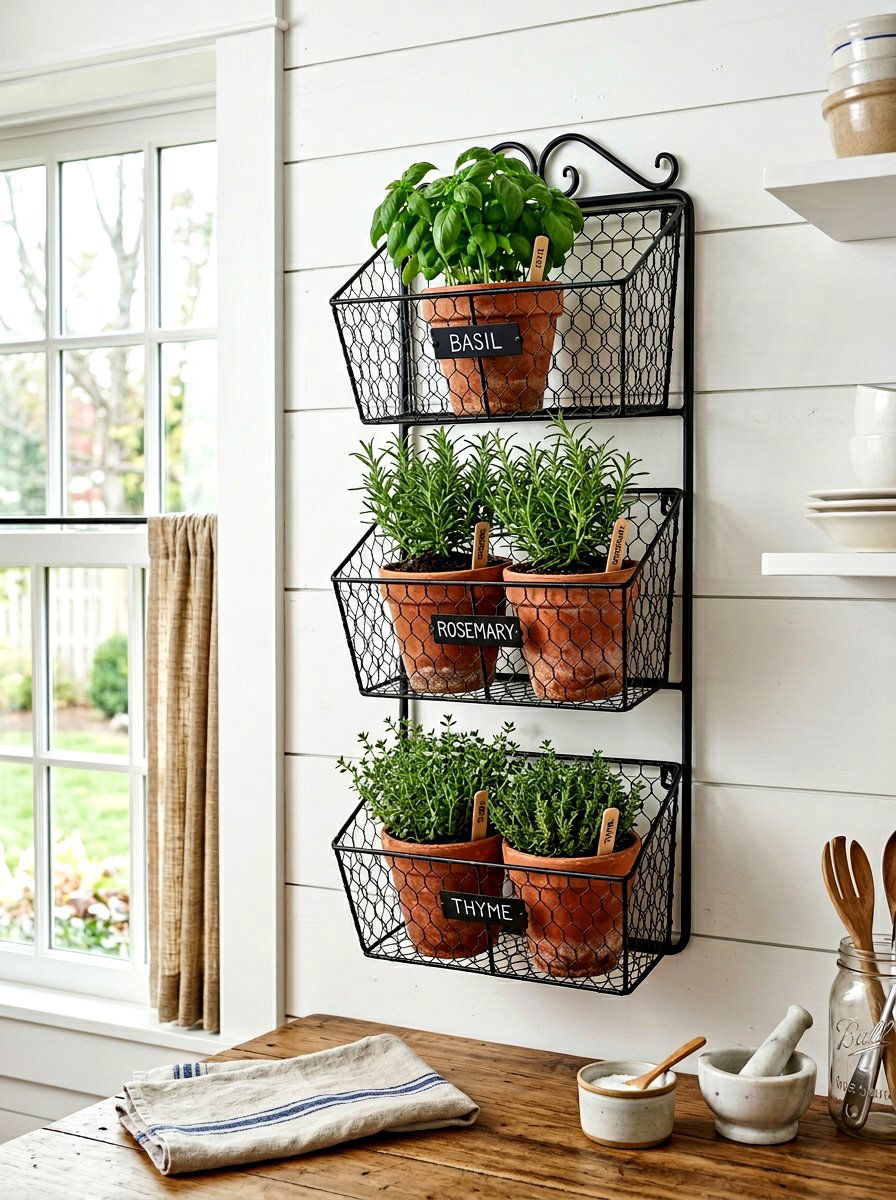
A farmhouse wire basket holder offers a breathable and stylish way to organize a collection of potted herbs in a rustic kitchen. These wall-mounted or tabletop baskets hold several individual pots together, keeping them from tipping over while allowing air to circulate freely around the plants. The open wire design provides a vintage, industrial look that pairs beautifully with shiplap walls and wooden countertops. You can line the baskets with moss for a more organic appearance or leave the pots visible for a cleaner look. It is an easy way to move multiple plants at once when it is time for a thorough watering.
26. Countertop Garden With Grow Light
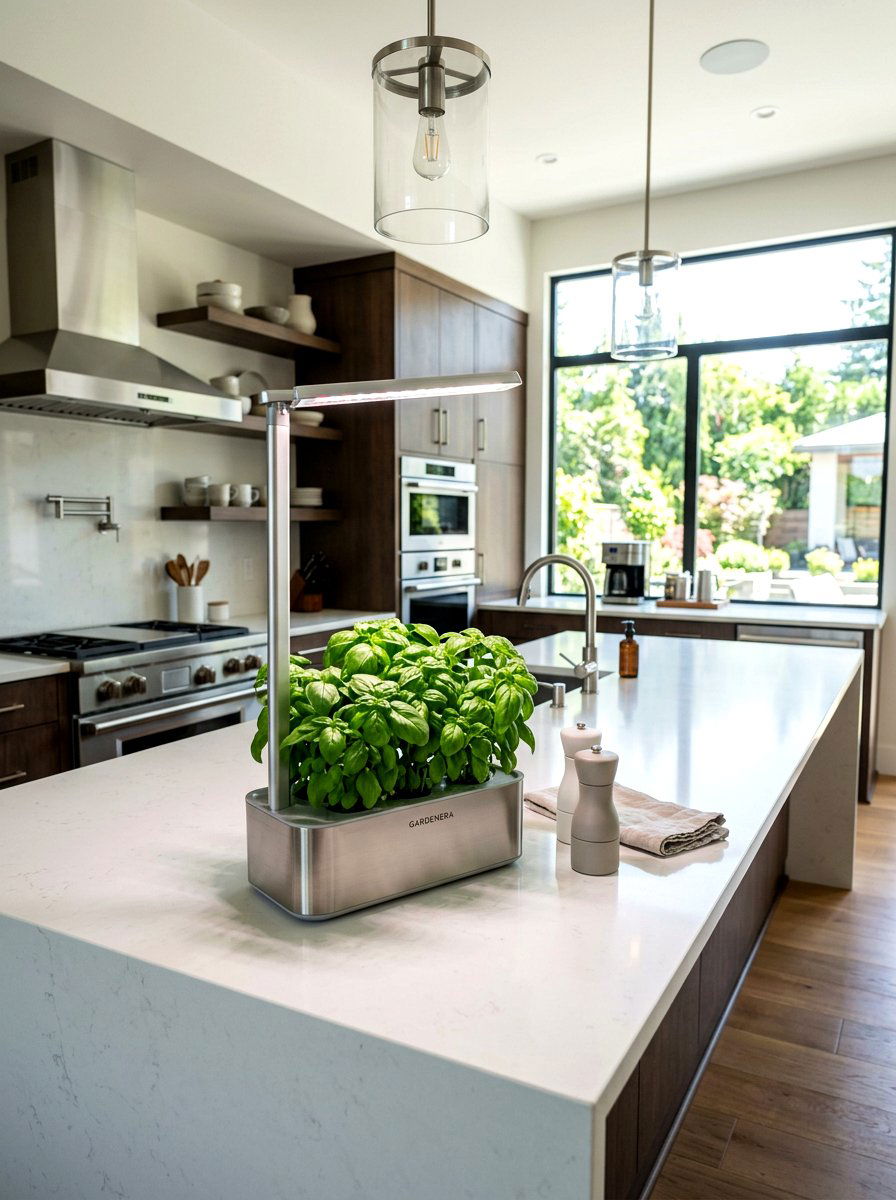
A dedicated countertop garden with a built-in grow light is a sleek and comprehensive solution for the serious home cook. These all-in-one units feature an adjustable lamp arm that can be raised as the plants grow taller, ensuring they always receive the optimal amount of light. The base usually includes a large water reservoir, reducing the frequency of watering and making maintenance a breeze. This design is perfect for placing in the center of a kitchen island where it can be admired from all sides. By having a dedicated light source, you can grow high-quality herbs even in the middle of a dark winter.
27. Sunroom Herb Garden Bench
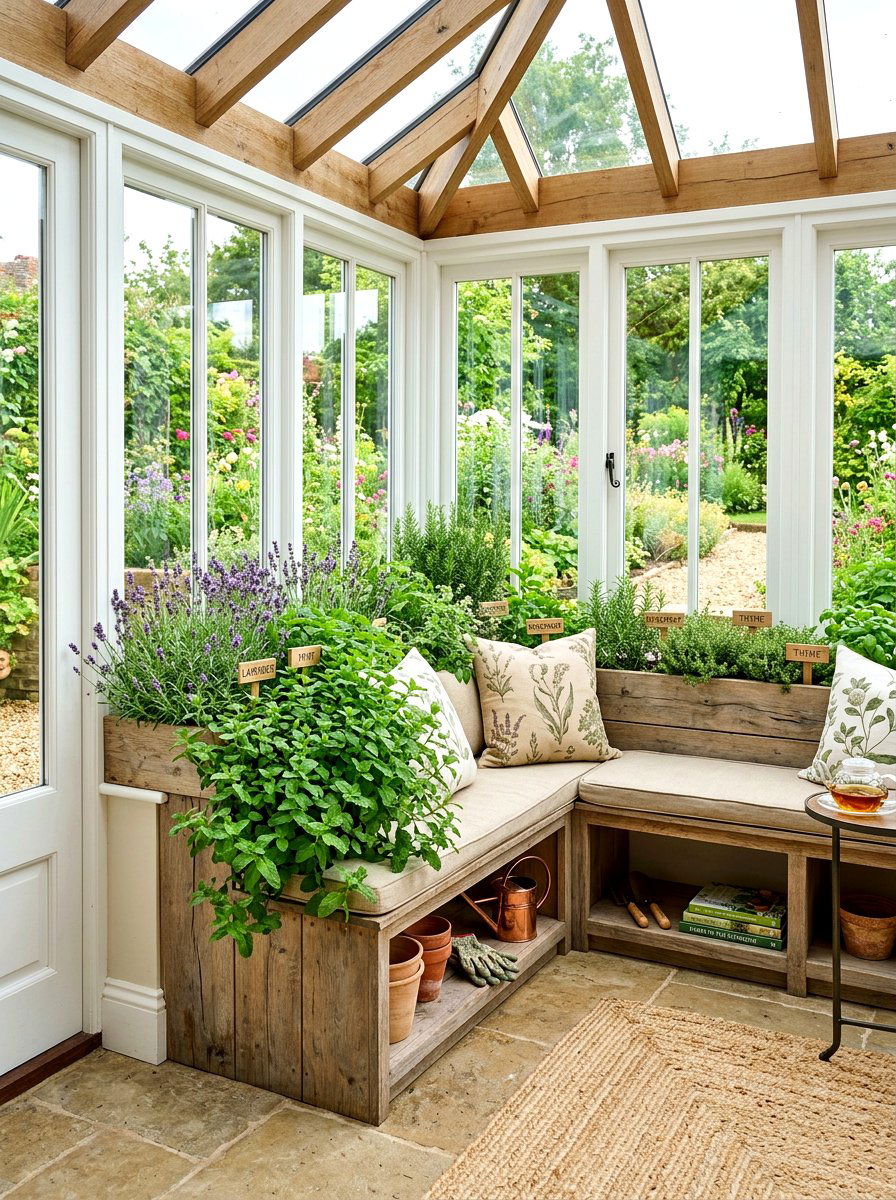
A sunroom herb garden bench creates a lush, indoor oasis that serves as both a seating area and a productive gardening space. By placing long planter boxes behind or beside a comfortable window bench, you can surround yourself with the calming scent of lavender or lemon balm while you relax. This setup utilizes the abundant light typical of a sunroom to grow larger, bushier herb varieties that might struggle in other parts of the house. The combination of cozy textiles and vibrant greenery makes this space feel like a private sanctuary. It is a wonderful way to blend functional gardening with high-end leisure design.
28. Boho Rattan Plant Stand
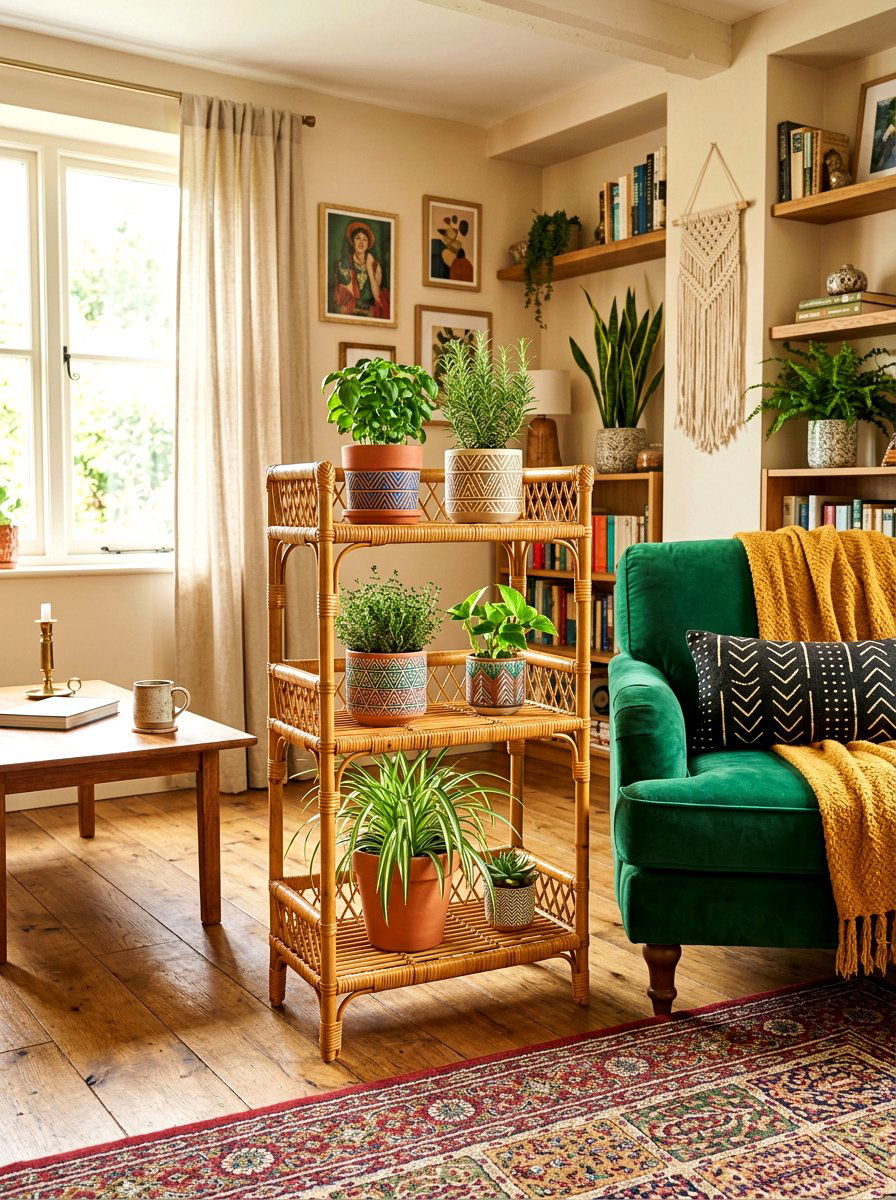
A boho rattan plant stand brings a trendy, natural texture to your indoor herb garden display. These lightweight, woven stands often feature multiple levels or "nesting" designs that allow you to create a tiered arrangement of various herbs. The warm, sandy tones of the rattan complement the organic shapes of the plants, creating a relaxed and inviting atmosphere in a living room or bedroom corner. Because rattan is an airy material, it doesn't visually overwhelm a small room, making it a great choice for apartments. Pair the stand with ceramic or terracotta pots to complete the eclectic, globally-inspired look.
29. Self Watering Planter System
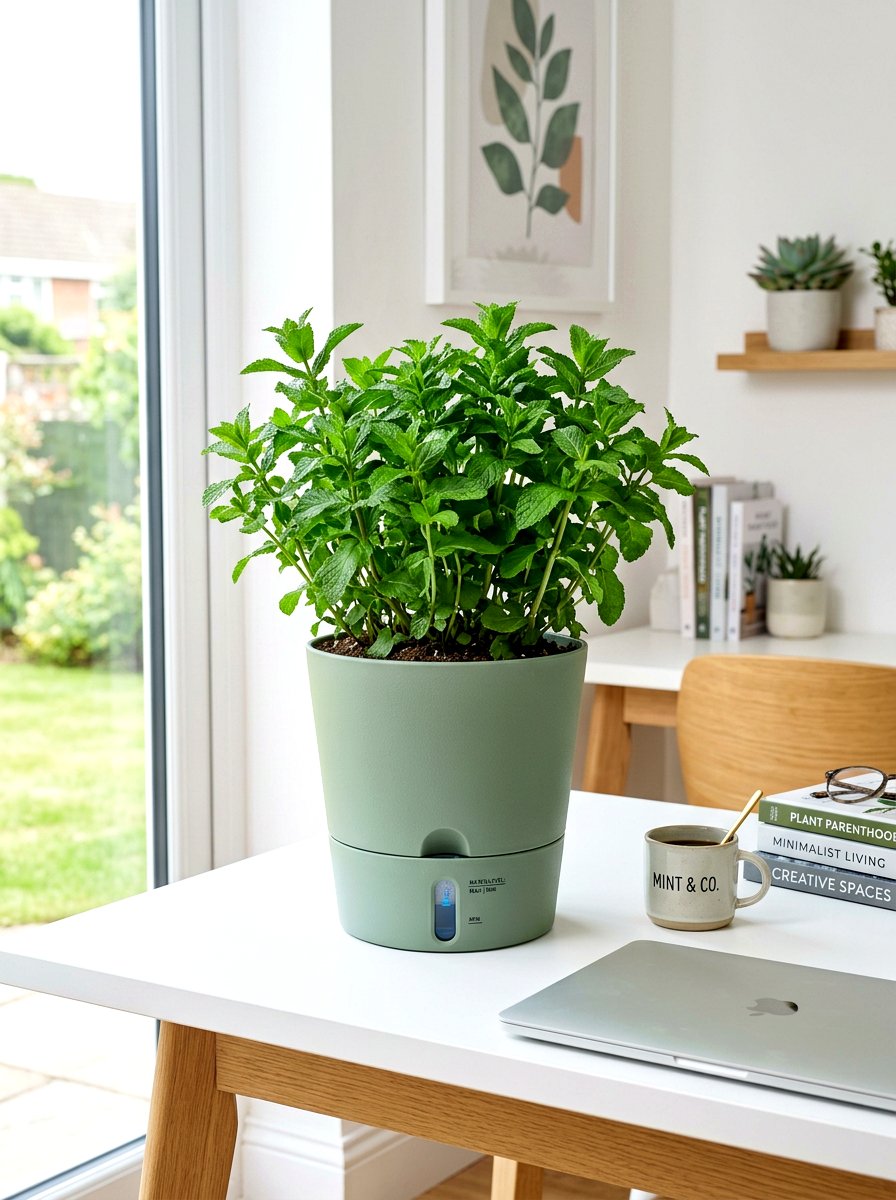
A self watering planter system is the perfect choice for anyone who struggles to keep their plants hydrated or frequently travels for work. These clever containers feature a bottom reservoir that allows the soil to wick up moisture as needed, preventing both over-watering and under-watering. This consistent moisture level is especially beneficial for water-loving herbs like mint and basil. Many of these systems include a visual water level indicator, so you know exactly when it is time for a refill. The modern, clean designs of these planters look great on any desk or kitchen counter, providing a worry-free way to enjoy fresh greens.
30. Glass Jar Propagation Station
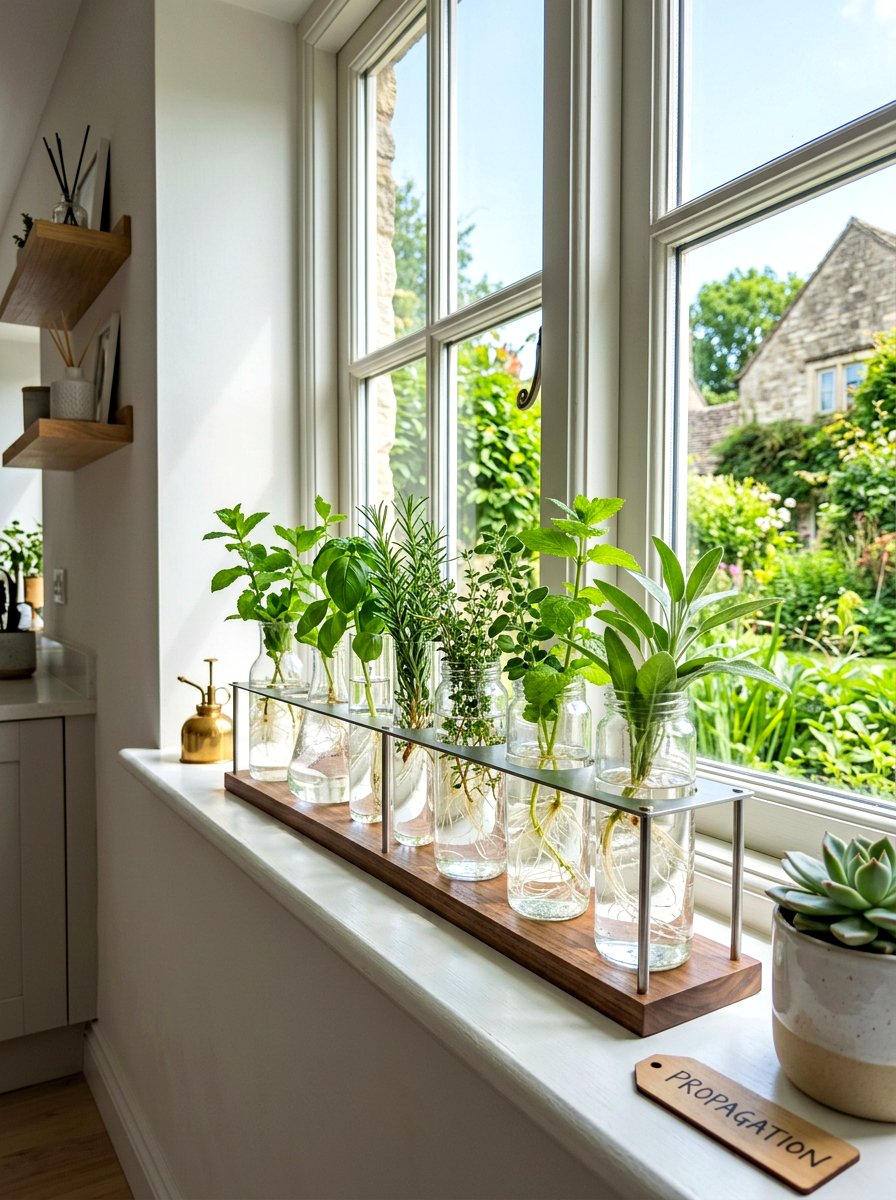
A glass jar propagation station is a beautiful and educational way to grow new herb plants from simple cuttings. By placing stems of basil or mint in clear glass vases or jars filled with water, you can watch the roots develop over several weeks. This setup looks stunning when arranged on a bright windowsill or a decorative tray. Once the roots are a few inches long, you can transplant them into soil or simply keep them in water for a clean, hydroponic-style display. It is a cost-effective way to multiply your garden and share your favorite herb varieties with friends and neighbors.
Conclusion:
Creating an indoor herb garden is a fulfilling journey that enhances both your home's aesthetic and your culinary experiences. By choosing a style that fits your personal taste and the unique light conditions of your space, you can enjoy the year-round benefits of fresh, organic ingredients. From the rustic charm of wooden ladders to the modern efficiency of smart hydroponic systems, there is a solution for every type of home. Not only do these gardens provide flavor for your meals, but they also offer a therapeutic connection to nature that reduces stress and purifies your indoor air. Start small with a few of your favorite herbs and watch as your home transforms into a lush, fragrant sanctuary.

Related posts: