Hostas are the undisputed kings of the shade garden, offering an incredible variety of textures, colors, and sizes that can transform any dim corner into a lush sanctuary. These hardy perennials are beloved by gardeners for their low-maintenance nature and their ability to thrive where other plants struggle. Whether you are looking to create a serene woodland retreat or a structured modern border, hostas provide the perfect architectural foundation for your landscape. From the massive, corrugated leaves of giant varieties to the delicate, tiny foliage of miniatures, there is a hosta for every niche in your yard. Exploring these versatile plants allows you to play with light and shadow in your design effectively while creating a cooling atmosphere.
1. Shade Garden Hostas
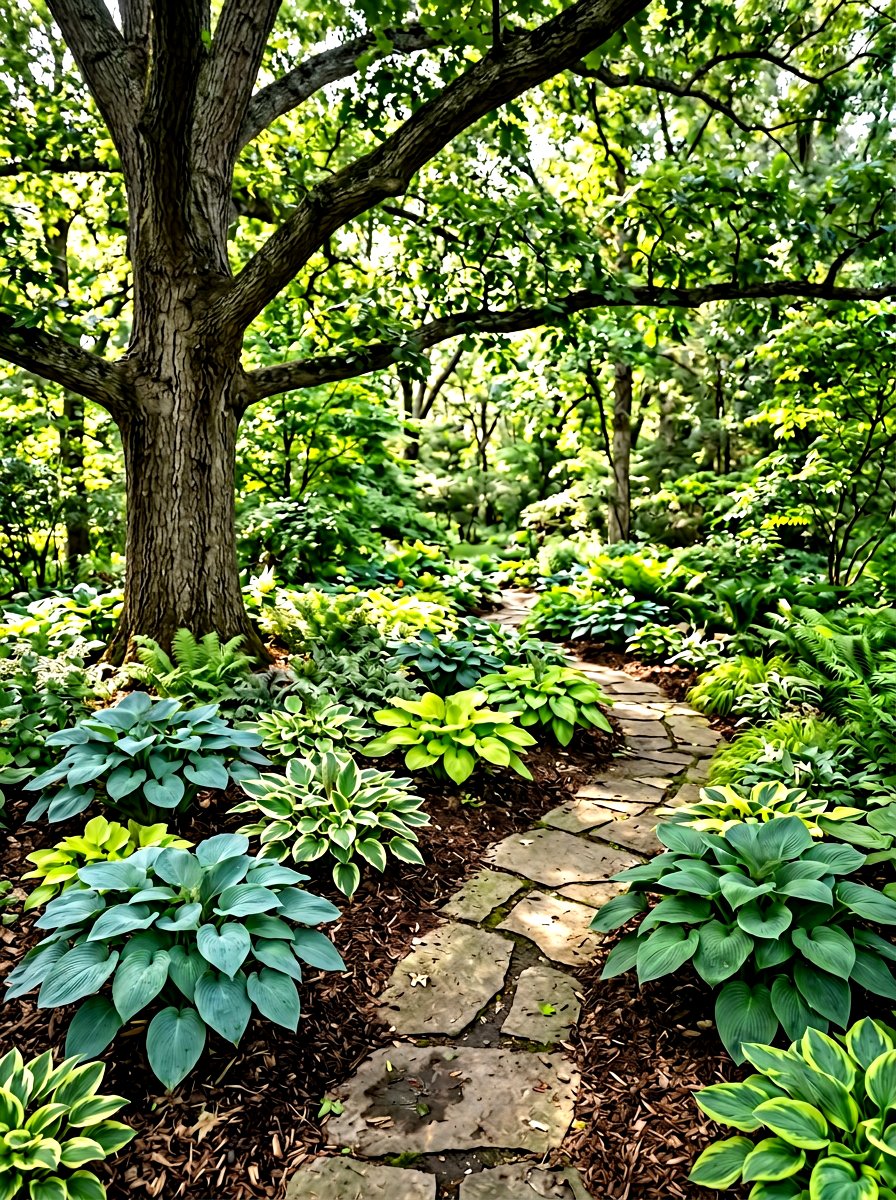
Creating a lush environment in the deepest shadows of your yard is easily achieved with a dedicated shade garden hostas arrangement. These plants naturally thrive in filtered light, making them ideal for those tricky spots under a heavy tree canopy or on the north side of your home. When you group different varieties together, you create a tapestry of greens, blues, and yellows that brightens up dark spaces without needing direct sun. The broad leaves capture what little light is available, and their overlapping growth habit helps suppress weeds naturally. This approach turns a neglected area into a cool, inviting backyard retreat for the summer months.
2. Variegated Hosta Border
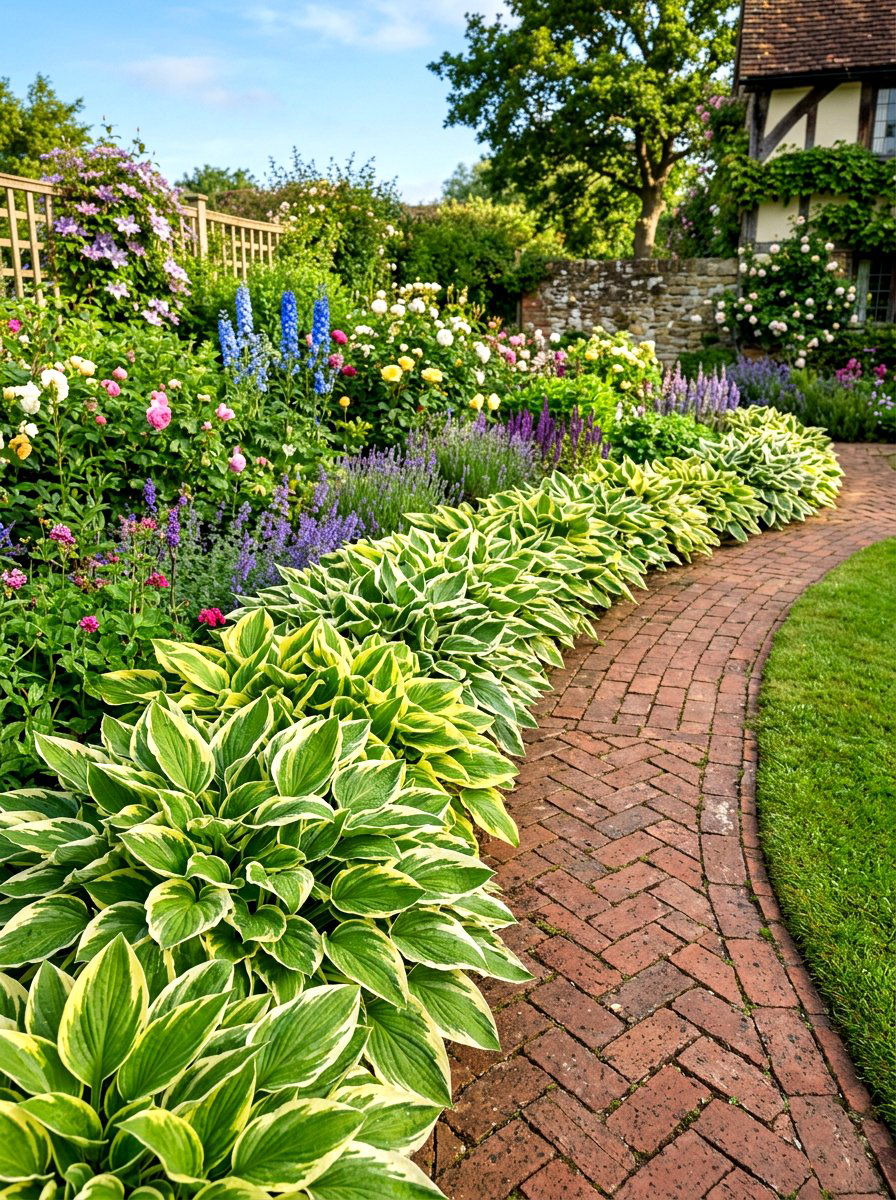
A variegated hosta border adds immediate visual interest and a sense of movement along the edges of your garden paths or flower beds. These plants feature leaves with contrasting margins or centers, often in shades of creamy white, bright yellow, or pale lime green. By lining a walkway with these two-toned beauties, you define the space clearly while providing a bright transition between the lawn and taller shrubs. The high contrast of the leaves makes the garden feel more dynamic and helps guide the eye through the landscape. They are particularly effective at highlighting the perimeter of a patio or a curved garden trail.
3. Blue Hosta Focal Point
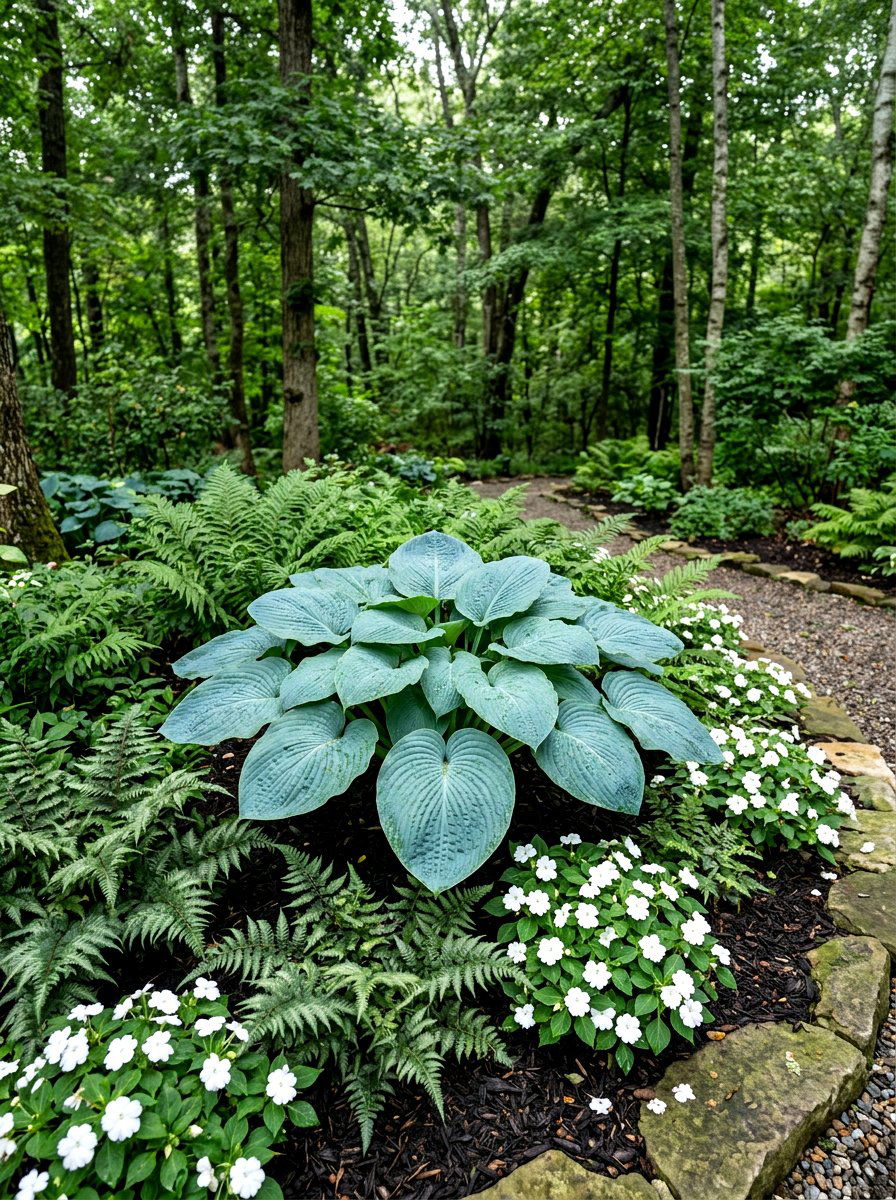
Blue hosta focal point plants are prized for their unique waxy coating that gives the foliage a stunning powdery blue or teal hue. Placing a large, blue-leaved variety in a central spot creates a cooling effect that feels refreshing during the hot summer months. These varieties, like 'Blue Angel' or 'Halcyon' , stand out beautifully against standard green foliage or dark mulch. To make the blue color pop even more, try to keep these plants in deeper shade, as too much direct sunlight can melt the waxy bloom and turn the leaves green. They serve as an anchor for more colorful companion perennials in your beds.
4. Giant Hosta Specimen
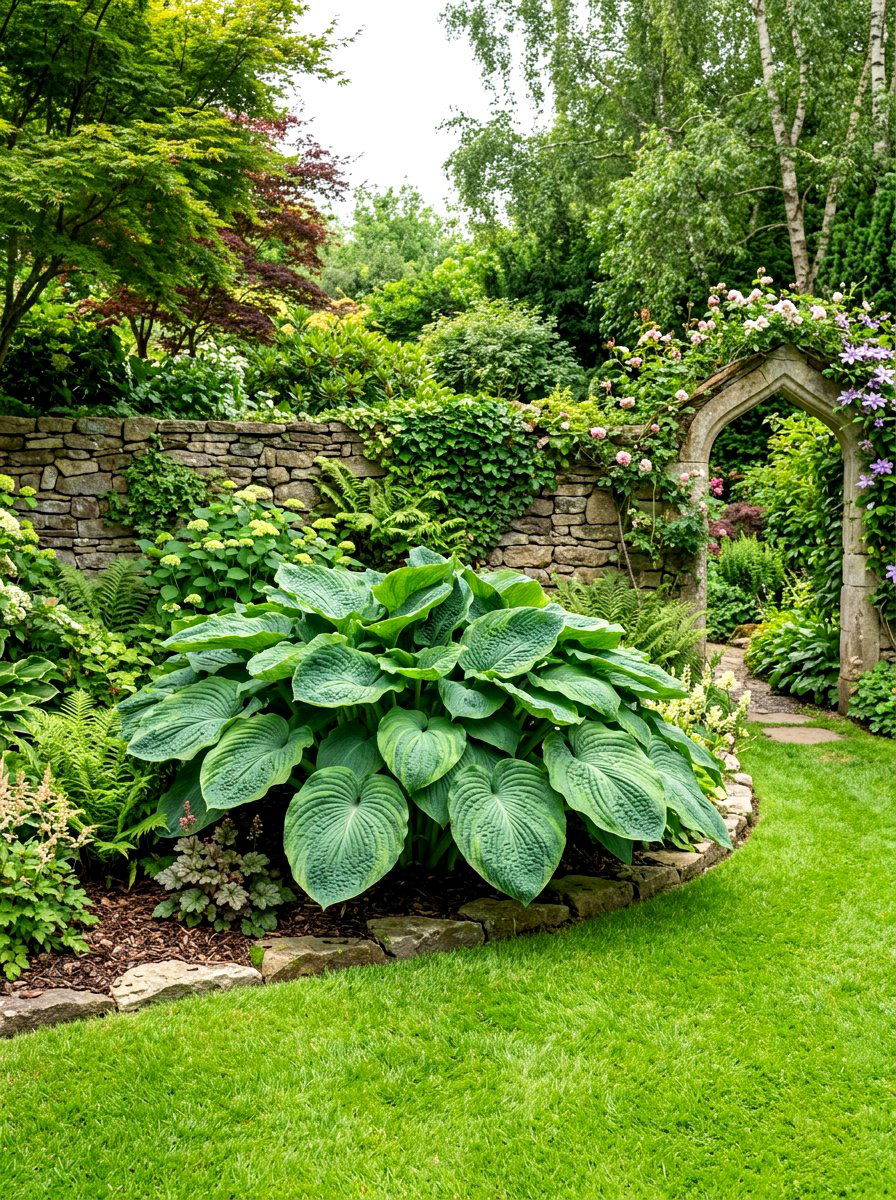
A giant hosta specimen can act as a natural sculpture in your landscape, often growing several feet wide and tall with massive, dinner-plate-sized leaves. These impressive plants are perfect for filling large voids or acting as a backdrop for smaller, more delicate flowers. Because of their scale, they command attention and can easily become the most talked-about feature in your yard. Planting just one in a strategic corner or at the end of a vista provides a sense of maturity and grandeur to the garden. Their heavy, puckered leaves also add a wonderful tactile element that invites visitors to touch and admire them.
5. Miniature Hosta Fairy Garden
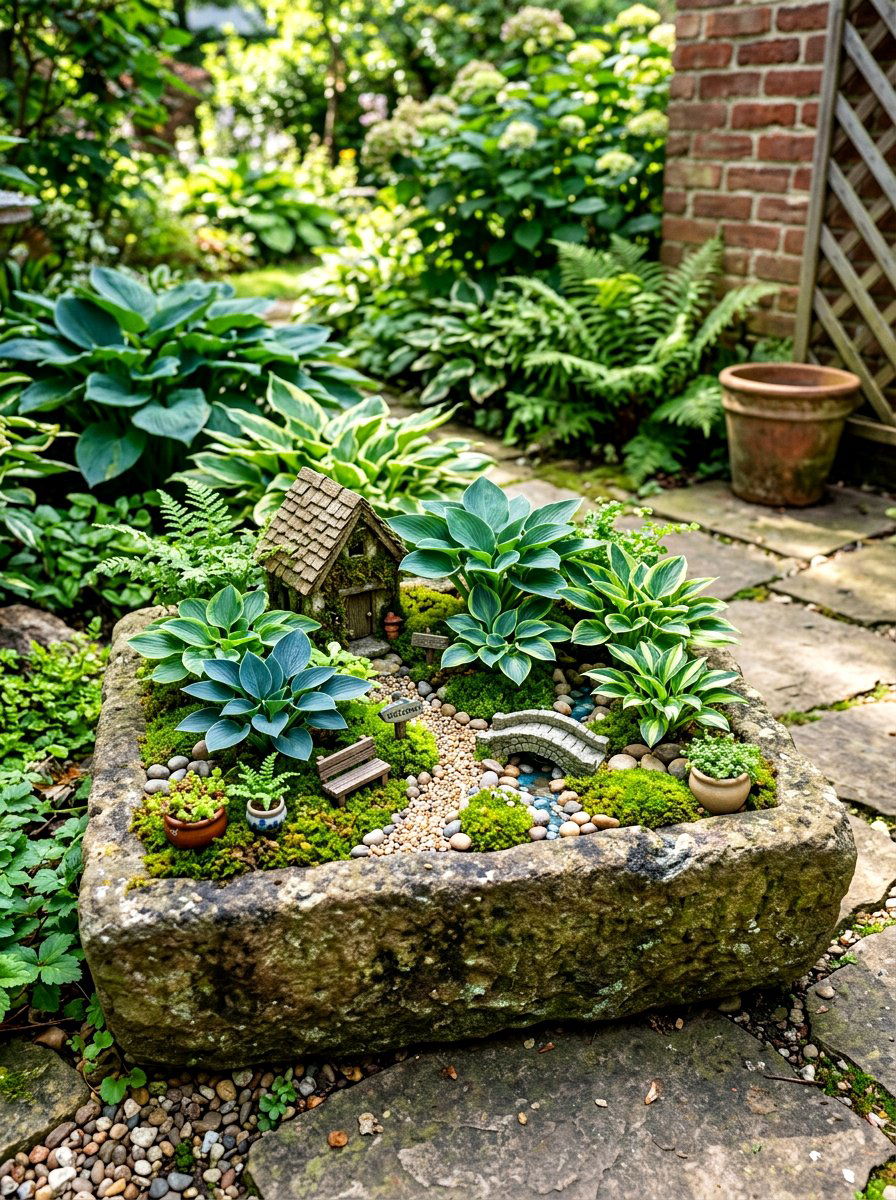
Miniature hosta fairy garden setups are perfect for small spaces, urban balconies, or whimsical garden corners where tiny details matter most. These diminutive plants, often only a few inches tall, possess all the charm of their larger cousins but in a compact, manageable size. You can tuck them into crevices between rocks, plant them in shallow troughs, or use them to create a tiny forest floor for a decorative gnome or fairy display. Despite their small stature, they are quite hardy and offer various leaf shapes and colors. They provide a wonderful opportunity for close-up gardening and intricate plant layering in limited areas.
6. Hosta And Fern Pairing
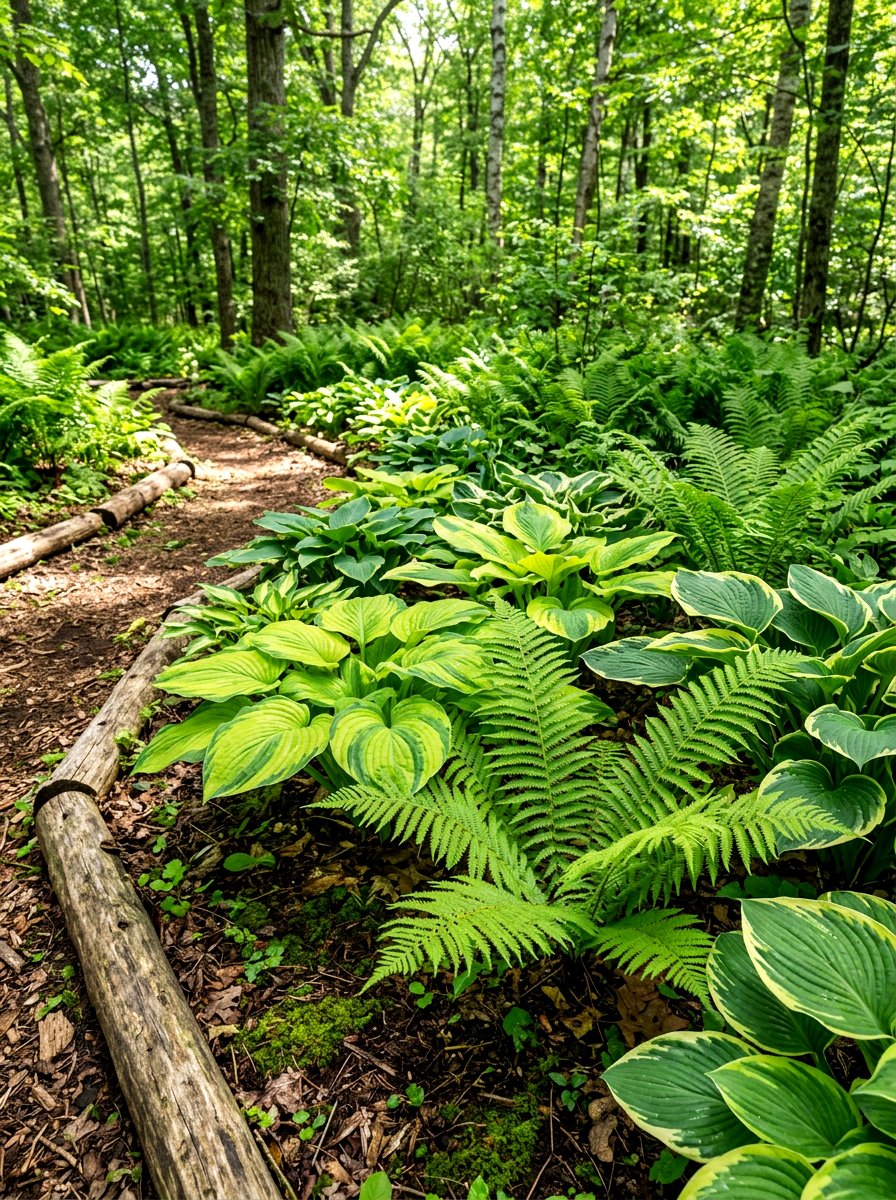
Using a hosta and fern pairing is a classic design strategy that relies on the beautiful contrast between broad hosta leaves and lacy, delicate fern fronds. This combination works exceptionally well because both plants share similar cultural requirements, preferring moist soil and cool, shaded conditions. The architectural solidity of the hosta provides a stable base, while the airy texture of ferns like the Ostrich or Japanese Painted Fern adds a sense of lightness and motion. This duo creates a sophisticated, woodland-inspired look that feels timeless and natural. It is a foolproof way to add depth and complexity to any shaded garden bed effectively.
7. Container Hosta Display
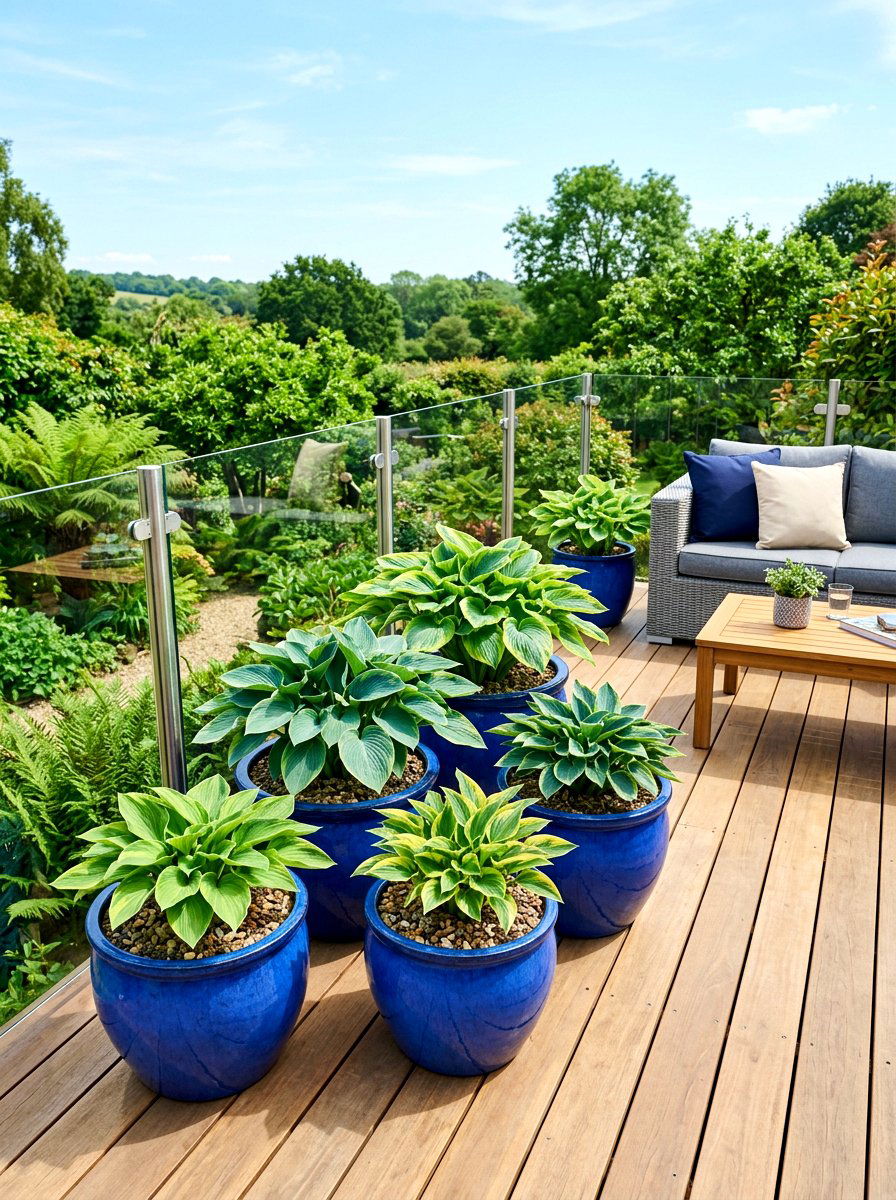
A container hosta display allows you to bring the beauty of these perennials onto your porch, deck, or patio where ground planting isn't possible. Hostas adapt remarkably well to pot culture, provided they have adequate drainage and consistent moisture. Growing them in containers also protects them from certain pests like slugs and allows you to move them around to find the perfect light levels. You can choose decorative ceramic pots that complement the leaf color or use a series of identical pots for a more formal, rhythmic look. It is an excellent solution for renters or those with limited garden space to enjoy.
8. Hosta Walkway Lining
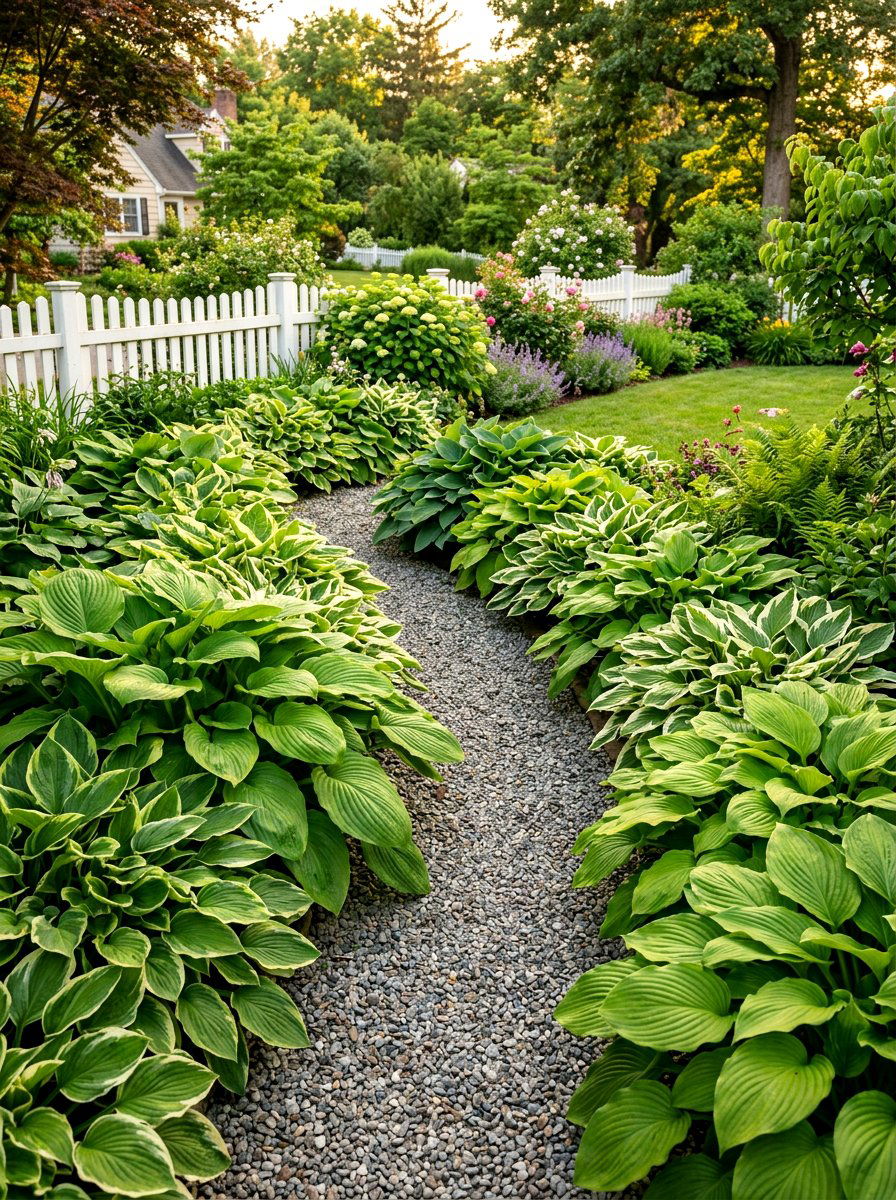
Implementing a hosta walkway lining is an effective way to soften the hard edges of stone, brick, or gravel paths. As the hostas grow, their large leaves spill over the sides of the walkway, creating a soft, blurred transition that feels organic and welcoming. This technique also helps to hide the bases of leggy shrubs or taller perennials that might be planted further back in the border. Choosing a single variety for the entire length of the path creates a clean, unified look, while mixing different types offers a more eclectic and cottage-garden feel. It makes every stroll through the garden a truly lush experience.
9. Under Tree Hosta Planting
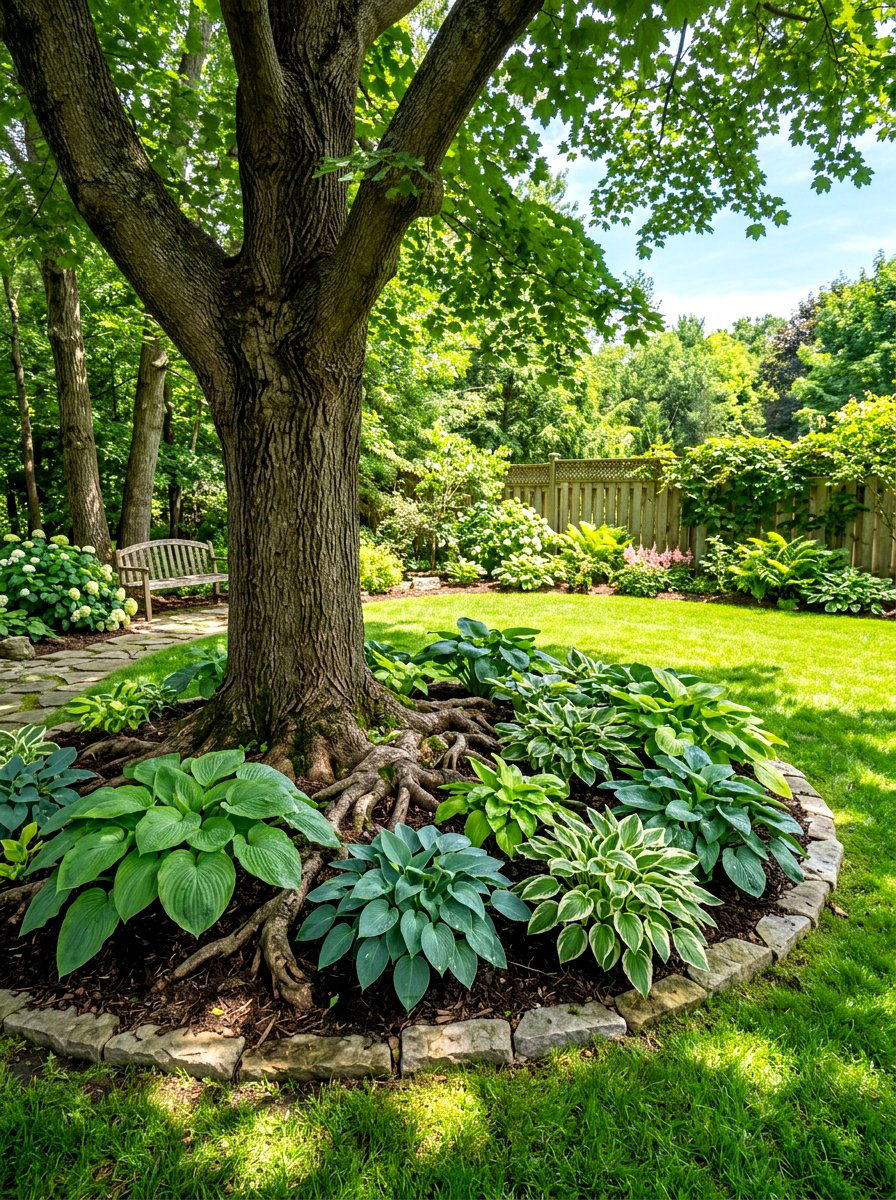
Under tree hosta planting is the perfect solution for the dry, shaded ground where grass typically fails to grow. Hostas are competitive enough to survive among tree roots, as long as they are given some extra water and compost during their first few seasons. They create a living mulch that protects the tree's root zone while providing a beautiful green carpet that hides bare soil. To ensure success, plant the hostas between the major roots rather than cutting through them. This creates a cohesive landscape where the trees and the ground-level plants look like they have naturally coexisted for many years in harmony.
10. Yellow Leaf Hosta Accent
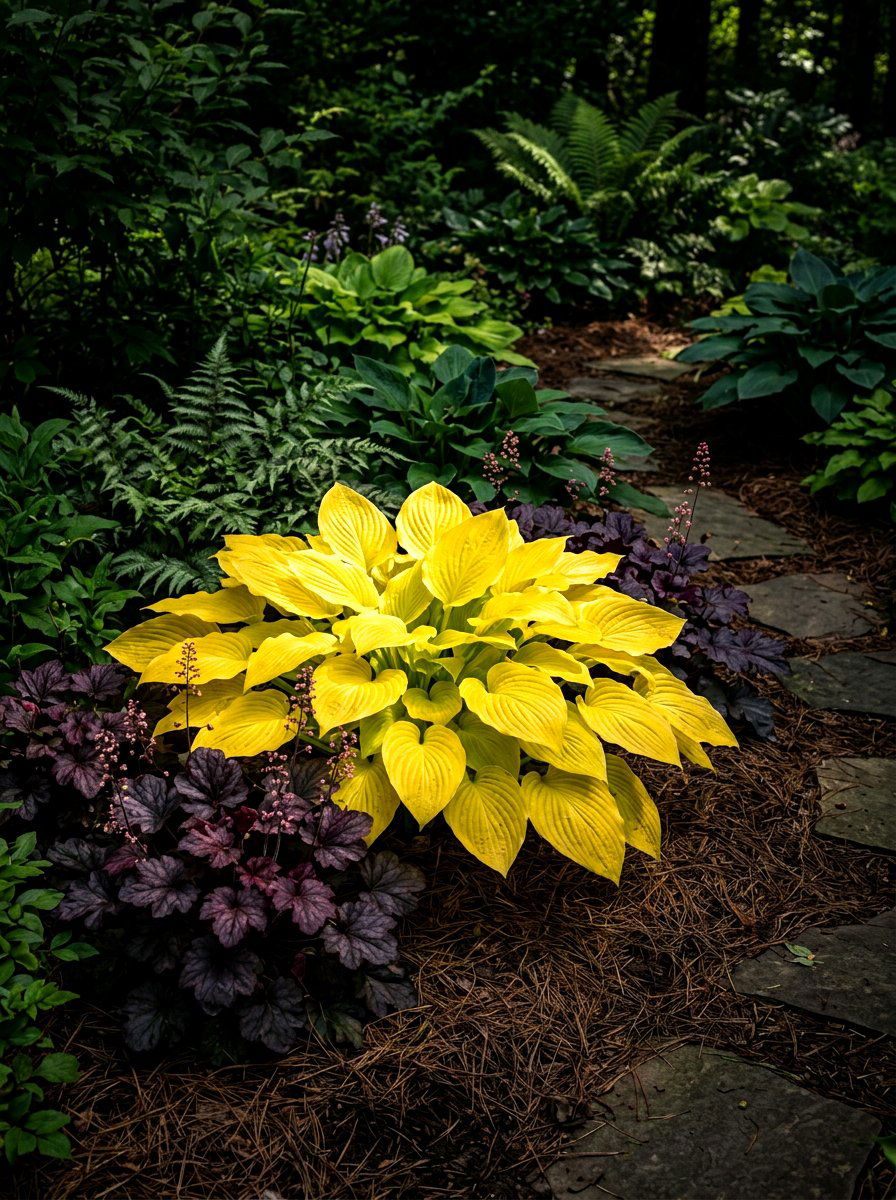
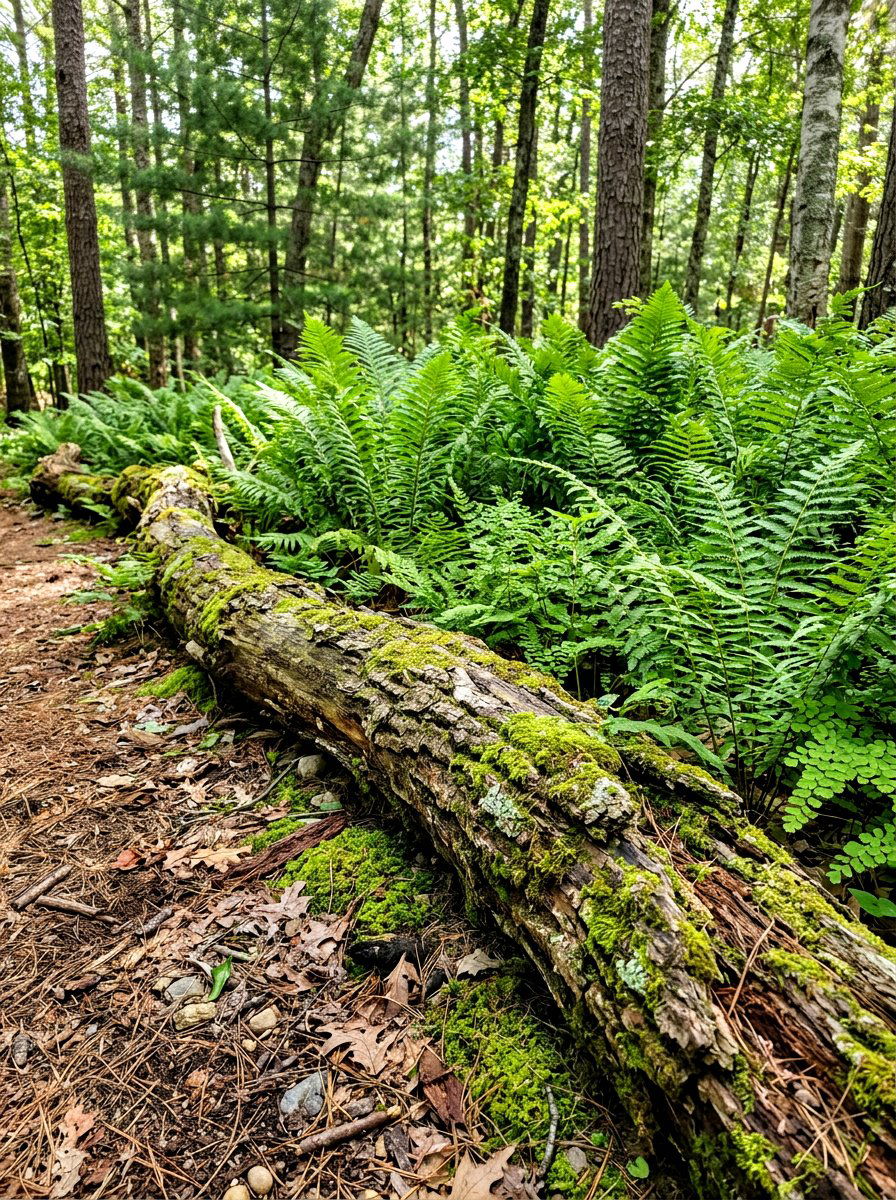
A yellow leaf hosta accent is like a splash of sunshine in a dark garden, as these bright varieties glow with a luminous intensity. These plants range from soft chartreuse to brilliant gold, and they are masters at reflecting what little light reaches the shade. Placing a yellow-leaved hosta at the end of a dark garden path can draw the eye forward and make the space feel much larger and more open. They also pair beautifully with purple-leaved plants or deep blue hostas to create a high-contrast color scheme. These glowing accents are essential for preventing a shade garden from looking too monotonous.
11. Hosta And Hydrangea Garden
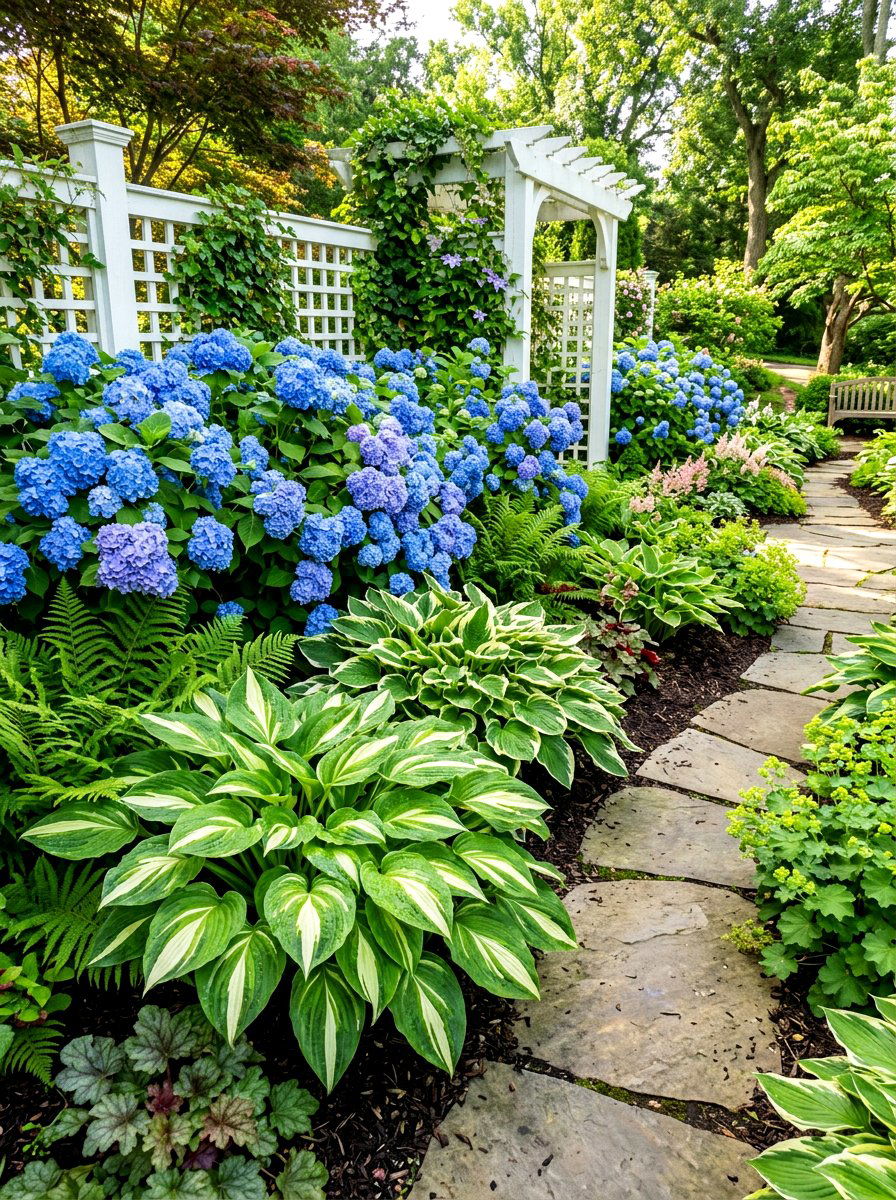
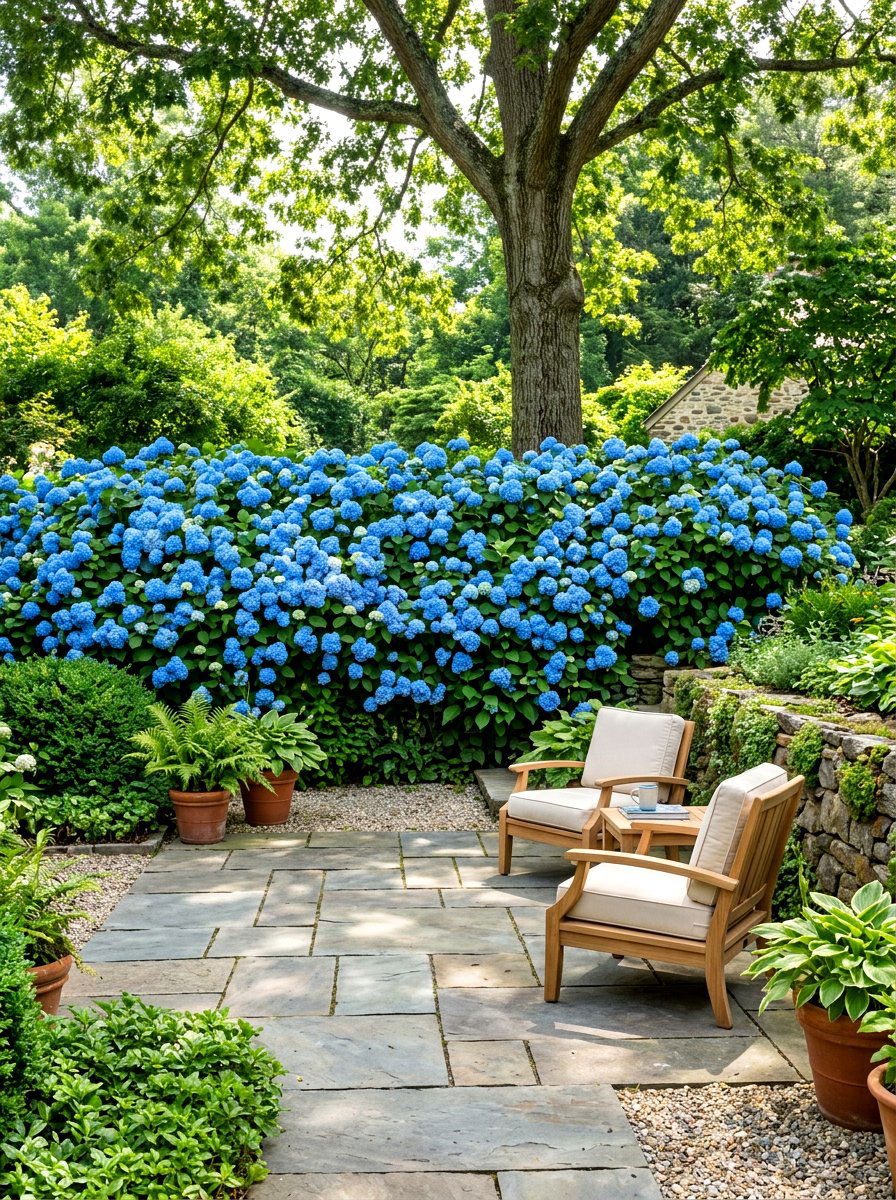
A hosta and hydrangea garden combines two of the most popular shade-loving plants for a truly spectacular floral and foliage display. While the hydrangeas provide large, colorful flower heads in mid-summer, the hostas fill in the space below with their expansive, textured leaves. This combination ensures that the garden looks lush and full from early spring through the first frost. The varied heights create a tiered effect that adds vertical interest to the landscape. Because both plants love moisture, they are easy to care for together, resulting in a low-stress garden that looks professionally designed with minimal effort on your part for maintenance.
12. Mass Hosta Groundcover
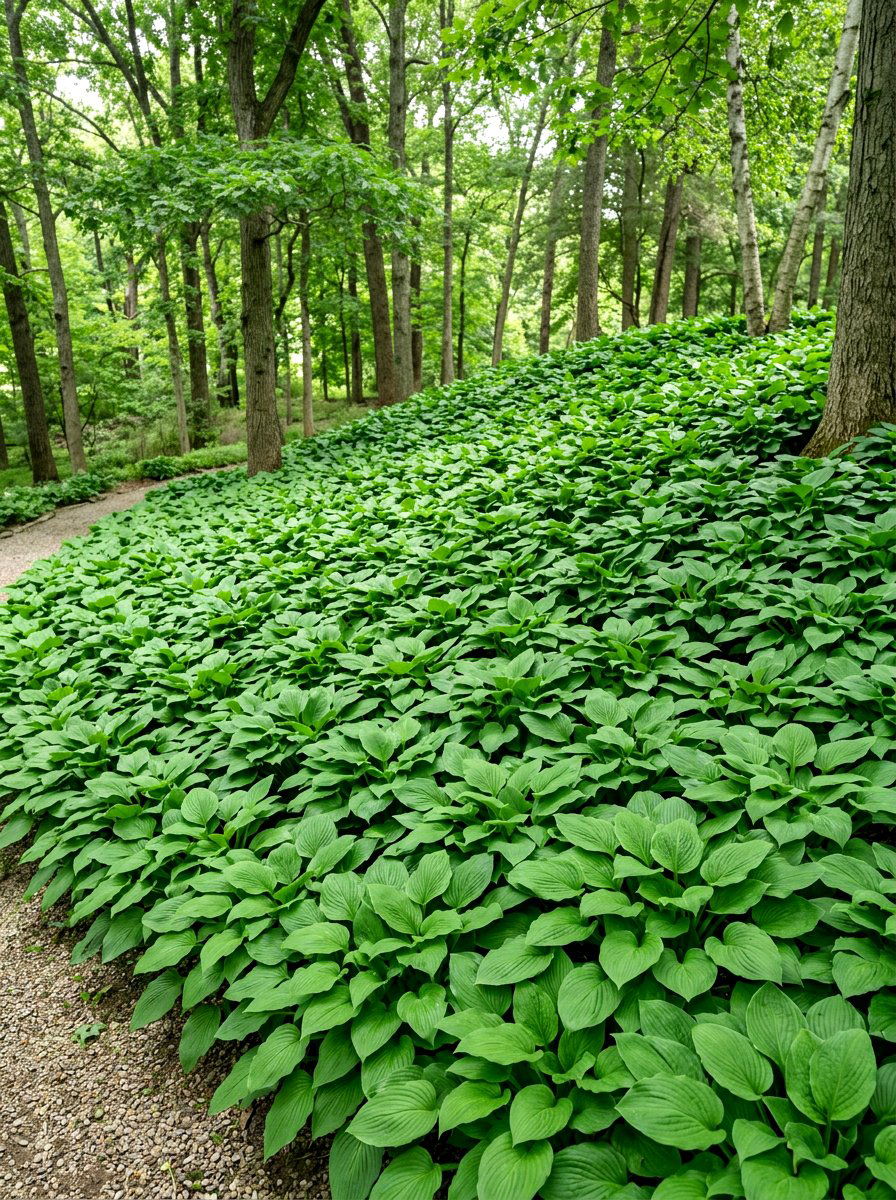
Creating a mass hosta groundcover is a smart and low-maintenance way to fill large areas of shade with a sea of green. Instead of mixing many different types, using a single variety in large quantities creates a bold, modern statement that simplifies the visual landscape. This technique is particularly effective on large estates or under a long line of mature trees where individual small plants might get lost. The dense canopy of leaves shades out weeds, reducing the need for constant maintenance and mulching. It produces a calm, serene atmosphere that feels very controlled and intentional, providing a clean backdrop for other features.
13. Mixed Hosta Bed
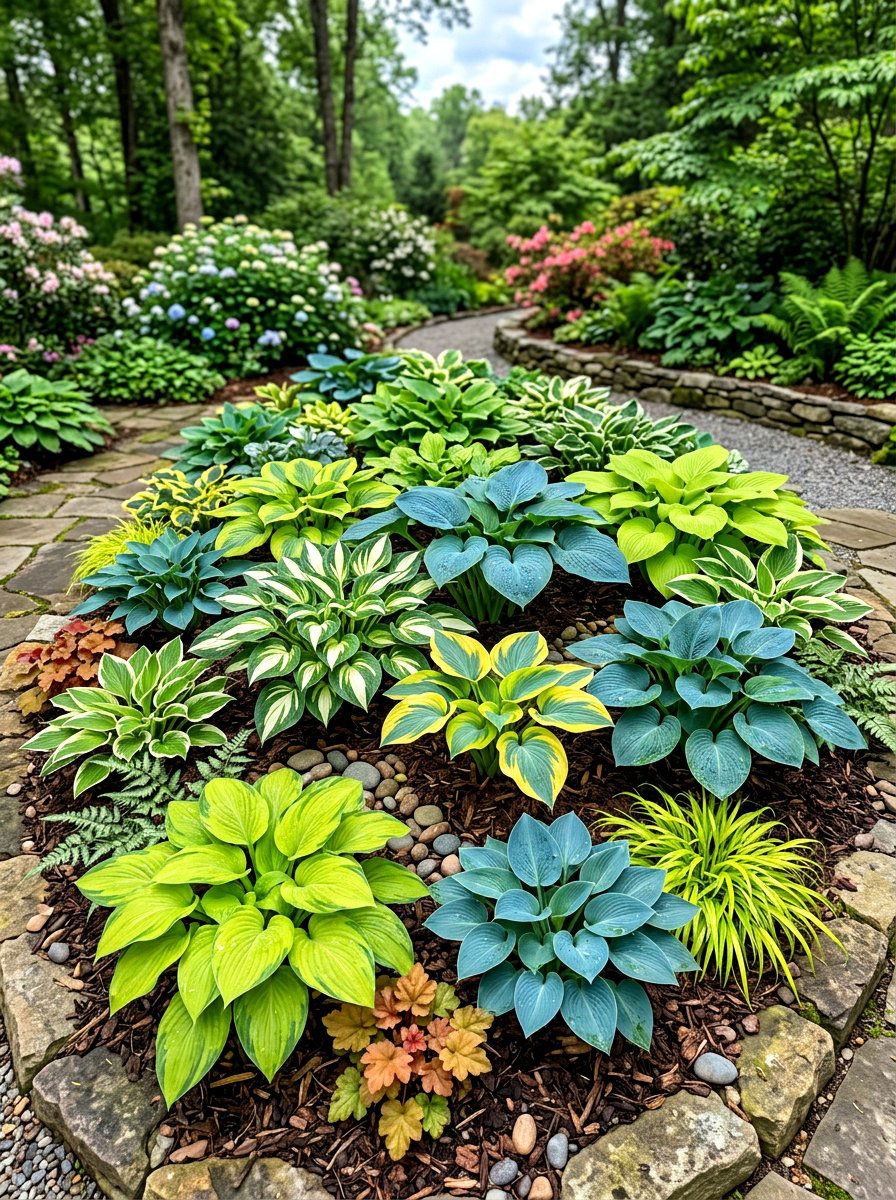
A mixed hosta bed is a collector’s dream, allowing you to showcase a wide variety of leaf shapes, sizes, and colors in one concentrated area. By carefully arranging different hostas, you can create a tapestry of foliage that looks interesting even when nothing is in bloom. The key to a successful mixed bed is to vary the heights and textures so that each plant has its own moment to shine. Place larger, solid-colored varieties in the back and smaller, variegated types in the front. This diversity keeps the eye moving and makes the garden feel like a vibrant, living gallery of amazing botanical diversity.
14. Hosta Pond Edge
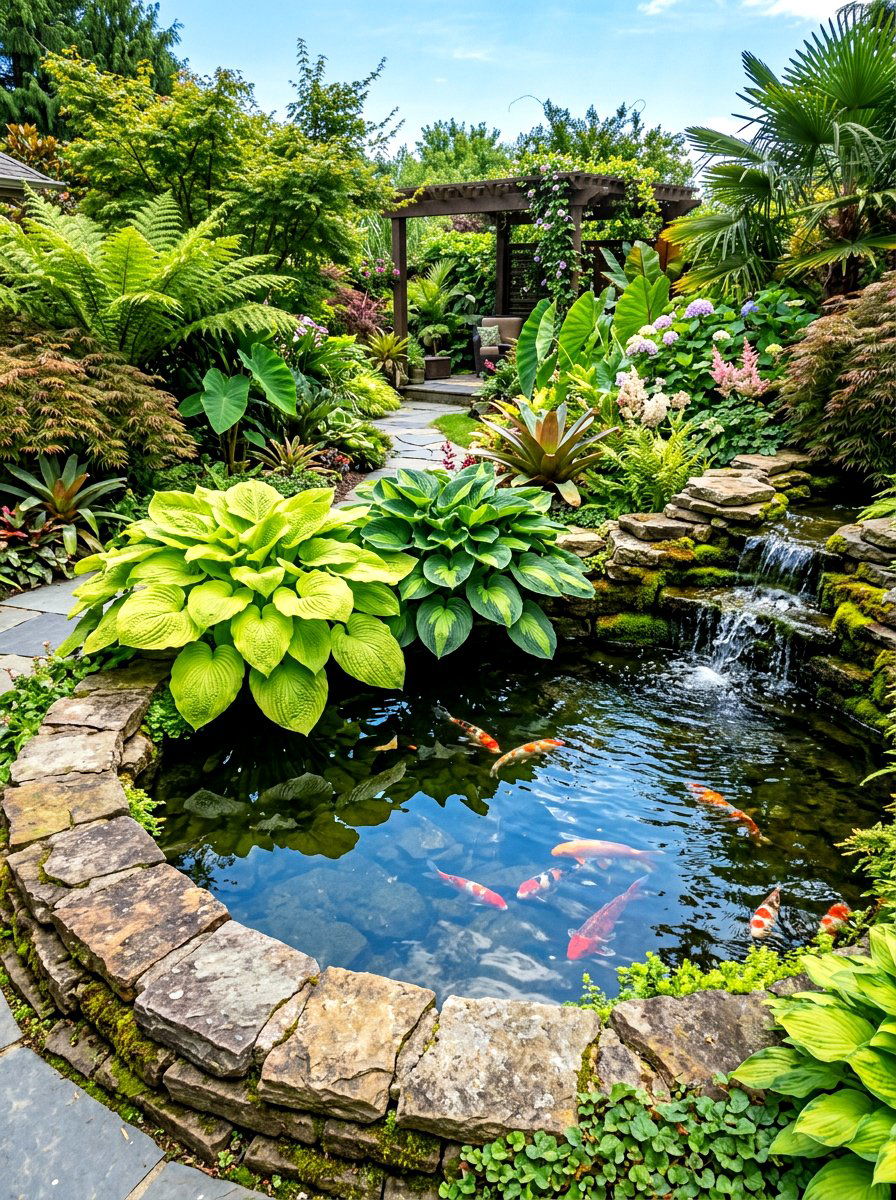
Utilizing a hosta pond edge design brings a lush, tropical feel to your water feature while providing a natural transition between water and land. Hostas thrive in the humid, moist environment found near ponds or streams, and their large leaves often reflect beautifully in the still water. Planting them right up to the edge helps to hide pond liners and plumbing, making the water feature look like a natural part of the landscape. Their broad foliage also provides shade for fish and helps to keep the water temperature cooler. The contrast between the soft leaves and hard stones around the pond is visually striking.
15. Vertical Hosta Planter
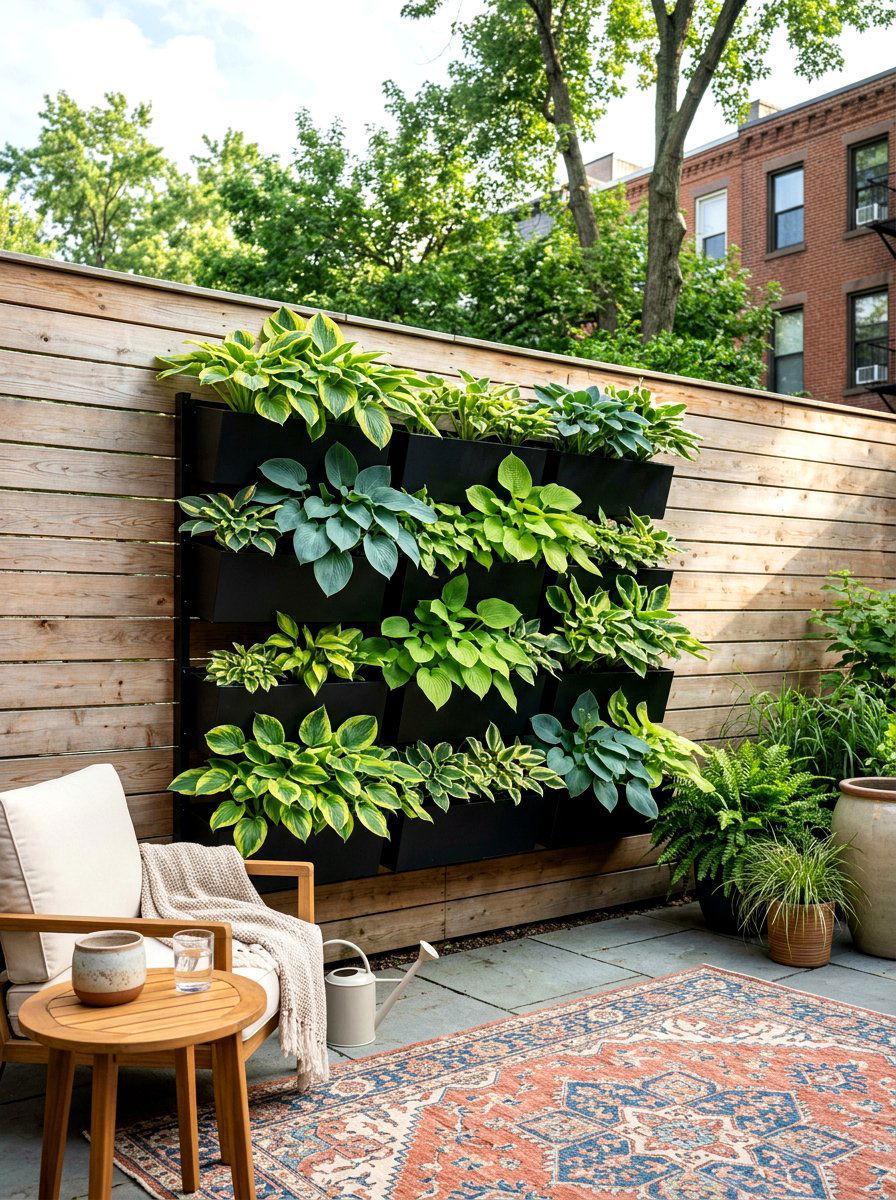
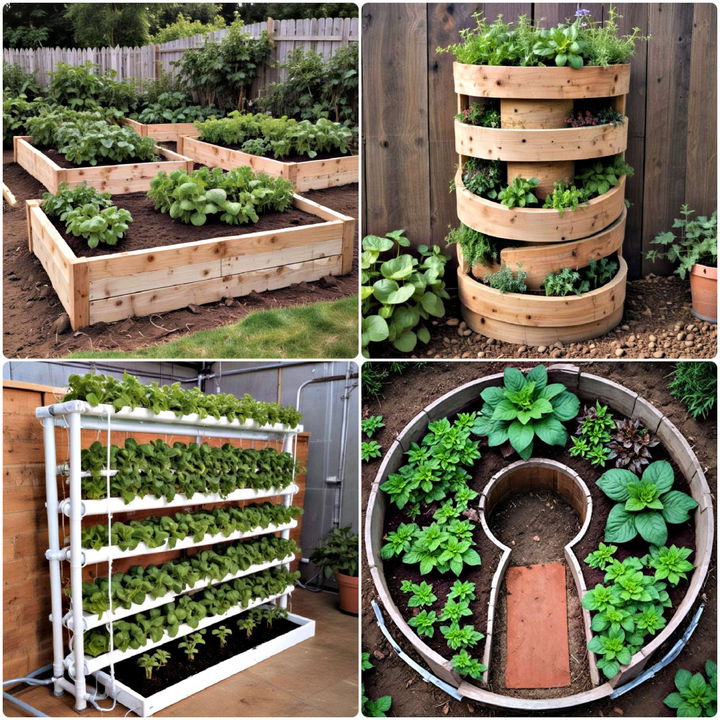
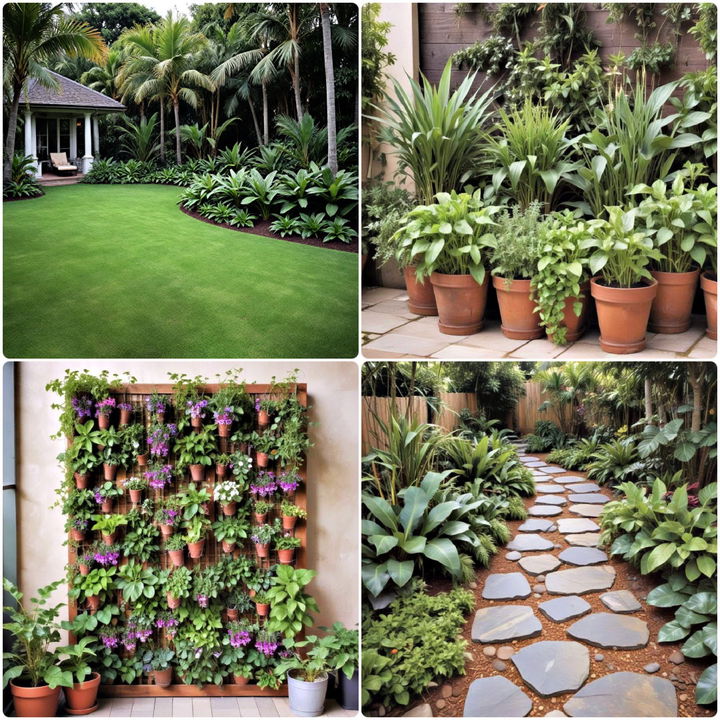
A vertical hosta planter is an innovative way to garden in tight spaces or to add a unique wall feature to your outdoor living area. By using tiered planters, wall pockets, or even a vertical pallet garden, you can display hostas at eye level. This approach highlights the intricate details of the leaves that might be missed when the plants are on the ground. Hostas with cascading growth habits or smaller leaf sizes work best for vertical arrangements. This method also helps keep the plants away from ground-dwelling pests like slugs, ensuring that the foliage remains pristine and beautiful throughout the entire growing season.
16. Hosta And Heuchera Combination
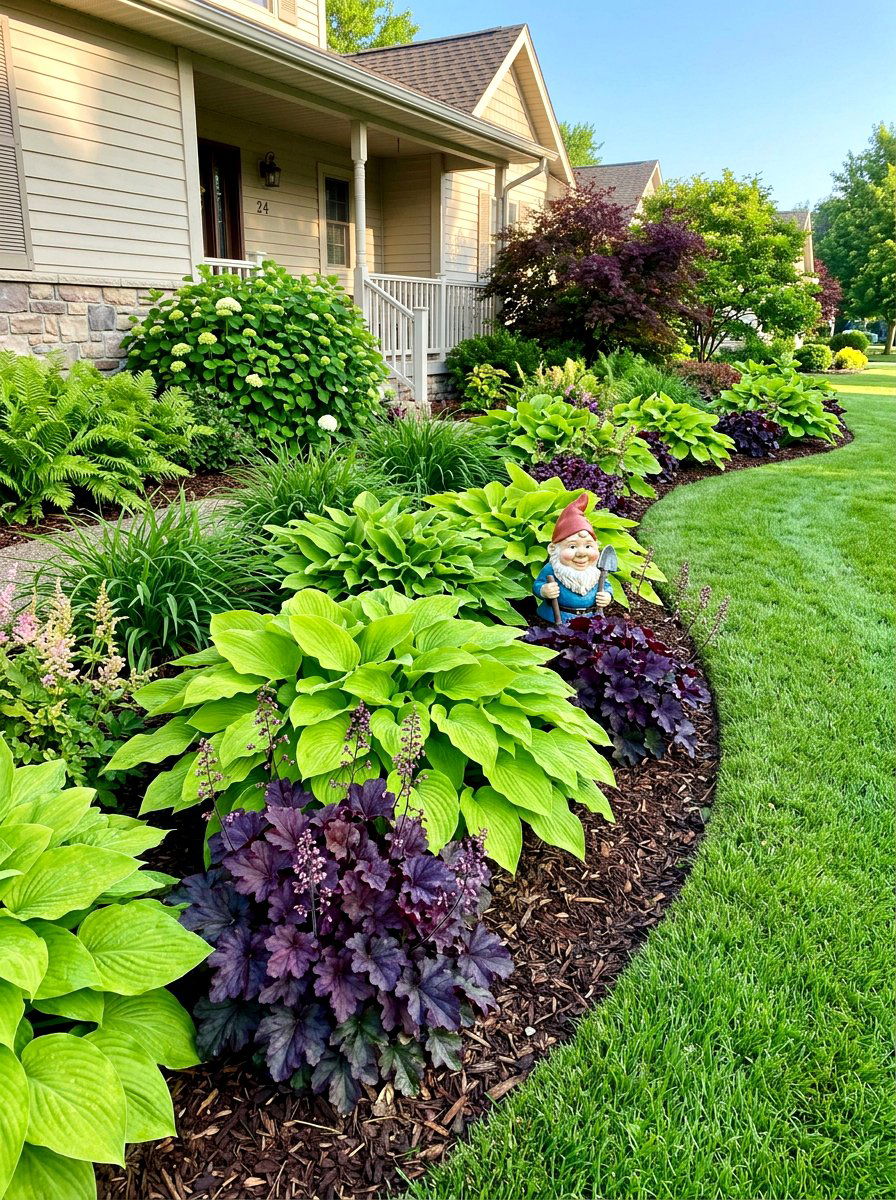
The hosta and heuchera combination is a favorite among designers for the incredible color possibilities it offers in the shade. While hostas bring shades of green, blue, and gold, heucheras — also known as coral bells — provide vibrant reds, purples, oranges, and silvers. Planting these together creates a rich, multi-colored carpet that remains colorful even without flowers. The ruffled leaves of the heuchera contrast perfectly with the smooth or corrugated surfaces of the hosta foliage. This pairing is excellent for small borders, containers, or any spot where you want to maximize the visual impact of foliage color and texture in a compact area.
17. Sloped Hosta Garden
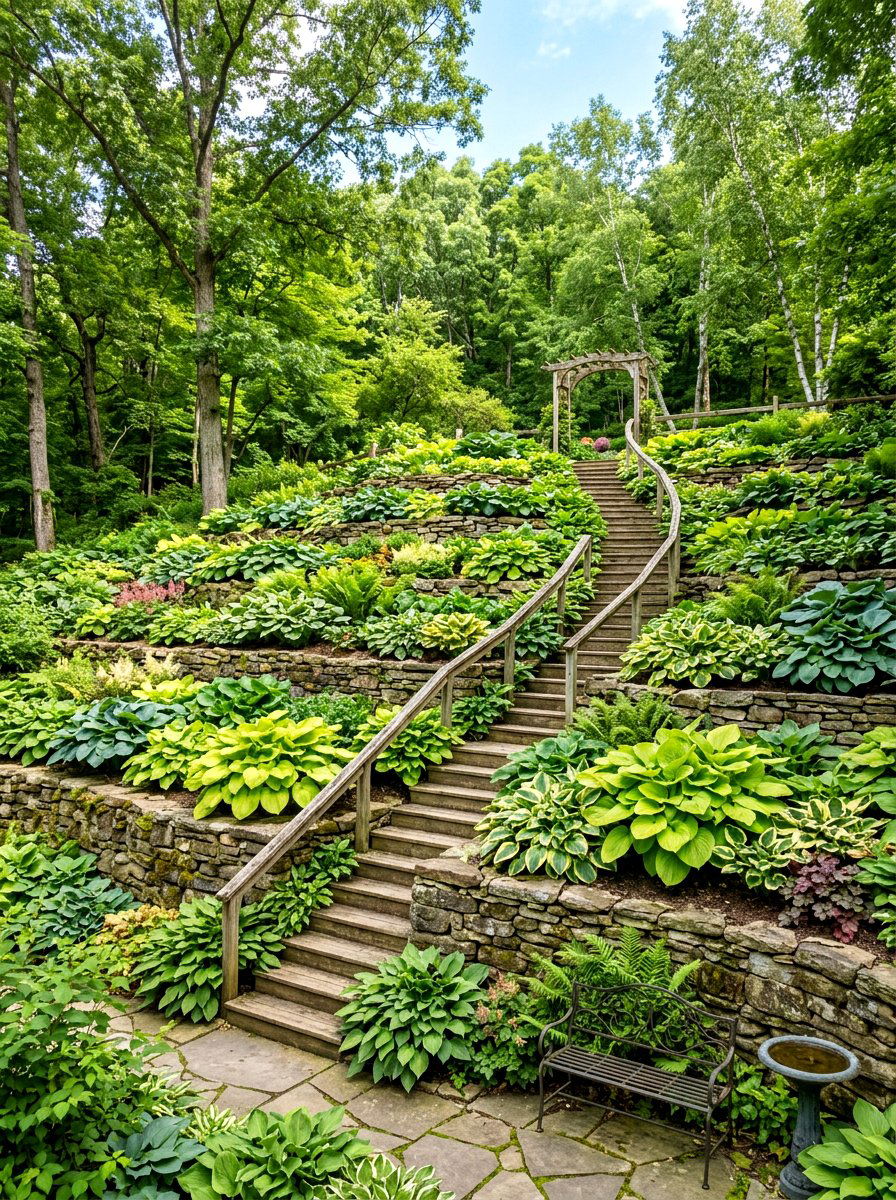
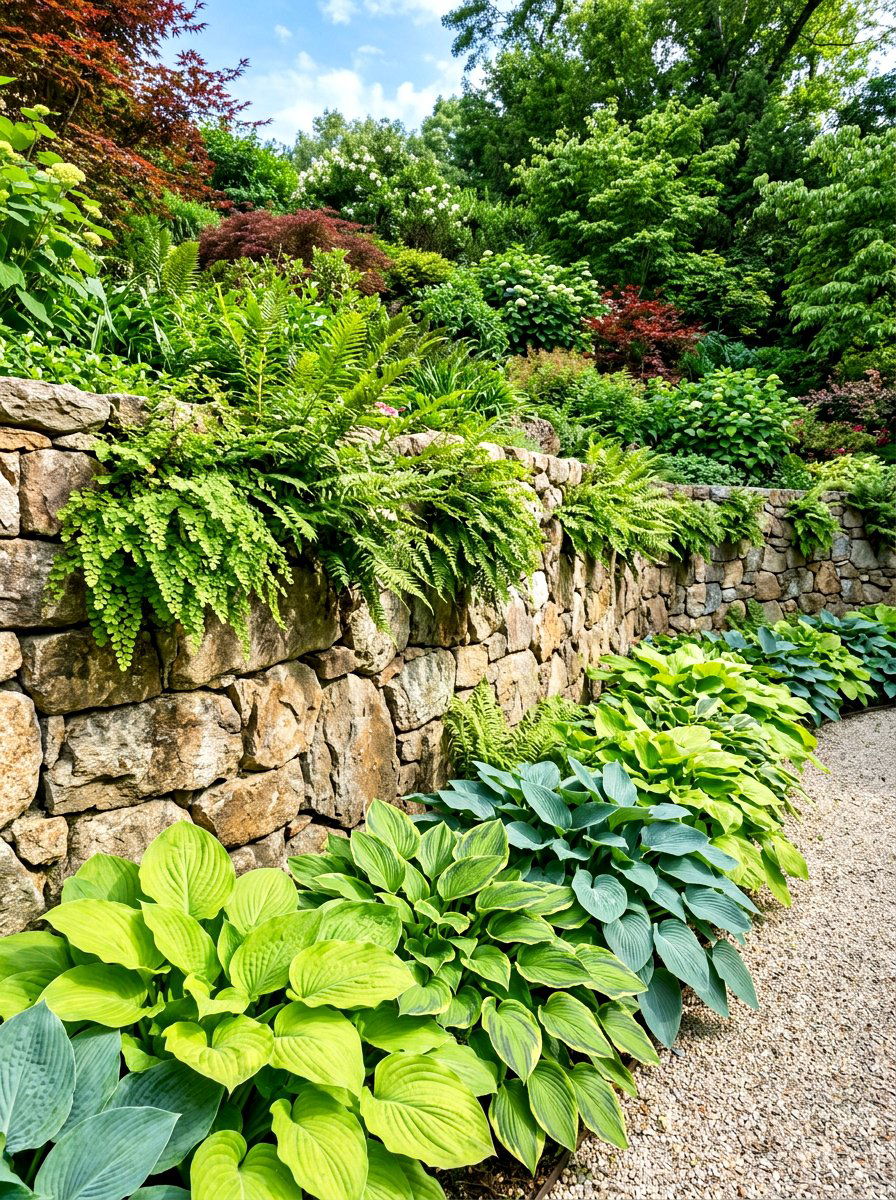
A sloped hosta garden is an excellent way to stabilize soil and prevent erosion on a hillside while creating a stunning visual display. Hostas have dense root systems that help hold the earth in place, making them functional as well as beautiful. When planted on a slope, you can see the entire plant more easily, as they are naturally tiered by the terrain. This perspective allows the viewer to appreciate the layering of leaves and the variety of colors from a distance. Grouping different sizes and colors together on a hill creates a flowing, waterfall-like effect of foliage that is truly breathtaking to behold.
18. Hosta Rock Garden
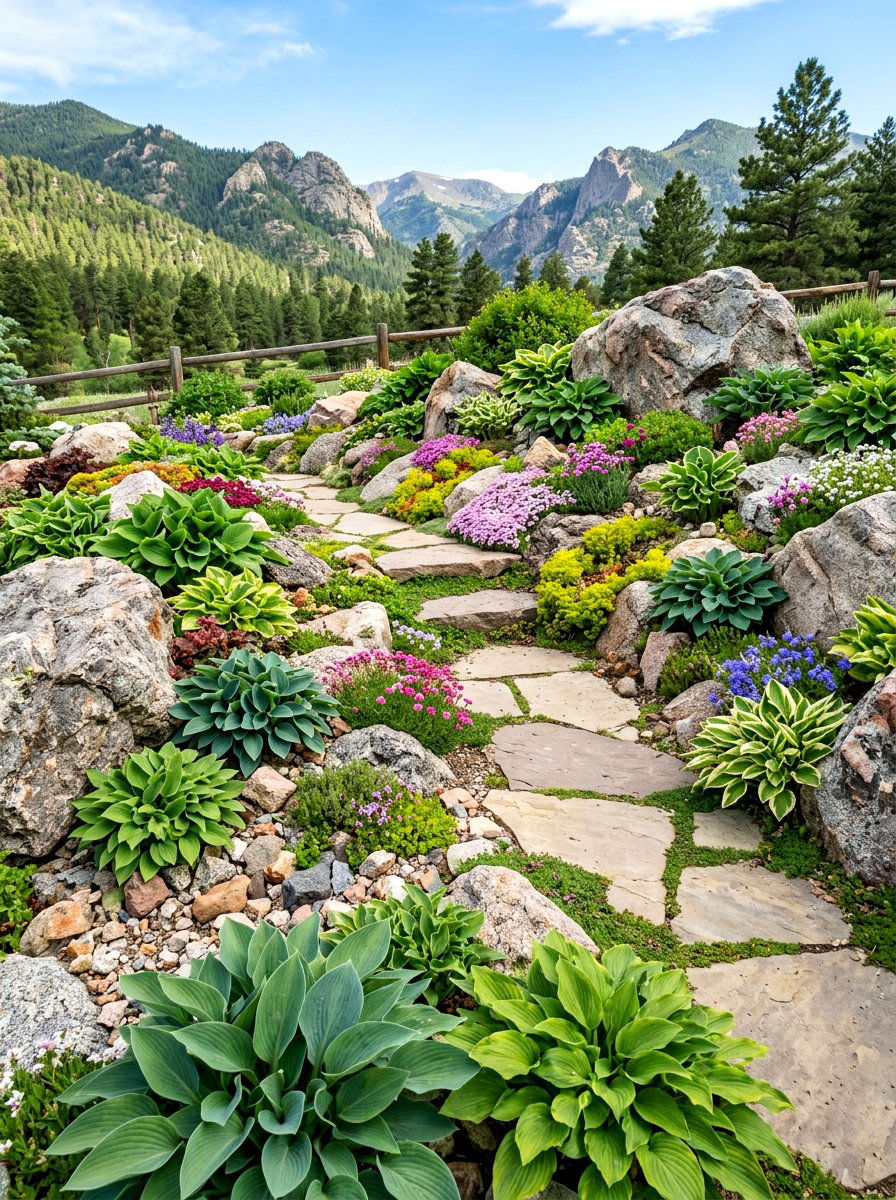
Incorporating hostas into a hosta rock garden brings a sense of softness and life to a landscape dominated by hard, inorganic materials. Smaller hosta varieties look particularly charming tucked into the crevices between large boulders or spilling over rocky ledges. The cool stones help retain moisture in the soil, which hostas love, and the gray or tan tones of the rocks provide a perfect neutral background for the vibrant greens and blues of the foliage. This style of gardening mimics high-altitude or woodland settings where plants grow naturally among outcrops. It is a great way to add character and age to a garden.
19. White Margined Hosta
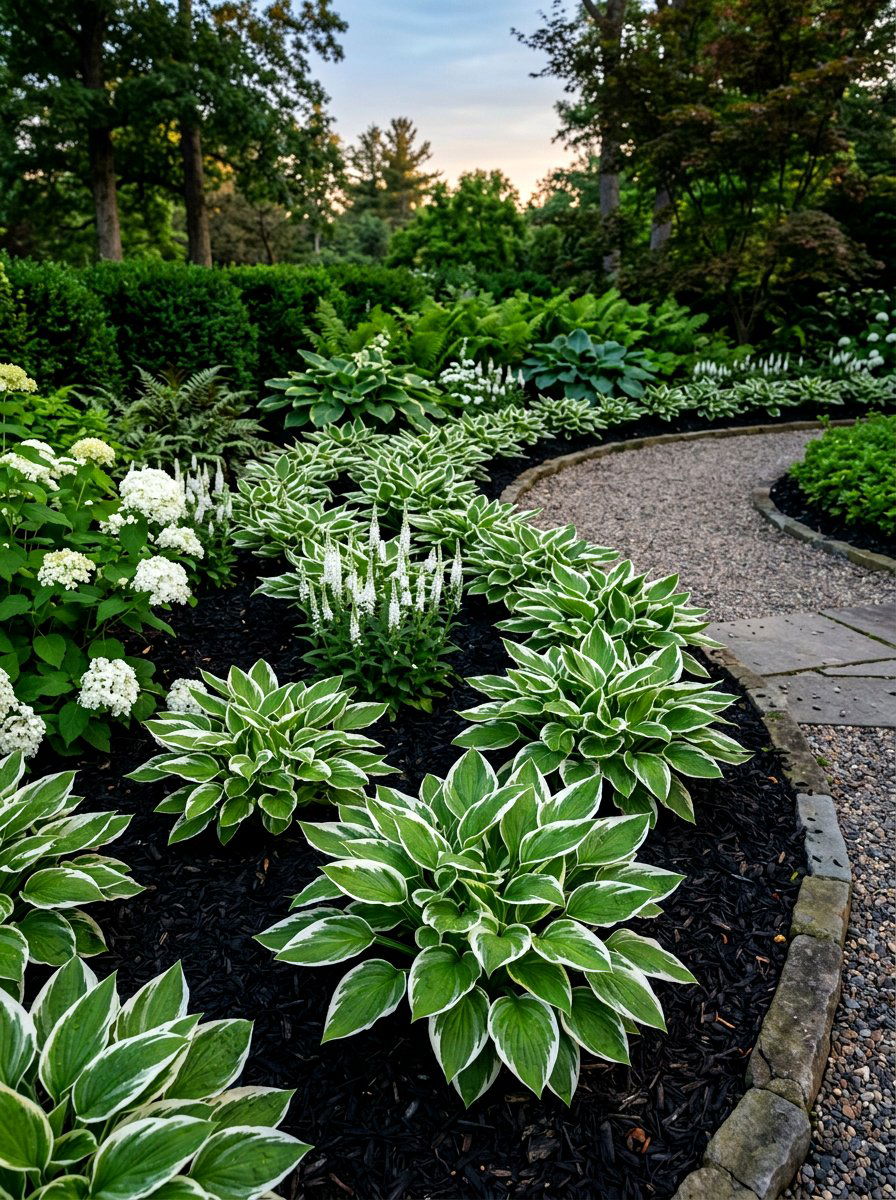
White margined hosta varieties are essential for creating a crisp, clean look in the garden, as the bright white edges provide a sharp contrast against dark green centers. These plants act as natural highlighters, drawing attention to specific areas of the garden and making them feel more structured and formal. In the evening, the white edges seem to glow in the twilight, earning them a place in "moon gardens" designed for nighttime enjoyment. They pair elegantly with white-flowering perennials like lilies or impatiens. The clean lines of variegated white foliage bring a sense of order and sophistication to any landscape design or border.

20. Chartreuse Hosta Bed
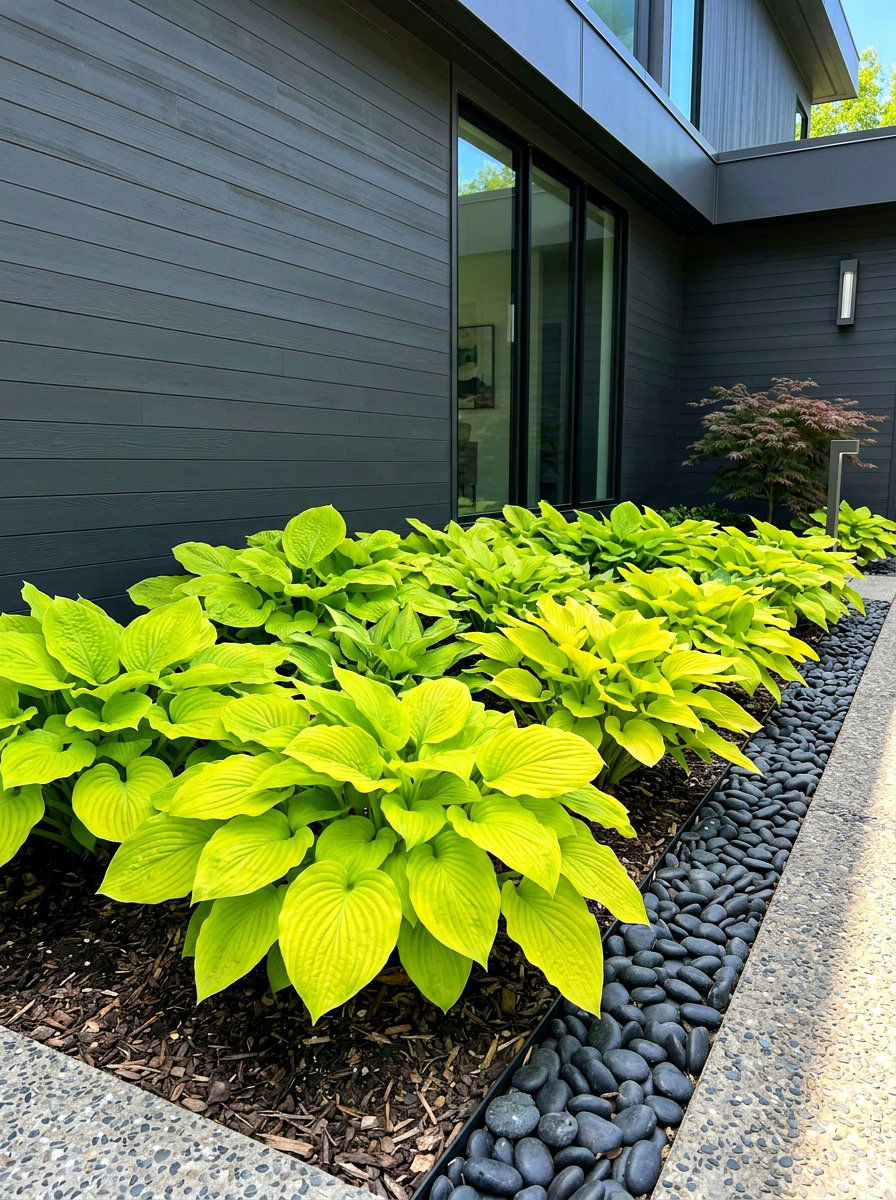
A chartreuse hosta bed creates a high-energy, modern look that feels fresh and vibrant throughout the spring and summer. This lime-green color is incredibly popular in contemporary landscape design because it pairs so well with dark architectural features or black mulch. These hostas often change color throughout the season, starting as a bright yellow and mellowing into a soft green, which provides ongoing interest. When planted in a large group, the effect is almost electric, making a statement that is both bold and cheerful. Chartreuse foliage is also excellent for brightening up the dark shadows found under evergreen trees or along porches.
21. Hosta And Astilbe Garden
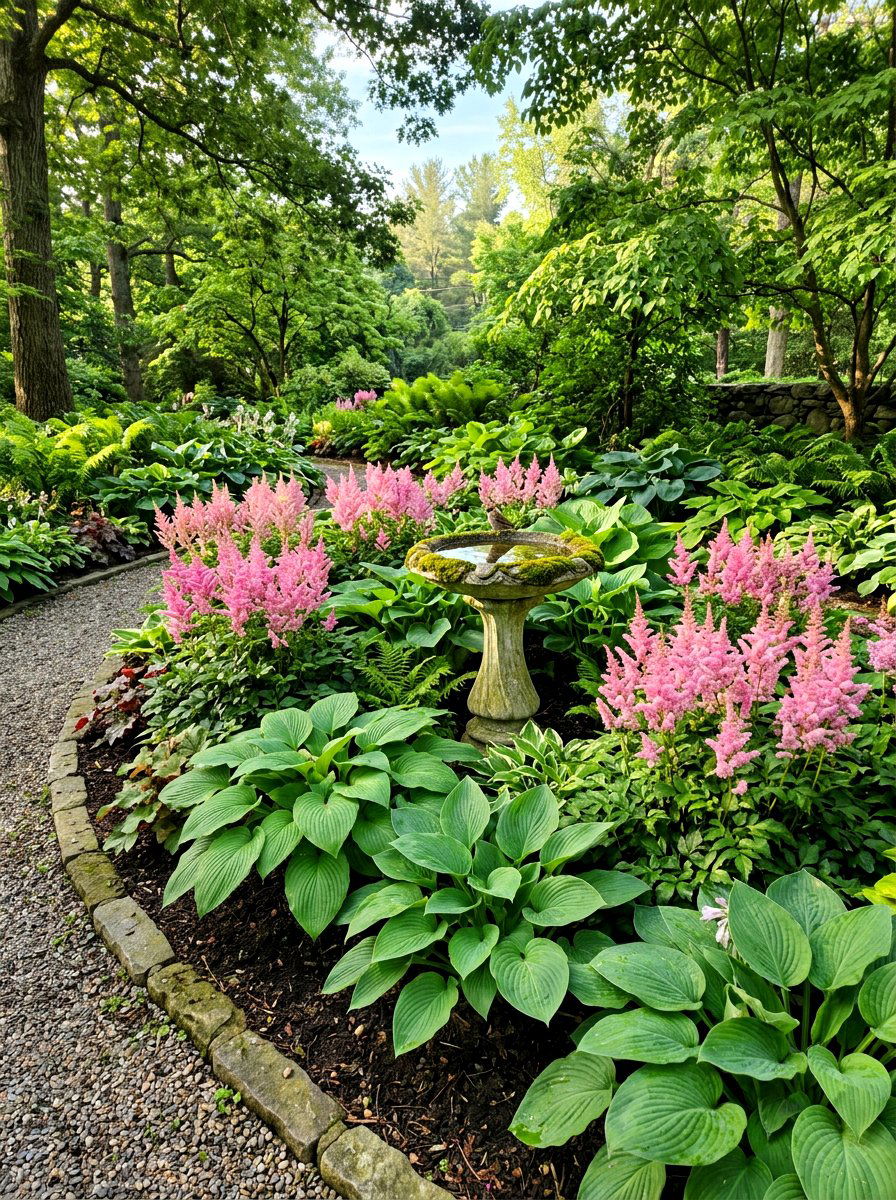
A hosta and astilbe garden is a match made in horticultural heaven, as both plants share a love for shade and consistent moisture. While hostas provide the heavy lifting with their massive, solid leaves, astilbes bring a soft, feathery texture with their fern-like foliage and plume-like flowers. The vertical spikes of the astilbe blooms provide a wonderful contrast to the horizontal, mounding habit of the hostas. This combination creates a rich, layered look that feels very full and lush. By choosing different colors of astilbe, such as pink, red, or white, you can add sparks of floral color to the green hosta backdrop.
22. Woodland Hosta Trail
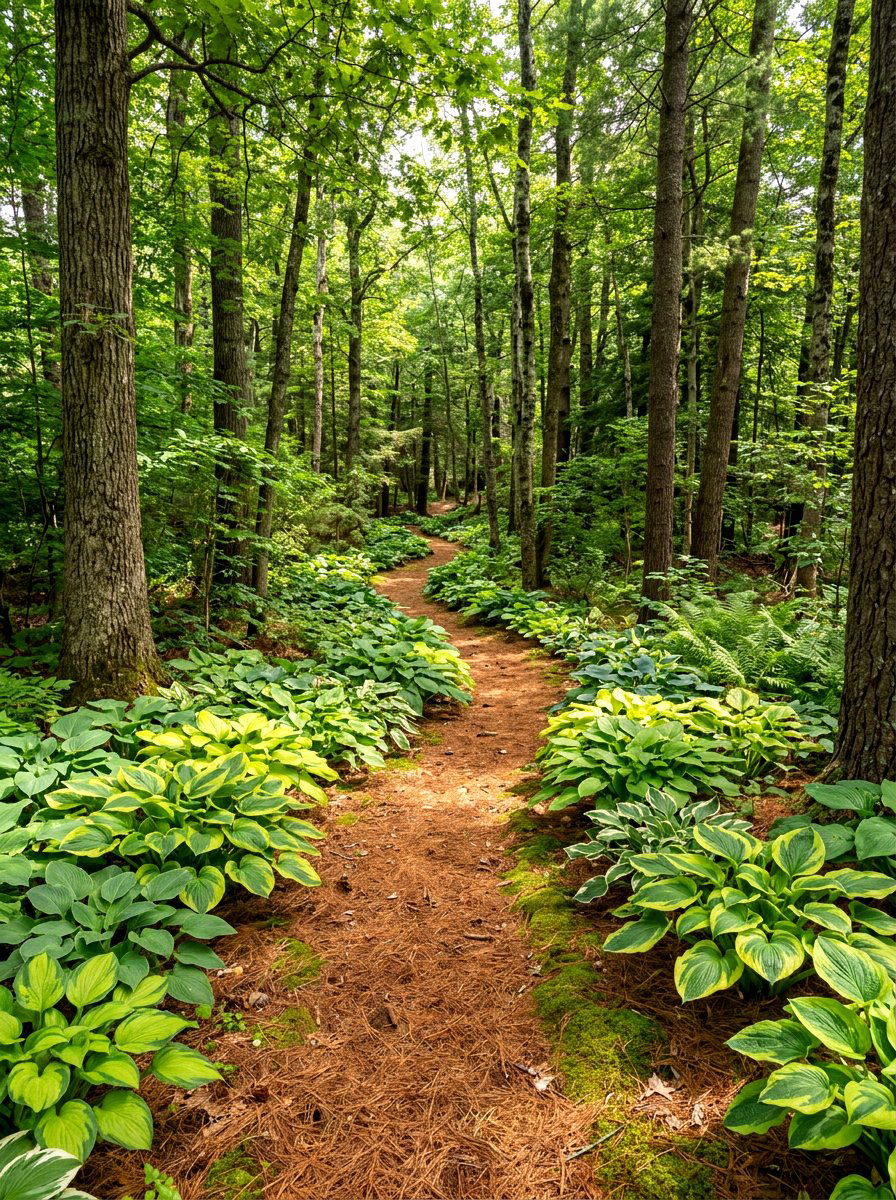
Creating a woodland hosta trail is the ultimate way to design a serene and naturalistic garden that feels like a hidden forest path. By lining a winding dirt or woodchip trail with various hostas, you create an immersive experience for anyone walking through the space. Use larger, wilder-looking varieties to simulate a natural understory and let them grow slightly over the path edges for a rustic feel. Incorporating other native shade plants like trilliums or wild ginger enhances the woodland theme. This type of garden encourages slow exploration and provides a cool, quiet place to relax and enjoy the beauty of nature.
23. Hosta And Boxwood Hedge
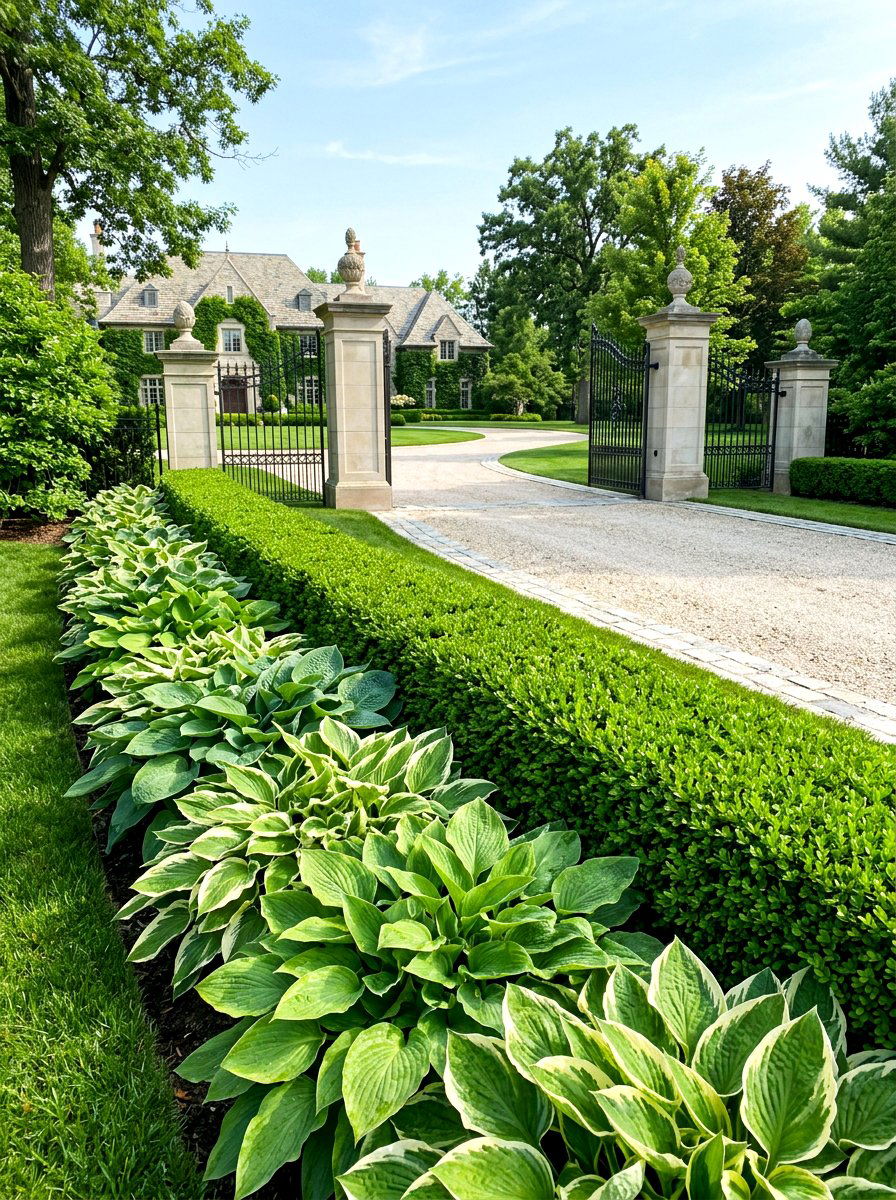
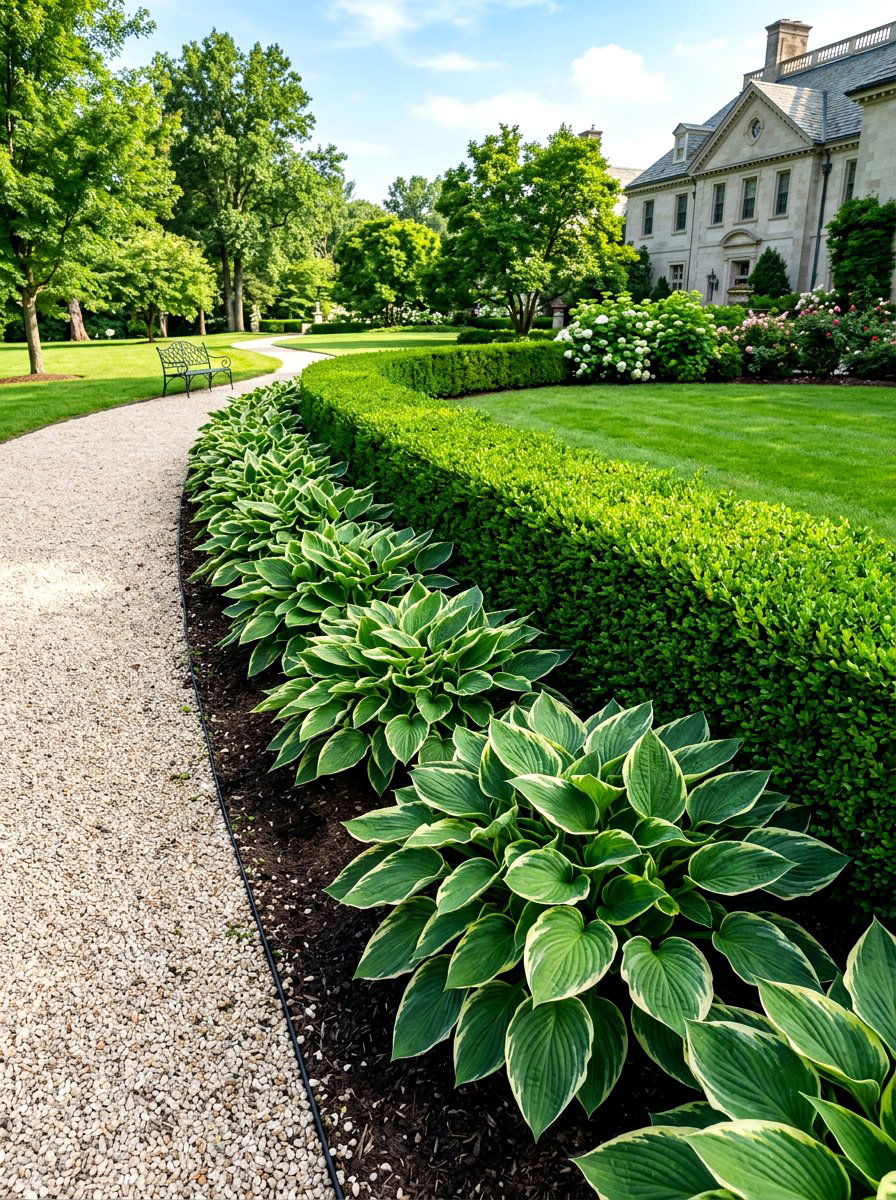
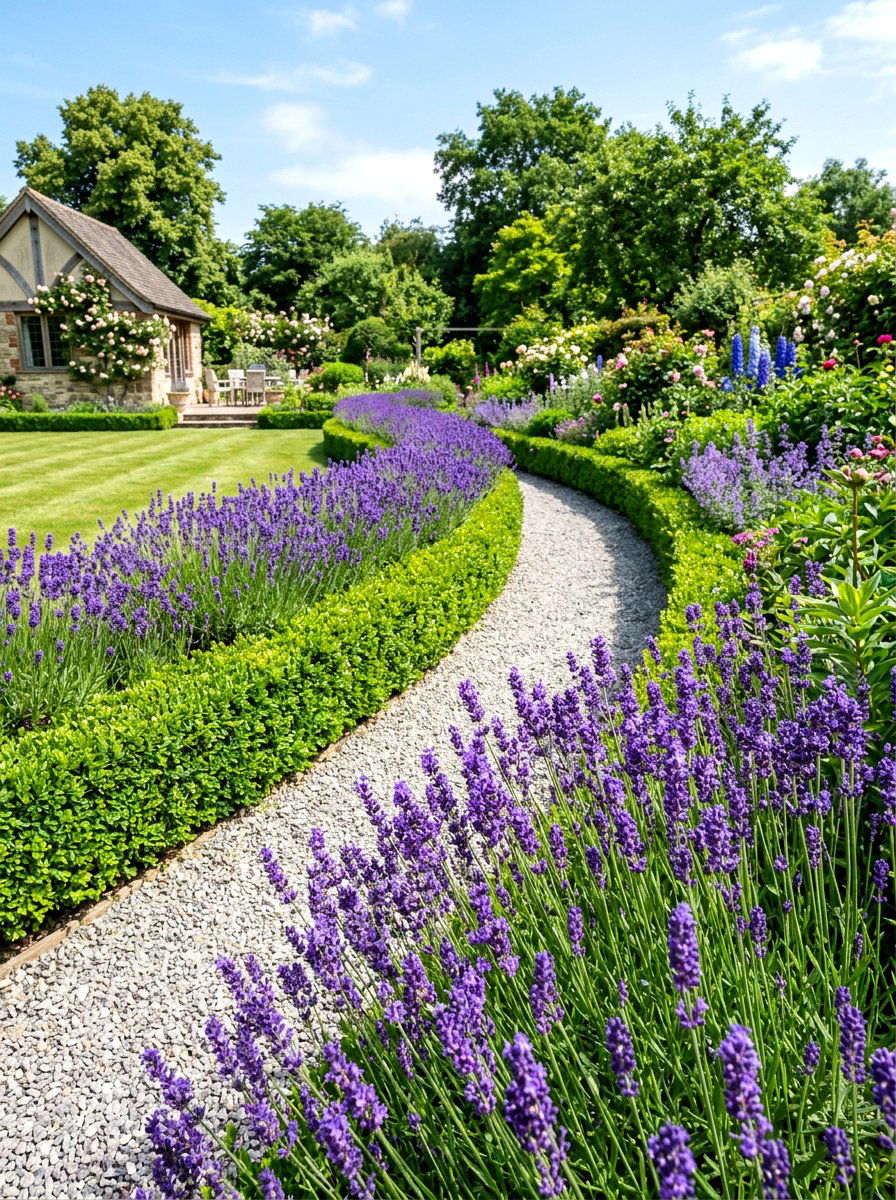
A hosta and boxwood hedge combination offers a formal and highly structured look that is perfect for traditional or estate-style gardens. The evergreen boxwood provides a year-round structural framework, while the hostas fill in the foreground with lush, seasonal foliage. This pairing creates a beautiful contrast between the small, waxy leaves of the boxwood and the large, expansive leaves of the hosta. It is an excellent way to define garden "rooms" or to line a formal driveway. The tidy appearance of the boxwood keeps the hostas looking neat and intentional, even as they grow large and full during the summer peak.
24. Sun Tolerant Hosta Patch
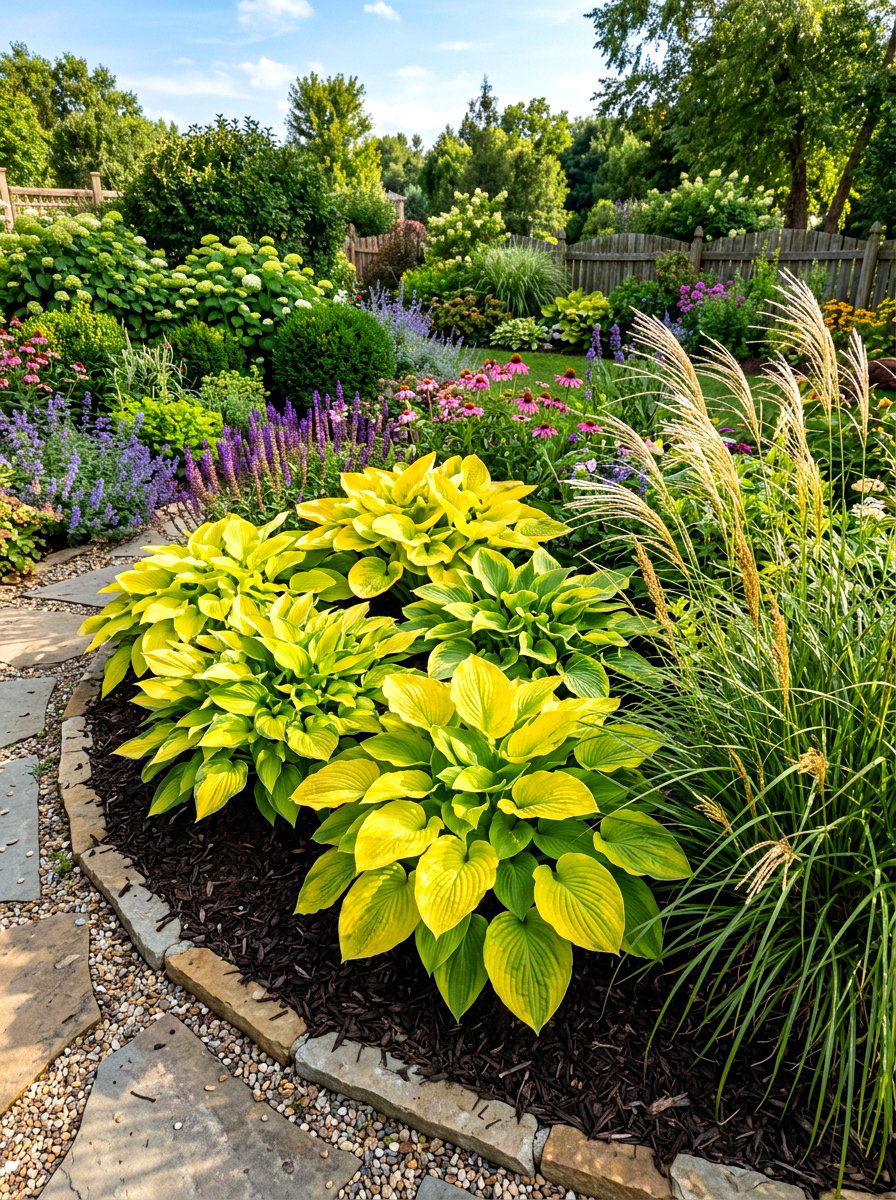
While most hostas love the shade, a sun tolerant hosta patch is possible if you select the right varieties that can handle more light. Plants like 'Sun Power' or 'Guacamole' have thicker leaves and more yellow pigments that help them withstand several hours of direct sun without scorching. These varieties are perfect for transition zones in your yard where the shade isn't consistent throughout the day. To keep them looking their best, ensure they receive plenty of water and a thick layer of mulch to keep their roots cool. This flexibility allows you to extend the hosta theme into slightly sunnier landscape areas.
25. Hosta And Ornamental Grass
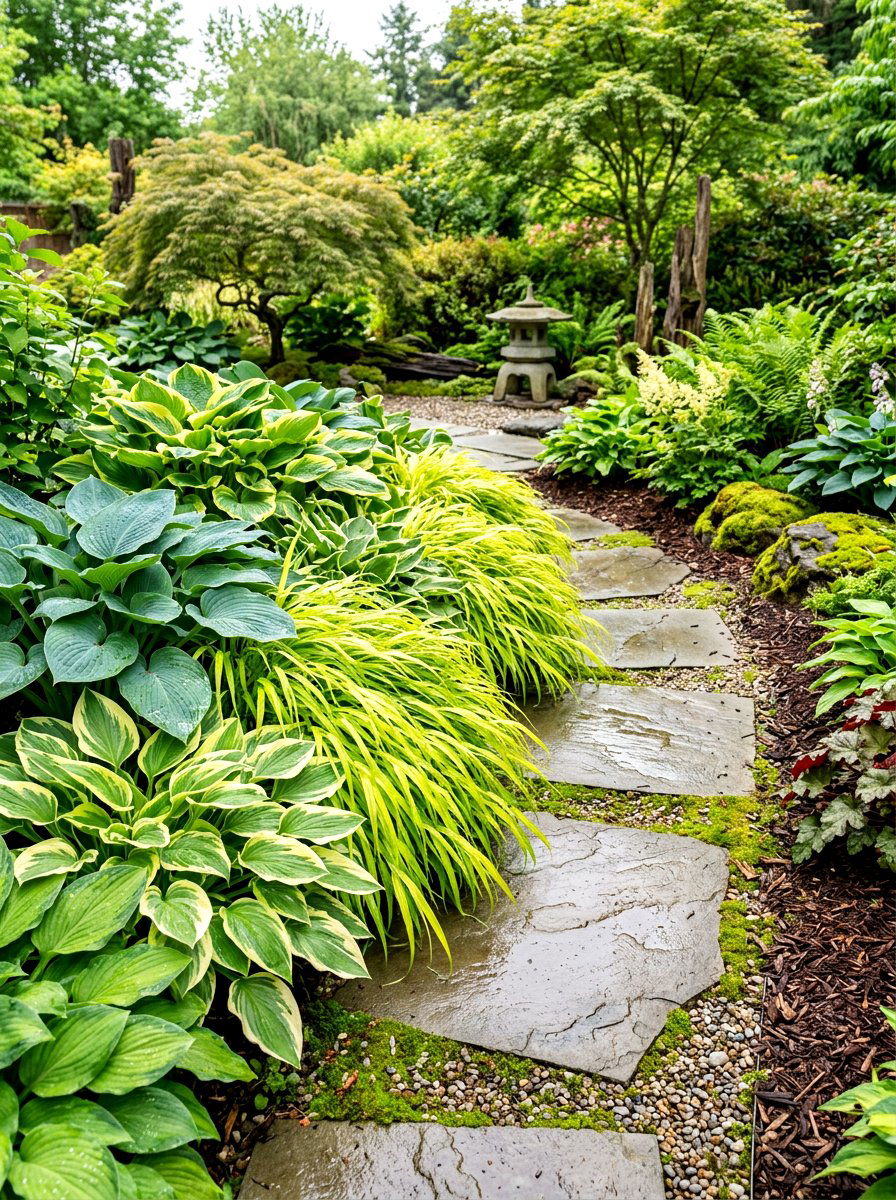
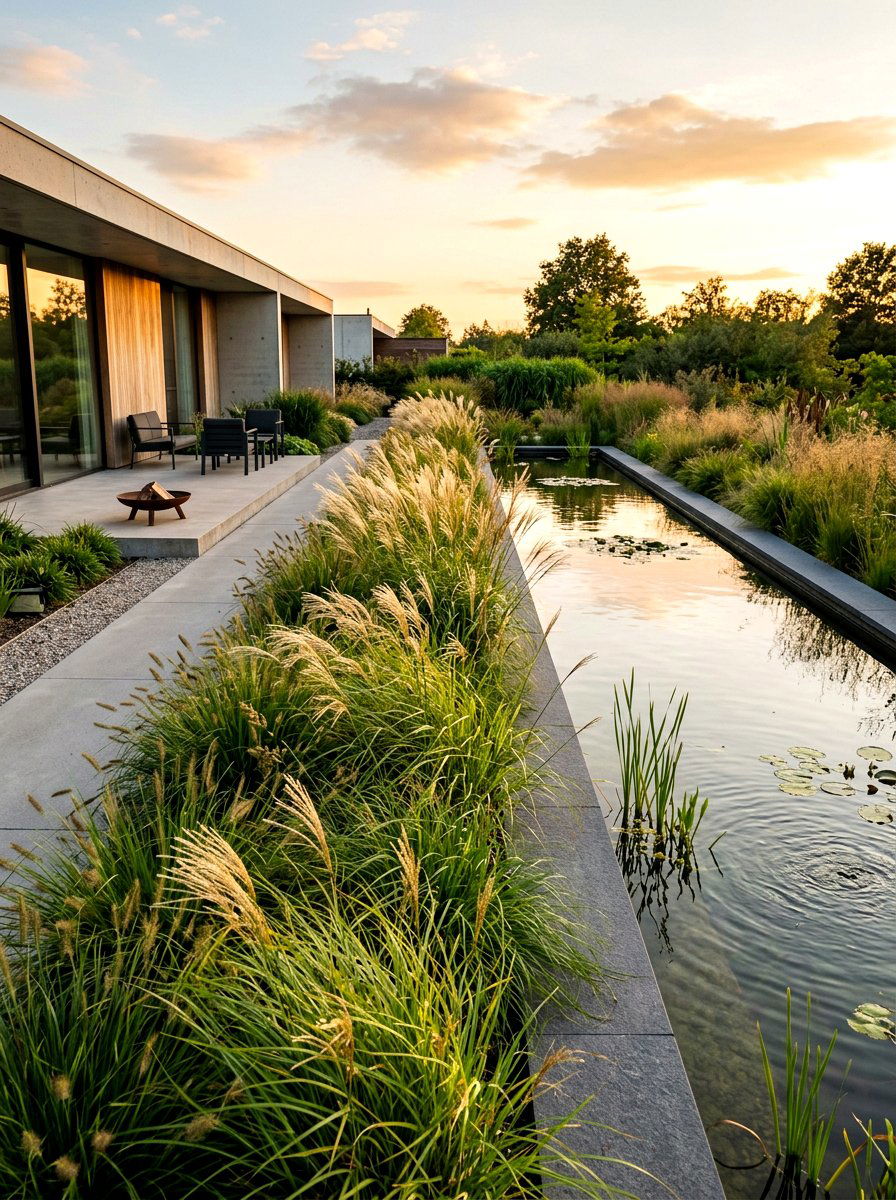
Combining a hosta and ornamental grass display brings a wonderful sense of movement and sound to the garden, especially when the wind blows. While hostas are known for their static, broad foliage, shade-loving grasses like Hakonechloa or Japanese Forest Grass offer a flowing, weeping habit. The thin, bladed texture of the grass cuts through the heavy look of the hosta leaves, creating a more balanced and interesting composition. This pairing is particularly effective in modern or Japanese-inspired gardens where texture and form are more important than bright flowers. It results in a sophisticated, textural landscape that looks great in any light.
26. Japanese Style Hosta Garden
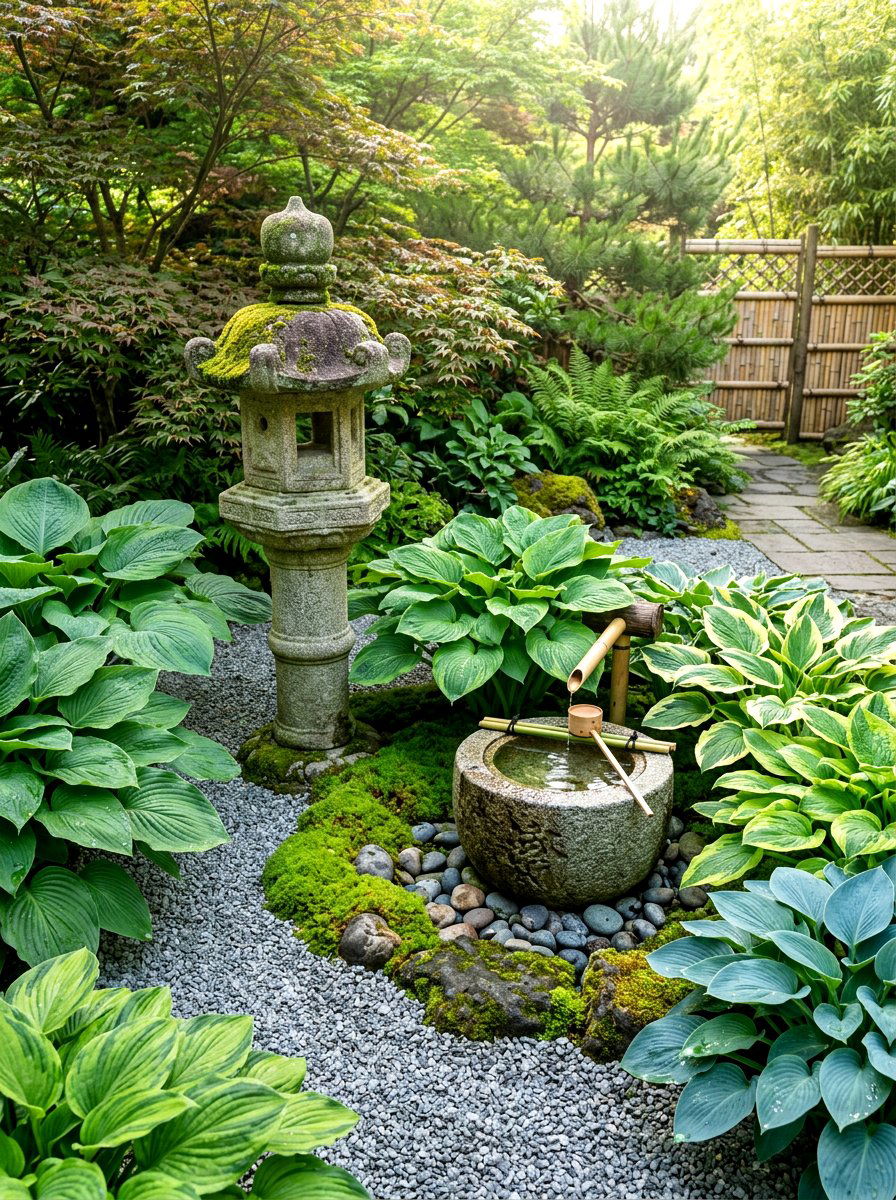
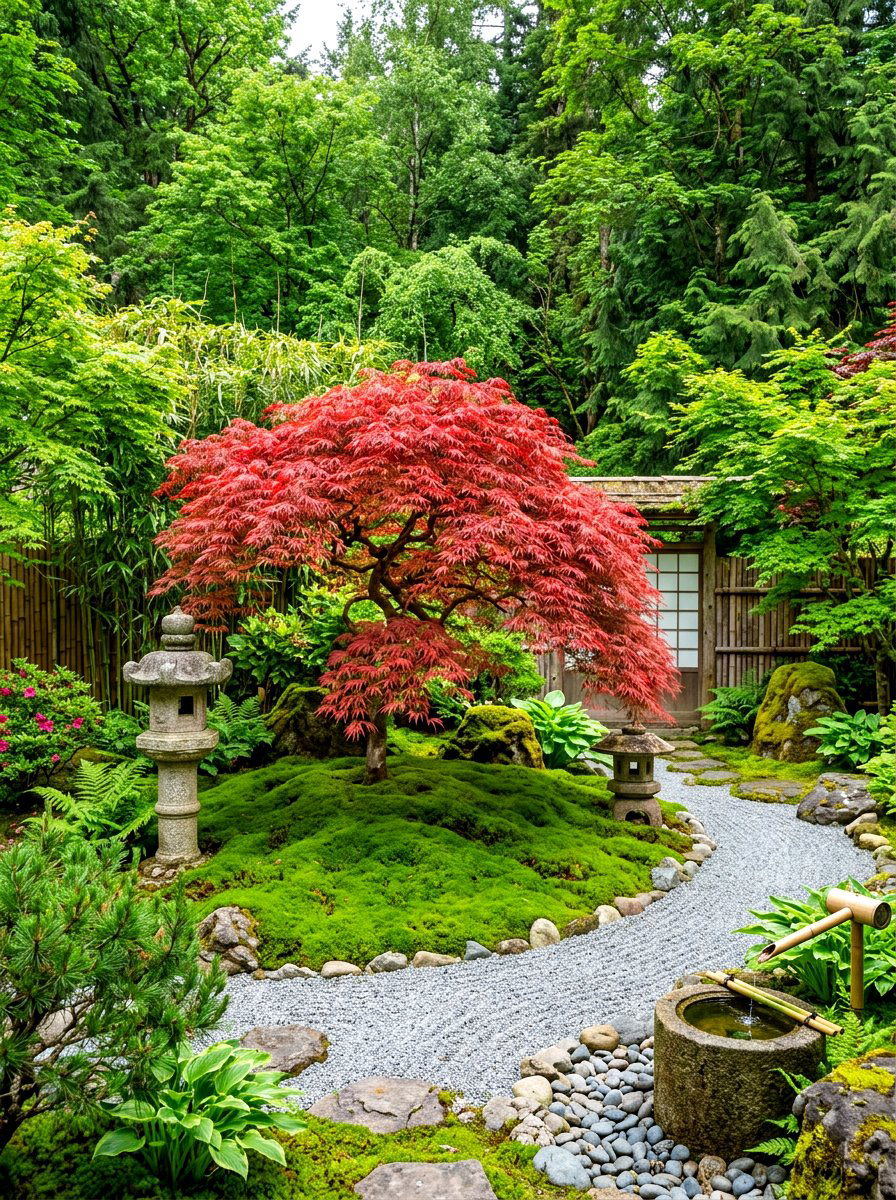
A Japanese style hosta garden focuses on simplicity, balance, and the subtle interplay of different shades of green. In this context, hostas are often used as understated groundcovers around stone lanterns, water basins, or carefully pruned maples. The goal is to create a peaceful, meditative space where the natural form of the plants is celebrated. Choosing hostas with clean lines and solid colors helps maintain the minimalist aesthetic. Integrating moss, raked gravel, and strategically placed rocks further enhances the Zen-like quality of the space. This design style emphasizes the hosta as a plant of quiet beauty and enduring presence in the garden.
27. Hosta Patio Pots
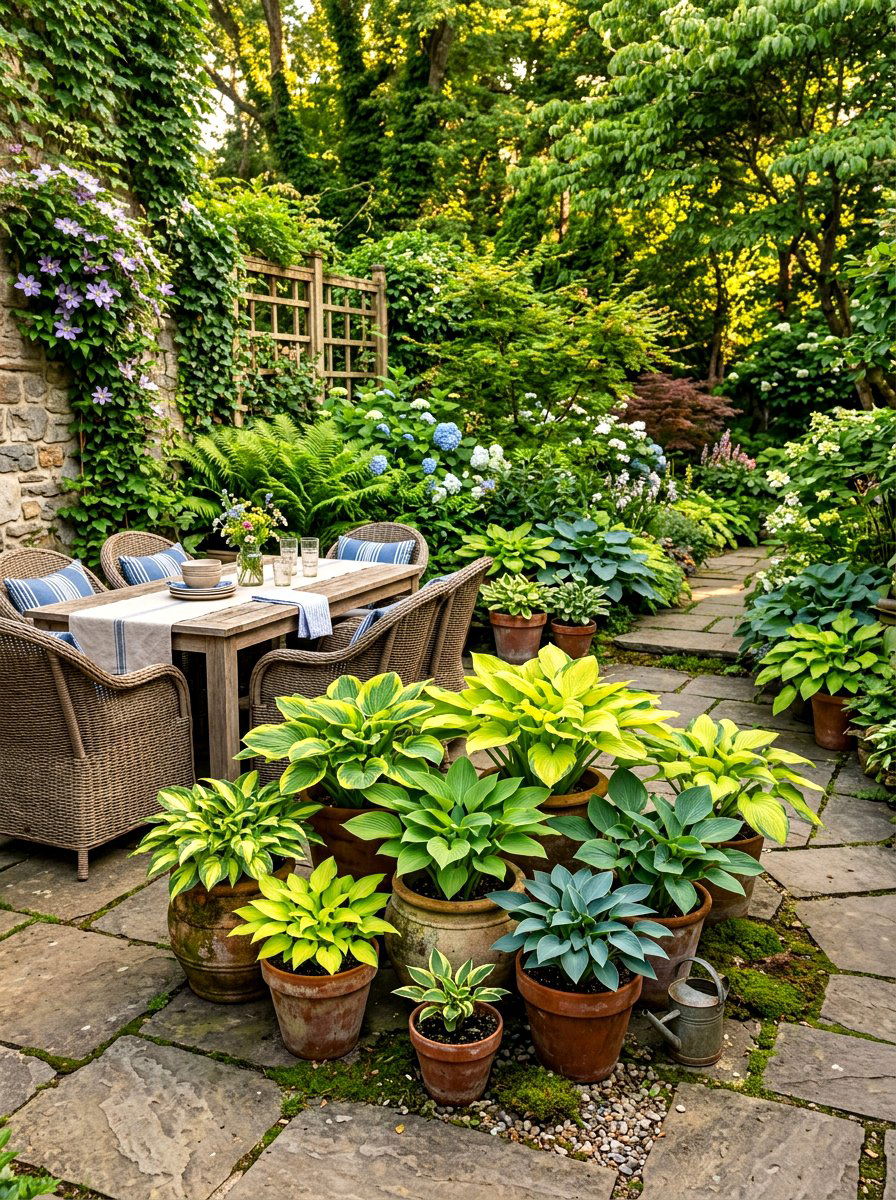
Placing hosta patio pots around your outdoor seating area is an easy way to soften the transition between built structures and the natural garden. Since hostas are so easy to grow in containers, you can use them to flank a doorway or to create a living screen around a dining table. Their large leaves help to muffle noise and create a sense of privacy in a small suburban yard. You can swap out the pots seasonally or leave the hostas in their containers year-round in many climates. Using a variety of pot sizes and heights adds a tiered look that makes the patio feel cozy.
28. Deep Green Hosta Corner
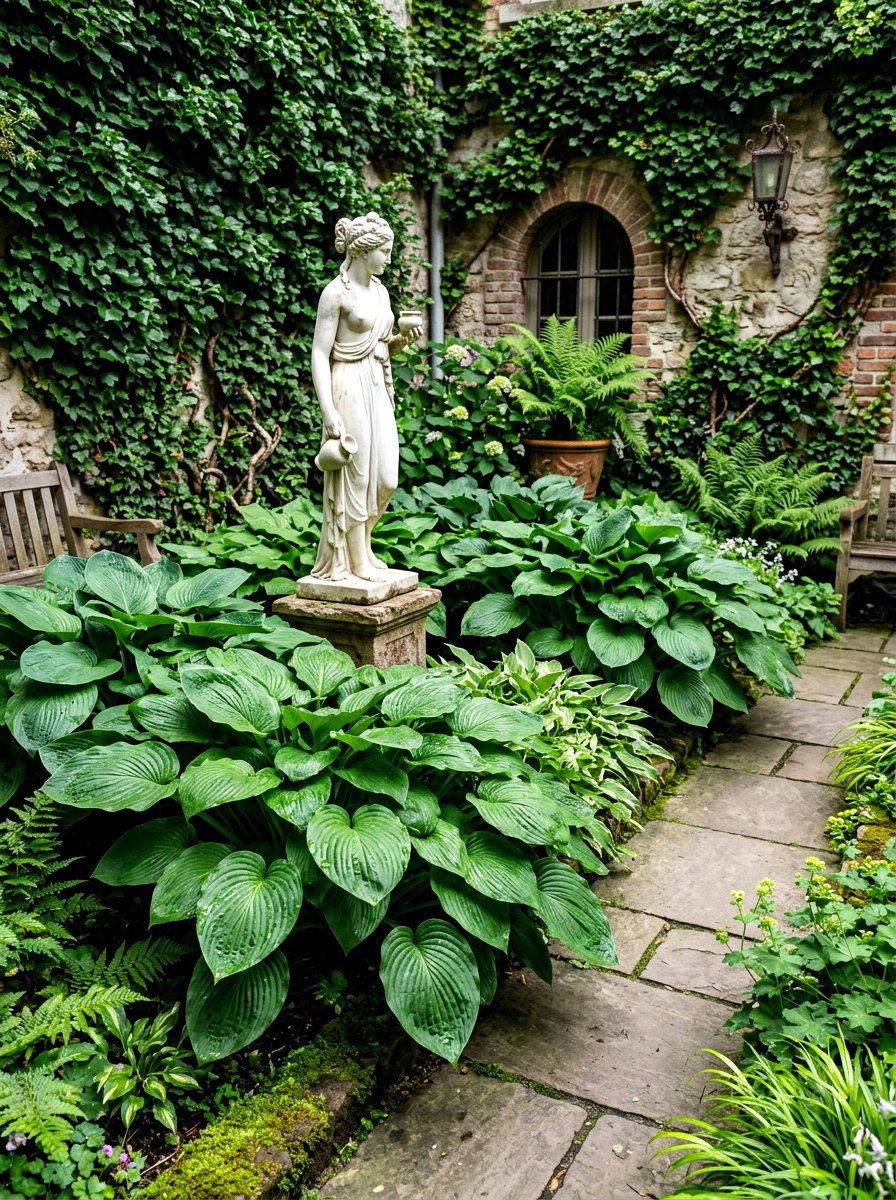
A deep green hosta corner focuses on the classic, rich emerald tones that these plants are famous for, creating a cool and shadowy retreat. Varieties with dark, glossy leaves, like 'Royal Standard' or 'Devon Green' , look incredibly healthy and vigorous in the deep shade. These dark greens provide a perfect backdrop for garden ornaments, white statues, or light-colored flower pots. The simplicity of a single color palette allows you to focus on the diverse leaf shapes and textures, from heart-shaped to lance-like. This monochromatic approach is very soothing to the eye and creates a powerful sense of depth in the garden.
29. Hosta And Bleeding Heart
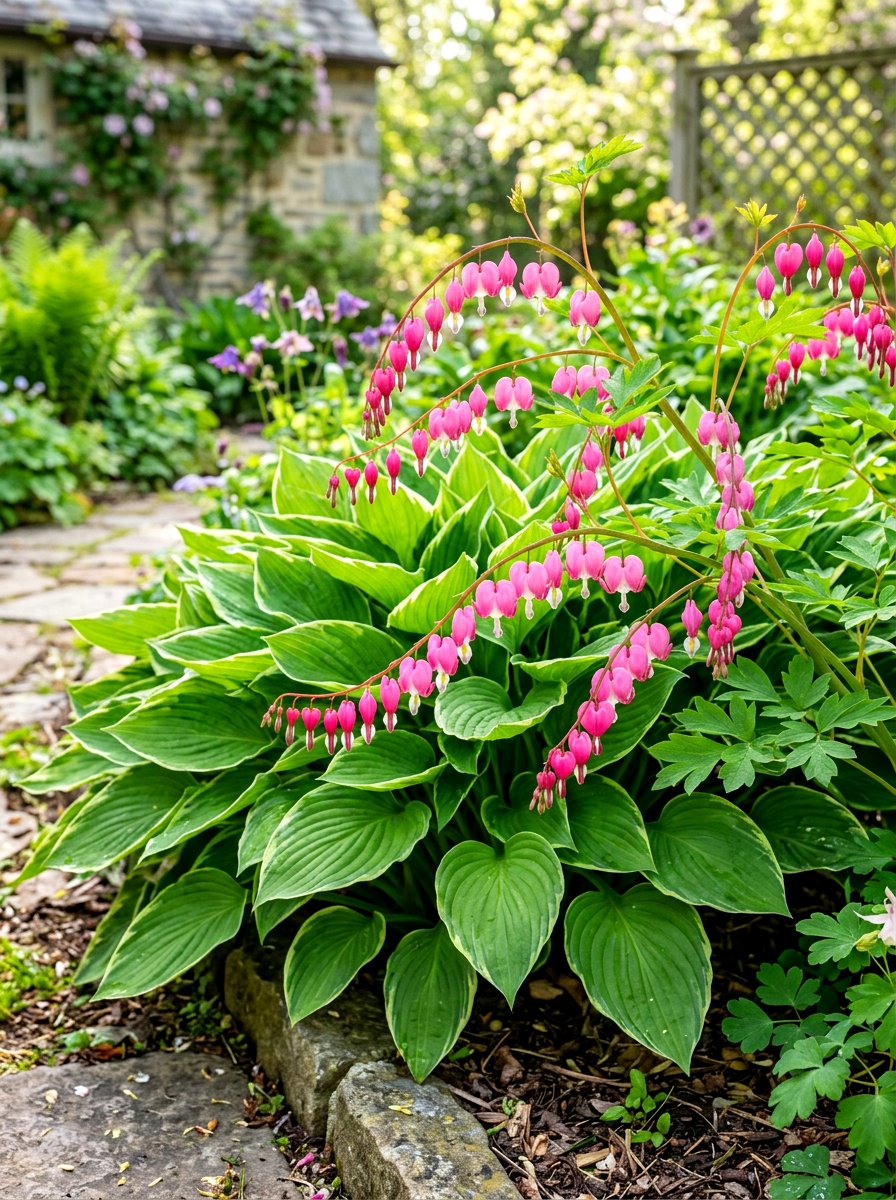
Planting a hosta and bleeding heart combination provides a classic cottage garden look that is full of romance and old-fashioned charm. Bleeding hearts bloom early in the spring with their iconic heart-shaped flowers dangling from arched stems, just as the hostas are starting to unfurl their leaves. As the bleeding heart foliage begins to go dormant and yellow in the heat of summer, the expanding hosta leaves grow over the space, neatly hiding the dying foliage. This sequential growth pattern ensures that the garden bed always looks full and tidy. It is a brilliant example of using plant life cycles to your advantage.
30. Multi Textured Hosta Garden
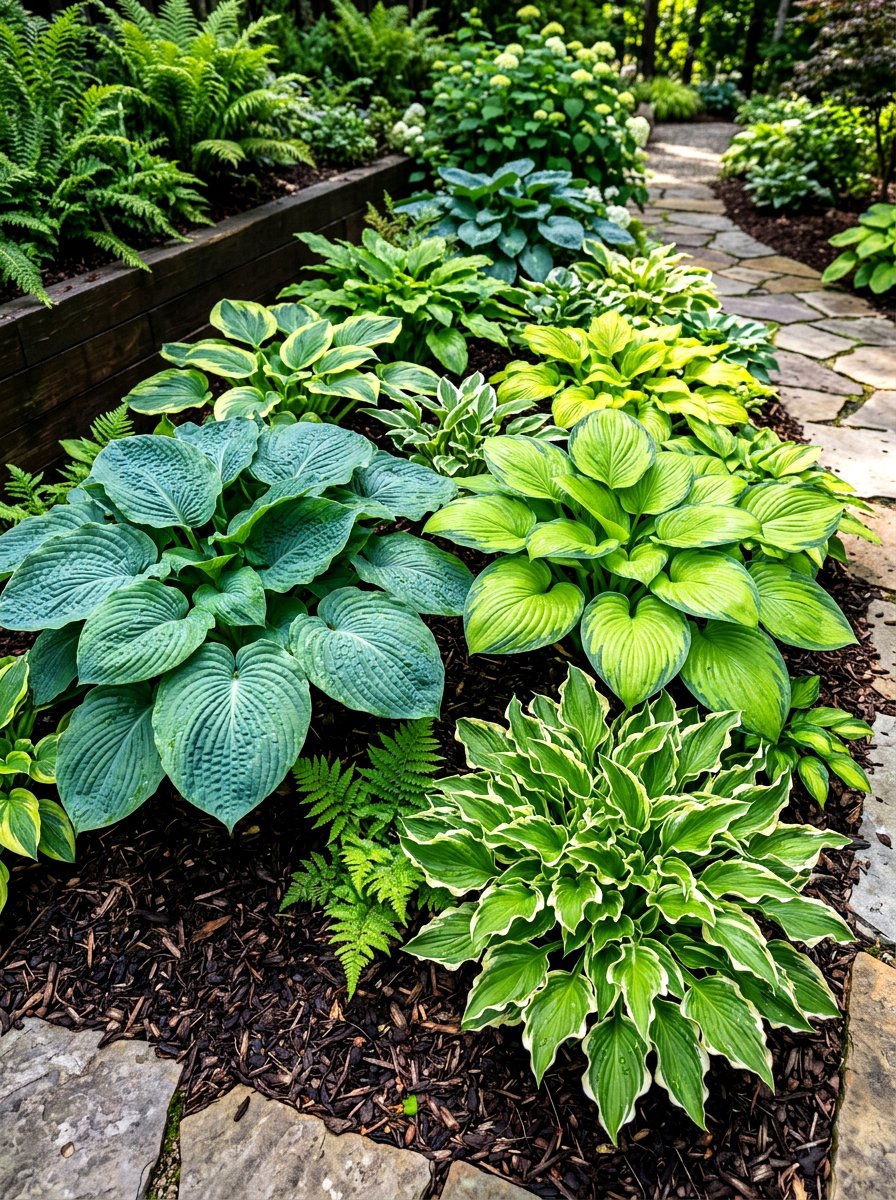
A multi textured hosta garden is all about the feel and surface of the leaves, moving beyond just color to include puckered, corrugated, smooth, and waxy finishes. By grouping plants with very different surface qualities, you create a tactile landscape that invites exploration and touch. Some hostas have heavy "seersucker" ribbing that catches the dew and rain in beautiful ways, while others are as smooth as silk. This focus on texture adds a sophisticated layer to your garden design that remains interesting in all lighting conditions. It proves that hostas are far from boring, offering endless variety for the creative and passionate gardener.
Conclusion:
Transform your outdoor space into a breathtaking sanctuary by incorporating these versatile hosta garden ideas into your landscape plan this season. Whether you have a small urban patio or a sprawling woodland estate, the sheer variety of hostas ensures there is a perfect match for every corner of your yard. These plants not only provide incredible visual interest with their diverse colors and textures but also offer a low-maintenance solution for those tricky shaded areas. By pairing them with complementary perennials and utilizing creative planting techniques, you can build a garden that grows more beautiful with each passing year. Start experimenting with these ideas today.

Related posts: