Imagine walking into a quiet, shaded corner of your yard and being greeted by a lush, verdant sanctuary that feels like a hidden forest. Creating a hosta and fern garden is one of the most rewarding ways to transform those tricky, low-light areas into a stunning visual retreat. These two plants are the ultimate design partners because they offer an incredible contrast in texture and form. While hostas provide bold, broad leaves in various shades of blue, gold, and green, ferns bring a delicate, lacy elegance that softens the landscape. This combination creates a sophisticated, multi-layered look that remains beautiful throughout the entire growing season with very little effort.
1. Shaded woodland path hosta fern
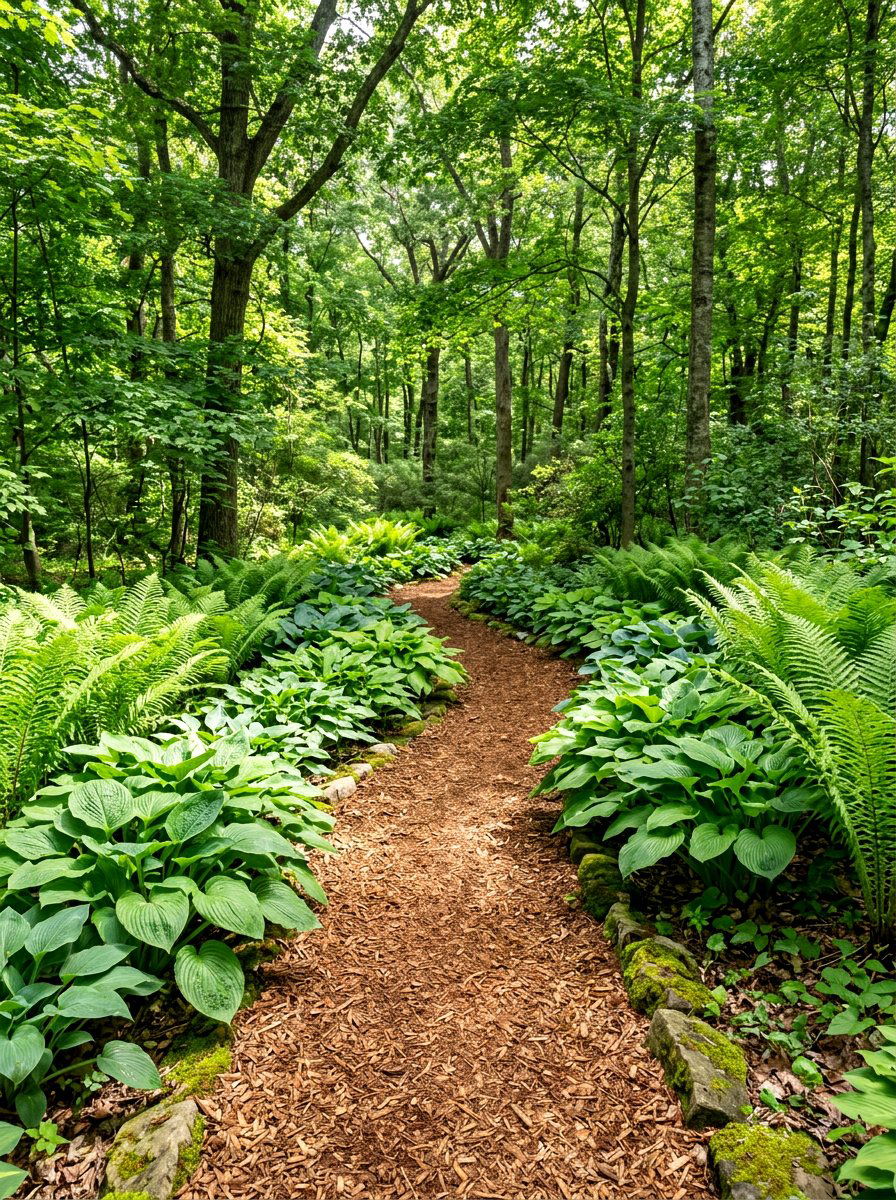
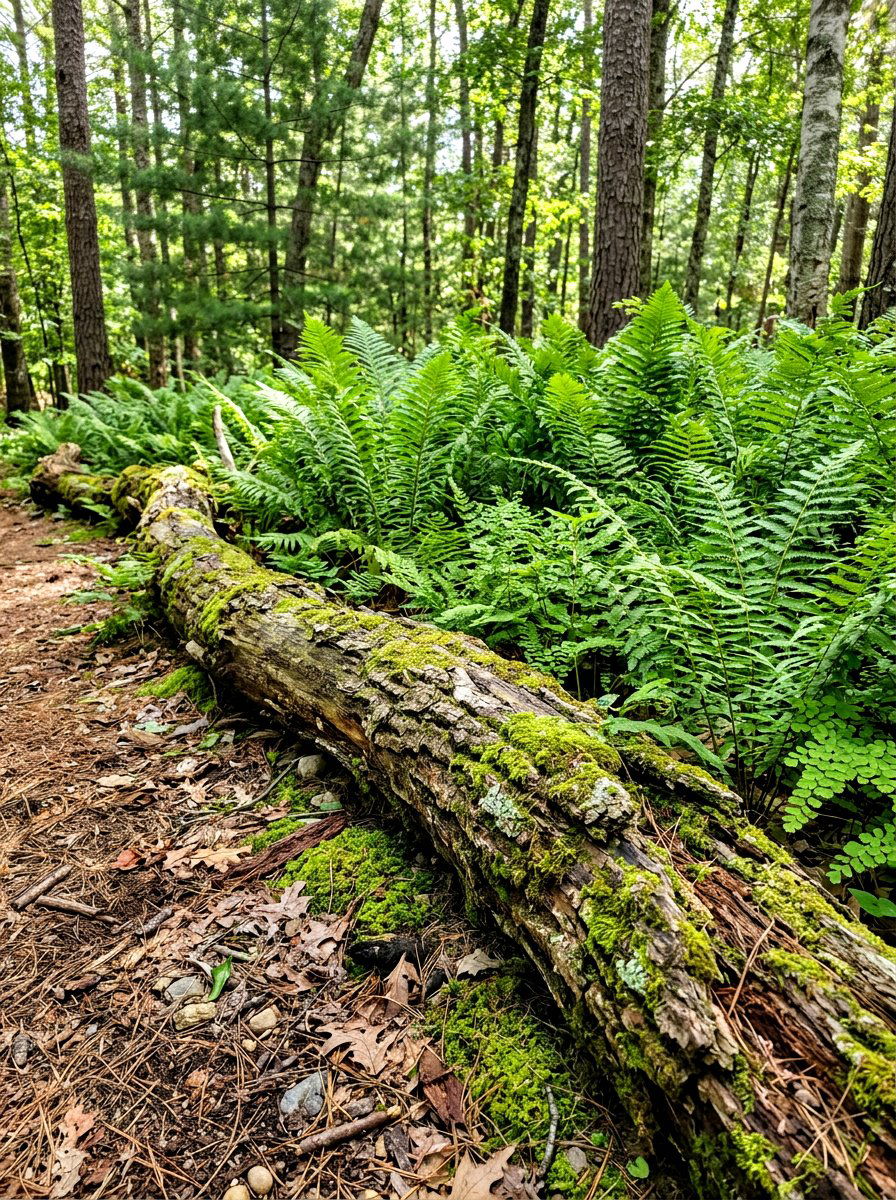
Designing a winding trail through a wooded area becomes an enchanting experience when you line the edges with a variety of textures. You should focus on creating a natural flow by mixing large, solid-colored hostas with feathery ostrich ferns that stand tall and arch over the walkway. The soft, repetitive patterns of the fern fronds provide a rhythmic backdrop to the heavy, grounded presence of the hosta leaves. This setup mimics the look of a wild forest floor but with a curated, intentional touch. Using natural materials like cedar mulch or pine needles for the path itself will further enhance the organic, earthy feel of this tranquil garden space.
2. Foundation planting hosta fern
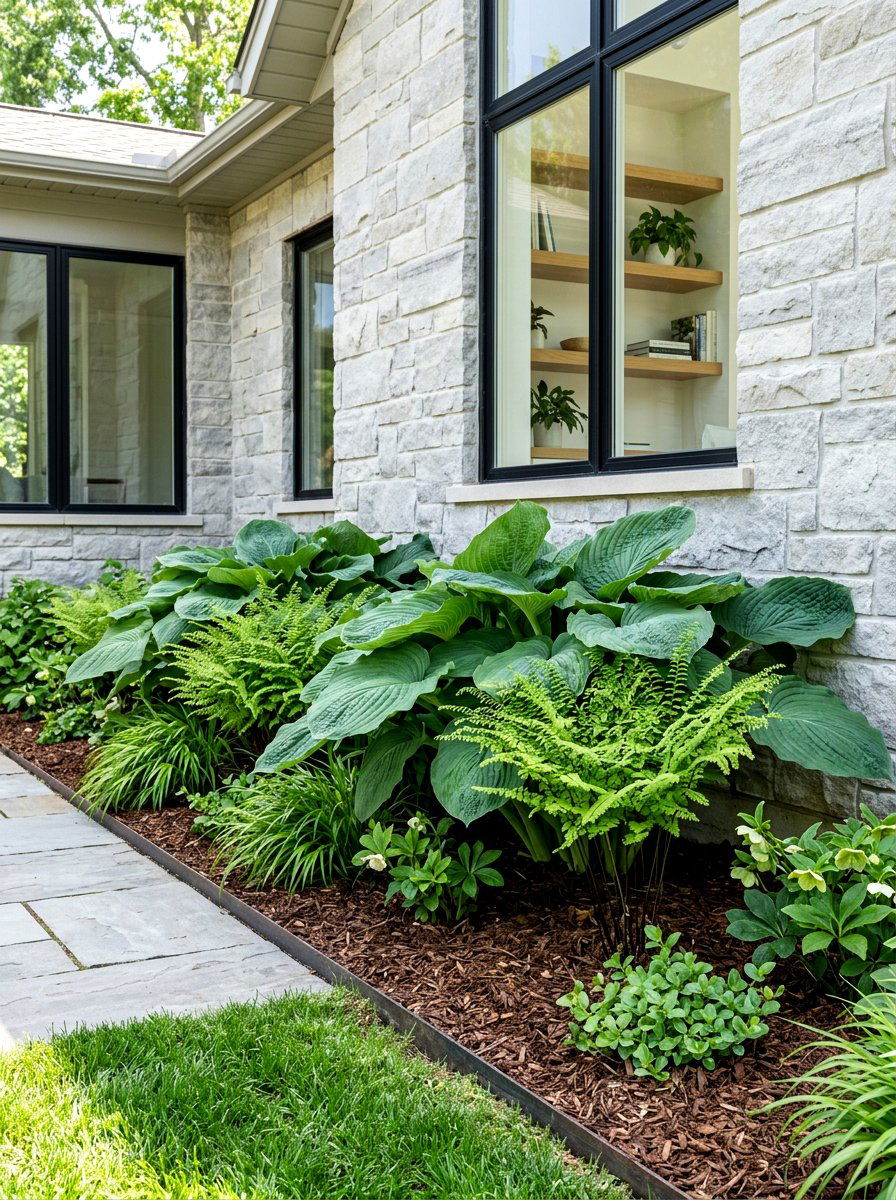
Transforming the north side of your home into a welcoming entrance is easy when you use a classic foundation planting scheme. You can anchor the corners with massive hosta varieties like Empress Wu to give the house a sense of scale and permanence. Fill the middle sections with medium-sized variegated hostas and intersperse them with delicate maidenhair ferns for a light, airy contrast. This layered approach hides the concrete base of the home while providing a lush, green view from the windows. Because these plants thrive in the shadow of the building, they will maintain their vibrant colors without scorching, ensuring your curb appeal stays high all summer.
3. Giant hosta ostrich fern border
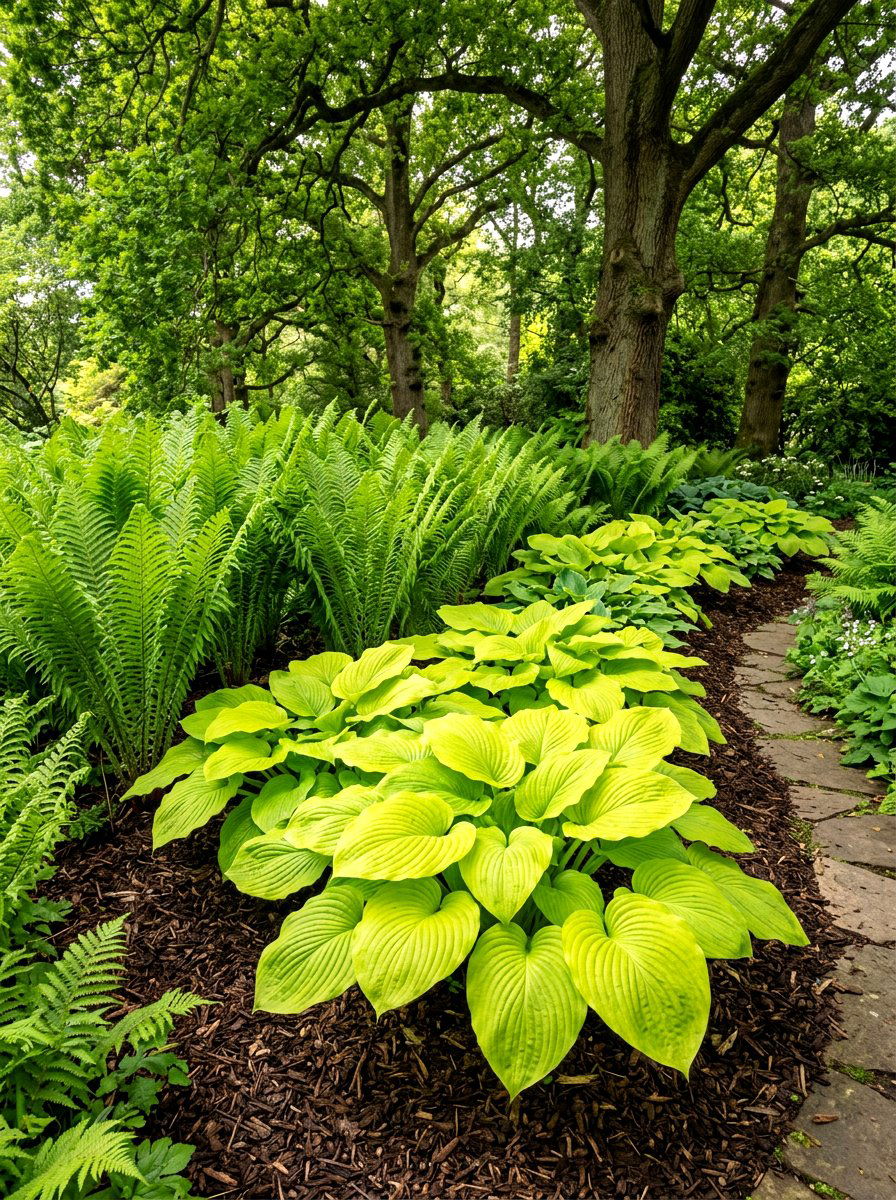
If you have a large open area under a canopy of old trees, creating a massive border with giant hostas and ostrich ferns is a brilliant move. These larger-than-life plants fill up space quickly and suppress weeds, making them perfect for low-maintenance landscaping. You should group three to five Sum and Substance hostas together to create a sea of chartreuse foliage that glows in the dim light. Behind them, let the tall, vase-shaped ostrich ferns rise up to create a dramatic vertical element. This scale of planting creates a bold, architectural statement that feels grand and luxurious, proving that shade gardens can be just as impactful as sunny borders.
4. Miniature hosta fern container
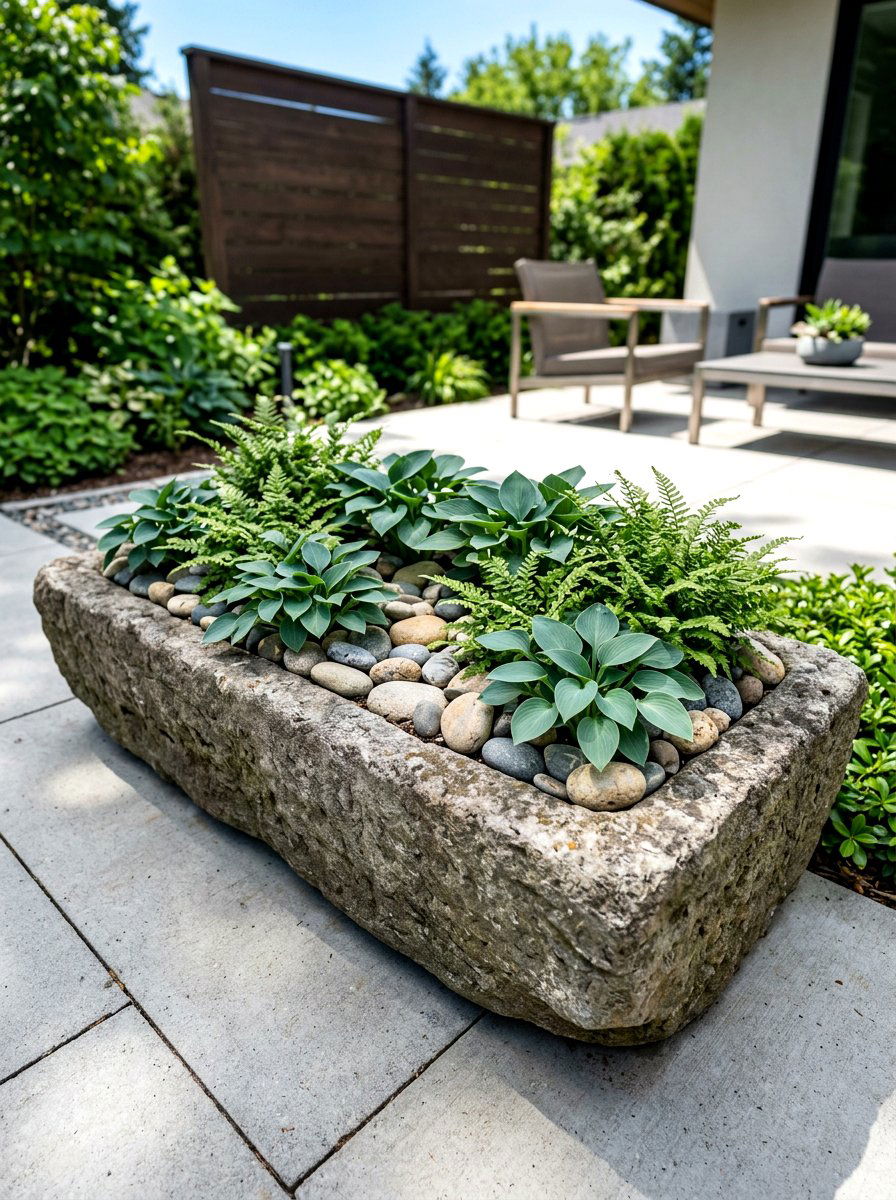
You do not need a massive backyard to enjoy the beauty of these shade-loving plants, as they work perfectly in compact container gardens. Choose a wide, shallow stone trough or a large ceramic pot to create a miniature landscape for your patio or balcony. Pair tiny hostas like Blue Mouse Ears with small, delicate ferns such as the Korean rock fern for a charming, intricate look. Adding a few smooth river stones or a piece of driftwood can turn the container into a living piece of art. This setup allows you to appreciate the subtle details of the foliage up close where they might otherwise be lost in a large garden bed.
5. Japanese painted fern hosta pairing
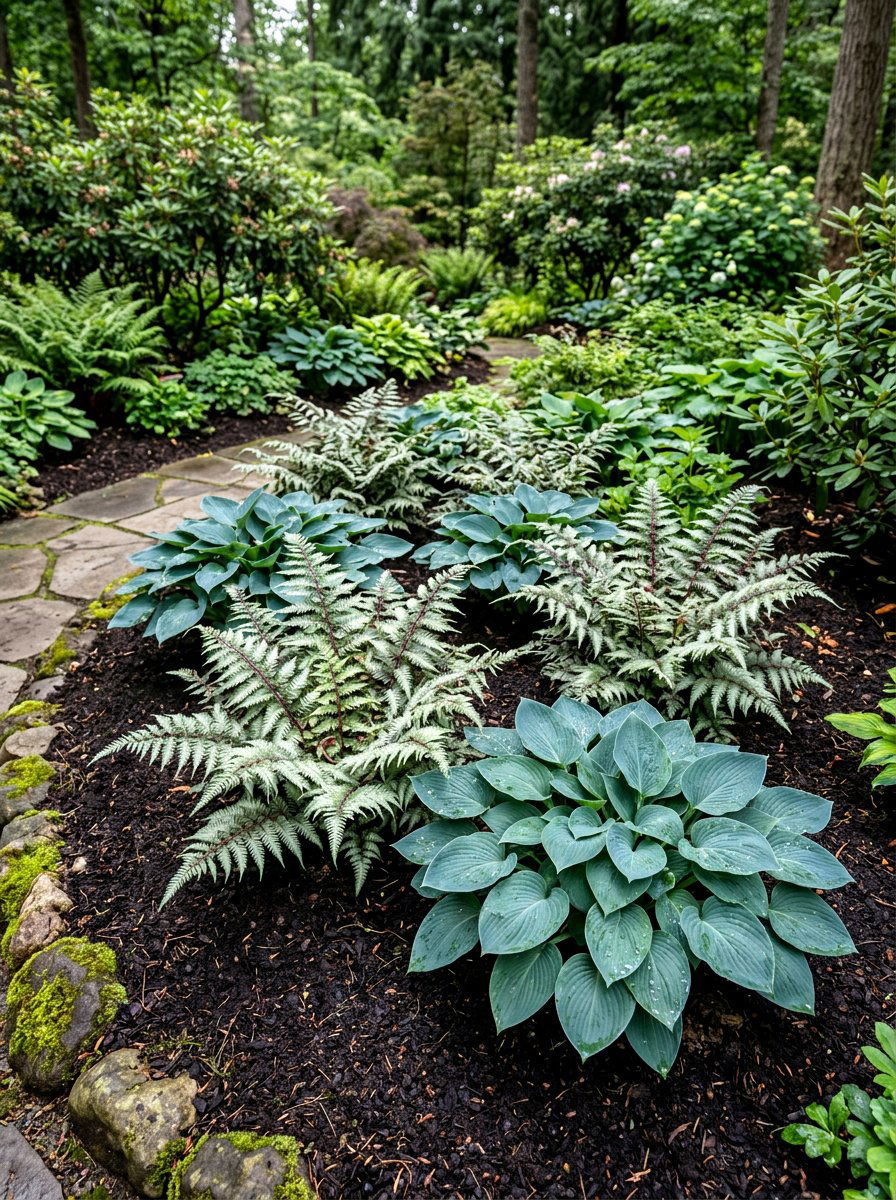
For a sophisticated color palette that moves beyond basic green, try combining Japanese painted ferns with blue-toned hostas. The silvery, metallic sheen and burgundy stems of the painted fern create a stunning visual pop against the deep, matte blue of varieties like Halcyon or Blue Angel. This combination is particularly effective in dark corners where you want to add a sense of luminosity without using flowers. The contrasting leaf shapes — lacy and intricate versus smooth and broad — ensure that the garden bed remains interesting even on cloudy days. This pair is widely considered a gold standard in professional shade garden design for its effortless elegance and cool tones.
6. Shade garden rockery hosta fern
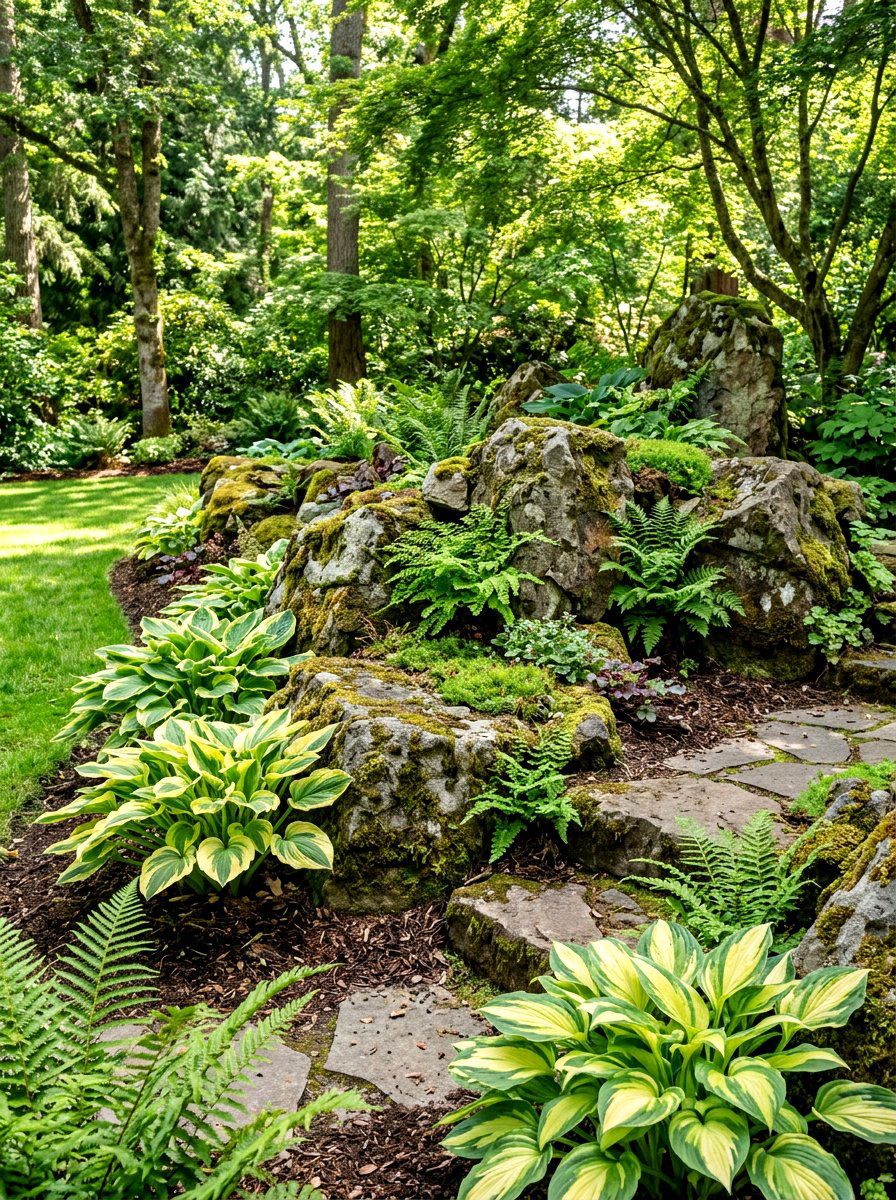
Incorporating natural stone into your landscape provides the perfect structural contrast for the soft, organic shapes of hostas and ferns. You can build a small rockery or use large boulders as focal points, tucking different varieties into the crevices and gaps between the stones. Ferns look particularly beautiful when they emerge from behind a rugged rock, while hostas can be used to soften the edges where the stone meets the ground. The cool, damp environment provided by the rocks is ideal for these plants' root systems. This design approach creates a rugged, alpine-inspired look that feels both established and timeless, adding significant texture to your outdoor space.
7. Modern minimalist hosta fern bed
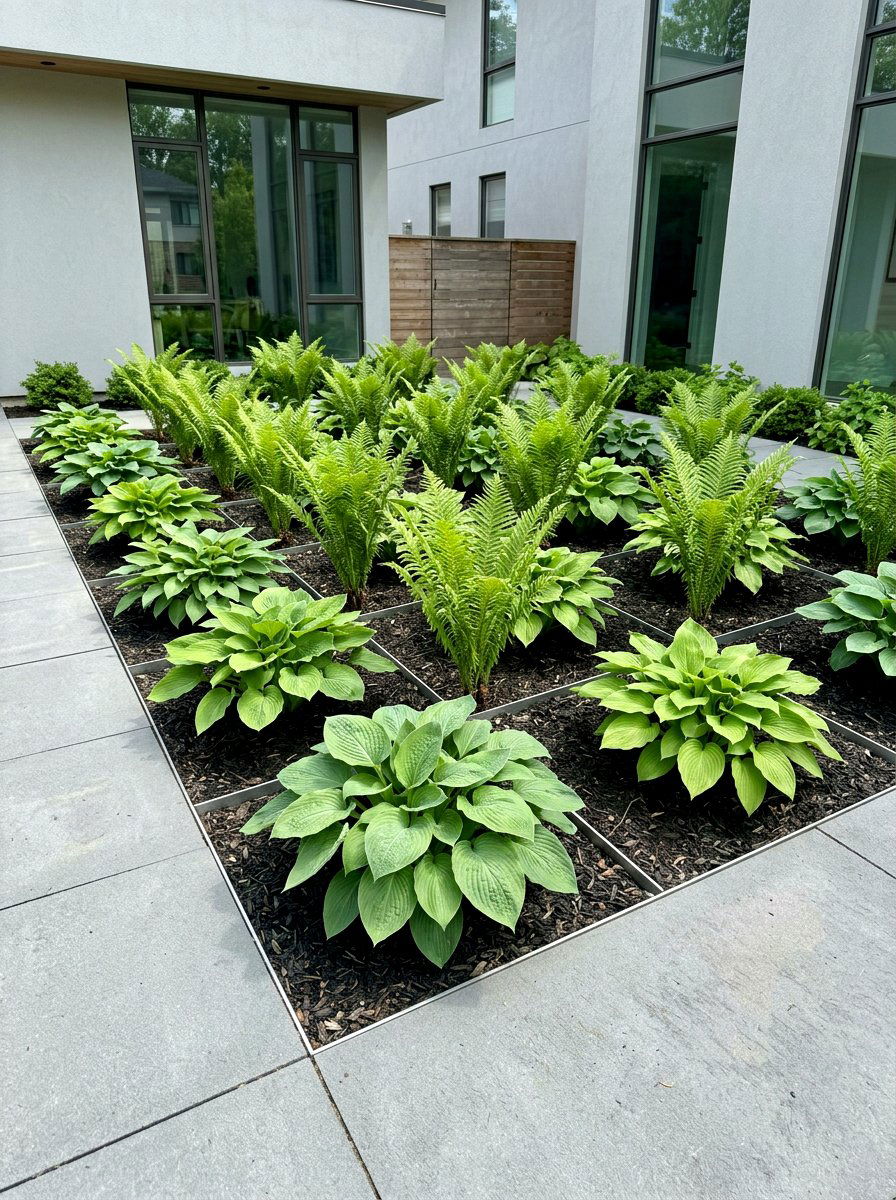
Creating a clean, contemporary look is simple when you focus on repetition and a restricted color palette. Instead of mixing dozens of different varieties, choose one type of large hosta and one type of upright fern to plant in a strict, geometric grid. This structured layout works exceptionally well in urban courtyards or alongside modern architectural homes. The bold, sculptural leaves of the hostas provide a solid visual weight, while the ferns add a touch of softness that prevents the design from feeling too cold. By keeping the color scheme monochromatic, you highlight the fascinating differences in plant architecture, resulting in a serene and highly sophisticated garden.
8. Mixed texture hosta fern border
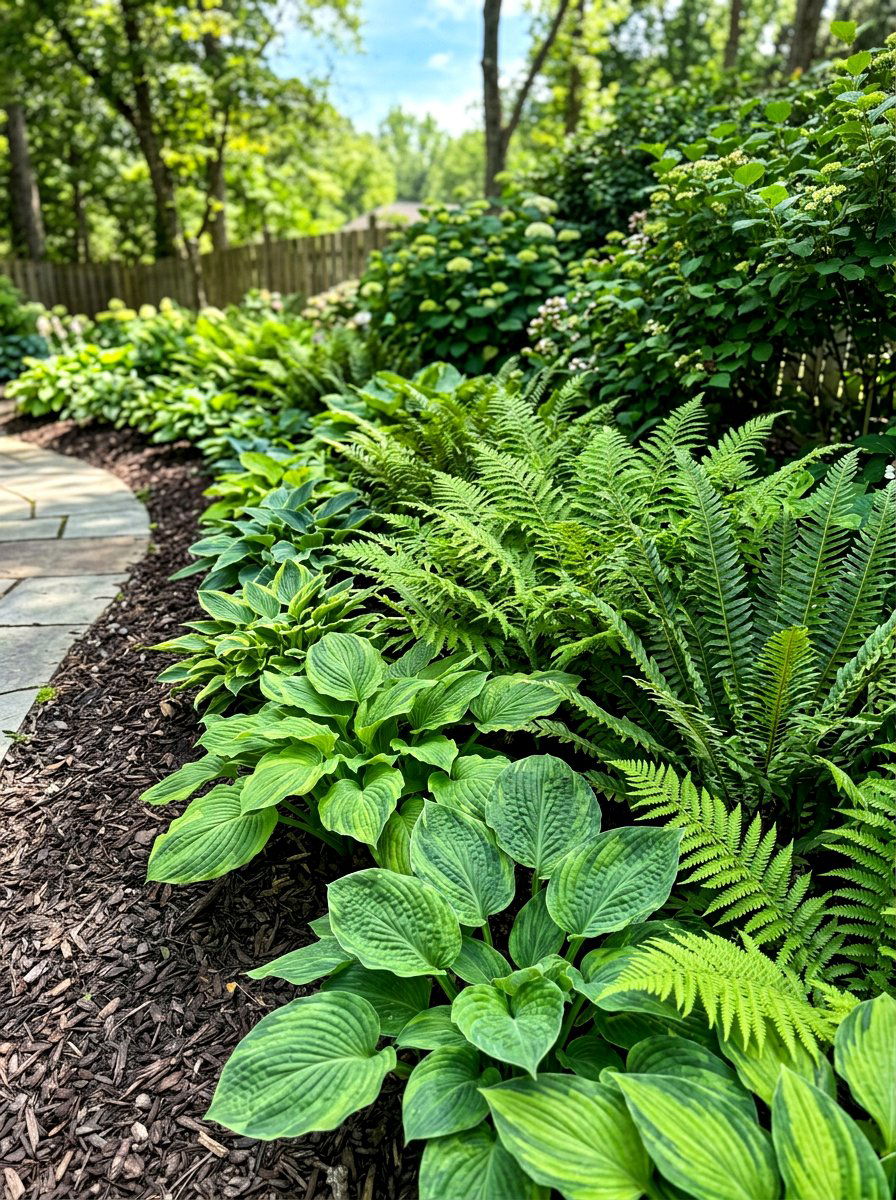
When you want to create a garden that feels rich and diverse, a mixed texture border is the way to go. You should aim to combine plants with wildly different leaf surfaces, such as puckered, corrugated, and smooth hostas. Interspersing these with various fern types, like the stiff fronds of a Christmas fern and the soft tresses of a Lady fern, creates a sensory experience. This variety ensures that the eye is constantly moving and discovering new details throughout the bed. Adding a layer of dark bark mulch will make the different shades of green and yellow pop, turning a simple garden border into a complex tapestry of foliage.
9. Under tree hosta fern planting
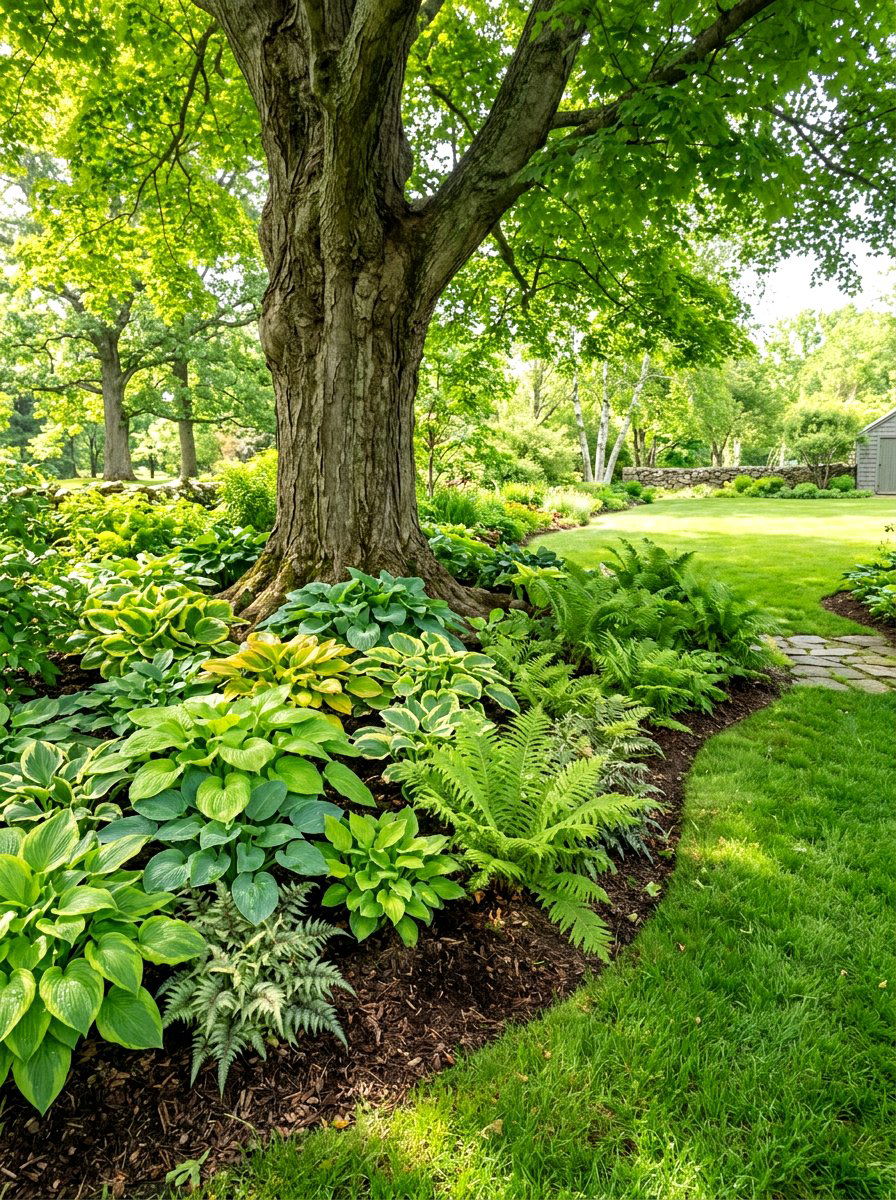
Many gardeners struggle to grow anything under the dense shade of large maple or oak trees, but hostas and ferns are the perfect solution for these spots. Since these plants have relatively shallow root systems, they can coexist with large trees if given enough water during the first few seasons. You should plant the hostas closer to the trunk where their broad leaves can hide any exposed roots, and let the ferns drift outward toward the drip line. This creates a natural transition from the sturdy tree trunk to the rest of the lawn. It turns a bare, muddy patch into a lush, thriving ecosystem that looks completely intentional.
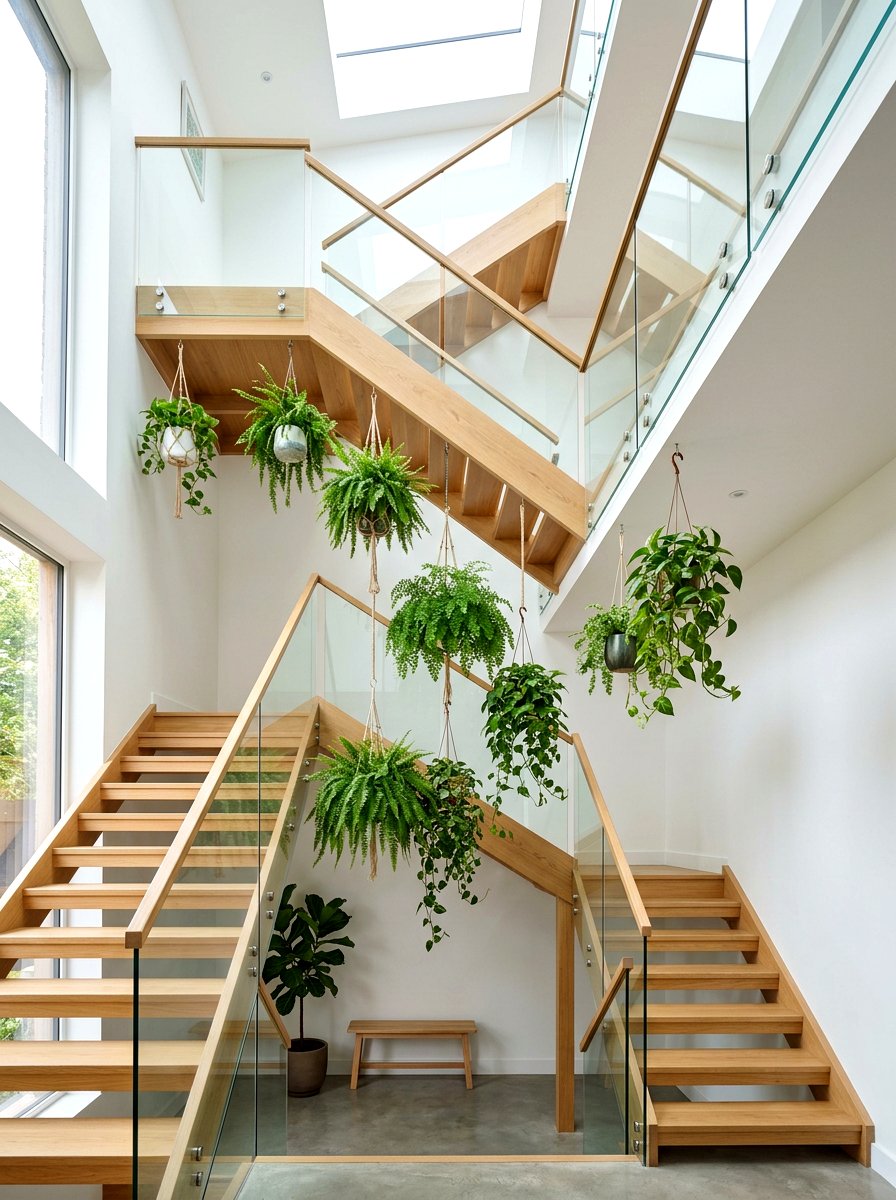
10. Blue hosta silver fern garden
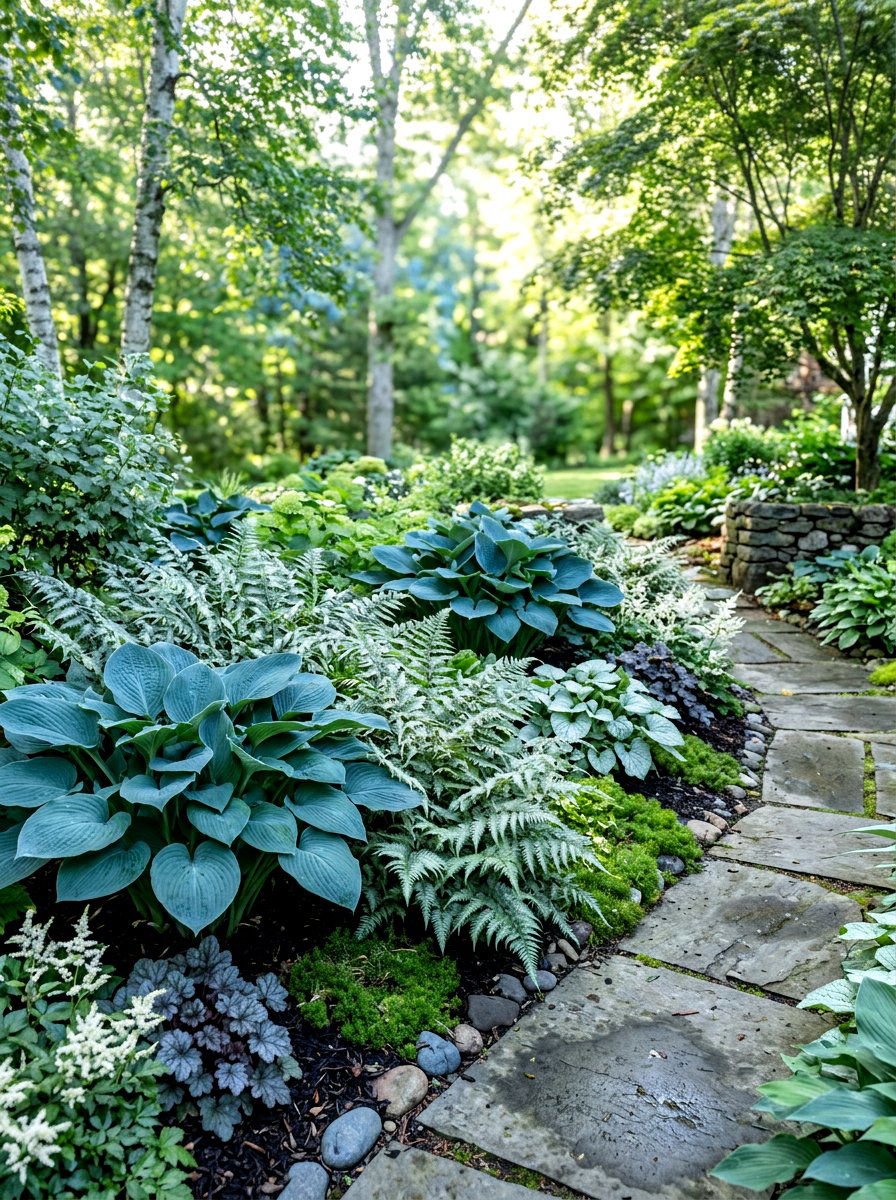
Cool colors can make a small, shaded garden feel much larger and more airy than it actually is. By focusing on hostas with blue-gray foliage and ferns with silver or white variegation, you create a garden that seems to glow with an ethereal light. Varieties like Blue Cascades or Krossa Regal provide a tall, vase-shaped structure that pairs beautifully with the shimmering fronds of silver-leaved ferns. This color scheme is incredibly calming and is perfect for a backyard meditation spot or a quiet seating area. The silver and blue tones remain vibrant even in the deepest shade, where traditional green plants might start to look dull.
11. Variegated hosta maidenhair fern landscape
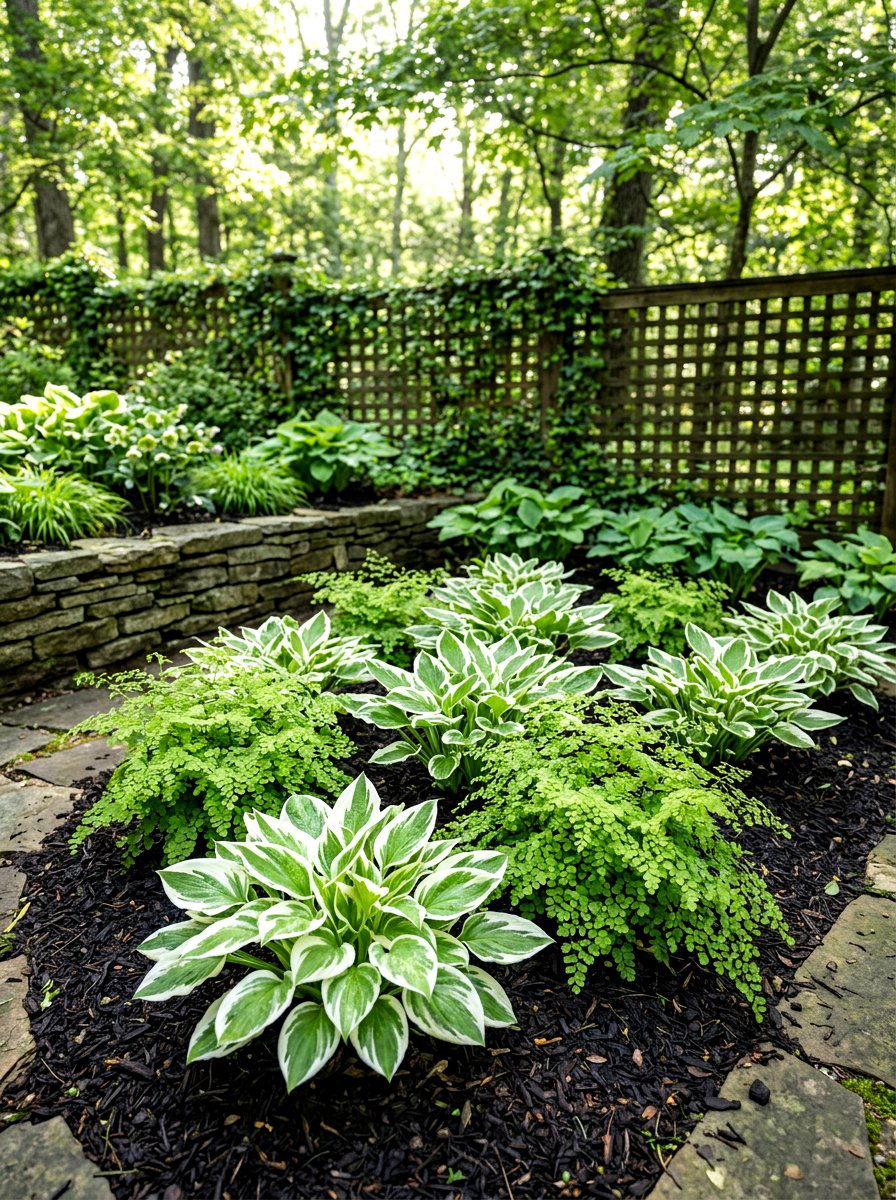
Light up the darkest corners of your yard by using variegated hostas that feature bright white or yellow edges. These plants act like natural light bulbs, drawing the eye and adding a sense of brightness to the landscape. When you pair these bold, patterned leaves with the delicate, cloud-like texture of maidenhair ferns, the result is a garden that feels light and whimsical. The fine black stems of the maidenhair fern provide a subtle, elegant contrast to the thick, sturdy stems of the hostas. This combination is ideal for small entryway gardens where you want to create a high-impact look that feels refined and well-designed from every angle.
12. Raised garden bed hosta fern
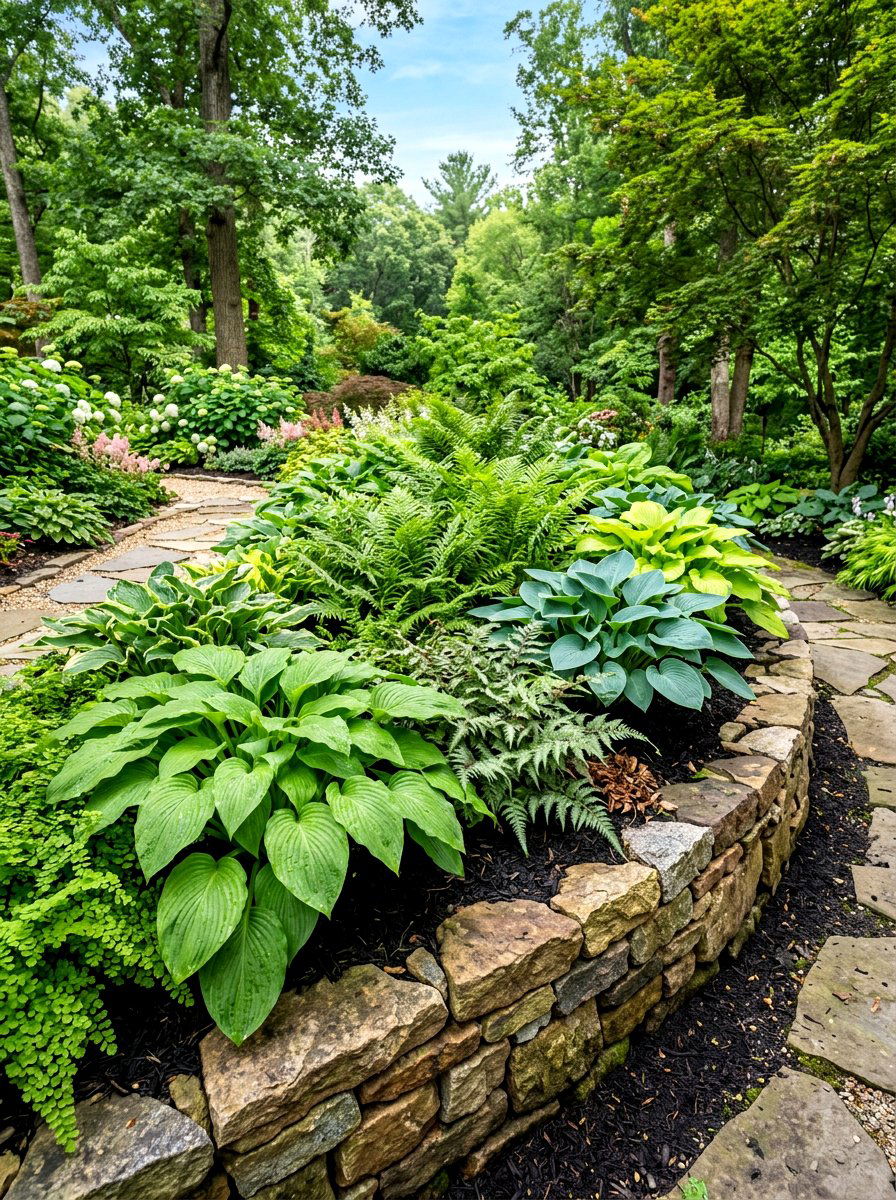
If your soil is heavy clay or lacks drainage, building a raised garden bed is an excellent way to ensure your hostas and ferns thrive. You can use cedar timbers or stacked stone to create a beautiful structure that lifts the plants closer to eye level. This elevated position allows you to better appreciate the intricate patterns on the fern fronds and the subtle color changes in the hosta leaves. Filling the bed with high-quality organic soil will result in much larger, healthier plants. A raised bed also helps to protect your collection from being stepped on and makes maintenance tasks like weeding and watering much easier on your back.
13. Hosta fern edging for walkway
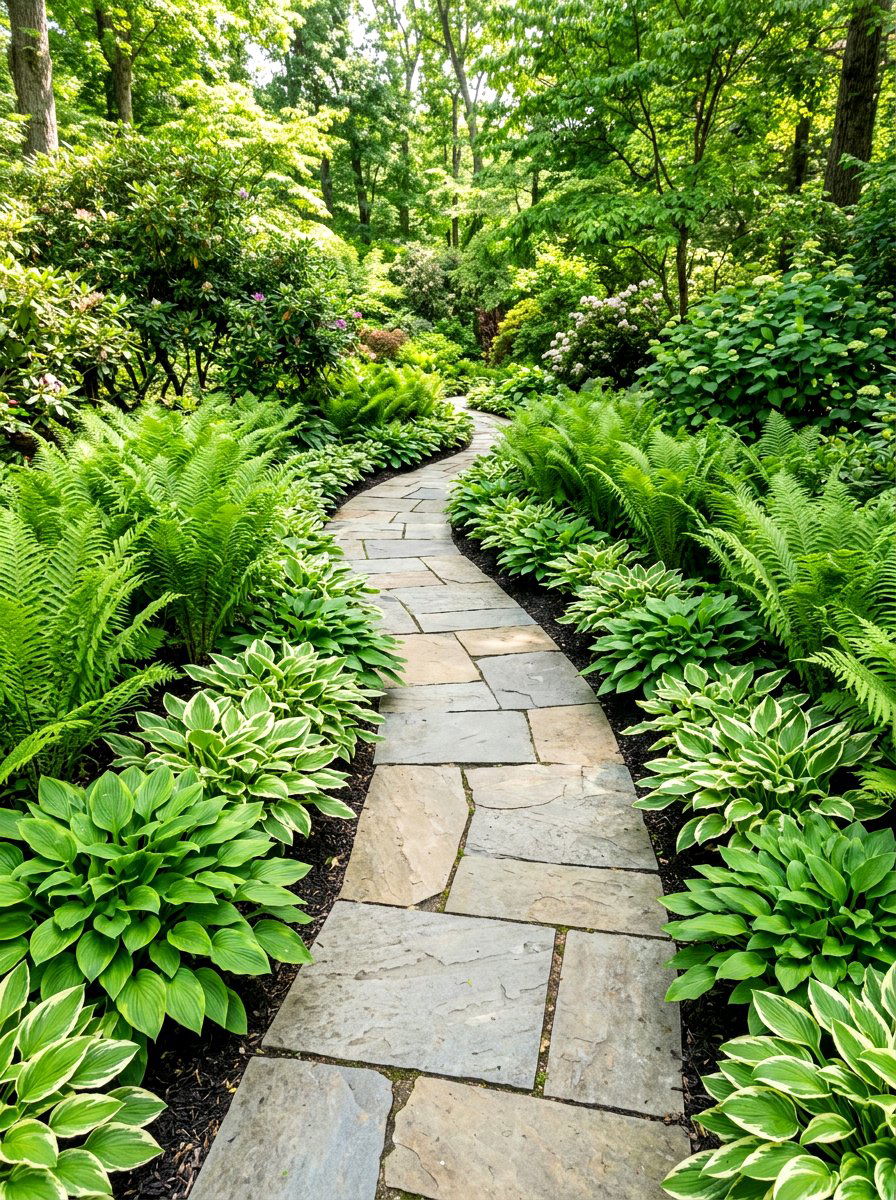
Using a low-growing variety of hosta to edge a garden path creates a clean, finished look that clearly defines the space. You can use miniature or small hostas as a living border, and then plant taller ferns directly behind them to create a sense of height and enclosure. This layering technique makes the walkway feel like a secret passage through a lush jungle. The hosta leaves will naturally spill over the edge of the path, softening any hard lines from pavers or concrete. It is a practical and beautiful way to guide guests through your garden while showcasing your favorite shade plants in a structured, organized manner.
14. Tropical look hosta fern layout
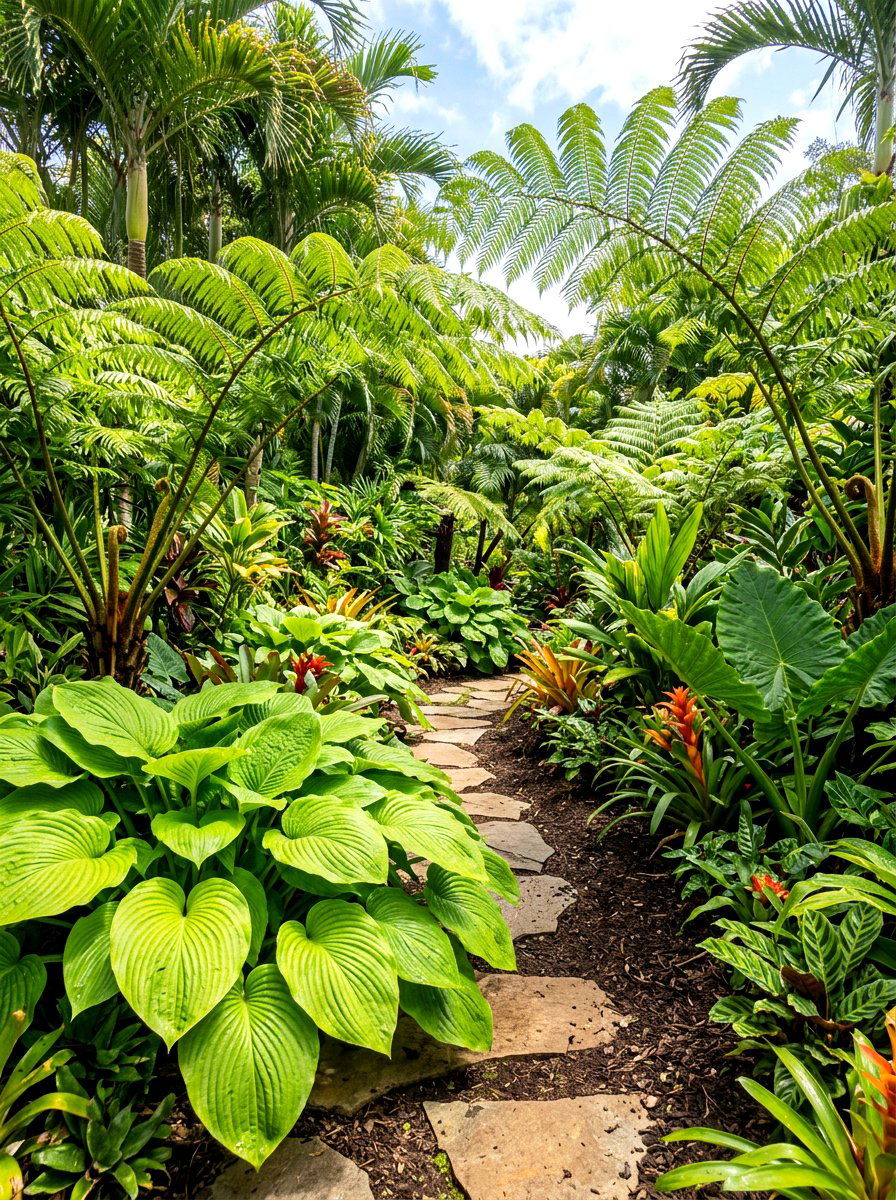
You do not need to live in a warm climate to achieve a lush, tropical aesthetic in your backyard. By choosing giant-leaved hostas and tall, arching ferns, you can create a prehistoric, jungle-like atmosphere in any temperate shade garden. Focus on varieties with massive, glossy leaves and pair them with ferns that have a dramatic, spreading habit. Adding a few large-leafed companion plants like Rodgersia or Ligularia can further enhance this exotic theme. The key is to plant densely so that no soil is visible, creating a thick canopy of greenery that feels humid and lush. This design turns a boring suburban yard into an exciting, adventurous escape.
15. Low maintenance hosta fern slope
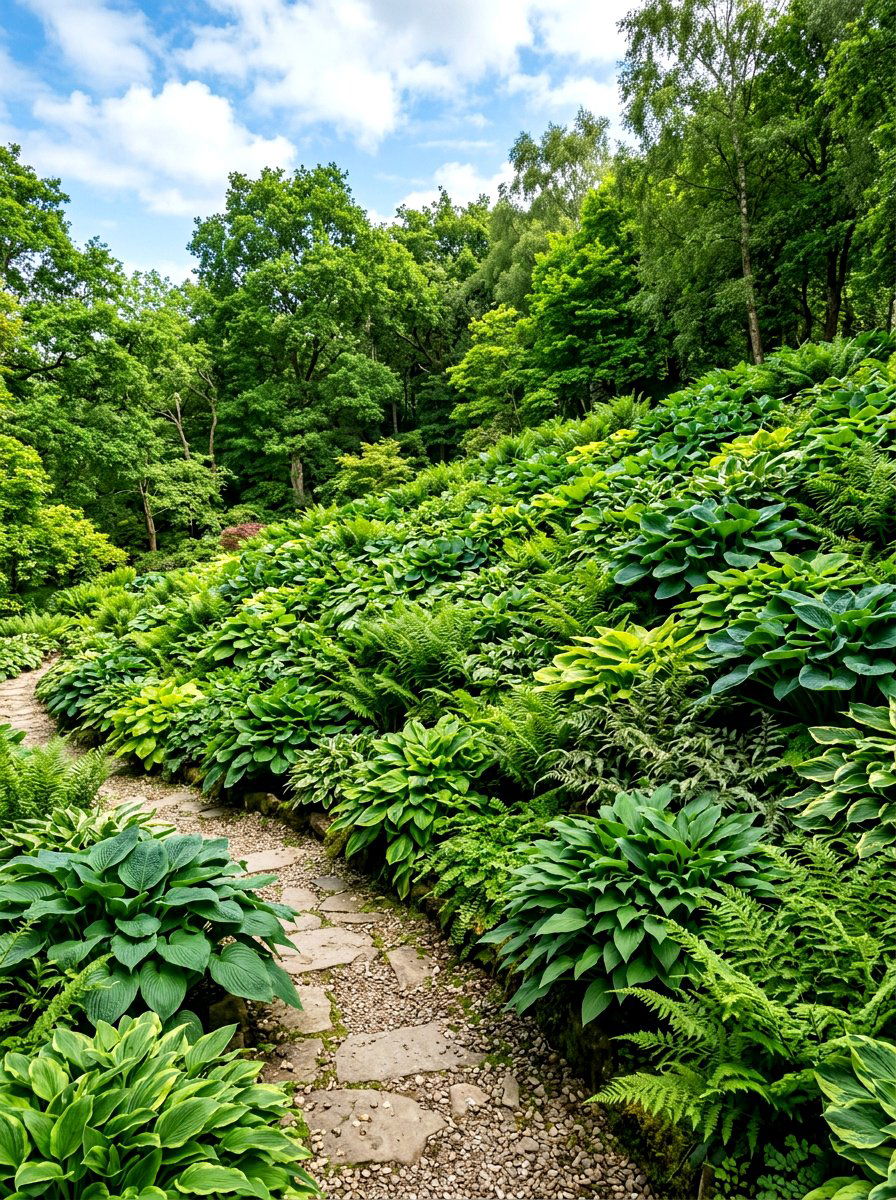
Gardening on a slope can be a major challenge due to erosion and difficulty with lawn mowing. Replacing a grassy hillside with a mass planting of hostas and ferns is a smart, low-maintenance solution that looks stunning. The strong root systems of these plants help to anchor the soil, while the dense foliage acts as a natural mulch that prevents weeds from germinating. You should use a mix of creeping ferns and wide-spreading hostas to cover the ground quickly. Once established, this type of garden requires very little intervention, allowing you to enjoy a beautiful, green hillside without the hassle of traditional landscaping or constant maintenance work.
16. Hosta fern water feature landscape
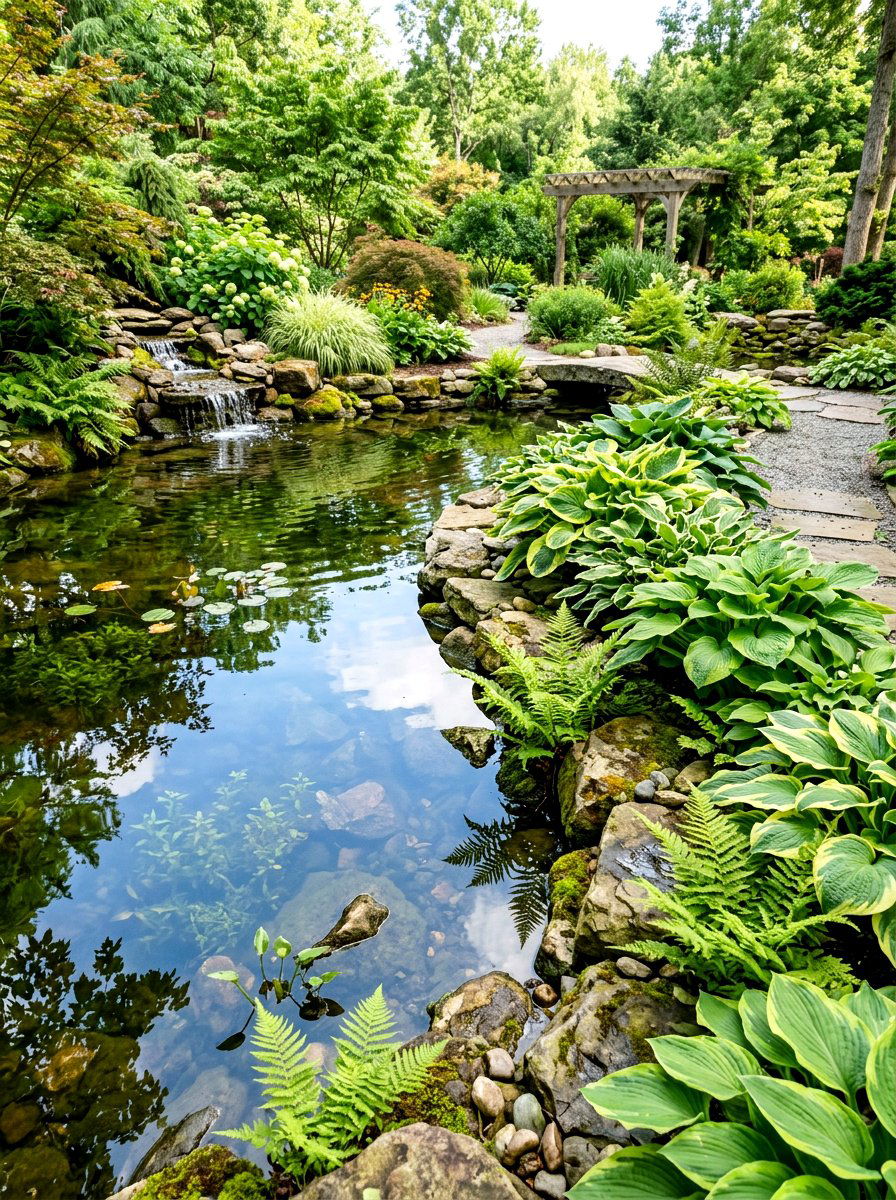
The sound of trickling water combined with the lush greenery of hostas and ferns creates the ultimate backyard oasis. You should plant these moisture-loving species around the edges of a pond or along the banks of a backyard stream. Ferns naturally thrive in the humid air near water, and their delicate fronds look beautiful when reflected in a still pool. Hostas provide a sturdy, bold contrast to the fluid movement of the water. Using a variety of sizes and colors will help to blend the water feature into the rest of the landscape. This setup feels incredibly peaceful and provides a cool refuge for both people and local wildlife.
17. Contemporary courtyard hosta fern
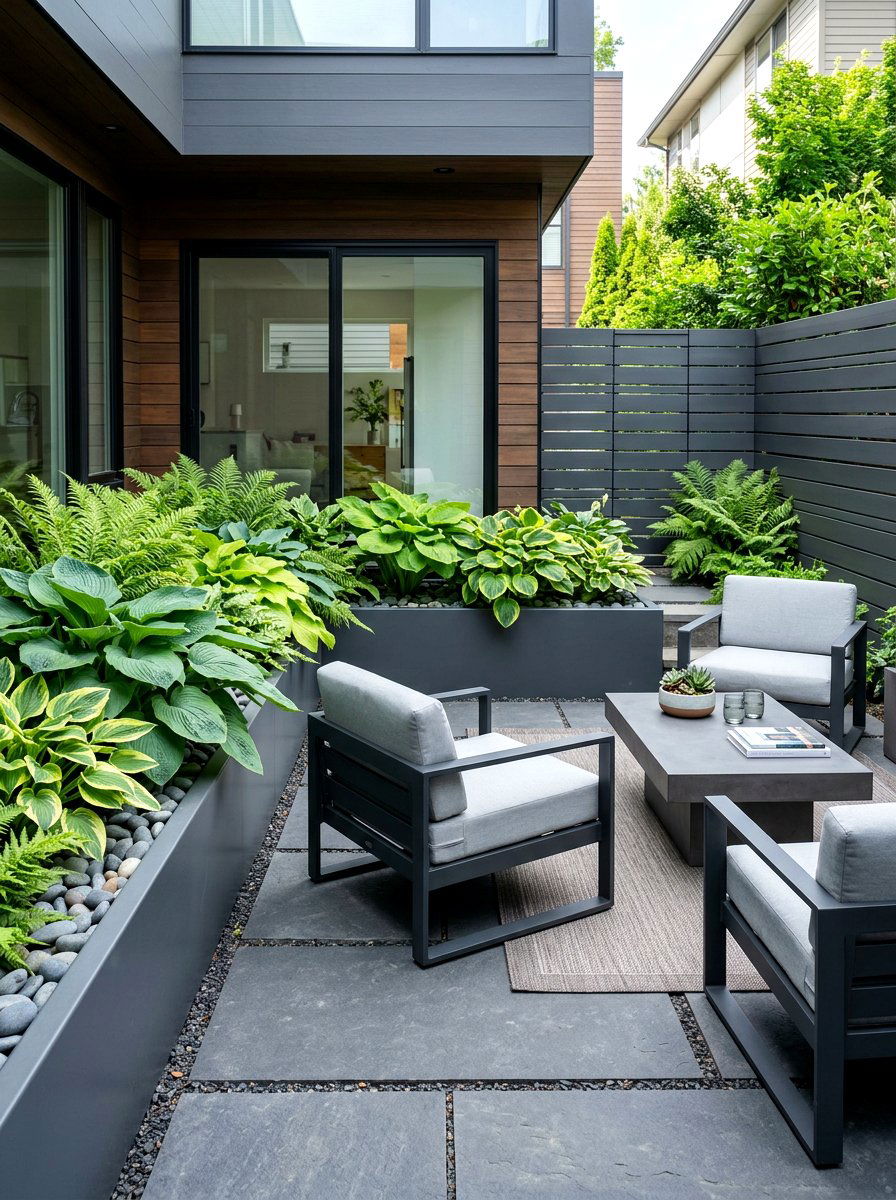
A small, enclosed courtyard is the perfect place to showcase a curated collection of high-quality hostas and ferns. Because the space is limited, you can focus on unique, collector-grade varieties that have interesting leaf shapes or unusual colors. Using large, modern planters in shades of charcoal or white will complement the green foliage and give the space a clean, architectural feel. You can create a focal point by placing a single, massive hosta in a central pot, surrounded by a ring of delicate ferns. This controlled environment allows the plants to reach their full potential, creating a sophisticated outdoor room that feels like an extension of your home's interior.
18. Victorian shade garden hosta fern
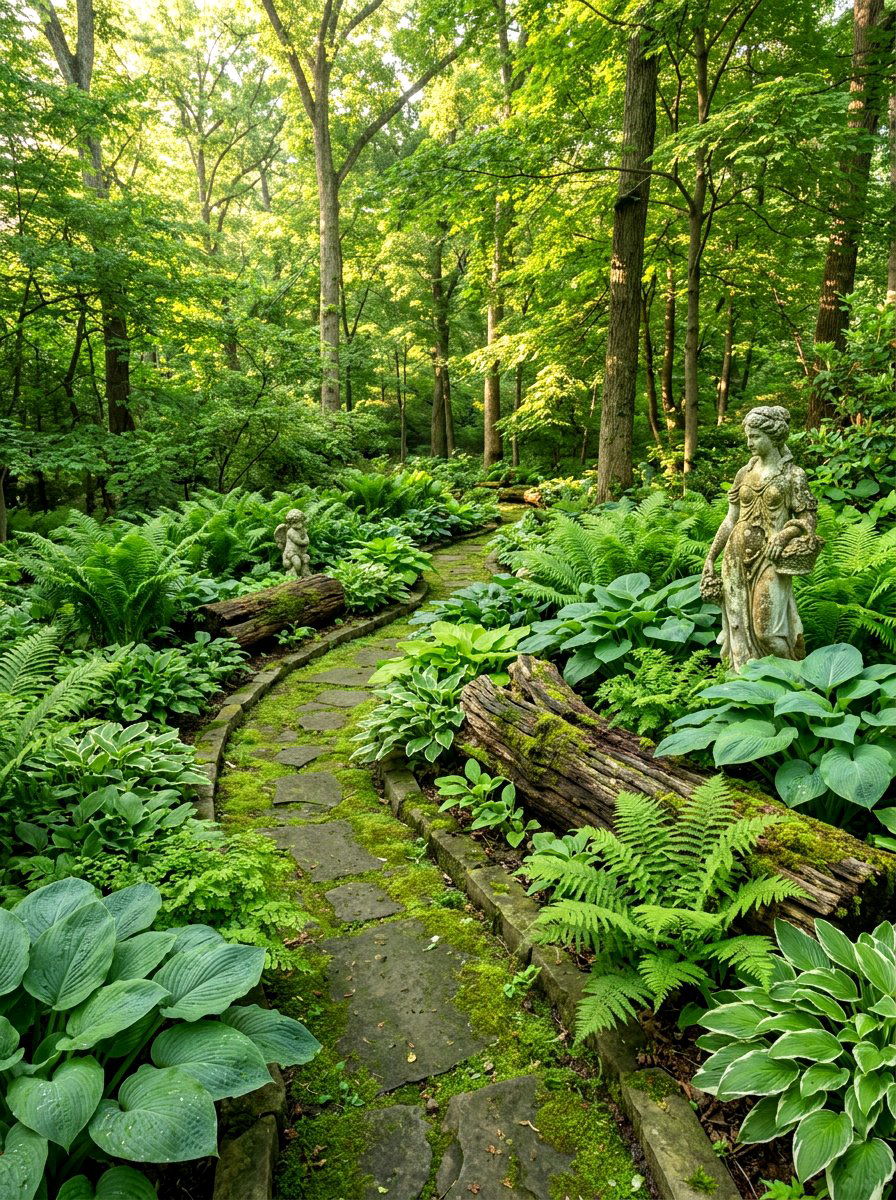
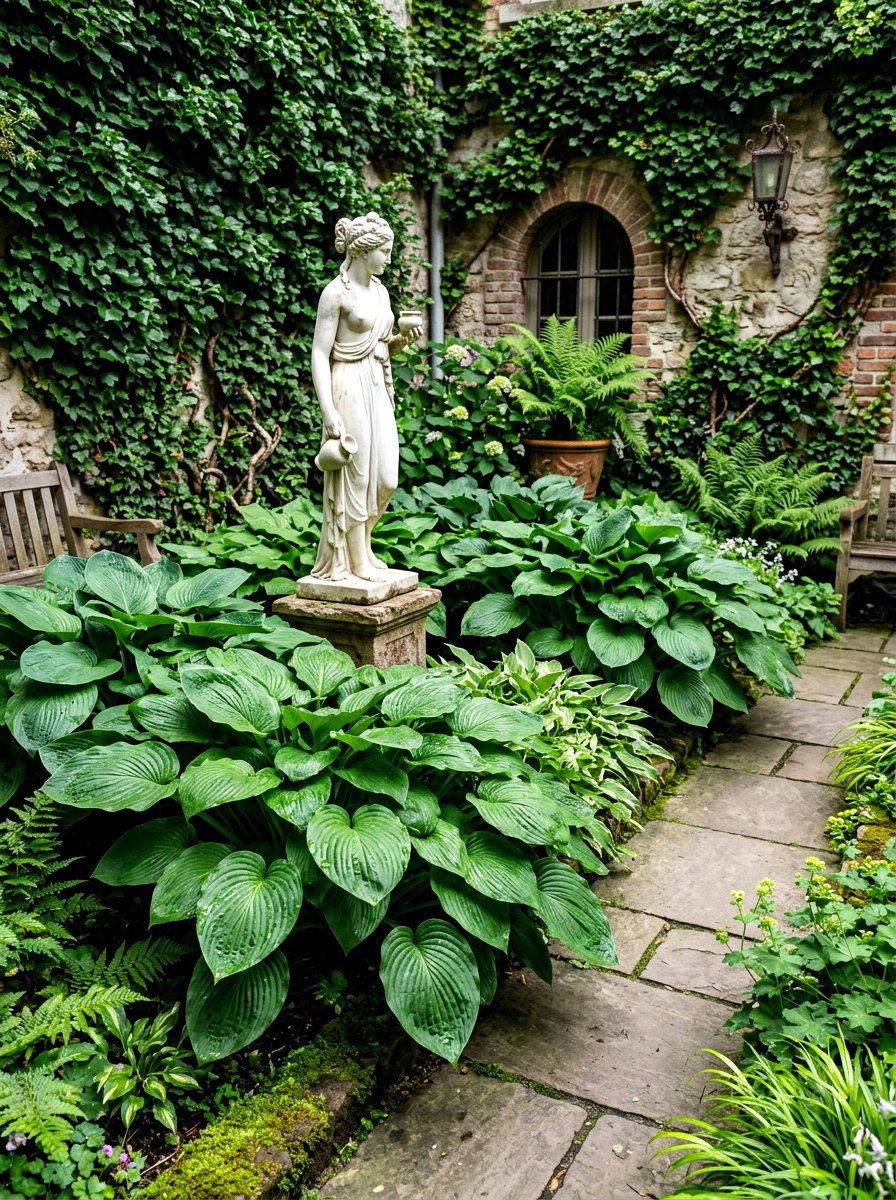
Capturing the romantic, nostalgic feel of a Victorian-era garden is easily achieved through the use of ferns and hostas. In that period, fern collecting was a popular hobby, and these plants were often featured in elaborate "stumperies" or shaded glens. You can recreate this look by using weathered logs, antique garden ornaments, and a dense planting of traditional fern varieties. Surround these elements with classic hostas that have elegant, heart-shaped leaves. The goal is to create a space that feels old-fashioned, lush, and a bit mysterious. This style of gardening celebrates the historical beauty of these plants and provides a charming, storybook atmosphere for your backyard retreat.
19. Cottage garden shade hosta fern
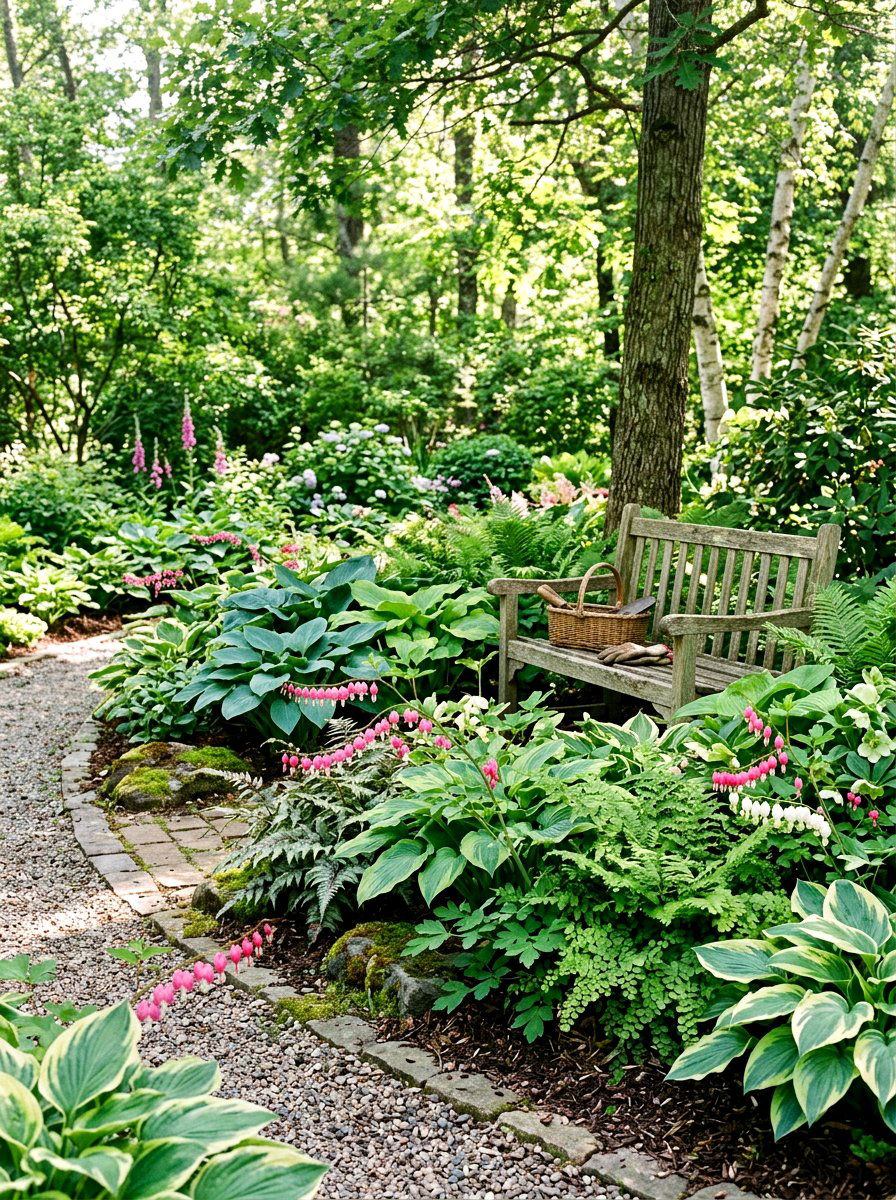
While cottage gardens are often associated with sun-drenched flowers, you can bring that same informal, cozy charm to a shaded area. The key is to avoid straight lines and instead plant in soft, overlapping drifts. Mix hostas with ferns and other traditional shade perennials like bleeding hearts or columbine for a varied, blooming look. This layered approach creates a full, abundant feel that is typical of the cottage style. Using rustic elements like a wooden bench or a weathered picket fence can help to ground the design. This type of garden feels personal and unpretentious, offering a relaxed space to enjoy the natural beauty of the shade.
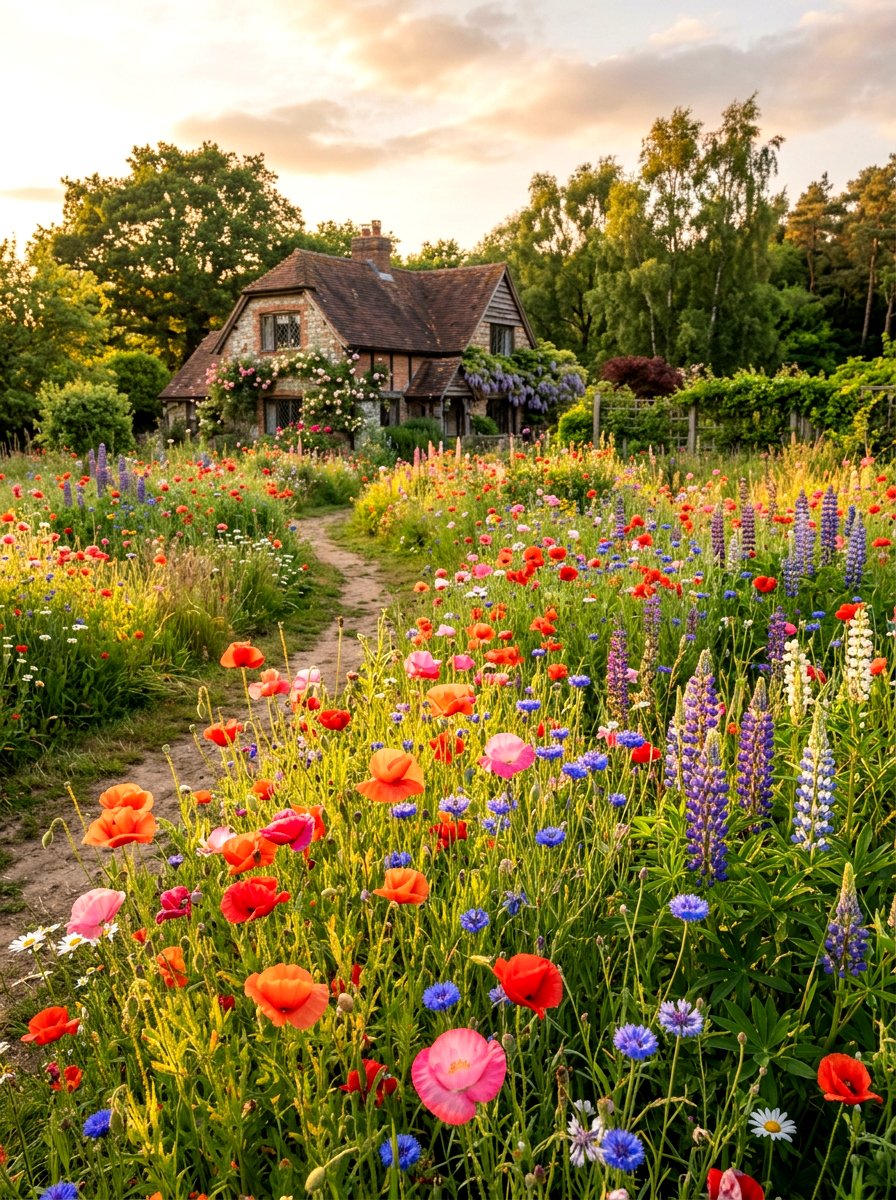
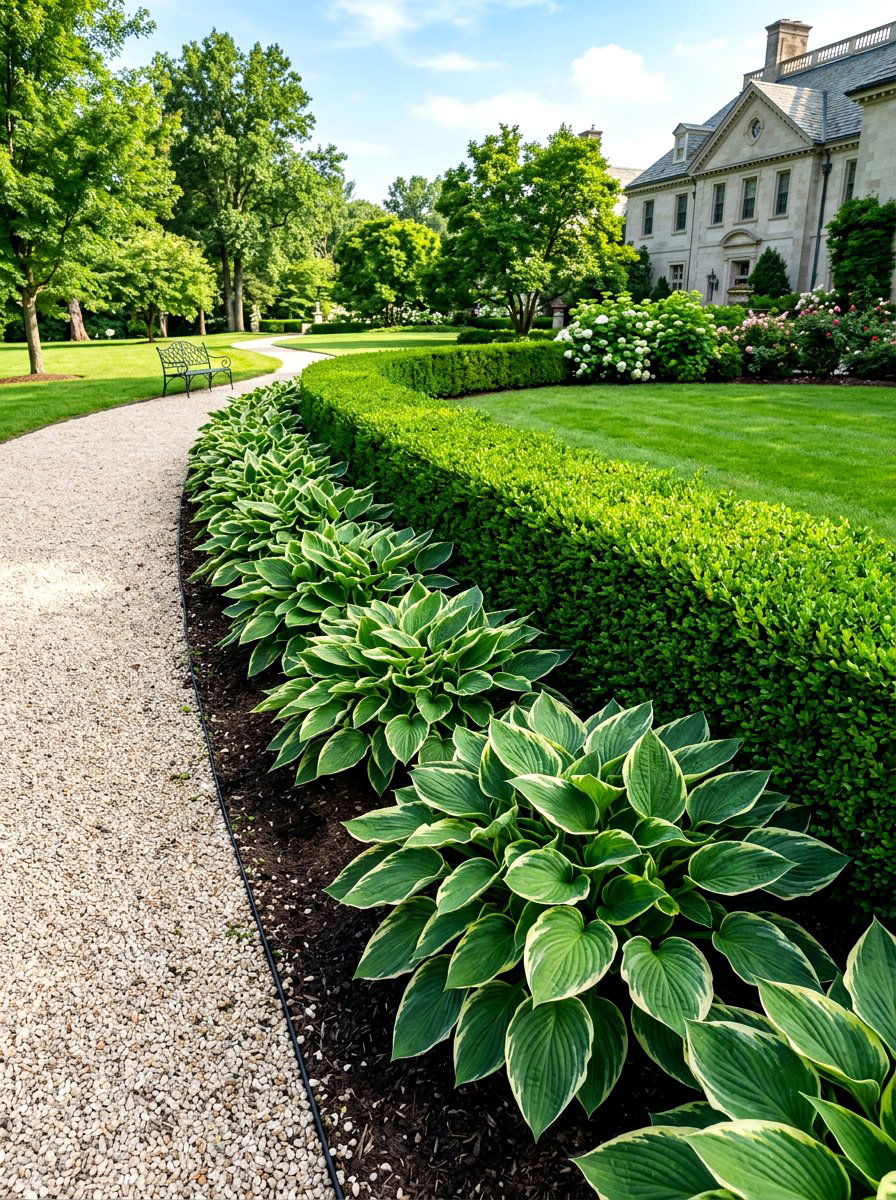
20. Hosta fern hydrangea garden bed
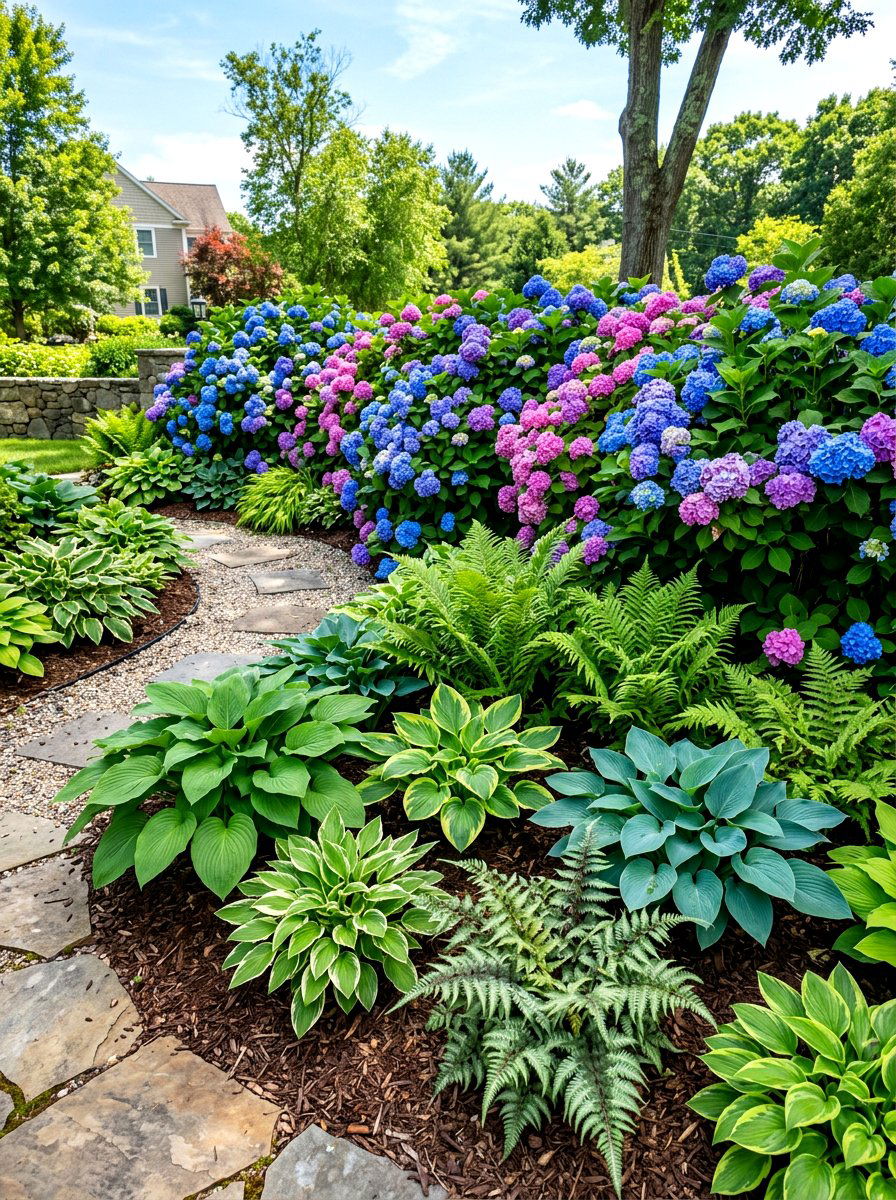
Hydrangeas and hostas are a match made in gardening heaven, as they both love dappled shade and consistent moisture. You can use tall hydrangeas as a colorful backdrop and plant a variety of hostas and ferns at their feet to fill in the lower levels. The large, showy blooms of the hydrangeas provide a burst of seasonal color, while the foliage of the hostas and ferns keeps the bed looking lush and full even when the flowers are gone. This combination creates a high-impact landscape that feels very classic and high-end. It is a fantastic way to add both height and texture to a shady border along a fence or wall.
21. Native fern hosta woodland area
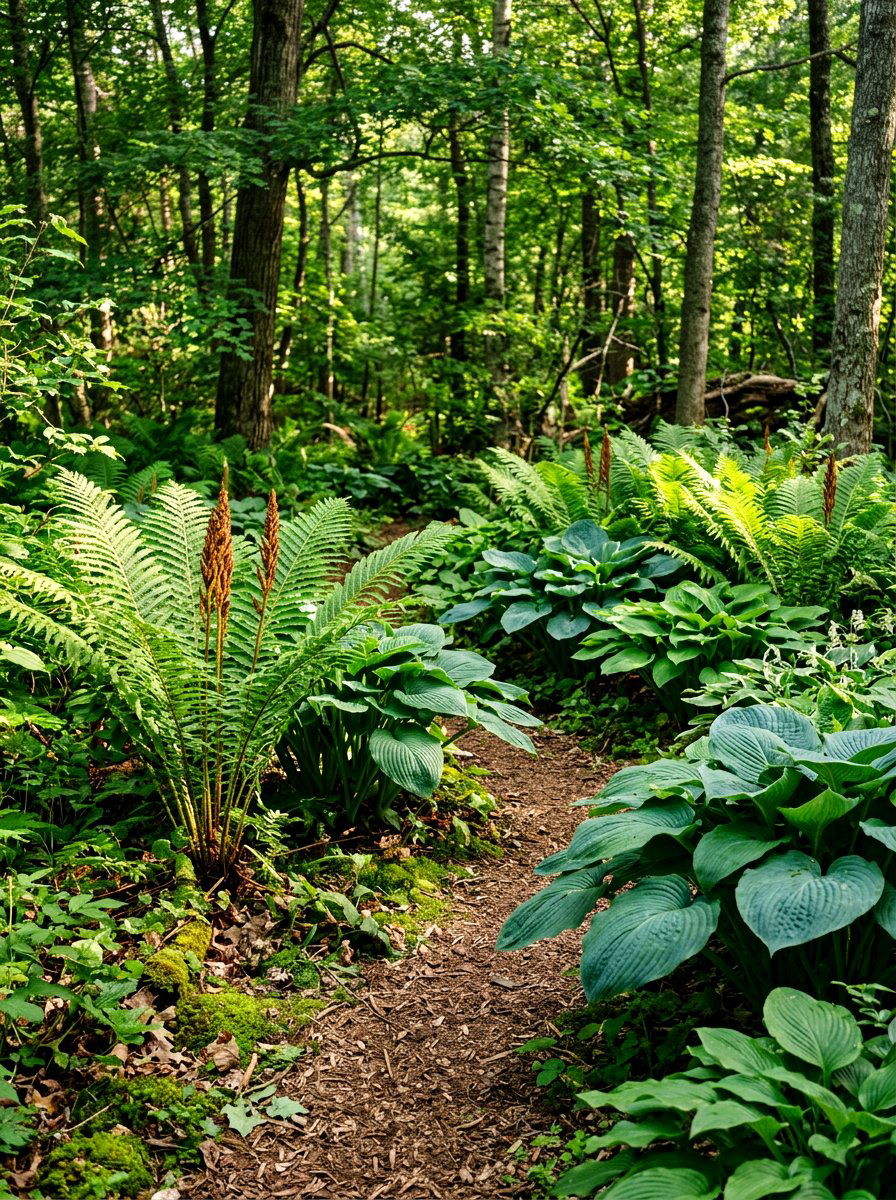
If you are interested in supporting local biodiversity, you can design a shade garden that features native fern species. Varieties like the Ostrich fern or Cinnamon fern are often native to many regions and provide important habitat for local insects and birds. While most hostas are not native to North America, they pair beautifully with these indigenous ferns to create a sustainable, hardy garden. This approach ensures that your garden is well-adapted to your local climate and soil conditions, leading to healthier plants and less maintenance over time. It creates a wilder, more organic look that celebrates the natural beauty of your specific geographic region and environment.
22. Hosta fern driveway border planting
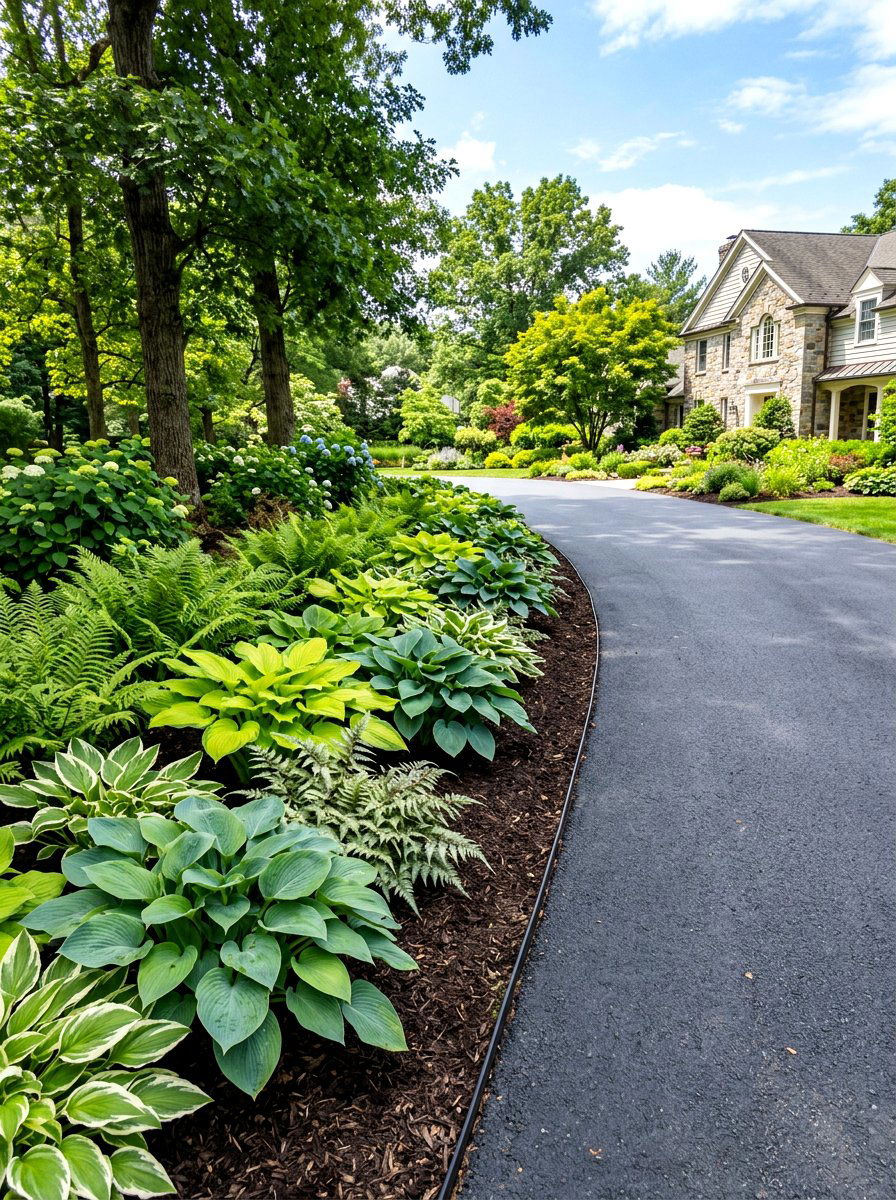
Improving the look of your driveway is a great way to boost your home 's overall curb appeal. If your driveway is shaded by large trees or the side of your house, a border of hostas and ferns is a durable and attractive option. These plants can handle the occasional splash of water and are generally resistant to pests. You should choose mid-sized varieties that won' t spill too far over the pavement, keeping the edges neat and tidy. The repeat pattern of green leaves and lacy fronds provides a soft, elegant frame for your car as you pull into the garage, making the daily return home feel much more pleasant.
23. Corner shade garden hosta fern
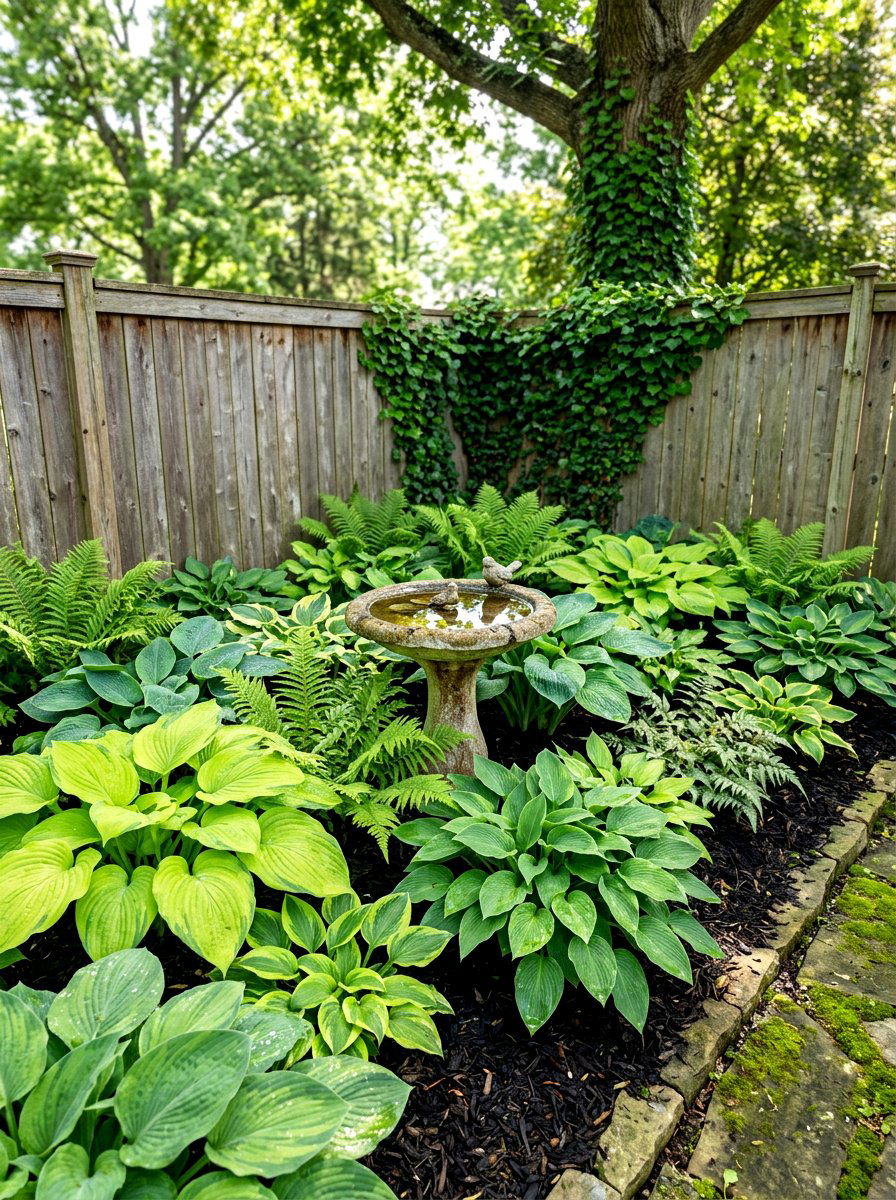
Every yard has that one awkward corner where the grass won't grow and nothing seems to thrive. Transforming this dead space into a lush focal point is the perfect job for a mix of hostas and ferns. You can use the corner structure to your advantage by planting the tallest ferns in the very back and stepping down to smaller hostas in the front. Adding a small garden statue or a decorative birdbath in the center can turn the corner into a charming destination rather than an eyesore. This simple project can be completed in a weekend and will provide a significant visual upgrade to your entire backyard landscape.
24. Hosta fern garden with mulch
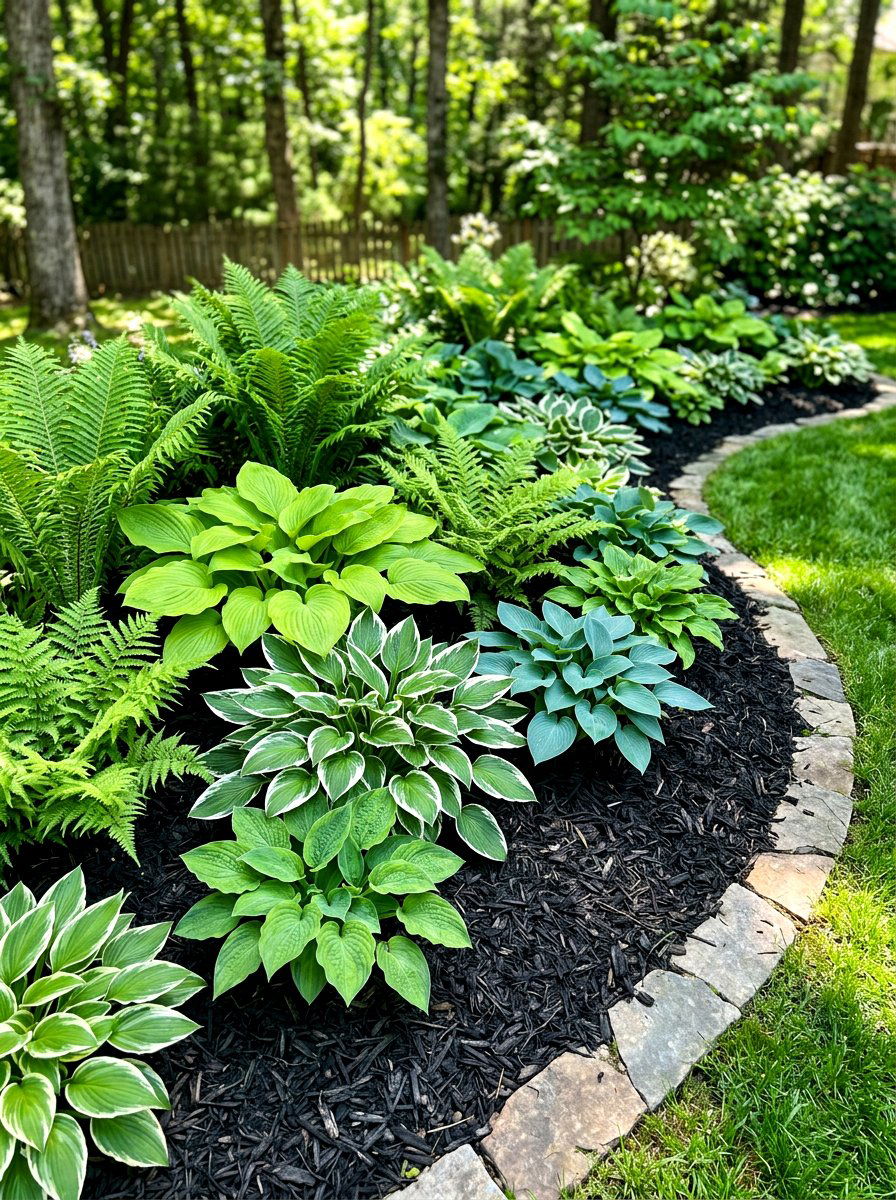
The right mulch does more than just suppress weeds; it acts as a decorative element that ties the entire garden design together. Using a dark, finely shredded bark mulch provides a clean, professional backdrop that makes the vibrant greens and yellows of your hostas and ferns truly stand out. It also helps to retain the moisture that these plants crave, especially during the hot summer months. You should apply a thick layer of mulch every spring to keep the garden looking fresh and tidy. This simple maintenance step ensures that your shade bed remains a low-stress environment where the plants can grow into a dense, beautiful carpet of foliage.
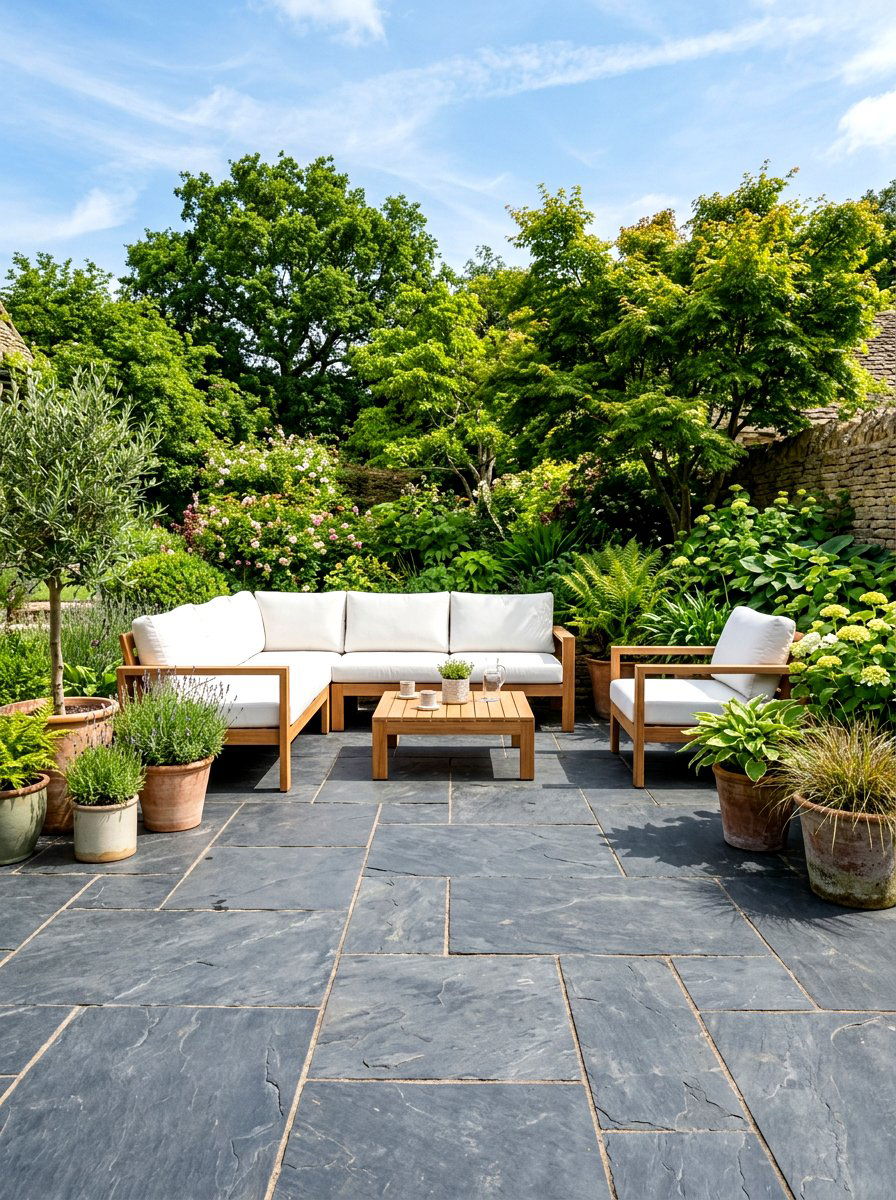
25. Layered hosta fern hillside landscaping
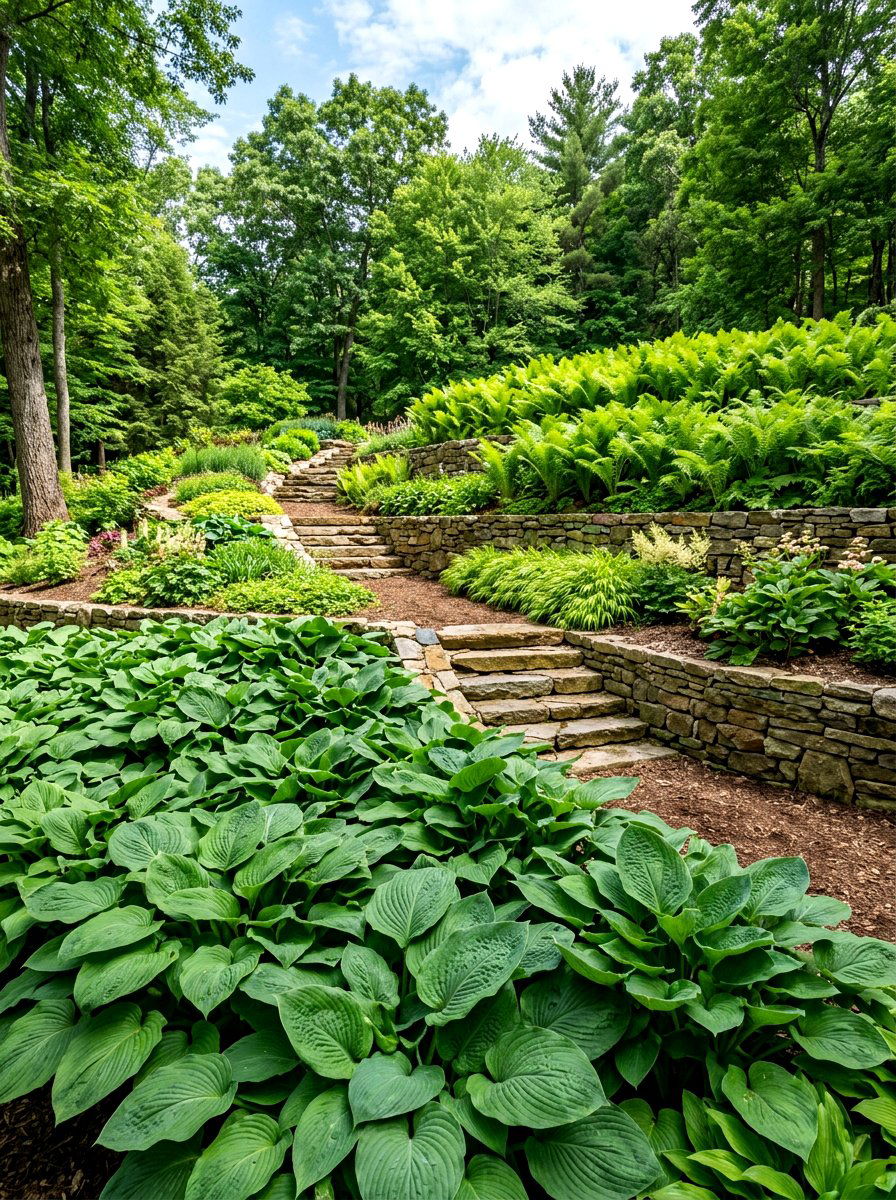
If you have a sloping yard, you can create a dramatic, tiered effect by planting hostas and ferns in distinct layers. Use large-scale hostas at the base of the hill to provide a solid foundation, and then transition to medium-sized ferns and hostas as you move upward. At the very top, plant airy, tall ferns that will catch the light and add a sense of movement to the hillside. This technique breaks up the vertical plane and makes the slope feel like a purposeful part of the design. It also makes the garden appear much larger and more complex, turning a difficult landscape feature into a major asset for your property.
26. Small backyard hosta fern nook
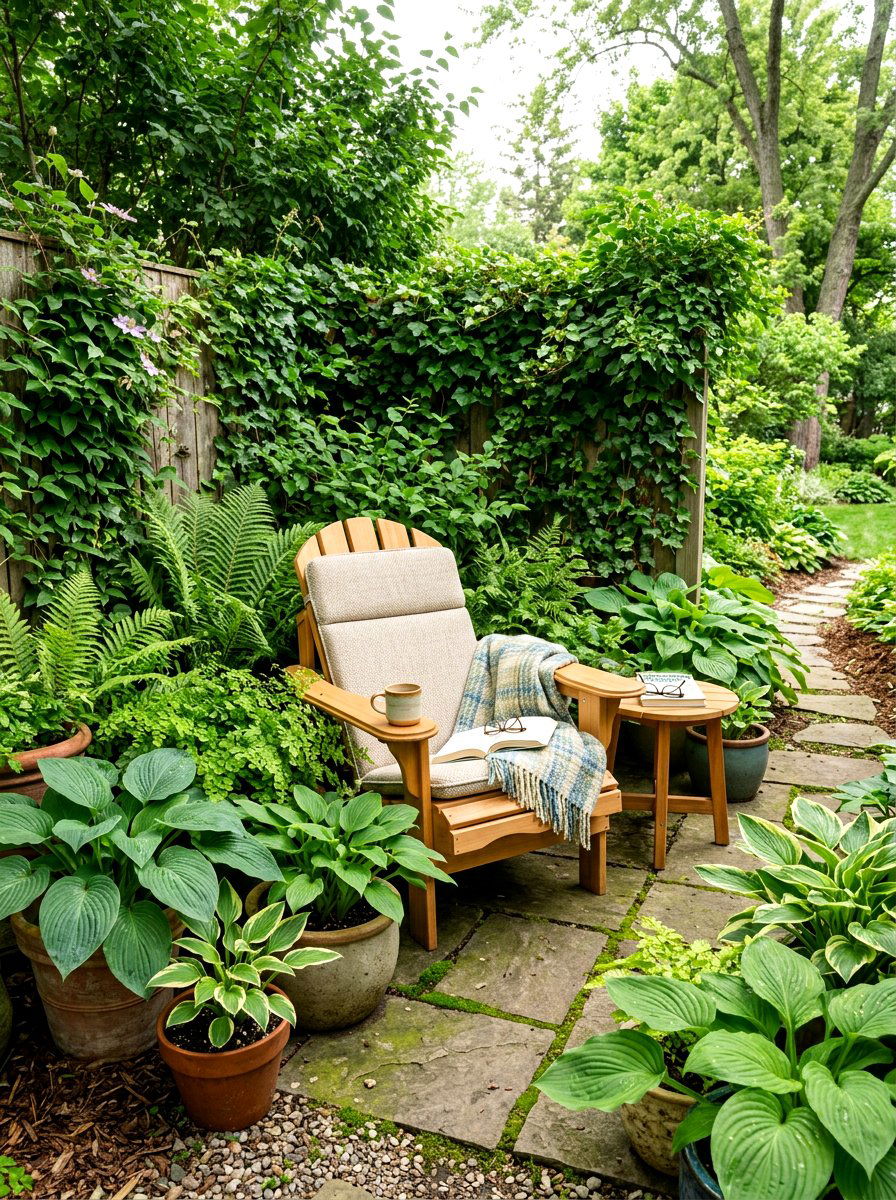
Even the smallest city backyard can feel like a private oasis when you use hostas and ferns to create a secluded nook. You can plant a dense screen of tall ferns along the fence line to block out the neighbors and provide a sense of enclosure. Place a small bistro set or a single comfortable chair in the center, surrounded by pots of variegated hostas. The cool, green environment will naturally dampen city noise and provide a peaceful place to enjoy your morning coffee. This design proves that you don't need a lot of square footage to create a high-quality, professional-looking garden that offers a real sense of escape.
27. Hosta fern garden with stone
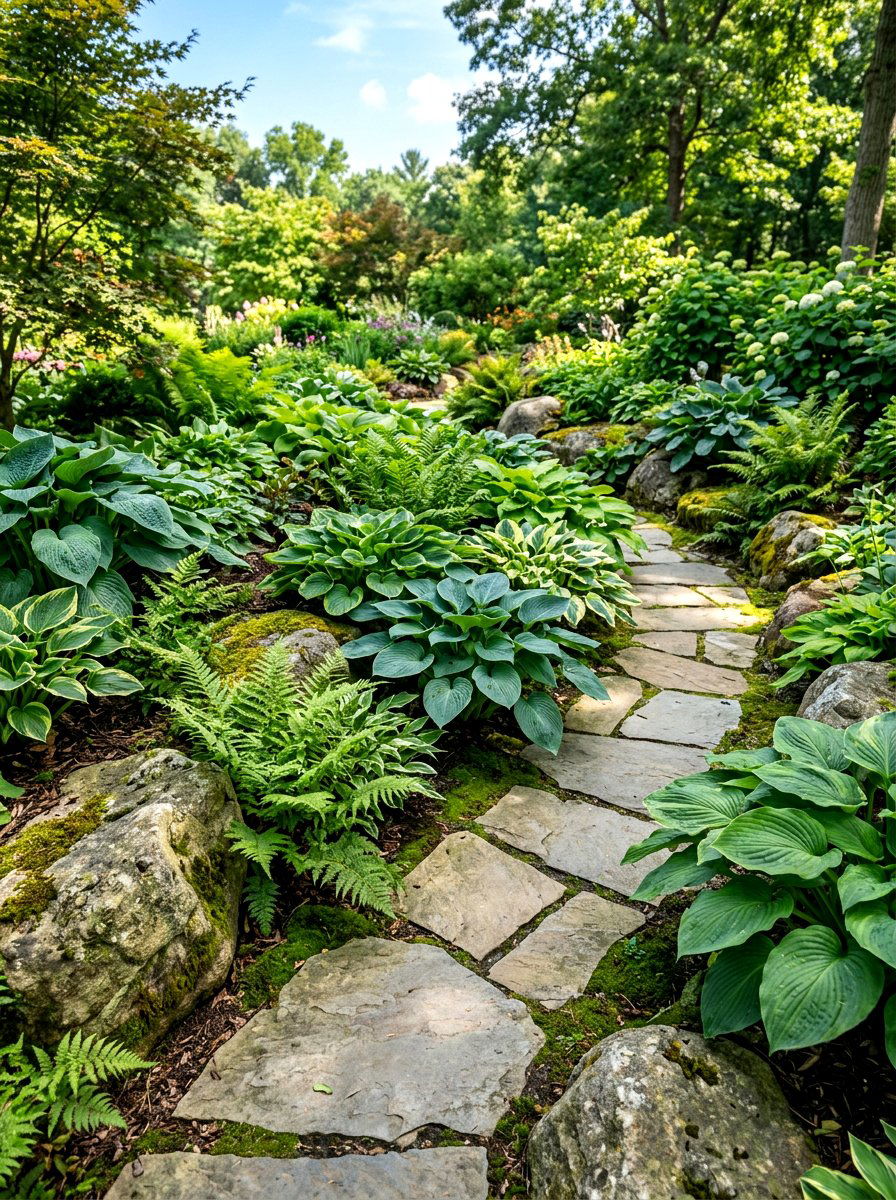
Combining the hard, permanent texture of stone with the soft, ephemeral beauty of foliage is a fundamental principle of great garden design. You can use flat flagstones to create a simple path through your hosta bed or stack fieldstones to create low walls that terrace a shaded area. The gray and tan tones of the stone provide a neutral background that highlights the diverse colors of the plants. Ferns look particularly lovely when their delicate fronds drape over a stone edge, while the broad hosta leaves provide a bold contrast to the rugged surface of the rocks. This combination feels grounded and natural, as if the garden has always been there.
28. Retaining wall hosta fern garden
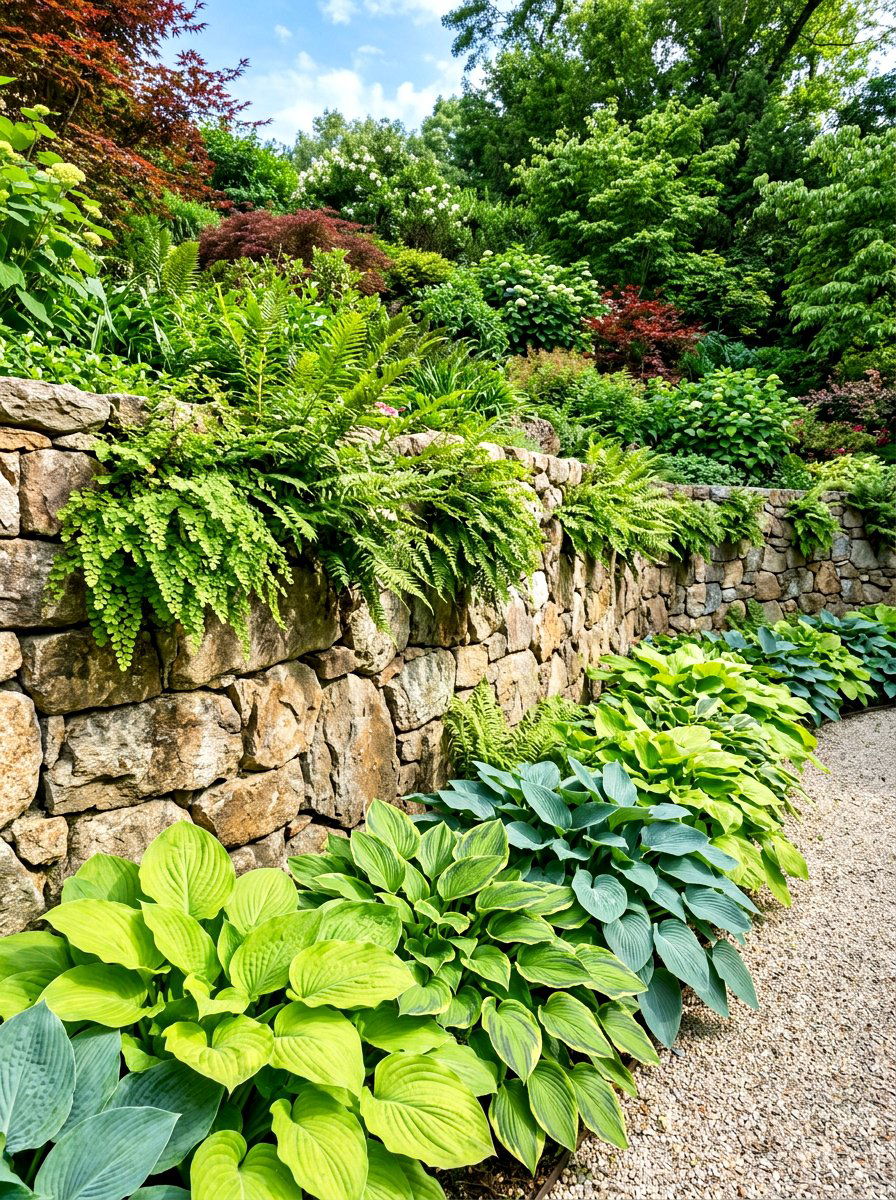
A retaining wall is a functional necessity on many properties, but it can often look harsh and utilitarian. You can soften the appearance of a stone or timber wall by planting hostas and ferns along both the top and the bottom edges. Let ferns spill over the top of the wall to break up the hard horizontal line, and plant large hostas at the base to anchor the structure to the ground. This "living wall" effect turns a structural element into a beautiful garden feature. The cool, shaded environment behind the wall is often perfect for these plants, allowing them to grow larger and more vigorously than they would elsewhere.
29. Hosta fern entryway landscaping
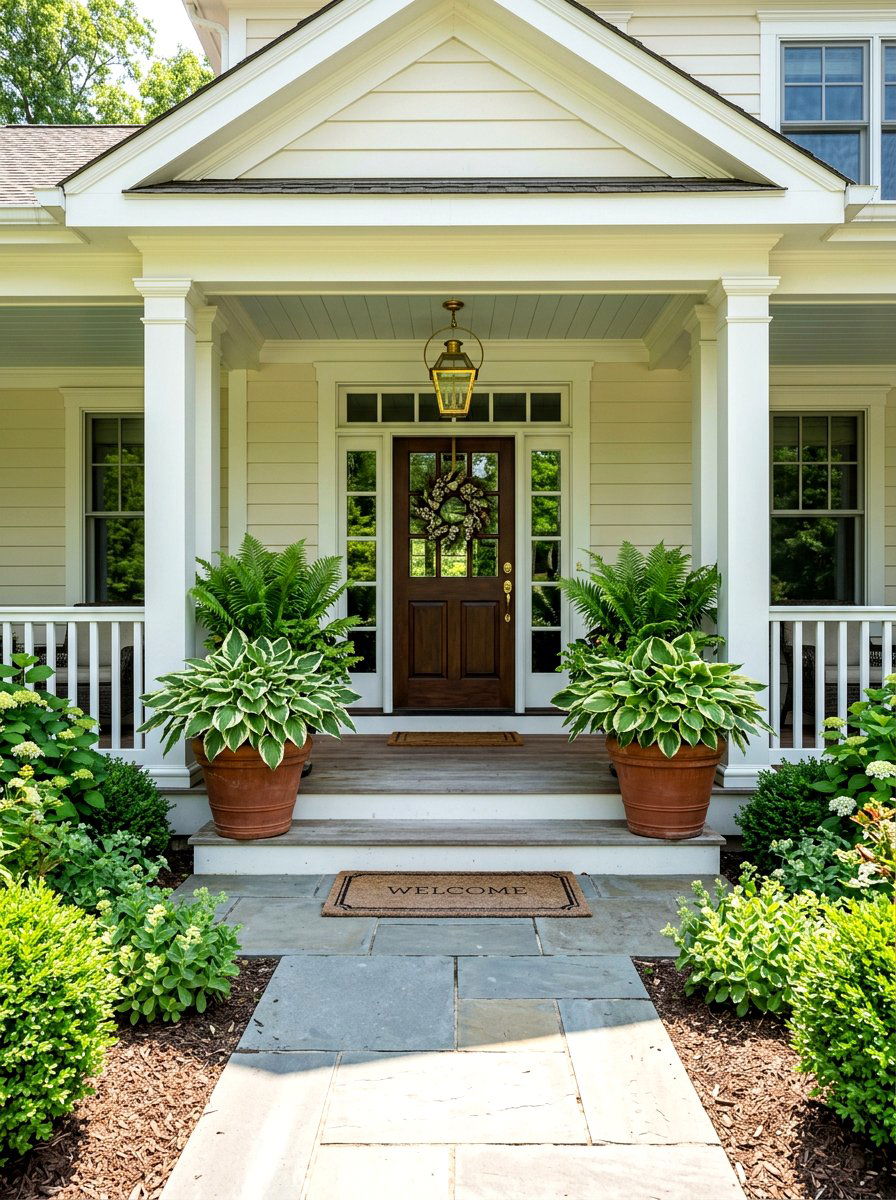
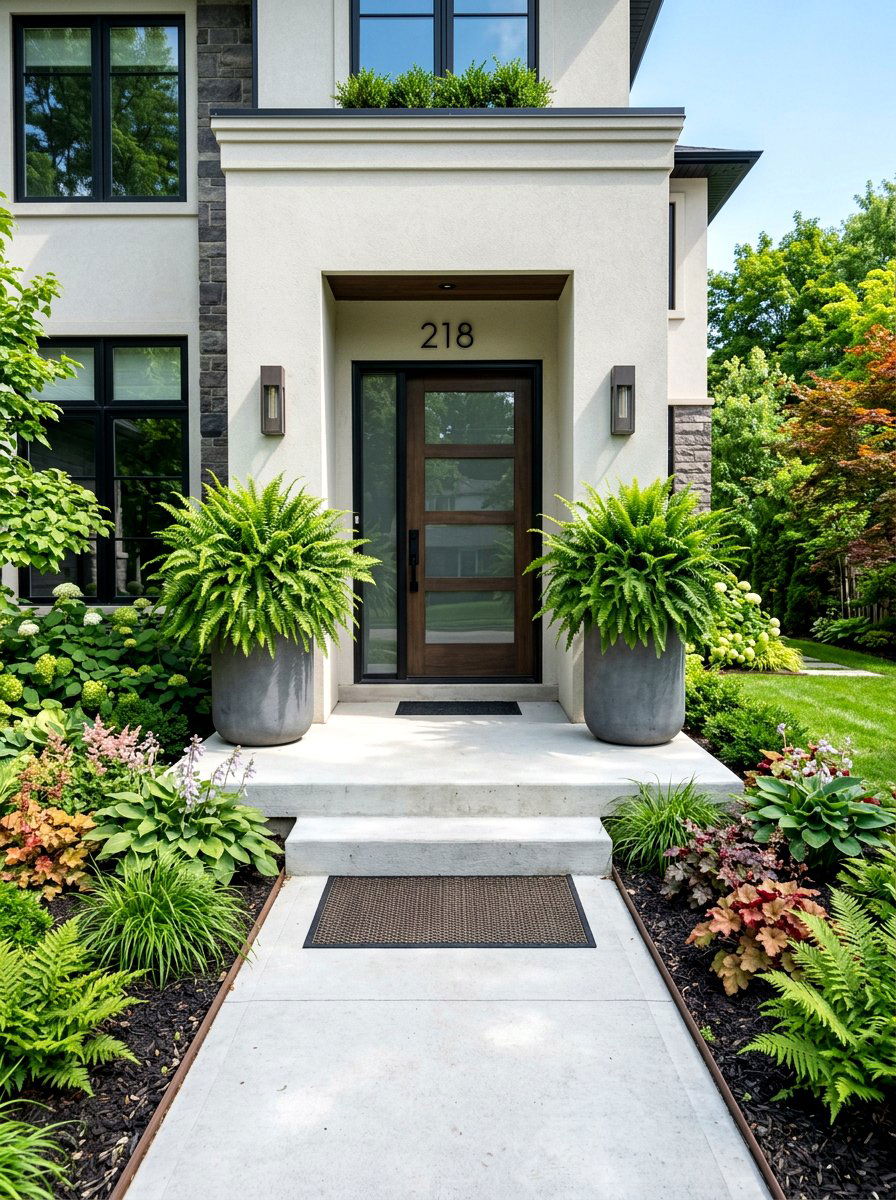
First impressions matter, and a shaded entryway is the perfect place to use the elegant combination of hostas and ferns. You can plant a symmetrical arrangement on either side of the front door to create a formal, classic look. Use matching large planters or identical garden beds filled with variegated hostas and upright ferns. This structured approach feels very intentional and high-end, signaling to guests that you take pride in your home's appearance. The bright colors of the variegated leaves will help to illuminate a dark porch, making the entrance feel more open and inviting. It is a simple yet effective way to add instant sophistication to your home.
30. Evergreen fern large hosta layout
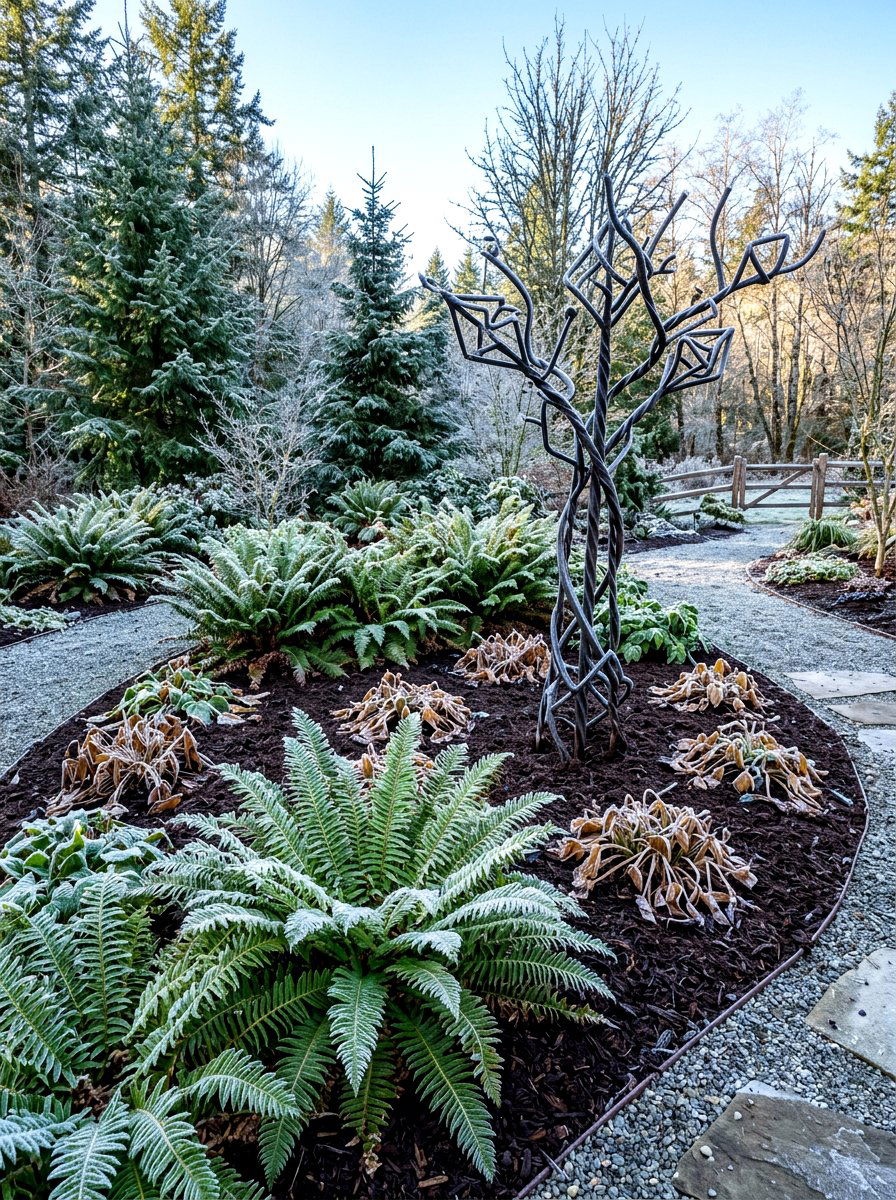
To ensure your shade garden has interest even during the transitions of the seasons, consider incorporating evergreen fern varieties. While hostas will go dormant in the winter, evergreen ferns like the Christmas fern or Tassel fern maintain their green fronds all year long. By mixing these with large, summer-blooming hostas, you ensure that the garden bed never looks completely empty, even in the coldest months. In the spring, the new hosta "eyes" will emerge from the ground alongside the existing green ferns, creating a beautiful layered effect. This design strategy provides year-round structure and ensures that your shaded landscape remains a beautiful part of your property through every season.
Conclusion:
Creating a stunning hosta and fern garden is a wonderful way to embrace the quiet beauty of the shade. These plants are incredibly resilient, versatile, and easy to maintain, making them a perfect choice for gardeners of all skill levels. By focusing on contrasting textures, varied colors, and thoughtful placement, you can turn any low-light area into a lush, professional-looking retreat. Whether you are designing a grand woodland border or a simple container for a patio, the combination of bold hosta leaves and delicate fern fronds never fails to impress. We hope these thirty ideas inspire you to get outside and start planting your own serene, green sanctuary today.

Related posts: