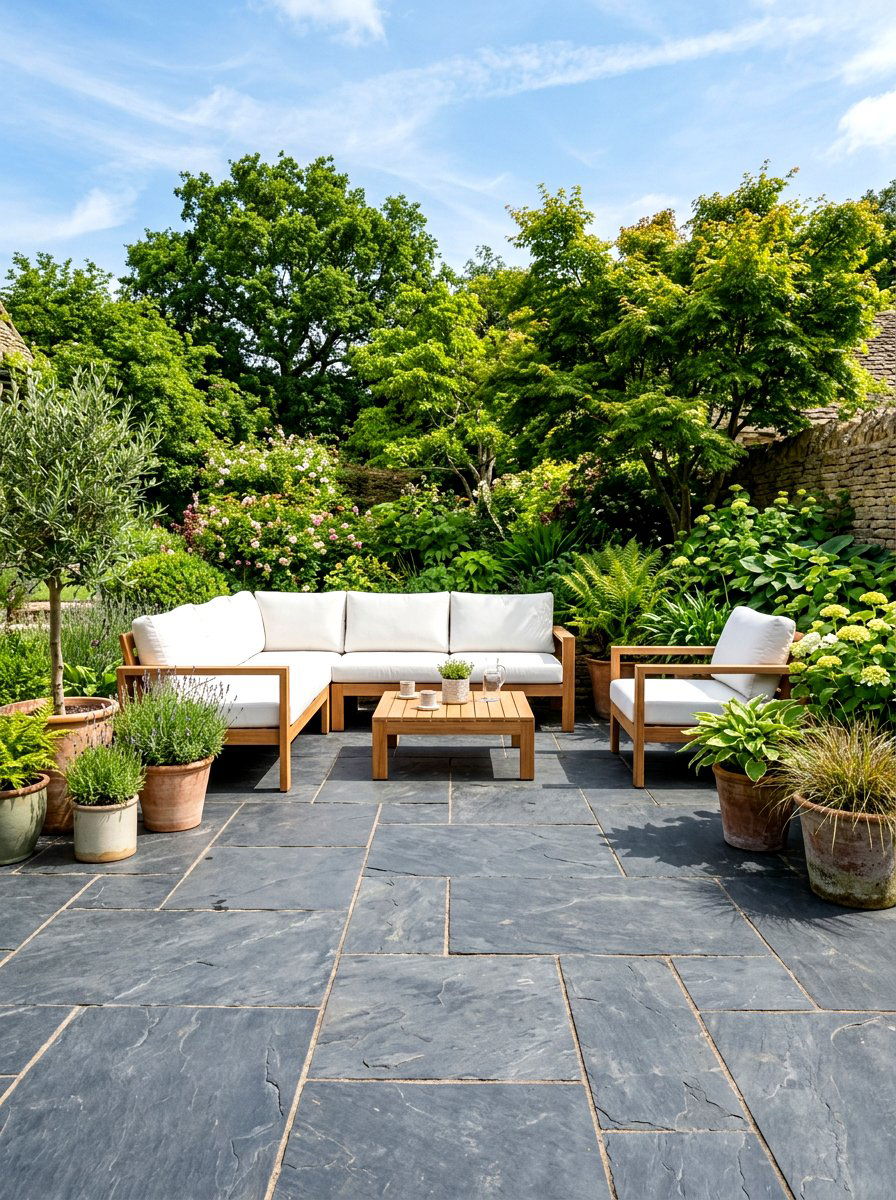
Creating a lush sanctuary in the darker corners of your backyard starts with understanding the unique beauty of shade-tolerant plants. Many homeowners mistakenly believe that a lack of direct sunlight limits their options to dull greenery, but the reality is quite the opposite. Shade perennial gardens offer an incredible opportunity to play with diverse textures, subtle color gradients, and serene moods that sun-drenched spaces simply cannot replicate. By selecting the right perennials, you can transform a dim alcove or a space beneath large trees into a thriving, low-maintenance retreat. These plants often feature stunning foliage that provides visual interest throughout the entire growing season.
1. Hosta and fern garden
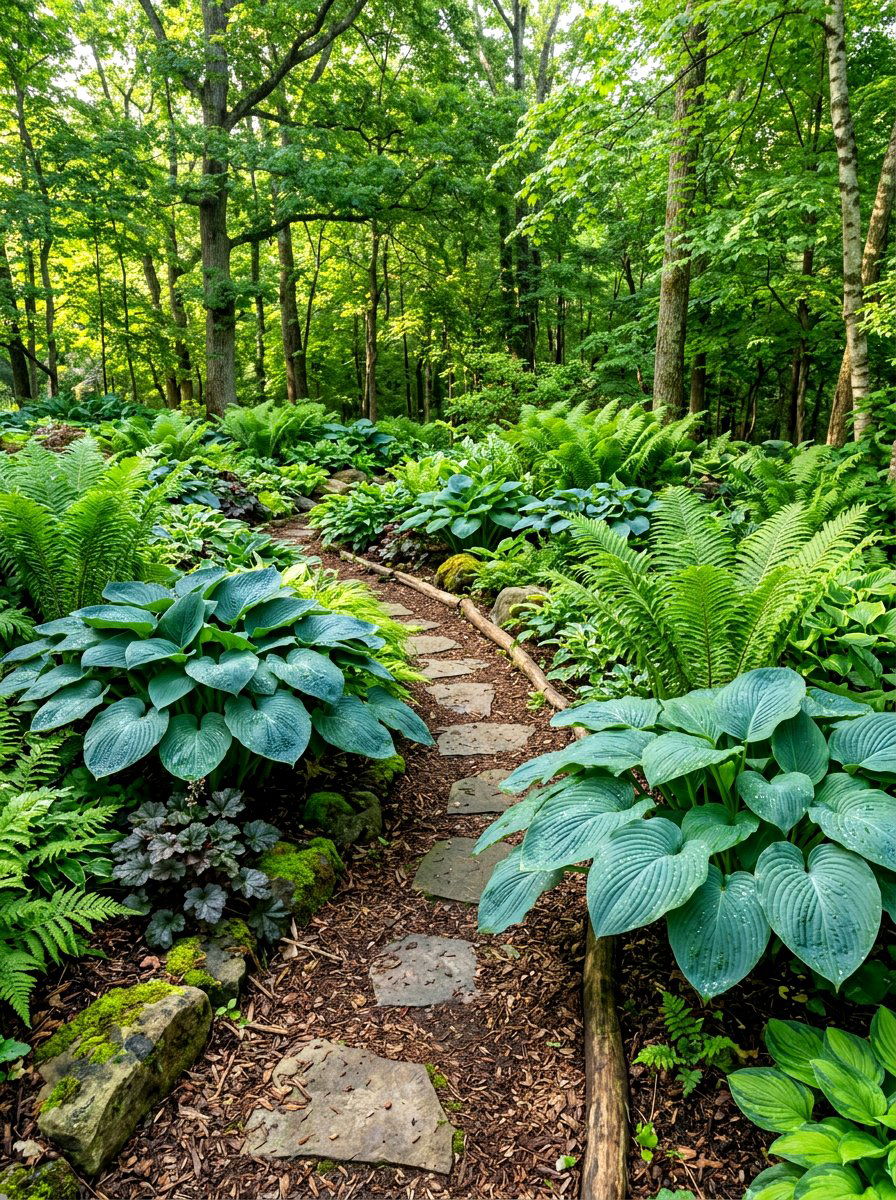
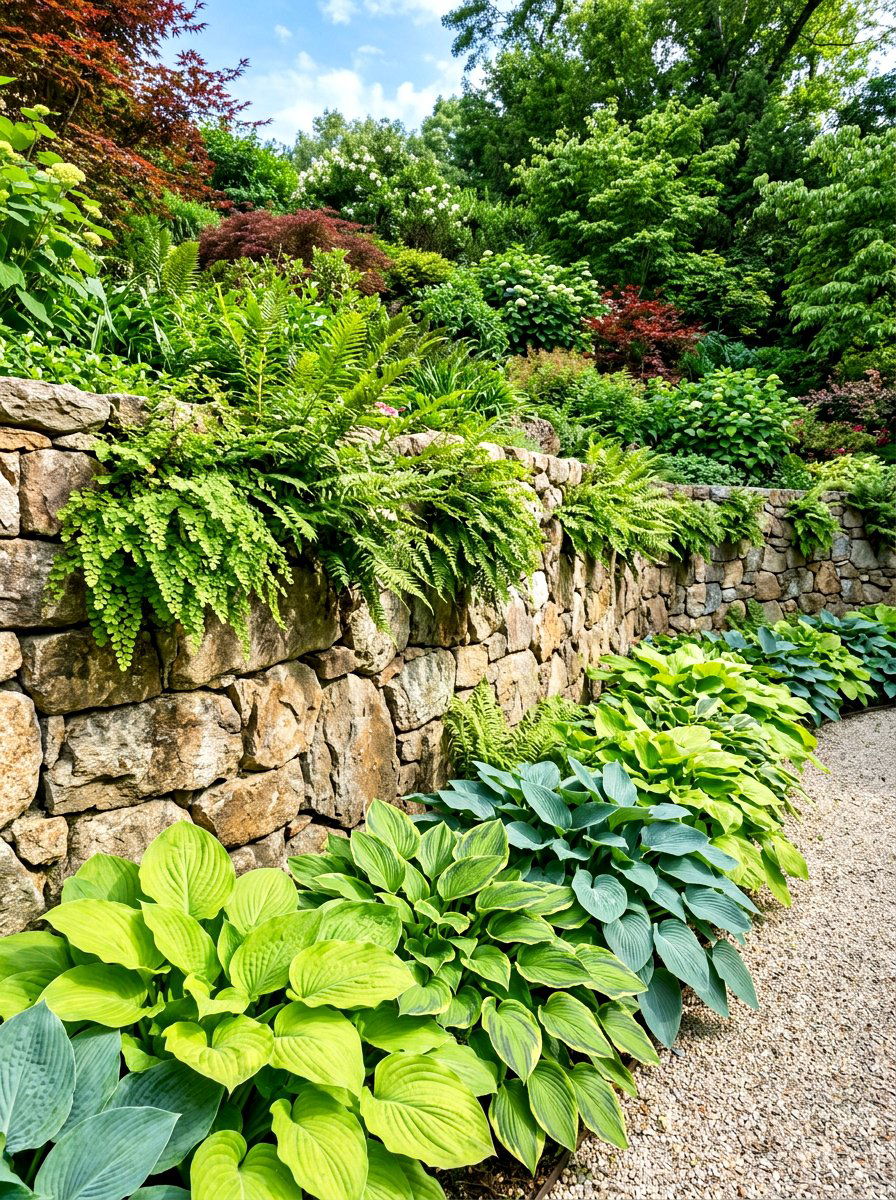
Combining hostas and ferns is a timeless strategy for creating a lush, prehistoric atmosphere in any shaded backyard corner. This design relies on the dramatic contrast between the broad, waxy leaves of hostas and the delicate, lacy fronds of various fern species. You can mix giant blue-leaved hostas with smaller variegated types to add depth and brightness to the space. Adding ostrich ferns or Japanese painted ferns provides a vertical element that softens the dense appearance of the hostas. This combination is exceptionally low-maintenance and thrives in moist, well-drained soil. It creates a cooling visual effect during the peak of summer, turning a once-empty spot into a vibrant green sanctuary.
2. Woodland path landscape
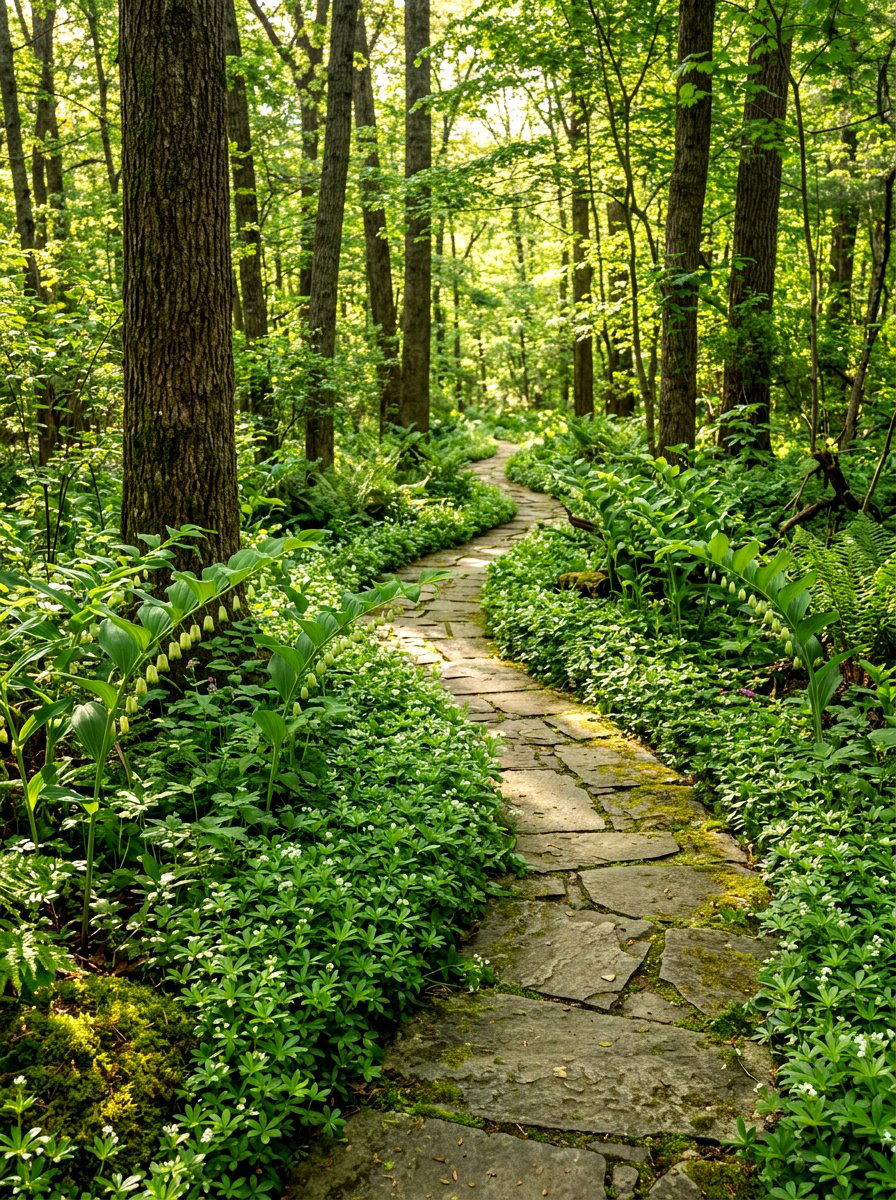
Designing a garden around a winding stone path is a beautiful way to organize a larger shaded area. This layout uses the walkway as an anchor, with layers of shade-loving perennials spilling over the edges for a naturalistic look. You might plant low-growing ground covers like creeping jenny or sweet woodruff right against the stones to soften the hard edges. Taller species like Solomon’s seal or goatsbeard can be placed further back to provide a sense of enclosure and privacy. The result is a serene, immersive experience that invites exploration while keeping the garden manageable. It works perfectly under a canopy of mature trees where dappled light filters through the leaves.
3. White flower shade border
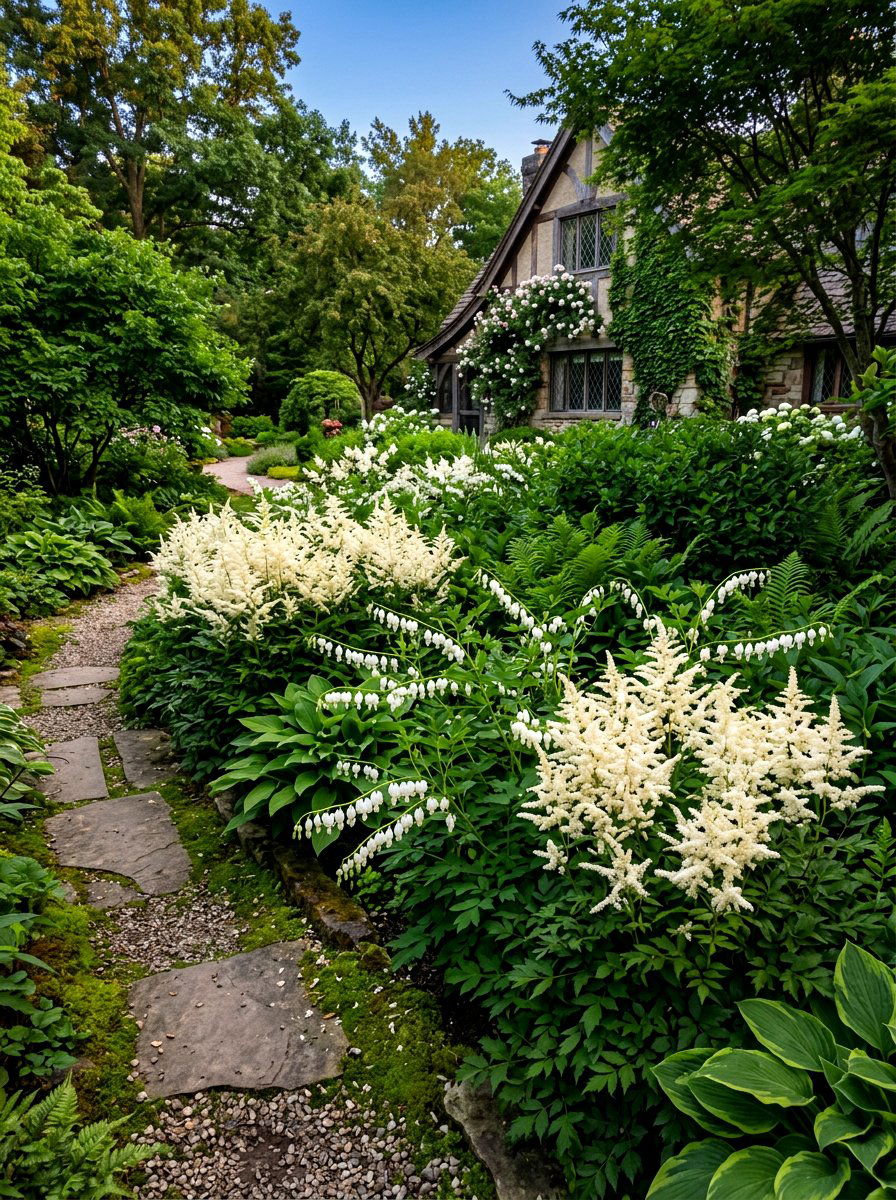
Focusing on white blooms is a clever design trick to brighten up the darkest parts of your property. A white flower border acts like a natural light reflector, making dim areas feel more expansive and inviting even at dusk. You can achieve this look by planting white-flowering perennials such as bleeding hearts, astilbe, and bugbane. These plants stand out sharply against dark green foliage or a mahogany-colored fence. Integrating variegated hostas with white edges can further enhance this illuminating effect. This theme creates a sophisticated and clean aesthetic that feels cool and refreshing. It is especially effective for gardens viewed from a patio or window during the evening hours.
4. Japanese forest grass landscape
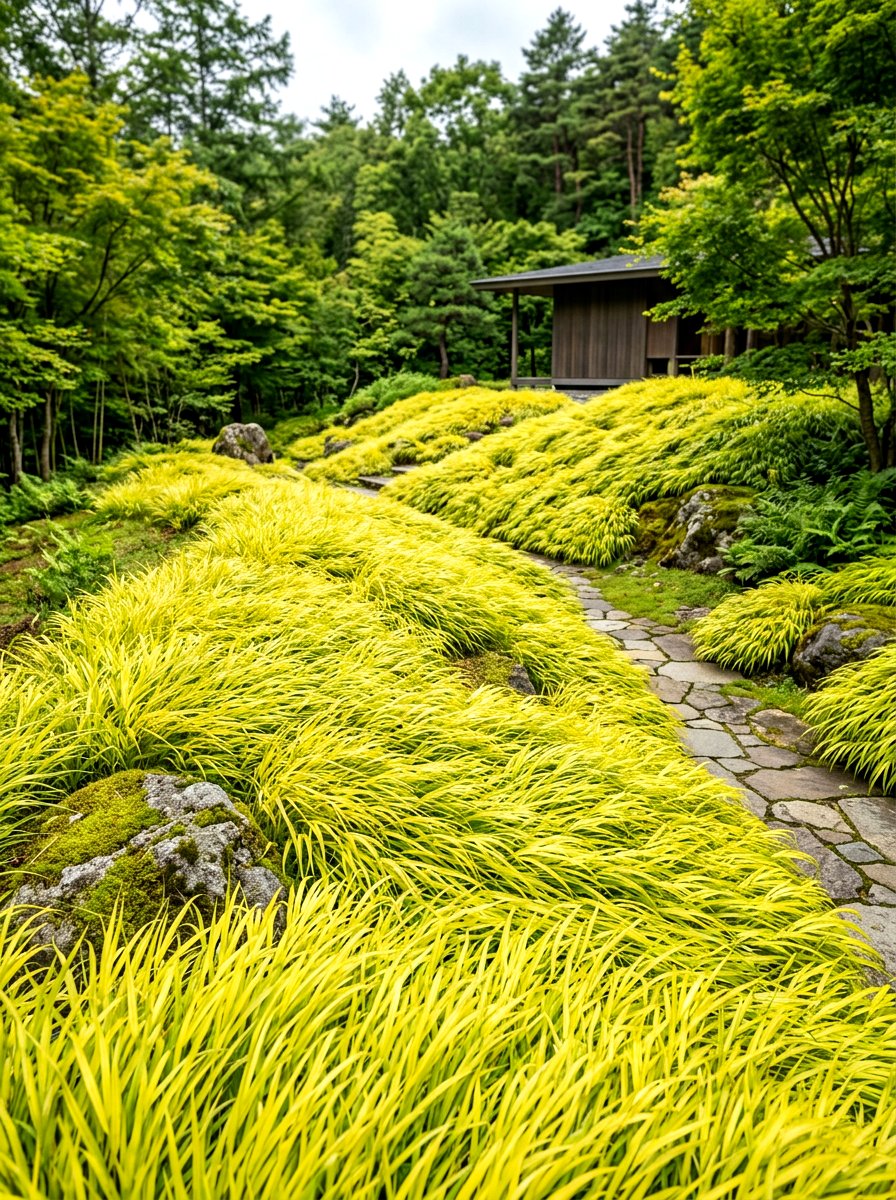
Using Japanese forest grass as a primary ground cover creates a stunning, flowing texture that mimics the appearance of a golden waterfall. This ornamental grass is one of the few that truly thrives in partial to full shade, offering a bright chartreuse color. When planted in large sweeps along a slope or garden edge, it moves beautifully with even the slightest breeze. You can pair it with dark-leaved perennials like black mondo grass or deep purple heuchera for a striking color contrast. This design feels modern and elegant, providing a soft carpet-like look that suppresses weeds effectively. It is a fantastic choice for adding light and movement to a stationary landscape.
5. Hellebore winter garden
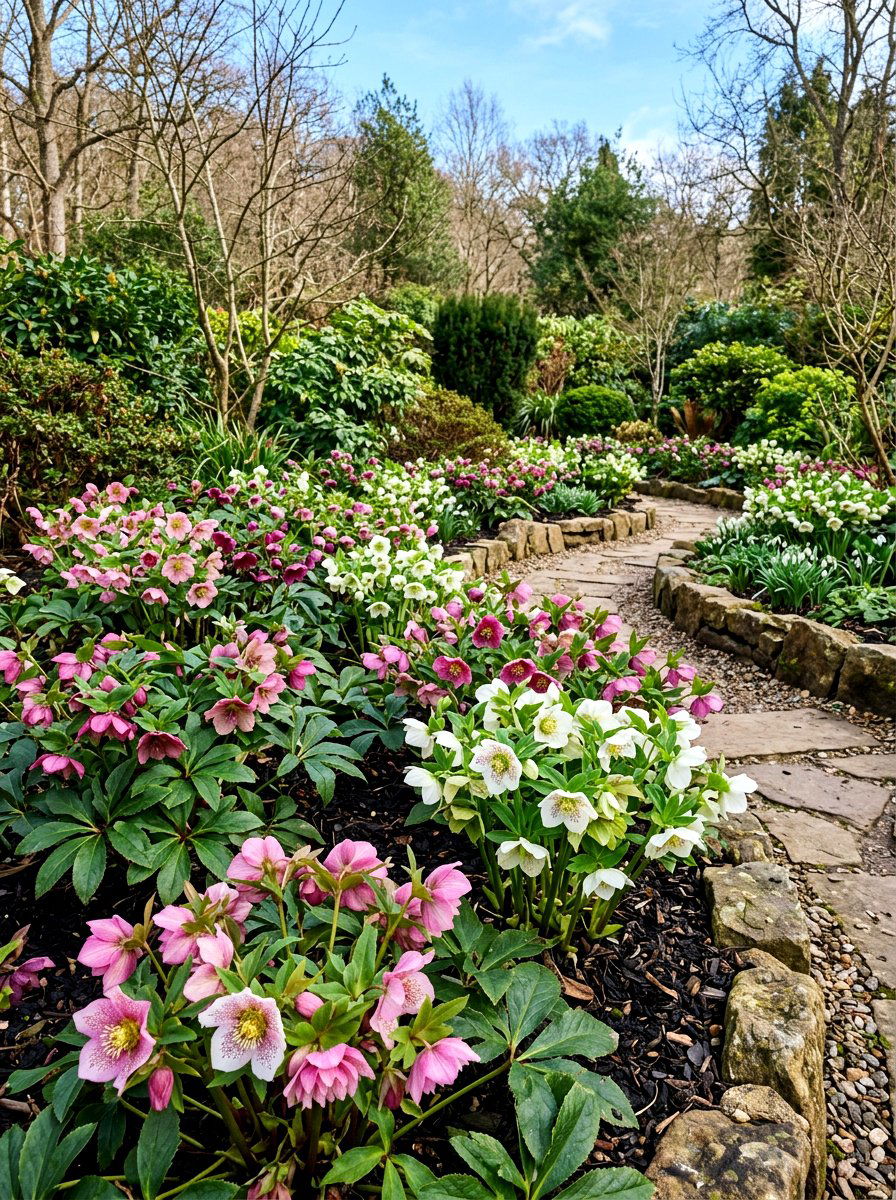
Incorporating hellebores allows you to enjoy a blooming garden when most other plants are still dormant in the winter. These sturdy perennials are often called Lenten roses because they bloom in late winter or very early spring, often pushing through the snow. A dedicated hellebore bed features leathery, evergreen foliage that stays green throughout the year, providing consistent structure. By mixing different hybrid varieties, you can showcase flowers in shades of dusty pink, deep maroon, and creamy white. Planting them near a walkway or entryway ensures you see their subtle, nodding blooms during the colder months. This design provides much-needed cheer and texture when the rest of the garden is sleeping.
6. Astilbe color garden
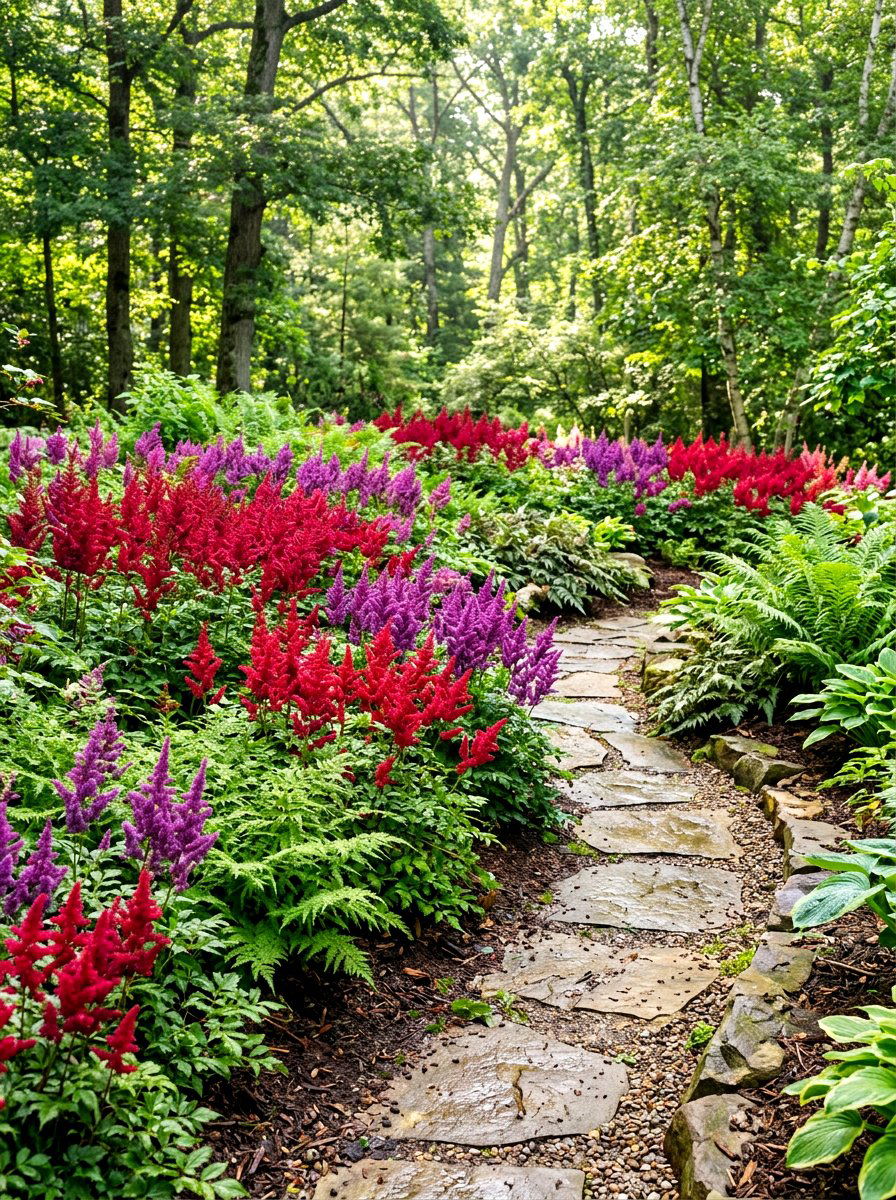
Creating a garden centered on astilbe is the perfect way to add vertical interest and vibrant color plumes to damp, shady spots. These perennials are known for their feathery flower spikes that rise well above their fern-like foliage in mid-summer. You can arrange them in clusters of varying heights and colors, ranging from soft whites and pinks to intense reds and purples. Placing them in groups creates a powerful visual impact that draws the eye toward the back of a border. They pair exceptionally well with larger foliage plants like ligularia or umbrella plants. Because they love moisture, they are ideal for areas with slower drainage or near a backyard water feature.
7. Variegated foliage garden
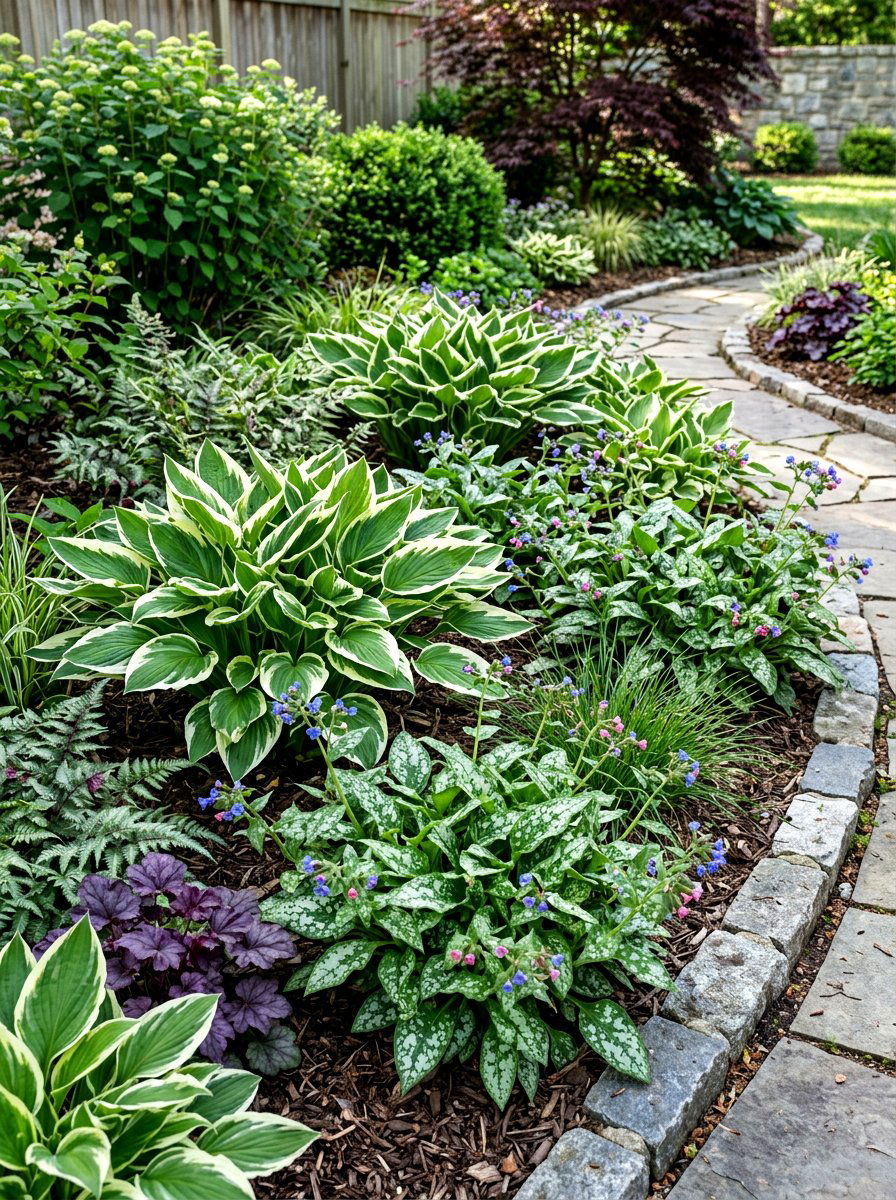
Prioritizing variegated foliage is a brilliant way to ensure your garden looks interesting even when nothing is currently in bloom. This design concept uses plants with multi-colored leaves, such as cream-edged hostas, silver-spotted lungwort, and striped sedges. By mixing different patterns of variegation, you create a complex tapestry of light and shadow that keeps the eye moving. The white or yellow parts of the leaves catch what little light is available, making the entire area feel more energetic. This approach is highly effective for long, narrow side yards where space is limited but visual impact is desired. It offers a consistent, high-contrast look that lasts from early spring until the first frost.
8. Shade ground cover carpet
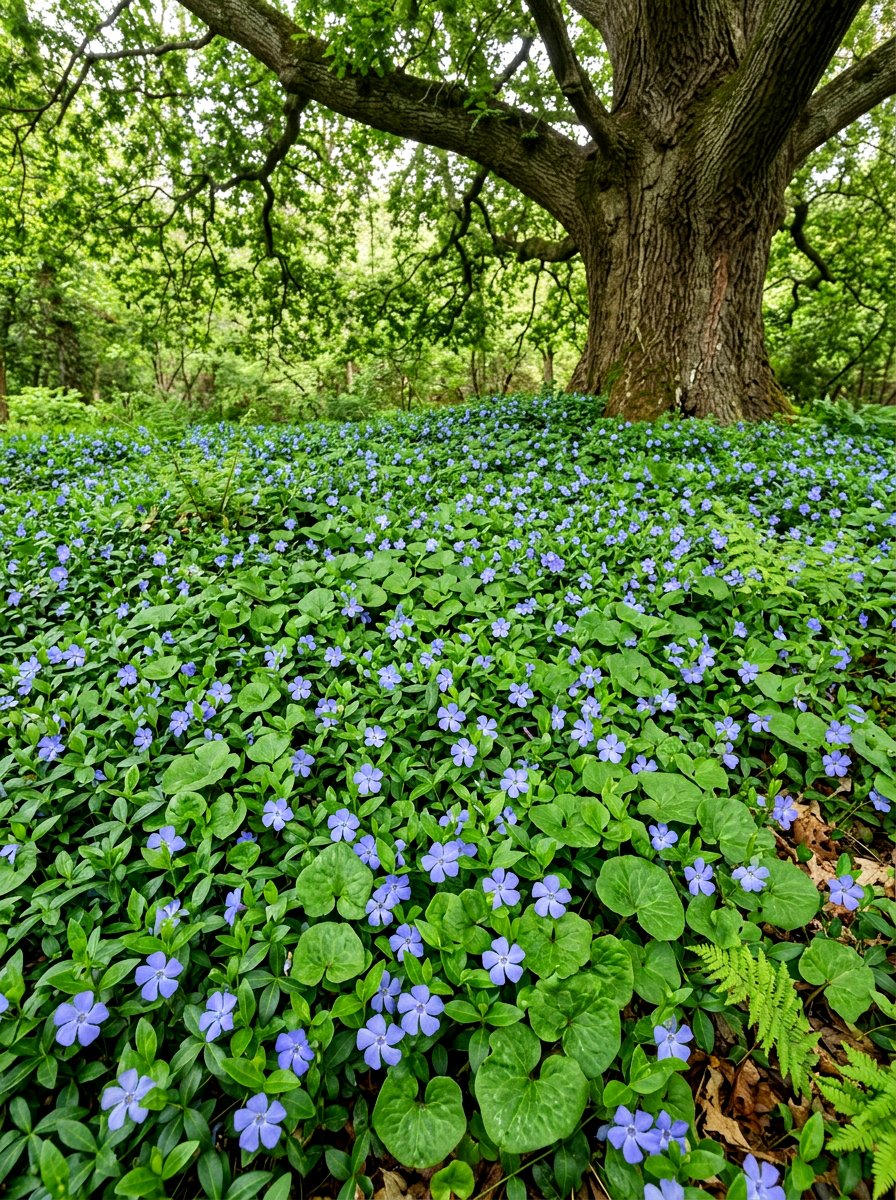
Establishing a dense carpet of ground covers is an excellent solution for large shady areas where grass refuses to grow. Instead of fighting with a patchy lawn, you can plant a mix of low-growing perennials like periwinkle, wild ginger, or pachysandra. This creates a uniform, lush green floor that requires very little maintenance once established. You can intersperse these covers with spring-flowering bulbs like snowdrops or scilla for early season interest. This design is particularly useful for preventing soil erosion on shaded slopes or under dense tree canopies. It provides a clean, organized look that ties together different parts of the landscape while keeping weeds at bay effortlessly.
9. Bleeding heart cottage garden
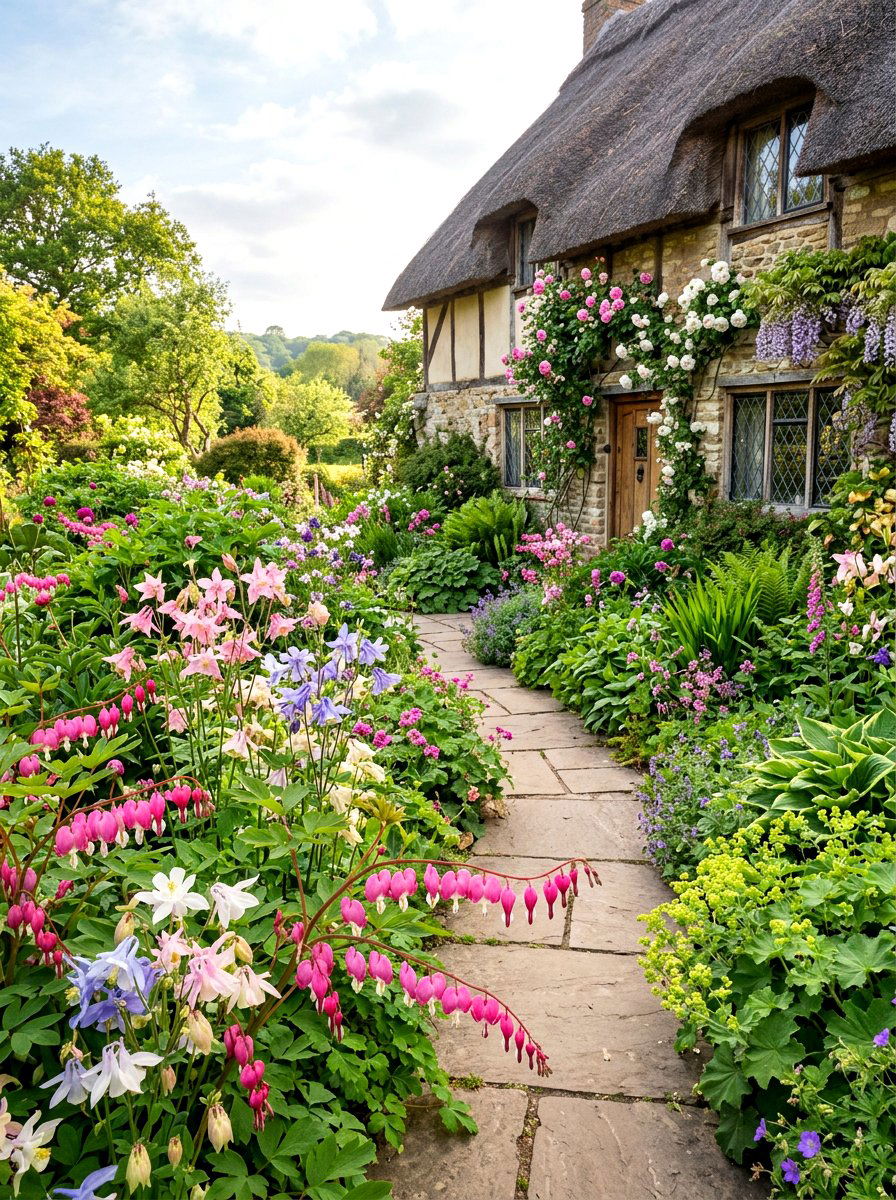
Bringing a touch of romance to the shade is easy with a garden focused on old-fashioned bleeding hearts. These perennials are beloved for their arching stems and delicate, heart-shaped flowers that dangle in the breeze. A cottage-style shade garden uses these as a focal point, surrounded by other soft textures like columbine and forget-me-nots. The whimsical appearance of the blooms adds a sense of nostalgia and charm to any backyard. Since bleeding hearts often go dormant in the heat of summer, it is important to plant them alongside ferns or hostas that will fill the gap. This layered approach ensures the garden remains full and beautiful throughout the entire growing season.
10. Heuchera rainbow border
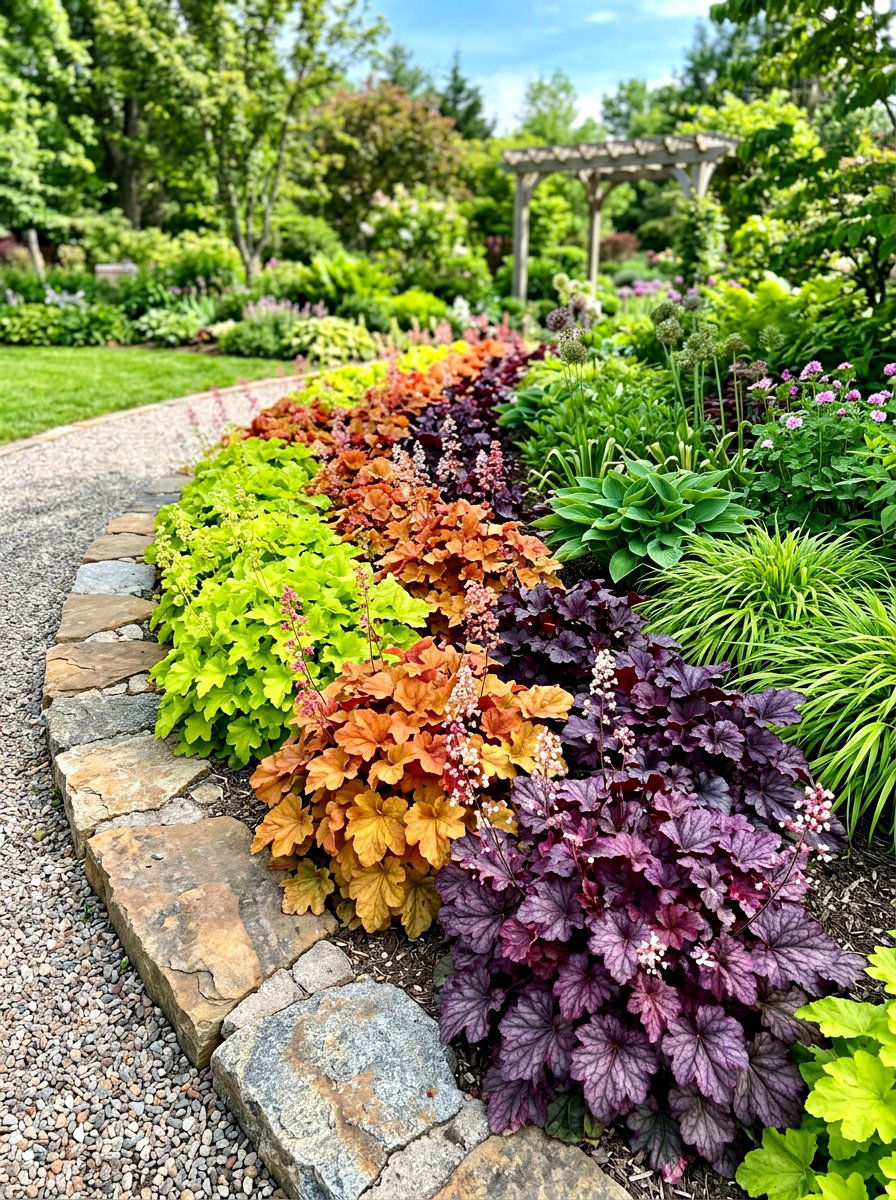
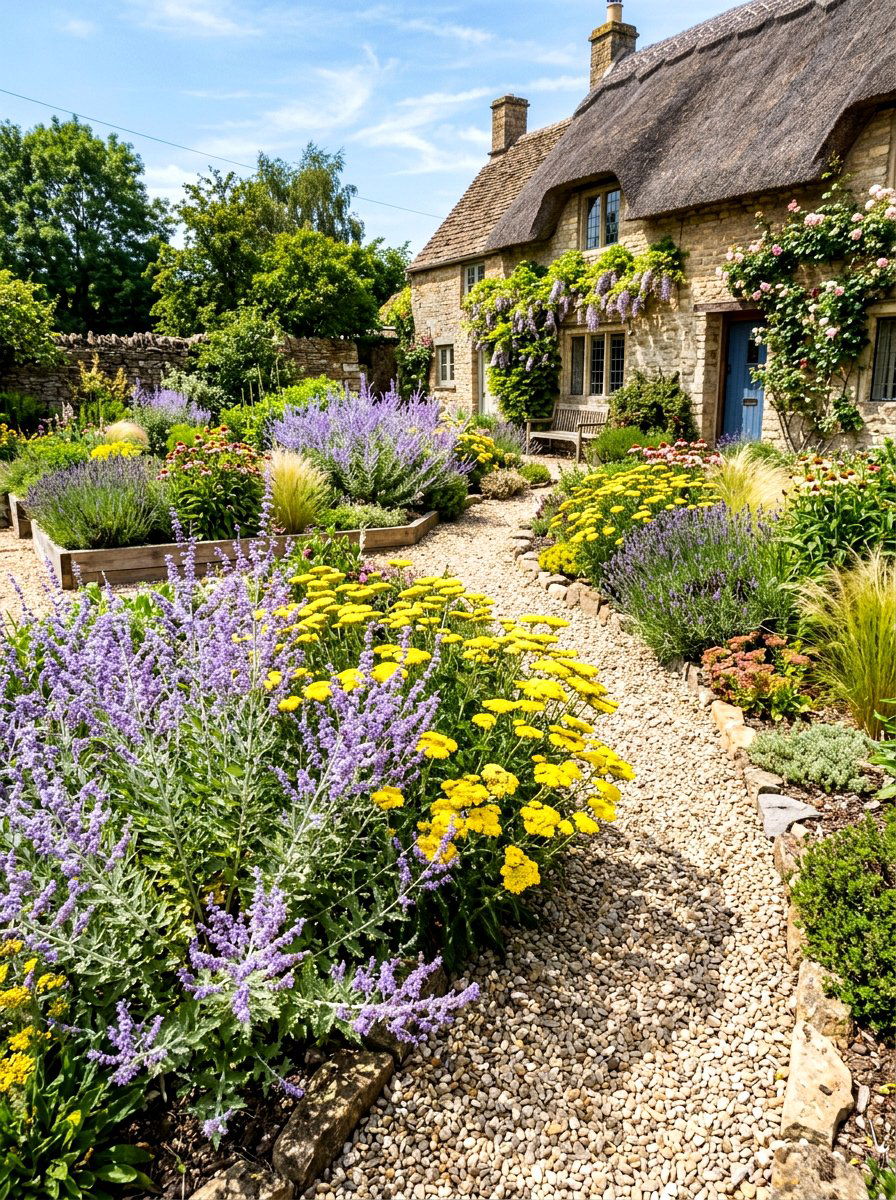
Designing a border using heuchera, also known as coral bells, allows you to play with an incredible spectrum of foliage colors. These perennials come in shades of lime green, burnt orange, deep burgundy, and even silver-purple. By planting a variety of these colors in a staggered row, you create a "rainbow" effect that brightens any walkway or patio edge. The foliage is often semi-evergreen, meaning it provides color well into the winter months in many climates. They have a neat, mounding habit that makes them perfect for defining the front edge of a garden bed. Their small, airy flower wands also attract hummingbirds, adding life and movement to your space.
11. Hydrangea shade garden
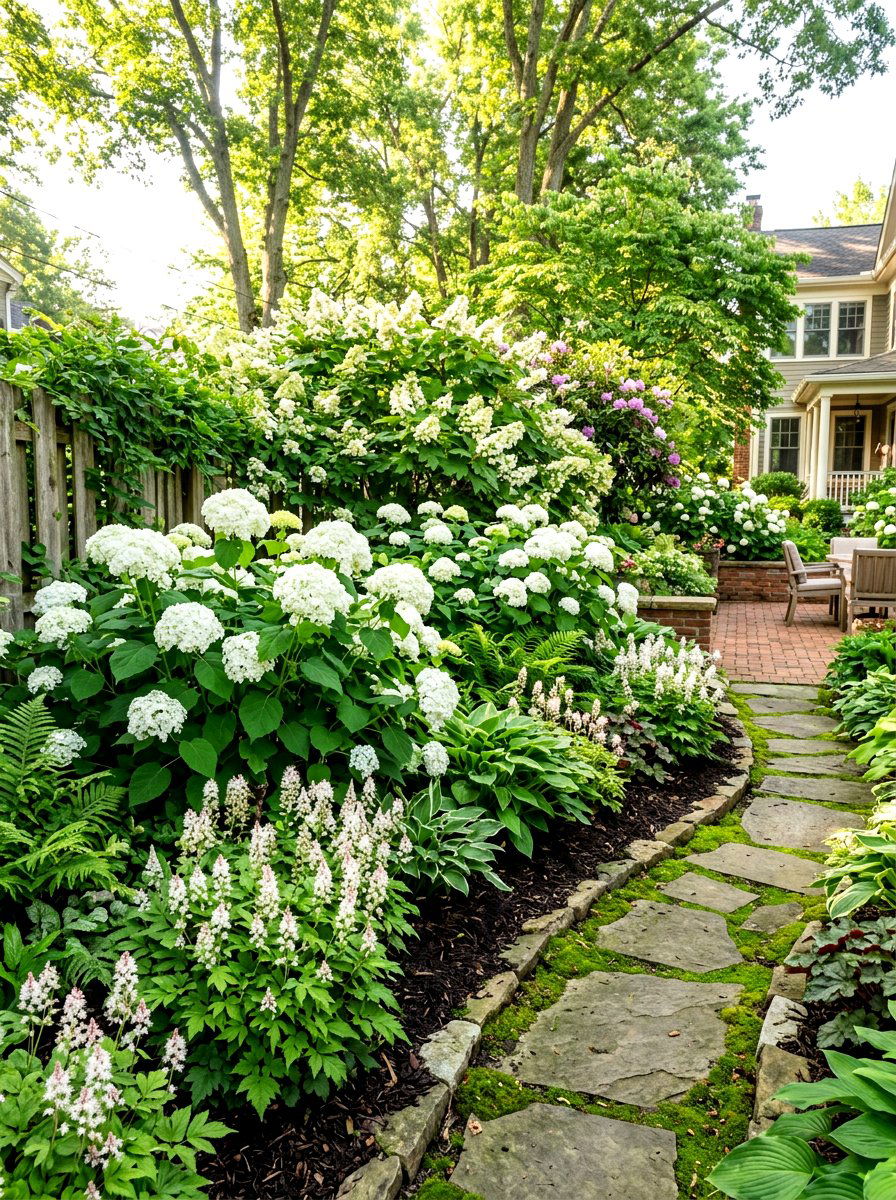
Focusing on hydrangeas allows you to introduce large, dramatic blooms and a shrub-like structure to your shaded perennial beds. Species like the oakleaf hydrangea or smooth hydrangea thrive in partial shade and provide a strong architectural presence. You can underplant these large shrubs with smaller perennials like foamflower or wild geranium to create a full, layered look. The massive flower heads provide a stunning focal point during the summer months and can even be left on the plant for winter interest. This design is ideal for creating a natural screen or a lush backdrop for a seating area. It combines the permanence of woodier plants with the seasonal beauty of classic perennials.
12. Fern glen backyard
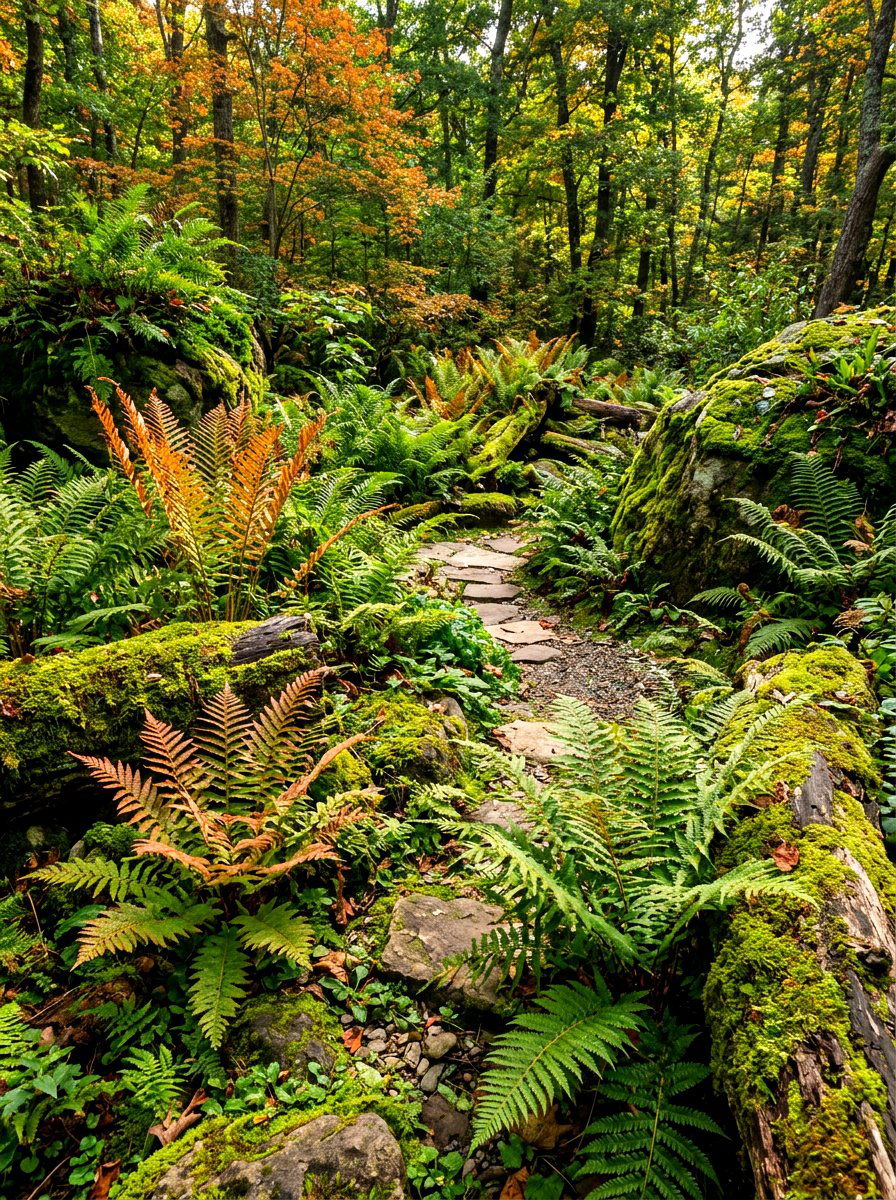
Transforming a low-lying or damp area into a fern glen creates a cooling and immersive green environment that feels like a forest floor. This design uses a high density of various fern types, such as cinnamon ferns, autumn ferns, and lady ferns, to create a textured canopy of green. Using different heights and frond shapes adds complexity to the space without needing bright flowers. You can add a few moss-covered logs or large boulders to enhance the natural, woodland feel of the area. This type of garden is incredibly peaceful and provides a quiet retreat from the sun. It is a low-effort way to beautify a spot where most other plants might struggle.
13. Moss garden path
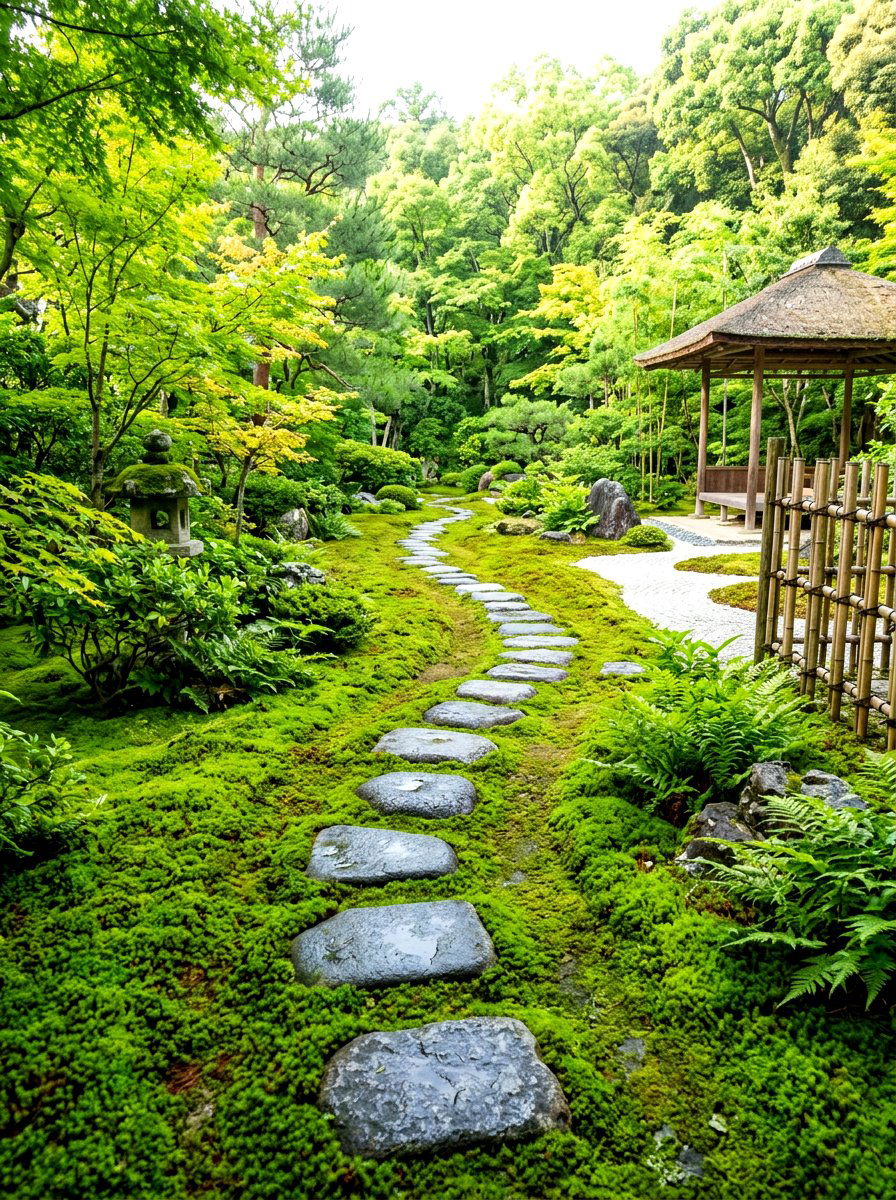
Embracing moss as a primary design element creates a serene, Zen-like atmosphere that is perfect for very deep shade. A moss garden path uses smooth stones or pavers surrounded by thick, velvety carpets of emerald green moss. This look is highly evocative of traditional Japanese gardens and feels incredibly soft and established. You can accent the moss with small, delicate perennials like primrose or miniature hostas to add tiny pops of color. Because moss thrives on moisture and shade, it is the perfect solution for areas with compacted soil or heavy tree cover. It creates a dreamlike, quiet space that requires no mowing and very little tidying to remain beautiful.
14. Tropical shade garden
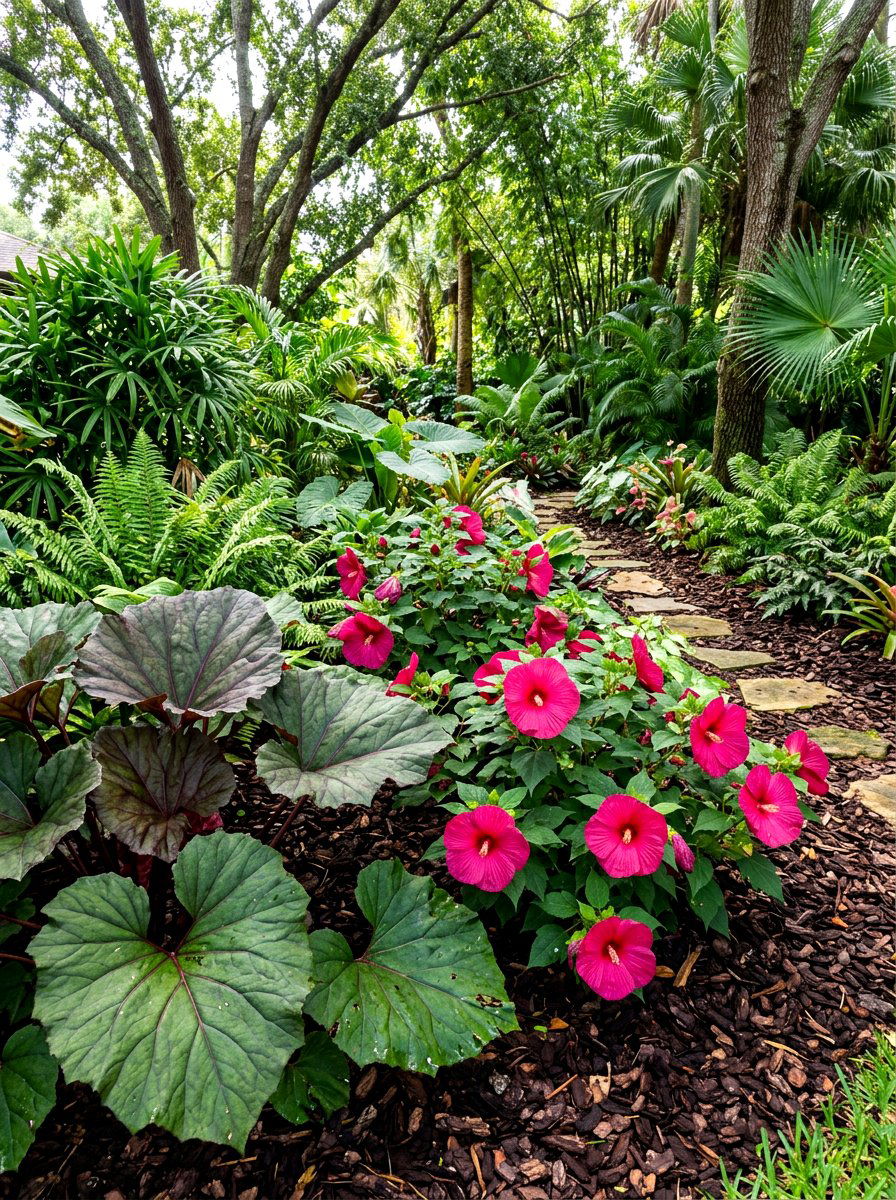
Creating a tropical-inspired look in a shaded area is possible by using perennials with massive, bold leaves. Plants like ligularia, rodgersia, and even hardy hibiscus can give the impression of a lush jungle. These plants often feature deep green or bronze foliage and unique flower structures that demand attention. To complete the look, you can integrate large-leafed hostas and tall ferns to add layers of density. This design theme works well in warm, humid corners or near a swimming pool where a bold aesthetic is desired. Using dark mulch or black decorative stones can make the vibrant greens of the foliage pop even more. It is a high-impact style for adventurous gardeners.
15. Wildflower woodland garden
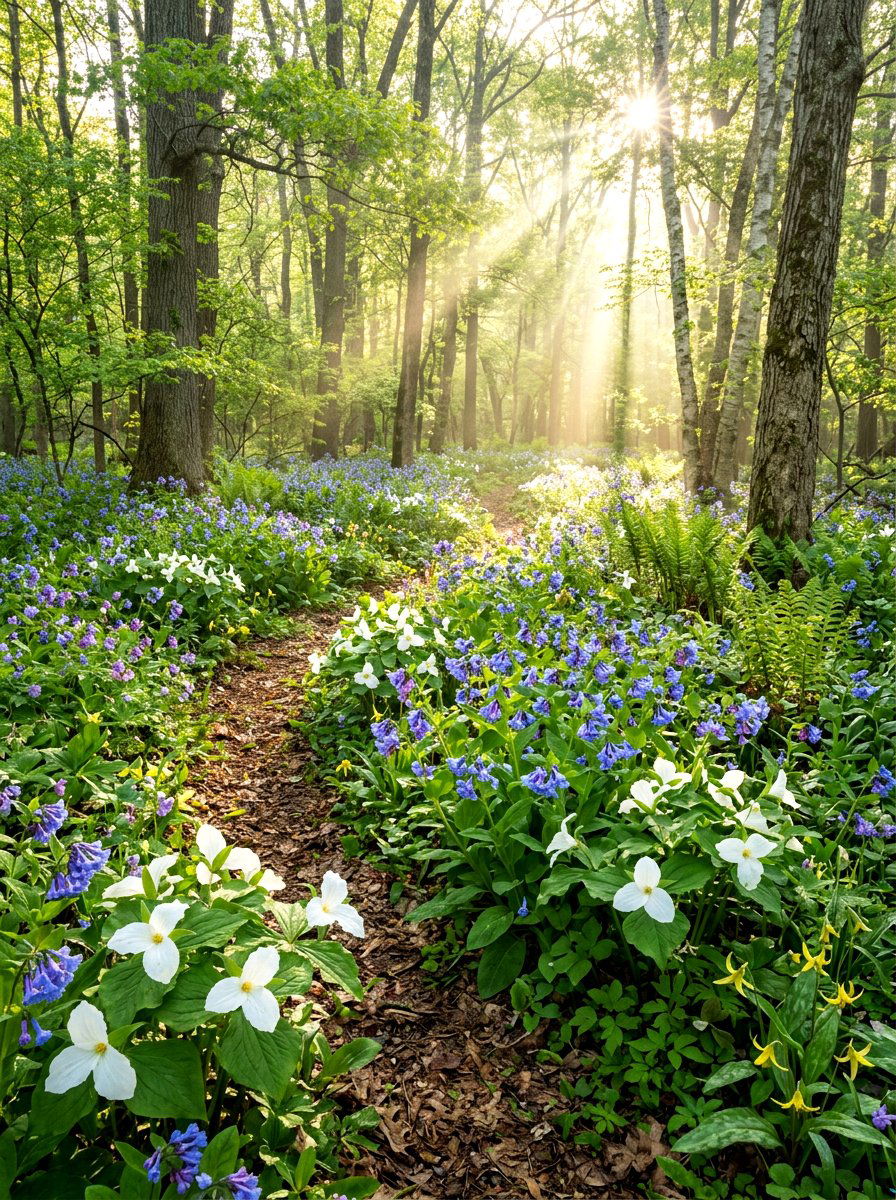
A wildflower woodland garden focuses on native perennials that naturally thrive under the protection of tall trees. This design prioritizes a relaxed, unmanicured look using plants like trillium, Virginia bluebells, and jack-in-the-pulpit. These species often bloom in the spring before the tree canopy fully fills out, providing a burst of early-season color. By allowing the plants to self-seed and spread naturally, you create an authentic ecosystem that supports local pollinators. This approach is perfect for larger properties where you want a garden that feels like part of the existing landscape. It is a sustainable and low-maintenance way to bring life to a previously neglected or overgrown wooded area.
16. Modern minimalist shade garden
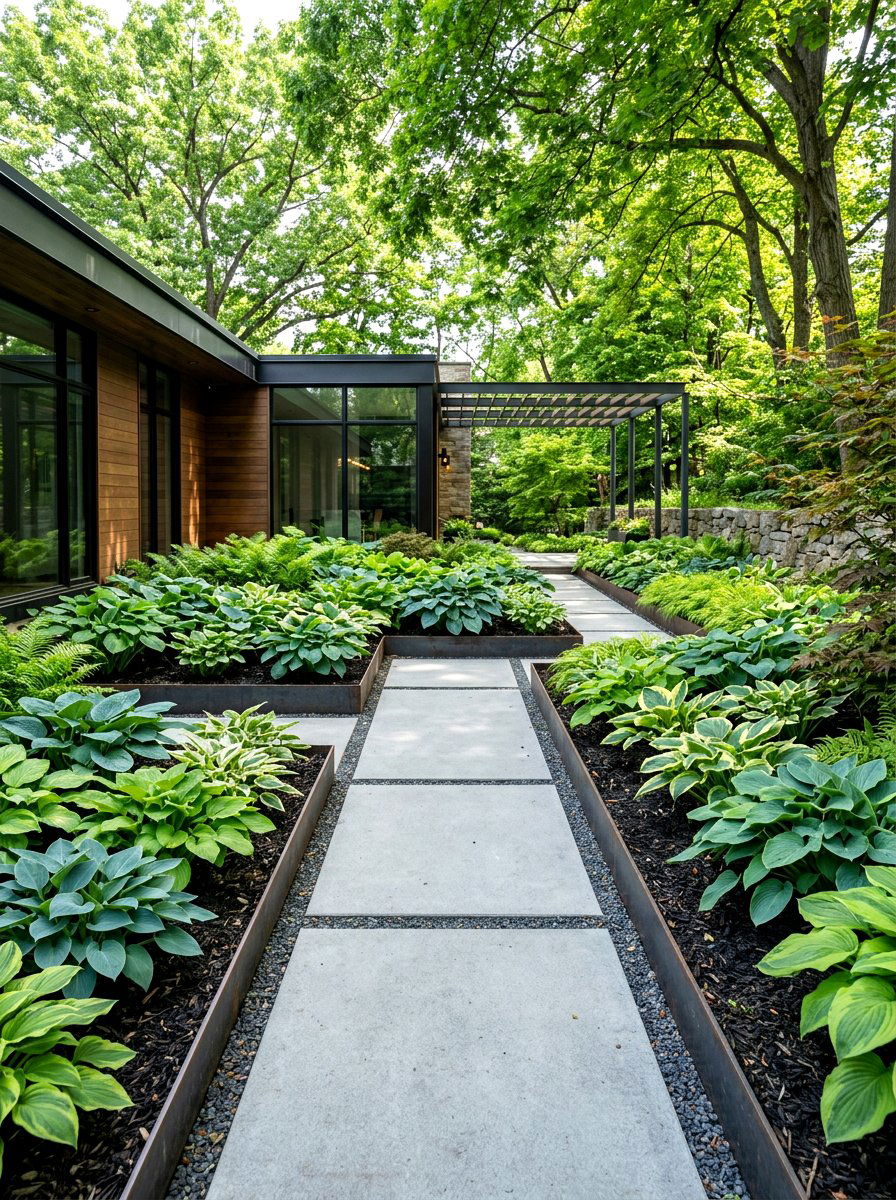
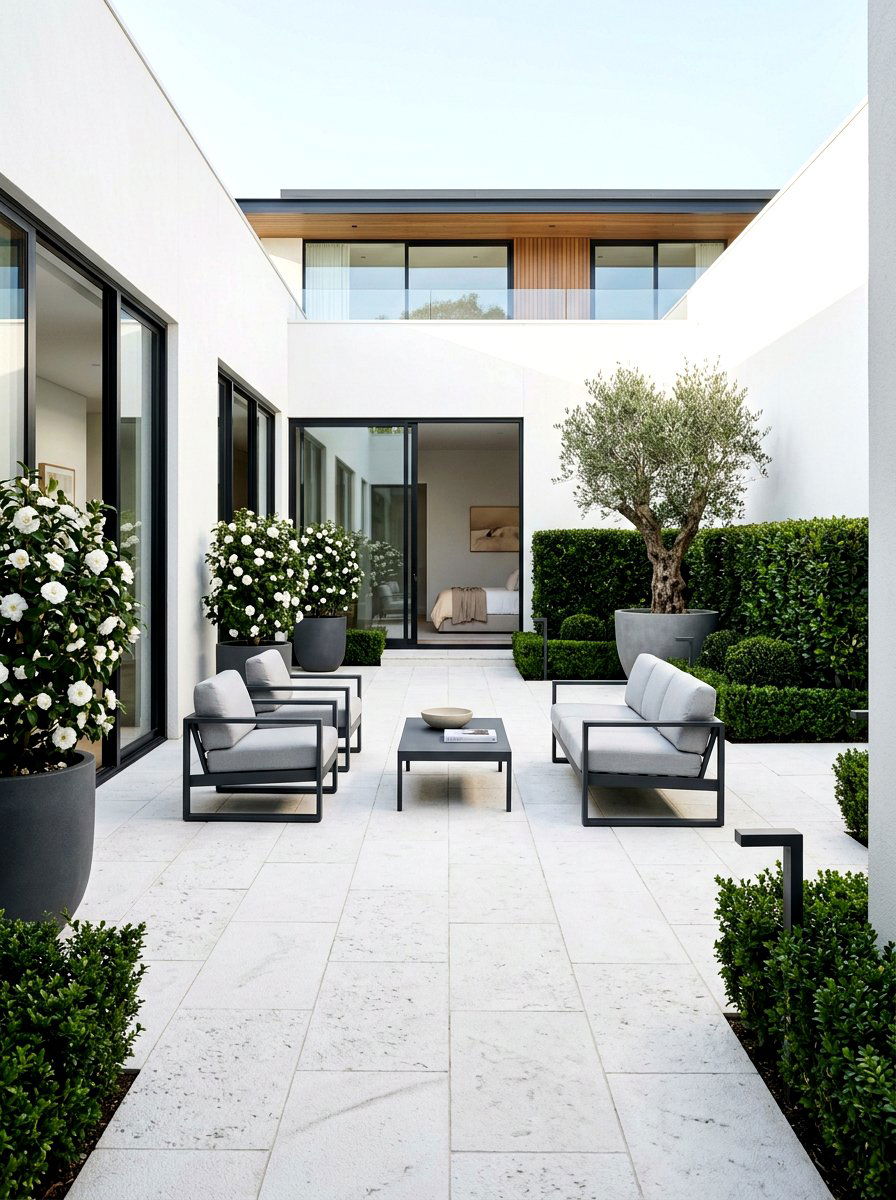
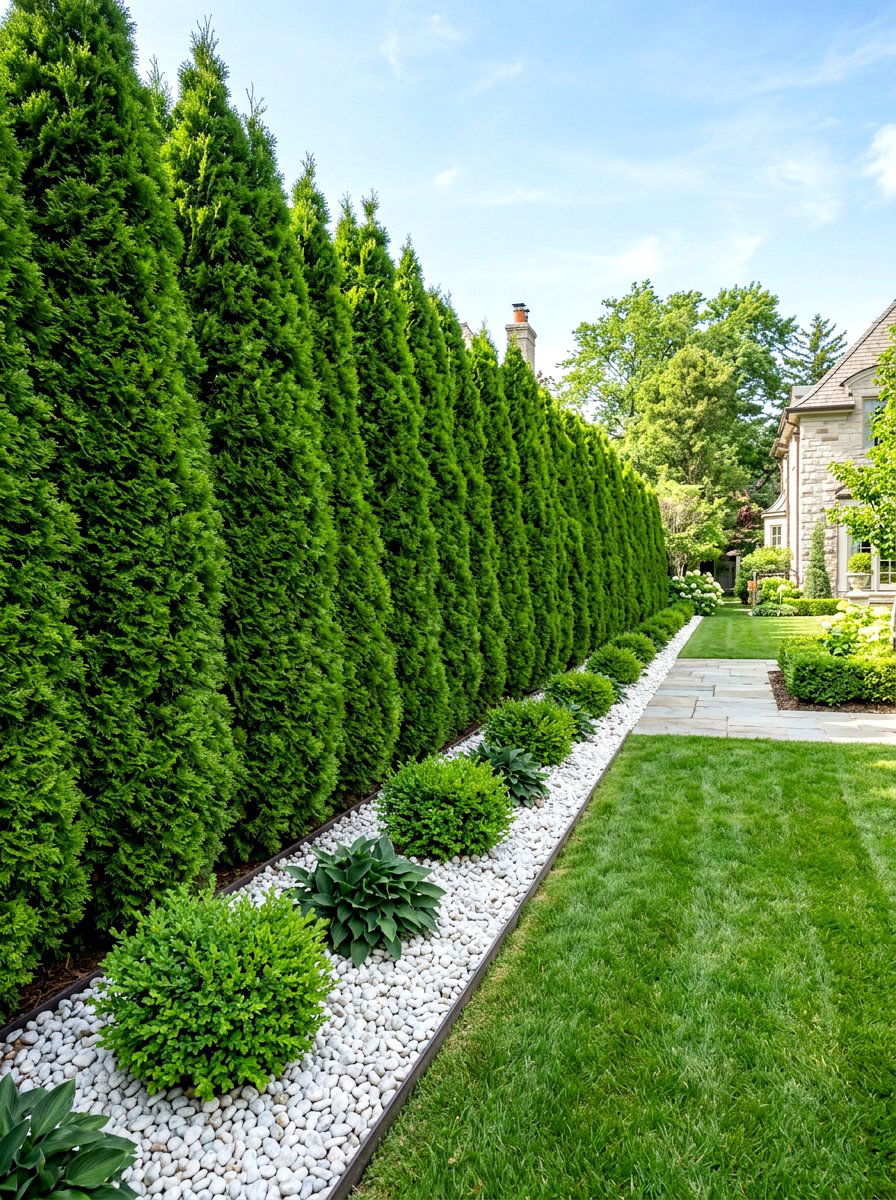
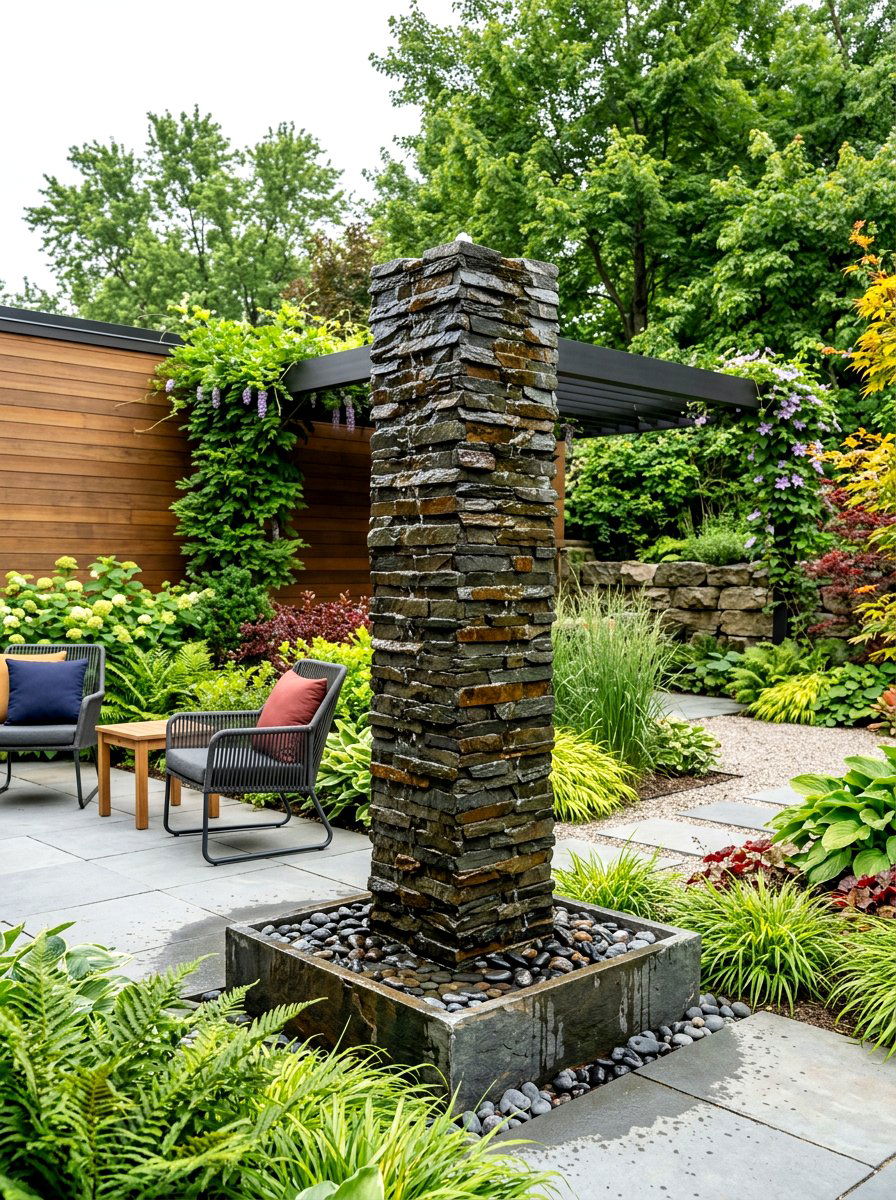
Designing a modern shade garden involves using a limited palette of plants and clean, geometric lines to create a sophisticated look. This style often features mass plantings of a single species, such as a large square of uniform hostas or a long row of Japanese forest grass. Using structural elements like steel edging, concrete planters, or slate chips helps define the space and adds a contemporary feel. The focus is on form and texture rather than a variety of colors. This design is perfect for urban backyards or side entries where a tidy, organized appearance is important. It proves that shade gardens can be just as sleek and stylish as sunny, modern landscapes.
17. Shade container garden
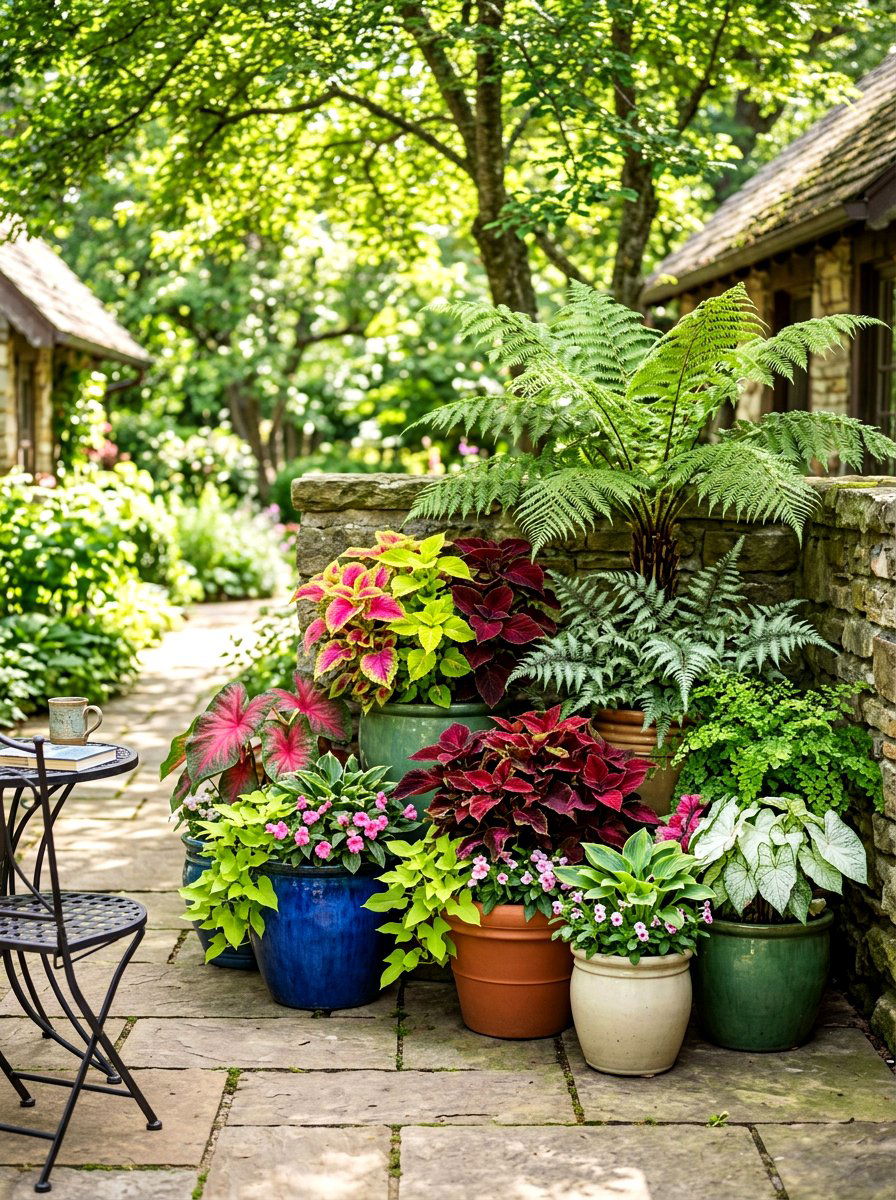
Utilizing containers is a great way to bring life to a shaded patio, balcony, or porch where ground space is limited. A shade container garden allows you to mix and match different perennials in stylish pots to create a portable oasis. You can use tall ferns as a "thriller, " colorful heuchera as a "filler, " and trailing periwinkle as a "spiller. " This layering technique ensures the pots look full and professional. Containers also make it easy to control soil quality and moisture levels, which is ideal for finicky shade plants. Moving the pots around allows you to change the look of your outdoor space throughout the season with minimal effort.
18. Caladium shade bed
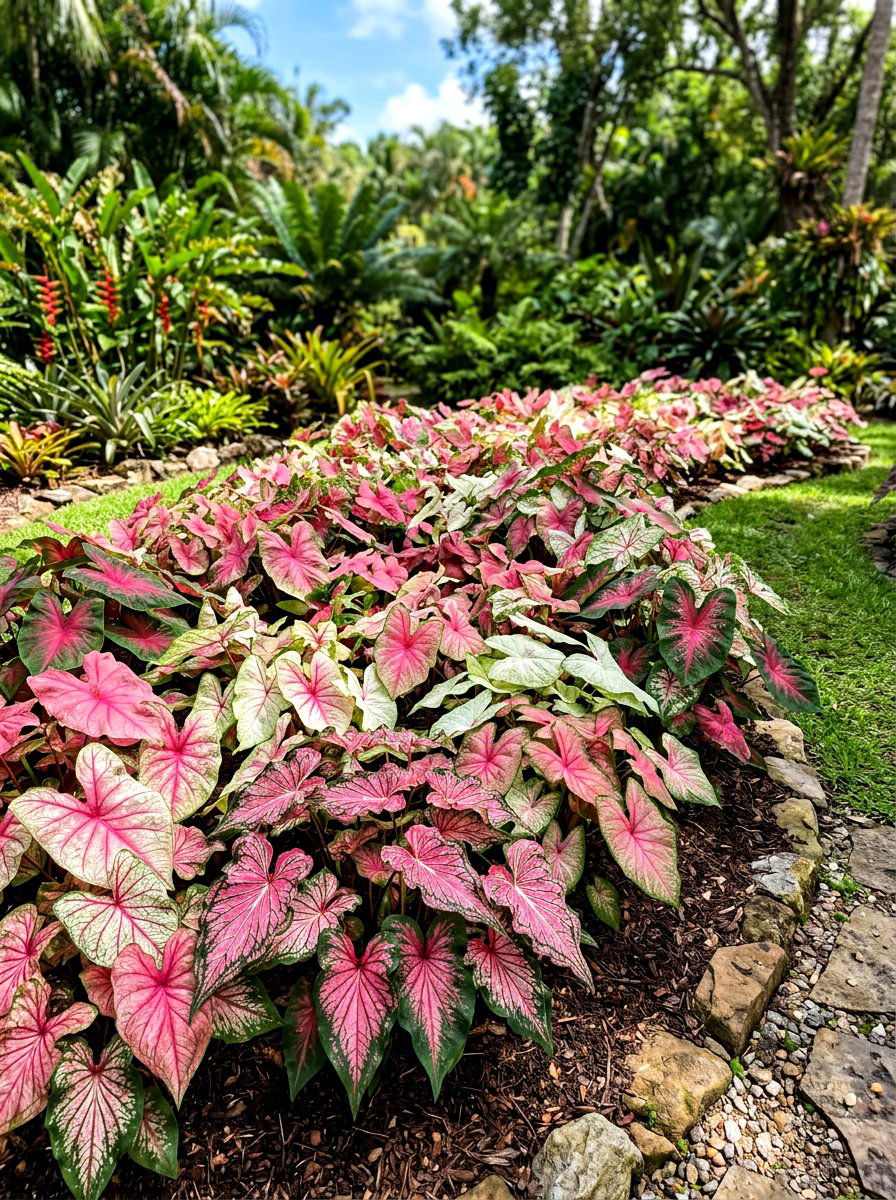
Focusing on caladiums provides a fast way to inject bright, almost neon colors into a shaded garden bed. While often grown as annuals in colder zones, they are spectacular perennials in warmer climates that offer heart-shaped leaves in white, pink, and red. Planting them in large groups creates a vibrant focal point that looks like a living painting. You can border these colorful beds with dark green liriope or ivy to make the bright leaves stand out even more. Caladiums thrive in the heat and humidity of summer, making them a great choice for brightening up a dark corner during the peak of the growing season. They bring a cheerful, energetic vibe.
19. Japanese maple shade garden
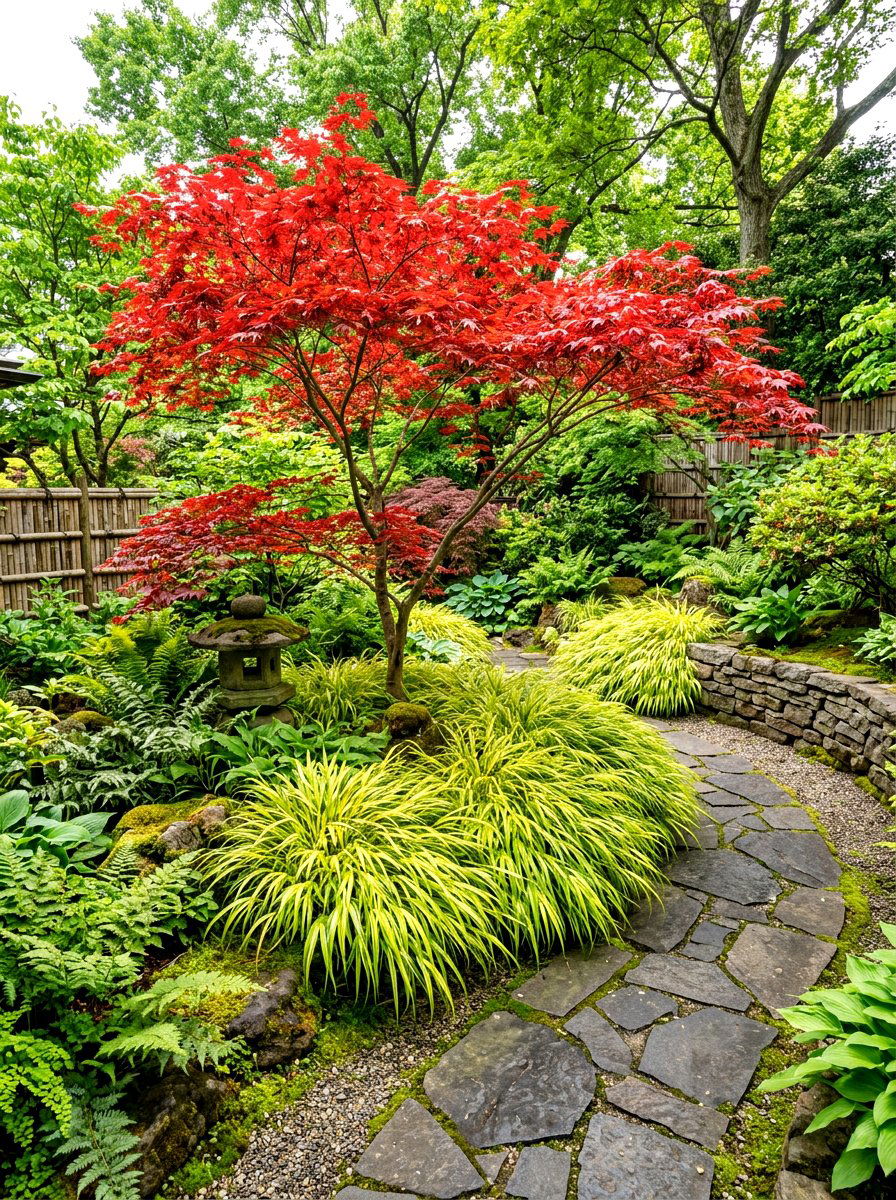
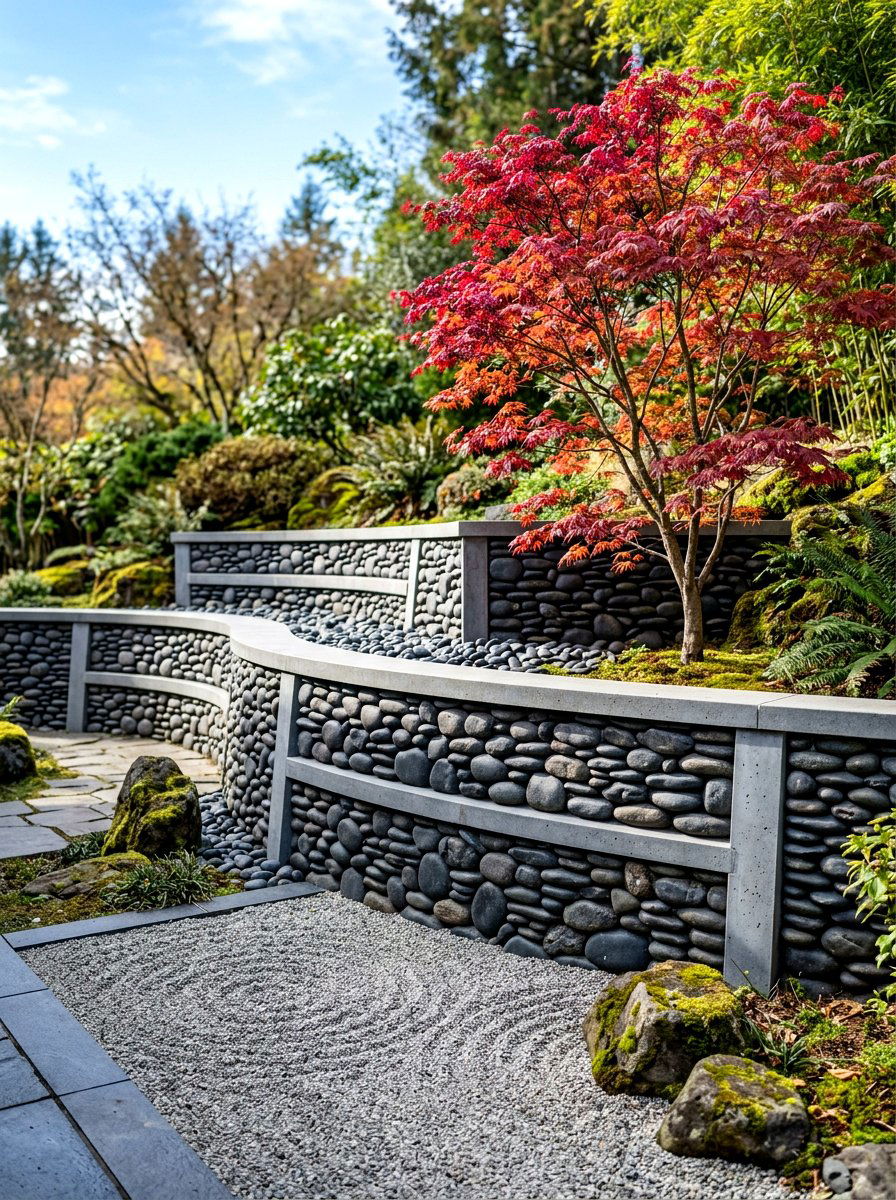
Designing a garden around a specimen Japanese maple provides a beautiful structural anchor for a shaded landscape. These small trees are famous for their intricate leaf shapes and stunning fall colors, ranging from gold to deep crimson. Underneath the delicate canopy of the tree, you can plant low-profile perennials like hakone grass or dwarf crested iris. This creates a multi-layered effect that looks intentional and artistic. The fine texture of the maple leaves contrasts beautifully with the broader leaves of hostas or the leathery foliage of hellebores. This design is perfect for a small courtyard or a focal point in a backyard, offering year-round beauty and architectural interest.
20. Tiarella foamflower garden
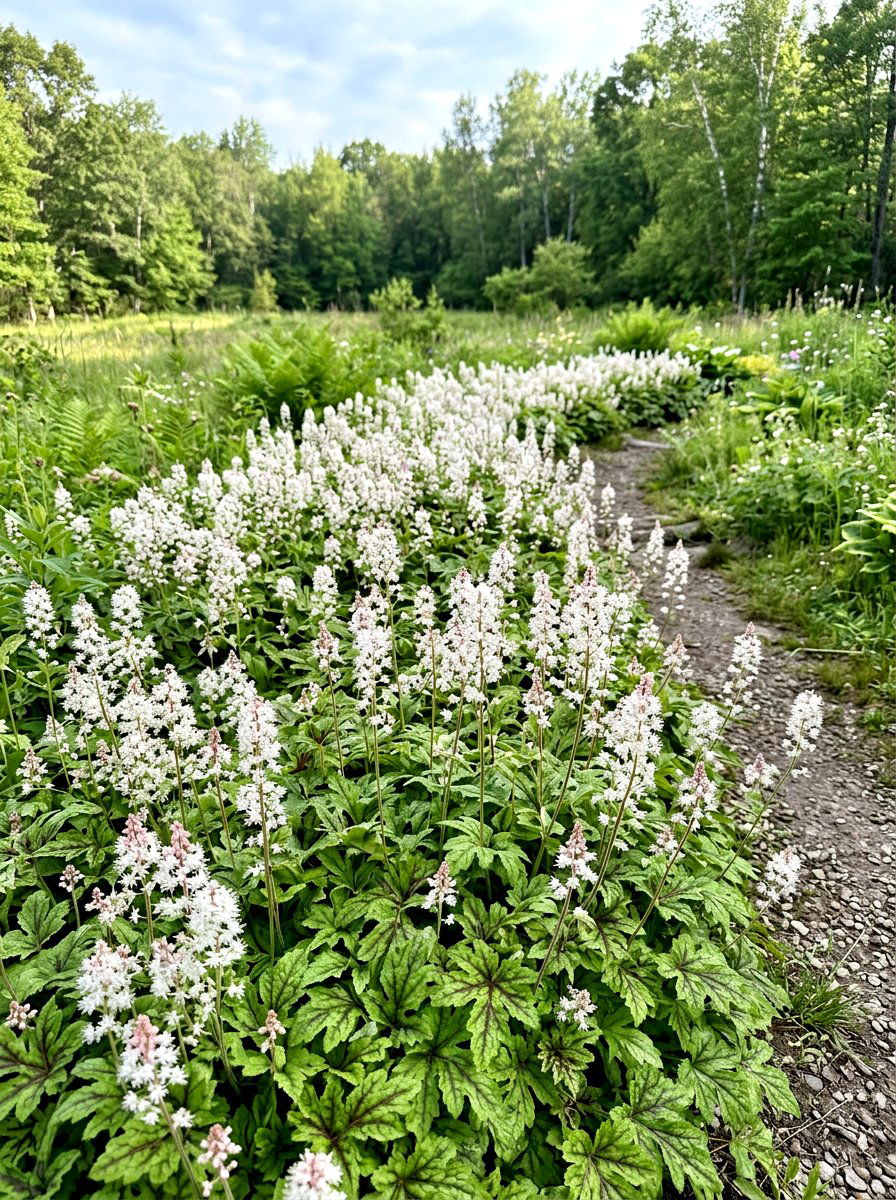
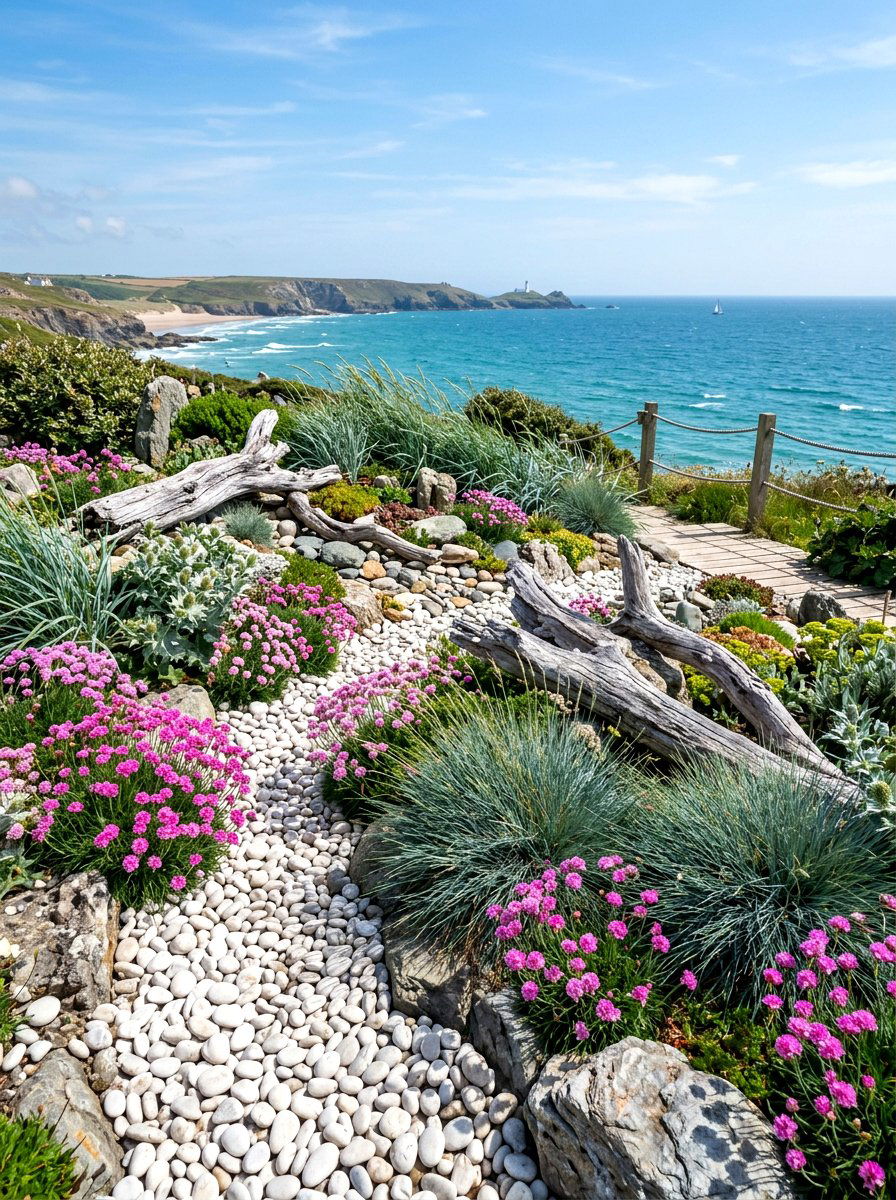
Using foamflowers as a primary ground cover adds a whimsical and airy feel to any shaded border. These native perennials feature deeply lobed leaves that often have dark maroon centers, providing visual interest even when flowers are absent. In the spring, they produce spikes of tiny, frothy white or pink flowers that look like a dusting of foam over the foliage. Planting them in large drifts creates a soft, cloud-like effect that lightens up the forest floor. They are very easy to grow and spread gently to fill in gaps between larger shrubs or trees. This design is perfect for gardeners who appreciate subtle beauty and want to support local wildlife.
21. Solomon's seal shade border
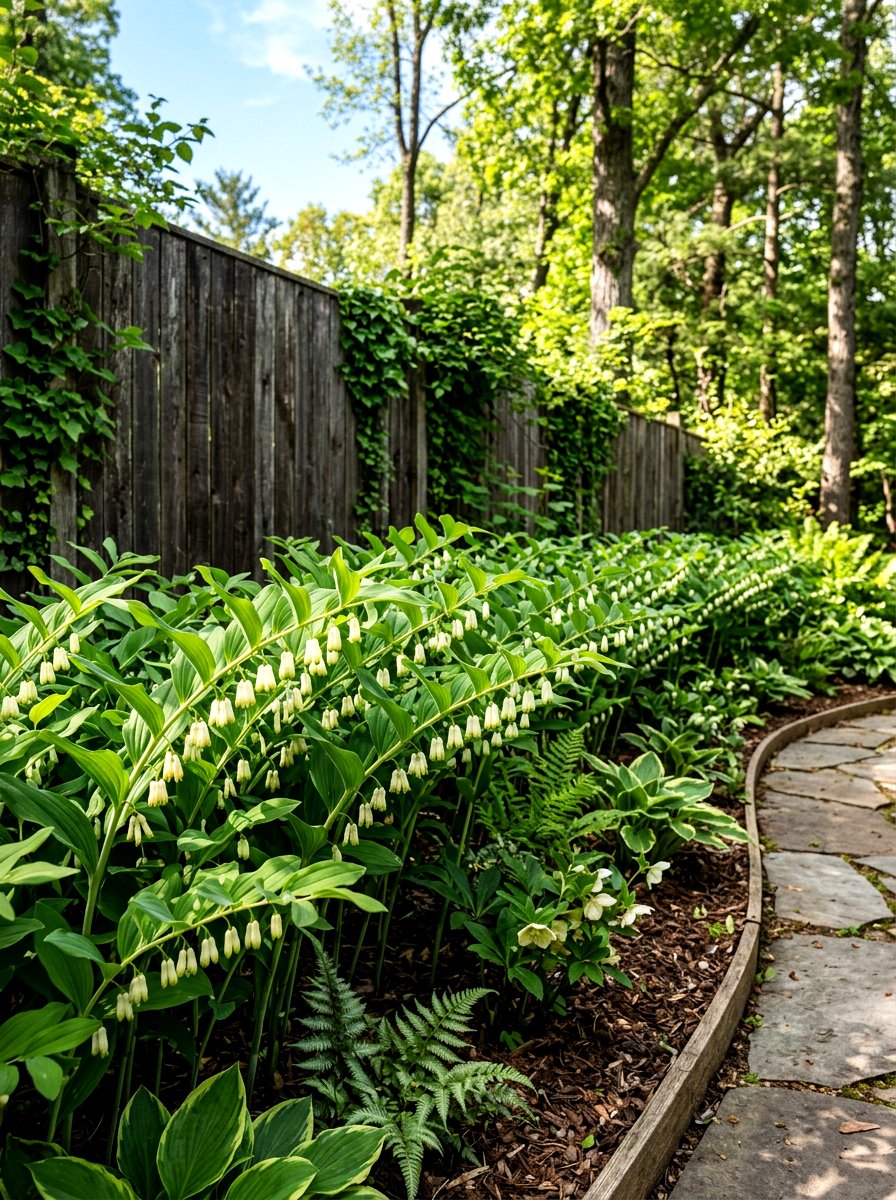
Solomon’s seal is a tall, architectural perennial that brings a sense of elegance and height to the shade. This design uses the plant’s arching stems and dangling white bell-flowers to create a rhythmic, repeating pattern along a fence or wall. The variegated version, with its white-edged leaves, is particularly effective at catching the light in dim areas. You can plant these behind lower-growing perennials like lungwort or ginger to create a stepped, layered look. Their yellow fall color also provides a late-season boost to the garden’s palette. Because they are so hardy and long-lived, they are an excellent investment for a permanent and reliable shade-loving border or backdrop.
22. Lungwort shade garden
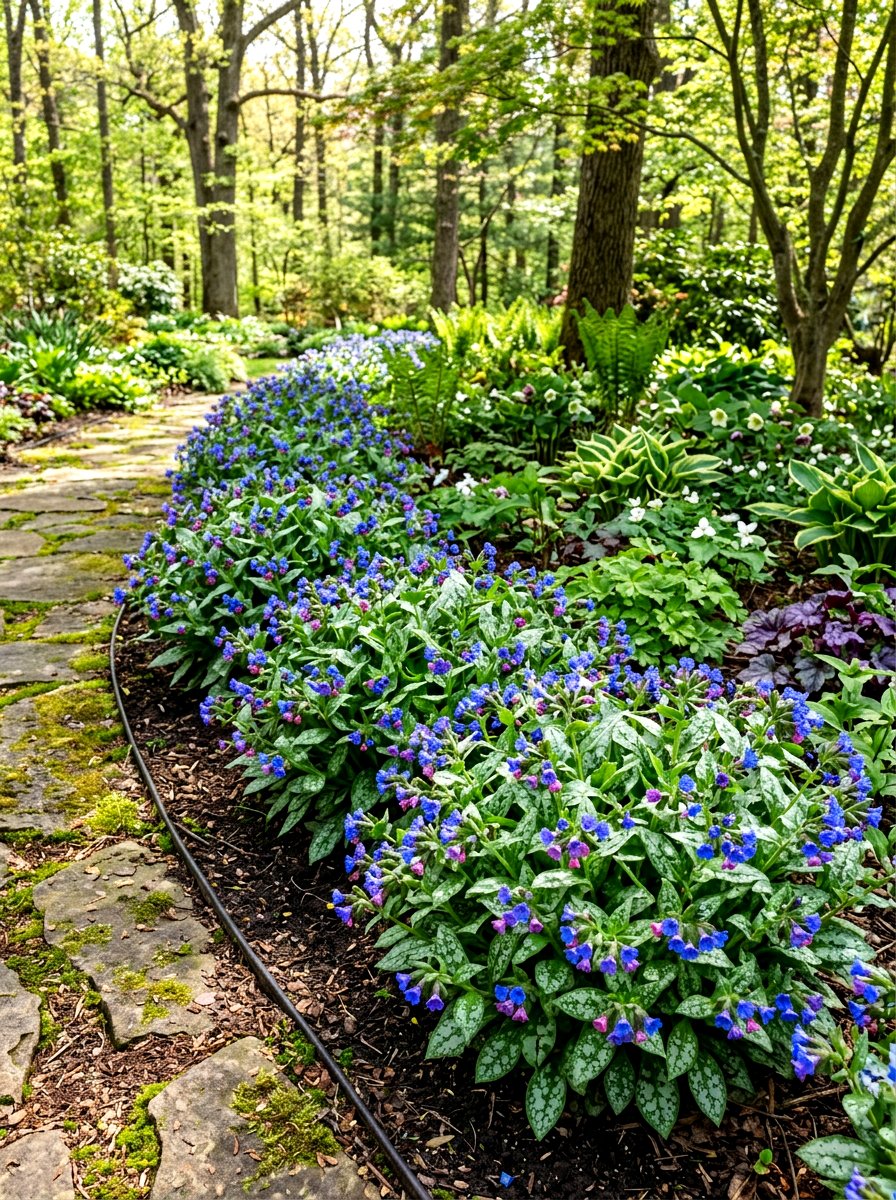
Lungwort, or pulmonaria, is a fantastic perennial for adding both silver foliage and early spring flowers to a shaded spot. This design focuses on the plant’s unique spotted leaves, which look like they have been splashed with silver paint. In the early spring, clusters of blue, pink, or white flowers emerge, providing one of the first sources of nectar for bees. Planting lungwort in groups along a garden edge creates a bright, shimmering effect that lasts all summer long. It is a very tough plant that can handle the dry shade often found under large trees. Its low-growing, mounding habit makes it an ideal companion for taller ferns or upright hostas.
23. Bugleweed ground cover garden
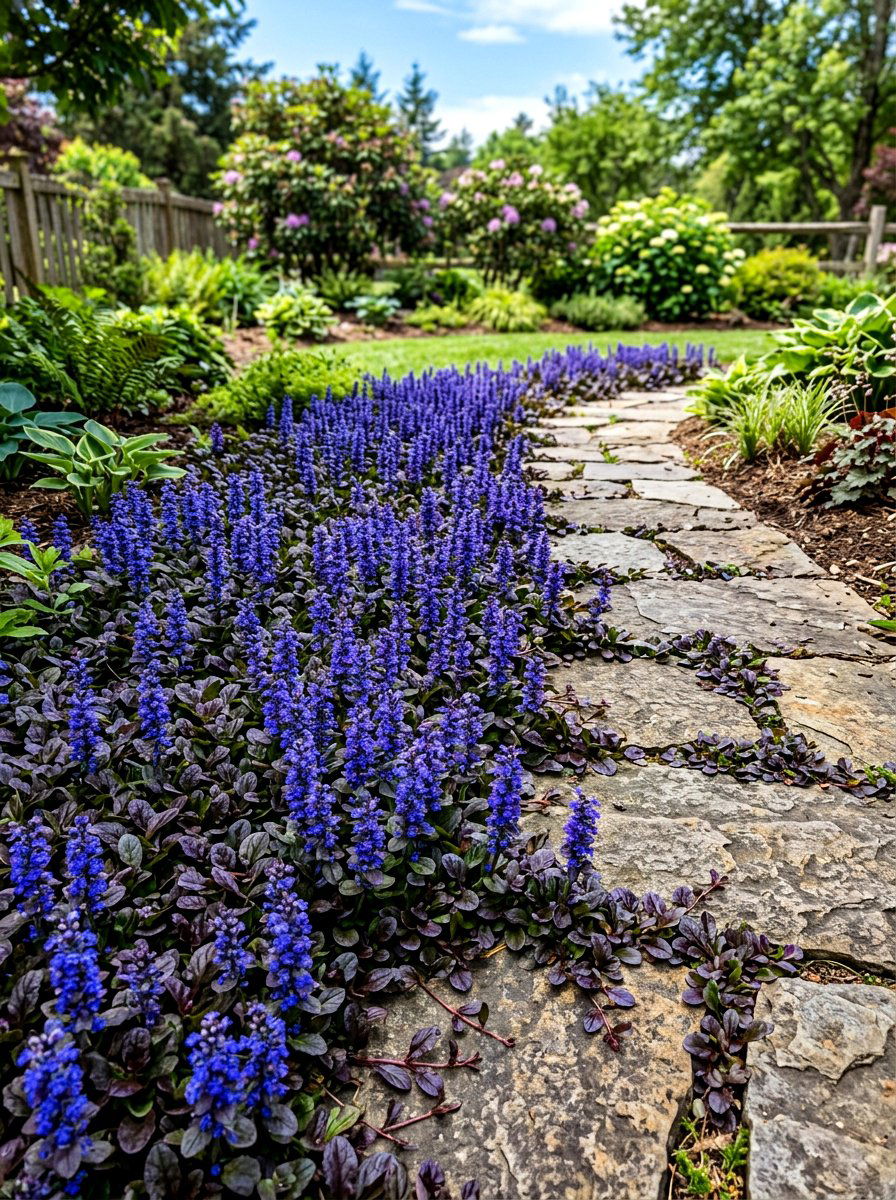
Establishing a bugleweed garden is a great way to create a dense, low-growing mat of foliage that stays attractive throughout the year. Also known as ajuga, this perennial comes in varieties with deep purple, chocolate, or variegated leaves. In late spring, it produces upright spikes of bright blue flowers that create a stunning color contrast with the dark foliage. This design is perfect for filling in spaces between stepping stones or as a front-of-the-border plant. It spreads quickly to form a weed-suppressing carpet that requires almost no maintenance. Its rich colors and compact growth habit make it a favorite for adding detail and depth to small shaded areas.
24. Epimedium fairy garden
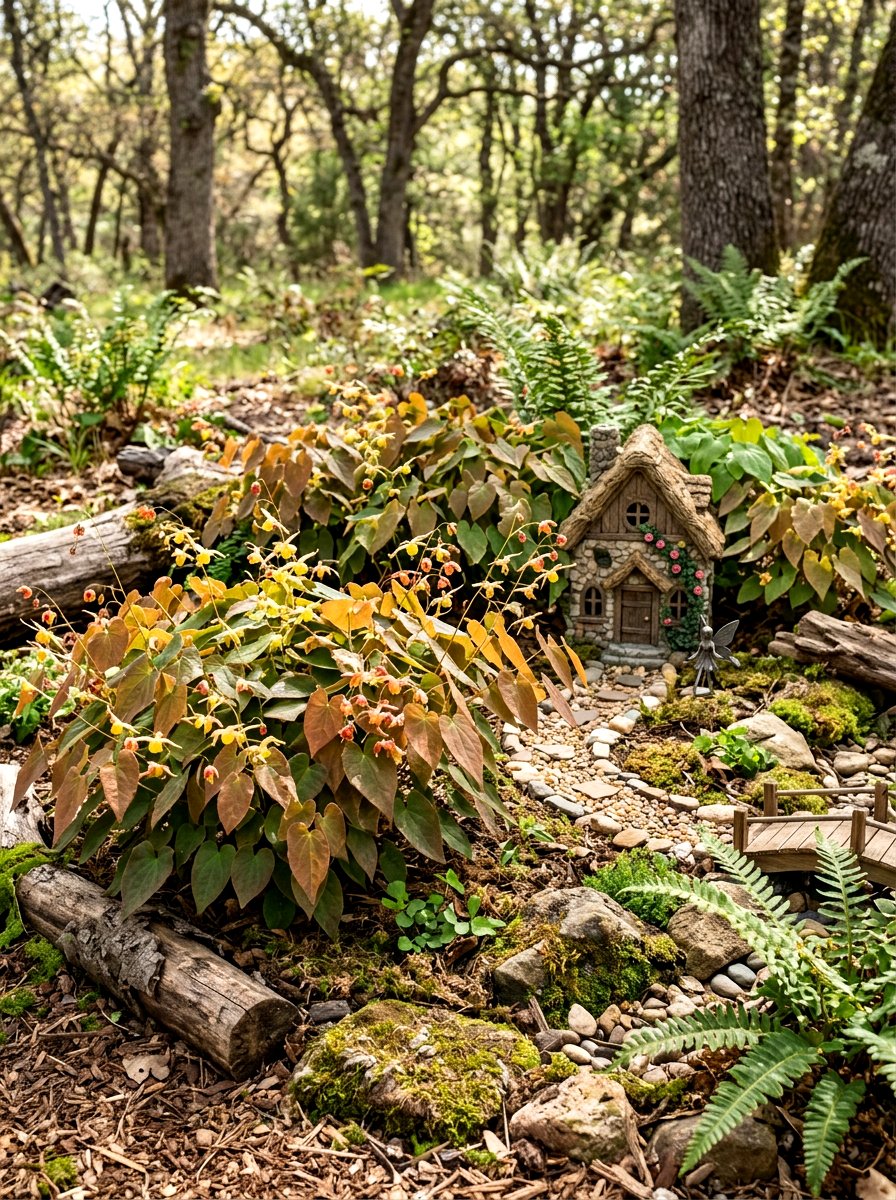
Creating a garden centered on epimedium, also known as fairy wings, offers a delicate and enchanting look for dry, shady corners. These perennials are incredibly tough once established, often thriving in the difficult "dry shade" found under maples. They feature heart-shaped leaves that often turn bronze or reddish in the spring and fall. The flowers are tiny and orchid-like, appearing to float above the foliage on wiry stems. This design is best viewed up close, making it perfect for a garden bed next to a bench or a narrow path. It provides a sophisticated, subtle beauty that rewards the observant gardener with its intricate details and resilient nature throughout the seasons.
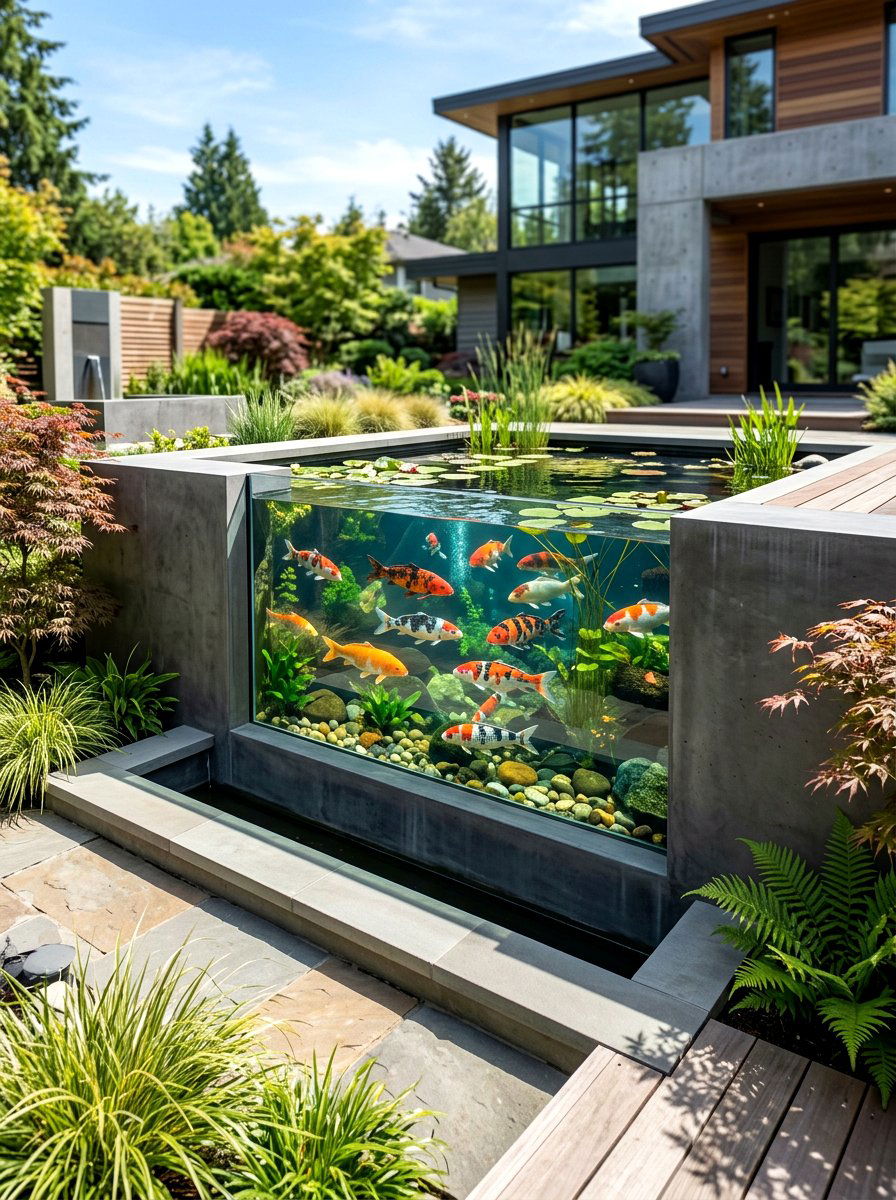
25. Shade pond landscape
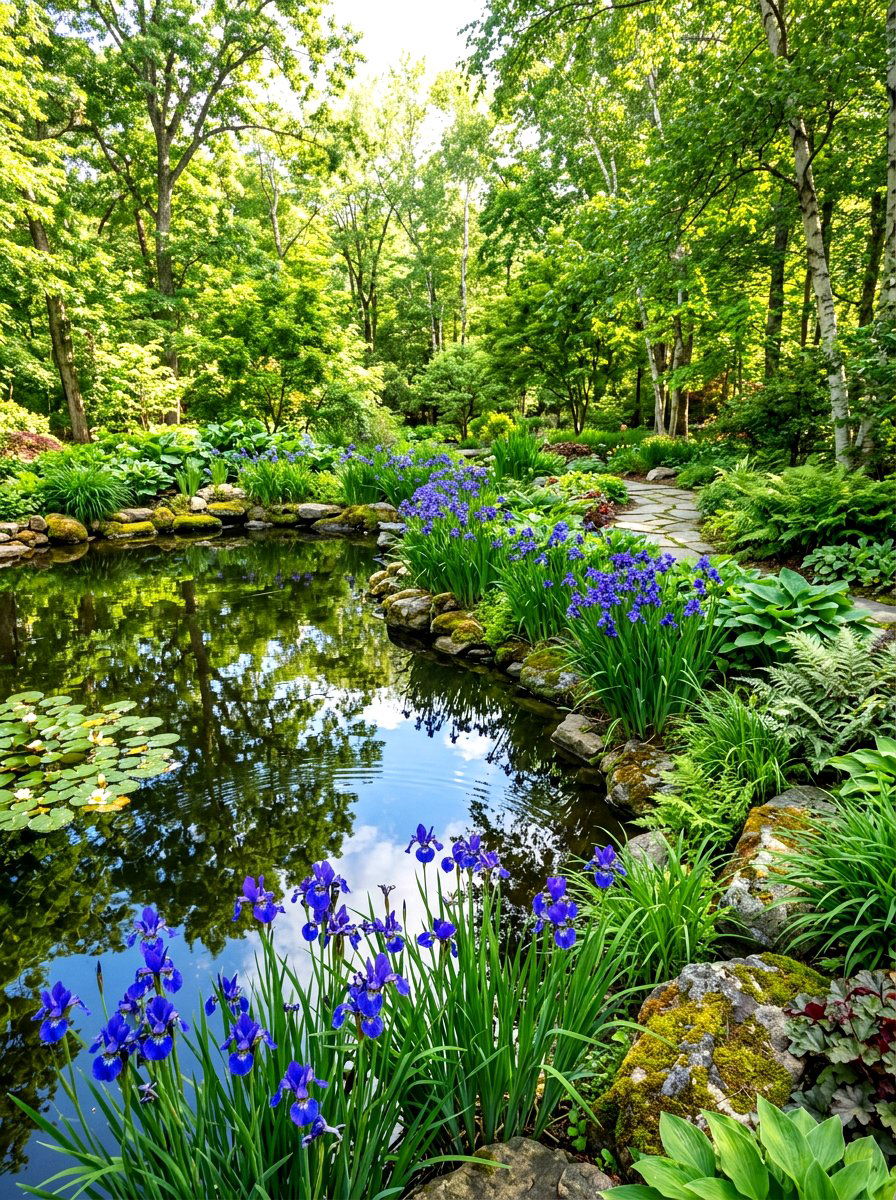
Designing a garden around a small pond or water feature is a wonderful way to enhance the cooling effect of a shaded area. This layout uses moisture-loving perennials like Siberian iris, marsh marigolds, and umbrella plants to frame the water’s edge. The reflection of the lush greenery in the still water adds a sense of depth and tranquility to the backyard. You can add a few large stones and moss to make the pond look like a natural part of the landscape. This type of garden attracts birds and frogs, adding a delightful layer of sound and movement. It is the ultimate retreat for anyone looking to escape the heat of a summer afternoon.
26. Dogwood tree shade garden
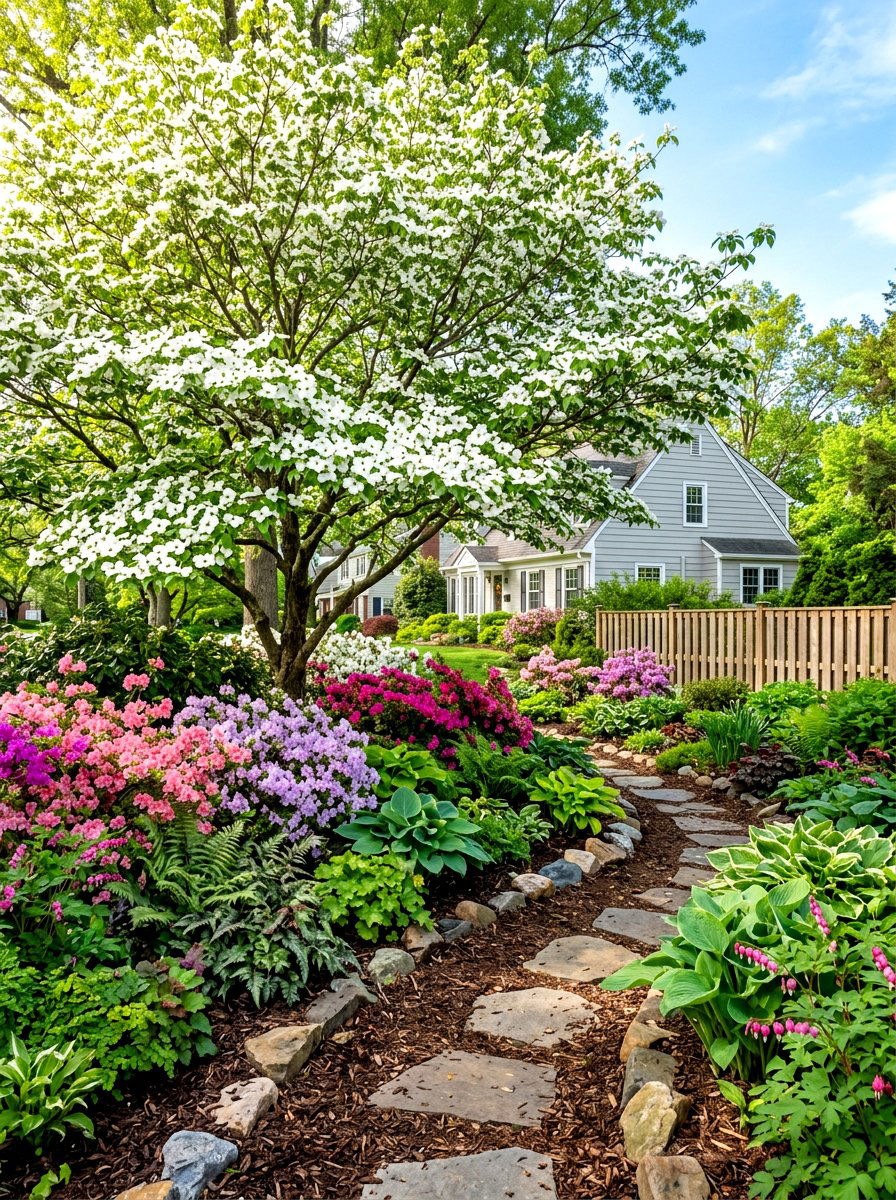
Using a flowering dogwood as the centerpiece of a shade garden provides a stunning vertical element and beautiful spring blooms. The tiered branching of the dogwood creates a unique structural look that you can complement with mid-sized perennials like azaleas and rhododendrons. This design creates a classic, woodland-edge aesthetic that feels both private and grand. Under the tree, you can plant layers of smaller perennials like wood poppy or sweet woodruff to cover the ground completely. The combination of white or pink spring flowers and the tree's dark green summer foliage creates a sophisticated color story. It is a perfect way to add value and curb appeal to a shady property.
27. Bergenia shade garden
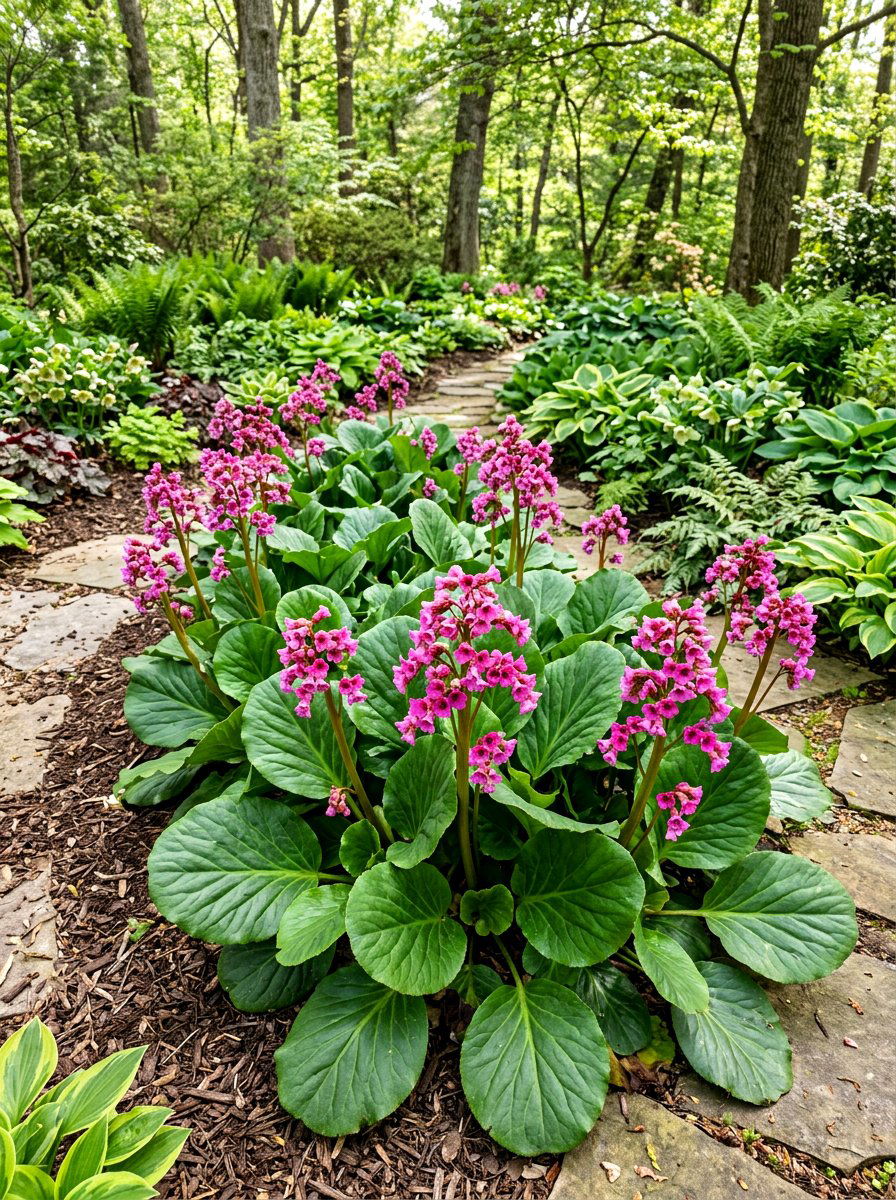
Bergenia, often called pig squeak because of the sound the leaves make when rubbed, is a sturdy perennial with large, leathery leaves. This design uses the plant’s bold foliage to create a strong, coarse texture that contrasts well with finer-leaved plants like ferns or grasses. In the spring, bergenia produces clusters of pink or red flowers on thick stems. The foliage is evergreen and often turns a beautiful burgundy or bronze color in the winter, providing year-round interest. Planting it in mass along a border or as a ground cover under shrubs creates a dependable and low-maintenance green base. It is a very resilient plant that adds a sense of permanence.
28. Primrose shade garden
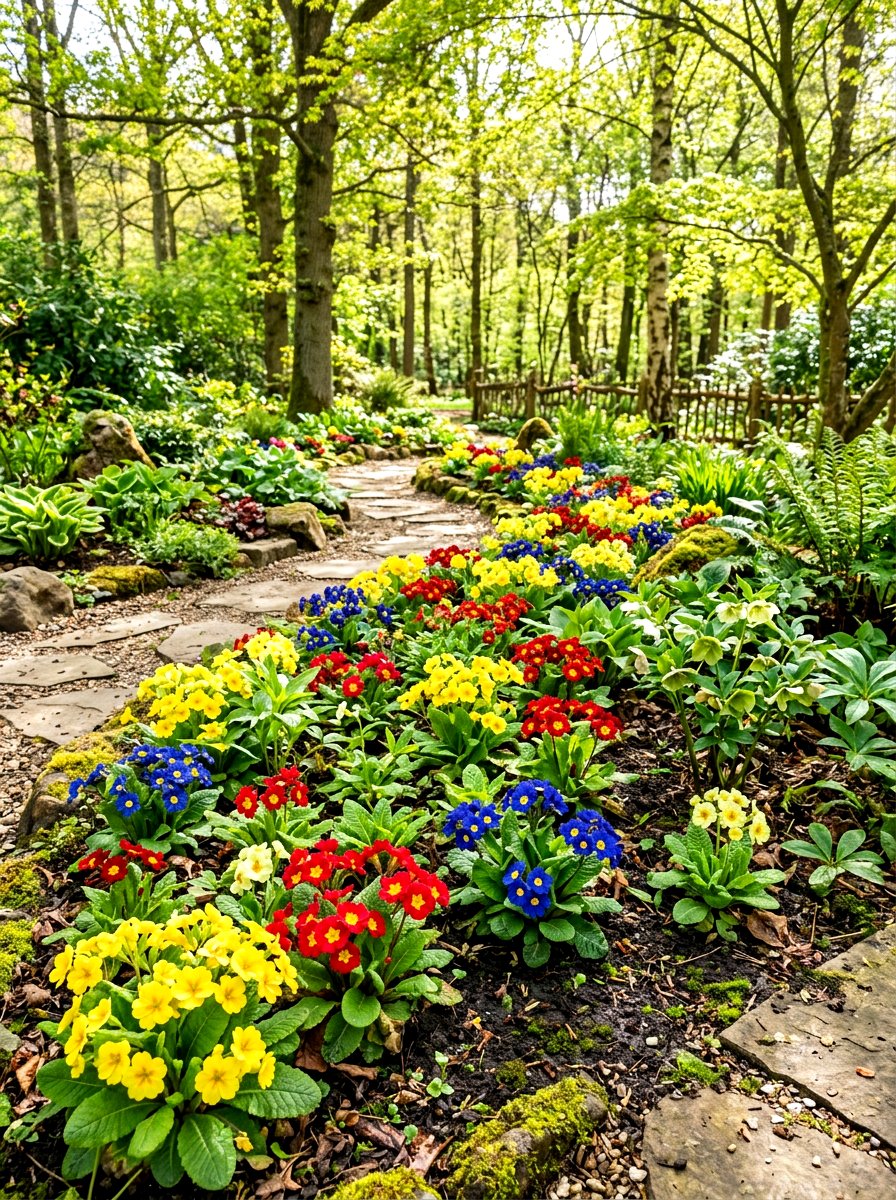
A garden filled with primroses brings a cheerful and vibrant burst of color to the early spring shade. These perennials are available in almost every color of the rainbow, allowing you to create a high-energy look in a small space. This design works well when primroses are planted in clusters among emerging ferns or hostas, which will eventually hide the primrose foliage as it fades in the summer. They love moist soil and cool temperatures, making them ideal for areas with northern exposure. Using a variety of different primrose types can extend the blooming season for several weeks. It is a delightful way to celebrate the end of winter in your backyard.
29. Columbine shade garden
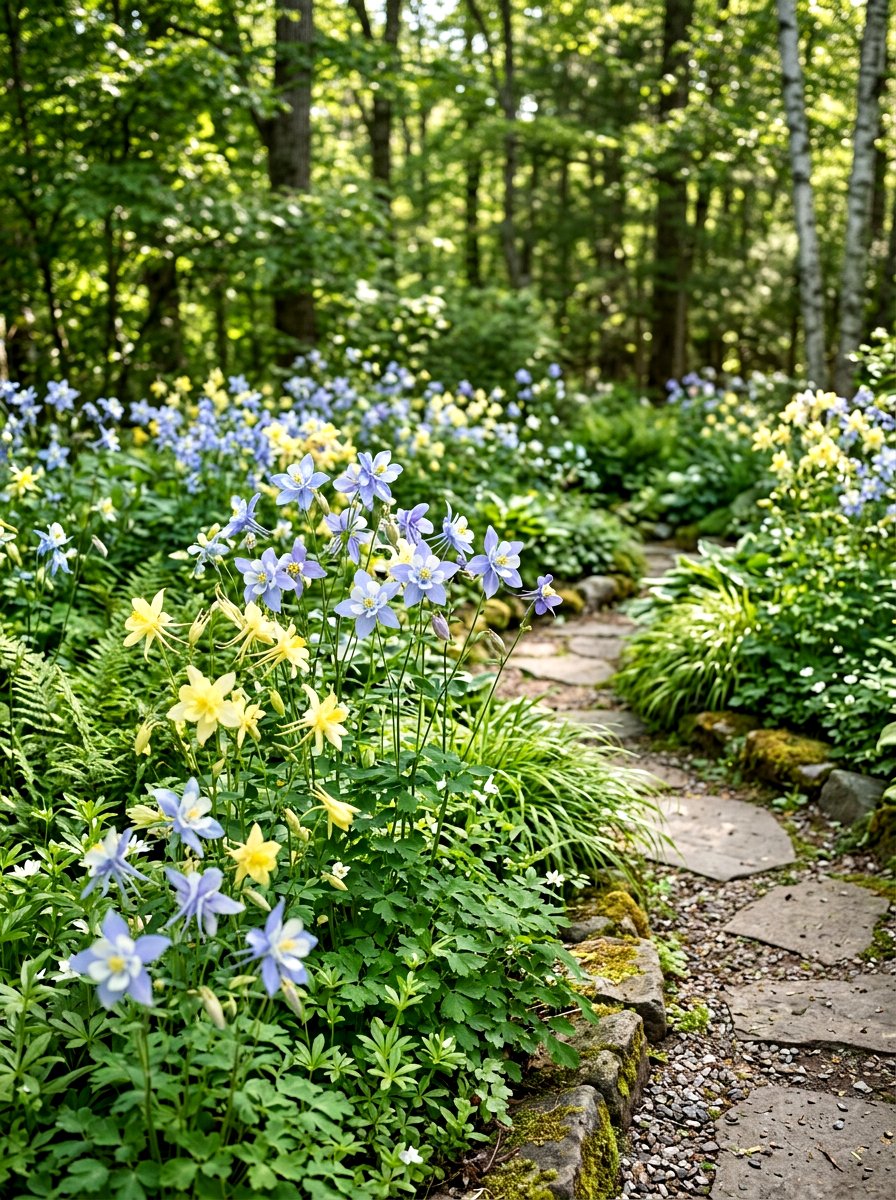
Columbine is a graceful perennial that adds an airy, delicate touch to shaded borders with its unique, spurred flowers. This design focuses on the plant’s whimsical appearance and its ability to attract hummingbirds and butterflies. By mixing different varieties, you can have flowers in shades of blue, yellow, pink, and bicolor combinations. They look best when planted in informal groups, allowing them to dance above lower foliage like wild ginger or creeping phlox. Because they self-seed easily, they will naturally find their way into nooks and crannies, giving the garden an established, natural feel. Their light and delicate texture is a perfect counterpoint to heavier, more solid shade plants.
30. Fern and stone garden
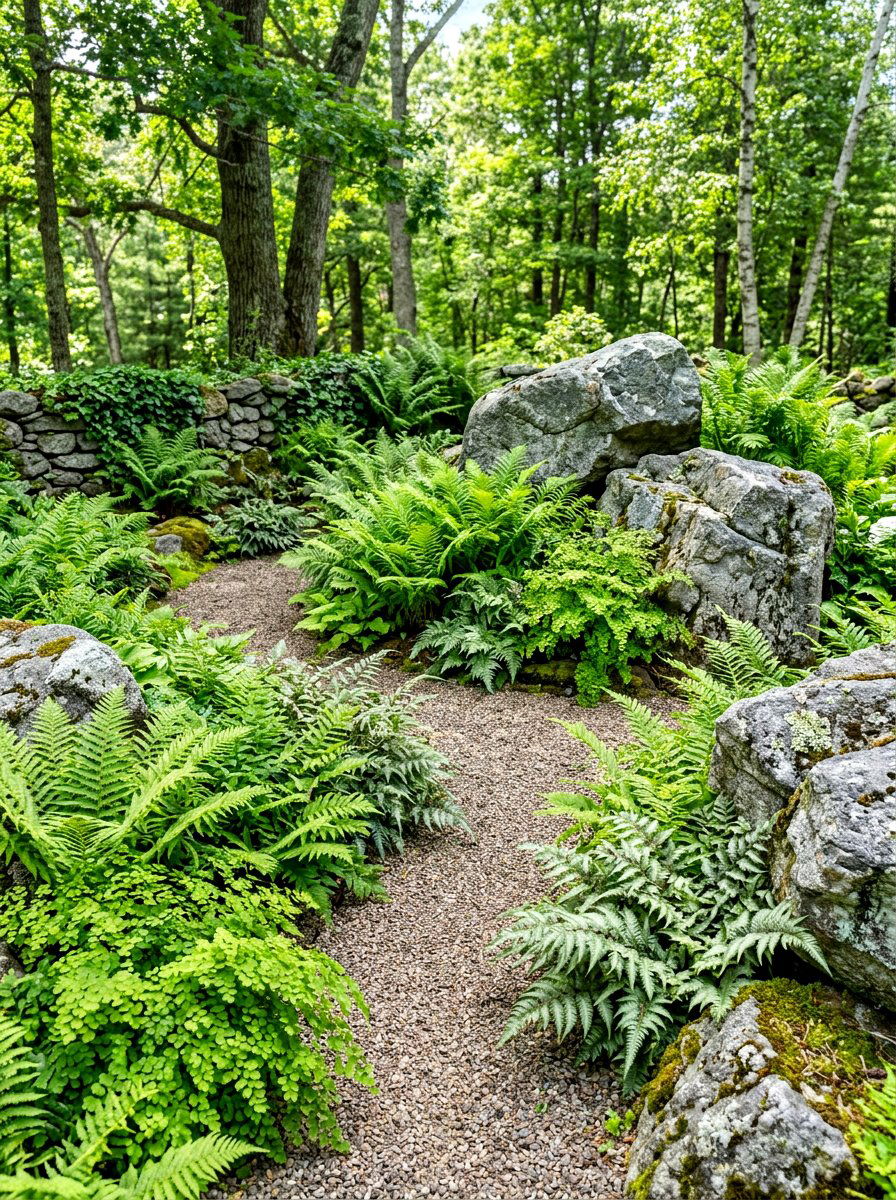
Combining various fern species with large natural stones or decorative gravel creates a high-contrast, sculptural landscape. This design emphasizes the contrast between the soft, organic shapes of the ferns and the hard, stationary lines of the rocks. It is a very low-maintenance approach that works well on slopes or in areas with poor soil where more demanding plants might fail. You can use large boulders as focal points and tuck smaller ferns like maidenhair or ebony spleenwort into the crevices. This look is modern, clean, and incredibly durable. It provides a sense of rugged beauty that stays green and lush throughout the growing season with very little watering or pruning required.
Conclusion:
Transforming a shaded area into a vibrant perennial garden is one of the most rewarding projects a homeowner can undertake. By shifting the focus from sun-loving blooms to the incredible variety of foliage textures and subtle colors available, you can create a space that feels cool, serene, and deeply established. Whether you prefer the modern look of minimalist grasses or the romantic charm of a woodland wildflower path, there is a shade-loving perennial that fits your vision. These gardens are typically easier to maintain than sunny borders, as they require less water and face fewer weed issues. Start small and watch your shaded sanctuary grow more beautiful every single year.

Related posts: