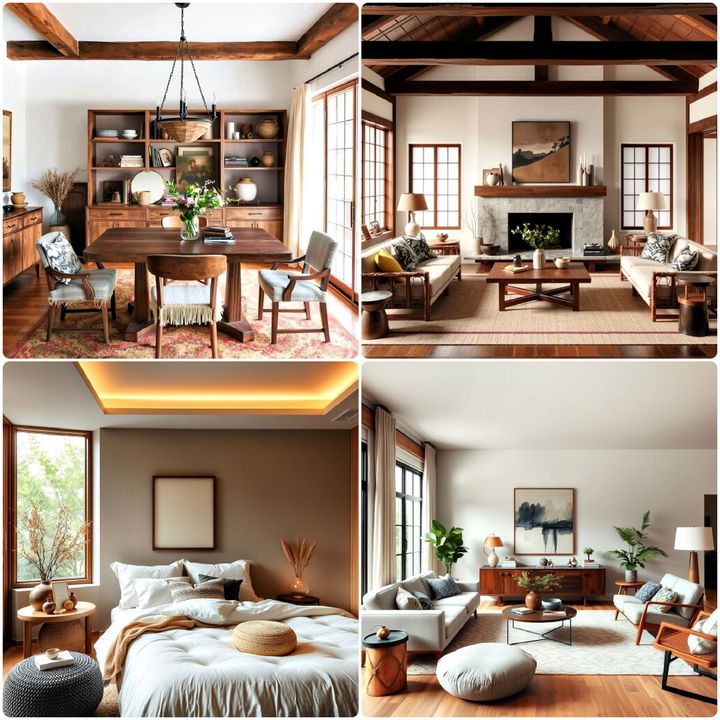
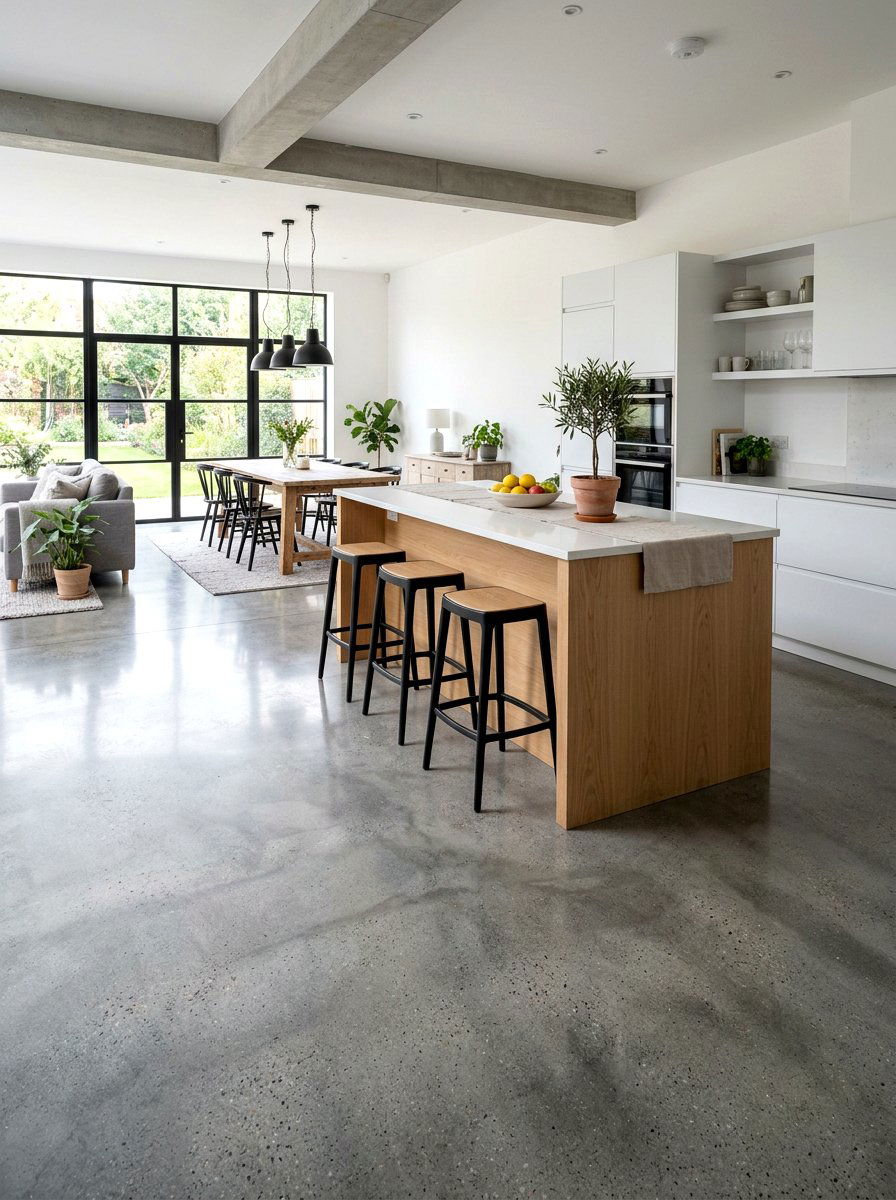
Wabi-sabi is an ancient Japanese philosophy that finds beauty in imperfection, transience, and the natural cycle of growth and decay. In the world of home design, particularly in the kitchen, this translates to a space that feels lived-in, authentic, and deeply connected to nature. Instead of chasing the sterile, high-gloss perfection often seen in modern showrooms, a wabi-sabi kitchen celebrates the raw texture of wood, the cool touch of stone, and the unique patina that develops over time. It is about creating a sanctuary where you can feel at ease, surrounded by materials that tell a story of their own. This aesthetic prioritizes quality over quantity, encouraging a minimalist yet warm environment where every piece serves a purpose and carries a sense of history. Whether you are planning a full renovation or looking for small ways to infuse your current space with more soul, embracing this mindset will transform your kitchen into a serene and grounded heart of the home.
1. Reclaimed wood kitchen cabinets
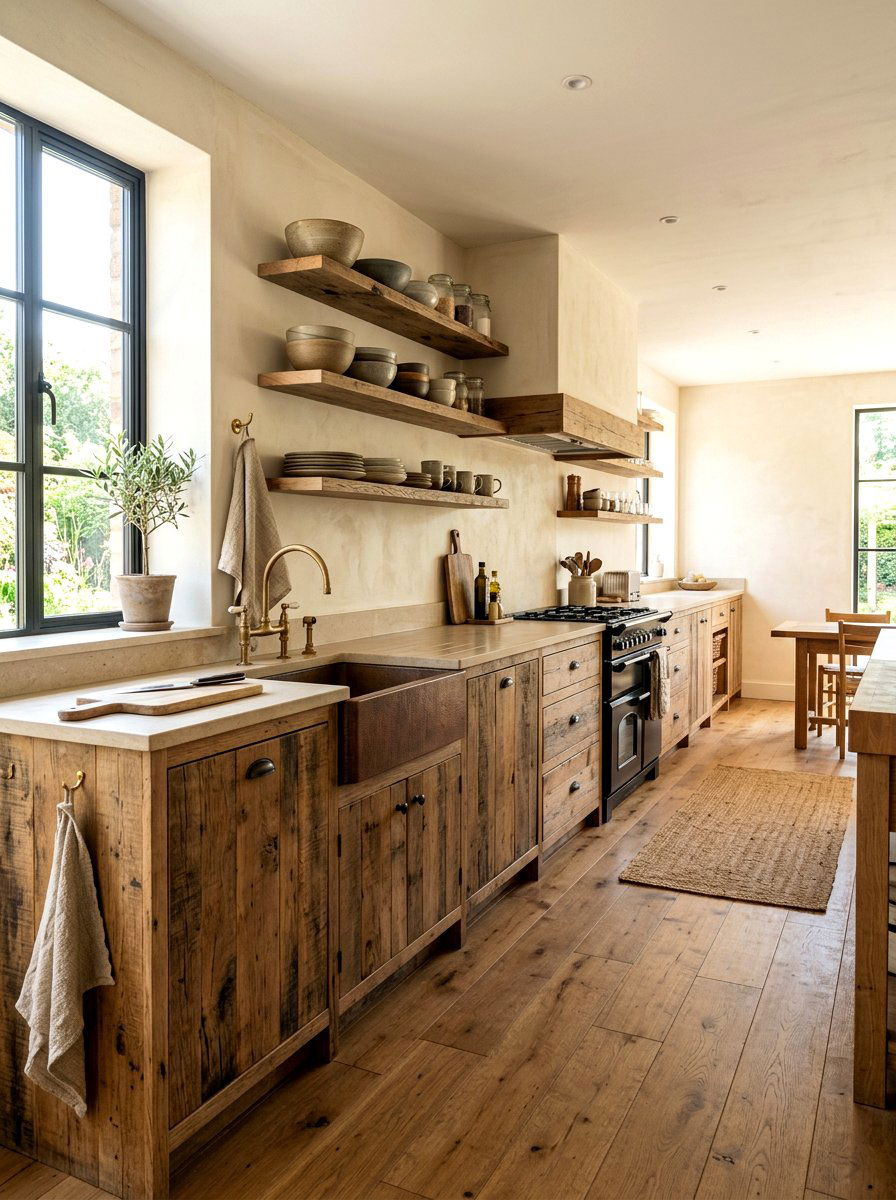
Have you ever noticed how much character an old piece of wood can bring to a room? Choosing reclaimed wood for your kitchen cabinets is a beautiful way to honor the wabi-sabi tradition of using materials that have a history. These cabinets aren't perfectly uniform; instead, they feature natural knots, cracks, and variations in color that make each door a unique work of art. The raw, tactile surface feels warm and inviting, immediately softening the often-clinical feel of a kitchen. By letting the wood’s natural aging process stay visible, you create a space that feels grounded and authentic. It is a design choice that prioritizes the soul of the material over mass-produced perfection, ensuring your kitchen remains timeless.
2. Microcement kitchen walls
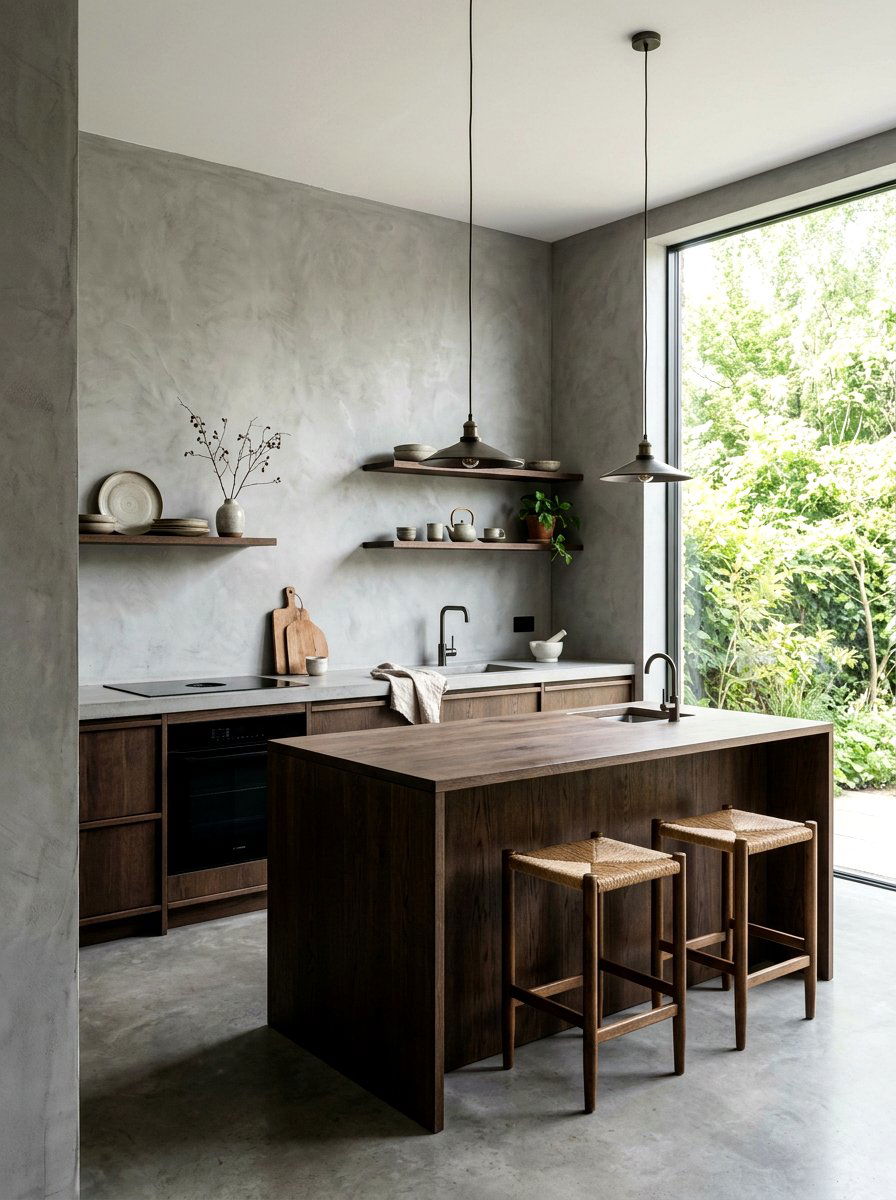
Imagine walking into a kitchen where the walls feel like soft, cool stone beneath your fingertips. Microcement is a fantastic material for creating a seamless, tactile backdrop that perfectly aligns with a minimalist aesthetic. This continuous finish removes the need for grout lines, making the entire space feel larger and more cohesive. Its subtle color variations and hand-applied texture create a sense of movement and depth that flat paint simply cannot achieve. In a wabi-sabi kitchen, microcement works beautifully because it looks better as it ages and develops its own unique character. It provides a neutral, matte canvas that allows your natural wood elements and stone surfaces to stand out without competing for attention.
3. Natural stone kitchen island
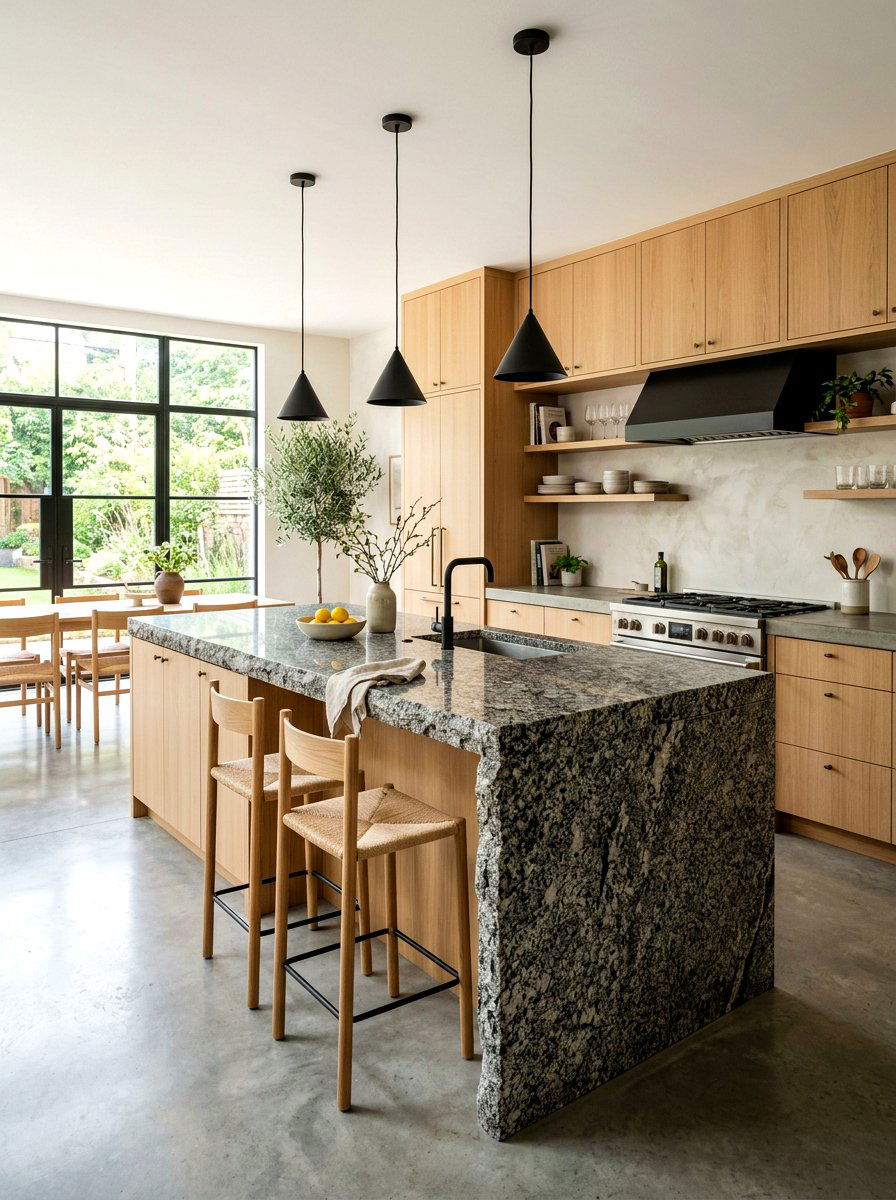
What if your kitchen island felt like a piece of the earth brought inside? A natural stone island with raw, unpolished edges is a powerful focal point that embodies the wabi-sabi love for the natural world. Instead of a perfectly squared-off slab, look for a piece of stone that shows its organic shape and unique geological features. The variations in texture and color make the island feel alive and rooted in nature. This approach turns a functional work surface into a sculptural element that invites touch. It celebrates the strength and permanence of stone while acknowledging that true beauty often lies in the irregularities that nature provides over millions of years.
4. Organic ceramic kitchenware
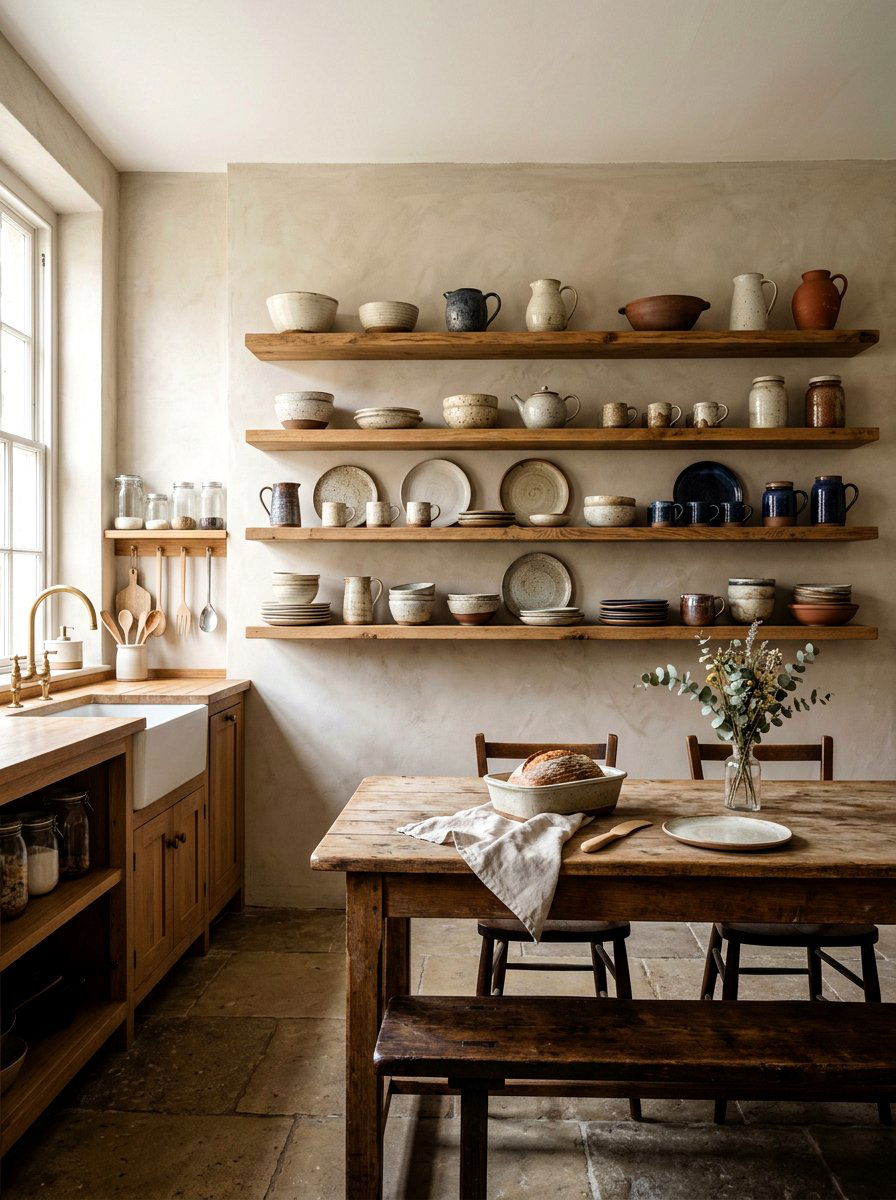
Do you enjoy the feeling of a handmade mug in your hands? Integrating organic ceramic kitchenware onto your open shelves is a simple yet effective way to bring wabi-sabi into your daily routine. These pieces often feature irregular shapes, visible thumbprints, and glazes that react differently in the kiln. Instead of a matching set of identical plates, a collection of unique, handcrafted ceramics adds layers of texture and personality to the space. This design idea encourages you to slow down and appreciate the craftsmanship behind every bowl or pitcher. It is about surrounding yourself with objects that feel human and imperfect, adding a sense of warmth to your kitchen environment.
5. Limewash kitchen paint
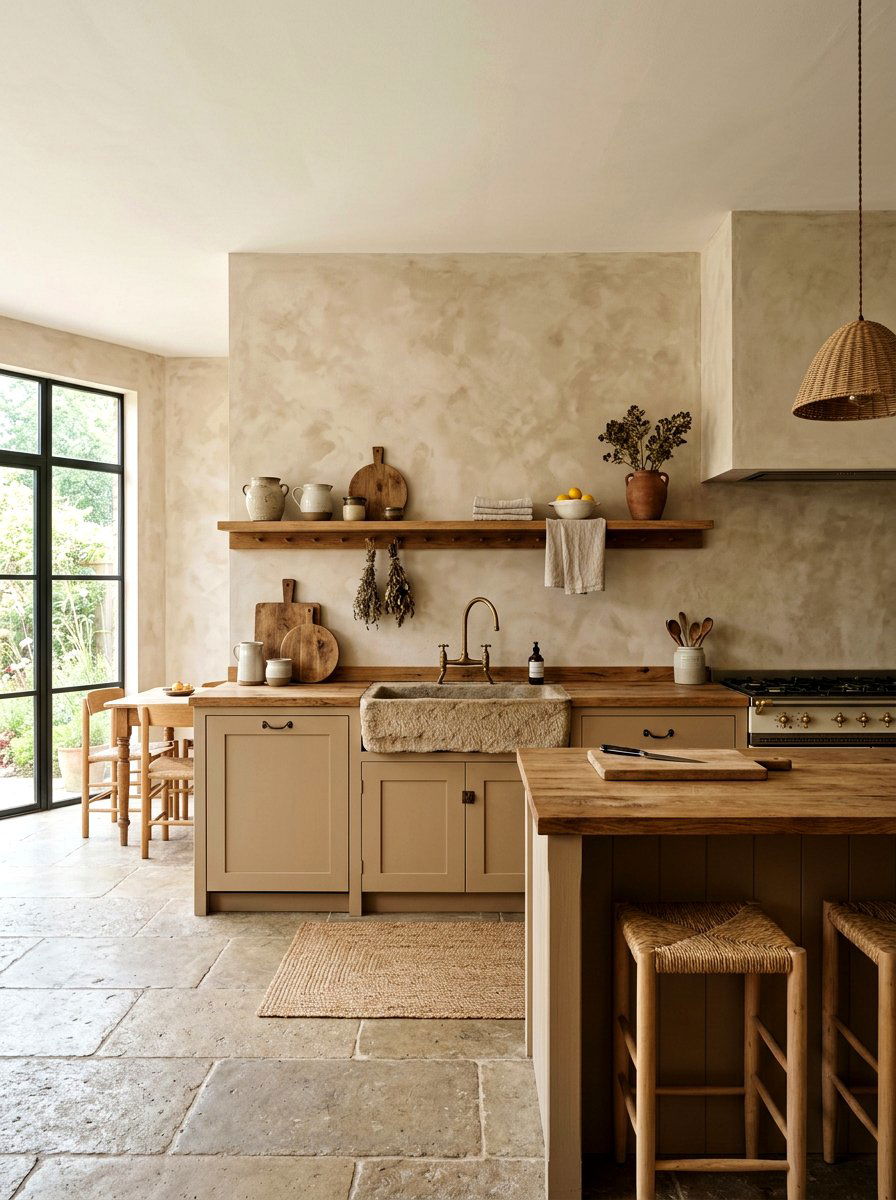
Are you tired of flat, sterile wall colors that feel cold? Limewash paint is an ancient technique that creates a soft, chalky finish with a beautiful mottled appearance. It reacts with the surface to produce a subtle play of light and shadow, giving your kitchen walls a sense of history and depth. The breathable, natural ingredients make it an eco-friendly choice that fits perfectly with the wabi-sabi ethos. As the paint cures, it develops a unique patina that feels both ancient and modern at the same time. This finish creates a cocoon-like atmosphere, making the kitchen feel like a cozy, grounded sanctuary rather than just another functional room.
6. Open wood shelving
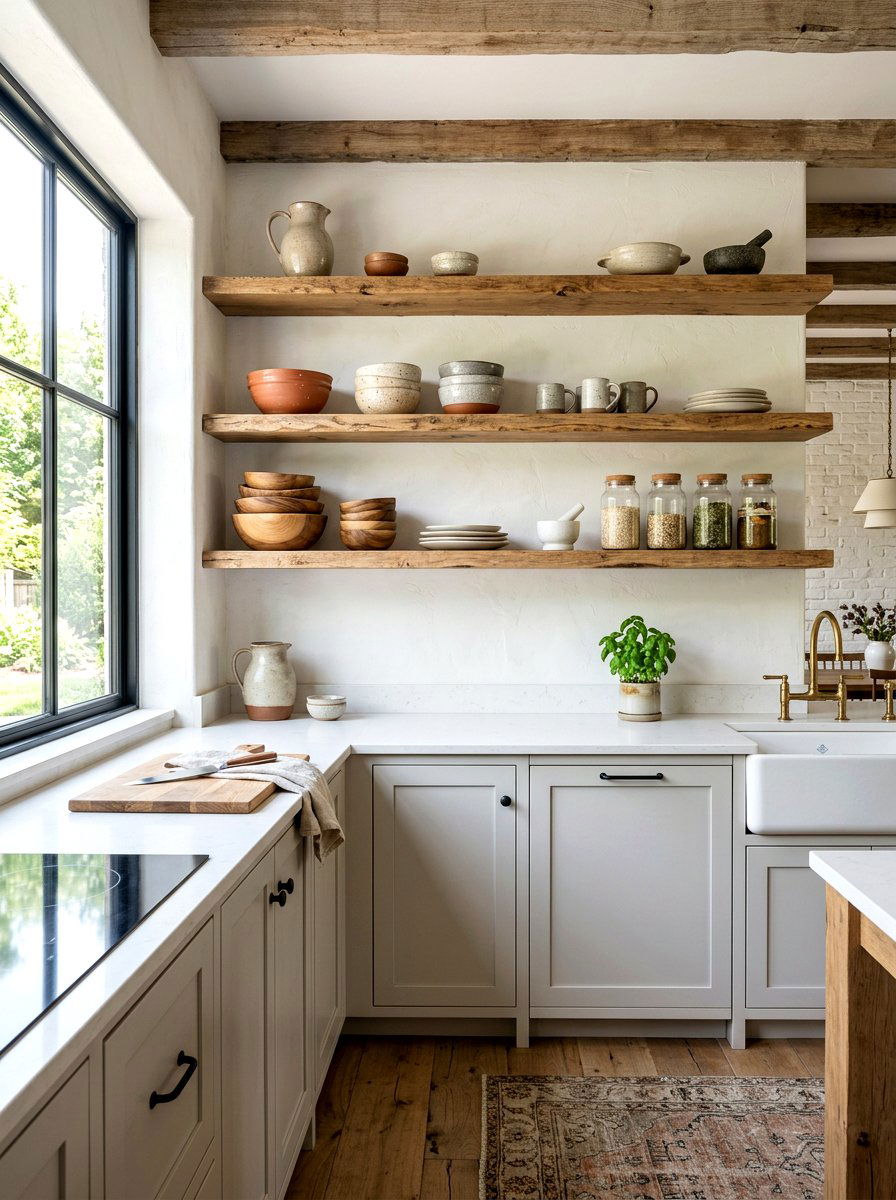
How would it feel to have your most used kitchen items within reach on beautiful, raw wood shelves? Swapping heavy upper cabinets for open wood shelving is a classic wabi-sabi move that opens up the space and highlights simplicity. These shelves provide a stage for your favorite ceramics and wooden bowls, turning everyday objects into decor. The key is to keep the styling minimal and intentional, avoiding clutter. Using thick, unrefined planks of wood adds a rustic touch that contrasts beautifully with smooth walls. This layout encourages you to own only what you need and love, fostering a peaceful and organized environment that celebrates the beauty of daily life.
7. Zellige tile backsplash
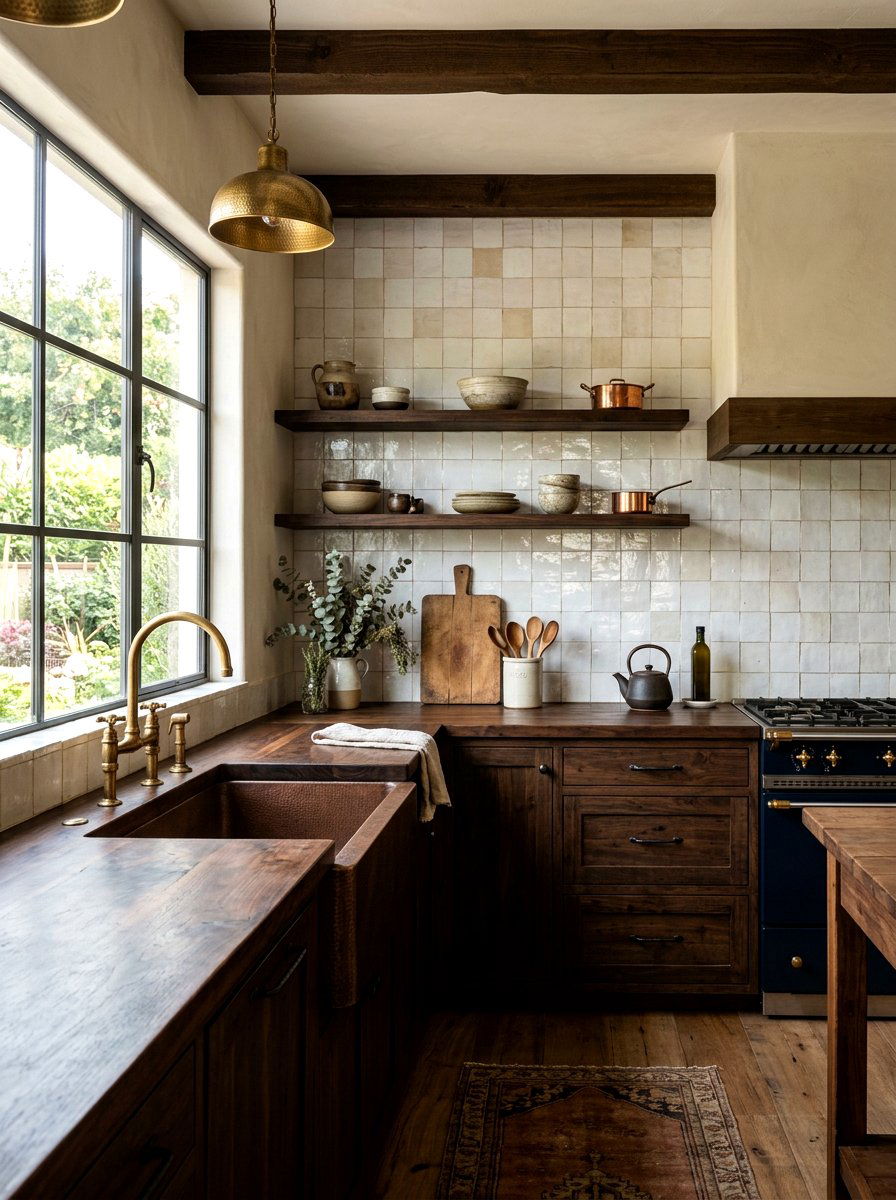
Have you seen the way light dances across the surface of handmade tiles? Zellige tiles are famous for their subtle variations in color, thickness, and texture, making them a perfect fit for a wabi-sabi kitchen. Each tile is hand-cut and fired, resulting in small chips and uneven edges that create a stunning, shimmering effect when installed. Instead of a perfectly flat and uniform backsplash, Zellige tiles provide a sense of movement and artisanal charm. The organic imperfections of the glaze add depth and a tactile quality that draws the eye. This design choice brings a touch of old-world soul to a modern kitchen, celebrating the beauty of the handmade process.
8. Rustic wooden ceiling beams
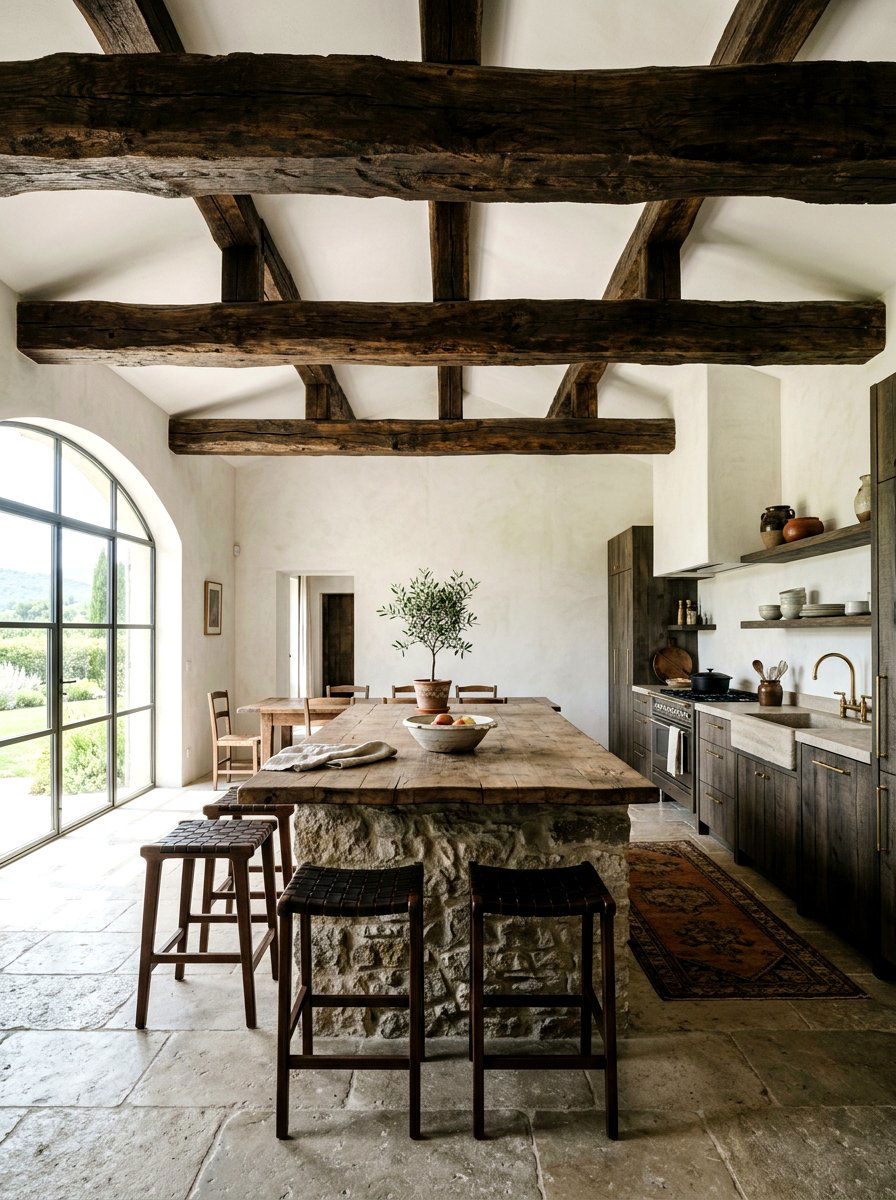
Does your kitchen feel like it needs more structural warmth? Adding rustic wooden ceiling beams is a powerful way to ground a room and introduce a sense of architectural history. Whether they are structural or decorative, these beams bring the raw beauty of the outdoors inside. The dark, weathered wood creates a striking contrast against light walls, drawing the eye upward and making the space feel more expansive yet cozy. Wabi-sabi design loves the look of timber that has aged naturally, showing every grain and knot. These beams act as a sturdy anchor for the entire kitchen design, providing a timeless and organic feel that never goes out of style.
9. Concrete kitchen countertops
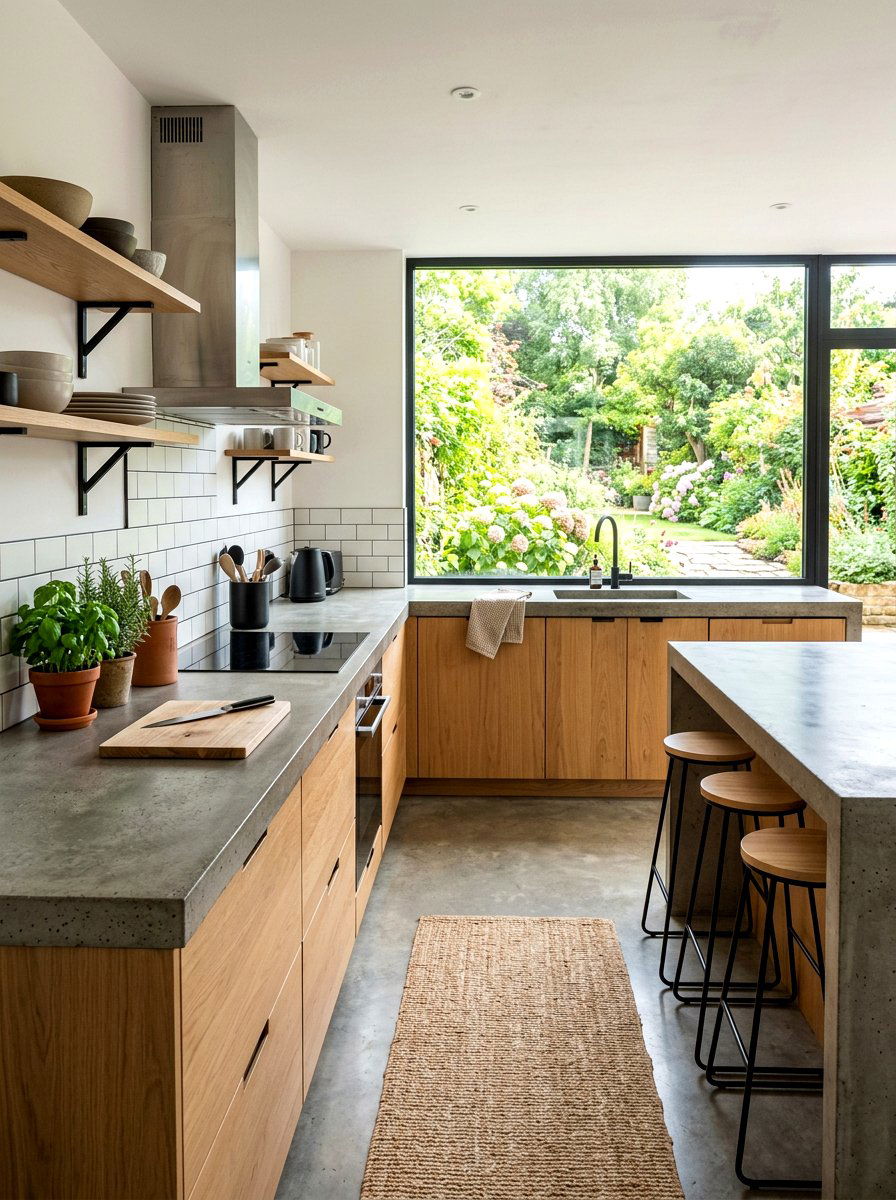
What if your counters were as durable as they were beautiful? Concrete countertops are a staple in wabi-sabi design because they offer a raw, industrial look that softens over time. Unlike polished quartz, concrete is a porous material that picks up a unique patina through daily use. These subtle marks and color shifts are not seen as flaws, but as a record of the meals prepared and shared in the home. The matte finish and cool gray tones provide a grounded foundation for the rest of the kitchen. When paired with warm wood cabinets, concrete creates a balanced and serene environment that feels both contemporary and deeply connected to the earth.
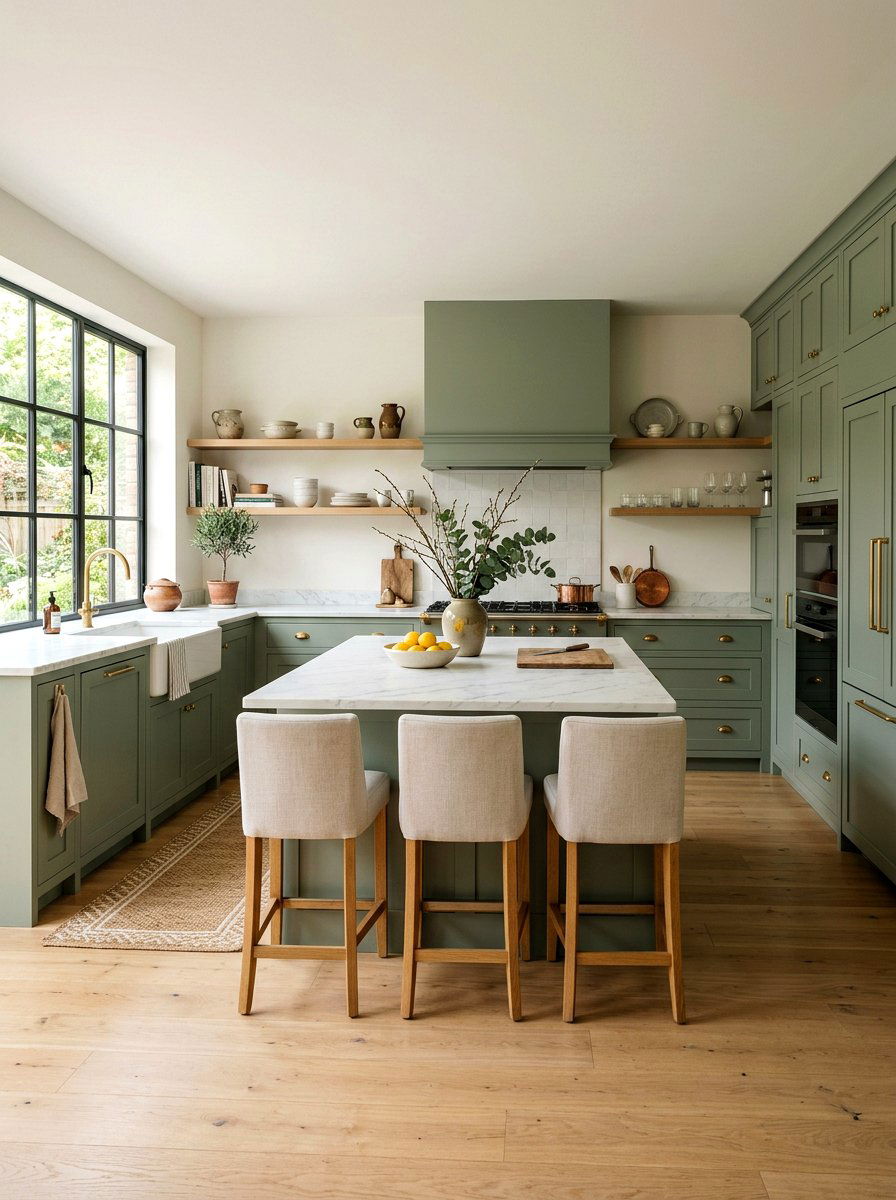
10. Neutral earthy kitchen palette
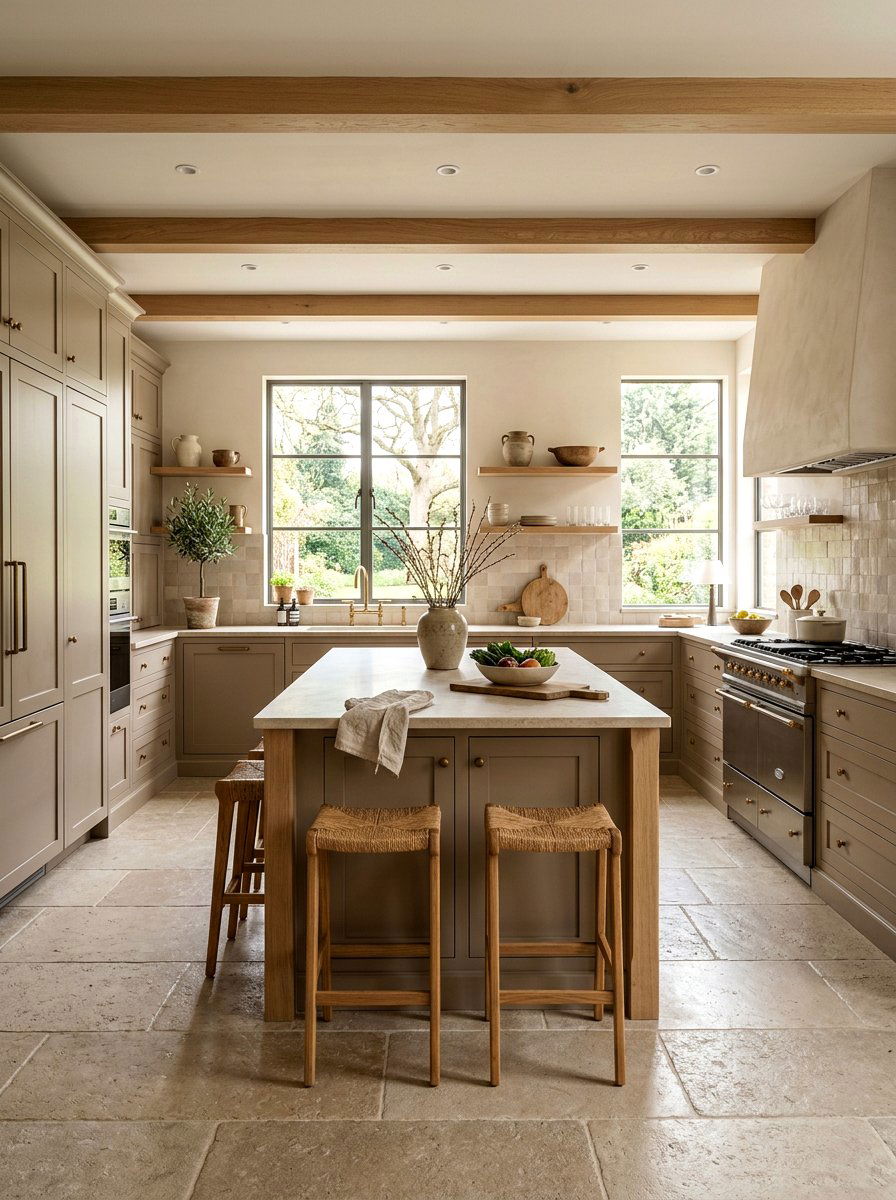
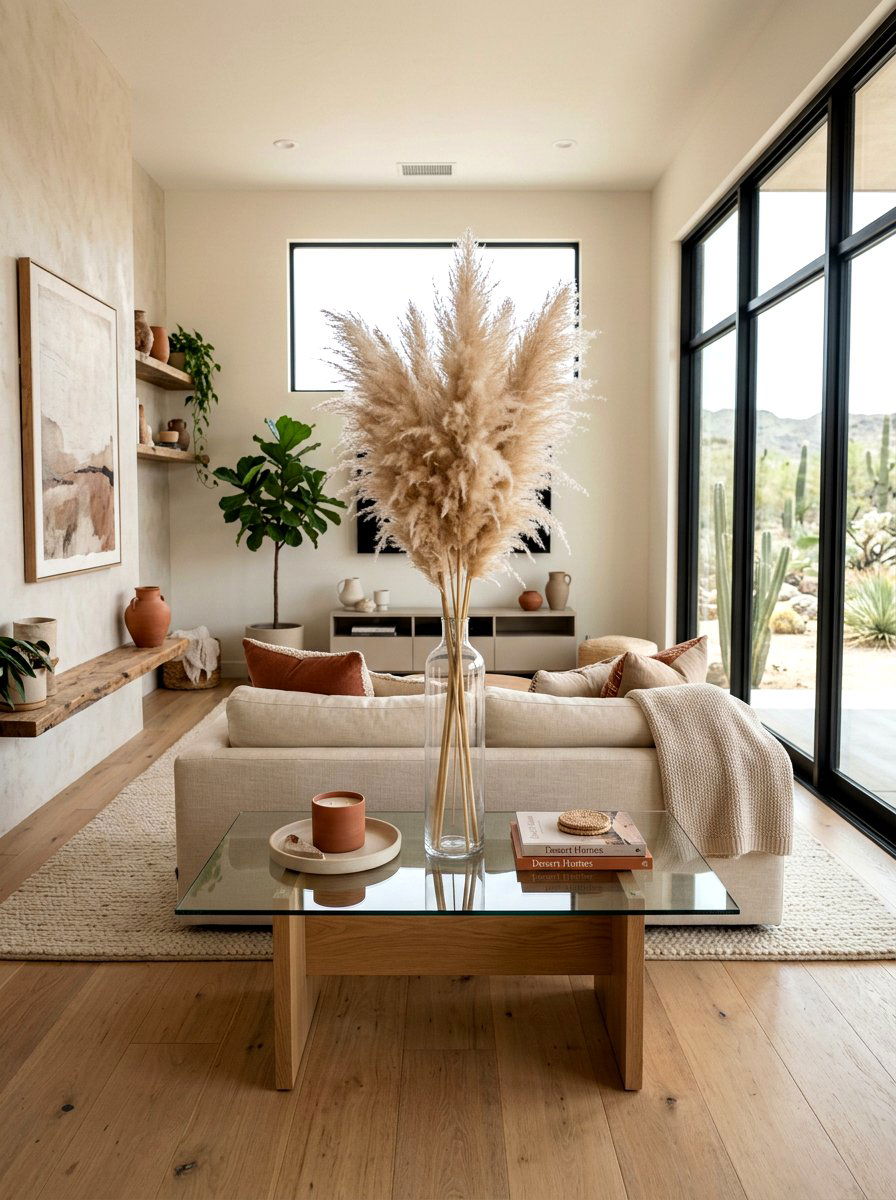
Can a color palette change the way you feel while cooking? A wabi-sabi kitchen relies on a neutral, earthy palette of beiges, tans, grays, and muted greens. These colors are inspired by the natural world and are designed to create a calm, Zen-like atmosphere. By avoiding bright or high-contrast colors, the focus shifts to the textures and materials within the room. This restrained approach allows the grain of the wood and the veining of the stone to take center stage. A monochromatic or tonal kitchen feels incredibly peaceful and cohesive. It provides a quiet backdrop for the chaos of daily life, helping you find moments of stillness in your home.
11. Aged brass kitchen hardware
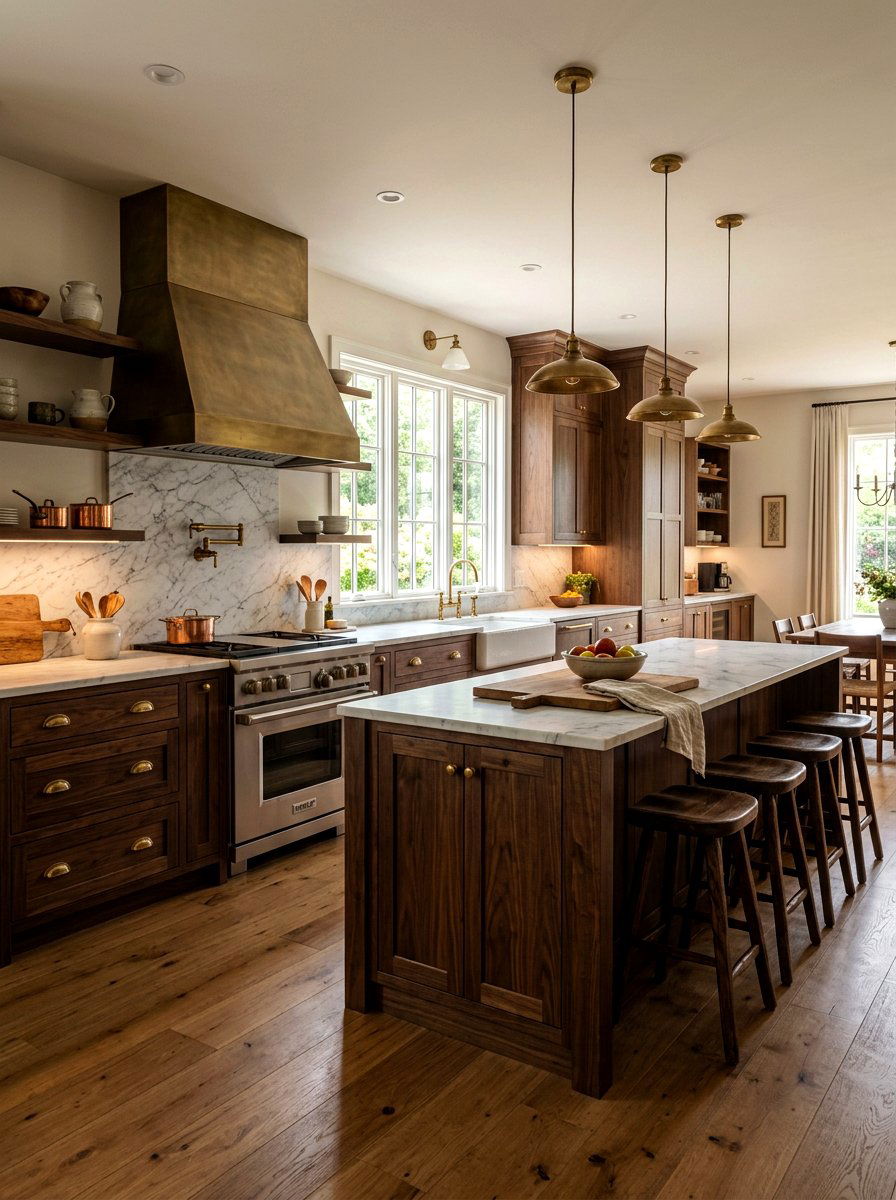
Have you noticed how shiny, new hardware can sometimes feel a bit too perfect? Aged brass hardware brings a sense of warmth and history to your kitchen cabinets and drawers. This living finish is designed to change over time, developing a deep, rich patina as it is touched and used every day. Instead of looking worn out, the metal looks even more beautiful as it loses its initial luster. This transition perfectly captures the wabi-sabi concept of transience and the passage of time. The soft gold tones of aged brass pair beautifully with natural wood and stone, adding a subtle touch of luxury that still feels humble and grounded.
12. Woven pendant lights
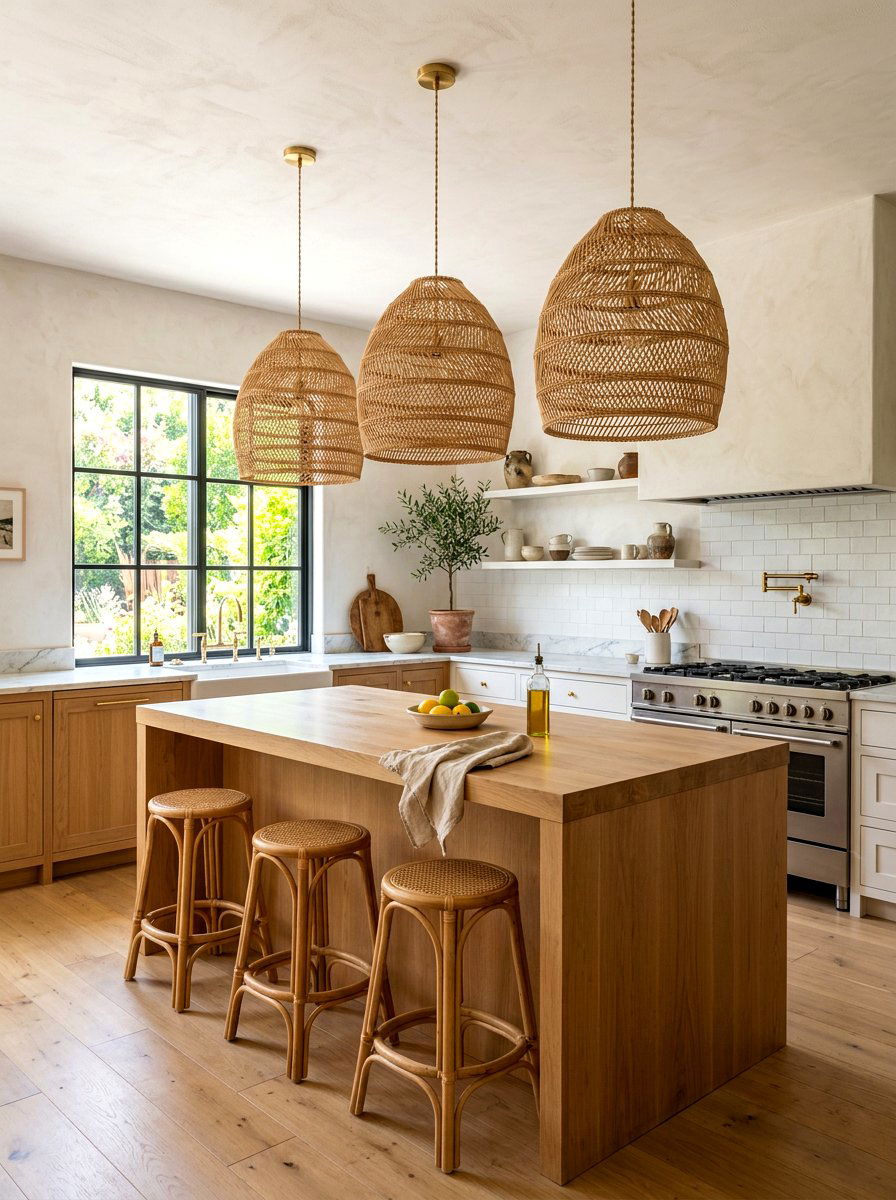
What if your lighting felt as light and airy as a summer breeze? Woven pendant lights made from natural fibers like rattan, seagrass, or bamboo are an excellent way to introduce texture to your kitchen ceiling. These artisanal fixtures cast beautiful, dappled shadows across the room, creating a soft and inviting glow in the evening. The organic shapes and hand-woven patterns provide a nice contrast to the straight lines of the cabinetry. This design idea brings a sense of warmth and craftsmanship to the space. By choosing natural materials for your lighting, you reinforce the connection to the outdoors, making your kitchen feel like a tranquil, nature-inspired retreat.
13. Minimalist kitchen layout
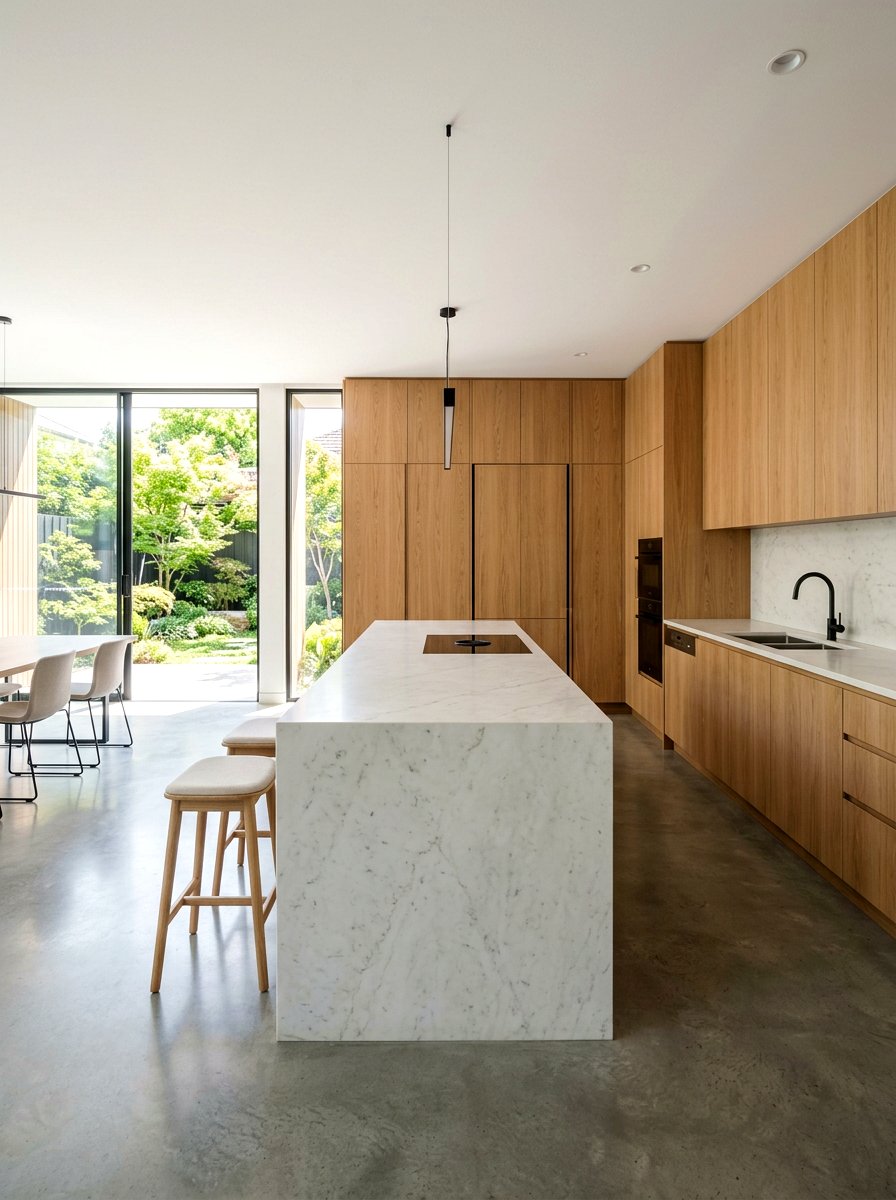
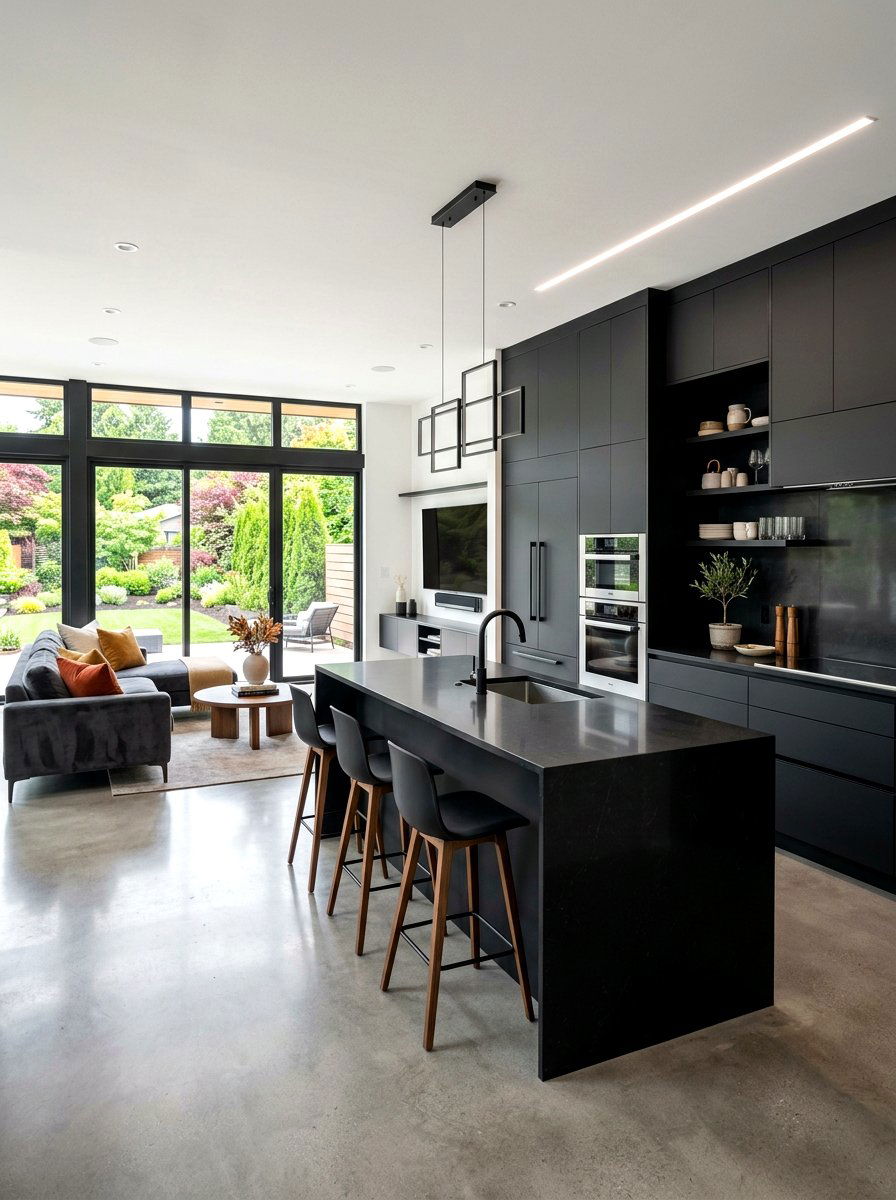
Does your kitchen ever feel overcrowded with unnecessary gadgets? A minimalist kitchen layout is core to the wabi-sabi philosophy of simplicity and intentionality. This design focuses on clean lines, hidden storage, and plenty of negative space. By removing visual clutter, the mind is allowed to rest, and the beauty of the remaining objects is highlighted. This doesn't mean the kitchen has to be cold; instead, it means every item has a dedicated place and a clear purpose. A simplified layout makes the space more functional and easier to maintain. It creates a sense of flow and openness that makes the kitchen a more relaxing and enjoyable place to spend time.
14. Rough stone kitchen floor
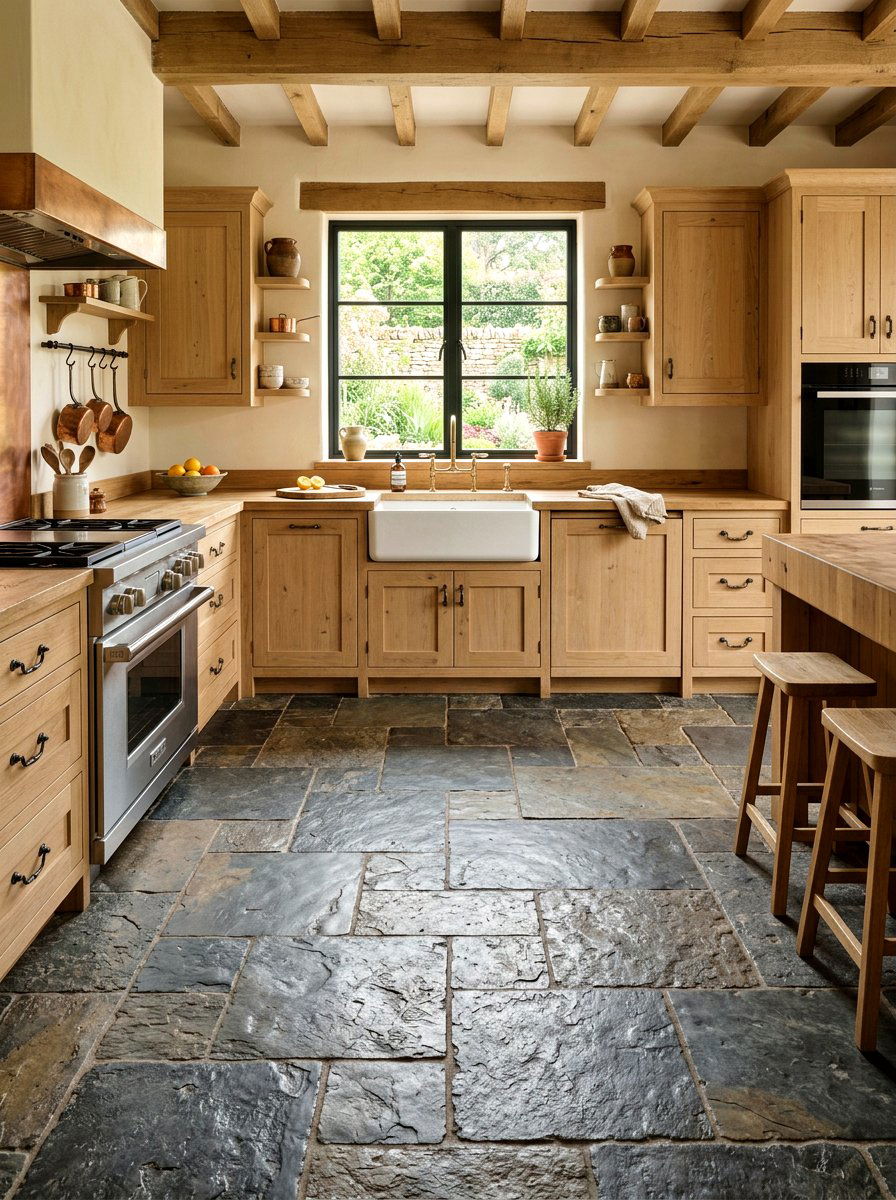
Have you ever considered the ground beneath your feet as a design element? A rough stone kitchen floor made from materials like slate or tumbled limestone brings an incredible amount of texture and permanence to the room. The irregular surfaces and natural color variations make the floor feel like an extension of the earth. This choice is practical too, as stone is durable and hides wear and tear beautifully. In a wabi-sabi home, a floor that isn't perfectly smooth is a reminder of the raw beauty found in nature. Walking on stone provides a tactile experience that connects you more deeply to your environment every time you step into the kitchen.
15. Vintage wooden kitchen table
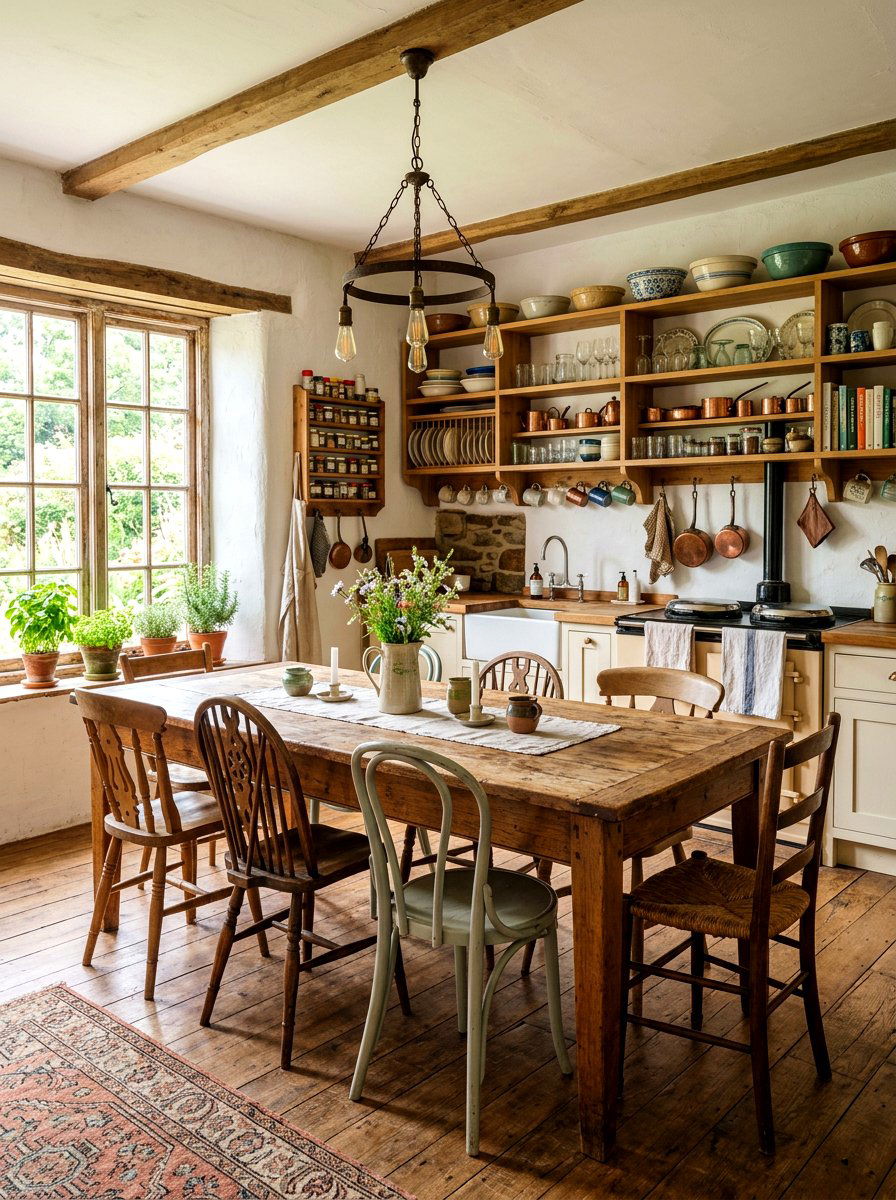
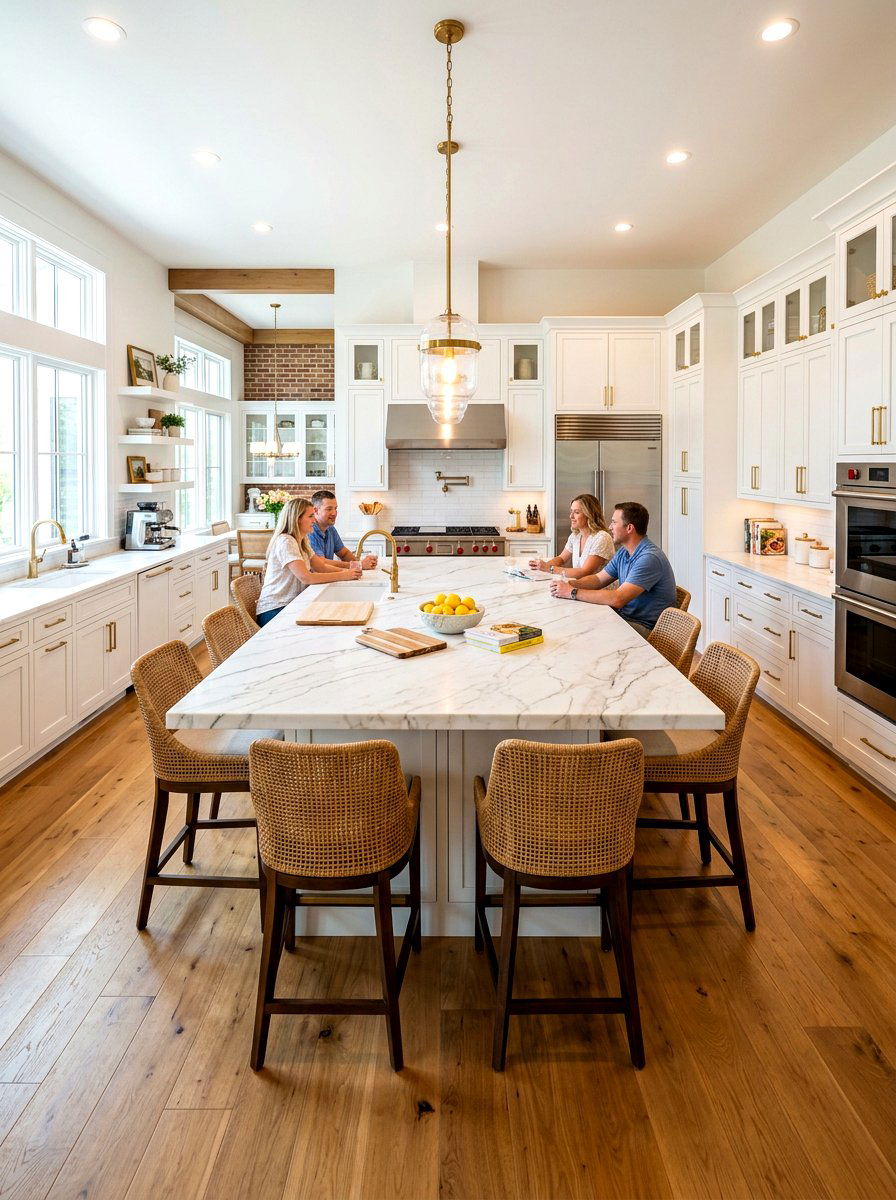
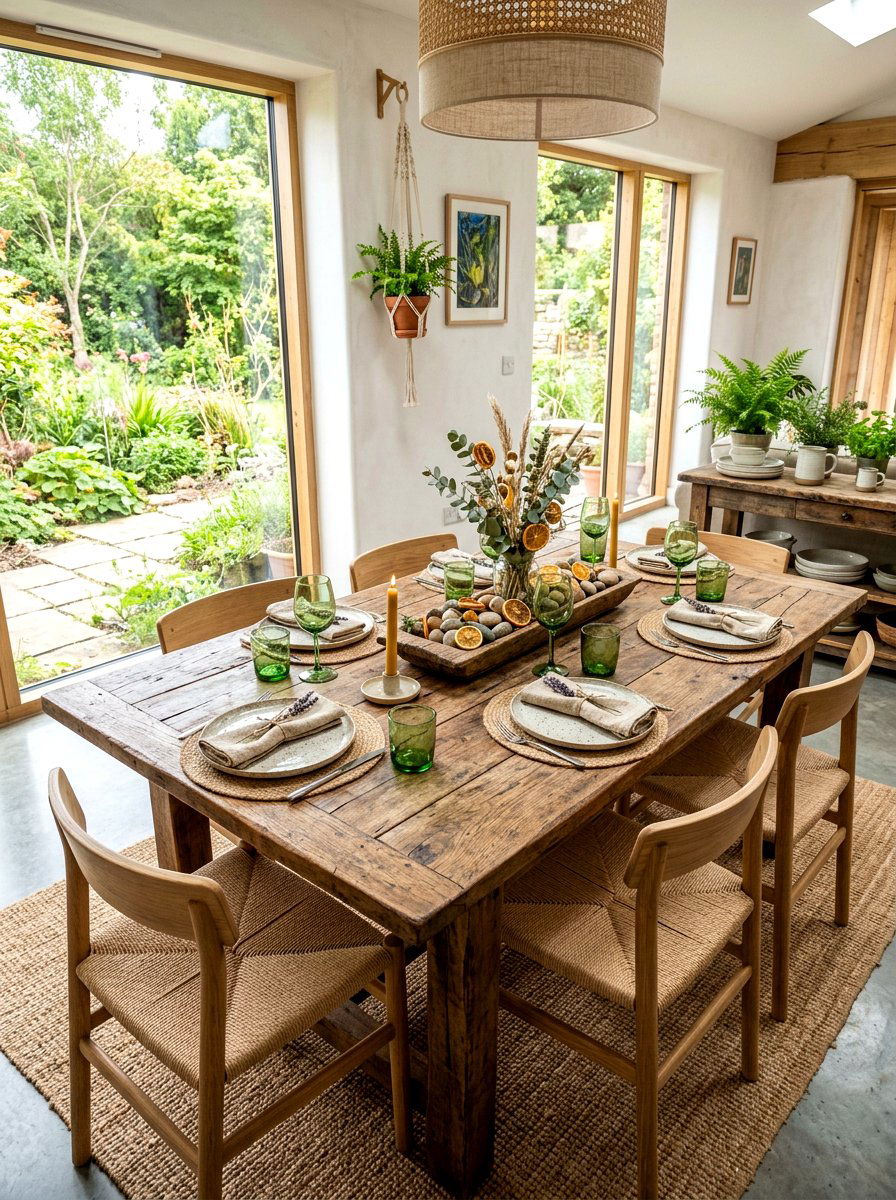
Is there anything more welcoming than a table that has seen decades of family meals? A vintage wooden kitchen table with a worn finish and visible signs of use is the ultimate wabi-sabi furniture piece. Instead of a new, pristine table, look for one that has a story to tell through its scratches and dents. These marks are a celebration of life and shared experiences. A large, rustic table acts as the heart of the kitchen, inviting people to gather and linger. The warm wood tones and sturdy construction provide a sense of stability and comfort. It is a piece that only gets better with age and use.
16. Matte black kitchen faucet
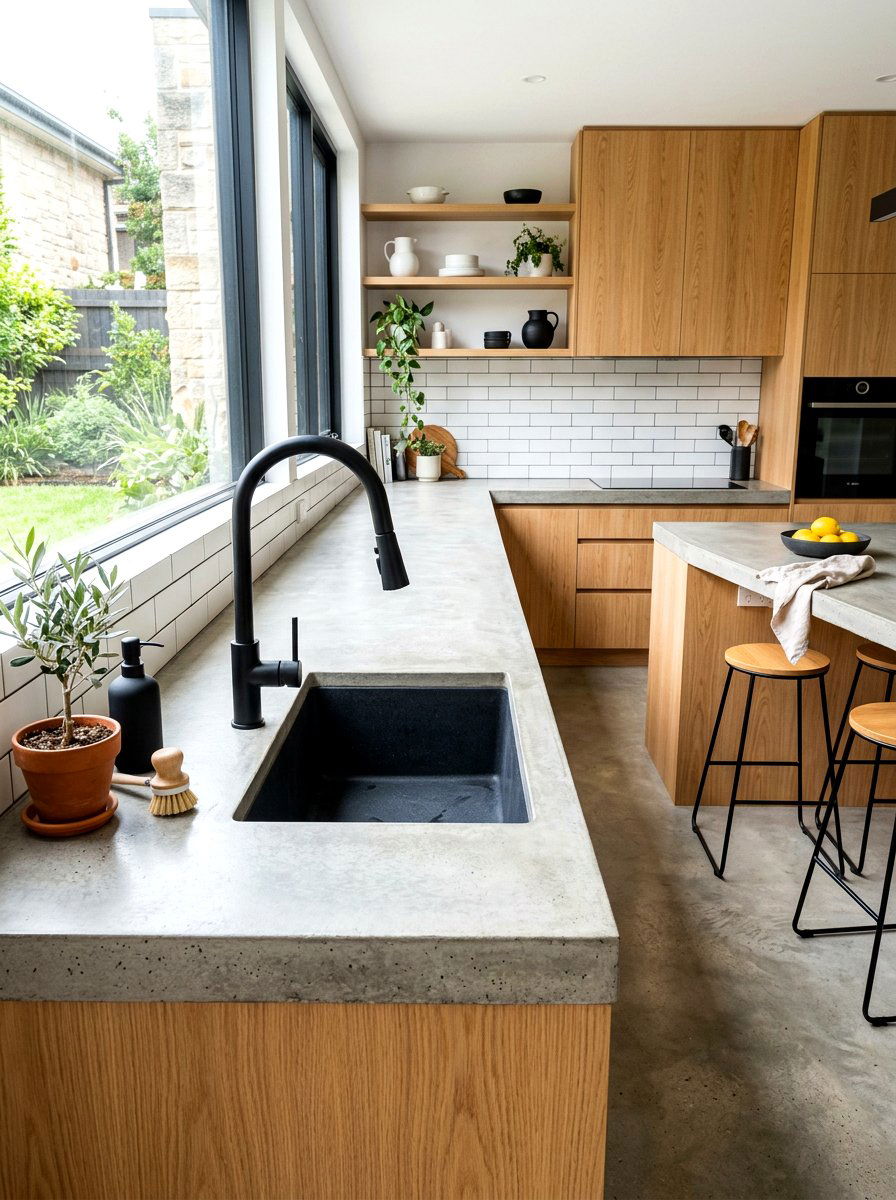
Can a single fixture bridge the gap between modern and traditional? A matte black kitchen faucet provides a sharp, contemporary contrast against the softer, organic textures found in a wabi-sabi kitchen. The flat, non-reflective finish feels sophisticated yet understated, allowing the shape of the faucet to become a subtle architectural statement. It pairs exceptionally well with concrete countertops or reclaimed wood shelving. By introducing a dark, grounded element, you create a sense of visual balance that keeps the neutral palette from feeling too washed out. This simple addition adds a modern edge to the space while maintaining the overall sense of calm and simplicity that defines the style.
17. Terracotta kitchen flooring
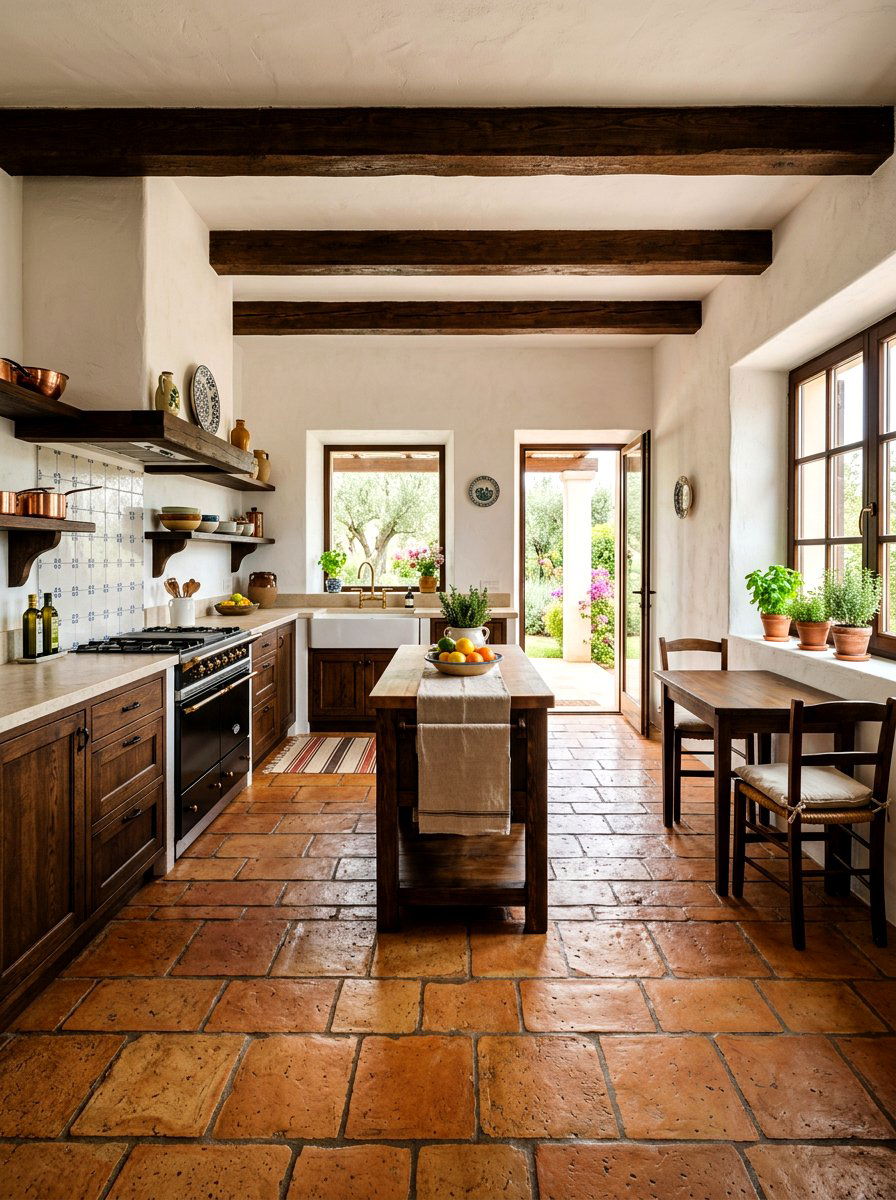
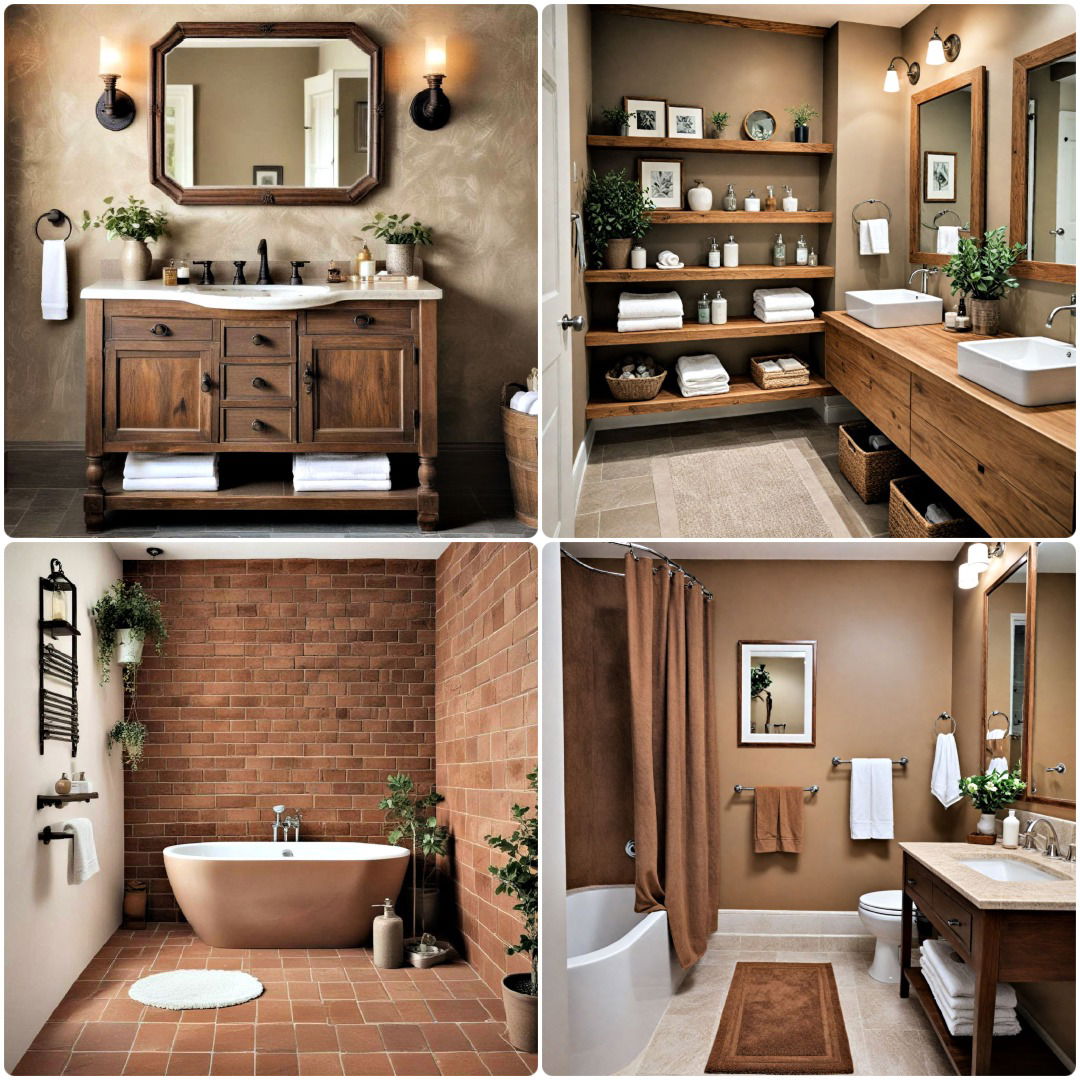
Do you want your kitchen to feel warm and sun-drenched all year round? Terracotta kitchen flooring is a classic choice that brings a Mediterranean or rustic vibe to the home. These clay tiles are known for their beautiful variations in red, orange, and brown tones. Because they are a natural material, no two tiles are exactly the same, creating a rich and vibrant floor that feels handmade. Terracotta is naturally warm to the touch and develops a lovely sheen over time. This flooring choice grounds the kitchen in traditional craftsmanship and adds a cozy, lived-in feel. It is a perfect match for a wabi-sabi kitchen that values natural materials.
18. Hand carved wooden bowls
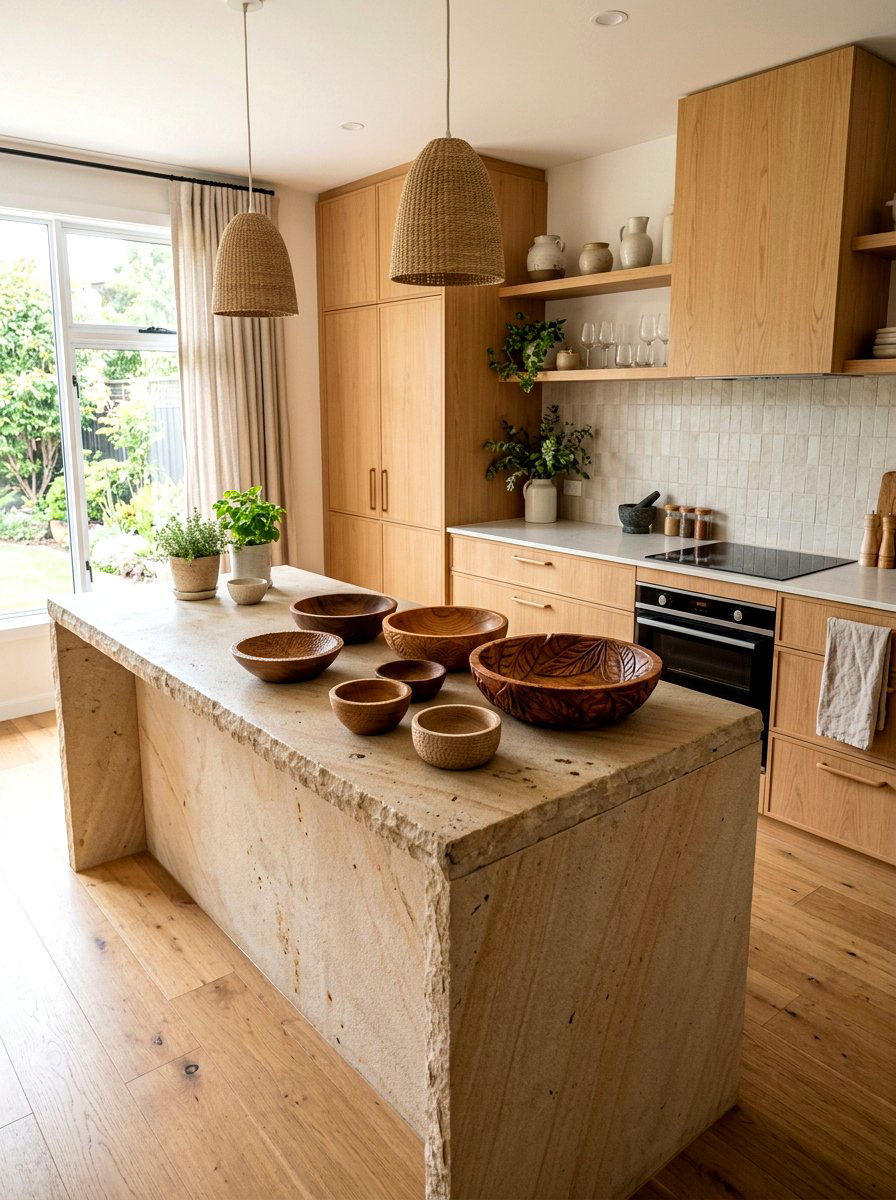
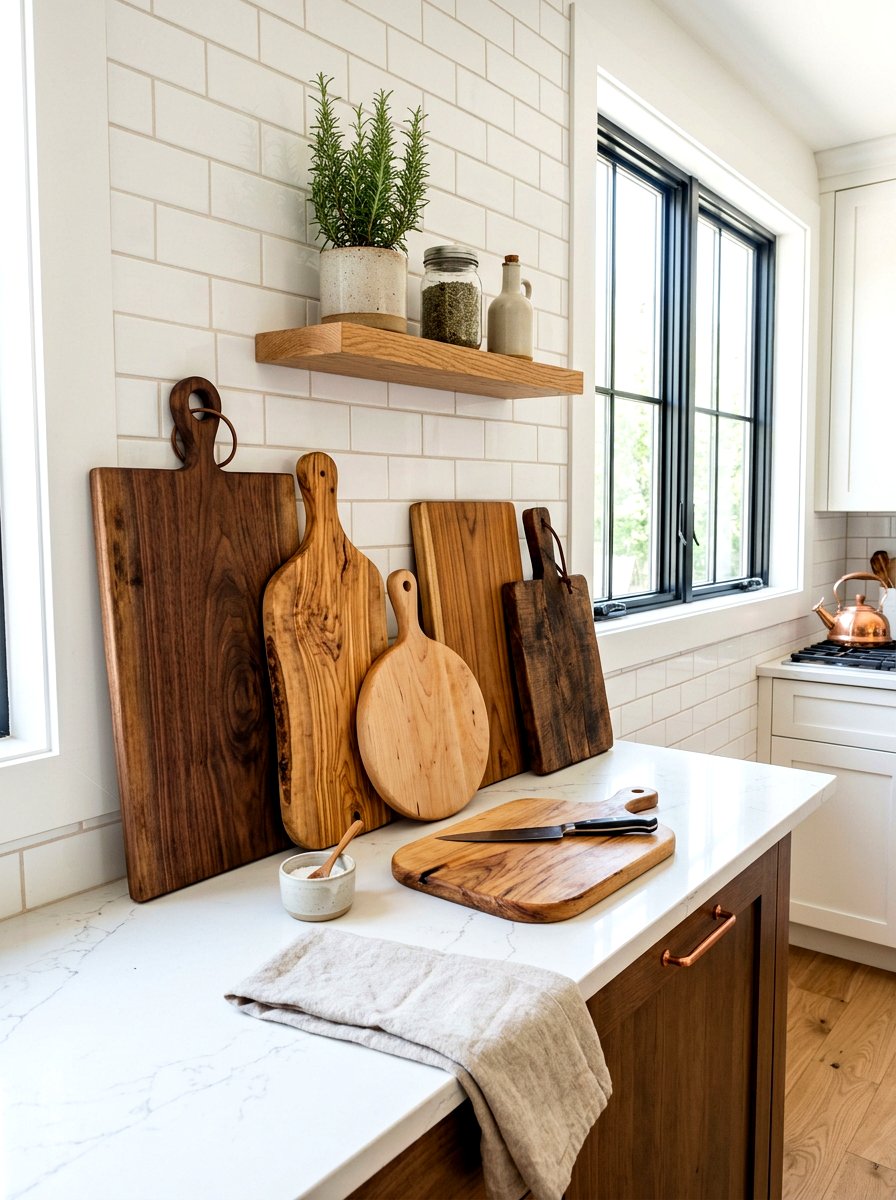
What if the objects you used every day were also small sculptures? Placing hand carved wooden bowls on your countertops or dining table is a wonderful way to introduce organic shapes and tactile beauty. These bowls often show the marks of the tools used to create them, highlighting the human element in design. The varied grain patterns and natural imperfections of the wood make each bowl a one-of-a-kind piece. In a wabi-sabi kitchen, these bowls serve as functional art that celebrates the beauty of raw timber. Using them for fruit or as serving pieces adds a sense of mindfulness and appreciation for the natural world to your daily routine.
19. Linen kitchen curtains
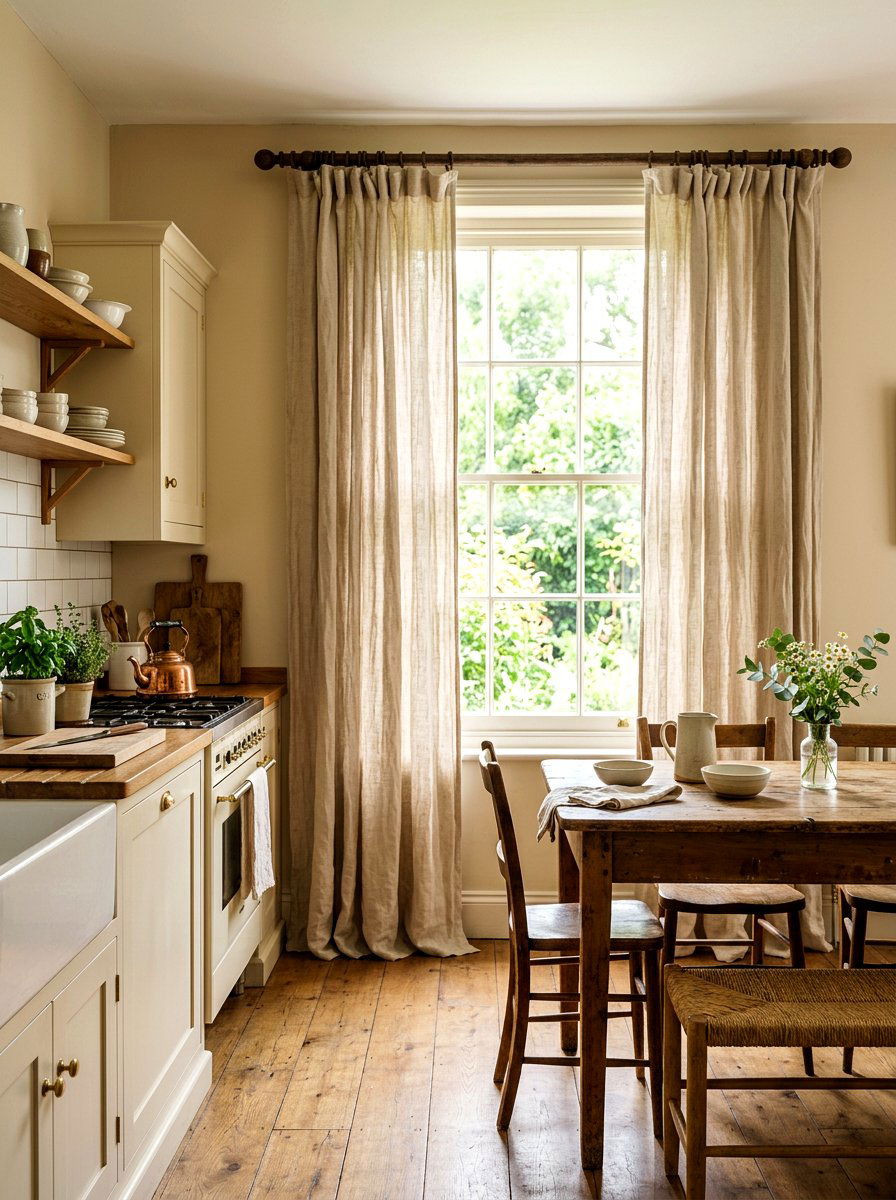
Are you looking for a way to soften the hard surfaces of your kitchen? Linen kitchen curtains are a beautiful and simple solution that adds a soft, textile layer to the room. The natural, slubby texture of linen feels relaxed and unpretentious, perfectly embodying the wabi-sabi spirit. These curtains filter the light gently, creating a warm and hazy glow that makes the space feel more private and cozy. Linen is a durable and timeless material that looks even better when it is slightly wrinkled and lived-in. By choosing a neutral or muted color, you can subtly enhance the kitchen’s aesthetic while keeping the atmosphere light, airy, and grounded.
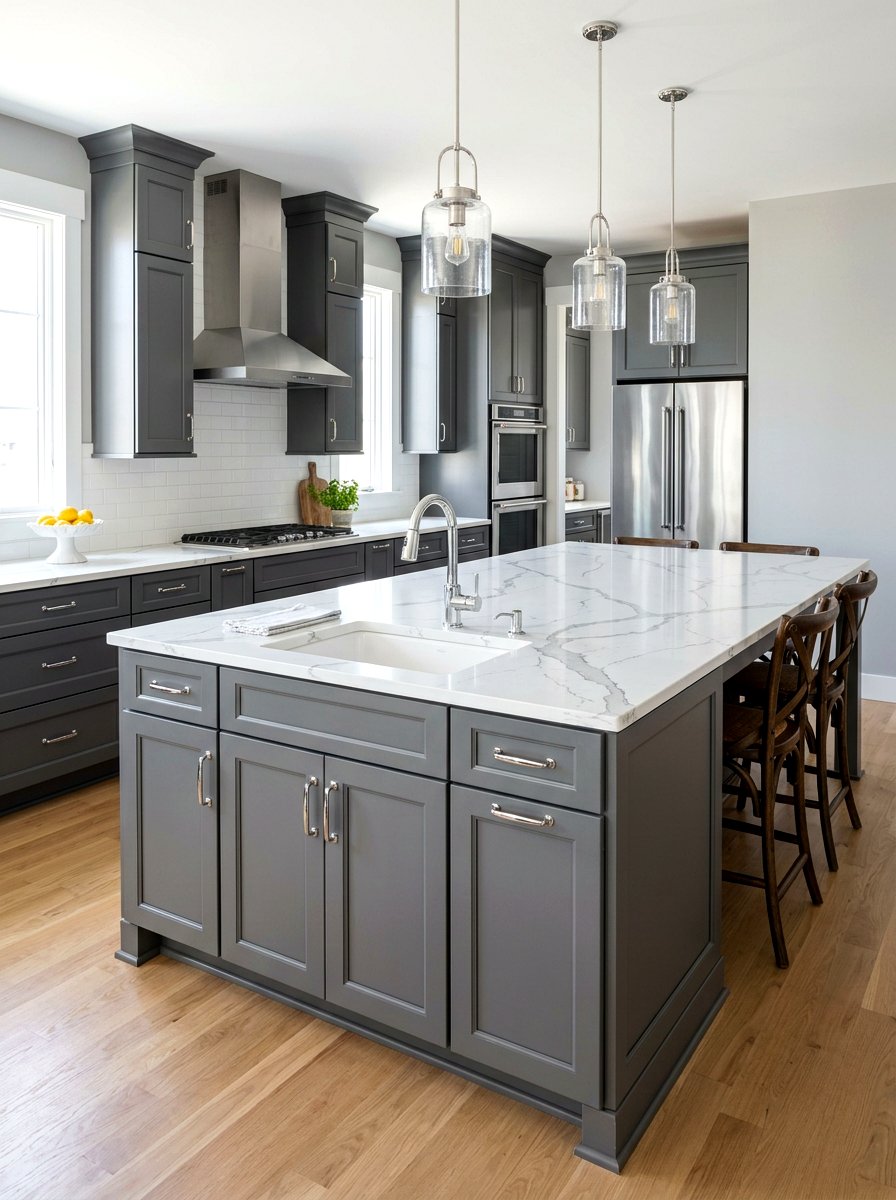
20. Asymmetrical kitchen shelving
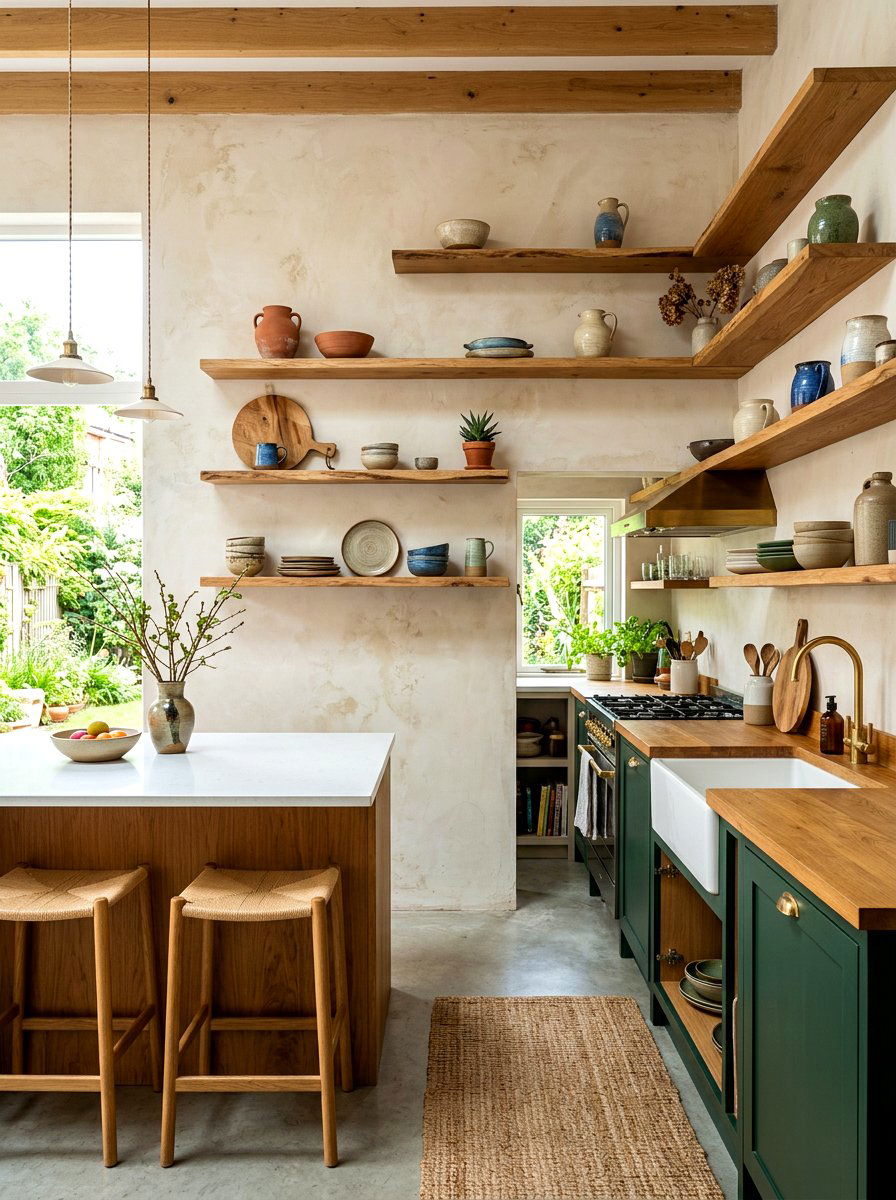
Does everything in your home have to be perfectly balanced to be beautiful? Asymmetrical kitchen shelving challenges the traditional idea of symmetry by placing shelves at different heights and lengths. This creates a more dynamic and organic look that feels less formal and more spontaneous. It allows you to display items of various sizes in a way that feels natural and curated over time. This approach to design celebrates the wabi-sabi idea that life is not perfectly ordered. By embracing an unbalanced layout, you create a space that feels more personal and authentic. It encourages a creative and flexible way of organizing your favorite kitchen essentials.
21. Patina metal kitchen accents
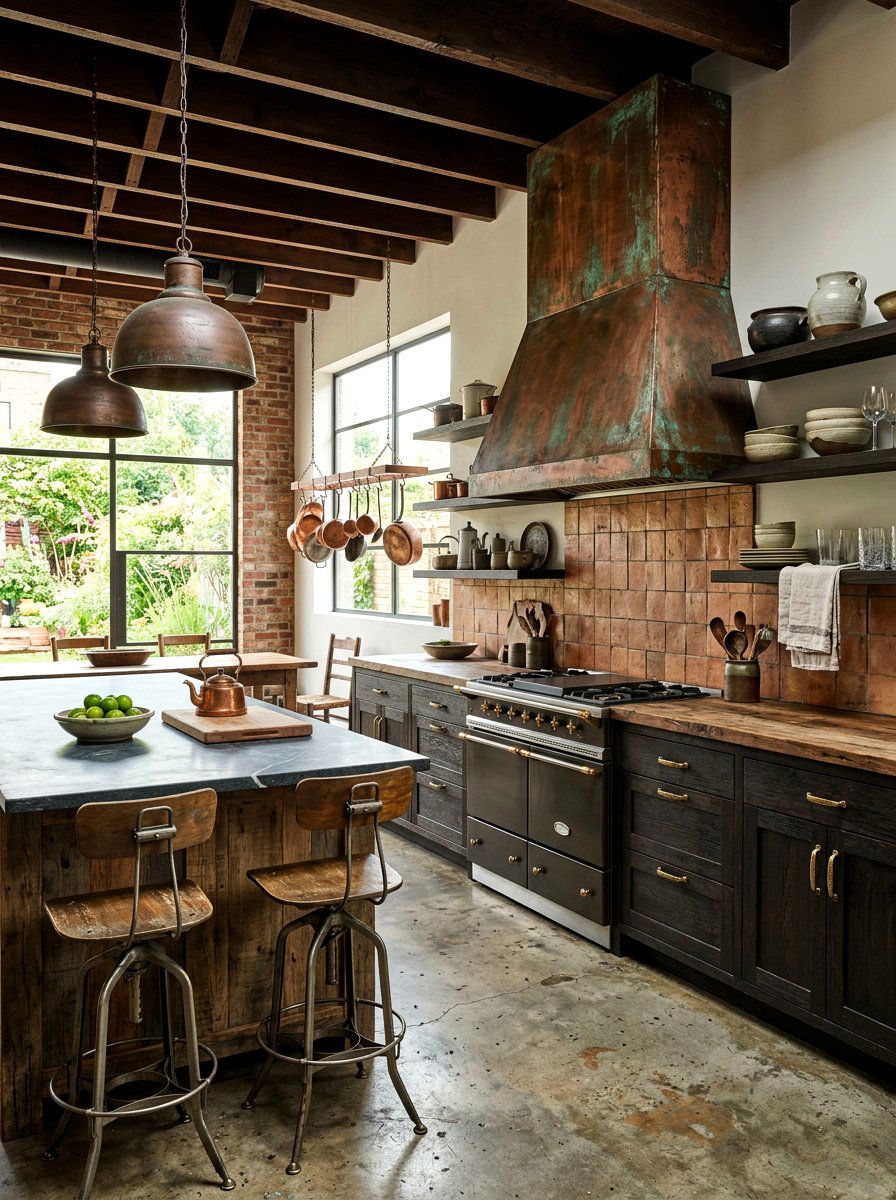
Have you ever admired the way copper or bronze changes color as it ages? Integrating patina metal kitchen accents, such as a range hood or light fixtures, adds a sense of depth and history to the space. These metals develop unique patterns and colors over time as they react to air and moisture. This natural transformation is a core part of the wabi-sabi aesthetic, which values the beauty of aging. The rich, weathered tones of patinated metal provide a stunning contrast to light wood and plaster walls. It is a bold design choice that celebrates the passage of time and the unique character that only comes with years of use.
22. Dark wood kitchen
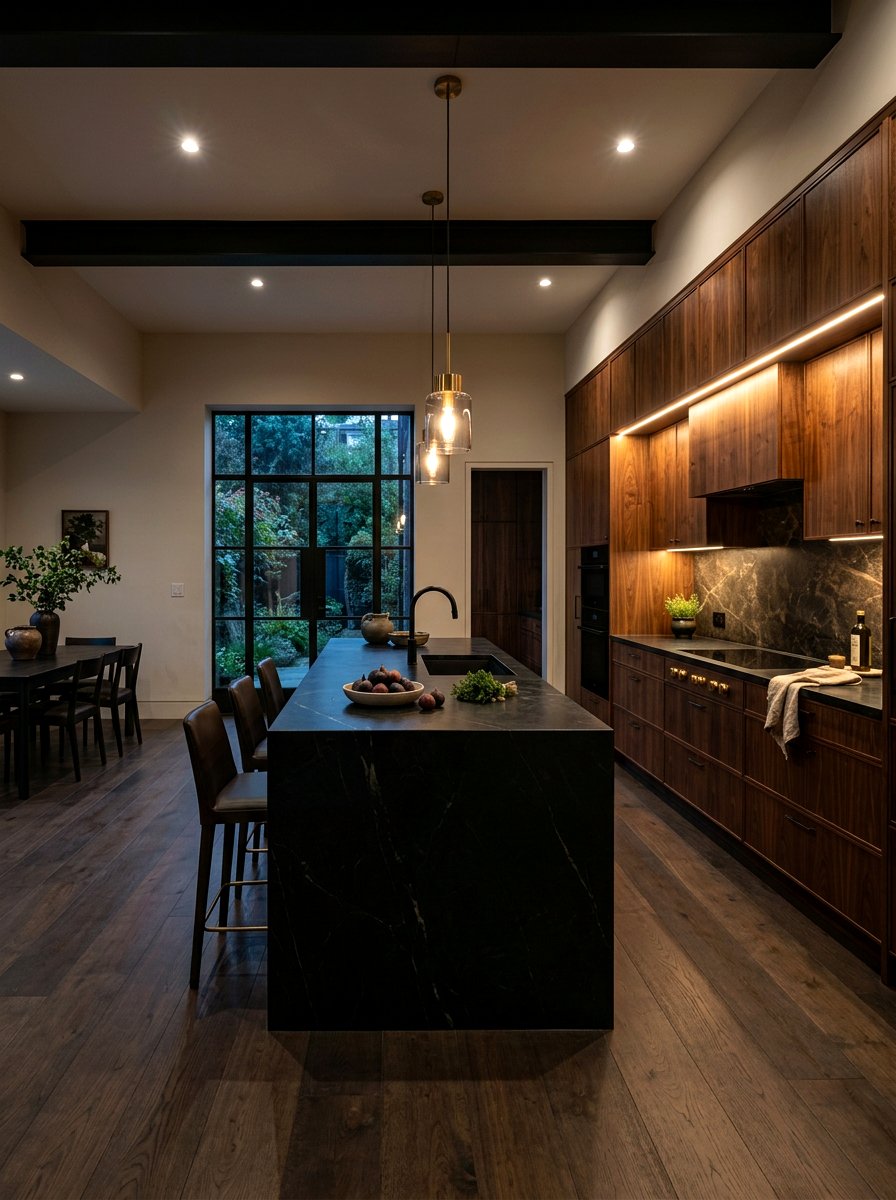
Can a kitchen feel both moody and incredibly peaceful? A dark wood kitchen using materials like walnut or stained oak offers a sophisticated and grounded take on wabi-sabi. The deep, rich tones of the wood create a sense of intimacy and warmth, especially when paired with soft, warm lighting. This design choice highlights the natural beauty of the wood grain in a more dramatic way. By keeping the rest of the elements minimal and neutral, the dark cabinets become the primary focus of the room. This approach creates a cocoon-like environment that feels solid and enduring, providing a beautiful sanctuary for cooking and relaxing at home.
23. Small apartment kitchen
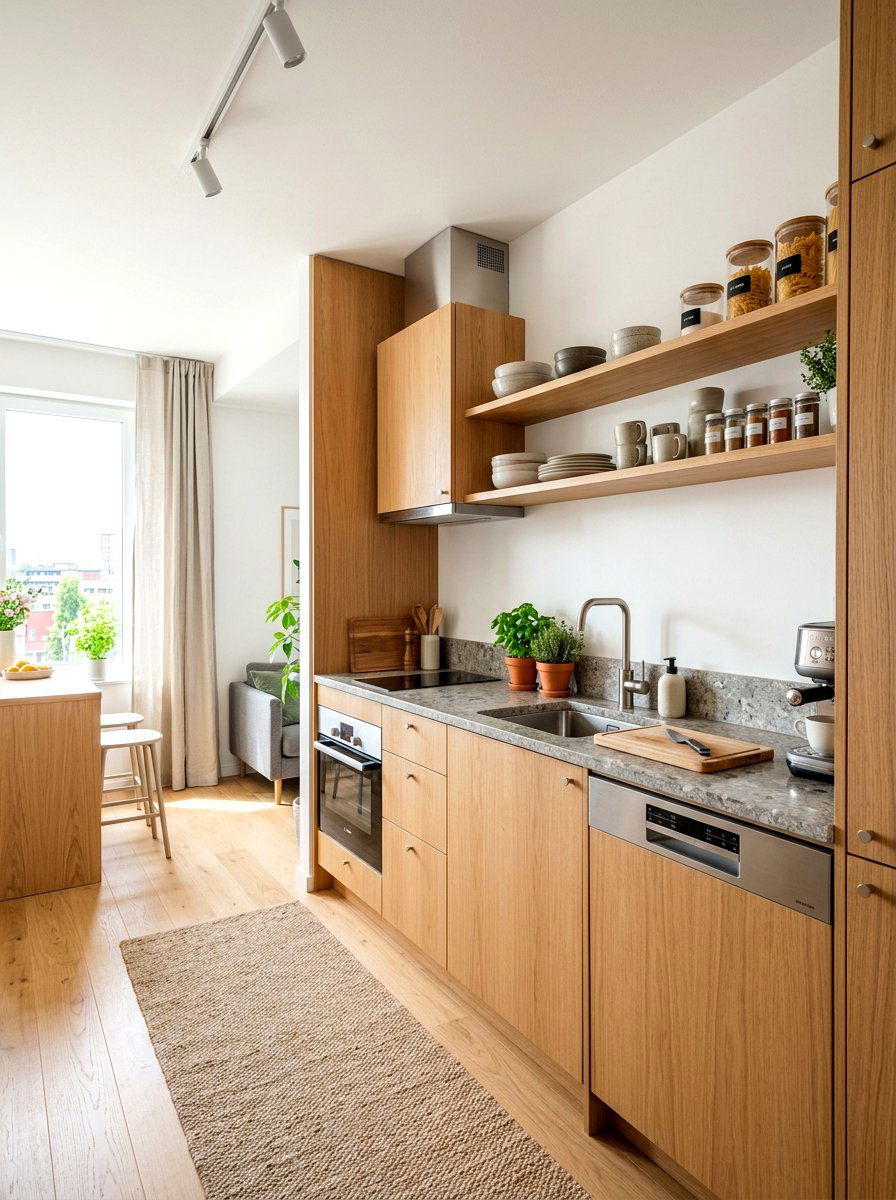
How do you create a sense of calm in a limited space? A small apartment kitchen is the perfect place to apply wabi-sabi principles because it forces you to prioritize simplicity and functionality. By choosing a few high-quality, natural materials like wood and stone, you can make a small space feel high-end and intentional. Focus on maximizing light and using a light color palette to keep the area feeling open. Integrating open shelving and hidden storage helps to maintain a clutter-free environment. This design approach proves that you don't need a large house to create a beautiful, serene, and soul-filled kitchen that perfectly reflects your personal style.
24. Indoor plants kitchen decor
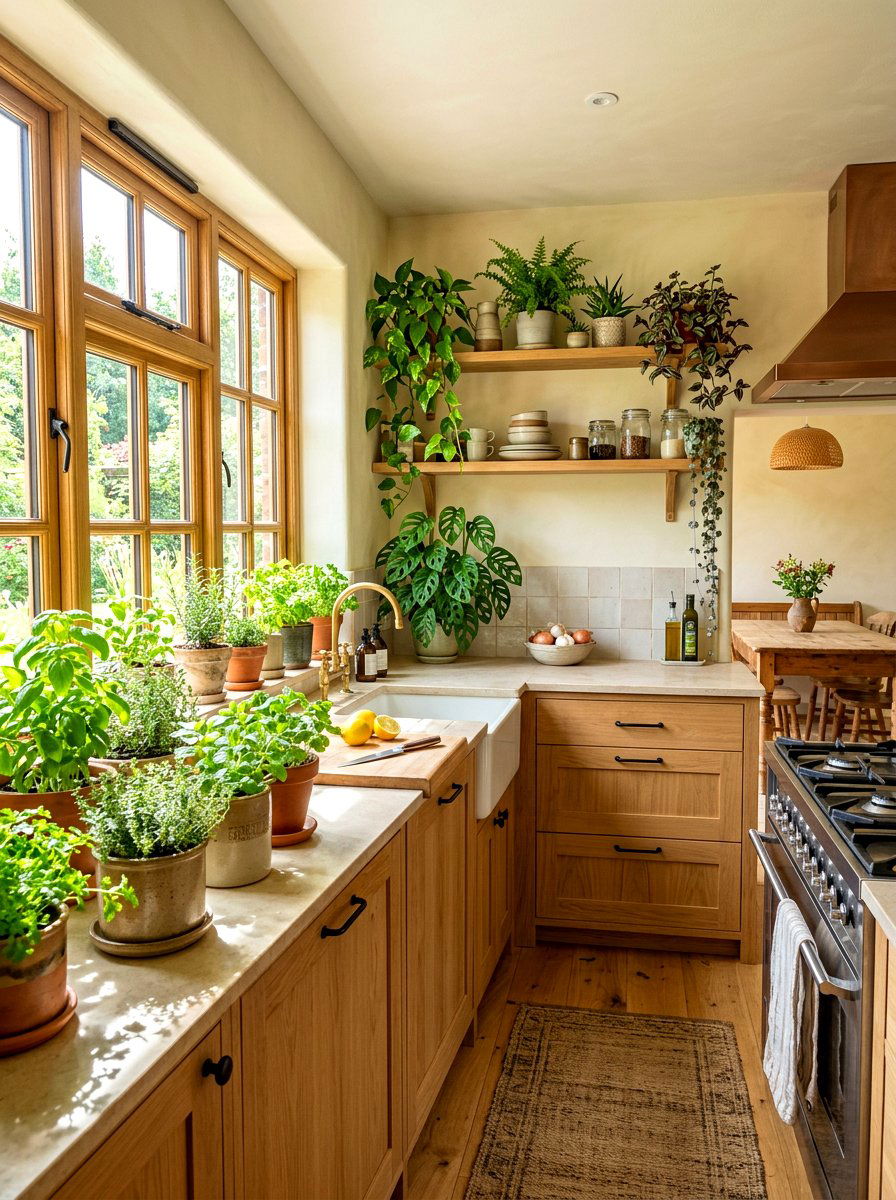
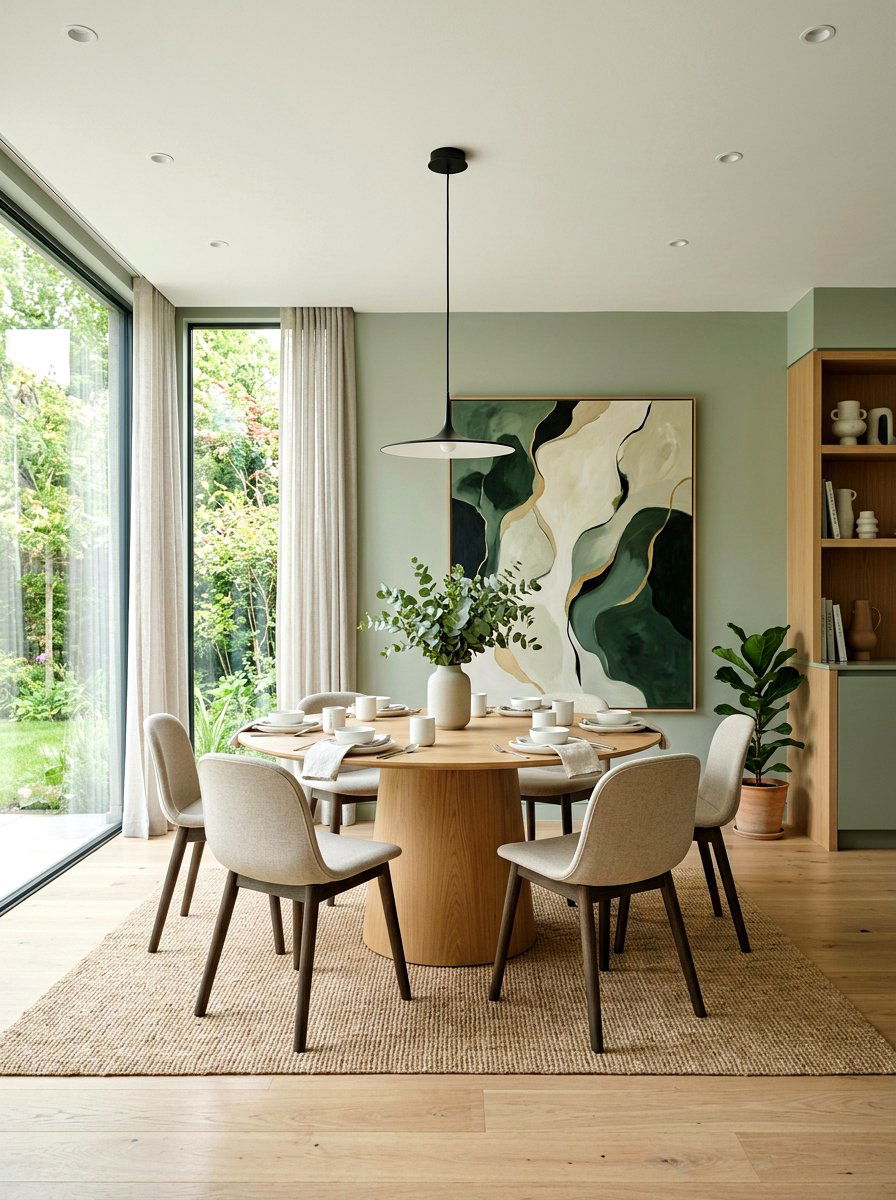
Do you feel more relaxed when you are surrounded by greenery? Using indoor plants as kitchen decor is a simple way to bring life and energy into a wabi-sabi space. Whether it is a few potted herbs on the windowsill or a large leafy plant in the corner, greenery adds a vibrant, organic element that connects the indoors with nature. Plants represent growth and change, two key themes in wabi-sabi philosophy. Their irregular shapes and varied colors provide a soft contrast to the hard lines of the kitchen. This design idea not only improves air quality but also creates a more soothing and restorative atmosphere.
25. Exposed brick kitchen
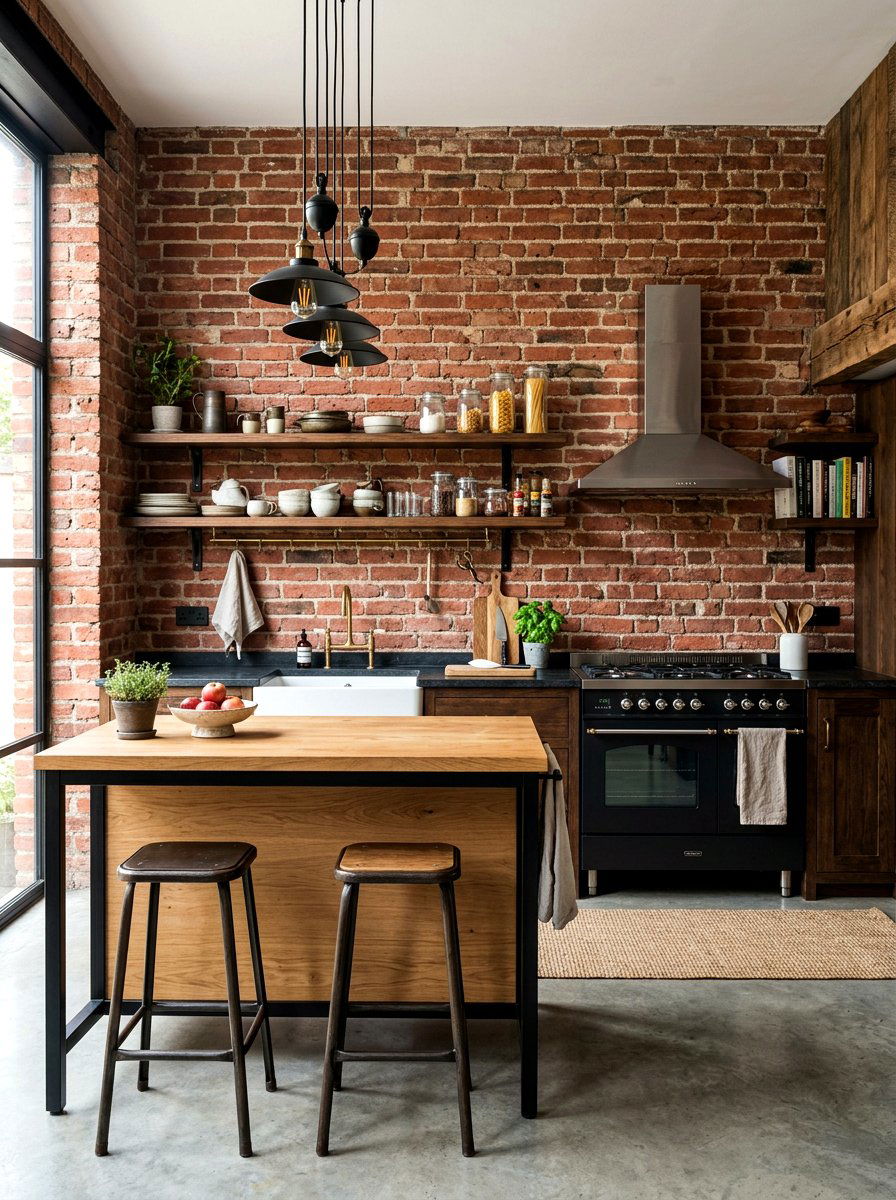
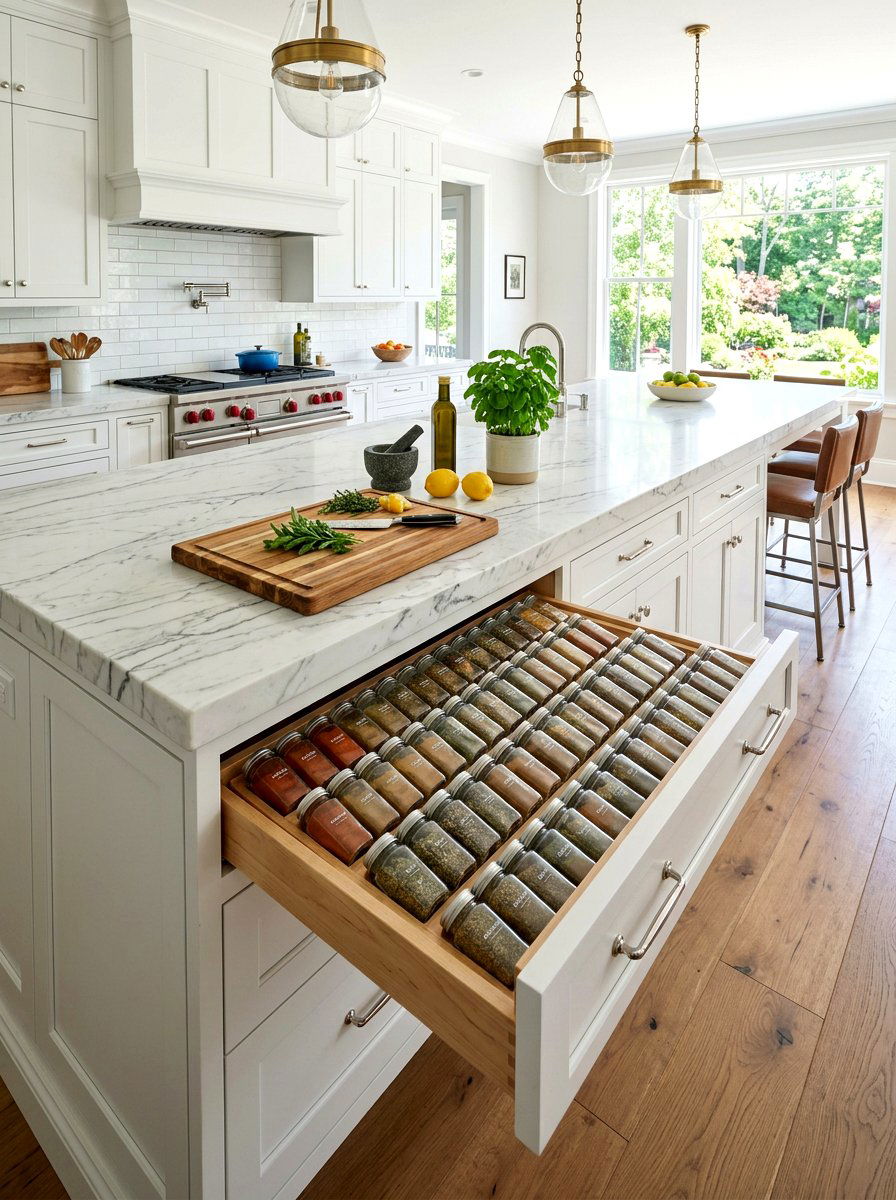
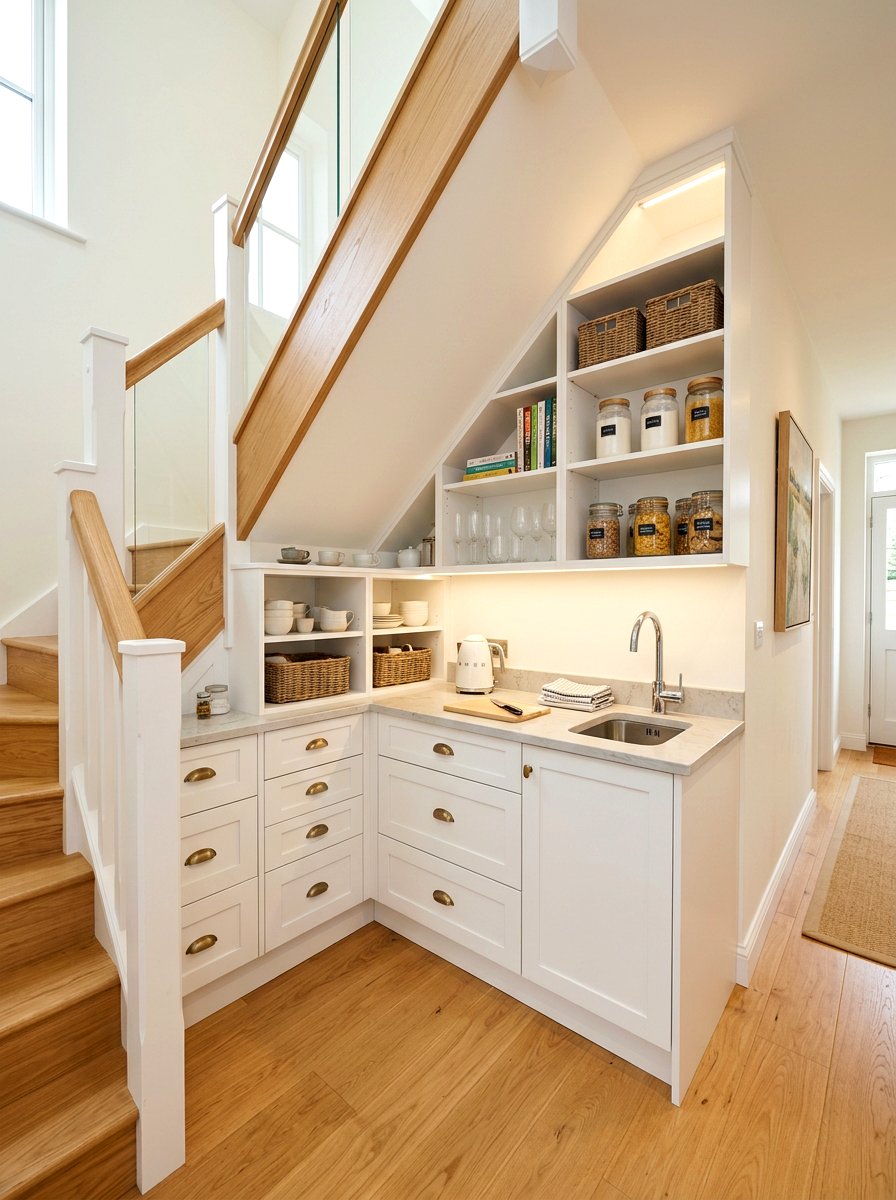
What if your walls told the story of the building's history? An exposed brick kitchen adds an incredible amount of texture and architectural character to the home. The rough, uneven surface of the bricks and the variations in color create a rustic and grounded backdrop for modern cabinetry. Wabi-sabi design loves the look of raw, unfinished materials that show their age. Brick walls provide a sense of warmth and permanence that is hard to replicate with other materials. When paired with smooth concrete or warm wood, exposed brick creates a balanced and visually interesting space that feels both industrial and incredibly cozy and inviting.
26. Floating wood island
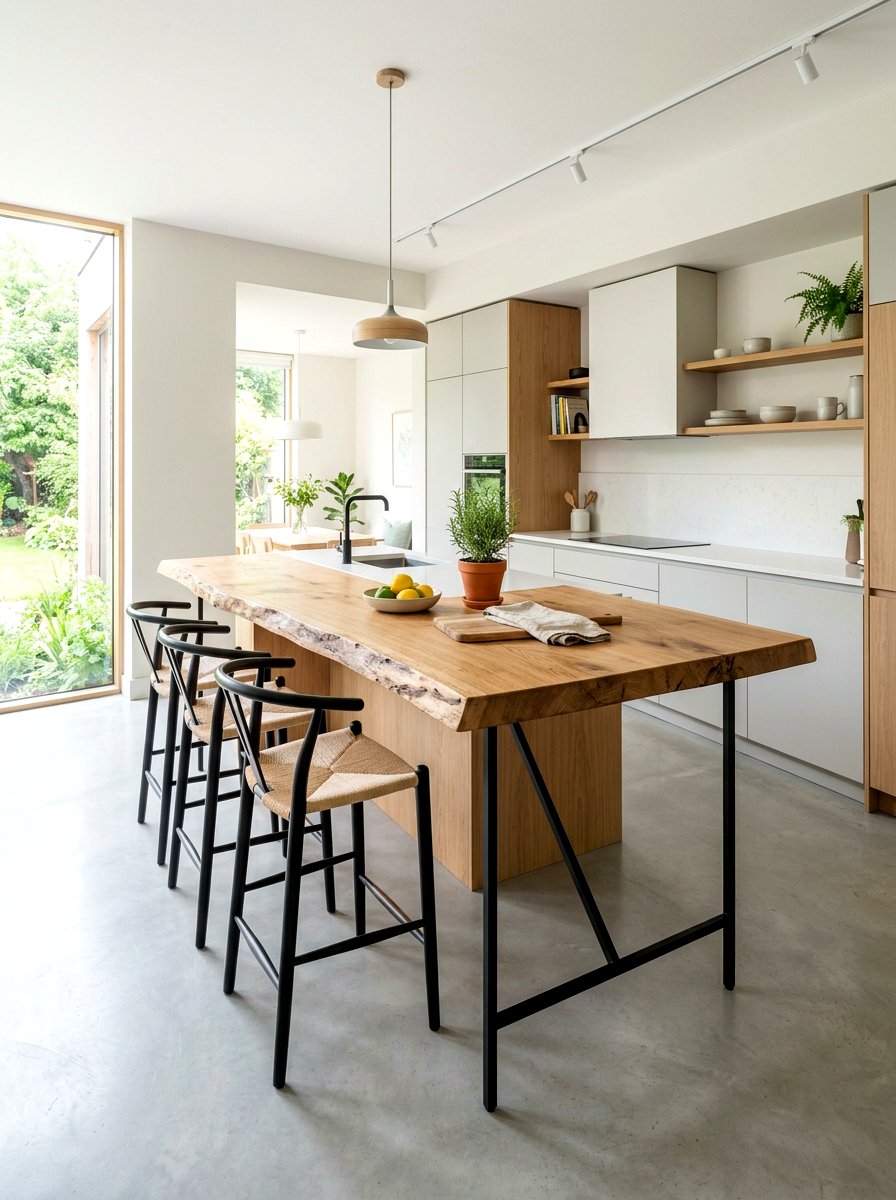
Have you ever wanted a kitchen island that felt more like a piece of furniture than a built-in cabinet? A floating wood island with legs instead of a solid base creates a sense of lightness and airiness in the kitchen. This design choice allows you to see more of the floor, making the entire room feel larger. Using a thick, live-edge wood slab for the top adds a touch of organic beauty and artisanal craftsmanship. A floating island feels less permanent and more flexible, which aligns perfectly with the wabi-sabi appreciation for transience. It provides a beautiful and functional workspace that doesn't overwhelm the visual flow of the room.
27. Textured plaster kitchen finish
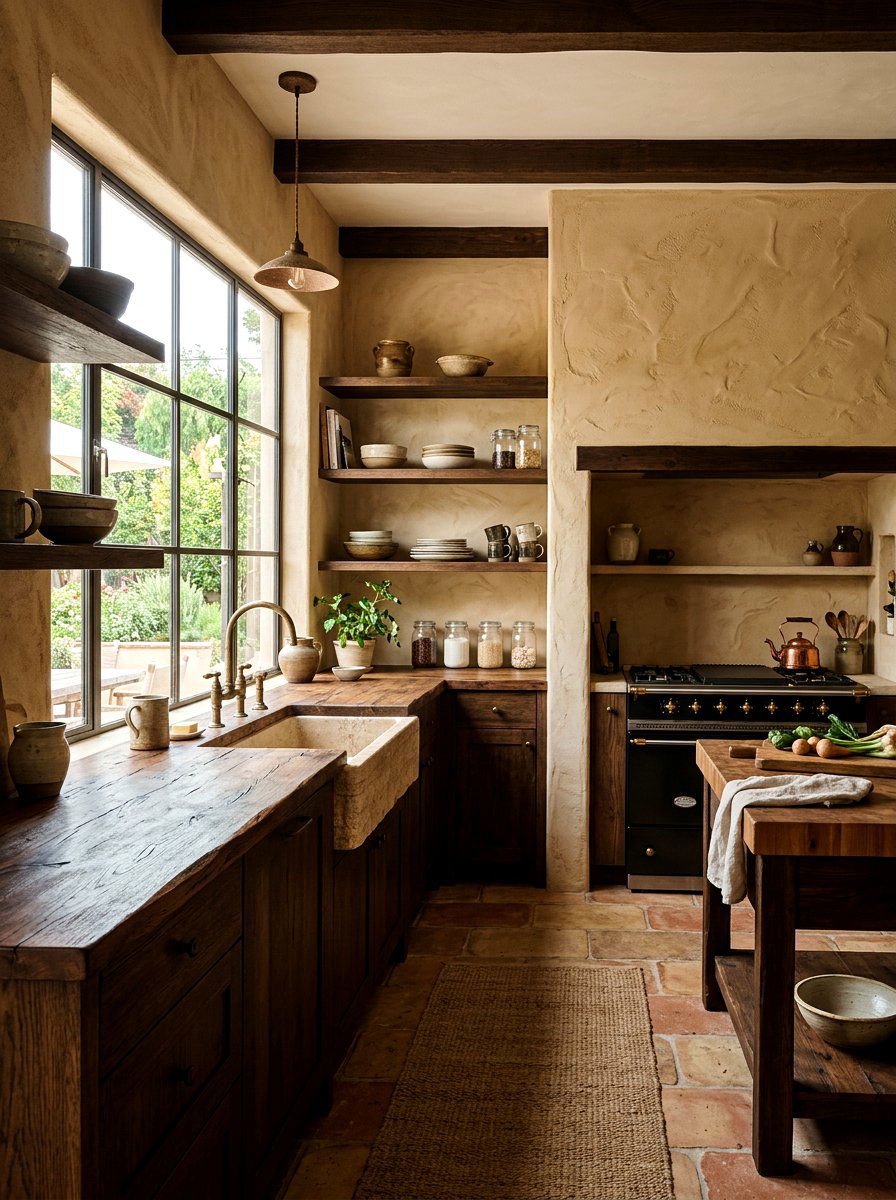
Can a wall finish be both simple and incredibly sophisticated? A textured plaster kitchen finish on the walls or even the range hood adds a hand-crafted, artisanal quality to the space. The subtle ridges and variations in the plaster catch the light, creating a beautiful and soft aesthetic. This finish feels much more organic than smooth drywall and adds a tactile layer to the room. In a wabi-sabi kitchen, the goal is to create surfaces that invite touch and show the hand of the maker. Plaster is a natural and durable material that ages beautifully, making it an excellent choice for anyone looking to create a timeless sanctuary.
28. Antique furniture kitchen
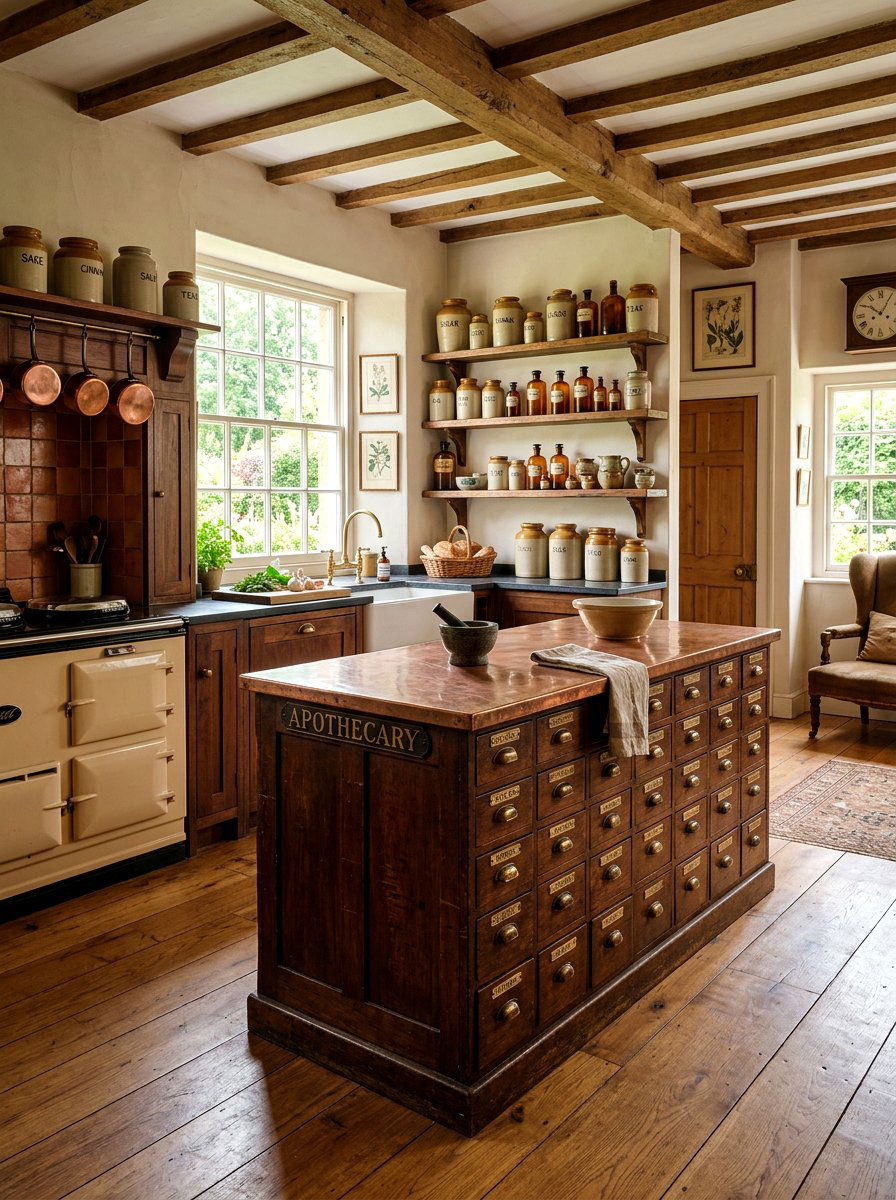
How can you make a new kitchen feel like it has been there for generations? Integrating antique furniture into your kitchen design is a wonderful way to add history and personality. Instead of a standard kitchen island, you could use an old apothecary chest or a vintage work table. These pieces bring a sense of soul and craftsmanship that mass-produced cabinetry often lacks. The worn finishes and unique details tell a story and create a more eclectic, lived-in feel. This approach celebrates the wabi-sabi love for the aged and the weathered, making your kitchen feel more authentic and deeply connected to the past.
29. Sun drenched breakfast nook
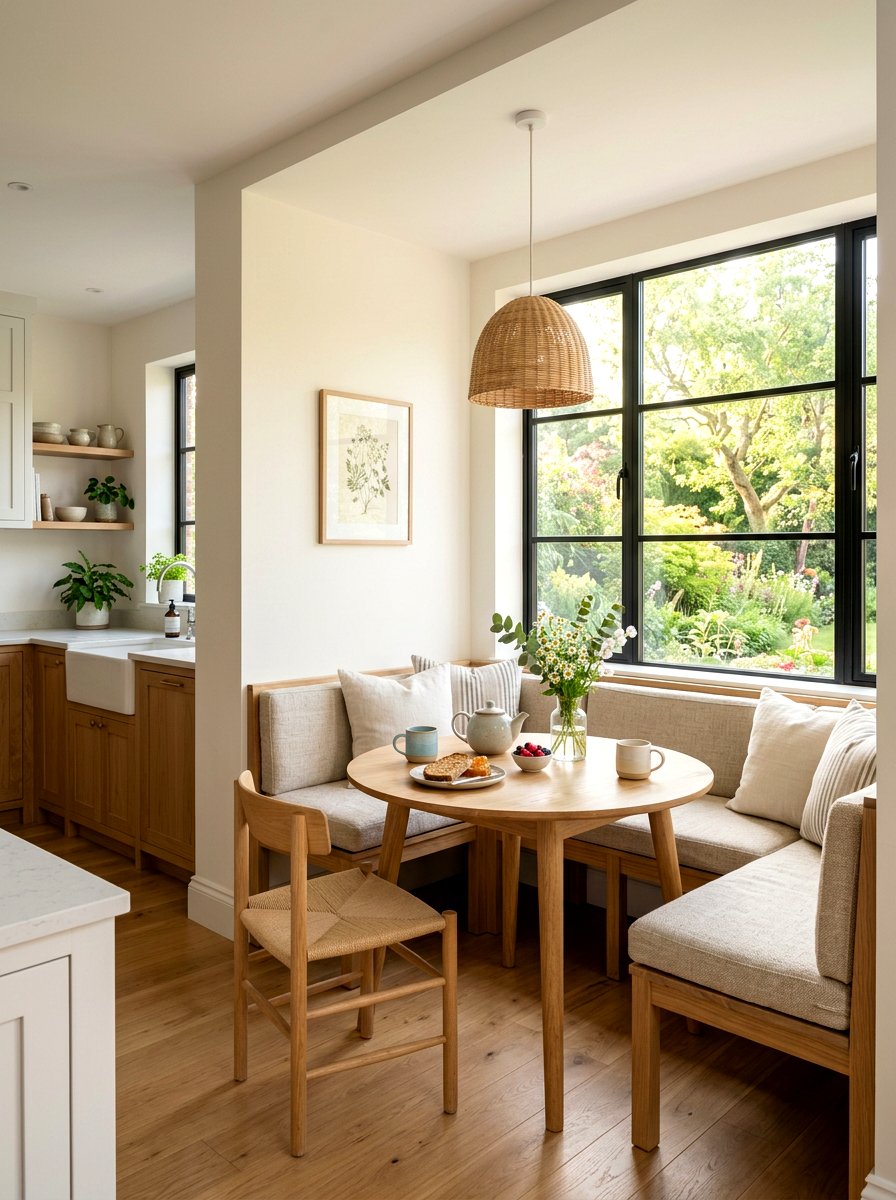
Do you have a favorite spot in your home where the light hits just right? A sun-drenched breakfast nook with a simple wooden table and comfortable, textured seating is a beautiful addition to any wabi-sabi kitchen. This space is all about slowing down and enjoying a quiet moment at the beginning of the day. Use natural light to highlight the textures of the wood and the softness of any linen cushions. A minimalist approach to the decor ensures that the focus remains on the peaceful atmosphere and the view outside. It is a dedicated corner for mindfulness and connection, perfectly reflecting the values of simplicity and presence.
30. Sustainable bamboo kitchen
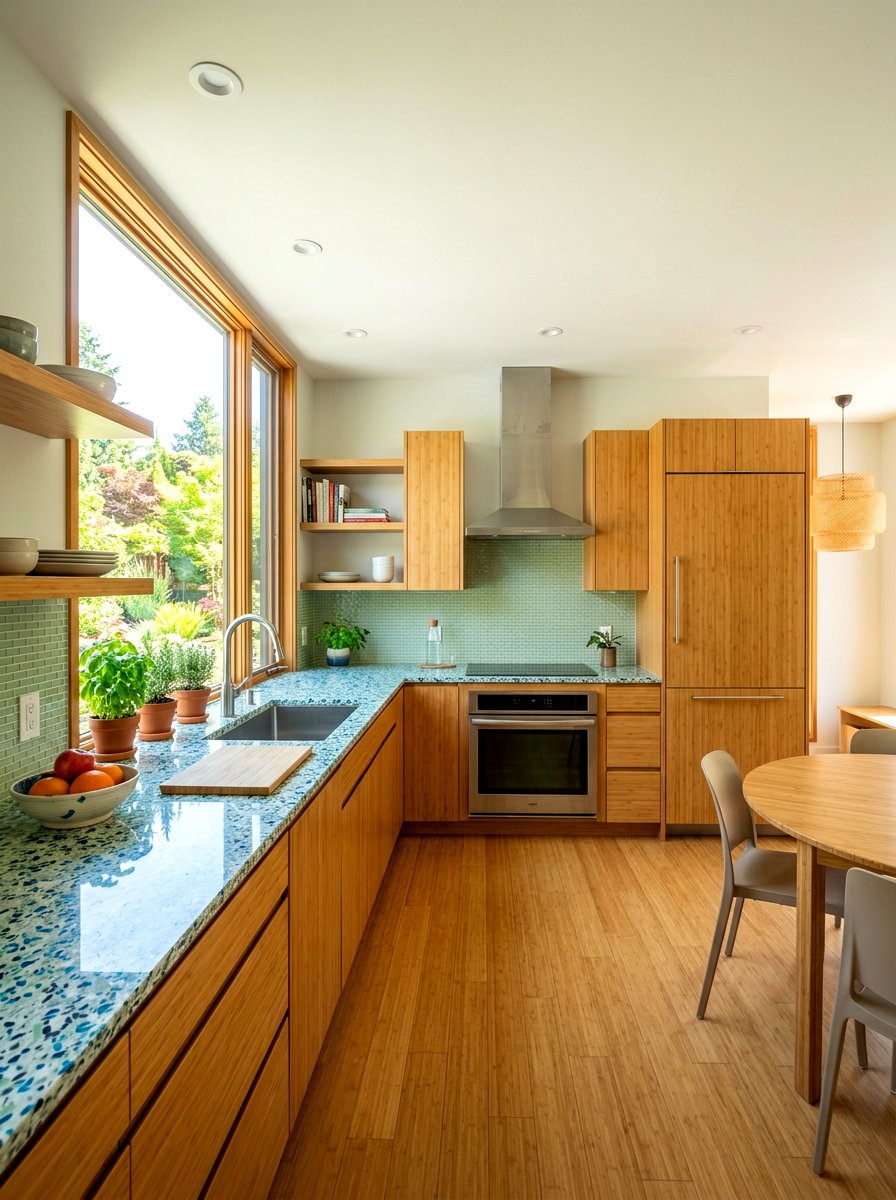
What if your kitchen was as kind to the environment as it was beautiful to look at? A sustainable bamboo kitchen is a modern take on wabi-sabi that prioritizes eco-friendly materials and renewable resources. Bamboo has a beautiful, linear grain and a warm, natural color that fits perfectly with a minimalist aesthetic. It is an incredibly durable and versatile material that can be used for cabinetry, flooring, or countertops. By choosing sustainable materials, you are honoring the natural world and making a conscious choice for the future. This design idea combines the ancient wisdom of wabi-sabi with modern environmental awareness, creating a beautiful and responsible home.
Conclusion:
The beauty of a wabi-sabi kitchen lies in its ability to embrace the imperfect and the authentic, creating a space that feels like a true sanctuary. By focusing on natural materials, earthy tones, and the passage of time, you can design a kitchen that is both functional and deeply soulful. This aesthetic encourages us to slow down, appreciate the craftsmanship behind our objects, and find joy in the simple moments of daily life. Whether it is the worn edge of a wooden table or the soft glow of a linen curtain, these details make a house feel like a home. Embracing wabi-sabi is more than just a design choice; it is a lifestyle that values presence and the quiet beauty found in the world around us. Your kitchen can become a grounded, peaceful place where memories are made and life is celebrated in all its imperfect glory.

Related posts: