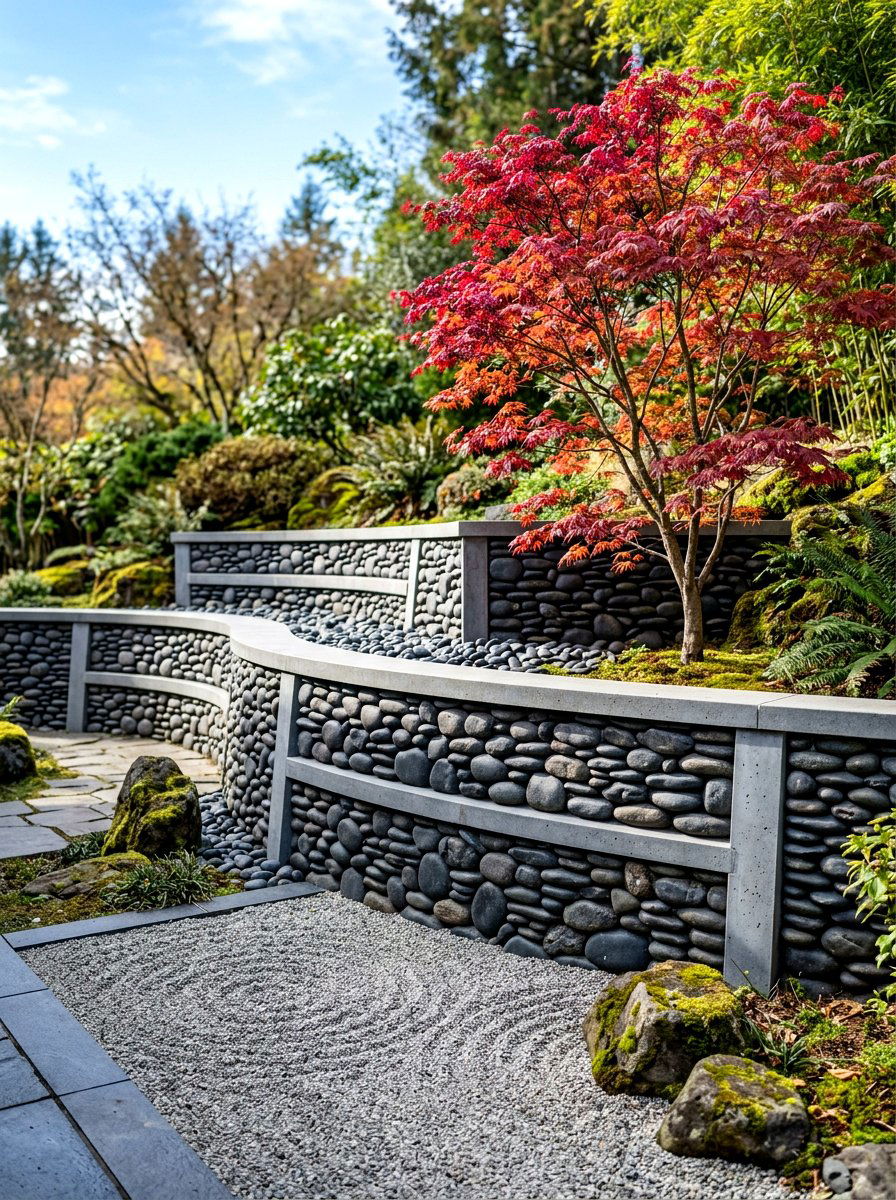
Espalier is an ancient and elegant gardening technique that transforms ordinary trees and shrubs into living pieces of vertical art. By training branches to grow flat against a wall or fence, you can save significant space while adding a sophisticated architectural element to your landscape. This method was originally perfected in European kitchen gardens to maximize fruit production in small areas, but today it is beloved for its aesthetic charm. Whether you want to harvest fresh apples from a narrow side yard or cover a bare brick wall with vibrant flowers, these designs offer a practical and stunning solution. Exploring these various patterns and plant choices will help you create a garden that feels both timeless and unique.
1. Apple tree espalier
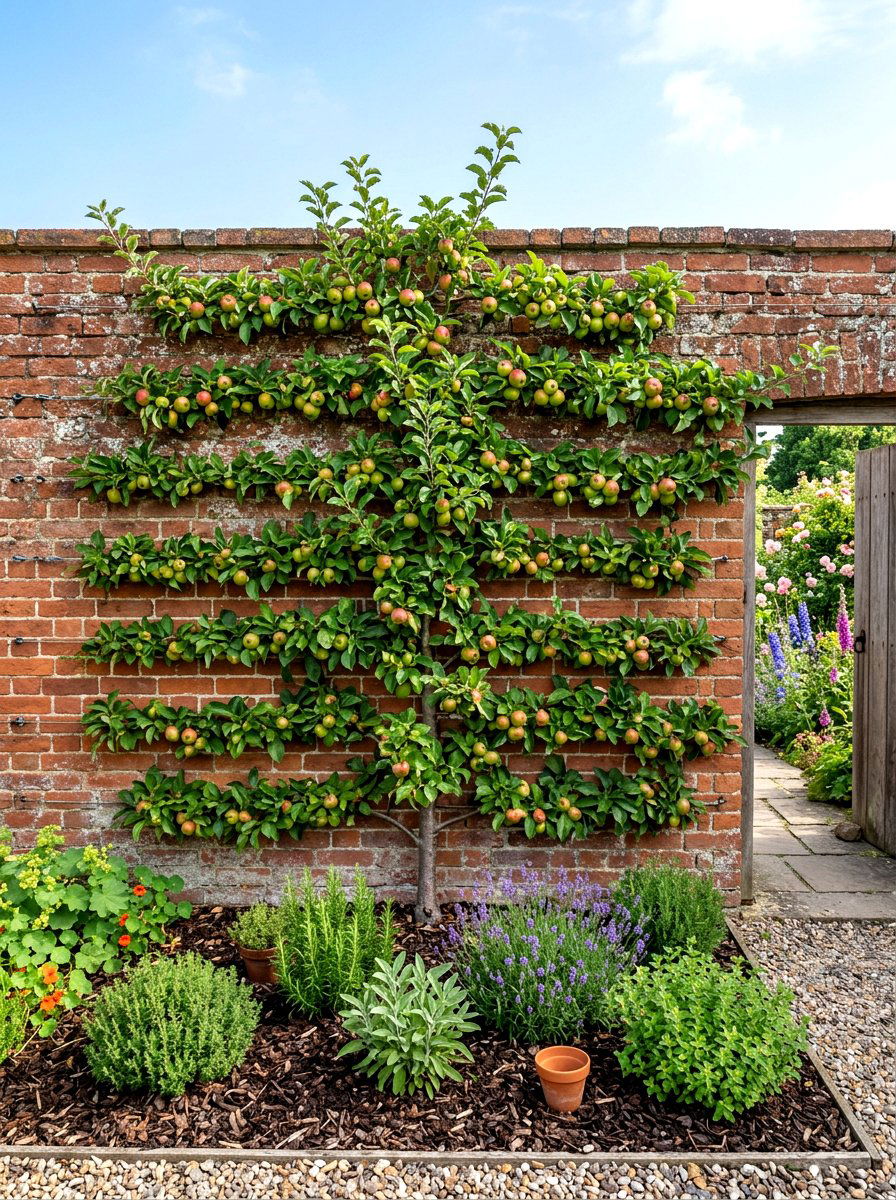
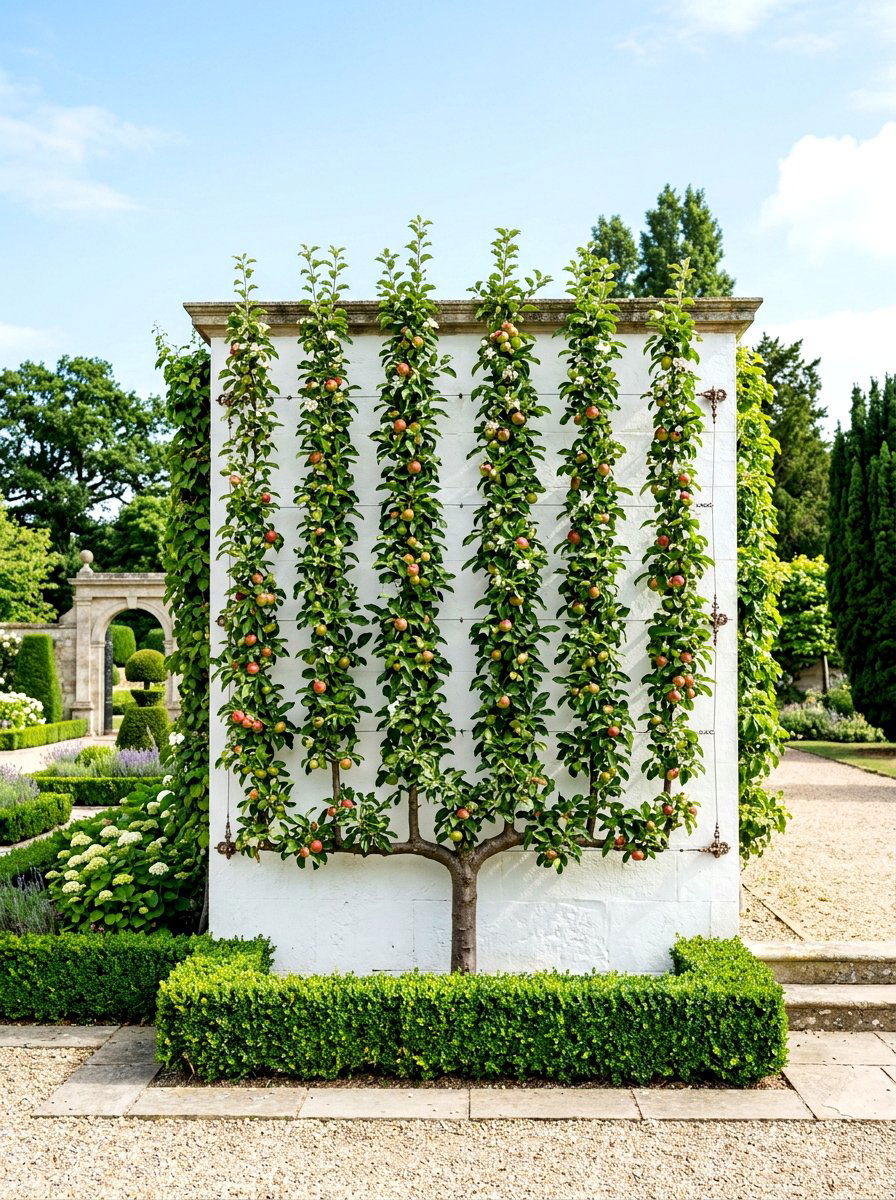
Apple trees are perhaps the most classic choice for a formal garden wall. When grown in a horizontal cordon pattern, they create a structured and productive boundary that looks beautiful throughout the seasons. In the spring, the branches are covered in delicate white and pink blossoms that provide a soft contrast against a dark brick or stone wall. As summer progresses, the fruit begins to swell, hanging like ornaments along the level branches. This setup is perfect for small backyards where space is at a premium. By keeping the tree flat, you allow more sunlight to reach the fruit, which often results in a sweeter and more abundant harvest.
2. Pear tree espalier
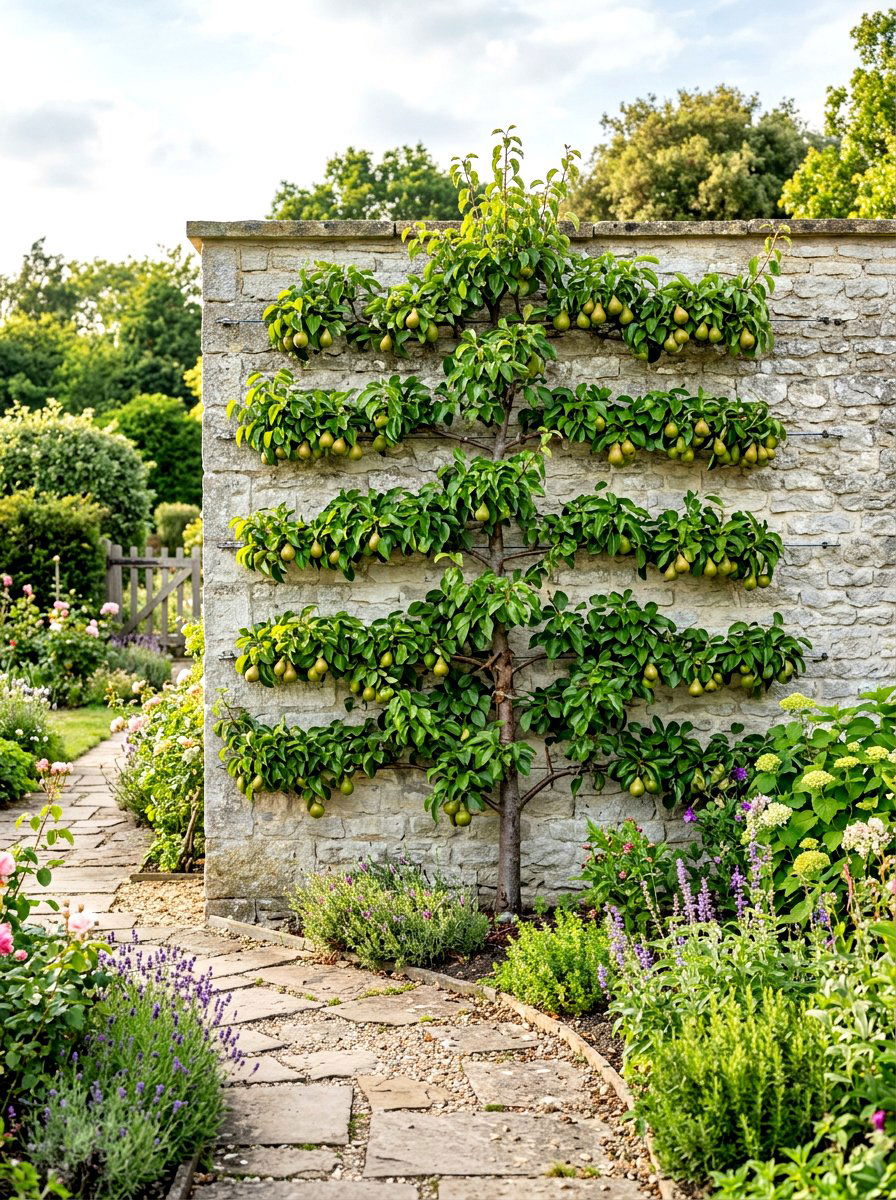
Pear trees offer a slightly more upright and elegant growth habit compared to other fruit varieties. Their glossy green leaves and smooth bark make them an excellent candidate for a tiered horizontal design against a sunny garden wall. During the autumn months, the foliage often turns a brilliant shade of gold or orange, adding a seasonal pop of color to your outdoor space. These trees are exceptionally hardy and respond well to the rigorous pruning required for the espalier method. Planting them against a south-facing wall can also help the fruit ripen more quickly in cooler climates, ensuring you get the best possible flavor from your home-grown pears.
3. Lemon tree espalier
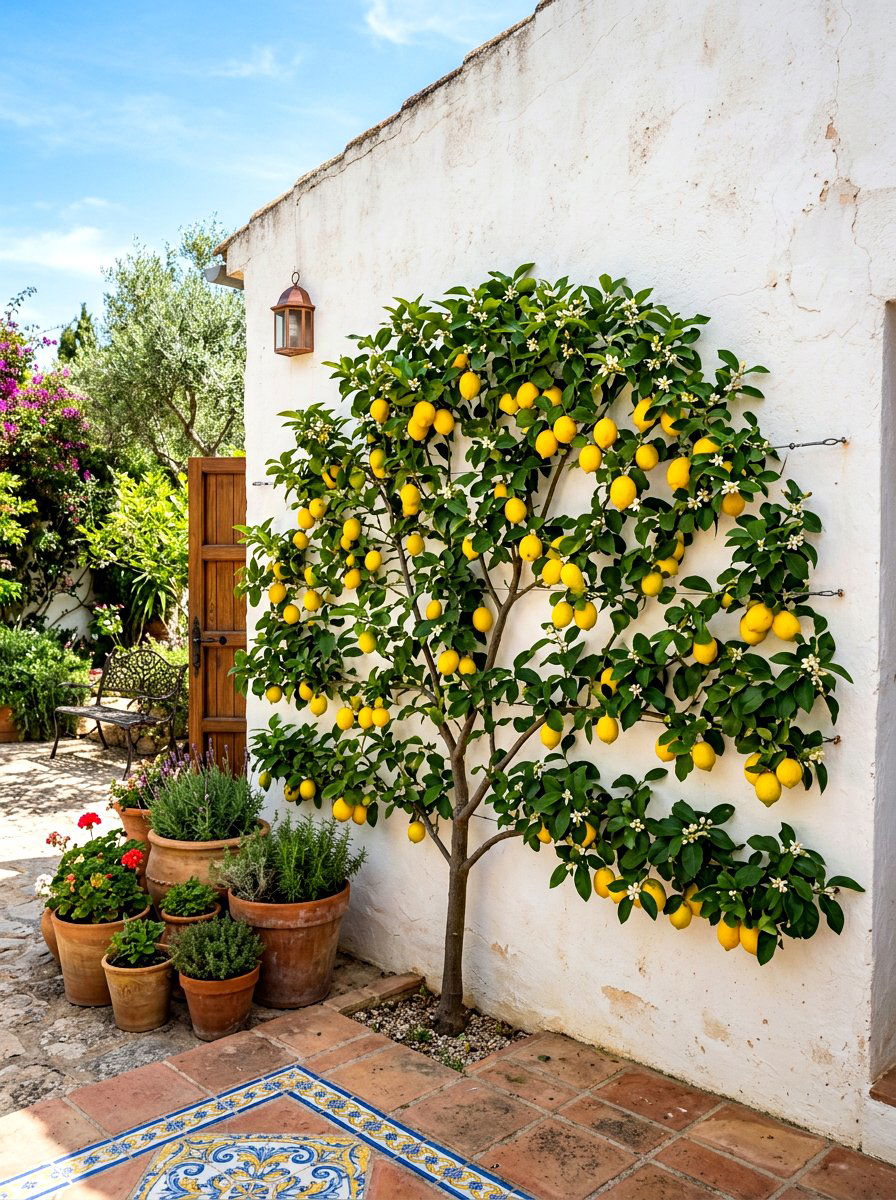
Citrus trees bring a refreshing Mediterranean feel to any patio or courtyard wall. Growing a lemon tree in a flat plane allows the fragrant blossoms and bright yellow fruit to be displayed prominently at eye level. This design is particularly effective in warmer regions or when positioned on a heat-retaining masonry wall. The dark, evergreen leaves provide year-round interest, making it a functional and decorative choice even when the tree is not fruiting. You can use a simple fan shape to allow the branches to spread naturally while staying flush against the surface. The scent of lemon blossoms near a seating area creates a truly immersive and relaxing garden experience.
4. Fig tree espalier
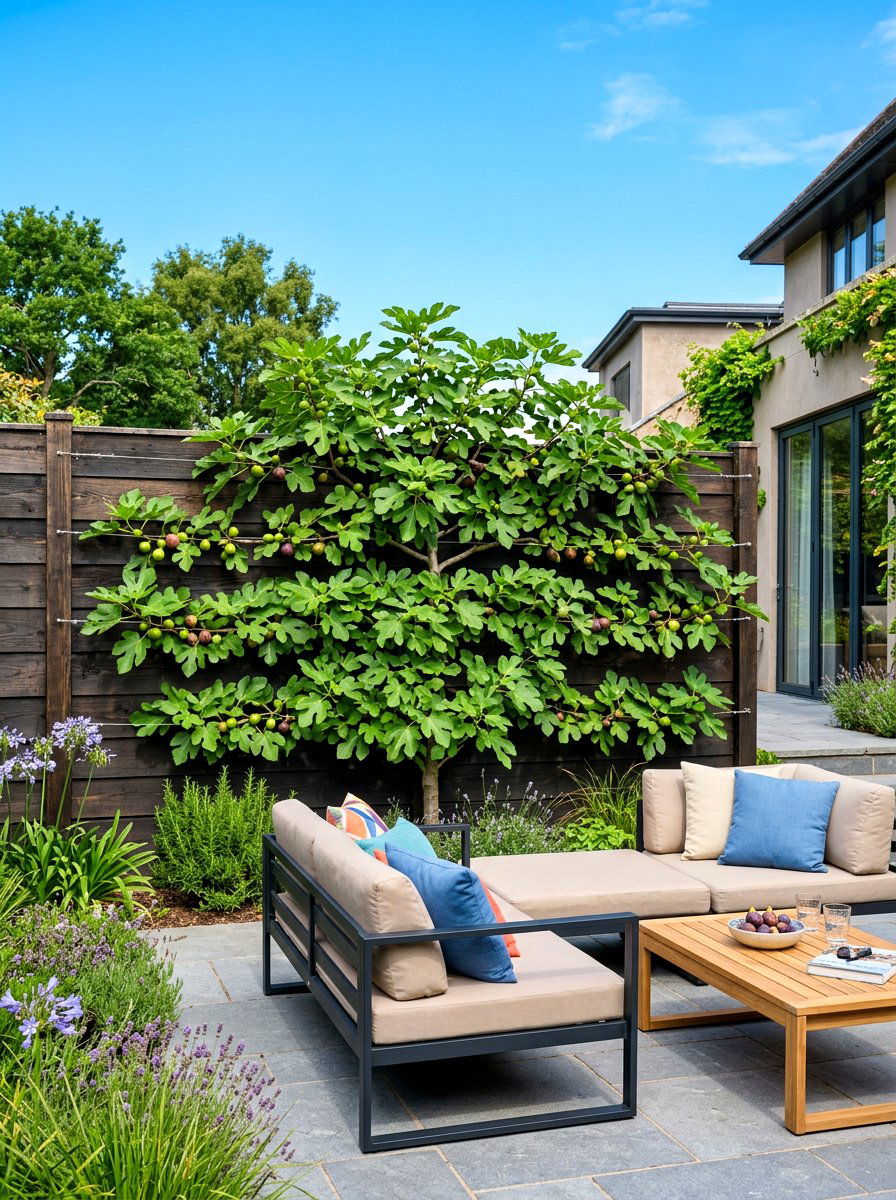
Fig trees have large, lobed leaves that create a dramatic and lush texture when spread across a wide wall. While they can be vigorous growers, training them into an informal fan shape keeps their size manageable and ensures every fig gets enough sunlight to ripen perfectly. The structural branches of a fig tree become quite thick over time, providing a bold silhouette during the winter months when the leaves have fallen. This design works exceptionally well on large, blank garage walls or boundary fences. Because figs thrive in the heat, the warmth reflected from a solid wall will significantly boost your fruit production and overall tree health.
5. Peach tree espalier
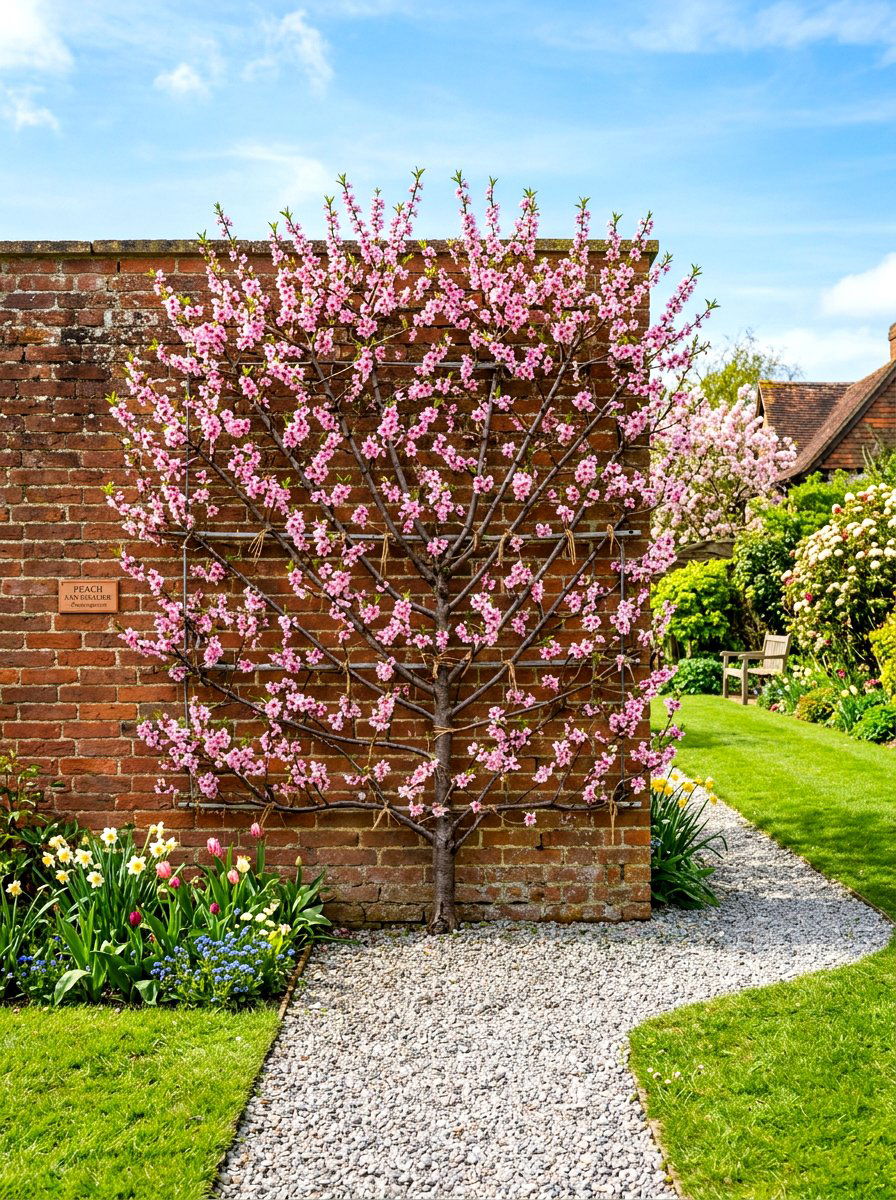
Peaches are best grown in a fan pattern to accommodate their natural growth style and fruit-bearing habits. The pink spring flowers are a highlight of the garden, followed by fuzzy, sun-ripened fruit that is easy to reach and pick. By spreading the branches flat, you reduce the risk of fungal diseases because air can circulate more freely through the foliage. This setup is ideal for a sunny garden spot where you want a focal point that is both beautiful and functional. The architectural lines of the fan shape add a sense of order to the garden, while the heavy harvest provides a rewarding end to the growing season.
6. Cordon espalier
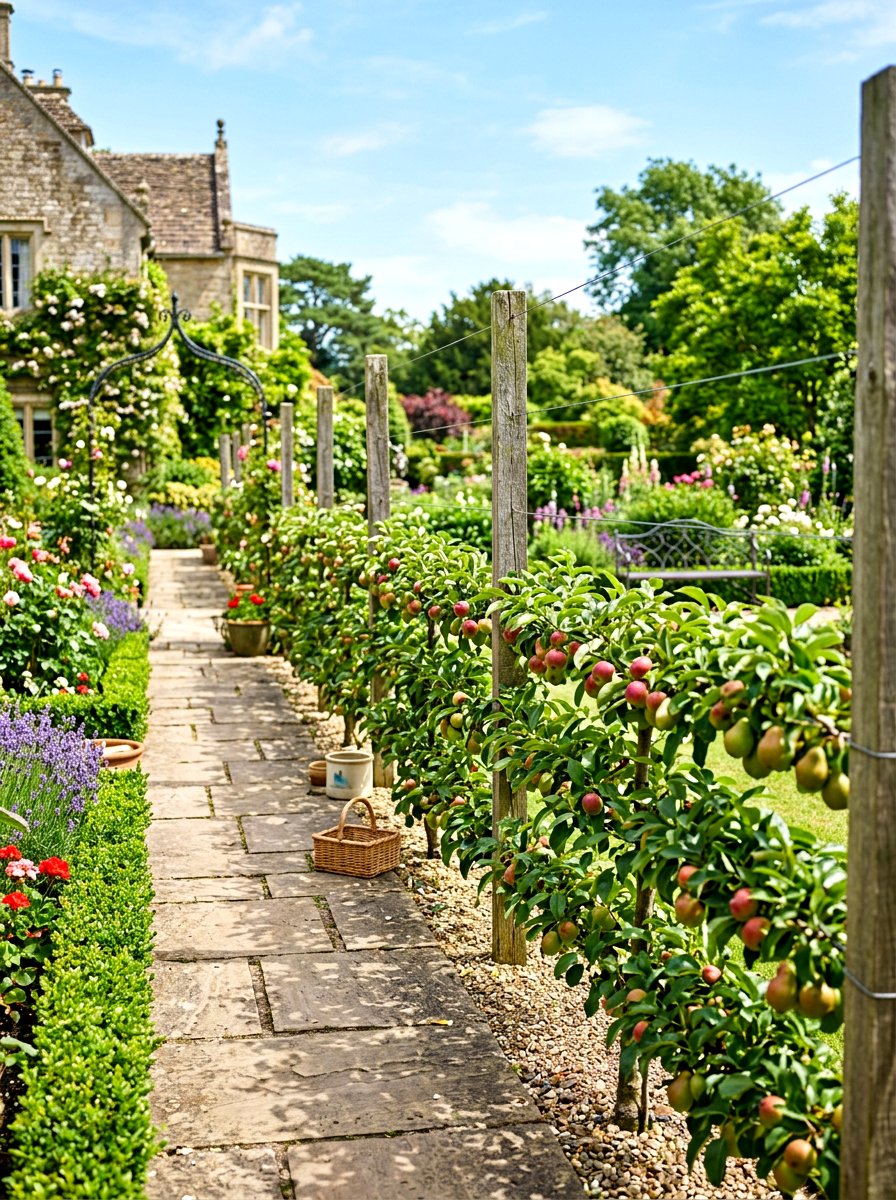
The cordon style is the most traditional and straightforward espalier pattern, featuring one or more horizontal tiers. This design is perfect for creating a living fence or a low border along a walkway. It provides a very clean and modern look that fits well in formal landscapes. By repeating this pattern along a long wall, you create a sense of rhythm and continuity in your garden design. It is an excellent way to grow multiple varieties of fruit in a very limited footprint. The simplicity of the cordon makes it easy for beginners to maintain, requiring only a few strategic prunings each year to keep the lines sharp.
7. Belgian fence espalier
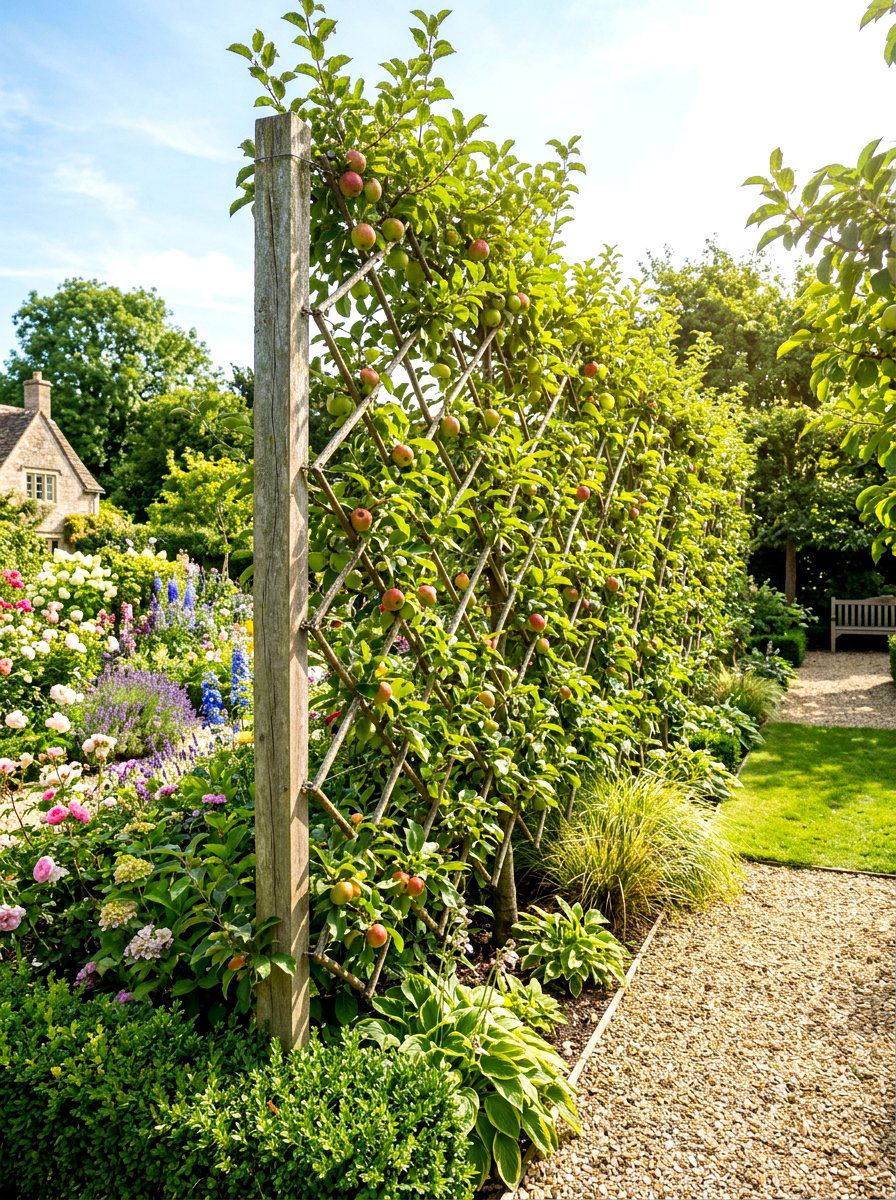
A Belgian fence is a stunning diamond-shaped lattice created by interlacing the branches of several individual trees. This pattern functions as a translucent screen, providing privacy without completely blocking the view or light. It is often used to separate different sections of a garden or to line a driveway with a touch of European flair. While it takes more time and skill to establish, the result is a breathtaking architectural feature that remains attractive even in the winter. This design is best achieved using apple or pear trees on dwarf rootstock to ensure the growth remains compact and easy to manage over the long term.
8. Palmette espalier
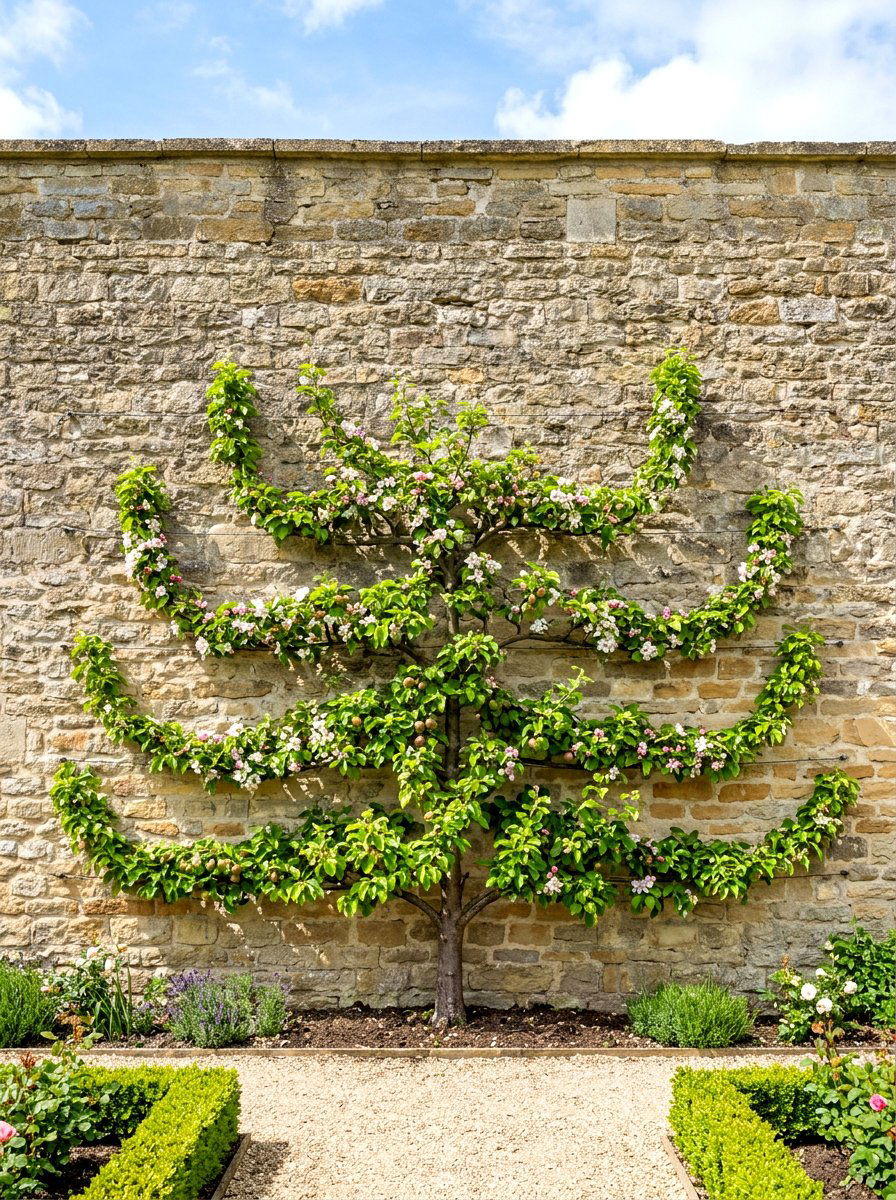
The palmette pattern features a central vertical trunk with branches that curve upward at the ends, creating a shape reminiscent of a candelabra or a palm leaf. This style is highly decorative and works beautifully as a central focal point on a large, prominent wall. It offers a more ornate and vertical aesthetic compared to the standard horizontal cordon. Because it draws the eye upward, it is a great choice for narrow spaces with tall walls. The balanced symmetry of the palmette adds a sense of formality and sophistication to the garden, making it look like a carefully curated gallery of living sculptures.
9. Fan espalier
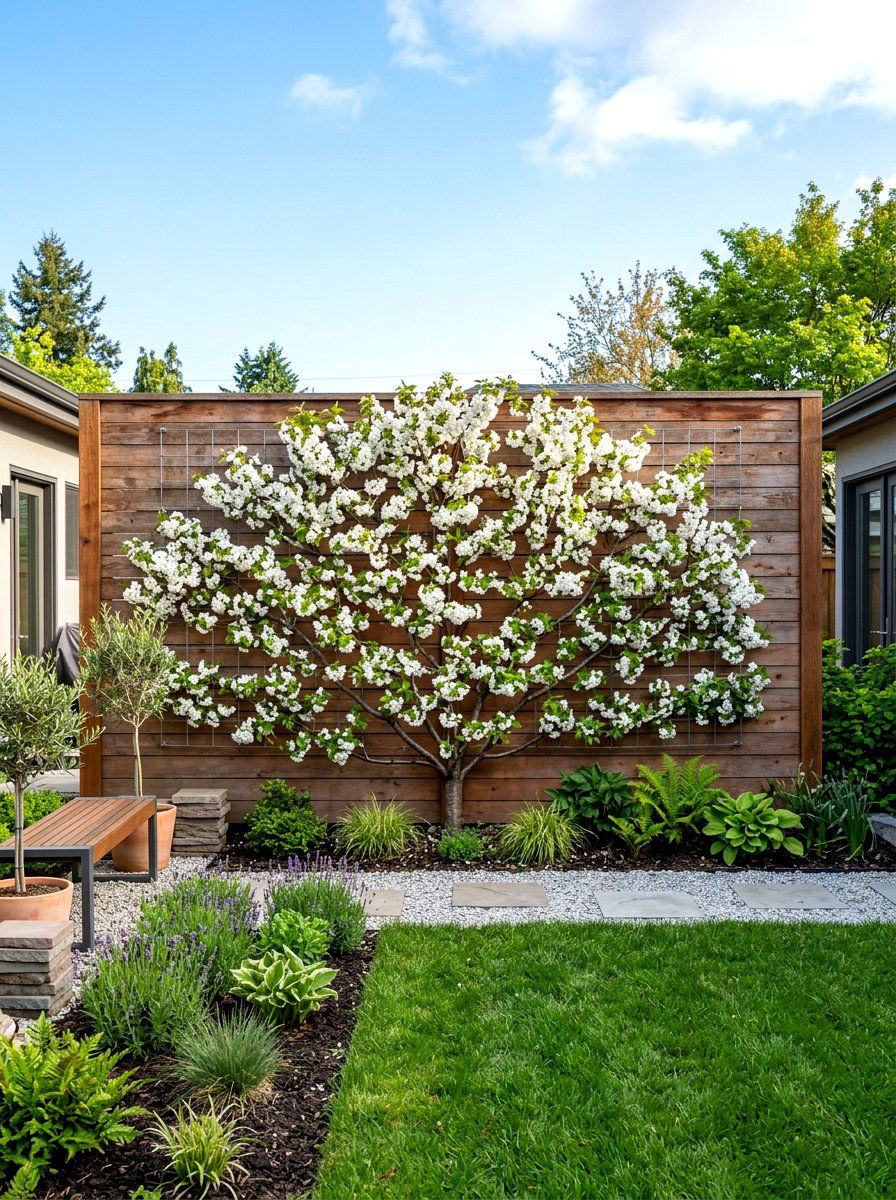
The fan shape is one of the most versatile and natural-looking patterns for wall-trained plants. It involves training branches to radiate outward from a low central point, much like an open folding fan. This design is particularly well-suited for stone fruits like cherries and plums, as it accommodates their habit of producing fruit on younger wood. A fan-shaped espalier can quickly cover a wide area, making it an efficient choice for softening the look of a large fence or shed. It requires less rigid pruning than horizontal styles, offering a slightly softer and more relaxed appearance while still maintaining a tidy, two-dimensional profile.
10. Brick wall espalier
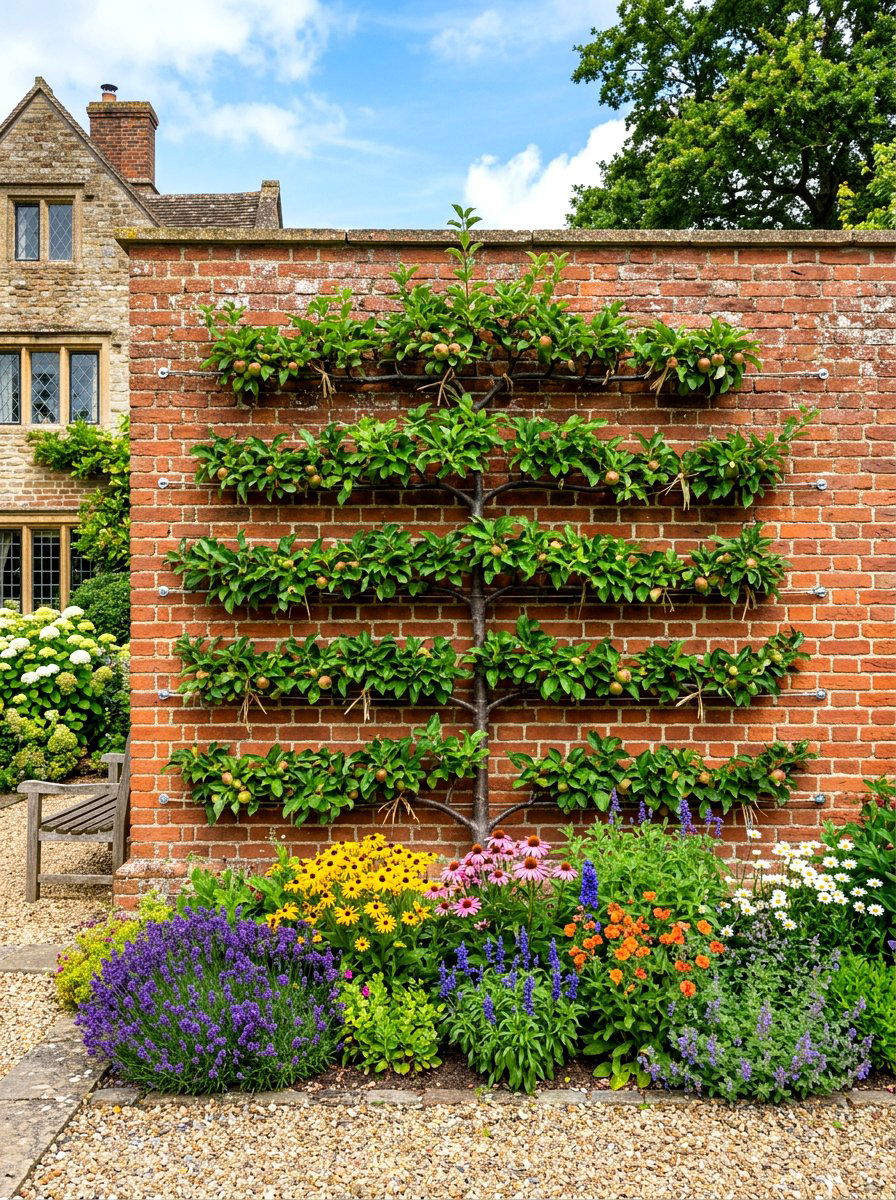
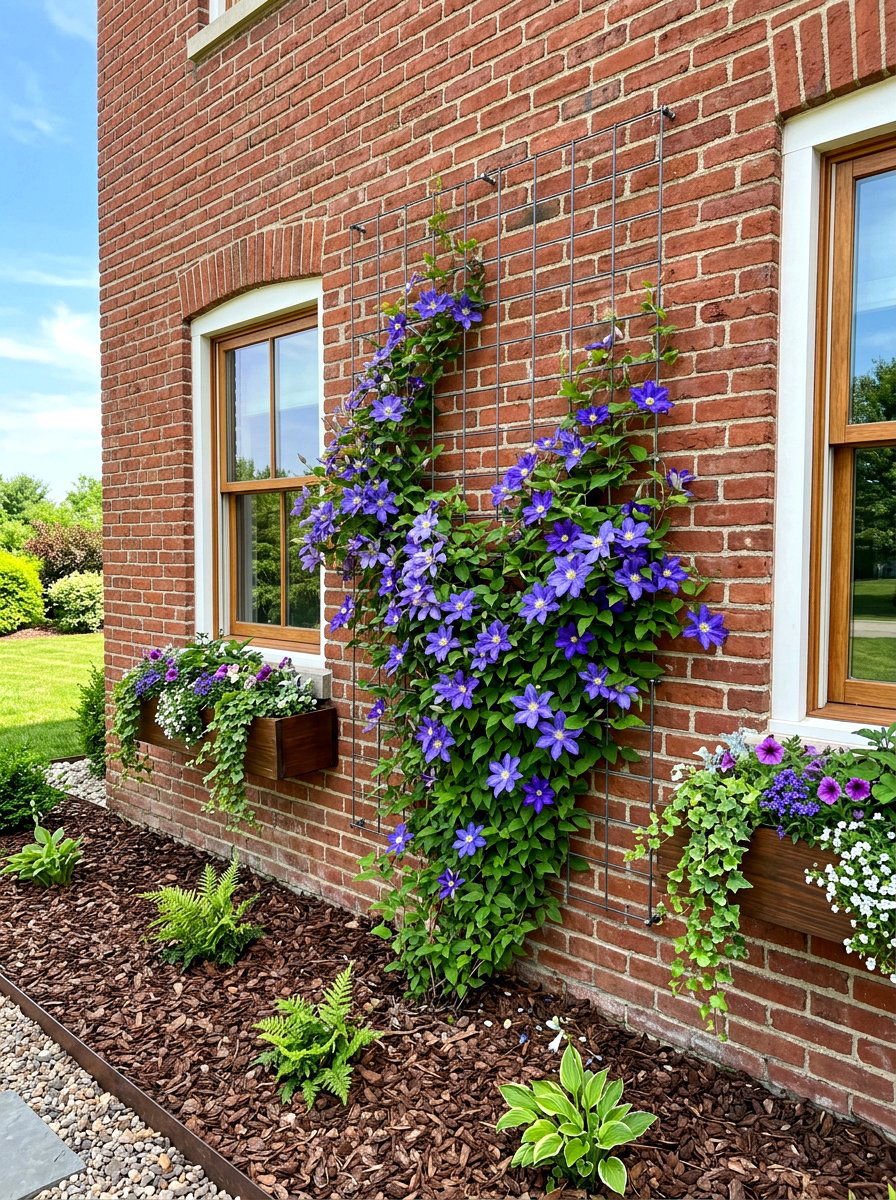
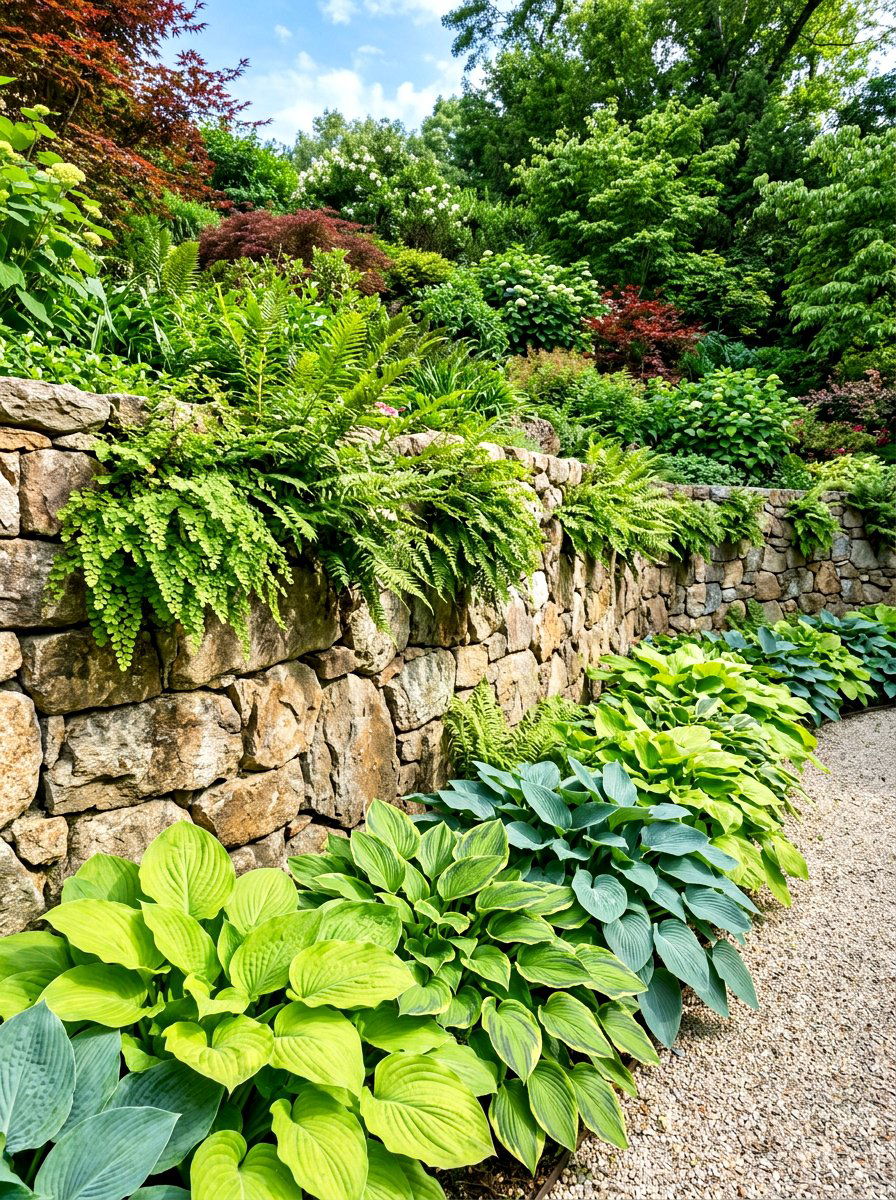
Red brick walls provide a warm and classic backdrop for green foliage and colorful fruit. The regular pattern of the bricks makes it easy to install a wire support system with precision and alignment. When you train a tree against a brick surface, the masonry absorbs heat during the day and releases it at night, creating a favorable microclimate for the plant. This is especially beneficial for more sensitive varieties that appreciate the extra warmth. The contrast between the organic shapes of the tree and the geometric lines of the brick creates a visually satisfying balance that enhances the overall curb appeal of your home.
11. Wooden fence espalier
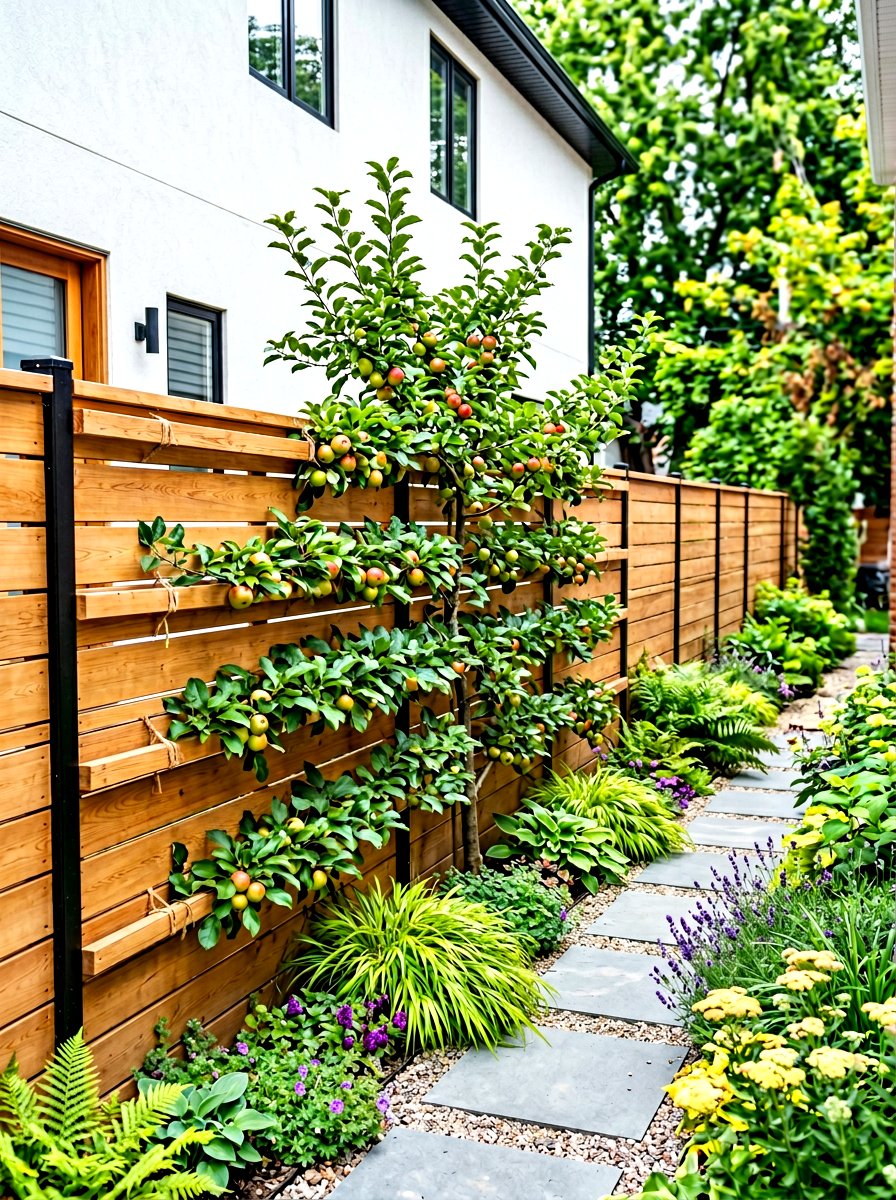
Transforming a plain wooden fence into a lush vertical garden is a fantastic way to upgrade a suburban backyard. Espaliered trees can hide old or weathered timber while providing a fresh, green layer of texture. This design works well with horizontal cordons that follow the lines of the fence rails. You can use simple eye bolts and galvanized wire to create a sturdy frame that won't damage the wood. Over time, the trees will grow to cover the fence, creating a living wall that provides both food and beauty. This is a great solution for narrow side passages where a traditional shrub would take up too much walking space.
12. Stone wall espalier
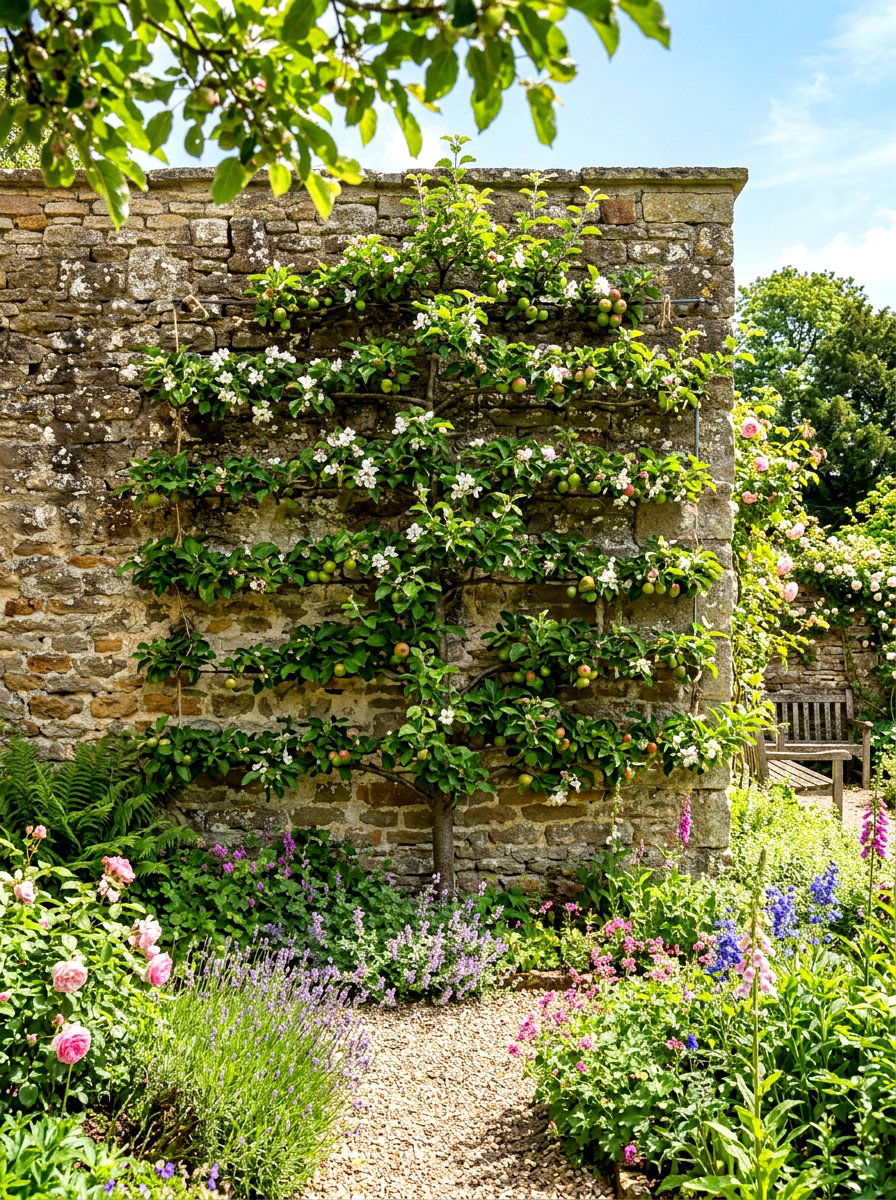
Stone walls offer a rugged and natural aesthetic that pairs perfectly with the structured lines of an espaliered plant. The cool grey or tan tones of the stone make the green leaves and bright fruit pop with intensity. Because stone surfaces can be uneven, using a wire trellis system is essential to keep the branches growing in a flat plane. This design is ideal for creating a rustic, "secret garden" vibe in your backyard. The thermal mass of the stone helps to regulate the temperature around the tree, protecting it from sudden cold snaps. It is a timeless look that adds a lot of character and value to the landscape.
13. Camellia espalier
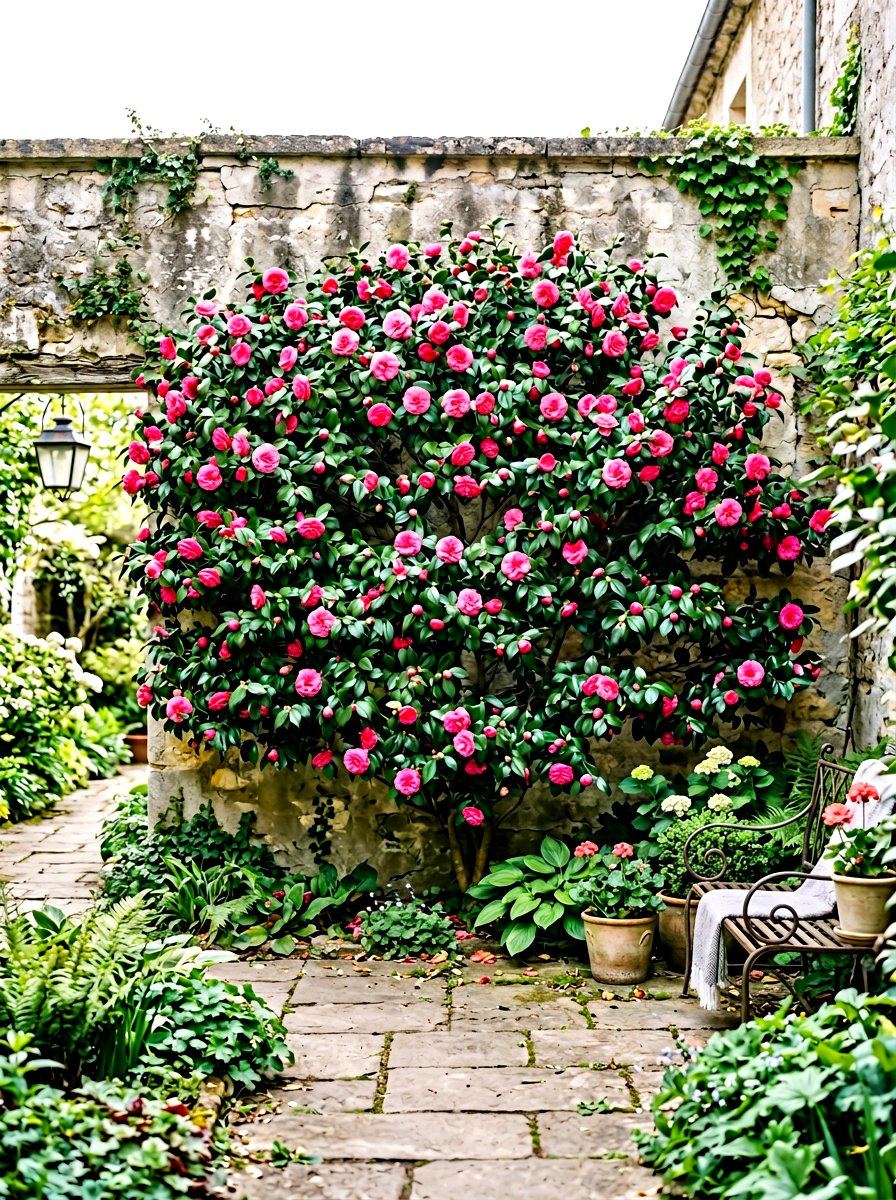
Camellias are a wonderful choice for an ornamental espalier, especially in shady or semi-shady areas of the garden. Their glossy, evergreen leaves provide a rich backdrop for the spectacular flowers that bloom in late winter or early spring. Training a camellia against a wall allows you to enjoy the intricate details of the blossoms at eye level. This design is perfect for adding a touch of elegance to a north-facing wall or a covered courtyard. Because camellias are relatively slow-growing, they are easy to keep in a tidy, flat shape. The resulting look is lush, sophisticated, and adds a major burst of color when most other plants are dormant.
14. Magnolia espalier
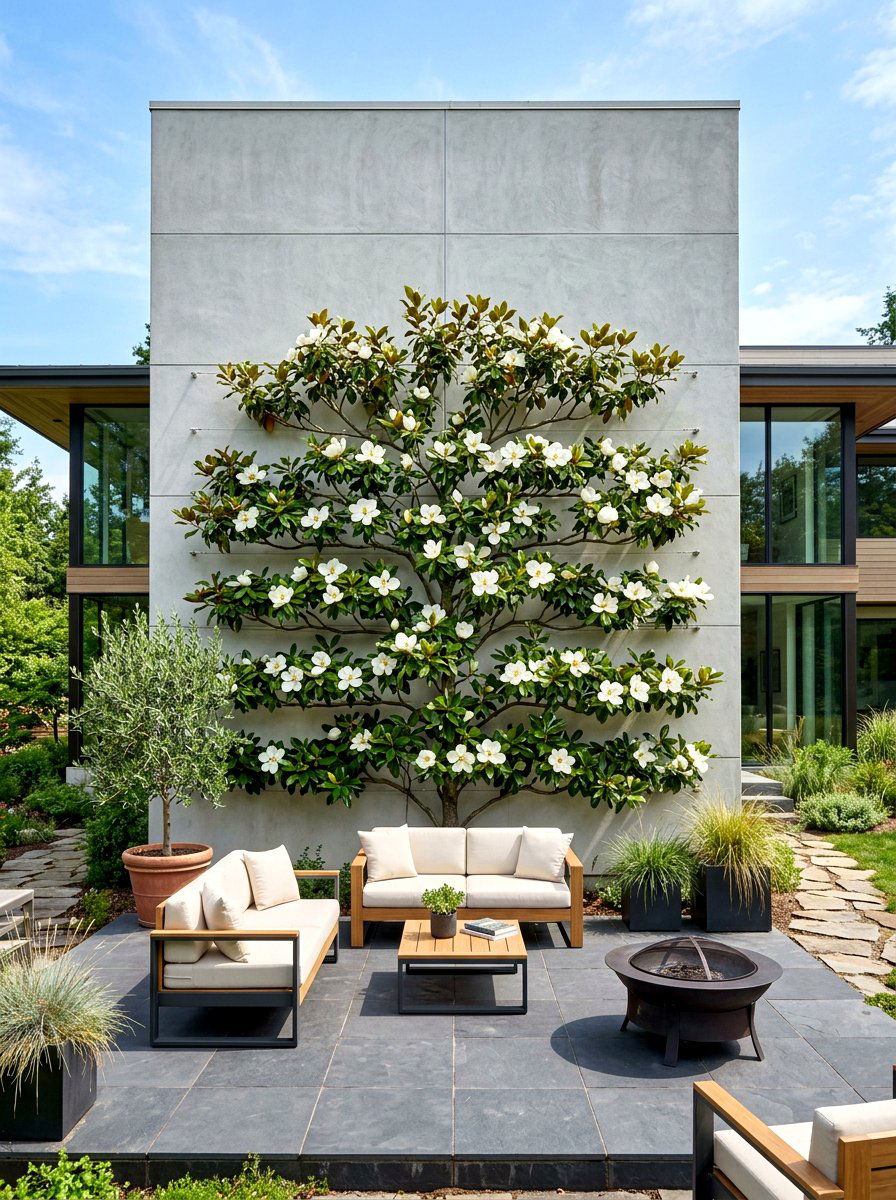
Grandiflora magnolias can be successfully espaliered to create a bold and dramatic wall covering. Their large, waxy leaves and massive, fragrant white flowers make them a showstopping feature in any landscape. By training a magnolia flat, you can enjoy its magnificent blooms in a much smaller space than a traditional tree would allow. This design is particularly effective on tall, wide walls where the plant has plenty of room to spread. The evergreen nature of many magnolias ensures that the wall remains covered and attractive all year round. The thick, dark foliage creates a dense screen that is perfect for softening the harsh lines of modern architecture.
15. Climbing rose espalier
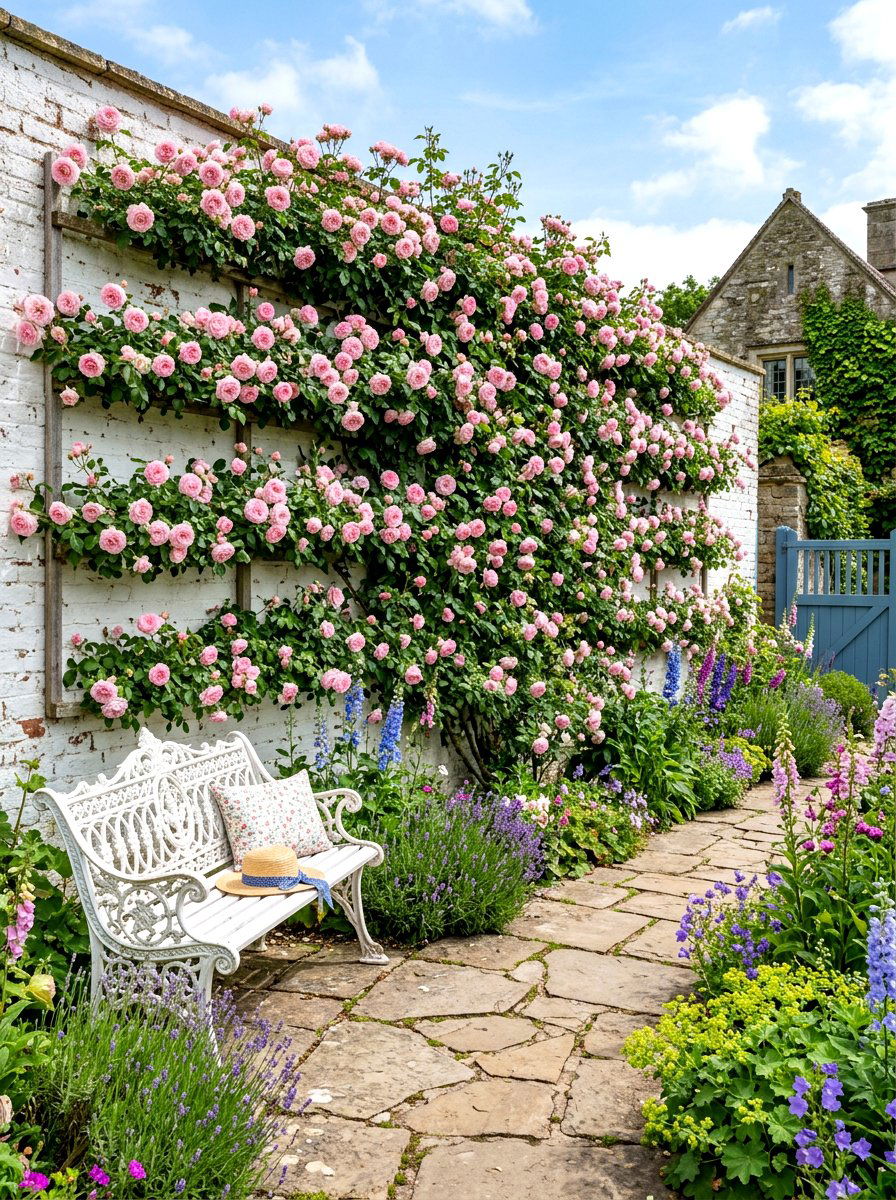
While many people grow roses on trellises, training them into a formal espalier pattern creates a much more refined and structured look. This design involves horizontal training of the main canes, which encourages the plant to produce more flowering side shoots. The result is a wall literally covered in blooms from top to bottom. This setup is ideal for adding romance and fragrance to a patio or garden walkway. By keeping the roses flat against the wall, you can easily prune and deadhead them without getting lost in a tangled bush. It turns a classic garden favorite into a sophisticated architectural element that adds charm and beauty.
16. Firethorn espalier
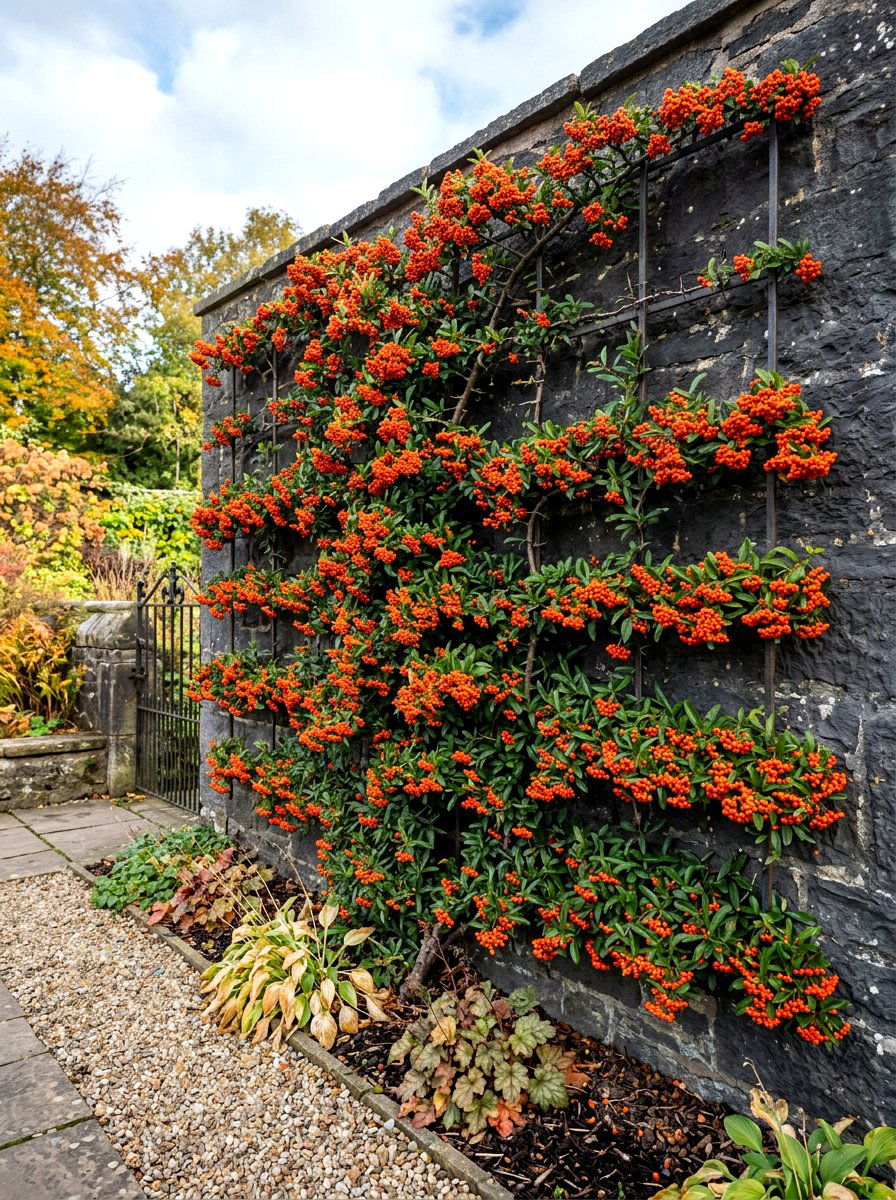
Pyracantha, also known as firethorn, is a hardy and versatile shrub that is exceptionally easy to espalier. It is famous for its dense clusters of white spring flowers followed by a profusion of bright red, orange, or yellow berries in the autumn. The thorny branches make it an excellent choice for a security screen along a boundary wall. When trained flat, the berries are displayed prominently, providing a long-lasting burst of color through the winter months. This design is very effective for adding texture and interest to a plain side wall. Birds also love the berries, making this a great choice for a wildlife-friendly garden design.
17. Star jasmine espalier
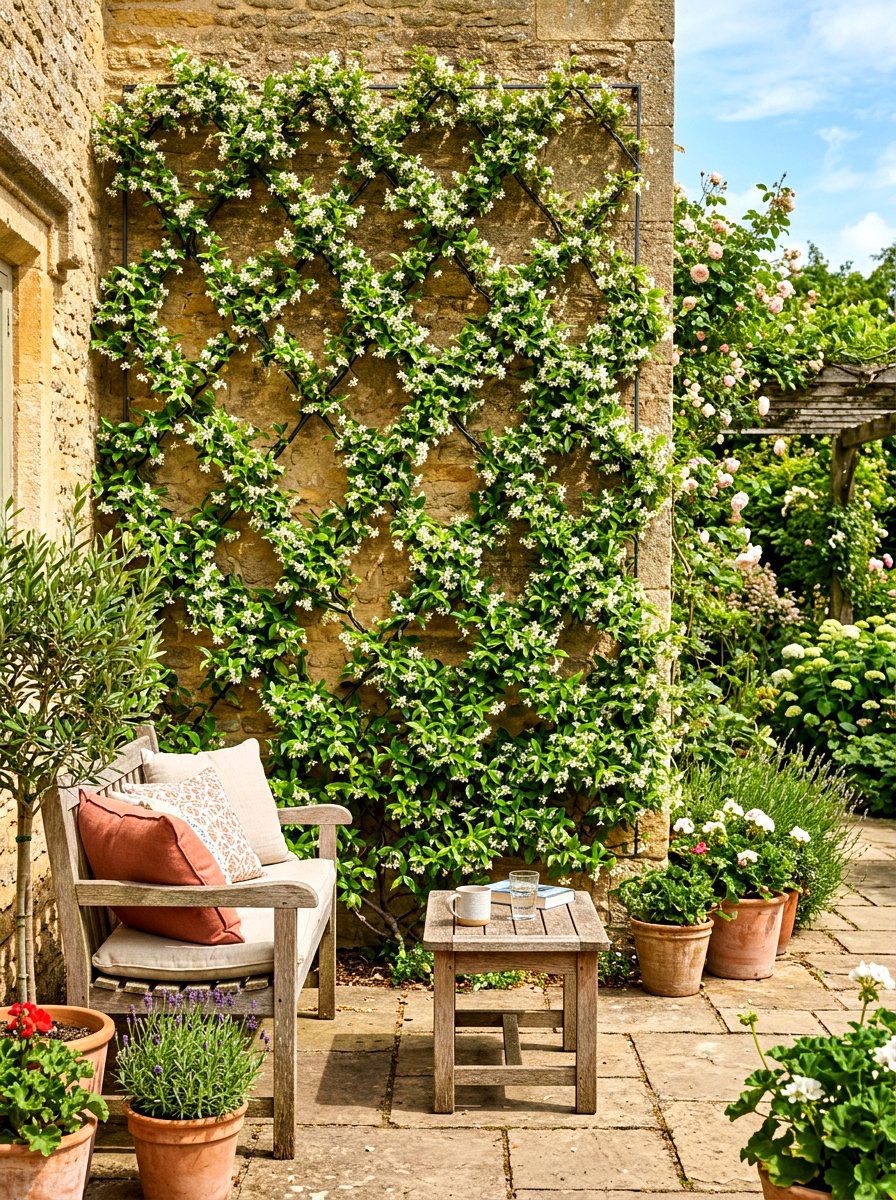
Star jasmine is a popular evergreen climber that can be trained into intricate geometric patterns on a wall. Its small, glossy leaves and highly fragrant white flowers create a lush and romantic atmosphere. You can use wire to create a diamond or grid pattern, which the jasmine will quickly fill in. This design is perfect for a courtyard or a balcony where you want both greenery and a pleasant scent. Because it is a vigorous grower, it will need regular trimming to maintain its flat profile and sharp lines. The result is a dense, flowering "carpet" on your wall that stays green and beautiful through every season.
18. Bougainvillea espalier
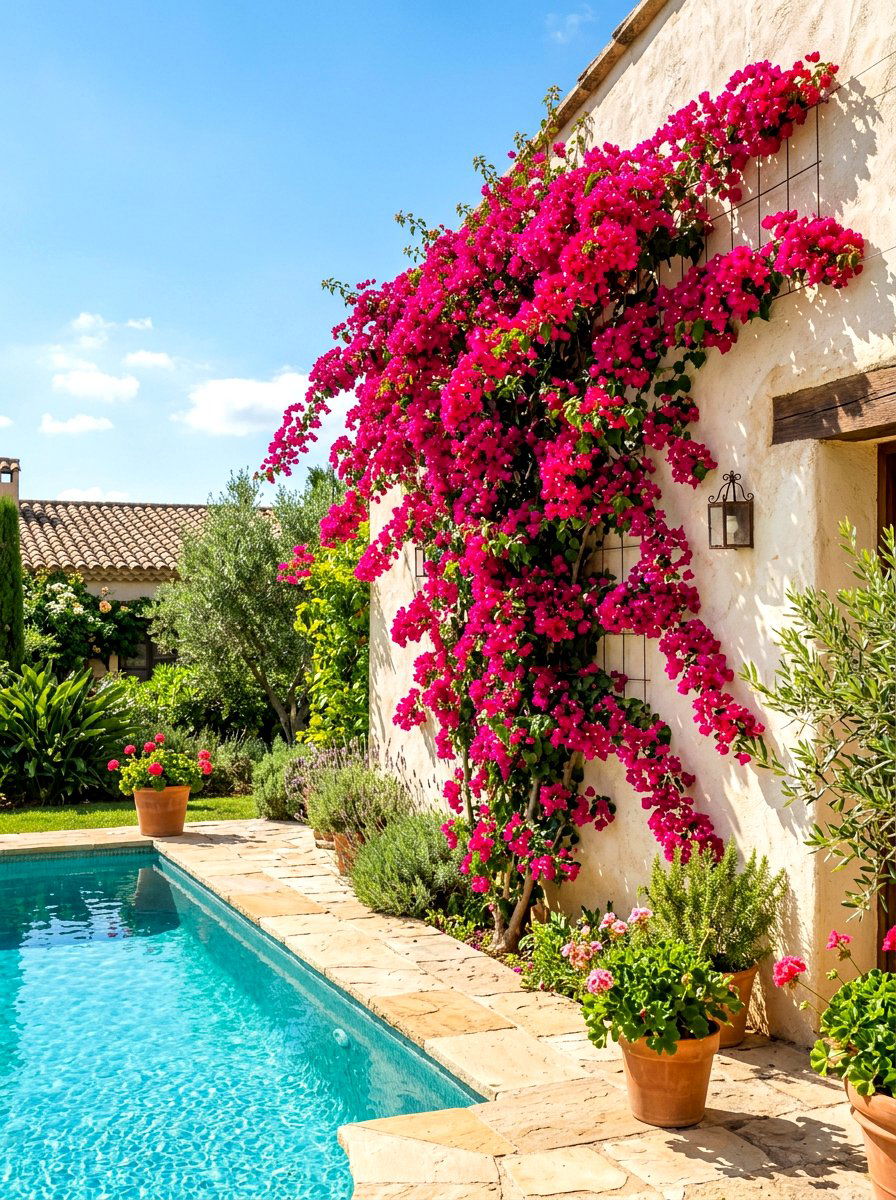
In warmer climates, bougainvillea can be trained into a spectacular espalier that drips with vibrant color. The papery bracts come in shades of pink, purple, red, and orange, creating a high-impact focal point on a sunny wall. Training the long, flexible canes flat allows you to control the size of this otherwise unruly plant. This design is perfect for a Mediterranean-style garden or a bright poolside area. The reflected heat from the wall will encourage even more intense flowering. Using a sturdy wire support is important to handle the weight of the mature plant, but the visual reward of a flowering bougainvillea wall is absolutely worth the effort.
19. Wire trellis espalier
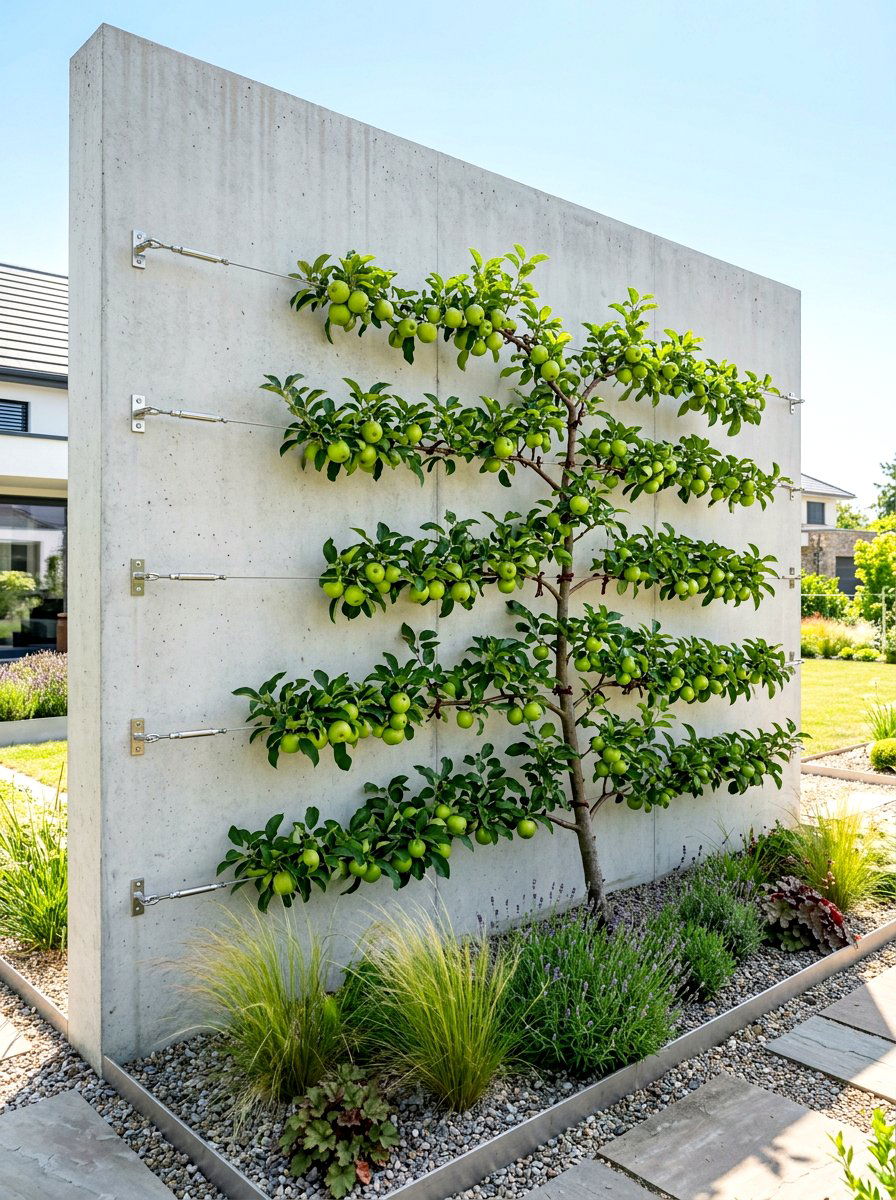
Using a modern wire trellis system allows you to create a very clean and contemporary espalier design. This involves installing stainless steel cables and turnbuckles in a precise grid or horizontal pattern. This setup is perfect for modern homes with minimalist aesthetics. The thin wires are almost invisible once the plants begin to grow, giving the illusion that the trees are floating against the wall. This design is highly functional and durable, providing the necessary support for heavy fruit trees without the bulk of traditional wooden structures. It allows for perfect air circulation and easy maintenance, making it a favorite for homeowners who value both style and practicality.
20. Archway espalier
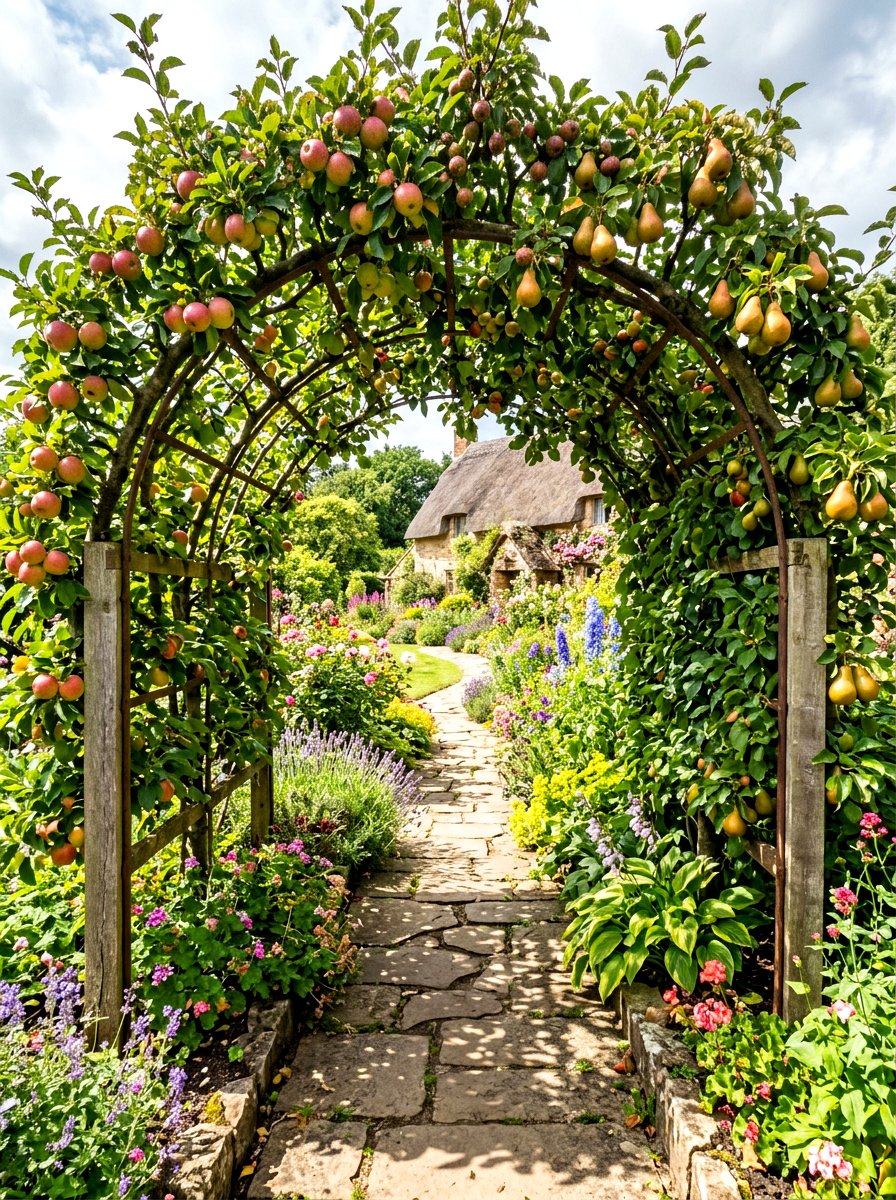
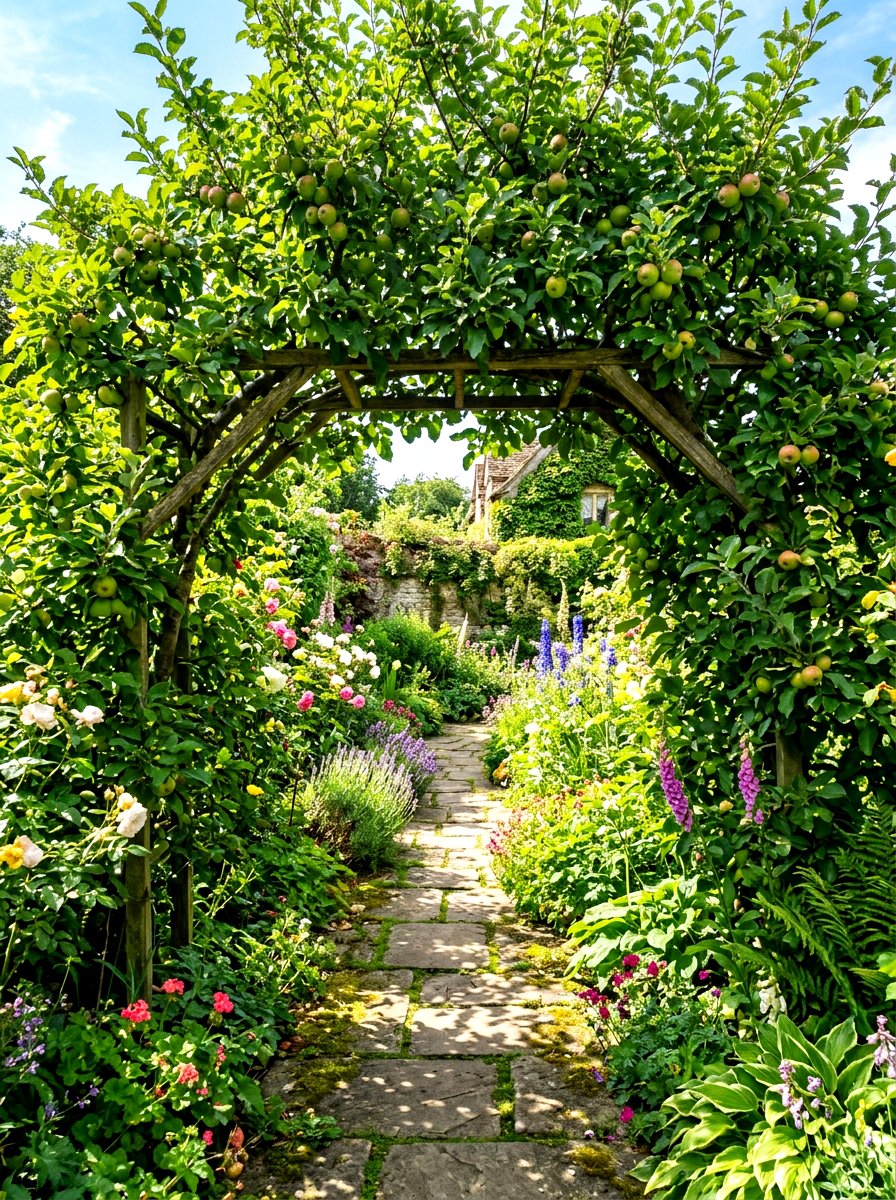
Training fruit trees or ornamental shrubs over an archway creates a magical, tunnel-like effect in the garden. This is a creative variation of the espalier technique that adds vertical height and a sense of discovery to your landscape. You can use two trees planted on either side of the path and train their branches to meet at the top. This design is particularly beautiful with apple or pear trees, as the fruit will hang down from the "ceiling" of the arch. It is a fantastic way to frame a view or mark the entrance to a specific garden room, making the transition between spaces feel intentional and artistic.
21. Potted espalier
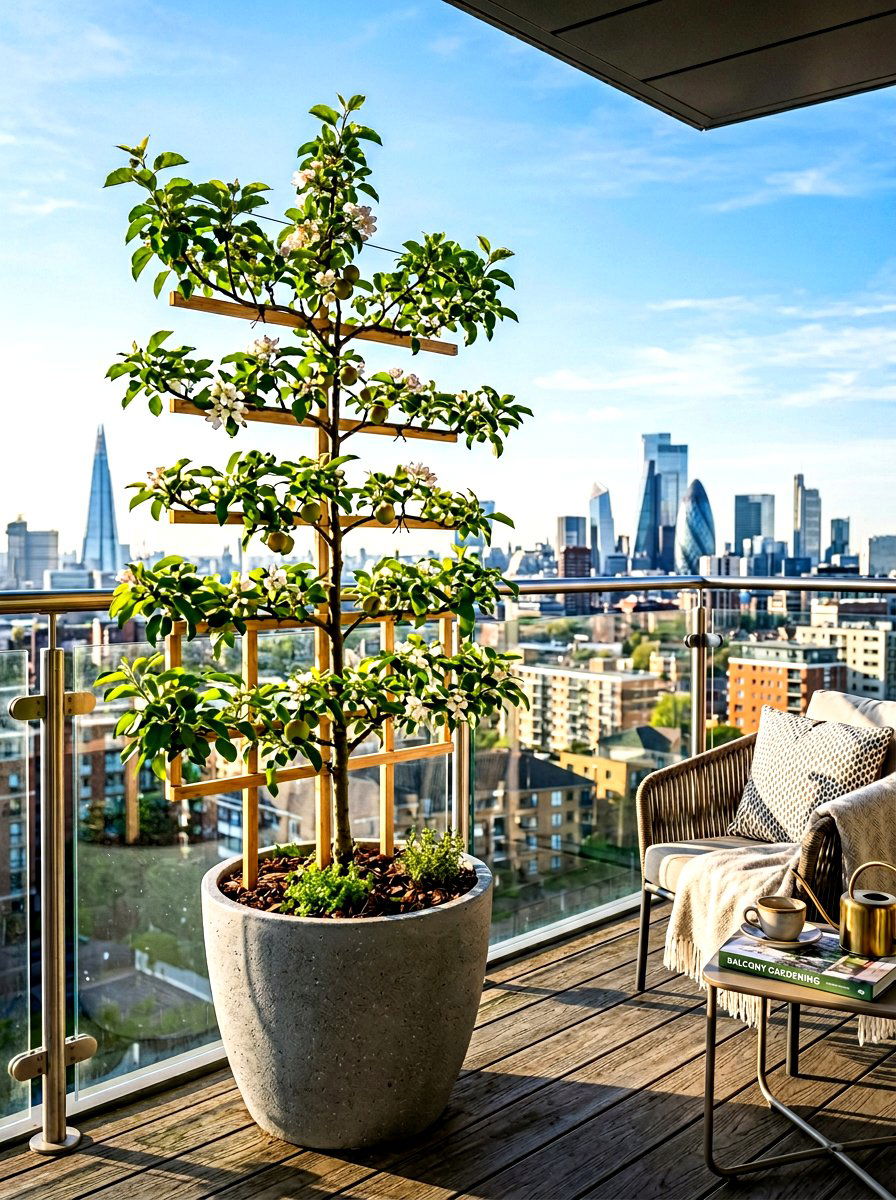
If you have a small balcony or a paved patio, you can still enjoy the beauty of espalier by growing trees in large containers. This design involves a sturdy pot and a built-in wooden or wire trellis to support the plant. Many dwarf varieties of fruit trees are perfectly suited for life in a container. A potted espalier can be moved to follow the sun or to change the look of your outdoor space. This is an excellent solution for renters who want to take their garden with them when they move. The structured look of the espalier provides a high-end, designer feel even in a very small outdoor area.
22. Privacy espalier
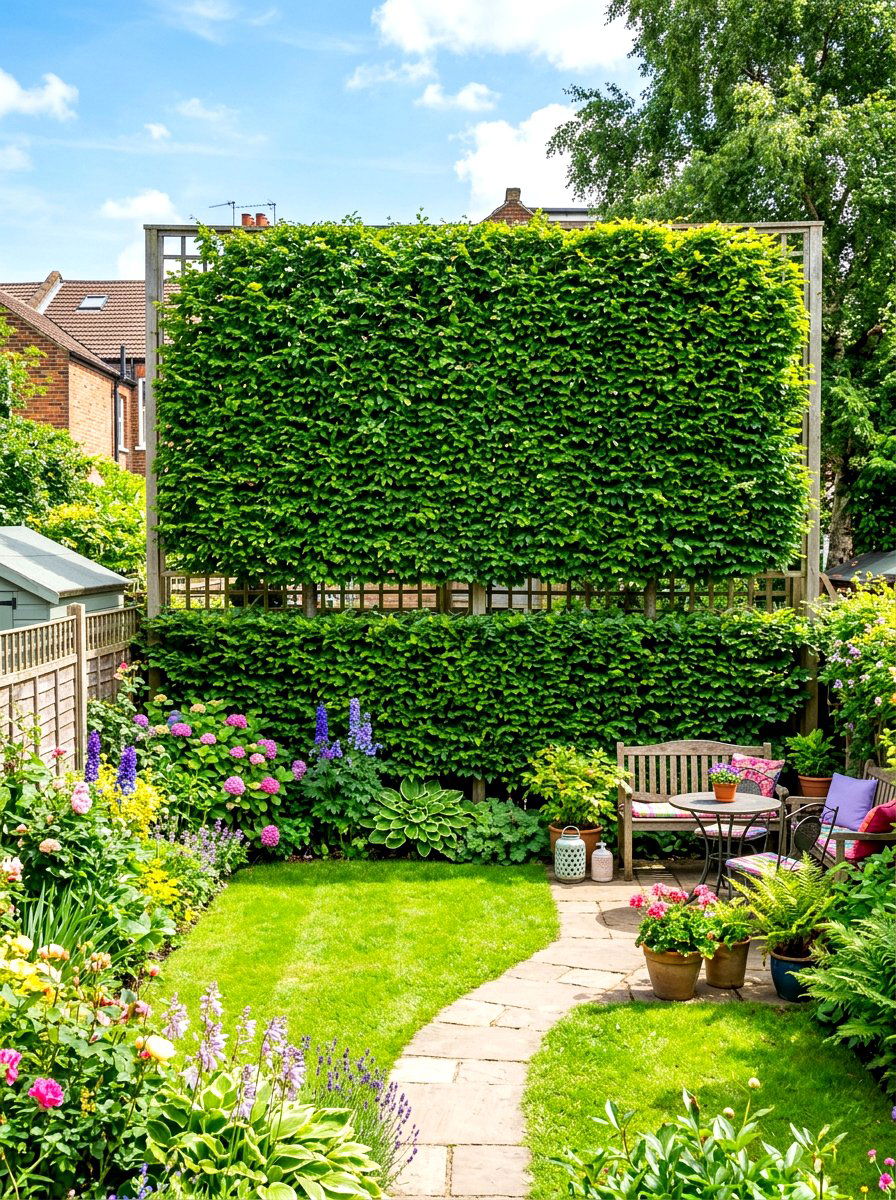
Espaliered plants are an excellent alternative to traditional fences or bulky hedges when you need a privacy screen. By training trees like hornbeam or lime into a flat, elevated "hedge on stilts, " you can block the view from neighboring windows without taking up much ground space. This design is perfect for small urban gardens where every inch of horizontal space is valuable. The resulting screen is elegant and architectural, providing a green backdrop that feels much more natural than a solid wall. It also allows light and air to pass through at the base, keeping your garden feeling open and airy while maintaining your personal privacy.
23. Dwarf fruit espalier
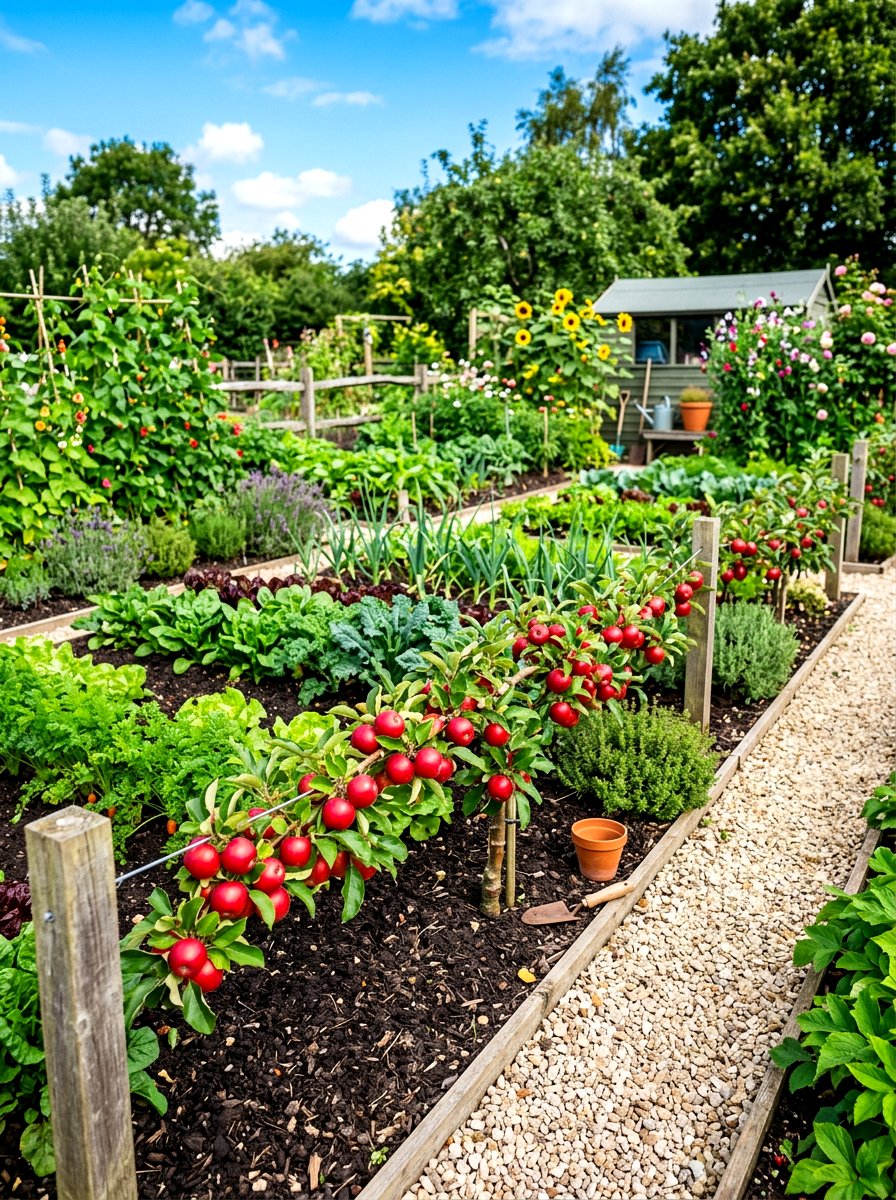
Using trees grafted onto dwarf rootstock is the secret to a successful and low-maintenance espalier garden. These trees naturally want to stay small, making it much easier to keep them within the confines of your chosen pattern. A dwarf fruit espalier is perfect for low walls or as a "step-over" border along the edge of a vegetable patch. Despite their small size, these trees can produce a surprisingly large amount of full-sized fruit. This design is ideal for older gardeners or children, as the harvest is always within easy reach. The compact growth also means less heavy pruning is required, saving you time and effort throughout the year.
24. Olive tree espalier
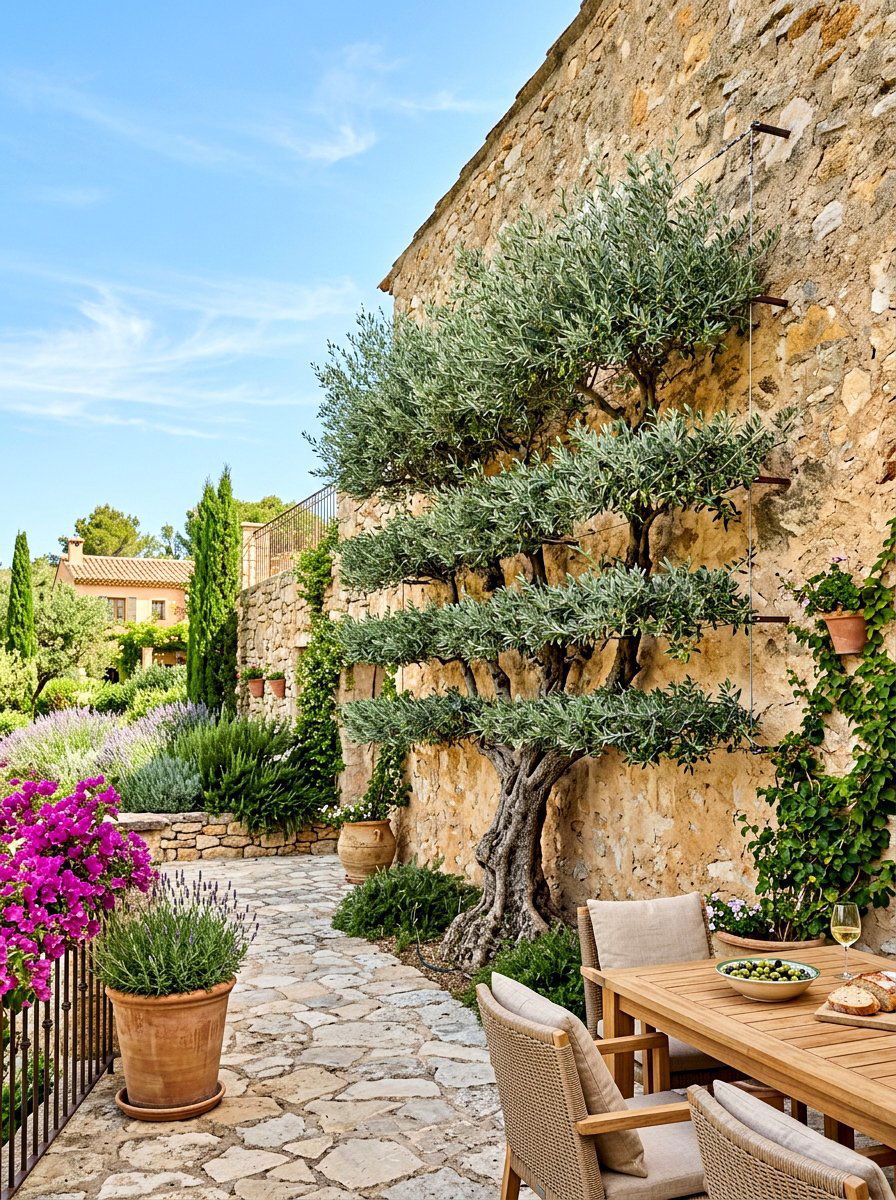
Olive trees have a beautiful silvery-green foliage that adds a touch of sophisticated, rustic charm to a sunny wall. While they are often grown as free-standing trees, they respond remarkably well to the espalier technique. An olive espalier creates a timeless look that works well in both modern and traditional landscapes. The twisted, textured trunks can become a feature in themselves as the tree ages. This design is very drought-tolerant, making it a great choice for water-wise gardens. Positioning the tree against a south-facing wall will provide the heat it needs to potentially produce a crop of olives, adding both beauty and utility to your garden.
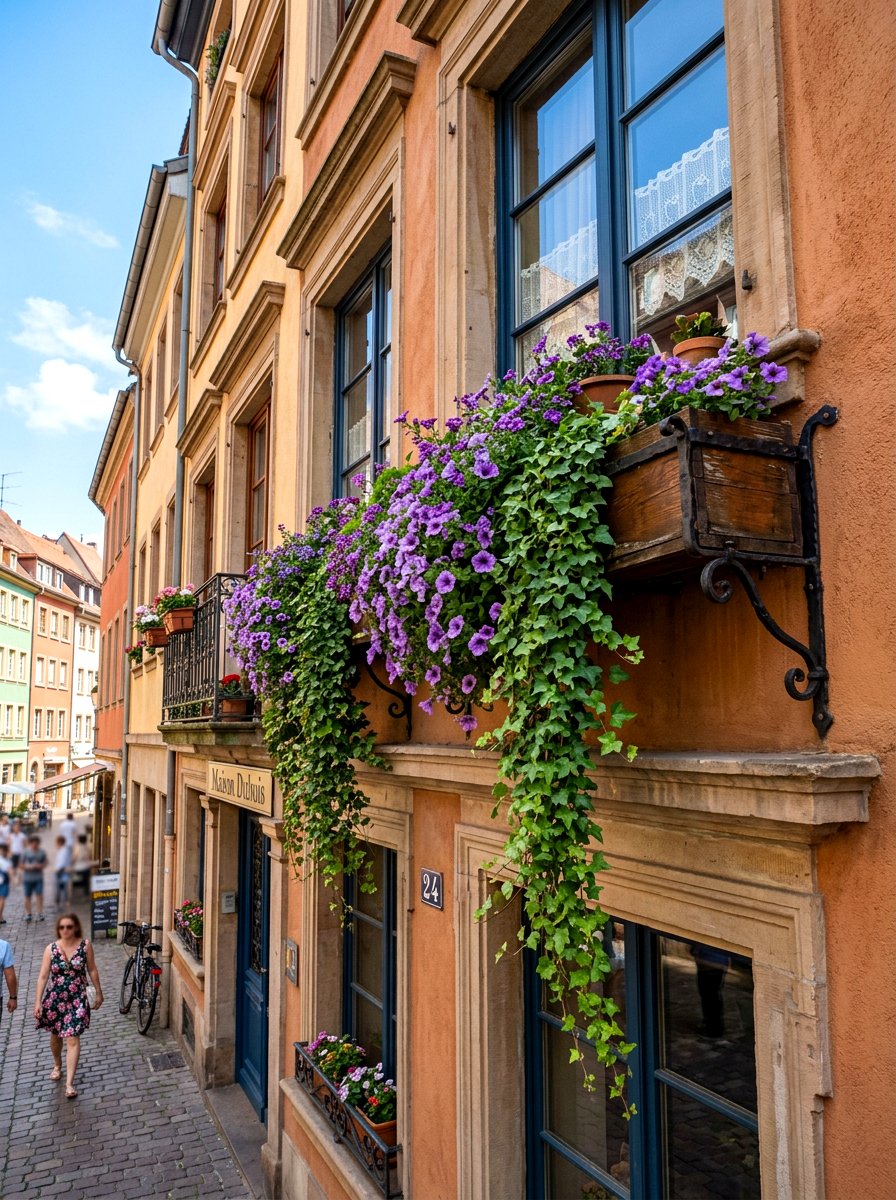
25. Forsythia espalier
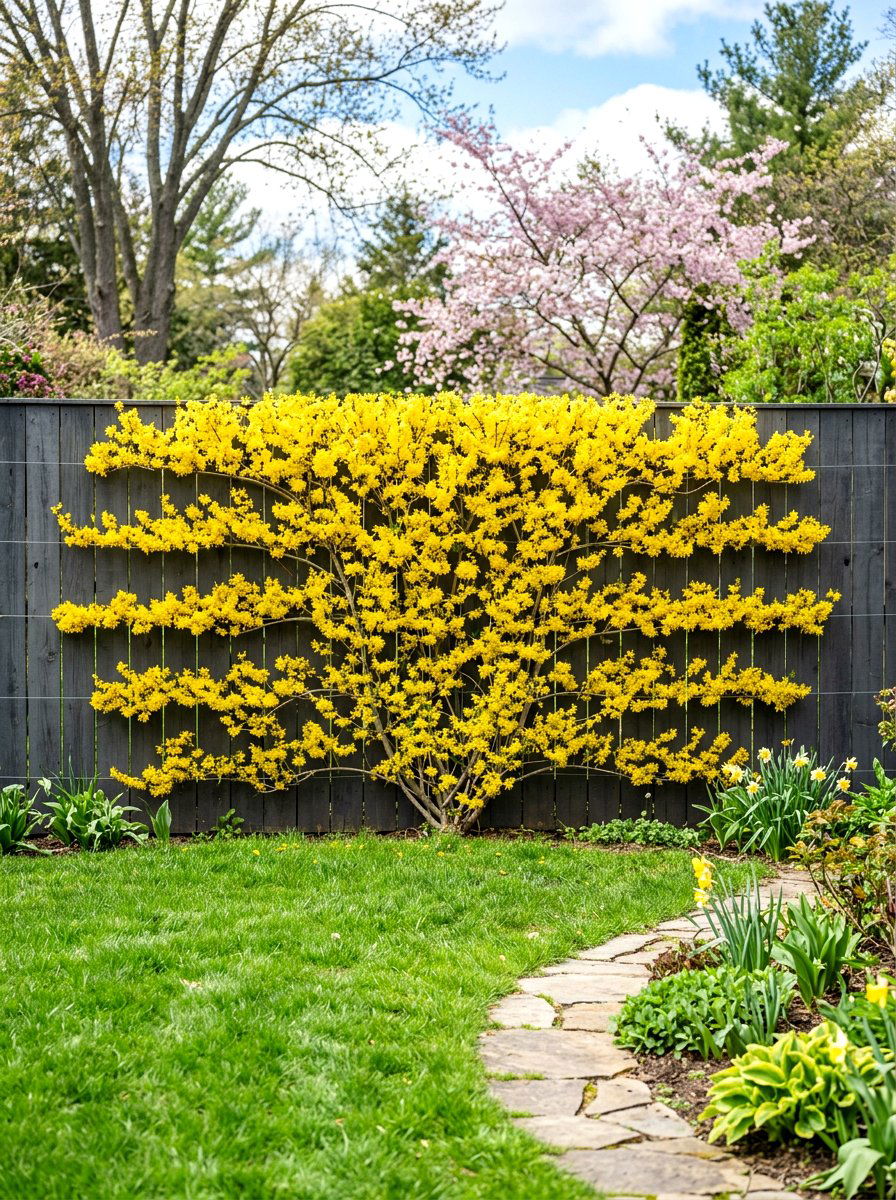
For a spectacular burst of early spring color, forsythia is an underrated but excellent candidate for espalier. Its flexible branches are easy to train flat against a wall or fence. Before the leaves even appear, the entire plant is covered in bright yellow flowers, signaling the end of winter. Once the flowers fade, the dense green foliage provides a clean and tidy screen for the rest of the summer. This design is perfect for adding cheer to a side yard or a boundary wall that is visible from the house. Regular pruning after flowering will keep the branches in check and ensure a spectacular show of blooms every single year.
26. Cotoneaster espalier
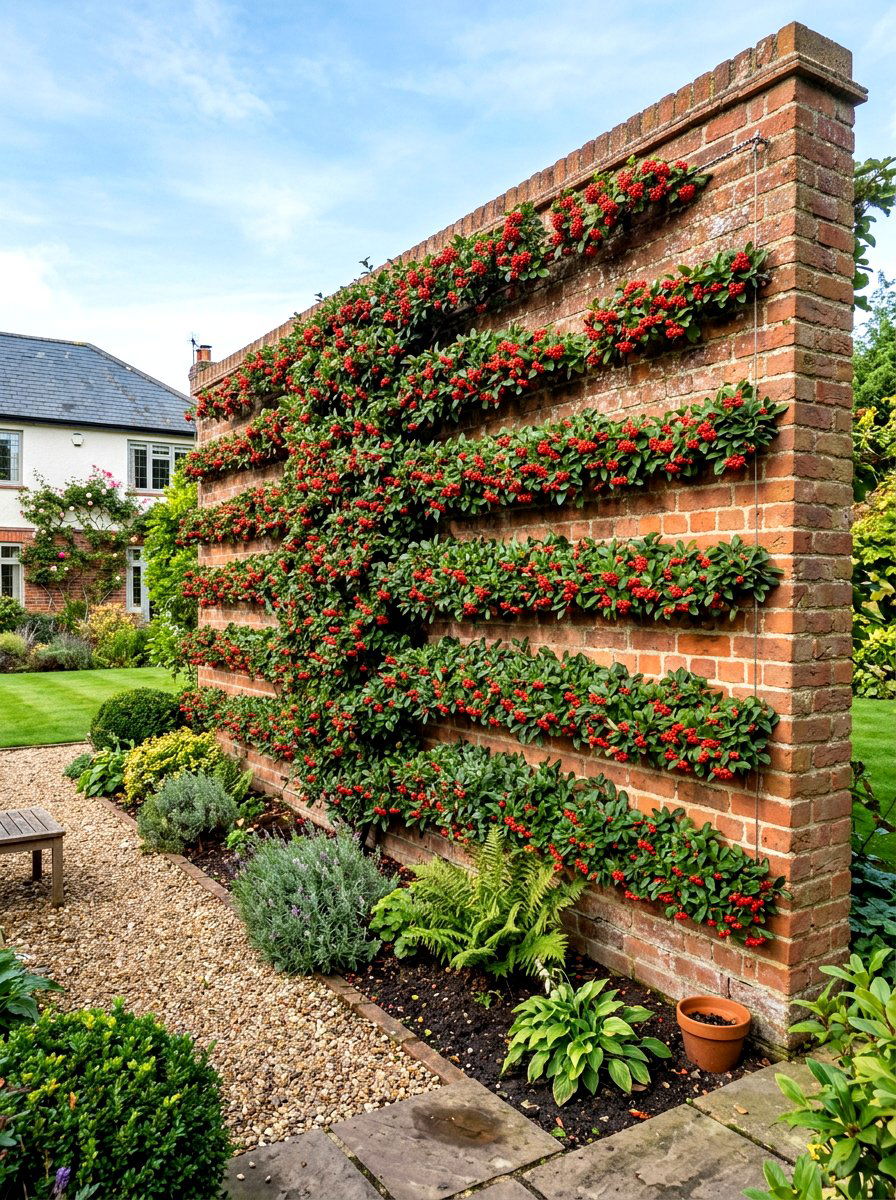
Cotoneaster is a hardy shrub with a naturally spreading habit that makes it incredibly easy to train against a wall. It features small, dainty leaves, tiny white or pink flowers, and a massive crop of bright red berries in the fall. The horizontal growth pattern of many cotoneaster varieties lends itself perfectly to a tiered or fan-shaped espalier. This design is very effective for covering large areas of a wall with minimal effort. It is a tough plant that can handle a variety of soil types and light conditions, making it a reliable choice for difficult spots in the garden. The berries also provide essential food for winter birds.
27. Formal garden espalier
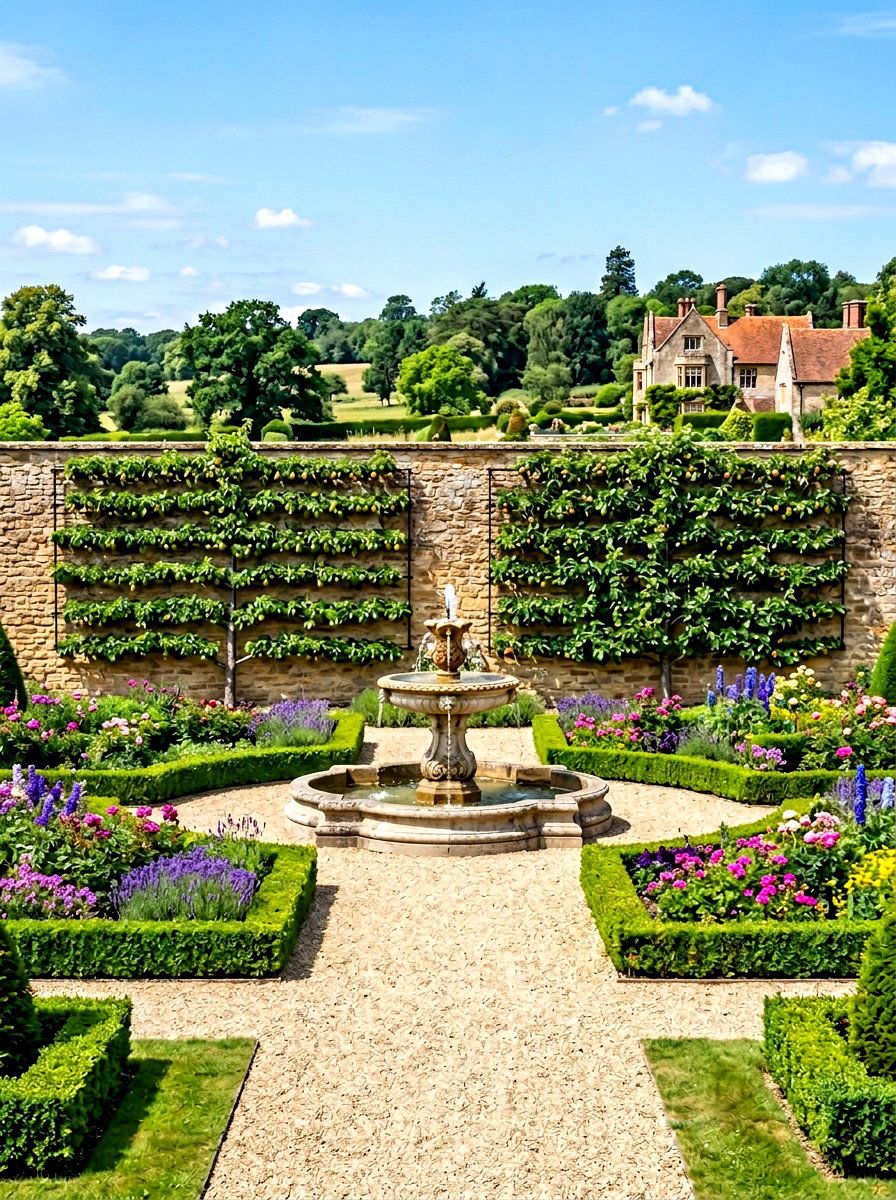
In a formal garden, symmetry and precision are key, and nothing fits this aesthetic better than a perfectly maintained espalier. You can use matching pairs of trees on either side of a garden gate or fountain to create a sense of balance. This design often utilizes the most rigid patterns, such as the horizontal T or the Palmette Verrier. The clean lines of the trained branches complement stone statuary, manicured boxwood hedges, and gravel paths. This setup turns the garden into a living architectural extension of the home. It requires a commitment to regular pruning, but the result is a high-impact, sophisticated landscape that looks incredibly professional and polished.
28. Courtyard wall espalier
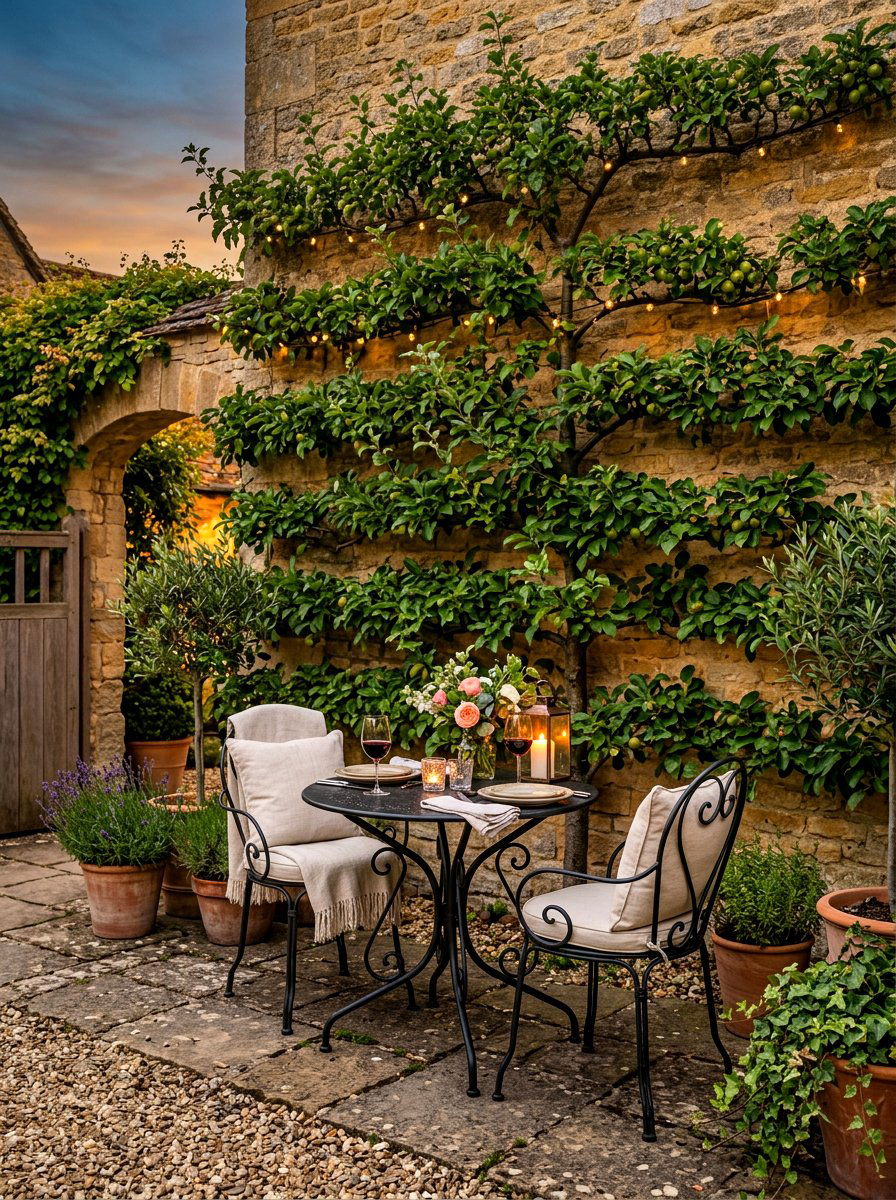
Courtyards are often small, enclosed spaces where traditional trees would feel overwhelming. An espaliered plant is the perfect solution for adding greenery without sacrificing floor space. By training a tree against one of the courtyard walls, you create a lush "wallpaper" of leaves and fruit. This design is particularly effective for creating a cozy, intimate atmosphere. The reflected light from the surrounding walls can make the courtyard feel brighter and more vibrant. Whether you choose a flowering camellia or a productive pear tree, an espalier adds a layer of depth and interest that makes a small courtyard feel like a luxurious and well-designed outdoor room.
29. Side yard espalier
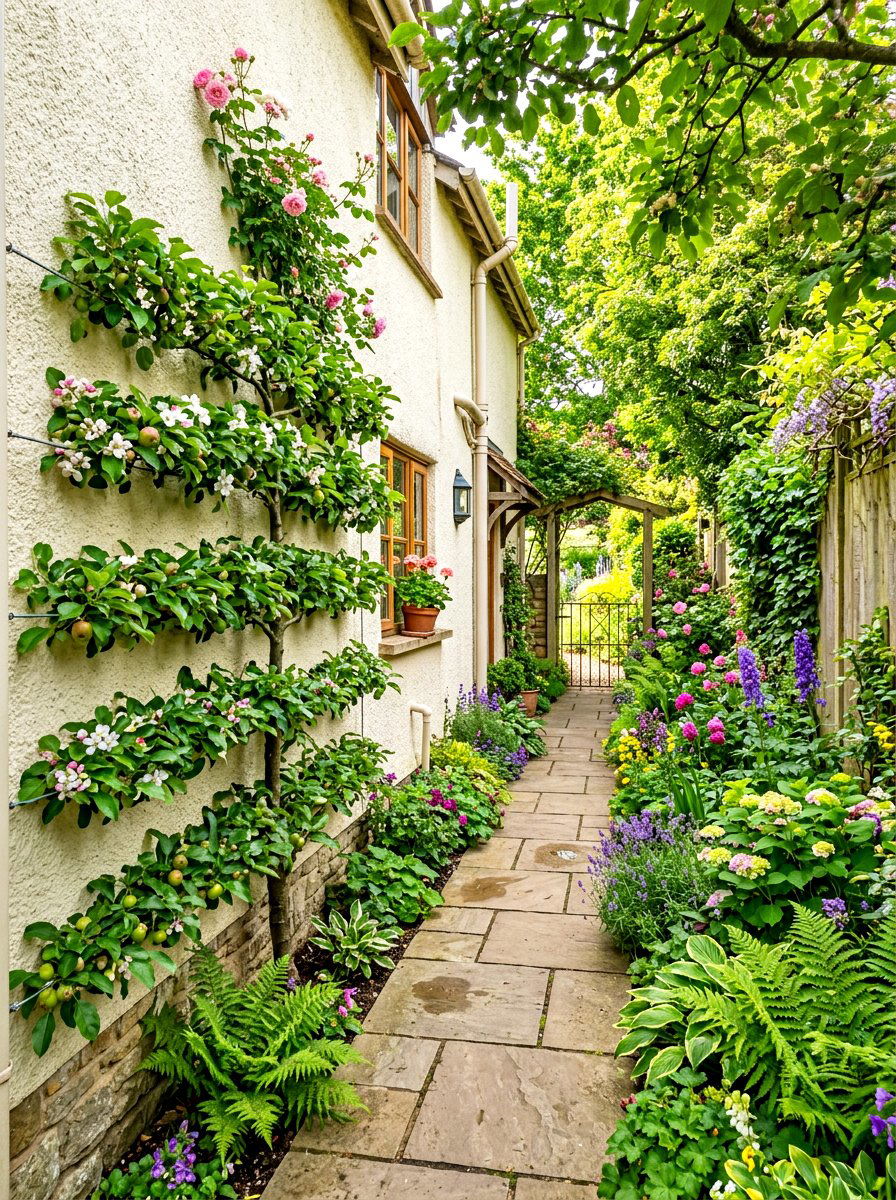
Side yards are notoriously difficult to landscape because they are often narrow and shaded. Espaliered trees allow you to turn these neglected passages into beautiful and productive parts of your home. By keeping the plants flat against the house or fence, you keep the path clear for walking. This design is perfect for growing fruit in a space that would otherwise be wasted. You can choose shade-tolerant plants like hydrangeas or certain varieties of apples for these areas. The vertical greenery softens the narrow "corridor" feel of a side yard, making the journey from the front to the back of the house a much more pleasant experience.
30. Evergreen espalier
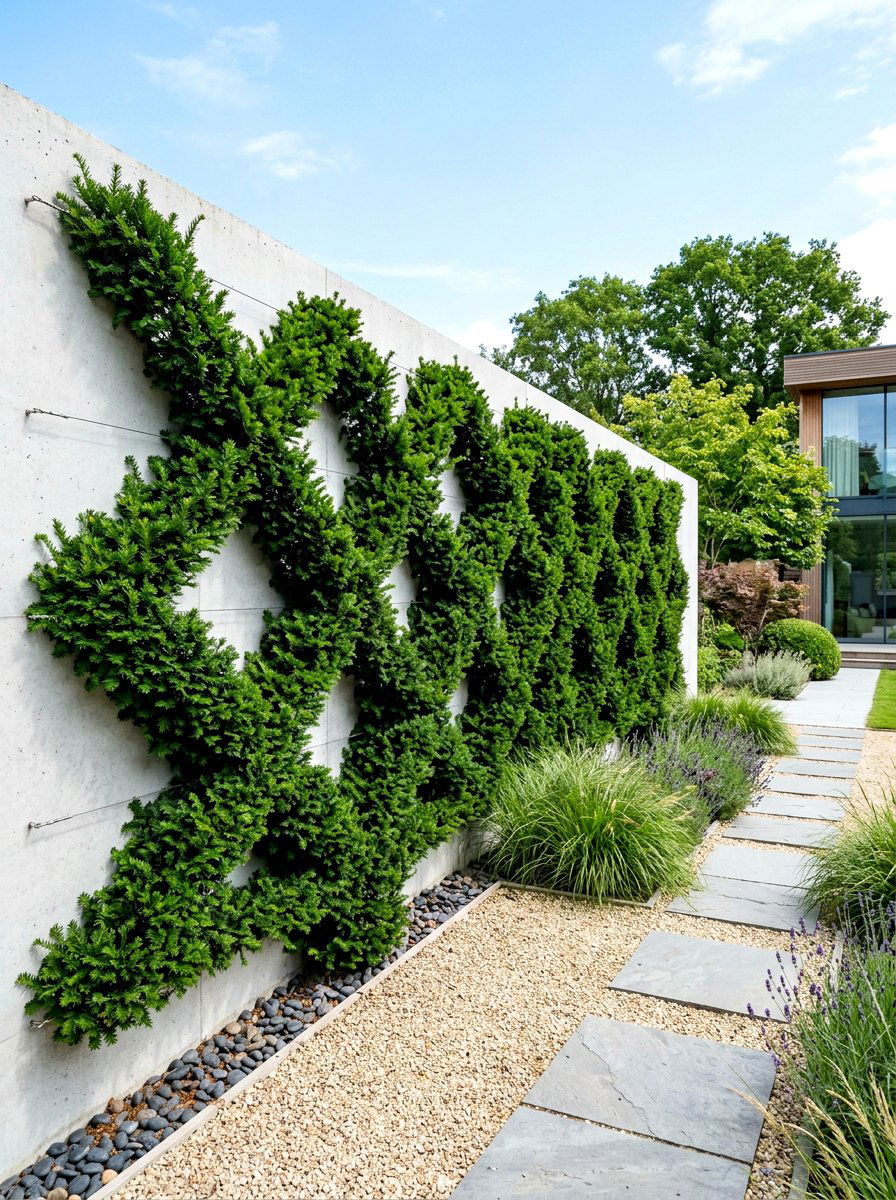
Using evergreen plants for your espalier ensures that your wall garden remains lush and attractive throughout the entire year. Plants like Japanese holly, star jasmine, or certain varieties of magnolia provide a consistent green backdrop even in the depths of winter. This design is essential if the wall is a prominent feature seen from inside the house. The structure of the branches remains hidden behind the leaves, giving the appearance of a solid, living wall. This is a great choice for providing year-round privacy or for hiding a less-than-perfect fence. It adds a sense of permanence and maturity to the garden that deciduous plants simply cannot match.
Conclusion:
Creating an espalier wall garden is one of the most rewarding projects any gardener can undertake. It combines the art of design with the science of horticulture, resulting in a unique feature that adds value and beauty to your property. While it does require a bit more patience and pruning than a standard tree, the space-saving benefits and visual impact are well worth the effort. From the classic apple cordon to the vibrant bougainvillea fan, there is a style to suit every climate and garden aesthetic. By carefully selecting the right plant for your wall and maintaining its shape, you can enjoy a living sculpture that produces fresh fruit and stunning flowers for many decades to come.

Related posts: