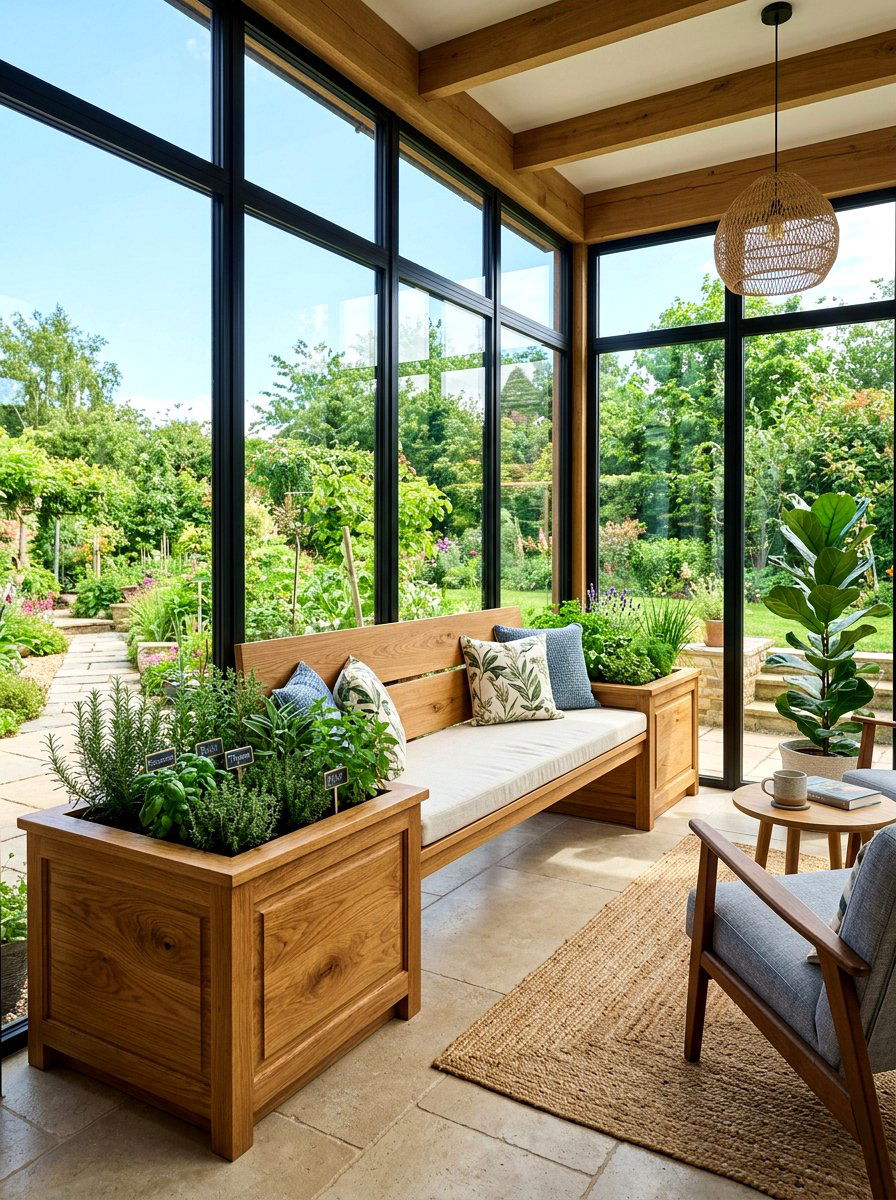
Transforming your living space with a vertical herb garden is one of the most rewarding home projects you can undertake today. Whether you live in a tiny urban apartment or a spacious suburban house, growing your own fresh greens adds life and flavor to your home environment. Vertical gardening maximizes limited space by utilizing wall surfaces and vertical structures that otherwise go unused. This method not only provides a continuous supply of aromatic herbs like basil, mint, and rosemary but also serves as a stunning visual focal point. Imagine stepping into your kitchen and plucking fresh leaves right from a lush, green wall. It is an sustainable way to bring nature indoors while improving air quality and boosting your cooking experience significantly.
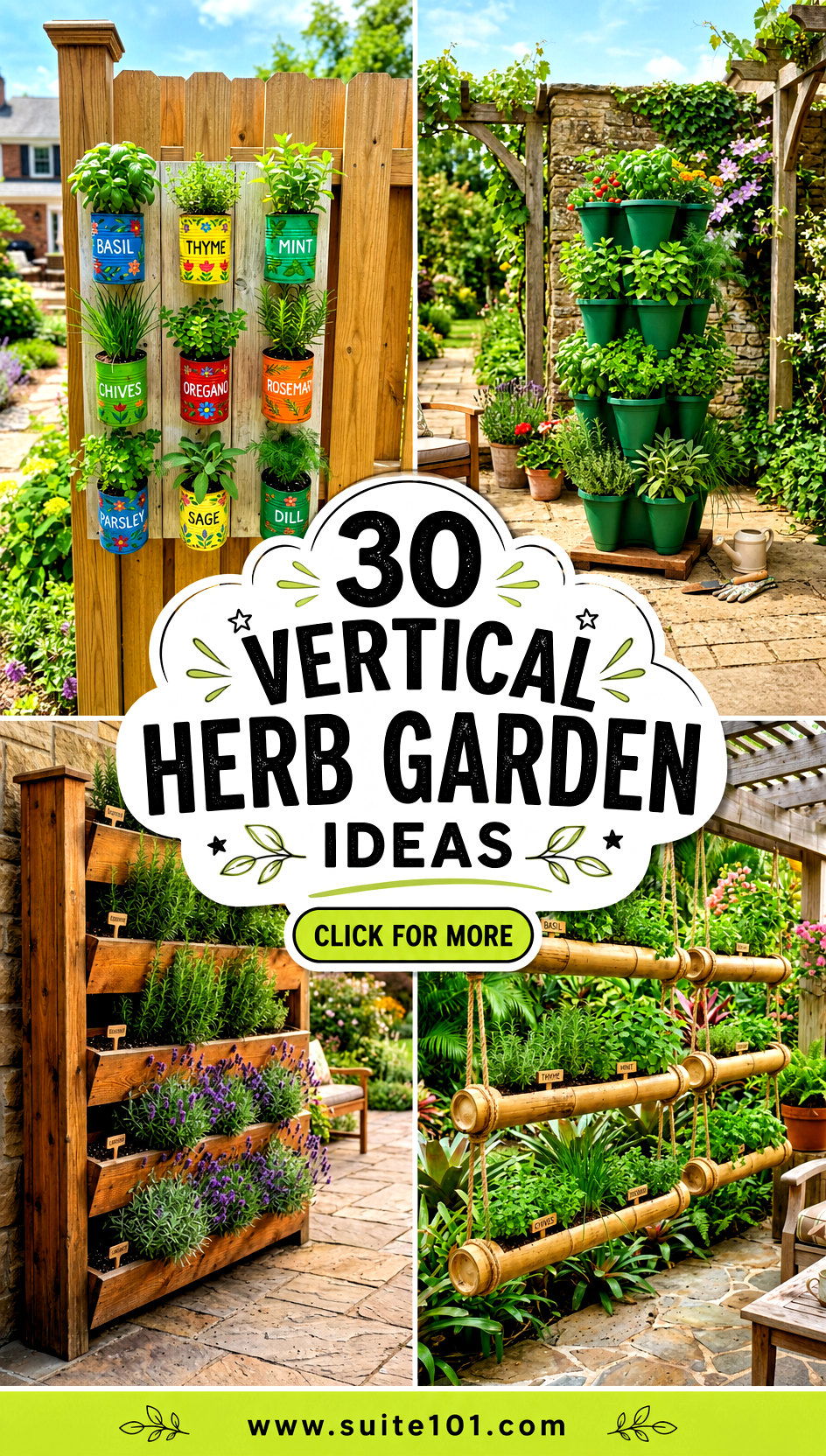
1. Wooden Pallet Herb Garden
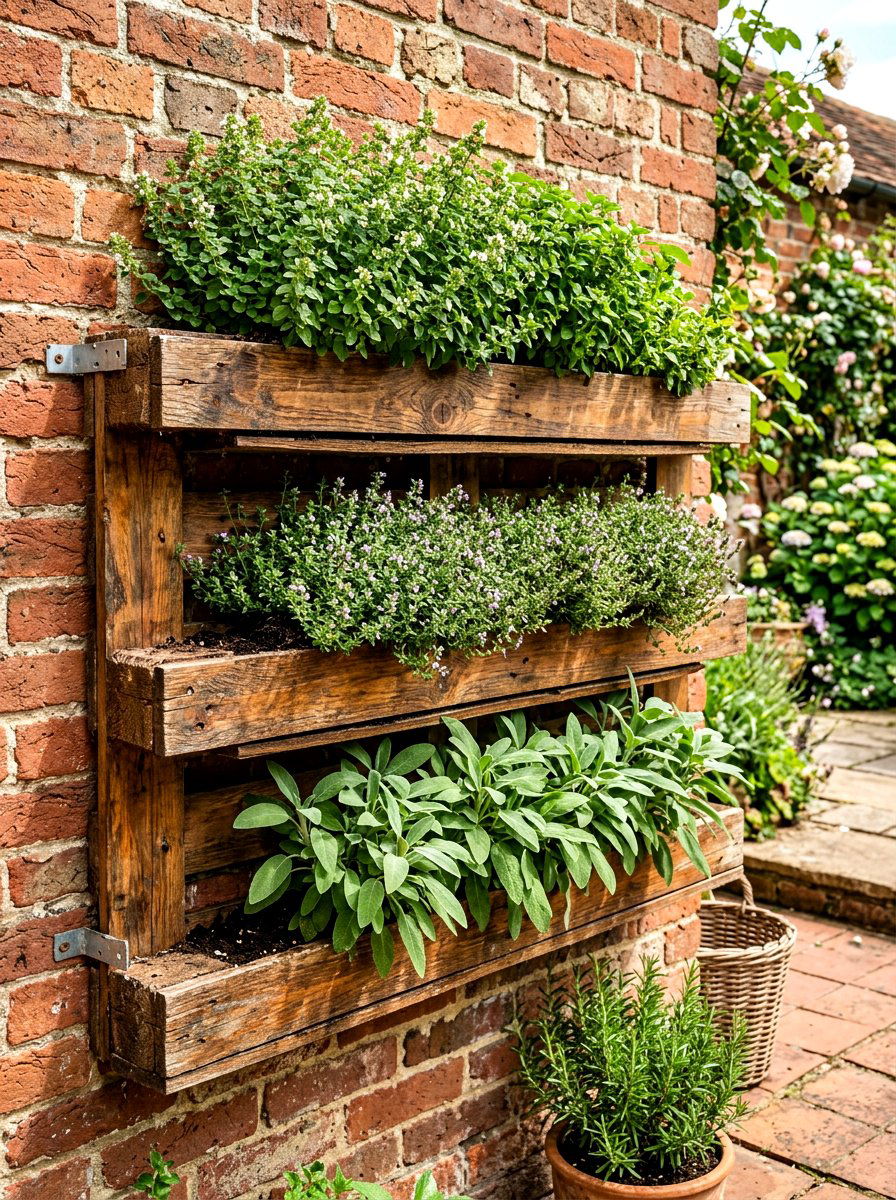
Have you ever looked at a discarded wooden pallet and seen a thriving garden full of life? Using a reclaimed pallet is a fantastic way to create a rustic and eco-friendly vertical herb garden for your outdoor patio or balcony. You can start by sanding down the wood to prevent splinters and then attaching landscape fabric to the back to hold the soil. Once prepared, fill the slots with nutrient-rich potting mix and plant a variety of aromatic herbs like sage, thyme, and oregano. This design provides a sturdy structure that looks beautiful against a brick wall or wooden fence. It is a cost-effective solution that offers a massive planting area while taking up very little floor space in your yard.
2. Hanging Mason Jar Herb Garden
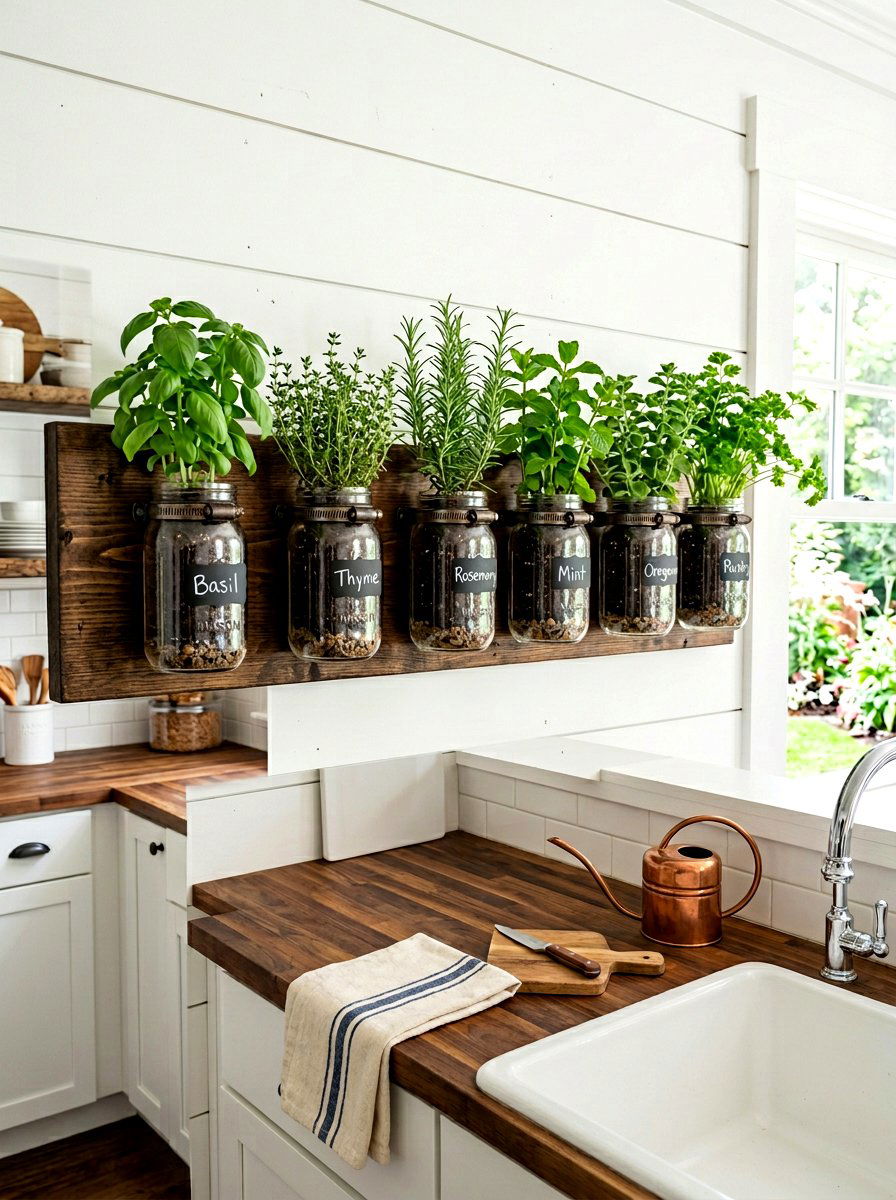
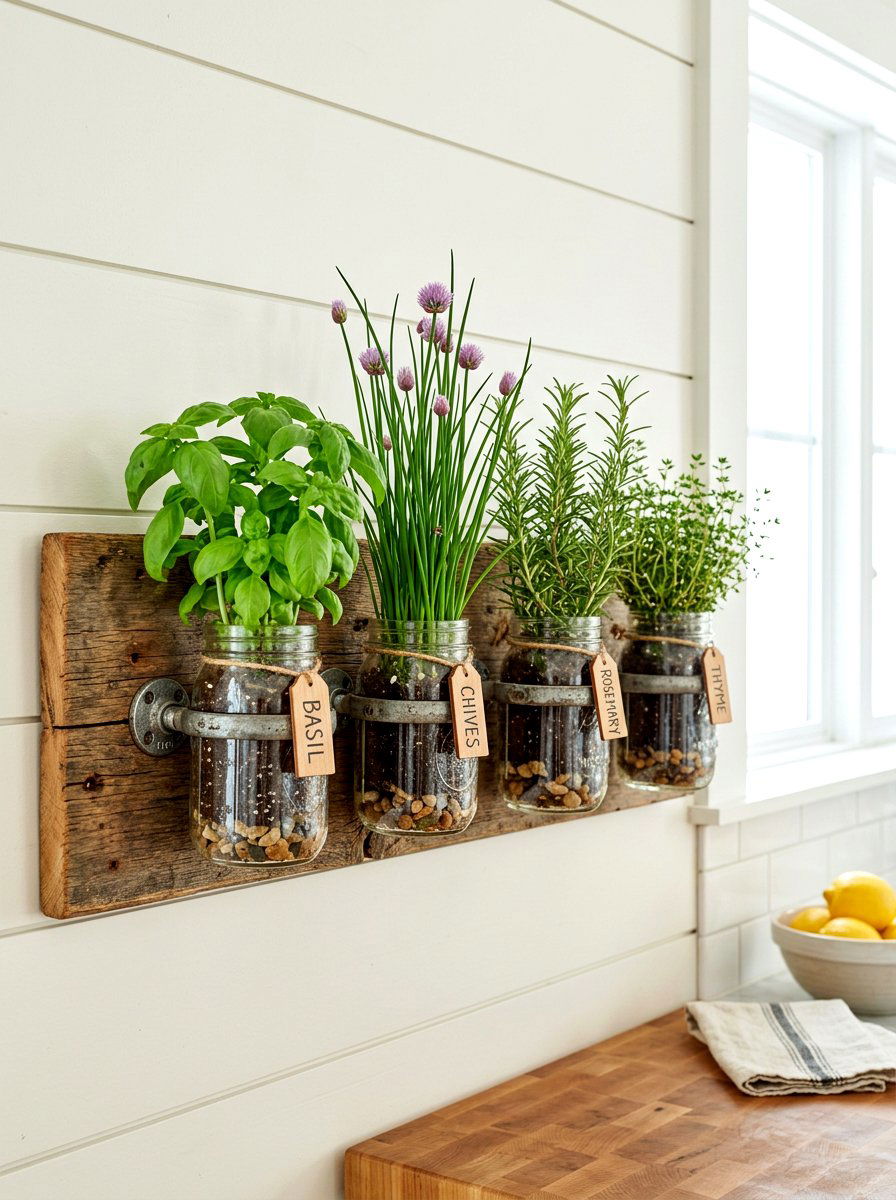
Creating a wall of glass jars is a classic way to bring a farmhouse aesthetic into your modern kitchen. You can securely mount wide-mouth mason jars onto a stained wooden board using metal pipe clamps for a sturdy and stylish look. Each jar acts as an individual planter for herbs like cilantro or chives, allowing you to see the root growth through the glass. To ensure proper health for your plants, add a layer of small pebbles at the bottom for drainage since these jars do not have holes. This vertical arrangement keeps your favorite flavors within arm's reach while you cook. It also makes for a wonderful conversation piece when you have guests over for dinner.
3. Kitchen Wall Herb Garden
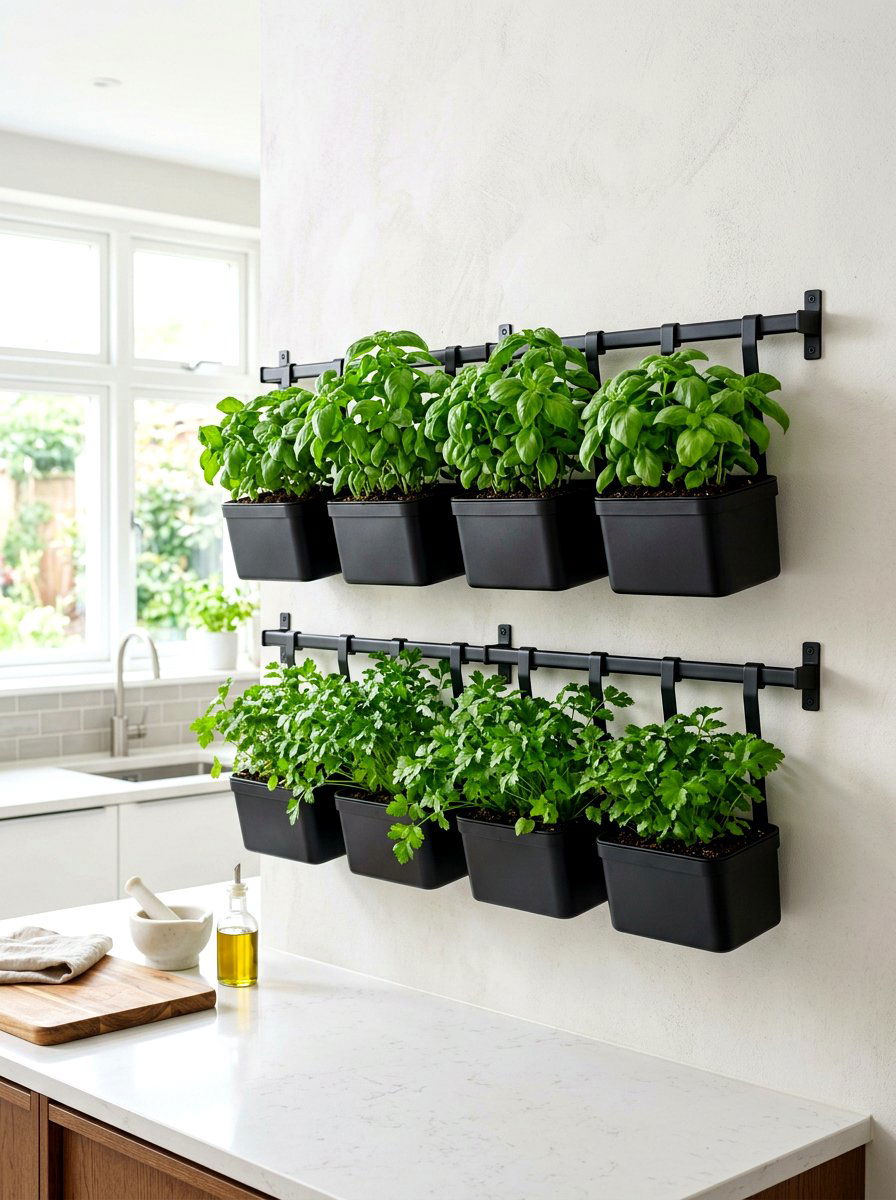
If you want to turn a blank kitchen wall into a functional masterpiece, consider installing a dedicated herb wall system. These systems often feature sleek, modular containers that clip onto a wall-mounted rail or grid for easy maintenance. You can choose containers in neutral colors like matte black or white to match your cabinetry and modern appliances. This setup is perfect for growing large quantities of basil or parsley right where you need them most. The uniform look of the planters creates a professional and clean appearance that elevates the entire room. It is a smart solution for home chefs who value both organization and the freshness of their culinary ingredients every single day.
4. Vertical Garden Tower
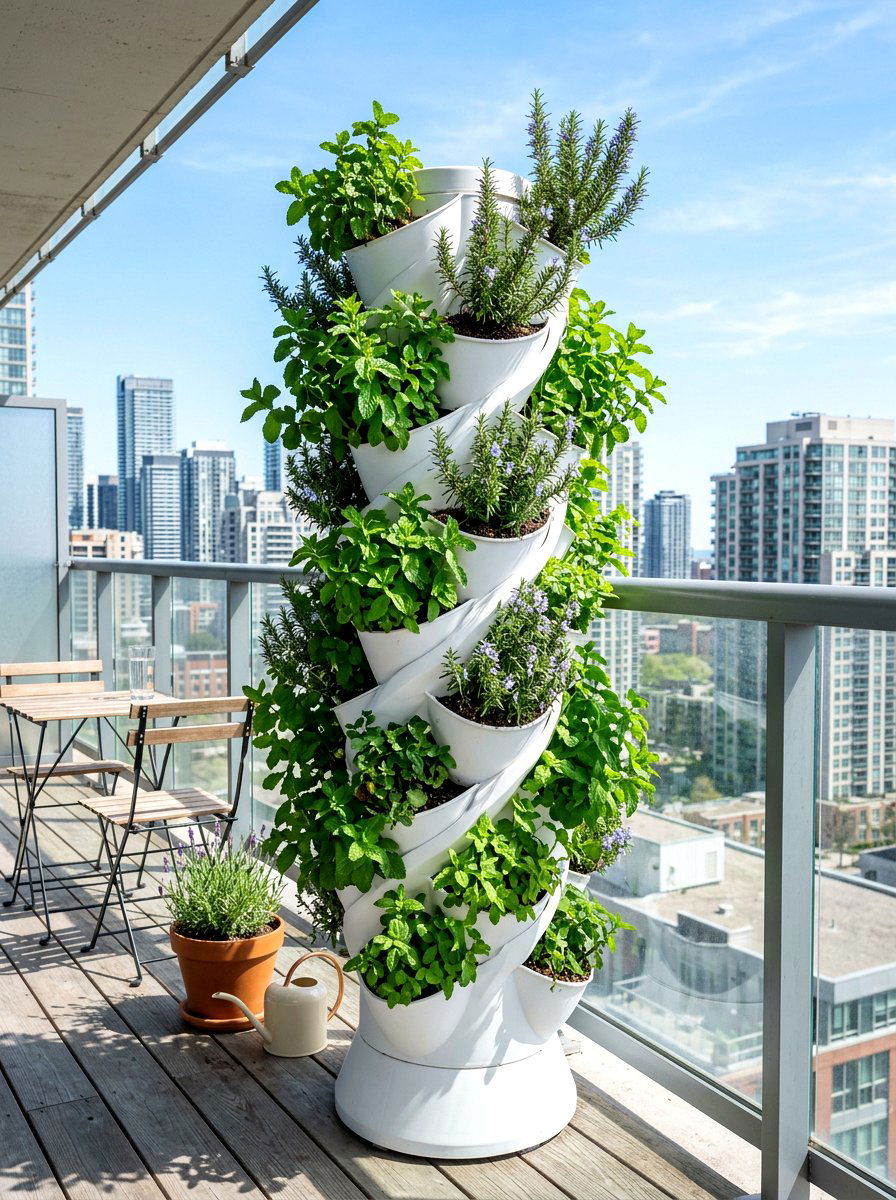
A freestanding garden tower is the ultimate space-saving solution for gardeners who want high yields in a very small footprint. These towers typically feature multiple tiers of planting pockets that spiral upward, allowing you to grow dozens of different herbs in one spot. Many of these systems are designed with a built-in internal watering tube that ensures moisture reaches every single plant evenly. You can place a garden tower on a sunny balcony or even in a bright corner of your dining room. The lush, overflowing greenery creates a striking pillar of nature that looks incredible in any setting. It is an excellent choice for those who want a high-performance garden without complex installation or construction.
5. Hanging Pocket Herb Garden
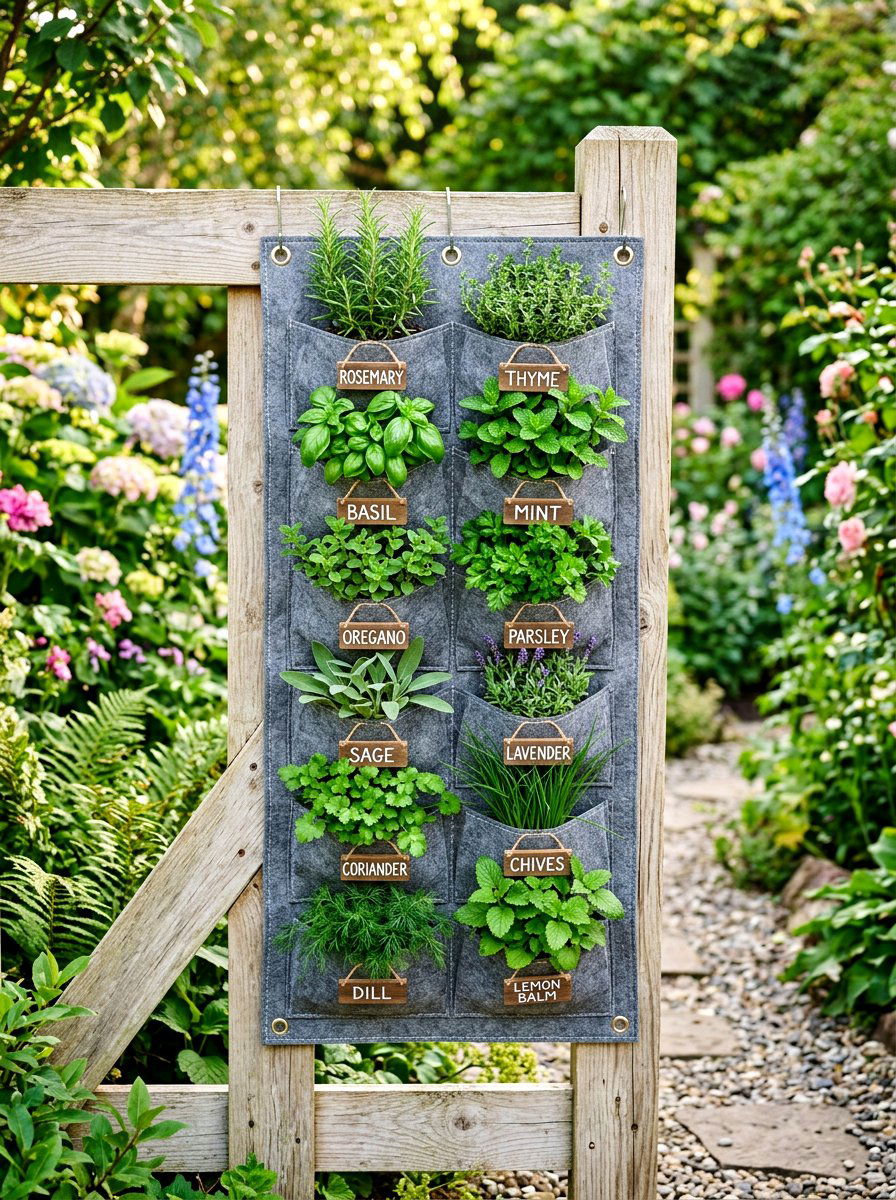
Fabric pocket planters are a versatile and lightweight option for anyone looking to soften a harsh wall with greenery. These planters are made from breathable felt or canvas that allows for excellent air circulation around the herb roots. You can easily hang them on a fence, door, or interior wall using simple hooks or screws. Each pocket provides a cozy home for individual herbs, making it easy to swap plants out as the seasons change. The soft texture of the fabric adds a cozy, bohemian vibe to your outdoor or indoor space. Because they are flexible, you can even join multiple pocket organizers together to cover an entire wall with aromatic, edible foliage.
6. Tiered Ladder Herb Garden
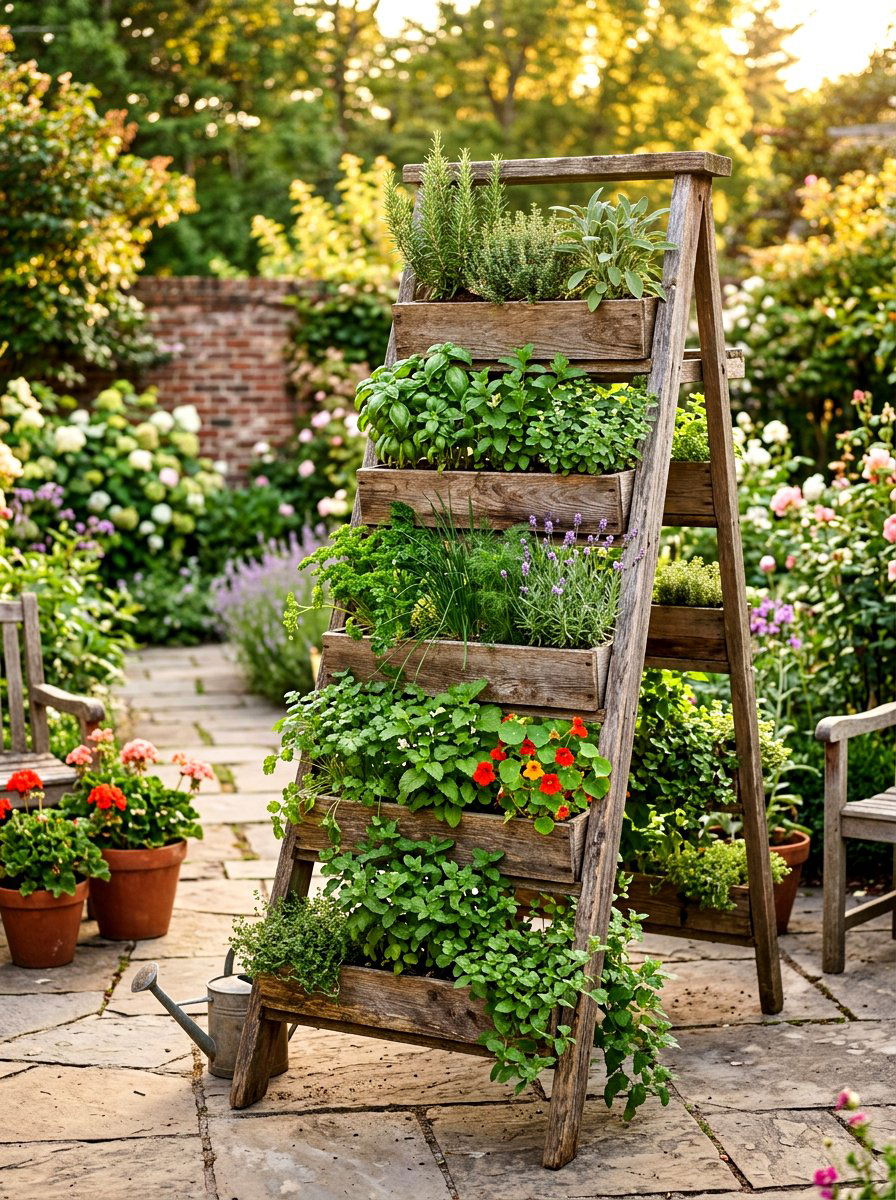
Repurposing an old wooden ladder into a plant stand is a charming way to add height and character to your herb collection. You can place long planter boxes on each step of the ladder to create a cascading effect of various herbs. This design is particularly effective because it allows each level to receive adequate sunlight without being shaded by the plants above. A ladder garden is highly portable, meaning you can move it around your patio to catch the best rays throughout the day. The weathered wood provides a natural backdrop that highlights the vibrant greens of your mint and rosemary. It is a simple yet effective way to organize your garden vertically.
7. Magnetic Fridge Herb Garden
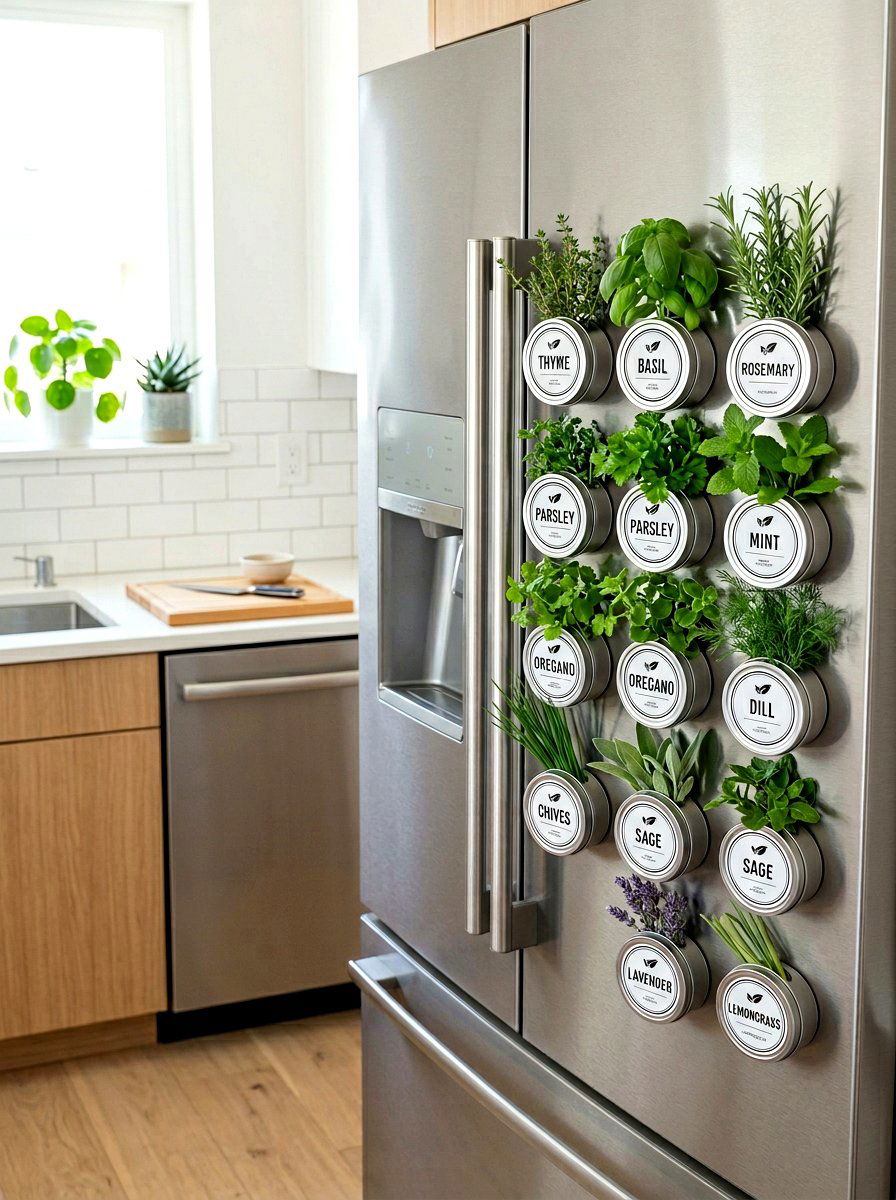
Do you have a small kitchen with absolutely no counter space but a large, empty refrigerator surface? You can transform the side of your fridge into a living spice rack by using small magnetic tins or specialized magnetic planters. These compact containers are perfect for shallow-rooted herbs like thyme or dwarf varieties of basil. Ensure the magnets are strong enough to hold the weight of the soil and water without sliding down. This innovative idea keeps your herbs at eye level and makes use of a vertical surface that is usually ignored. It is a fun and modern way to integrate gardening into your daily routine while keeping your workspace completely clear.
8. Balcony Railing Herb Garden
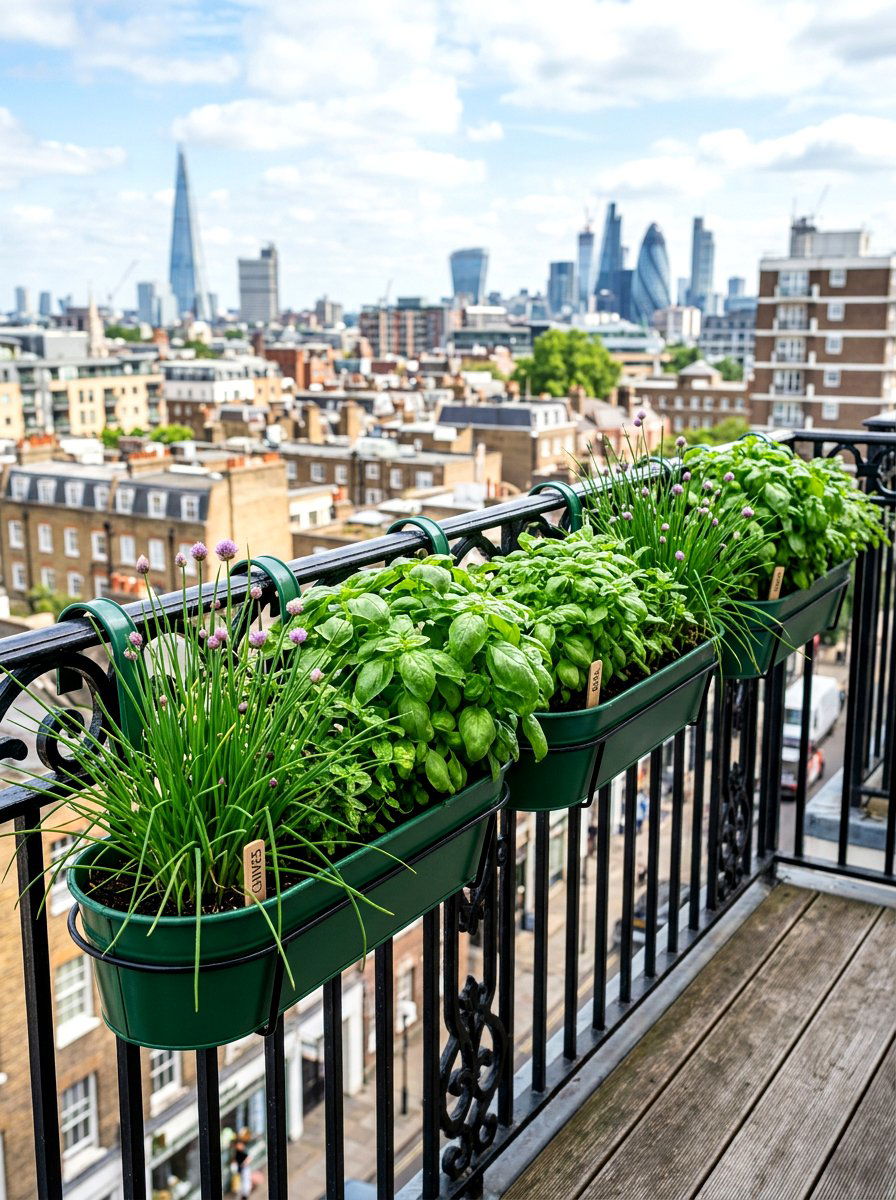
Living in an apartment should not stop you from having a flourishing garden, especially when you have a balcony railing. You can find specialized planters designed to sit securely over the top of a railing or attach to the spindles. These railing gardens allow you to grow a variety of herbs while keeping the floor of your balcony open for seating. The herbs benefit from the increased airflow and direct sunlight found on the perimeter of your building. Imagine sitting outside with a fresh drink garnished with mint picked just inches away. This setup is practical, stylish, and a great way to add privacy to your outdoor living area with a green screen.
9. PVC Pipe Herb Garden
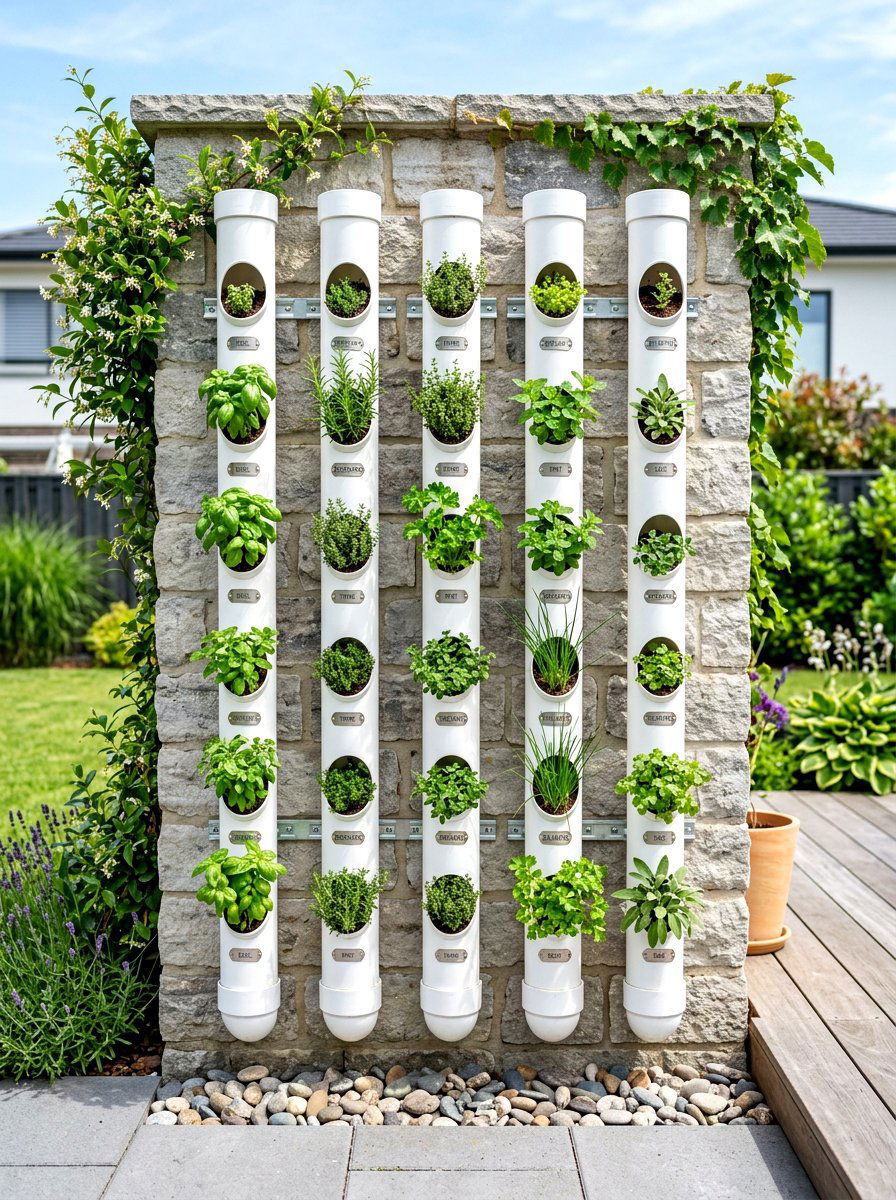
For a modern and industrial look, you can build a vertical garden using large diameter PVC pipes. By cutting holes into the sides of the pipe and mounting it vertically, you create a unique hydroponic or soil-based growing system. These pipes can be painted in bold colors or left white for a clean, minimalist appearance in your garden. They are incredibly durable and weather-resistant, making them perfect for long-term outdoor use on a sunny patio. You can connect several pipes together to create a massive wall of herbs that is easy to water from the top. This DIY project is affordable and allows for endless customization to fit your specific space.
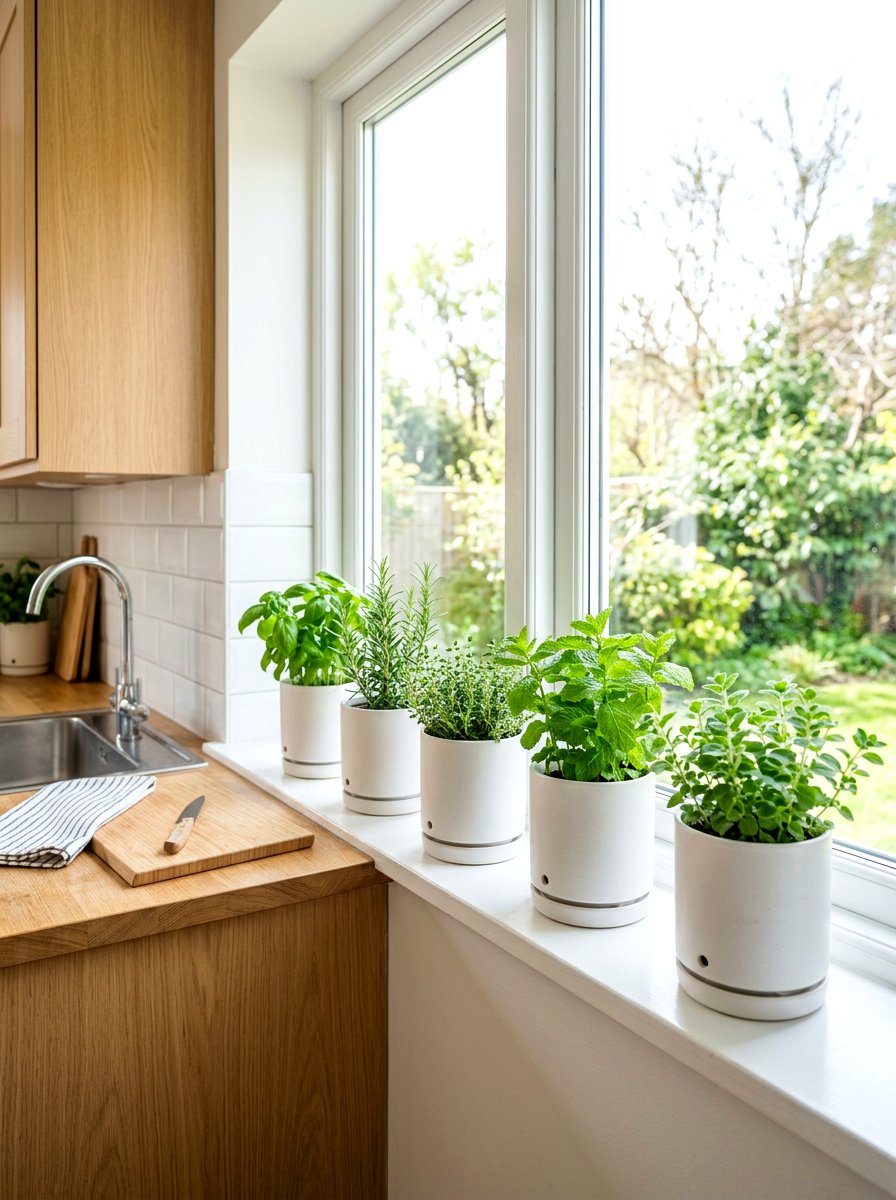
10. Copper Pipe Herb Garden
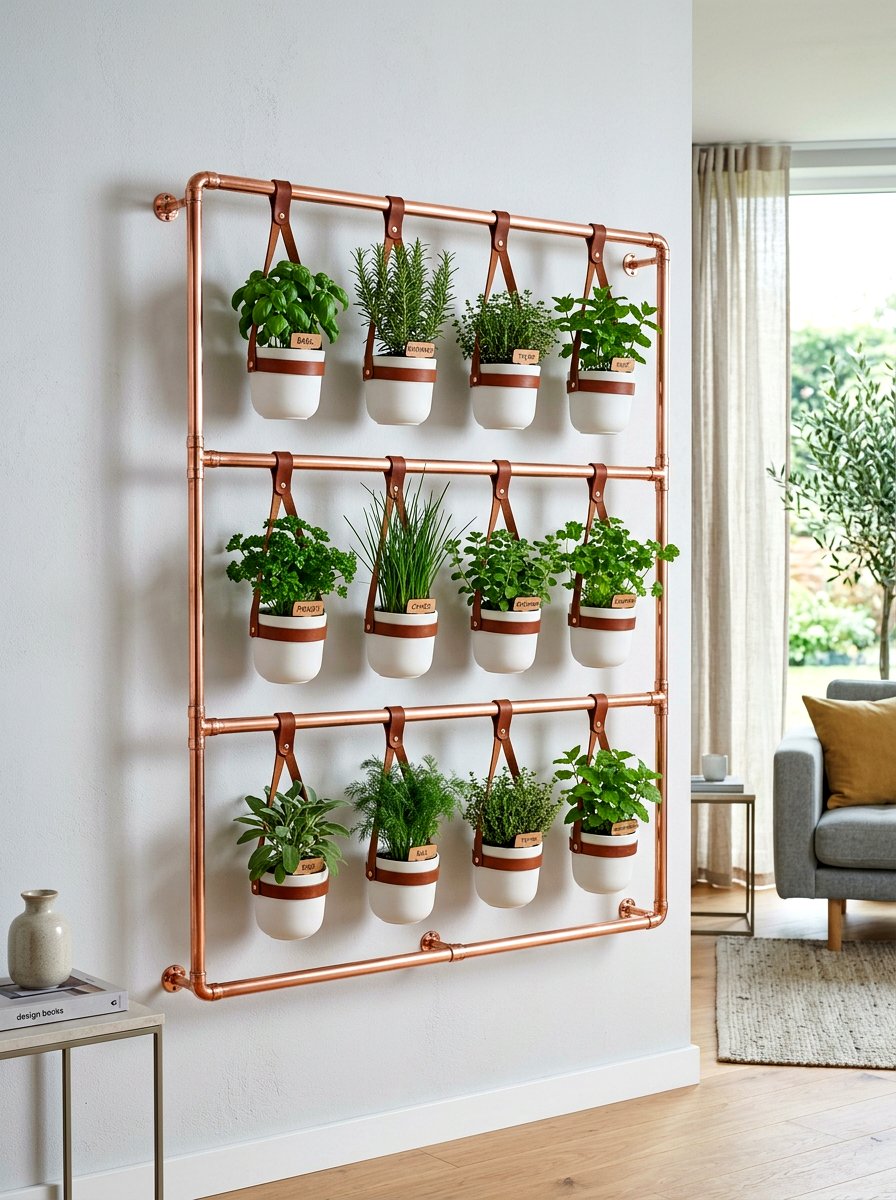
If you love the warm glow of metallic accents, a copper pipe herb garden is a sophisticated choice for your home interior. You can construct a simple frame using copper plumbing pipes and hang small pots from the horizontal bars with leather straps. The combination of shiny metal and lush green leaves creates a high-end look that complements modern and industrial decor styles. This type of vertical garden is lightweight yet sturdy enough to hold several small herb pots at once. As the copper ages, it develops a beautiful patina that adds even more character to your display. It is a stunning way to showcase your herbs as part of your interior design.
11. Trellis Herb Garden
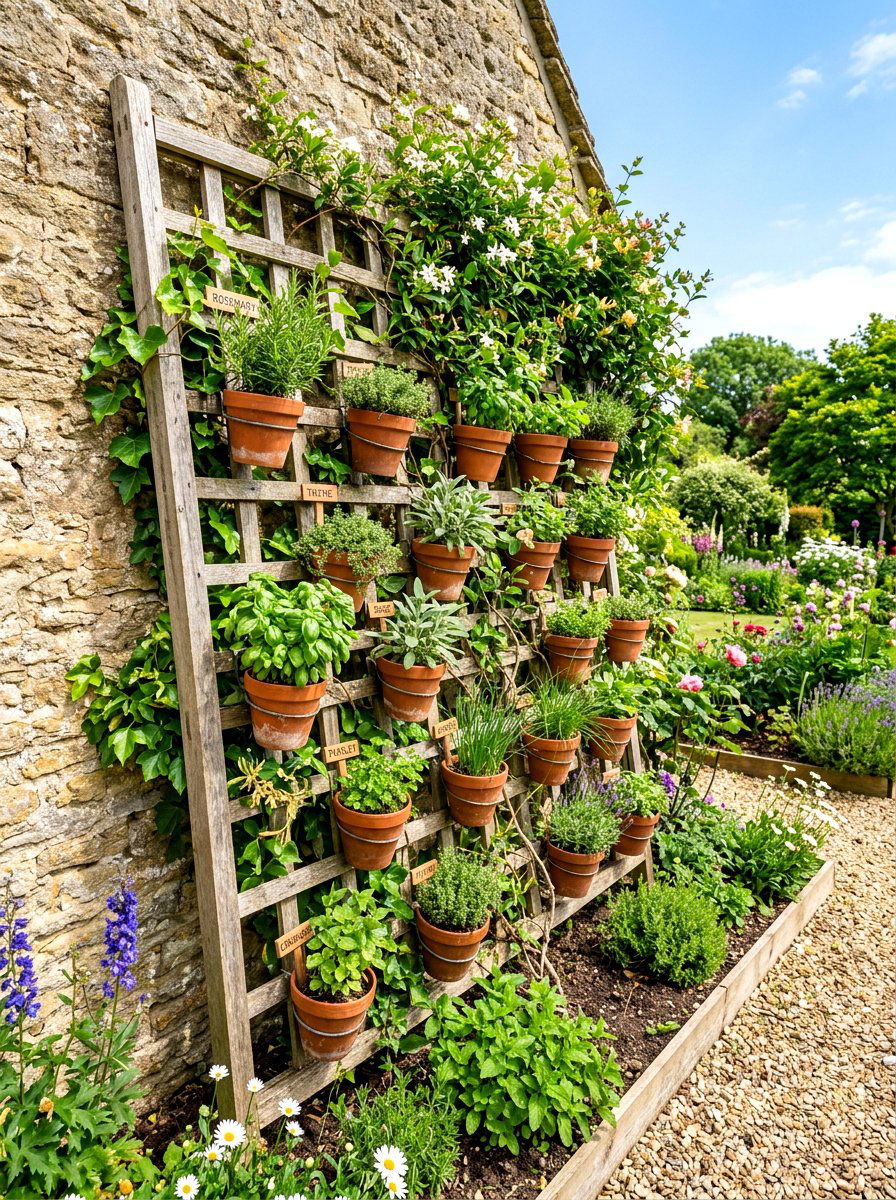
A wooden or metal trellis provides the perfect framework for a vertical herb display that can grow quite large. You can lean a tall trellis against a garden wall and attach various small pots using wire or specialized clips. This method is excellent for training climbing herbs like jasmine or even hops, while also supporting standard culinary herbs in containers. The open grid of the trellis allows for great light penetration and makes it very easy to prune your plants as they grow. You can paint the trellis to match your house trim or leave it natural for a garden-centric look. It turns a boring wall into a lush, multi-dimensional green landscape.
12. Hanging Basket Herb Garden
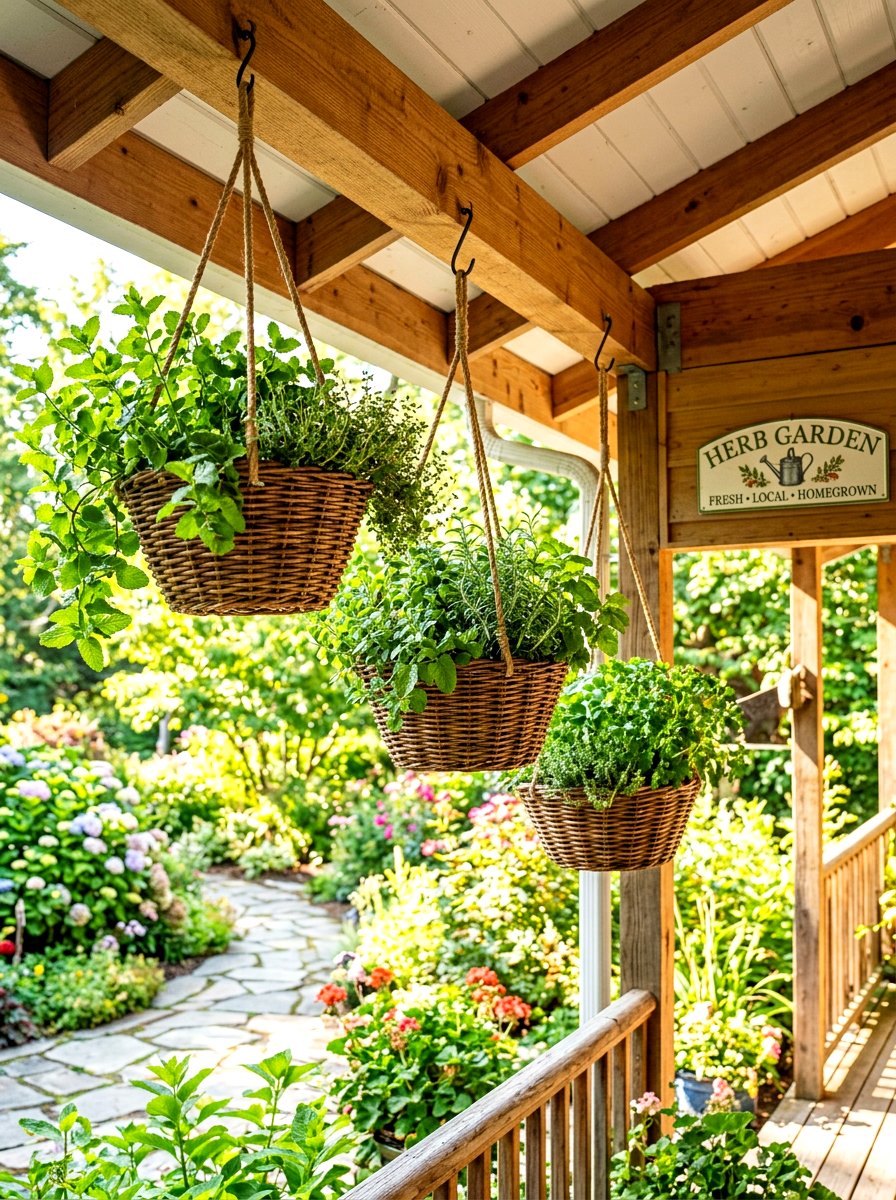
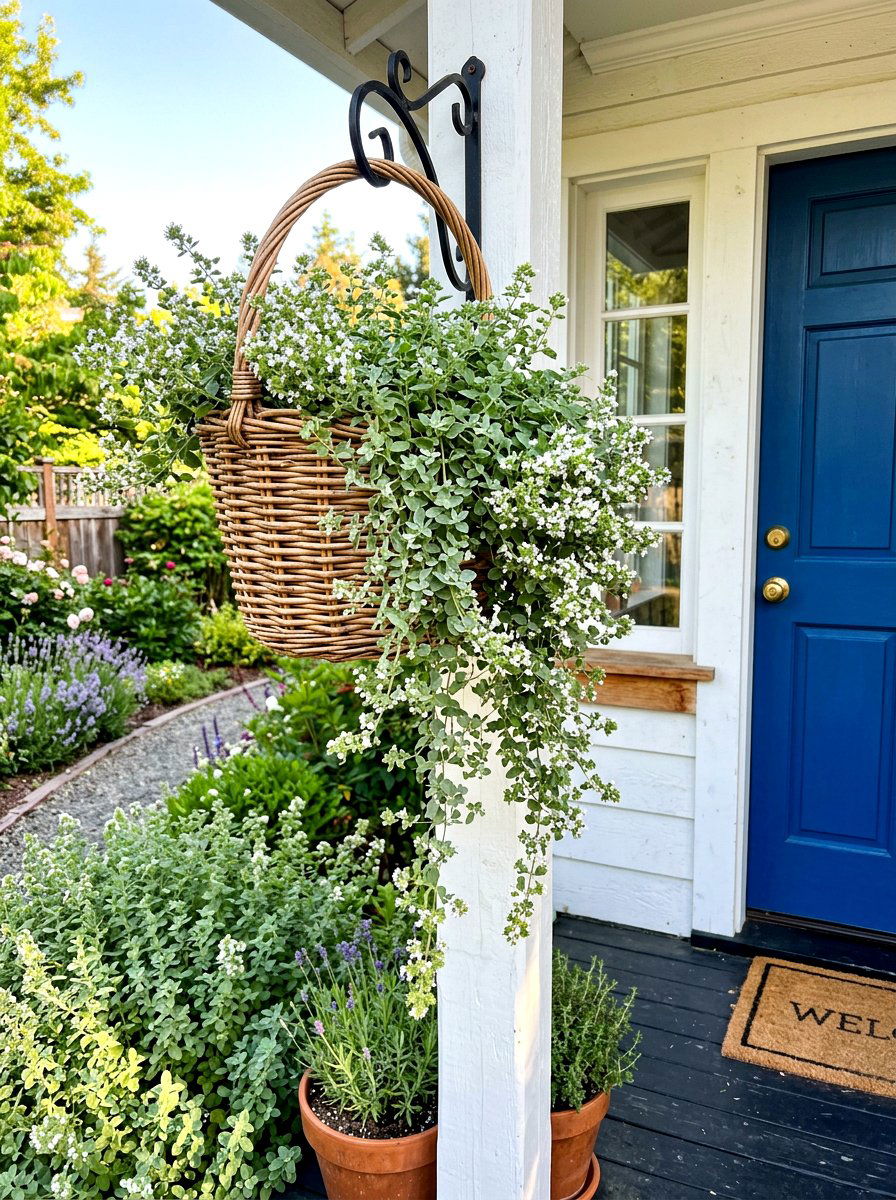
Traditional hanging baskets are not just for flowers; they are perfect for creating a floating herb garden on your porch. You can stagger several baskets at different heights to create a tiered visual effect that maximizes vertical space. Trailing herbs like creeping thyme or nasturtiums look particularly beautiful as they spill over the edges of the baskets. This setup keeps your plants away from ground-dwelling pests and makes harvesting as easy as reaching up. Use high-quality potting mix and ensure the baskets have good liners to retain moisture during hot summer days. The constant movement of the baskets in the breeze adds a dynamic element to your outdoor living area.
13. Window Box Herb Garden
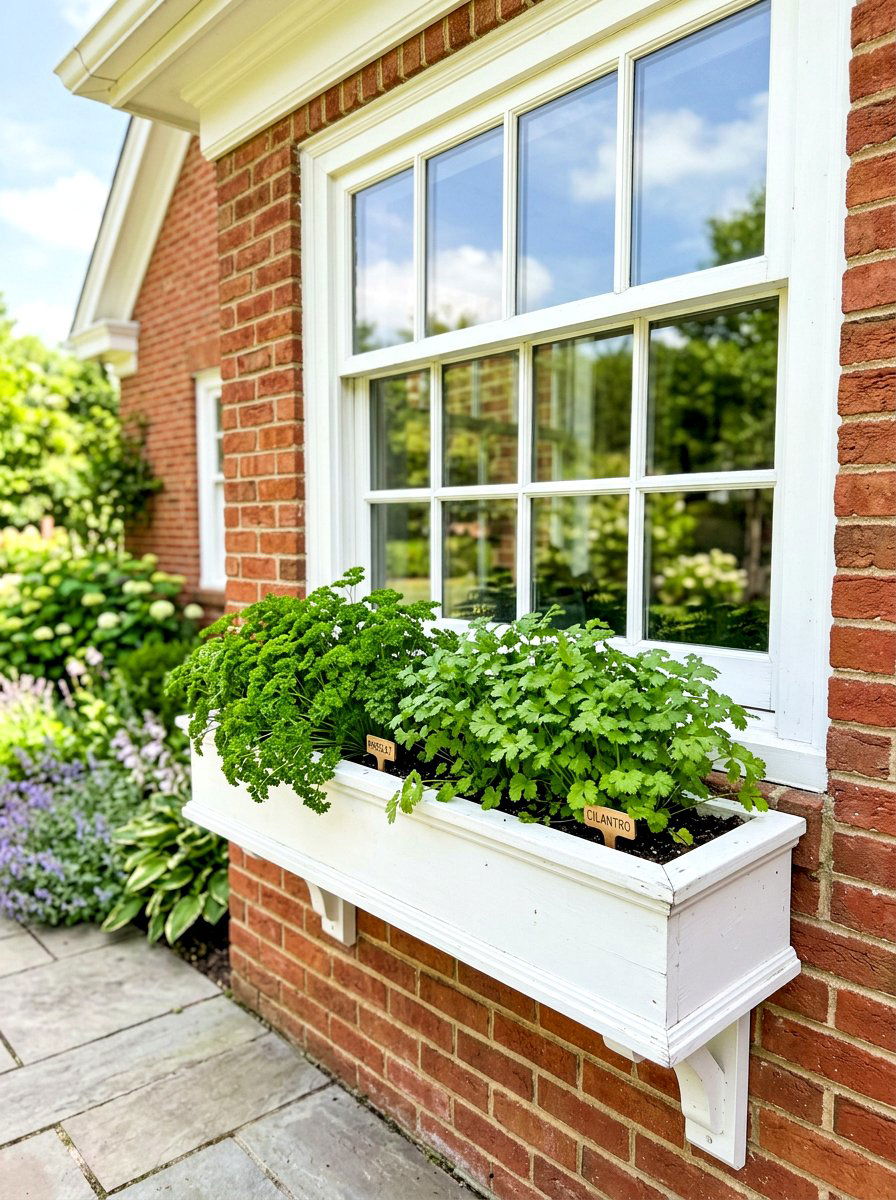
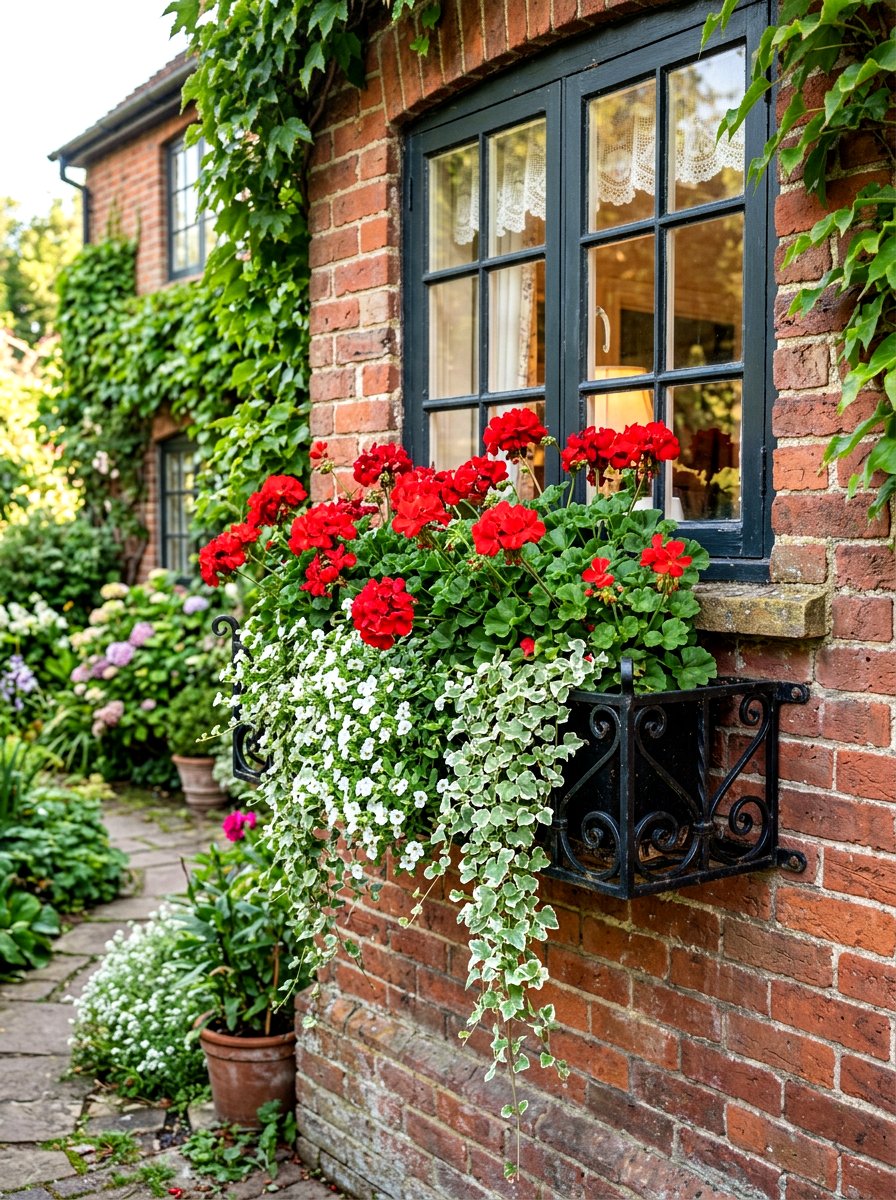
Installing window boxes is a timeless way to add curb appeal while keeping your herbs close to the kitchen. You can mount these boxes directly under a sunny window so you can simply reach out and grab what you need. This vertical placement ensures your herbs get the most sun possible throughout the day, leading to faster growth and stronger flavors. Choose a box design that complements the architecture of your home, whether it is a classic wooden trough or a modern metal container. Window boxes are easy to maintain and provide a generous amount of planting space for a diverse mix of herbs. They brighten your view from both inside and outside.
14. Industrial Pipe Herb Garden
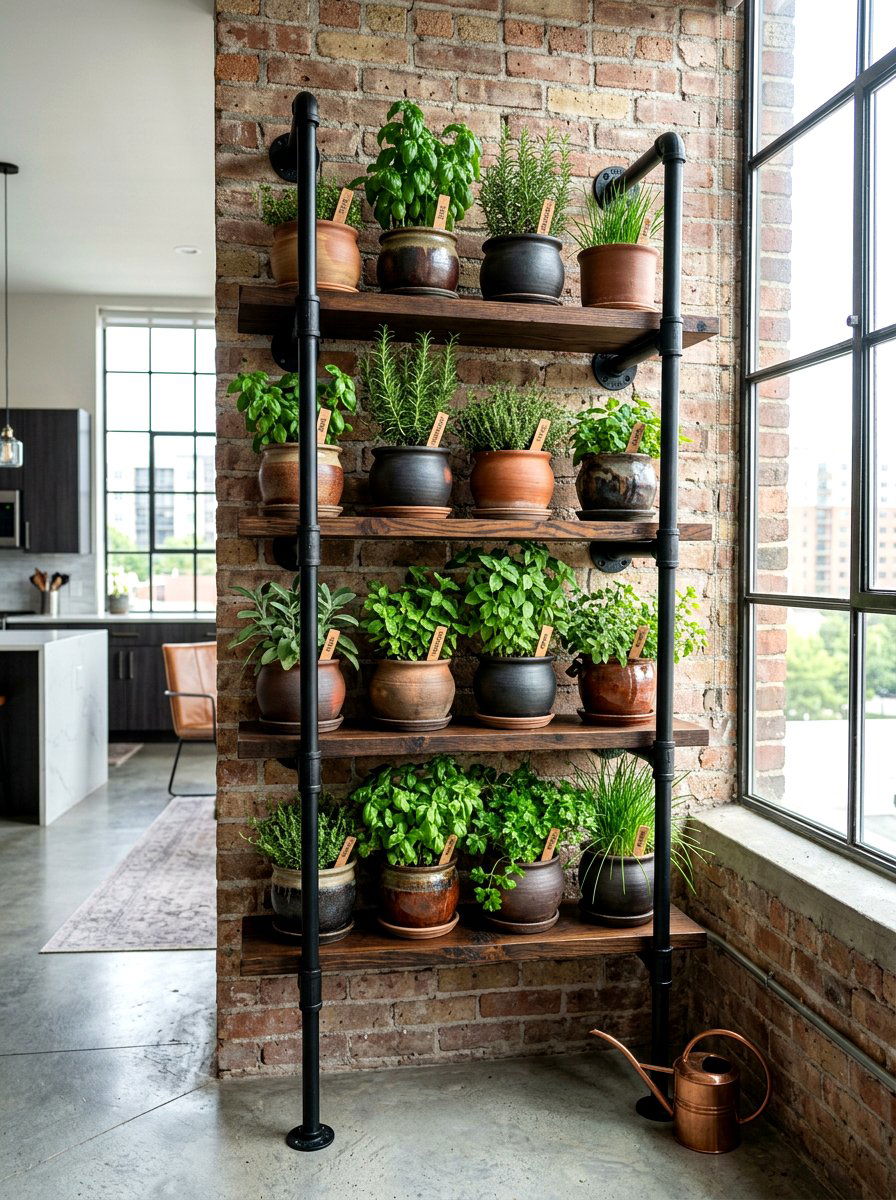
For those who enjoy a rugged and urban aesthetic, using black industrial pipes and reclaimed wood creates a striking herb garden. You can build a shelving unit where the pipes act as the supports and the wood planks hold the herb pots. This structure is incredibly strong and can handle the weight of larger ceramic or terracotta pots filled with soil. The contrast between the dark metal and the organic green herbs creates a bold statement in any room or on a patio. It is a great way to incorporate a vertical garden into an office or a loft-style living space. This design is built to last and provides a very stable environment.
15. Recycled Tin Can Herb Garden
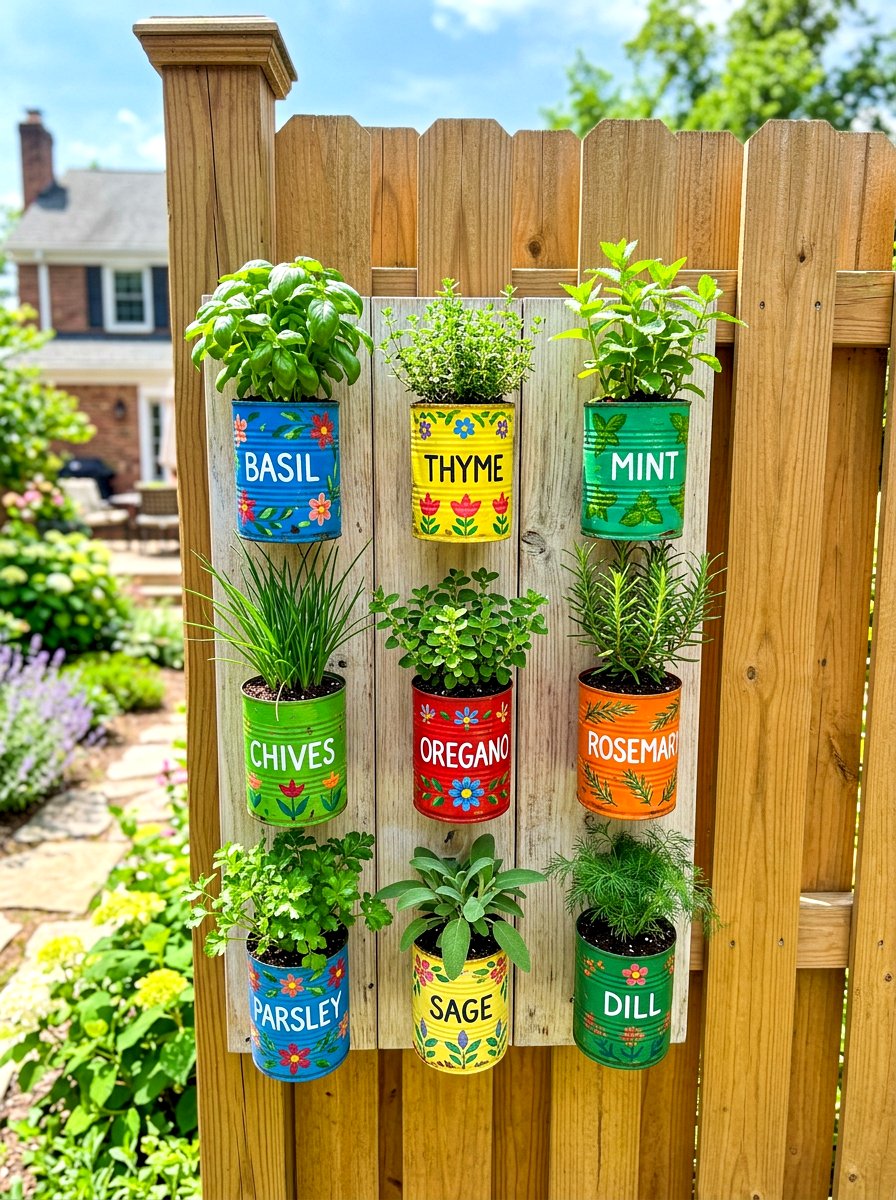
Sustainability meets style when you repurpose old tin cans into colorful planters for your vertical herb wall. After cleaning the cans and drilling drainage holes, you can paint them in vibrant shades or leave them metallic for a modern feel. Attach the cans to a wooden fence or a lattice board using simple screws or wire hooks. This is a fun and kid-friendly project that teaches the value of upcycling while providing a place for basil and parsley to thrive. Because the cans are small, they are perfect for a diverse collection of herbs that each need their own space. It is an affordable way to create a large garden.
16. Felt Pocket Herb Garden
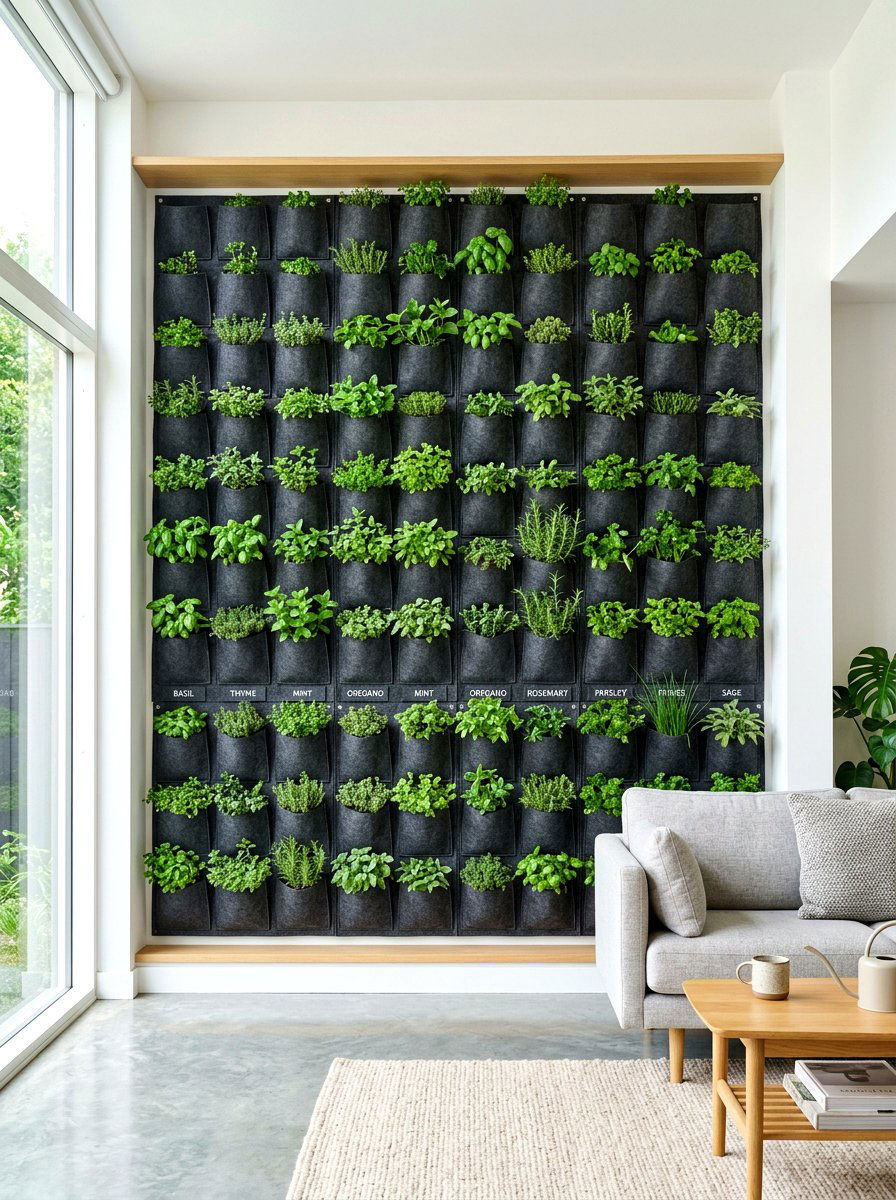
Using felt pocket systems is one of the easiest ways to install a living wall inside your home. These panels feature many individual rows of soft pockets that you can fill with soil and small herb starts. The felt material is specially designed to hold onto moisture while allowing the roots to breathe, preventing the common problem of root rot. You can cover an entire accent wall with these panels to create a breathtaking indoor forest of aromatic plants. It is a lightweight solution that is easy to mount with a few simple wall anchors. The resulting wall of greenery provides natural insulation and a calming atmosphere for your living room.
17. Floating Shelf Herb Garden
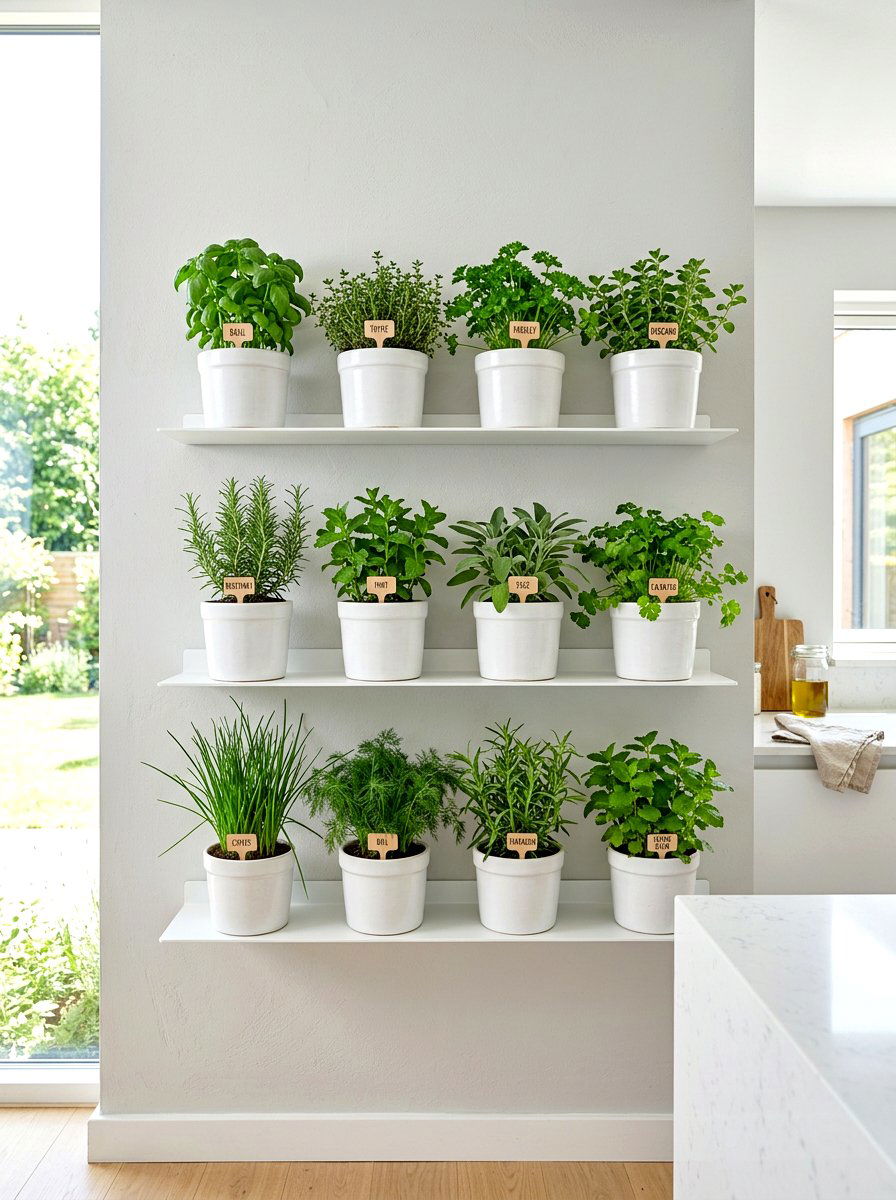
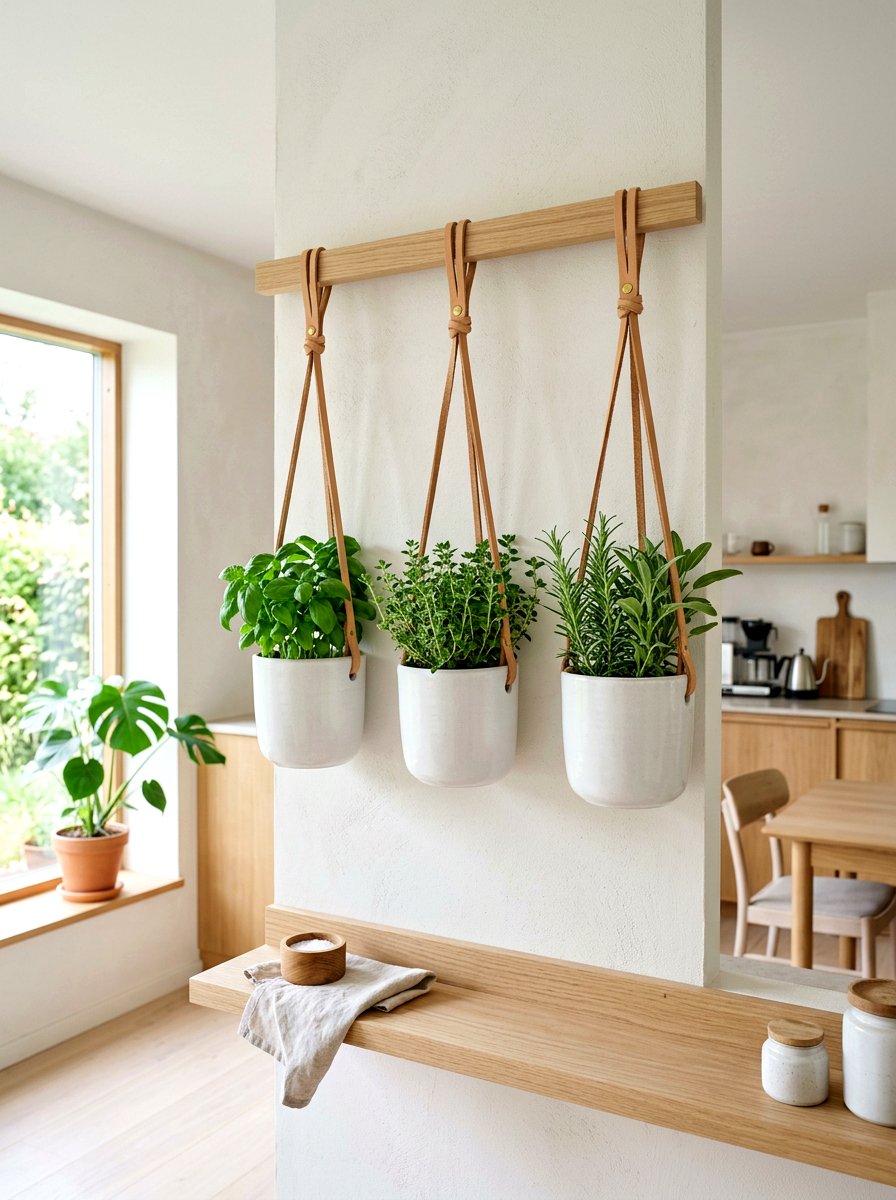
Floating shelves offer a clean and modern way to display your herb collection without the clutter of a traditional plant stand. You can install a series of thin shelves at various heights on a sunny kitchen wall to hold individual herb pots. This approach allows you to mix and match different pot styles, such as white ceramic or natural terracotta, for a curated look. The open space between the shelves ensures that each herb has plenty of room to grow tall and receive light. Floating shelves are a great option for small apartments because they use the wall while keeping the floor space completely open. It looks like a living art gallery.
18. Hydroponic Herb Garden
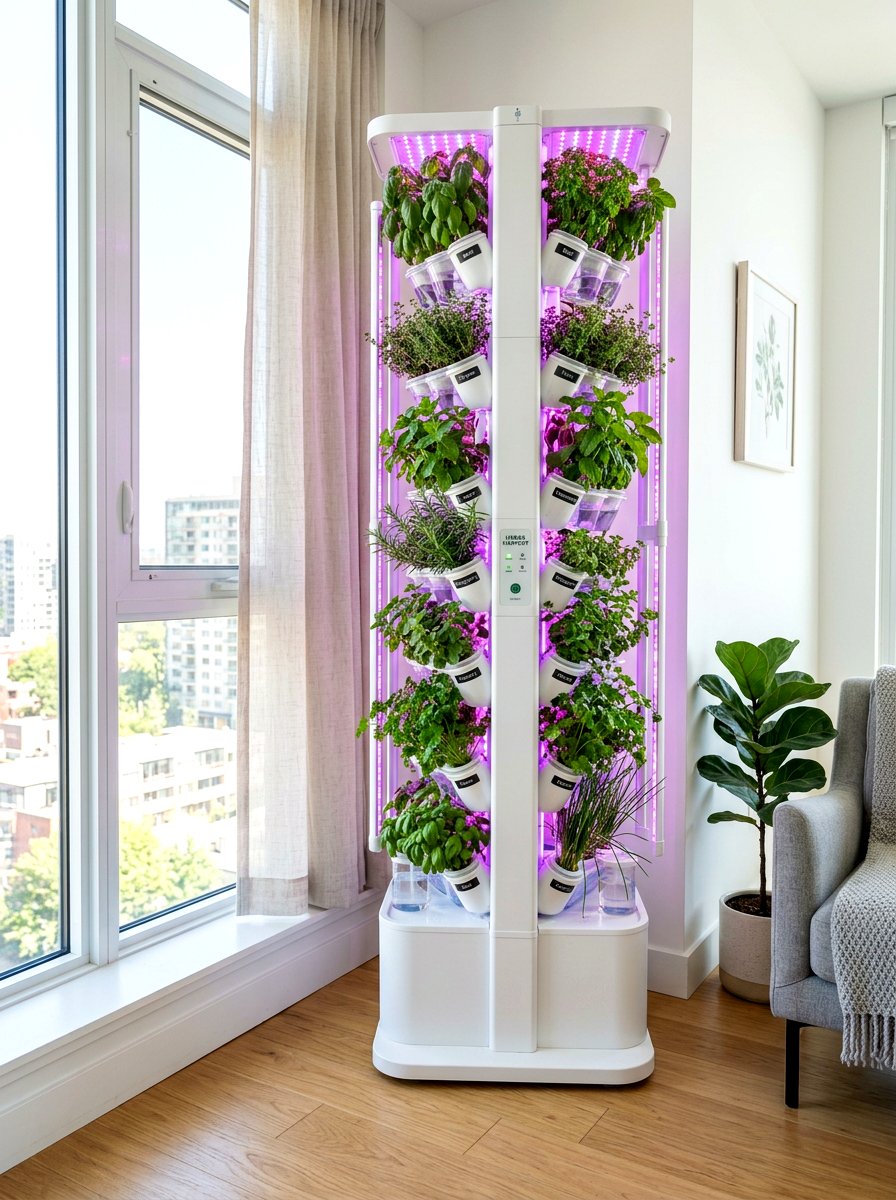
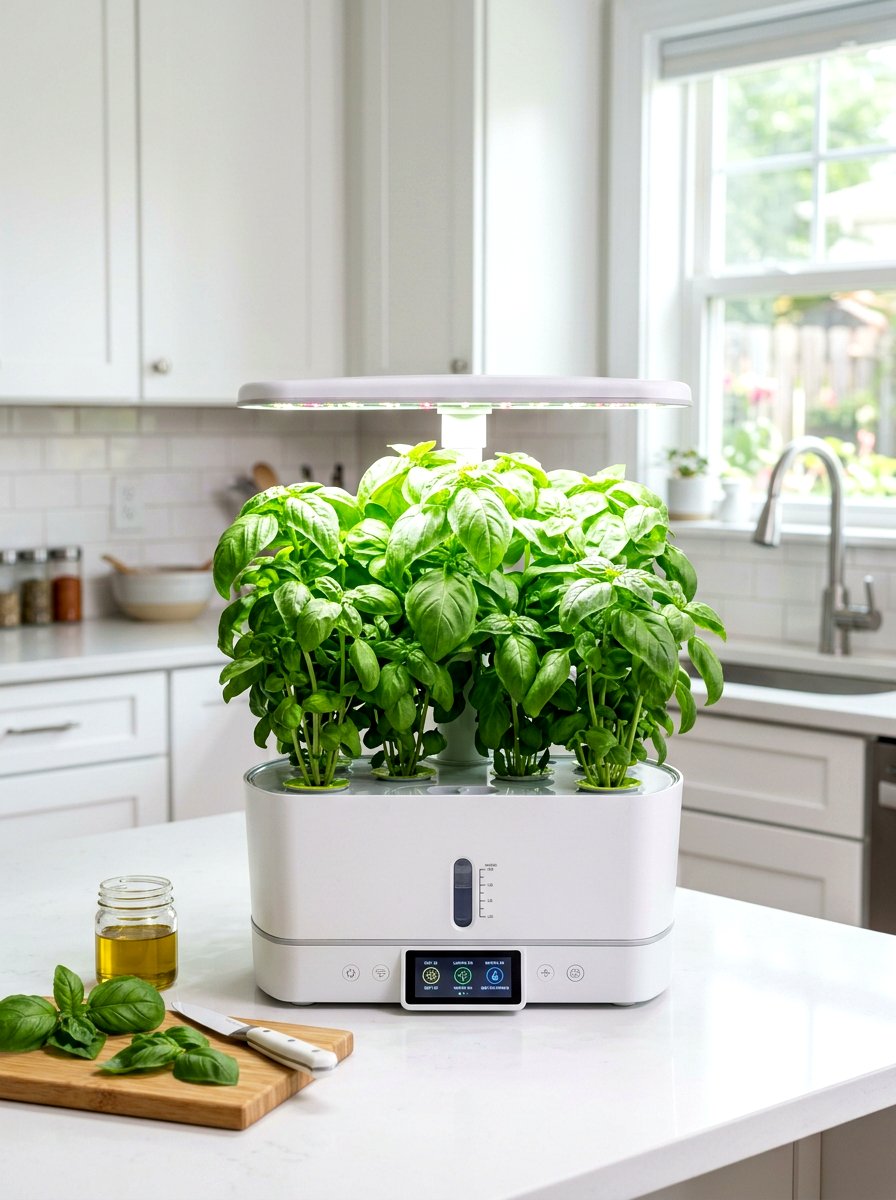
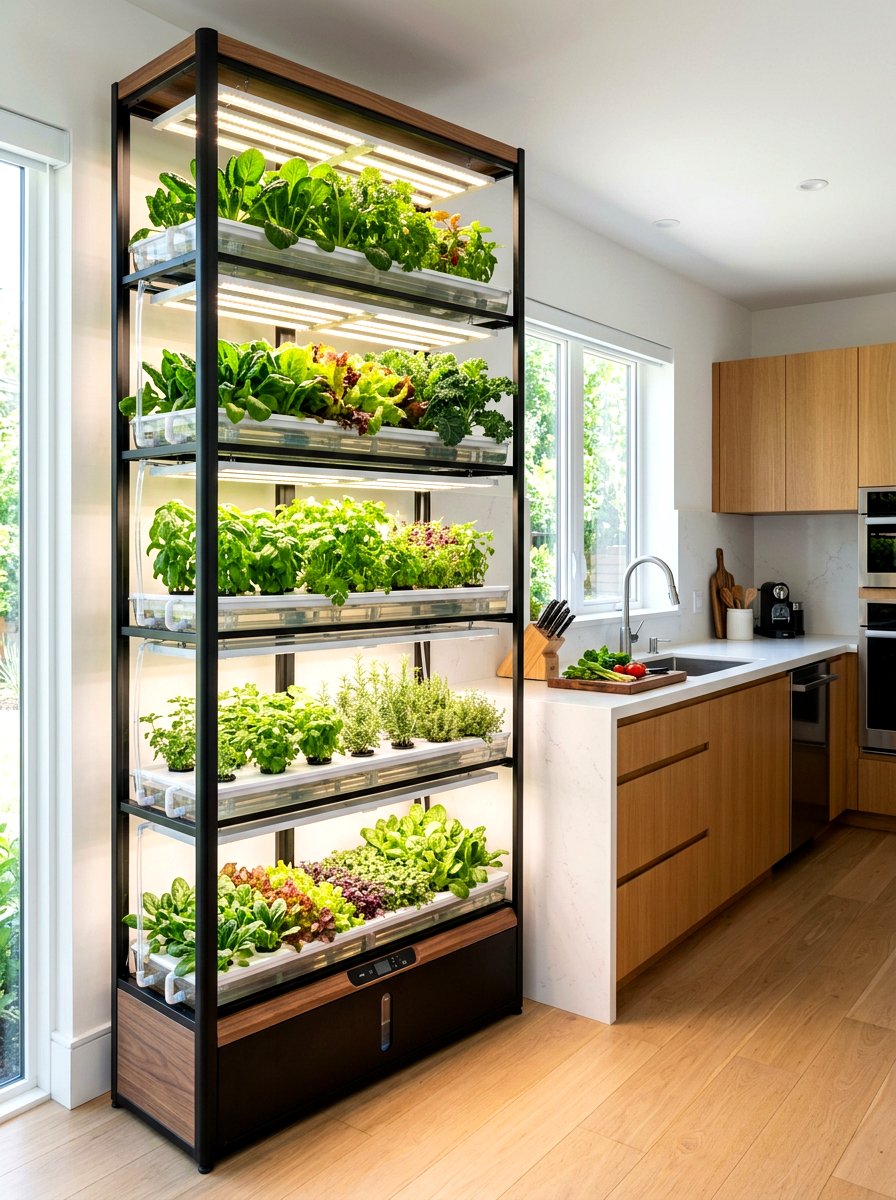
If you want to embrace modern technology, a vertical hydroponic system is a fascinating and efficient way to grow herbs. these systems use a nutrient-rich water solution instead of traditional soil, which often results in faster and cleaner growth. Many vertical hydroponic kits come with built-in LED grow lights, making them perfect for dark corners or apartments with limited natural sunlight. The sleek, futuristic design of these units makes them a high-tech focal point in any modern home. You will enjoy watching your herbs grow in a controlled environment with very little mess. It is a foolproof way to ensure a constant supply of fresh greens throughout the entire year.
19. Stackable Planter Herb Garden
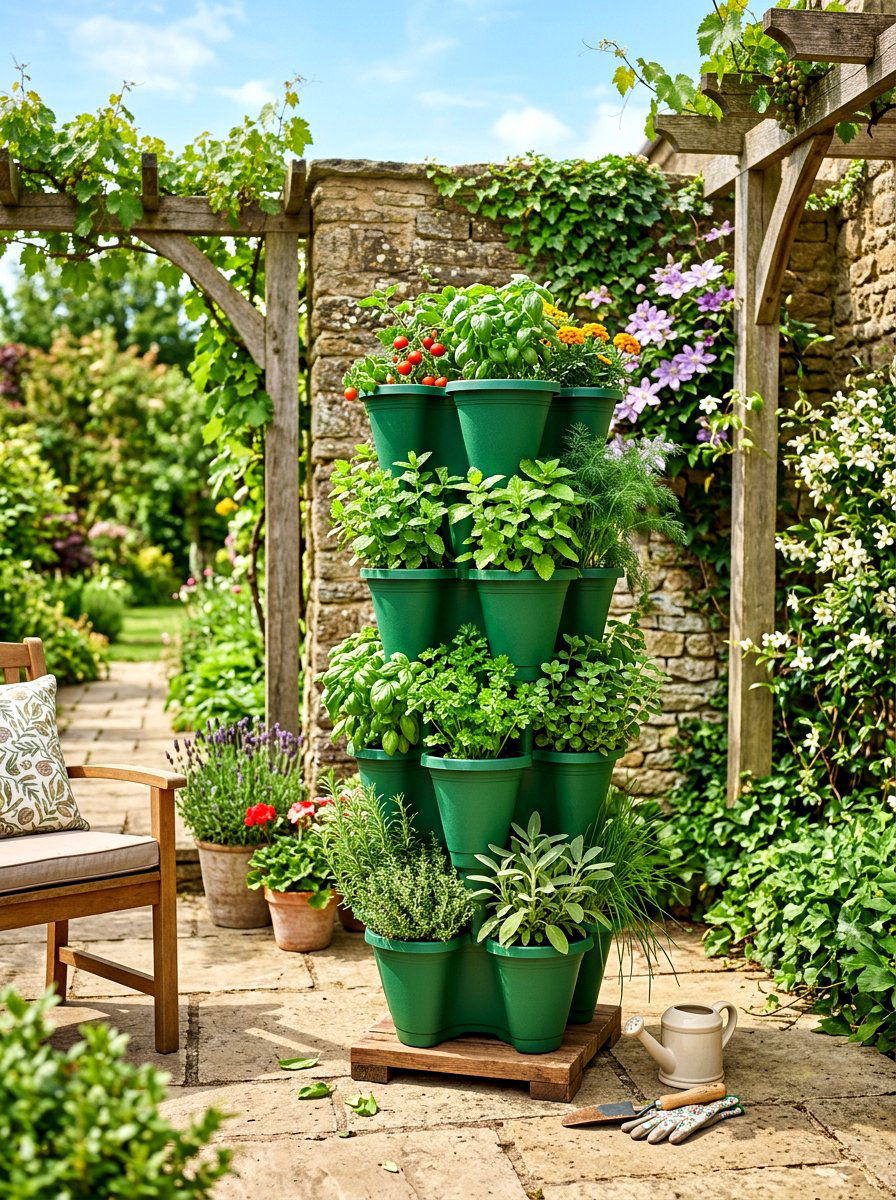
Stackable planters are a clever modular solution that allows you to build your herb garden as high as you want. These individual pots are designed to fit into one another, creating a stable column of planting space that looks like a clover leaf from above. You can easily add more layers if your herb collection grows or remove them for easy cleaning. This design is perfect for corners where space is tight but vertical room is plentiful. The internal drainage system typically flows from the top pot down to the bottom, making watering very efficient. It is a versatile choice for both indoor and outdoor gardening that is very easy to manage.
20. Cedar Wall Herb Garden
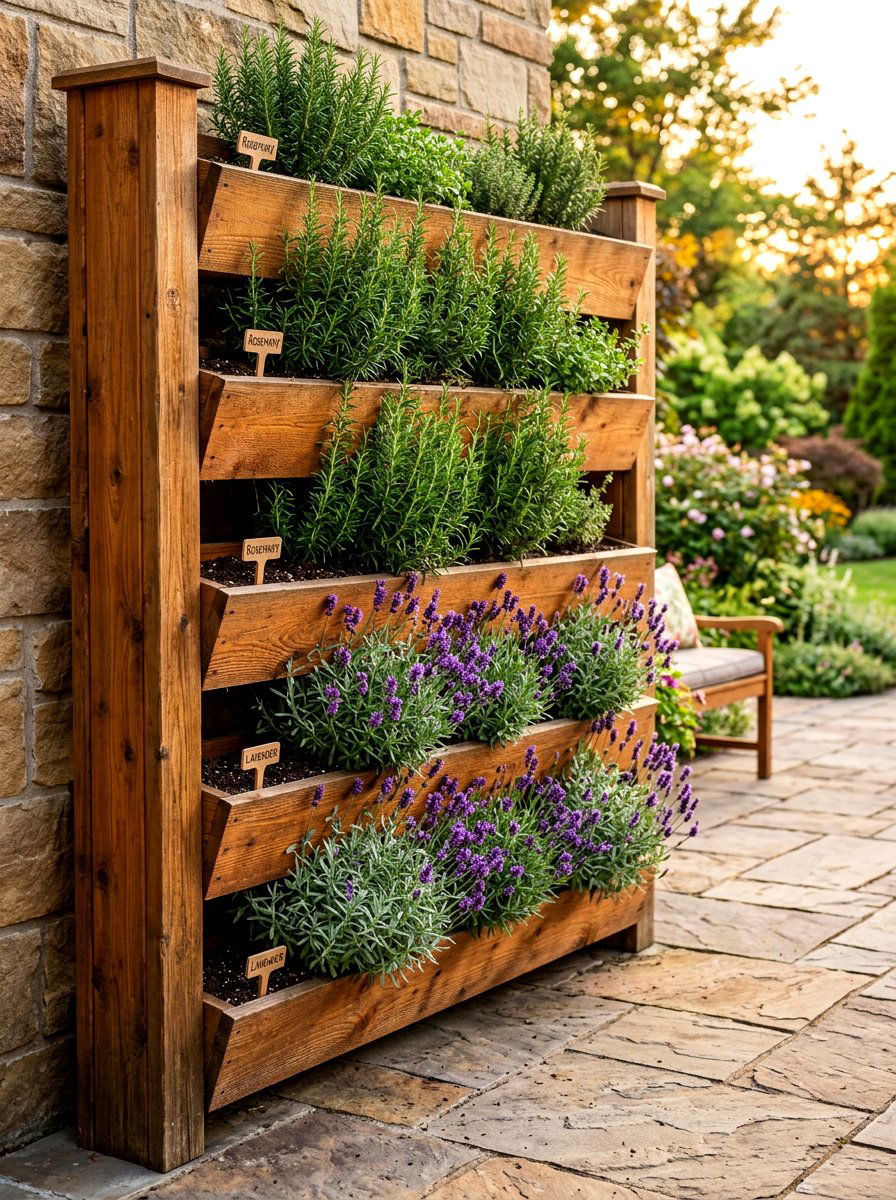
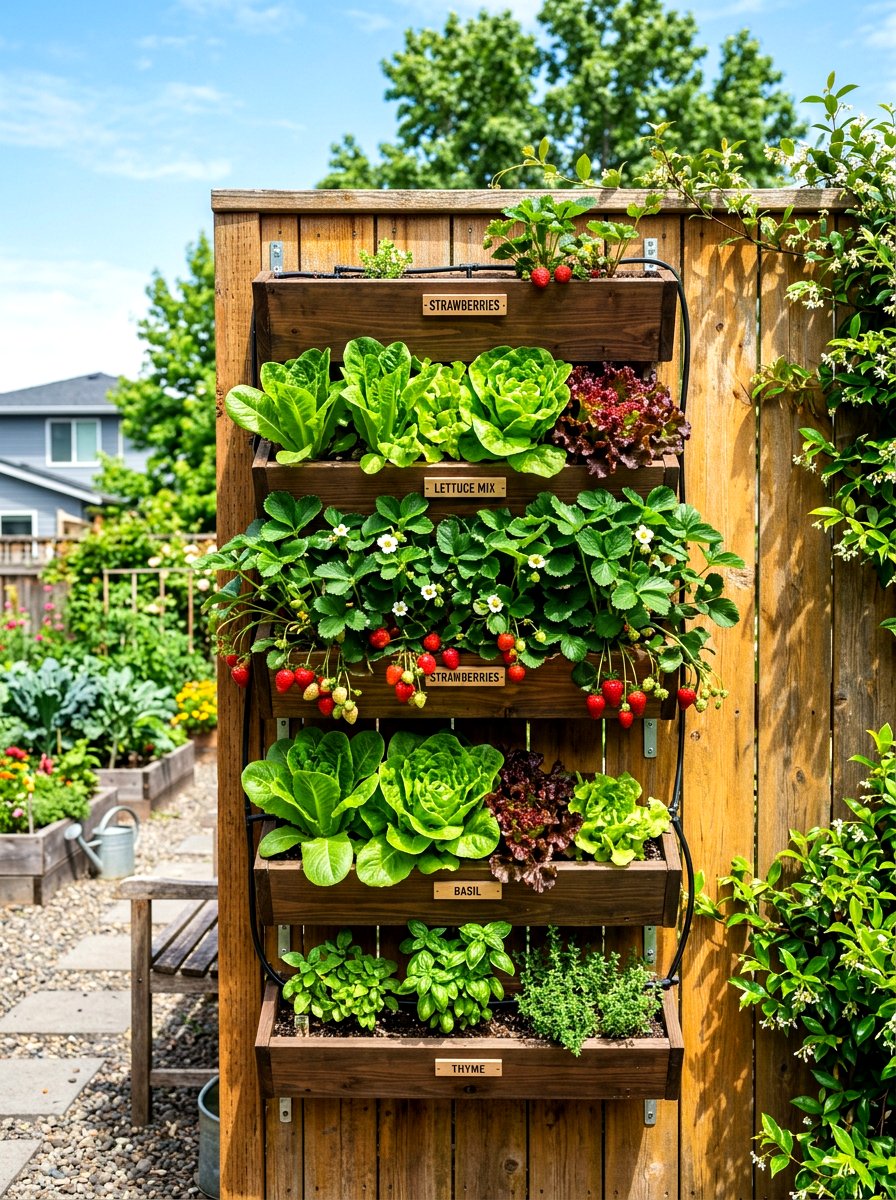
Cedar is a popular choice for vertical gardens because it is naturally resistant to rot and insects, making it perfect for holding damp soil. You can build a beautiful wall-mounted planter using cedar planks to create a series of deep troughs for your herbs. The warm, natural color of the wood looks stunning when paired with the deep greens of rosemary and lavender. Over time, cedar weathers to a beautiful silver-gray if left untreated, or you can stain it to maintain its original glow. A cedar wall garden is a long-lasting investment that adds a touch of organic luxury to your patio or deck. It is both functional and very high-quality.
21. Geometric Wall Herb Garden
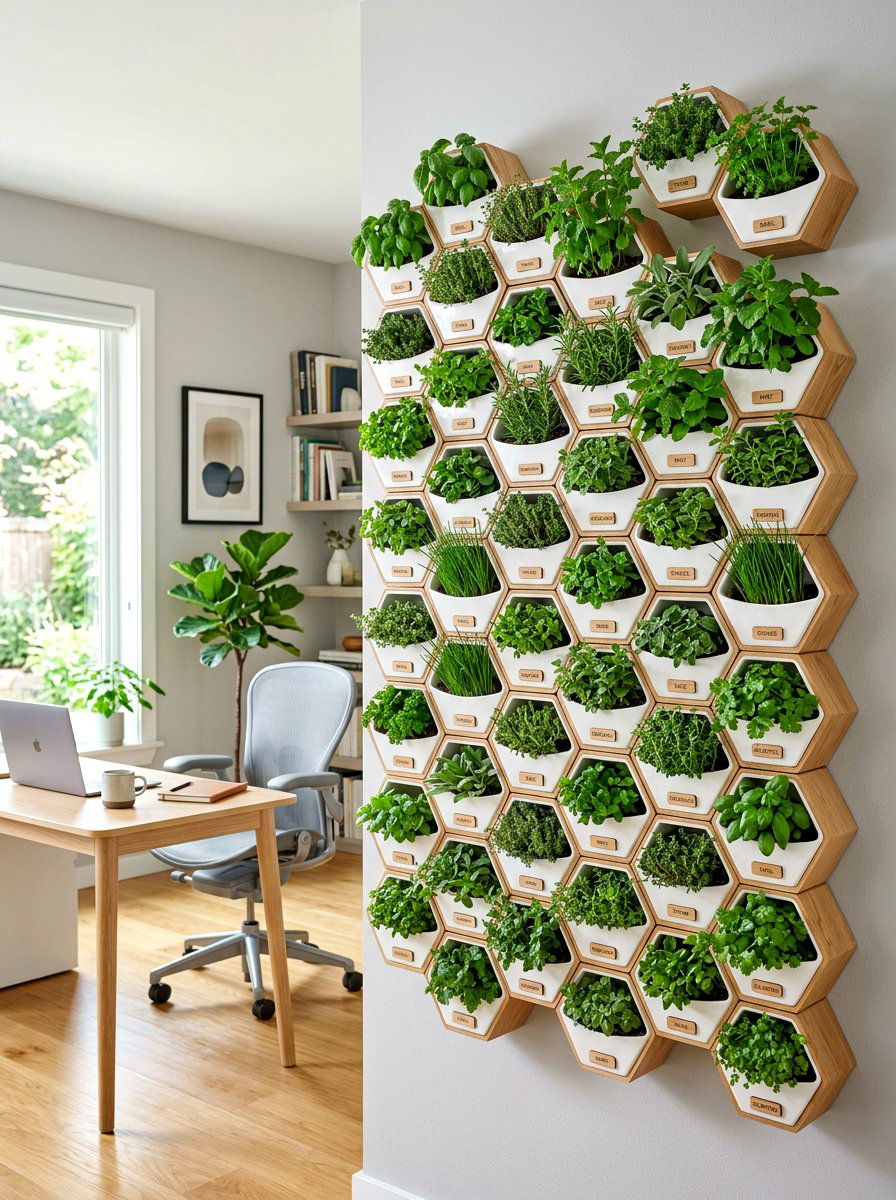
For a truly unique look, you can arrange small hexagonal or triangular planters in a geometric pattern on your wall. This design turns your herb garden into a piece of contemporary wall art that is both beautiful and edible. You can choose planters made from different materials like wood, plastic, or metal to create a textured and interesting layout. This approach works best with smaller herbs like thyme or mint that do not need a massive amount of root space. The modular nature of geometric planters allows you to start small and add more shapes as you expand your collection. It is a creative way to express your personal style.
22. Hanging Macrame Herb Garden
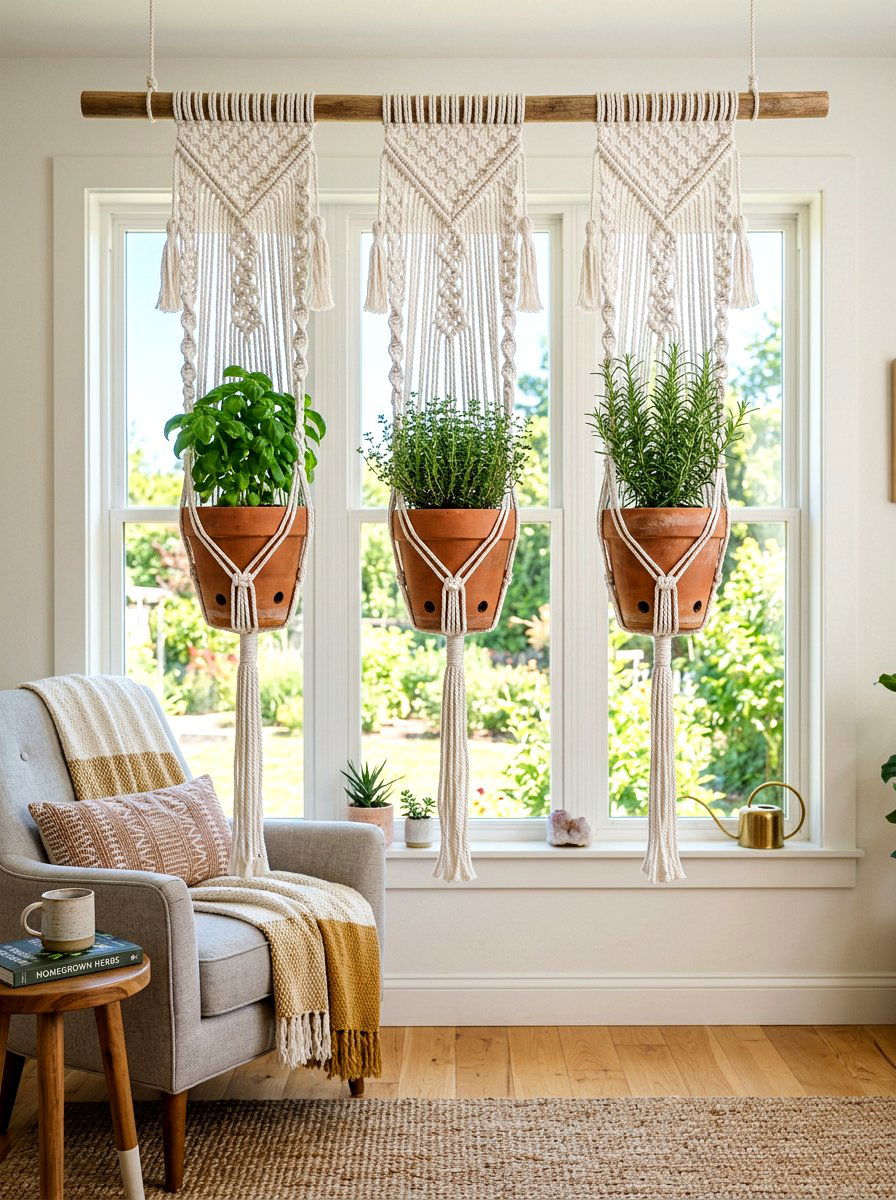
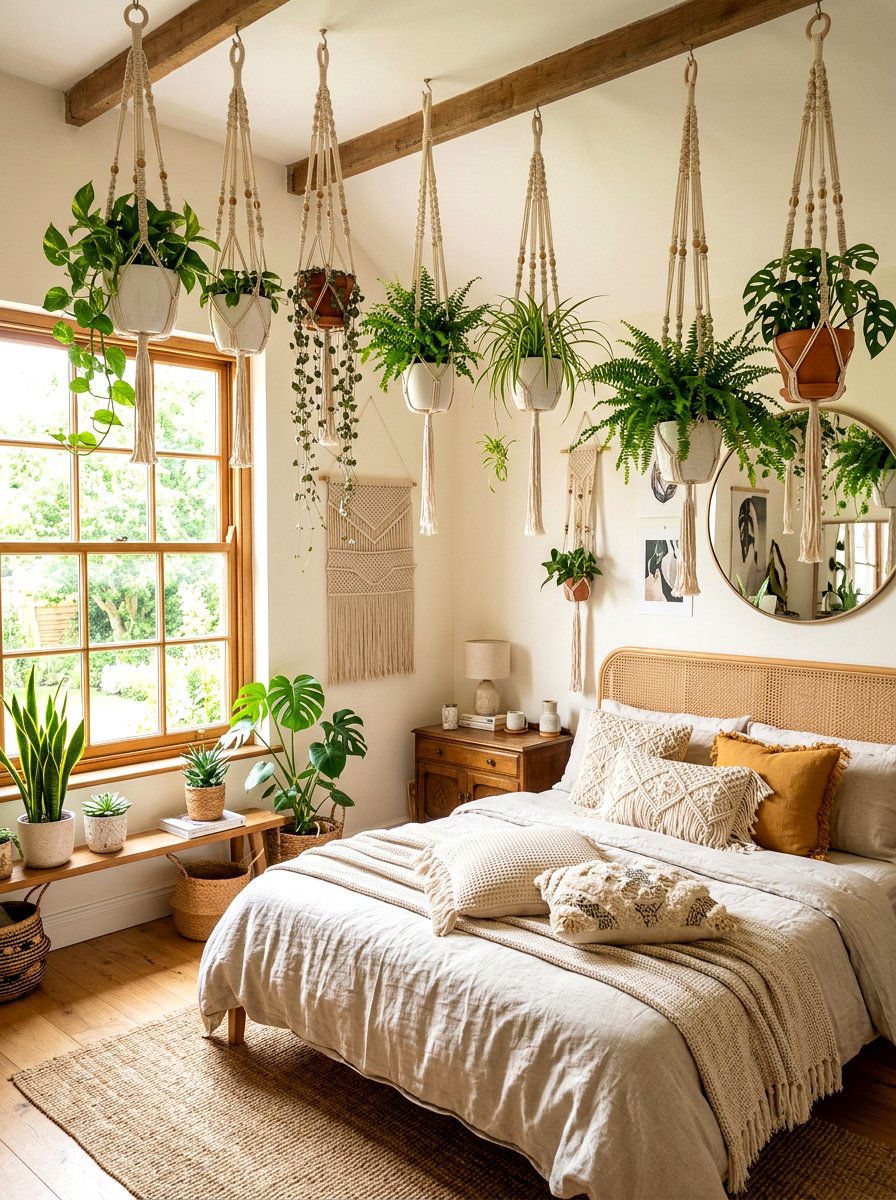
If you love the bohemian aesthetic, hanging your herbs in macrame plant holders is a soft and stylish choice for your home. You can hang these handmade rope holders from a ceiling hook or a sturdy curtain rod in front of a sunny window. Each macrame piece can hold a different herb pot, creating a layered and textured look that adds warmth to any room. The dangling ropes and swaying plants create a relaxing and natural vibe that is perfect for a bedroom or sunroom. Using white or cream-colored cords highlights the vibrant green of the herbs, making them stand out against your wall. It is a beautiful way to garden.
23. Wooden Slat Herb Garden
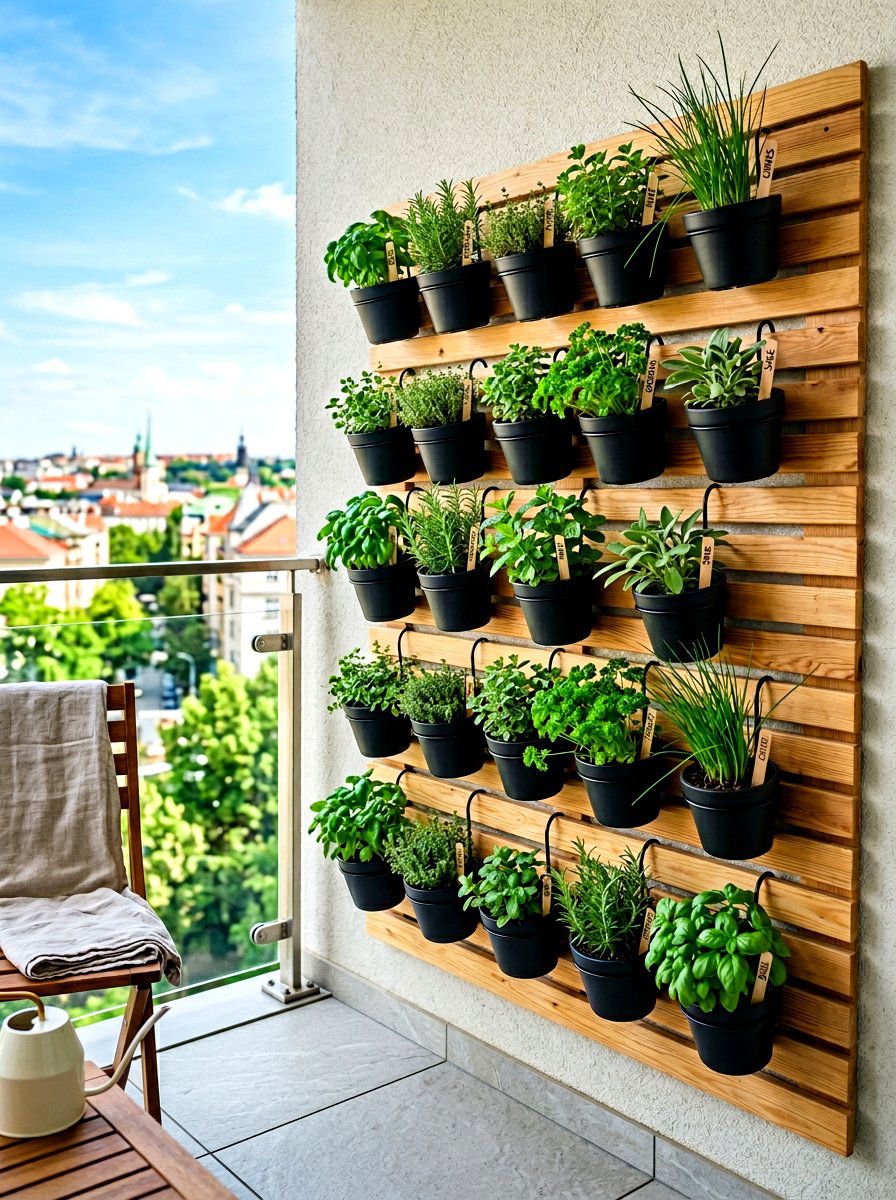
A wooden slat wall provides a versatile background where you can hang various pots and containers at any height you desire. By installing horizontal slats of wood across a wall, you create a customizable grid that can evolve as your garden grows. You can use metal hooks to attach pots of all sizes, making it easy to rearrange your herbs based on their sunlight needs. This design is inspired by modern architectural trends and looks great on a balcony or a contemporary kitchen wall. The gaps between the slats allow for excellent air circulation, which helps keep your herbs healthy and free from mold. It is highly practical and trendy.
24. Metal Grid Herb Garden
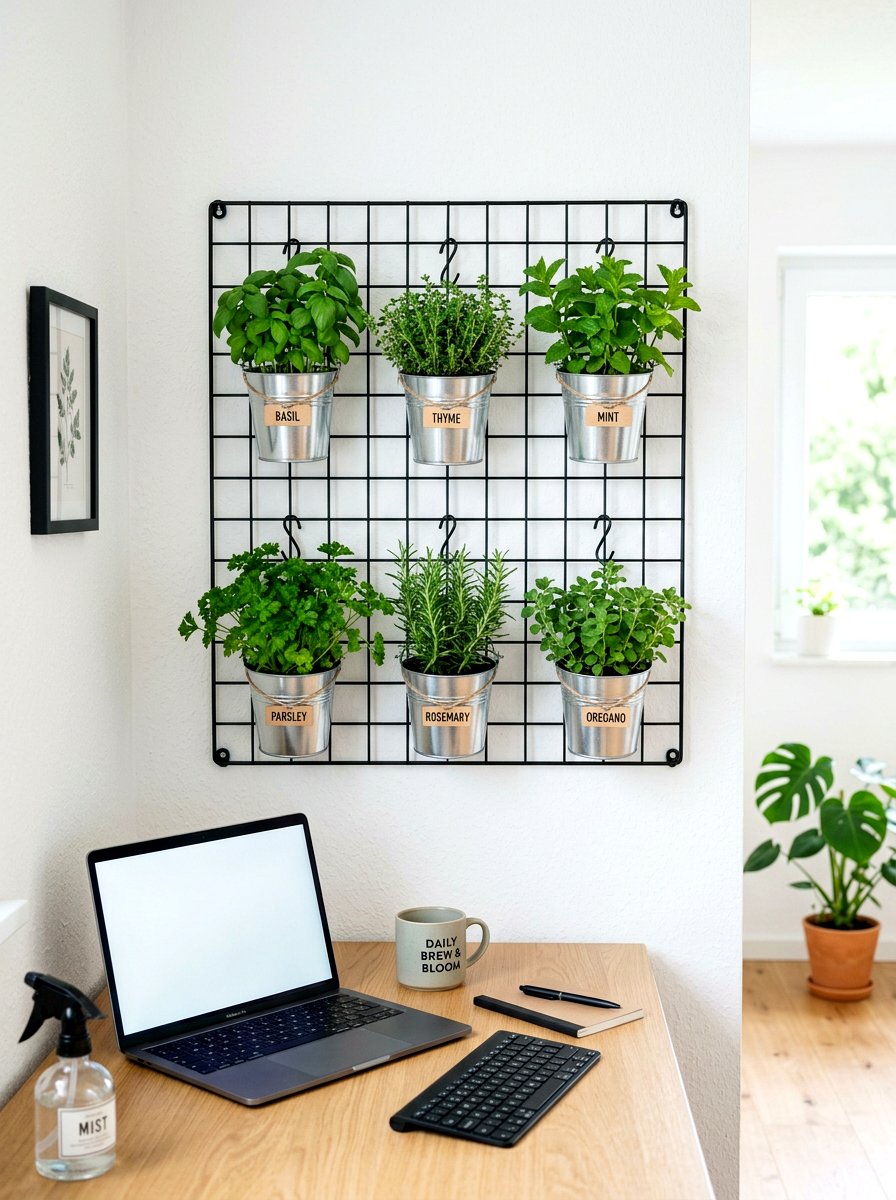
Using a simple metal wire grid is a minimalist and affordable way to create a vertical herb garden in any space. You can mount a black or gold metal grid to your wall and use S-hooks to hang small herb pots from the wires. This setup is incredibly lightweight and easy to install, making it a favorite for renters who want to avoid permanent wall damage. The thin wires of the grid are barely visible behind the foliage, giving the illusion that your herbs are floating against the wall. It is a very clean and organized way to display a large number of plants in a very small area.

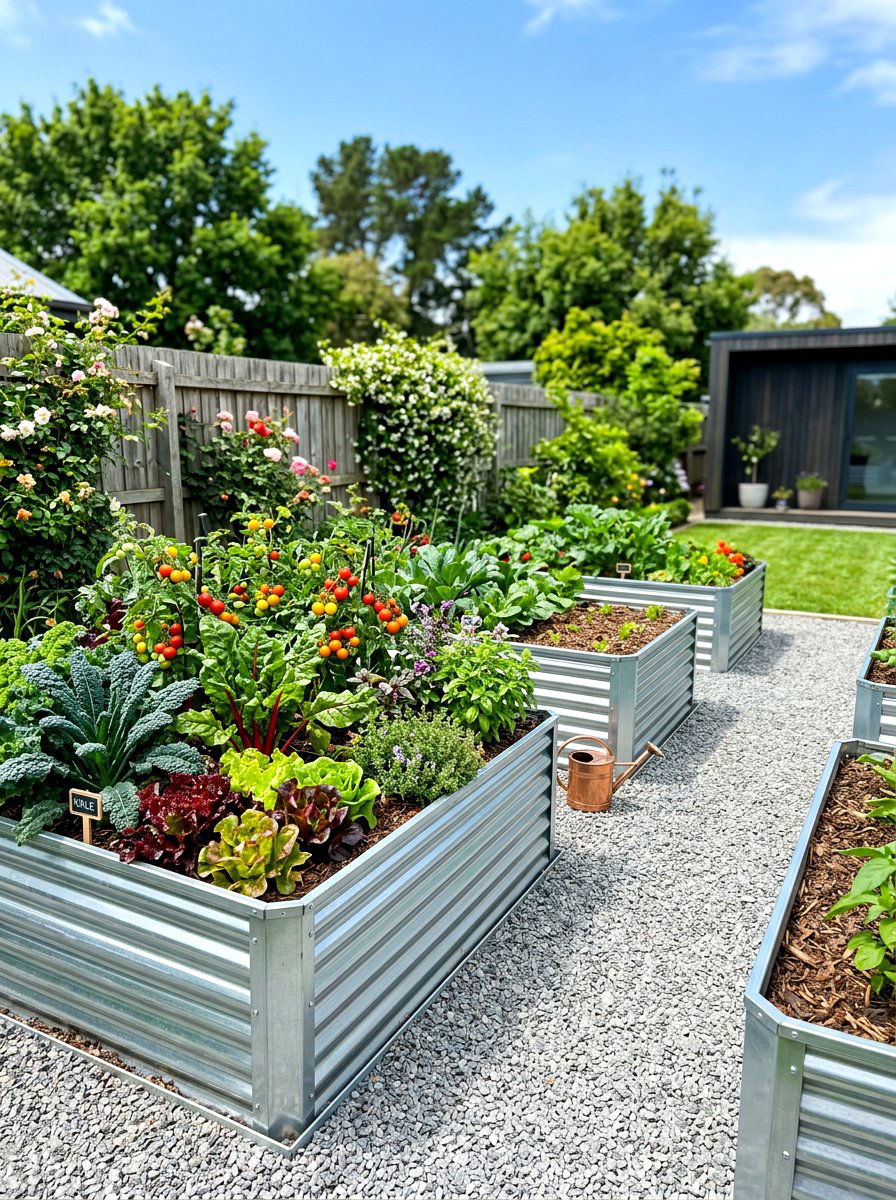
25. Gutter Herb Garden
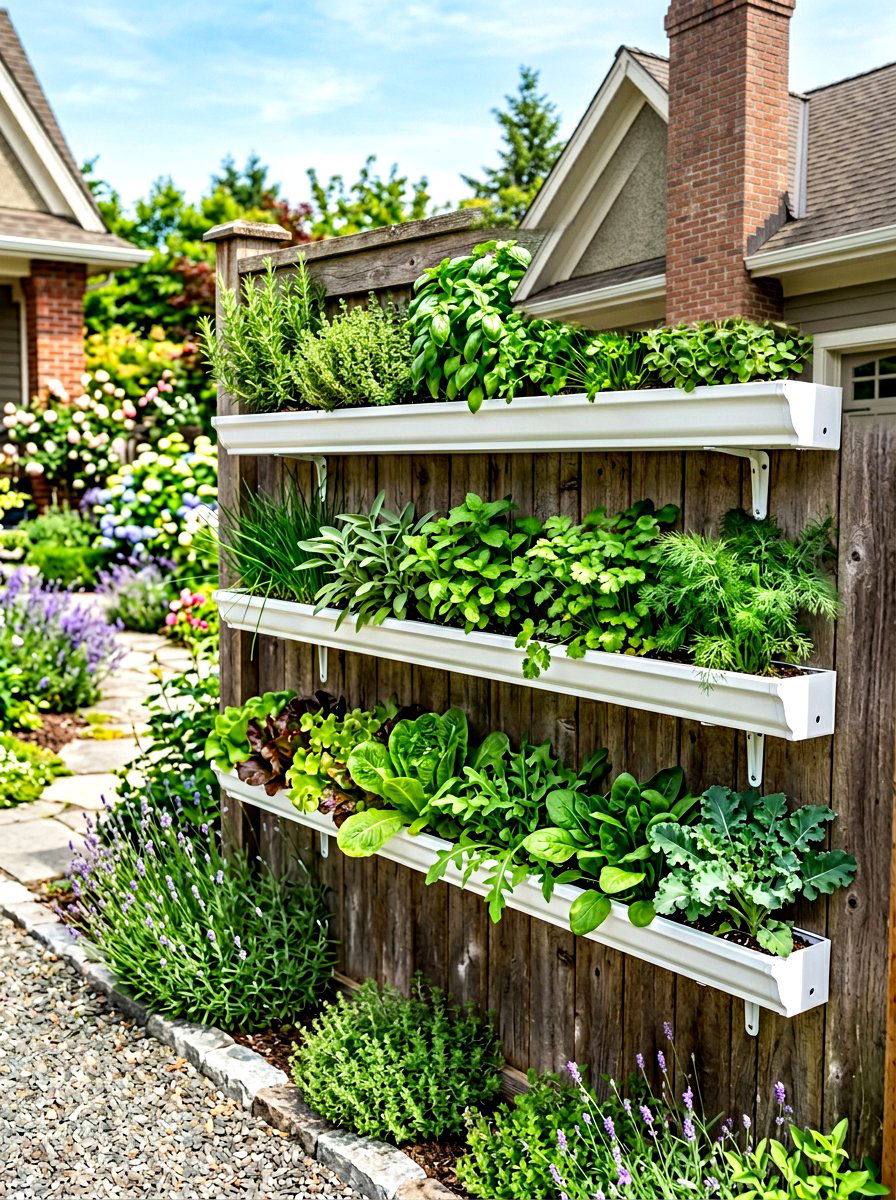
Recycling sections of rain gutters is a brilliant and low-cost way to create long, horizontal planting rows on a vertical surface. You can mount several rows of gutters one above the other on a sunny fence or wall to create a massive amount of growing space. Gutter gardens are particularly good for herbs with shallow root systems like cilantro, parsley, and various types of lettuce. Ensure you drill drainage holes in the bottom and cap the ends to keep the soil in place. This design is easy to water and provides a very clean, linear look that fits well in modern and suburban garden settings. It is very efficient.
26. Chalkboard Herb Garden
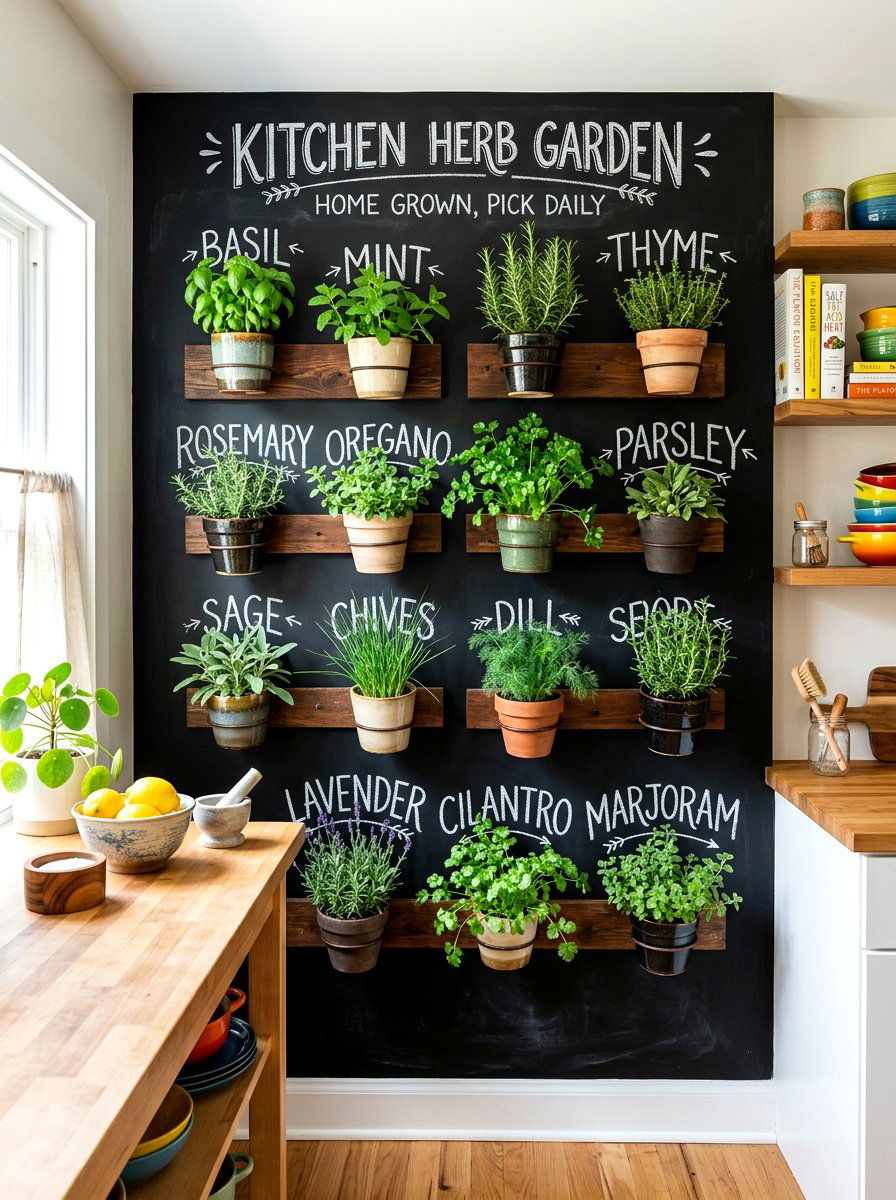
Combining a vertical garden with a chalkboard surface is a fun and functional idea for a busy family kitchen. You can mount small pots onto a large chalkboard panel and label each herb with chalk directly on the board. This makes it easy for everyone in the house to identify the plants and know what is ready for harvesting. The dark black background of the chalkboard makes the bright green leaves of the herbs pop with color. It is a great way to keep track of watering schedules or to write down quick recipes that use the herbs you are growing. This design is both interactive and visually appealing.
27. Terracotta Pot Herb Garden
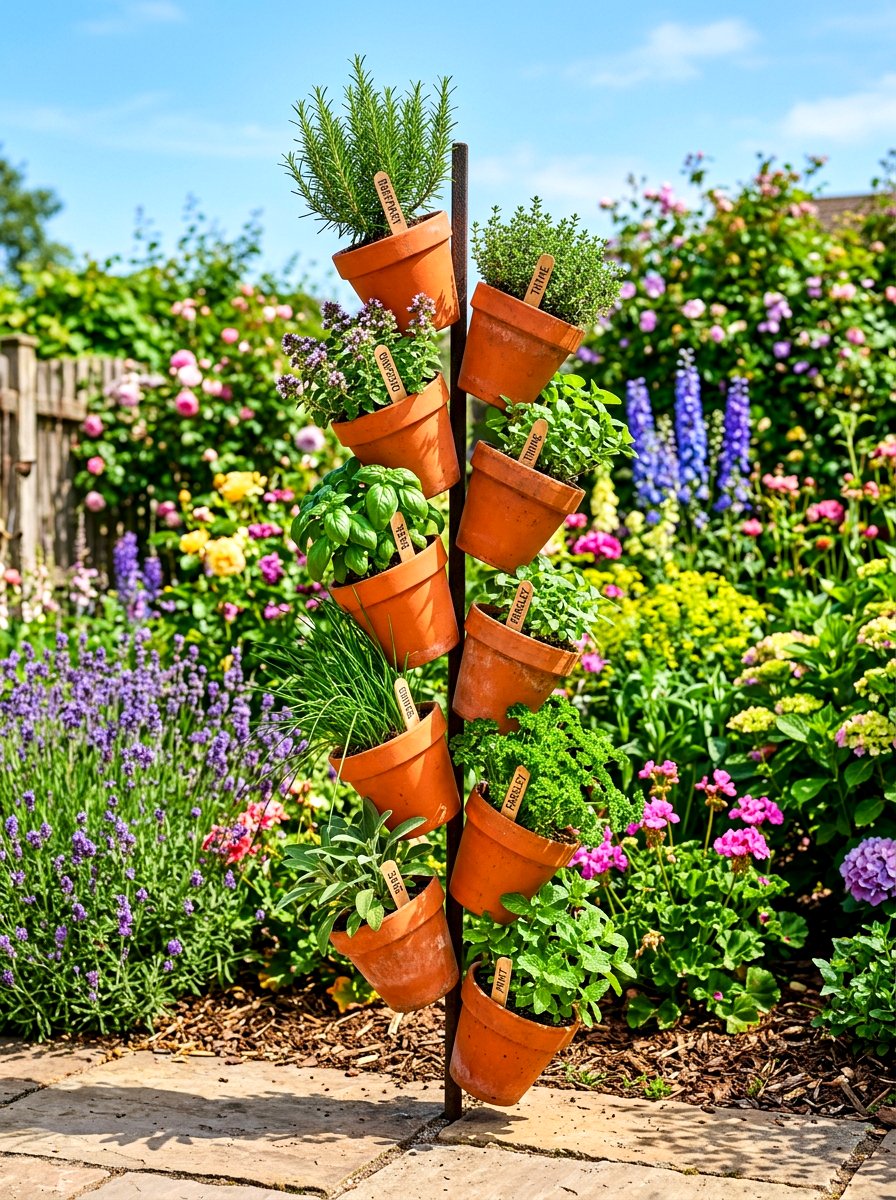
The classic look of terracotta pots never goes out of style, and they are excellent for a vertical garden because they are breathable. You can create a vertical stack by threading a metal rod through the center holes of several pots, angling them for a whimsical, leaning look. Alternatively, you can mount individual terracotta pots to a wooden board using specialized metal rings. The earthy orange tone of the clay complements almost any herb and adds a Mediterranean feel to your outdoor space. Terracotta is also very affordable and easy to replace if a pot ever breaks. It is a reliable and beautiful choice for any herb lover.
28. Bamboo Herb Garden
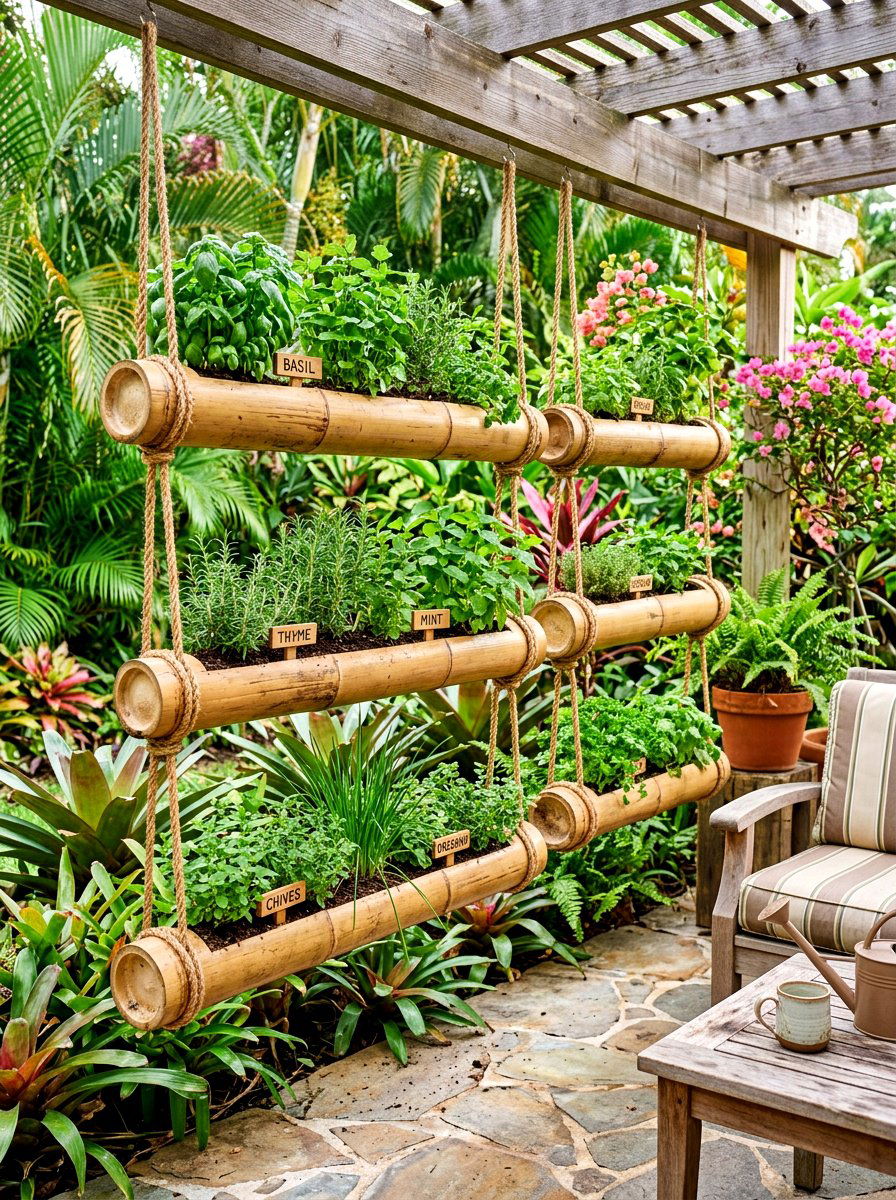
For a tropical or Zen-inspired garden, using large bamboo stalks as planters is an eco-friendly and stylish option. You can cut the bamboo into sections and hollow out the center to create a natural trough for your herbs. These bamboo planters can be hung horizontally or vertically using natural jute twine for a completely organic appearance. Bamboo is a very strong and sustainable material that holds up well against the elements. This type of vertical garden adds a unique texture and a sense of calm to your balcony or patio. It is a great conversation piece that shows your commitment to using natural and renewable materials.
29. Glass Bottle Herb Garden
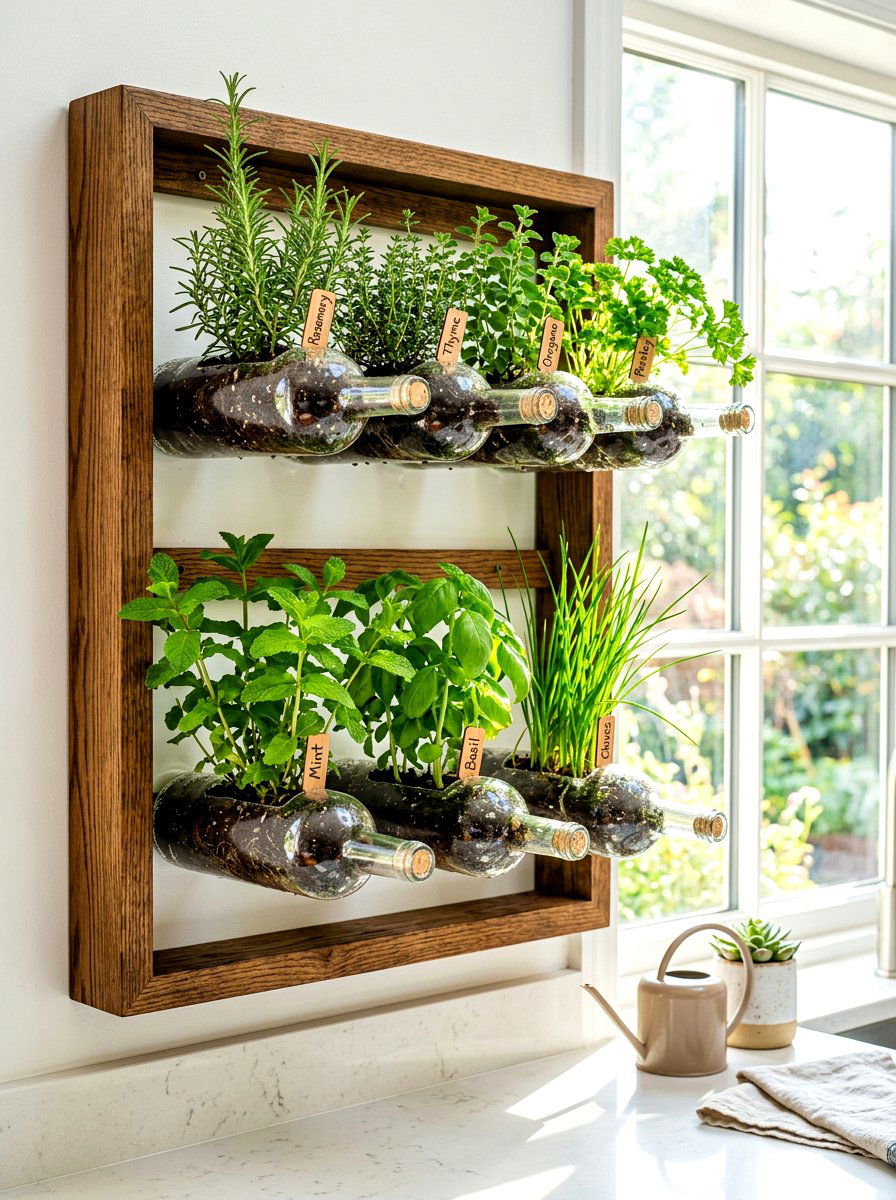
Upcycling old wine or soda bottles into a vertical herb garden is a creative way to reduce waste while decorating your home. You can cut the bottoms off the bottles and mount them upside down on a wooden frame to create a self-watering drip system. Alternatively, you can cut a hole in the side of the bottle and use it as a sleek, horizontal planter. The clear or tinted glass allows light to reach the roots and creates a beautiful shimmering effect when the sun hits the garden. This DIY project is perfect for someone who loves a unique, handcrafted look that stands out from standard store-bought planters.
30. Repurposed Shutter Herb Garden
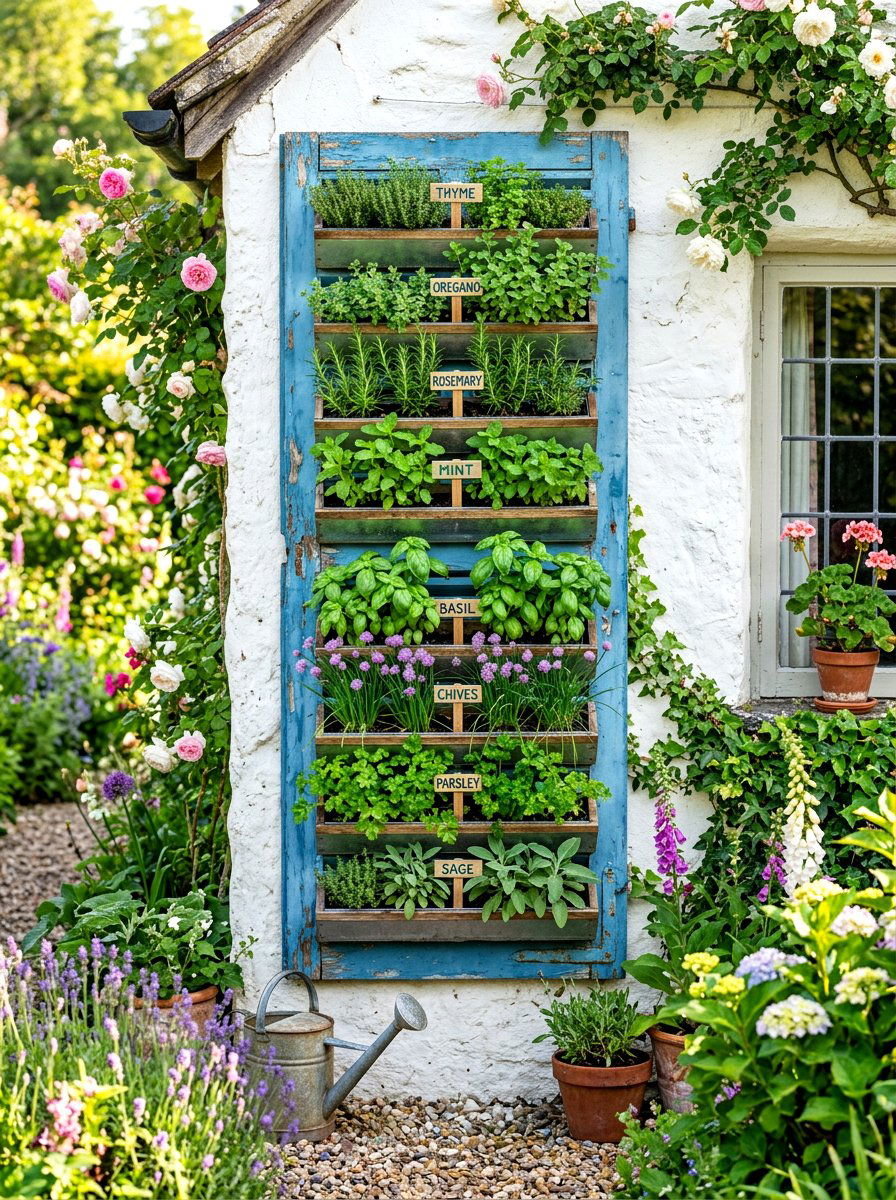
An old window shutter can be transformed into a charming and vintage-style vertical garden with very little effort. You can tuck small herb starts directly into the slats of the shutter or attach small pots to the surface for more soil space. This design is perfect for adding a touch of rustic charm to a porch or a side wall in your garden. The narrow profile of a shutter makes it ideal for tight spaces where you still want to enjoy a bit of greenery. You can paint the shutter in a distressed finish to enhance its antique look. It is a creative way to give new life to old architectural pieces.
Conclusion:
Building a vertical herb garden is an incredible way to bring freshness and beauty into your daily life without needing a massive yard. We have explored thirty diverse ideas that prove anyone can grow their own food, regardless of the size of their living space. From rustic wooden pallets to high-tech hydroponic systems, there is a design here to fit every style and budget. By utilizing your walls and vertical structures, you create a healthier environment and a more vibrant home. These gardens provide sustainable ingredients for your cooking while acting as stunning living decor. Start your vertical gardening journey today and enjoy the endless rewards of growing fresh, aromatic herbs.

Related posts: