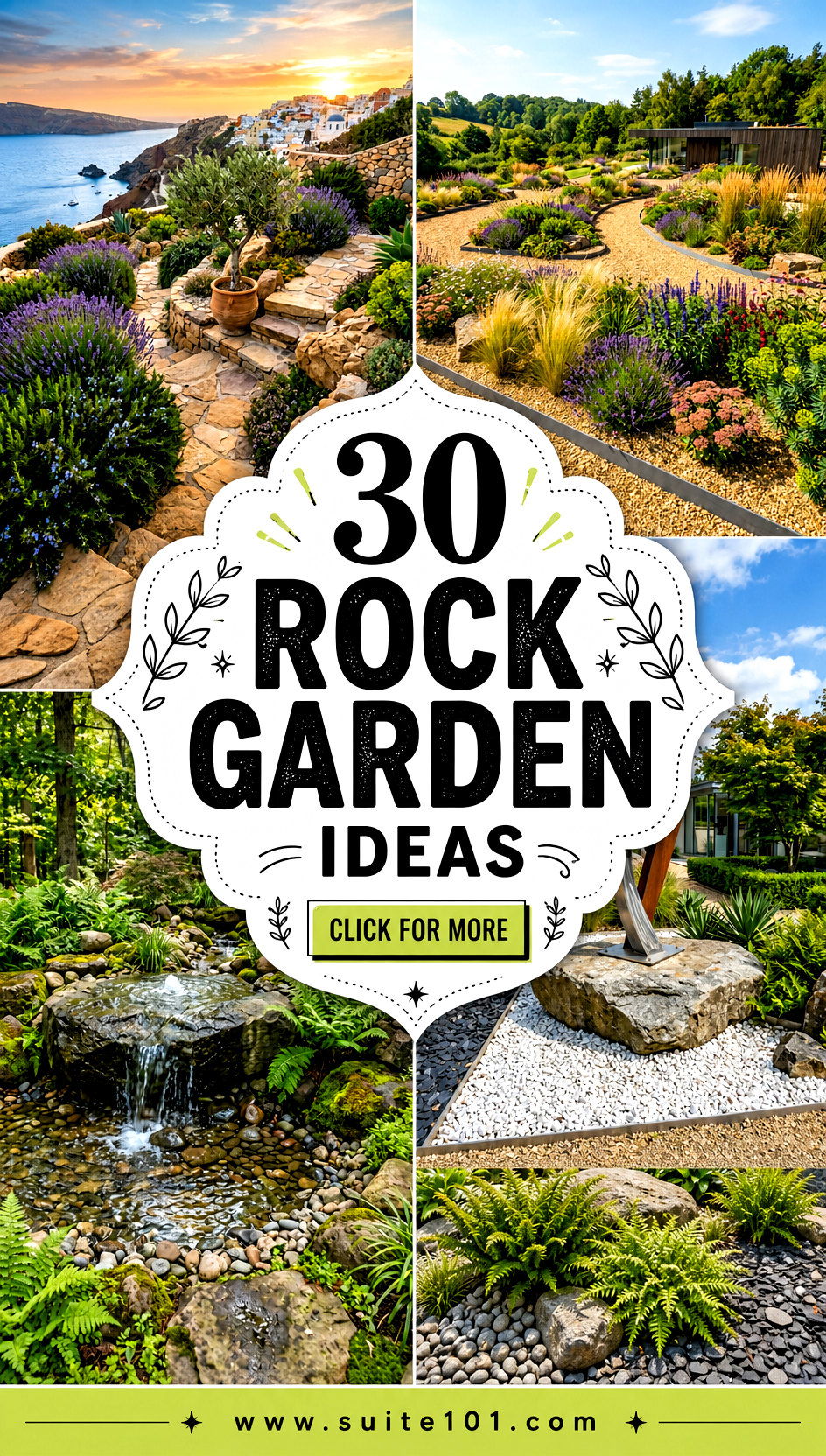
thoughtful Creating a stunning rock garden is an artistic way to elevate your home’s curb appeal while embracing sustainable and eco-friendly landscaping practices. As more homeowners move away from high-maintenance lawns, the versatility of stones, boulders, and gravel has taken center stage in modern exterior design. A rockery provides a rugged yet refined structure that stays beautiful throughout every season, regardless of the weather conditions or local climate. Whether you are interested in a minimalist Zen sanctuary or a vibrant desert oasis, these designs allow you to play with scale, texture, and height in ways traditional gardening cannot. By following these professional concepts, you can turn any dull or difficult patch of land into a visually striking and low-maintenance retreat that feels both timeless and contemporary.
1. Japanese Zen Rock Garden
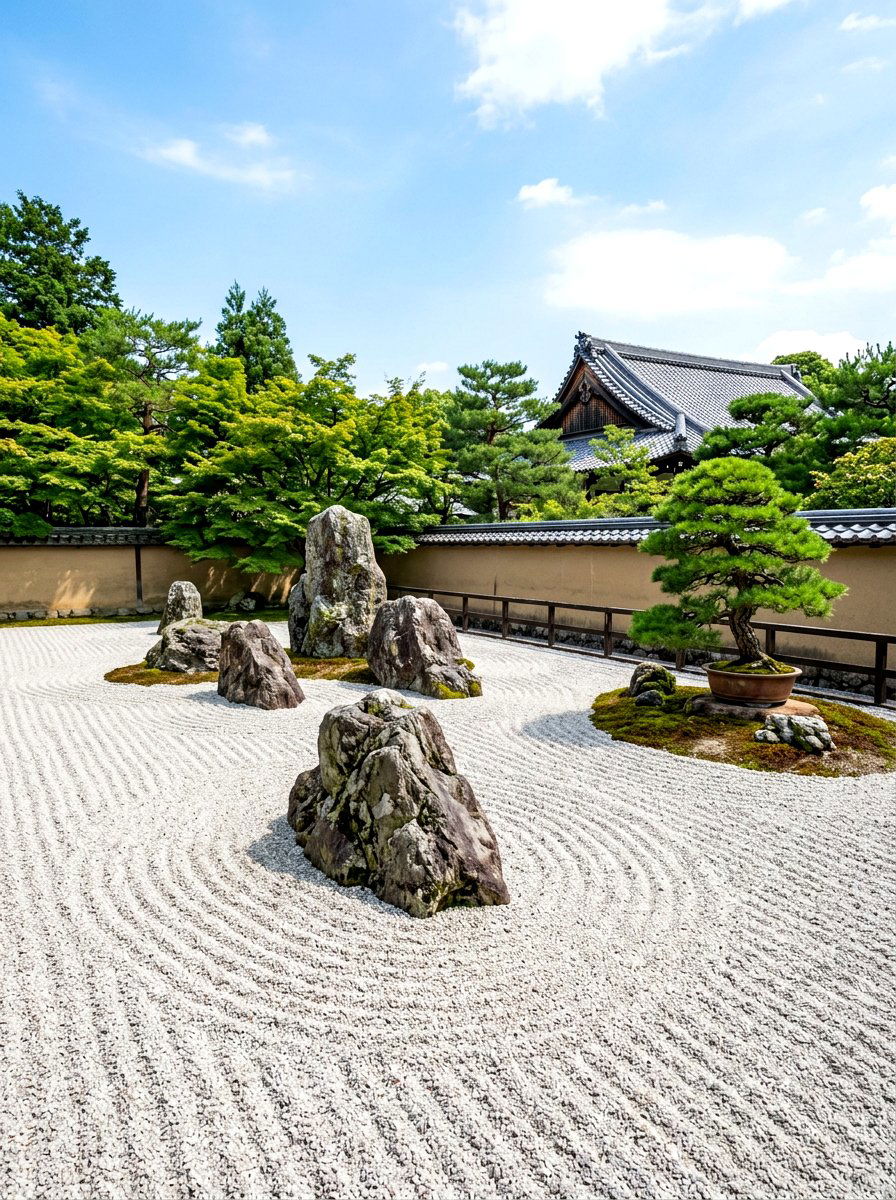
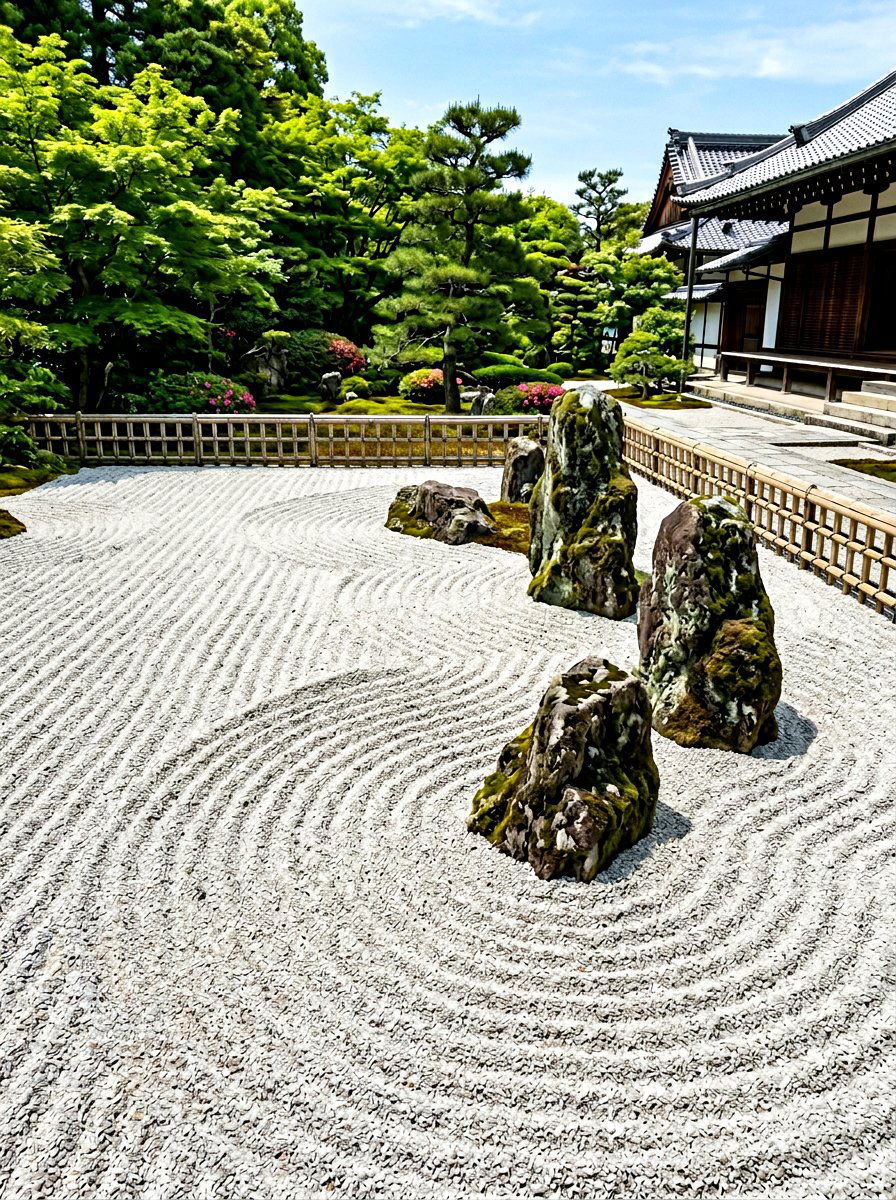
A Japanese Zen rock garden, traditionally known as karesansui, focuses on the profound beauty of simplicity and the symbolic representation of nature. This design typically features a large expanse of fine white or light gray gravel that is meticulously raked into flowing wave patterns to symbolize the ocean. Strategically placed large, weathered boulders represent islands or mountains, creating a sense of permanence and stillness. To maintain the minimalist aesthetic, greenery is used sparingly, often limited to a few tufts of moss or a single, perfectly pruned evergreen shrub. This layout encourages meditation and quiet reflection, making it a perfect sanctuary for those seeking a peaceful outdoor escape that requires very little water or pruning.
2. Modern Minimalist Rock Garden
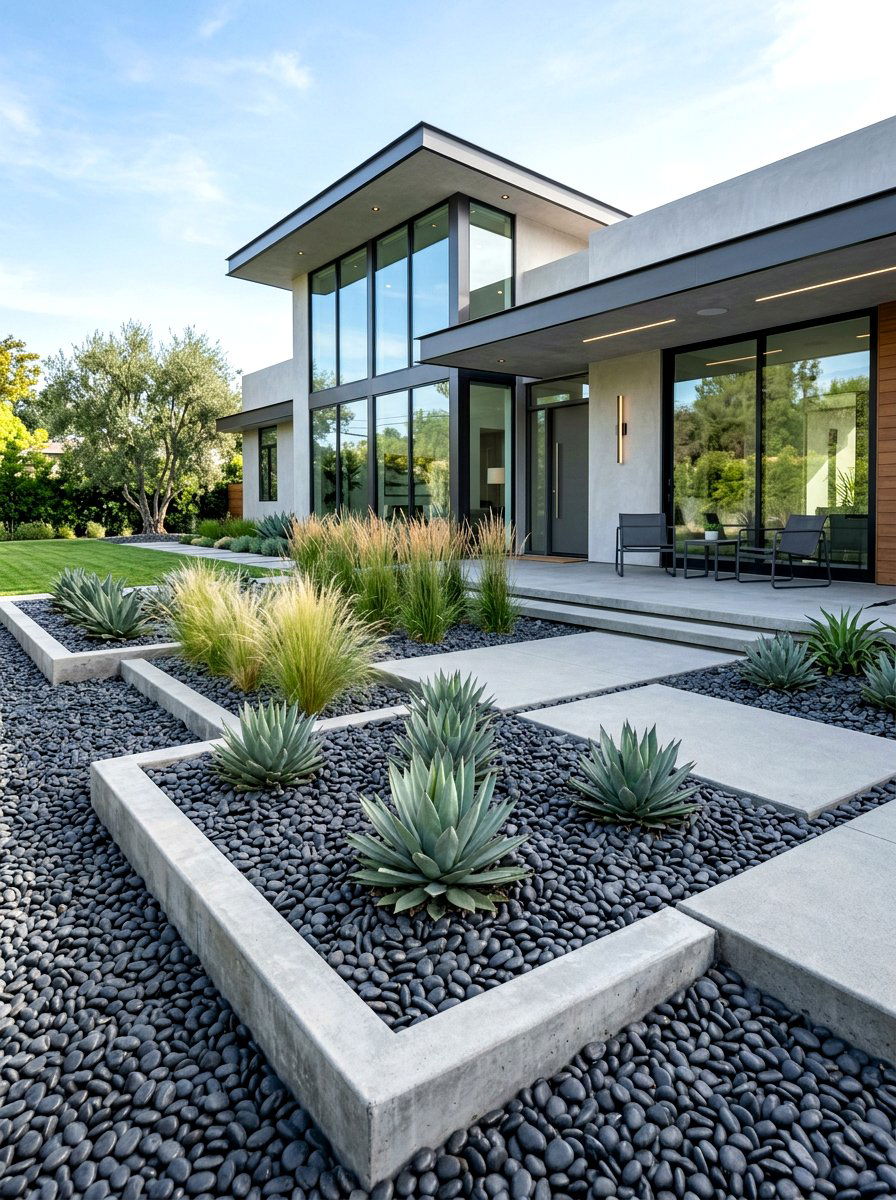
The modern minimalist rock garden is defined by clean lines, geometric precision, and a restricted color palette that complements contemporary architecture. This design often uses uniform stone sizes, such as polished black pebbles or smooth gray river stones, arranged in structured beds separated by metal or concrete edging. Plants are chosen for their architectural form rather than their blooms; think of structural agaves, upright ornamental grasses, or neatly clipped boxwood spheres. The use of negative space is crucial here, allowing each element to stand out as a piece of living art. This style works exceptionally well in urban front yards or small courtyard spaces where a cluttered, traditional garden might feel overwhelming or messy.
3. Desert Landscape Rock Garden
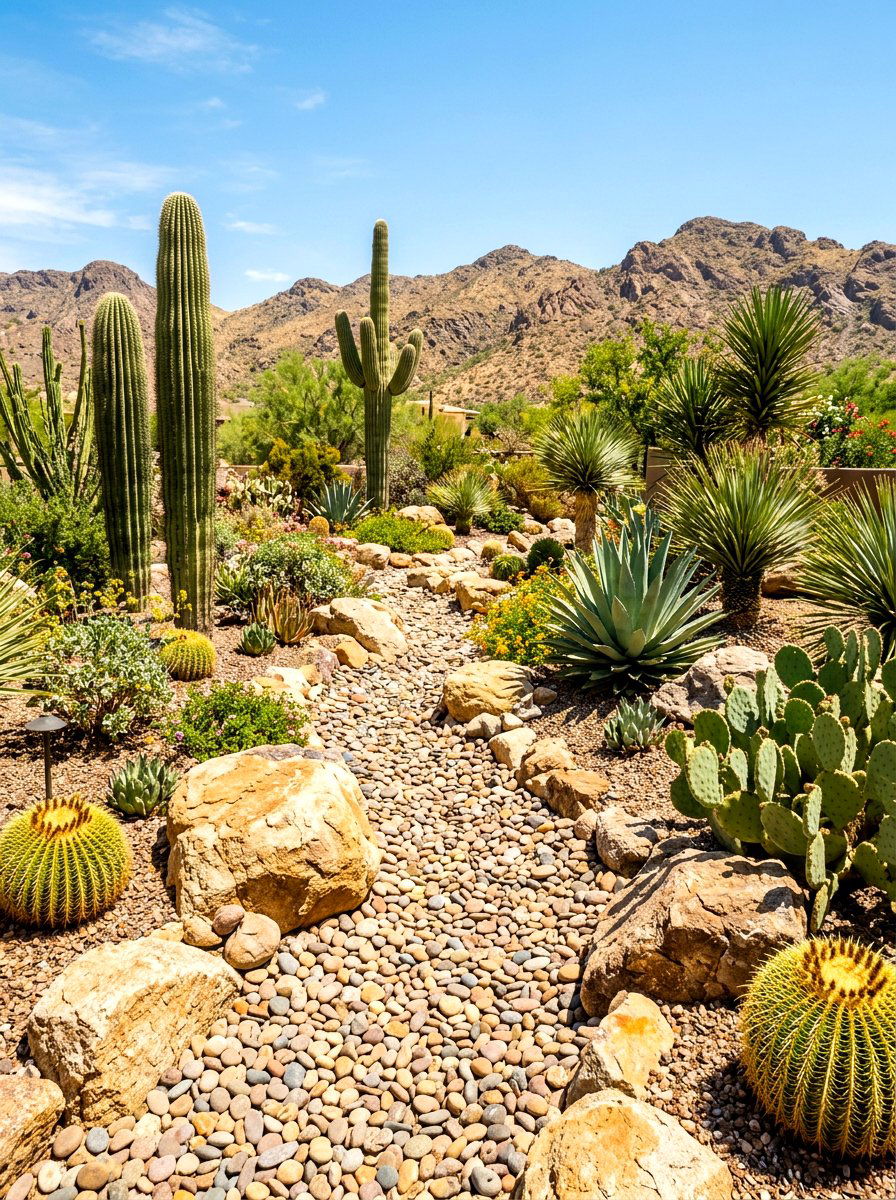
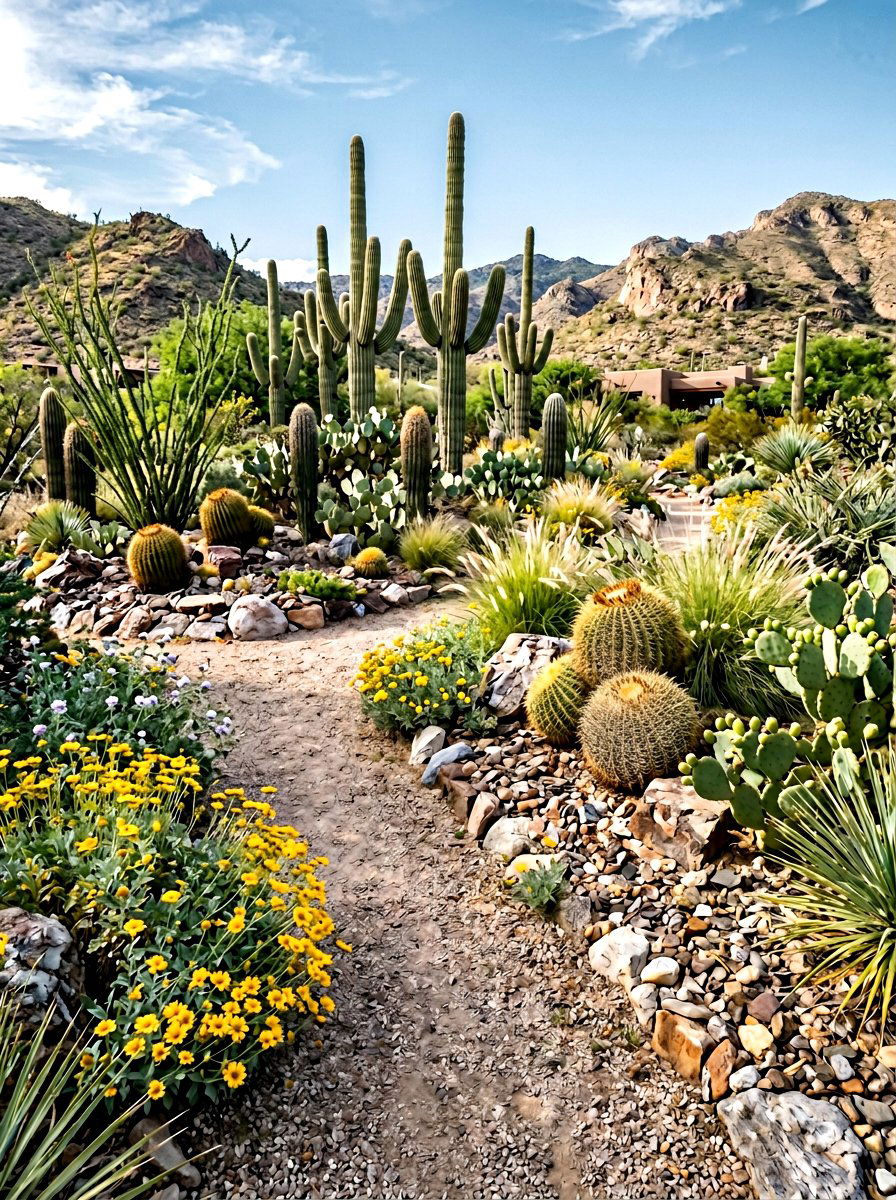
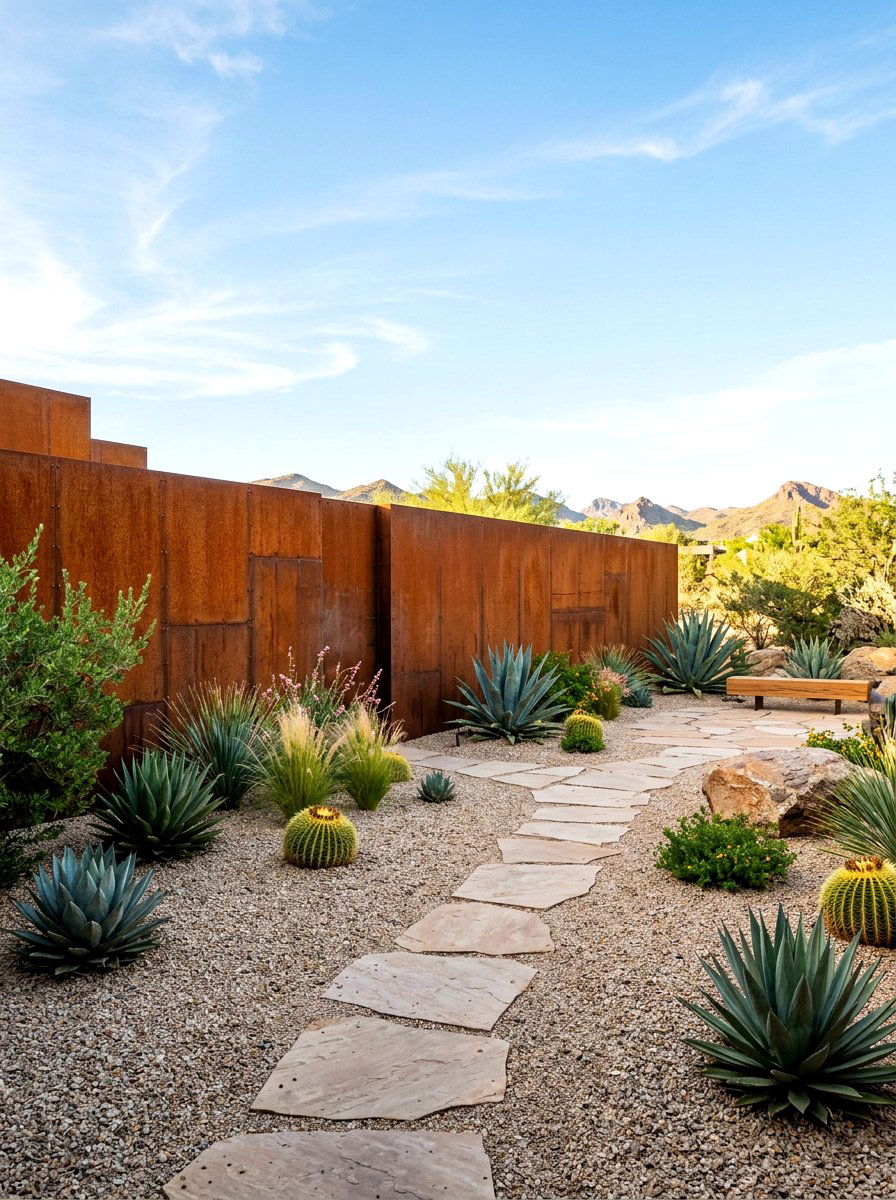
Embracing the rugged beauty of arid environments, the desert landscape rock garden is the ultimate solution for water conservation and heat resistance. This design utilizes a warm palette of tan, ochre, and rust-colored stones and boulders to mimic the natural desert floor. The plant selection is centered around drought-tolerant species like sculptural saguaro cacti, colorful prickly pears, and various aloe varieties that thrive in intense sun. Integrating a dry creek bed made of smaller pebbles can add a sense of movement to the static landscape. This theme not only reduces your ecological footprint but also creates a dramatic, high-contrast look that stands out against the lush, green lawns of neighboring properties.
4. Alpine Rock Garden
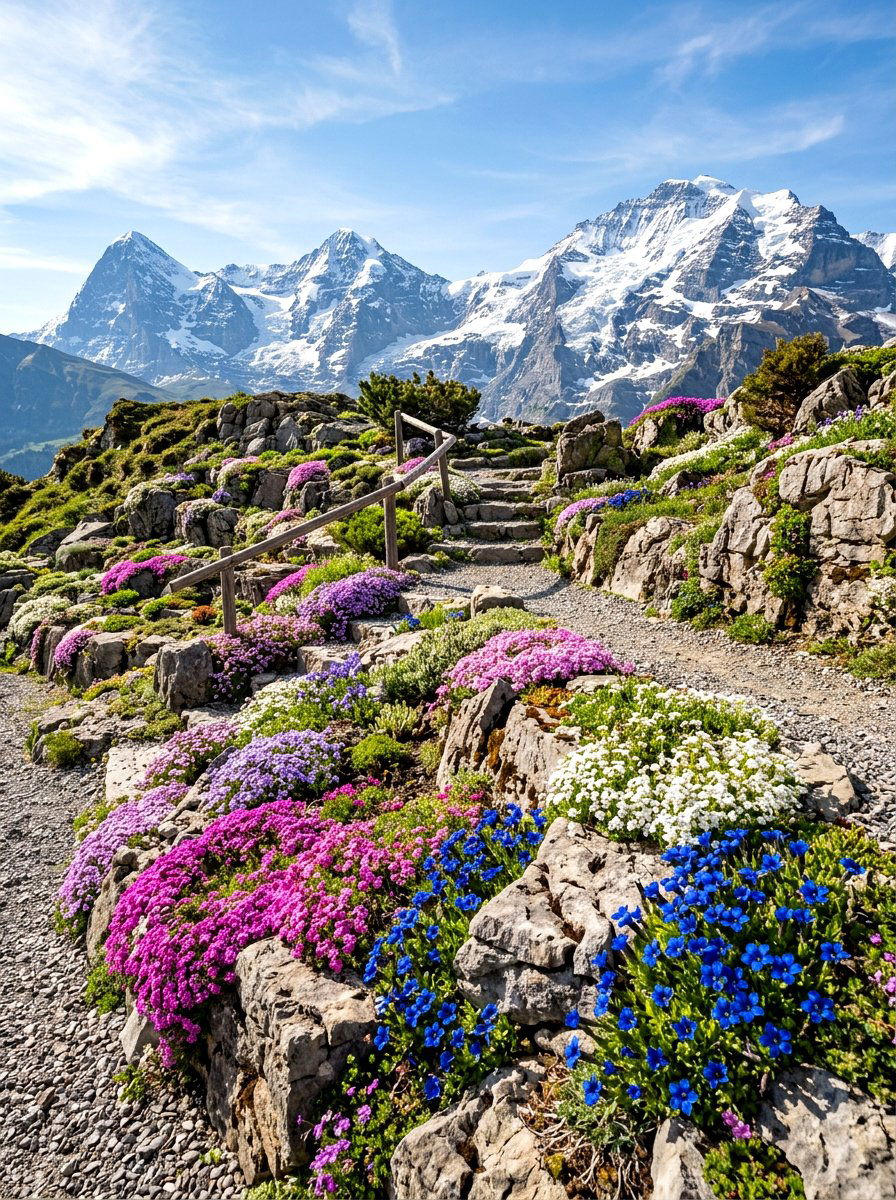
Inspired by the high-altitude beauty of mountain ranges, an alpine rock garden features rugged, craggy rocks and low-growing, hardy perennials that can withstand harsh conditions. To achieve this look, builders often stack limestone or granite to create natural-looking crevices and small terraces. These pockets are then filled with colorful alpine plants like creeping phlox, stonecrop, and gentians, which spill over the edges of the stones in vibrant mats. The goal is to recreate a miniature mountain slope that looks as though it has existed for centuries. Because alpine plants prefer excellent drainage, this type of garden is ideal for sloped yards or areas with sandy soil, providing a burst of seasonal color and texture.
5. Small Backyard Rock Garden
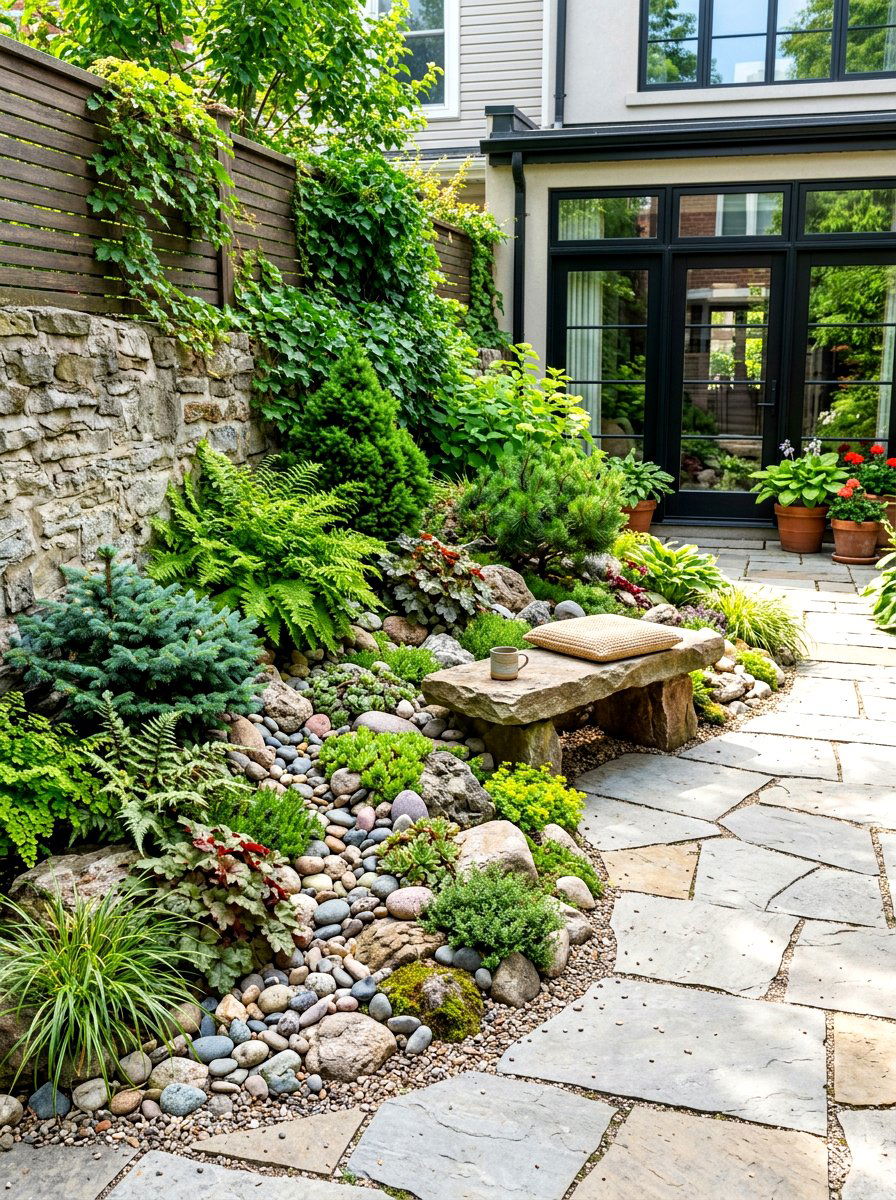
Transforming a compact outdoor area into a lush retreat is easy with a small backyard rock garden design. Instead of overwhelming the space with large features, this concept uses medium-sized stones and a variety of textures to create depth and visual interest. A corner rockery can serve as a focal point, featuring a mix of smooth river rocks and jagged slate to provide contrast. Low-maintenance plants like succulents, ferns, and dwarf conifers are tucked into the gaps, ensuring the garden feels full without being cramped. By varying the height of the rock arrangements, you can make a flat yard feel more dynamic and expansive, providing a cozy and inviting atmosphere for relaxation or small gatherings.
6. Sloping Front Yard Rockery
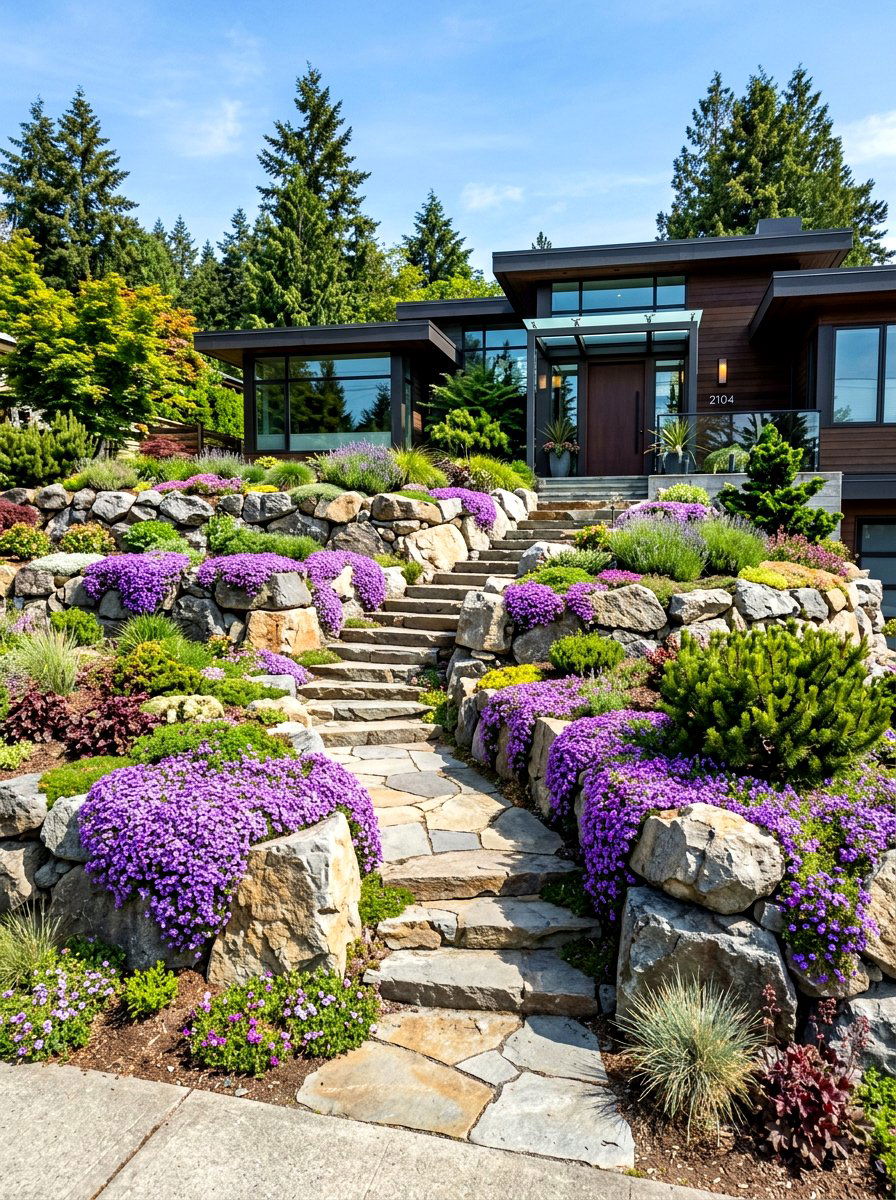
A sloping front yard often presents a landscaping challenge, but a well-designed rockery can turn this difficult terrain into a stunning multi-dimensional feature. By using large boulders to create natural retaining walls, you can terrace the hillside into several flat planting levels. This structure not only prevents soil erosion but also allows for a diverse range of plant life to thrive on different tiers. Use cascading ground covers like creeping thyme or aubrieta to soften the hard edges of the stones as they drape downward. This approach adds significant curb appeal and turns a problematic, hard-to-mow incline into a sophisticated, professional landscape that frames your home’s entrance beautifully and naturally.
7. Dry Creek Bed Landscaping
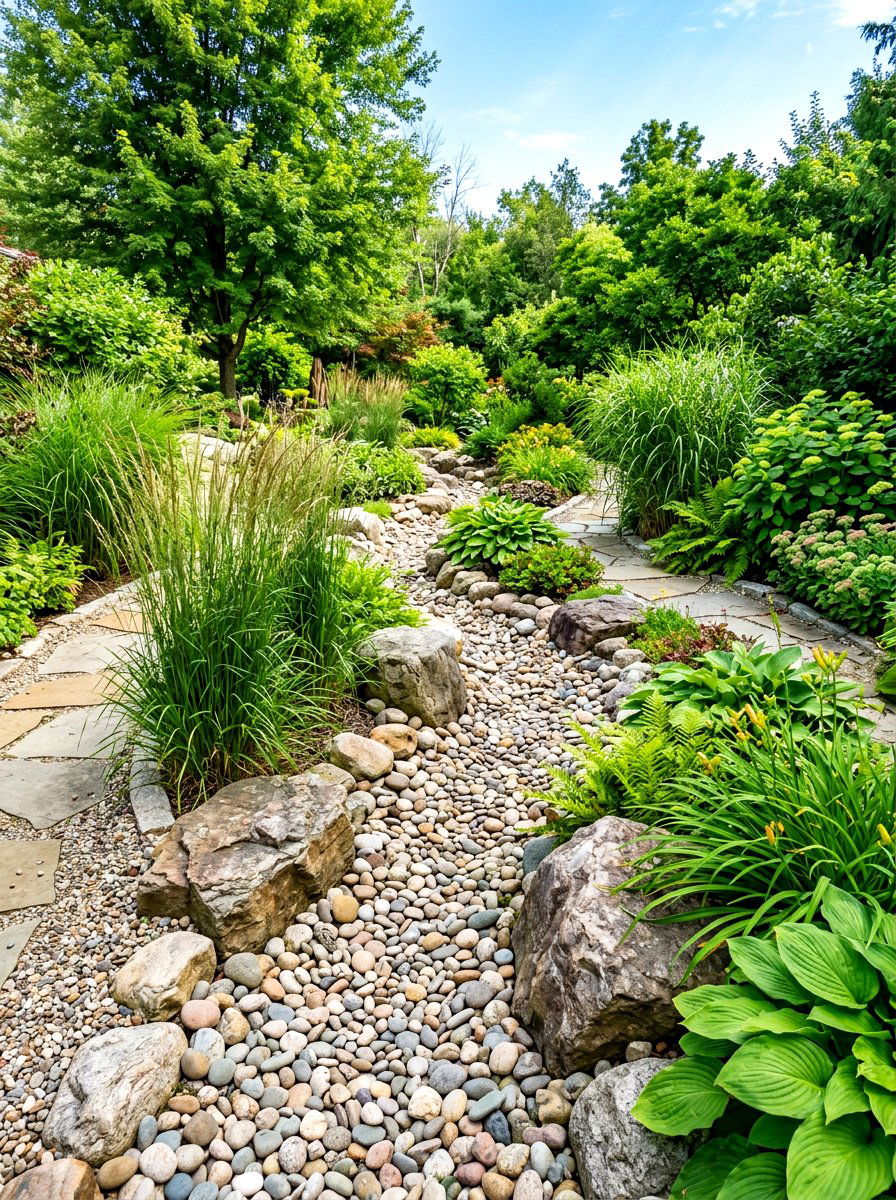
Dry creek bed landscaping is a functional and aesthetic design that mimics the appearance of a natural waterway that has run dry. This concept involves excavating a winding path through your yard and lining it with a variety of stones, ranging from large anchor boulders to smaller, rounded river pebbles. Not only does this look incredibly organic and peaceful, but it also serves as an effective drainage solution for managing rainwater runoff. Surround the "banks" of your creek with ornamental grasses, ferns, and moisture-loving perennials to enhance the realistic woodland or meadow effect. This design adds a sense of flow and rhythm to the garden, breaking up flat expanses with a compelling, textured feature.
8. Succulent Rock Garden
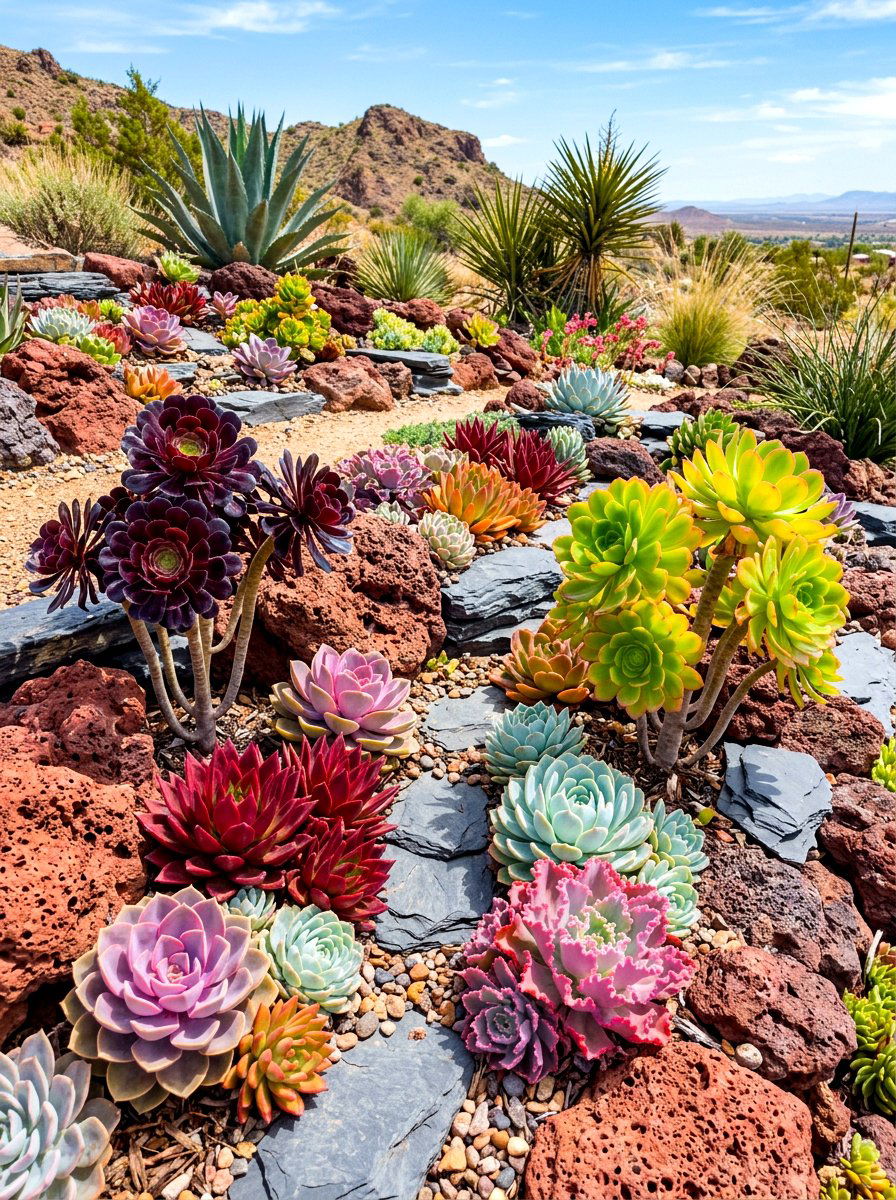
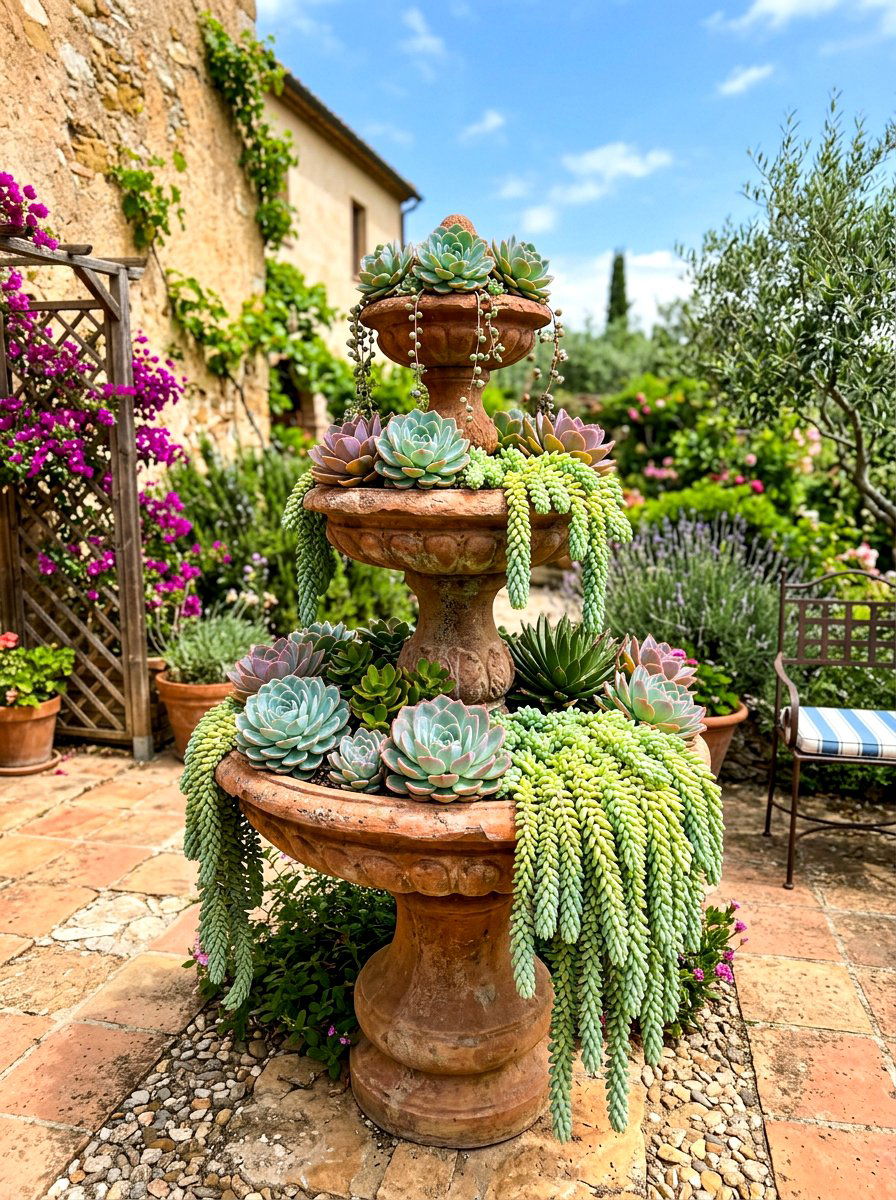
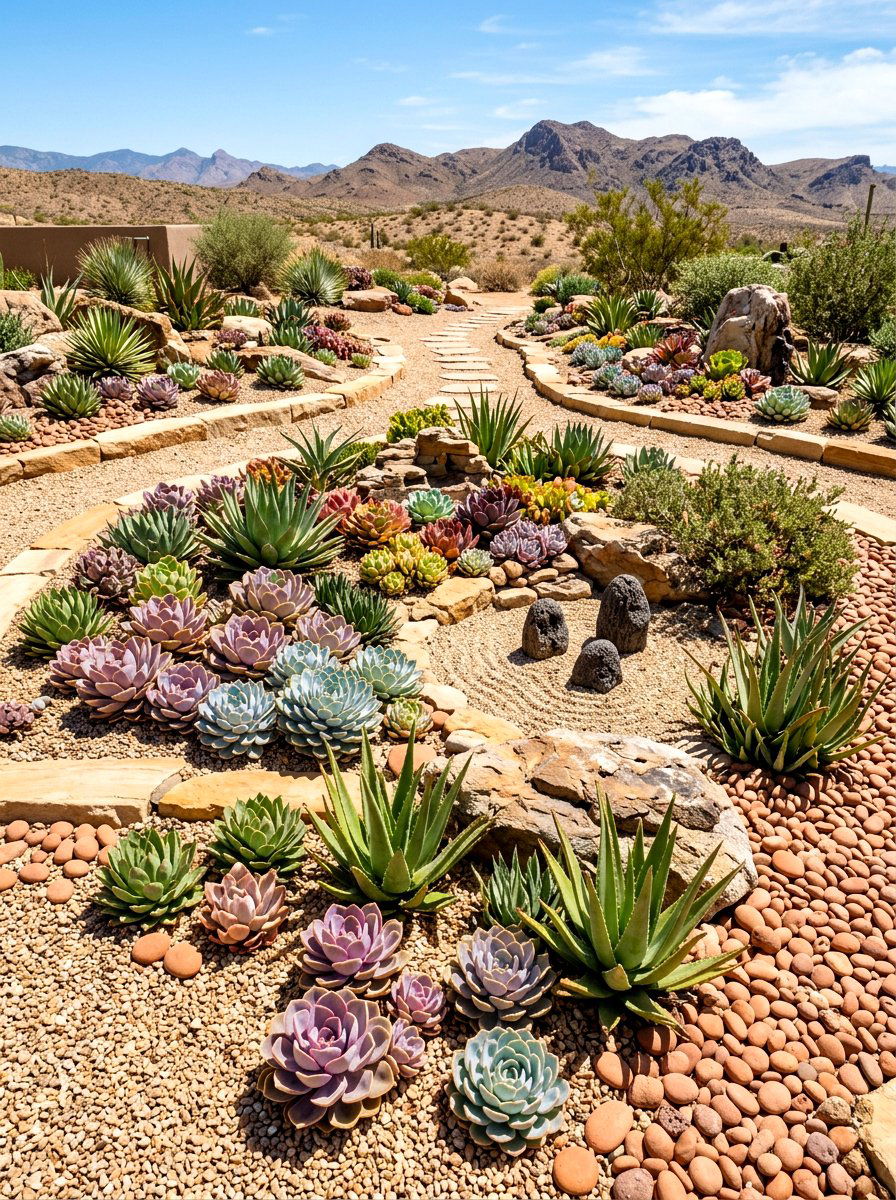
A succulent rock garden is a vibrant, textural masterpiece that combines the fascinating shapes of desert plants with the solid presence of natural stone. This design works best when using a variety of succulents in different colors, such as blue echeveria, purple aeoniums, and bright green sedums. The stones serve as a backdrop that highlights the fleshy leaves and unique silhouettes of the plants while also providing the sharp drainage they require. Using a top-dressing of fine lava rock or decomposed granite can tie the whole look together, preventing soil splash and keeping the garden tidy. This low-water option is perfect for sunny spots and offers year-round beauty with very minimal maintenance or effort.
9. Natural Boulder Focal Point
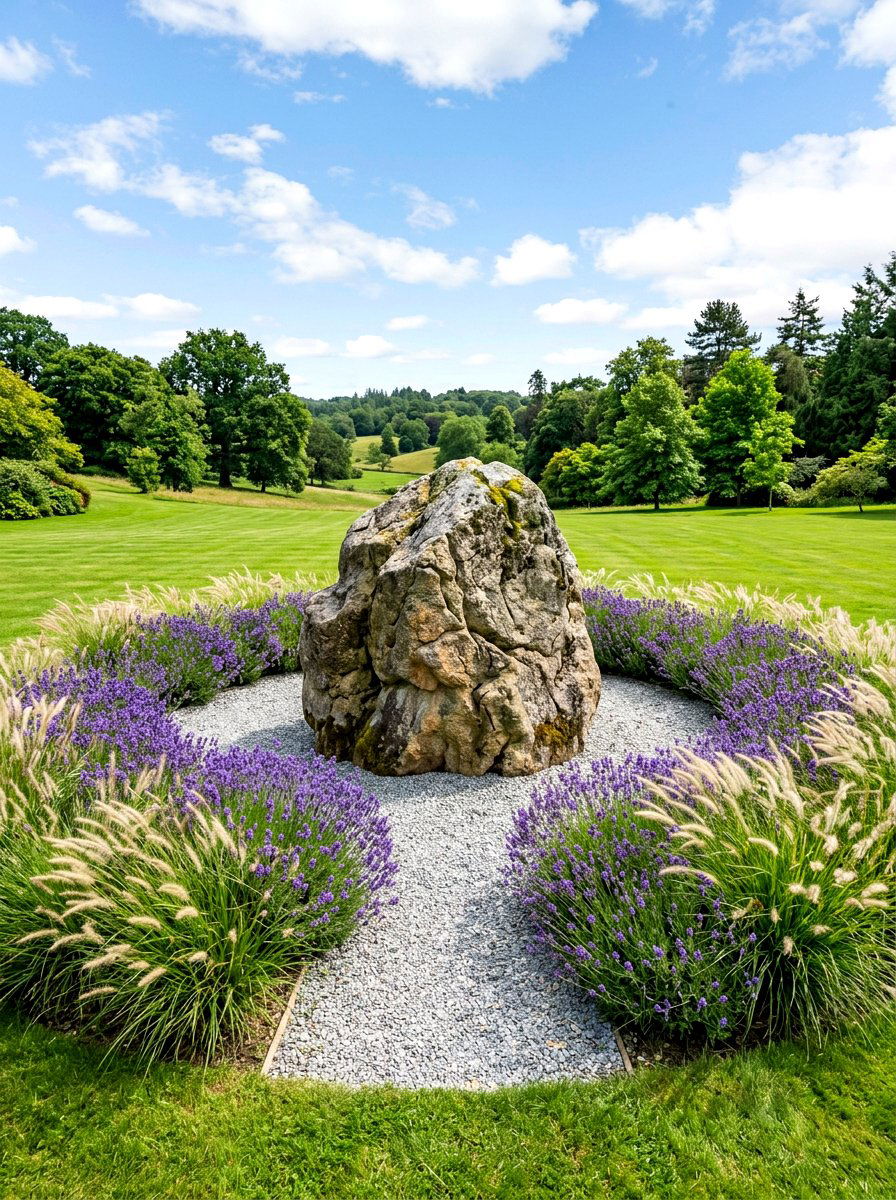
Creating a natural boulder focal point is a simple yet high-impact way to add drama and scale to any landscape. Instead of a scattered arrangement, this design centers on one or two exceptionally large, character-filled rocks that act as the anchor for the surrounding garden. Choose boulders with interesting textures, moss growth, or unique color veining to serve as a piece of natural sculpture. Surround the base with a mix of smaller stones and soft, mounding plants like lavender or fountain grass to ground the feature into the earth. This design works particularly well in the center of a circular driveway or as a bold statement piece in an expansive, open lawn area.
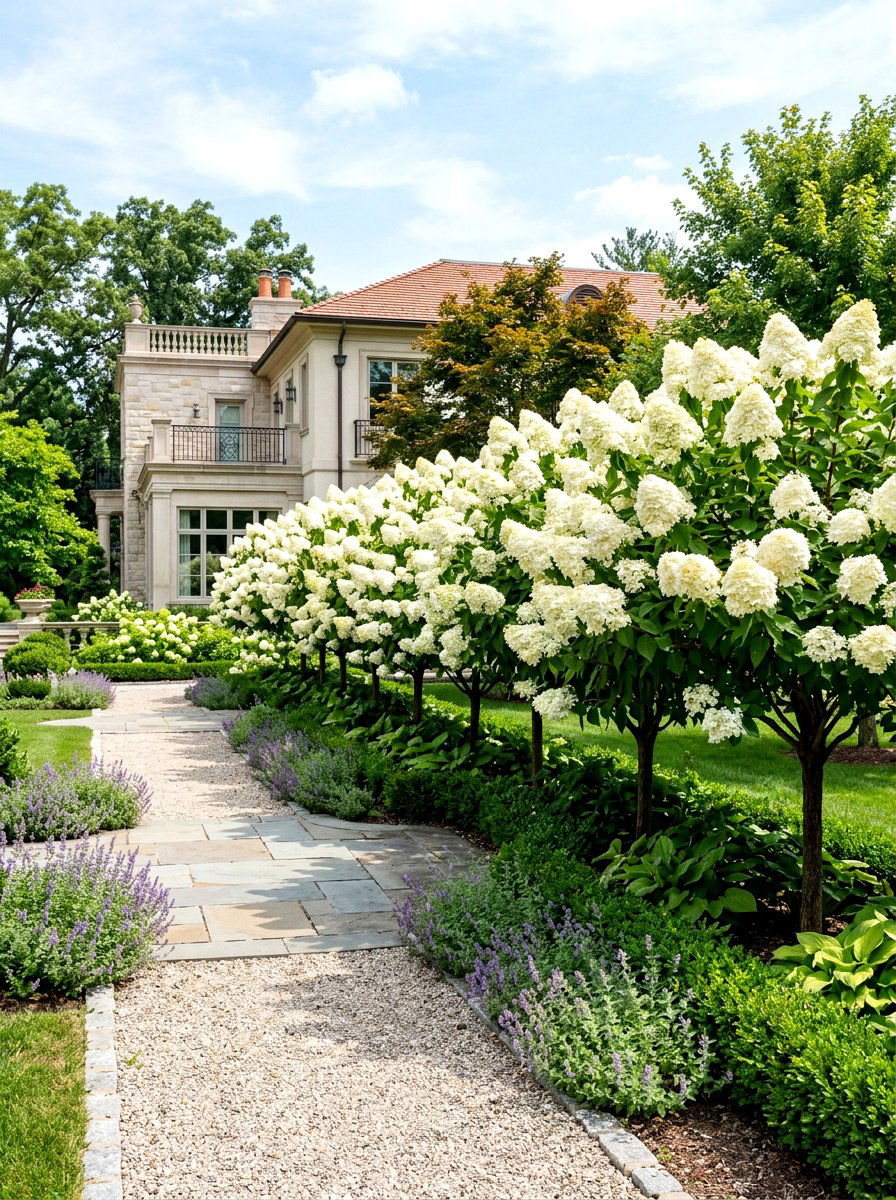
10. Mediterranean Rock Garden
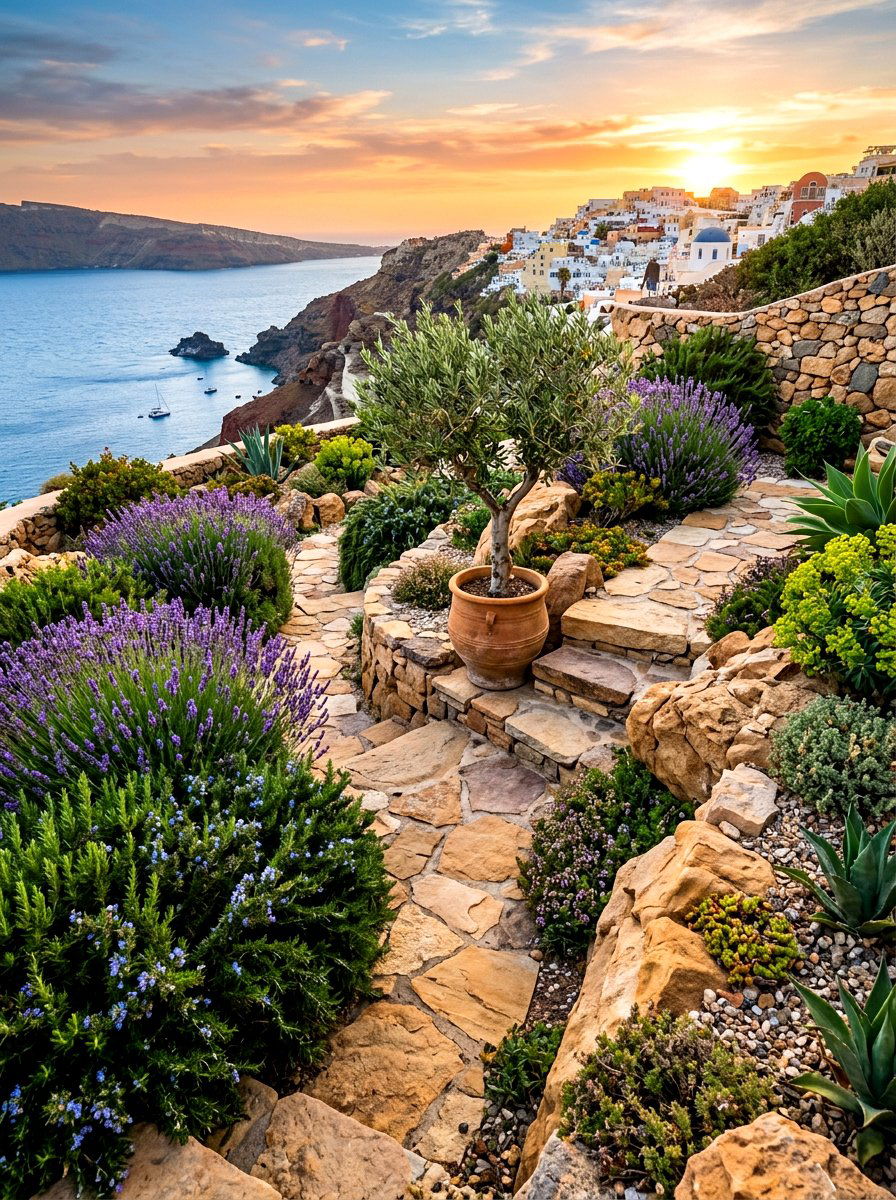
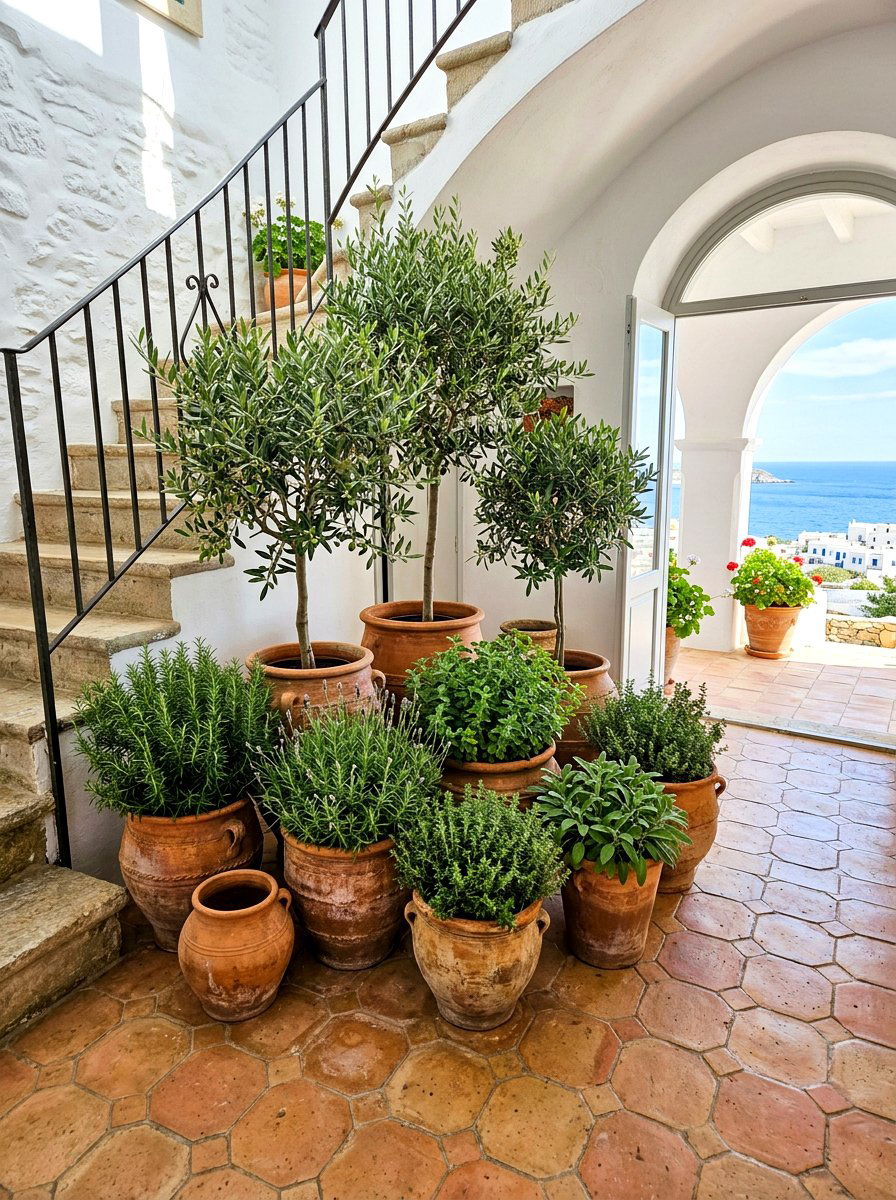
The Mediterranean rock garden captures the sun-drenched, rustic charm of coastal Europe by combining warm-toned stones with aromatic, silvery-foliaged plants. This design often features terracotta accents, gravel pathways, and sun-loving herbs like rosemary, sage, and lavender that release their scent when brushed against. Use jagged limestone or sandstone to create a rugged, ancient feel, and consider incorporating a small olive tree or a cycad as a central structural element. The light-colored stones reflect heat, creating a microclimate that these Mediterranean species adore. This style is not only beautiful and fragrant but also highly resilient to drought, making it an excellent choice for gardens in warm, dry climates or coastal regions.
11. Low Maintenance Gravel Garden
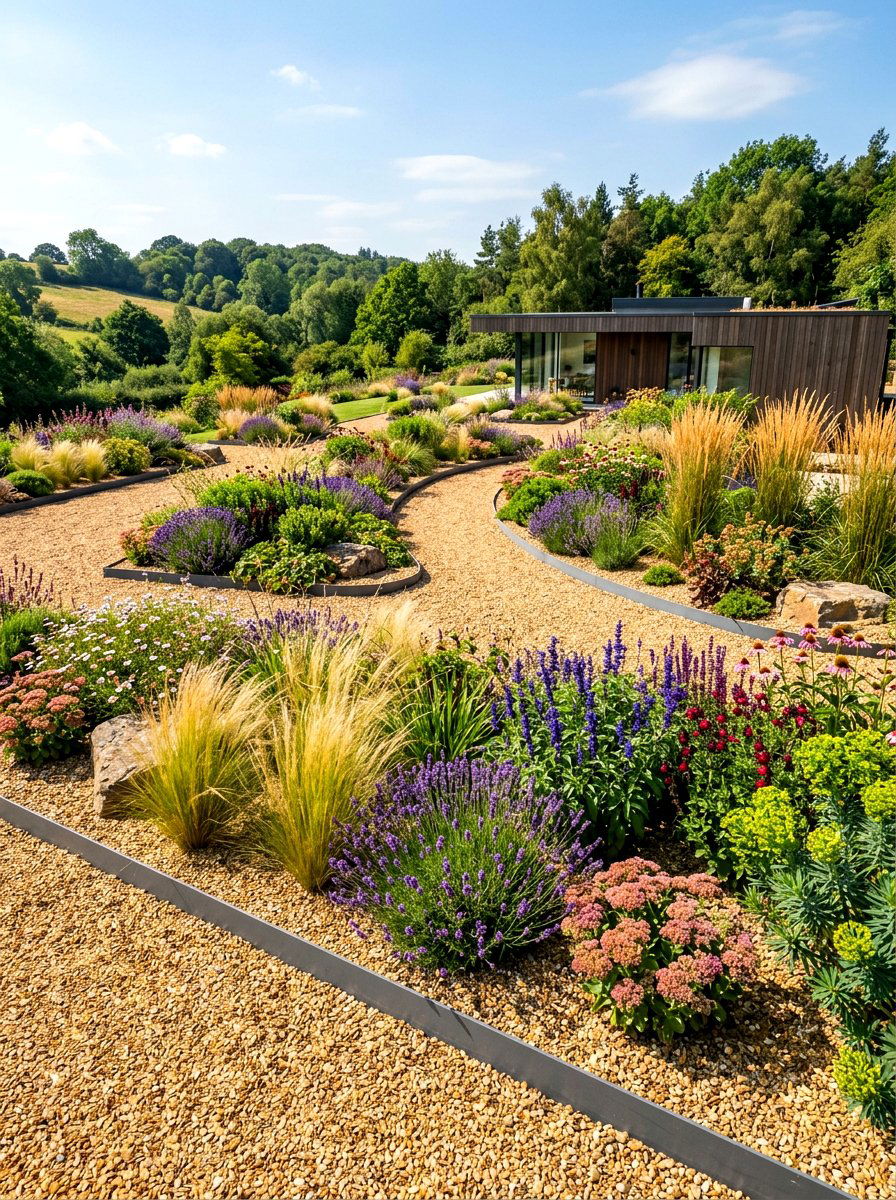
A low maintenance gravel garden is the perfect solution for busy homeowners who want a stylish outdoor space without the constant need for weeding or mowing. This design uses a thick layer of high-quality gravel as the primary ground cover, which suppresses weeds and provides a clean, uniform look. To keep the space from looking barren, plant drought-tolerant perennials and grasses in clusters directly through the gravel mulch. Choose a gravel color that complements your home’s exterior, such as a warm honey flint or a cool blue slate. The result is a sophisticated, permeable landscape that handles heavy rain with ease and stays looking pristine with only occasional raking and minimal water.
12. Rock Garden Water Feature
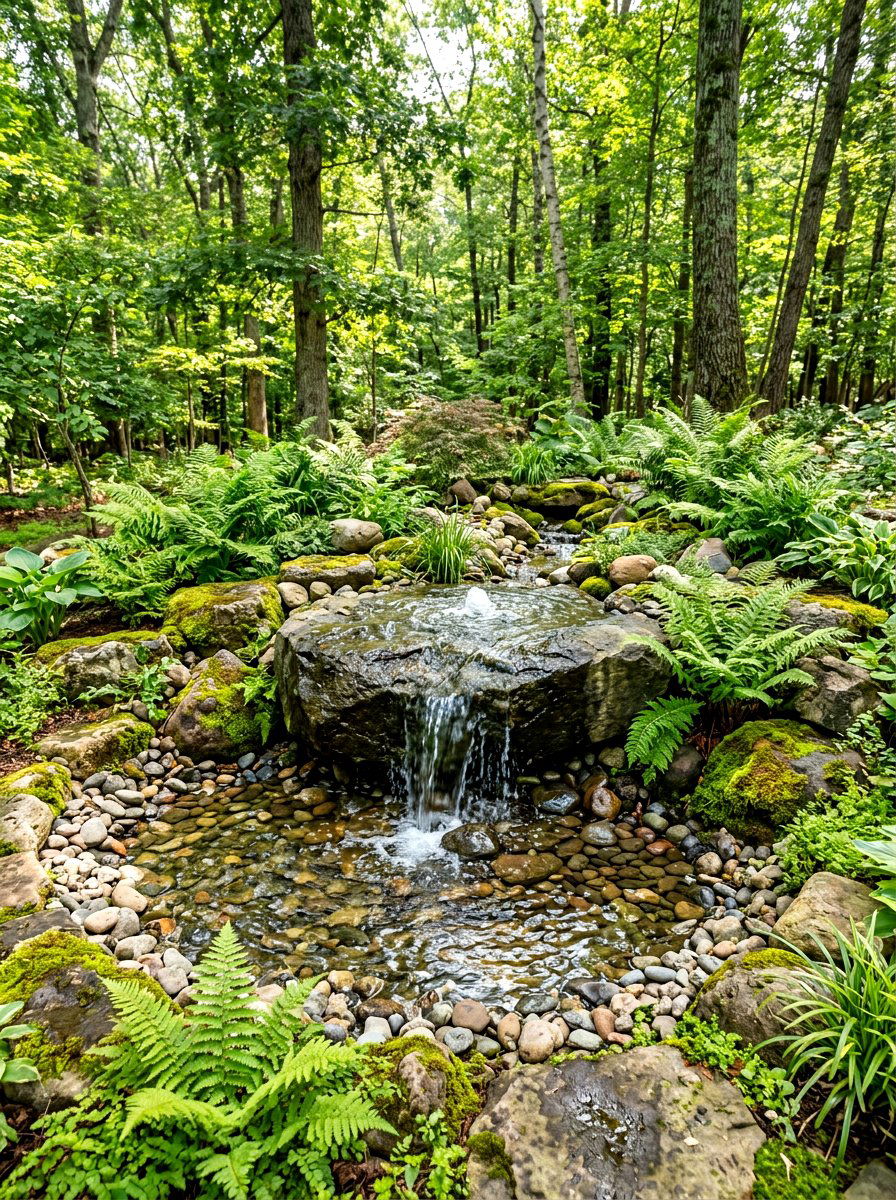
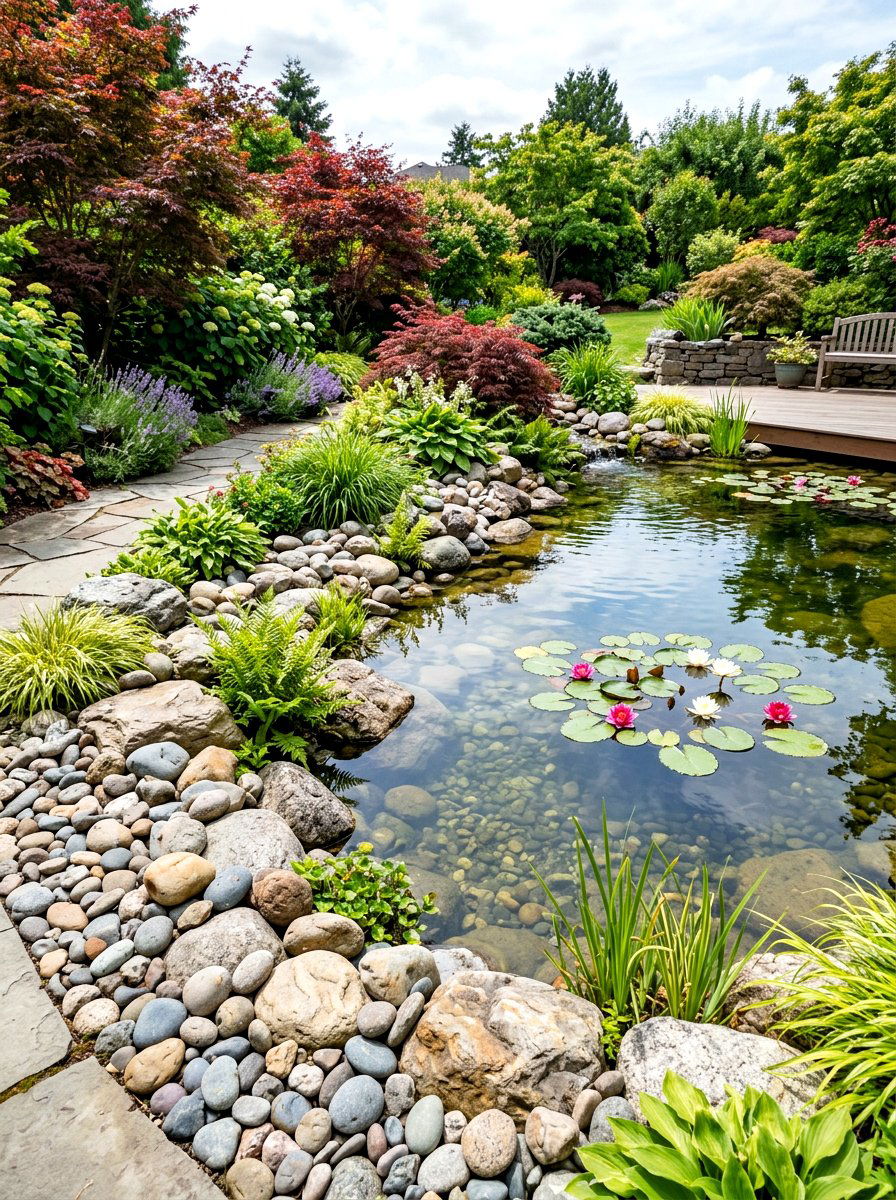
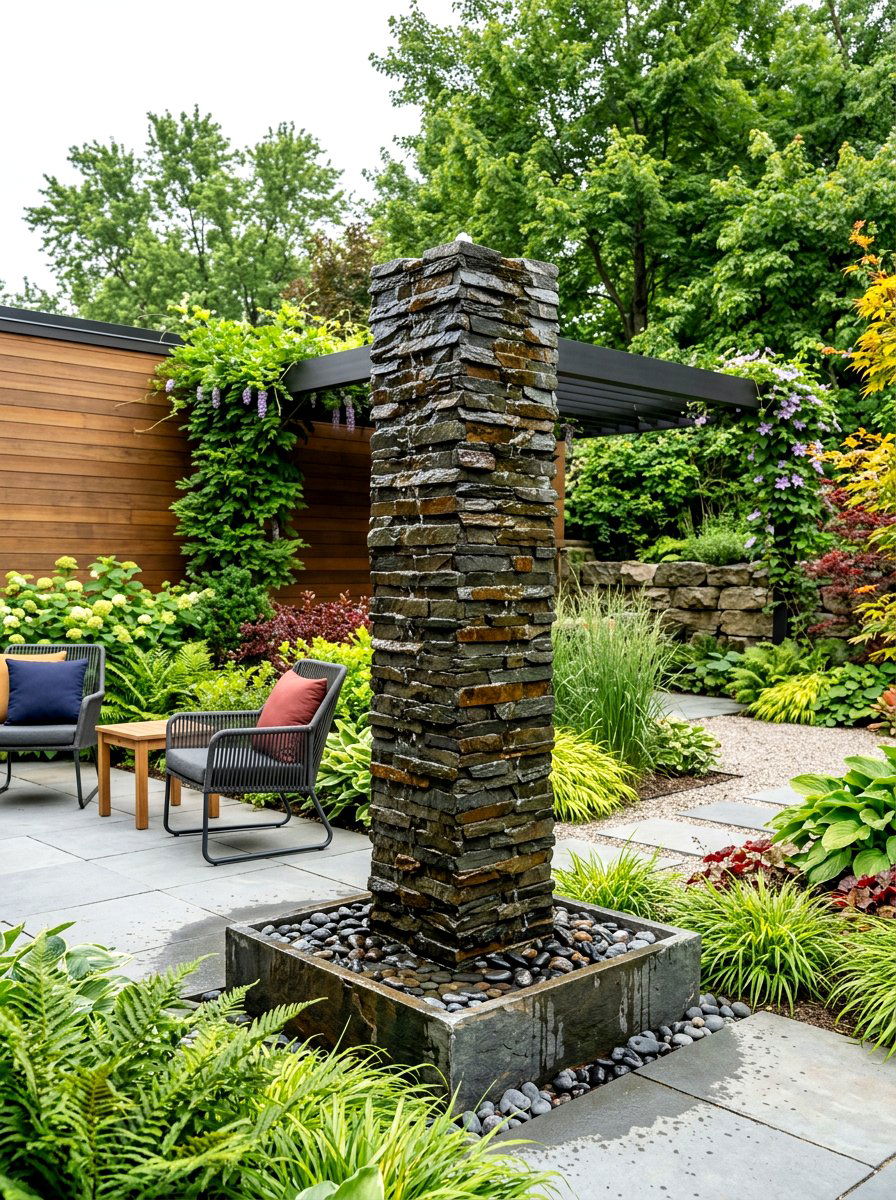
Incorporating a rock garden water feature brings the soothing sound of moving water and a refreshing visual element to your outdoor space. This design typically involves a recirculating pump hidden beneath a bed of stones, allowing water to bubble up and spill over a large, flat-topped boulder. The surrounding rockery should be built with varying sizes of river stones and pebbles to hide the mechanics and create a naturalistic look. Ferns, mosses, and hostas can be planted around the edges to thrive in the increased humidity and shade provided by the stones. This feature acts as a magnet for local birds and butterflies, turning your rock garden into a lively and tranquil wildlife sanctuary.
13. Miniature Rock Garden Container
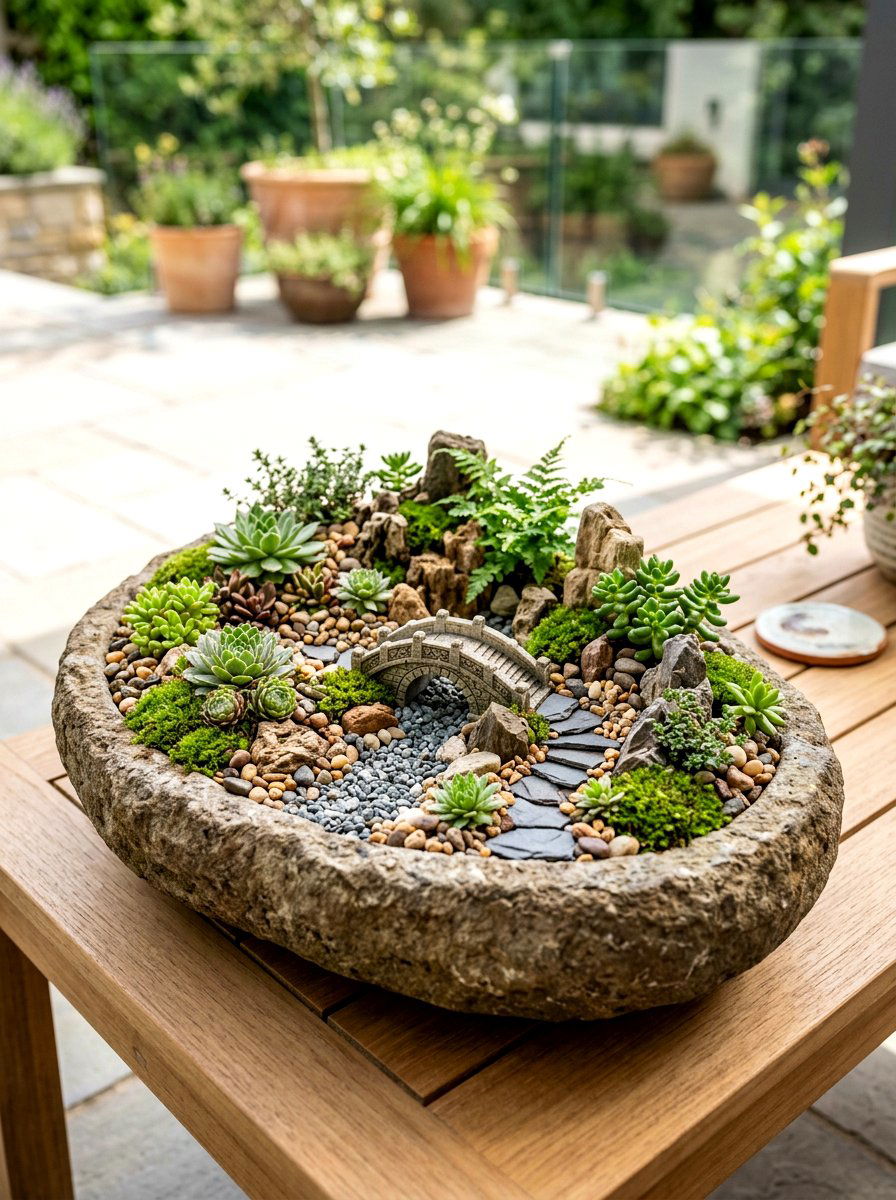
For those with limited space, a miniature rock garden container offers a way to enjoy the beauty of a rockery on a balcony, patio, or even a tabletop. This design uses a shallow stone or ceramic basin filled with a gritty, well-draining soil mix. Tiny, slow-growing plants like miniature succulents, dwarf conifers, and moss are arranged around small, interesting pebbles to create a tiny, self-contained landscape. You can even include miniature lanterns or bridges to give it a whimsical, fairy-garden feel. These containers are easy to move and maintain, making them a fun project for beginner gardeners who want to experiment with rock garden aesthetics on a much smaller and manageable scale.
14. Tropical Rock Garden
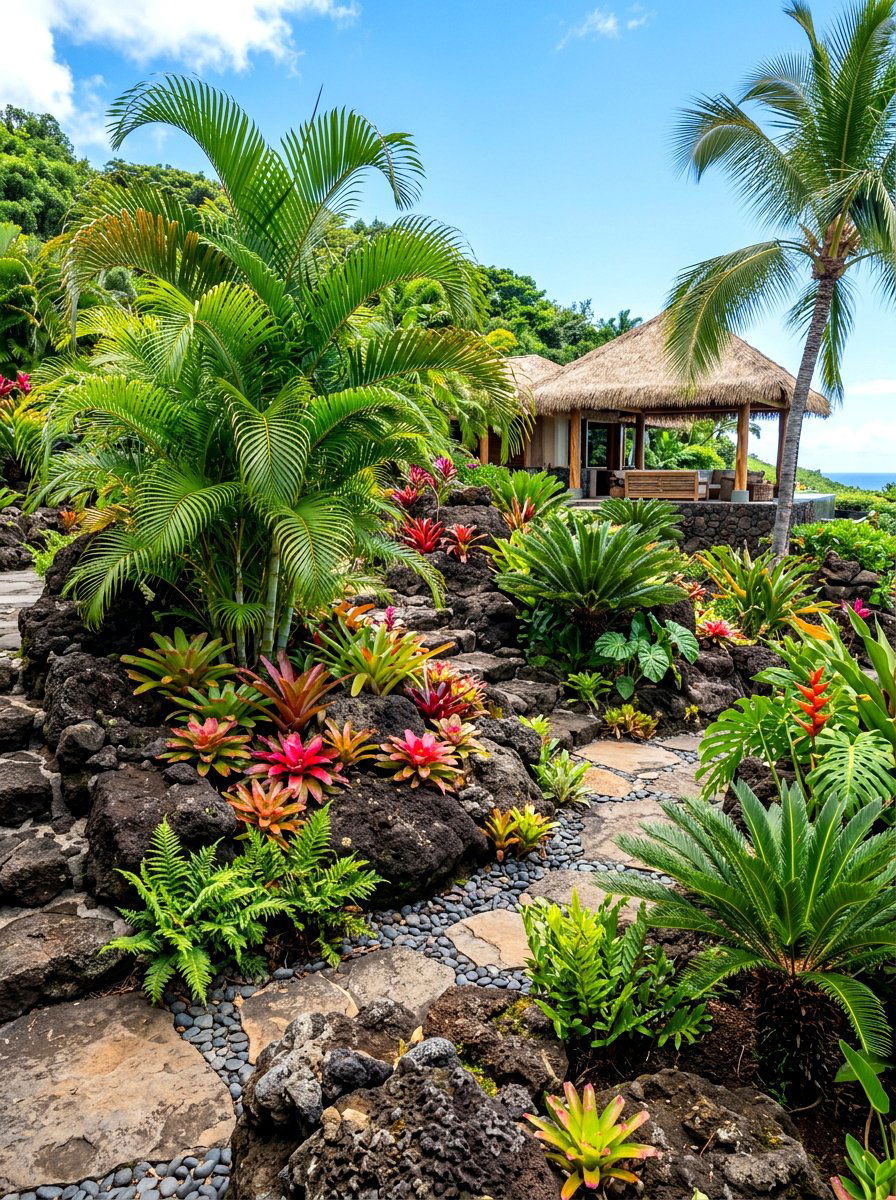
A tropical rock garden blends the lush, vibrant energy of the rainforest with the grounding presence of dark, porous volcanic rocks or large river boulders. This design uses broad-leafed plants like bromeliads, orchids, and small palms to create a dense, layered look that feels exotic and private. The dark stones provide a stunning contrast to the bright greens and bold floral colors typical of tropical species. Incorporating a misting system or a small hidden fountain can help maintain the humidity these plants crave. This style is perfect for shaded corners or courtyards where you want to create a high-end, resort-like atmosphere that feels like a permanent vacation right in your own backyard.
15. Woodland Shade Rock Garden
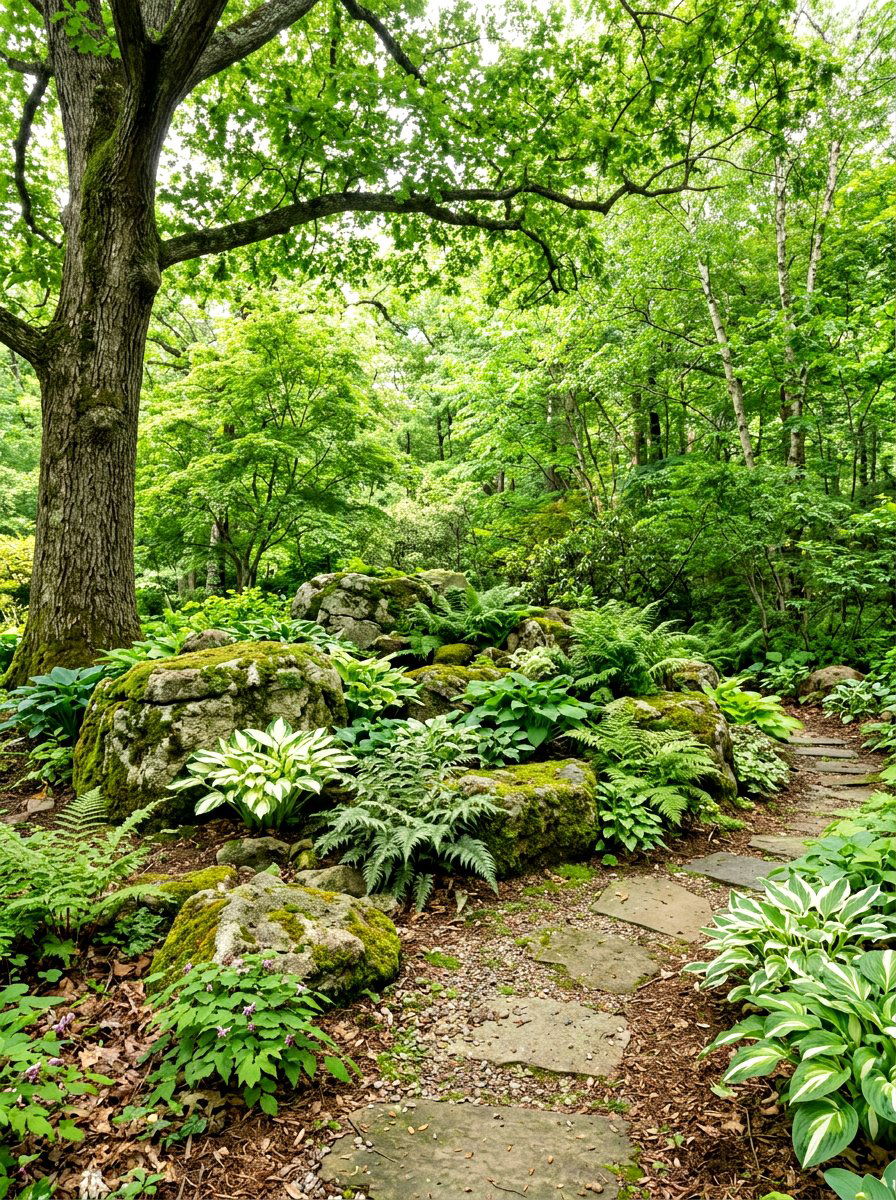
A woodland shade rock garden is the ideal way to beautify those dim, damp areas under large trees where grass often struggles to grow. This design utilizes moss-covered stones and weathered logs to create a natural, forest-floor aesthetic. Plantings should include shade-loving species like delicate ferns, colorful hostas, and native wildflowers that thrive in cool, protected environments. The rocks help to retain soil moisture and provide a stable structure for the soft, leafy plants to grow around. This type of garden feels incredibly serene and ancient, offering a cool retreat during the hot summer months. It requires very little sun, making it a functional and beautiful solution for north-facing yards.
16. Rock Garden With Fire Pit
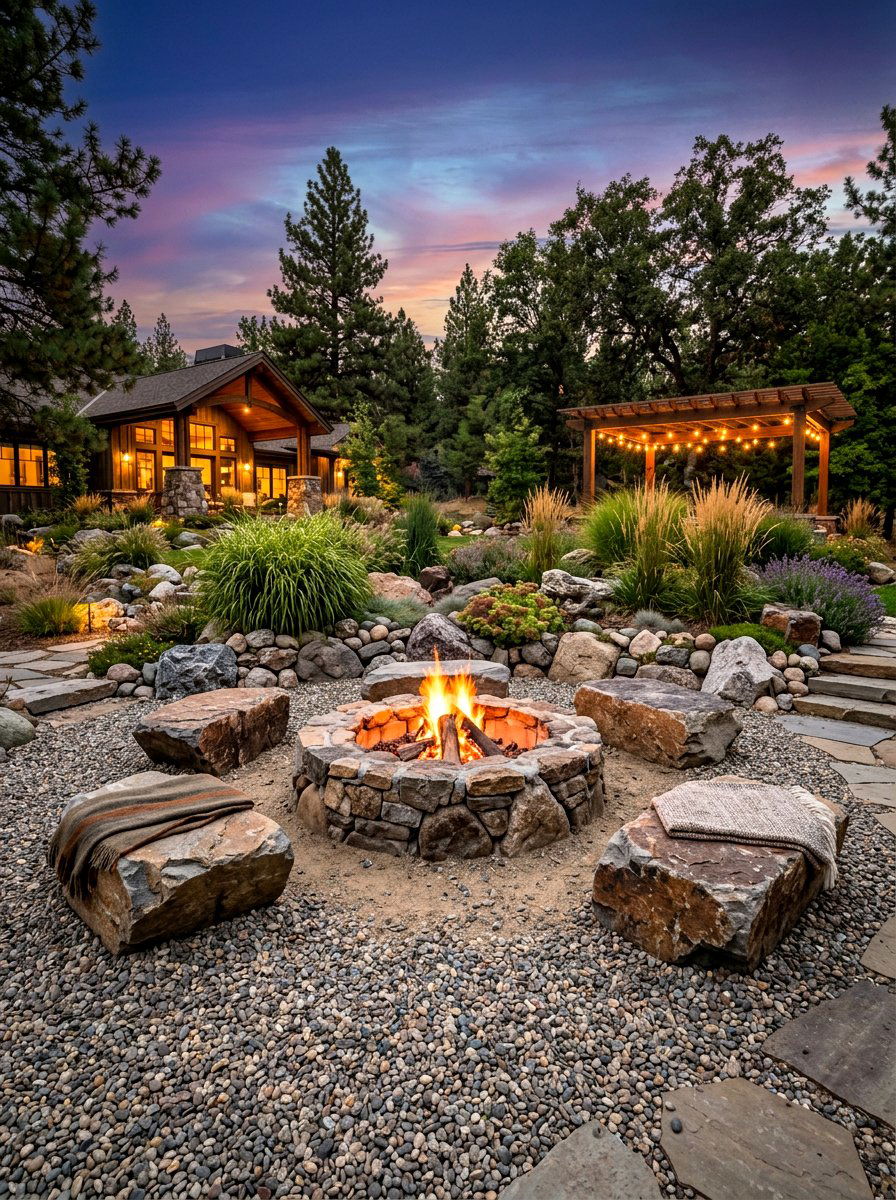
Integrating a rock garden with a fire pit creates a rugged and functional social space that feels connected to the natural landscape. This design uses large, flat-topped boulders as natural seating around a central stone-lined fire bowl or built-in pit. The surrounding area is often filled with crushed stone or pea gravel to provide a fire-safe surface that is also low-maintenance and stylish. To soften the look, tuck hardy ornamental grasses and drought-resistant shrubs between the outer rocks. This arrangement encourages outdoor living and provides a cozy, campfire-like atmosphere that is perfect for cool evenings. The blend of fire, stone, and plant life makes for a visually compelling and very durable entertainment zone.
17. Flagstone Path Rock Garden
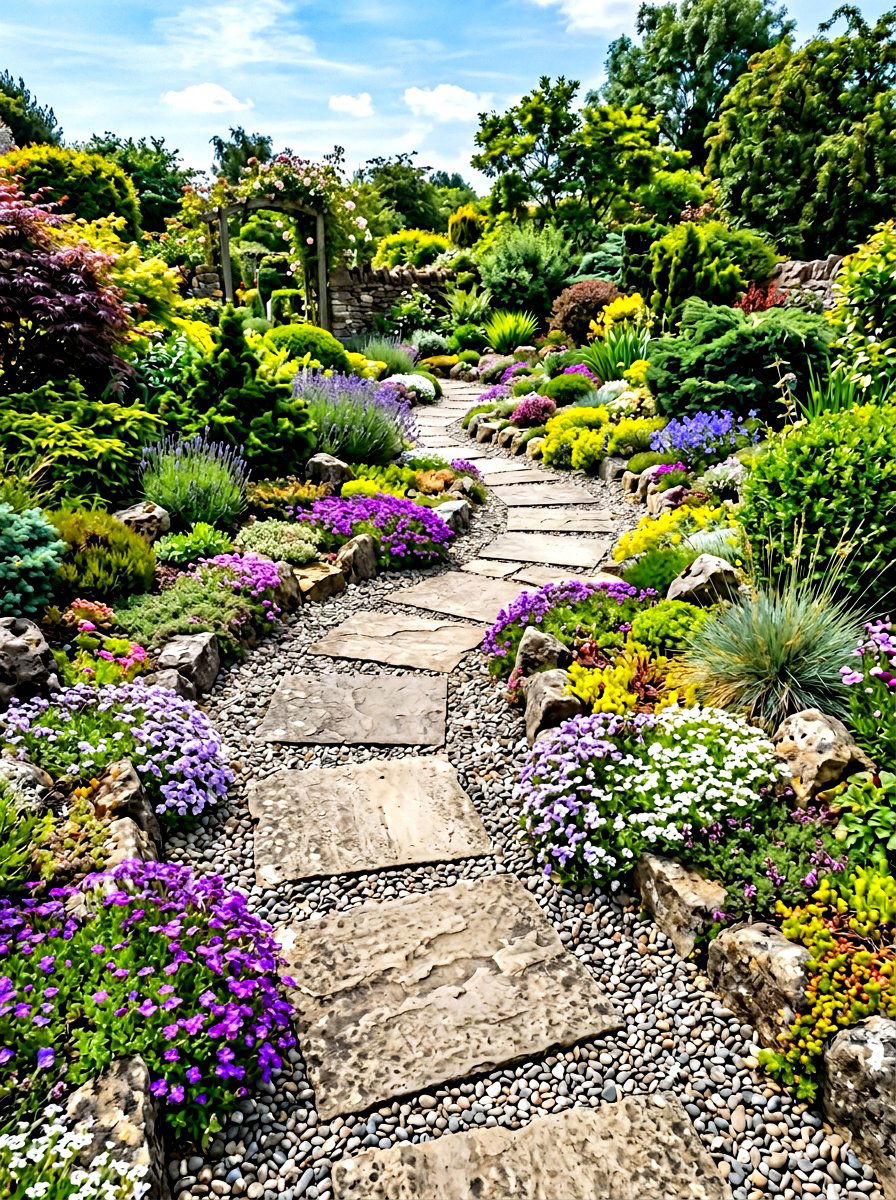
A flagstone path rock garden combines functional walkways with artistic landscaping to lead guests through your outdoor space with style. This design features large, irregular flagstone pavers set into a bed of smaller decorative pebbles or creeping ground covers like moss or dwarf mondo grass. The "soft" rockery elements, such as low-growing perennials and small boulders, line the edges of the path to create a sense of discovery and enclosure. This layout breaks up the garden into different "rooms" and provides a stable, mud-free walking surface that looks completely organic. It is a timeless design that works well with almost any architectural style, from rustic country cottages to sleek, modern minimalist homes.
18. Contemporary Sculpture Rock Garden
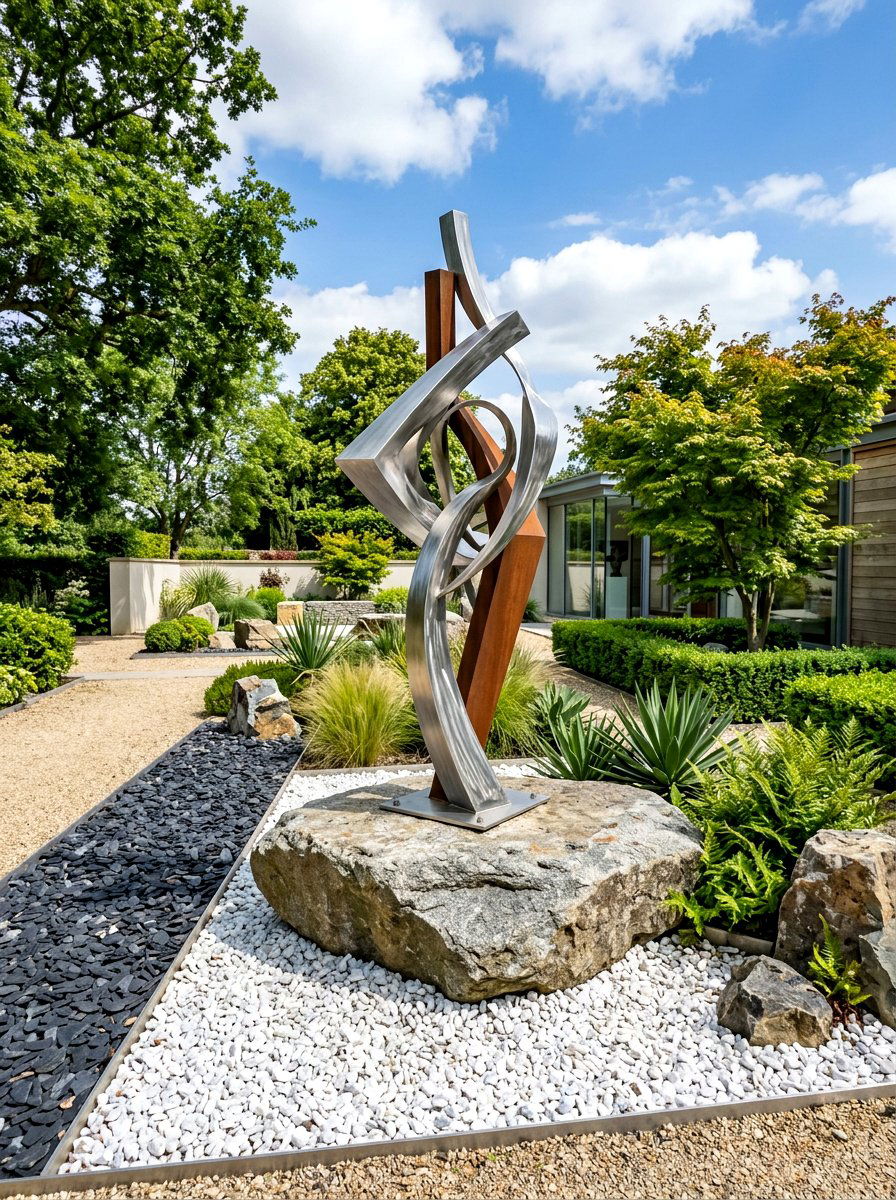
The contemporary sculpture rock garden treats the landscape as an outdoor art gallery, using stones as a pedestal for modern artistic pieces. This design focuses on a clean, uncluttered layout where a few large, dramatic boulders are paired with abstract metal or stone sculptures. The choice of rocks should be intentional, perhaps using contrasting colors like white marble chips against dark slate to highlight the artwork. Lighting is key in this design, with spotlights used to cast dramatic shadows and accentuate the forms of both the rocks and the sculptures at night. This sophisticated approach is perfect for homeowners who want a unique, high-end landscape that makes a bold and very personal design statement.
19. Native Wildflower Rock Garden
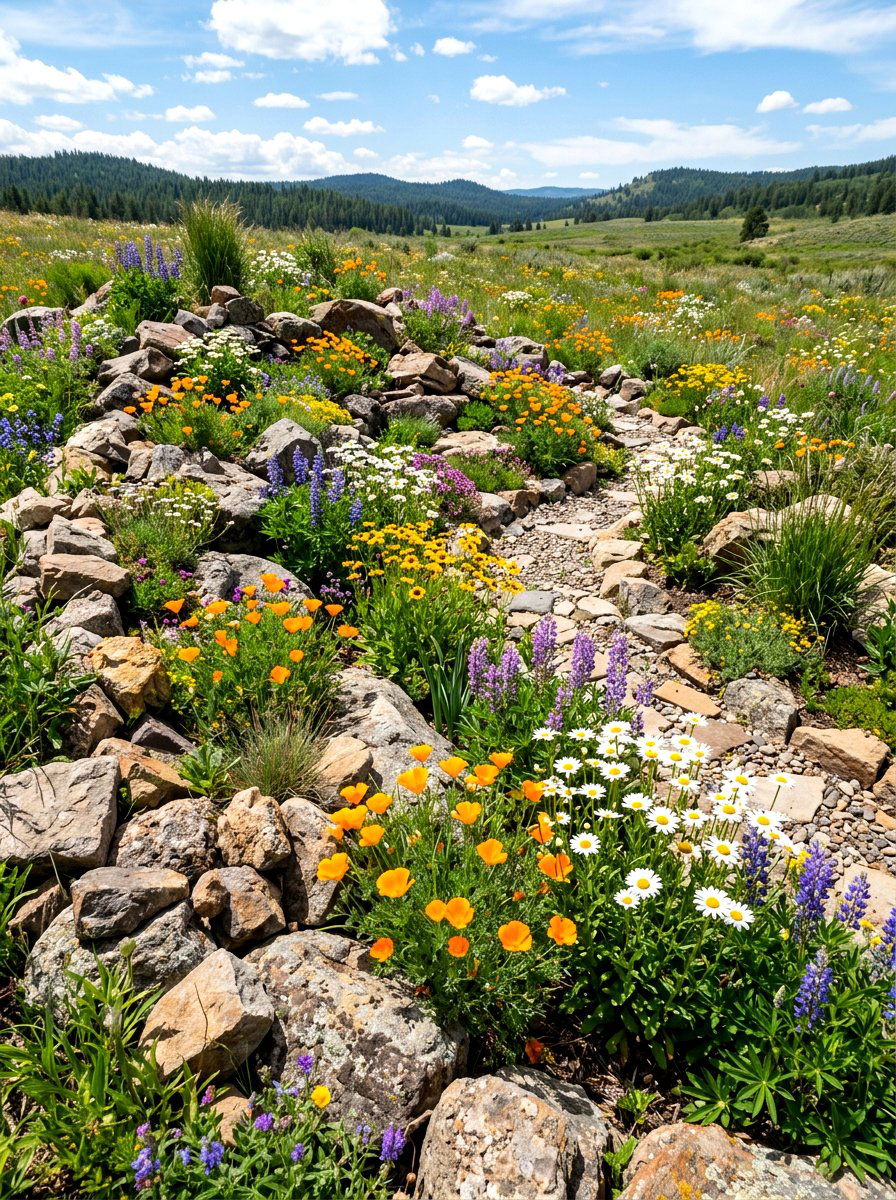
A native wildflower rock garden is a beautiful and sustainable way to support local biodiversity while creating a vibrant, low-care landscape. This design uses local stones that match the natural geology of your area, paired with indigenous wildflowers that are already adapted to your soil and climate. These plants typically require less water and no chemical fertilizers, making them an eco-friendly choice. Arrange the rocks to create small "pockets" where the flowers can bloom in protected clusters. Over time, the wildflowers will self-seed among the stones, creating a lush and ever-changing display of color. This style attracts pollinators like bees and butterflies, bringing your garden to life with movement and seasonal charm.
20. Coastal Style Rock Garden
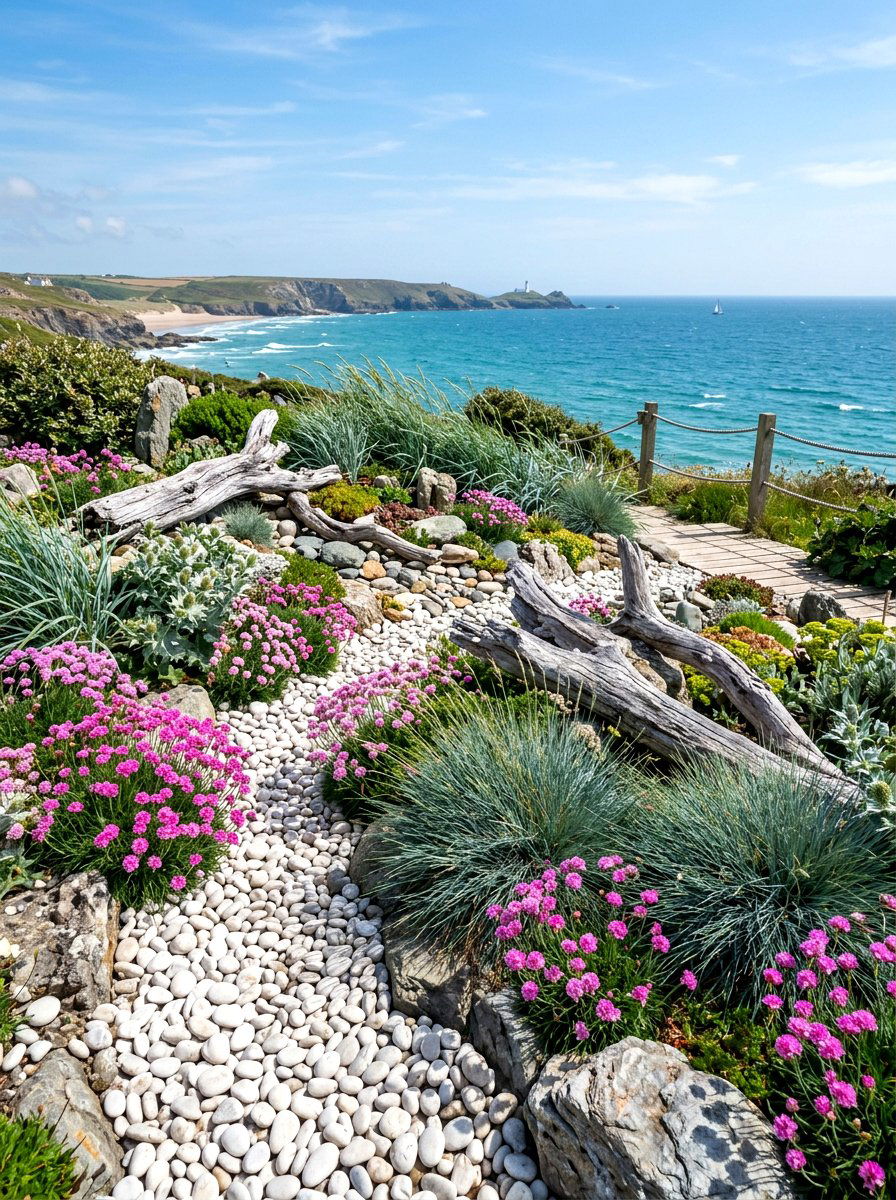
The coastal style rock garden evokes the breezy, rugged atmosphere of the seashore using light-colored stones, weathered driftwood, and salt-tolerant plants. This design often features smooth, beach-rounded pebbles and larger granite boulders that look as if they have been washed up by the tide. Plantings include hardy species like sea thrift, blue lyme grass, and various succulents that can handle wind and sandy soil. To enhance the nautical theme, you might incorporate a few pieces of bleached wood or even an old, decorative anchor among the stones. This style is perfect for seaside homes but can also bring a relaxing, coastal vibe to inland gardens, offering a bright and very refreshing aesthetic.
21. Multi Level Terraced Rockery
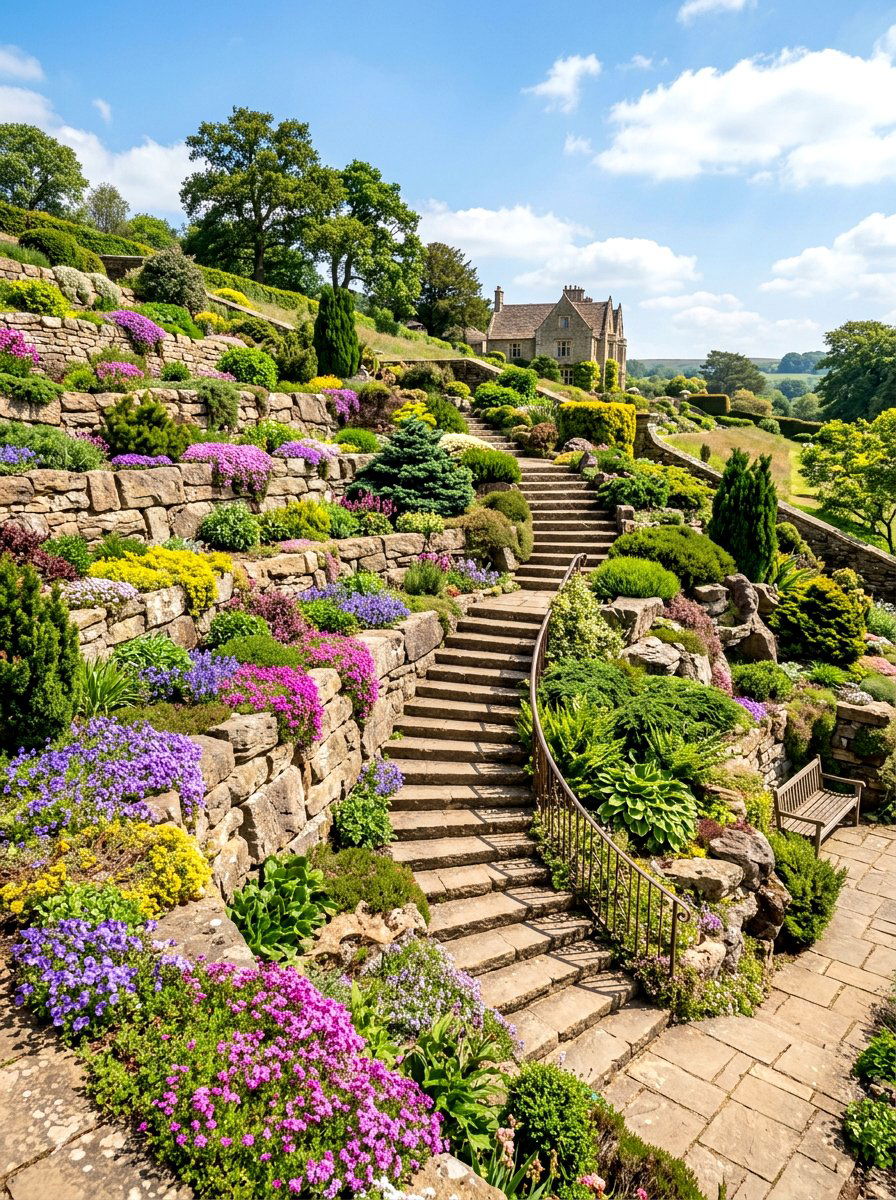
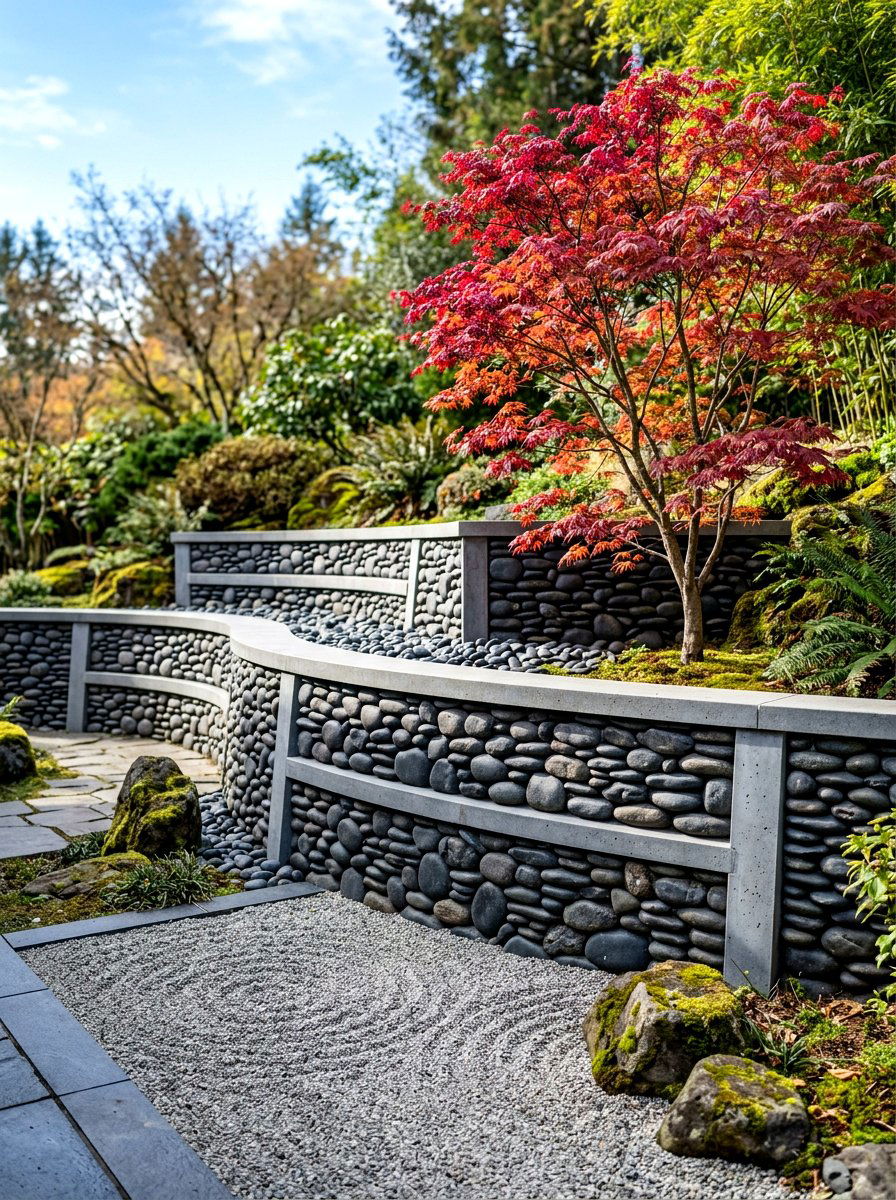
For properties with significant elevation changes, a multi-level terraced rockery is a masterful way to add structure and beauty to the terrain. This design uses heavy, flat-topped rocks to build a series of steps or plateaus, effectively creating multiple garden beds on a single slope. Each level can be themed differently or used to showcase a variety of textures, from cascading flowers on the upper tiers to architectural evergreens on the lower ones. This structure provides excellent drainage and makes it easier to access and maintain plants on a steep incline. The result is a grand, cascading landscape that adds a sense of luxury and architectural depth to your home’s exterior.
22. Ornamental Grass Rock Garden
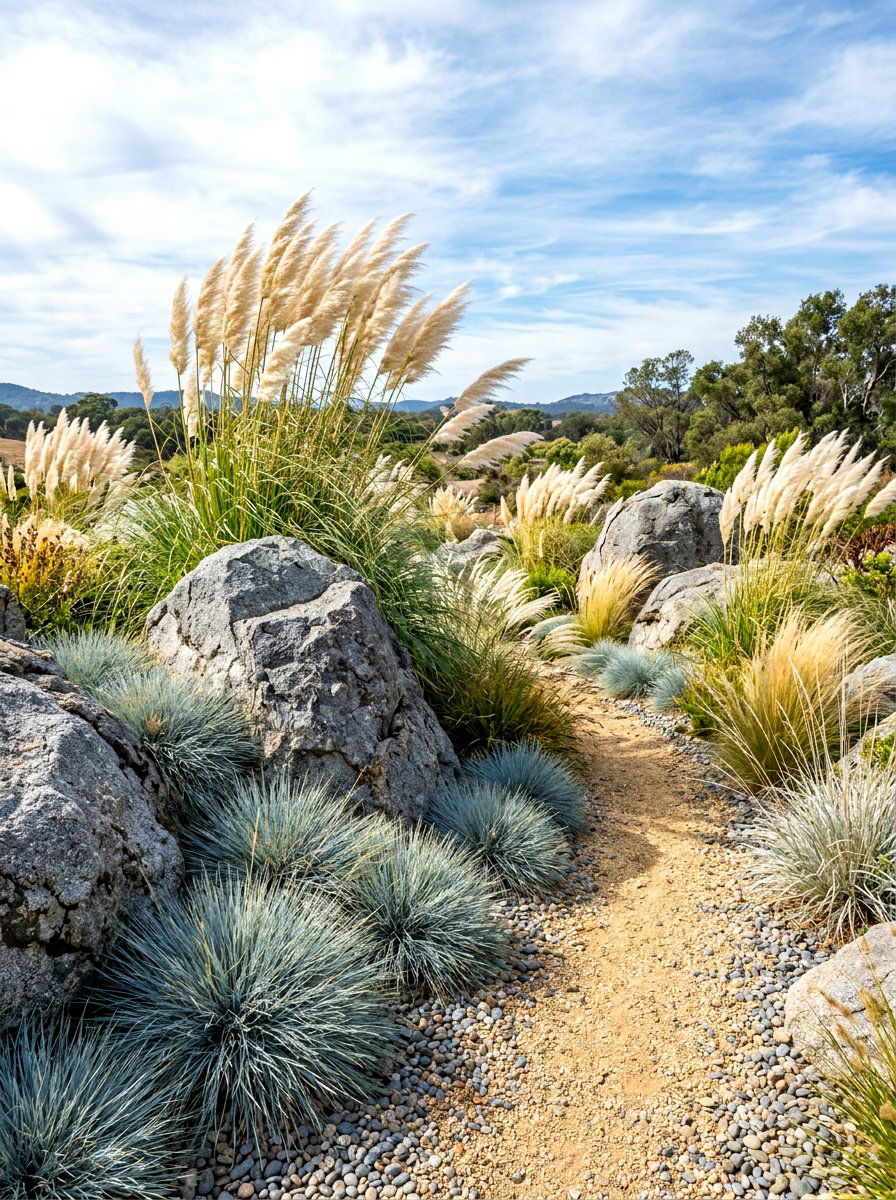
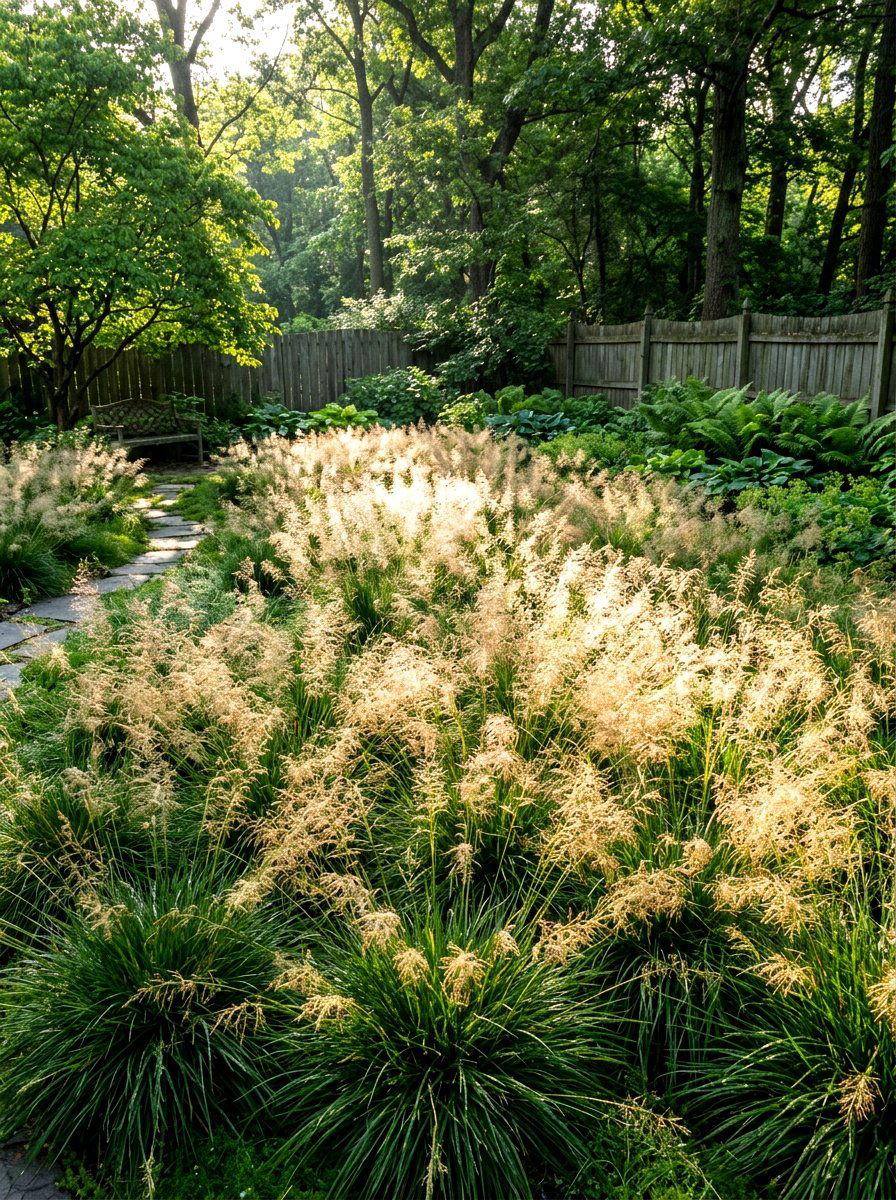
An ornamental grass rock garden focuses on the ethereal beauty of movement and light, using the fine textures of grasses to contrast with the solid weight of stones. This design features a variety of grasses, from the tall, feathery plumes of pampas grass to the low, blue mounds of fescue, planted among large boulders and gravel beds. When the wind blows, the grasses sway and rustle, adding a dynamic and sensory dimension to the garden that static plants cannot provide. The stones act as a neutral backdrop that makes the golden, silver, and green hues of the grass pop. This low-maintenance style looks particularly stunning during the autumn months and provides winter interest.
23. Stone Border Flower Bed
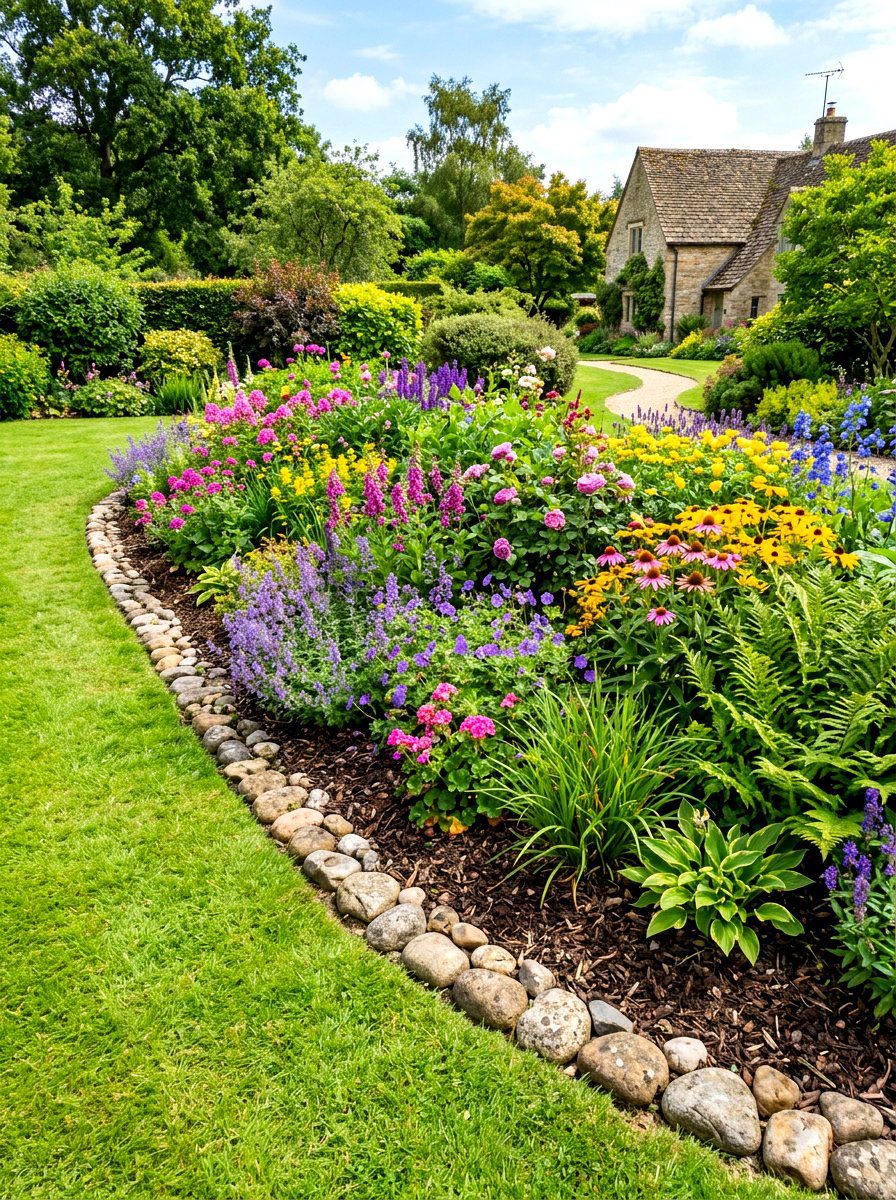
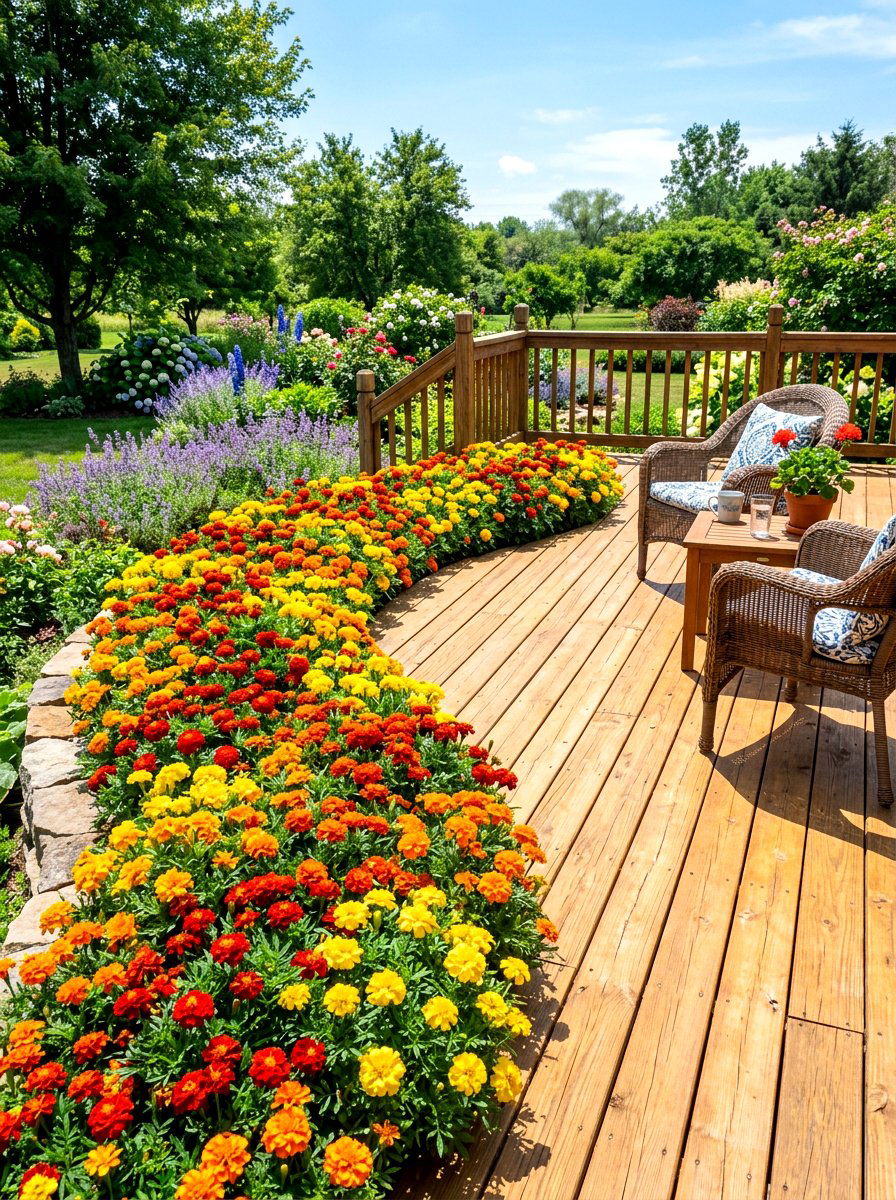
A stone border flower bed is a classic and effective way to define your garden areas and keep your landscaping looking tidy and professional. Instead of using plastic or wood edging, this design uses a line of natural stones — such as cobbles, flat fieldstones, or small boulders — to separate flower beds from lawns or pathways. This adds a rustic, organic touch that blends seamlessly with the plants. You can stack the stones slightly higher to create a raised bed, which improves drainage and elevates the flowers for better visibility. This simple addition provides a clean, finished look to your yard while preventing mulch from washing away and helping to suppress the spread of grass.
24. Mossy Rock Garden
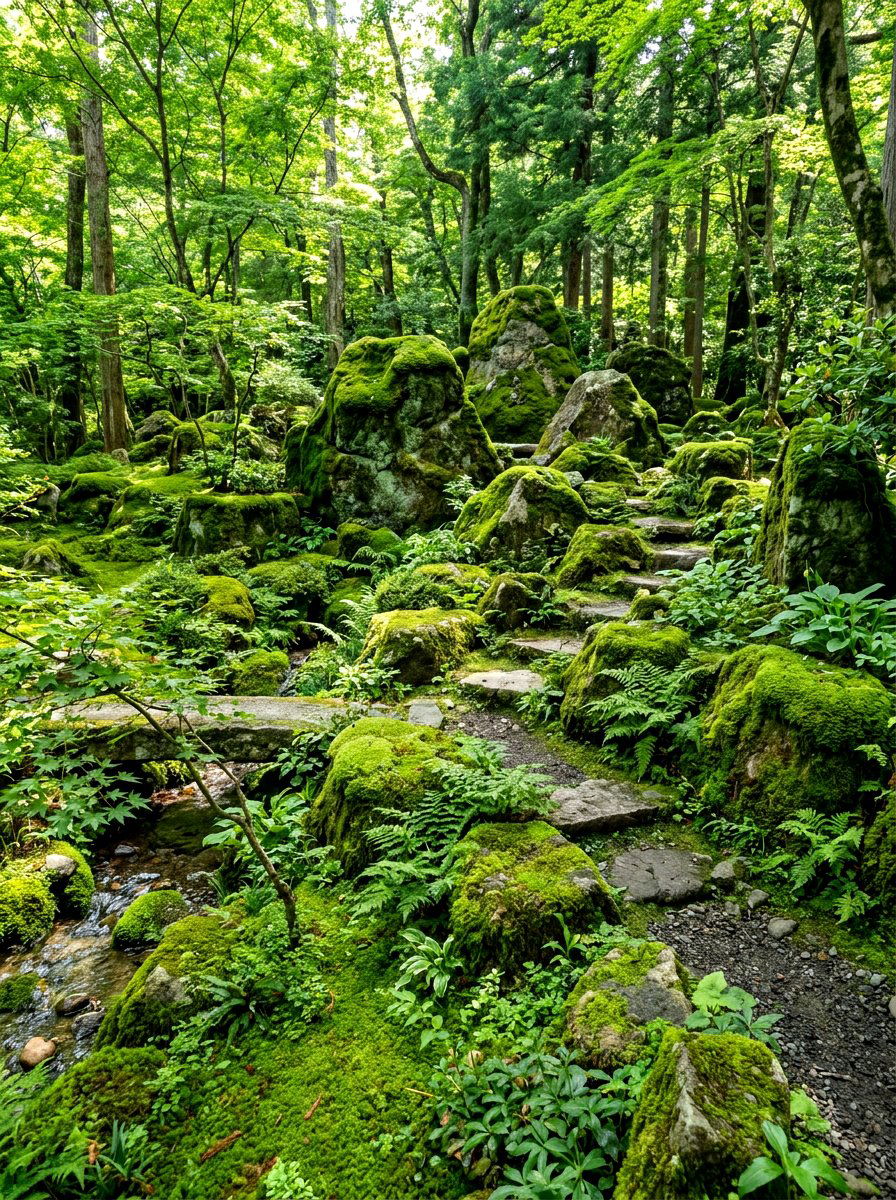
A mossy rock garden is the height of serene, ancient beauty, perfect for shaded areas where you want to create a sense of timelessness. This design relies on the soft, velvety texture of mosses to cover damp stones and the ground between them, creating a lush "green carpet" effect. To encourage moss growth, use porous rocks like sandstone or lava rock and keep the area consistently moist and shaded. This type of garden requires very little "traditional" maintenance like pruning or deadheading, as the moss does most of the work itself. It feels like a secret, enchanted forest corner, offering a quiet and very cool place for reflection away from the bright and busy world.
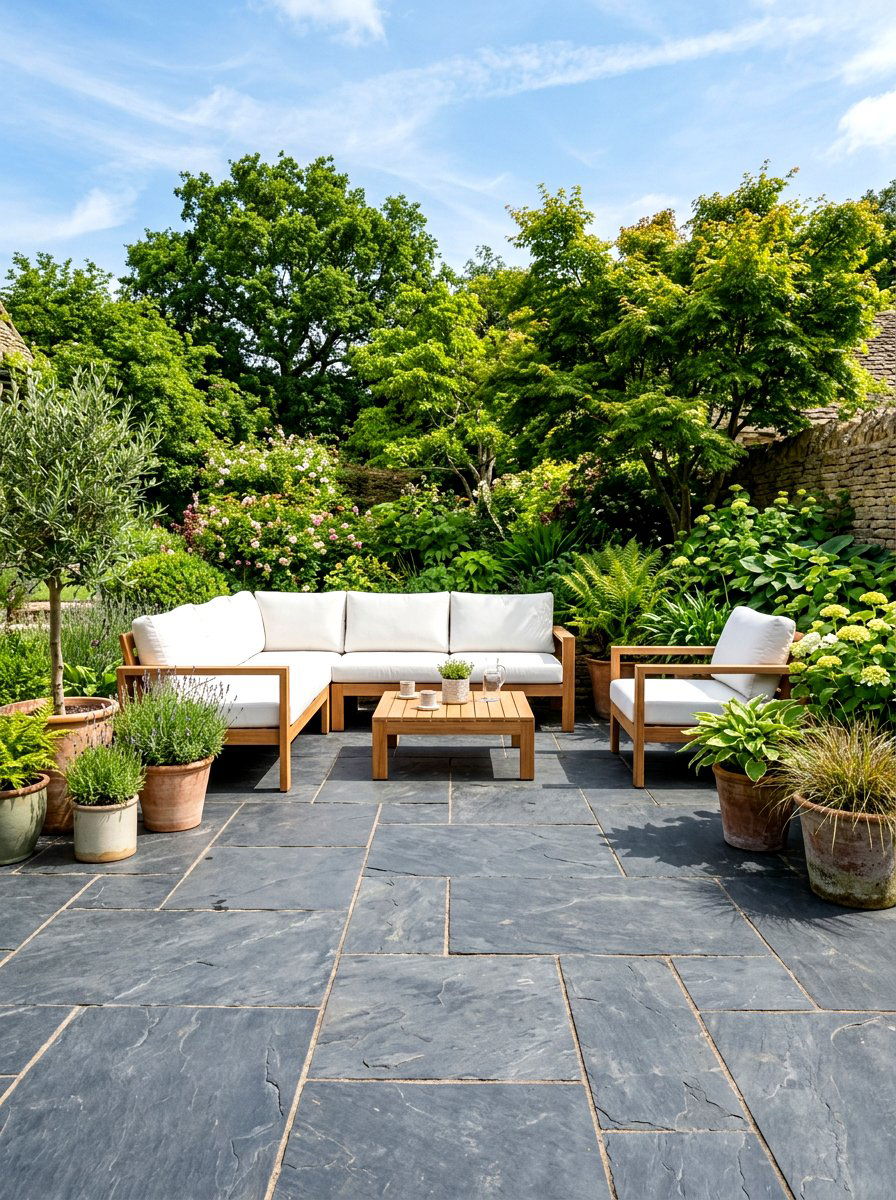
25. Herb Garden Rockery
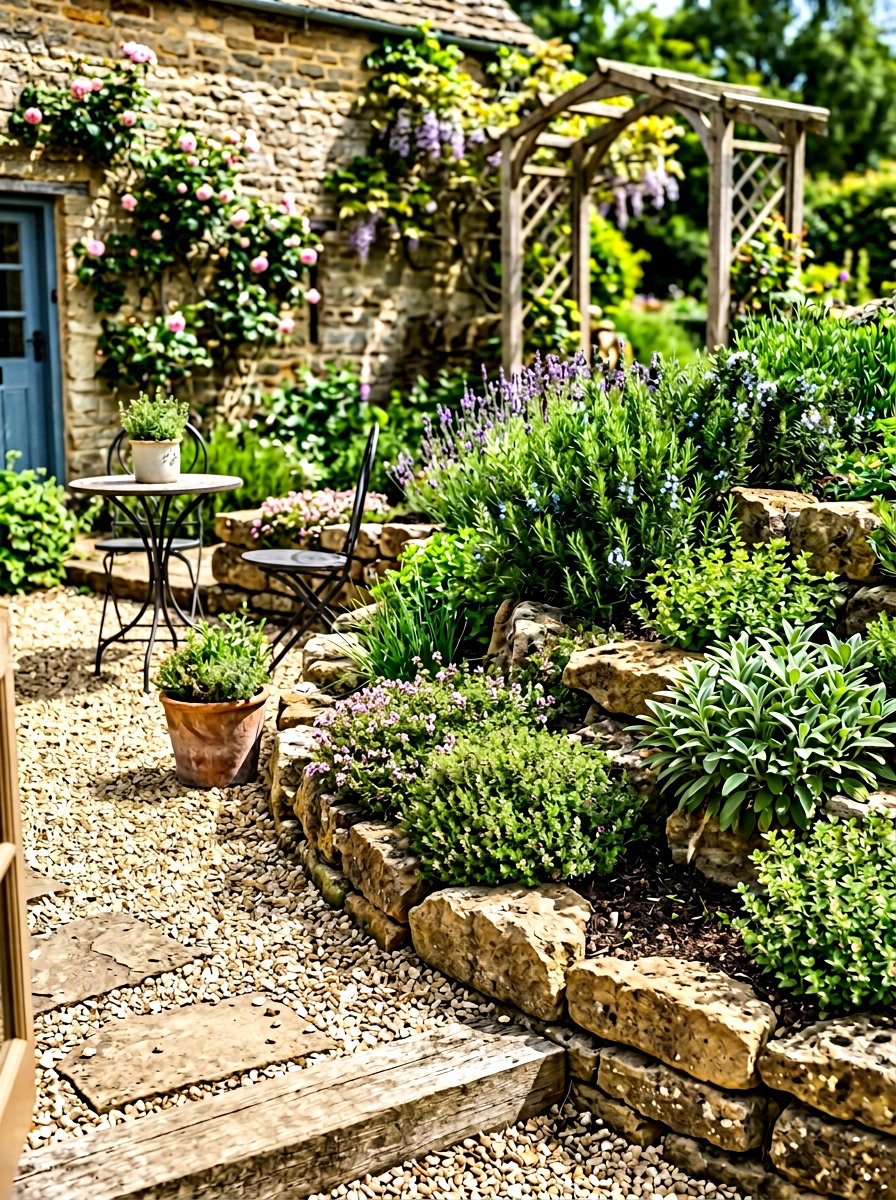
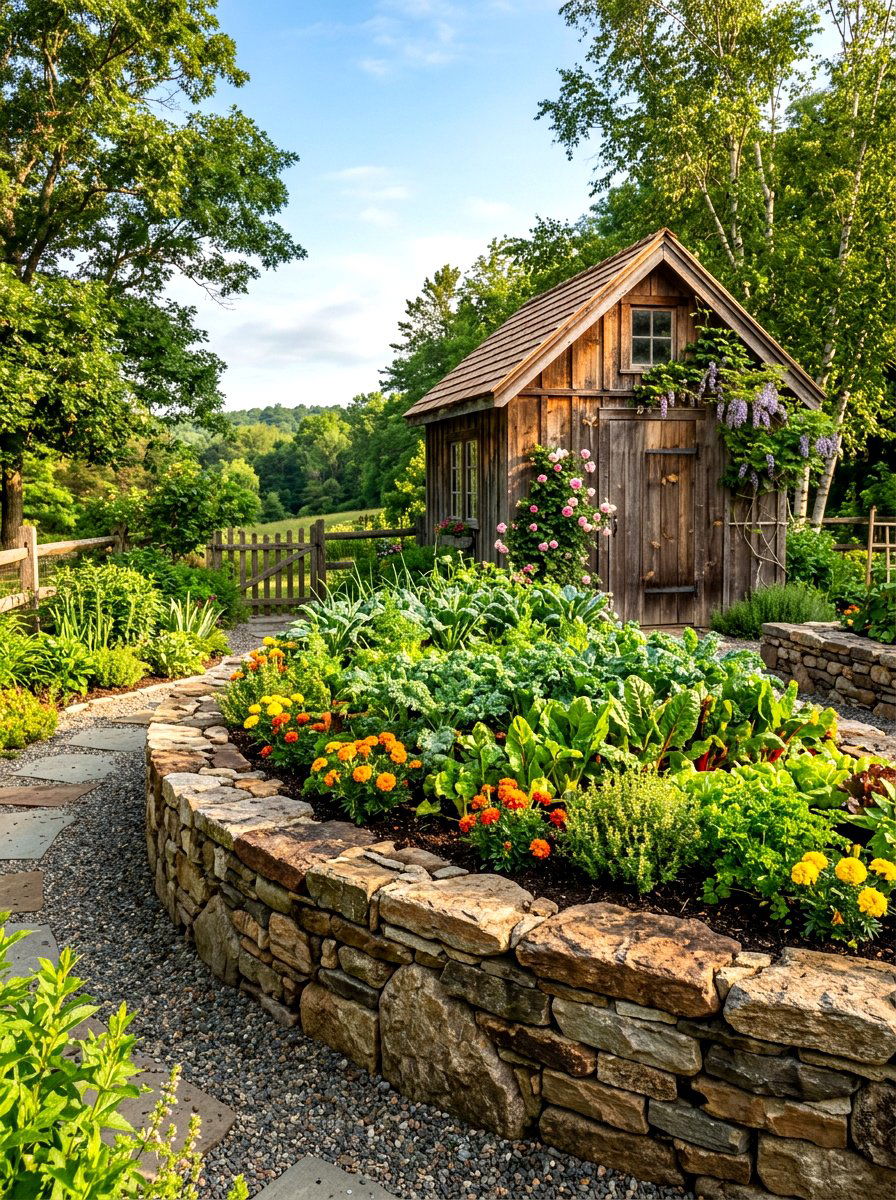
An herb garden rockery combines the practicality of growing your own food with the rugged beauty of a stone landscape. Many culinary herbs, such as thyme, oregano, and rosemary, actually prefer the sharp drainage and heat retention provided by rocks. In this design, stones are used to create small raised pockets where different herbs can be planted, preventing them from spreading too aggressively and becoming messy. The rocks also stay warm in the sun, which helps the herbs produce more of the essential oils that give them their flavor and fragrance. This functional garden is not only beautiful and aromatic but also incredibly useful, providing fresh ingredients for your kitchen all year long.
26. Japanese Maple Rock Garden
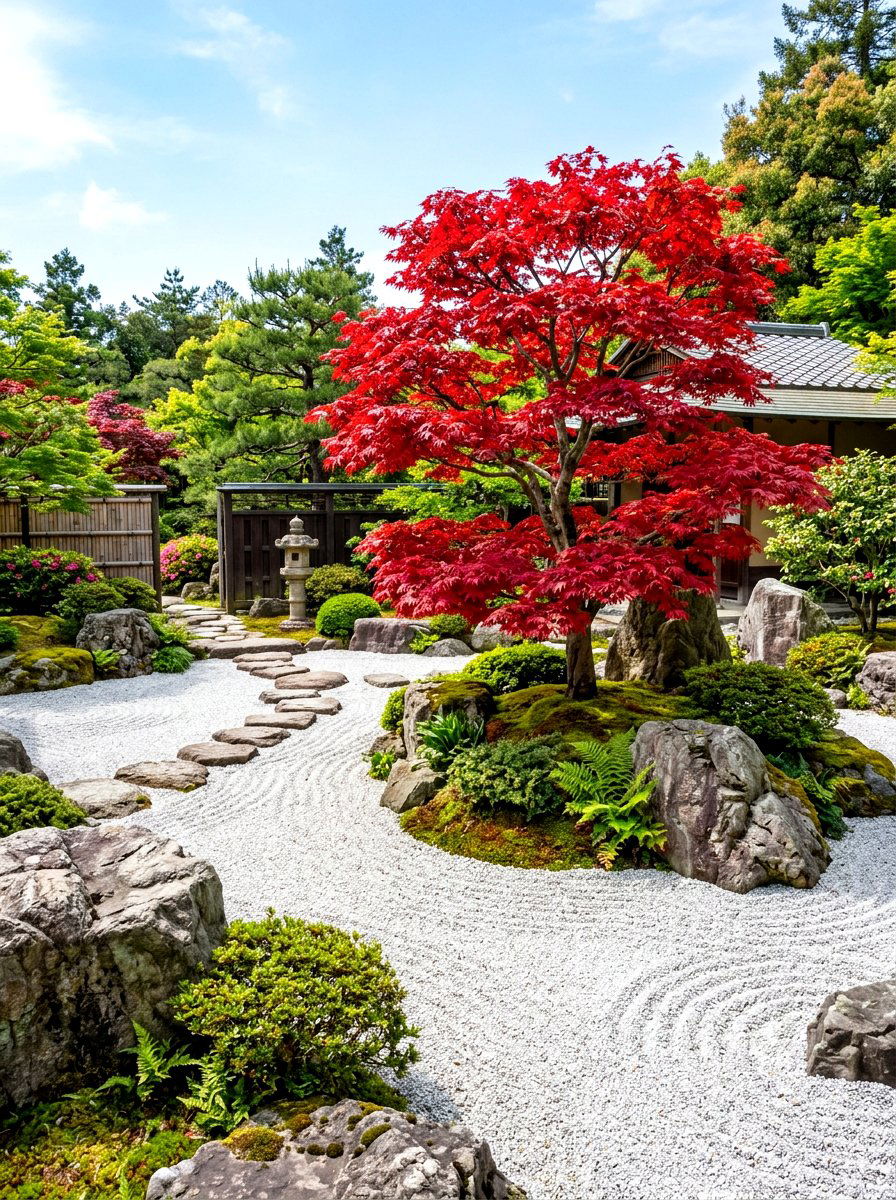
The Japanese maple rock garden is a sophisticated design that centers on the elegant, sculptural form of the acer tree. This concept uses the tree as a centerpiece, with its delicate, colorful foliage providing a soft contrast to the hard, gray boulders and gravel beneath it. To enhance the look, arrange the stones in a way that mimics a natural mountain stream or a rocky outcrop where the tree might grow in the wild. Use low-growing ground covers like moss or dwarf mondo grass to keep the base looking clean and focused. This design offers incredible seasonal interest, as the maple’s leaves change from vibrant greens or reds in summer to spectacular oranges and purples in the fall.
27. Cacti Rock Garden
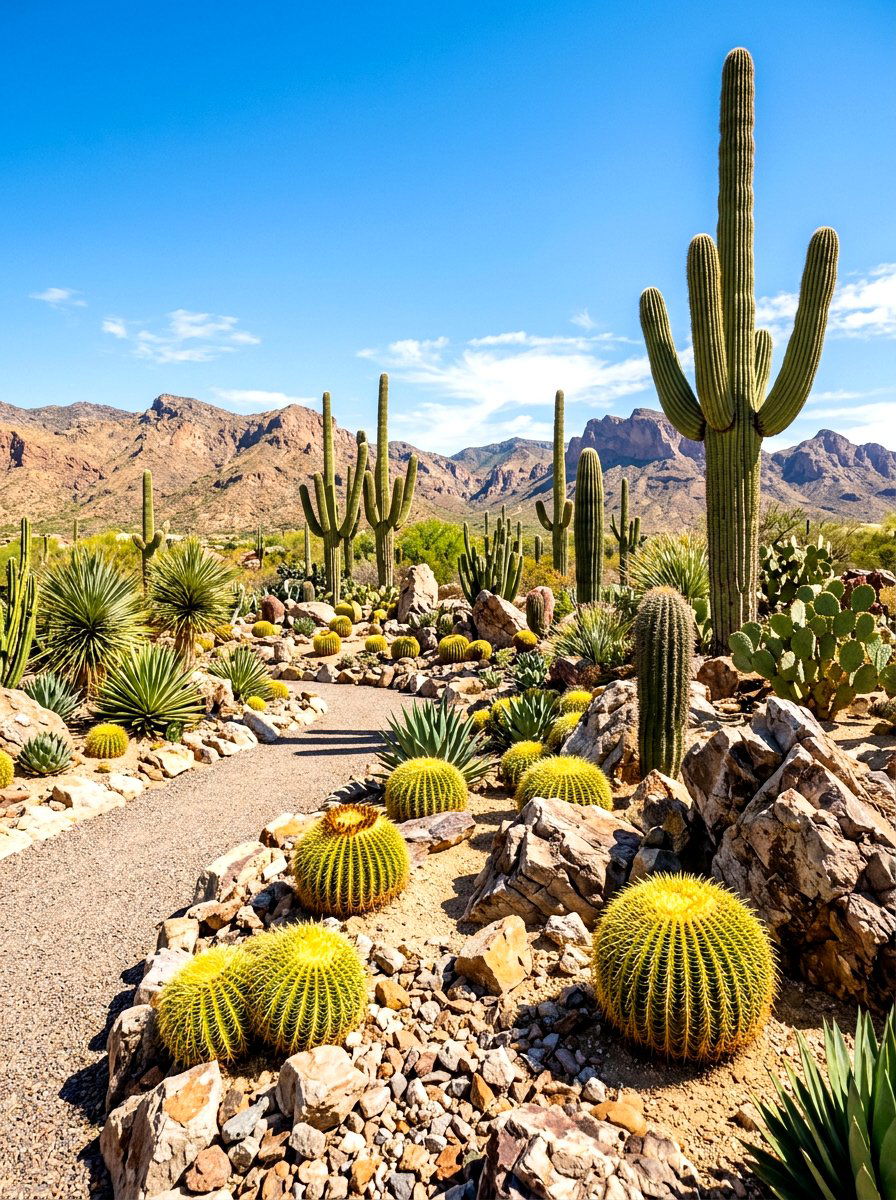
A cacti rock garden is a bold, architectural choice that celebrates the unique silhouettes and rugged survival skills of desert plants. This design works best in full sun, using sharp, jagged rocks and a base of coarse sand or gravel to provide the arid conditions these plants love. Arrange a variety of cacti, from tall columnar species to round barrel varieties, to create a sense of rhythm and height within the garden. The stones protect the base of the plants from excess moisture and reflect heat, helping them thrive. This high-contrast, low-water landscape is perfect for front yards in dry climates, offering a striking and very low-maintenance alternative to traditional green flowering beds.
28. Retaining Wall Rock Garden
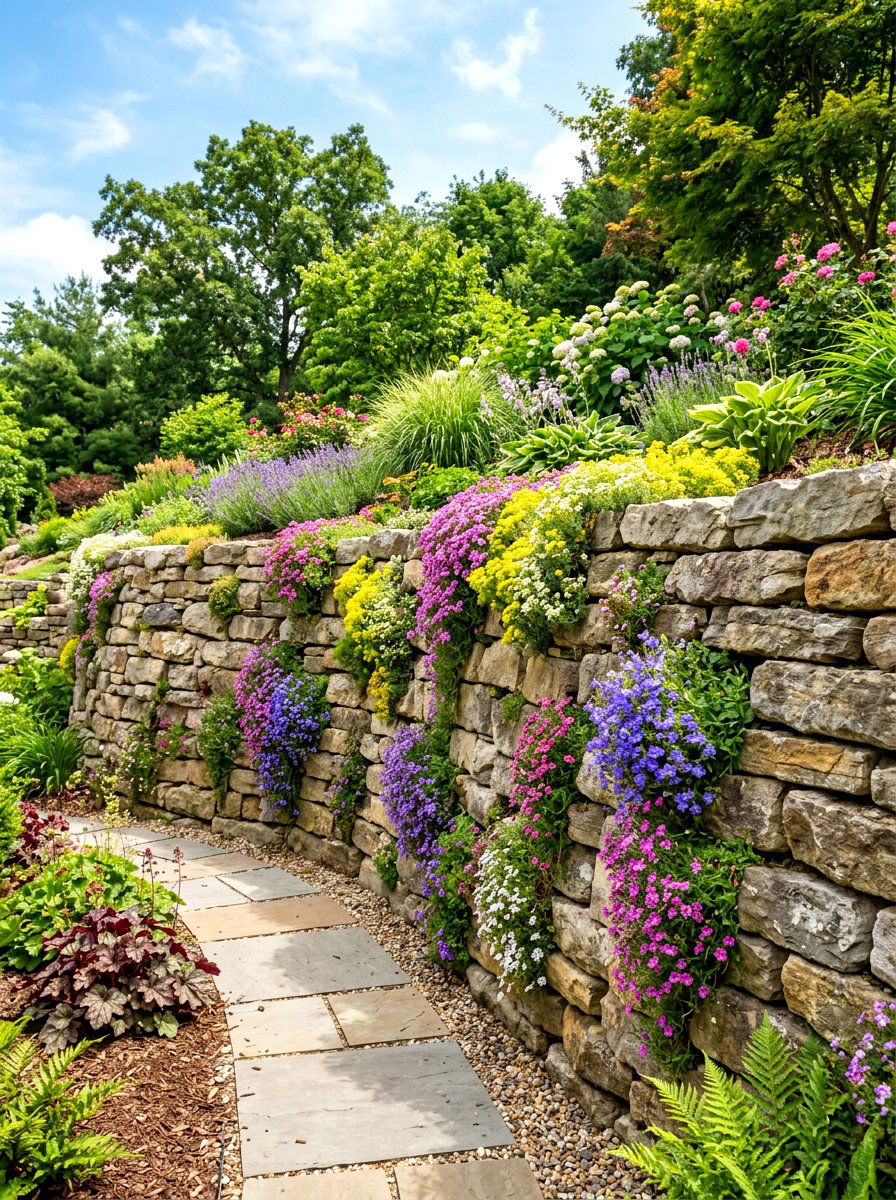
A retaining wall rock garden turns a necessary structural feature into a beautiful planting opportunity. Instead of a plain concrete wall, this design uses stacked natural stones to hold back soil on a slope, leaving small gaps and crevices between the rocks. These spaces are then filled with "wall-following" plants like stonecrops, campanula, or creeping phlox that will eventually grow over and soften the stone face. This "living wall" effect blends the hardscape into the garden, making the retaining structure feel like a natural part of the environment. It is a brilliant way to maximize planting space in a small yard while solving erosion problems with a very professional and high-end aesthetic.
29. River Rock Landscaping
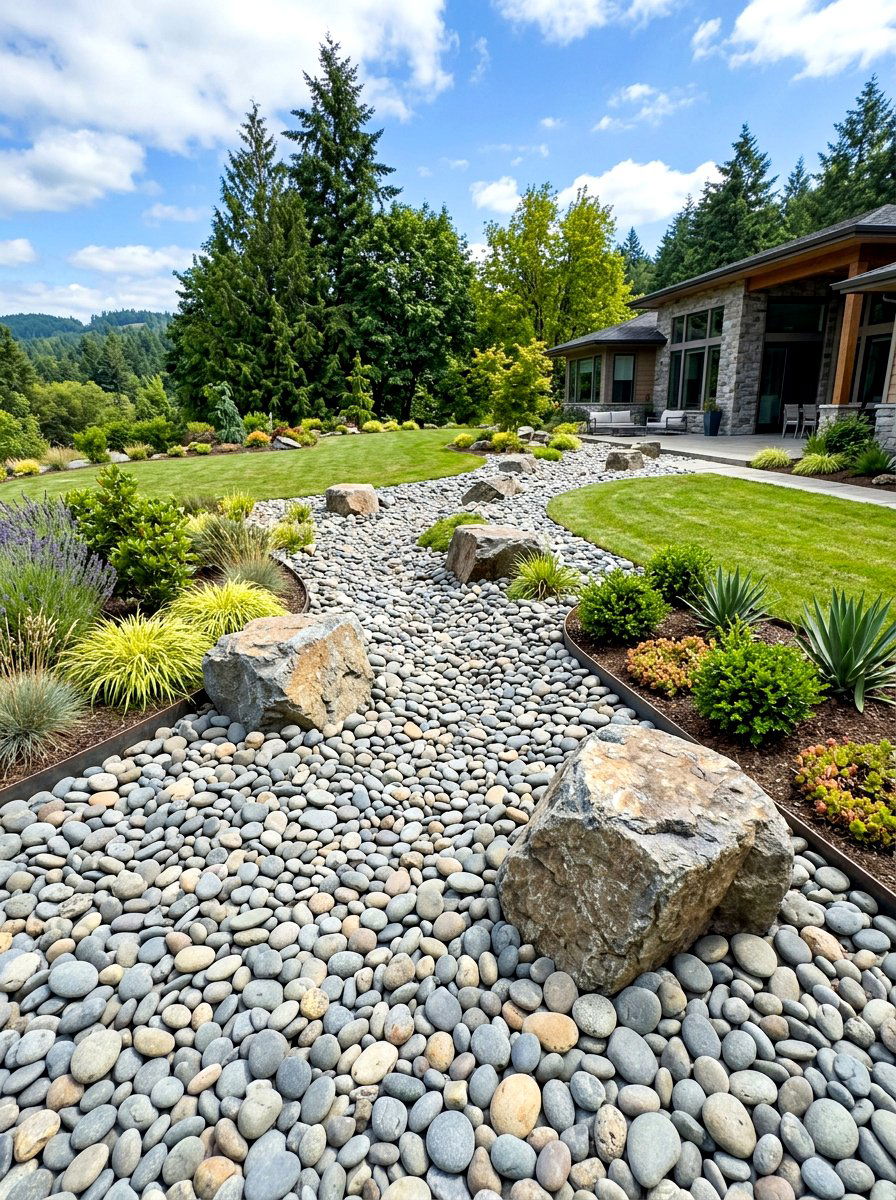
River rock landscaping uses smooth, water-worn stones to create a clean, modern, and very peaceful outdoor environment. This design typically involves large areas covered in uniform river rocks of various sizes, often in soothing shades of gray, blue, and tan. Unlike jagged rocks, these smooth stones are pleasant to walk near and give the garden a soft, flowing feel. You can use them to fill in large gaps between pavers, line the base of a house to prevent mud splashes, or create a serene ground cover under a group of trees. Because they don't break down like wood mulch, river rocks are a permanent and very low-maintenance solution for keeping your yard looking neat.
30. Rock Garden Seating Area
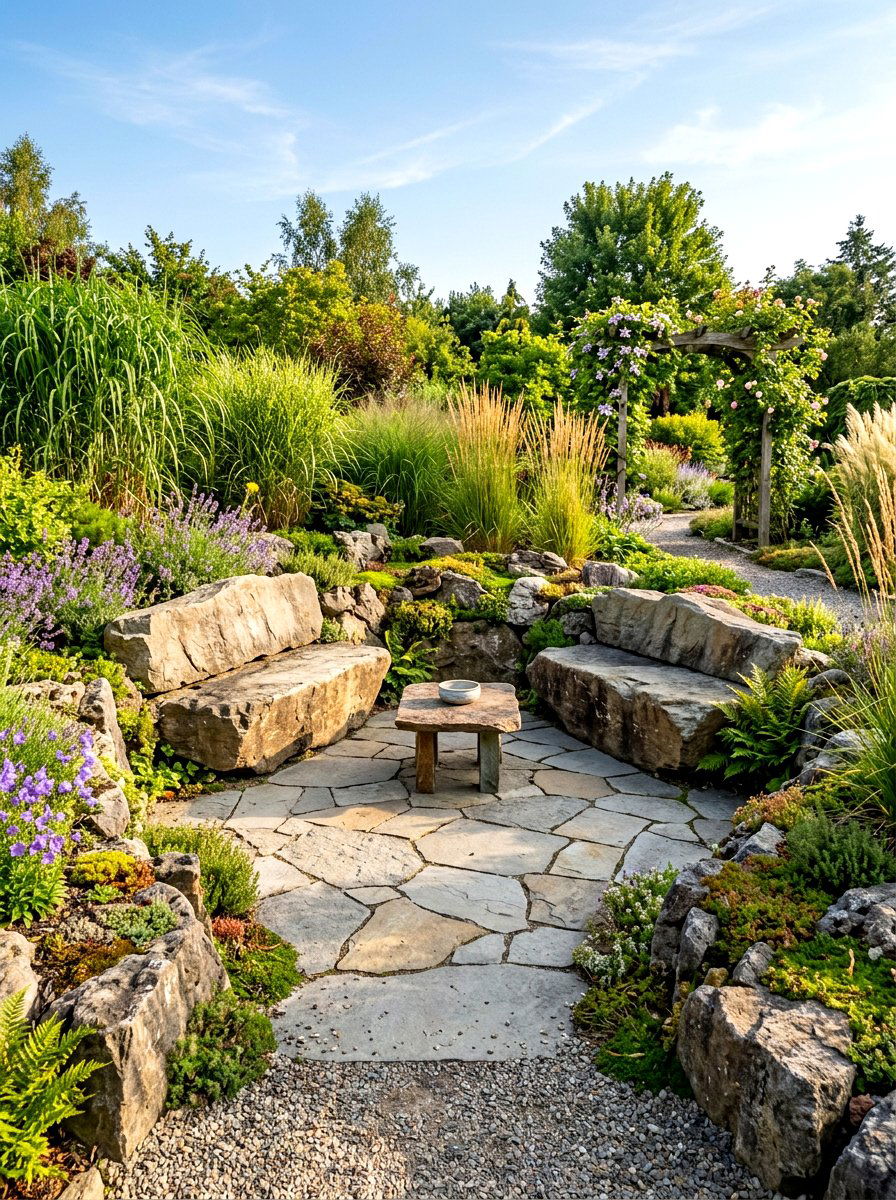
A rock garden seating area provides a rugged, naturalistic place to relax and enjoy the beauty of your outdoor space. This design uses large, flat-topped boulders as natural benches or incorporates a stone-paved patio surrounded by a lush rockery. To make the space comfortable, surround the seating with fragrant plants like lavender or tall ornamental grasses that provide a sense of privacy and enclosure. The use of natural stone for the floor and furniture ensures the area is incredibly durable and requires almost zero maintenance compared to wooden decks. This concept creates a timeless "outdoor room" that feels deeply connected to the earth, providing a perfect spot for morning coffee or evening stargazing.
Conclusion:
Investing in a well-planned rock garden is a transformative decision that brings long-lasting value and unparalleled beauty to your property. These thirty ideas demonstrate that stones are far from boring; they are the versatile bones of a landscape that can be adapted to any style, from the serenity of a Zen retreat to the bold architectural lines of a modern desert oasis. By prioritizing natural textures, drainage, and hardy plant selections, you create a sustainable outdoor environment that thrives with minimal intervention. Whether you are tackling a difficult slope or simply looking to reduce your water usage, a rock garden provides a sophisticated, year-round solution that will make your home the envy of the neighborhood.

Related posts: