Cactus gardens have become a major trend for homeowners looking to blend striking architectural beauty with incredible sustainability. These resilient plants offer a unique structural elegance that few other species can match, making them a top choice for modern landscaping. Whether you live in an arid desert climate or a temperate region, a well-planned cactus garden provides year-round visual interest with minimal water requirements. This makes them perfect for busy people who still want a stunning outdoor space. Beyond their low maintenance needs, cacti come in a vast array of shapes, sizes, and colors that can transform any boring yard into a Pinterest-worthy sanctuary.
1. Modern Minimalist Cactus
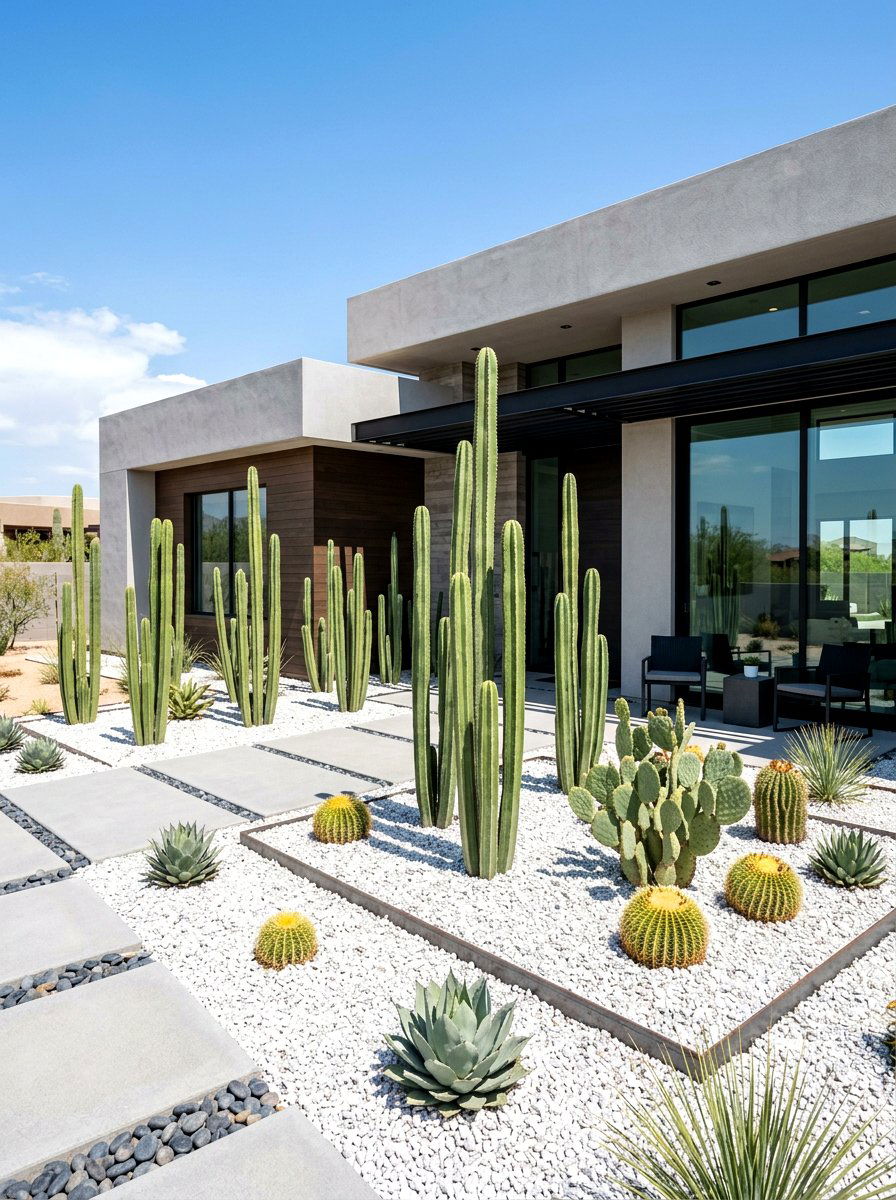
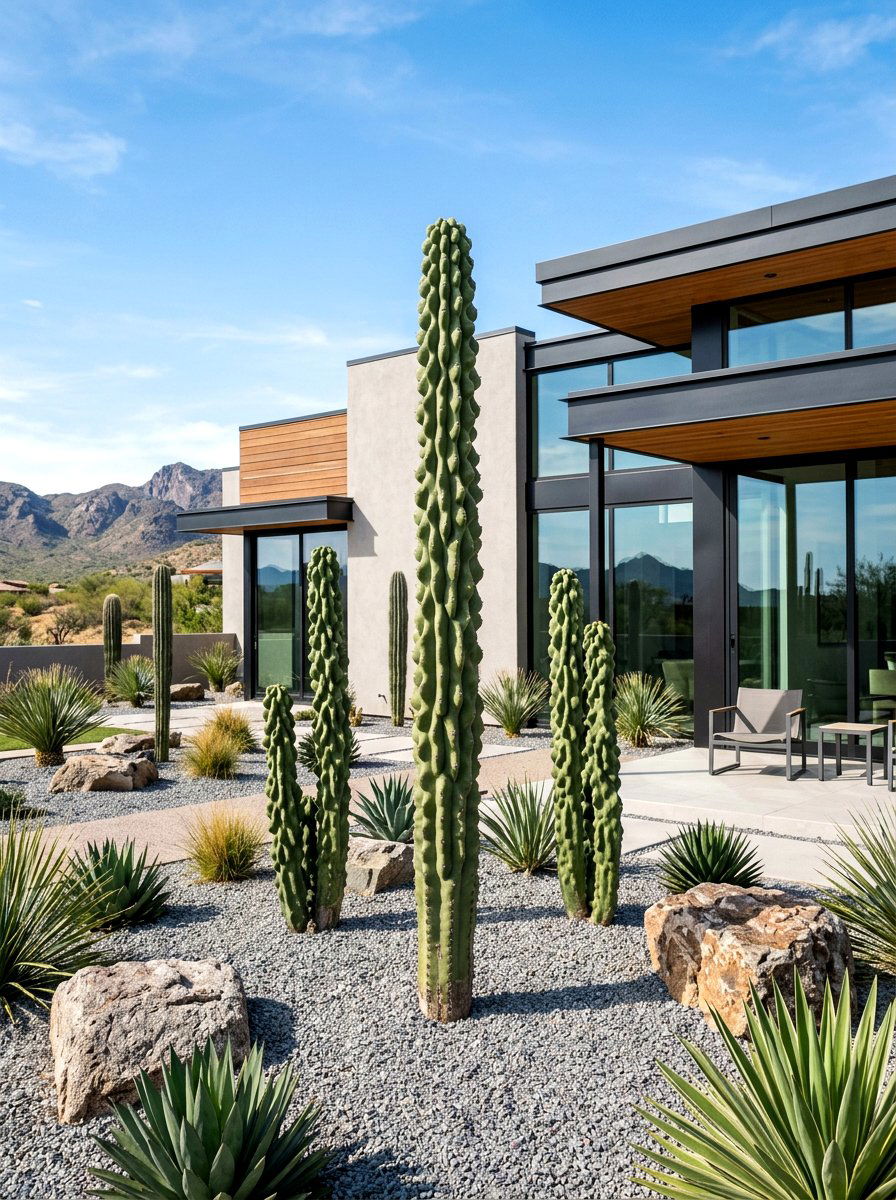
A modern minimalist cactus garden focuses on clean lines and a restricted color palette to create a high-end, sophisticated look. You can achieve this by using a few selected species, such as tall columnar cacti, spaced evenly apart against a backdrop of smooth white or light gray gravel. This design highlights the individual silhouette of each plant, turning them into living sculptures. Avoid overcrowding the space, as the "empty" areas of gravel are just as important for the aesthetic as the plants themselves. This style is perfect for contemporary homes where the architecture is simple and sleek, providing a seamless transition between the indoors and the landscape.
2. Desert Landscaping Rock
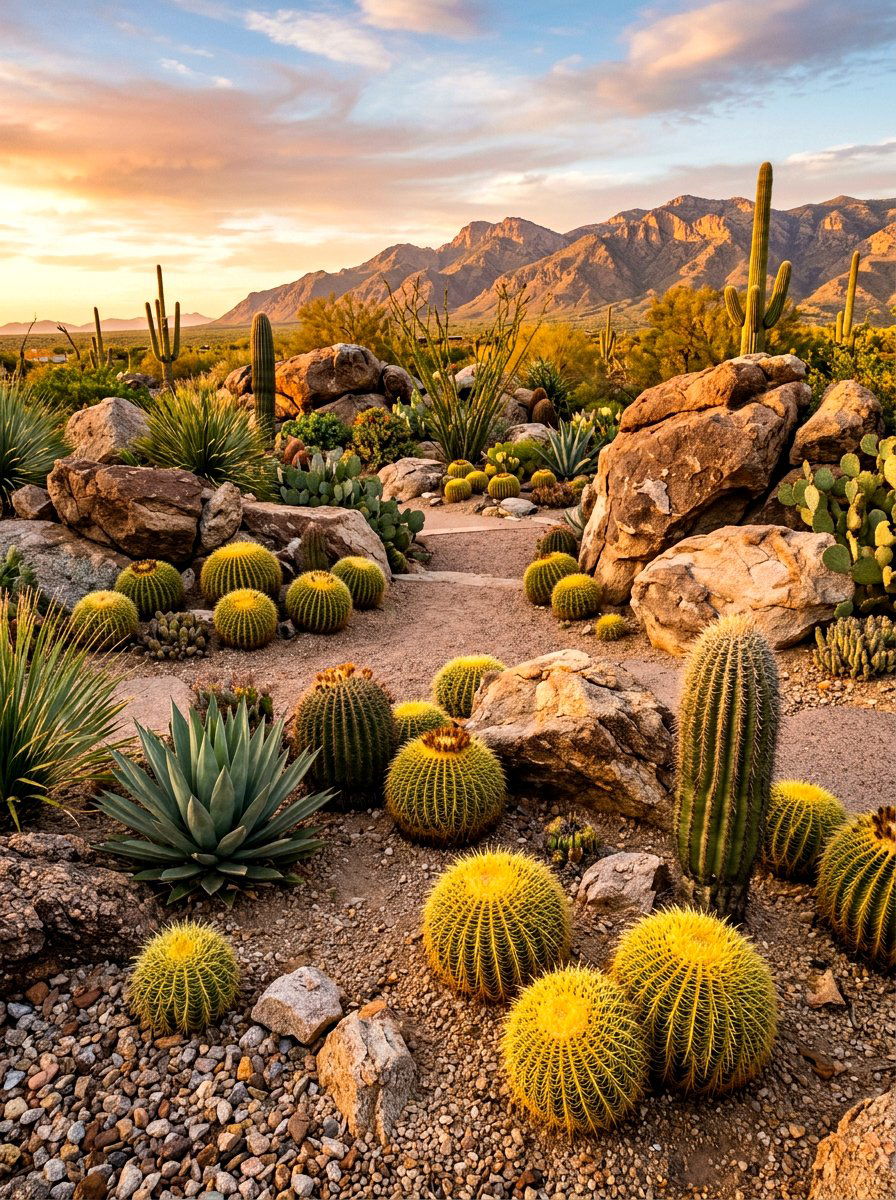
Using natural desert landscaping rocks helps anchor your cactus garden and gives it a rugged, authentic feel that mimics the wild. You should vary the sizes of the rocks, placing large boulders as focal points and using smaller river stones or crushed granite to fill in the gaps. This technique not only looks beautiful but also helps with soil drainage and temperature regulation for the plant roots. Try to choose rocks that match the local geology of your area to ensure the garden looks like a natural extension of the environment. Strategically placing cacti tucked between stones creates a sense of age and permanence in your backyard design.
3. Potted Cactus Arrangement
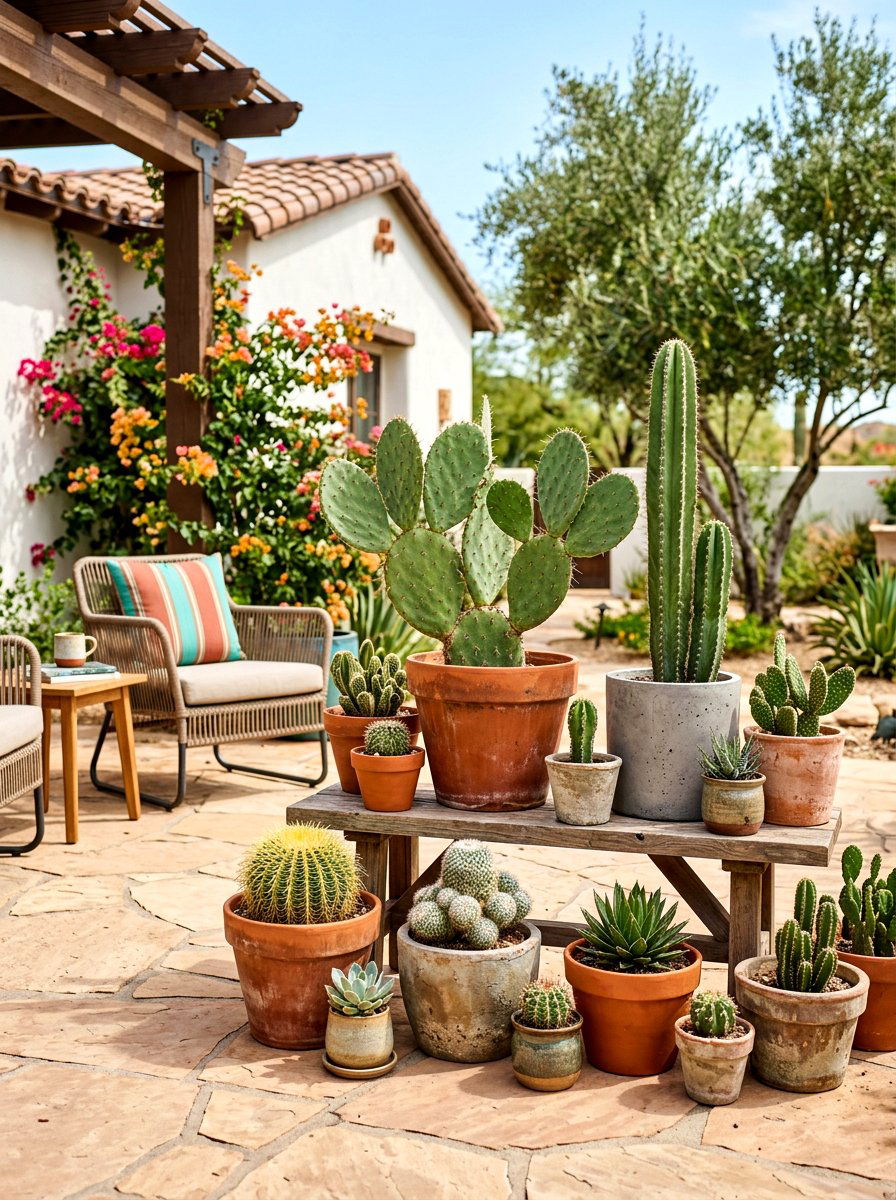
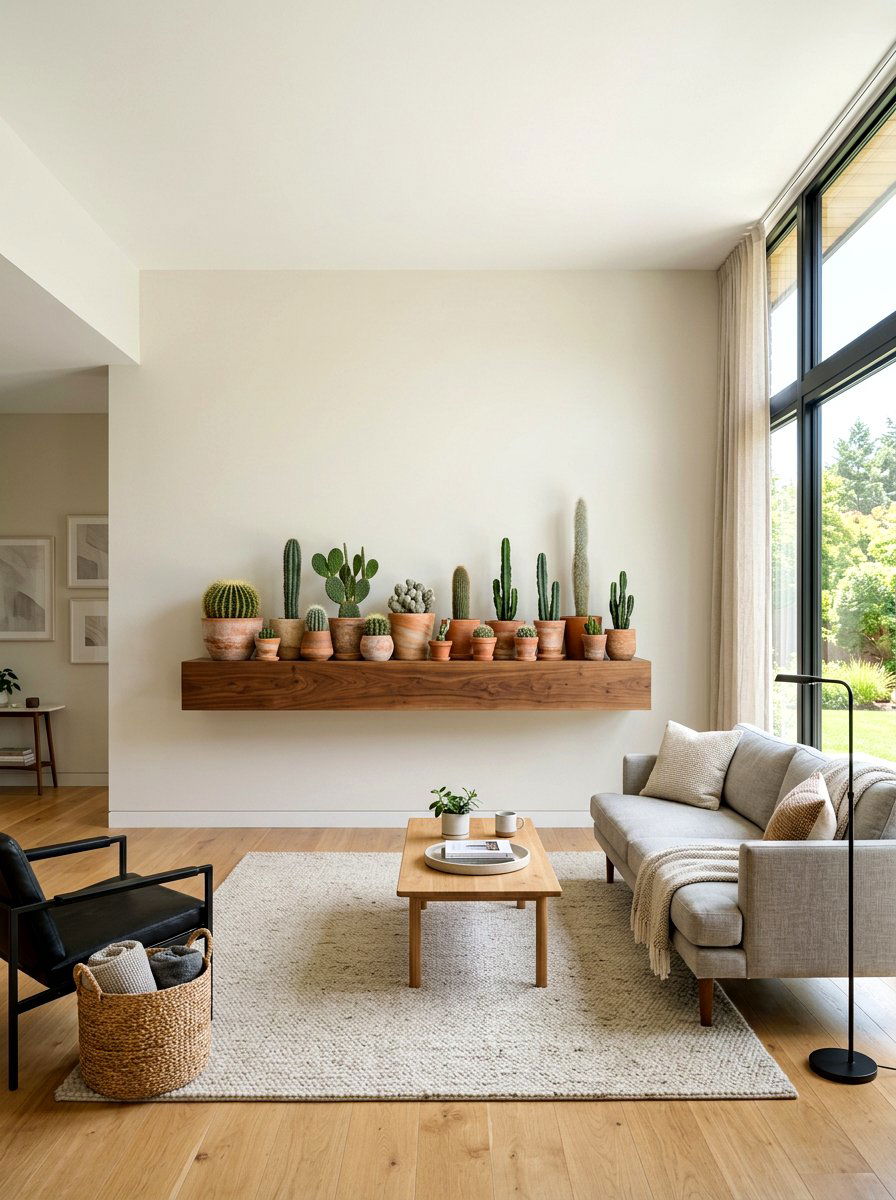
For those with limited ground space or a paved patio, a potted cactus arrangement offers a flexible and stylish way to go green. You can use an assortment of terracotta, concrete, or ceramic pots in various heights and widths to create a dynamic multi-level display. Grouping the pots together in odd numbers, like three or five, often creates a more pleasing visual balance. This method allows you to move plants around to follow the sun or protect them from rare frost. By mixing different species like round barrels and spiny prickly pears in matching containers, you can create a cohesive look that feels intentional and well-curated.
4. Tall Saguaro Focal Point
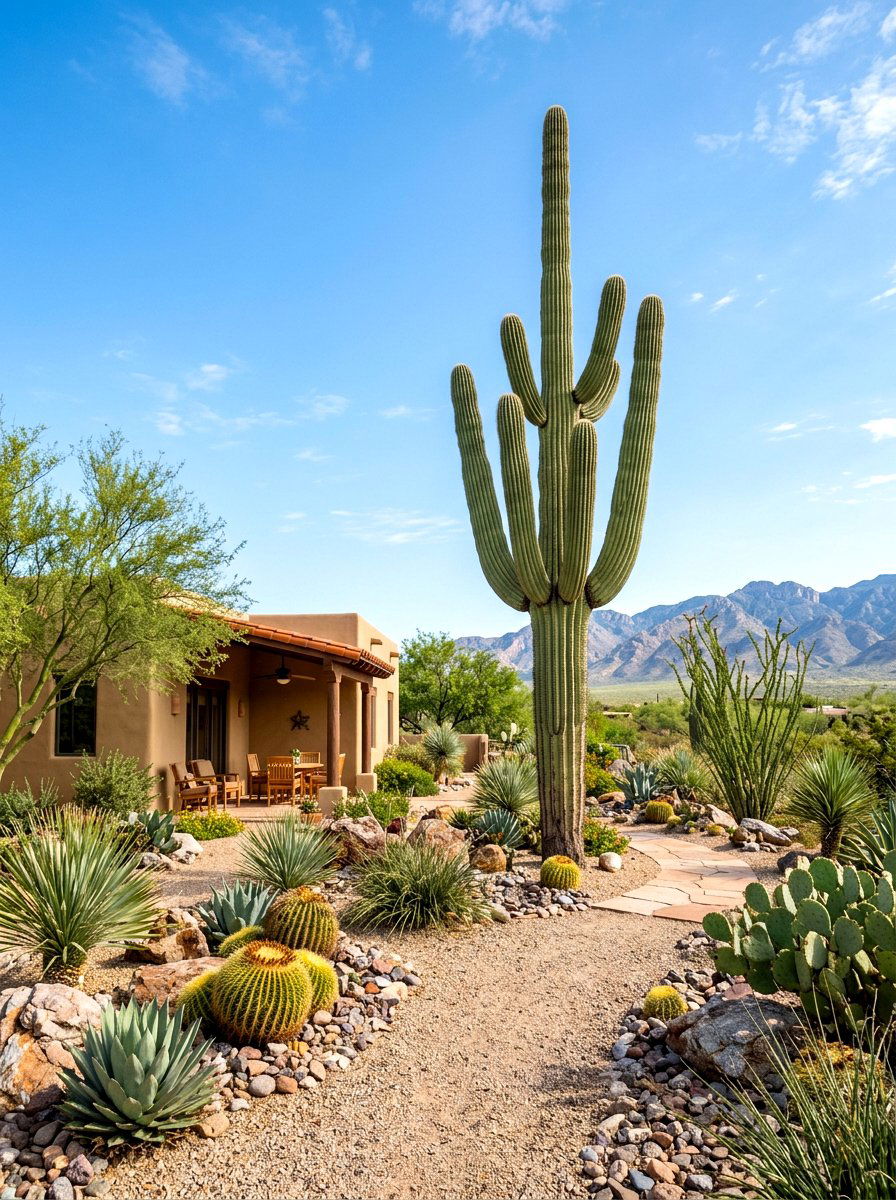
Nothing says desert elegance quite like a tall saguaro focal point standing guard over your garden. These iconic giants provide an unmatched vertical element that can draw the eye upward and make a small yard feel much larger. Because they grow slowly, planting a mature specimen is a significant investment that instantly adds value and character to your property. Surround the base of the saguaro with lower-growing succulents or fine gravel to keep the focus on its majestic form. If you live in a climate where saguaros thrive, they become the undisputed star of the landscape, providing a dramatic silhouette against the sunset every single evening.
5. Small Front Yard Xeriscape
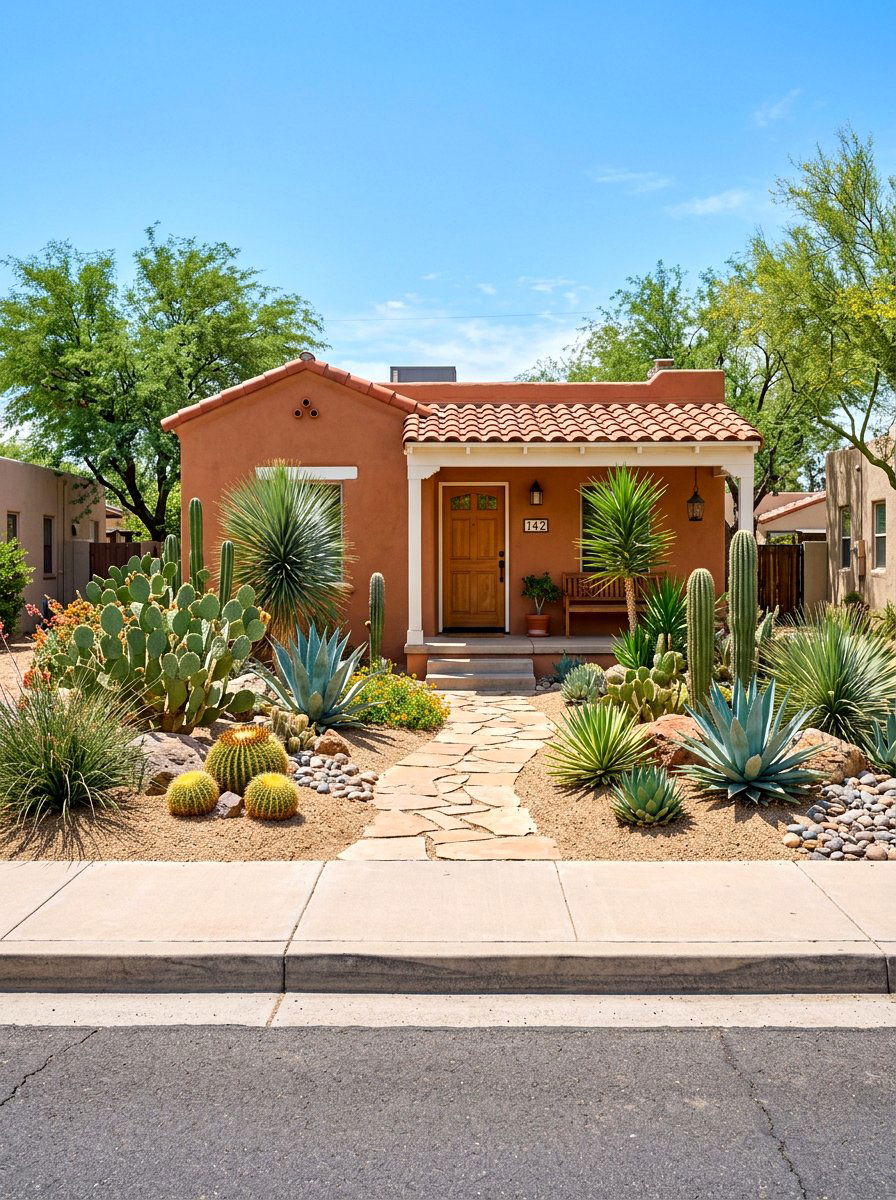
A small front yard xeriscape is the perfect solution for homeowners who want to boost curb appeal while drastically reducing their monthly water bill. By replacing a traditional grass lawn with drought-tolerant cacti and decorative mulch, you create a garden that stays vibrant even during the hottest summer months. Use a mix of medium-sized cacti like the Mexican Fence Post and smaller ground-covering varieties to add layers of interest. This type of gardening is not only environmentally friendly but also requires very little pruning or weeding. It turns a high-maintenance chores-heavy area into a beautiful, self-sustaining ecosystem that looks great from every angle of the street.
6. Prickly Pear Fence
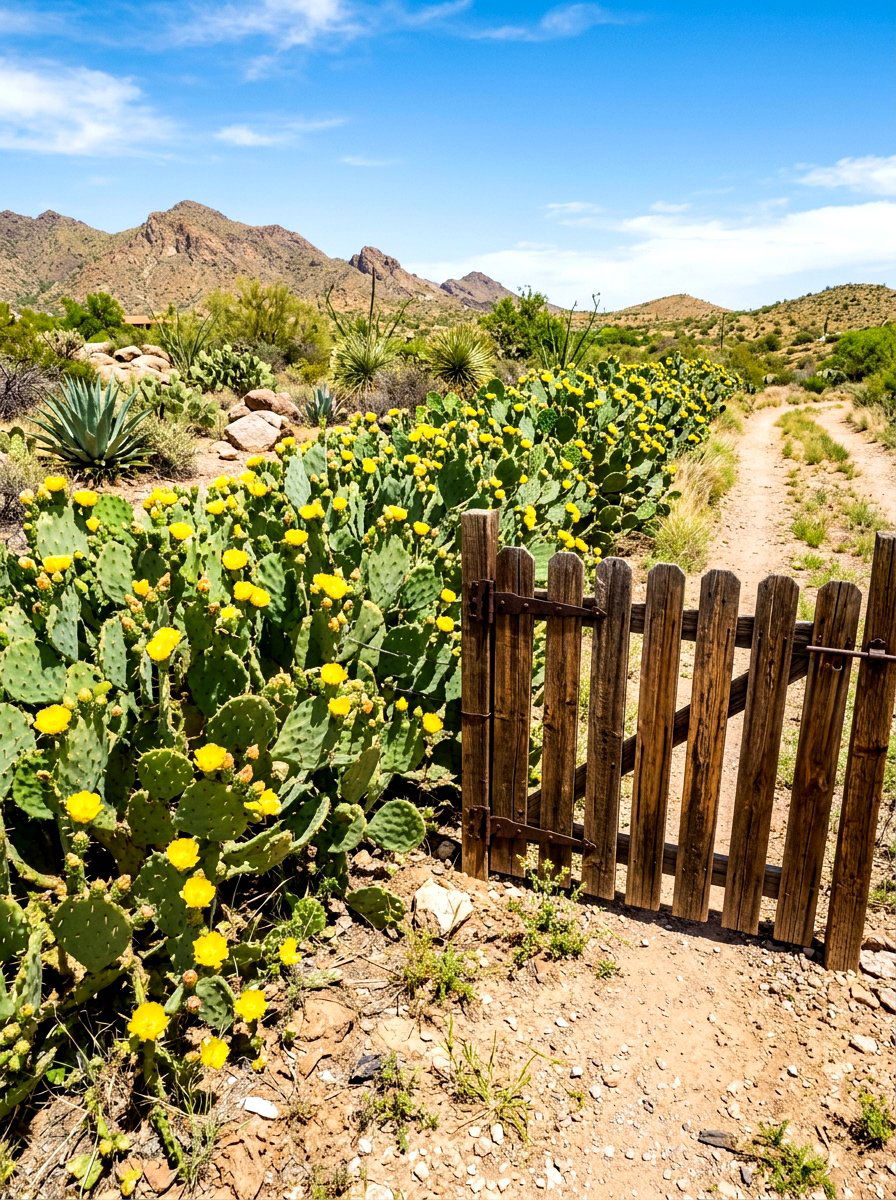
Creating a prickly pear fence is a brilliant way to establish a natural, living boundary that provides both privacy and a unique aesthetic. The flat, paddle-shaped segments of the Opuntia cactus grow densely, forming a thick barrier that is as beautiful as it is functional. In the spring, these fences often burst into color with bright yellow or pink flowers, followed by edible purple fruits. This type of garden installation works well along property lines or as a backdrop for a seating area. It offers a softer, more organic alternative to traditional wooden or metal fencing while adding a distinct Southwestern charm to your overall outdoor living space.
7. Gravel Pathway Garden
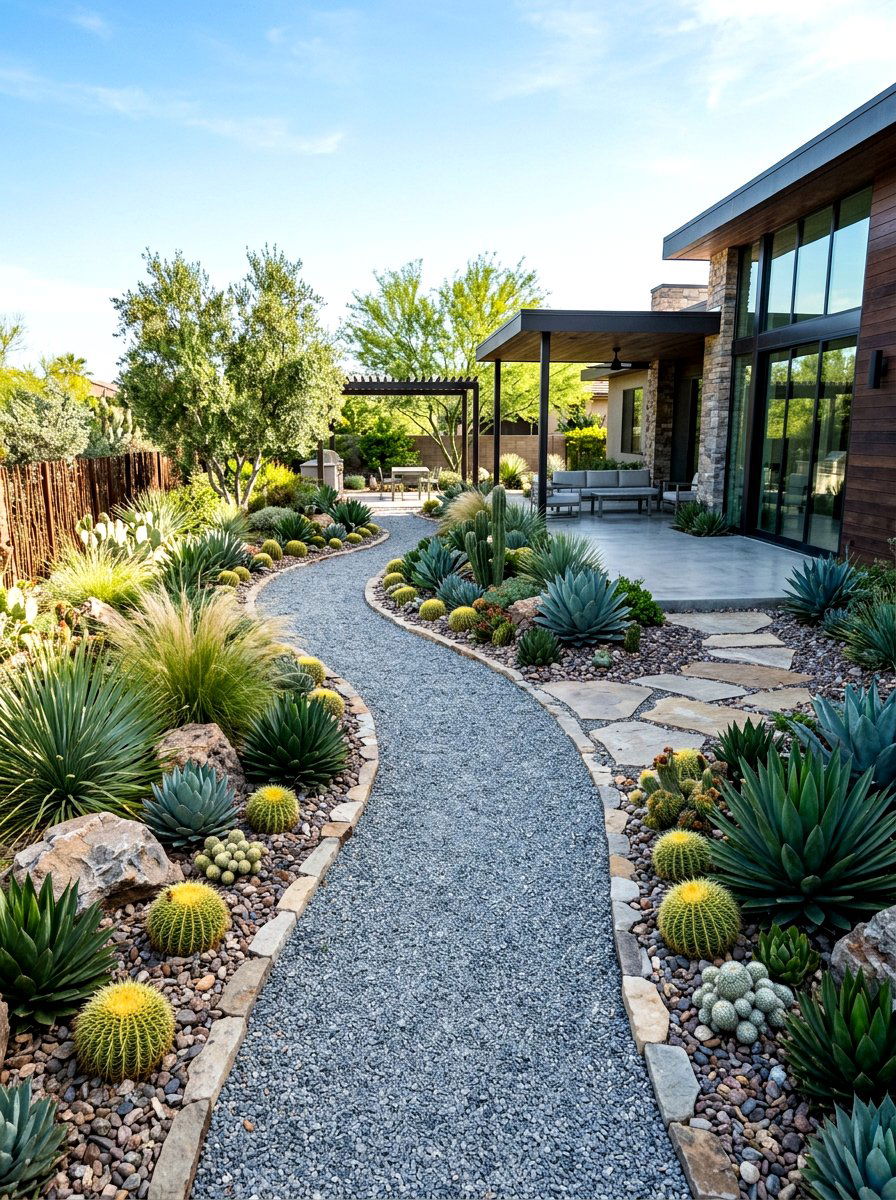
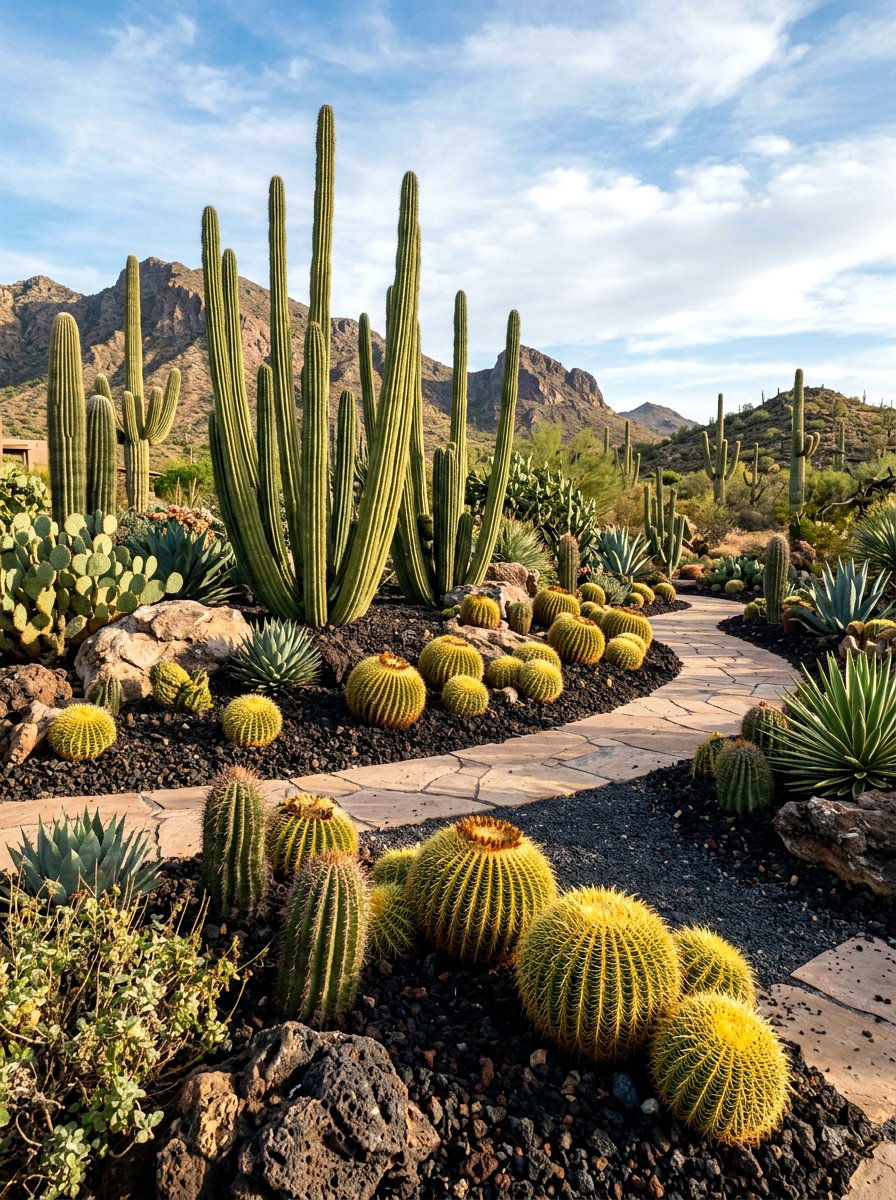
A gravel pathway garden combines the functionality of a walkway with the beauty of desert flora lining the edges. Using a fine-textured gravel like decomposed granite creates a soft surface for walking, while larger stones can define the garden beds on either side. Plant a variety of low-profile cacti along the path to create a sense of movement and discovery as you walk through the space. Be sure to choose varieties that don't have long, reaching spines to ensure the path remains safe for guests. This layout encourages people to slow down and appreciate the intricate details and textures of the different cactus species in your collection.
8. Colorful Succulent And Cactus Mix
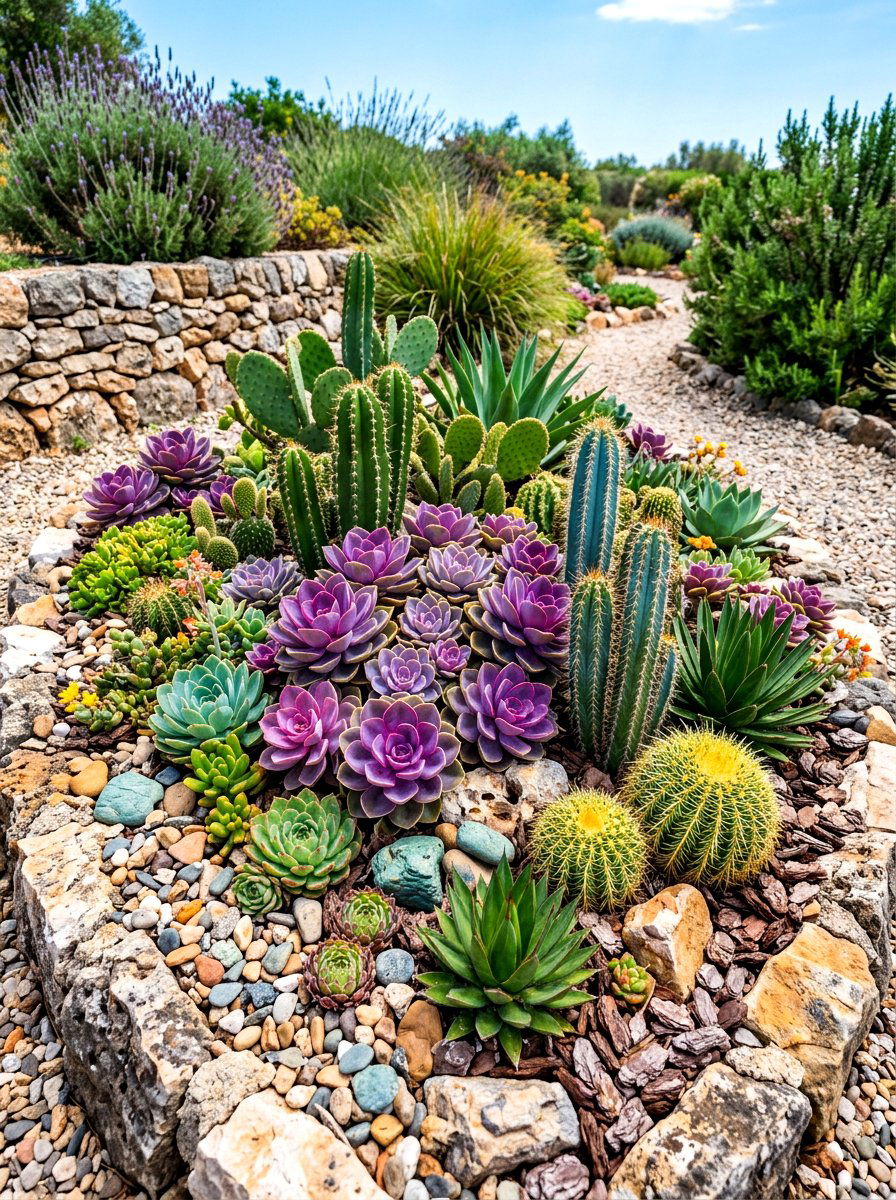
Combining a colorful succulent and cactus mix allows you to play with a wide spectrum of hues, from deep purples and blues to bright oranges. While many cacti are green, their spines and flowers come in many shades, and pairing them with colorful succulents like Echeveria or Sedum adds extra depth. The contrast between the rigid, spiny forms of the cacti and the soft, fleshy leaves of the succulents creates a rich tapestry of textures. This approach is ideal for large garden beds where you want to create a lush, full look without needing the water required for a traditional flower garden or a tropical landscape.
9. Vertical Cactus Wall
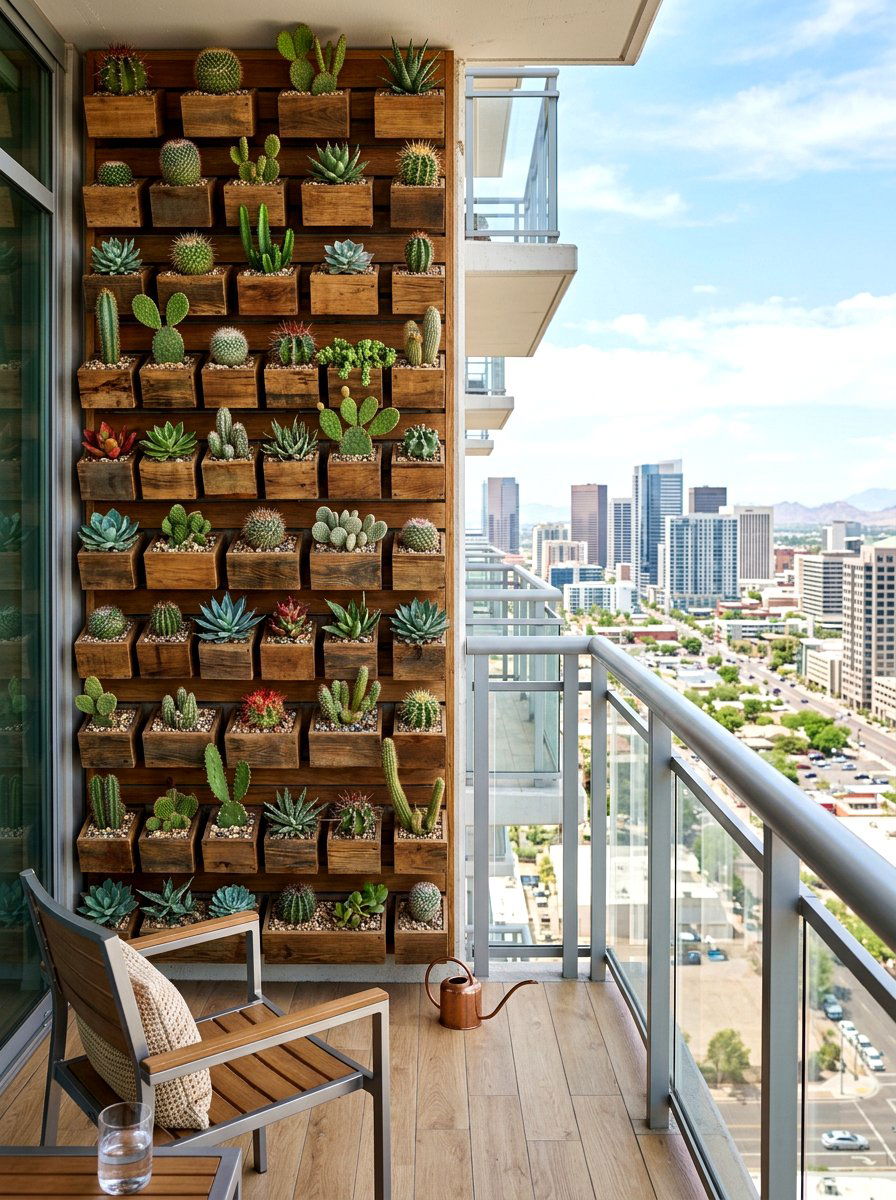
A vertical cactus wall is an innovative way to introduce greenery into a very tight space, such as a narrow side yard or a balcony. By using specialized wall-mounted planters or a tiered shelving system, you can stack various small cactus species to create a "living art" installation. This setup works exceptionally well with trailing varieties like the Rat Tail cactus or small, clumping types like the Ladyfinger cactus. Vertical gardens help to soften the look of hard walls and can even provide a bit of natural insulation or sound dampening. It is a modern solution for urban dwellers who want to enjoy the desert aesthetic in a compact environment.
10. Raised Garden Bed
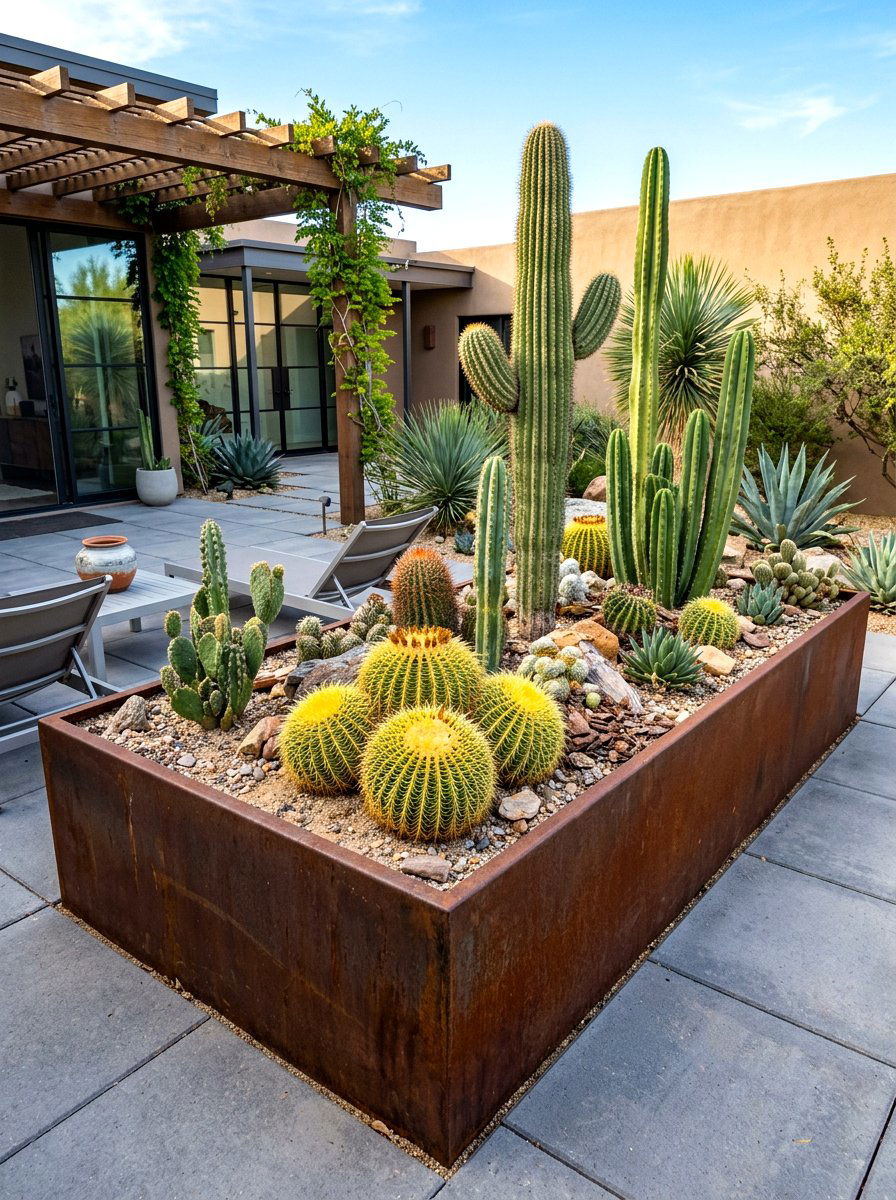
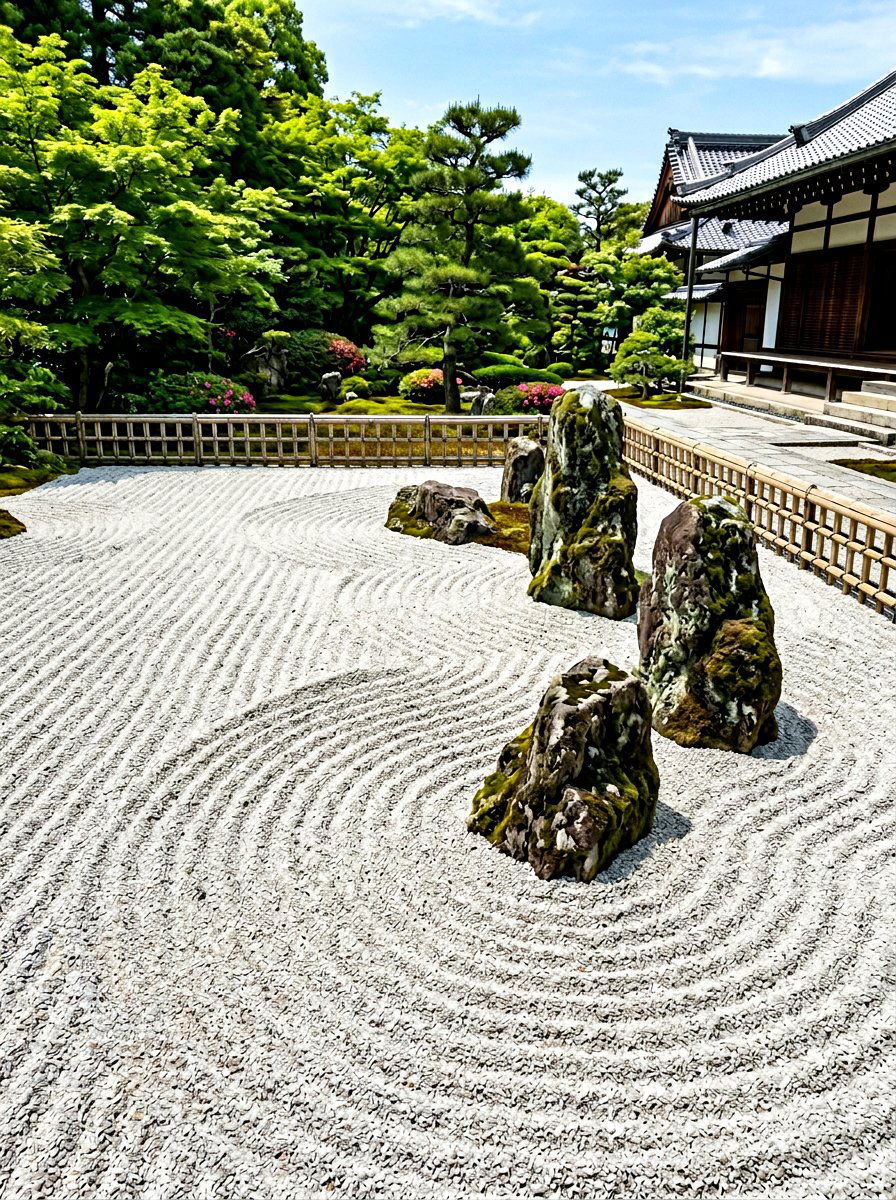
Building a raised garden bed for your cacti is a smart practical choice that ensures your plants have the excellent drainage they absolutely require. You can construct the beds using materials like weathered wood, Cor-Ten steel, or stacked stone to match your home’s architectural style. Filling the bed with a specific sandy cactus mix prevents the roots from sitting in water, which is the most common cause of plant loss. Raised beds also bring the plants closer to eye level, allowing you to appreciate the intricate spine patterns and delicate blooms more easily. This structure provides a clean, organized look that keeps your desert garden looking intentional.
11. Southwestern Backyard Design
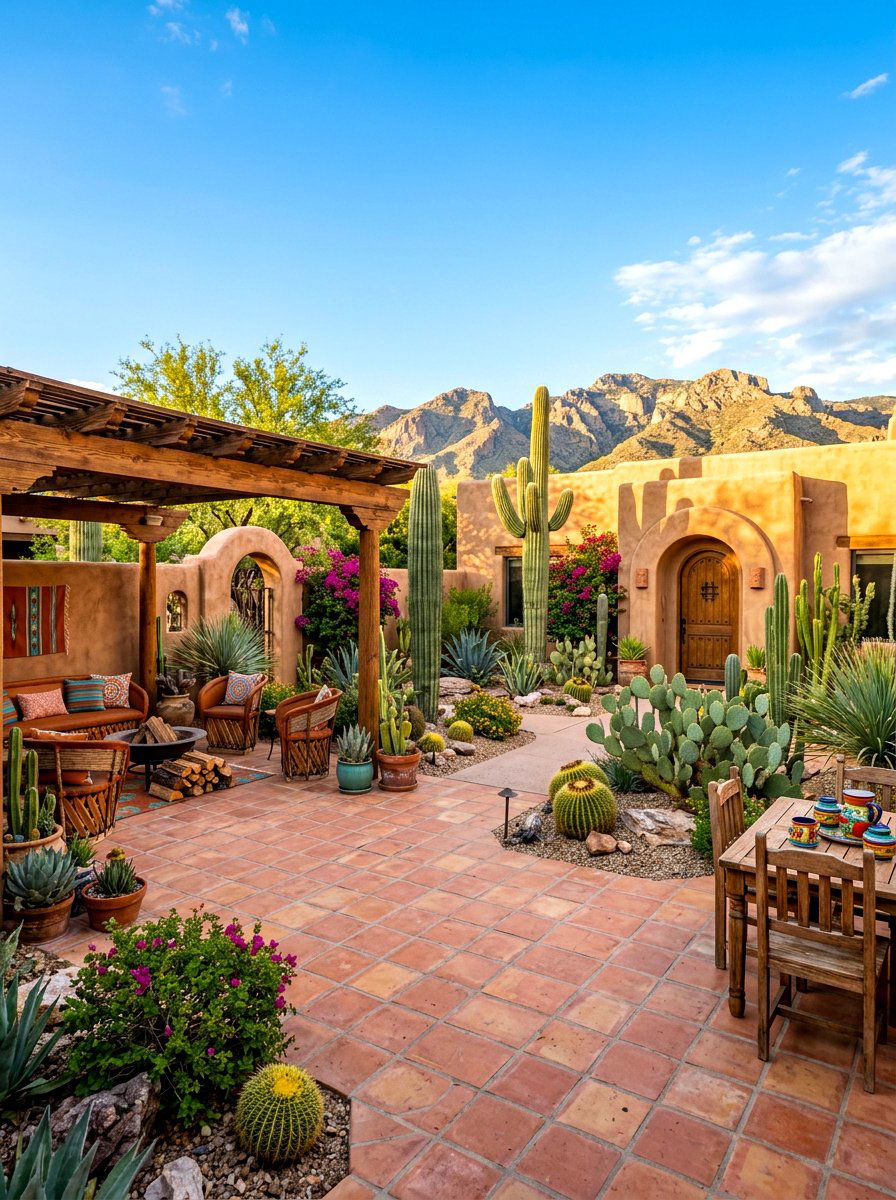
A Southwestern backyard design leans into the warm, earthy tones of the desert, using materials like terracotta tiles, adobe walls, and rustic wood accents. Cacti are the essential greenery for this style, providing the structural contrast needed to balance the heavy building materials. Incorporate elements like a kiva-style fireplace or a wooden pergola to create a functional outdoor living room surrounded by barrel cacti and yuccas. The goal is to create a space that feels like a private oasis in the middle of a sun-drenched landscape. Lighting these areas with warm, soft glows at night can highlight the dramatic shadows cast by the spiny cactus silhouettes.
12. Barrel Cactus Arrangement
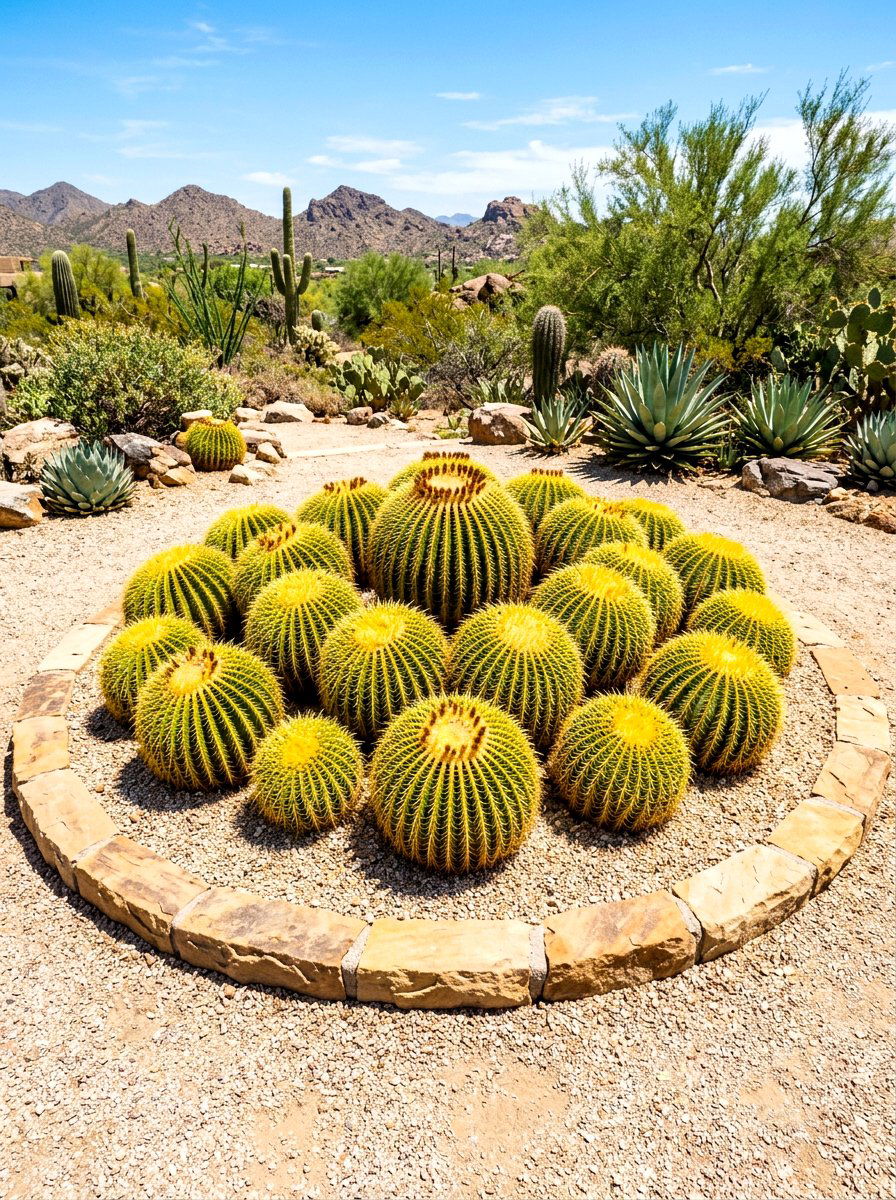
A barrel cactus arrangement focuses on the satisfying, symmetrical round shapes of the Echinocactus or Ferocactus species. These "living globes" look fantastic when planted in clusters of varying sizes, creating a rhythmic pattern across the ground. Because of their dense, golden or red spines, they catch the light beautifully, especially during the "golden hour" of sunset. You can line them up along a driveway or group them in a circular bed to emphasize their geometric perfection. Their slow growth and predictable shape make them one of the easiest cacti to design with, as they won't quickly outgrow their designated spot in your garden layout.
13. Sloping Rock Garden
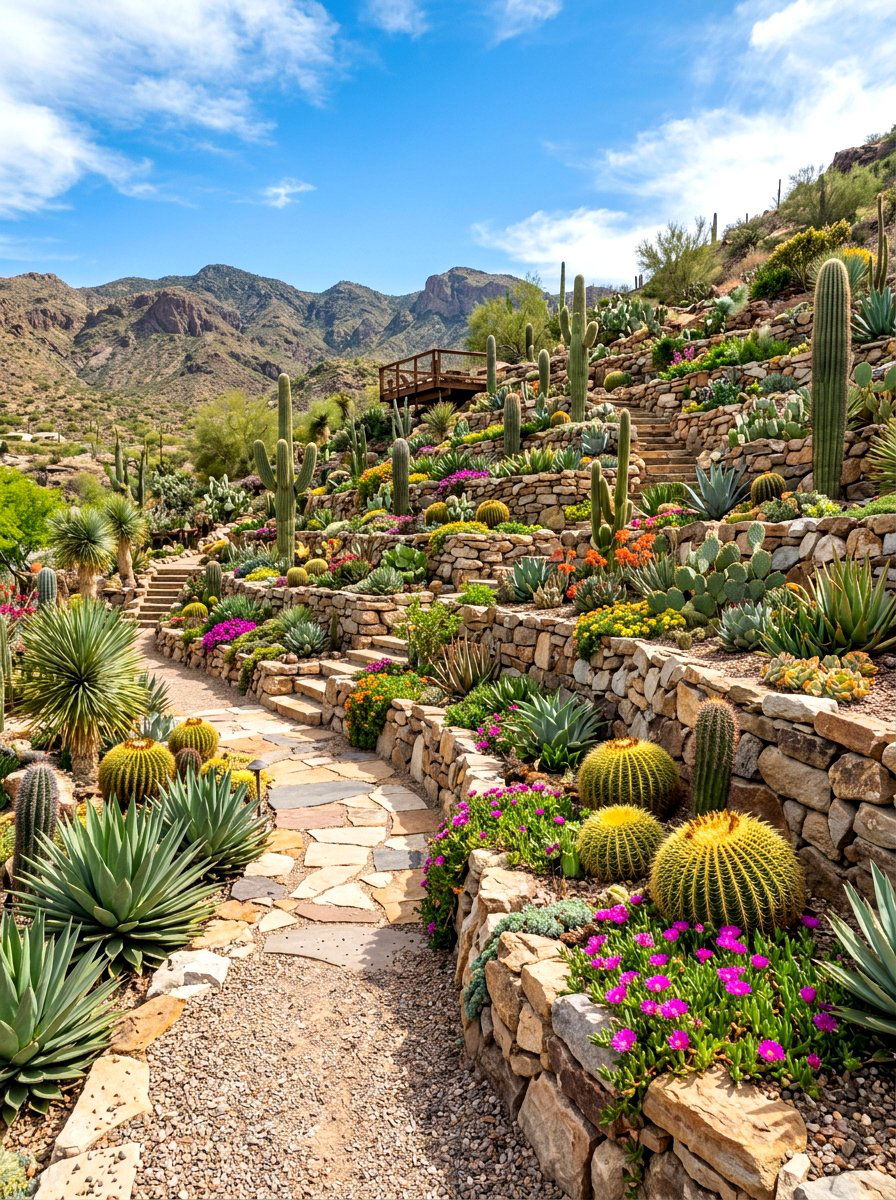
If your property has a hill, a sloping rock garden is the perfect way to turn a difficult landscape feature into a stunning focal point. Cacti are ideal for slopes because the natural incline provides the sharp drainage they love. Use large, flat rocks to create small terraces where you can tuck in different varieties of cacti and agave. This creates a multi-dimensional look that changes as you view it from different heights. The rocks also help to stabilize the soil and prevent erosion during heavy rains. A well-designed slope can look like a piece of a mountain range right in your own backyard.
14. Contemporary Stone Courtyard
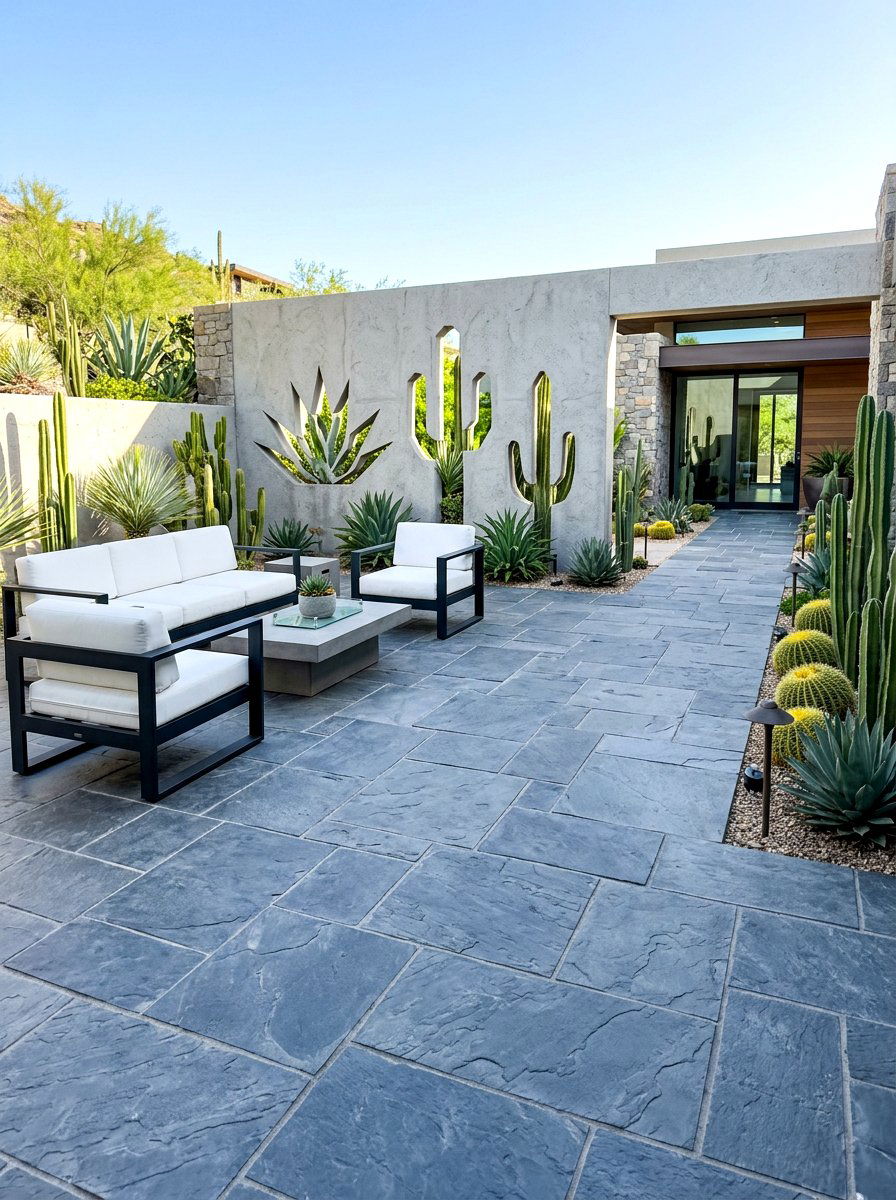
A contemporary stone courtyard uses large-scale pavers and clean stone surfaces to create a sophisticated outdoor room where cacti serve as the primary decor. By leaving small cutouts in the stone for planting, you can integrate tall, slender cacti directly into the floor of the courtyard. This design minimizes the amount of open soil, which keeps the area looking extremely tidy and reduces maintenance. Use dark stones like slate or charcoal basalt to make the bright green of the cacti really pop. This style is perfect for entertaining, as it provides a flat, stable surface for furniture while still feeling like a lush, green garden.
15. Desert Oasis Patio
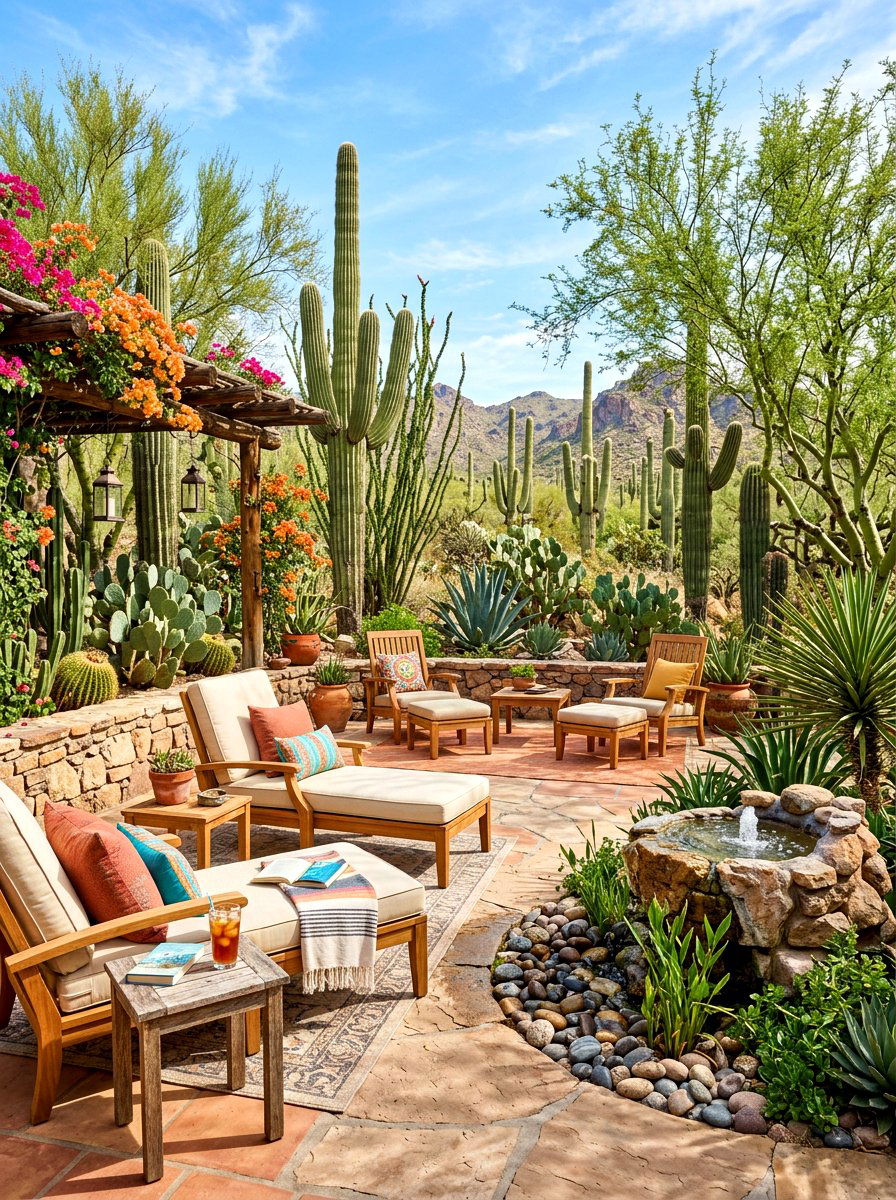
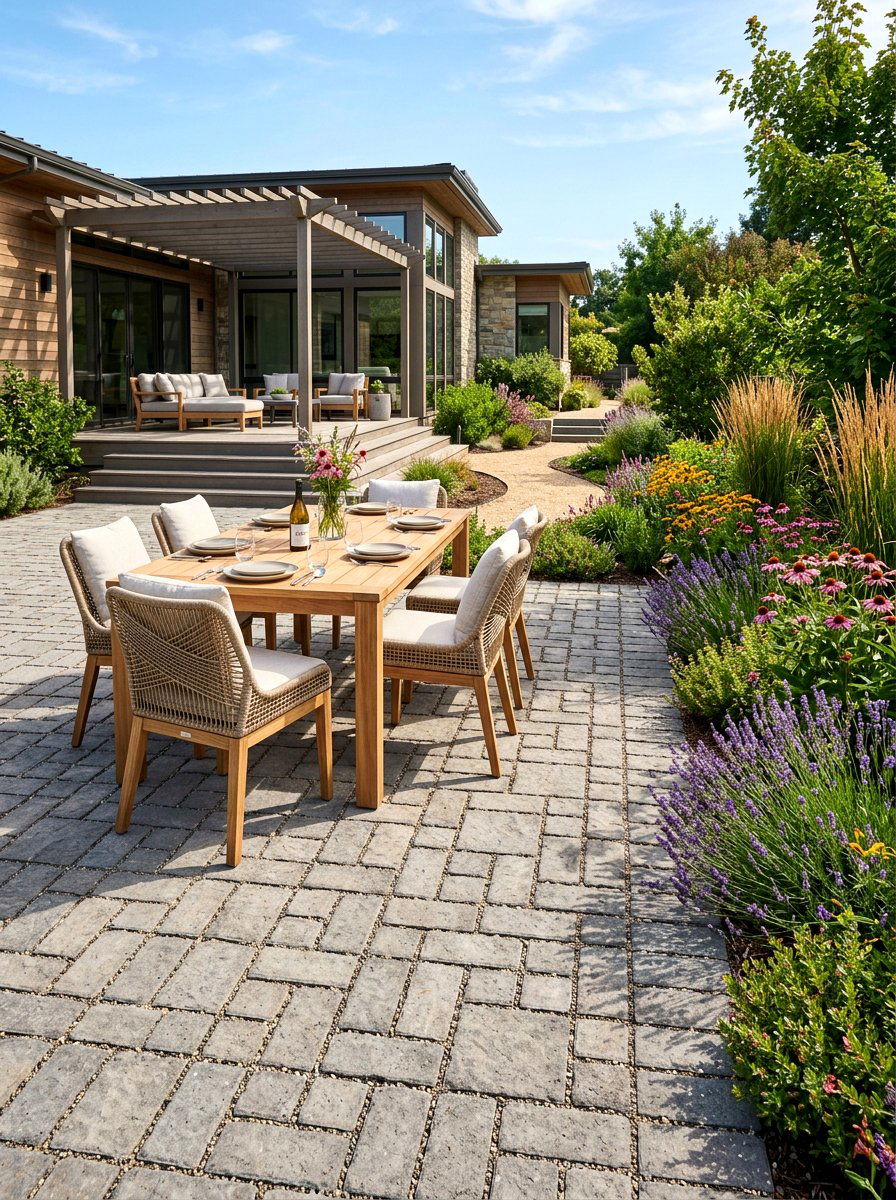
Transforming your outdoor sitting area into a desert oasis patio involves surrounding your furniture with lush, varied cactus plantings to create a sense of enclosure. Use a mix of tall species for privacy and smaller, flowering types in pots on tables to bring the garden closer to you. Incorporating a small water feature, like a simple stone fountain, provides a cooling sound that contrasts beautifully with the dry-climate plants. This blend of elements creates a relaxing retreat that feels cool and inviting even on warm days. The combination of spiky textures and comfortable lounge seating makes for a unique, modern aesthetic that is very popular on Pinterest.
16. Dry Creek Bed
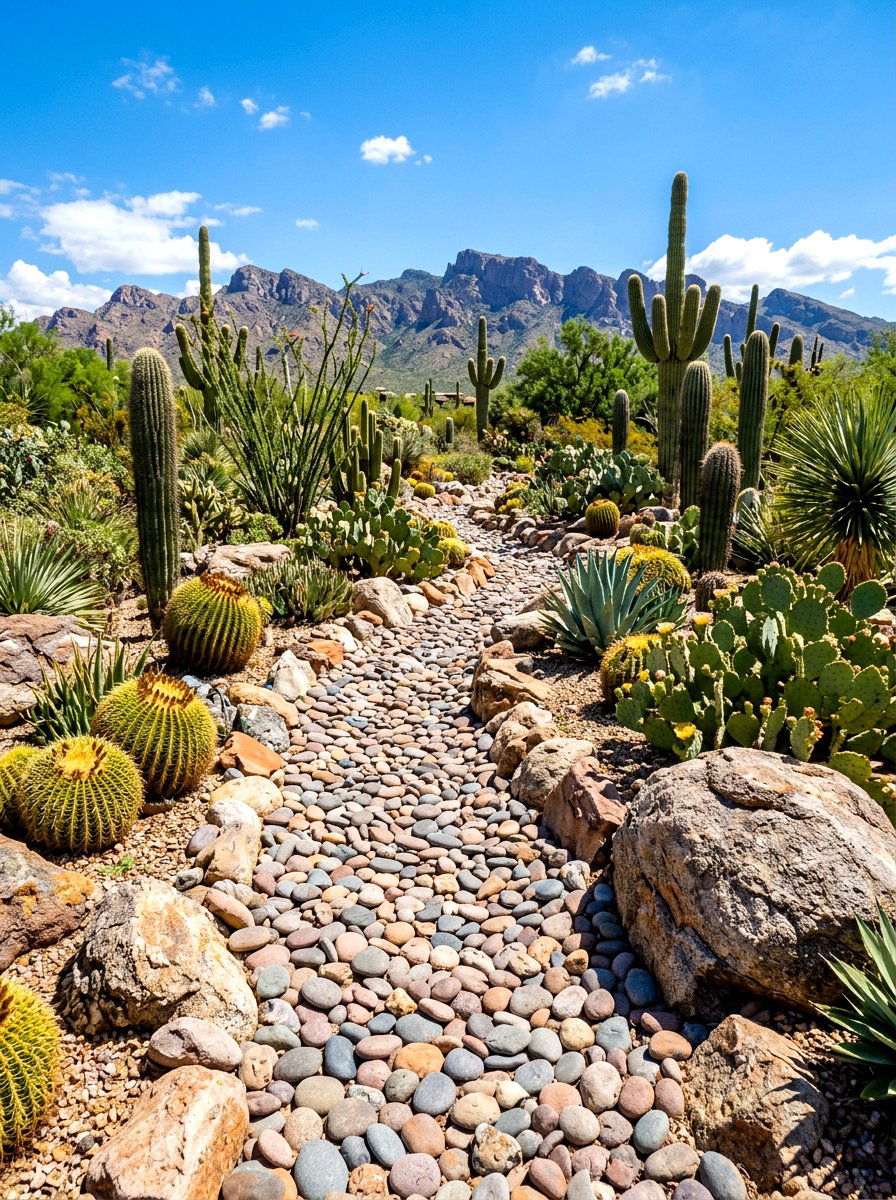
A dry creek bed is a creative landscaping feature that mimics the look of a natural wash where water flows during desert storms. You can create this by digging a shallow, winding path and filling it with smooth river rocks and larger "anchor" stones. Planting cacti and desert grasses along the "banks" of the creek gives the design a realistic, organic feel. This is a great way to manage drainage on your property while adding a lot of visual interest. The contrast between the grey stones and the green, architectural cacti creates a serene and naturalistic vibe that works well in both large and small backyards.
17. Agave And Cactus Landscape
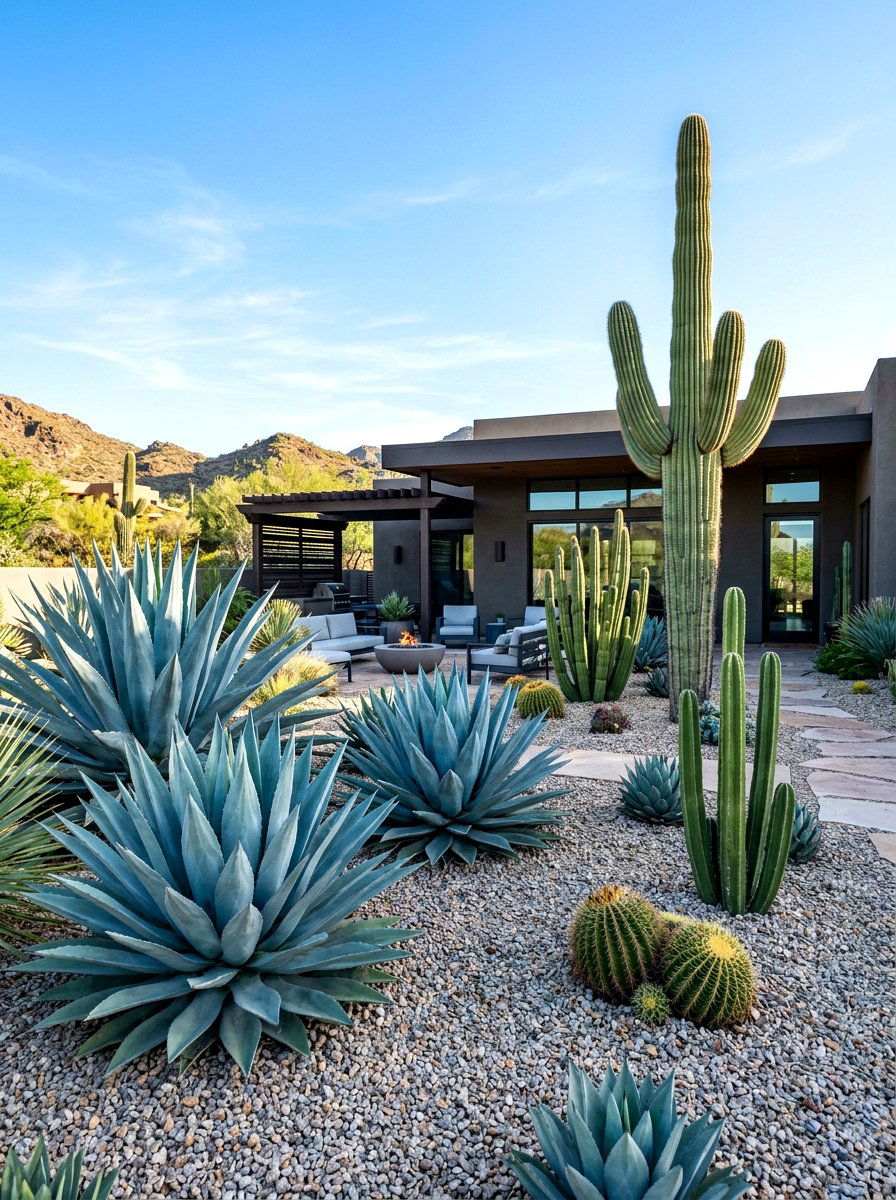
An agave and cactus landscape combines two of the most iconic desert plant families to create a garden full of dramatic shapes. Agaves provide wide, fleshy rosettes that contrast perfectly with the tall, thin columns or round forms of most cacti. Choose agaves with interesting colors, like the blue-gray "Whale’s Tongue" or the variegated "Queen Victoria, " to add more variety to your garden. This pairing is incredibly hardy and can survive with almost no supplemental water once established. The visual weight of the agaves helps to ground the garden, while the taller cacti add the necessary height to keep the eye moving throughout the space.
18. Night Blooming Desert Garden
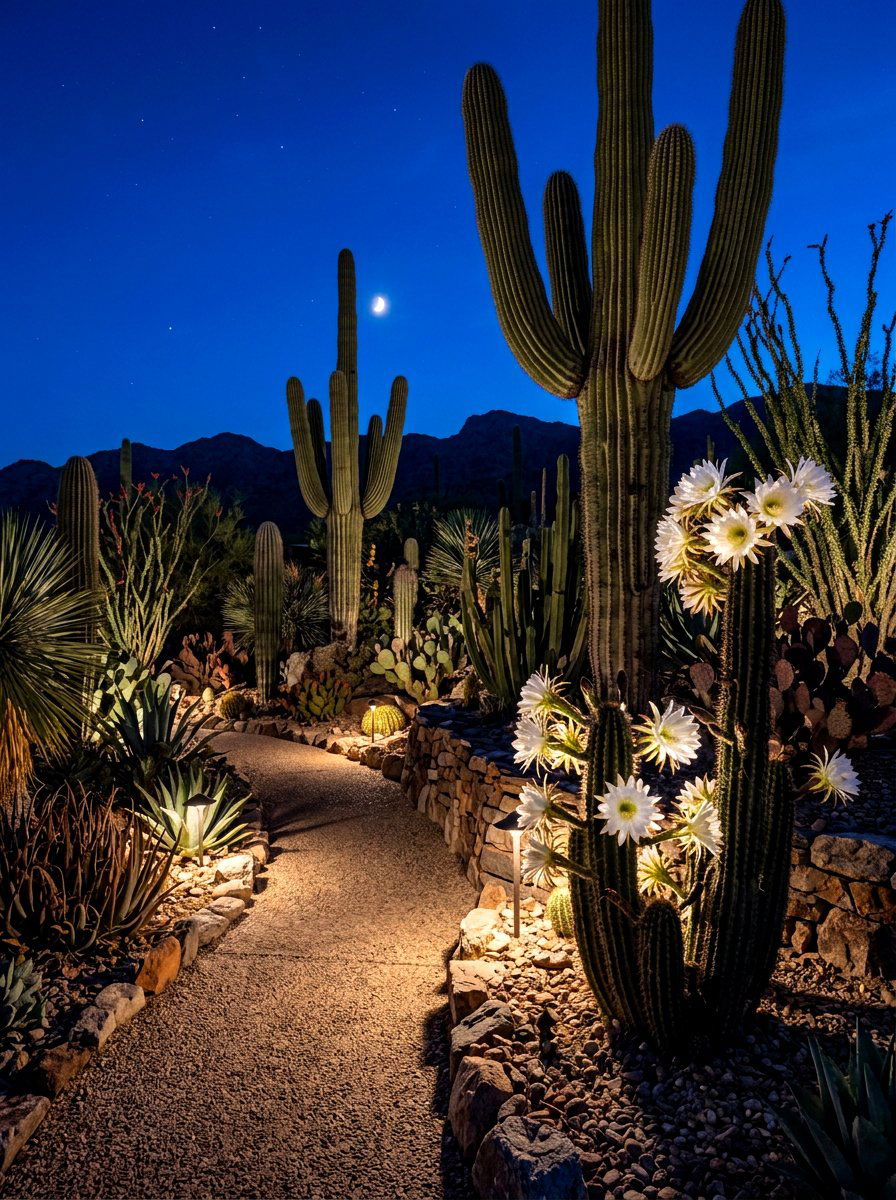
Many people don't realize that some of the most beautiful cacti only bloom at night, making a night blooming desert garden a magical choice for evening lovers. Species like the "Queen of the Night" or various Cereus cacti produce large, white, fragrant flowers that open after the sun goes down. To enjoy this, install subtle outdoor lighting that highlights the white blooms without overpowering the natural darkness. You can also use light-colored gravel or white stones that reflect the moonlight, making the garden glow in the dark. This creates a peaceful, mysterious atmosphere that is perfect for late-night relaxation on a patio or deck.
19. Geometric Cactus Layout
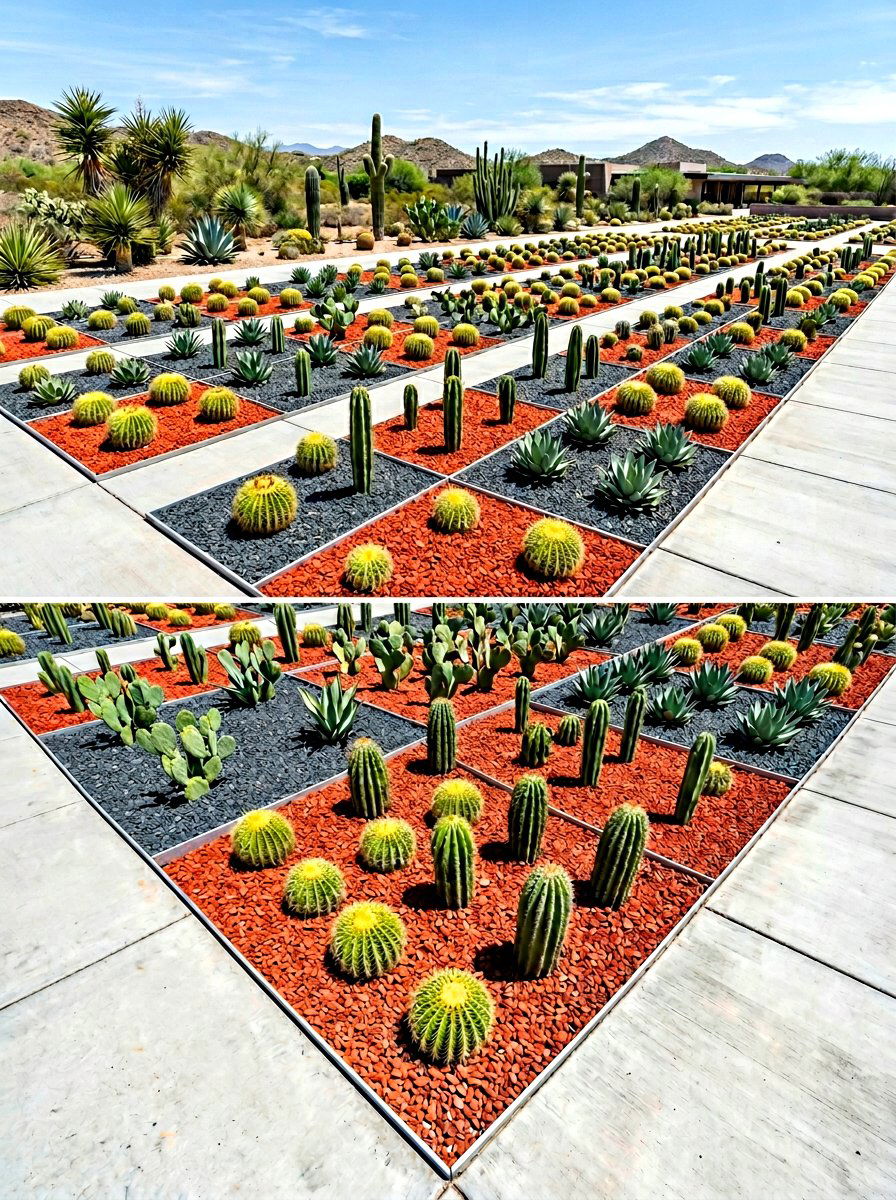
A geometric cactus layout uses math and patterns to create a highly organized and visually striking garden space. You can plant your cacti in perfect grids, circles, or diamond patterns to emphasize the architectural nature of the plants. This style works best with species that have very consistent shapes, like the Golden Barrel or the Mexican Fence Post. Using contrasting colors of gravel within different sections of the geometric pattern can further define the design. This modern approach feels very intentional and high-design, making it a favorite for front yards where you want to make a bold, tidy statement to the neighborhood.
20. Native Plant Xeriscaping
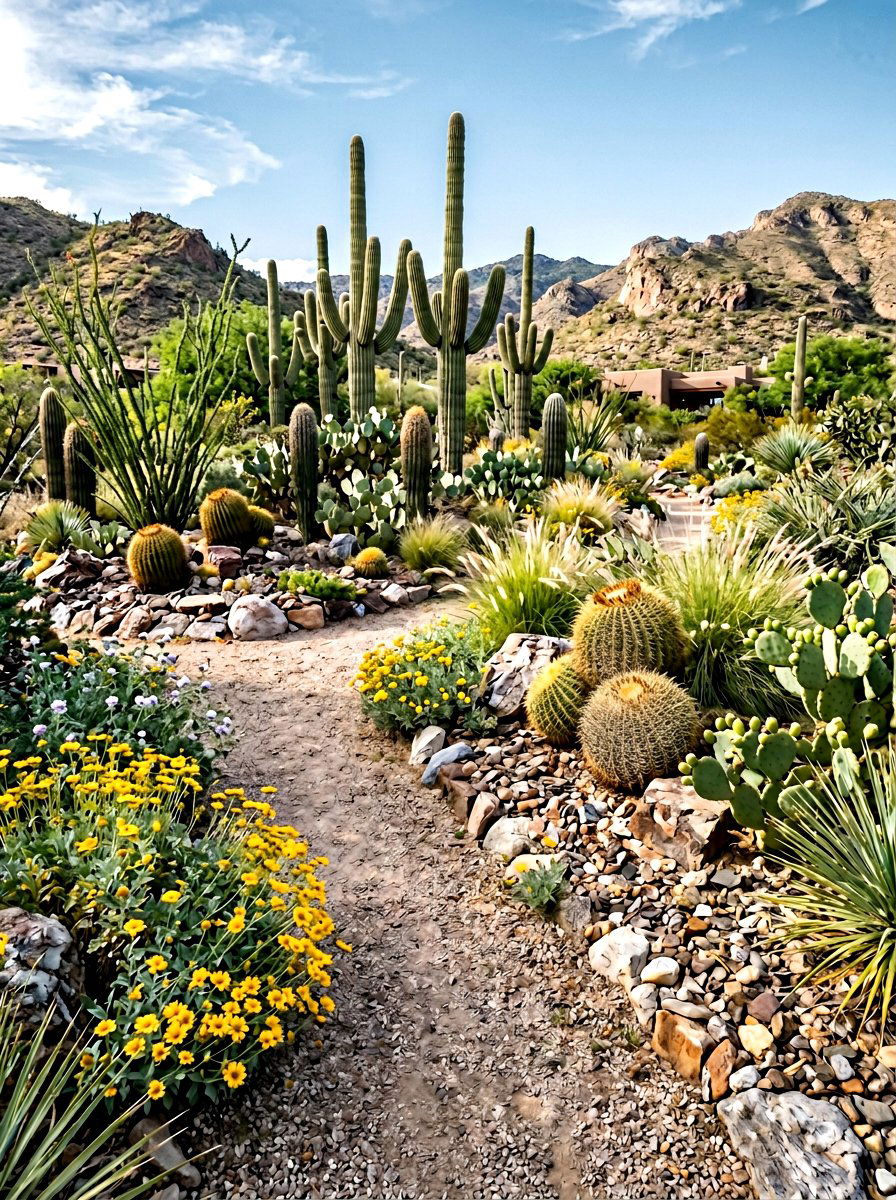
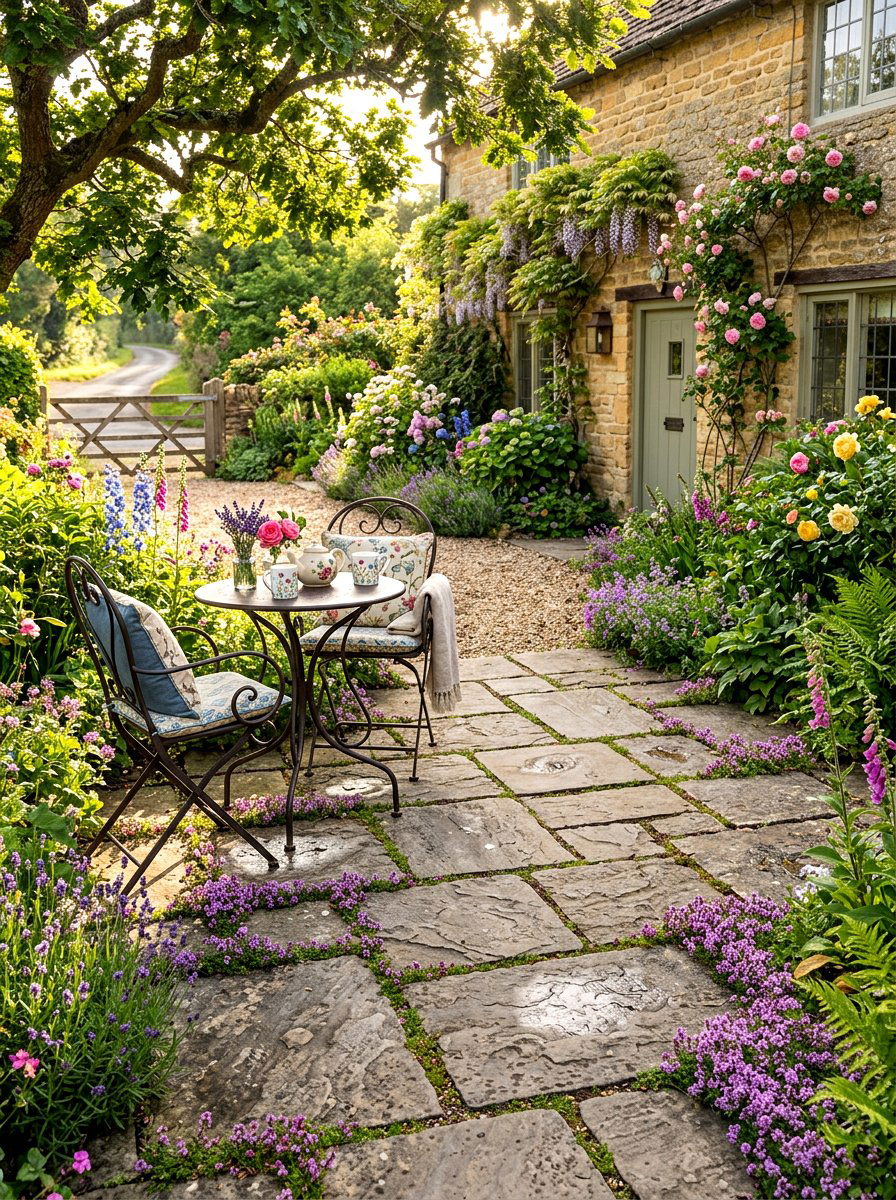
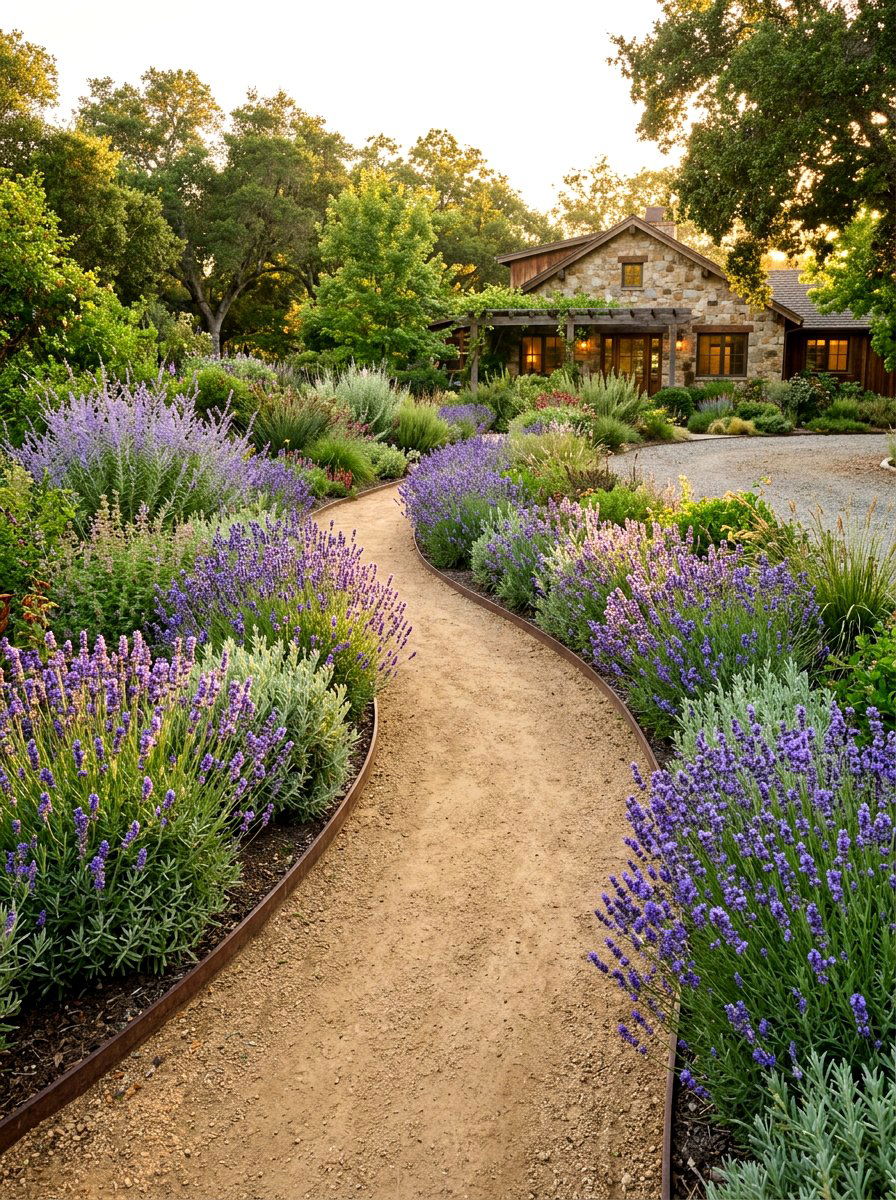
Native plant xeriscaping focuses on using cacti and desert plants that are naturally found in your specific region. This is the most sustainable way to garden because these plants are already perfectly adapted to your local climate, soil, and rainfall patterns. Researching your local flora might reveal unique varieties of hedgehog cacti or prickly pears that you won't find in big-box stores. Native gardens also provide essential habitats for local pollinators like bees, butterflies, and even hummingbirds. By embracing the natural beauty of your area, you create a garden that feels deeply connected to the local environment while requiring almost zero extra resources to thrive.
21. Coastal Cactus Garden
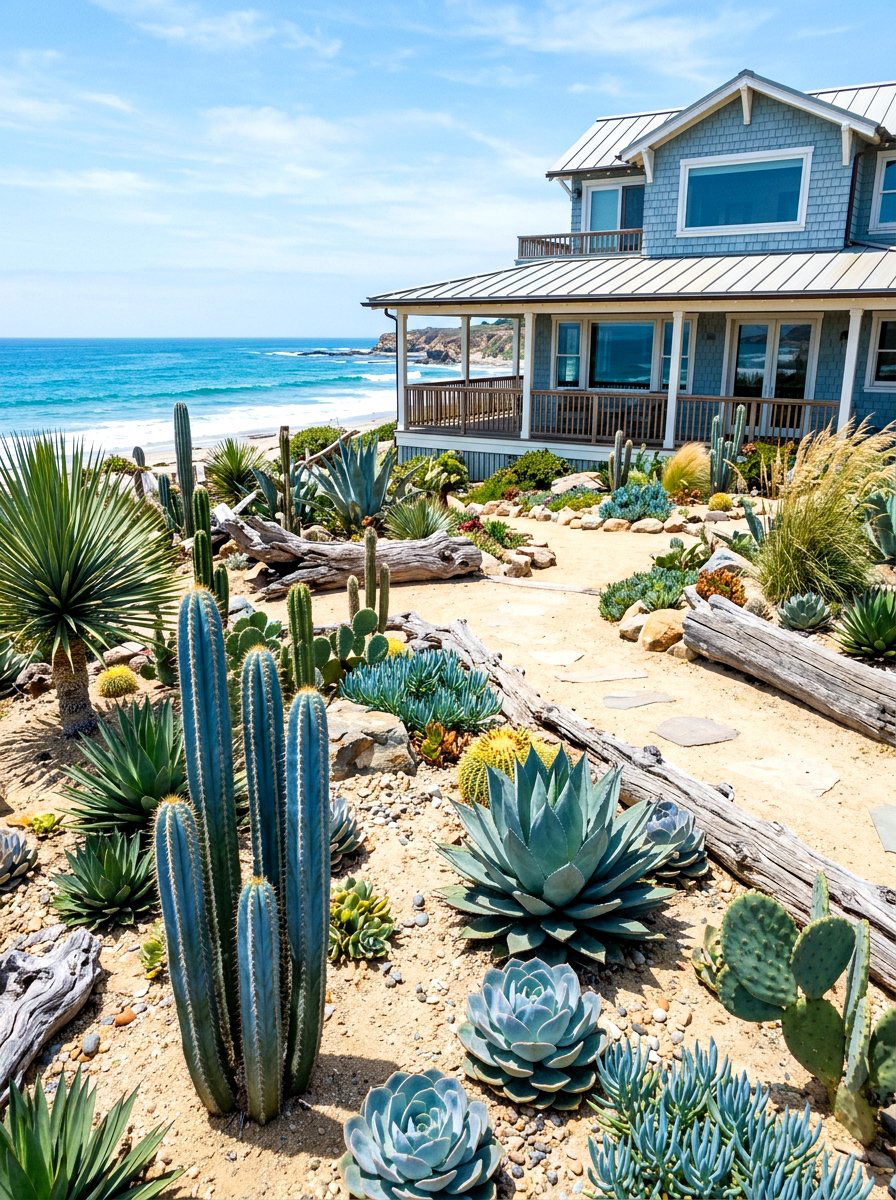
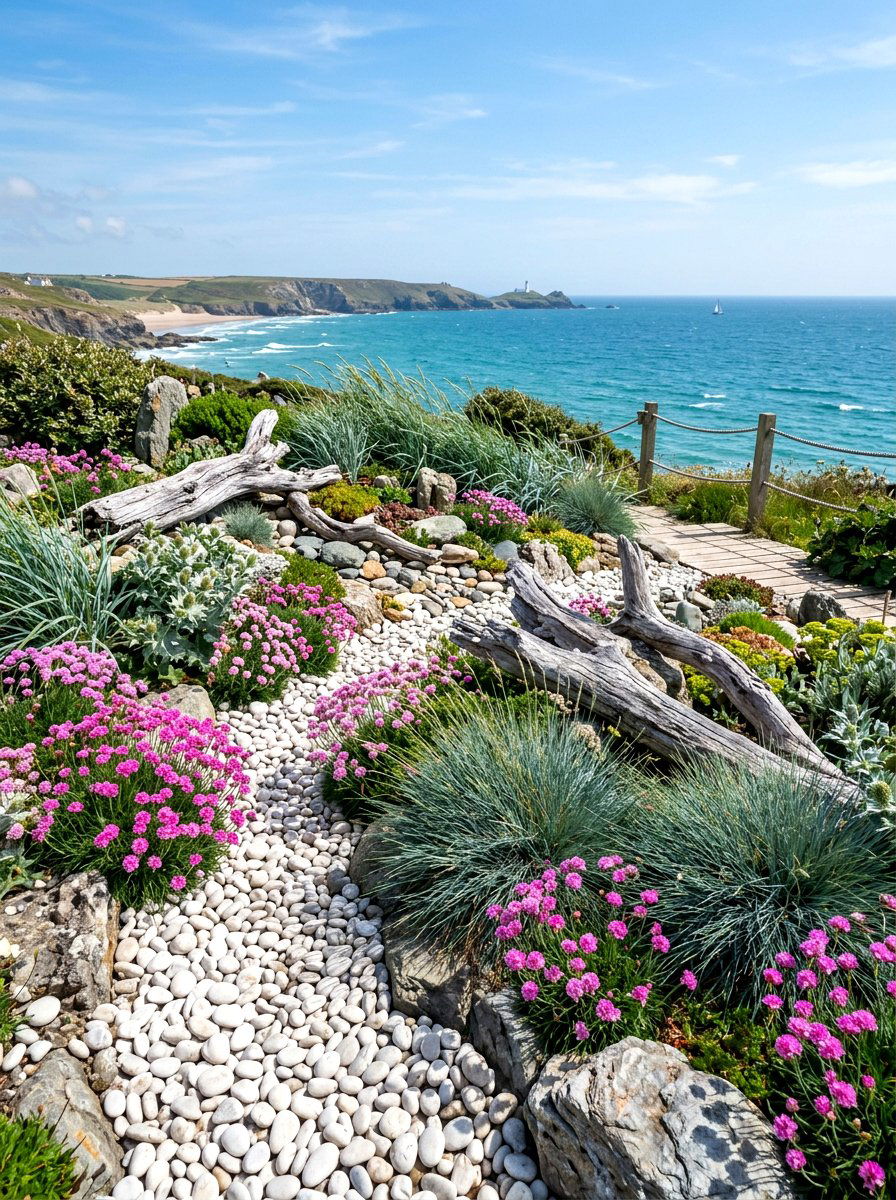
A coastal cactus garden combines the ruggedness of desert plants with the breezy, relaxed vibe of the seaside. Many cacti are surprisingly salt-tolerant, making them great choices for homes near the ocean where traditional plants might struggle with the spray. You can mix your cacti with coastal elements like weathered driftwood, large seashells, and sandy-colored gravel. Use blue-toned cacti and succulents to echo the colors of the sea and sky. This unique hybrid style offers a refreshing take on coastal landscaping, moving away from typical palms and ferns in favor of something more structural, low-maintenance, and visually unexpected.
22. Flowering Desert Species
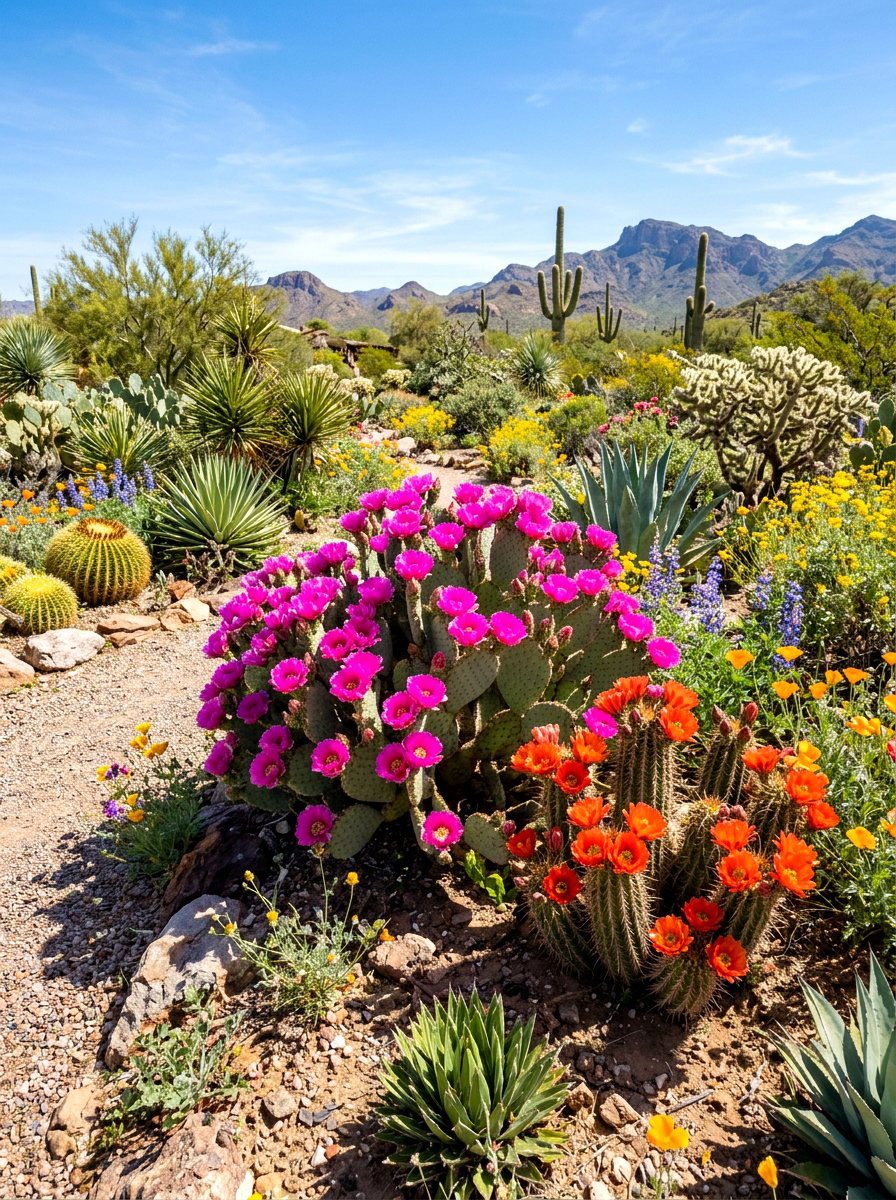
Focusing your garden on flowering desert species ensures that your outdoor space has bursts of intense color throughout the year. While cacti are known for their spines, their flowers are some of the most vibrant in the plant kingdom, ranging from neon pink to deep orange. Varieties like the Claret Cup, Christmas Cactus, or various Mammillaria species are famous for their prolific blooming habits. To maximize the impact, plant these flowering types near entrances or seating areas where you can see the delicate petals up close. Even when they aren't in bloom, these plants maintain their interesting shapes, providing year-round beauty to your landscape.
23. Mixed Texture Rockery
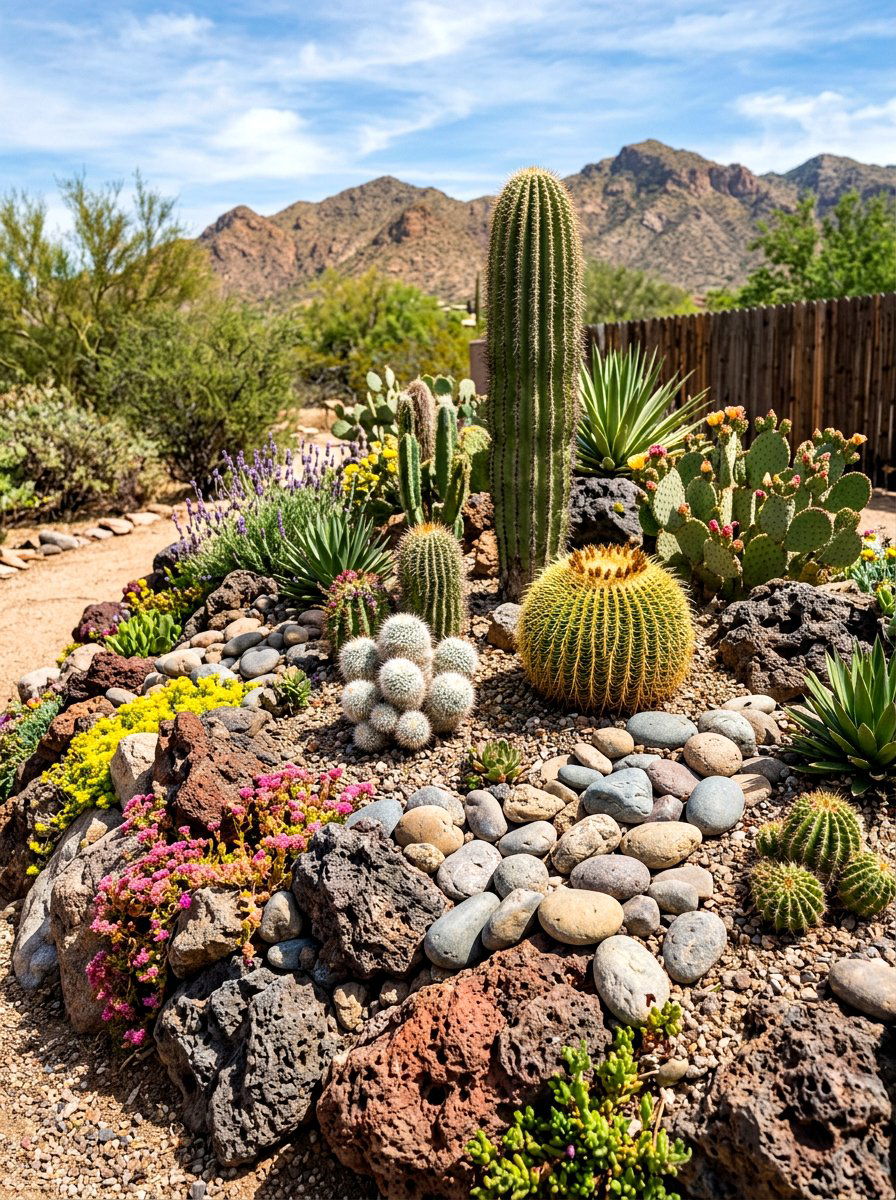
A mixed texture rockery is all about the interplay between different materials to create a sensory-rich environment. You can combine rough, jagged volcanic rock with smooth, polished river stones and fine, soft sand to create layers of contrast. Against these varied backgrounds, the different spine textures of your cacti — from the fuzzy "Old Man" cactus to the sharp, rigid "Golden Barrel" — become much more noticeable. This approach creates a very naturalistic and complex look that rewards close observation. It’s an excellent way to fill a corner of the yard with a high-detail feature that requires very little effort to keep looking its best.
24. Large Boulder Focal Point
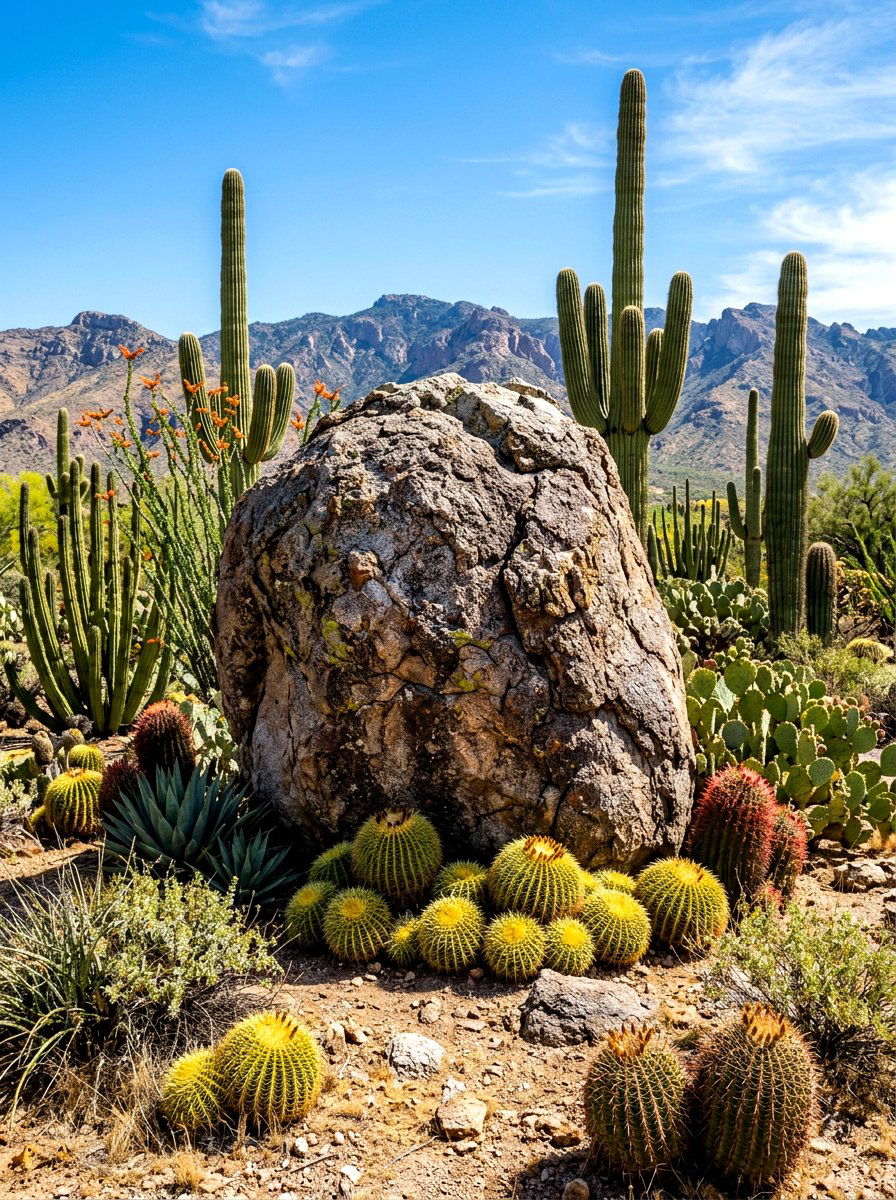
Using a large boulder focal point provides an immediate sense of scale and weight to a cactus garden. A single, massive rock can act as the anchor for the entire design, around which all other plants and smaller stones are arranged. This mimics the way cacti often grow in the wild, protected by the thermal mass and shade of large rock formations. You can plant a tall cactus right next to the boulder to create a dramatic vertical-horizontal contrast. The boulder also provides a natural backdrop that helps smaller, more delicate cacti stand out, ensuring they don't get lost in the larger landscape of your backyard.
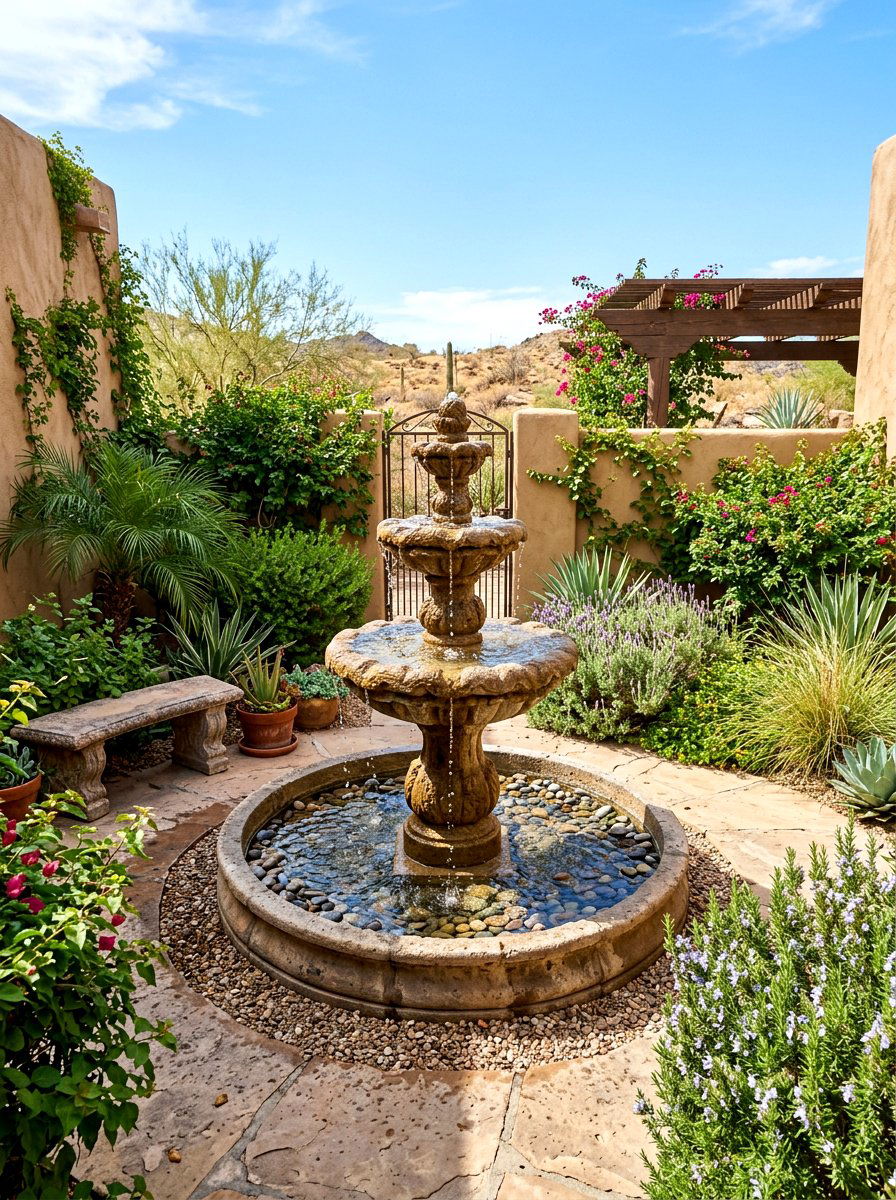
25. Low Maintenance Front Porch
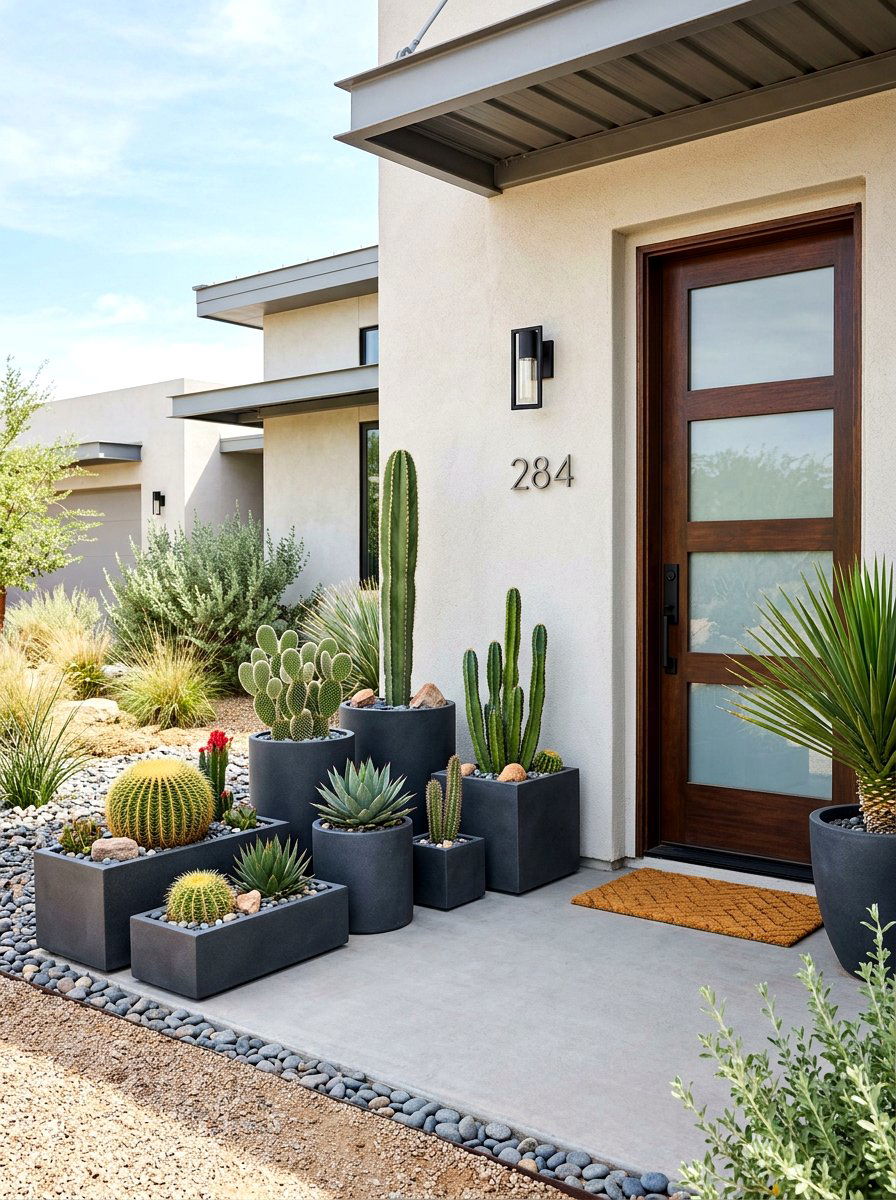
A low maintenance front porch cactus garden is ideal for adding a touch of greenery to your entryway without the hassle of daily watering. Use a series of matching planters or a long built-in trough filled with a variety of small to medium cacti. This creates a welcoming "green screen" that looks polished and stays healthy even if you go on vacation for several weeks. Because cacti grow slowly, they won 't quickly overgrow the space or block your windows. Choosing varieties with interesting shapes or colorful spines adds a custom, designer touch to your home' s exterior that requires only occasional care to maintain.
26. Architectural Specimen Plants
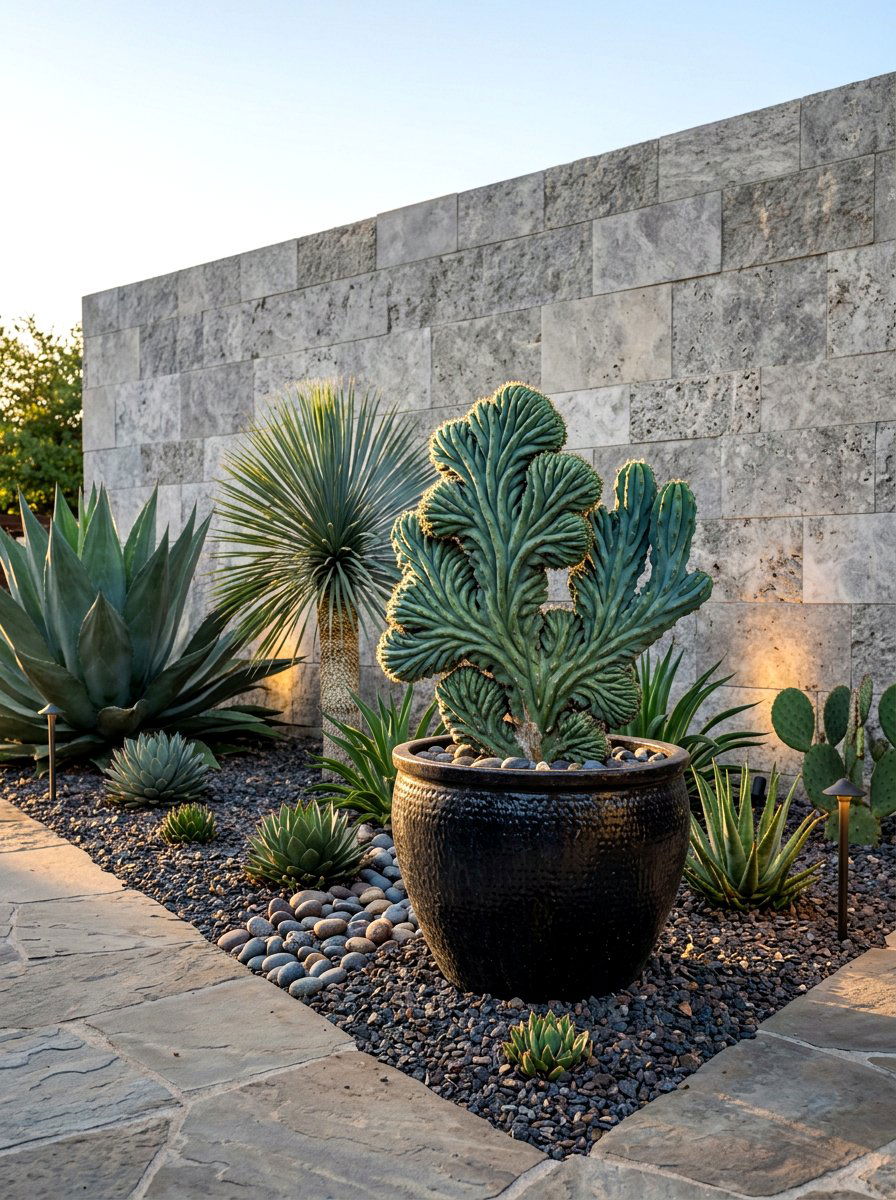
Focusing on architectural specimen plants means selecting individual cacti that have particularly unique or "weird" growth patterns to serve as live art. This might include "crested" varieties that grow in brain-like ripples or species with unusual branching habits like the Candelabra cactus. Instead of planting a mass of many different types, you give each specimen its own space to be seen and appreciated. This museum-like approach to gardening is very popular in modern design circles and looks best when paired with simple, high-quality materials like smooth concrete or dark mulch. It turns your garden into a gallery of nature's most interesting and sculptural forms.
27. Wood Chip And Cactus Mulch
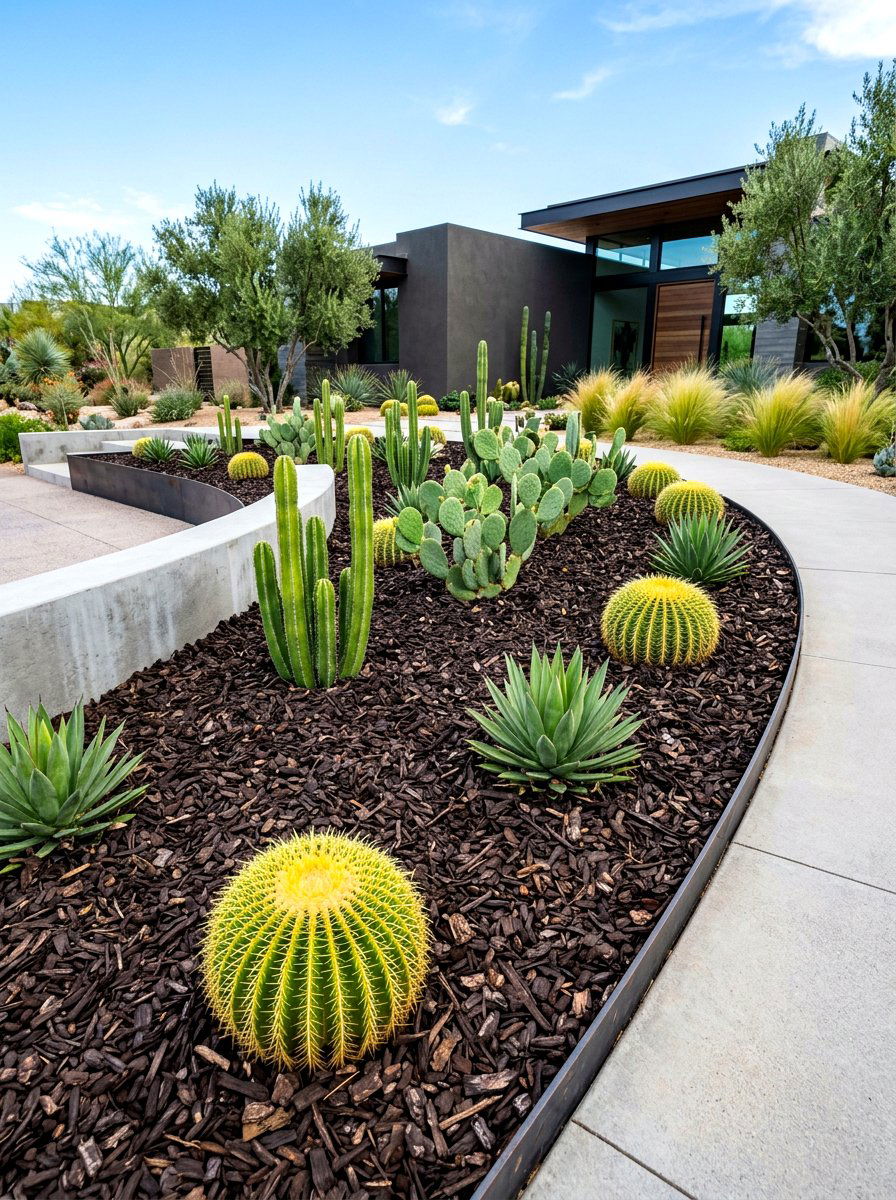
While gravel is common, using wood chip and cactus mulch can offer a softer, more organic look that suits certain home styles better. Dark brown or black wood mulch provides a stunning dark background that makes the bright green and silver tones of the cacti really stand out. This approach is excellent for "softening" the desert look and helping it blend in with more traditional garden elements. Just be sure to use a thin layer of mulch and ensure the soil underneath is very well-draining so that moisture doesn't get trapped around the base of the cacti. It’s a great way to add a modern, earthy texture.
28. Desert Fire Pit Area
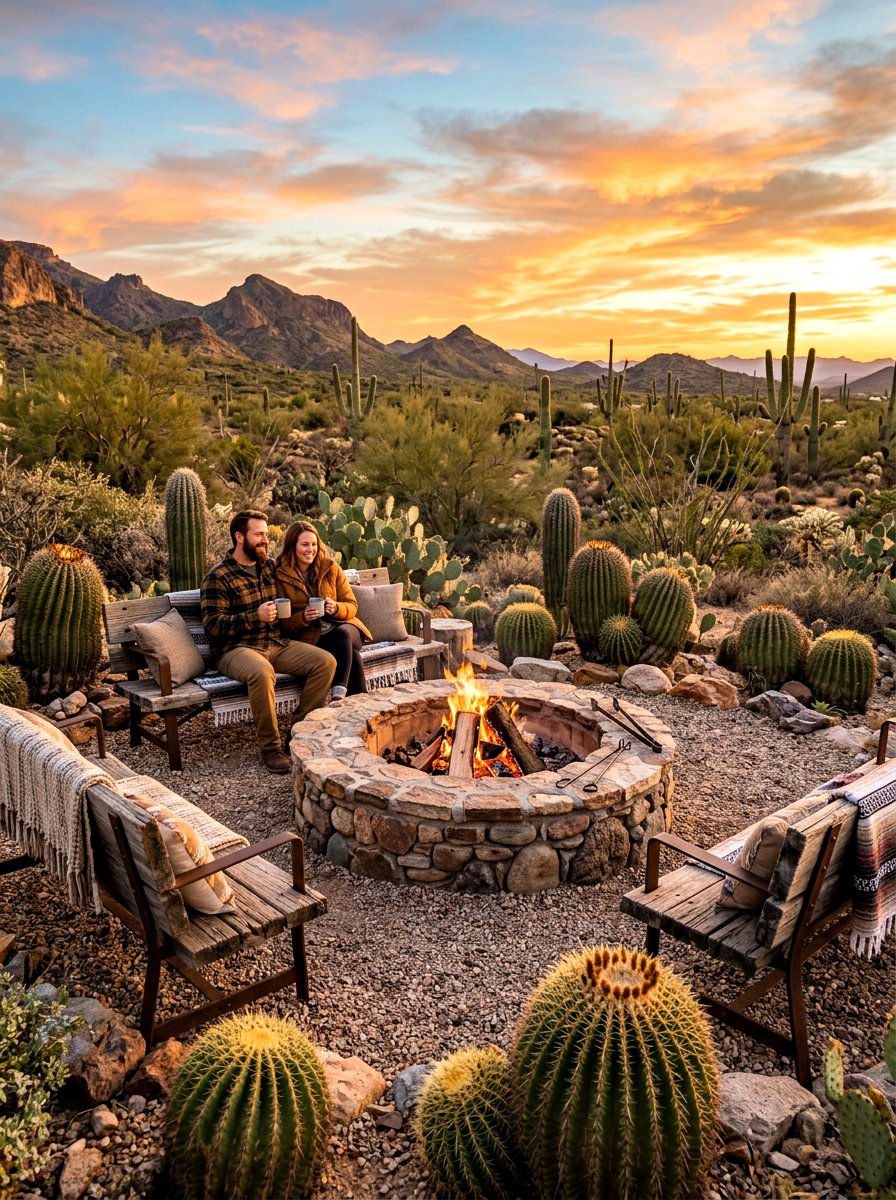
Designing a desert fire pit area allows you to enjoy your cactus garden late into the evening during the cooler months. Surround a stone or metal fire pit with gravel and plant heat-tolerant cacti like the prickly pear or barrel cactus at a safe distance. The warm glow of the fire reflects beautifully off the spines of the plants, creating a cozy and dramatic atmosphere. This setup encourages outdoor living and turns your garden into a social hub. Using built-in stone benches or rustic wooden seating further enhances the Southwestern, desert-resort vibe, making every night feel like a vacation in your own private backyard oasis.
29. Miniature Dish Garden
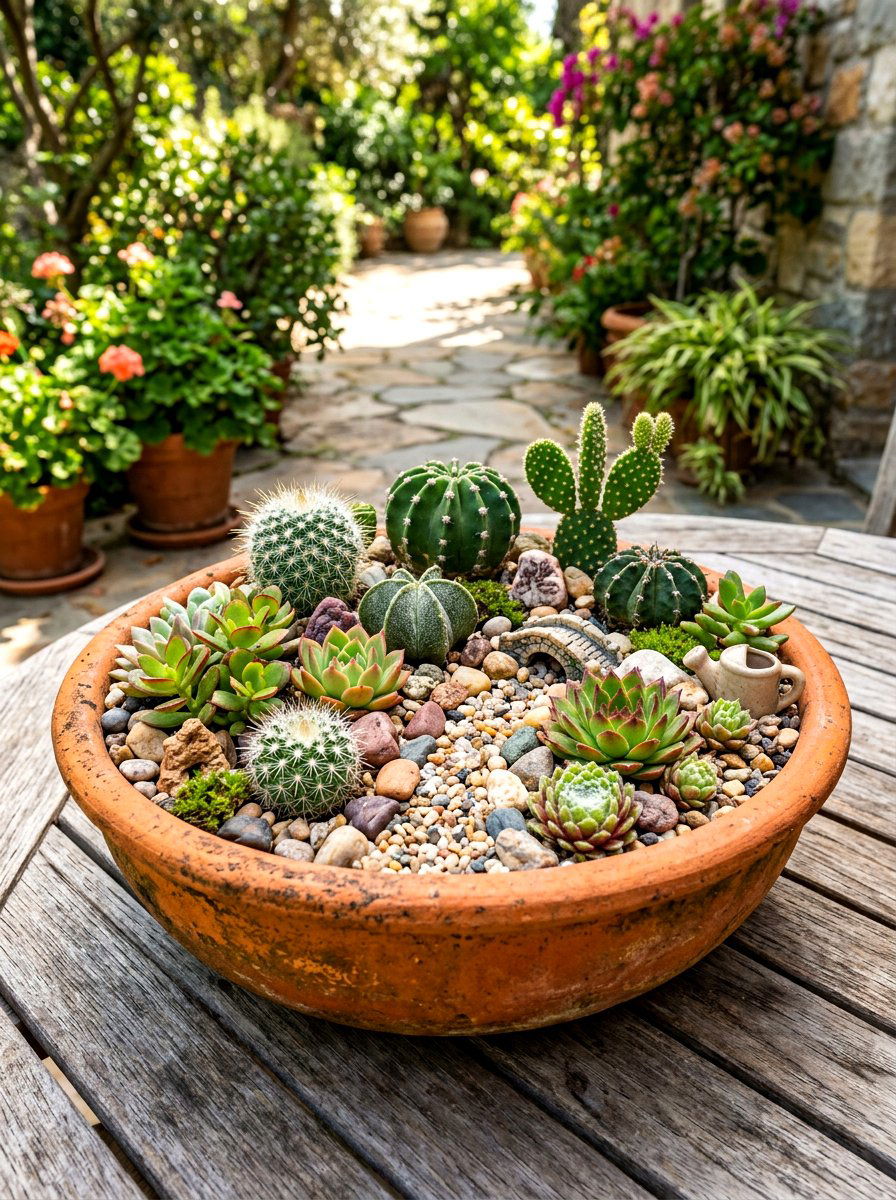
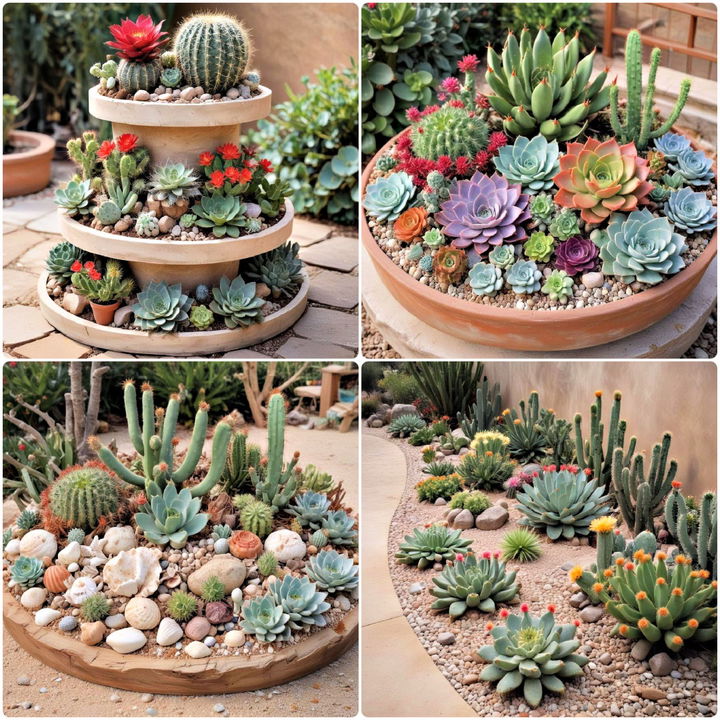
A miniature dish garden is a fun and artistic way to experiment with cactus landscaping on a very small, manageable scale. You can create a tiny desert world in a shallow bowl or a wide terracotta tray, complete with miniature rocks and different types of "baby" cacti. These look great on outdoor coffee tables, balcony railings, or even as centerpieces for outdoor dining. Because the plants are small, you can pack a lot of variety and detail into a tiny space. It’s a perfect project for beginners or those who want to enjoy the beauty of a cactus garden without committing to a full-scale landscaping project.
30. Xeriscape Retaining Wall
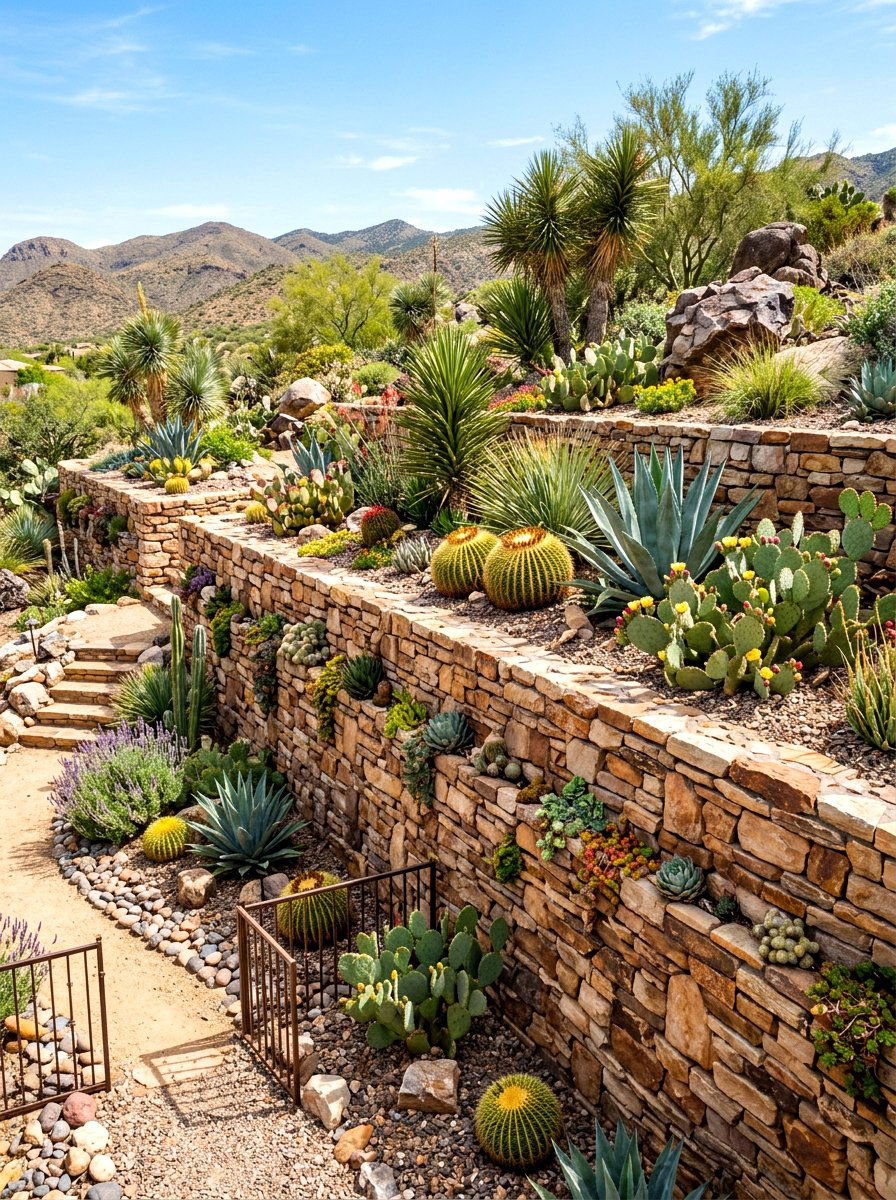
Integrating a xeriscape retaining wall into your garden is a functional way to handle changes in elevation while showing off your plant collection. You can plant small cacti directly into the "pockets" between the stones of the wall, or line the top edge with trailing varieties that spill over the side. This vertical element adds a lot of character to a flat yard and makes the plants much more visible. The stone wall acts as a heat sink, keeping the plants warm during cool nights, which many desert species appreciate. It’s a sophisticated way to combine hardscaping with living elements for a professional-looking, water-wise backyard.
Conclusion:
Creating a cactus garden is one of the most rewarding ways to transform your outdoor space into a stylish, low-maintenance haven. These plants offer an incredible variety of textures and forms that work in almost any design style, from ultra-modern minimalism to rustic Southwestern charm. By choosing the right mix of species, rocks, and layouts, you can build a landscape that is both environmentally responsible and visually stunning. As we move toward more sustainable living, the beauty of the desert offers a timeless inspiration for our homes. Your garden will not only save water but also provide a unique, peaceful sanctuary that stays beautiful year after year.

Related posts: