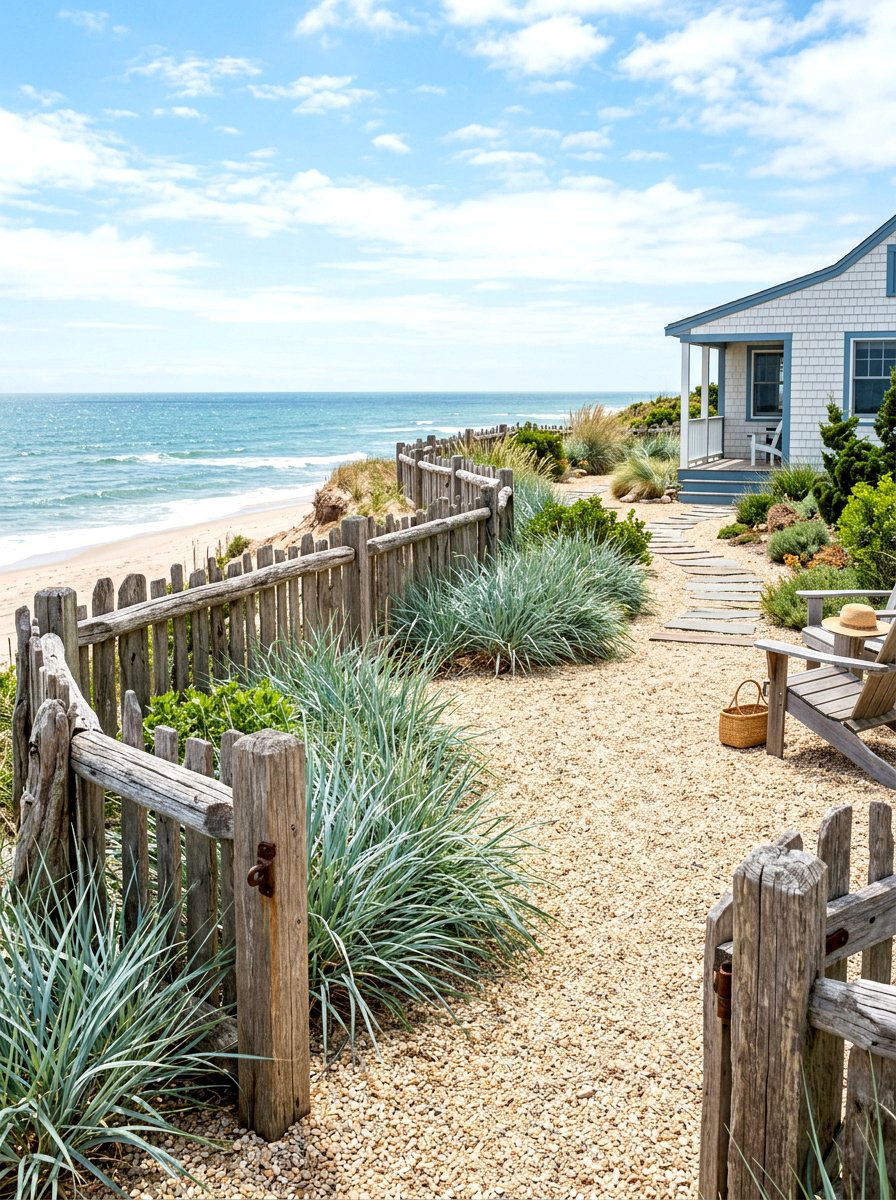
Transforming your outdoor space into a desert oasis is an exciting journey that combines environmental responsibility with stunning natural aesthetics. Desert landscaping, often called xeriscaping, has moved far beyond the outdated idea of just sand and a few rocks. Today, it represents a sophisticated design movement that celebrates the unique textures, bold silhouettes, and vibrant colors found in arid climates. By choosing drought-tolerant plants and clever hardscaping materials, you can create a low-maintenance sanctuary that thrives in high temperatures while saving precious water resources. These curated ideas will show you how to blend modern architecture with rugged natural beauty for a yard that looks spectacular throughout every season.
1. Modern Desert Front Yard
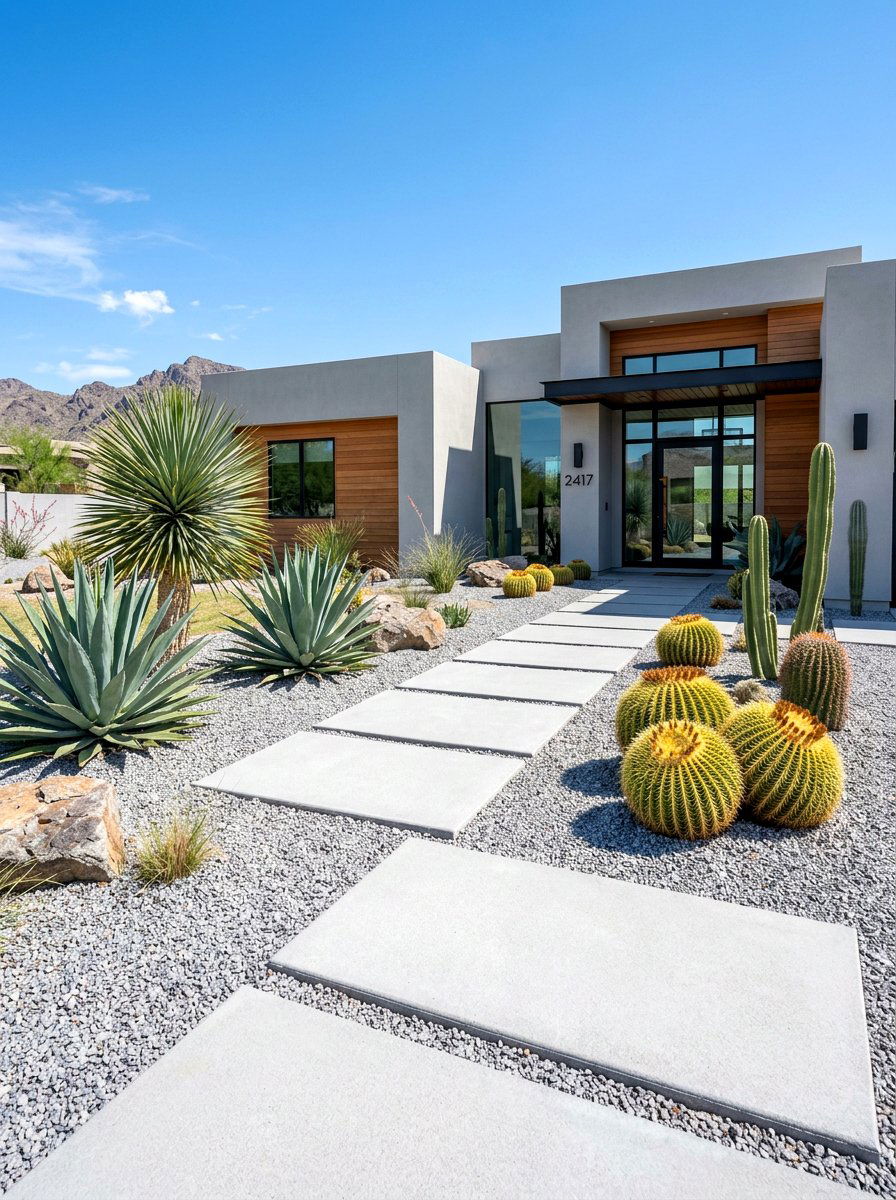
A modern desert front yard focuses on clean lines and a structured layout that enhances the architectural features of your home. This design typically incorporates a mix of smooth river rocks, large geometric pavers, and strategically placed structural plants like agave or tall cacti. By using different shades of gravel, you can create visual zones that guide the eye toward the entrance. This approach minimizes water usage while providing a high-end, contemporary look that stays green year-round without constant pruning or mowing. It is the perfect solution for homeowners who want an impressive entryway that requires very little upkeep but offers maximum visual impact and curb appeal.
2. Low Maintenance Xeriscape
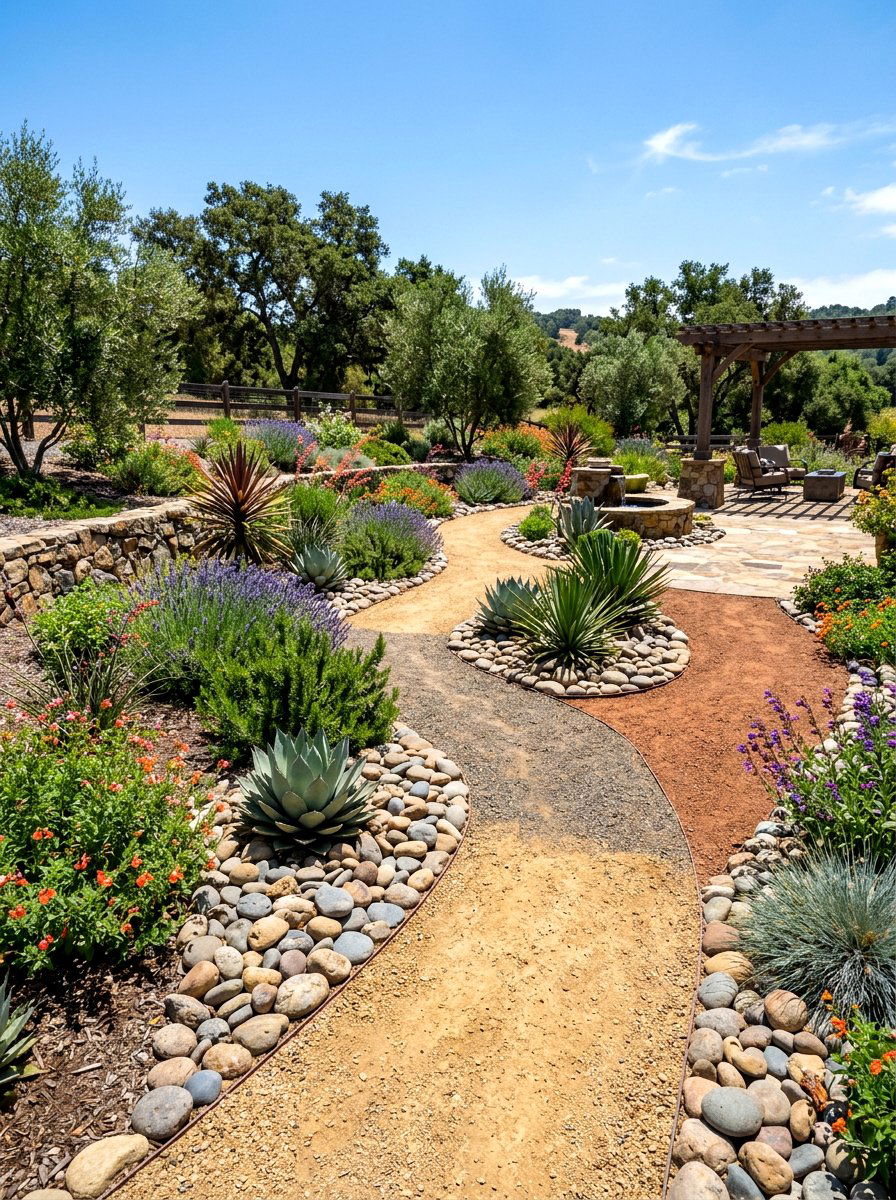
A low maintenance xeriscape is the ultimate solution for those who want a beautiful yard without the constant chore of watering and weeding. This design relies heavily on inorganic mulches like decomposed granite or crushed stone to suppress weeds and retain soil moisture. Incorporating native shrubs and groundcovers ensures that the plants are already adapted to the local environment, requiring minimal intervention once they are established. You can add visual interest by varying the sizes of the stones and creating gentle mounds to mimic the natural desert floor. This style is not only eco-friendly but also provides a peaceful, uncluttered outdoor environment.
3. Succulent Garden
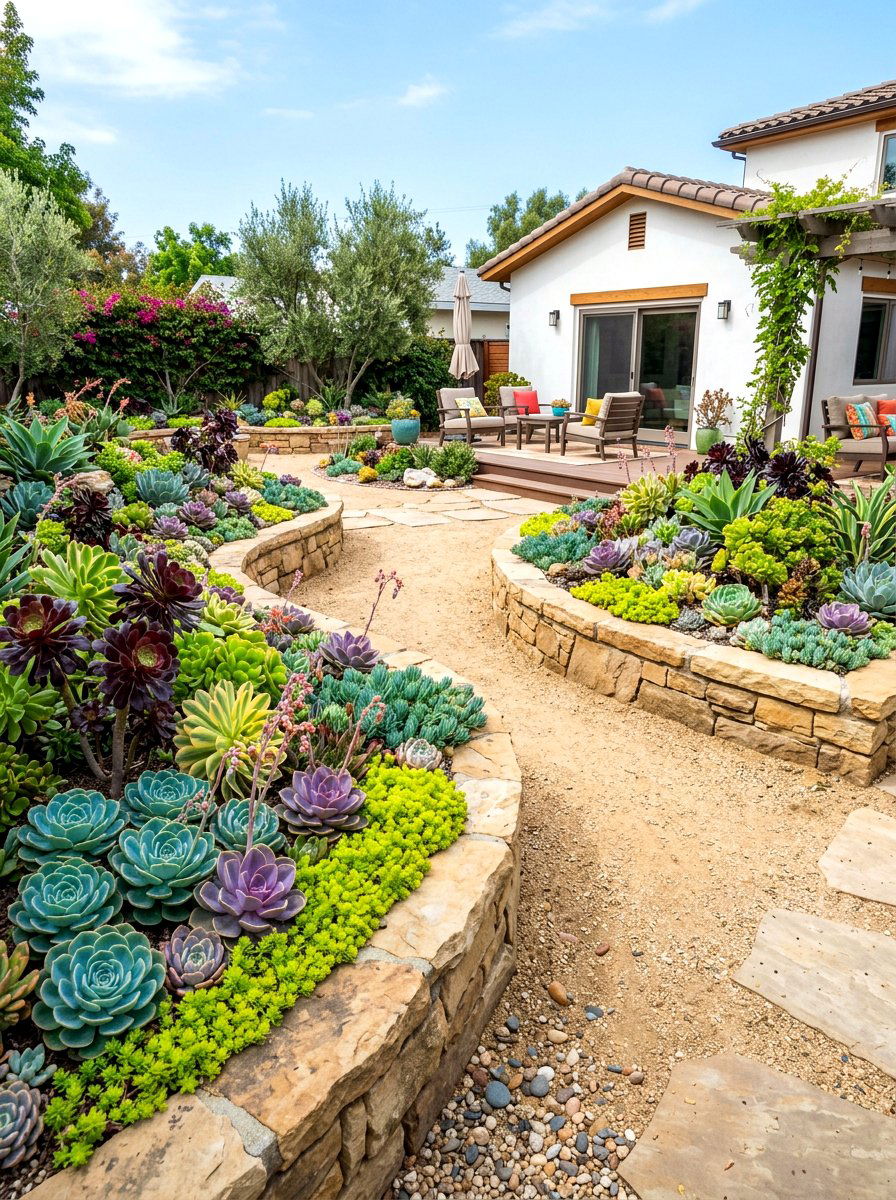
A succulent garden brings a lush, jewel-toned aesthetic to your landscape by using plants that store water in their thick leaves. These gardens often feature a variety of echeveria, sedum, and aeonium arranged in tight, tapestry-like patterns that create incredible texture. To make this design work, you should focus on drainage and use elevated beds or rocky slopes to prevent water from pooling around the roots. Adding a few larger specimen plants, like an aloe tree or a massive agave, provides the necessary height and focal points. The result is a vibrant, living mosaic that requires very little water to maintain its plump, colorful appearance.
4. Desert Rock Garden
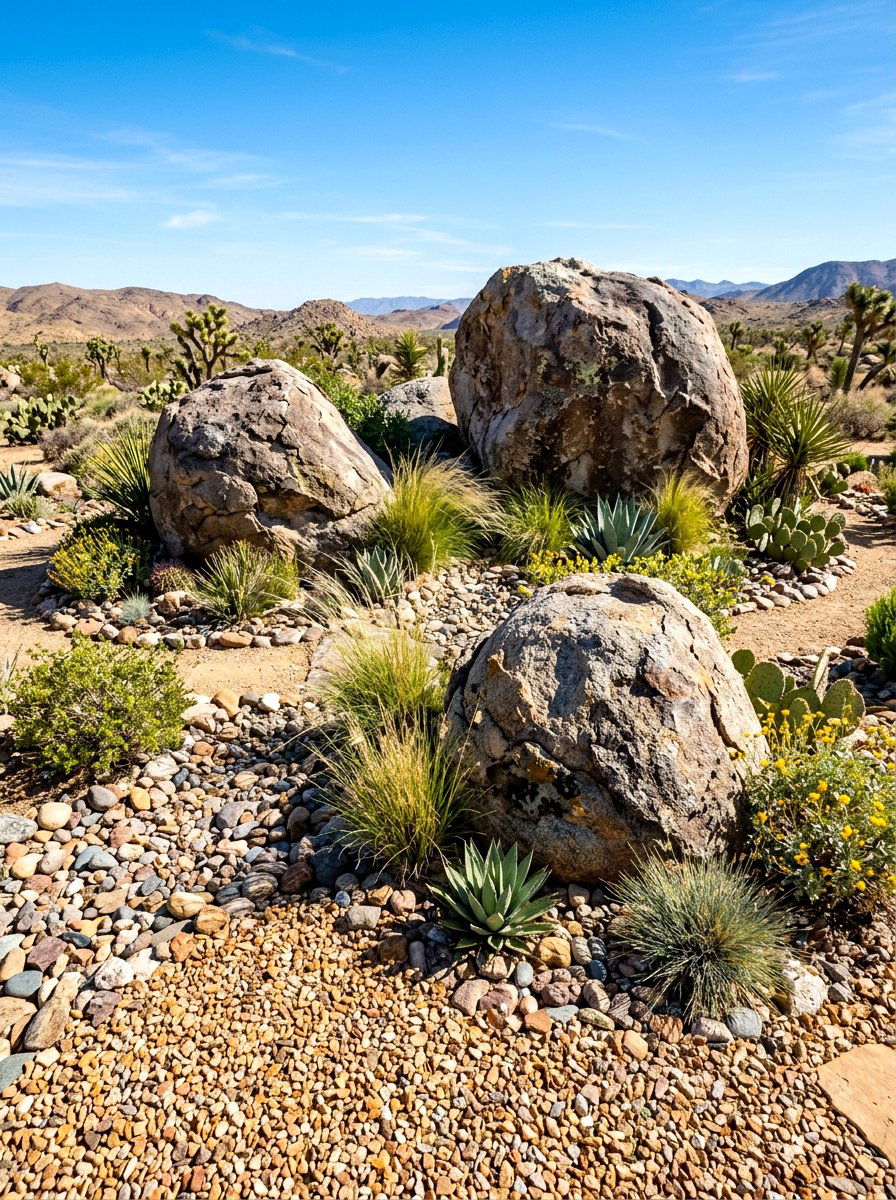
A desert rock garden utilizes the natural beauty of stone to create a rugged yet refined landscape that feels permanent and grounded. Instead of relying solely on plants, this design uses boulders of varying sizes to create a sense of scale and drama. Smaller pebbles and gravel fill the spaces between the larger rocks, creating a cohesive look that mimics a dry mountain wash. You can tuck small desert wildflowers or hardy grasses into the crevices between boulders for a pop of color and softness. This type of landscape is incredibly durable, handles foot traffic well, and looks beautiful even during the hottest months.
5. Artificial Turf And Gravel
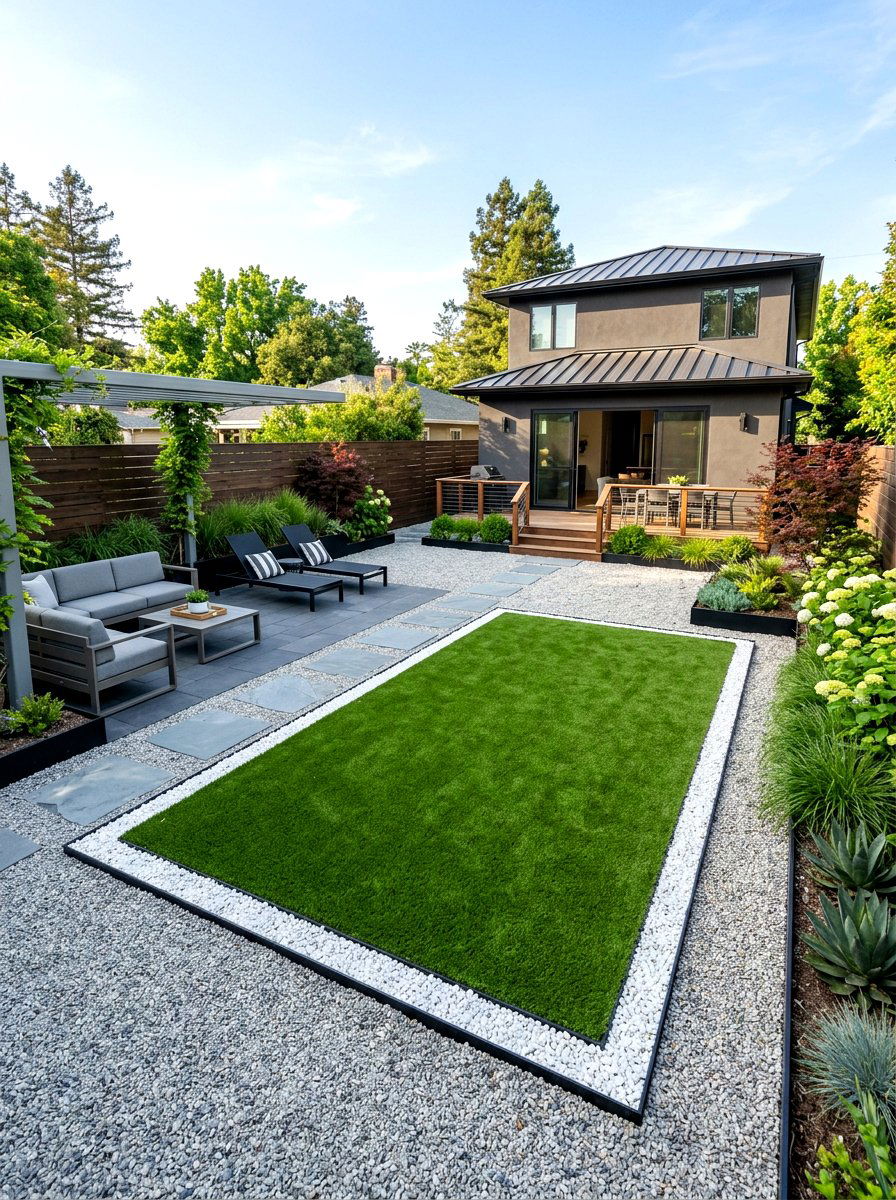
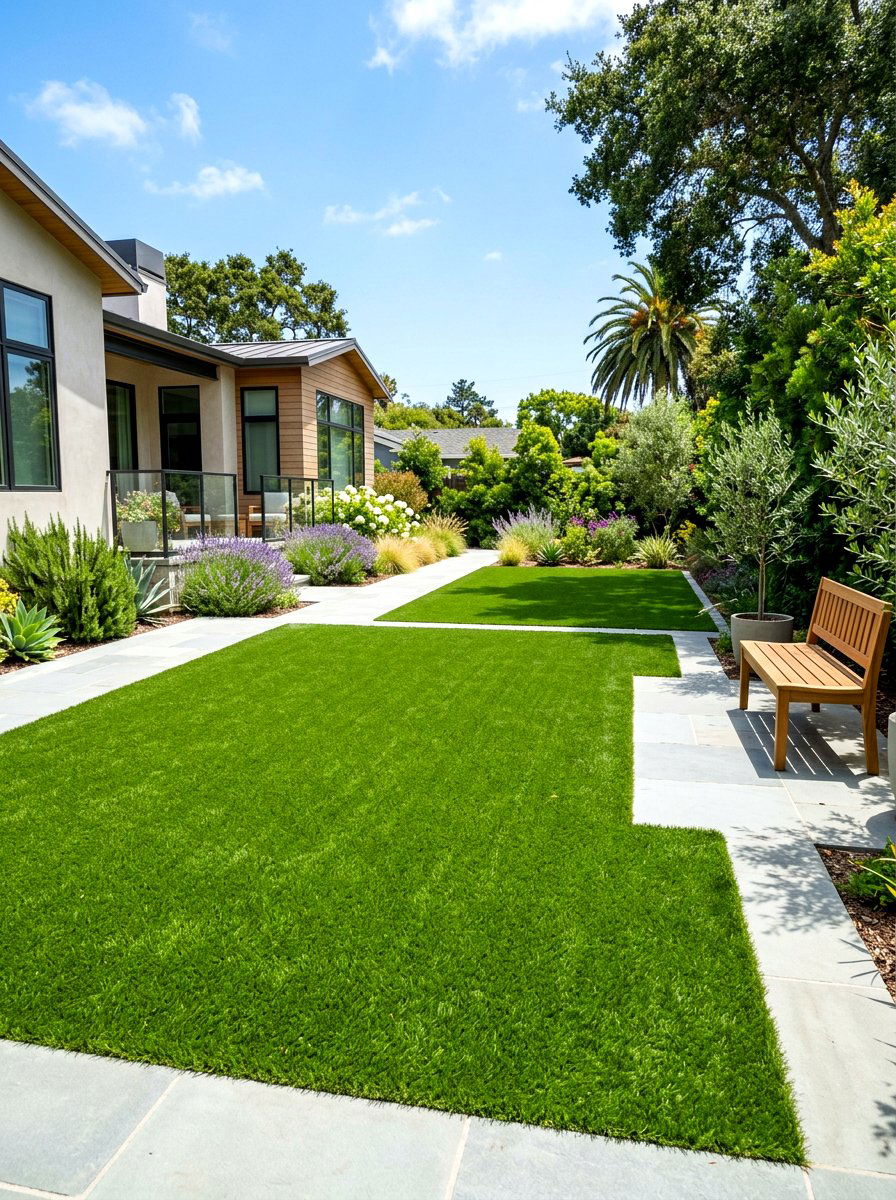
Combining artificial turf and gravel is a brilliant way to achieve the look of a green lawn without the high water bill. In this design, the synthetic grass provides a soft, vibrant green area for lounging or play, while surrounding gravel borders create a crisp, clean transition to the rest of the yard. This layout works perfectly for modern homes that value geometric precision and high contrast. The artificial turf stays perfectly manicured throughout the year, regardless of heat waves or drought restrictions. It creates a functional outdoor living space that feels cooling and inviting amidst the rocky textures of a typical desert landscape.
6. Native Desert Plants
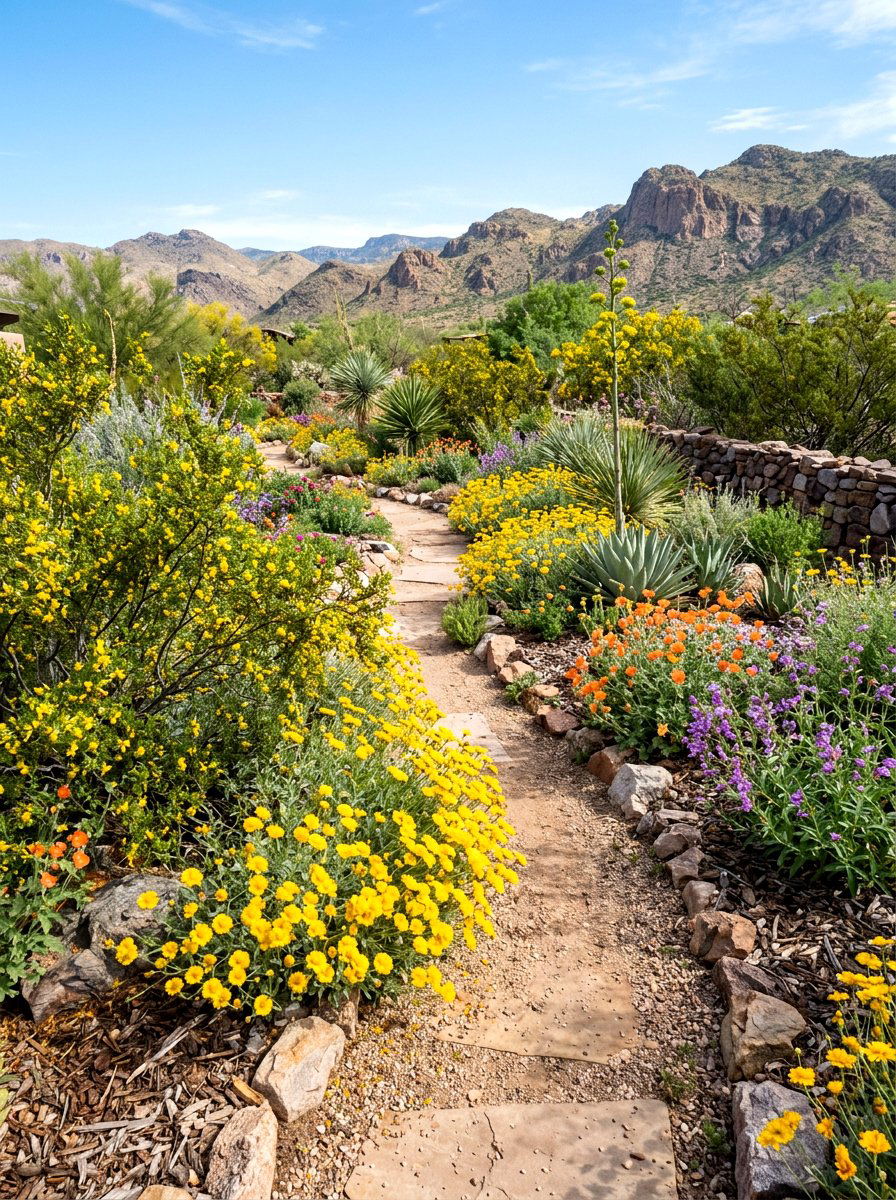
Using native desert plants is the most sustainable way to landscape because these species have evolved to thrive in your specific climate and soil. A garden filled with local sage, creosote, and desert marigolds provides essential habitat for local pollinators while requiring almost no supplemental irrigation. This design style feels authentic and deeply connected to the surrounding natural environment, making your home feel like a part of the landscape rather than an imposition on it. By grouping plants with similar water needs, you can create a thriving ecosystem that looks wild, beautiful, and effortless while significantly reducing your overall carbon footprint.
7. Decomposed Granite Pathway
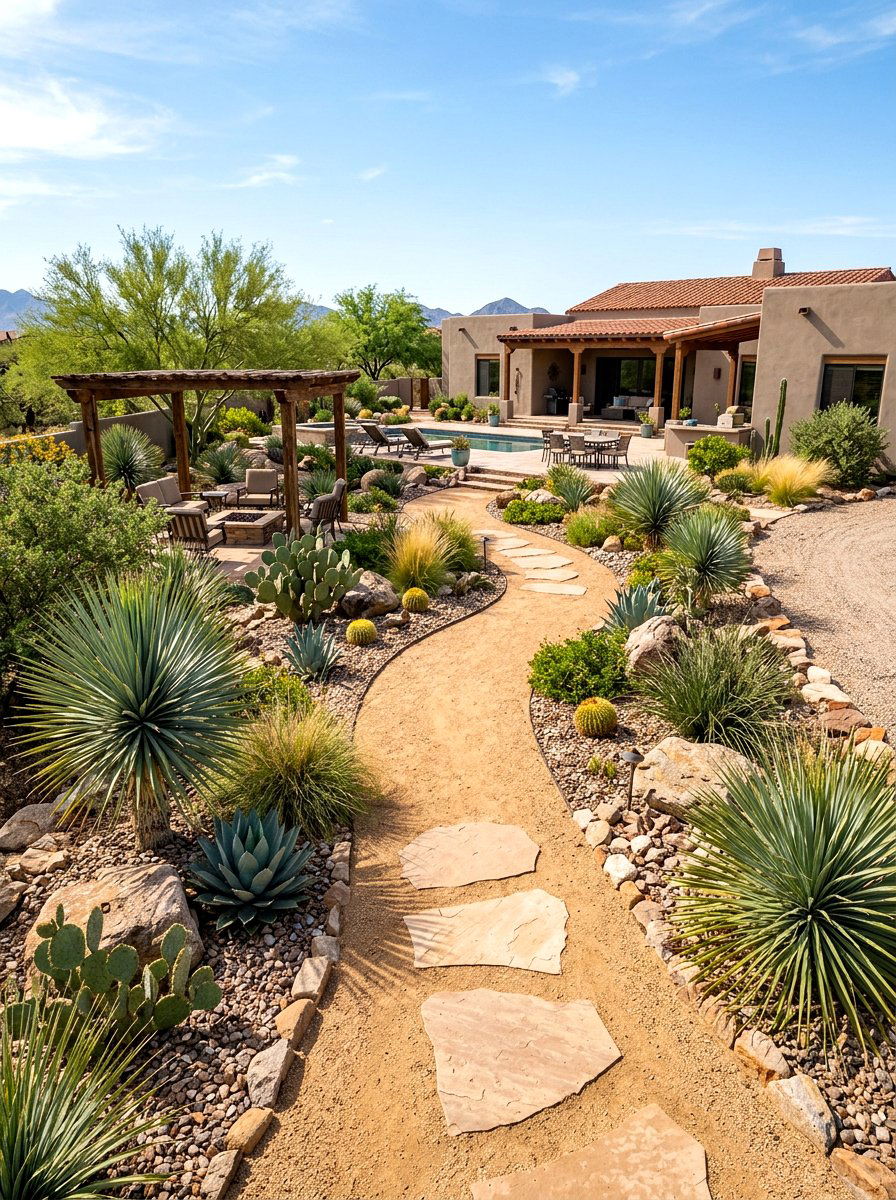
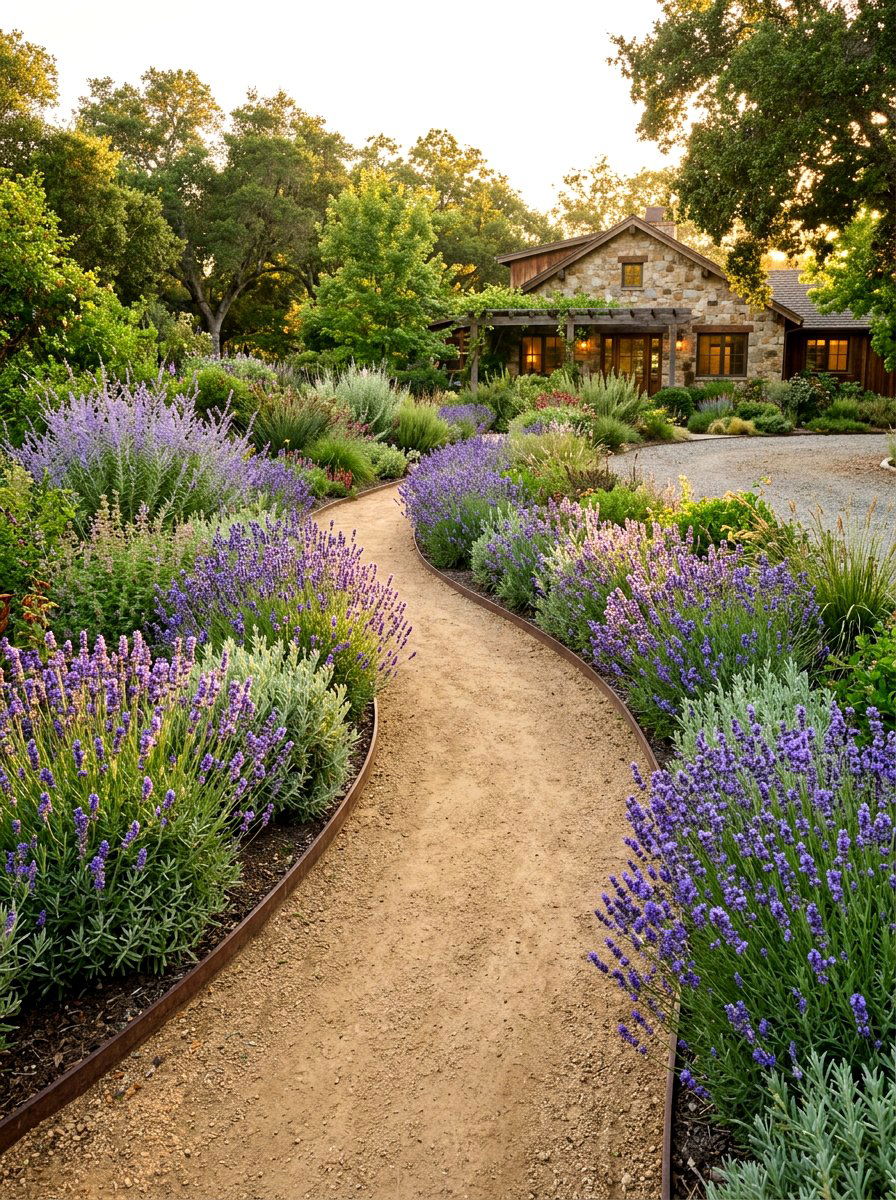
A decomposed granite pathway offers a soft, natural-looking walkway that crunches satisfyingly underfoot while providing excellent drainage for your yard. This material is available in various earthy tones, from warm tans to cool grays, allowing you to match it perfectly to your home’s exterior. In a desert landscape, these paths wind through planting beds, connecting different areas of the yard without the need for harsh concrete. You can edge the path with larger stones or steel borders to keep the material contained and create a professional, finished look. These paths are affordable, easy to install, and help define the flow of your outdoor space.
8. Large Boulder Placement
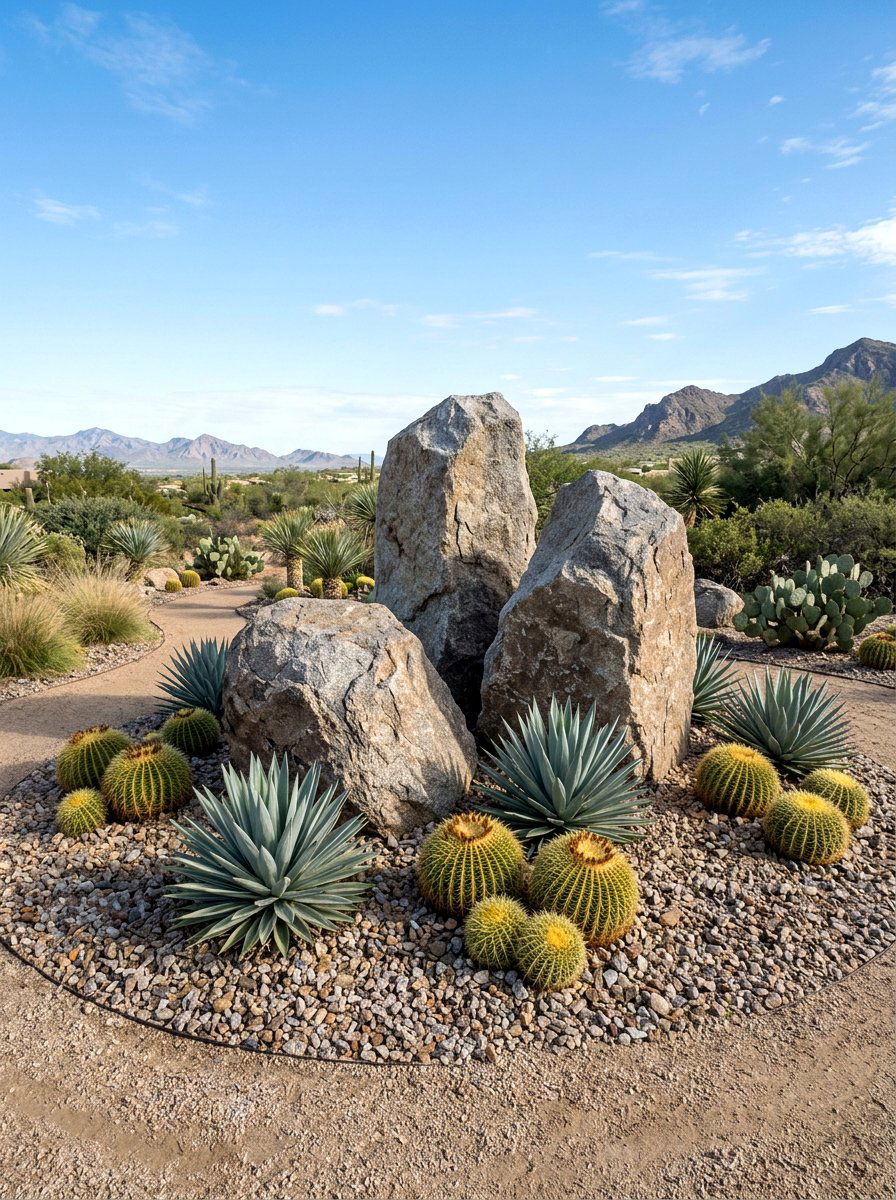
Large boulder placement is a key design element that adds instant maturity and weight to any desert landscape project. Instead of scattering small rocks randomly, choosing a few massive, character-rich boulders creates a focal point that anchors the entire yard. These stones can be used to create natural seating areas, retain soil on a slope, or simply serve as organic sculptures. When installing boulders, burying the bottom third makes them look as if they have been there for centuries. This technique creates a sense of permanence and provides a perfect backdrop for smaller plants, which pop against the solid, weathered surface of the rock.
9. Small Desert Backyard
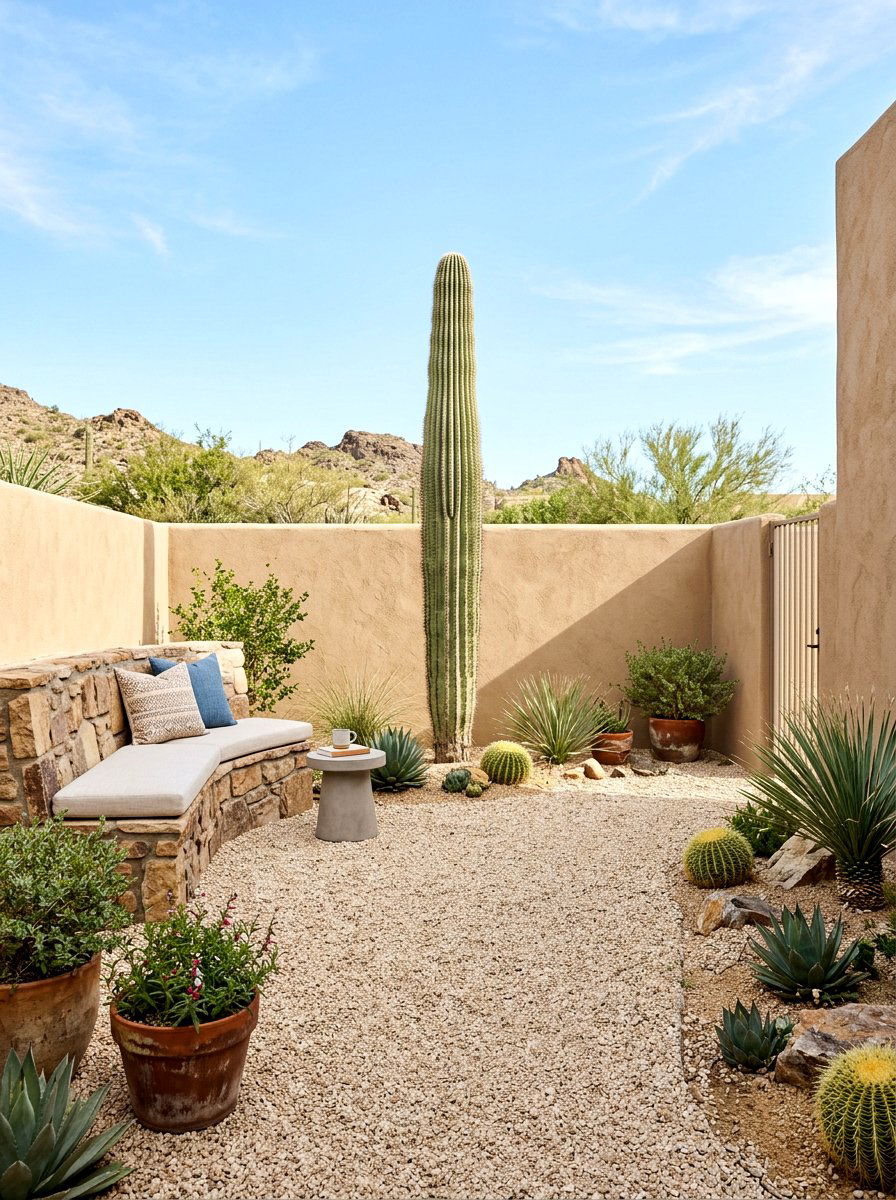
A small desert backyard requires a smart layout to maximize every square inch of space while maintaining an open, airy feeling. Using a light-colored gravel base can help the area feel larger and brighter, especially when paired with vertical elements like wall-mounted planters or trellises. Built-in stone benches or a small corner fire pit can provide functionality without cluttering the center of the yard. Selecting a few high-impact plants, like a single sculptural Yucca, ensures the space doesn't feel overwhelmed by greenery. This design approach creates a cozy, private retreat that is easy to manage and perfect for intimate outdoor gatherings or quiet relaxation.
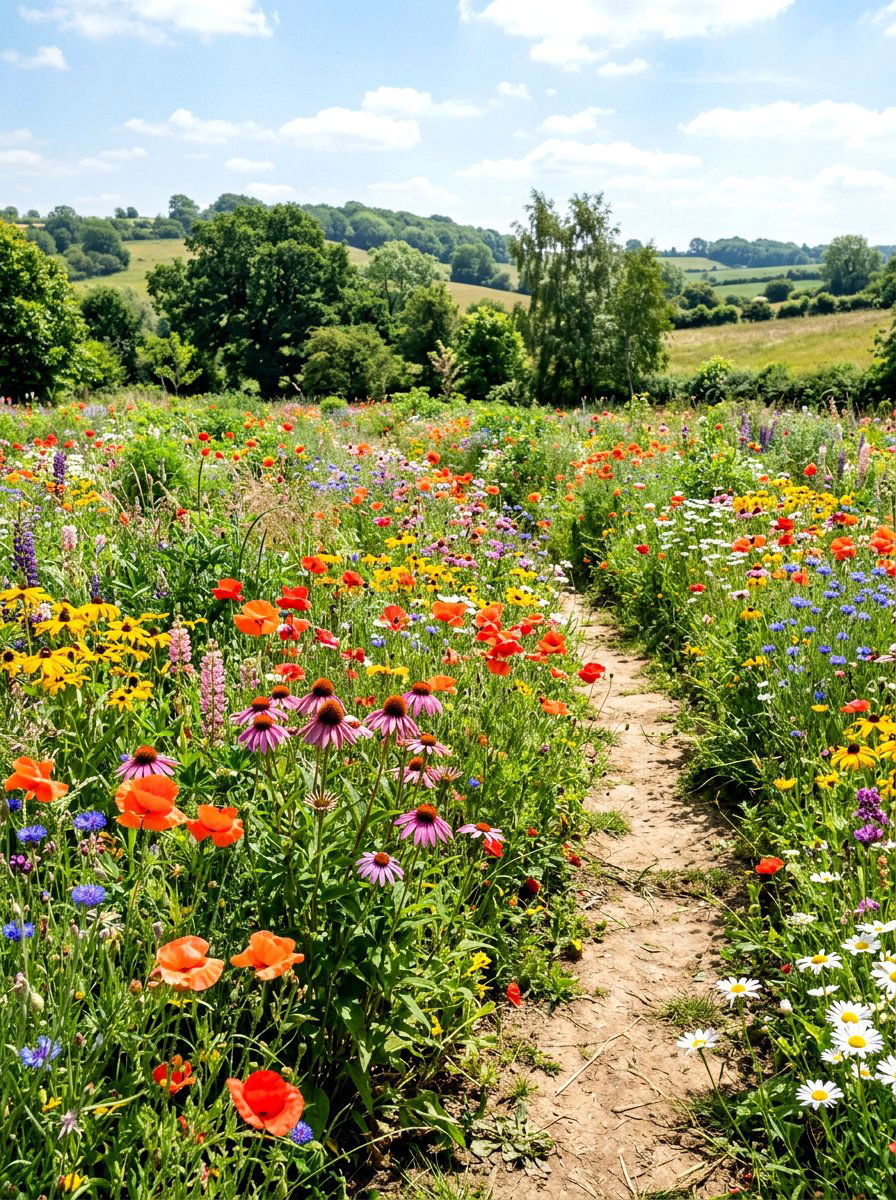
10. Cactus Garden Layout
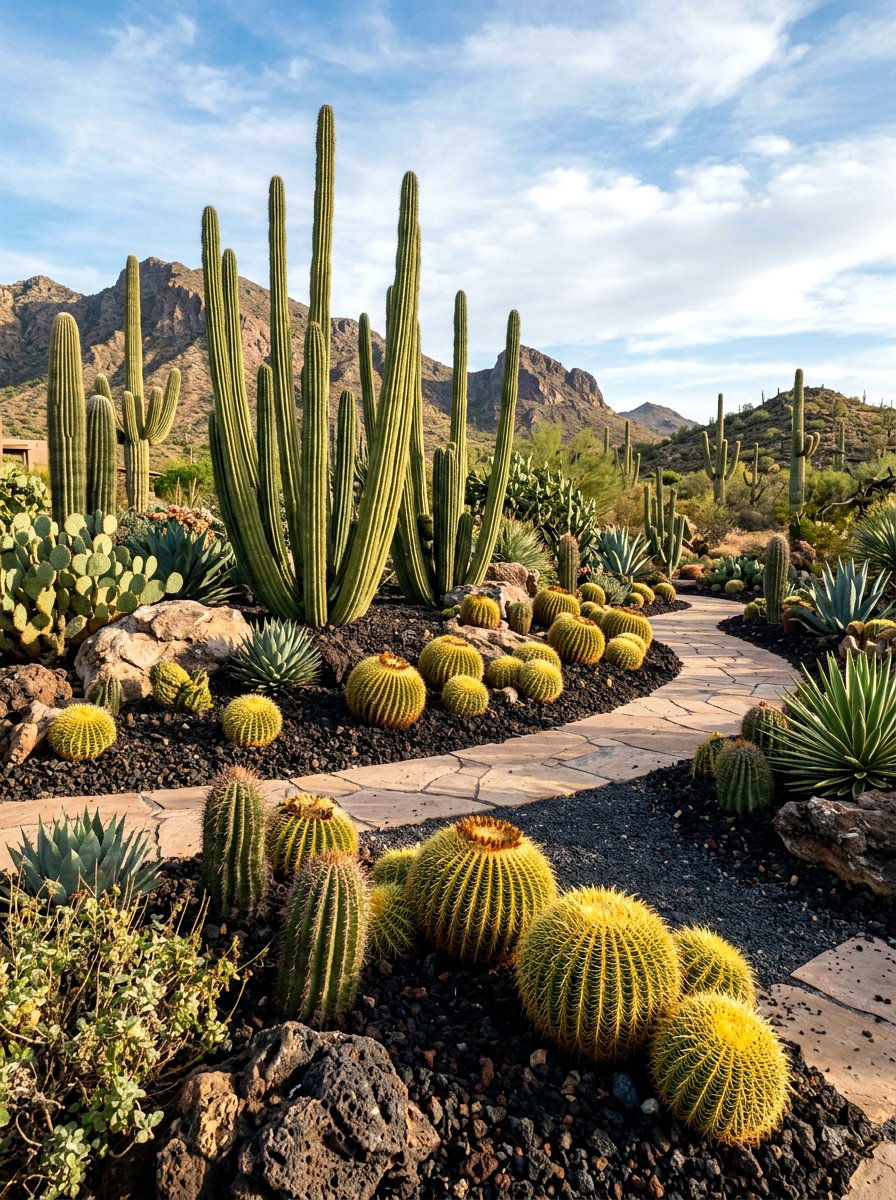
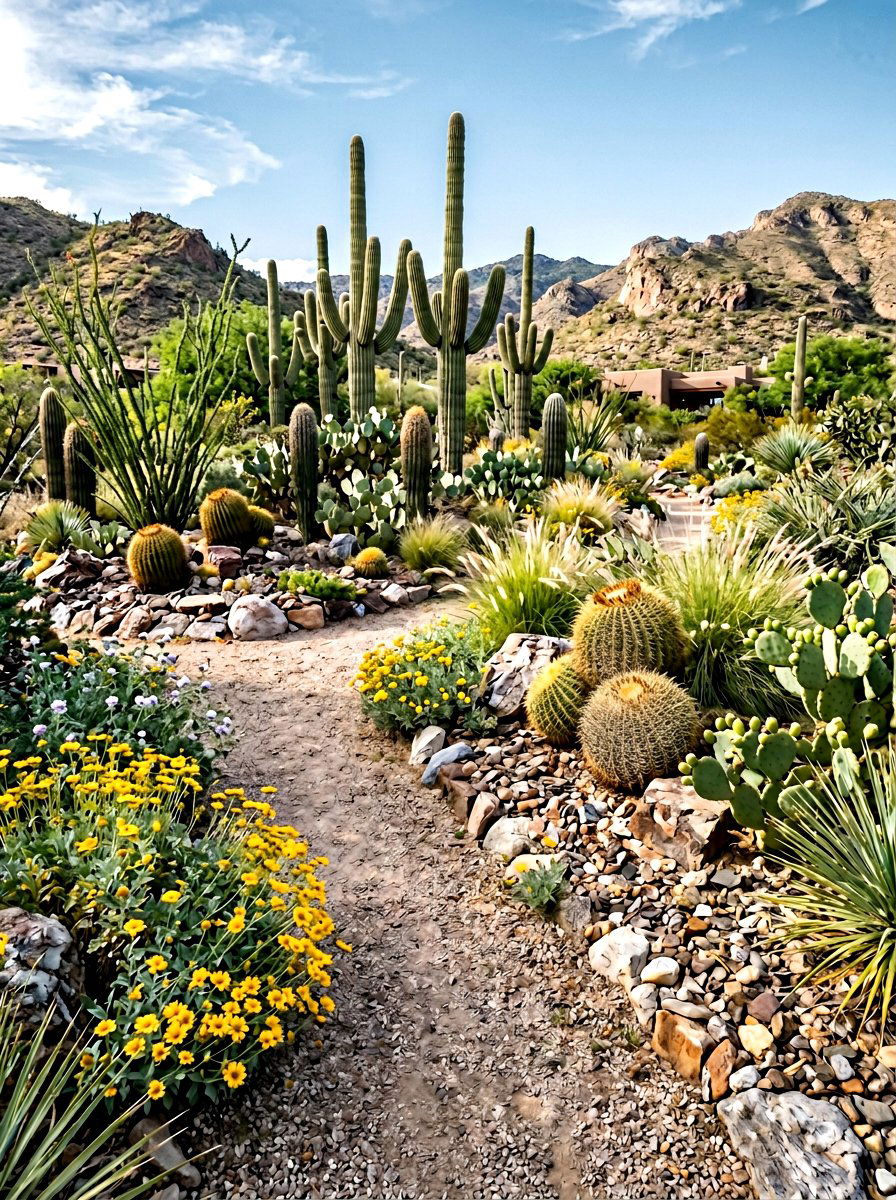
A cactus garden layout serves as a dramatic focal point that celebrates the unique shapes and silhouettes of arid-loving species. To create a professional look, you should group various heights and textures together, such as tall Mexican fence post cacti paired with round golden barrel cacti. Using a neutral base of crushed stone or decomposed granite helps these architectural plants stand out. This design style works exceptionally well along fence lines or as a centerpiece in a circular driveway. It provides a sculptural quality to the landscape that changes beautifully as shadows shift throughout the day, requiring almost zero irrigation once established.
11. Desert Fire Pit Area
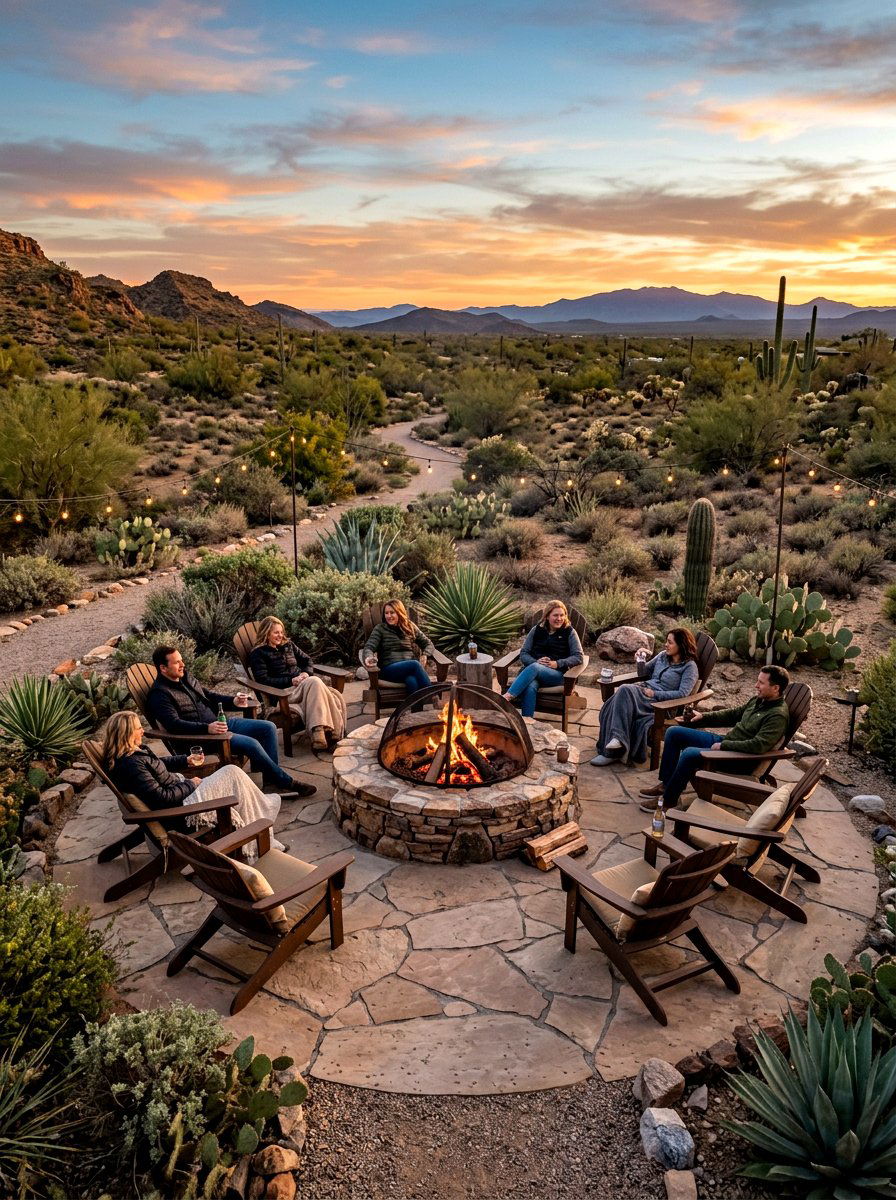
A desert fire pit area creates a warm and inviting gathering spot that is perfect for cool desert nights. This design often features a circular stone or concrete pit surrounded by a generous seating area of gravel or pavers. Using natural materials like flagstone for the patio helps the space blend seamlessly with the surrounding landscape. You can surround the area with low-growing desert shrubs or succulents to provide a sense of enclosure without blocking the view of the stars. This functional element extends the usability of your yard into the evening, providing a cozy atmosphere for roasting marshmallows or simply enjoying the desert breeze.
12. Agave Landscape Design
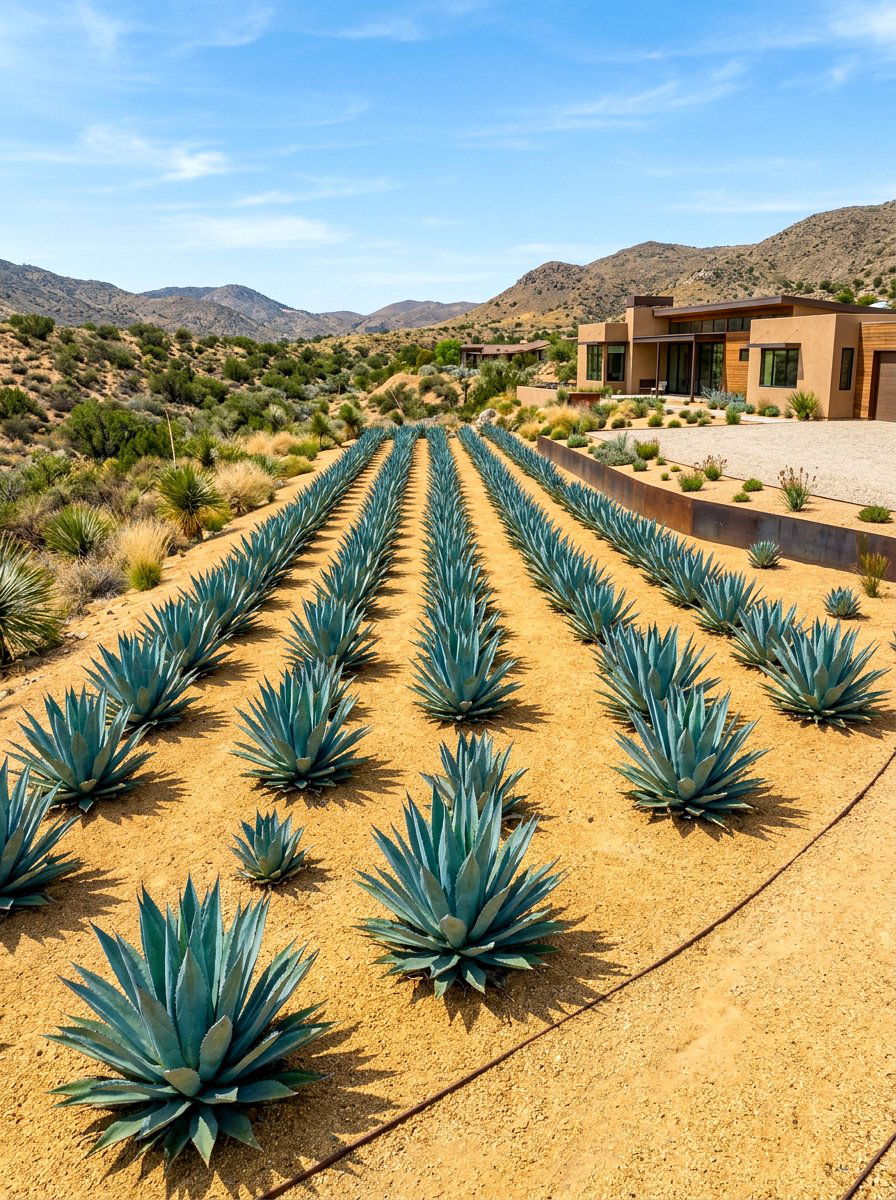
Agave landscape design focuses on the bold, symmetrical shapes of the agave plant to create a striking visual rhythm in your yard. These plants come in a wide range of colors, from blue-gray to bright variegated yellow, allowing for incredible creative expression. By planting them in groups or as repeating accents along a path, you create a sense of movement and professional structure. Agaves are incredibly hardy and can survive on very little water, making them the stars of any sustainable garden. Pairing them with fine-textured ornamental grasses creates a beautiful contrast between the sharp, rigid leaves of the agave and the soft, swaying blades.
13. Drought Tolerant Flower Bed
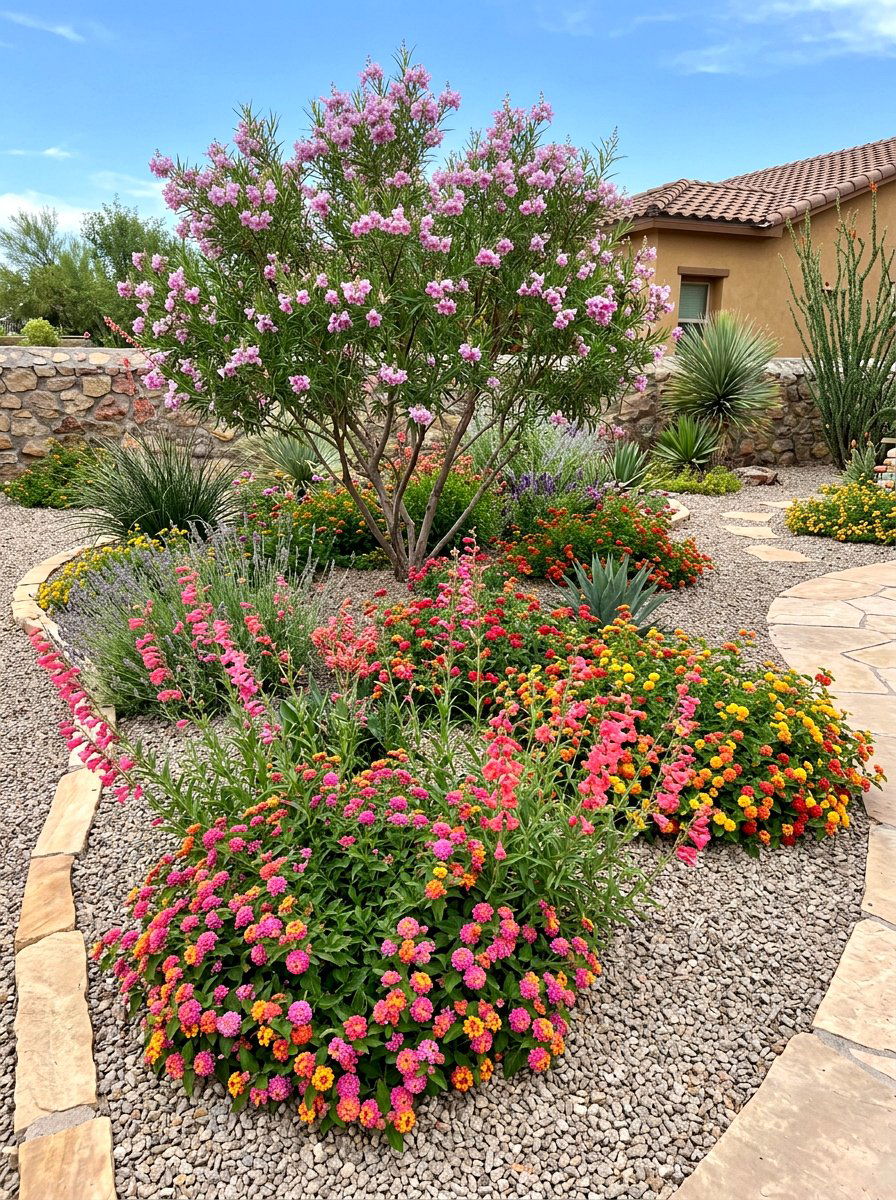
A drought tolerant flower bed proves that a desert landscape can be just as colorful and vibrant as a traditional garden. By selecting flowering perennials like lantana, penstemon, and desert willow, you can create a sea of blossoms that attracts butterflies and hummingbirds. The key to this design is layering plants by height and using a thick layer of organic mulch to keep roots cool. These flower beds provide a soft, romantic touch to the often-rugged desert aesthetic, offering pops of pink, purple, and orange against the earthy tones of the soil. It is a wonderful way to add life and movement to your yard.
14. Desert Water Feature
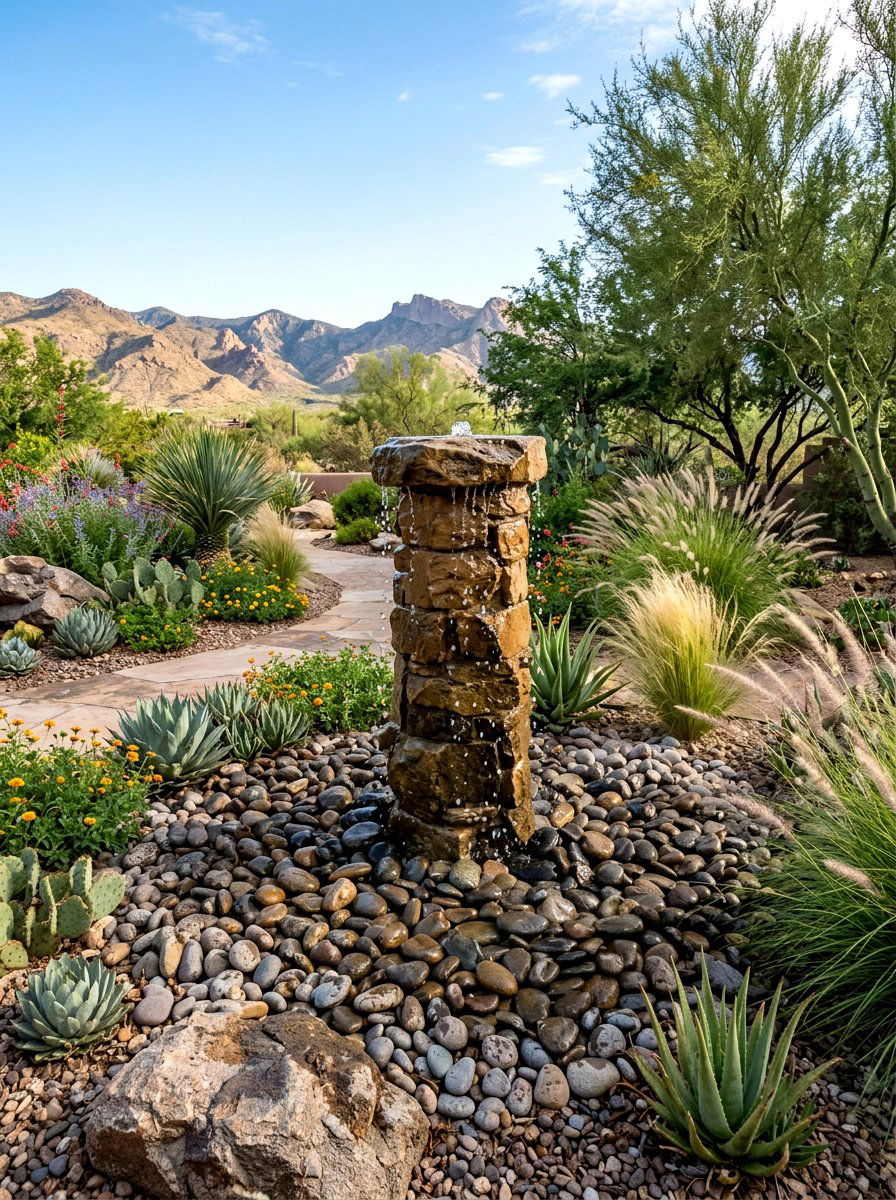
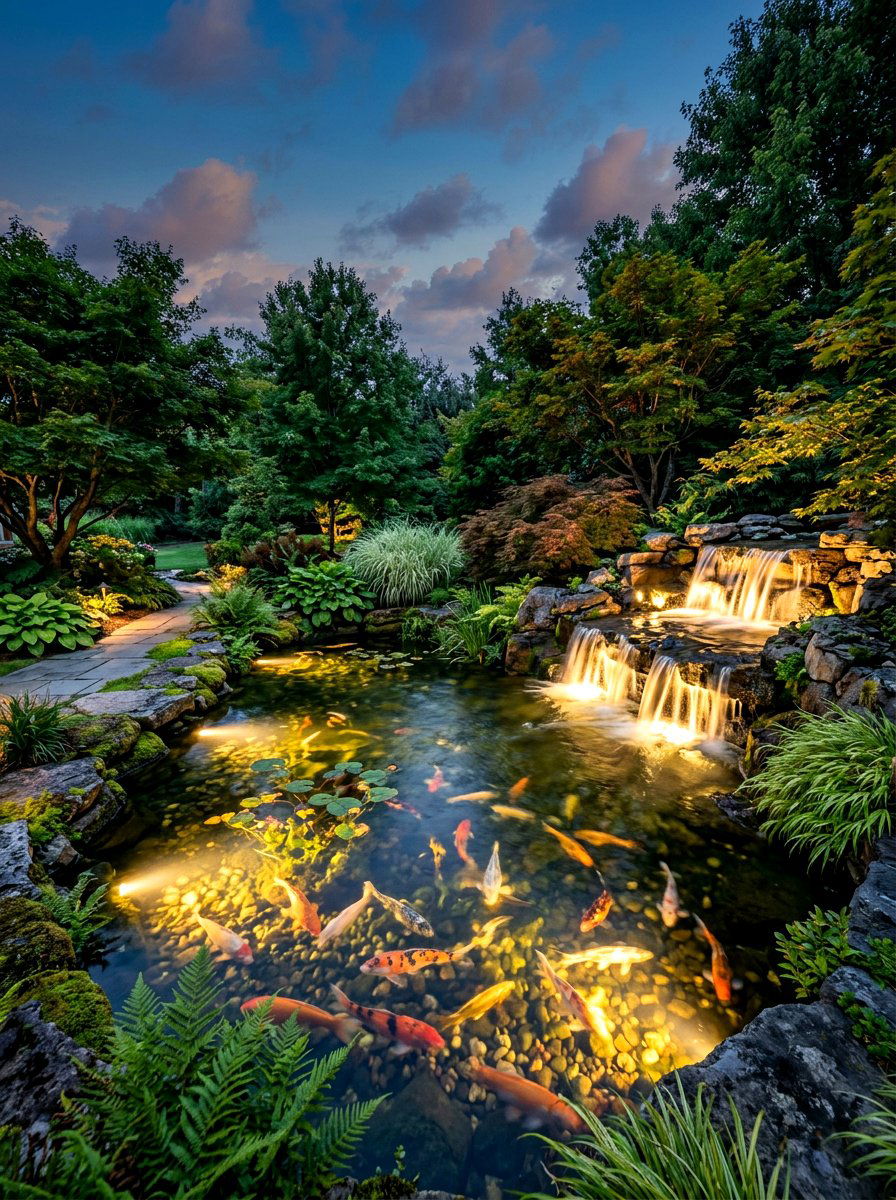
A desert water feature adds a surprising and refreshing element to an arid landscape, providing both visual beauty and the soothing sound of moving water. In a desert setting, it is best to use recirculating fountains or small "disappearing" waterfalls to minimize evaporation and water waste. A stone basalt column fountain or a simple ceramic pot fountain can serve as a tranquil focal point amidst the dry textures of rocks and cacti. The presence of water also helps lower the local temperature slightly and provides a vital drinking source for birds and beneficial insects, making your garden feel like a true oasis in the heat.
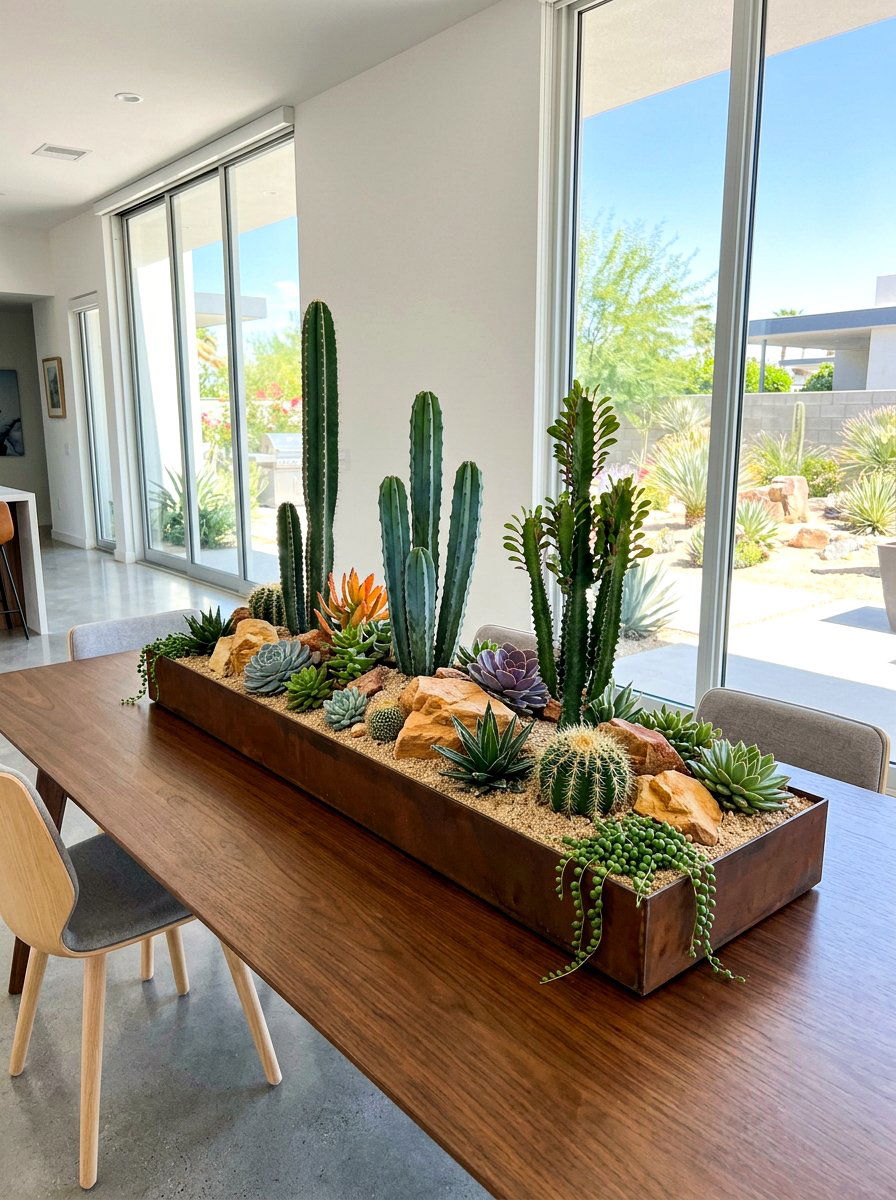
15. Modern Paver Walkway
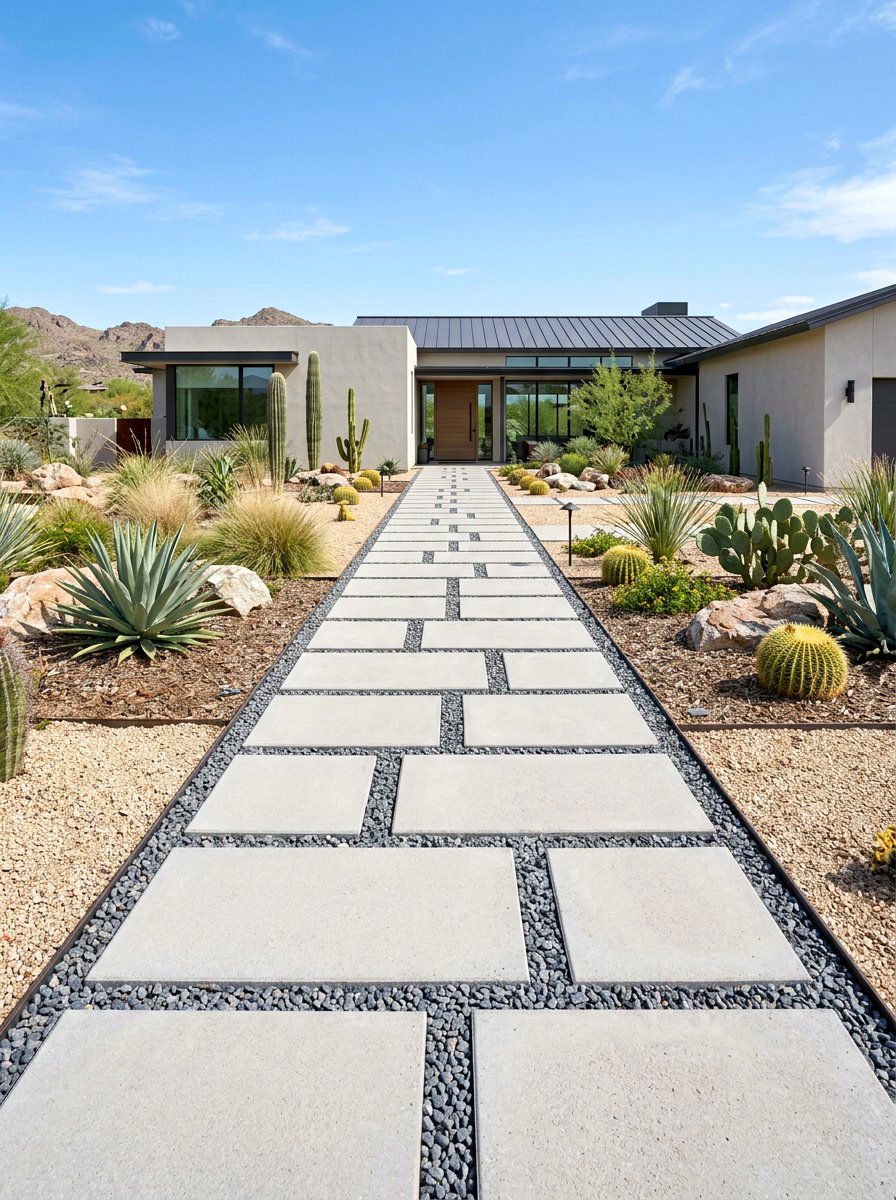
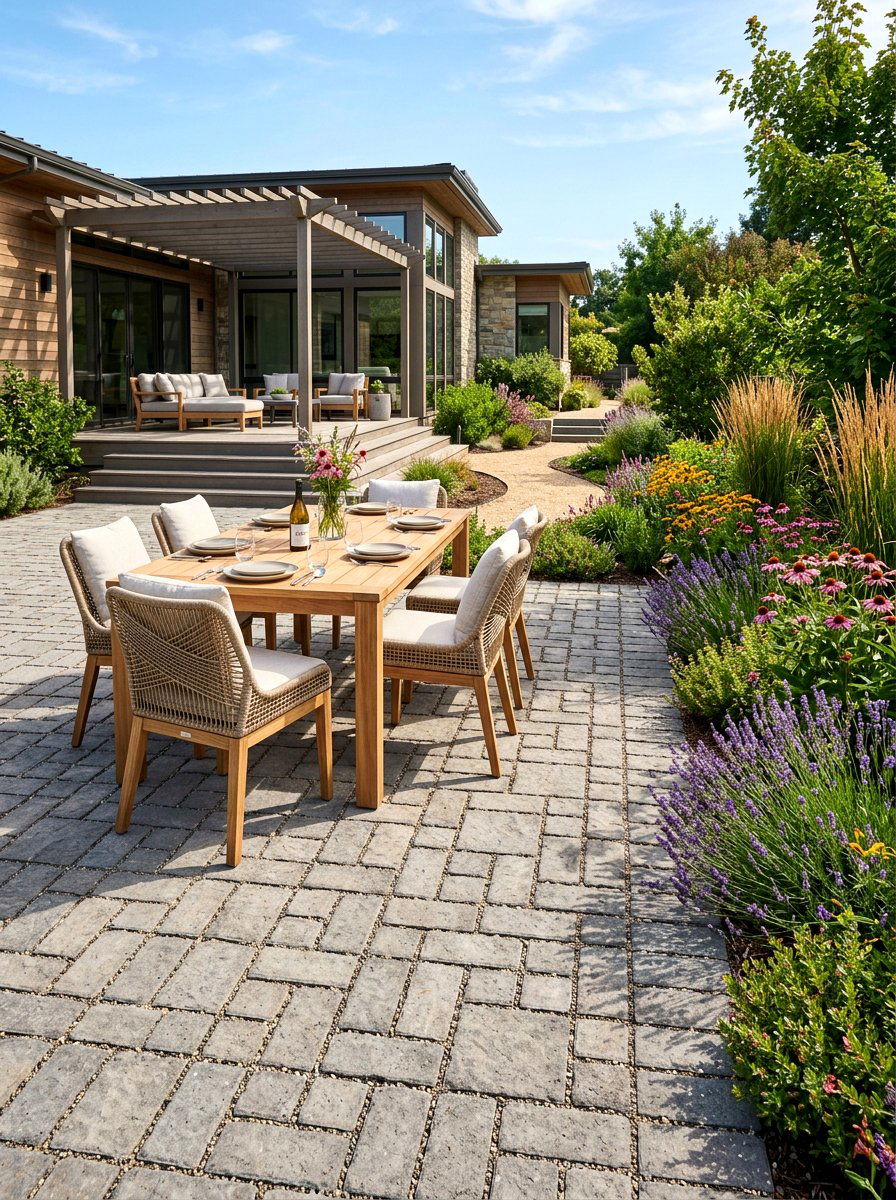
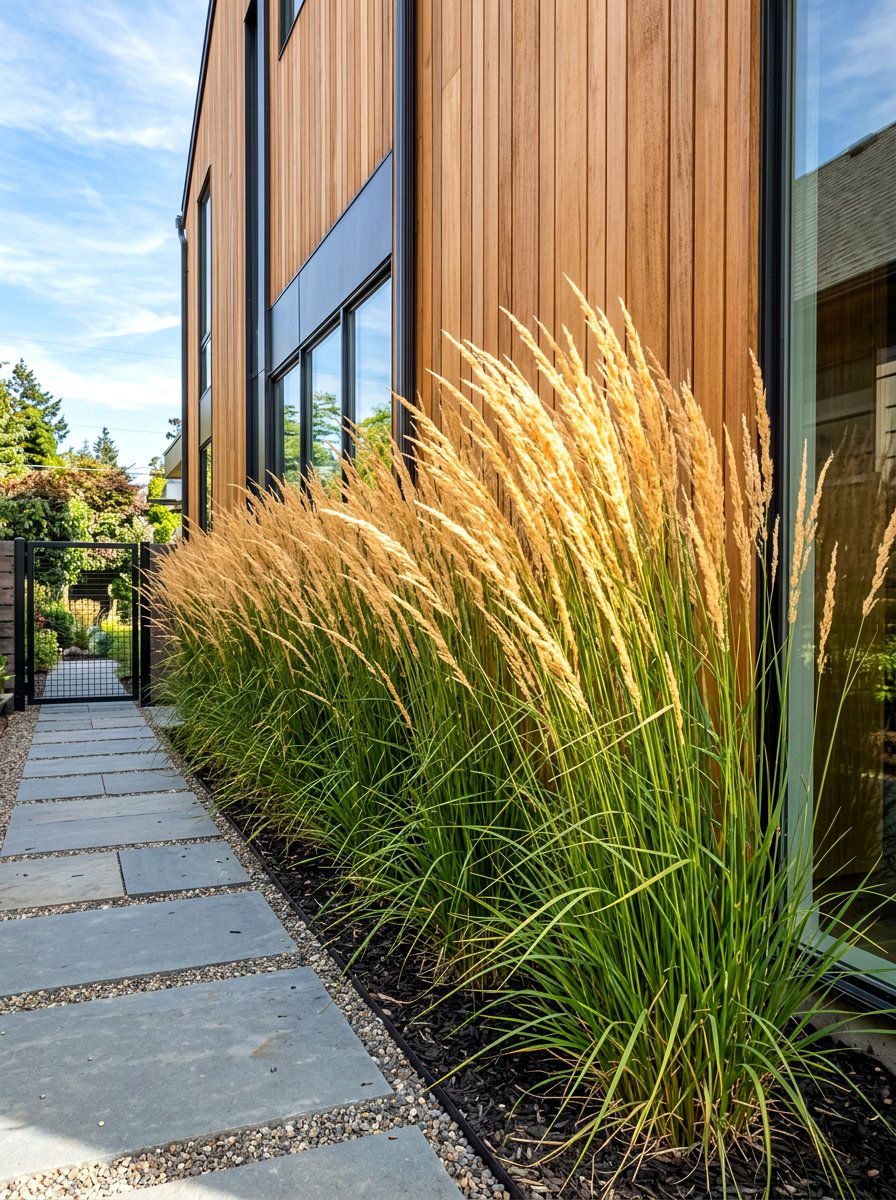
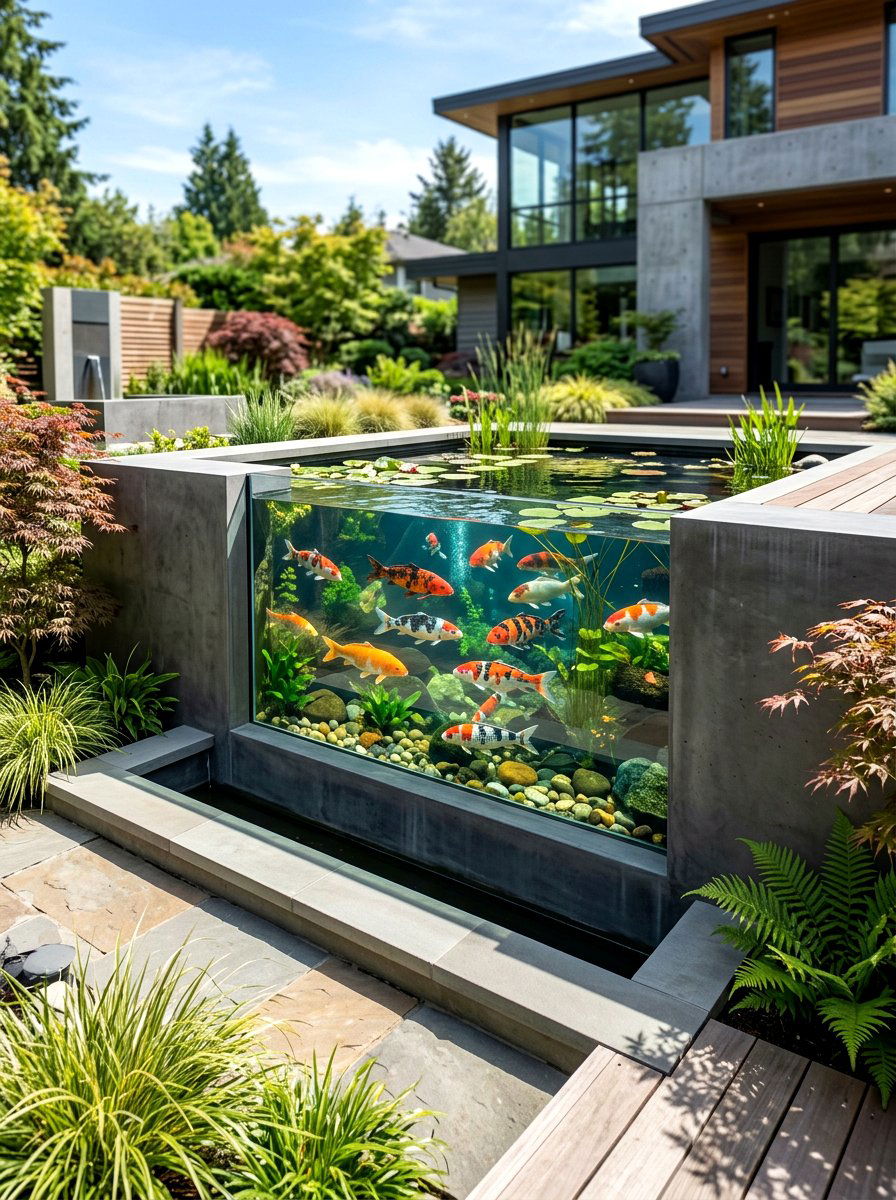
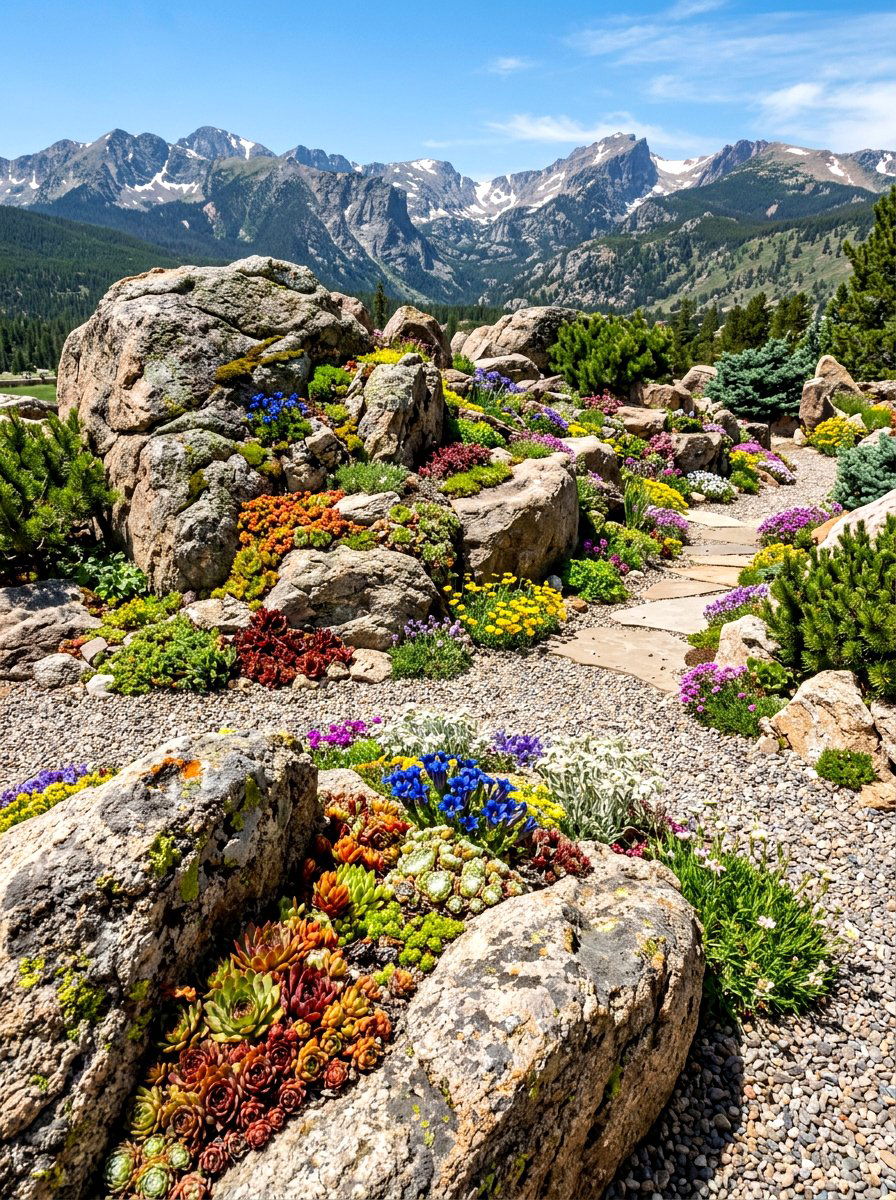
A modern paver walkway uses clean, geometric lines to bring a sense of order and sophistication to a desert environment. Using large-format concrete or stone pavers with wide gaps filled with contrasting pebbles creates a high-end look that is very popular on Pinterest. This design allows for water to permeate the ground while providing a stable, flat surface for walking. The linear nature of the path contrasts beautifully with the organic, irregular shapes of desert plants. This type of walkway is perfect for connecting the front curb to the front door, providing a clear and stylish path that defines the modern desert aesthetic.
16. Mediterranean Desert Style
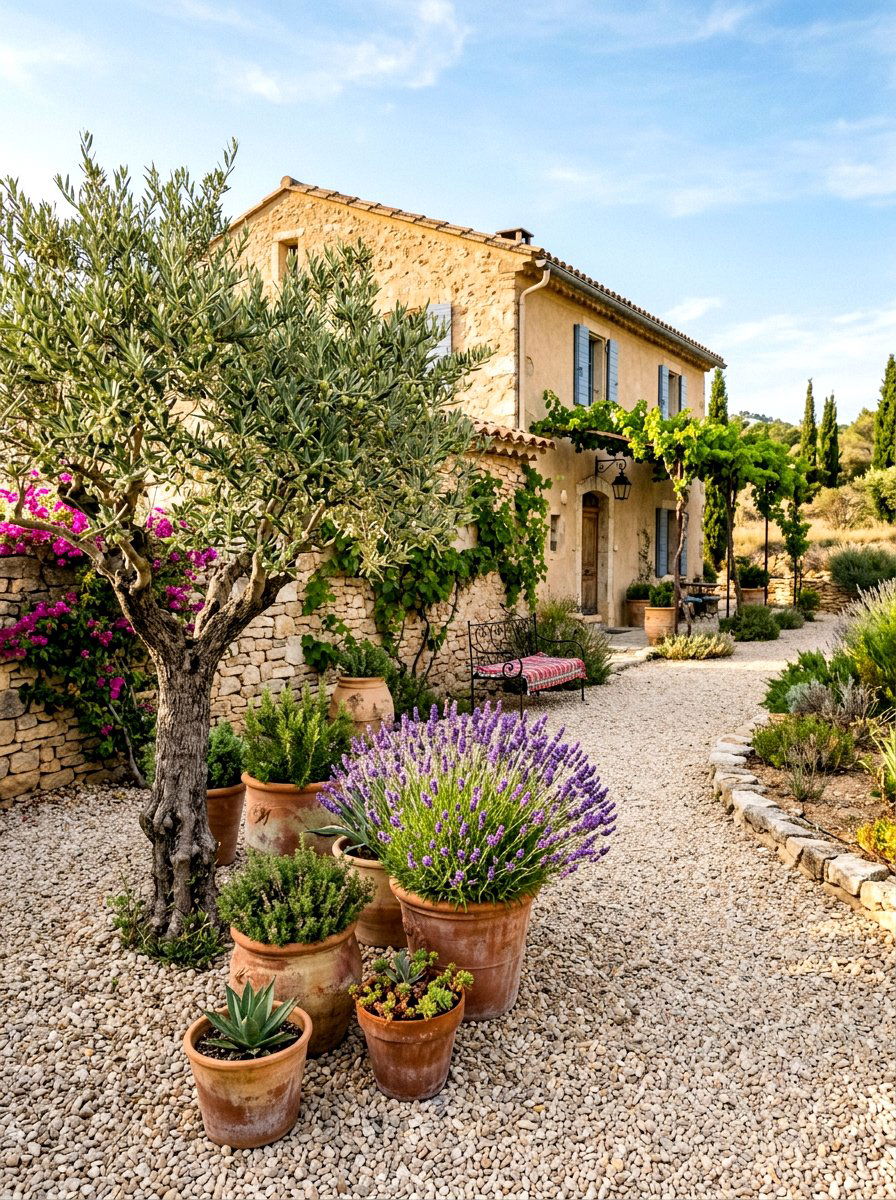
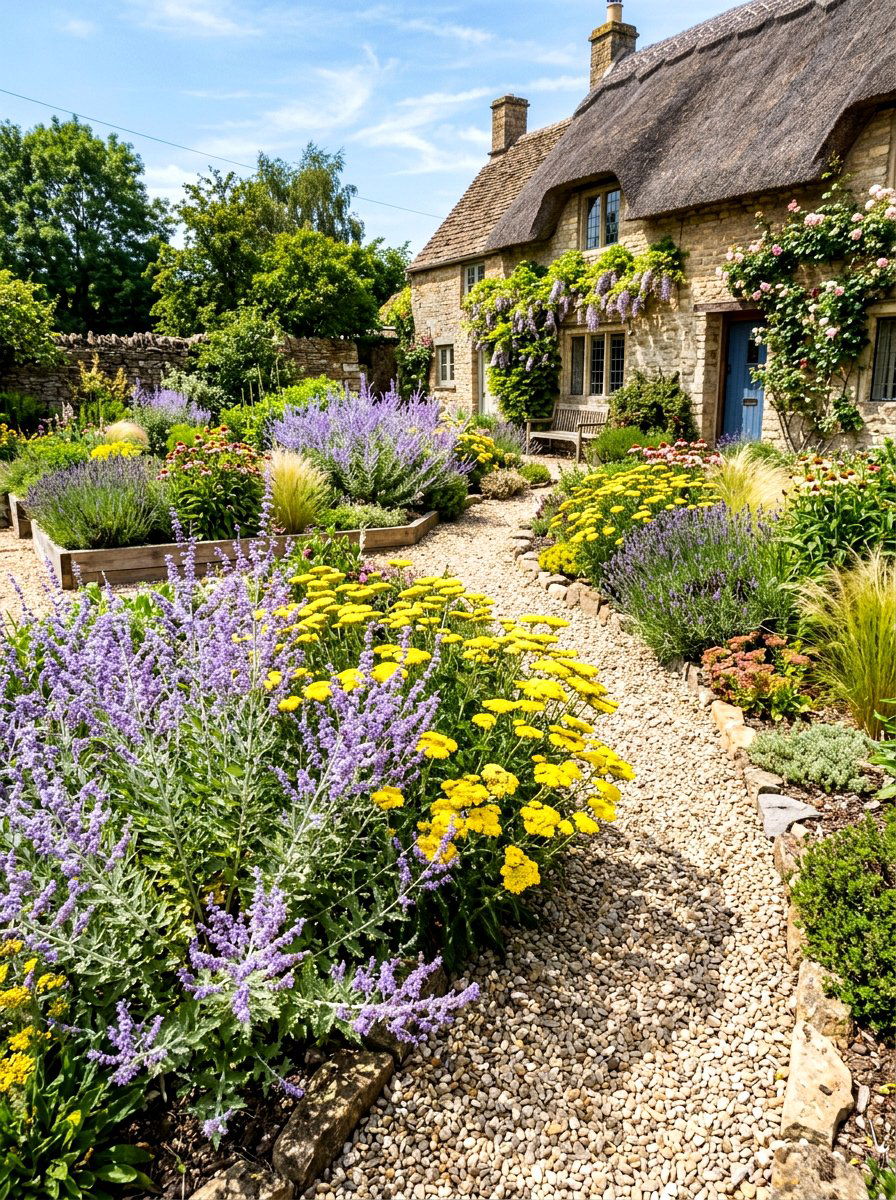
Mediterranean desert style blends the rustic charm of coastal Europe with the hardiness of arid plants to create a timeless, sun-drenched look. This design often features terracotta pots, olive trees, and lavender, which all thrive in warm, dry conditions. Incorporating gravel courtyards and stone walls adds to the old-world feel while keeping the maintenance low. You can use drought-tolerant herbs like rosemary and thyme as fragrant groundcovers that spill over the edges of pathways. This style is perfect for those who want a garden that feels romantic and lush without the high water requirements of a traditional English garden or a thirsty green lawn.
17. Raised Garden Bed For Arid Climates
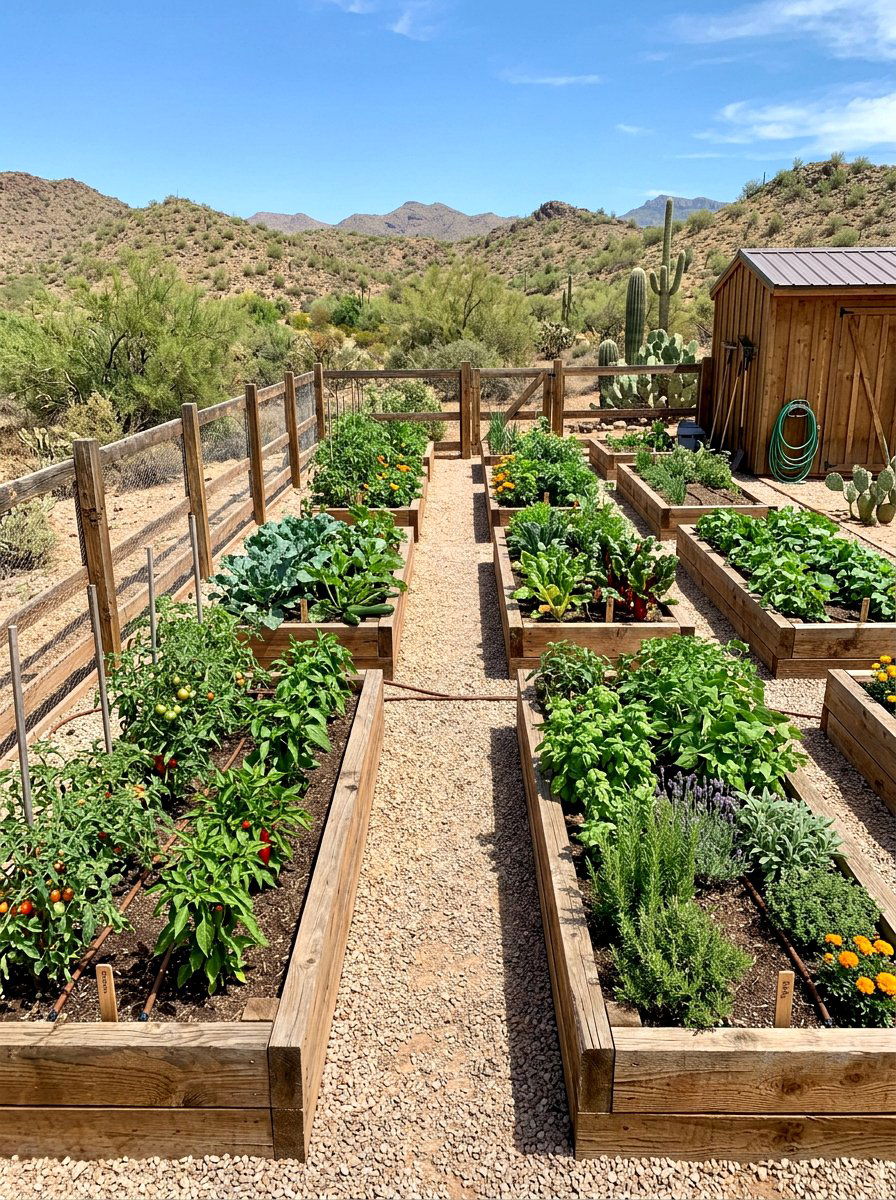
A raised garden bed for arid climates allows you to control the soil quality and drainage, which is essential for growing vegetables or delicate succulents in the desert. Building these beds out of thick timber or stone helps insulate the roots from the extreme heat of the ground. In a desert landscape, these beds add vertical interest and structure to a flat yard. You can incorporate drip irrigation systems directly into the beds to ensure every drop of water goes exactly where it is needed. These elevated structures make gardening more accessible and organized, providing a dedicated space for color and productivity within your larger landscape.
18. Desert Shade Structure
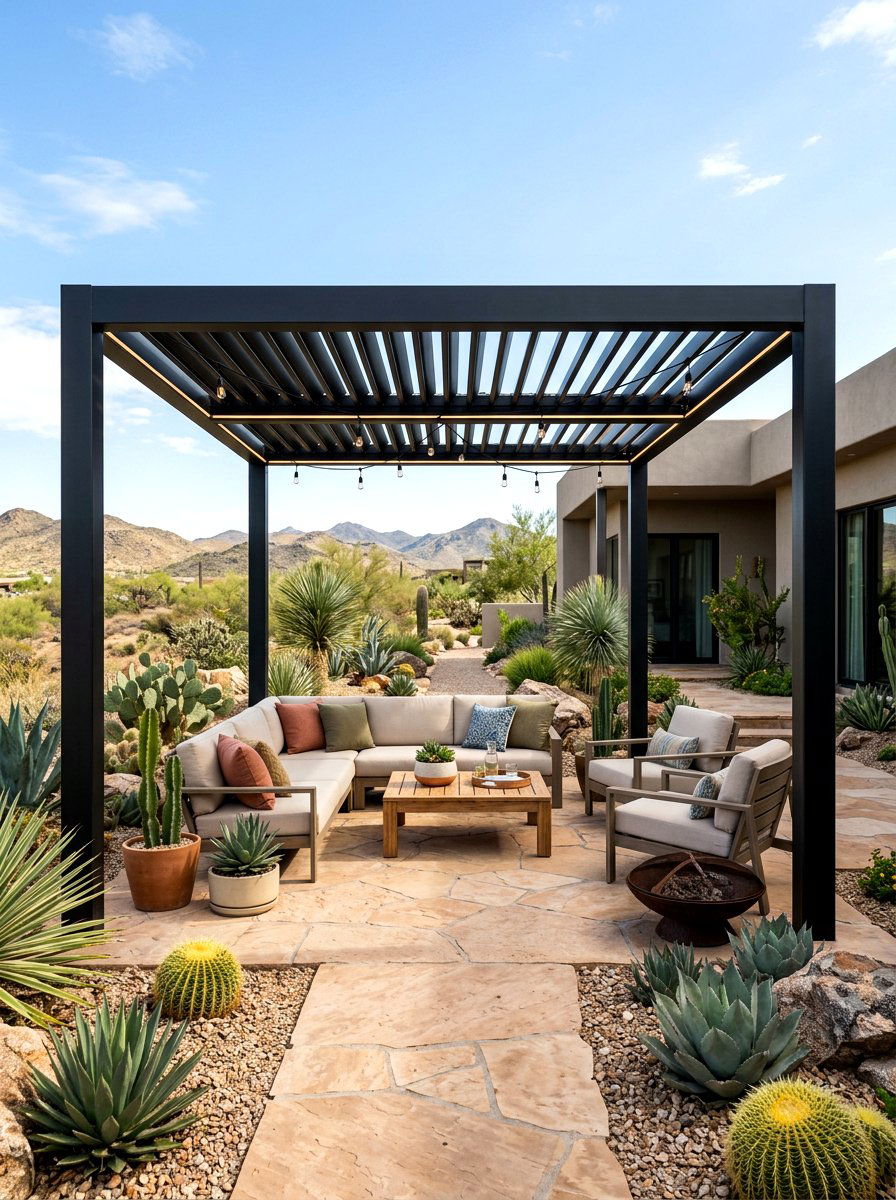
A desert shade structure is a functional necessity that can also be a beautiful architectural centerpiece for your outdoor space. Whether it is a modern steel pergola, a traditional wooden ramada, or a sleek sail shade, these structures provide a cool refuge from the intense sun. Positioning the structure over a seating area or outdoor kitchen makes the yard much more usable during the daytime. You can even grow drought-tolerant vines like bougainvillea over the top to provide natural cooling and a burst of vibrant color. This design element defines the living area of your yard and creates a comfortable transition between indoors and out.
19. Gravel And Stone Mulching
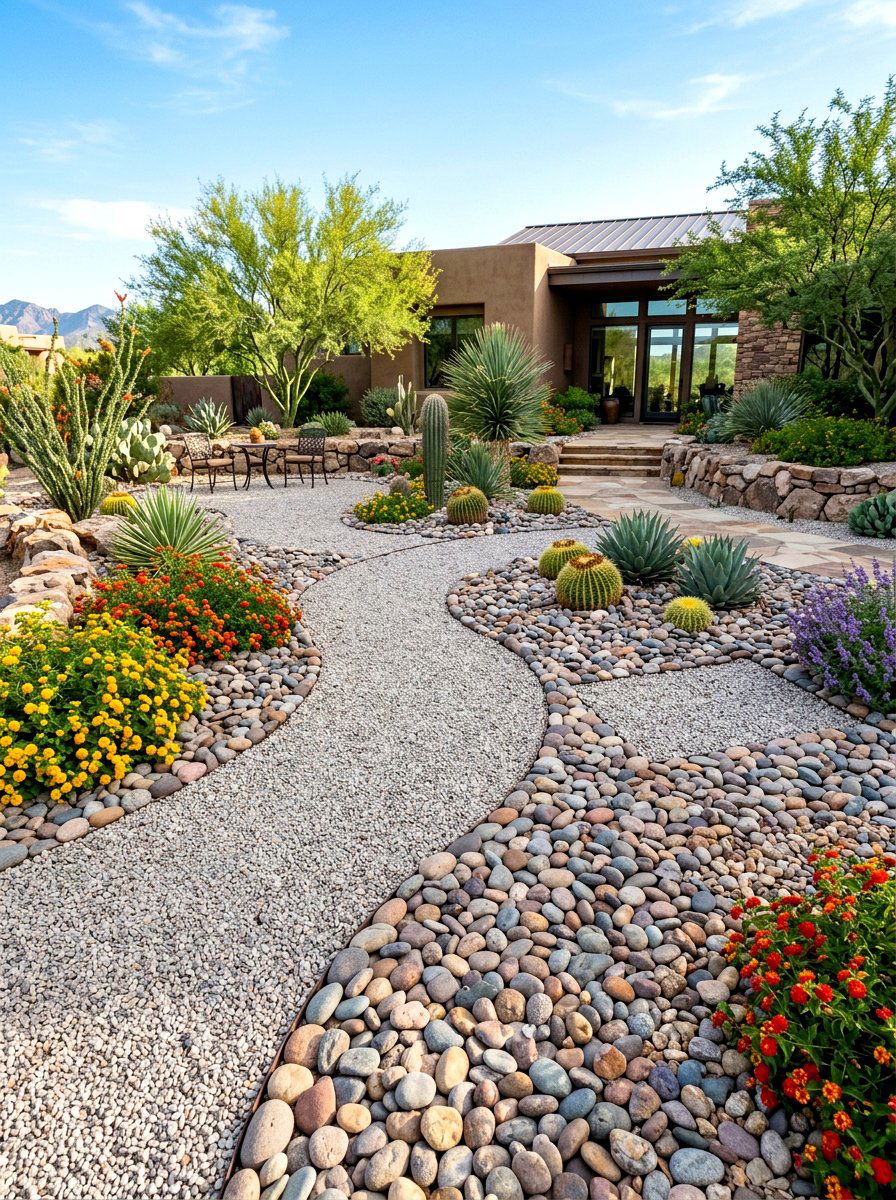
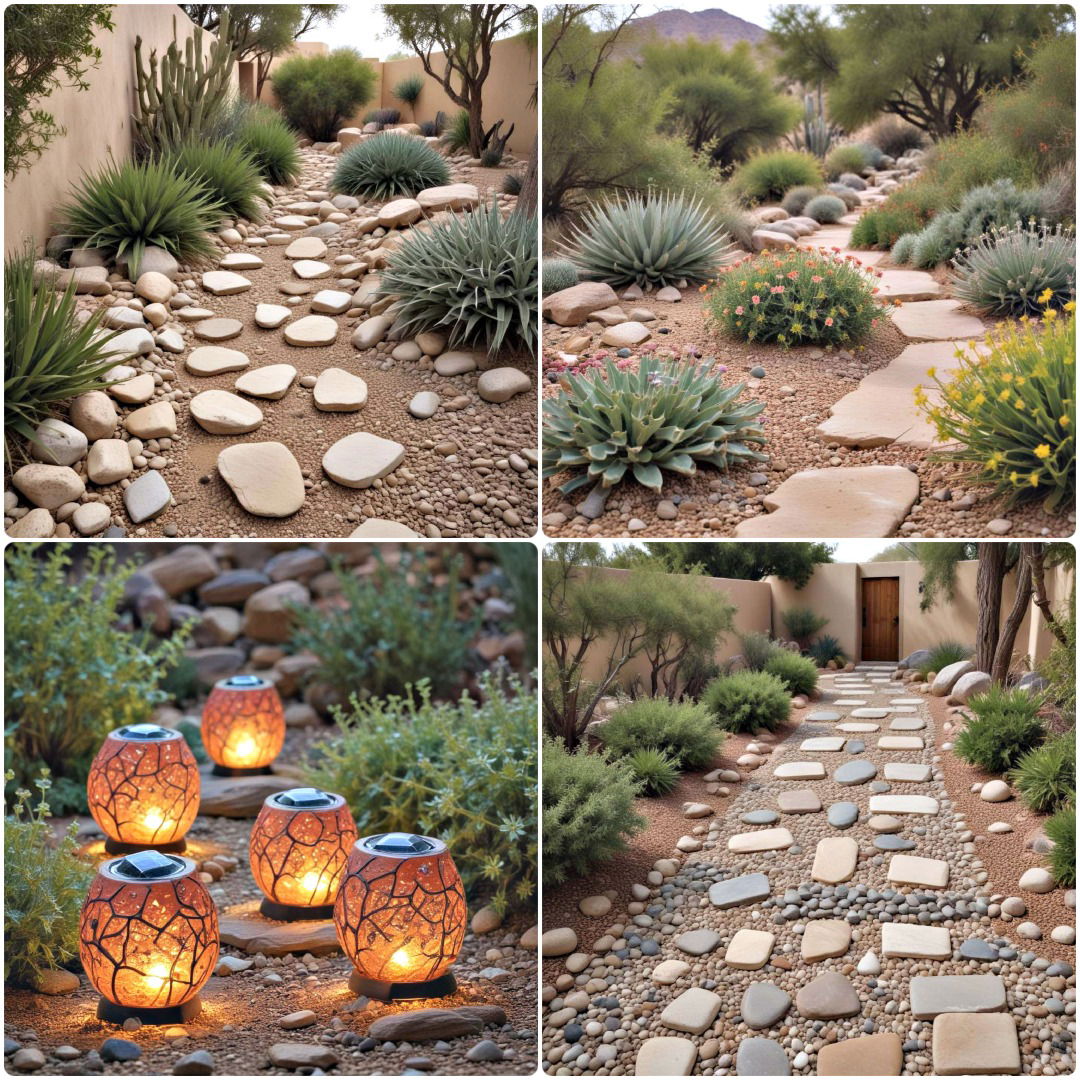
Gravel and stone mulching is the foundation of any successful desert landscape, providing a clean and cohesive look that protects the soil. Instead of using wood bark which can blow away or decompose quickly in the heat, stone mulch stays in place and looks great for years. You can play with different textures and colors, such as using dark lava rock to contrast with light-colored succulents or smooth river stones to mimic a dry creek bed. This technique is highly effective at preventing erosion and keeping moisture in the soil. It creates a professional, finished appearance that ties all the different plant elements together perfectly.
20. Desert Tree Selection
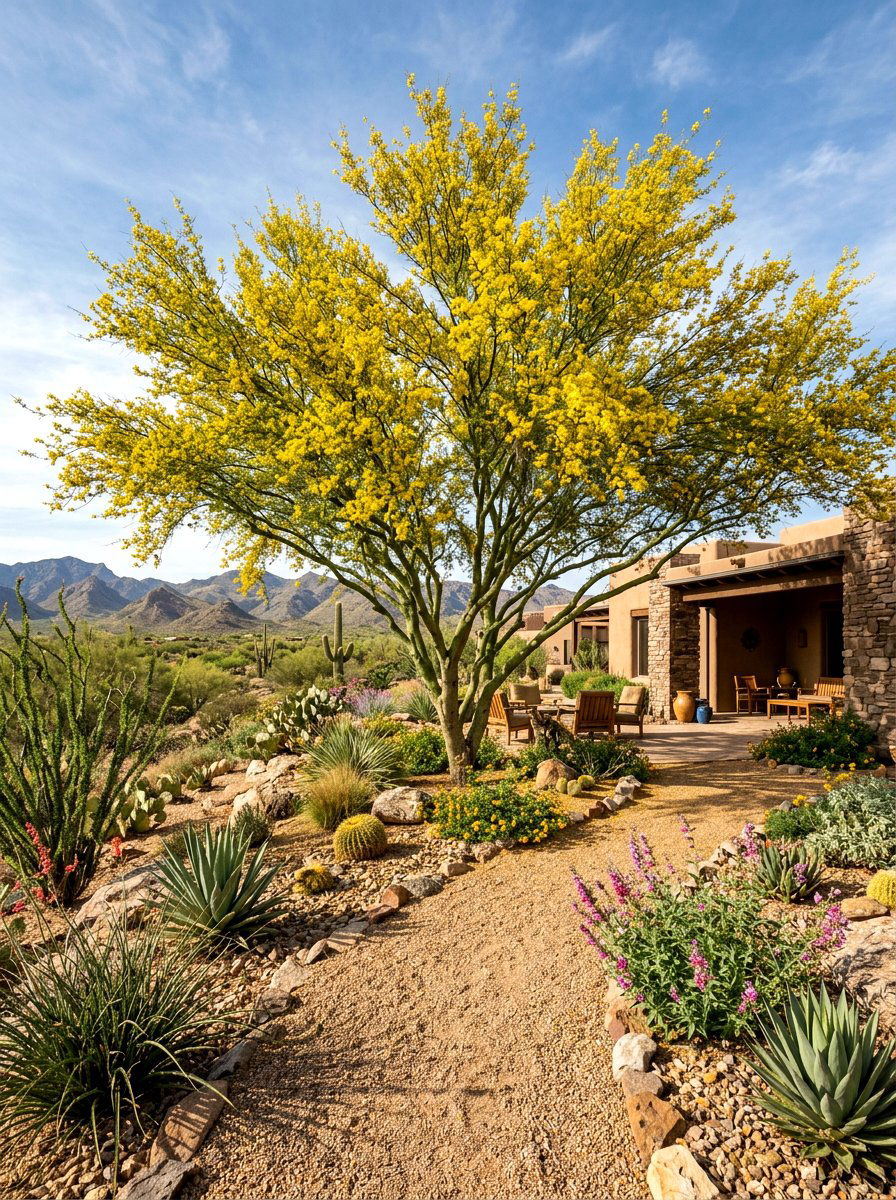
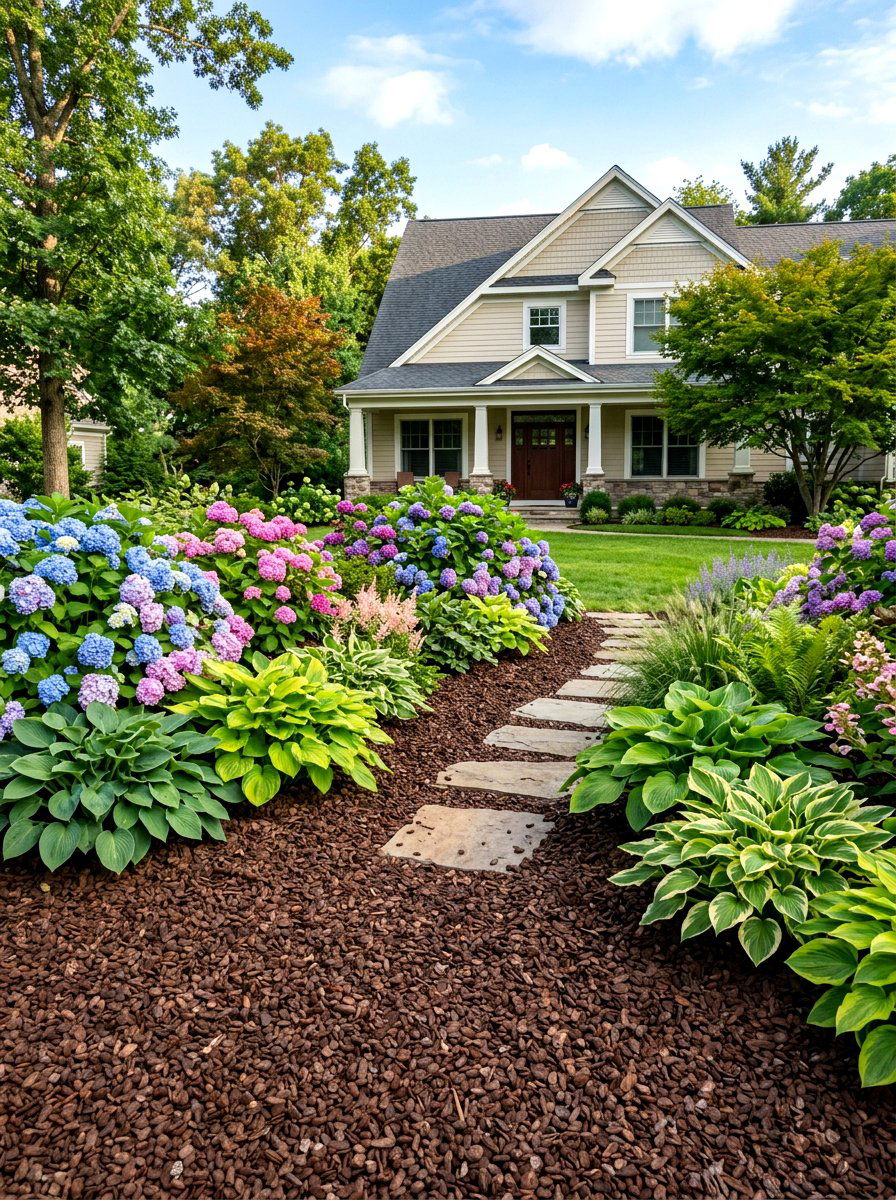
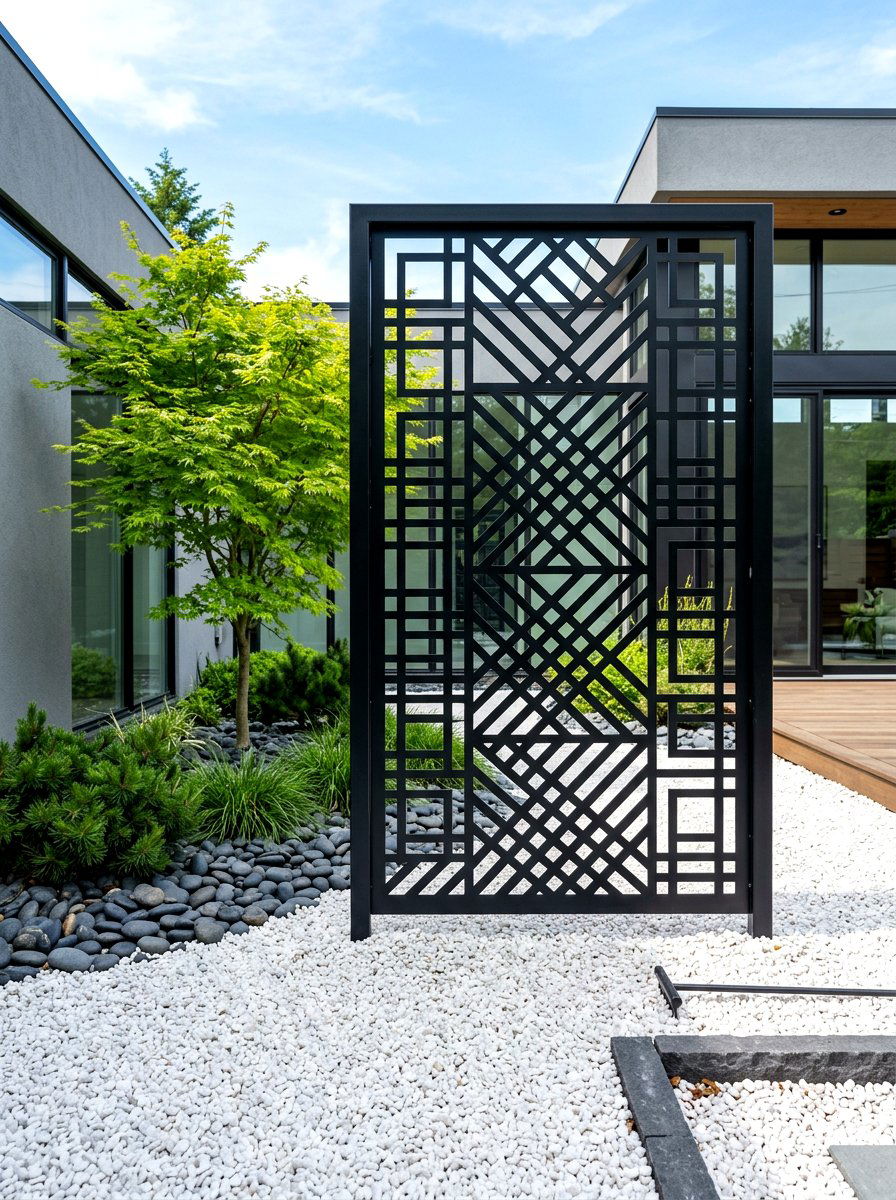
Desert tree selection is crucial for providing the necessary canopy and vertical scale to your landscape without draining your water budget. Species like the Palo Verde, Desert Willow, and Acacia are excellent choices because they offer beautiful blooms and unique bark textures while being highly drought-resistant. These trees provide dappled shade that can protect smaller, more sensitive plants from the harshest afternoon sun. In a well-designed desert yard, a few carefully placed trees create a sense of enclosure and privacy. Their architectural forms look stunning against the desert sky, providing a structural framework that anchors the rest of the garden's design elements.
21. Outdoor Lighting For Desert Landscapes
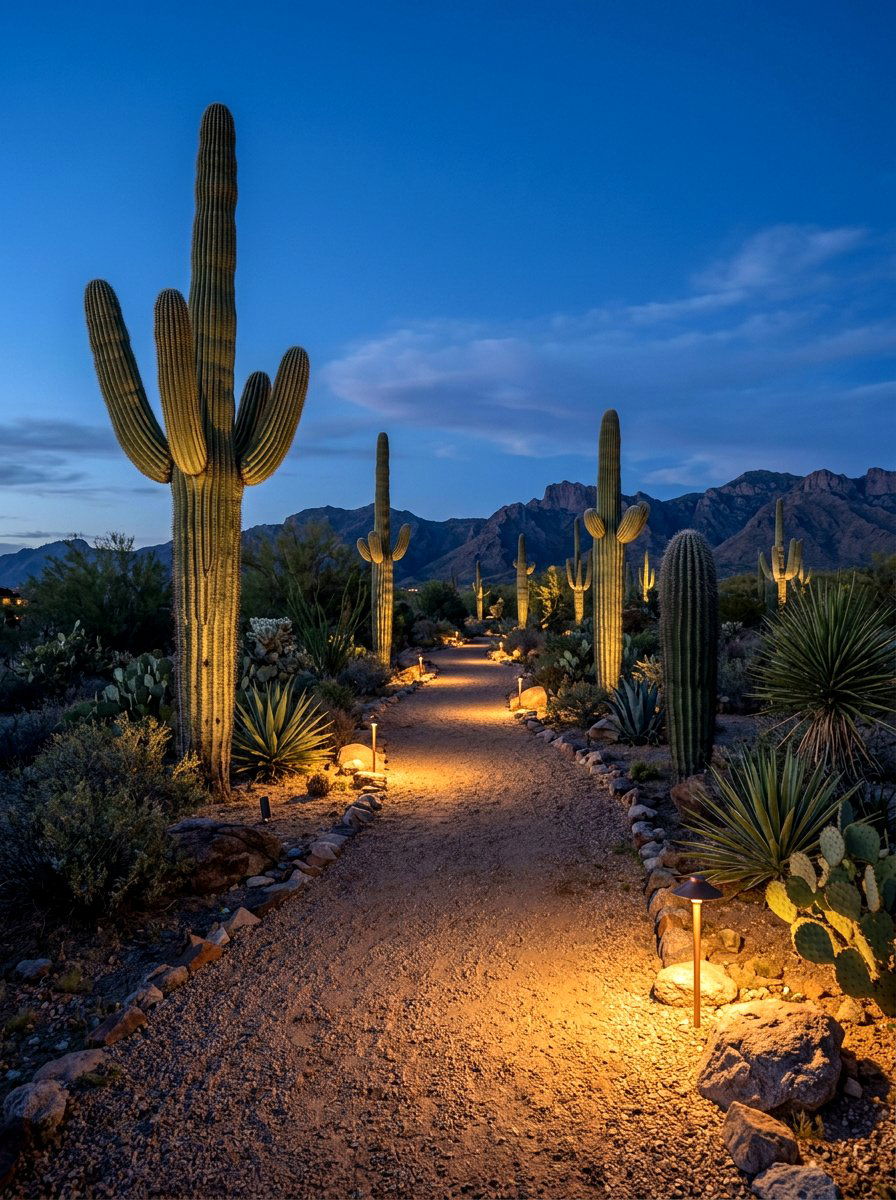
Outdoor lighting for desert landscapes transforms your yard into a magical environment once the sun goes down. Highlighting the dramatic shapes of saguaro cacti or the texture of a stone wall with low-voltage LED uplights creates incredible depth and shadows. Path lights nestled among the gravel ensure safety while adding a soft glow to the walkways. Because desert plants have such unique silhouettes, they are perfect candidates for silhouette lighting against a fence or wall. Well-placed lighting extends the hours you can enjoy your outdoor oasis, making the space feel like a high-end resort and providing a beautiful view from inside your home.
22. Tropical Desert Fusion
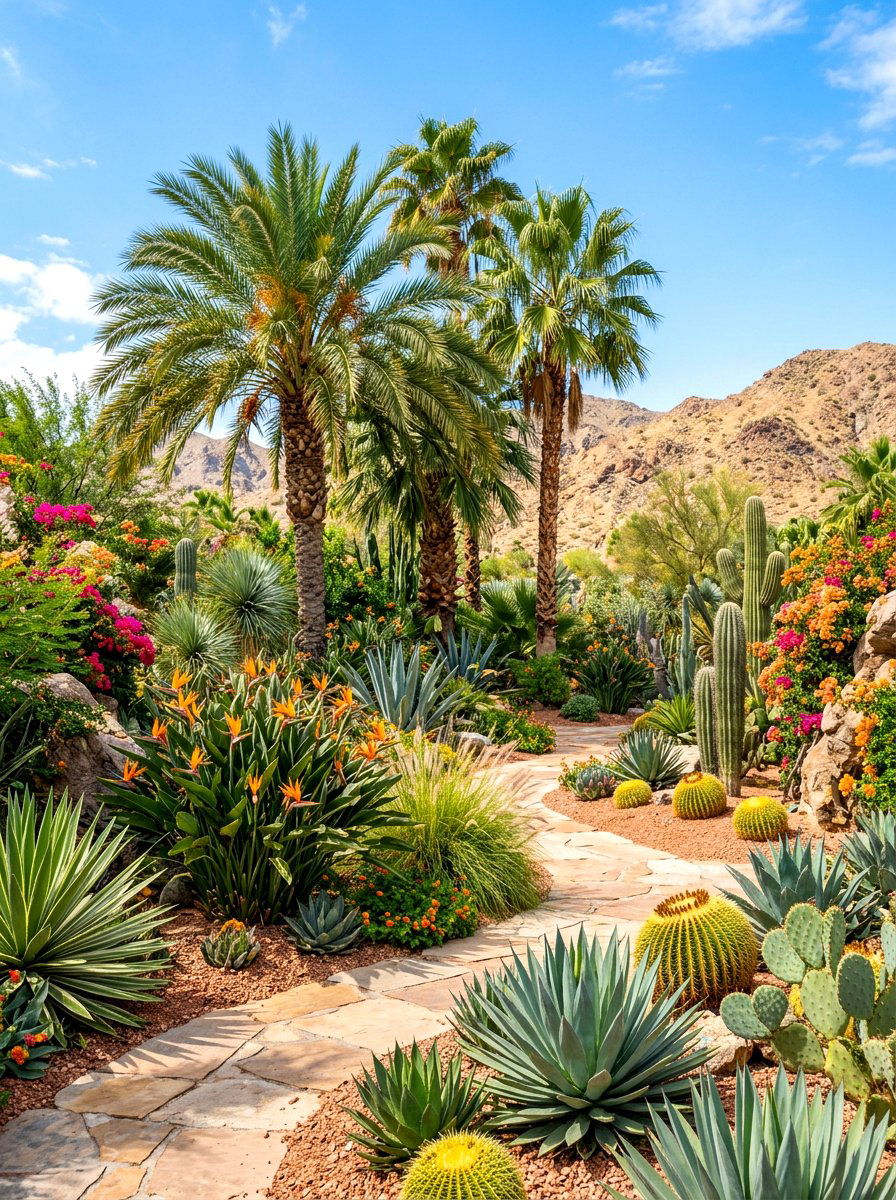
Tropical desert fusion is a creative design trend that combines the lush look of the tropics with the resilience of desert species. You can achieve this by selecting drought-tolerant plants with large, bold leaves, such as certain varieties of palms, bird of paradise, and hardy hibiscus. Using dark, rich gravel and incorporating a few vibrant flowering shrubs creates a "lush" feeling that doesn 't require excessive watering. This style works beautifully around pools or patios where you want a relaxing, vacation-like atmosphere. It proves that you don' t have to sacrifice a green, vibrant look just because you live in a dry, hot climate.
23. Minimalist Desert Hardscape
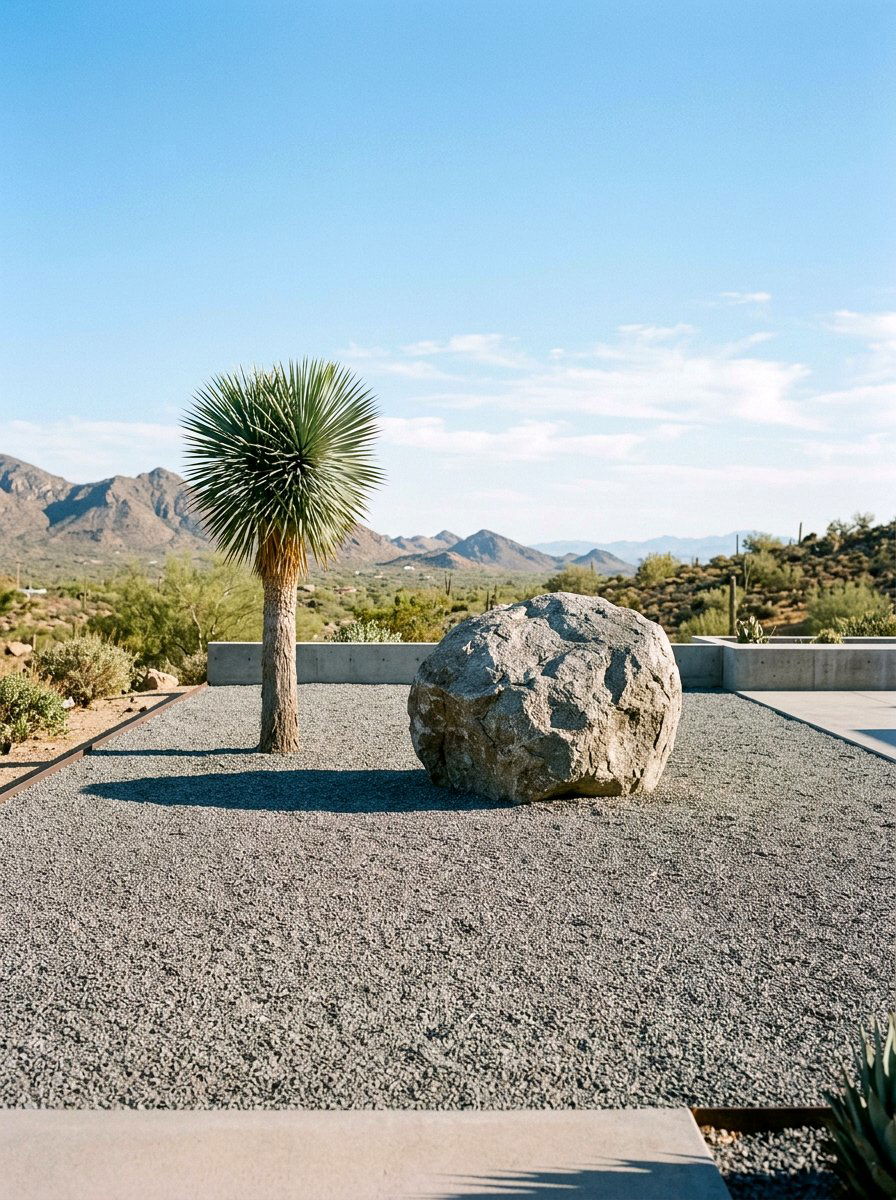
Minimalist desert hardscape focuses on the "less is more" philosophy, using a limited palette of materials and plants to create a high-impact, clean aesthetic. This design often features large areas of uniform gravel, smooth concrete surfaces, and just one or two specimen plants used as living sculptures. By stripping away clutter, the focus shifts to the subtle beauty of the materials and the play of light and shadow. This style is incredibly modern and sophisticated, making it a popular choice for contemporary homes. It is the ultimate low-maintenance option, requiring very little attention while looking impeccably designed and intentional at all times.
24. Southwestern Ranch Landscaping
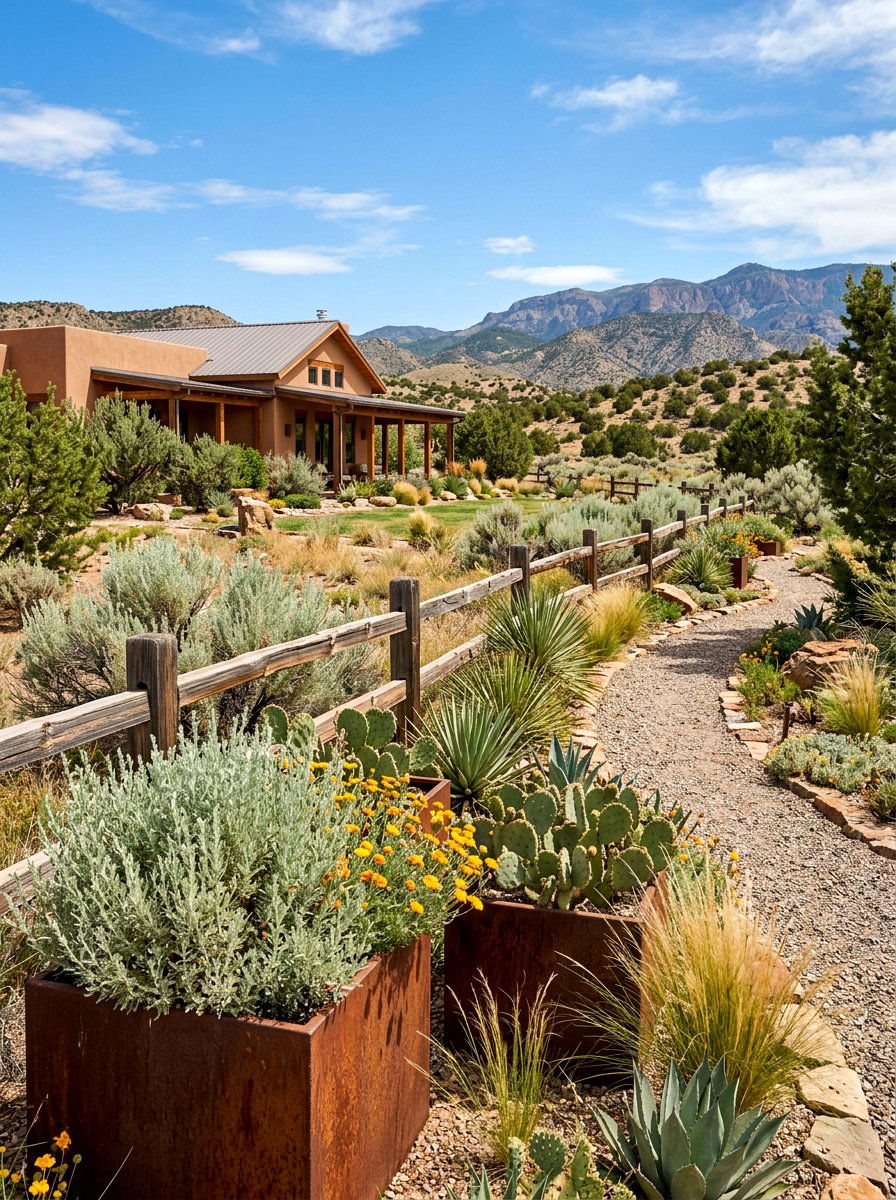
Southwestern ranch landscaping embraces the traditional colors and materials of the American West to create a warm and inviting atmosphere. This design often incorporates rusted steel edging, weathered wood accents, and native plants like prickly pear and sagebrush. Using warm-toned flagstone for patios and pathways adds to the rustic, earthy feel. This style is perfect for larger properties where you want the landscaping to feel rugged and natural. By incorporating traditional elements like a split-rail fence or a decorative wagon wheel, you can lean into the historic charm of the region while maintaining a modern, water-conscious approach to gardening.
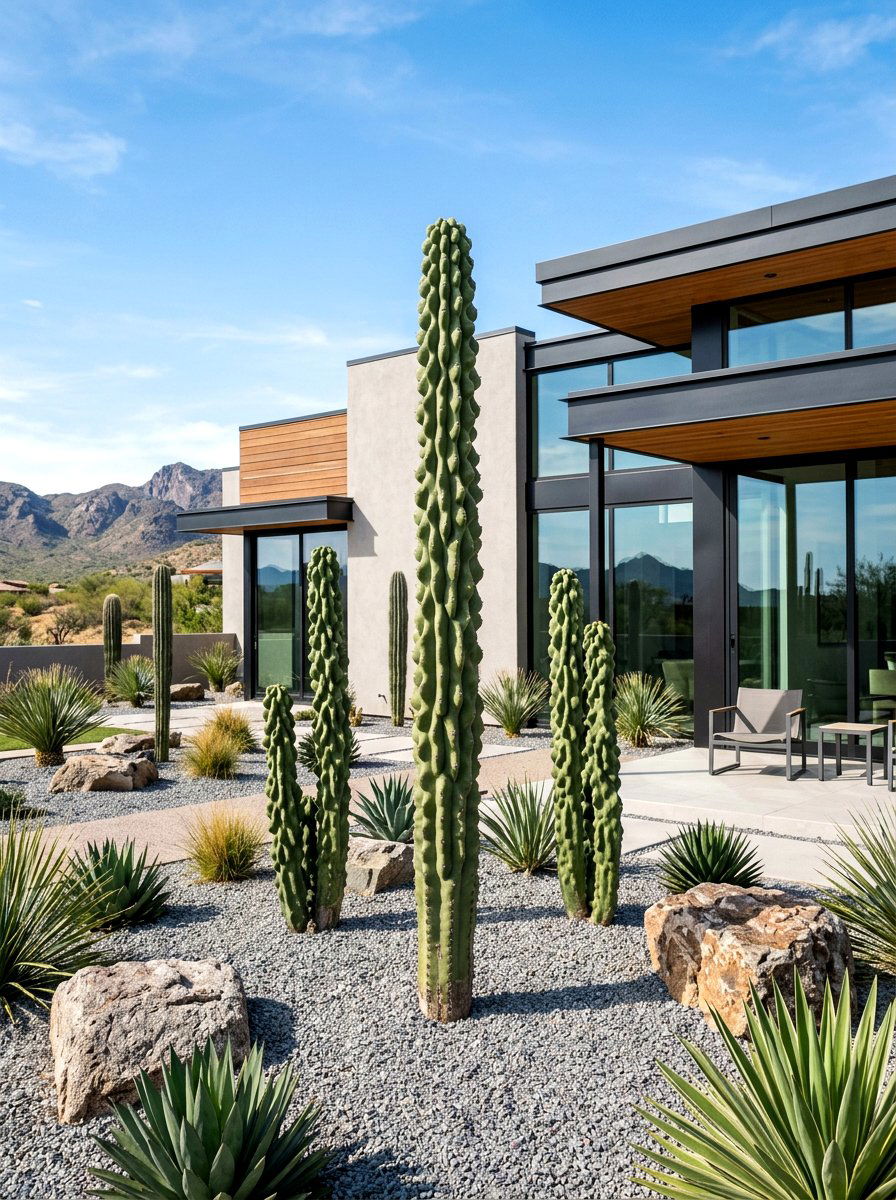
25. Terraced Desert Slope
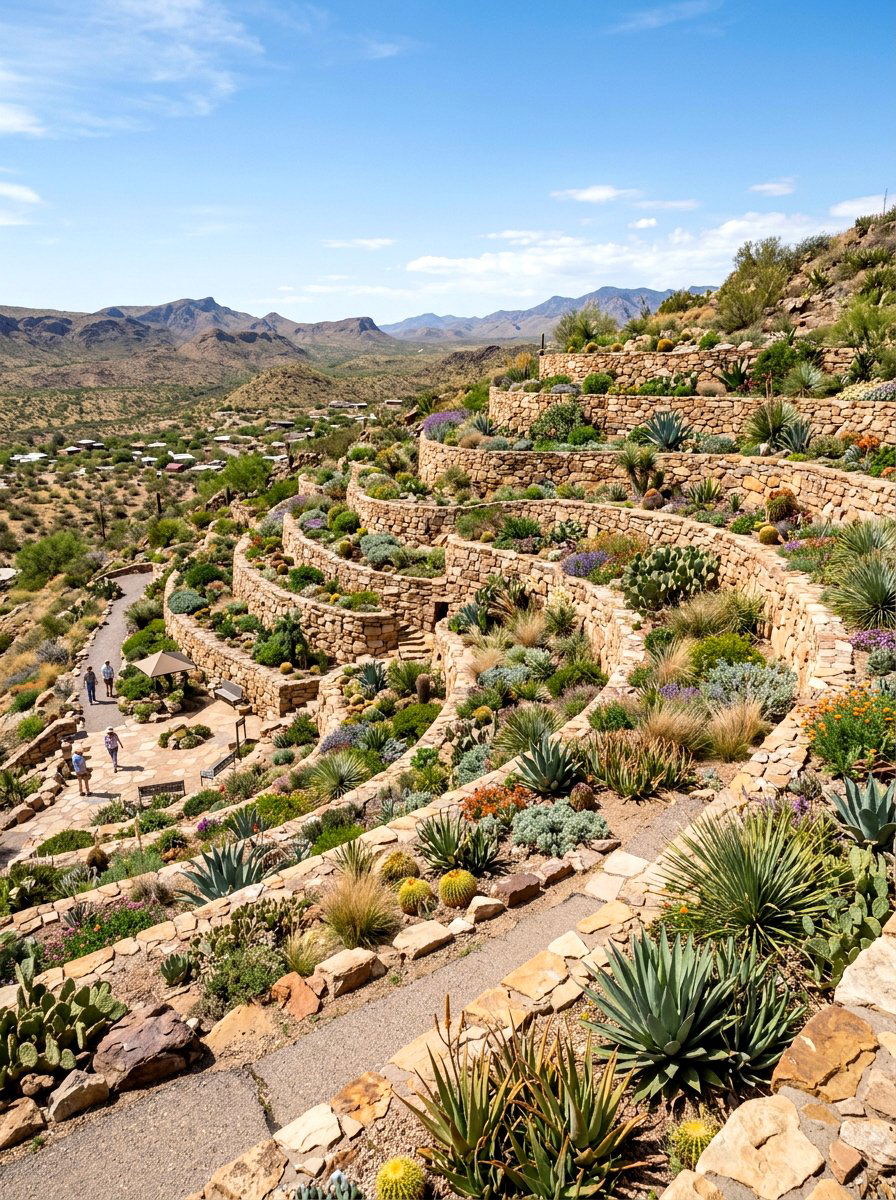
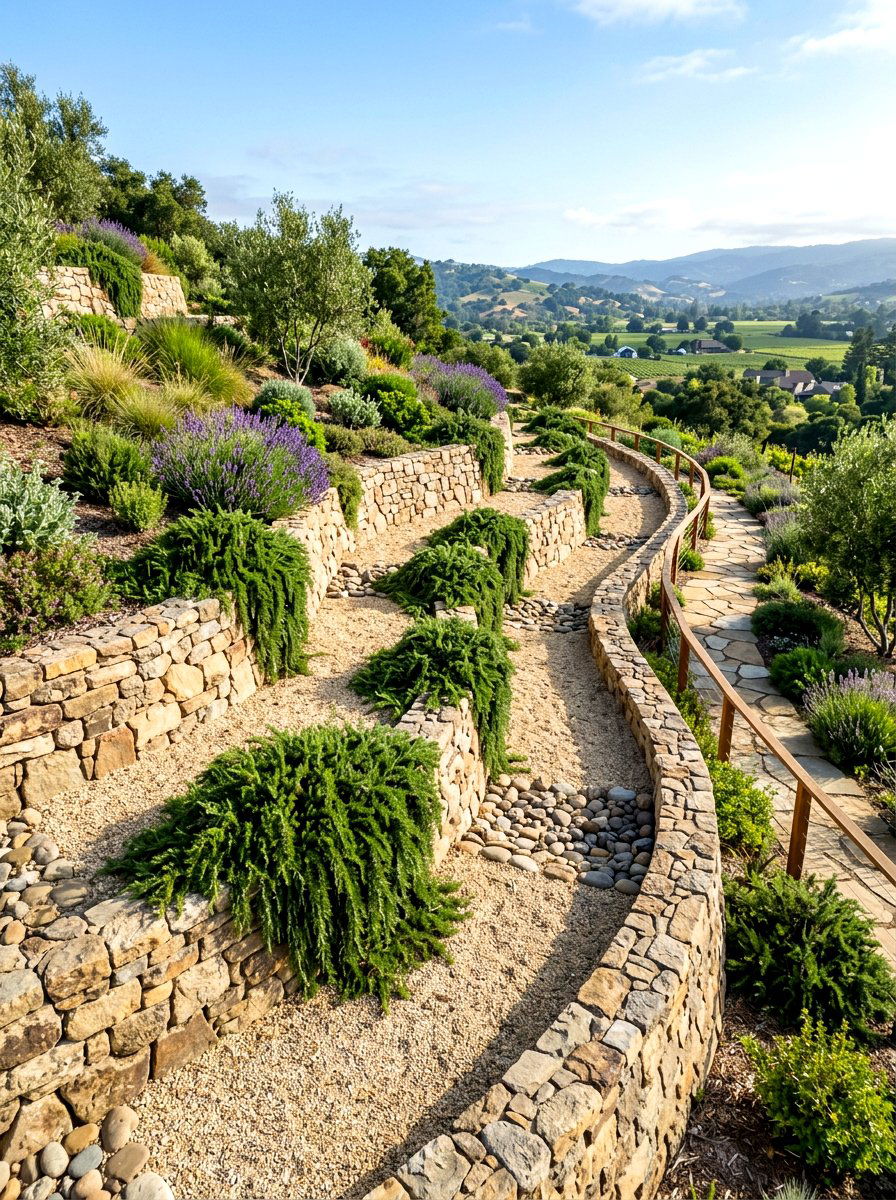
A terraced desert slope is a practical and beautiful way to manage a hilly yard while preventing soil erosion. By building low retaining walls out of natural stone or decorative blocks, you create flat "shelves" that are perfect for planting. These levels allow you to group different types of plants, such as a succulent terrace followed by a flowering shrub terrace. In a desert environment, terracing helps capture rainfall and prevents it from running off too quickly, giving your plants a better chance to soak up moisture. This architectural approach adds incredible dimension and visual interest to an otherwise difficult-to-landscape sloping area.
26. Desert Vegetable Garden
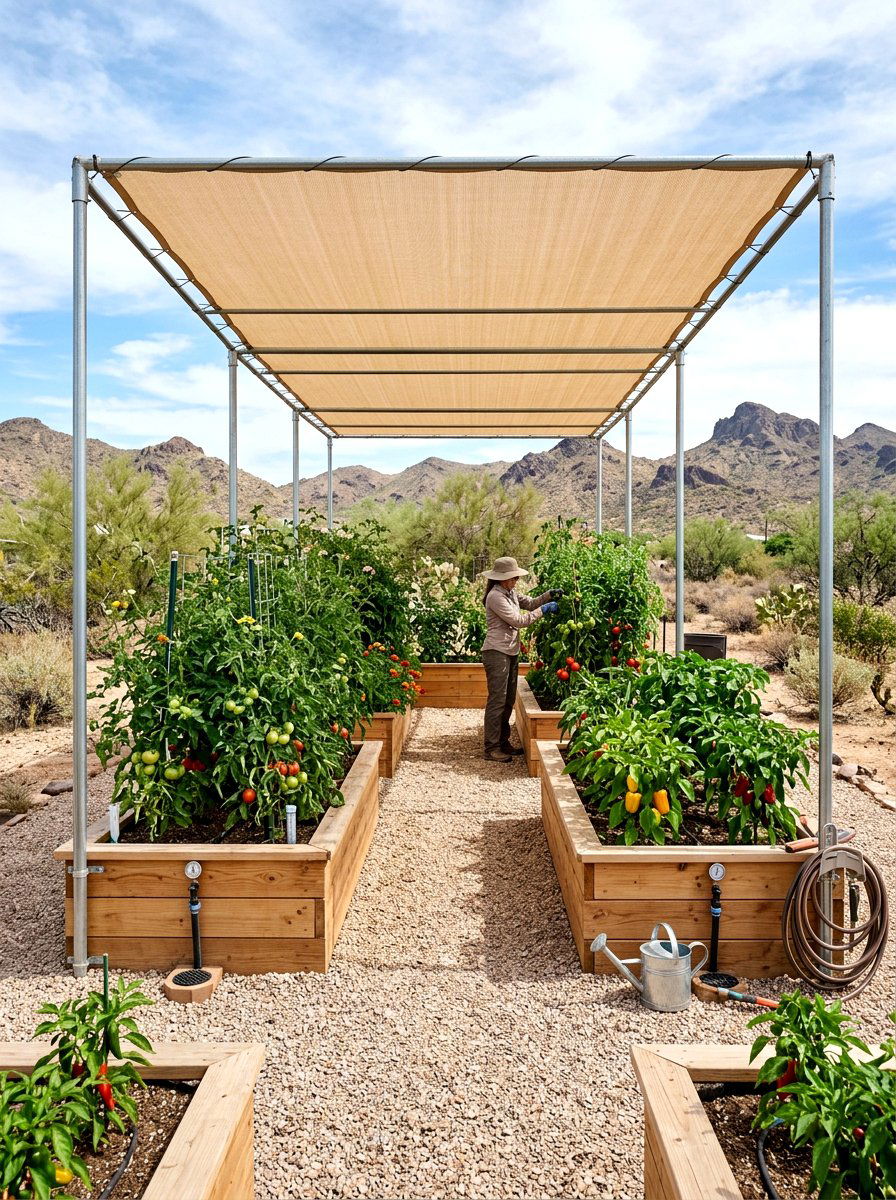
A desert vegetable garden shows that you can grow your own food even in the harshest climates by using the right techniques. Utilizing "wicking beds" or deep-mulched containers helps keep the soil moist and the roots cool during the blazing summer months. Positioning the garden where it gets morning sun but afternoon shade is key to preventing plants from scorching. Incorporating native edible plants like tepary beans or prickly pear cactus can also add a unique local flavor to your harvest. This functional landscape element provides a rewarding hobby and fresh produce while being integrated into a beautiful, water-efficient desert backyard design.
27. Zen Desert Garden
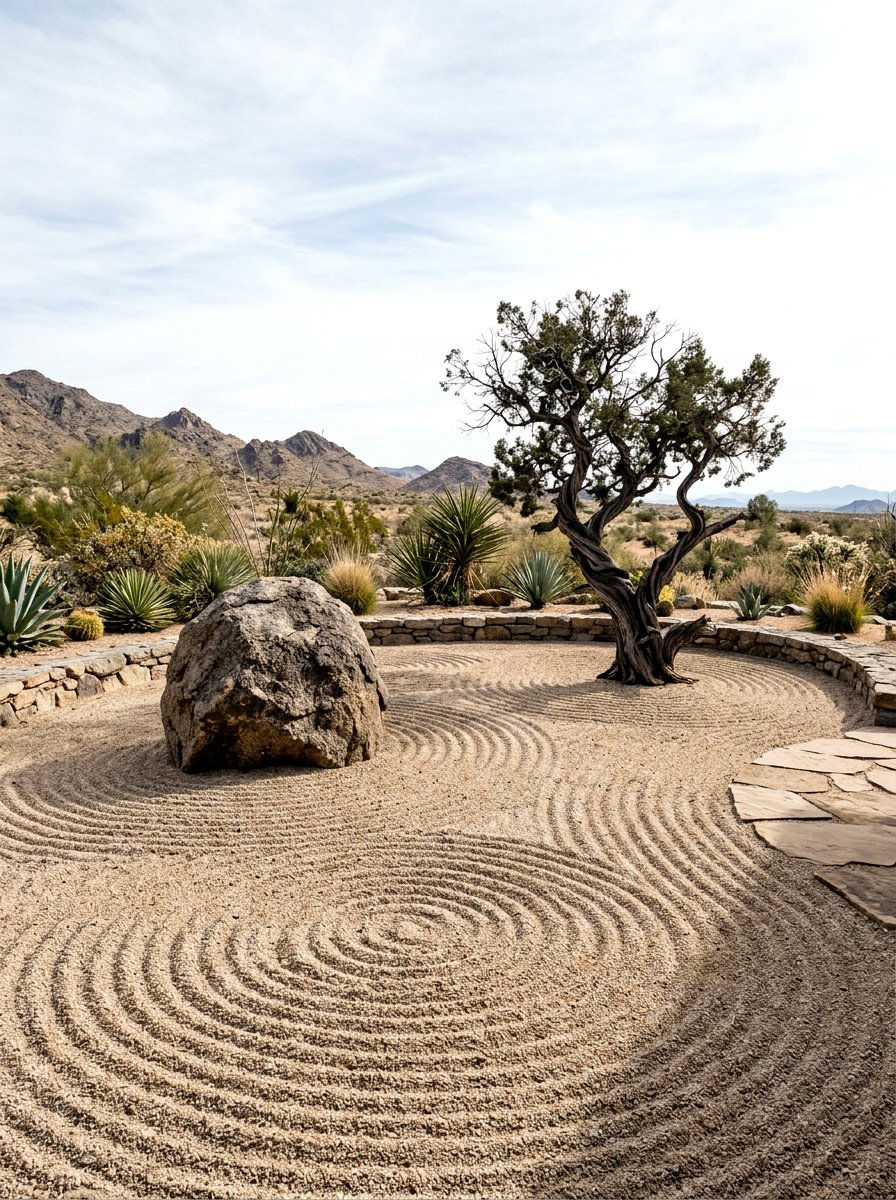
A Zen desert garden takes inspiration from Japanese rock gardens, using the simplicity of the desert to create a space for meditation and peace. This design typically features carefully raked sand or fine gravel that represents water, with a few large, meaningful boulders representing mountains. Minimalist plantings, such as a single twisted juniper or a cluster of ornamental grasses, add a touch of life without distracting from the tranquility. This type of landscape is perfect for a small courtyard or a quiet corner of the yard where you want to escape the stress of daily life. It is a timeless and low-maintenance design.
28. Natural Desert Meadow
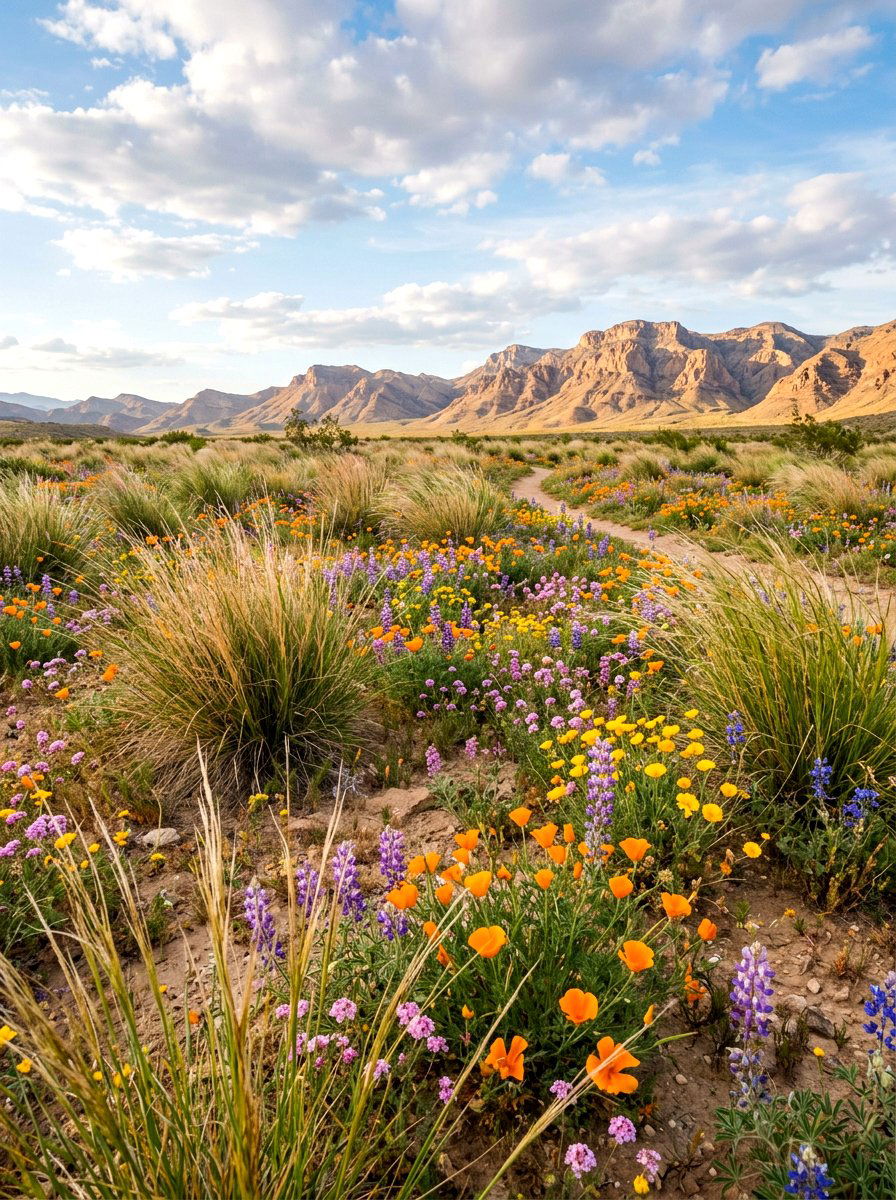
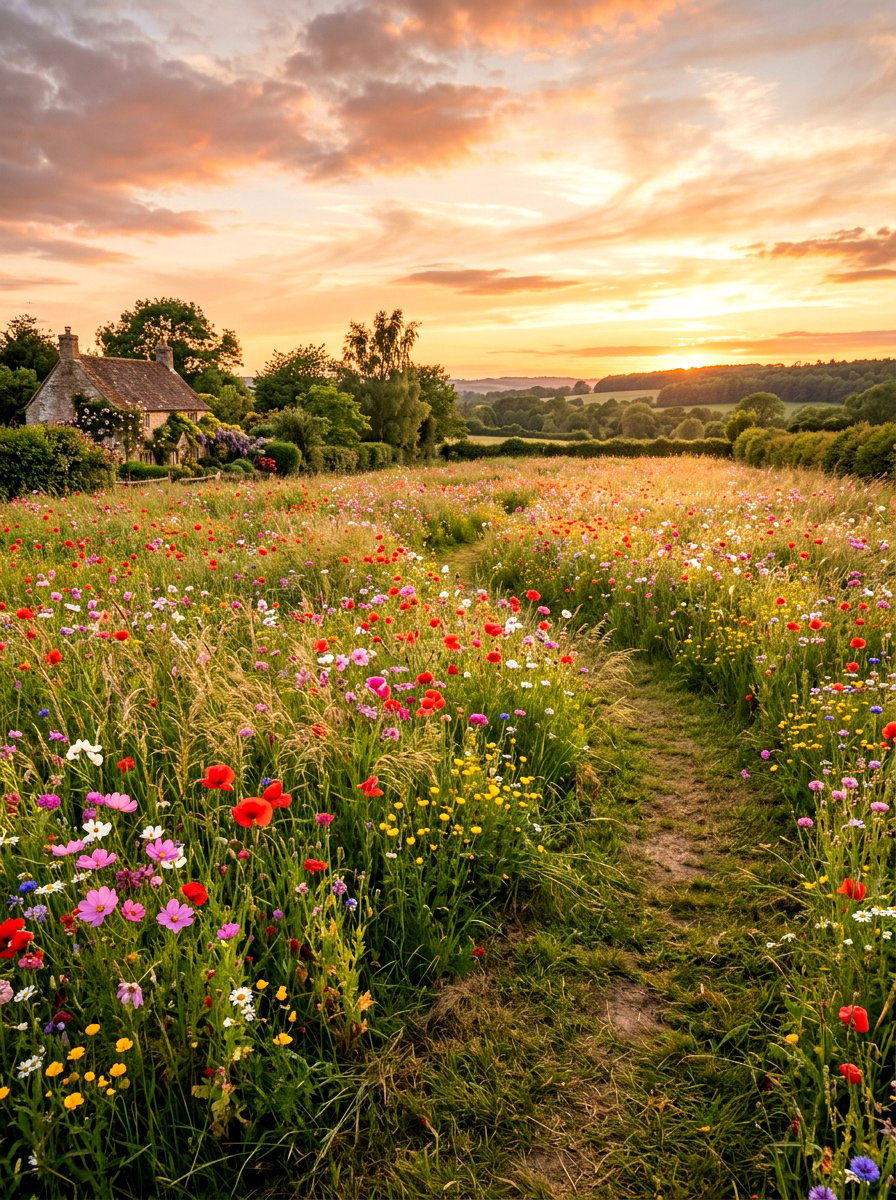
A natural desert meadow mimics the beautiful, wild appearance of the desert after a rare rainstorm, filled with grasses and wildflowers. By using a mix of native bunchgrasses like blue grama and colorful annuals like California poppies, you can create a soft, swaying landscape that feels alive. This design requires more careful planning during the establishment phase but becomes very self-sustaining over time. It provides a wonderful contrast to the rigid shapes of cacti and boulders, adding movement and a sense of lightness to the yard. This style is particularly effective in larger areas where a structured look might feel too formal.
29. Contemporary Poolside Landscaping
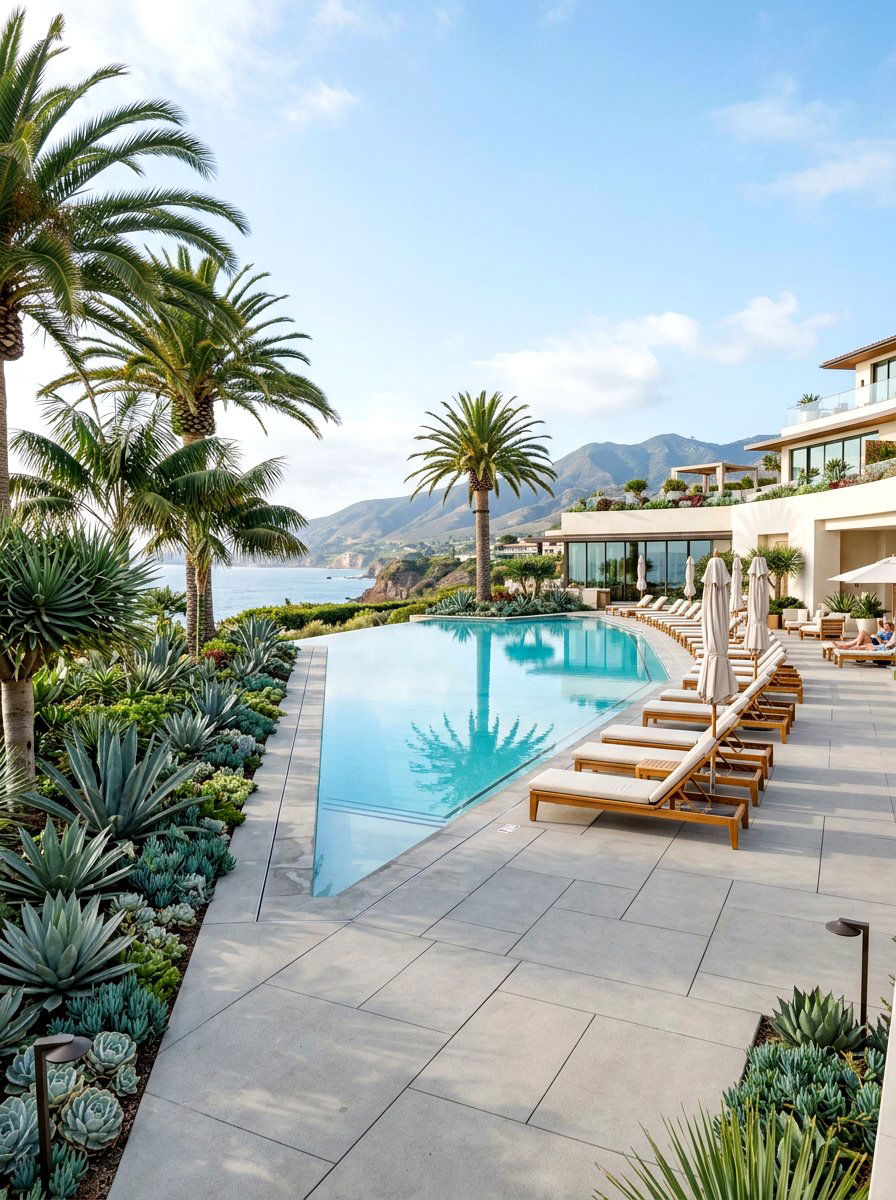
Contemporary poolside landscaping in the desert requires plants that won 't drop debris into the water while still providing a lush, resort-like feel. Using smooth pavers around the pool deck and bordering them with clean gravel and architectural plants like silver saw palmetto creates a high-end look. Avoid plants with thorns near the water' s edge for safety. Incorporating built-in planters and subtle landscape lighting makes the pool area feel like an extension of the home's living space. This design focuses on creating a cooling, refreshing environment that balances the heat of the desert with the luxury of a private swimming oasis for the whole family.
30. Desert Curb Appeal
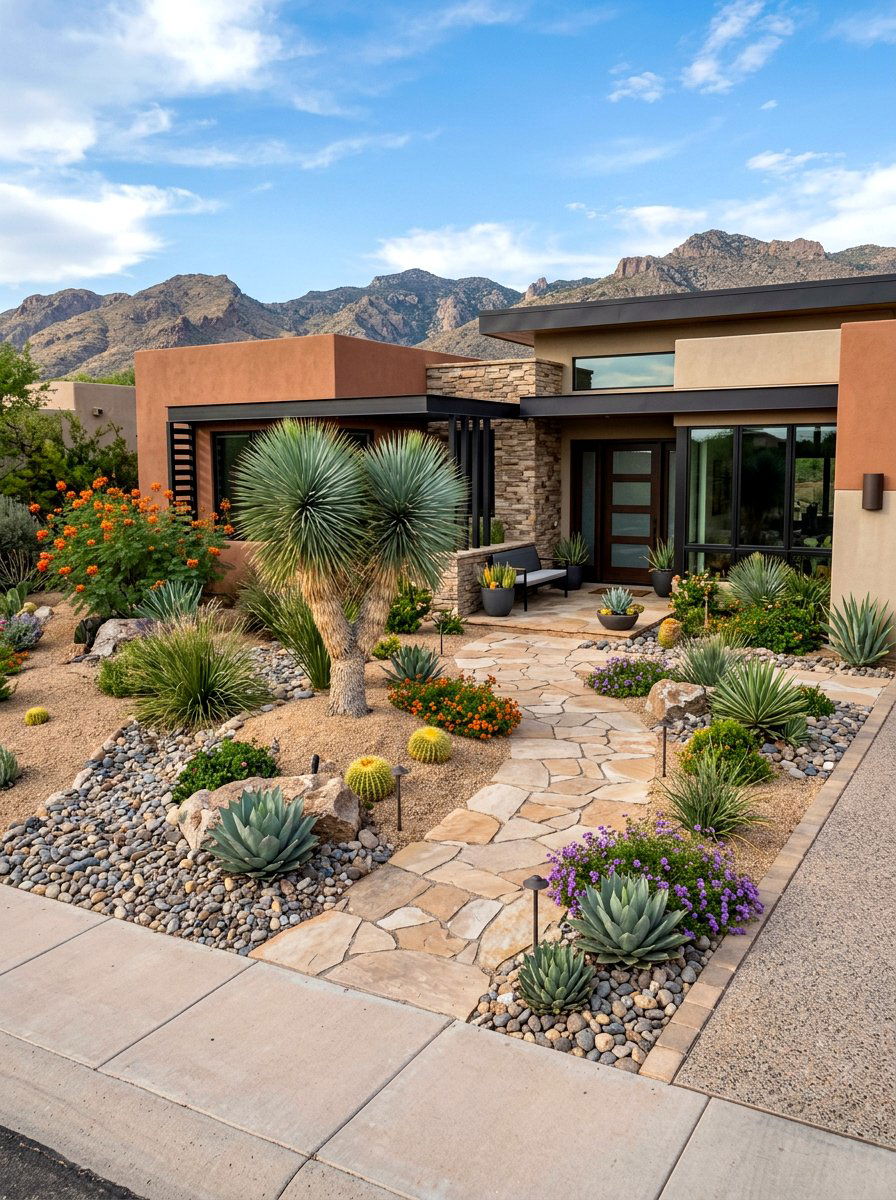
Desert curb appeal is all about making a strong first impression with a landscape that looks intentional, well-maintained, and stylish. A combination of a clean-edged driveway, a clearly defined stone path, and a few high-impact specimen plants like a Yucca Rostrata can make any home stand out. Using a consistent color palette for your gravel and rocks ties the whole look together. Adding a few decorative elements, like a large ceramic urn or a modern house number monument, provides the finishing touches. A beautiful desert front yard not only saves water but also creates a welcoming and sophisticated entrance that enhances the entire neighborhood.
Conclusion:
Embracing desert landscaping is a powerful way to marry stunning design with environmental stewardship. By moving away from thirsty lawns and towards a palette of native plants, structural cacti, and artistic hardscaping, you create a yard that is as resilient as it is beautiful. Whether you prefer a minimalist modern look or a lush Mediterranean-inspired oasis, these thirty ideas demonstrate the incredible versatility of arid climate gardening. A well-designed desert landscape not only increases your property value and curb appeal but also offers a low-maintenance lifestyle that allows you to spend more time enjoying your outdoor space rather than working on it. Start your transformation today and discover the timeless magic of the desert.

Related posts: