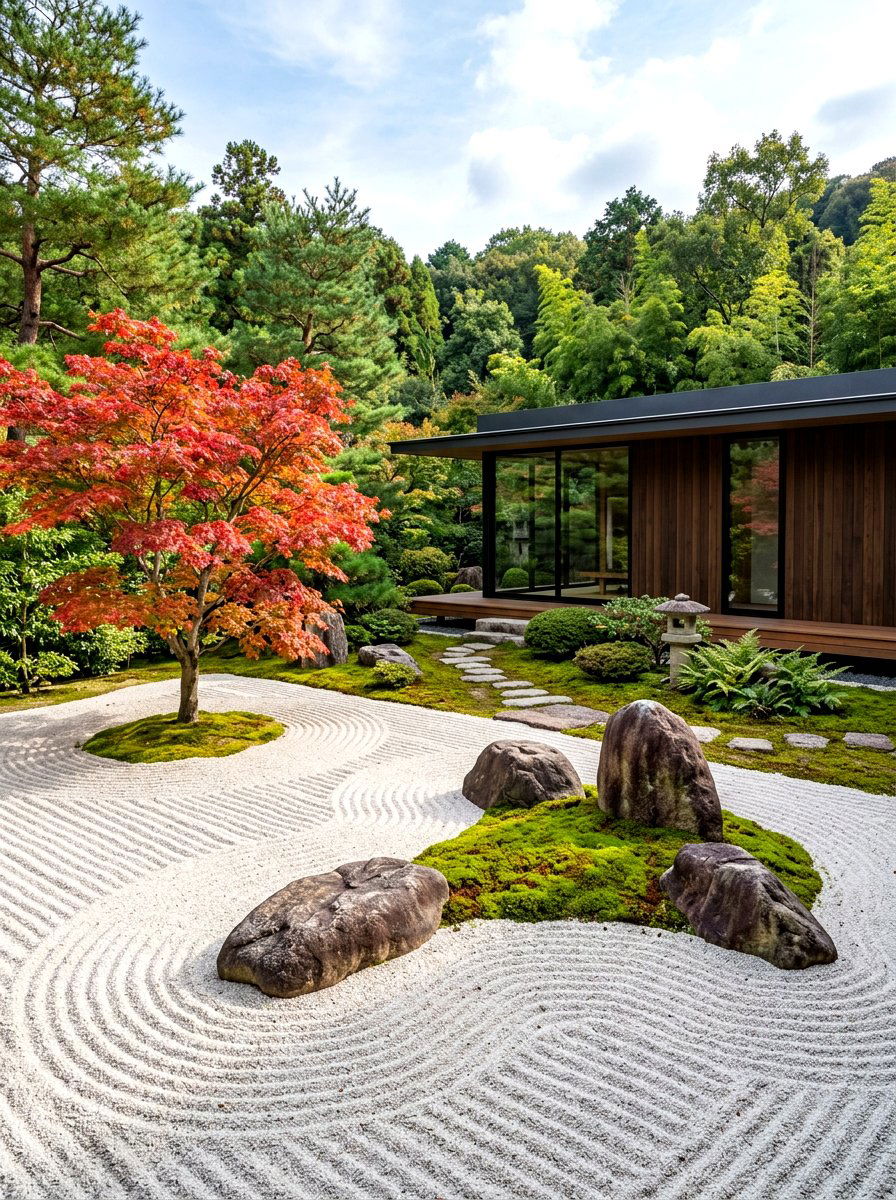
Transforming a narrow side yard into a breathtaking landscape often feels like a difficult challenge for many homeowners today. These slender passages are frequently neglected or used only for utility storage, yet they hold incredible potential for beauty. By implementing strategic flower bed layouts, you can turn a forgotten corridor into a vibrant sanctuary that connects your front and back yards seamlessly. Whether you deal with deep shade from tall fences or harsh afternoon sun, there is a perfect botanical solution available. From modern minimalist stone paths to lush cottage-style perennial borders, your side yard can become a highlight of your entire home exterior.
1. Narrow Shade Garden
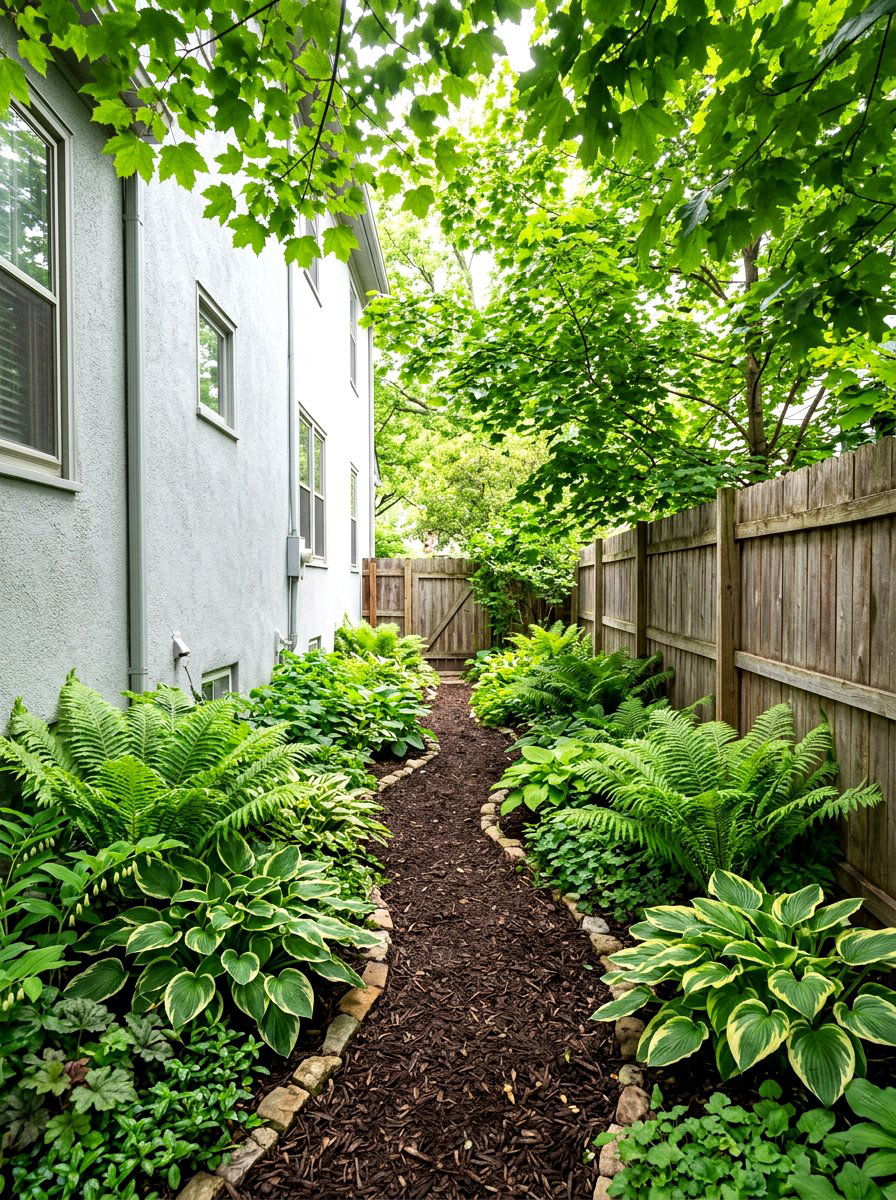
A narrow shade garden is the perfect solution for side yards tucked between tall houses or under dense tree canopies. These spaces often struggle with limited sunlight, but moisture-loving plants like hostas and ferns thrive in these cool conditions. You can create a lush, layered look by mixing different shades of green foliage to add depth. Variegated leaves work exceptionally well to brighten up darker corners without needing direct sun. Incorporating a slim stone path through the center allows you to enjoy the garden while maintaining easy access. This design turns a formerly gloomy passage into a refreshing, woodland-style retreat that feels private and serene.
2. Low Maintenance Gravel Bed
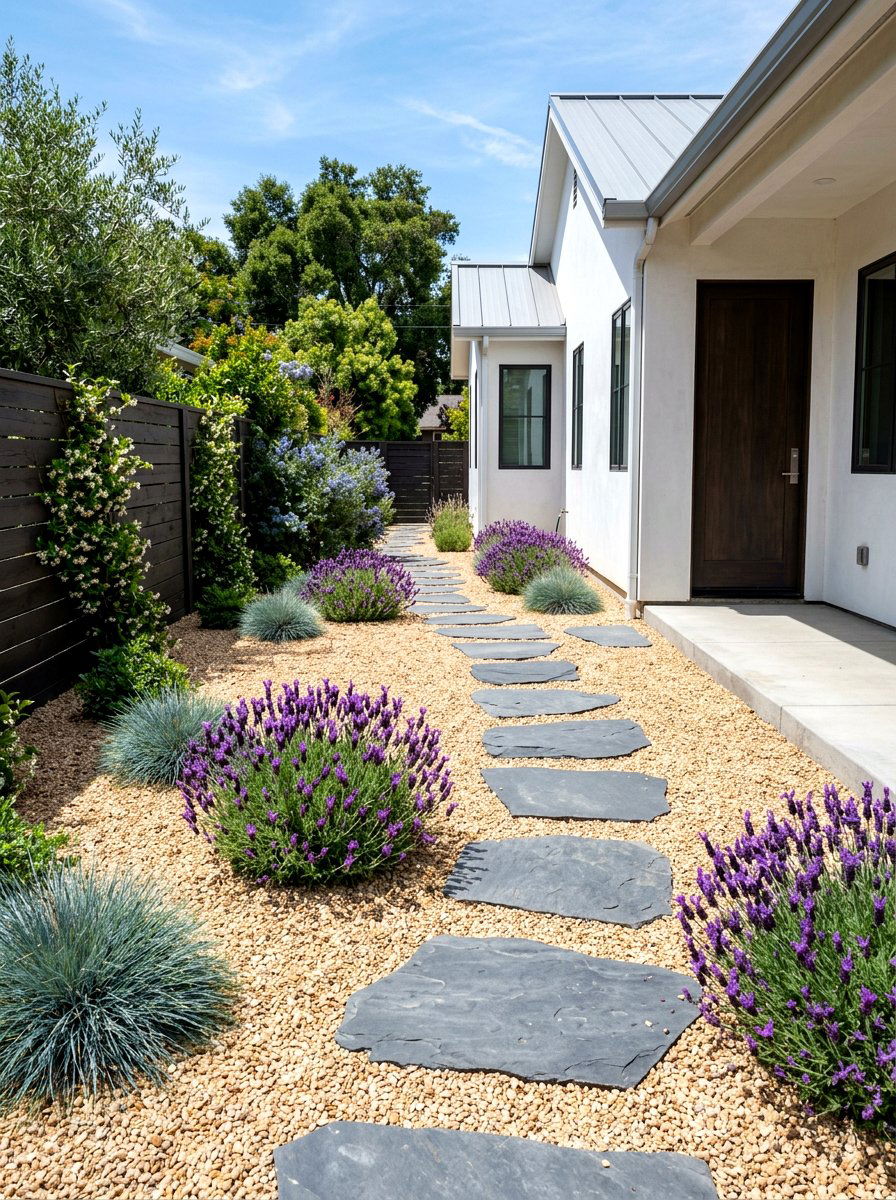
A low maintenance gravel bed offers a clean and contemporary aesthetic that requires very little upkeep throughout the year. By using a base of high-quality landscape fabric covered with decorative pea gravel, you effectively prevent weed growth while ensuring excellent drainage. Drought-tolerant plants like lavender or blue fescue can be strategically placed in small pockets to add color and texture. This style is ideal for busy homeowners who want a tidy look without the need for constant mowing or watering. The crunch of gravel underfoot adds a pleasant sensory element to your walk, making the side yard feel like a purposeful architectural feature.
3. Modern Concrete Planter
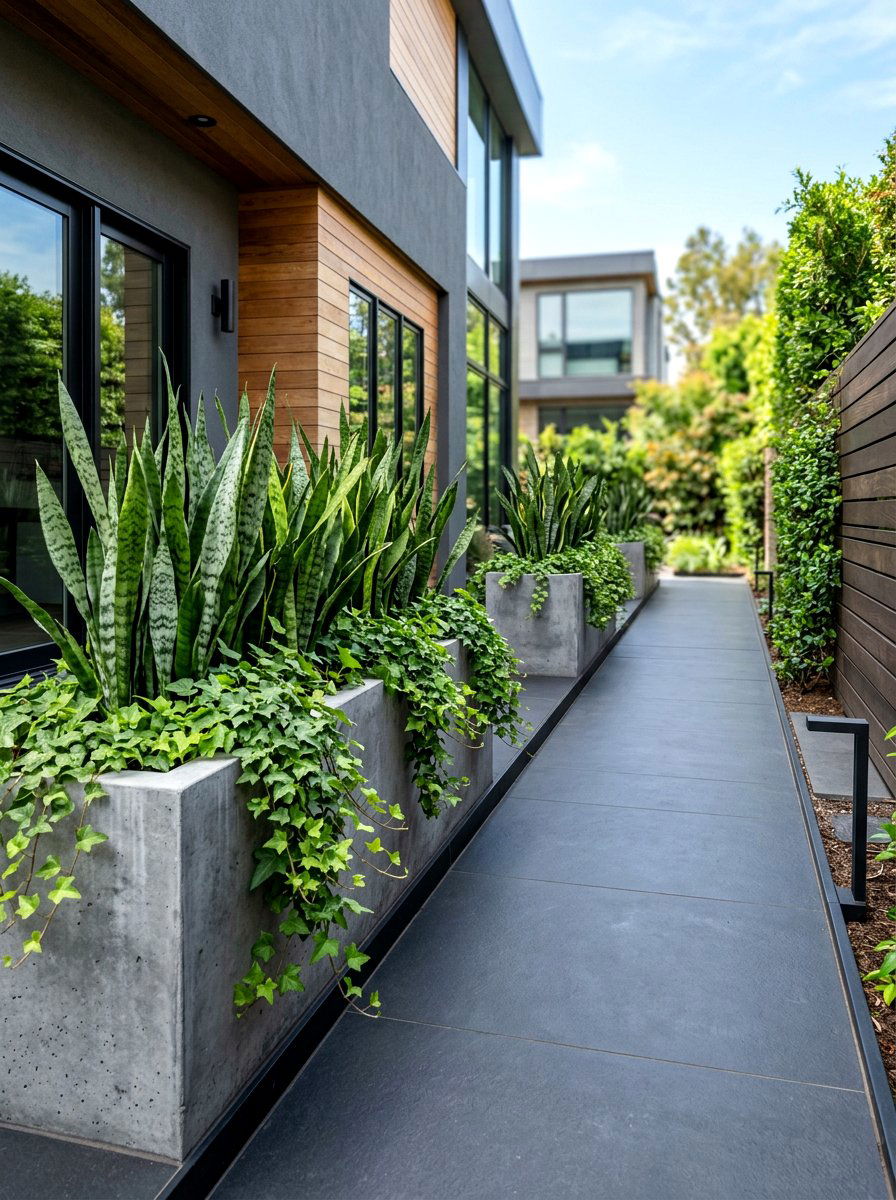
Modern concrete planters provide a structured and sophisticated look that is perfect for contemporary homes with clean lines. These built-in or oversized containers allow you to elevate your plants, which creates visual interest and makes maintenance much easier on your back. You can plant architectural species like snake plants or ornamental grasses to emphasize the verticality of the narrow space. The gray tones of the concrete contrast beautifully with vibrant green foliage, creating a high-end gallery feel. Using a series of identical rectangular planters in a row establishes a sense of rhythm and order that makes a small side yard appear longer and more organized.
4. Native Wildflower Strip
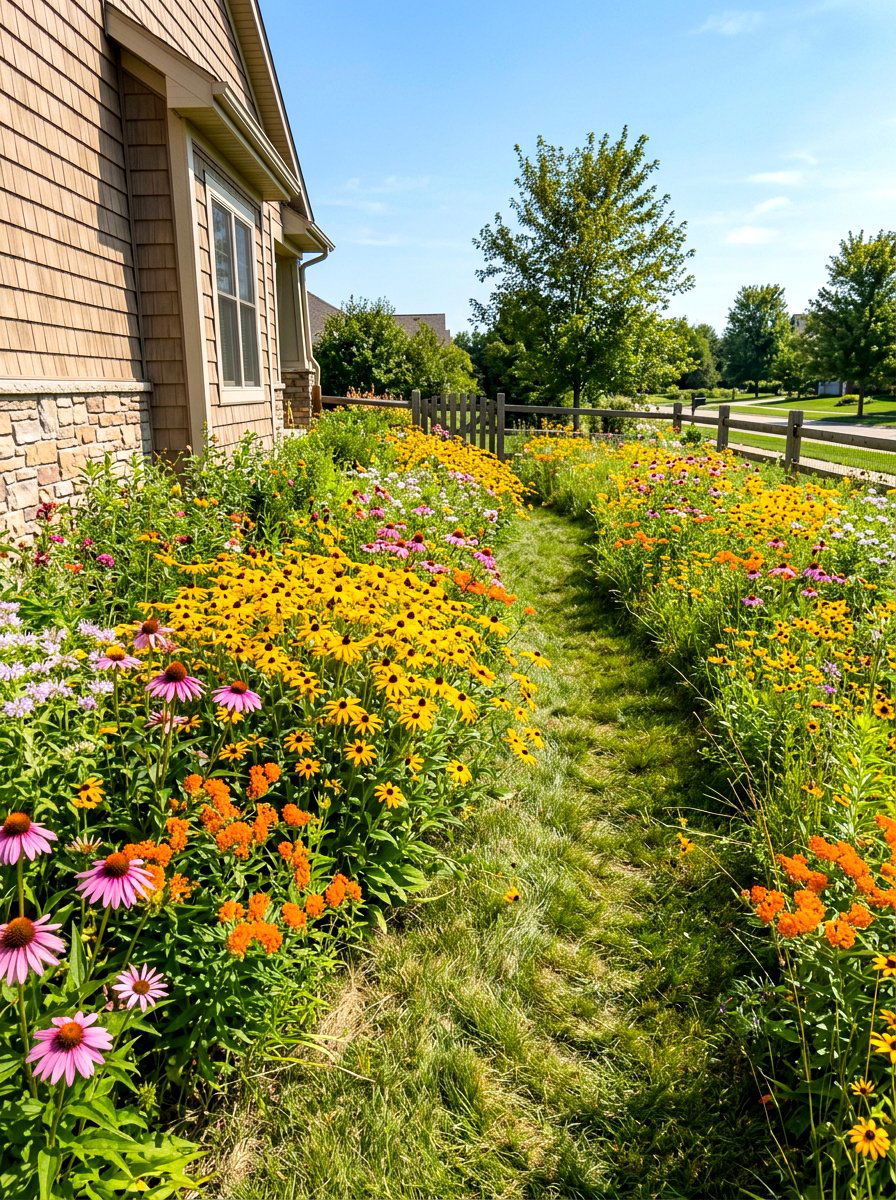
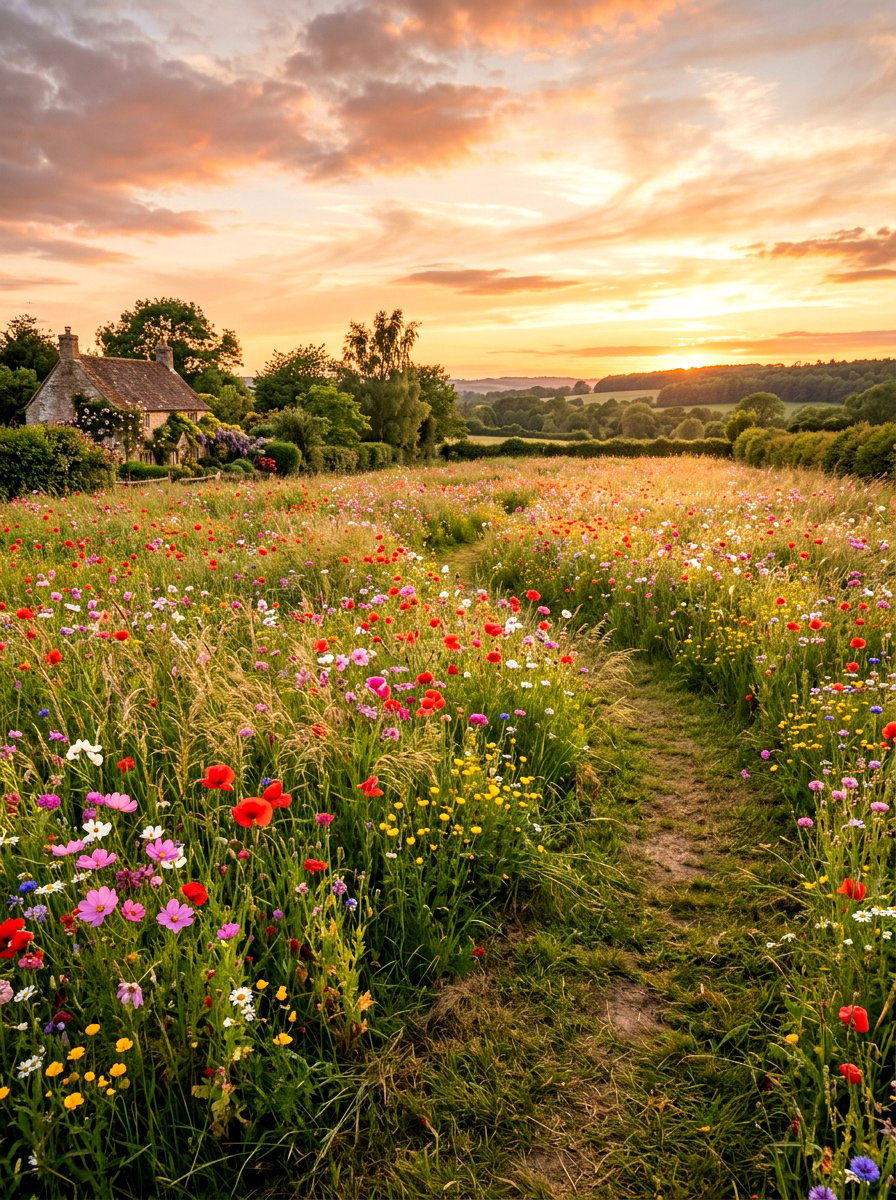
A native wildflower strip is an eco-friendly way to bring vibrant life and color to a sunny side yard area. By choosing seeds and plants that are indigenous to your local region, you create a hardy garden that supports bees and butterflies. These plants are naturally adapted to your climate, meaning they require significantly less water and fertilizer than traditional ornamental species. The result is a charmingly wild and informal look that changes beautifully with every passing season. This approach turns a utilitarian space into a mini-meadow, providing a delightful burst of untamed nature right outside your door while requiring very minimal professional intervention.
5. Vertical Lattice Garden
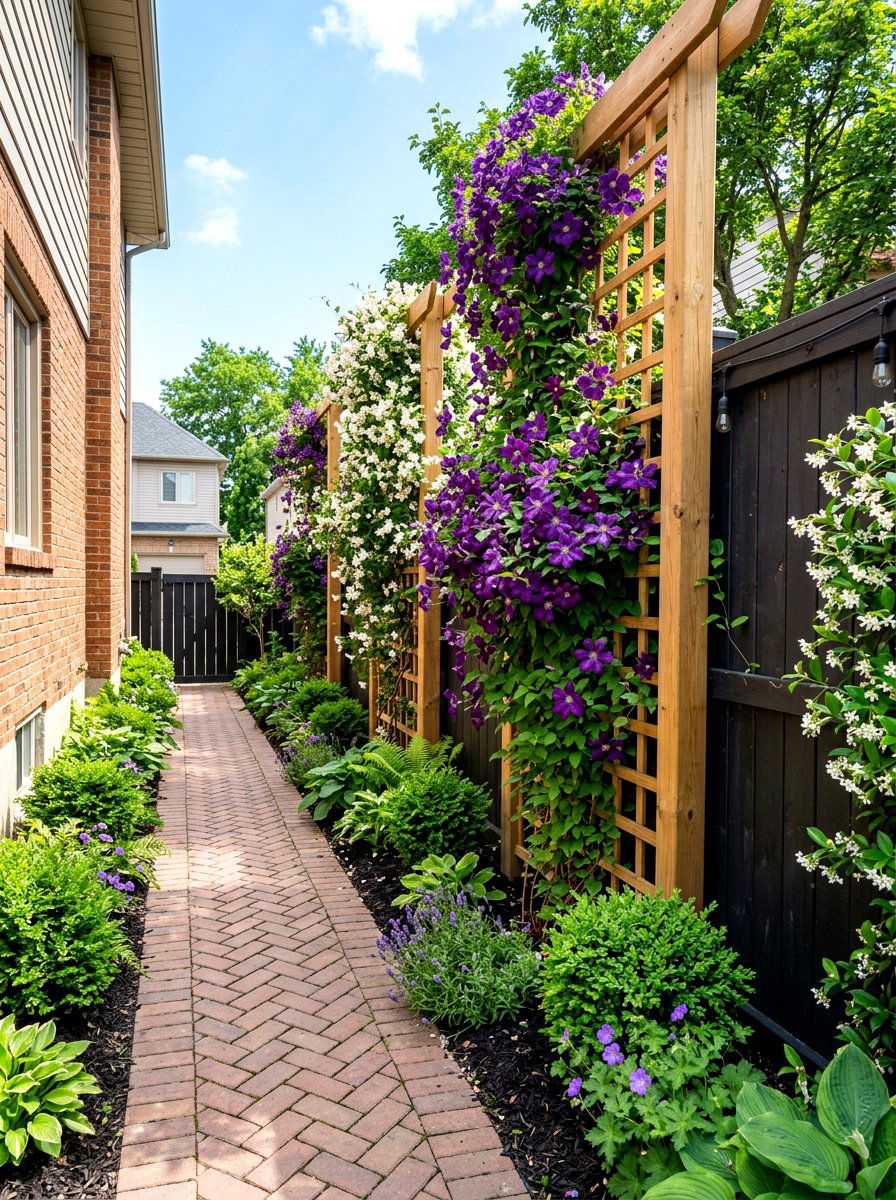
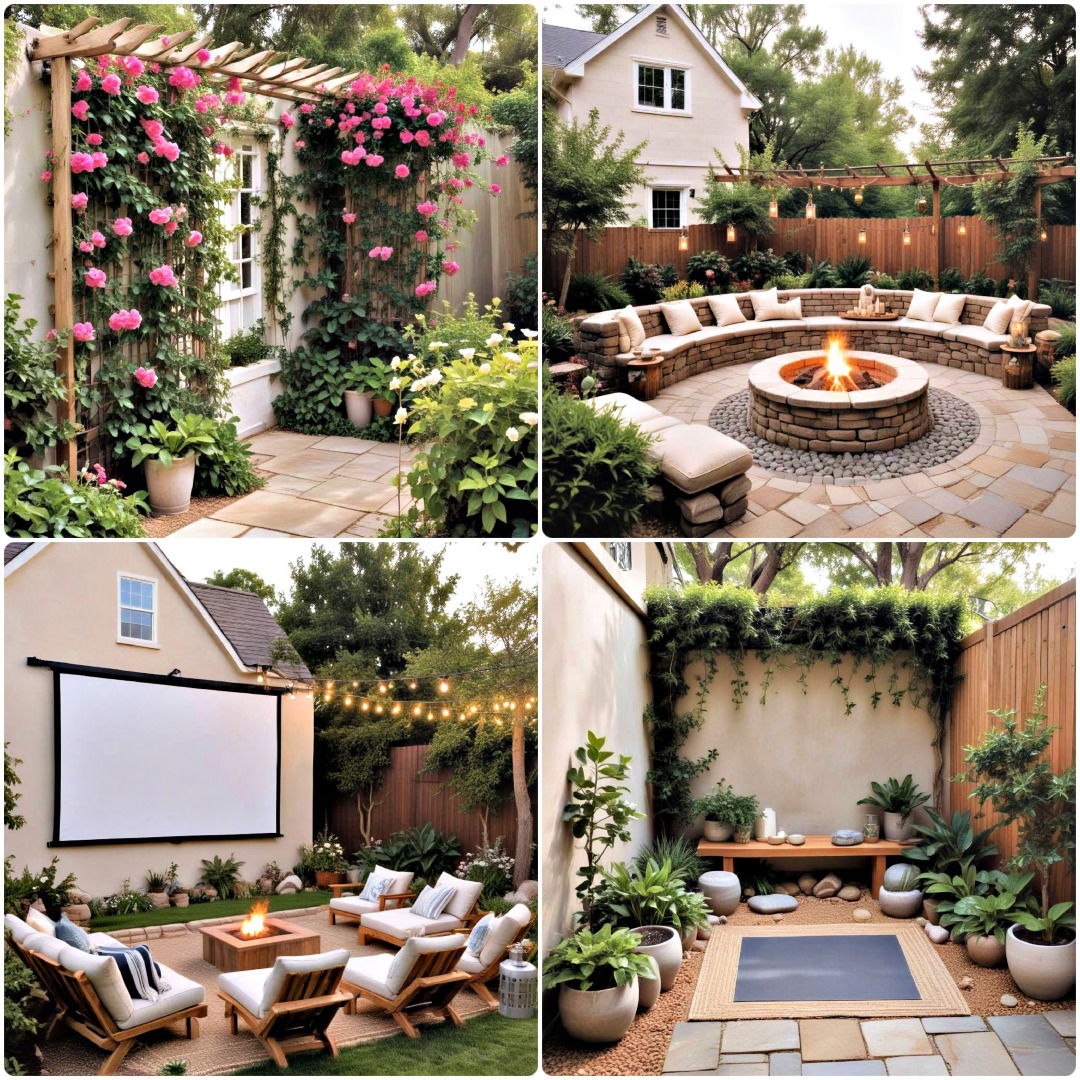
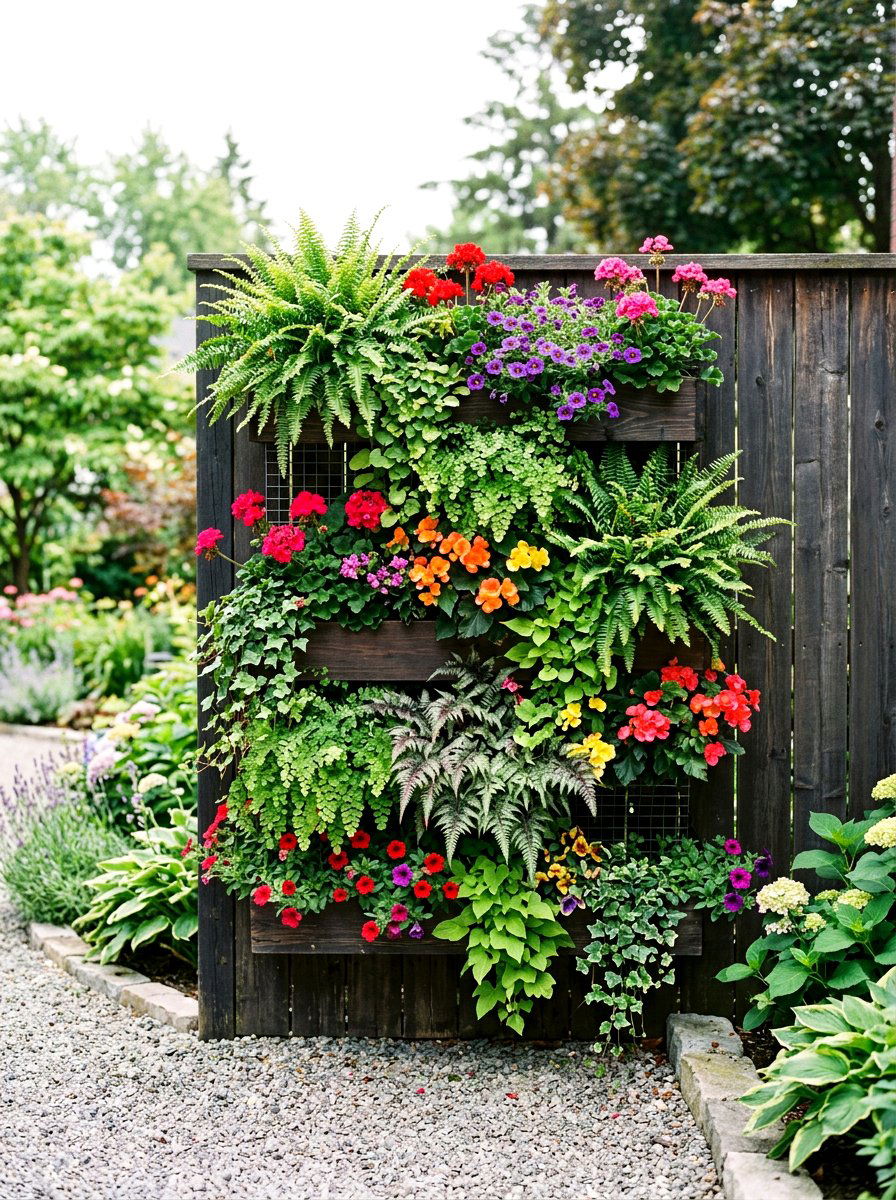
A vertical lattice garden is a brilliant way to maximize growing space when your side yard is exceptionally narrow. By installing sturdy wooden or metal trellises against your fence or home exterior, you allow climbing plants to grow upward instead of outward. Flowering vines like clematis or jasmine can cover the walls in a blanket of fragrant blooms, saving valuable ground space for a walkway. This design creates a "living wall" effect that adds privacy and hides unattractive boundaries. It effectively turns a tight corridor into a lush, green tunnel that feels much larger and more immersive than a traditional flat flower bed.
6. Tiered Retaining Wall
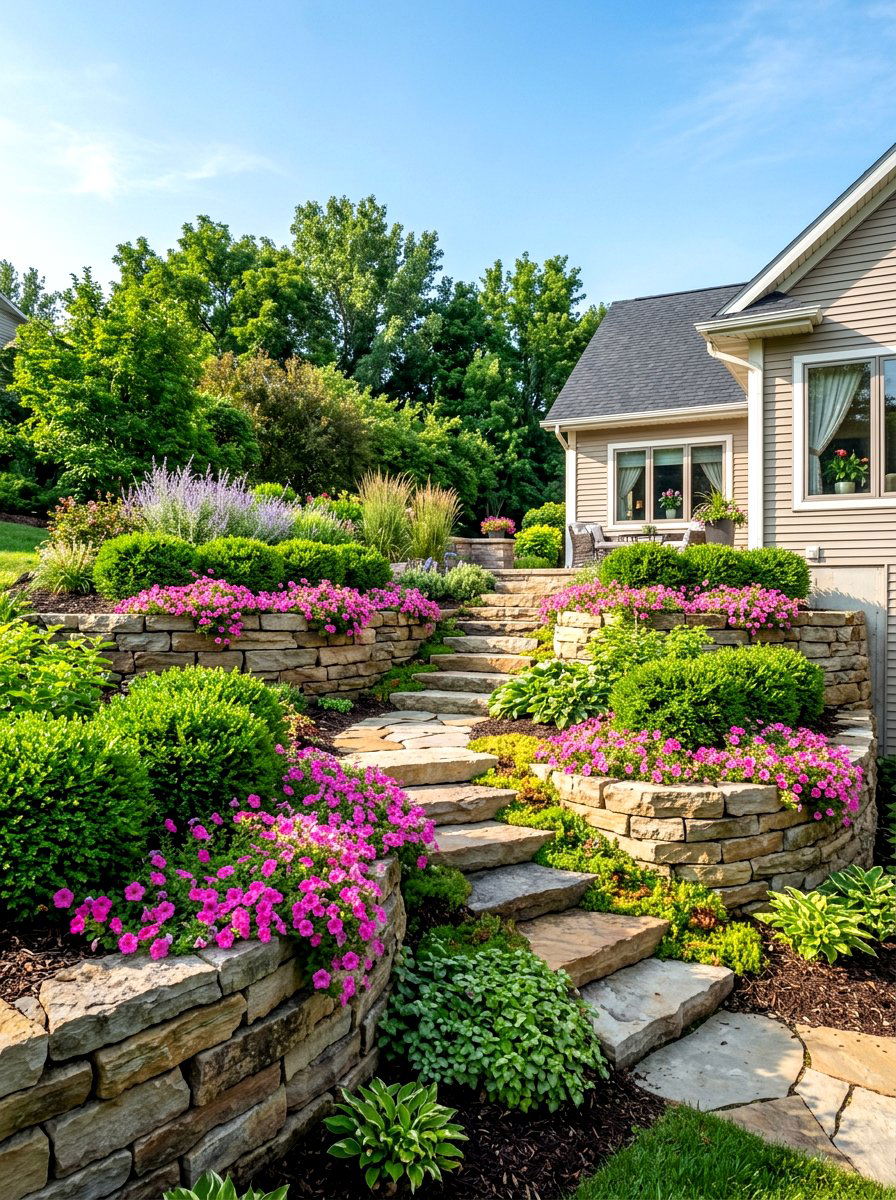
A tiered retaining wall is an essential design choice for side yards located on a slope or uneven terrain. By creating multiple levels using stone blocks or heavy timber, you transform a steep hill into several flat, manageable planting zones. Each tier can host a different variety of flowers or shrubs, creating a cascading waterfall effect of greenery and color. This structure not only prevents soil erosion but also adds a professional, landscaped look to your property. The different heights allow you to see every plant clearly from the path, making the space feel like a curated botanical display rather than a simple passageway.
7. Flagstone Path Border
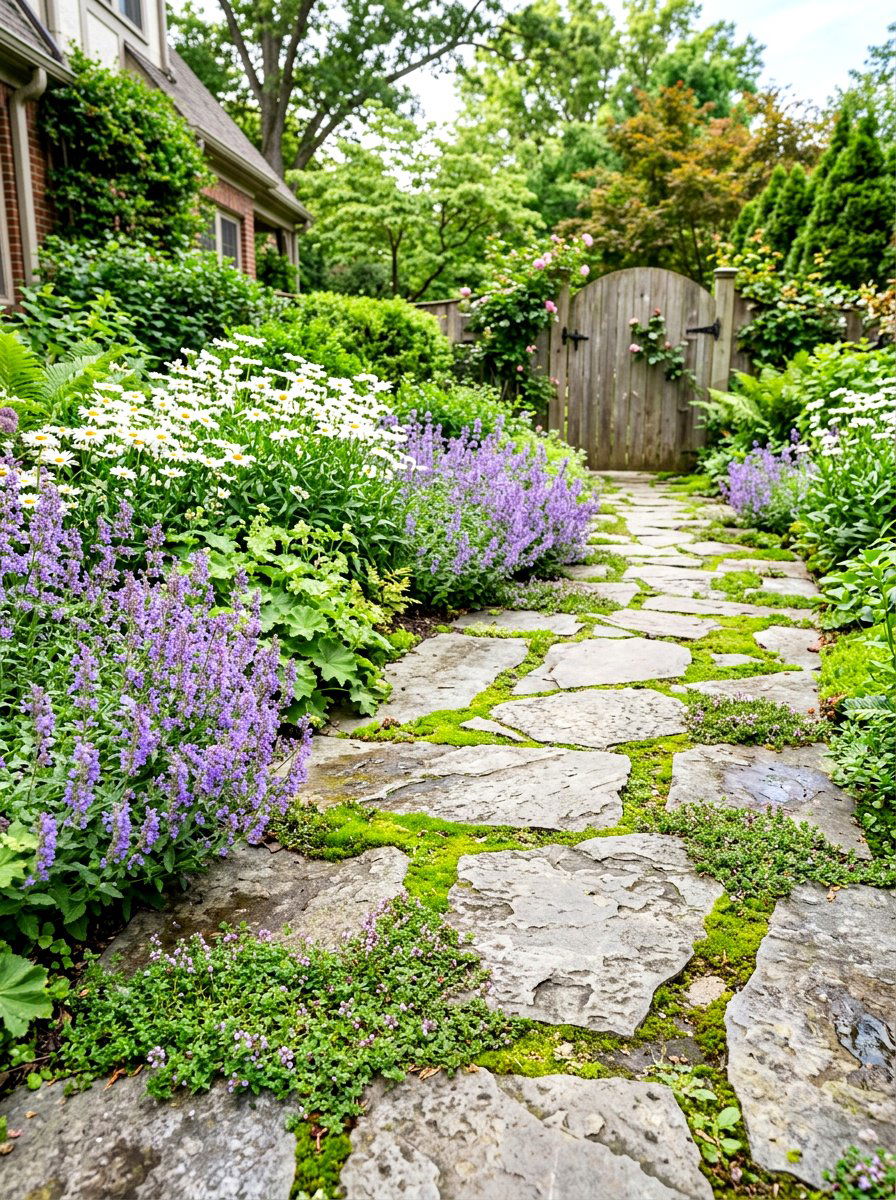
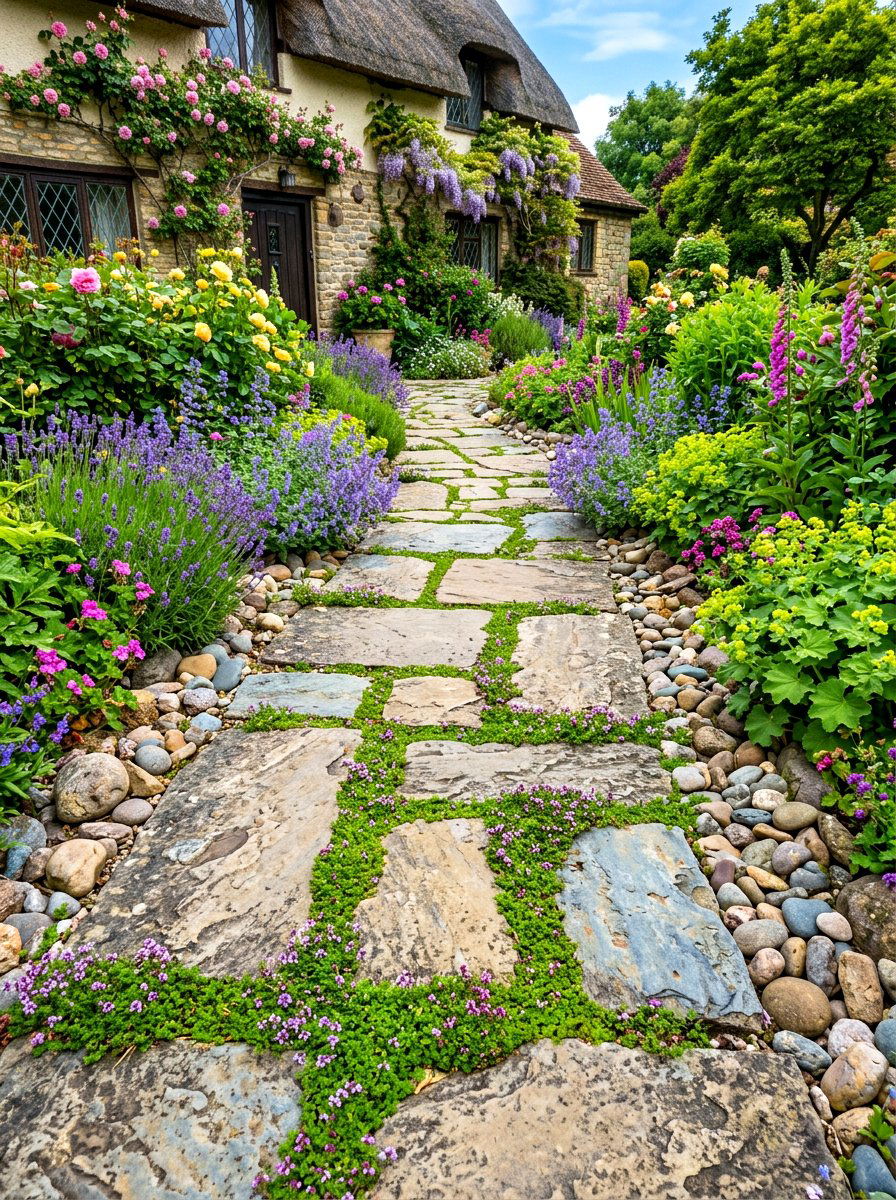
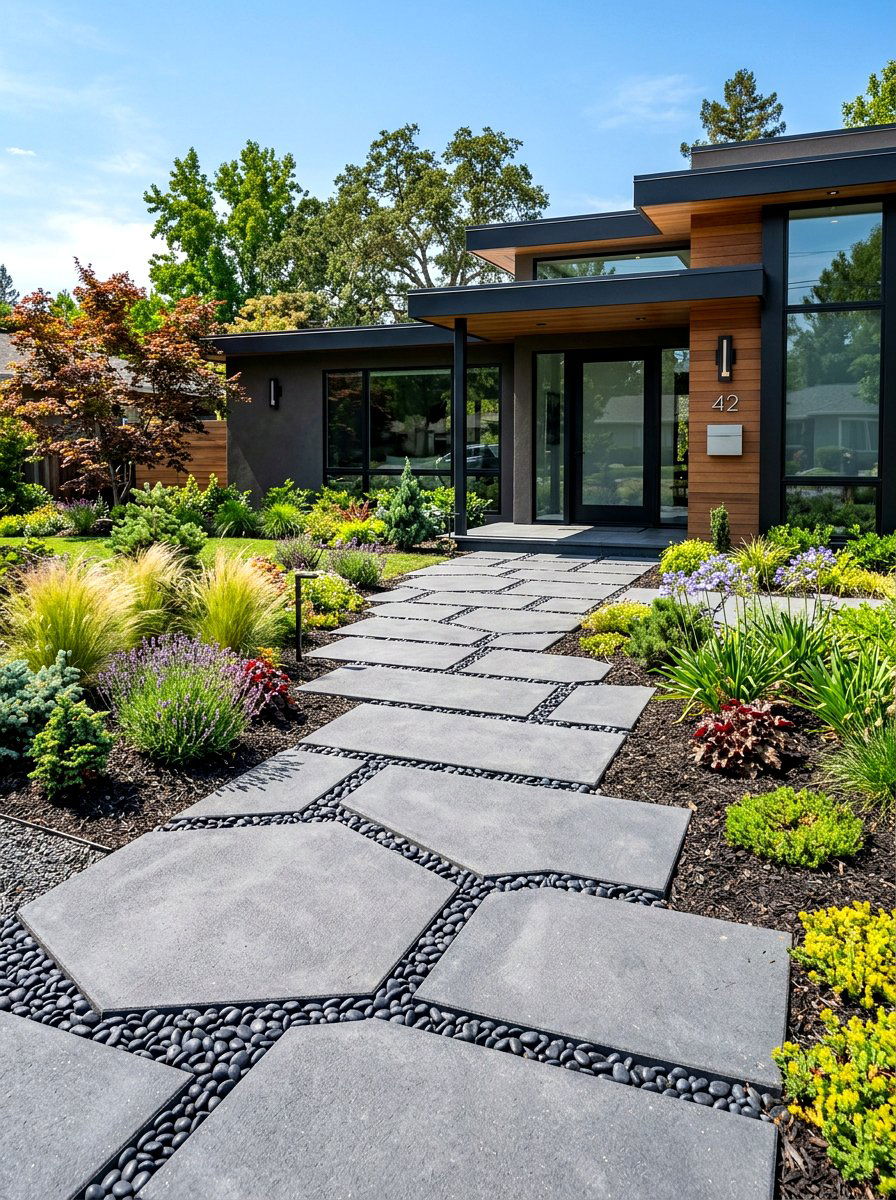
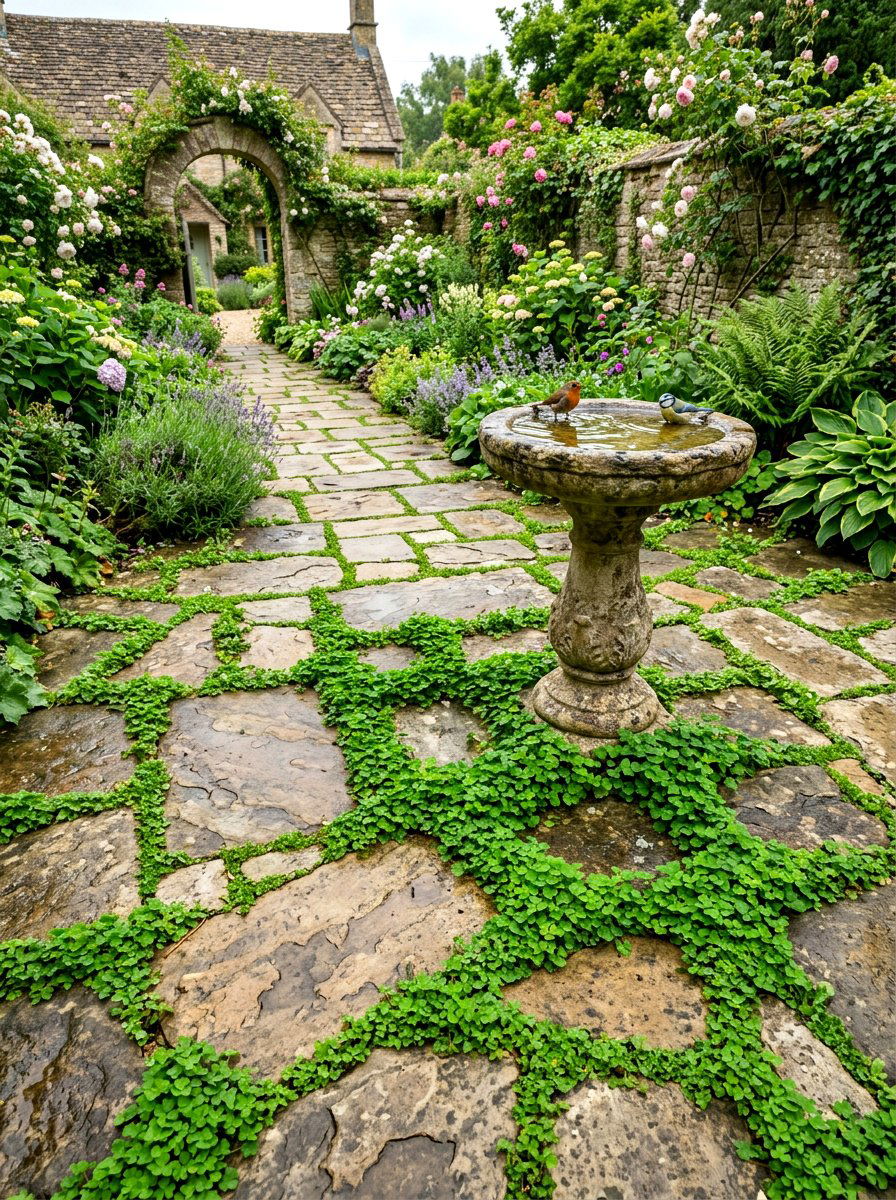
A flagstone path border combines functionality with natural beauty to create a classic and timeless side yard entrance. The irregular shapes of the flagstones provide a rustic, organic feel that guides guests through the space comfortably. You can plant low-growing perennials like creeping thyme or moss between the stones to soften the hard edges and add a touch of fragrance. Surrounding the path with slightly taller flowers creates a sense of enclosure that feels cozy and intentional. This design is highly durable and works well in various climates, providing a stable walking surface that remains beautiful even after years of heavy foot traffic.
8. Tropical Foliage Display
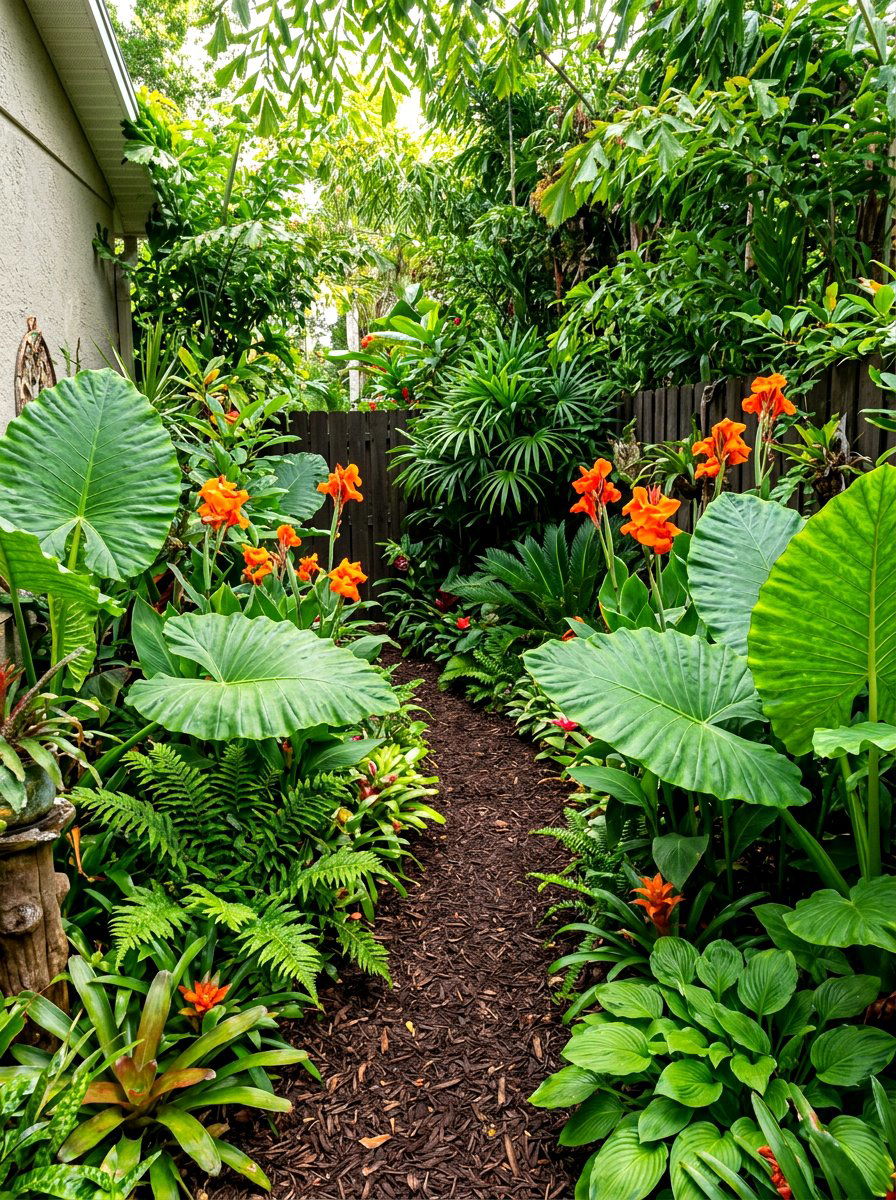
A tropical foliage display can turn a warm or humid side yard into an exotic vacation-like getaway right at home. Focus on plants with oversized, dramatic leaves such as canna lilies, elephant ears, and hardy palms to create a bold statement. These varieties often feature rich textures and deep colors that provide a lush, dense canopy even in limited space. Adding a simple mulch path helps to keep the focus on the greenery while maintaining a tidy appearance. This style works best in sunny or partially shaded spots where the large leaves can capture the light, creating a private jungle vibe that feels incredibly luxurious.
9. Drought Tolerant Xeriscape
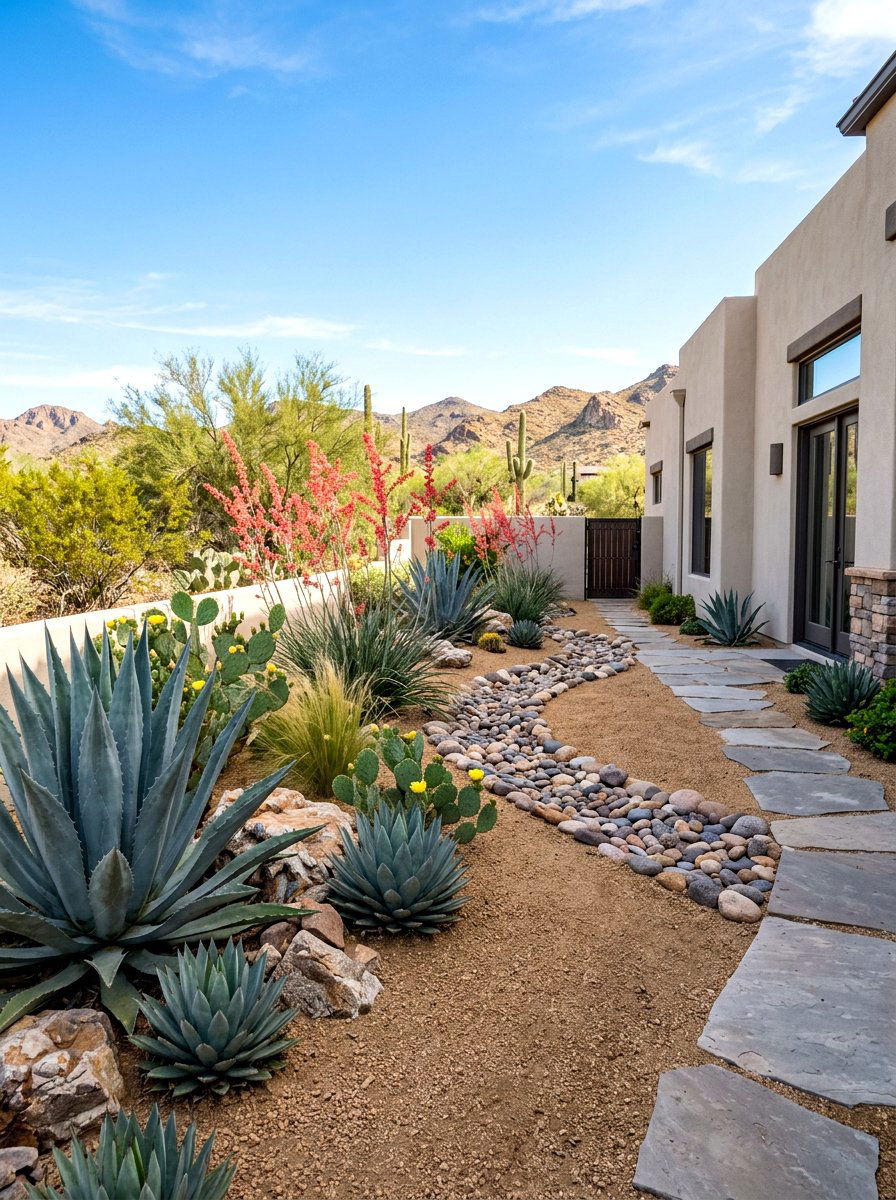
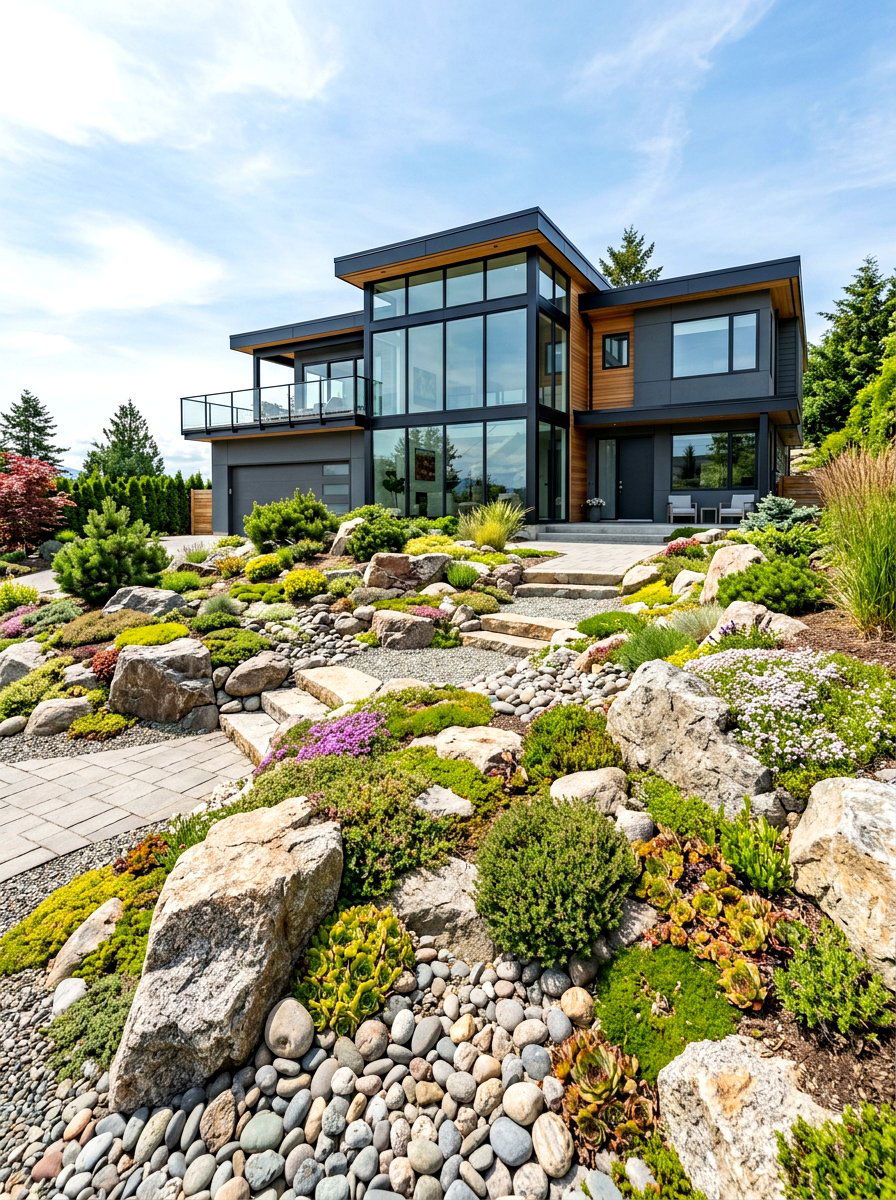
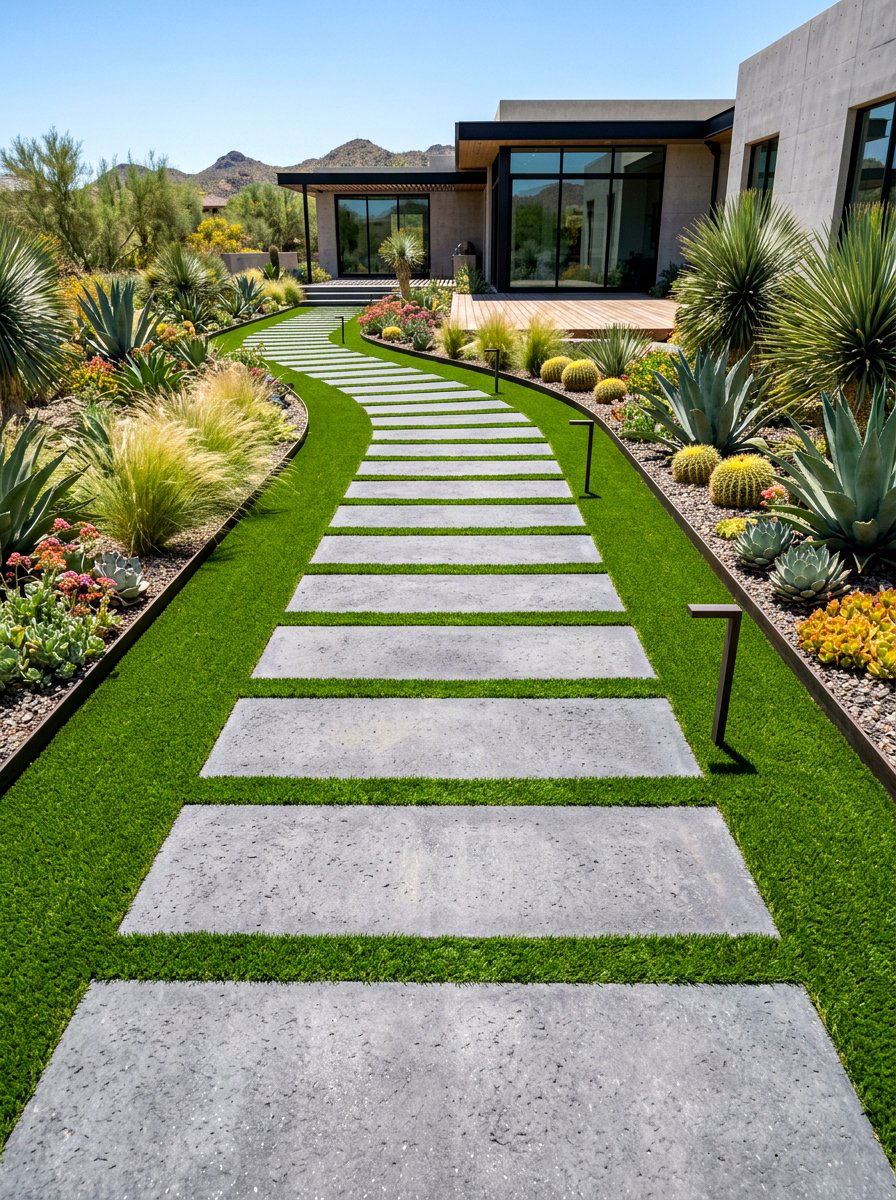
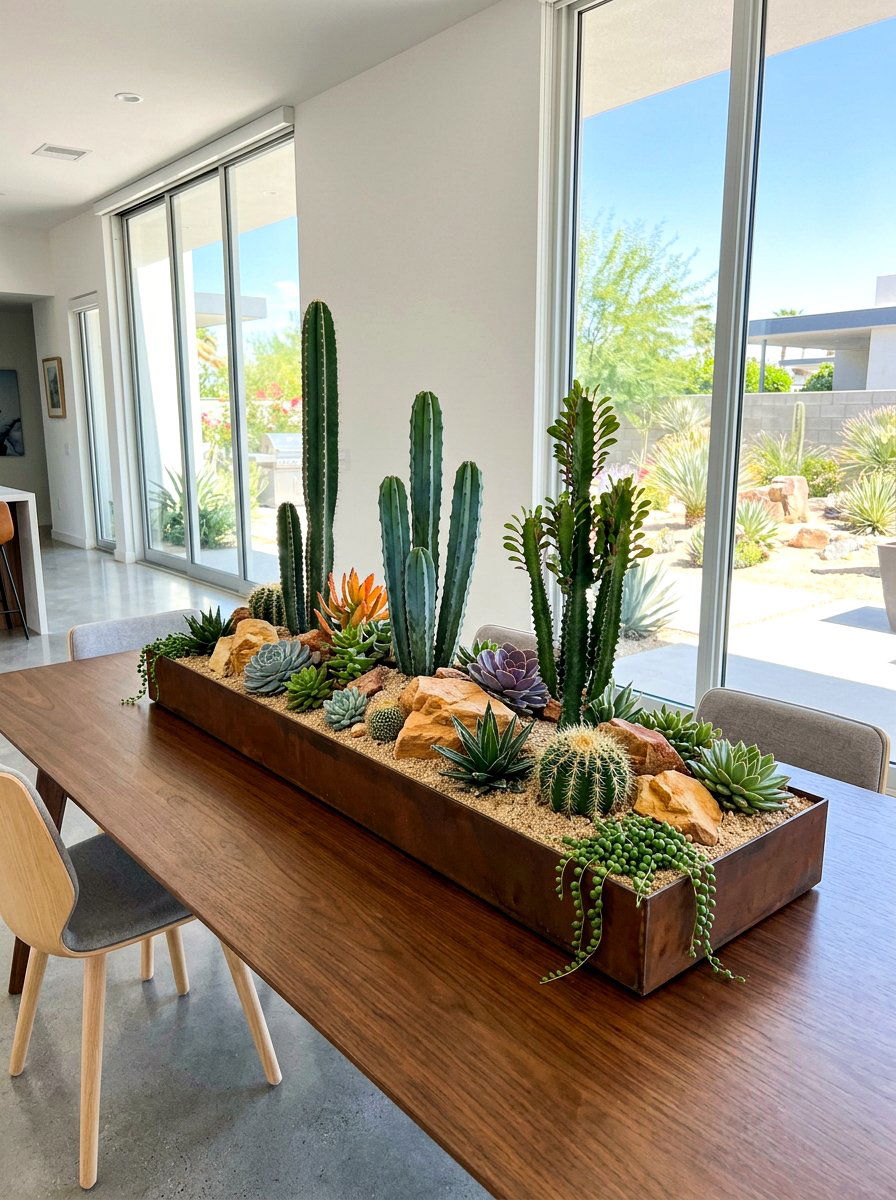
A drought tolerant xeriscape is a smart and stylish choice for regions with limited rainfall or strict water restrictions. This design focuses on using hardy succulents, agave, and native desert plants that require almost no supplemental irrigation once they are established. You can use various sizes of river rocks and boulders to add texture and mimic a natural dry creek bed. This approach is not only environmentally responsible but also creates a striking, sculptural look that remains vibrant all year long. The minimal maintenance required makes it a favorite for those who want a beautiful side yard without the high water bill or labor.
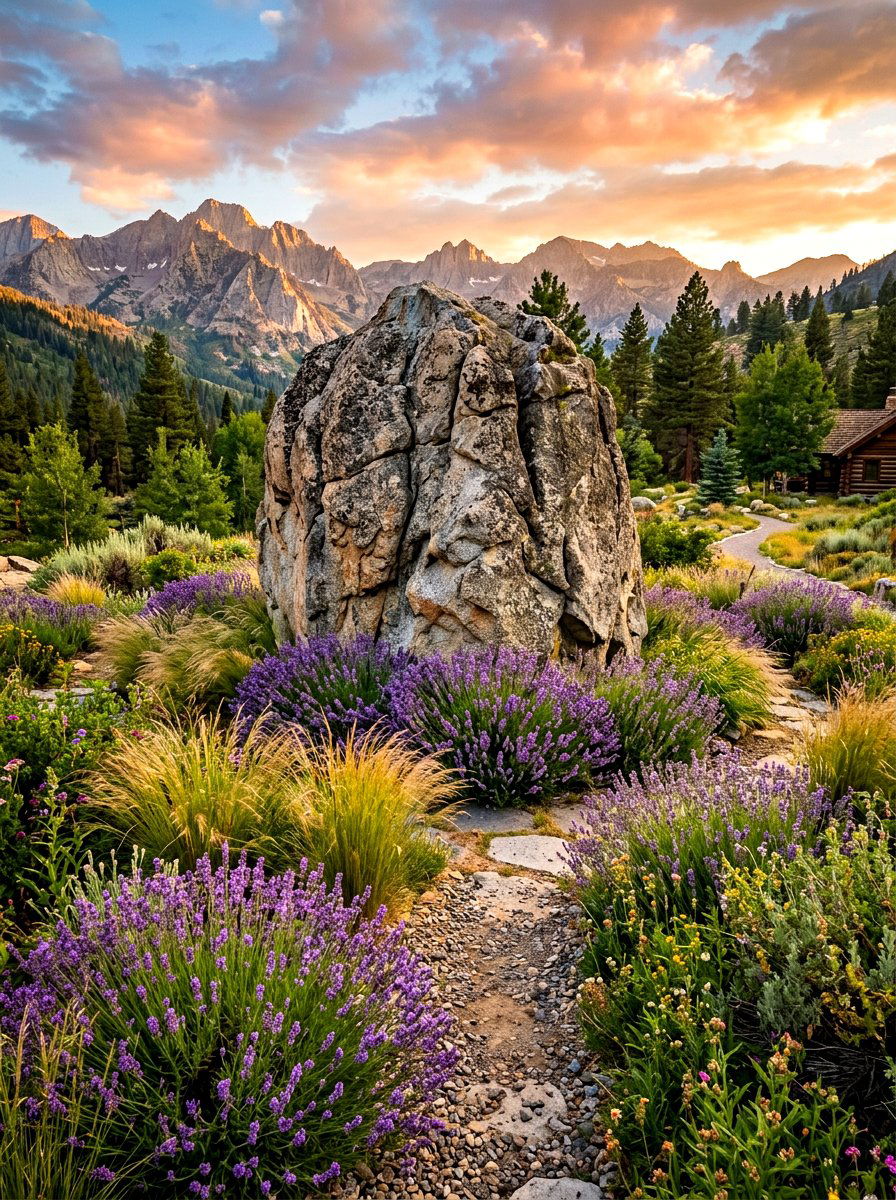
10. Pollinator Friendly Garden
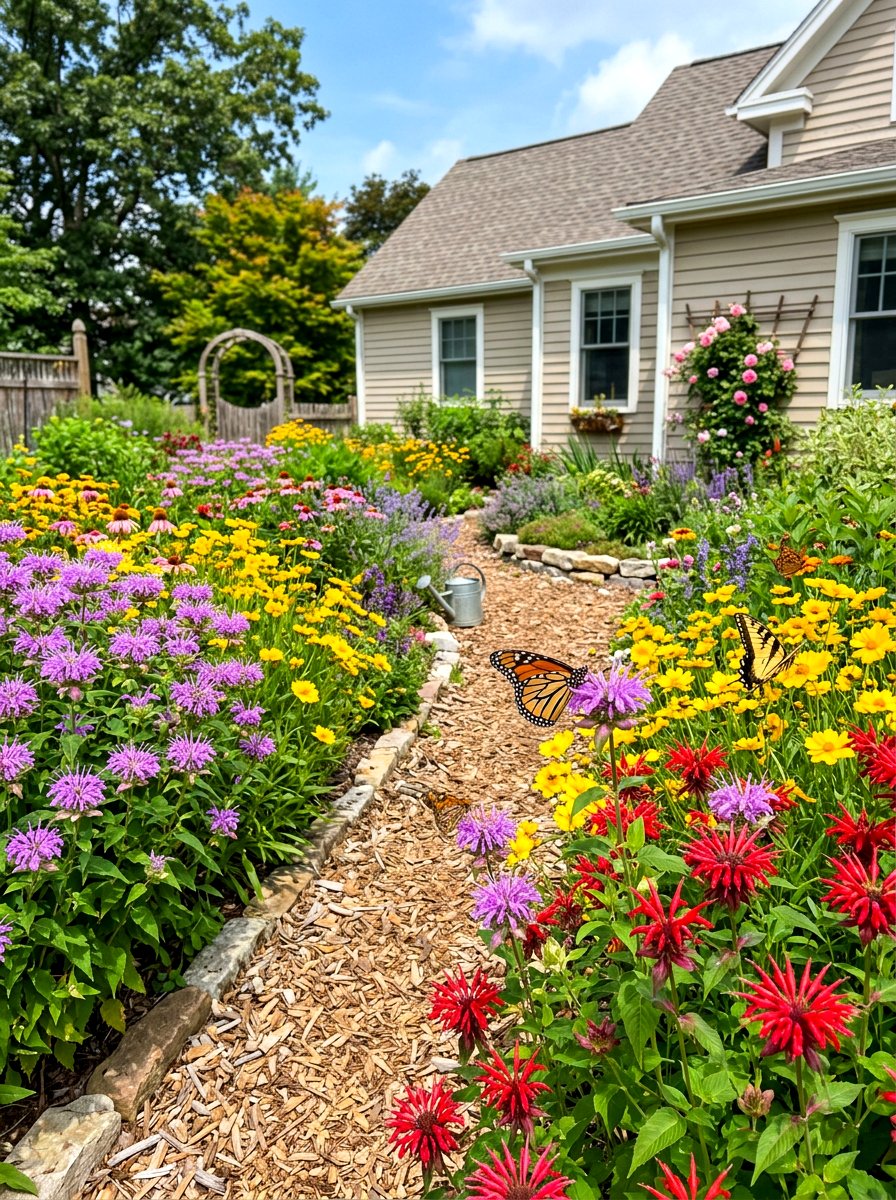
A pollinator friendly garden is a purposeful design aimed at supporting local wildlife like honeybees, hummingbirds, and butterflies. By selecting a variety of nectar-rich flowers like coneflowers, milkweed, and salvia, you create a busy hub of biological activity. It is best to choose plants that bloom at different times throughout the year to ensure a steady food source for your winged visitors. This type of garden is often filled with bright colors and varying heights, giving your side yard a lively and energetic feel. Watching the butterflies move through your narrow walkway adds a magical and educational element to your daily outdoor experience.
11. Cottage Style Perennial
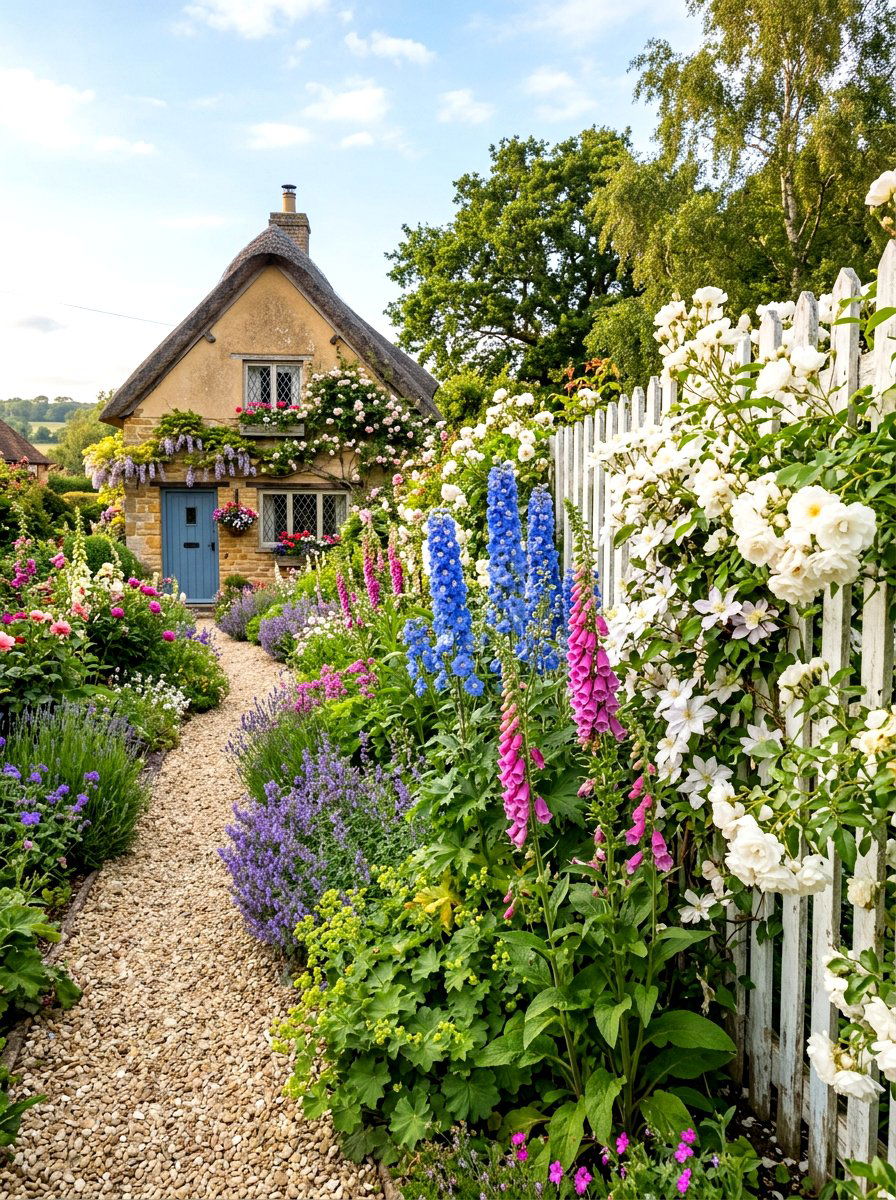
A cottage style perennial garden brings a sense of nostalgic charm and soft, romantic beauty to any narrow side yard. This design focuses on a "perfectly imperfect" look, where flowers like foxgloves, delphiniums, and peonies are allowed to spill over the edges of the beds. The dense planting style naturally suppresses weeds and creates a thick tapestry of color and scent. Using a mix of heights and textures ensures that the garden looks full and established even in a small area. This traditional approach turns a simple walkway into an enchanting journey, making every trip to the backyard feel like a stroll through a classic English countryside.
12. Raised Wooden Bed
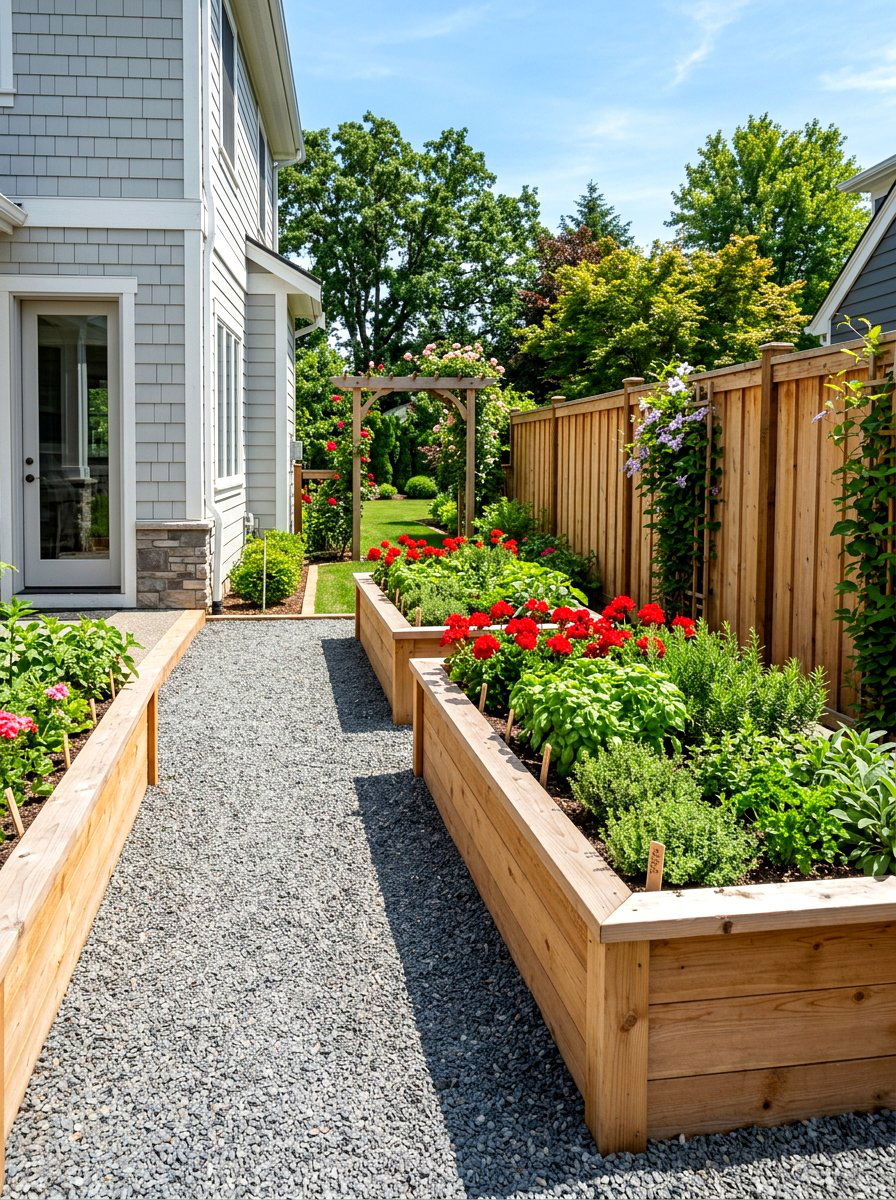
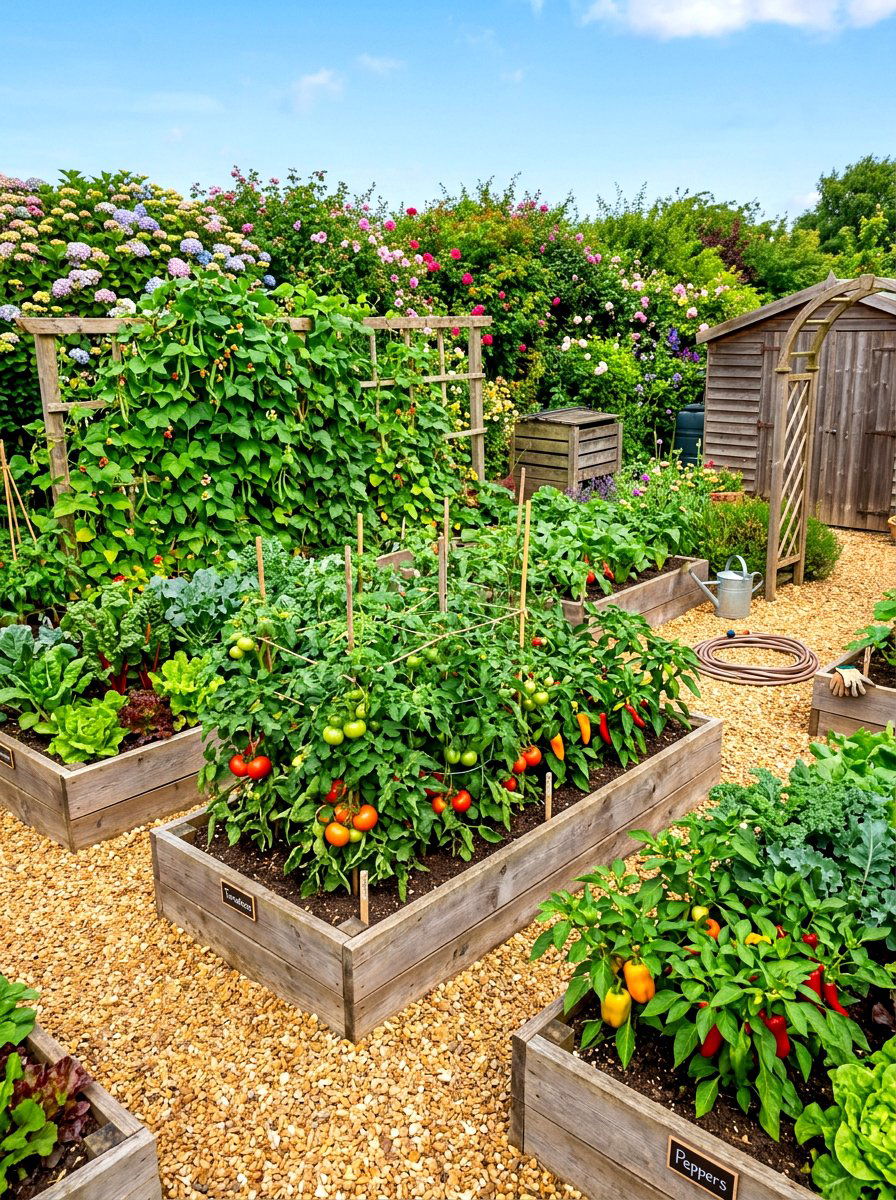
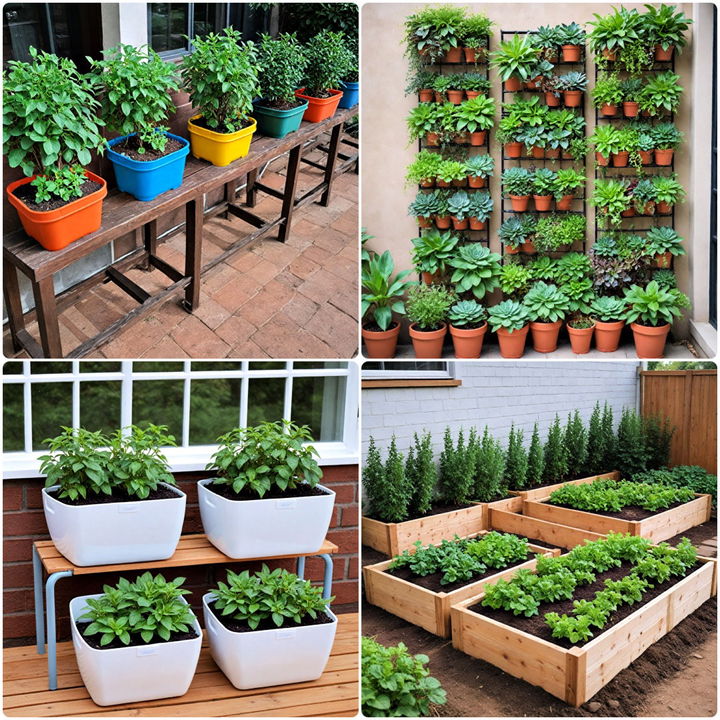
A raised wooden bed provides a clean, organized look while offering the perfect soil conditions for your favorite flowers. Building these beds from cedar or redwood ensures longevity and a natural aesthetic that blends well with most home exteriors. Because the soil is contained, you can easily control its quality and drainage, which is ideal if your yard has heavy clay or rocky ground. Raised beds also create a clear boundary between the garden and the walking path, preventing soil from washing away during rain. They are especially helpful for older gardeners, as they reduce the need for bending and kneeling during planting.
13. Minimalist Rock Garden
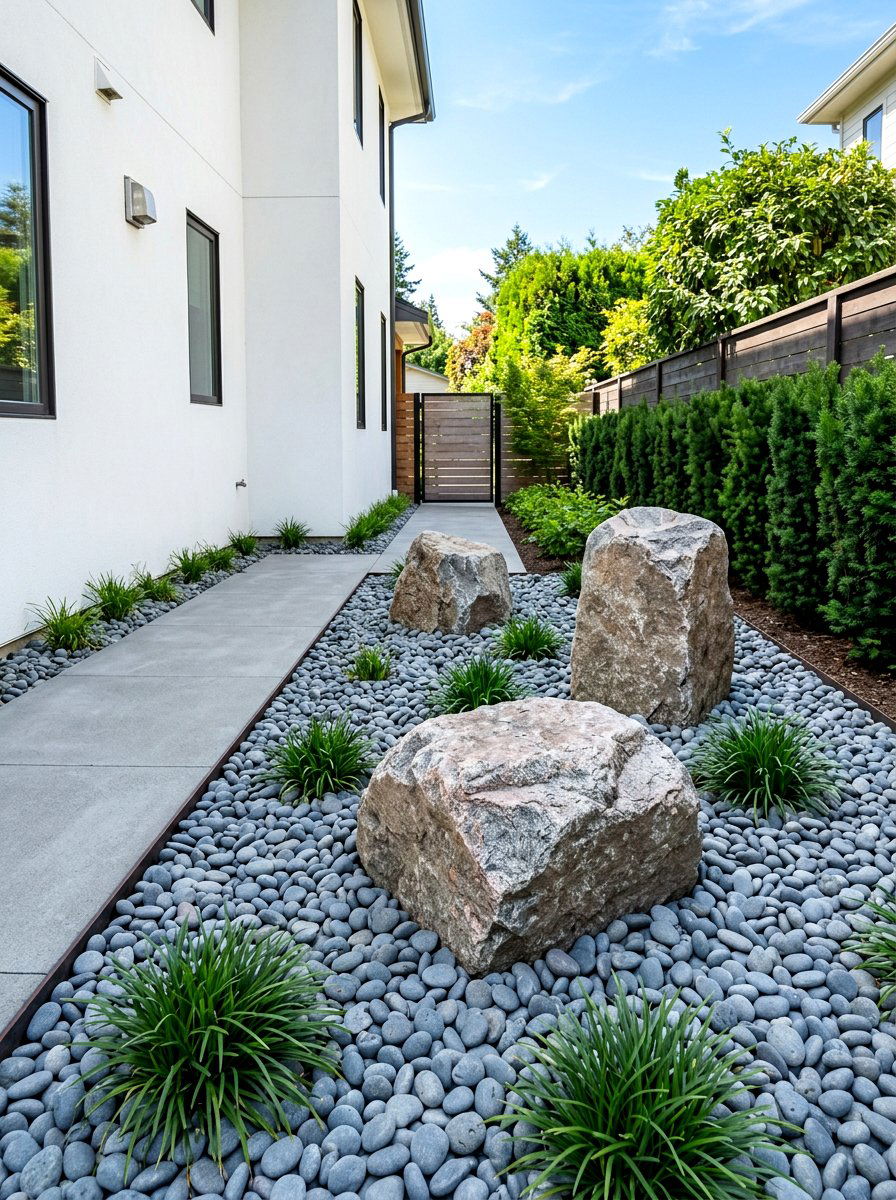
A minimalist rock garden focuses on the beauty of simplicity and the contrast between hard stone and soft greenery. By using a few large, carefully placed boulders surrounded by uniform gravel, you create a serene and meditative atmosphere. Small clumps of ornamental grass or moss add just enough life to keep the space from feeling cold or barren. This design is incredibly low maintenance and works well in both modern and traditional settings. It is a great way to handle side yards that are too narrow for heavy planting, as the focus is on the artistic arrangement of elements rather than a high volume of plants.
14. Hydrangea Privacy Hedge
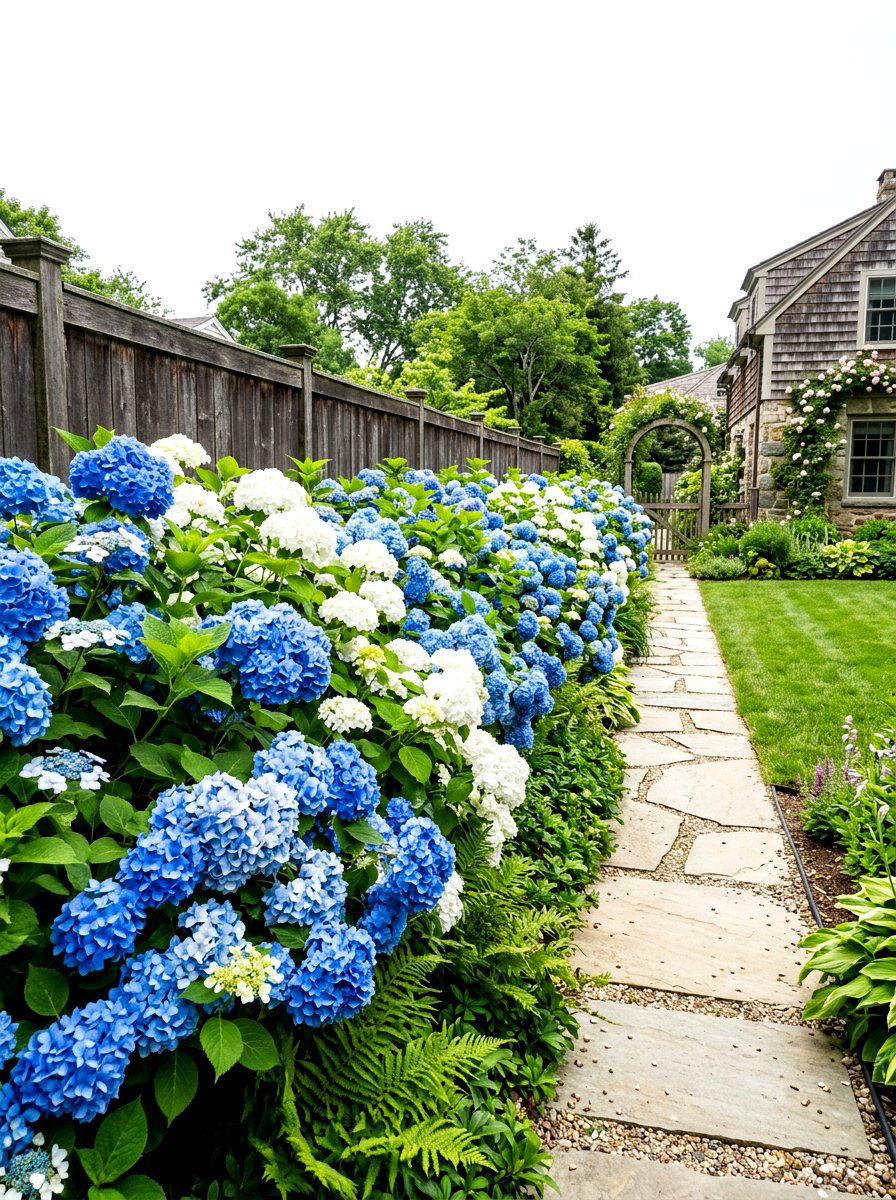
A hydrangea privacy hedge is a stunning way to block out neighbors while filling your side yard with massive, colorful blooms. These shrubs grow quickly and produce large clusters of flowers in shades of blue, pink, and white throughout the summer months. When planted in a row, they form a thick, leafy wall that provides excellent screening for windows or seating areas. Hydrangeas love the partial shade often found in side yards, making them a reliable choice for these specific light conditions. Their lush appearance adds a sense of luxury and softness to the space, creating a private floral hallway that feels truly special.
15. Symmetrical Boxwood Border
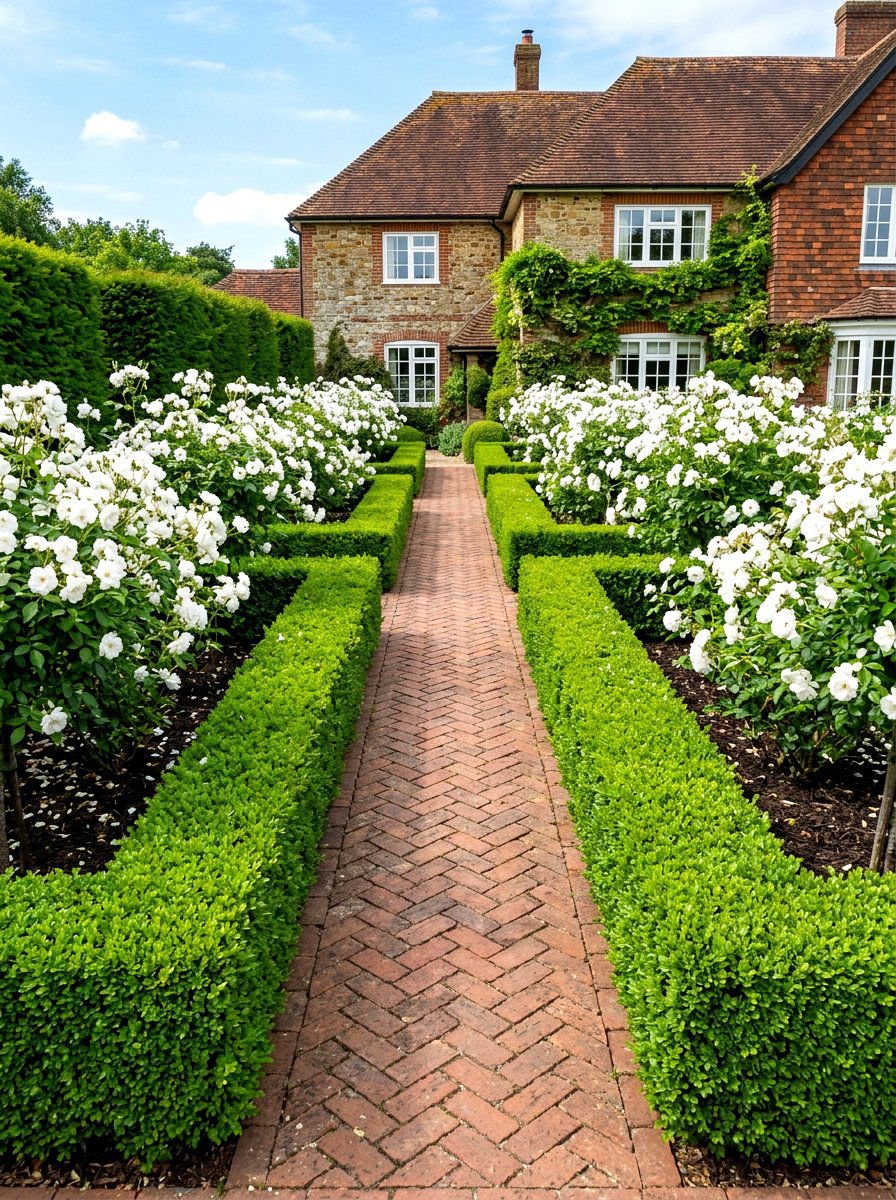
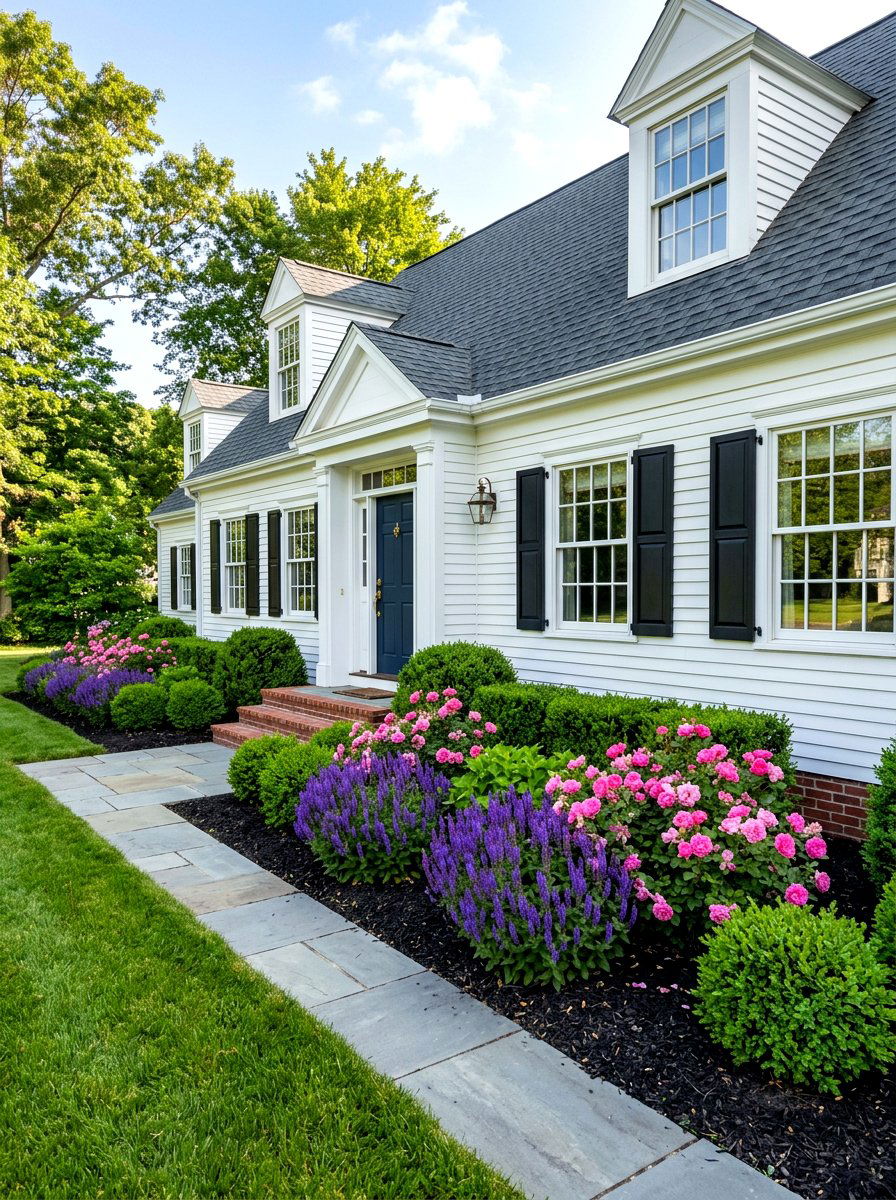
A symmetrical boxwood border offers a formal and highly structured look that instantly elevates the curb appeal of your home. By planting clipped boxwood shrubs in straight lines on either side of a central path, you create a classic European garden feel. This design provides year-round greenery and a sense of permanence that looks great even in the middle of winter. You can add seasonal flowers behind the boxwoods for a pop of color, or keep it strictly green for a timeless, minimalist appearance. The clean lines help to define the space clearly, making even the narrowest side yard feel intentional and professionally designed.
16. Mixed Texture Hosta Bed
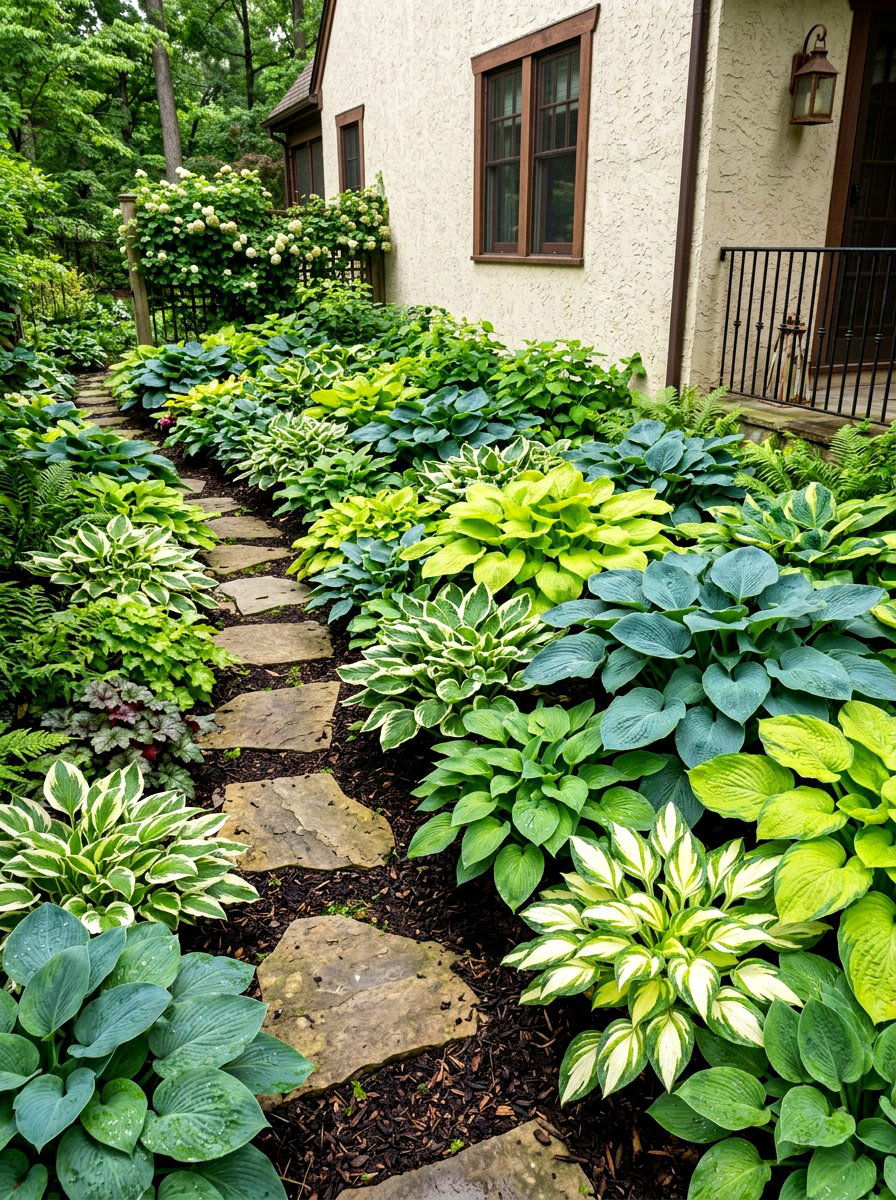
A mixed texture hosta bed is the ultimate choice for a shady side yard where you want maximum impact with minimal effort. Hostas come in an incredible variety of sizes, colors, and leaf patterns, ranging from giant blue leaves to small variegated types. By grouping different varieties together, you create a rich mosaic of foliage that looks lush and full from spring through autumn. Their broad leaves are excellent at shading out weeds, which significantly reduces the amount of time you spend on maintenance. Adding a few woodland flowers like bleeding hearts or astilbe provides a lovely contrast in shape and seasonal interest.
17. Colorful Annual Border
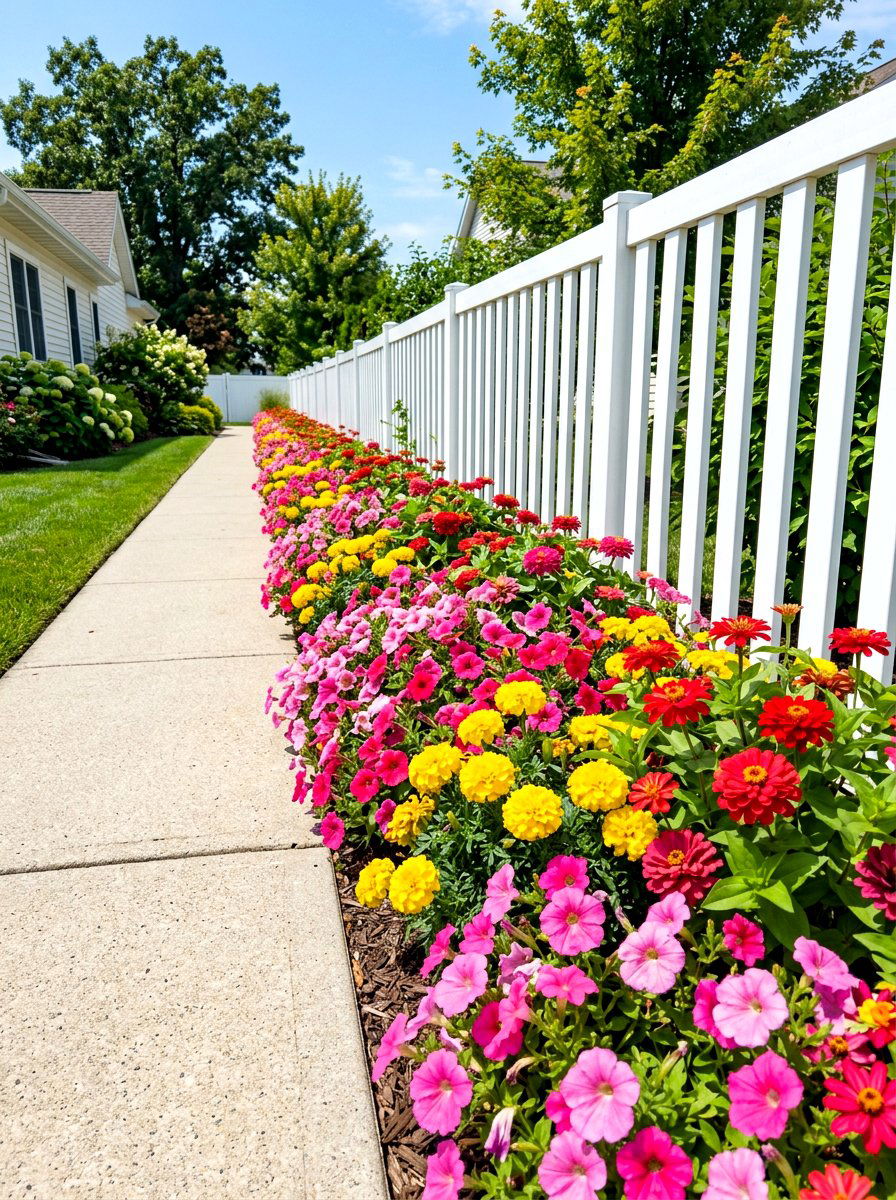
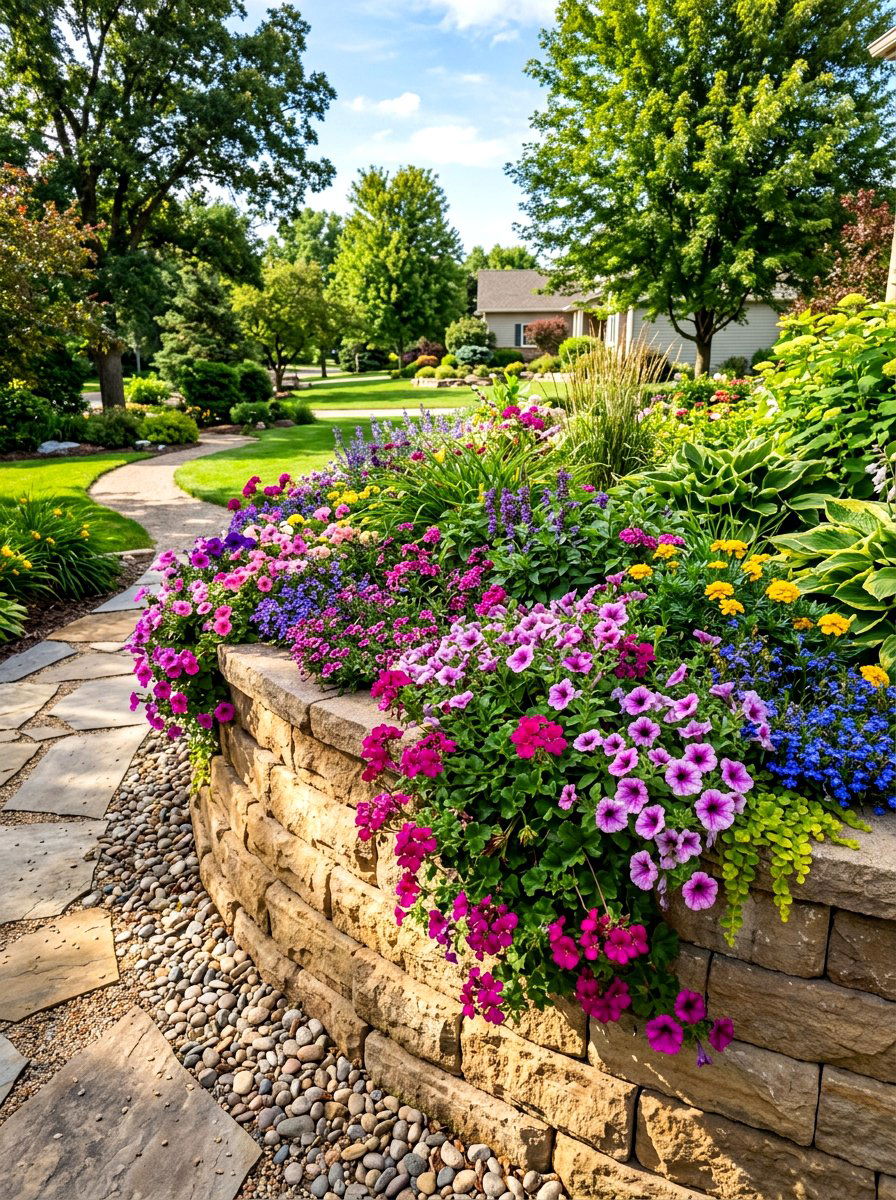
A colorful annual border is the best way to ensure your side yard is always filled with bright, vibrant flowers during the growing season. Plants like petunias, marigolds, and zinnias offer non-stop blooms that can be changed every year to create a completely new look. This approach allows you to experiment with different color palettes, such as a hot mix of reds and yellows or a cool combination of purples and whites. While annuals require more frequent watering and replanting than perennials, the sheer volume of flowers they produce is unmatched. This design is perfect for homeowners who love high-impact, seasonal transitions in their landscape.
18. Edible Herb Garden
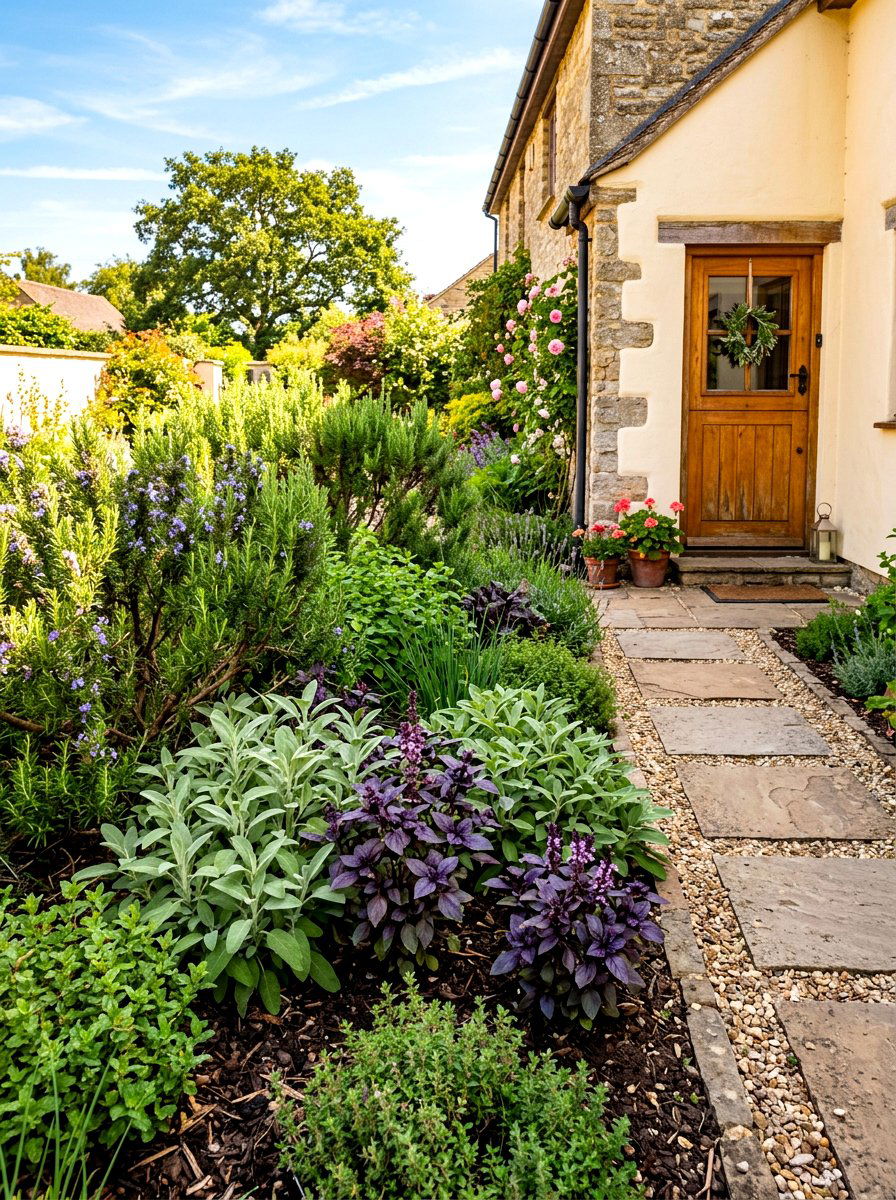
An edible herb garden turns your side yard into a functional and fragrant space that serves your kitchen as well as your eyes. Many culinary herbs like rosemary, sage, and thyme are beautiful evergreen plants that thrive in the sunny spots along a house wall. You can intersperse these with edible flowers like nasturtiums or pansies for an extra layer of color and utility. Walking through a side yard filled with fresh basil and mint creates a delightful sensory experience every time you pass by. This practical design maximizes your available land, providing fresh ingredients for your meals while maintaining a tidy and attractive garden border.
19. Japanese Zen Path
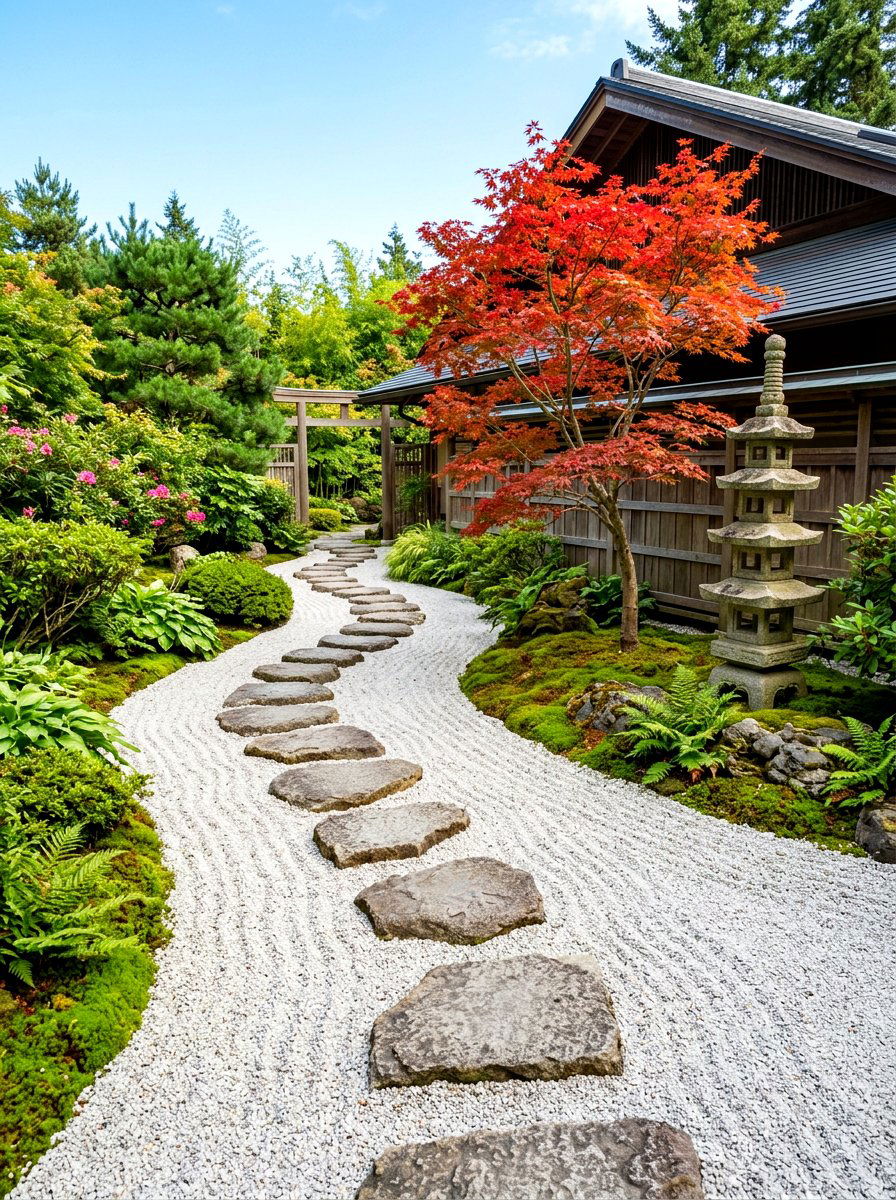
A Japanese Zen path emphasizes peace, balance, and natural harmony through the use of traditional Asian landscaping elements. Raked gravel, smooth river stones, and stepping stones are used to create a slow and mindful walking experience. Minimalist plantings of bamboo, Japanese maples, or moss provide subtle color and a sense of ancient beauty. This style is particularly effective in narrow spaces because it utilizes "negative space" to make the area feel open and airy rather than cluttered. A small water feature or a simple stone lantern can serve as a focal point, turning a basic walkway into a place for quiet reflection and calm.
20. White Moon Garden
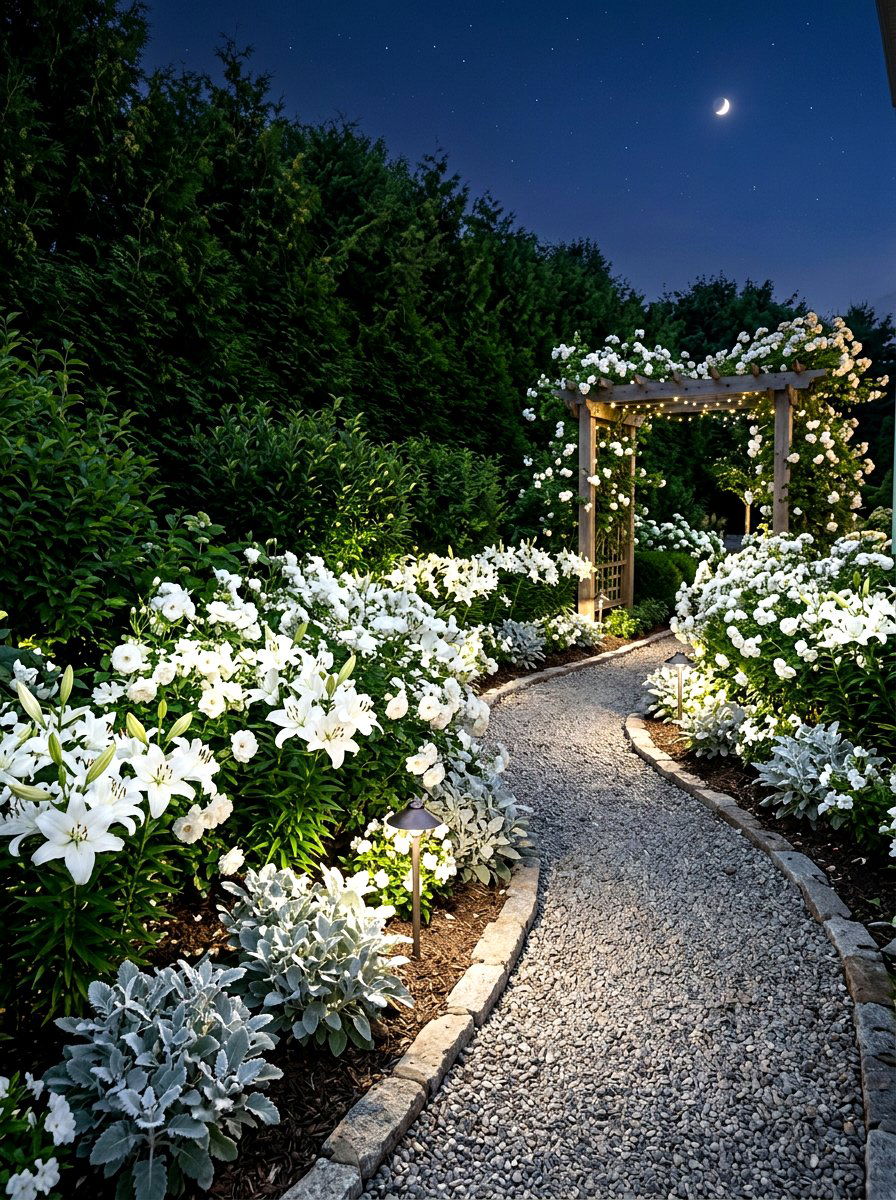
A white moon garden is specifically designed to be enjoyed during the evening and nighttime hours. By focusing on plants with white flowers or silver foliage, you create a space that seems to glow under the light of the moon or soft outdoor lamps. Varieties like white roses, lilies, and silver mound artemisia reflect light beautifully, making a dark side yard feel safe and enchanting. This design is perfect for those who work during the day and want a relaxing retreat to walk through at night. The high-contrast look is sophisticated and elegant, offering a unique twist on the traditional colorful flower bed.
21. Cascading Ground Cover
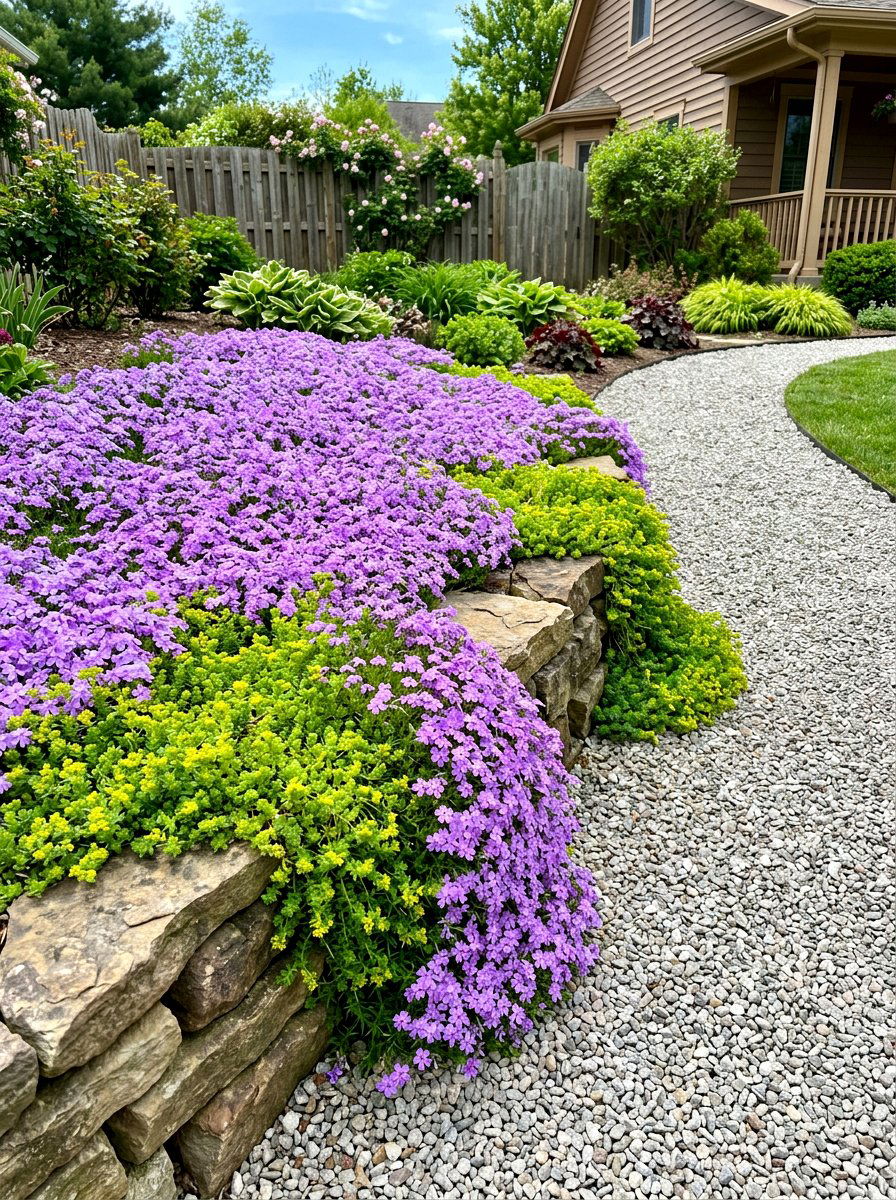
A cascading ground cover design is a beautiful way to soften the edges of a side yard path or a small retaining wall. Instead of tall plants that might crowd a narrow space, this style uses low-growing varieties that spread horizontally to form a living carpet. Plants like creeping phlox, stonecrop, or periwinkle create a dense layer of greenery that flows over rocks and borders naturally. When these ground covers bloom, they provide a stunning wash of color that stays close to the earth. This approach is excellent for suppressing weeds and preventing soil erosion while keeping the visual lines of your side yard open.
22. Tall Ornamental Grass
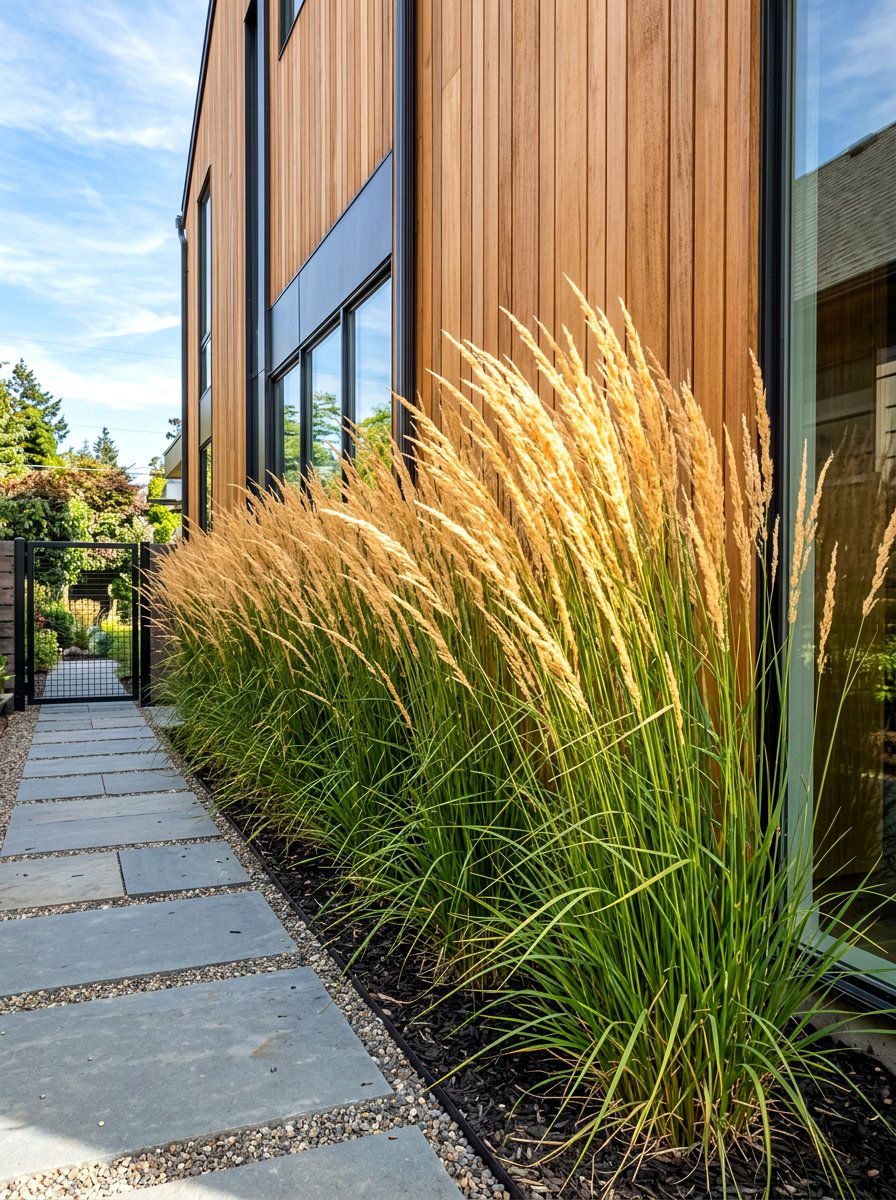
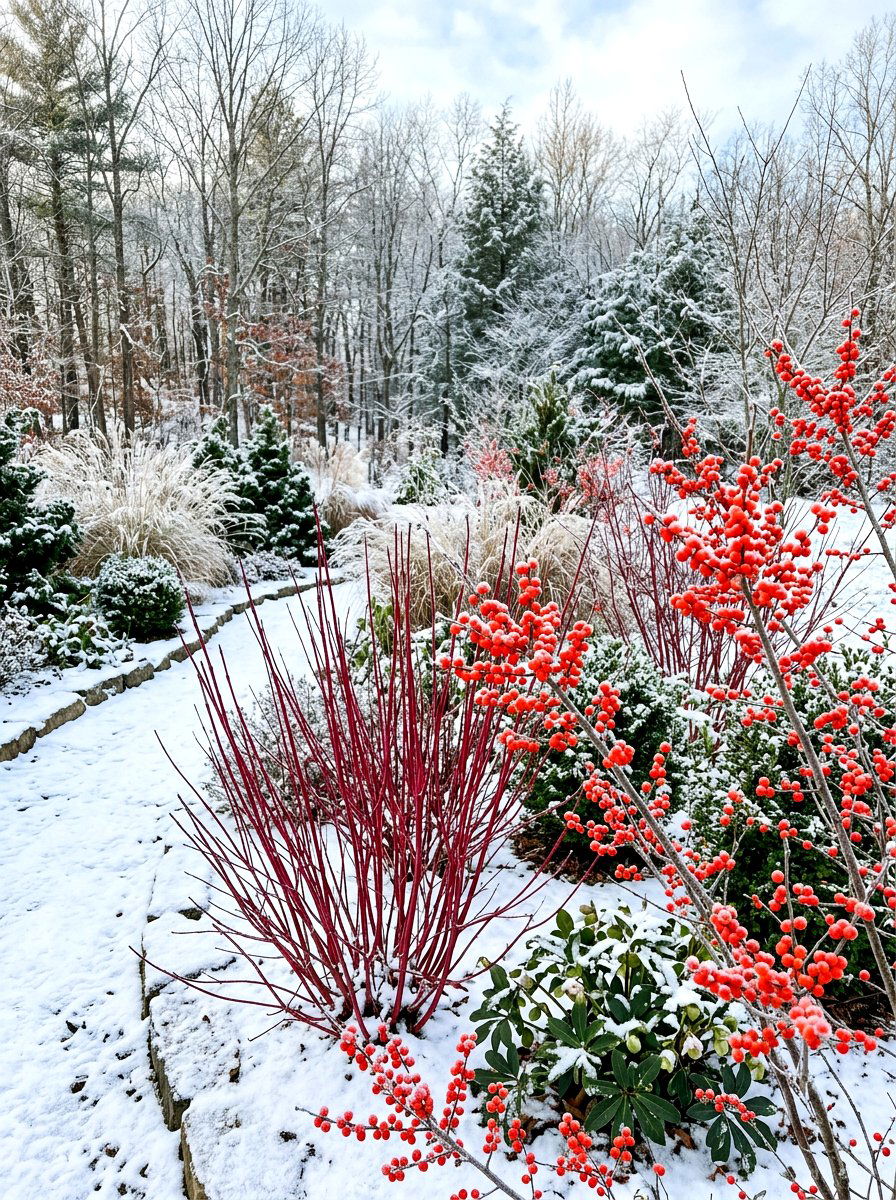
Tall ornamental grasses provide a modern, architectural look that adds movement and sound to your side yard landscape. Varieties like feather reed grass or maiden grass grow vertically, making them ideal for narrow spaces where you don't want plants spreading into the walking path. As the wind blows, these grasses sway gently and create a rustling sound that adds to the ambiance of your garden. They offer interest in every season, with green blades in the summer and golden plumes that last through the winter months. Their height also provides a natural screen for privacy, making the side yard feel like a secluded sanctuary.
23. Fern Woodland Walk
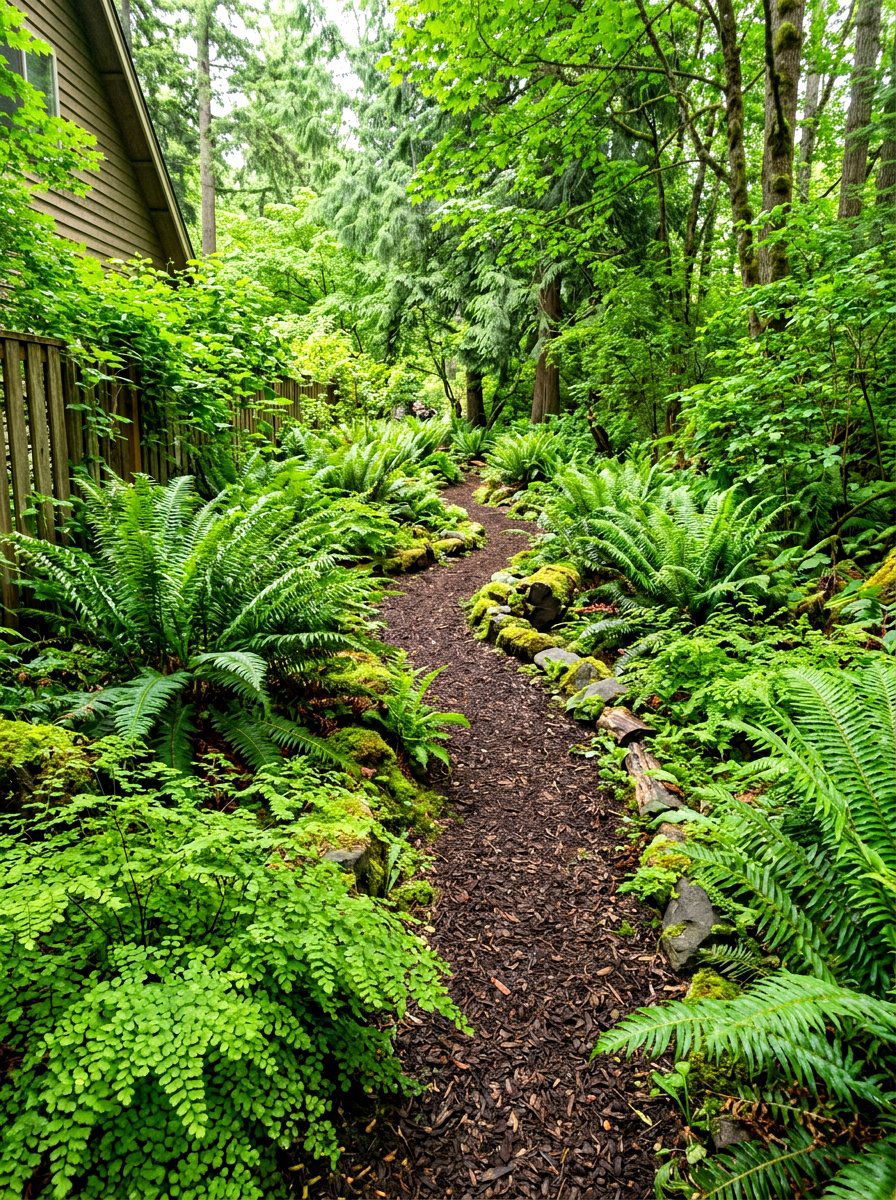
A fern woodland walk is the perfect way to embrace a damp and shady side yard, turning it into a cool and refreshing escape. Ferns are prehistoric plants that offer an incredible variety of textures, from the delicate fronds of maidenhair ferns to the bold shape of ostrich ferns. By planting them in thick drifts, you create a lush, prehistoric look that feels deep and immersive. Using a mulch or bark path enhances the woodland theme and keeps the ground moist for the plants. This design is exceptionally low maintenance once established, as ferns are generally resistant to most pests and thrive in low light.
24. Contemporary Metal Edging
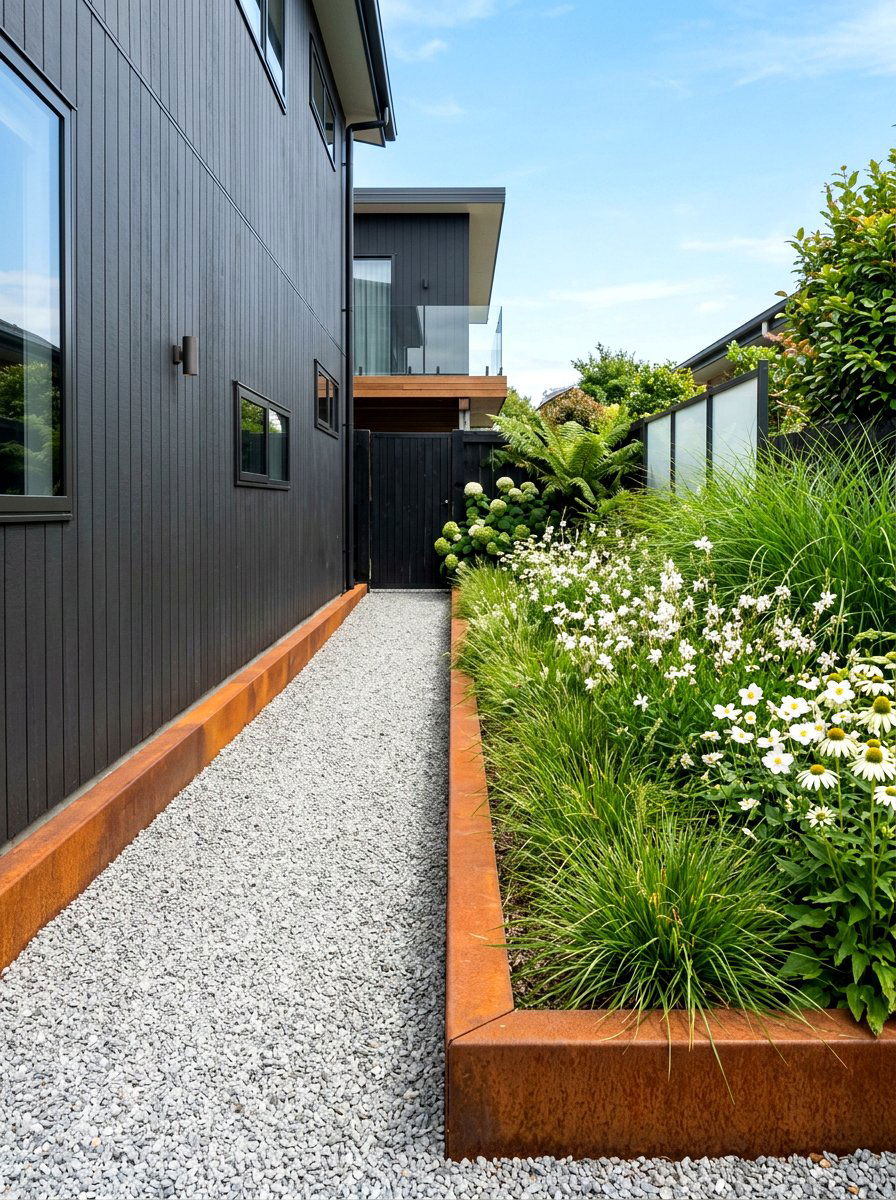
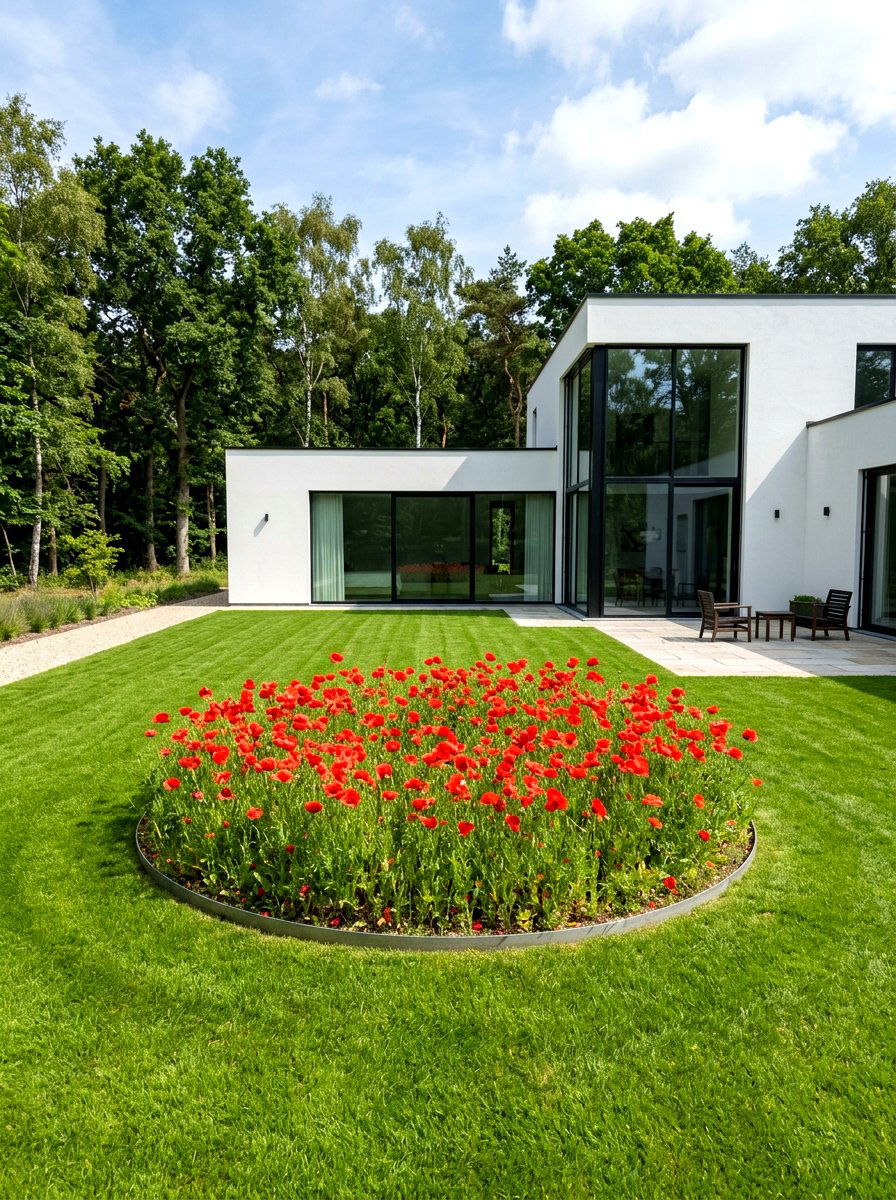
Contemporary metal edging provides a sleek and industrial look that defines your side yard flower beds with razor-sharp precision. Using materials like Corten steel or aluminum creates a thin, durable boundary that prevents grass and mulch from mixing. This clean line makes the garden look professionally maintained and modern, contrasting beautifully with the organic shapes of your flowers. You can use the edging to create geometric patterns or long, sweeping curves that guide the eye down the length of the yard. This style is highly functional and weather-resistant, offering a permanent solution for keeping your side yard organized and visually striking for many years.
25. Rustic Log Border
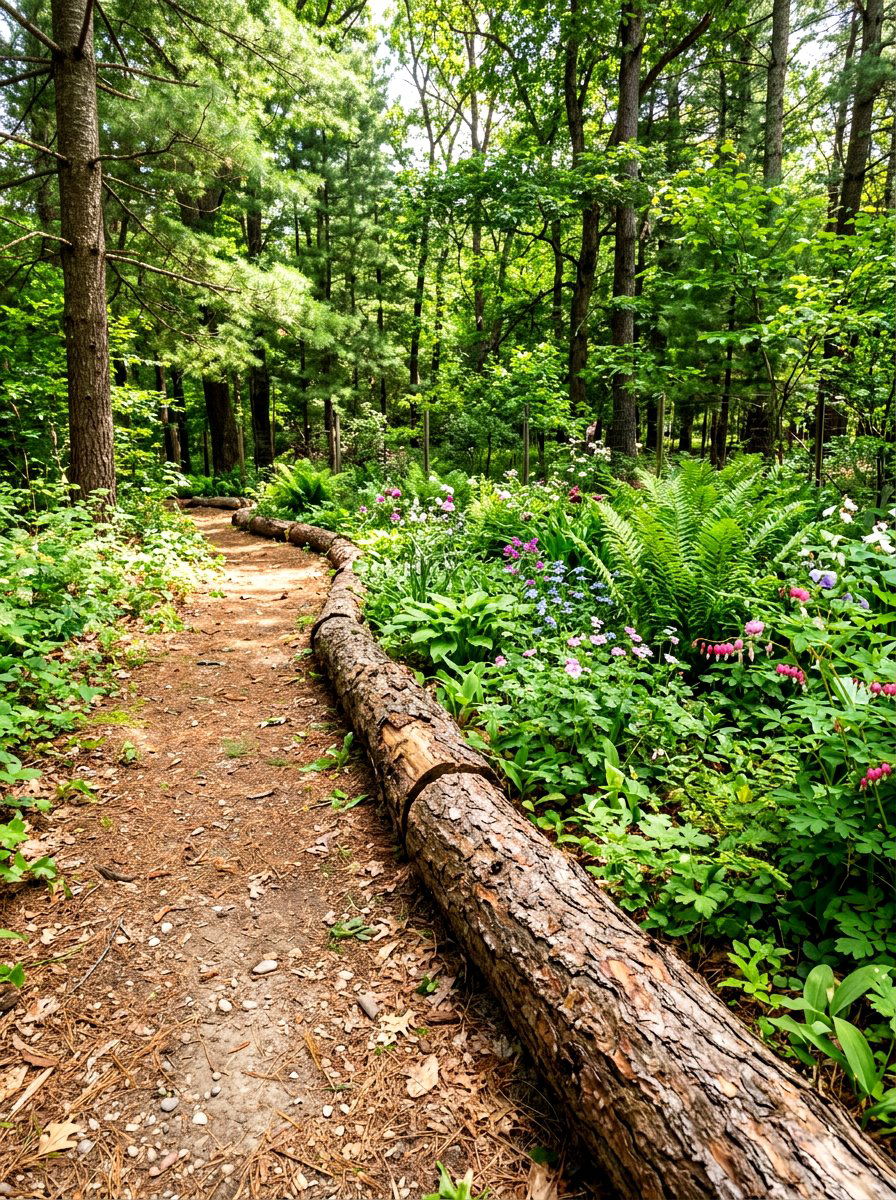
A rustic log border is a budget-friendly and charming way to define your side yard garden beds using natural materials. By placing reclaimed logs or thick branches along the edges of your path, you create an organic and earthy feel that is perfect for a farmhouse or woodland-style home. This design works exceptionally well with wildflowers, ferns, and native shrubs, emphasizing a connection to the local environment. Over time, the logs may even support the growth of moss, adding to the aged and established character of the space. It is a simple DIY project that adds immediate warmth and texture to an otherwise plain walkway.
26. Fragrant Lavender Row
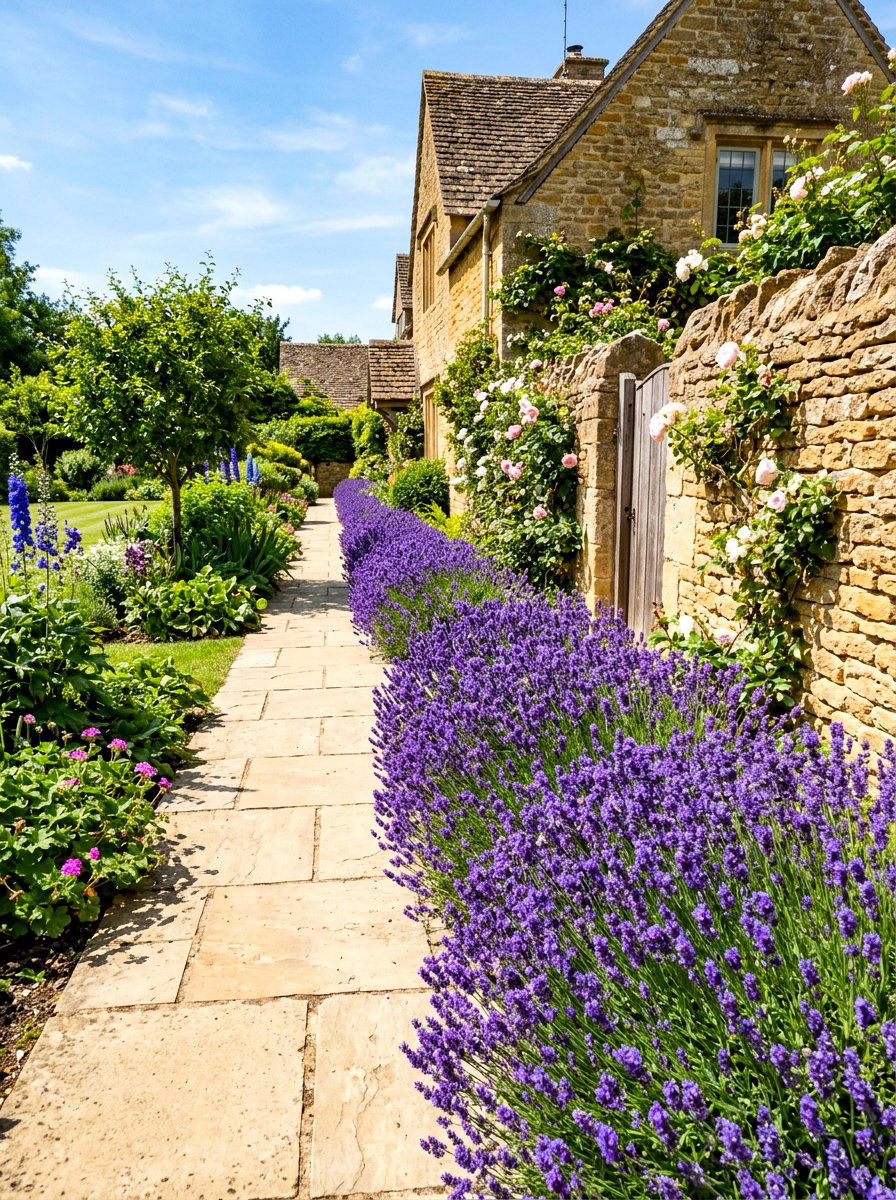
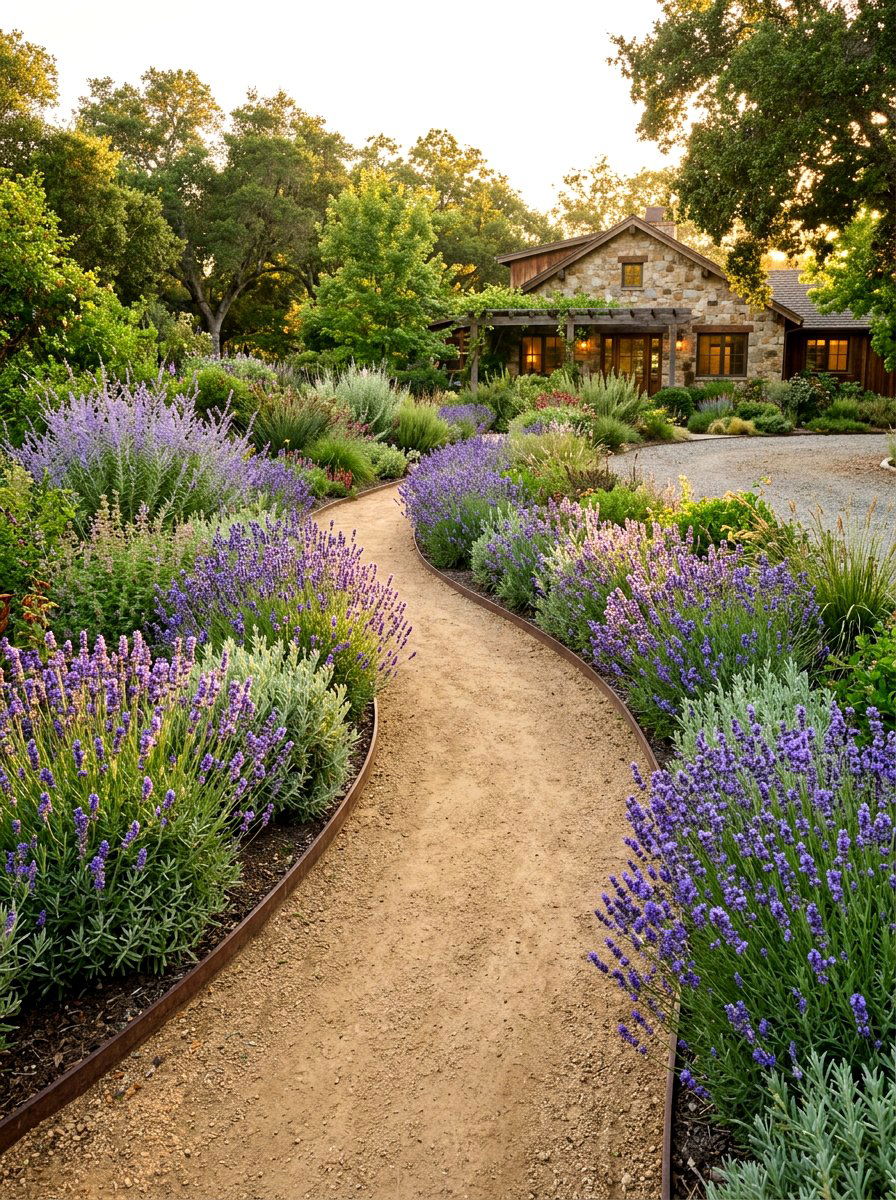
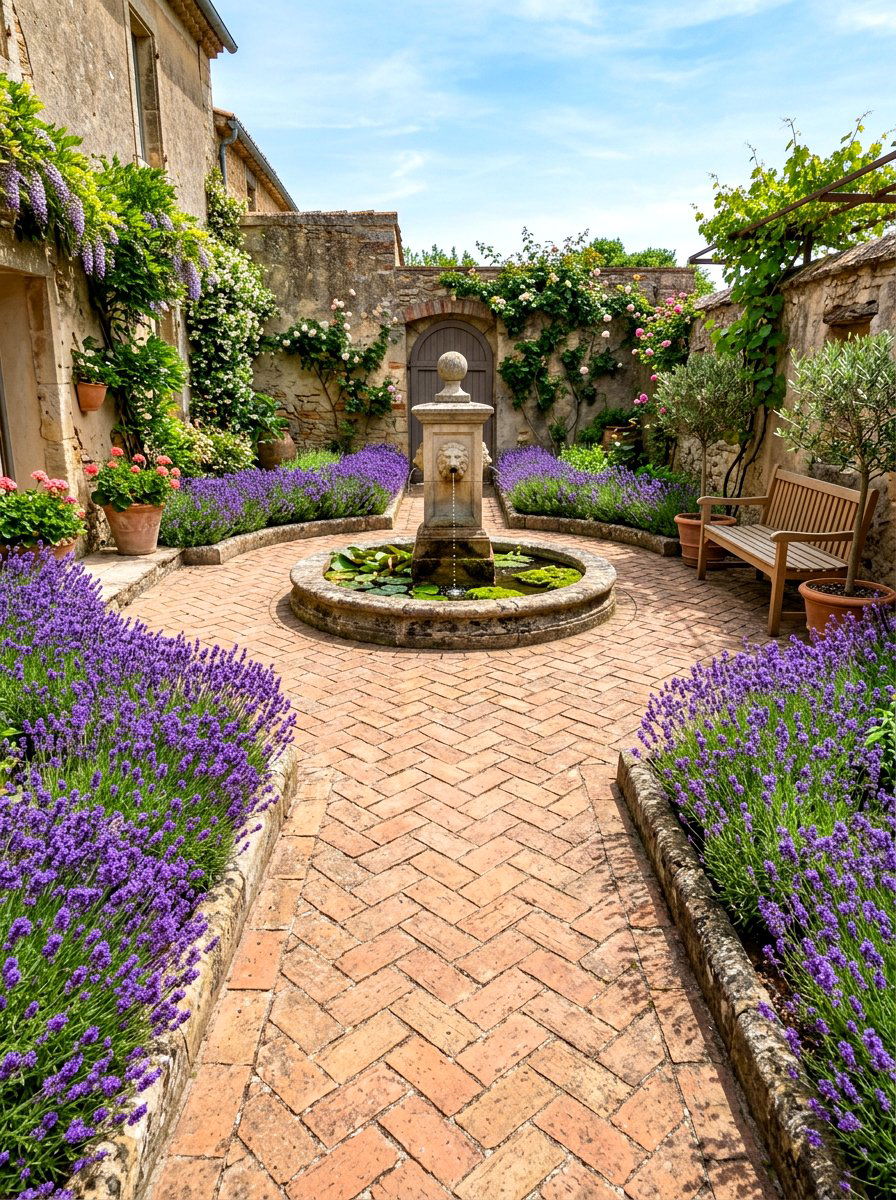
A fragrant lavender row creates a sensory-rich experience that makes every trip through your side yard a delight for the nose. Lavender thrives in sunny, well-drained spots often found along the south side of a house, where the heat reflects off the walls. Planting a long, uniform row of this purple-flowering herb provides a clean and structured look that remains beautiful throughout the summer. The scent is naturally relaxing and helps to deter unwanted insects like mosquitoes while attracting beneficial bees. When the flowers are in full bloom, they create a vibrant purple haze that feels incredibly luxurious and well-planned for a narrow space.
27. Succulent Rockery Bed
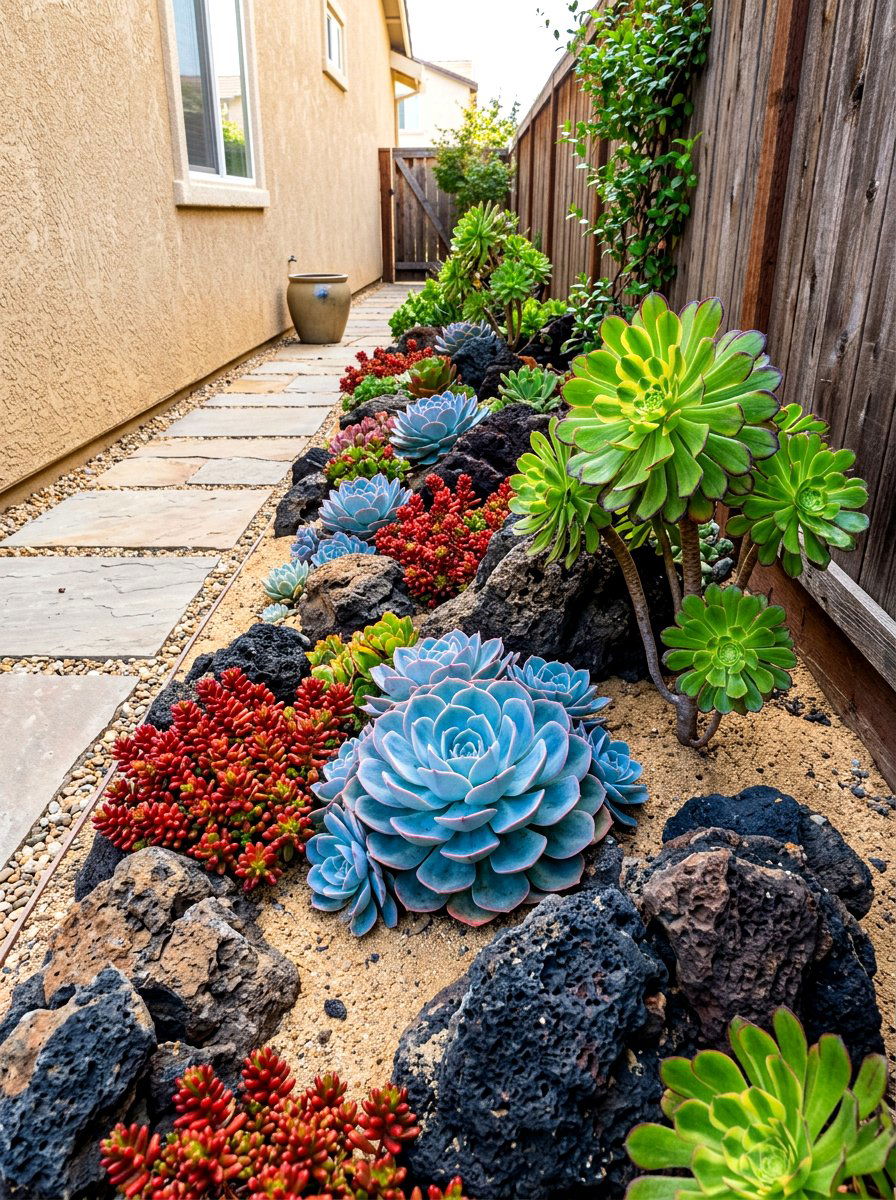
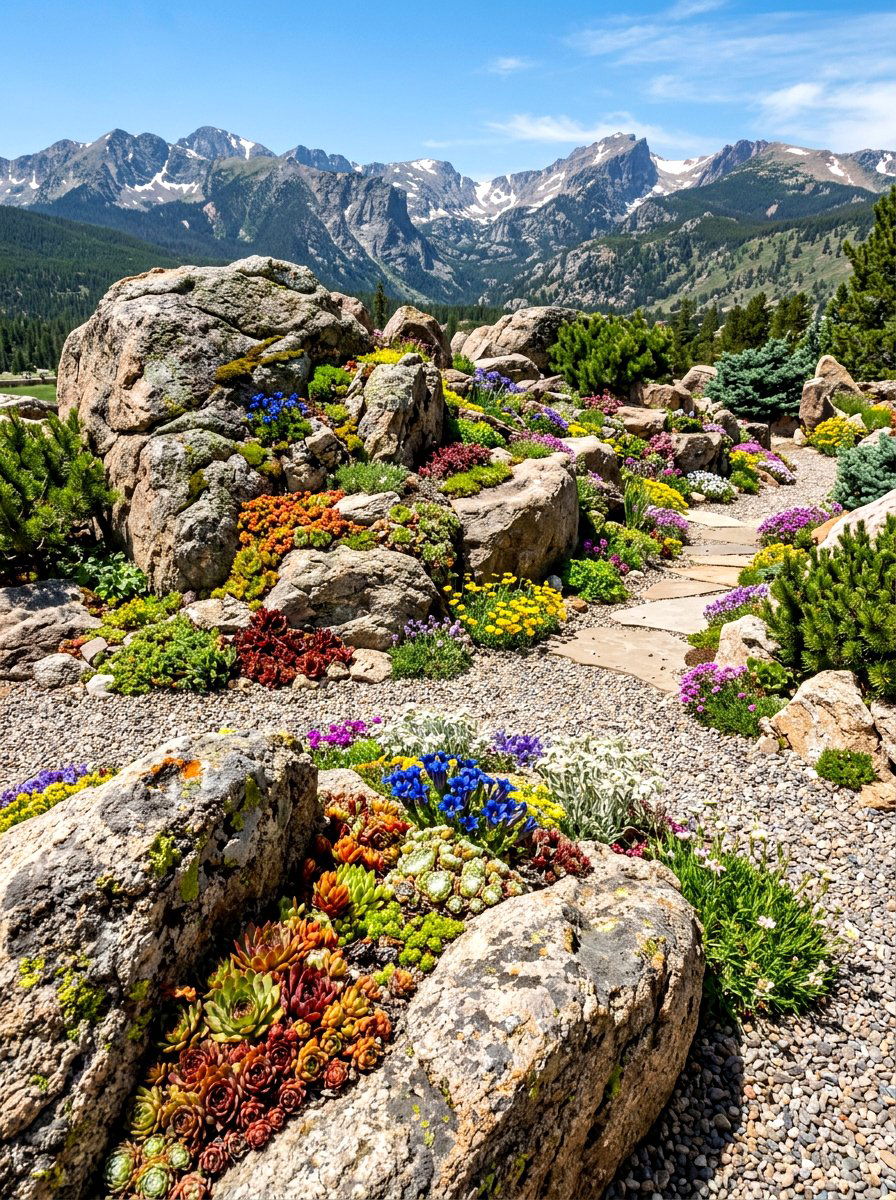
A succulent rockery bed is a stunning and artistic way to fill a small, sunny side yard with incredible shapes and colors. Succulents like echeveria, sedum, and aeonium require very little water and come in a dazzling array of architectural forms. By nesting these plants among various sizes of decorative stones and gravel, you create a desert-inspired landscape that is practically self-sufficient. This design is perfect for tight spaces because succulents are slow-growing and won't outgrow their boundaries quickly. The mix of stony textures and fleshy leaves provides year-round visual interest and a unique, modern look that is sure to impress guests and neighbors.
28. Bold Statement Pottery
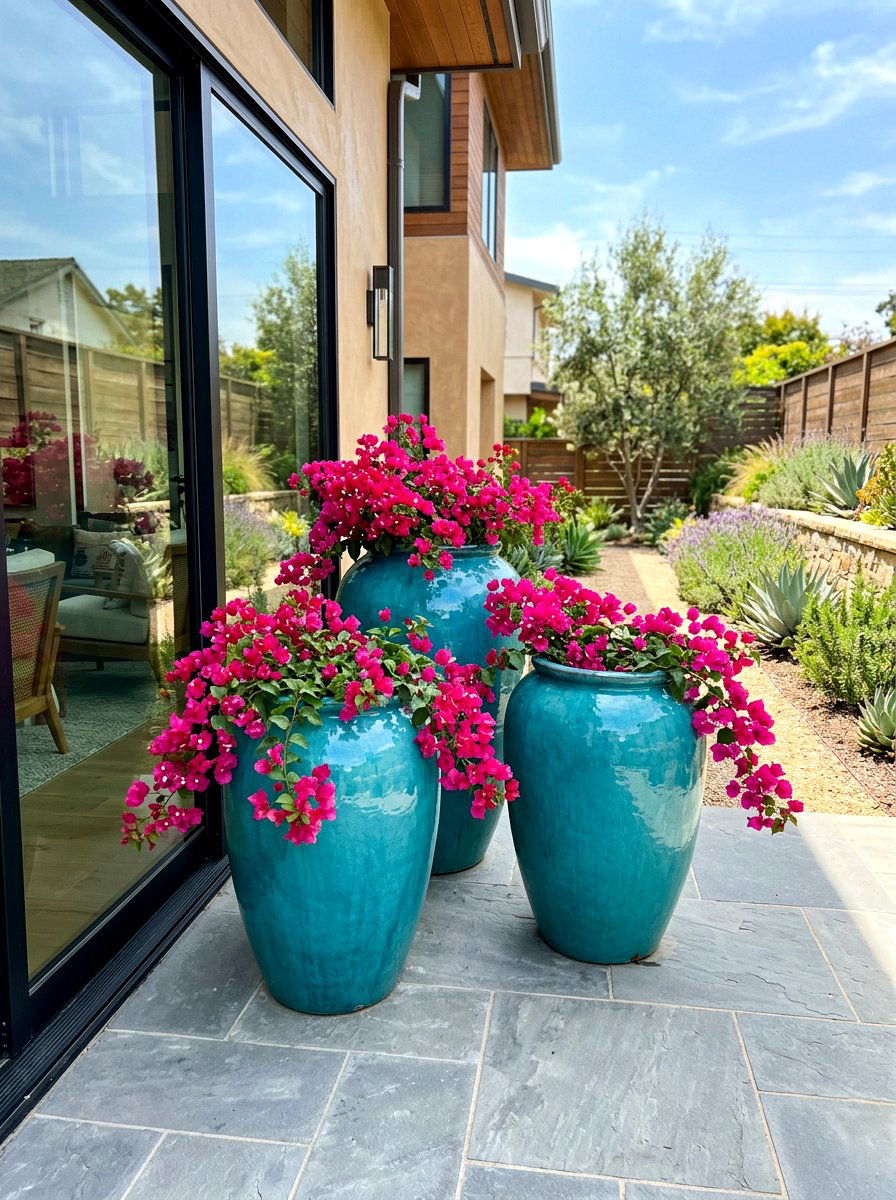
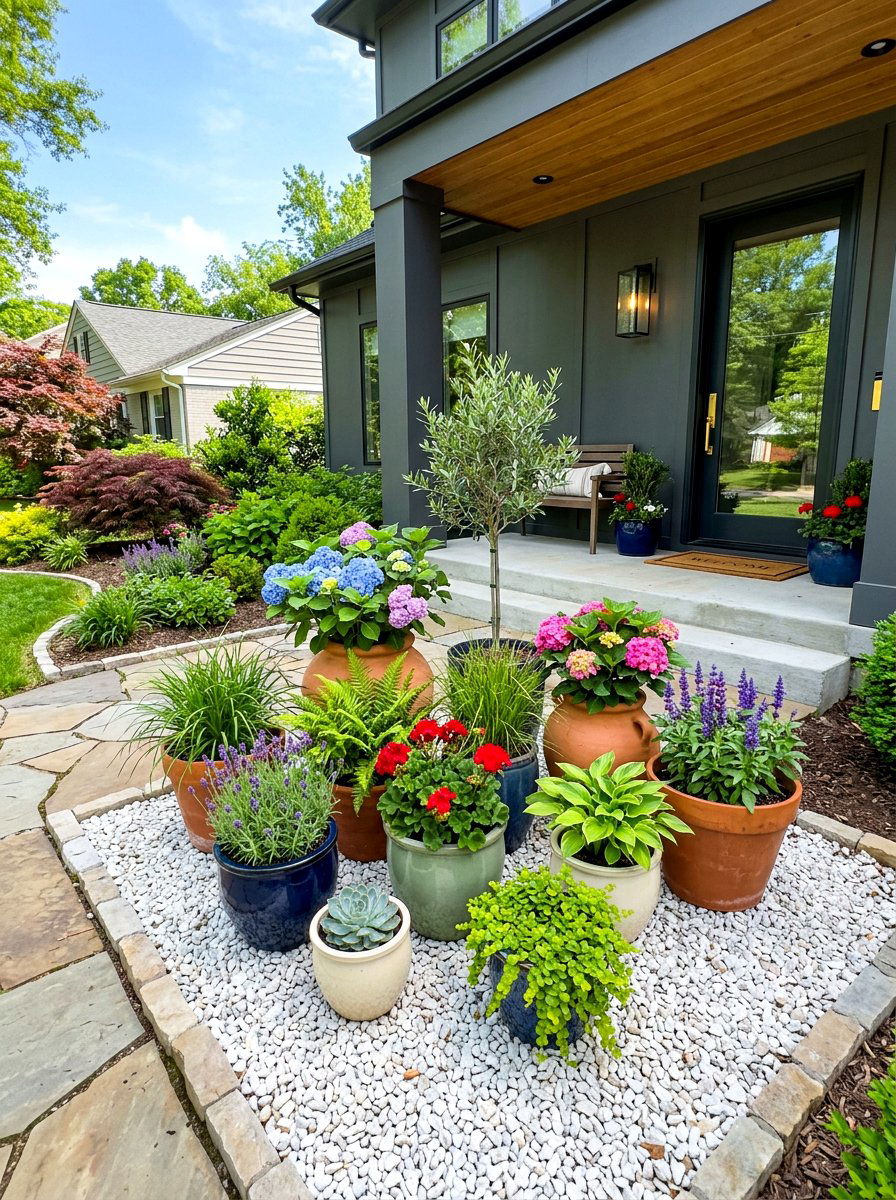
Bold statement pottery allows you to bring a garden to your side yard even if the ground is paved or the soil is poor. By using a series of large, colorful ceramic pots or rustic terra cotta urns, you can create a high-impact floral display at eye level. This approach gives you total control over the growing environment, allowing you to plant variety of flowers that might not thrive in your native soil. Moving the pots around can refresh the look of the space whenever you desire a change. Statement pottery serves as an artistic focal point, turning a functional side passage into a curated outdoor gallery.
29. Seasonal Bulb Garden
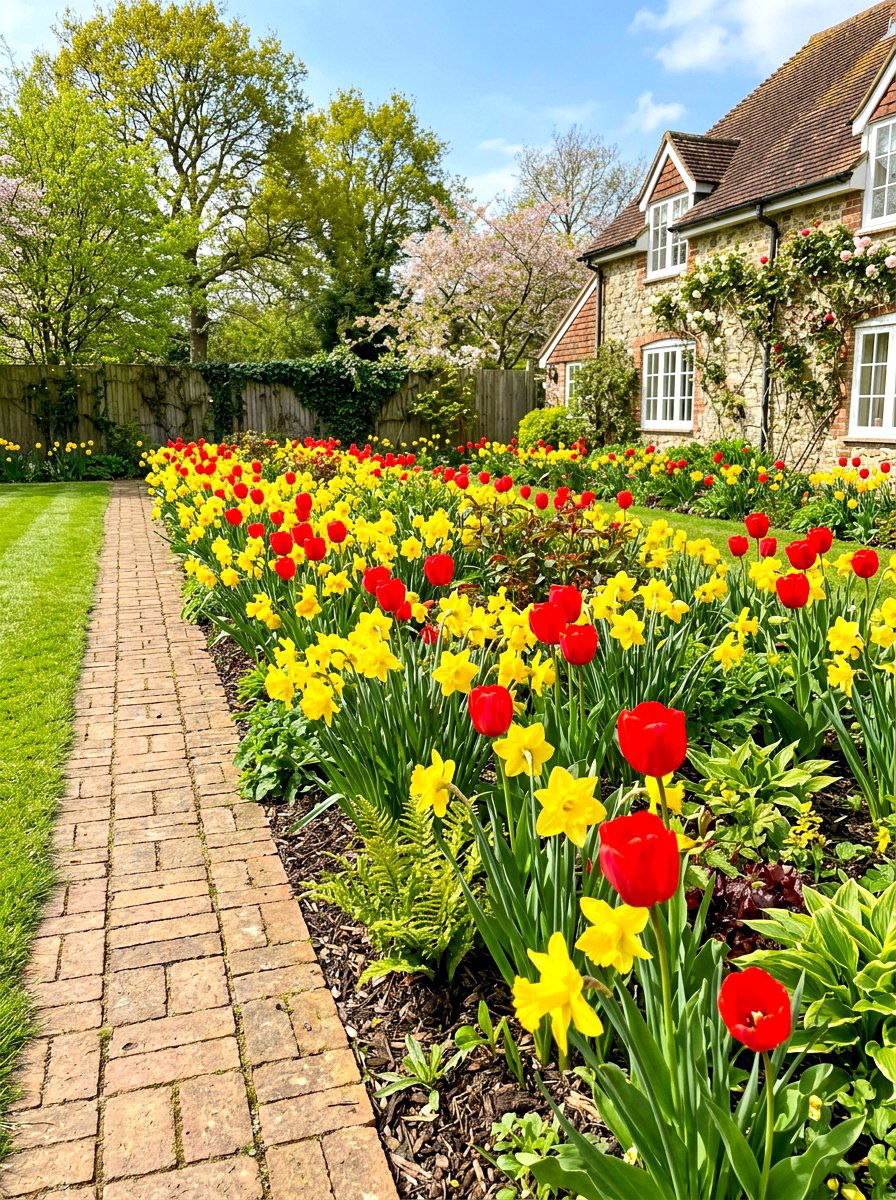
A seasonal bulb garden ensures that your side yard is the first place to show signs of life when spring arrives. By planting hundreds of tulips, daffodils, and crocuses in the autumn, you prepare for a massive explosion of color in the early months of the year. You can layer bulbs at different depths to ensure a continuous bloom cycle that lasts for several weeks. Once the spring flowers fade, you can plant summer annuals over the top to keep the space looking vibrant. This design is rewarding for those who enjoy the ritual of gardening and the anticipation of a beautiful, changing floral landscape.
30. Formal Rose Walkway
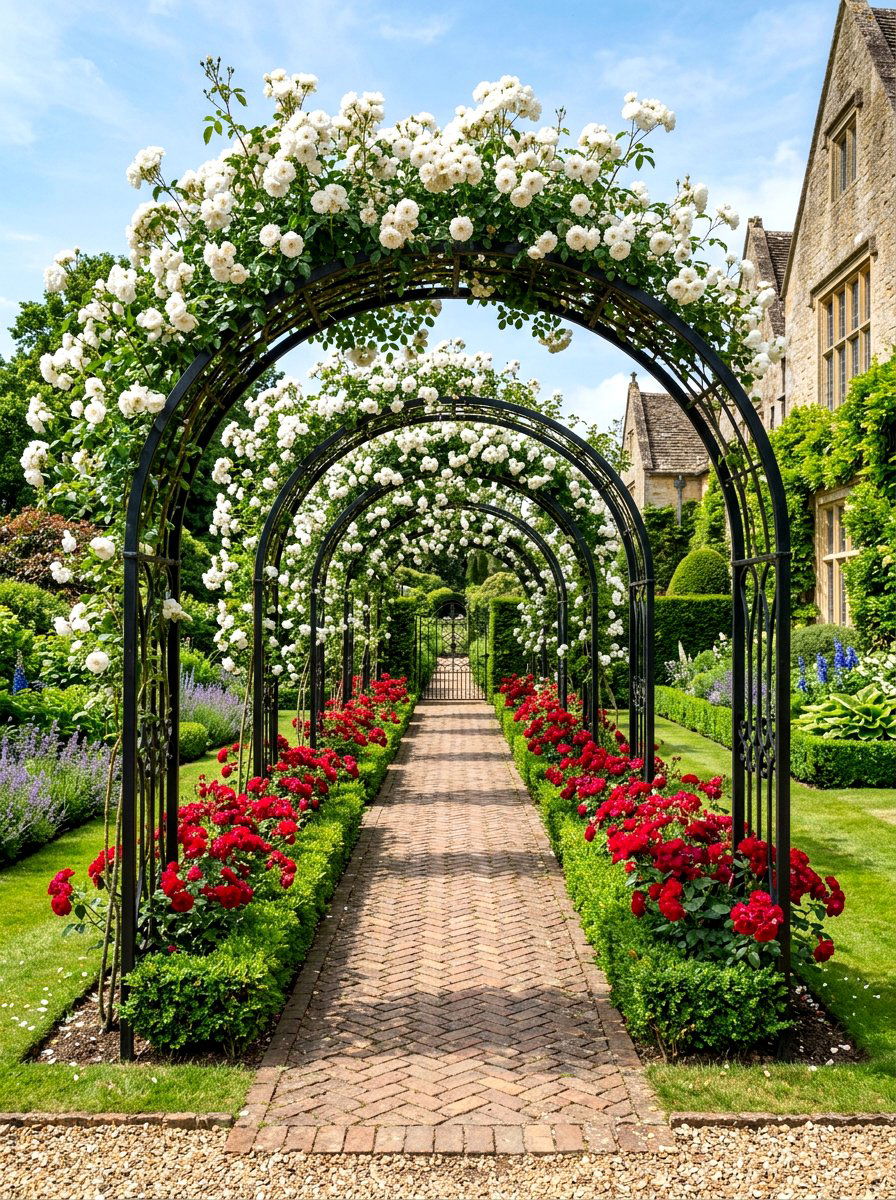
A formal rose walkway is the pinnacle of traditional garden elegance, turning a simple side yard into a romantic and prestigious entrance. By training climbing roses over arches or planting shrub roses in neat rows, you fill the air with classic fragrance and timeless beauty. This design requires a bit more maintenance in terms of pruning and feeding, but the reward is a breathtaking display of flowers that lasts all summer. The structure of the rose bushes provides a clear boundary for the path, while the various colors available allow you to match the garden perfectly to your home’s architectural style and paint color.
Conclusion:
Creating a stunning side yard garden is one of the most rewarding home improvement projects you can undertake. These narrow spaces, once relegated to trash bins and air conditioning units, can truly become the most enchanting parts of your property. By choosing the right combination of plants, hardscaping, and lighting, you transform a simple path into a meaningful journey that enhances your daily life. Whether you prefer the low-maintenance ease of a gravel bed or the lush romance of a rose walkway, the key is to design with intention. Your side yard is a canvas waiting for your creativity to bring it to life beautifully.

Related posts: