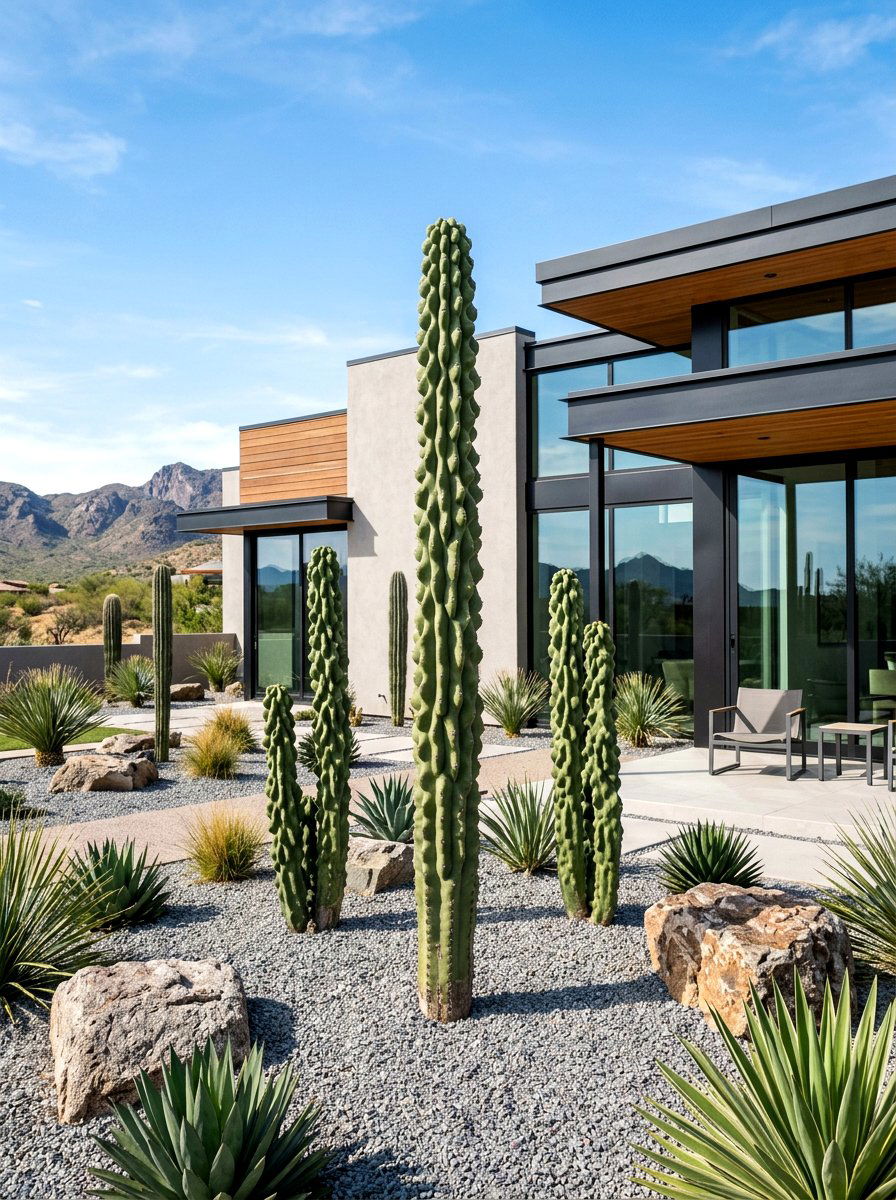
Creating a beautiful outdoor space doesn't have to mean spending hours with a garden hose or watching your water bill skyrocket every single month. Drought tolerant landscaping, often called xeriscaping, is a brilliant way to design a yard that looks lush and vibrant while remaining incredibly environmentally friendly and practical. By choosing the right combination of native plants, hardy perennials, and smart hardscaping materials, you can build a sanctuary that thrives even in the hottest summer heat. This guide explores creative ways to transform your property into a resilient landscape that saves time, money, and precious natural resources for many years to come.
1. Rock Garden
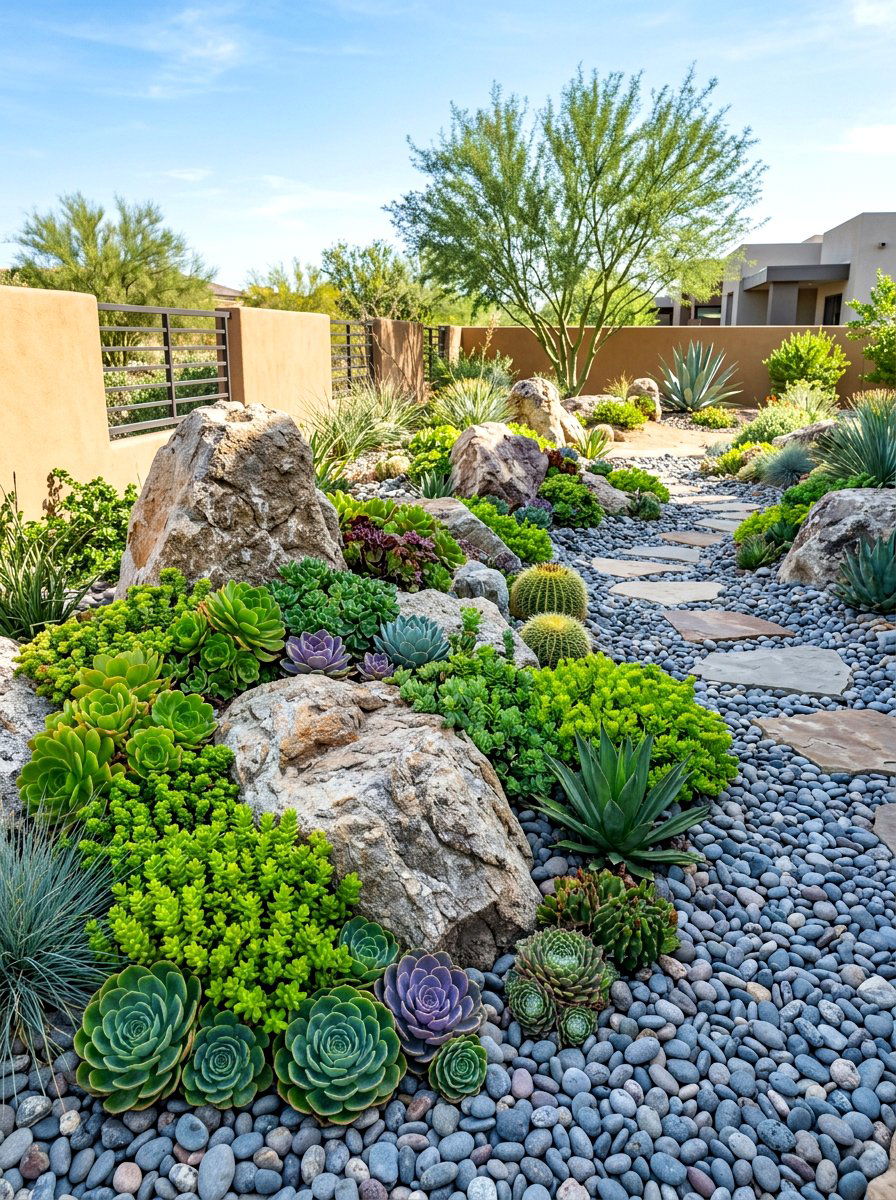
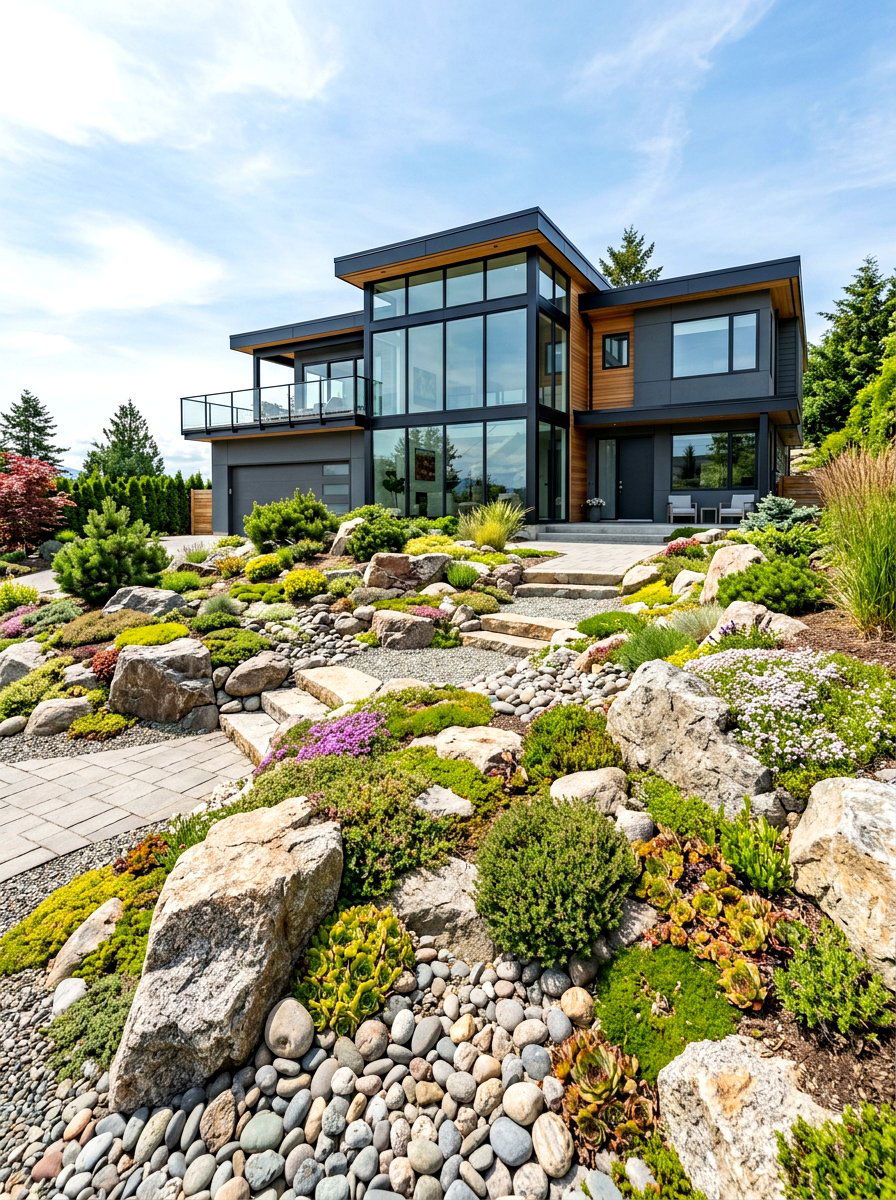
A rock garden provides a rugged and natural aesthetic that requires almost no water once the initial plantings are established. You can create this look by layering various sizes of stones, from large accent boulders to smaller river rocks and gravel. In the gaps between these stones, tuck in hardy alpine plants or stonecrops that naturally thrive in rocky, well-draining soil. This approach creates a visually interesting texture that remains beautiful throughout every season without the need for constant mowing or irrigation. It is an ideal solution for sloped areas or corners of the yard where traditional grass struggles to grow. The combination of gray stones and green foliage offers a timeless, earthy charm.
2. Native Grass Meadow
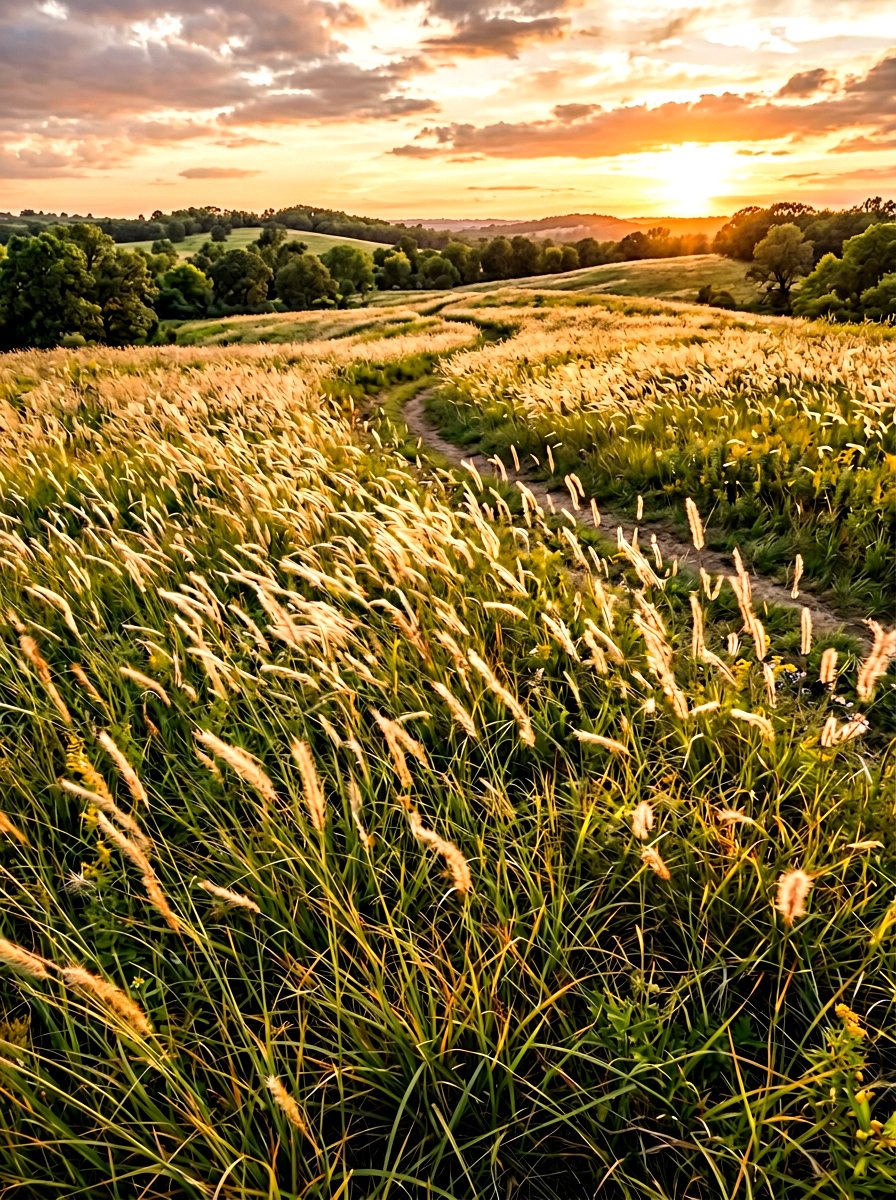
Swapping out a traditional thirsty lawn for a native grass meadow is a transformative way to embrace local ecology while saving water. These grasses are evolutionarily adapted to your specific climate, meaning they can survive long periods of heat with very little human intervention. Unlike standard turf, native grasses like blue grama or buffalo grass grow in soft, flowing clumps that add a sense of movement and grace to your landscape. They often produce beautiful seed heads that catch the sunlight and provide food for local birds. This type of landscape requires significantly less maintenance, as you only need to mow it once or twice a year to keep it looking tidy.
3. Succulent Garden Bed
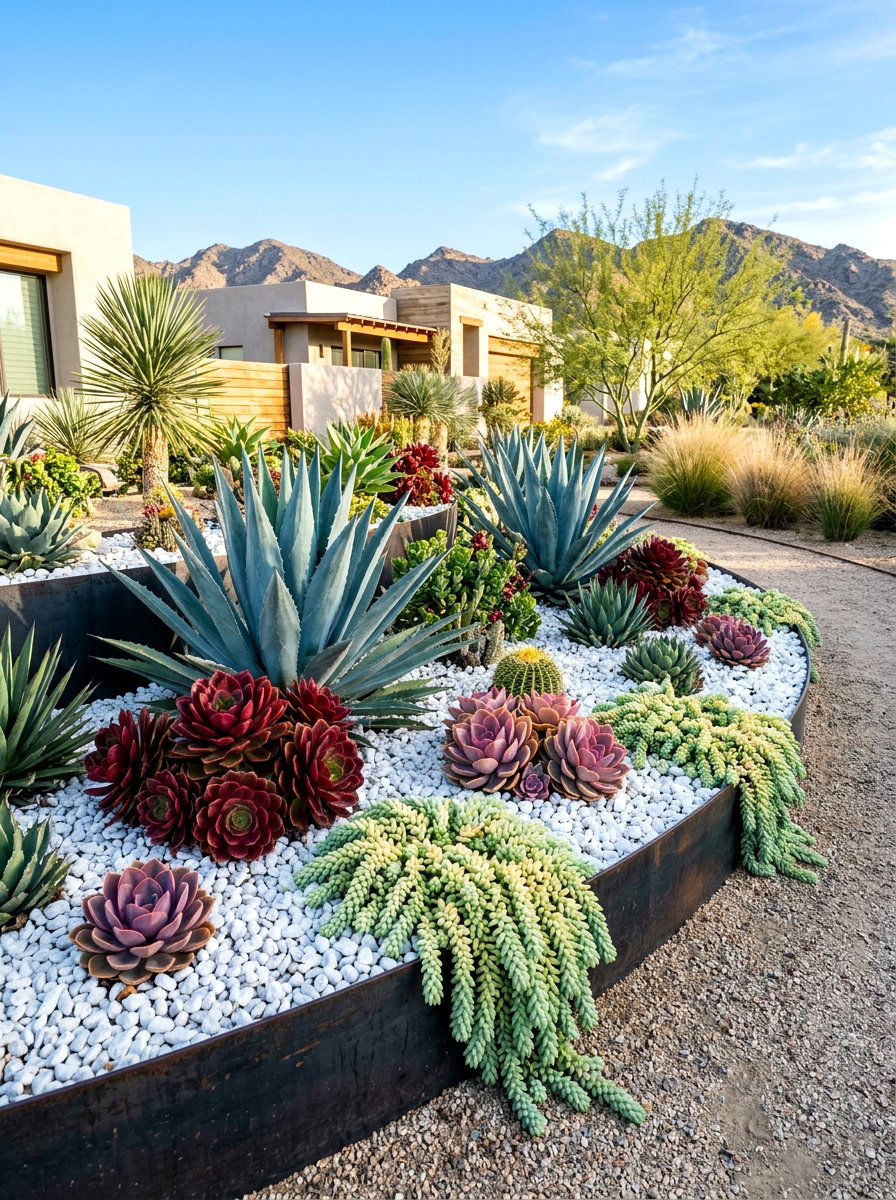
Succulents are the superstars of low-water gardening because they store moisture in their thick, fleshy leaves to survive dry spells. Designing a dedicated bed for succulents allows you to play with a massive variety of shapes, colors, and textures that look almost like an underwater coral reef. You can mix tall, architectural agaves with low-growing rosettes like echeveria and trailing varieties like string of pearls. To ensure success, use a fast-draining soil mix and top the area with a layer of decorative pebbles to prevent rot. These plants are incredibly resilient and provide a modern, sculptural look that instantly elevates the curb appeal of any home while staying perfectly hydrated.
4. Pea Gravel Patio
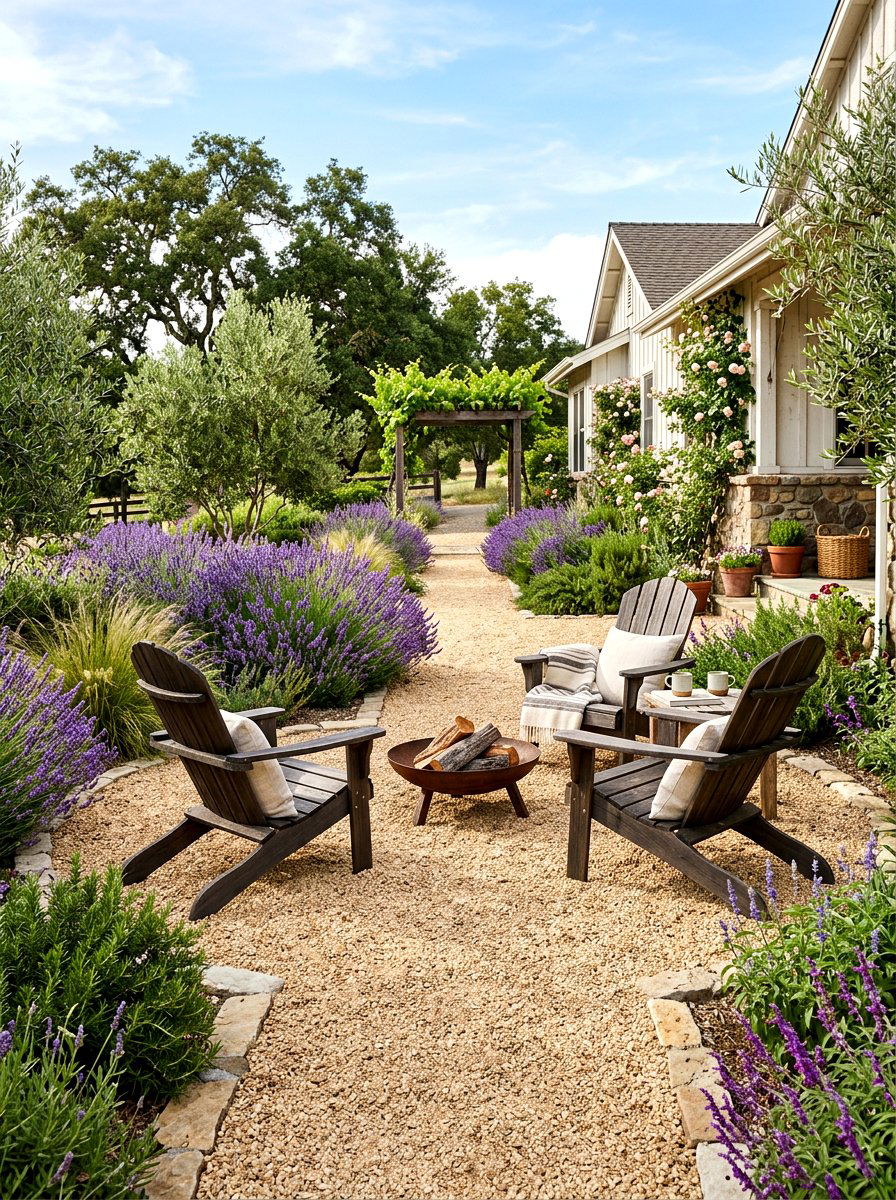
If you want to reduce the amount of plantable space that needs watering, a pea gravel patio is a stylish and functional hardscaping choice. Unlike solid concrete, gravel is a permeable surface that allows rainwater to soak back into the ground, which helps prevent runoff and erosion. You can define the space with a simple border of timber or stone and then fill it with smooth, crunching gravel that feels wonderful underfoot. Adding a set of weather-resistant chairs and a central table creates an inviting outdoor room for entertaining. This design eliminates the need for a lawn in high-traffic areas and looks especially beautiful when surrounded by a few drought-resistant shrubs.
5. Dry Creek Bed
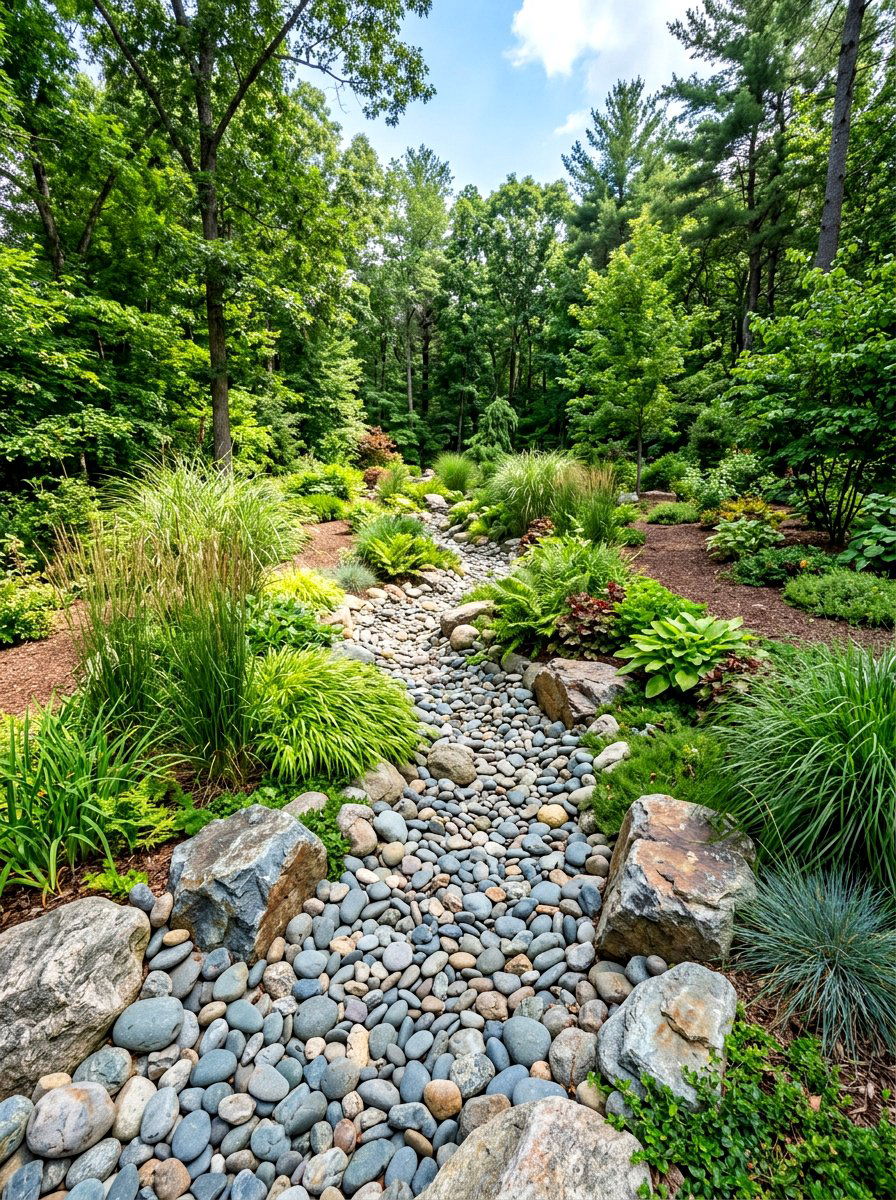
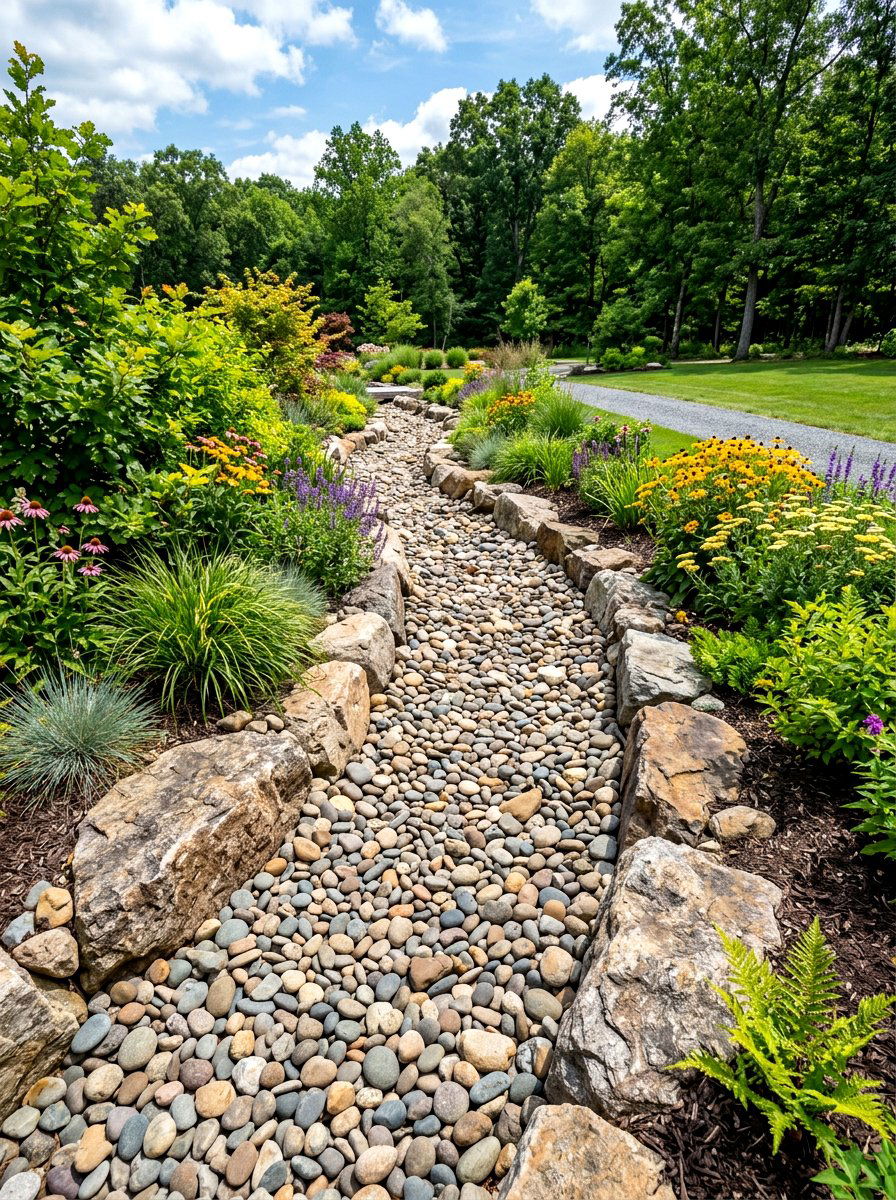
A dry creek bed is a clever landscaping feature that mimics the look of a natural waterway without using a single drop of water. By arranging river rocks and boulders in a long, winding path through your yard, you create a visual focal point that guides the eye. During heavy rains, this feature serves a dual purpose by naturally directing drainage away from your home’s foundation and allowing it to seep into the soil. You can enhance the realism by planting water-wise ornamental grasses and flowering perennials along the edges of the "banks. " This design adds a peaceful, organic feel to the garden and breaks up large flat areas effectively.
6. Decomposed Granite Path
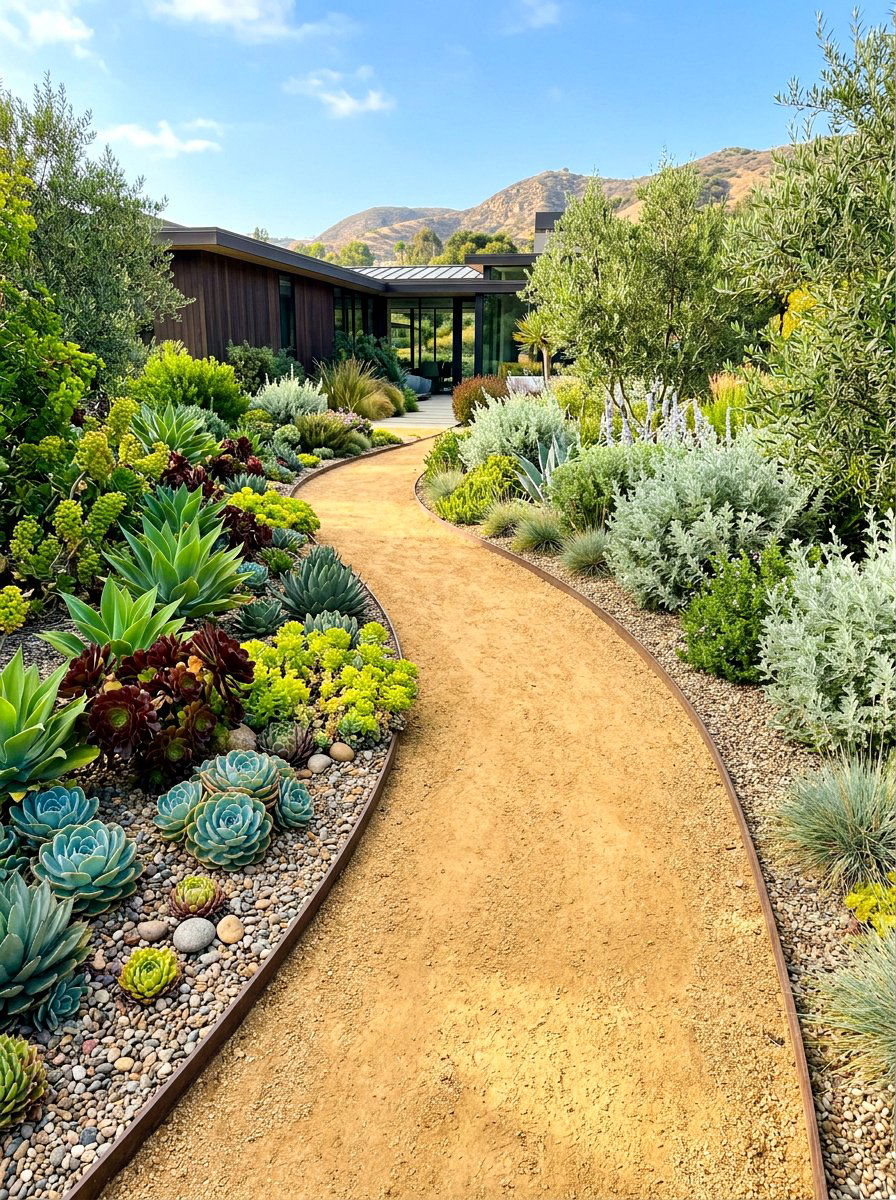
Decomposed granite is a popular choice for desert-style walkways because it provides a stable, natural-looking surface that is much more affordable than traditional paving. It consists of very fine granite particles that pack down firmly but still allow for excellent drainage during occasional storms. These paths can be designed with soft, winding curves that lead guests through different zones of your garden. The warm, sandy color of the granite complements a wide range of plant colors, especially the silver-greens of drought-tolerant shrubs. Because it is a natural material, it blends seamlessly into the landscape, providing a structured look that requires very little upkeep compared to mulched or grass-covered paths.
7. Mediterranean Courtyard
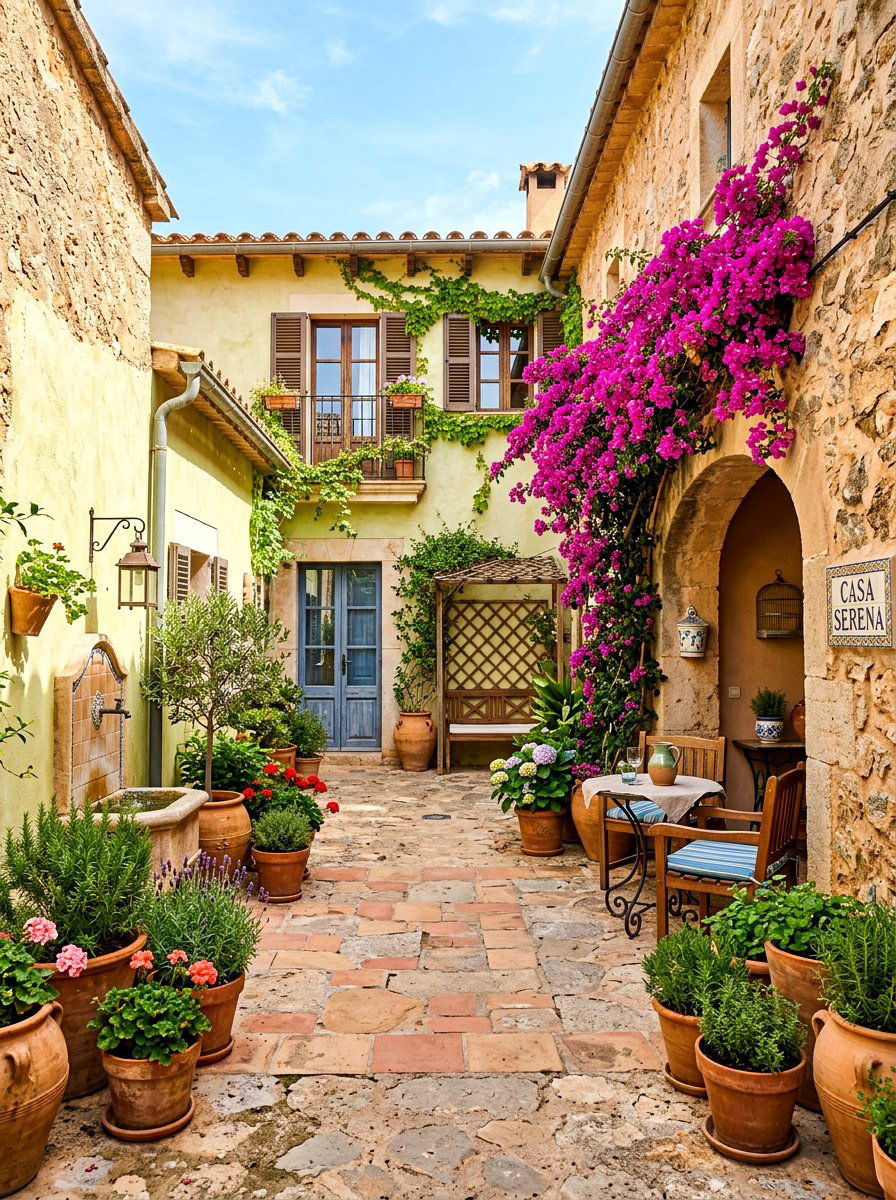
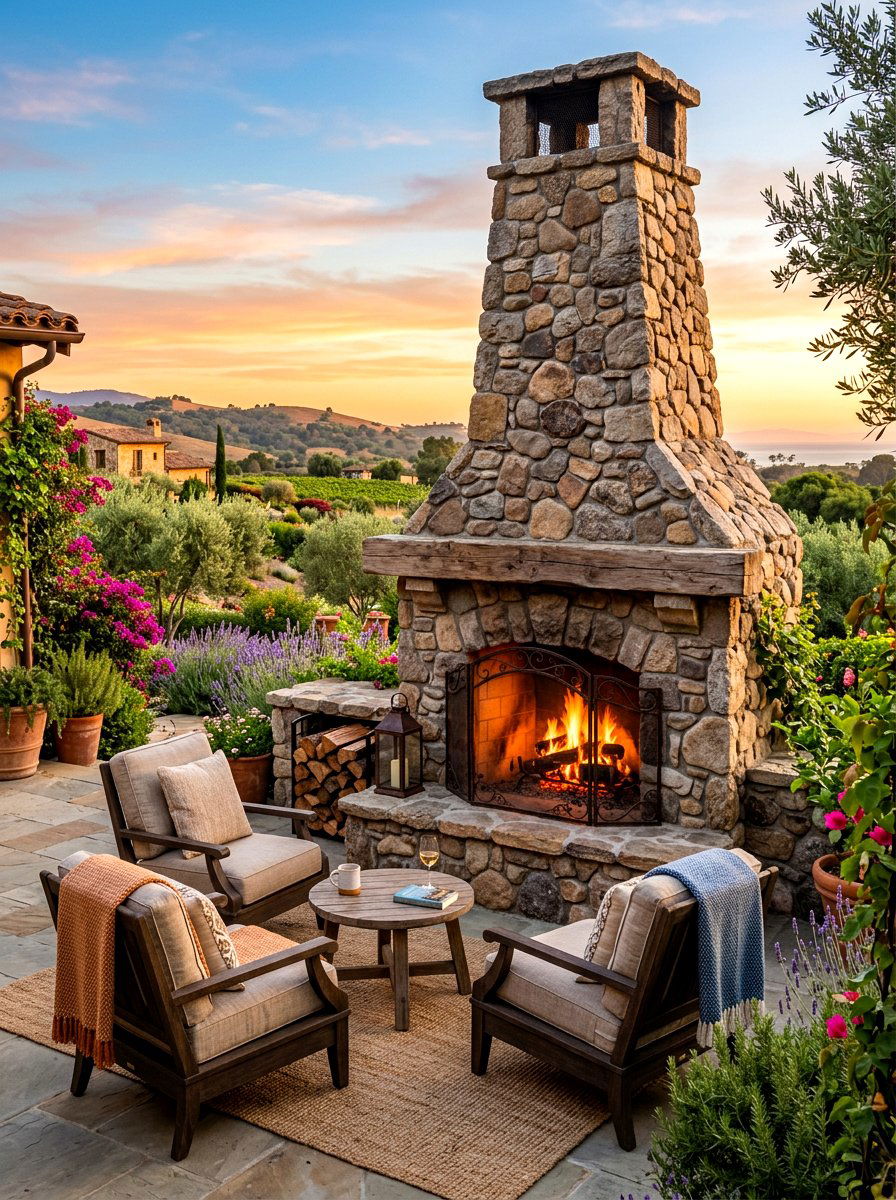
Drawing inspiration from the dry climates of Italy and Greece, a Mediterranean courtyard focuses on heat-loving plants and shaded seating areas. You can achieve this look by using terracotta pots, stone walls, and gravel ground cover to create a cozy, enclosed atmosphere. Planting aromatic herbs like rosemary, lavender, and thyme not only saves water but also fills the air with a delightful scent every time you brush past them. These plants thrive in the sun and prefer the lean, rocky soil typically found in these regions. Adding a simple bistro set and perhaps a small olive tree in a large pot completes the vacation-like vibe, making it a perfect retreat.
8. Artificial Turf Backyard
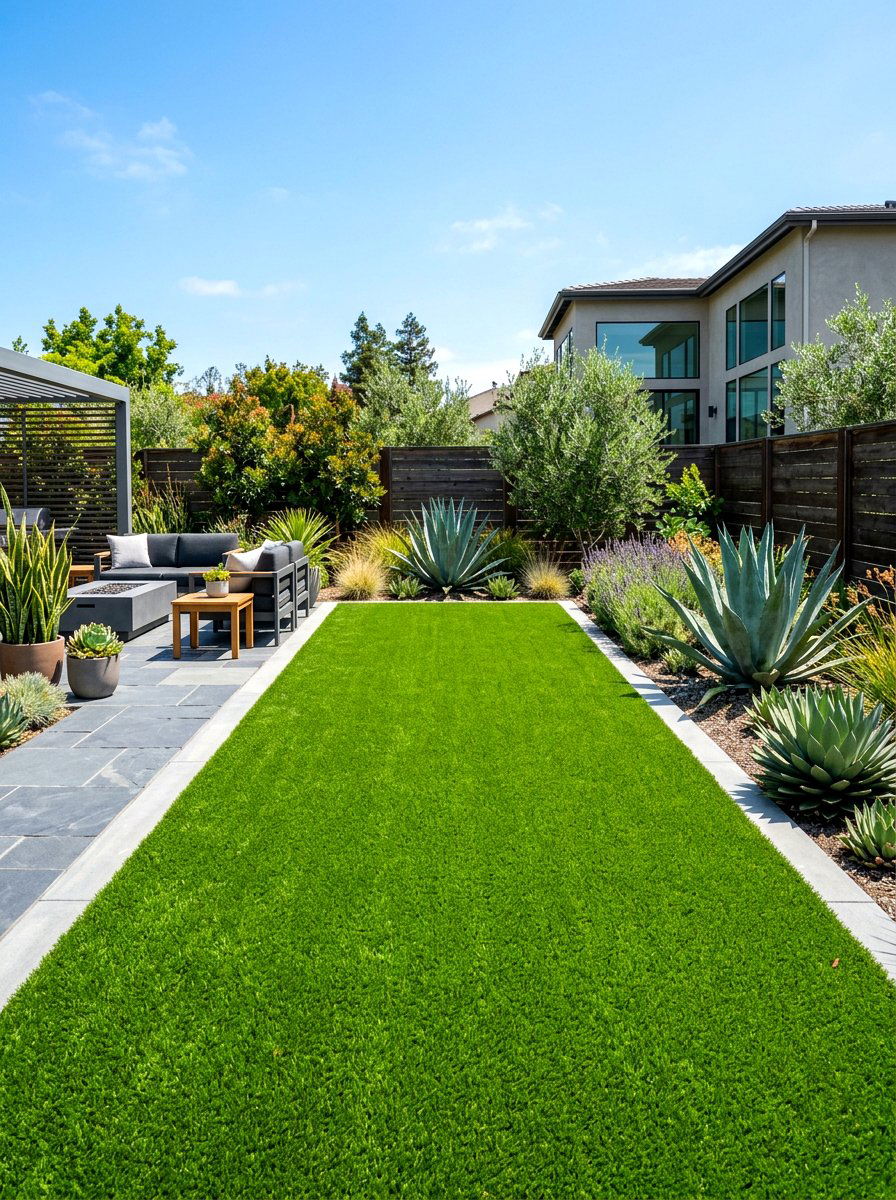
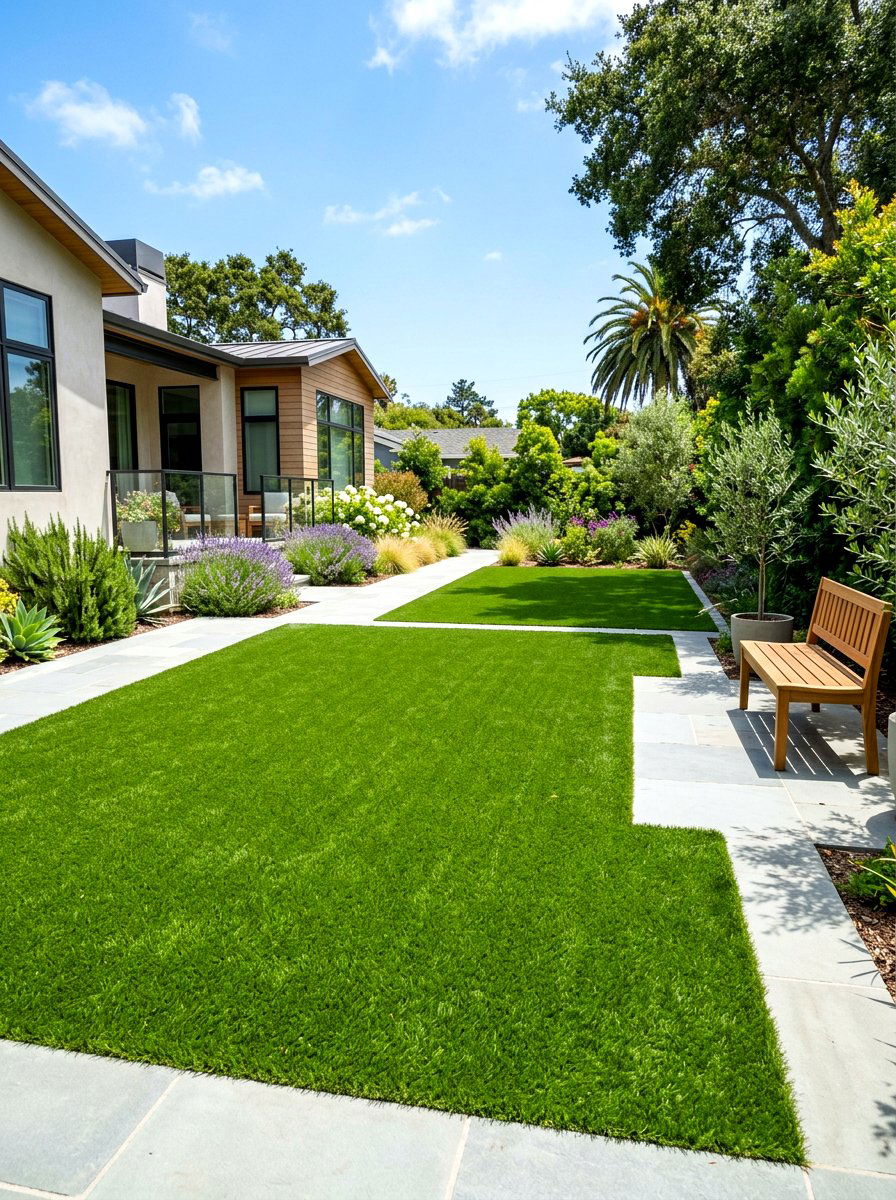
For those who absolutely love the look of a green lawn but live in a region with strict water restrictions, artificial turf is a practical modern solution. High-quality synthetic grass today looks and feels remarkably like the real thing, providing a lush, green carpet that stays perfect all year round. It requires zero watering, no fertilizers, and absolutely no mowing, which saves you a tremendous amount of time and money over its lifespan. To make it look more natural, you can surround the turf with borders of real drought-tolerant plants and decorative stones. This provides a clean, pet-friendly, and durable play area for families while significantly reducing the home's total environmental footprint.
9. Lavender Garden
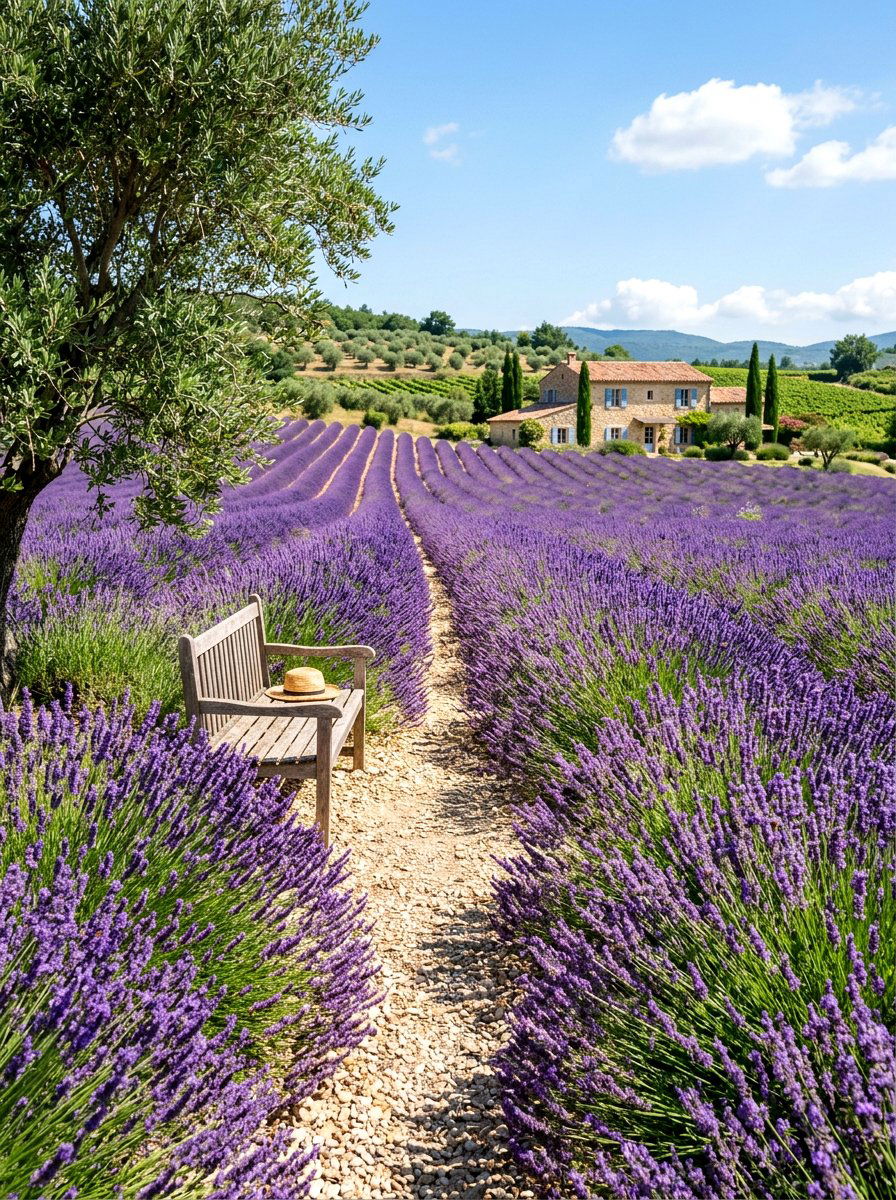
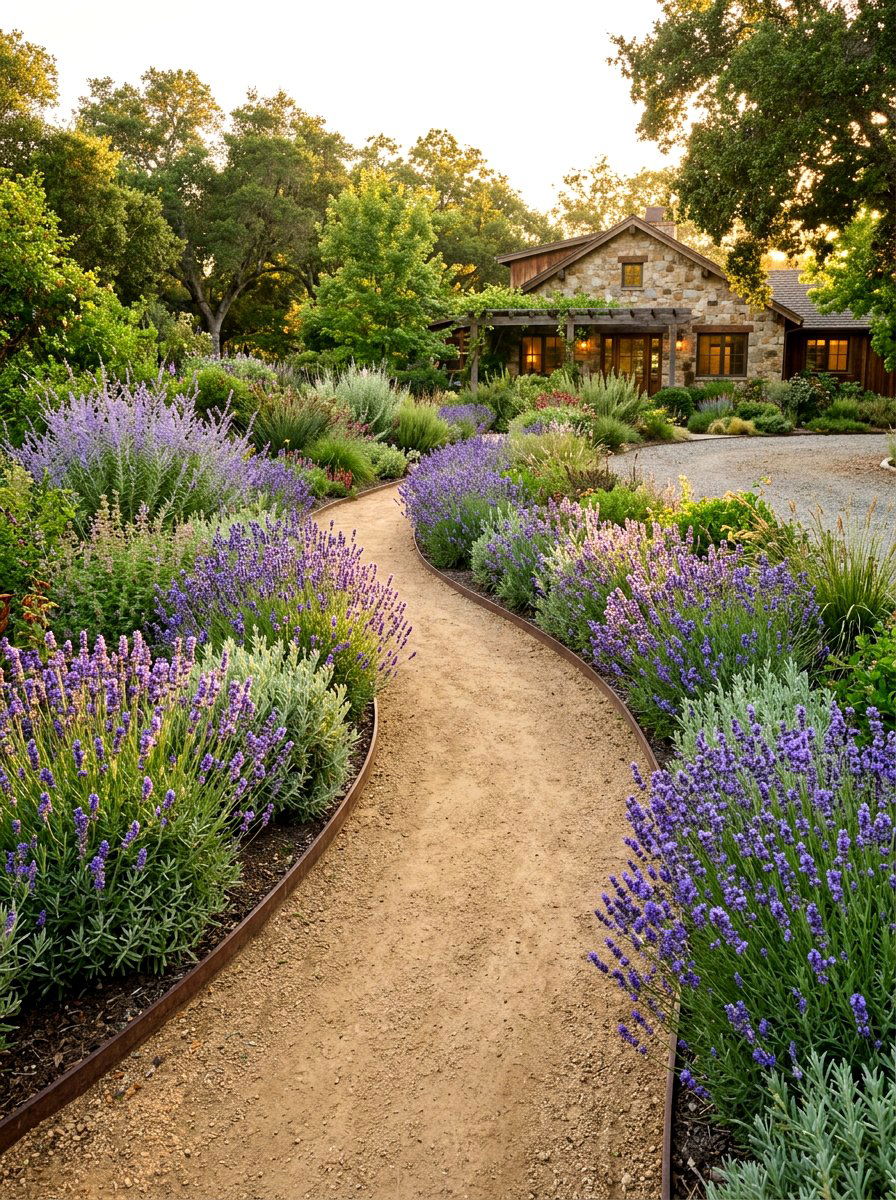
Lavender is a legendary drought-tolerant plant that brings a sense of calm and classic beauty to any landscape design. Once these hardy shrubs are established, they can survive on very little supplemental water, making them perfect for sunny borders or walkways. The striking purple blooms attract essential pollinators like bees and butterflies, which helps support the local ecosystem. You can plant them in long rows for a formal hedge look or in clusters for a more relaxed, cottage-garden feel. Their silvery-green foliage provides year-round interest even when the flowers aren't in bloom. They prefer well-draining soil and plenty of direct sunlight to reach their full, fragrant potential every single summer.
10. Xeriscape Front Yard
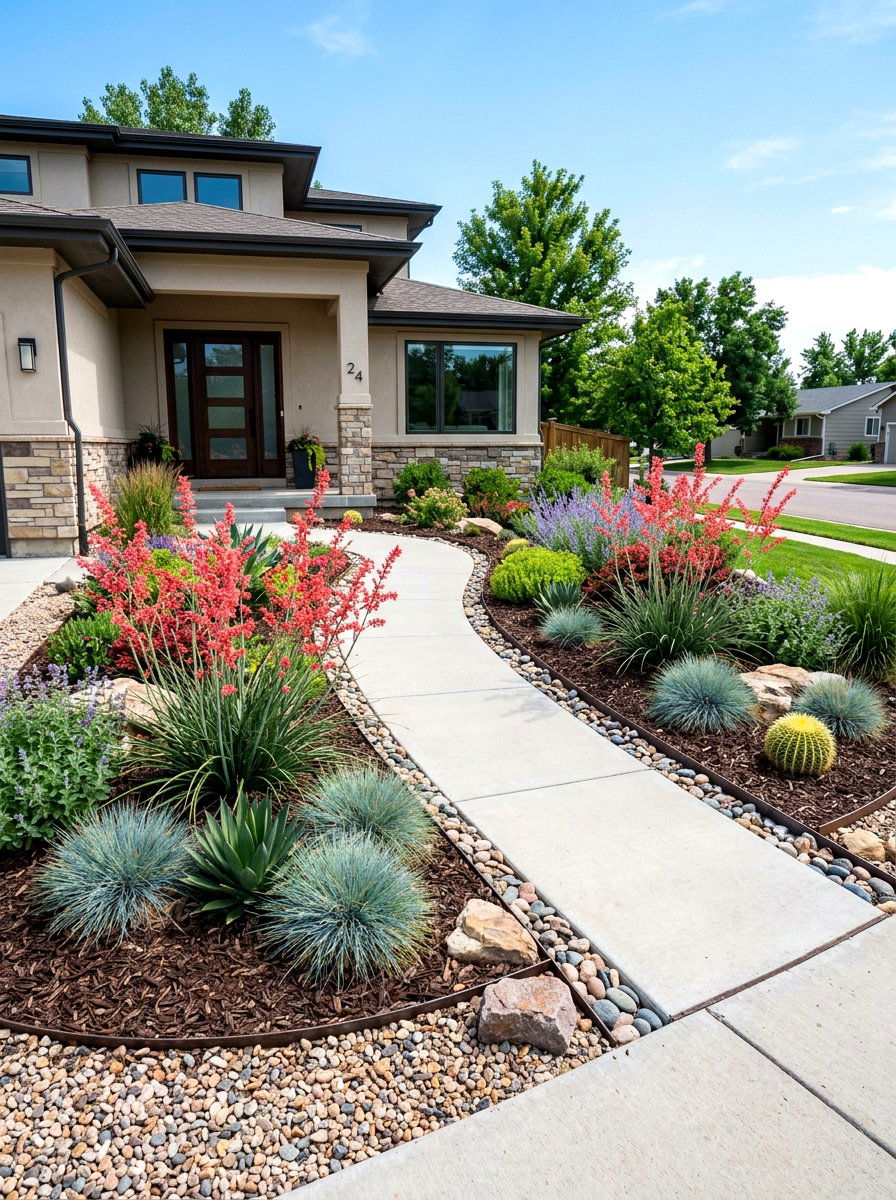
Transforming your front yard into a dedicated xeriscape project can drastically improve your home's curb appeal while making it more sustainable. This approach involves removing water-hungry turf and replacing it with a strategic mix of mulch, gravel, and low-water plants. You can create a layered look by placing taller shrubs toward the back and smaller ground covers near the sidewalk. Using a variety of colors, such as the red of yuccas and the blue of fescue grass, ensures the space feels vibrant rather than barren. This type of landscaping sends a message of environmental responsibility while providing a tidy, modern aesthetic that is very attractive to potential buyers in arid climates.
11. Agave Focal Point
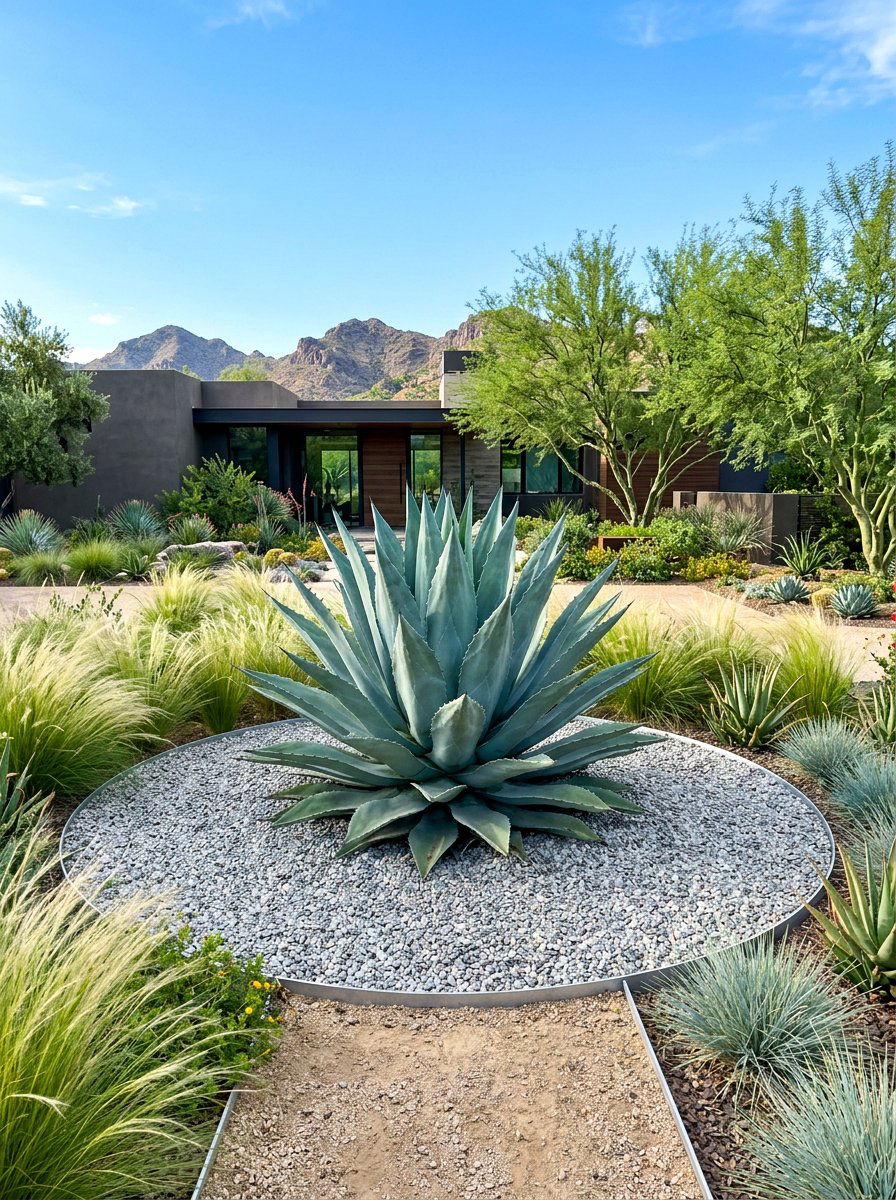
Agaves are powerful architectural plants that serve as an incredible focal point in any drought-resistant garden layout. Their large, structural leaves and dramatic silhouettes command attention, making them perfect for centering a bed or flanking an entryway. Because they are exceptionally slow-growing and store massive amounts of water, they require almost no attention from the homeowner. You can surround a single large agave with smaller, fine-textured plants like Mexican feather grass to create a beautiful contrast in scale and form. When lit from below at night, these plants cast striking shadows that add a sense of drama and luxury to your outdoor space, turning your yard into a living gallery.
12. Desert Modern Landscape
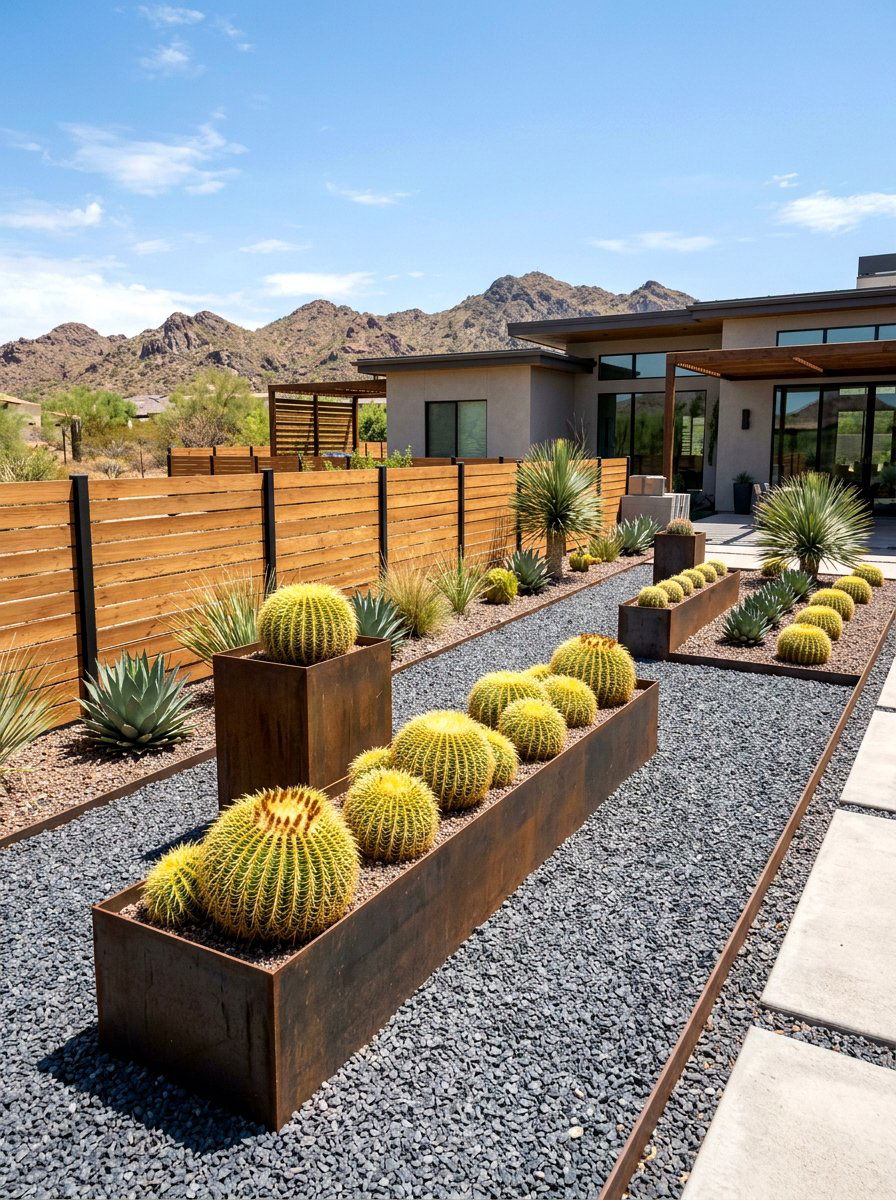
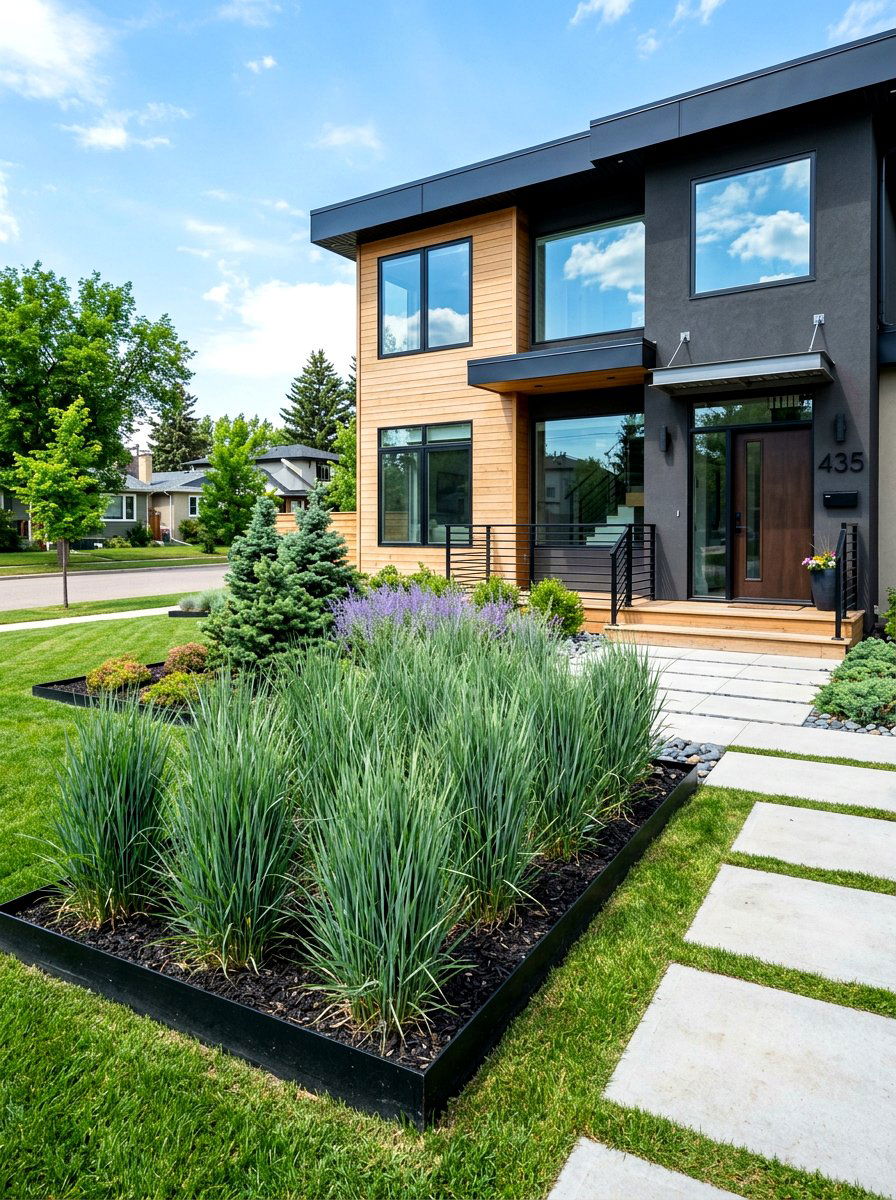
The desert modern style emphasizes clean lines, minimal palettes, and the use of natural materials like steel, wood, and stone. This look is perfect for contemporary homes where the landscape should reflect the architecture’s simplicity. You might see large, rectangular planters filled with golden barrel cacti or neat rows of structural yuccas set against a backdrop of dark gravel. The focus is on the shape and texture of each individual plant rather than a crowded jumble of greenery. This design style is inherently low-maintenance and celebrates the unique beauty of arid-land flora, proving that a water-wise garden can be just as sophisticated and high-end as any traditional European-style estate garden.
13. Mulch Ground Cover
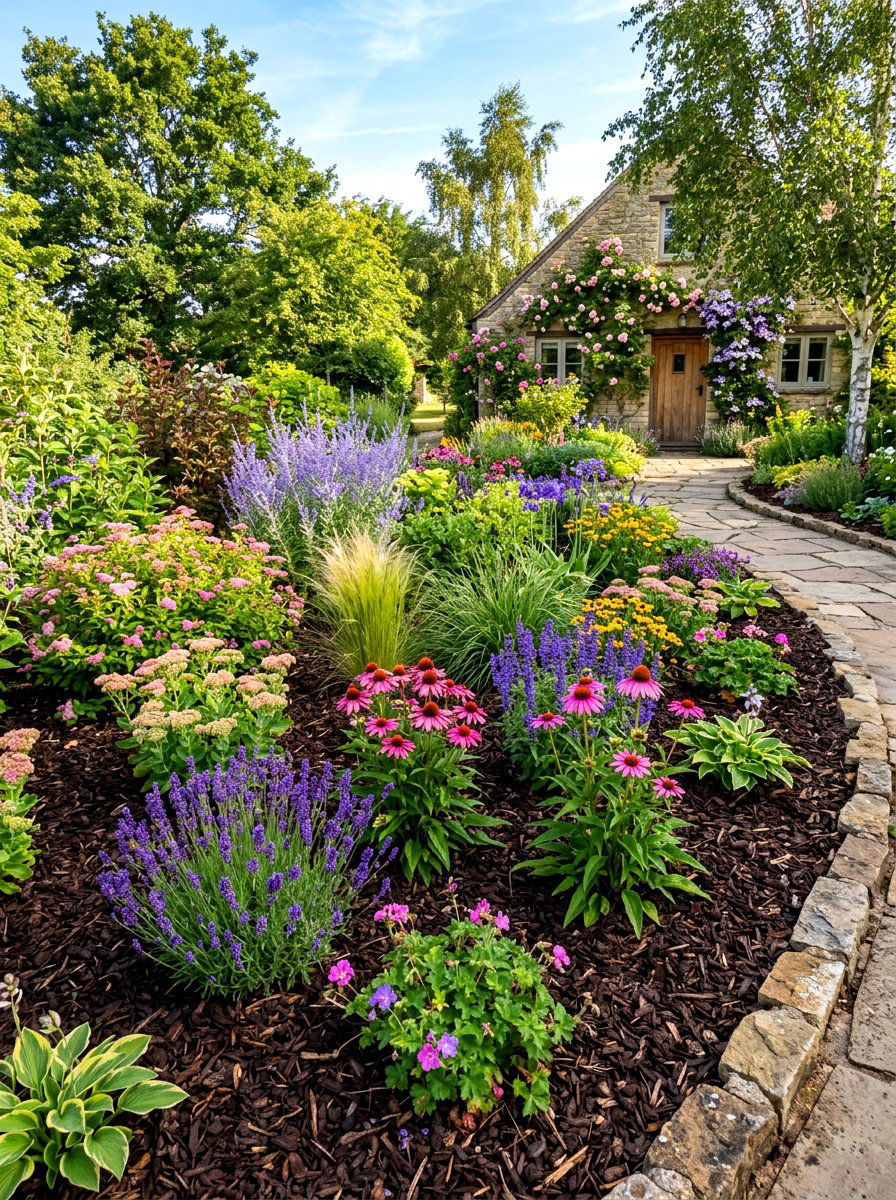
Using a thick layer of organic or inorganic mulch is one of the most effective ways to conserve soil moisture and suppress weeds. In a drought-tolerant yard, wood chips or bark mulch can be used to cover open soil between plants, giving the garden a finished and cohesive appearance. As organic mulch breaks down, it also improves the soil quality, which helps your plants become more resilient over time. Alternatively, using gravel or lava rock as mulch provides a permanent solution that doesn't need to be replaced every year. Regardless of the material, mulching protects plant roots from extreme temperature swings, ensuring your water-wise garden stays healthy even during the hottest summer months.
14. Permeable Paver Walkway
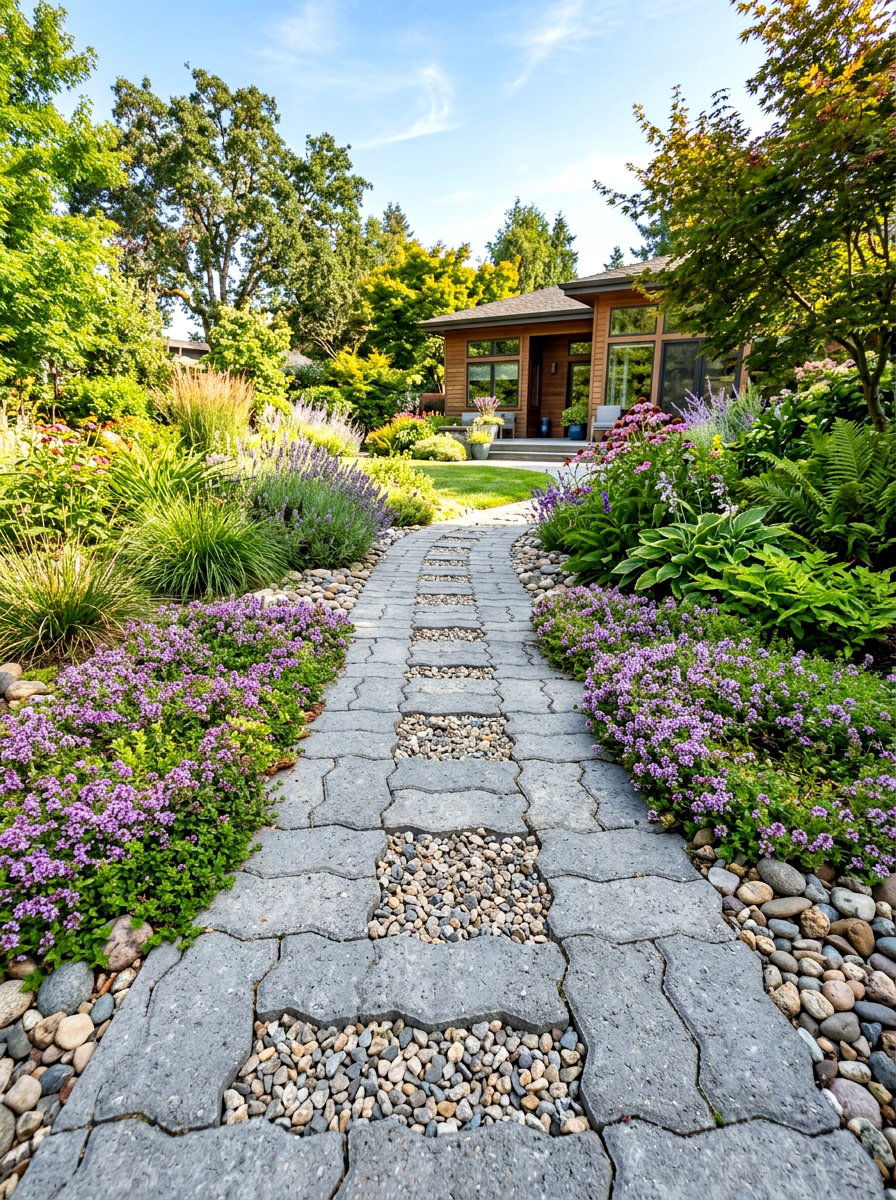
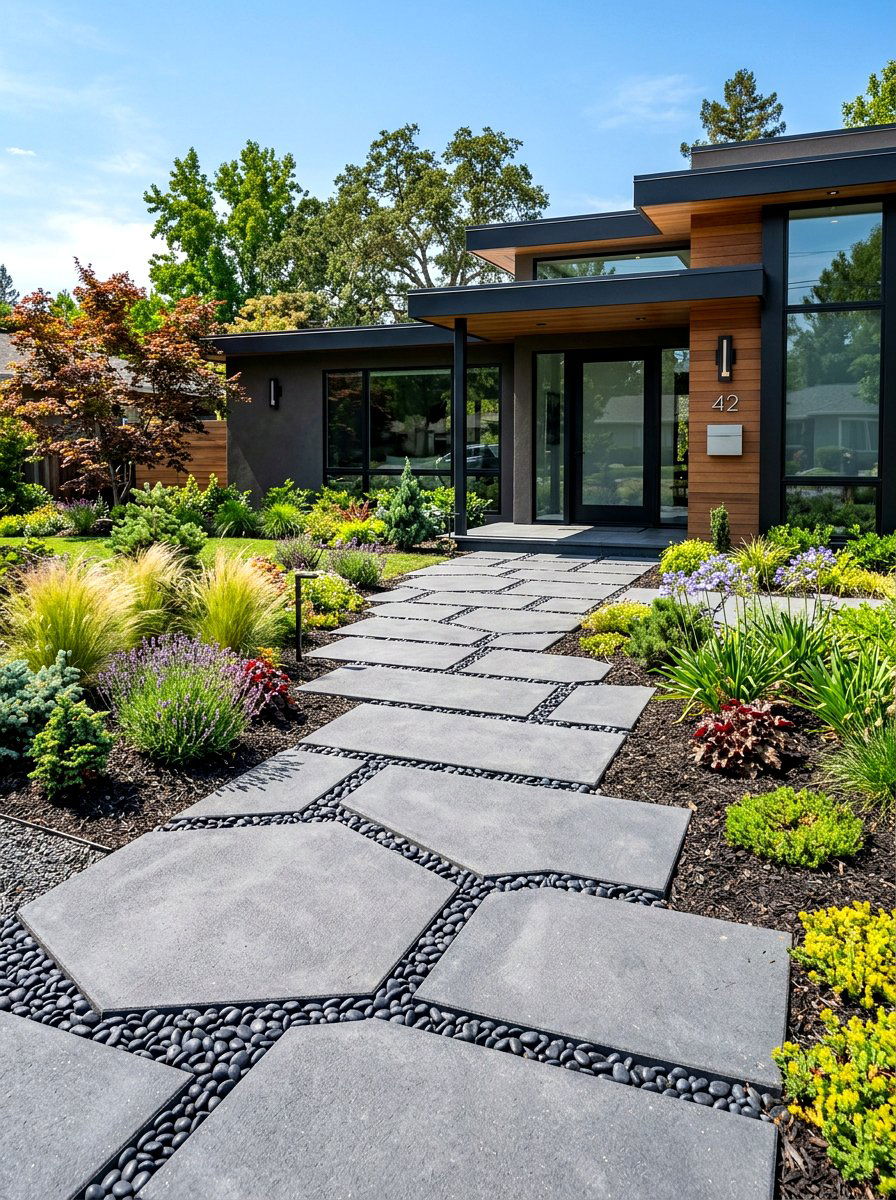
Permeable pavers are an excellent structural choice for driveways or walkways in a sustainable landscape because they allow water to filter through the gaps. Instead of letting rainwater run off into the street, these pavers guide moisture back into the earth to nourish the roots of nearby trees and shrubs. You can fill the spaces between the pavers with fine gravel or even low-growing, drought-tolerant ground covers like thyme for a softer look. This design prevents puddling and helps recharge the local groundwater supply. Beyond their environmental benefits, permeable pavers come in many styles and colors, allowing you to create a high-end look that perfectly matches your home's exterior.
15. Wildflower Garden
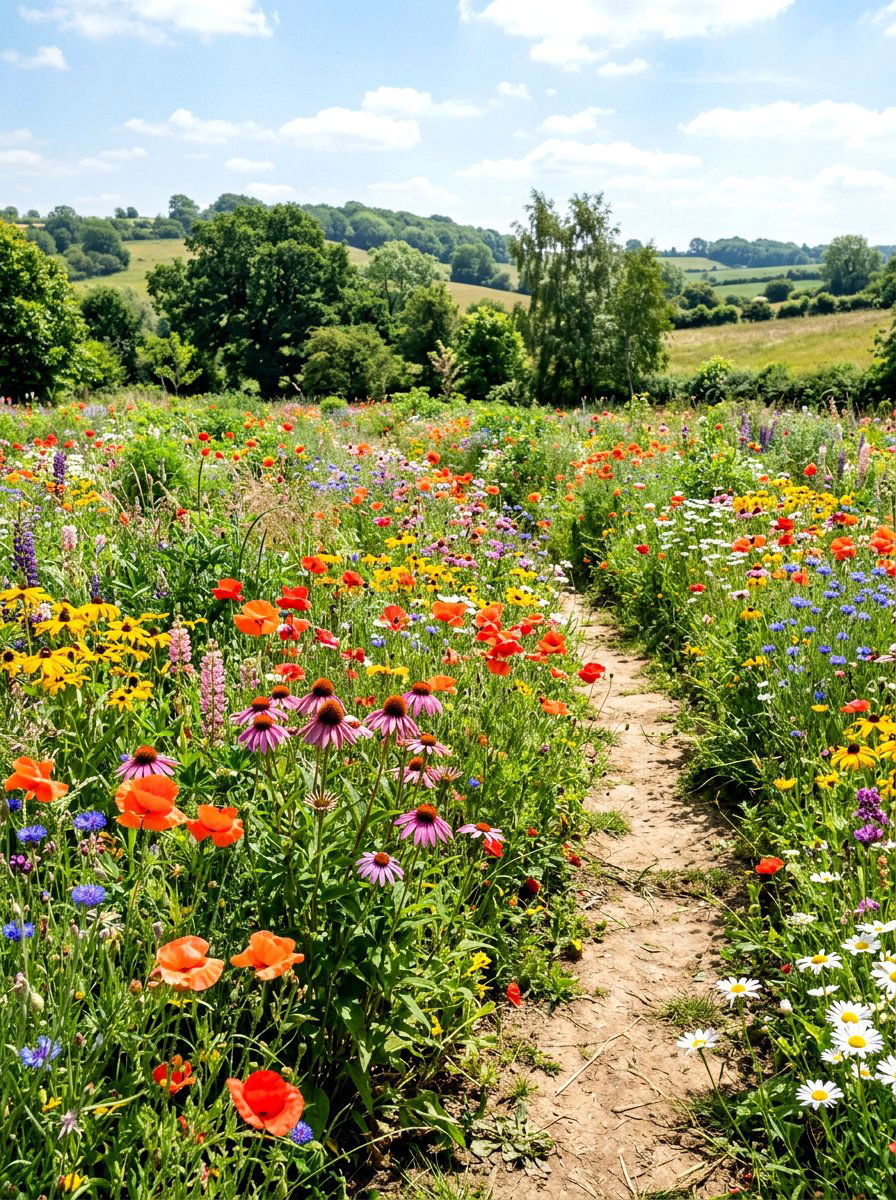
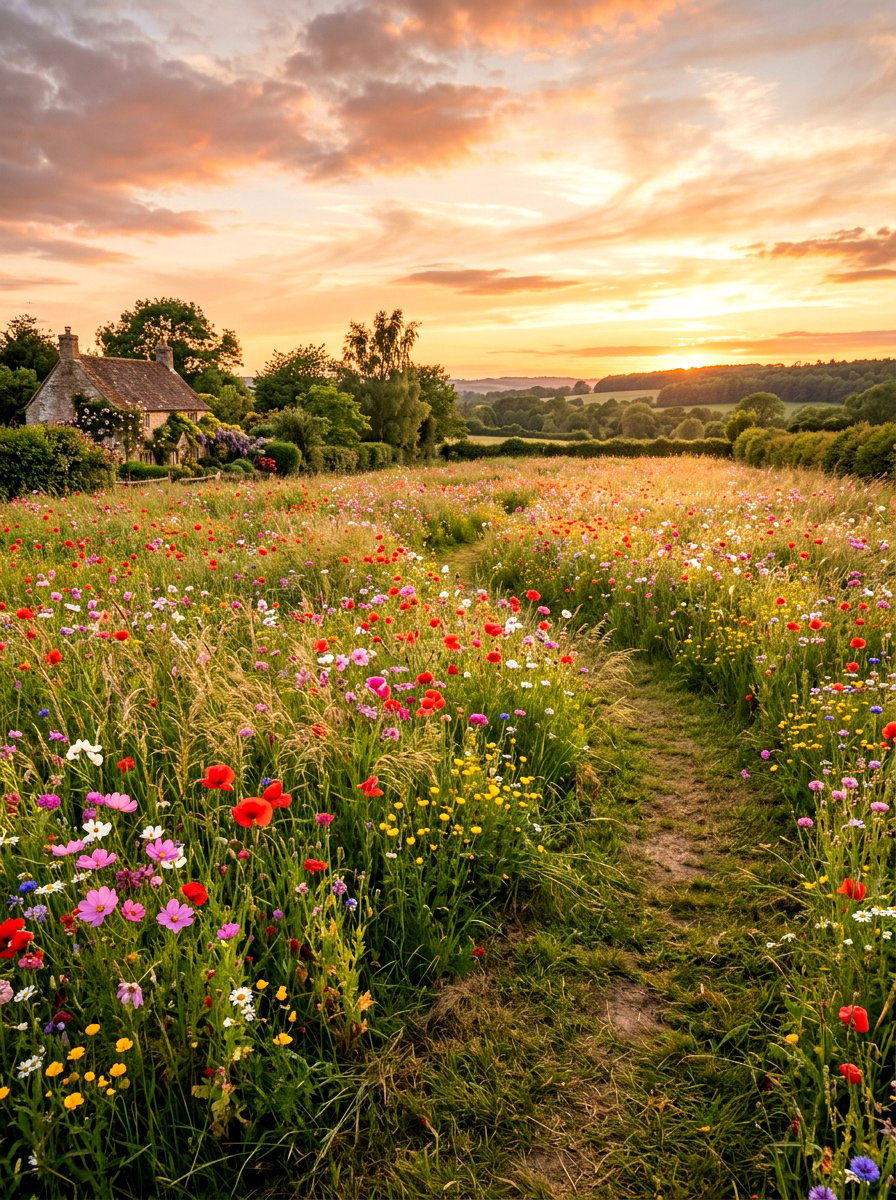
A wildflower garden offers a burst of seasonal color and provides a vital habitat for local wildlife while requiring minimal irrigation. By selecting a seed mix of native annuals and perennials, you can create a meadow-like area that naturally thrives on the local rainfall patterns of your region. These plants are built for survival and often produce stunning blooms that are much hardier than traditional nursery flowers. Once the flowers fade, many of them drop seeds that will grow again the following year, making this a very cost-effective and low-effort landscaping choice. The result is a charming, slightly wild look that brings a sense of joyful, untamed nature to your property.
16. Yucca Planting
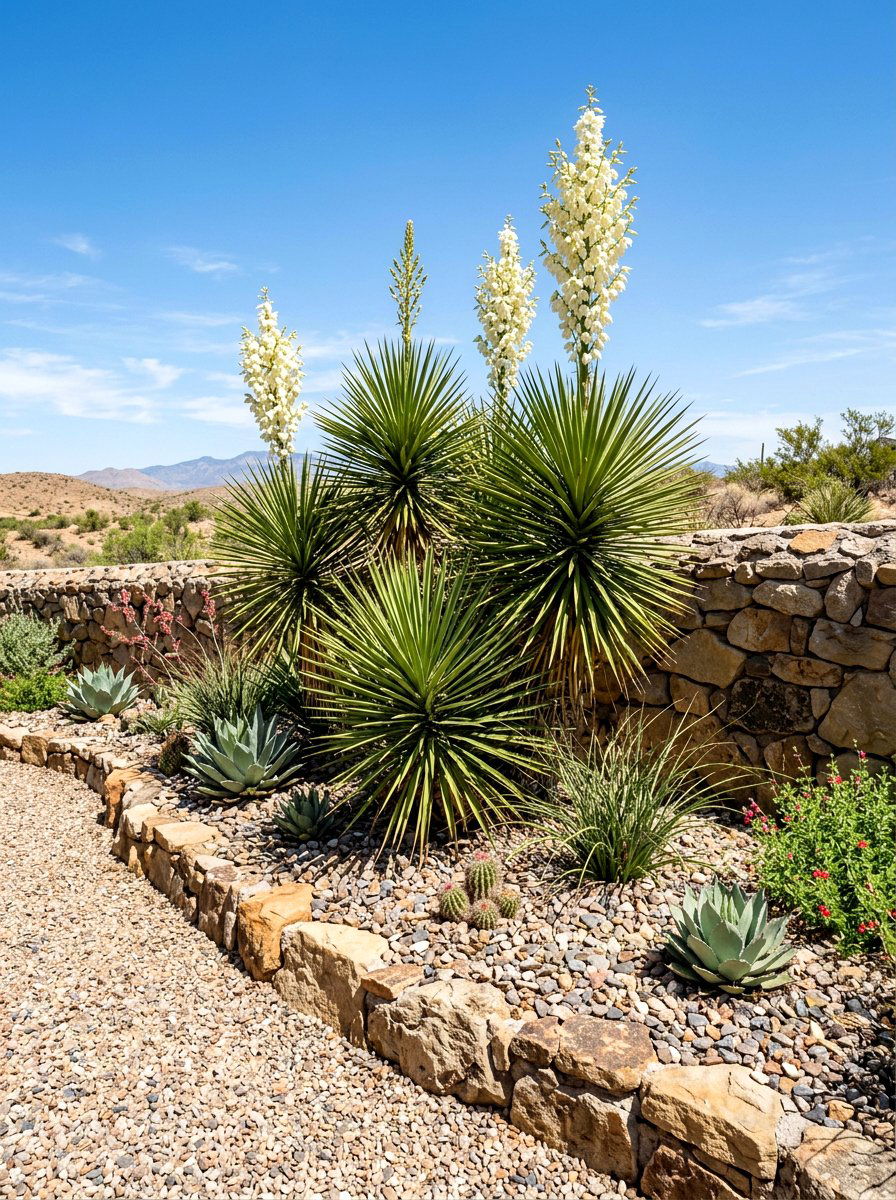
Yuccas are iconic drought-tolerant plants known for their tough, sword-like leaves and tall stalks of creamy white flowers. They are incredibly versatile and can handle extreme heat, poor soil, and very little water without ever losing their structural integrity. You can find varieties that range from small, soft-leaved shrubs to large, tree-like structures, allowing you to fill almost any niche in your garden. Their bold texture makes them a perfect companion for softer ornamental grasses or blooming perennials. Because they are so hardy, they are often used in areas where other plants might fail, such as near hot driveways or in sandy soil, providing reliable greenery all year round.
17. Sage Garden
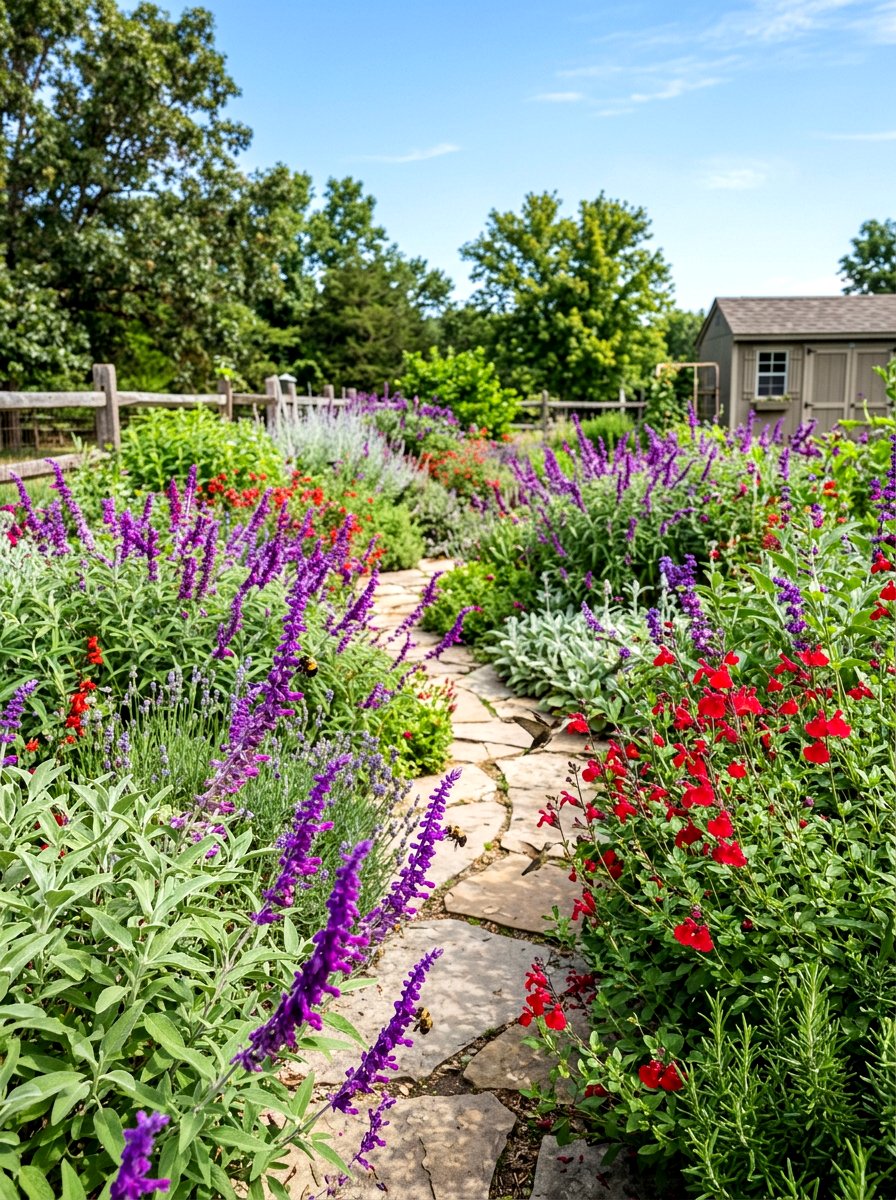
Sage, or Salvia, is a diverse group of plants that are beloved in drought-tolerant landscaping for their vibrant flowers and aromatic foliage. Most varieties are exceptionally heat-tolerant and can go for long periods between waterings once their root systems are established in the garden. They come in stunning shades of deep purple, bright red, and cool blue, providing a long season of color that attracts hummingbirds and bees. Their slightly fuzzy or textured leaves are a natural defense against water loss, making them perfect for sunny spots. Planting different types of sage together creates a layered, textural look that is both visually stimulating and very easy to maintain throughout the year.
18. Ornamental Grass Border
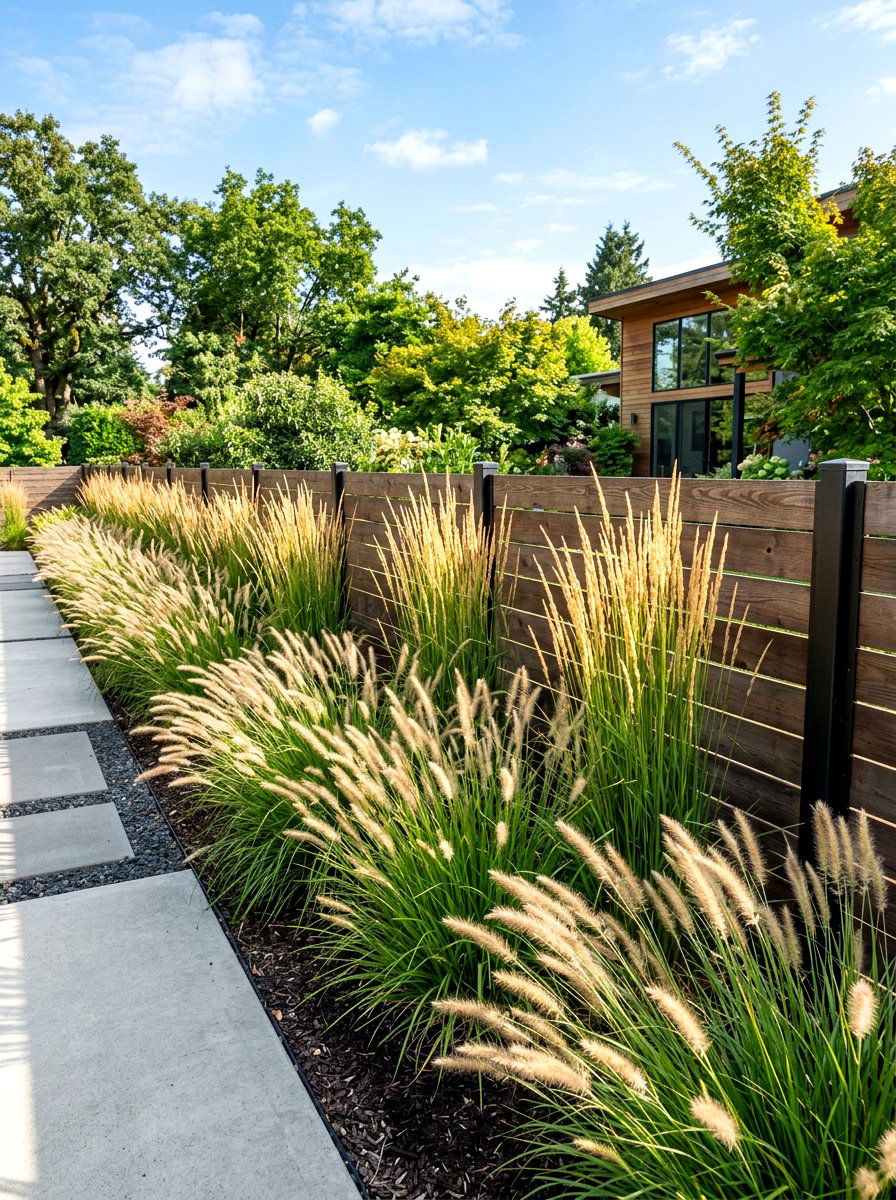
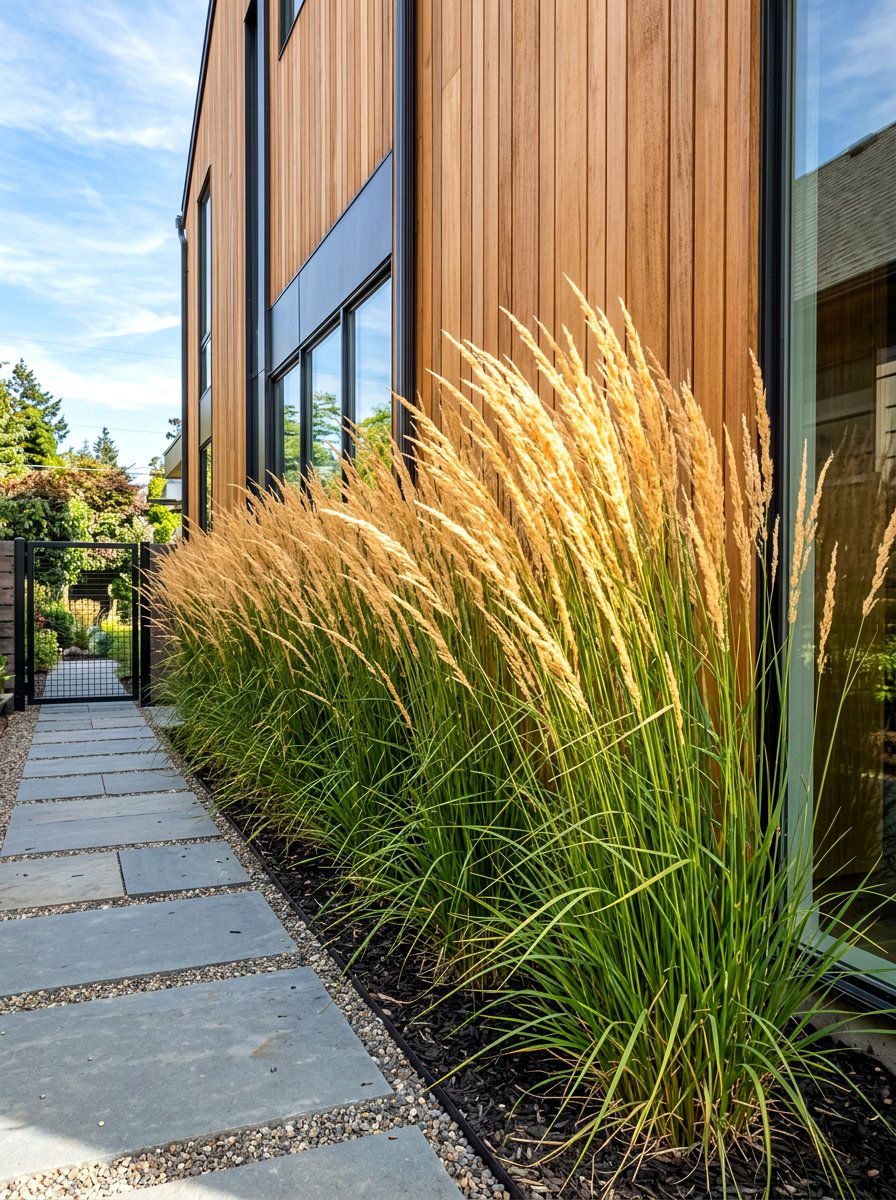
Ornamental grasses are essential for adding height, texture, and a sense of movement to a water-wise garden design. Varieties like fountain grass, feather reed grass, or switchgrass are famously tough and require very little supplemental water to look their best. When planted in long borders, they create a soft, swaying screen that provides privacy and hides unsightly fences. Many of these grasses turn beautiful shades of gold or bronze in the fall, providing visual interest long after the flowering perennials have gone dormant for the winter. They are also incredibly easy to care for, usually only requiring a quick trim back to the ground once a year in early spring.
19. Cacti Garden
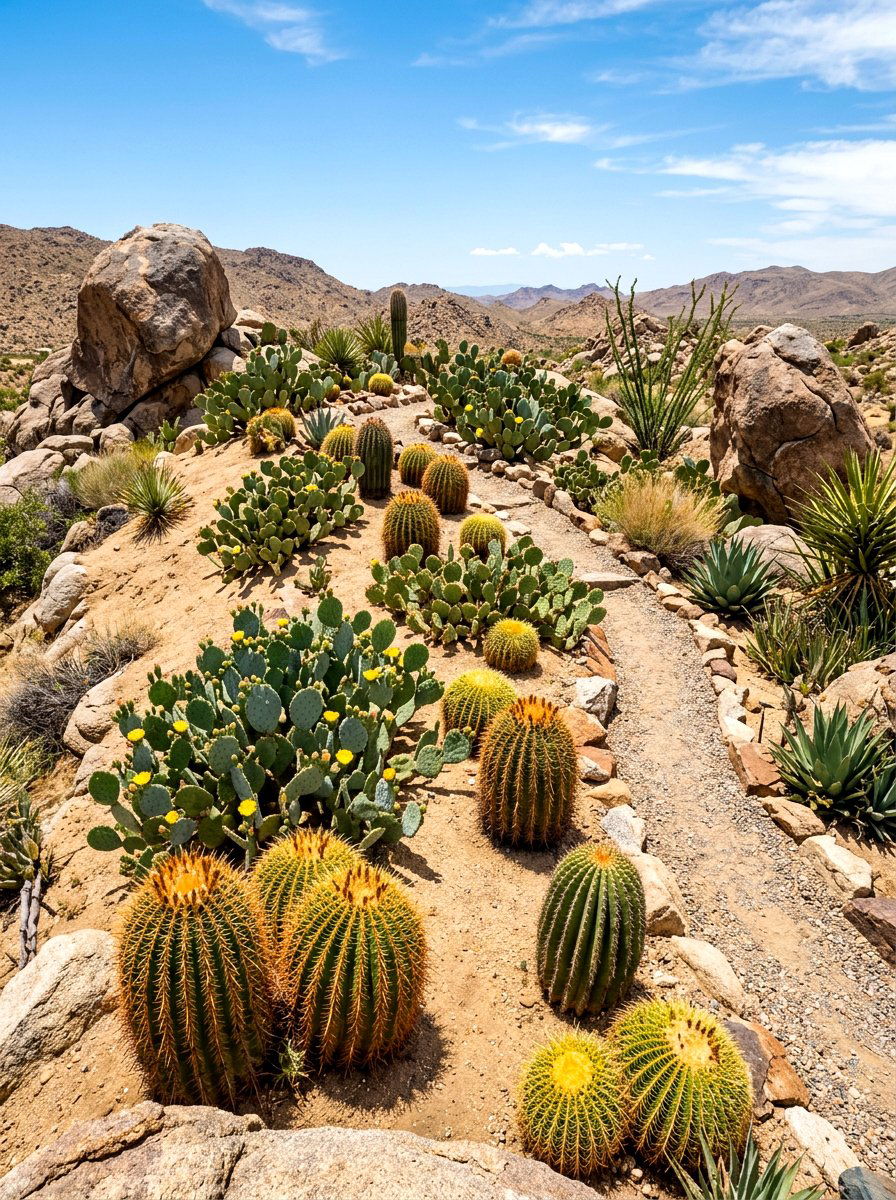
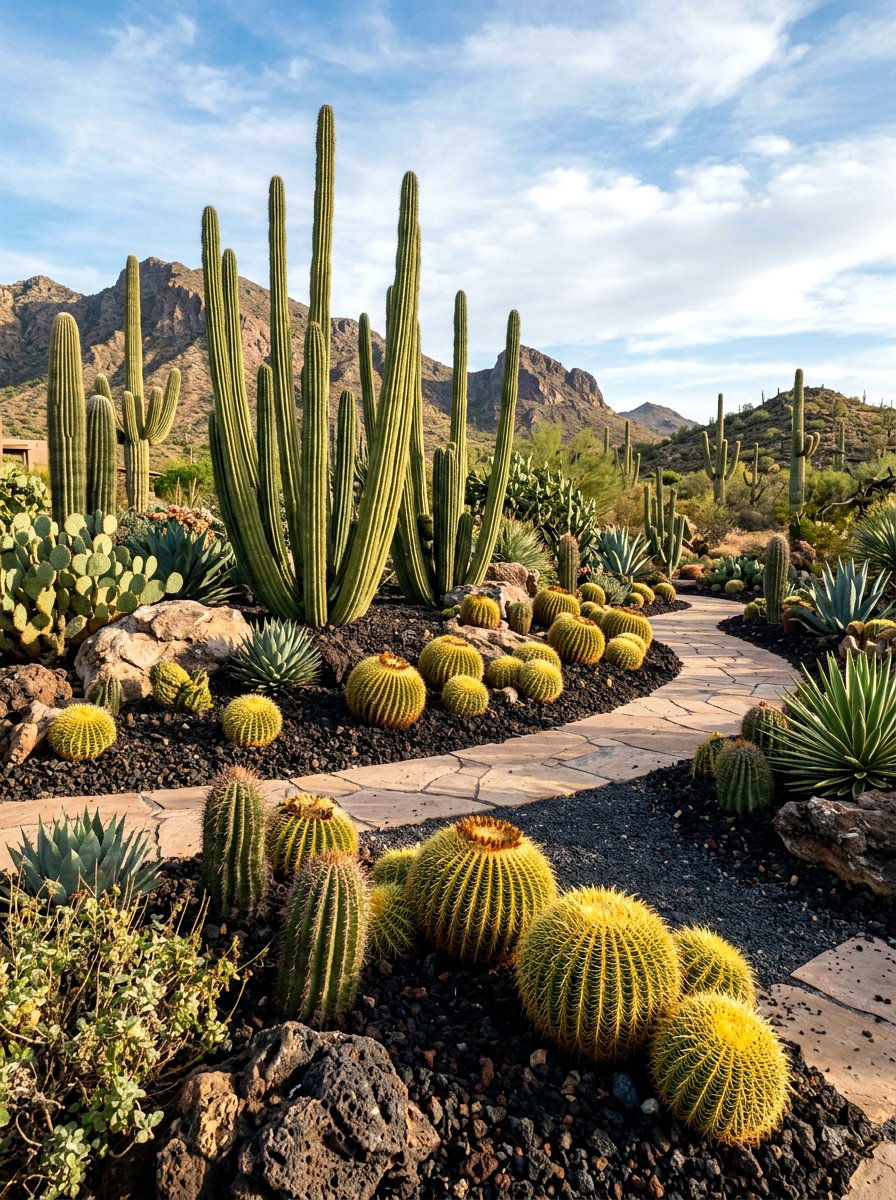
For the ultimate low-water landscape, a dedicated cacti garden is a bold and fascinating choice that requires almost zero irrigation. Cacti come in an amazing array of forms, from the tall and ribbed columns of organ pipe cactus to the round, prickly shapes of barrel varieties. By grouping different species together on a slight mound of sandy soil, you can create a miniature desert oasis right in your backyard. These plants are the masters of water storage and can thrive in the most intense sunlight without wilting. Using a variety of stone mulches and boulders around them enhances their natural beauty and creates a professional, well-curated look that is truly unique.
20. Potted Succulent Arrangement
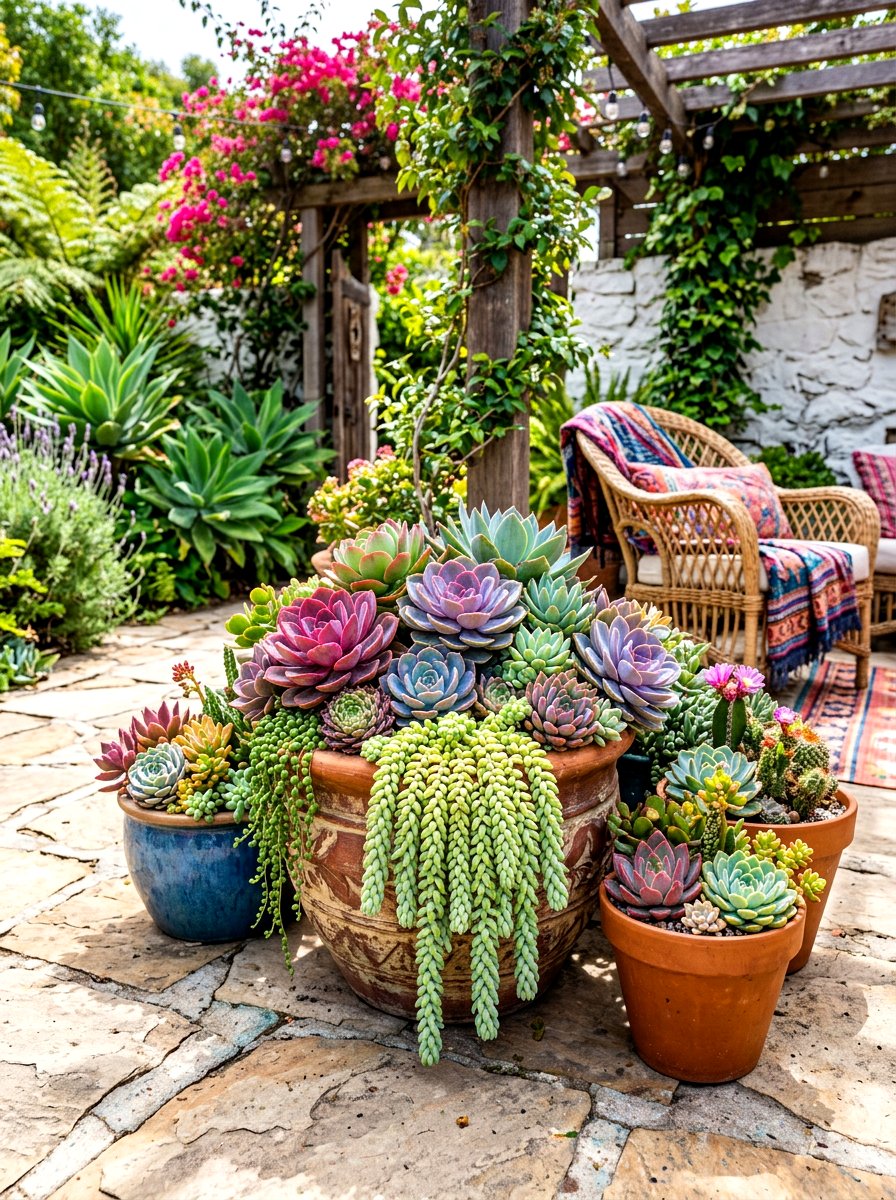
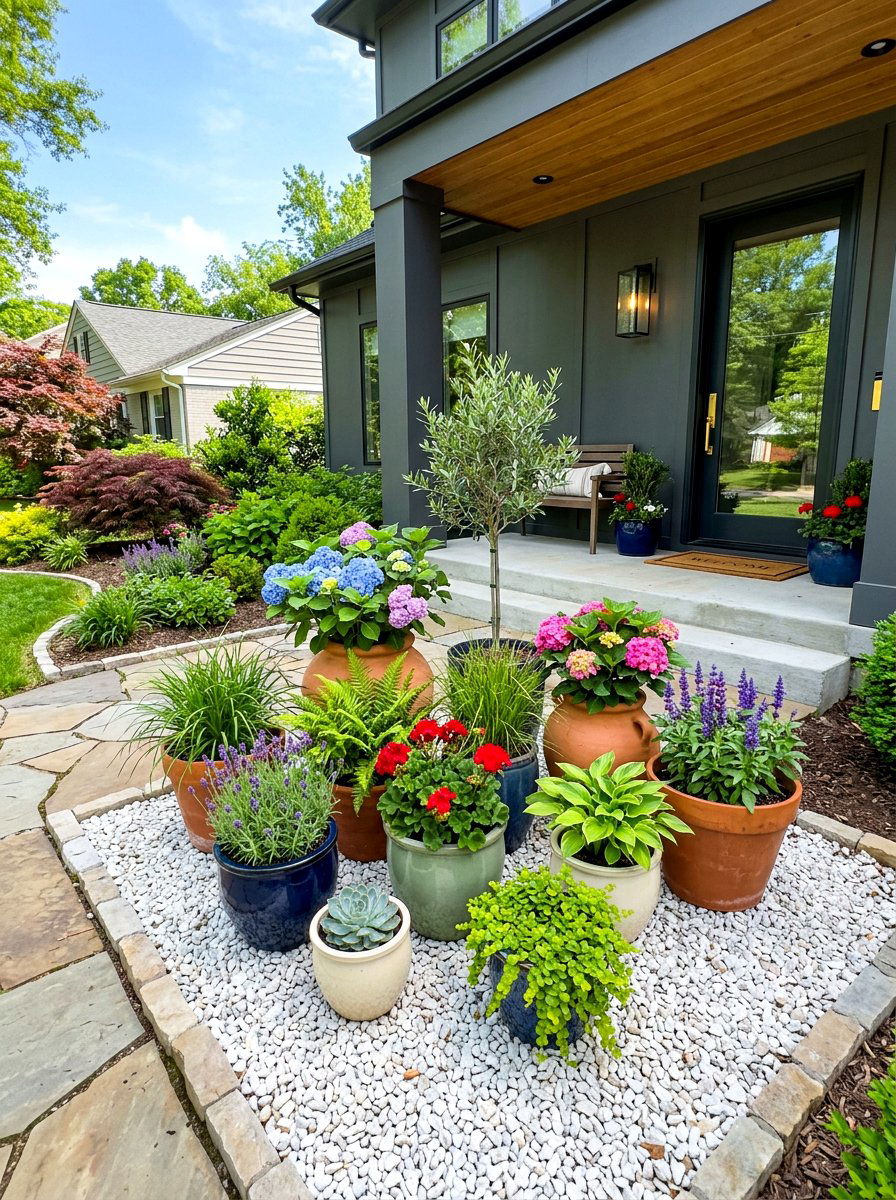
If you have a small patio or balcony, or just want to add a splash of detail to your porch, potted succulent arrangements are a perfect solution. Large, decorative containers filled with a mix of colorful succulents allow you to control the soil quality and drainage perfectly. You can play with the "thriller, filler, and spiller" technique by using a tall agave as the center, smaller rosettes to fill the space, and trailing sedums to hang over the edges. Because these pots require so little water, they are much easier to manage than traditional hanging baskets or annual planters. They provide a high-impact, artistic element that stays beautiful with very little effort or maintenance.
21. Gravel Fire Pit Area
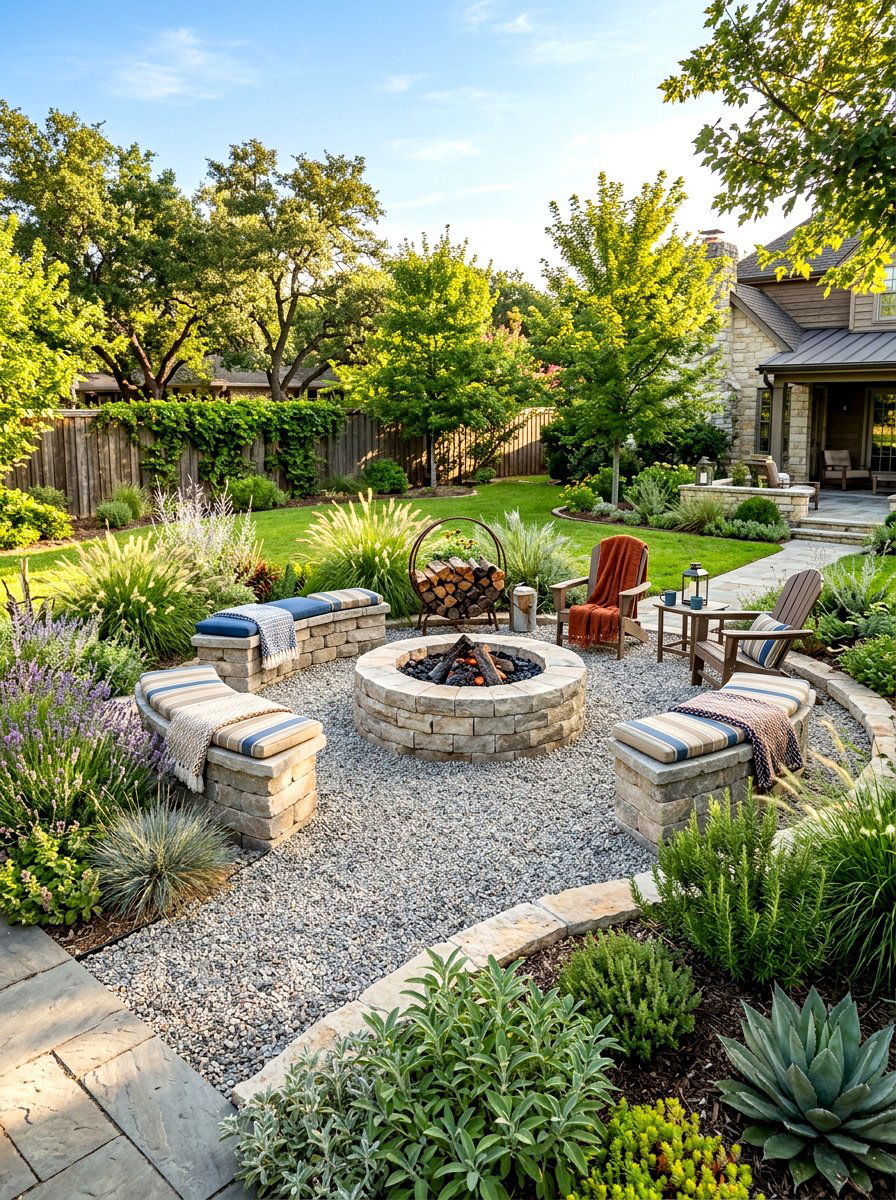
Creating a dedicated zone for a fire pit is a great way to use hardscaping to reduce your lawn 's total footprint. By clearing a circular or square area and filling it with a thick layer of crushed stone or gravel, you build a safe and attractive gathering spot. The gravel acts as a fire-resistant surface that also handles foot traffic beautifully without becoming muddy or worn out. You can surround the area with large stones for seating or add simple Adirondack chairs for a more relaxed feel. This functional space requires no water and provides a cozy destination for cool evenings, making your backyard feel like an extension of your home' s living room.
22. Olive Tree Landscape
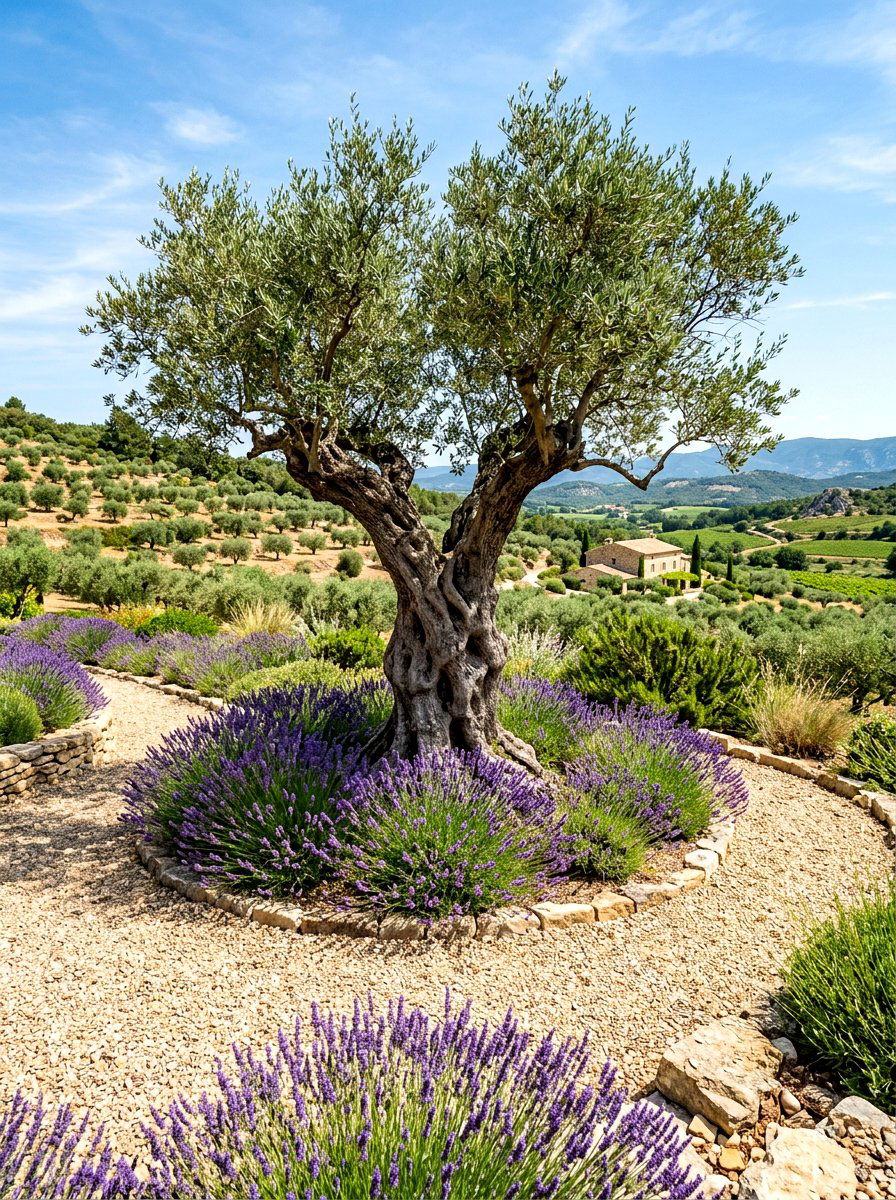
The olive tree is a classic symbol of resilience and Mediterranean beauty, making it a spectacular focal point for a drought-tolerant yard. These trees are famous for their ability to thrive in poor soil and hot, dry conditions once they have matured and established deep roots. Their silvery-green leaves provide a soft, elegant color palette that looks stunning against a backdrop of stone walls or gravel paths. You can underplant an olive tree with low-water herbs like lavender or thyme to create a cohesive and fragrant design. Whether planted in the ground or in a massive pot, an olive tree adds a sense of history and timelessness to any landscape.
23. Stone Retaining Wall
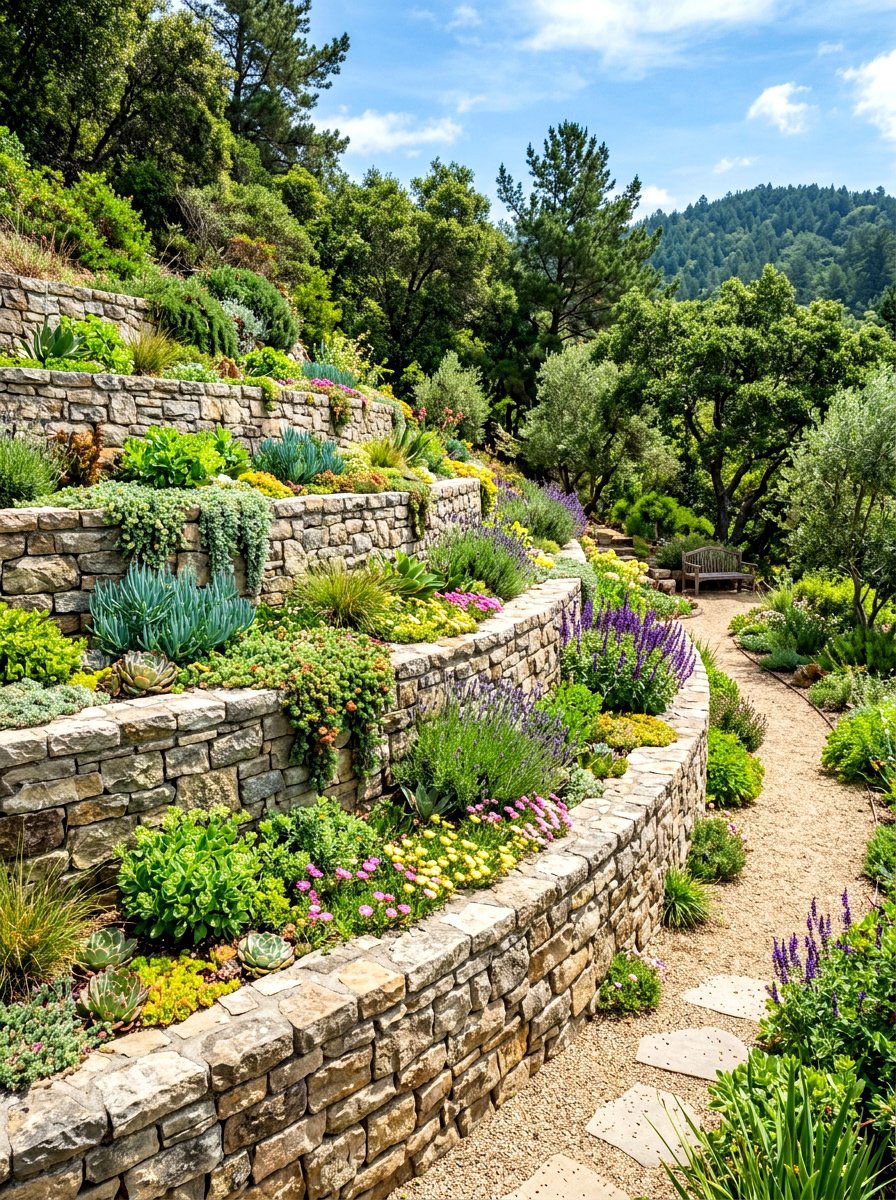
On sloped properties, a stone retaining wall is a practical and beautiful way to create flat, manageable terraces for drought-tolerant plantings. These walls can be built from natural fieldstone or modern blocks, providing structure and preventing soil erosion during rainy periods. The resulting terraces allow you to group plants with similar water needs together, a practice known as hydrozoning. You can plant trailing succulents or hardy creepers in the crevices of the rocks to soften the look of the wall. This architectural feature adds depth and vertical interest to the yard while significantly reducing the amount of open soil that needs to be watered or mulched on a regular basis.
24. Drought Tolerant Privacy Screen
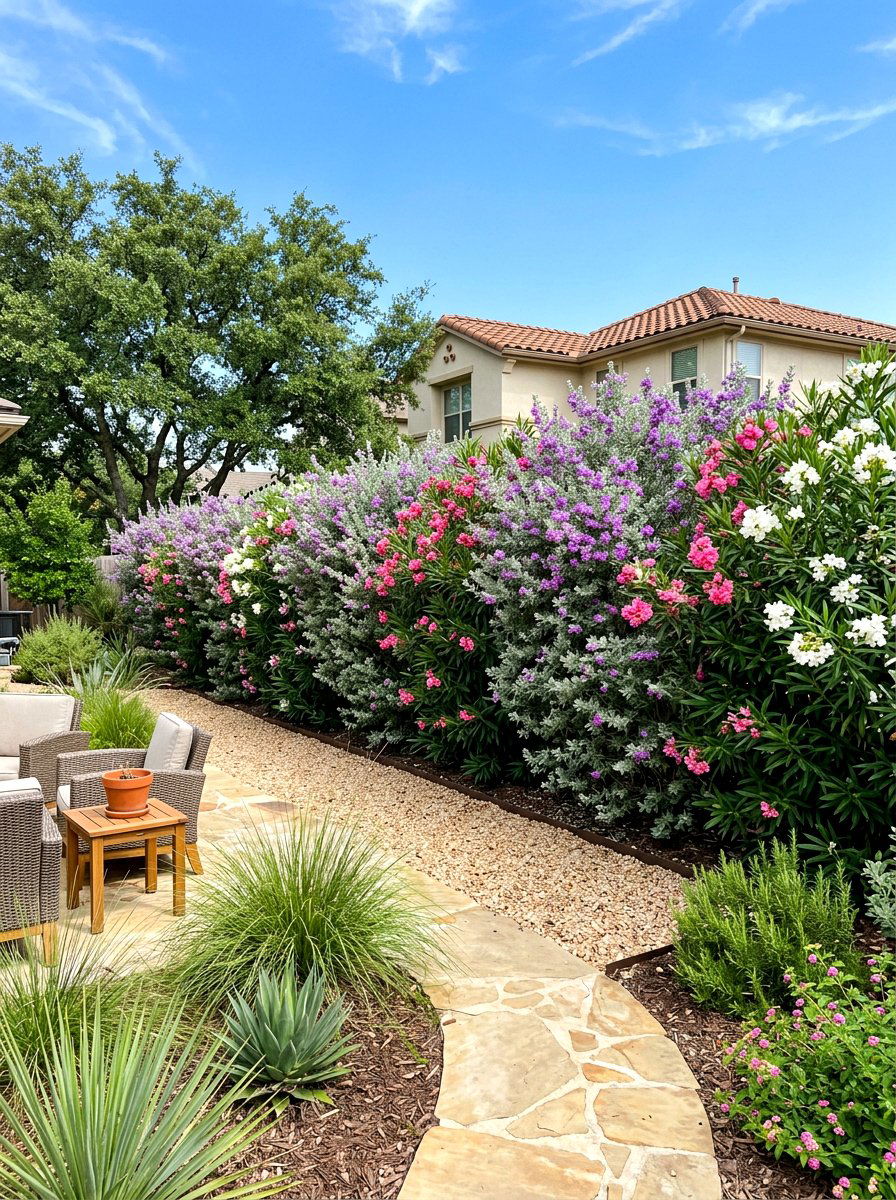
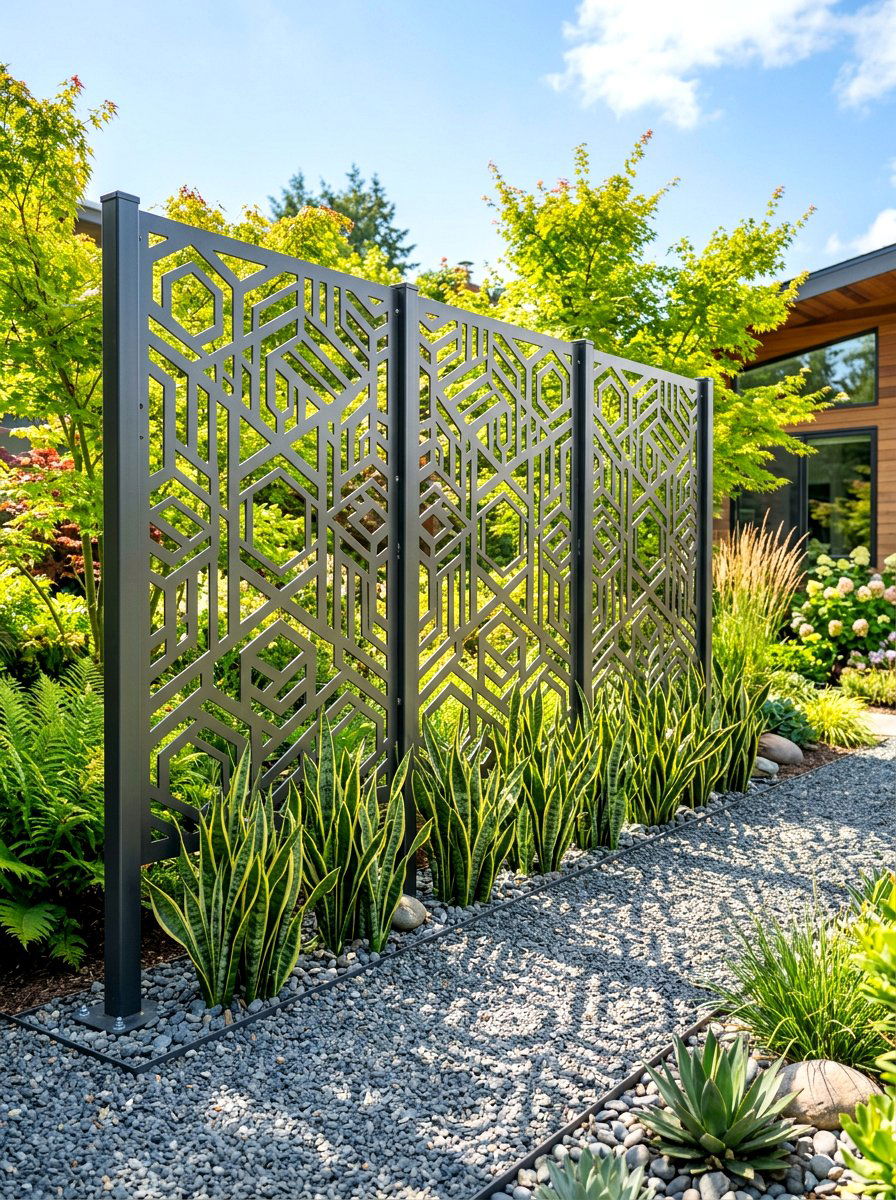
Creating a living privacy screen doesn't require thirsty, fast-growing hedges that need constant irrigation and shearing. Instead, you can use a variety of drought-tolerant evergreens and shrubs like Texas Ranger, oleander, or certain types of juniper. These plants grow densely enough to block out neighbors or street noise while remaining perfectly happy with minimal supplemental water. Many of these options also produce beautiful flowers or berries, adding seasonal interest to your functional screen. By choosing plants that are naturally suited to your dry climate, you ensure that your privacy hedge stays green and healthy even during the most severe summer heat waves or water restrictions in your area.
25. Zen Rock Garden
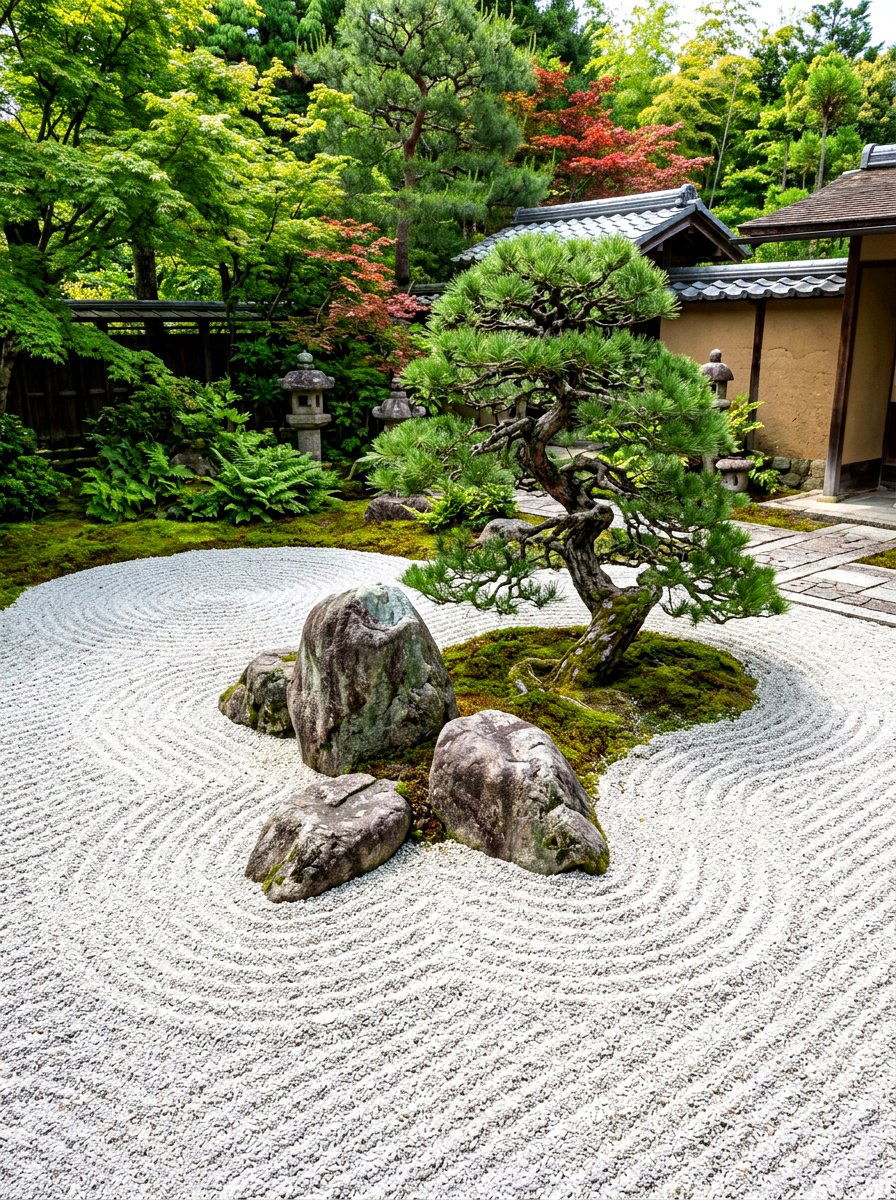
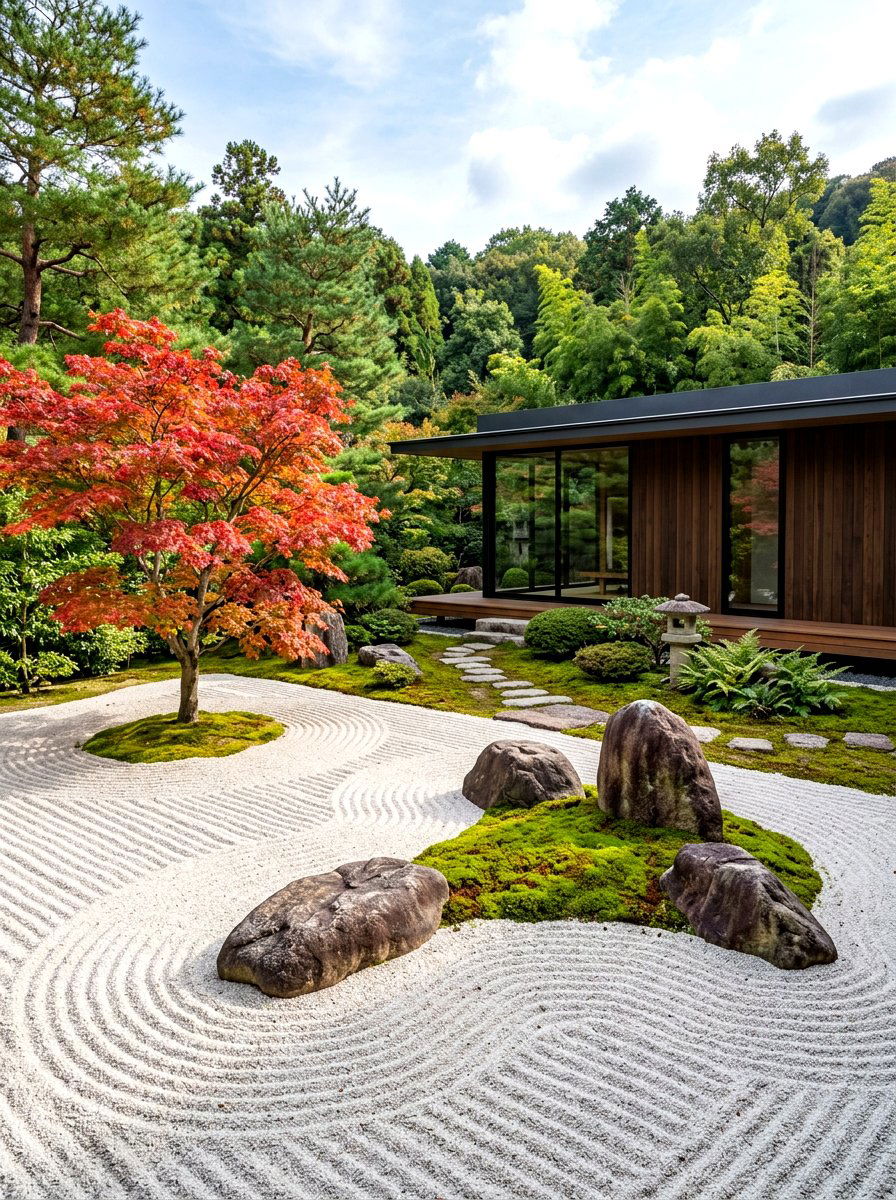
A Zen rock garden is the pinnacle of low-maintenance landscaping, focusing on simplicity, balance, and the artistic arrangement of stones. These gardens often feature a large area of fine gravel or sand that is raked into patterns to represent moving water, with large boulders acting as "islands. " Because the focus is primarily on the stones and the negative space, you only need to include a few carefully placed, drought-resistant plants like slow-growing evergreens or moss-like ground covers. This creates a peaceful, meditative atmosphere that requires no water for the ground cover and very little for the accents. It is a sophisticated way to fill a side yard or courtyard.
26. Low Water Pollinator Garden
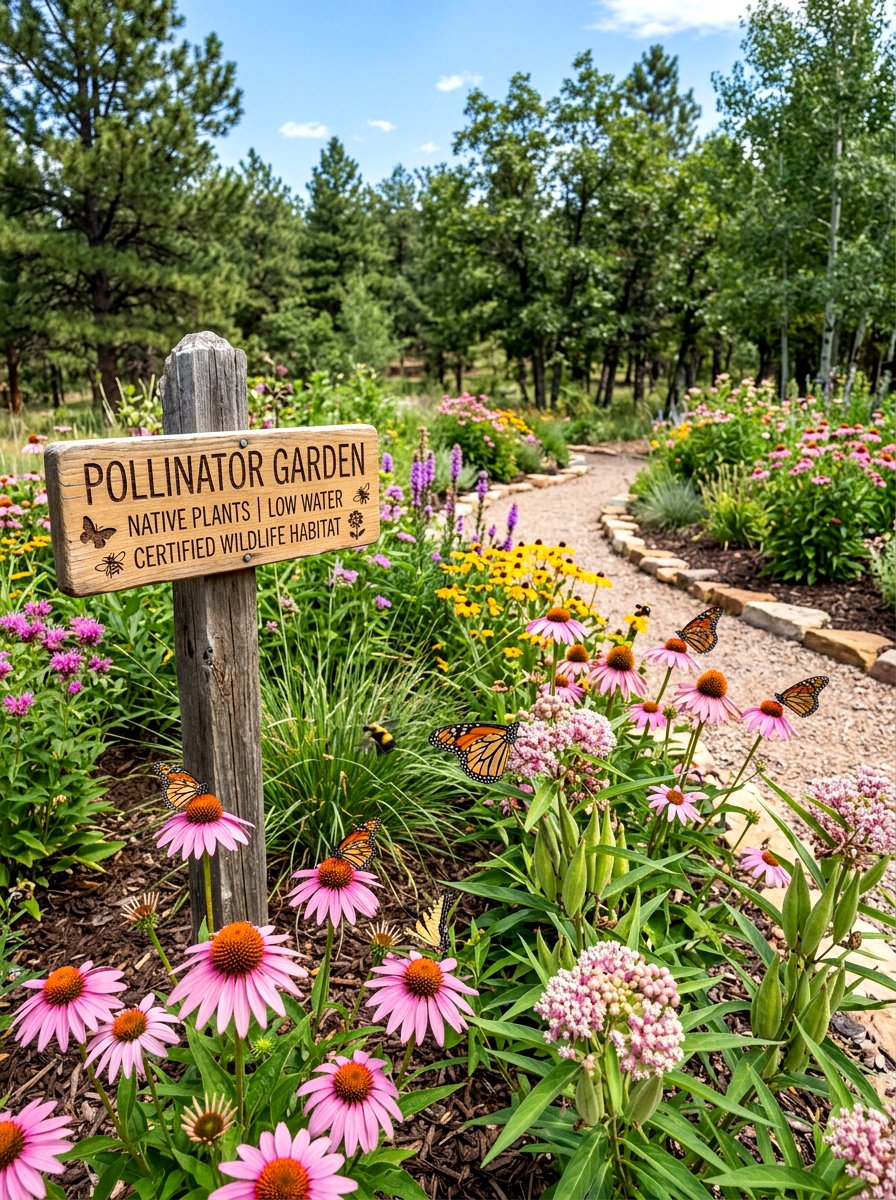
You can help support the local ecosystem by designing a drought-tolerant garden specifically for bees, butterflies, and hummingbirds. Many native flowering plants, such as milkweed, coneflowers, and penstemon, have adapted to survive on very little water while providing essential nectar for pollinators. By grouping these plants together in sunny beds, you create a vibrant and buzzing habitat that changes throughout the seasons. These plants are often much hardier than exotic nursery varieties and require less intervention to stay healthy. This type of landscape adds life and movement to your yard, proving that water conservation doesn't mean you have to sacrifice the joy and beauty of a flowering garden.
27. Creeping Thyme Ground Cover
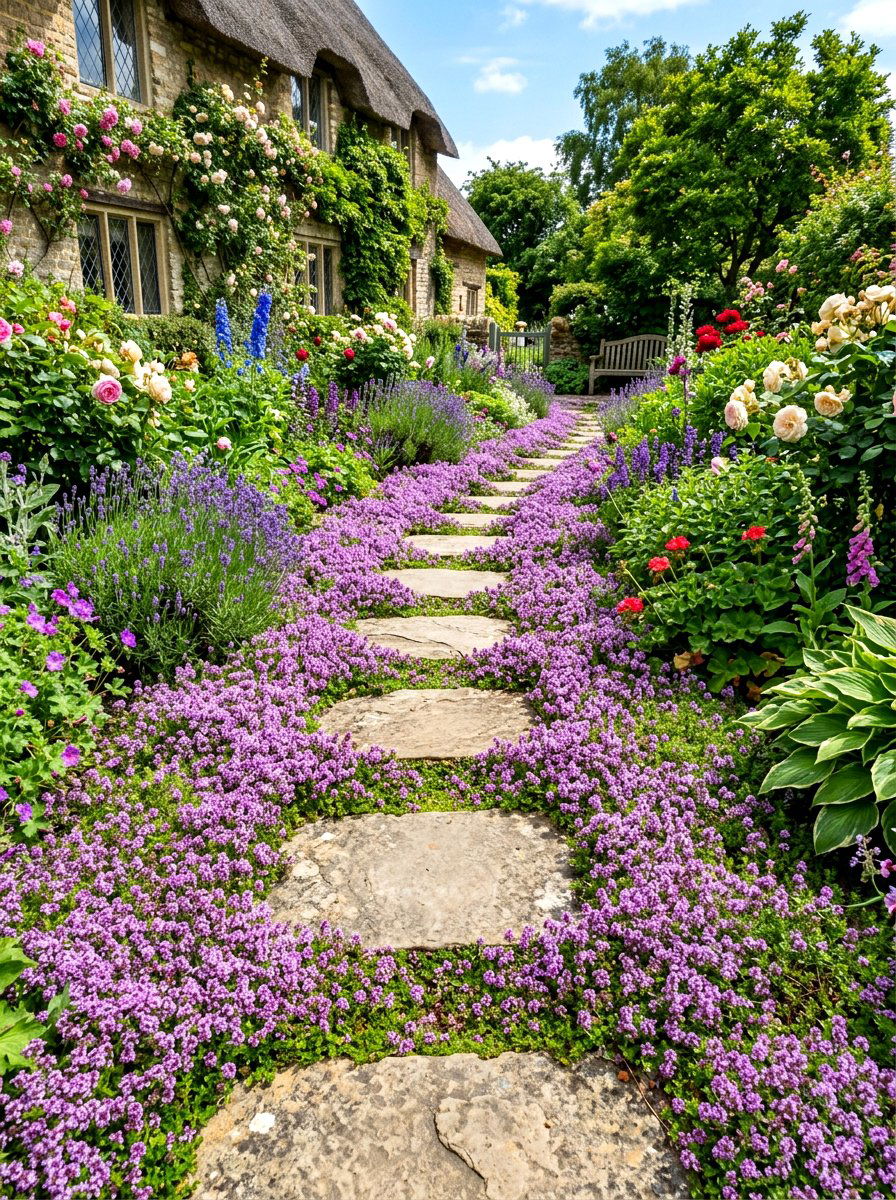
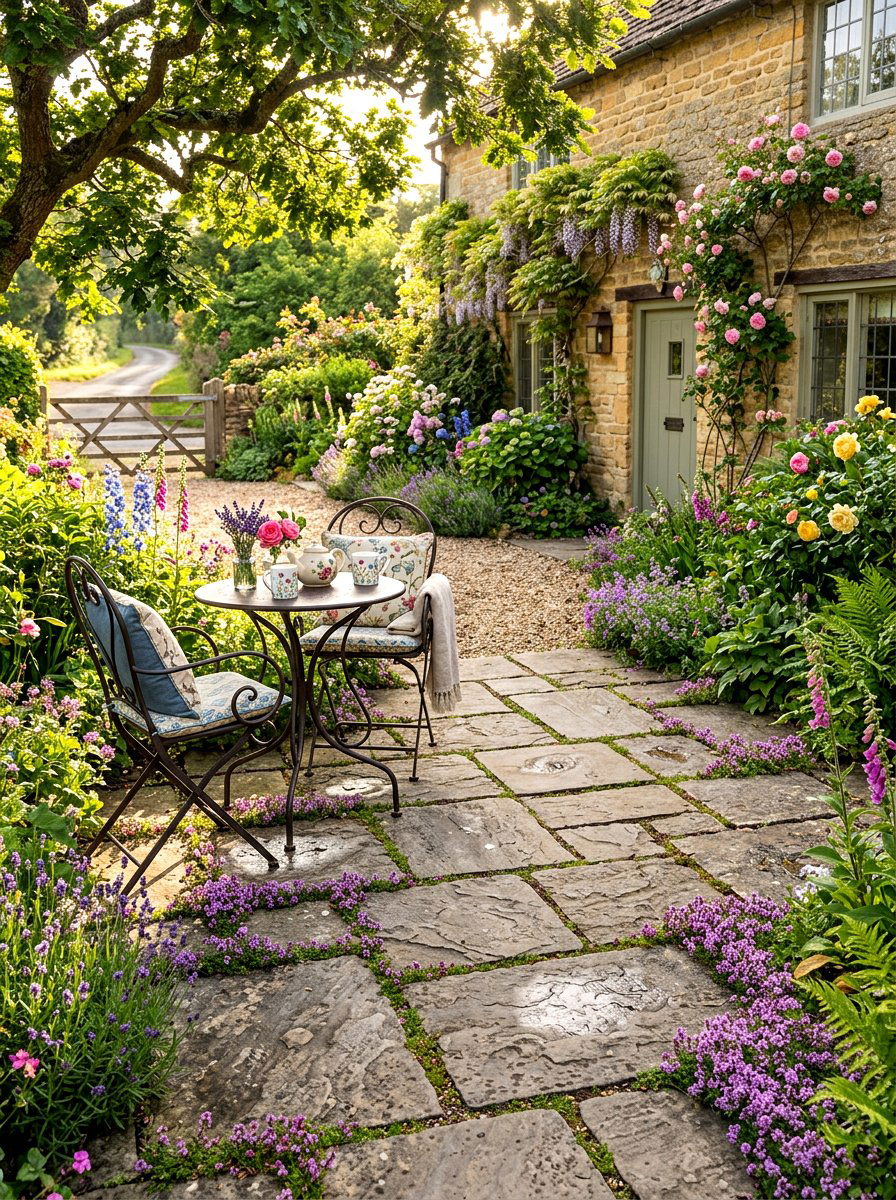
If you have a path or a small area where you want a soft, green carpet but don't want to use traditional grass, creeping thyme is an excellent alternative. This low-growing herb is incredibly drought-tolerant once it fills in, and it releases a wonderful fragrance whenever it is stepped on. It produces tiny, beautiful flowers in the summer that attract pollinators and add a delicate layer of color to your walkways. Creeping thyme thrives in full sun and well-draining soil, making it perfect for filling the gaps between stepping stones. It requires no mowing and very little water, providing a lush and practical solution for high-traffic or small-scale landscape areas.
28. Rustic Southwest Backyard
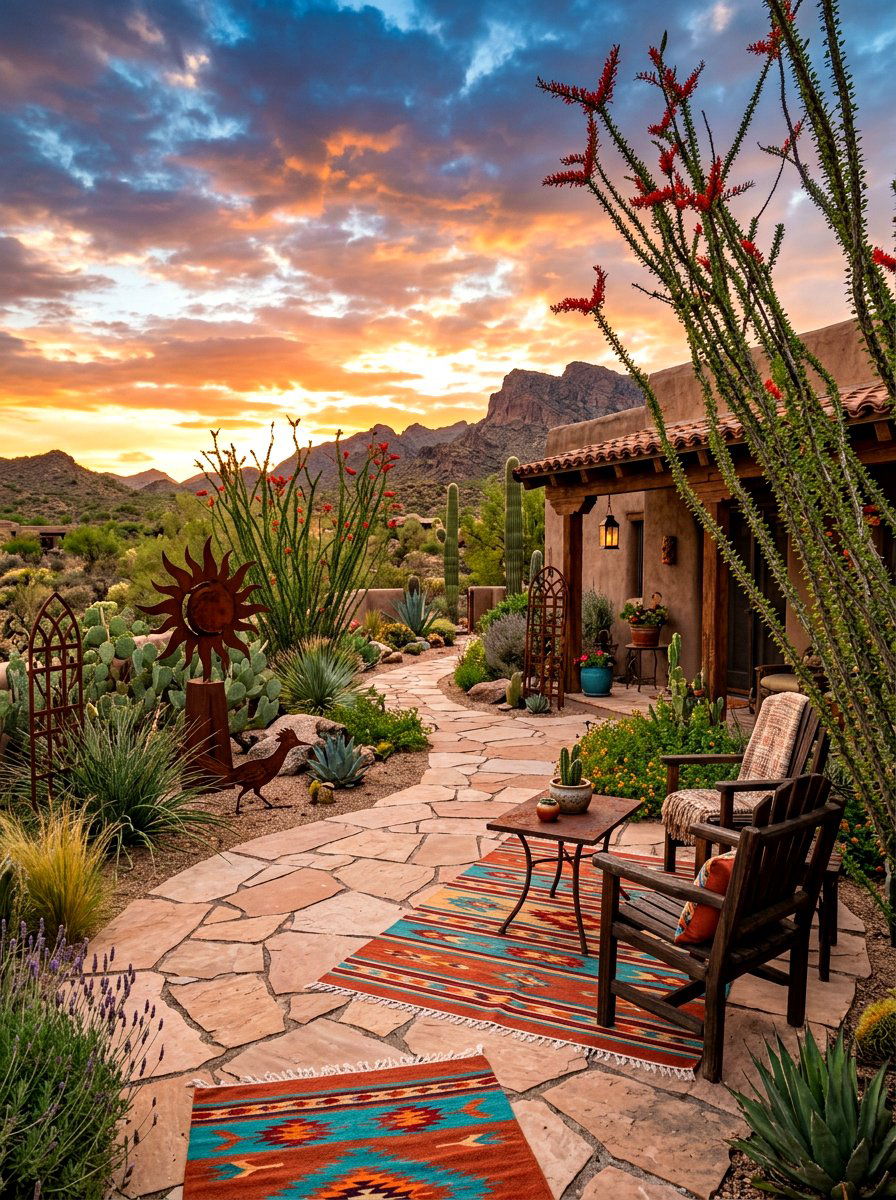
The rustic Southwest style embraces the natural colors and materials of the high desert, featuring warm earth tones, weathered wood, and native desert plants. You can create this look by using flagstone patios, rustic wooden fences, and a palette of desert-friendly flora like ocotillo, prickly pear, and desert willow. This design celebrates the rugged beauty of the landscape rather than trying to hide it under a carpet of green grass. Adding elements like old wine barrels, rusted metal art, and colorful outdoor rugs can enhance the theme without increasing the water bill. It is a welcoming and relaxed style that feels perfectly at home in any arid or semi-arid environment.
29. Modern Minimalist Xeriscape
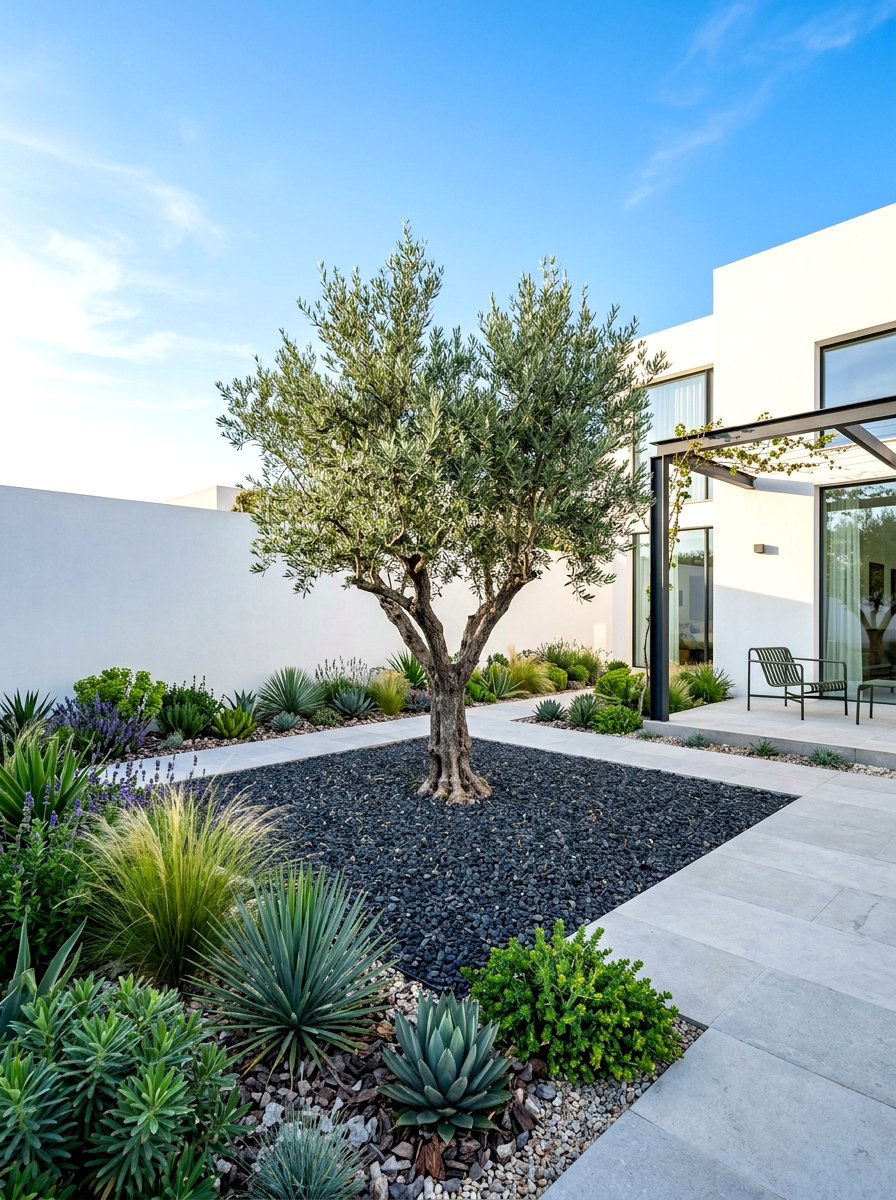
Modern minimalism in the garden is about intentionality and the beauty of high-contrast materials. In a minimalist xeriscape, you might see a single, perfect tree surrounded by a sea of dark basalt gravel, or a series of identical concrete planters holding structural succulents. The goal is to create a clean, organized space that feels like an outdoor gallery. By limiting the number of plant species and focusing on bold, architectural shapes, you significantly reduce the complexity of maintenance and irrigation. This style is perfect for urban homes where space is limited and a tidy, professional look is desired. It proves that less really can be more when it comes to sustainable design.
30. Terraced Hillside Landscaping
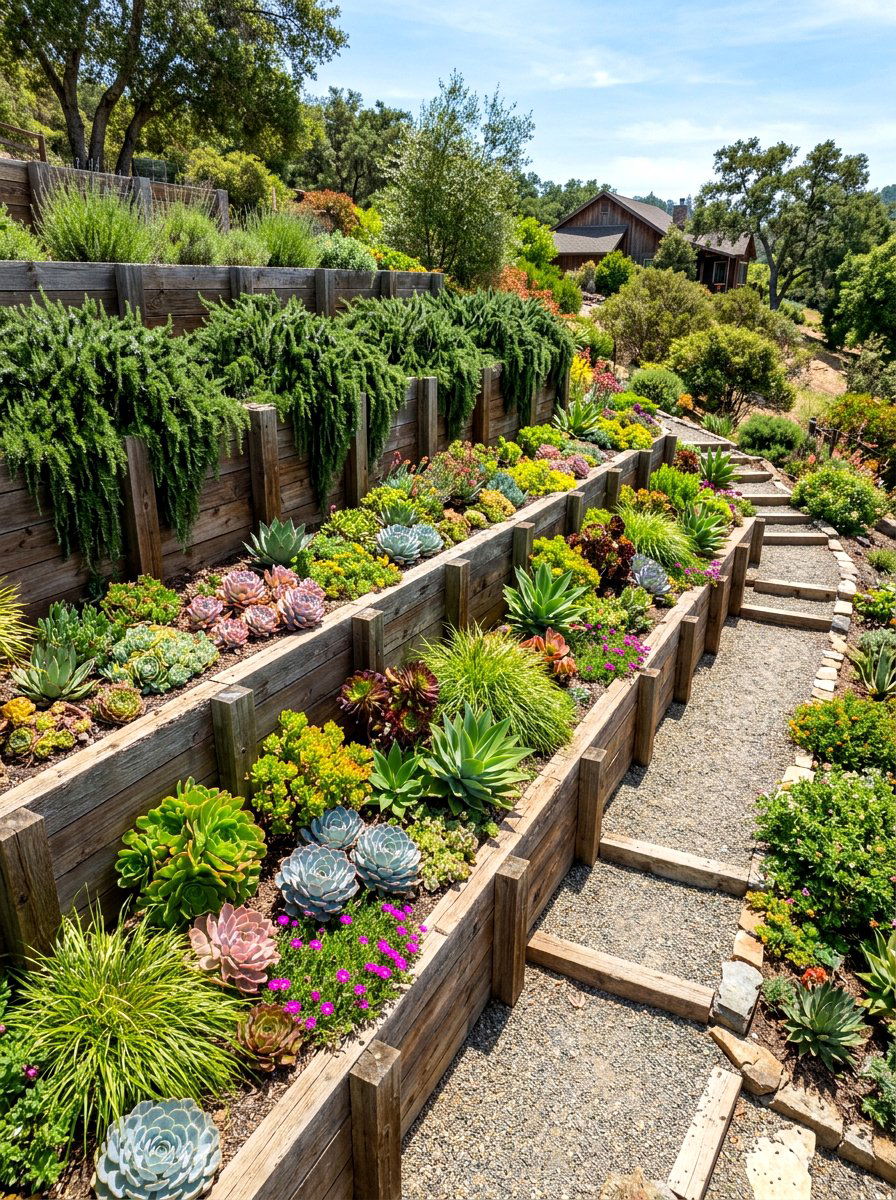
Landscaping a steep hill can be a challenge, but terracing with drought-tolerant plants is a brilliant way to turn a problem area into a stunning feature. By building a series of low walls out of stone or timber, you create flat planting pockets that catch and hold rainwater. Filling these terraces with a mix of trailing rosemary, hardy shrubs, and colorful succulents creates a lush, cascading effect that prevents soil runoff. The vertical nature of the design allows you to see every plant clearly, making it a high-impact visual display. This approach transforms a difficult slope into a water-wise masterpiece that adds significant value and beauty to your entire outdoor property.
Conclusion:
Embracing drought-tolerant landscaping is a powerful way to harmonize your home with the local environment while creating a stunning and low-maintenance retreat. Whether you choose the rugged beauty of a rock garden, the modern lines of a minimalist xeriscape, or the fragrant charm of a lavender border, you are making a conscious choice to conserve water. These thirty ideas prove that a resilient yard can be just as colorful, lush, and inviting as any traditional garden. By focusing on native plants and smart hardscaping, you can enjoy a gorgeous outdoor space that thrives in the heat and stands the test of time. Your future garden starts with these sustainable steps.

Related posts: