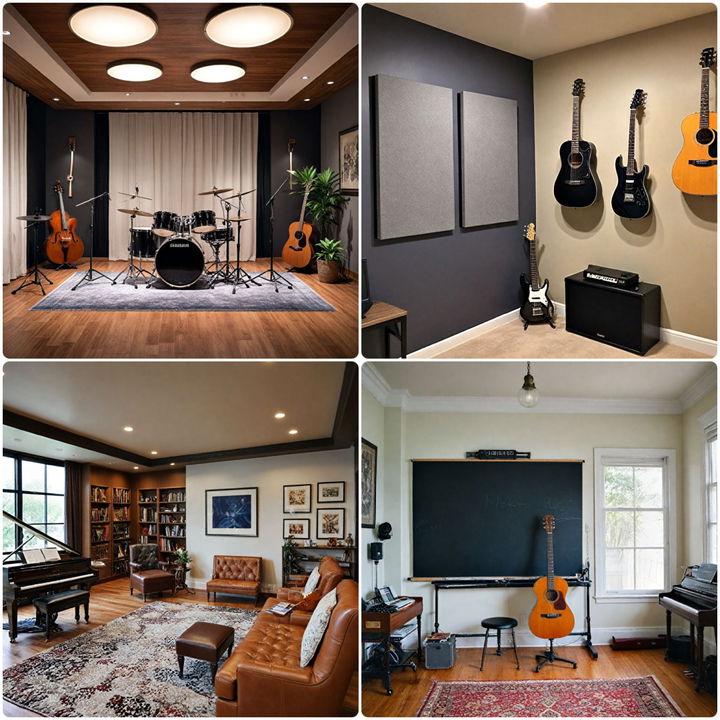
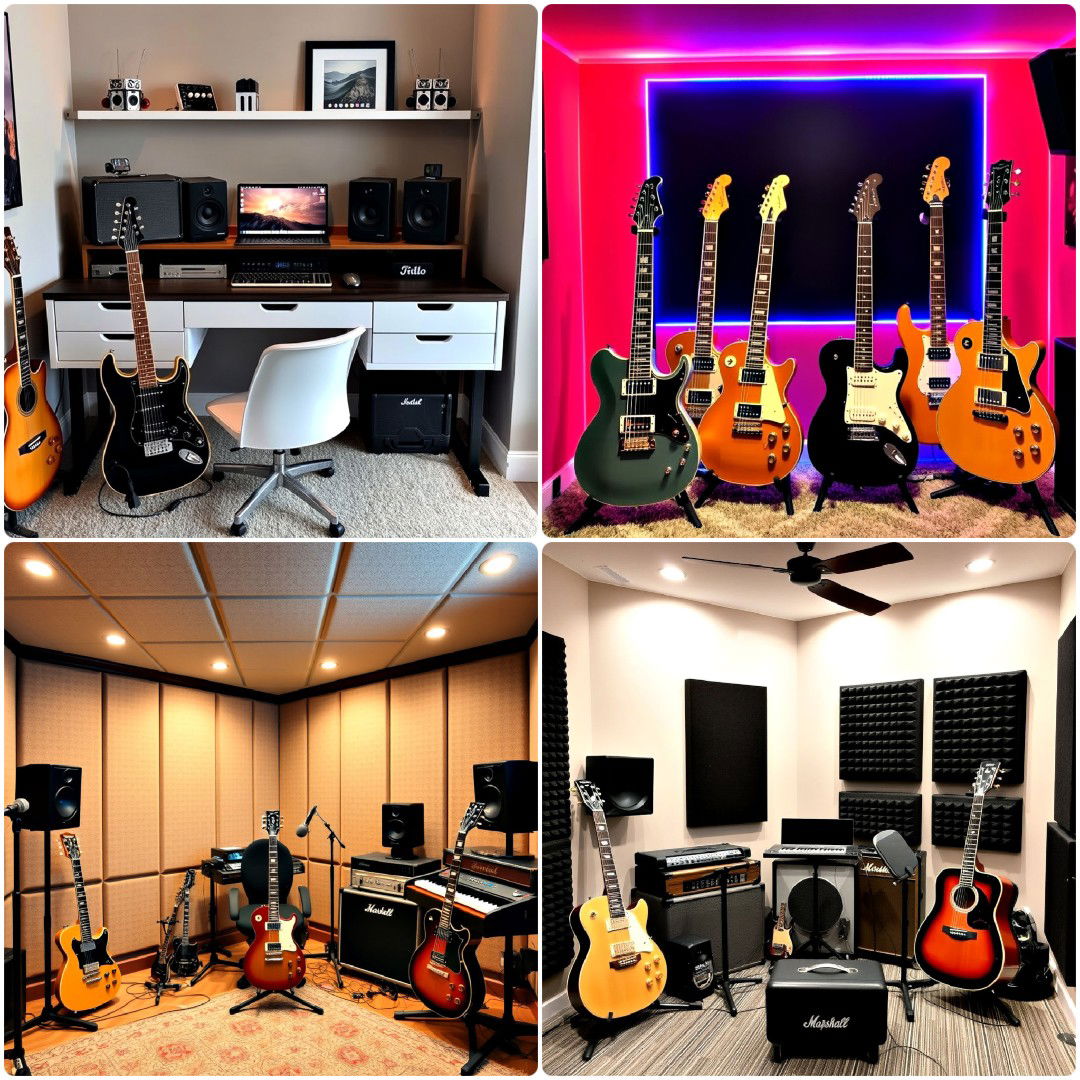
Setting up a dedicated space for percussion requires a thoughtful balance between acoustic performance and personal style. Whether you are a professional musician or a hobbyist, creating a room that inspires creativity while managing high decibel levels is a rewarding challenge. From selecting the right soundproofing materials to choosing a color palette that sets the mood, every detail contributes to the overall drumming experience. This guide explores a wide variety of setups, ranging from compact apartment corners to expansive professional studios. You will find practical advice on layout, lighting, and storage to help you transform any area into a functional and visually stunning haven for your favorite instruments and musical gear.

1. Soundproof drum room
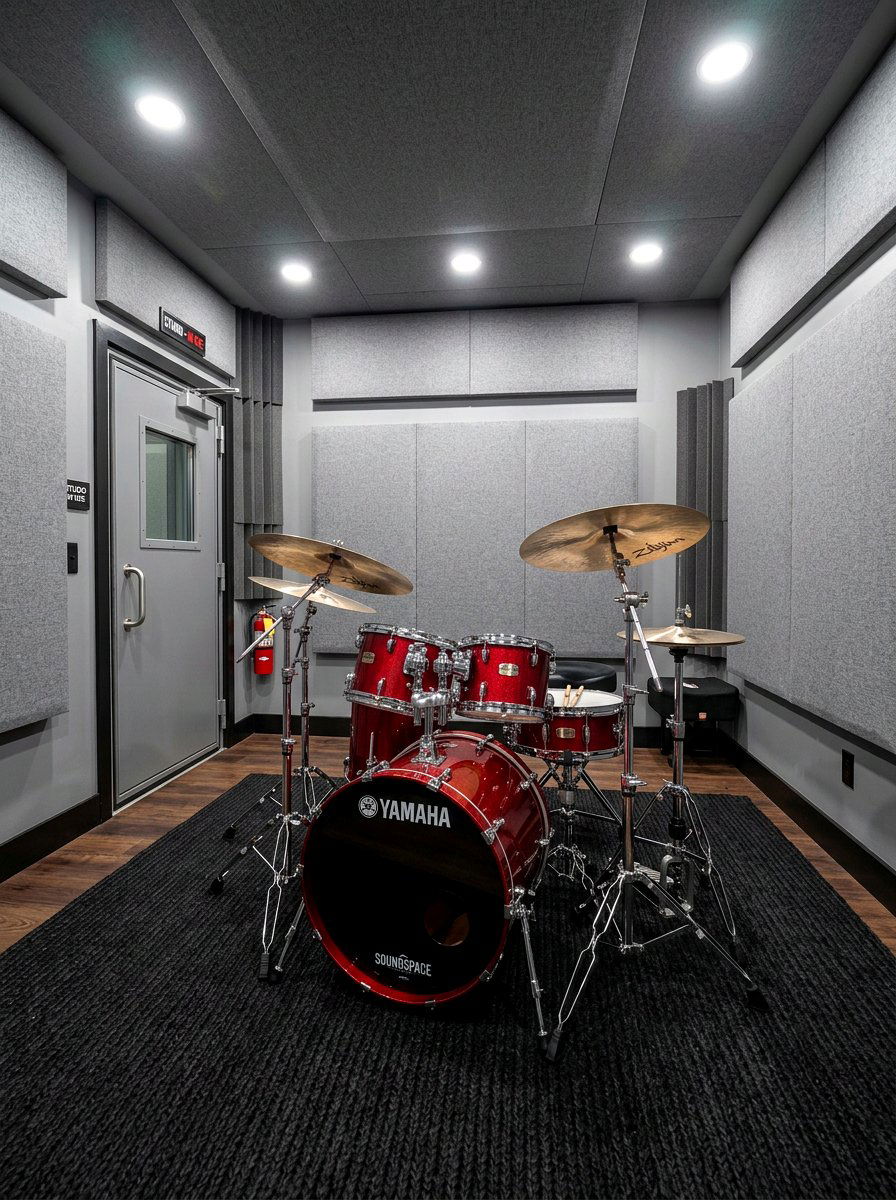
Building a space that keeps high-volume sounds contained is the primary goal for many percussionists living in residential areas. A truly isolated environment often requires a room-within-a-room construction technique to decouple the walls from the main house structure. Using heavy materials like mass-loaded vinyl and double layers of specialized drywall can significantly reduce noise leakage. It is also important to seal any air gaps around doors and windows using thick rubber gaskets or acoustic sealants. High-quality ventilation systems with sound baffles allow for fresh air without letting the rhythm escape. This setup ensures you can practice at any hour without disturbing family members or nearby neighbors.
2. Small space drum room
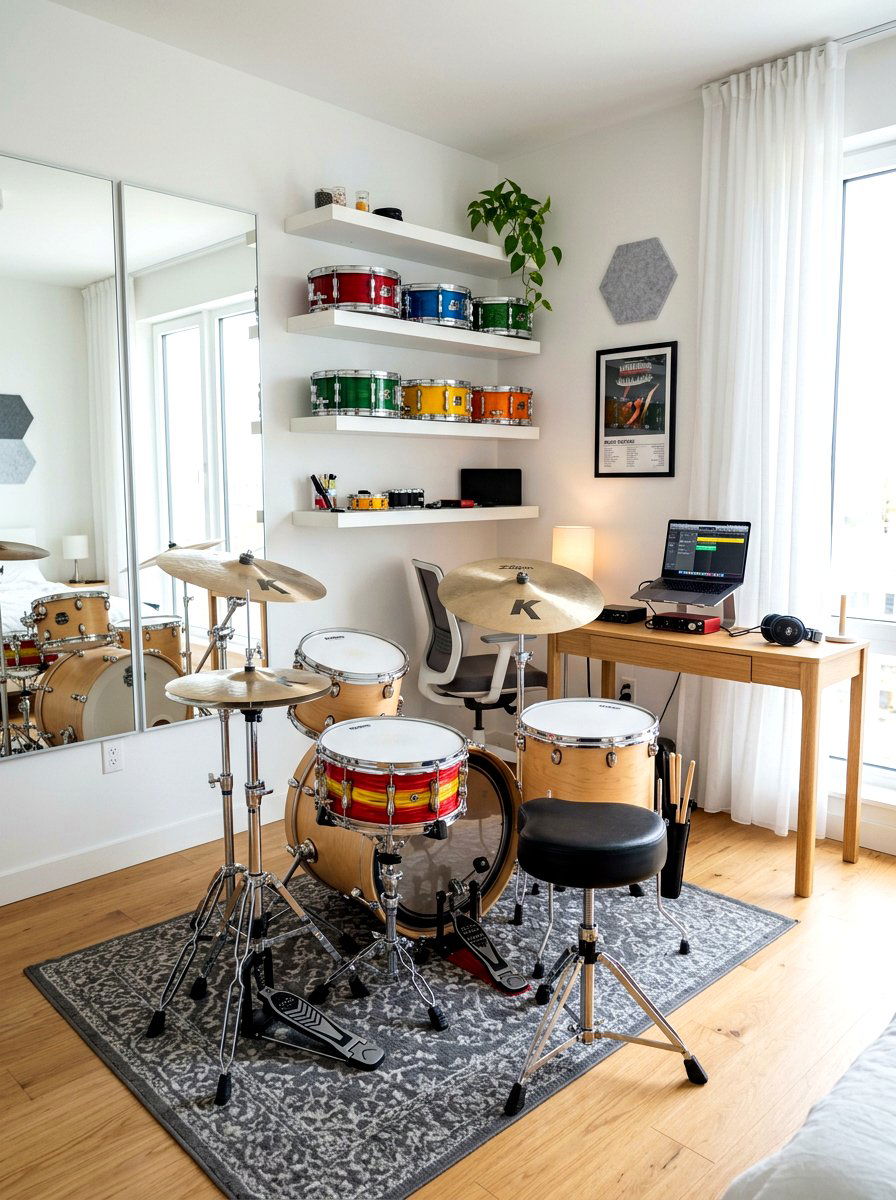
Maximizing a limited floor plan requires a strategic approach to equipment placement and furniture selection. Using a compact drum kit or a slim electronic set can help save valuable square footage in a tiny spare bedroom or a shared office. Vertical storage solutions, such as wall-mounted cymbal hangers and floating shelves for snare drums, keep the floor clear for the main setup. Light-colored walls and large mirrors can make a cramped area feel much more open and inviting. Choosing multi-functional furniture, like a storage ottoman for sticks and hardware, further optimizes the layout. A well-organized small room proves that you do not need a massive studio to play.
3. Basement drum room
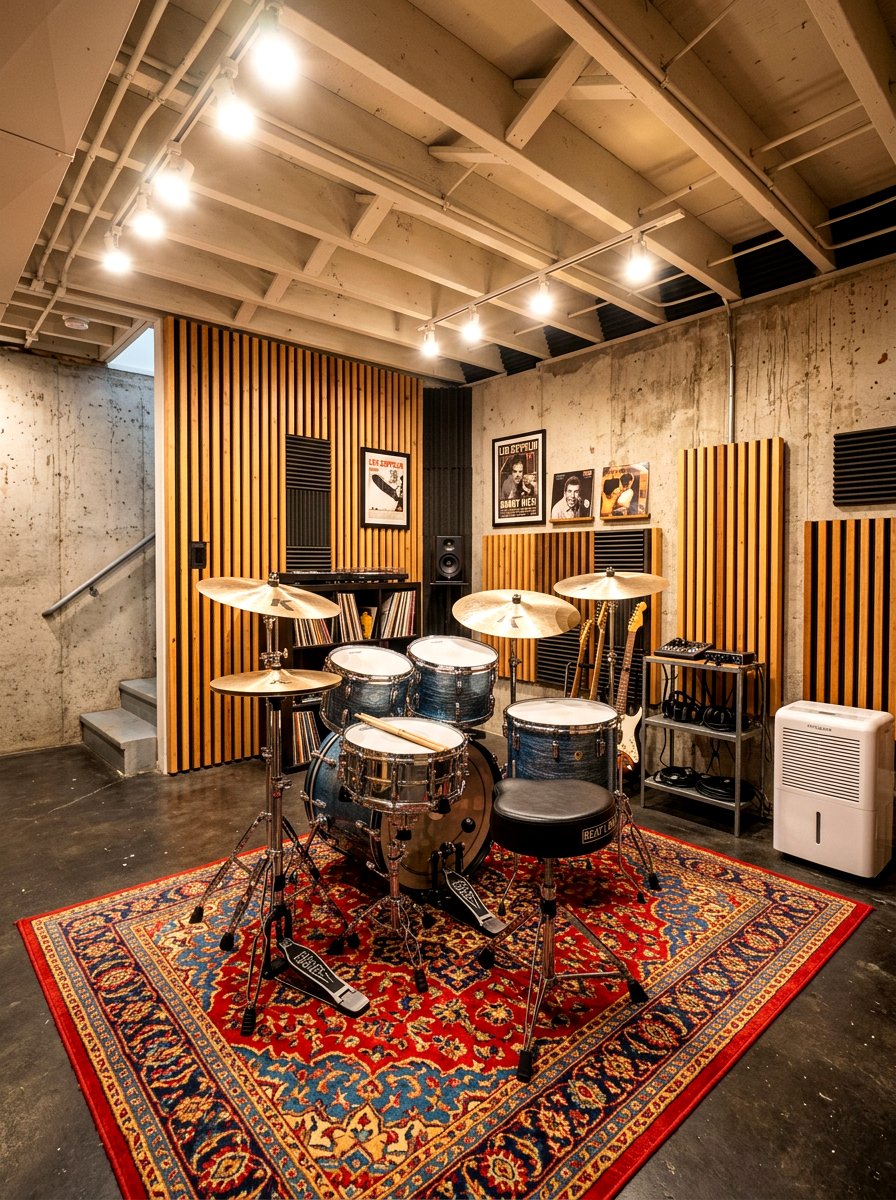
Utilizing a below-ground area provides a natural advantage for sound isolation due to the surrounding earth and concrete walls. Basements are ideal for heavy hitters because the foundation helps absorb low-frequency vibrations from the kick drum. To prevent a damp or cold atmosphere, installing moisture-resistant flooring and a dedicated dehumidifier is essential for protecting wooden shells and metal hardware. Adding a thick, stylish rug under the kit helps dampen floor reflections while adding a touch of warmth to the industrial setting. Bright, recessed ceiling lights can compensate for the lack of natural windows, making the subterranean space feel like a professional recording bunker for long practice sessions.
4. Garage drum room
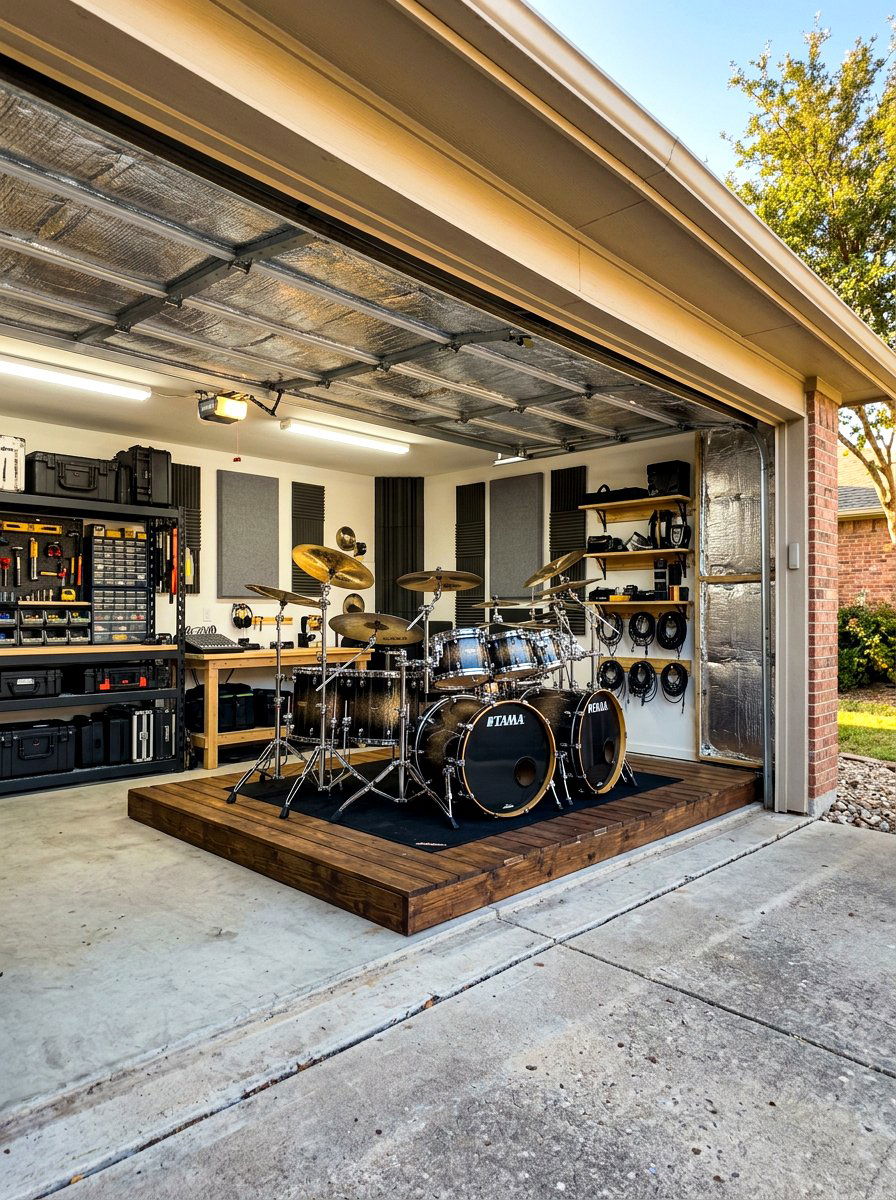
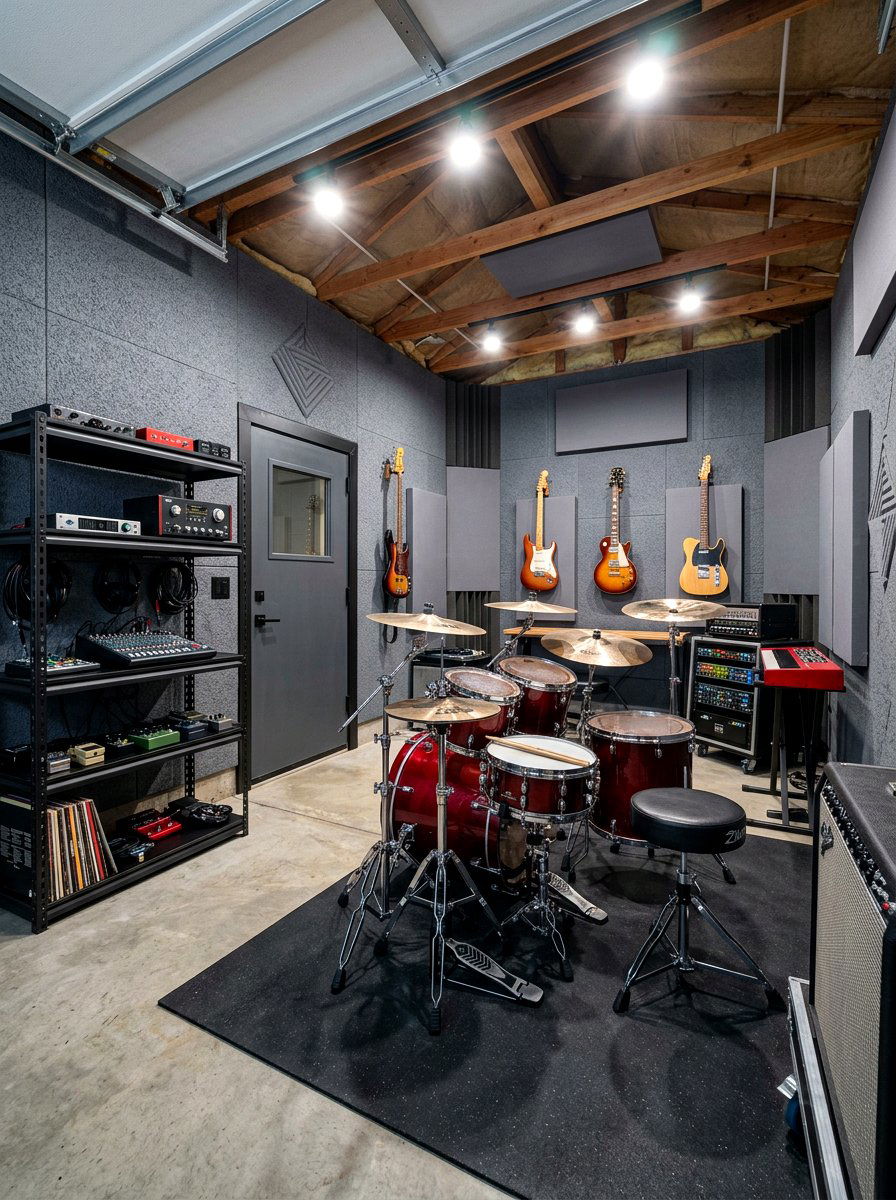
Transforming a parking area into a music studio offers plenty of space for large kits and additional band equipment. Since garages often have high ceilings and concrete floors, adding acoustic treatment is necessary to control harsh echoes and reverberation. Installing insulated garage door blankets and heavy-duty weather stripping can help regulate the temperature and contain the sound. Many drummers choose to build a raised wooden platform to decouple the kit from the cold floor, which also improves the overall resonance of the drums. With the right shelving units, you can still store tools or household items while keeping your musical gear as the central focal point.
5. Modern drum room
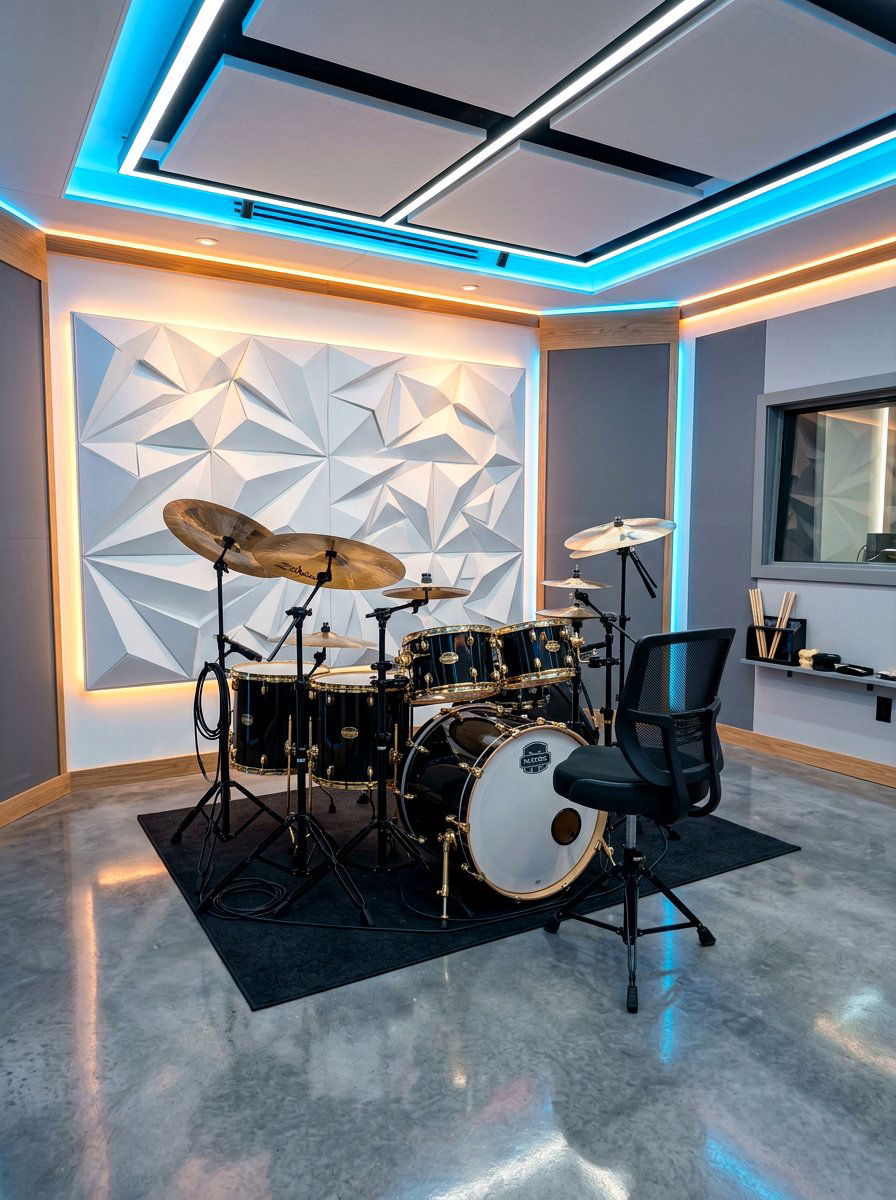
A contemporary aesthetic focuses on clean lines, a neutral color palette, and high-tech integration for a sophisticated look. Sleek acoustic panels in geometric shapes can serve as both functional sound absorbers and minimalist wall art. Incorporating smart lighting systems allows you to change the ambiance with a simple phone app, switching from bright white for cleaning to moody hues for performing. Choosing a drum kit with a matte finish or polished chrome accents complements the polished hardwood or polished concrete flooring. This design style prioritizes a clutter-free environment, using hidden cable management systems to keep microphones and power cords neatly tucked away from plain sight.
6. Acoustic foam drum room
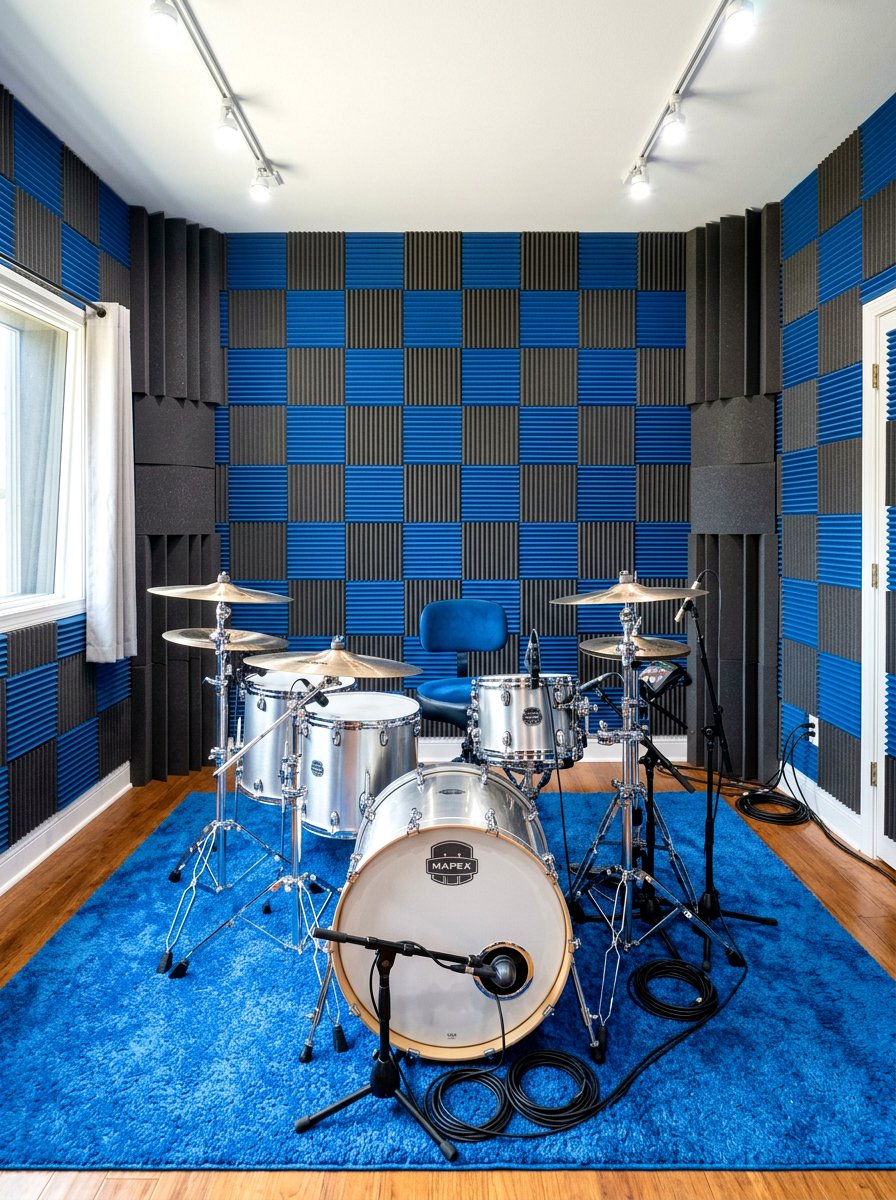
Covering the walls with specialized foam tiles is an affordable and effective way to improve the internal sound quality of your space. These panels come in various textures, such as egg-crate or wedge patterns, which help diffuse sound waves and eliminate unwanted flutter echoes. You can create interesting visual patterns by alternating colors like charcoal, blue, or red across the primary reflection points. While foam does not fully soundproof a room, it makes the environment much more comfortable for the player by reducing harshness. Placing bass traps in the corners helps manage booming low ends, ensuring that every stroke on the snare sounds crisp, clear, and perfectly defined.
7. Industrial drum room
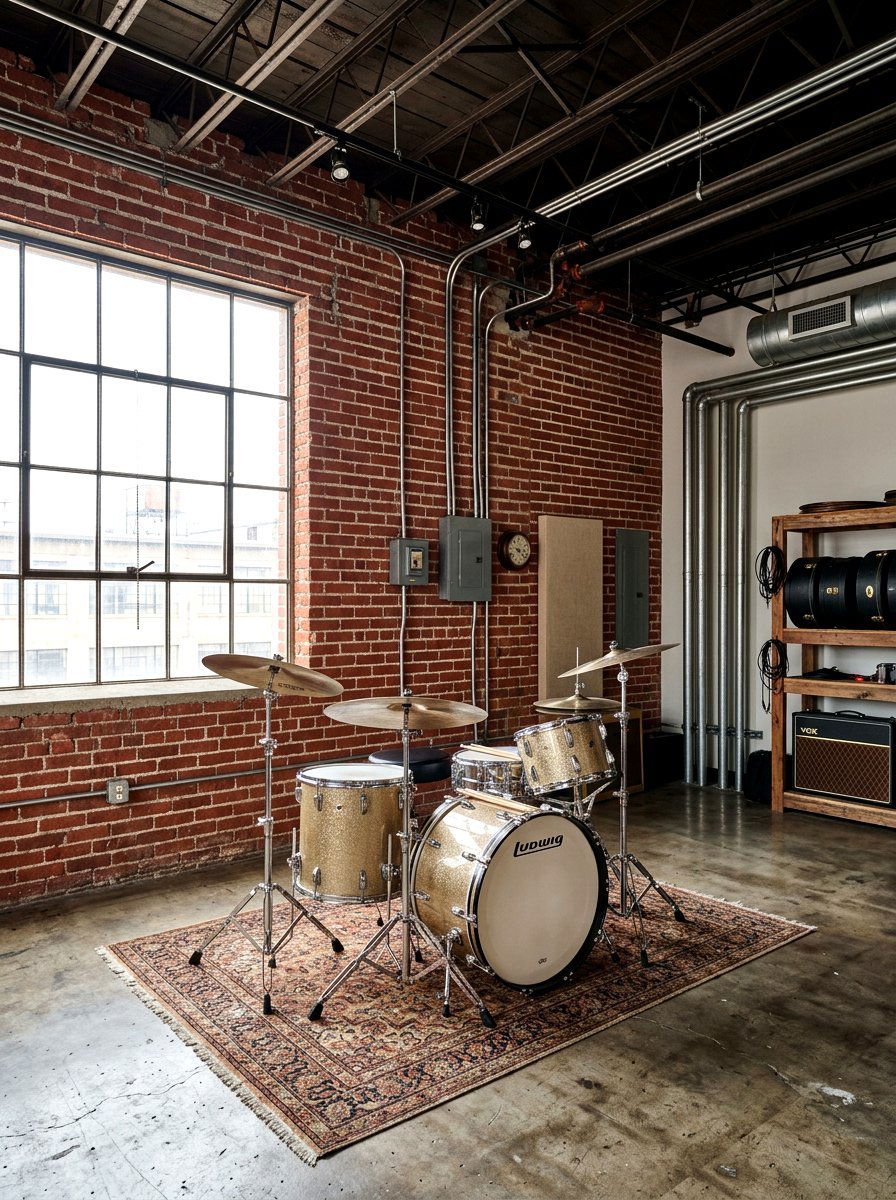
Embracing raw materials like exposed brick, metal piping, and distressed wood creates a rugged and inspiring atmosphere for creative expression. This style works perfectly in converted lofts or older buildings where the architectural character adds to the musical vibe. You can use heavy-duty metal racks to display your cymbal collection or vintage snare drums like pieces of industrial art. Large factory-style windows provide plenty of natural light, though they may require thick velvet curtains to control the acoustics during loud sessions. Pairing a classic sparkle-finish drum kit with a worn leather chair and iron accents creates a timeless look that feels both professional and edgy for any drummer.
8. Minimalist drum room
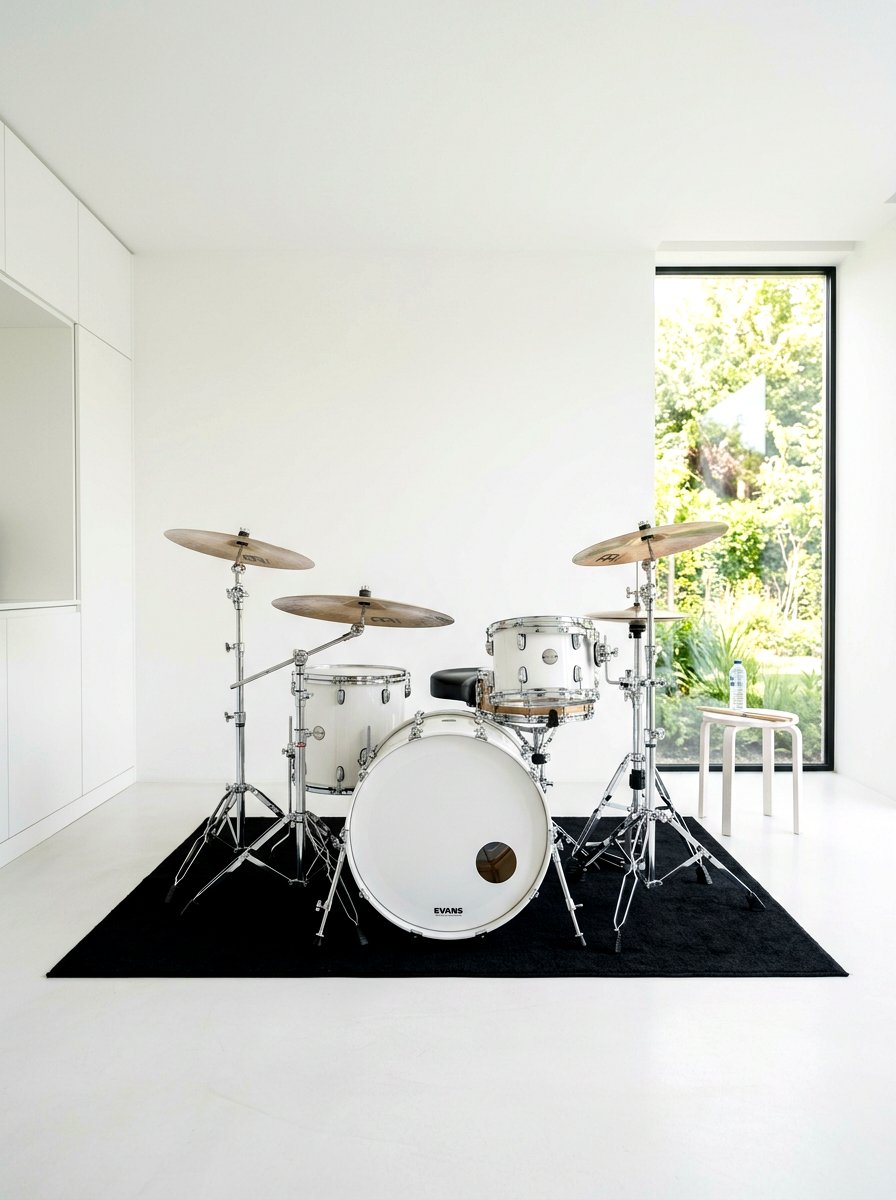
Focusing on the essentials creates a tranquil environment where the instrument takes center stage without any unnecessary distractions. A minimalist approach often features a monochromatic color scheme, such as various shades of white or soft gray, to promote mental clarity. The kit is typically the only large object in the room, positioned centrally to allow for easy movement and perfect ergonomics. Hidden storage cabinets keep extra hardware, heads, and sticks out of view when they are not in use. This uncluttered aesthetic is perfect for drummers who want to focus entirely on their technique and rhythm. The simplicity of the space encourages a deep connection between the player and the music.
9. Colorful drum room
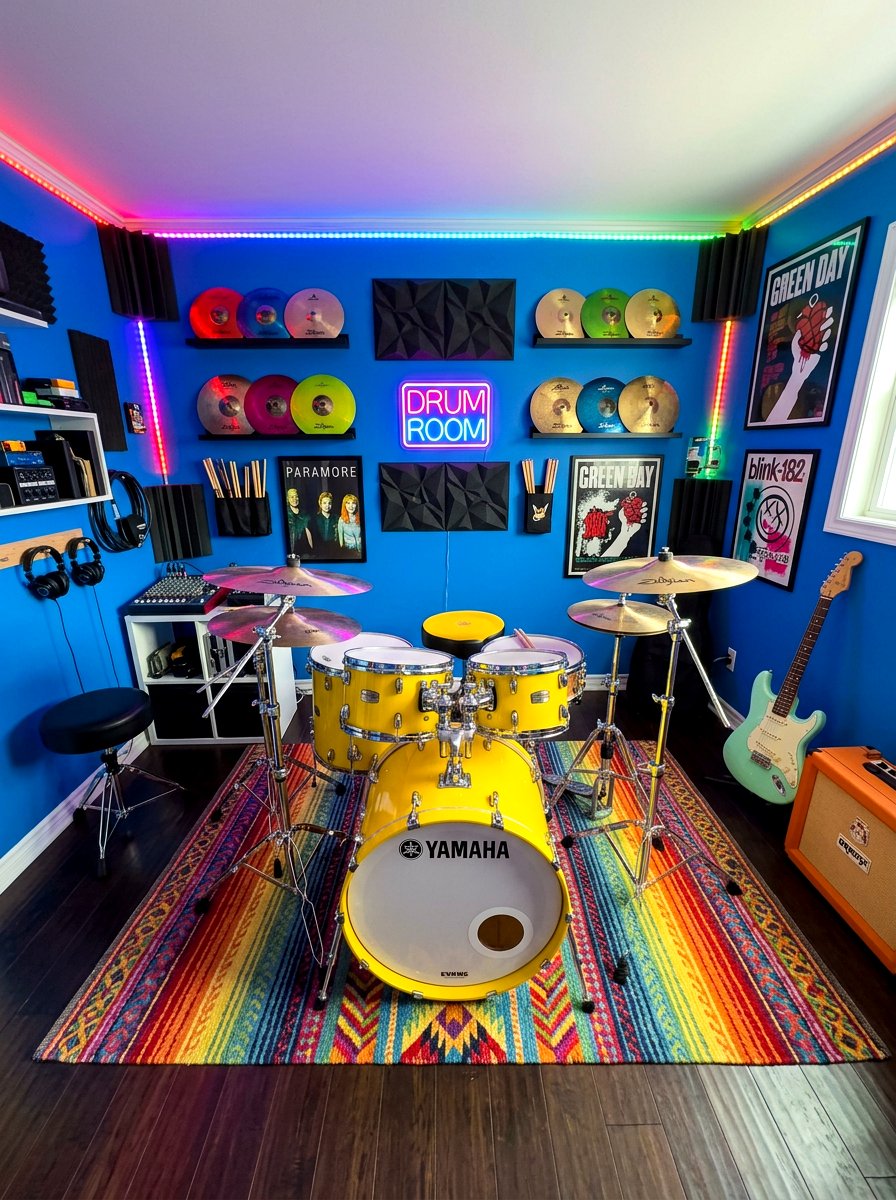
Infusing your practice area with vibrant hues can boost your energy levels and spark new creative ideas during long rehearsals. Bold wall colors like electric blue, sunshine yellow, or deep purple can transform a dull room into an exciting performance stage. You can match the finish of your drum shells to the accent wall or choose contrasting colors for a more eclectic and playful look. Using colorful LED strips behind acoustic panels adds a dynamic glow that changes with the intensity of your playing. Adding patterned rugs and bright posters of your favorite bands further personalizes the space. This lively environment makes practicing feel more like a fun and inspiring event.
10. Dark drum room
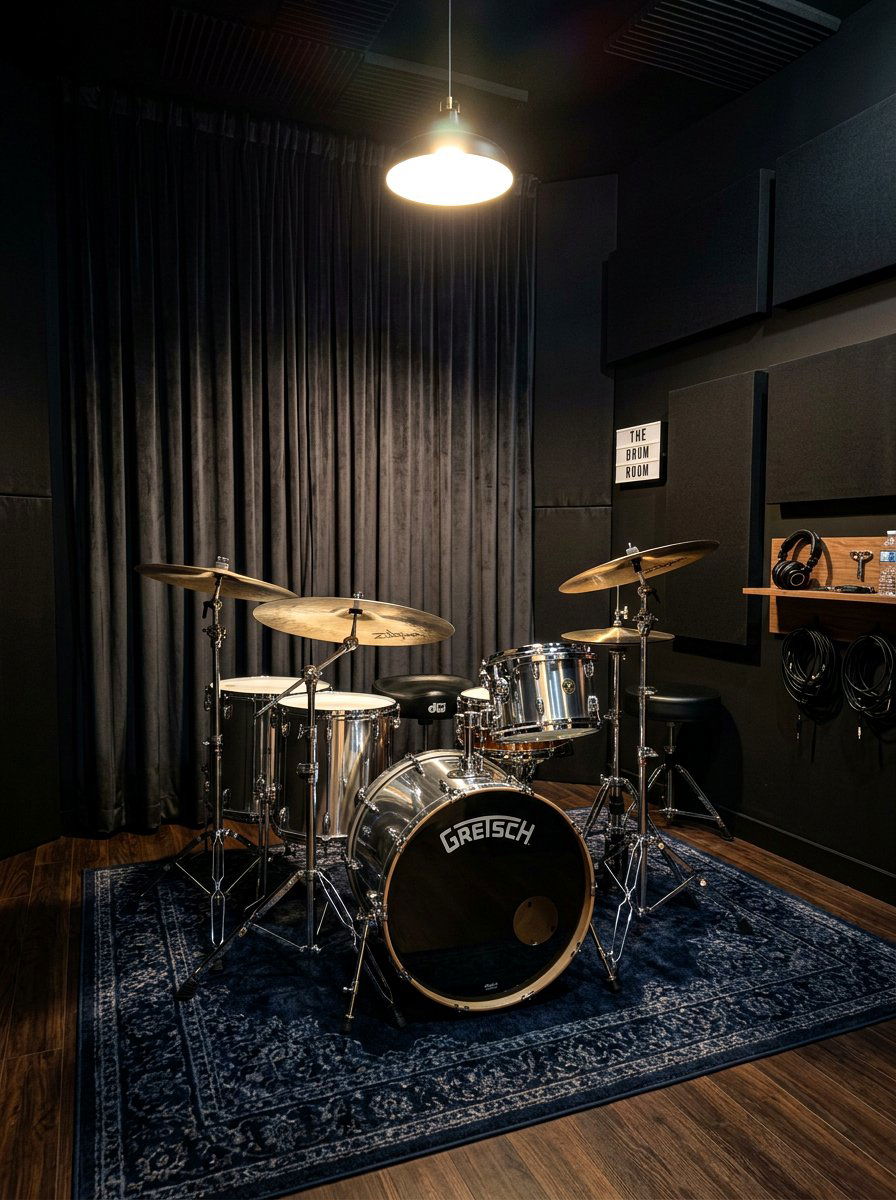
Creating a moody and intimate setting is a popular choice for drummers who prefer a late-night club atmosphere for their sessions. Deep charcoal, navy, or matte black walls help the room disappear, allowing the chrome and lacquer of the drum kit to shine. Spotlighting the kit with focused track lighting or a single pendant lamp creates a dramatic focal point that enhances the visual experience. Darker rooms are also excellent for filming high-quality drum covers, as the shadows provide a professional and cinematic background. To keep the space from feeling too small, you can use subtle textures like velvet curtains or dark wood panels to add depth and sophistication.
11. Attic drum room
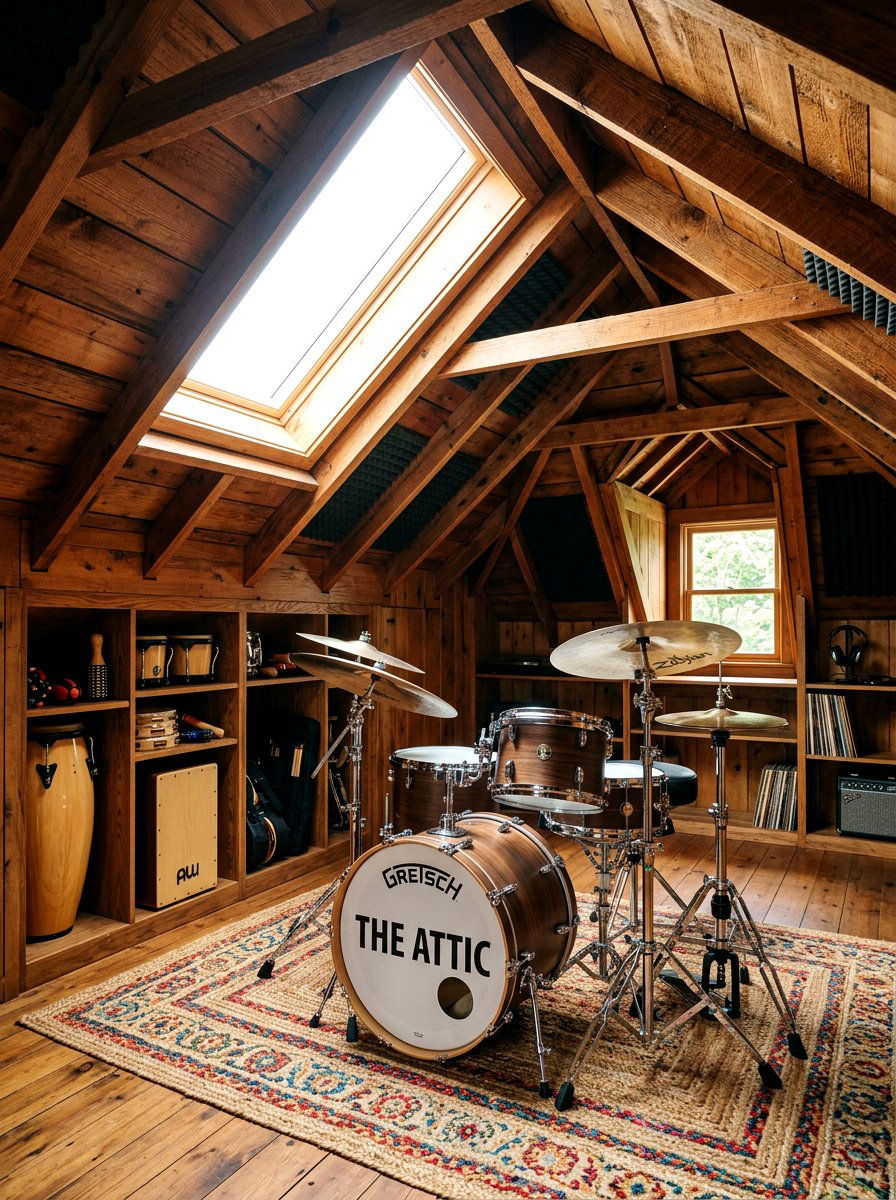
Converting a top-floor space offers a unique architectural layout with sloped ceilings that naturally help diffuse sound waves. Attics are often tucked away from the main living areas, providing a sense of privacy and separation from the rest of the household. The slanted walls are perfect for mounting custom acoustic panels or creating built-in storage nooks for smaller percussion instruments. Skylights can provide beautiful natural lighting during the day, while warm lamps create a cozy environment in the evening. It is important to ensure the floor is reinforced to handle the weight of a full kit and that the insulation is sufficient for both soundproofing and temperature control throughout the year.
12. Home recording drum room
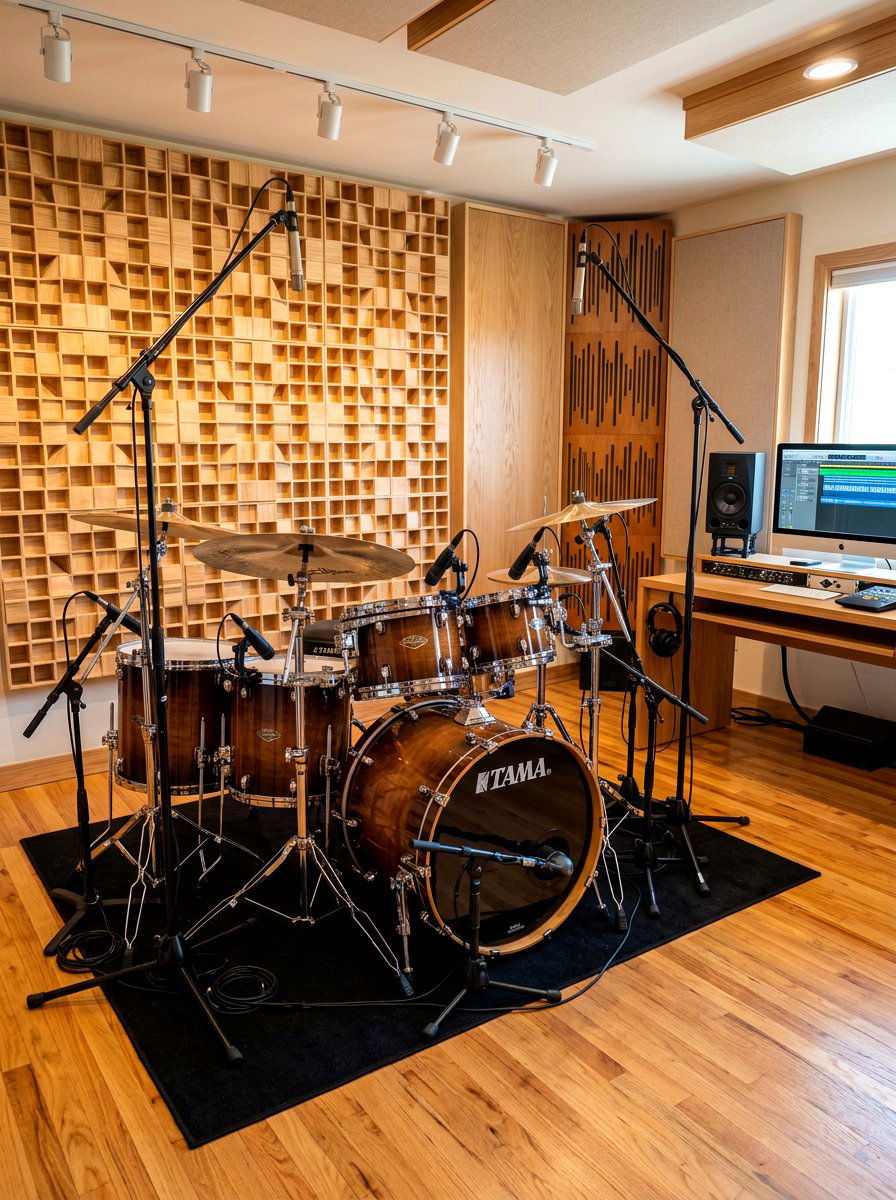
Designing a space specifically for capturing audio requires a balance between sound absorption and the right amount of natural room resonance. Positioning high-quality microphones around the kit requires a layout that allows for easy cable routing to an audio interface or mixing console. Using wooden diffusers on the back wall can help scatter sound waves, creating a larger and more professional sound in your recordings. A dedicated desk area for your computer and studio monitors should be ergonomically placed so you can easily hit record and check your tracks. This functional setup turns your practice space into a powerful production studio where you can produce professional-grade music from home.
13. Rustic drum room
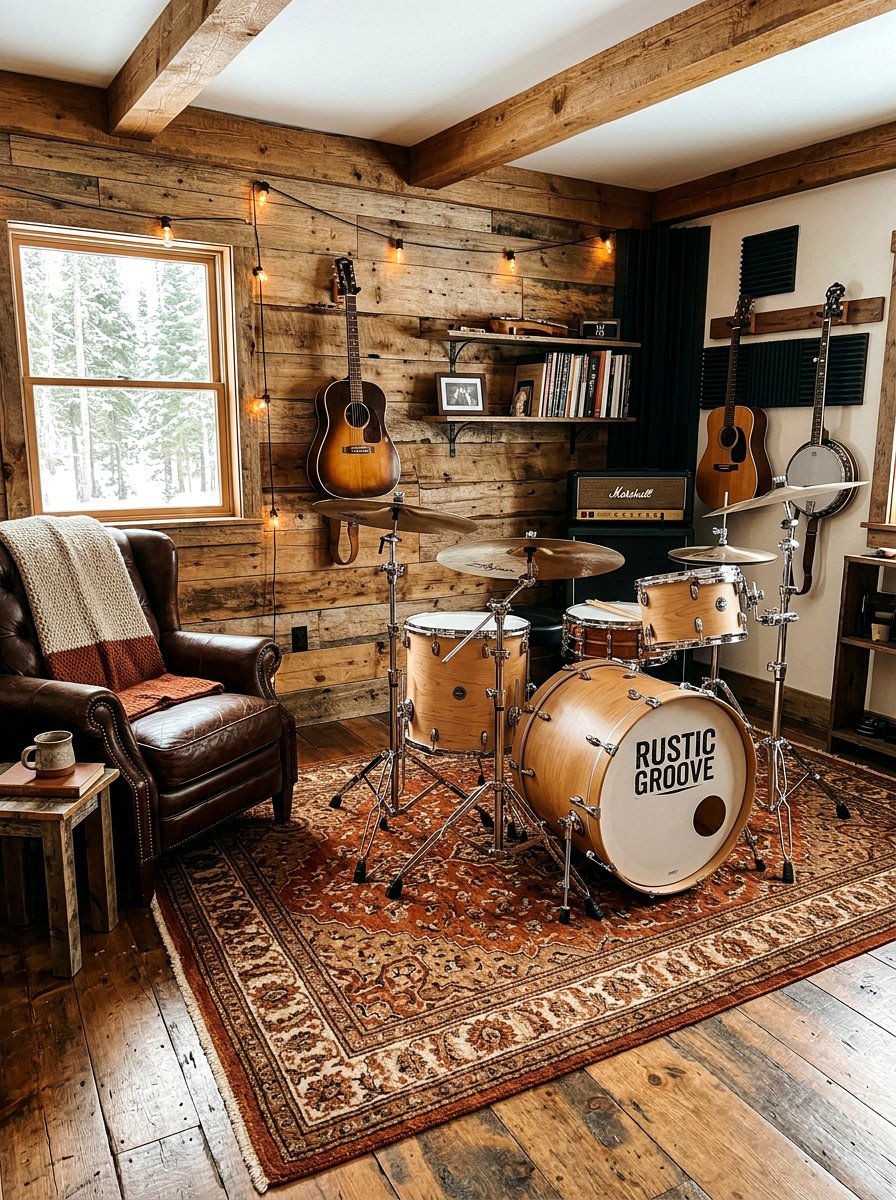
Incorporating natural elements like reclaimed wood, stone, and warm textiles creates a grounded and earthy environment for making music. This design style often features wooden ceiling beams and wide-plank flooring that adds a rich, organic resonance to the room. You can use old wooden crates for stick storage or mount vintage cymbals on hand-carved wall hooks for a unique decorative touch. A large woven rug in warm earth tones not only anchors the kit but also softens the overall acoustic profile of the space. The rustic aesthetic is perfect for drummers who want their studio to feel like a cozy retreat or a creative cabin in the woods.
14. Neon light drum room
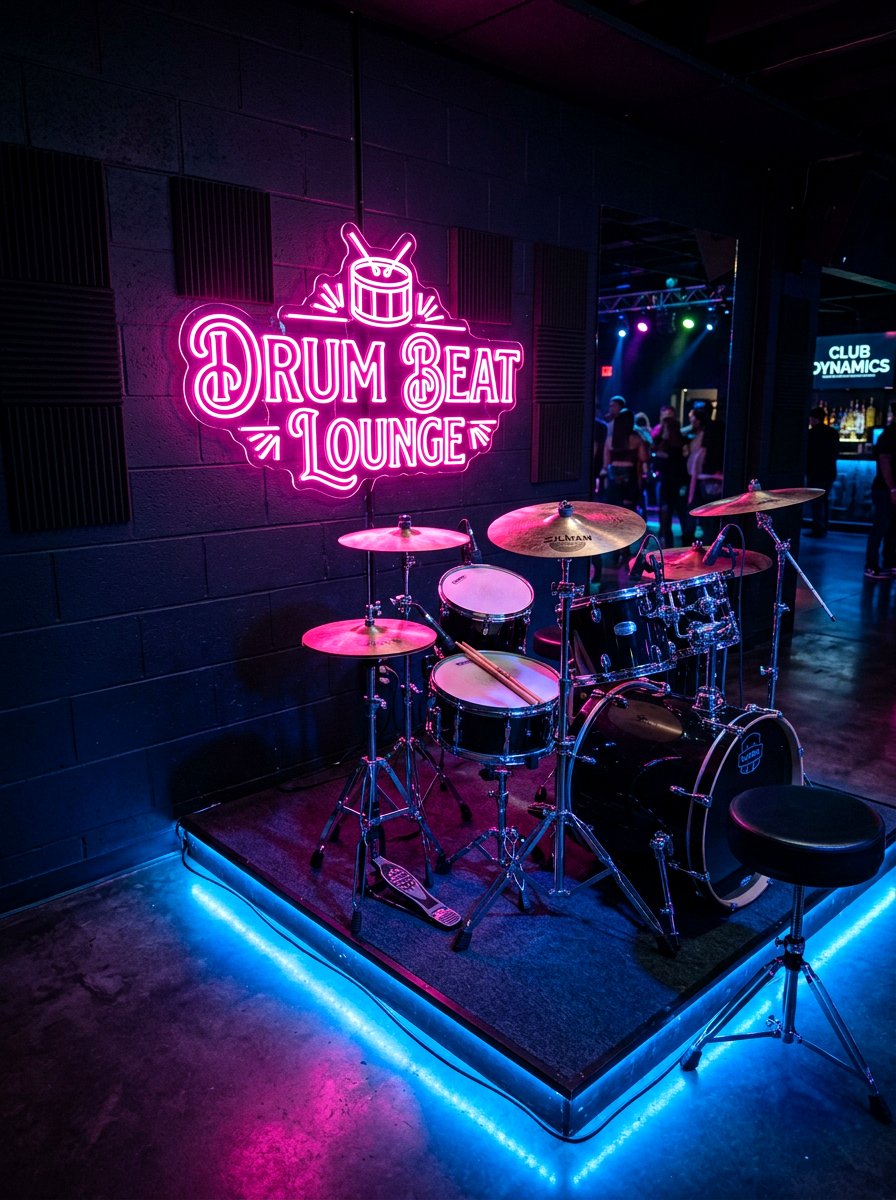
Adding vibrant neon signs and glowing LED accents brings a high-energy, futuristic vibe to your musical sanctuary. Custom neon lights featuring your name or a favorite musical quote can serve as a stunning focal point on a dark accent wall. Wrapping LED strips around the bass drum or under the cymbals creates a spectacular visual effect that can pulse in time with your beat. This type of lighting is especially effective for content creators who want to stand out on social media platforms with eye-catching visuals. The neon glow transforms the room into a private concert stage, making every practice session feel like an exciting live performance for an audience.
15. Wood panel drum room
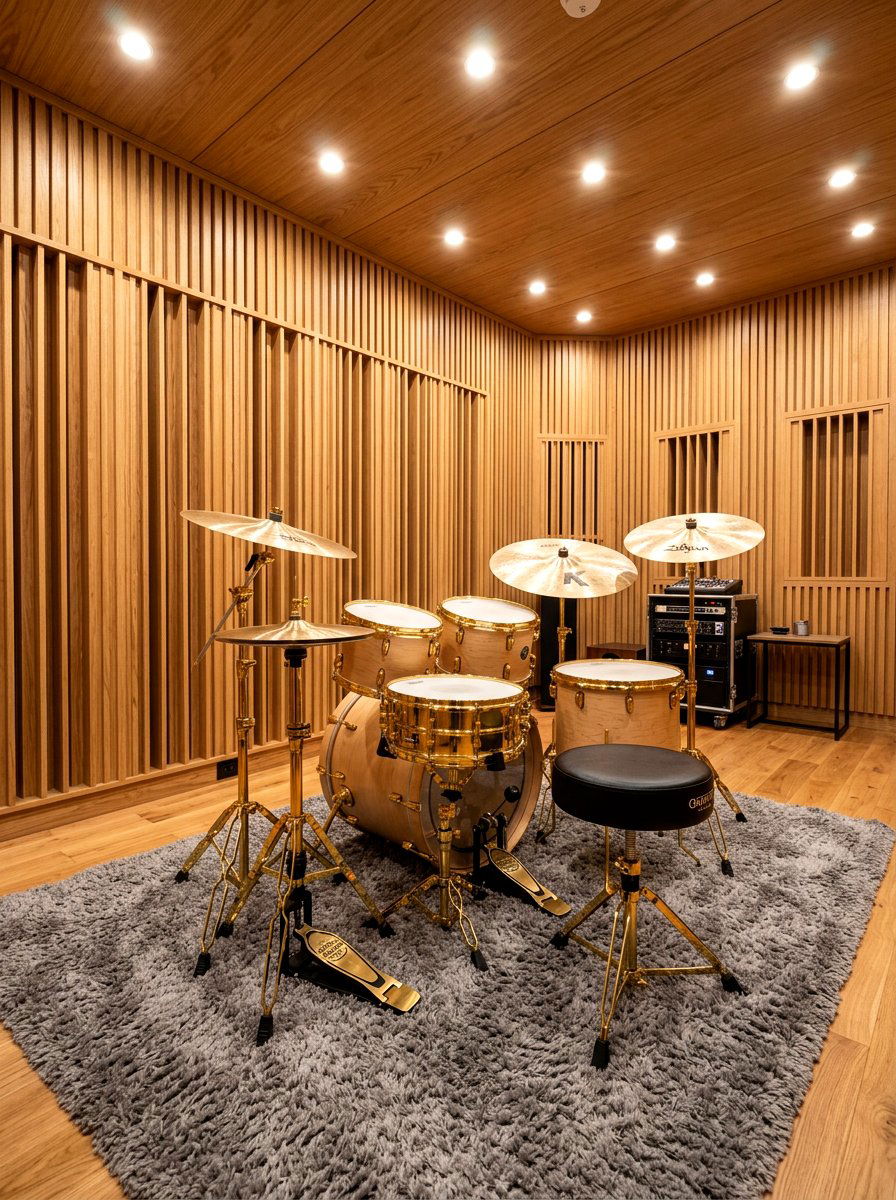
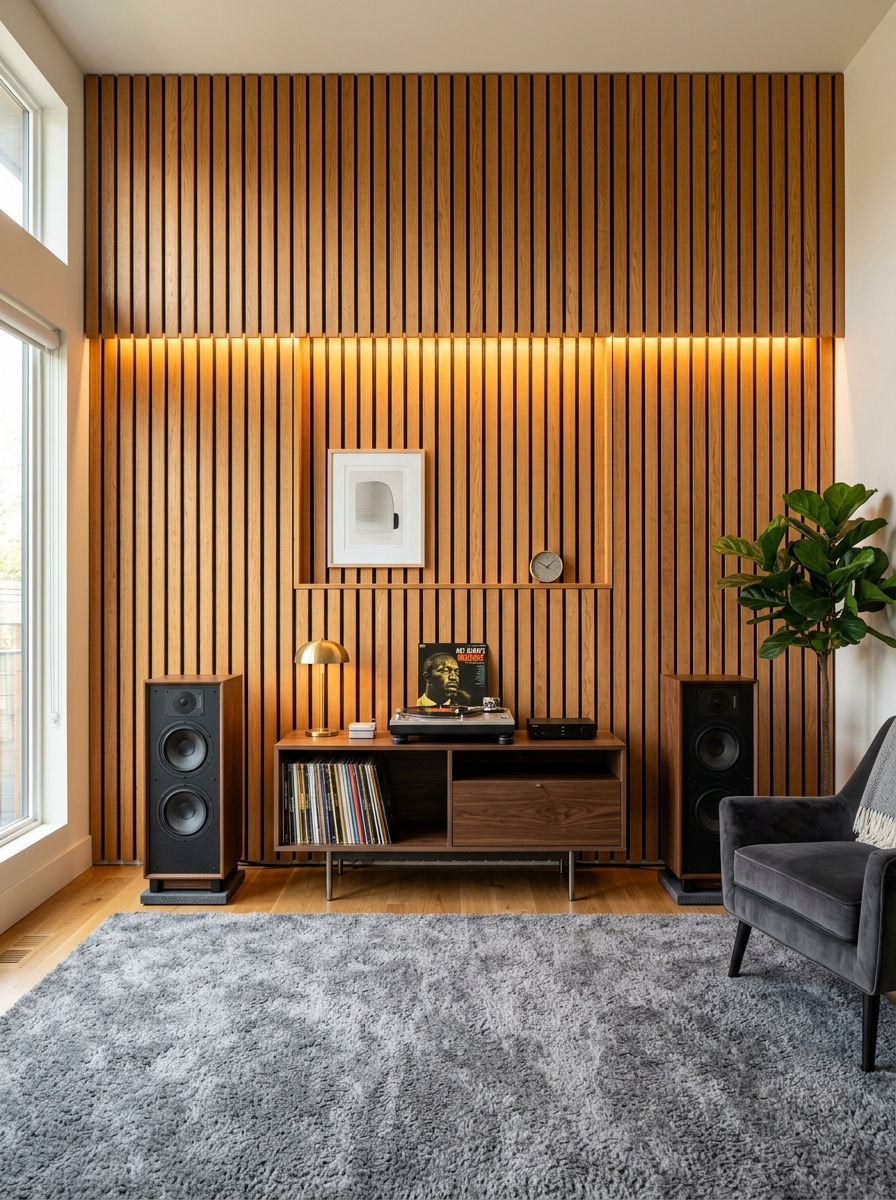
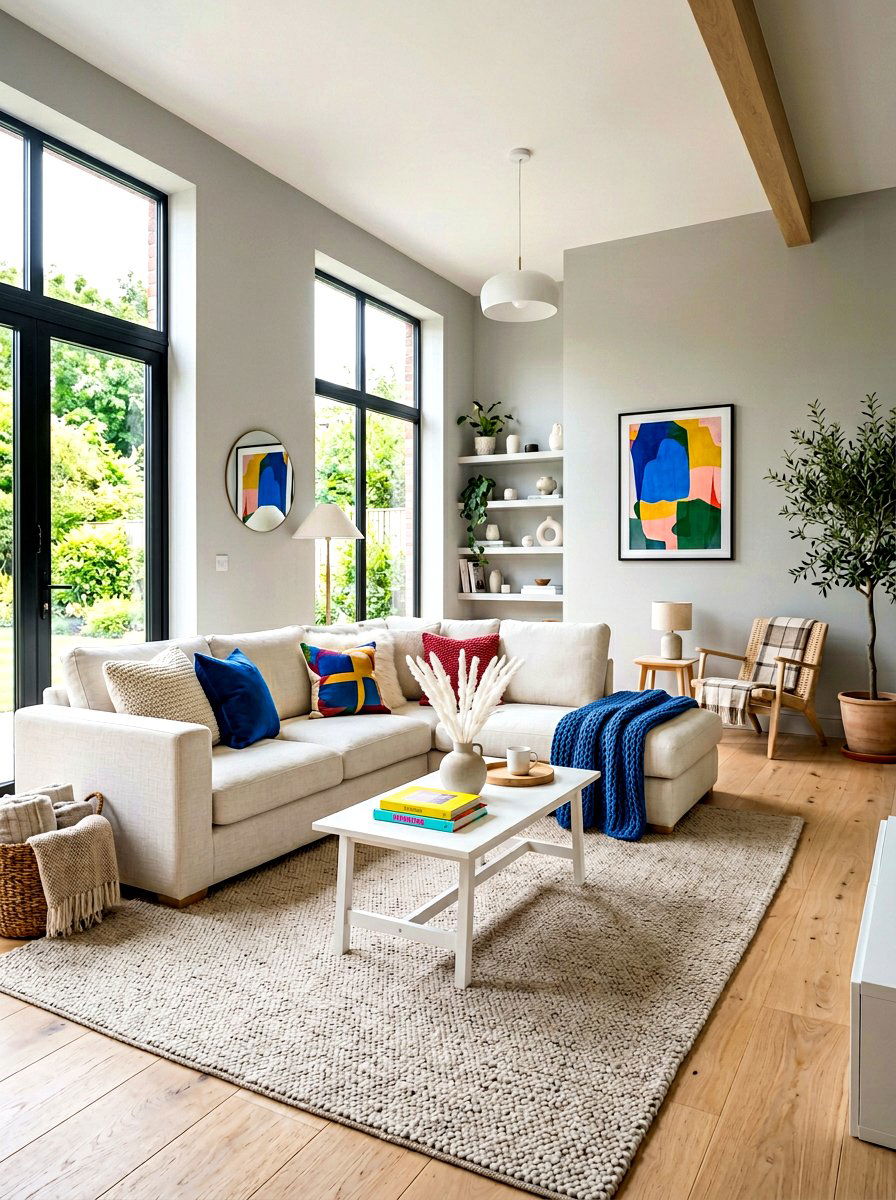
Cladding the walls in natural timber provides a classic and elegant look while offering excellent acoustic properties for percussion. Wood reflects high frequencies in a warm and pleasing way, preventing the room from sounding too "dead" or overly muffled. You can choose from various finishes, such as light oak for a modern feel or dark walnut for a more traditional studio appearance. Slat-wall systems are particularly useful for drummers because they allow you to easily hang accessories and move them around as your collection grows. Pairing the wood walls with a plush rug and soft lighting creates a timeless and professional atmosphere that feels incredibly high-end and inviting.
16. Luxury drum room
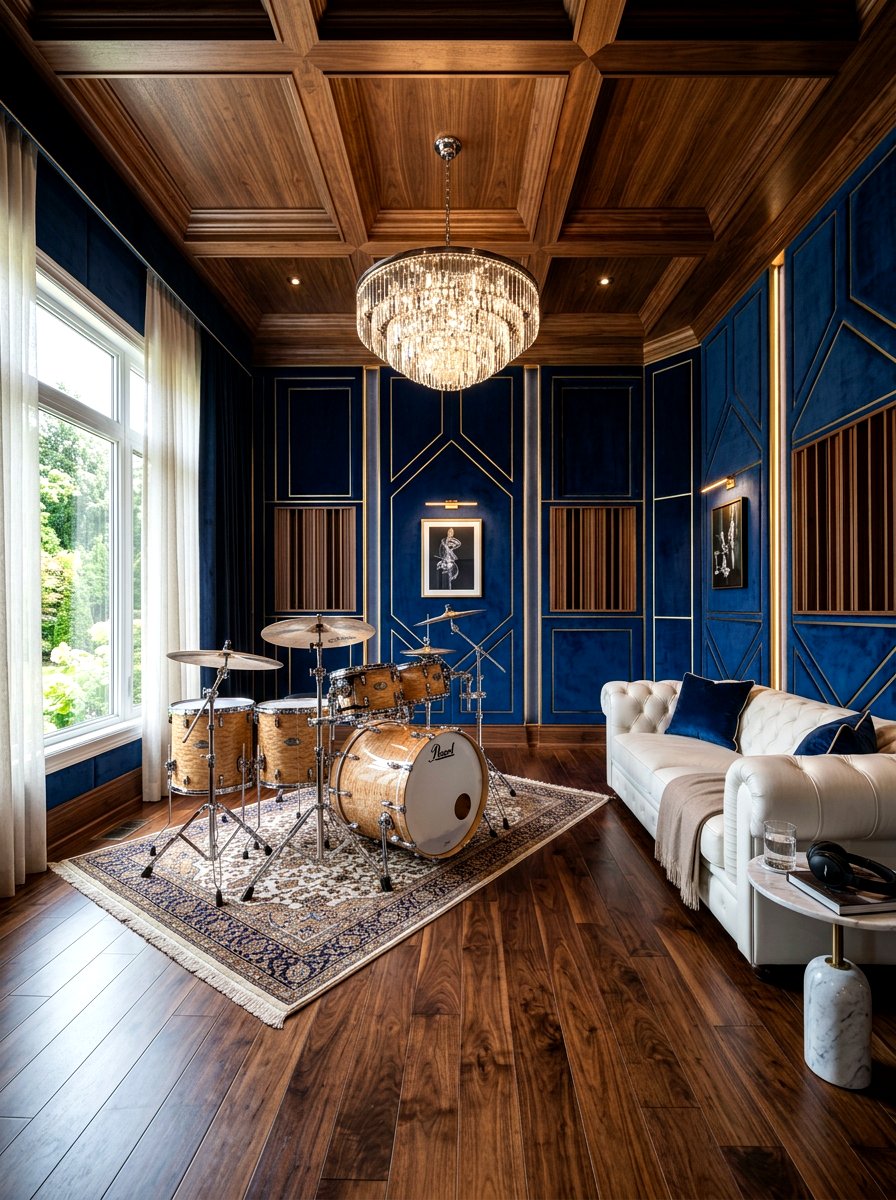
Designing a high-end music studio involves using premium materials and sophisticated architectural details to create a truly world-class environment. This might include custom-built cabinetry for cymbal storage, velvet-wrapped acoustic panels, and designer light fixtures that double as art pieces. A large, plush sofa provides a comfortable place for guests or bandmates to relax during a long session. High-quality hardwood floors paired with expensive oriental rugs add a sense of history and elegance to the space. Integrated technology, such as hidden speakers and automated climate control, ensures that the room is always perfectly optimized for performance. This luxurious setting turns your drumming hobby into a prestigious and inspiring professional experience.
17. Retro drum room
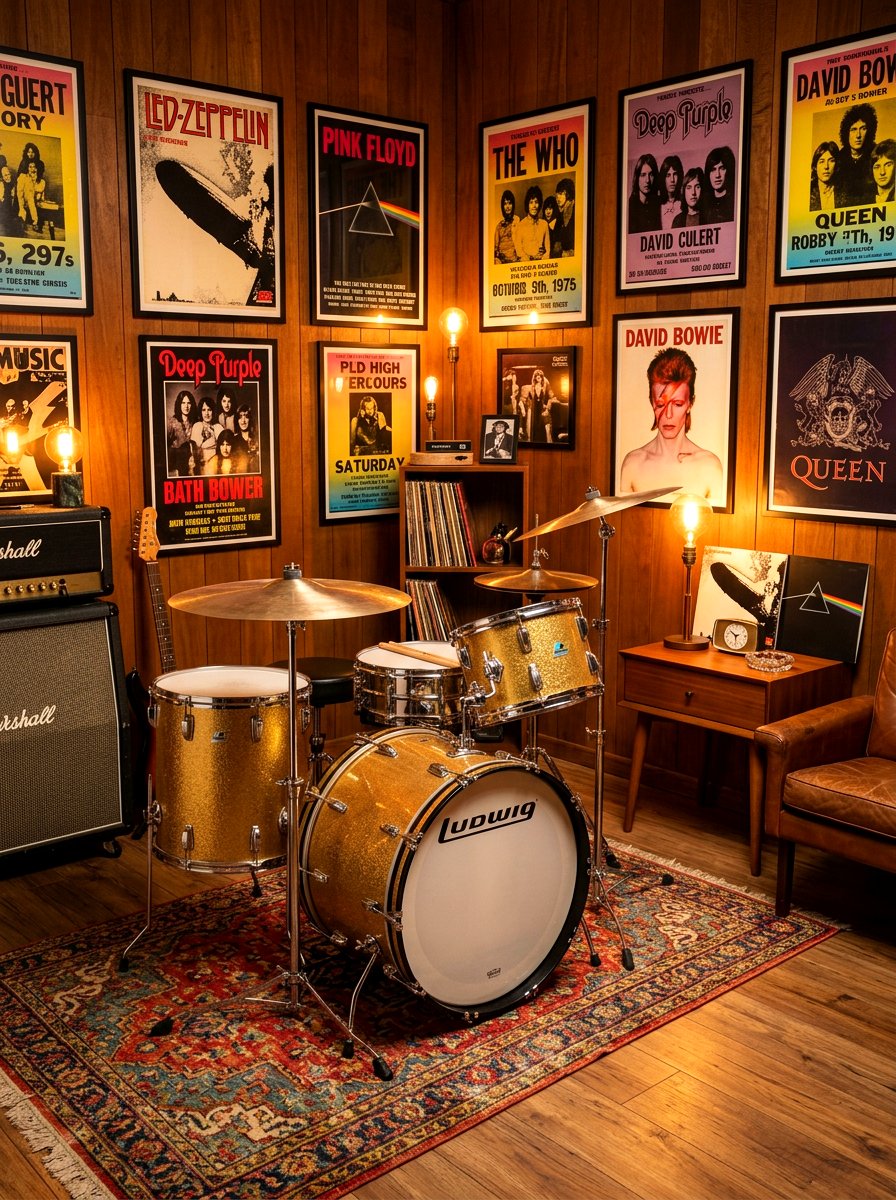
Drawing inspiration from the golden age of rock and roll creates a nostalgic and stylish space filled with personality. You can decorate the walls with vintage concert posters, record covers, and classic drum advertisements from the 1960s and 70s. Choosing a drum kit with a vintage wrap finish, such as marine pearl or gold sparkle, perfectly complements the retro theme. Mid-century modern furniture, like a sleek side table or a stylish lounge chair, adds a touch of sophistication to the room. Using warm, analog-style lighting from lava lamps or Edison bulbs enhances the old-school vibe. This design celebrates the history of drumming while providing a cool and creative place to play.
18. Glass wall drum room
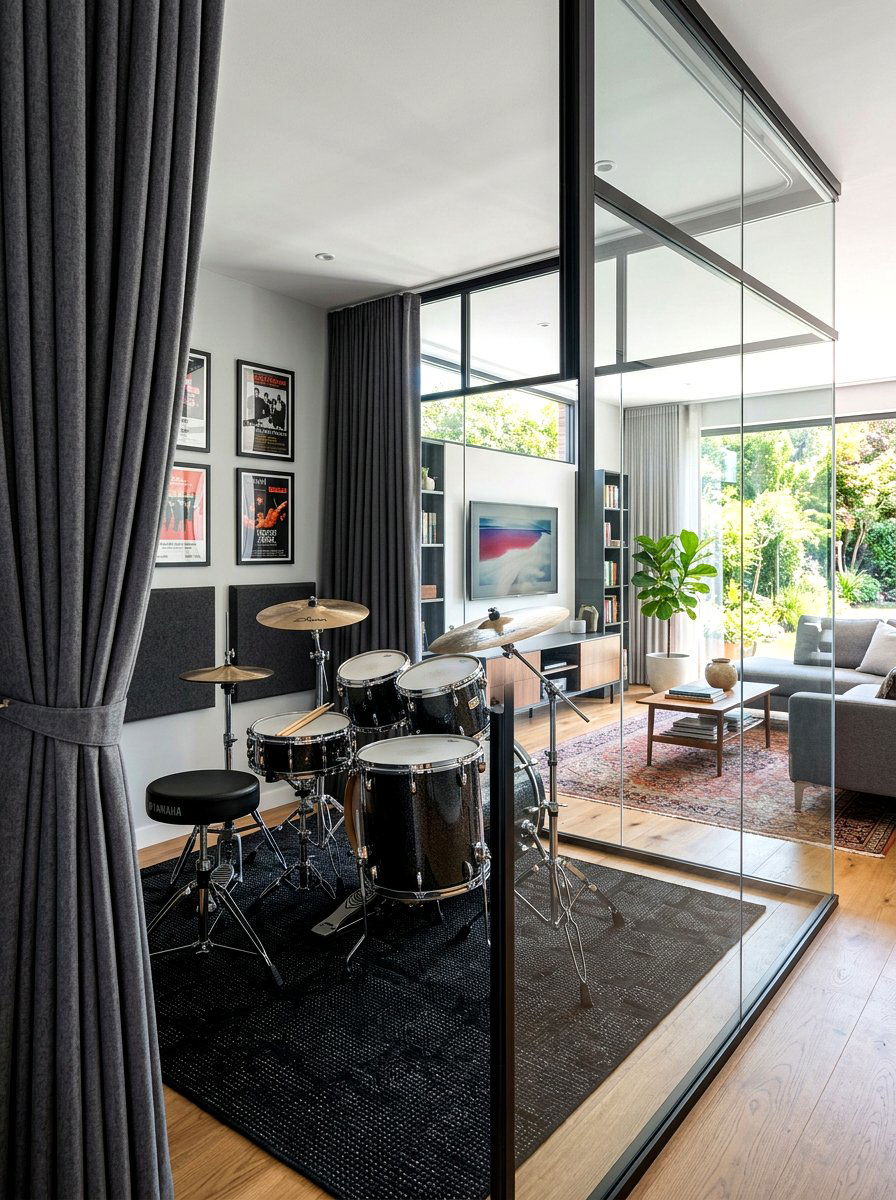
Incorporating large glass partitions or windows allows you to feel connected to the rest of your home while maintaining acoustic separation. This modern design choice is perfect for a drum room located off a living area or a home gym, as it lets in natural light and creates a sense of openness. To prevent the glass from causing unwanted echoes, you can use thick acoustic curtains that can be pulled shut during intense playing sessions. Double-paned or specialized acoustic glass is necessary to ensure that the sound remains contained within the space. The transparent walls showcase your beautiful drum kit as a piece of sculptural art for everyone to admire.
19. Open concept drum room
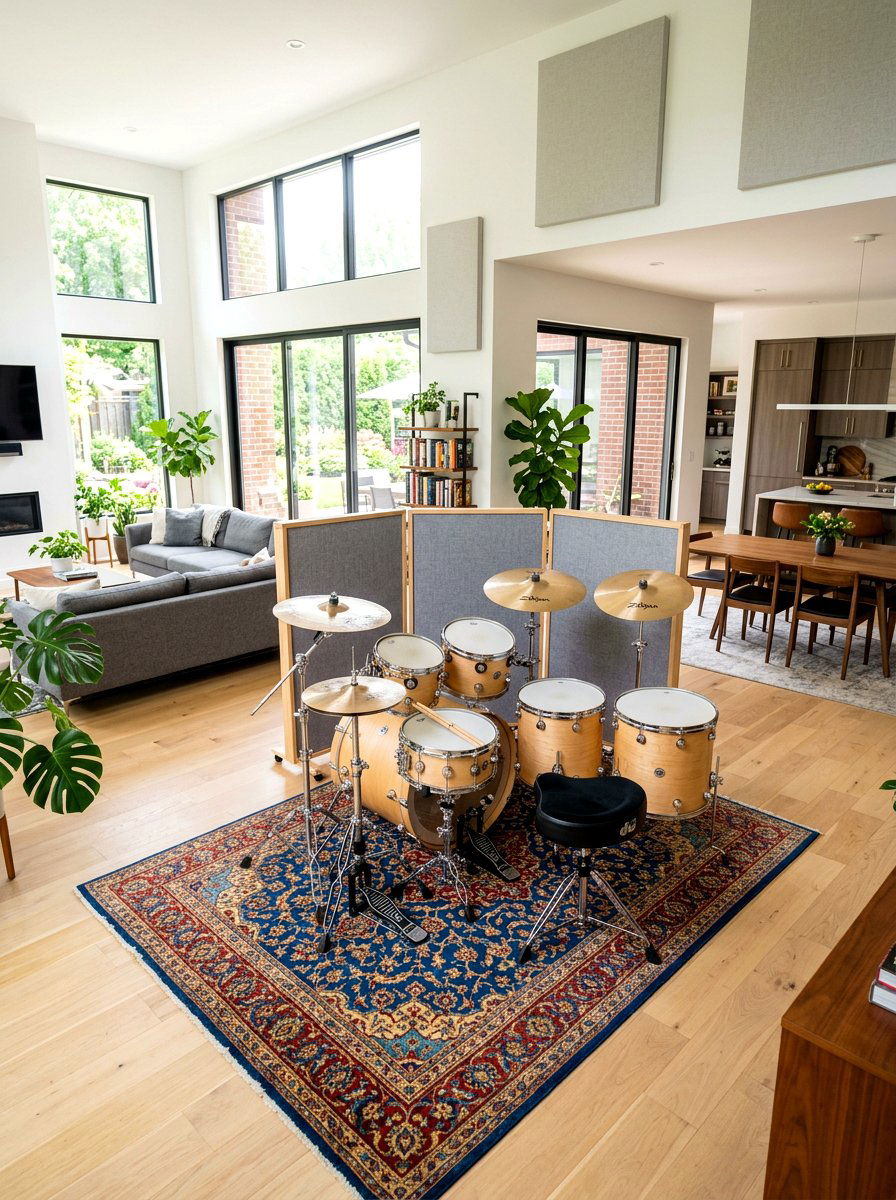
Integrating a drum kit into a larger living space requires a design that blends seamlessly with the existing home decor. Choosing a kit with a wood finish that matches your furniture can help it look like an intentional part of the room rather than a bulky intrusion. Using a stylish rug to define the drumming area creates a visual boundary without the need for walls. Portable acoustic screens can be positioned around the kit when you are playing to help manage the volume and reflections. This approach is ideal for musicians who want to stay close to their family or roommates while still having a dedicated place to practice their craft.
20. Professional studio drum room
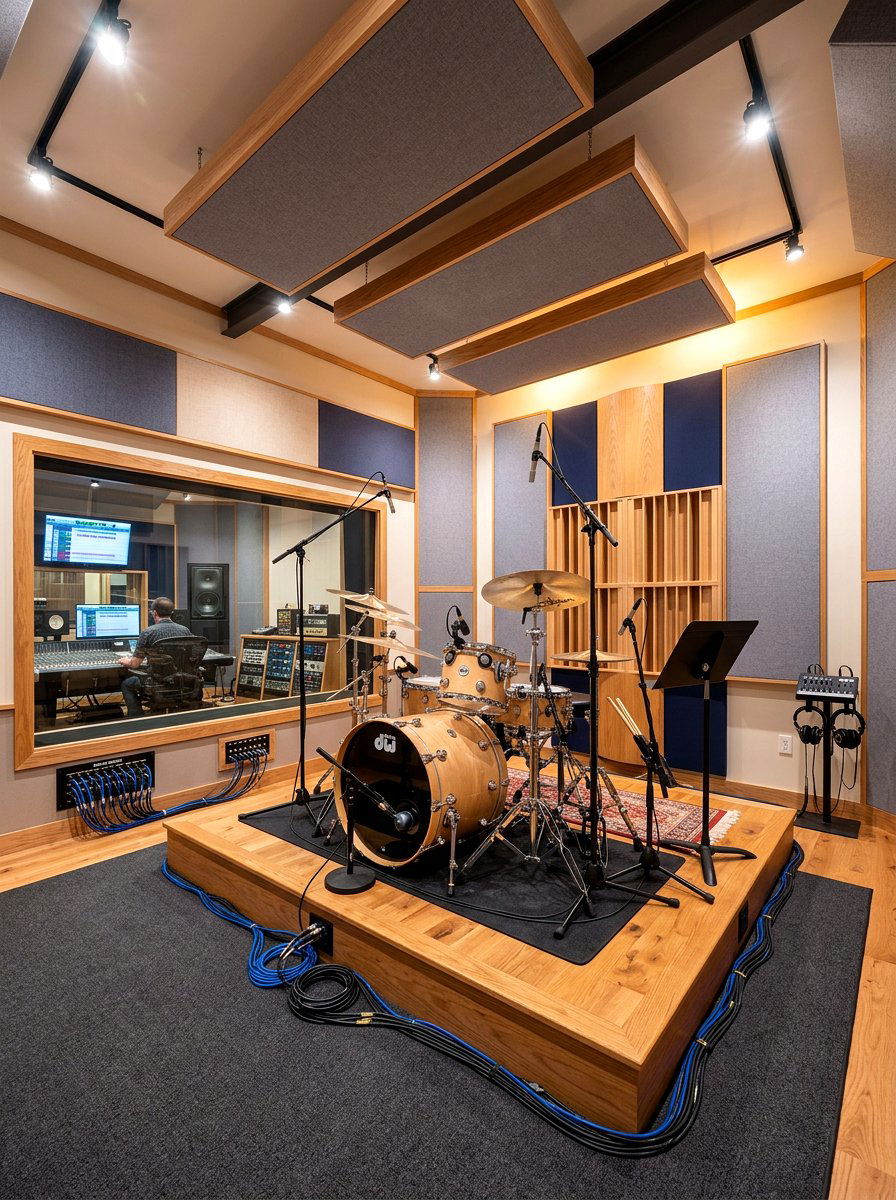
A pro-level space is designed with a singular focus on perfect acoustics and efficient workflow for serious musicians. The room usually features a mix of absorption, diffusion, and bass trapping that has been scientifically calculated for the specific dimensions of the space. Large windows looking into a separate control room allow for clear communication between the drummer and the engineer during recording sessions. The kit is often placed on a heavy, decoupled riser to prevent mechanical vibrations from reaching the microphones. This environment is built for precision and clarity, providing the ultimate setting for tracking drums that will eventually be heard on professional albums and commercial music projects.
21. Kids drum room
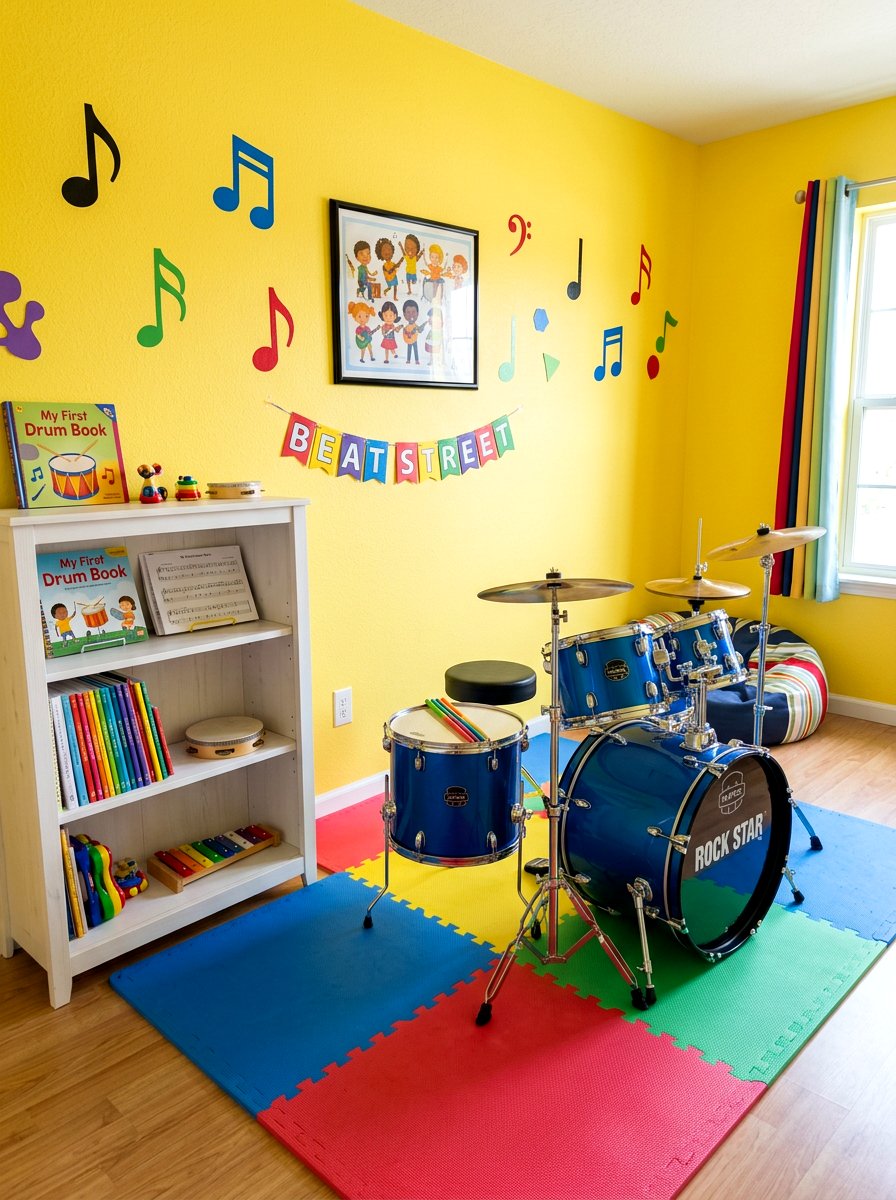
Creating a fun and educational space for a young percussionist involves using bright colors, durable materials, and plenty of organized storage. Wall decals featuring musical notes or cartoon instruments can make the room feel playful and welcoming for a child. It is important to choose age-appropriate equipment, such as a junior-sized kit that fits their smaller frame comfortably. Using soft foam floor mats provides a safe surface for play and helps dampen the noise for the rest of the house. Keeping a bookshelf filled with instructional books and a tablet stand for online lessons encourages them to stay engaged and excited about learning their new musical skill.
22. Vintage drum room
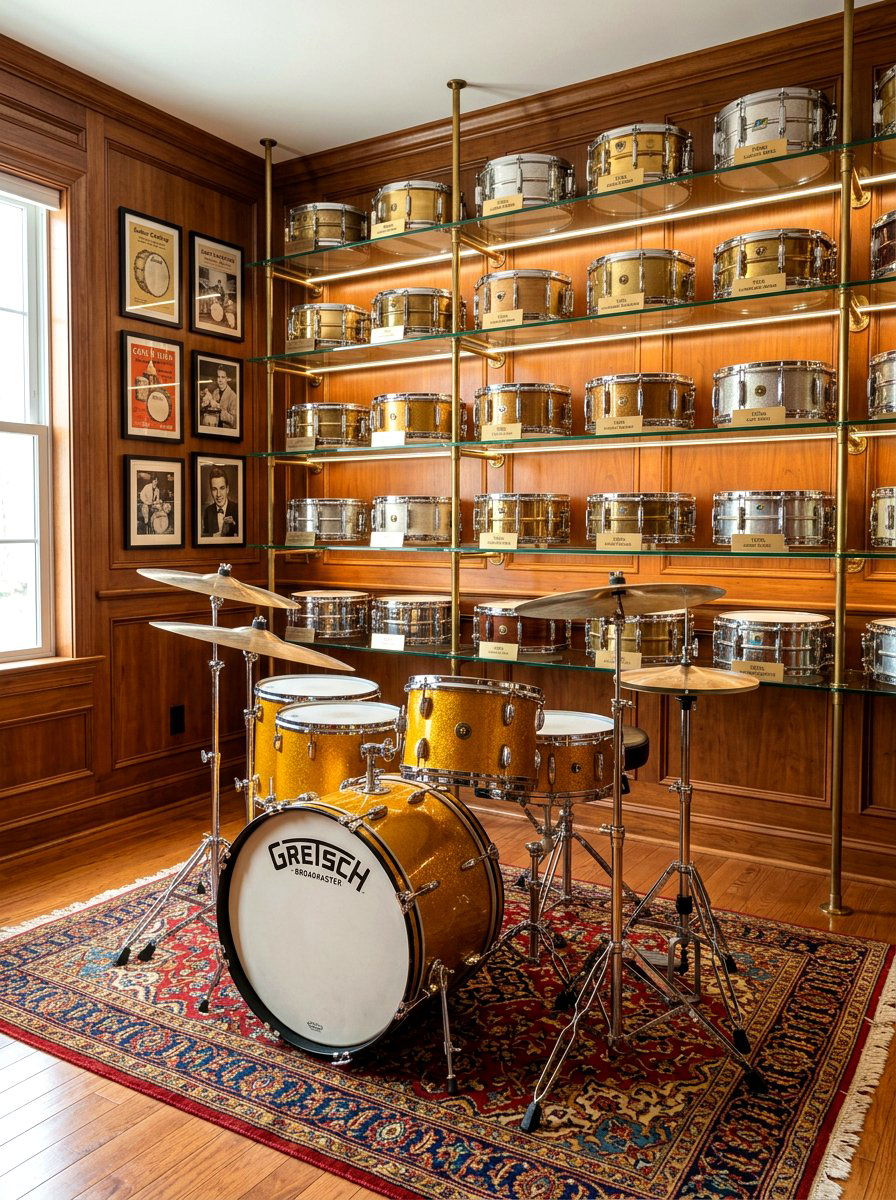
Focusing on the beauty of antique instruments and classic design creates a space that feels like a living museum of music history. You can display rare snare drums on glass shelves and hang old cymbals on the walls to showcase their unique patinas. The decor often includes warm wood tones, brass accents, and traditional rugs that complement the aged look of the instruments. Using soft, warm lighting highlights the craftsmanship of the shells and hardware, creating a respectful and quiet atmosphere for practice. This room is a tribute to the drummers of the past and provides a soulful environment for exploring traditional styles and classic sounds.
23. Bohemian drum room
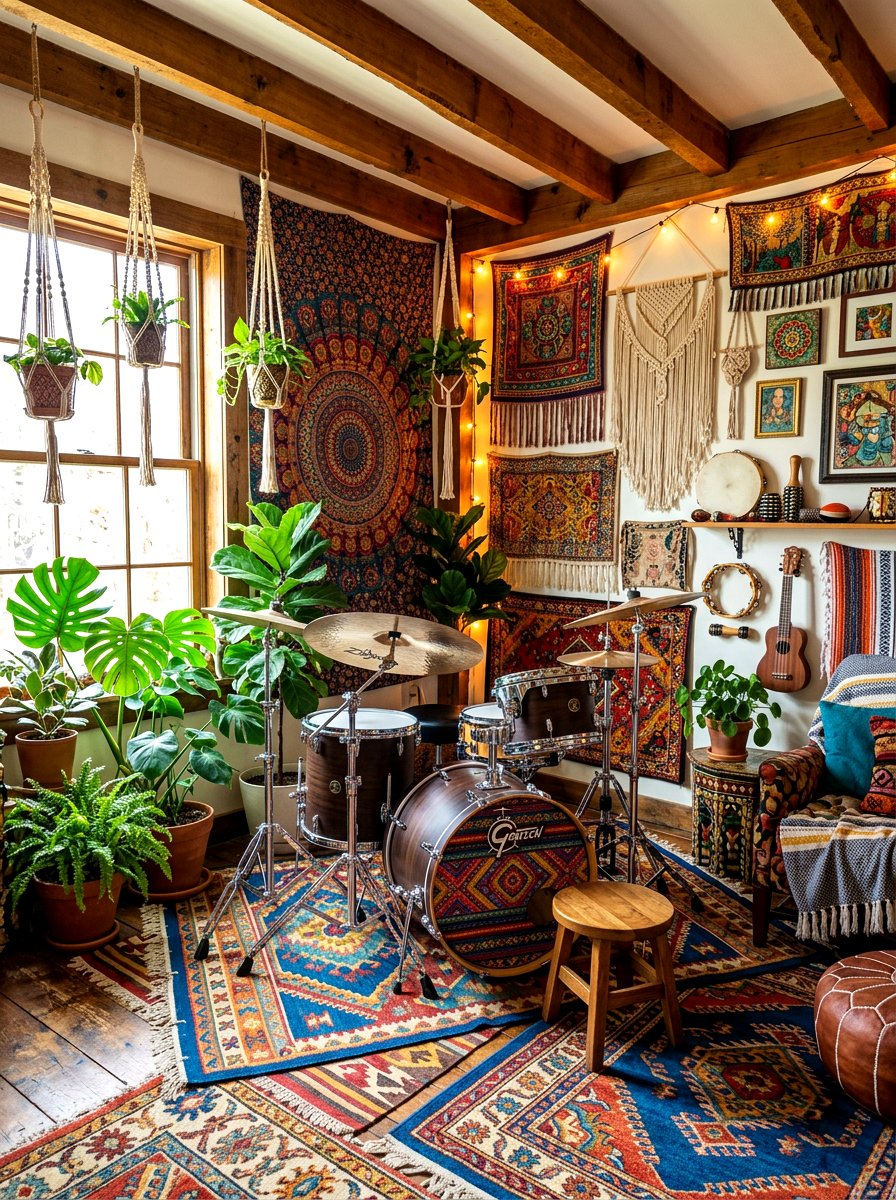
Embracing a relaxed and eclectic style involves mixing patterns, textures, and global influences to create a unique and comfortable practice space. You can use colorful tapestries as wall hangings, which also serve as soft acoustic absorbers to reduce room reflections. Adding floor cushions, macramé plant hangers, and plenty of greenery creates a lush and inspiring sanctuary for creative jamming. A mix of different rugs layered on top of each other adds visual interest and excellent sound dampening under the drum kit. This free-spirited design encourages experimentation and playfulness, making it the perfect environment for drummers who want to express their unique personality through their surroundings.
24. Corner drum room
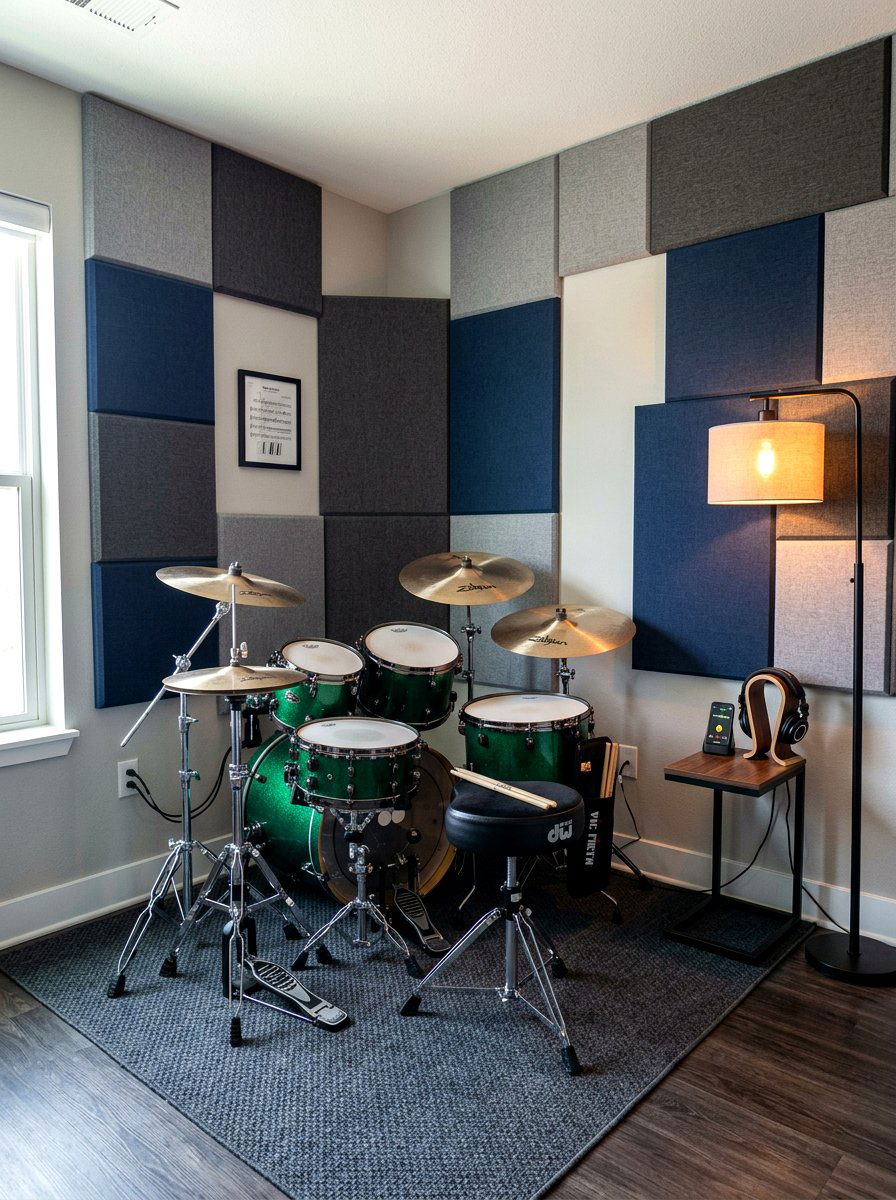
Tucking a drum set into a specific corner of a room is a practical solution for those who do not have an entire spare area. Using a corner layout allows you to utilize two walls for mounting acoustic panels, which helps contain the sound and improve the local acoustics. Placing the kit at an angle can sometimes help break up standing waves and make the most of the available floor space. You can use a tall floor lamp or a small corner shelf to hold your metronome, sticks, and headphones within easy reach. This compact arrangement shows that even a small nook can be transformed into a functional and stylish place for musical practice.

25. Apartment drum room
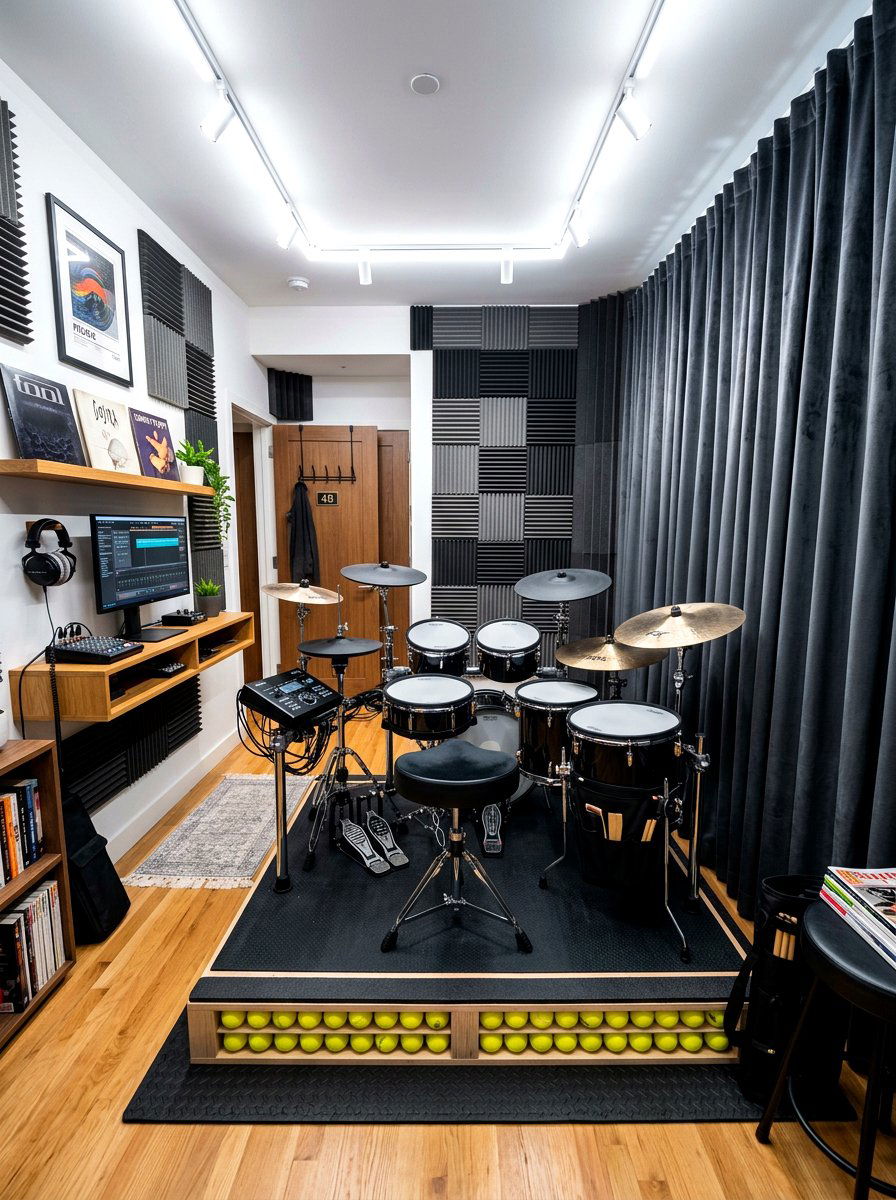
Living in a multi-unit building requires a focus on extreme noise reduction and vibration control to maintain good relationships with neighbors. An electronic drum kit is often the best choice for apartment dwellers, as it allows for silent practice using high-quality headphones. Placing the kit on a "tennis ball riser" or a heavy rubber mat helps prevent the thumping of the pedals from traveling through the floor to the unit below. Adding heavy curtains over the windows and using portable acoustic panels can further muffle the sound of sticks hitting the pads. This setup proves that you can still pursue your passion for drumming without causing a disturbance in a shared living environment.
26. Drum room storage
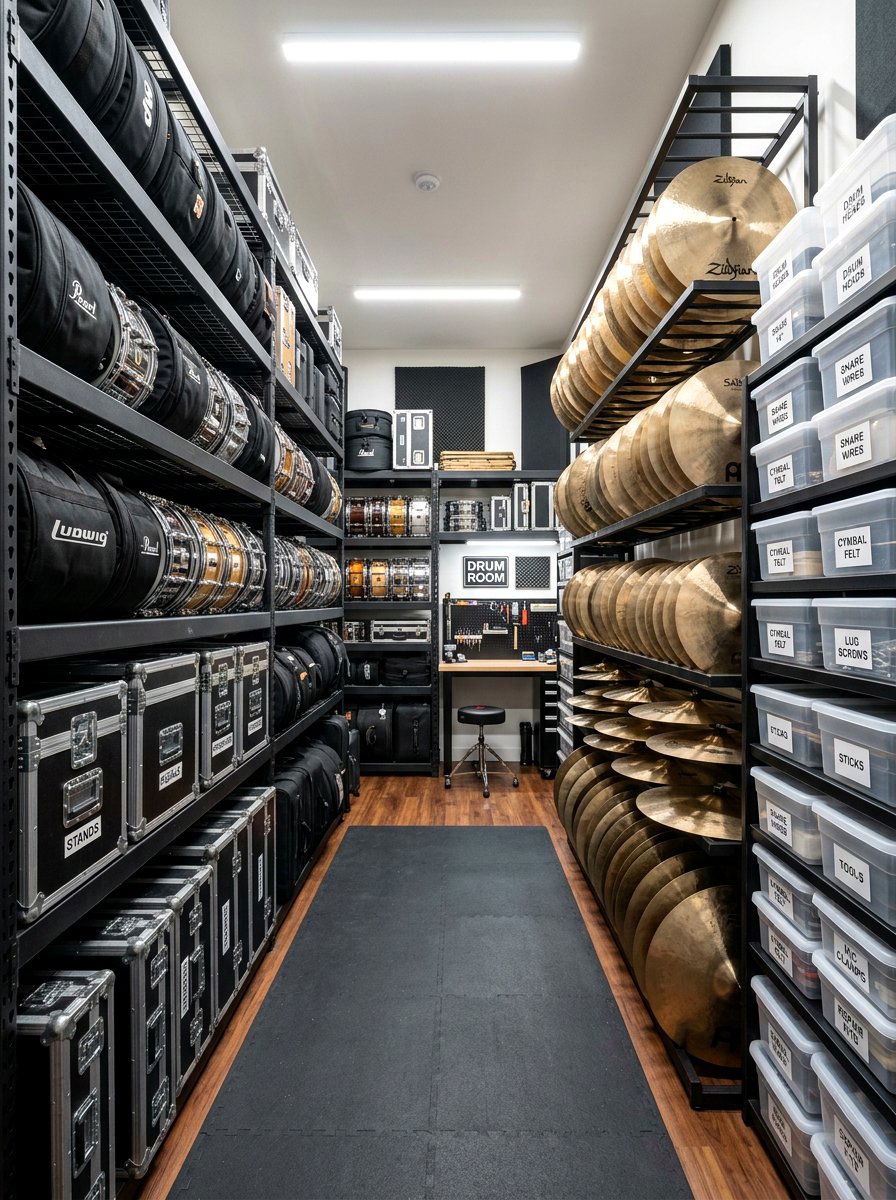
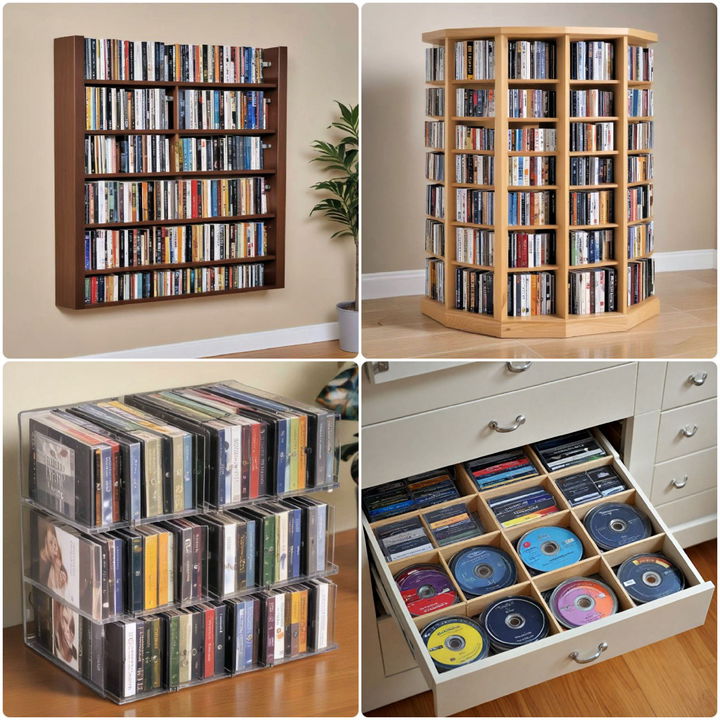
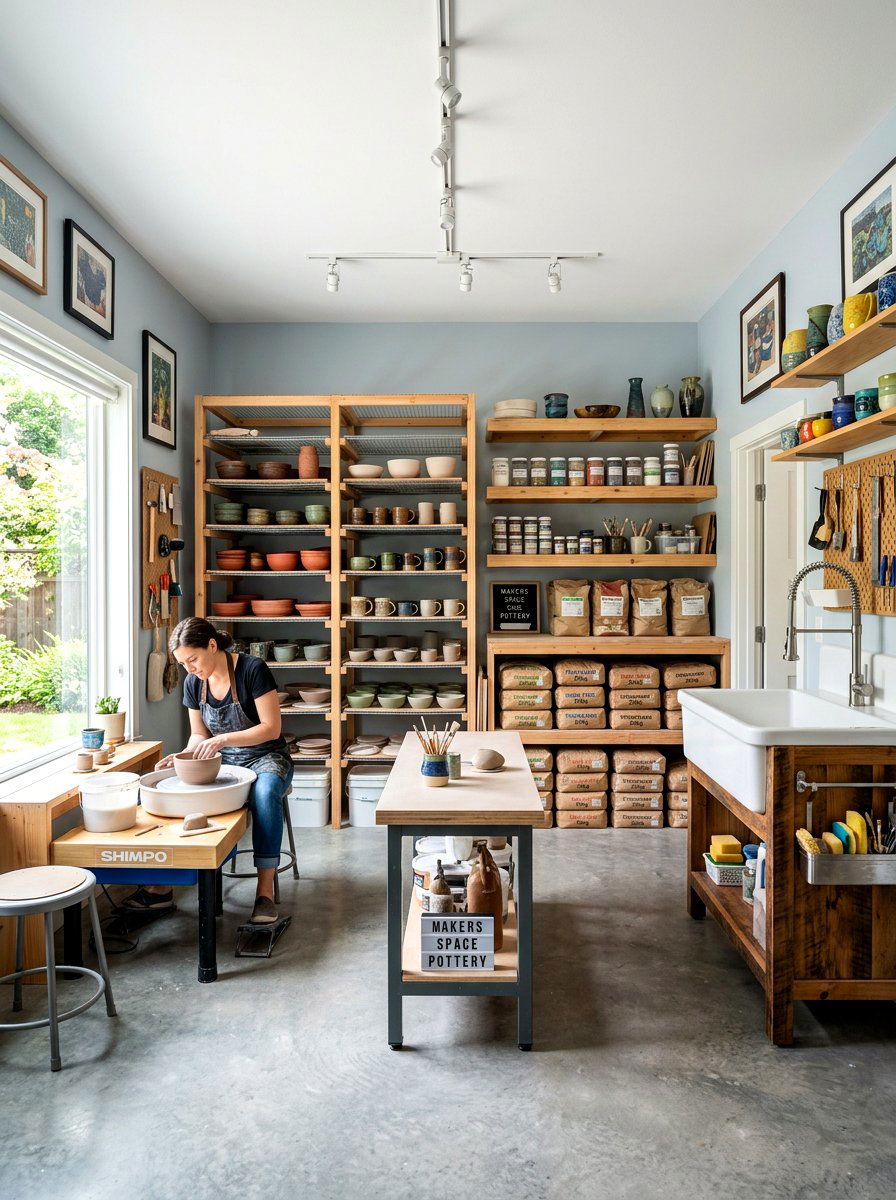
Keeping a large collection of gear organized is essential for maintaining a clean and functional practice environment. Custom shelving units can hold multiple snare drums, while heavy-duty racks are perfect for storing hardware cases and extra cymbals. Using clear bins for smaller items like drum keys, felts, and tension rods makes it easy to find exactly what you need during a gear change. Wall-mounted hooks are great for keeping sticks and brushes tidy and accessible. A well-organized storage system not only protects your expensive instruments from damage but also makes it much easier to set up and tear down for gigs or recording sessions.
27. Bright white drum room
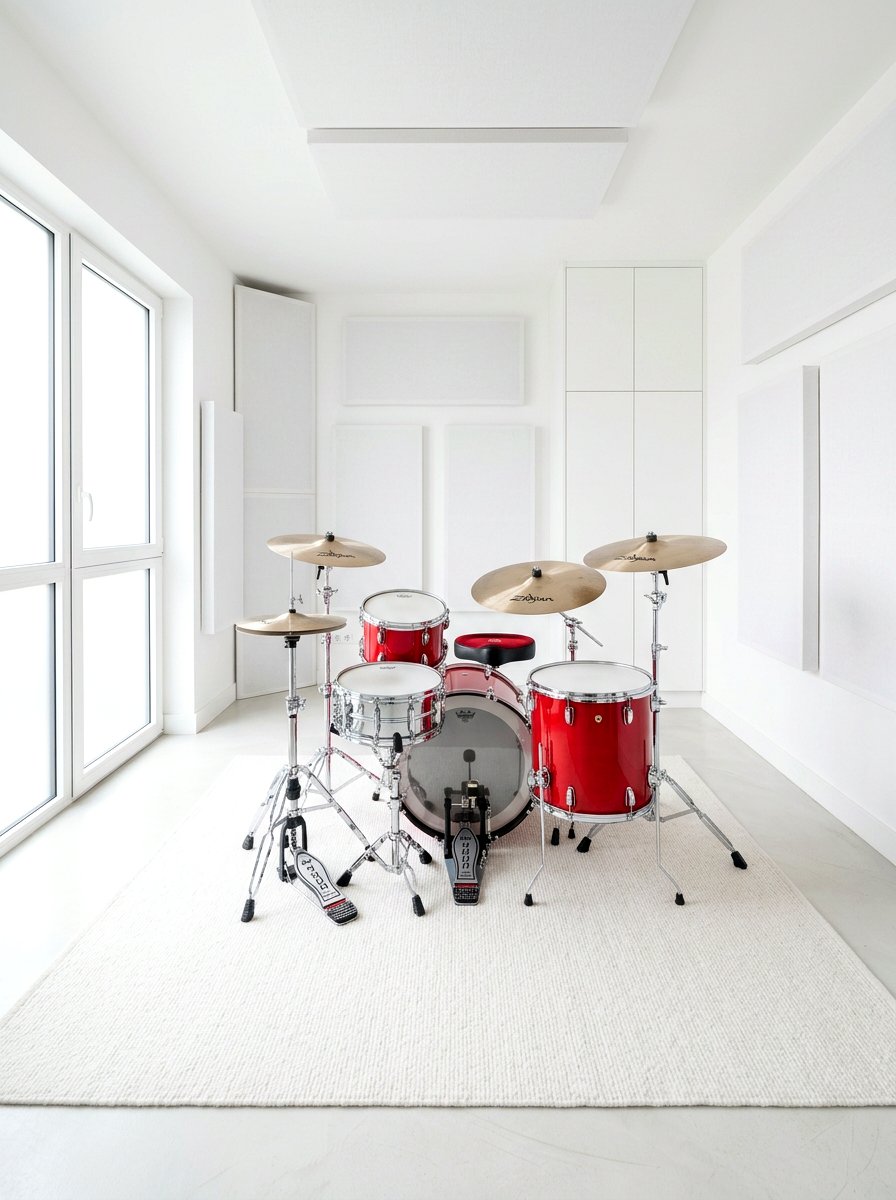
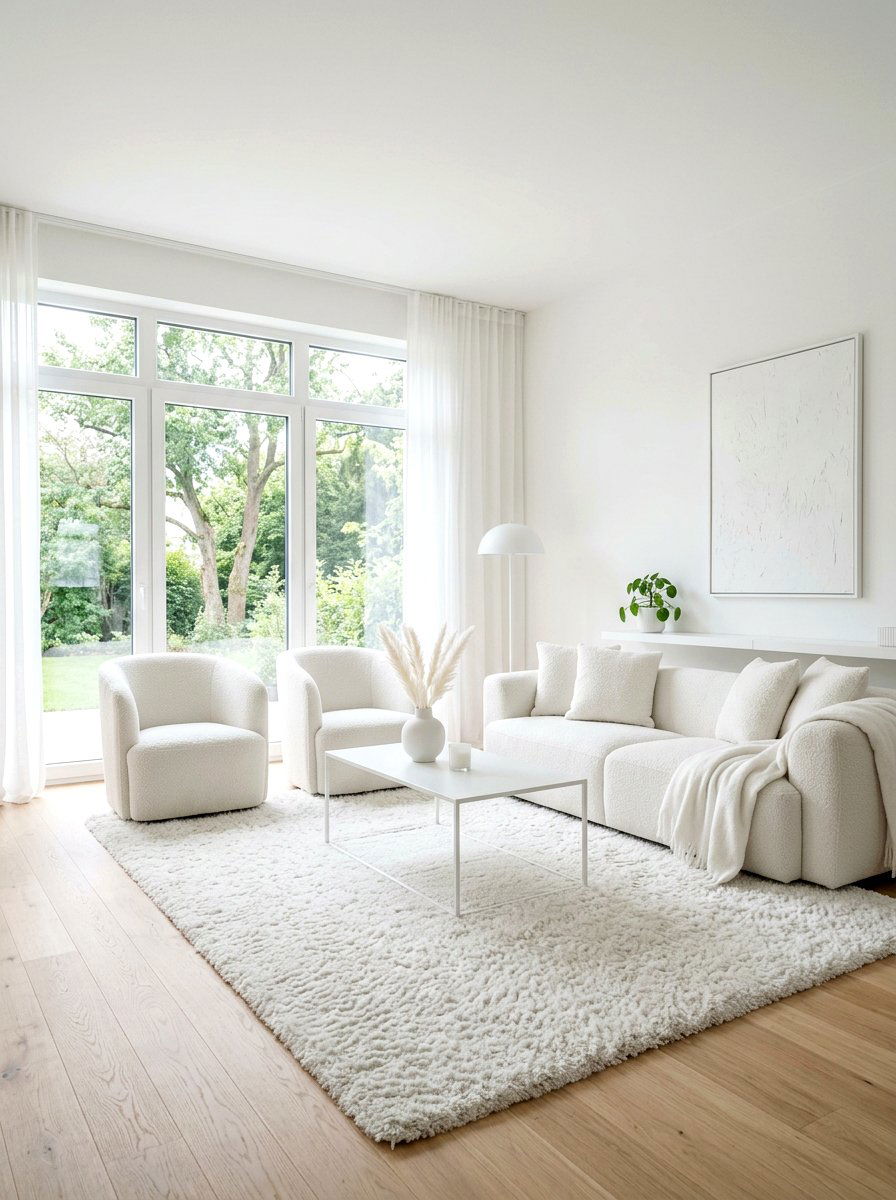
A clean, all-white aesthetic creates a sense of peace and purity that can help you focus on your rhythm and timing. White walls and furniture reflect light, making even a small or windowless room feel much larger and more energetic. You can add contrast by choosing a drum kit with a bold black or bright red finish, making it the undeniable center of attention. Using white acoustic panels and minimalist decor keeps the space feeling modern and fresh. This design is perfect for drummers who want a professional and tidy look that feels like a blank canvas, allowing them to fill the air with their own creative musical expressions.
28. High ceiling drum room
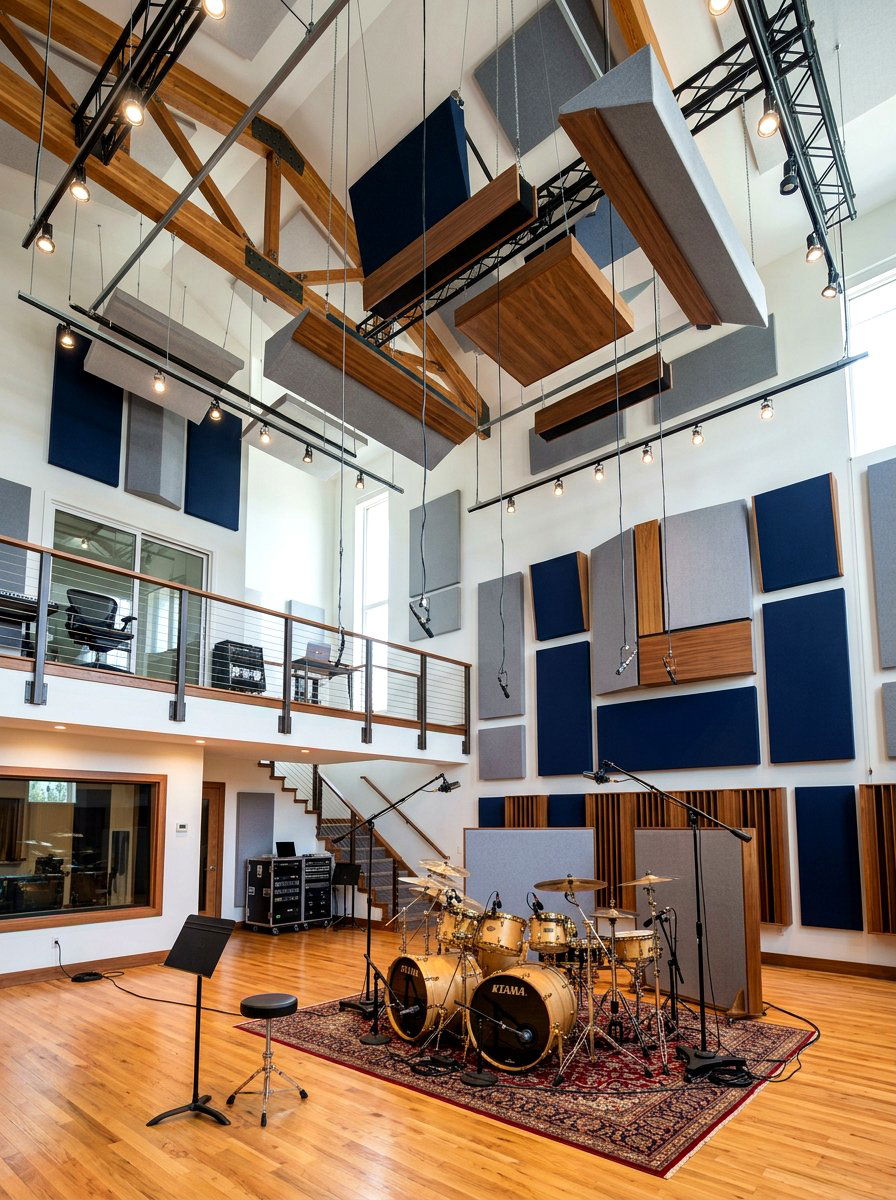
Spaces with tall ceilings offer a grand and airy feel that is perfect for achieving a big, natural drum sound. The extra vertical space allows for the use of "overhead" microphones to capture the full resonance of the kit and the room's natural reverb. You can hang large acoustic baffles or "clouds" from the ceiling to control the reflections and prevent the sound from becoming too chaotic. High walls also provide plenty of room for large-scale art, tall storage racks, or even a second-level loft area for a chill-out zone. This architectural feature turns a standard practice room into an impressive and professional-sounding recording environment for high-quality audio.
29. Carpeted drum room
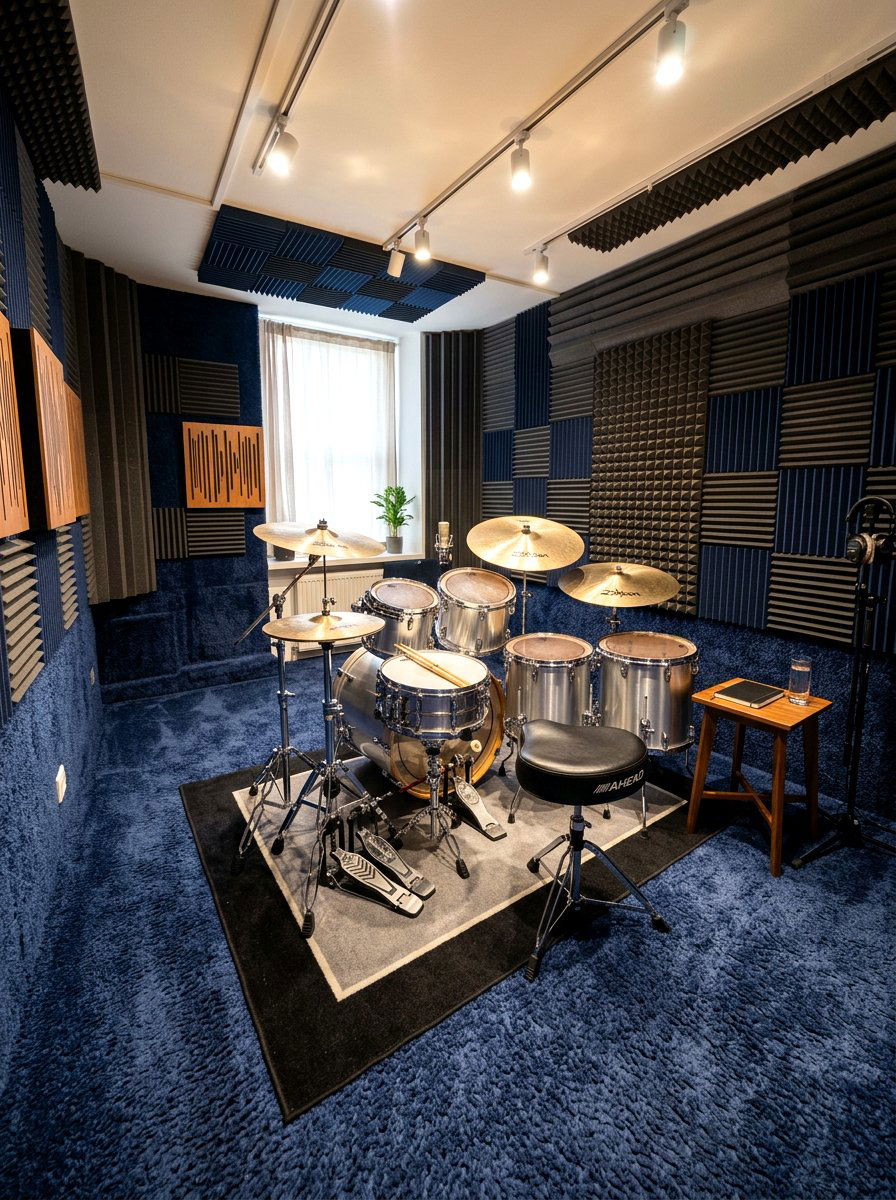
Installing wall-to-wall carpeting is one of the easiest ways to significantly improve the acoustics of a loud practice space. The soft fibers of the carpet absorb high frequencies and help reduce the overall volume within the room, making it much more comfortable for the ears. A thick carpet also provides a stable surface for the drum kit, preventing the bass drum and hi-hat stand from sliding away while you play. You can choose a neutral color for a professional look or a bold pattern to add some personality to the room. This practical flooring choice is a cost-effective way to make any space feel more like a dedicated and well-treated music studio.
30. Brick wall drum room
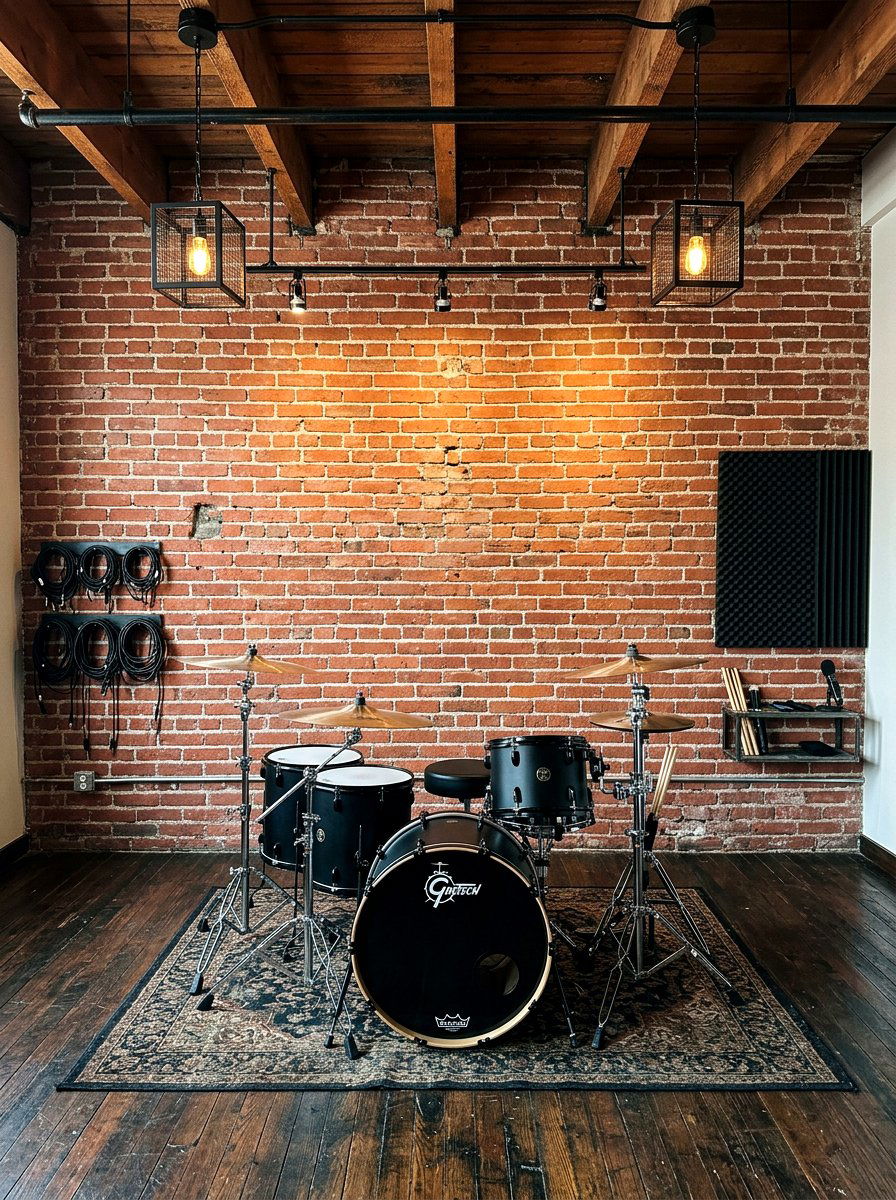
Exposed brick provides a classic and urban backdrop that adds a sense of history and ruggedness to your drumming environment. The hard, uneven surface of the brick helps diffuse sound waves, preventing harsh echoes while maintaining a lively and energetic room sound. You can enhance the look by using warm industrial lighting and metal accents throughout the space. If the brick makes the room too reflective, adding a few strategically placed acoustic panels or a heavy rug can help balance the acoustics. This timeless aesthetic is a favorite for many drummers because it creates a cool, warehouse-style vibe that feels authentic, professional, and full of creative character.
Conclusion:
Designing the perfect drum room is a unique journey that combines your personal musical needs with the practical requirements of sound management and aesthetics. Whether you are building a high-tech recording studio or a cozy corner in your apartment, the goal is to create a space that makes you want to pick up your sticks every single day. By considering factors like soundproofing, lighting, and organized storage, you can transform any room into a professional-grade sanctuary for rhythm. We hope these thirty diverse ideas have inspired you to start planning your own musical haven. Remember that the best design is one that reflects your personality and supports your growth as a musician.

Related posts: