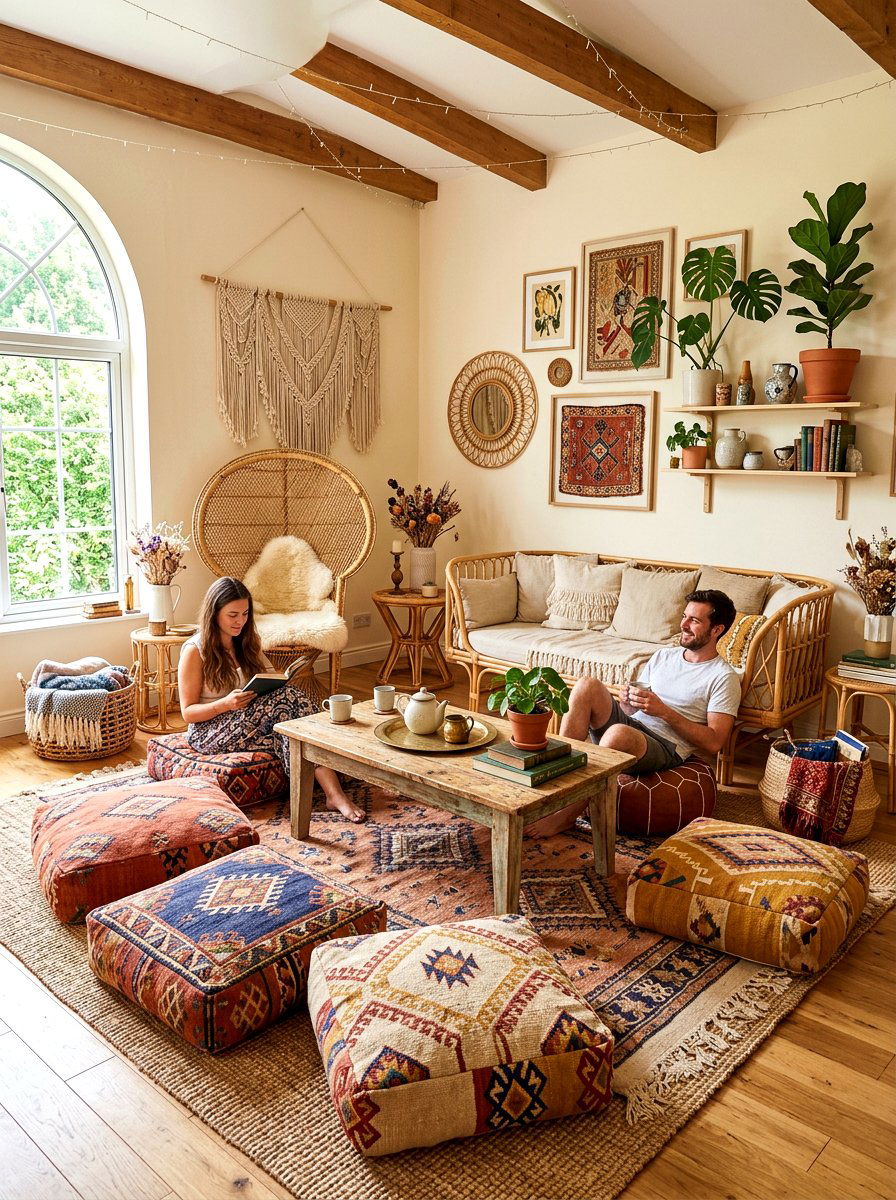
Creating a dedicated space for musical expression is a transformative journey for any artist or hobbyist. A music practice room serves as a sanctuary where creativity flows without interruption or external judgment. Whether you are a professional musician or just starting to learn a new instrument, the environment you choose significantly impacts your progress and inspiration. From soundproofing essentials to aesthetic choices that spark joy, designing this space requires a balance of acoustics and comfort. By carefully considering layout, lighting, and storage, you can build a room that invites you to pick up your instrument every single day. Let's explore some incredible ways to design your ideal music space and elevate your daily rehearsals.
1. Soundproof foam wall treatment
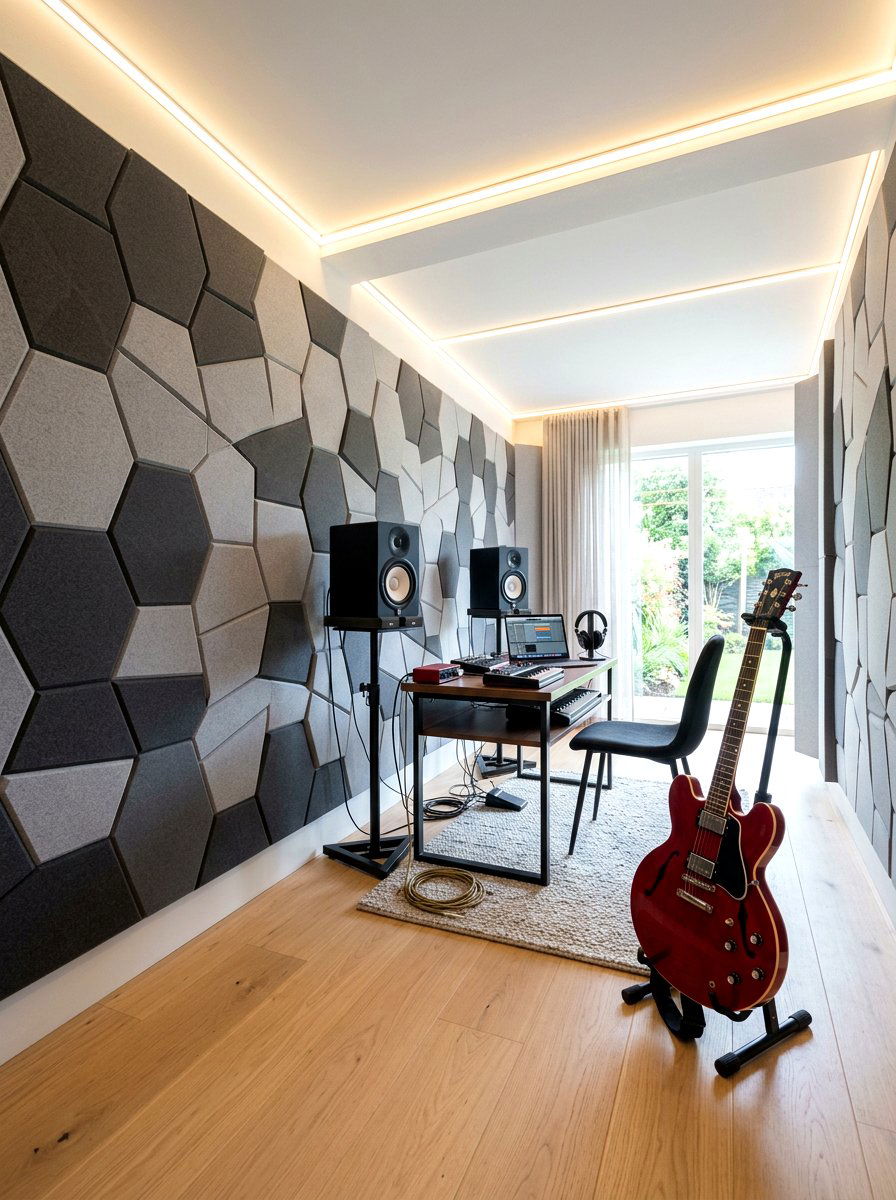
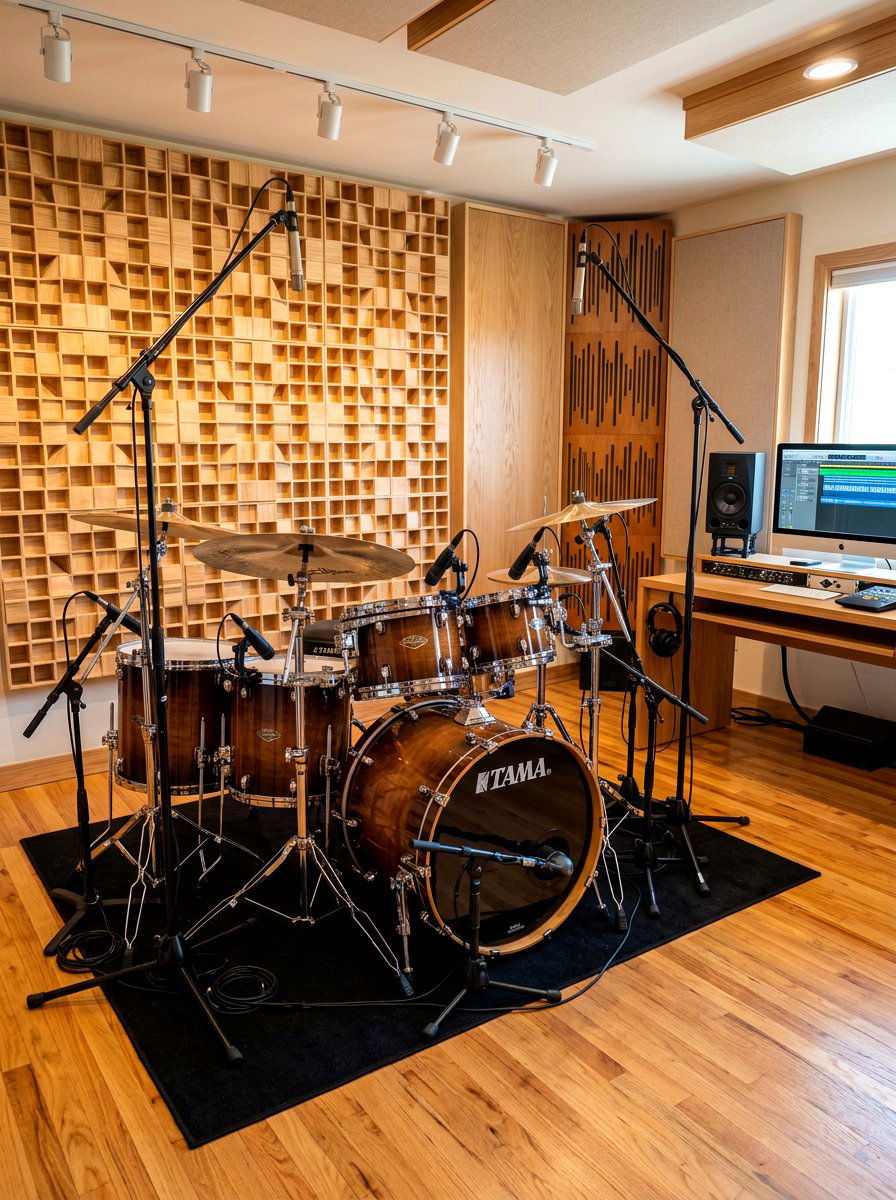
Have you ever noticed how sound bounces around a hollow room? Installing acoustic foam wall panels is one of the most effective ways to manage sound reflections and improve audio quality. These panels come in various shapes like wedges or pyramids and can be arranged in creative patterns to double as wall art. By placing them strategically at first reflection points, you significantly reduce echo and flutter. This setup makes your practice sessions much clearer and less fatiguing for your ears. It is a functional choice that also gives the room a professional recording studio vibe immediately. You can choose colors that match your interior decor easily to keep things stylish.
2. Basement music practice space
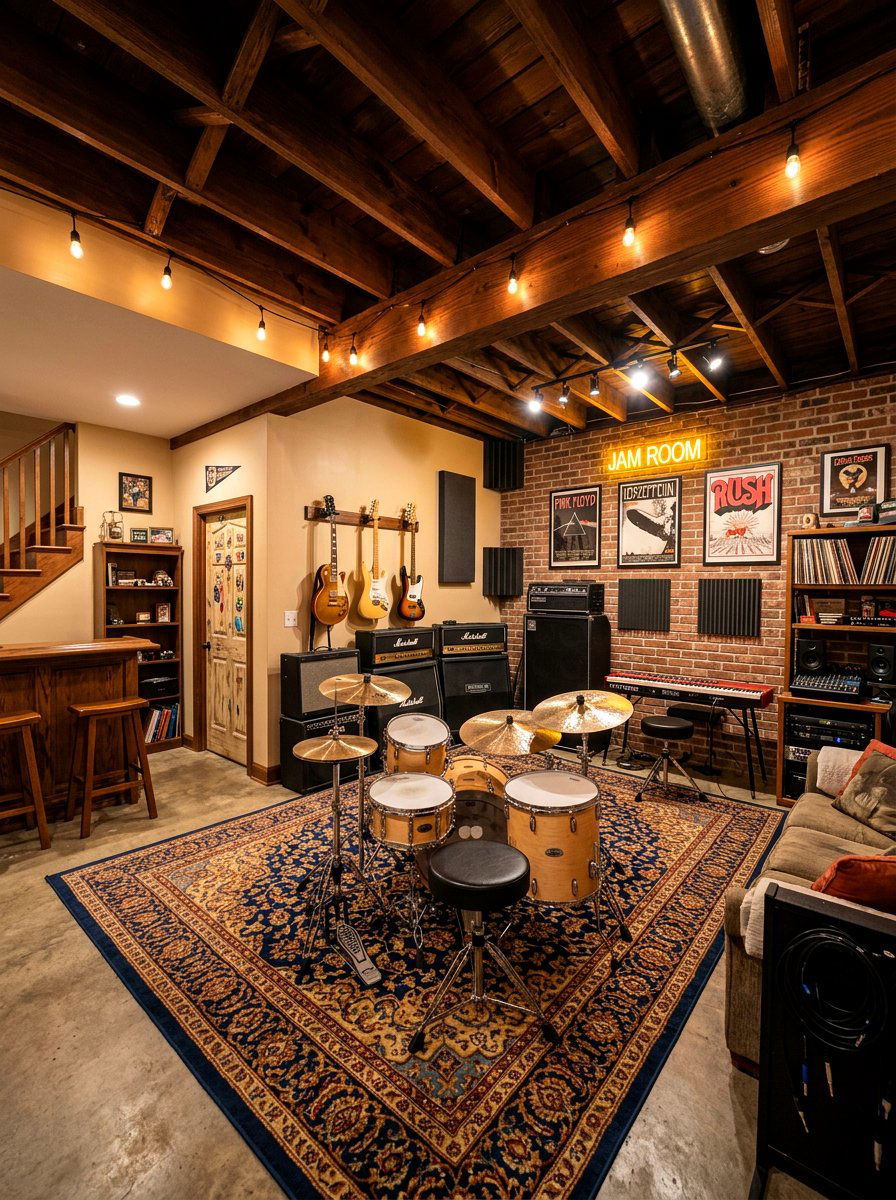
Basements are ideal for music rooms because they are naturally isolated from the rest of the house. The underground nature of the space provides an inherent layer of soundproofing that protects your neighbors and family from loud sessions. You can lean into the cozy, bunker-like feel by adding warm rugs and layered lighting to counteract the lack of windows. Proper ventilation is key here to keep the air fresh while you practice for hours. Using the large, open floor plan of a basement allows you to set up multiple stations for different instruments or even a full band rehearsal area without feeling cramped.
3. Small bedroom music studio
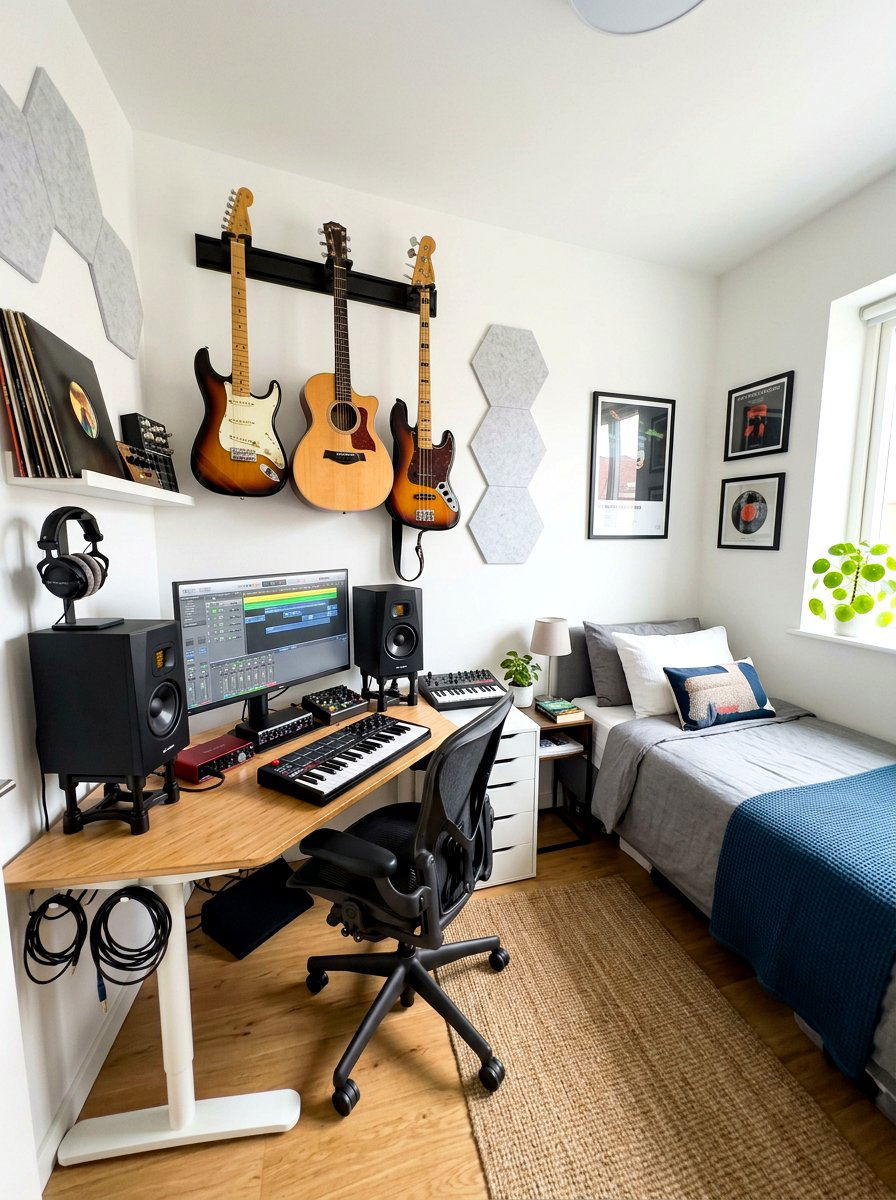
When you are working with limited square footage, every inch counts in a bedroom music studio. Placing your desk or keyboard against the longest wall helps maximize the remaining floor space for movement. You can utilize vertical storage, such as wall-mounted guitar hangers or floating shelves for sheet music, to keep the area clutter-free. A high-quality area rug can help dampen sound while adding a touch of personal style to the room. Strategic furniture placement, like putting a bed in the corner, opens up the center of the room for your music stand and stool. This setup proves that small spaces can be highly productive.
4. Modern piano room decor
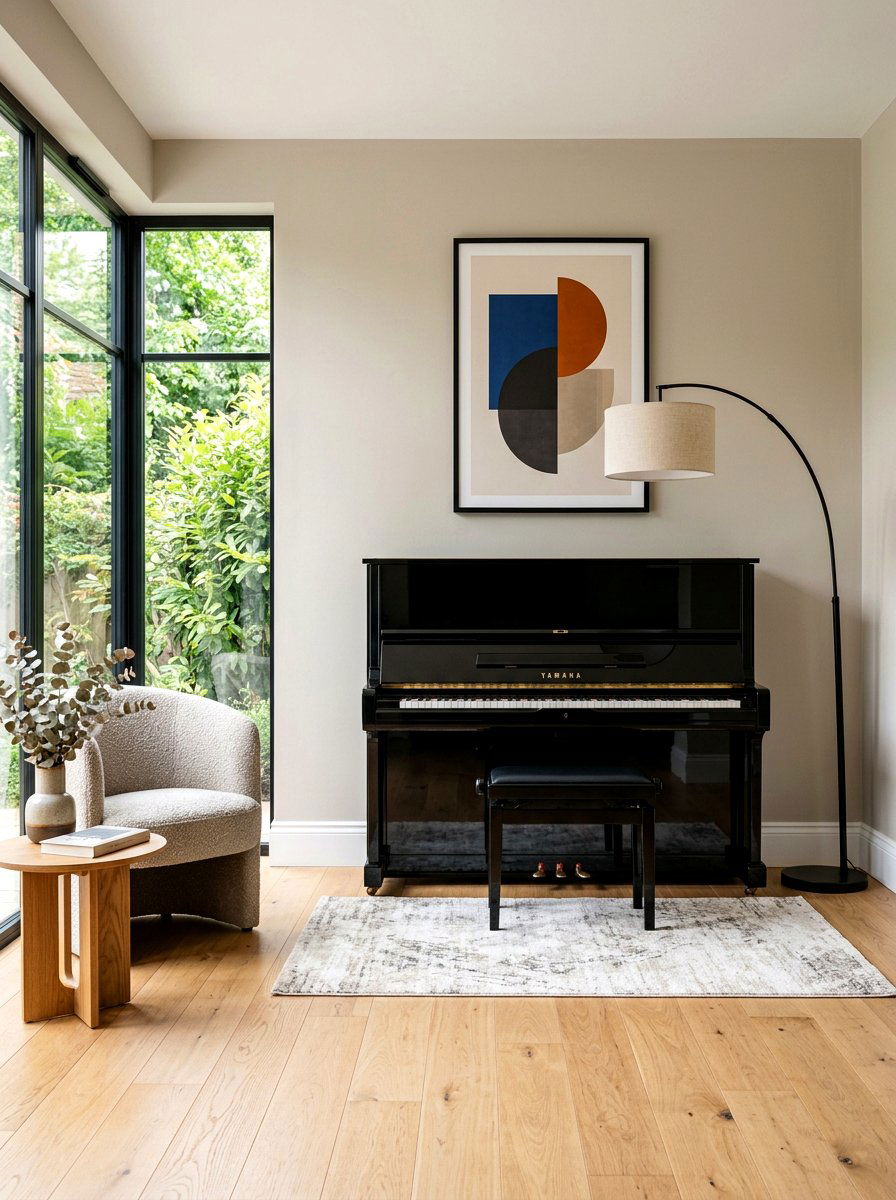
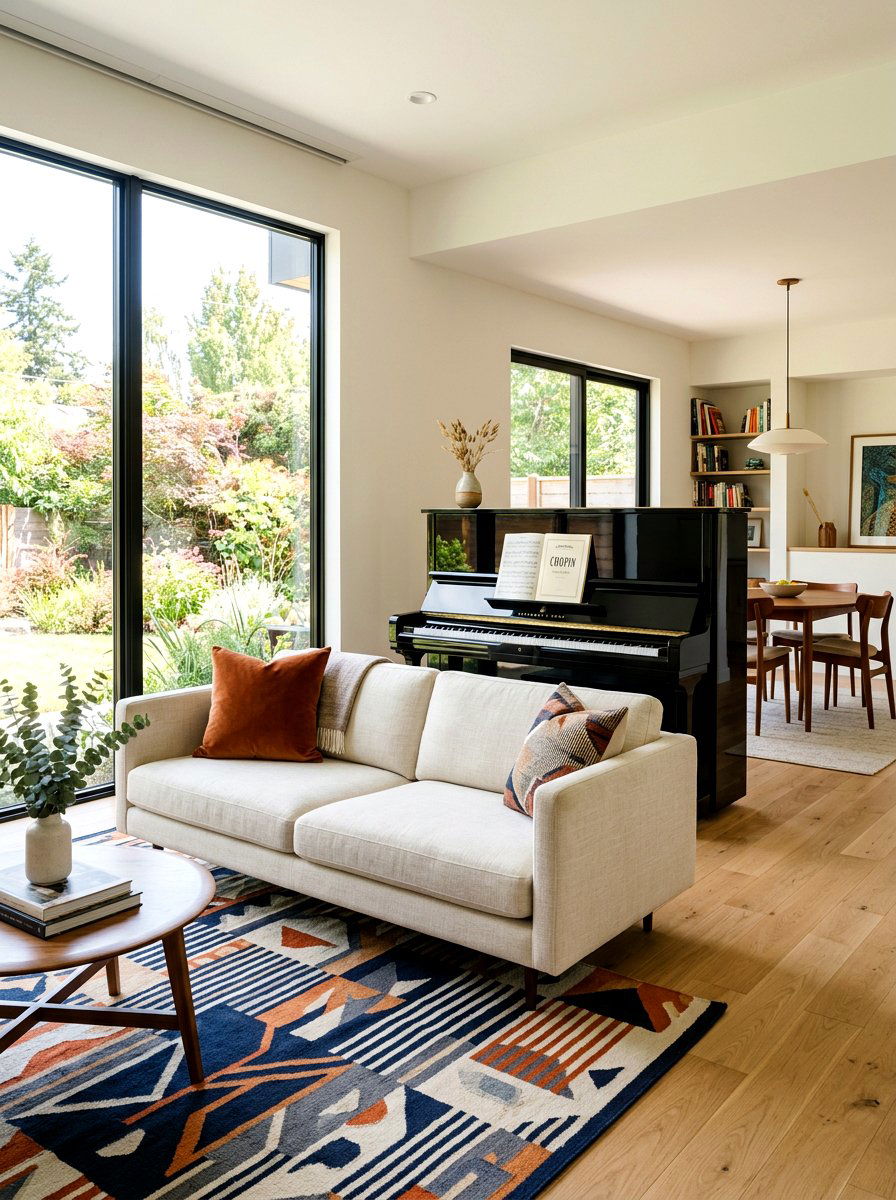
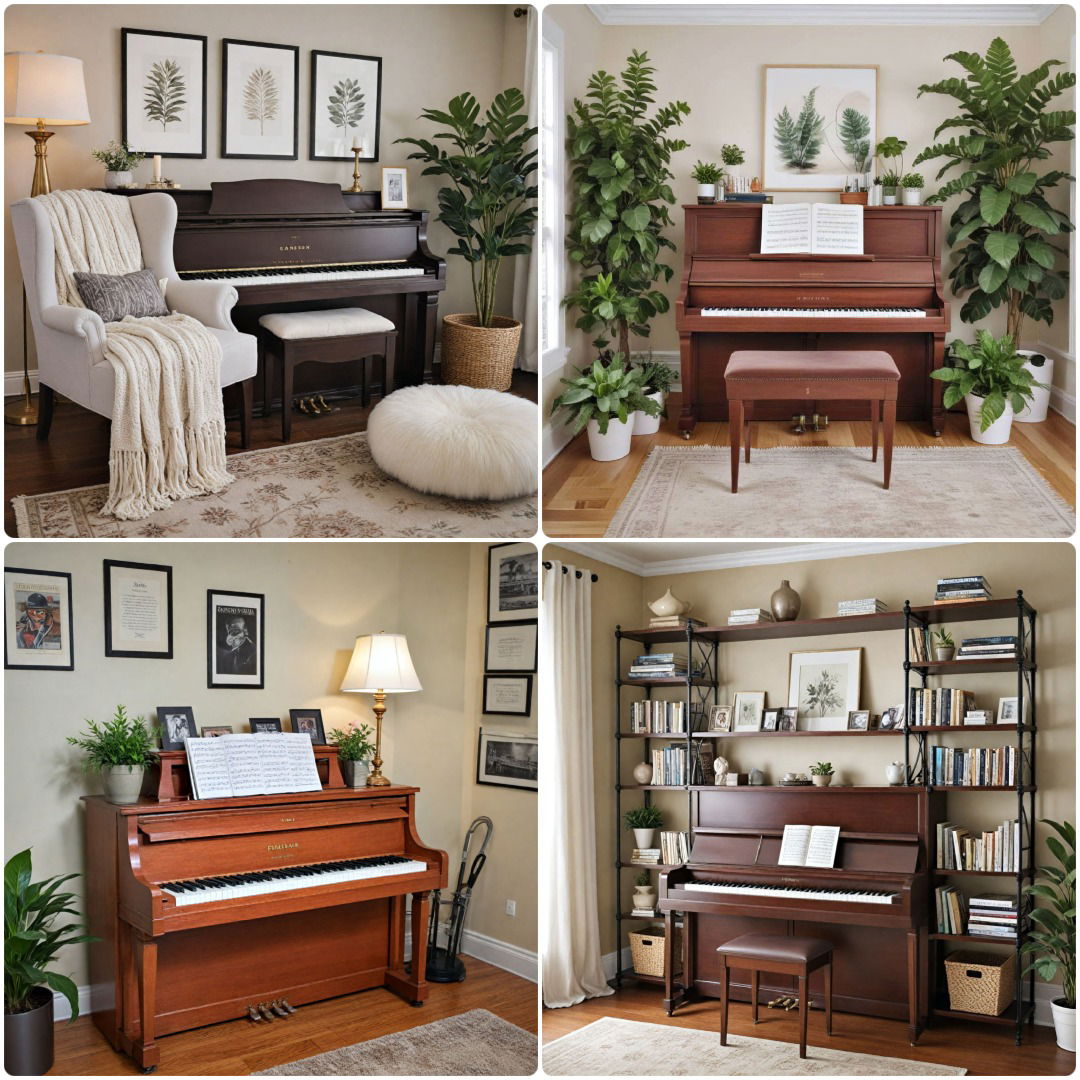
A modern piano room focuses on clean lines and a minimalist aesthetic to let the instrument be the focal point. Choosing a neutral color palette like soft greys or whites creates a calm atmosphere that is perfect for focused practicing. You can add a single, statement piece of art above the piano to provide visual interest without being distracting. Proper lighting is essential, so consider a sleek floor lamp that arches over the keys to provide clear visibility. Minimal furniture ensures that the acoustics remain crisp and uncluttered. This design approach creates a sophisticated and timeless environment for any pianist to enjoy.
5. Vintage recording studio setup
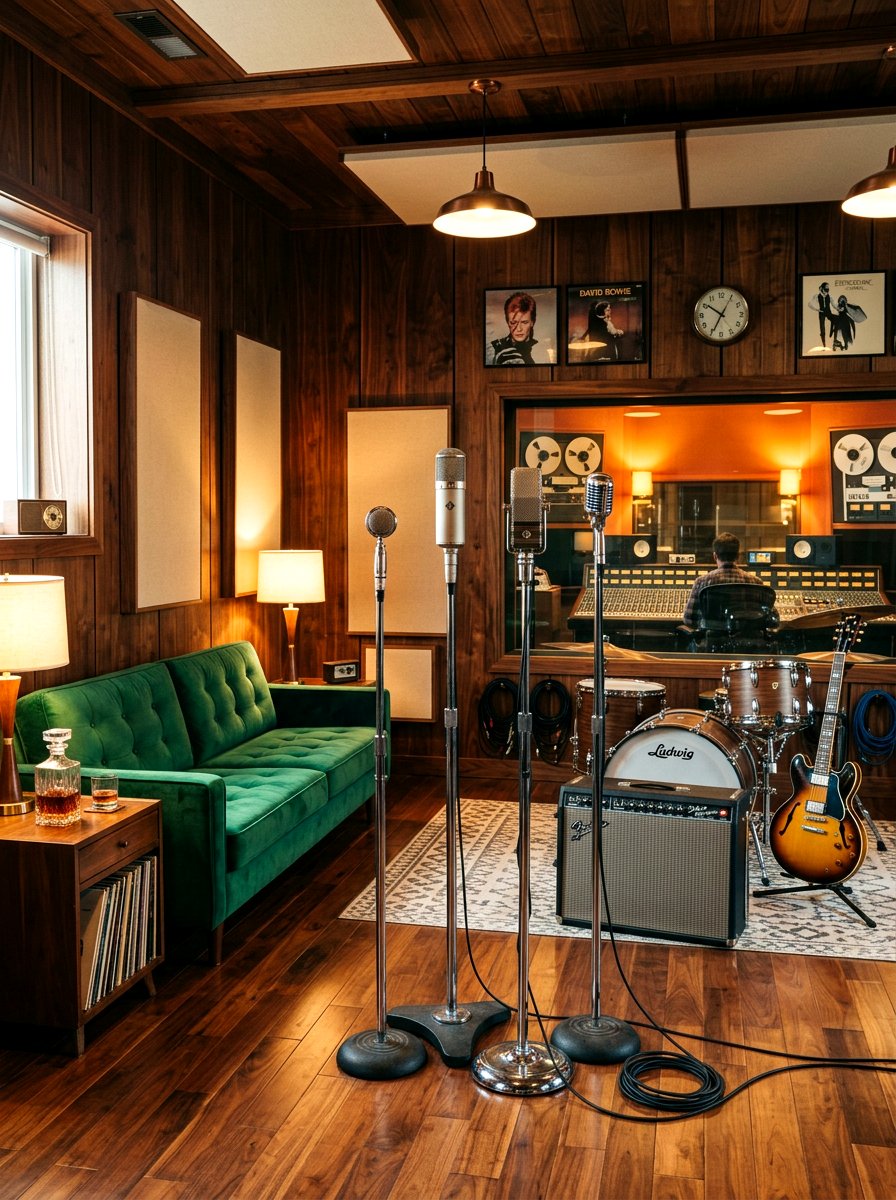
There is something incredibly inspiring about the warm aesthetic of a vintage recording studio. You can achieve this look by incorporating rich wood paneling, velvet curtains, and mid-century modern furniture. Antique-style microphones and retro gear not only look great but also add a sense of history to your creative process. Warm, dimmable lighting helps set a moody and intimate tone for late-night practice sessions. Using Persian rugs on the floor adds texture and helps with sound absorption while completing the classic look. This theme encourages a nostalgic connection to the music of the past, making your practice feel like a professional session.
6. Attic rehearsal space layout
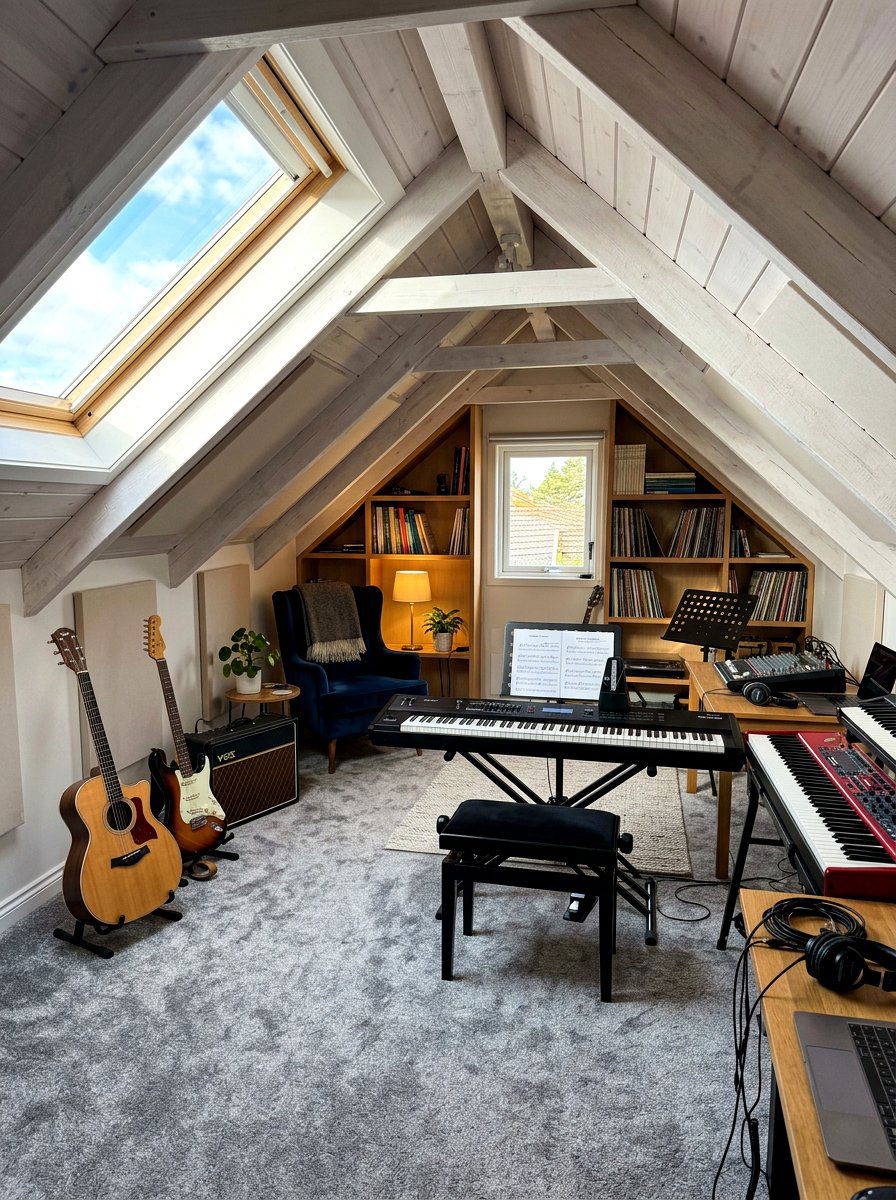
Converting an attic into a music room offers a unique architectural charm with its sloped ceilings and secluded location. The angled walls can actually help with acoustics by preventing parallel sound reflections, which reduces standing waves. You can use the low-clearance areas for storage or equipment racks, leaving the center of the room open for your main instrument. Adding a skylight brings in natural light, making the space feel more open and less confined during the day. It is the perfect private getaway within your home where you can practice undisturbed. Soft lighting and comfortable seating make the attic feel like a cozy retreat.
7. Garage music studio conversion
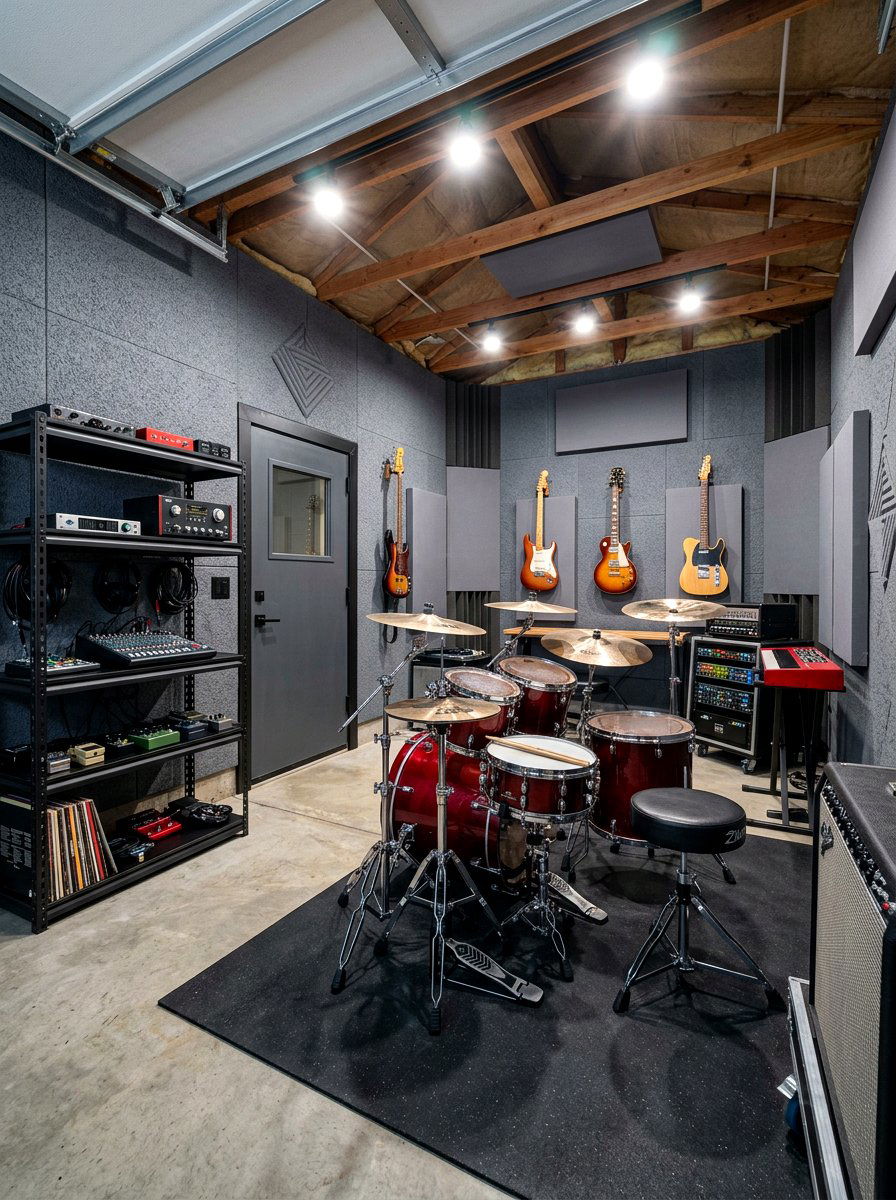
A garage offers a blank canvas for building a heavy-duty music studio that can handle loud volumes. Soundproofing is the main priority here, often requiring extra insulation in the walls and a solid-core door. You can leave the concrete floors for an industrial look or cover them with thick rubber mats to reduce vibrations and improve comfort. This space is perfect for drummers or full bands who need the extra room to spread out their equipment. Since garages are often separate from living areas, they provide excellent privacy for intense rehearsals. Adding some personal wall decor turns a functional garage into a true creative hub.
8. Industrial music practice room
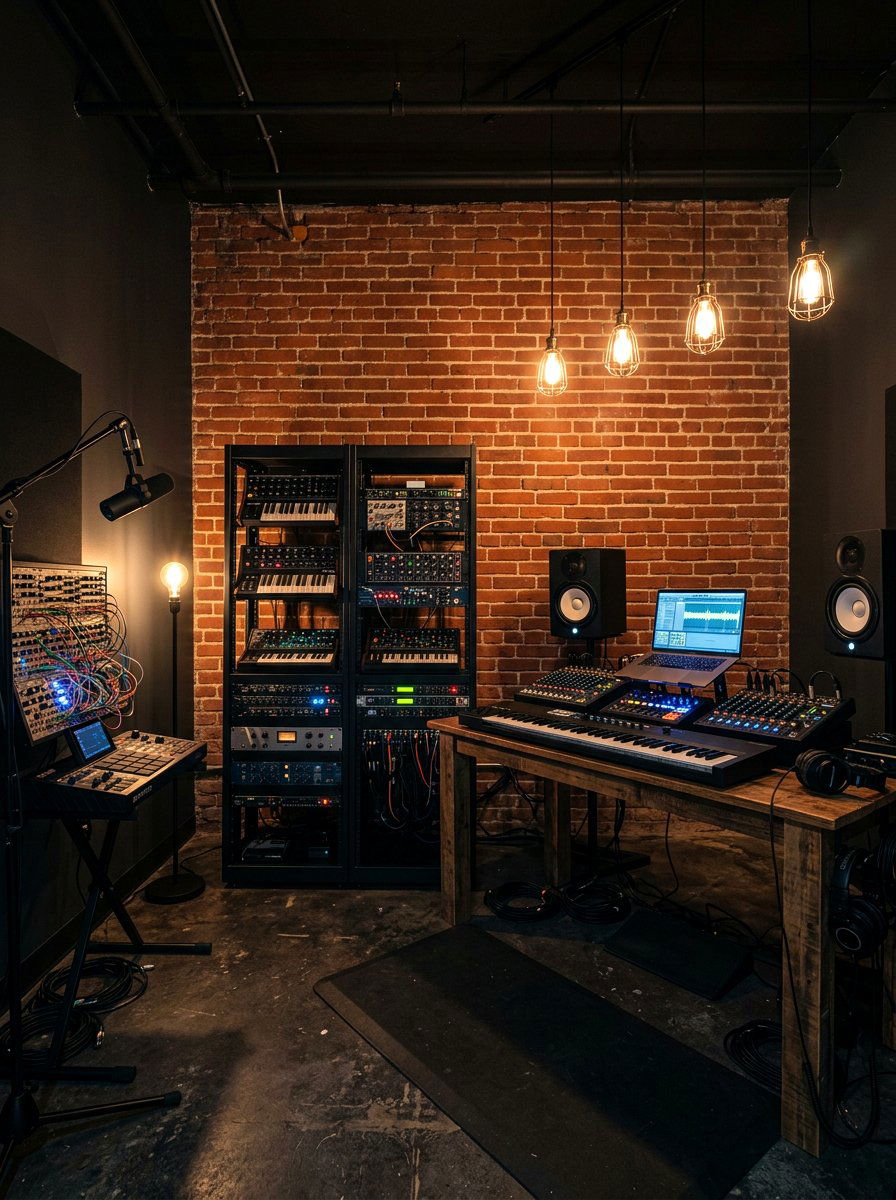
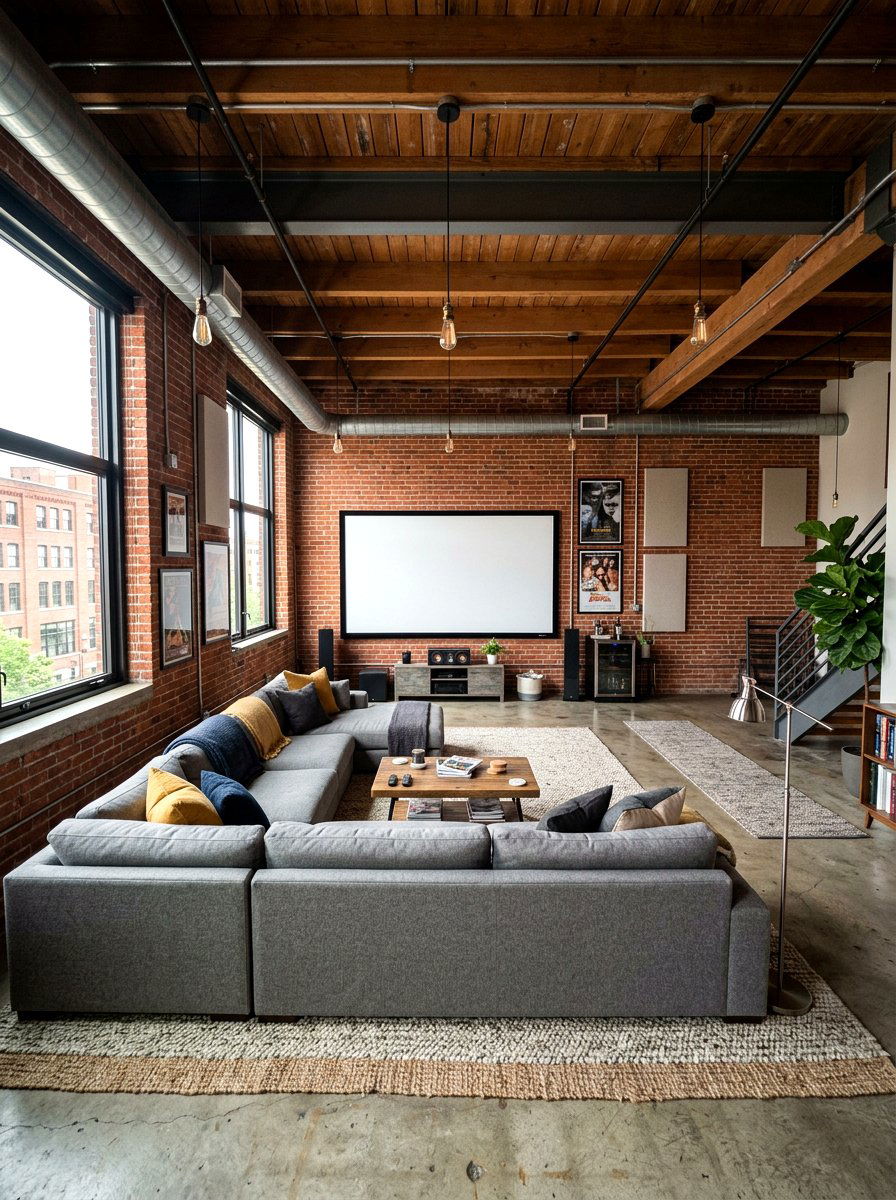
Industrial design works exceptionally well for music rooms because it embraces raw materials like brick, metal, and wood. Exposed brick walls provide a textured surface that helps diffuse sound naturally while looking incredibly cool. You can use metal shelving for your gear and reclaimed wood for your desk to lean into the urban aesthetic. Darker color schemes and Edison bulb lighting enhance the moody, professional atmosphere often found in city studios. This style is rugged and durable, making it ideal for spaces that house heavy amplifiers and drum kits. It is a bold look that feels both modern and historically grounded.
9. Bohemian music lounge decor
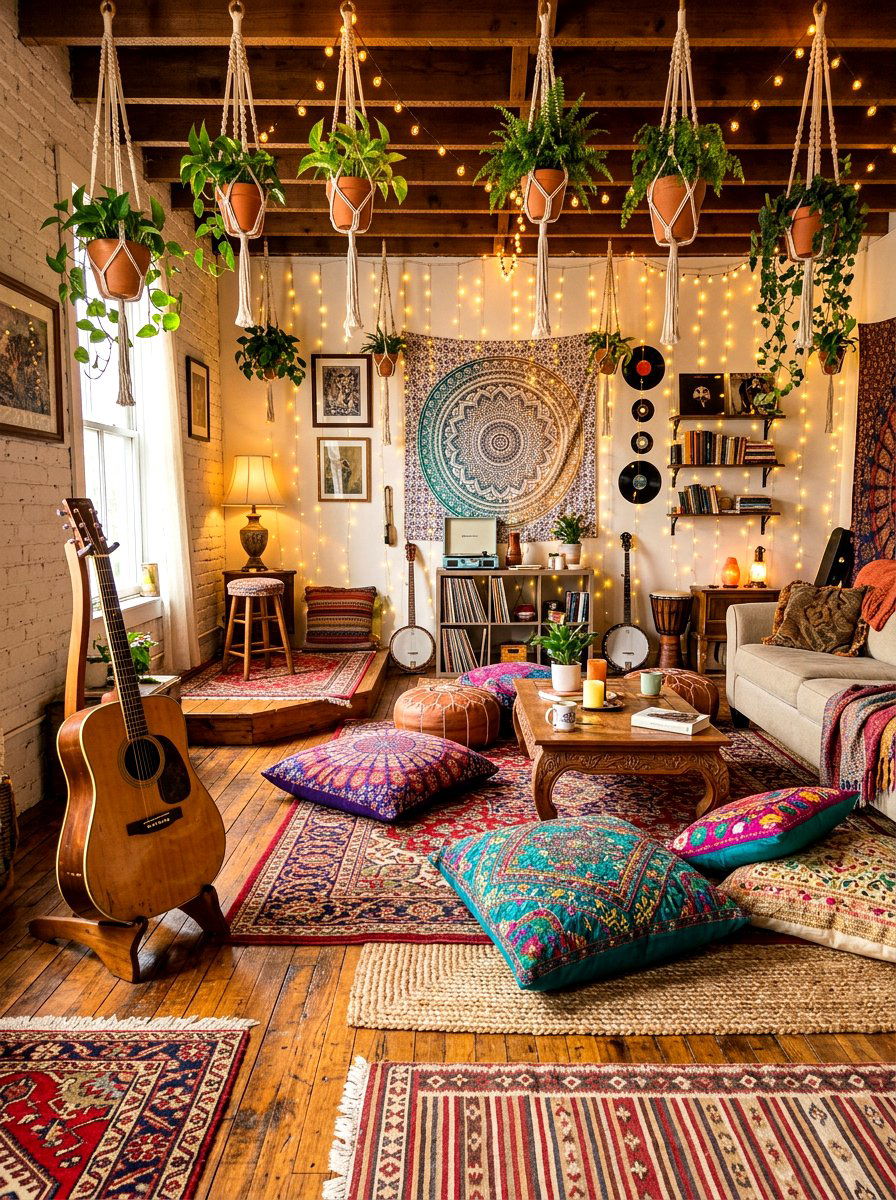
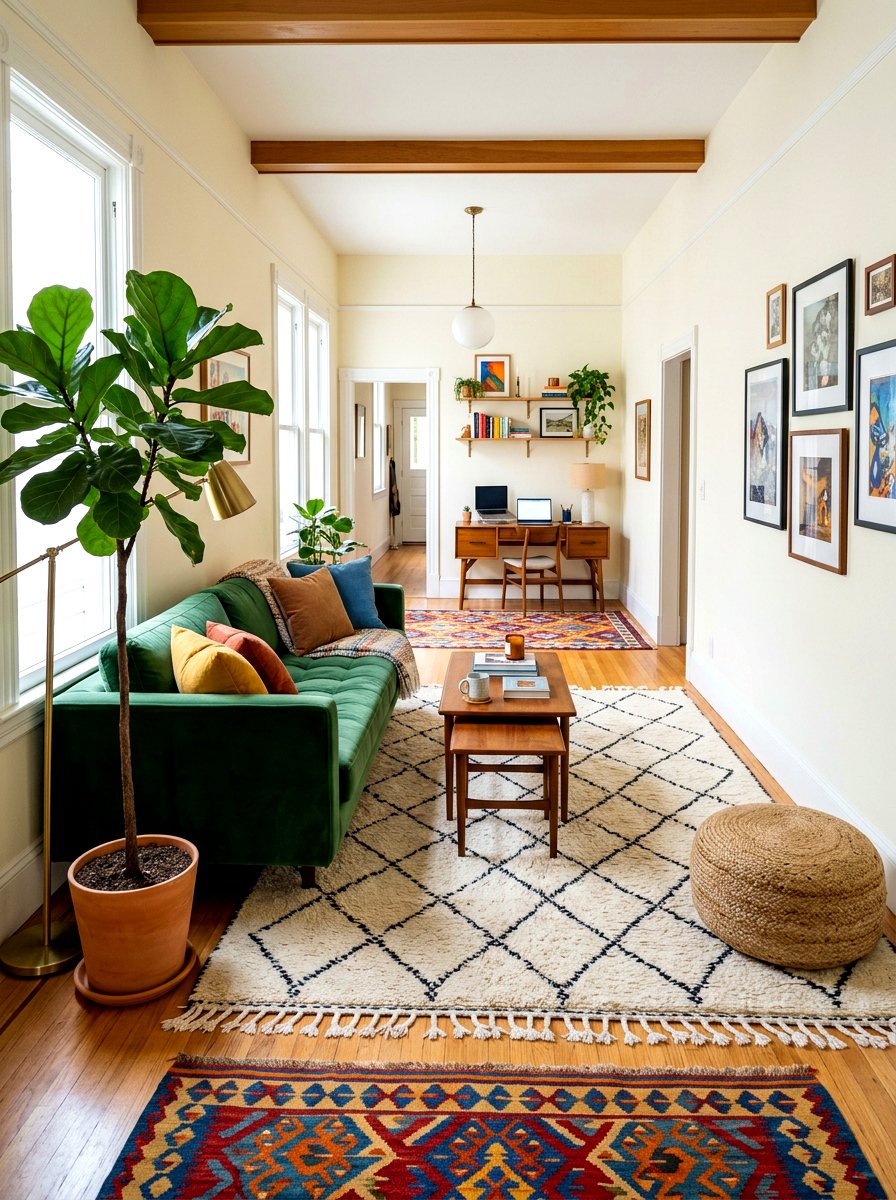
If you want a space that feels relaxed and creatively free, a bohemian music lounge is the way to go. This style uses plenty of textiles like floor cushions, woven tapestries, and layered rugs to create a cozy environment. The soft surfaces are excellent for absorbing sound, making the room naturally quieter and warmer. You can incorporate plenty of indoor plants to add a fresh, biophilic touch that boosts your mood during long practice sessions. Macramé instrument hangers and fairy lights add a whimsical feel that encourages improvisation and artistic exploration. It is an approachable and very comfortable way to design.
10. Professional vocal booth installation
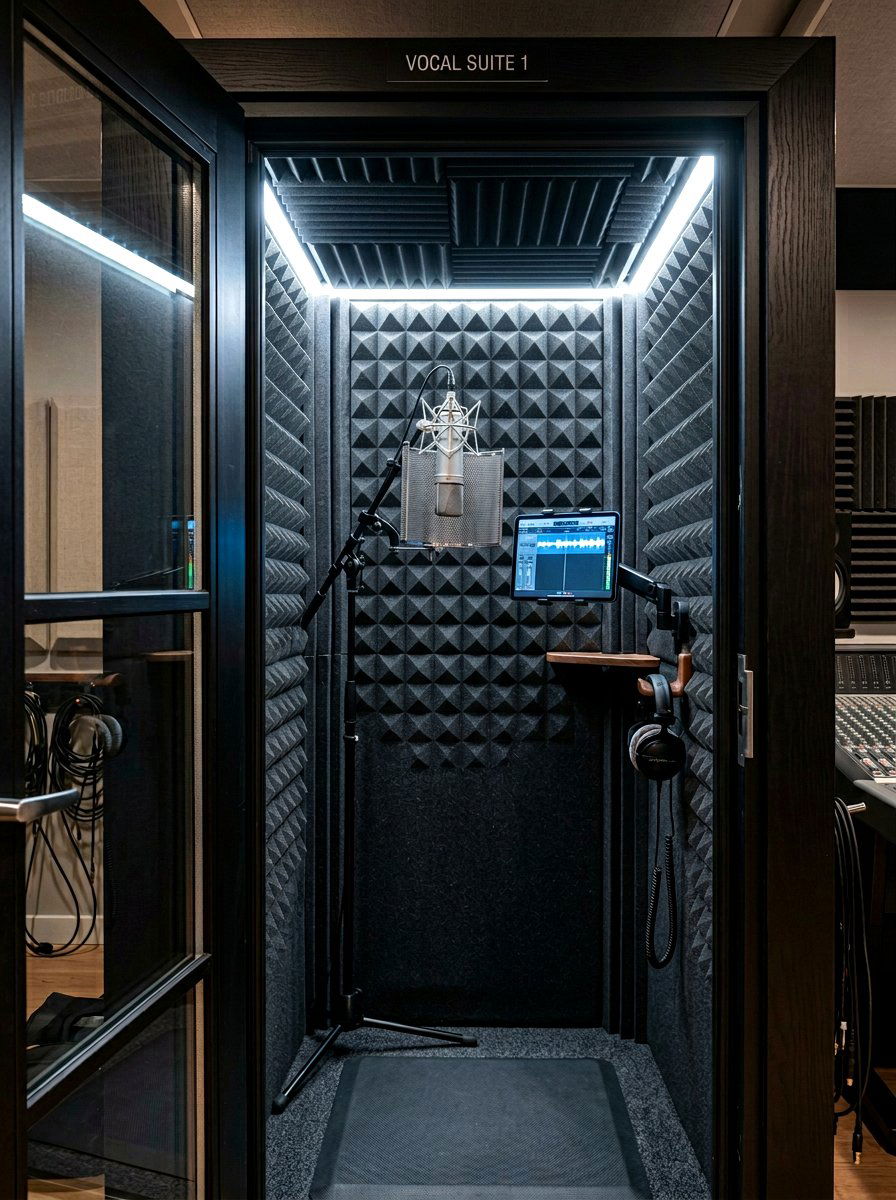
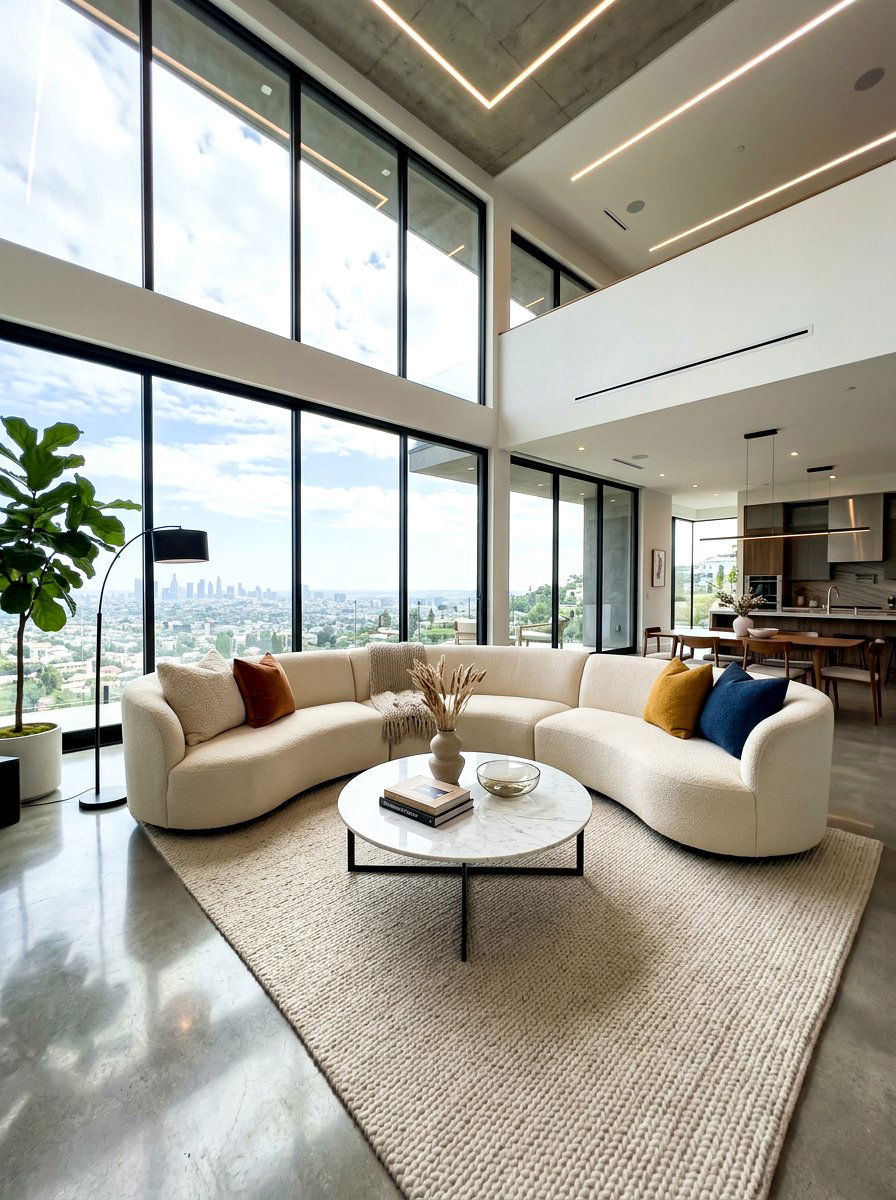
For singers and voice actors, a dedicated vocal booth is a game-changer for capturing clean, dry audio. These small, enclosed spaces are heavily treated with thick acoustic foam or blankets to eliminate all room reverb. You can build a DIY booth using a closet or purchase a portable isolation shield to place on your desk. Inside the booth, a sturdy microphone stand and a pop filter are essential for high-quality recordings. Small details like a dedicated tablet mount for reading lyrics can make your sessions much smoother. A well-designed booth ensures that your voice is the only thing the microphone hears.
11. Children music practice room
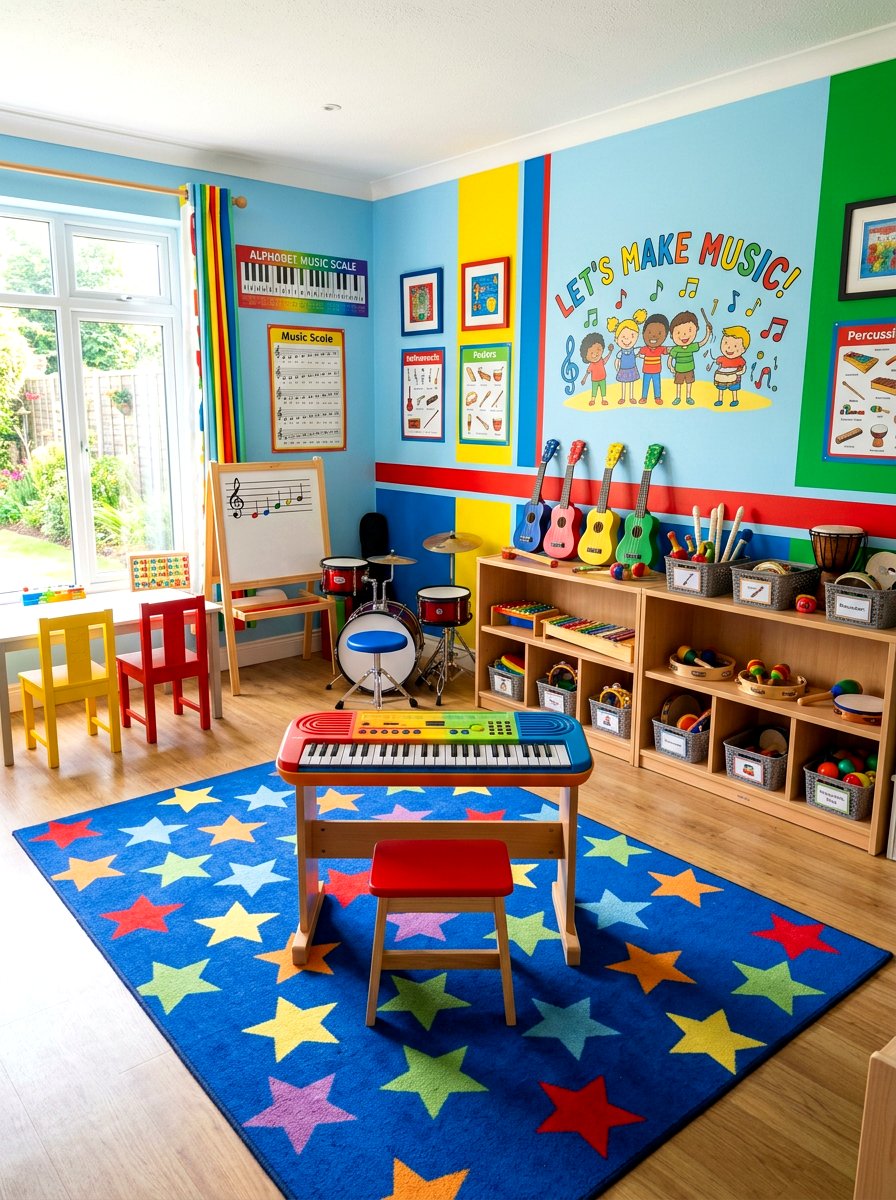
Designing a music room for children requires a balance of fun aesthetics and functional organization. Using bright, primary colors can make the space feel inviting and stimulate a child's creative energy. You should include accessible storage like low bins or labeled shelves so they can easily reach their instruments and put them away. Adding a small stage area or a performance rug can help build their confidence as they practice for family recitals. Durable materials like foam floor tiles are great for both sound dampening and protecting the floor from dropped instruments. It is about creating an environment where learning feels like play.
12. Garden music studio shed
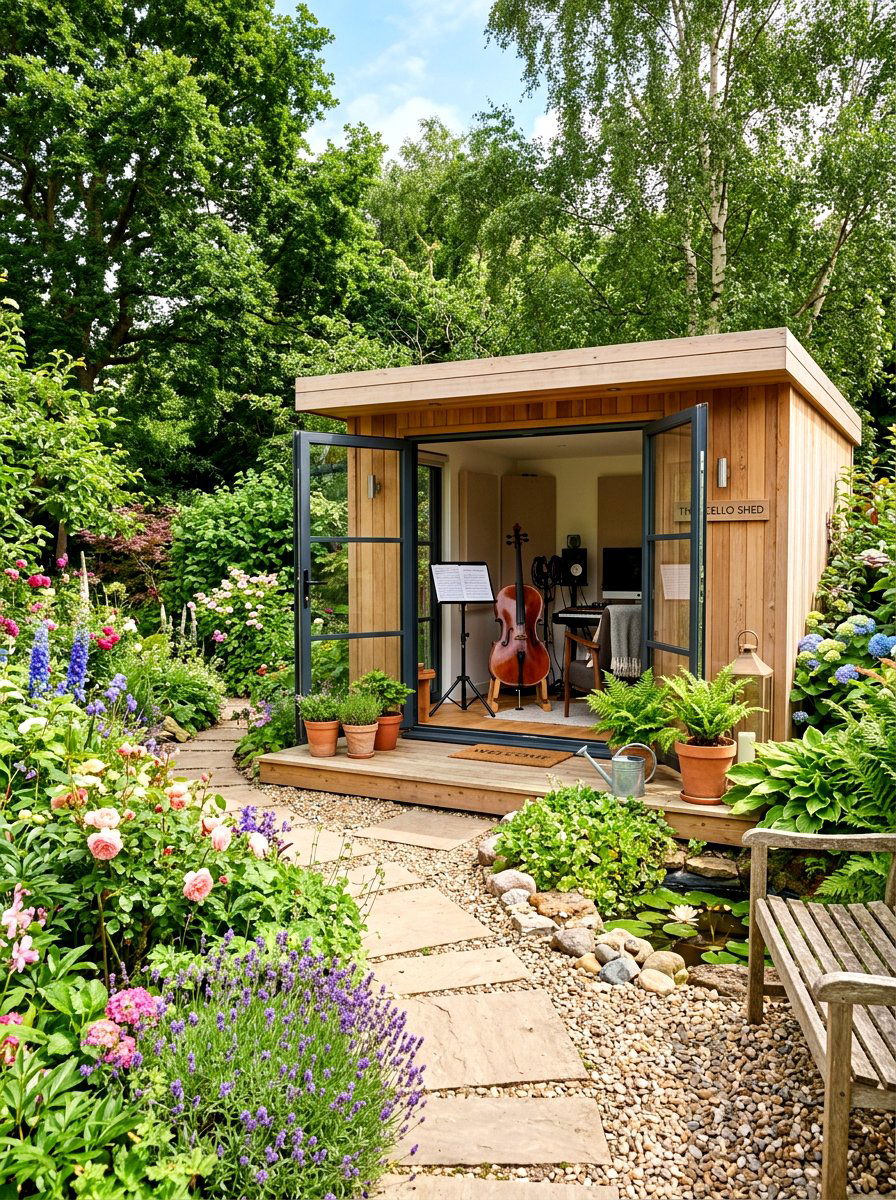
A garden studio provides a beautiful, detached space that is completely separate from the distractions of the main house. Surrounded by nature, this type of music room offers a peaceful environment that can significantly enhance your focus and inspiration. You can install large windows or glass doors to enjoy the view while you play, using heavy curtains for when you need sound control. Proper climate control is essential to protect your instruments from temperature and humidity changes throughout the seasons. The isolation of a garden shed makes it an excellent choice for loud instruments like drums or brass. It is a true backyard sanctuary.
13. Electronic music production station
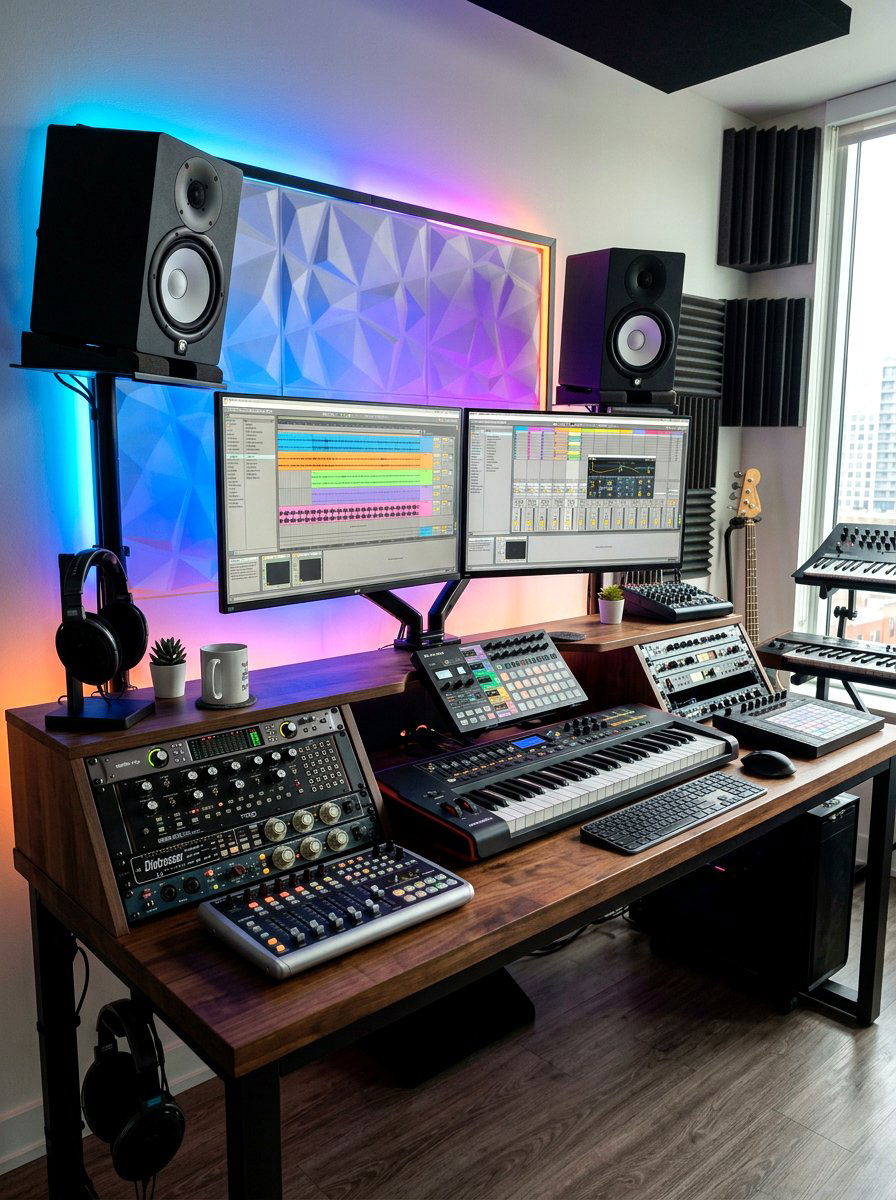
Electronic music producers need a setup that prioritizes ergonomics and efficient cable management. A specialized studio desk with built-in rack mounts and a sliding keyboard tray helps keep all your gear within easy reach. You should position your studio monitors at ear level on dedicated stands to ensure an accurate listening environment for mixing. Using LED strip lighting behind your desk can create a futuristic vibe and reduce eye strain during long nights of producing. Organizing your cables with clips or sleeves prevents a tangled mess and makes it easier to swap out equipment. This functional layout supports a fast-paced and technical creative workflow.
14. Mid century modern music parlor
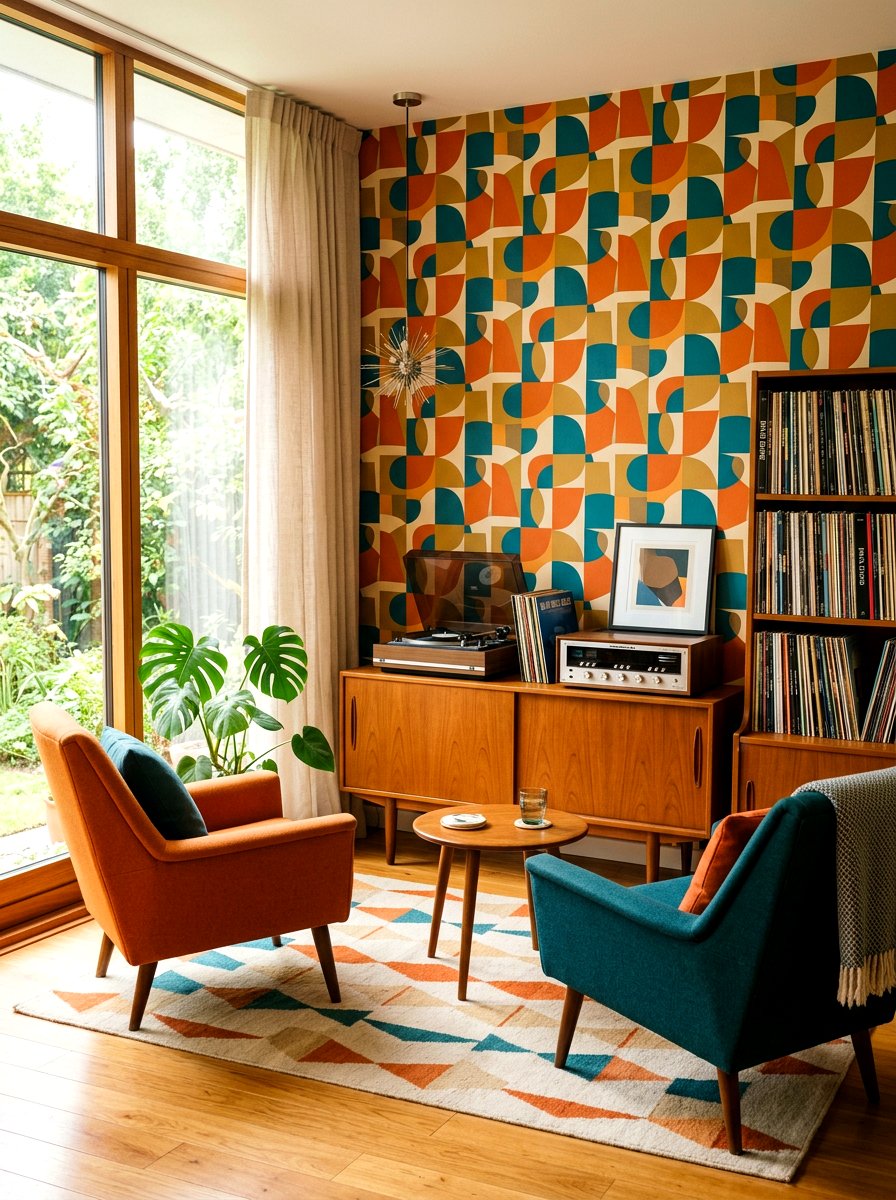
A mid-century modern music parlor blends sophisticated style with a love for high-fidelity sound. This design typically features tapered wooden legs on furniture, geometric patterns, and a palette of warm teals and oranges. You can display a vintage turntable as a central feature alongside a collection of classic vinyl records on a minimalist shelf. Comfortable lounge chairs provide a place for friends to sit and listen while you practice or perform. The use of natural wood throughout the room adds a warmth that complements the organic sound of acoustic instruments. It is a stylish way to integrate music into your home's social areas.
15. Dark moody music studio
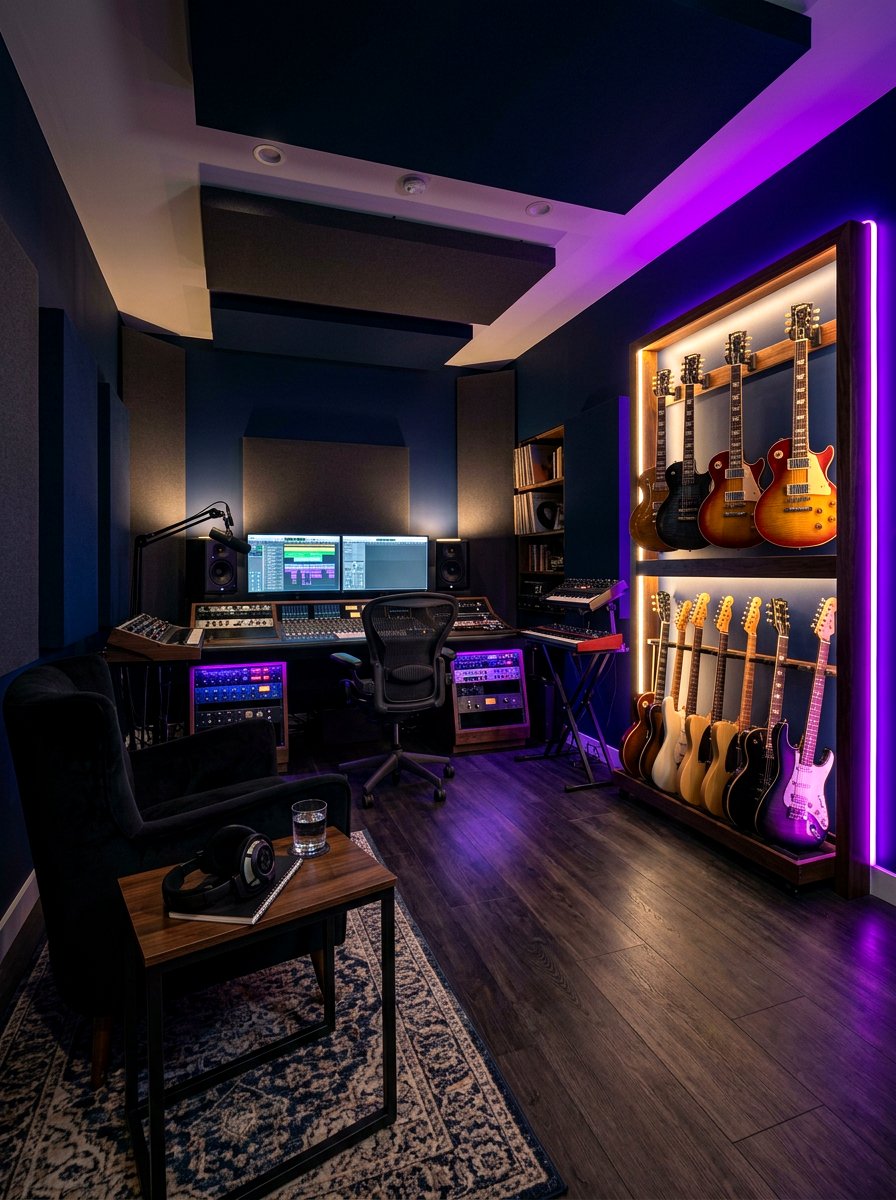
Creating a dark and moody atmosphere can help you get into a deep state of creative flow. Using deep charcoal, navy, or forest green on the walls makes the room feel intimate and helps minimize visual distractions. You can use spotlighting or neon signs to highlight your instruments, creating a dramatic focal point in the shadows. This aesthetic is very popular on social media and gives your practice space a professional, late-night club vibe. Velvet furniture and heavy drapes add to the luxurious and quiet feel of the room. It is an excellent choice for musicians who find inspiration in a more intense environment.
16. Bright sunroom music studio
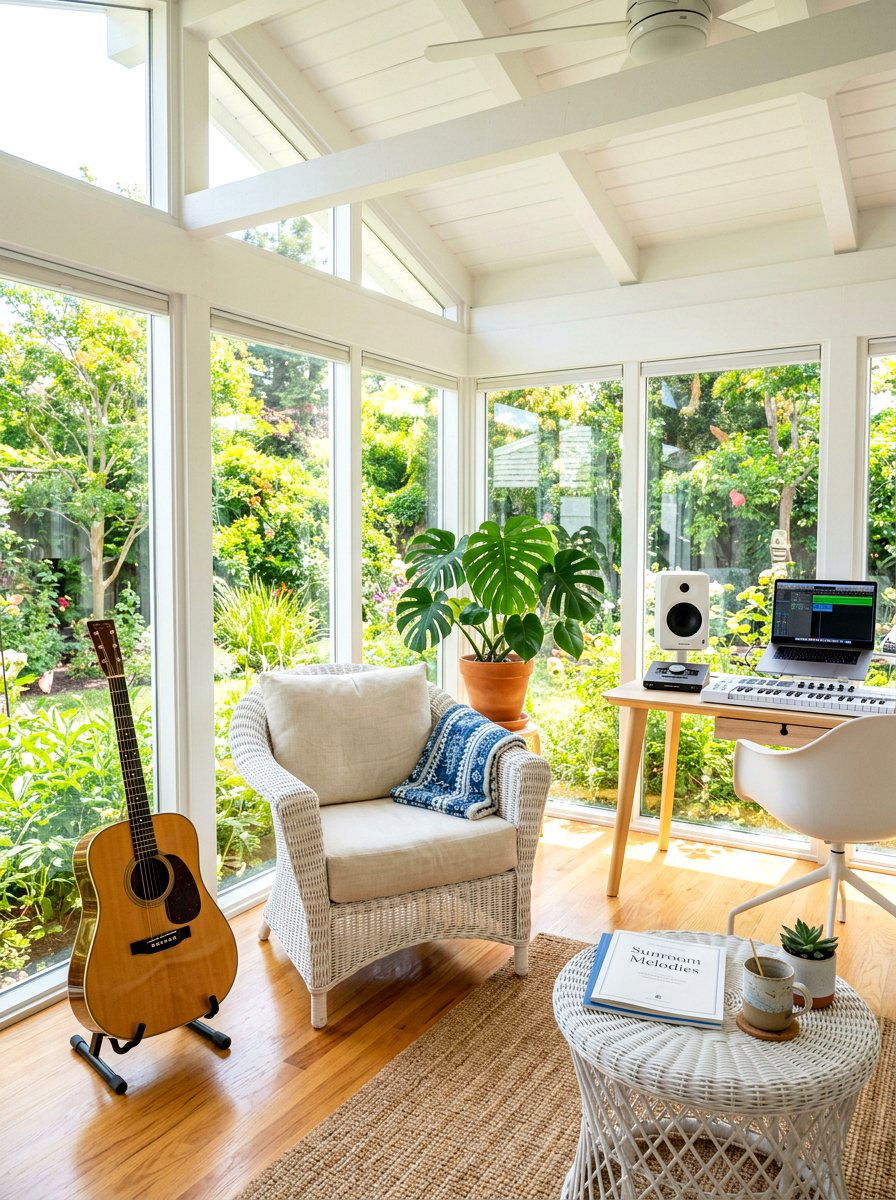
A sunroom filled with natural light is an uplifting and energizing place to practice your music. The abundance of windows provides a connection to the outdoors, which can be incredibly refreshing during long rehearsal sessions. You can use light-colored furniture and airy curtains to maintain the bright and open feeling of the space. To prevent the glass from causing too much sound reflection, consider adding tall plants and plush rugs to help with absorption. This type of room is particularly well-suited for acoustic guitarists or woodwind players who enjoy a vibrant atmosphere. It turns your practice time into a relaxing and sunny experience.
17. Guest bedroom music studio
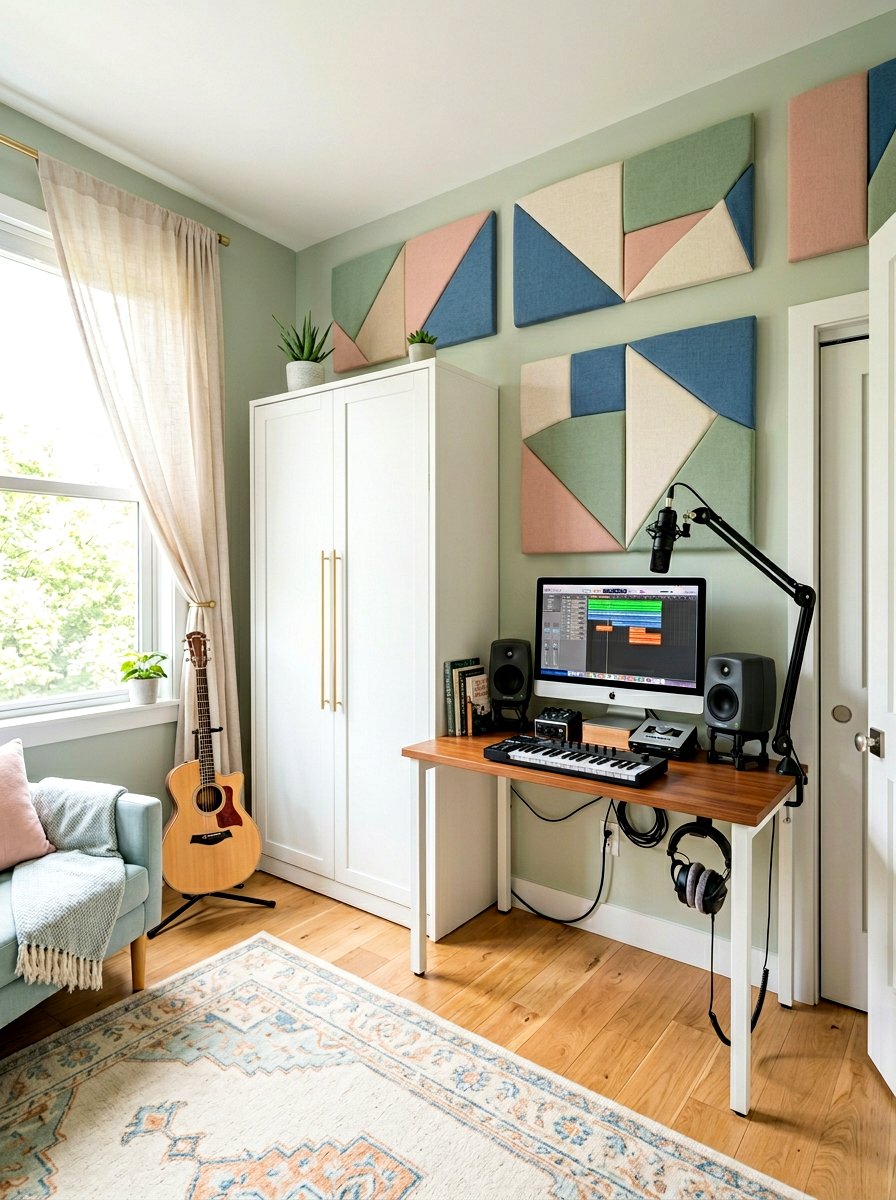
Transforming a guest bedroom into a dual-purpose music room is a smart way to maximize your home 's utility. You can use a stylish daybed or a Murphy bed to save space for your instruments when guests aren' t staying over. A desk that doubles as a vanity and a recording station ensures the room remains functional for everyone. Using decorative acoustic panels that look like art helps maintain a welcoming bedroom aesthetic while still providing sound benefits. This setup allows you to have a dedicated practice space without sacrificing a room for visitors. It is all about clever furniture choices and a cohesive design.
18. Classical orchestral practice room
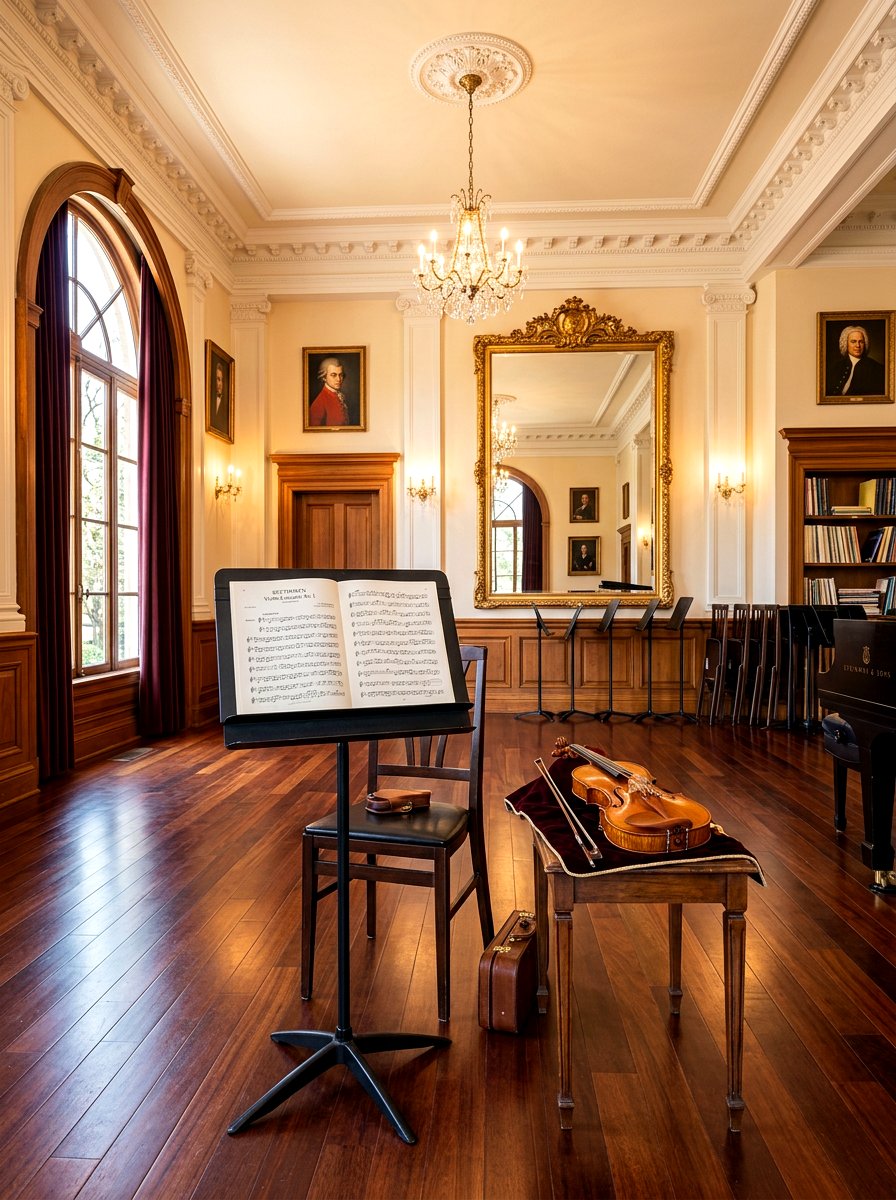
A classical practice room often features a more traditional and formal aesthetic that reflects the discipline of orchestral music. High ceilings and hardwood floors provide the natural resonance that many classical instruments need to sound their best. You should include a high-quality, adjustable music stand and a comfortable, ergonomic chair to support proper posture during long sessions. A large mirror on one wall is a helpful tool for monitoring your playing technique and bowing. Storing your instruments in glass-fronted cabinets keeps them safe while also displaying their craftsmanship. This environment fosters a serious and dedicated approach to mastering your difficult classical repertoire.
19. Small closet music booth
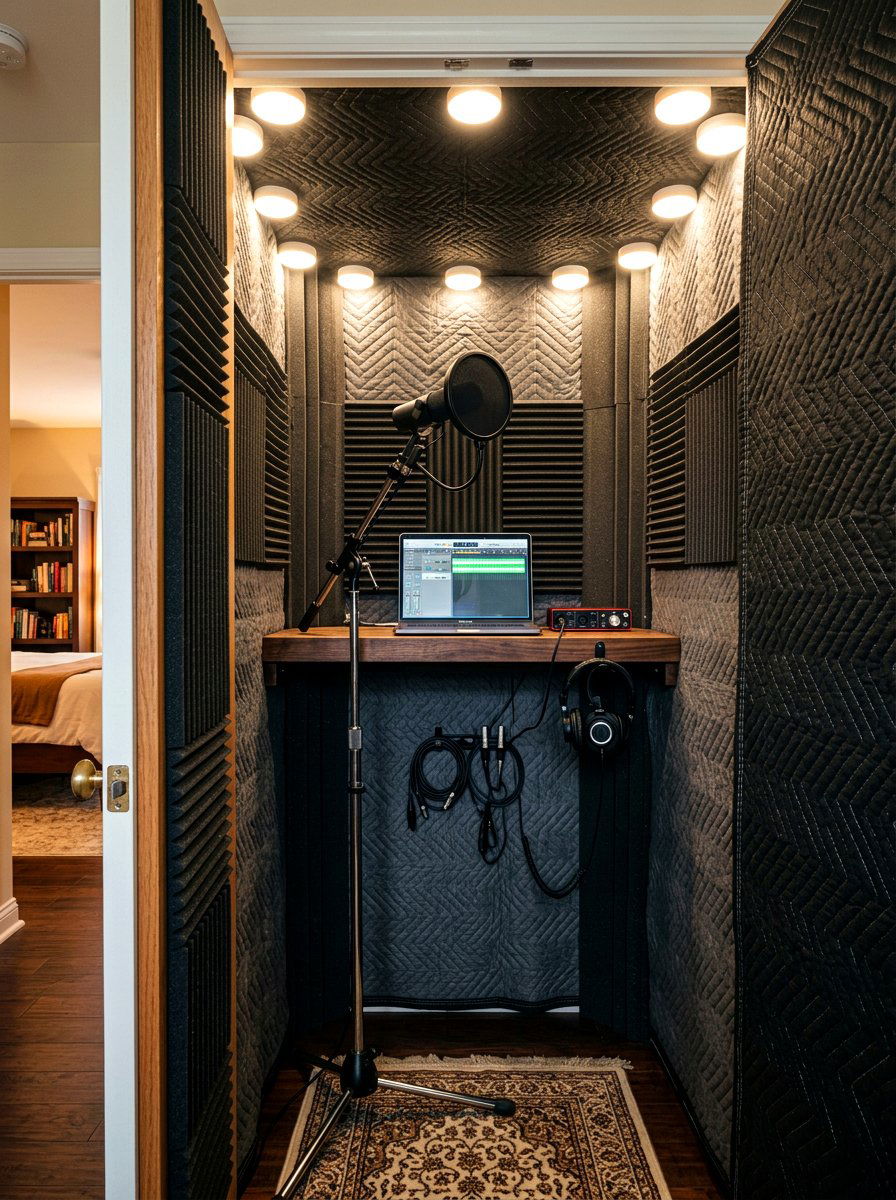
When space is extremely tight, a walk-in closet can be converted into a highly effective "cloffice" or music booth. By lining the walls with thick clothing or acoustic foam, you create an incredibly dead sound environment perfect for recording vocals. You can install a small floating shelf to hold your interface and laptop, keeping the floor clear for a microphone stand. This tiny space is naturally isolated and easy to soundproof further with a heavy door sweep. It is a budget-friendly way to get professional-level recordings without needing a whole room. Clever lighting like battery-powered puck lights makes the small space feel much more inviting.
20. Zen music meditation space
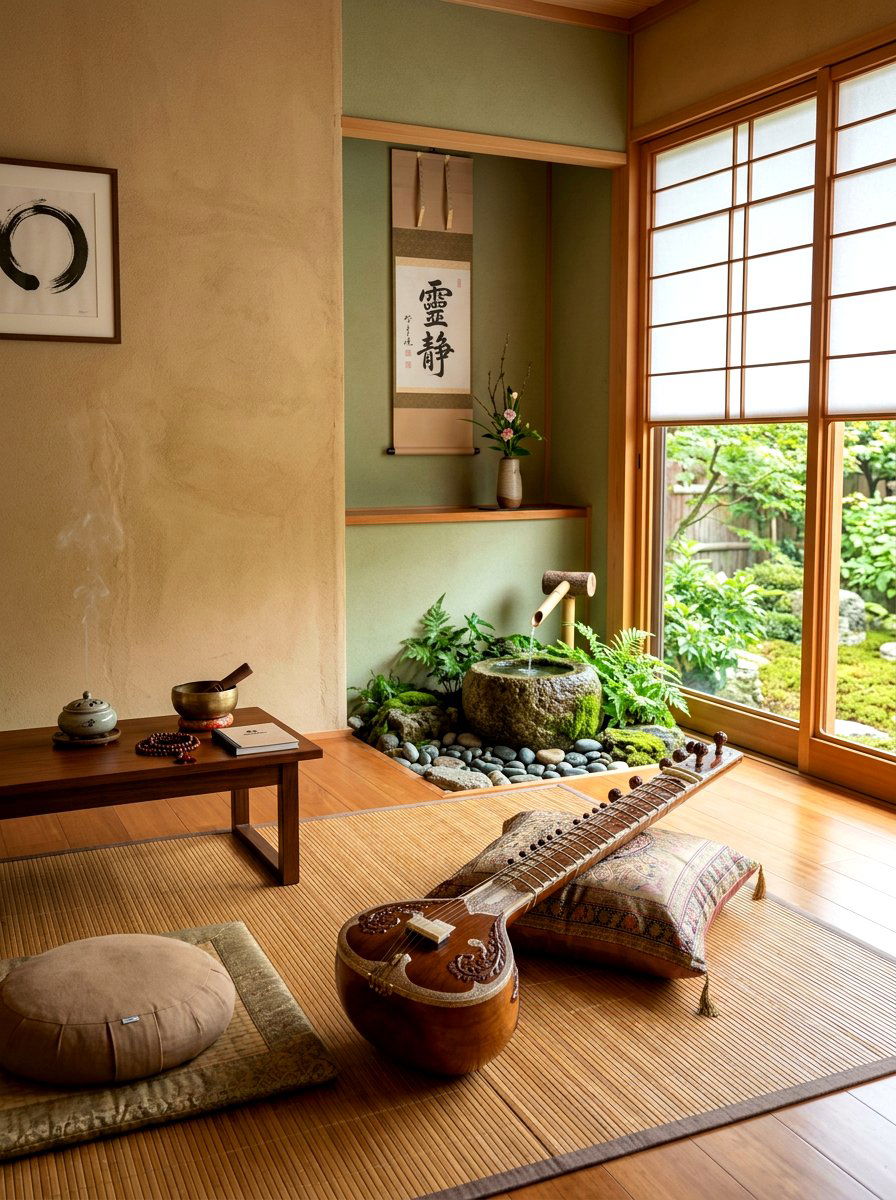
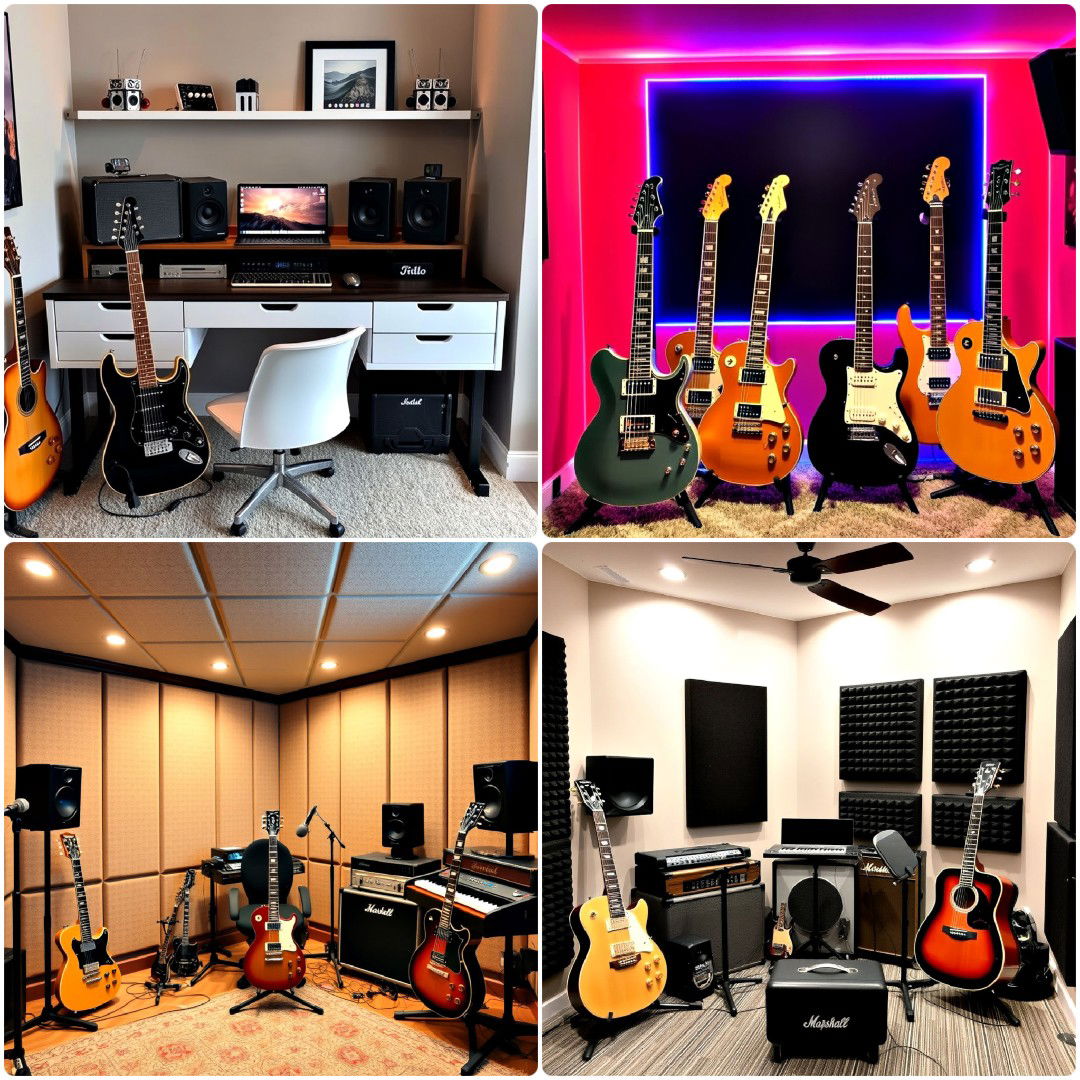
A Zen-inspired music room focuses on simplicity, natural materials, and a sense of tranquility. Using a palette of soft earth tones and incorporating elements like bamboo or stone creates a very calming environment for practice. You might include a dedicated floor mat for seated instruments like the sitar or for pre-practice meditation to clear your mind. Minimalist decor and hidden storage keep the room free of visual clutter, allowing you to focus entirely on the sound. This type of space is perfect for exploring ambient music or improvisational styles that require a peaceful headspace. It turns your musical practice into a mindful and restorative ritual.
21. Retro vinyl listening room
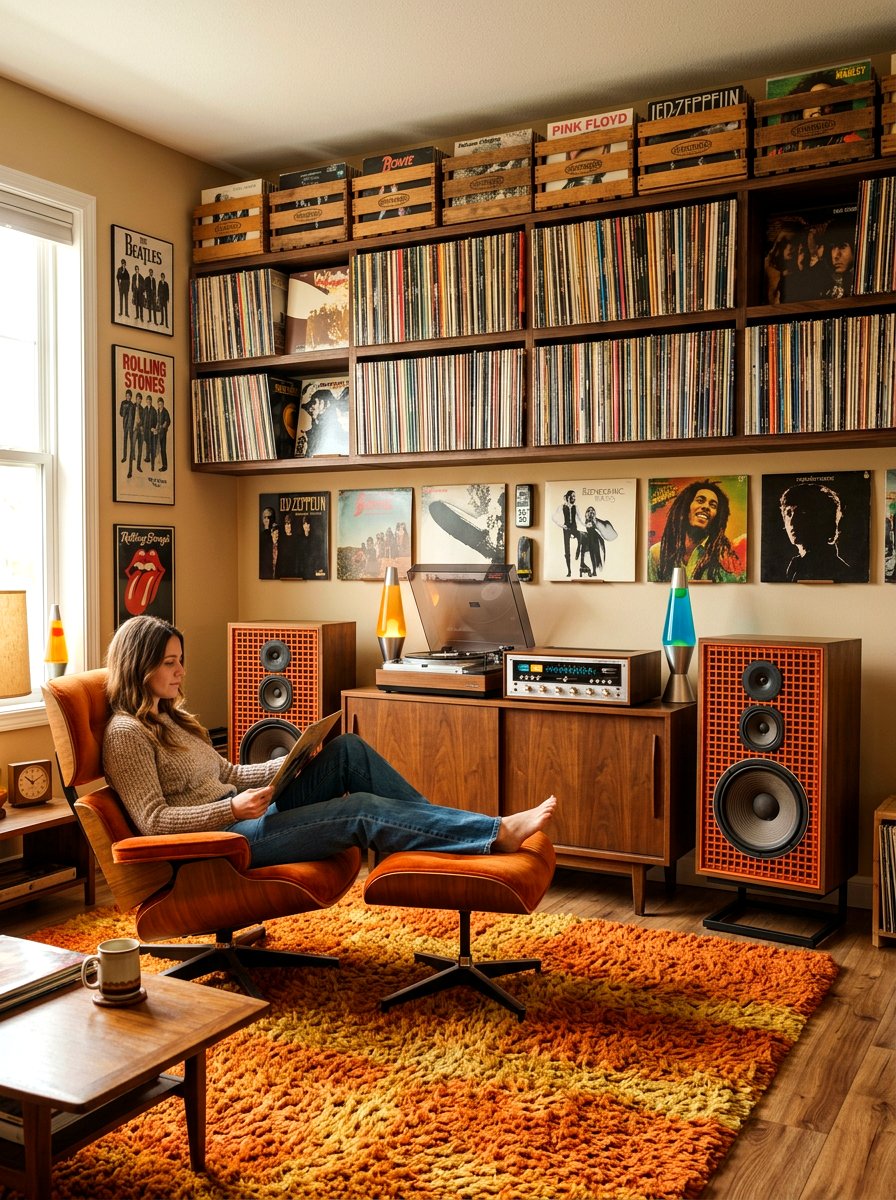
A retro listening room celebrates the tactile experience of music and the aesthetic of the 1970s. You can feature a large, dedicated shelving unit for your vinyl collection, organized by genre or artist for easy access. A vintage-style hi-fi system with large wooden speakers serves as the room's functional centerpiece. Decorate with lava lamps, shag rugs, and pop art posters to complete the nostalgic vibe of the era. This room is not just for listening; it provides a great atmosphere for practicing along with your favorite records. It is a fun and personality-filled space that pays homage to the history of recorded sound.
22. Luxury grand piano salon
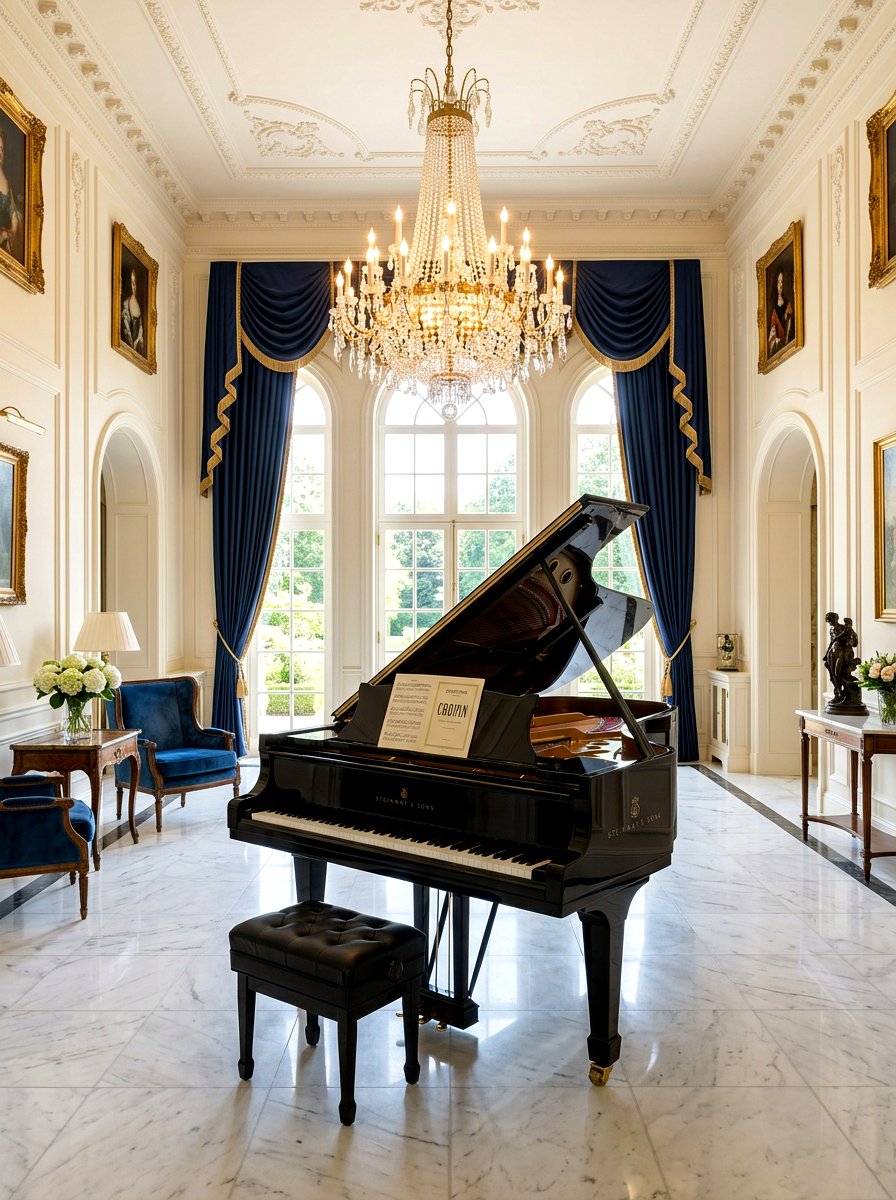
For those with the space and budget, a grand piano salon is the ultimate statement of musical luxury. This room is designed around the piano, often featuring polished marble or hardwood floors that enhance the instrument's powerful projection. Elegant chandeliers and silk drapes add a sense of grandeur and help with light diffusion and sound dampening. You can include a small seating area with high-end armchairs for hosting private house concerts or salon evenings. The walls might feature ornate molding or sophisticated wallpaper to create a regal atmosphere. It is a space that honors the piano as a work of art and a musical powerhouse.
23. Scandinavian music studio space
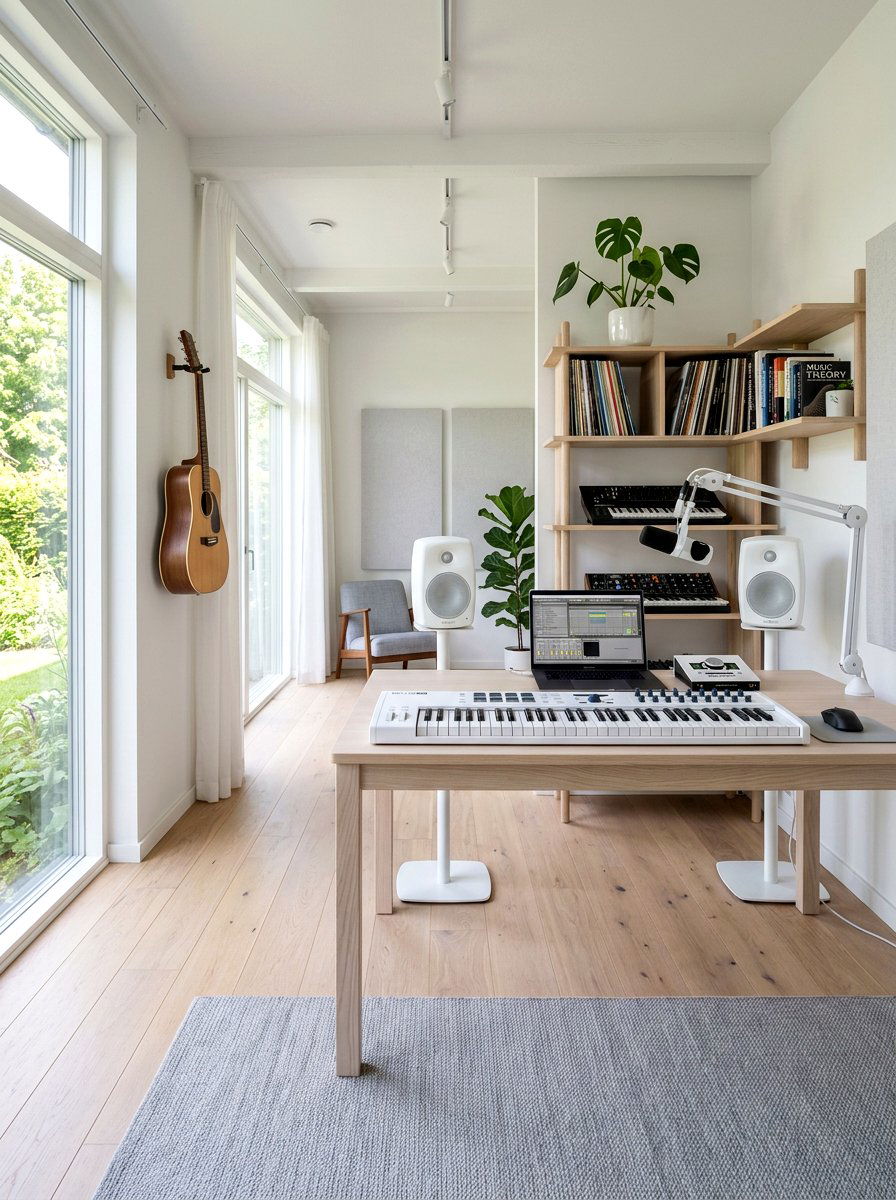
Scandinavian design is perfect for a music studio because it prioritizes functionality, light, and natural beauty. This style uses light-toned woods like ash or pine and a predominantly white color scheme to create a bright, airy feel. You can keep the space organized with modular shelving systems that can be adjusted as your gear collection grows. Soft textures like wool throws and sheepskin rugs add "hygge" or coziness to the functional environment. The focus on clean lines and a clutter-free layout helps reduce stress and promotes a clear mind for composing. It is a modern, timeless look that works in any home.
24. Neon music room lighting

Neon lighting can instantly transform a basic practice room into an exciting and high-energy performance space. You can use custom neon signs with your name or a favorite musical quote to add a personalized touch to the walls. RGB LED strips along the floor or ceiling allow you to change the room's color based on the mood of the music you are playing. This vibrant aesthetic is very popular for live-streaming and creating content for social media platforms like Pinterest. It makes your practice sessions feel more like a show, which can be a great way to stay motivated and inspired.
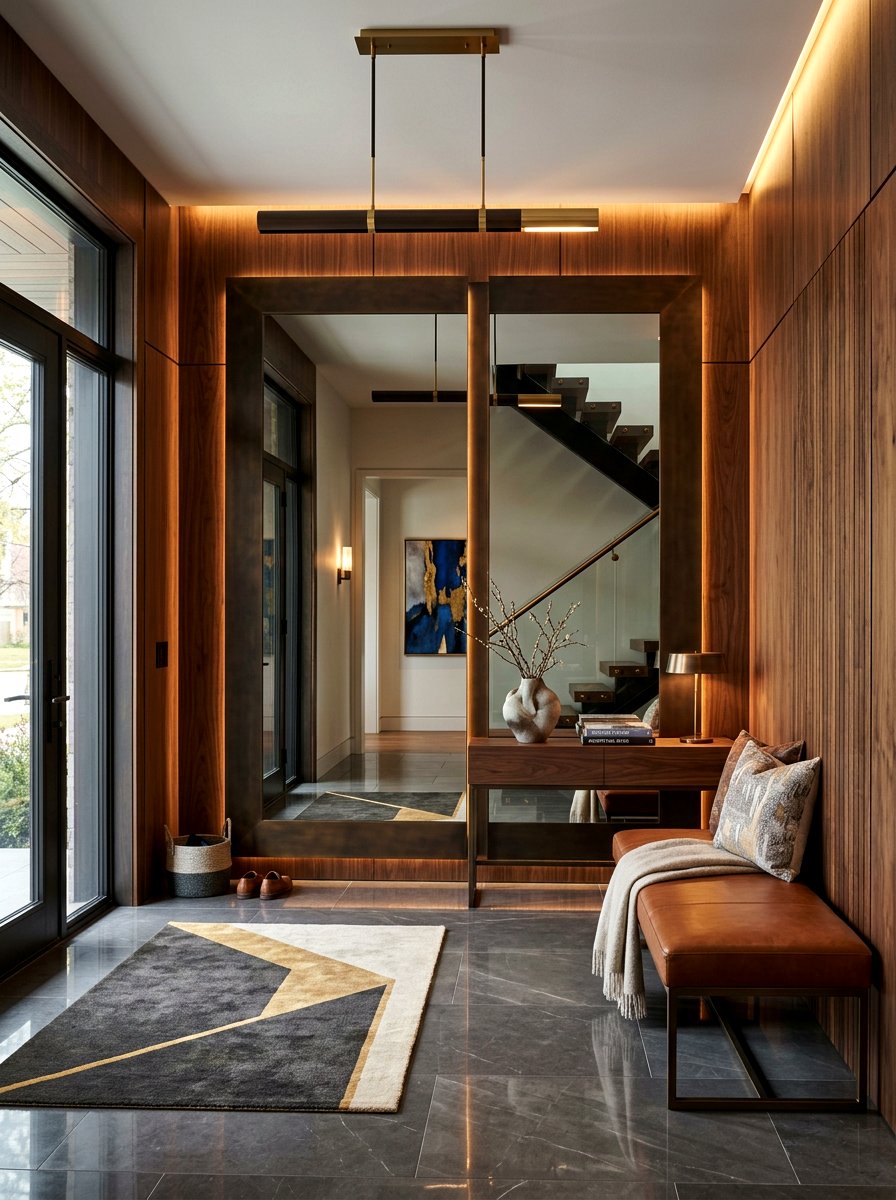
25. Library music practice room
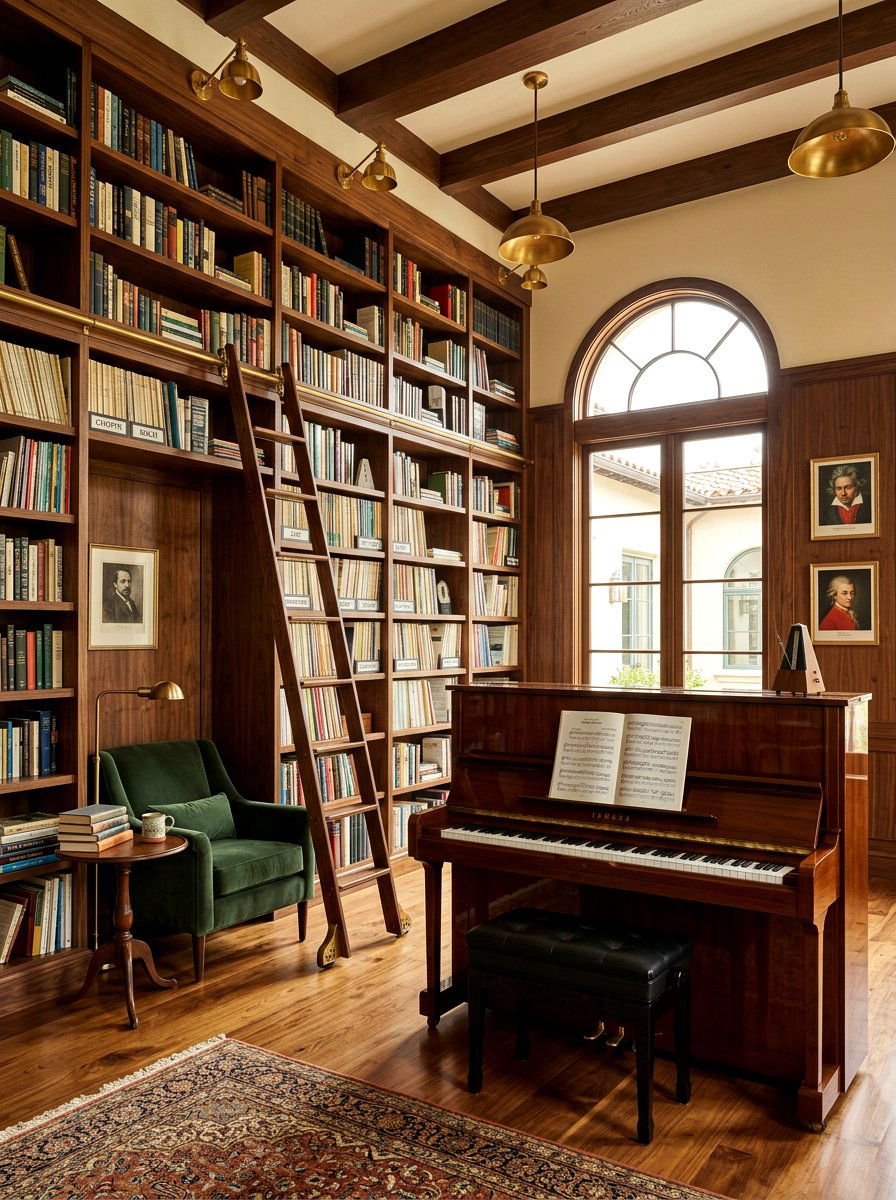
Combining a music room with a home library creates a sophisticated and quiet environment for study and practice. The thousands of pages of books on the shelves act as natural sound diffusers, helping to balance the room's acoustics beautifully. You can place a comfortable reading chair next to your music stand for breaks where you can study theory or scores. Dark wood shelves and a classic rolling ladder add a sense of history and intellectual depth to the space. This room is perfect for musicians who also enjoy research and want a multi-functional area for all their creative pursuits.
26. Multi instrument rehearsal space
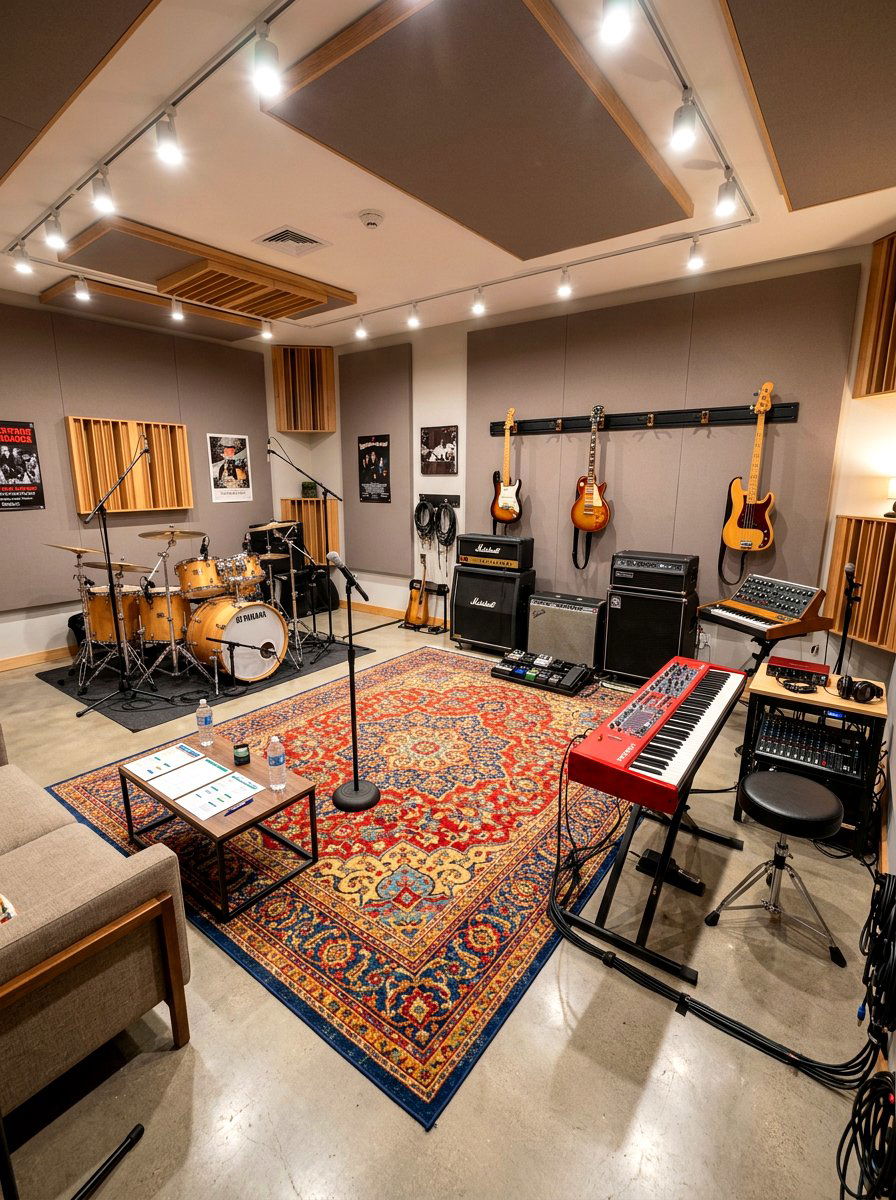
If you play several different instruments, you need a room that is organized into clear functional zones. You can set up a percussion corner, a string station, and a keyboard area, each with its own dedicated storage and seating. Using a central rug can help tie the different sections together while providing a place for collaborative jam sessions with friends. Wall-mounted racks are essential for keeping various guitars and smaller instruments organized and off the floor. This layout encourages you to switch between instruments easily, fostering a multi-faceted approach to your musical education. It is a versatile space for the modern multi-instrumentalist.
27. Glass music pod installation
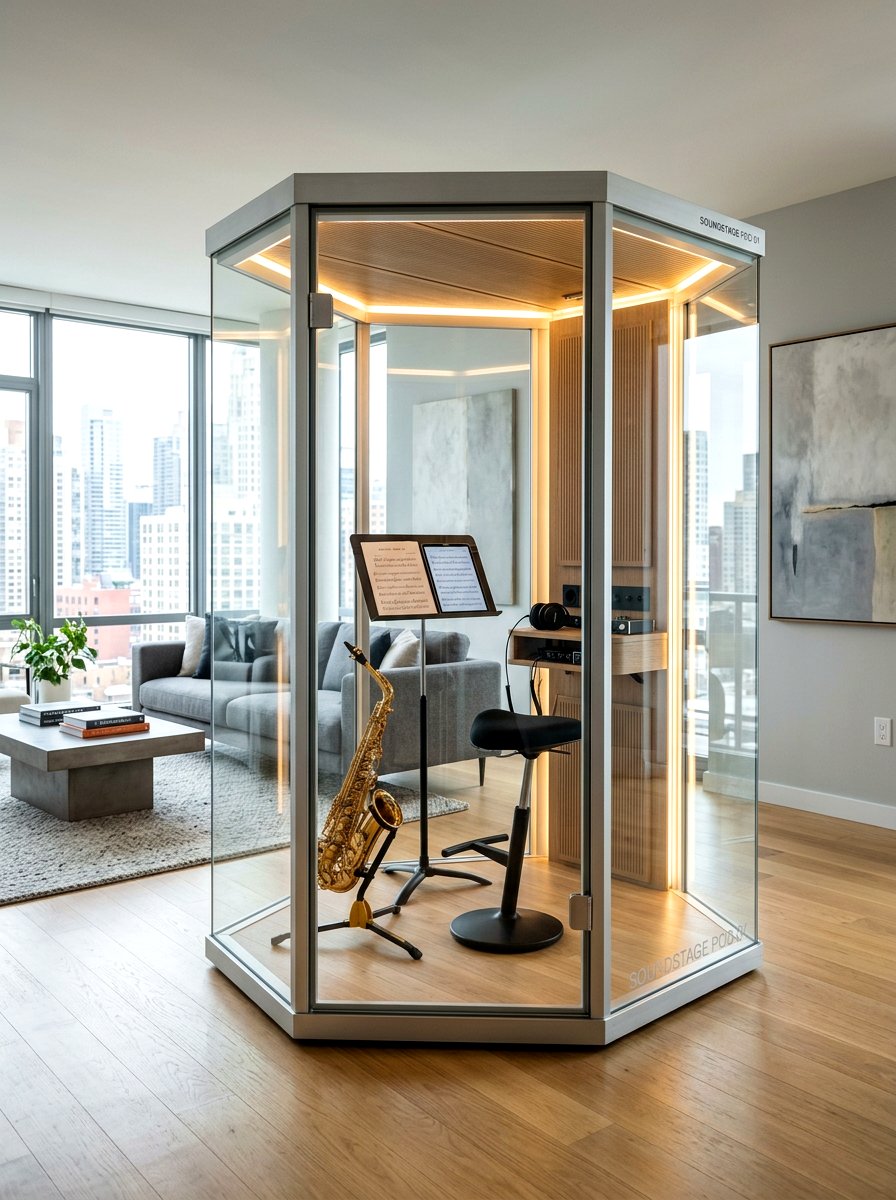
A modern glass music pod is a futuristic solution for adding a soundproof room within an open-plan living area. These standalone units feature thick, double-glazed glass that provides excellent sound insulation while maintaining a visual connection to the rest of the home. Inside, they are equipped with their own lighting, ventilation, and power outlets, creating a fully self-contained rehearsal environment. The sleek, transparent design ensures the pod doesn't make the house feel smaller or more cluttered. It is a perfect choice for urban dwellers who need a private space for practice without building permanent walls. This setup combines high-tech engineering with contemporary style.
28. Artistic music workshop space
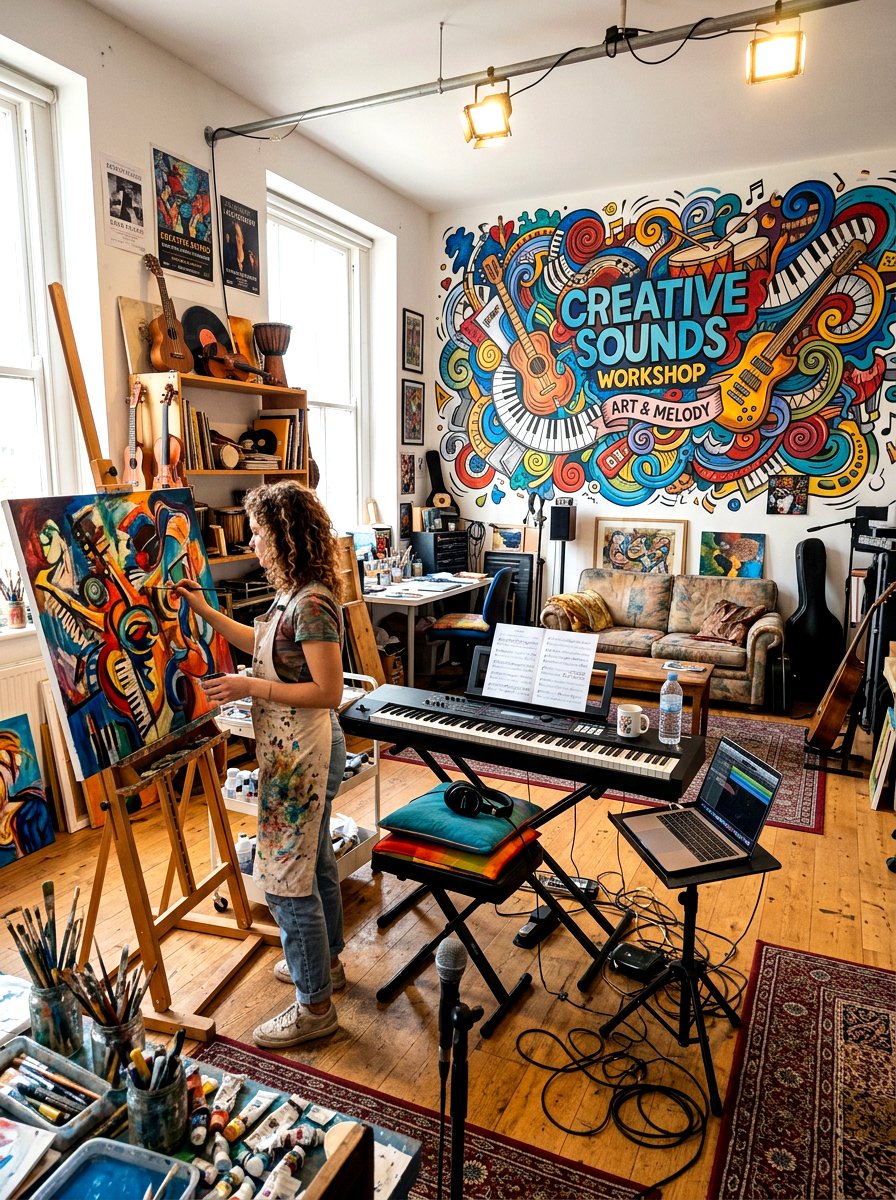
For those who see music as part of a larger artistic journey, an artistic workshop space is the ideal setup. You can combine your music gear with art supplies, like an easel or a drafting table, to create a multi-disciplinary studio. Splashes of paint on the floor or colorful murals on the walls add a sense of raw creativity and personality. This room is about inspiration rather than perfection, encouraging you to experiment with different sounds and visual ideas. Exposed storage for instruments and art tools makes it easy to grab whatever you need when a new idea strikes. It is a vibrant, busy, and truly inspiring room.
29. Mezzanine music studio layout
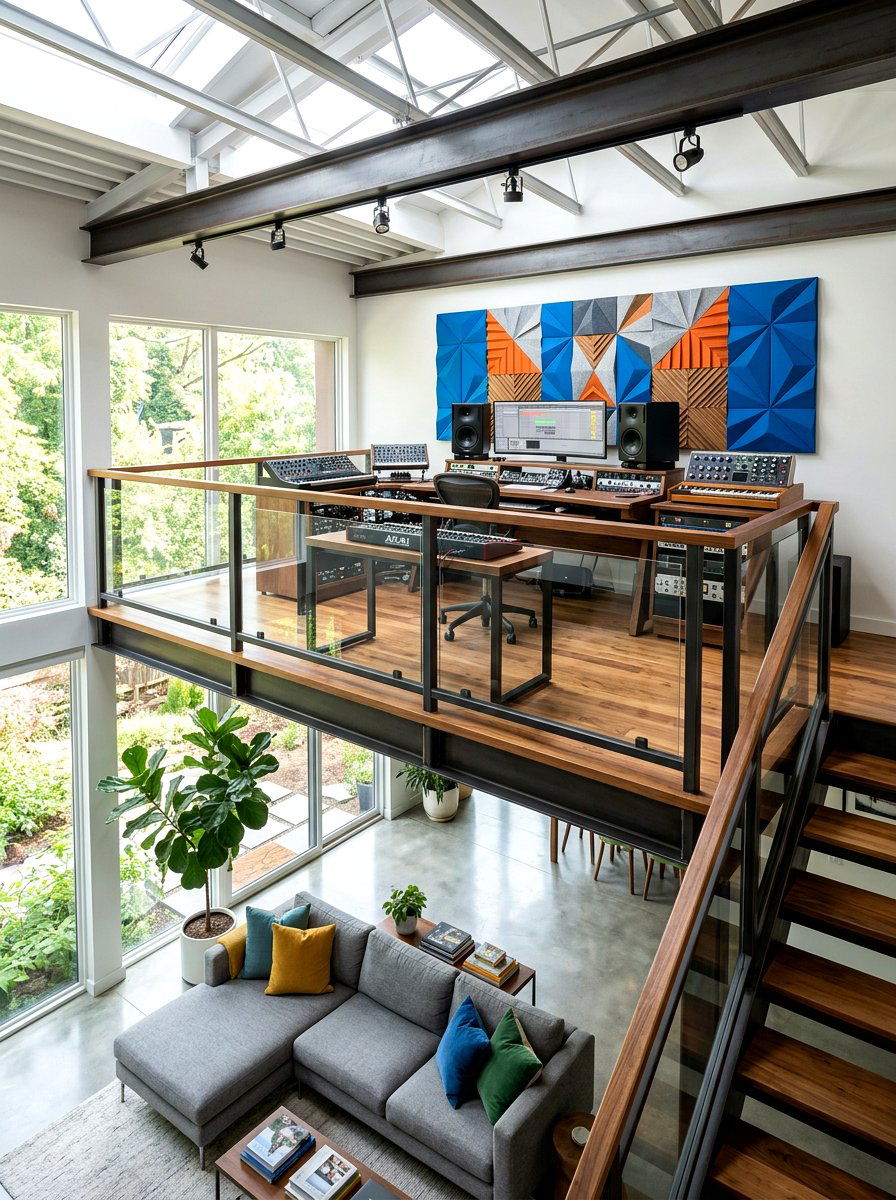
A mezzanine or loft space provides a unique vantage point and a sense of architectural interest for a music room. Being elevated above the rest of the house creates a natural separation from daily chores and distractions. You can use the railing to hang decorative acoustic panels or plants, adding a personal touch to the open-air design. The height of the room allows for excellent sound dispersion, which can be beneficial for larger instruments or vocal projection. This layout is perfect for creating a "command center" feel where you can look down over your living space while you work on your music.
30. Minimalist music practice area
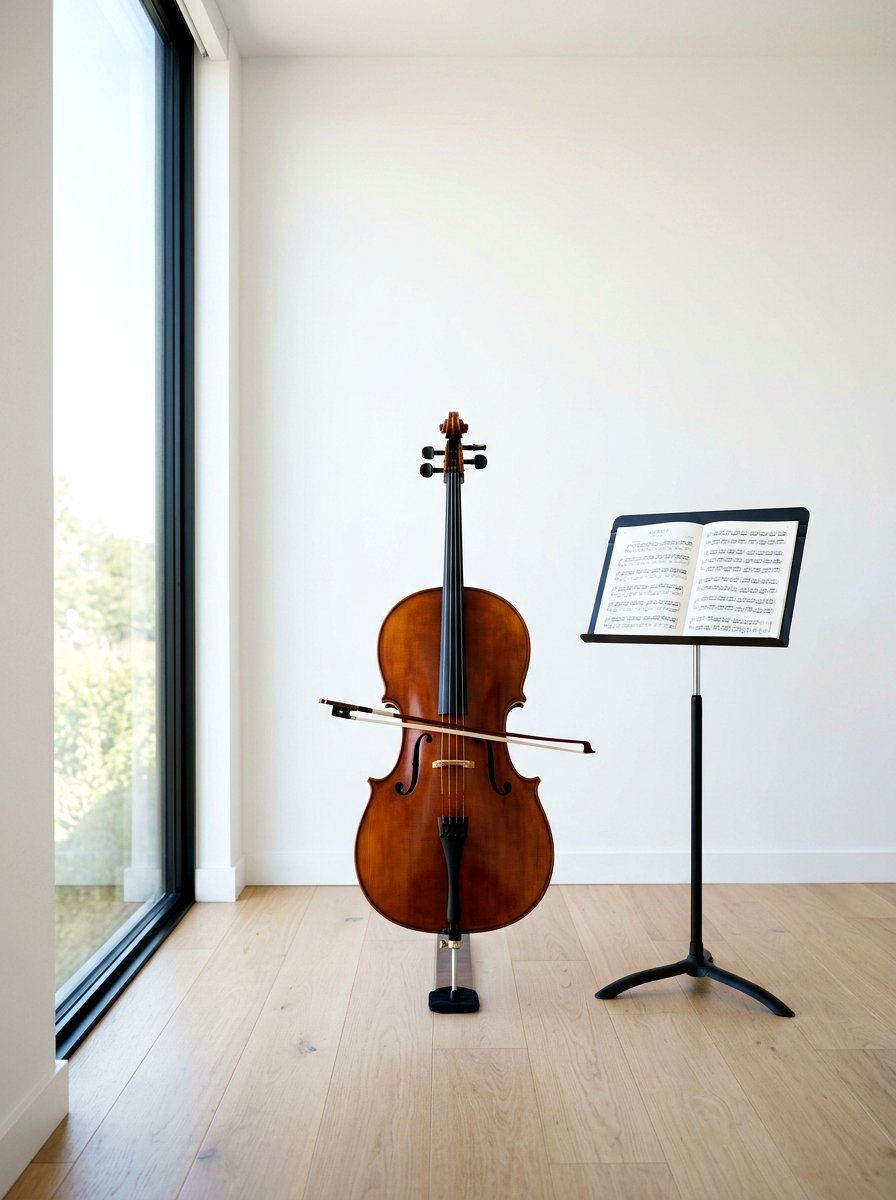
A minimalist practice area is all about stripping away everything except the essentials to foster deep focus. By choosing a single instrument, a sturdy chair, and a clean music stand, you remove all potential distractions from your line of sight. A simple, monochromatic color palette and hidden storage for cables and accessories keep the energy of the room calm and quiet. This approach is highly effective for musicians who find that a busy environment cluttered with gear hinders their concentration. It proves that you don't need a lot of equipment to have a highly effective and beautiful space for your musical growth.
Conclusion:
Building the perfect music practice room is a deeply personal project that should reflect your unique style and musical needs. Whether you prefer the raw energy of an industrial basement or the peaceful vibes of a Zen-inspired studio, the right environment can significantly boost your creativity. By focusing on essential elements like soundproofing, smart storage, and inspiring lighting, you can create a sanctuary that makes every rehearsal feel special. Remember that even the smallest corner of your home can be transformed into a productive and beautiful musical hub with a bit of planning. We hope these thirty ideas have sparked your imagination for your own home.

Related posts: