Integrating a piano into your living room transforms the space from a simple seating area into a sophisticated hub of creativity and culture. Whether you own a massive grand piano or a compact upright, these instruments serve as powerful architectural statements that ground your interior design. Many homeowners struggle with where to place such a large piece of furniture without making the room feel crowded or disjointed. A well-placed piano creates a natural focal point that draws the eye and encourages social interaction. It adds a layer of timeless elegance that few other decor items can replicate. From modern minimalist setups to cozy, plant-filled corners, the way you style your musical instrument defines the entire mood of your home.
1. Grand piano corner
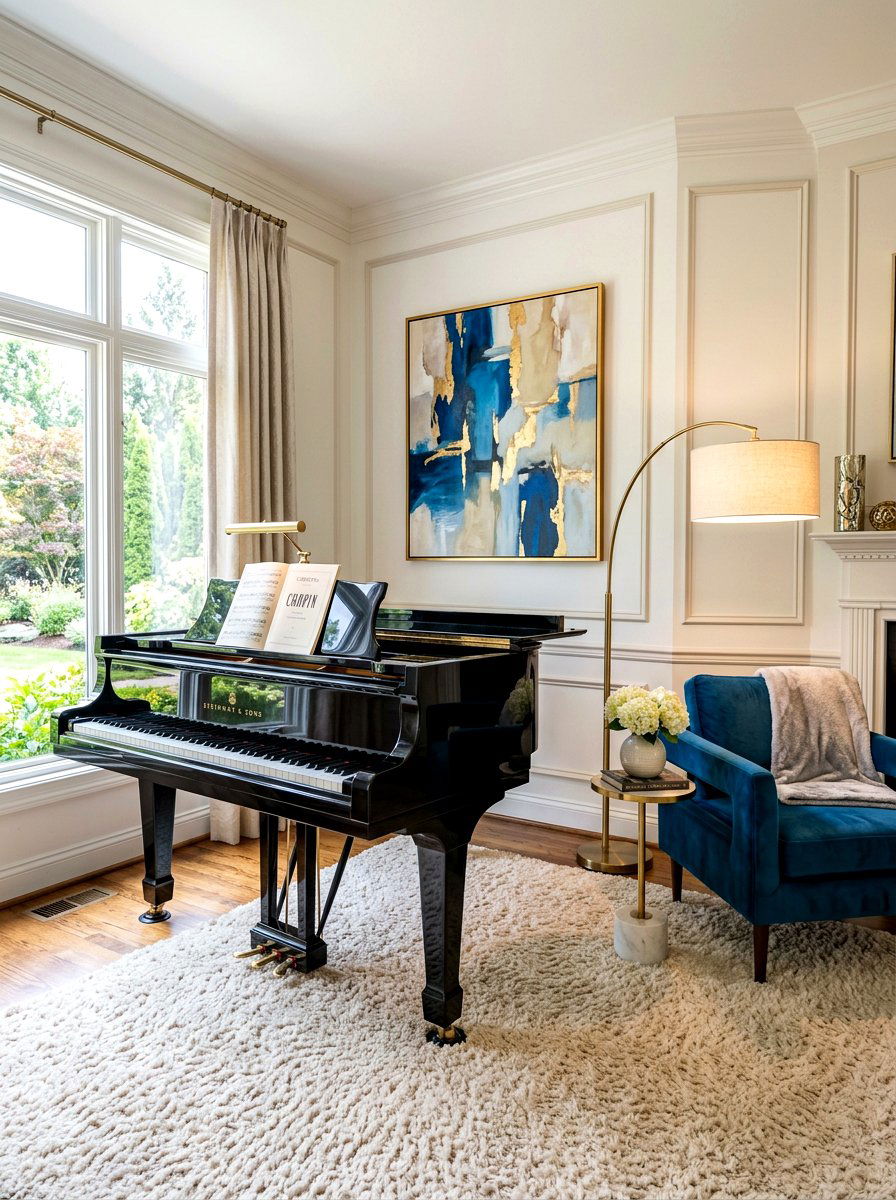
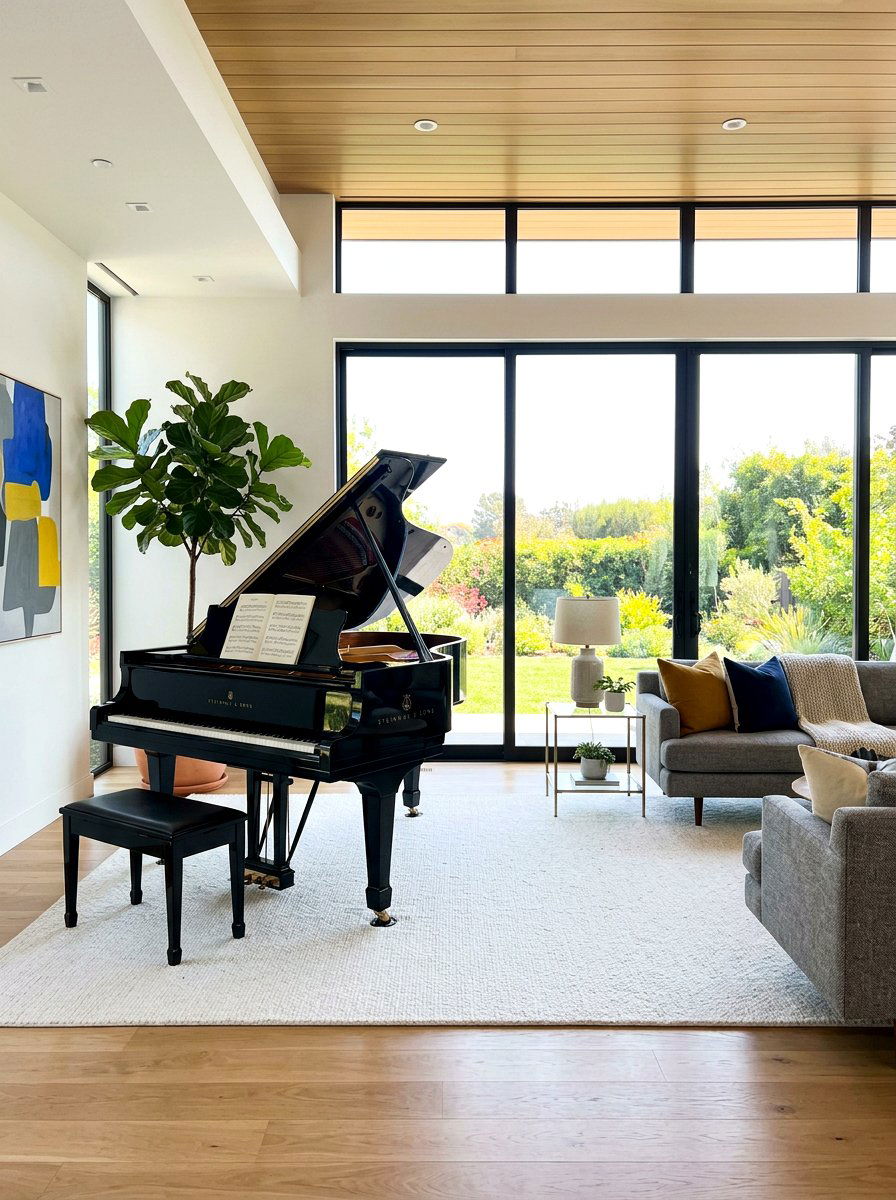
Positioning a grand piano in a corner is a classic choice that maximizes floor space while creating a dramatic visual impact. This layout allows the curved side of the instrument to face the room, inviting guests to appreciate its elegant silhouette. To make the most of this setup, ensure the lid opens toward the main seating area for optimal acoustics. You can ground the piano with a large, plush area rug to define the musical zone and prevent the instrument from feeling isolated. Adding a tall floor lamp behind the bench provides necessary task lighting while contributing to the overall height and balance of the corner.
2. Upright piano gallery wall
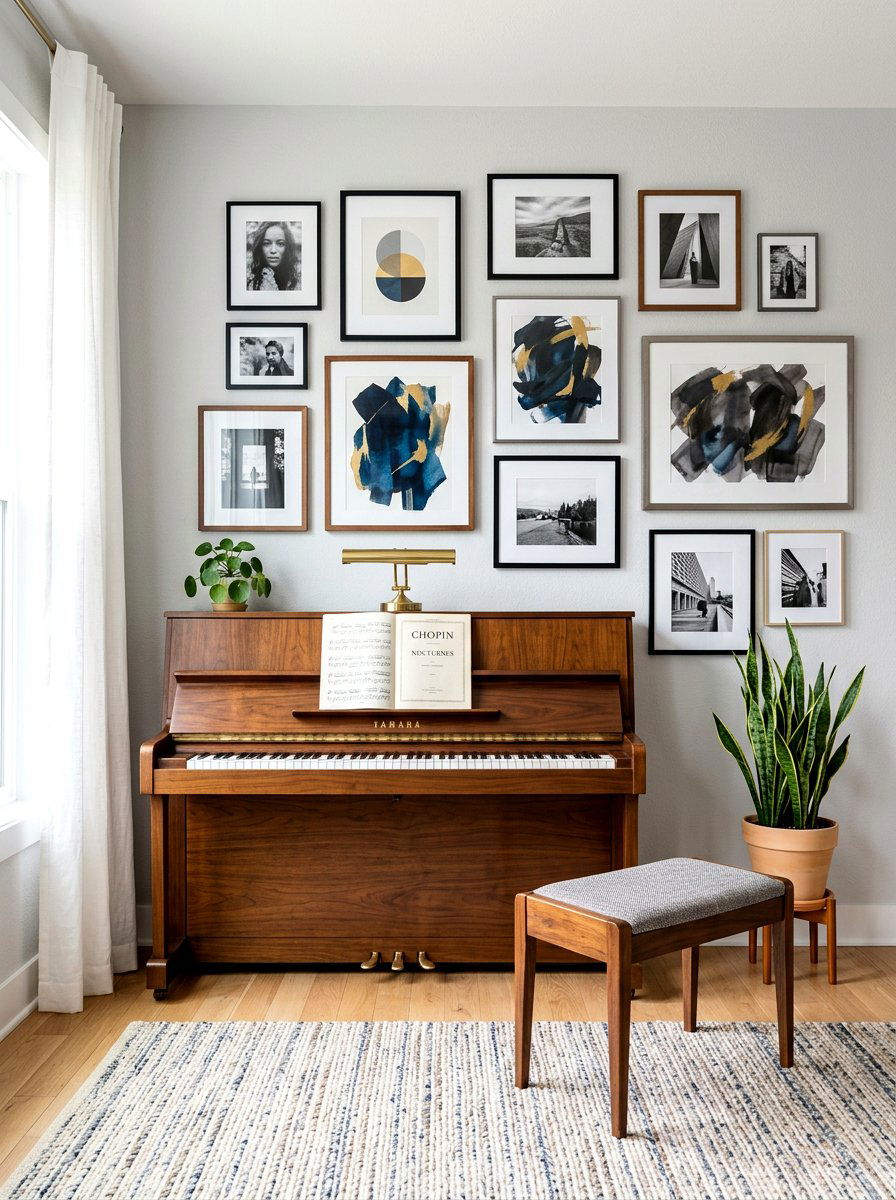
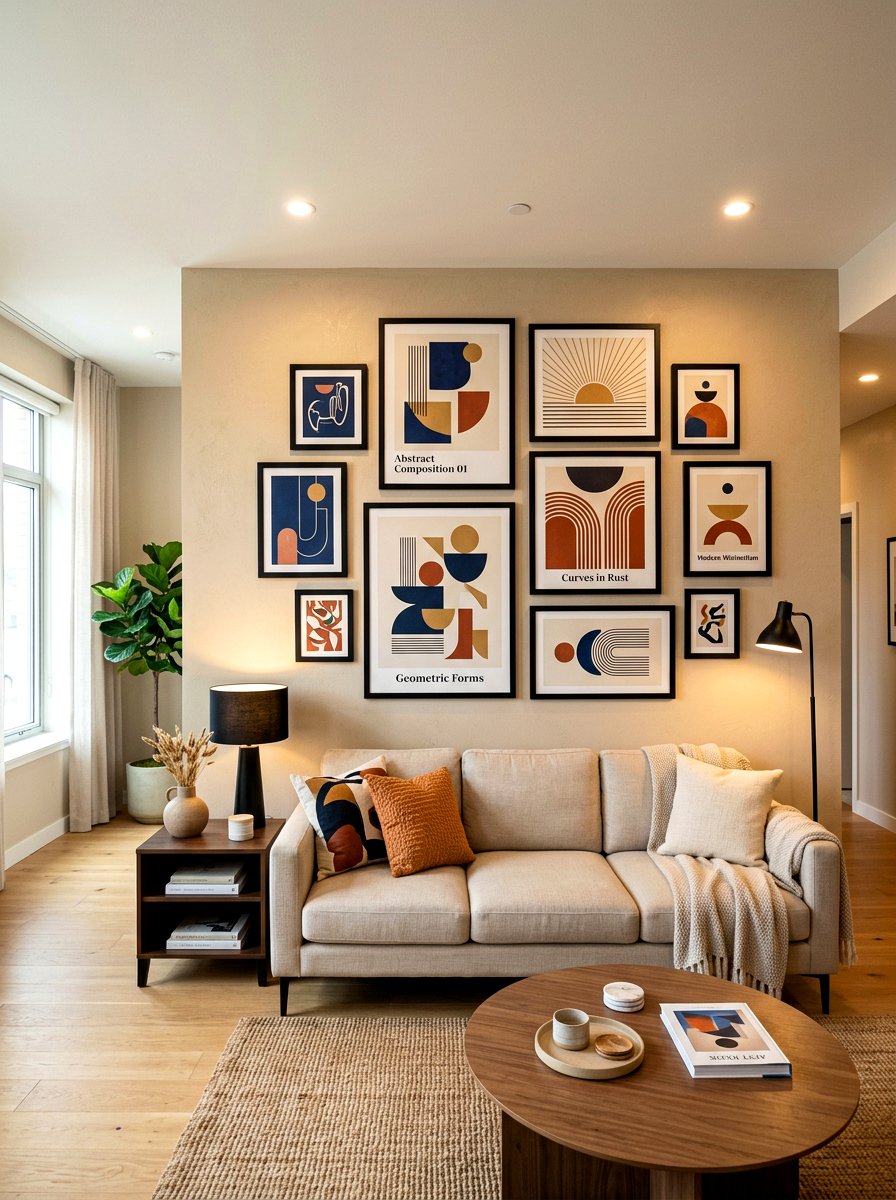
Transforming the wall above your upright piano into a curated gallery wall turns a functional instrument into a piece of art. Use a mix of framed photographs, abstract paintings, and perhaps a few musical scores to create a personalized backdrop. This approach helps to visually anchor the piano, preventing it from looking like a heavy, standalone block against a blank wall. For a cohesive look, choose frames that match the wood finish of your piano or stick to a specific color palette for the artwork. Ensure the lowest frames are high enough to avoid being hit when the piano lid is opened for tuning.
3. Living room piano window placement
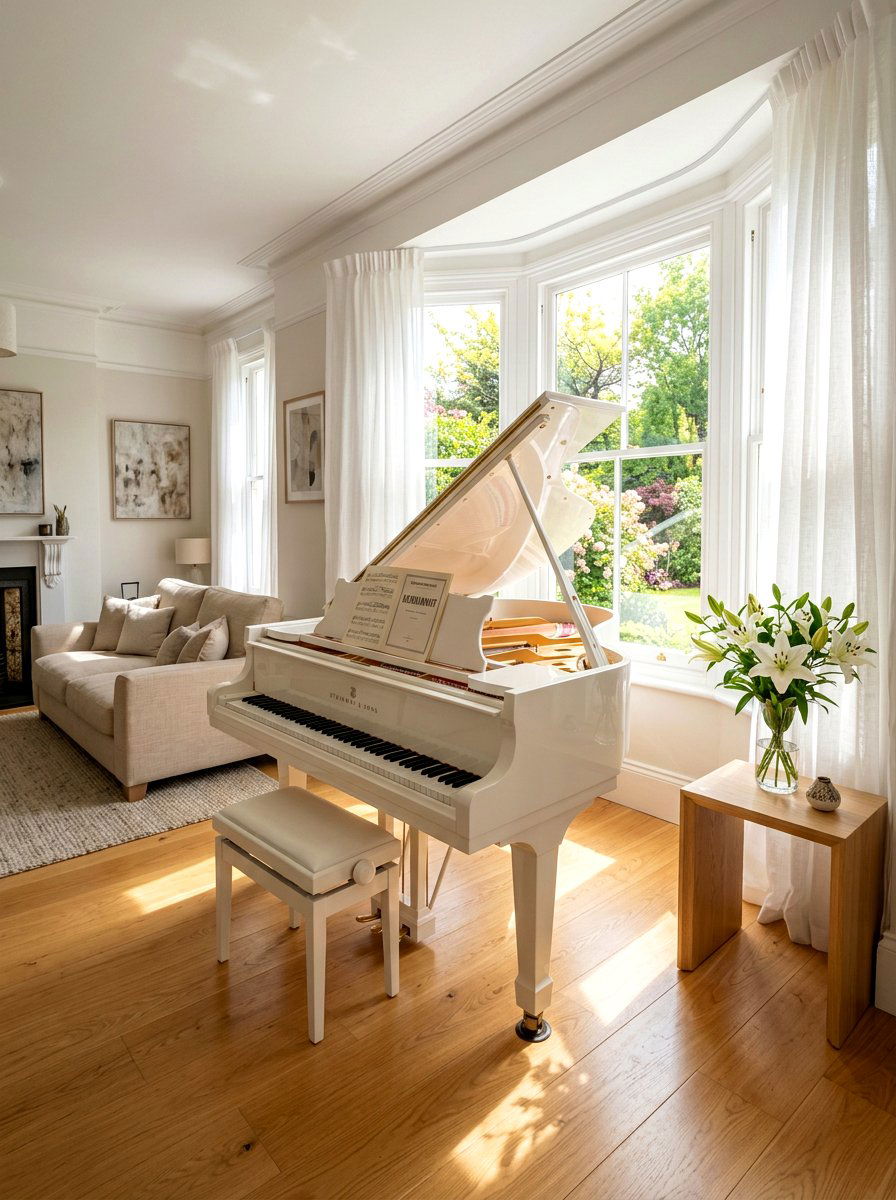
Placing your piano near a window offers the player beautiful natural light and an inspiring view during practice sessions. This arrangement works exceptionally well in sunrooms or living areas with large bay windows where the piano can act as a centerpiece. However, it is vital to use sheer curtains or UV-protective film to shield the wood and internal components from direct sunlight and temperature fluctuations. A piano positioned by a window creates a serene, airy atmosphere that feels connected to the outdoors. Surround the area with low-profile seating to keep the sightlines clear and allow the music to flow freely throughout the house.
4. Modern minimalist piano space
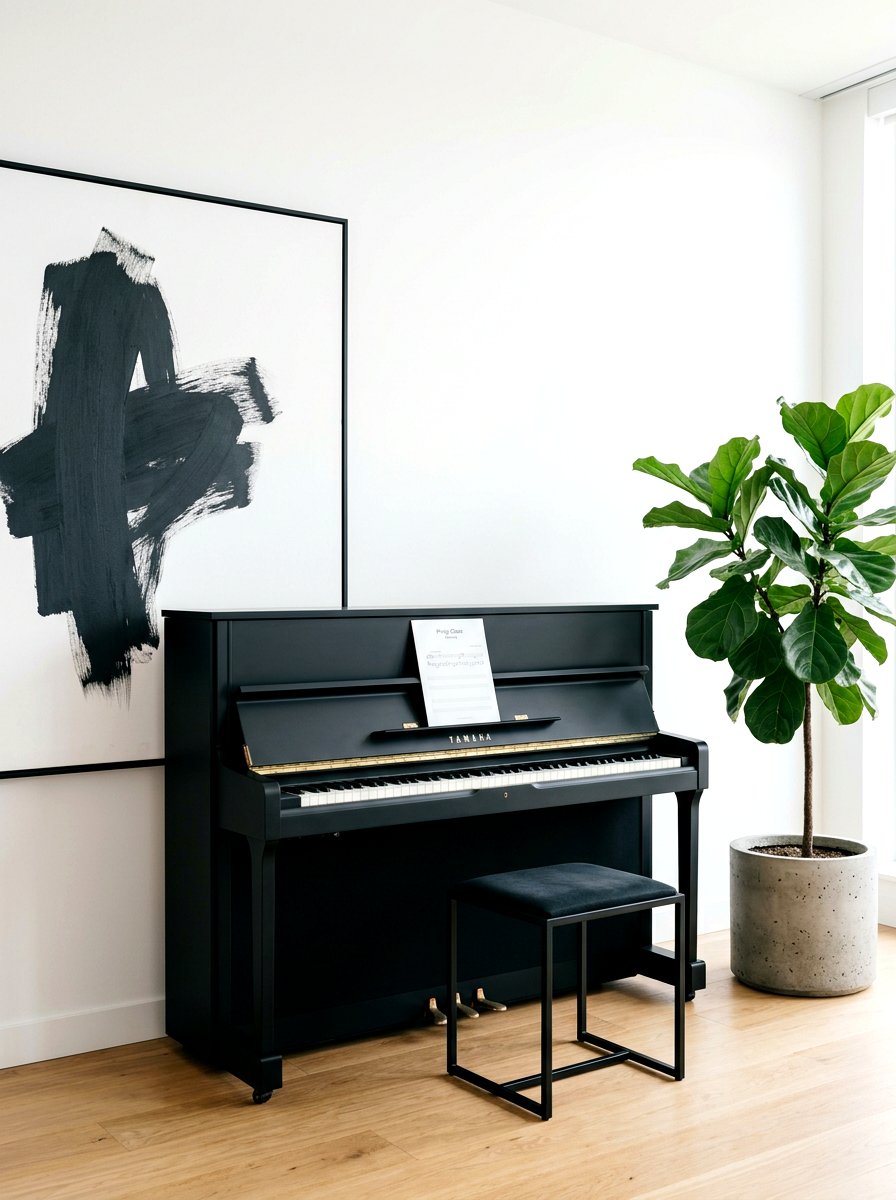
For a sleek and contemporary look, a modern minimalist piano space focuses on clean lines and a lack of clutter. Choose a piano with a high-gloss black or matte finish and pair it with a simple, backless bench to maintain a low profile. The surrounding decor should be sparse, perhaps featuring just one large statement piece of art or a single architectural plant. This design style allows the piano's form to take center stage without distractions. Neutral wall colors like soft gray or off-white help the instrument stand out, creating a calm and sophisticated environment that is perfect for focused playing or quiet relaxation.
5. Small living room upright piano
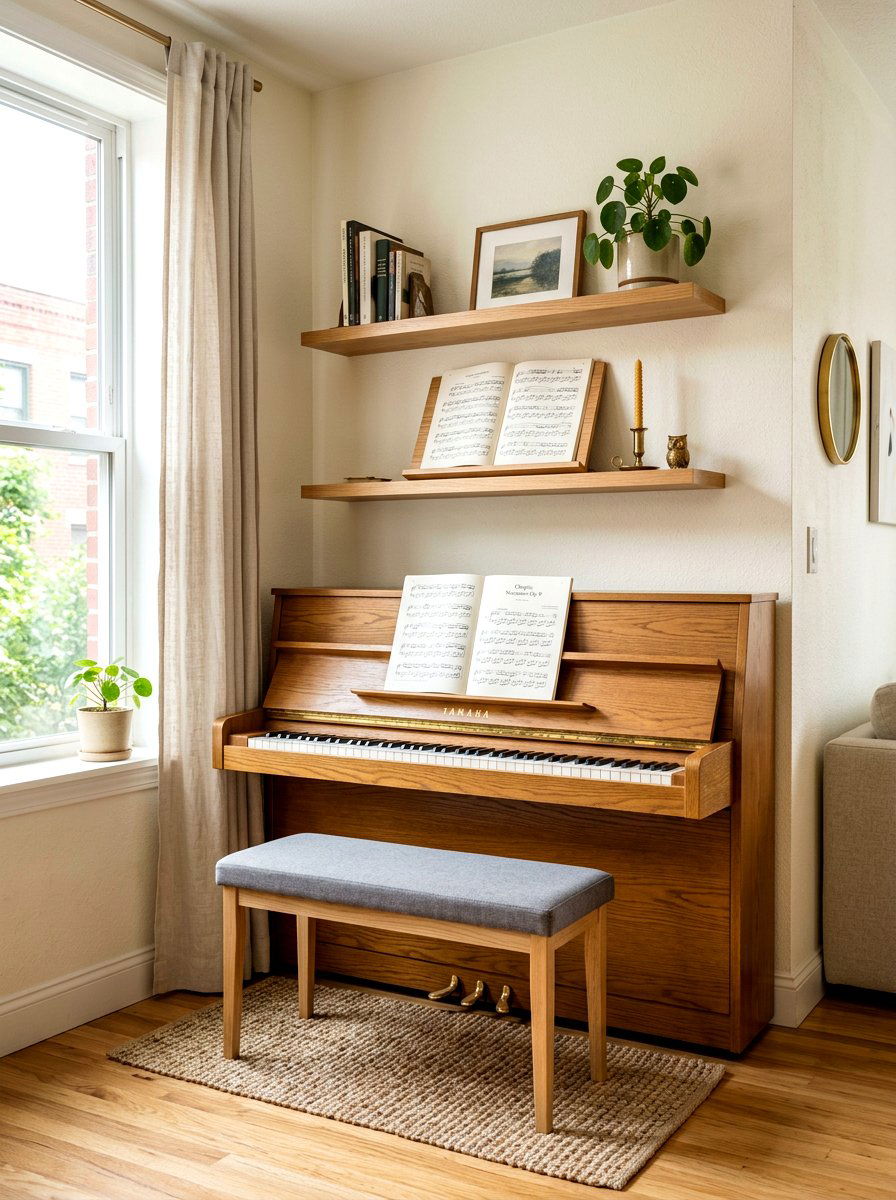
In a compact living room, an upright piano is a space-saving alternative that still provides a full musical experience. Tucking the piano against a short wall or into a small niche keeps the center of the room open for traffic. You can enhance the area by adding floating shelves above the piano for sheet music and small decorative items. This vertical storage solution keeps the floor clear while adding visual interest. Using a transparent acrylic chair or a slim stool instead of a bulky bench can also help the space feel more open and less crowded. It is a practical and stylish solution for urban living.
6. Piano behind sofa
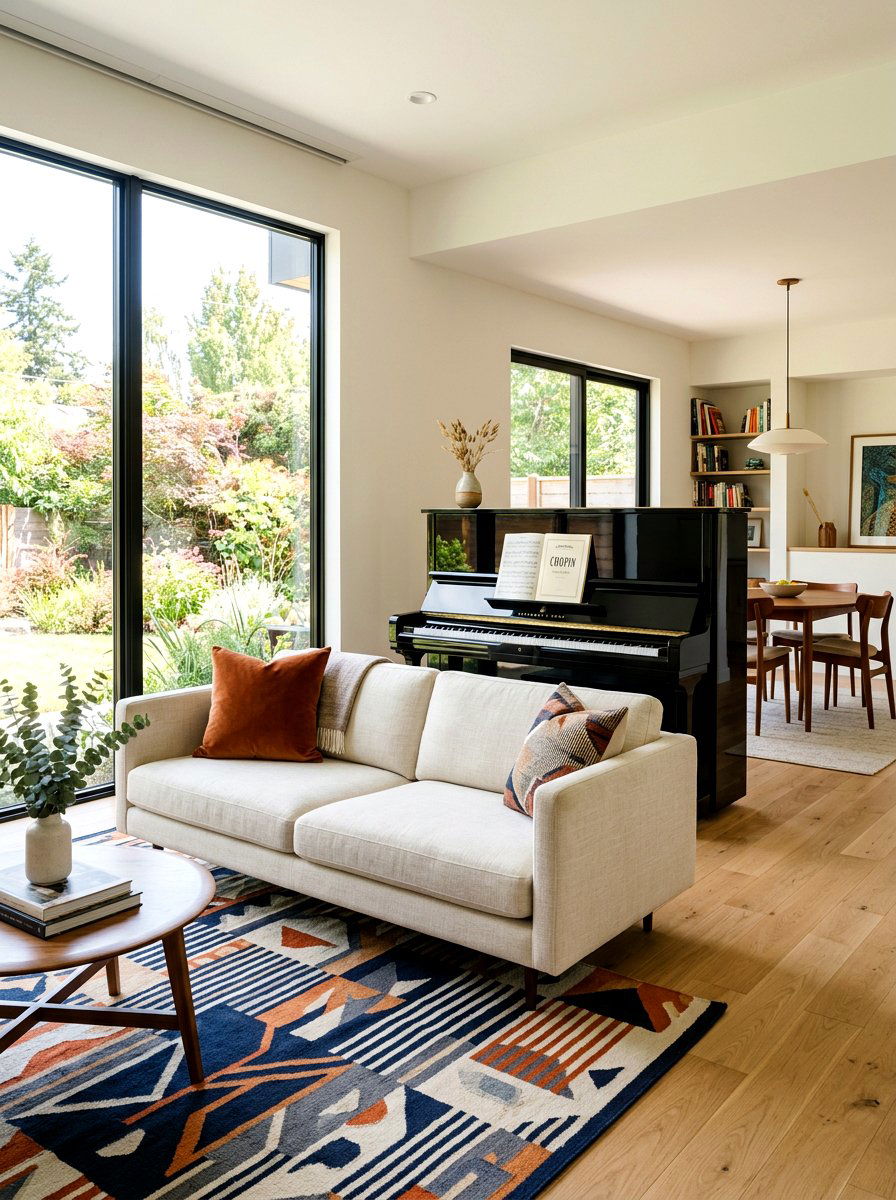
Using a piano as a room divider by placing it directly behind a sofa is a clever way to define zones in an open-concept living area. This layout works particularly well with upright pianos, as the back of the instrument can be camouflaged by the couch. It creates a seamless transition between the musical area and the social seating zone. The pianist can feel part of the conversation while still having a dedicated space for performance. To pull this look together, ensure the heights of the sofa and piano are somewhat complementary, and add a long runner or rug to unify the two furniture pieces.
7. Traditional grand piano alcove
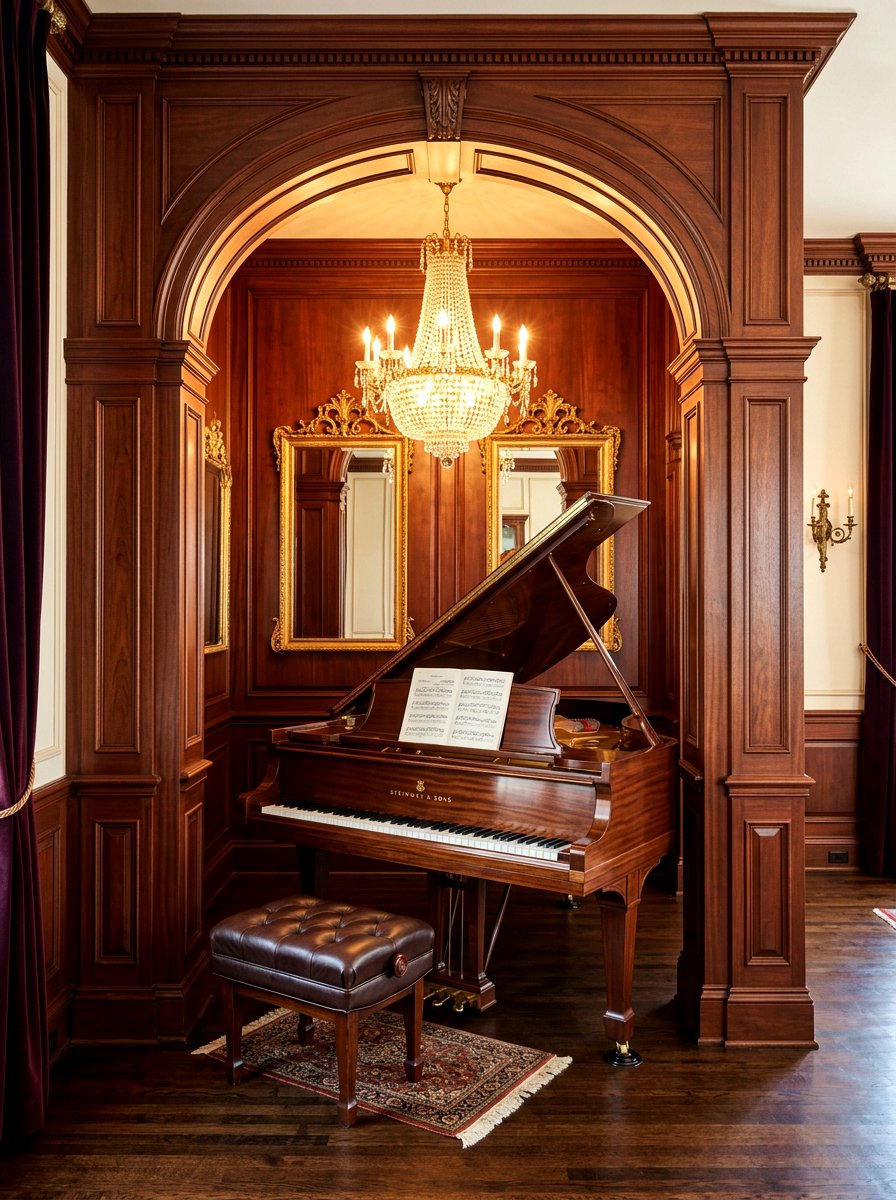
A dedicated alcove or recessed wall provides the perfect structural frame for a traditional grand piano. This architectural feature naturally highlights the instrument, making it feel like a permanent and intentional part of the home's design. To enhance the classic feel, consider adding elegant wall molding or a different paint color inside the alcove to create depth. A small crystal chandelier or a set of ornate wall sconces can provide luxurious lighting that reflects off the piano’s polished surface. This setup evokes the feeling of a private concert hall, offering a sense of grandeur and formality that is ideal for traditional or historic homes.
8. Mid century modern piano decor
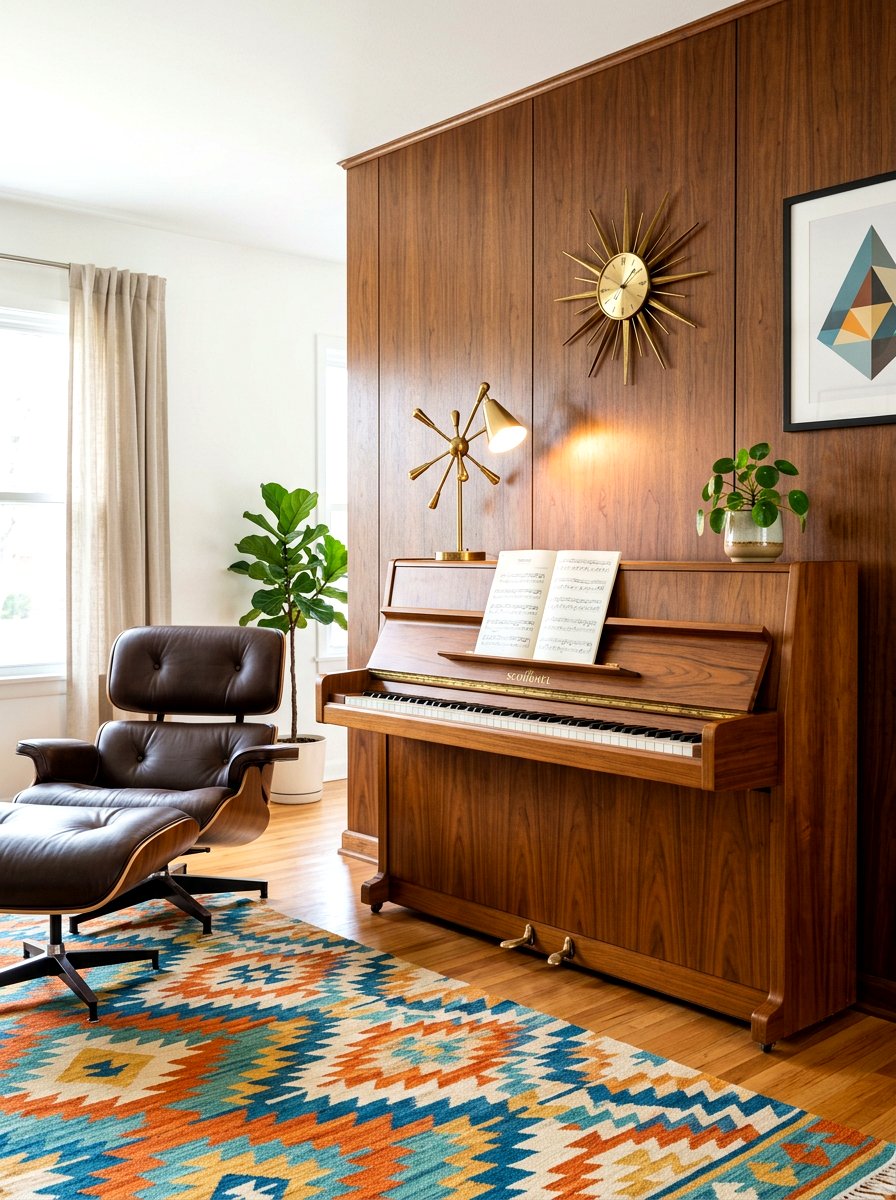
Mid-century modern design and pianos are a match made in heaven, especially when working with walnut or teak instruments. To achieve this look, pair your piano with iconic furniture pieces like an Eames-style chair or a tapered-leg coffee table. Use a geometric patterned rug to anchor the space and add a pop of vintage-inspired color. Decorate the top of the piano with a few well-chosen accessories, such as a ceramic vase or a brass desk lamp with a round shade. This style celebrates the organic curves of the piano while maintaining a functional and retro-chic vibe that feels both nostalgic and incredibly fresh.
9. White piano aesthetic
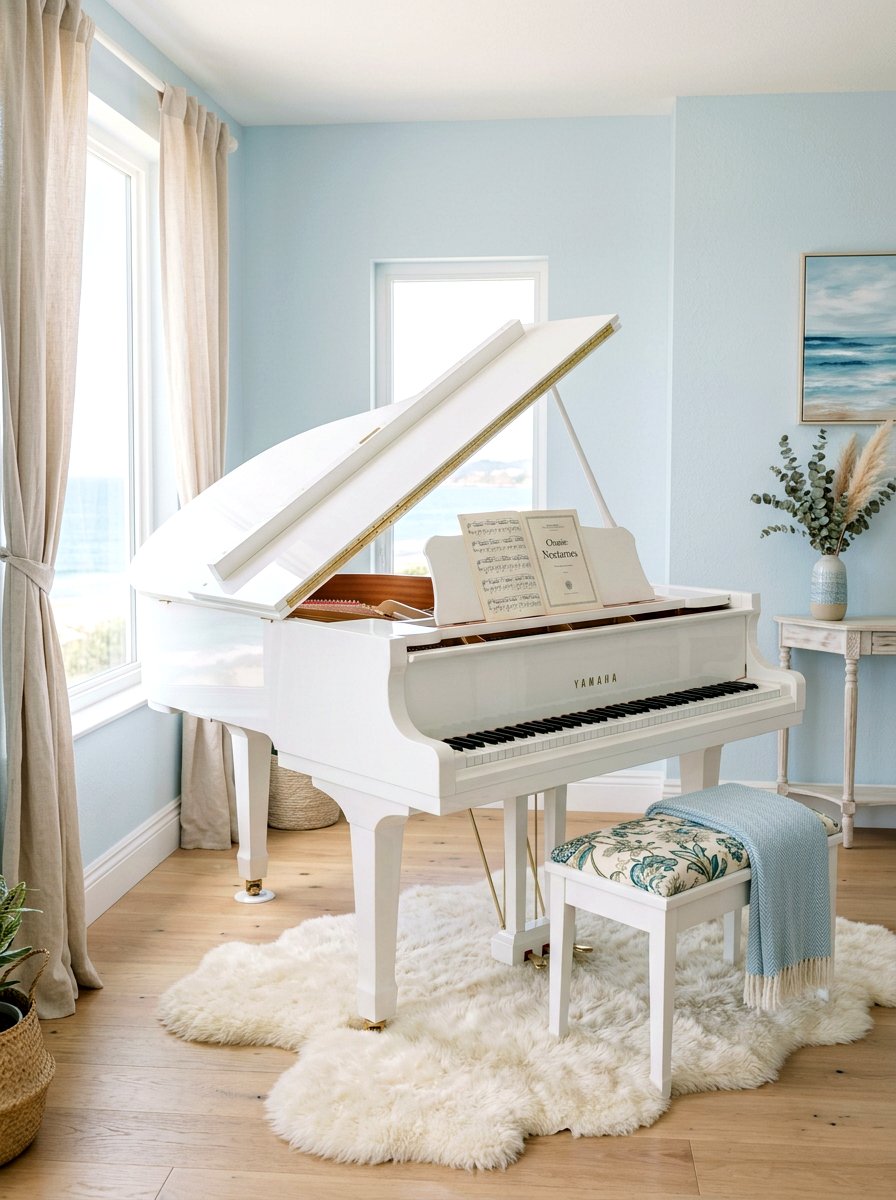
A white piano can breathe light and air into a living room, making it a favorite for coastal, Scandinavian, or shabby-chic designs. Unlike traditional dark wood instruments, a white piano feels less heavy and blends effortlessly into rooms with light-colored walls. This aesthetic is perfect for creating a dreamy, ethereal atmosphere. You can style the area with soft textures like a sheepskin rug under the bench or linen curtains on nearby windows. Adding a few pops of soft pastel colors through artwork or throw pillows on a nearby chair will enhance the gentle, inviting feel of the space, making it a peaceful sanctuary.

10. Black piano focal point
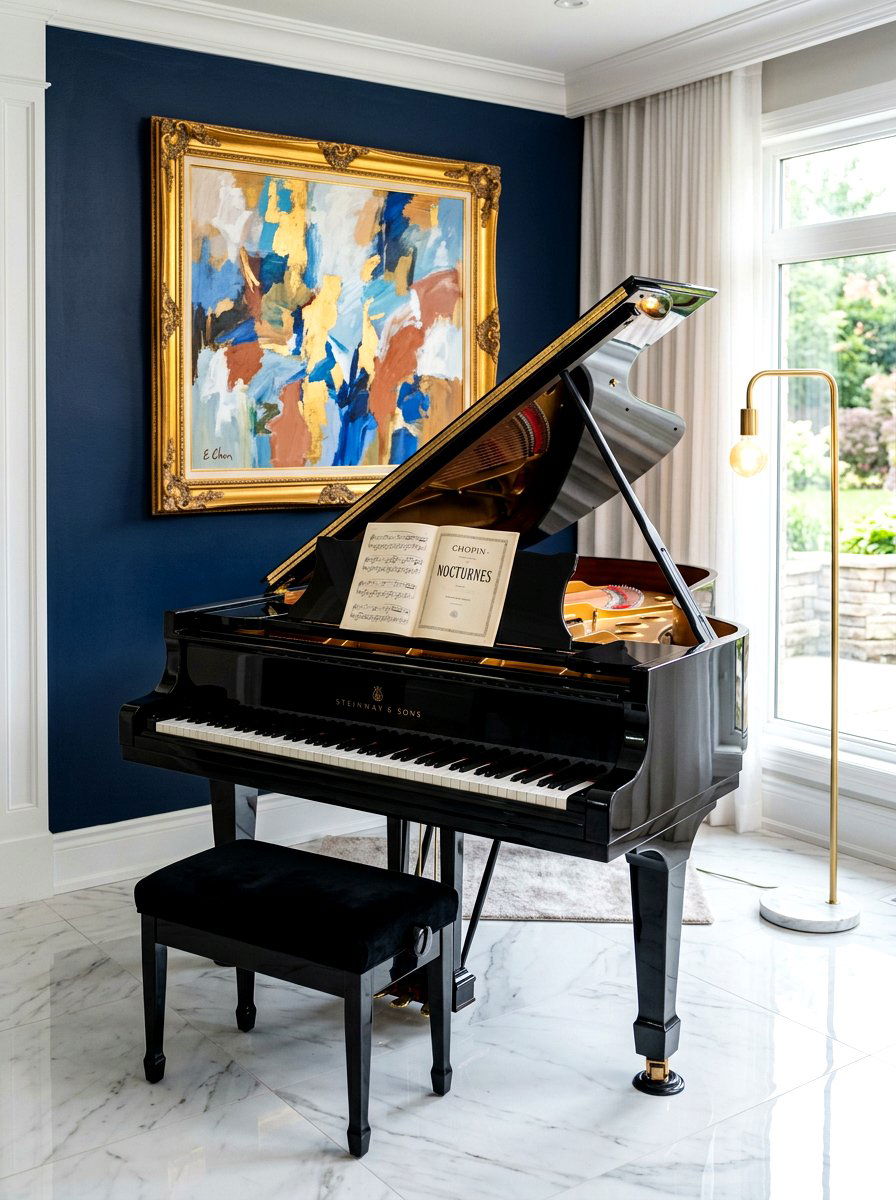
A glossy black piano is the ultimate focal point, offering a sense of drama and high-contrast elegance in any living room. To make it truly pop, place it against a crisp white wall or a bold accent color like deep navy or emerald green. The black finish acts as an anchor, grounding the room's color scheme and adding a touch of formal sophistication. You can balance the visual weight of the piano by incorporating other black accents throughout the room, such as picture frames, light fixtures, or a patterned rug. This cohesive approach ensures the piano looks like a deliberate design choice rather than an afterthought.
11. Piano under stairs
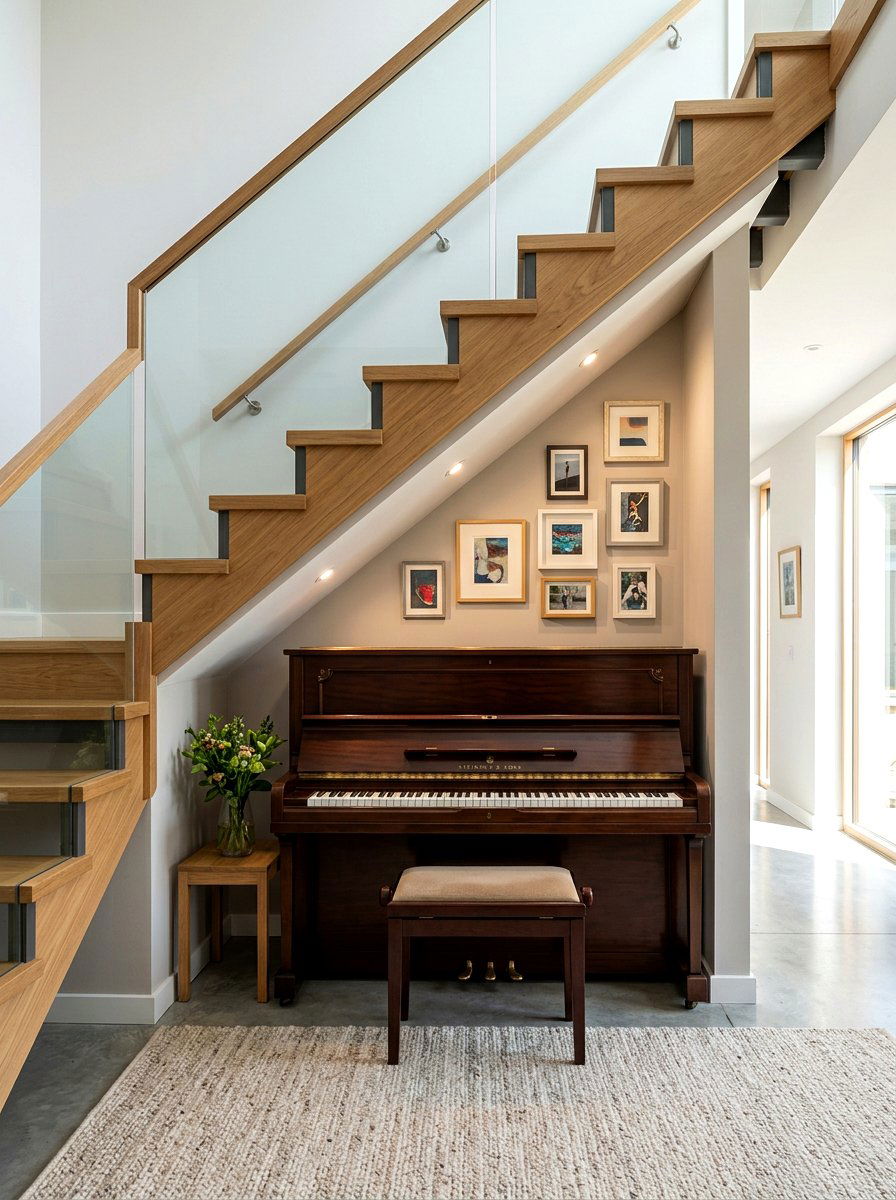
The often-wasted space under a staircase is an ingenious location for a piano, especially in homes with unique architectural layouts. Whether it is a grand piano tucked into the curve of a spiral staircase or an upright fitted into a straight nook, this placement utilizes every inch of your floor plan. It creates a cozy, sheltered music station that feels tucked away from the main hustle and bustle of the house. You can install recessed lighting or a small wall lamp to brighten the area, as it can sometimes feel dark. This clever use of space turns a structural necessity into a beautiful design feature.
12. Bookshelf piano integration
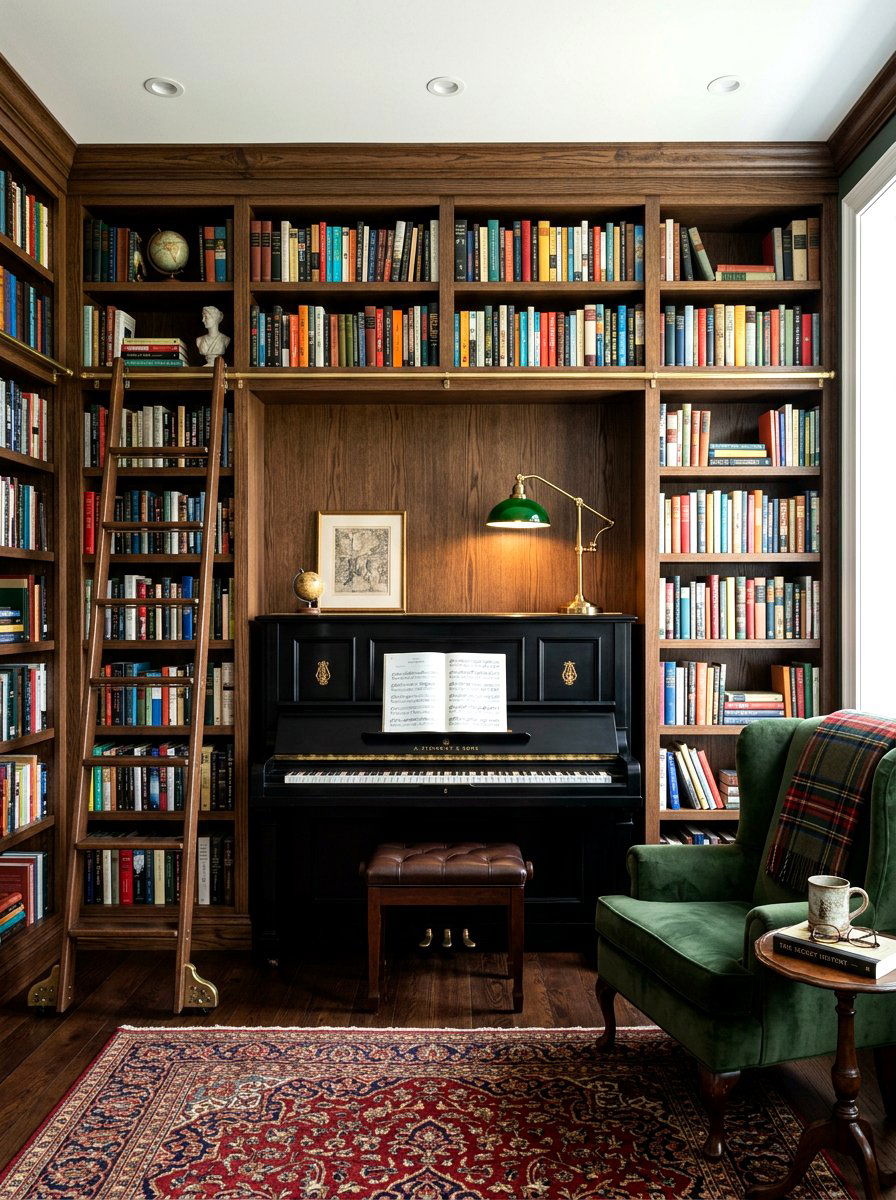
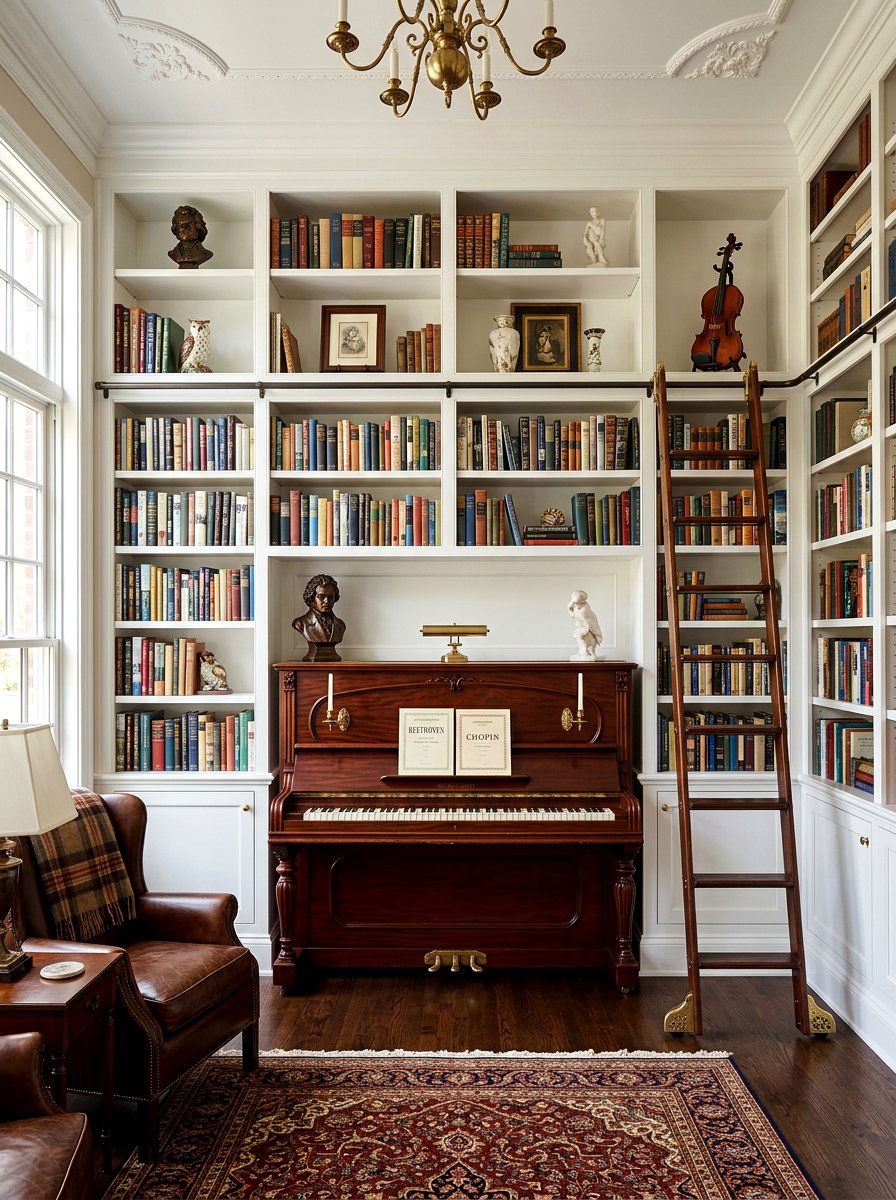
Surrounding your piano with floor-to-ceiling bookshelves creates a scholarly and cozy library atmosphere in your living room. This integration makes the piano feel like a natural extension of the room's storage and display systems. The books provide excellent acoustic dampening, which can improve the sound quality by reducing echoes. You can leave a gap in the shelving specifically for an upright piano or place a grand piano in front of a wall of books. This setup is perfect for those who love the "dark academia" aesthetic, combining a passion for literature and music into one visually rich and highly functional living space.
13. Boho living room piano
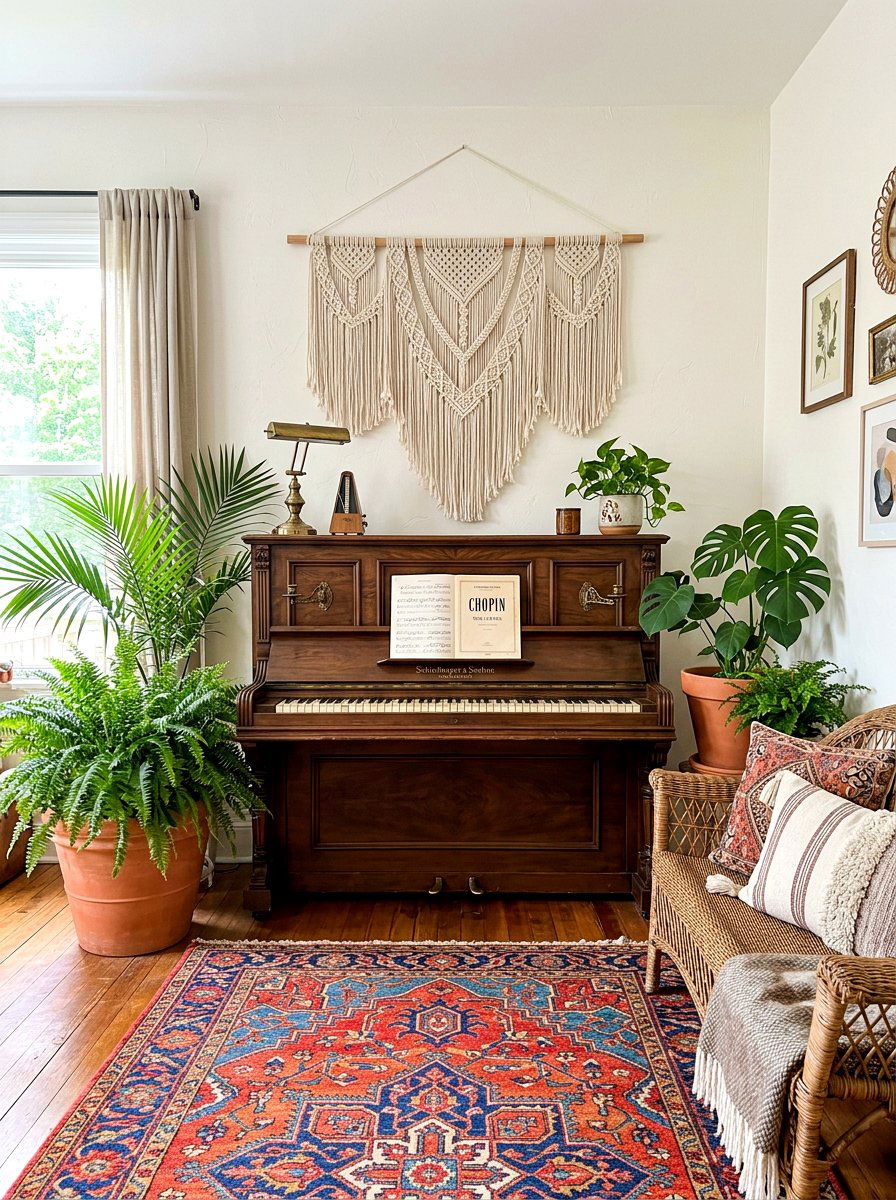
A boho-inspired piano area is all about texture, greenery, and a relaxed, eclectic vibe. Drape a vintage textile or a macramé runner over the top of an upright piano to soften its hard edges. Surround the base with a collection of woven baskets, floor cushions, and a mix of potted plants like ferns or trailing ivy. The goal is to make the instrument feel lived-in and approachable. Using a vintage wooden stool or an antique bench with a colorful cushion adds to the soulful character of the space. This style is perfect for those who want their home to feel warm, creative, and completely unique.
14. Industrial style piano room
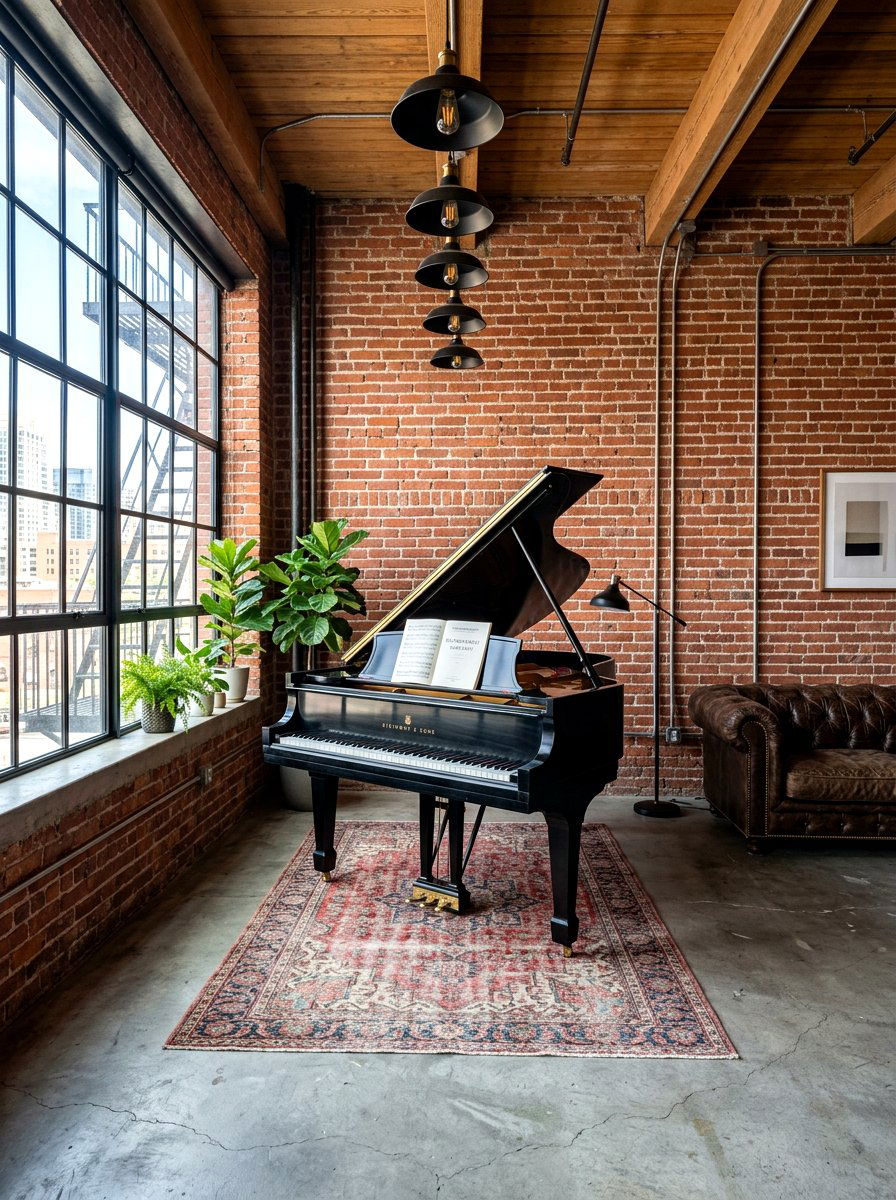
In an industrial-style living room, a piano can provide a surprising and elegant contrast to raw materials like exposed brick, concrete, and metal. A weathered upright piano or a classic black grand looks stunning against a backdrop of rugged textures. To lean into this aesthetic, use a metal factory-style floor lamp for lighting and a rug with a distressed or faded pattern. The contrast between the refined musical instrument and the utilitarian surroundings creates a sophisticated "urban loft" feel. This design choice proves that pianos are versatile enough to fit into even the most modern and edgy of interior environments.
15. Piano with indoor plants
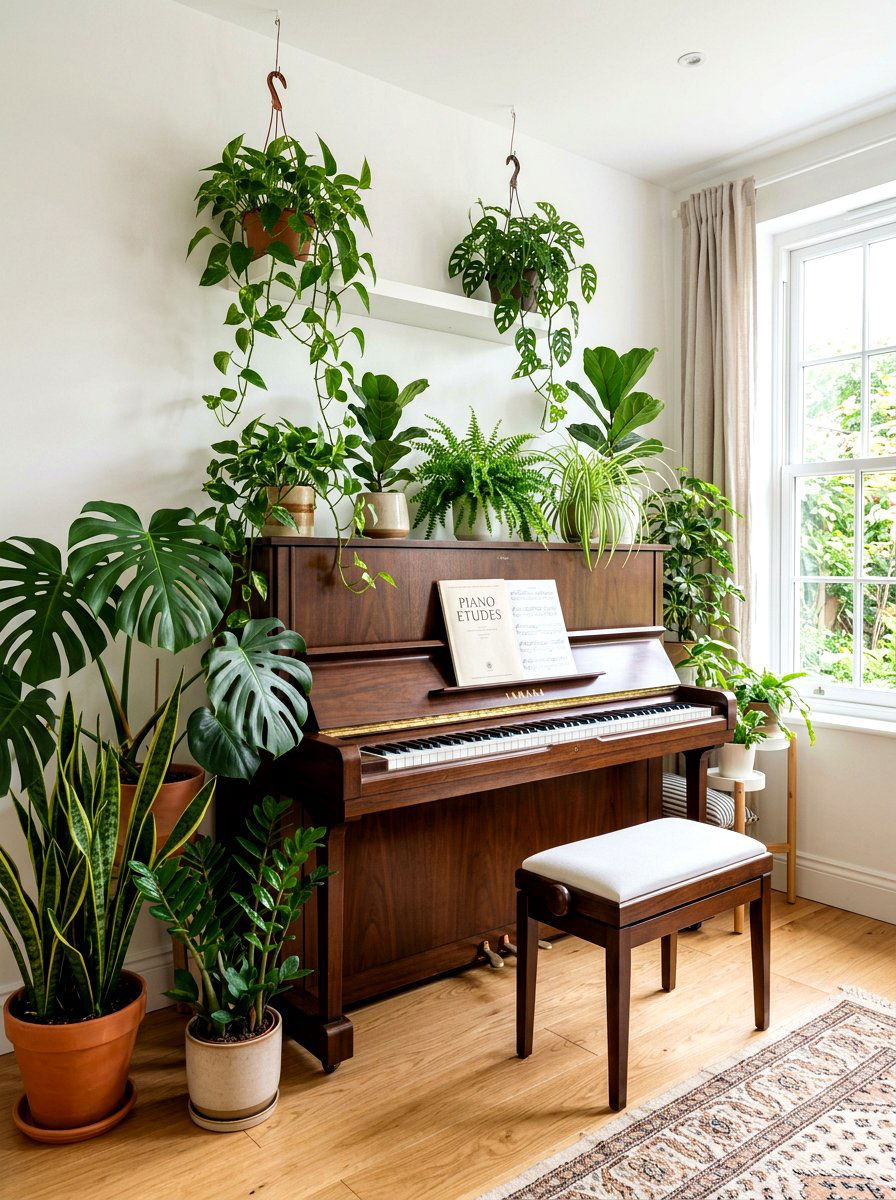
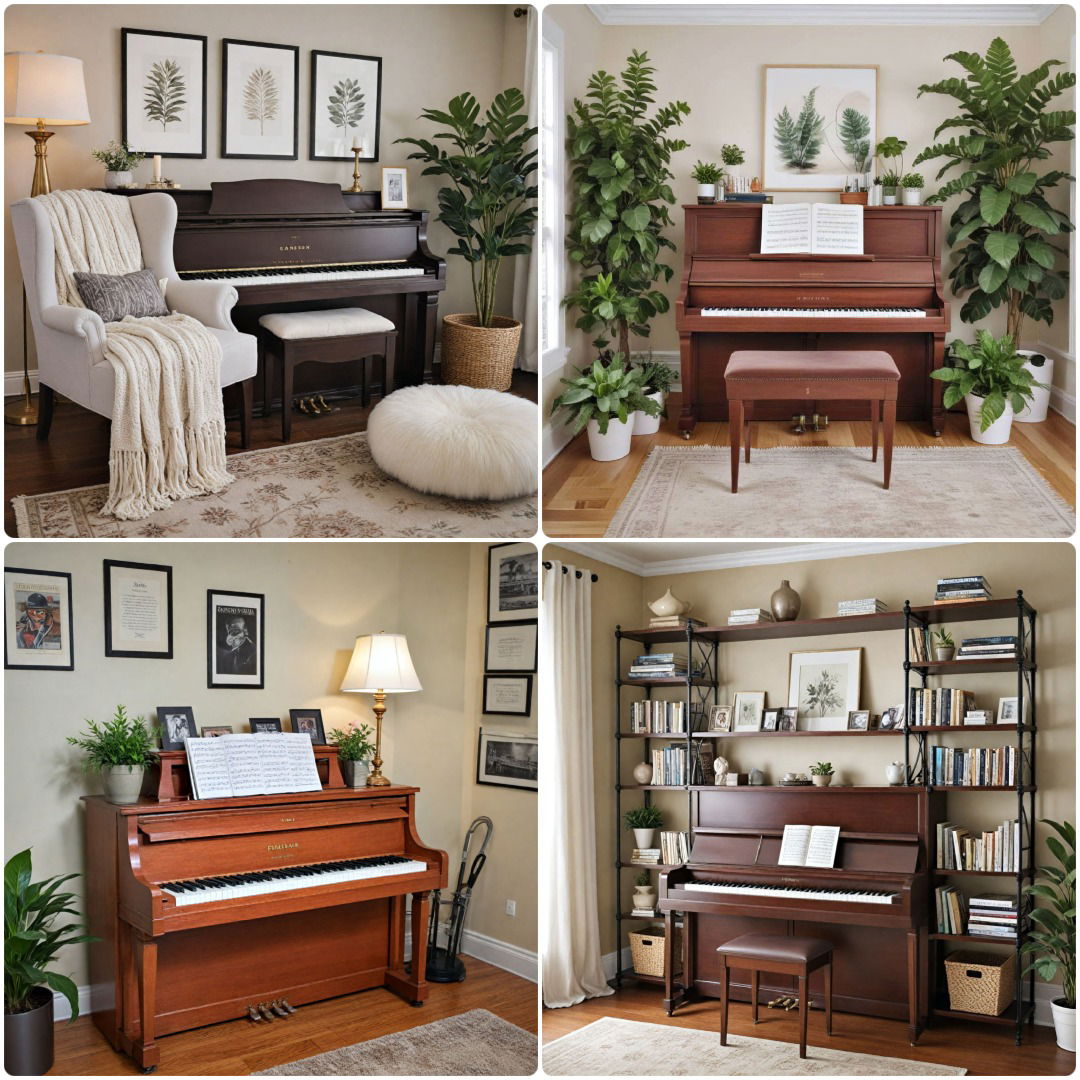
Incorporating indoor plants around your piano brings a sense of life and freshness to the music corner. Tall plants like a fiddle-leaf fig or a monstera can be placed next to a grand piano to provide vertical interest and a natural frame. For upright pianos, small succulents or trailing pothos can sit on the top lid, provided they are in leak-proof pots. The organic shapes and vibrant green colors of the plants contrast beautifully with the structured lines of the instrument. Beyond the visual appeal, plants can also help regulate humidity, which is beneficial for the health of the piano's wood and strings.
16. Luxury grand piano salon
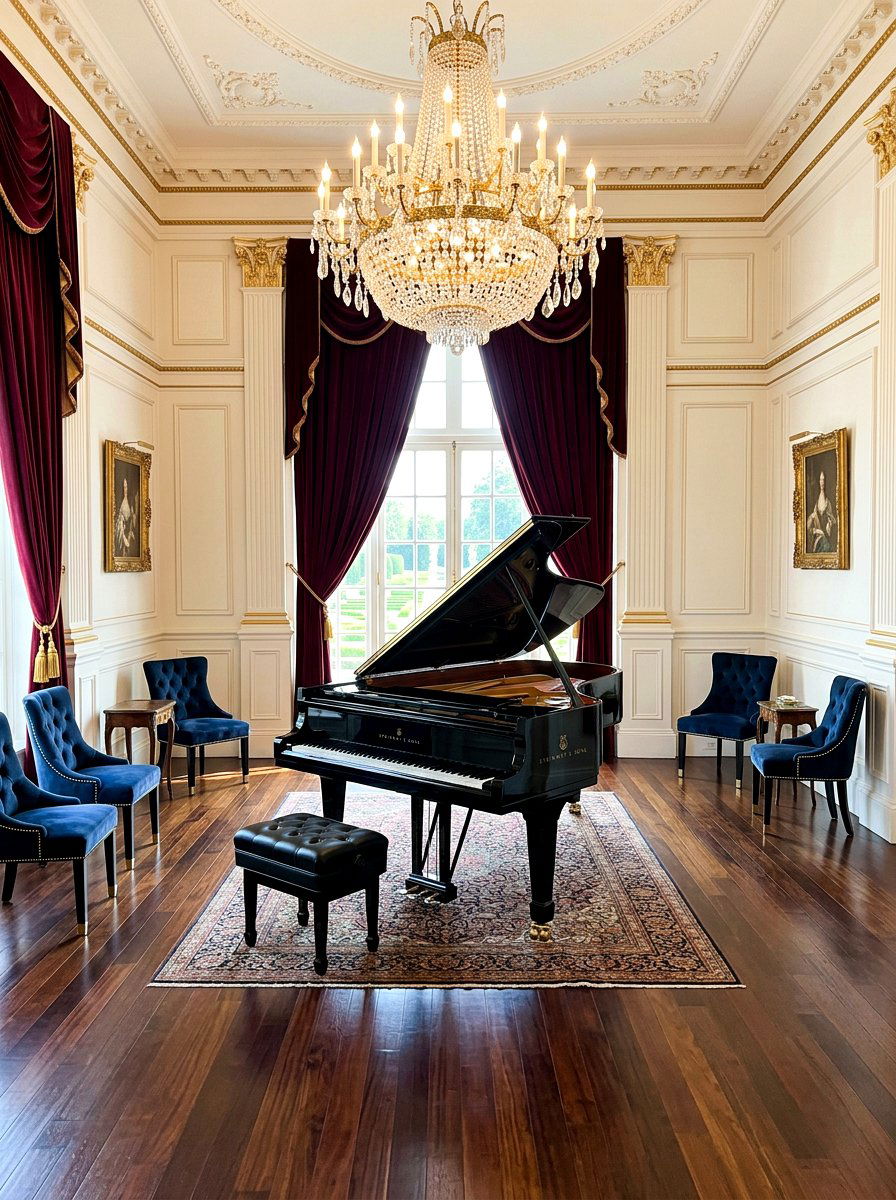
Creating a luxury salon feel involves making the grand piano the undisputed star of a formal sitting room. Use high-end materials like velvet upholstery, silk curtains, and a large crystal chandelier to set a glamorous tone. The piano should be placed centrally, perhaps on a custom-designed circular rug that highlights its importance. Gold or brass accents in the form of music stands, lamps, and picture frames will add a touch of opulence. This layout is designed for entertaining, allowing guests to gather around the instrument for intimate performances. It is a timeless look that exudes wealth, taste, and a deep appreciation for the arts.
17. Cozy piano reading nook
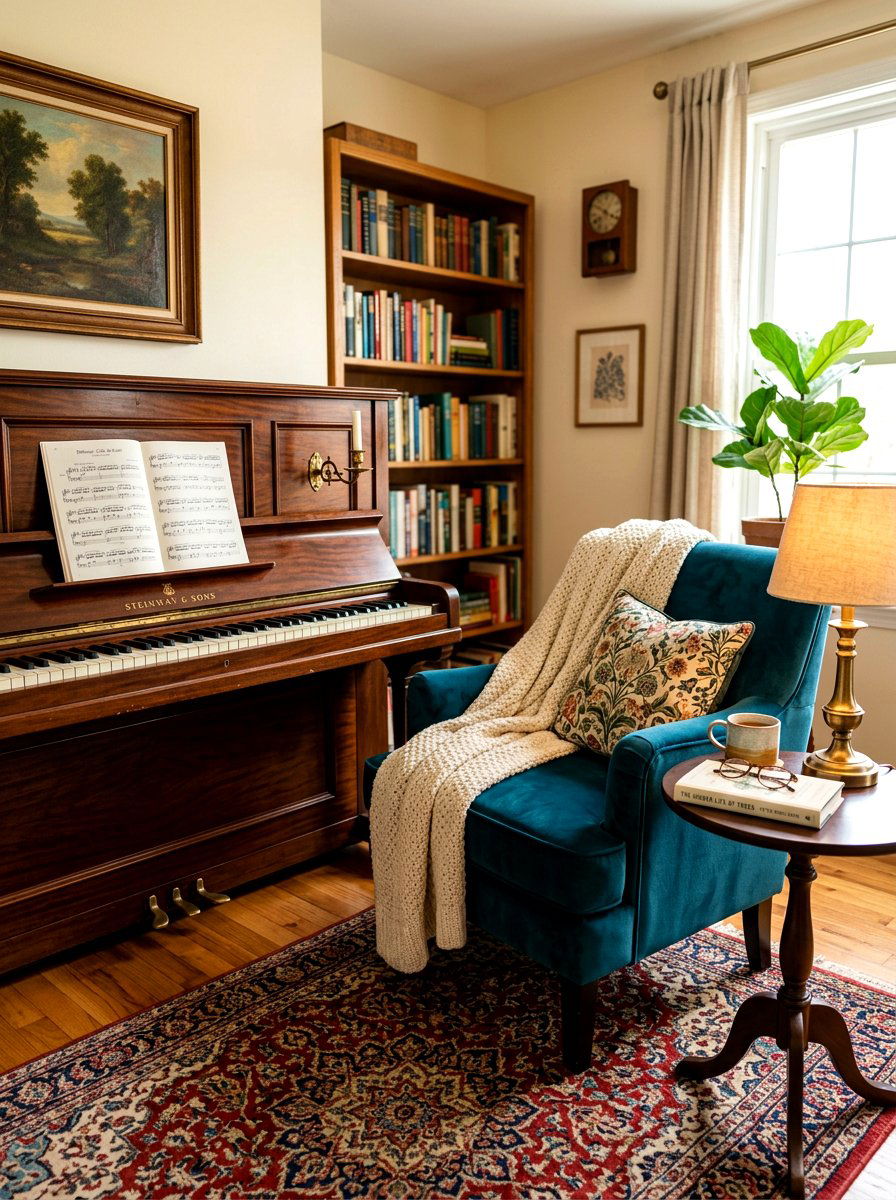
If you prefer a more intimate setting, consider designing a cozy reading and music nook around your piano. Place a comfortable armchair and a small side table nearby, creating a multi-functional space where someone can read while another person plays. Use warm, soft lighting and a thick pile rug to make the area feel inviting and sheltered. This arrangement encourages a slower pace of life and makes the piano feel like a part of daily relaxation rather than just a formal showpiece. It is the perfect spot for morning coffee, afternoon practice, or winding down with a favorite book in the evening.
18. Apartment living room piano
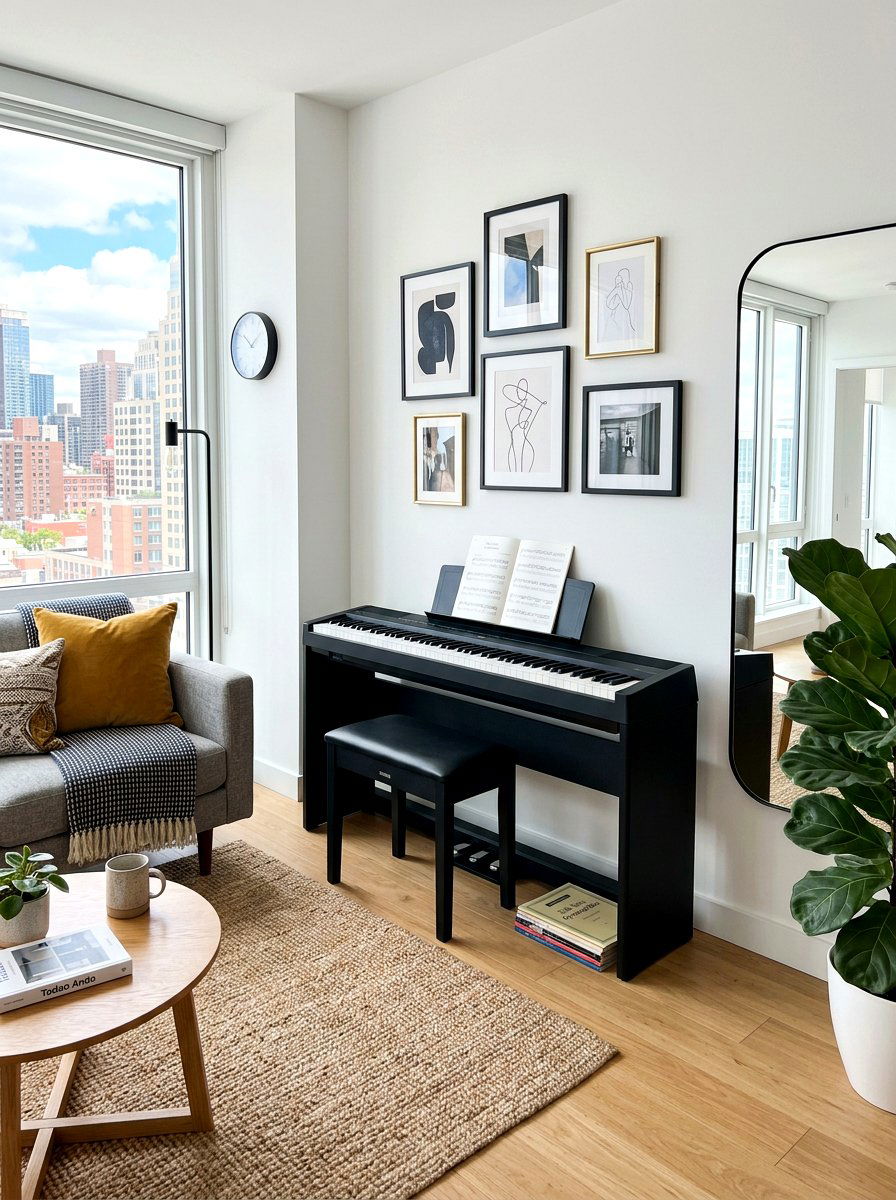
Living in an apartment requires smart furniture choices, and a piano is no exception. A digital piano with a slim profile or a vintage spinet can fit perfectly into smaller urban spaces without overwhelming the layout. To save space, look for a piano with a built-in stand or a model that can double as a console table when the keys are covered. Use light, airy decor and mirrors to make the room feel larger. Placing the piano against a shared wall? Consider adding acoustic foam panels or a heavy rug to keep your neighbors happy while still enjoying your musical passions in the city.
19. Symmetrical piano placement
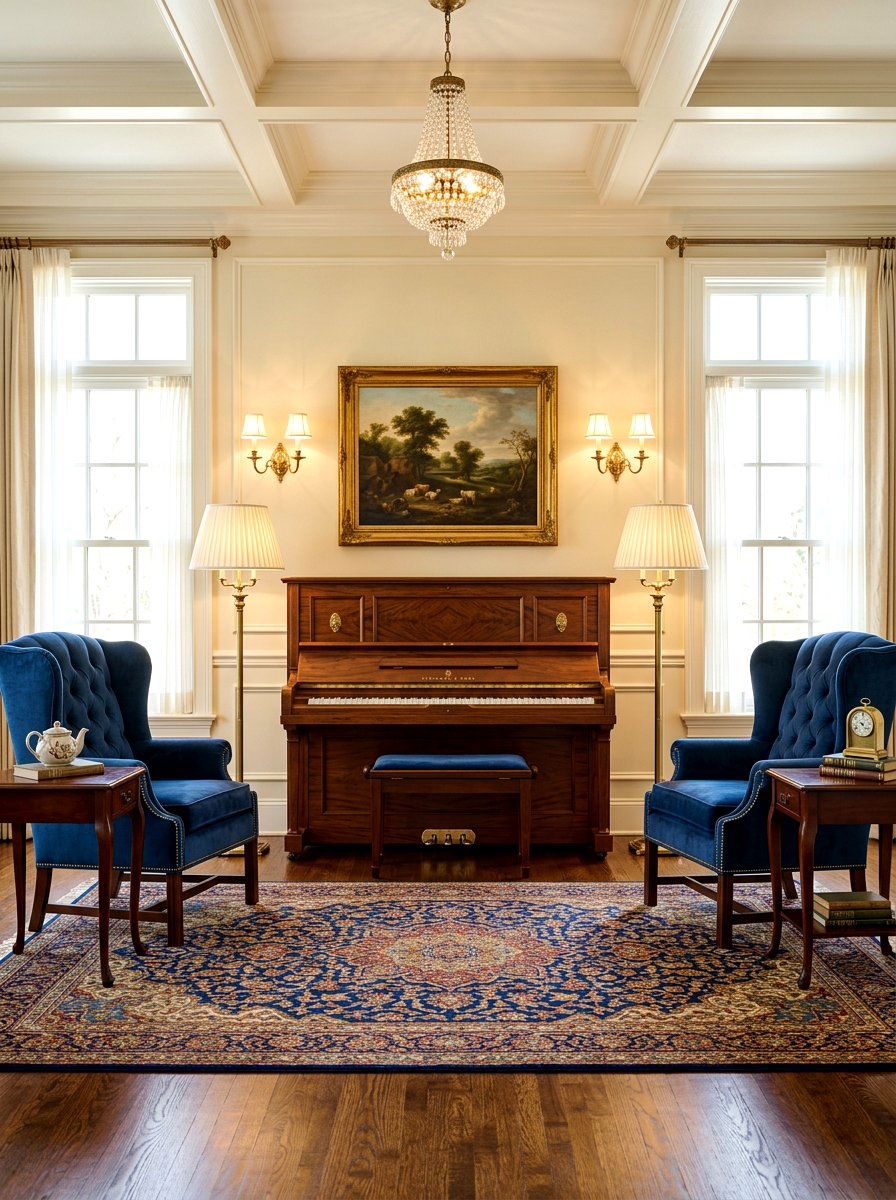
Symmetry creates a sense of order and balance that is very pleasing to the eye in traditional or transitional living rooms. You can achieve this by flanking your piano with matching elements, such as a pair of identical armchairs, floor lamps, or large potted trees. If the piano is centered on a wall, hanging two identical pieces of art on either side can further emphasize this balanced look. This structured approach makes the piano feel deeply integrated into the room's architecture. It is a sophisticated way to organize a larger space, ensuring that every piece of furniture has a clear and purposeful relationship to the others.
20. Piano room library
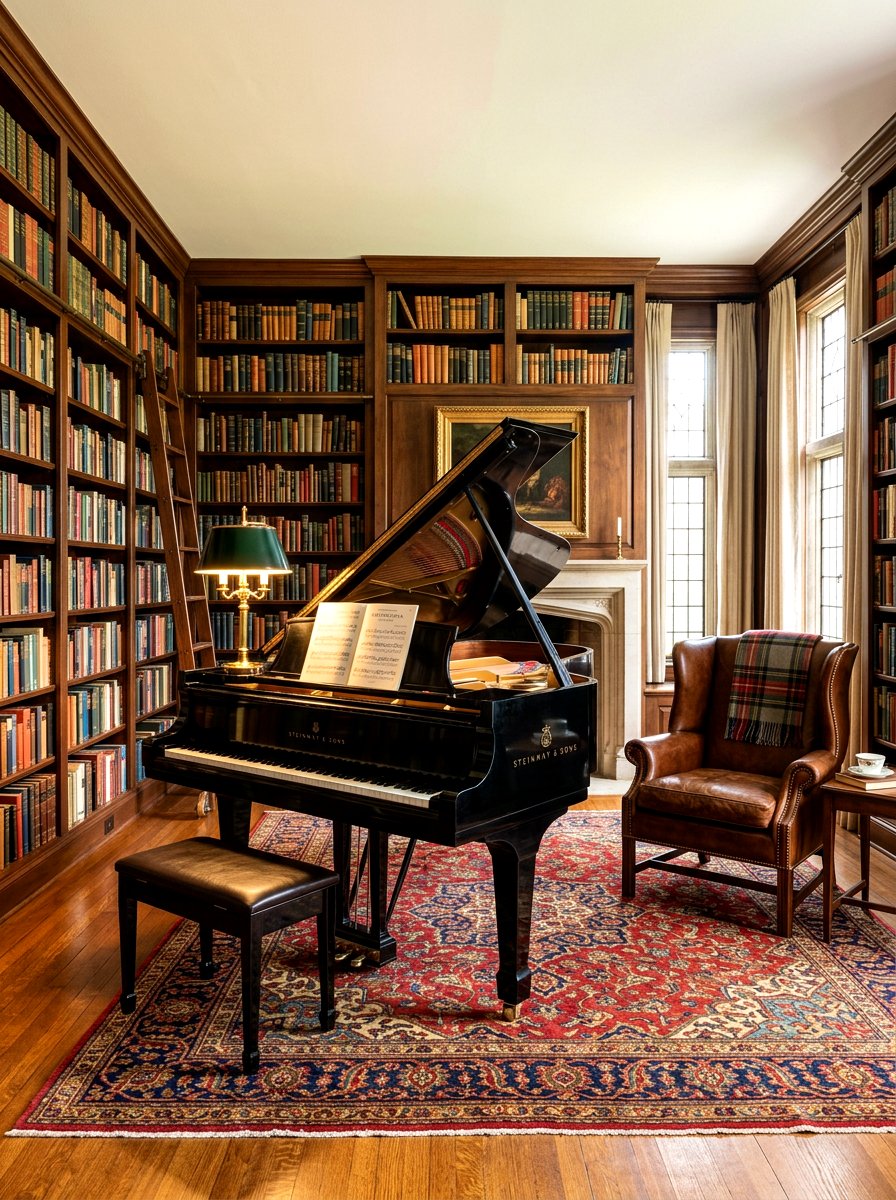
A piano room library combines the best of both worlds, creating a sanctuary for both music and literature. Instead of just a few shelves, dedicate an entire wall to books and place the piano as the primary piece of furniture in the center. This design is perfect for those who want a dedicated space for quiet contemplation and creative expression. Use a large, traditional desk lamp on the piano for a classic library feel. The combination of rows of colorful book spines and the elegant silhouette of the piano creates a visually rich and intellectually stimulating environment that is sure to be the favorite room in the house.
21. Rustic farmhouse piano decor
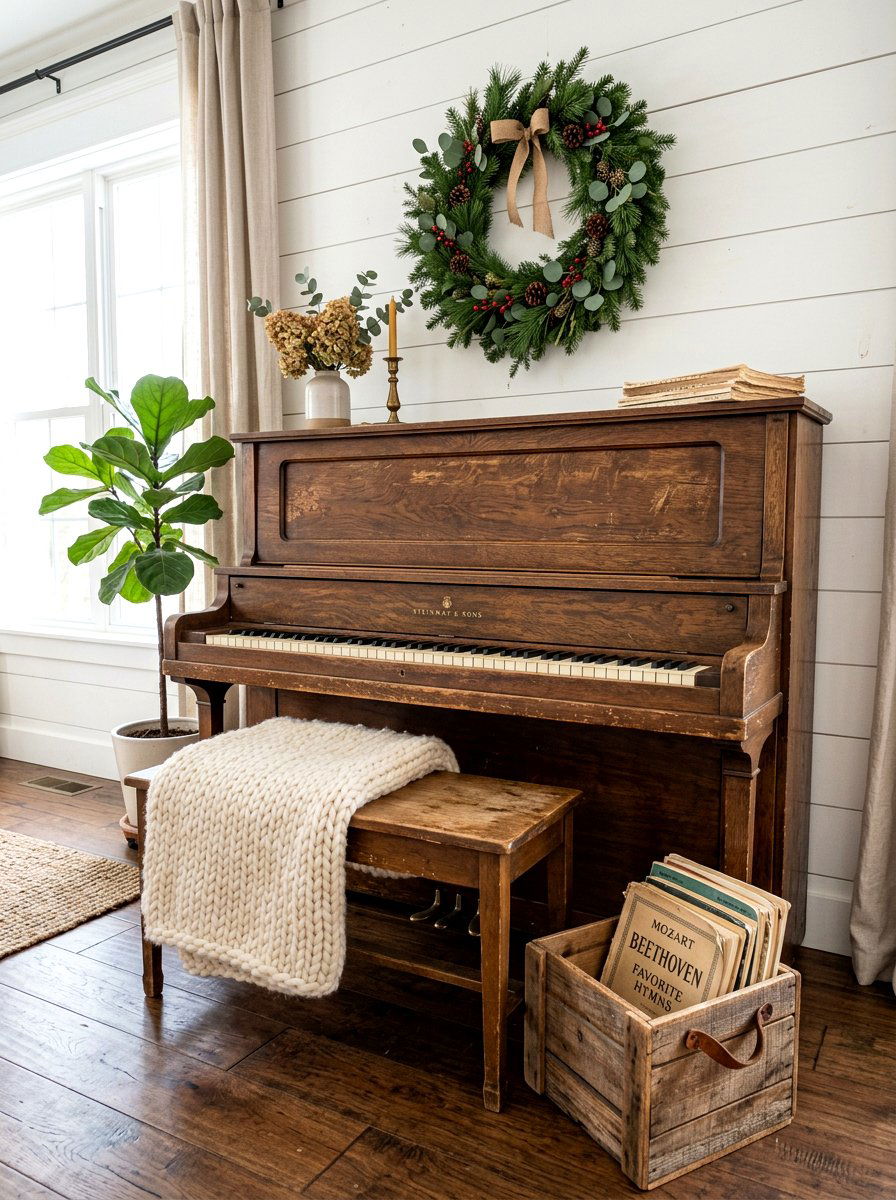
For a rustic farmhouse look, choose an upright piano with a natural or distressed wood finish. Surround it with cozy, lived-in elements like a chunky knit throw over the bench, a wooden crate for sheet music, and a simple wreath hanging on the wall above. The goal is to create a space that feels humble, warm, and family-oriented. Use neutral tones like cream, beige, and soft browns to keep the palette light and inviting. This style celebrates the history of the instrument, making it feel like a cherished family heirloom that has been passed down through generations, adding heart and soul to the home.
22. Open concept piano layout
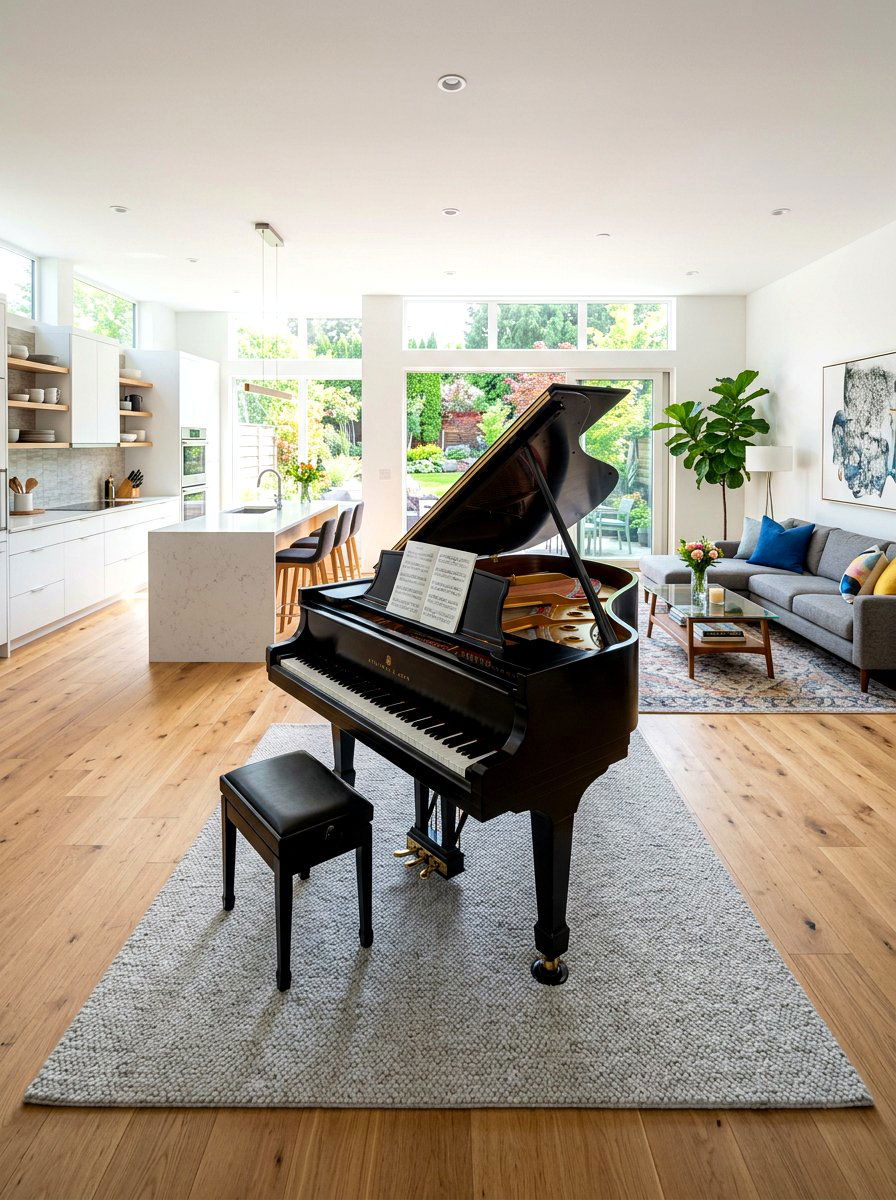
In an open-concept home, the piano can serve as a bridge between different functional areas like the kitchen, dining, and living zones. Placing a baby grand at the intersection of these spaces allows the music to carry throughout the entire floor, creating a cohesive auditory experience. To define the piano's "territory, " use a large area rug that contrasts with the rest of the flooring. This helps anchor the instrument in the open space without the need for walls. This layout is perfect for modern families who want their music to be a central part of their daily life and social gatherings.
23. Piano with statement lighting
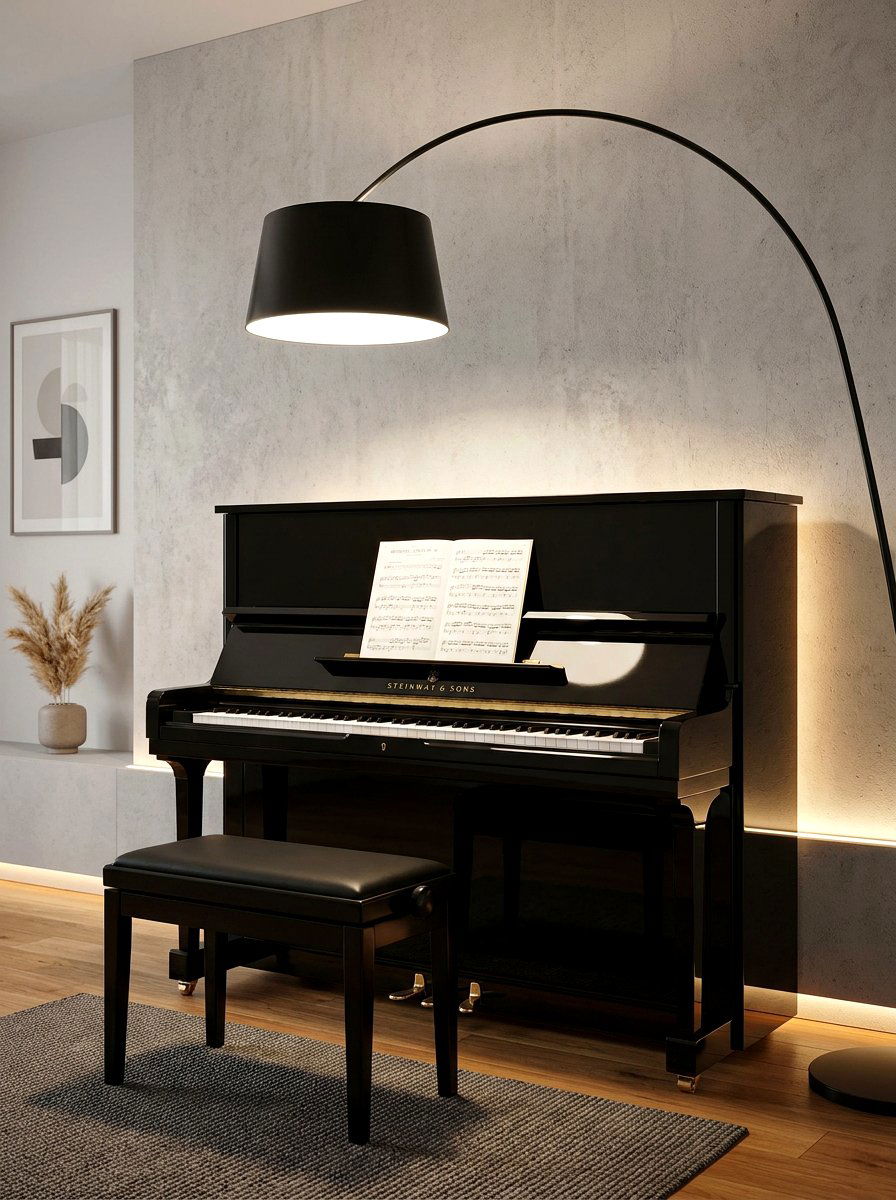
Lighting can completely change the vibe of your piano area, turning it into a dramatic stage at night. Consider installing a large arc floor lamp that hangs directly over the keys, or a sculptural pendant light that draws attention to the instrument 's form. For a more subtle effect, use LED strip lights along the back of an upright piano to create a soft glow against the wall. This not only provides the necessary light for reading music but also adds a layer of modern sophistication to the room. Good lighting highlights the piano' s finish and creates an inviting ambiance that beckons you to sit down and play.
24. Scandinavian piano interior
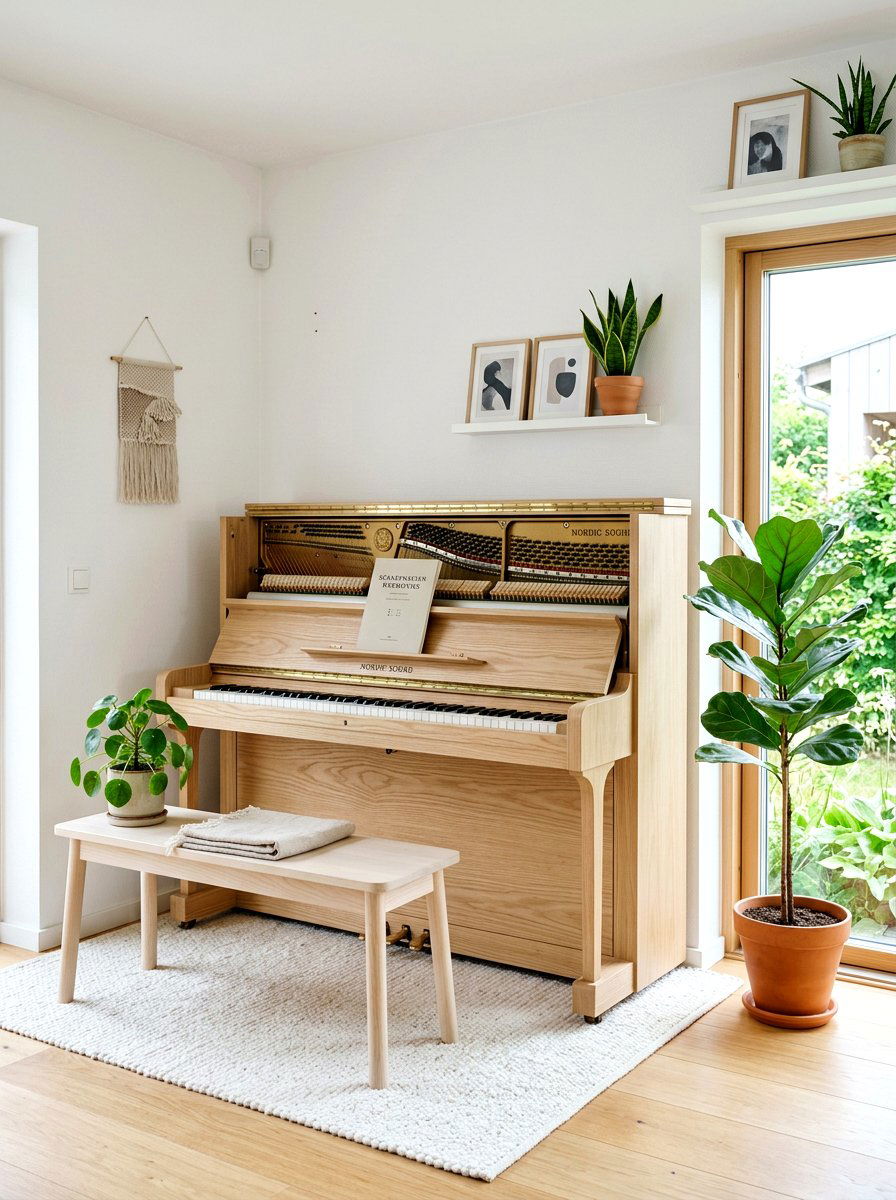
Scandinavian design is known for its simplicity, functionality, and connection to nature, making it a great fit for a piano living room. Choose a piano with a light wood finish or a clean white exterior to match the "Scandi" look. Keep the decor minimal with a few high-quality pieces, such as a designer wooden bench and a simple wool rug. Use plenty of natural light and incorporate a few green plants to bring the outdoors in. This aesthetic is all about creating a "hygge" or cozy atmosphere where the piano is a tool for joy and relaxation rather than a formal performance piece.
25. Dark academia piano room
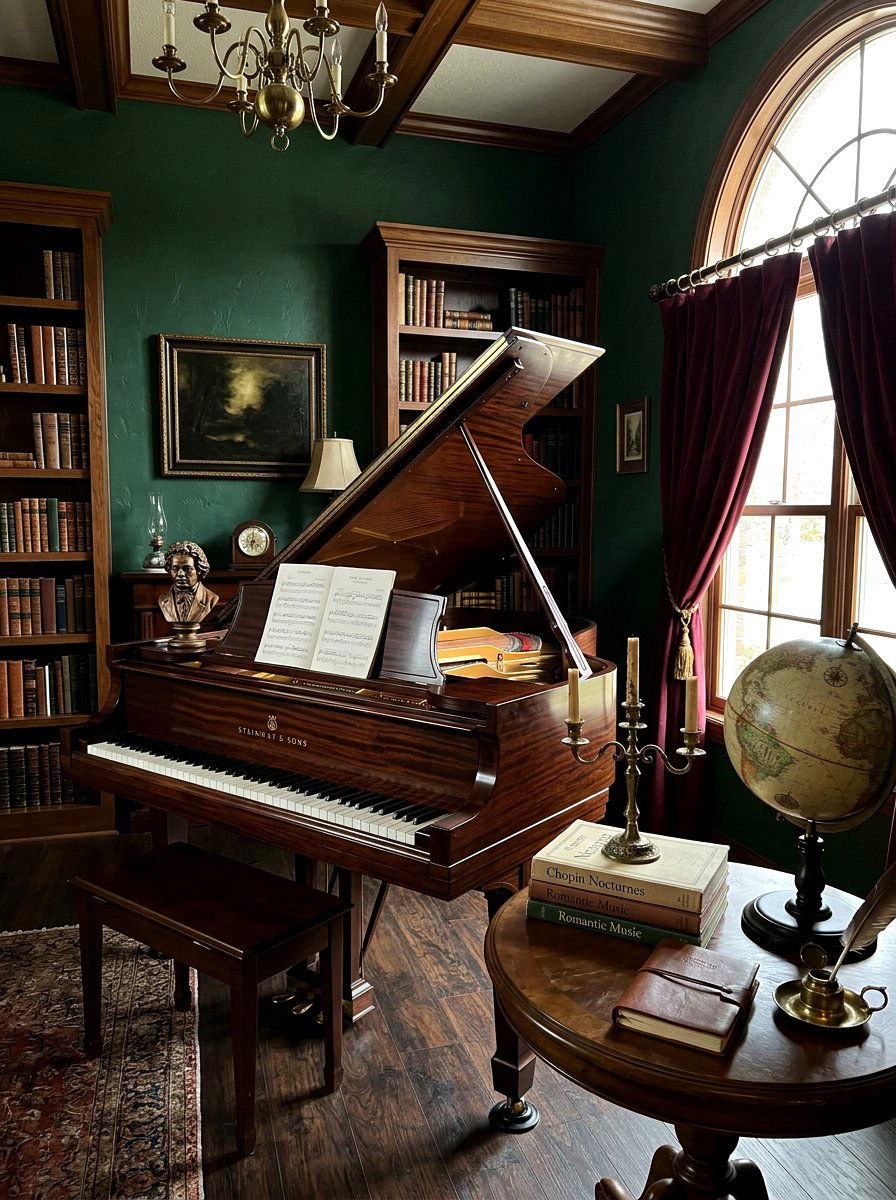
The dark academia trend is perfect for creating a moody, dramatic, and intellectual music space. Use deep, saturated wall colors like forest green, burgundy, or charcoal gray to set the tone. A dark mahogany grand or upright piano will blend beautifully into this atmosphere. Decorate the space with vintage elements like old globes, brass candlesticks, and piles of antique sheet music. Use heavy velvet curtains and warm, dim lighting to enhance the sense of mystery and history. This style is incredibly cozy and provides a perfect backdrop for practicing classical compositions or losing yourself in a piece of music on a rainy afternoon.
26. Piano with abstract art
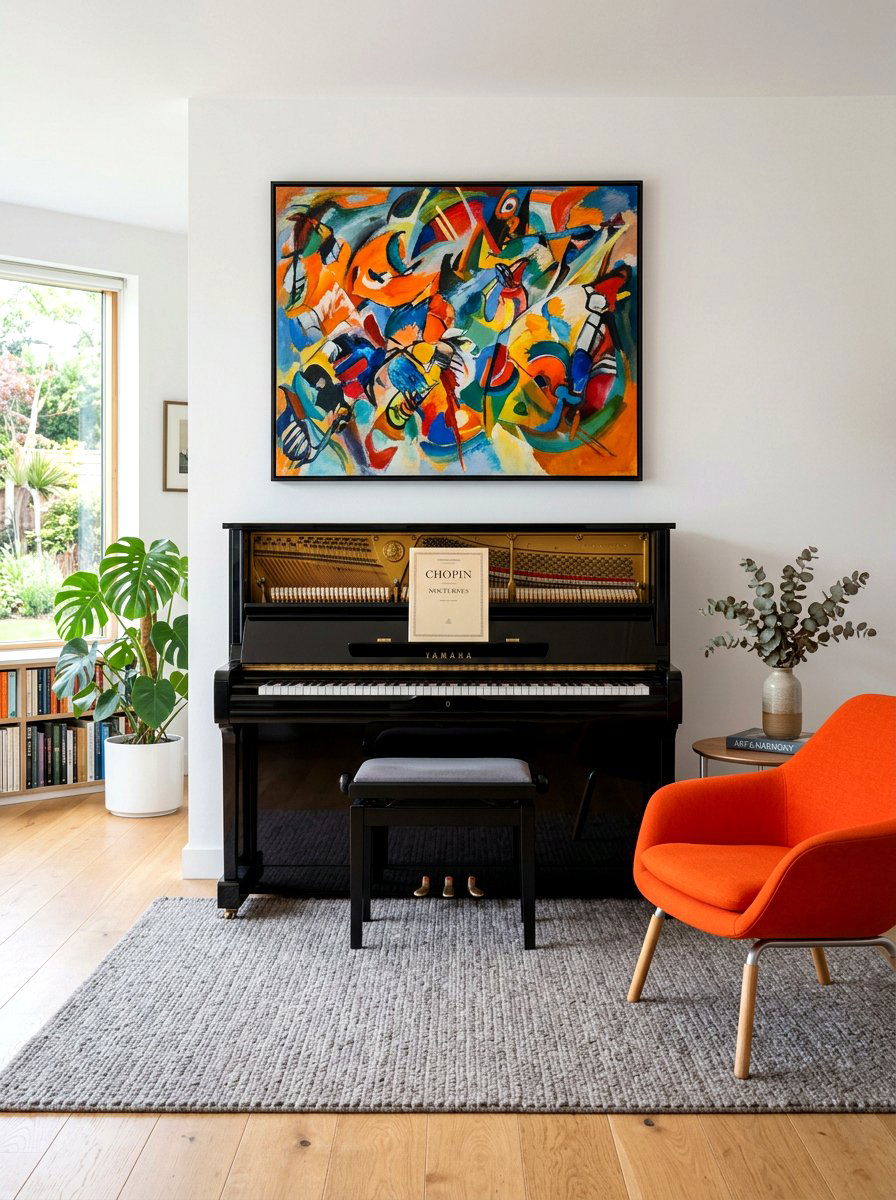
Pairing a traditional instrument like a piano with bold, modern abstract art creates a fascinating visual tension. A large, colorful canvas hanging above an upright piano can modernize the look of an older instrument and make the entire wall a focal point. Choose artwork that shares a few colors with the rest of your living room decor to ensure a cohesive feel. The fluid lines of abstract paintings often complement the musical nature of the piano, suggesting rhythm and movement. This contemporary approach is perfect for homeowners who want to balance classic elegance with a fresh, artistic, and modern point of view.
27. Sunroom piano placement
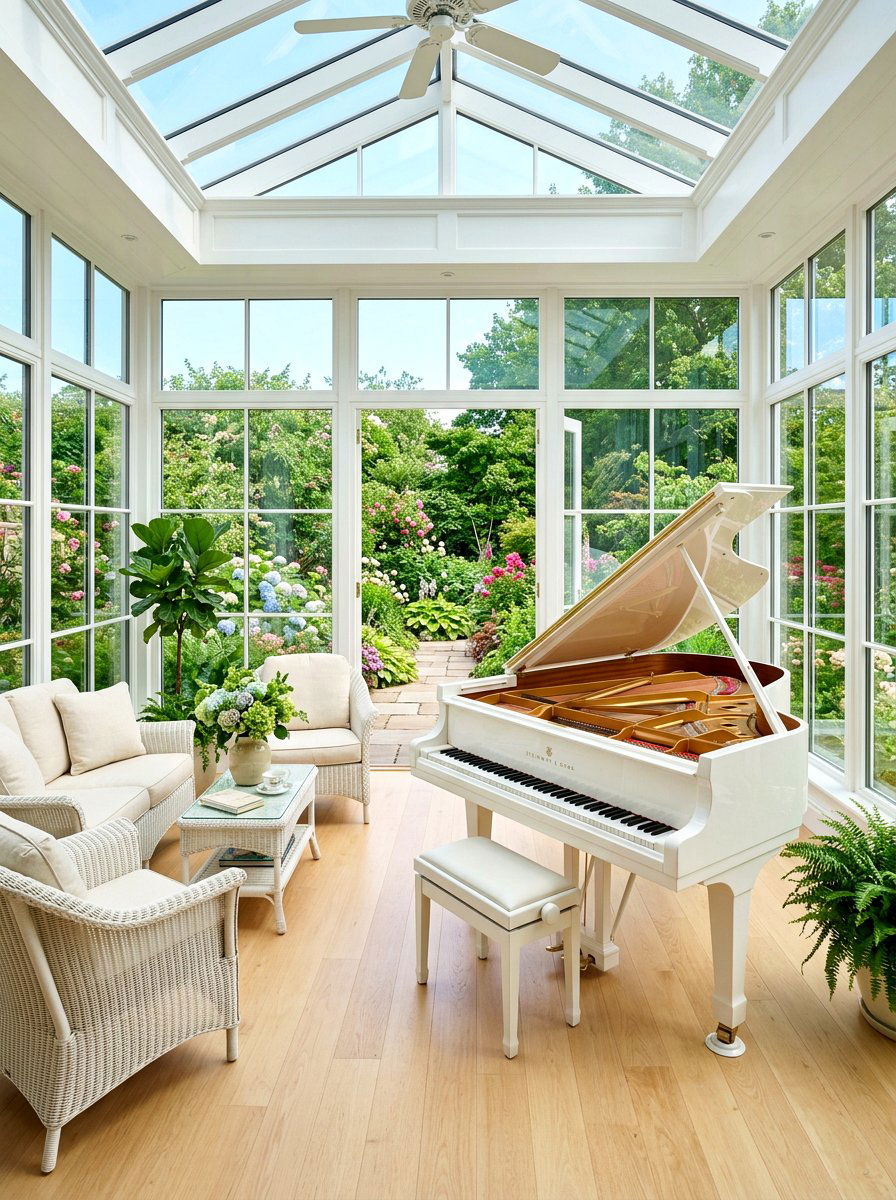
A sunroom or an enclosed porch can be a magical place for a piano, offering 360-degree views of the garden while you play. The abundance of natural light makes the space feel vibrant and energizing. To ensure the piano's longevity in such a light-filled room, it is essential to have high-quality climate control and window treatments. Use light, breezy furniture like wicker chairs and glass-topped tables to maintain the airy feel. Playing the piano while watching the seasons change outside is a truly unique experience that can provide endless inspiration for both beginning students and seasoned professional musicians alike.
28. Neutral living room piano
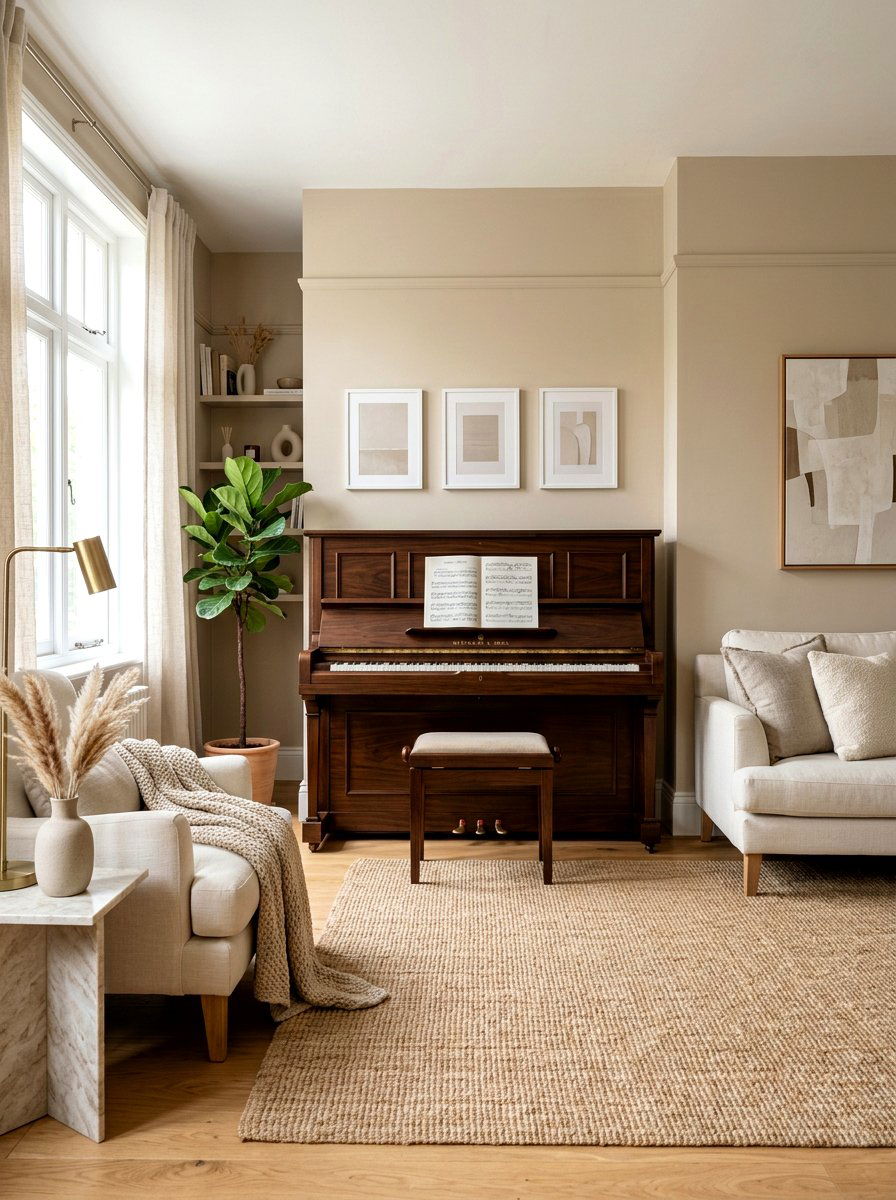
A neutral living room relies on a palette of whites, creams, and beiges to create a sophisticated and timeless environment. In this setting, a black or dark wood piano provides a striking anchor that prevents the room from feeling washed out. Use different textures to add interest, such as a linen-covered bench, a jute rug, and a marble side table. This monochromatic approach is very calming and allows the focus to remain on the architectural beauty of the furniture and the instrument itself. It is a versatile look that can be easily updated with seasonal accents like flowers or different throw pillows.
29. Glamorous piano lounge
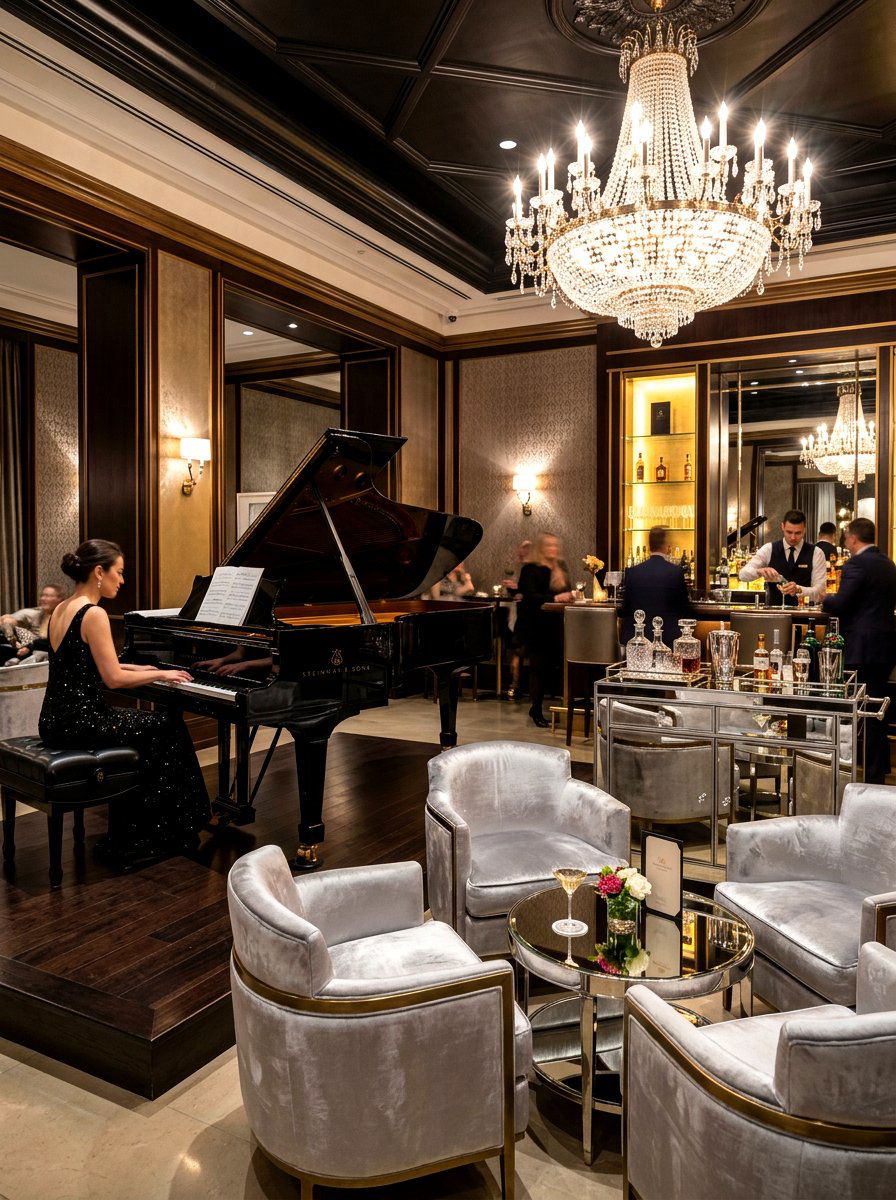
Turn your living room into a high-end piano lounge by incorporating glitzy materials and a sophisticated layout. Use a mirrored console table nearby to reflect the light and double the visual presence of the piano. Add a couple of velvet club chairs and a small round bar cart to complete the look. The goal is to create a space that feels like a chic hotel lobby or a private members' club. Metallic accents in silver or gold, combined with plush fabrics and a sleek black grand piano, will make the room feel incredibly luxurious and ready for a night of elegant entertaining.
30. Vintage upright piano styling
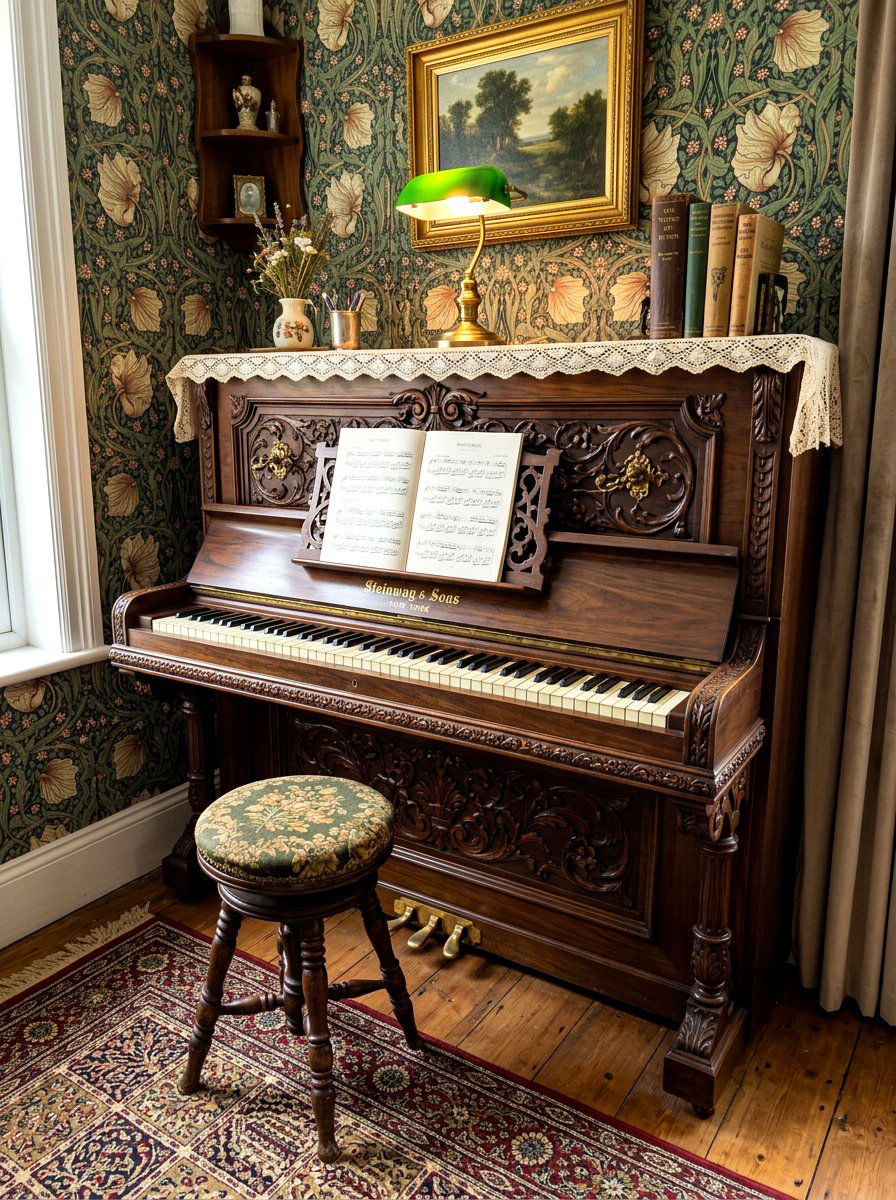
Vintage upright pianos often have beautiful ornate carvings and unique wood grains that deserve to be highlighted. Instead of trying to modernize these instruments, embrace their history by styling them with other antique or flea-market finds. Use an old-fashioned piano lamp with a green glass shade and a stack of weathered books. A lace runner or an embroidered doily can add a touch of Victorian charm. This nostalgic approach creates a space that feels personal and full of stories. It is a wonderful way to honor the craftsmanship of the past while making the piano a functional part of your home today.
Conclusion:
Designing a living room around a piano requires a thoughtful balance between aesthetics, acoustics, and the well-being of the instrument. Whether you choose to make the piano the central star of a formal salon or tuck it into a cozy, plant-filled nook, the key is to ensure it feels like an intentional part of your home. By considering factors like lighting, floor layout, and complementary decor, you can create a space that is both visually stunning and musically inspiring. A piano is more than just furniture; it is a source of joy and a testament to the beauty of the arts. We hope these ideas inspire you to create a harmonious and stylish living space that perfectly showcases your musical passion for years to come.

Related posts: