Creating a dedicated piano corner in your home is about more than just finding a place for an instrument; it is about crafting a sanctuary for creativity and expression. Whether you are a professional musician or a casual hobbyist, the environment where you play significantly impacts your musical journey and the overall aesthetic of your living space. A well-designed music nook can serve as a stunning focal point, drawing the eye and inviting guests to enjoy the beauty of sound and style. From choosing the perfect lighting to selecting complementary furniture, every detail contributes to a harmonious atmosphere that inspires and delights the senses daily.
1. Modern Living Room Upright Piano
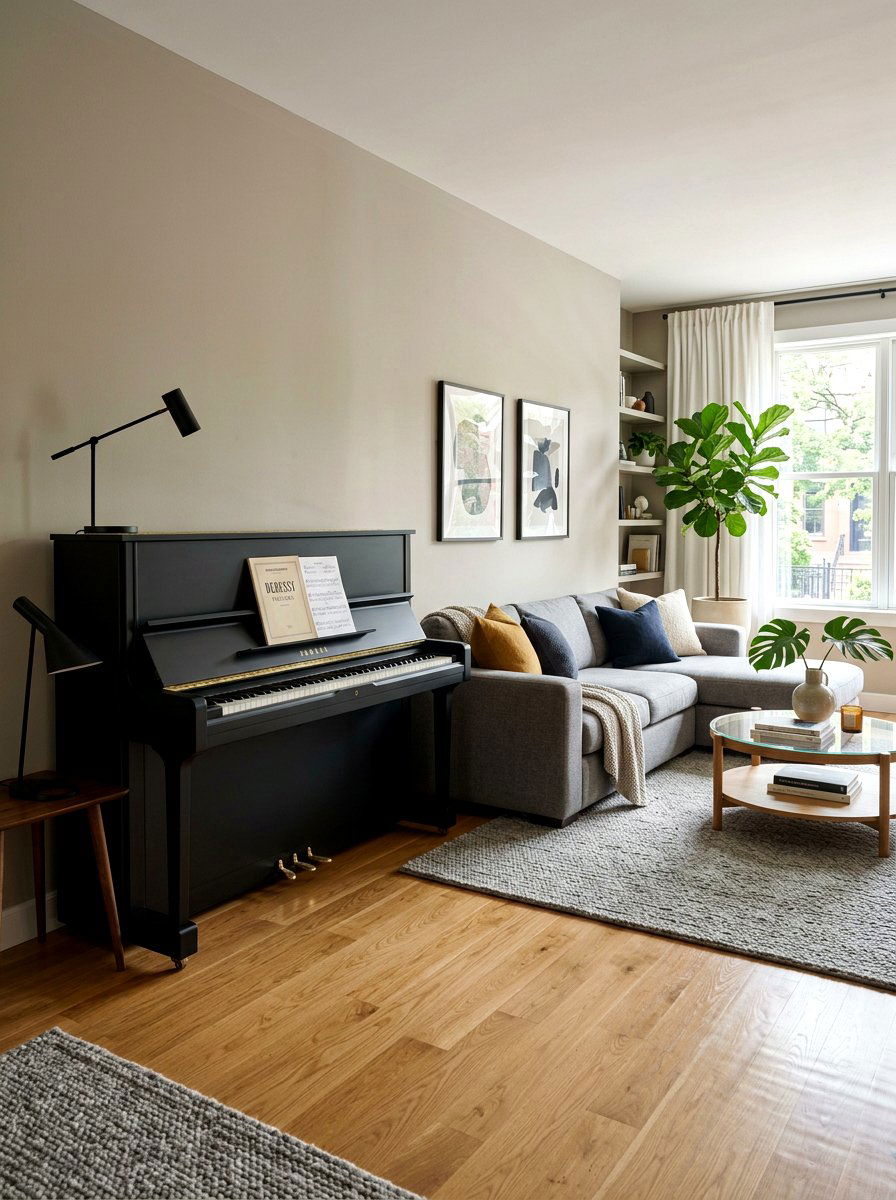
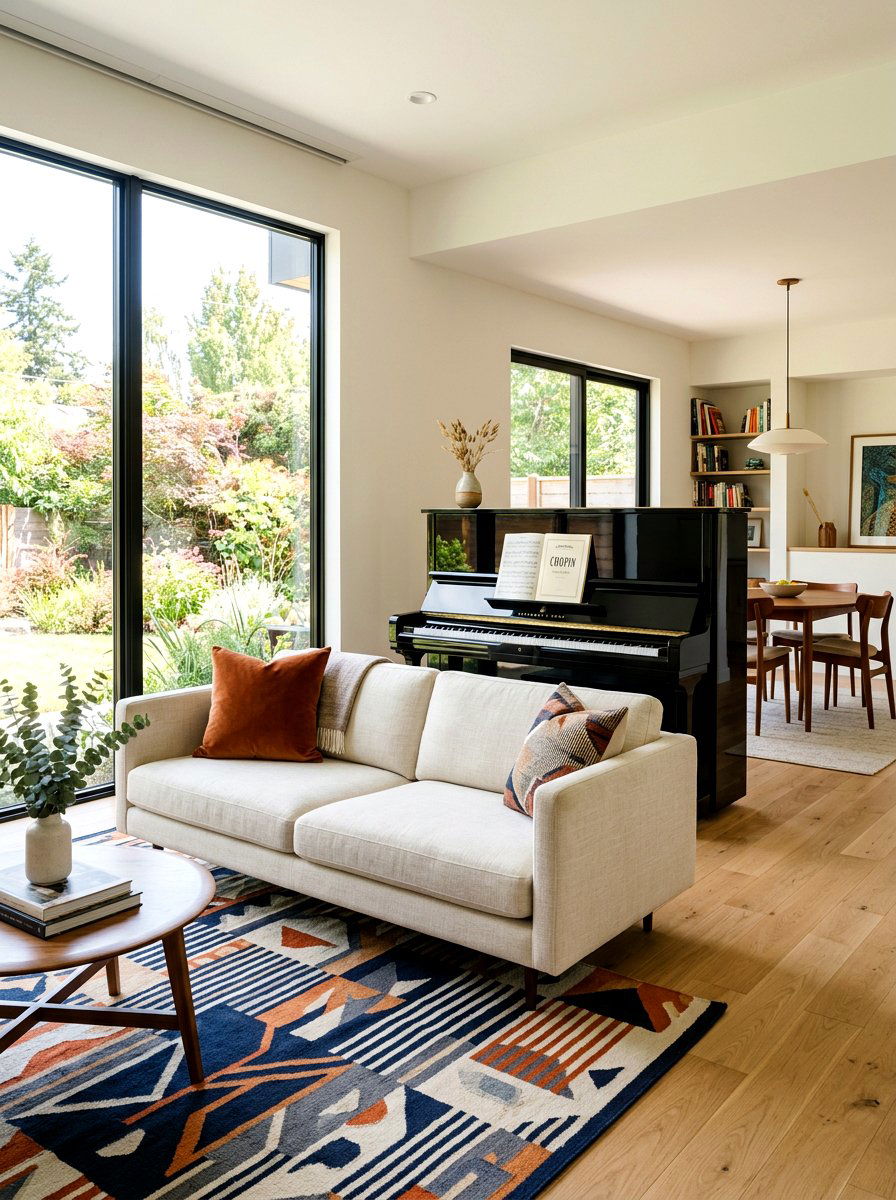
Integrating a sleek upright piano into a modern living room requires a focus on clean lines and a clutter-free environment. You should position the instrument against a primary interior wall to ensure stable temperatures while creating a strong visual anchor for the space. Choosing a piano with a matte black or natural wood finish allows it to blend seamlessly with contemporary furniture pieces like low-profile sofas and metallic accent tables. To enhance the look, place a minimalist task lamp with a slim profile on top to provide focused light for reading sheet music. This setup keeps the room feeling open and sophisticated while prioritizing the musical experience.
2. Minimalist Grand Piano Nook
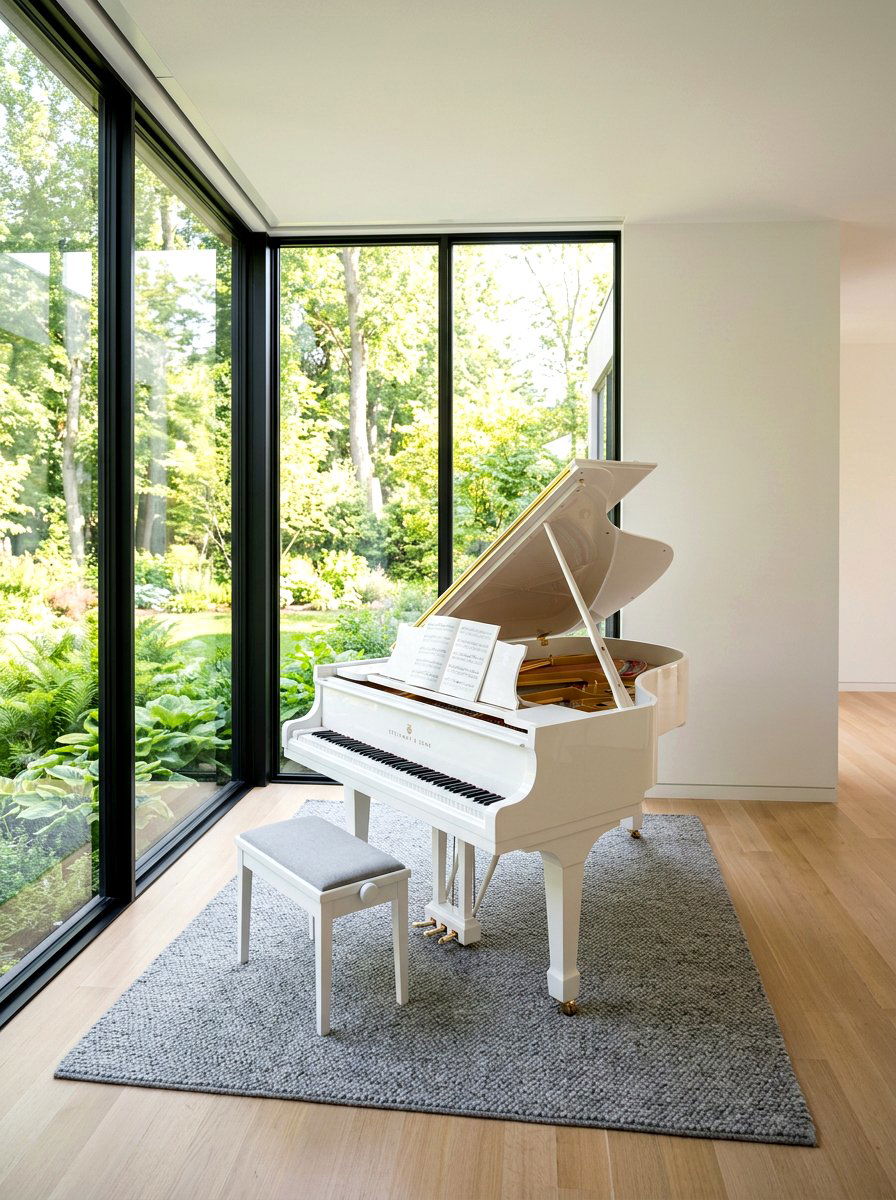
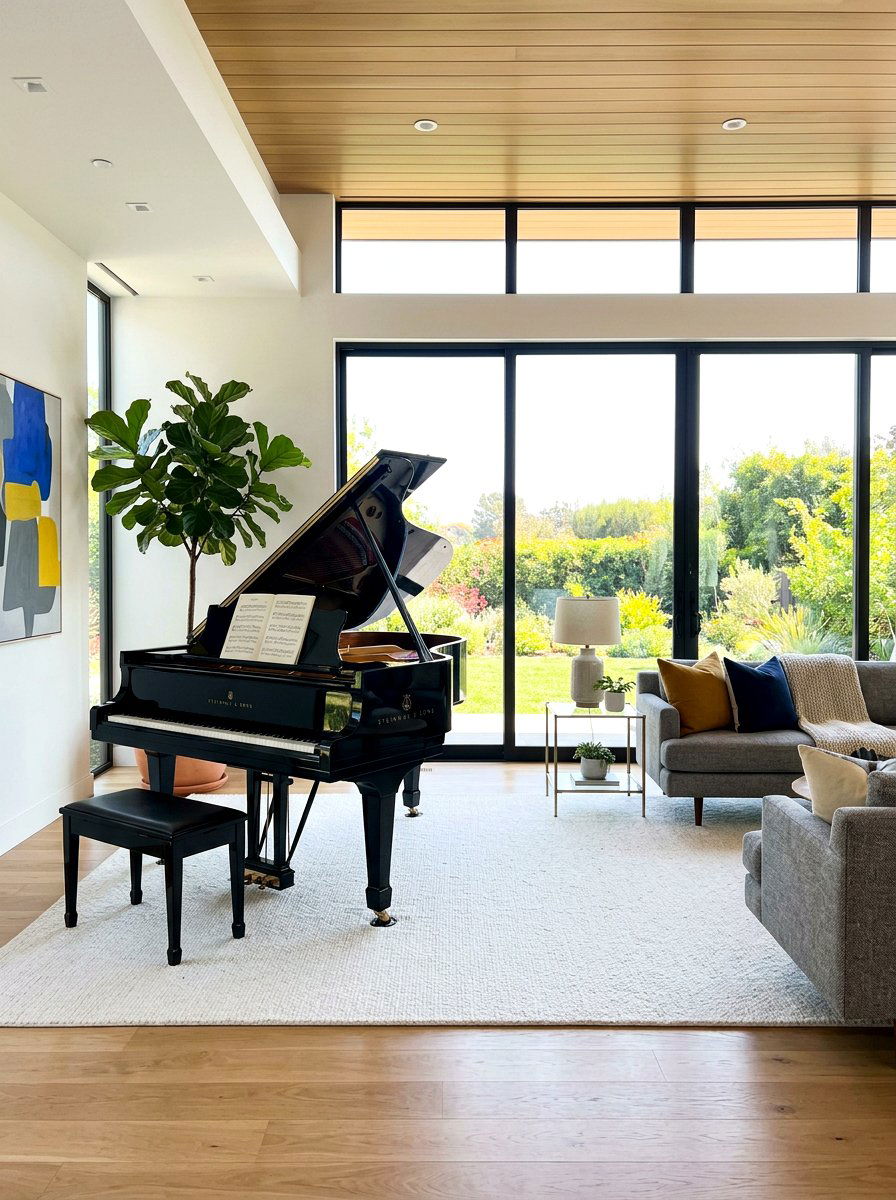
A minimalist grand piano nook thrives on the concept of negative space, allowing the instrument's elegant curves to take center stage. You should aim for a spacious area, perhaps near a large window, where the piano can breathe without being crowded by heavy decor. Use a neutral color palette of soft whites and cool grays to maintain a serene and airy atmosphere that promotes focus and calm. A single, high-quality rug placed underneath the piano can help define the zone and improve the acoustics by dampening harsh reflections. This approach turns the piano into a sculptural piece of art that defines the entire room.
3. Boho Style Music Corner
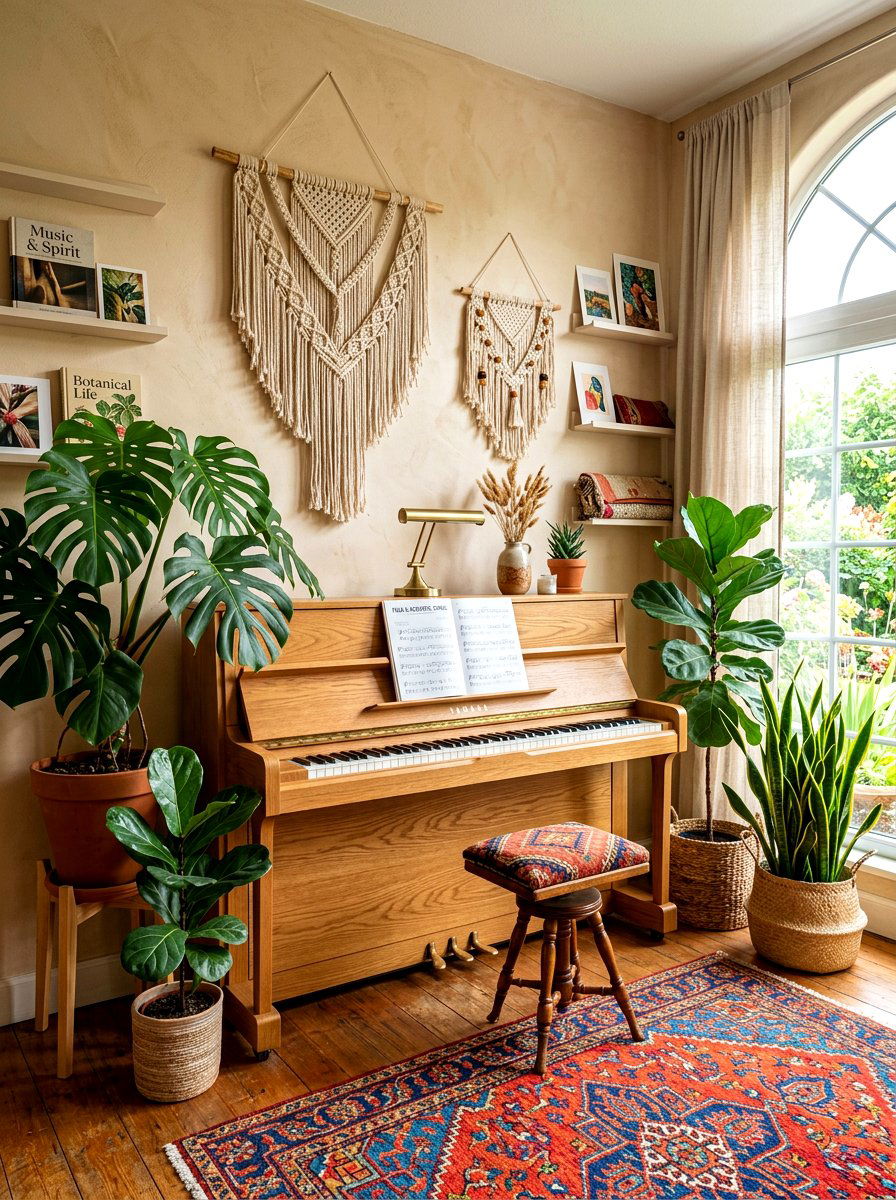
Embracing a boho style music corner allows you to infuse warmth and personality into your practice space through layers of texture and color. You can start by placing a vintage keyboard or upright piano against a backdrop of macrame wall hangings or woven tapestries. Incorporate a variety of indoor plants, such as trailing ivy or a large fiddle leaf fig, to bring a natural and vibrant energy to the area. A colorful Persian-style rug and a velvet-cushioned bench add comfort and a touch of eclectic charm. This relaxed environment encourages spontaneous playing and makes the piano feel like an integrated part of a lived-in home.
4. Gallery Wall Above Piano
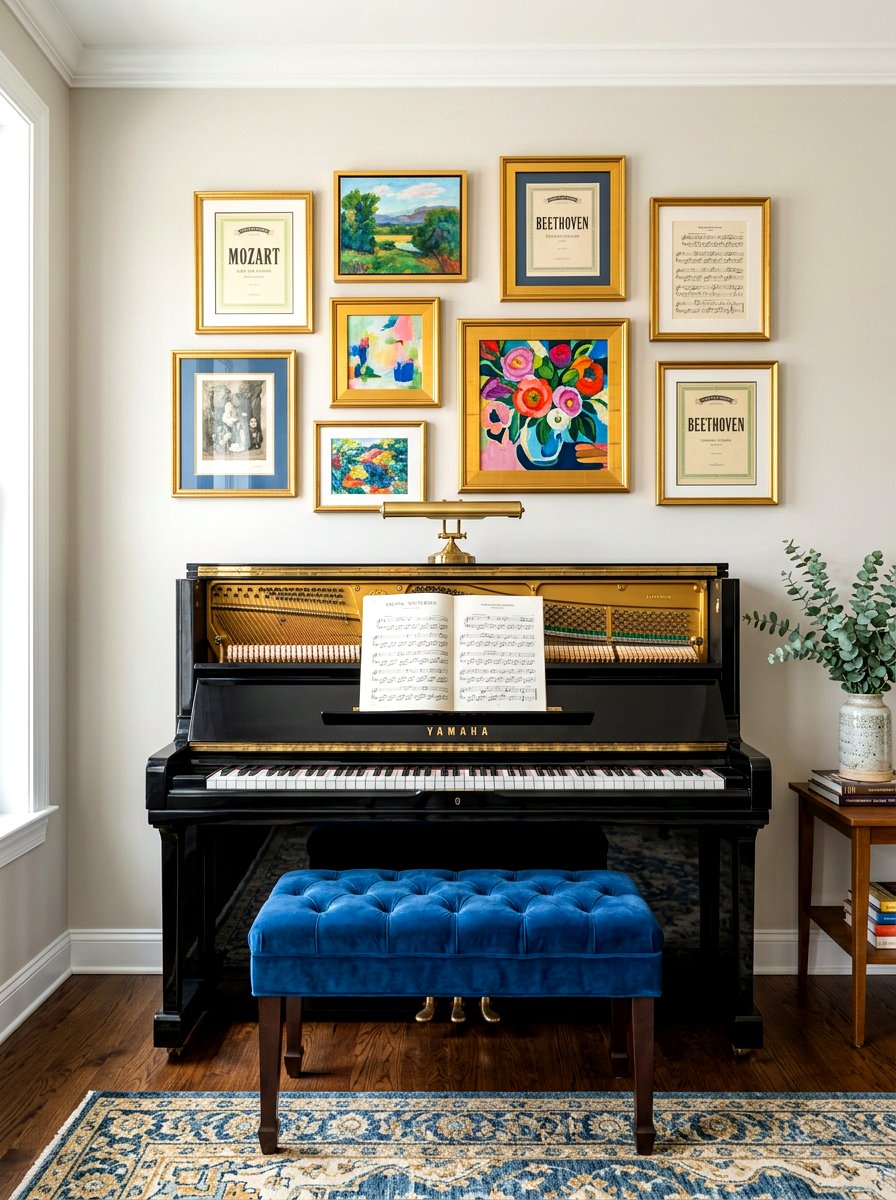
Creating a gallery wall above your piano is an excellent way to personalize the space and connect your musical passion with visual art. You can mix framed sheet music, vintage concert posters, and family photographs to build a curated display that tells a unique story. Ensure the frames vary in size but share a common color or material to maintain a sense of cohesive design across the wall. Positioning the art at eye level while seated at the piano keeps the inspiration within your line of sight during practice. This decorative technique anchors the instrument and transforms a plain wall into a captivating and artistic focal point.
5. Under Stairs Piano Space
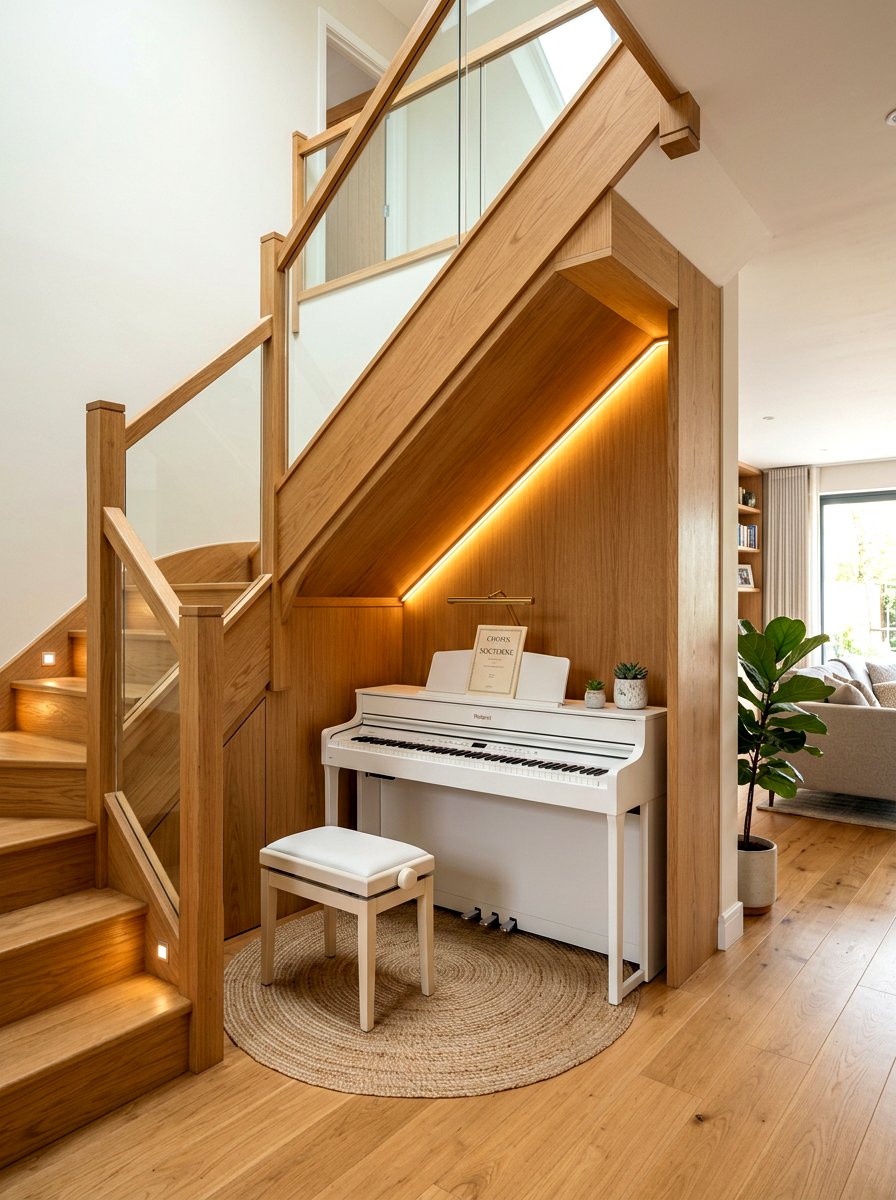
Utilizing the often-overlooked area under the stairs for a piano space is a clever way to maximize square footage in smaller homes. This architectural niche provides a natural alcove that feels cozy and tucked away, making it a perfect spot for focused practice sessions. You should ensure the area is well-lit by installing recessed LED strips or a stylish wall sconce to compensate for the lack of natural light. Choosing a compact upright or a high-quality digital piano ensures the instrument fits perfectly within the slope of the staircase. This functional use of space adds a surprising and melodic element to your home's layout.
6. Industrial Style Piano Loft
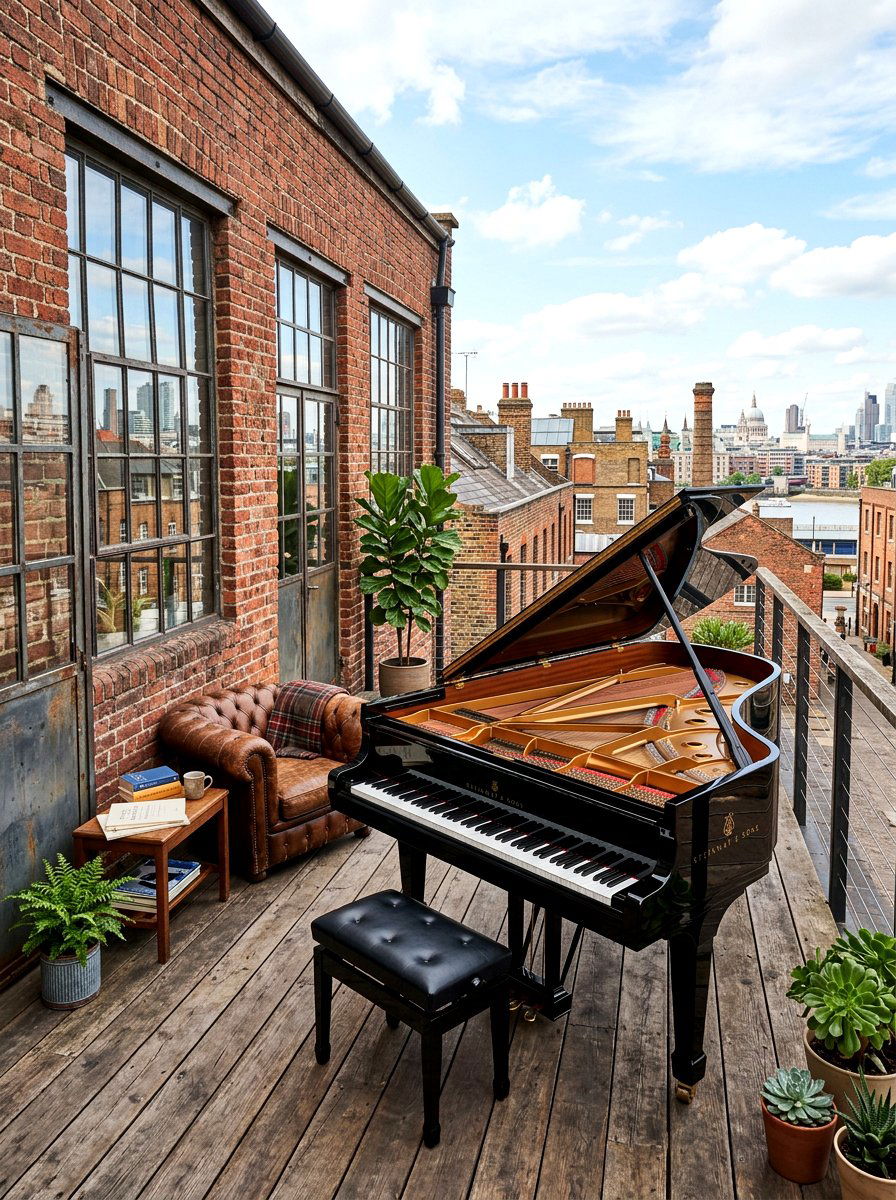
An industrial style piano loft celebrates raw materials like exposed brick, weathered wood, and matte metal finishes to create a bold aesthetic. You can pair a classic ebony piano with a reclaimed wood bench featuring iron legs for a look that feels both rugged and refined. Large factory-style windows provide ample natural light, while an oversized metal floor lamp can offer dramatic illumination during evening performances. Keep the surrounding decor sparse to let the architectural features and the instrument's silhouette stand out against the urban backdrop. This design style is perfect for those who appreciate a moody, high-contrast environment for their music.
7. Small Apartment Digital Piano
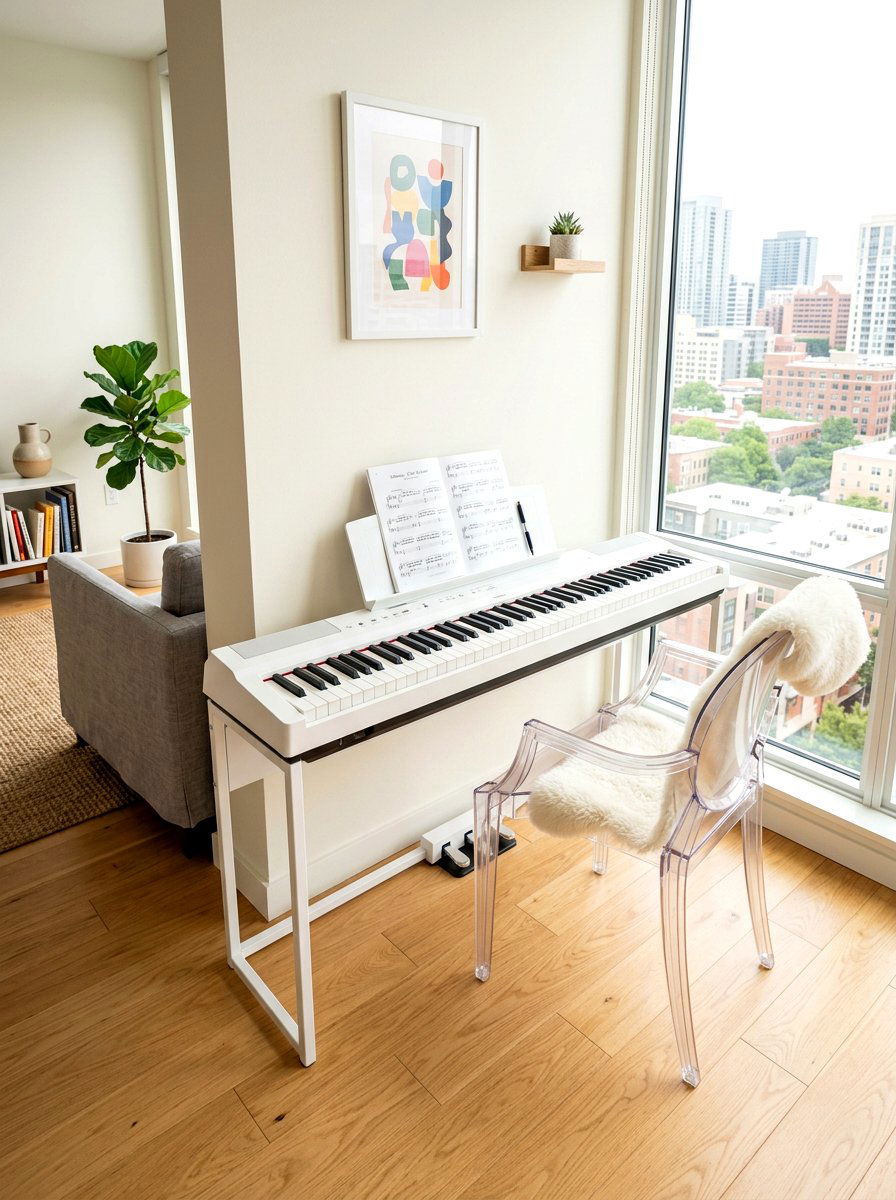
Designing a music area for a small apartment requires a focus on versatility and compact furniture that serves multiple purposes. You should opt for a slim digital piano with a modern stand that can double as a console table when the keys are covered. Placing the setup in an entryway or behind a sofa helps define separate zones without requiring a dedicated room for your musical pursuits. Use a transparent acrylic chair or a small stool that can be tucked away easily to keep the floor space clear and unobstructed. This approach ensures that even the most limited living spaces can accommodate a beautiful and functional piano.
8. Dark Moody Music Room
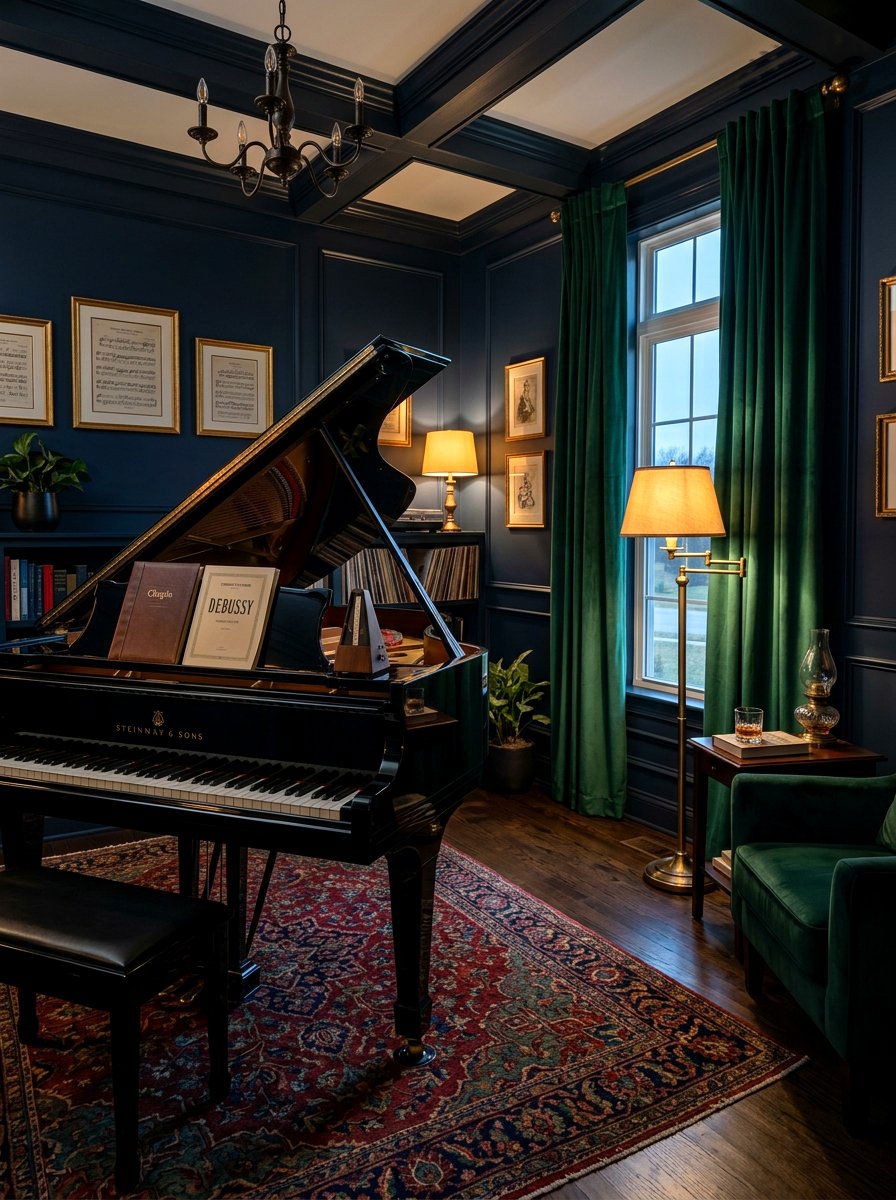
A dark moody music room uses deep paint colors like charcoal, navy, or forest green to create an intimate and sophisticated atmosphere. You can highlight the glossy finish of a grand piano by using intentional spotlighting that casts soft shadows throughout the space. Incorporating rich materials like velvet curtains and leather armchairs adds a layer of luxury and helps with sound absorption for a better acoustic experience. This design choice is ideal for evening playing, as the low-light environment fosters a sense of drama and deep emotional connection to the music. It turns the piano corner into a private retreat for late-night inspiration.
9. Built In Bookshelf Piano
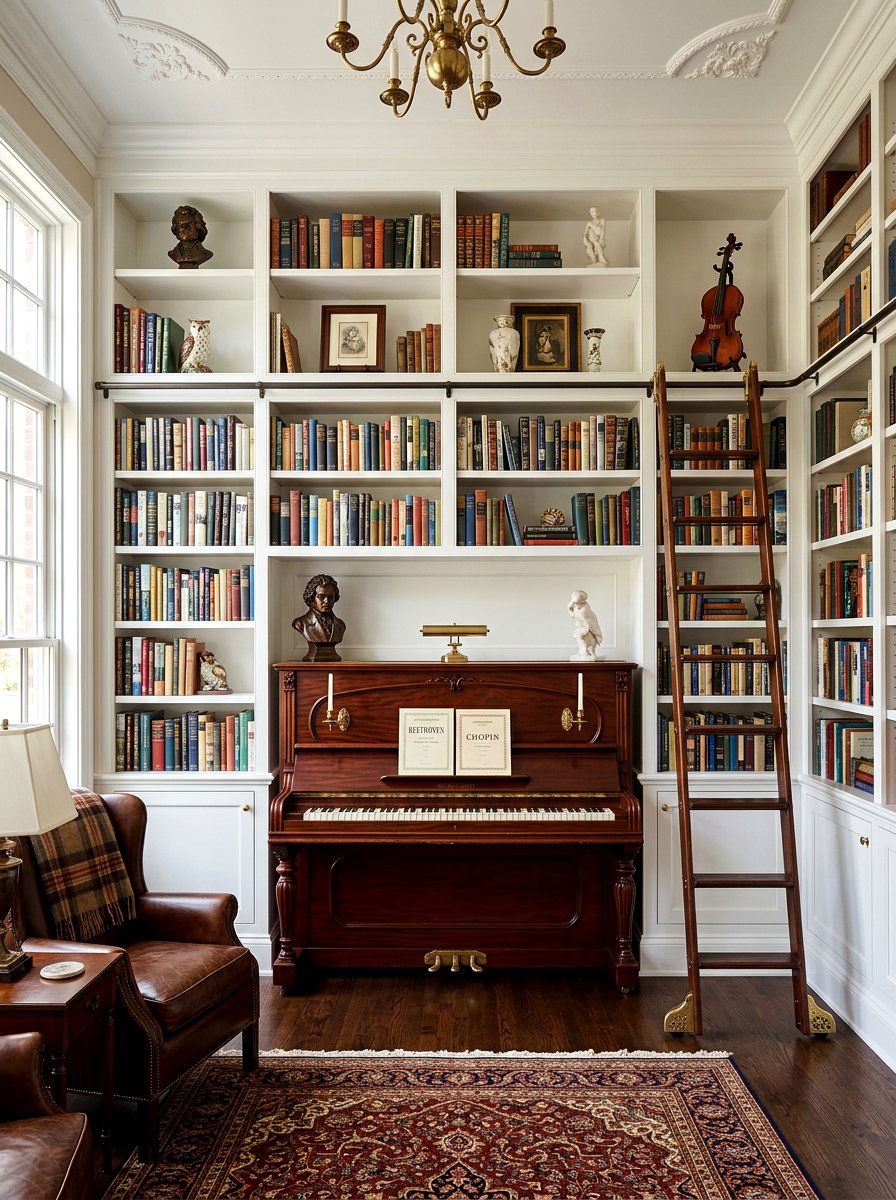
Integrating a piano into a built-in bookshelf unit creates a seamless and library-like feel that is both practical and visually impressive. You can design the shelving to frame the instrument perfectly, providing easy access to sheet music, books, and decorative objects. This layout saves floor space by combining storage and the music station into one cohesive architectural feature along a single wall. Using a wood finish that matches the piano 's casing helps the instrument feel like a permanent part of the room' s structure rather than an afterthought. This sophisticated setup is perfect for creating a quiet and scholarly environment for learning and playing.
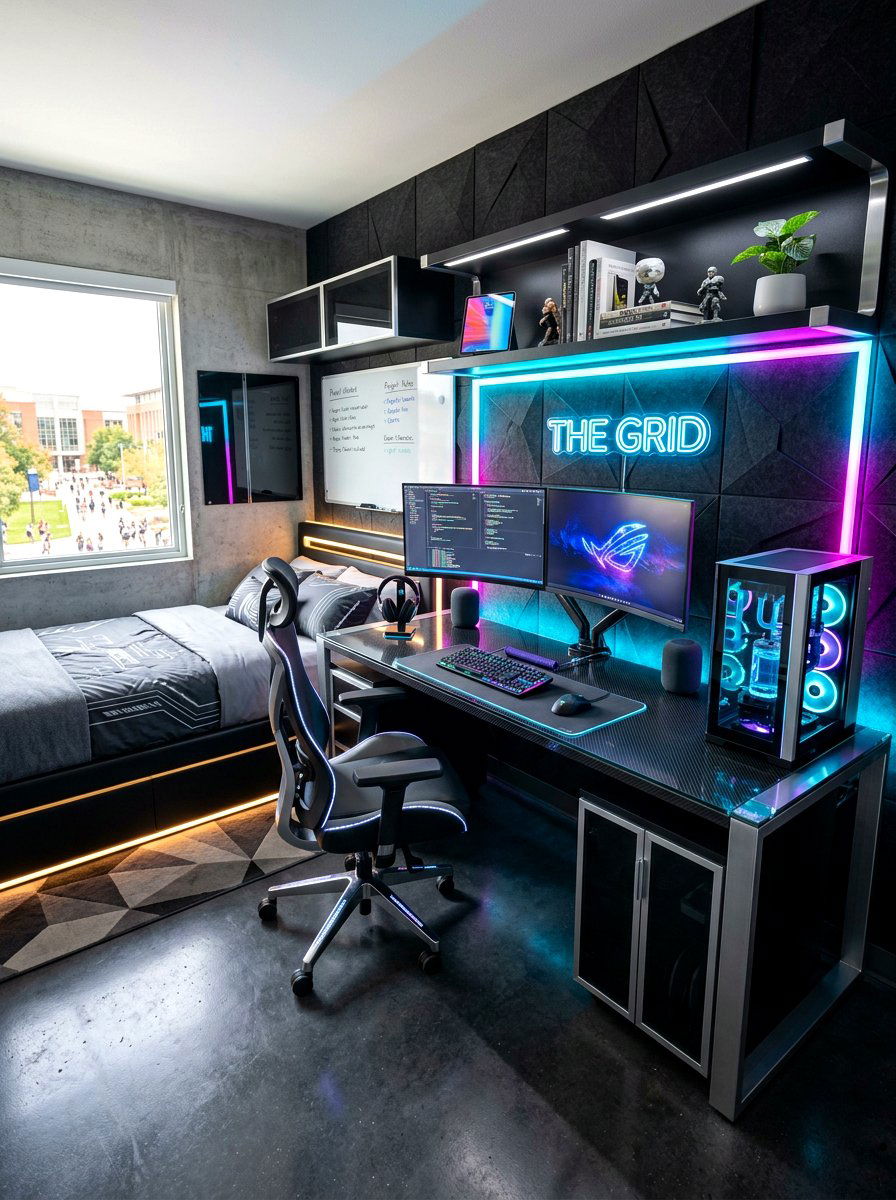
10. Mid Century Modern Piano
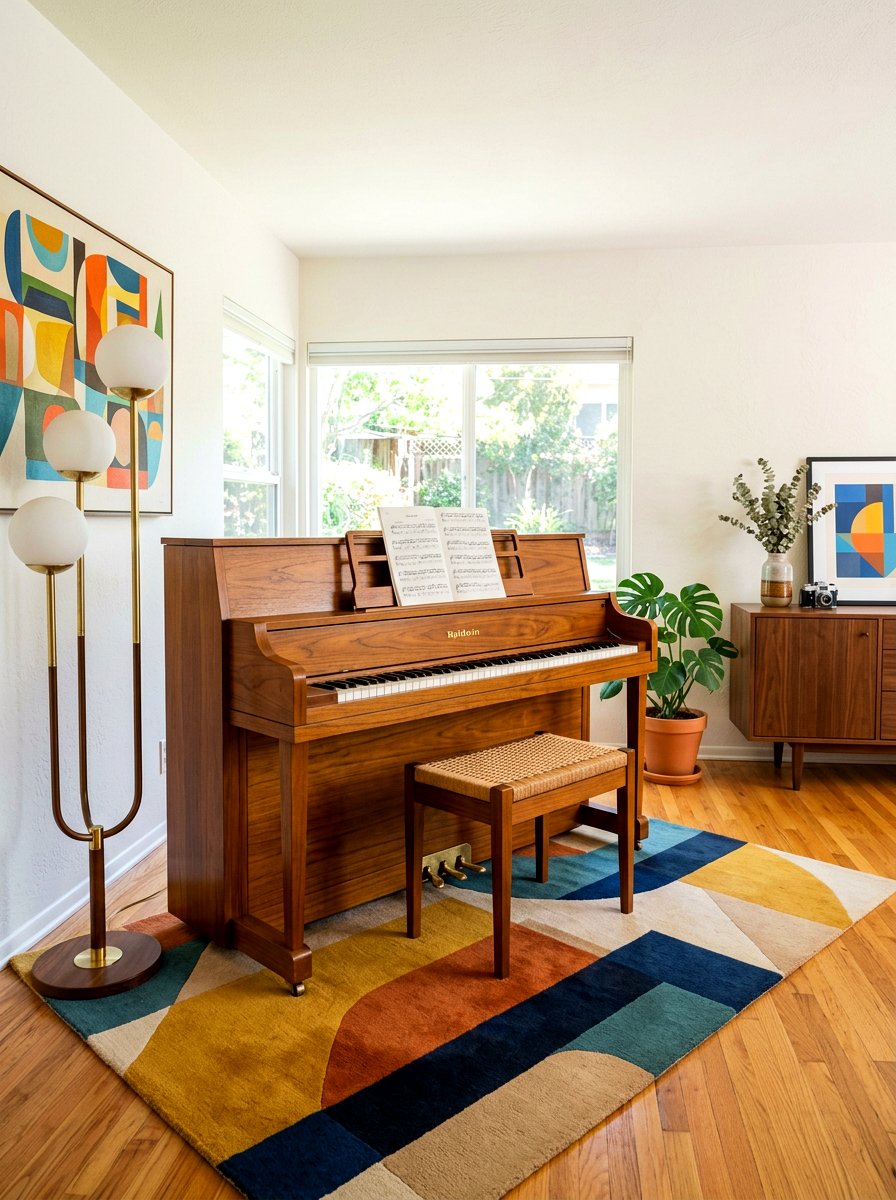
A mid-century modern piano setup focuses on warm wood tones, tapered legs, and a functional yet stylish approach to interior design. You can pair a vintage teak upright piano with a classic Eames-style chair or a simple wooden bench for an authentic retro vibe. Incorporate geometric patterns through a low-pile area rug or abstract wall art to complement the clean lines of the era. Soft, warm lighting from a globe-style floor lamp adds to the nostalgic feel while providing enough light for reading music. This timeless style ensures your piano corner remains fashionable and inviting, blending perfectly with other iconic furniture pieces in your home.
11. Large Window Grand Piano
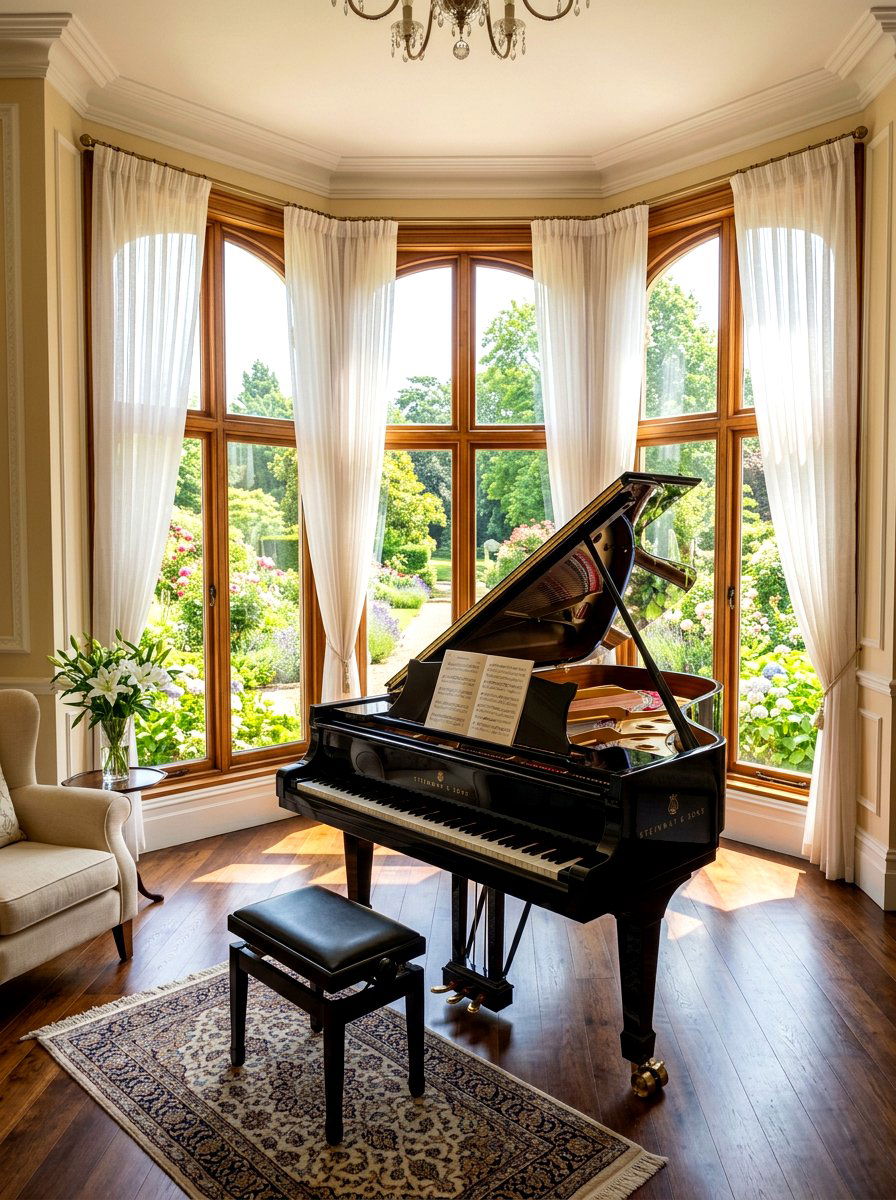
Placing a grand piano near a large window allows the musician to enjoy natural light and inspiring views while they play their favorite pieces. You should position the instrument so the lid opens toward the room, ensuring the sound projects beautifully throughout the entire living area. Be mindful of direct sunlight by using sheer curtains or UV-protected glass to prevent the wood finish from fading or cracking over time. The changing light throughout the day creates a dynamic atmosphere, making the piano corner a pleasant place to spend time even when not practicing. This arrangement connects the beauty of music with the serenity of the outdoors.
12. Scandinavian Style Music Nook
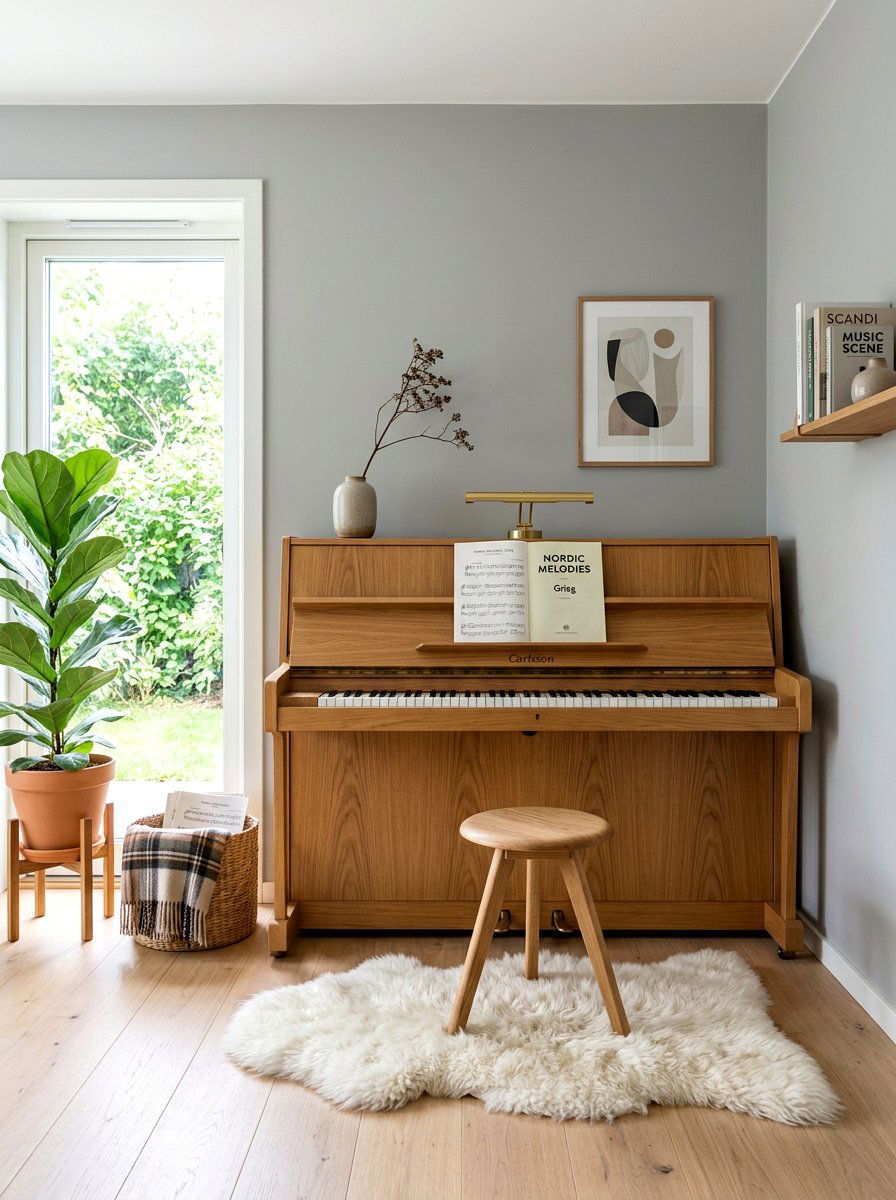
A Scandinavian style music nook emphasizes simplicity, light, and natural materials to create a peaceful environment for musical exploration. You should choose a piano with a light wood finish, such as oak or birch, and keep the surrounding decor minimal and functional. Incorporate soft textiles like a sheepskin rug or a linen cushion on the bench to add comfort and a touch of "hygge" to the space. Using a monochromatic palette with pops of soft blue or sage green keeps the area feeling fresh and uncluttered. This bright and airy design is perfect for maintaining a focused and joyful mood during daily practice.
13. Coastal Living Room Piano
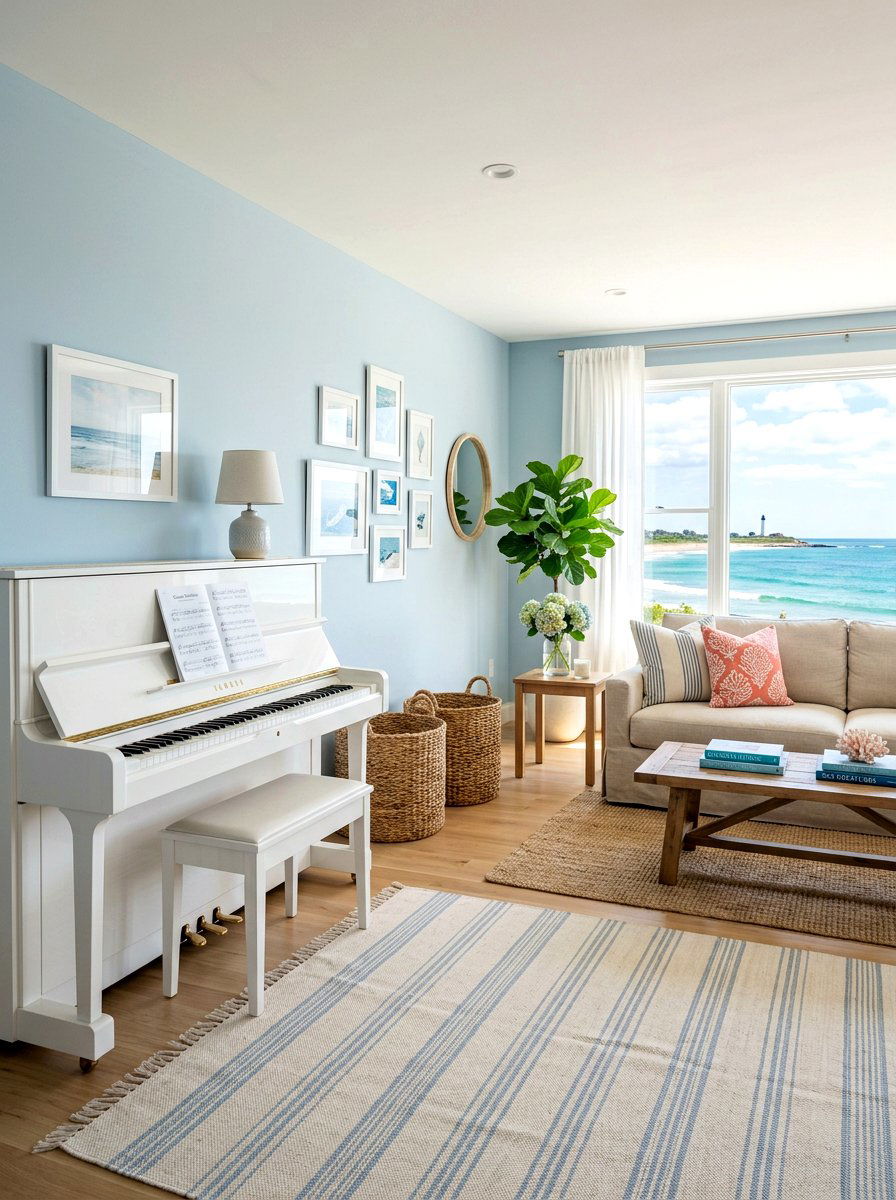
A coastal living room piano setup brings a breezy and relaxed feel to your home by using light colors and natural textures. You can opt for a white or light-toned piano that complements a palette of sandy beiges, soft blues, and crisp whites. Decorate the area with driftwood accents, woven seagrass baskets for sheet music storage, and a light cotton rug to anchor the space. Placing the piano near a window with a view of the garden or water enhances the tranquil and airy vibe of the room. This design style creates a refreshing and informal atmosphere that makes playing music feel like a vacation.
14. Traditional Library Piano Corner
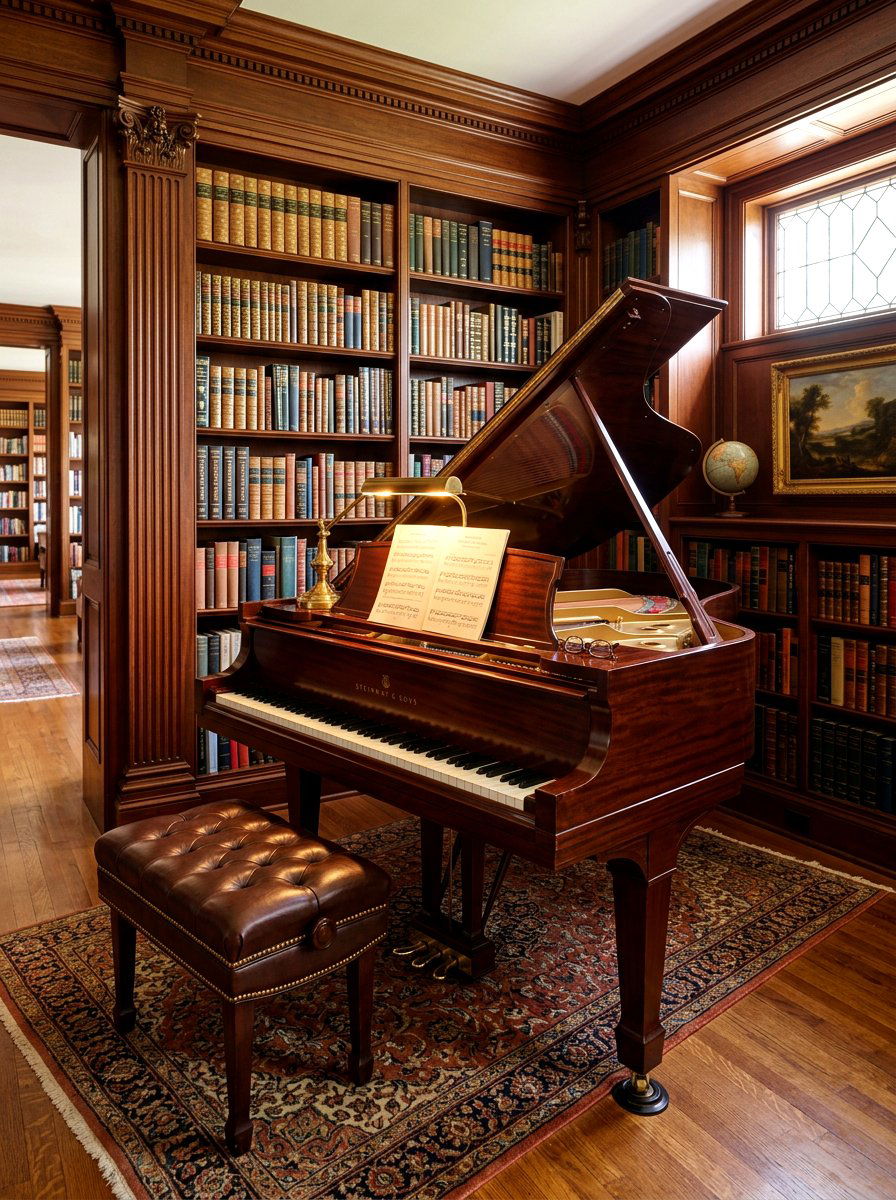
Setting up a piano in a traditional library creates a classic and scholarly ambiance that is perfect for serious study and performance. You can surround the instrument with floor-to-ceiling bookshelves filled with leather-bound volumes and antique decor for a timeless look. A rich mahogany or cherry wood piano fits beautifully in this environment, especially when paired with a classic tufted leather bench. Use a traditional brass piano lamp to provide warm, focused light on the keys and sheet music, adding to the room's historical charm. This formal setting encourages a deep respect for the instrument and the classical music being played within it.
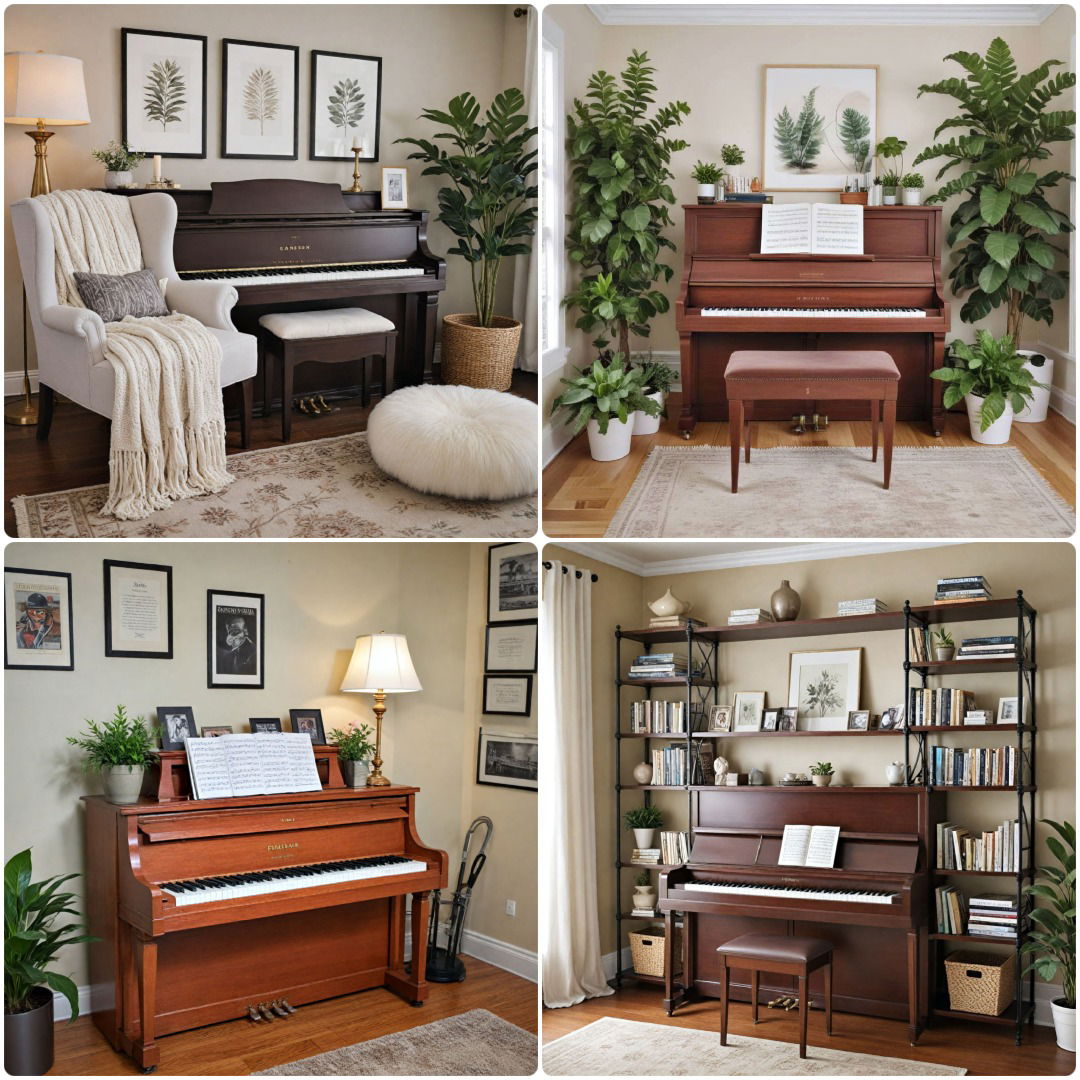

15. Contemporary Glass Piano Room
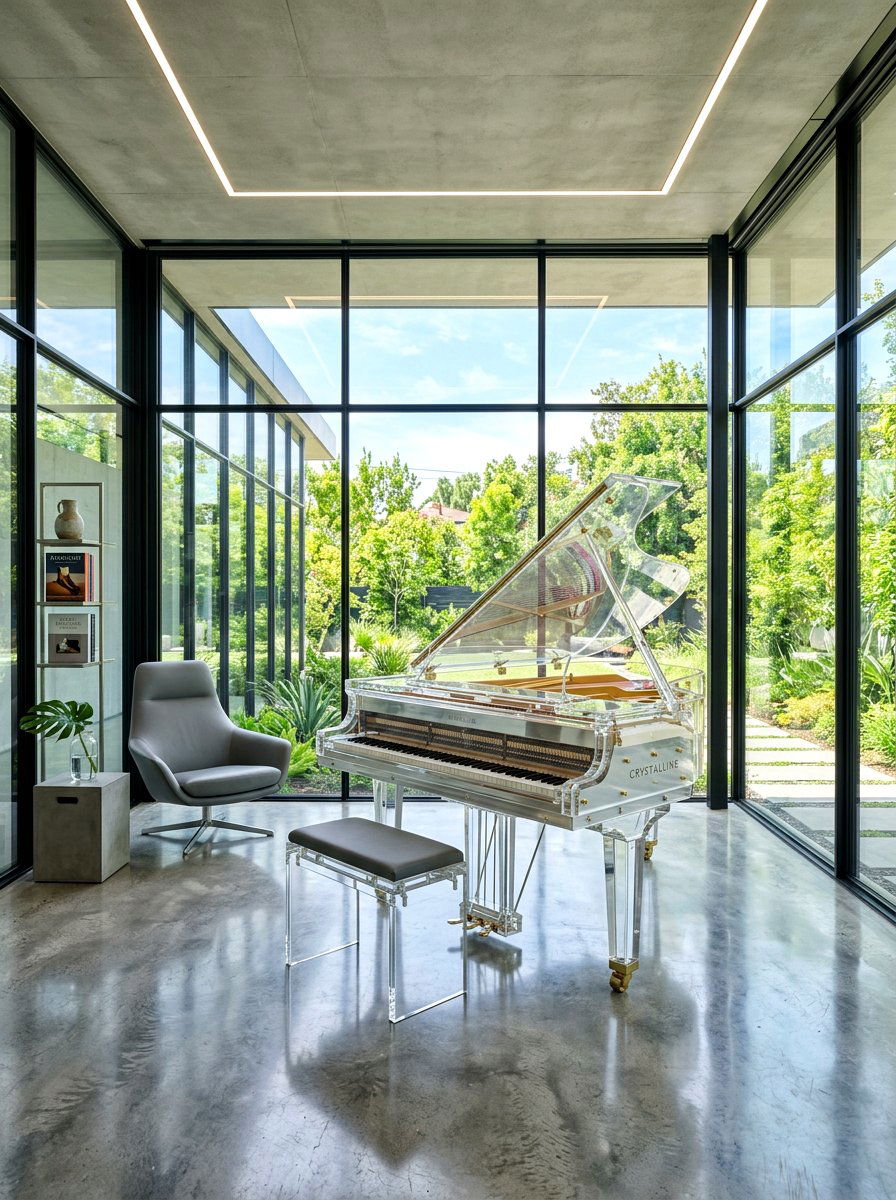
A contemporary glass piano room utilizes transparency and light to create a high-tech and futuristic environment for music. You can feature a modern acrylic or glass-bodied piano as a stunning centerpiece that appears to float within the space. Surround the instrument with minimalist furniture, polished concrete floors, and large glass walls that offer a seamless view of the landscape outside. This design choice prioritizes a clean and avant-garde aesthetic, making the piano a true work of modern engineering and art. The use of reflective surfaces enhances the sense of space and light, creating a bright and energetic atmosphere for any musical performance.
16. Rustic Farmhouse Piano Area
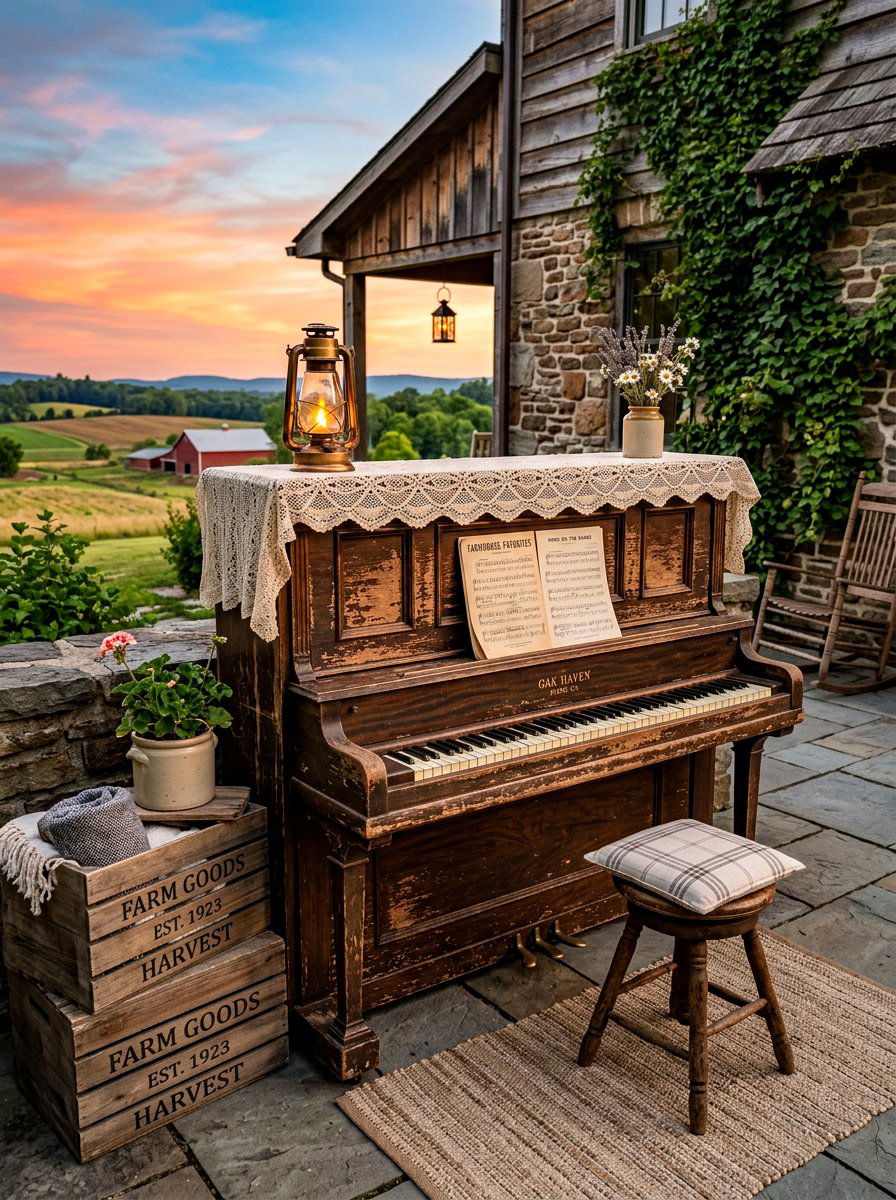
A rustic farmhouse piano area combines cozy charm with vintage elements to create a welcoming and family-friendly music space. You can use a weathered or distressed wood upright piano as the main focal point, perhaps decorated with a simple lace runner. Surround the instrument with farmhouse staples like galvanized metal buckets for storage, wooden crates, and a comfortable wicker chair for listeners. Soft, warm lighting from a lantern-style lamp or a string of fairy lights adds to the homespun and nostalgic feel of the corner. This style is perfect for creating a space where music and family life naturally intersect in a warm way.
17. Vibrant Color Accent Piano
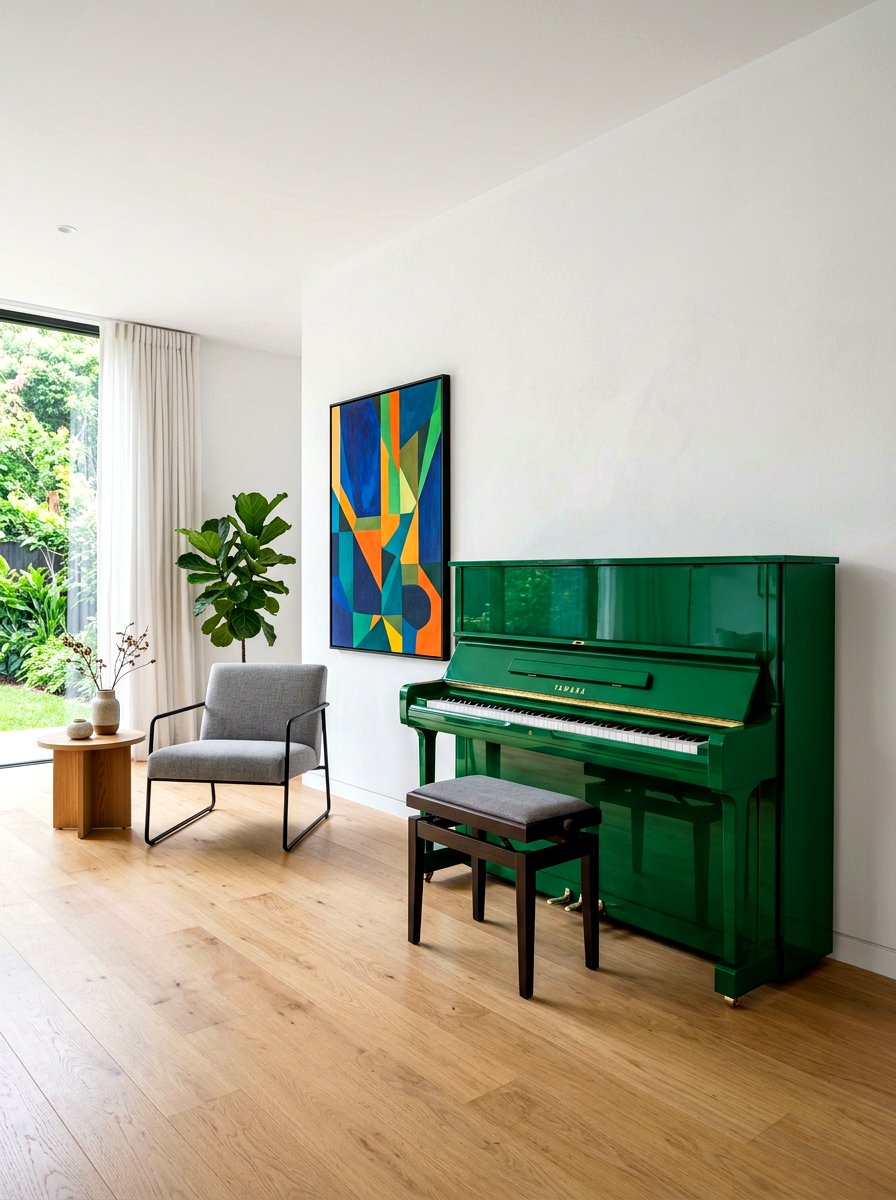
Using a vibrant color accent piano is a bold way to inject energy and personality into a neutral or modern living space. You can choose a piano in a striking shade like emerald green, deep red, or sunny yellow to create an immediate conversation piece. Keep the surrounding walls and furniture simple to let the colored instrument stand out as the undisputed star of the room. Incorporate small decor items in matching or complementary hues, such as throw pillows or artwork, to tie the look together cohesively. This playful approach to design shows off your unique style while making the act of playing music feel fun.
18. Formal Dining Room Piano
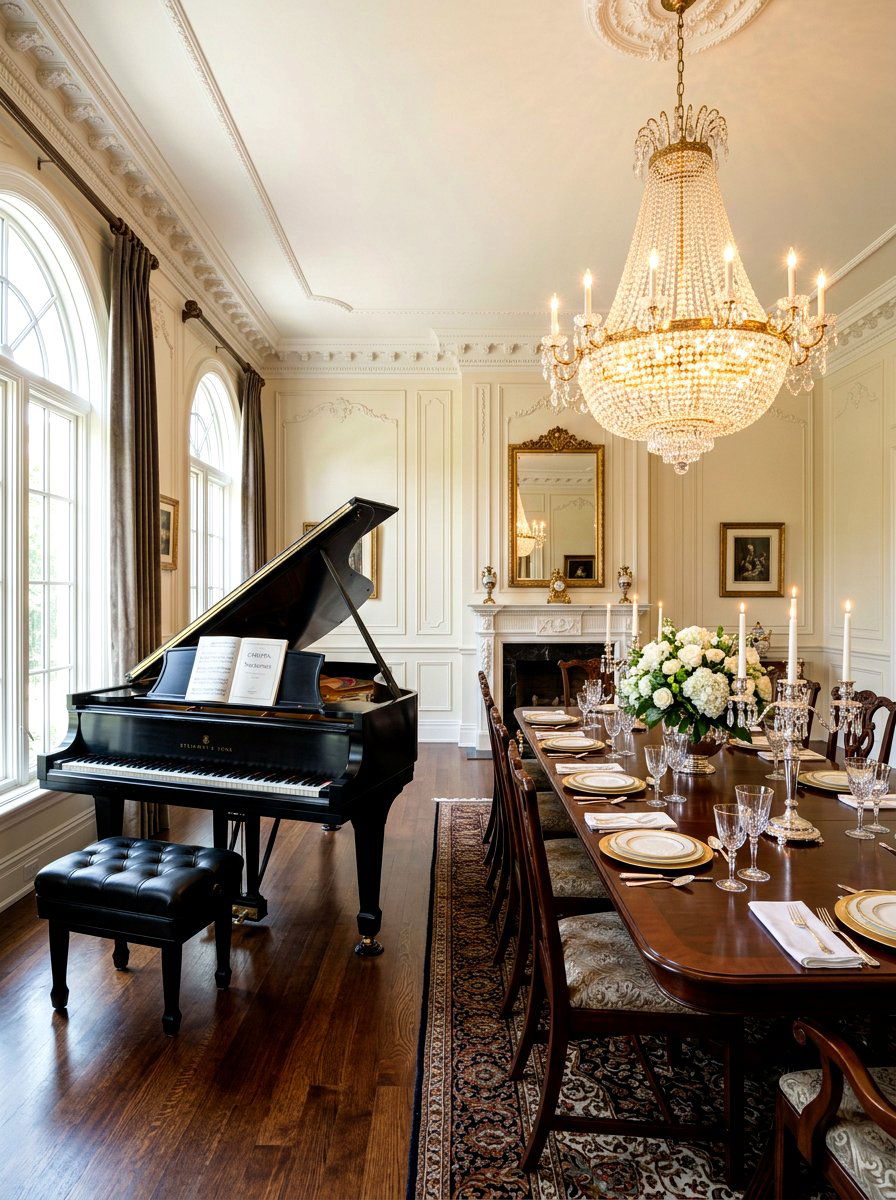
Placing a piano in a formal dining room adds a touch of elegance and provides entertainment during dinner parties and family gatherings. You can position a grand or baby grand piano in a corner or along a large wall to complement the dining set and buffet. The presence of the instrument encourages live music to become a part of your hosting experience, creating a sophisticated and memorable atmosphere for guests. Ensure there is enough space between the piano and the dining table for easy movement and comfortable seating for everyone in the room. This dual-purpose space maximizes the utility of a formal room while adding cultural richness.
19. Vertical Slat Wood Wall
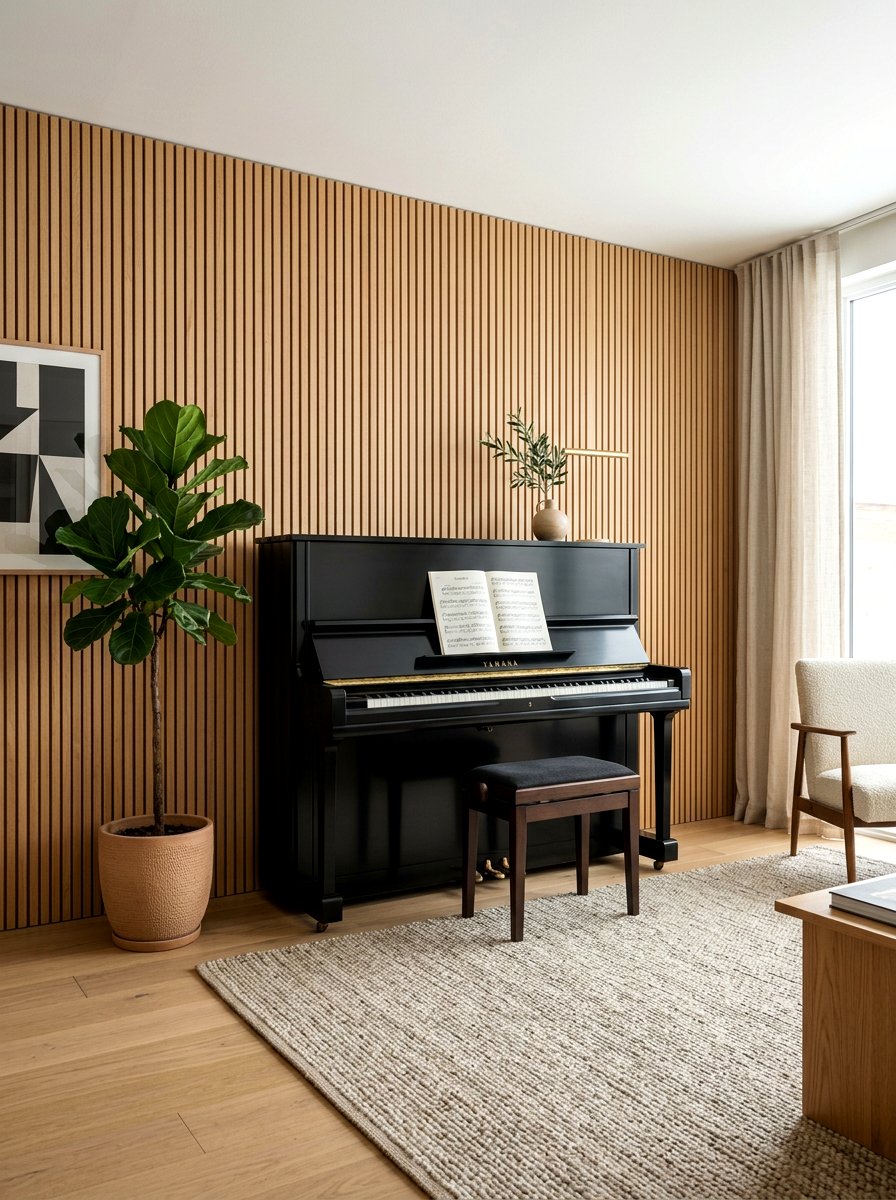
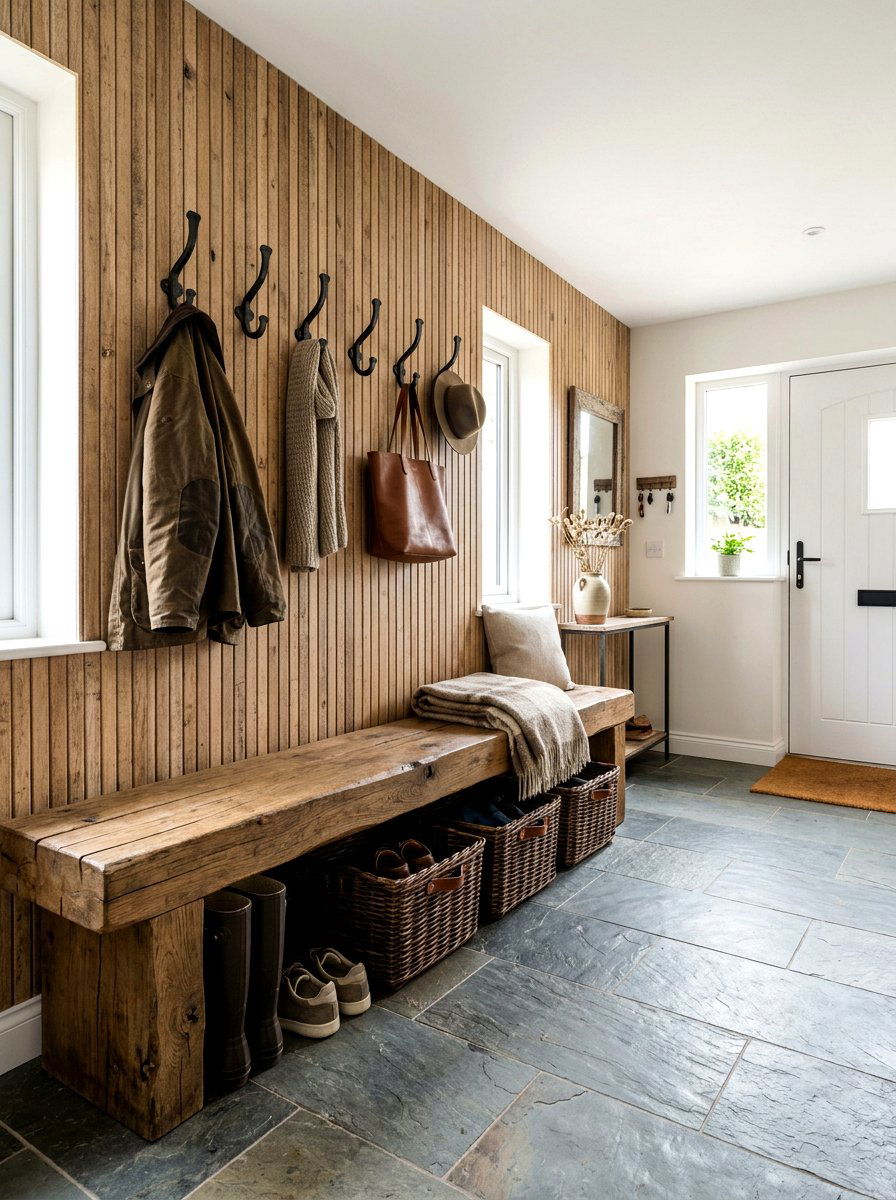
A vertical slat wood wall provides a modern and textured backdrop that enhances the visual appeal and acoustics of a piano corner. You can install slim wooden slats behind an upright piano to create a sense of height and architectural interest in a plain room. The wood adds warmth to the space and helps to diffuse sound waves, resulting in a richer and more balanced auditory experience during practice. Pair this feature with simple, contemporary furniture and soft lighting to maintain a clean and sophisticated look that feels both organic and refined. This design choice is a popular trend for creating a professional-looking home studio.
20. Monochrome Music Corner Decor
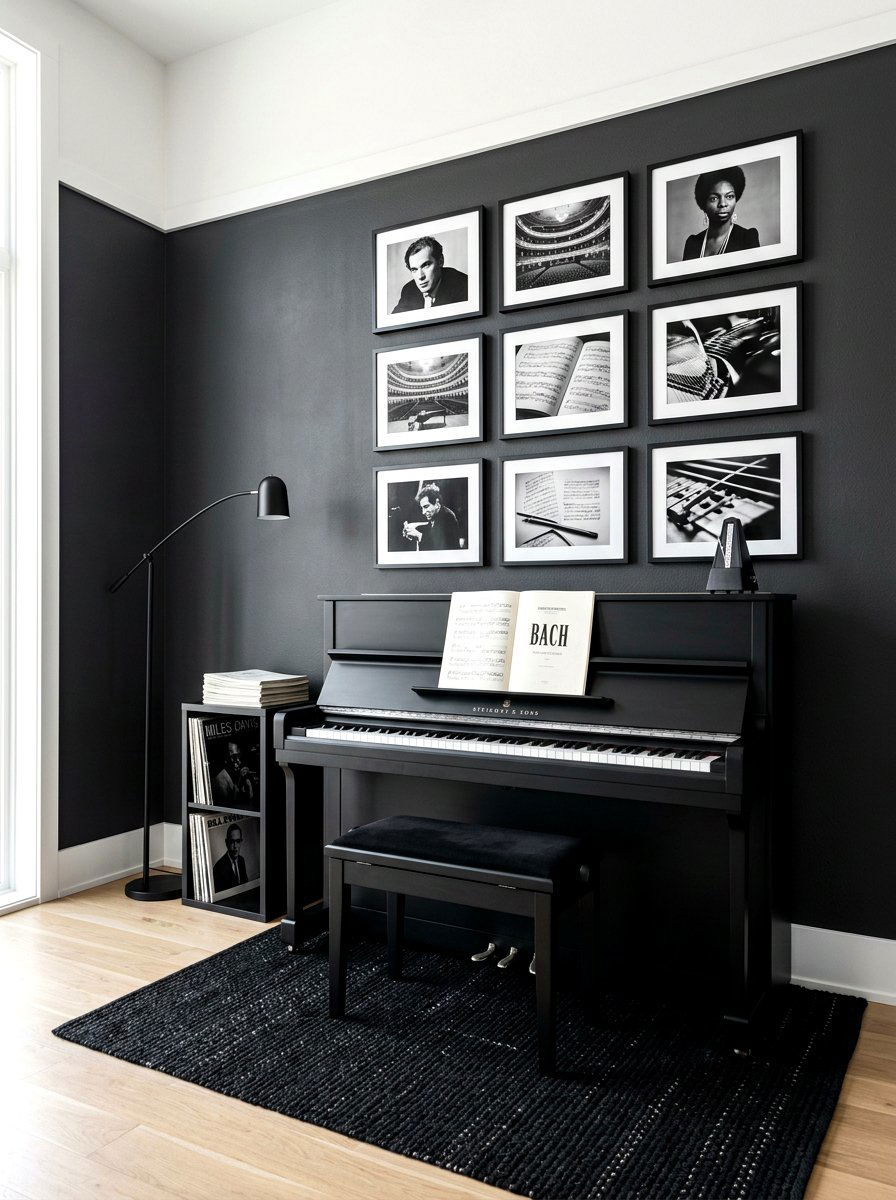
Designing a monochrome music corner uses a single color palette, such as various shades of grey or black and white, for a sleek look. You can match the piano's finish exactly to the surrounding walls and furniture to create a seamless and integrated appearance that feels very intentional. Using different textures, like a matte wall, a glossy piano, and a plush rug, prevents the space from looking flat or uninteresting. This high-contrast design is perfect for modern homes and creates a sophisticated environment where the focus remains entirely on the music being played. It offers a clean and timeless aesthetic that never goes out of style.
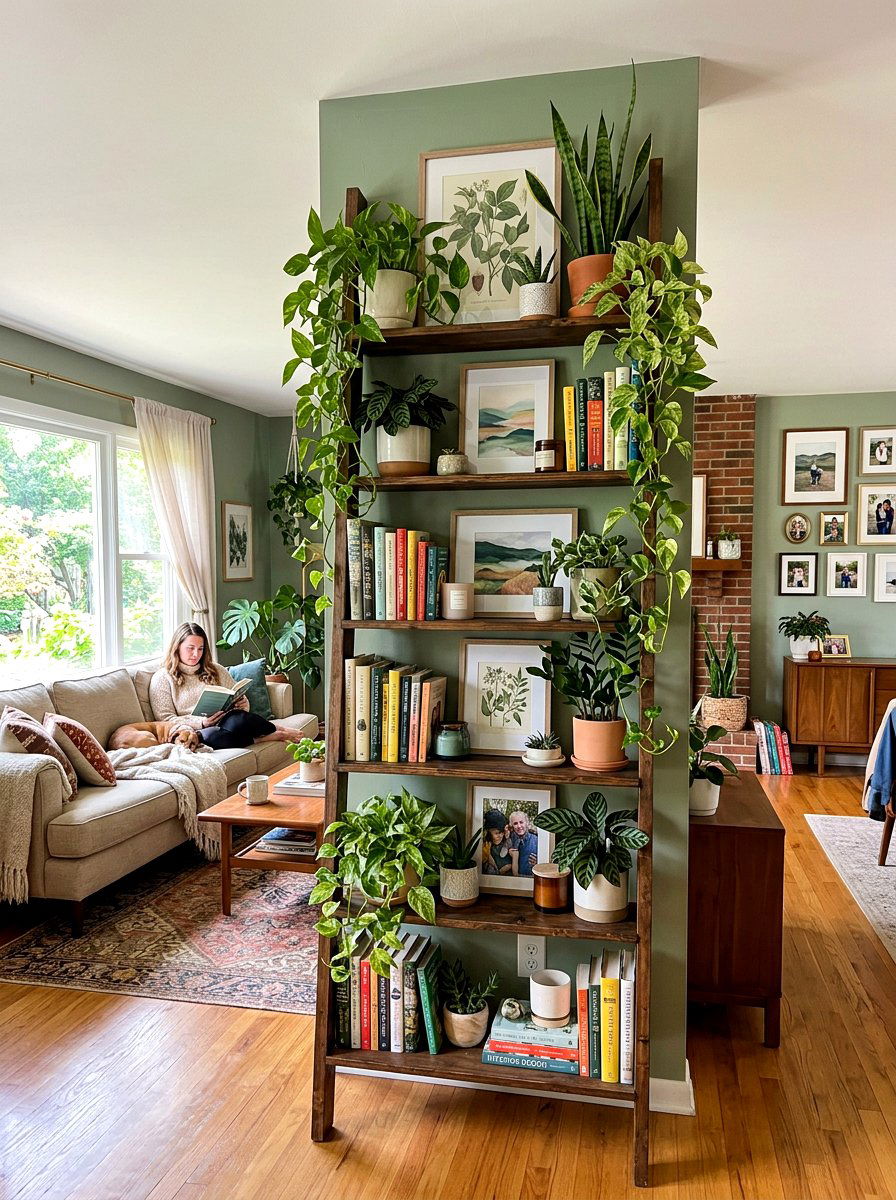
21. Indoor Plant Piano Backdrop
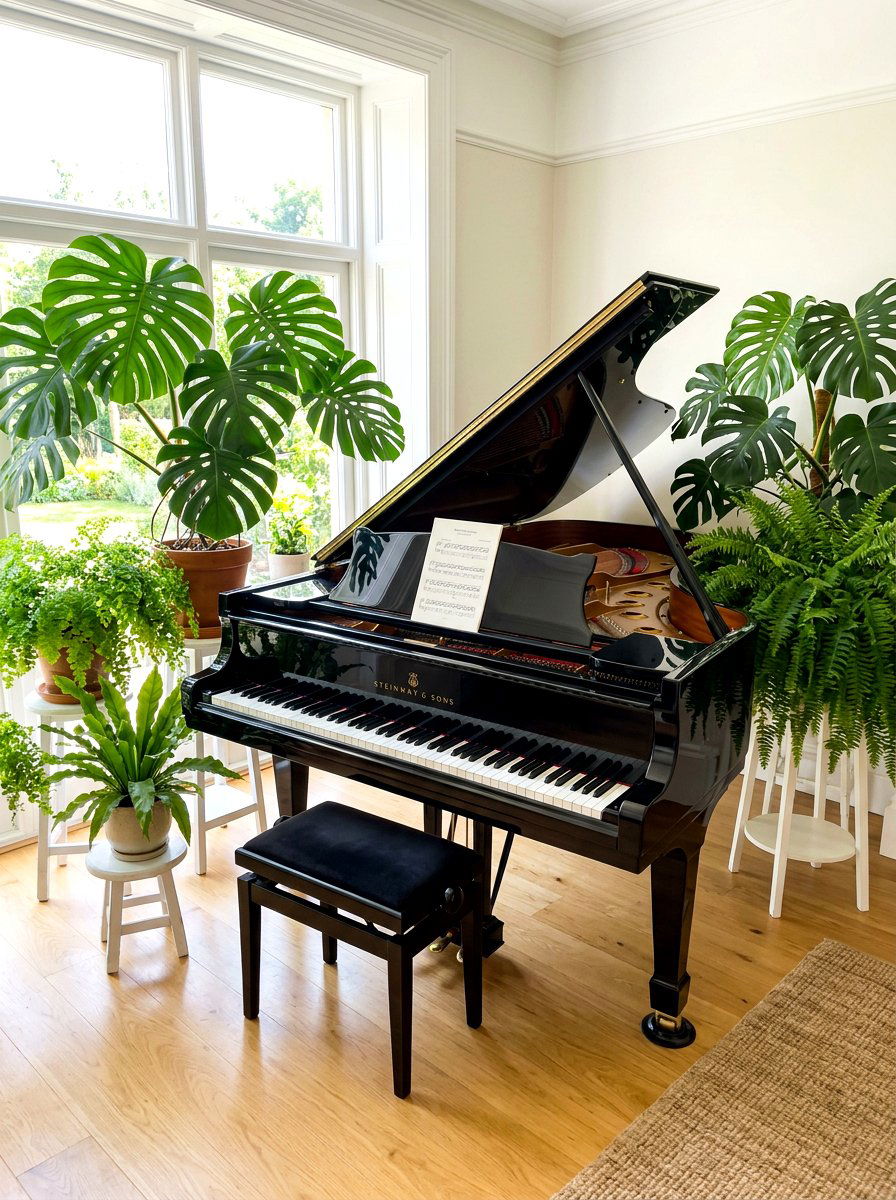
Creating an indoor plant backdrop for your piano brings a touch of nature and freshness into your daily practice routine. You can arrange a variety of potted plants, such as monsteras, ferns, and snake plants, on floating shelves or stands around the instrument. The greenery provides a beautiful contrast to the wood or ebony finish of the piano while helping to purify the air in the room. Incorporating natural materials like terracotta pots and woven baskets enhances the organic and biophilic feel of the music corner. This lush environment creates a soothing and inspired space that can boost your mood and creativity while you play.
22. Mirrored Wall Piano Space
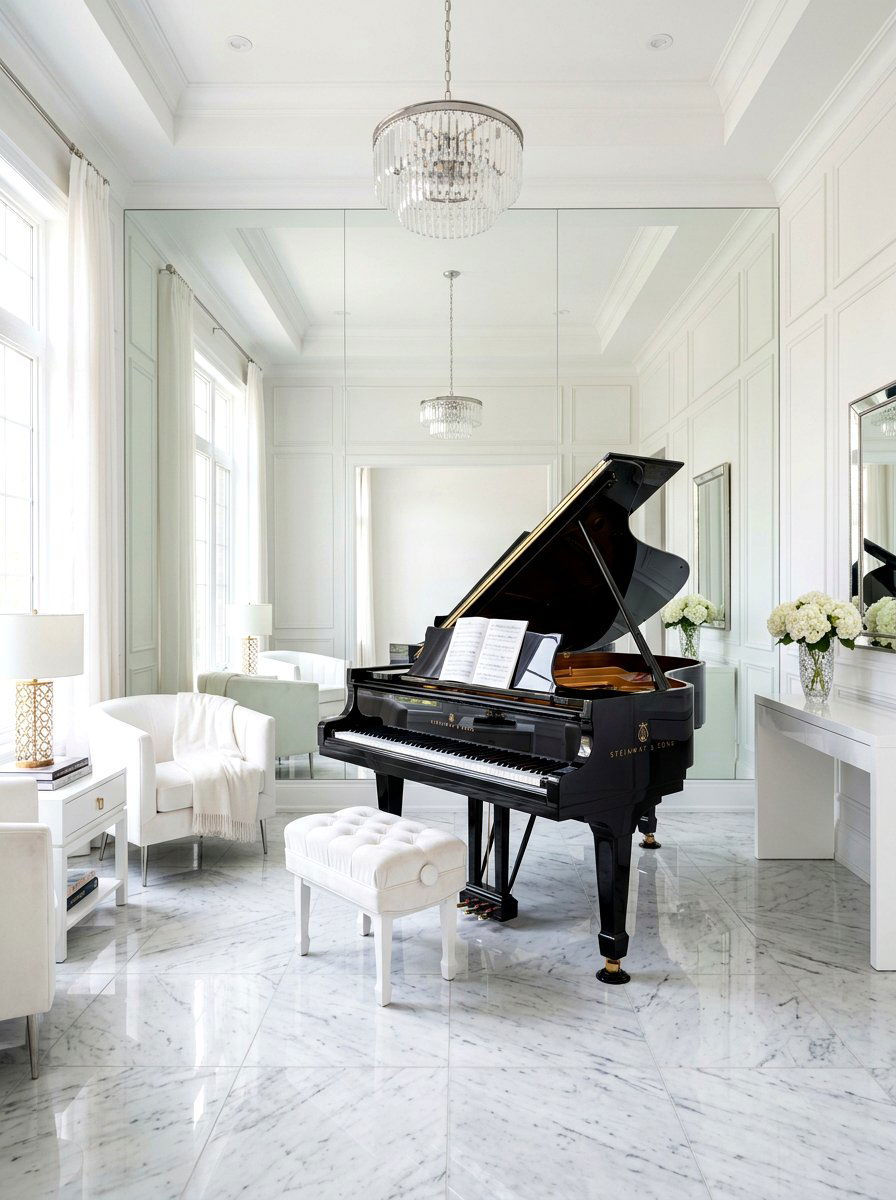
A mirrored wall behind a piano is a brilliant design trick to make a small music corner feel much larger and more bright. The reflection doubles the visual presence of the instrument and bounces natural light throughout the room, creating an airy and open atmosphere. You can use a large framed floor mirror leaning against the wall or install custom mirrored panels for a more integrated and sleek appearance. This setup is particularly effective for grand pianos, as it allows the beautiful internal mechanics and the lid to be seen from multiple angles. It adds a touch of glamour and sophistication to any interior music space.
23. Floating Shelf Music Storage
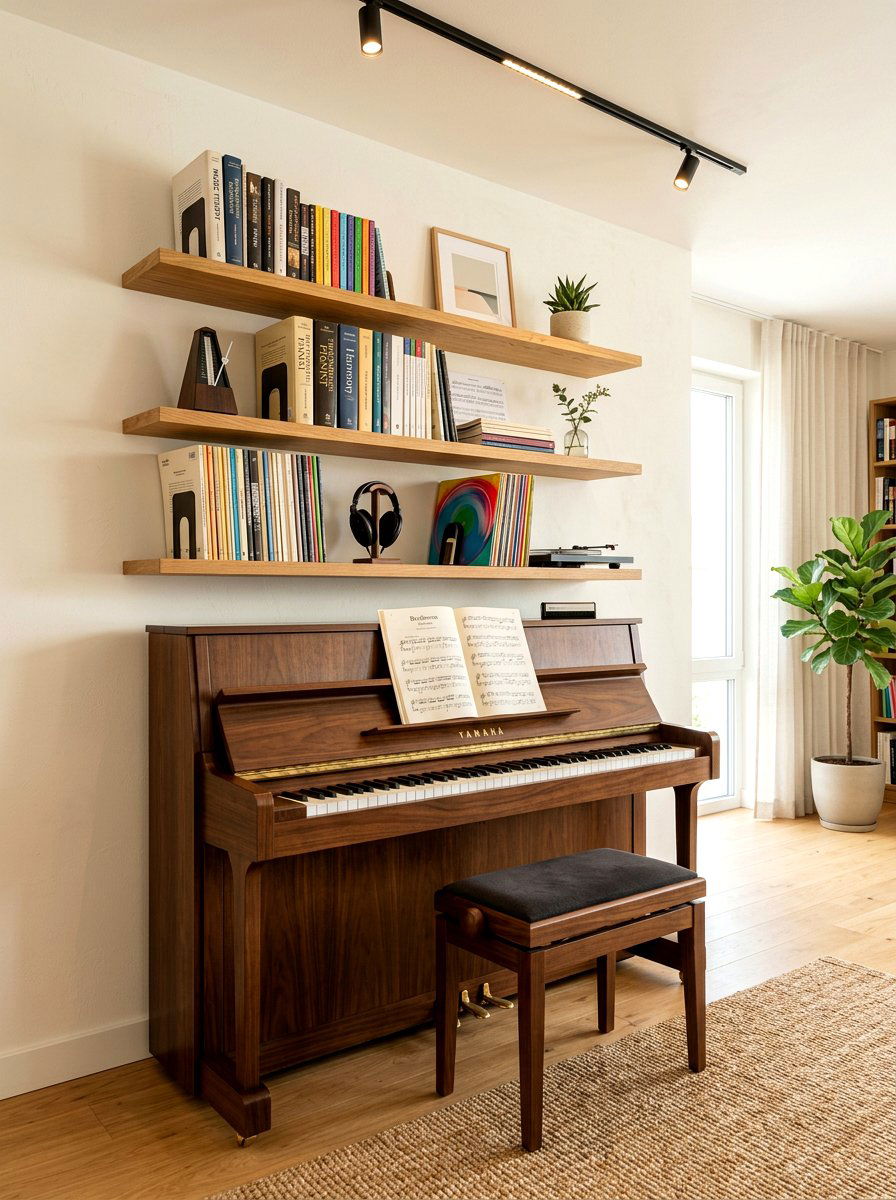
Using floating shelves for music storage is a modern and space-saving solution that keeps your piano corner organized and visually light. You can install several shelves above an upright piano to hold sheet music books, metronomes, and small decorative items like busts of famous composers. This arrangement keeps your essential tools within easy reach while keeping the top of the piano clear for a cleaner and more professional look. Choose shelves that match the finish of the piano or the wall color to create a cohesive and streamlined aesthetic in your practice area. This functional decor helps maintain a clutter-free and productive environment for learning.
24. Statement Wallpaper Piano Wall
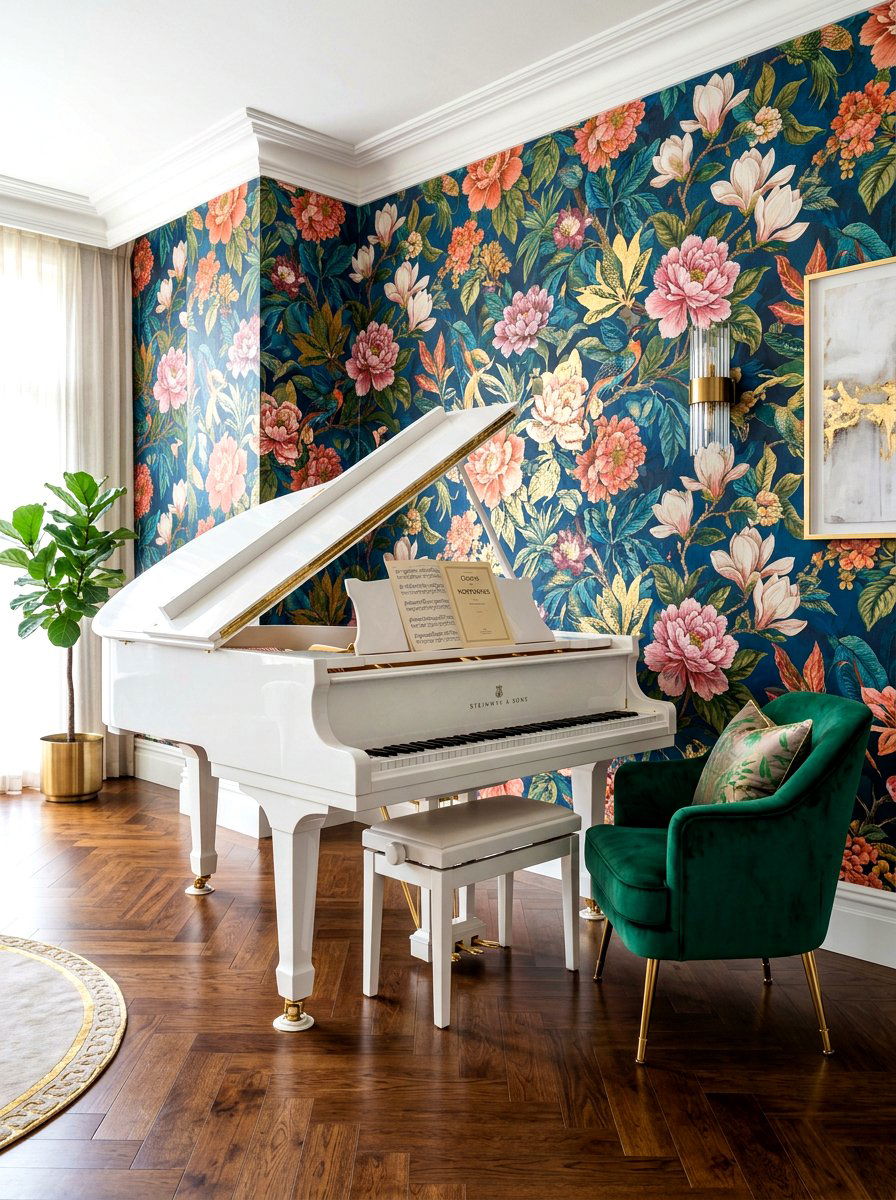
Applying statement wallpaper to the wall behind your piano is a quick way to define the music zone and add a huge personality. You can choose a bold floral print, a subtle geometric pattern, or even a custom mural to create a stunning backdrop for your instrument. The wallpaper acts as a visual anchor, making the piano corner feel like a distinct and special part of the larger living area. Ensure the colors in the pattern complement the piano's finish and the other decor in the room to maintain a sense of balance. This design choice transforms a simple practice spot into a beautiful and artistic destination.
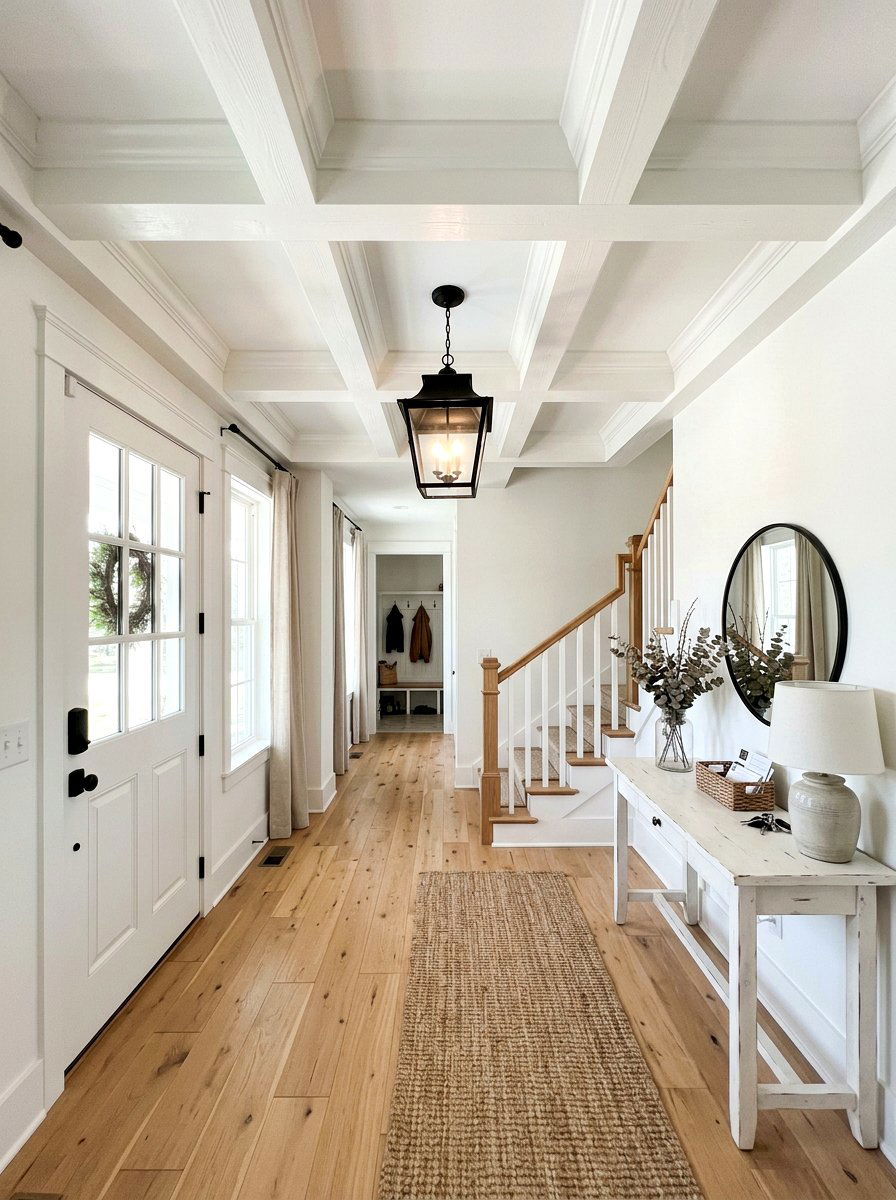
25. Cozy Rug Piano Niche
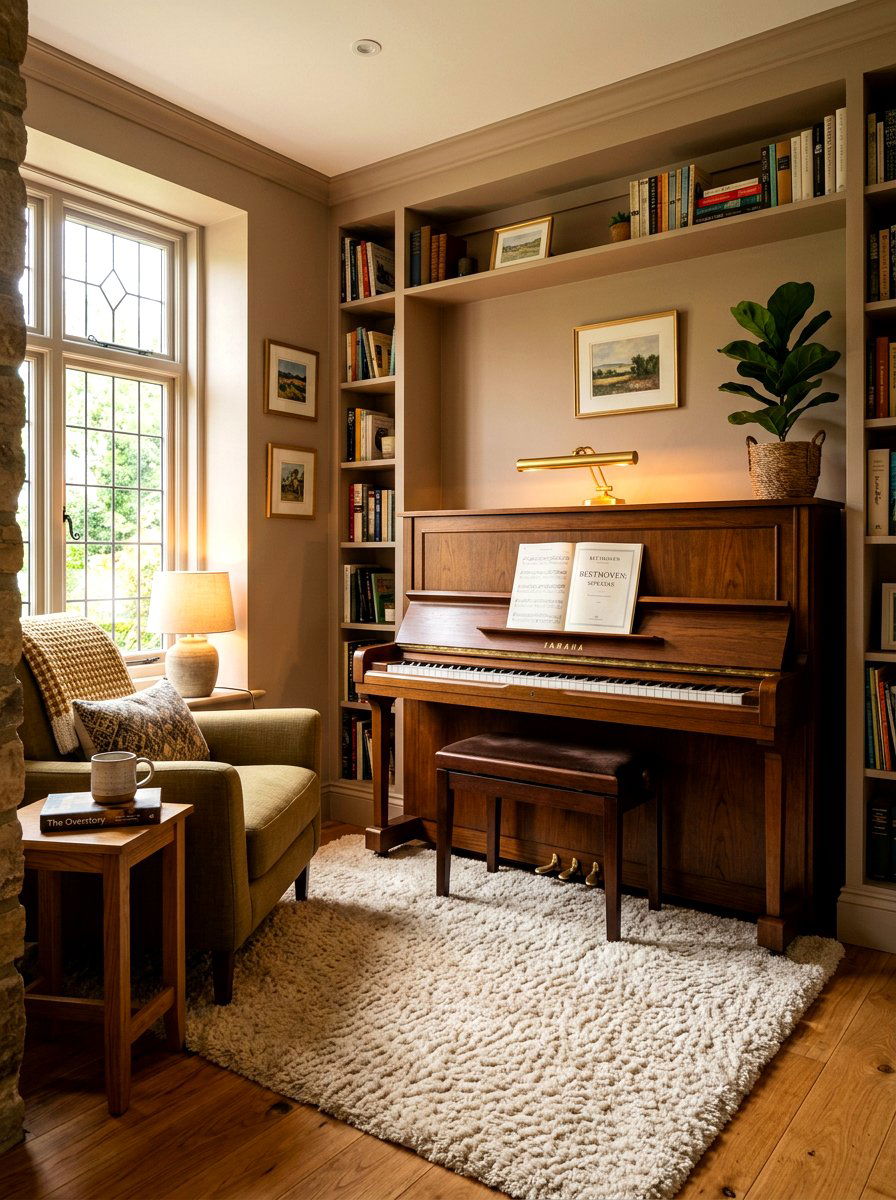
Placing a cozy rug underneath your piano is an essential step in creating a comfortable and acoustically sound music niche in your home. A high-pile or plush rug adds a layer of warmth and softness to the area, making it a more inviting place to spend time. Beyond aesthetics, the rug serves a functional purpose by absorbing excess sound and preventing the piano from sliding on hardwood or tile floors. You should choose a rug size that accommodates both the piano and the bench to fully define the boundaries of the musical zone. This simple addition makes the space feel grounded and complete while improving your playing experience.
26. Kids Music Room Corner
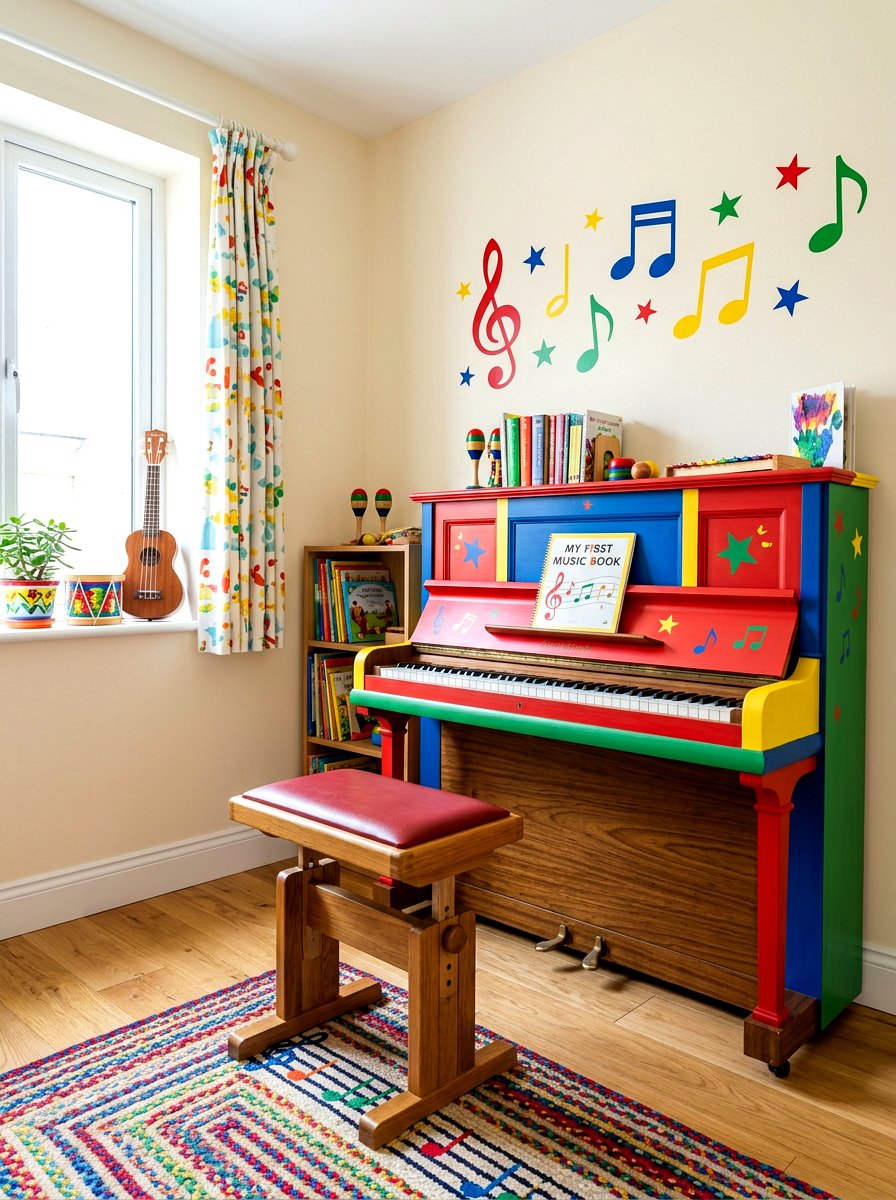
Designing a piano corner specifically for kids involves using bright colors, durable materials, and age-appropriate decor to make learning music fun and engaging. You can include a small bookshelf for colorful theory books, a height-adjustable bench, and fun wall decals with musical notes or whimsical characters. Keeping the area organized with labeled bins for accessories helps children take ownership of their practice space and encourages them to keep it tidy. Soft flooring, like foam mats or a colorful rug, provides a safe and comfortable environment for young musicians to explore their creativity. This dedicated space shows children that their musical journey is valued and important.
27. Art Deco Luxury Piano
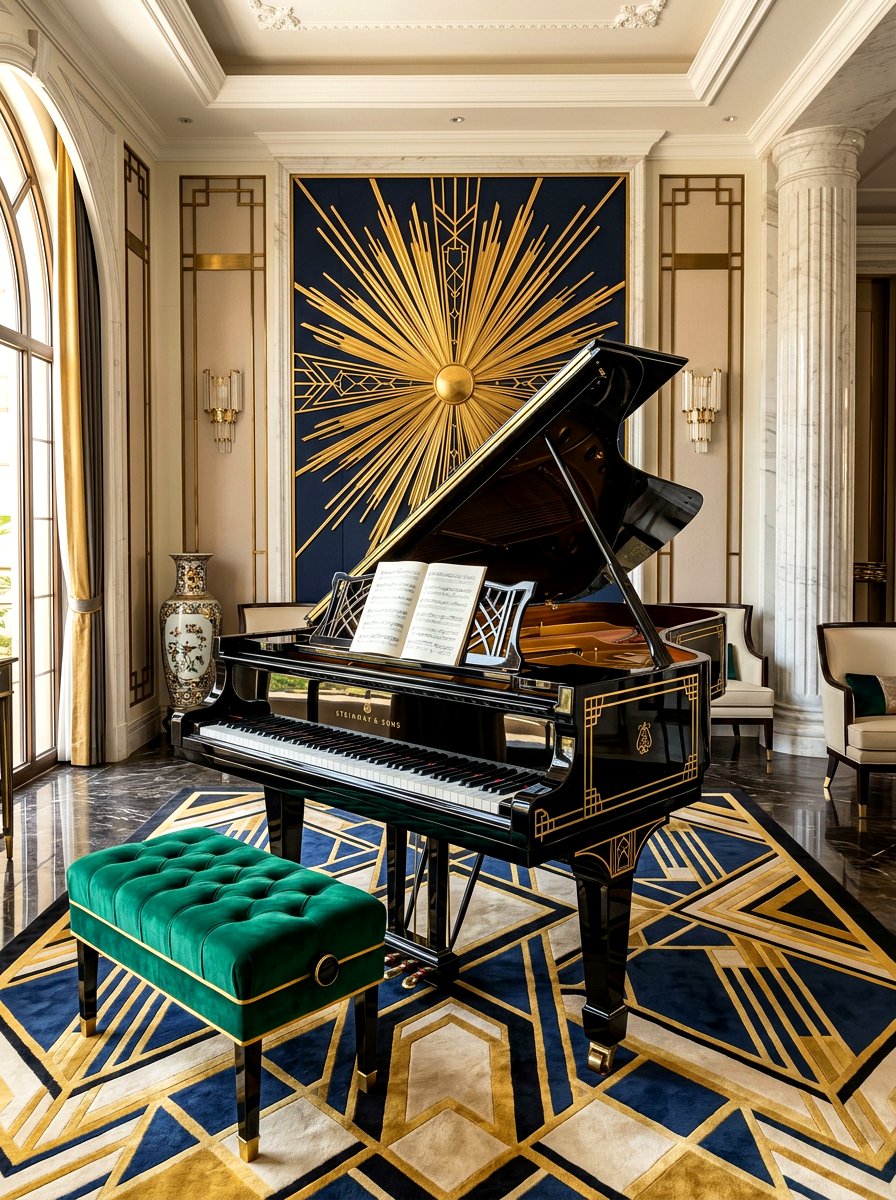
An Art Deco luxury piano setup features rich materials, bold geometric shapes, and a sense of unapologetic glamour that elevates any room's design. You can pair a high-gloss black piano with gold-finished lamps, mirrored furniture, and velvet upholstery for a truly opulent and sophisticated look. Incorporate symmetrical patterns and metallic accents through wall art or decorative objects to capture the essence of the 1920s jazz era style. This formal and high-contrast design is perfect for creating a dramatic performance space that feels like a private club. It turns every practice session into a grand event and makes the piano a true symbol of luxury and taste.
28. Sunroom Piano Practice Area
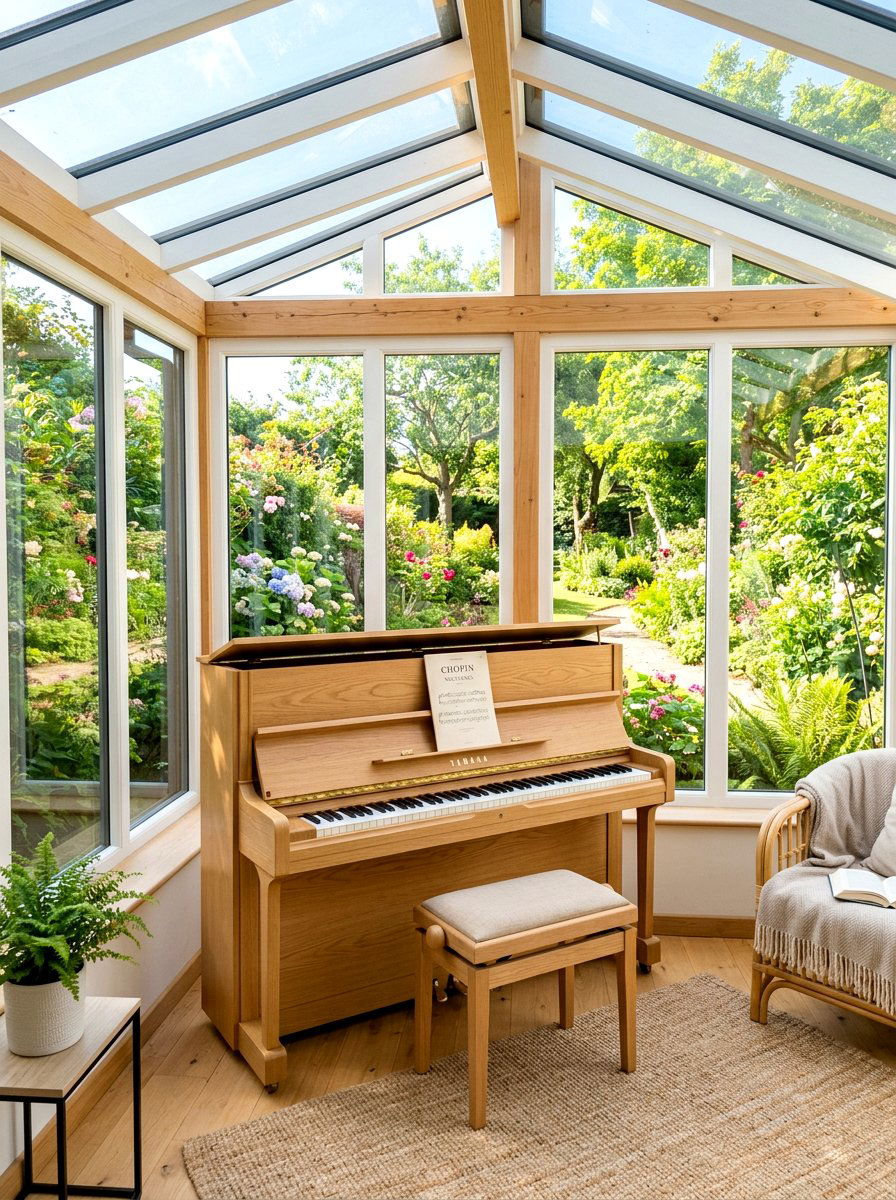
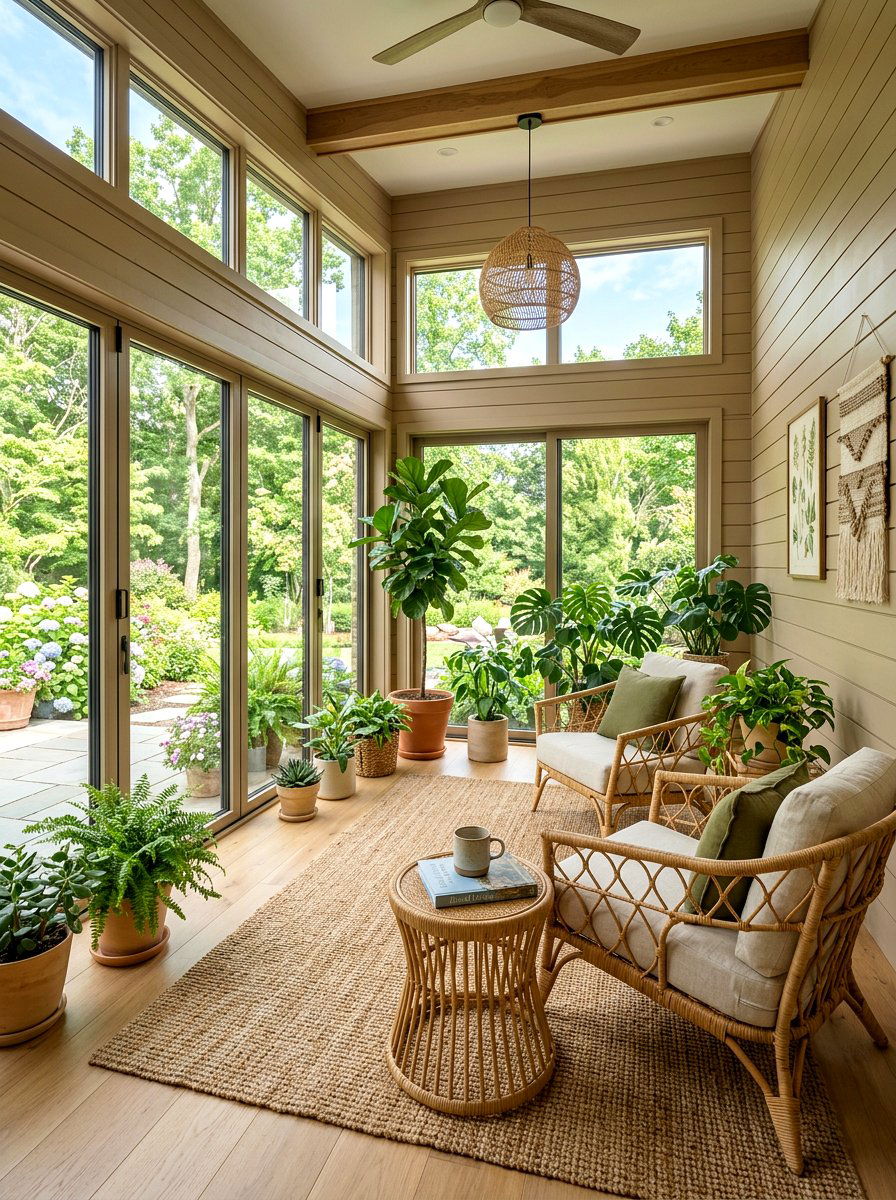
Setting up a piano in a sunroom allows you to practice in a space flooded with natural light and surrounded by views of the garden. The bright and open environment can significantly boost your mood and provide a sense of peace that is perfect for artistic expression and learning. You should ensure the sunroom is well-insulated and has climate control to protect the delicate wood and internal components of the instrument from humidity. Using light-colored furniture and natural decor, like wicker and linen, complements the airy feel of the room while keeping the focus on the music. This tranquil setting is an ideal escape for any pianist.
29. Hidden Lighting Piano Alcove
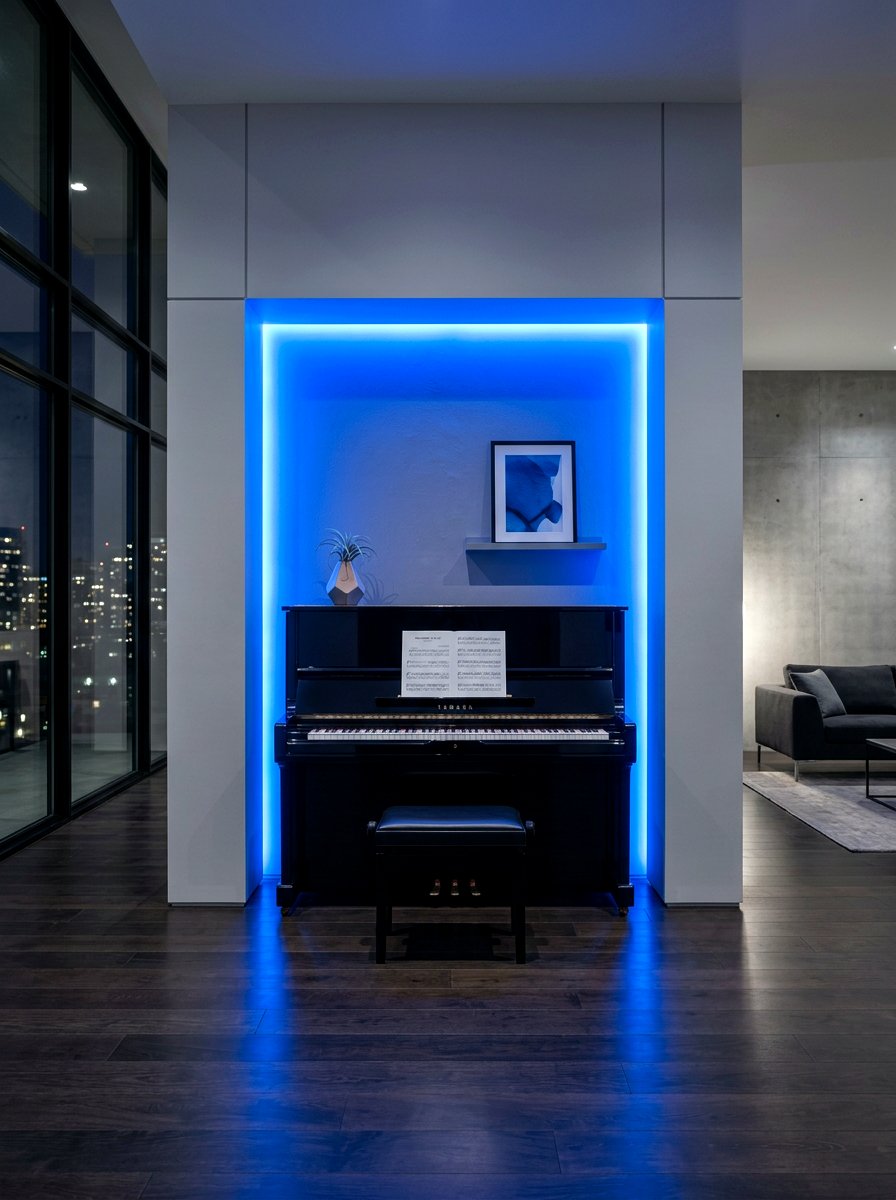
Using hidden lighting in a piano alcove creates a magical and modern atmosphere that highlights the instrument without visible fixtures or bulky lamps. You can install LED light strips along the underside of shelves or behind the piano to create a soft, ethereal glow that illuminates the keys. This technique adds depth to the space and can be customized with different colors or brightness levels to suit your mood or the music. The lack of visible cords and lamps keeps the area looking clean and futuristic, focusing all the attention on the beauty of the piano itself. It is a perfect solution for sleek, contemporary interiors.
30. Retro Style Keyboard Station
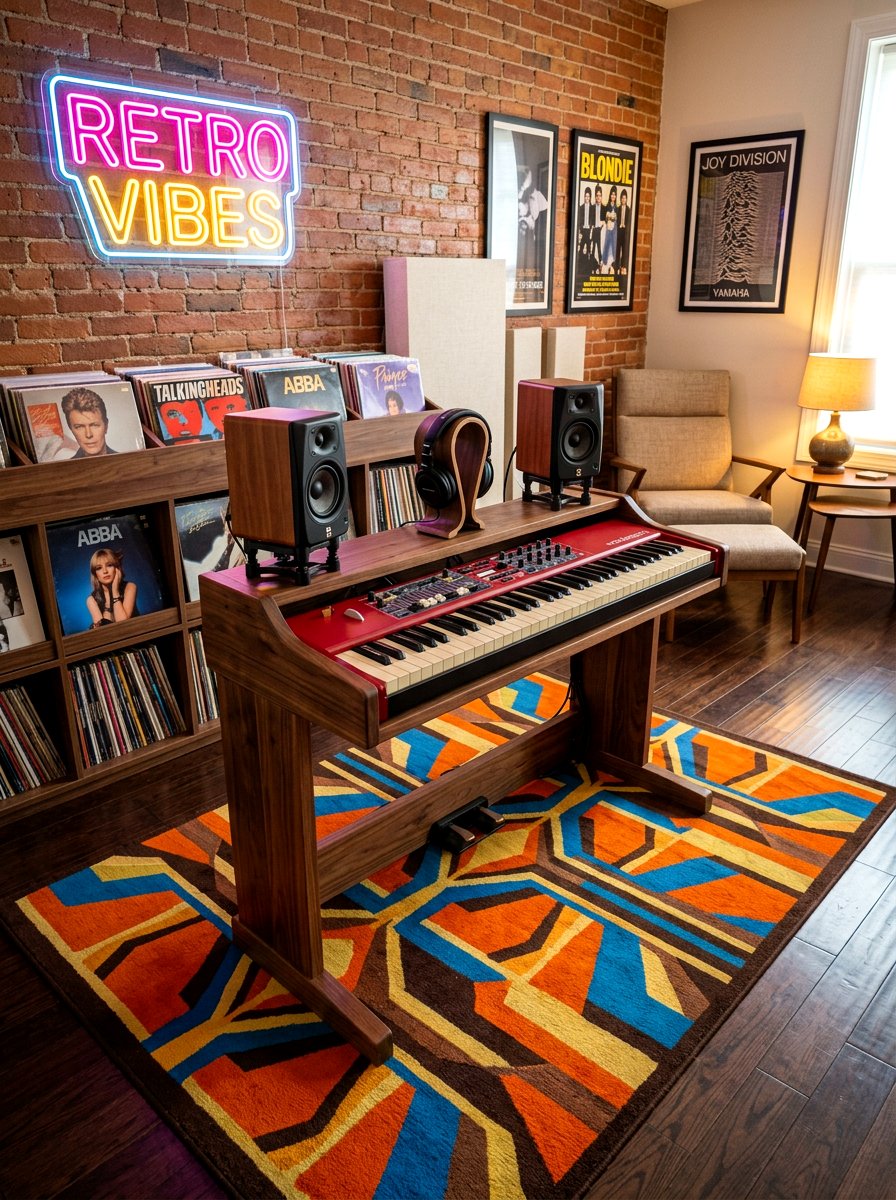
A retro style keyboard station pays homage to the vintage synthesizers and electric pianos of the past with a cool and nostalgic aesthetic. You can use a mid-century desk or a custom wooden stand to house a modern digital keyboard, giving it a more permanent and stylish feel. Decorate the surrounding wall with vintage records, old-school headphones, and neon signs to complete the throwback vibe of the music corner. This setup is perfect for hobbyists or producers who want a creative space that feels distinct from the rest of their modern home. It combines the convenience of modern technology with the timeless charm of classic music history.
Conclusion:
Designing the perfect piano corner is a rewarding journey that blends your love for music with your personal style to create a unique space. By considering factors like lighting, acoustics, and furniture placement, you can transform any small nook or large room into an inspiring sanctuary for practice. Whether you prefer the sleek lines of a modern upright or the grand elegance of a classical baby grand, these ideas provide a foundation for your design. Ultimately, the best music corner is one that reflects your personality and makes you feel excited to sit down and play every single day. Your home will surely benefit from the beauty and harmony that a dedicated piano space brings to your daily life.

Related posts: