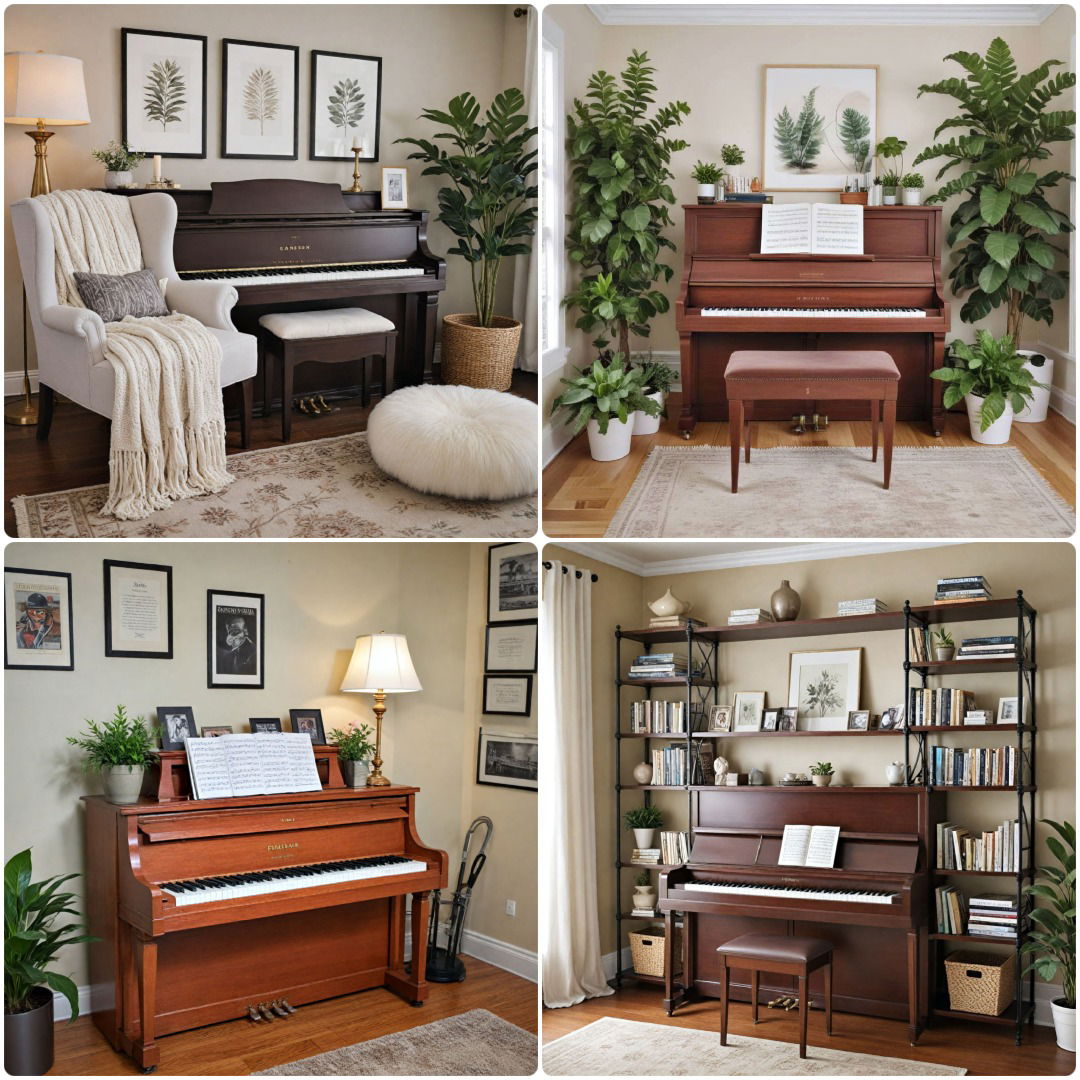
Creating a dedicated space for a piano involves much more than simply finding an empty corner in your house. It is about crafting an atmosphere that inspires creativity and honors the timeless elegance of the instrument itself. Whether you own a grand piano that demands center stage or a compact upright that fits snugly into a cozy nook, the surrounding decor plays a vital role in your musical journey. A well-designed piano room harmonizes functional acoustics with stunning visual appeal, turning a practice session into a truly immersive experience for the performer and any listeners. By carefully considering lighting, furniture placement, and architectural details, you can elevate your home into a sanctuary where every single note resonates with style and purpose.
1. Modern Living Room Piano
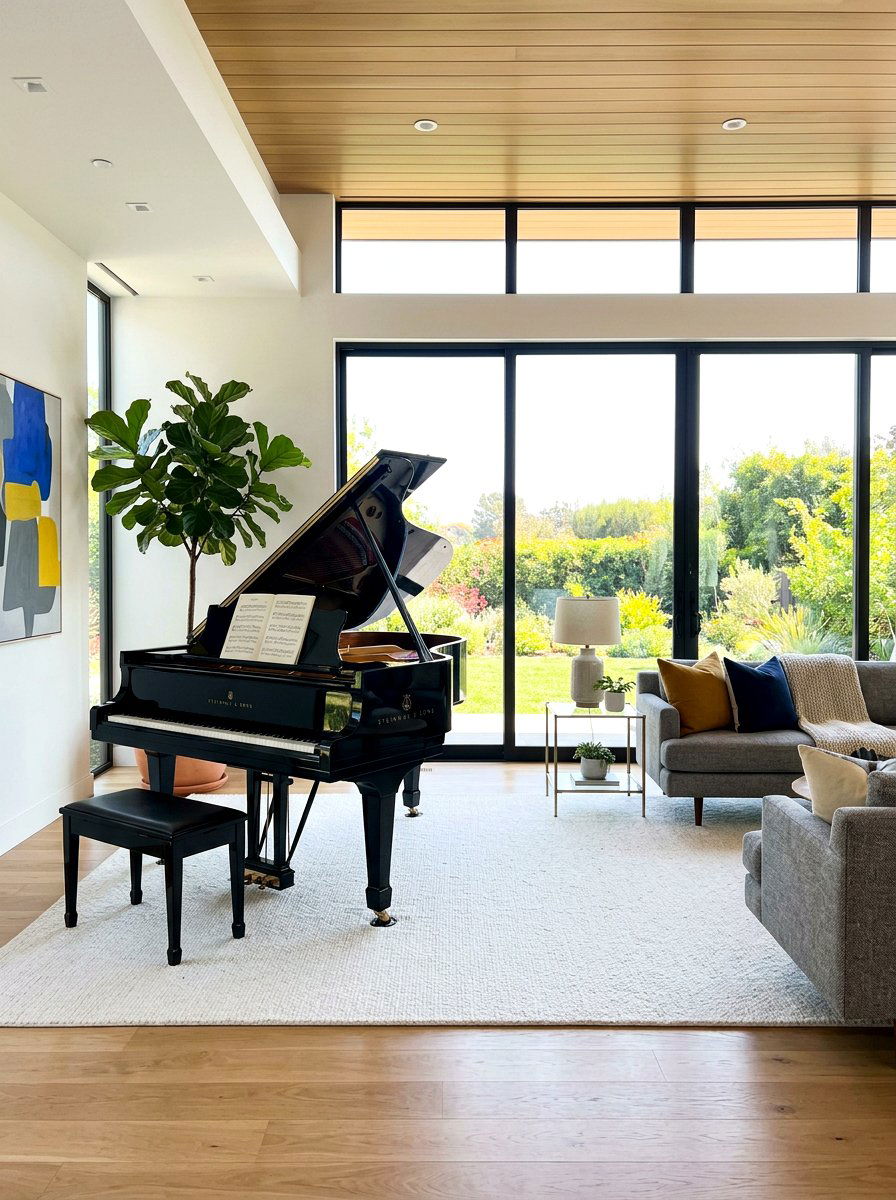
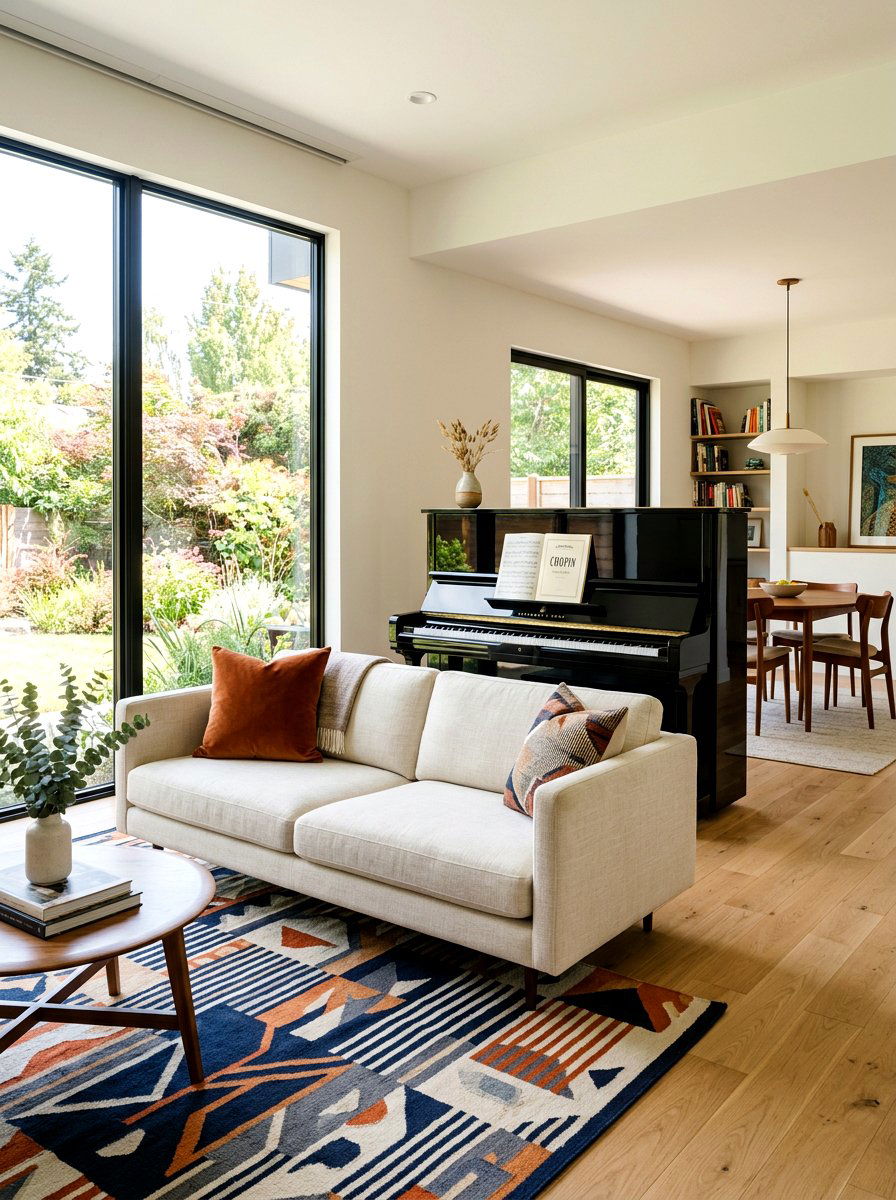
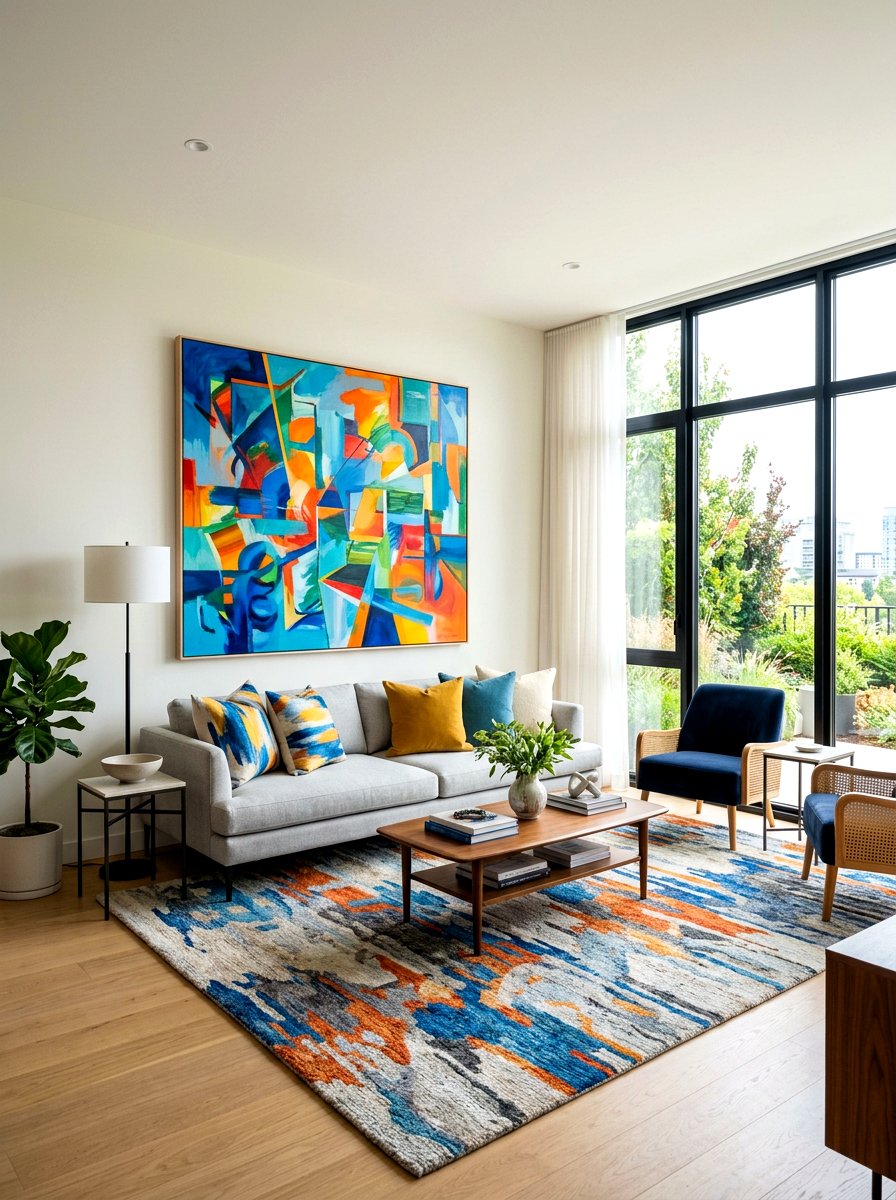
Integrating a piano into a modern living room requires a balance between sleek aesthetics and functional performance. This design typically features a clean, open layout where a polished black grand piano serves as a striking focal point against neutral walls. You can enhance the space by adding a large, low-pile area rug underneath the instrument to help dampen echoes and define the musical zone. Large floor-to-ceiling windows often provide natural light, making the polished wood gleam throughout the day. Minimalist furniture, such as a low-profile sofa and slim metal coffee tables, ensures the room feels spacious rather than cluttered. This approach makes music the heart of your daily living and artistic expression.
2. Grand Piano Library
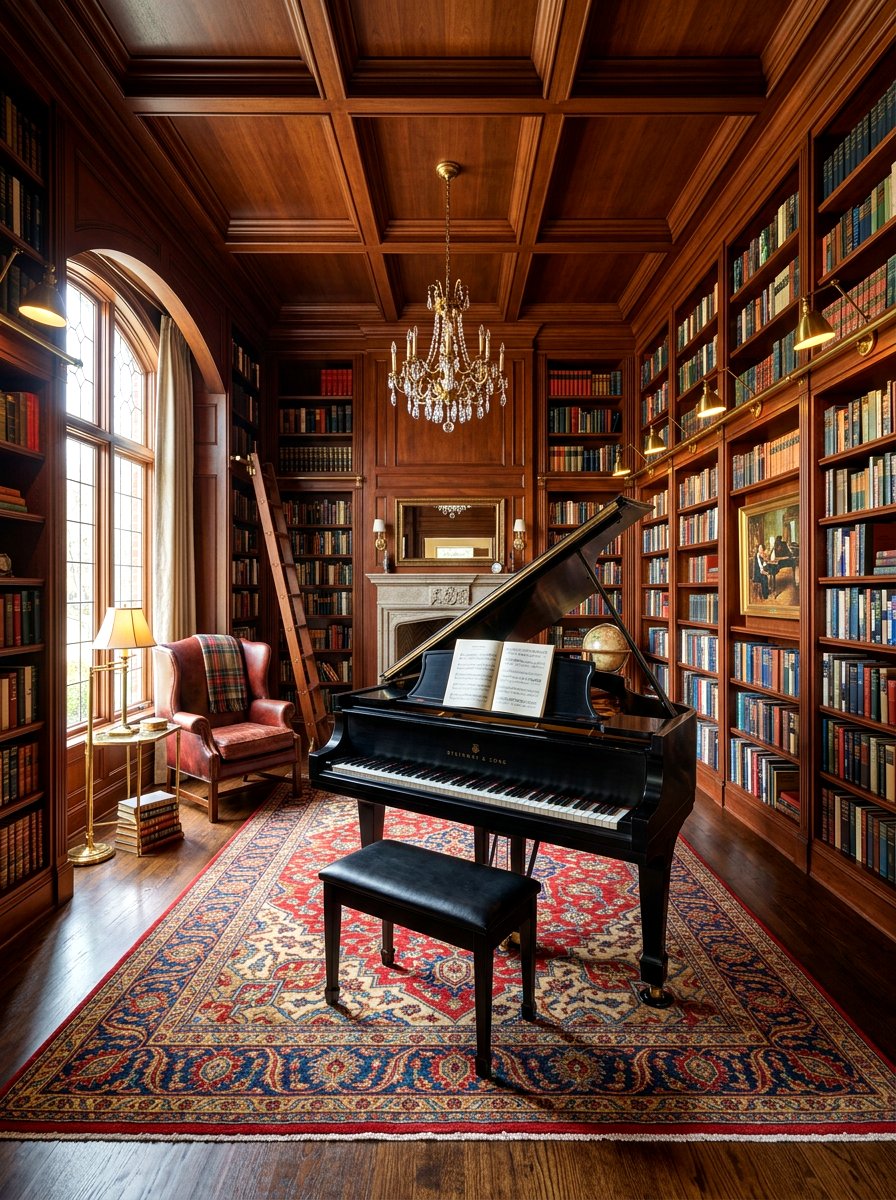
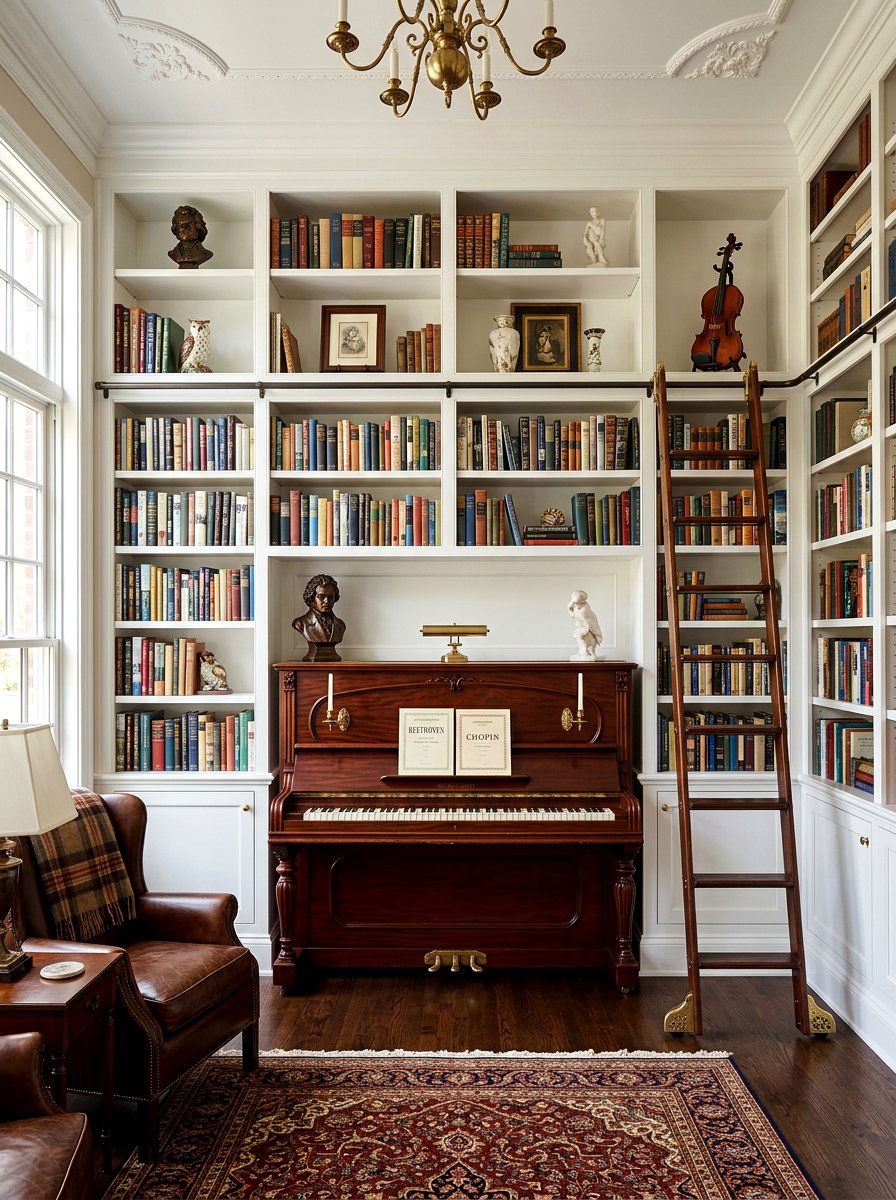
A grand piano library combines the intellectual charm of a reading room with the artistic soul of a music studio. In this setup, the piano sits majestically in the center of a room lined with floor-to-ceiling bookshelves. The books act as natural acoustic diffusers, creating a warm and rich sound environment that is perfect for classical compositions. Consider adding a comfortable leather armchair nearby for listeners to relax while you play. Deep wood tones on the flooring and shelving complement the traditional silhouette of the instrument. Soft, layered lighting from a brass floor lamp or a delicate chandelier adds a touch of sophisticated drama to the entire space.
3. Small Corner Piano
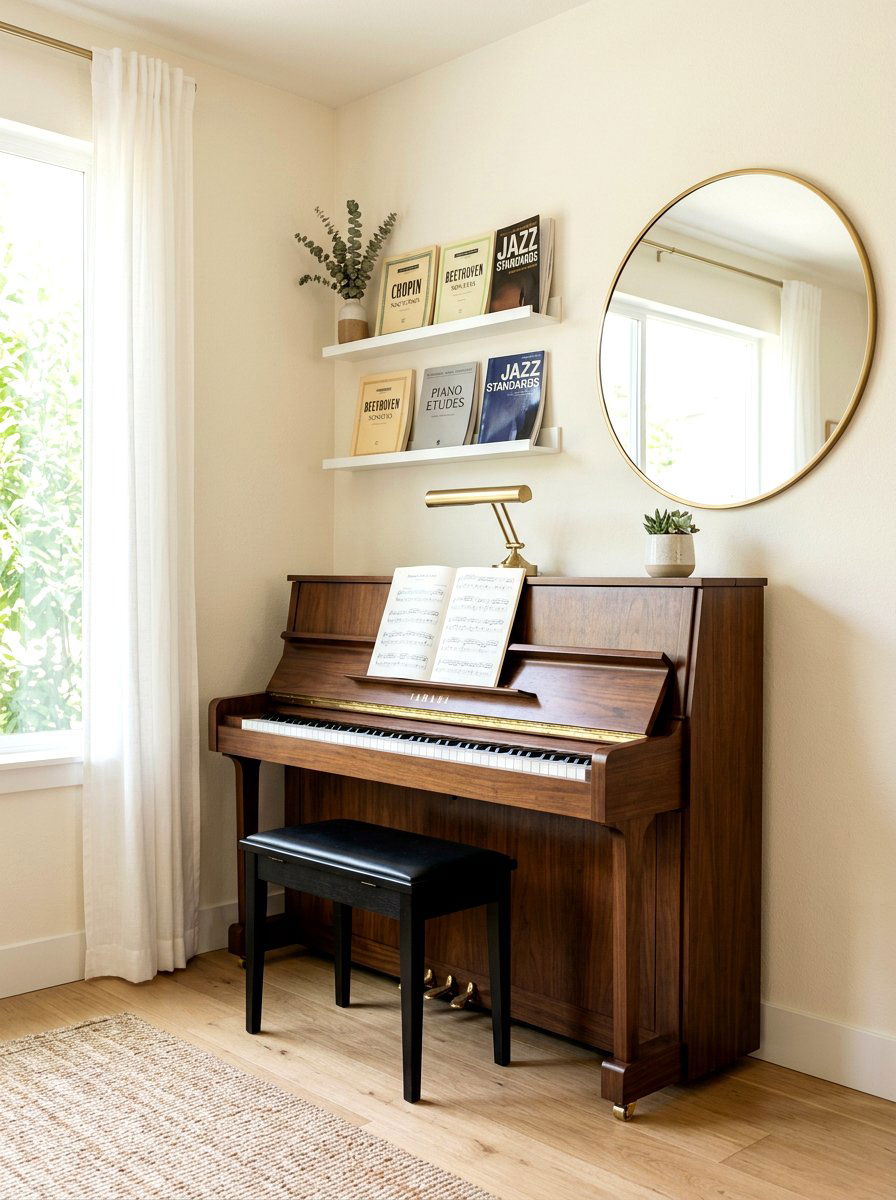
How do you fit a musical masterpiece into a tiny apartment or a compact spare room? A small corner piano setup focuses on maximizing vertical space and keeping the floor plan efficient. By placing an upright piano against an interior wall, you save valuable square footage while providing a cozy practice area. Use floating shelves above the piano to store sheet music and small decorative items without adding bulk to the room. A slim, cushioned bench that can slide underneath the keyboard when not in use helps keep the walkway clear. Light-colored walls and a wall-mounted mirror can also make the small corner feel much larger and brighter.
4. Sunroom Music Studio
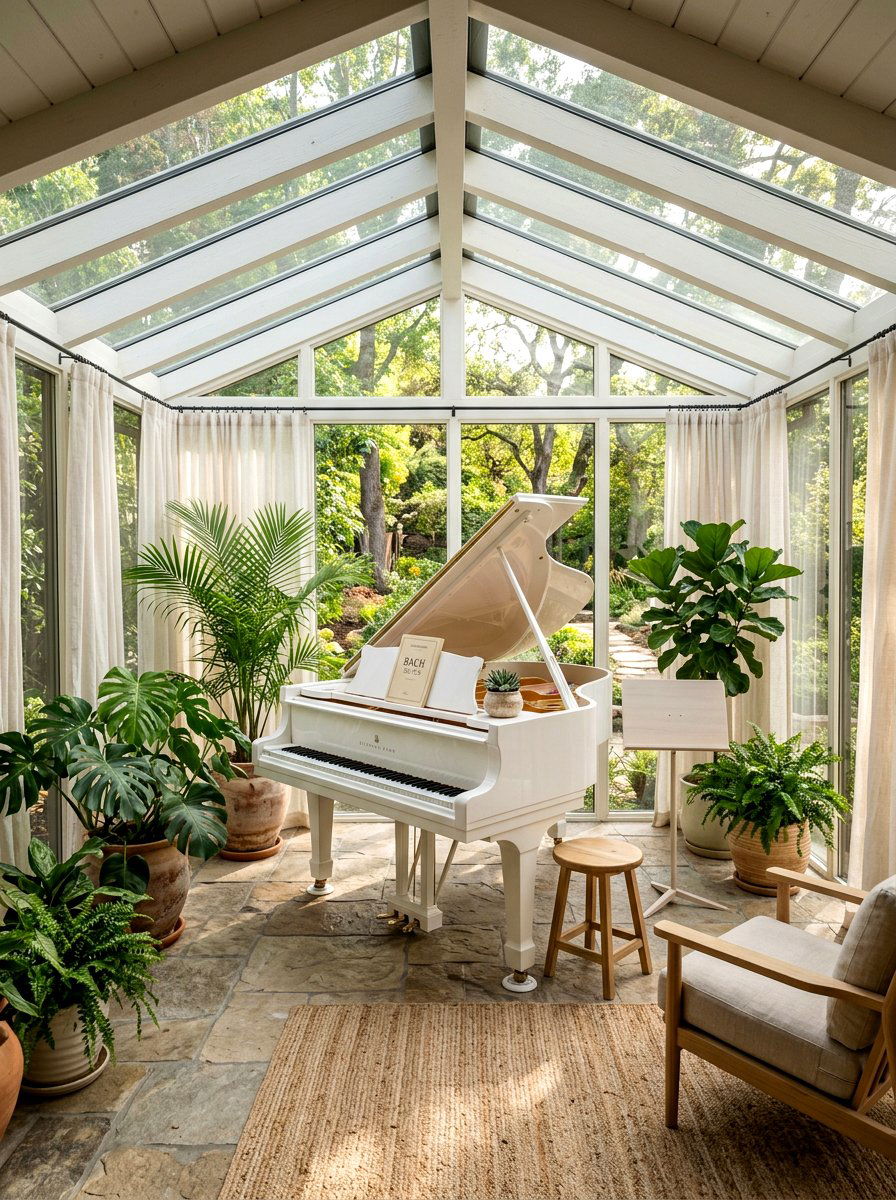
Imagine playing your favorite sonatas while surrounded by the beauty of the outdoors and cascading sunlight. A sunroom music studio utilizes glass walls and natural greenery to create a refreshing and peaceful atmosphere for any pianist. To protect the instrument from temperature fluctuations and direct UV rays, use sheer linen curtains or high-quality window tints. The vibrant greens of indoor tropical plants contrast beautifully with the ebony or mahogany finish of the piano. This design encourages a deep connection between music and nature, making every practice session feel like a garden performance. Light wicker furniture and stone flooring complete this airy, organic, and truly inspiring aesthetic.
5. Dark Academia Piano
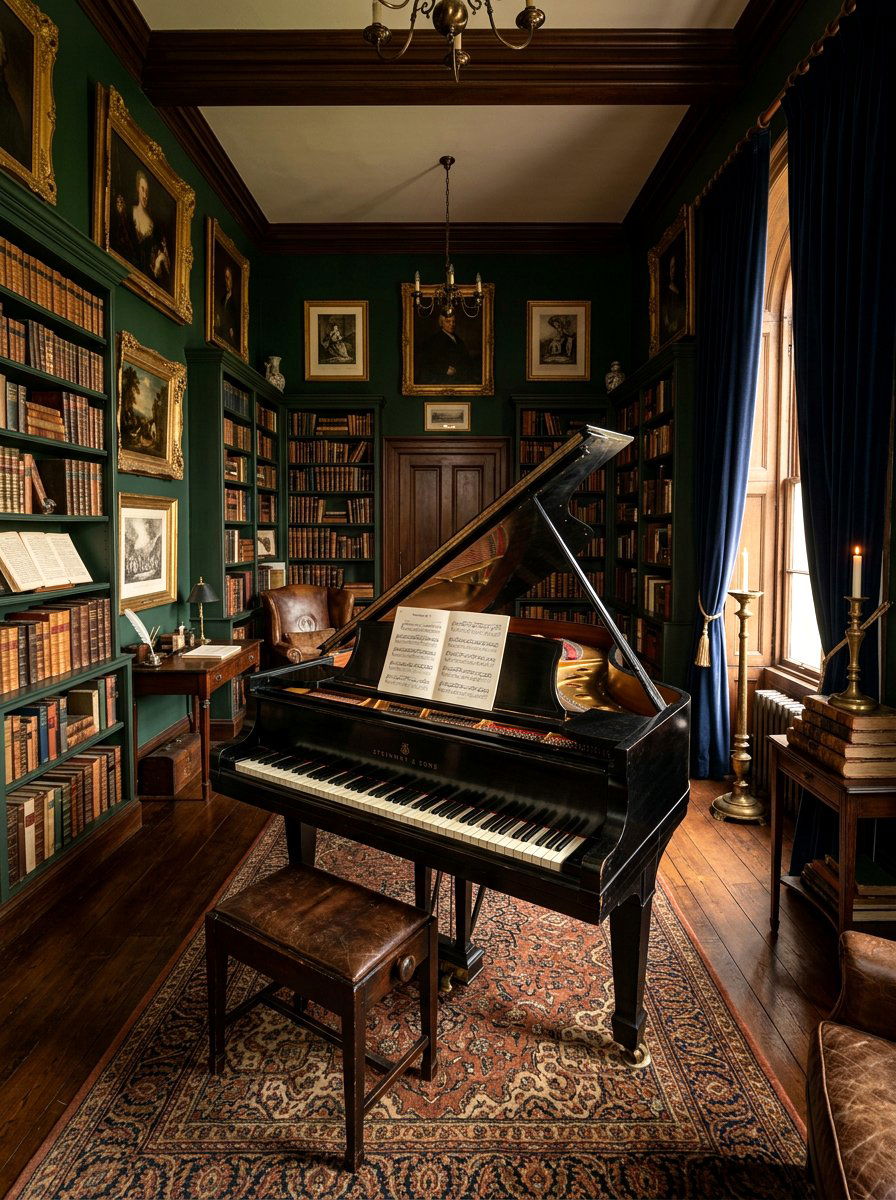
Dark academia piano rooms embrace a moody, scholarly vibe that feels both mysterious and incredibly cozy. This style uses deep paint colors like forest green, navy blue, or charcoal to create a theatrical backdrop for a vintage piano. Ornate gold-framed paintings and heavy velvet curtains add a layer of historical luxury to the environment. You can style the piano top with antique brass candle holders and stacks of leather-bound books for a curated look. The dim, warm glow of a shaded table lamp creates the perfect ambiance for late-night playing sessions. This design turns your music area into a sophisticated retreat that feels like an old university study.
6. Open Concept Piano
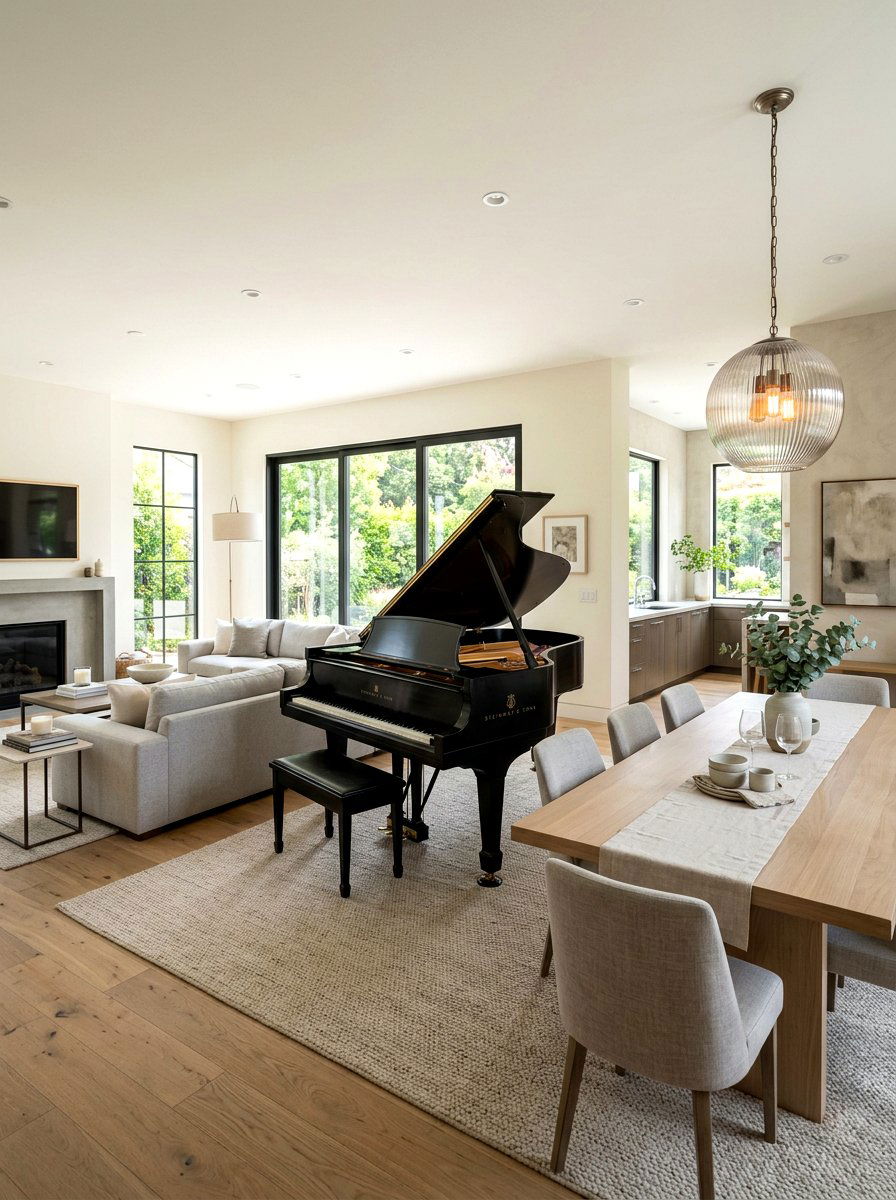
Placing a piano in an open concept floor plan allows the music to travel throughout the entire home. In this design, the instrument acts as a subtle room divider between the living and dining areas. Positioning the piano at an angle helps guide the flow of traffic while creating a distinct zone for entertainment. Use a consistent color palette across the different areas to ensure the piano feels like an integrated part of the home rather than an afterthought. A large, statement light fixture hung above the piano can help anchor the space. This layout is perfect for hosting parties where live music becomes the main event.
7. Minimalist Piano Room
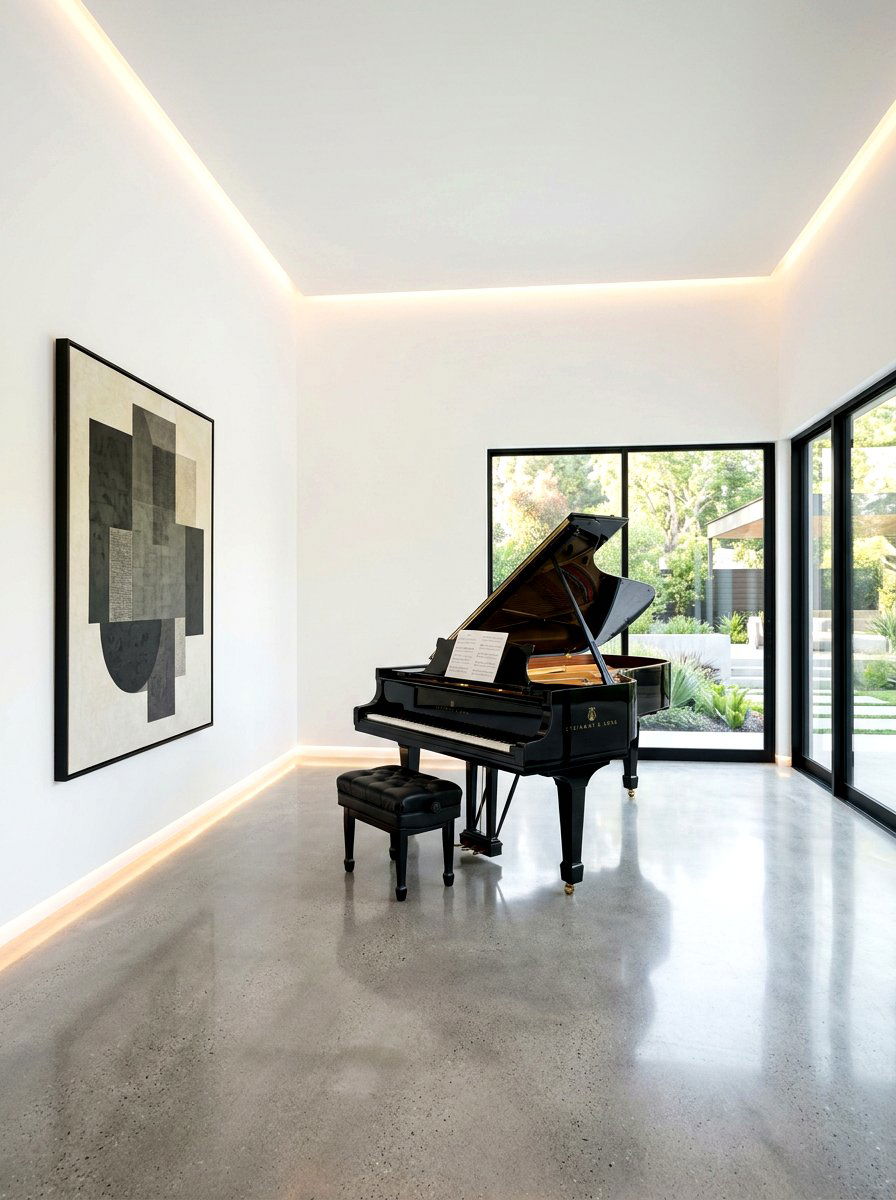
What happens when you strip away the clutter and focus entirely on the instrument itself? A minimalist piano room prioritizes clean lines, negative space, and a restricted color palette to eliminate distractions. The piano stands alone as a sculptural piece of art against a stark white or soft gray background. Every item in the room, from the sleek bench to the singular piece of abstract wall art, is chosen for its functional beauty. This design fosters a sense of mental clarity and focus, which is ideal for serious practice and composition. Polished concrete floors and hidden LED strip lighting further enhance the contemporary and sophisticated feel.
8. Victorian Piano Parlor
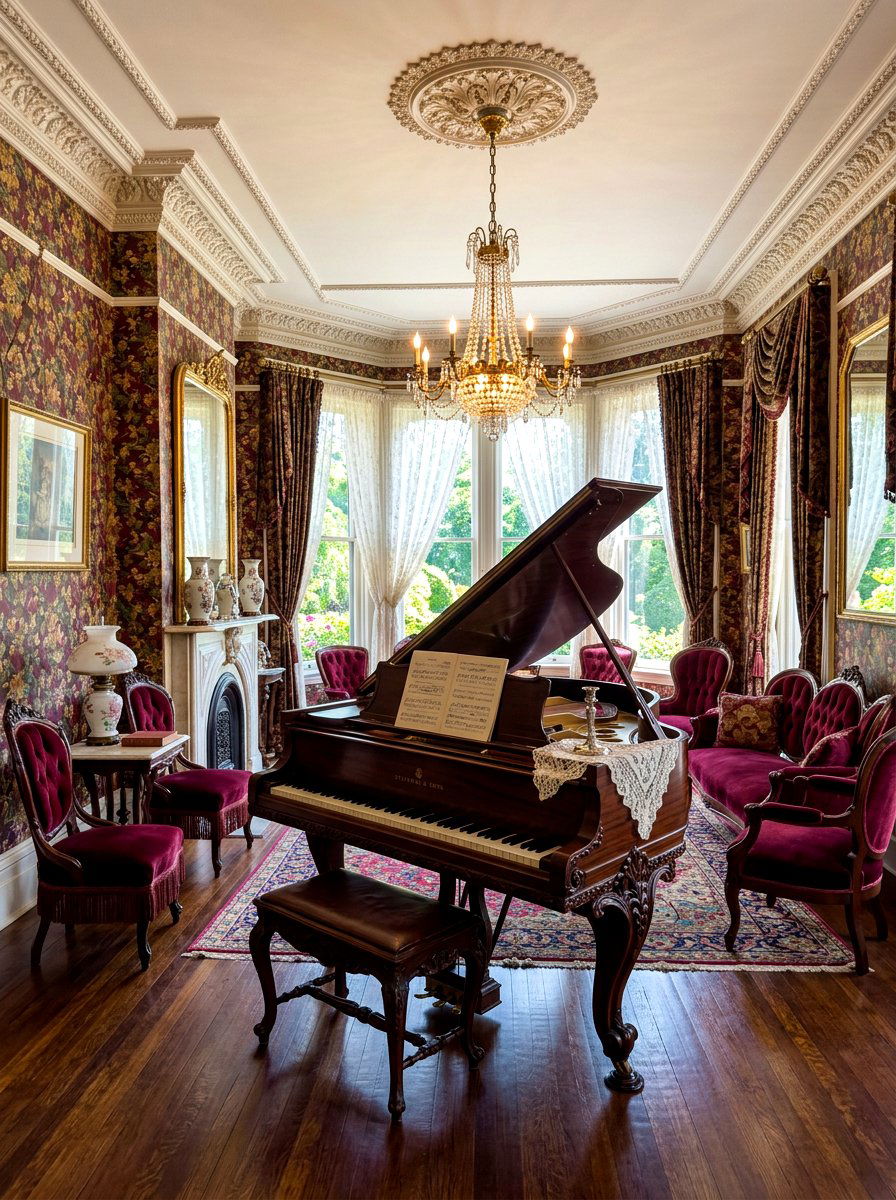
A Victorian piano parlor pays homage to the era when music rooms were the social heart of every home. This design features intricate crown molding, decorative wainscoting, and luxurious patterned wallpaper in rich jewel tones. A grand piano with carved legs fits perfectly amidst antique furniture and lace accents. To enhance the historical feel, include a tall grandfather clock and a set of upholstered parlor chairs for guests. The use of heavy rugs and draped windows creates a muffled, intimate acoustic environment that feels incredibly private. This room is a celebration of craftsmanship and tradition, providing a formal yet welcoming space for classic performances.
9. Basement Music Lounge
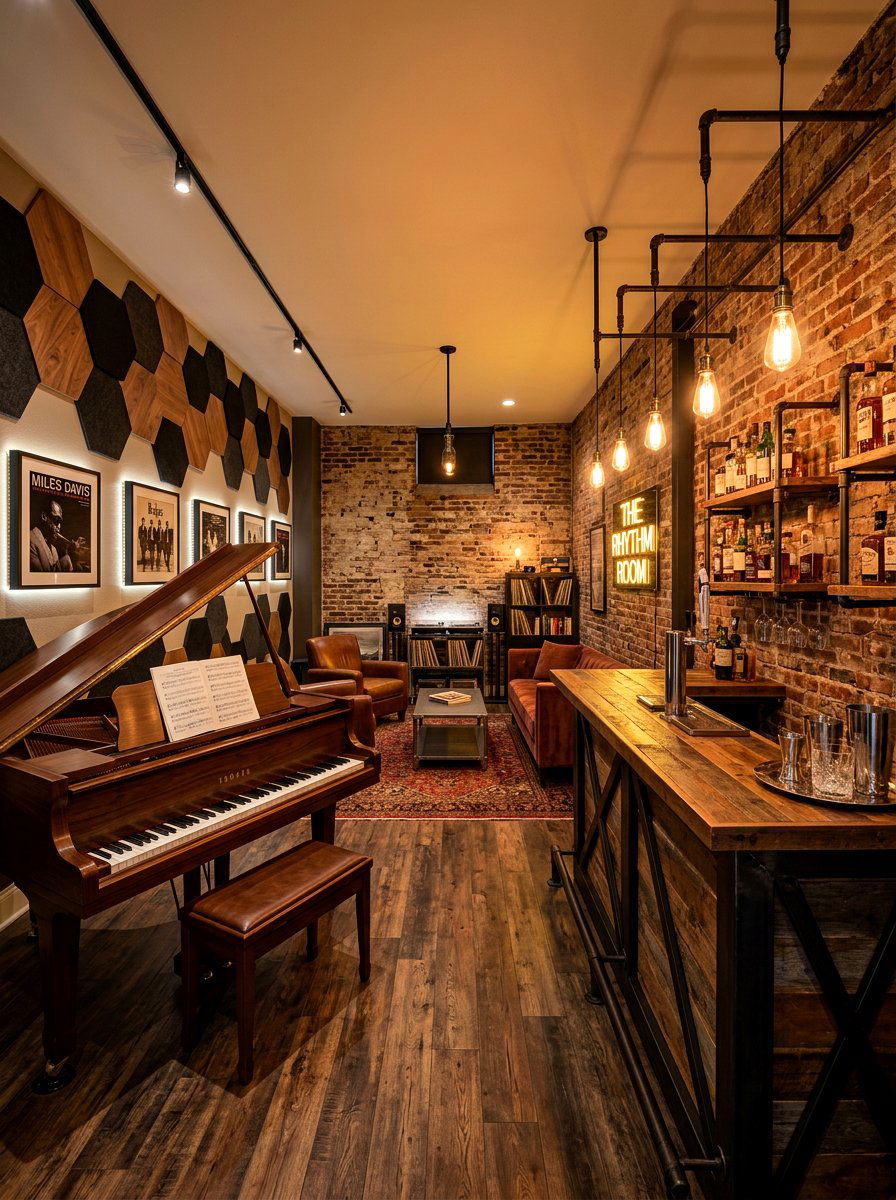
Transforming a basement into a music lounge is a brilliant way to create a soundproofed sanctuary for loud playing. This design often features acoustic wall panels that double as modern geometric art to help manage sound reflections. Use comfortable sectional seating and a small home bar area to make the space feel like a private jazz club. Industrial elements like exposed brick walls and Edison bulb lighting can add a cool, urban vibe to the underground setting. By focusing on cozy textiles and warm lighting, you can turn a cold basement into an inviting and high-energy hub for musical exploration and social gathering.
10. Kids Practice Room
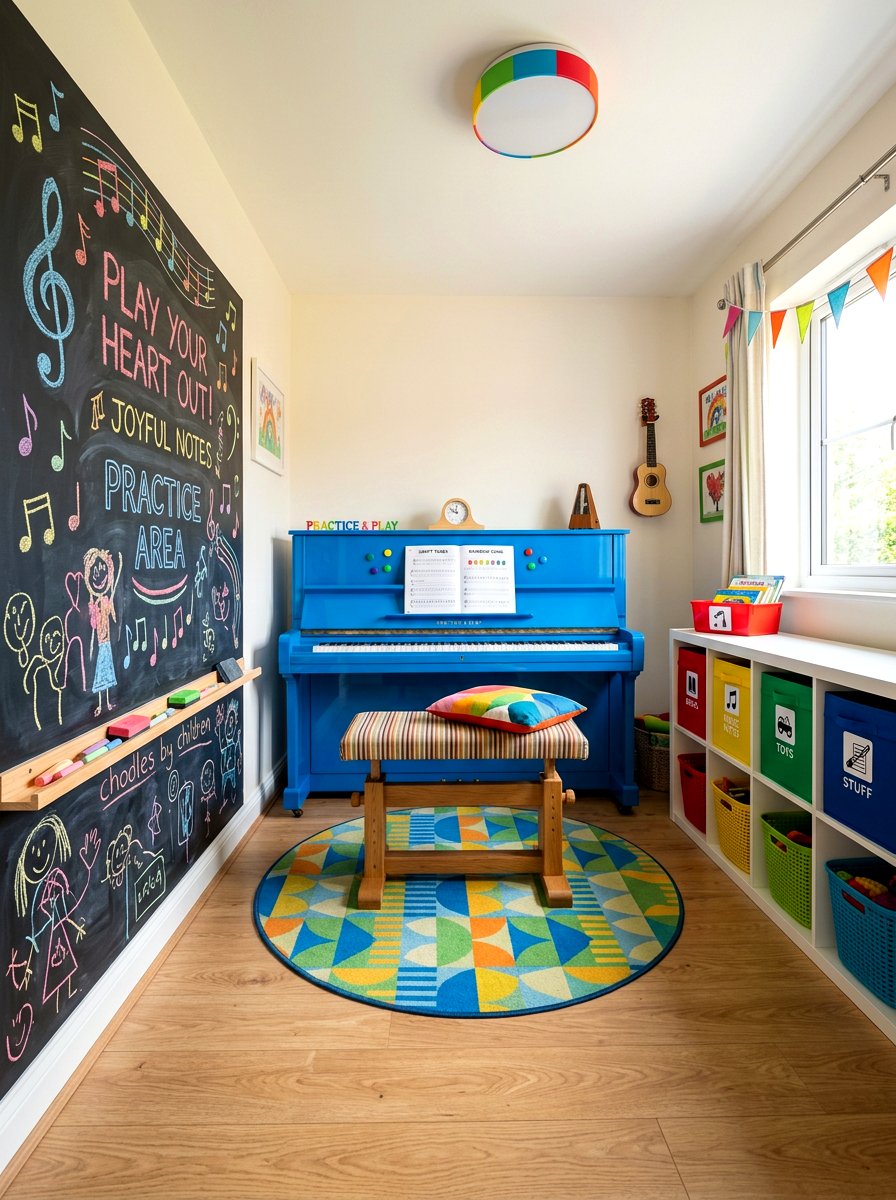
Creating a dedicated kids practice room is an excellent way to encourage young musicians to stay motivated. This space should be bright and cheerful, featuring colorful storage bins for different music books and instruments. A height-adjustable piano bench ensures that growing children can maintain proper posture while they learn their scales. You can hang a large chalkboard or whiteboard on the wall to help with music theory lessons and scheduling practice times. Adding a comfortable bean bag chair allows parents to sit and listen comfortably during lessons. This functional and fun environment makes learning the piano feel like a positive and exciting daily activity.
11. Industrial Piano Loft
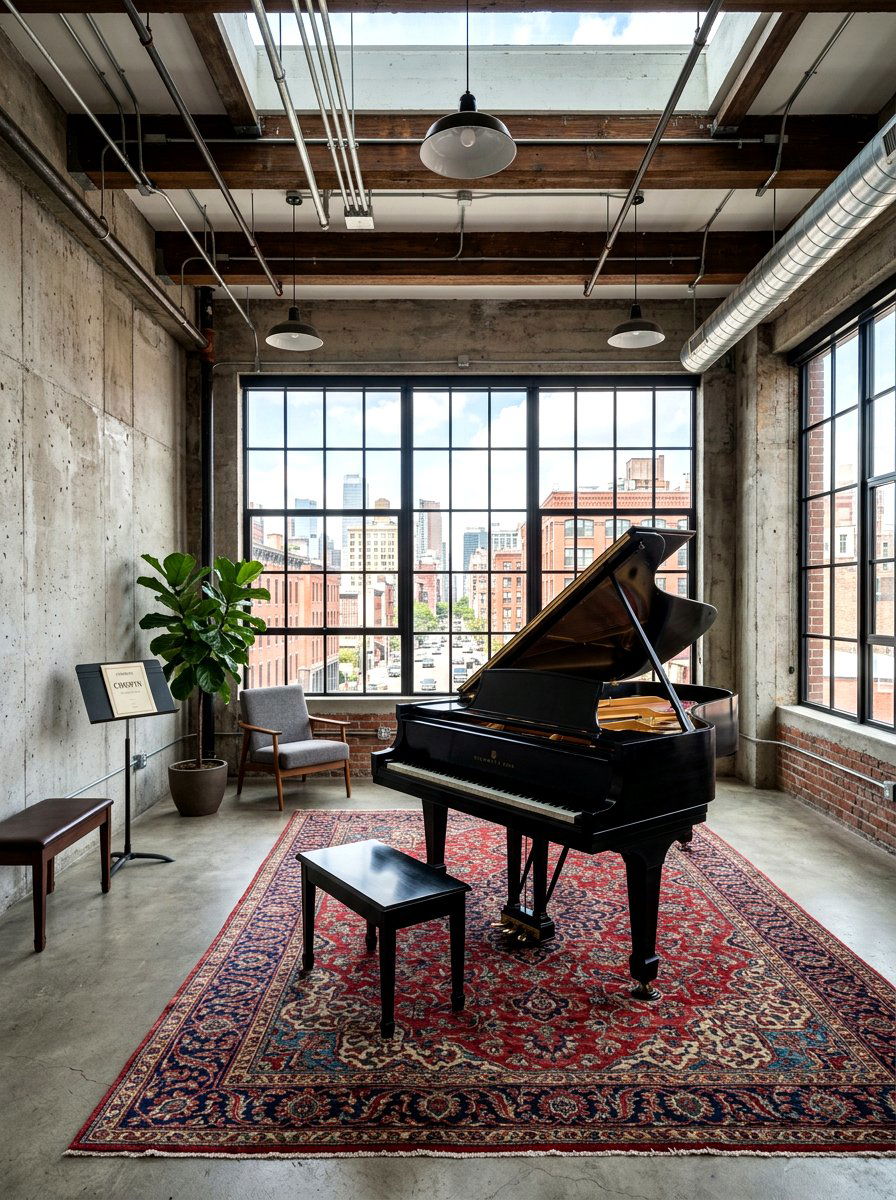
An industrial piano loft takes advantage of raw architectural elements like high ceilings and exposed pipes. In this large, open space, a grand piano provides a sophisticated contrast to the rough textures of concrete and metal. Use large-scale industrial windows to flood the room with natural light during the day. A vintage Persian rug can be placed under the piano to add a splash of color and soften the hard surfaces for better sound quality. Minimalist metal shelving can hold a collection of vinyl records and sheet music nearby. This design is perfect for the modern musician who appreciates an edgy, urban, and spacious environment.
12. Mid Century Modern Piano
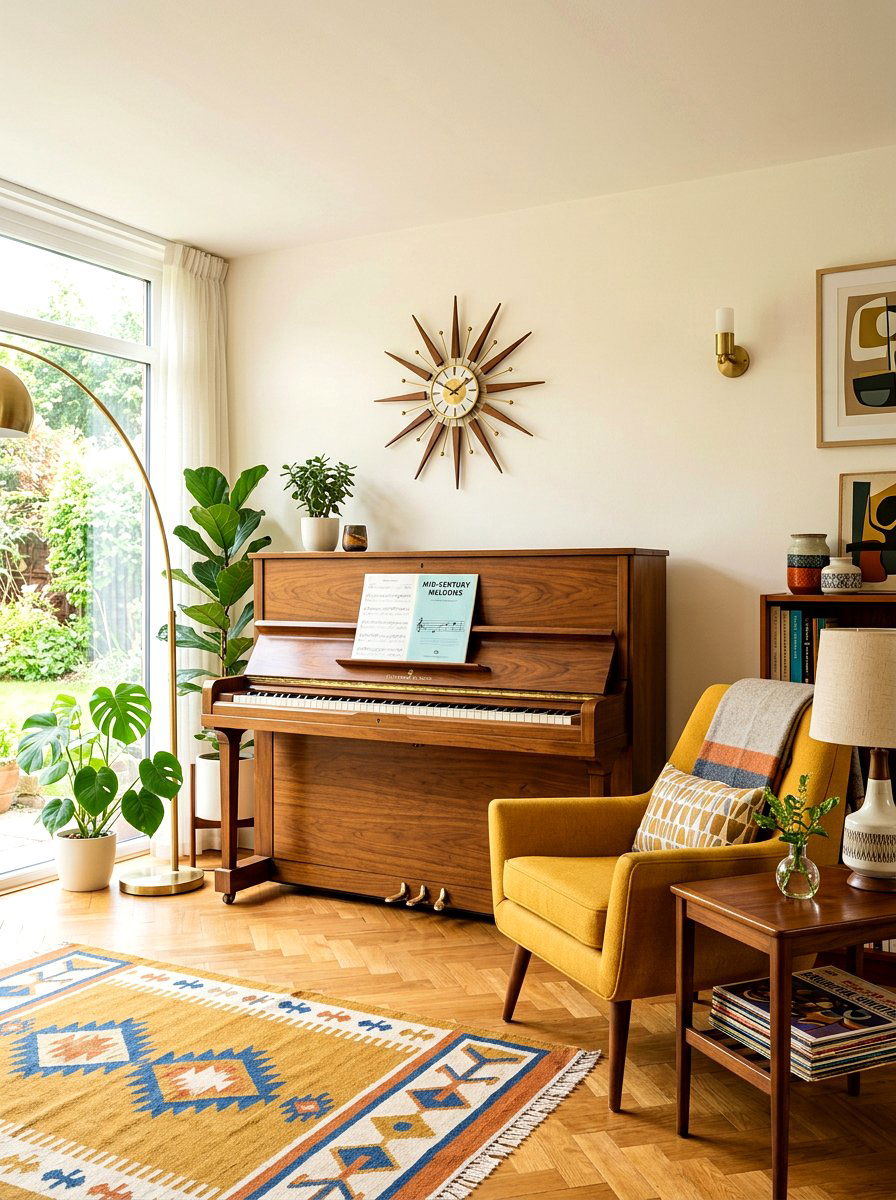
Mid-century modern piano rooms focus on organic shapes, warm wood tones, and iconic furniture designs from the fifties and sixties. A walnut-finish upright piano or a sleek baby grand looks stunning alongside a tapered-leg armchair and a sunburst wall clock. Use a color palette of mustard yellow, olive green, and burnt orange to bring the retro vibe to life. Low-profile cabinets provide excellent storage for music accessories while keeping the sightlines open. The combination of natural materials and geometric patterns creates a stylish and timeless look. This design celebrates the fusion of classic musical tradition and revolutionary twentieth-century furniture styles for a unique home.
13. Boho Music Nook
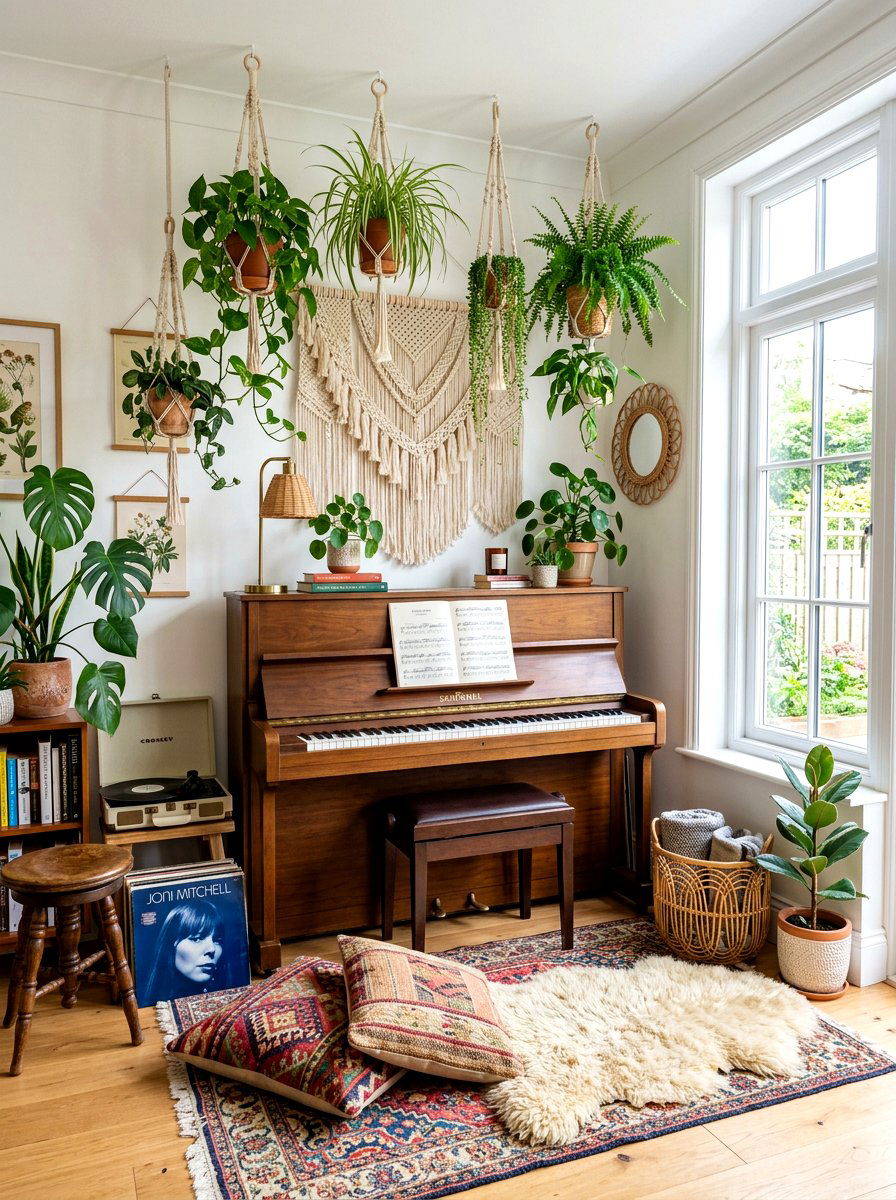
A boho music nook is all about relaxed vibes, layered textures, and a collection of global treasures. Start by surrounding your piano with a variety of potted plants like fiddle leaf figs and hanging pothos. Use a woven macramé wall hanging as a backdrop to add visual interest and help with sound absorption. A plush sheepskin throw over the piano bench and a pile of floor pillows nearby create an inviting, casual atmosphere. This design is perfect for musicians who want a creative and unconventional space that feels like a personal retreat. The mix of natural wood, textiles, and greenery makes the room feel warm.
14. Formal Entryway Piano
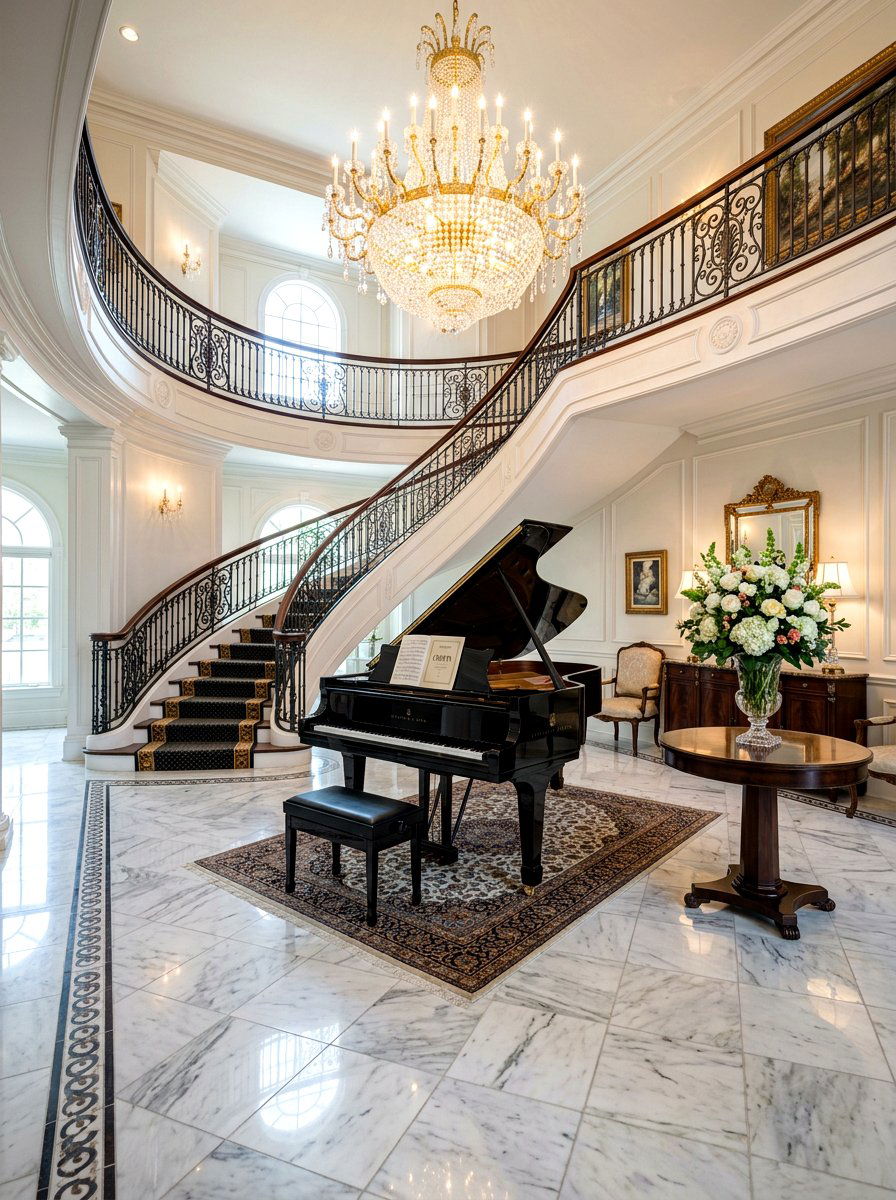
Placing a piano in a formal entryway makes a powerful first impression on anyone who walks through your front door. This setup often features a glossy grand piano positioned in the center of a grand foyer or tucked into the curve of a staircase. High-gloss marble floors and a sparkling crystal chandelier elevate the sense of luxury and occasion. Since the entryway is a high-traffic area, ensure there is plenty of room for guests to move around the instrument. A simple vase of fresh flowers on a nearby console table adds a welcoming touch. This design turns your home’s entrance into a breathtaking musical stage.
15. Rustic Piano Cabin
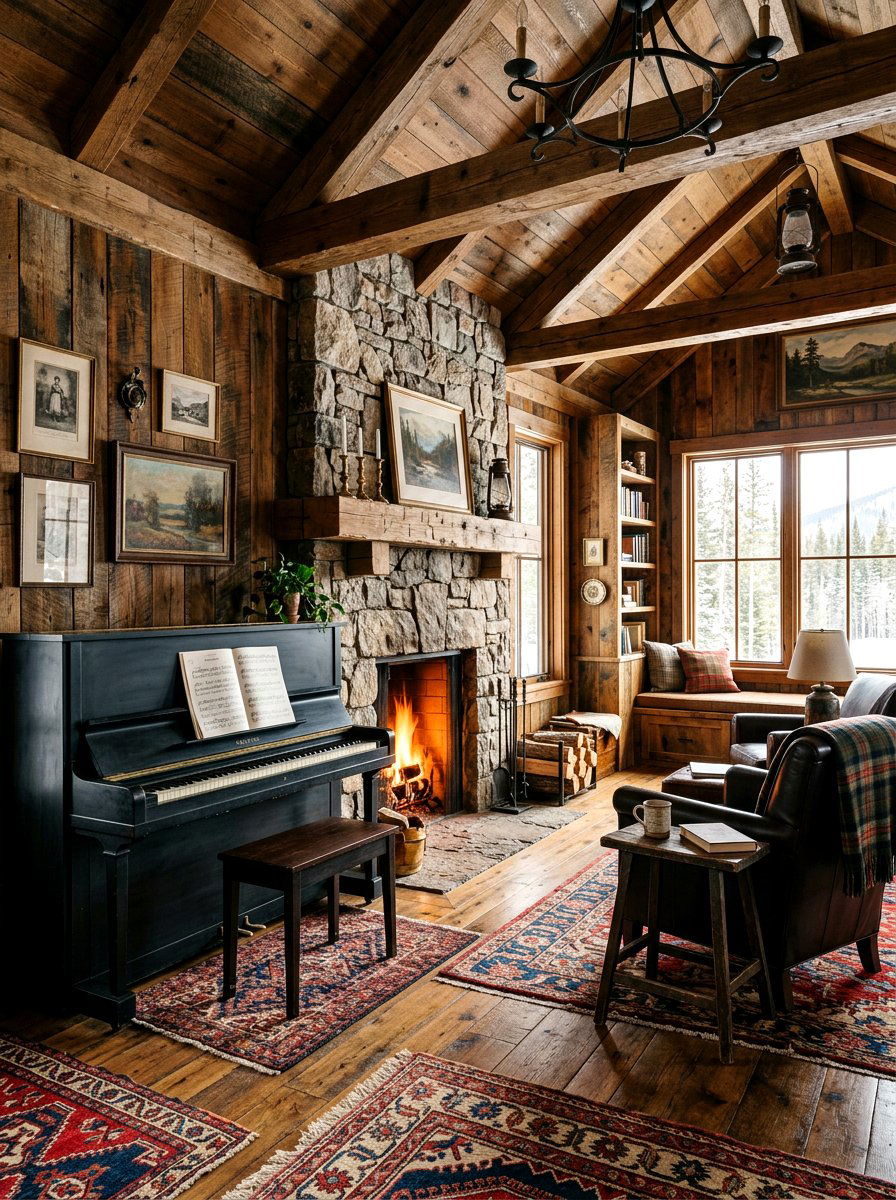
A rustic piano cabin design brings a sense of warmth and rugged charm to your music-making space. This style features natural wood-beamed ceilings, stone fireplaces, and walls made of reclaimed timber. A matte-finish piano blends seamlessly with the organic surroundings and earthy color tones. You can add a cozy wool rug and a heavy leather bench to enhance the cabin aesthetic. The crackle of a nearby fire and the view of the forest through large windows create a serene and grounded atmosphere for playing. This design is ideal for those who want their music room to feel like a peaceful mountain retreat away from the world.
16. Luxury Penthouse Piano
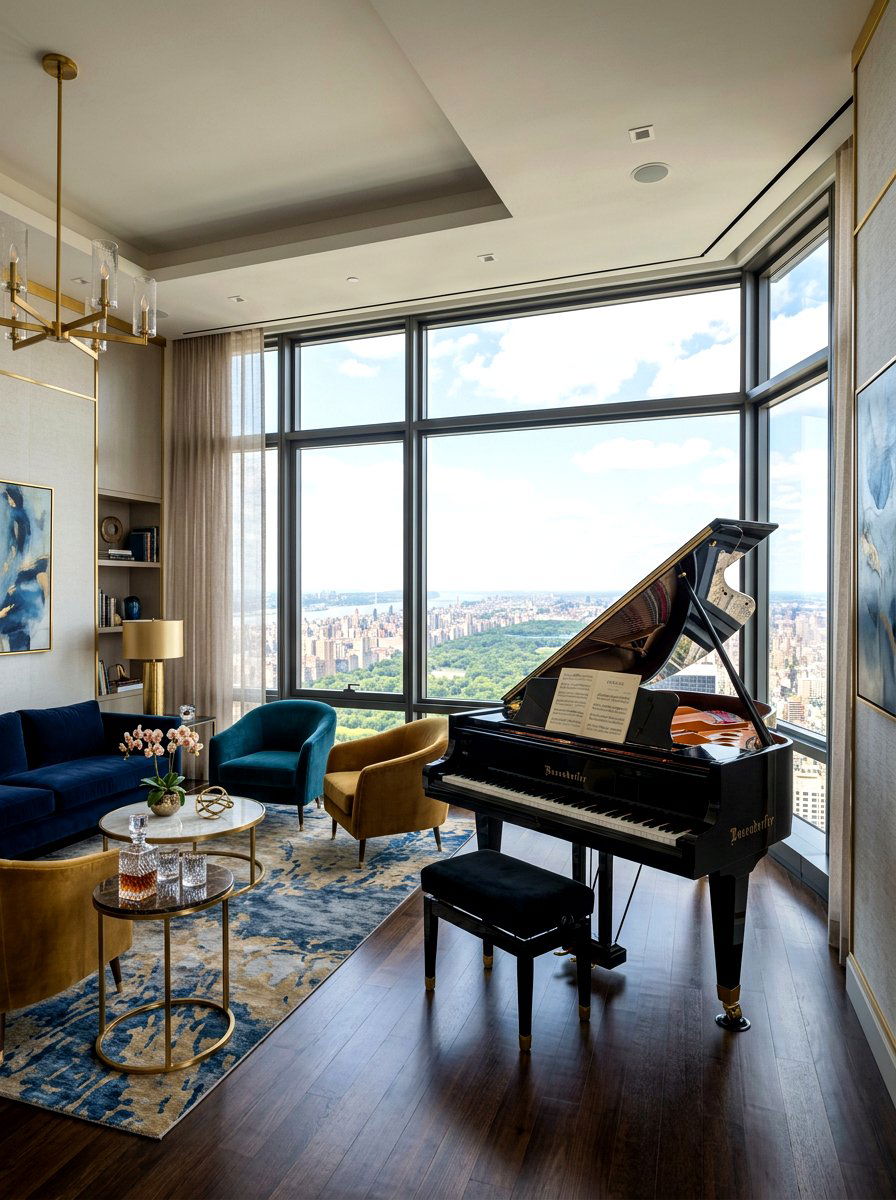
Designing a piano room for a luxury penthouse involves maximizing breathtaking city views and high-end materials. Position the grand piano near a massive floor-to-ceiling window so you can look out over the skyline while you perform. Use polished metallic accents, such as gold or chrome, in the lighting fixtures and furniture legs to reflect the city lights. A custom-made velvet bench and silk curtains add a layer of opulent texture to the modern space. The goal is to create a high-drama environment that feels exclusive and sophisticated. This layout is the ultimate choice for urban performers who want to feel connected to the vibrant energy.
17. Scandinavian Music Space
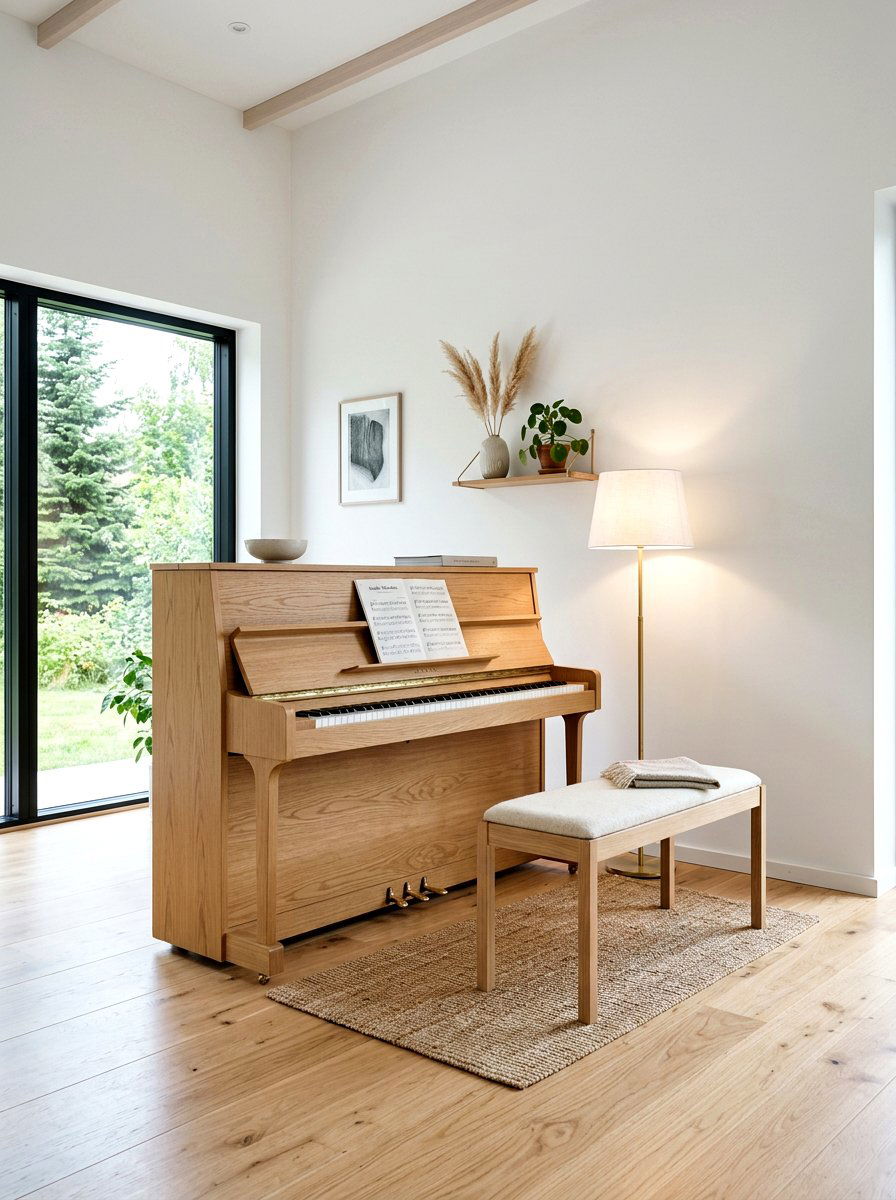
A Scandinavian music space is defined by its simplicity, functionality, and use of light-toned woods. This design creates a bright and airy atmosphere where a white or light oak piano can truly shine. Use a neutral color palette of whites, creams, and soft grays to keep the space feeling calm and uncluttered. A simple wooden bench with clean lines and a single designer floor lamp are often the only other pieces of furniture needed. This minimalist approach allows the beauty of the instrument and the music to take center stage. The result is a serene and peaceful environment that is perfect for focused daily practice.
18. Contemporary Piano Alcove
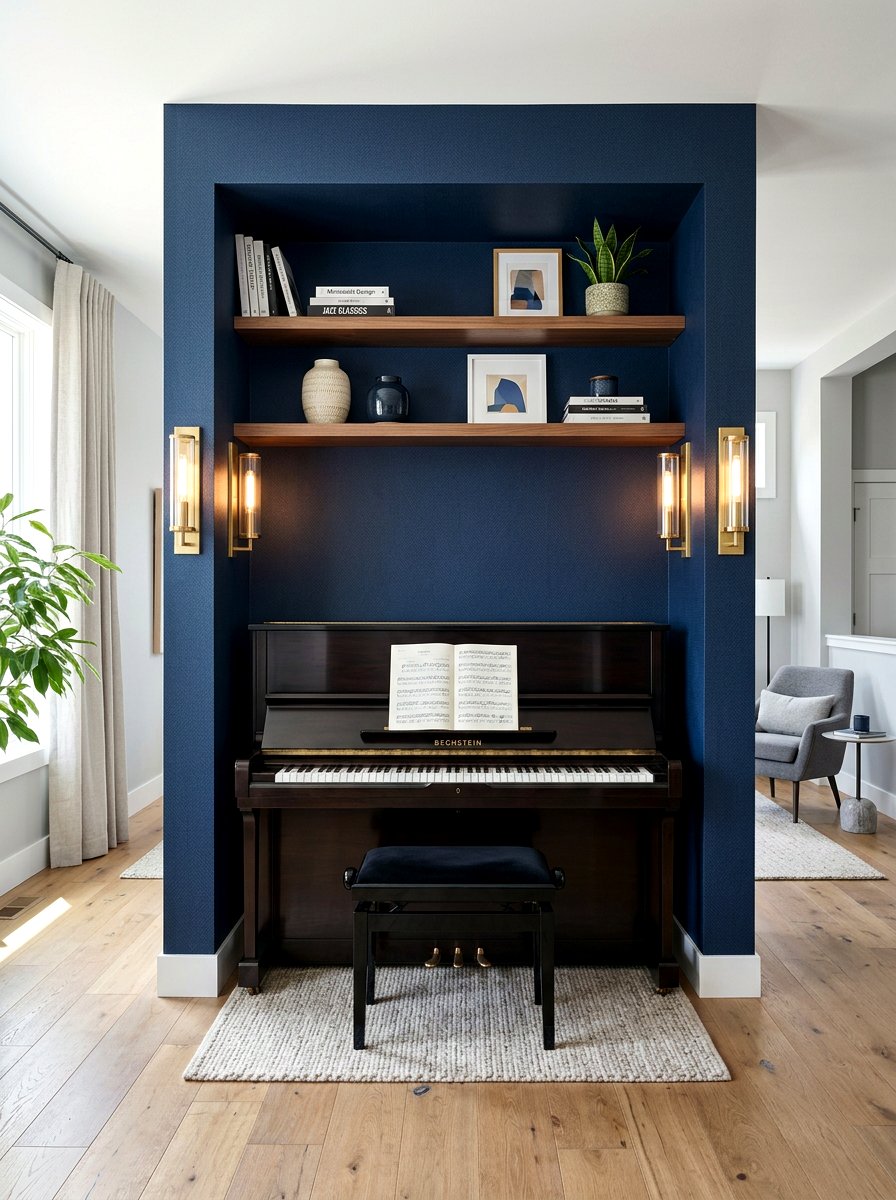
A contemporary piano alcove is a smart way to utilize an architectural recessed space or a shallow niche in your home. By custom-fitting an upright piano into this area, you create a built-in look that feels intentional and high-end. Use bold wallpaper or a contrasting paint color inside the alcove to make the piano pop visually. Modern wall sconces can be installed on either side of the niche to provide perfect task lighting for reading sheet music. This design turns a potentially wasted space into a stylish and functional musical feature. It is a great solution for homes where floor space is at a premium.
19. Art Deco Piano Room
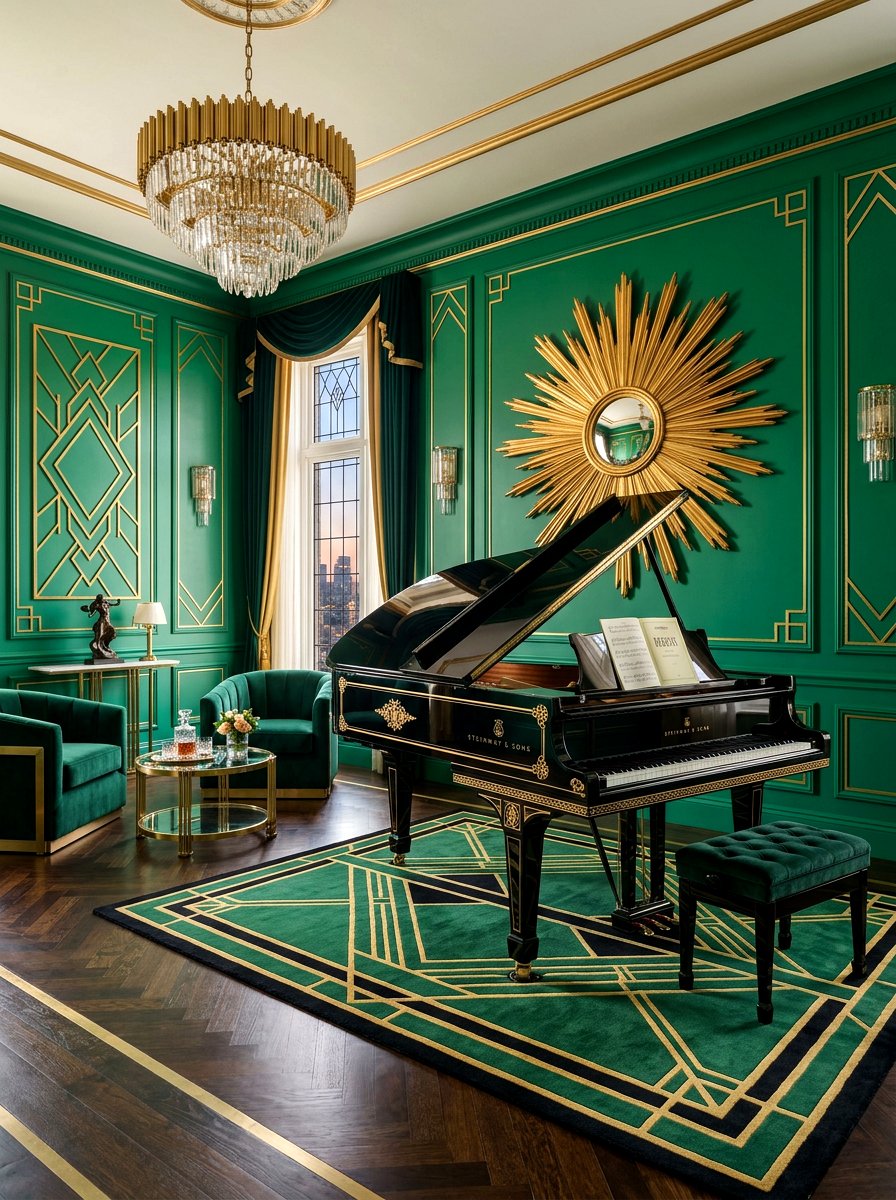
Art Deco piano rooms are characterized by bold geometric shapes, rich colors, and a sense of 1920s glamour. This design often features a piano with high-gloss black lacquer and metallic inlays that match the surrounding decor. Use a sunburst mirror and a velvet-upholstered bench with gold legs to complete the luxurious look. Symmetrical layouts and tiered lighting fixtures add to the architectural drama of the space. Deep emerald green or royal purple walls provide a stunning backdrop for the instrument. This style is perfect for those who want their music room to feel like a high-society lounge from the golden age of jazz.
20. Coastal Piano House
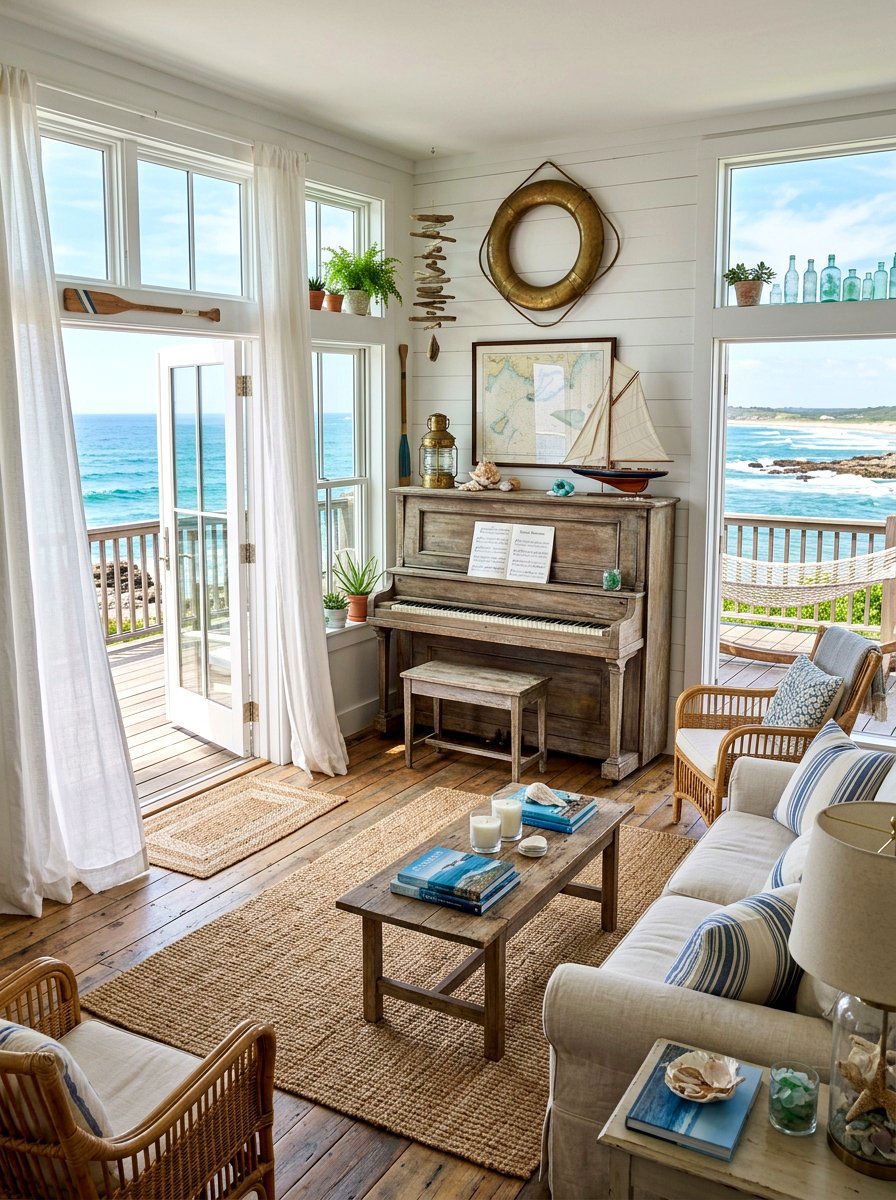
A coastal piano house design uses light colors and natural textures to create a breezy, seaside-inspired music room. This style features a palette of sandy beiges, ocean blues, and crisp whites that make the space feel fresh and inviting. A light-colored piano or one with a weathered wood finish fits perfectly with the nautical theme. Use jute rugs and linen curtains to add organic texture and help with the room’s acoustics. Decorative elements like seashells, driftwood, and maritime artwork can be placed subtly around the room. This design is ideal for creating a relaxing and casual environment where music and coastal living harmoniously coexist.
21. Attic Piano Studio
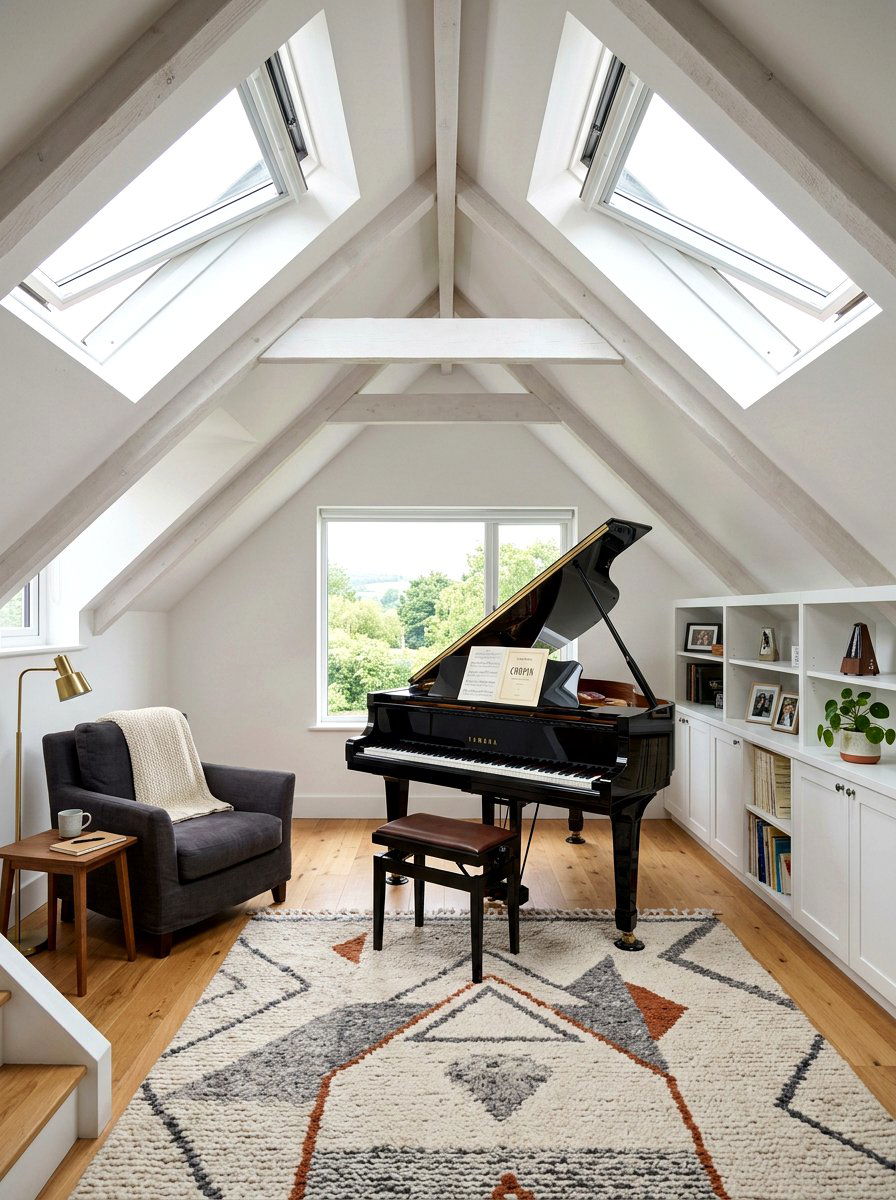
Converting an attic into a piano studio provides a secluded and private space for creative exploration. The sloped ceilings and unique architectural angles of an attic can actually help with sound diffusion, creating a unique acoustic environment. Use skylights to bring in natural light and offer a view of the stars during late-night composition sessions. By painting the walls and ceiling a bright white, you can make the small, tucked-away space feel much more open and airy. Built-in storage cabinets under the eaves are perfect for keeping sheet music and recording equipment organized. This hidden musical getaway is a dream for any songwriter.
22. French Provincial Piano
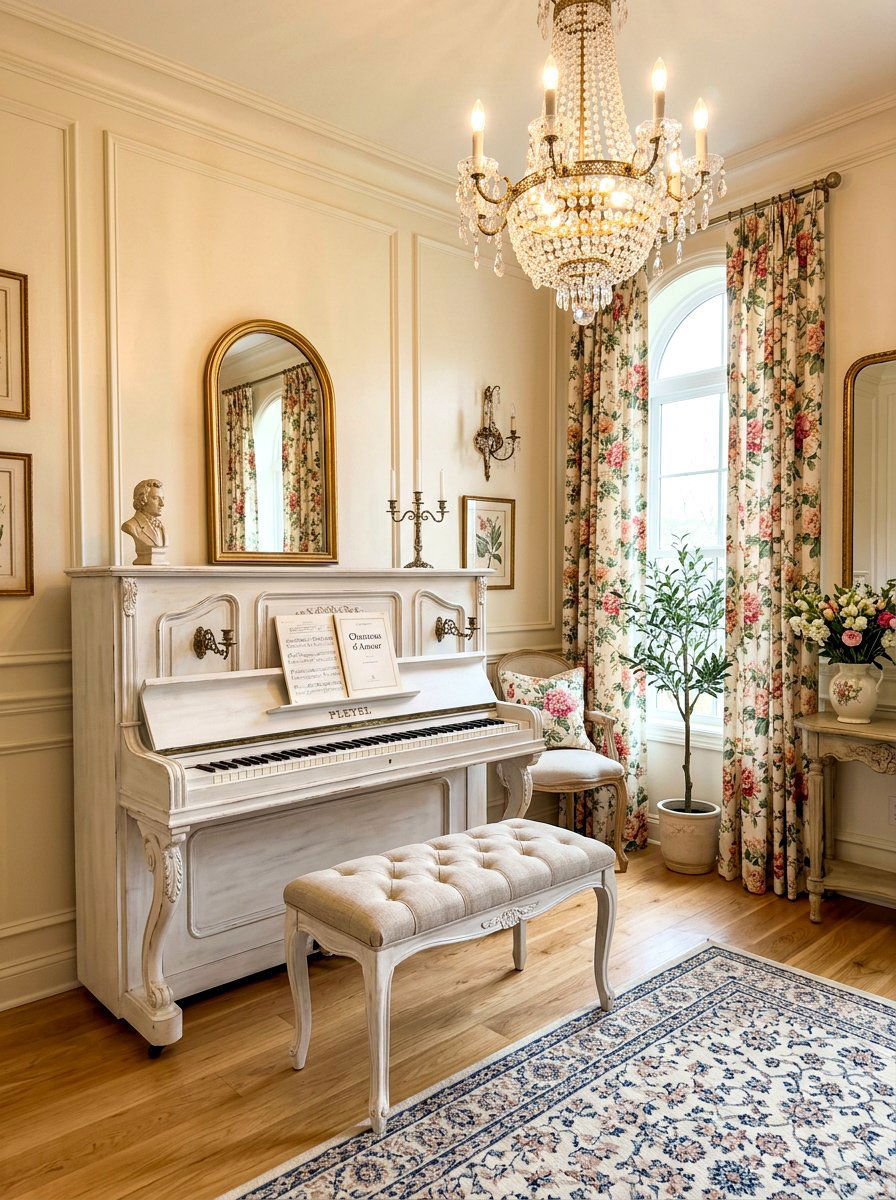
A French provincial piano room exudes old-world elegance and romantic charm. This style features curved furniture legs, ornate carvings, and a soft color palette of pastels and creams. A piano in a whitewashed or distressed wood finish looks beautiful alongside a tufted linen bench and a crystal chandelier. Use floral patterns on the curtains or upholstery to add a touch of traditional French country style. Large windows with wrought iron details can provide a view of a garden, further enhancing the romantic atmosphere. This design creates a sophisticated yet comfortable space that feels like a quiet corner of a historic European manor house.
23. Monochrome Piano Room
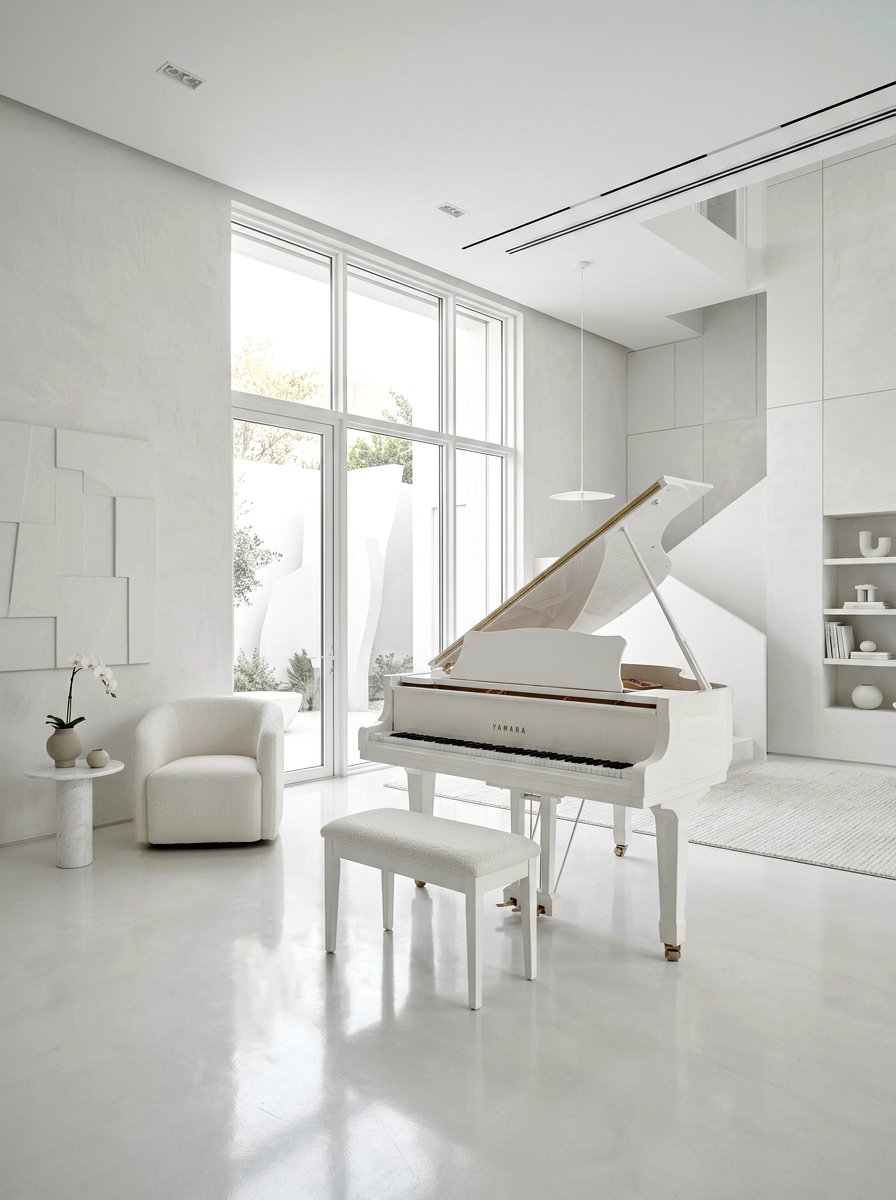
A monochrome piano room uses different shades of a single color to create a highly sophisticated and cohesive look. Most commonly, this involves an all-black or all-white theme where the piano blends seamlessly into the walls and furniture. By varying the textures — such as using a matte wall finish, a glossy piano, and a plush rug — you add depth without breaking the color scheme. This bold design choice makes a powerful statement and feels incredibly modern and high-fashion. It eliminates visual noise, allowing the listener to focus entirely on the auditory experience. The result is a stunning, gallery-like space that highlights the instrument’s beautiful form.
24. Eclectic Music Space
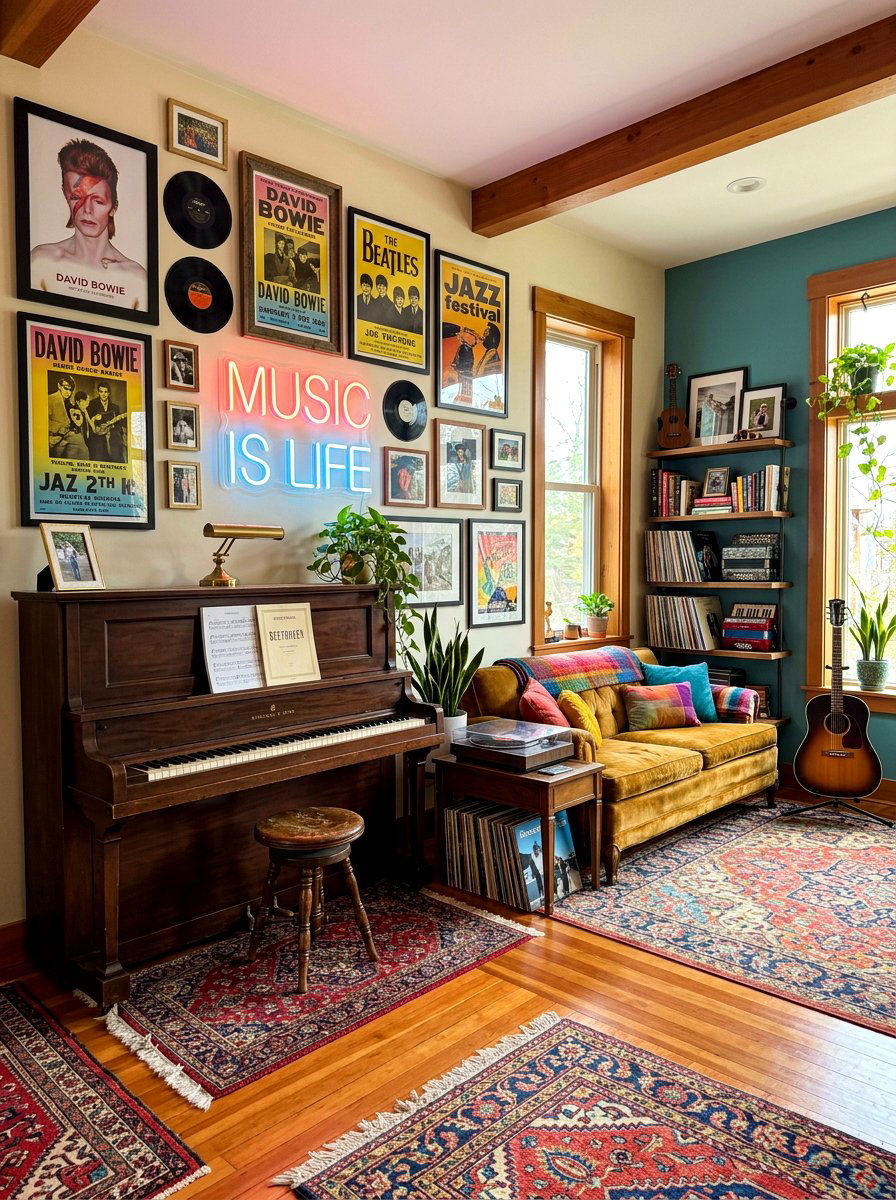
An eclectic music space is the perfect choice for those who love to mix different styles, eras, and colors. This design might feature a vintage upright piano paired with a modern neon sign and a collection of mismatched art. The key to making this look work is finding a common thread, such as a repeating color or texture, to tie the elements together. Vibrant rugs and a variety of seating options make the room feel lived-in and full of personality. This creative environment is incredibly inspiring for musicians who don't want to be boxed into a single design category. It is a true celebration of individuality.
25. Home Office Piano
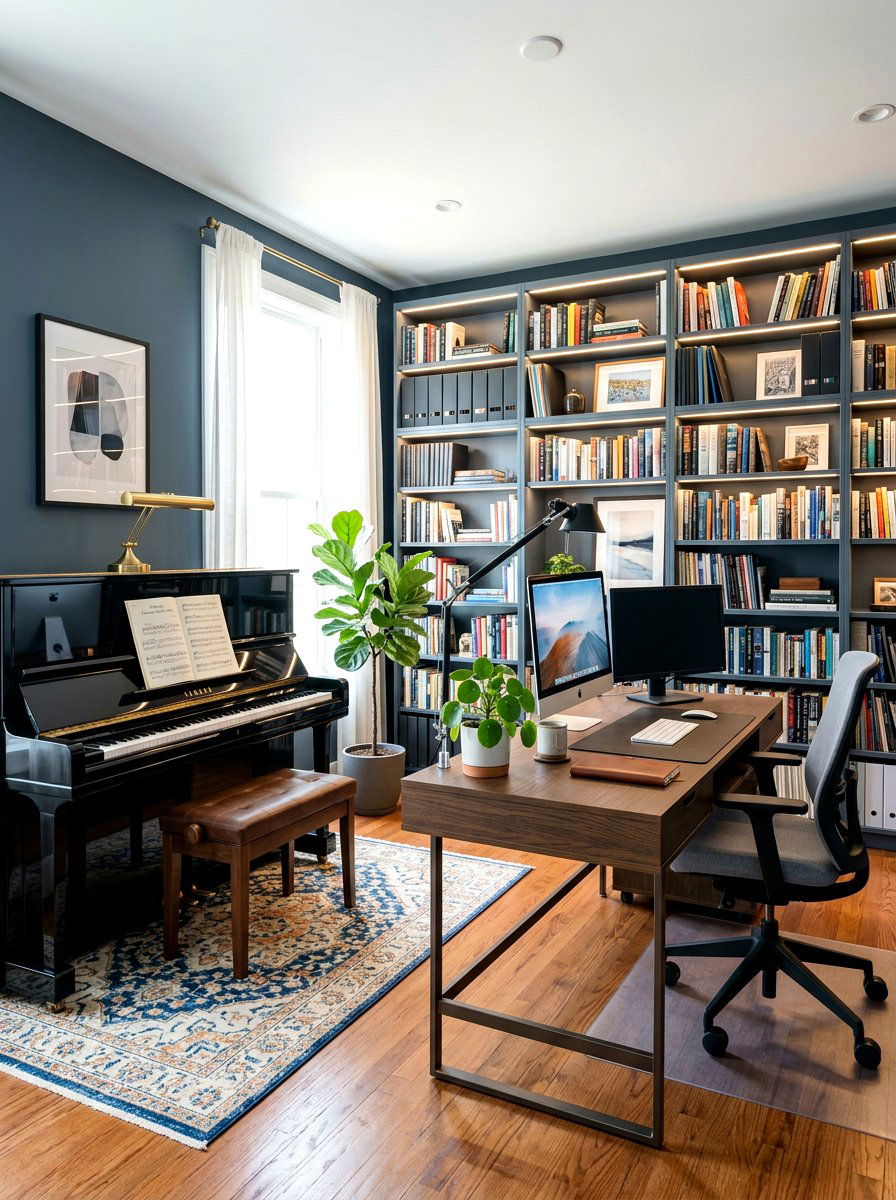
Integrating a piano into a home office is a fantastic way to break up the workday with short musical interludes. Position the piano on the wall opposite your desk so it serves as a beautiful backdrop during video calls. This setup allows you to pivot from work to play instantly, which can help boost productivity and reduce stress. Use a stylish desk lamp that can also be used as a piano light for reading sheet music. Ensuring the room has a comfortable chair and plenty of shelving keeps the space functional for both professional and artistic tasks. This design turns your office into a versatile creative hub.
26. Traditional Music Parlor
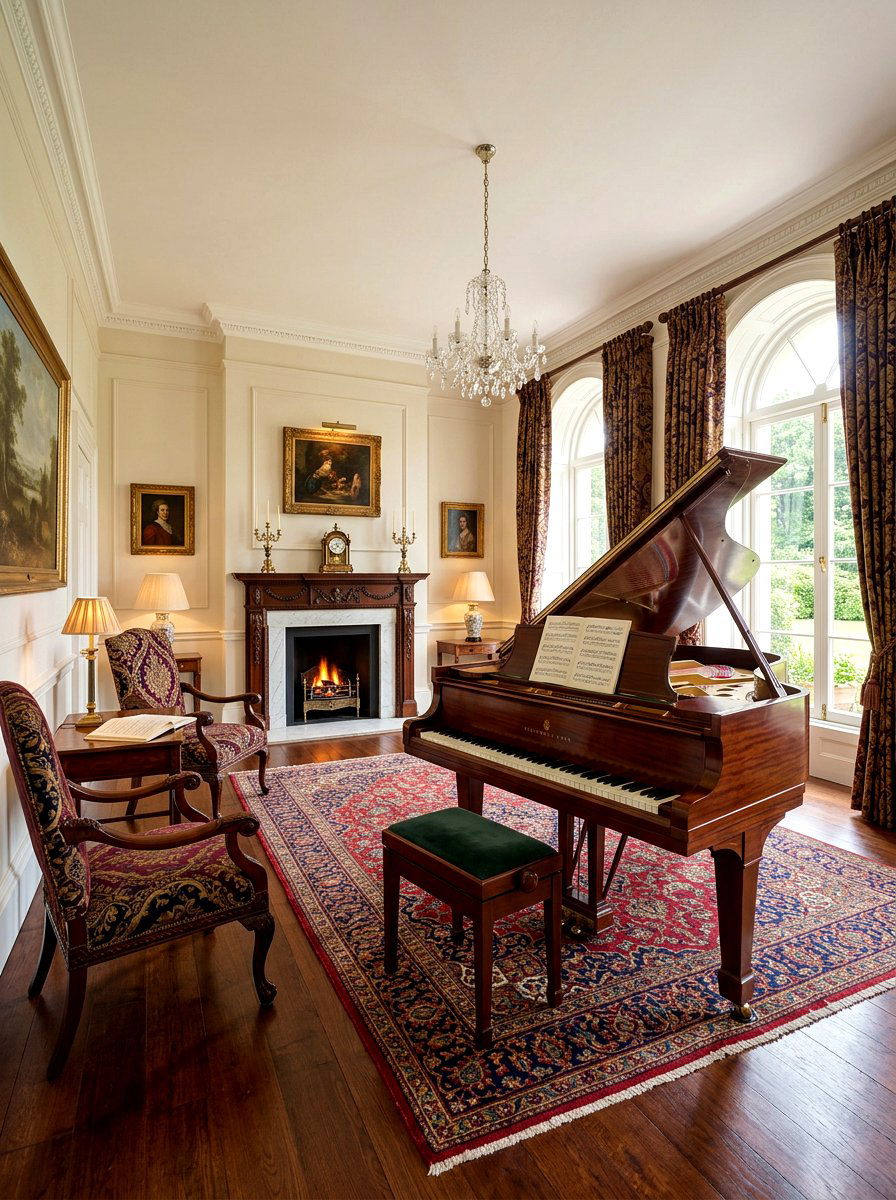
A traditional music parlor focuses on classic design elements that never go out of style. Think mahogany furniture, heavy brocade curtains, and a grand piano that has been meticulously maintained. This room is often symmetrical, with the piano as the centerpiece and matching armchairs on either side. A large, ornate rug and a classic fireplace add to the sense of permanence and comfort. This design is perfect for hosting formal recitals or intimate family gatherings where music is the primary focus. The rich wood tones and formal layout create a space that feels respectful of musical history and provides a dignified setting for performance.
27. Farmhouse Piano Corner
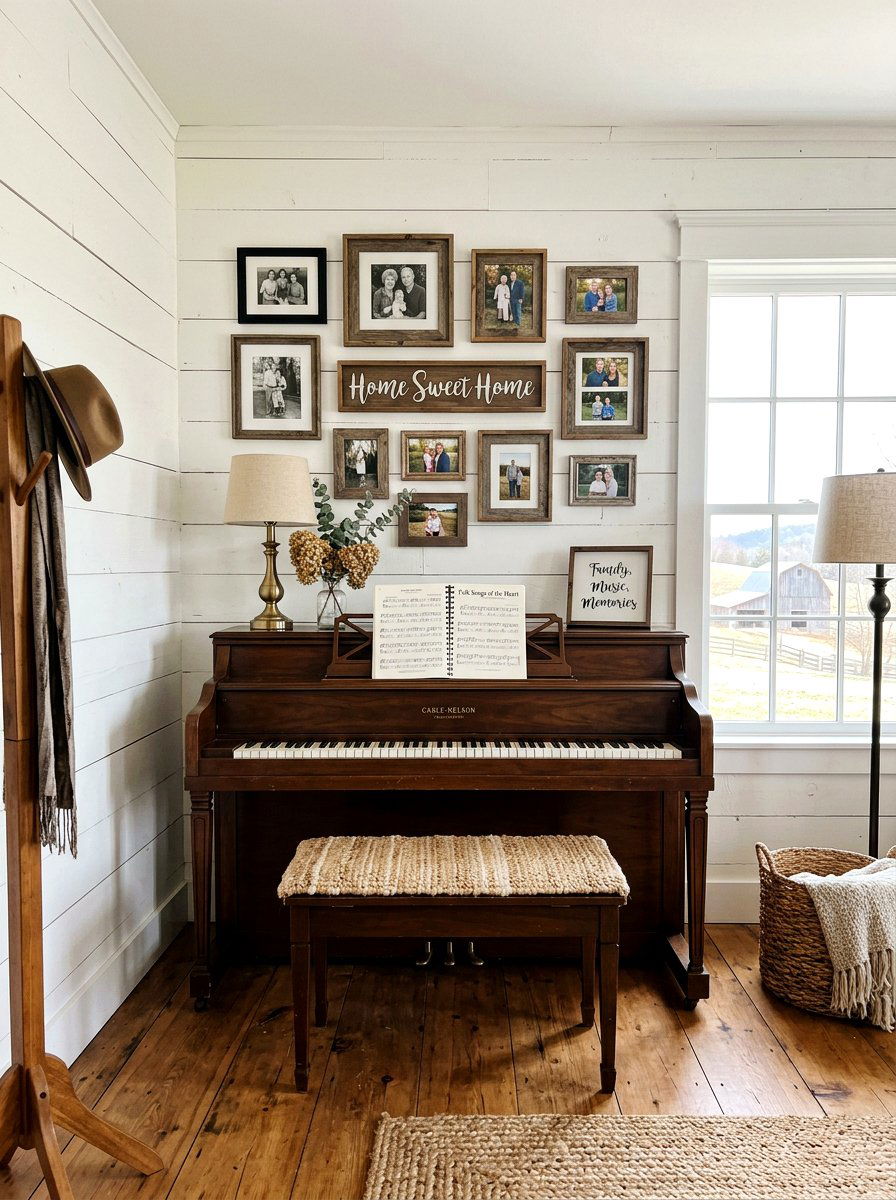
A farmhouse piano corner brings a cozy, rustic, and family-oriented feel to your music space. This design features shiplap walls, natural wood accents, and a simple, honest aesthetic. An upright piano often fits better in this casual environment, especially when styled with a few family photos and a small potted herb on top. Use a neutral color palette with pops of black or navy to create a classic farmhouse look. A comfortable wooden bench with a woven cushion adds to the handmade charm of the space. This design encourages a relaxed approach to music, making it a natural and frequent part of everyday family life.
28. Glamorous Piano Suite
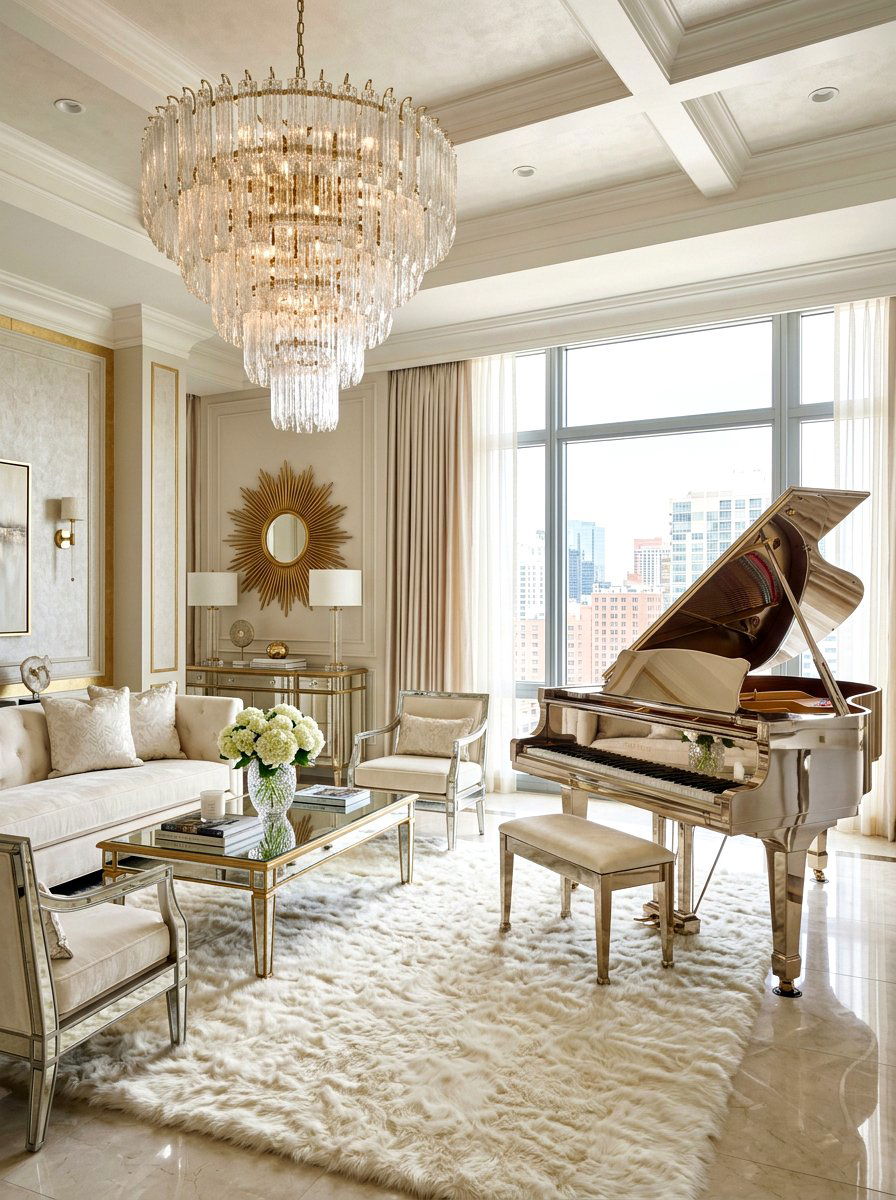
A glamorous piano suite is all about high-shine surfaces, mirrored furniture, and luxurious textiles. This design often features a piano with a metallic finish or one that is accented with sparkling hardware. Use a large faux-fur rug and a velvet-tufted bench to add a sense of Hollywood Regency style. Bold lighting, such as a tiered glass chandelier or oversized wall sconces, creates a theatrical atmosphere for every performance. Mirrored walls can be used to reflect the piano and make the entire room feel like a glittering stage. This design is perfect for those who want their music room to feel like a high-end celebrity lounge.
29. Zen Music Room
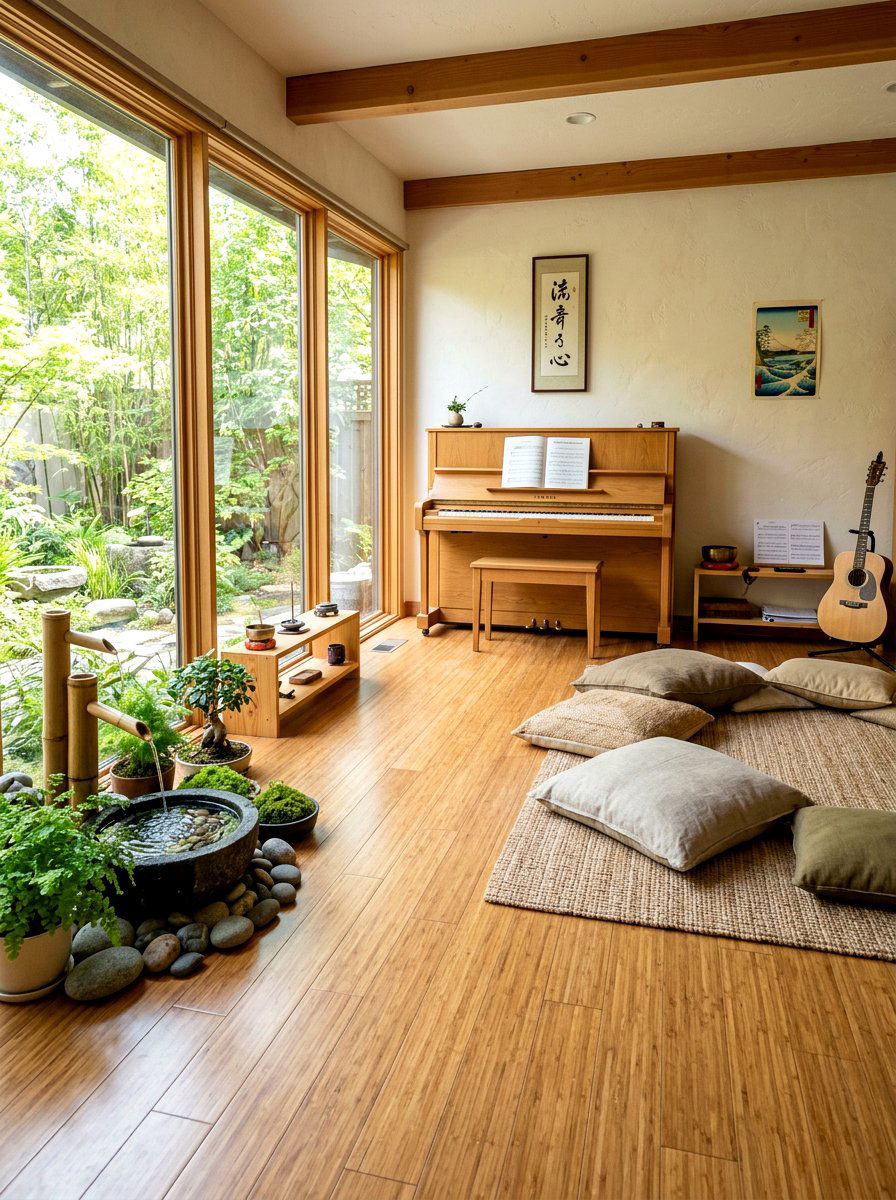
A Zen music room is designed to be a sanctuary for meditation and peaceful playing. This style uses natural materials like bamboo, stone, and light-toned wood to create a grounded and serene environment. Keep the furniture to a minimum, focusing on a comfortable floor cushion for listeners and a simple, elegant piano. Soft, diffused lighting and the sound of a small indoor water fountain can help create a deeply relaxing atmosphere. Use a palette of earthy tones and muted greens to bring a sense of the outdoors inside. This design is ideal for those who use music as a way to find balance and inner peace.
30. Transitional Piano Space
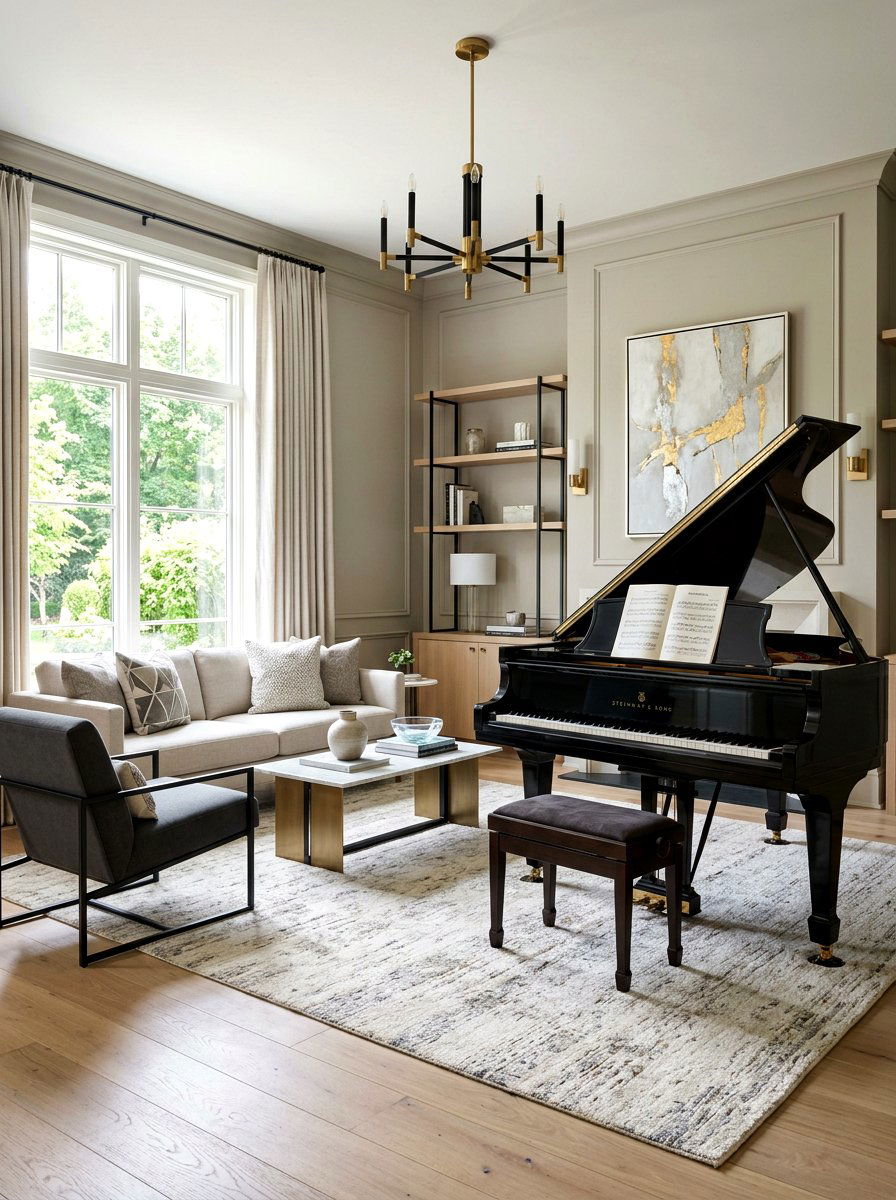
A transitional piano space blends traditional and contemporary styles for a look that is both comfortable and up-to-date. This design might feature a classic grand piano in a room with modern clean-lined furniture and a neutral, updated color palette. The use of mixed metals and diverse textures helps bridge the gap between old and new. This versatile approach allows the piano to feel at home in almost any modern house while still honoring its classical roots. By focusing on balance and harmony, a transitional music room creates a sophisticated environment that feels timeless. It is the perfect solution for families with varying design preferences.
Conclusion:
Designing the perfect piano room is a deeply personal journey that blends your love for music with your unique sense of style. Whether you prefer the moody atmosphere of a dark academia study or the bright, airy feel of a Scandinavian studio, the key is to create a space that inspires you to play. By considering acoustics, lighting, and furniture placement, you can transform any room into a professional-grade music sanctuary. Remember that your piano is not just an instrument, but a centerpiece that defines the character of your home. We hope these thirty ideas have provided the creative spark you need to build your own musical masterpiece.

Related posts: