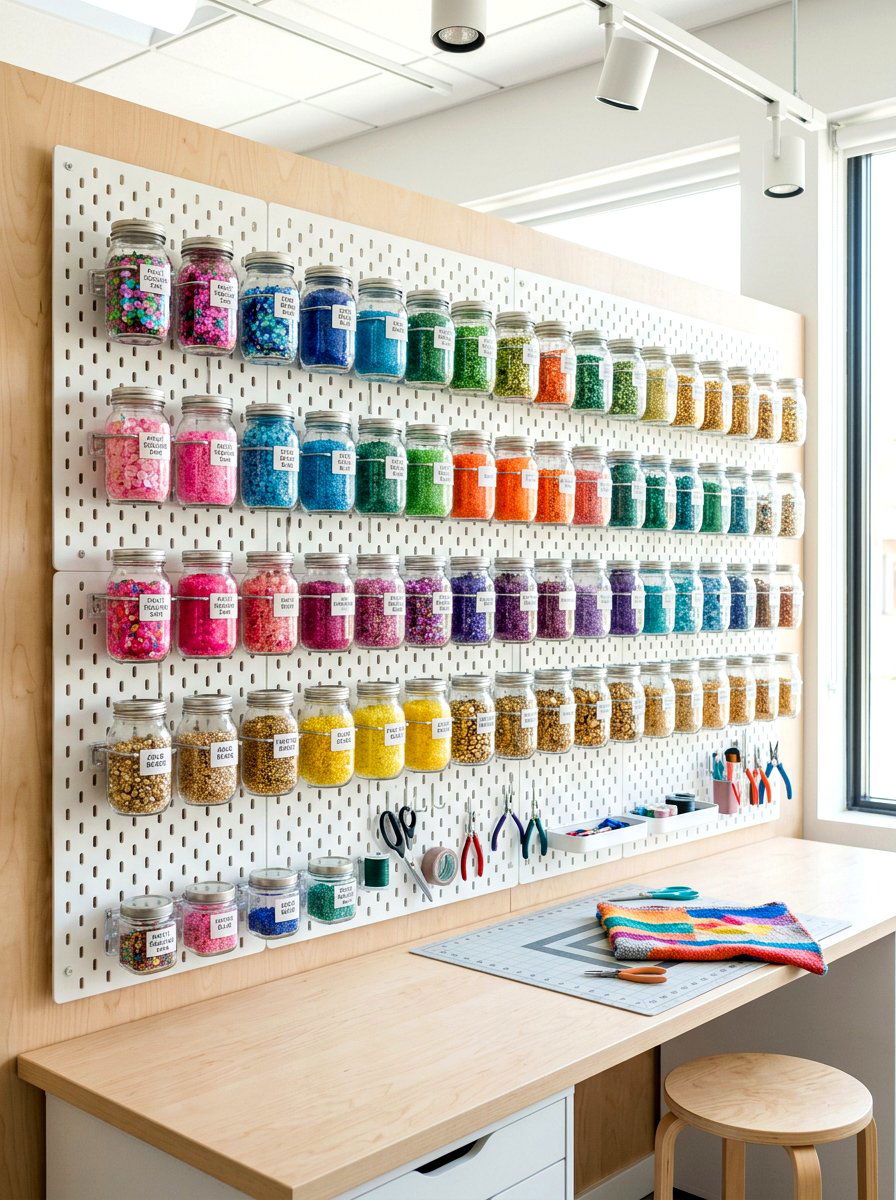
Creating a dedicated space for your creative projects can completely transform your productivity and overall enjoyment of the craft. Whether you are a professional seamstress or a weekend hobbyist, having a sewing room that feels organized and inspiring is essential for long-term success. A well-planned area allows you to keep your fabric stash tidy, your tools within reach, and your sewing machine ready for action at any moment. Designing this space involves balancing functional storage with an aesthetic that reflects your personal style. From bright lighting to ergonomic seating, every detail contributes to a more efficient and comfortable environment for bringing your beautiful textile visions to life.
1. Large Center Sewing Table
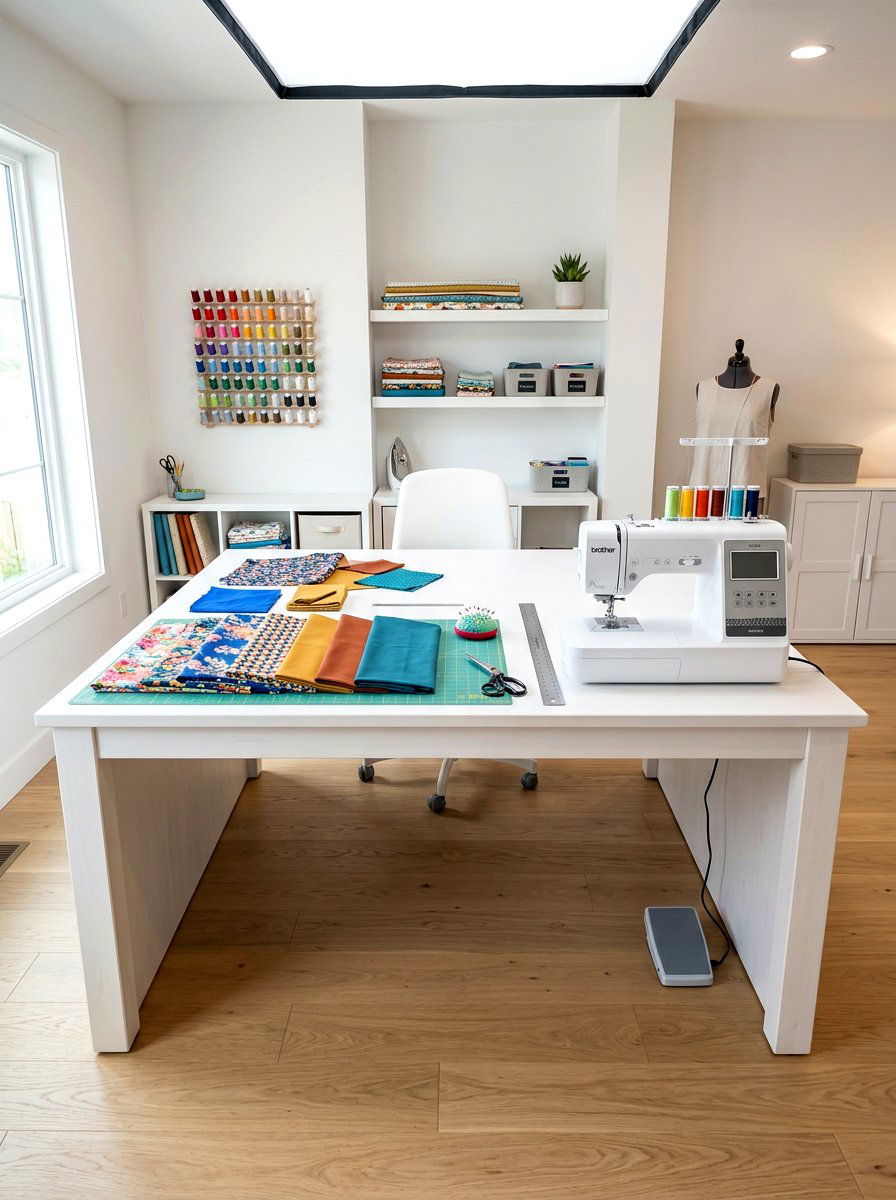
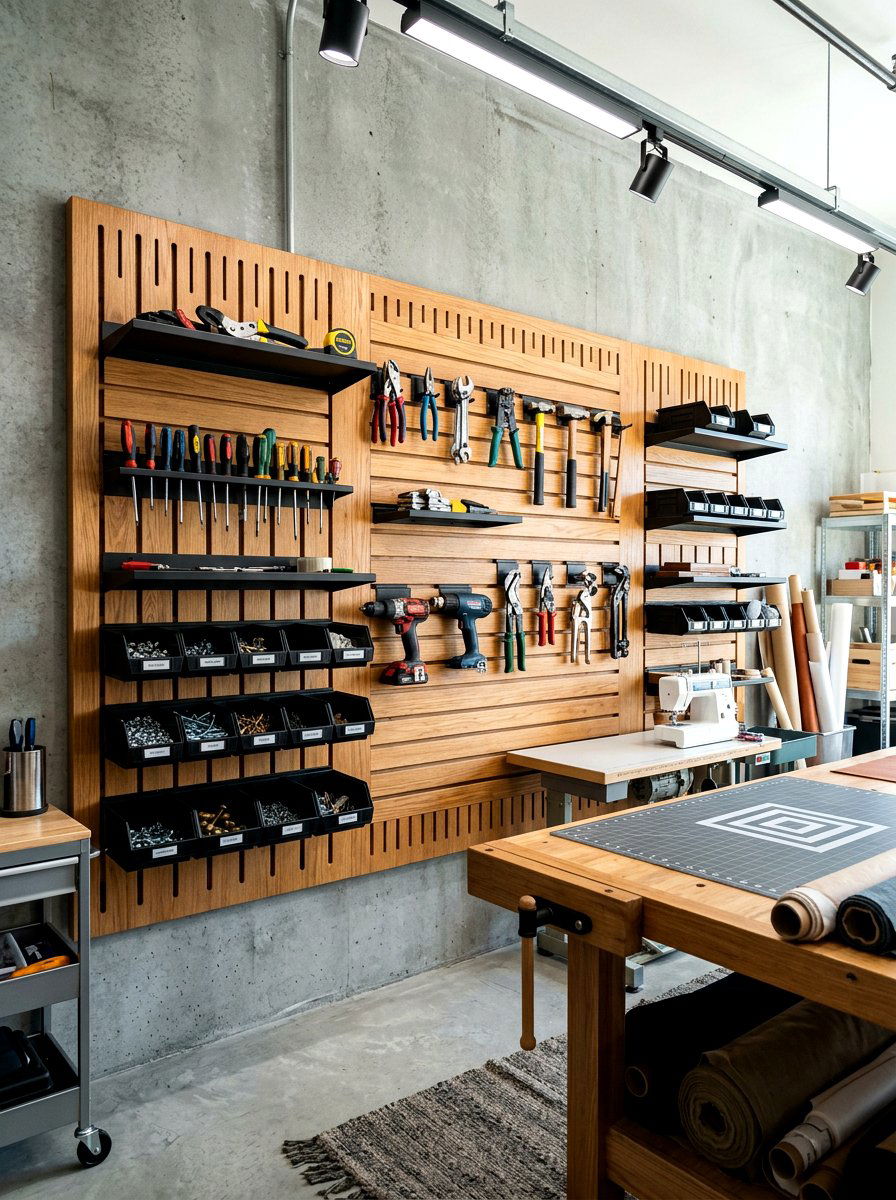
A spacious central table acts as the heart of any productive sewing environment. Having a wide, flat surface allows you to spread out large fabric yardage without it hanging off the edges and distorting your cuts. When the table is positioned in the middle of the room, you gain the freedom to move around all four sides, which is incredibly helpful when pinning or basting large quilts. Choose a sturdy frame that won't wobble during high-speed stitching or heavy pressing tasks. You can even find models with built-in measuring grids on the top to speed up your workflow. This setup ensures that your most important work happens right in the center of the action.
2. Wall Mounted Pegboard Organizer
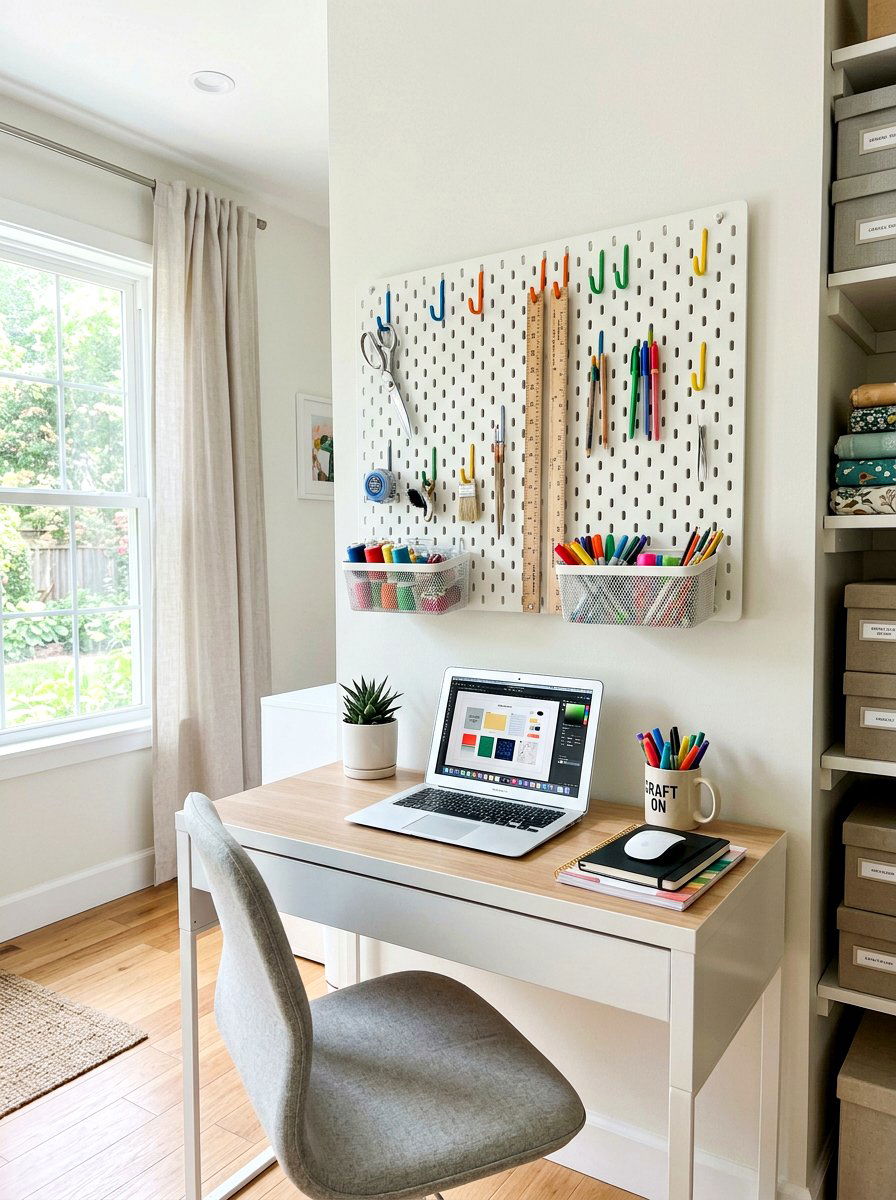
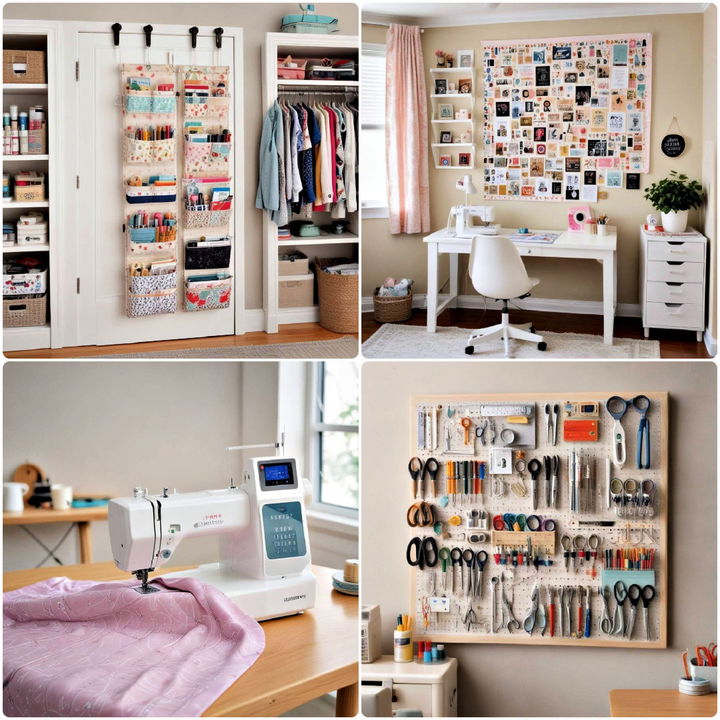
Vertical storage is a total game changer for keeping small notions organized and visible. A large pegboard mounted directly above your workstation provides a customizable home for scissors, rotary cutters, and measuring tapes. By using different hooks and baskets, you can arrange your most-used tools exactly where you need them for quick access. This keeps your primary workspace clear of clutter while ensuring you never have to dig through messy drawers to find your seam ripper. Painting the board a bright color can also add a fun, decorative element to the room. It is a practical solution that combines efficiency with a clean, modern aesthetic for any sewing space.
3. Clear Fabric Storage Bins
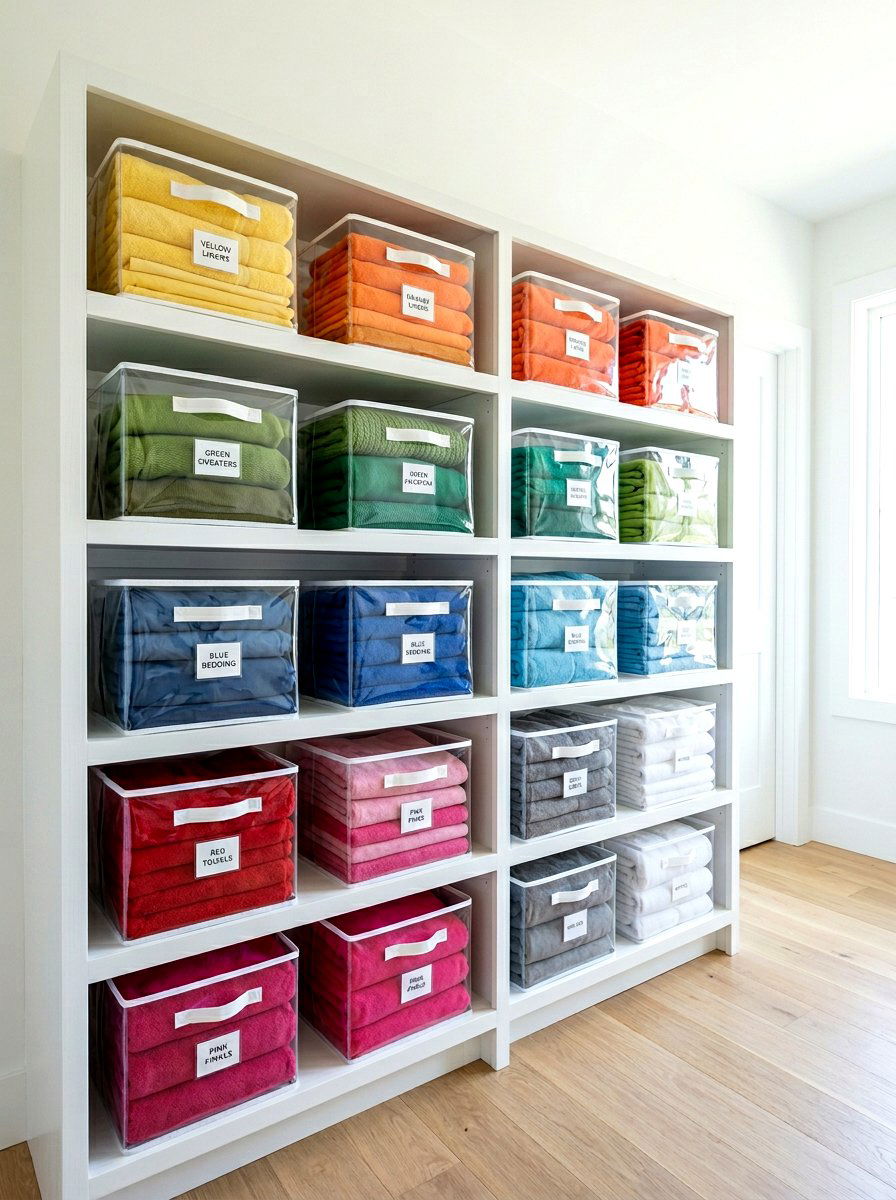
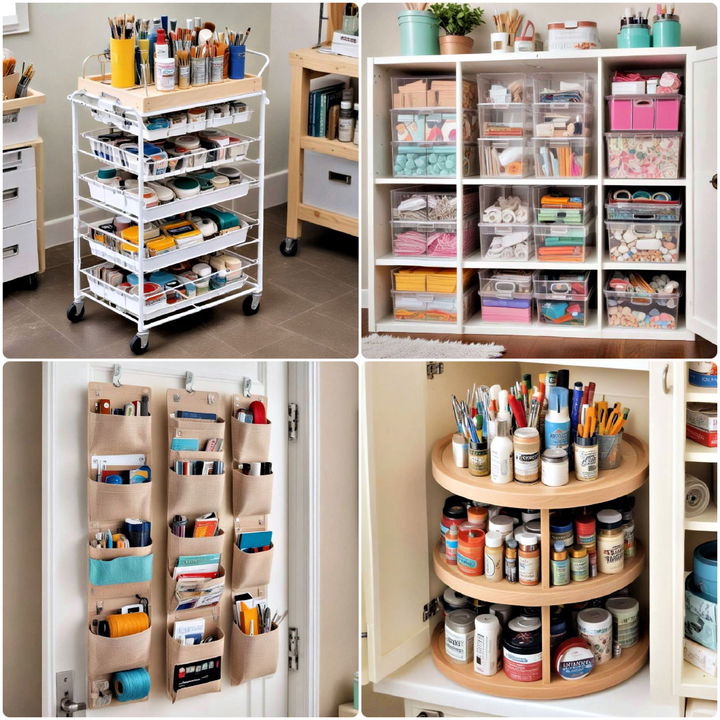
Maintaining a visible fabric collection is essential for staying inspired and avoiding duplicate purchases. Utilizing transparent plastic bins allows you to see your textiles at a glance, making it much easier to coordinate colors and patterns for your next project. You can stack these containers on open shelving or tuck them away in closets while still knowing exactly what is inside each one. Sorting your stash by fabric type or color within these bins further streamlines the creative process. This method protects your precious materials from dust and sunlight while keeping the room looking tidy. It is a simple yet effective way to manage a growing collection of beautiful sewing supplies.
4. Foldable Cutting Table
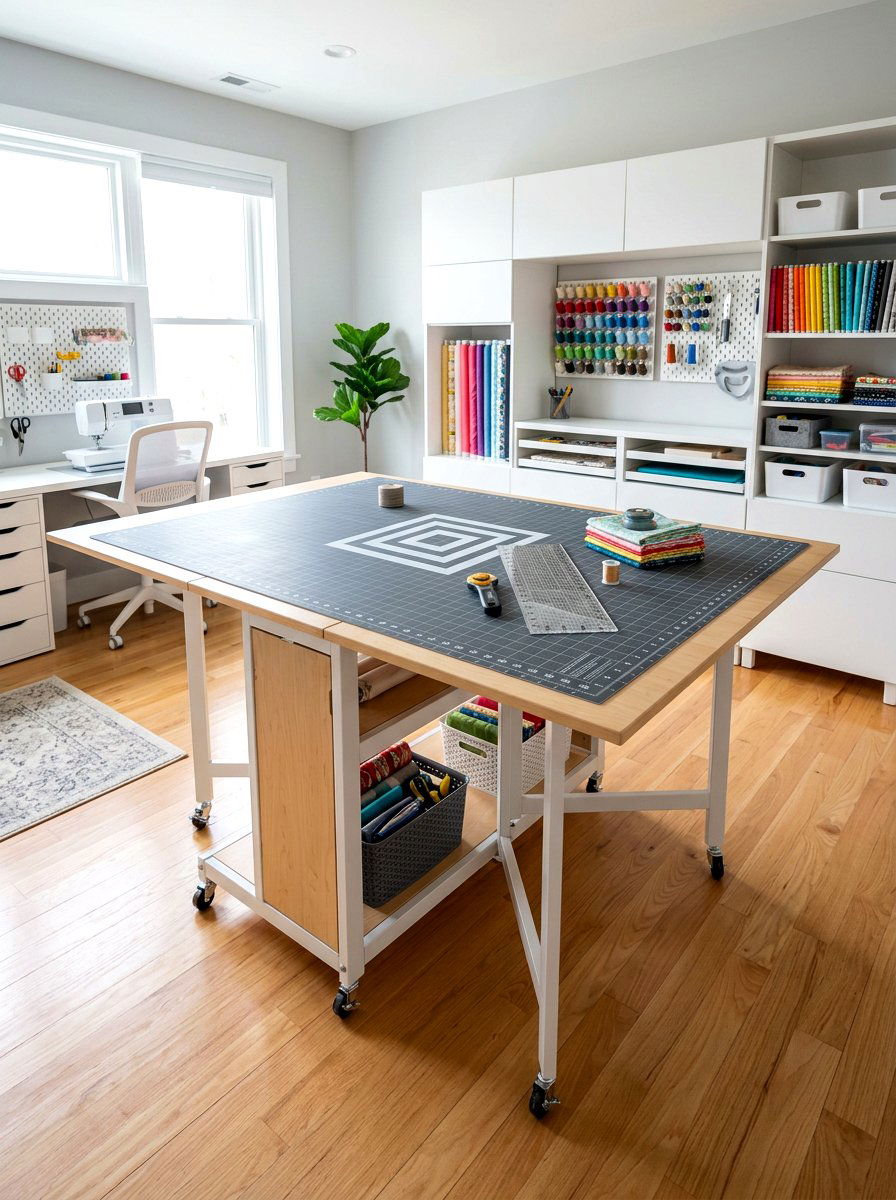
If you are working in a multi-purpose room, a collapsible cutting surface is an absolute necessity. These tables offer a large area for measuring and slicing fabric but can be tucked away when the project is finished. Many designs feature drop-leaf sides that expand when needed and fold down to a very slim profile for storage. This flexibility allows you to reclaim your floor space for other activities without sacrificing the convenience of a professional-grade cutting height. Look for models with lockable casters so you can easily move the unit to the brightest spot in the room. It is the perfect solution for small spaces requiring high functionality.
5. Natural Light Workstation
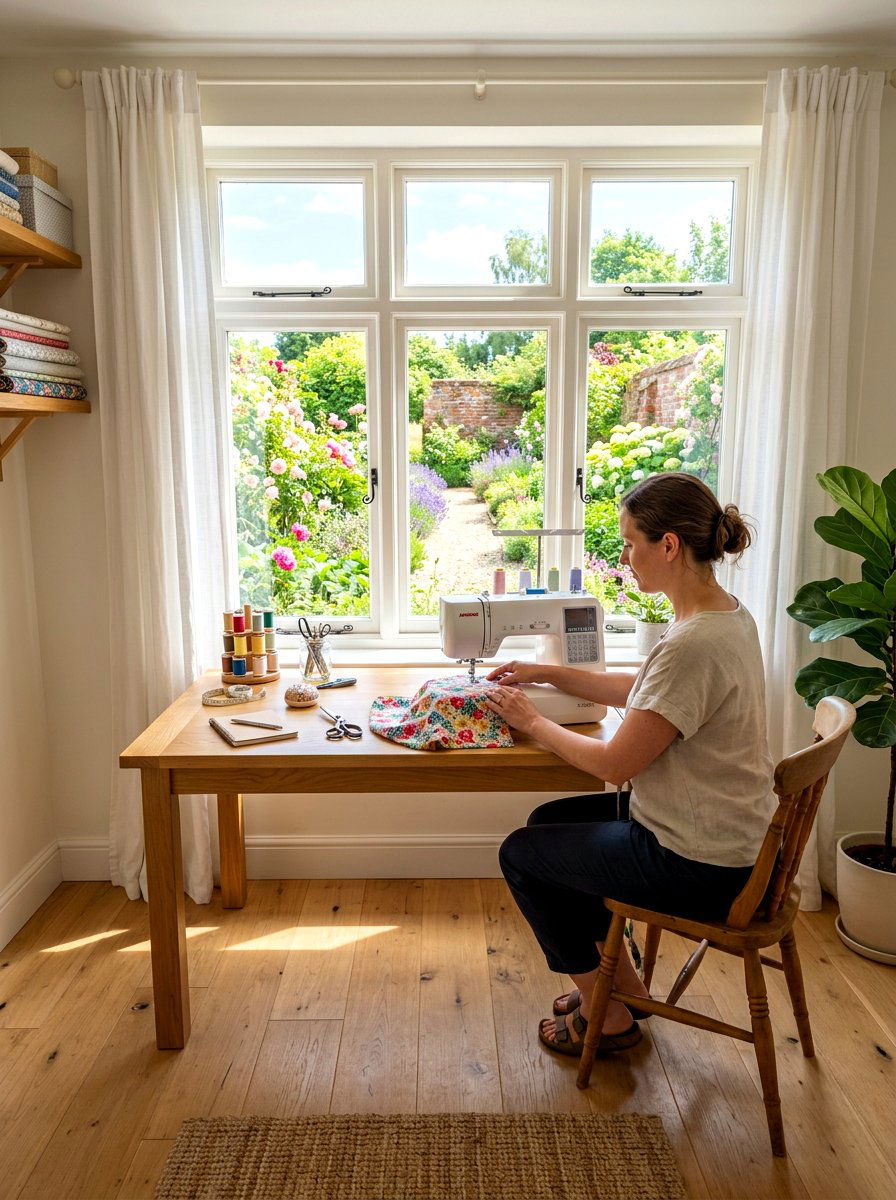
Positioning your primary sewing machine near a large window can significantly improve your accuracy and reduce eye strain. Natural daylight provides the most accurate color representation, which is vital when matching threads to delicate fabrics. Looking out at a garden or street view during a long stitching session also provides a refreshing mental break. To manage the intensity of the sun, consider installing light-filtering shades that prevent glare on your machine's screen or work surface. If your room lacks windows, you can mimic this effect with high-quality daylight LED bulbs. Prioritizing a bright and airy atmosphere makes spending hours at your sewing machine feel much more inviting and productive.
6. Custom Built In Cabinets
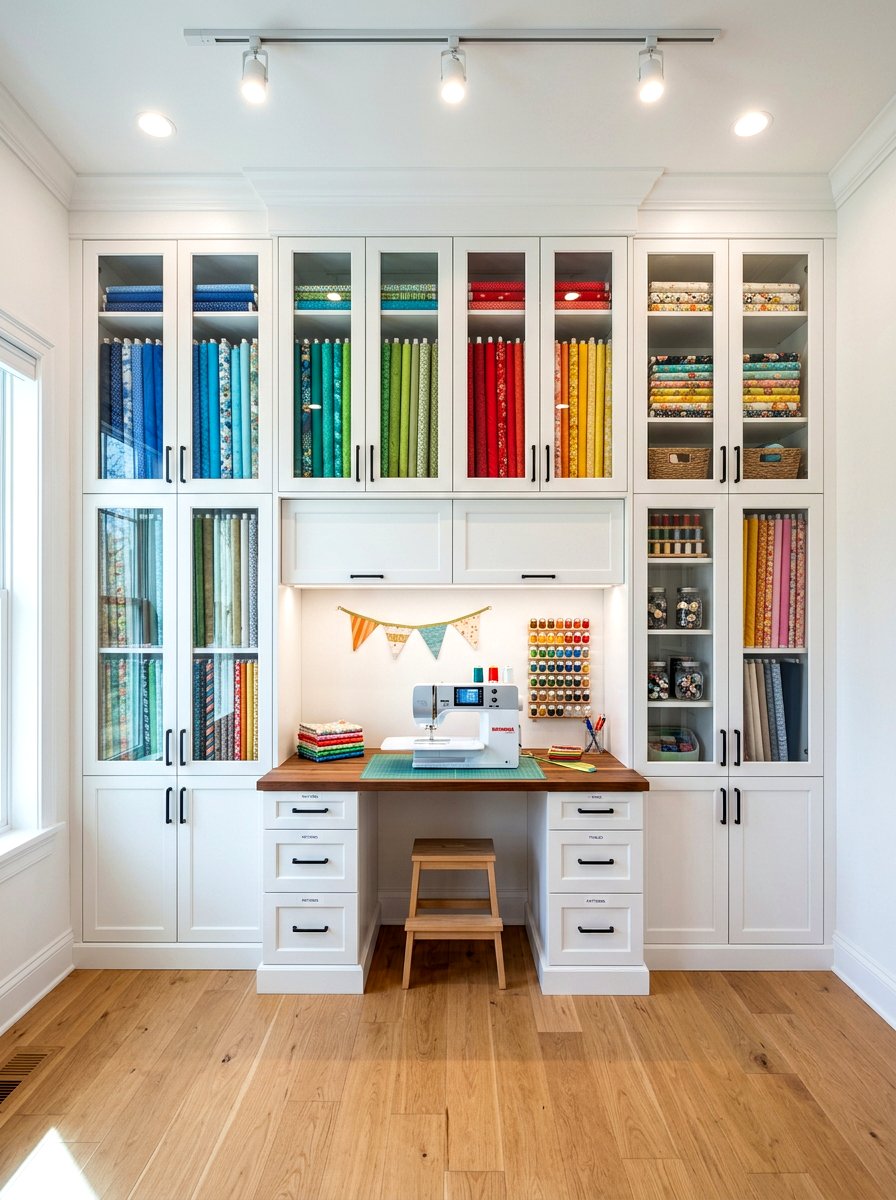
Installing floor-to-ceiling cabinetry offers a sleek and permanent way to organize a massive amount of sewing gear. Custom units can be designed with specific heights for fabric bolts, deep drawers for patterns, and recessed nooks for heavy sewing machines. This approach maximizes every inch of available wall space, leaving the center of the room open for movement and large projects. Closing the doors on your cabinets instantly hides the inevitable creative chaos, giving the room a polished and serene look when not in use. It is an investment that adds significant value to your home while providing the ultimate organizational structure for a serious and dedicated sewing enthusiast.
7. Wall Thread Rack
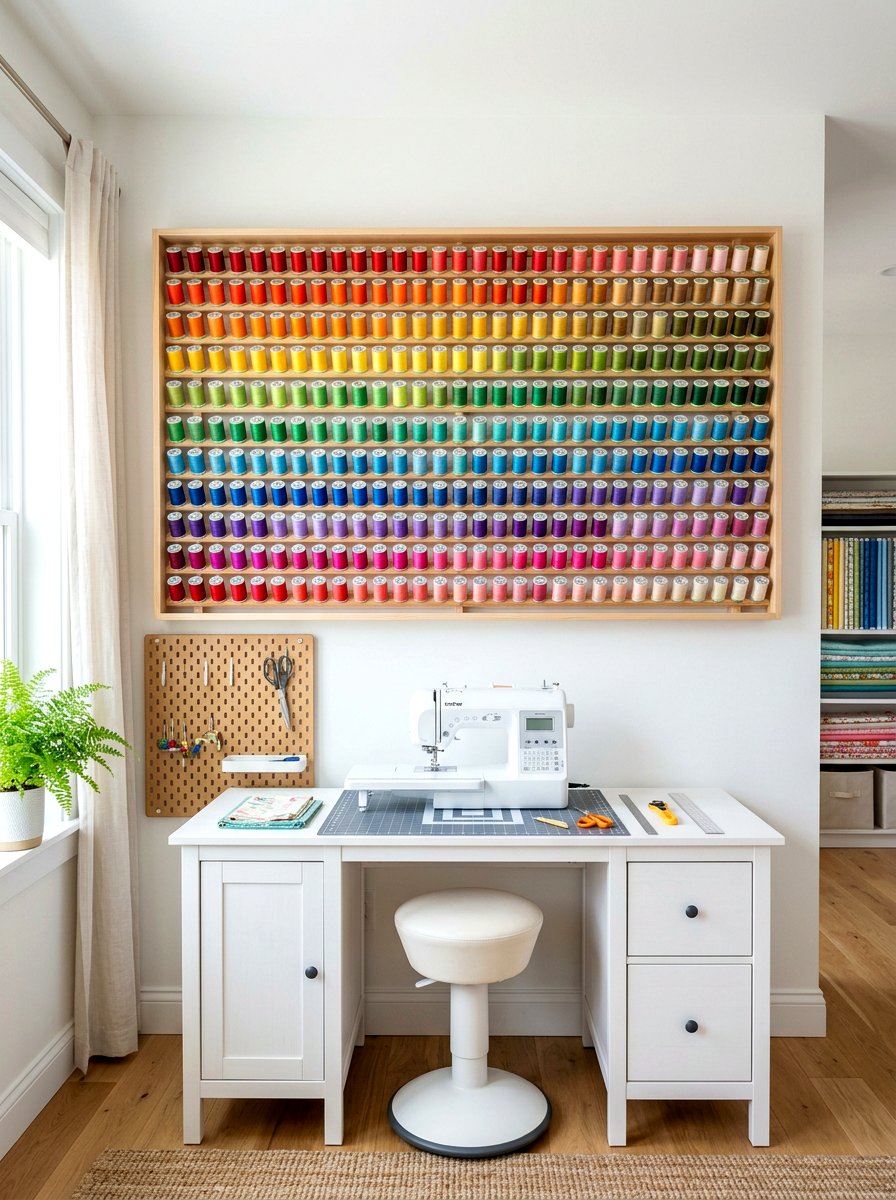
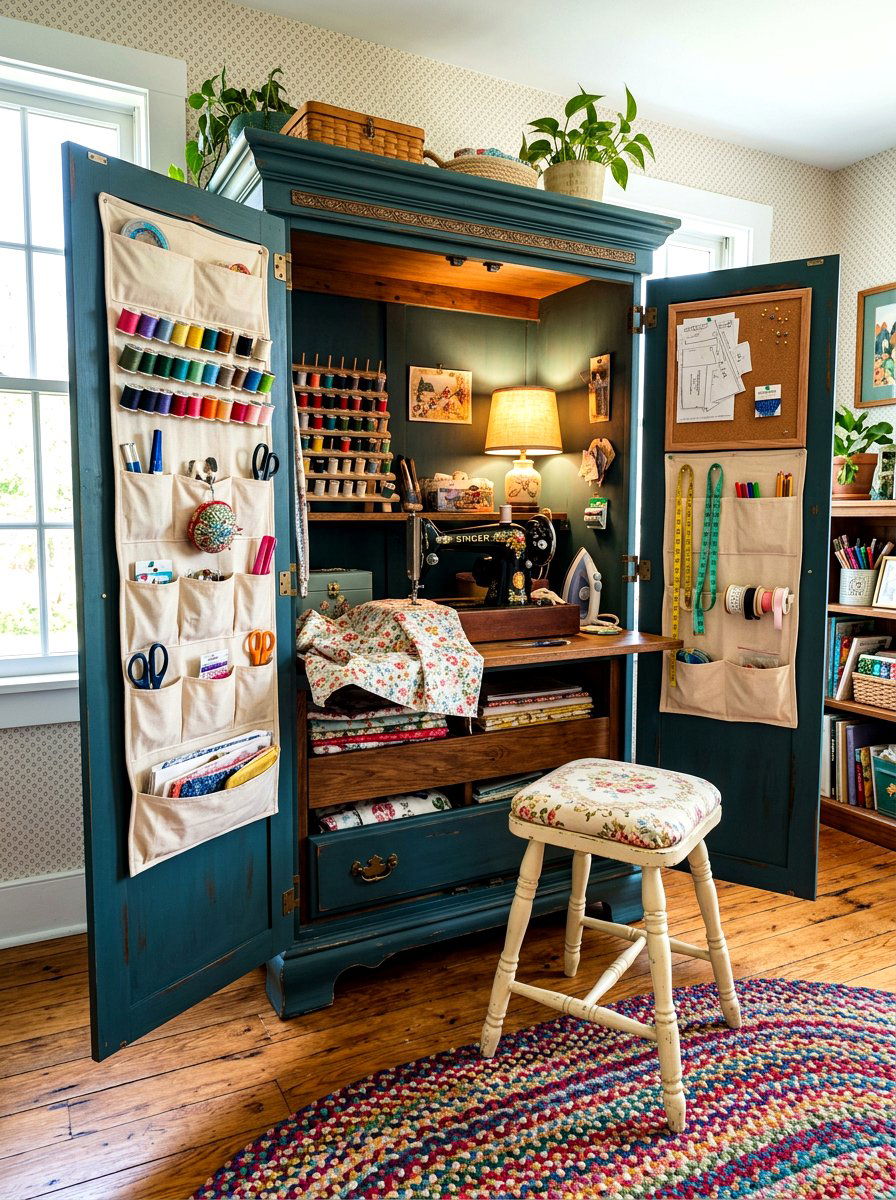
Displaying your colorful thread collection on a wall-mounted rack turns a functional supply into a vibrant piece of art. These wooden or plastic frames hold dozens of spools, making it incredibly easy to find the perfect color match for your fabric in seconds. By arranging the thread by color gradient, you create a beautiful focal point that enhances the room's decor. Keeping spools visible also helps you keep track of your inventory so you know exactly when you are running low on basic neutrals. This storage method prevents tangles and keeps your thread clean and ready for use. It is a classic sewing room staple that is both practical and beautiful.
8. Minimalist White Craft Space
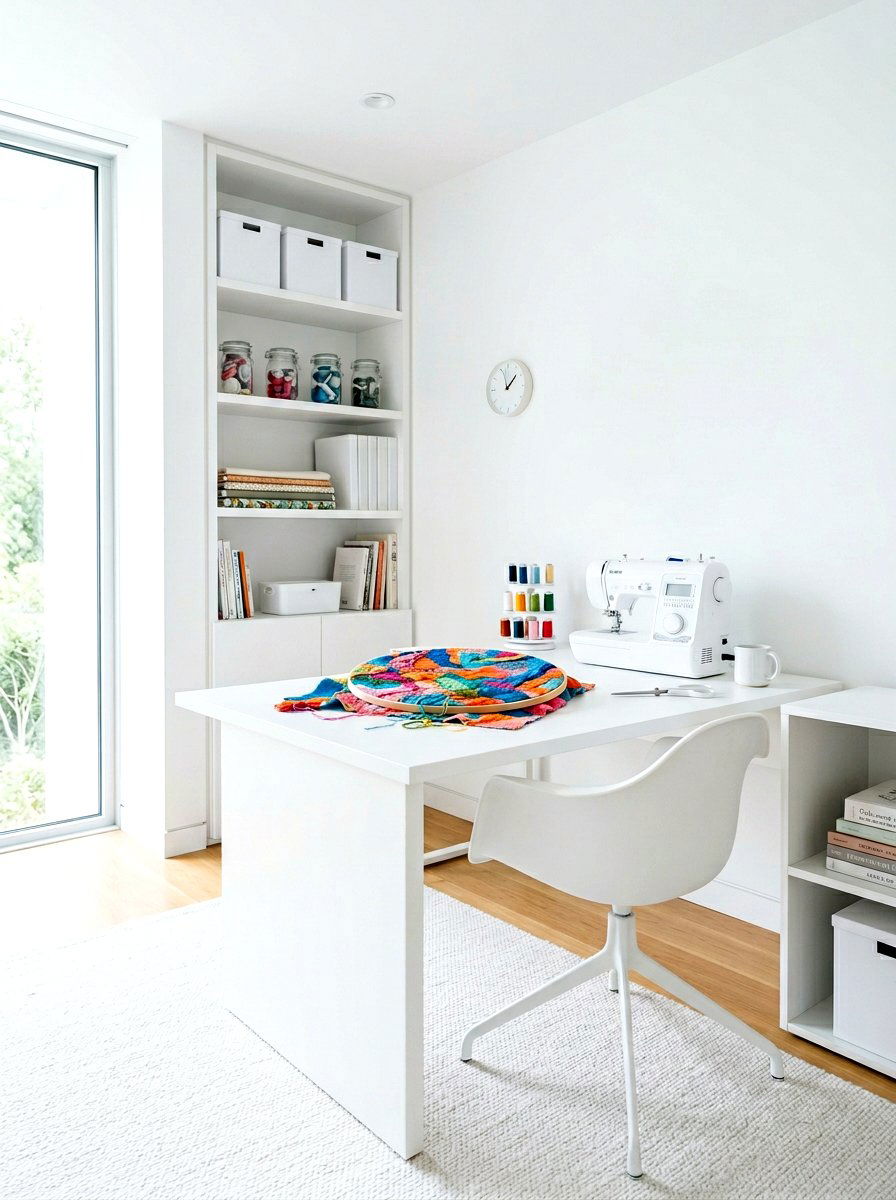
A clean and monochromatic color palette can create a calm environment that allows your colorful fabrics to stand out. White walls, desks, and shelving units reflect light beautifully, making the entire room feel larger and more organized. This minimalist approach reduces visual distractions, helping you focus entirely on the intricate details of your sewing projects. You can add warmth to the space with wooden accents or a soft rug while maintaining the sleek overall aesthetic. Using white storage containers further reinforces the tidy look, ensuring that the room never feels overwhelmed by the variety of supplies. It is a timeless design choice that promotes a sense of peace and creativity.
9. Farmhouse Style Sewing Room
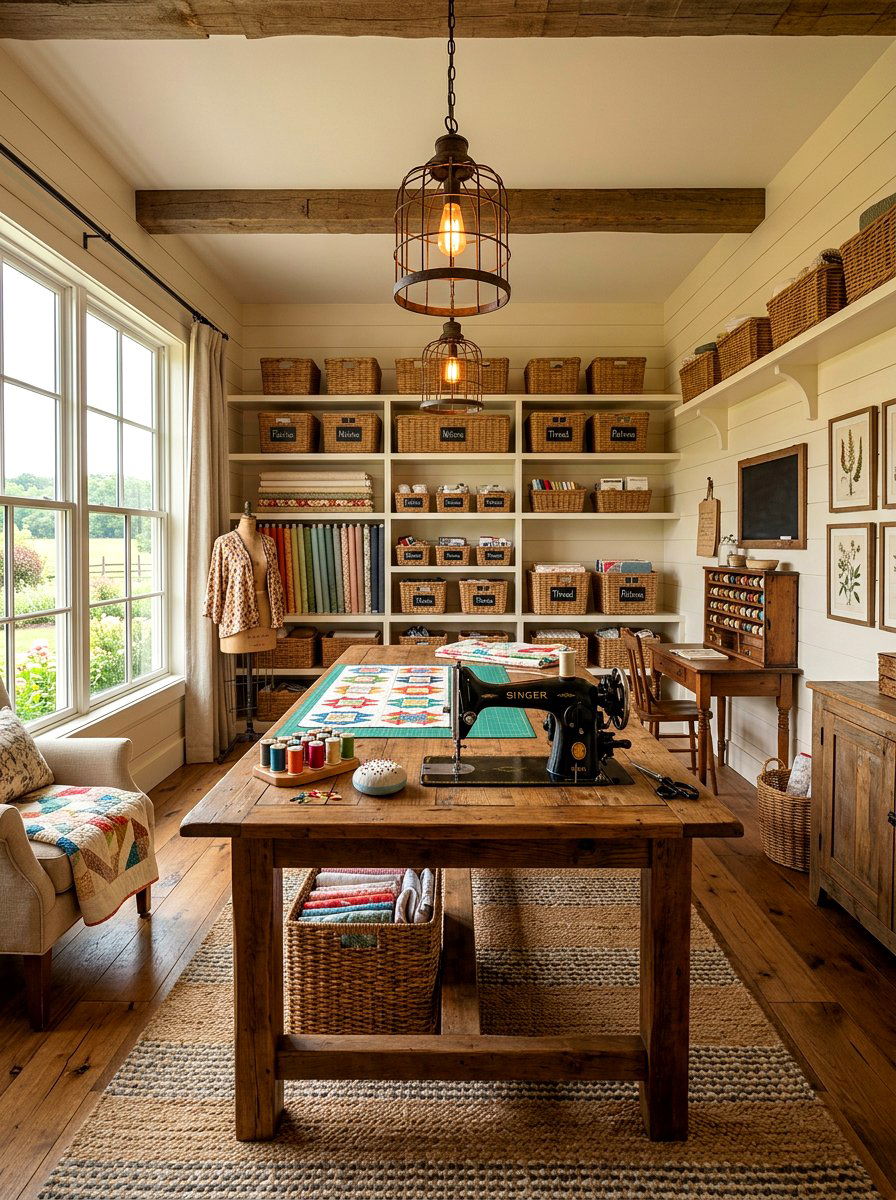
Bringing rustic elements into your creative space can make it feel incredibly cozy and lived-in. Consider using a reclaimed wood table as your main workstation or adding antique wicker baskets for fabric storage. Shiplap walls and vintage-inspired lighting fixtures can further enhance the farmhouse aesthetic, creating a charming backdrop for your sewing hobby. This style often emphasizes natural materials and soft textures, which pair perfectly with the tactile nature of textiles. You might even display vintage sewing machines as decorative accents to celebrate the history of the craft. It is a warm and inviting design direction that makes your sewing room feel like a truly special retreat within your home.
10. Floating Wall Shelves
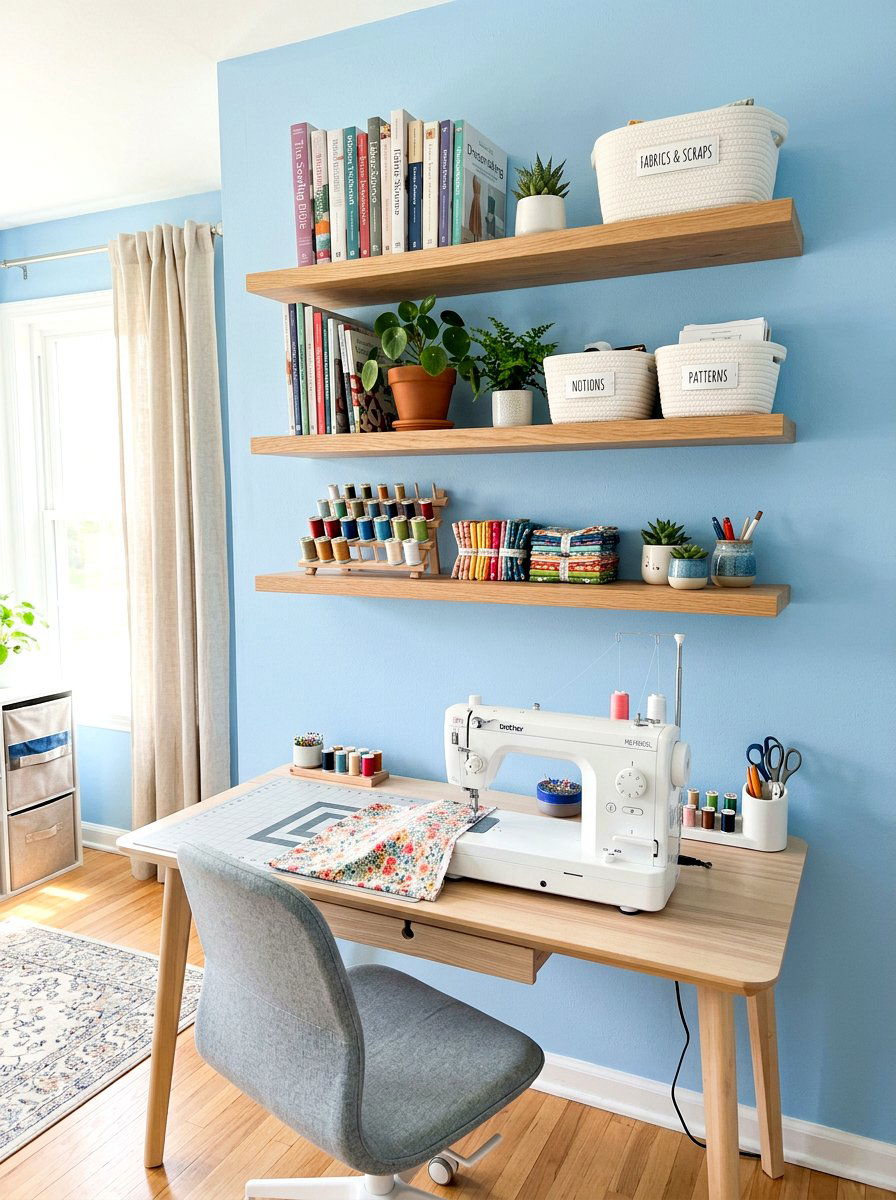
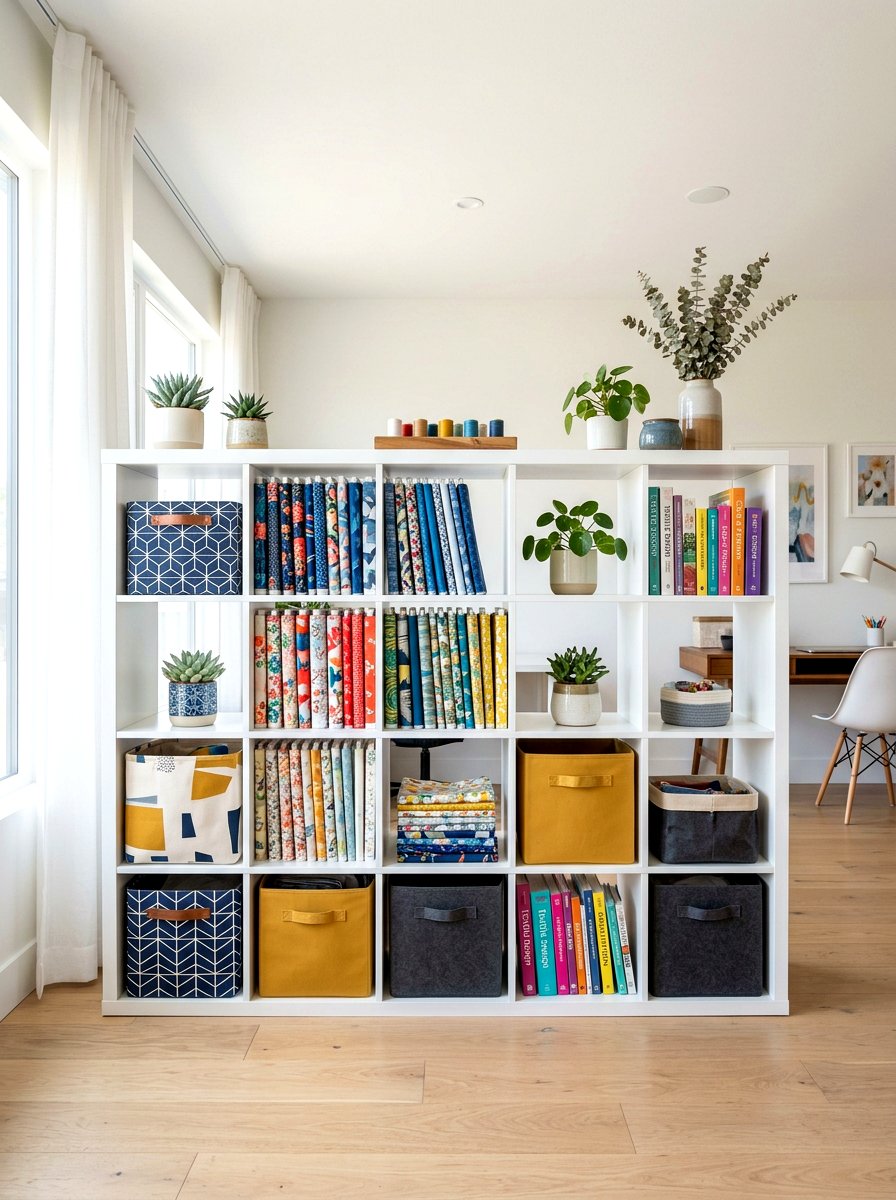
When floor space is limited, installing floating shelves provides an excellent way to store books, patterns, and decorative items. These sleek shelves take up no floor real estate and can be positioned at various heights to suit your needs. You can use them to display your favorite finished projects or to keep frequently used reference books within arm's reach. Placing small baskets on the shelves allows you to hide away smaller items like zippers or buttons while keeping the look clean. Floating shelves also offer a great opportunity to personalize your space with photos or small plants. They are a versatile and modern addition to any well-organized creative workspace.
11. Antique Sewing Machine Desk
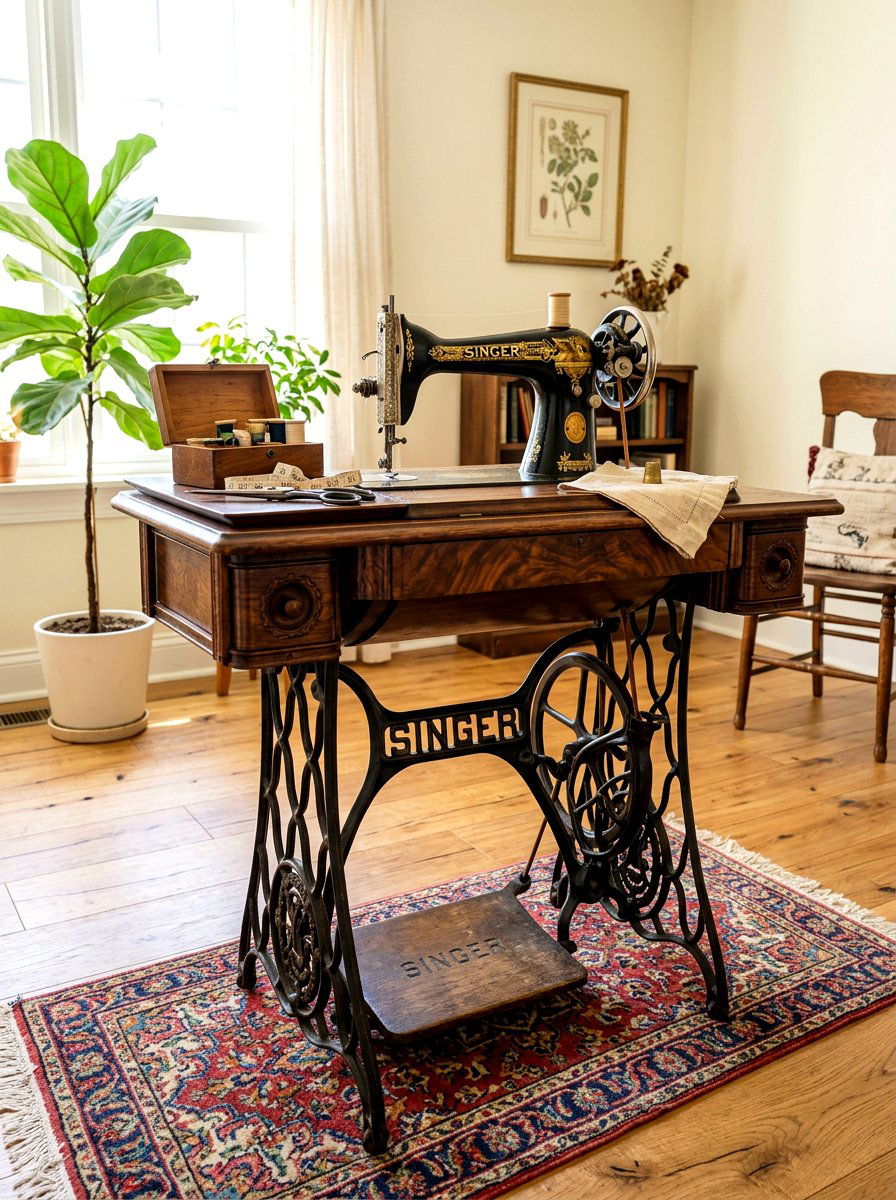
Incorporating a vintage treadle desk or an old-fashioned sewing cabinet adds a sense of history and character to your room. These pieces of furniture are often built with incredible craftsmanship and provide a sturdy base for modern machines. Even if the original machine no longer works, the desk itself can serve as a beautiful side table or a dedicated station for hand-sewing tasks. The intricate metalwork and rich wood tones of antique pieces create a stunning contrast in a modern interior. It is a wonderful way to honor the tradition of sewing while giving a second life to a piece of functional furniture. This focal point will surely spark conversation and inspiration.
12. Rolling Supply Cart
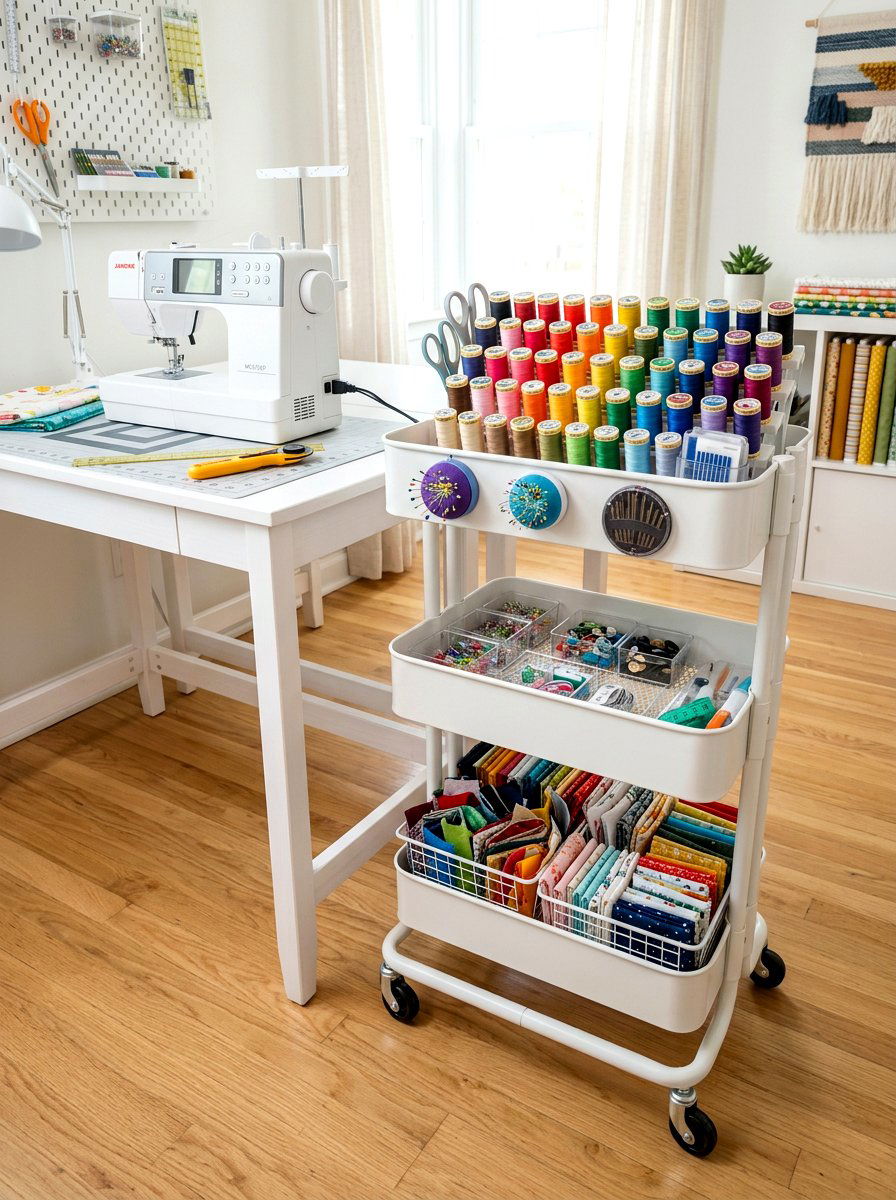
A multi-tiered rolling cart is the perfect mobile companion for any sewist who likes to move around their space. You can load it up with your current project's supplies, such as thread, pins, and fabric scraps, and wheel it right to your side. This prevents you from having to get up constantly to grab tools, keeping you in the creative flow for longer periods. When the project is finished, the cart can be tucked into a corner or a closet to keep the room tidy. Many of these carts are magnetic, allowing you to stick metal tins or tools directly to the sides. It is an affordable and highly versatile storage solution.
13. Under Table Storage
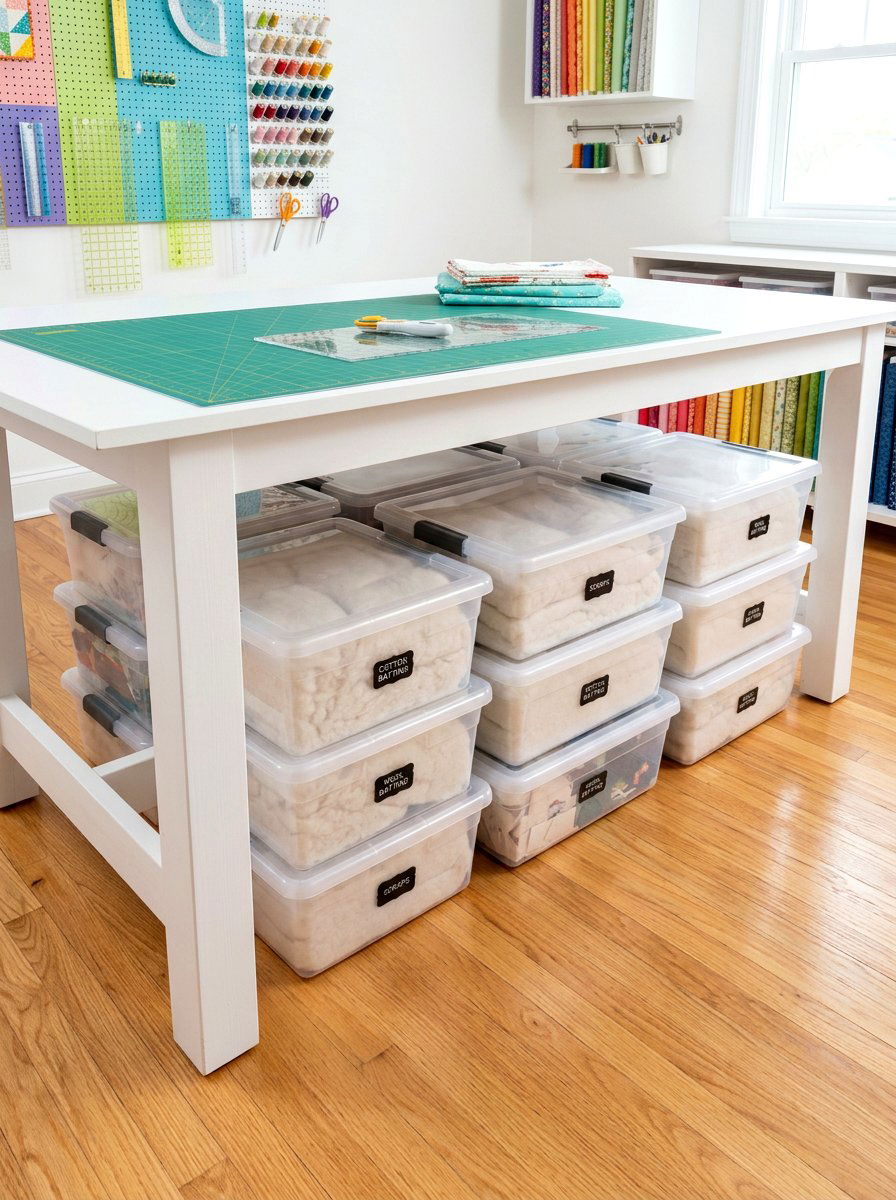
Utilizing the space beneath your cutting or sewing table is a smart way to maximize every square inch of your room. You can slide low-profile bins or rolling drawers under the surface to store bulky items like quilt batting or extra fabric bolts. This area is often overlooked but provides a significant amount of hidden storage potential that keeps the room looking organized. If your table has a lower shelf, you can use it to store your sewing machine cases or heavy reference manuals. Keeping these items off the main floor makes cleaning much easier and reduces tripping hazards. It is a practical strategy for maintaining a clutter-free and highly functional workspace.
14. Small Corner Sewing Nook
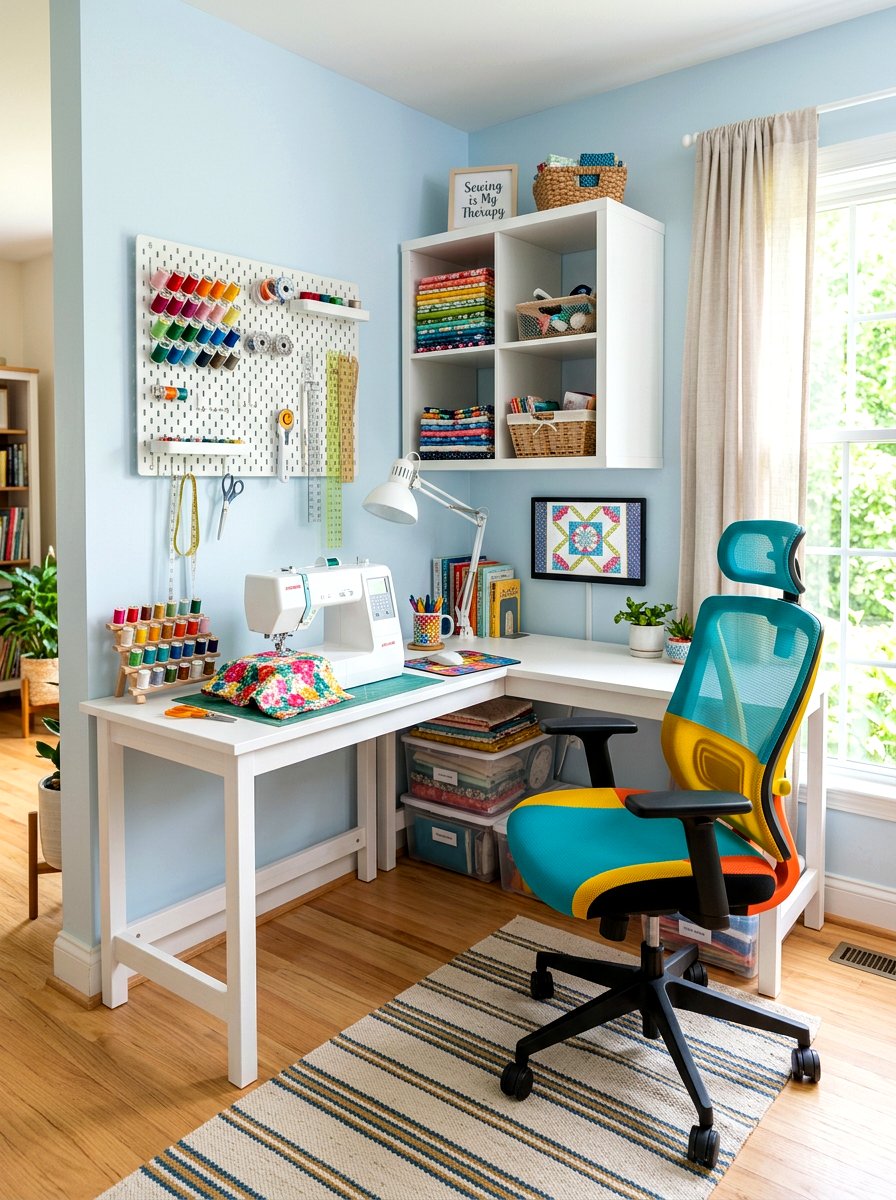
You don't need an entire room to create a functional sewing sanctuary; a well-planned corner can work wonders. By using an L-shaped desk, you can create separate zones for sewing and cutting within a very compact footprint. Wall-mounted storage like floating shelves or small pegboards can handle your supplies without taking up precious floor space. Adding a comfortable chair and a high-quality task light ensures that the nook is just as effective as a full-sized studio. Choosing light colors for the furniture and walls in this area helps it feel open and integrated into the rest of the room. It is proof that creativity can thrive in any size space.
15. Large Wall Mood Board
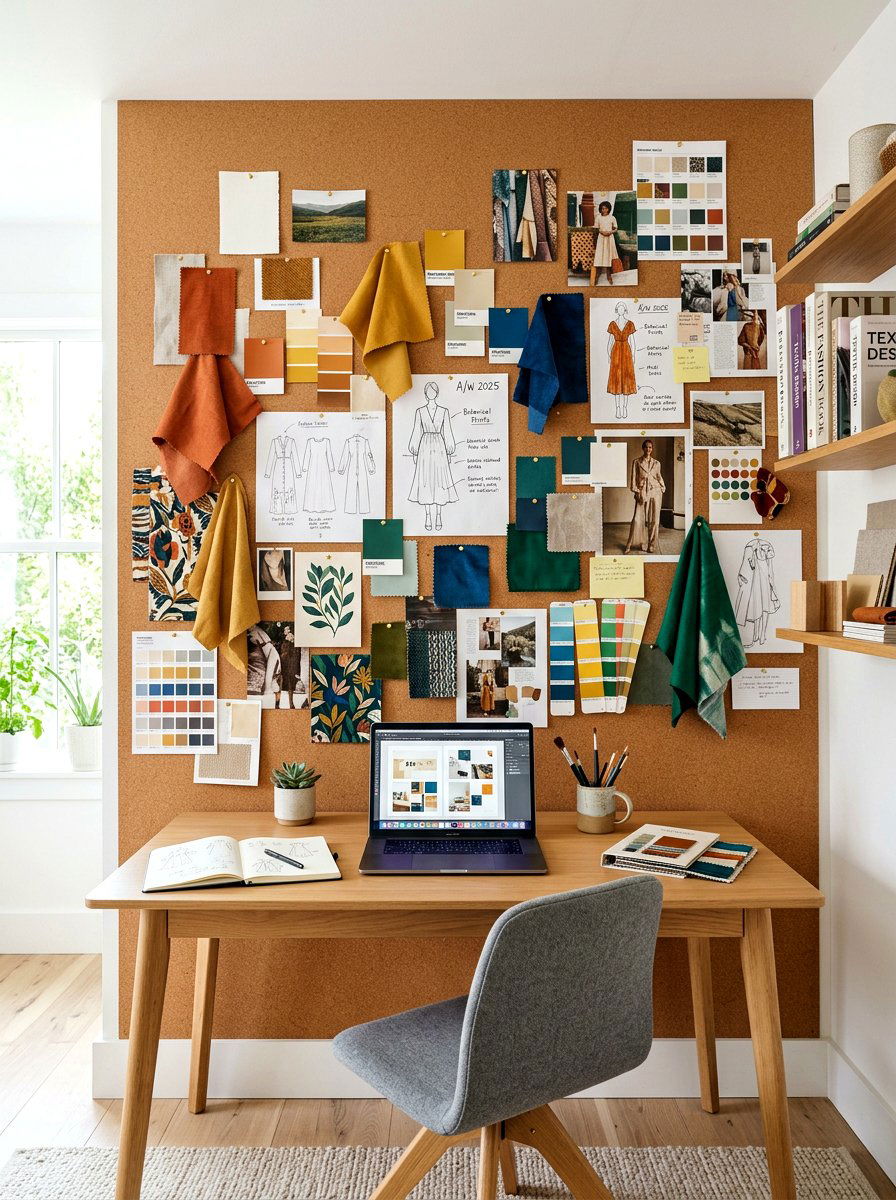
Creating a dedicated space for inspiration can help you visualize your sewing projects before you even cut into the fabric. A large corkboard or fabric-covered foam board allows you to pin up sketches, fabric swatches, and color palettes. Seeing your ideas displayed together makes it easier to refine your designs and stay motivated throughout the process. You can also use the board to display photos of finished garments that inspire your style. This visual tool adds a professional touch to your room and serves as a constantly evolving piece of decor. It is a wonderful way to keep your creative goals front and center in your workspace.
16. Hidden Closet Sewing Station
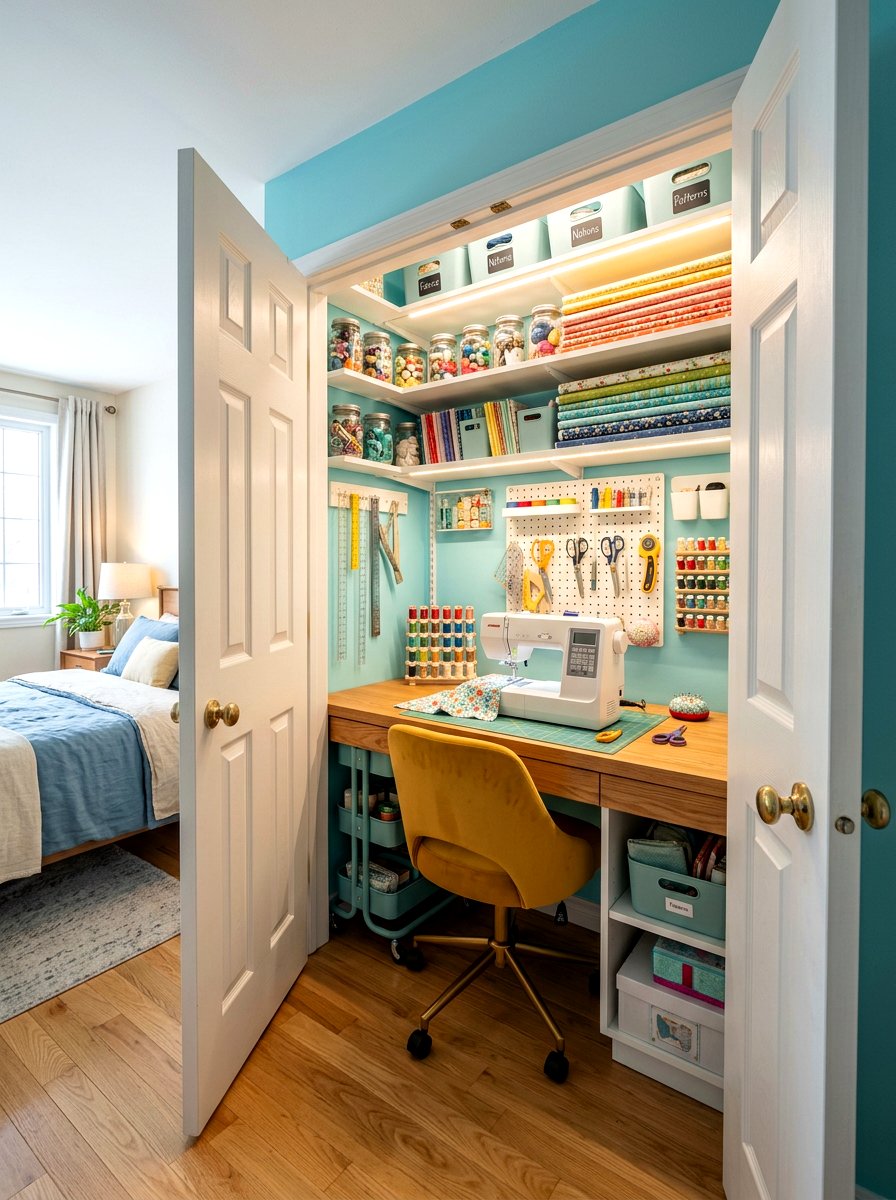
Transforming a spare closet into a compact sewing studio is a brilliant way to save space in a bedroom or guest room. By installing a custom desk surface and shelving inside the closet, you create a fully functional workspace that can be hidden away. When you are done for the day, simply close the closet doors to instantly tidy up the room. This setup is ideal for those who prefer a clean and minimalist living environment but still want a dedicated area for their hobby. You can even add battery-operated lighting inside to ensure you have plenty of visibility. It is a clever and efficient use of existing home features.
17. Adjustable Height Cutting Table
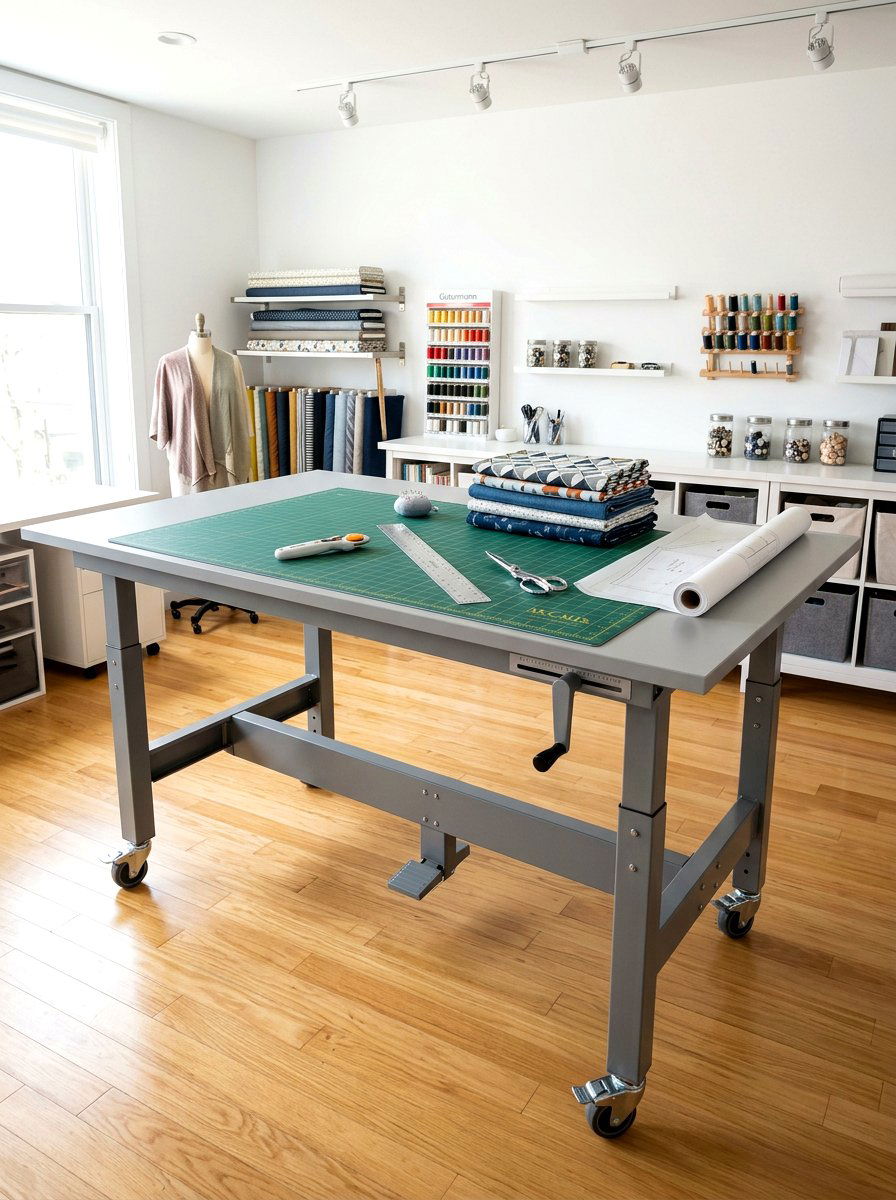
Protecting your back and neck is vital during long hours of measuring and cutting fabric. An adjustable height table allows you to raise the surface to a comfortable level, preventing you from hunching over your work. Many of these tables use a crank or electric motor to transition easily between sitting and standing heights. This versatility means you can use the same surface for both sewing and cutting by simply adjusting the height. Look for a model with a durable, smooth top that won't snag delicate materials. Investing in ergonomic furniture ensures that your sewing hobby remains a comfortable and pain-free experience for many years to come.
18. Boho Textile Studio
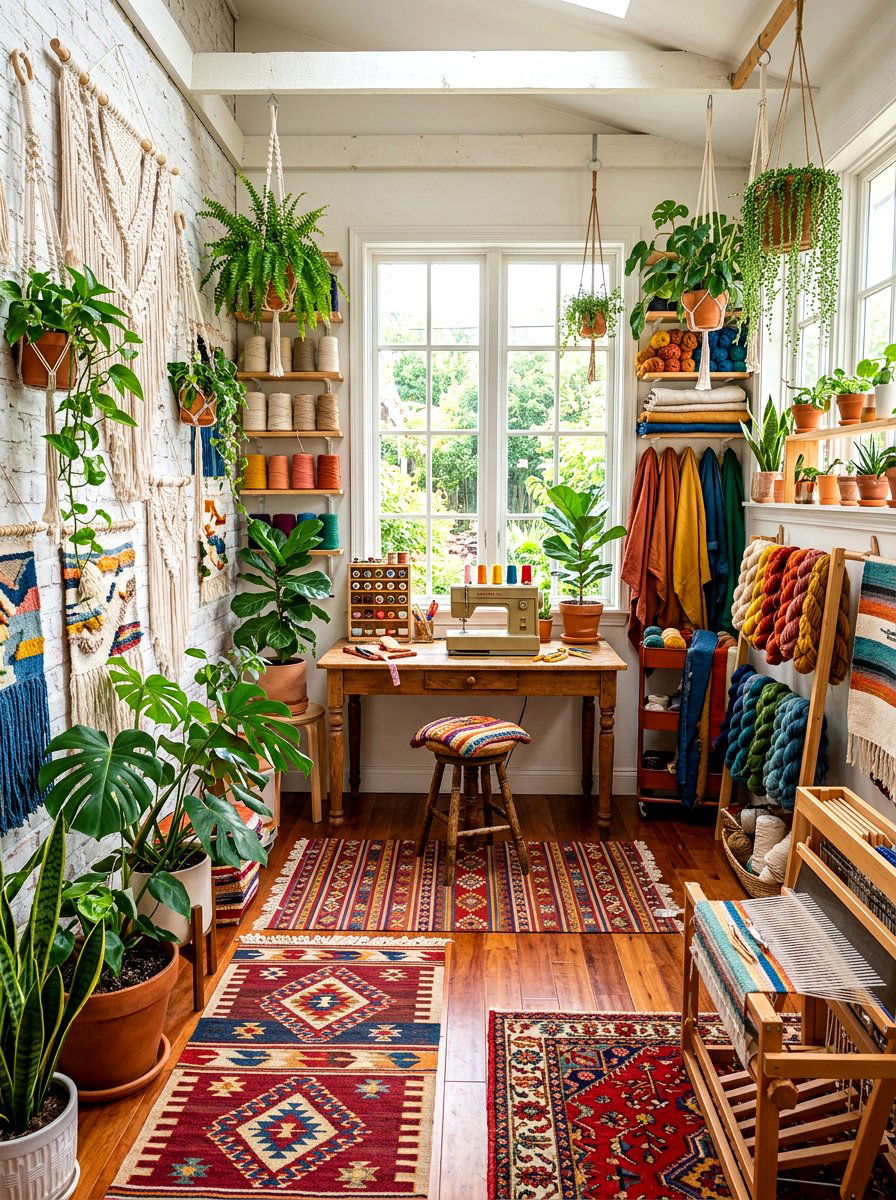
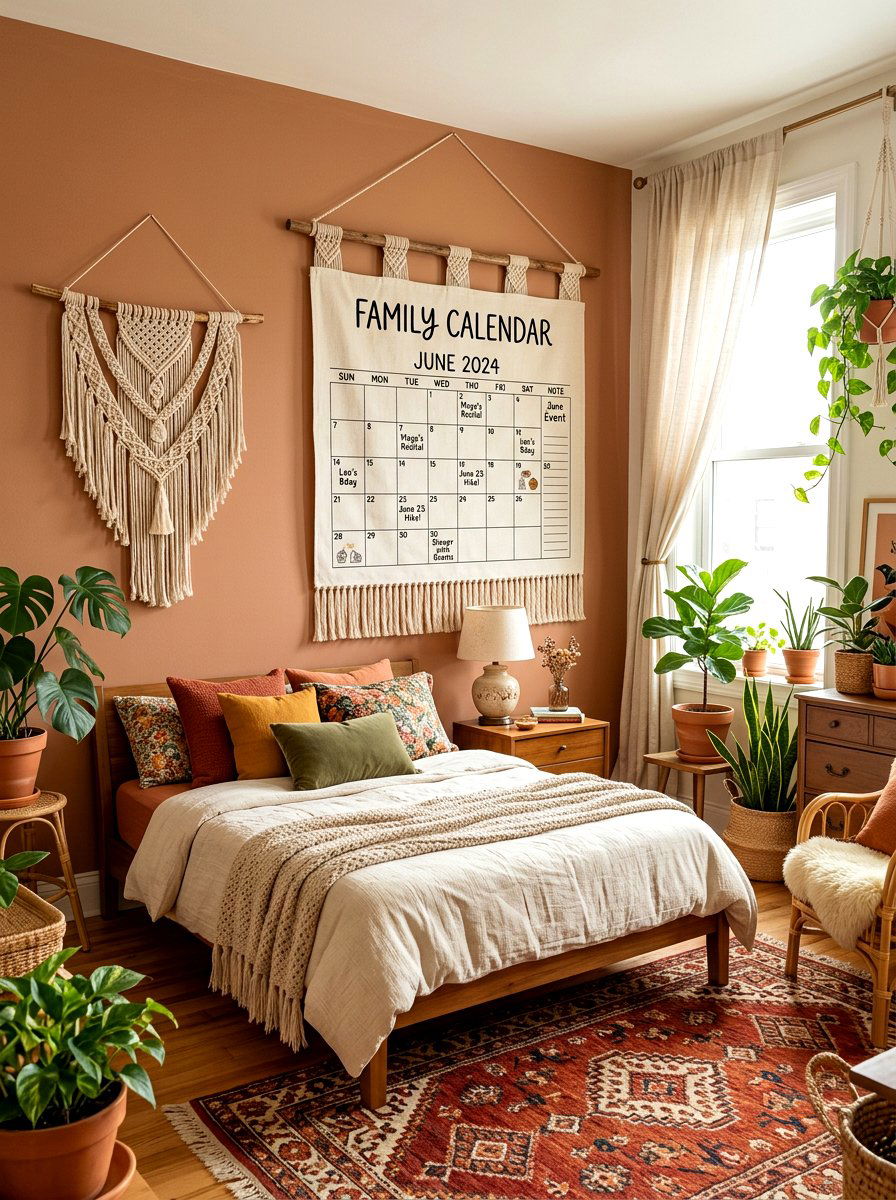
Embrace a relaxed and artistic vibe by filling your sewing room with layers of pattern and natural materials. Woven wall hangings, colorful rugs, and plenty of indoor plants create a vibrant atmosphere that celebrates global textiles. You might use open baskets made of seagrass or jute to hold your fabric scraps and yarn. This style encourages a bit of creative mess, making the room feel like a true artist's workshop. Macramé hangers can even be used to hold small tools or spools of thread. It is a soulful and eclectic design approach that makes your creative space feel like a personalized sanctuary. This aesthetic is perfect for those who love bold colors.
19. Shared Sewing Workshop Space
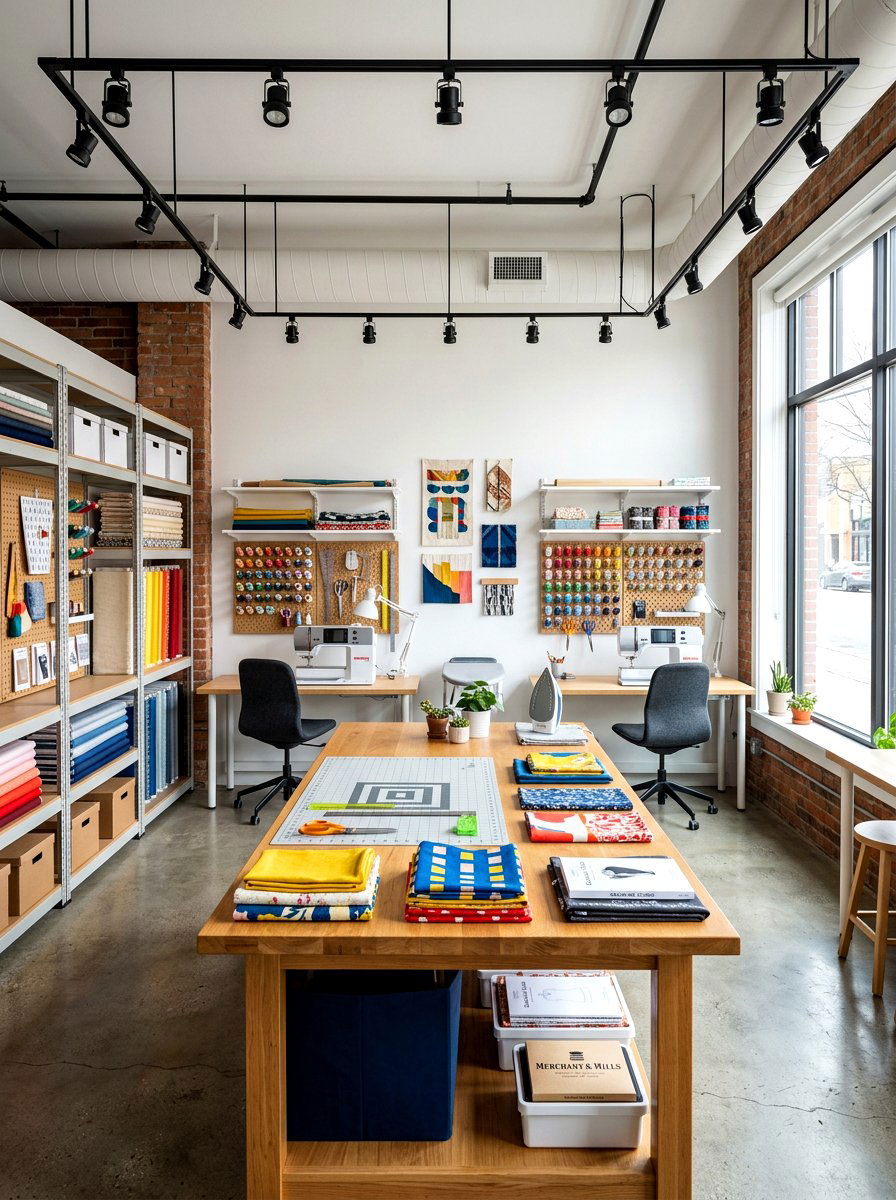
If you enjoy crafting with friends or family, designing a room with multiple workstations is a fantastic idea. Long desks along the walls can accommodate several sewing machines, while a large central table serves as a communal cutting and layout area. This setup encourages collaboration and makes it easy to teach beginners the basics of the craft. Make sure to provide plenty of power outlets and individual task lighting for each person to ensure everyone can work comfortably. Using identical chairs and storage units can help the room feel cohesive despite the multiple work zones. It is a great way to turn sewing into a social and shared experience.
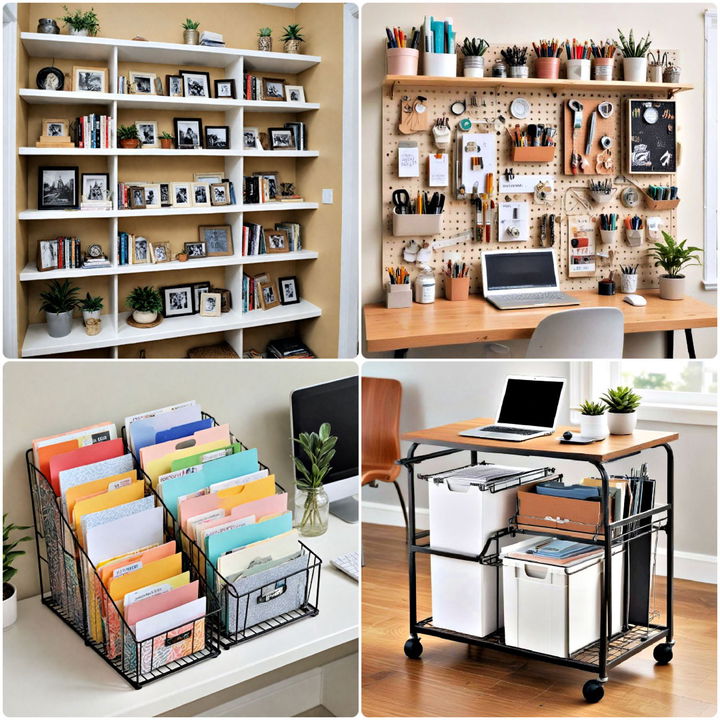
20. Overhead Studio Lighting
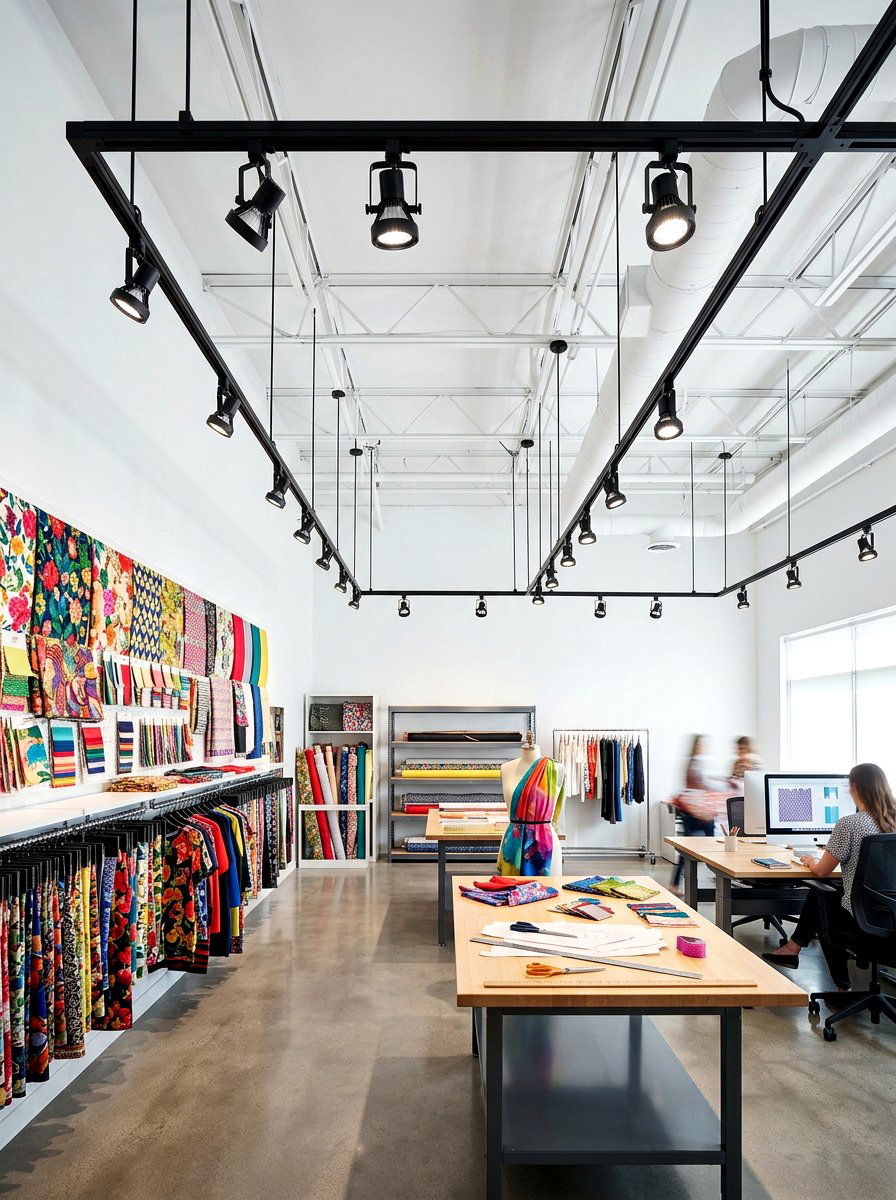
Proper illumination is the most important functional element of any successful sewing room. Installing a large, bright overhead light ensures that the entire space is well-lit, eliminating shadows that can make detailed work difficult. Track lighting is a popular choice because you can aim individual lamps toward your sewing machine, cutting table, and ironing station. Look for bulbs that offer a high color rendering index to ensure you see the true colors of your fabrics. Supplementing overhead lights with adjustable desk lamps provides extra precision for tasks like threading needles or hand-stitching. A brightly lit room not only improves your work but also boosts your mood and energy levels.
21. Finished Attic Sewing Space
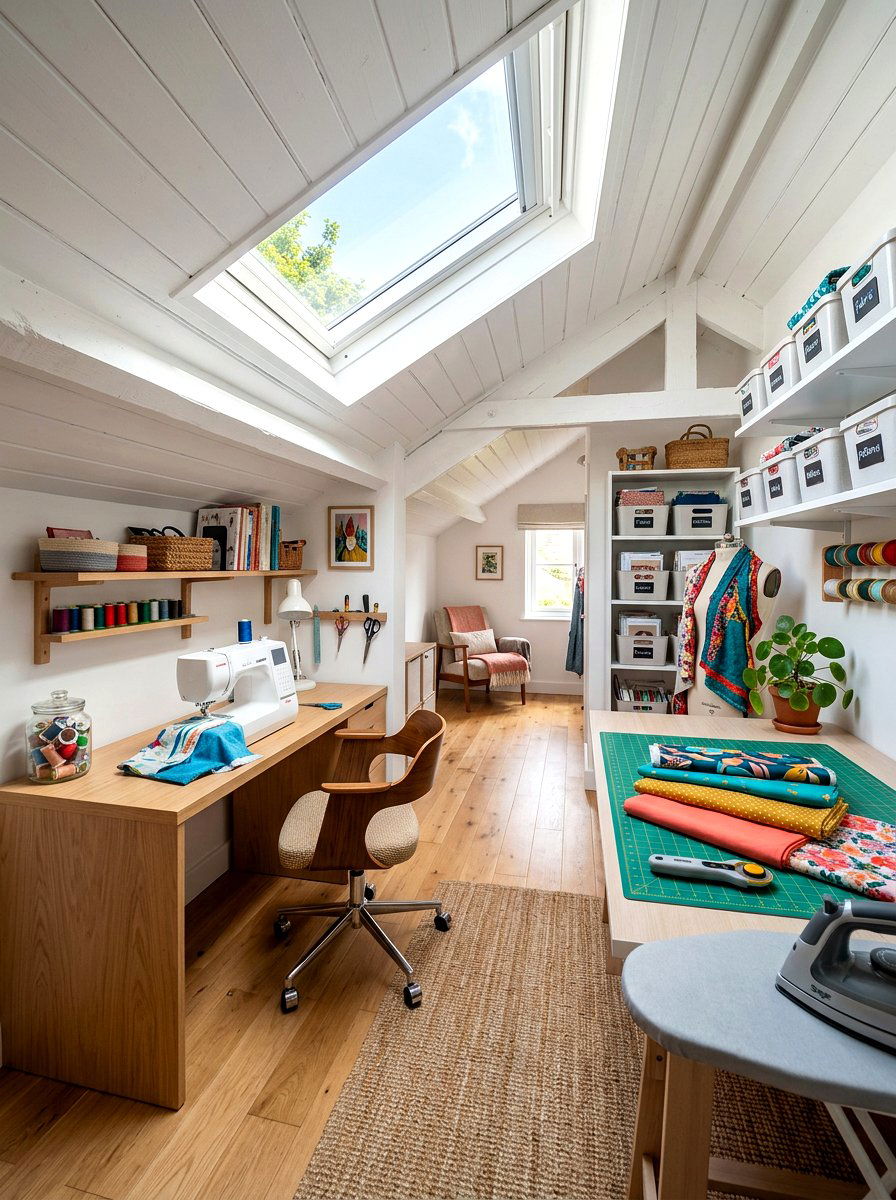
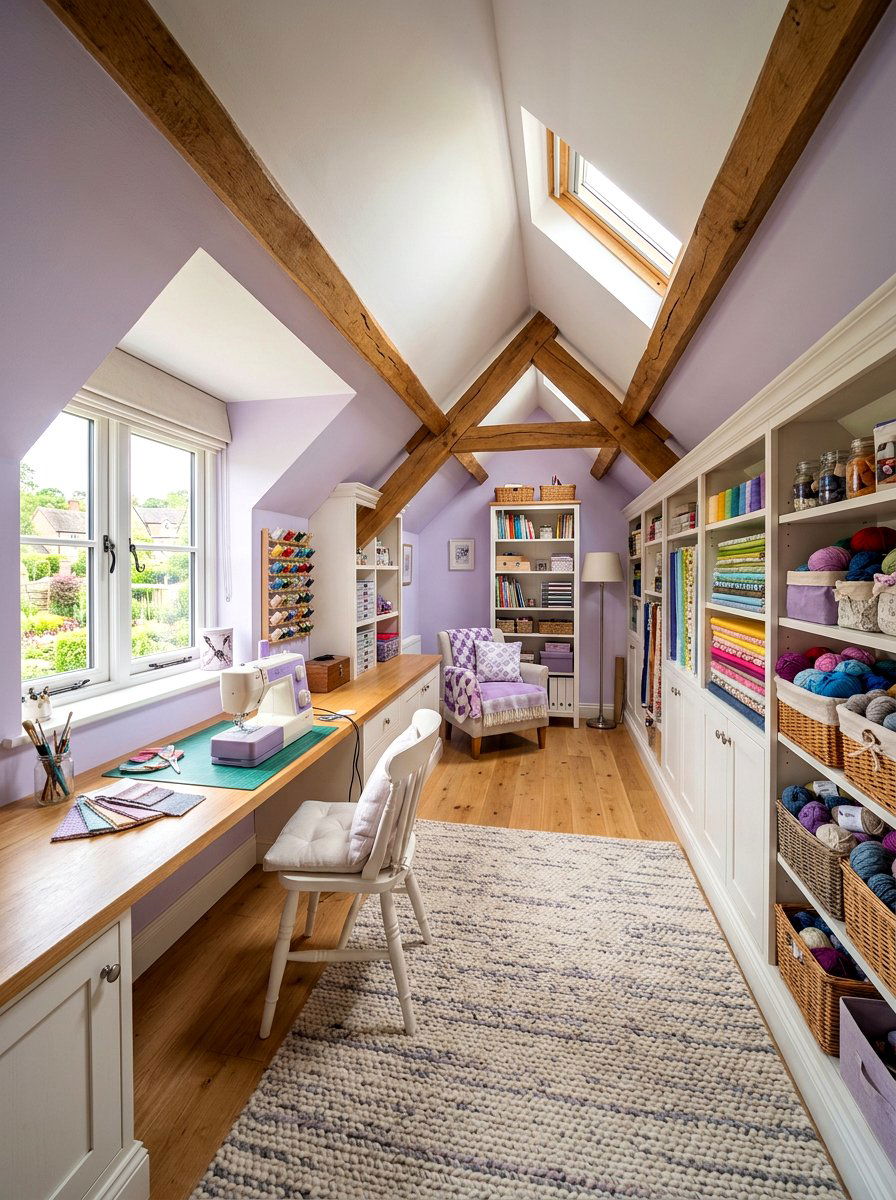
An attic conversion can provide a quiet and secluded retreat away from the main hustle and bustle of the household. The unique sloped ceilings of an attic add architectural interest and can be used to create cozy built-in storage nooks. Because attics are often bright with skylights, they make excellent spaces for detailed textile work. You can place your sewing table directly under a window to take advantage of the natural light and views. Using light colors on the walls and floors will help the space feel more open and airy. It is the perfect way to turn an underutilized part of your home into a dream sewing sanctuary.
22. Colorful Pastel Sewing Room
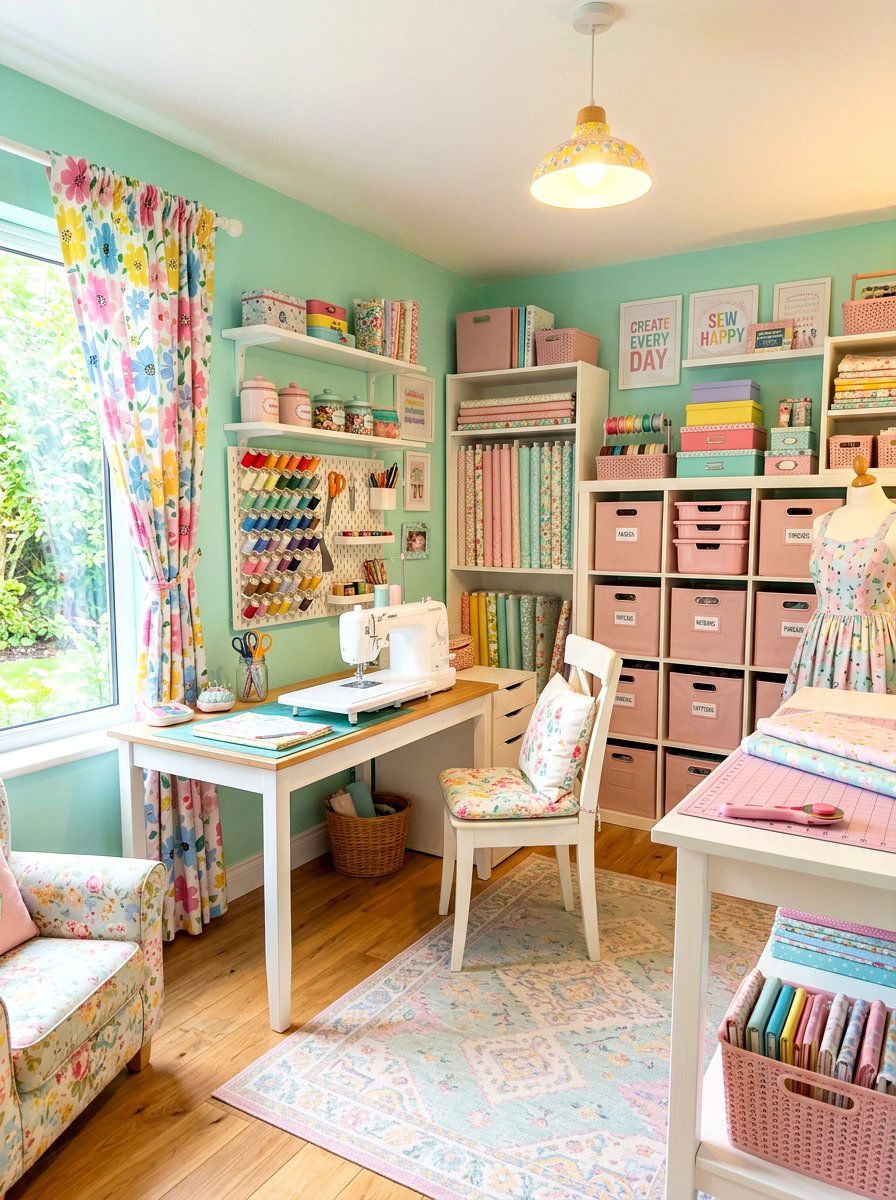
Decorating with soft pastel hues like mint green, blush pink, or lavender can create a cheerful and feminine atmosphere. These light colors make the room feel bright and spacious without being as stark as pure white. You can coordinate your storage bins, chair cushions, and even your sewing machine accessories to match this sweet color palette. This design choice creates a whimsical and inviting environment that feels like a playful escape for your creative mind. Adding a few floral accents or vintage-style curtains can further enhance the charming look. It is a delightful way to infuse your personality into your workspace while keeping it visually organized.
23. Magnetic Tool Strip
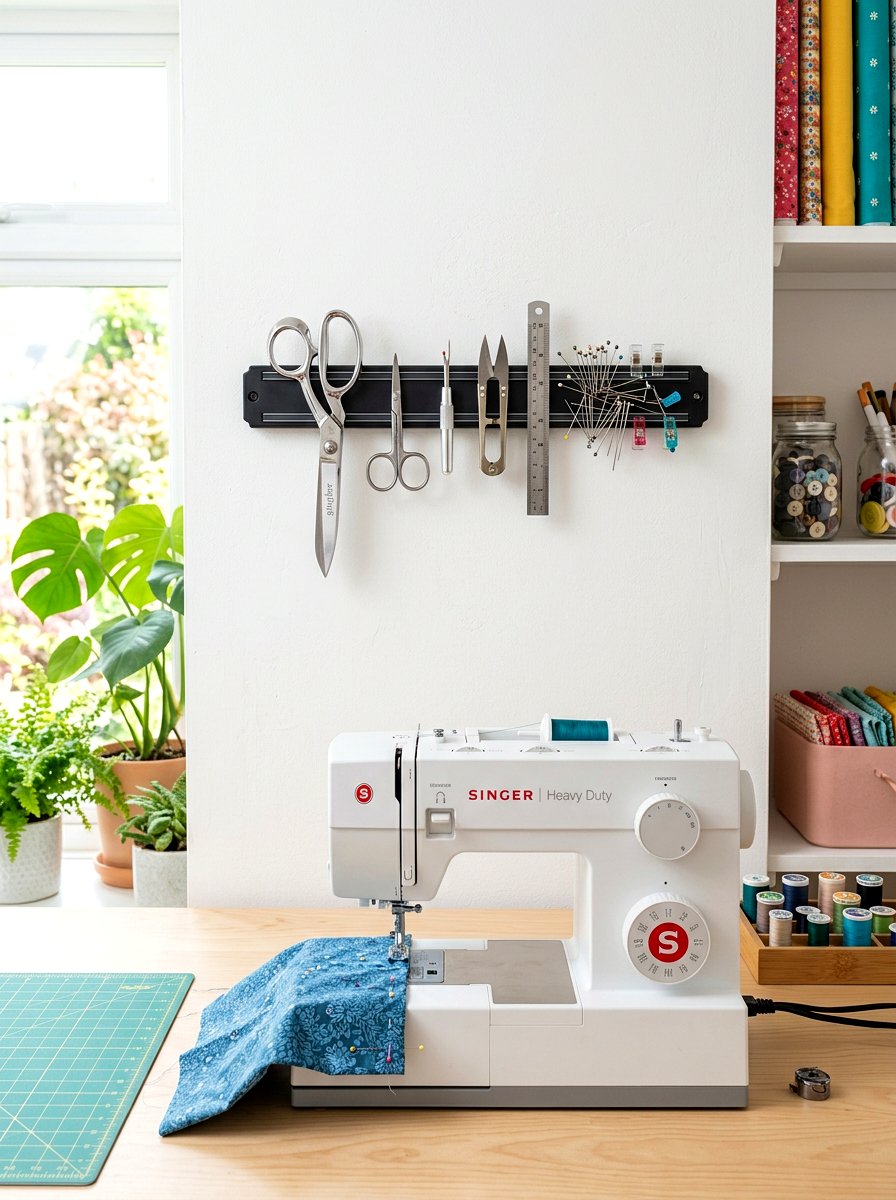
A magnetic strip mounted on the wall or the side of your desk is an incredibly clever way to keep metal tools handy. You can easily "stick" your scissors, pins, and metal rulers to the strip, keeping them organized and off your work surface. This prevents small items from getting lost under piles of fabric and ensures your most important tools are always visible. It is also a very safe way to store sharp objects, keeping them out of reach of children or pets. These strips are easy to install and take up virtually no space. It is a simple, modern, and highly effective organizational hack for any busy sewing room.
24. Floor To Ceiling Fabric Shelving
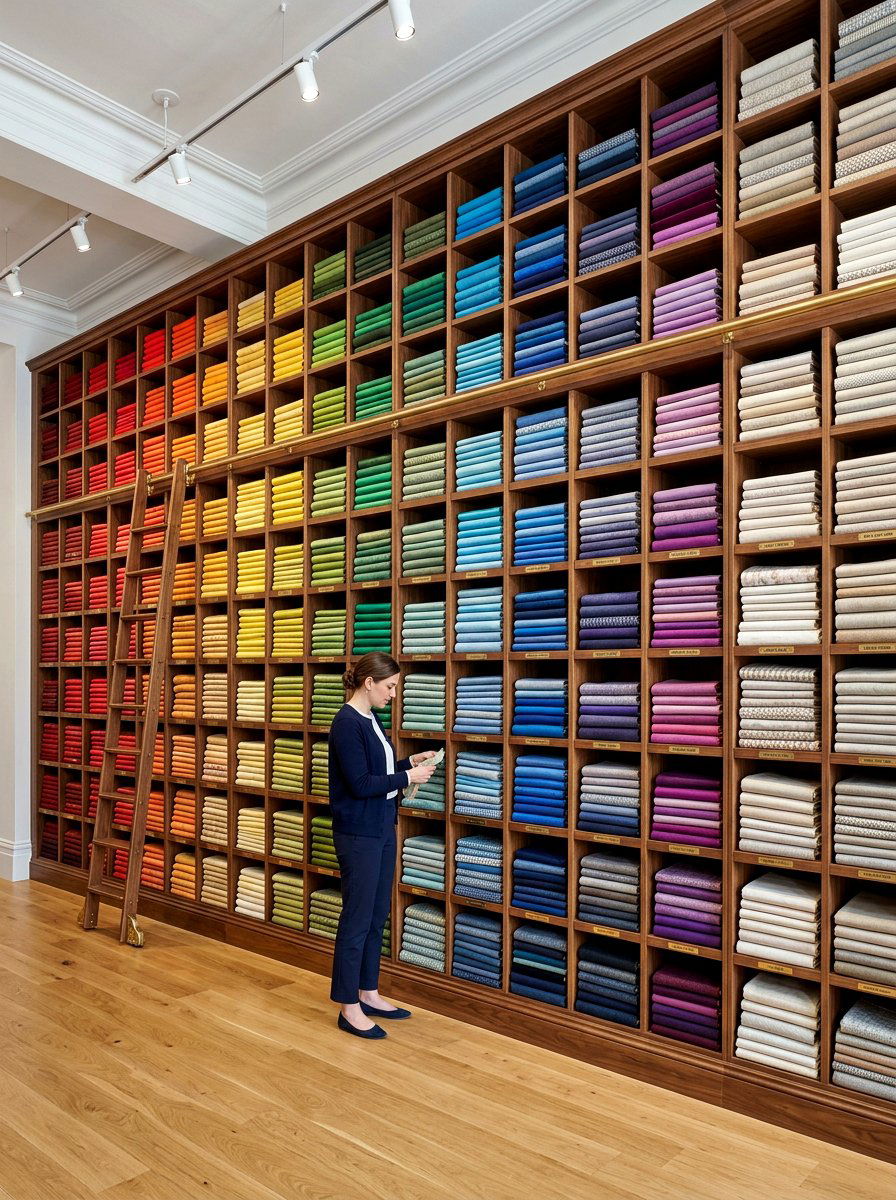
For the serious textile collector, nothing beats a massive wall of open shelving to showcase a fabric library. Folding your fabric over uniform boards or comic book liners creates a tidy, bookstore-like appearance that is both beautiful and functional. This method allows you to see every piece in your collection, preventing you from forgetting about those hidden gems at the bottom of a bin. By organizing the fabric by color or material type, you create a stunning visual display that doubles as wall decor. It makes the process of selecting fabrics for a new project feel like shopping in a boutique. It is the ultimate dream for any fabric lover.
25. Built In Ironing Station
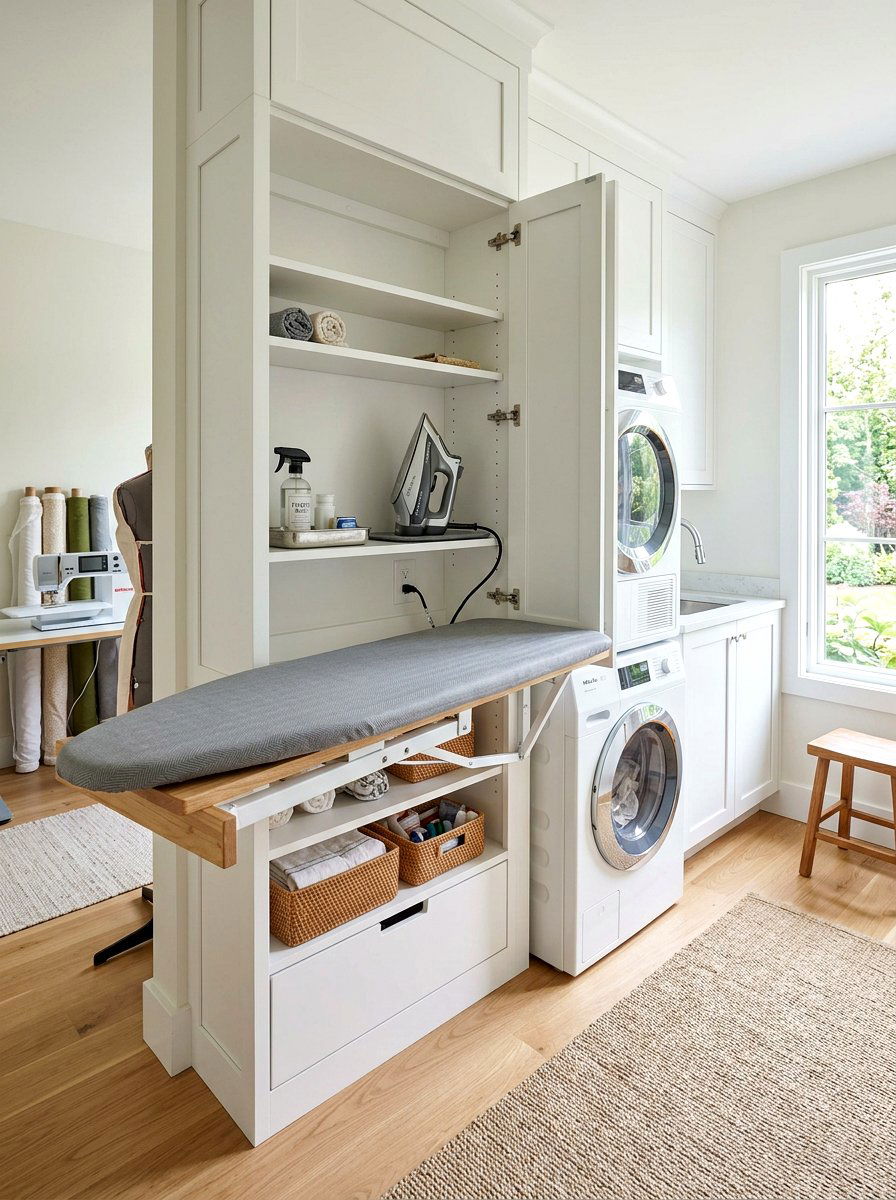
Pressing is just as important as stitching, and having a dedicated station makes this task much more convenient. A wall-mounted fold-down ironing board saves significant floor space and is always ready for a quick press between seams. You can install a small shelf nearby to hold your iron, spray starch, and pressing hams. This setup ensures that you don't have to lug out a heavy ironing board every time you need to flatten a seam. Positioning the station close to your sewing machine improves your workflow and encourages better sewing habits. It is a practical and professional addition that elevates the quality of your finished garments and projects.
26. Ergonomic Sewing Chair Setup
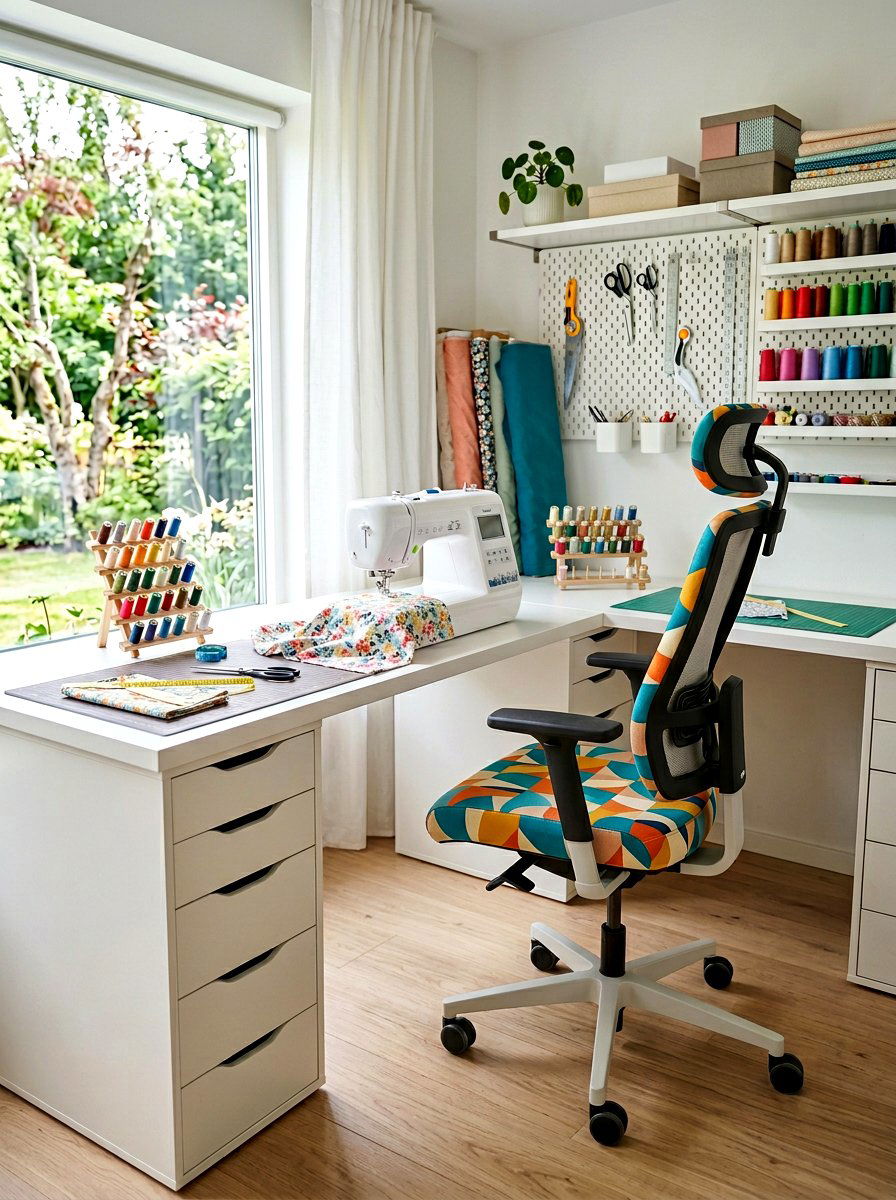
Spending long hours at a sewing machine can take a toll on your body if you don 't have proper support. Investing in a high-quality ergonomic chair with adjustable height and lumbar support is essential for preventing back pain. A chair with wheels allows you to glide easily between your sewing machine and your cutting table. You can also add a stylish seat cushion that coordinates with your room' s decor for extra comfort. Consider a chair without arms if you find they get in the way of your fabric while you are stitching. Prioritizing your physical comfort will allow you to enjoy your sewing hobby for much longer stretches of time.
27. Pattern Filing Cabinet
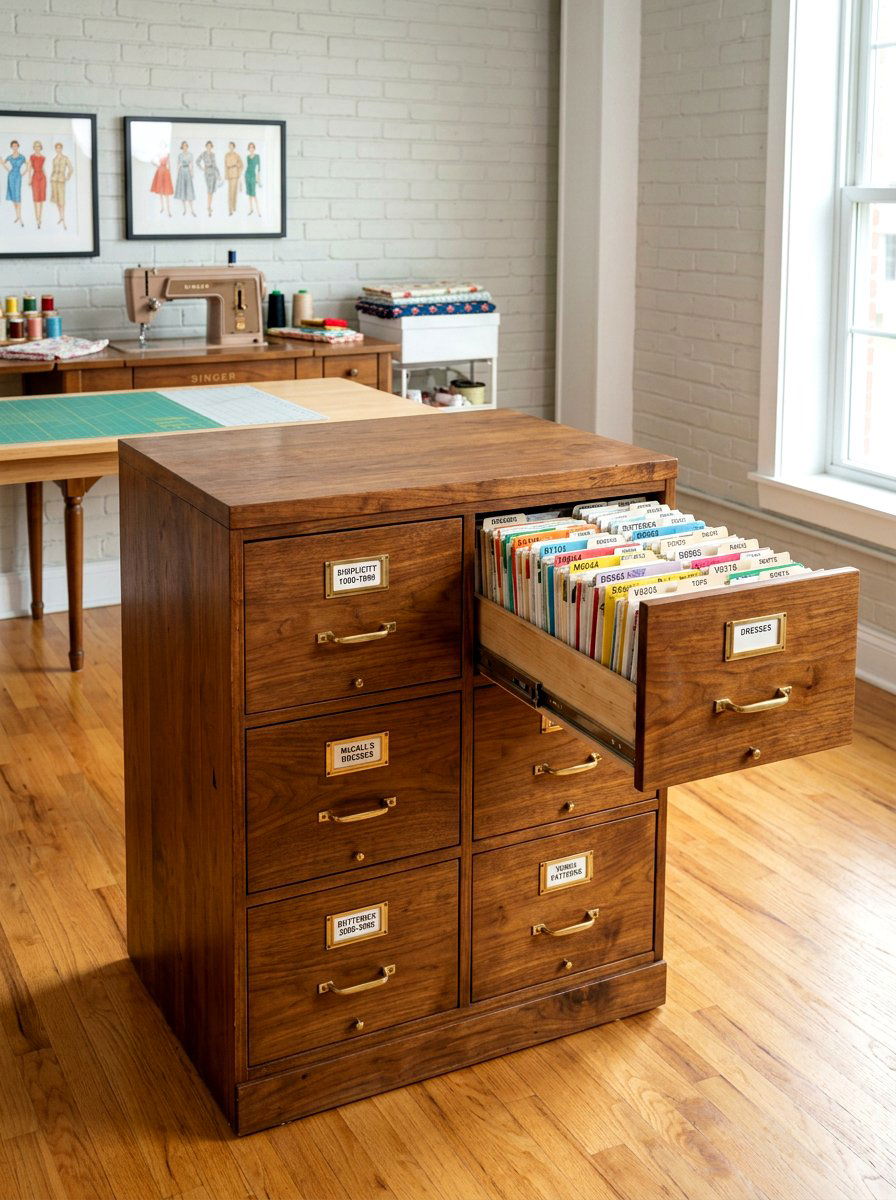
Keeping your sewing patterns organized is vital for a smooth creative process. A vintage lateral filing cabinet or a modern drawer unit can be used to store patterns alphabetically or by category. Using clear plastic sleeves for each pattern prevents the delicate paper from tearing and keeps all the pieces together. You can even add a small photo of the finished garment to the front of each file for quick identification. This system keeps your workspace clear of paper clutter and ensures you can find the design you need in seconds. It is a professional-level organizational strategy that saves time and protects your valuable pattern collection.
28. Reclaimed Wood Sewing Bench
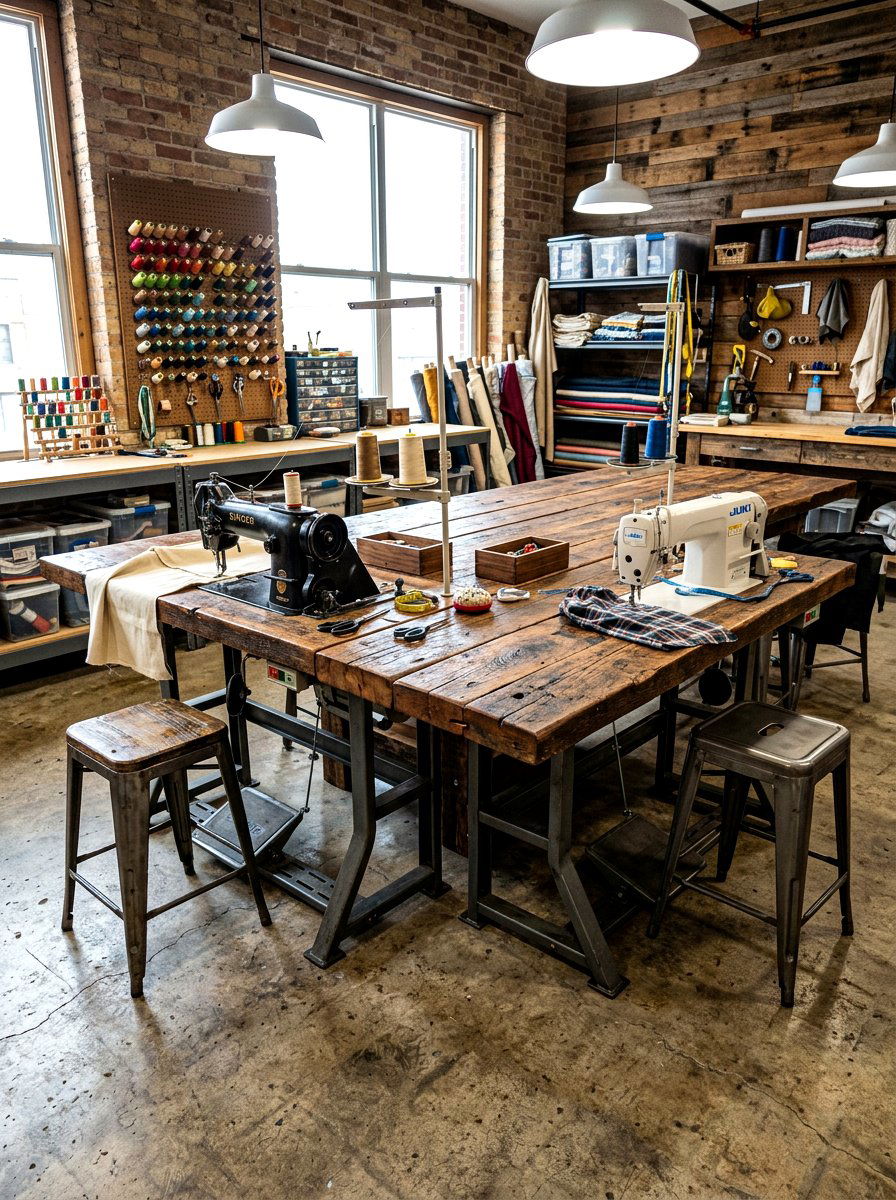
A long bench made from rustic wood can serve as a beautiful and sturdy base for multiple sewing machines. The natural textures and warm tones of reclaimed timber add a sense of history and organic beauty to the room. This type of furniture is often very heavy and stable, which is perfect for high-speed industrial machines that might vibrate on lighter tables. You can pair the bench with modern stools for a cool, industrial-chic look. The long, continuous surface provides plenty of space for your machine, foot pedal, and all your current project supplies. it is a timeless and durable choice for a hardworking creative studio.
29. Glass Front Supply Cabinet
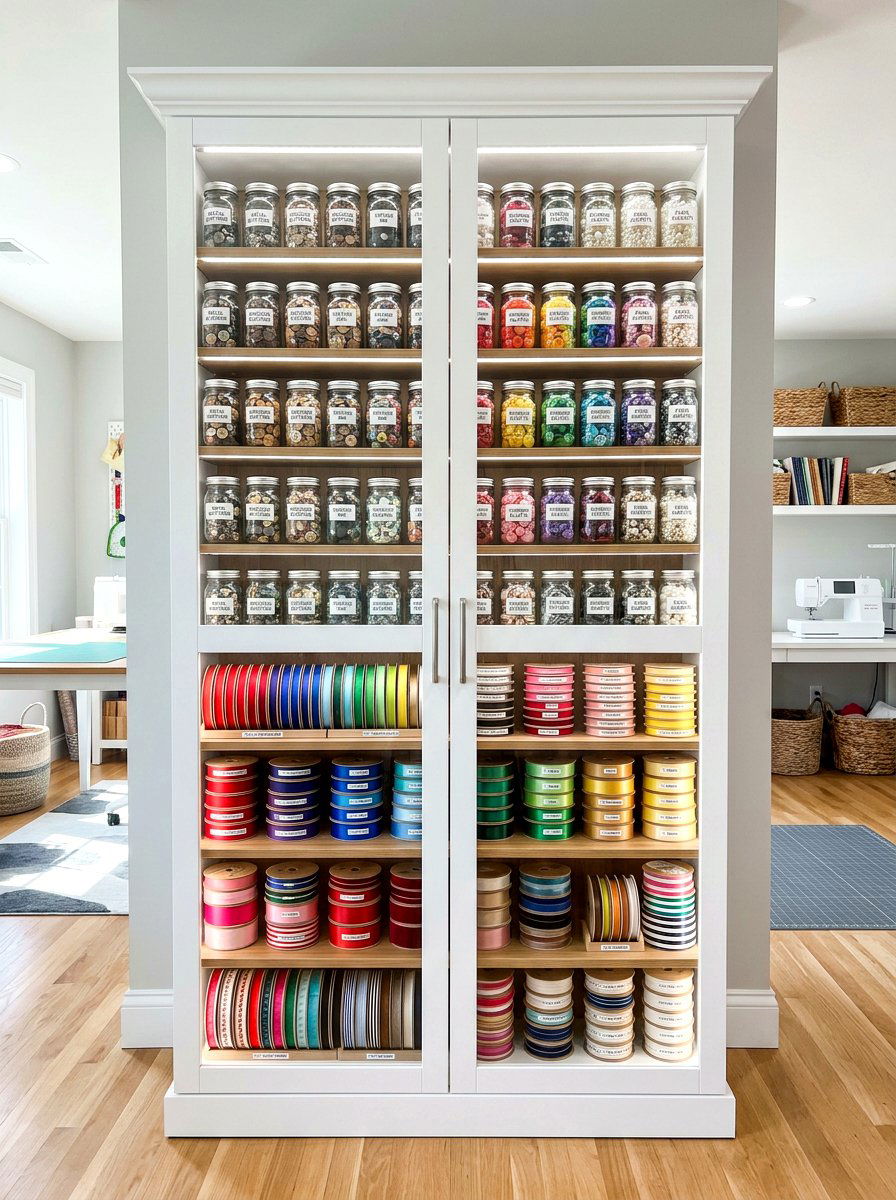
Storing your supplies behind glass doors allows you to keep everything visible while protecting it from dust. These cabinets are perfect for displaying beautiful jars of buttons, colorful ribbons, and vintage lace. The glass adds a layer of elegance to the room and prevents the space from feeling cluttered by keeping everything neatly contained. You can use interior cabinet lighting to highlight your most beautiful supplies, turning the cabinet into a glowing focal point in the evening. This storage method combines the benefits of open shelving with the protection of a closed cupboard. It is a sophisticated and practical way to organize a diverse collection of sewing notions.
30. Portable Sewing Unit
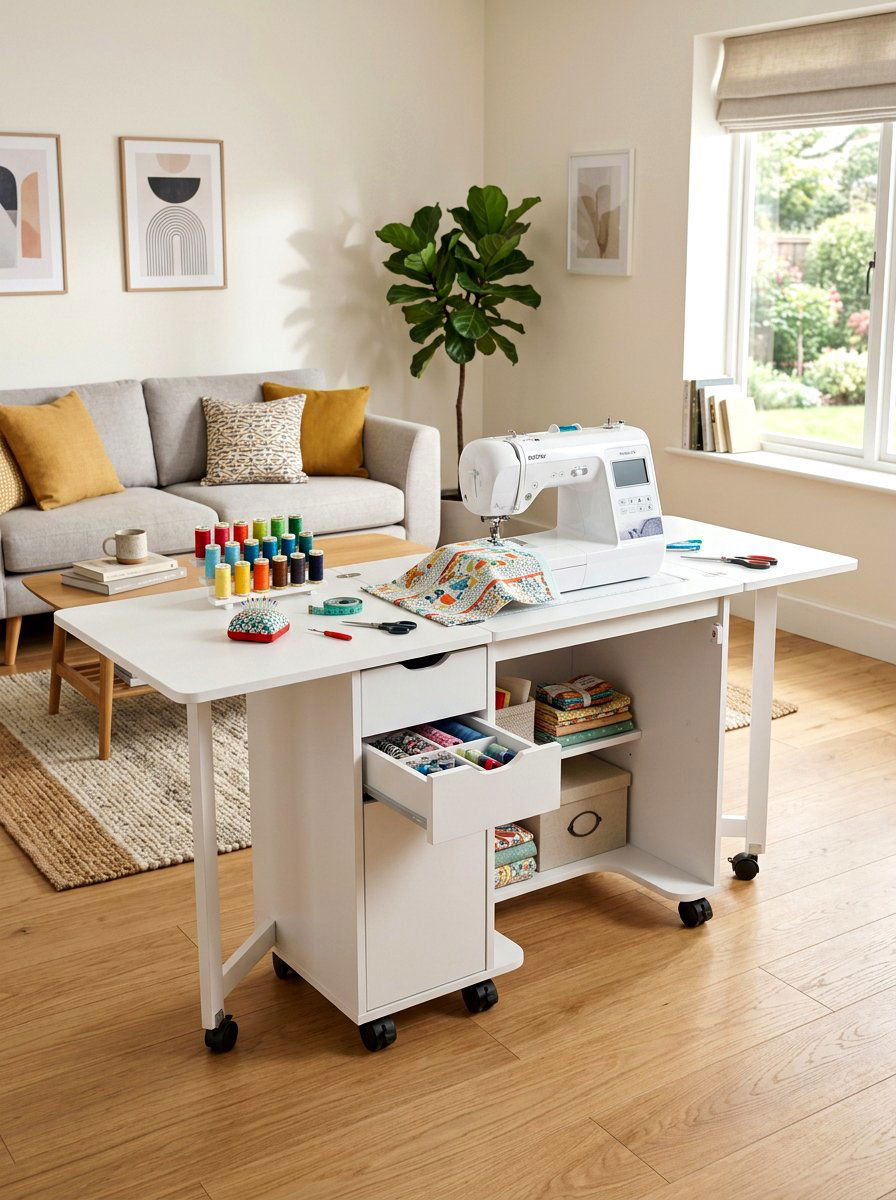
For those who don't have a dedicated room, a mobile sewing unit on wheels is a fantastic solution. These compact cabinets can house your machine, thread, and basic tools in one small footprint that can be rolled into any room. Many models feature a flip-up top that creates an instant workspace wherever you need it. When your sewing session is over, the unit folds back up into a sleek piece of furniture that looks like a side table or a small chest. This allows you to sew in the living room or bedroom without permanently taking over the space. It is the ultimate in flexible and smart home design for crafters.
Conclusion:
Designing the perfect sewing room is a deeply personal journey that blends organization with inspiration. By focusing on efficient storage, proper lighting, and a style that makes you happy, you can create a sanctuary that fuels your creativity. Whether you have a whole room or just a small corner, the right setup will make every project more enjoyable and successful. Remember that your space should evolve along with your skills and your growing collection of beautiful fabrics. Taking the time to organize your tools and materials today will pay off in countless hours of productive and peaceful sewing in the future. Happy stitching in your new space!

Related posts: