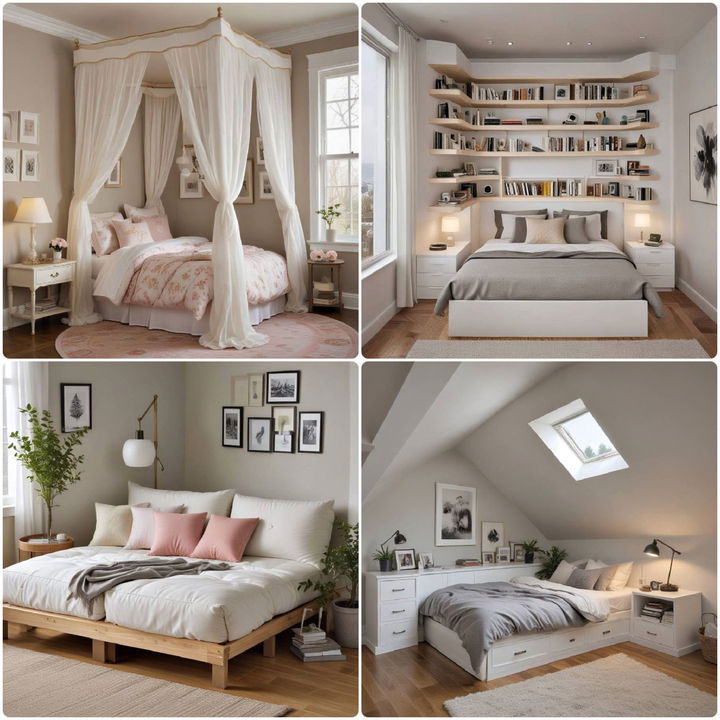
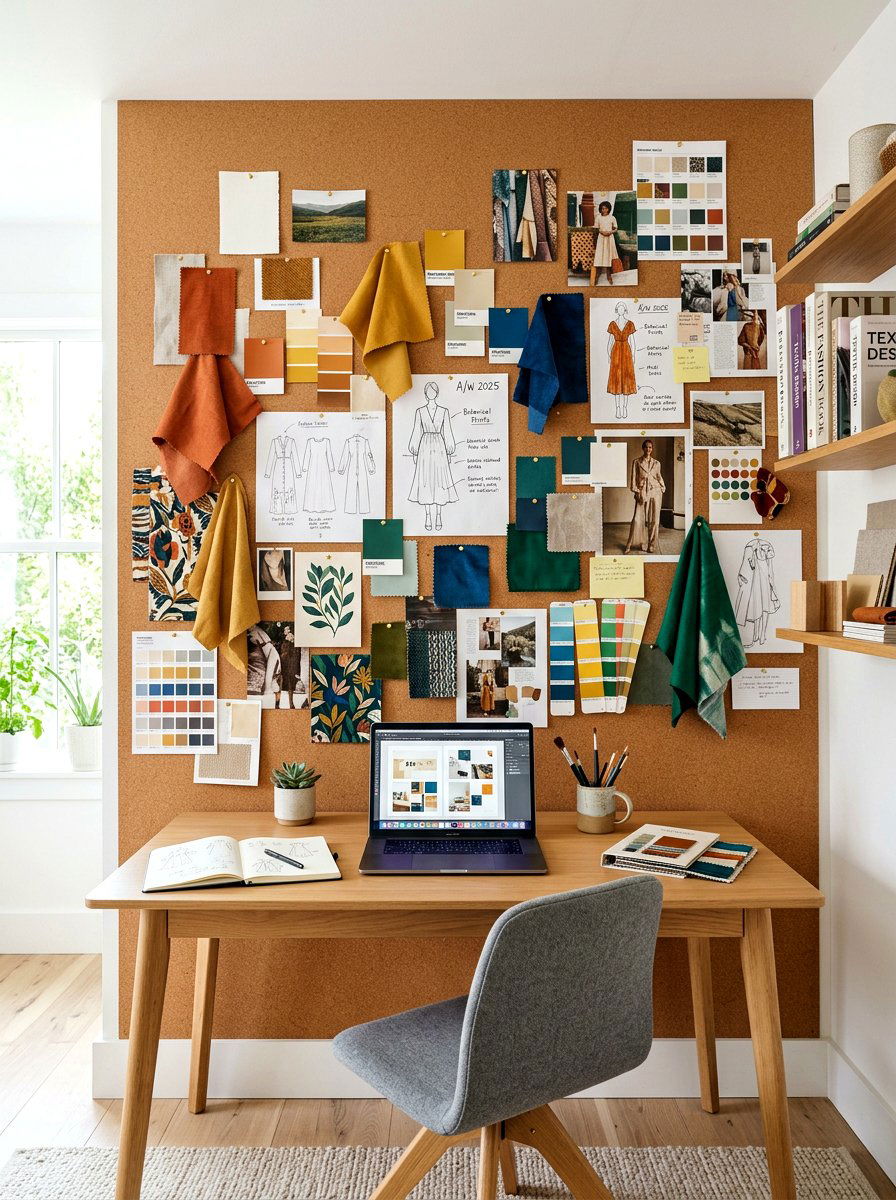
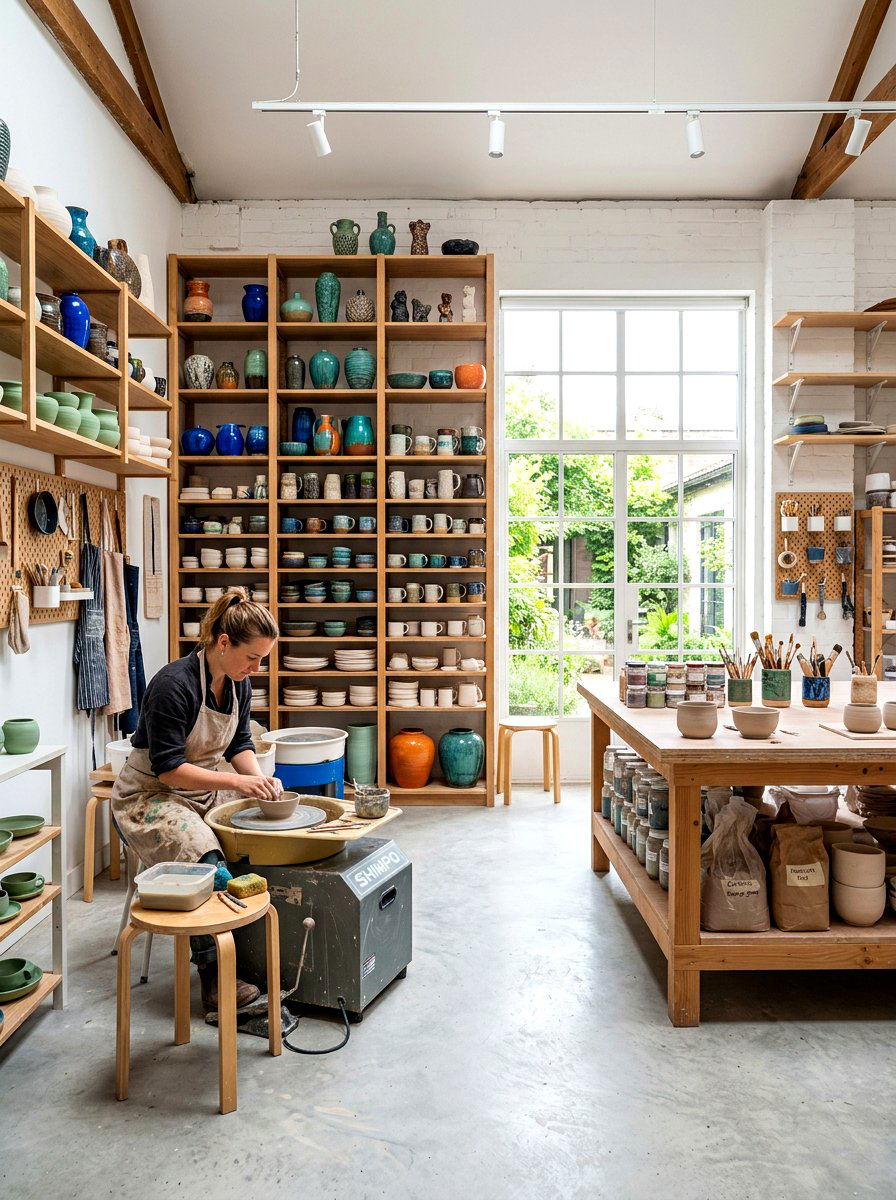
Creating a dedicated creative space doesn 't require a whole room, especially when you can curate a charming sewing nook that fits perfectly into your existing home layout. Many enthusiasts find that a small, organized corner is often more productive than a large, cluttered studio because everything remains within arm' s reach. Whether you are transforming a tiny closet, a quiet corner of your bedroom, or a sunlit spot by a window, the goal is to balance functionality with aesthetic appeal. A well-designed sewing station provides the peace of mind needed to focus on intricate stitches and fabric selection. By using smart storage solutions and ergonomic furniture, you can turn any neglected niche into a vibrant hub for your favorite textile hobbies and craft projects.
1. Closet Sewing Nook
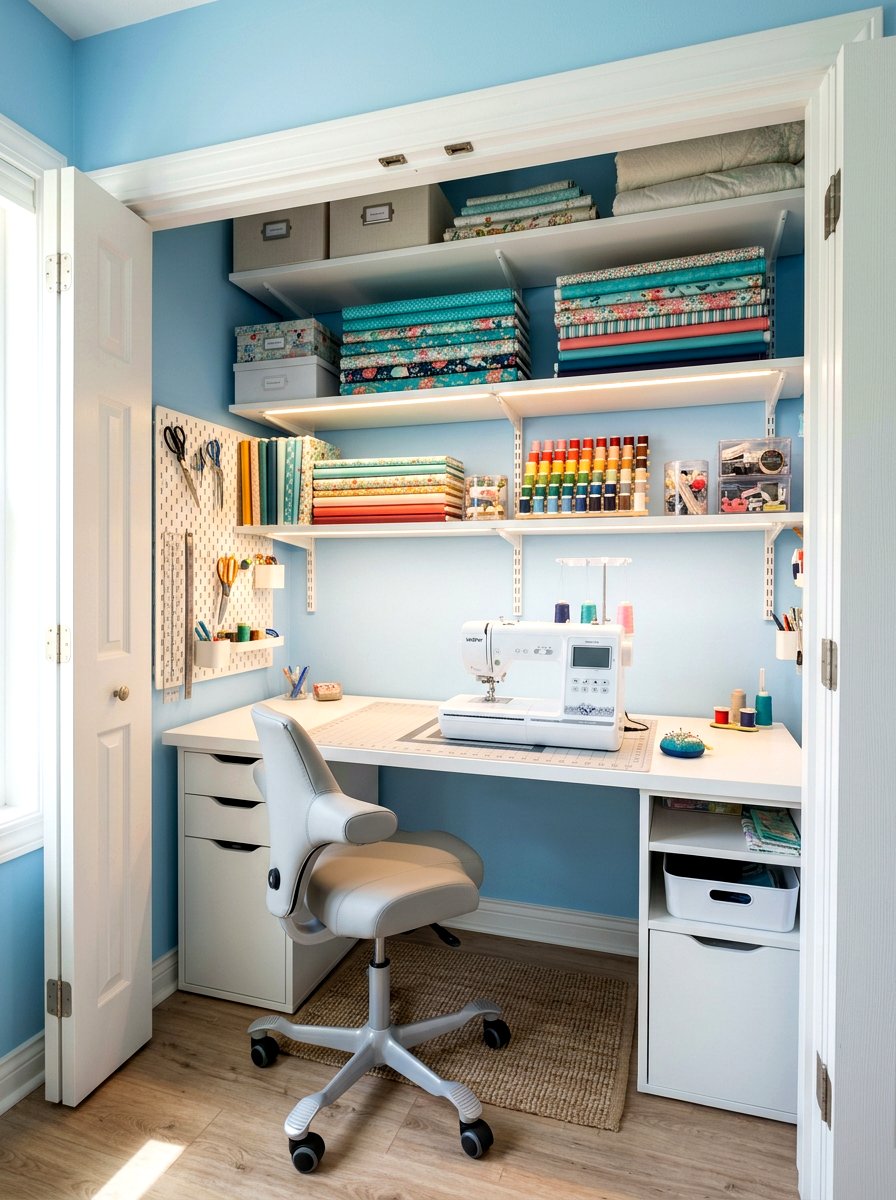
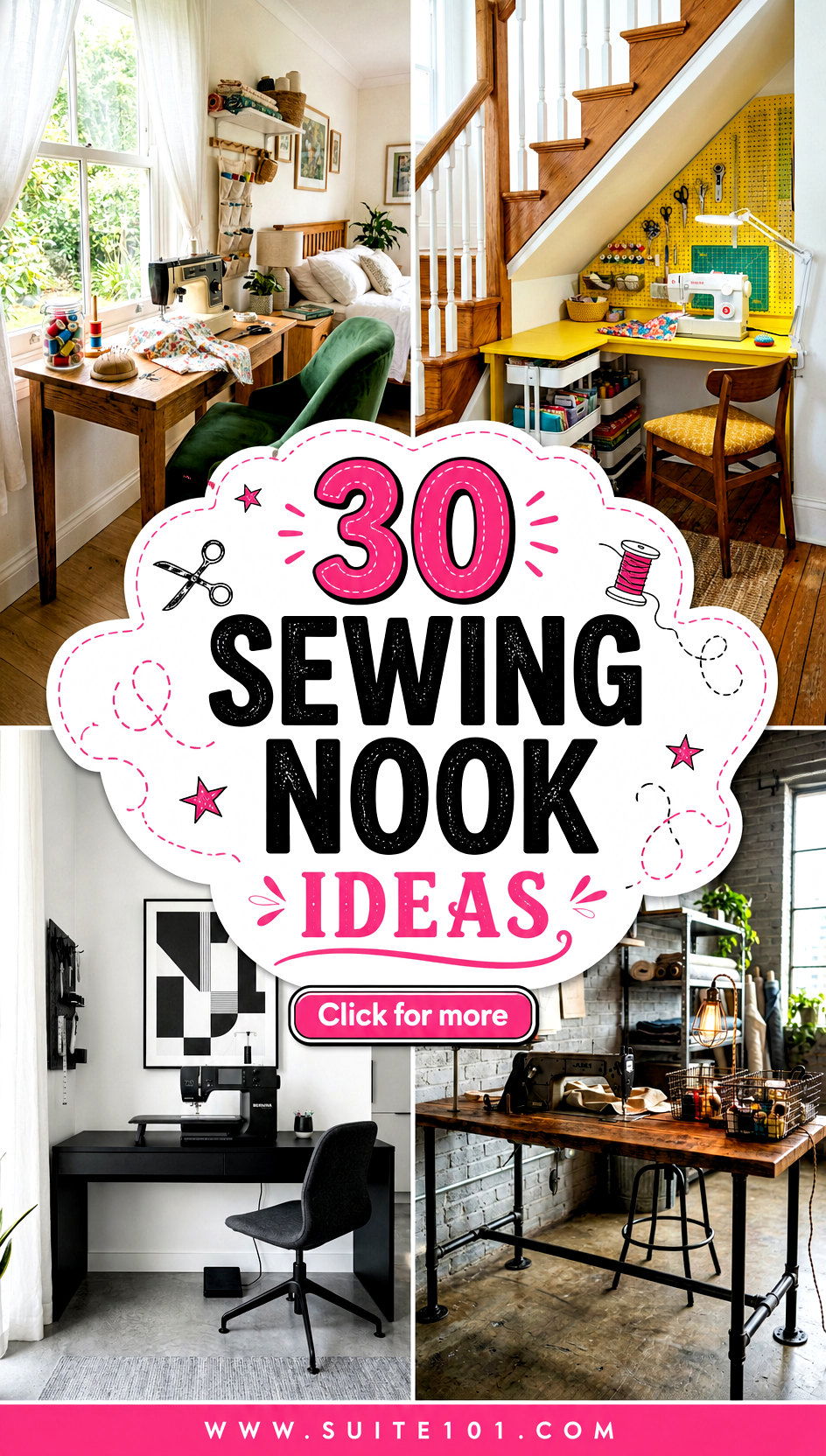
Converting a spare closet into a dedicated workstation is one of the smartest ways to save space while keeping your creative mess hidden. You can remove the doors for an open feel or keep them to tuck away your projects when guests arrive. Installing a sturdy desk height shelf provides the perfect base for your heavy sewing machine. Use the upper shelving for clear bins to store fabric scraps and colorful thread spools. Adding a bright LED strip under the shelves ensures you have shadow-free lighting while working on delicate seams. This setup turns a small architectural feature into a powerhouse of productivity without taking up any extra floor space in your main room.
2. Bedroom Sewing Nook
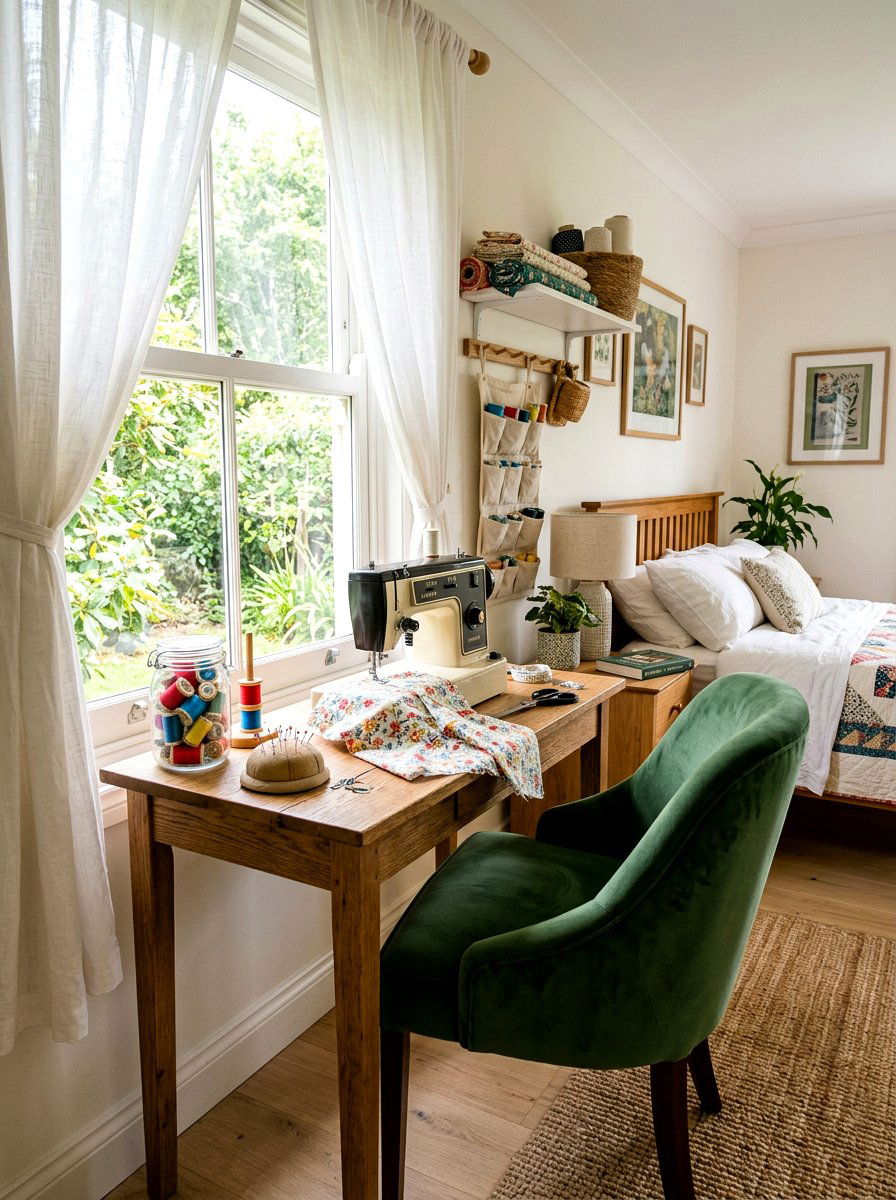
Have you ever noticed a lonely corner in your master suite that seems to serve no purpose? Transforming that niche into a cozy sewing retreat allows you to craft in a peaceful environment away from the main household noise. Start by choosing a slim, stylish desk that complements your bedroom furniture to maintain a cohesive look. A comfortable upholstered chair provides the support you need for long sessions while doubling as an extra seat for the room. Soft, natural light from a nearby window makes it easier to see fine details in your embroidery or quilting. Keeping the color palette neutral helps the workspace blend seamlessly into your sleeping area for a relaxing atmosphere.
3. Small Sewing Nook
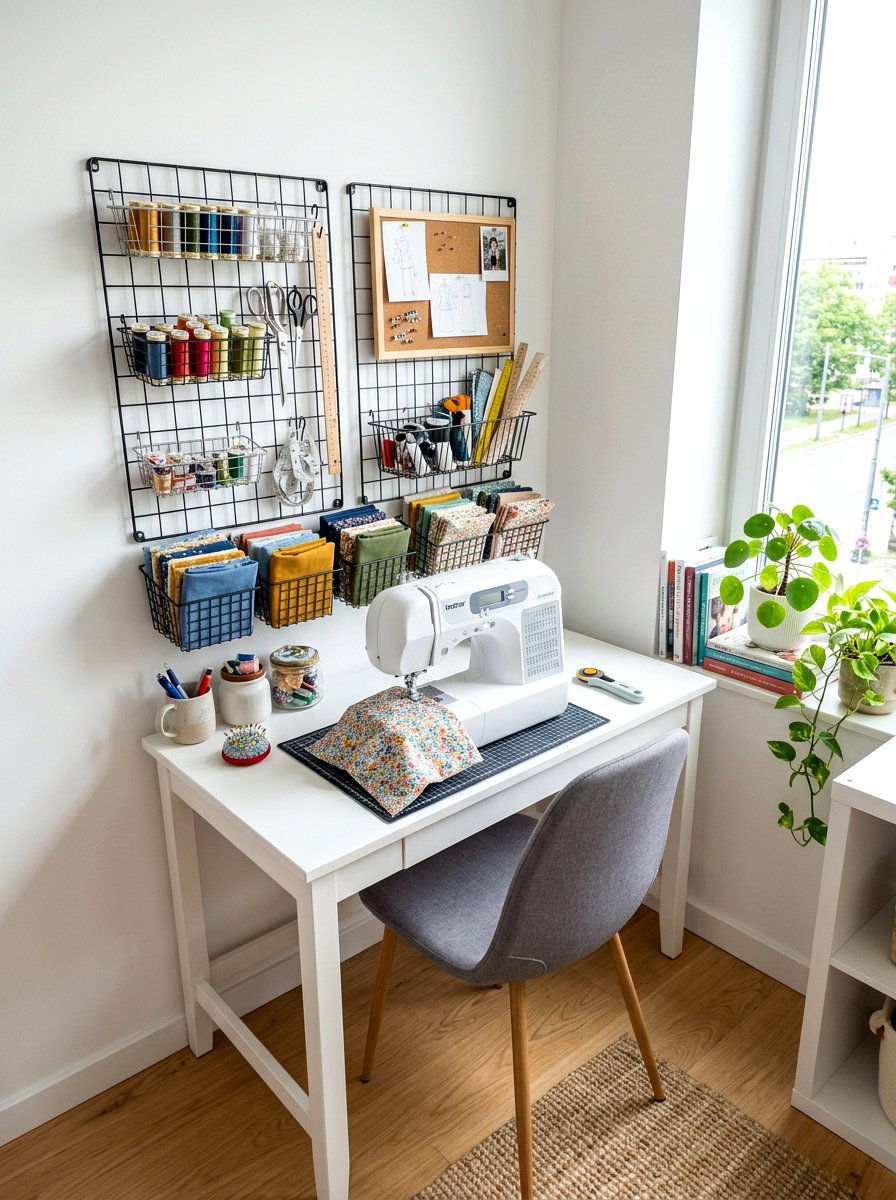
Maximizing a tiny floor plan requires creative thinking and vertical storage solutions that keep your supplies organized without overwhelming the room. A compact writing desk can serve as an excellent base for your machine while fitting into narrow gaps between furniture. Use wall-mounted baskets or magnetic strips to hold your scissors, measuring tapes, and pins right where you need them. Choosing a light color scheme, like soft whites or pastels, helps the small area feel more open and less cramped. Even in the most limited square footage, a well-planned corner can provide all the essentials for mending, quilting, or garment construction while looking incredibly chic and intentional in your home.
4. Attic Sewing Nook
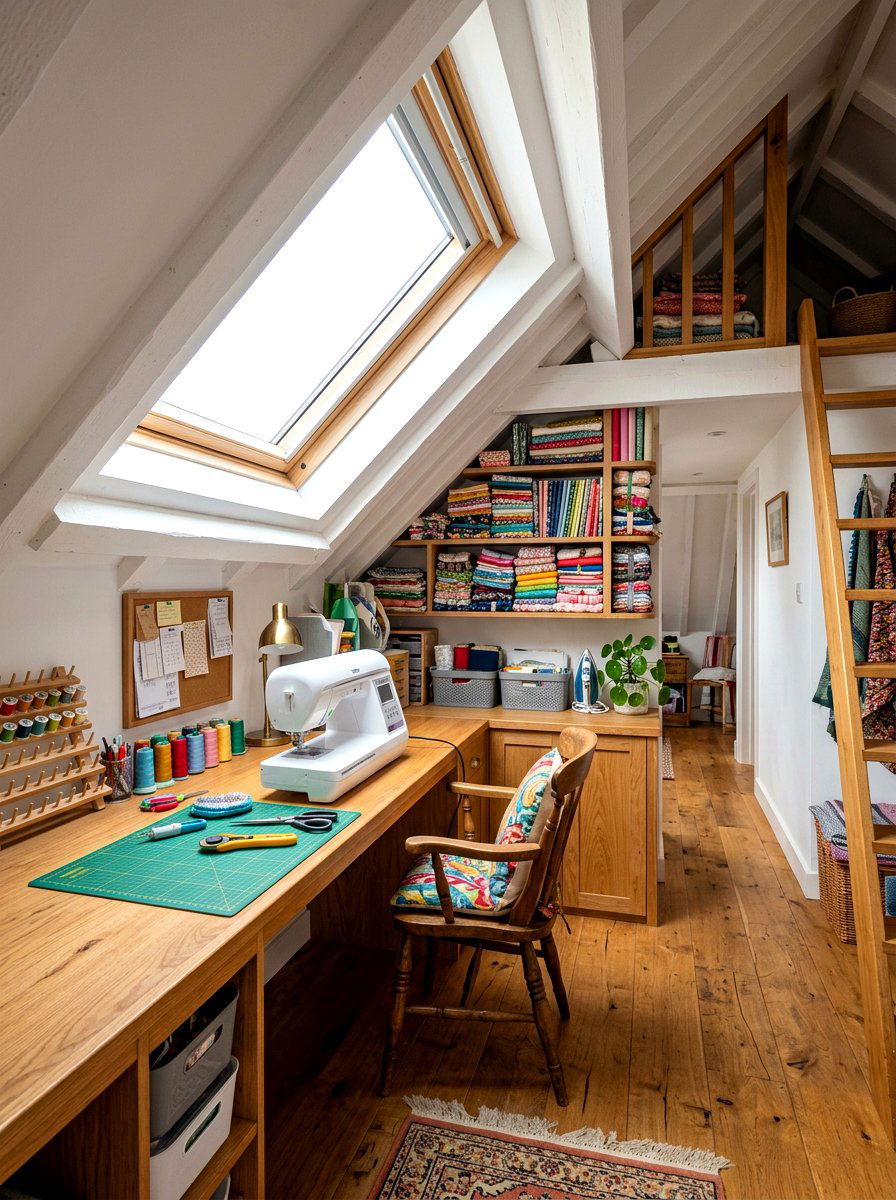
Utilizing the unique angles of a finished attic can create a secluded and inspiring sanctuary for all your creative textile endeavors. The sloped ceilings often provide a cozy, cocoon-like feeling that many crafters find helpful for deep focus on intricate projects. You can install custom low-profile shelving along the short walls to house your fabric stash and pattern collections efficiently. Positioning your main work table directly beneath a skylight provides the best possible natural light for color matching and detailed stitching work. This quiet, out-of-the-way location ensures you can leave your projects spread out without worrying about disrupting the flow of your main living areas on the lower floors.
5. Under Stairs Sewing Nook
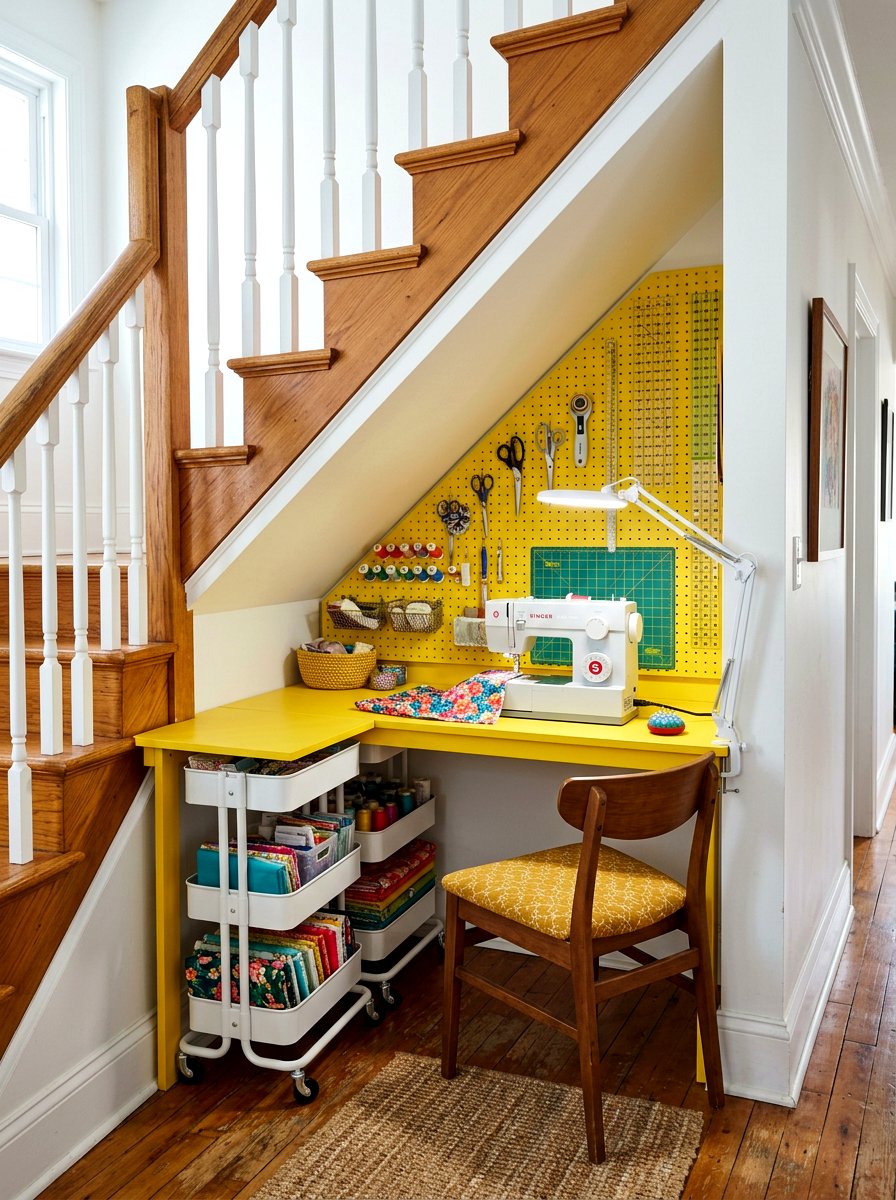
Transforming the often-wasted space beneath a staircase into a functional craft area is a brilliant way to add utility to your home. This architectural niche offers a surprising amount of depth for a custom-built desk and several rows of helpful shelving units. You can paint the interior of the alcove a bright, contrasting color to define the zone as its own special creative world. Adding a rolling cart that slides perfectly under the desk allows you to pull out your most used tools whenever inspiration strikes. Good task lighting is essential here, so consider a flexible gooseneck lamp that can be adjusted to illuminate your presser foot with perfect clarity every time.
6. Minimalist Sewing Nook
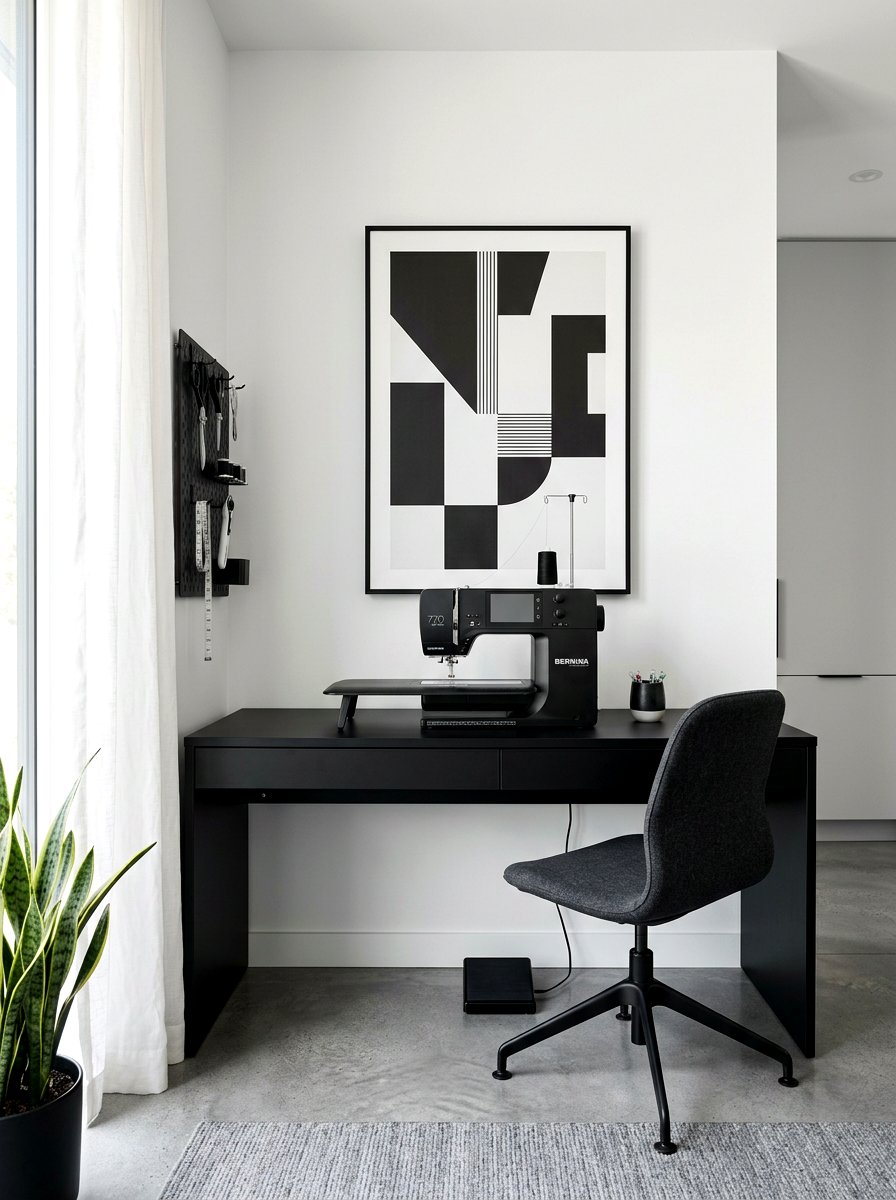
If you prefer a clean and uncluttered environment, a minimalist approach to your creative corner can help reduce visual stress during projects. Focus on high-quality essentials and hidden storage that keeps your fabric bolts and notions out of sight when they are not in use. A sleek, modern desk with built-in drawers provides a stable surface for your machine while maintaining a professional appearance. Choose a monochromatic color palette to keep the focus on your work rather than the surrounding decor. By curating only the tools you truly need, you create a streamlined workflow that makes the process of sewing much more enjoyable and significantly less overwhelming.
7. Pegboard Sewing Nook
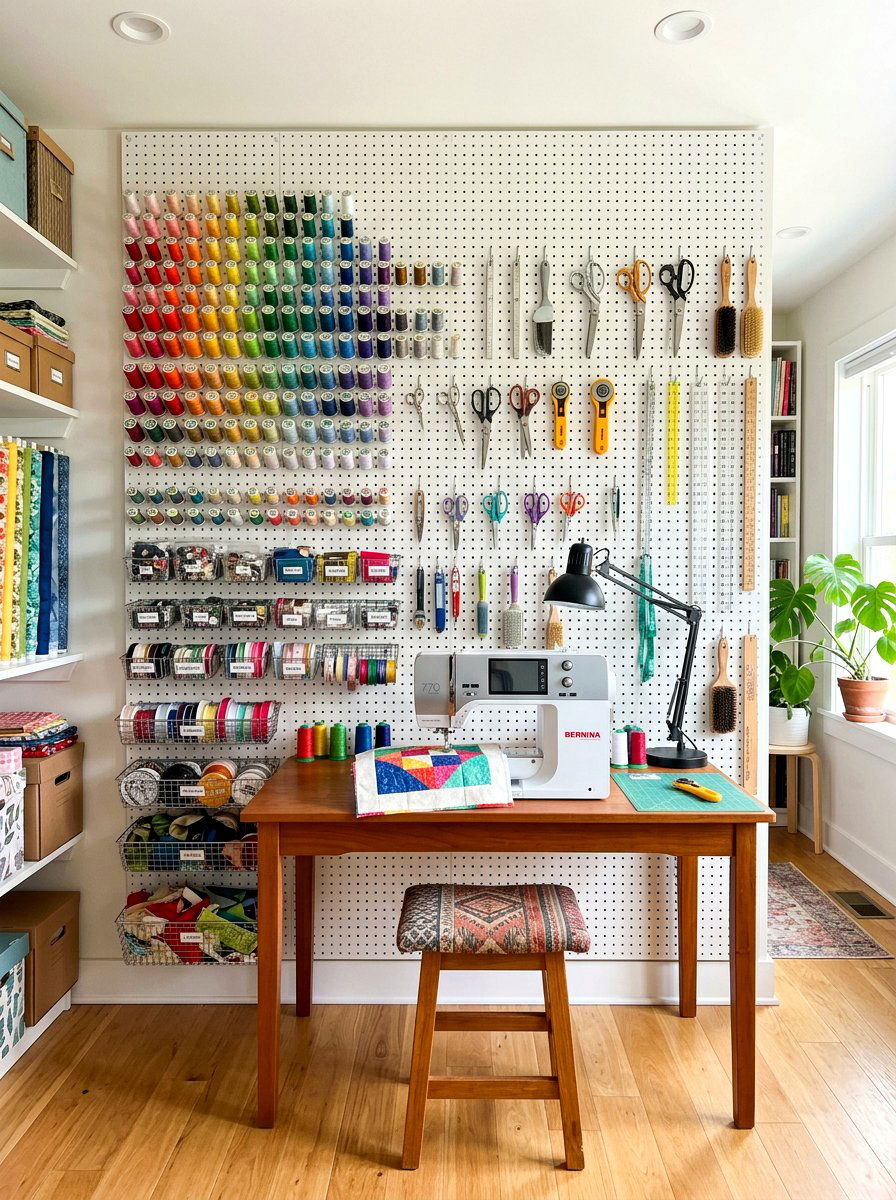
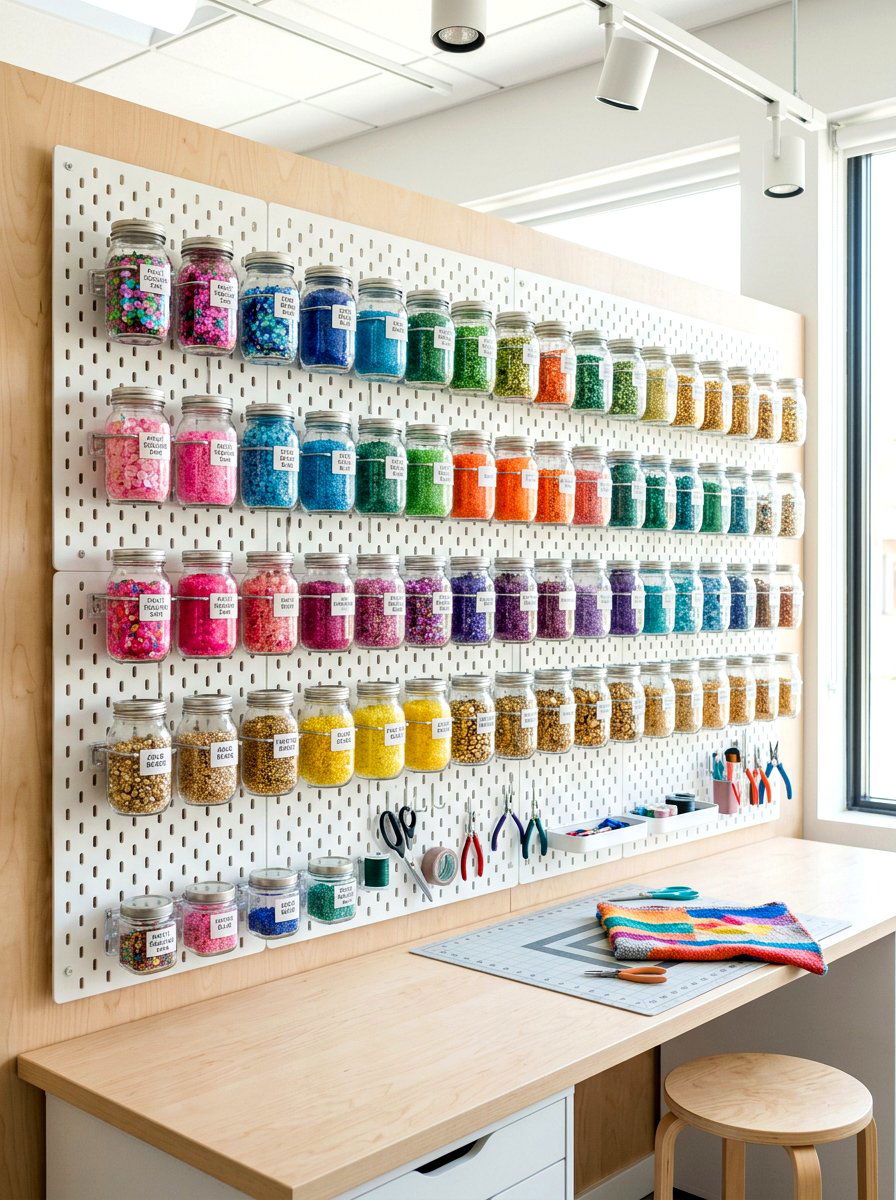
Installing a large-scale pegboard system is a game-changer for anyone who wants to keep their tools visible and within reach at all times. This versatile wall storage solution allows you to customize the layout of your scissors, rotary cutters, and thread spools as your hobby grows. You can paint the pegboard in a vibrant hue to act as a functional piece of wall art in your creative space. Hanging small bins from the hooks provides a perfect home for bobbins, safety pins, and other tiny notions that often get lost in drawers. Having everything displayed clearly not only looks professional but also saves you valuable time during the construction of complex garments.
8. Folding Sewing Nook
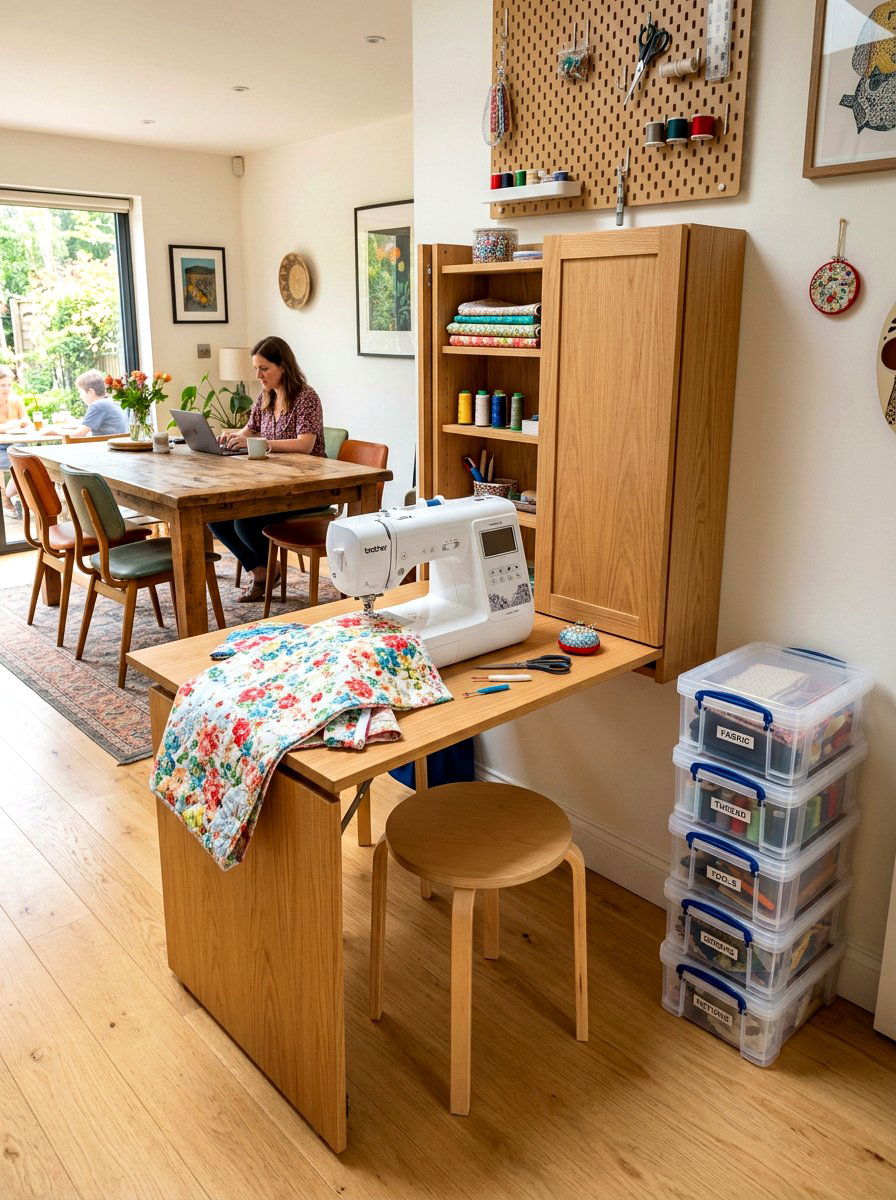
For those living in multi-functional spaces, a folding desk or a wall-mounted drop-leaf table offers the ultimate flexibility for a part-time craft area. You can easily flip the work surface up when you are ready to stitch and fold it away to reclaim floor space when you are finished. This setup is perfect for hallways or dining rooms where a permanent desk might interfere with the natural traffic flow of the house. Pairing the folding table with a set of stackable bins ensures that your supplies remain mobile and organized. It is an ideal solution for hobbyists who enjoy quick mending tasks but do not need a full-time studio setup.
9. Modern White Sewing Nook
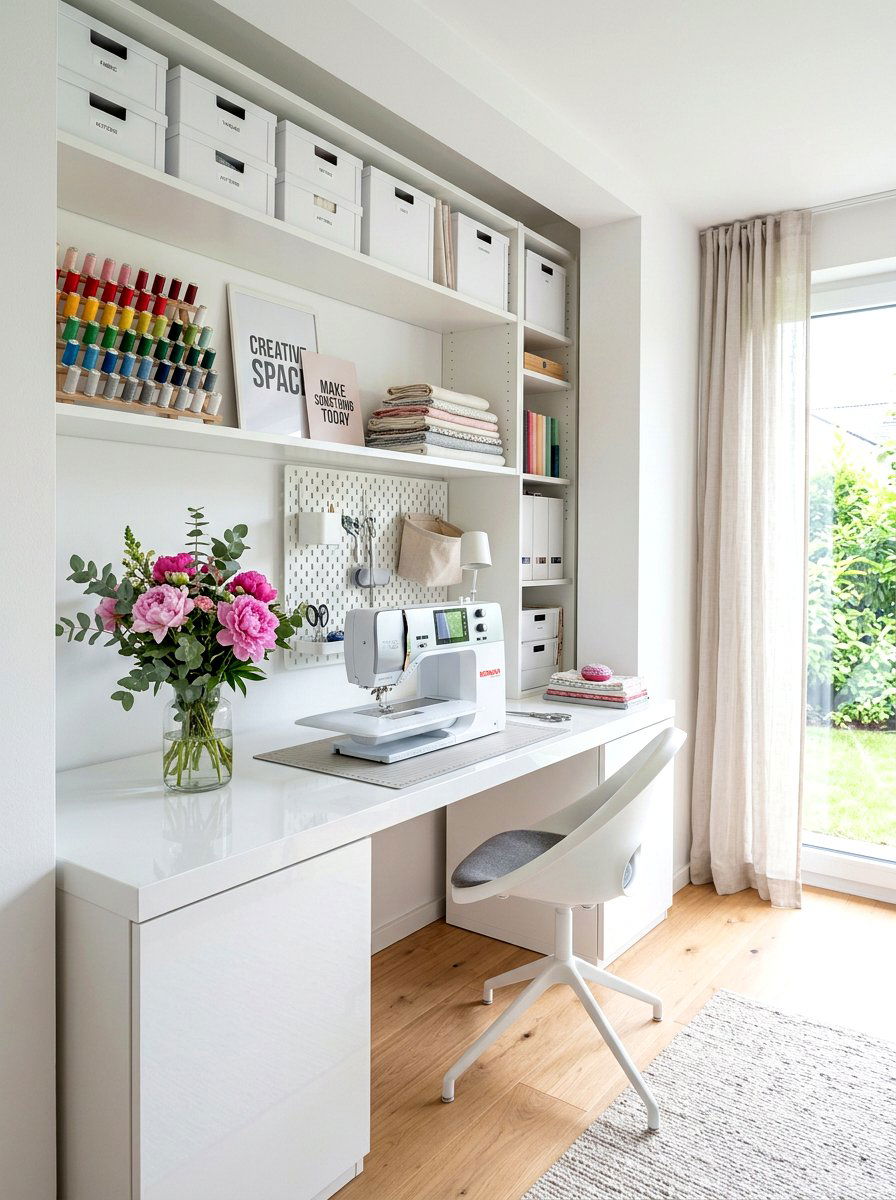
A bright, all-white aesthetic creates a clean and professional backdrop that makes your colorful fabric choices really pop and stand out. Start with a glossy white desk and matching shelving to create a sense of cohesion and light in your chosen corner. Using white storage containers and organizers helps maintain a sense of order while reflecting light throughout the entire workspace for better visibility. This style feels very fresh and updated, making it a popular choice for modern homes and stylish apartment living. The neutral background also makes it much easier to photograph your finished projects for social media sharing or keeping a digital record of your work.
10. Vintage Sewing Nook
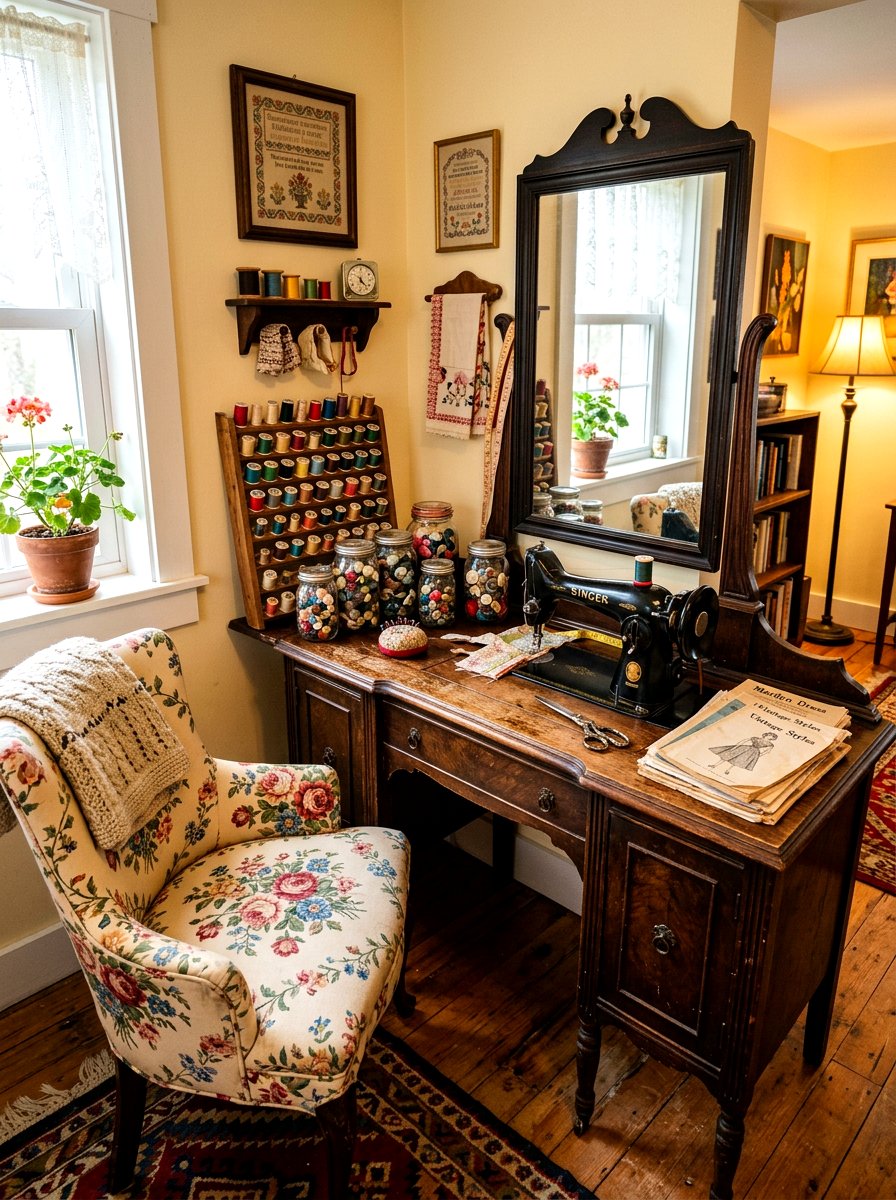
Embracing a nostalgic aesthetic can make your creative space feel warm, inviting, and full of historical charm that inspires your daily work. You can repurpose an antique vanity or a classic wooden desk to serve as a beautiful and sturdy base for your modern machine. Incorporating vintage glass jars for button storage and old wooden thread racks adds a layer of character that new furniture simply cannot provide. Floral curtains and a comfortable retro chair can complete the look, making the nook feel like a step back in time. This style celebrates the long tradition of needlework while providing a cozy environment for you to hone your skills today.
11. Colorful Sewing Nook
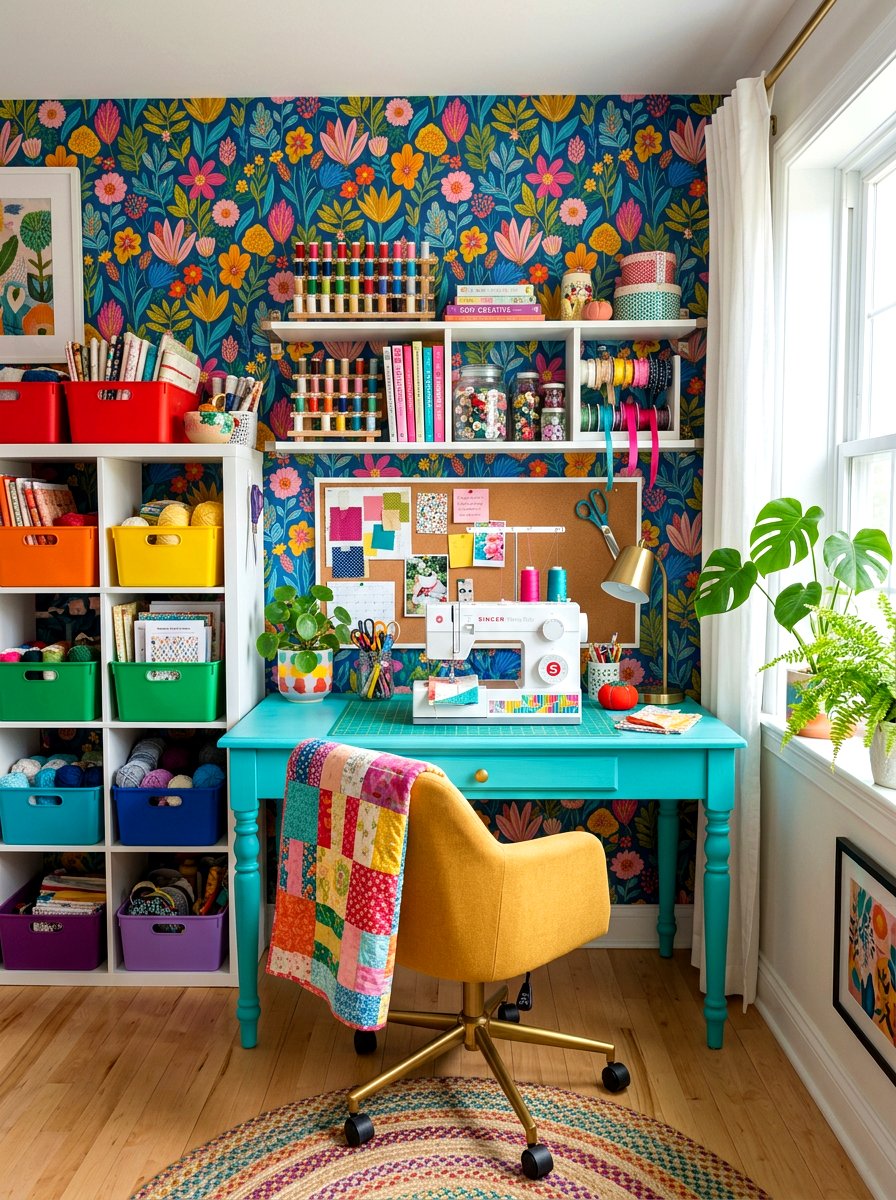
Infusing your workspace with bold colors and vibrant patterns can significantly boost your mood and stimulate your creative thinking throughout the day. Consider painting your desk a bright teal or sunny yellow to make the nook a cheerful focal point in your home. Use colorful fabric bins and decorative wallpaper to add layers of visual interest to the walls surrounding your primary workstation. When your environment reflects a sense of playfulness, the process of designing and making becomes much more fun and less like a chore. Don't be afraid to mix and match different textures and hues to create a space that is as unique as the projects you create.
12. Floating Shelf Sewing Nook
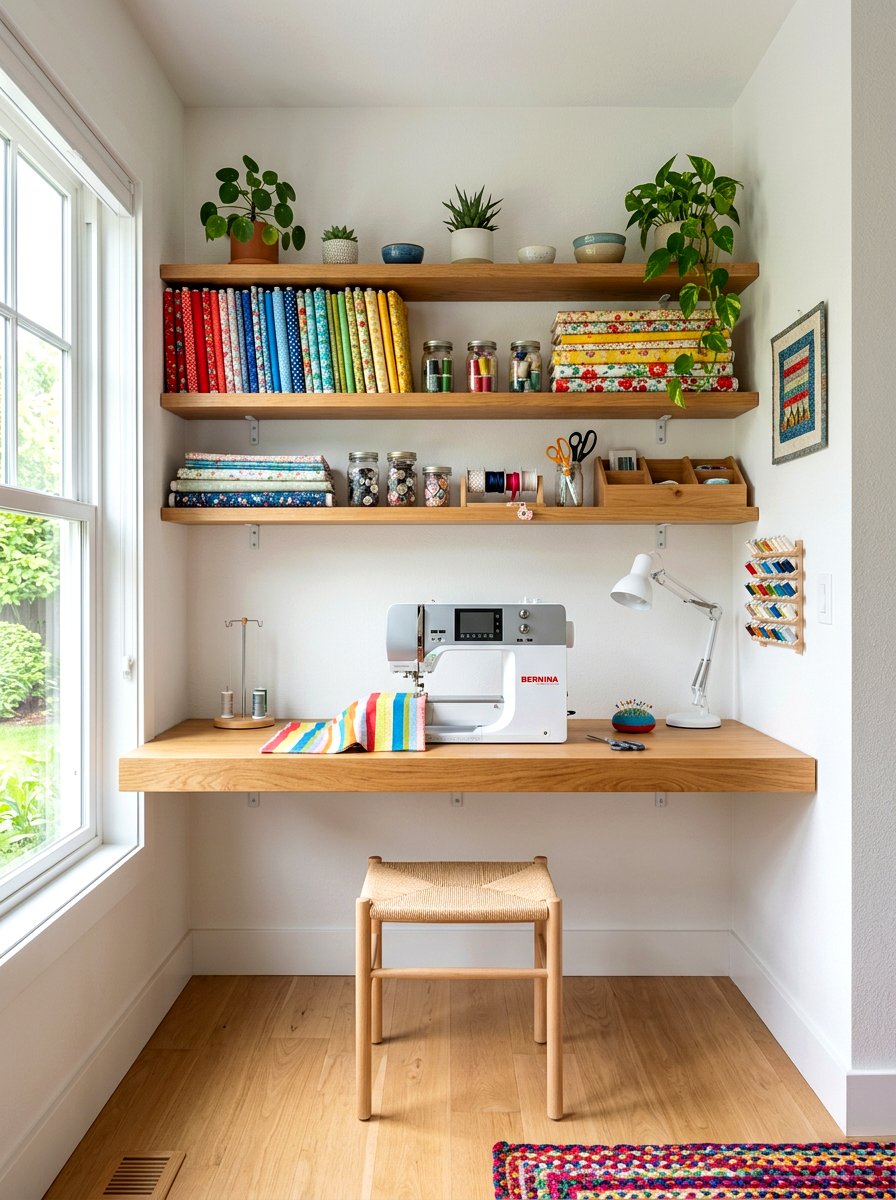
When floor space is at a premium, utilizing floating shelves for both your desk and storage can create a light and airy feel. By mounting a deep wooden slab to the wall, you eliminate the need for bulky desk legs, which provides more room for your chair and legs. You can add several smaller shelves above the main surface to display your favorite fabric bolts and inspirational decor items. This architectural look is very modern and works exceptionally well in contemporary living rooms or narrow home offices. It keeps the area looking tidy and organized while providing all the functional surfaces required for a successful and productive sewing session.
13. Industrial Sewing Nook
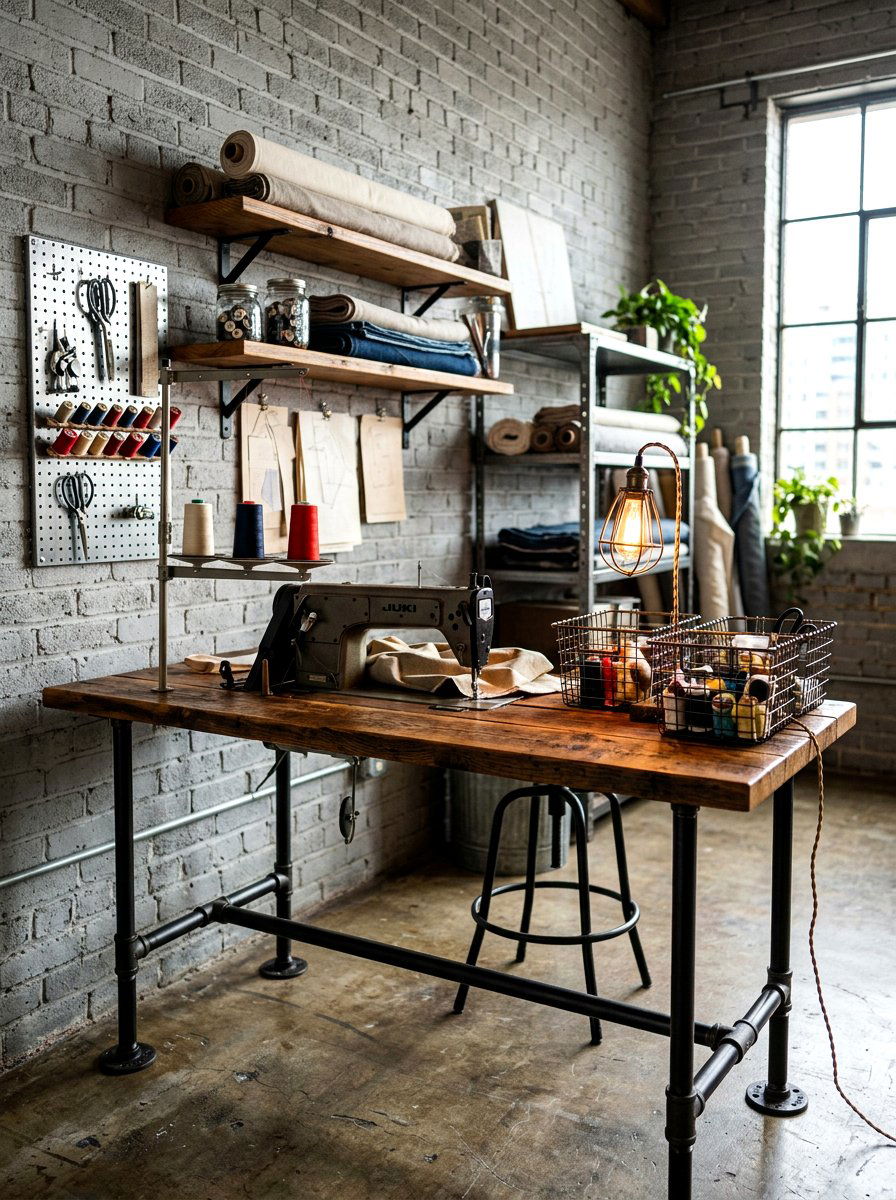
An industrial design aesthetic uses raw materials like reclaimed wood, metal piping, and matte black finishes to create a rugged and cool workspace. You can easily build a custom desk using heavy-duty sawhorse legs and a thick wooden topper for a very sturdy sewing foundation. Metal mesh bins and wire baskets are perfect for organizing your heavy shears and rolls of interfacing or stabilizer. This style is not only very durable but also provides a professional atmosphere that feels like a high-end fashion atelier. Adding a vintage-style Edison bulb lamp provides warm, focused task lighting that complements the dark and textured elements of the industrial theme perfectly.
14. Bohemian Sewing Nook
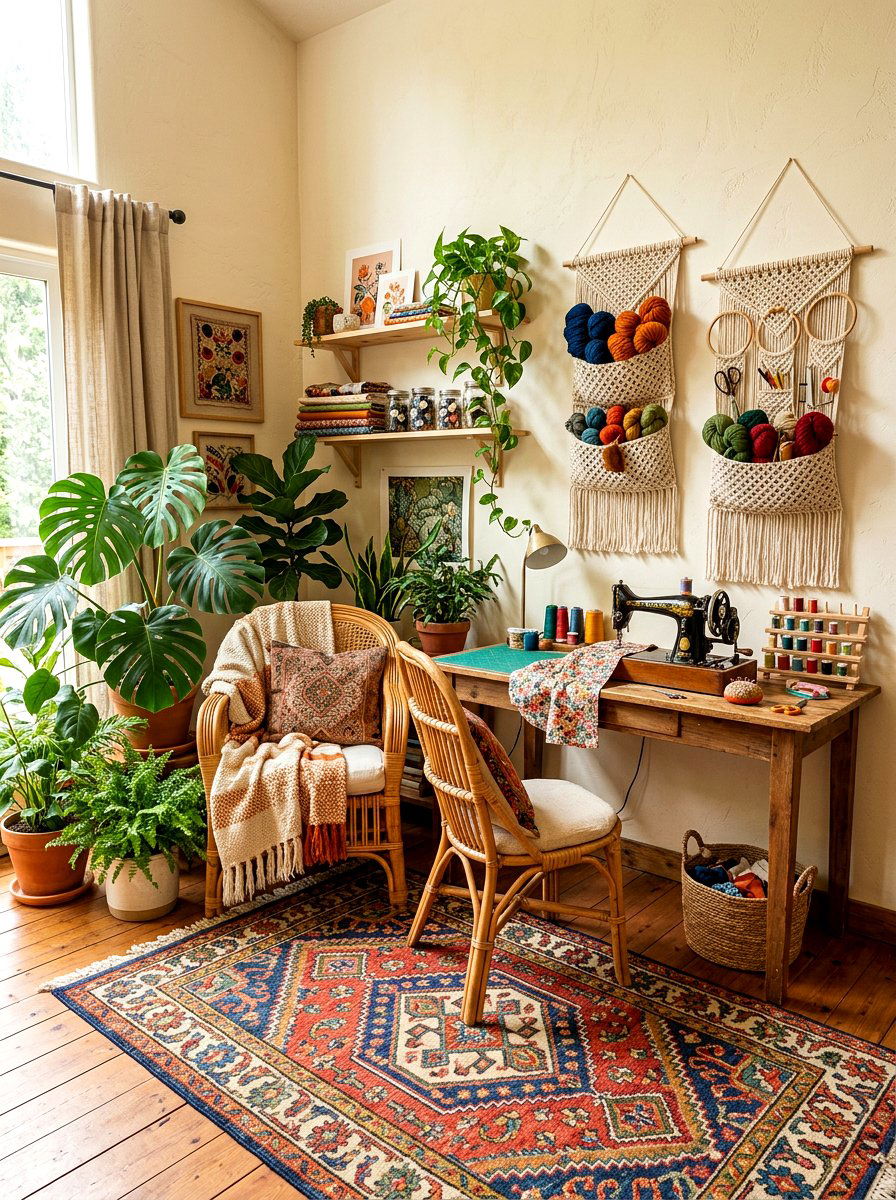
Creating a boho-inspired creative corner is all about layering textures, plants, and eclectic decor to foster a relaxed and artistic environment. You can use a patterned rug to define the space and add a cozy feel under your feet while you work at your machine. Hanging a macramé wall piece or a series of woven baskets provides beautiful storage options for your yarn and embroidery hoops. Incorporating plenty of greenery, such as trailing vines or potted ferns, brings a touch of nature indoors and cleans the air in your workspace. This soft and inviting style encourages a slow, mindful approach to your craft that is incredibly rewarding.
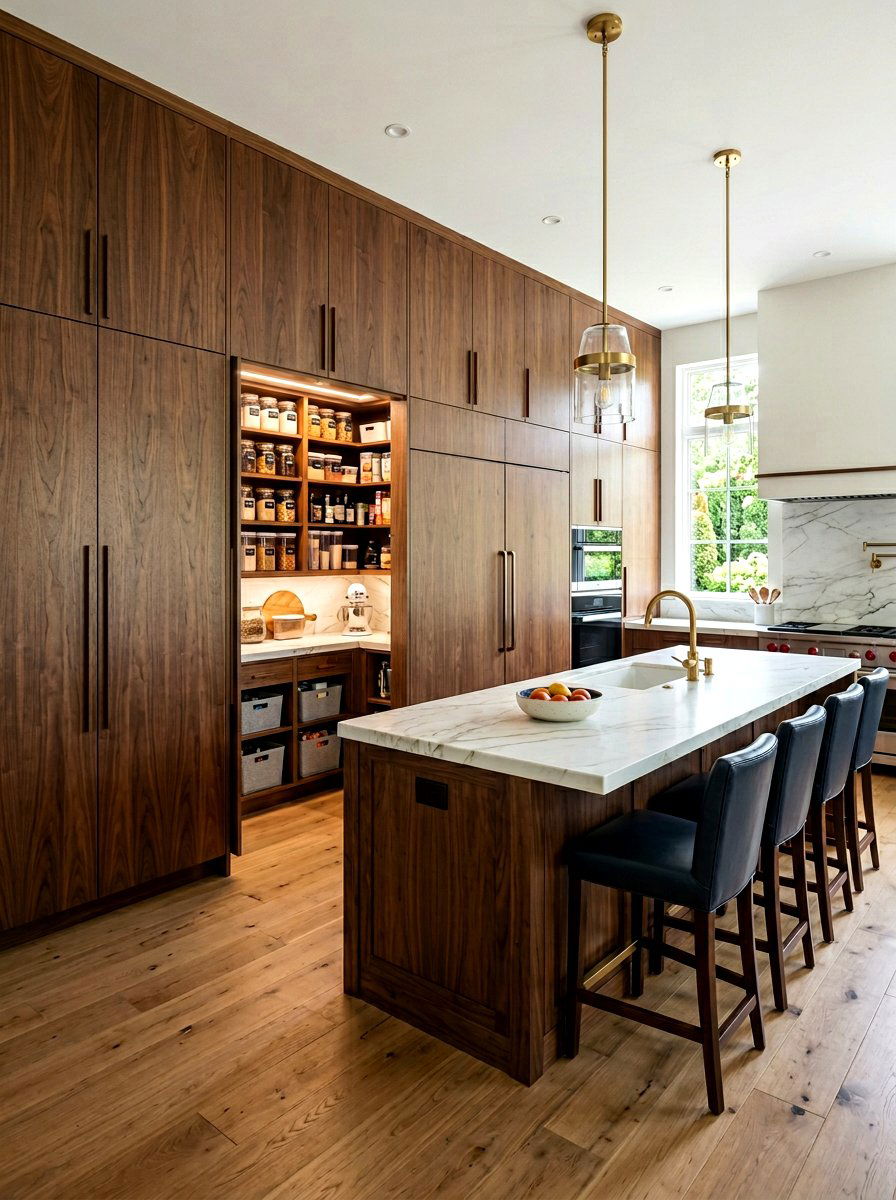

15. Guest Room Sewing Nook
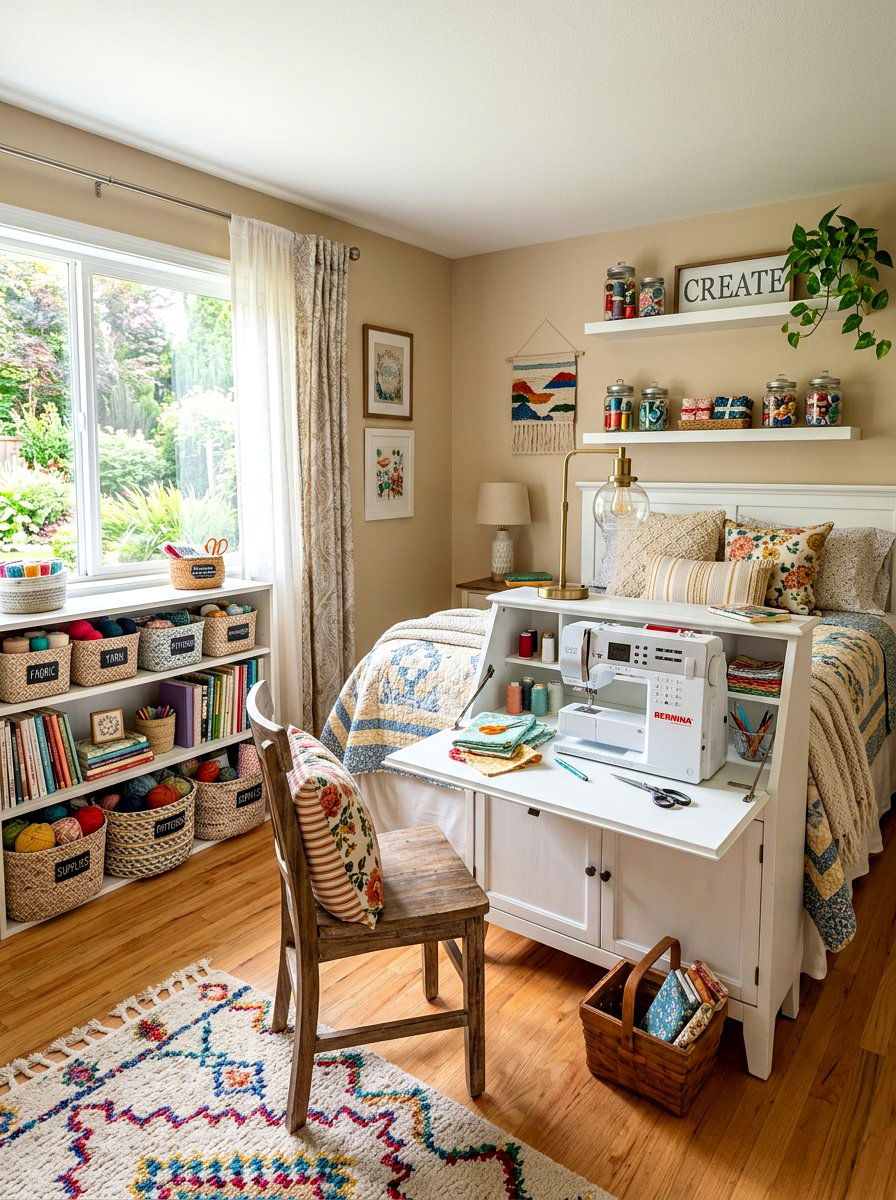
Integrating a sewing station into a guest bedroom is a practical way to make a spare room work harder for your daily needs. Choose furniture that looks like high-quality residential pieces, such as a secretary desk or a stylish console, so the room remains welcoming for visitors. You can store your fabric and supplies in decorative baskets that look like normal room decor when they are tucked away on shelves. When guests arrive, simply close your machine cover and tidy your tools to provide them with a peaceful place to stay. This dual-purpose setup ensures that your hobby has a home without sacrificing the hospitality of your extra bedroom space.
16. Wall Mounted Sewing Nook
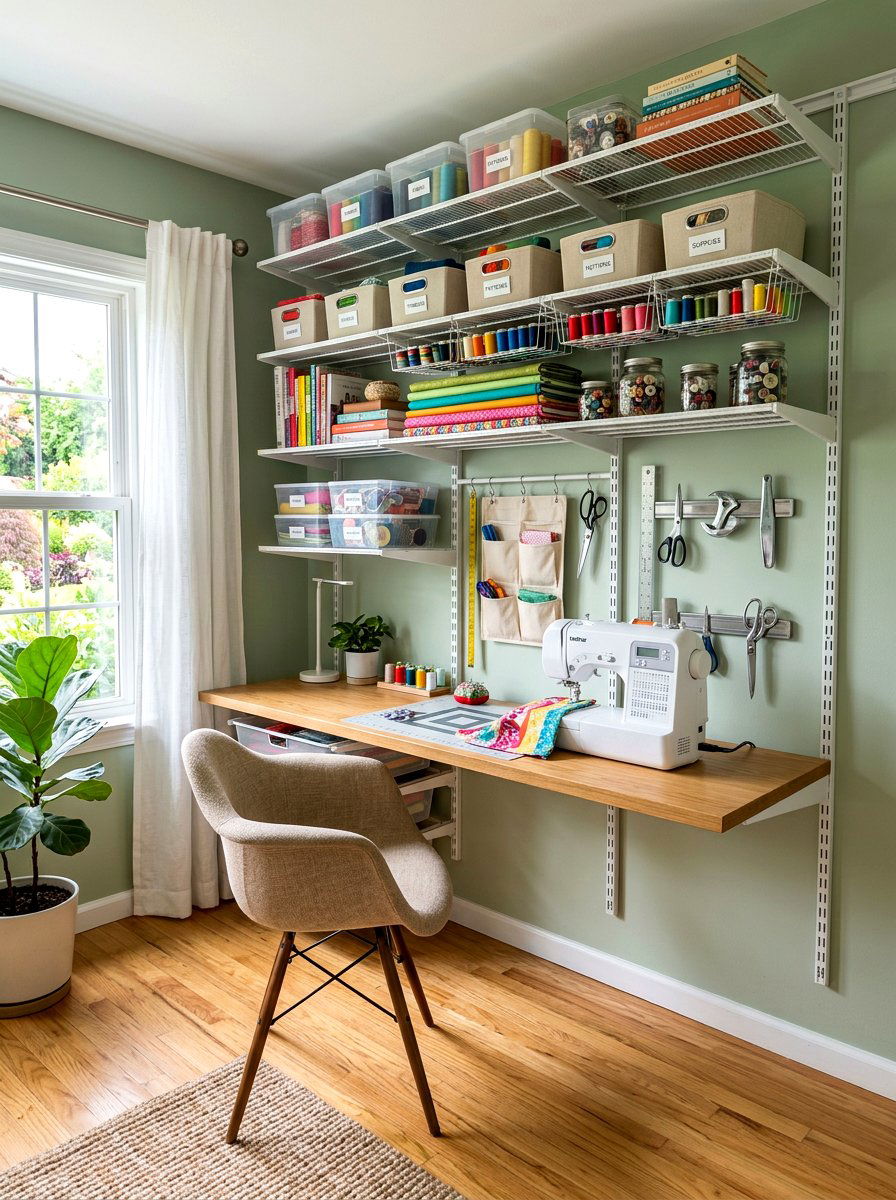
A wall-mounted system offers a highly customizable and space-saving solution for hobbyists who need to keep their work area off the floor. You can use adjustable tracks and brackets to position your desk and shelving at the exact height that is most comfortable for you. This setup allows you to add or remove components as your collection of thread, fabric, and notions grows over time. Because the floor remains clear, the room feels much larger and is significantly easier to clean up after a day of cutting fabric. It is a sleek and modern way to integrate a full-scale craft station into any room of your house.
17. Apartment Sewing Nook
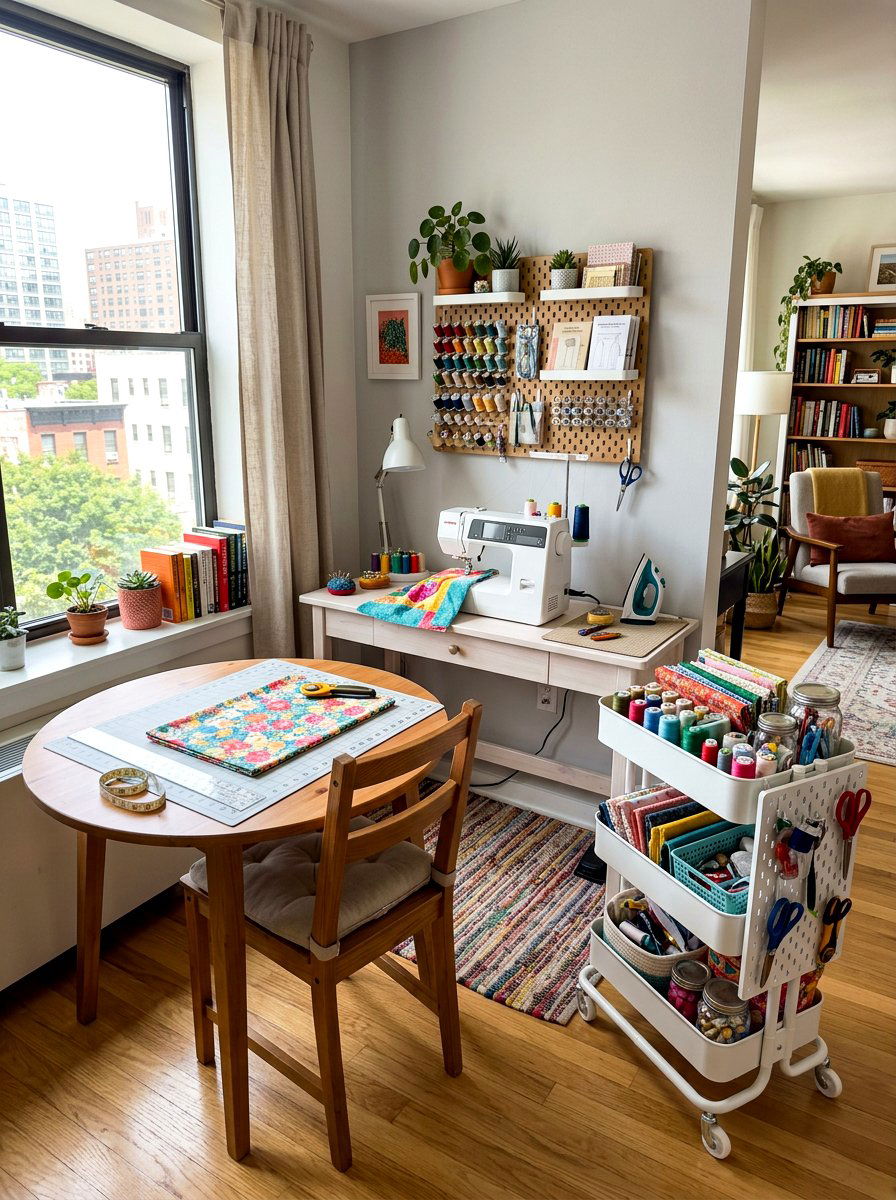
Living in a small apartment doesn't mean you have to give up on your love for garment making or home decor projects. Focus on multi-functional furniture, such as a dining table that can double as a cutting surface or a coffee table with hidden storage. Using a rolling utility cart allows you to move your most essential tools from the closet to your work area in one easy trip. Look for vertical gaps behind doors or next to the refrigerator where you can slide a slim organizer for your rulers and mats. With a little bit of strategic planning, you can create a highly efficient setup that disappears when your workday is done.
18. Ergonomic Sewing Nook
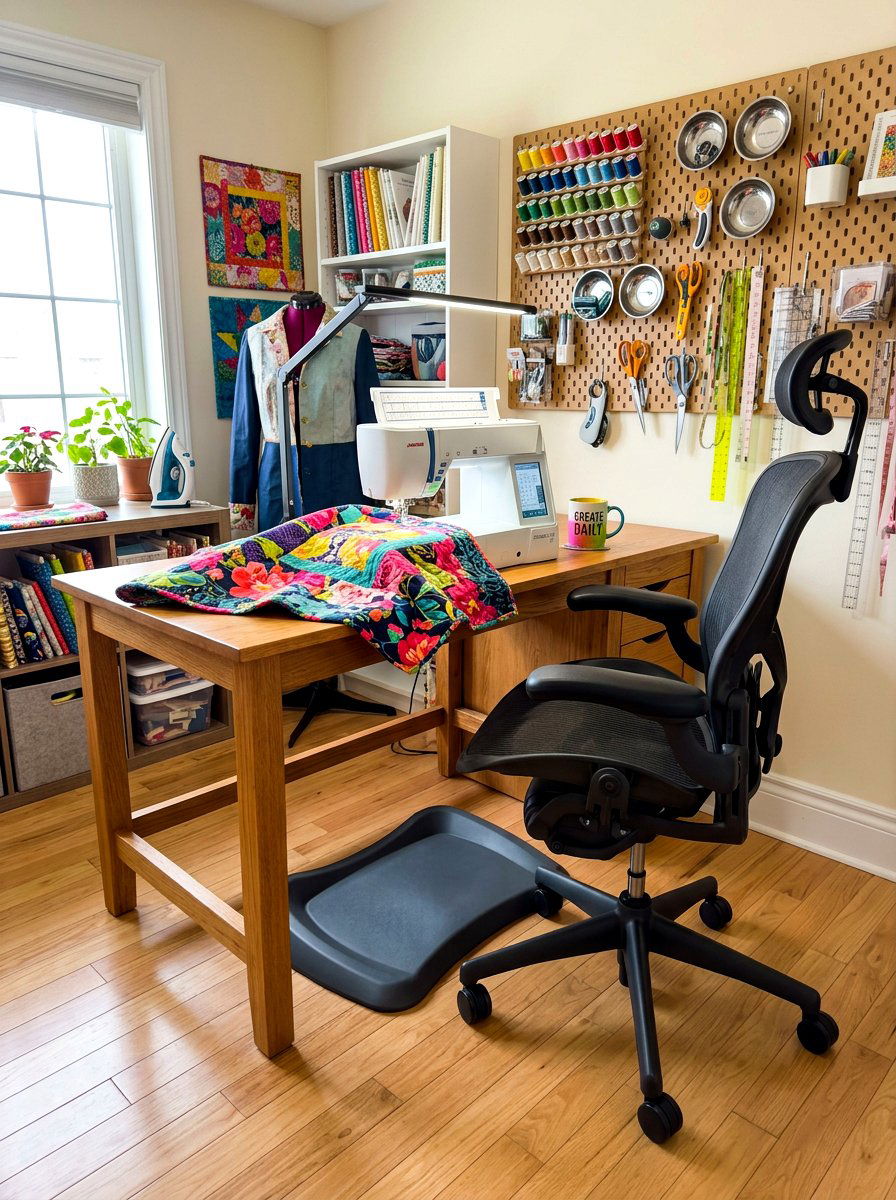
Prioritizing your physical comfort is essential for preventing neck and back pain during long hours spent hunched over a sewing machine or cutting table. Start by investing in a high-quality office chair that provides adjustable lumbar support and height settings for a perfect fit. Ensure your work surface is at the correct level so your arms can rest comfortably while you guide the fabric through the machine. Adding a cushioned floor mat can make a huge difference if you prefer to stand while cutting out large pattern pieces. Good ergonomics will allow you to enjoy your favorite hobby for many years without the risk of repetitive strain or physical fatigue.
19. Hidden Sewing Nook
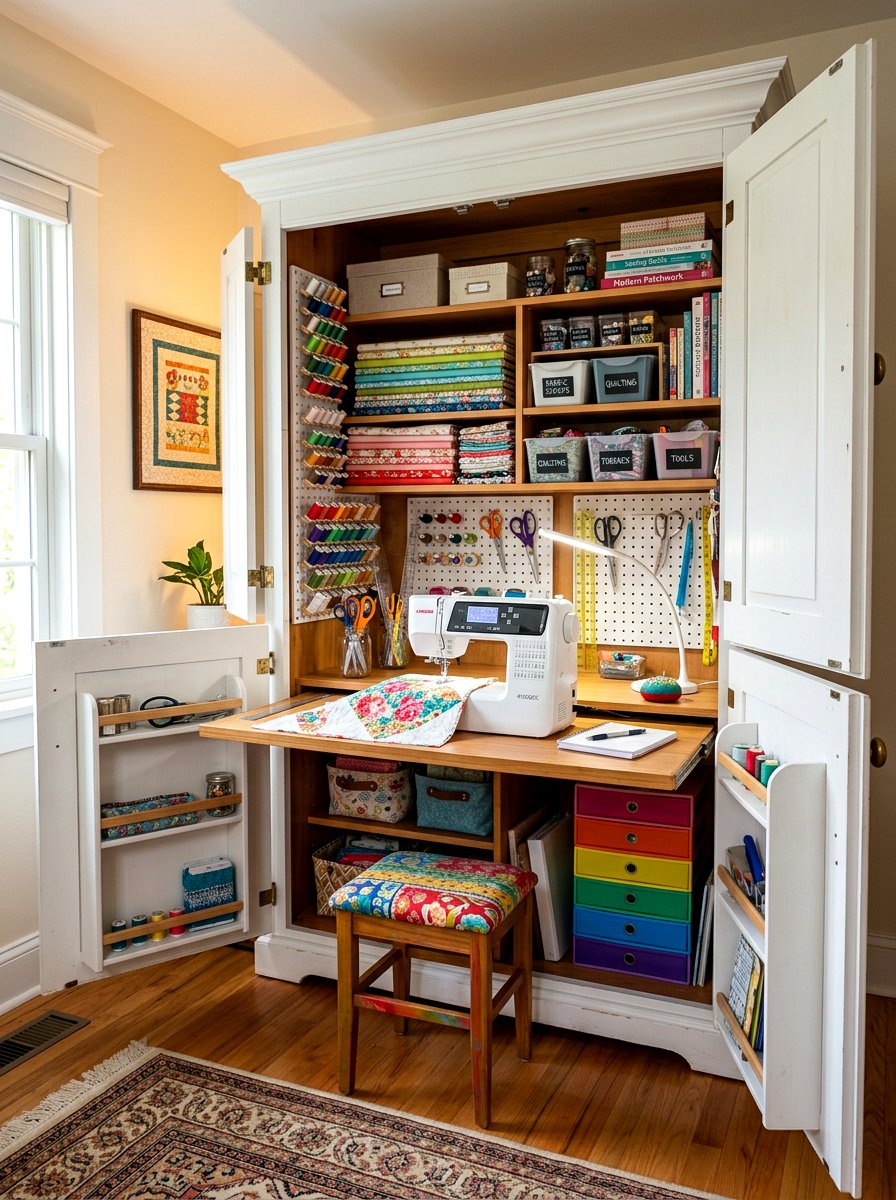
If you prefer to keep your creative projects completely out of sight when you aren't working, a hidden station is the perfect choice for you. You can convert a large armoire or a double-doored cabinet into a fully functional workspace that looks like a beautiful piece of furniture. When the doors are closed, all your fabric scraps, thread tails, and machines are completely tucked away from view. This is an excellent solution for living rooms or dining areas where you want to maintain a formal or tidy appearance. Inside, you can customize the shelves and drawers to hold every tool you need for a quick and easy setup.

20. Craft Room Sewing Nook
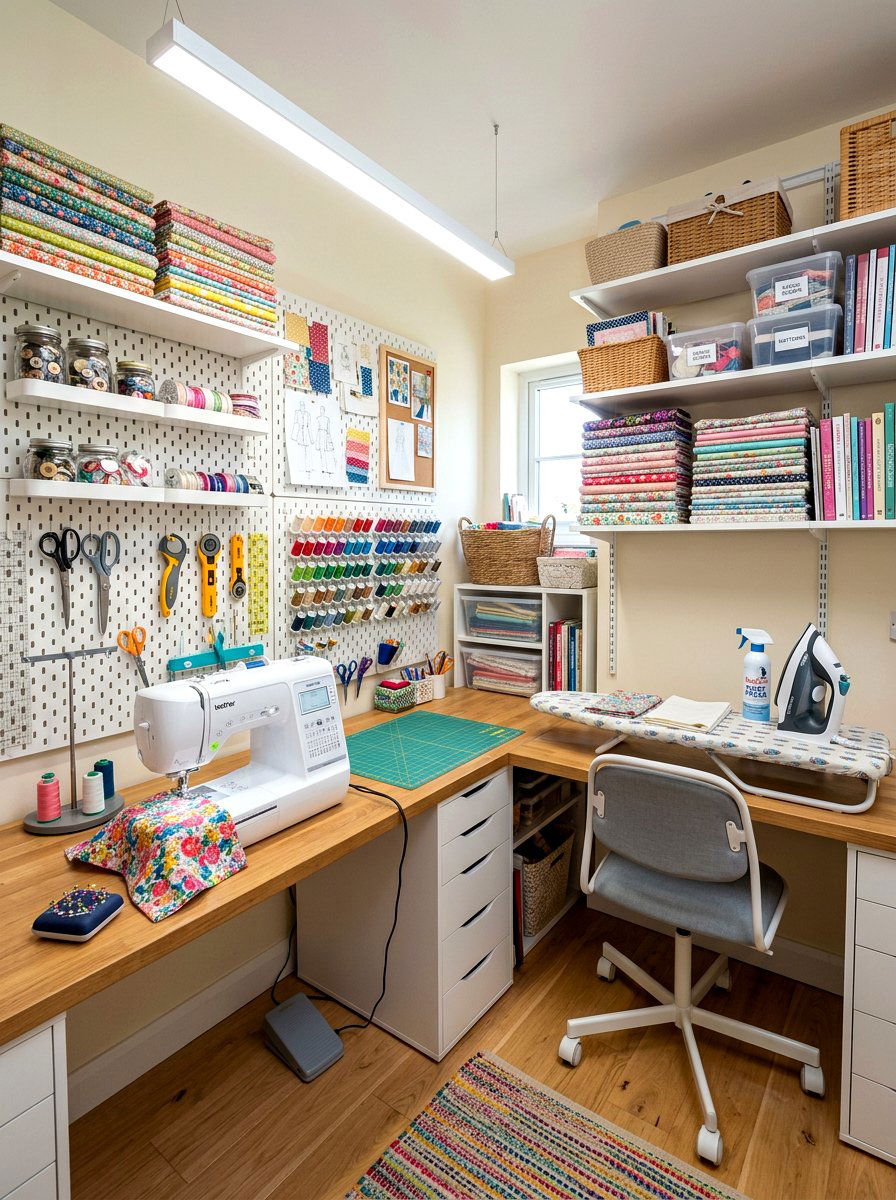
Even if you already have a dedicated craft room, creating a specific nook for your sewing machine can help streamline your creative process. Zone your space by keeping your machine, iron, and thread in one area while placing your cutting mat and fabric storage in another. This organization prevents you from having to constantly clear your workspace to switch between different tasks like pinning and stitching. Using a corner desk can help maximize the layout and provide plenty of room for both your machine and a small pressing station nearby. A well-organized room allows you to move seamlessly through each stage of your project with much greater efficiency.
21. Sunroom Sewing Nook
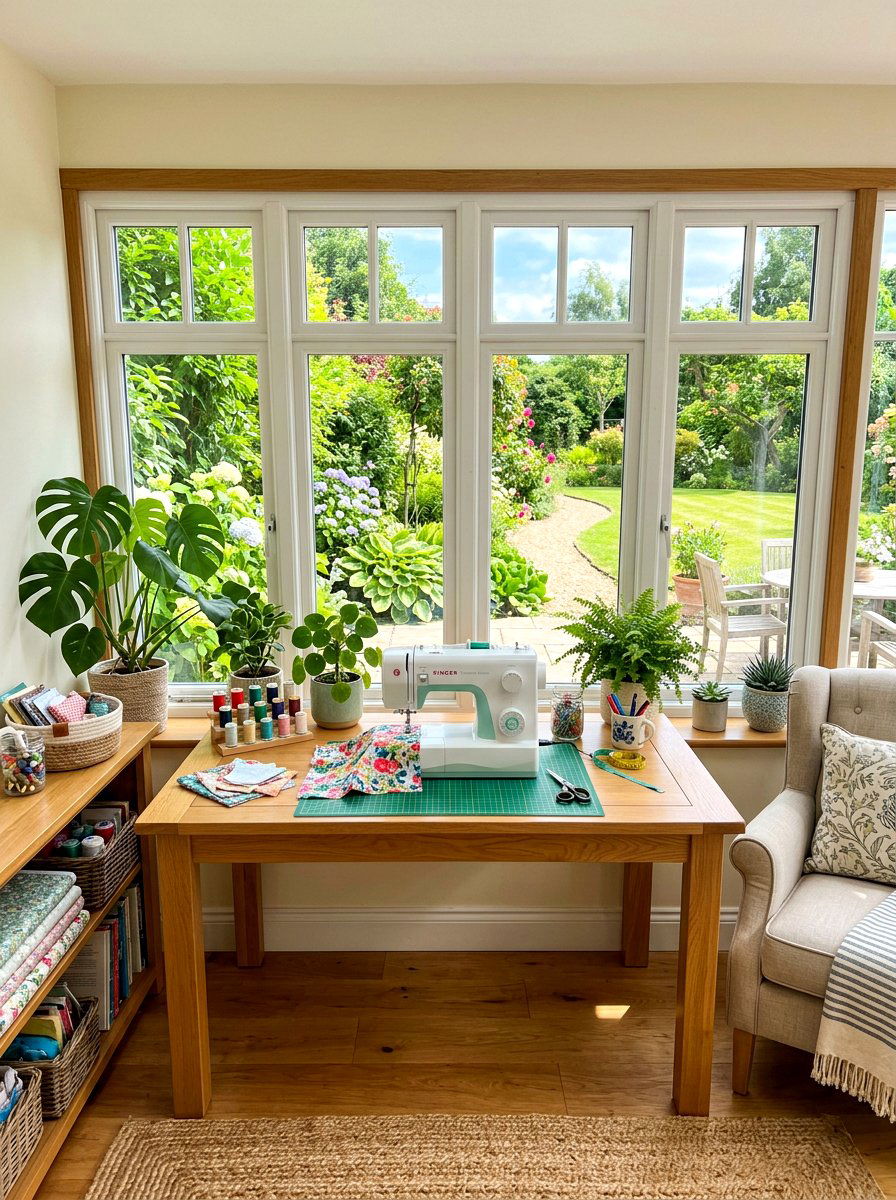
Taking advantage of the abundant natural light in a sunroom can make the task of threading needles and matching colors much easier. The bright and airy environment provides a refreshing change of pace from traditional indoor rooms and helps keep your energy levels high. You can position your desk to face the windows, allowing you to enjoy the view of your garden while you work on your latest project. Use light-filtering blinds to prevent glare on your machine during the brightest parts of the day. The connection to the outdoors creates a peaceful and serene atmosphere that is perfect for artistic inspiration and long, productive afternoons.
22. Built In Sewing Nook
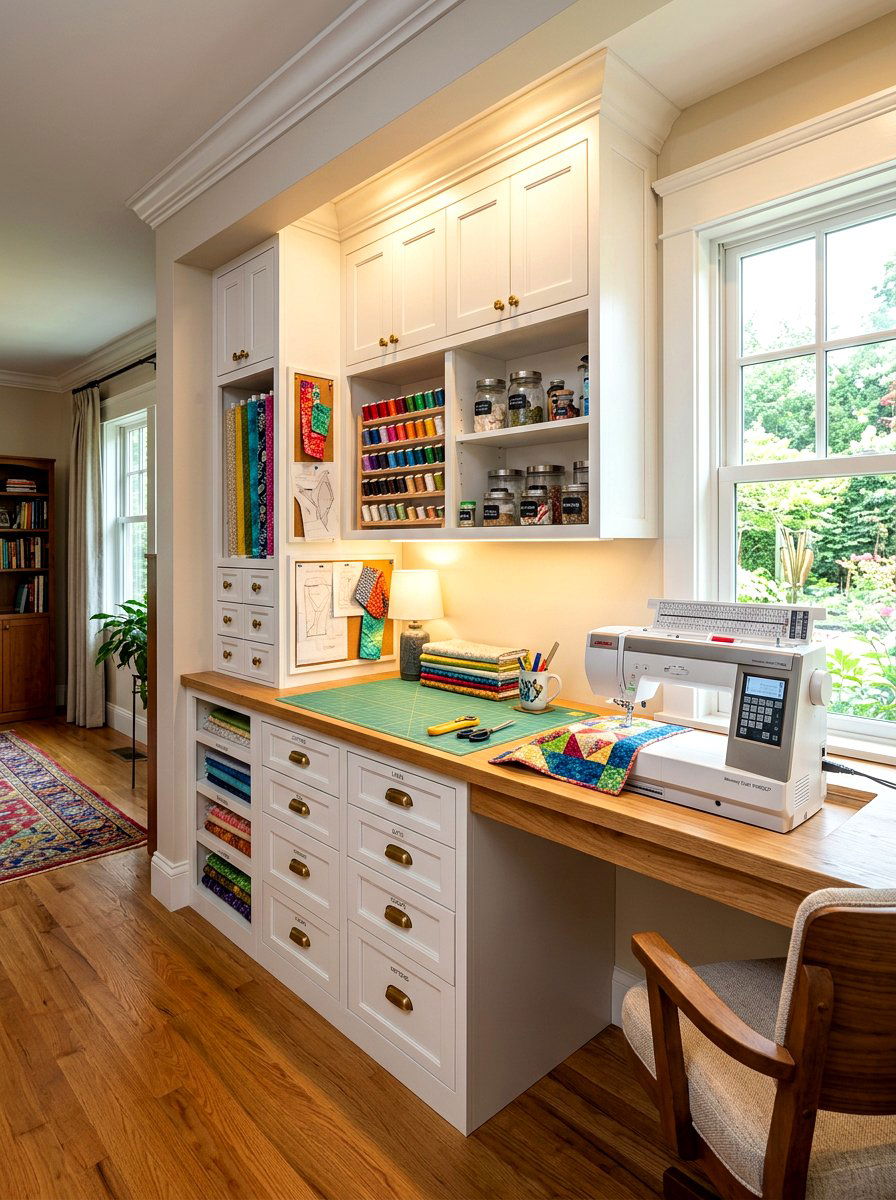
A custom built-in desk provides a seamless and permanent solution that can be tailored to the exact dimensions of a specific wall or corner. This high-end approach allows you to incorporate specialized storage, such as deep drawers for fabric bolts and shallow trays for organized bobbins. You can match the cabinetry to your home 's existing woodwork for a sophisticated look that adds value to your property. Built-ins often provide more stability than freestanding furniture, which is beneficial for heavy-duty industrial sewing machines. Adding integrated lighting and electrical outlets ensures that your workspace is fully functional and ready for any project at a moment' s notice throughout the year.
23. Scandinavian Sewing Nook
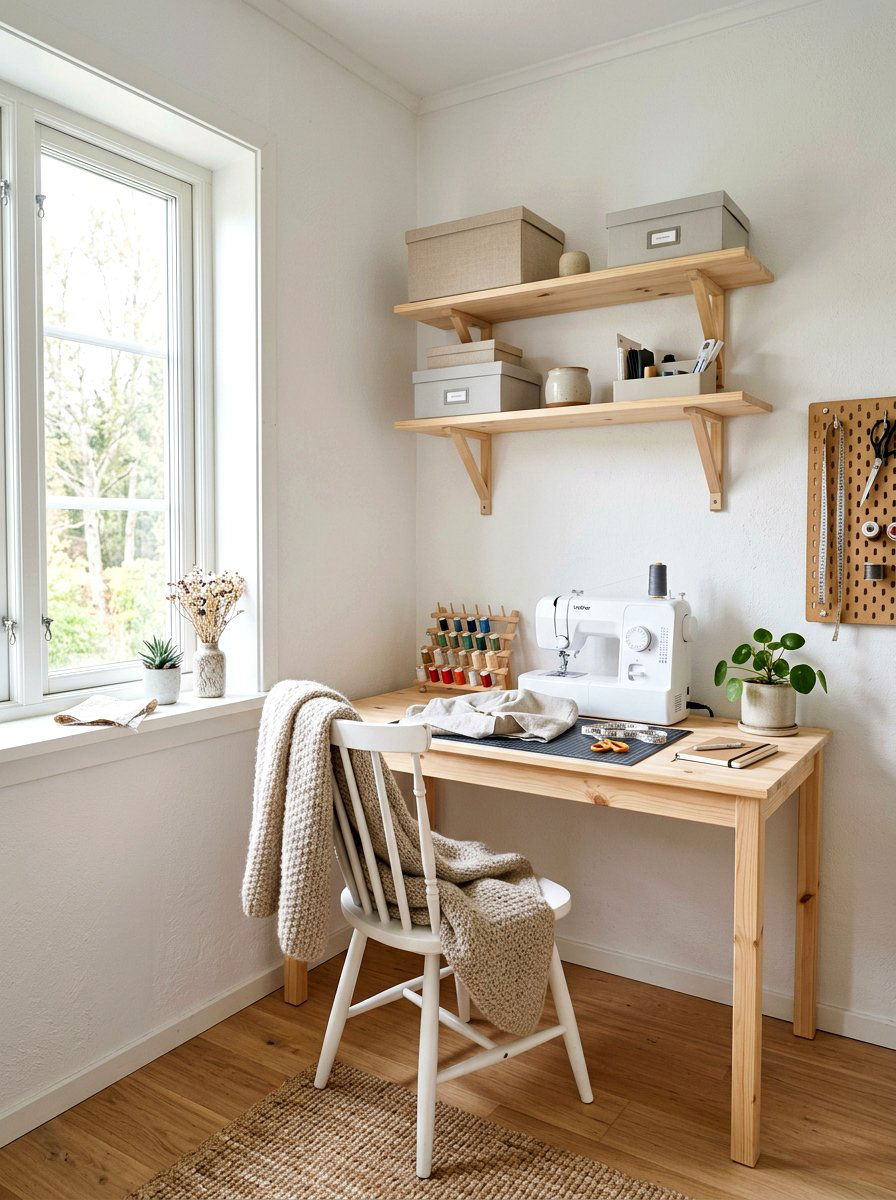
The Scandinavian design philosophy focuses on simplicity, functionality, and the use of light-colored woods to create a calm and inviting creative workspace. Look for a clean-lined desk made of birch or pine and pair it with a classic white chair for a timeless look. Incorporate natural textures like wool or linen for your chair cushions and storage bins to add a sense of warmth and comfort. This style avoids unnecessary clutter, encouraging you to keep only the tools and fabrics that truly spark joy. The result is a peaceful sanctuary where you can focus entirely on the craftsmanship and beauty of your handmade textile creations.
24. Armoire Sewing Nook
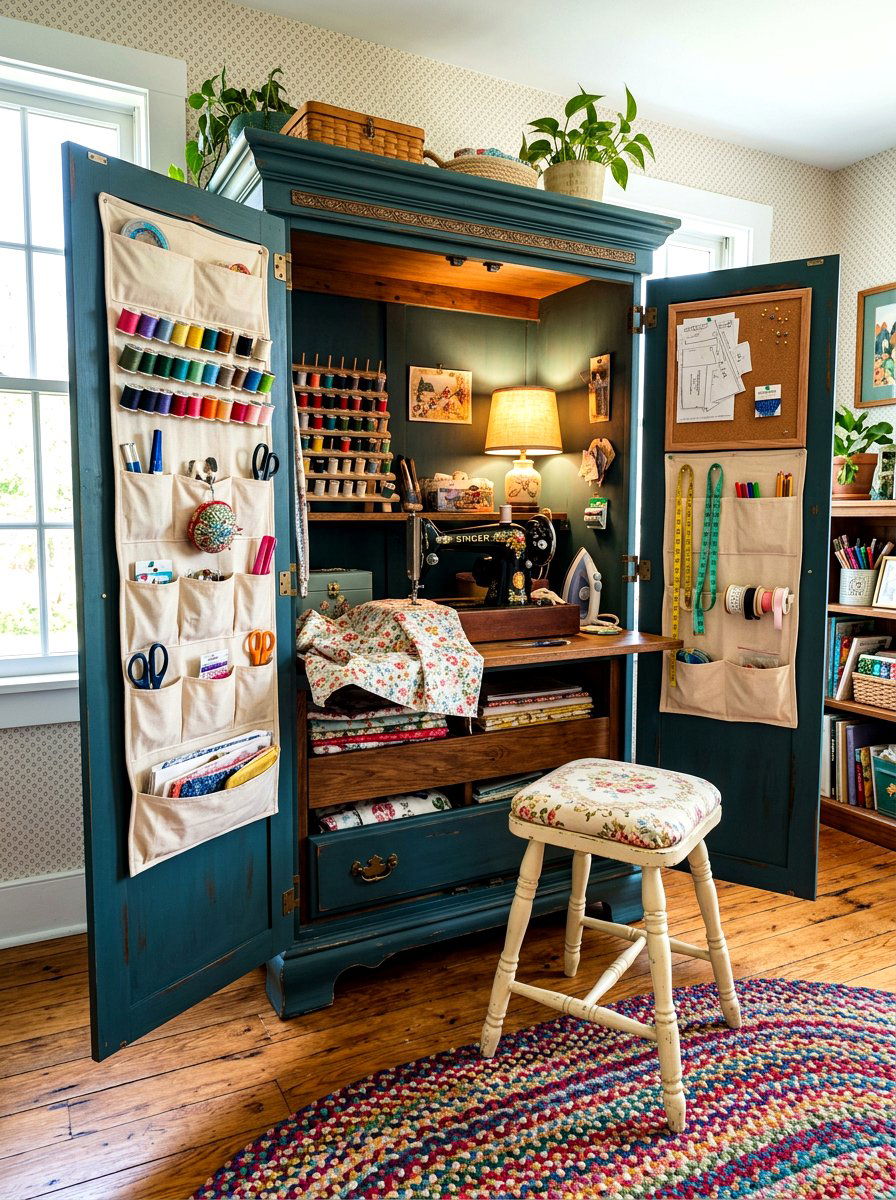
Repurposing a large armoire is a classic and effective way to create a self-contained sewing studio that can be placed in almost any room. The internal shelving can be adjusted to hold your machine, while the doors can be fitted with hooks or pockets for small notions. Many armoires also feature pull-out surfaces that provide extra space for your projects or a small laptop for following digital patterns. This solution is particularly helpful for those who live in open-concept homes where a separate room is not available. It provides a beautiful way to organize your hobby while keeping your home looking professional and perfectly tidy.
25. Hallway Sewing Nook
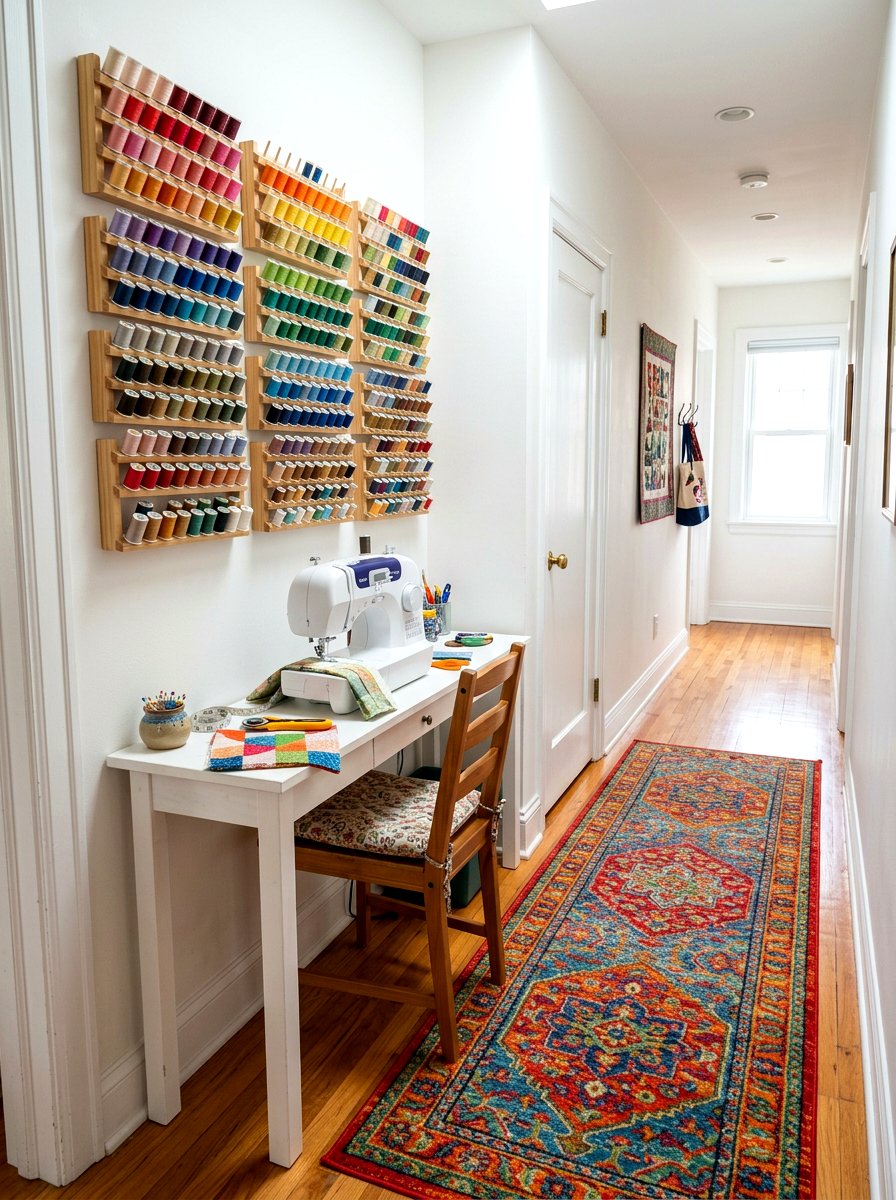
A wide hallway or a landing at the top of the stairs can be the perfect spot for a slim and efficient sewing station. By choosing a narrow desk and using wall-mounted storage, you can create a functional work area without blocking the path for others. This location is often centrally located, making it easy to hop on the machine for a quick repair or a few minutes of quilting. Adding a bright runner rug can help define the zone and protect your floors from falling pins or thread scraps. It is a clever use of transitional space that turns a thoroughfare into a highly productive creative destination.
26. Bright Sewing Nook
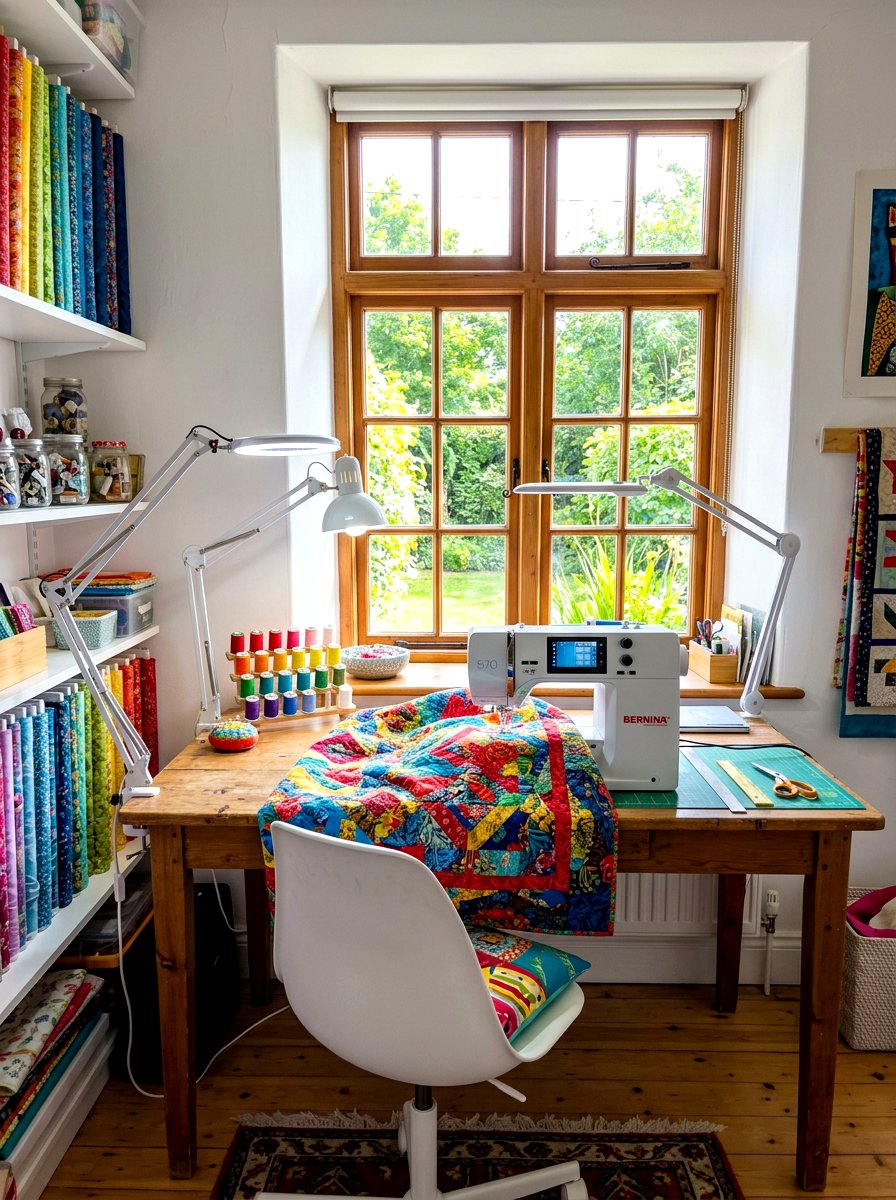
Maximizing light is one of the most important factors in creating a successful creative corner where you can see every tiny detail. Use a combination of natural light from windows and high-quality task lamps to ensure your work surface is always brilliantly illuminated. Choosing light-colored furniture and painting the walls a crisp white or soft cream will help reflect light into every corner of the room. This bright environment reduces eye strain and makes it much easier to work with dark fabrics or complex patterns. A well-lit space always feels more inviting and professional, encouraging you to spend more time perfecting your unique and beautiful creations.
27. Rustic Sewing Nook
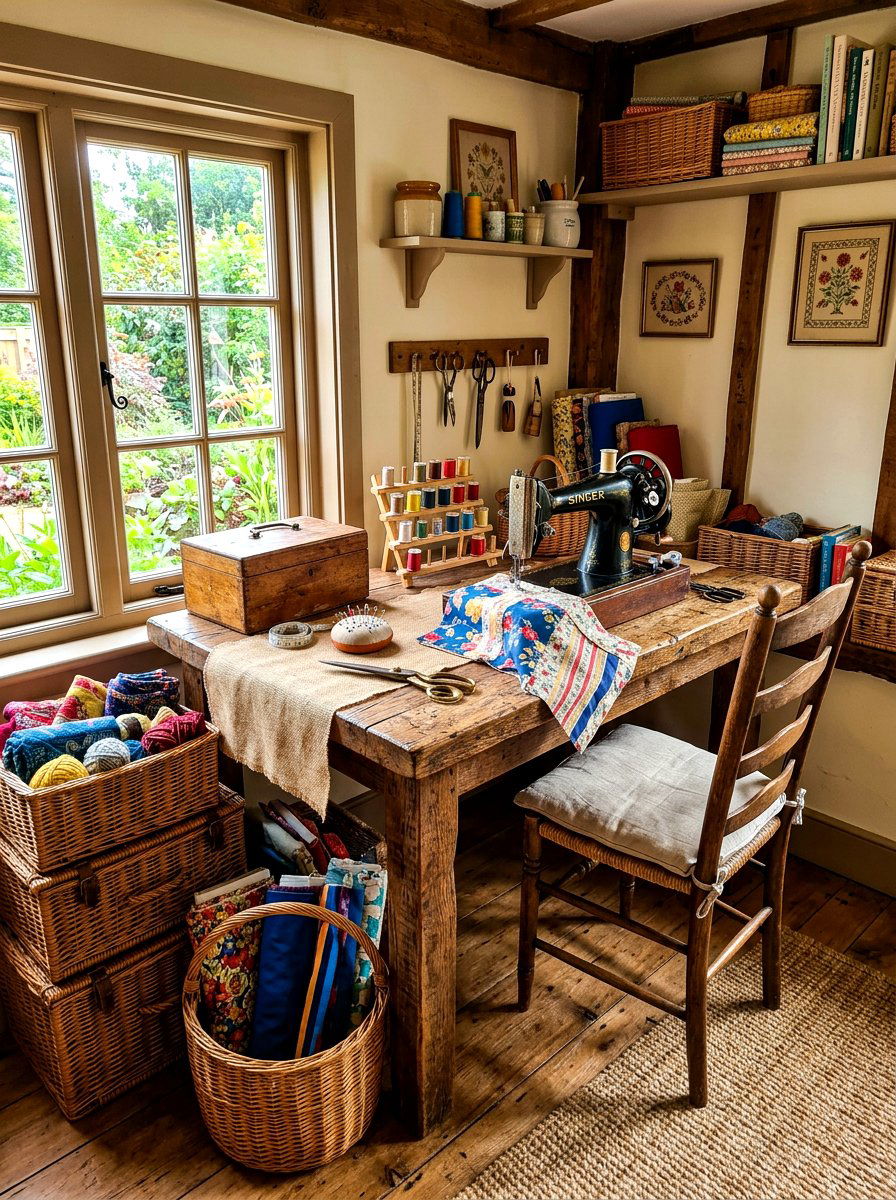
A rustic theme uses natural materials and a warm color palette to create a cozy and grounded environment for your traditional needlework projects. You can use a reclaimed wood table as your primary workstation and incorporate wicker baskets for fabric and yarn storage. Adding a soft, chunky knit throw over your chair and some vintage-style decor items can help enhance the farmhouse or cabin feel. This style celebrates the handmade nature of your work and provides a comfortable place to relax and enjoy the rhythm of the machine. It is an ideal look for those who love a charming and slightly lived-in aesthetic in their homes.
28. Pastel Sewing Nook
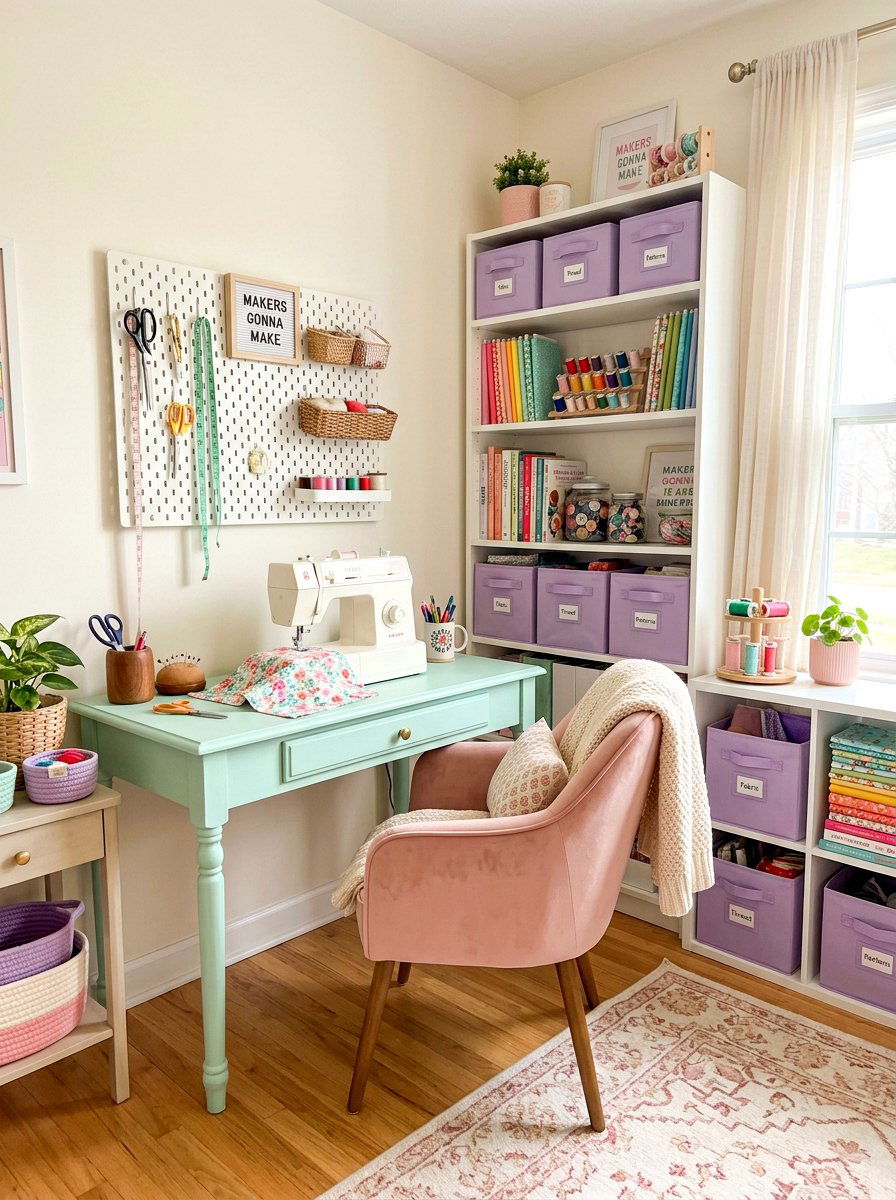
Soft pastel colors like mint green, lavender, and blush pink can create a dreamy and whimsical atmosphere for your favorite creative outlet. You can paint your shelving units in these gentle hues or choose storage bins and accessories that follow a soft and light color story. This palette feels very feminine and relaxing, making the nook a perfect escape from the stresses of daily life. Pairing these colors with light wood or white furniture keeps the space looking modern rather than dated. A pastel workspace is not only beautiful to look at but also provides a very soothing backdrop for intricate and delicate hand-stitching projects.
29. Office Sewing Nook
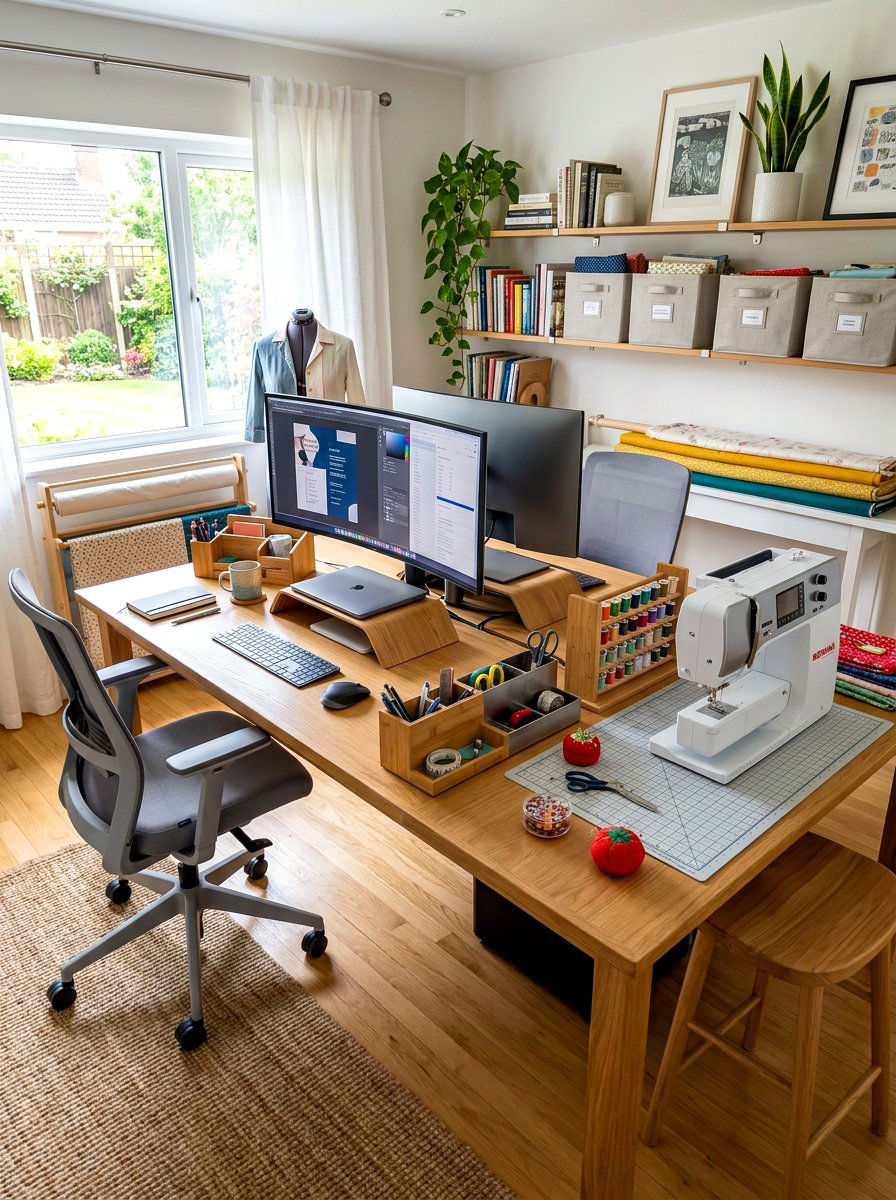
If you already have a home office, adding a sewing station can turn the room into a multi-functional hub for all your professional and creative tasks. You can use a long desk that accommodates both your computer and your sewing machine side-by-side for a streamlined workflow. This setup is particularly helpful for those who sell their handmade goods online and need to switch between making and managing their business. Use matching organizers to keep your office supplies and sewing notions looking cohesive and professional. Having both areas in one room allows you to make the most of your designated work time while staying incredibly organized and efficient.
30. Mobile Sewing Nook
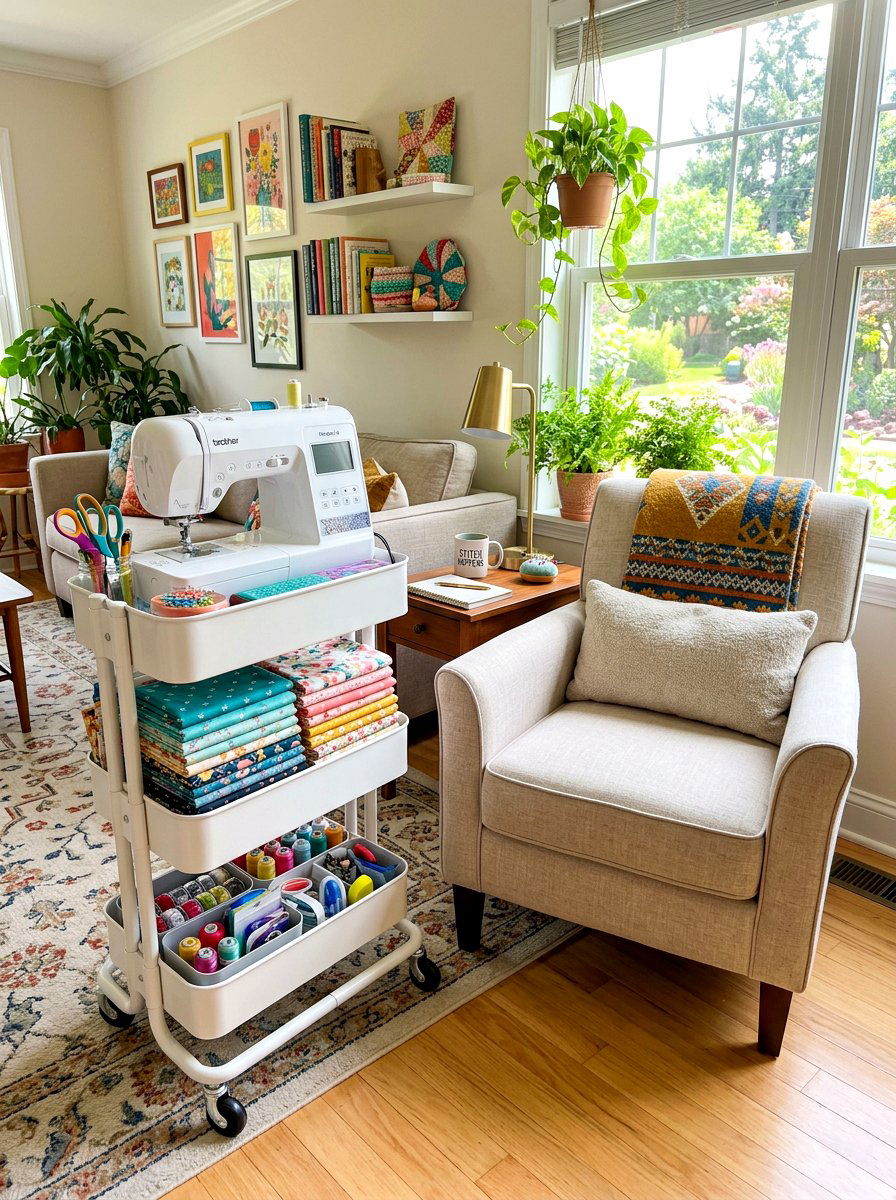
A mobile station built around a sturdy rolling cart is the ultimate solution for those who need to move their craft from room to room. You can stock the cart with your machine on top and all your essential tools, thread, and fabric in the bins below. This allows you to sew at the dining table while watching TV or move to a quiet corner when you need more focus. When your project is finished, simply wheel the cart back into a closet or corner to keep your home looking neat. It is a highly flexible and affordable way to ensure you always have access to your creative tools whenever you want.
Conclusion:
Setting up a personalized sewing nook is one of the best ways to nurture your creativity and ensure that your hobby remains a joyful part of your life. Whether you choose a hidden closet setup or a bright, open-concept corner, the most important thing is that the space works for your specific needs. By focusing on smart organization and comfortable furniture, you can create a station that makes every project more efficient and enjoyable. Remember that even the smallest corner can be transformed into a productive sanctuary with a little bit of planning and inspiration. Now is the perfect time to carve out a special place for your creative spirit to flourish.

Related posts: