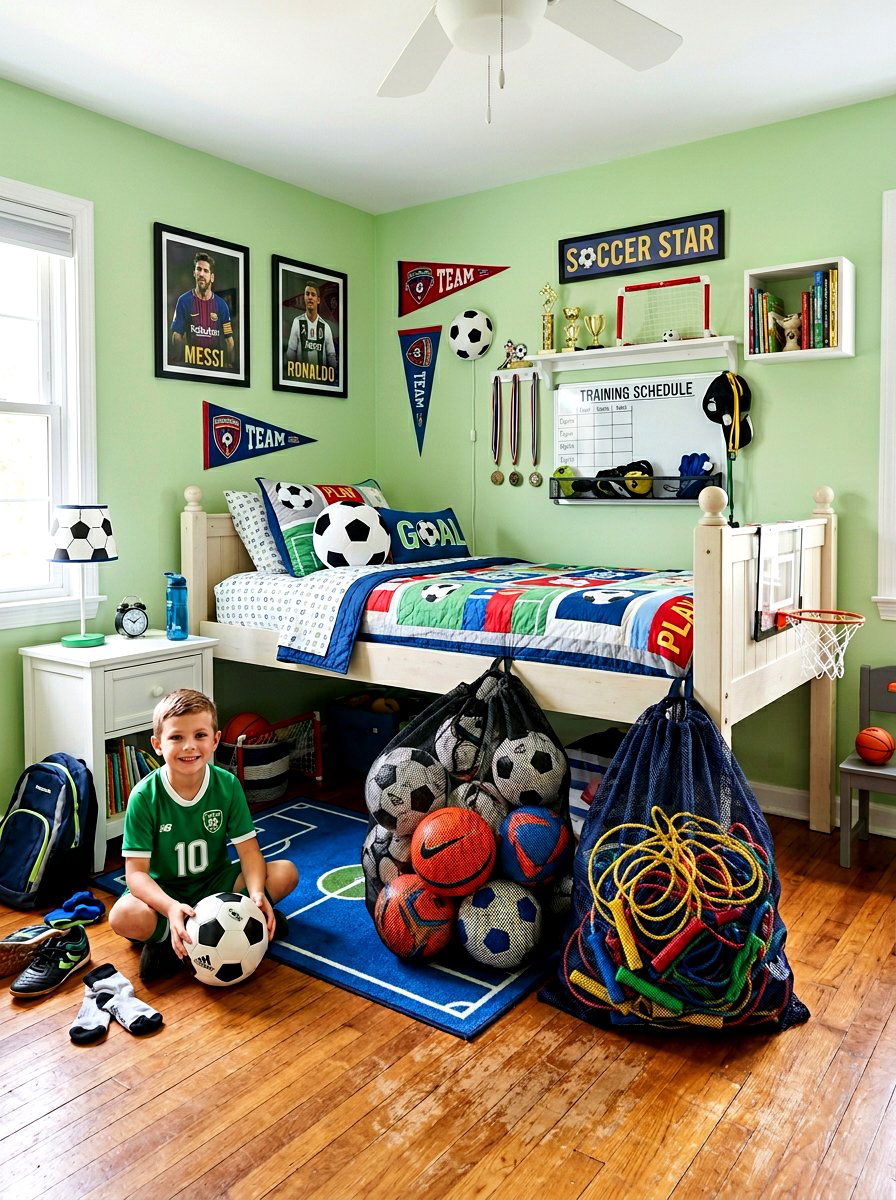
Creating a functional toy rotation system is one of the most effective ways to manage clutter in your home. Many parents find that their children become overwhelmed when too many toys are available at once. By limiting the number of items on display, you encourage deeper focus and more imaginative play. Toy rotation works by keeping a small selection of toys accessible while storing the rest out of sight. This article explores thirty unique ways to organize your storage to make this process seamless and enjoyable. From minimalist Montessori shelves to clever hidden cabinets, these solutions will help you maintain a tidy and engaging environment. Let's transform your playroom into a peaceful space for learning and growth today.
1. Montessori Playroom Shelf
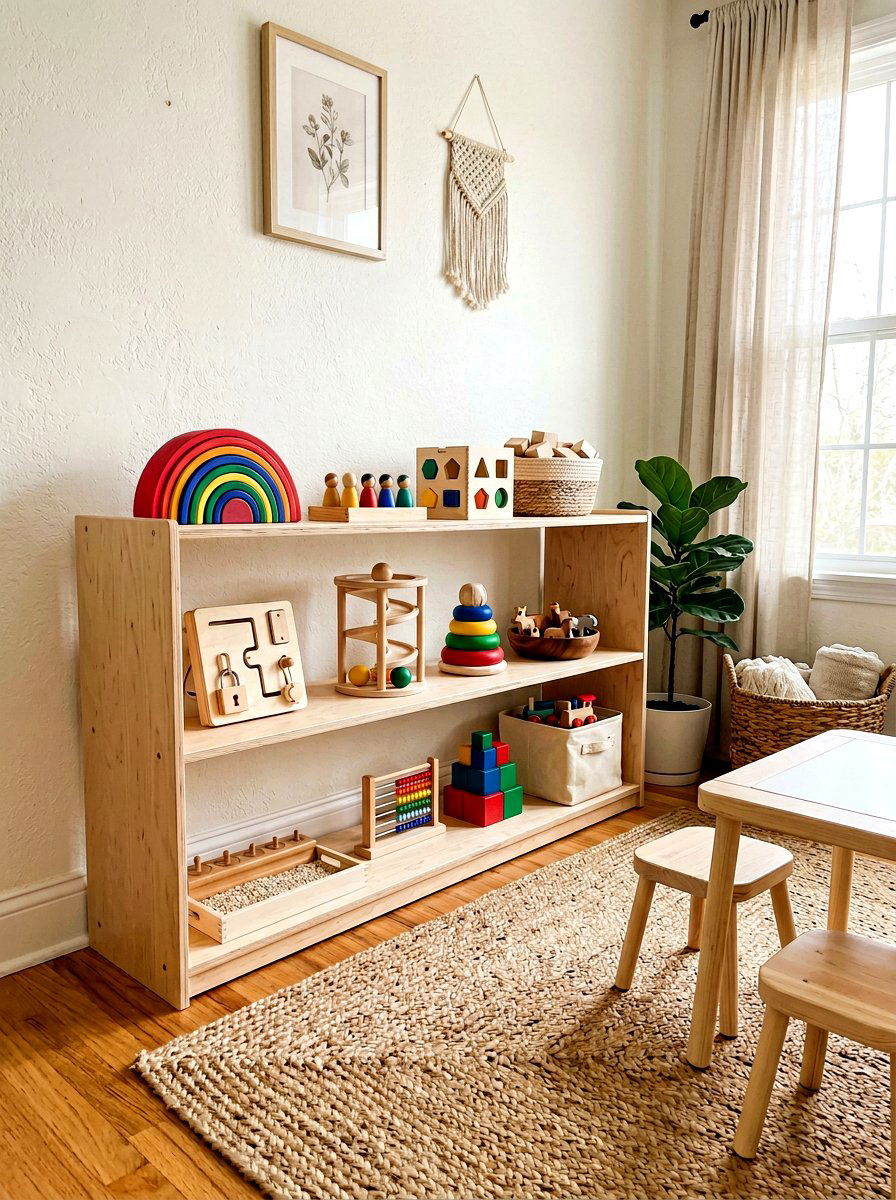
A Montessori playroom shelf prioritizes accessibility and independence by keeping toys at a child's eye level. This setup typically uses low, open wooden shelves that allow toddlers to choose their own activities without help. By displaying only a few select items at once, you create a calm atmosphere that prevents sensory overload. This specific design makes the rotation process very efficient because you can see exactly which toys are being ignored. Swapping items every week keeps the environment fresh and exciting for the child. The minimalist aesthetic of this area promotes focus and concentration during play sessions. It is a beautiful and functional way to organize any nursery or playroom space.
2. Trofast Storage Station
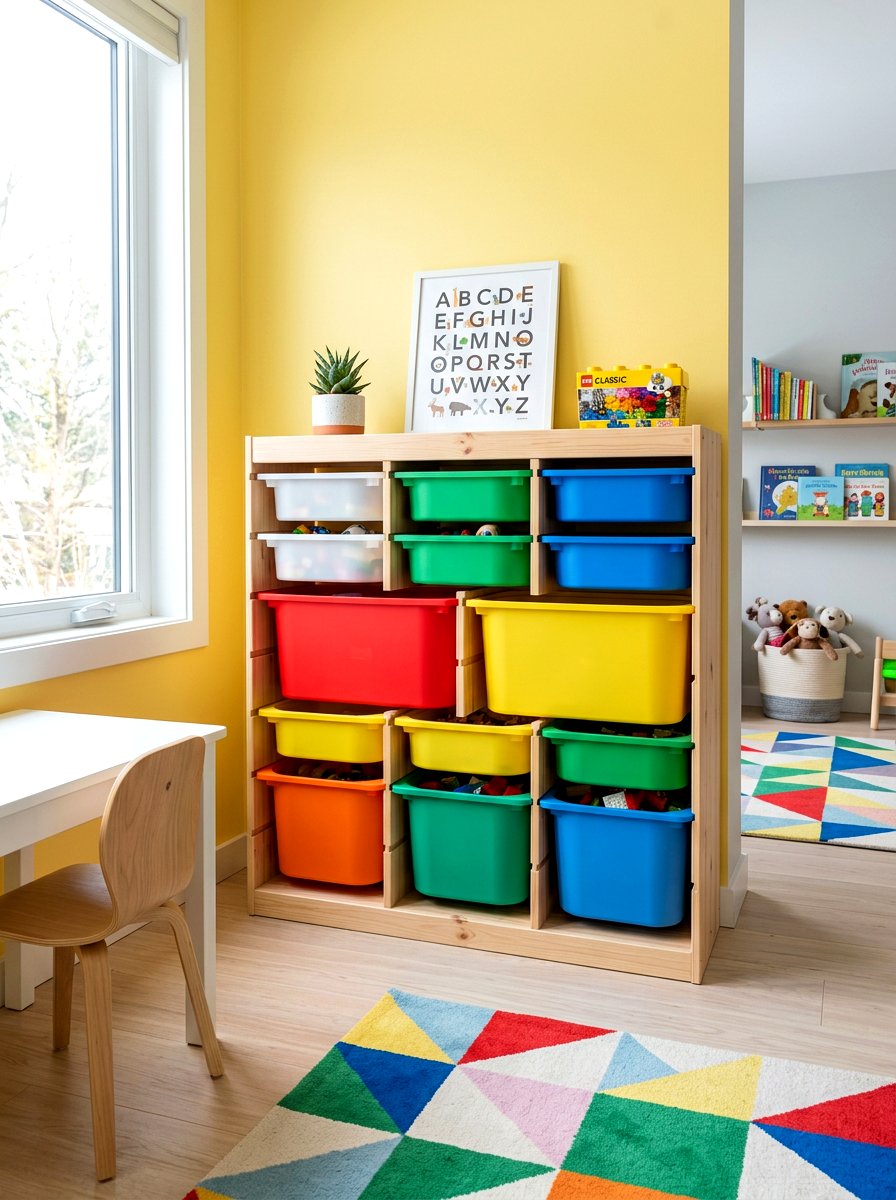
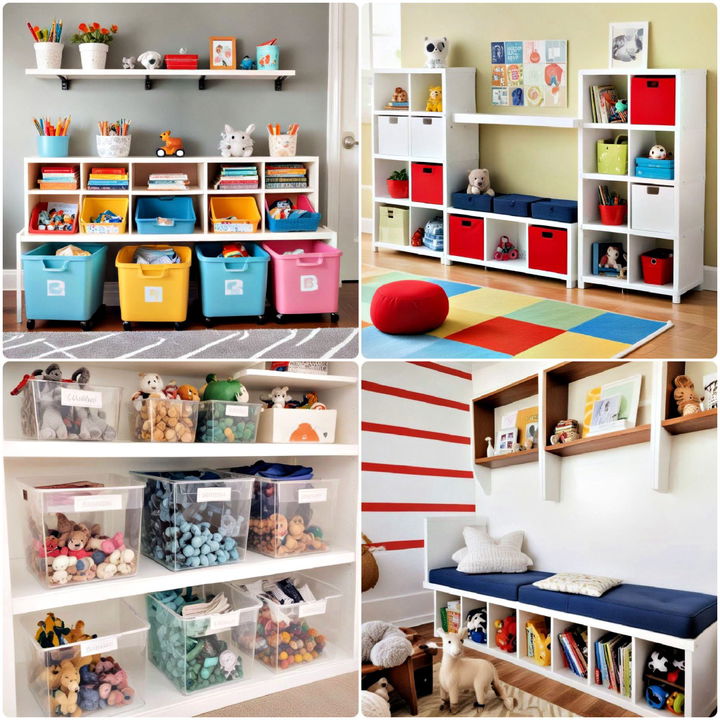
The Trofast storage station is a classic choice for families who need a durable and versatile organization system. This design uses sturdy wooden frames paired with sliding plastic bins of various sizes and colors. You can easily categorize toys like building blocks, cars, or art supplies within individual bins. When it is time for a toy rotation, you simply swap the active bins with those stored in a closet. This method saves significant time and keeps the floor clear of small pieces. The flat top of the unit can also serve as a play surface for Lego sets or puzzles. It provides a very structured and organized look for busy rooms.
3. Clear Bin Organization
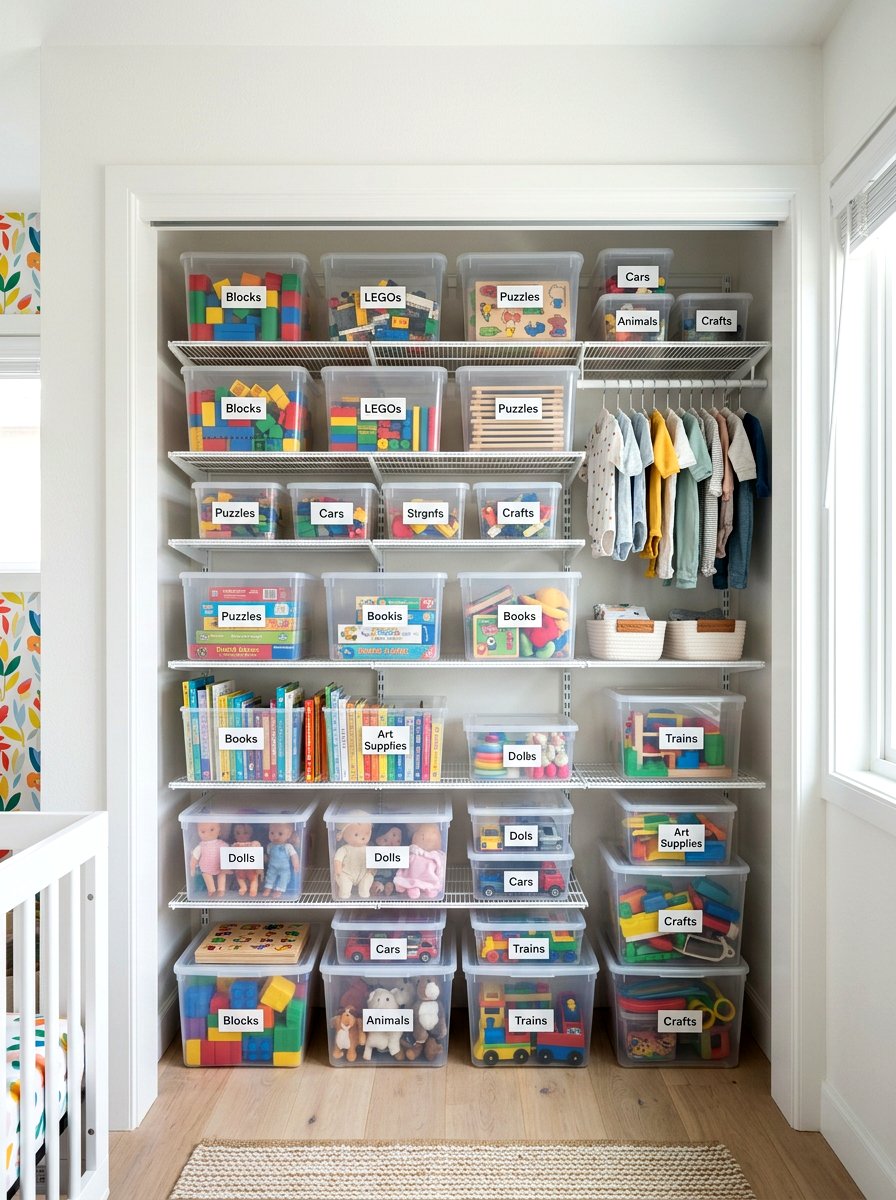
Using a clear bin organization system is perfect for parents who want to see exactly what is in storage. Transparent plastic containers allow you to identify toy categories at a glance without having to open every lid. You can stack these bins vertically in a closet or on a large shelving unit to maximize space. This setup works exceptionally well for small pieces that often get lost in larger toy chests. During your rotation cycle, you can bring out one or two bins and keep the others tucked away. The visual clarity helps both parents and children find what they need quickly. It is a very practical and low-cost solution.
4. Woven Basket Setup
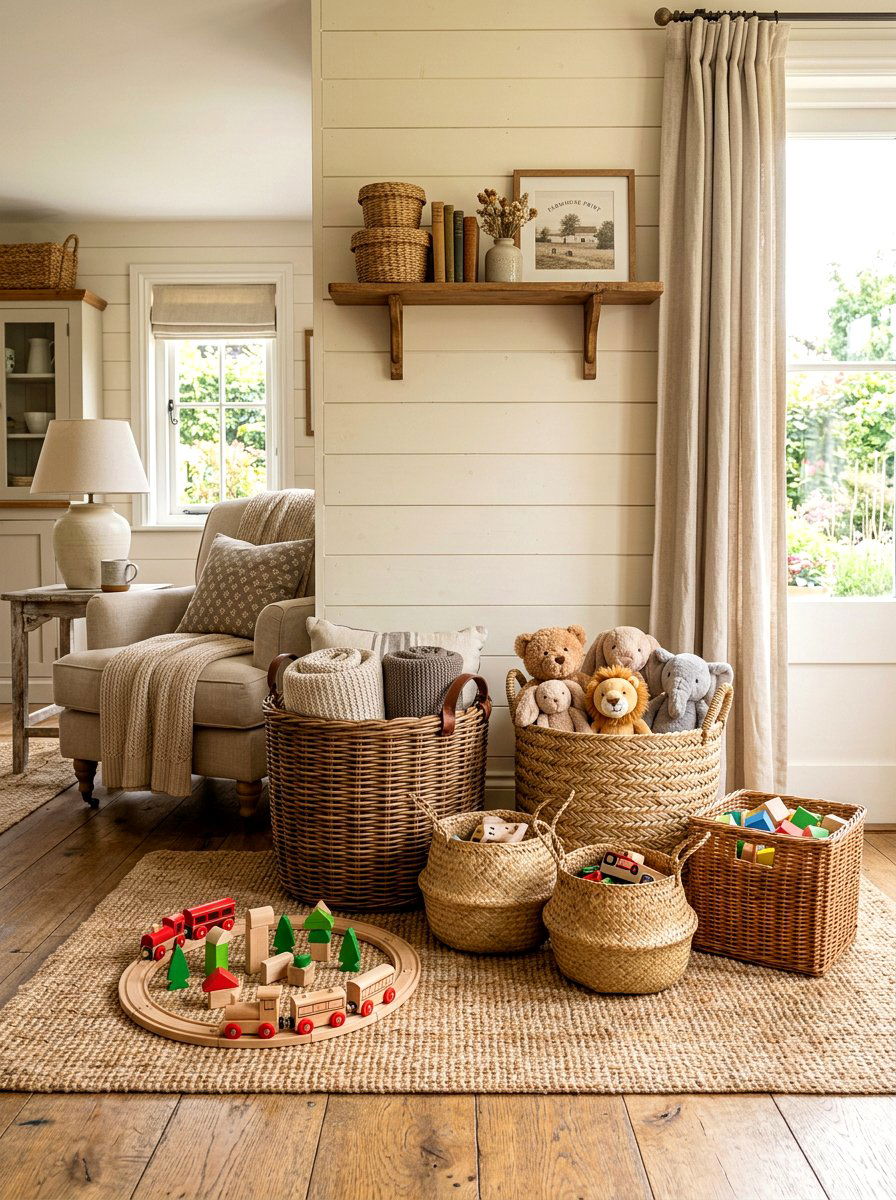
A woven basket setup offers a softer and more natural aesthetic for a living room or shared play area. These decorative containers can hide colorful plastic toys while blending seamlessly with your home furniture. You can use different sizes of baskets to hold everything from stuffed animals to wooden trains. Because they are lightweight, children can easily carry them to different parts of the house. For a successful rotation, simply rotate which baskets are kept on the lower shelves. The texture of the wicker or seagrass adds a cozy feel to the room. This approach is ideal for maintaining a stylish and adult-friendly home environment while raising kids.
5. Wall Bookshelf Display
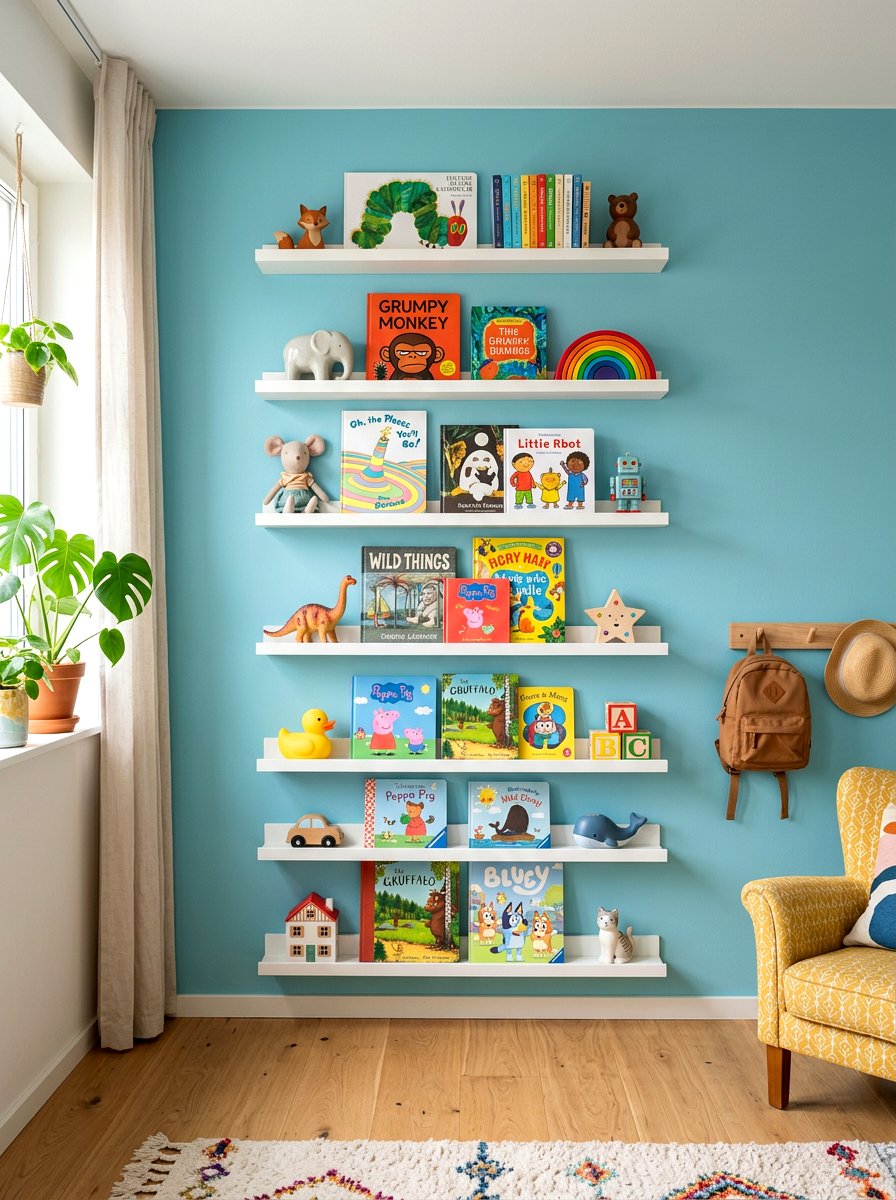
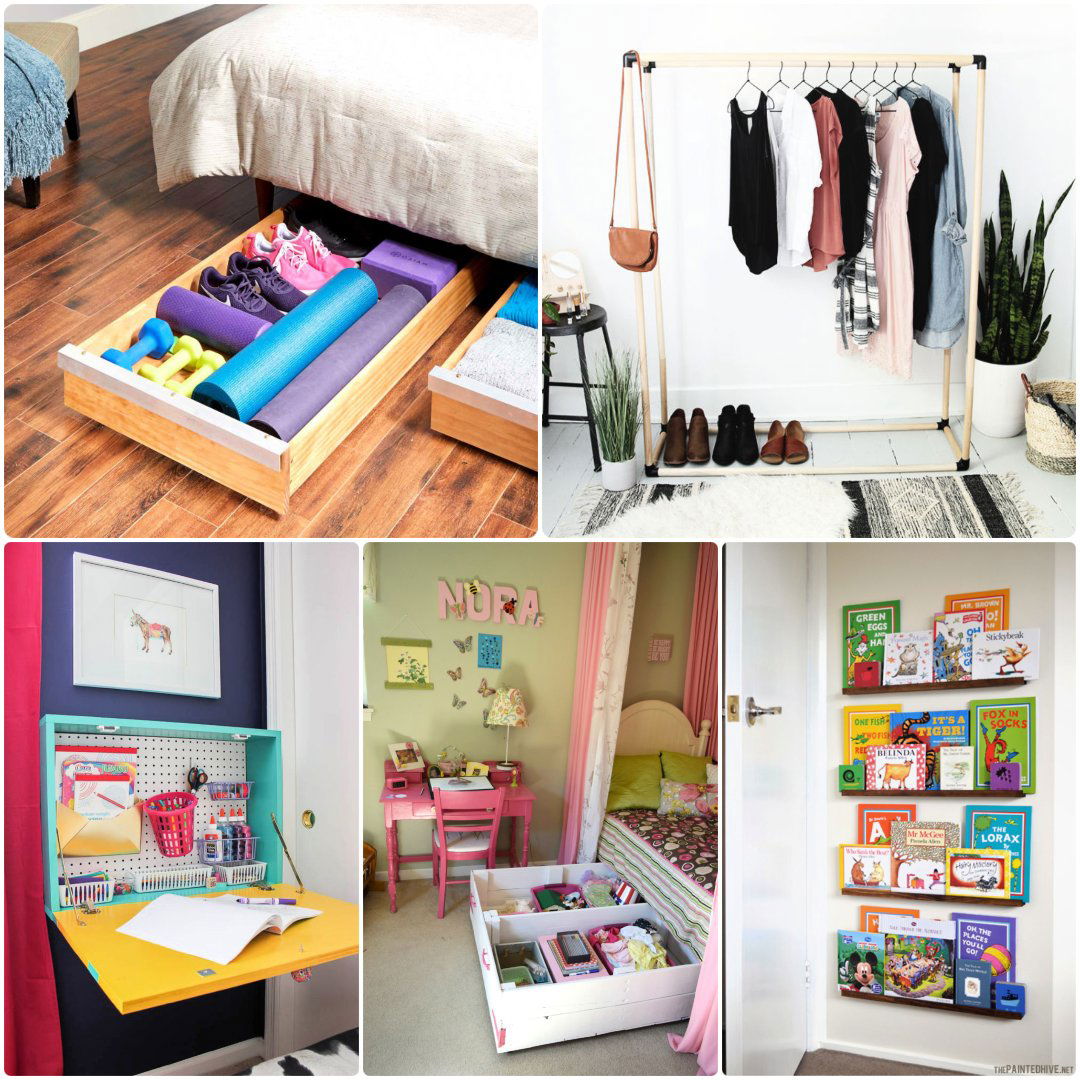
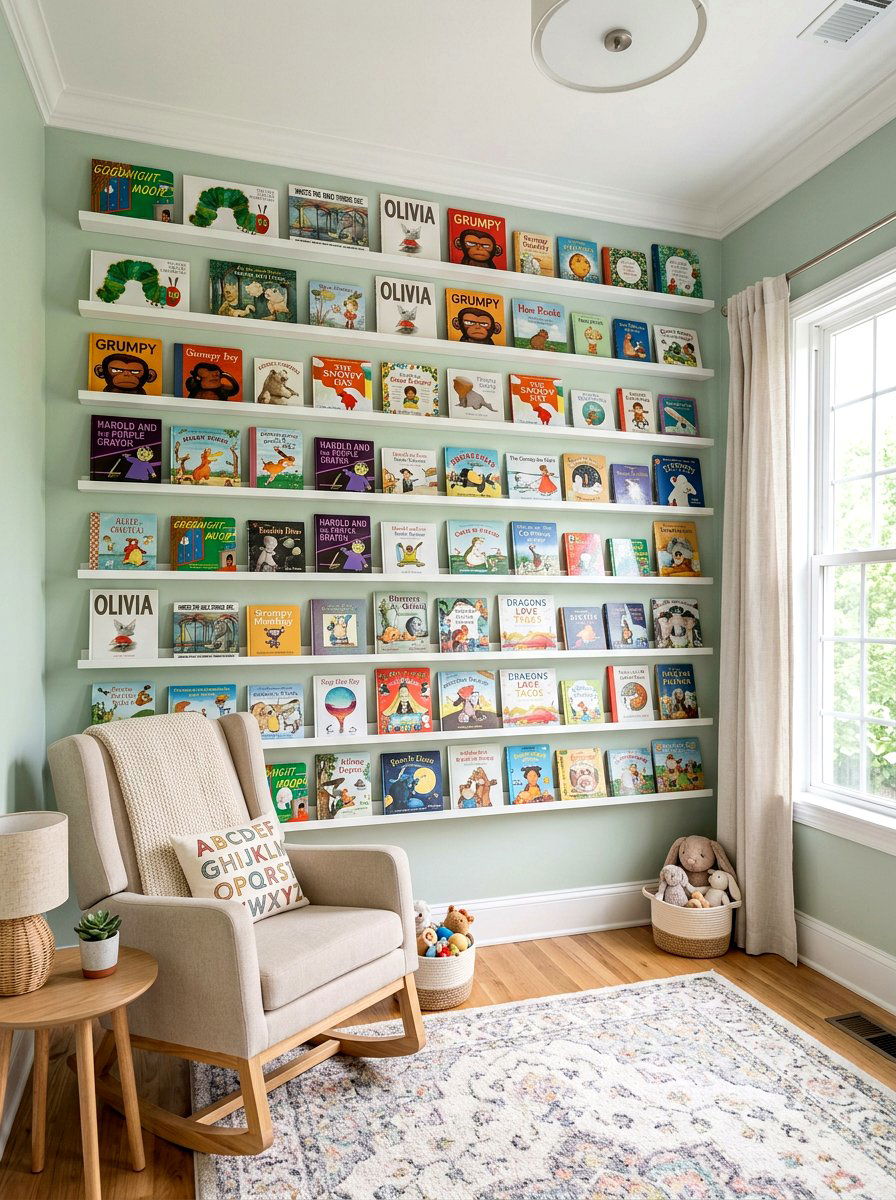
A wall bookshelf display is an excellent way to save floor space while keeping toys and books organized. Narrow ledges or forward-facing shelves allow you to showcase items as if they were in a library. This design encourages children to interact with their books and toys because the covers are clearly visible. You can change the items on display every month to match a specific theme or season. This vertical storage solution keeps the room feeling open and airy rather than cramped. It is a great choice for small bedrooms where every square inch counts. The display acts as functional wall art that evolves as your child grows.
6. Underbed Drawer System
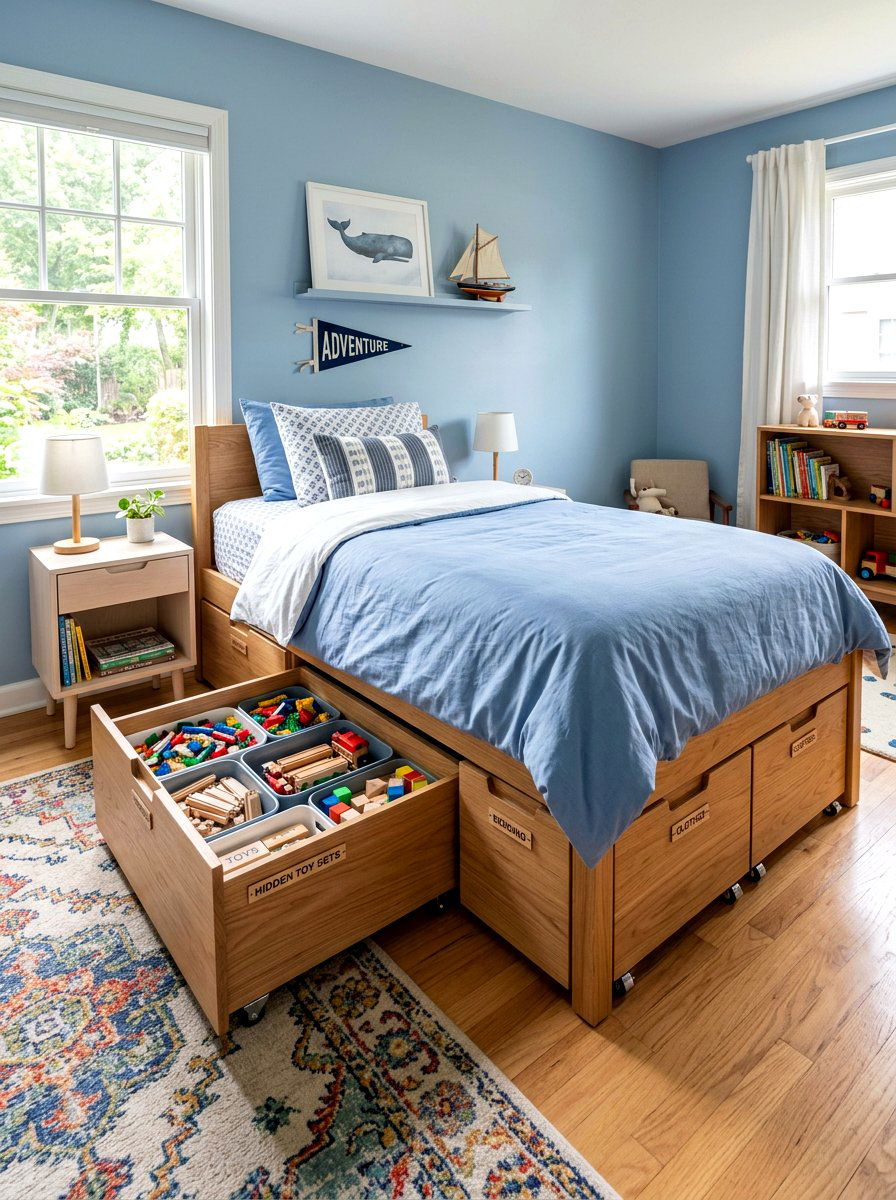
An underbed drawer system utilizes the often-wasted space beneath a child's bed for discreet toy storage. Large rolling drawers or flat plastic bins can hold bulky items like train tracks or play mats. This setup is perfect for keeping out-of-rotation toys tucked away but still within easy reach for parents. It helps keep the main play area clear of clutter and provides a hidden zone for transition items. You can label each drawer by category to make the swapping process much faster. This method is particularly useful in shared bedrooms where floor space is limited. It offers a clean and streamlined look that hides the mess effectively.
7. Rolling Cart Station
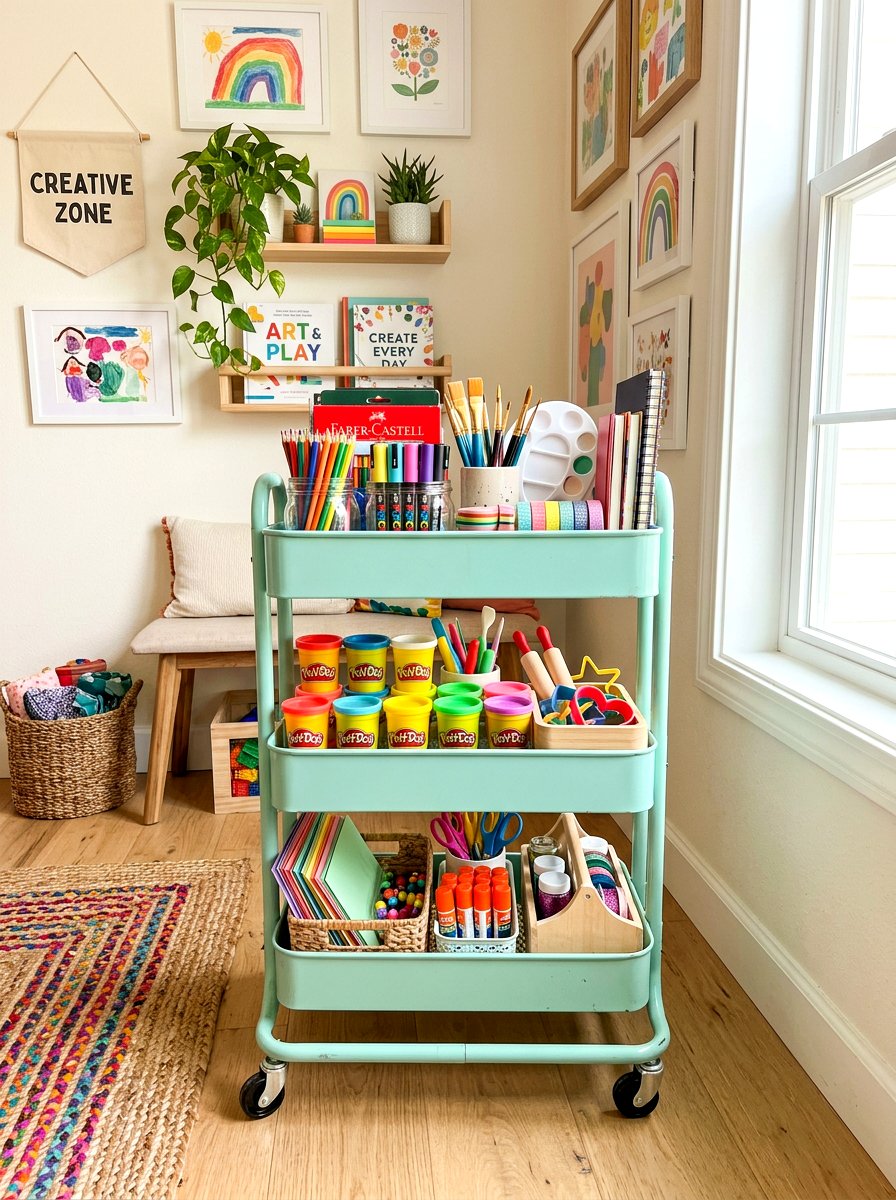
A rolling cart station provides a mobile storage solution that can move from room to room as needed. These tiered metal carts are perfect for organizing art supplies, play dough, or small figurines. You can keep the most popular toys on the top shelf for easy access during the day. When playtime is over, the entire unit can be wheeled into a closet or a corner. This flexibility makes it easy to change the play environment without moving heavy furniture. It is a wonderful way to manage toy rotation in homes without a dedicated playroom. The industrial look fits well with modern or eclectic home decor styles.
8. Hidden Cabinet Playroom
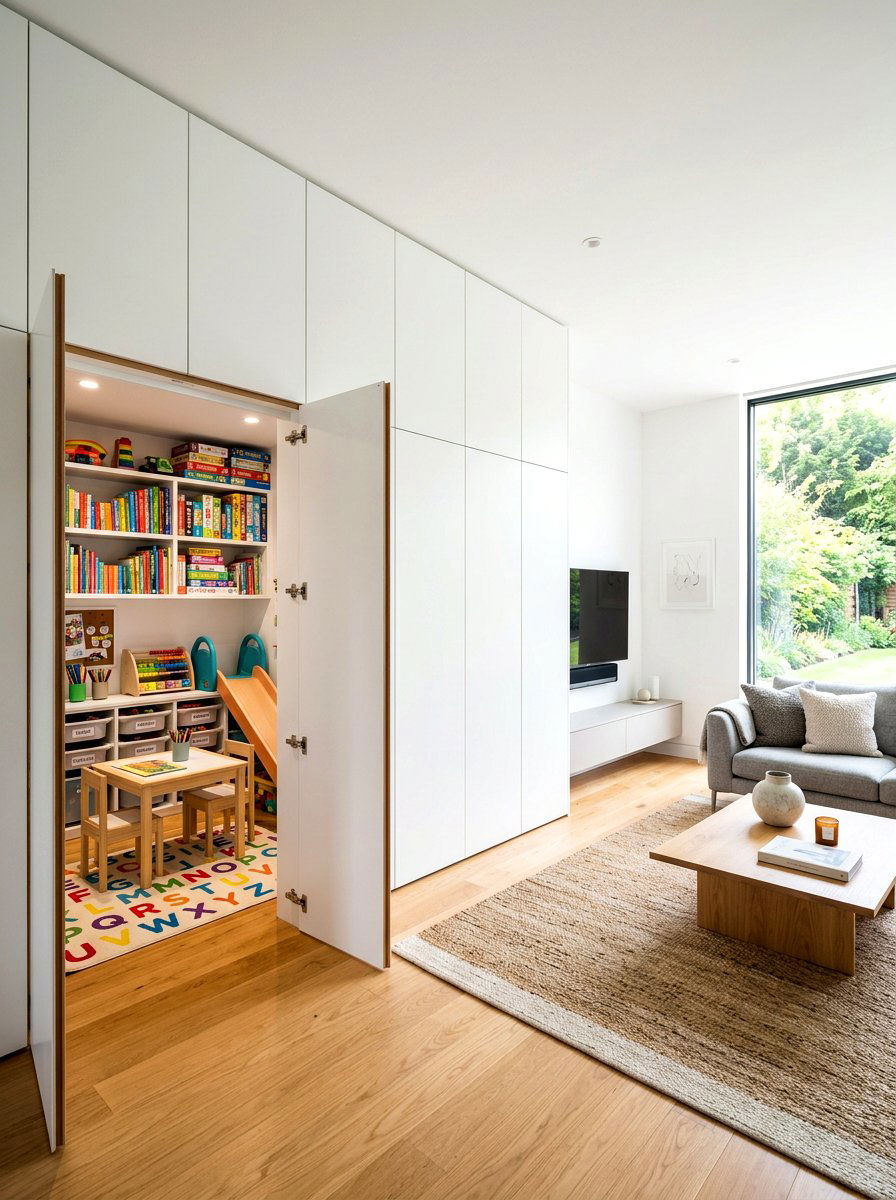
A hidden cabinet playroom uses closed doors to keep the visual noise of toys completely out of sight. Large wardrobes or built-in cabinets provide ample space for shelving and bins behind a clean exterior. This design is perfect for families who want their living areas to remain tidy and organized. Inside the cabinet, you can organize toys by shelf and only bring out a few items at a time. This method ensures that the rotation happens behind the scenes, making the new toys feel more special. It is a sophisticated way to manage a large toy collection. Your home will always look guest-ready with this clever storage solution.
9. Cube Shelving Layout
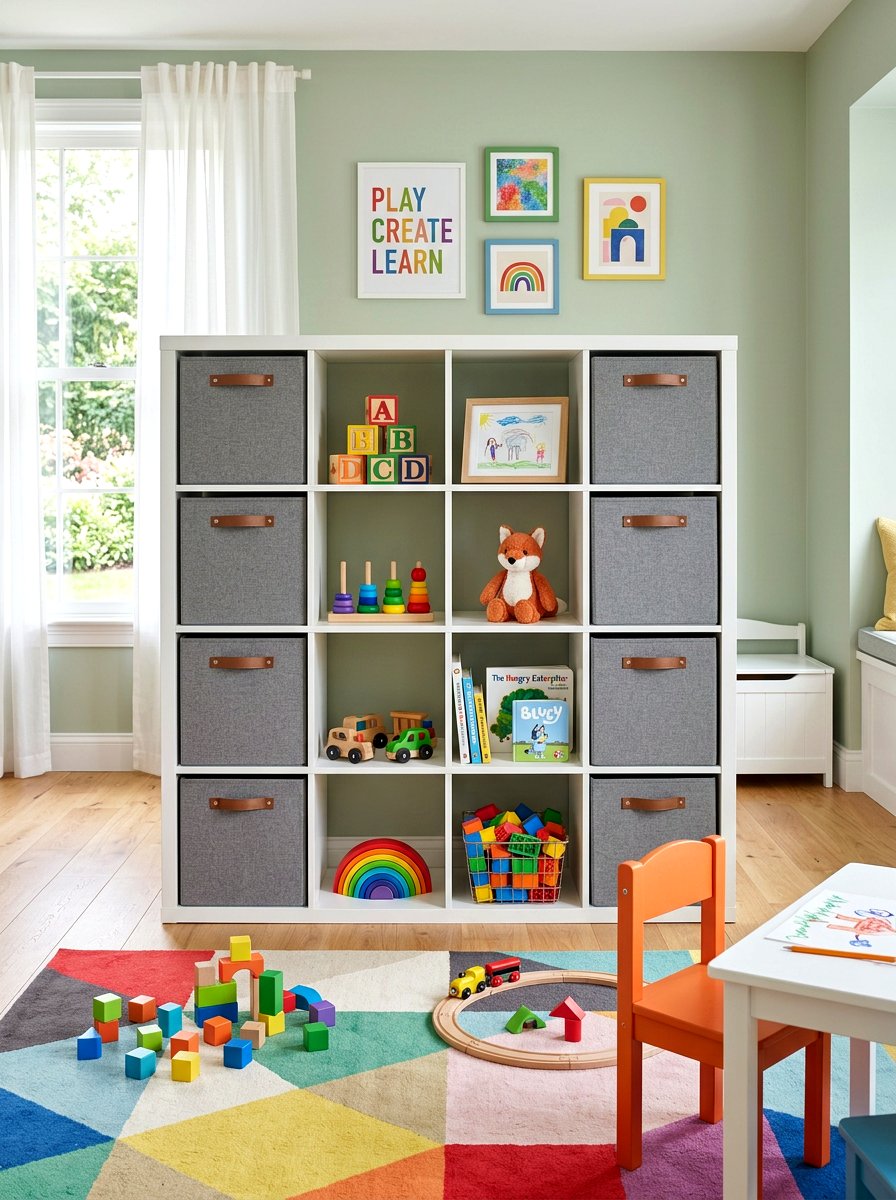
The cube shelving layout is a popular and affordable way to organize a wide variety of toys. This modular system allows you to use a mix of open cubes and fabric bins to store items. You can display specific toys in the open cubes to encourage play and hide the rest in bins. This setup is very easy to customize as your child’s interests and toy collection change over time. During a rotation, you can simply switch the positions of the bins and the displayed items. The geometric design provides a clean and balanced look for any room. It is a versatile choice that works for all ages.
10. Pegboard Activity Wall
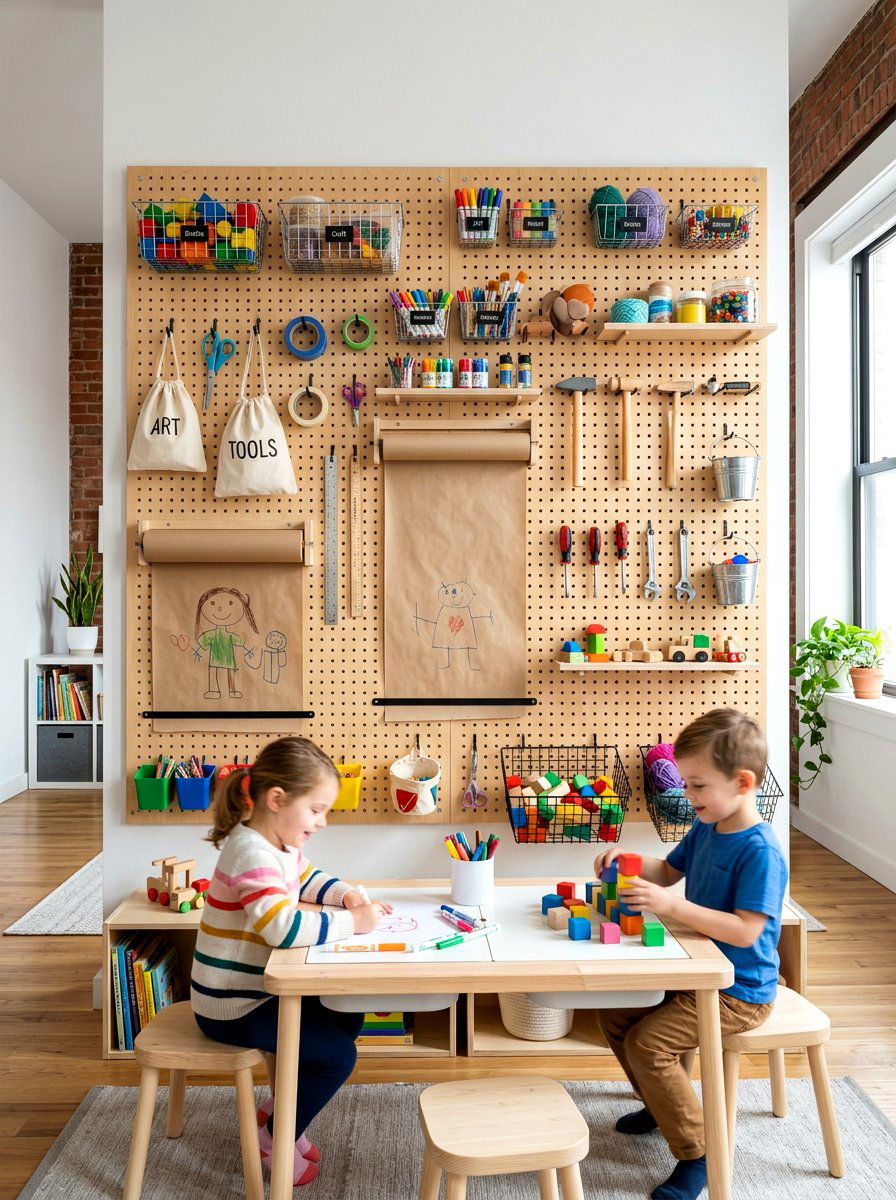
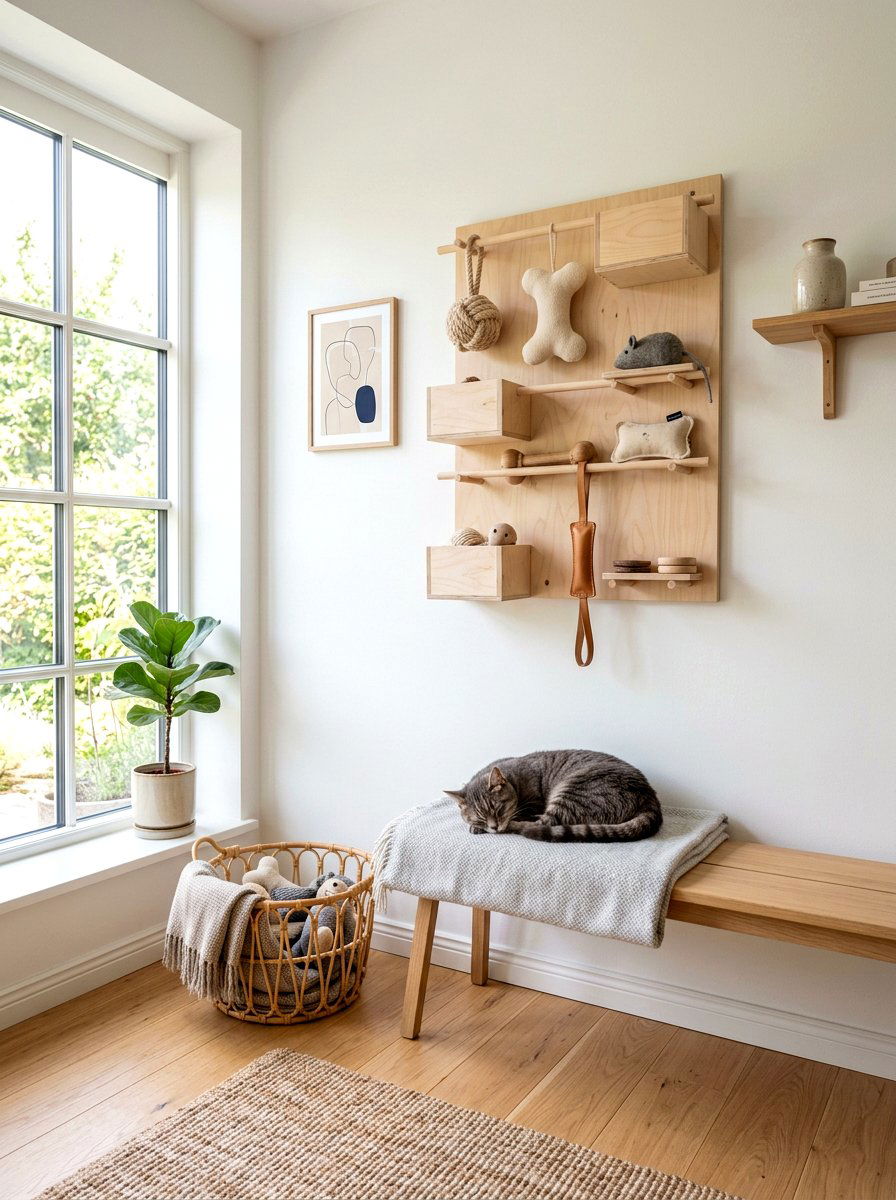
A pegboard activity wall is a creative and highly customizable way to store toys vertically. You can use hooks, baskets, and small shelves to hold everything from art supplies to dress-up accessories. This design allows you to change the layout frequently to keep the play area engaging. It is an excellent way to keep small parts off the floor and at a height the child can reach. The visual nature of the pegboard helps children see all their options clearly during playtime. This setup is particularly effective for craft rooms or hobby areas. It adds a modern and functional touch to any wall in the house.
11. Closet Organizer System
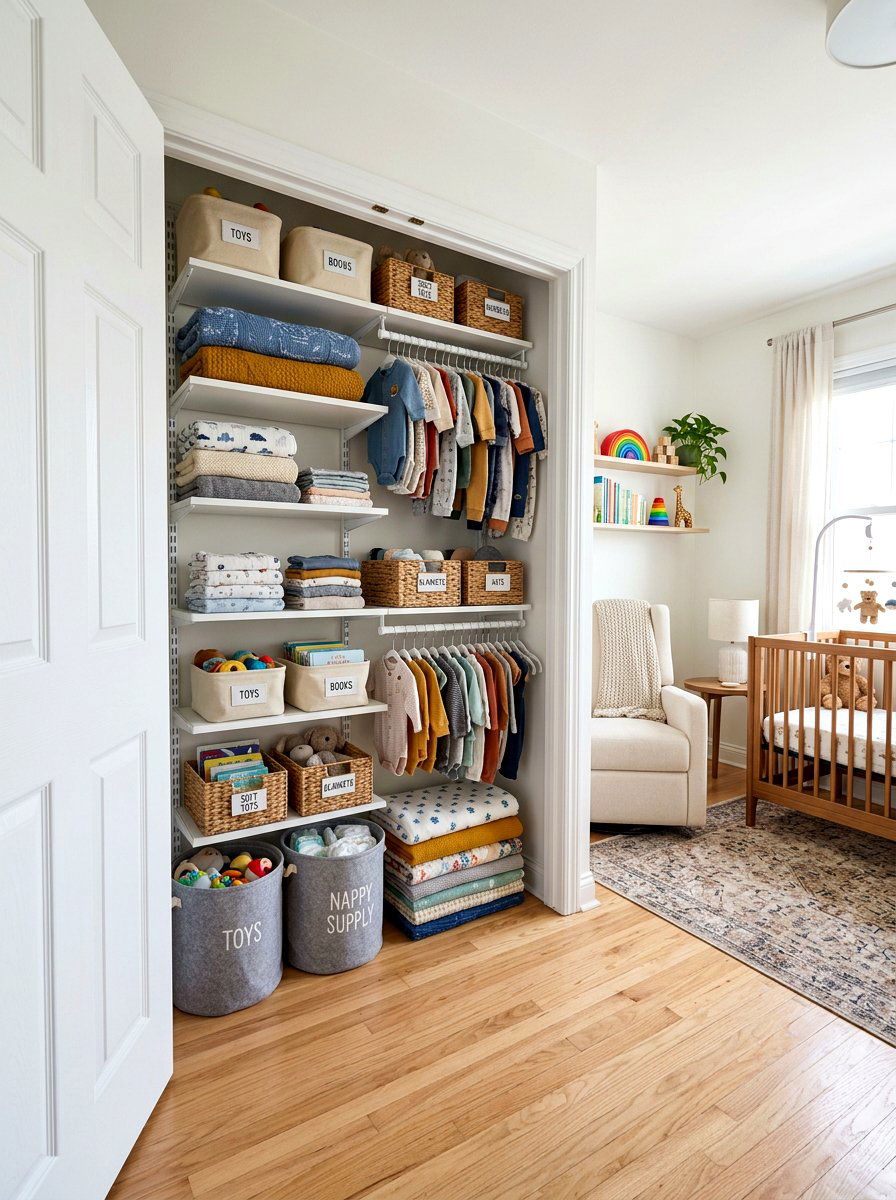
A closet organizer system transforms a standard bedroom closet into a dedicated toy rotation hub. By adding adjustable shelves and hanging bins, you can create a structured space for every category of plaything. The toys currently out of rotation stay on the higher shelves where they are out of reach. The lower shelves are reserved for the items the child is using during the current week. This vertical organization maximizes the available space and keeps the bedroom floor completely clear. It is a great way to manage toys in a small home. Closing the closet door instantly hides any remaining mess from the day's activities.
12. Low Open Storage
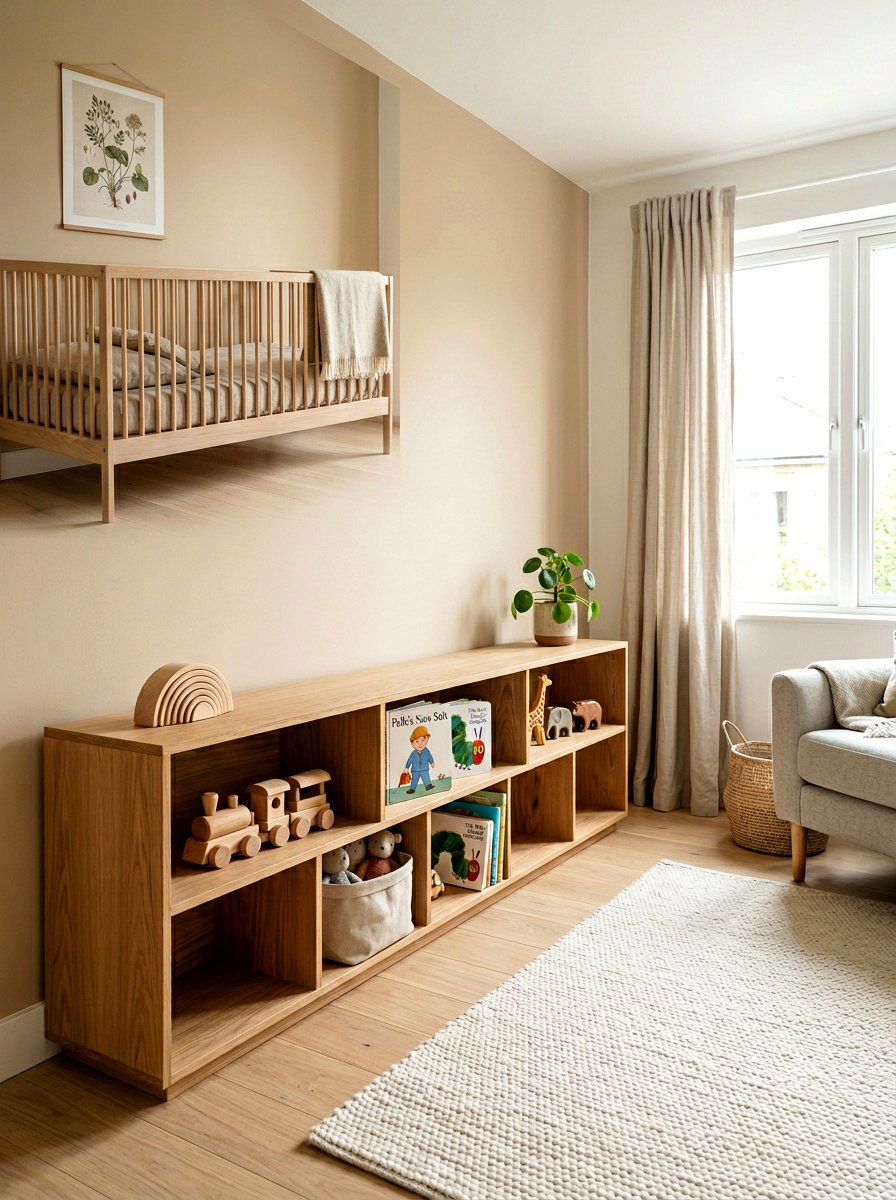
Low open storage units are specifically designed to meet the needs of crawling babies and toddlers. These long, horizontal shelves provide a stable surface for displaying toys without any sharp corners or heavy doors. This setup encourages movement and exploration as the child can easily see what is available. For a successful rotation, you should only place one or two items on each shelf section. This prevents the child from becoming overwhelmed and helps them learn to put things back. The open design makes it very easy for parents to wipe down surfaces and swap toys. It creates a very inviting and peaceful play environment for kids.
13. Color Coded Station
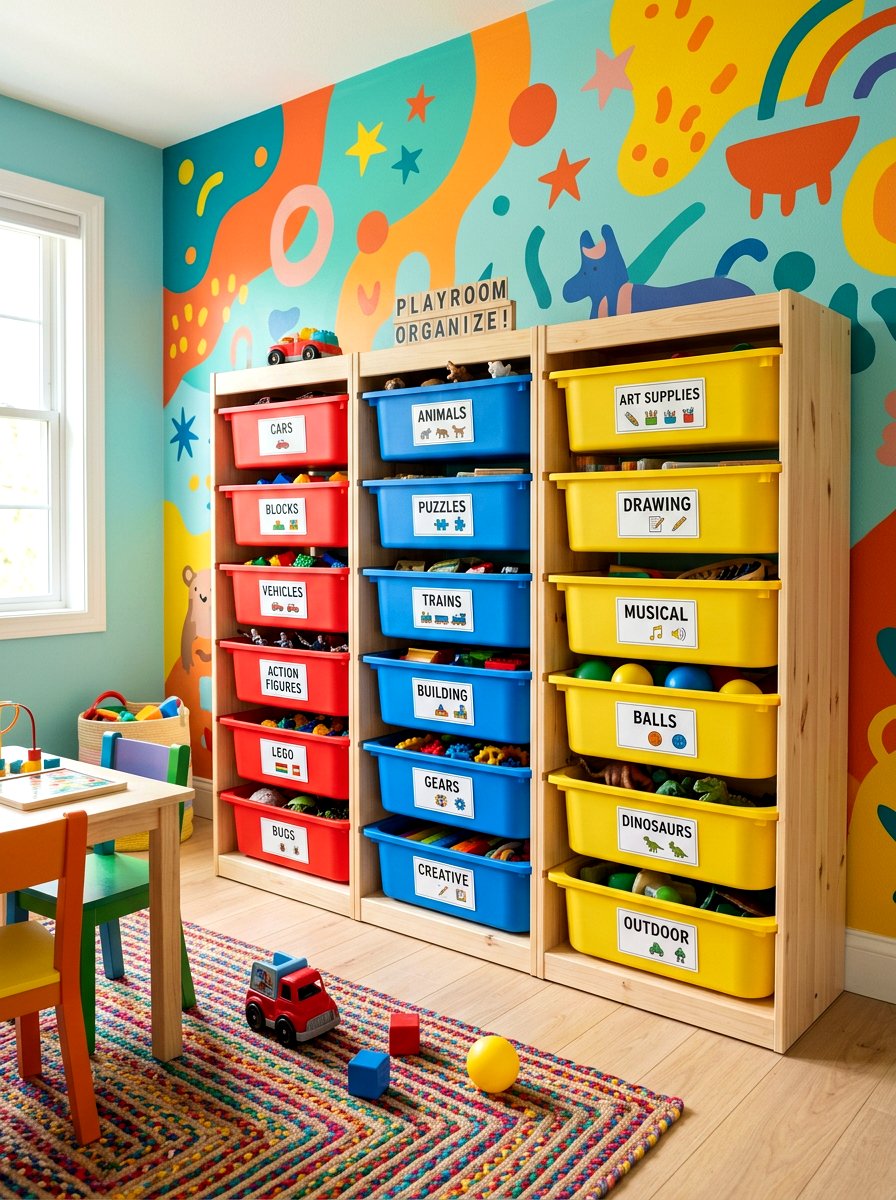
A color coded station uses visual cues to help children organize their toys by category or set. You can use bins in primary colors like red, blue, and yellow to represent different types of play. For example, all building toys might go in red bins, while art supplies stay in blue ones. This system makes the rotation process more intuitive for young children who are still learning to tidy up. During the swap, you can replace a full set of one color with a new one. This method adds a vibrant and playful look to the room. It is a fun way to teach organizational skills and color recognition.
14. Fabric Cube Arrangement
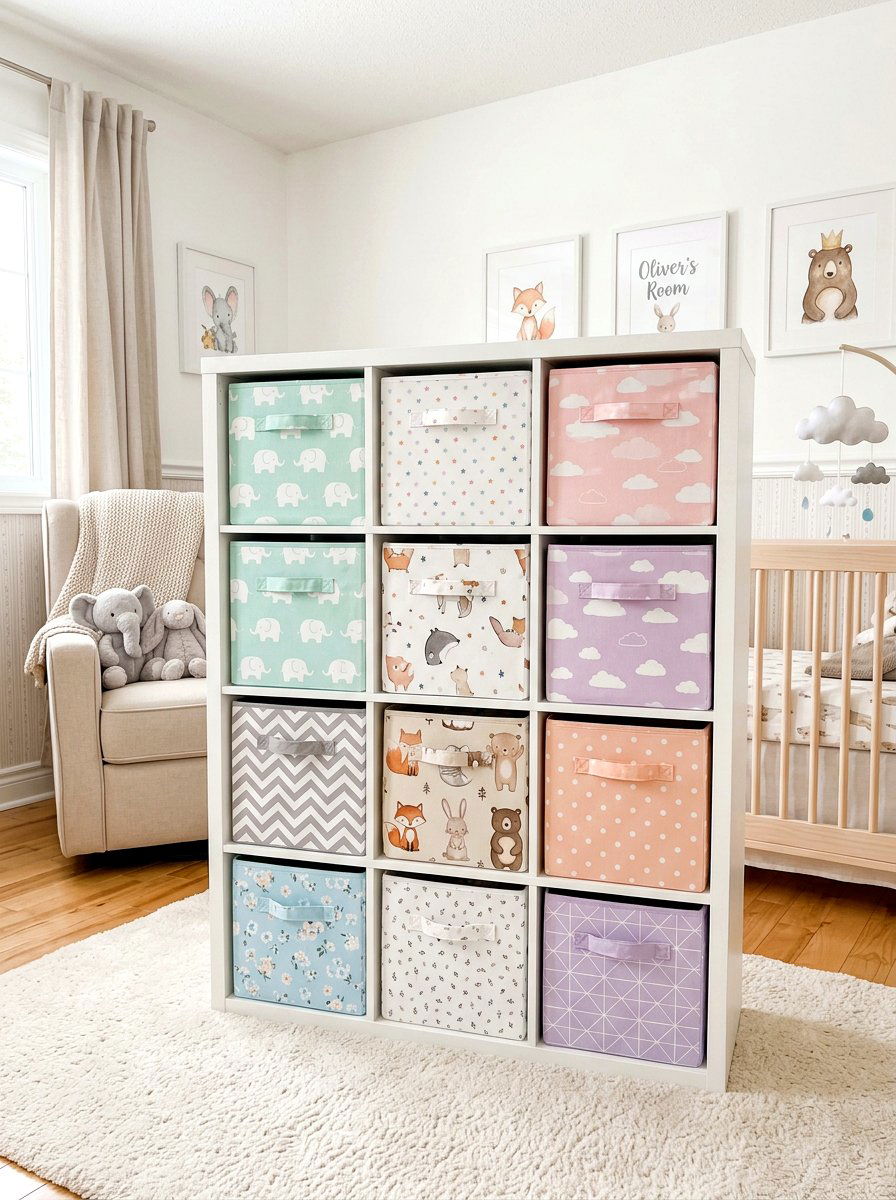
A fabric cube arrangement provides a soft and safe storage solution for nurseries and toddler rooms. These collapsible bins come in many colors and patterns, allowing you to match your room’s decor perfectly. They fit into standard square shelving units and are easy for little hands to pull out. You can keep a set of cubes in a storage room and rotate them into the playroom every few weeks. This keeps the toys organized while ensuring they stay dust-free when not in use. The soft material prevents injuries if a child happens to bump into the storage unit. It is a practical and budget-friendly organizational choice.
15. Corner Storage Unit
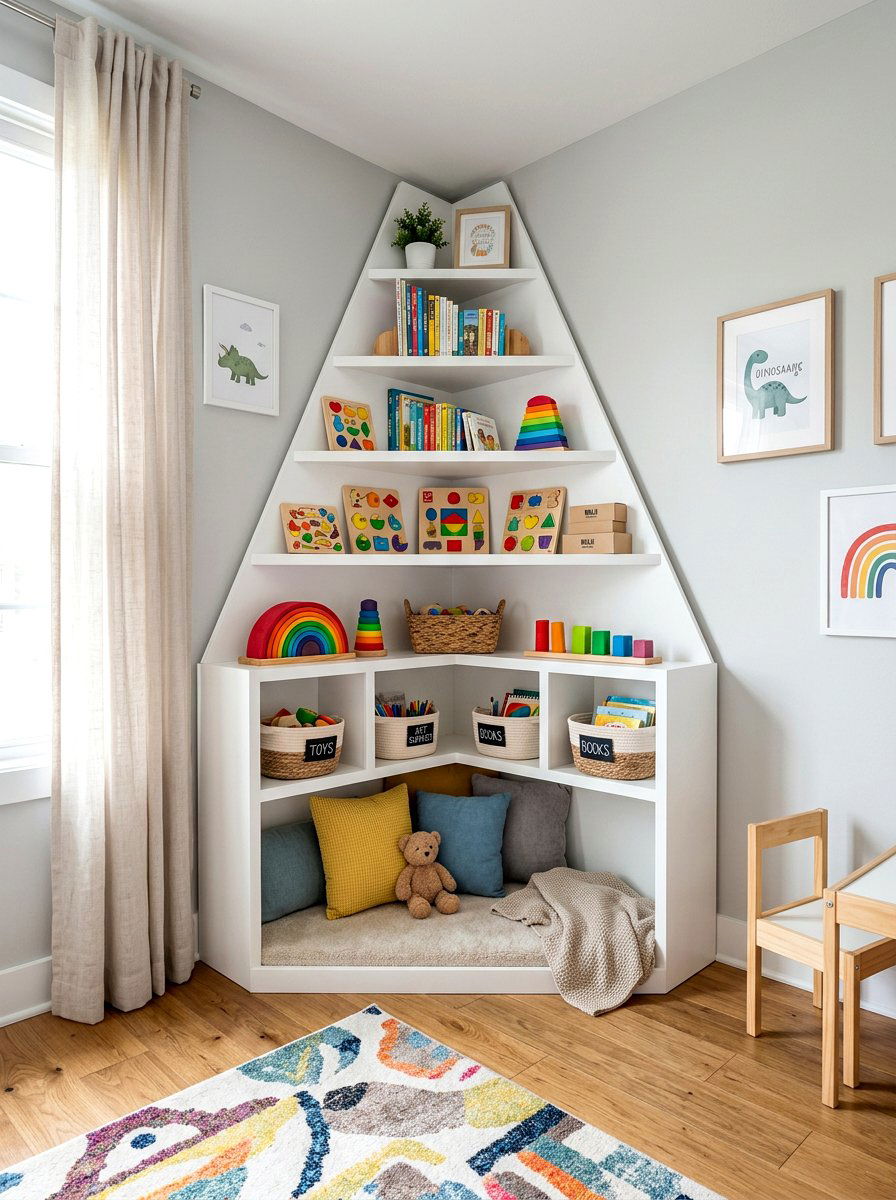
A corner storage unit is an excellent way to utilize the often-ignored space in a room. These triangular or L-shaped shelves fit snugly into the corner, providing extra storage without taking up much floor space. You can use the top shelves for decorative items and the lower shelves for the current toy rotation. This setup helps define a specific play area within a larger living room or bedroom. It keeps toys contained to one section of the house rather than spreading everywhere. The tiered design allows for easy visibility of all items on display. It is a smart and stylish solution for compact living spaces or apartments.
16. Storage Bench Nook
A storage bench nook combines comfortable seating with a hidden compartment for keeping toys organized. This piece of furniture is perfect for placing under a window or at the foot of a bed. You can store large, bulky toys like stuffed animals or blankets inside the bench. The top can be outfitted with cushions to create a cozy reading spot for your child. During a toy rotation, you can swap the items hidden inside the bench with those on open shelves. This multi-functional design is a great way to save space in a small nursery. It offers a clean and classic look for any home interior.
17. Rotating Book Center
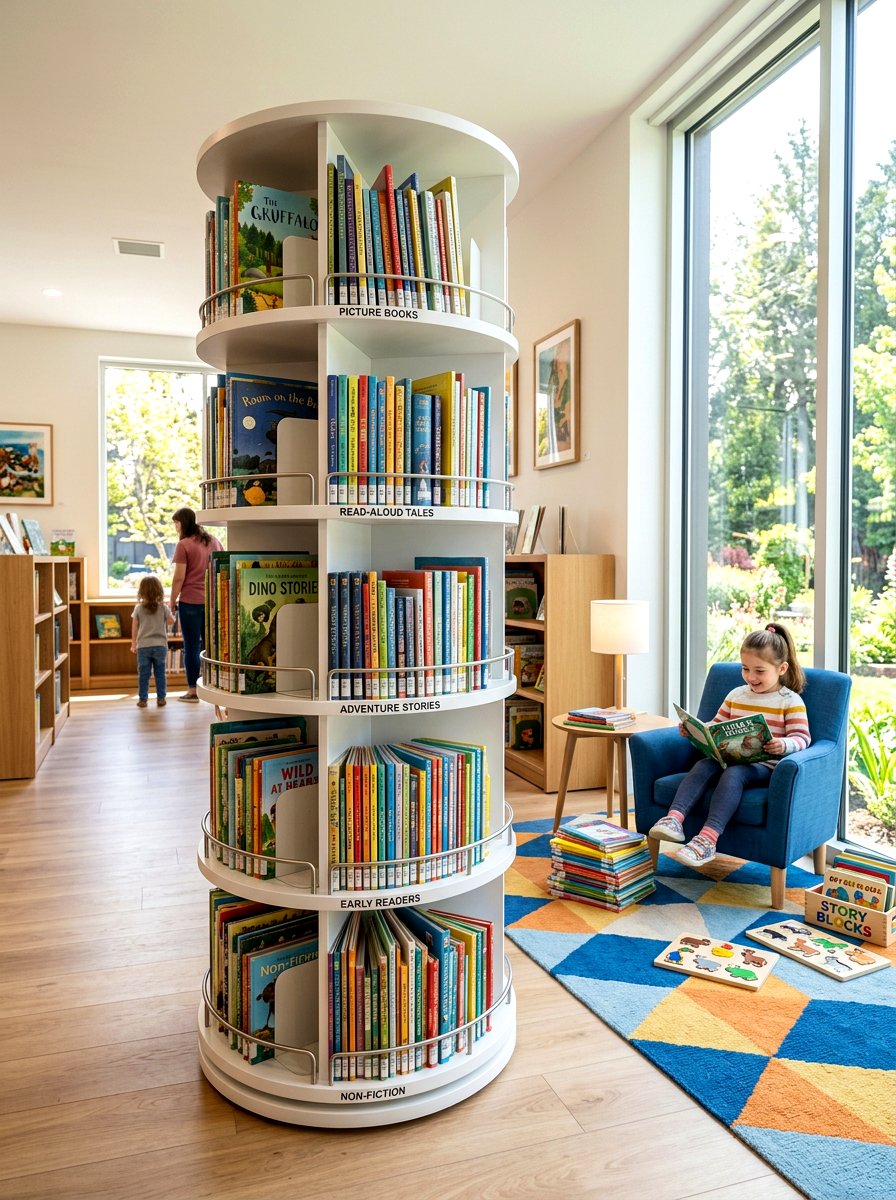
A rotating book center is a specialized piece of furniture that allows children to browse through their collection easily. This vertical tower spins, giving access to multiple sides of shelving in a very small footprint. You can use one side for books and the other sides for small puzzles or figurines. This setup makes it very simple to rotate the selection by simply turning the unit or swapping items. It keeps the play area looking organized and prevents books from piling up on the floor. The interactive nature of the spinning tower makes choosing a book more fun for kids. It is a great addition to a reading corner.
18. Acrylic Shelf Display
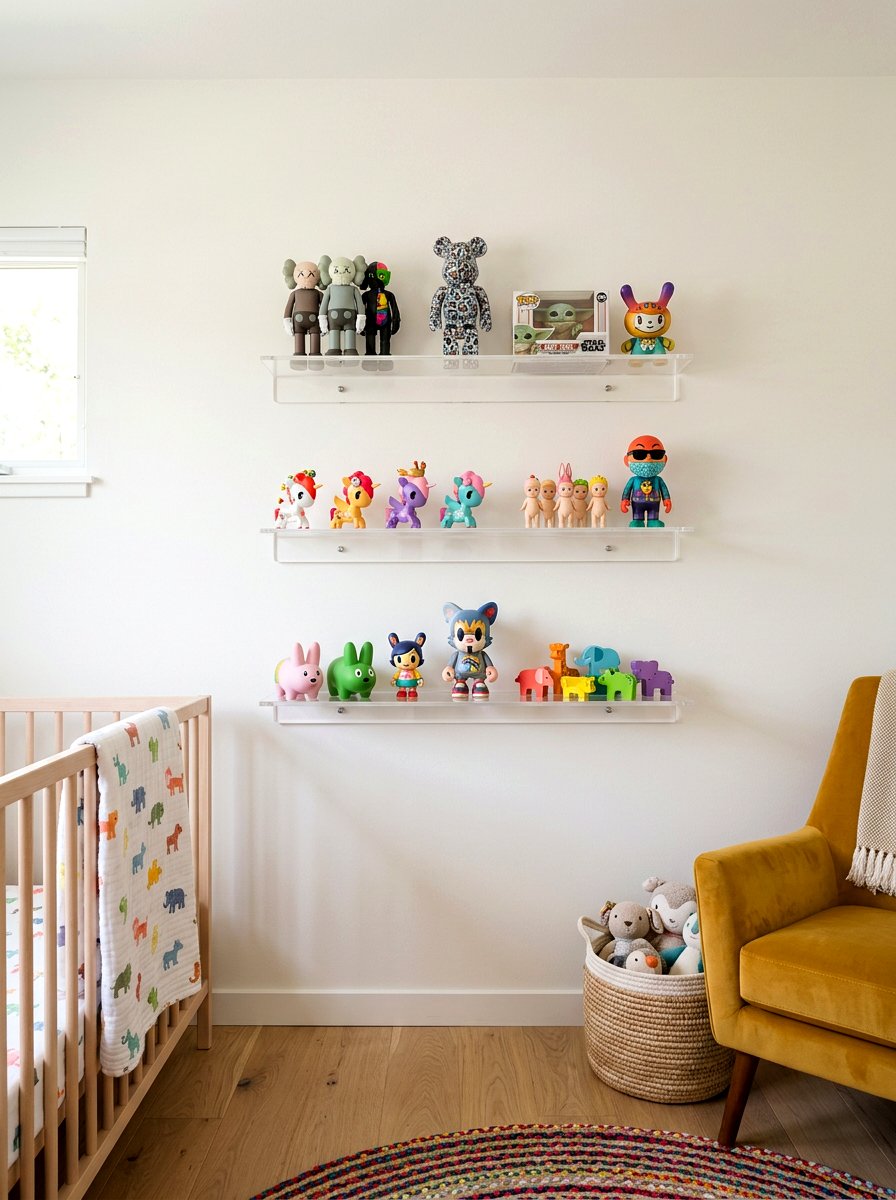
An acrylic shelf display offers a modern and sleek way to store toys while making them appear almost floating. These clear shelves are perfect for displaying beautiful wooden toys, action figures, or colorful art projects. Because the shelves are transparent, they do not add any visual weight to the room. This makes the space feel larger and more open, which is ideal for small playrooms. You can mount them at different heights to create a dynamic wall gallery of toys. Rotating the items on these shelves is quick and provides an instant refresh to the room's decor. It is a sophisticated and minimalist storage choice for parents.
19. Labeled Bin Zone
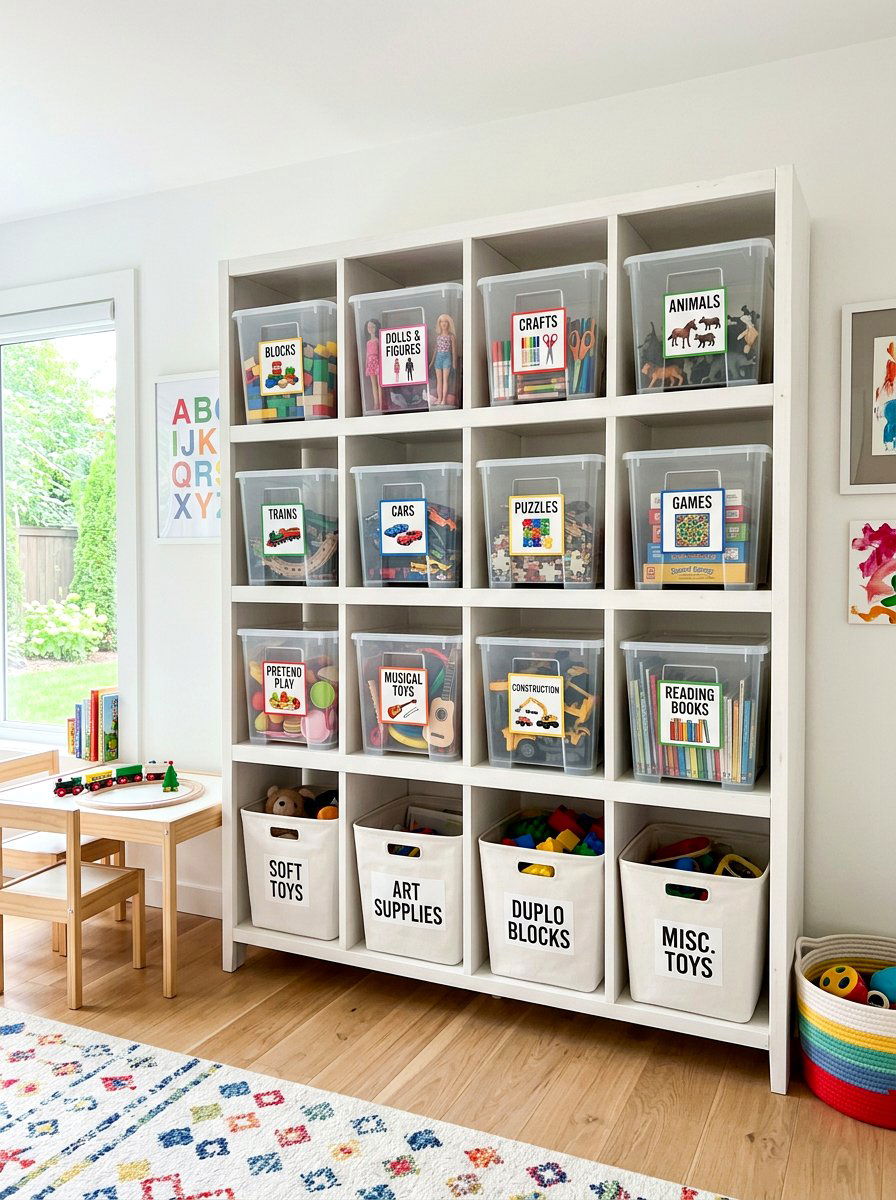
A labeled bin zone is the ultimate organization system for parents who want to stay on top of toy rotation. Using clear labels with both words and pictures helps children identify where every item belongs. You can group toys into specific sets like "ocean animals" or "wooden blocks" and store them in matching containers. This system makes it incredibly easy to grab a specific bin when it is time to swap toys. It also encourages children to help with the cleanup process by following the visual guides. This structured approach reduces the time spent searching for missing pieces. It is a highly effective way to manage a large collection.
20. Built In Closet
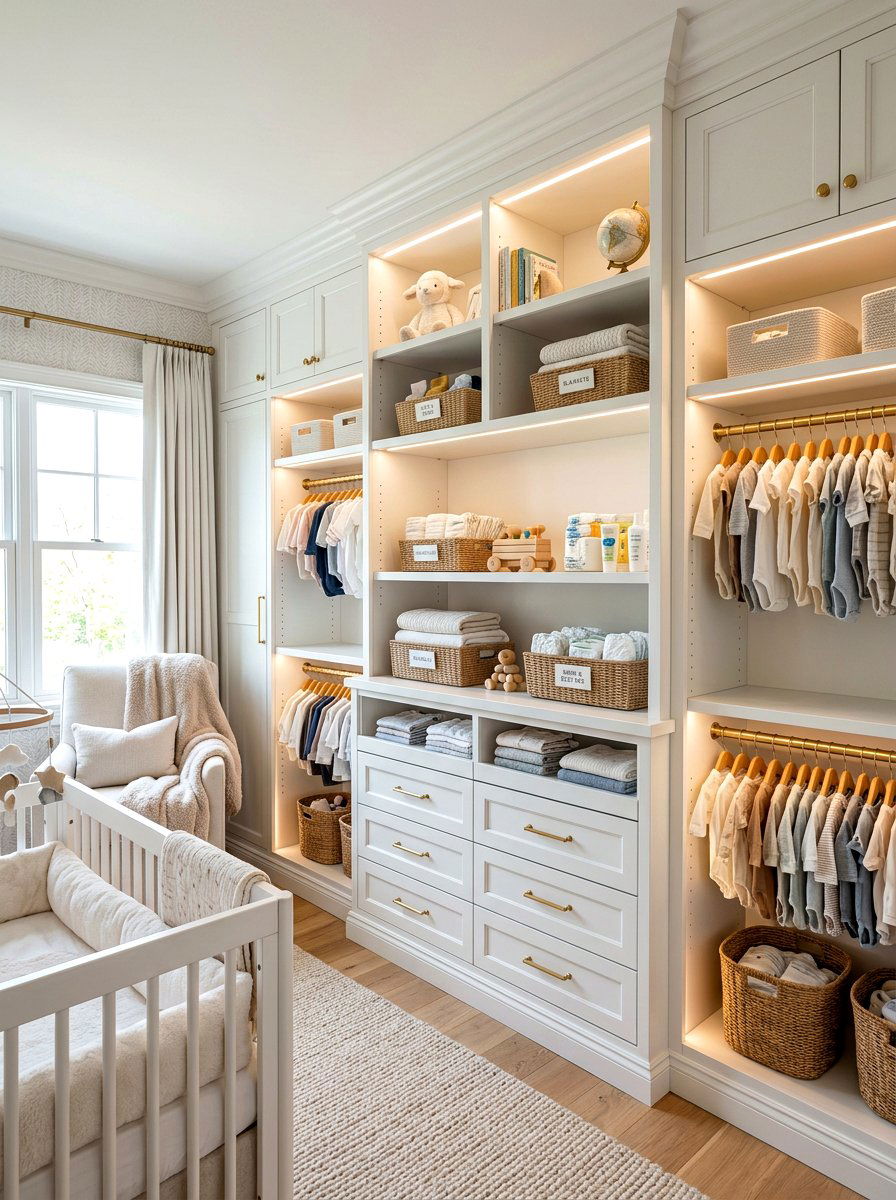
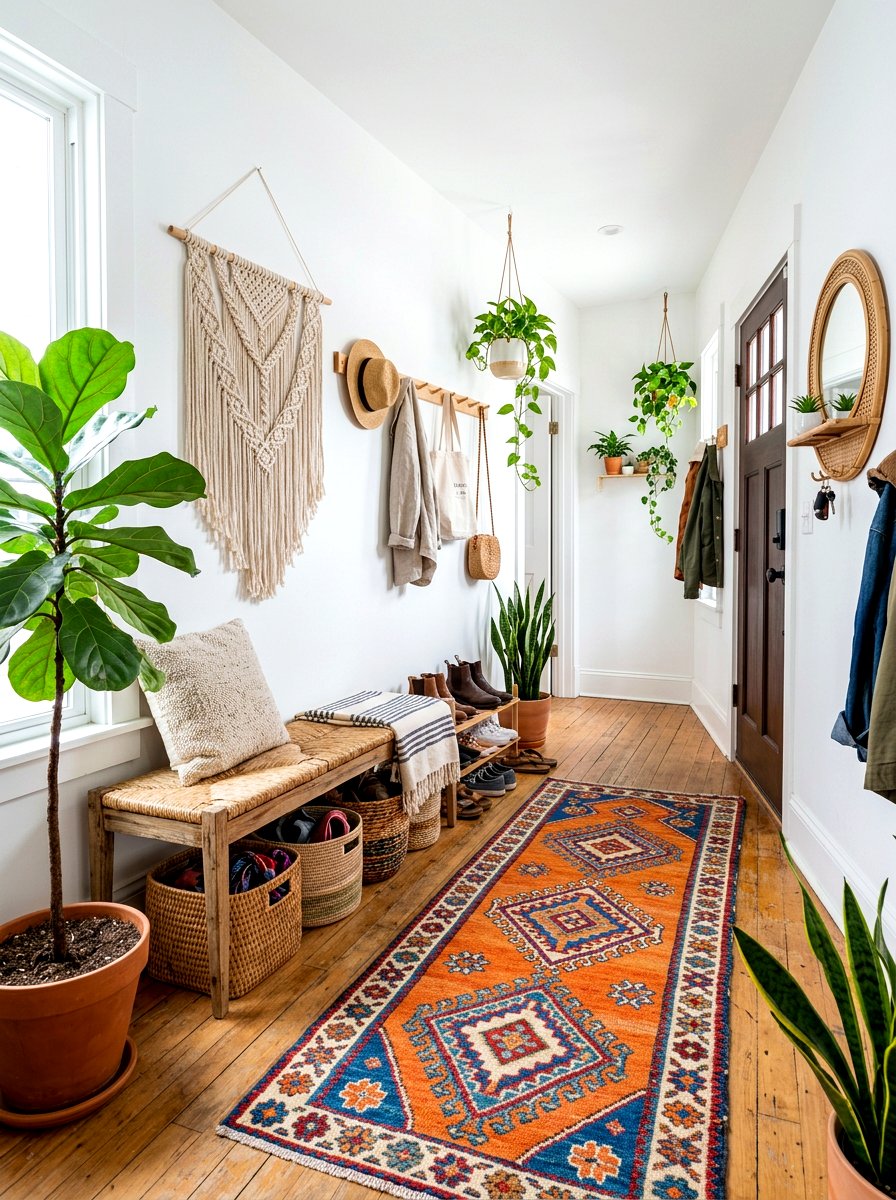
A built in closet provides a permanent and seamless storage solution that is integrated directly into the room 's architecture. These custom units often feature floor-to-ceiling shelving and drawers that can hold an entire toy library. You can designate specific sections for toys currently in use and others for items waiting for rotation. This high-capacity storage is perfect for growing families who need to manage a lot of gear. The high shelves keep older kids' toys away from curious toddlers. Because everything is tucked away behind doors, the room maintains a very tidy and cohesive appearance. It is a worthwhile investment for any long-term family home or nursery.
21. Stackable Crate Wall
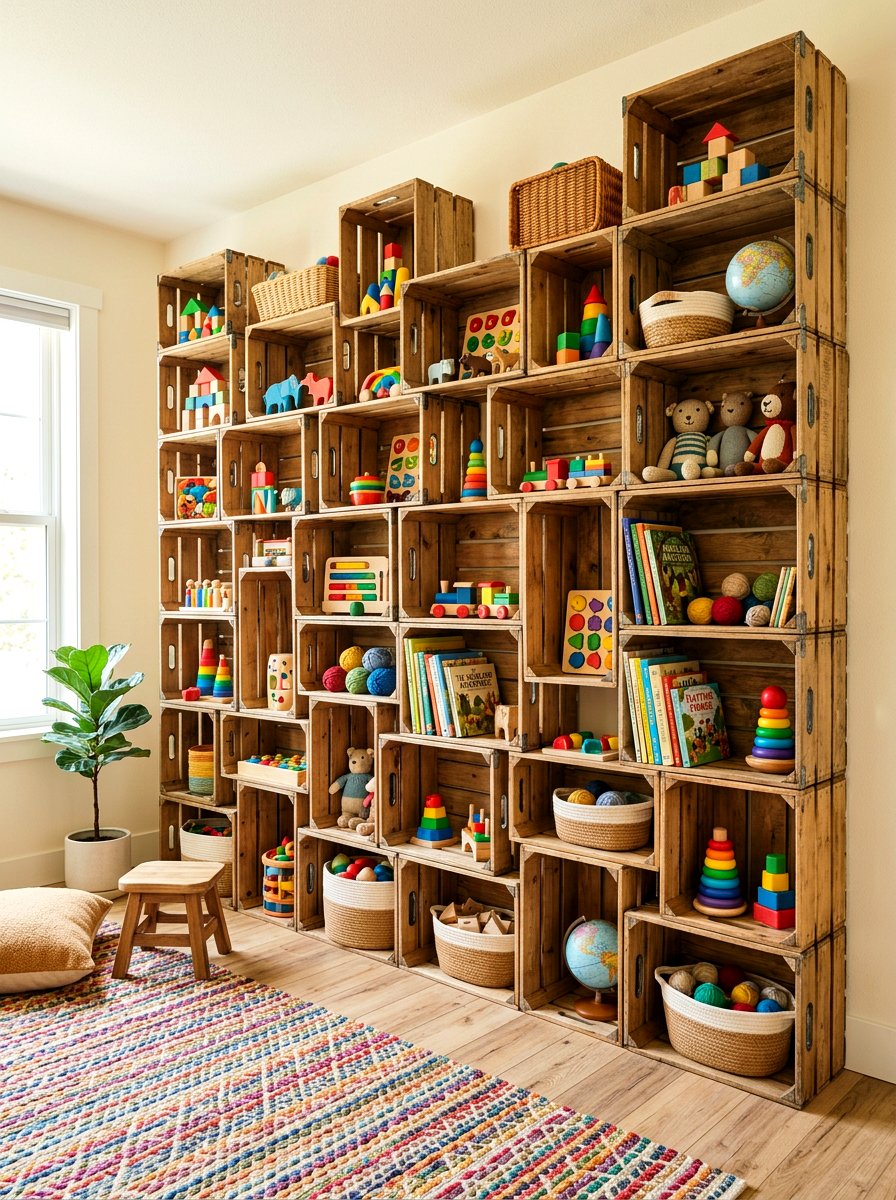
A stackable crate wall is a flexible and rustic storage solution that can grow with your child. You can use wooden or plastic crates and stack them horizontally or vertically to fit your space. This modular design allows you to add or remove crates as your toy collection changes. Each crate can hold a specific category of toy, making the rotation process very straightforward. You can easily unstack a few crates and move them to a storage area when they are not in use. The open front of the crates provides easy access for children during playtime. It adds a charming and creative touch to any playroom decor.
22. Vintage Trunk Corner
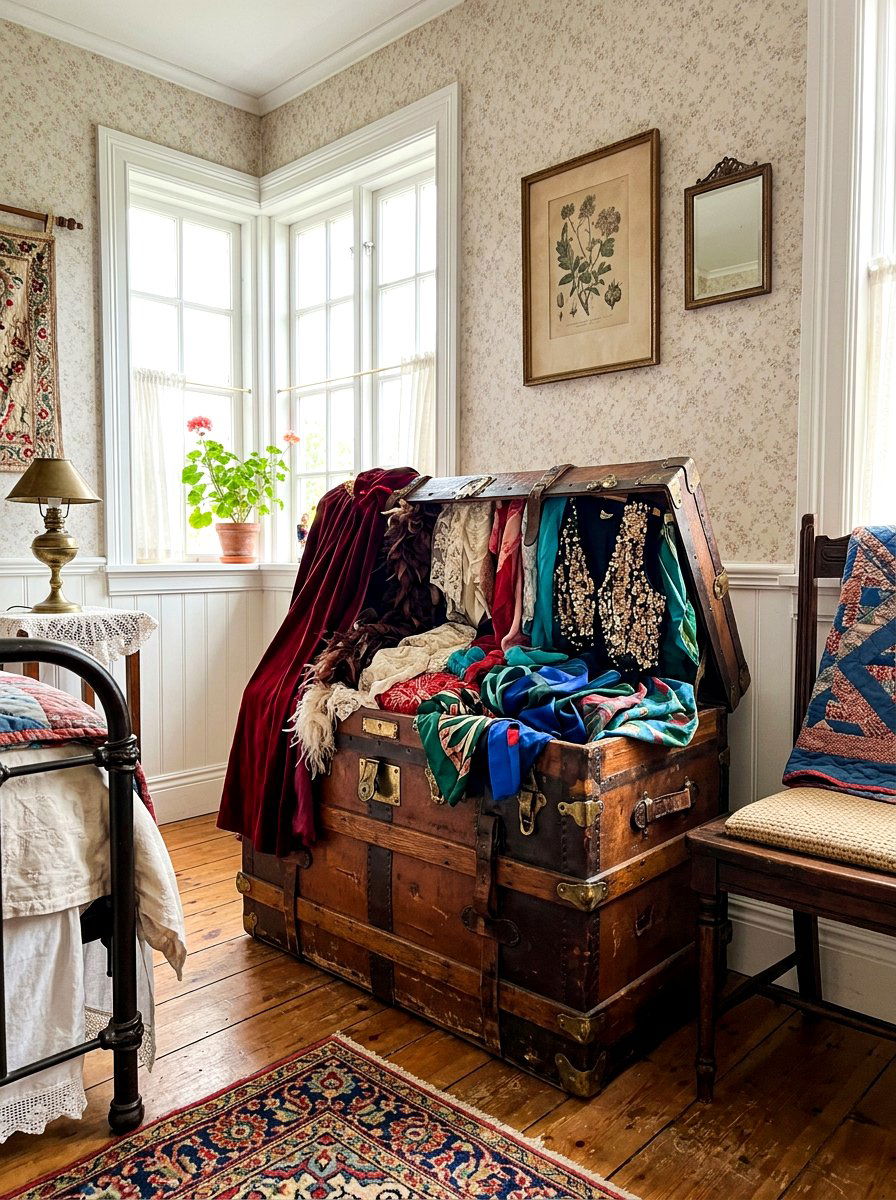
A vintage trunk corner adds a touch of character and history to a child's bedroom while providing deep storage. These sturdy chests are perfect for holding large items like dress-up clothes, sports equipment, or oversized building sets. You can place the trunk in a corner or at the end of the bed to act as a focal point. During a toy rotation, the items inside the trunk can be swapped with those on open shelving. The heavy lid provides a secure place to keep out-of-season toys out of sight. It is a timeless storage piece that can be repurposed throughout the home as the child gets older.
23. Mesh Bag Storage
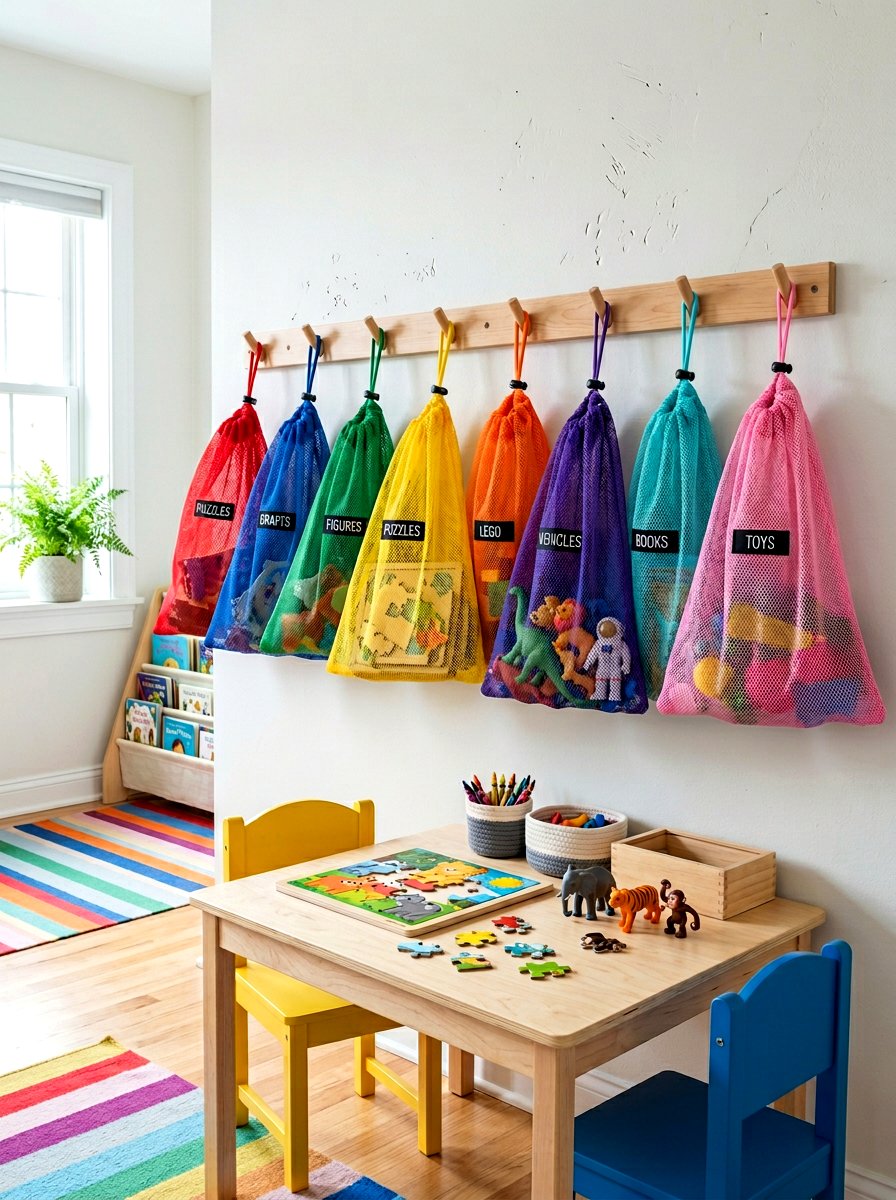
Mesh bag storage is an ingenious way to organize toys that have many small pieces, like puzzle sets or figurines. These breathable bags allow you to see the contents clearly while keeping everything contained in one place. You can hang the bags on hooks or store them inside larger bins for a double layer of organization. This method is particularly useful for toys that are rotated frequently, as the bags are easy to grab and go. They are also great for travel or bringing toys to a friend's house. The lightweight material is easy for kids to handle and wash if they get dirty. It is a simple tool.
24. Window Seat Playroom
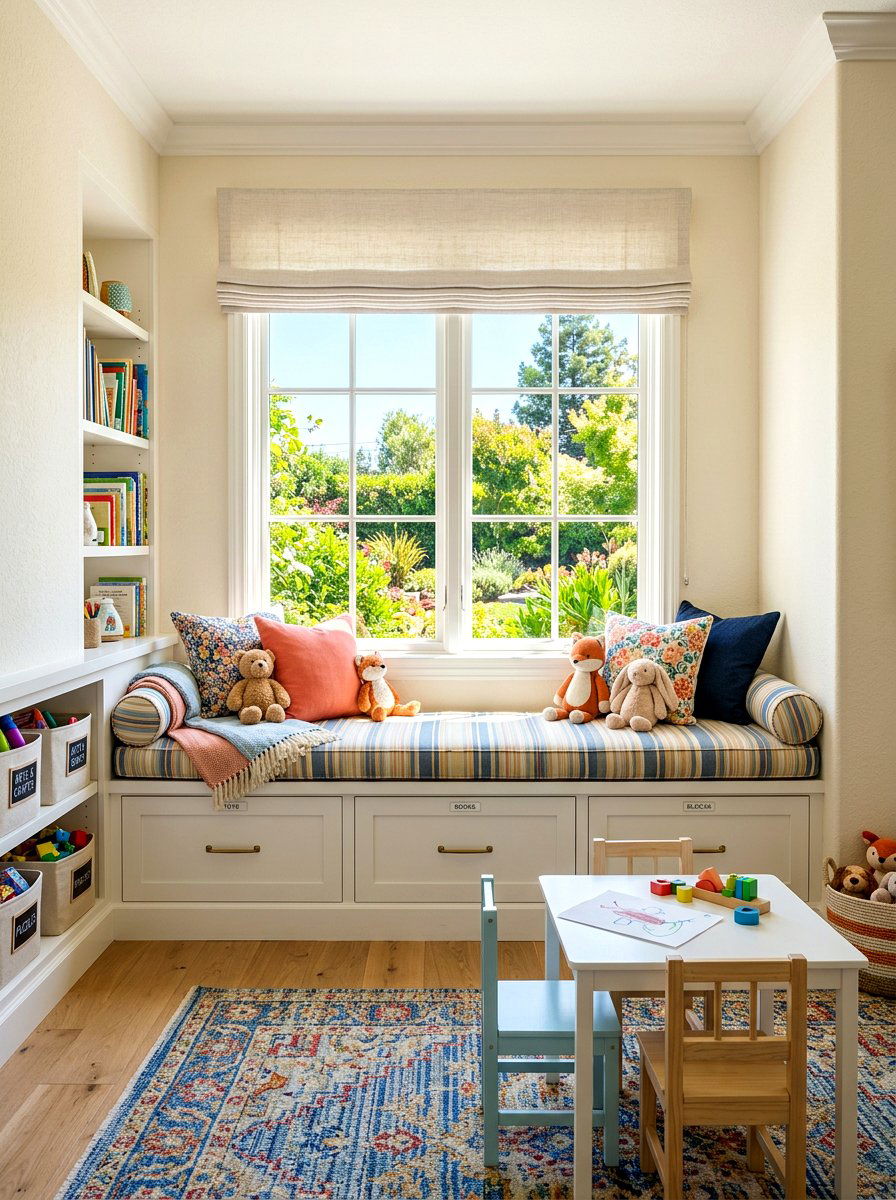
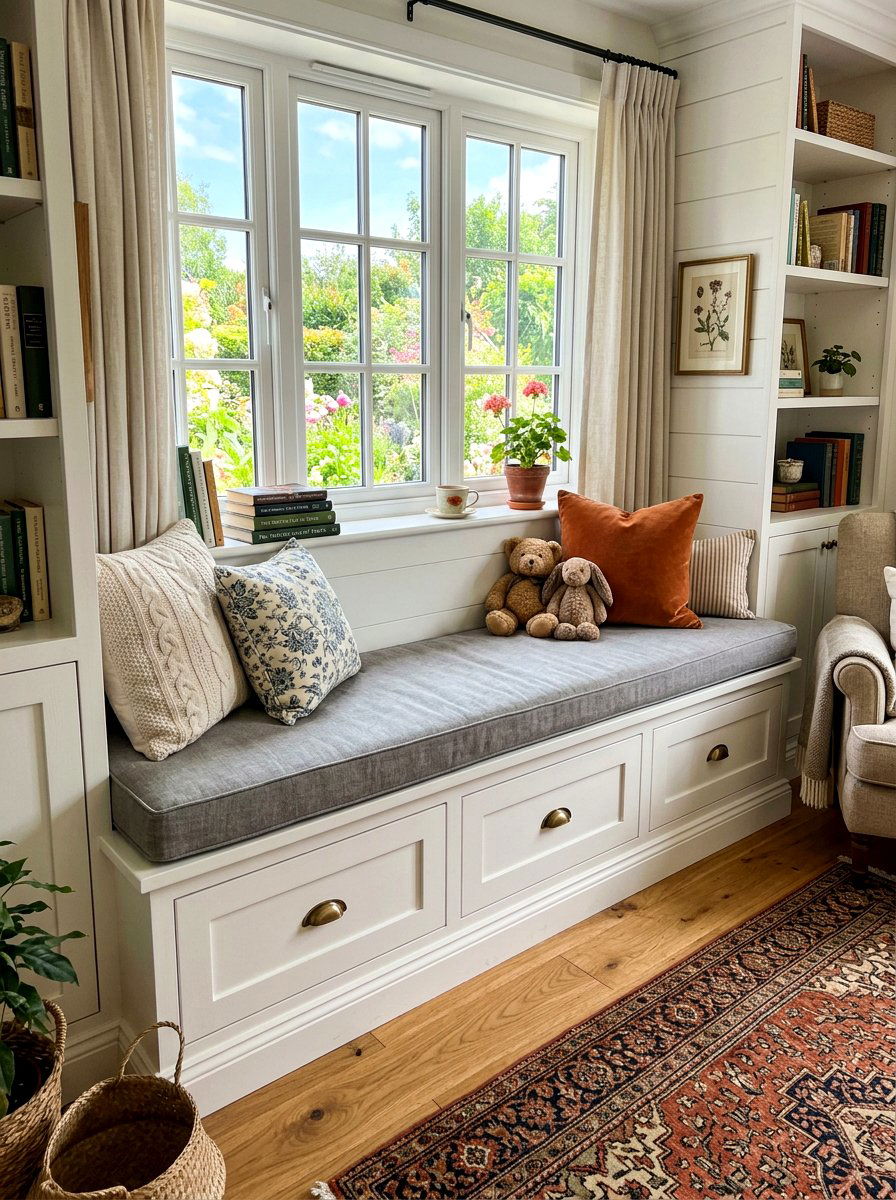
A window seat playroom combines a beautiful view with practical storage drawers built directly into the base. This design creates a cozy nook where children can play, read, or look outside while their toys are nearby. The deep drawers can hold a significant amount of items, making it easy to keep the floor clear. You can designate one drawer for the current rotation and use the others for long-term storage. This setup maximizes the architectural features of your home while providing essential organization. It is a wonderful way to create a dedicated play space in a living room or bedroom. The bench provides extra seating for parents too.
25. Simple Tray Setup
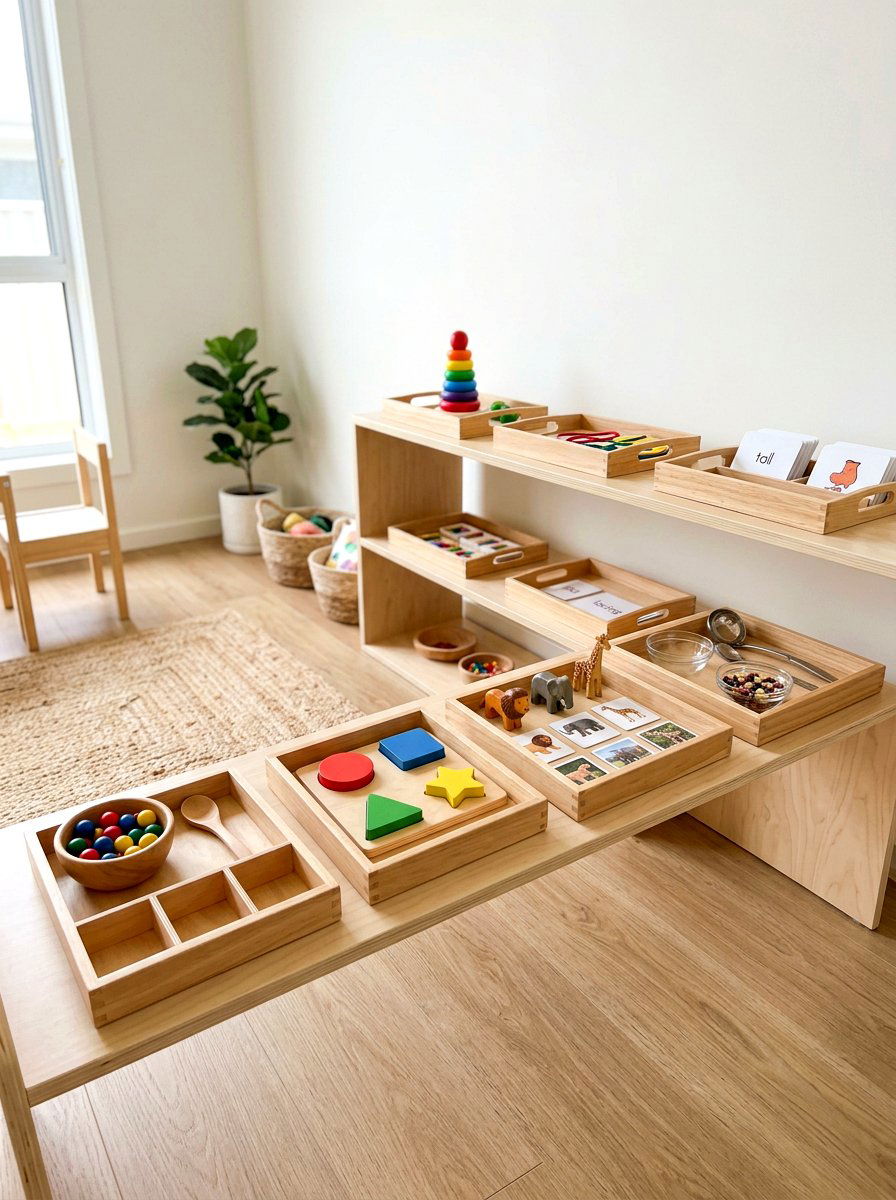
A simple tray setup is a core element of the Montessori method for organizing individual activities. Each tray holds all the components needed for one specific task, such as a sorting game or a craft project. These trays are displayed on low shelves, making it easy for a child to carry the whole activity to a table. This approach limits the mess because only one tray is used at a time. Rotating the activities is as simple as replacing the trays with new ones from a storage closet. This method promotes order and helps children stay focused on their work. It is a very effective and organized play strategy.
26. Vertical Storage Tower
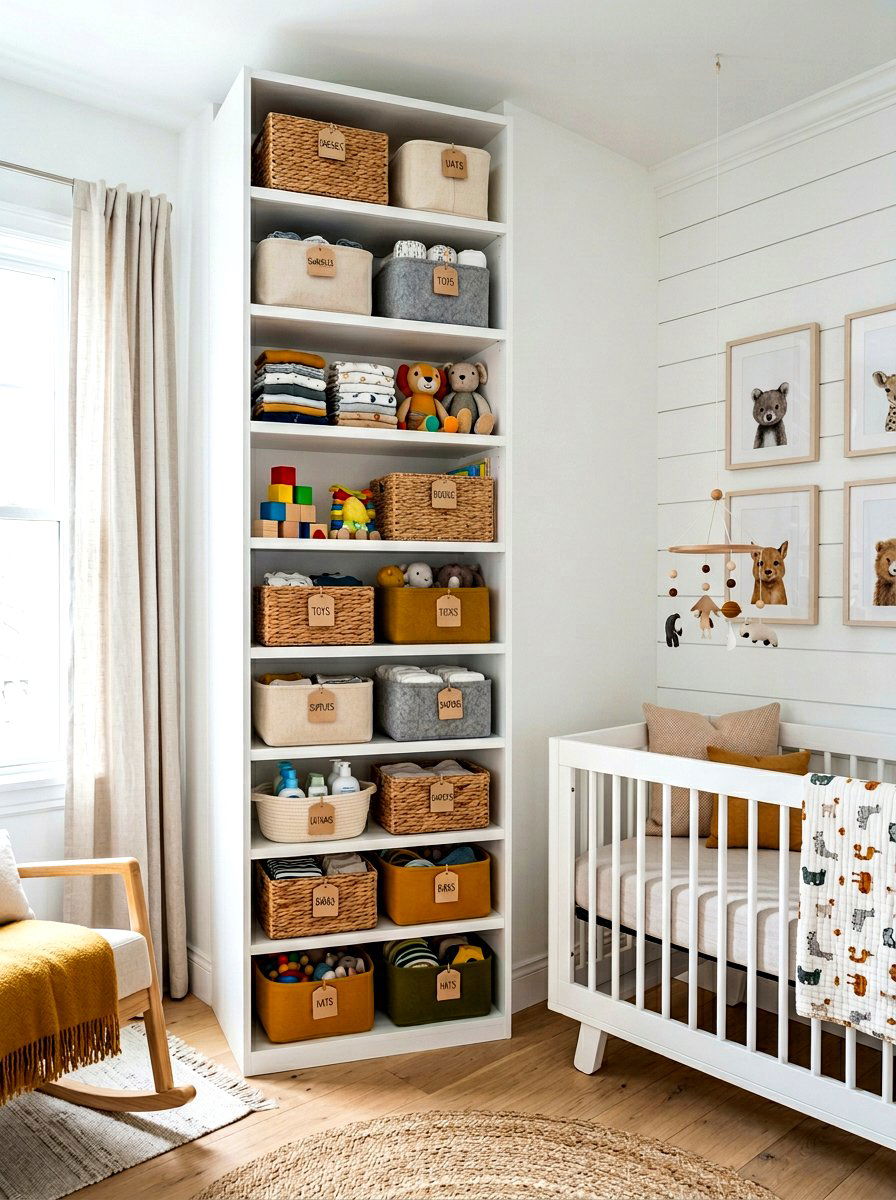
A vertical storage tower is a great way to save floor space by building your organization upward. These tall, narrow units can fit into small corners or alongside a dresser to provide multiple levels of storage. You can use the bottom shelves for toys that the child can reach independently and the top shelves for parents. This setup is perfect for managing a toy rotation in a compact nursery or apartment. You can use bins or baskets on each shelf to keep items sorted by category. The height of the tower creates a strong visual presence without overwhelming the room. It is a very efficient and modern storage solution.
27. Large Chest Area
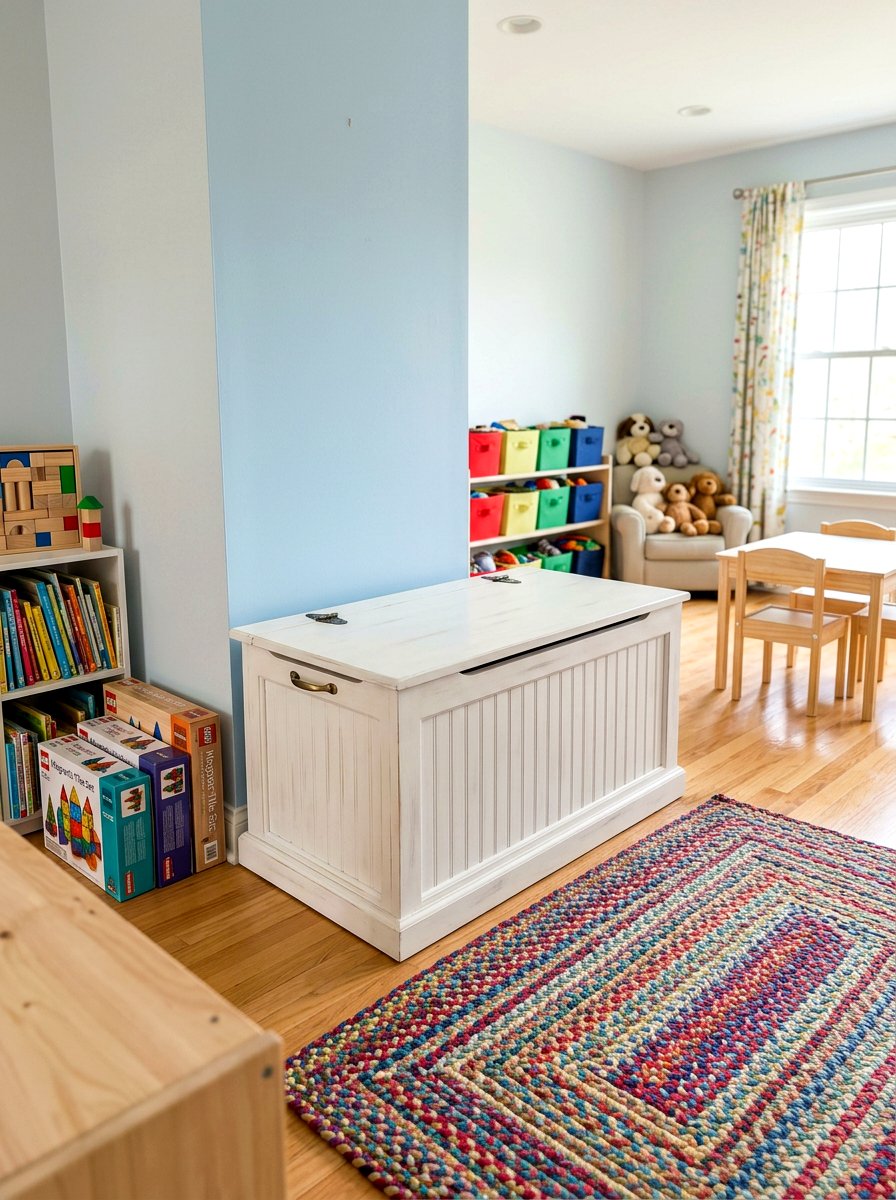
A large chest area provides a classic and simple way to store a high volume of toys in one place. These traditional toy boxes are great for quick cleanups at the end of the day. To make it work for toy rotation, you can use smaller bags or bins inside the chest to keep items from getting mixed up. This prevents the "bottomless pit" effect where toys are forgotten at the base of the chest. During a rotation, you can swap out the smaller containers to keep the contents fresh. The sturdy construction of a wooden chest also provides a surface for play or sitting. It is a durable choice for kids.
28. Magnetic Activity Board
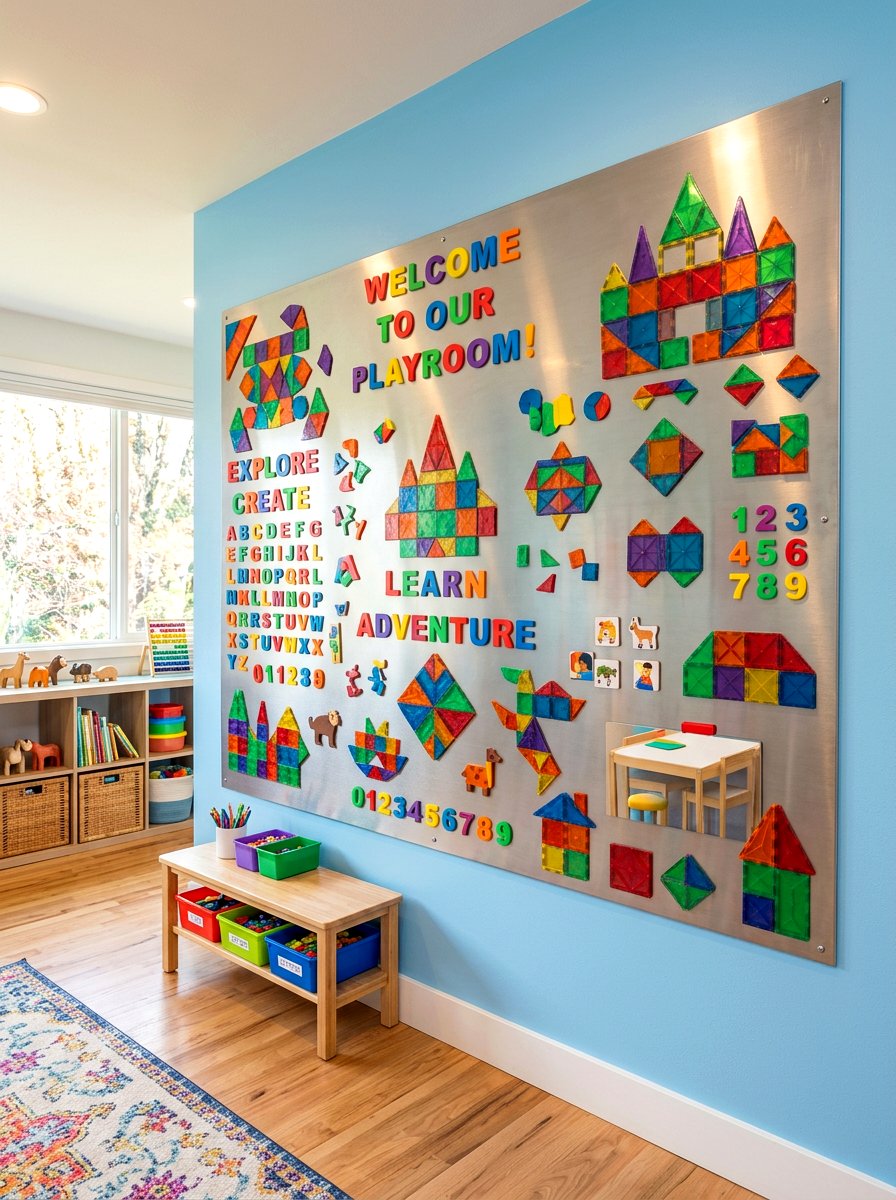
A magnetic activity board is a unique storage and play solution that keeps magnetic toys off the floor. You can mount a large metal sheet or magnetic board on the wall at your child's height. This provides a dedicated space for alphabet letters, magnetic tiles, or gears to be stored and used. It acts as both a storage system and an interactive play area that saves valuable shelf space. You can rotate the types of magnets available each week to keep the activity interesting. This vertical play space encourages standing and helps develop fine motor skills. It is a very clean and modern addition to any modern playroom.
29. Modular Furniture Layout
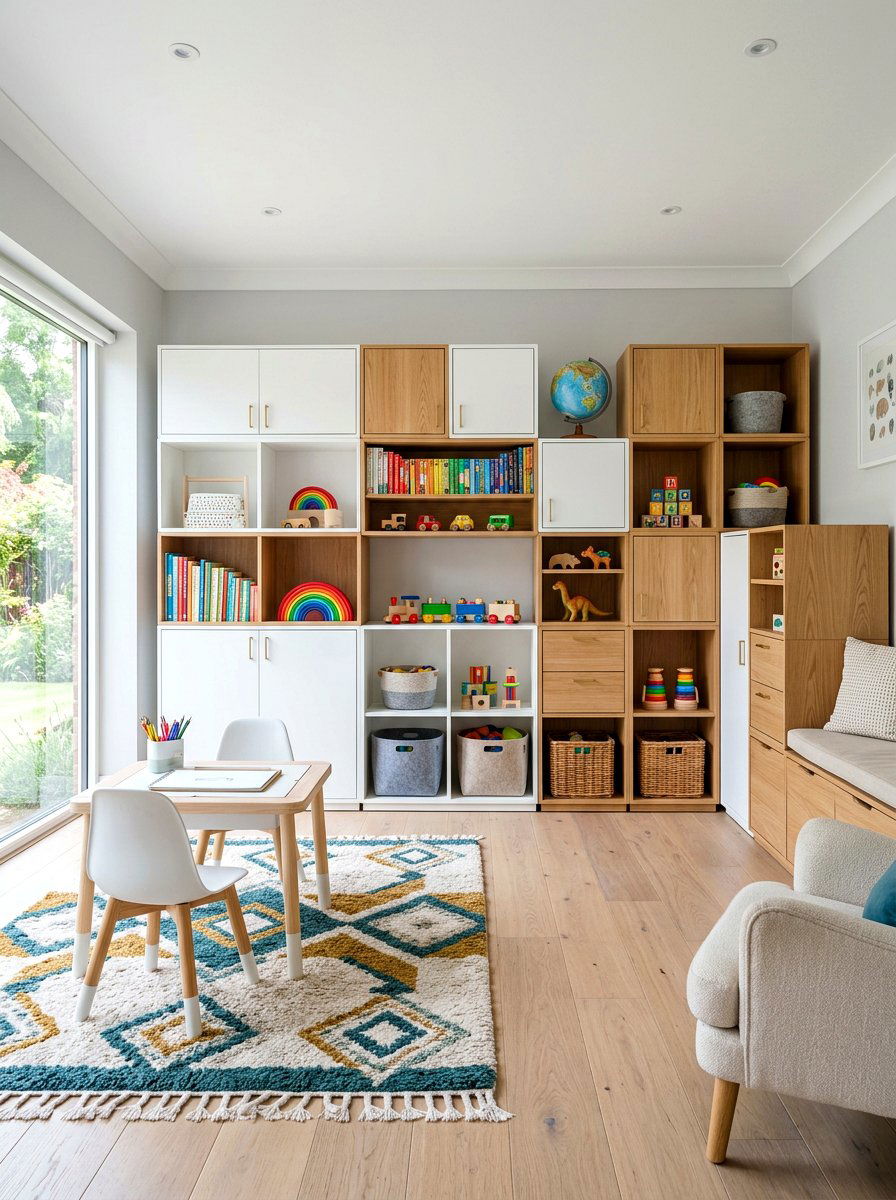
A modular furniture layout allows you to create a completely custom storage system that fits the exact dimensions of your room. These pieces can be rearranged into different configurations like benches, towers, or wall units as your needs change. This flexibility is perfect for families who want a system that grows with their children. You can combine open shelving for display with closed drawers for the toys currently out of rotation. The uniform look of the modular pieces provides a very polished and professional aesthetic. It is a high-quality investment that offers long-term organizational benefits. This design keeps your home feeling balanced and very well-structured for daily life.
30. Wooden Crate Display
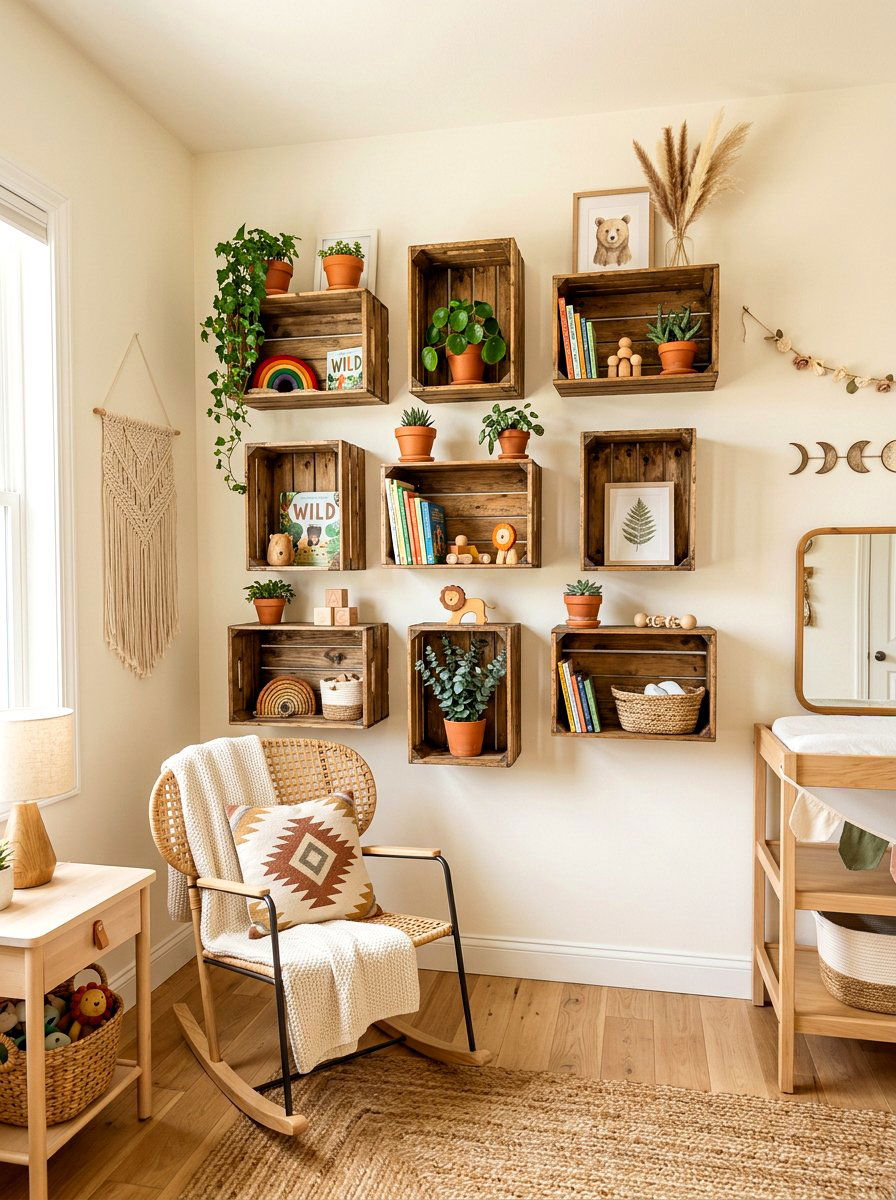
A wooden crate display offers a rustic and charming way to organize toys while adding texture to the room. You can mount the crates directly to the wall or stack them on the floor to create a custom shelving unit. The natural wood finish complements many different home decor styles from farmhouse to modern. Each crate can serve as a "niche" for a specific toy set, making the rotation process visually clear. Because the crates are open, children can easily see and access their favorite playthings. This setup is very affordable and can be easily expanded as your toy collection grows. It is a beautiful organizational idea.
Conclusion:
Implementing a toy rotation system can completely change the atmosphere of your home by reducing stress and clutter. When you choose the right storage solutions, the process of swapping toys becomes a quick and simple task rather than a chore. Whether you prefer the clean look of hidden cabinets or the accessibility of open shelving, there is a method here for every family. Consistency is the secret to making this system work long-term for your children. Watching them rediscover old toys with fresh excitement is incredibly rewarding for any parent. Take the time to organize your space and enjoy the many benefits of a minimalist play environment today.

Related posts: