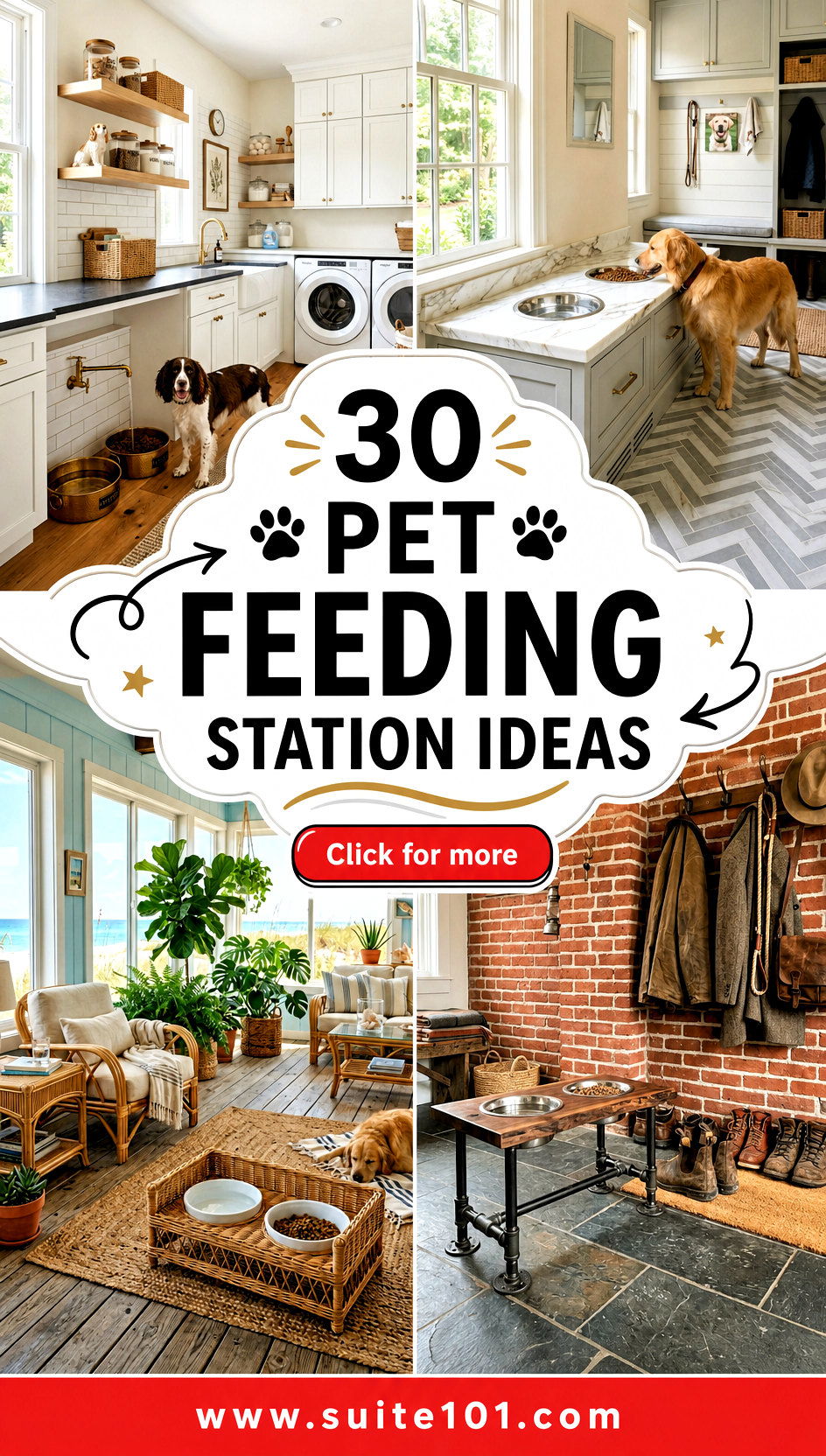
Creating a dedicated space for your furry family members is a thoughtful way to integrate their needs into your home’s aesthetic. Many homeowners are now moving away from messy plastic bowls on the floor in favor of sophisticated solutions that blend seamlessly with high-end cabinetry and decor. Whether you are working with a sprawling kitchen or a compact urban apartment, there is a perfect setup that balances functionality with style. From innovative pull-out drawers to custom-built nooks under the stairs, these concepts ensure that mealtime is organized, clean, and visually appealing. Investing in a permanent spot for water and food not only reduces clutter but also creates a sense of belonging for your beloved pets within the sanctuary of your living space.
1. Kitchen Island Dog Bowl Drawer
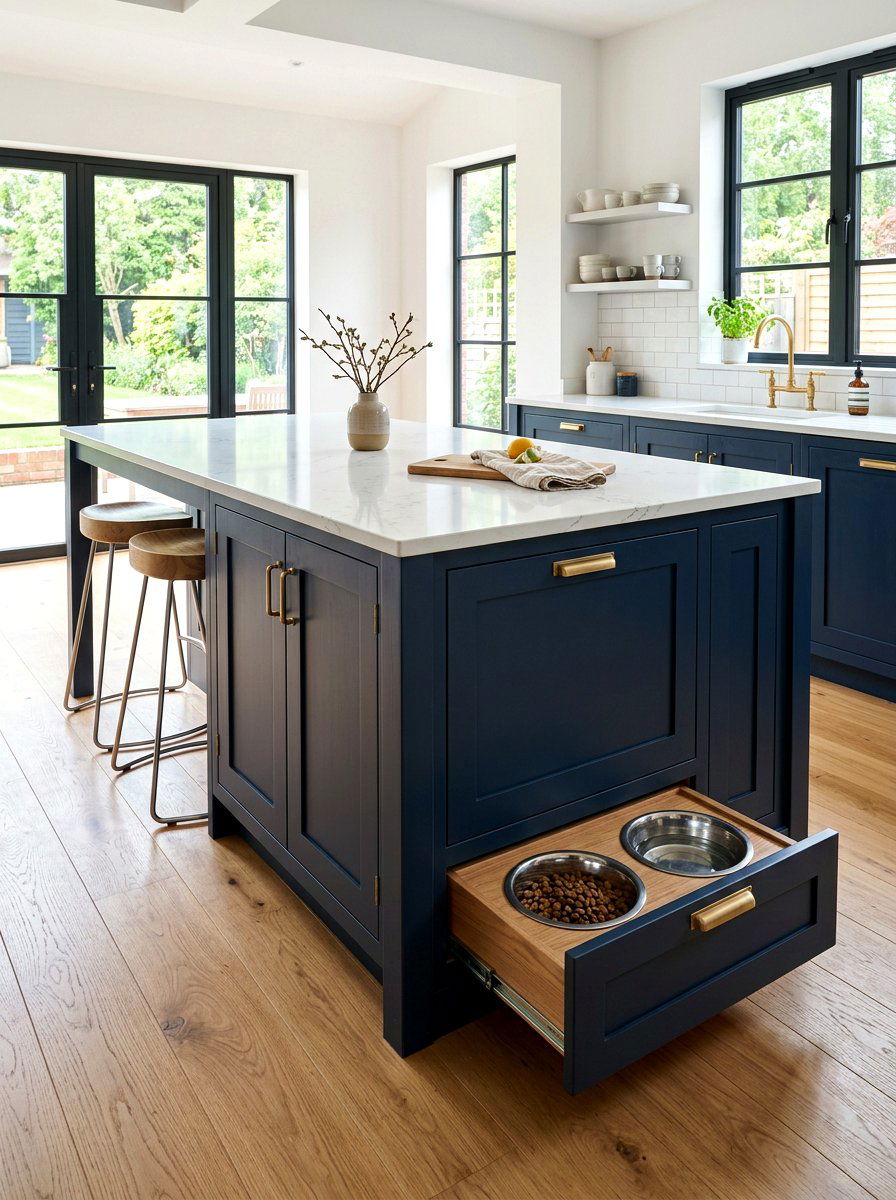
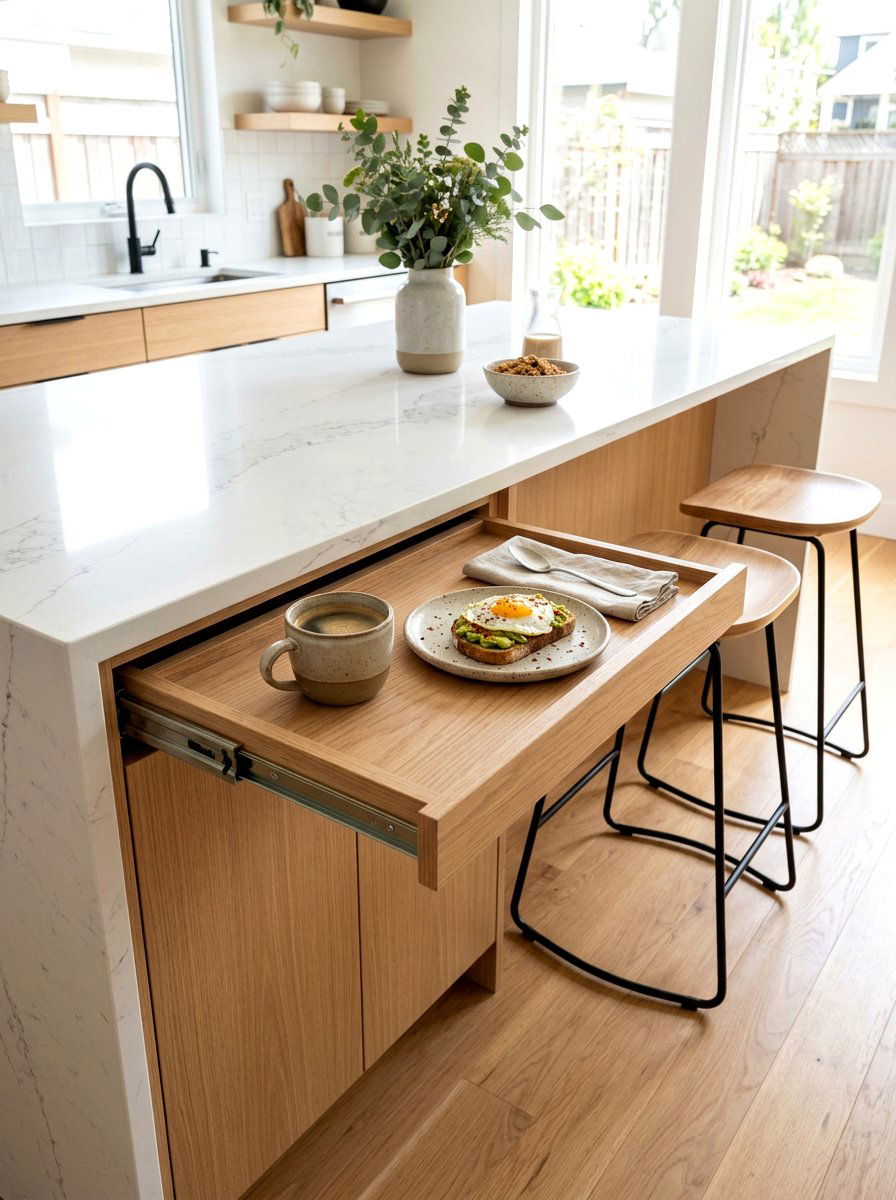
Imagine walking into your kitchen and seeing a completely clutter-free floor while your pets enjoy their meal from a hidden compartment. A kitchen island dog bowl drawer is the ultimate solution for homeowners who value a minimalist aesthetic and want to keep feeding zones out of sight. This design involves installing a heavy-duty pull-out drawer at the base of your kitchen island that holds stainless steel or ceramic bowls securely. When it is mealtime, you simply slide the drawer open, and once they are finished, it tucks away perfectly. This setup prevents tripping over water bowls and keeps the kitchen looking polished and professional at all times.
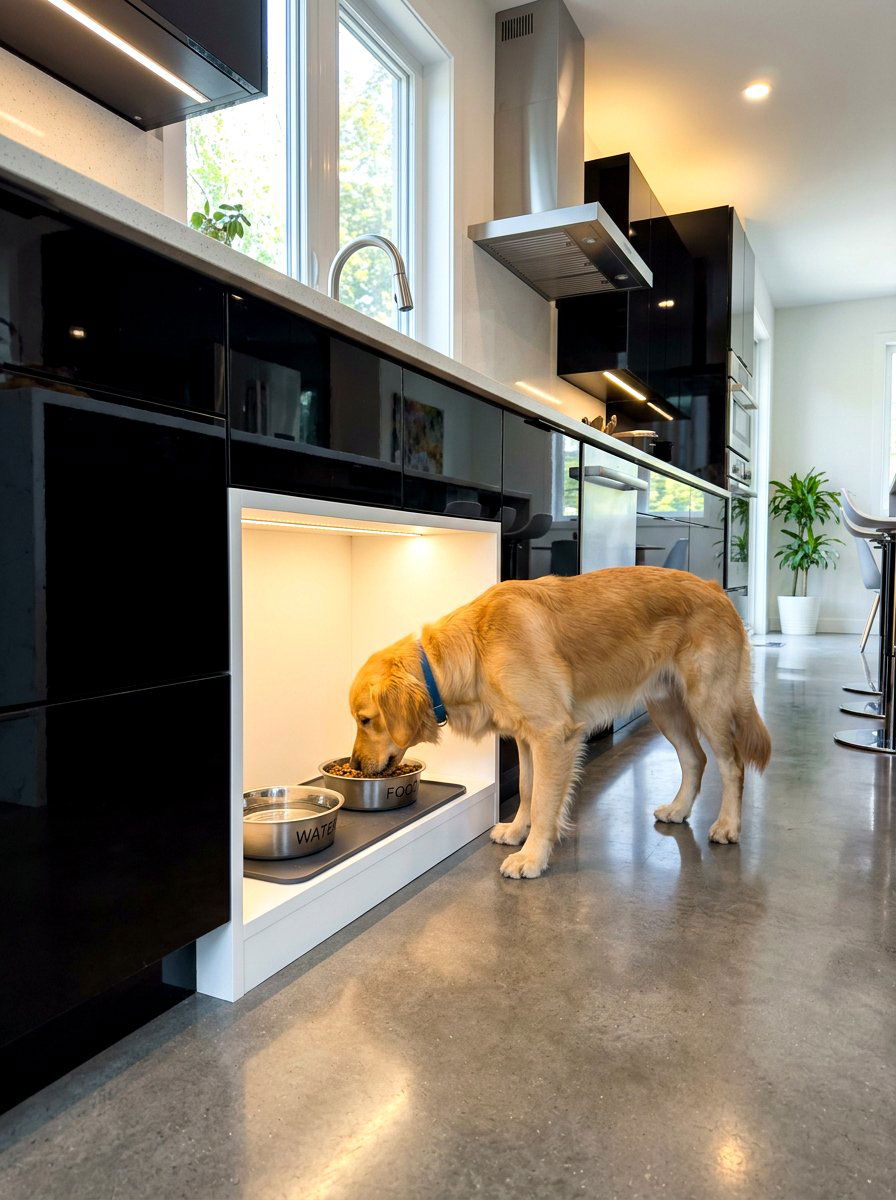
2. Built In Kitchen Cabinet Pet Station
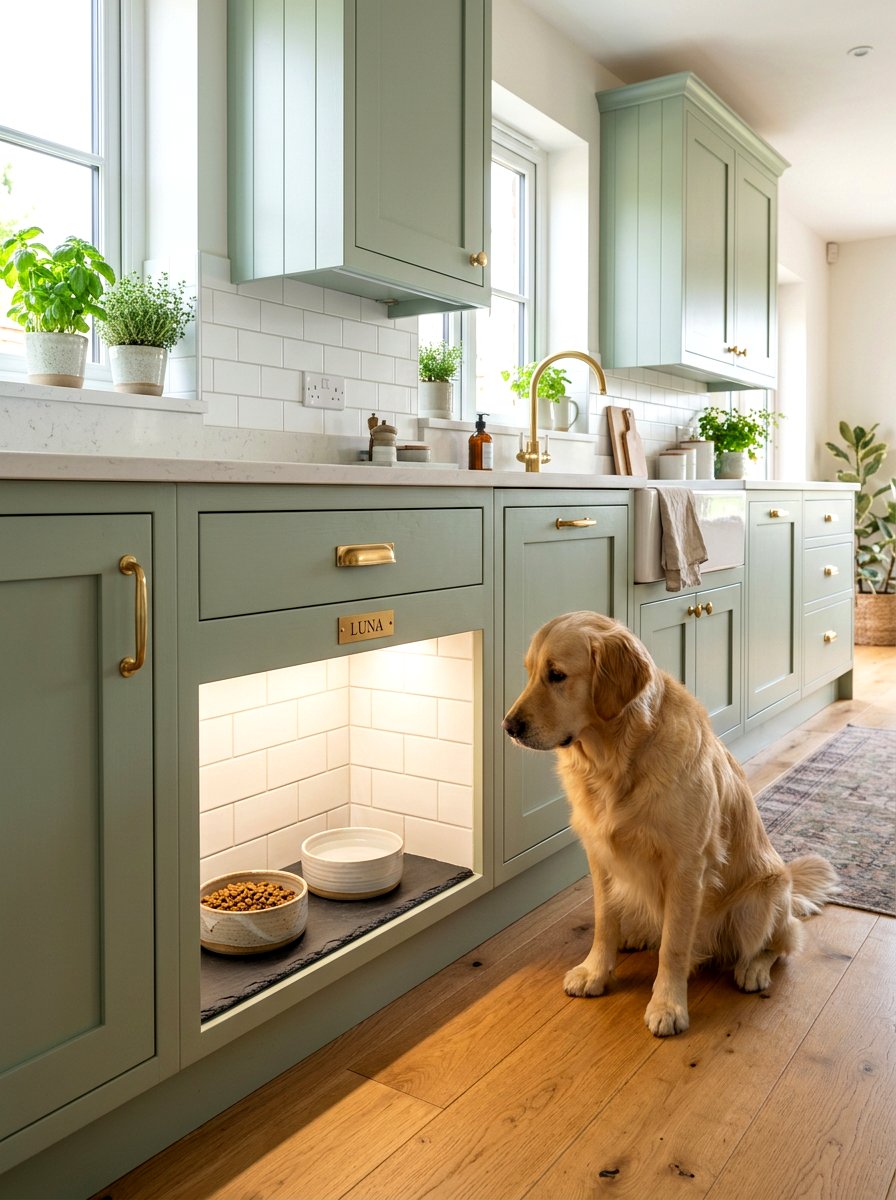
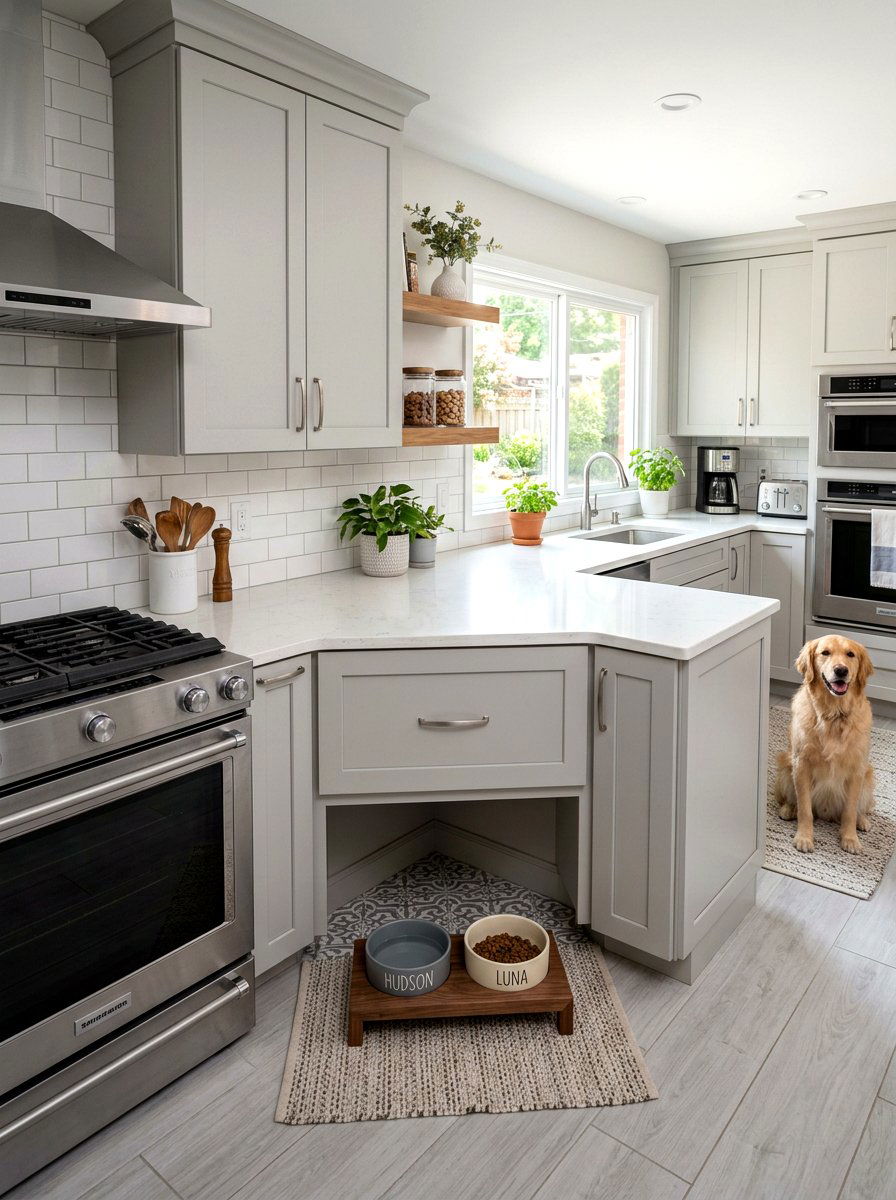
Have you ever considered how much floor space is wasted by random pet bowls sitting in the middle of your walkway? A built-in kitchen cabinet pet station utilizes the lower portion of your existing cabinetry to create a recessed niche specifically for food and water. This design often features a matching cabinet finish and a waterproof base, such as tile or stone, to protect your woodwork from spills. By integrating the feeding area directly into the cabinetry run, you create a cohesive look that feels like a natural extension of the room. It is a practical and stylish way to keep your pet’s essentials organized.
3. Mudroom Dog Wash And Feeder
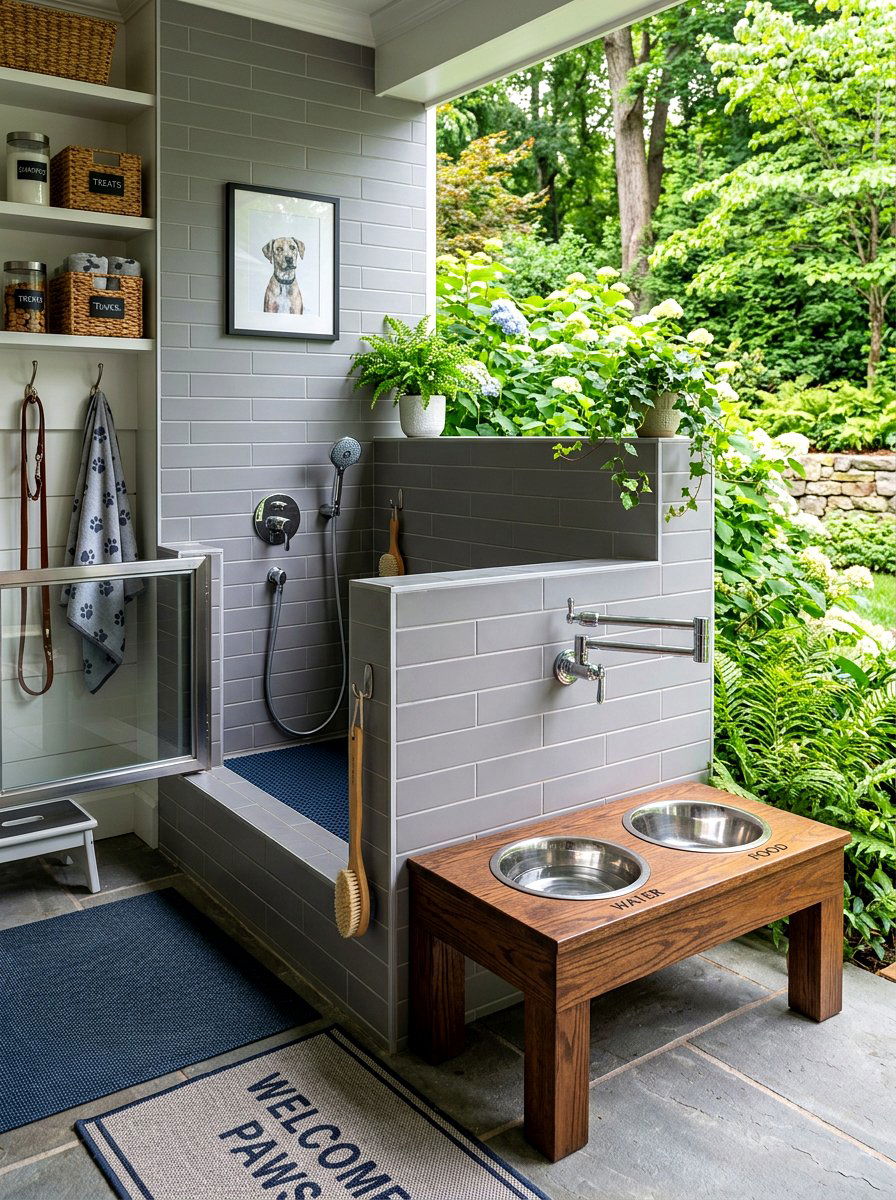
Mudrooms are the perfect transition zones for busy households, and incorporating a feeding area here makes perfect sense for active dogs. A mudroom dog wash and feeder combines a low-entry pet shower with a nearby feeding platform, making it a true utility hub for your canine. This setup often uses durable materials like subway tile and waterproof flooring to handle the inevitable splashes from drinking or post-walk rinses. Having everything in one place keeps the rest of the house clean and ensures that food prep for your pet stays separate from your human cooking areas. It is functional, rugged, and incredibly convenient for daily use.
4. Under Stairs Dog Feeding Nook
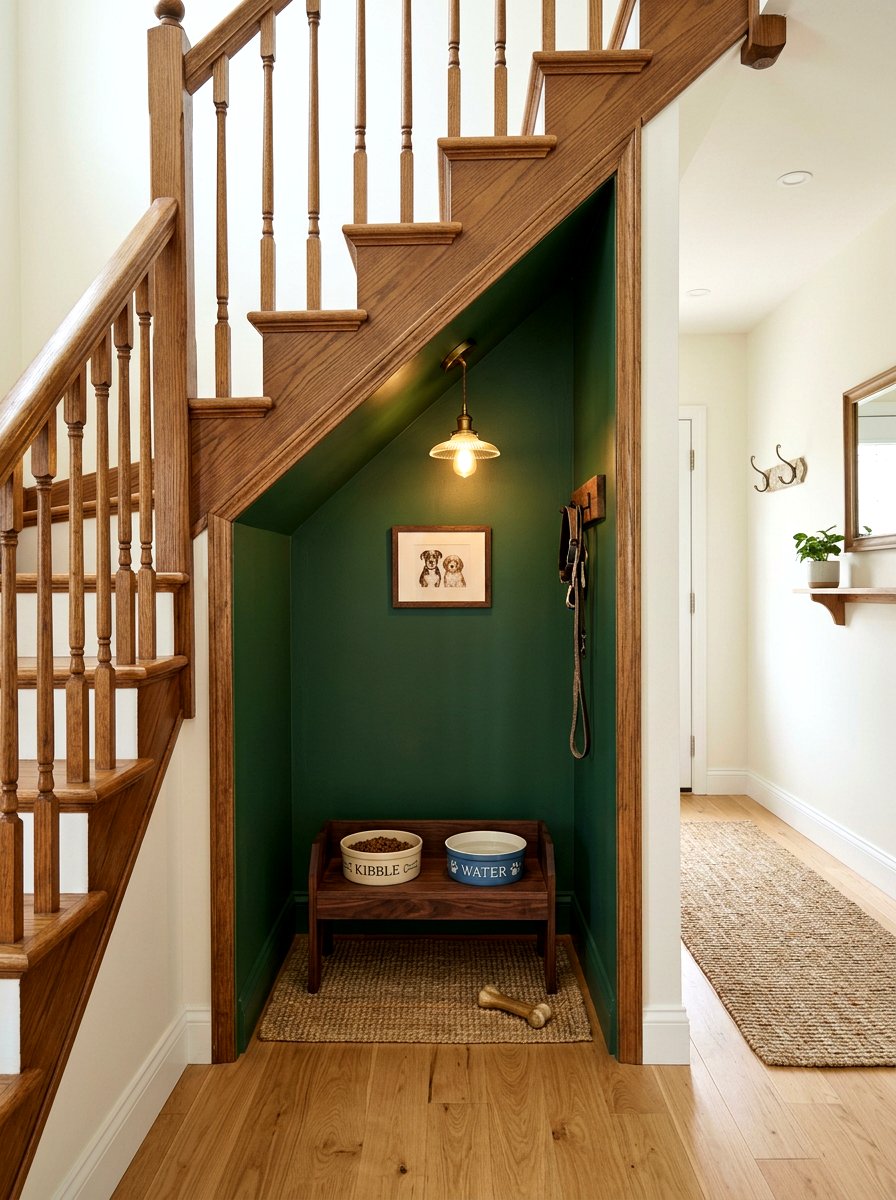
The empty space beneath a staircase is often underutilized, but it can be transformed into a charming and private dining area for your pet. An under stairs dog feeding nook creates a cozy architectural feature that feels like a tiny room dedicated to your furry friend. You can line the interior with beautiful wallpaper or a contrasting paint color to make it a design focal point. By placing the bowls inside this alcove, you keep them out of high-traffic paths while giving your pet a quiet, secure place to eat. It is a clever use of square footage that adds character to your home layout.
5. Laundry Room Pet Feeding Area
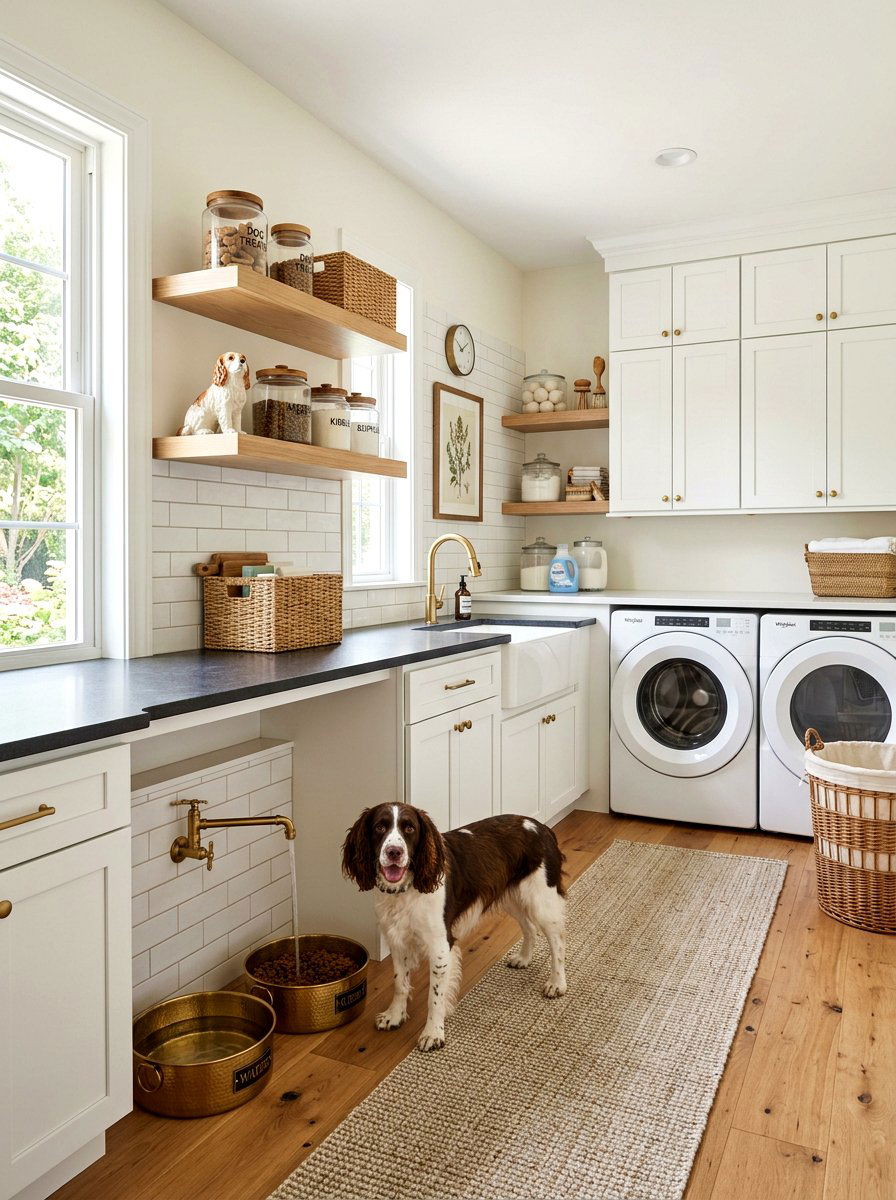
Do you find that the laundry room is often the quietest place in your house for your pet to relax? A laundry room pet feeding area takes advantage of the water lines already present in the room to create a highly functional space. Many designers include a pot filler faucet directly over the water bowl for easy refills without carrying heavy dishes across the house. Integrated shelving above the feeding spot can hold large bags of food, treats, and grooming supplies. This keeps all pet-related chores in one zone, making your daily routine much more efficient while maintaining a tidy and organized living environment.
6. Pull Out Pet Food Storage Drawer
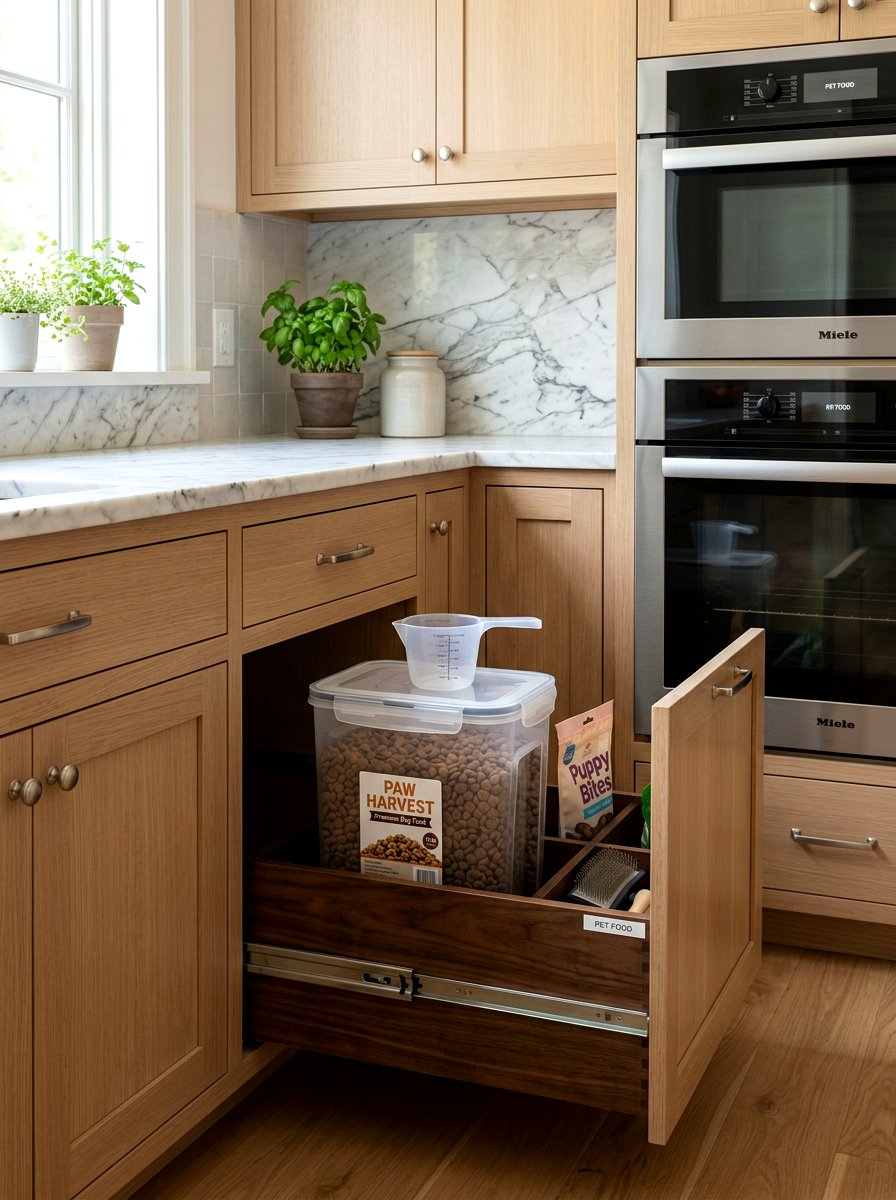
Tired of looking at bulky, unsightly bags of kibble taking up space in your pantry or leaning against the wall? A pull out pet food storage drawer integrates a large, airtight bin directly into your kitchen or utility cabinetry for a seamless look. These drawers are typically deep and equipped with heavy-duty slides to handle the weight of bulk food. Many designs also feature a small tray on top for measuring scoops or daily supplements. By hiding the food source right next to the feeding station, you streamline the process of serving meals while keeping the ingredients fresh and away from curious pests.
7. Wall Mounted Cat Feeding Shelf
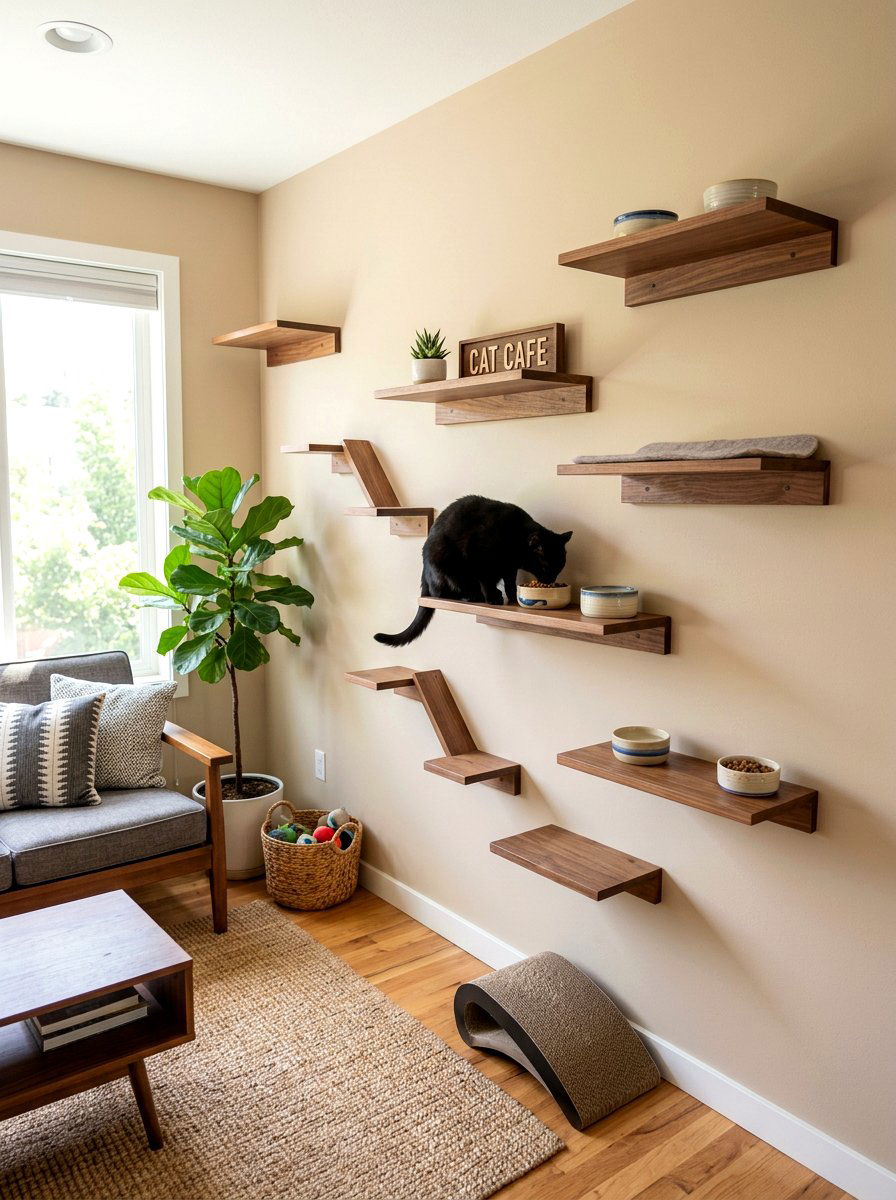
Cats naturally love to be in high places where they can observe their surroundings without feeling vulnerable to other pets or foot traffic. A wall mounted cat feeding shelf provides a secure elevated platform that keeps their food out of reach from the family dog. These shelves can be designed to match your wall decor, appearing as sleek floating ledges rather than pet furniture. Using sturdy brackets and non-slip surfaces ensures that your cat feels safe while dining. This vertical solution is excellent for small apartments where floor space is limited and helps create a multi-dimensional environment for your feline friend to enjoy.
8. Rustic Wood Dog Bowl Stand
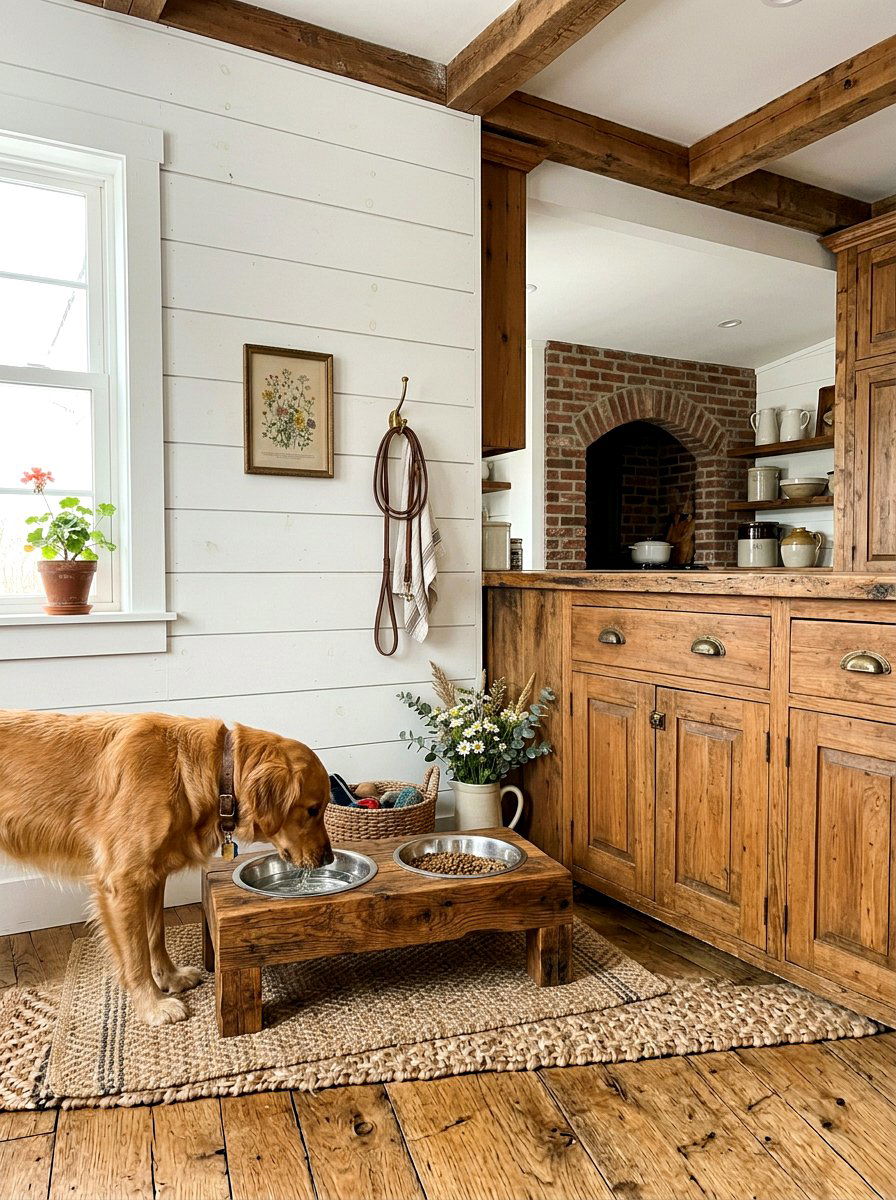
Bringing a touch of natural warmth into your home is easy with a handcrafted rustic wood dog bowl stand. These stands are often made from reclaimed timber or solid oak, providing a sturdy and heavy base that prevents sliding during enthusiastic eating. The elevated height is not only aesthetic but also beneficial for your dog's posture and digestion, especially for larger breeds. You can finish the wood with a water-resistant sealant to protect it from moisture while maintaining the beautiful grain patterns. This piece of furniture acts as a decor element that complements farmhouse, boho, or traditional interior styles quite effortlessly.
9. Minimalist Ceramic Pet Bowl Set
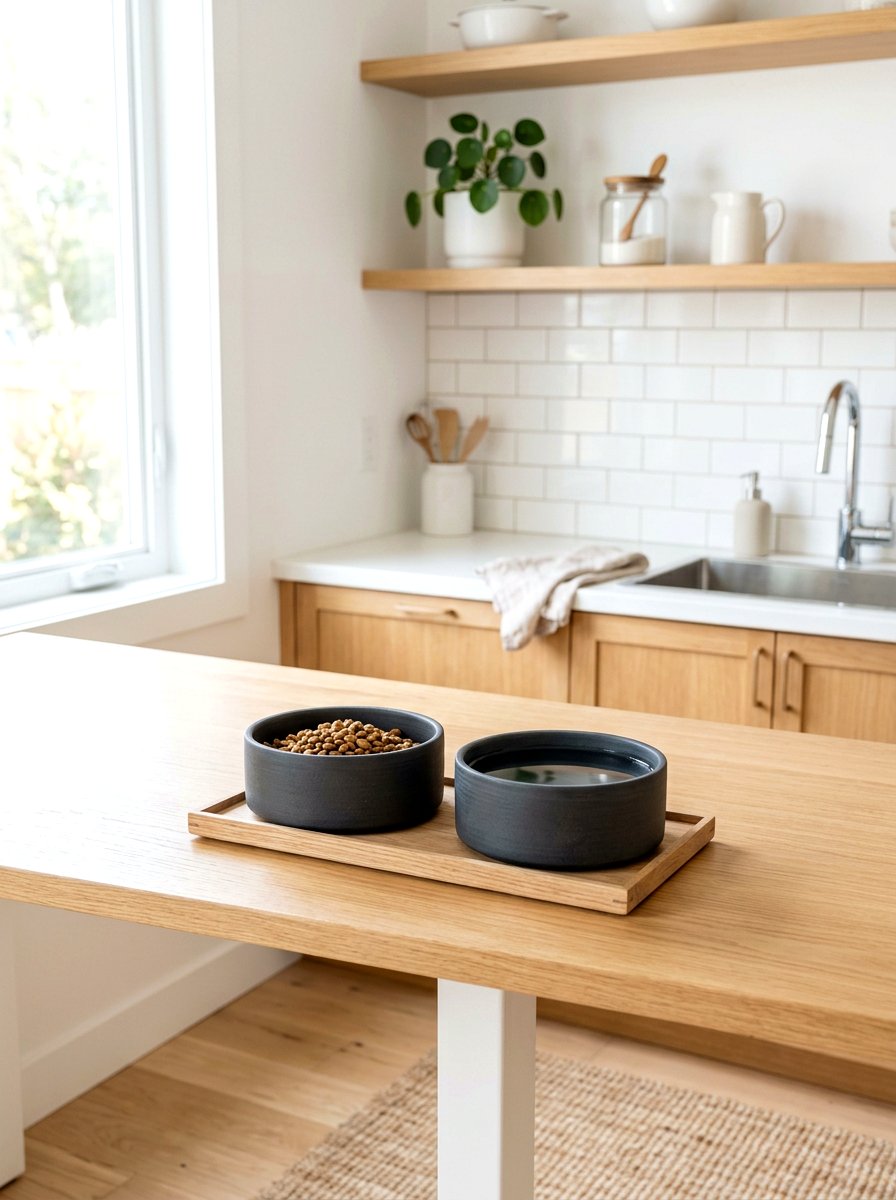
For those who prefer a clean and contemporary look, a minimalist ceramic pet bowl set offers a timeless appeal that never goes out of style. These sets often feature matte finishes in neutral tones like charcoal, cream, or soft sage, allowing them to blend into any room without drawing too much attention. High-quality ceramic is non-porous and easy to sanitize, making it a healthy choice for your pet's daily use. Many of these designs include a simple silicone or wooden base to keep the bowls from clattering against the floor. It is a simple yet effective way to elevate the everyday routine of feeding.
10. Modern Metal Elevated Pet Feeder
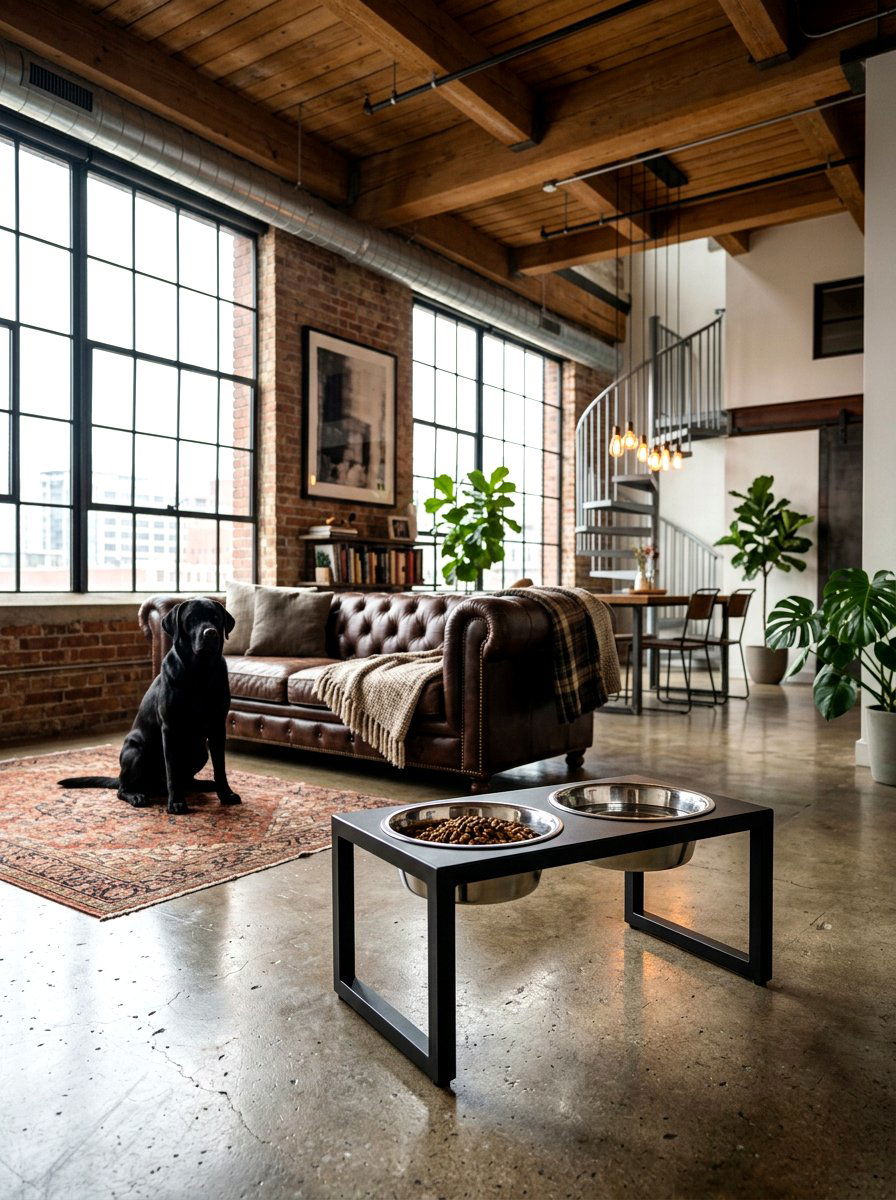
Sleek lines and industrial materials define the modern metal elevated pet feeder, making it a perfect match for urban lofts and modern homes. These feeders are typically constructed from powder-coated steel or aluminum, offering incredible durability and a weight that keeps the station anchored in place. The open-frame design feels light and airy, preventing the area from looking cluttered or heavy. Metal is also exceptionally easy to wipe down, which is a major plus for messy eaters who tend to splash water or drop kibble. This choice reflects a sophisticated design sensibility while prioritizing the long-term health of your pet's neck and joints.
11. Hidden Pet Station Cabinet
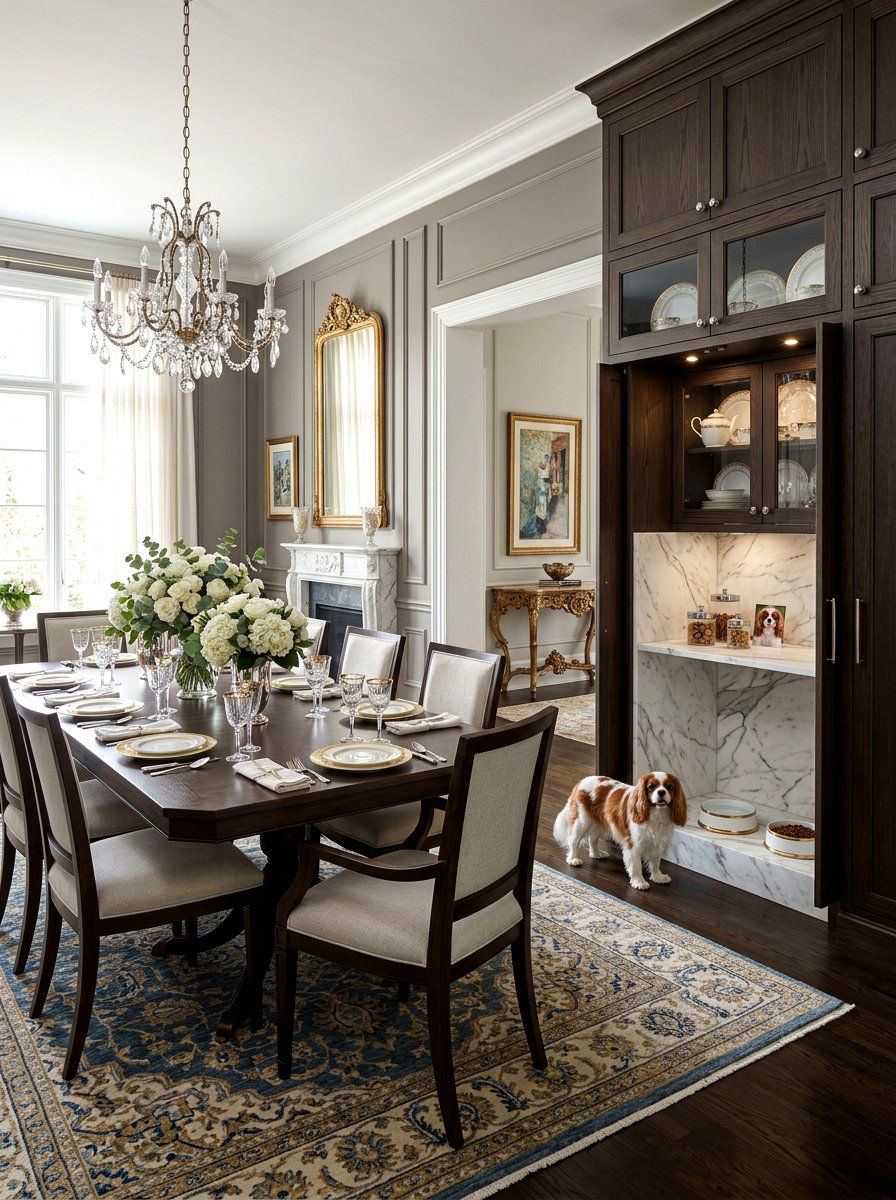
Sometimes the best design is the one you cannot see at all until it is actually needed for use. A hidden pet station cabinet features pocket doors or a flip-down front that completely conceals the bowls and food containers when mealtime is over. This is particularly useful in formal dining areas or open-concept living spaces where you want to maintain a strictly "human" decor vibe. Inside the cabinet, you can install easy-to-clean surfaces like laminate or stainless steel to handle spills. It is a brilliant way to keep your home looking pristine while still providing a dedicated, organized spot for your pet’s daily nutrition.
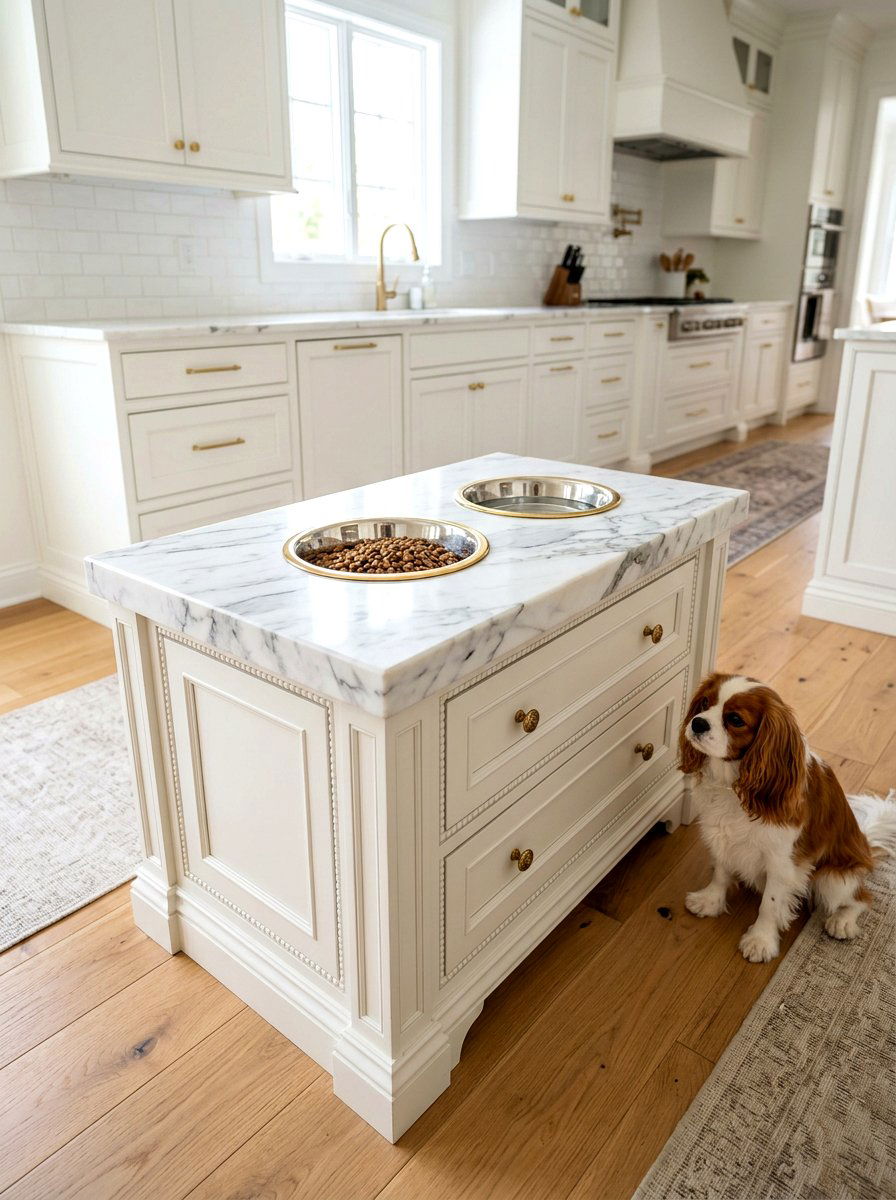
12. Marble Top Dog Feeding Station
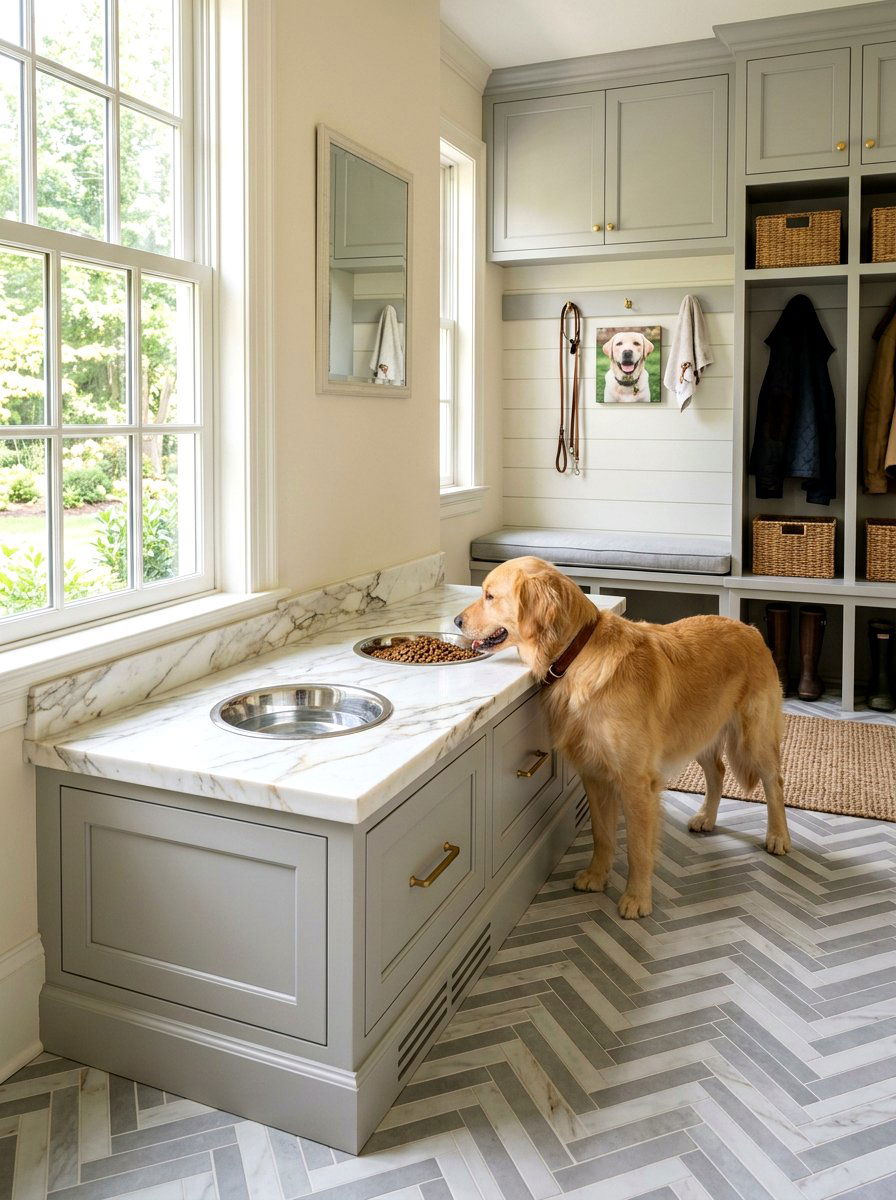
Luxury meets functionality when you decide to install a marble top dog feeding station as a permanent fixture in your home. Marble is naturally cool and incredibly easy to clean, making it a premium choice for the base or surrounding surface of a feeding area. This setup often includes a custom-carved stone slab with recessed holes that hold the bowls perfectly flush with the surface. The elegant veining of the stone adds a sophisticated touch to your kitchen or mudroom, turning a mundane utility area into a high-end design feature. It is a durable, beautiful, and timeless investment for any pet-friendly luxury home.
13. Wicker Basket Pet Bowl Holder
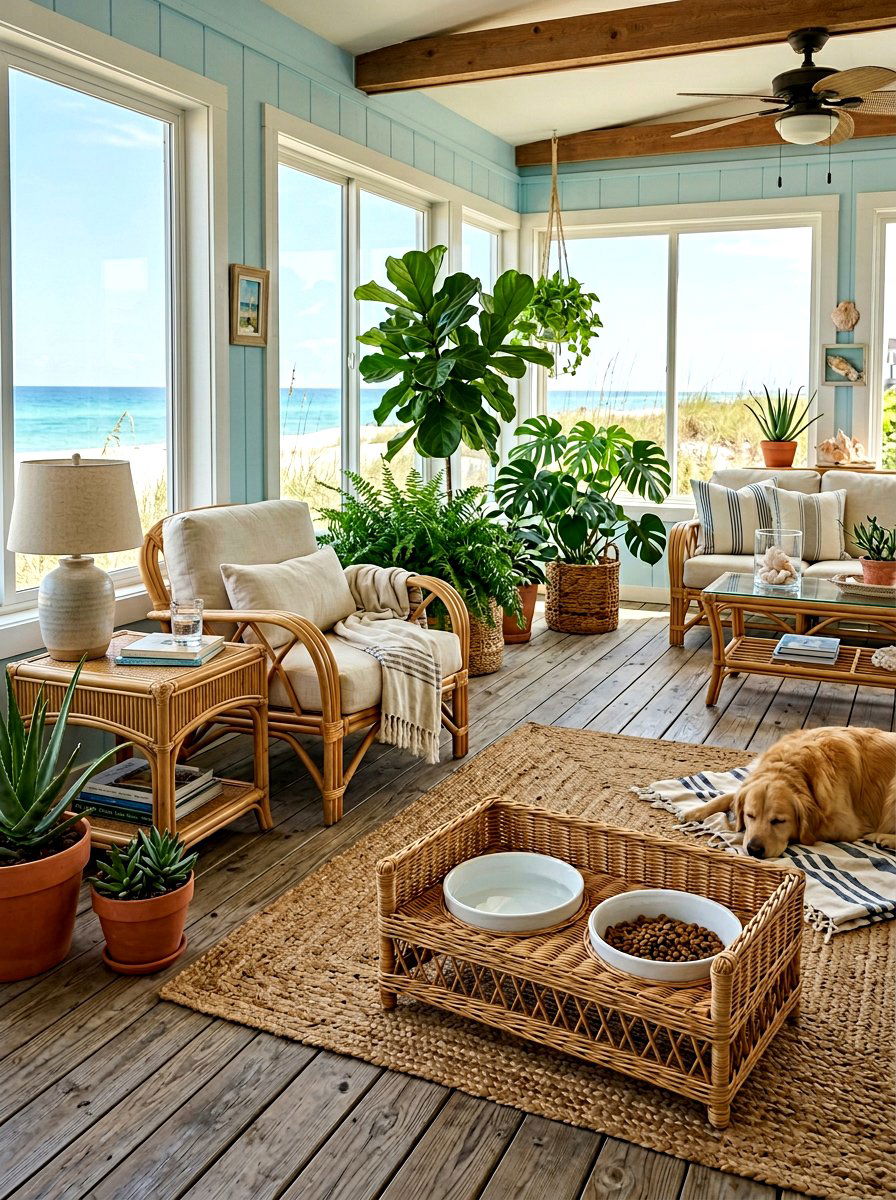
If your home leans toward a coastal or traditional style, a wicker basket pet bowl holder adds a soft, organic texture to the room. These holders are designed with internal structures to keep bowls steady while providing a decorative exterior that masks the utility of the item. Wicker is surprisingly durable and lightweight, making it easy to move the feeding station if you decide to rearrange your furniture. Many versions come with a removable liner to catch any stray bits of food, ensuring the natural fibers stay clean. It is a charming way to make your pet’s accessories feel like a part of your decor.
14. Mid Century Modern Pet Feeder
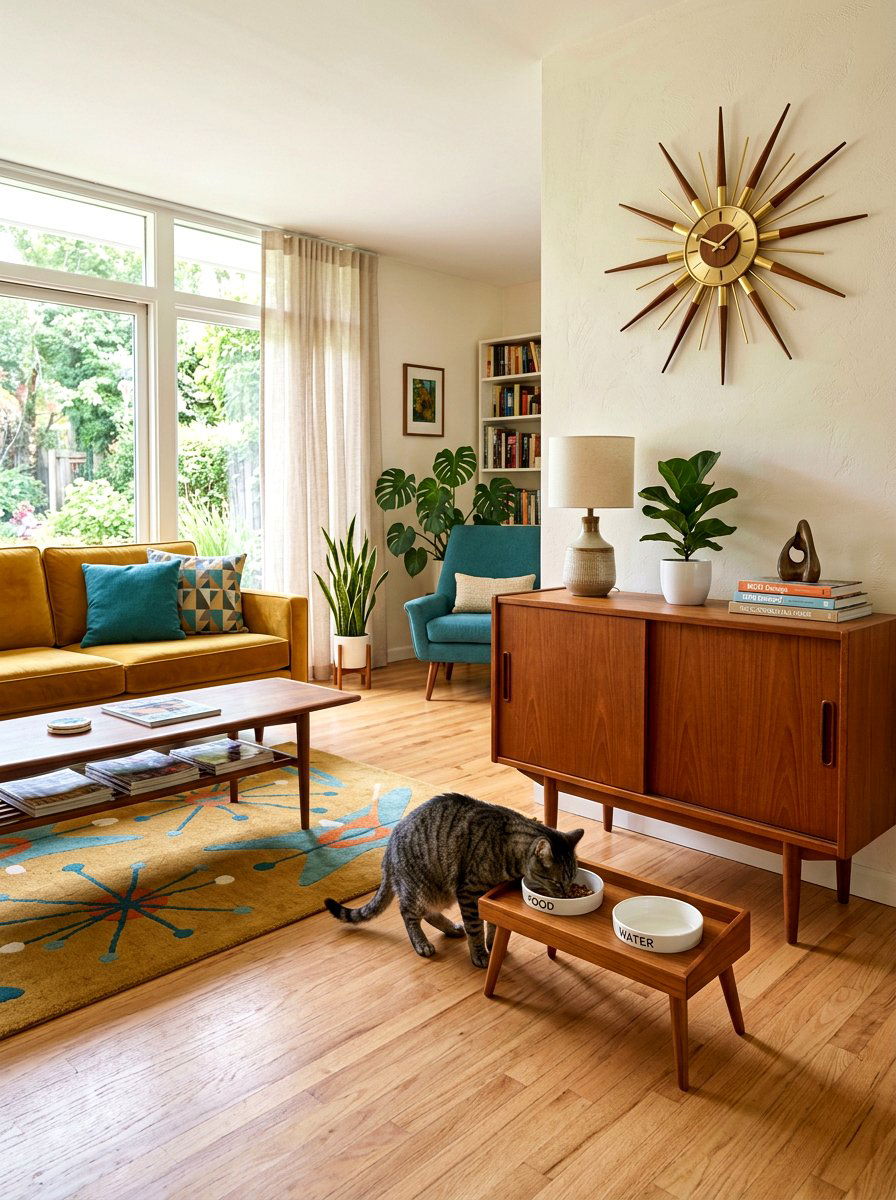
Fans of vintage-inspired design will appreciate how a mid century modern pet feeder brings iconic style to their pet's corner. Featuring tapered wooden legs and bentwood frames, these feeders echo the famous furniture silhouettes of the 1950s and 60s. The warm wood tones and clean geometry make the feeder look like a piece of designer furniture rather than a pet product. Placing this in a living room or hallway creates a stylish vignette that respects the architectural era of your home. It is a fantastic example of how pet ownership does not require you to sacrifice your personal style or interior design goals.
15. Farmhouse Style Pet Feeding Station
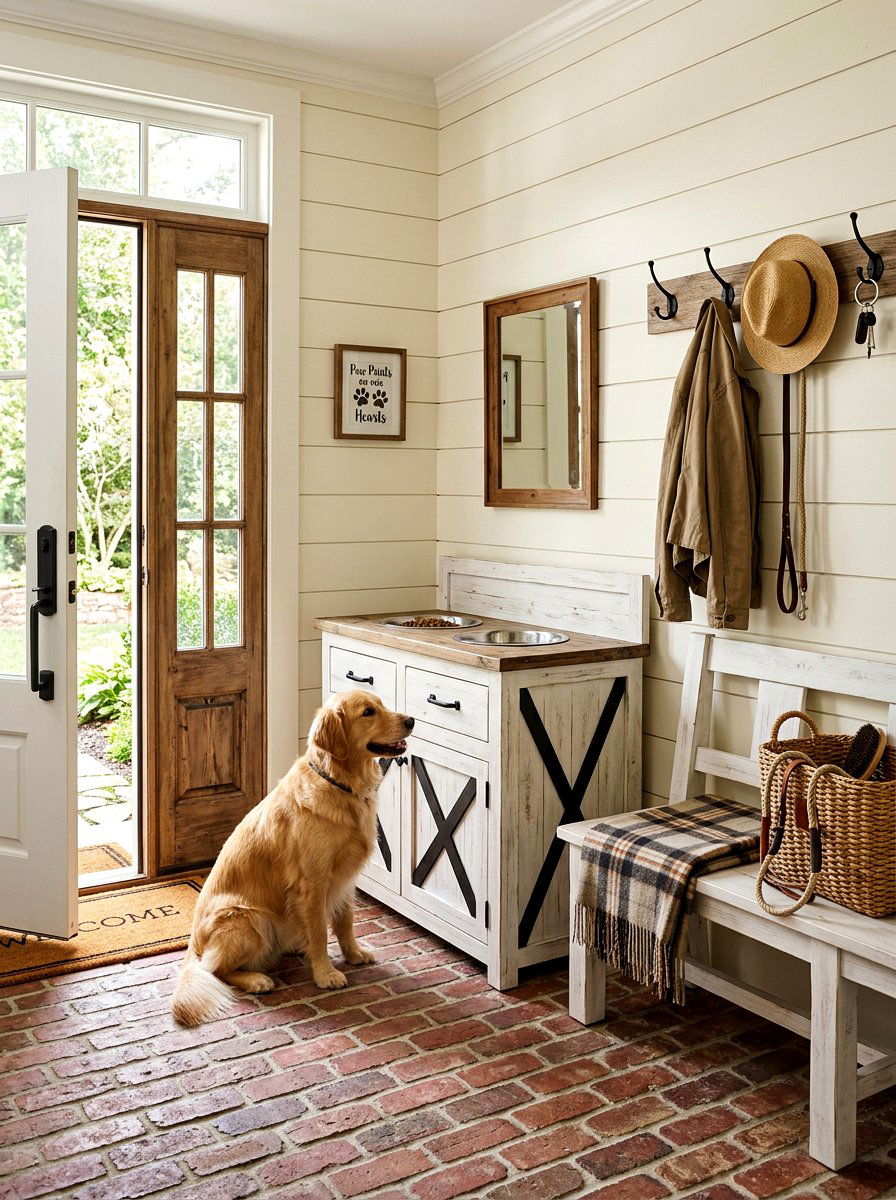
Creating a cozy and inviting atmosphere is the hallmark of a farmhouse style pet feeding station, often featuring white-washed wood and black hardware. This design usually incorporates a small bench-like structure with storage underneath for extra food and leashes. You might see "X" detailing on the sides or shiplap backing to tie into the popular country aesthetic found in many modern homes today. This setup feels sturdy and reliable, much like the lifestyle it represents. It provides a dedicated "command center" for your pet that looks perfectly at home next to a rustic dining table or in a sun-drenched laundry room.
16. Corner Kitchen Pet Feeding Area
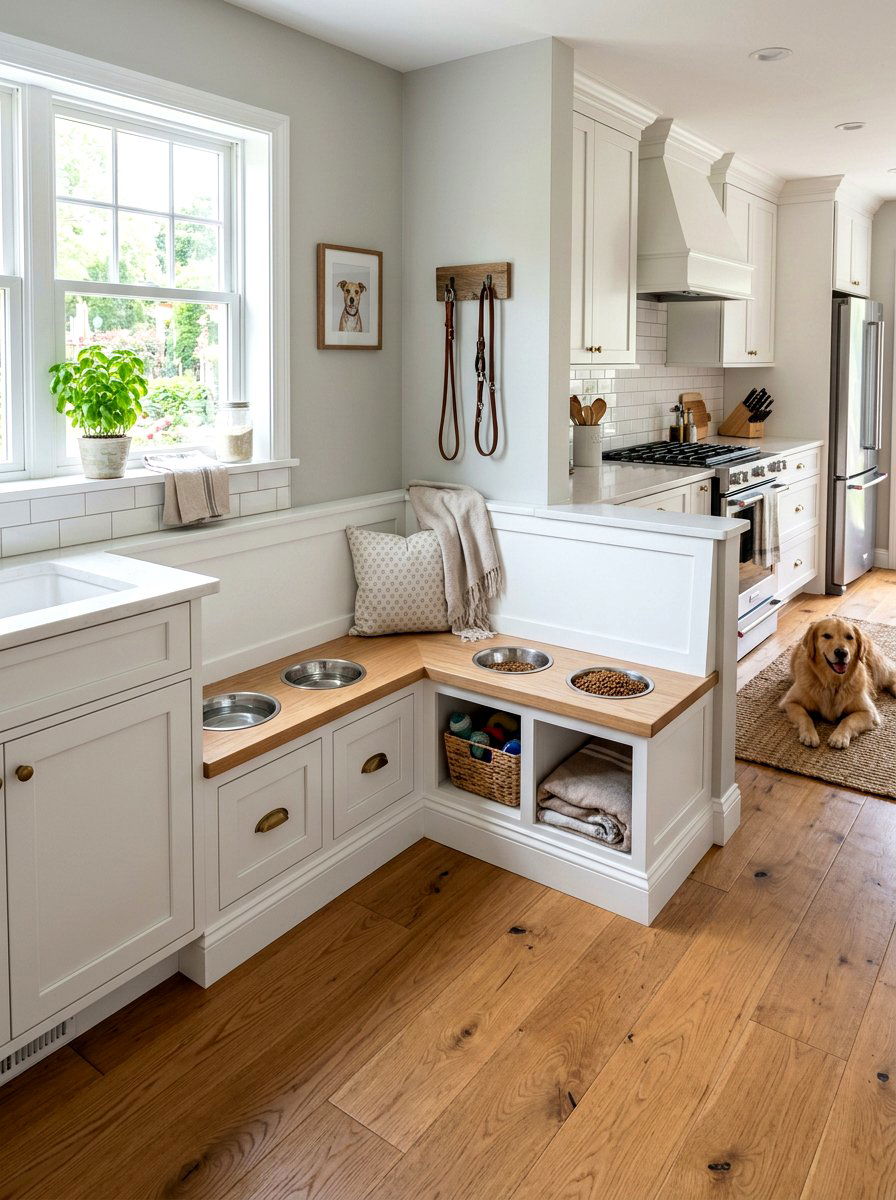
Do you have an awkward corner in your kitchen that feels empty and lacks a specific purpose for your family? A corner kitchen pet feeding area is the smartest way to utilize that "dead" space while keeping your pet's bowls out of the main walking path. Custom triangular stands or L-shaped benches can be built to fit the exact dimensions of the corner, providing a snug and organized zone. This placement naturally corrals any mess into a confined area, making cleanup much faster. It is an efficient use of floor space that makes the entire kitchen layout feel more intentional and well-planned.
17. Kitchen Island Pet Bowl Cutout
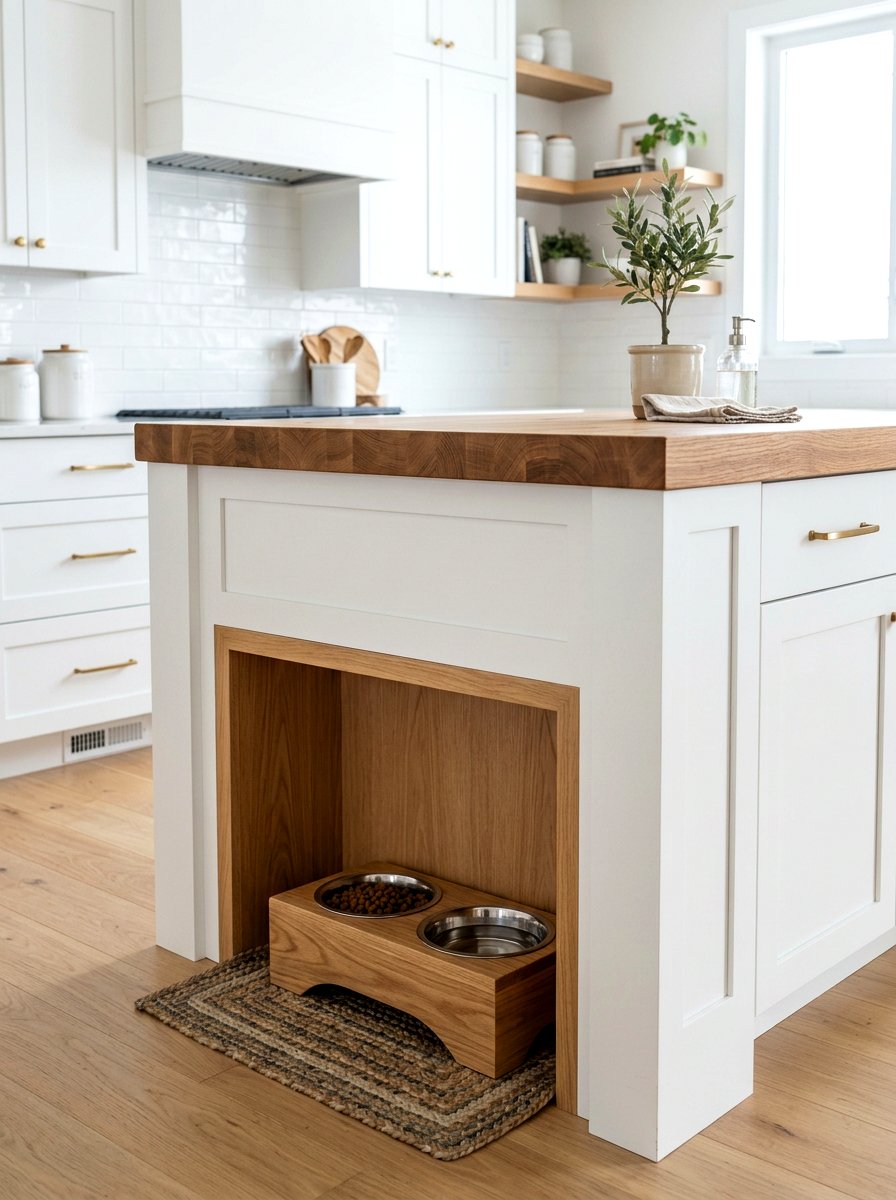
Building a permanent niche into the side of your cabinetry is a bold design move that pays off in daily convenience. A kitchen island pet bowl cutout involves leaving an open, recessed space at the end of the island where the bowls sit directly on the floor or a slightly raised platform. This keeps the bowls tucked away from the main work triangle of the kitchen, so you aren't stepping over them while cooking. Finishing the interior of the cutout with a contrasting material, like wood or tile, defines the space and makes it look like a thoughtful architectural detail.
18. Sliding Barn Door Pet Pantry
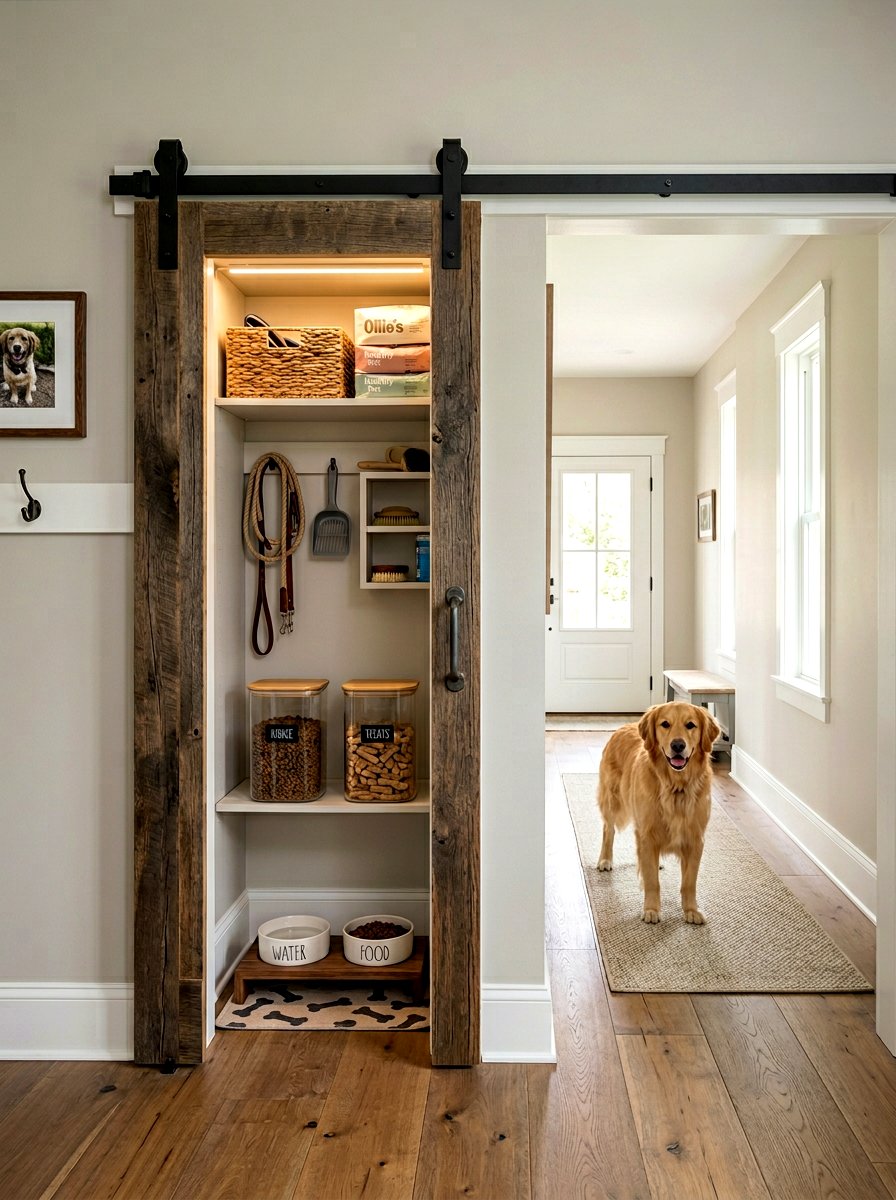
If you love the look of sliding hardware, a sliding barn door pet pantry is a creative way to hide a large feeding zone. This design uses a miniature barn door to cover a recessed wall niche or a shallow cabinet that houses bowls, food bins, and treat jars. When the door is slid open, it reveals a fully equipped station; when closed, it adds a decorative rustic element to your wall. This is especially effective in hallways or transitional spaces where you want to keep the floor clear but need quick access to pet supplies throughout the busy day.
19. Small Apartment Pet Feeding Corner
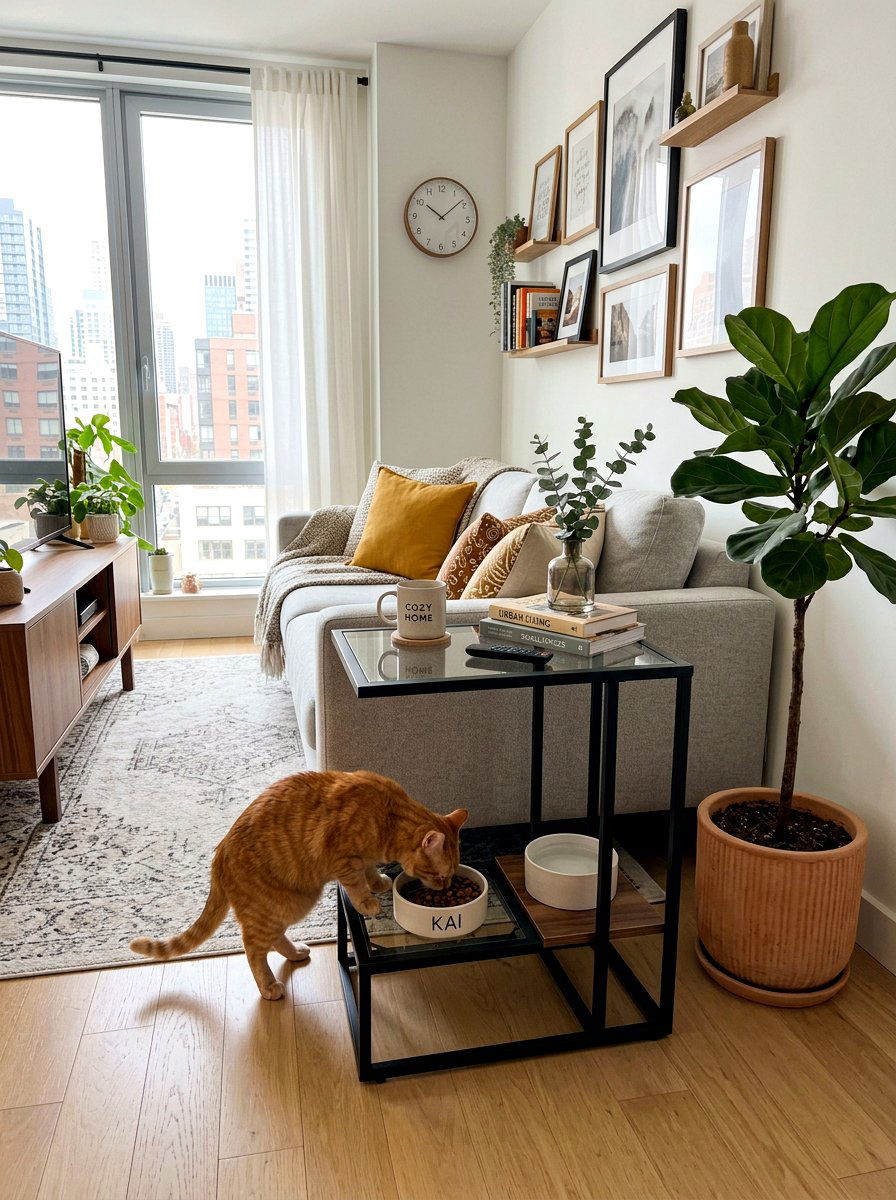
Living in an urban environment requires you to be very strategic with every square inch of available floor space in your home. A small apartment pet feeding corner often utilizes multi-functional furniture, such as a side table that has a hollow base for bowls. By doubling up on the utility of a piece, you save space without compromising on your pet’s comfort. Look for sleek, vertical designs that offer storage for food bags above the feeding area to minimize the footprint. This approach ensures that even in the smallest studio, your pet has a designated spot that feels intentional and organized.
20. Outdoor Covered Pet Feeding Station
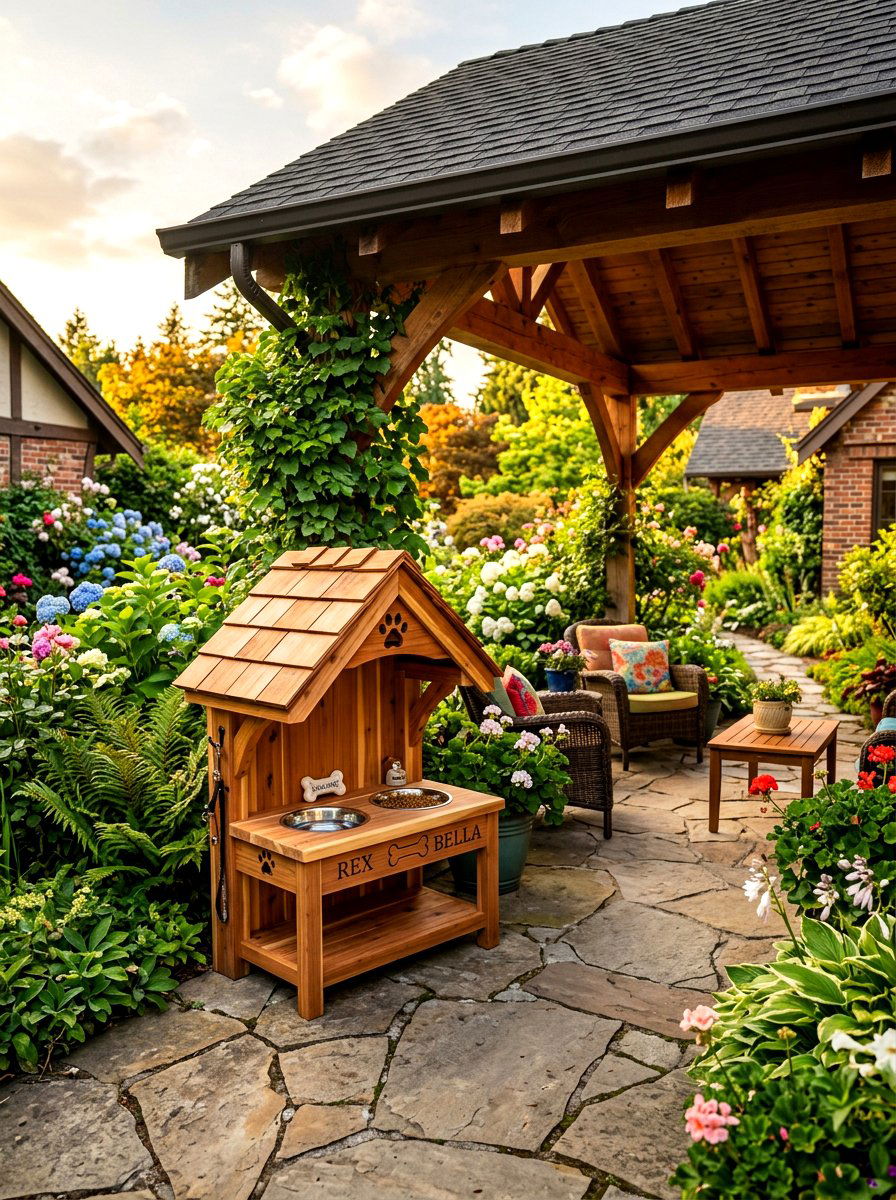
For pets that spend a significant amount of time in the yard or on the patio, an outdoor covered pet feeding station is essential. This setup is typically constructed from weather-resistant materials like cedar, teak, or high-density plastic to withstand the elements. The addition of a small roof or awning protects the food from rain and prevents the water bowl from becoming too warm in the direct sun. Placing this station near your back door ensures easy access for refilling while keeping the mess of kibble and outdoor debris outside of your main living areas and kitchen floors.
21. Multi Level Cat Feeding Tree
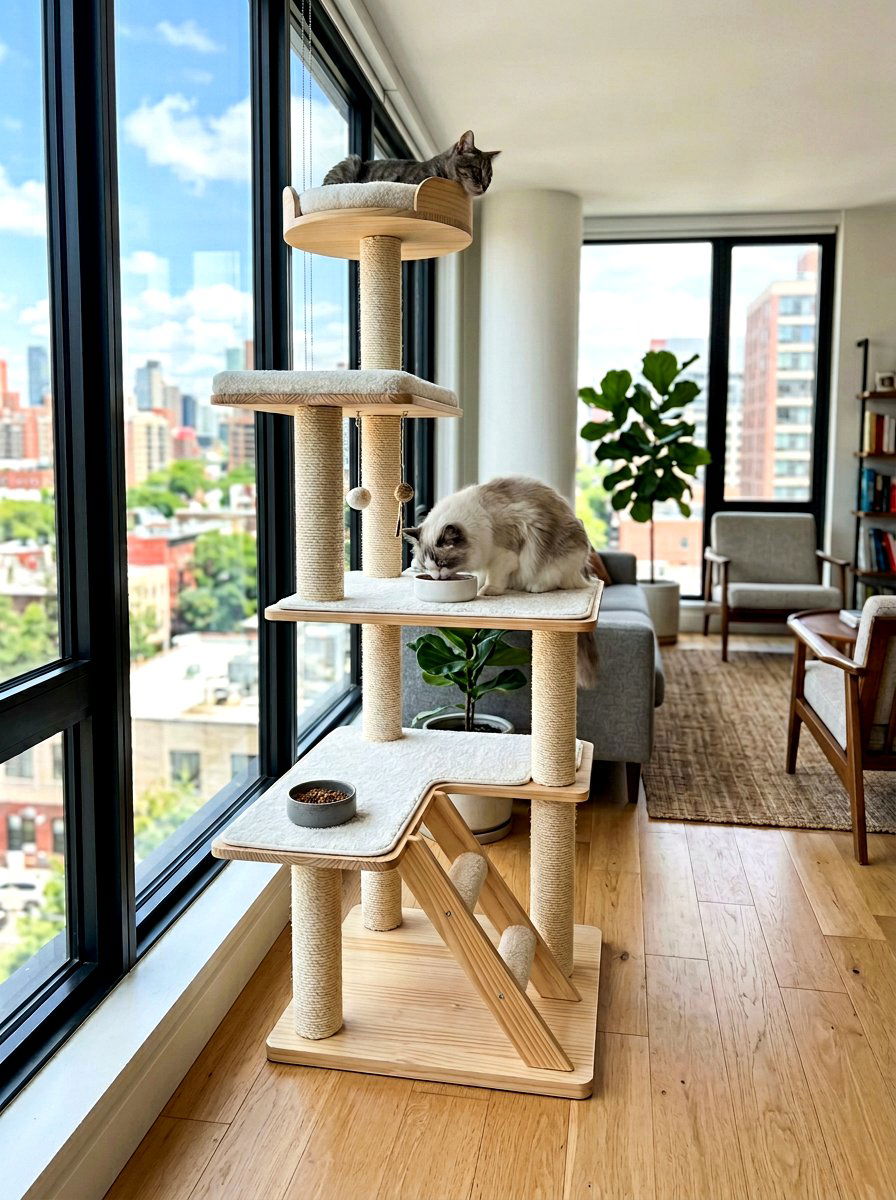
Multi-cat households often face the challenge of territorial behavior during mealtime, making a multi level cat feeding tree an excellent solution. By placing bowls at different heights on a vertical structure, you allow each cat to have its own private space to eat without feeling threatened. These structures can be designed to look like modern art or integrated with scratching posts and lounging pads for added utility. The vertical orientation saves valuable floor space and encourages your cats to stay active by climbing to their "dining room. " It is a functional and enriching way to manage feeding time for several felines.
22. Concrete Elevated Dog Bowl Stand
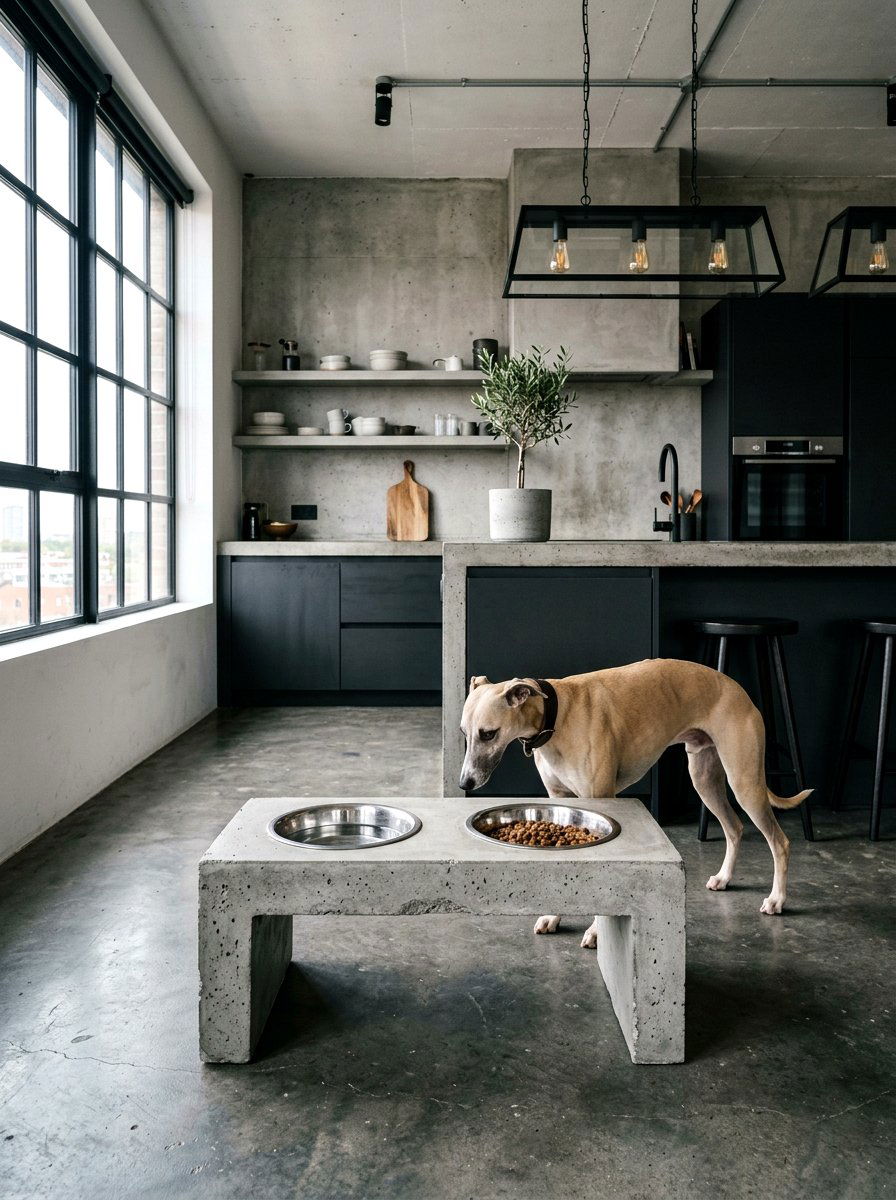
Industrial and brutalist design fans will love the raw, honest aesthetic of a concrete elevated dog bowl stand in their home. These stands are incredibly heavy, meaning even the most enthusiastic eater won 't be able to push the bowls across the room. The smooth, cool surface of the concrete is easy to wipe down and is naturally resistant to water damage and staining. You can pair the grey concrete with stainless steel bowls for a sleek, monochromatic look that fits perfectly in a modern minimalist space. This piece of pet furniture feels like a solid, permanent part of the home' s architecture.
23. Vintage Style Pet Feeder Cabinet
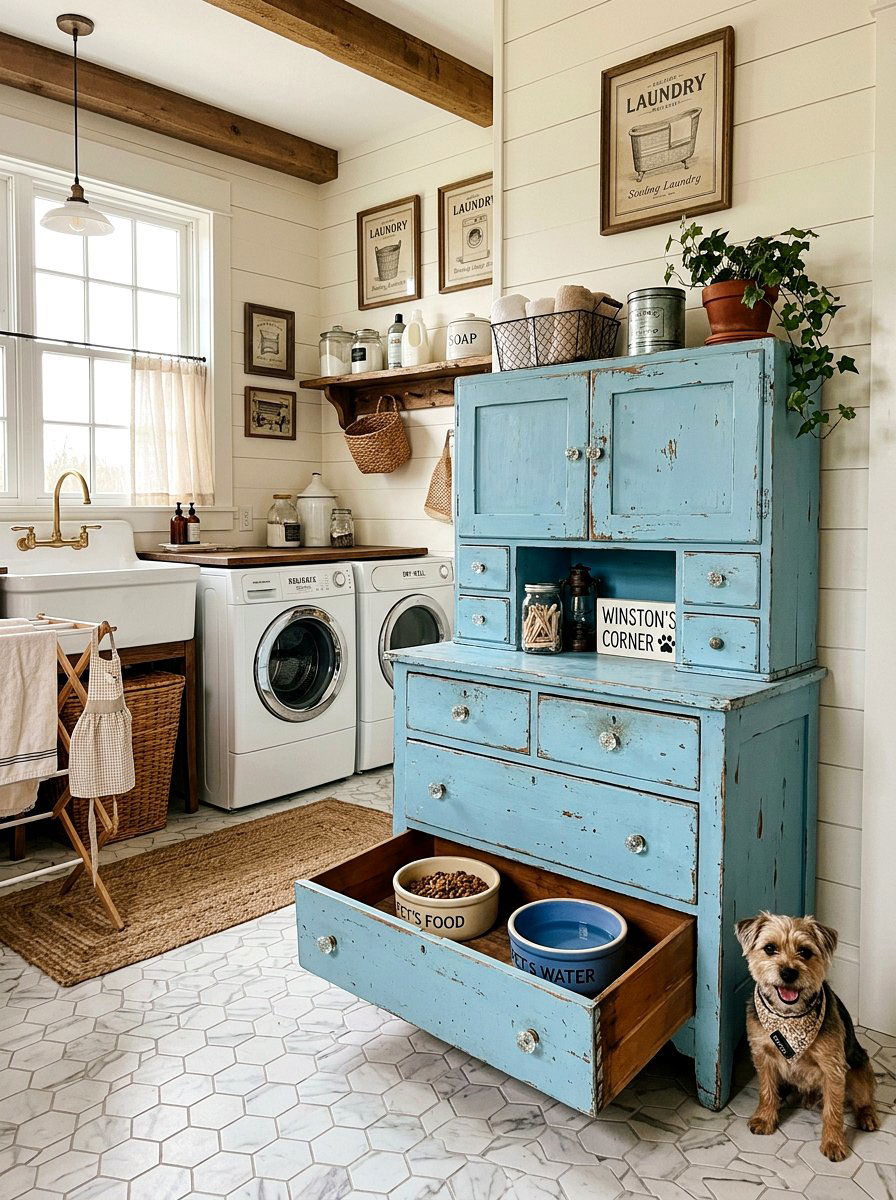
Repurposing an old piece of furniture is a sustainable and stylish way to create a unique vintage style pet feeder cabinet. You can take an antique washstand or a small dresser and modify the bottom drawer to hold bowls, while the upper drawers store food and accessories. Adding new hardware and a fresh coat of paint allows you to customize the piece to match your existing room decor perfectly. This approach adds a sense of history and charm to your home that mass-produced pet products simply cannot replicate. It is a wonderful project for those who enjoy DIY and eclectic interior design.
24. Scandi Style Pet Feeding Bench
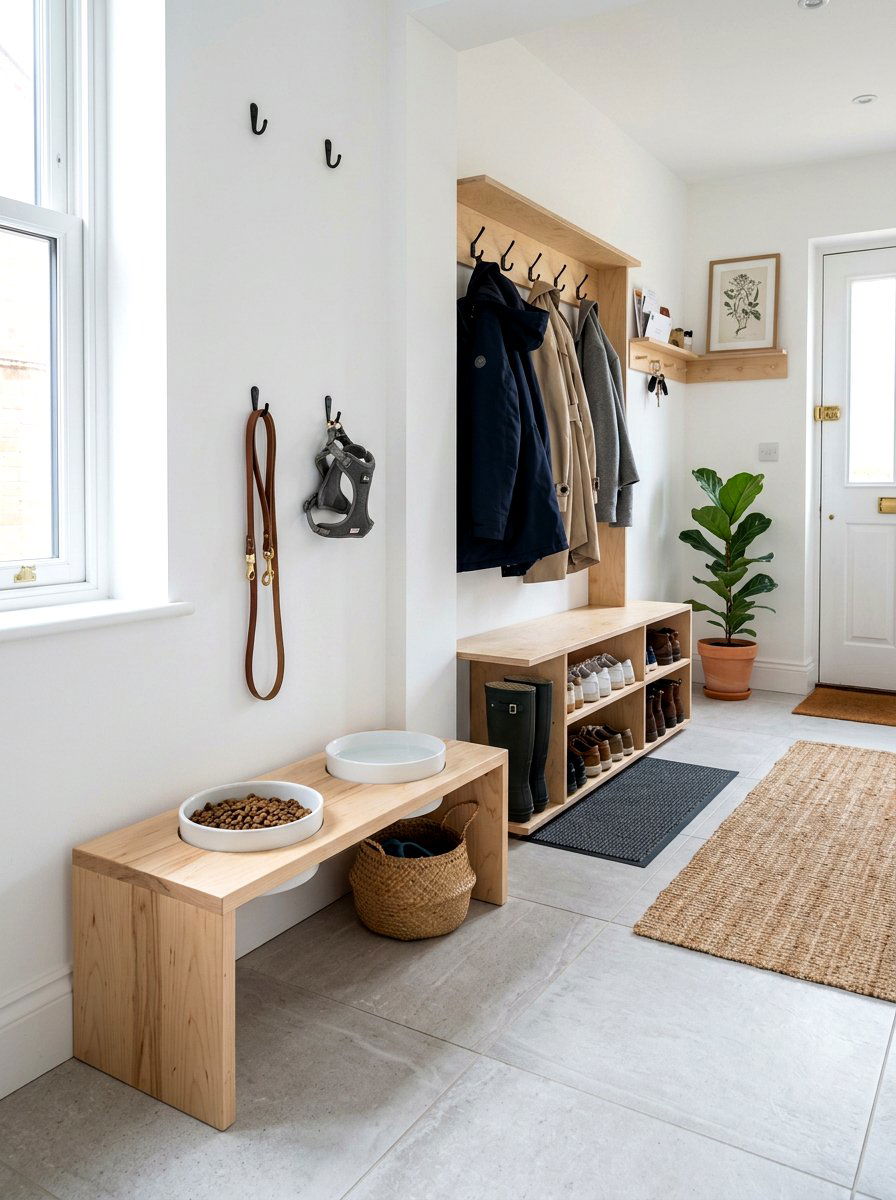
Clean lines, light woods, and functional simplicity are the core elements of a Scandi style pet feeding bench for your home. This design often features a long, low bench made of birch or pine with circular cutouts for the food and water bowls. The minimalist look is perfect for bright, airy rooms and provides a steady, wide base that is difficult to tip over. You might see a simple felt or leather pad nearby to add a touch of texture and comfort for the pet. This style prioritizes a calm, clutter-free environment that benefits both the humans and the pets living there.
25. Industrial Pipe Dog Bowl Stand
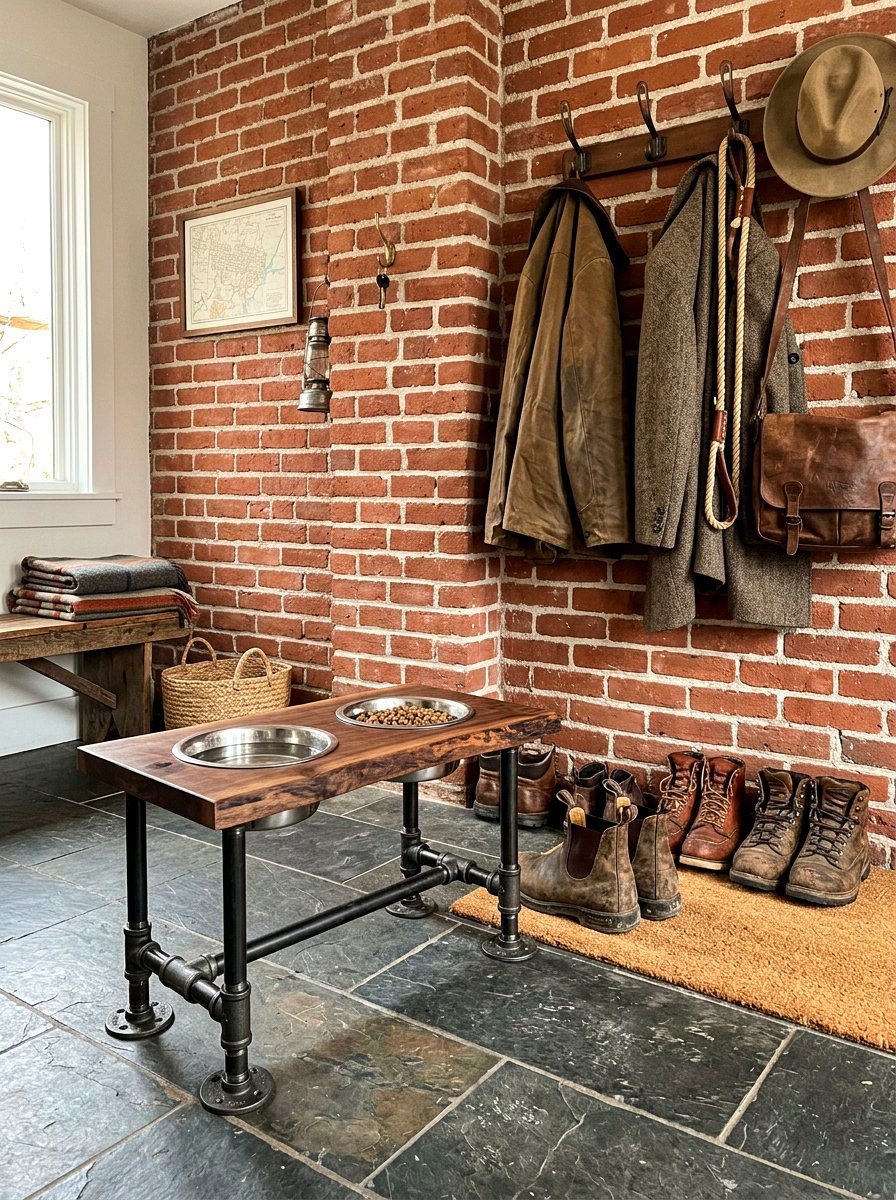
For a rugged and edgy look, an industrial pipe dog bowl stand uses black iron pipes and reclaimed wood to create a sturdy feeder. This style is incredibly durable and can be custom-built to the exact height your dog needs for comfortable eating. The contrast between the cold metal and the warm wood adds visual interest to a mudroom or a modern kitchen. Because these are often DIY projects or custom builds, they feel very personal and unique. It is a great way to incorporate a bit of "maker" style into your home while providing a heavy-duty solution for your pet.
26. Built In Bookshelf Pet Station
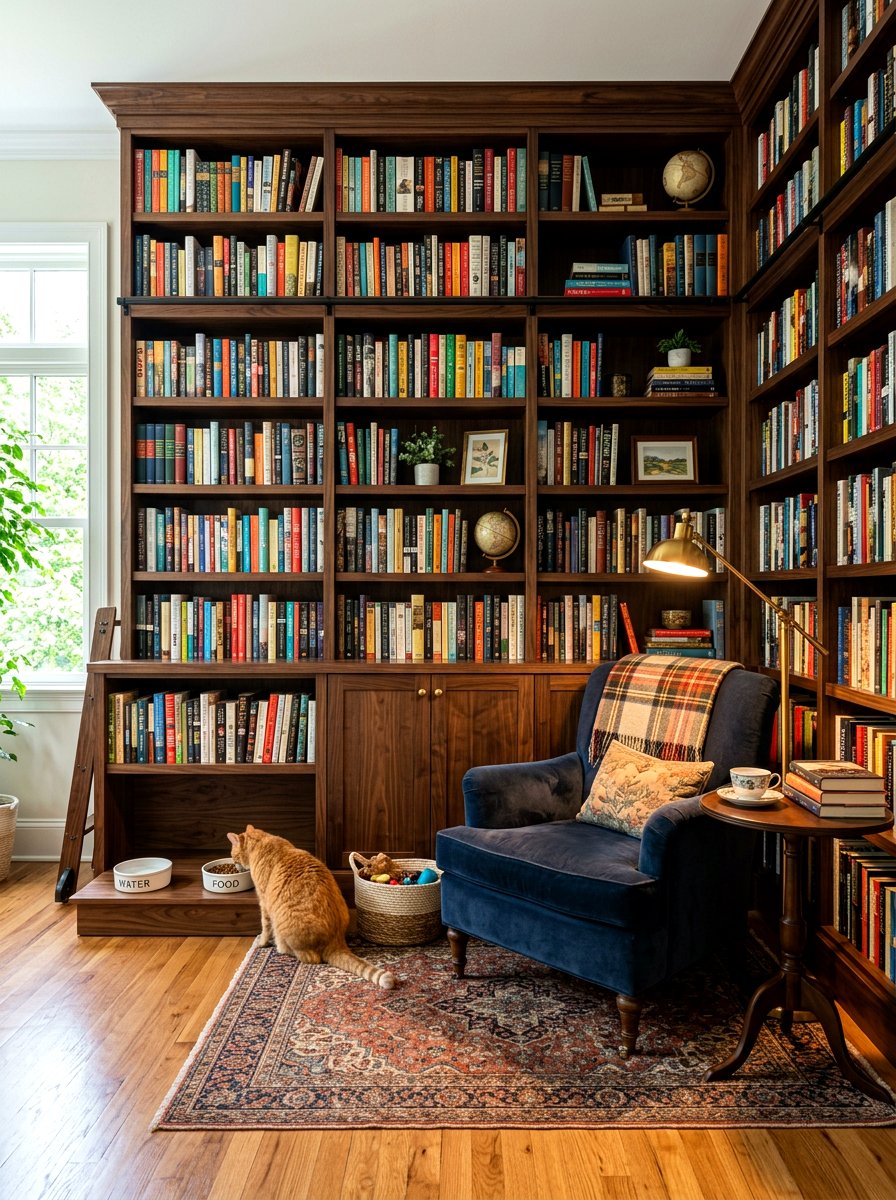
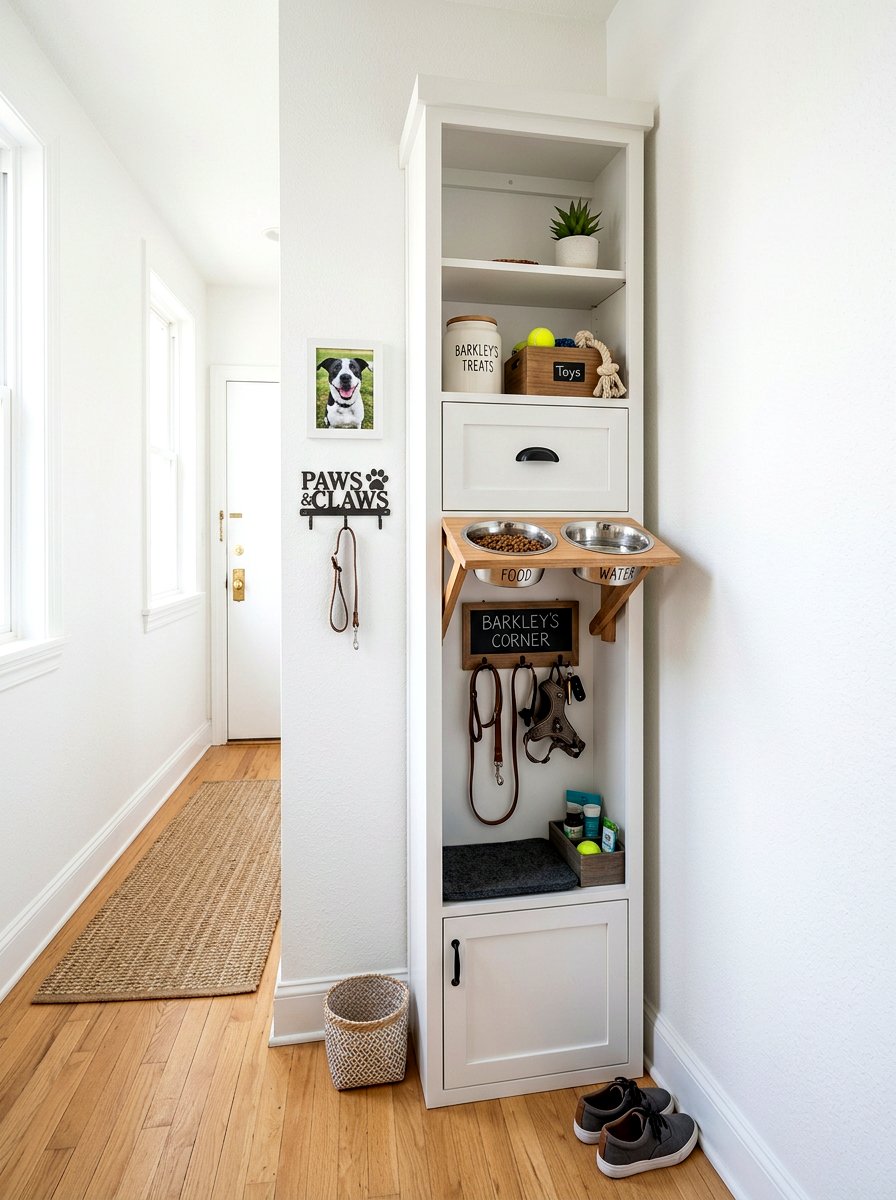
Who says that your library or office can’t also be a place for your pet to enjoy a quiet meal? A built in bookshelf pet station incorporates a feeding niche at the very bottom of a floor-to-ceiling shelving unit. This design keeps the bowls flush with the rest of the furniture, making them almost invisible from a distance. You can use the surrounding shelves to store pet-themed books, decorative jars of treats, or even framed photos of your furry friend. This integration makes the pet’s needs a core part of the room’s architecture rather than an afterthought or a temporary addition.
27. Hallway Console Pet Feeding Nook
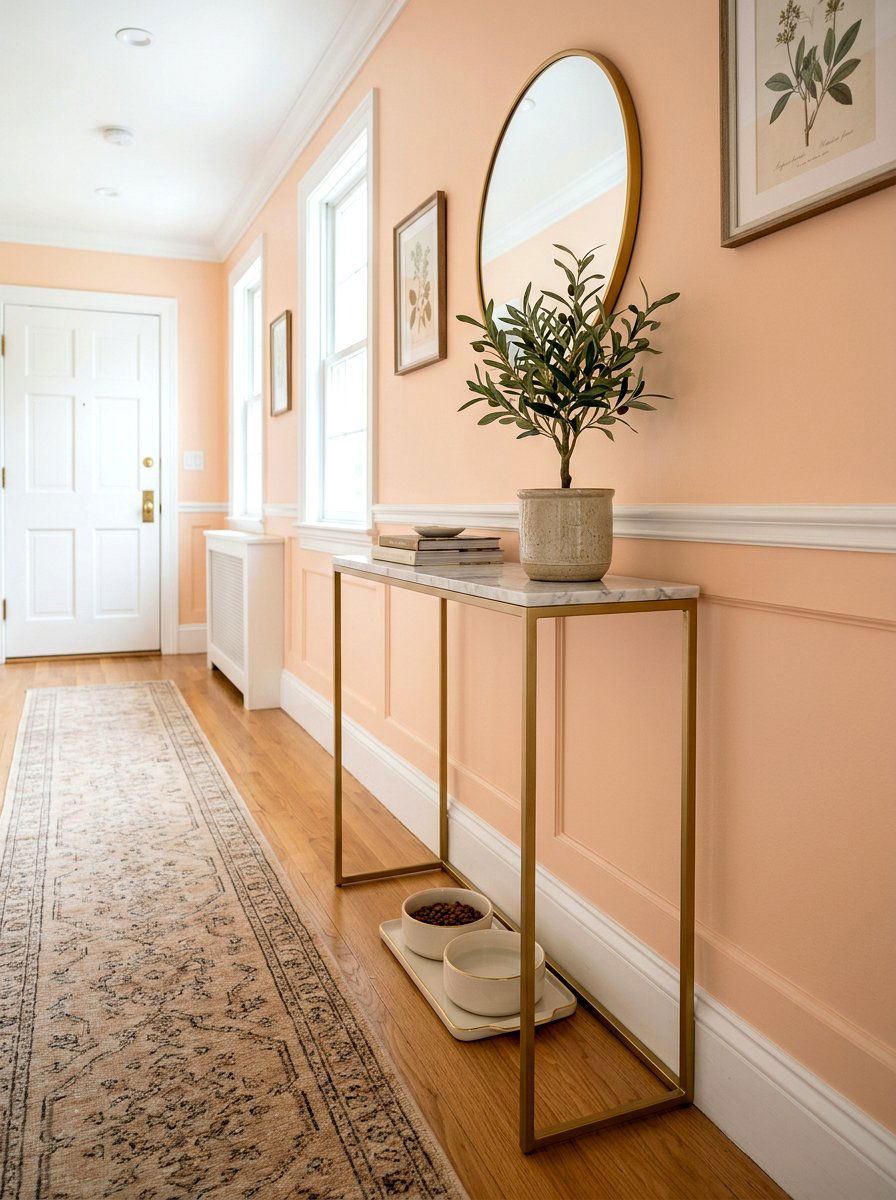
The space under a hallway console table is often left empty, making it the perfect spot for a discreet feeding nook. By placing a low-profile stand or a simple mat with bowls under the table, you use a space that is already out of the way of the main room traffic. This is an ideal solution for homes with open floor plans where the kitchen might be too crowded for a dedicated pet zone. The console table acts as a "ceiling" for the feeding area, giving your pet a sense of enclosure and security while they eat their daily meals in peace.
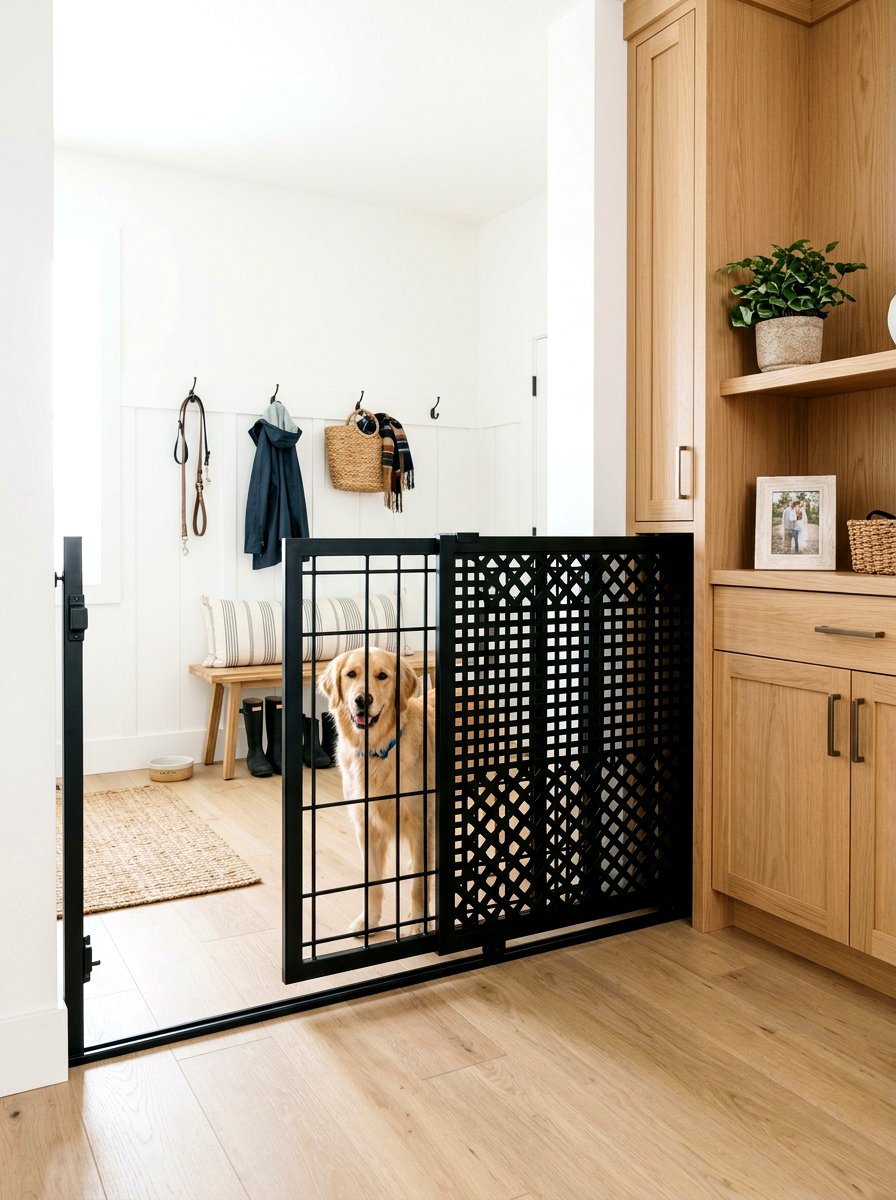
28. Entryway Bench Dog Bowl Setup
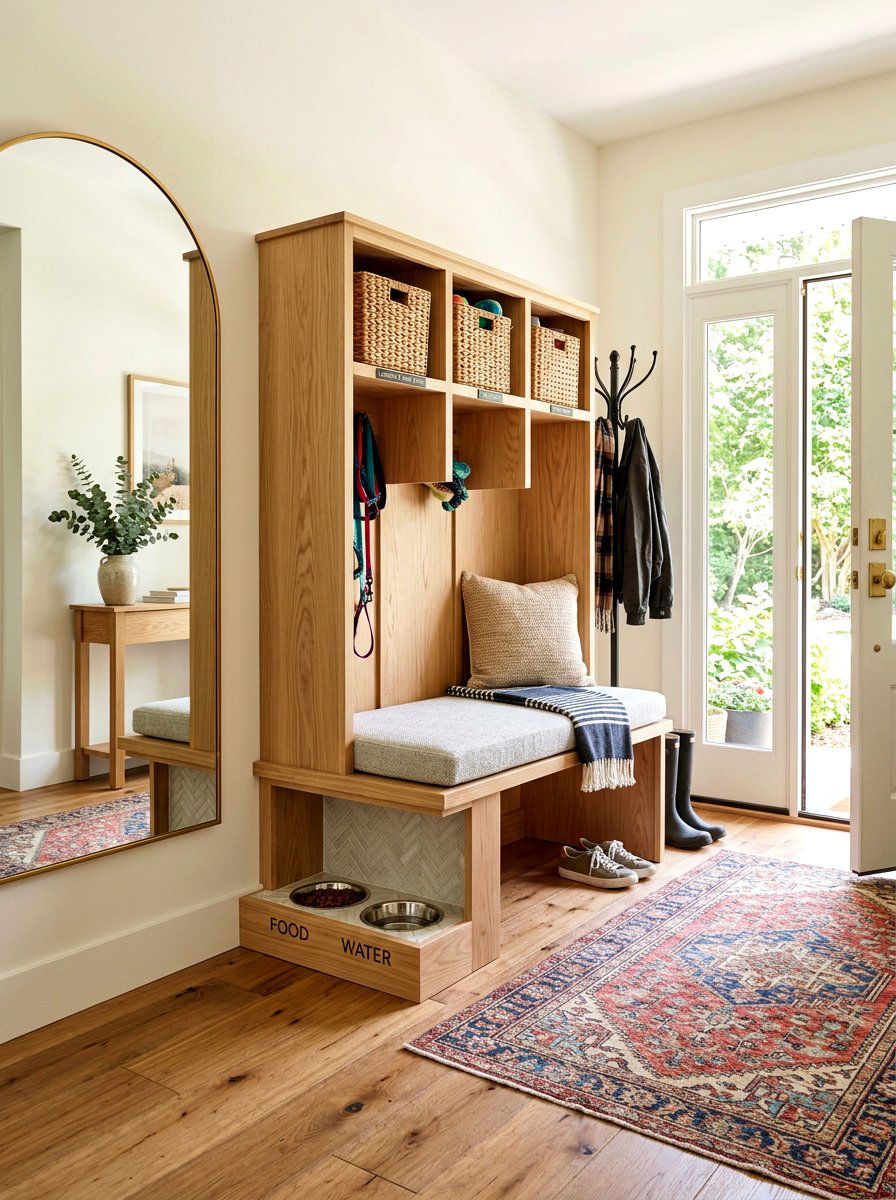
Creating a welcoming entry for both guests and pets is easy with an entryway bench dog bowl setup that stays organized. This design features a storage bench where you can sit to put on shoes, with a recessed area at the base specifically for water and food bowls. It is a highly efficient use of an entryway, keeping all "outgoing" supplies like leashes and waste bags in the bench while providing a consistent spot for the dog to hydrate after a walk. Using durable, wipeable materials for the bench ensures that any splashes from the bowls won't damage the furniture over time.
29. Tile Backsplash Pet Feeding Niche
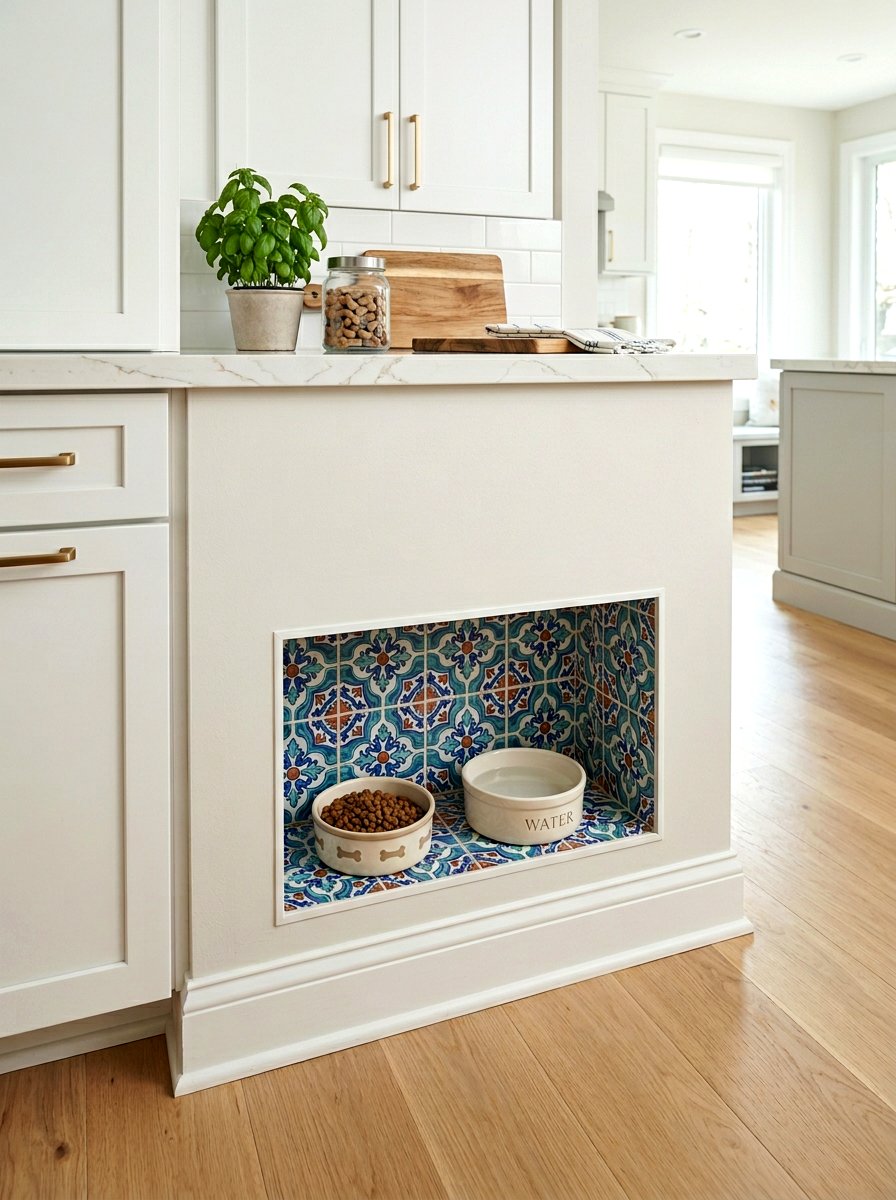
To make a real design statement, you can create a tile backsplash pet feeding niche that matches your kitchen’s beautiful wall treatment. By recessing a small alcove into the wall and lining it with decorative tiles, you create a waterproof and incredibly stylish "dining room" for your pet. This prevents the wall behind the bowls from getting stained by water splashes or food bits. It is a high-end architectural detail that shows a deep commitment to pet-friendly living. The niche keeps the floor clear and elevates the entire look of the room with its custom-built, integrated appearance and thoughtful finish.
30. Smart Automatic Pet Feeding Station
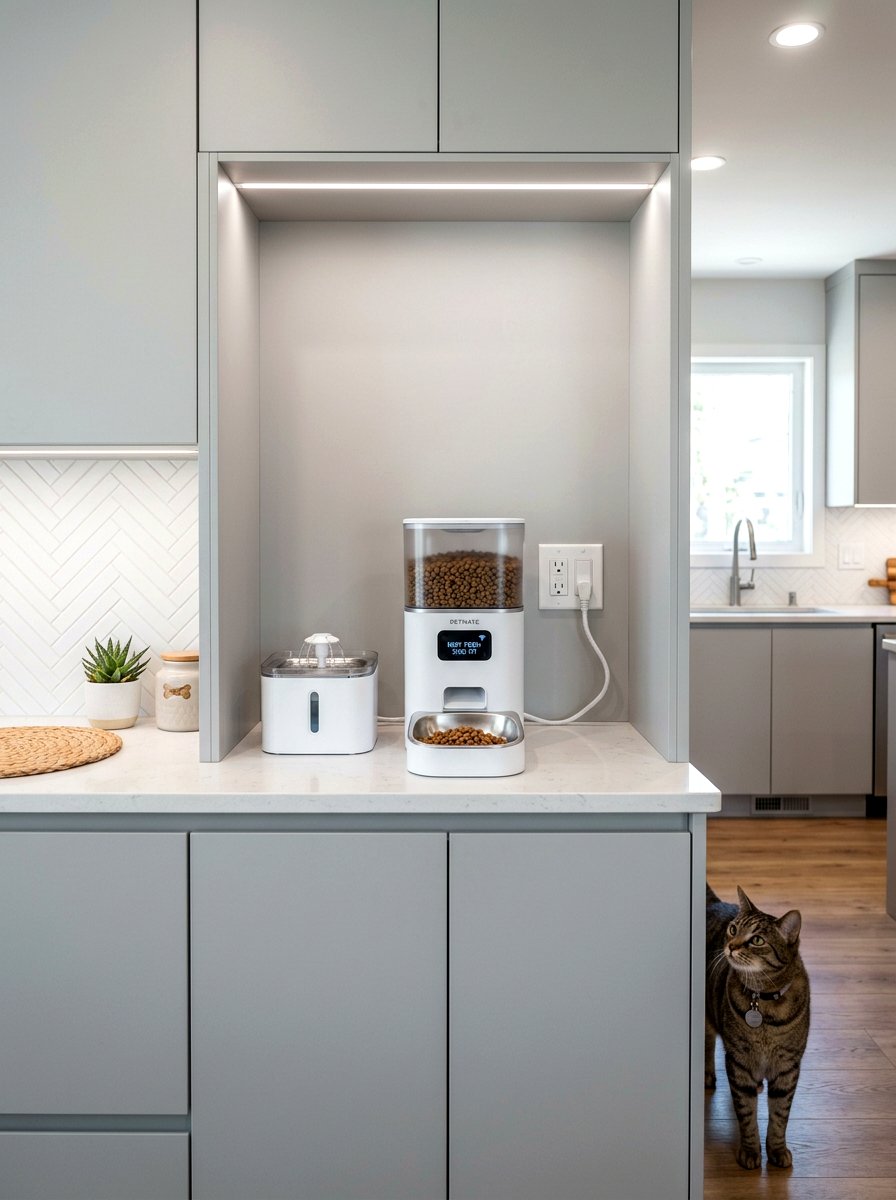
Technology can also be integrated into your home design through a sleek, smart automatic pet feeding station that handles the schedule. Modern automatic feeders often feature minimalist designs that look like high-end kitchen appliances rather than clunky plastic toys. Placing these in a dedicated nook with an electrical outlet allows you to automate meal times while keeping the equipment looking tidy and intentional. Many of these units can be controlled via smartphone, ensuring your pet is fed the correct portion even when you are busy. It is a modern solution for the tech-savvy pet owner who values both convenience and a clean, organized home.
Conclusion:
Planning a dedicated pet feeding station is one of the best ways to enhance the daily life of both you and your animals. By moving beyond temporary solutions and investing in integrated designs, you create a home that is truly organized, clean, and stylish. These thirty ideas demonstrate that whether you prefer the hidden convenience of a kitchen drawer or the architectural beauty of a tiled niche, there is a way to make pet care feel like a natural part of your interior design. Taking the time to consider your pet’s comfort and your home’s aesthetic will result in a harmonious living space for everyone.

Related posts: