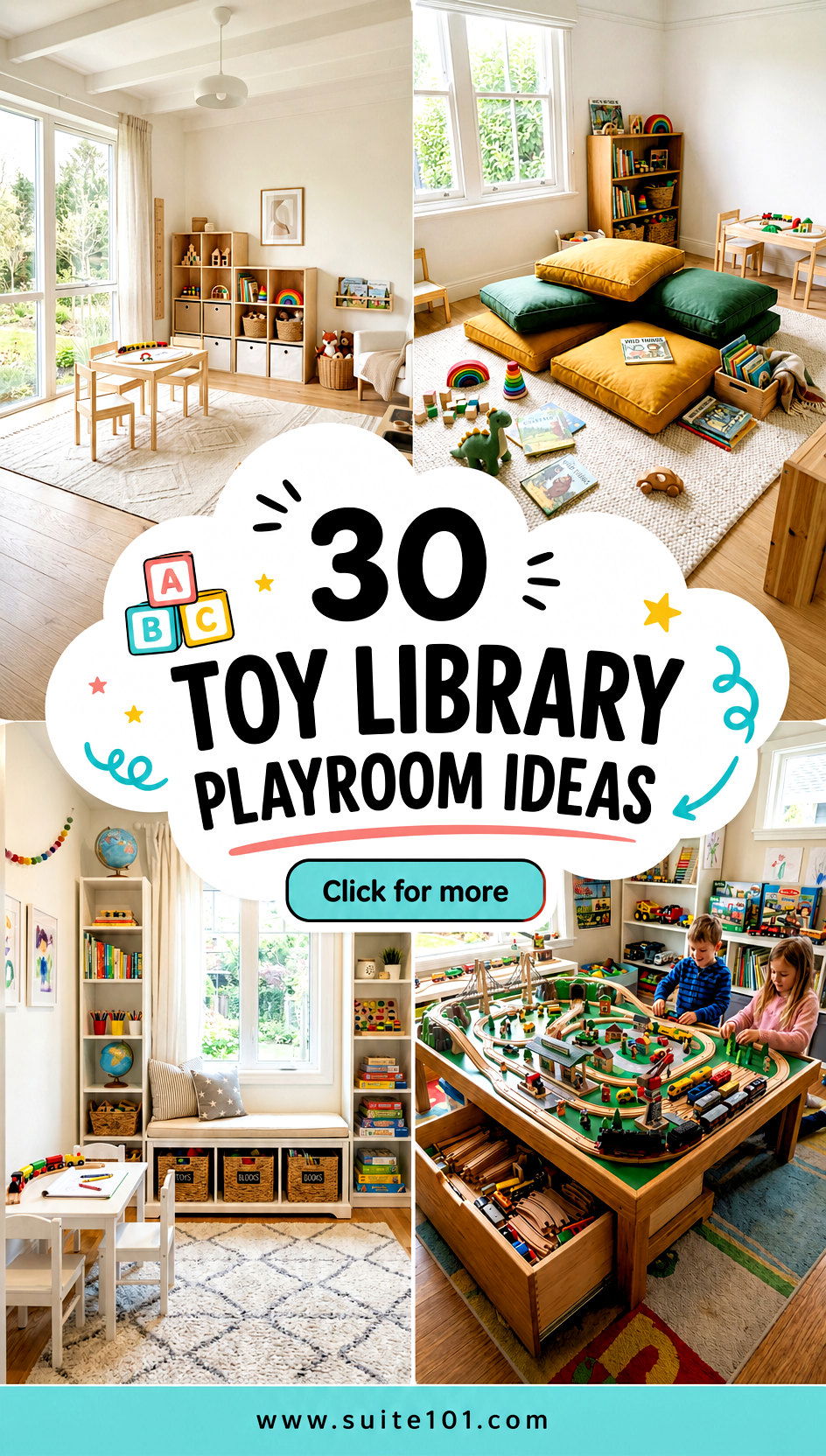
Creating a dedicated toy library within your playroom transforms a chaotic mess into a structured learning environment. It encourages children to engage deeply with their belongings while maintaining a sense of order. By using library-style organization, you teach kids the value of returning items to their proper places. This method works beautifully for families with multiple children of various ages. You can curate a rotating selection of toys that keep the space fresh and exciting without overwhelming the senses. A well-planned playroom fosters creativity, independence, and calm during daily activities. Incorporating these concepts into your home design creates a functional space that grows alongside your child’s changing interests.
1. Montessori Toy Storage
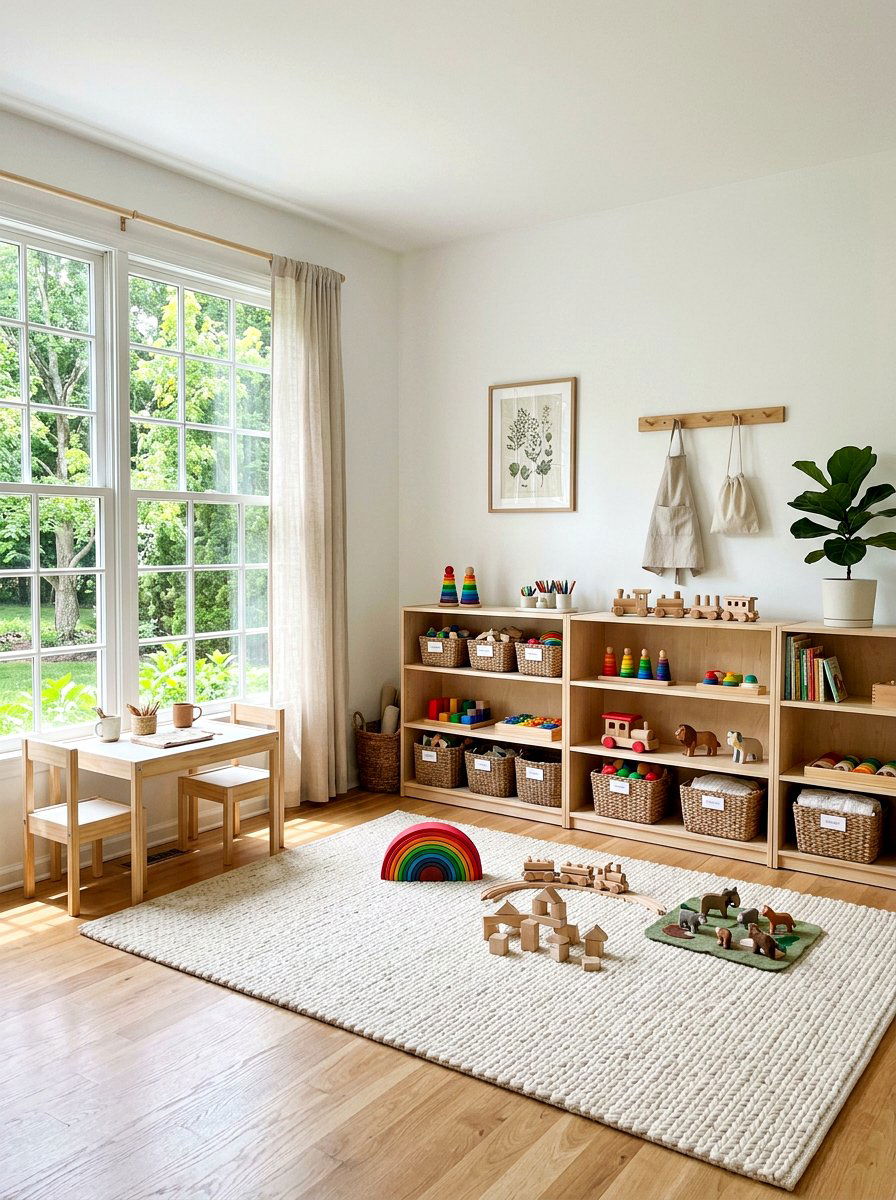
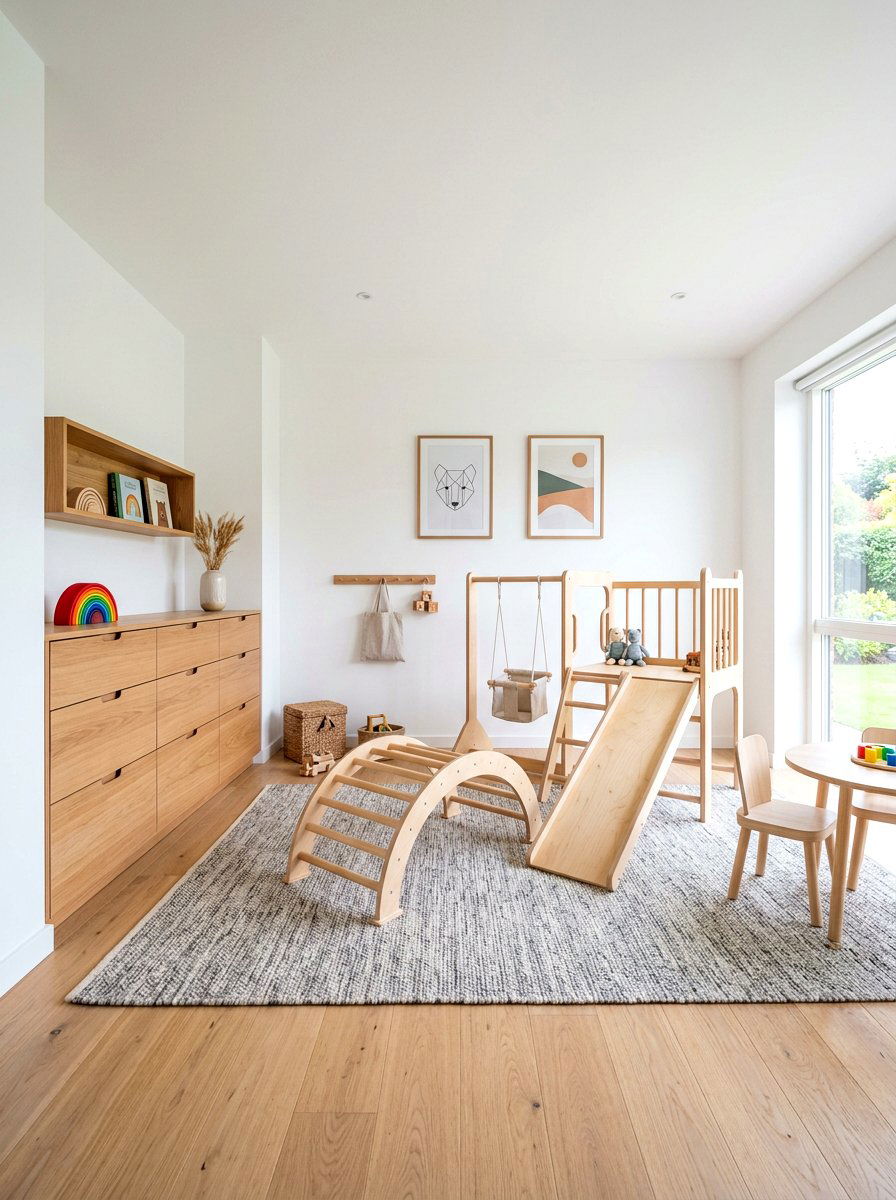
A Montessori toy storage setup focuses on low, open shelving that allows children to see and reach their playthings independently. This layout prioritizes a minimalist aesthetic where only a few items are displayed at a time to prevent sensory overwhelm. Each toy typically has a specific place on the shelf, often arranged on small wooden trays or in shallow baskets. The room feels spacious and calm because the floor remains clear of clutter. Using natural wood finishes for the shelving units adds a warm, organic feel to the environment. This design encourages a child to focus on one activity, promoting deeper concentration and a sense of responsibility.
2. Toy Rotation Shelf
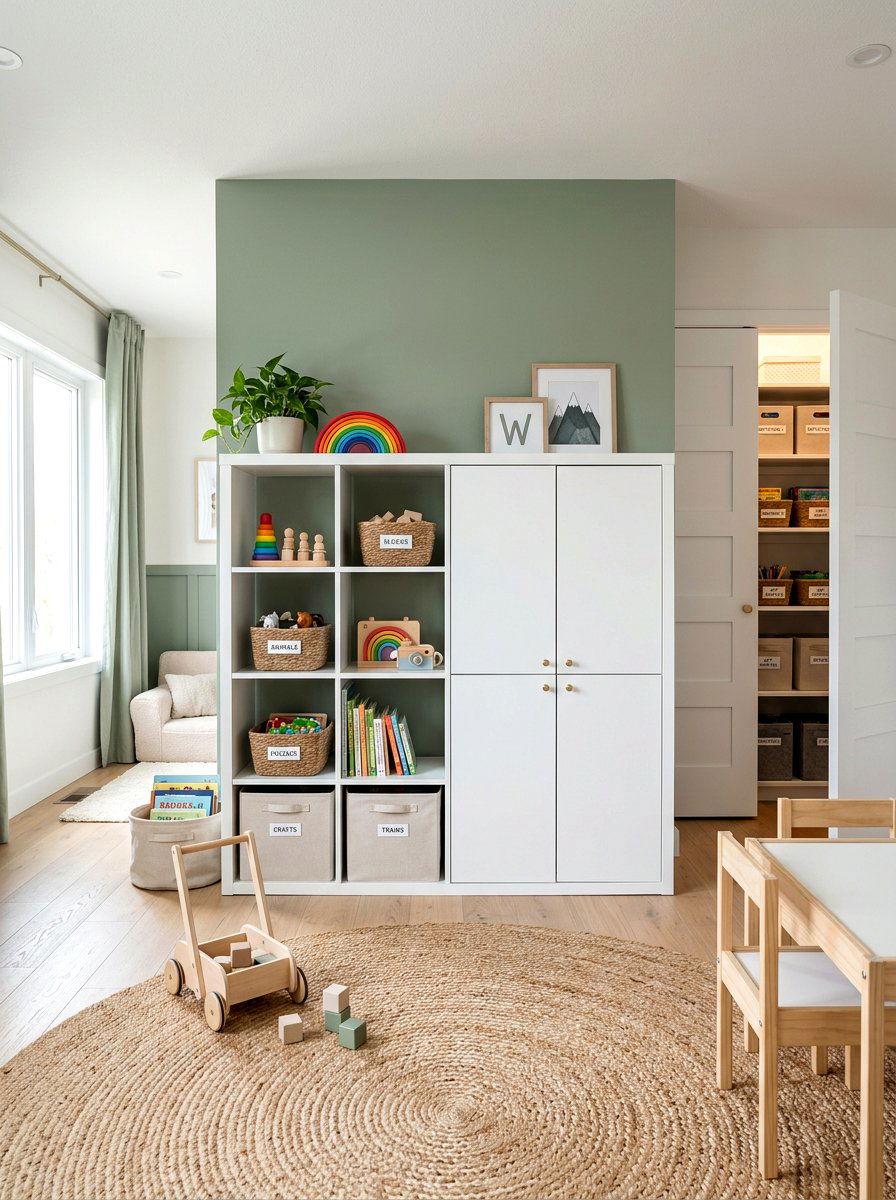
Implementing a toy rotation shelf is a brilliant way to keep play sessions exciting without overcrowding the room. You can use a sturdy unit with hidden compartments or a separate closet to store the bulk of the collection. Every few weeks, swap the visible toys for those kept in storage to renew your child’s interest. This system mimics the experience of visiting a real library where new treasures are always waiting. It reduces the daily cleanup time because fewer items are accessible at once. By limiting choices, you actually spark more creative play. The shelf remains organized and manageable, making the room feel consistently tidy and inviting.
3. Reading Nook
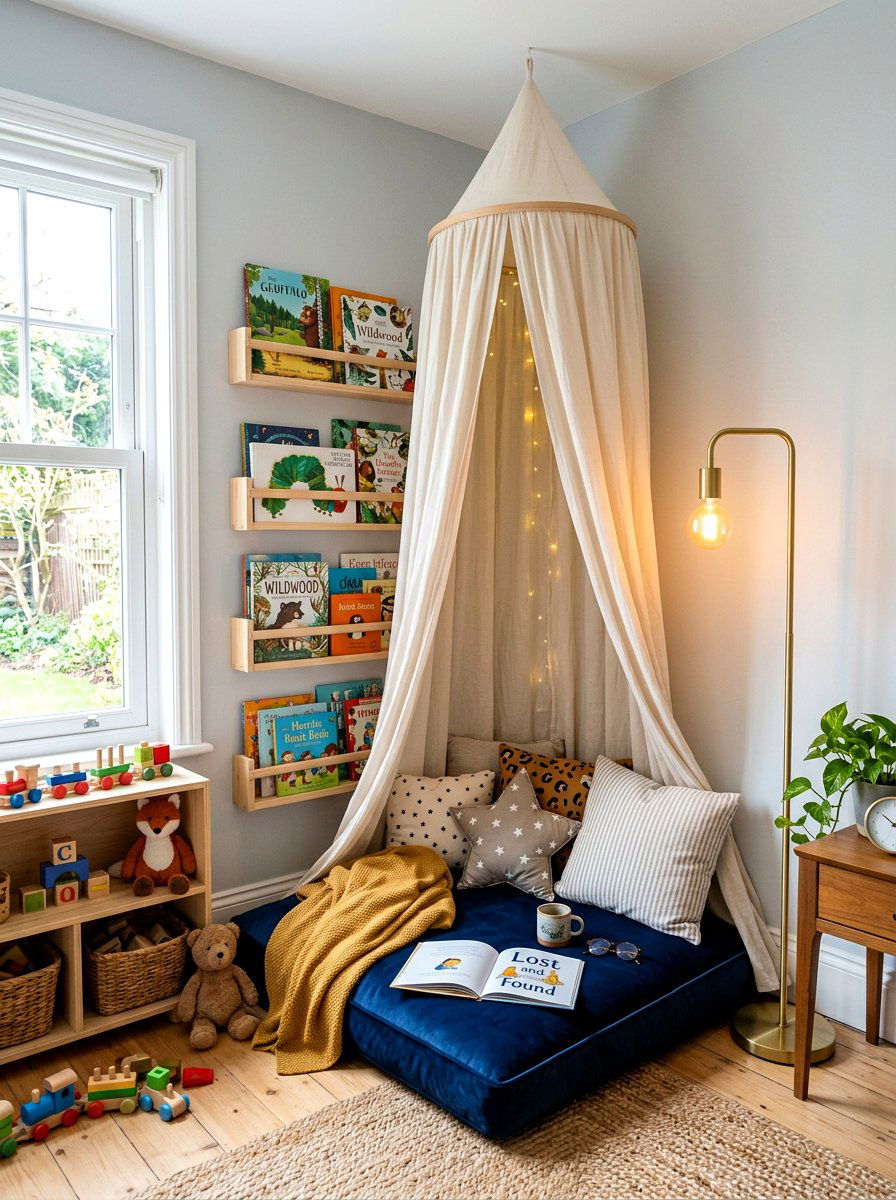
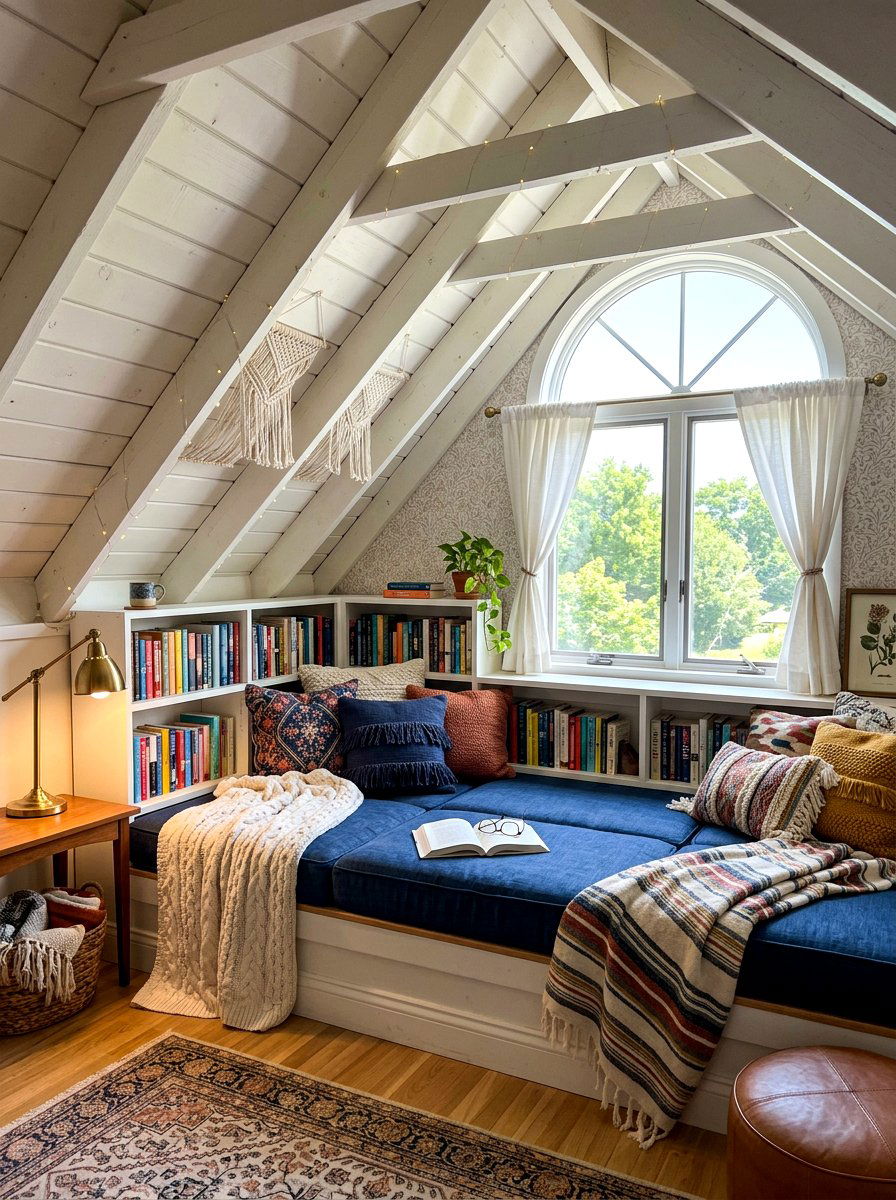
Every toy library needs a dedicated reading nook where children can escape into the world of stories. Design this area with a soft floor cushion or a small upholstered chair positioned near a window for natural light. Use low-profile wall racks to display book covers facing forward, making it easy for young readers to choose their next adventure. Adding a soft rug and a few plush pillows creates a cozy atmosphere that invites long periods of quiet focus. You can define the space with a small canopy or a simple decorative rug. This zone serves as a peaceful retreat within the active playroom, fostering a lifelong love for books.
4. Art Station
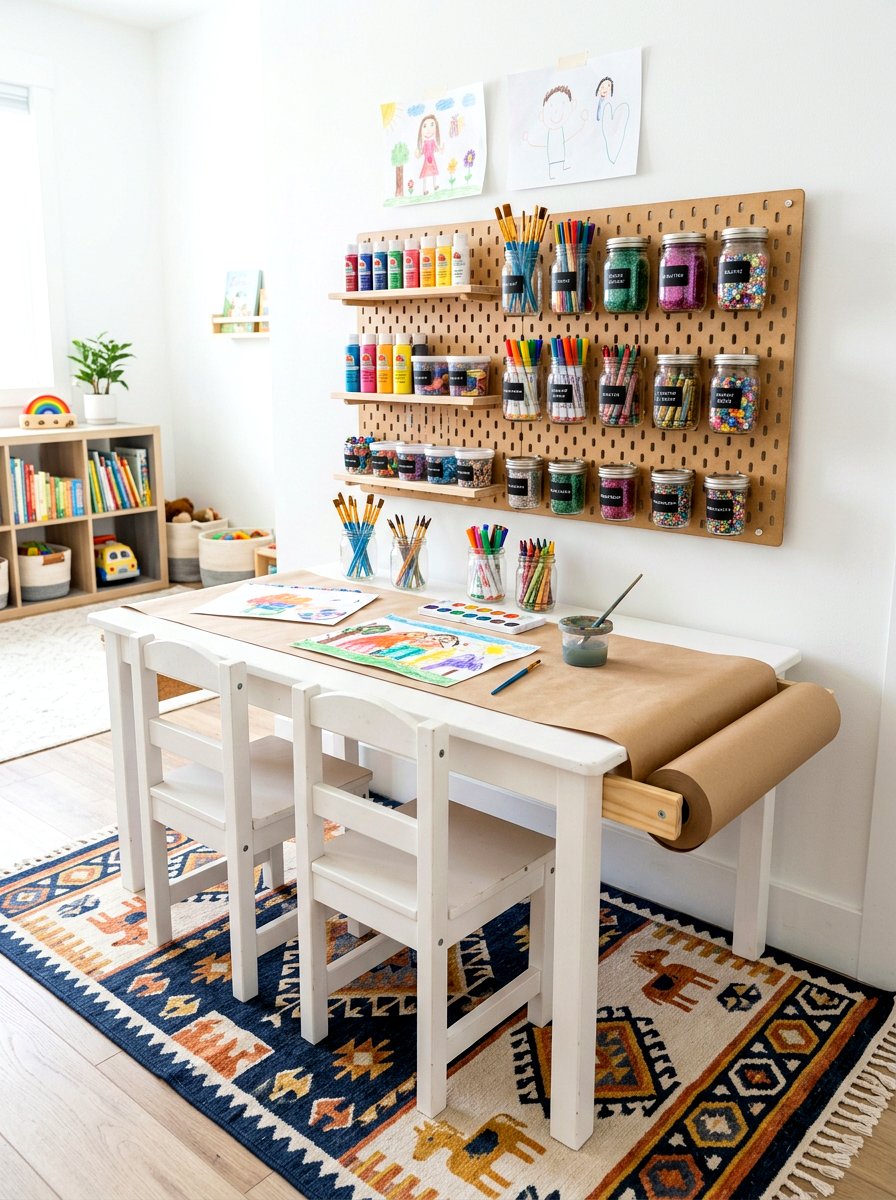
An art station provides a permanent home for creative projects and keeps messy supplies neatly organized in one spot. Choose a child-sized table with an easy-to-clean surface and pair it with comfortable chairs. Use wall-mounted rails or pegboards to hold jars of brushes, crayons, and markers within easy reach. A roll of butcher paper attached to the table allows for endless drawing without the need for constant paper refills. This setup turns a corner of the playroom into a mini studio. It empowers children to express themselves artistically whenever inspiration strikes. Having a designated creative zone ensures the rest of the room stays free from glue and paint.
5. LEGO Storage Table
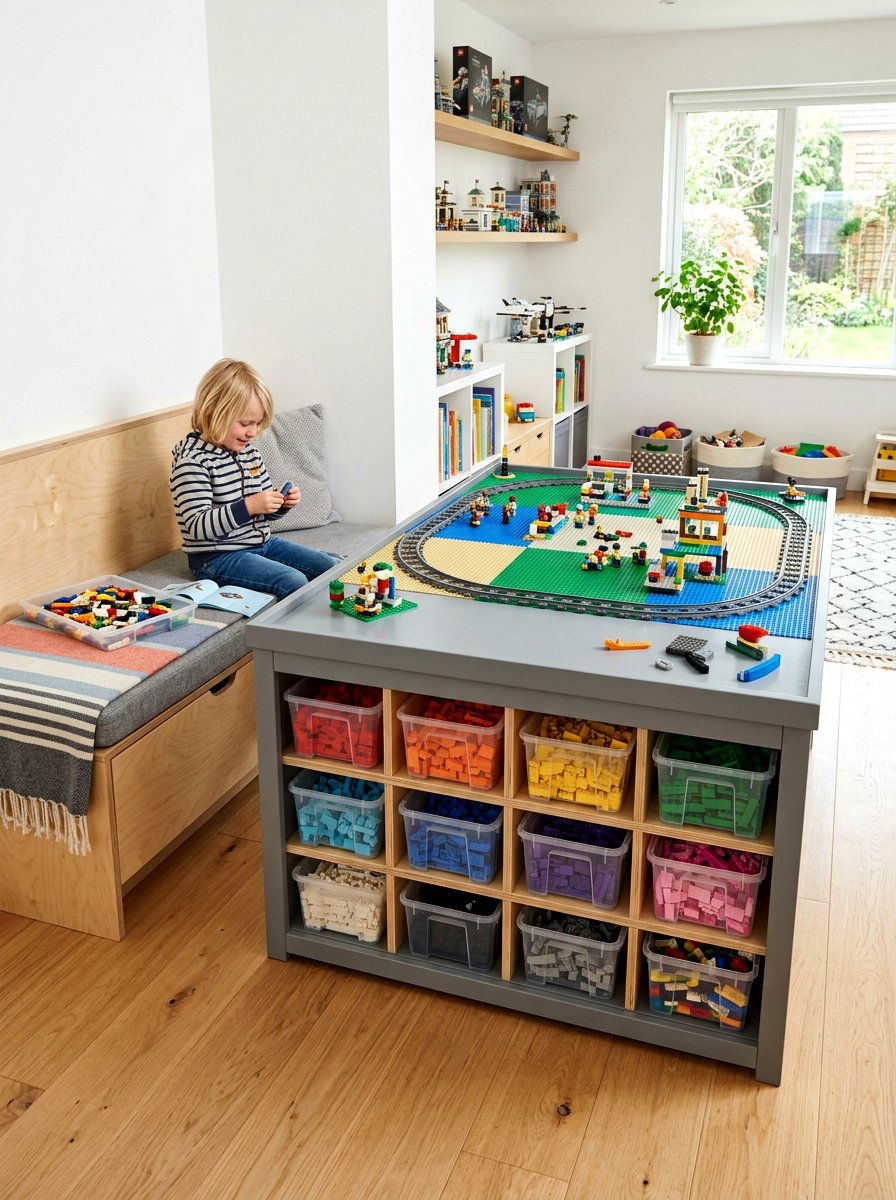
A dedicated LEGO storage table is essential for keeping tiny bricks off the floor and in a playable area. Look for a table with a built-in baseplate surface and deep drawers or bins underneath for sorting by color or size. This setup allows children to work on complex builds over several days without needing to pack everything away. Surrounding the table with clear bins makes finding specific pieces much easier for small hands. The room stays safer and more organized when building projects are contained to one focal point. It encourages architectural thinking and fine motor skills while keeping the general walking paths clear of sharp plastic pieces.
6. Wall Mounted Bookshelf
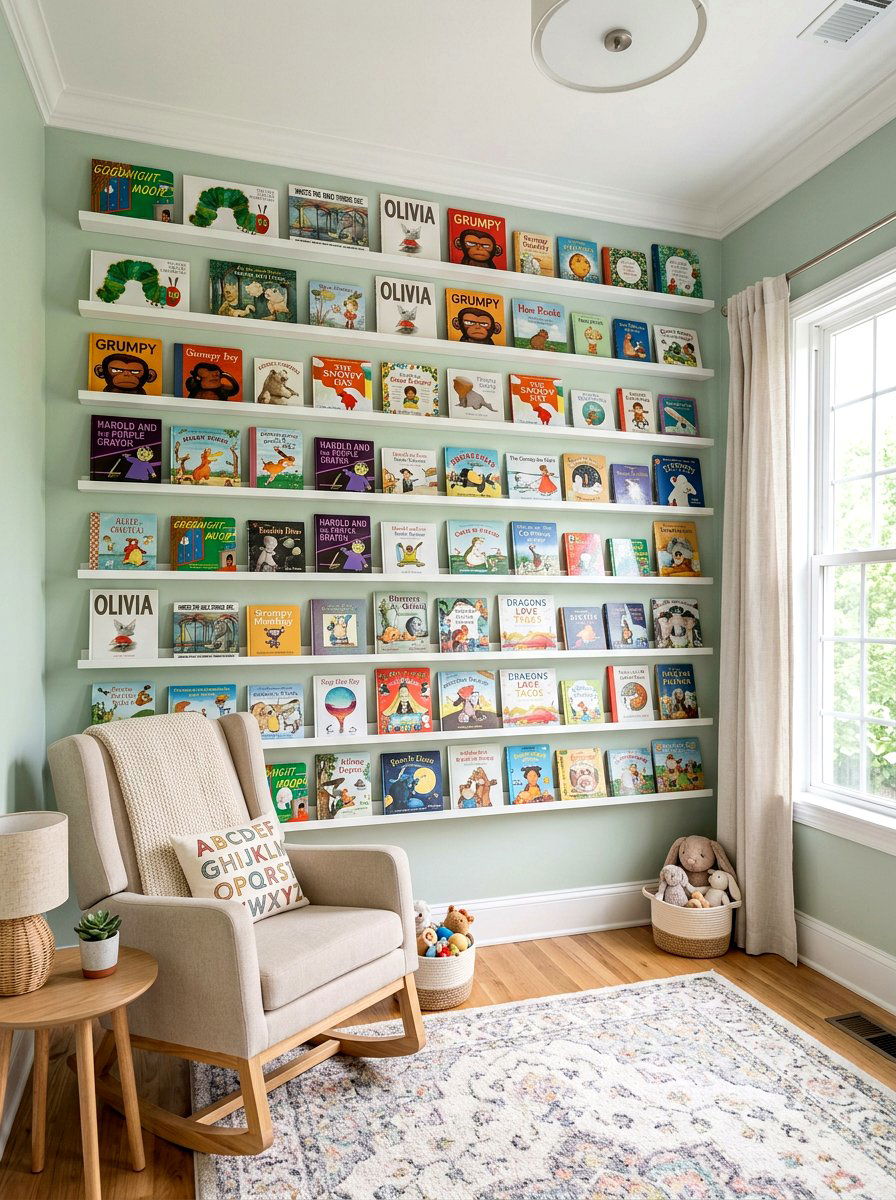
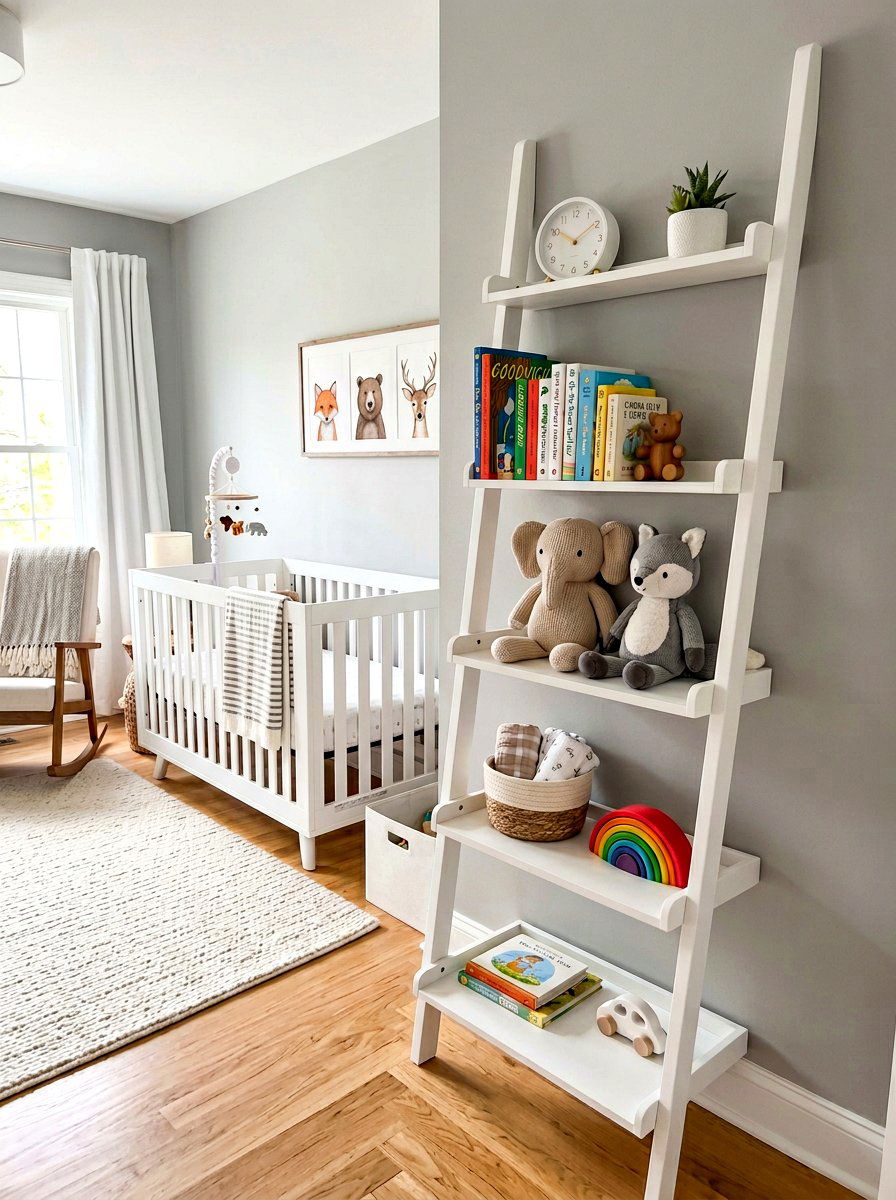
Wall mounted bookshelves are excellent for saving floor space while creating a stunning visual display of your child’s library. These thin ledges allow you to showcase books by their covers rather than their spines, which is more engaging for toddlers. Arrange the shelves at different heights so that even the smallest children can reach their favorite stories. This vertical storage solution works perfectly in narrow playrooms or shared bedrooms. You can paint the shelves to match the wall or choose natural wood for a classic look. Keeping books off the floor prevents damage and maintains a clean, library-like aesthetic throughout the entire playroom.
7. Sensory Play Zone
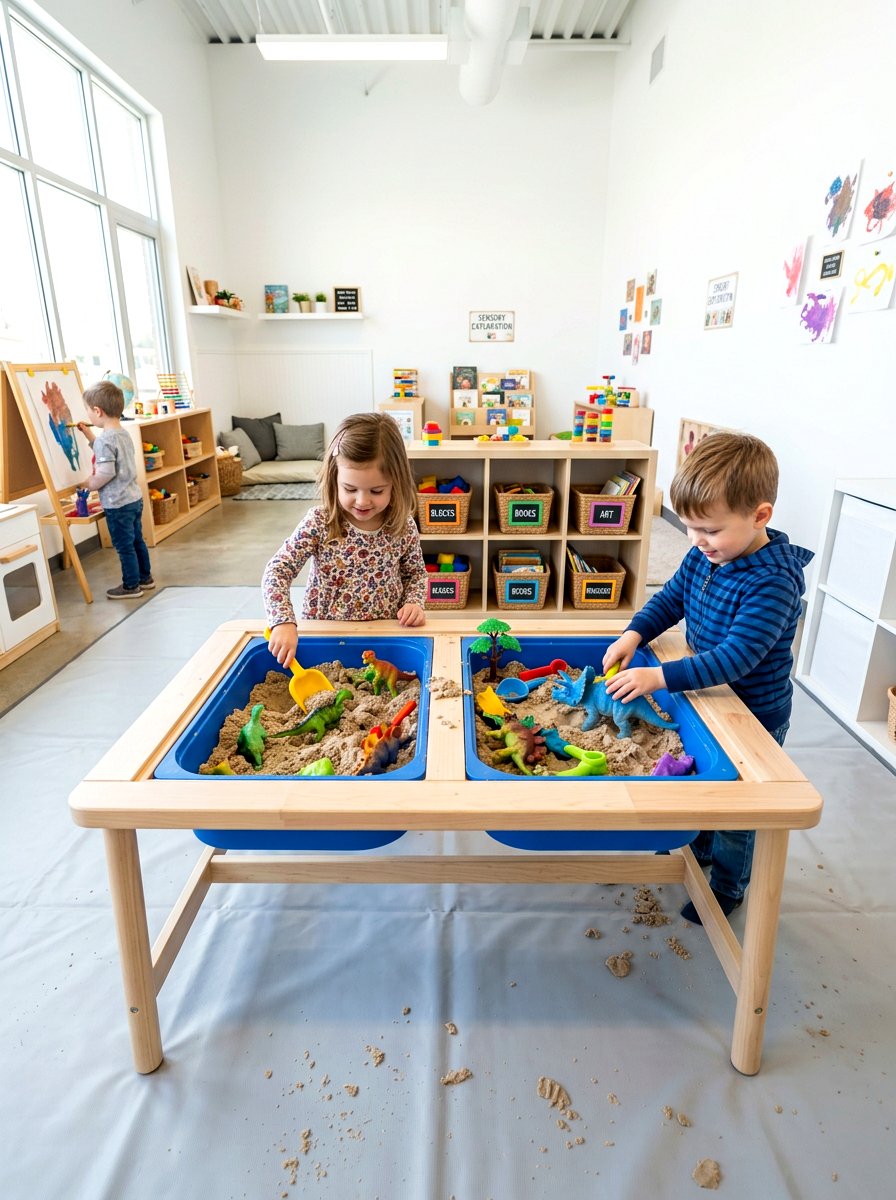
A sensory play zone is a vital part of a developmental playroom, featuring a sturdy table with removable bins. You can fill these bins with different materials like sand, water, kinetic sand, or dried beans for tactile exploration. This area should be placed on a washable rug or a hard floor surface to make cleanup quick and easy. Surround the table with small scoops, funnels, and figurines that encourage imaginative "small world" play. This setup provides a focused space for sensory development and keeps messy materials contained. It is a highly engaging section of the playroom that captures a child’s attention for long periods.
8. Indoor Climbing Gym
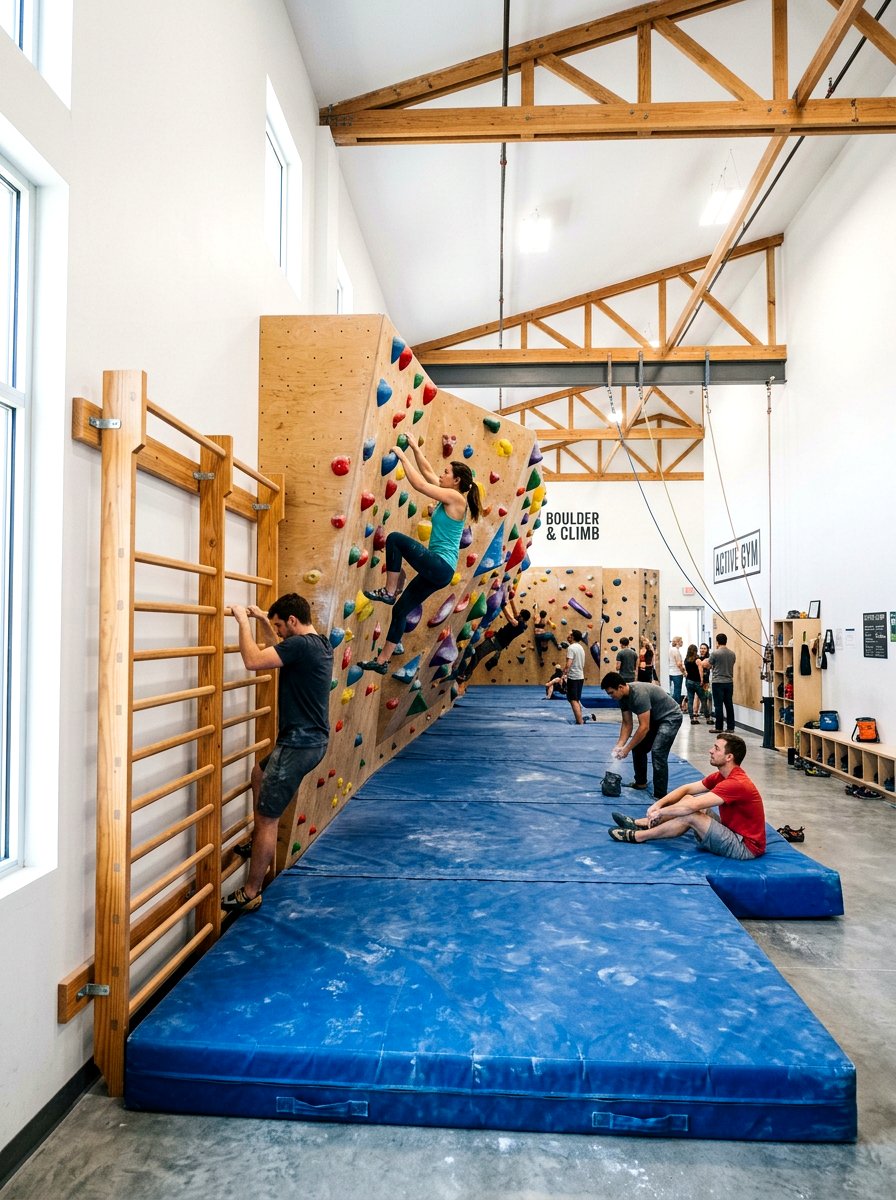
Incorporating an indoor climbing gym turns a playroom into an active toy library where physical development is just as important as cognitive play. Install a wooden Swedish ladder or a small bouldering wall with soft landing mats underneath. This setup allows children to burn off energy during rainy days while staying within a safe, supervised environment. The gym should be the focal point of an open area to ensure there is plenty of room for movement. Using neutral-colored wood and modern climbing holds keeps the room looking stylish and cohesive. It promotes gross motor skills and confidence as children learn to navigate the vertical space safely.
9. Chalkboard Wall
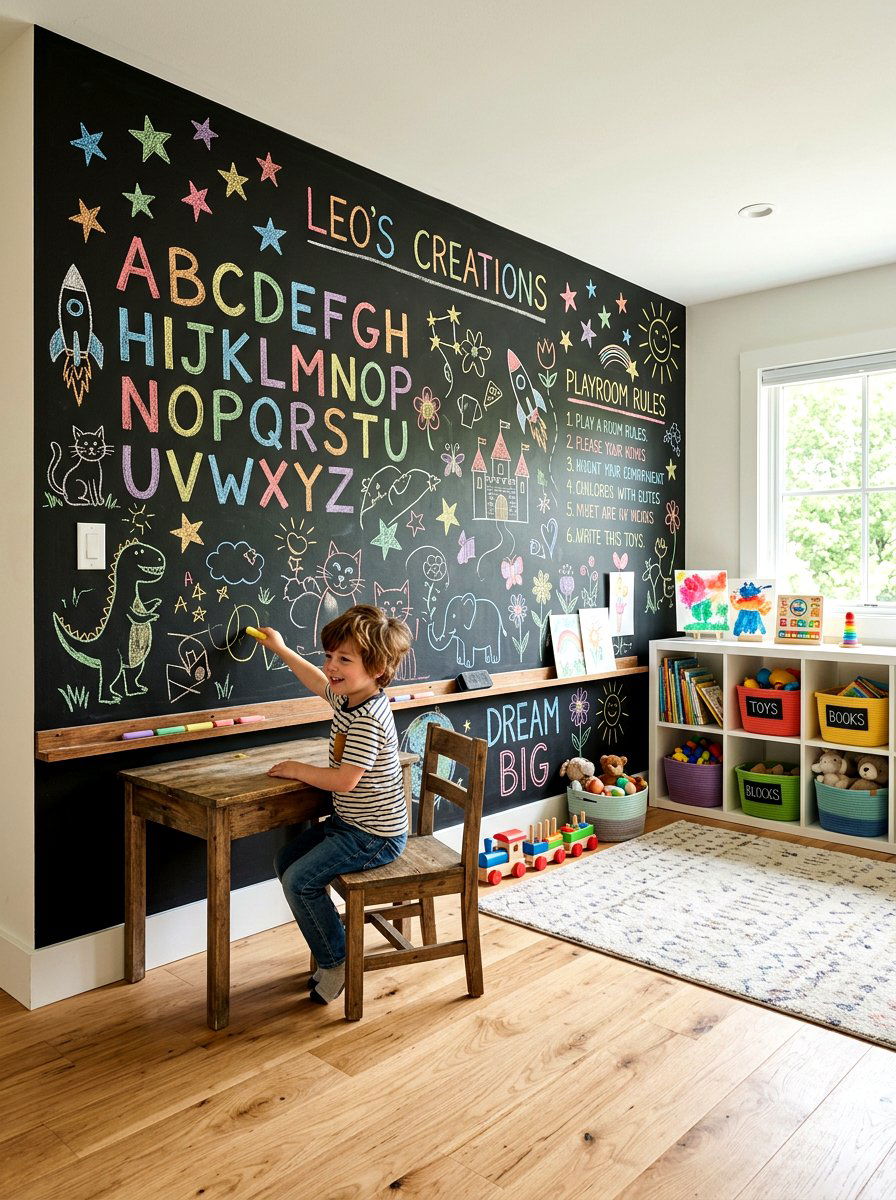
A chalkboard wall is a versatile and interactive feature that encourages large-scale drawing and early writing skills. You can create this by using specialized chalkboard paint on a single accent wall or a large framed panel. This area provides a vertical workspace that is different from a traditional desk, which is great for physical development. Keep a basket of dustless chalk and a felt eraser nearby to encourage spontaneous creativity. Children can use the wall to practice letters, draw murals, or even play school. It adds a dynamic element to the room that changes daily based on your child’s imagination and artistic mood.
10. Scandinavian Playroom
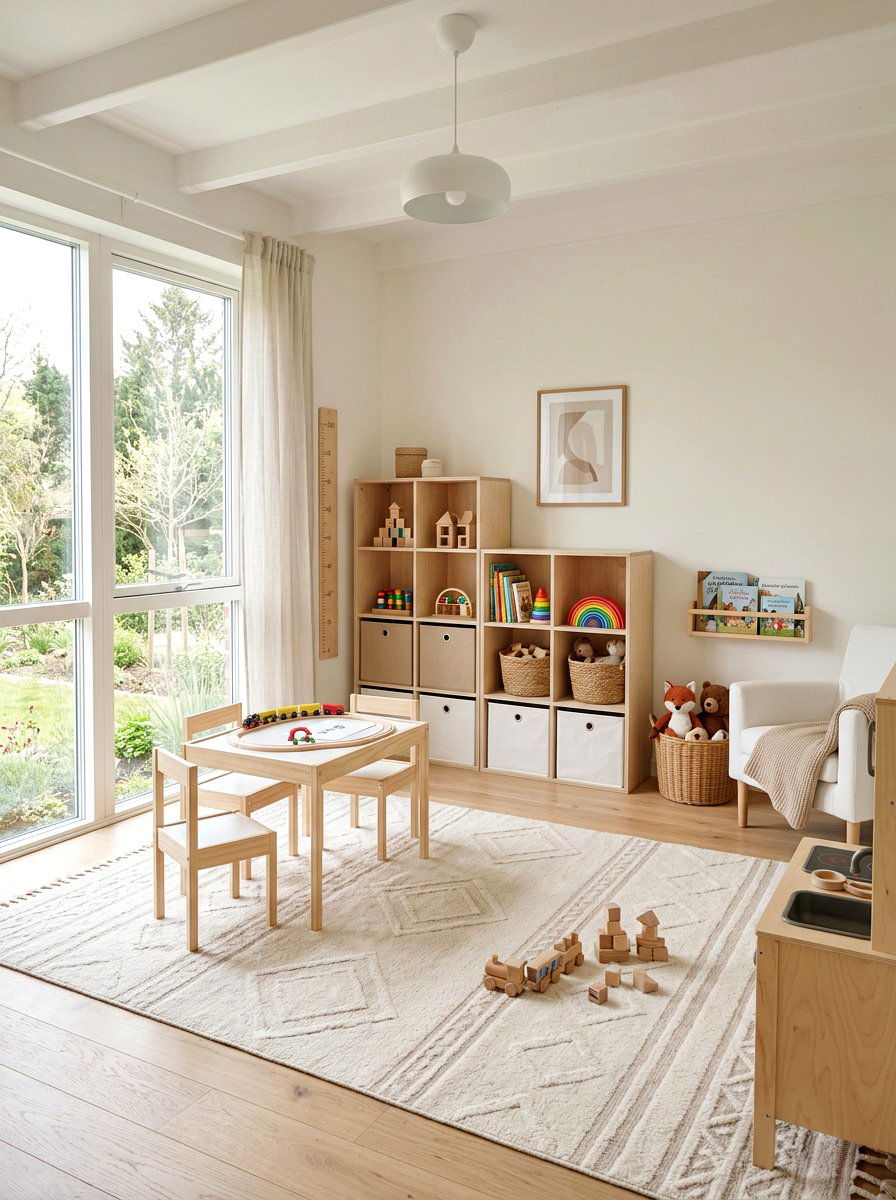
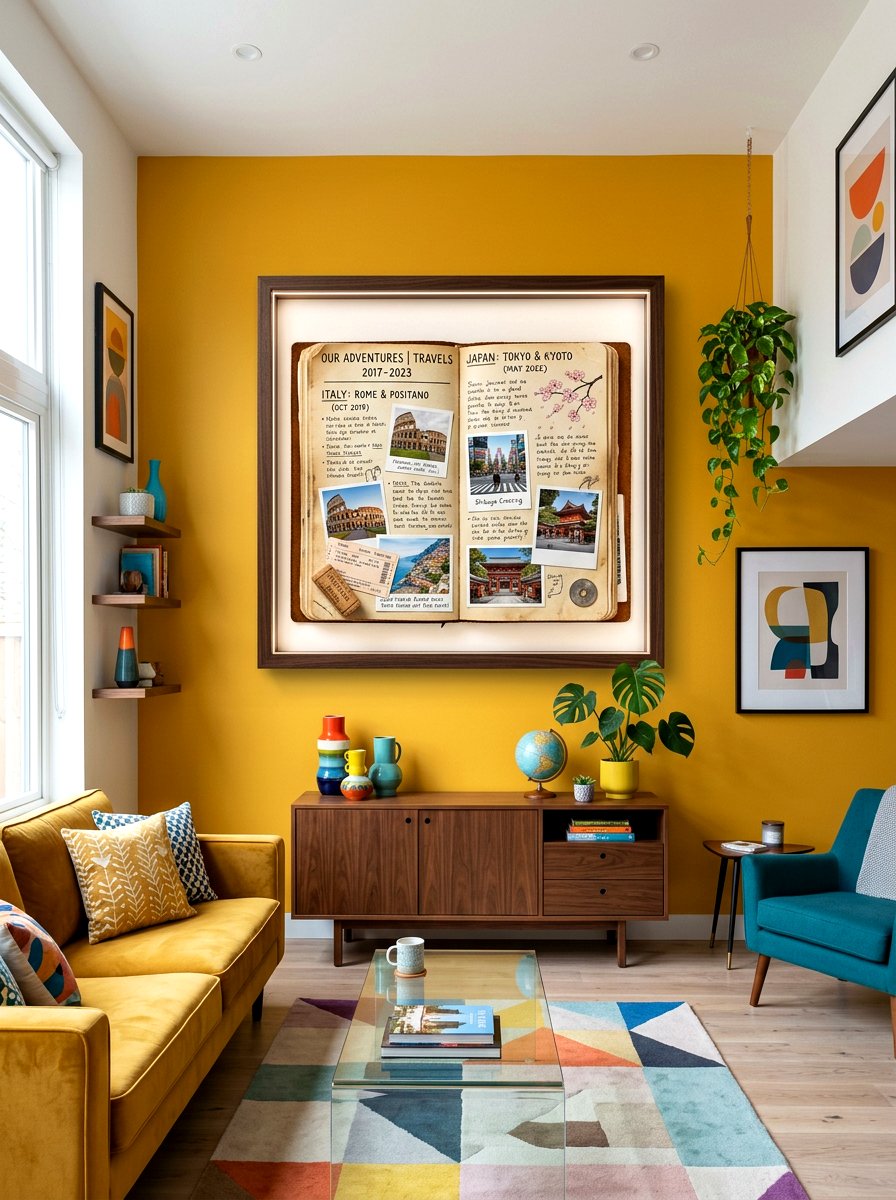
The Scandinavian playroom style emphasizes light, airy spaces with a focus on functional furniture and natural materials. Choose a palette of soft whites, light grays, and pale wood to create a serene environment. Use simple wooden cubbies for toy storage and keep the decor minimal to avoid visual clutter. This design approach creates a timeless look that feels calm for both children and adults. Incorporate cozy textures like wool rugs and linen cushions to add warmth to the clean lines. This setup is perfect for a toy library because it makes the colorful toys stand out as the primary focus of the room.
11. Dress Up Wardrobe
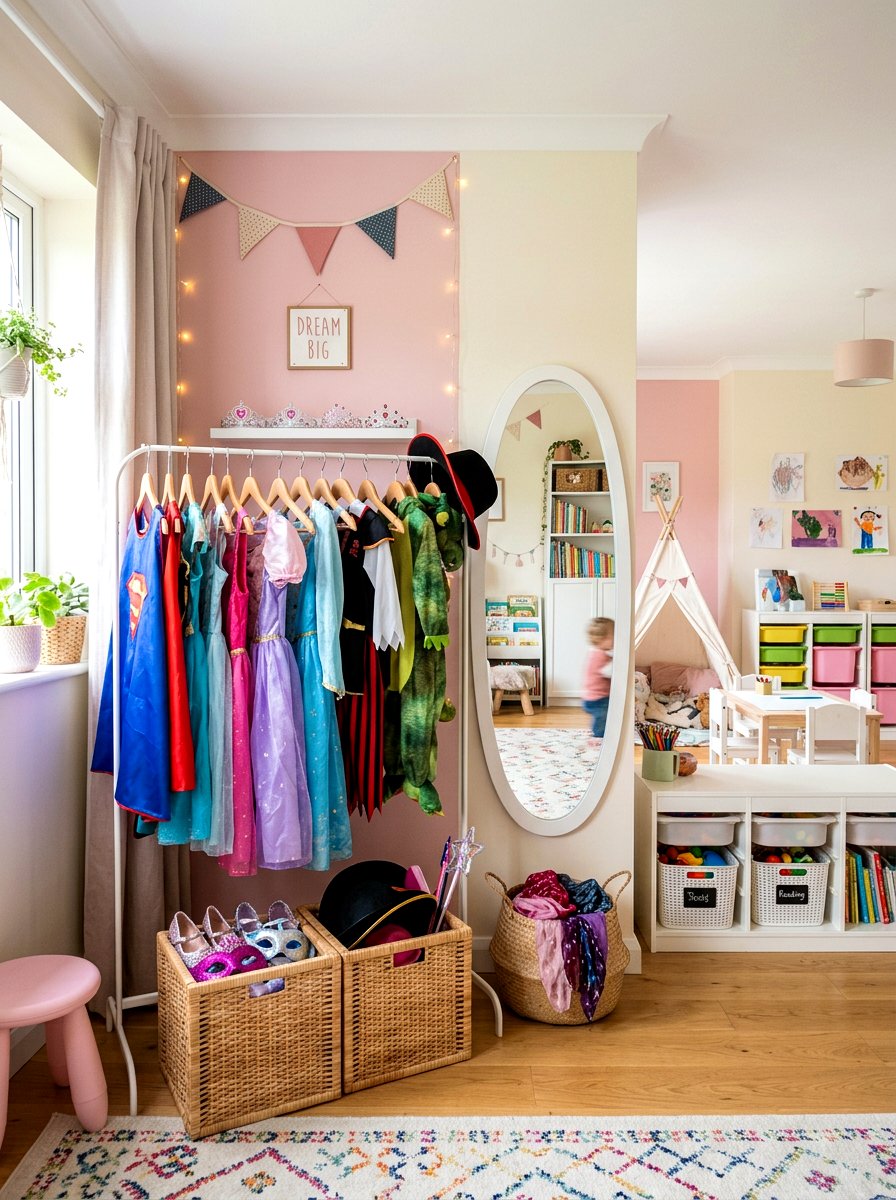
A dress up wardrobe turns imaginative play into a structured activity with a dedicated hanging rack and storage bins. Use a small open closet or a standalone garment rack to display costumes where children can easily see them. A full-length, shatterproof mirror is an essential addition, allowing kids to admire their transformations into various characters. Place smaller accessories like hats, wands, and jewelry in labeled baskets at the base of the rack. This setup encourages independence as children learn to dress themselves during pretend play. It keeps bulky costumes off the floor and organized, maintaining the orderly feel of a professional library.
12. Puzzle Storage
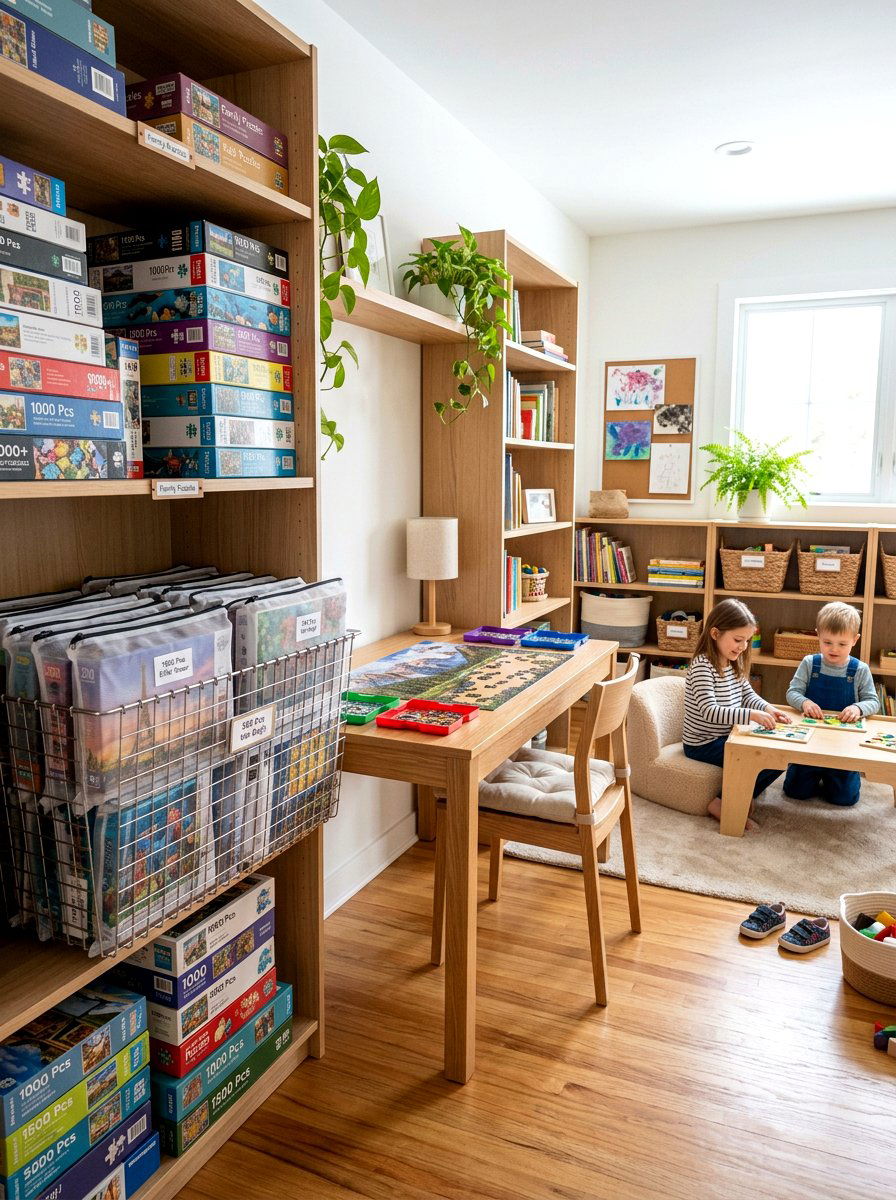
Organizing a puzzle storage area is key to preventing lost pieces and frustration during play. Instead of keeping puzzles in their bulky original boxes, try using slim mesh bags or clear plastic envelopes for each set. Store these vertically in a wire basket or on a dedicated shelf so children can flip through them like books. This "library style" filing system makes it easy to see the puzzle image while saving a significant amount of shelf space. It encourages kids to complete one puzzle at a time before moving to the next. The room stays tidy, and the puzzles remain in excellent condition for years of use.
13. Floor Cushion Seating
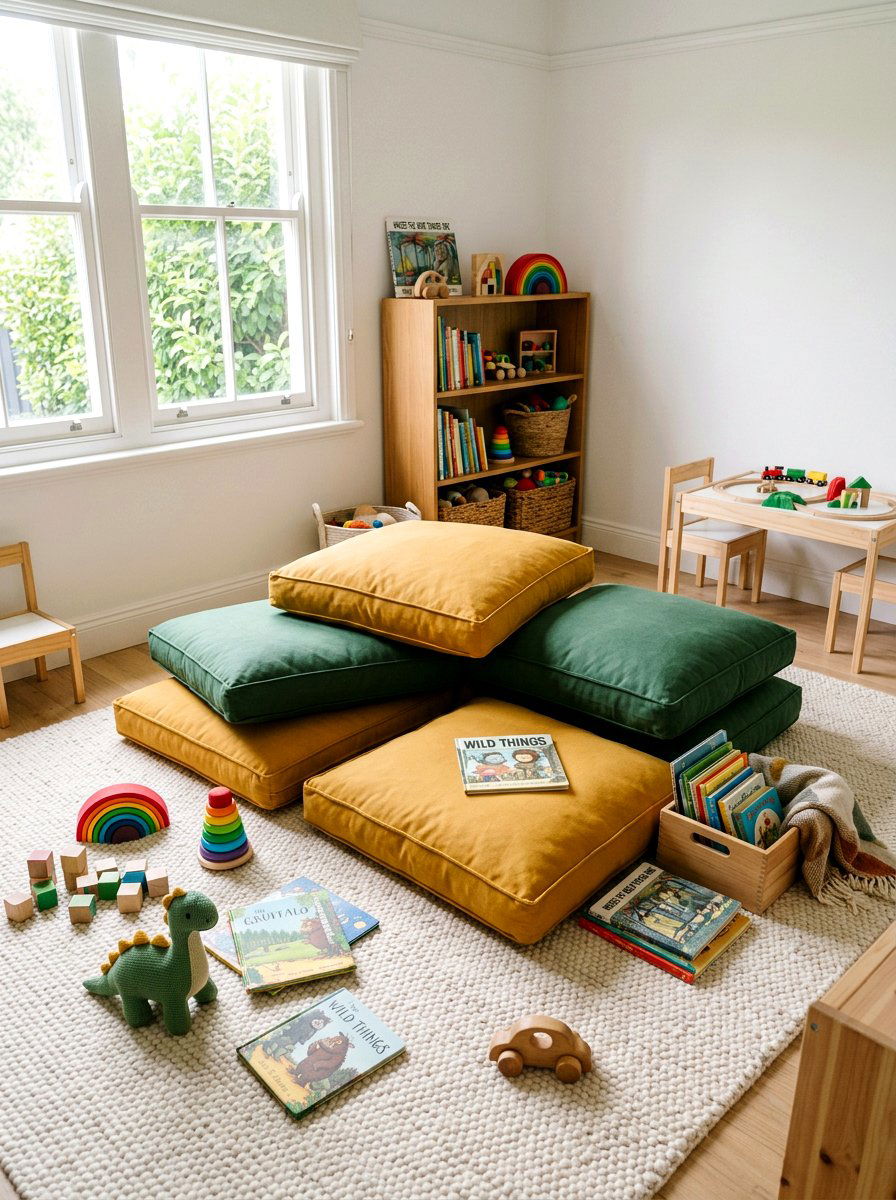
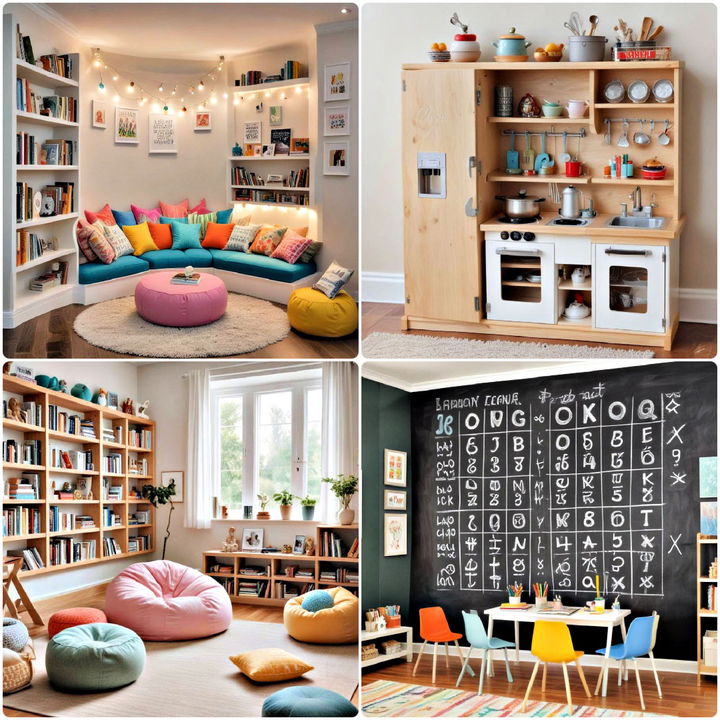
Floor cushion seating provides a flexible and comfortable way for children to engage with their toys and books. Use oversized, stackable cushions in durable fabrics that can be moved around the room as needed. This setup is ideal for low-level play, such as building with blocks or looking through picture books on the rug. You can create a dedicated "lounge" area by grouping several cushions in a corner under soft lighting. This encourages a relaxed atmosphere where children feel comfortable spending long periods on the floor. Choosing washable covers ensures that the seating remains clean and fresh despite daily use in the playroom.
14. Pegboard Organization
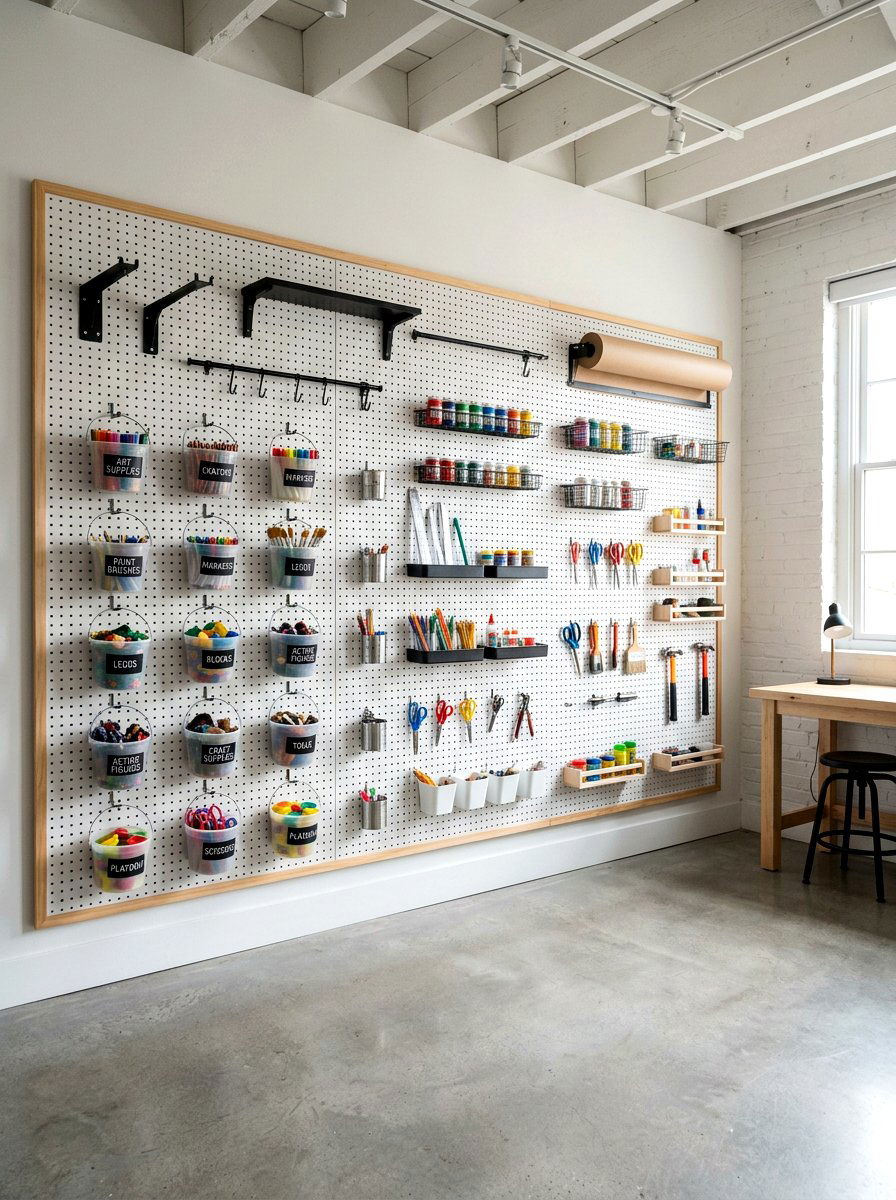
Pegboard organization is a brilliant way to utilize vertical space for storing small toys and art supplies. Mount a large pegboard on one wall and use various hooks, baskets, and shelves to customize the layout. This system is incredibly flexible, allowing you to move items around as your child’s interests change. You can hang everything from craft scissors and tape to small buckets filled with action figures or building parts. The visual nature of the pegboard helps children remember exactly where each item belongs. It keeps the floor clear and turns your storage into a functional and modern piece of wall art.
15. Natural Wood Toy Shelf
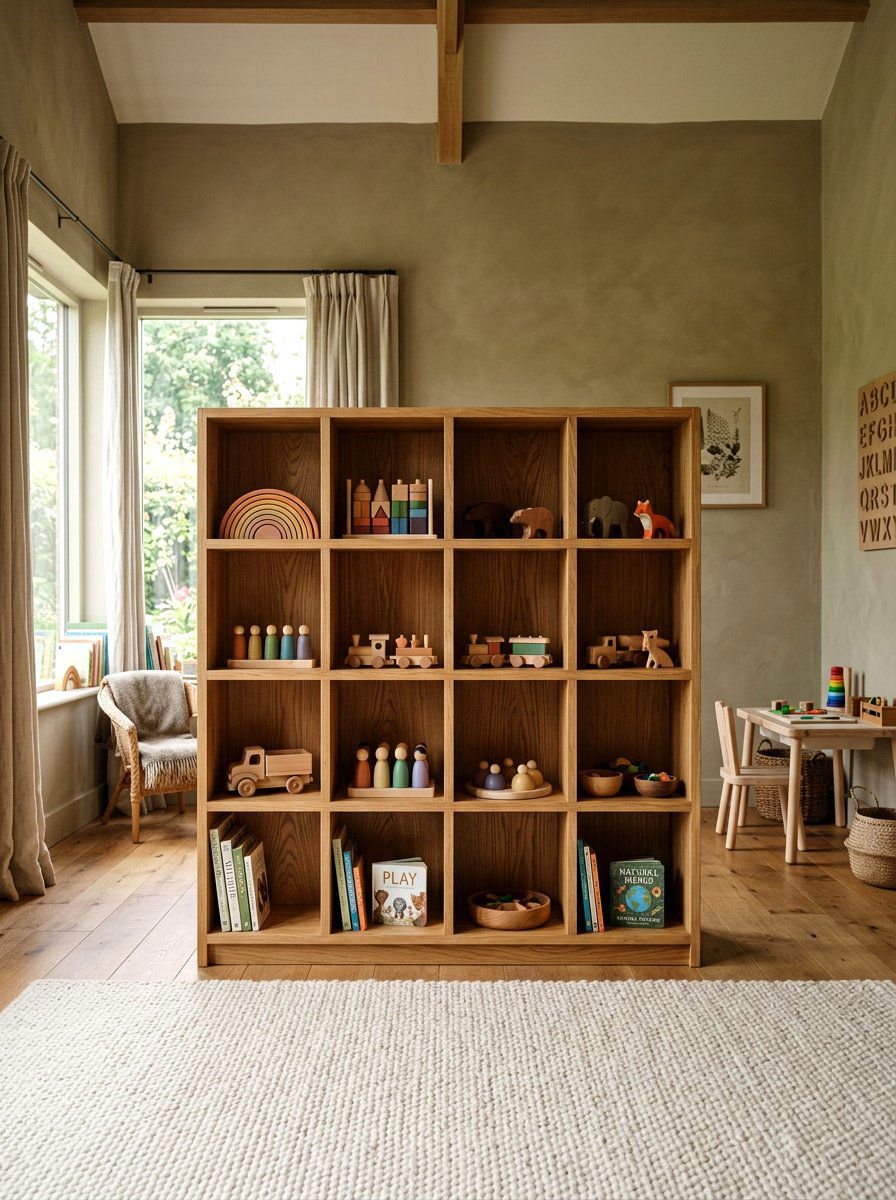
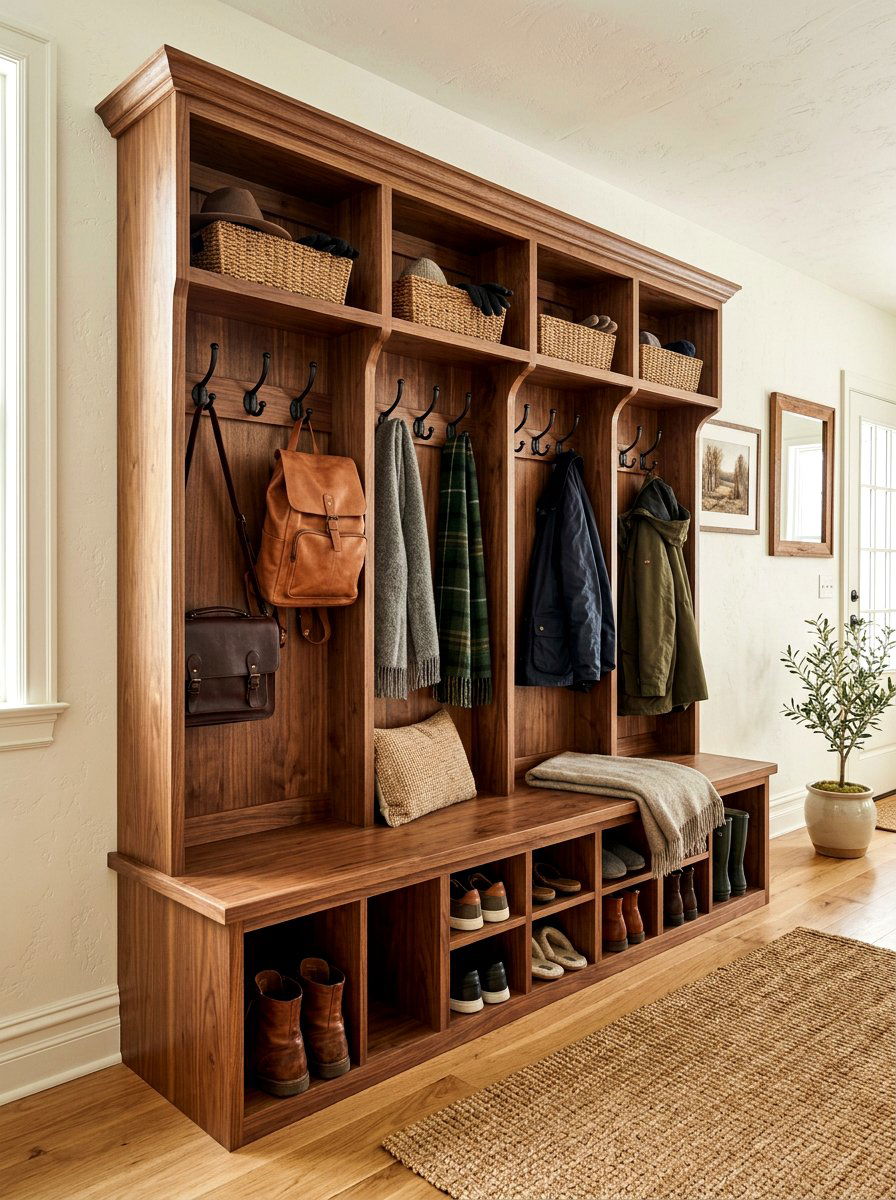
A natural wood toy shelf brings a sense of warmth and timelessness to a library-themed playroom. These sturdy units provide a neutral backdrop that lets the colors of the toys shine without adding visual noise. Opt for solid wood like pine, birch, or oak with a non-toxic finish for a safe and durable solution. The open design allows for easy access and encourages children to put their things away when finished. This type of furniture is highly versatile and can easily transition to a regular bookshelf as your child grows. It anchors the room with a high-quality, organic aesthetic that complements any home decor style.
16. Color Coded Bins
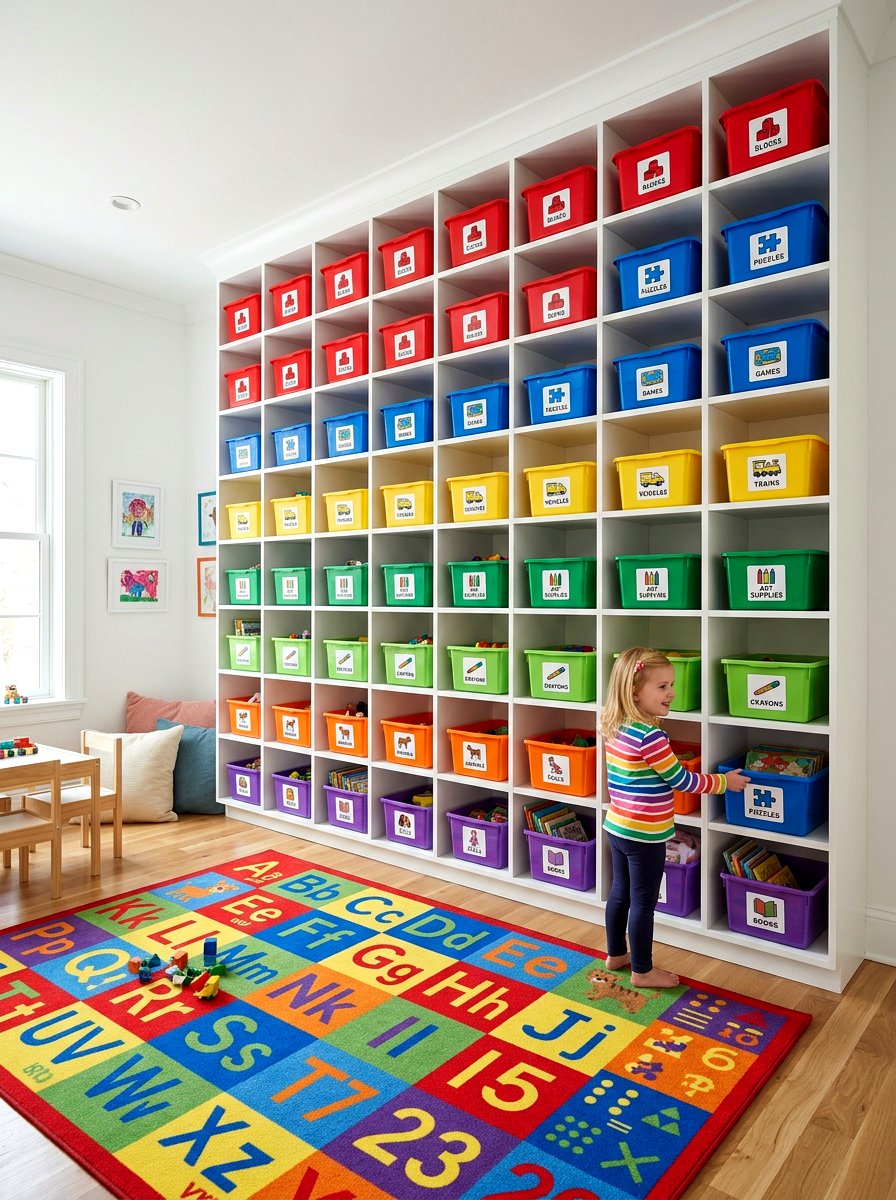
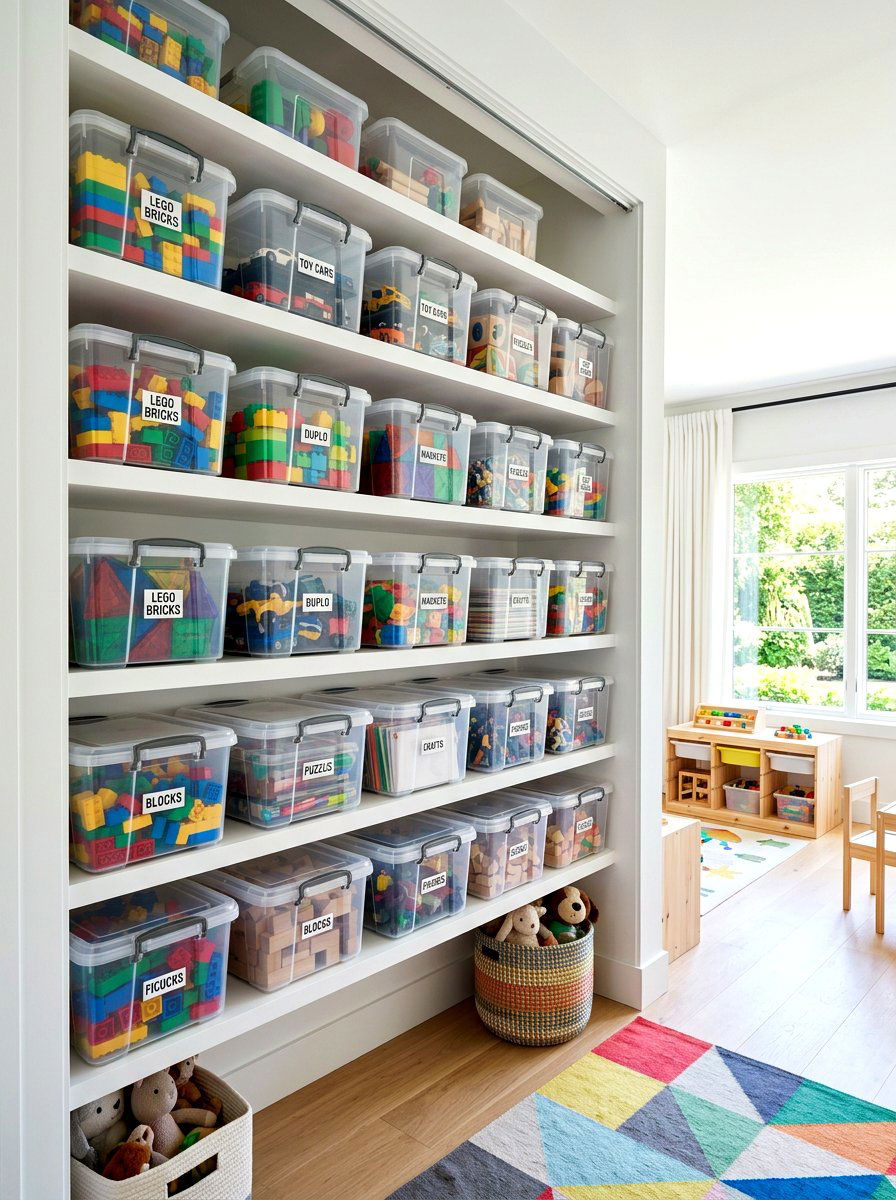
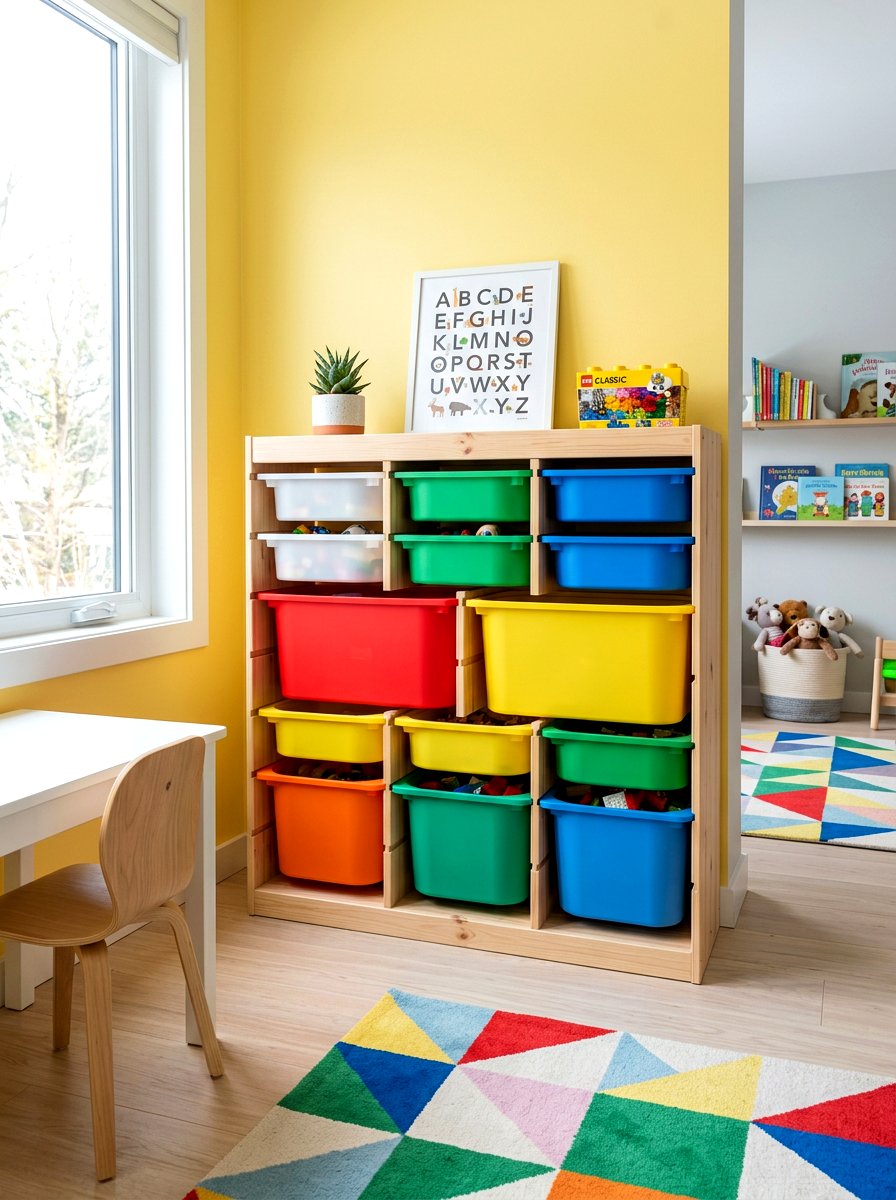
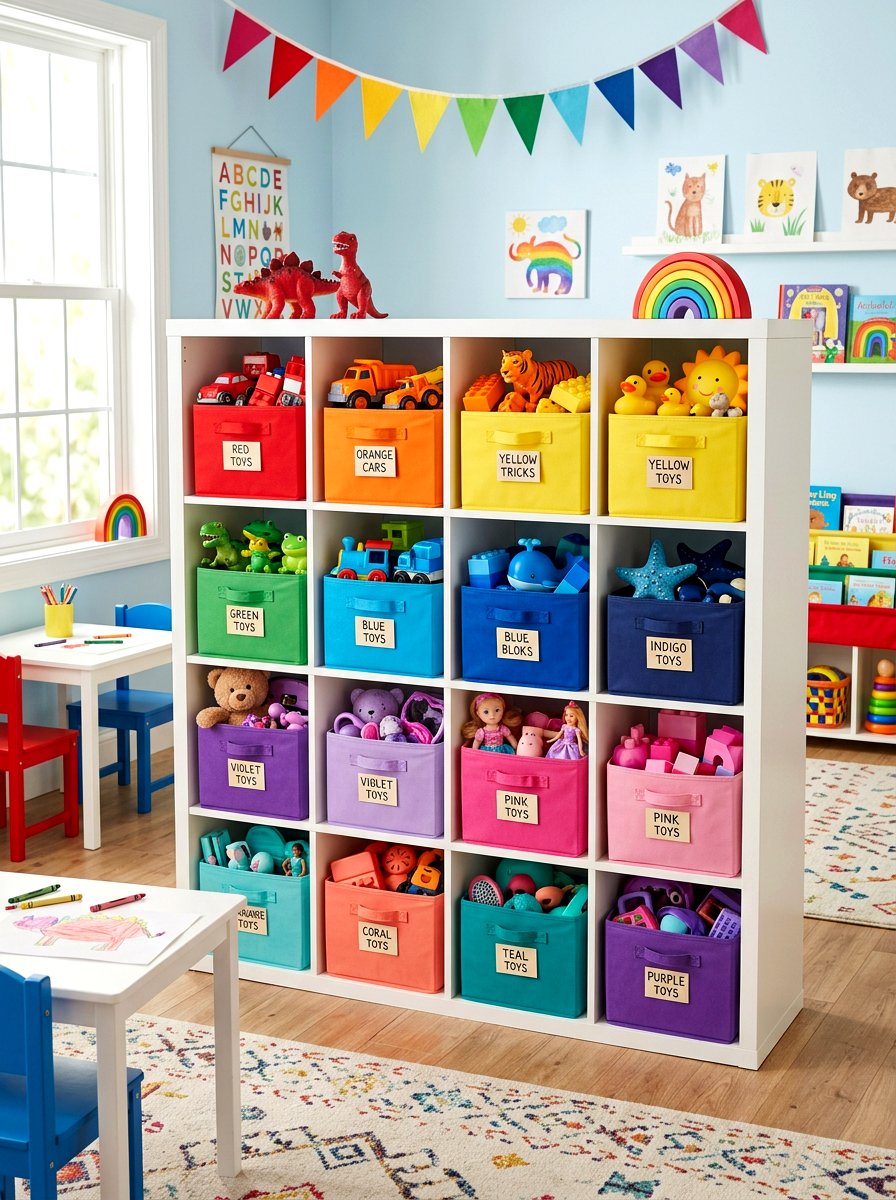
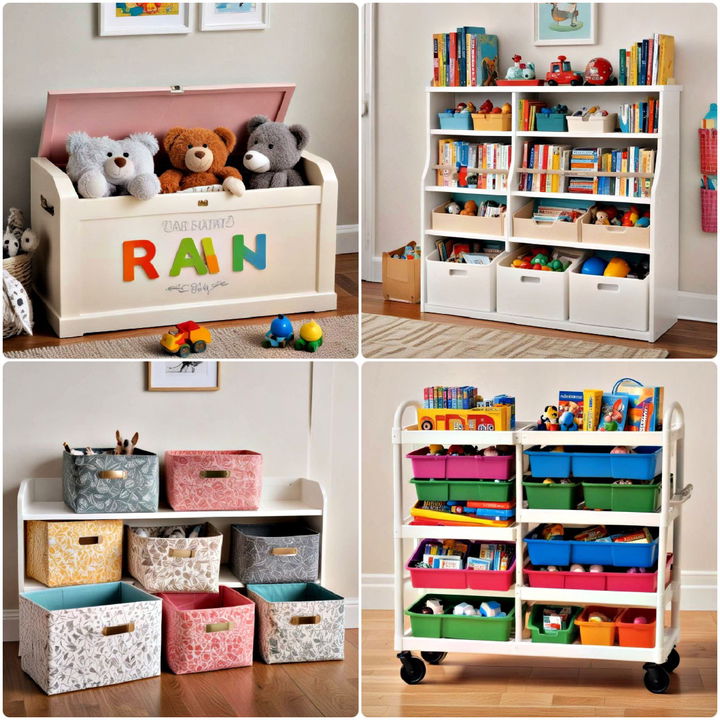
Color coded bins make cleaning up an intuitive and fun game for young children who are still learning to categorize. Assign a specific color to each type of toy, such as blue for cars, red for blocks, and green for animals. Use bright, durable plastic or fabric bins that fit perfectly into a cubby storage system. This visual organization method helps kids quickly identify where their favorite items are located. It also adds a cheerful and vibrant energy to the playroom design. By simplifying the cleanup process, you empower children to take ownership of their space and maintain the library’s orderly environment.
17. Small Space Playroom
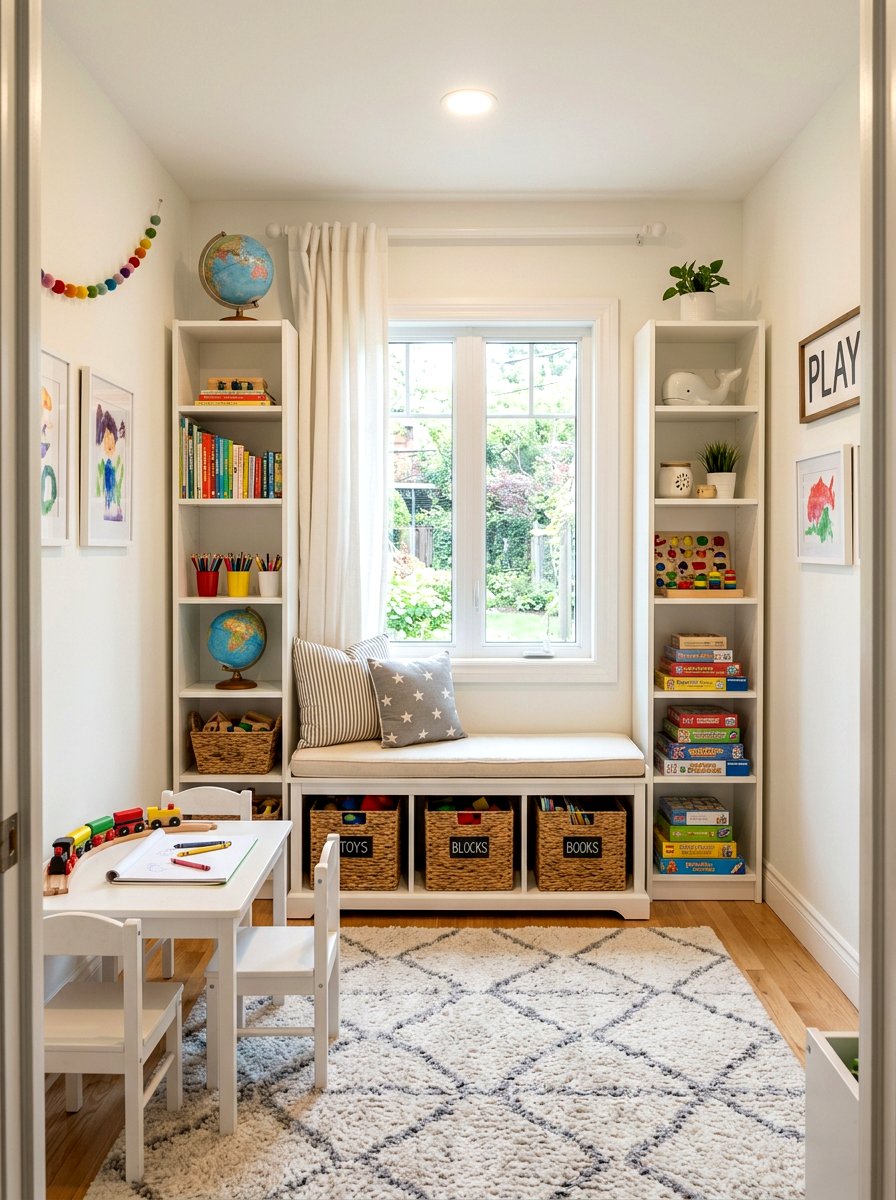
Creating a toy library in a small space requires clever furniture choices and a strict "less is more" philosophy. Use multi-functional pieces like a storage bench that provides seating while hiding away larger items. Utilize vertical space with tall, narrow shelving units that draw the eye upward and maximize every inch of the floor. A light color palette and mirrors can help the room feel larger and more open than it actually is. By carefully curating the toy selection and using clear bins, you can create a fully functional playroom even in a tiny apartment. This approach ensures every item has a specific purpose and home.
18. Under Bed Toy Storage
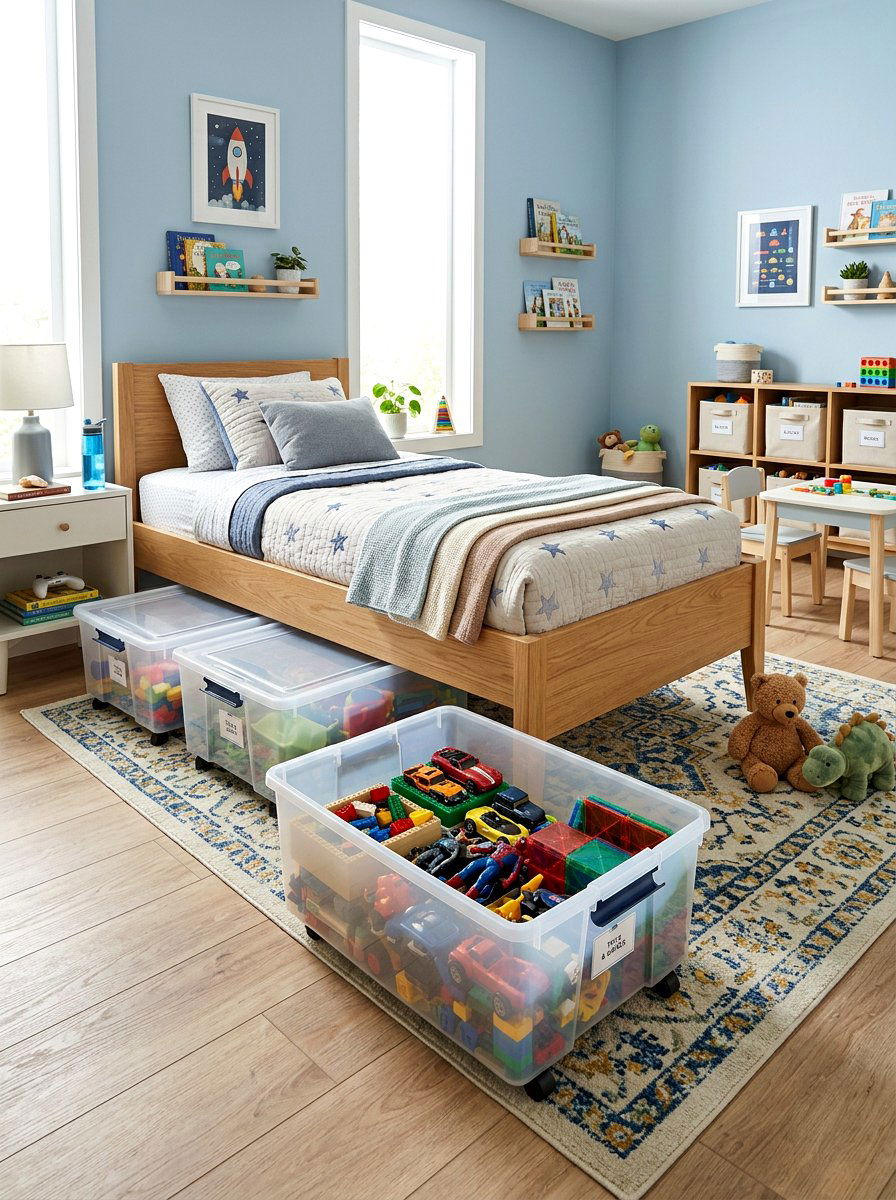
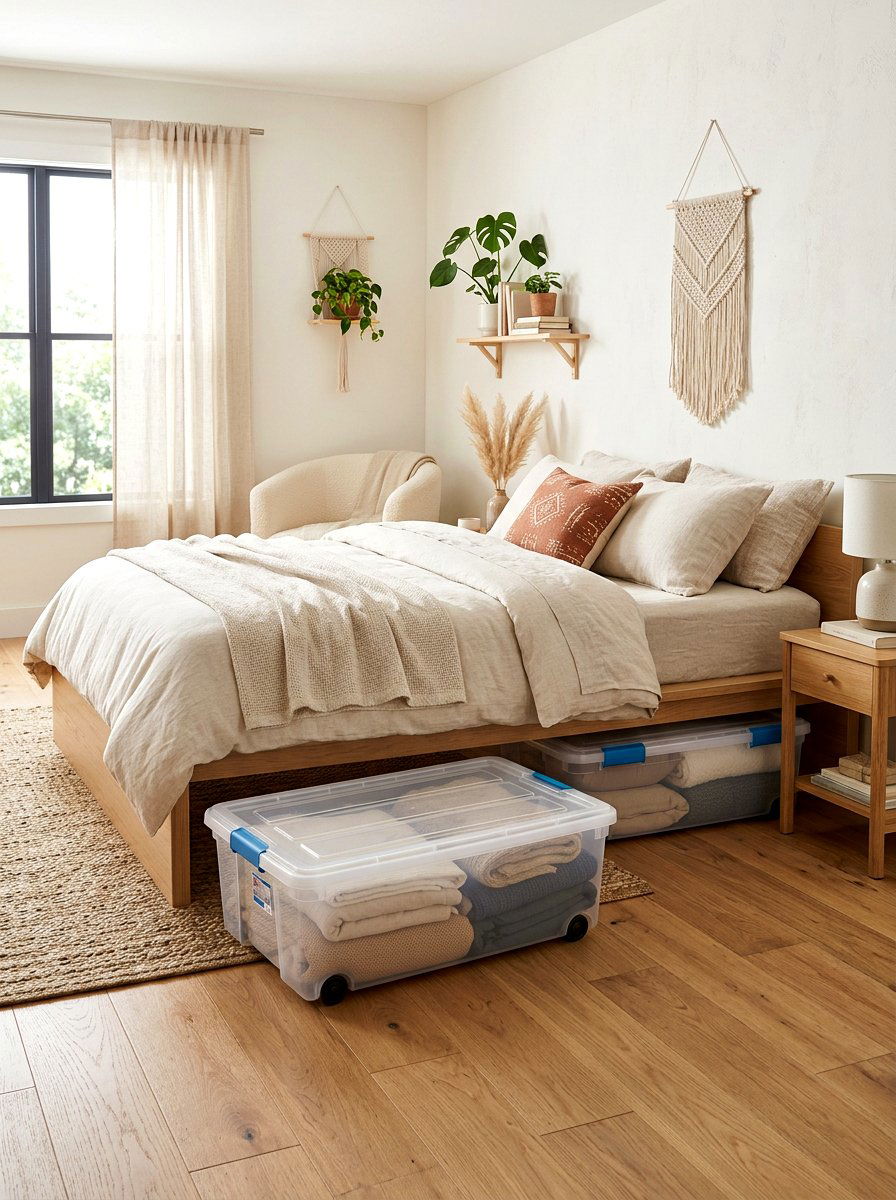
Under bed toy storage is a fantastic way to utilize often-wasted space in a child’s room or a shared playroom. Use low-profile rolling bins that can easily slide out when it is time to play. This is an ideal spot for storing large sets like train tracks, car ramps, or oversized building blocks. It keeps these bulky items out of sight when not in use, helping the room maintain a clean and uncluttered look. Labeling the tops of the bins makes it easy for kids to find what they need without pulling everything out. This hidden storage solution is perfect for maintaining a minimalist playroom aesthetic.
19. Play Tent
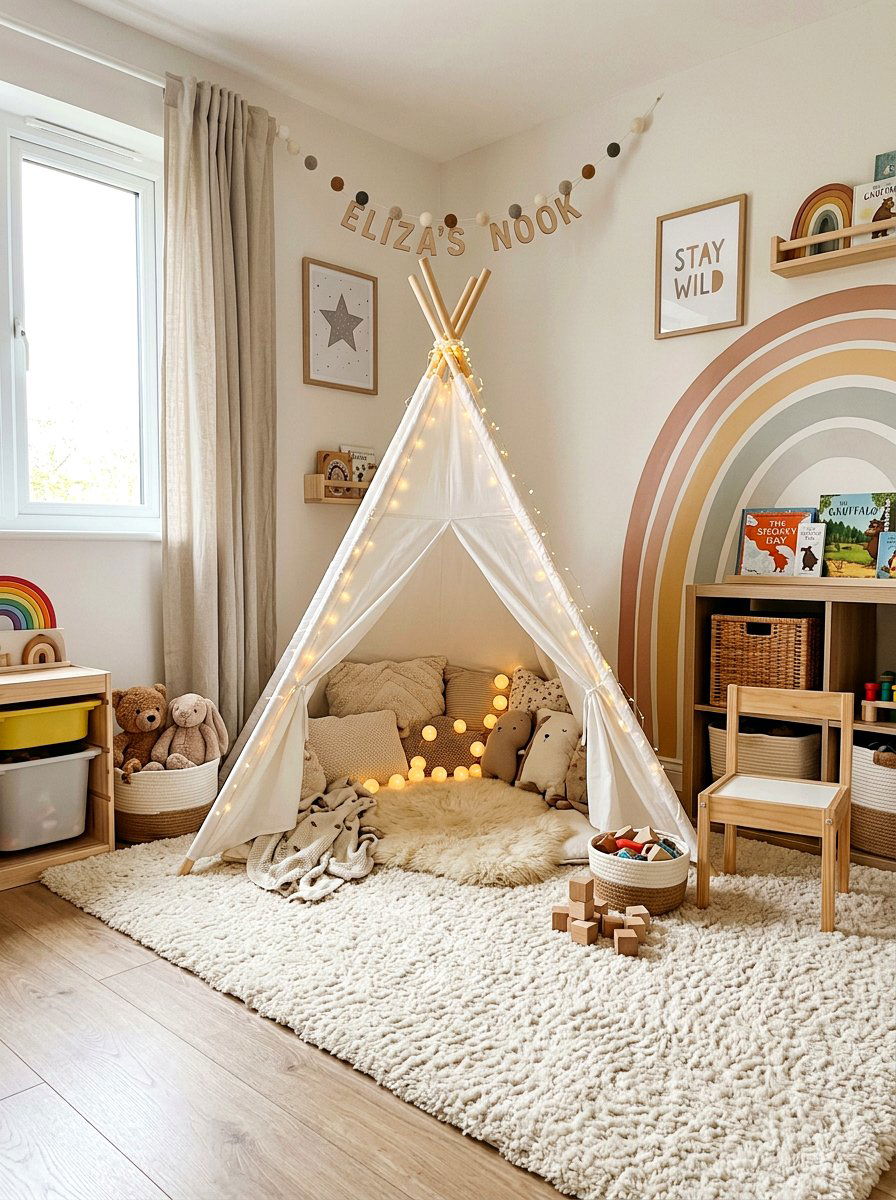
A play tent adds a sense of magic and privacy to a playroom, serving as a secret hideaway for reading or pretend play. Choose a canvas teepee or a simple fabric canopy that fits into a corner of the room. Fill the interior with soft blankets, fairy lights, and a small stack of books to create an inviting retreat. This cozy space encourages imaginative play and provides a quiet zone for children who may feel overstimulated. The tent becomes a focal point that anchors the room’s design while offering a unique sensory experience. It is a classic playroom element that children of all ages will love.
20. Magnetic Whiteboard
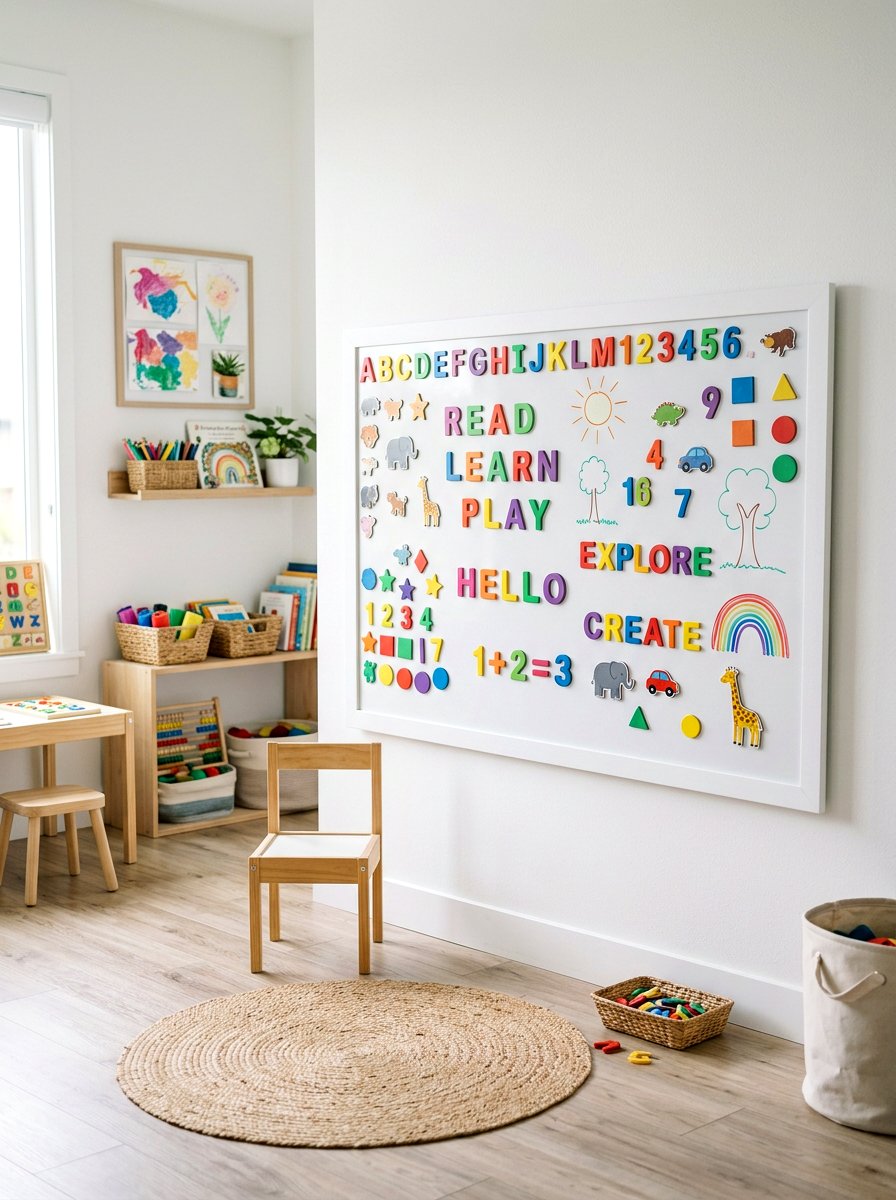
A magnetic whiteboard offers a dual-purpose surface for drawing and playing with educational magnets. Install a large board at child height to encourage upright playing, which is beneficial for shoulder and wrist development. Children can use magnetic letters to practice spelling or colorful shapes to create intricate patterns and designs. The whiteboard surface is easy to wipe clean, providing a fresh canvas for every play session. This setup is perfect for a library-themed room because it facilitates learning in a fun and interactive way. It keeps the playroom walls protected while offering a designated space for artistic expression and cognitive growth through magnet play.
21. Train Table
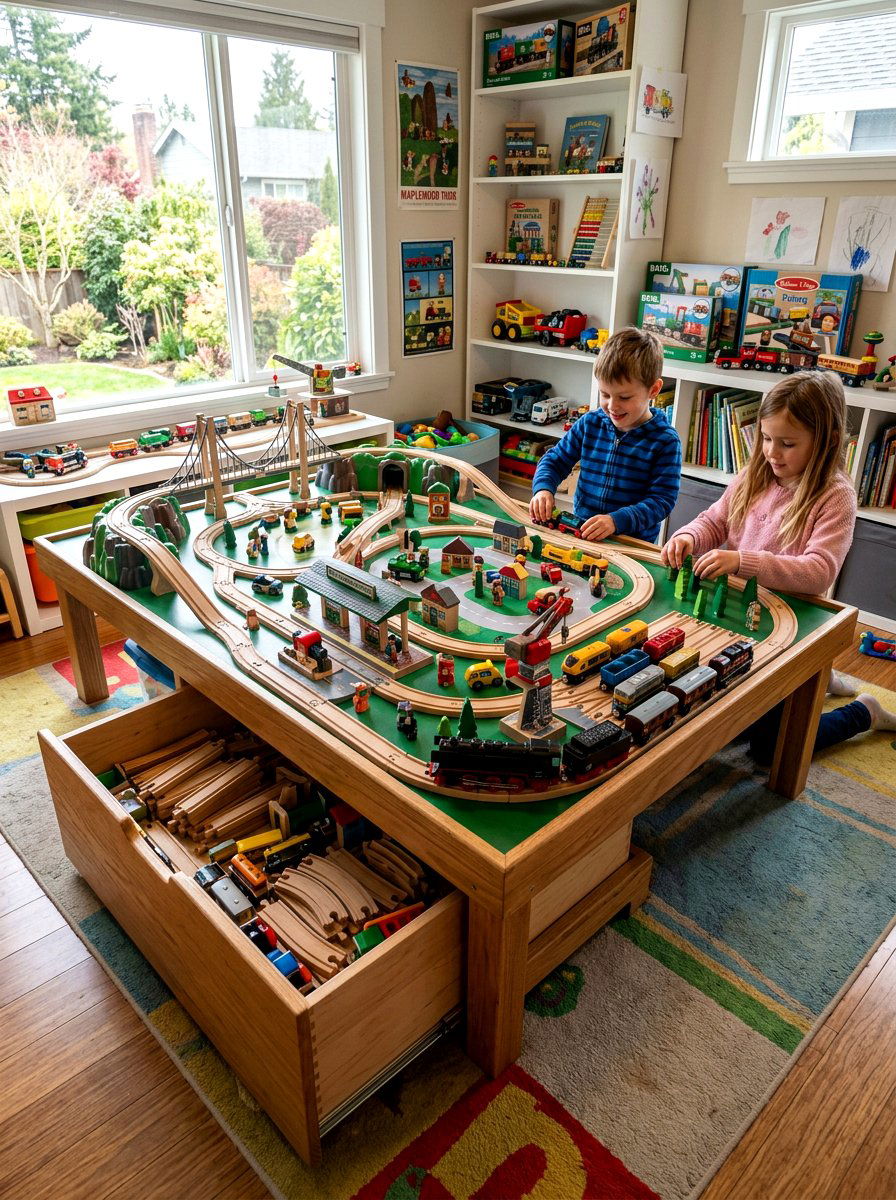
A train table provides a dedicated, raised surface for intricate railway layouts and small-world transportation play. Having a permanent spot for the tracks means the setup doesn’t have to be dismantled every day, allowing for ongoing projects. Many tables come with built-in drawers or shelves underneath to store extra trains, tracks, and scenery pieces. This keeps the floor clear of tripping hazards and keeps the set organized in one area. The height is perfect for toddlers to stand and play comfortably. It becomes a central hub of activity in the playroom, encouraging fine motor skills and spatial reasoning as children design their own sprawling rail networks.
22. Dollhouse Station
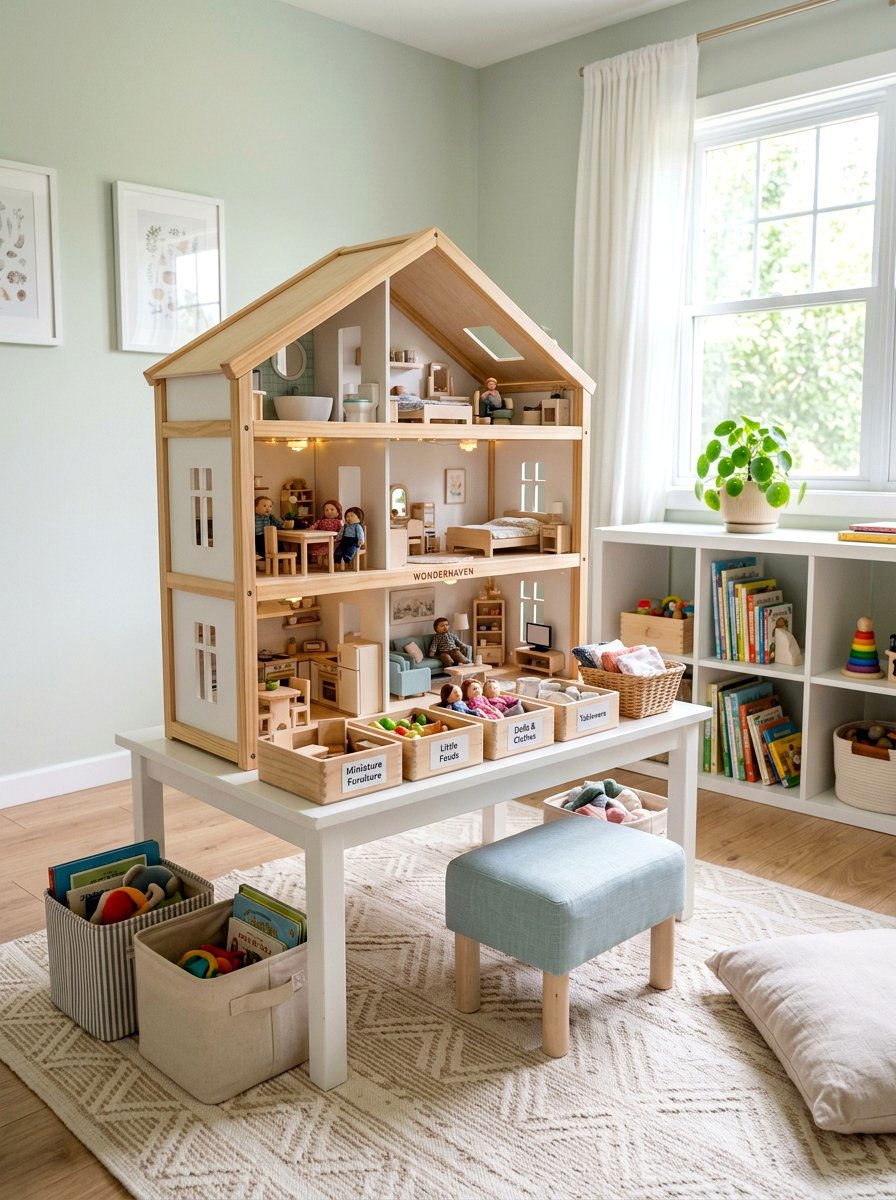
Creating a dollhouse station turns imaginative storytelling into a featured part of the playroom design. Place a sturdy wooden dollhouse on a low table or a dedicated shelf at the child’s eye level. Surround the house with small bins containing furniture and family figures, making it easy to set up different scenes. This area encourages social play and emotional development as children act out various life scenarios. Using a neutral-colored dollhouse allows the child’s imagination to take center stage. This setup keeps the tiny accessories contained and organized, ensuring that the "small world" play remains a tidy and enchanting part of the overall toy library.
23. Loft Play Area
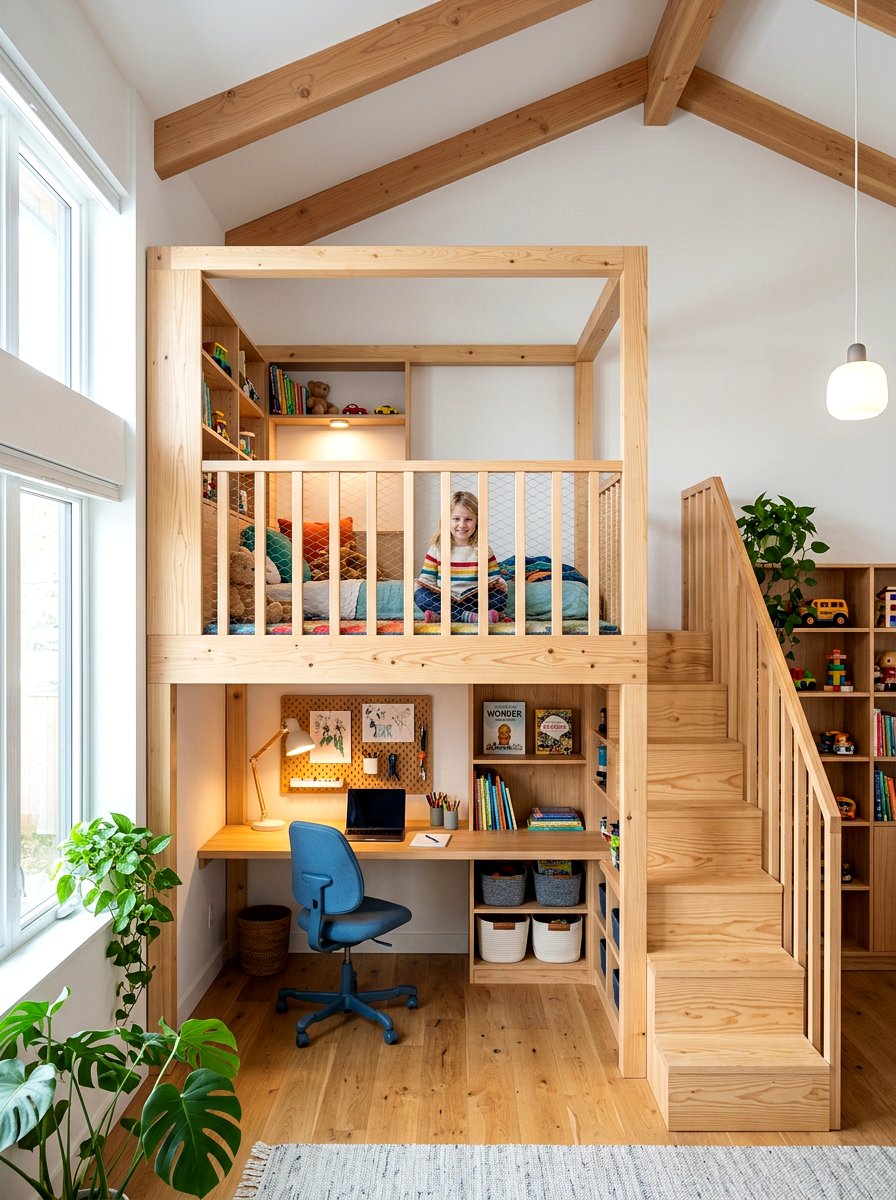
A loft play area maximizes vertical space by creating a "second floor" for play within a standard room. The space underneath the loft can be used for a cozy reading nook or a desk, while the top serves as a private hideaway. This architectural feature adds an exciting element of adventure to the playroom and helps separate different types of activities. Ensure the loft is built with sturdy railings and a safe ladder or staircase for easy access. This design is particularly effective in rooms with high ceilings. It provides a unique perspective of the playroom and offers a special place for quiet play or imagination.
24. Floating Shelves
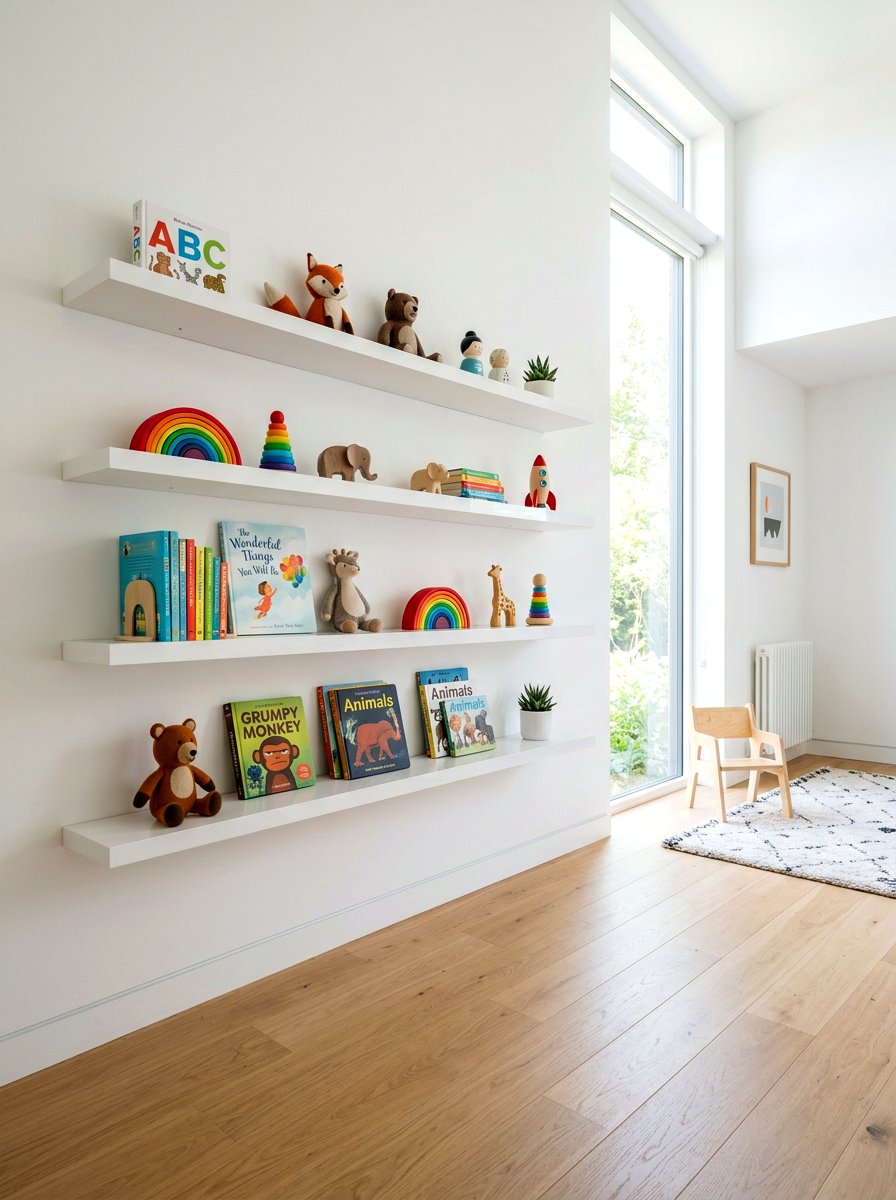
Floating shelves offer a sleek and modern way to display toys and decor without the bulk of traditional furniture. These shelves can be installed in a variety of configurations to fit awkward corners or small wall sections. Use them to showcase "special" toys, such as vintage wooden cars or colorful art projects, keeping them safe from younger siblings. Because they don't have visible brackets, they create a clean and minimalist look that suits a contemporary playroom. They are perfect for keeping delicate items out of reach while still contributing to the room’s visual library. This storage solution keeps the floor space open and the room feeling airy.
25. Window Seat Storage
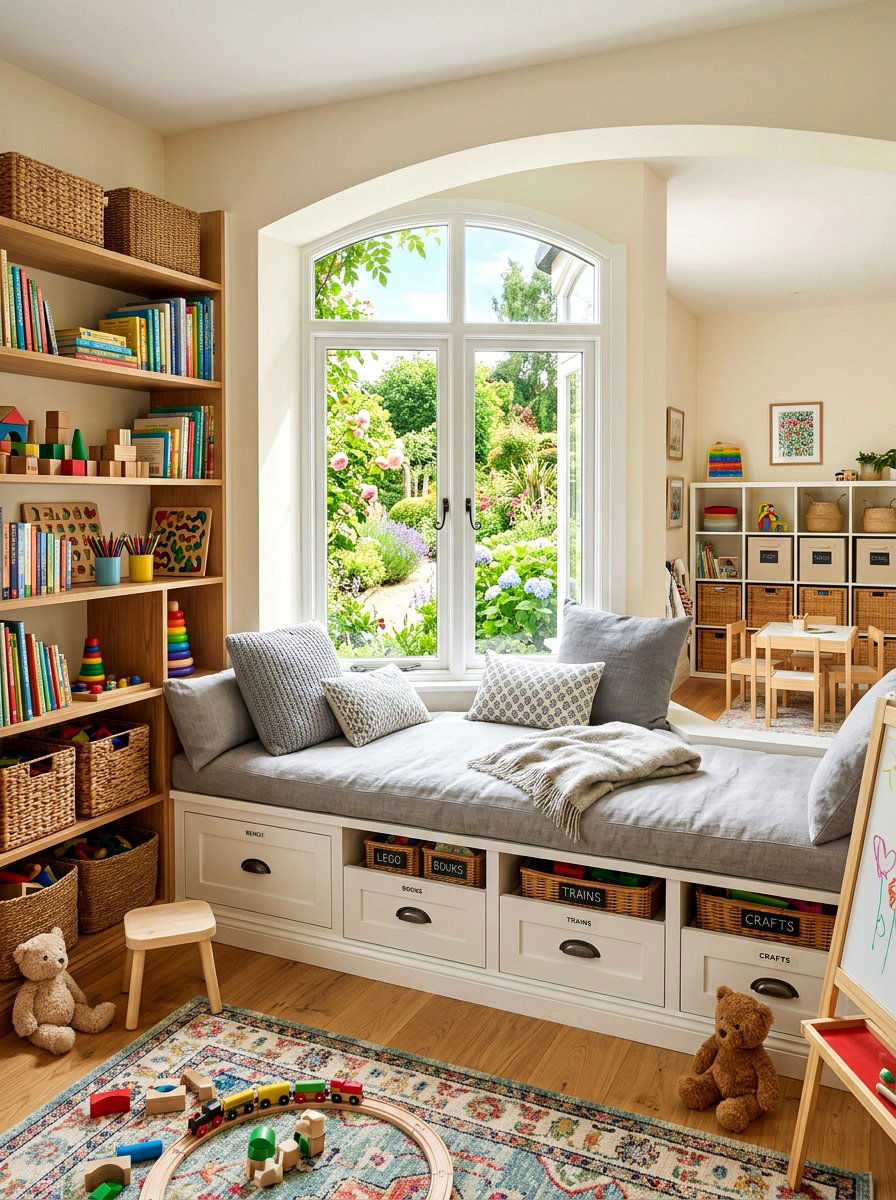
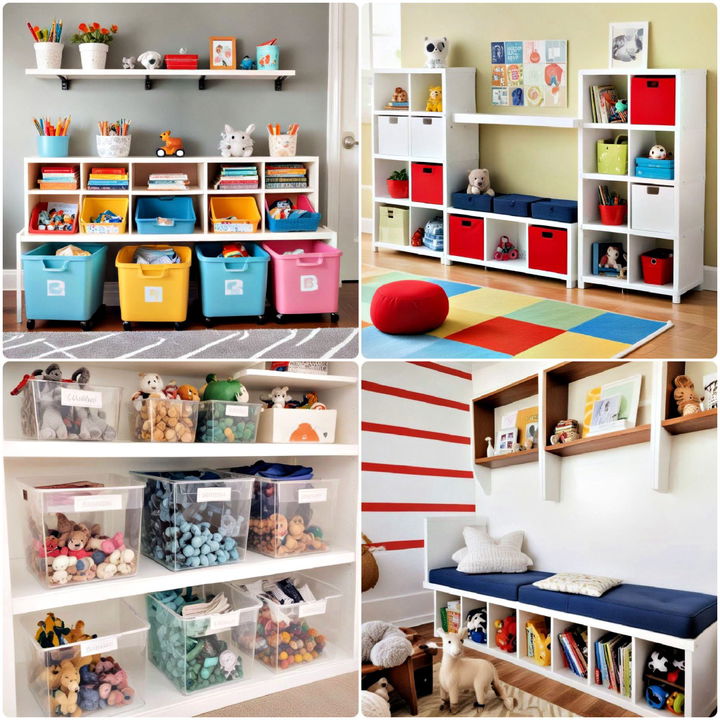
A window seat storage unit combines comfortable seating with hidden organizational space for toys and books. Custom-build a bench under a window and include deep drawers or cubbies underneath for easy access. This provides a sunny spot for children to sit and read or play with small toys while keeping the room organized. Adding a plush cushion and some decorative pillows makes it a favorite destination in the playroom. The storage underneath is perfect for bulkier items like board games or stuffed animals. This functional design element adds architectural interest to the room while serving multiple purposes for both play and rest in the toy library.
26. Minimalist Playroom
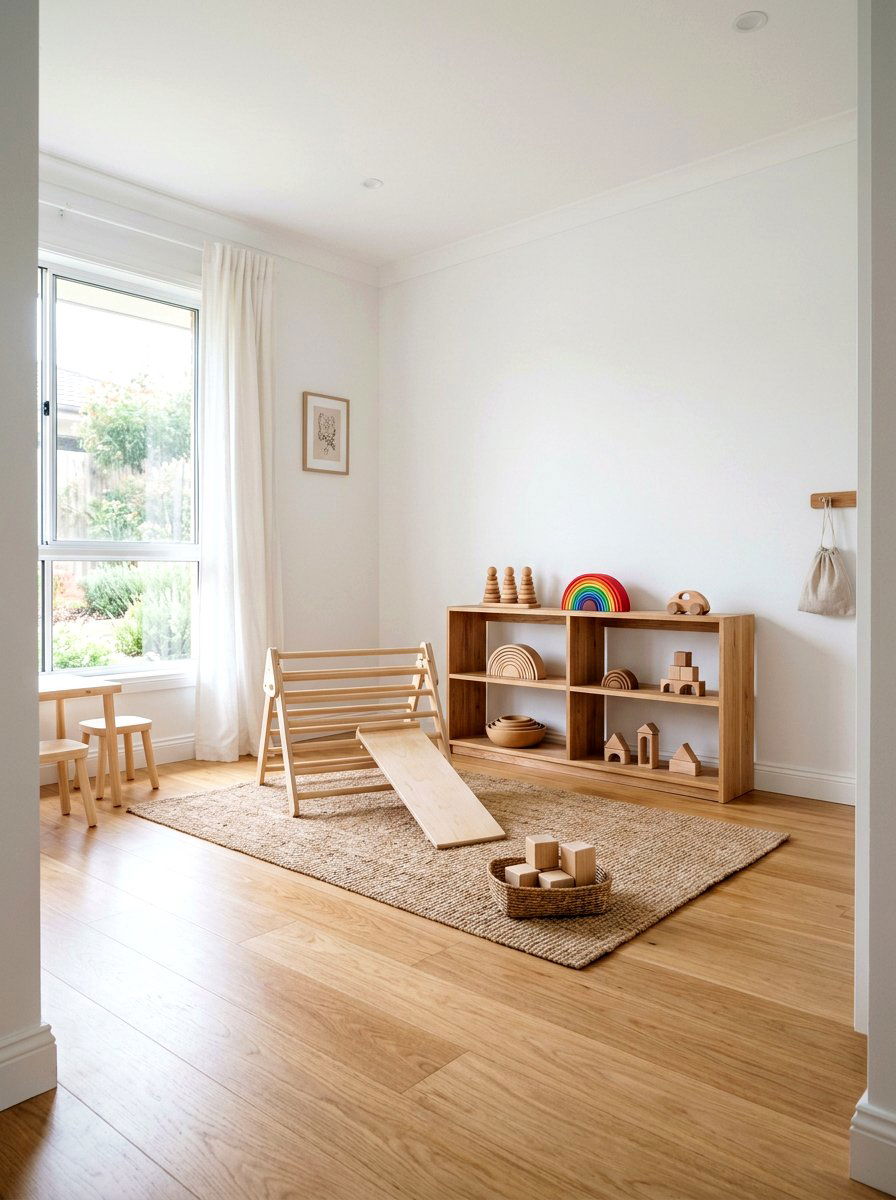
A minimalist playroom focuses on quality over quantity, featuring a carefully curated selection of high-value toys. The design usually includes plenty of open floor space and simple, high-quality furniture that doesn't distract from play. By reducing the number of items available, you encourage children to use their imagination more freely and focus longer on individual tasks. Use neutral colors like white, beige, and soft wood tones to create a serene and calm environment. Everything in the room should have a dedicated home, often hidden in stylish cabinets or simple baskets. This approach creates a peaceful sanctuary that supports deep, focused play and easy daily maintenance.
27. Creative Craft Corner
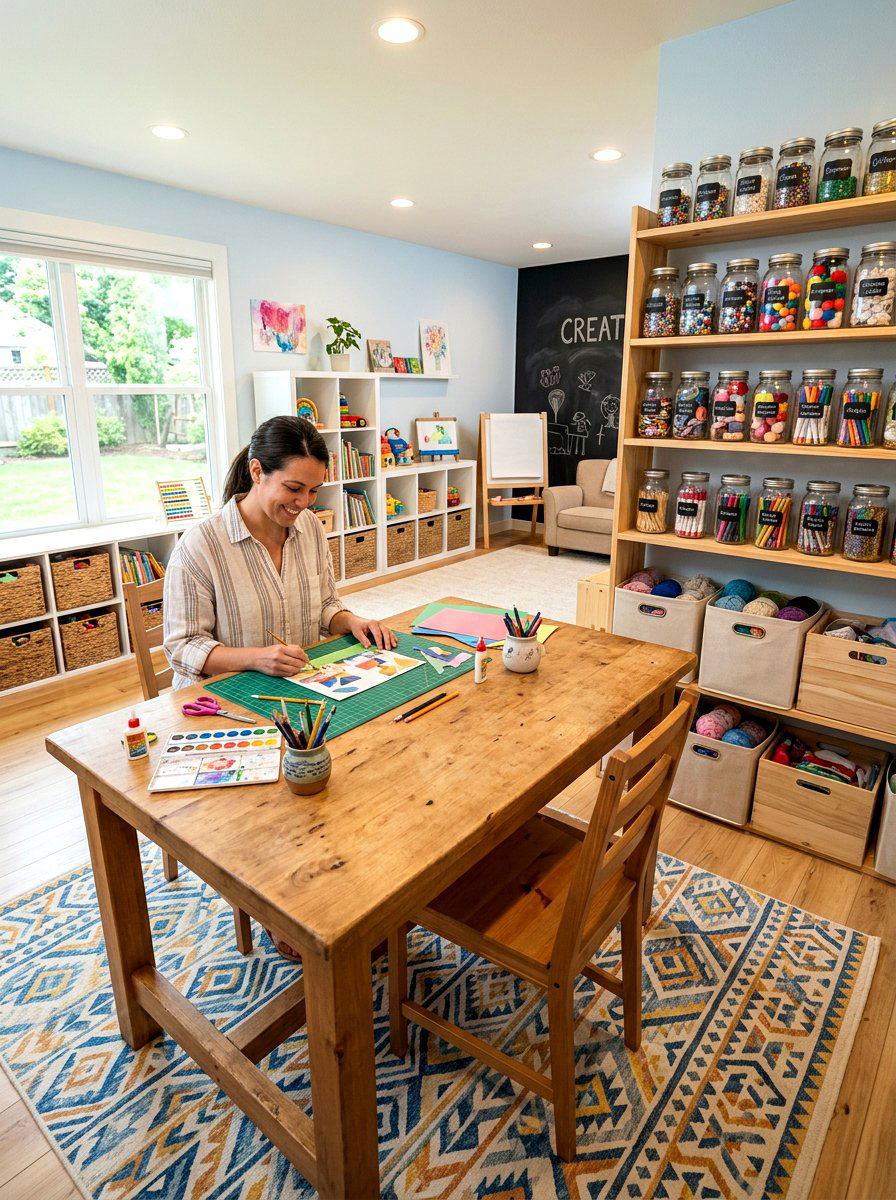
A creative craft corner is a dedicated space for messy projects like painting, clay modeling, and paper crafts. Use a sturdy table with a durable top and nearby storage for all necessary supplies like glue, scissors, and glitter. A wall-mounted drying rack is a great addition for keeping wet paintings safe while they dry. This zone helps contain the "creative chaos" to one area, making it easier to keep the rest of the playroom tidy. Organize supplies in clear, labeled jars so children can see what is available and learn to tidy up after themselves. It fosters a sense of artistic independence and pride.
28. Stuffed Animal Zoo
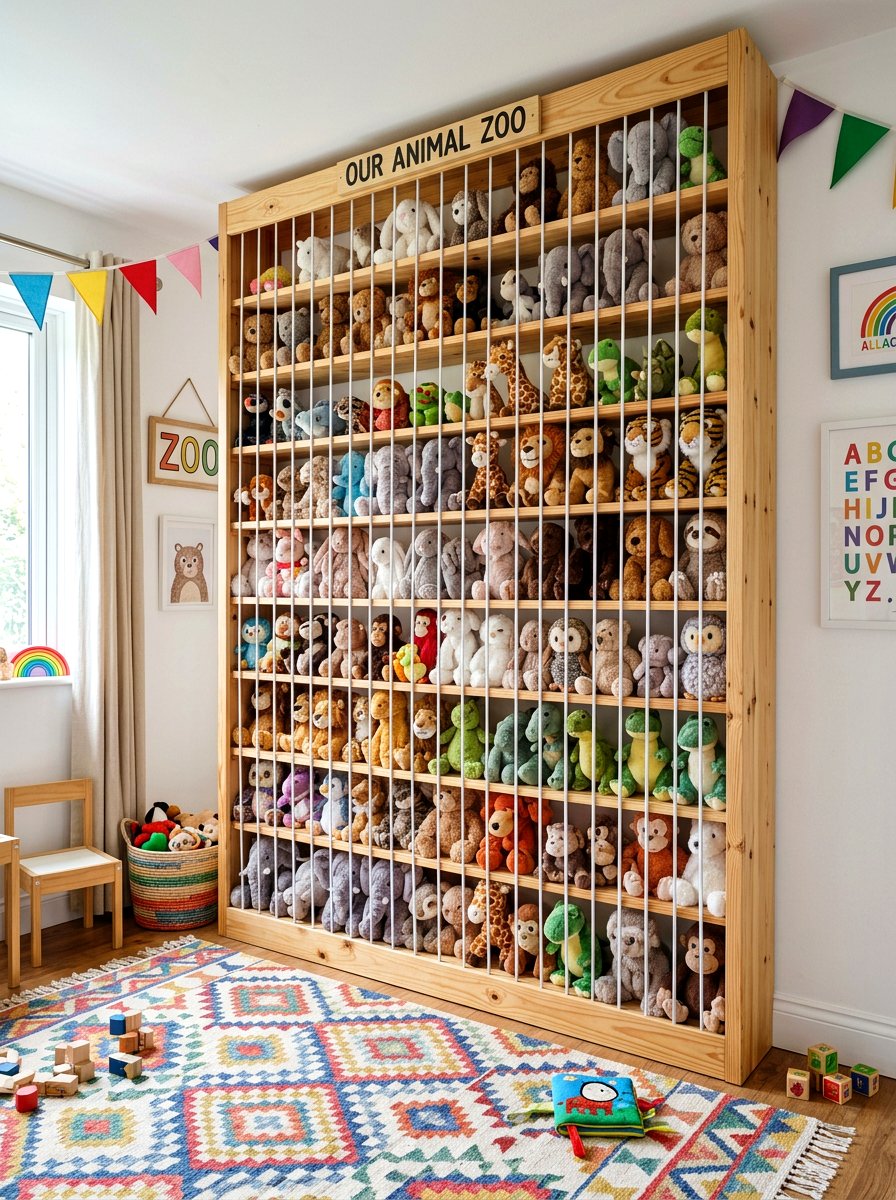
A stuffed animal zoo provides a fun and organized way to manage a large collection of plush toys. You can build a simple wooden frame with elastic "bars" that keep the animals contained while allowing them to be easily pulled out. This vertical storage solution keeps the plushies off the floor and prevents them from becoming a mountain of clutter. It also makes it easy for children to see all their friends at once without dumping out a giant bin. This playful storage idea adds character to the room and turns a common organization struggle into a delightful design feature that children will enjoy using.
29. Open Shelving Unit
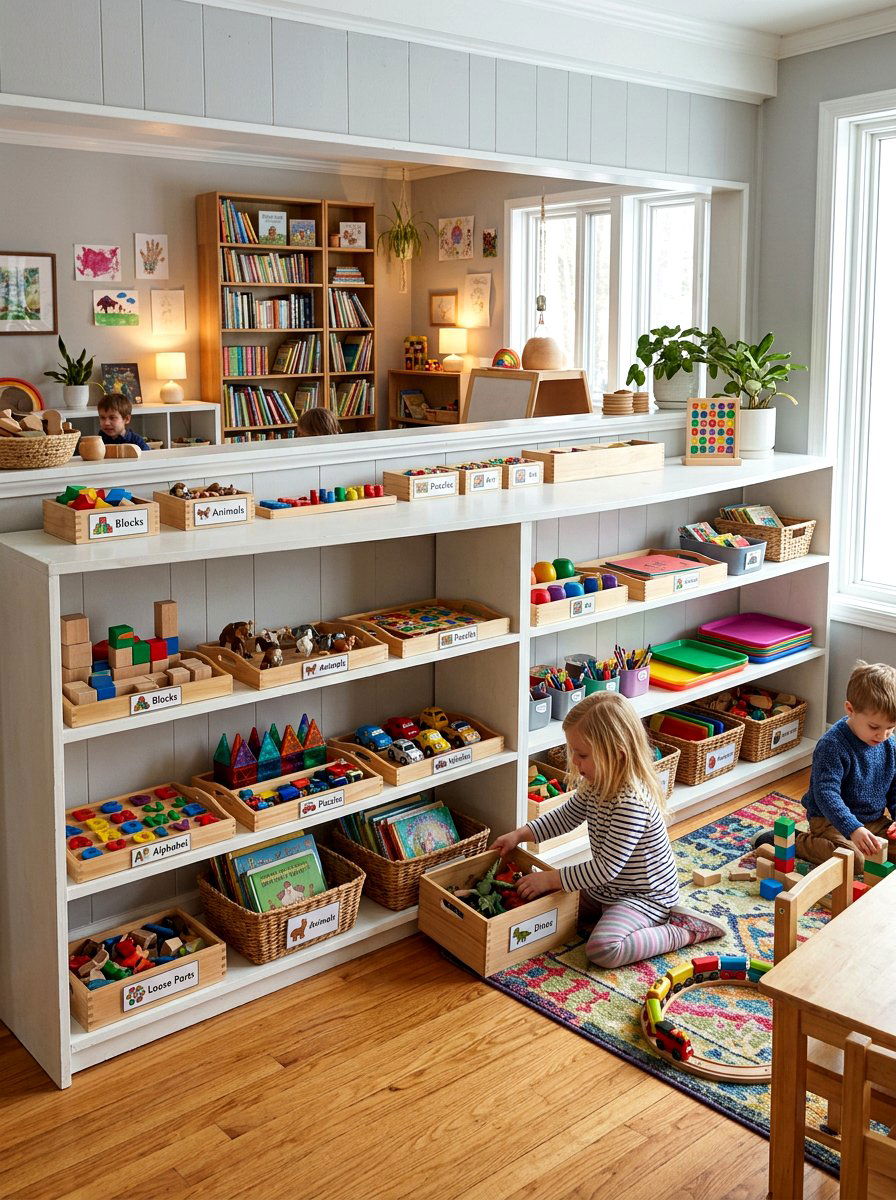
An open shelving unit is a staple of a functional toy library, providing easy visibility and access for children. Choose a wide, low unit that acts as a room divider or sits flush against a wall. Use the shelves to display toys in an inviting way, often using trays or baskets to keep sets together. This setup encourages children to "browse" for an activity much like they would in a bookstore. Because everything is visible, it is easier for kids to remember where to put things back. This promotes order and independence, making the playroom a more structured and peaceful environment for daily learning and fun.
30. Activity Table
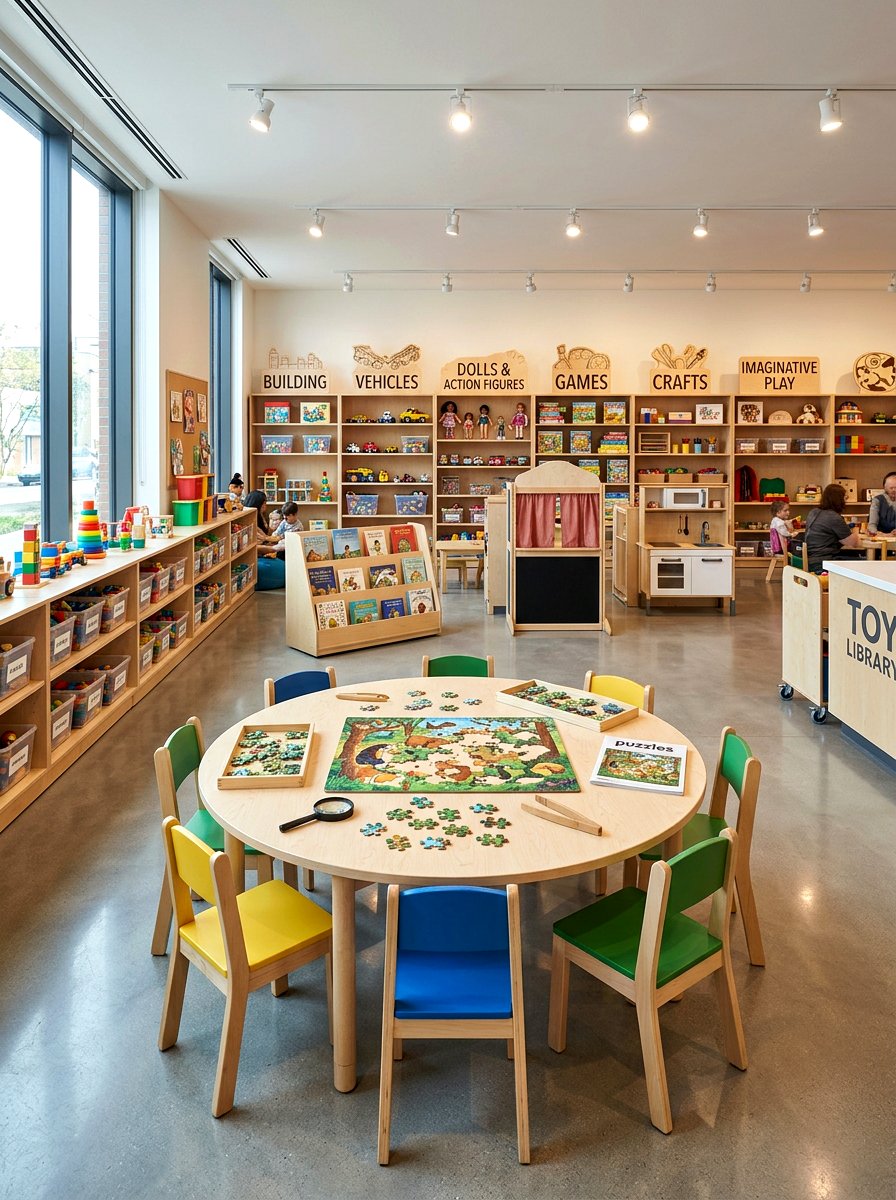
An activity table is a versatile centerpiece that supports a wide range of play, from puzzles and board games to building blocks. Look for a design that is at the right height for children to either sit or stand comfortably while they work. Some tables feature reversible tops with chalkboard or whiteboard surfaces for added functionality. This piece of furniture defines the central play zone and provides a stable surface for focused tasks. It helps keep small pieces off the rug where they are easily lost. Choosing a table with a simple, modern design ensures it fits perfectly within the clean aesthetic of your toy library.
Conclusion:
Setting up a toy library playroom is a thoughtful investment in your child’s development and your home’s organization. By creating designated zones for reading, building, and creating, you provide a structured environment that encourages focused and independent play. These thirty ideas demonstrate that organization doesn't have to be boring; it can be a beautiful and integral part of the room’s design. Whether you have a sprawling attic or a small corner, implementing these systems will reduce daily stress and make cleanup a breeze. A well-organized playroom allows the true magic of childhood imagination to flourish in a calm, tidy, and inspiring space.

Related posts: