Creating a shared playroom for children requires a delicate balance between individual needs and collective fun. When siblings share a space, the design must accommodate different ages, interests, and activity levels while remaining organized. A well-planned playroom encourages cooperation and provides a safe haven for creativity to flourish. It is not just about toys; it is about building an environment where memories are made. You need to consider traffic flow, storage solutions, and zones that allow for both quiet reading and high-energy play. By focusing on cohesive themes and smart furniture placement, you can transform any room into a magical destination for your little ones to grow together as they learn and play daily.
1. Shared Playroom Layout
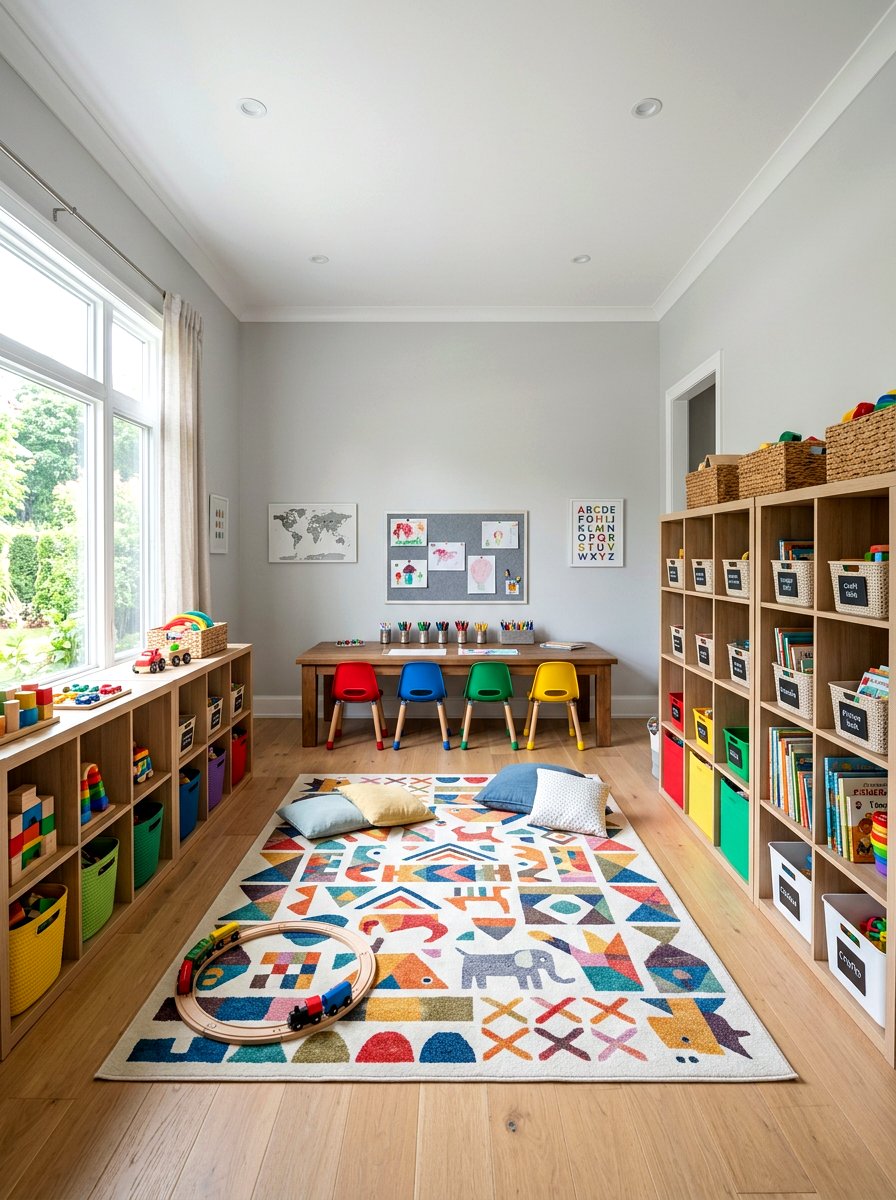
Designing a functional shared playroom layout starts with understanding how your children interact within the space. You should aim for an open central area that allows for imaginative floor play like building train tracks or sprawling out with blocks. Placing furniture against the walls helps maximize this middle ground. Consider a symmetrical approach where each child has their own specific zone for personal toys, balanced by a large communal table in the center. This arrangement fosters both independent play and social interaction. Use low bookshelves to define these boundaries without making the room feel closed off or cramped. It creates a sense of order while keeping everything accessible for small hands to reach easily.
2. Neutral Shared Playroom
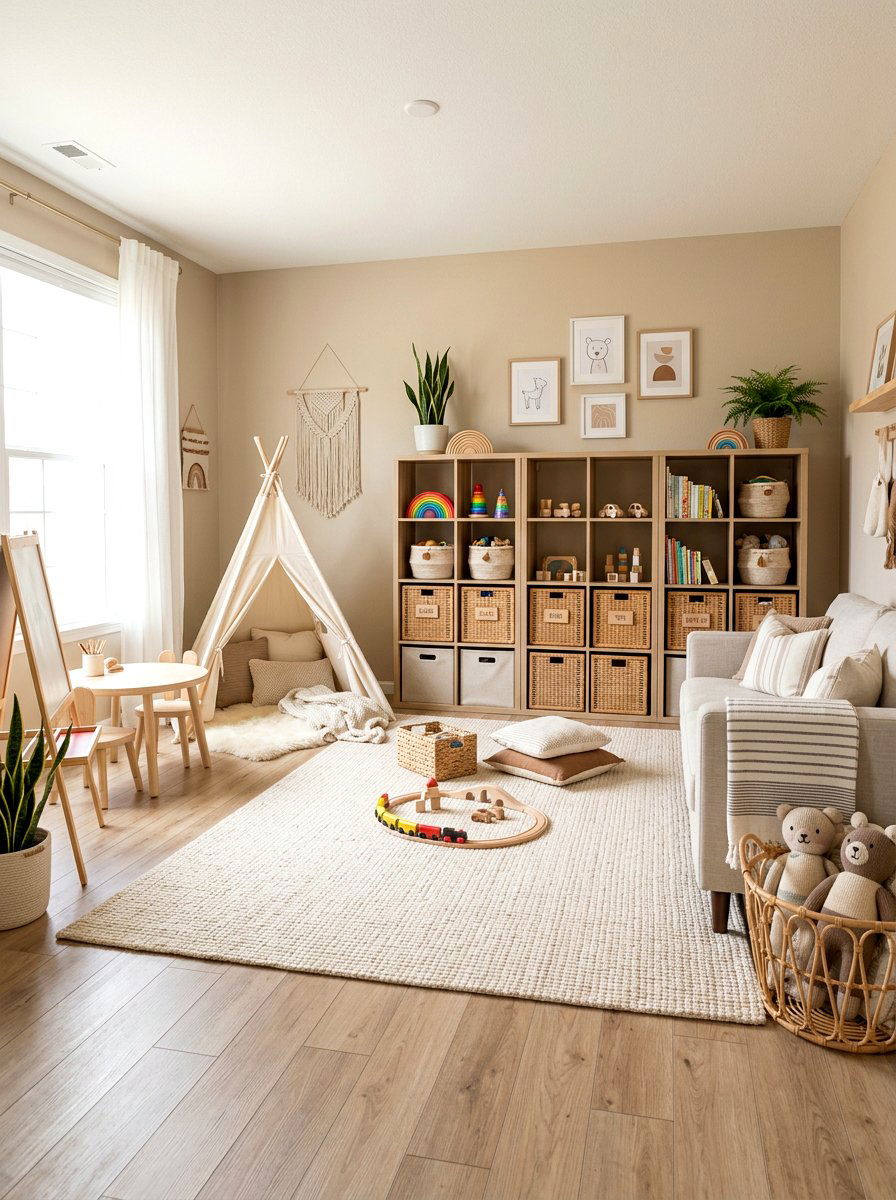
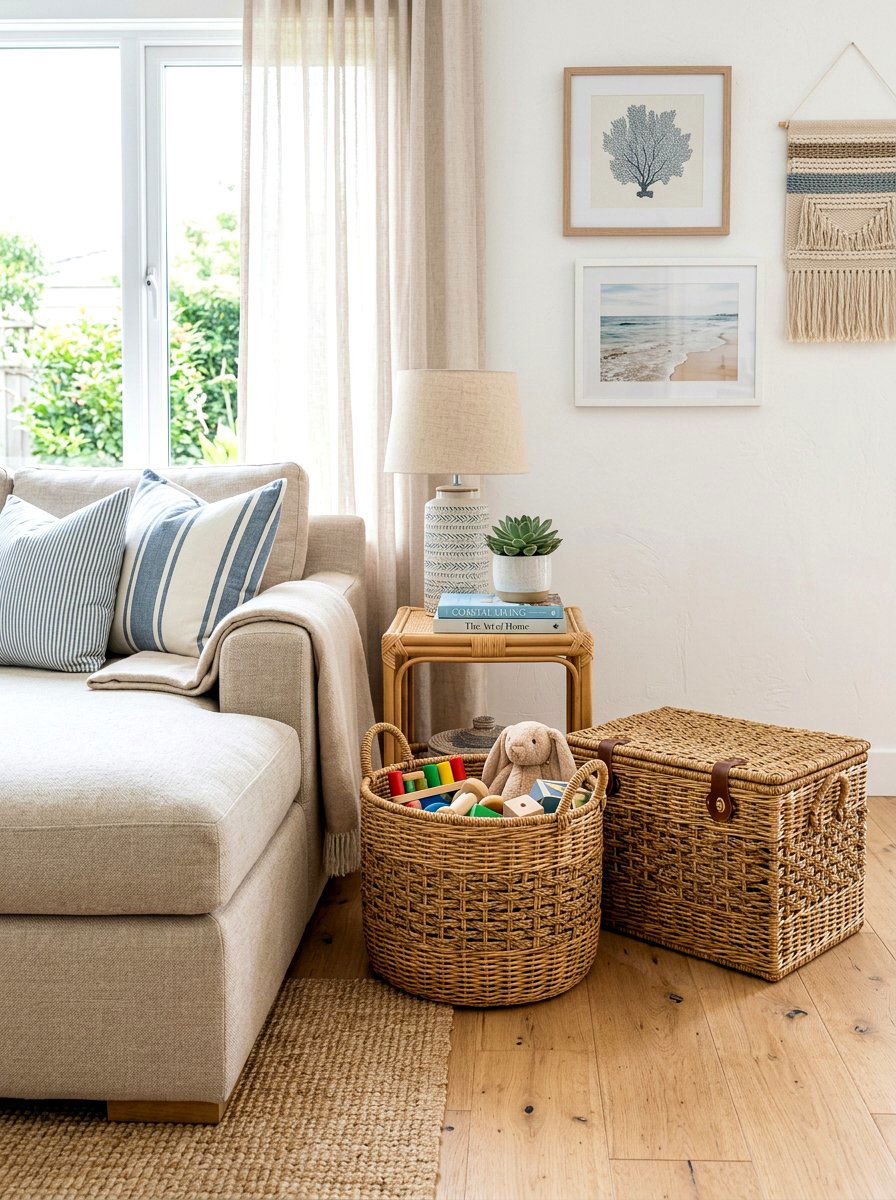
A neutral shared playroom offers a timeless aesthetic that grows with your children as they transition through different developmental stages. By using a palette of soft beiges, warm wood tones, and crisp whites, you create a calm atmosphere that prevents sensory overload. This design style works exceptionally well for siblings of different genders or ages. Incorporate natural textures like jute rugs, wicker baskets, and linen cushions to add depth and warmth to the environment. Large windows letting in natural light can enhance the airy feel of the space. It allows the colorful toys to become the focal points without clashing with the overall interior decor of your modern family home.
3. Small Space Playroom
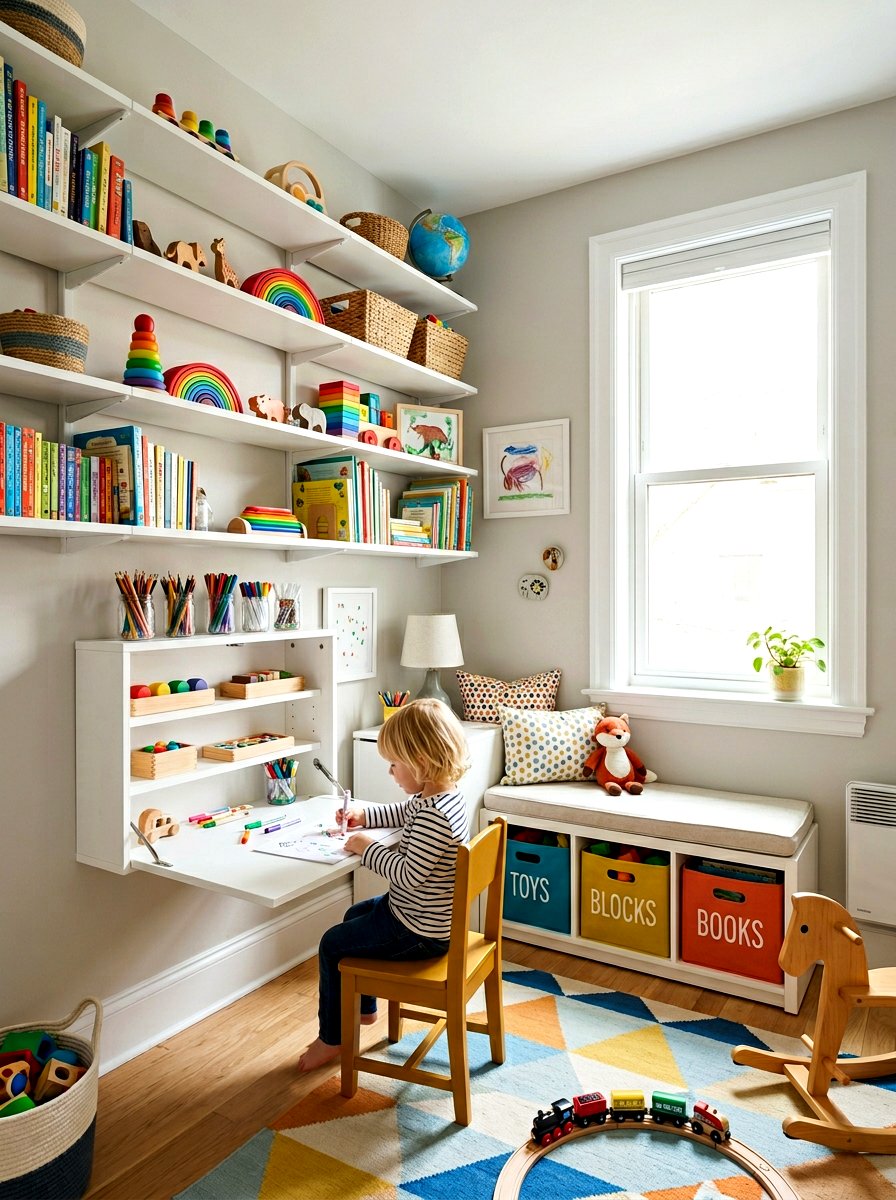
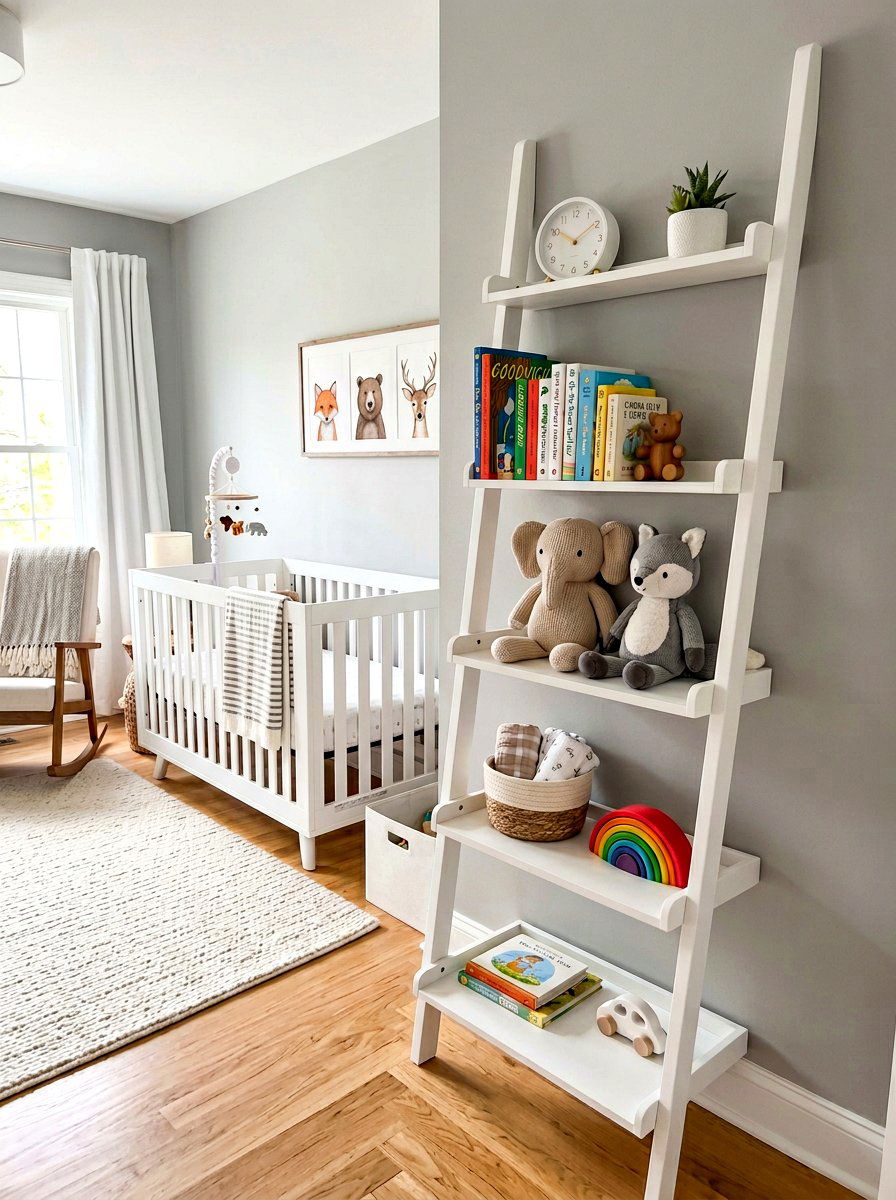
Maximizing a small space playroom involves clever vertical solutions and multifunctional furniture that keeps the floor clear for activities. Use tall wall-mounted shelving units to store books and games safely out of the way while maintaining an organized appearance. A fold-down wall desk can provide a sturdy surface for coloring or puzzles without taking up permanent real estate in a tight room. Opt for a light color scheme to make the area feel larger and more inviting for the kids. Choosing furniture with built-in storage, like benches or ottomans, helps hide clutter instantly. Every square inch counts when you are designing for two or more children in a compact living area.
4. Toddler And Big Kid Playroom
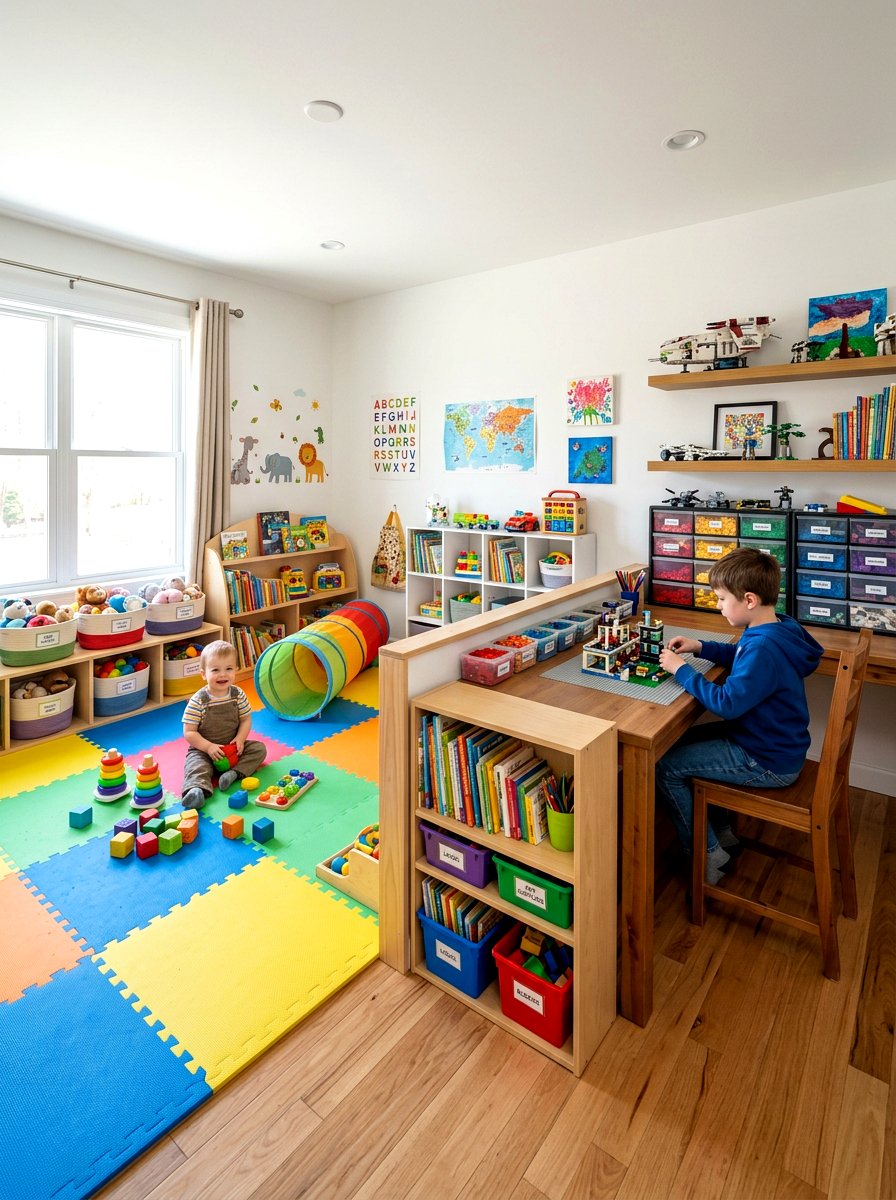
Creating a toddler and big kid playroom requires clear zoning to ensure safety and age-appropriate fun for everyone involved. Place soft mats and low-to-the-ground sensory toys in one corner for the younger child. Meanwhile, set up a higher desk or sturdy shelving unit for the older sibling's smaller toys, like building bricks or craft supplies, to keep them out of reach. Using a physical divider like a low cabinet can help separate these areas while keeping the room cohesive. This setup prevents younger kids from accidentally choking on small parts while allowing older siblings to focus on their more complex projects without any unwanted interference.
5. Attic Shared Playroom
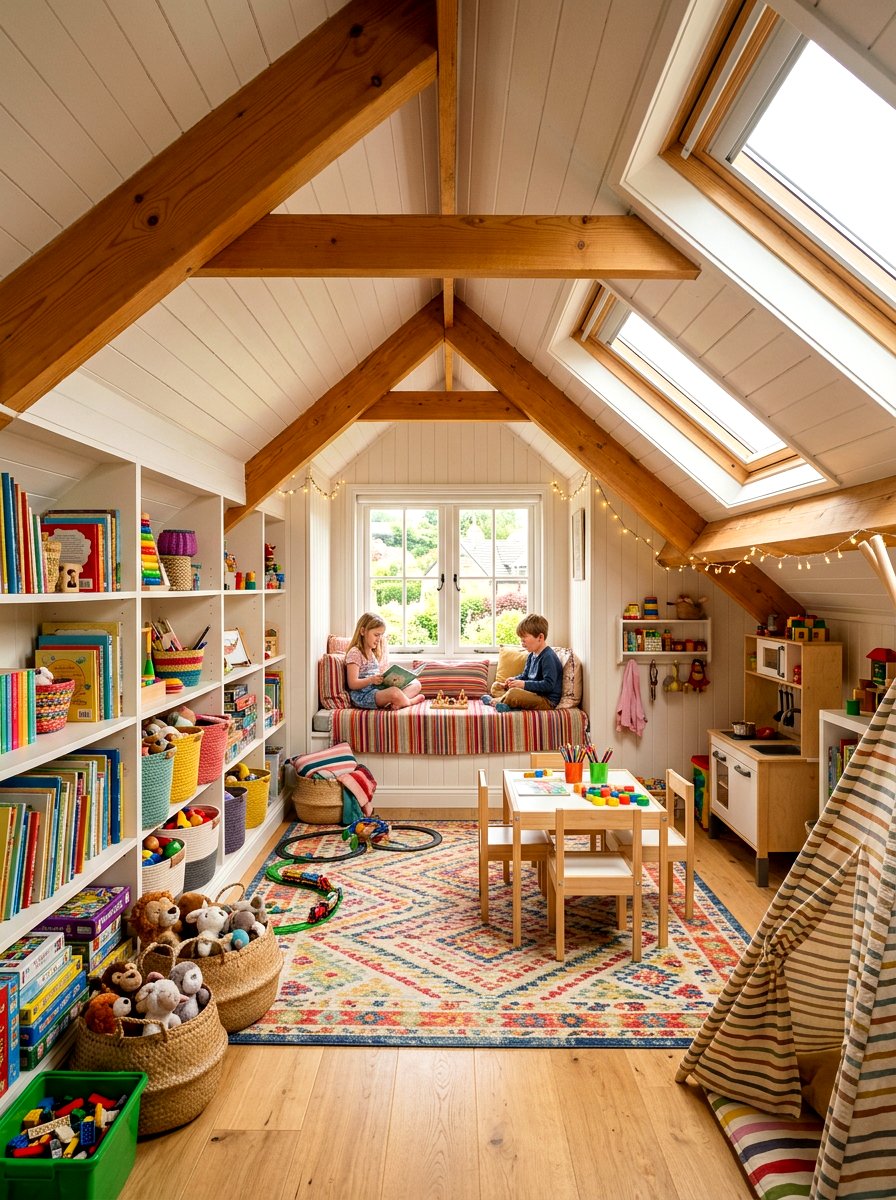
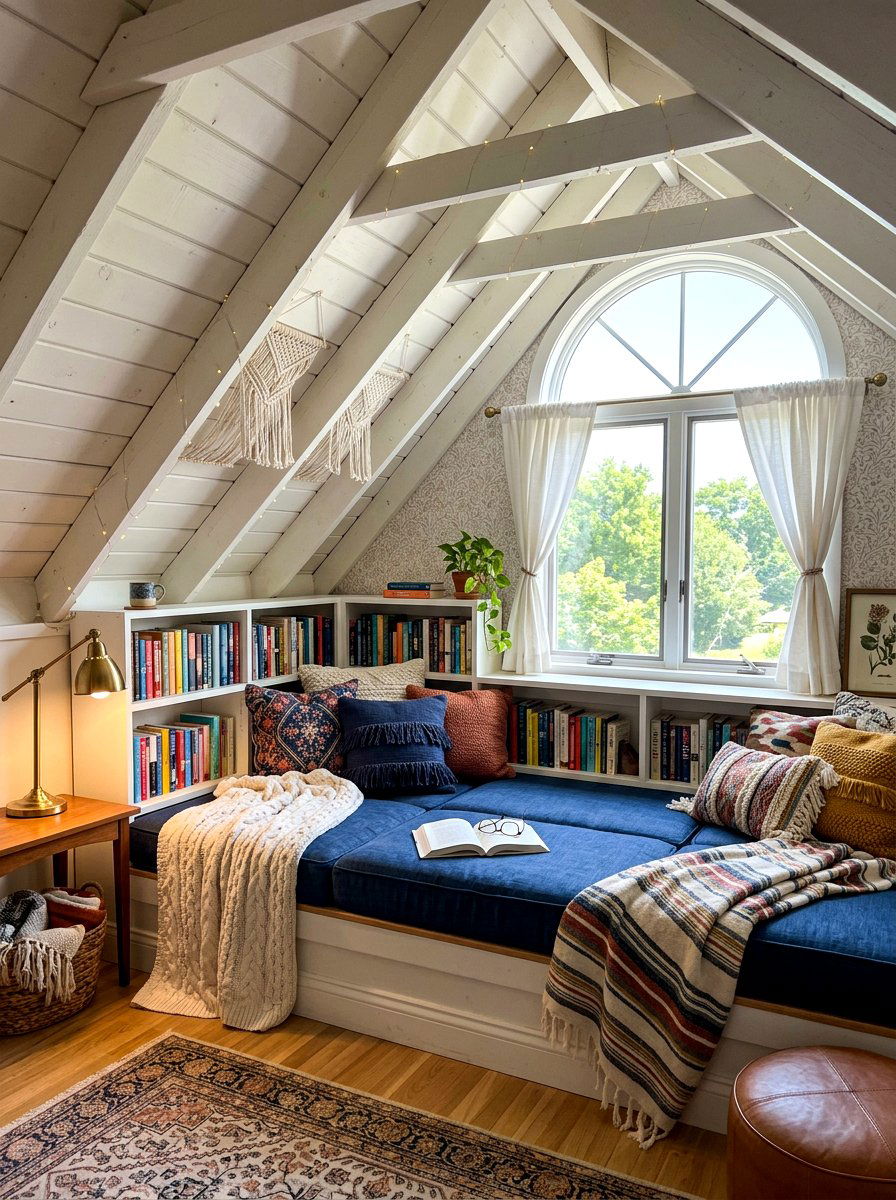
An attic shared playroom makes excellent use of tucked-away space that often goes unused in many traditional homes. The unique sloped ceilings can be used to create cozy built-in reading nooks or custom storage cubbies that fit perfectly into the eaves. Use light colors on the walls and ceiling to prevent the space from feeling cave-like or dark. Installing skylights can flood the room with natural light, making it a bright and cheerful haven for play. Consider using low-profile furniture to accommodate the lower ceiling heights near the walls. This secluded area provides children with a private retreat where they can let their imaginations run wild away from chores.
6. Basement Playroom For Siblings
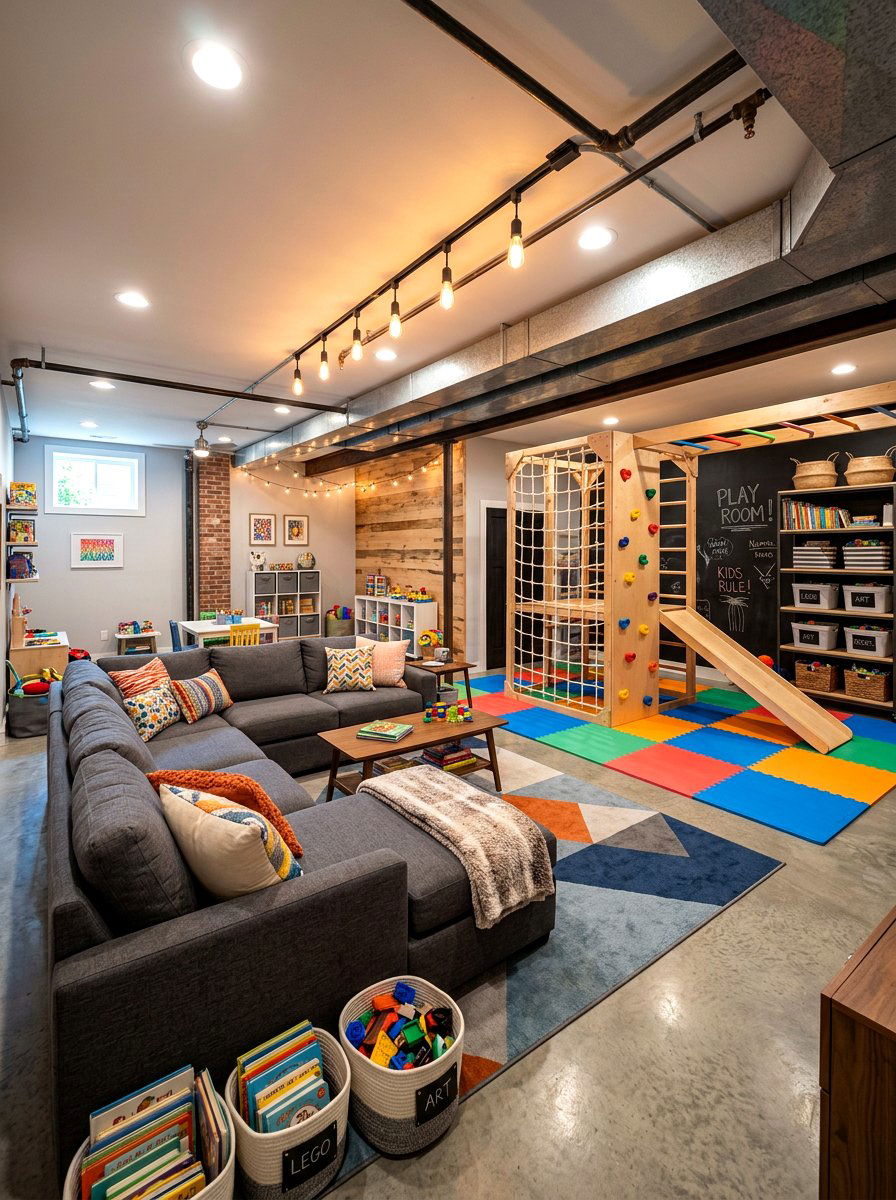
Transforming your basement into a basement playroom for siblings is a smart way to contain noise and keep the main living areas tidy. Since basements can sometimes feel chilly, prioritize high-quality area rugs and soft floor mats to provide a warm surface for play. Bright, layered lighting is essential to counteract the lack of natural windows and keep the energy levels high. You can divide the large open space into distinct sections for active play, such as a mini indoor gym, and quiet zones for crafts or movies. Using durable, easy-to-clean materials like luxury vinyl tile ensures the room can handle rough play and accidental spills.
7. Gender Neutral Playroom
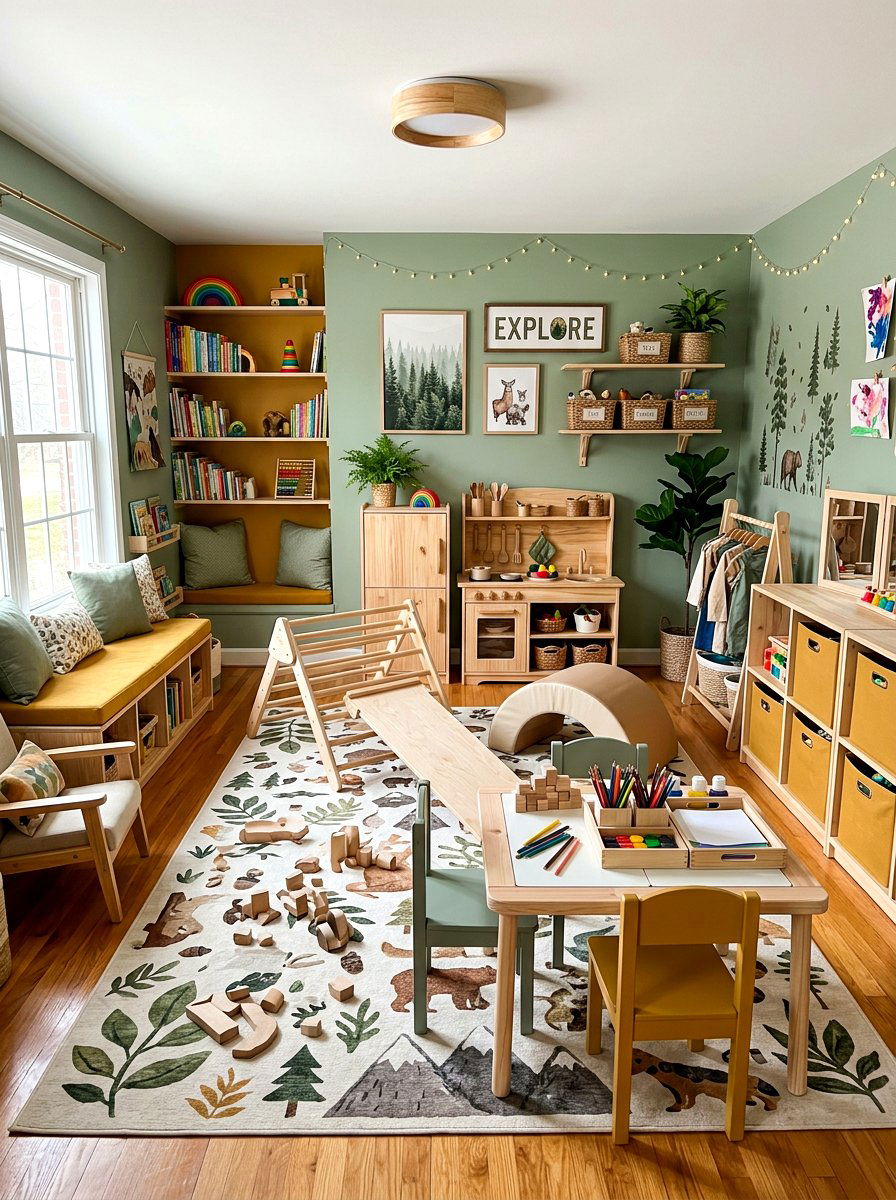
A gender neutral playroom focuses on inclusive colors and themes that appeal to all children regardless of their individual preferences. Opt for a color palette featuring sage green, mustard yellow, or soft terracotta to create a sophisticated yet playful vibe. Incorporate themes like nature, space, or animals that naturally interest a wide range of kids. This approach makes it easier to pass down toys and decor as children grow. Use versatile furniture pieces in natural wood or white finishes to maintain a clean and unified look. By avoiding traditional pink and blue stereotypes, you foster a space where every child feels equally represented and welcome to express themselves freely.
8. Modern Shared Playroom
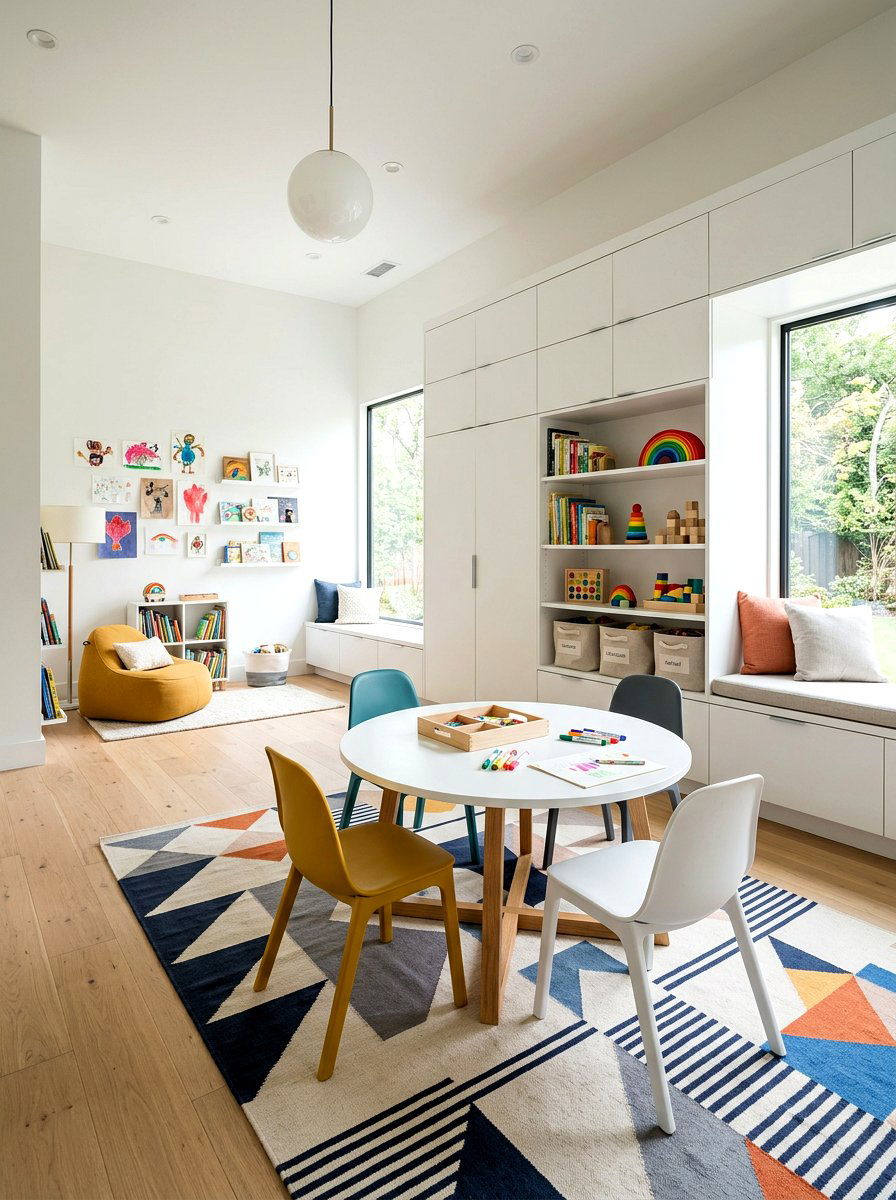
A modern shared playroom emphasizes clean lines, a minimal color palette, and high-quality furniture that blends with the rest of your home. Focus on sleek storage solutions like wall-integrated cabinets and minimalist shelving to keep toy clutter out of sight. Use a few bold graphic prints or a single statement light fixture to add personality without overcomplicating the design. Furniture should be both stylish and durable, such as molded plastic chairs or wooden play tables with smooth finishes. This aesthetic is perfect for parents who want a kid-friendly space that still feels sophisticated. It creates a serene environment that encourages organized play and easy cleanup after a busy day.
9. Montessori Shared Playroom
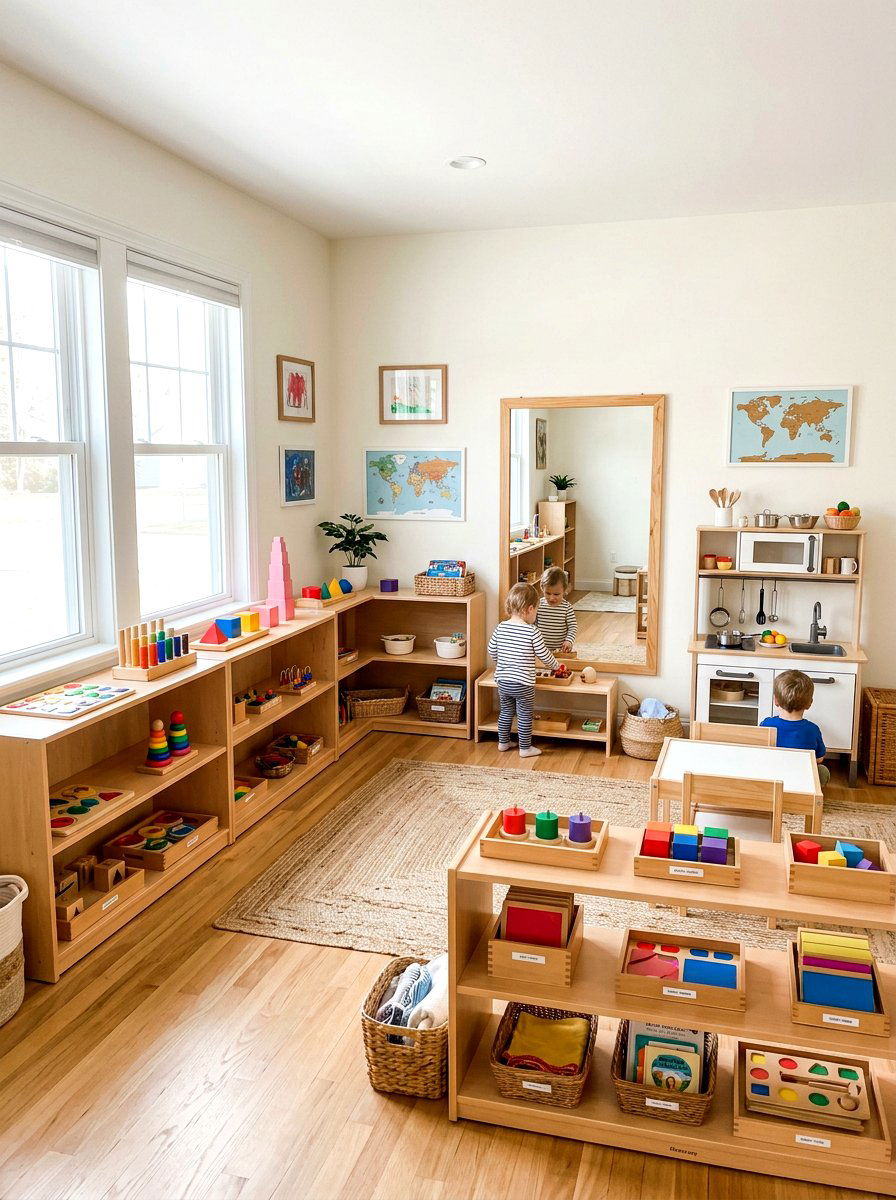
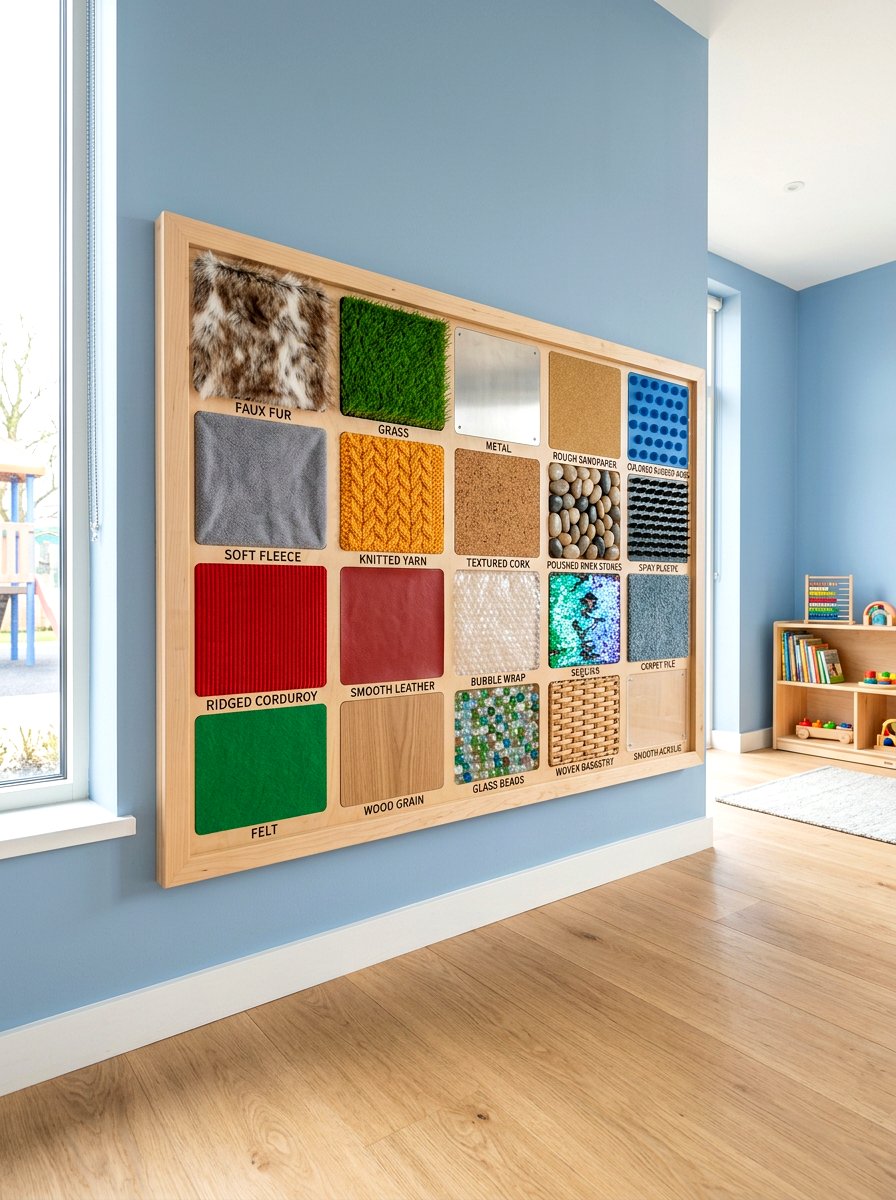
Implementing a Montessori shared playroom design focuses on accessibility and fostering independence for children of all ages. Use low, open shelving where toys are displayed neatly in baskets, allowing kids to choose their activities without adult assistance. Create distinct stations for practical life skills, art, and gross motor play using child-sized furniture. A heavy emphasis on natural materials like wood, cotton, and wool creates a grounding environment that supports concentration. Ensure the floor space is mostly open for movement and exploration. By limiting the number of toys available and rotating them regularly, you help children engage more deeply with their surroundings and learn to respect their shared belongings.
10. Colorful Shared Playroom
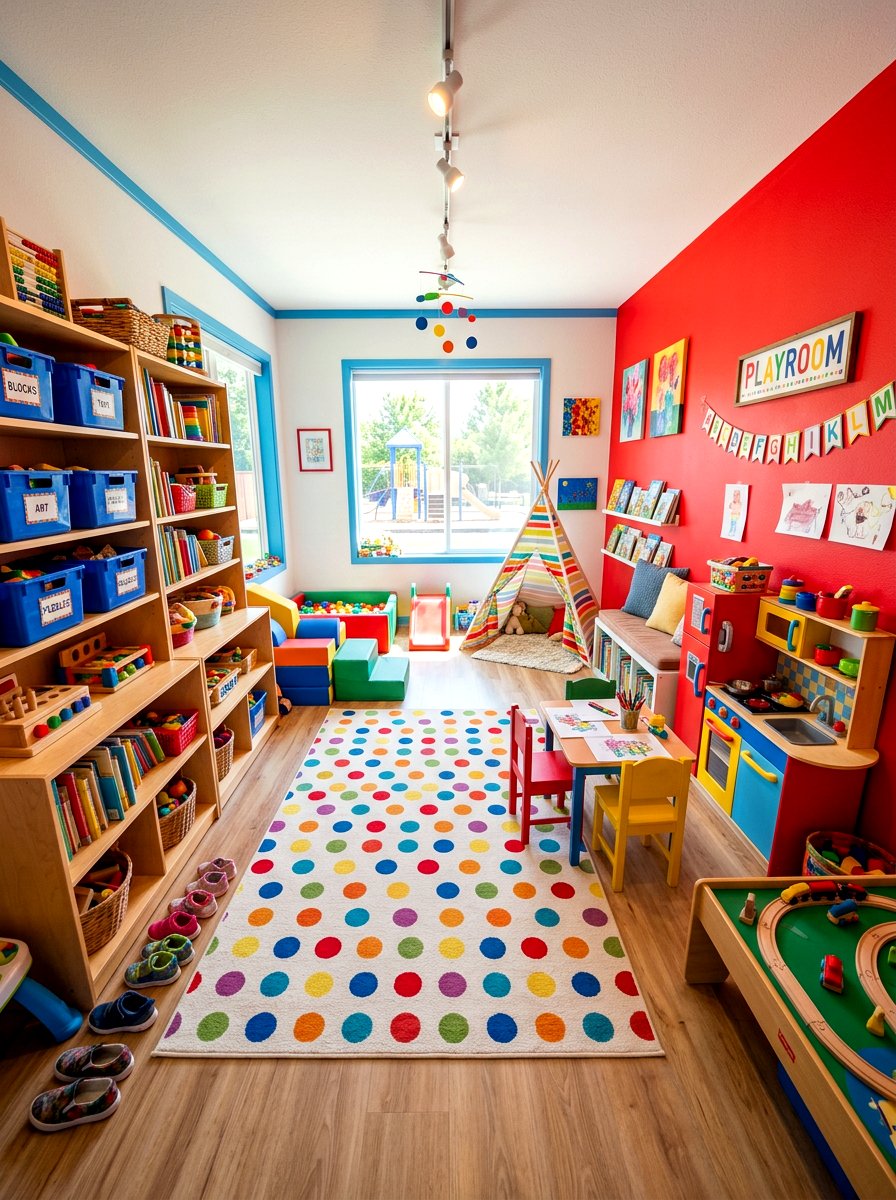
A colorful shared playroom is the perfect place to experiment with bold hues and energetic patterns that stimulate creativity. Consider a vibrant accent wall or a multi-colored geometric rug to set a cheerful tone for the entire space. Use primary colors in small doses, like red chairs or blue storage bins, to keep the room feeling lively and fun. Balance the bright colors with white walls to prevent the space from feeling overwhelming or messy. Incorporating playful wall decals or hanging colorful bunting can add a festive touch without a permanent commitment. This high-energy environment is ideal for active kids who thrive in a visually stimulating and joyful atmosphere.
11. Minimalist Playroom For Kids
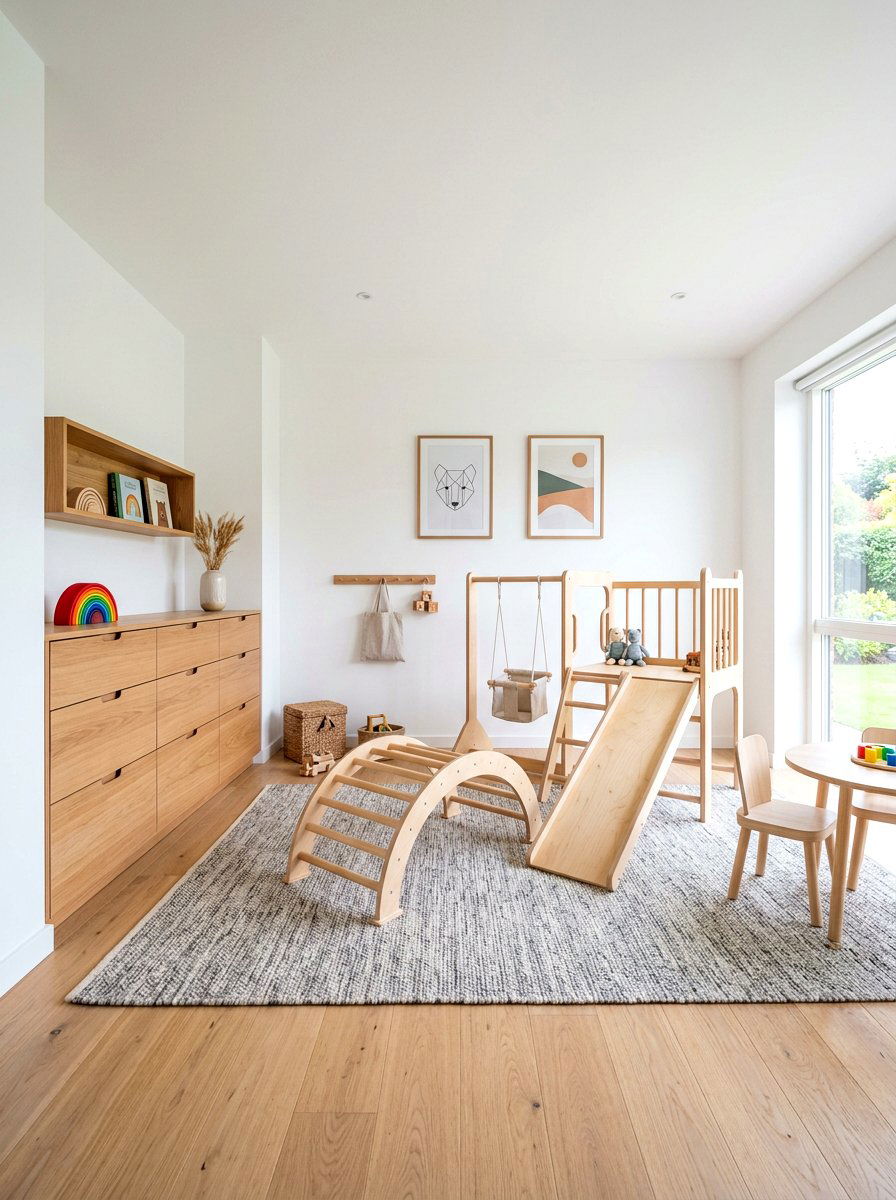
A minimalist playroom for kids prioritizes quality over quantity, creating a peaceful space that reduces distractions and clutter. Stick to a limited color palette of whites and grays to maintain a clean and focused environment. Use high-quality wooden toys that serve multiple purposes and store them in hidden cabinets or sleek drawers. The goal is to provide enough open floor space for movement while keeping only the most loved items on display. This design philosophy teaches children to value their possessions and focus more intently on the task at hand. It also makes the daily tidying process much faster and less stressful for both parents and kids.
12. Shared Playroom Storage
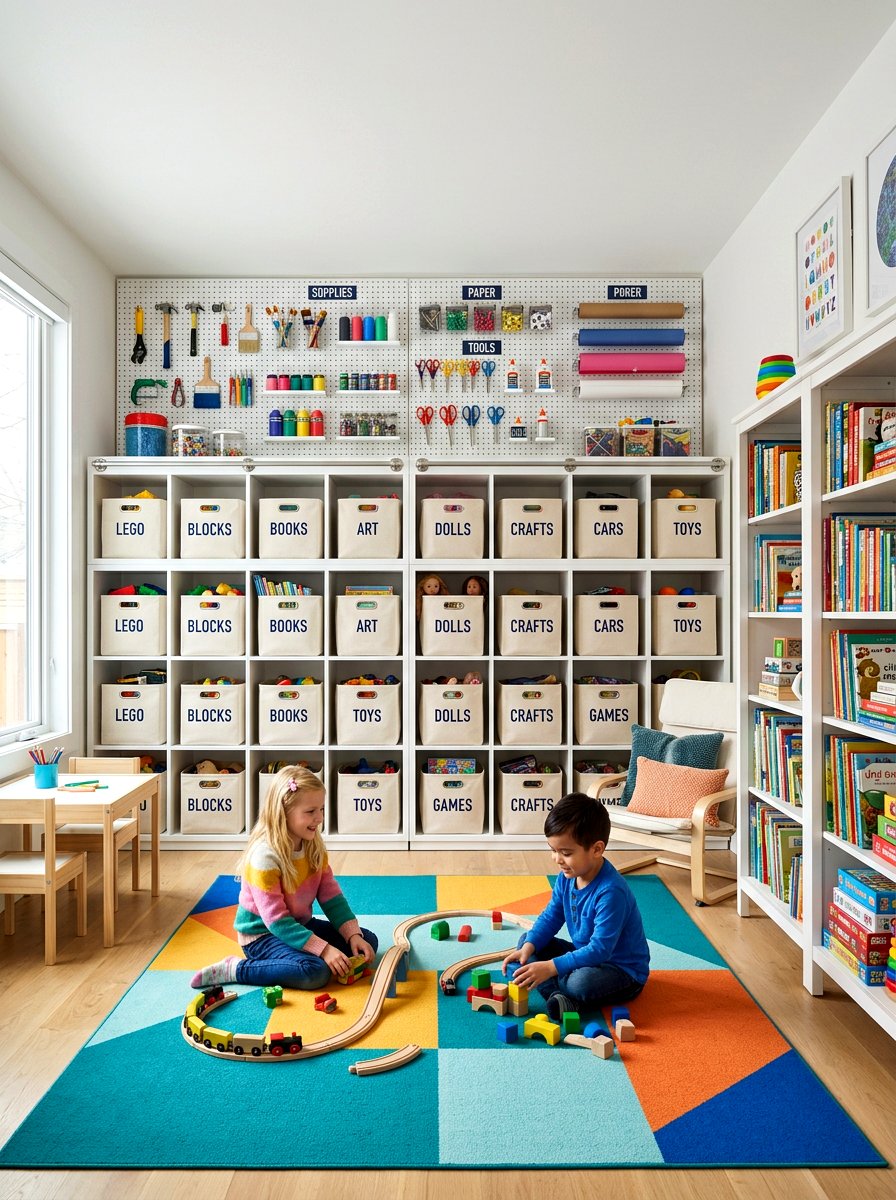
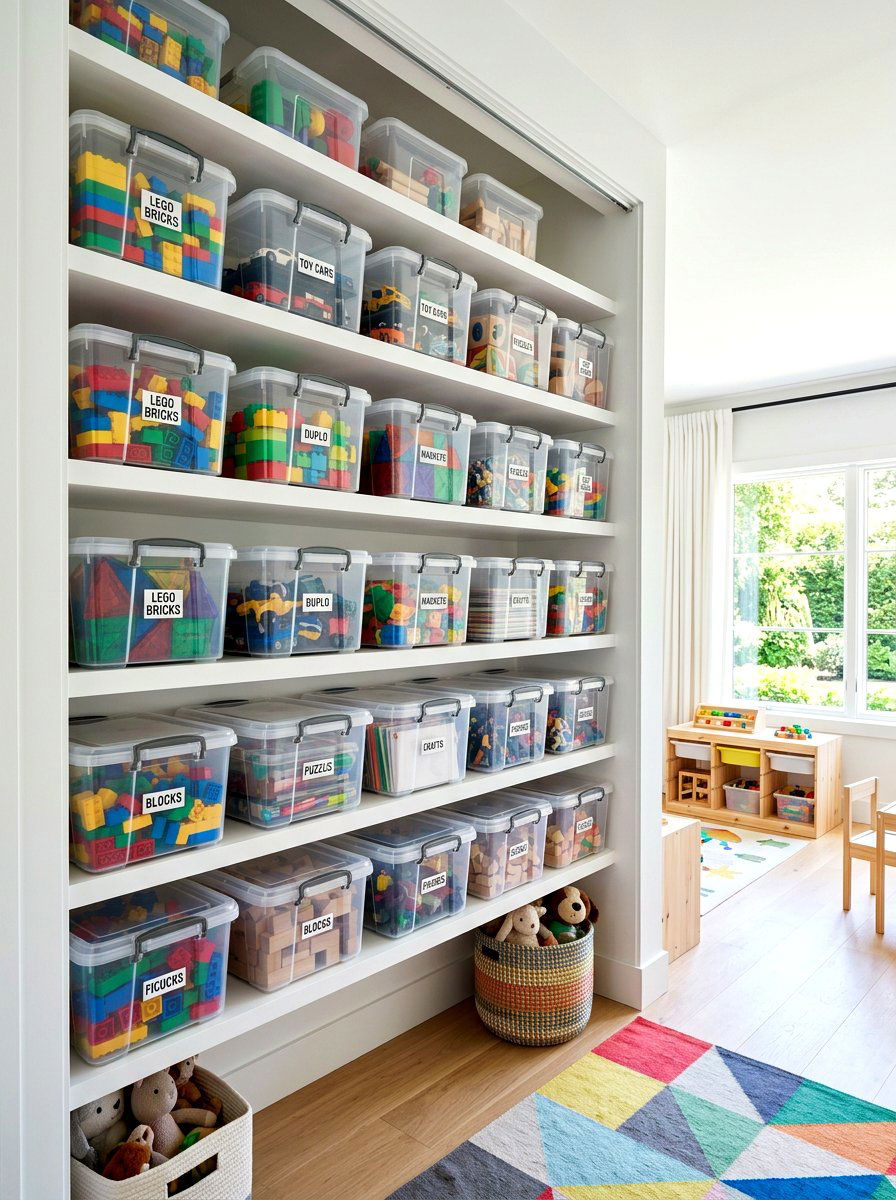
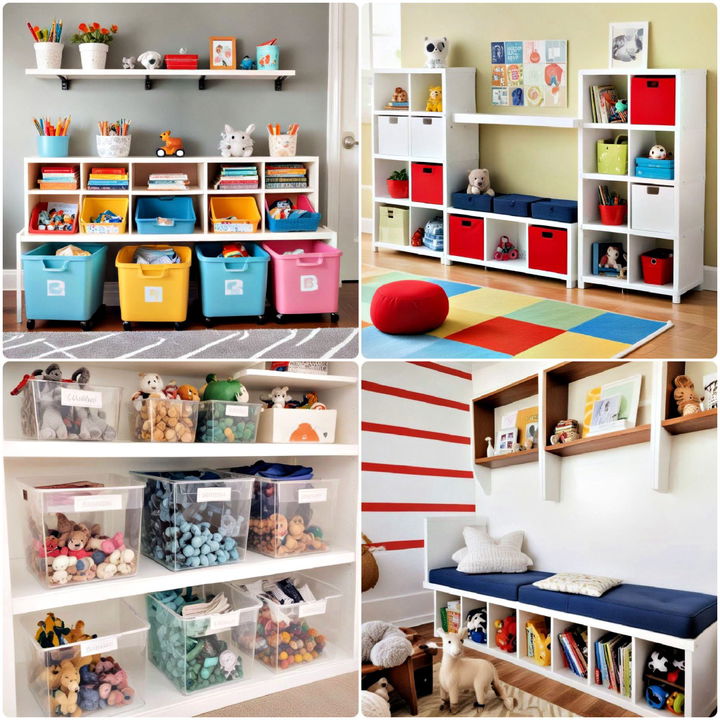
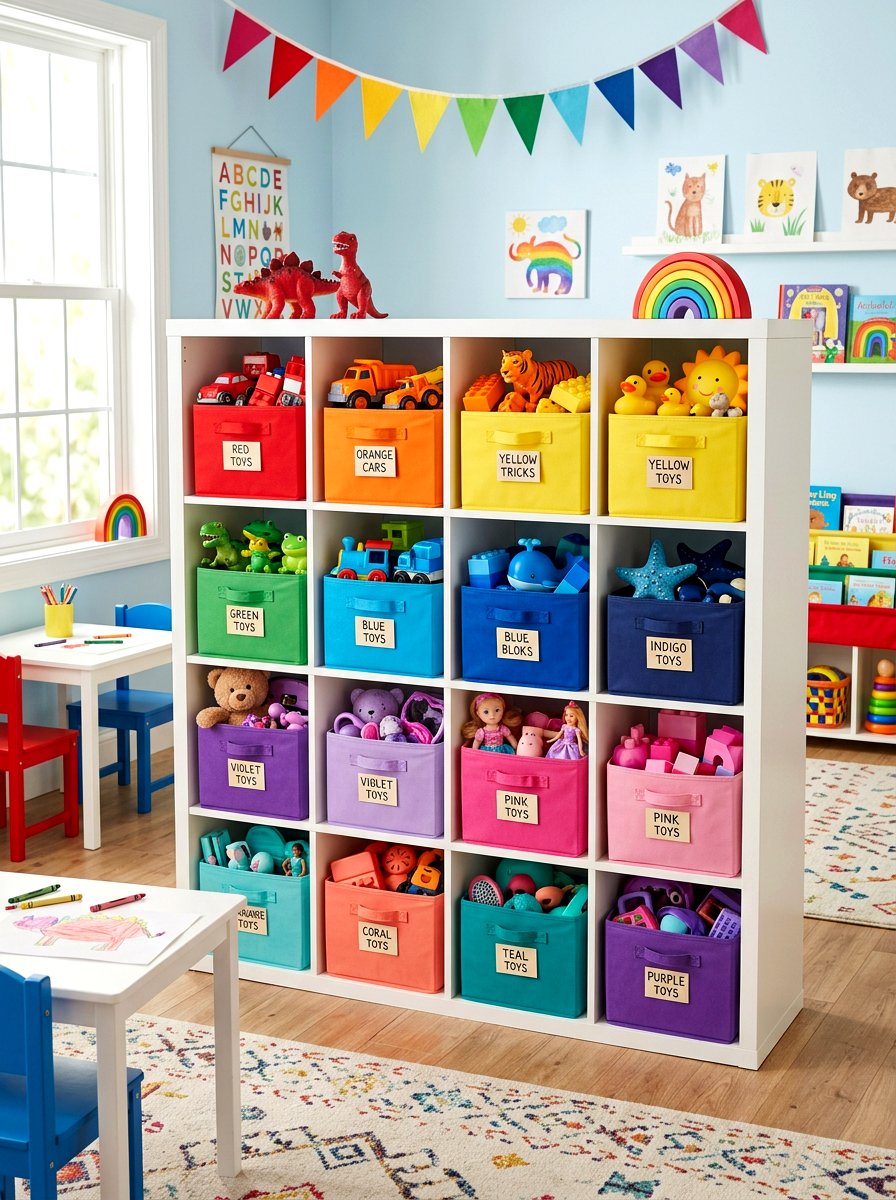
Effective shared playroom storage is the backbone of any successful kids' space, especially when multiple children are involved. Use a combination of open cubbies for frequently used toys and closed cabinets for items with small pieces or art supplies. Labeling bins with both words and pictures helps children of different ages take responsibility for cleaning up their own things. Consider vertical storage solutions like pegboards or wall-mounted baskets to free up valuable floor real estate. Having a dedicated spot for every toy reduces arguments and makes finding items a breeze. Smart storage ensures the room remains a functional and inviting place for play rather than a chaotic mess.
13. Playroom Reading Nook
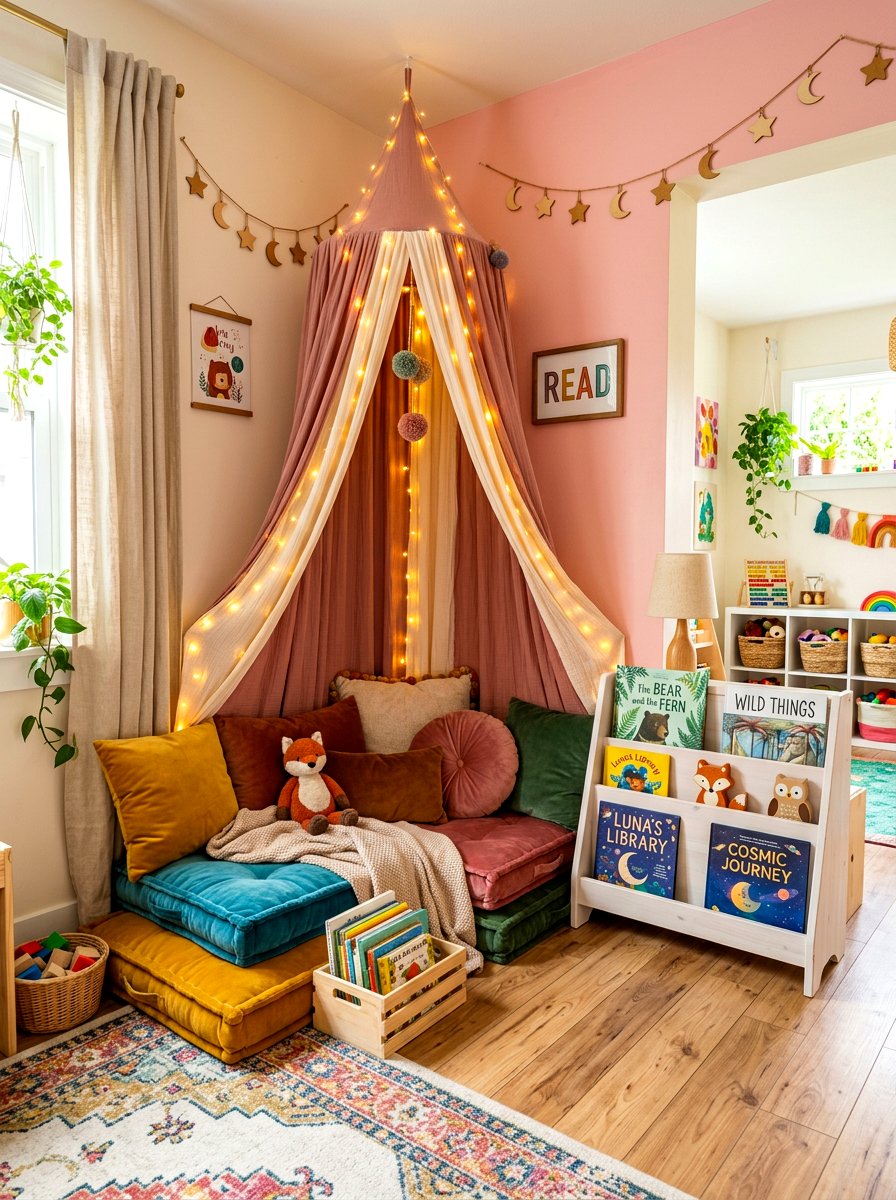
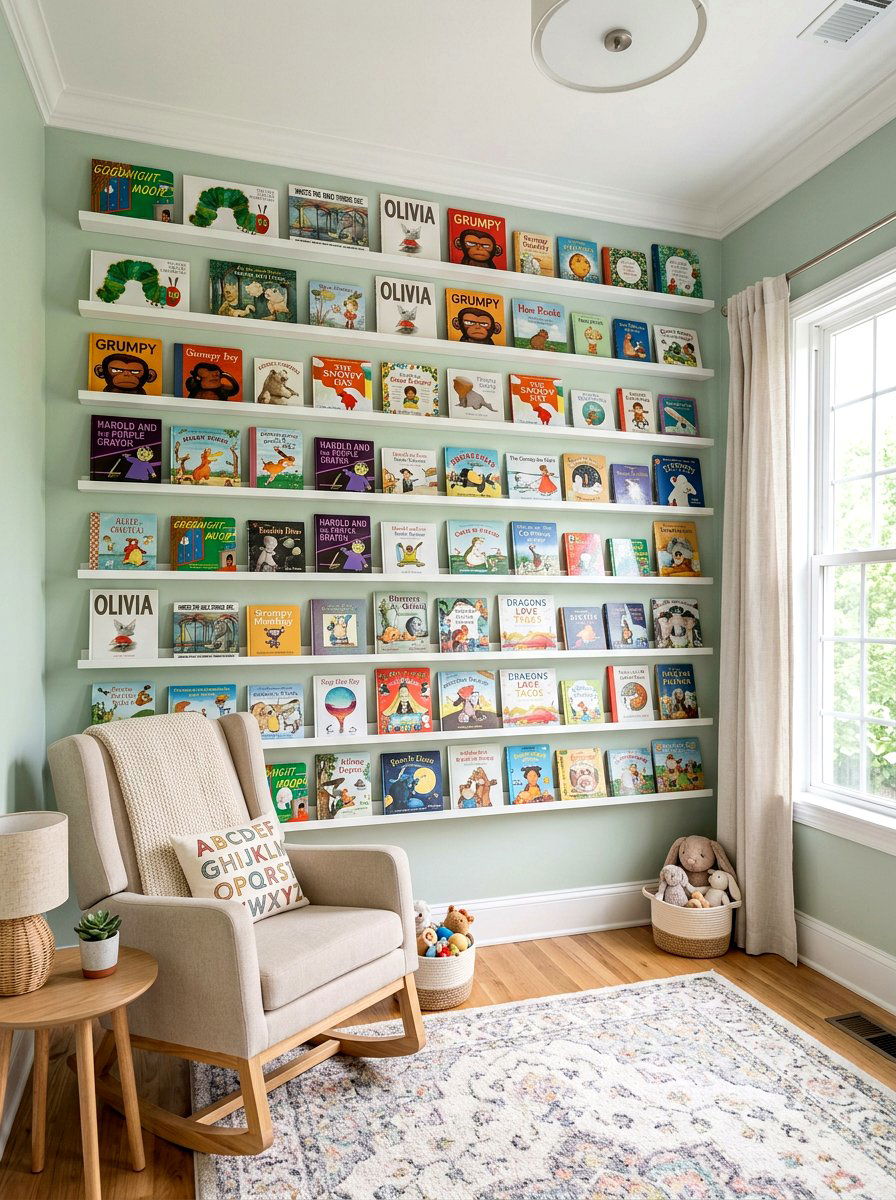
A dedicated playroom reading nook provides a quiet sanctuary where children can escape into their favorite stories together. Use a soft floor mattress, a plush rug, or a pile of oversized floor cushions to create a comfortable seating area. Install low-profile forward-facing bookshelves so little ones can easily see the covers of their books and select them independently. Adding a canopy or a set of fairy lights can give the space a magical, cozy feel that encourages lingering. This zone should be placed in a quieter corner of the room, away from the more active play areas. It fosters a lifelong love of reading and quiet reflection.
14. Art Station Playroom
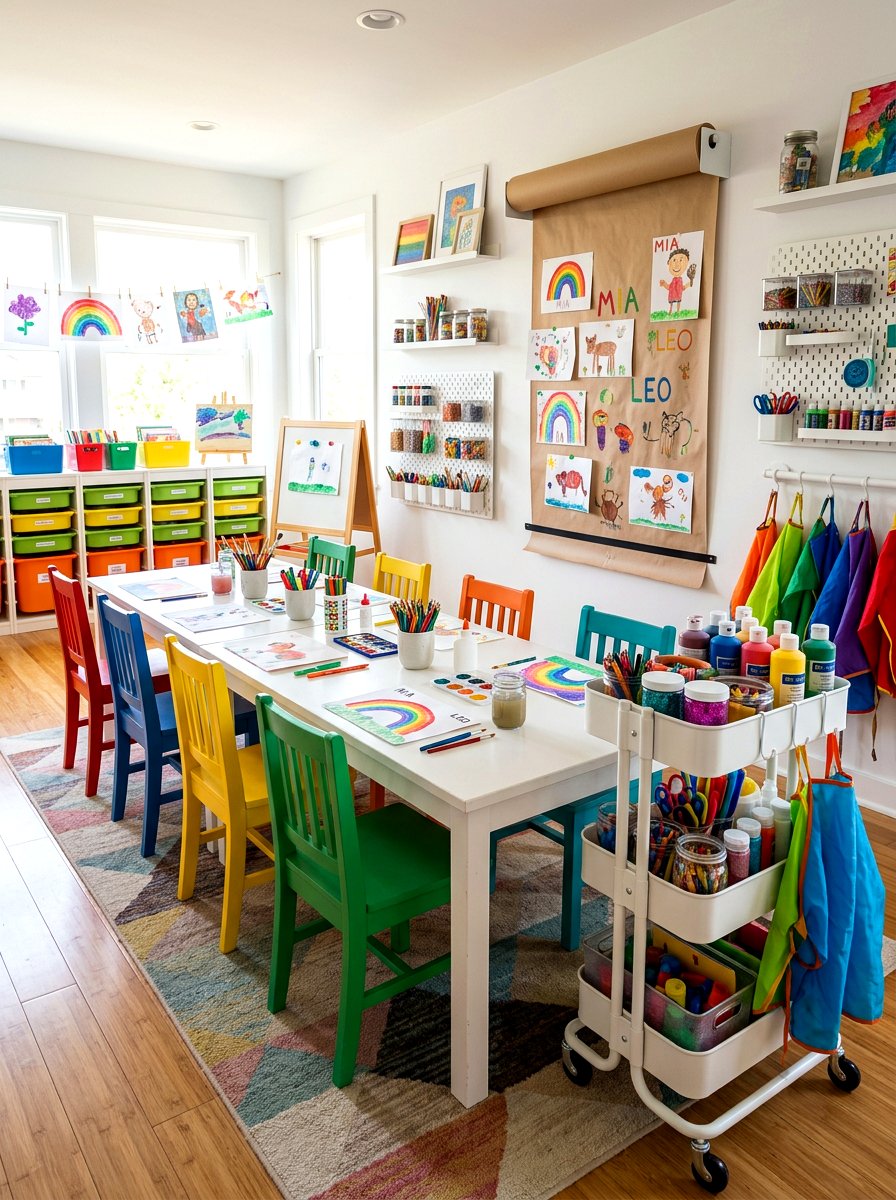
An art station playroom encourages siblings to collaborate on creative projects in a dedicated, mess-friendly environment. Set up a sturdy table with plenty of seating and easy access to supplies like paper, crayons, and washable paints. Use a rolling cart or wall-mounted organizers to keep materials tidy and within reach for the kids. Hanging a large roll of butcher paper on the wall provides an endless canvas for collaborative murals and drawings. Displaying finished artwork on a wire gallery or a magnetic board gives children a sense of pride in their creations. This creative hub keeps all the messy supplies contained in one manageable and organized area.
15. Active Indoor Playroom
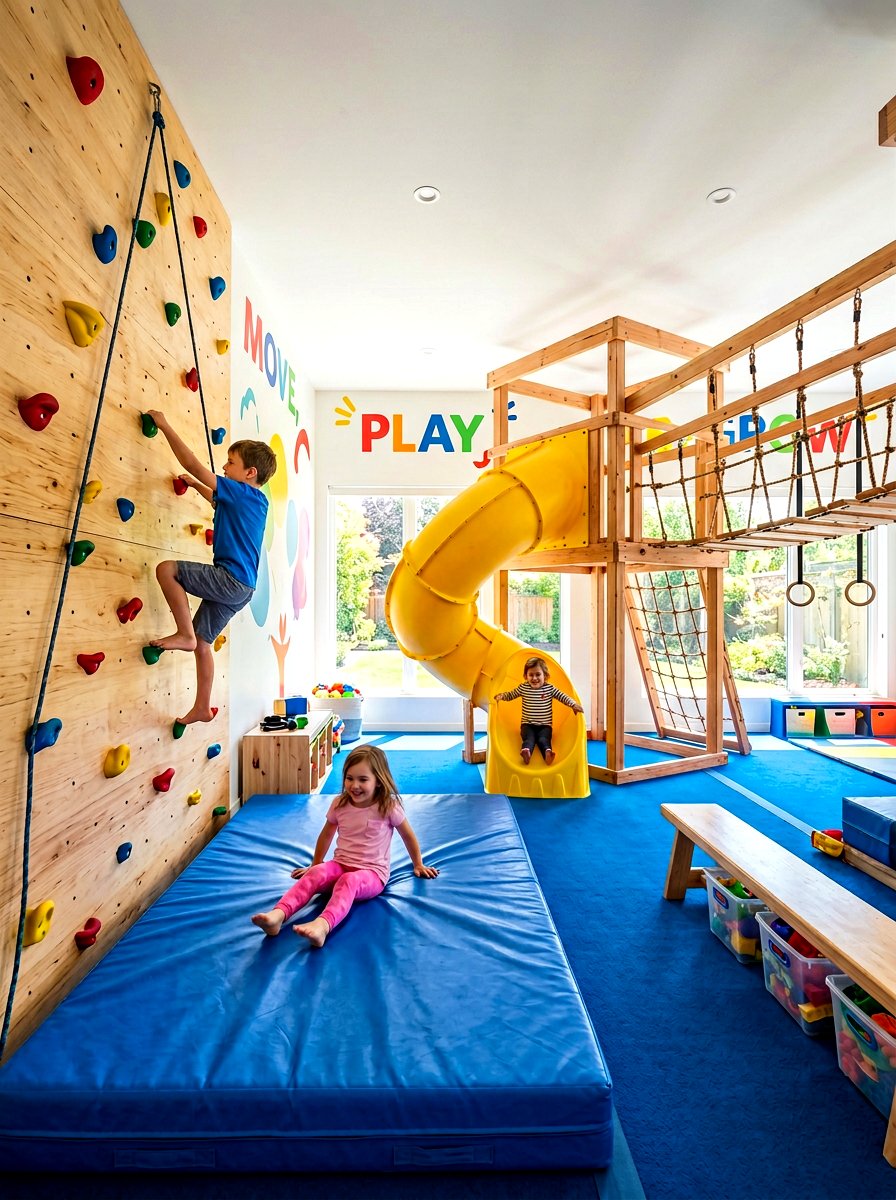
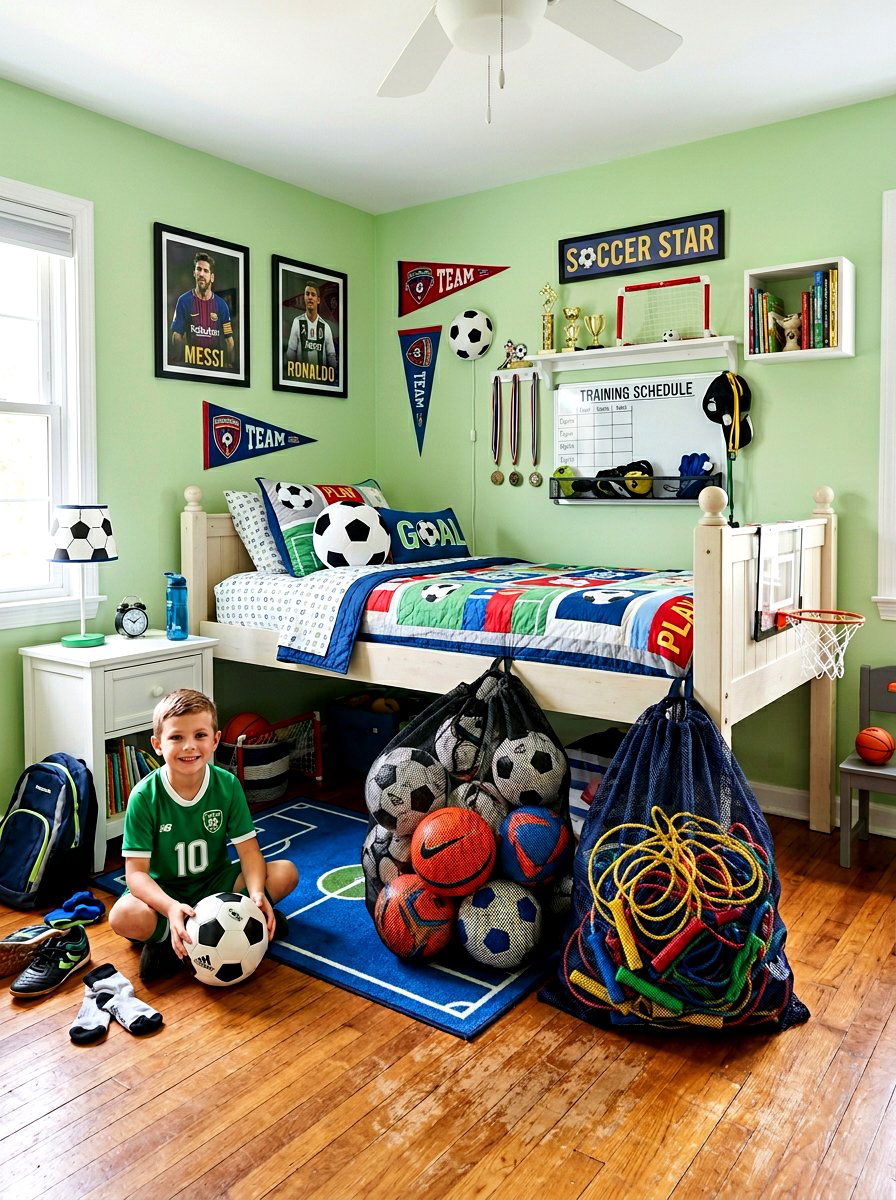
An active indoor playroom is perfect for burning off energy during rainy days or cold winter months. Incorporate equipment like a wall-mounted rock climbing wall, a wooden slide, or a set of soft gymnastic mats. If space allows, a ceiling-mounted swing or a rope ladder can add a thrilling element to the room. Ensure the floor is covered in thick foam tiles or a high-piled rug to provide a safe landing for any tumbles. This design encourages physical development and gross motor skills through play. By providing a safe outlet for movement, you can help children stay active and healthy while remaining comfortably inside the home.
16. Scandi Shared Playroom
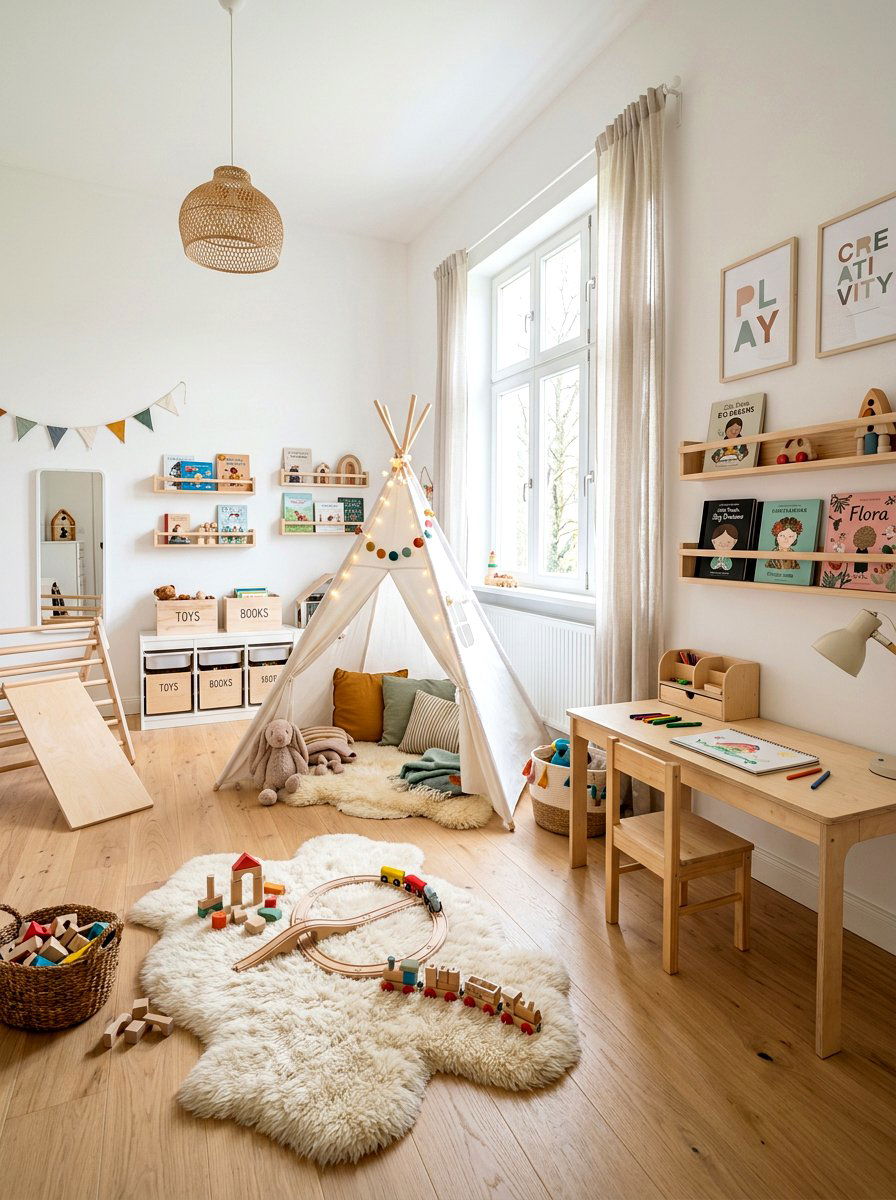
A Scandi shared playroom combines functionality with a light, airy aesthetic rooted in Nordic design principles. Focus on a palette of soft whites, pale woods, and muted pastel accents to create a serene environment. Furniture should be simple and high-quality, often featuring tapered legs and natural finishes. Use cozy textiles like sheepskin rugs and knit blankets to add "hygge" or warmth to the space. Minimalist wall art and wooden toys contribute to the clean and uncluttered look. This style is incredibly popular because it feels sophisticated enough for common areas while remaining completely kid-friendly. It promotes a calm atmosphere that is perfect for shared sibling play.
17. Loft Style Playroom
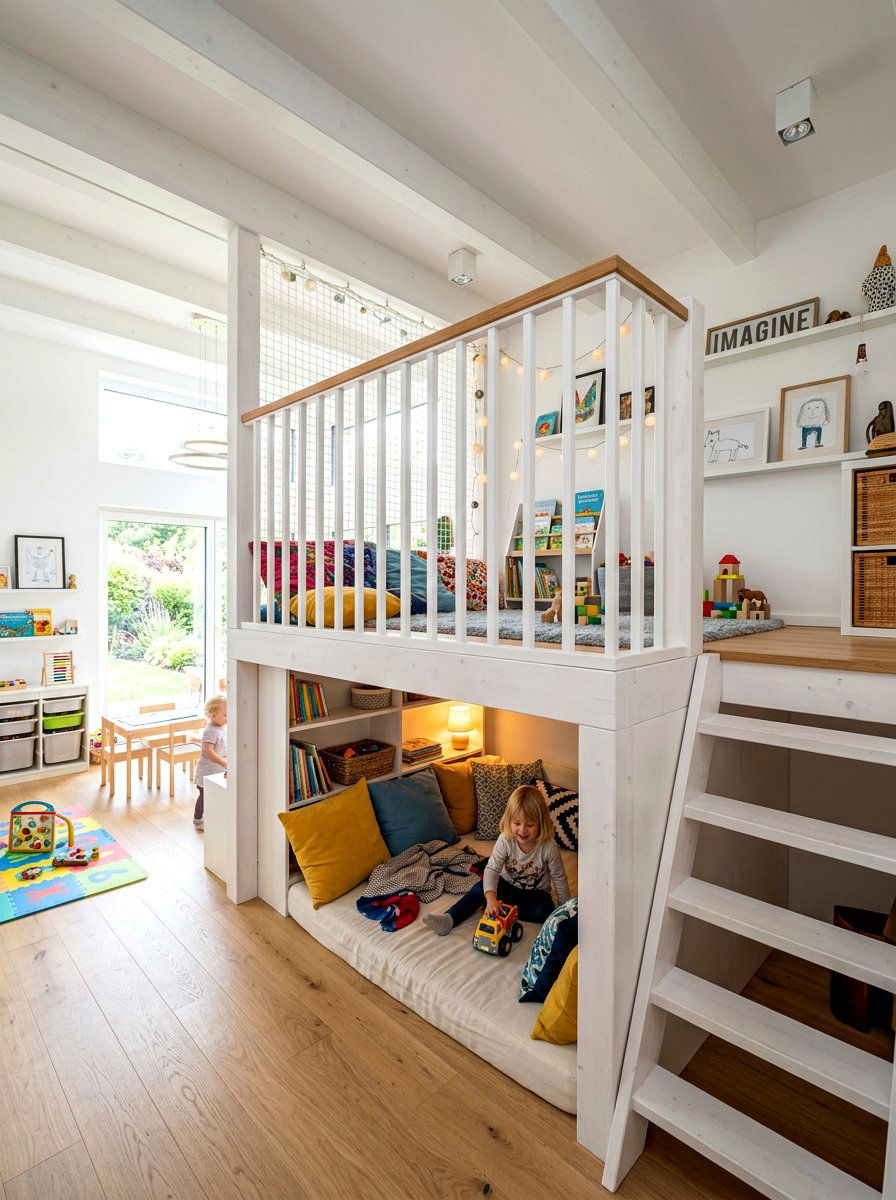
A loft style playroom utilizes vertical space by adding a raised platform for play or relaxation. This architectural feature creates two distinct levels within a single room, which is perfect for siblings who need a bit of separation. The area underneath the loft can be transformed into a cozy fort, a play kitchen, or a desk area for homework. The upper level provides a private "clubhouse" feel that kids absolutely adore for imaginative adventures. Ensure the stairs or ladder are safe and sturdy for frequent use. This dynamic layout adds excitement to the room and effectively doubles the usable square footage for your children to enjoy together.
18. Playroom With Bunk Beds
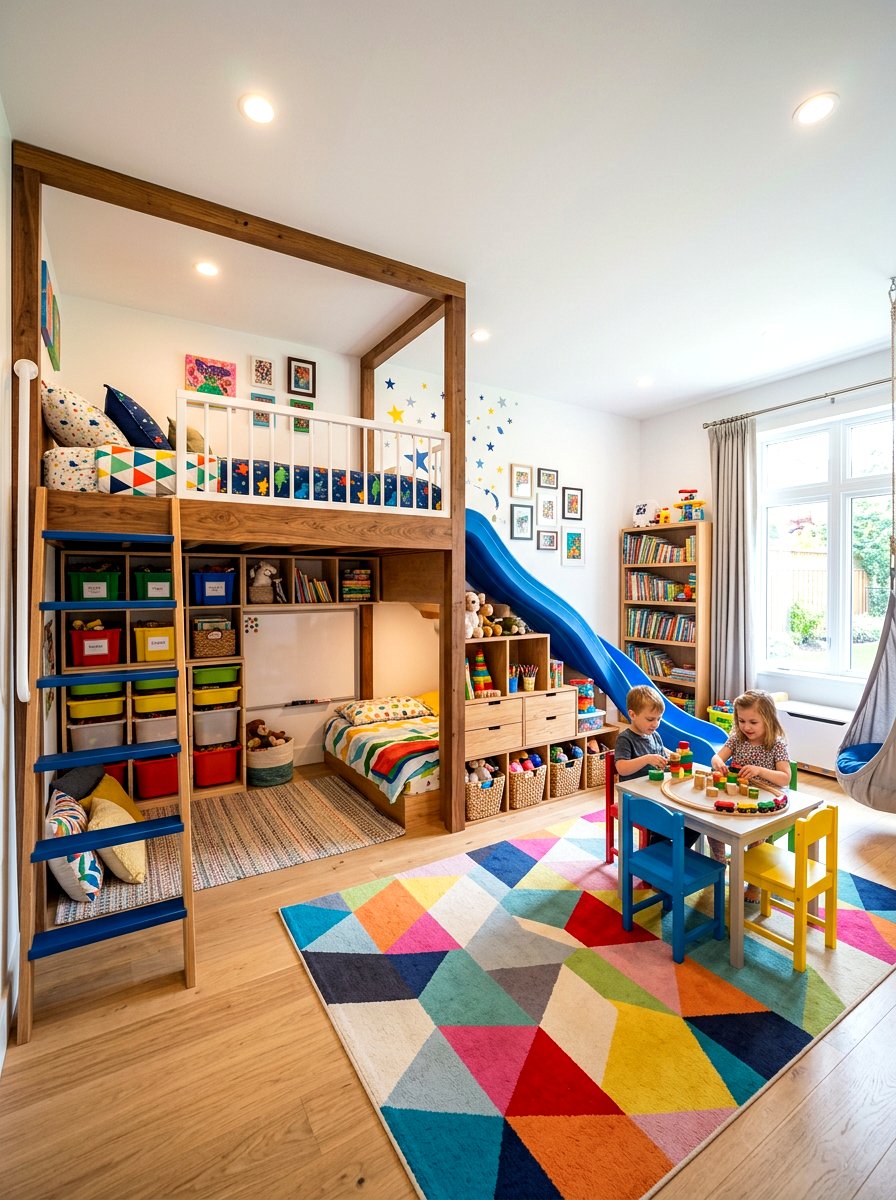
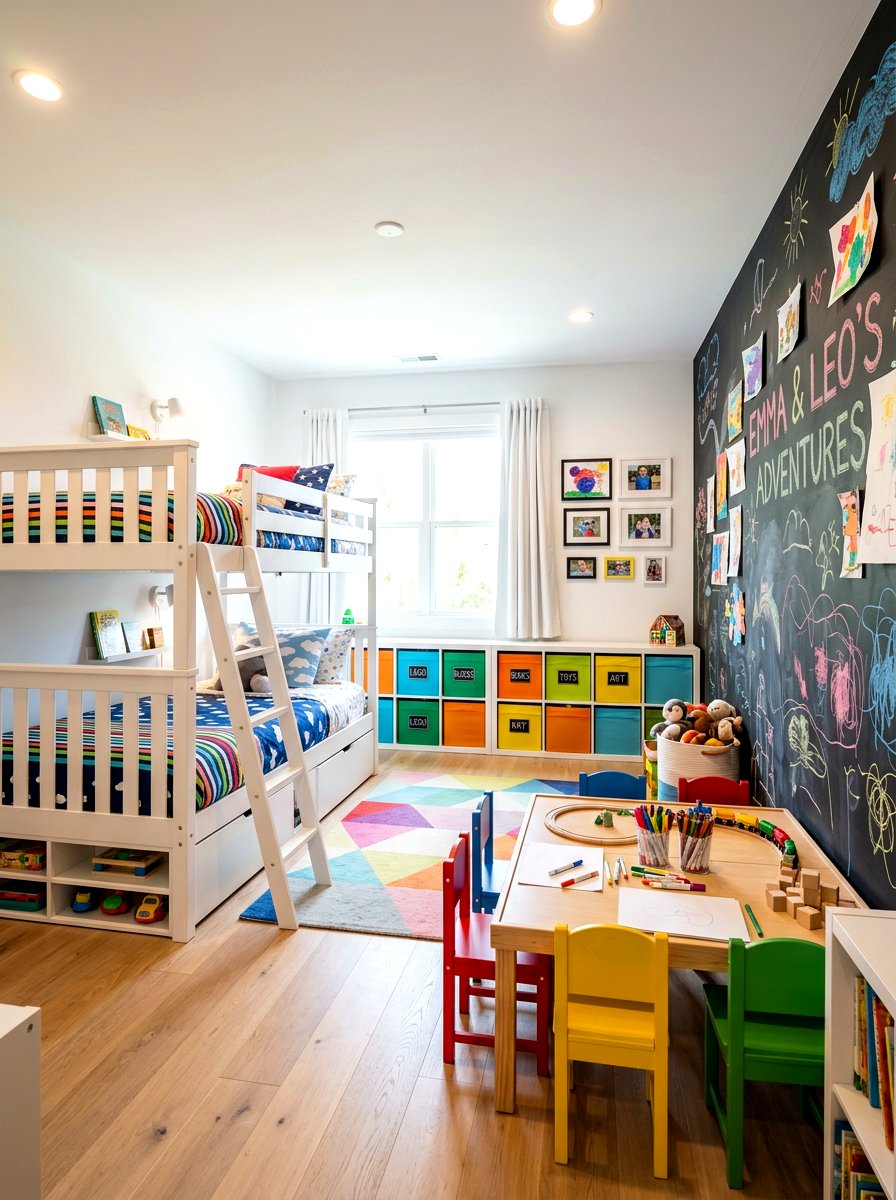
A playroom with bunk beds is a clever solution for families who need the space to function for both sleep and play. Choosing a bunk bed with a built-in slide or a tented lower level turns the furniture into a focal point of fun. During the day, the beds can serve as lounging areas for reading or watching movies together. Opt for a design that includes built-in storage drawers in the stairs to maximize organization. This dual-purpose setup is ideal for smaller homes where a separate bedroom and playroom are not possible. It creates a unified space where siblings can bond through both rest and active daytime play.
19. Shared Playroom Rugs
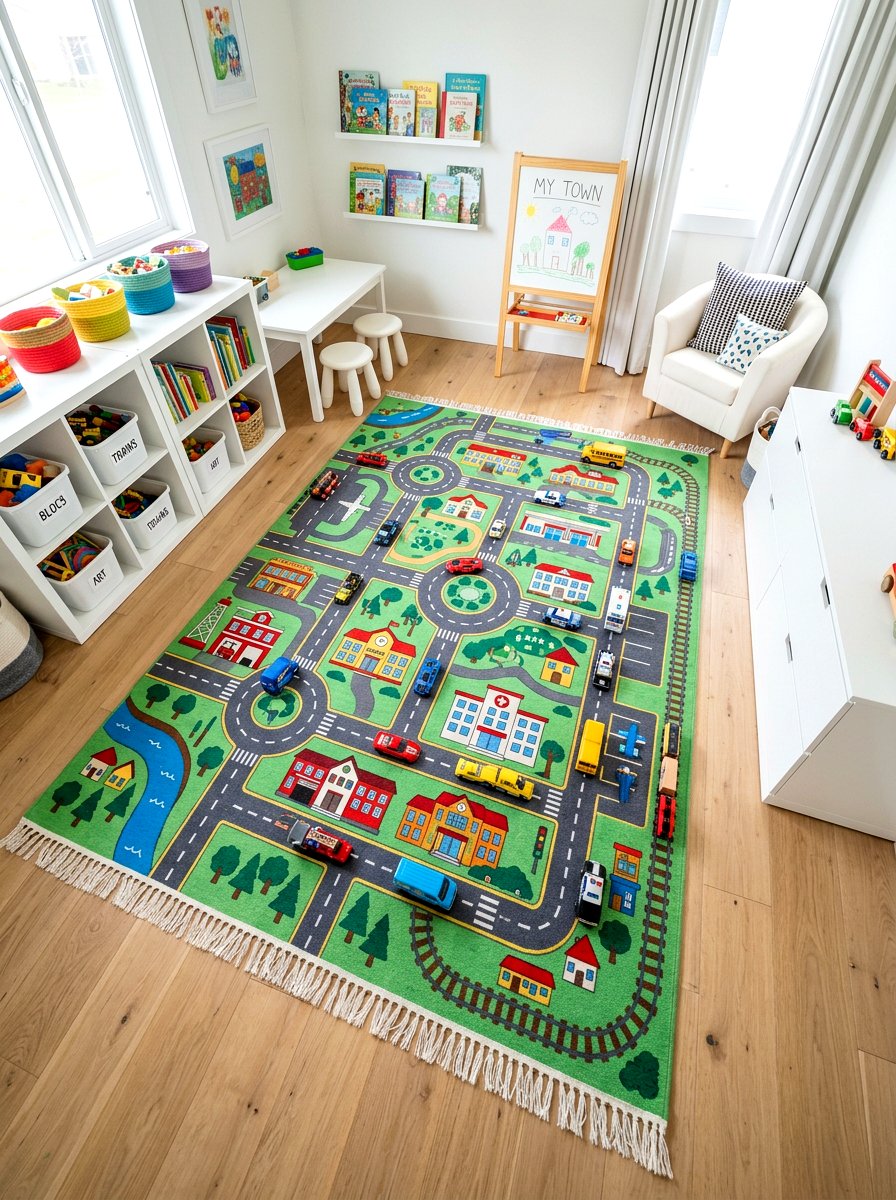
Selecting the right shared playroom rugs is crucial for creating a comfortable and durable environment for your children. Look for low-pile or flatweave options that are easy to vacuum and clean after spills or messy art projects. A rug with a playful pattern, like a map or a road track, can serve as a built-in play surface for toy cars and figurines. If you prefer a more subtle look, a large shag rug in a neutral tone provides a soft landing for active play. Consider using rug pads to prevent slipping during high-energy games. The right rug anchors the room and adds a layer of much-needed warmth and style.
20. Wall Decor For Playroom
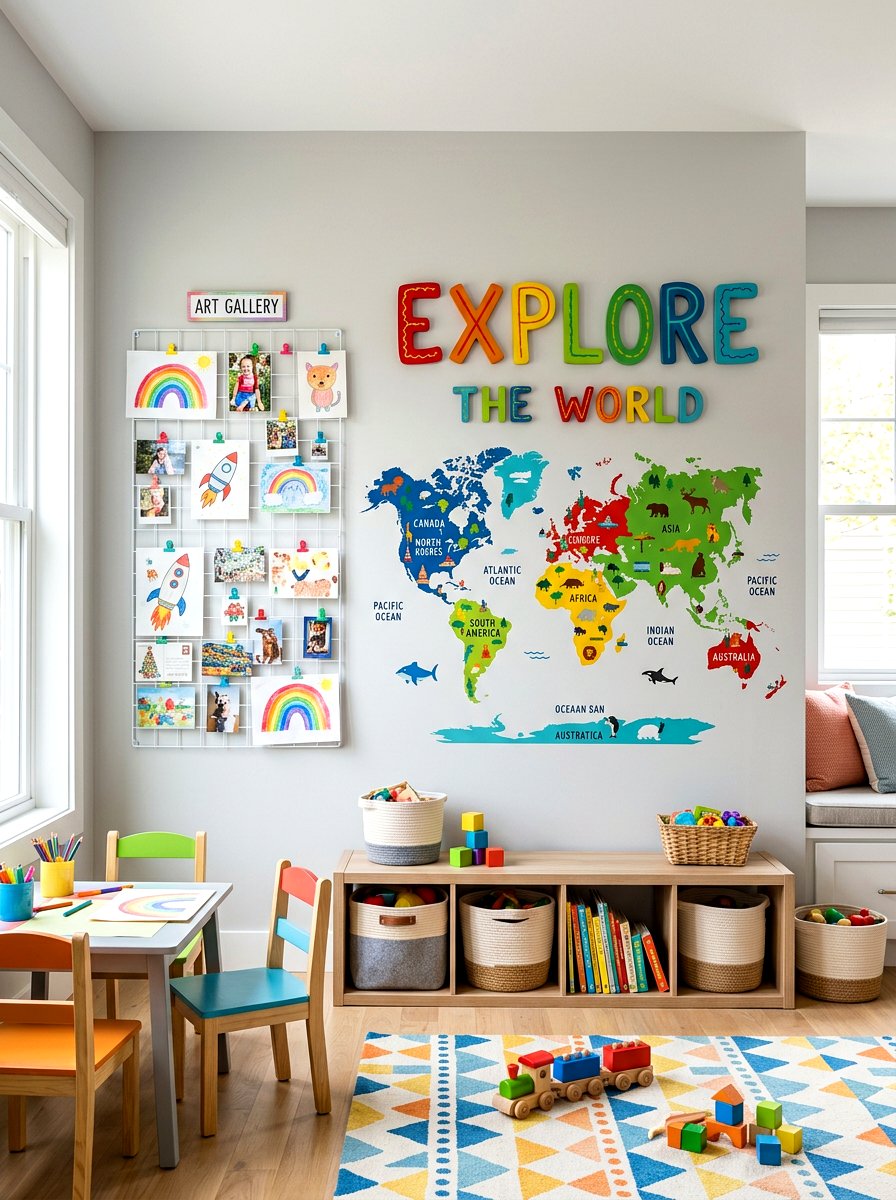
Creative wall decor for playroom spaces can instantly transform a basic room into an inspiring world of imagination. Consider using removable wall decals featuring maps, animals, or geometric shapes for an easy and temporary update. A large magnetic map or a pegboard wall offers interactive elements that grow with your children 's changing interests. You can also frame your kids' own artwork to create a personal gallery that boosts their confidence and pride. Mirrors placed at child height can make a small room feel larger while encouraging self-discovery and play. This layer of design adds character and personality to the shared space without taking up any floor area.
21. Playroom Workspace For Two
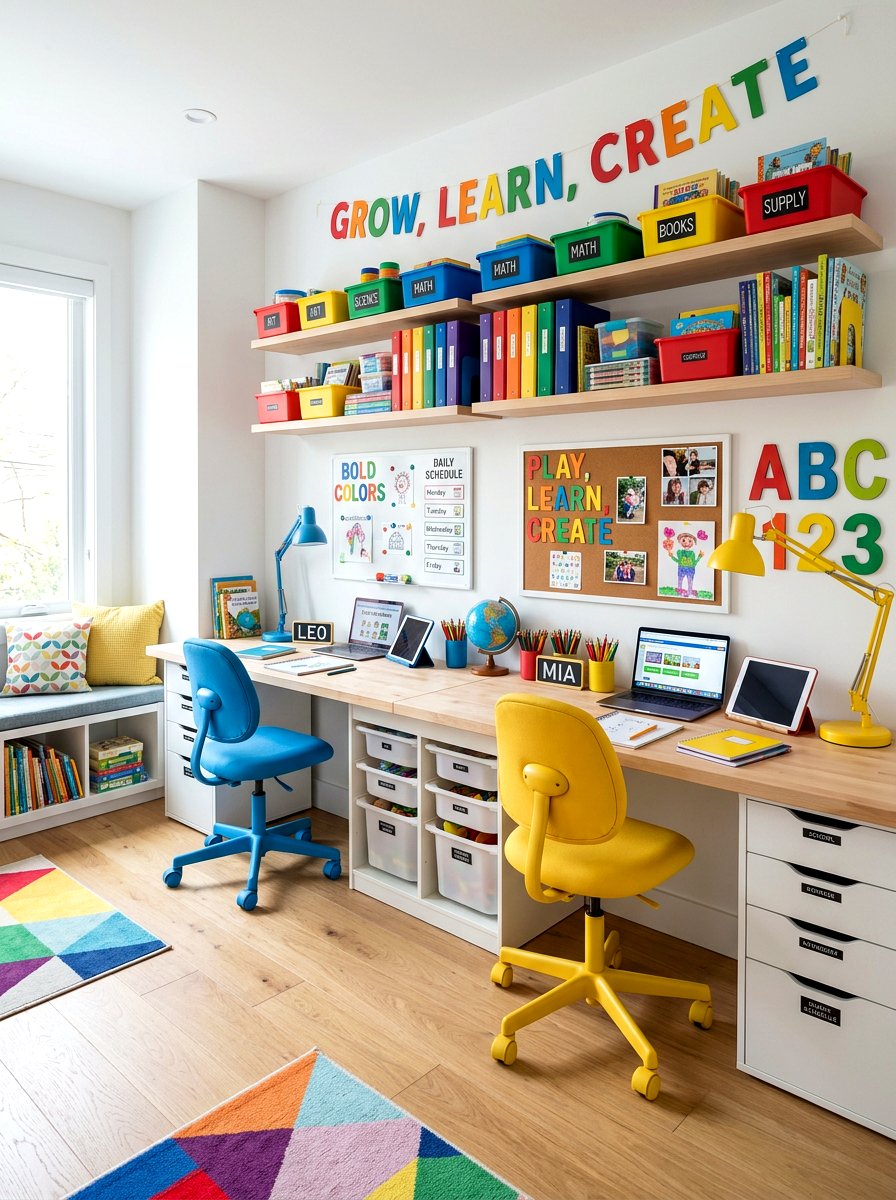
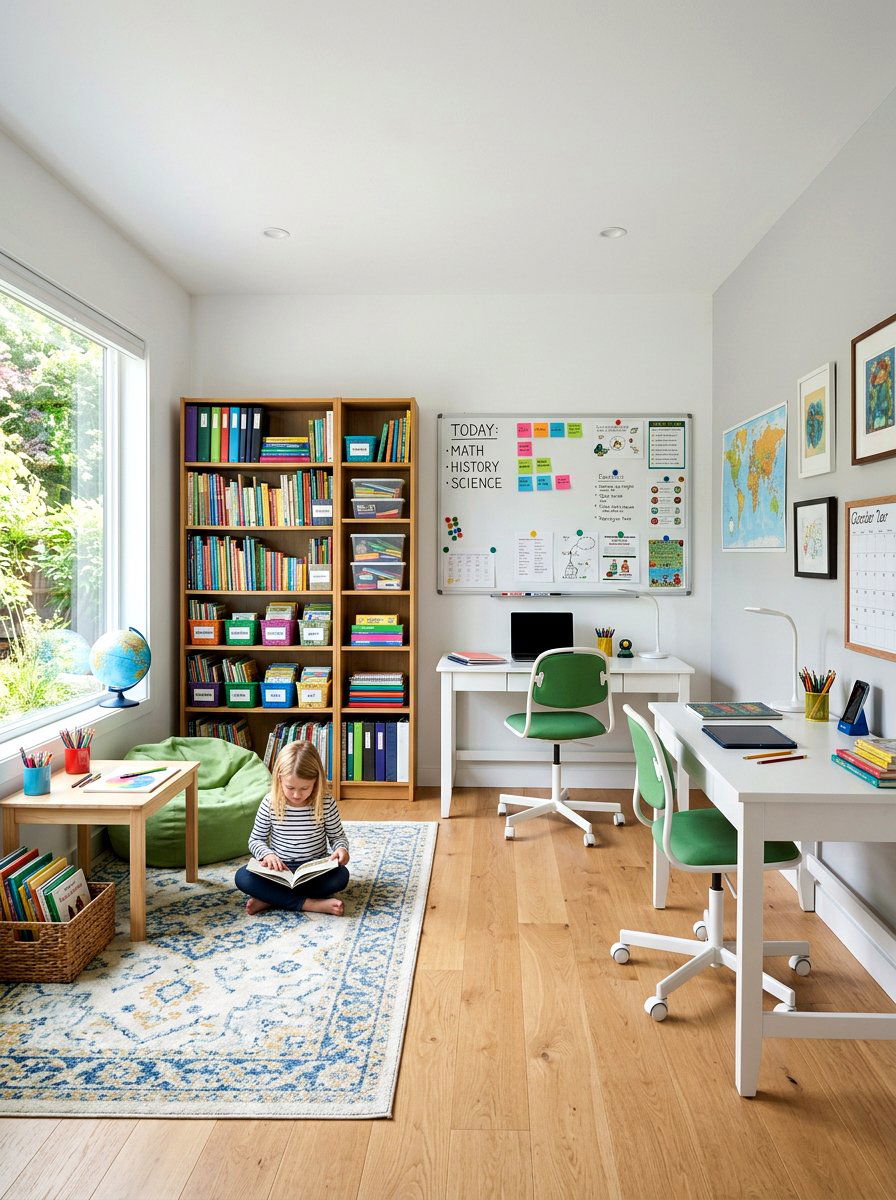
Creating a playroom workspace for two allows siblings to work on homework or crafts side-by-side in an organized manner. A long, shared desk with individual chairs provides a dedicated surface for each child while maintaining a cohesive look. Ensure there is plenty of task lighting and storage for pencils, paper, and tablets. Using a desk with built-in drawers helps keep the surface clear and ready for the next project. This setup encourages a focused environment where children can learn from each other and collaborate on creative tasks. It is a practical addition that ensures the playroom remains useful as your children transition into their school years.
22. Nature Inspired Playroom
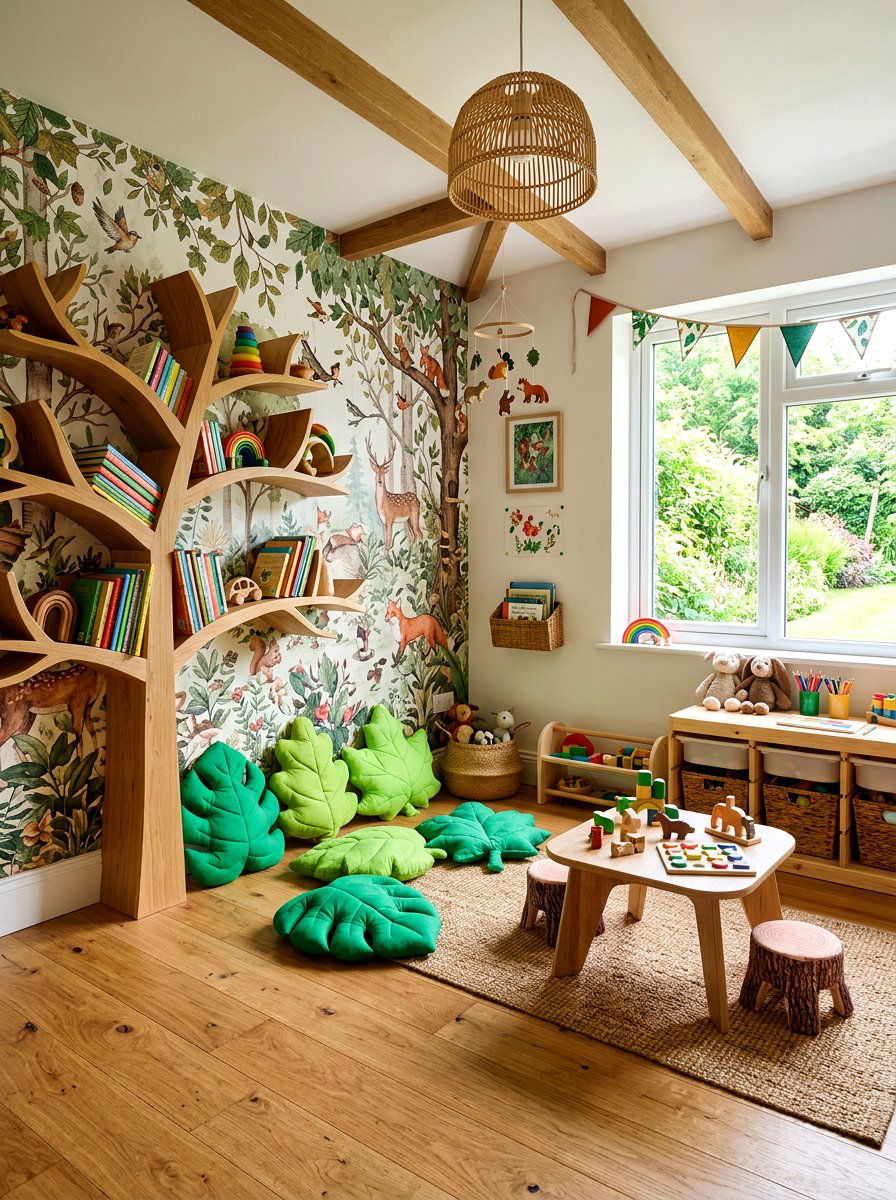
A nature inspired playroom brings the beauty of the outdoors inside to create a calming and grounding environment. Use a color palette of earthy greens, soft browns, and sky blues to set a tranquil tone. Incorporate natural materials like unfinished wood, rattan, and cotton throughout the furniture and decor. A forest-themed wall mural or a collection of indoor plants can enhance the organic feel of the space. Wooden animal figurines and nature books encourage exploration and a love for the environment. This design style is perfect for fostering a sense of wonder and providing a peaceful retreat from the fast-paced digital world for kids.
23. Teepee Shared Playroom
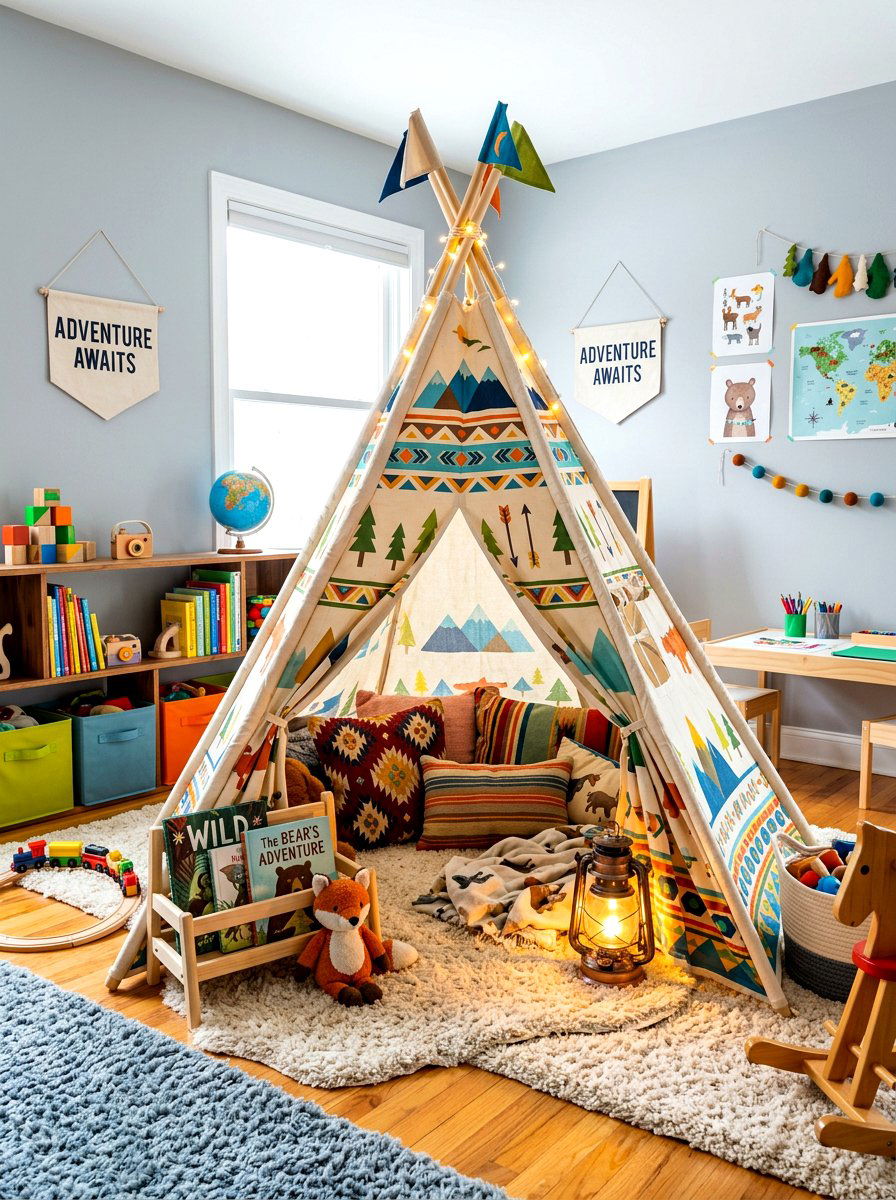
Adding a teepee shared playroom element provides an instant focal point and a cozy hideaway for children to enjoy together. A large fabric tent decorated with fairy lights and soft pillows creates a magical spot for reading, whispering secrets, or taking naps. This portable structure can be easily moved or folded away when more floor space is needed for active games. Choose a design that complements the room's color scheme to keep the look cohesive. The teepee serves as a dedicated zone for imaginative play, acting as anything from a castle to a forest camp. It adds a whimsical touch that children of all ages will love.
24. Playroom Under The Stairs
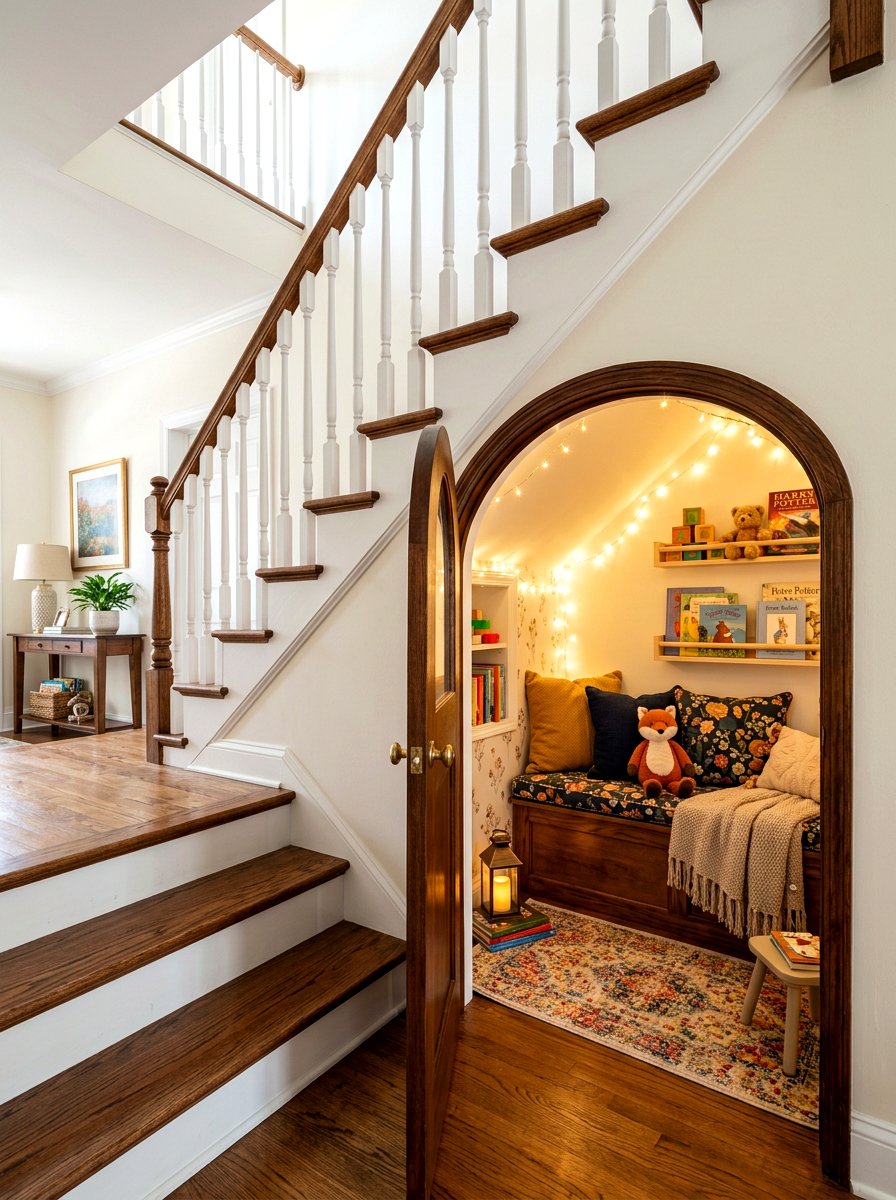
A playroom under the stairs is a brilliant way to turn often-overlooked architectural space into a secret haven for kids. This compact area is perfect for creating a cozy reading nook, a tiny play kitchen, or a miniature dollhouse world. Use bright paint and warm lighting to ensure the small space feels inviting rather than dark or cramped. Installing custom shelving or a small bench can maximize the functionality of the slanted walls. Adding a small door or a curtain allows the children to "close" their hideout for more private imaginative play. It is a charming use of space that adds a touch of magic to any home.
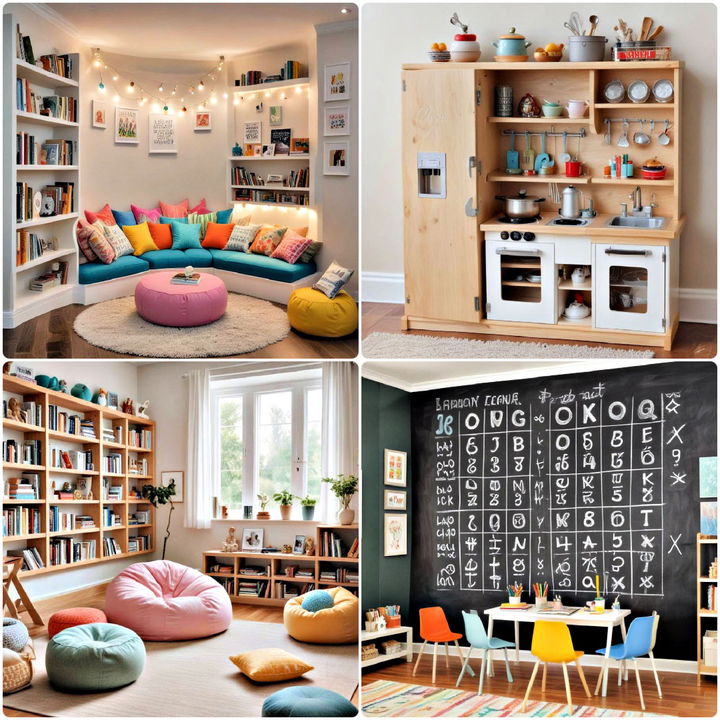
25. Bright Shared Playroom
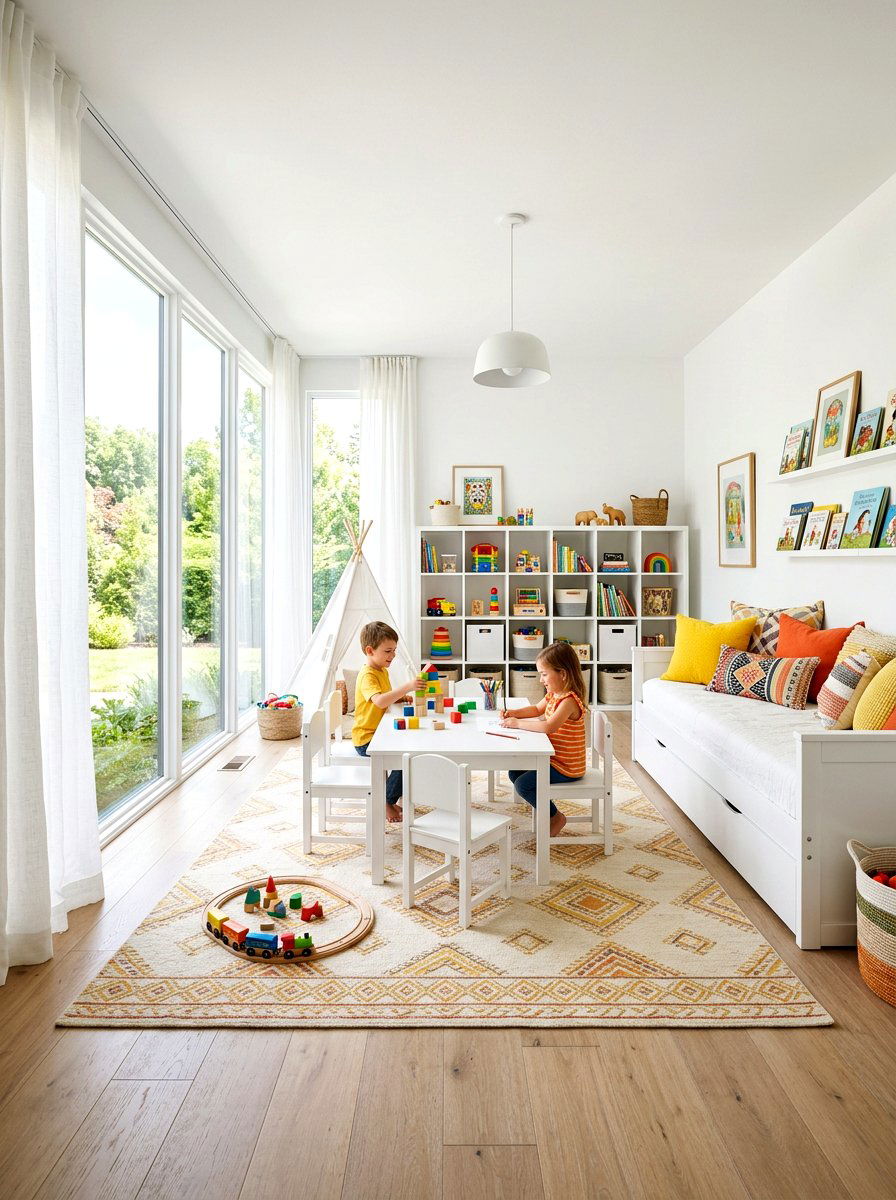
A bright shared playroom relies on plenty of natural light and a clean white color palette to create an uplifting environment. Use sheer window treatments to maximize the sun's reach while maintaining a bit of privacy for the kids. Incorporate mirrors to bounce light around the room and make the space feel more expansive. Choose furniture with light-reflective surfaces, like white laminate or light-toned woods, to keep the vibe airy. Pops of bright yellow or citrus orange can add a cheerful energy without weighing down the design. A well-lit room boosts mood and provides a clear, energized space for children to engage in various activities together.
26. Playroom Gallery Wall
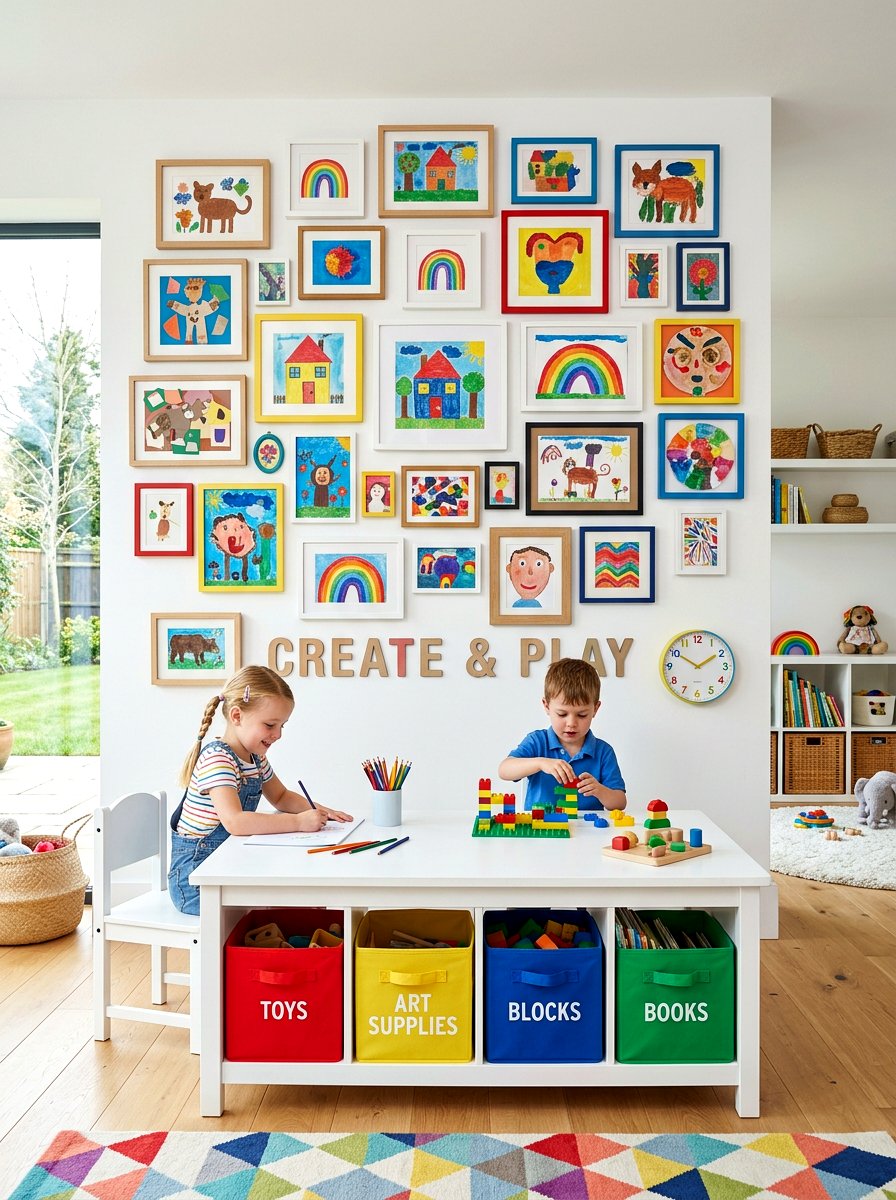
A playroom gallery wall is a fantastic way to celebrate your children 's creativity while adding a personalized touch to the decor. Use a mix of colorful frames to display their best drawings, paintings, and school projects in a curated arrangement. You can also include inspirational quotes, fun photographs, or vintage posters to add variety and depth to the display. This ever-changing art installation allows the room to evolve alongside your kids' interests and skills. It provides a sense of ownership and pride for the siblings, as they see their own work being valued and prominently featured. This vertical focal point adds immense charm and visual interest.
27. Industrial Shared Playroom
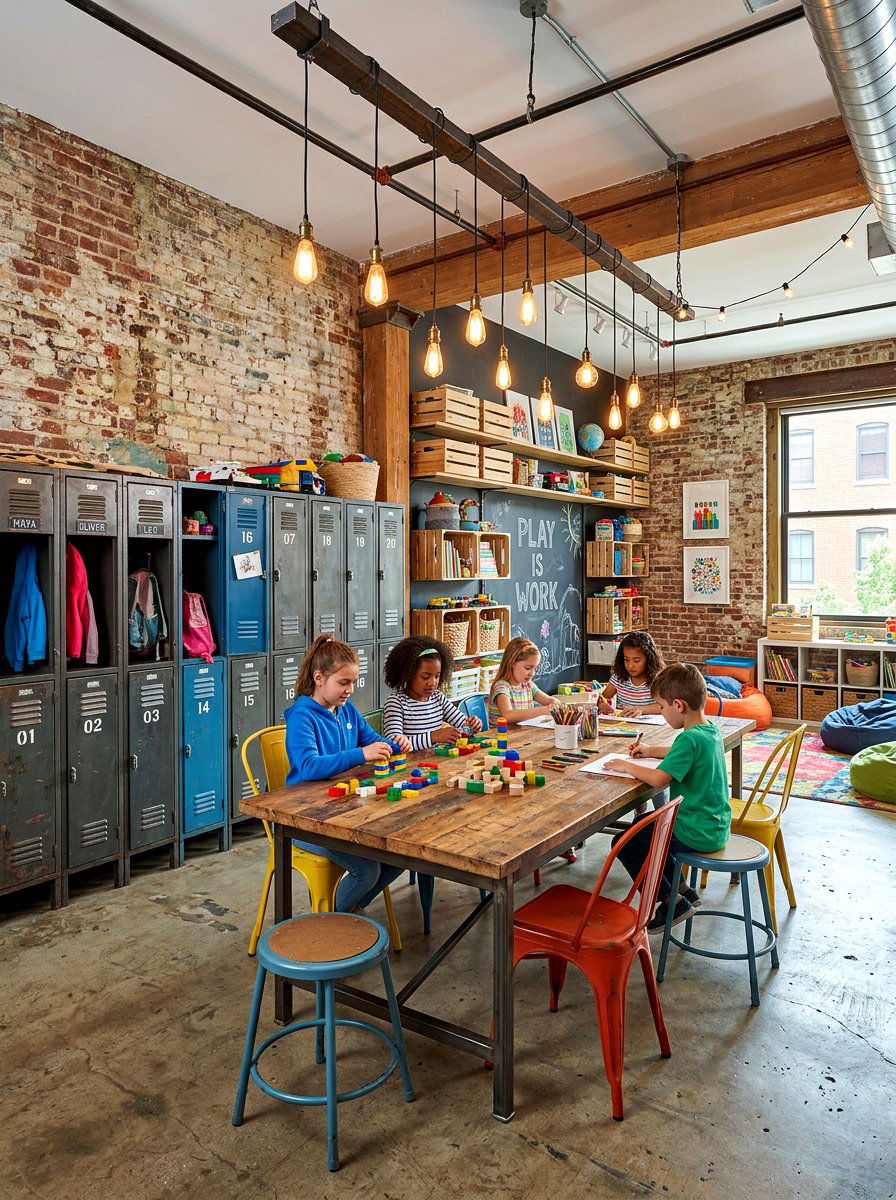
An industrial shared playroom features a cool, urban aesthetic using materials like metal, reclaimed wood, and exposed brick elements. Opt for sturdy metal lockers for toy storage and a wooden trestle table for crafts or board games. A dark gray or navy blue accent wall can provide a sophisticated backdrop for colorful toys and posters. Use vintage-style lighting fixtures, like Edison bulbs or metal pendants, to enhance the industrial vibe. This style is incredibly durable and can withstand the wear and tear of active play. It offers a unique look that feels modern and slightly edgy, making it a great choice for older kids or shared spaces.
28. Coastal Playroom For Kids
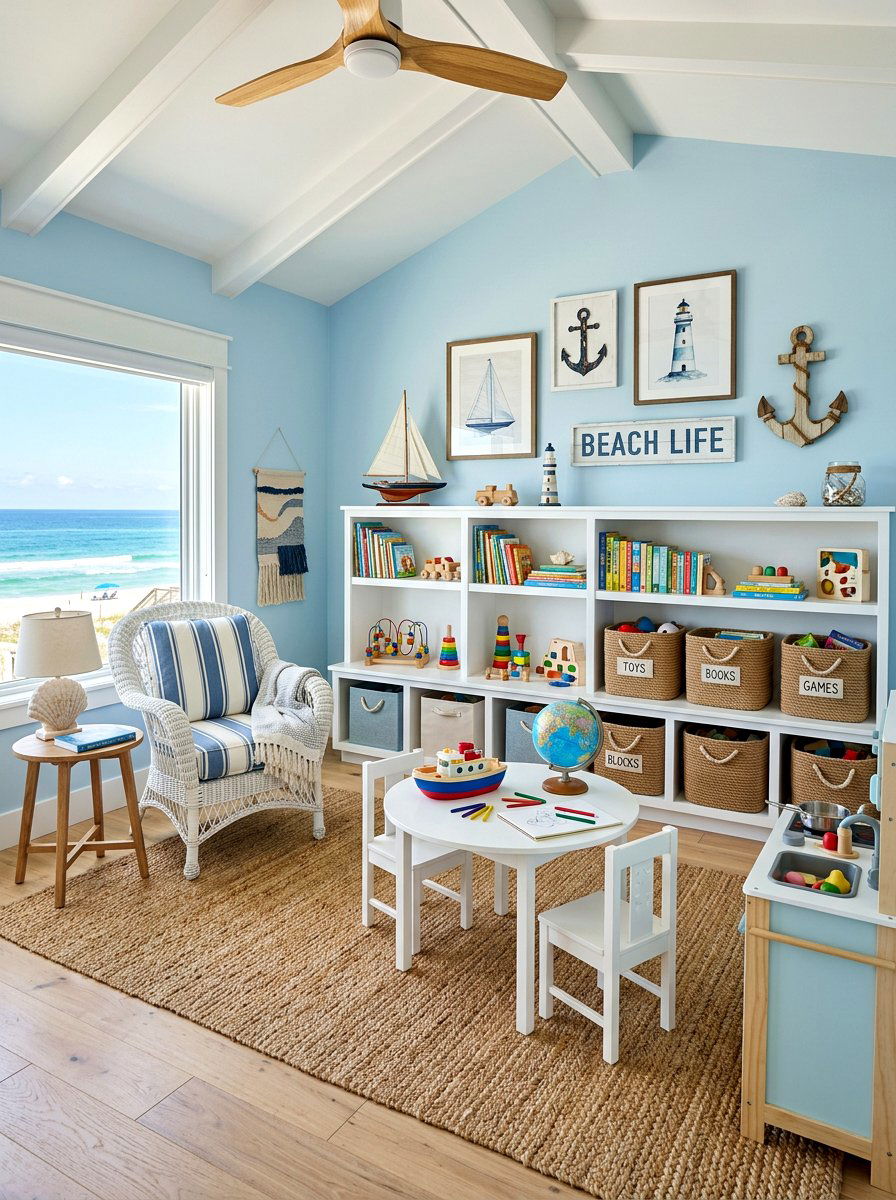
A coastal playroom for kids creates a breezy and relaxed atmosphere inspired by the seaside and ocean waves. Use a palette of crisp whites, soft blues, and sandy beiges to evoke a beachy feel. Incorporate textures like rope handles on storage baskets, wicker furniture, and striped cotton rugs. Nautical wall decor, such as anchors, shells, or maritime maps, adds a playful and thematic touch. This design style is naturally calming and works well in homes with a bright and airy aesthetic. It encourages imaginative play about sailing and sea creatures, providing a peaceful environment for siblings to bond while they explore their coastal dreams together.
29. Playroom Bean Bag Corner
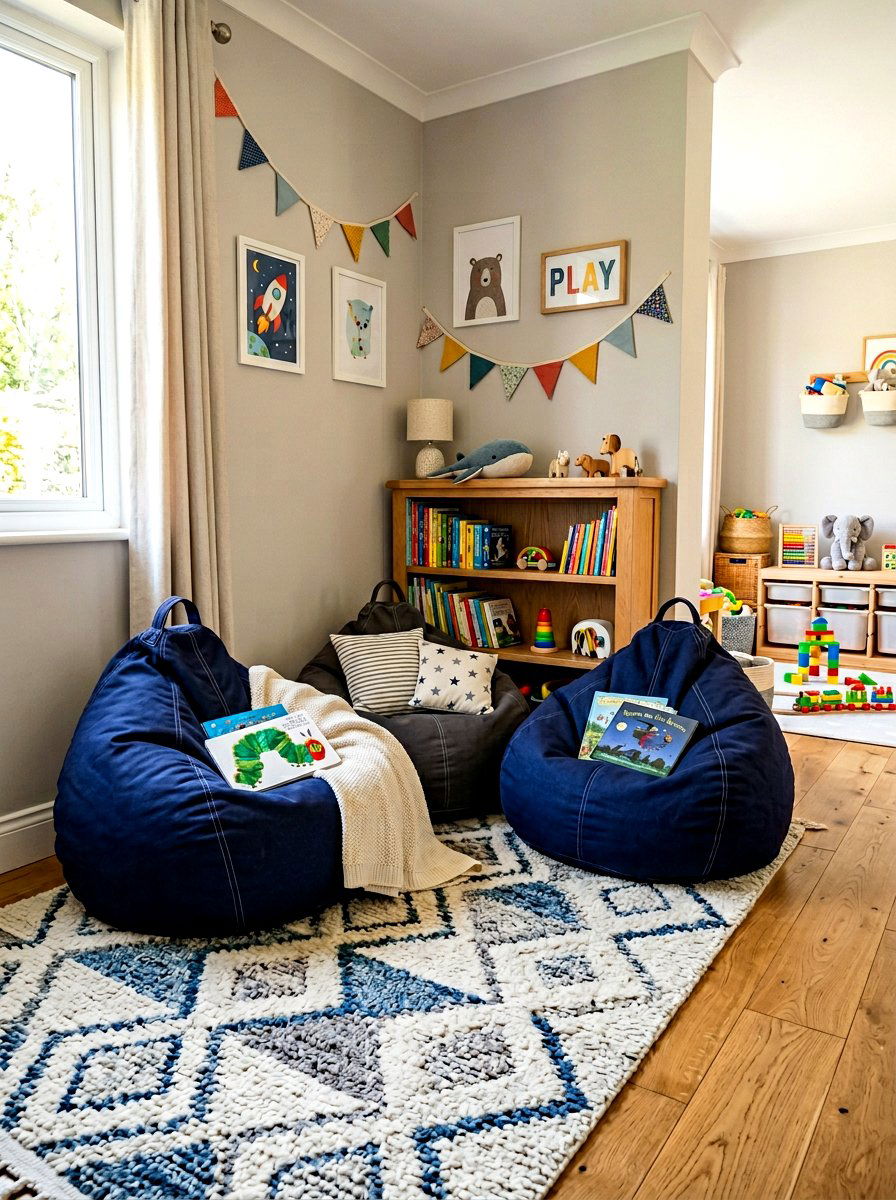
A playroom bean bag corner offers a flexible and comfortable seating solution that children of all ages will appreciate. Use a collection of oversized bean bags in various colors and textures to create a cozy lounging area for movies or reading. These lightweight pieces can be easily moved around the room to accommodate different activities or to clear the floor for active play. Surround the seating with low bookshelves or a small side table for snacks and drinks. This relaxed zone provides a soft spot for siblings to unwind together after a long day of school or high-energy adventures. It adds a casual and inviting vibe.
30. Chalkboard Wall Playroom
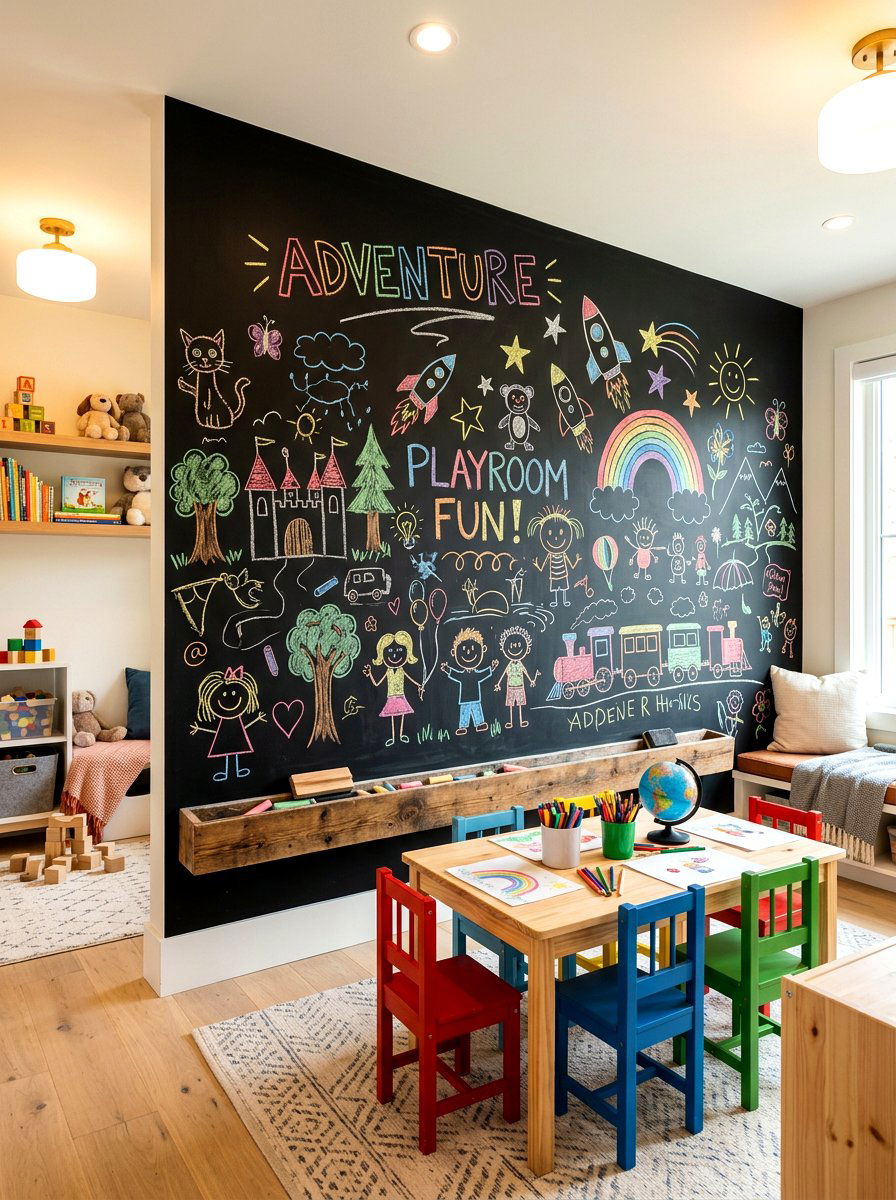
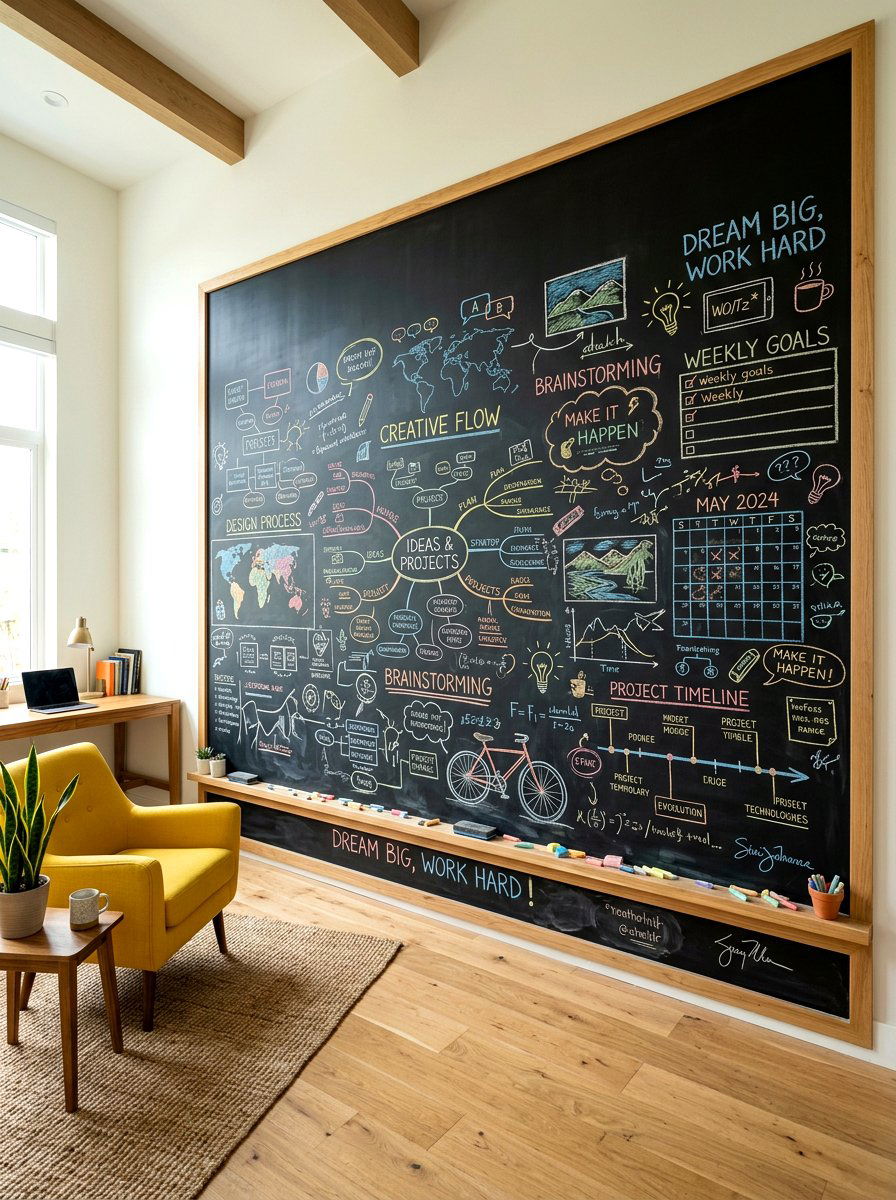
A chalkboard wall playroom provides a massive, interactive canvas where children can express their creativity without limits or mess. Paint a large section of one wall with chalkboard paint to give siblings a shared space for drawing, writing, or playing school. This feature encourages collaborative art projects and helps develop fine motor skills through drawing. Use a wall-mounted tray at the bottom to hold colorful chalk and erasers, keeping the dust contained. The wall can also serve as a rotating gallery for temporary masterpieces. It is a low-cost, high-impact design choice that offers endless entertainment and a unique, personal touch to the shared room.
Conclusion:
Creating a shared playroom for children is a rewarding project that fosters sibling bonding and maximizes the functionality of your home. By thoughtfully zoning the space, you can accommodate different ages and interests while maintaining a stylish and organized environment. Whether you opt for a modern minimalist look or a vibrant, high-energy theme, the key is to prioritize storage and flexibility. A well-designed playroom evolves with your family, providing a safe and inspiring sanctuary for growth and imagination. Investing in quality materials and smart layouts ensures that the room remains a beloved destination for play, learning, and lasting memories for many years.

Related posts: