Creating a dedicated space for your hobbies is more than just a home improvement project; it is an investment in your mental well-being and creative soul. A well-organized craft room serves as a sanctuary where inspiration flows freely and every tool has its rightful place. Whether you enjoy sewing, scrapbooking, painting, or jewelry making, having a tailored environment allows you to dive into your projects without the stress of clutter. From small corners to expansive studios, the right layout can transform your workflow and boost your productivity. Imagine a space that reflects your personality while remaining perfectly functional for all your artistic endeavors and supplies.
1. Small Craft Room
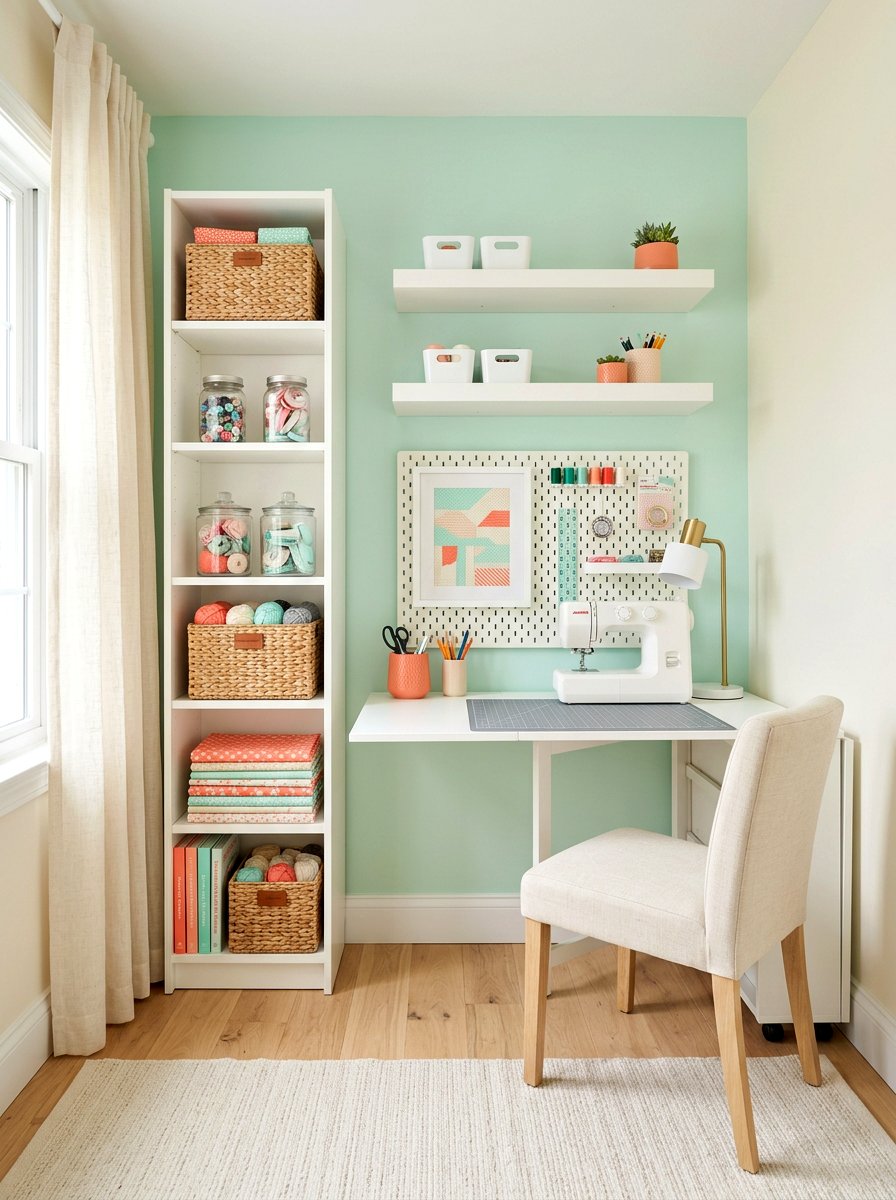
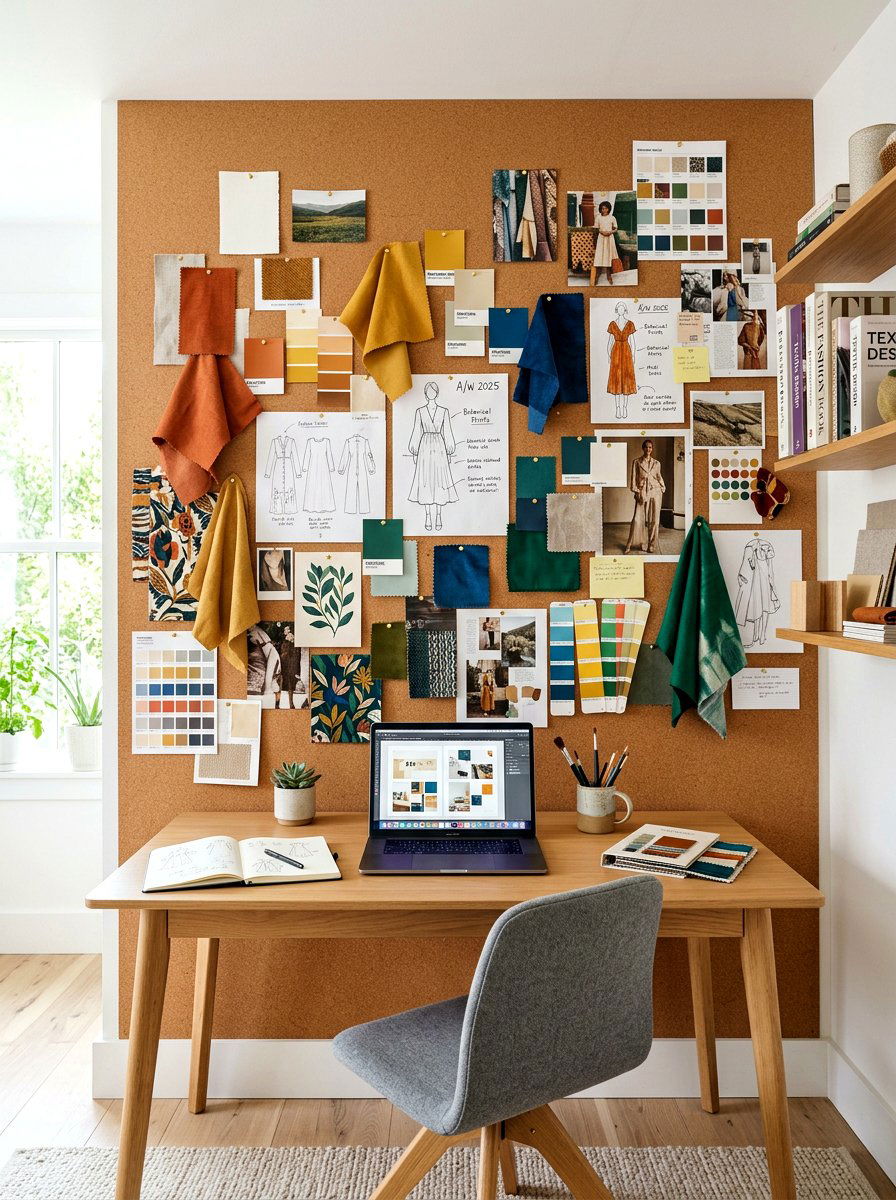
Maximizing a small craft room requires a strategic approach to furniture and layout to ensure the space feels open rather than cramped. You can utilize light-colored walls and mirrors to reflect natural light, which instantly makes the tiny area feel more expansive. Multi-functional furniture, such as a folding wall desk or a rolling cart, allows you to adapt the room based on your current project needs. Vertical storage is your best friend in a compact setting, so consider floor-to-ceiling shelving to keep your floors clear. This design philosophy ensures every square inch serves a purpose while maintaining a stylish and inviting atmosphere for your daily creativity.
2. Craft Room Storage
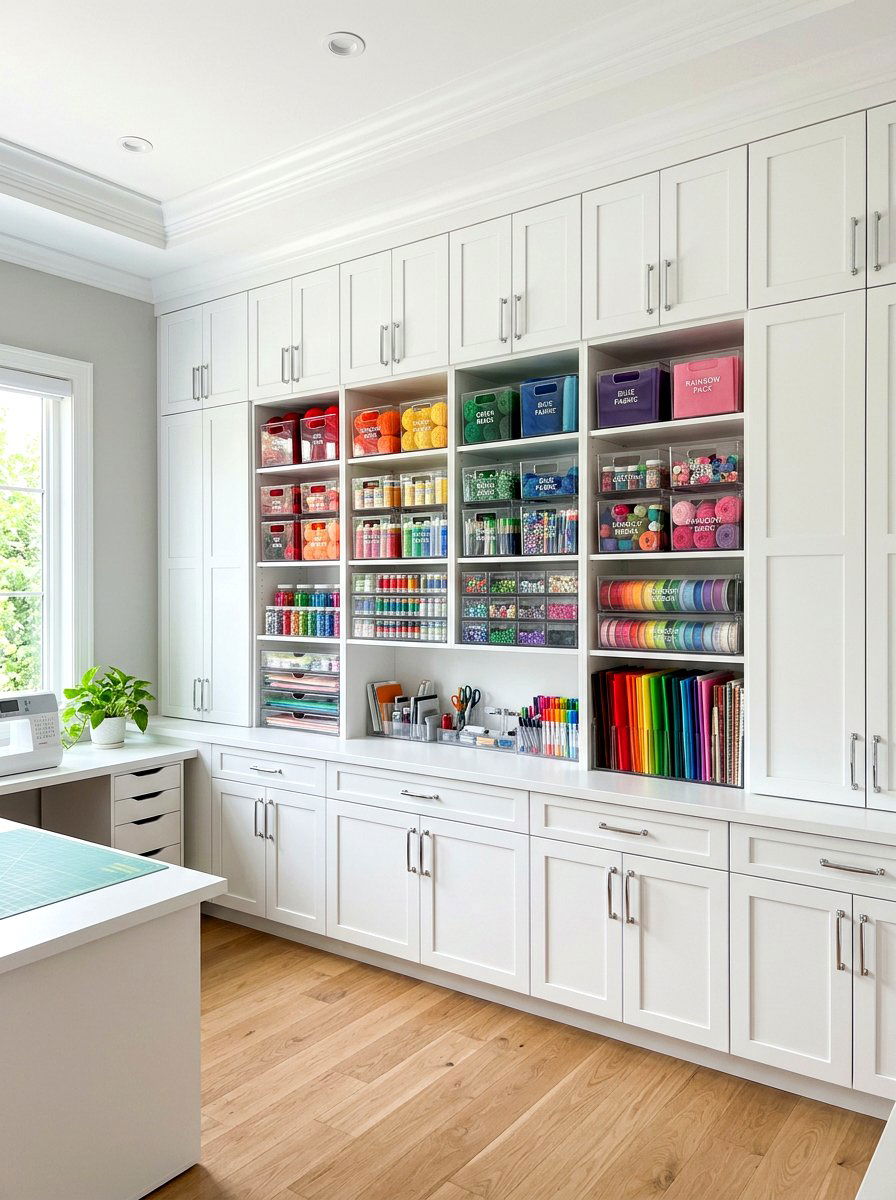
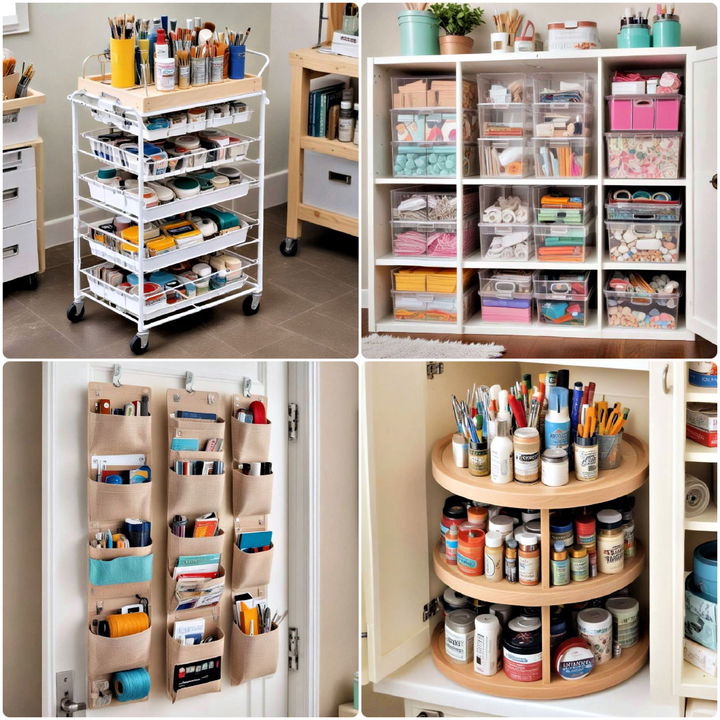
Craft room storage should be both functional and visually appealing to keep your creative energy high. Using a mix of open shelving and closed cabinetry helps hide the messy supplies while showcasing your most beautiful materials. Clear acrylic bins are excellent for seeing exactly what you have at a glance, reducing the time spent searching for specific items. A dedicated wall for a large storage system provides a central hub for all your tools and decorative papers. Incorporating a cohesive color palette for your containers will make the entire room look polished and professionally designed. This setup ensures that your workspace remains clean and ready for your next project.
3. Closet Craft Room
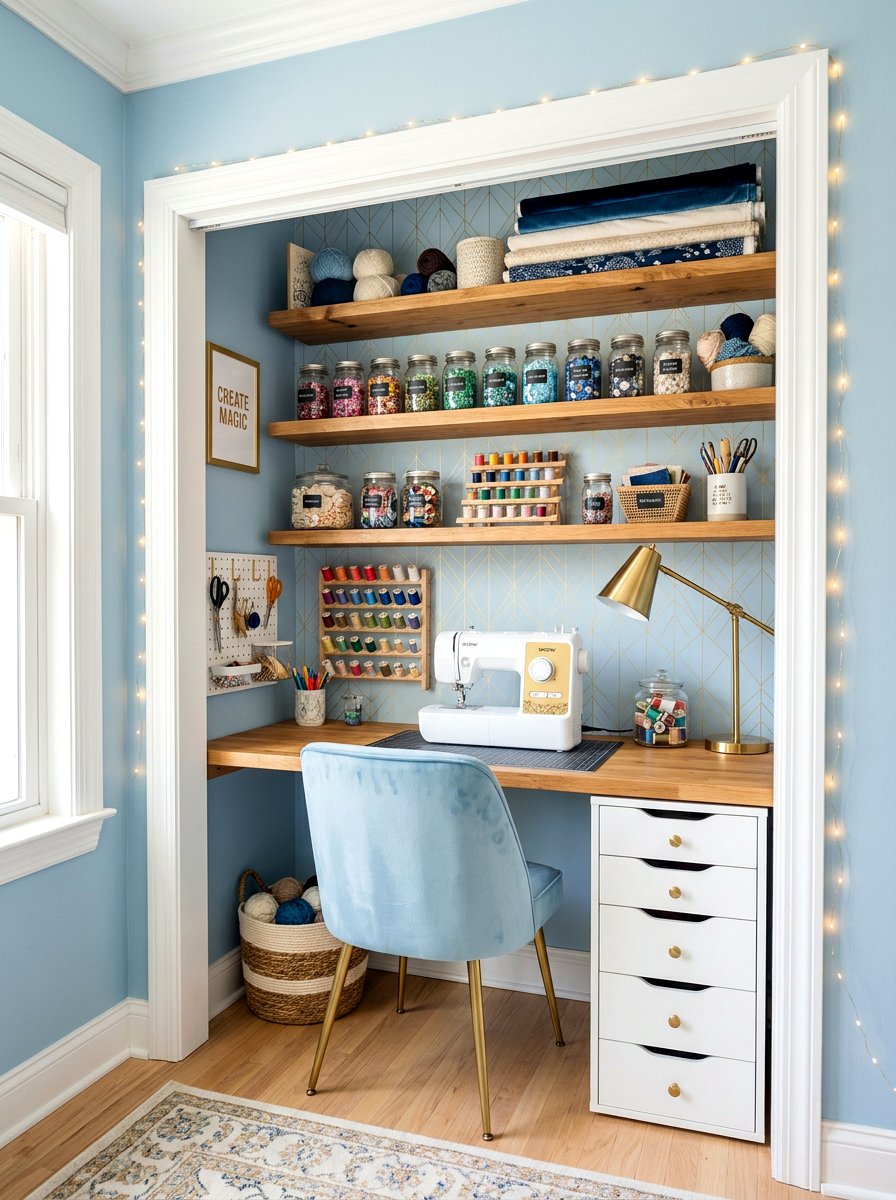
Turning an unused closet into a closet craft room is a brilliant way to save space in a smaller home. By removing the doors or replacing them with curtains, you can create a cozy alcove that fits perfectly into a bedroom or hallway. Custom shelving and a built-in desktop allow you to maximize every inch of the interior space efficiently. Adding overhead task lighting is crucial since closets often lack natural light sources. You can use the back of the door for extra storage racks to hold ribbons or small tools. This clever transformation provides a private nook where you can focus on your art without taking up a room.
4. Sewing Room
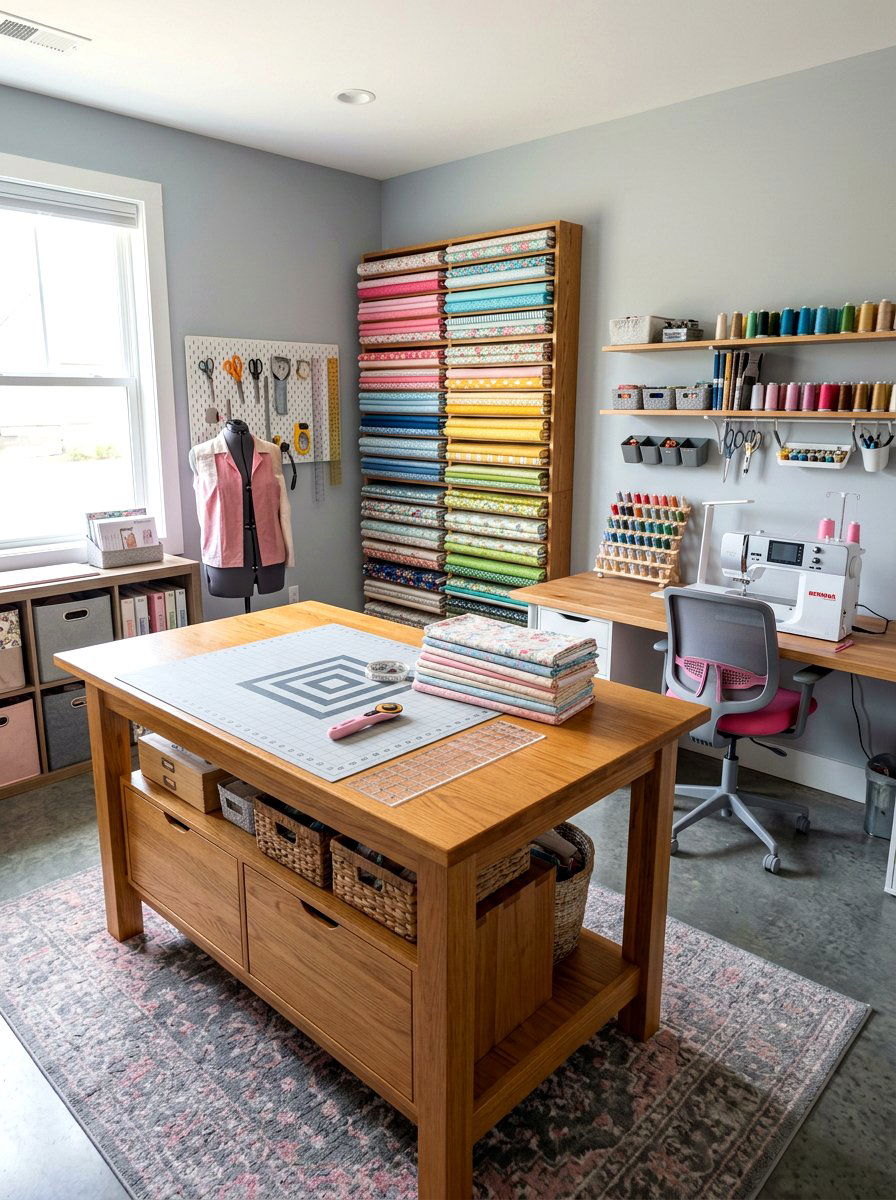
A dedicated sewing room provides the perfect environment for fabric lovers to organize their machines, textiles, and notions. Large, flat cutting tables are essential for preparing patterns and fabric without straining your back. You can install pegboards to keep scissors, bobbins, and threads within arm's reach while adding a colorful decorative element to the walls. Comfortable seating is a must for long hours spent at the sewing machine, so choose an ergonomic chair that supports your posture. Proper lighting over the work area prevents eye strain and ensures every stitch is perfect. This specialized space keeps your sewing projects organized and ready for your next creation.
5. Art Studio
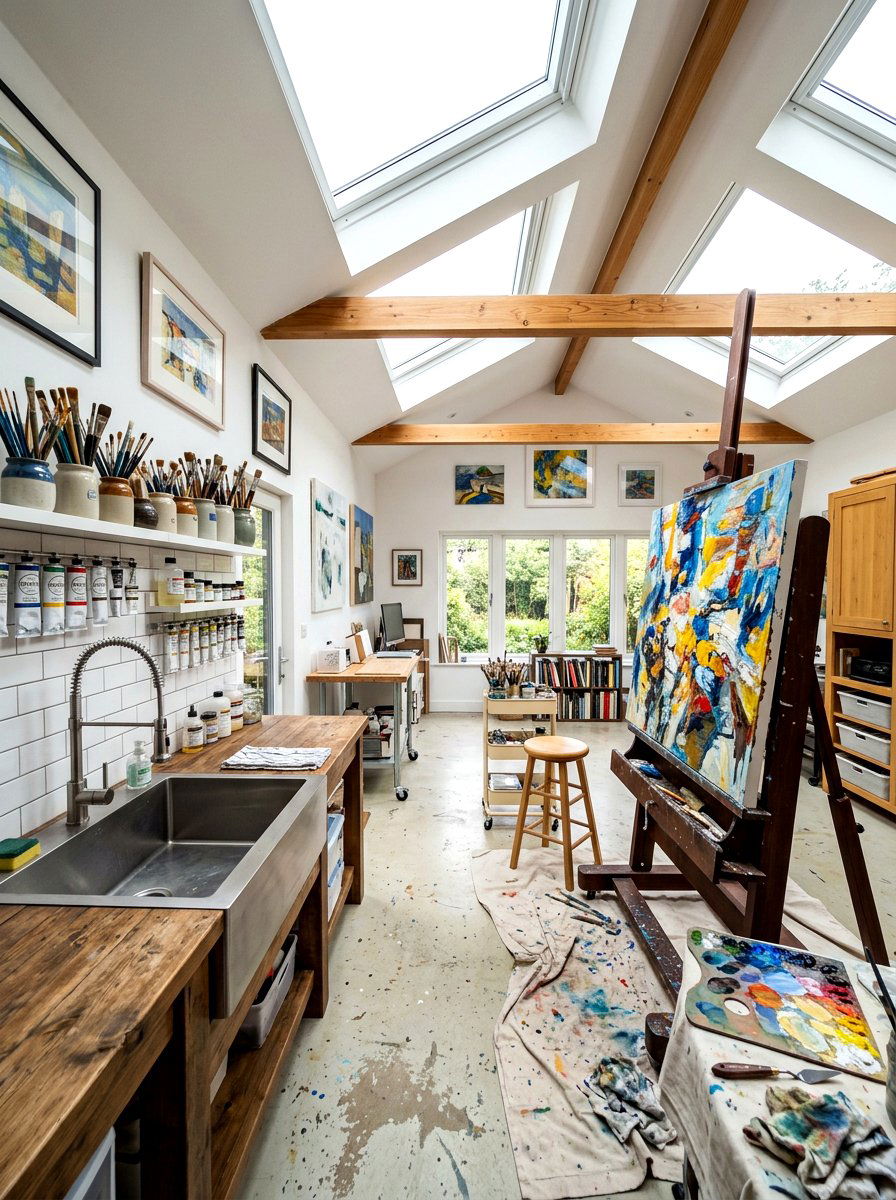
Creating an art studio within your home allows you to explore various mediums like oil painting, watercolors, or sketching in peace. This room should feature plenty of natural light, ideally through large windows or skylights, to accurately represent colors. Easels should be positioned where the light is most consistent throughout the day to help your creative process. Incorporating a utility sink makes cleaning brushes and palettes much easier and keeps the mess contained in one area. Durable flooring that is easy to wipe down will protect your home from accidental paint spills or charcoal dust. This studio becomes a true haven for your artistic expression and growth.
6. Basement Craft Room
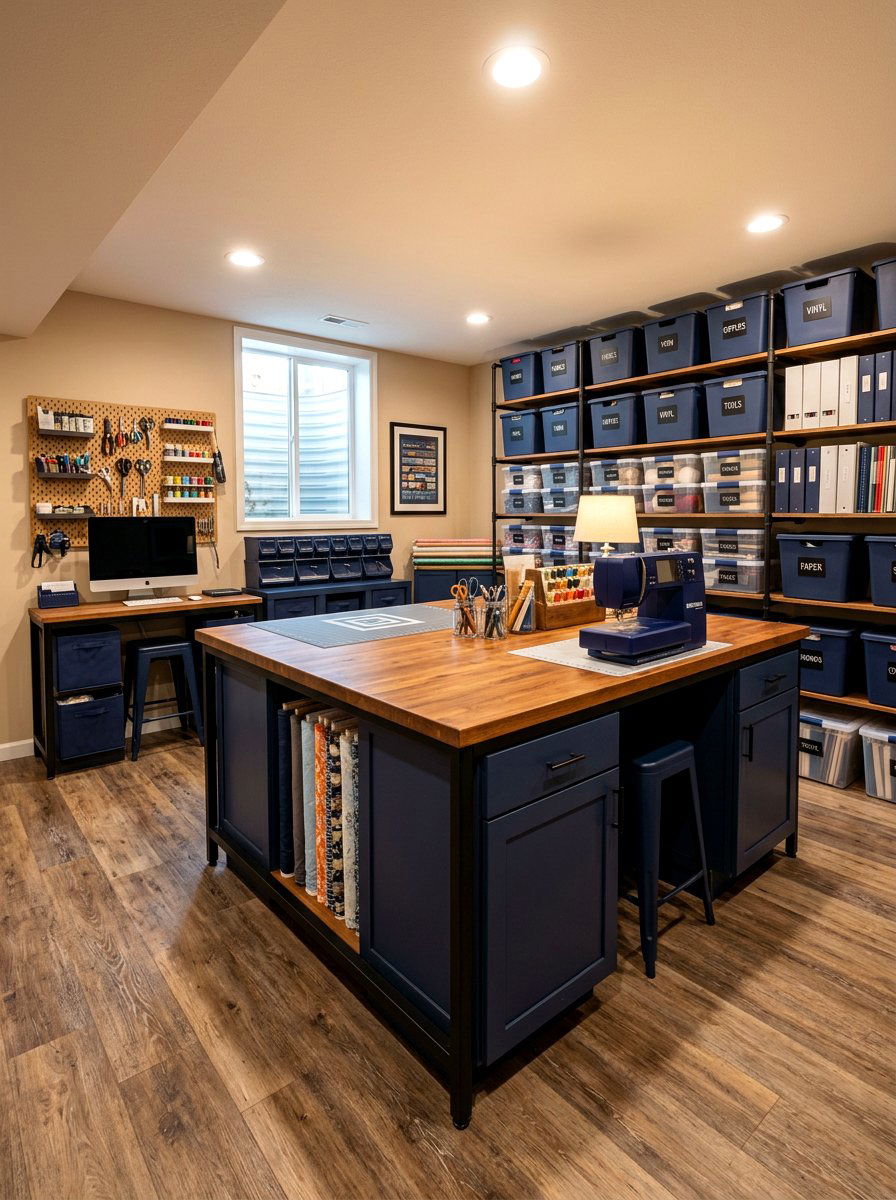
Transforming a finished basement into a basement craft room offers a spacious and quiet retreat away from the main living areas. Since basements can sometimes feel dark, it is important to use bright, overhead lighting and warm floor lamps to create a welcoming vibe. Large worktables can be placed in the center of the room to accommodate big projects like quilting or woodworking. Moisture-resistant flooring and wall treatments are essential for maintaining a healthy environment in lower-level spaces. You can use the vast wall space for extensive shelving units to store all your seasonal crafting supplies. This layout provides a secluded and productive zone for all your hobbies.
7. Attic Craft Room
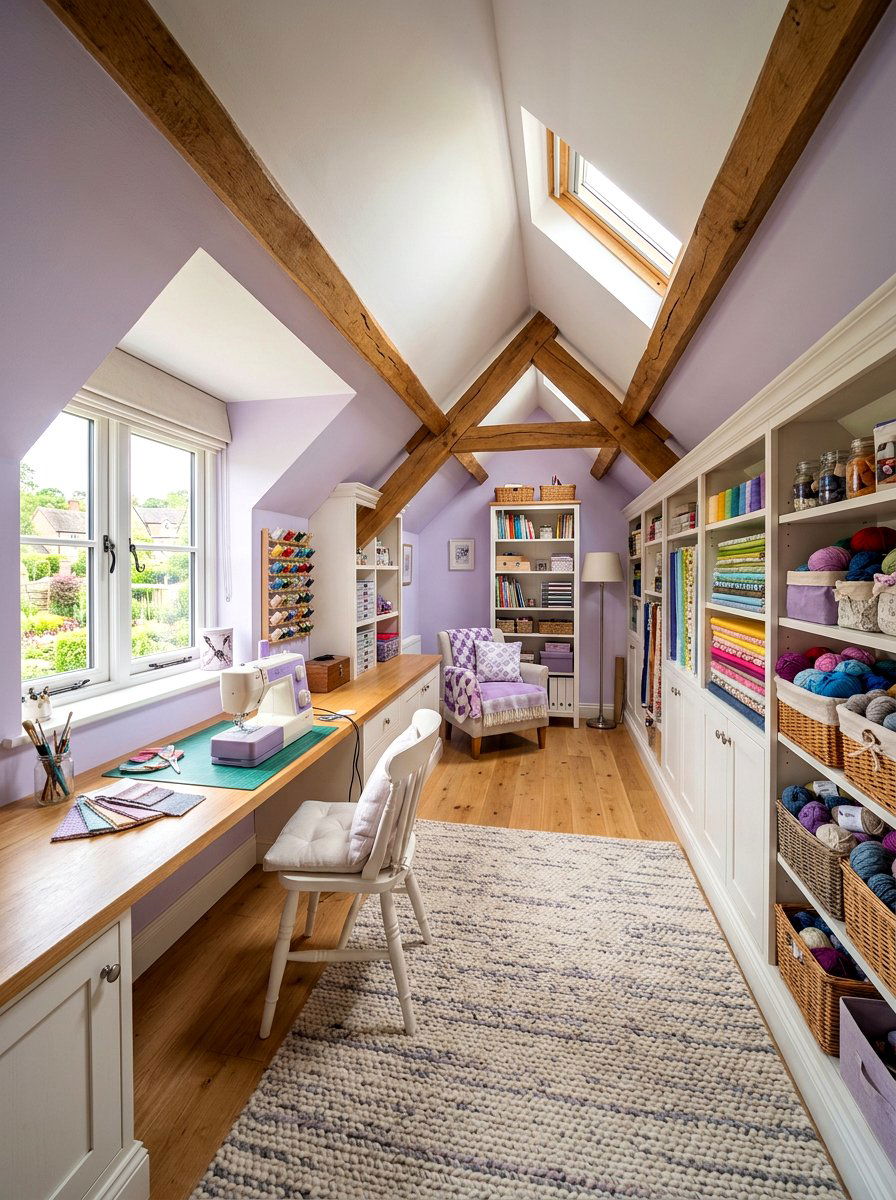
An attic craft room takes advantage of unique architectural features like slanted ceilings and dormer windows to create a charming workspace. You can install custom cabinets into the eaves to utilize every bit of available storage space under the roofline. Placing your main desk near a window allows you to enjoy views and natural light while you work on intricate details. Soft rugs and cozy textiles can help dampen sound and make the high-up space feel warm and inviting. Light paint colors on the walls and ceiling will help the room feel taller and more open. This tucked-away sanctuary is perfect for escaping the noise of the household.
8. Modern Craft Room
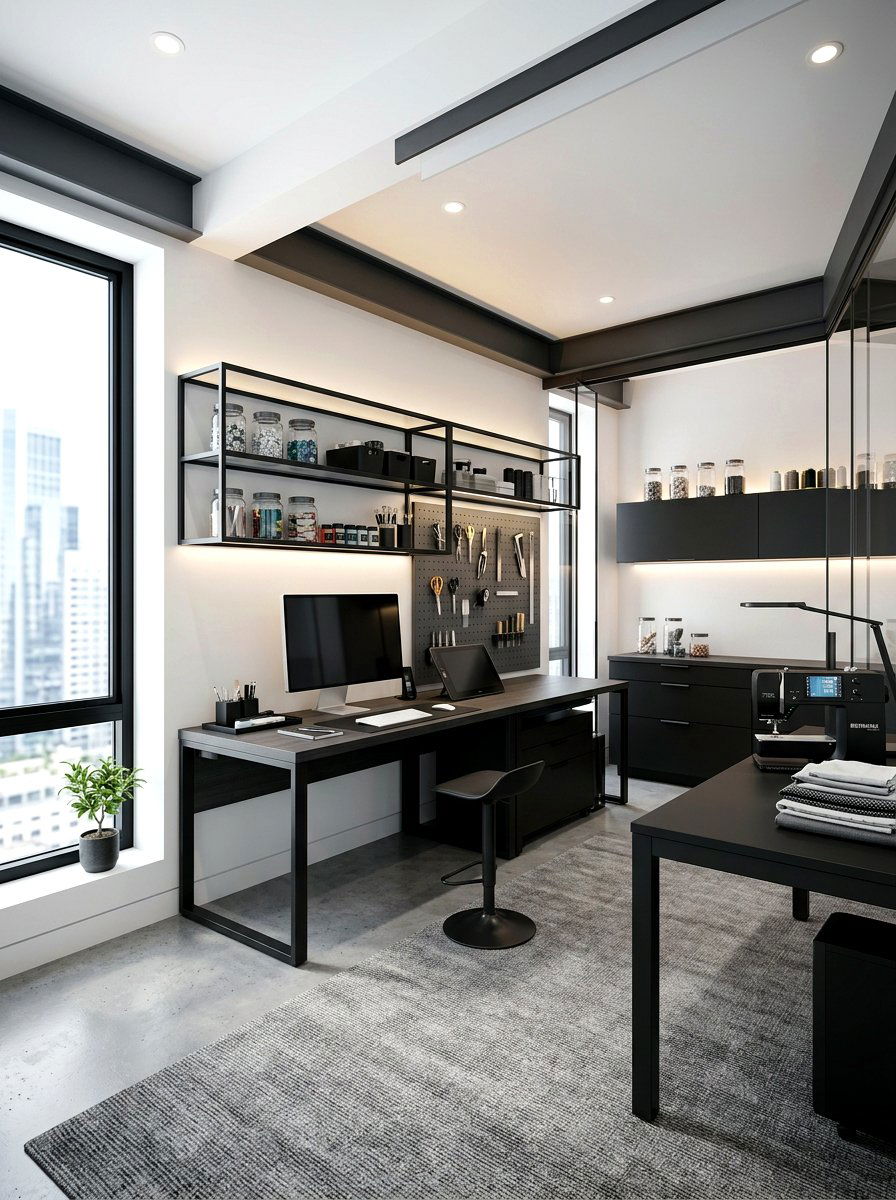
A modern craft room focuses on clean lines, a neutral color palette, and high-tech organizational systems. Sleek, minimalist furniture without unnecessary ornamentation helps keep the focus on your creative work rather than the decor. You might incorporate smart home technology, like voice-controlled lighting or automated inventory tracking for your supplies. Using materials like glass, metal, and polished wood creates a sophisticated look that feels professional and contemporary. Cable management systems are vital in a modern setup to keep cords from sewing machines or computers hidden from view. This design style promotes a clear mind and a streamlined workflow for the modern-day maker.
9. Farmhouse Craft Room
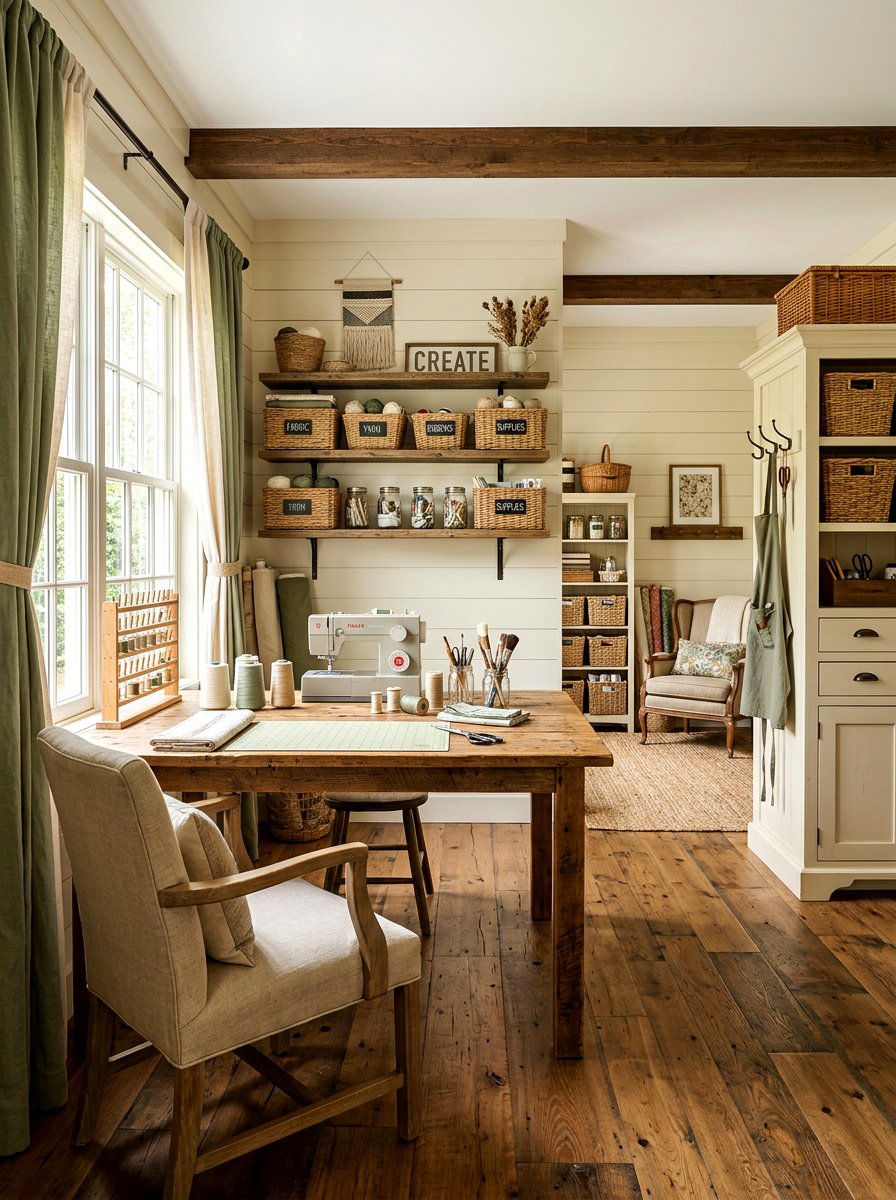
The farmhouse craft room style combines rustic charm with practical functionality for a warm and lived-in feel. Reclaimed wood tables and vintage-style metal chairs provide a sturdy and stylish foundation for your creative endeavors. You can use wicker baskets, mason jars, and wooden crates to organize your buttons, ribbons, and brushes in a decorative way. Shiplap walls or a neutral cream color palette enhance the cozy, country-inspired atmosphere of the entire room. Large windows with simple linen curtains allow soft light to fill the space during the day. This design creates a comfortable and nostalgic environment that inspires traditional crafts like knitting or canning.
10. Colorful Craft Room
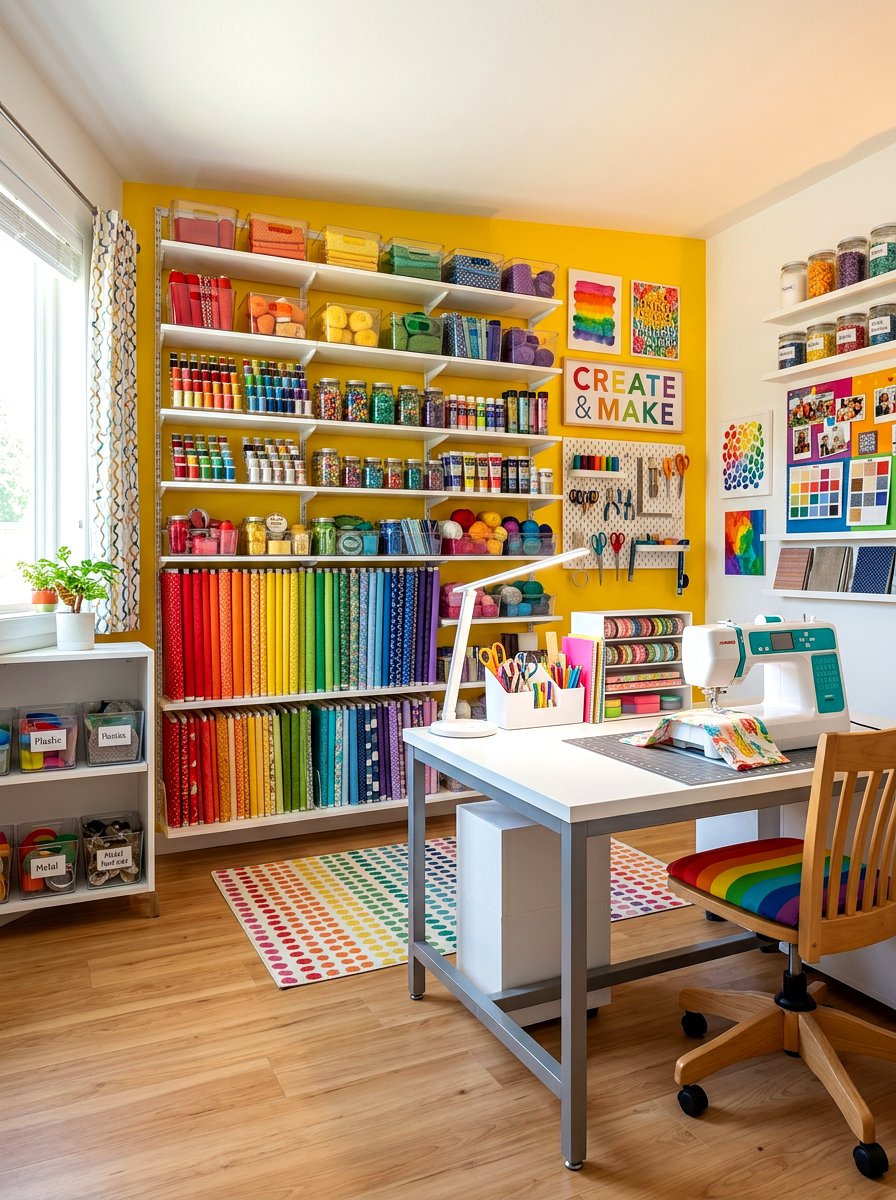
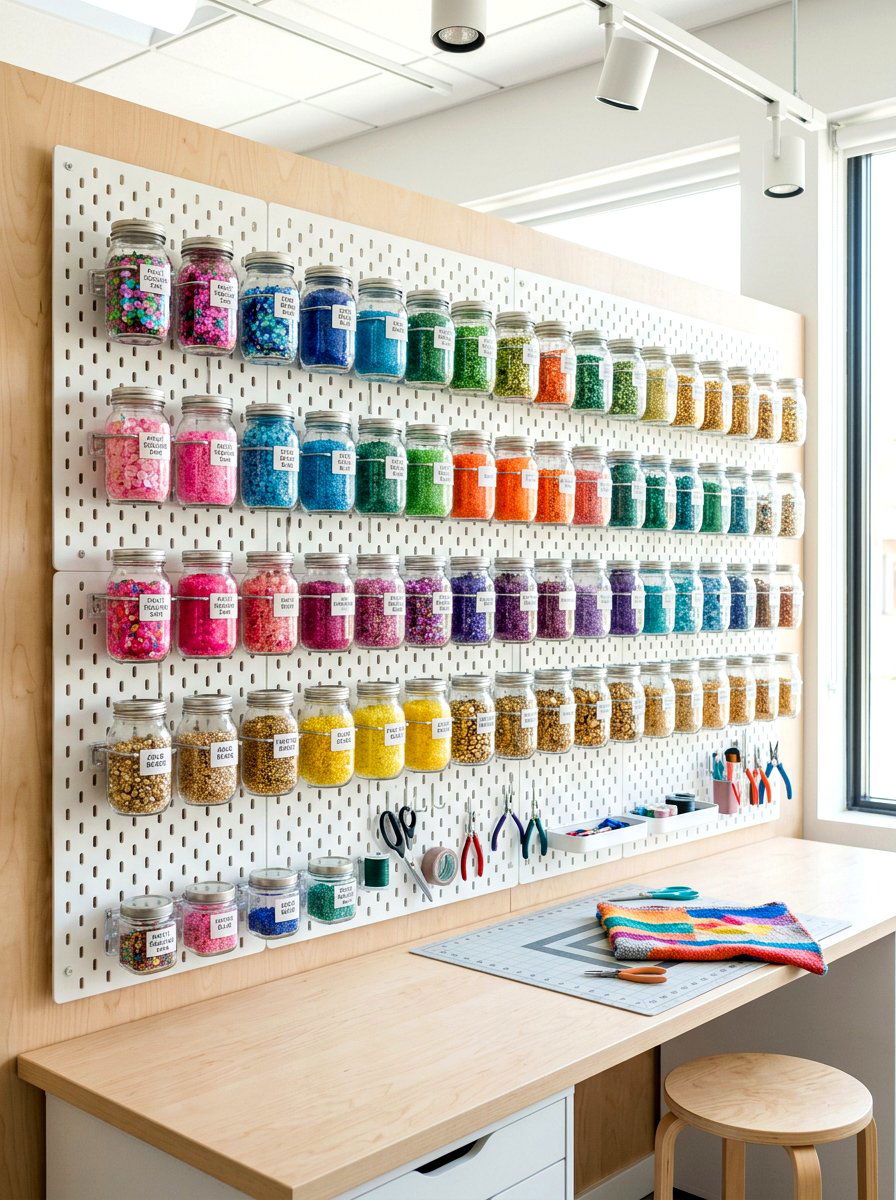
Designing a colorful craft room allows you to express your vibrant personality through your workspace decor and organization. You can use a bold accent wall or brightly colored furniture to stimulate your creativity and lift your mood. Organizing your supplies by the colors of the rainbow on open shelves creates a stunning visual display that doubles as art. Mixing different patterns and textures through rugs and curtains adds depth and energy to the entire room. Even small accessories like colorful pencil holders and bright desk lamps contribute to the lively atmosphere. This energetic space is perfect for those who find inspiration in a bold and cheerful environment.
11. Minimalist Craft Room
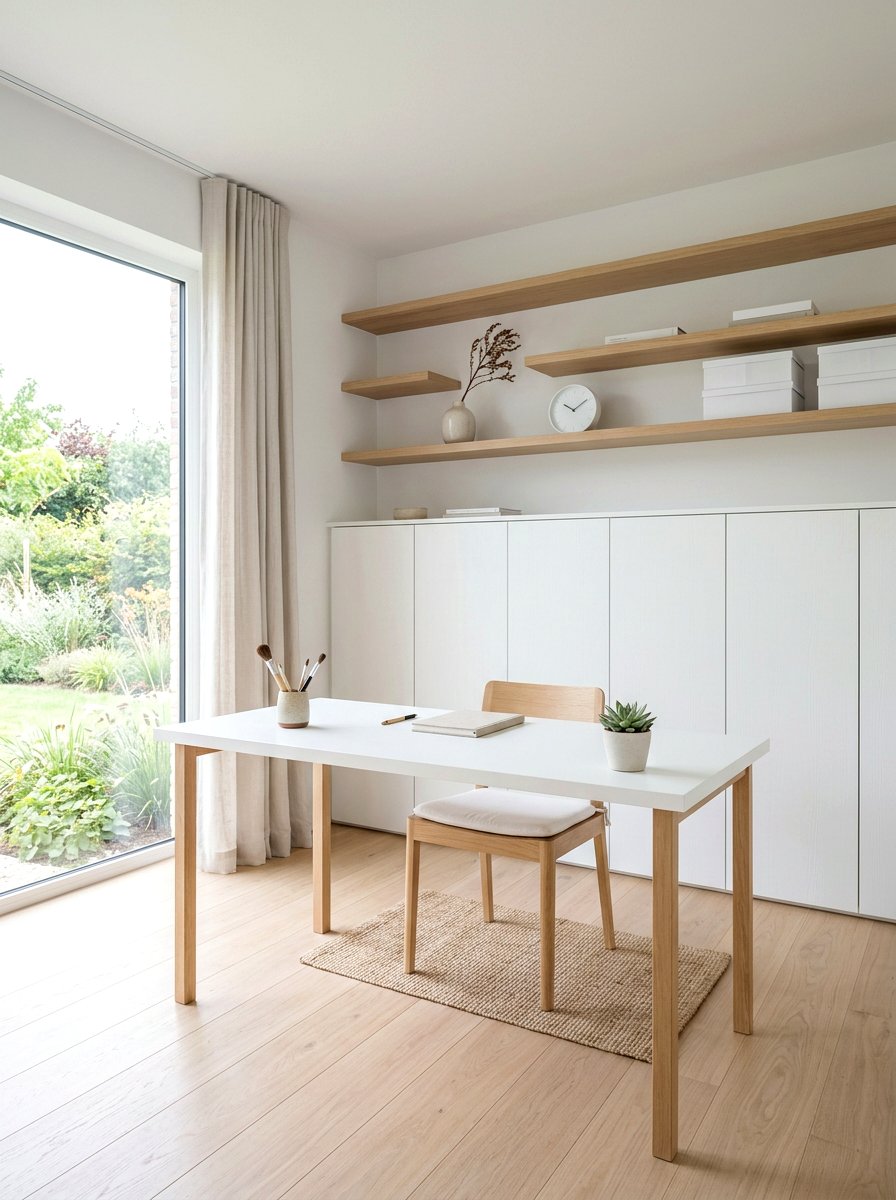
A minimalist craft room is all about stripping away the clutter to focus on the essential tools of your trade. Hidden storage is a key component of this design, using sleek cabinets to keep most of your supplies out of sight. A simple, sturdy desk with a single chair provides a distraction-free zone for deep creative work. The color palette is usually limited to whites, grays, and wood tones to create a sense of calm and order. By keeping only what you truly need and use, you create a serene space that allows your ideas to take center stage. This approach promotes efficiency and mental clarity during every project.
12. Kids Craft Room
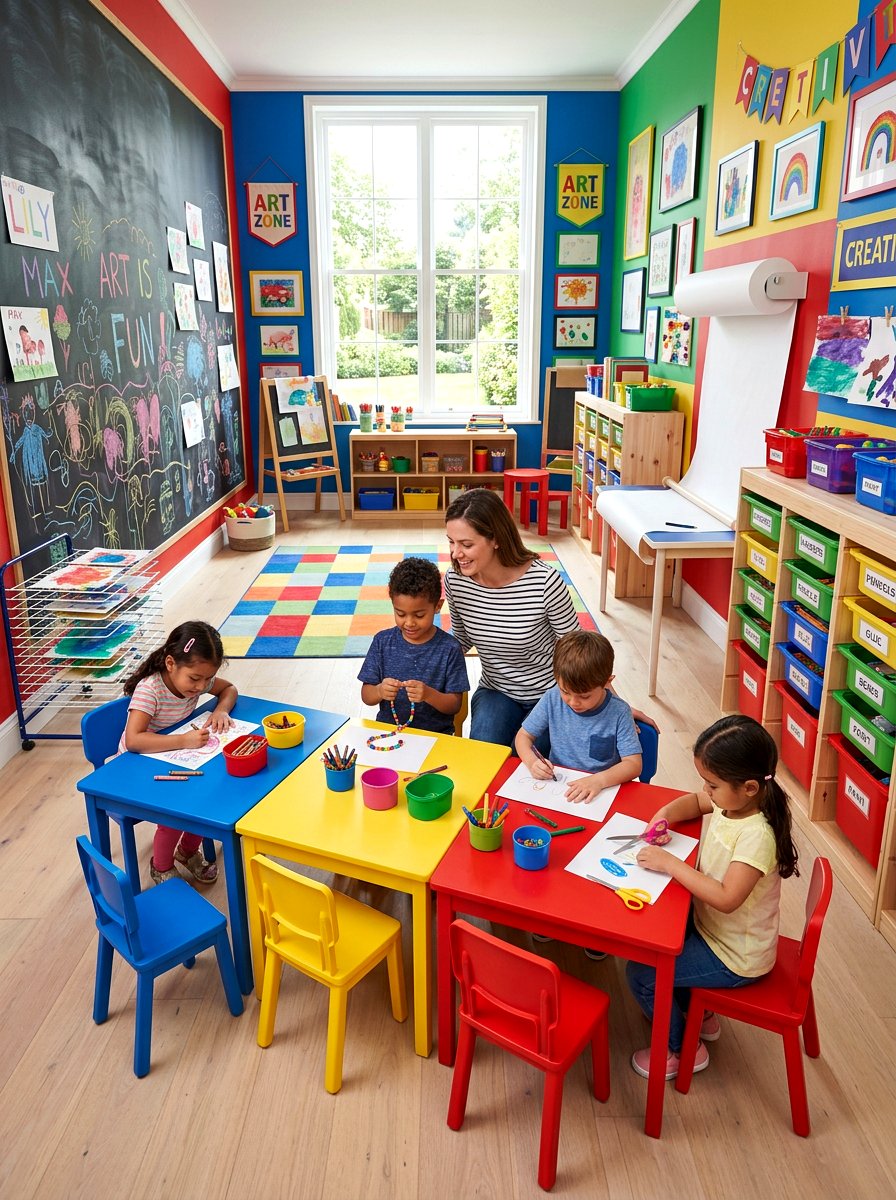
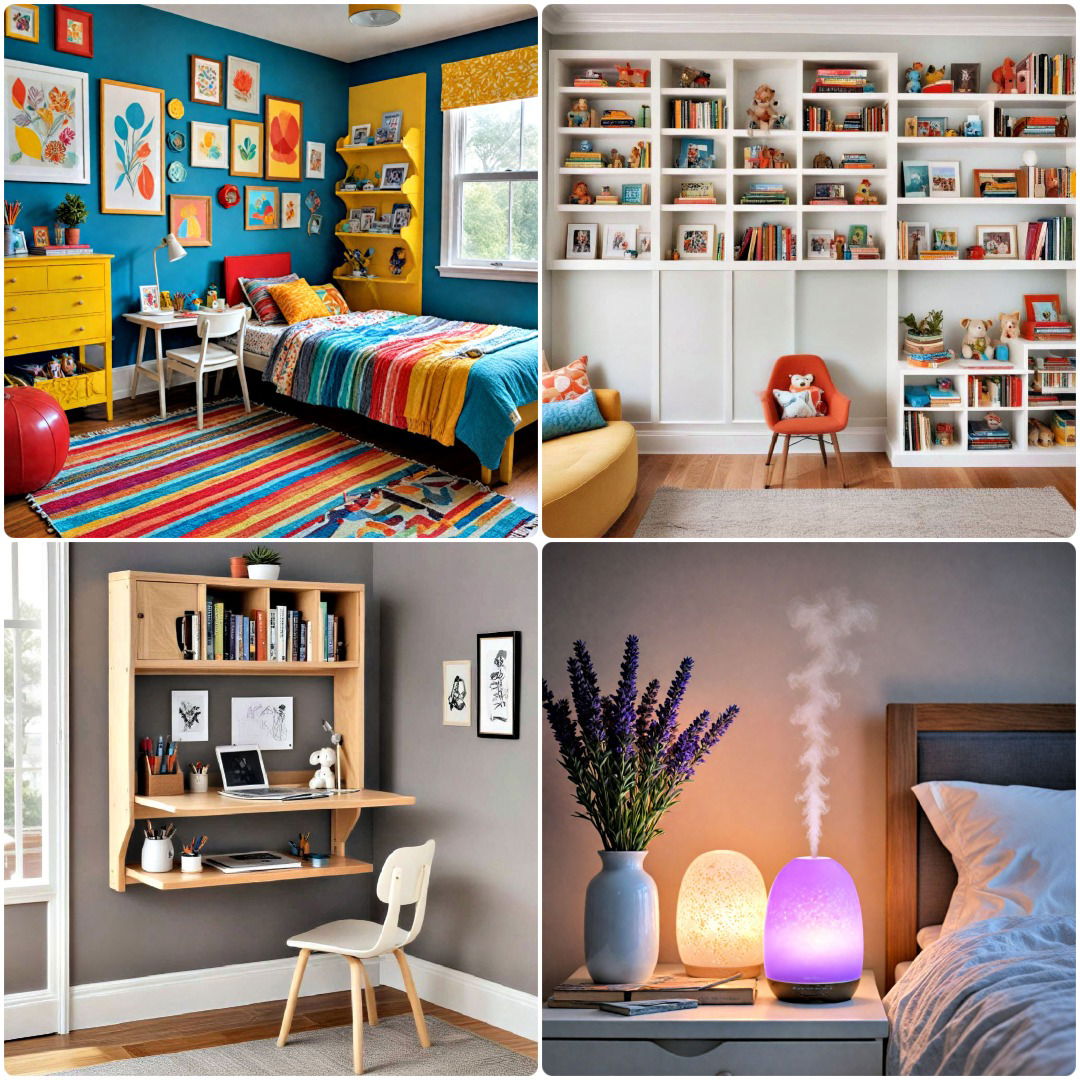
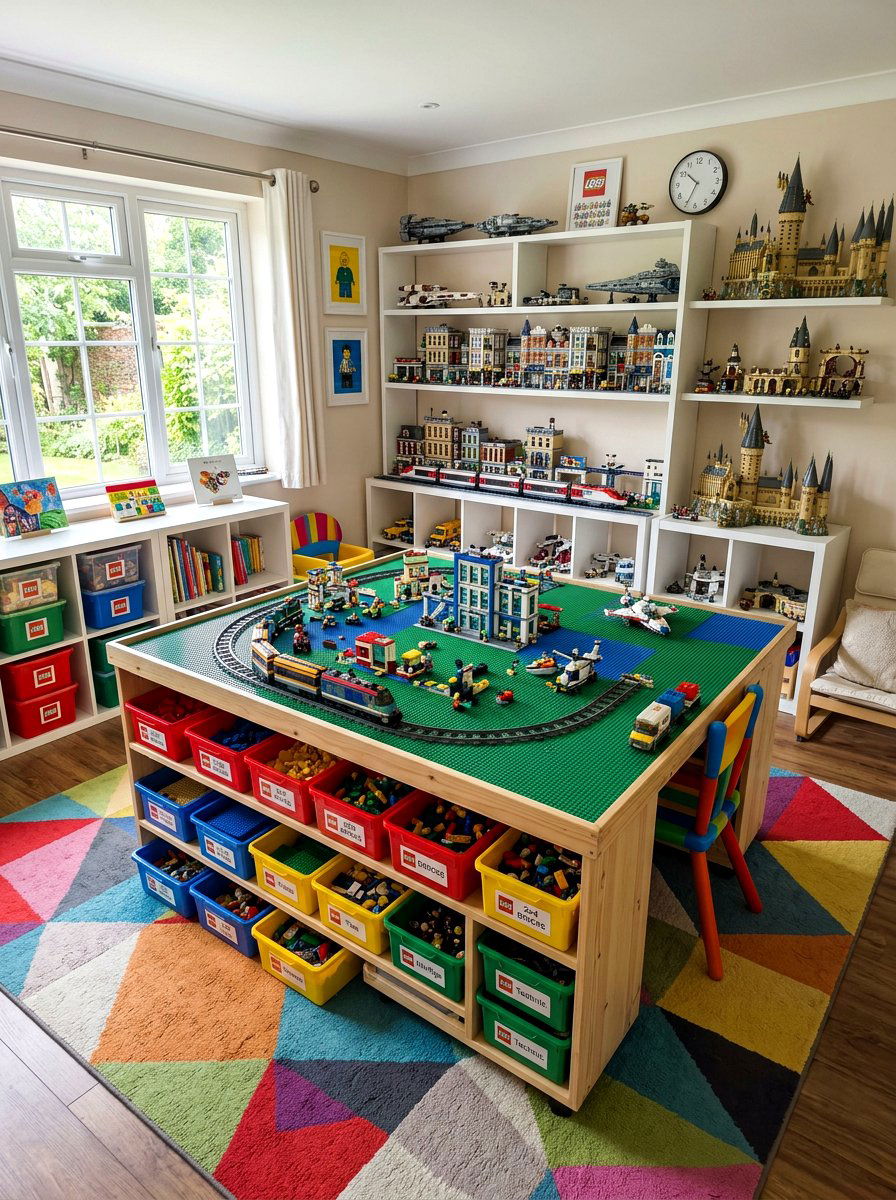
A kids craft room should be a fun and durable space that encourages exploration and creative play for children. Low-level tables and chairs are essential so that little ones can easily reach their supplies and work comfortably. Using washable paint on the walls and easy-to-clean flooring ensures the room can handle messy art projects without stress. Large bins and labeled cubbies help children learn how to organize their own crayons, paper, and glue after playtime. You can also include a large chalkboard or corkboard for displaying their latest masterpieces proudly. This dedicated area keeps the rest of the house clean while fostering a love for the arts.
13. Shared Office Craft Room
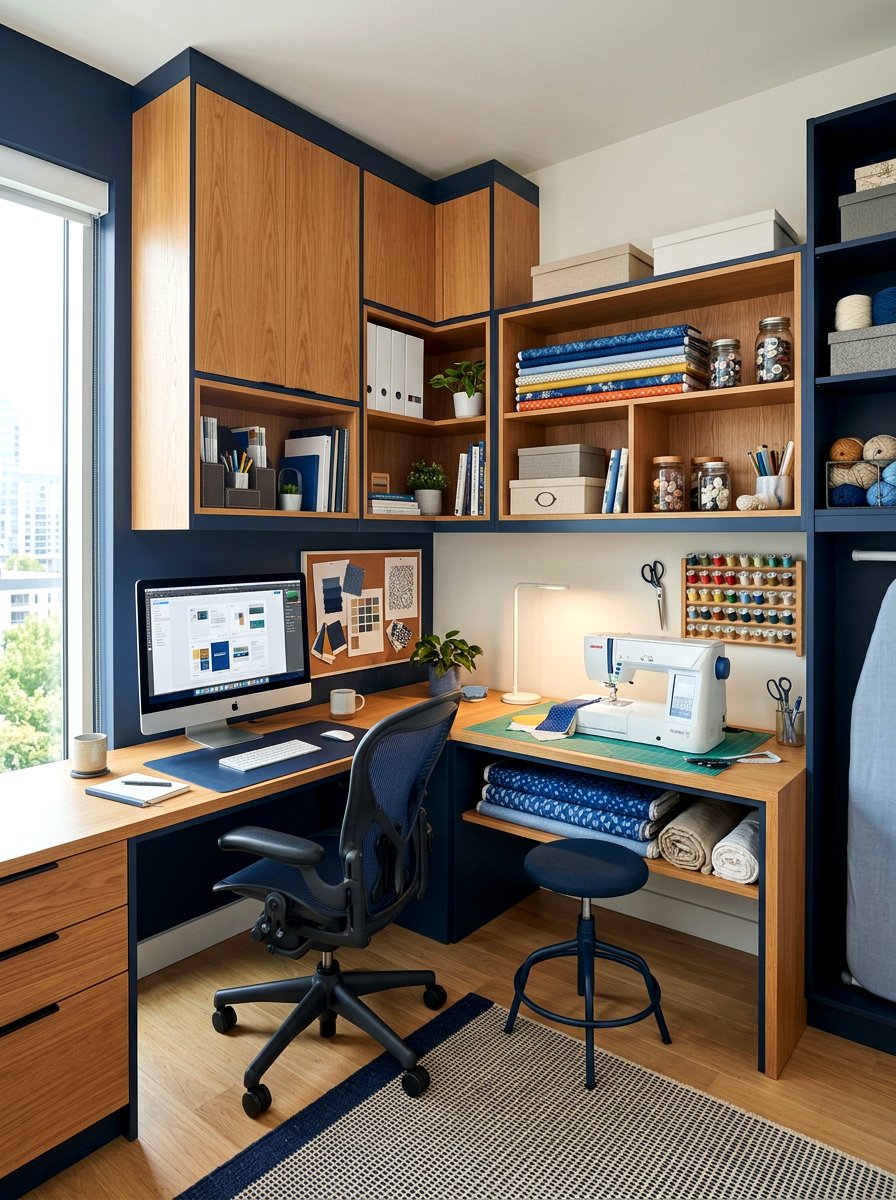
Combining a workspace for professional tasks with a creative area creates a highly functional shared office craft room. You can divide the room into zones using rugs or different wall colors to mentally separate work time from hobby time. A large L-shaped desk can accommodate a computer on one side and a crafting station on the other side. Using cohesive furniture styles ensures that the room looks unified despite its dual purposes. Storage solutions should be versatile enough to hold both office files and bulky crafting materials like yarn or fabric. This integrated layout is a smart solution for busy individuals who balance a career with their artistic passions.
14. Gift Wrapping Station
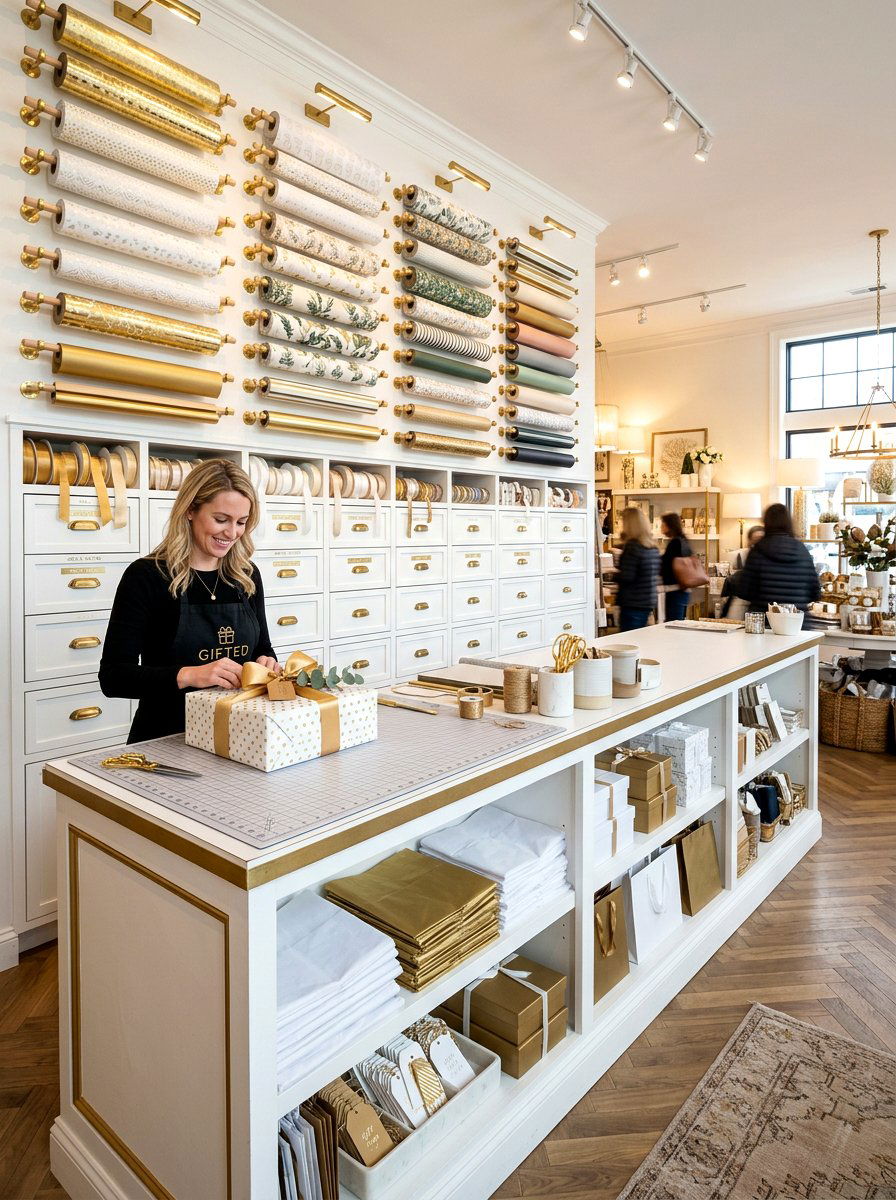
A dedicated gift wrapping station makes preparing for holidays and birthdays a much more organized and enjoyable experience. You can install long dowels on the wall to hold rolls of wrapping paper, keeping them from getting wrinkled or torn. Shallow drawers are perfect for storing ribbons, bows, gift tags, and rolls of tape in a neat and orderly fashion. A large, flat countertop provides plenty of space for measuring and cutting large sheets of paper without frustration. Adding a small stool allows you to sit comfortably while adding the finishing touches to your presents. This specialized zone ensures you always have everything you need for beautiful gift presentation.
15. Scrapbooking Room
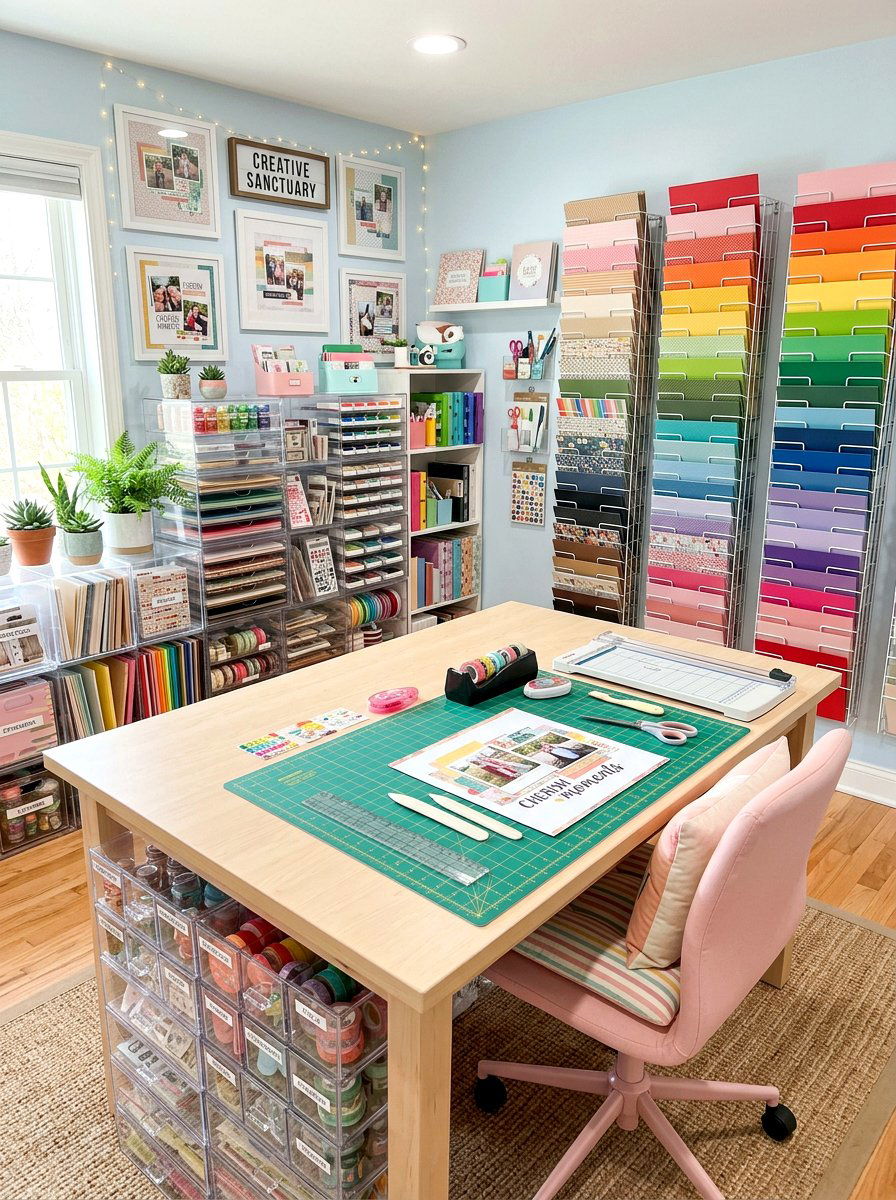
The scrapbooking room is designed specifically for paper crafters who need extensive flat surfaces and detailed organization. Vertical paper racks or slotted shelves keep different colored cardstock and patterned papers visible and protected from damage. Small, clear drawers are essential for sorting embellishments like stickers, stamps, and die-cuts by theme or color. A large work table with a self-healing cutting mat allows you to work on multiple pages at the same time. Good lighting is critical for seeing fine details and ensuring that your photo layouts are perfectly aligned. This room provides a peaceful space to preserve your family memories through beautiful and creative paper art.
16. Jewelry Making Studio
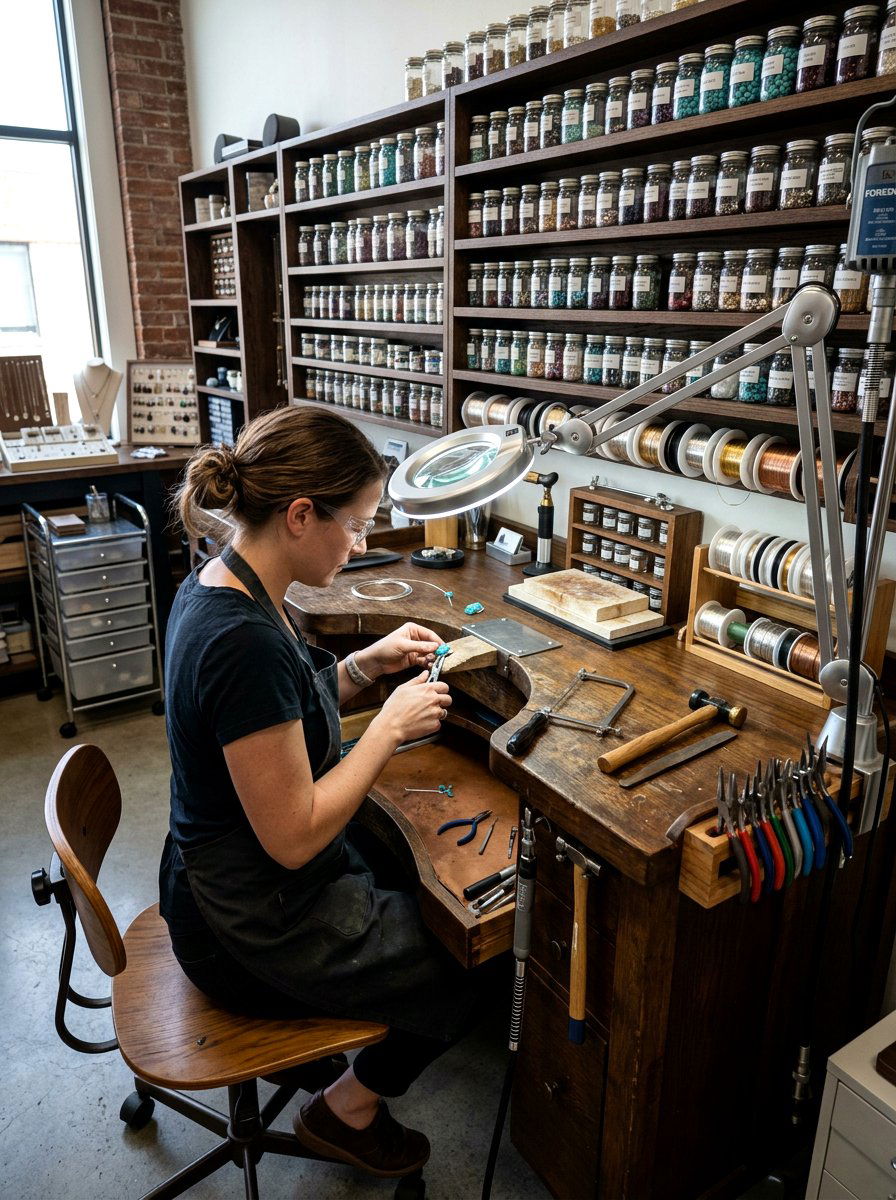
A jewelry making studio requires precision and a very high level of organization for small components like beads and wires. Shallow, partitioned drawers or small glass jars on wall-mounted shelves keep your tiny findings sorted and easy to find. A sturdy workbench with a comfortable height is necessary for using tools like pliers, torches, or engraving equipment safely. You should also consider adding a magnifying lamp to help with intricate tasks that require sharp focus and detail. Comfortable seating is vital since jewelry makers often spend long periods of time hunched over their delicate work. This specialized setup ensures a professional and efficient environment for creating stunning jewelry.
17. Potting Shed Craft Room
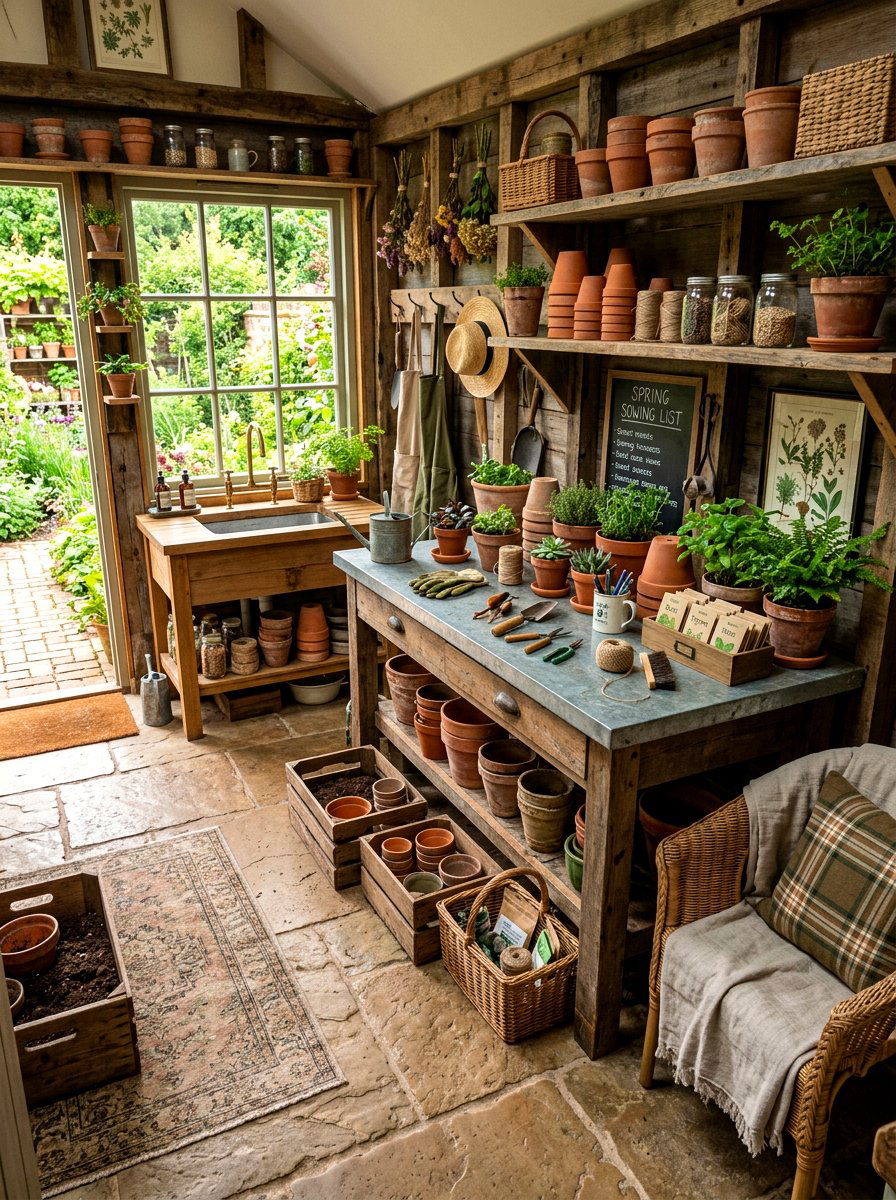
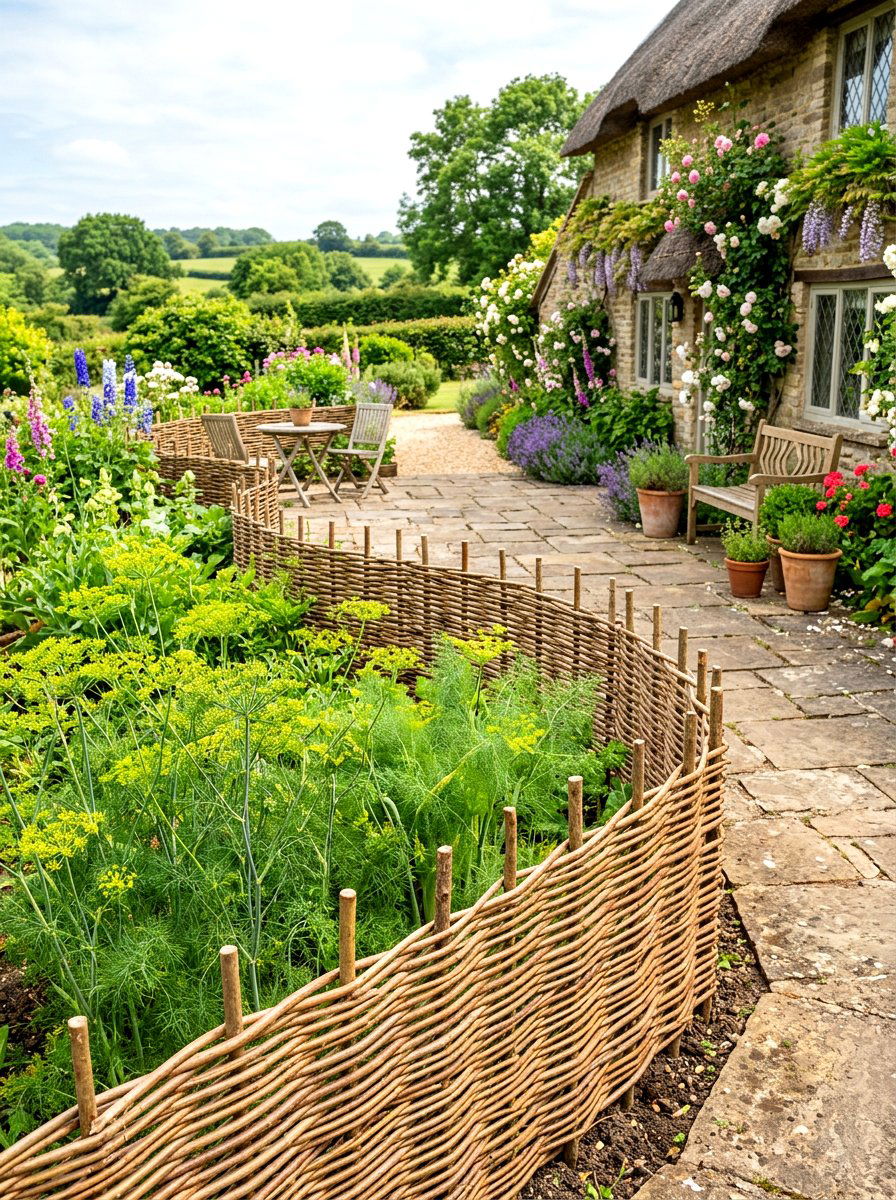
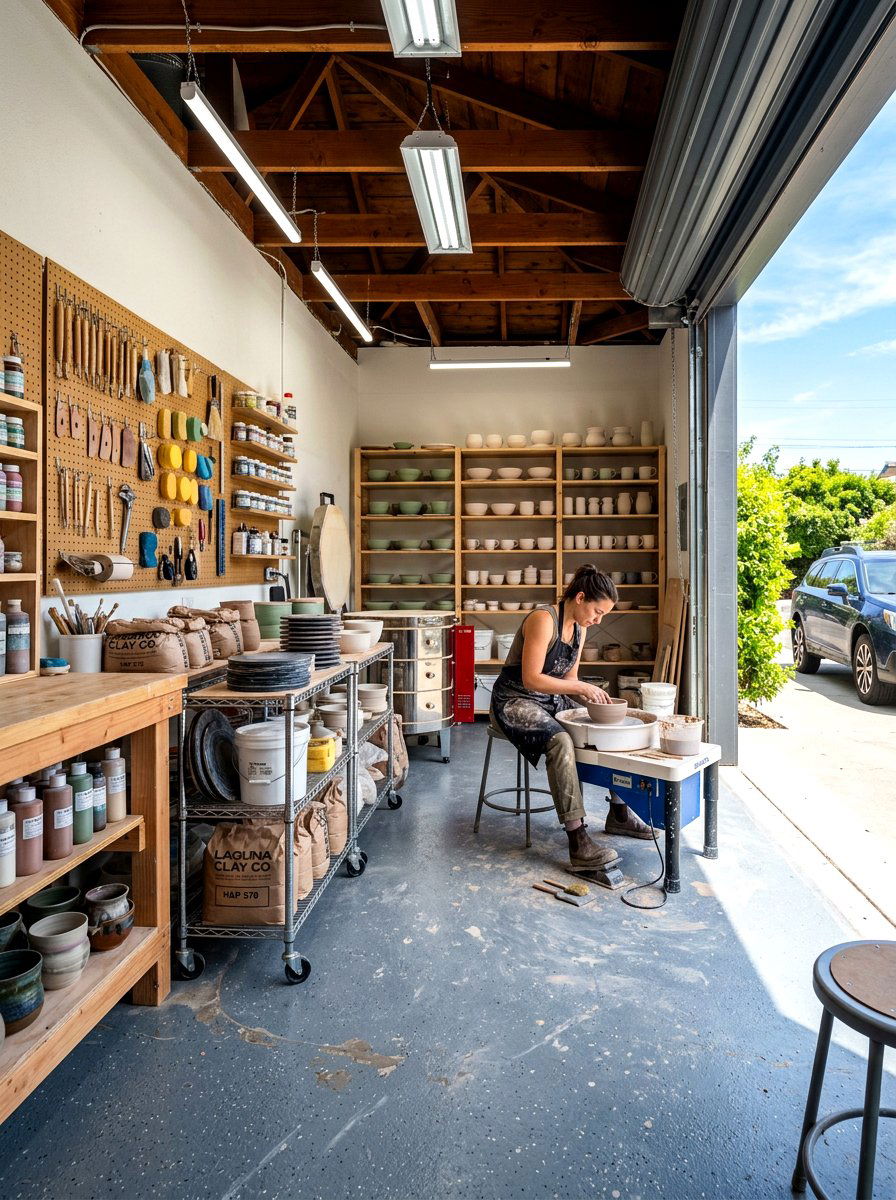
Blending gardening with indoor crafting creates a unique potting shed craft room that feels connected to nature and the outdoors. This space usually features rustic elements like terracotta pots, galvanized metal bins, and sturdy wooden workbenches for messy projects. You can use the area for flower arranging, seed starting, or even painting garden-themed art projects throughout the seasons. Large windows or glass doors allow you to look out at your garden while you work inside. Durable flooring like stone or tile is ideal because it can be easily hied down if dirt or water spills. This earthy sanctuary is perfect for anyone who finds their creative spark in the natural world.
18. Industrial Craft Room
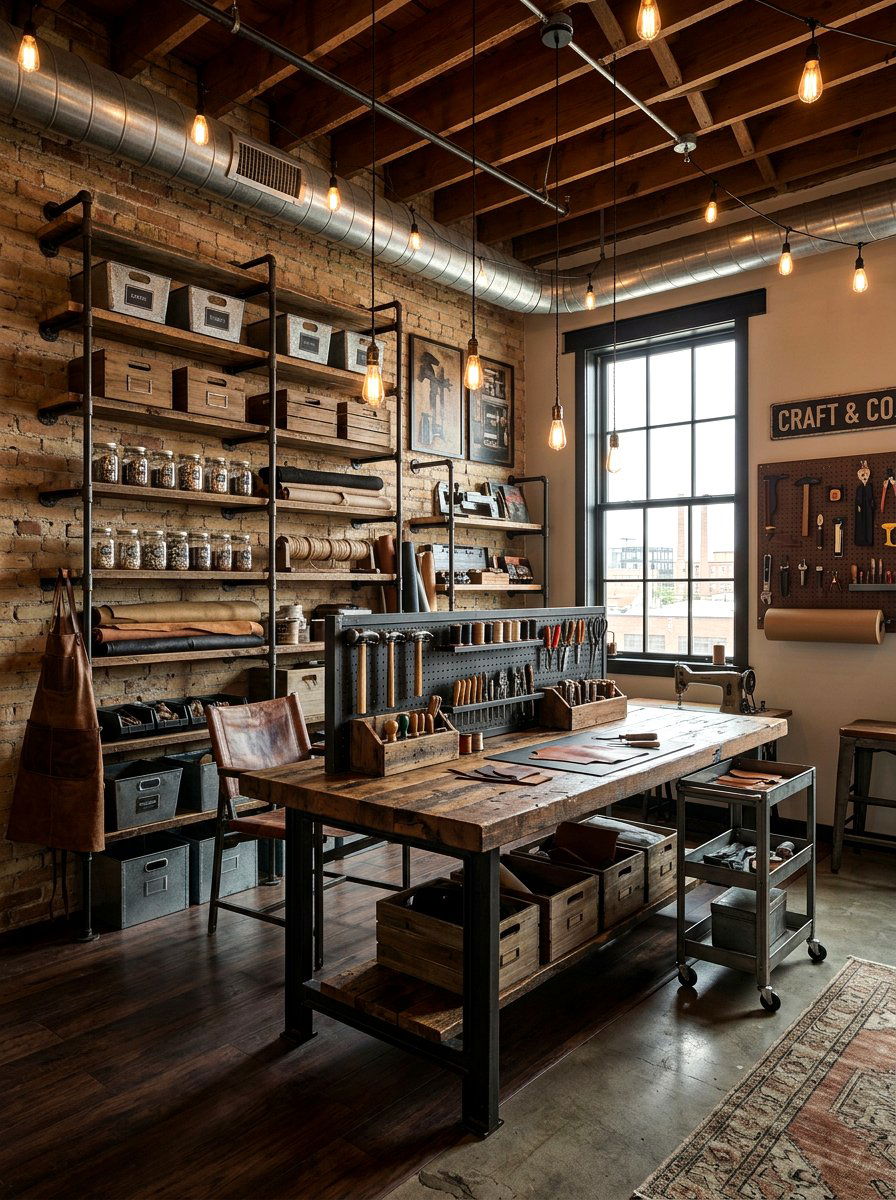
An industrial craft room uses raw materials like exposed brick, dark metal, and distressed wood to create a cool and edgy vibe. Pipe shelving and heavy-duty metal carts provide sturdy storage that can handle heavy tools or large amounts of supplies. A large reclaimed wood table serves as a durable centerpiece for all your creative building or crafting projects. Lighting often features Edison bulbs or metal pendant lamps to enhance the factory-inspired aesthetic of the room. This style is not only visually striking but also incredibly practical for more intensive crafts like leatherworking or metal art. It provides a tough and inspiring backdrop for your most ambitious creative work.
19. Bohemian Craft Room
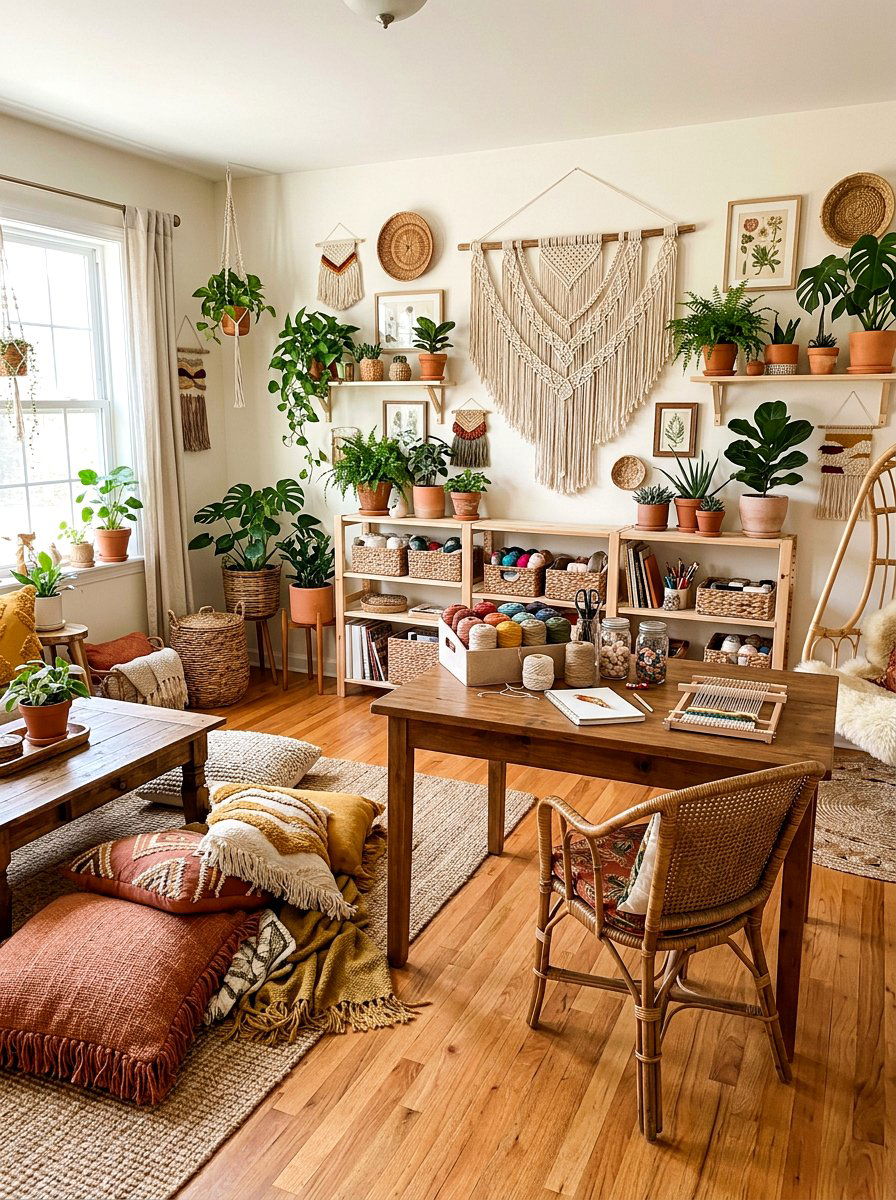
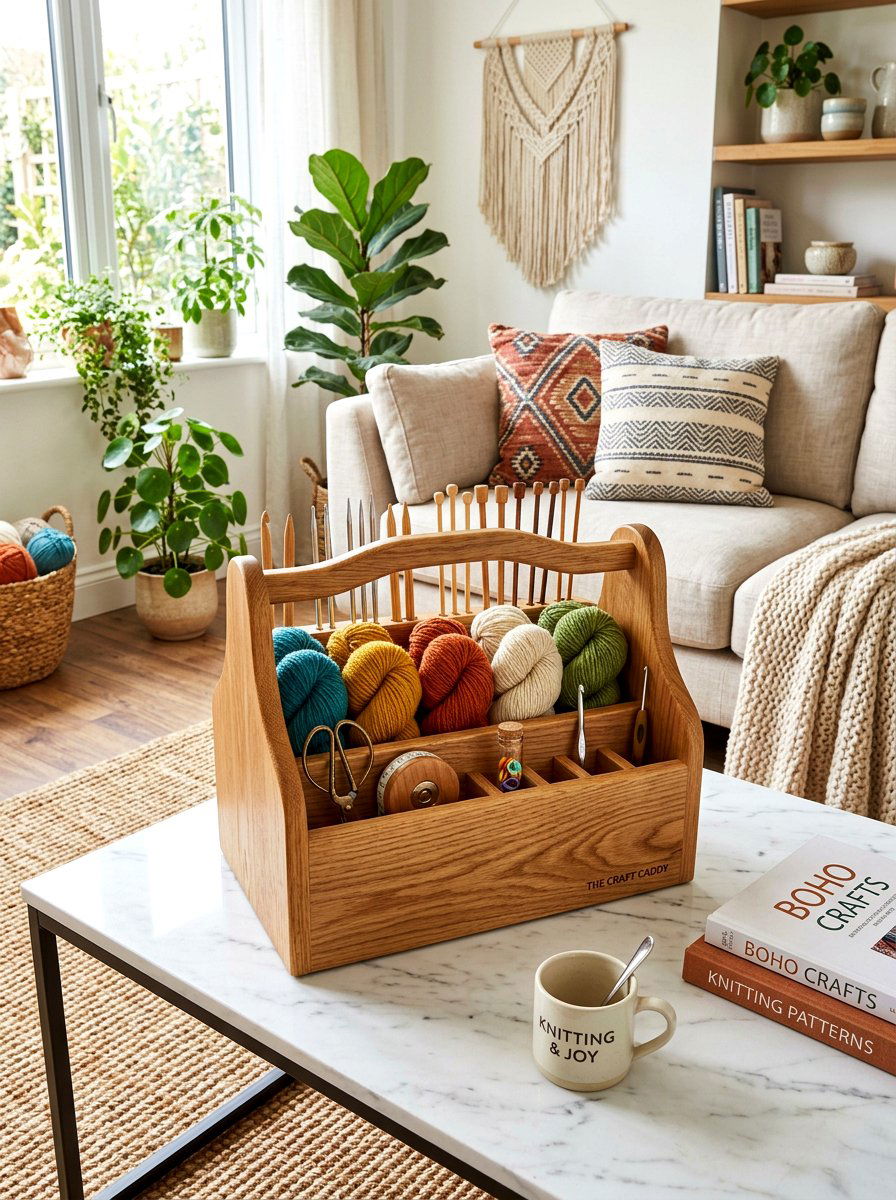
The bohemian craft room is a whimsical and eclectic space filled with vibrant colors, varied patterns, and plenty of cozy textures. Low seating options like floor pillows or a soft armchair create a relaxed atmosphere for knitting, crocheting, or sketching. You can display your supplies in colorful woven baskets or hang vintage textiles on the walls for a layered look. Macramé wall hangings and plenty of indoor plants add life and a touch of nature to the creative environment. This style encourages a free-spirited approach to art where there are no strict rules and inspiration comes from everywhere. It is a warm and inviting space that feels truly personal.
20. Scandi Craft Room
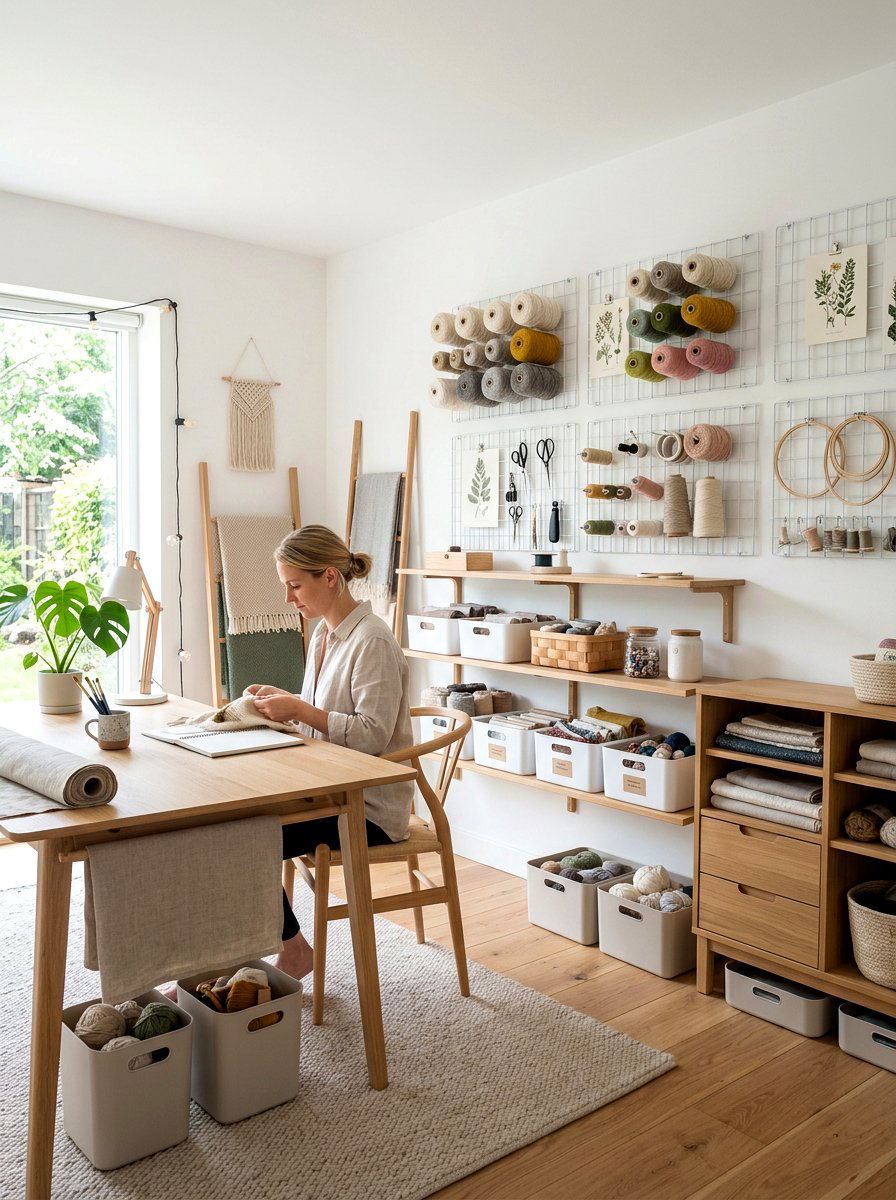
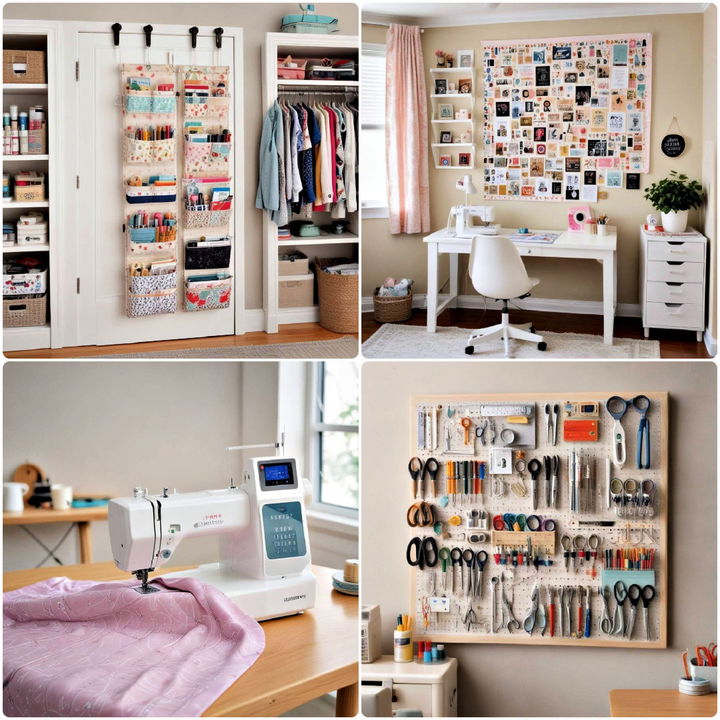
A Scandi craft room embraces the principles of light, simplicity, and functionality to create a very peaceful and productive workspace. Using light wood tones and a crisp white color palette helps maximize the natural light in the room. Furniture is often minimalist but very well-made, focusing on ergonomics and smart storage solutions that keep clutter away. You can use natural materials like wool, linen, and light oak to add warmth without complicating the clean aesthetic. Simple pegboards and wire wall grids provide flexible organization for your most-used tools while looking modern and chic. This serene environment is ideal for focusing on delicate and thoughtful creative projects.
21. Corner Craft Room
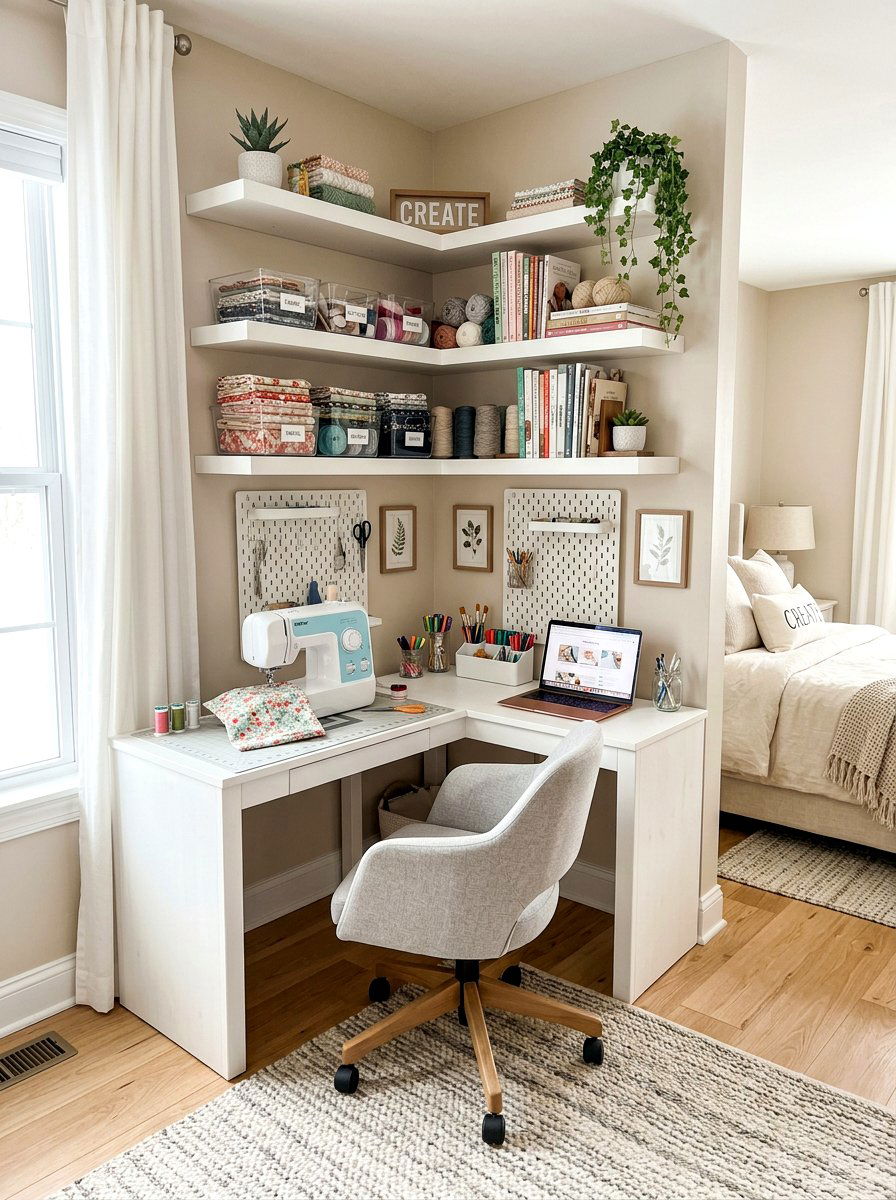
A corner craft room is a smart way to carve out a creative zone within a larger living area or bedroom. By using an L-shaped desk, you can maximize the corner space and provide ample room for your computer and craft supplies. Wall-mounted shelves above the desk allow you to keep your materials organized without taking up precious floor space. You can use a decorative room divider or a large rug to visually define the craft area from the rest of the room. Choosing furniture that matches the existing decor ensures that your craft corner feels like a seamless part of your home. This compact setup proves you do not need a whole room to be creative.
22. Guest Room Craft Room
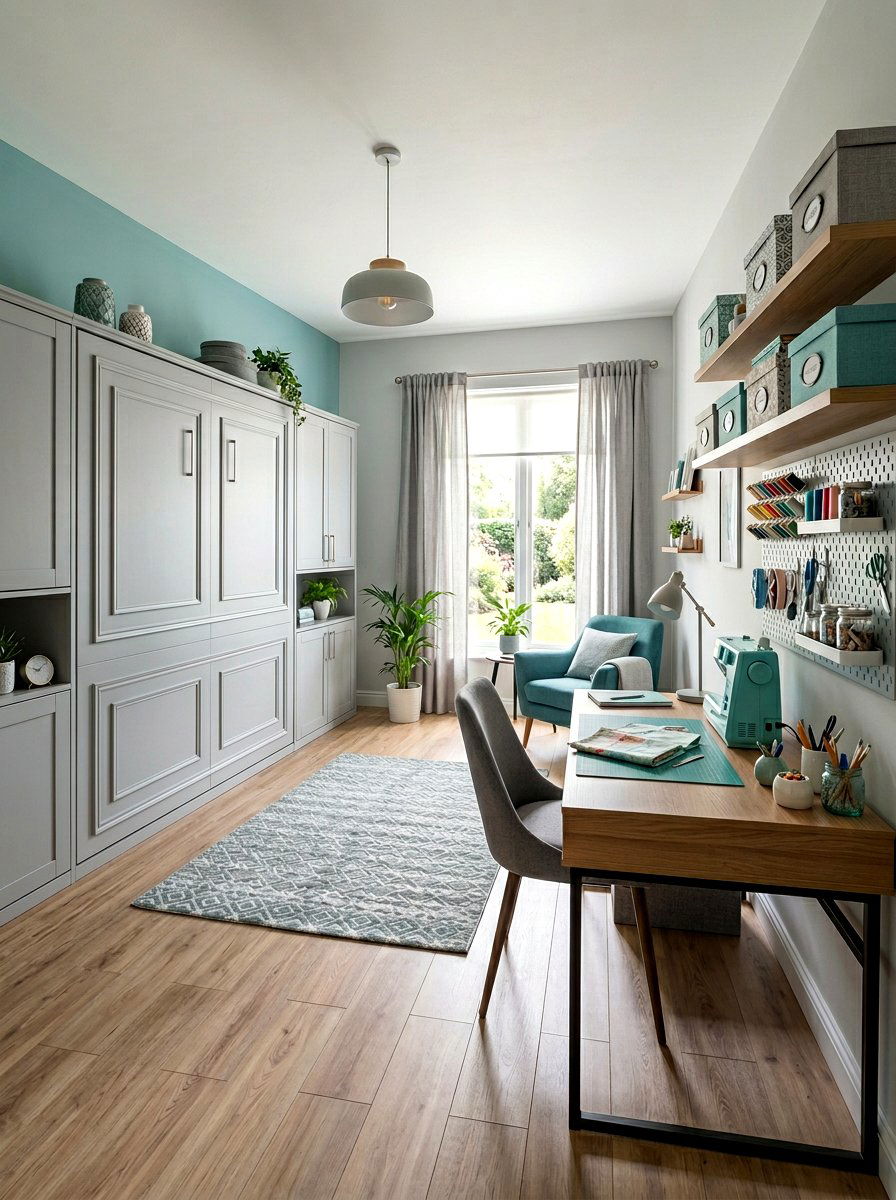
Creating a guest room craft room allows you to have a dedicated hobby space that still serves a functional purpose for visitors. A Murphy bed or a high-quality sofa bed can be used to save space when guests are not staying over. Your craft table can double as a desk or vanity for guests, making the furniture work for everyone. Using stylish storage cabinets helps hide your crafting supplies when you want the room to look like a polished bedroom. This dual-purpose design ensures that every square foot of your home is being used effectively throughout the entire year. It is a practical solution for those with limited extra rooms.
23. Built In Craft Room
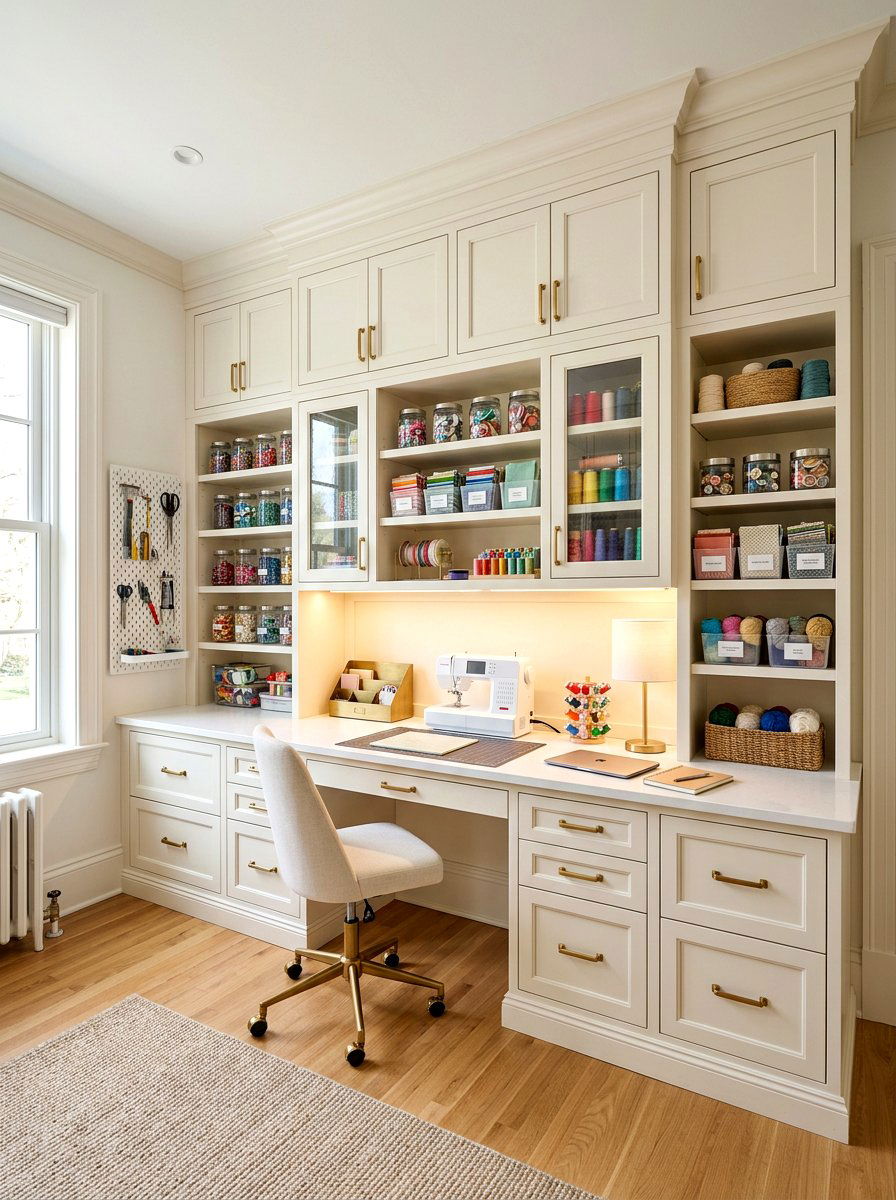
A built in craft room offers a high-end, custom look that integrates perfectly with the architecture of your home. Custom cabinetry and shelving are designed to fit your specific tools and supplies, ensuring that every item has a perfect home. Built-in desks can be made to the exact height and width you need for your most frequent creative tasks. This approach creates a very clean and organized appearance because everything is tucked away behind matching doors and drawers. You can also incorporate integrated task lighting directly into the shelving units for a professional and sleek finish. A built-in setup is a permanent and beautiful investment in your creative lifestyle.
24. Pegboard Craft Room
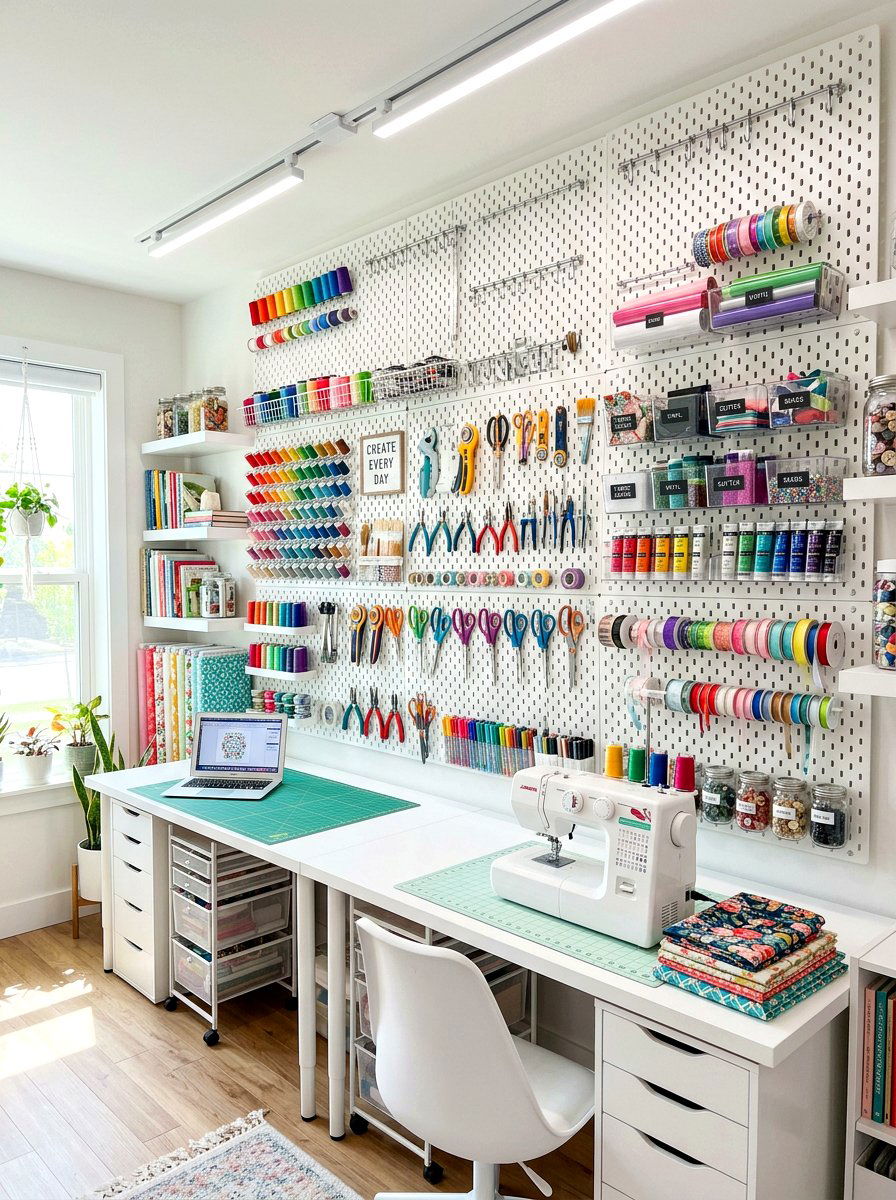
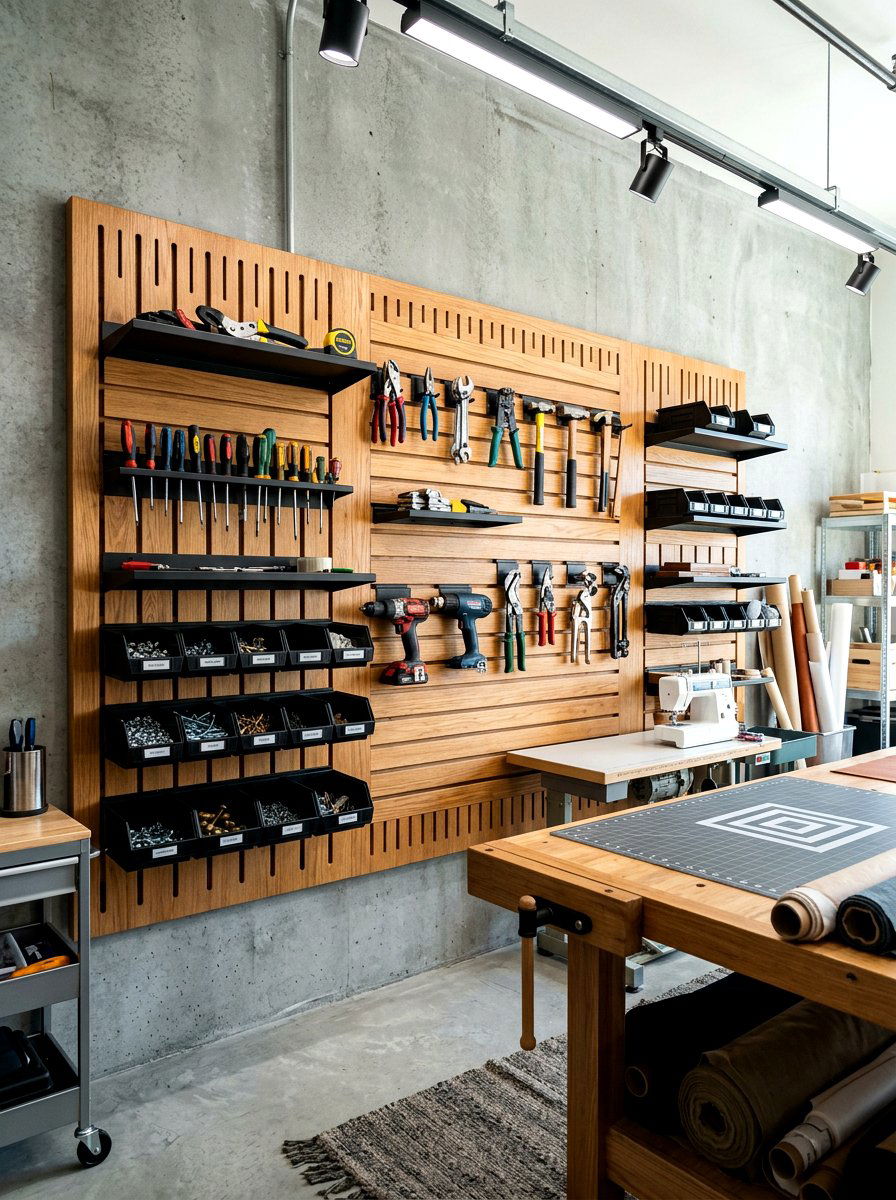
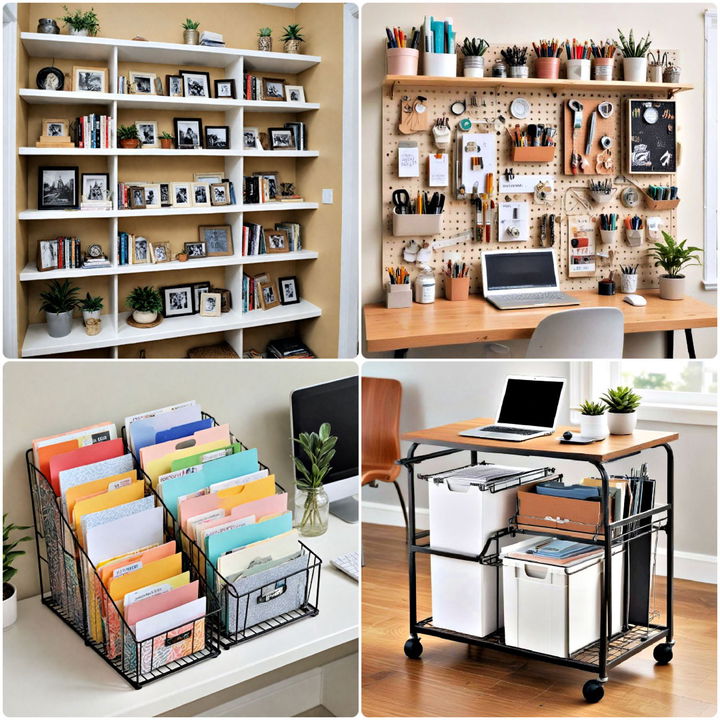
Focusing on a pegboard craft room design allows for ultimate flexibility and visual organization of all your favorite tools. Covering one or more walls with large pegboards gives you endless options for hanging scissors, tape, brushes, and storage bins. You can easily move hooks and shelves around as your supply collection grows or as you start new types of projects. Painting the pegboard a bright color can turn this functional element into a bold piece of wall art for the room. This system keeps everything you need within sight and easy reach, which can significantly speed up your creative workflow. It is an affordable and highly effective way to organize any craft space.

25. Craft Room Island
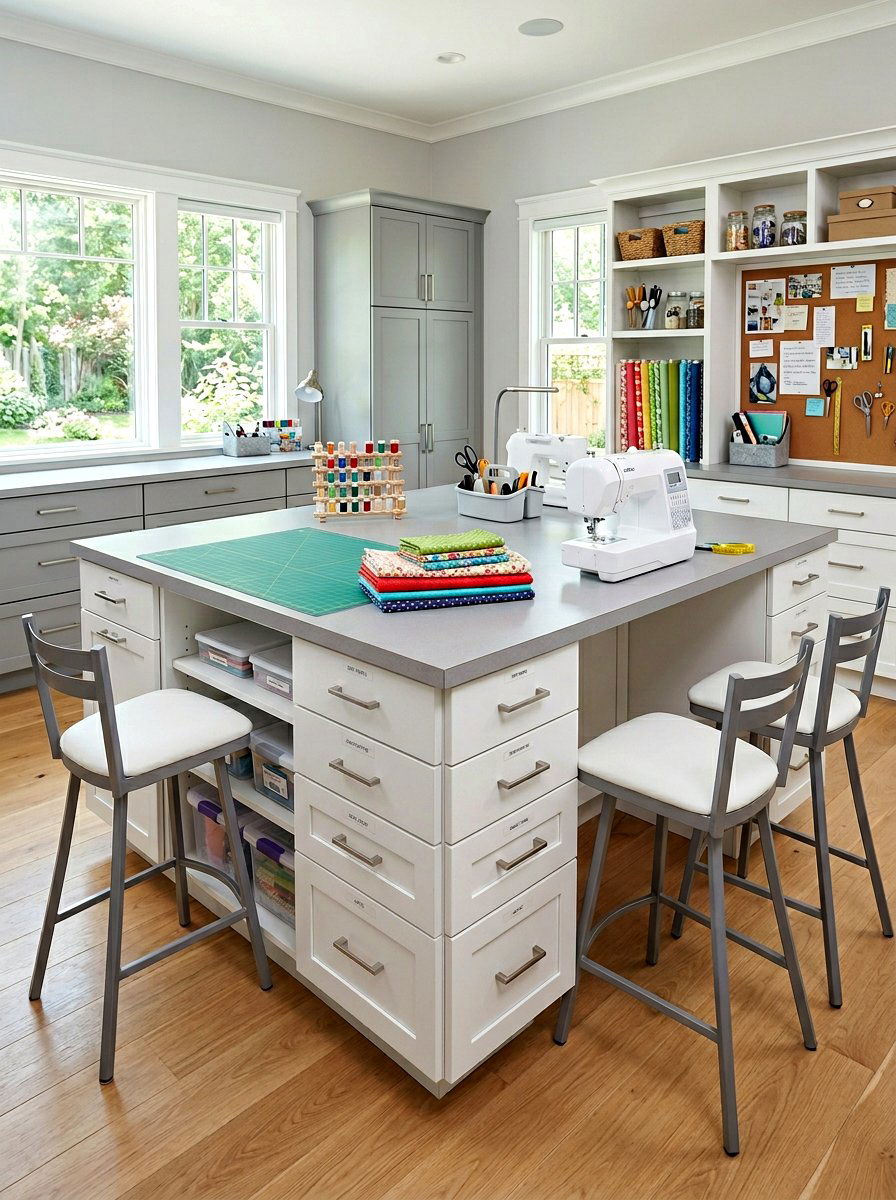
Centered around a large workstation, a craft room island provides a 360-degree surface for working on large-scale projects and collaborative art. The island often features built-in drawers or open cubbies on all sides to keep supplies accessible while you move around the table. This layout is perfect for activities like quilting, large-scale painting, or gift wrapping where you need plenty of room to spread out. You can choose a counter-height island so that you have the option to work while standing or use high stools. This central hub becomes the heart of the room, providing a professional and expansive area for all your most demanding creative tasks.
26. Vertical Craft Room
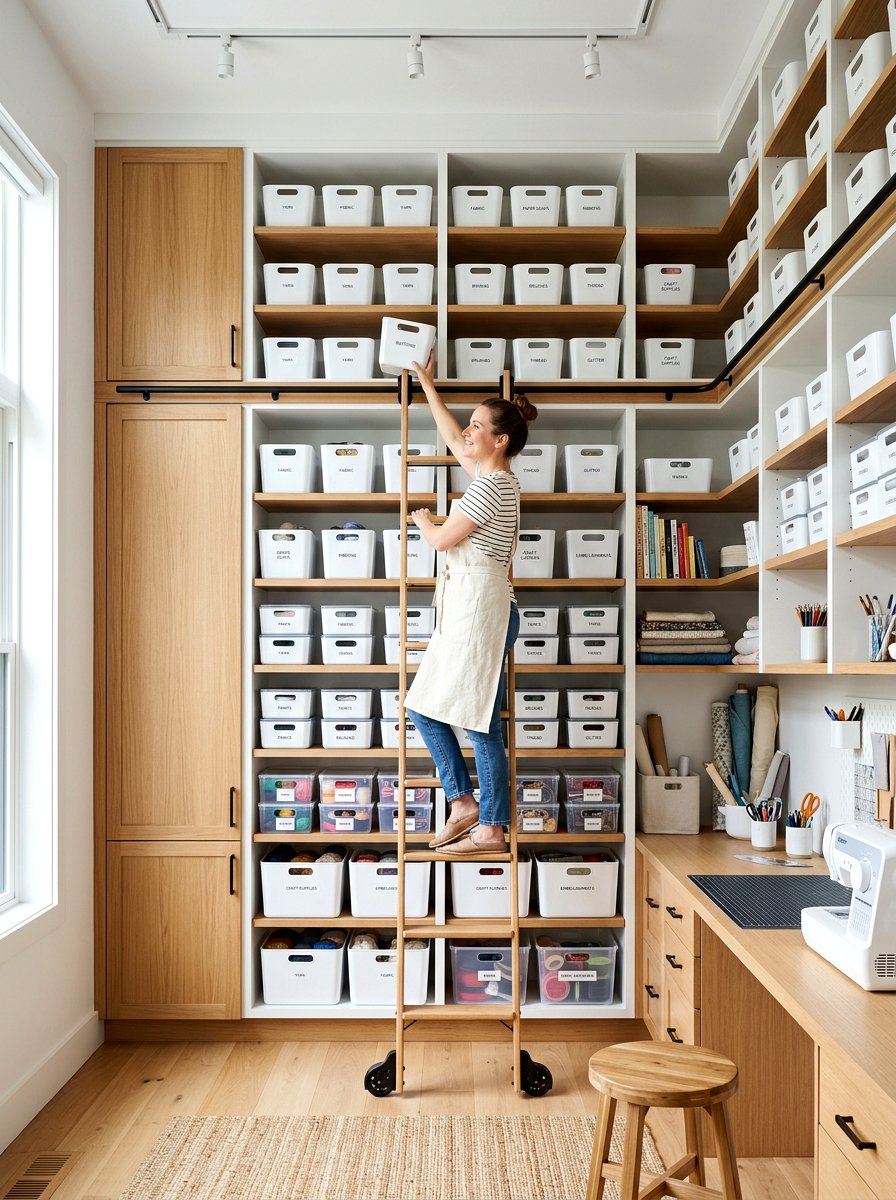
The vertical craft room concept is perfect for those who have limited floor space but plenty of wall height to work with. By installing tall shelving units that reach all the way to the ceiling, you can store a vast amount of supplies in a small footprint. You might need a rolling library ladder to access the highest bins, which adds a charming and functional touch to the design. Wall-mounted racks for paper, ribbon, and tools help keep the desktop clear for actual crafting and creative thinking. This upward approach to organization ensures that even the smallest room can accommodate a large and diverse collection of artistic materials.
27. Double Desk Craft Room
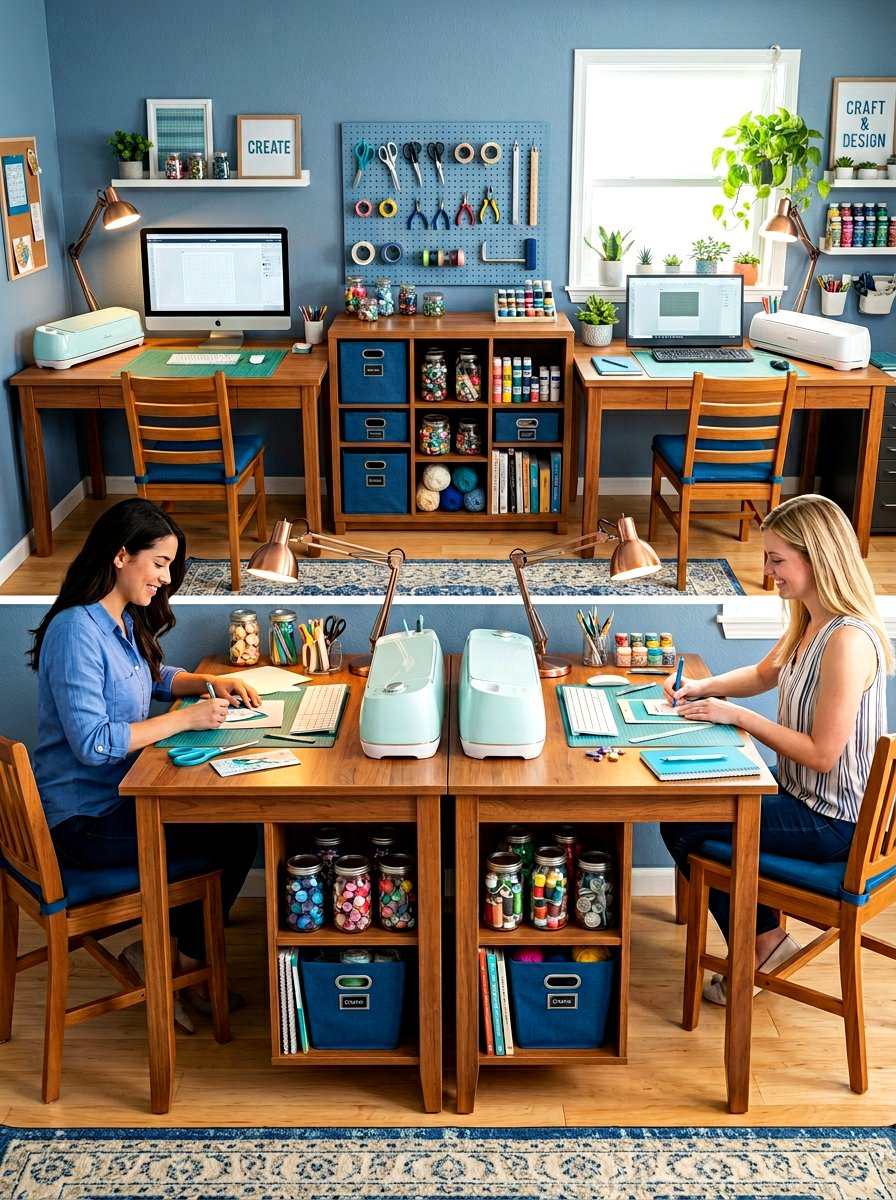
A double desk craft room is the ideal solution for couples or friends who enjoy working on their hobbies together. Placing two identical desks side-by-side or back-to-back creates a shared environment where you can collaborate and inspire each other. Each person can have their own dedicated storage and lighting to suit their specific crafting needs and personal style. This layout fosters a sense of community and makes creative time more social and fun for everyone involved. You can use a central storage unit to share common supplies like glue, scissors, or a printer to save space. This setup turns crafting into a shared experience that strengthens your creative bonds.
28. Vintage Craft Room
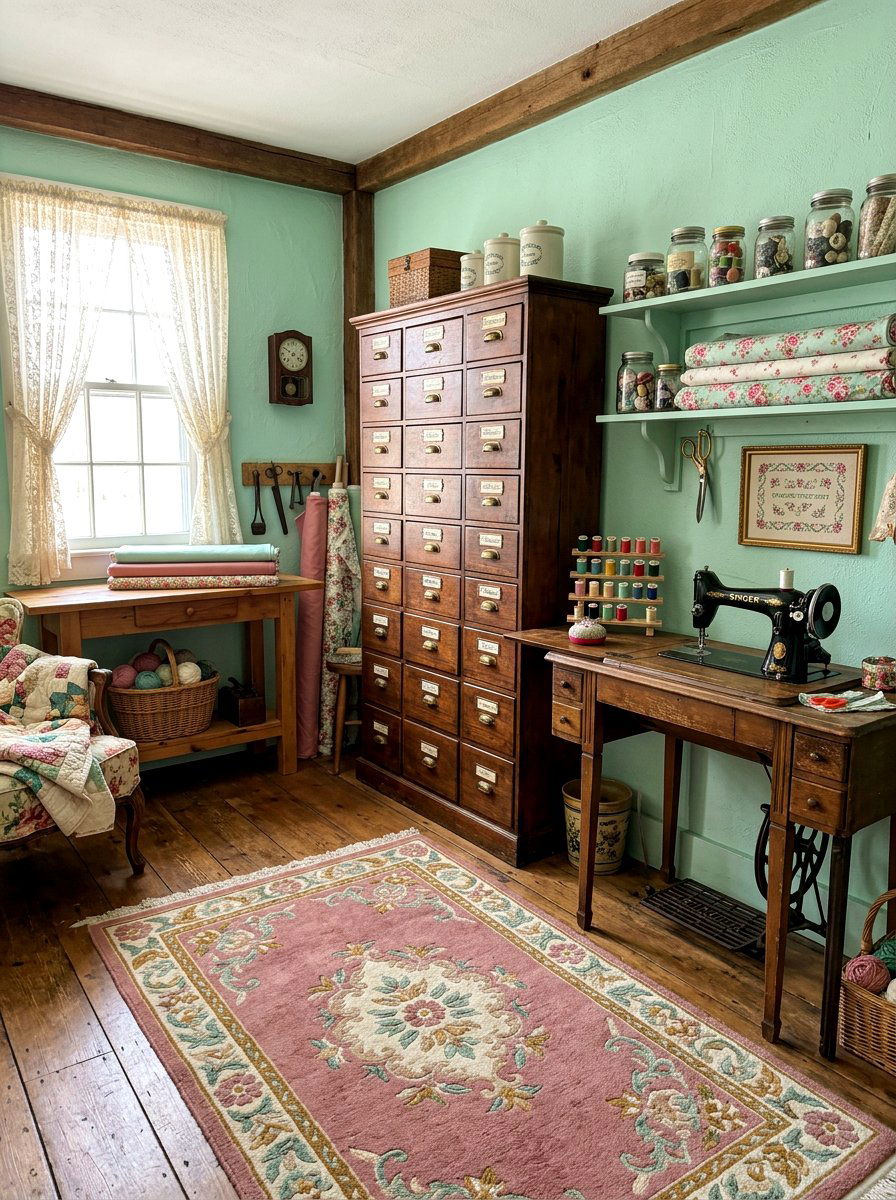
A vintage craft room celebrates the beauty of the past with antique furniture, retro patterns, and nostalgic decorative touches throughout the space. You can repurpose old apothecary cabinets or vintage trunks to store your modern craft supplies in a unique and stylish way. Using a palette of muted pastels or rich jewel tones adds to the historical and cozy feel of the entire room. Displaying vintage sewing machines or old art books provides constant inspiration and serves as beautiful decor for your workspace. Soft lighting from antique lamps and lace curtains helps create a warm and romantic atmosphere for your creative hours. This style is perfect for those who love history and traditional art forms.
29. Craft Room Nook
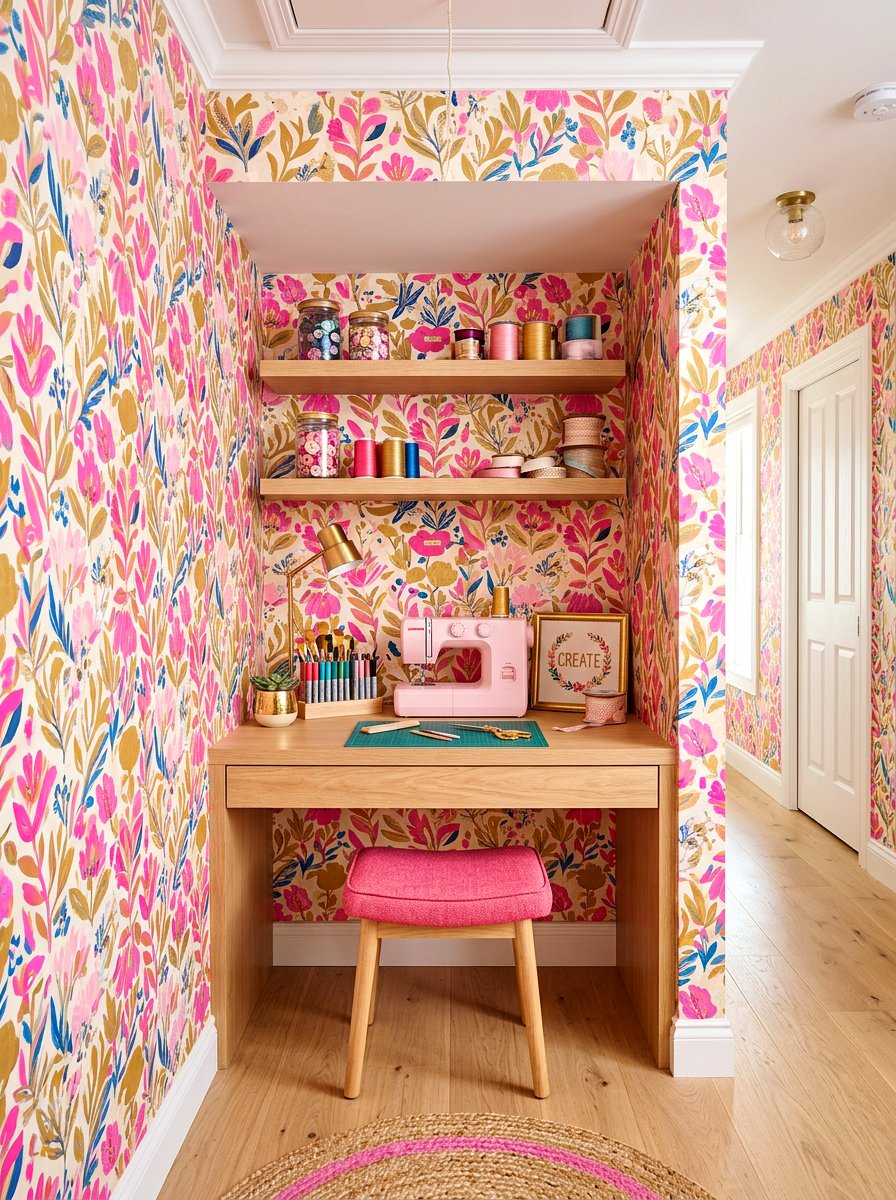
Transforming a small architectural alcove or a landing into a craft room nook is a great way to use overlooked spaces. A simple floating desk and a few wall shelves are often all you need to create a functional and cute creative zone. You can use colorful wallpaper or a bold paint color to make the nook stand out as its own distinct area. Adding a comfortable chair and a small rug makes the space feel complete and intentional rather than like an afterthought. This cozy spot is perfect for quick projects like journaling, sketching, or light sewing when you only have a few minutes to create.
30. Multi Purpose Craft Room
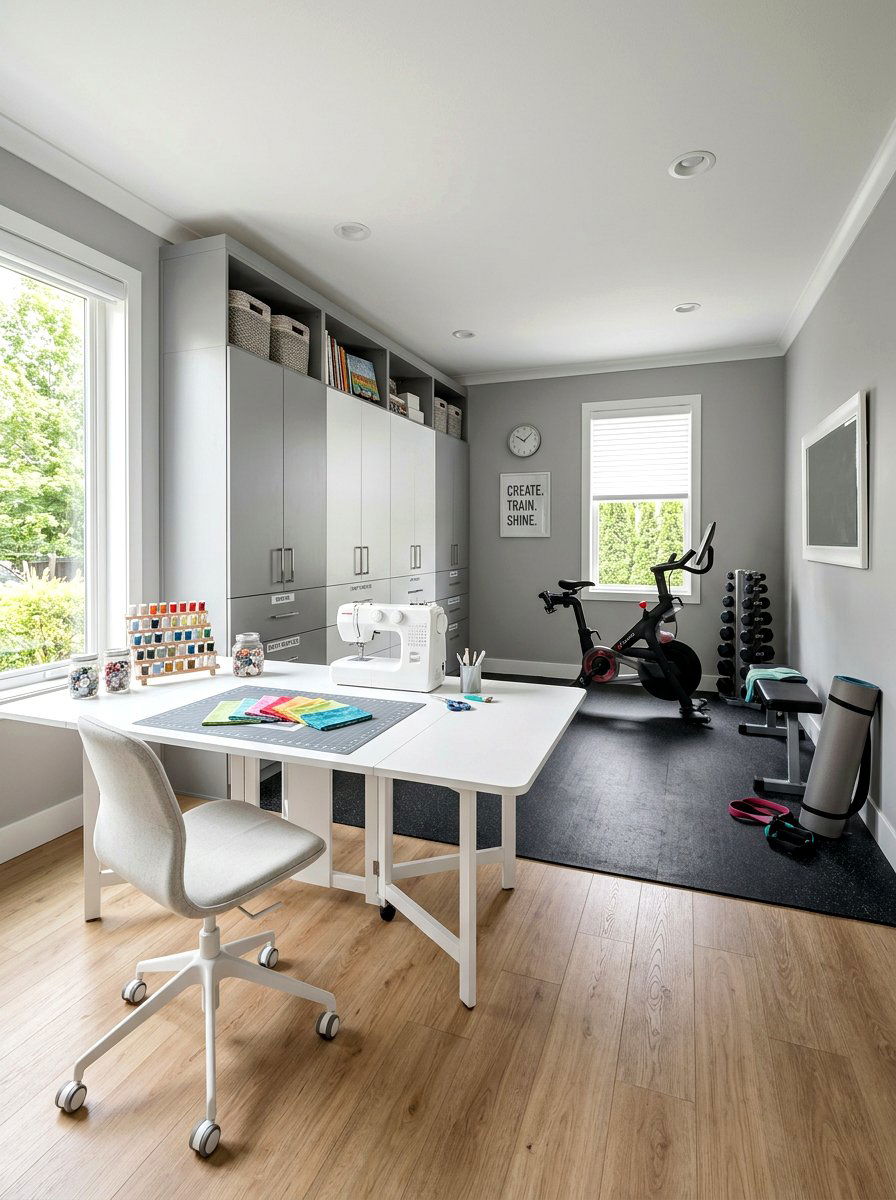
A multi purpose craft room is the ultimate solution for homeowners who need their space to work twice as hard. This layout often combines a hobby area with a guest bedroom or a home gym to maximize utility. Choosing furniture that can be easily tucked away or folded is the key to making this hybrid space successful. Neutral color palettes help the room transition between different uses without feeling too overwhelming or cluttered. Large storage cabinets can hide bulky supplies when you need the room for a different activity or for hosting visitors. This flexible approach ensures that your home remains functional while still providing a dedicated area for your artistic passions.
Conclusion:
Building the perfect craft room is an ongoing journey that evolves alongside your creative skills and growing supply collection. Whether you have a whole room or just a small corner, the most important factor is creating a space that makes you feel happy and inspired. By focusing on smart storage, good lighting, and a layout that suits your specific hobbies, you can design a sanctuary that boosts your productivity. Your craft room should be a true reflection of your personality, filled with the colors and textures that spark your imagination every single day. We hope these thirty diverse ideas provide the foundation you need to start planning your own dream creative space soon.

Related posts: