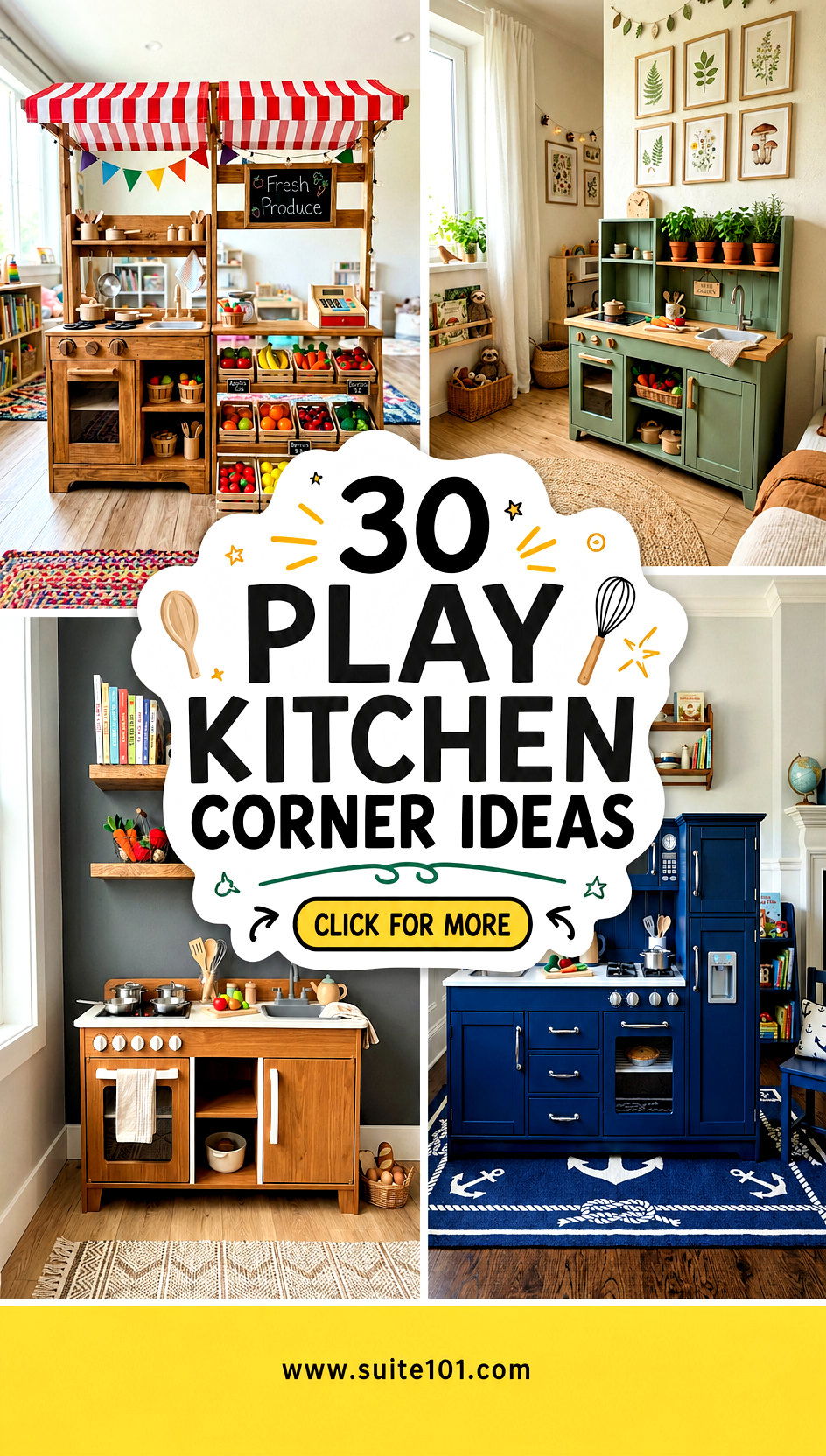
Creating a dedicated play kitchen corner is one of the most effective ways to foster imaginative play while keeping your home organized and stylish. These miniature culinary spaces provide children with a sense of ownership and a platform to mimic the adults they admire most in their daily lives. When you design a specific nook for these toys, you transform a simple plaything into a fully immersive environment that encourages social interaction and fine motor skill development. Modern interior trends have made it easier than ever to integrate these play areas into your living room, nursery, or kitchen without sacrificing your personal home aesthetic or style.
1. Neutral Wood Play Kitchen
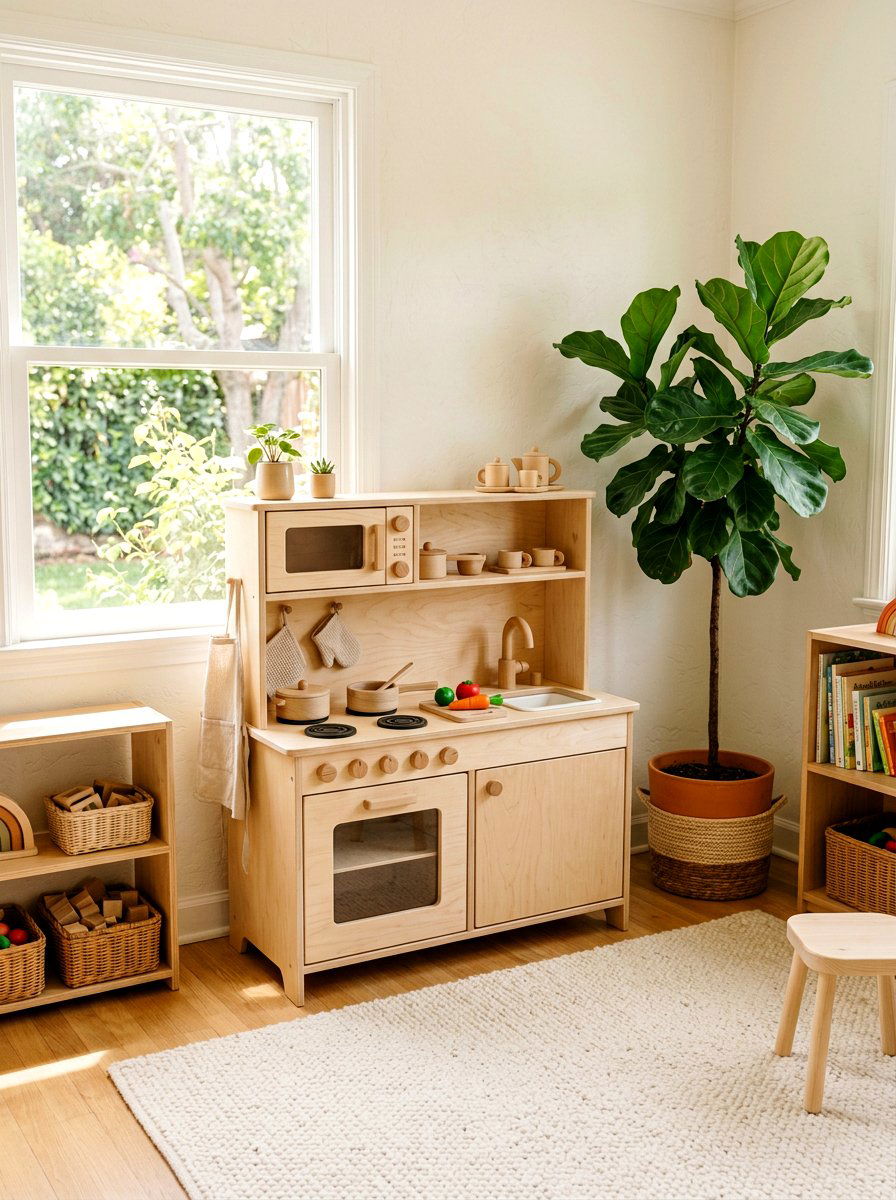
Natural wood tones bring a timeless and organic feel to any playroom corner. This setup often focuses on high-quality craftsmanship that blends seamlessly with adult furniture in a shared living space. You can enhance this look by adding soft textiles like cotton tea towels or a small woven rug underneath the structure. Light-colored wood species such as birch or maple reflect light beautifully, making the corner feel airy and open. Using wooden play food items instead of plastic ones maintains the tactile, natural theme throughout the entire space. It is a sophisticated way to encourage role-play while keeping your home looking curated and calm.
2. IKEA Play Kitchen Hack
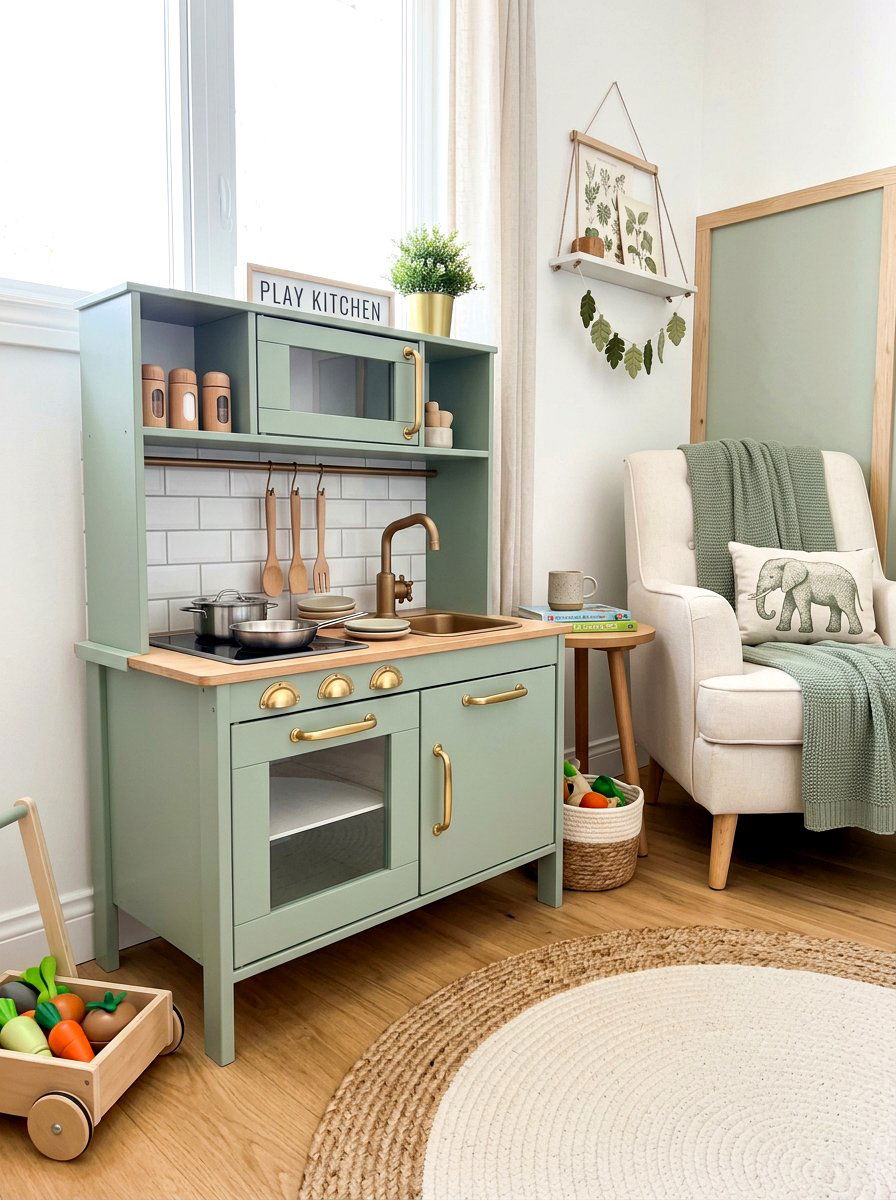
Transforming a standard affordable unit into a custom masterpiece is a favorite project for many creative parents. By simply swapping out the plastic handles for brushed brass hardware, you can instantly elevate the entire look of the corner. Many people choose to paint the cabinet doors in soft muted tones like dusty rose or sage green to match their room decor. Adding a stick-on subway tile backsplash provides a realistic touch that delights children and adults alike. This approach allows you to have a bespoke designer look without the high price tag. It turns a basic toy into a stunning focal point in any room.
3. Vintage Style Play Kitchen
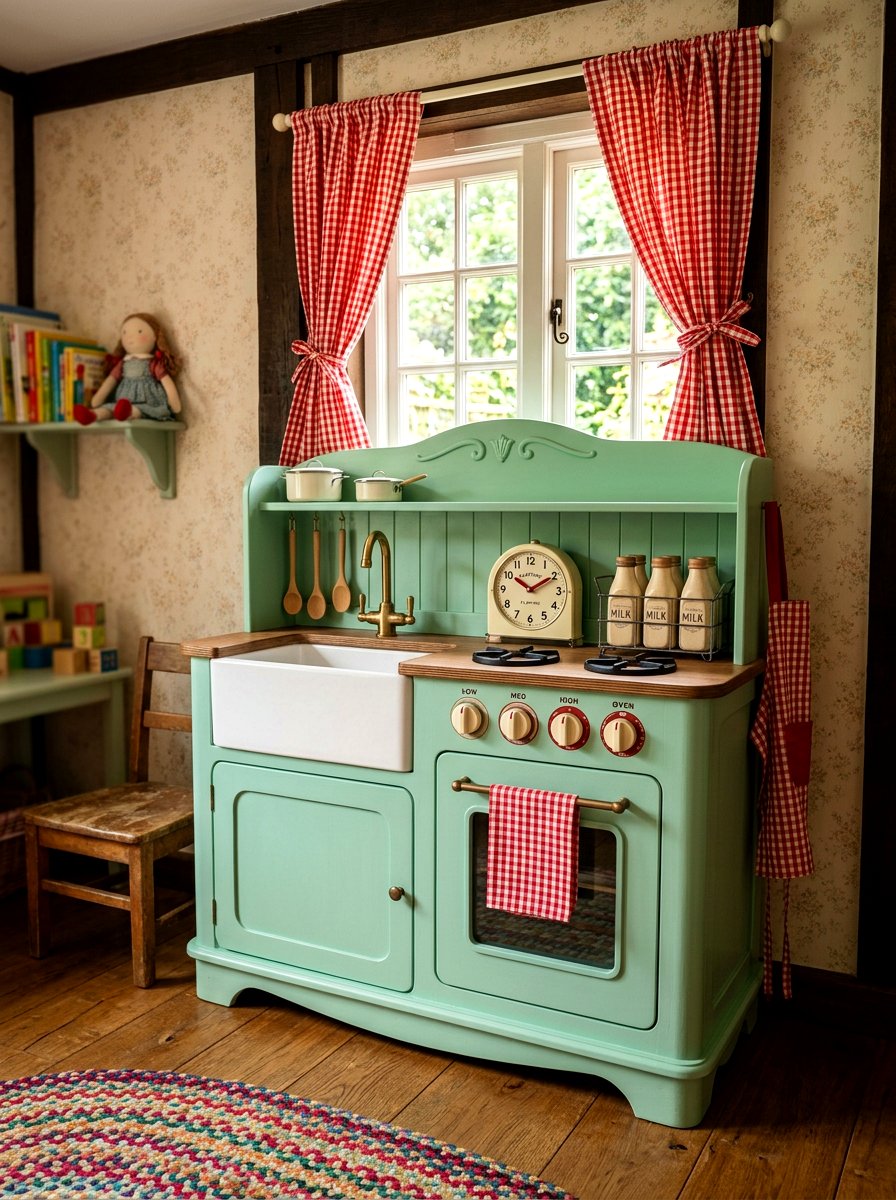
Bringing a sense of nostalgia into a child's play area creates a charming and whimsical atmosphere. Look for pieces that feature rounded edges, retro knobs, and classic colors like mint green or butter yellow. You can style this corner with checkered curtains and old-fashioned milk bottles to complete the mid-century aesthetic. This design choice often sparks conversations between generations as grandparents see familiar shapes from their own childhood kitchens. It is a wonderful way to blend history with modern play. The vintage look works particularly well in homes that embrace a cottagecore or traditional interior design style throughout the living areas.
4. Boho Playroom Kitchen
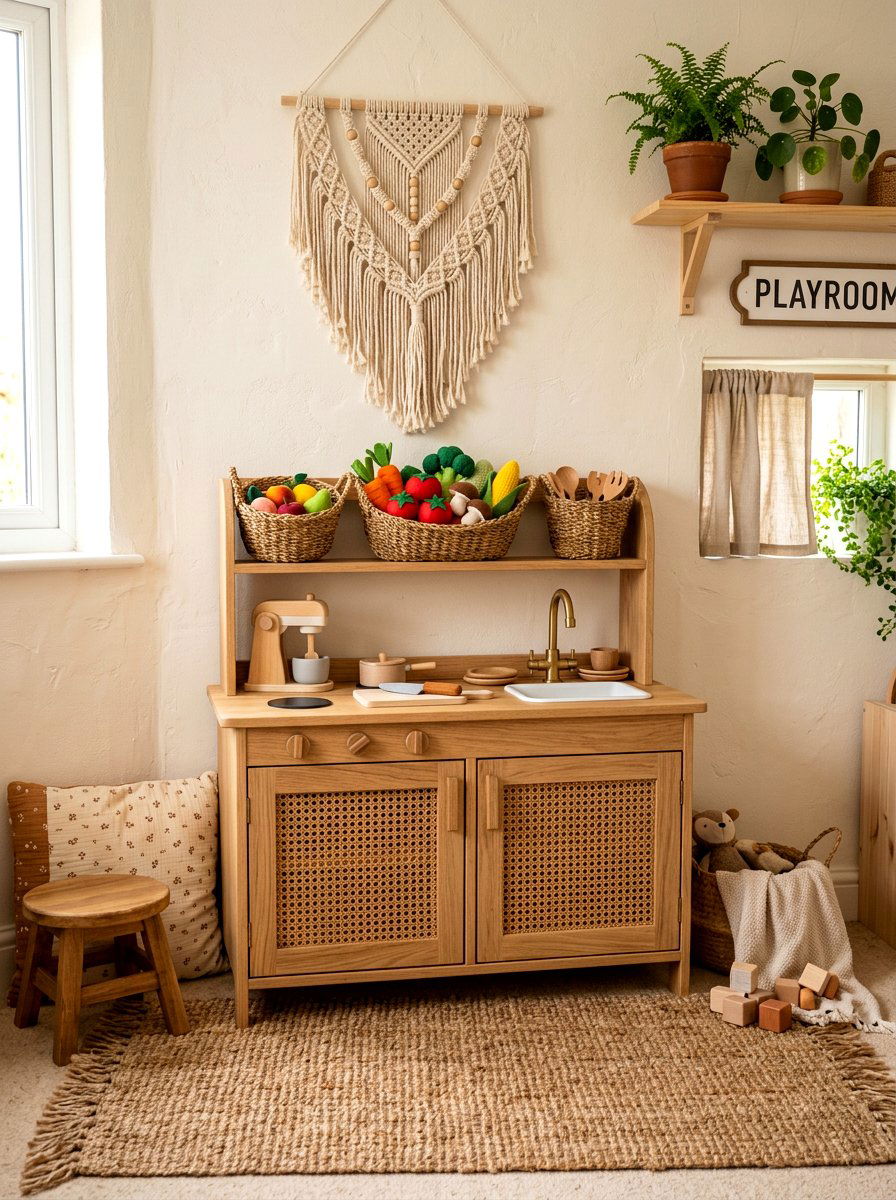
A bohemian-inspired play corner focuses on textures and natural materials to create a cozy and inviting environment. Incorporate rattan baskets for toy storage and a small macramé wall hanging above the play stove for visual interest. Earthy tones like terracotta, ochre, and warm beige should dominate the color palette to maintain a relaxed vibe. Adding a plush sheepskin rug or a textured jute mat provides a comfortable surface for little ones to sit while they "cook. " This style is perfect for families who love a laid-back, global aesthetic. It turns a simple corner into a warm sanctuary that encourages hours of creative and peaceful exploration.
5. Modern Black Play Kitchen
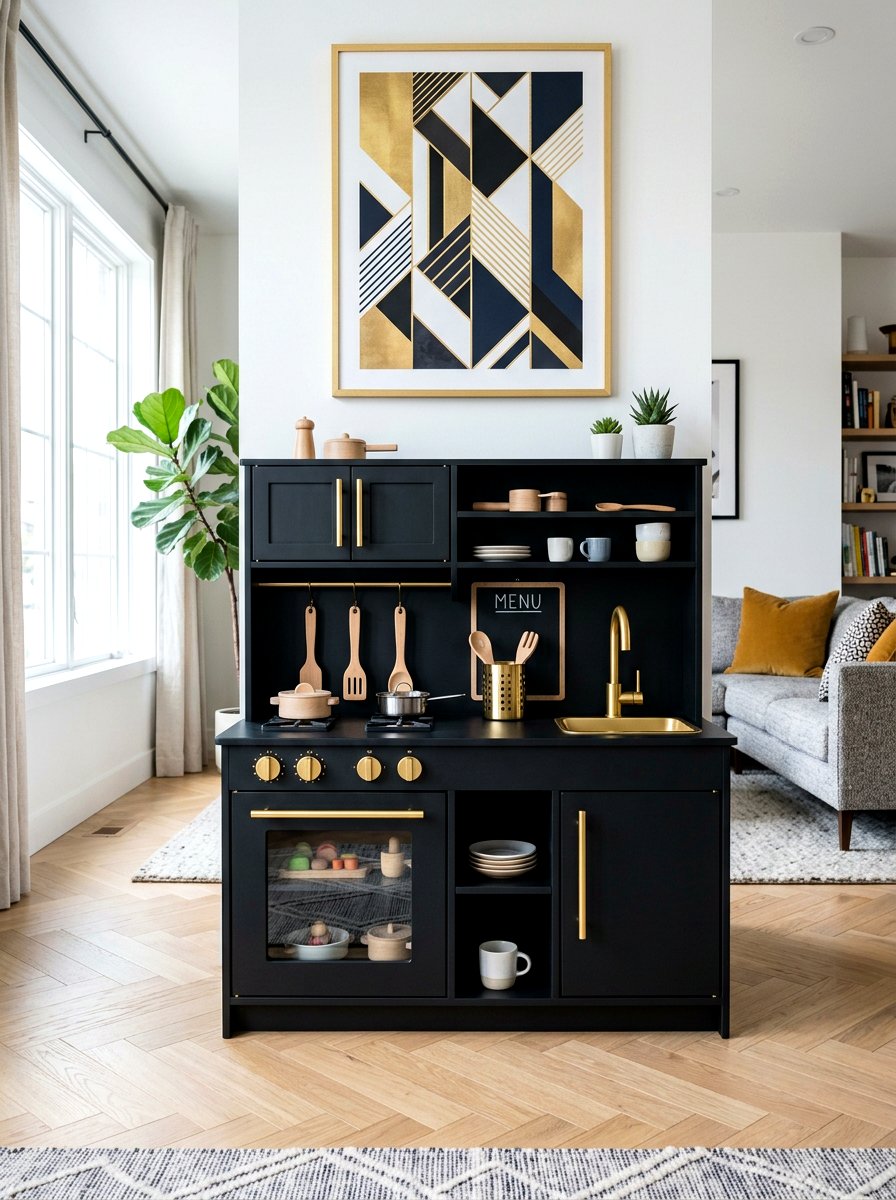
Choosing a dark and moody color for a play kitchen creates a striking contemporary statement in a modern home. A matte black finish looks incredibly sleek when paired with gold or silver accents for the faucet and stove dials. This color choice is excellent for hiding scuffs and marks that inevitably happen during vigorous play sessions. To keep the corner from feeling too heavy, you can balance the dark kitchen with white walls and bright light fixtures. It provides a sophisticated backdrop for colorful play vegetables and vibrant wooden fruit. This design proves that children’s play areas can be just as chic as any other part of the house.
6. Play Kitchen Market Stall
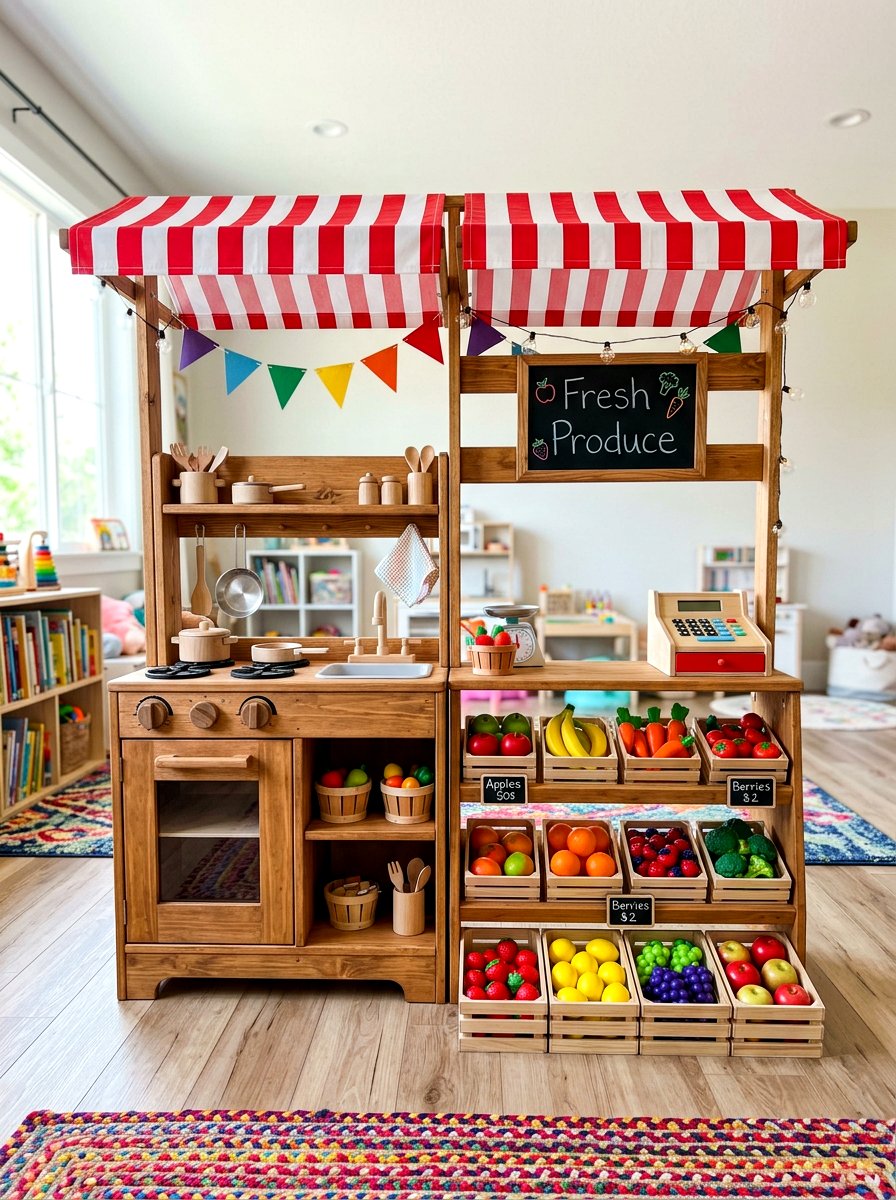
Combining a cooking area with a small grocery stand adds a whole new layer of social interaction to playtime. This dual-purpose setup allows children to play both the chef and the customer, teaching them about commerce and sharing. Use small wooden crates to display play produce and a tiny chalkboard to write the daily specials or prices. A striped fabric awning can be attached to the top of the unit to give it an authentic storefront feel. This configuration works best in a corner where there is enough floor space for multiple children to move around. It truly brings the community market experience directly into your playroom.
7. Toddler Play Kitchen Nook
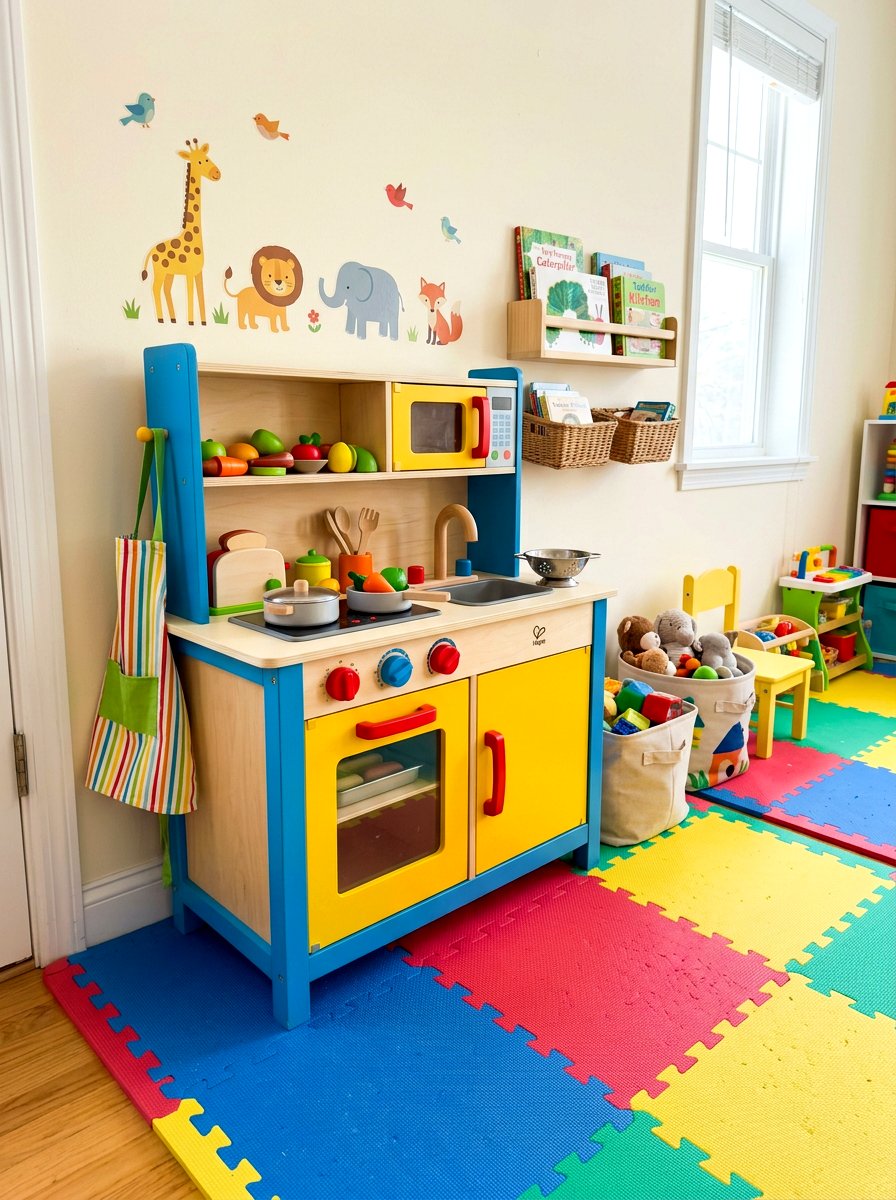
Designing a play area specifically for the youngest chefs requires a focus on accessibility and safety features. Ensure the kitchen unit is at a height where a toddler can easily reach the burners and the sink without frustration. Soft, rounded corners and lightweight accessories are essential for preventing any accidental bumps or bruises during active play. You can define the space with a colorful play mat that provides cushioning for little knees and elbows. Keep the layout simple with only a few key accessories to avoid overwhelming a young child's developing senses. This dedicated nook helps build confidence as toddlers master the basic motions of imaginative cooking.
8. Play Kitchen Coffee Bar
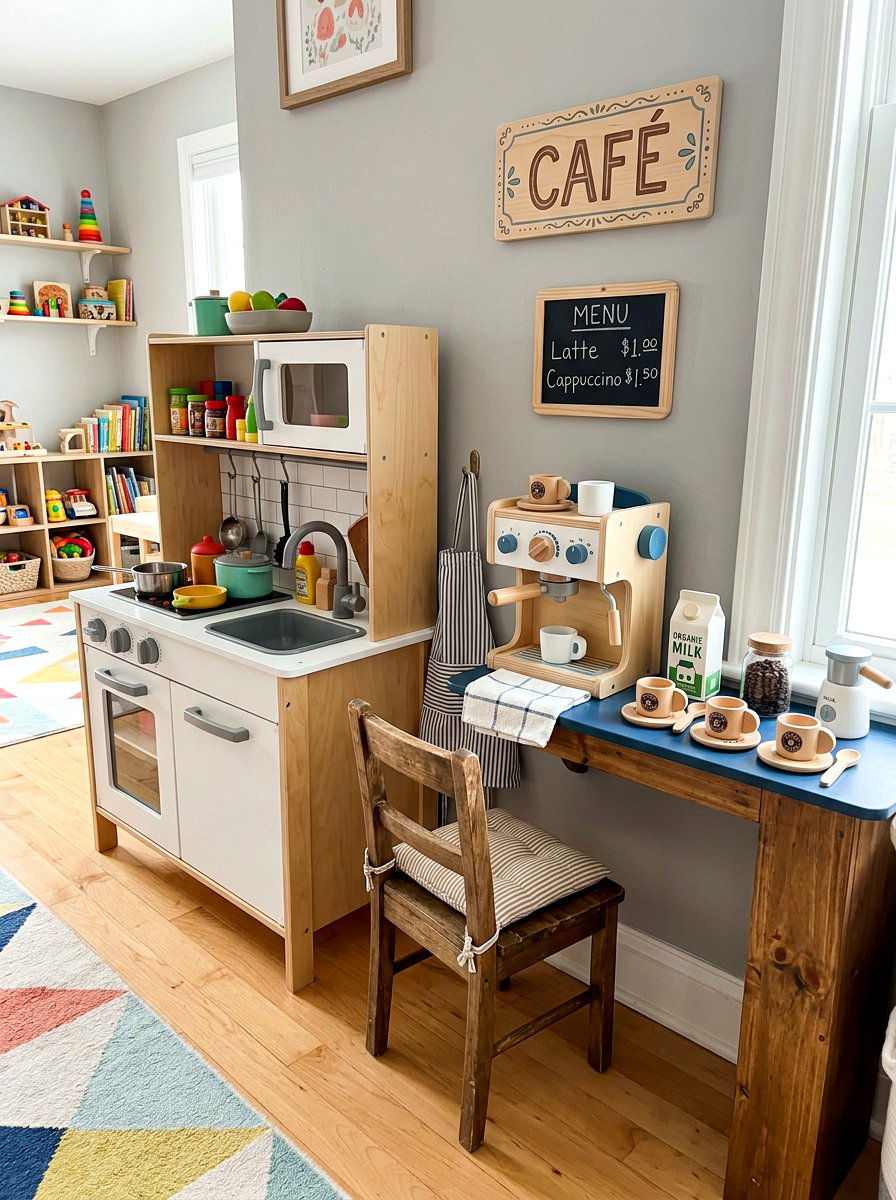
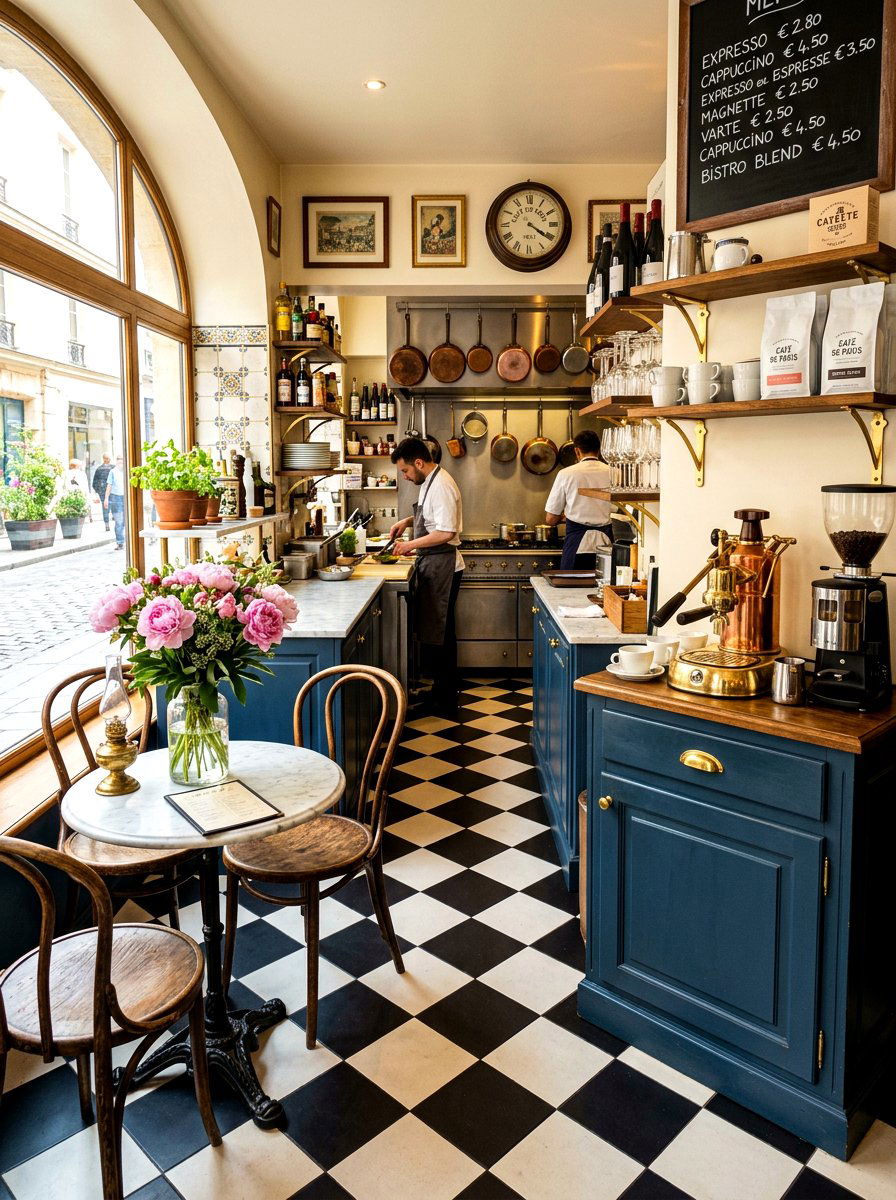
Adding a miniature caffeine station to the side of a play kitchen is a trendy and adorable way to maximize a corner. Kids love to mimic the morning routine of their parents by "brewing" lattes and serving wooden pastries to guests. You can set up a small shelf with tiny espresso cups and a play milk frother to complete the scene. This specific theme encourages fine motor skills as children practice pouring and arranging small items on a tray. It also makes for a very compact setup that fits perfectly into narrow corners or hallway alcoves. It is a delightful addition that brings a touch of modern cafe culture to the playroom.
9. White Farmhouse Play Kitchen
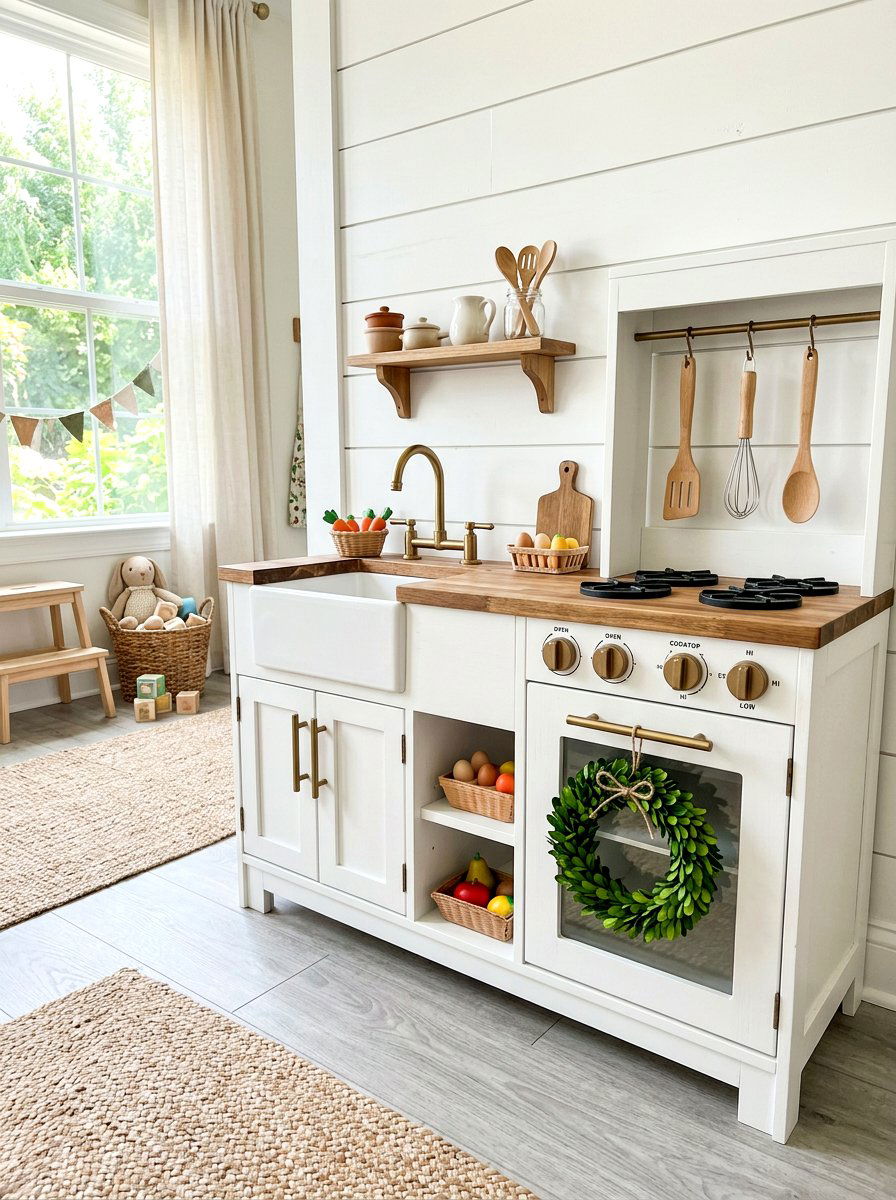
The farmhouse aesthetic remains a popular choice for home interiors because of its bright, clean, and welcoming look. A crisp white play kitchen with a deep apron-front sink captures this style perfectly in a child-sized version. You can add "shiplap" detailing to the back wall or use a small wreath to decorate the oven door. This style thrives on simple accessories like miniature cast iron pans and wooden spoons tucked into a ceramic crock. It creates a light and airy feel that makes even the smallest corner appear much larger than it actually is. The neutral palette ensures the play area never feels cluttered or visually distracting.
10. Sage Green Play Kitchen
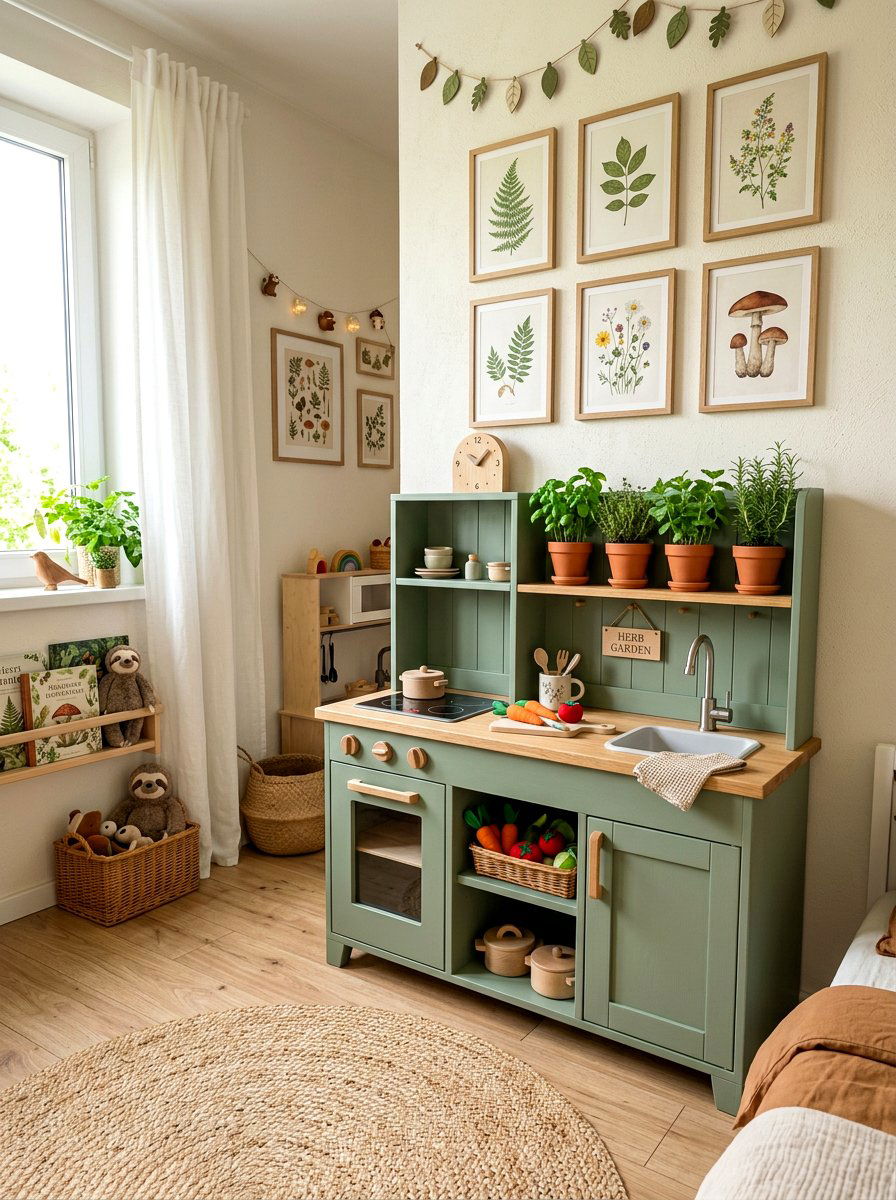
Sage green is a sophisticated and calming color that has become a staple in modern interior design palettes. Applying this hue to a play kitchen creates a serene corner that feels connected to the natural world. This color pairs beautifully with light oak wood accents and cream-colored walls for a harmonious look. It is a gender-neutral option that appeals to everyone and stays relevant as children grow older. Decorate the space with small potted herbs or botanical prints to lean into the garden-to-table theme. This color choice helps the play area blend into a sophisticated living room or a nature-inspired bedroom with ease and grace.
11. Small Space Play Kitchen
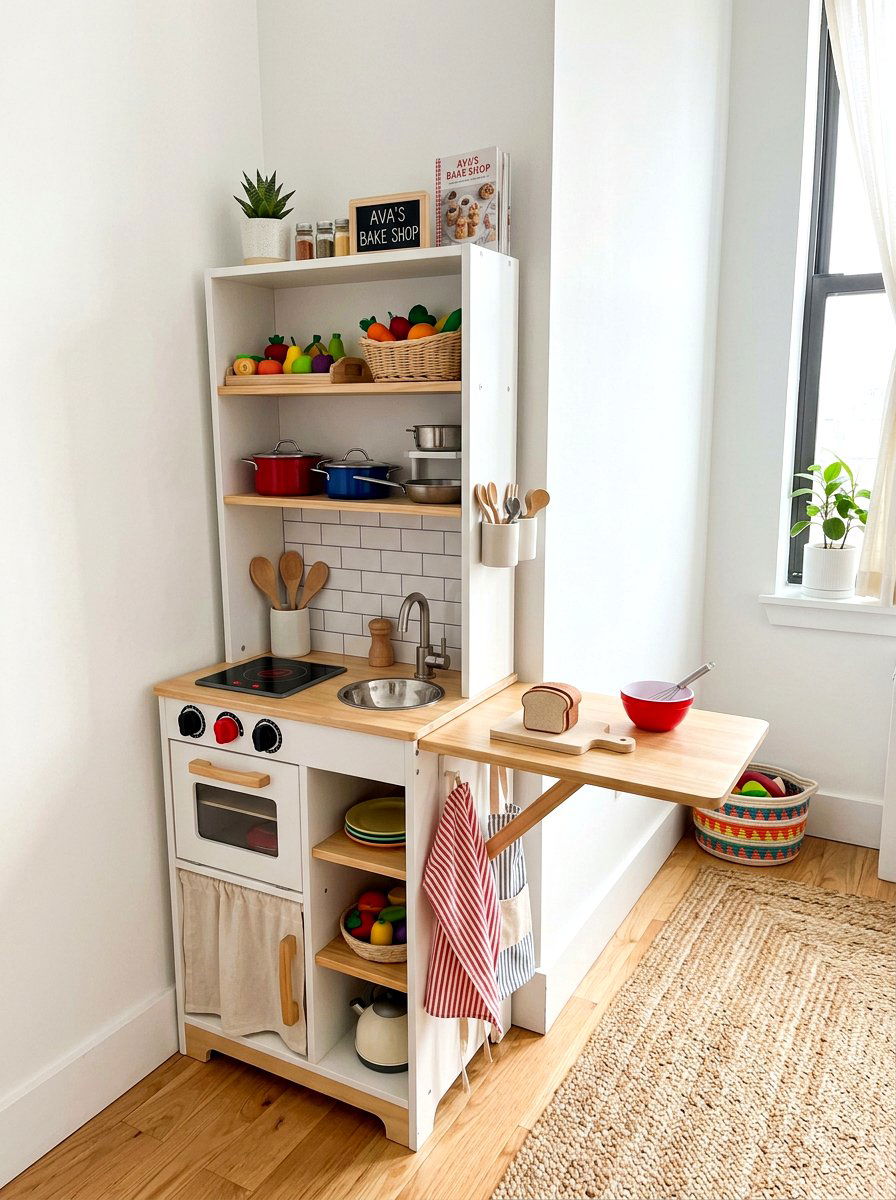
When floor space is limited, you have to get creative with how you position a play kitchen in a corner. Look for compact models that offer vertical storage rather than wide footprints to save precious square footage. Utilizing the wall space above the kitchen for hanging utensils and small shelves can keep the floor clear and organized. A fold-down table can serve as a prep area when needed and then disappear when playtime is over. Even the tightest alcove can be transformed into a functional culinary zone with the right furniture choices. This approach proves that you do not need a massive playroom to provide a high-quality play experience.
12. Play Kitchen With Backsplash
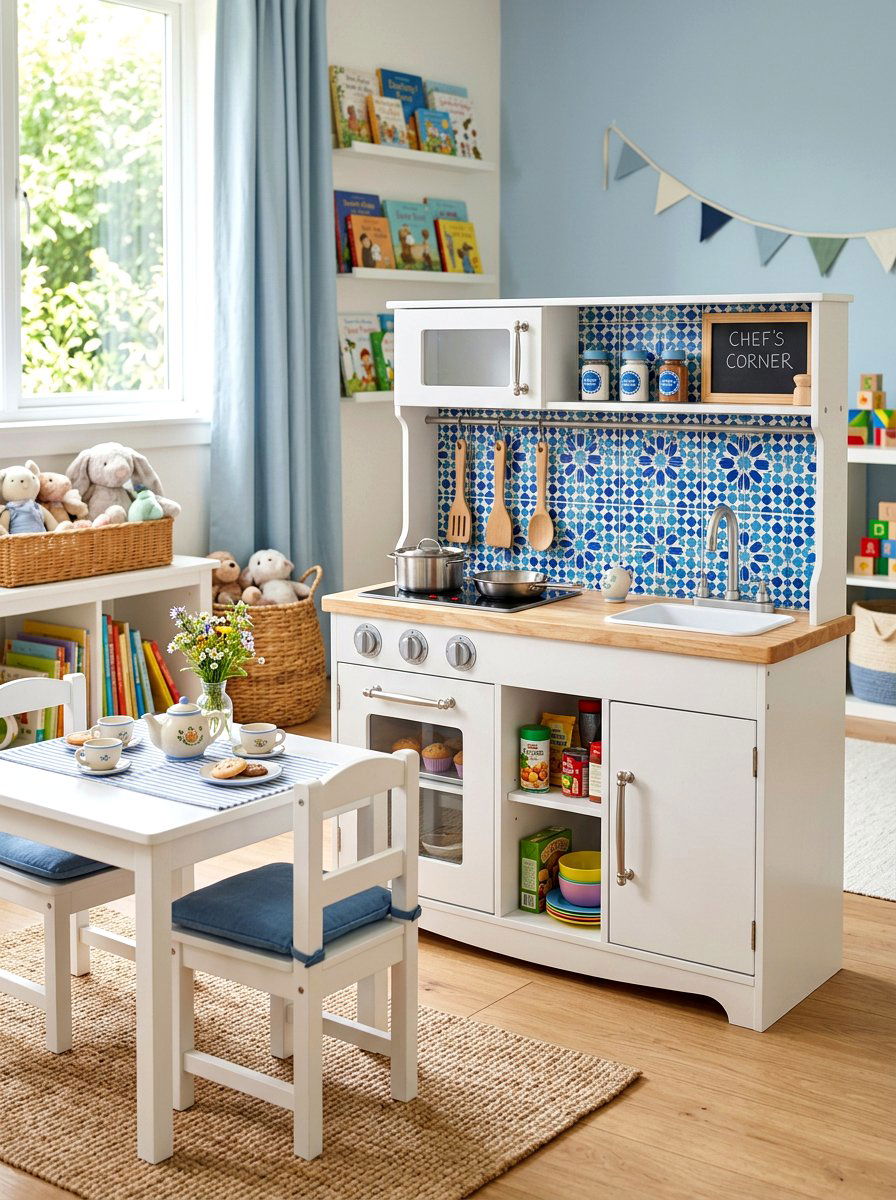
Adding a backsplash is one of the easiest ways to give a play kitchen a high-end and realistic appearance. You can use peel-and-stick tiles with interesting patterns like herringbone, marble, or classic subway styles to define the space. This small detail provides a visual boundary for the play corner and protects the wall behind the toy from potential marks. It also allows you to introduce different colors and textures into the design without a long-term commitment. Children enjoy the realistic feel of the "tiles, " which enhances their imaginative play as they pretend to clean their kitchen. It is a simple DIY project that yields a very high visual impact.
13. Minimalist Kids Kitchen
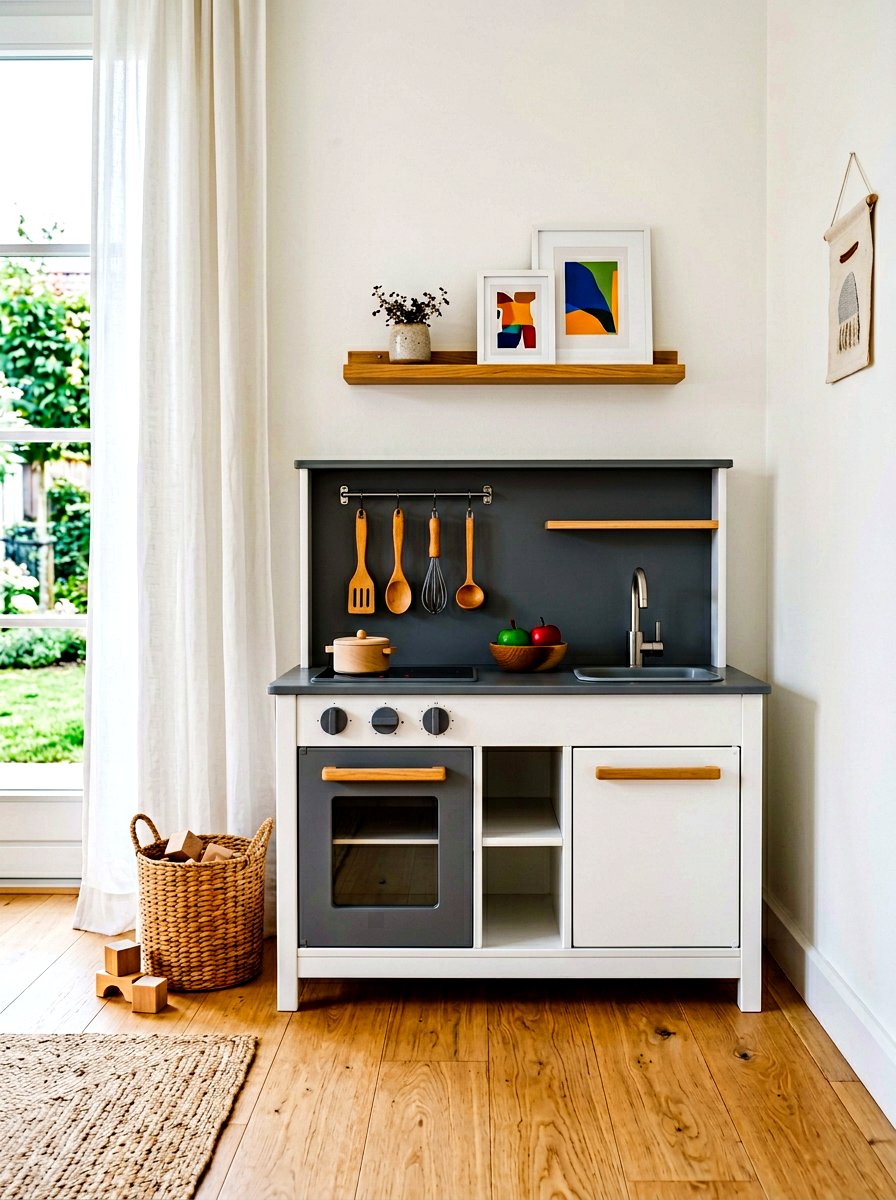
A minimalist approach to play areas focuses on high quality and low clutter to foster a focused play environment. Choose a kitchen with clean lines, hidden hinges, and a limited color palette of whites, grays, or light woods. By reducing the number of accessories visible on the counters, you encourage children to use their imagination more deeply. Store extra play food in closed bins nearby to maintain the tidy look when the kitchen is not in use. This style is ideal for families who prefer a calm and organized home environment. A minimalist corner feels intentional and peaceful, providing a quiet space for children to engage in meaningful role-play.
14. Play Kitchen Floating Shelves
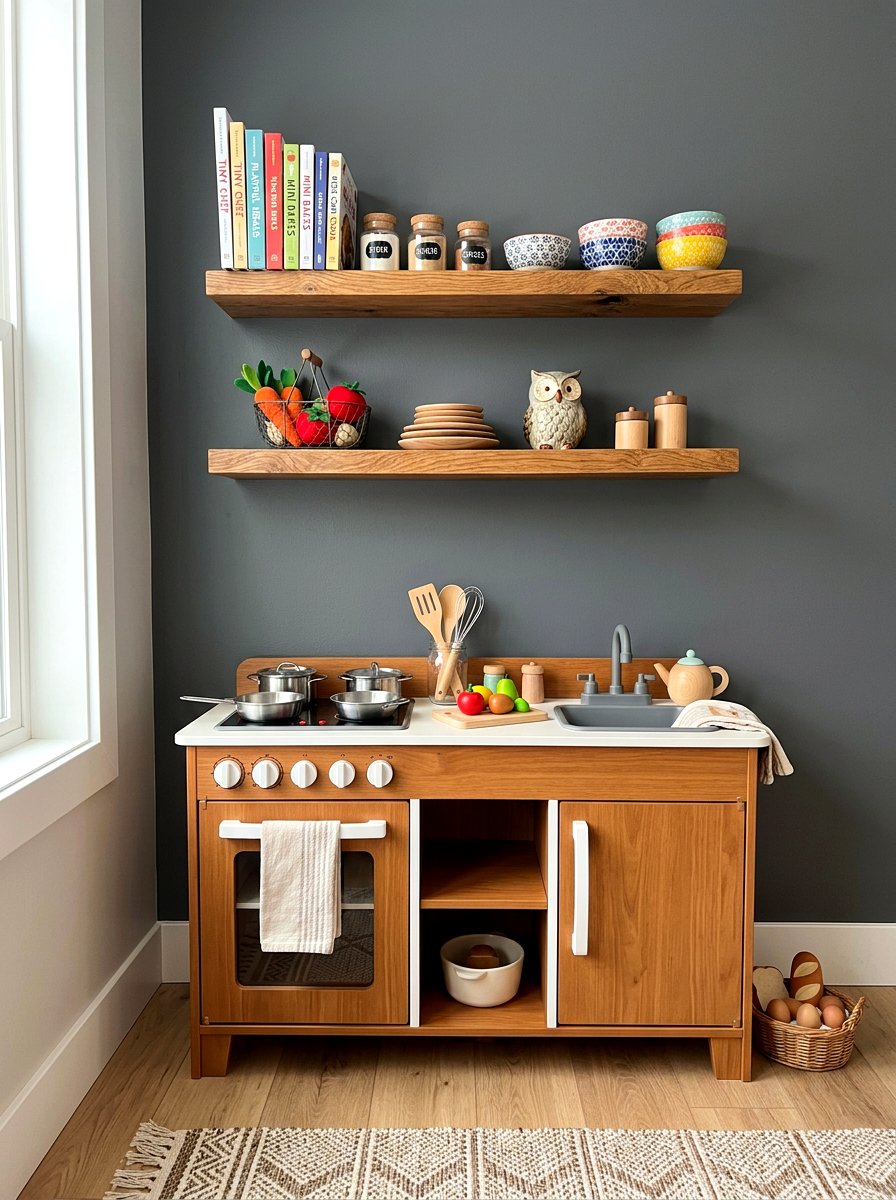
Installing floating shelves around a play kitchen corner is a brilliant way to display accessories while keeping counters clear. These shelves can hold decorative wooden jars, miniature cookbooks, and baskets of felt fruit that double as decor. Placing the shelves at varying heights allows you to keep some items within the child's reach and others safely tucked away. This vertical storage solution makes the play corner feel more like a real kitchen with a functional pantry area. It also allows for seasonal rotations of toys, keeping the play experience fresh and exciting throughout the year. The shelves draw the eye upward, making the entire play zone feel more substantial.
15. Retro Pink Play Kitchen
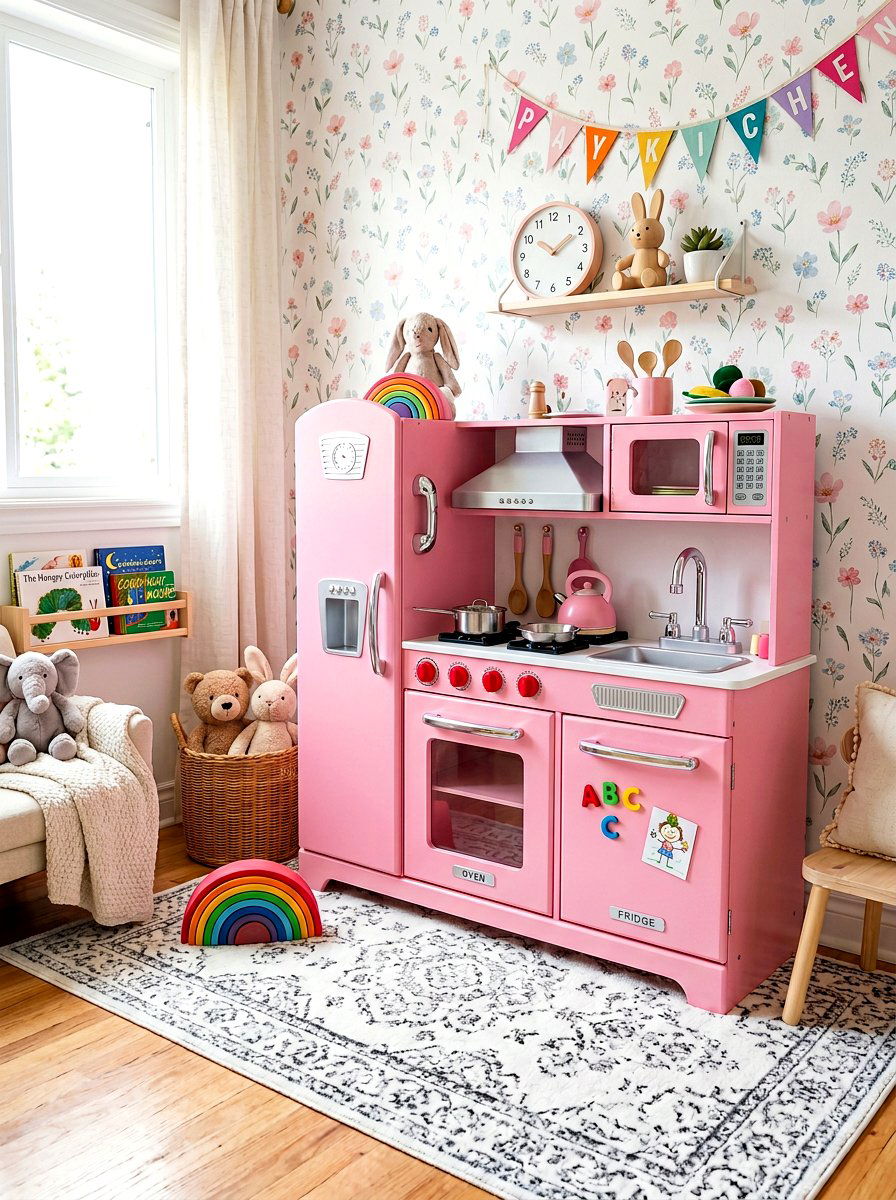
A soft blush or bubblegum pink play kitchen adds a pop of playful color and a retro vibe to a nursery. This look is often inspired by 1950s appliance designs, featuring chrome accents and vintage-style temperature dials. You can style the corner with polka dot accessories and a miniature diner-style clock on the wall. This vibrant choice makes the kitchen the undisputed star of the room and creates a cheerful atmosphere for play. It works wonderfully when contrasted against white walls or a whimsical floral wallpaper. A pink kitchen corner is a bold way to embrace fun and personality in a child’s dedicated space, sparking endless creative cooking adventures.
16. Play Kitchen Grocery Store
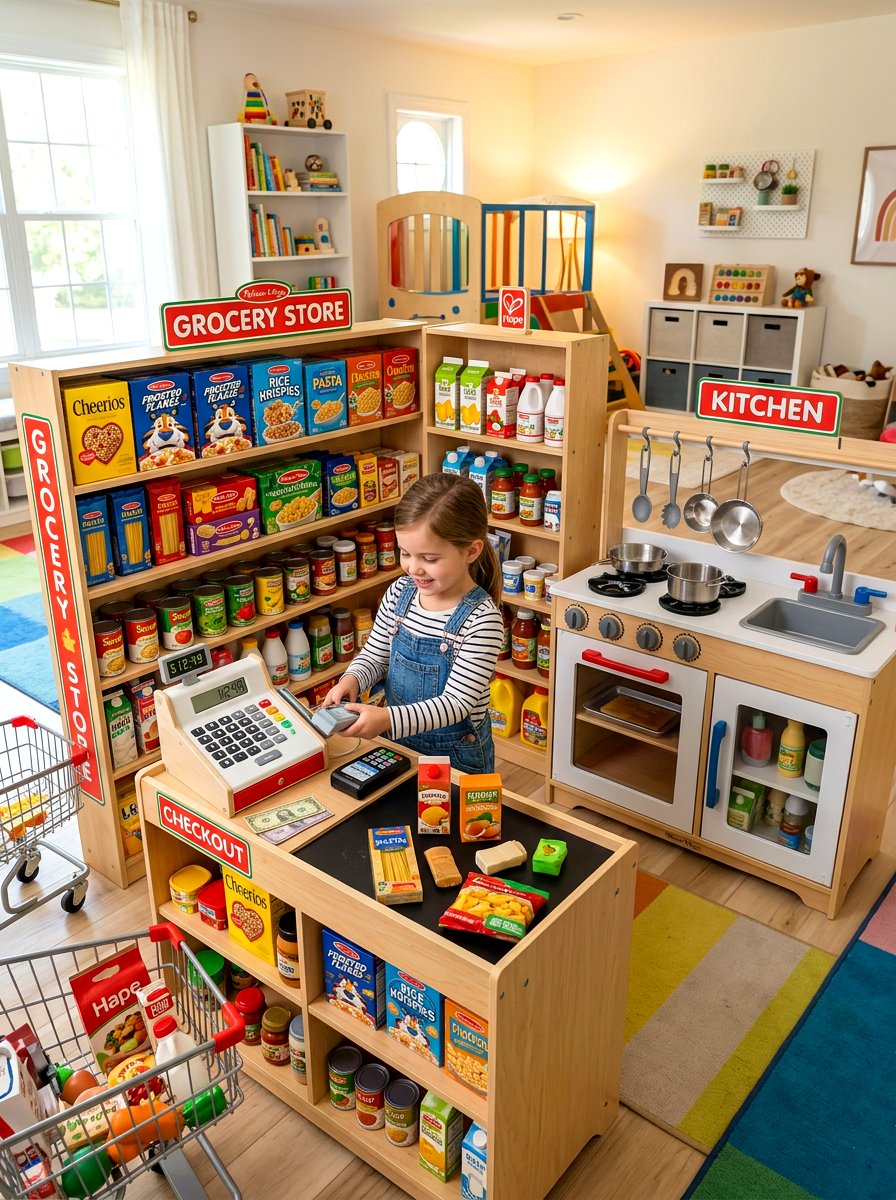
Expanding the play kitchen into a grocery store setup creates a comprehensive environment for learning and development. Dedicate one side of the corner to the "back of house" cooking and the other to a "front of house" checkout. Include a small wooden cash register, a conveyor belt made of felt, and rows of organized play food containers. This layout is excellent for siblings or playdates because it provides distinct roles for multiple children to fill at once. It teaches valuable lessons about categorization, math, and social etiquette in a fun and interactive way. This full-scale play zone becomes a destination within the home that keeps children engaged for hours.
17. Navy Blue Play Kitchen
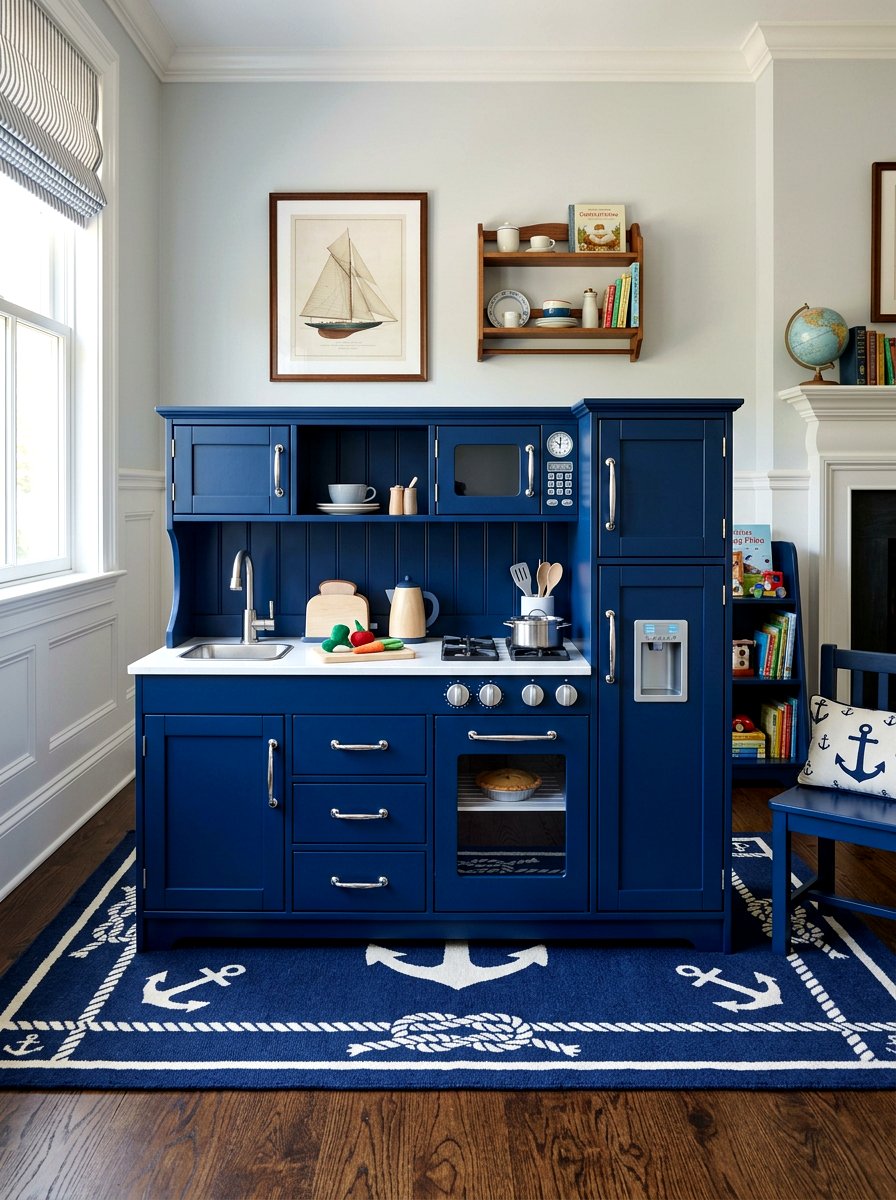
Navy blue is a classic and versatile color that brings a sense of depth and tradition to a play corner. A deep blue kitchen looks incredibly expensive when paired with bright white countertops and shining silver hardware. This color choice works well in both boys 'and girls' rooms, offering a sophisticated alternative to typical primary colors. You can accent the area with nautical themes or keep it modern with geometric patterns and bright yellow accessories. The dark hue is practical for busy playrooms as it does not show dirt or fingerprints as easily as lighter colors. It creates a grounded and stylish look that stands the test of time.
18. Play Kitchen Hanging Rack
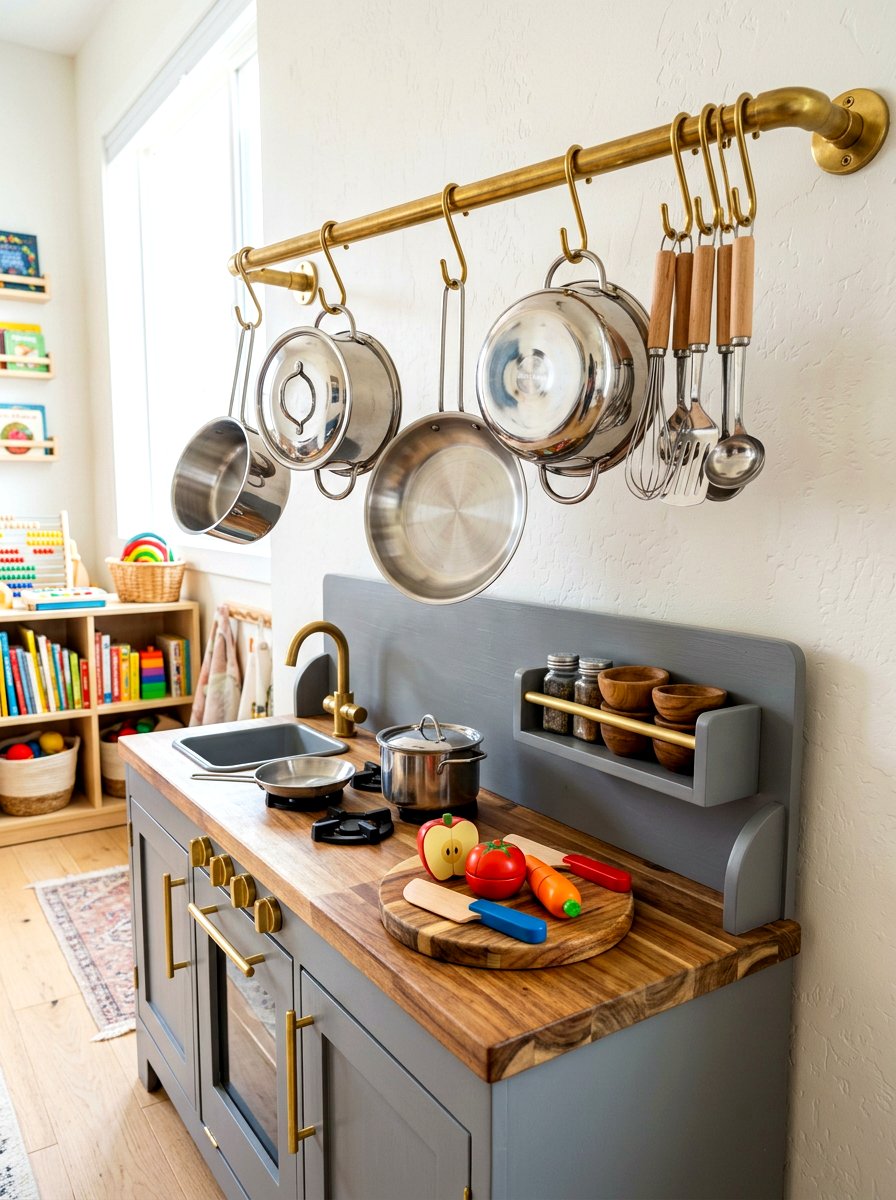
Utilizing a hanging rack for pots, pans, and utensils is a functional design choice that mimics a professional chef’s kitchen. You can install a small brass rail with hooks directly onto the wall or the back of the play kitchen unit. This keeps the most-used items easily accessible for little hands and prevents them from getting lost in the bottom of a toy bin. Seeing the shiny metal pans hanging neatly provides a visual incentive for children to tidy up their workspace after cooking. It also adds a layer of metallic texture that breaks up the solid colors of the cabinets. This detail makes the play corner feel busy, productive, and very authentic.
19. Play Kitchen Chalkboard Wall
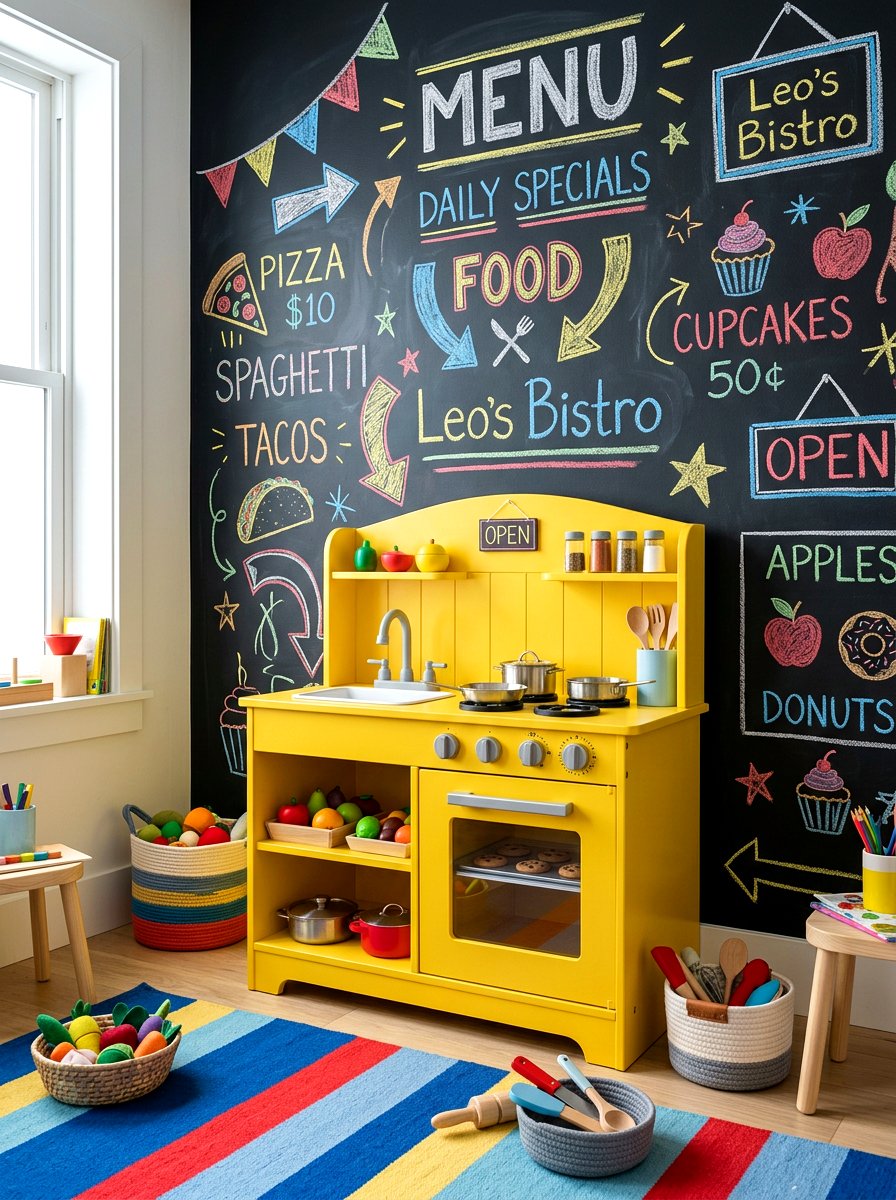
Painting the wall behind the play kitchen with chalkboard paint turns the entire corner into an interactive art station. Children can draw their own "menus, " sketch out daily specials, or even draw a window view with a garden outside. This allows for endless customization and keeps the play area feeling new and exciting every single day. The black background of the chalkboard paint provides a sharp contrast that makes a colorful play kitchen stand out beautifully. It also serves as a great place for parents to write encouraging notes or simple recipes for their little ones to follow. This creative addition blends art and play into one seamless corner experience.
20. Corner Mud Kitchen
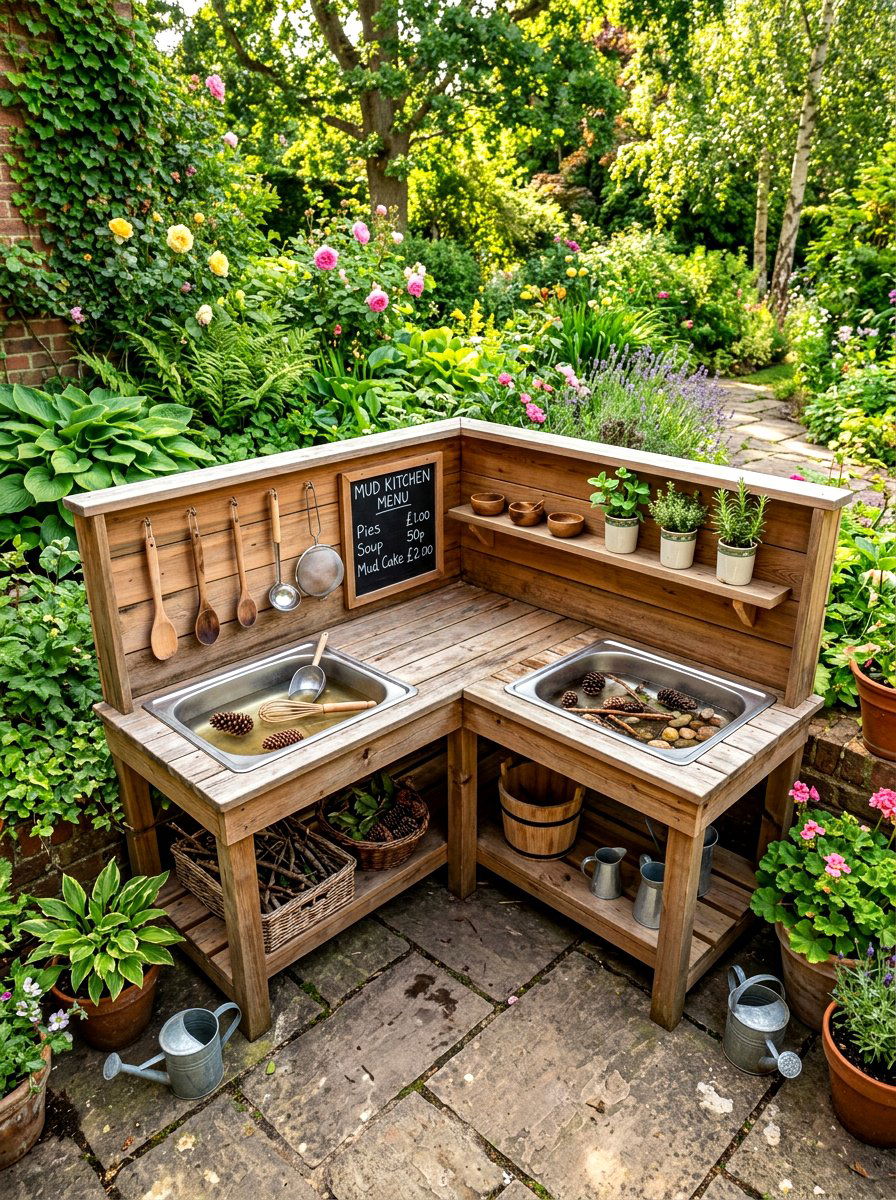
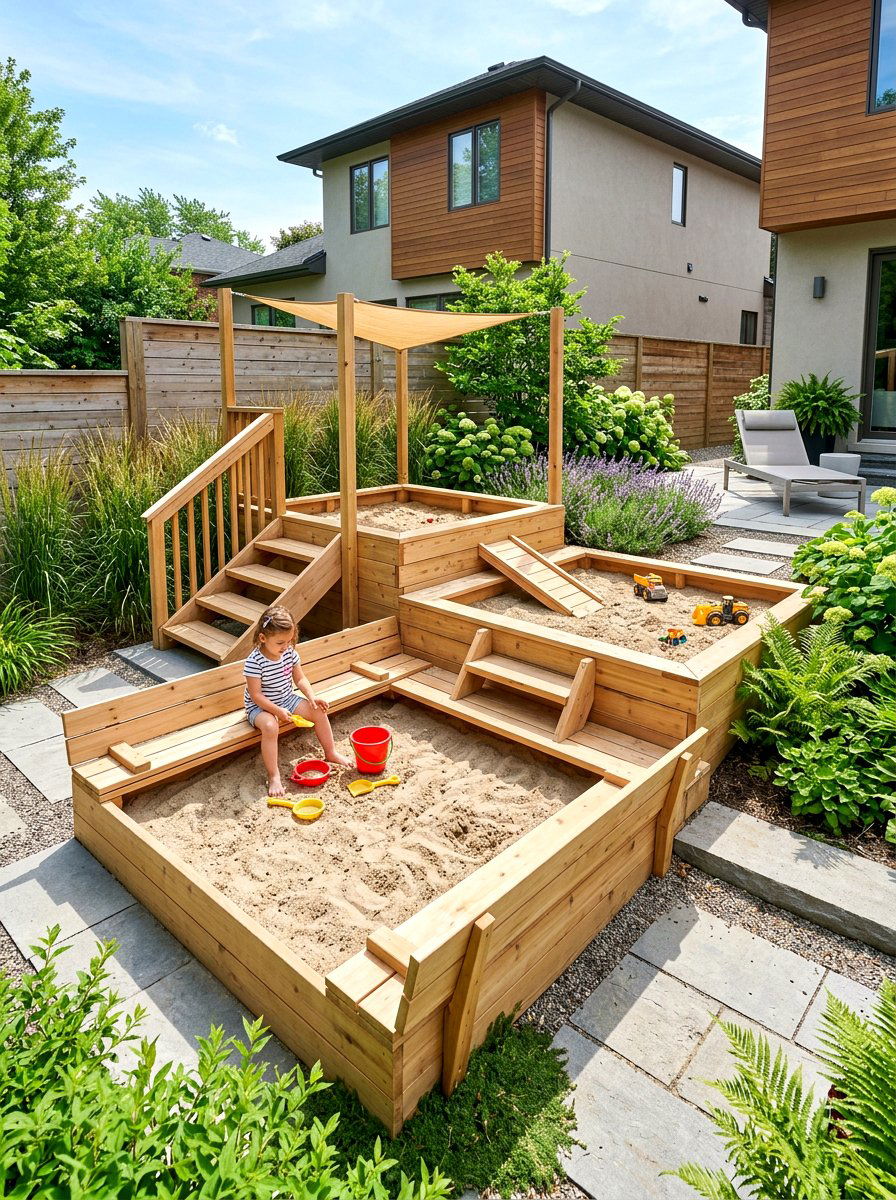
Bringing the play kitchen concept outdoors allows children to explore sensory play with natural elements like dirt, sand, and water. A mud kitchen is typically made of treated wood to withstand the elements and features large basins for messy "cooking. " Set this up in a shaded corner of your garden or on a patio where it is easy to spray down with a hose. Provide old metal spoons, plastic bowls, and real pinecones or pebbles for the children to use as ingredients. This type of play encourages a deep connection with nature and provides a safe outlet for messy exploration. It is the ultimate outdoor activity for curious and creative little minds.
21. Play Kitchen Window View
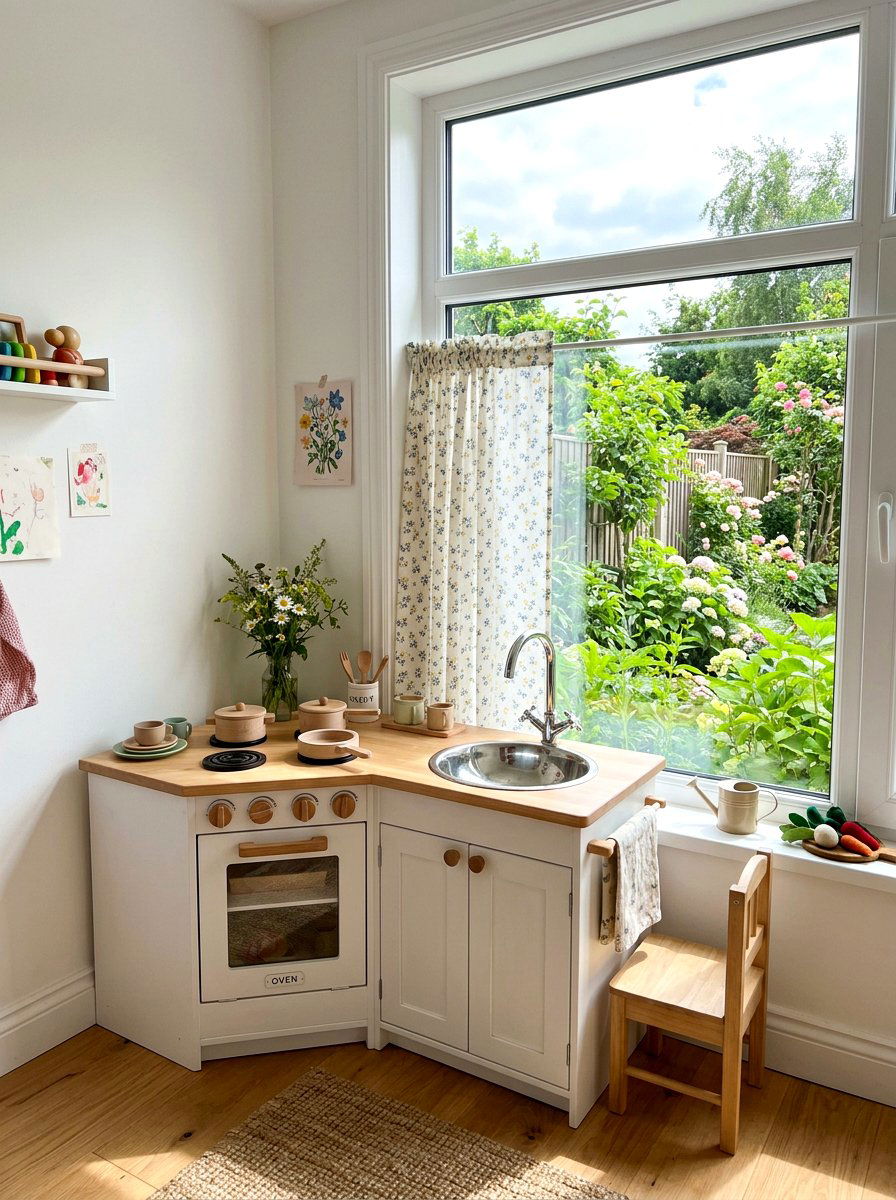
Positioning a play kitchen in a corner that features a window provides a beautiful and realistic backdrop for imaginative play. Children can look outside at the real world while they "wash dishes" or "prepare meals, " mimicking the layout of many adult kitchens. The natural light makes the play area feel bright and inviting, which is essential for a productive play environment. You can add a tiny tension rod with a cafe curtain to the window to make it feel even more like a separate room. This setup also allows parents to keep an eye on play from the garden or another part of the house. It creates a lovely, sunny spot for creative development.
22. Scandi Style Play Kitchen
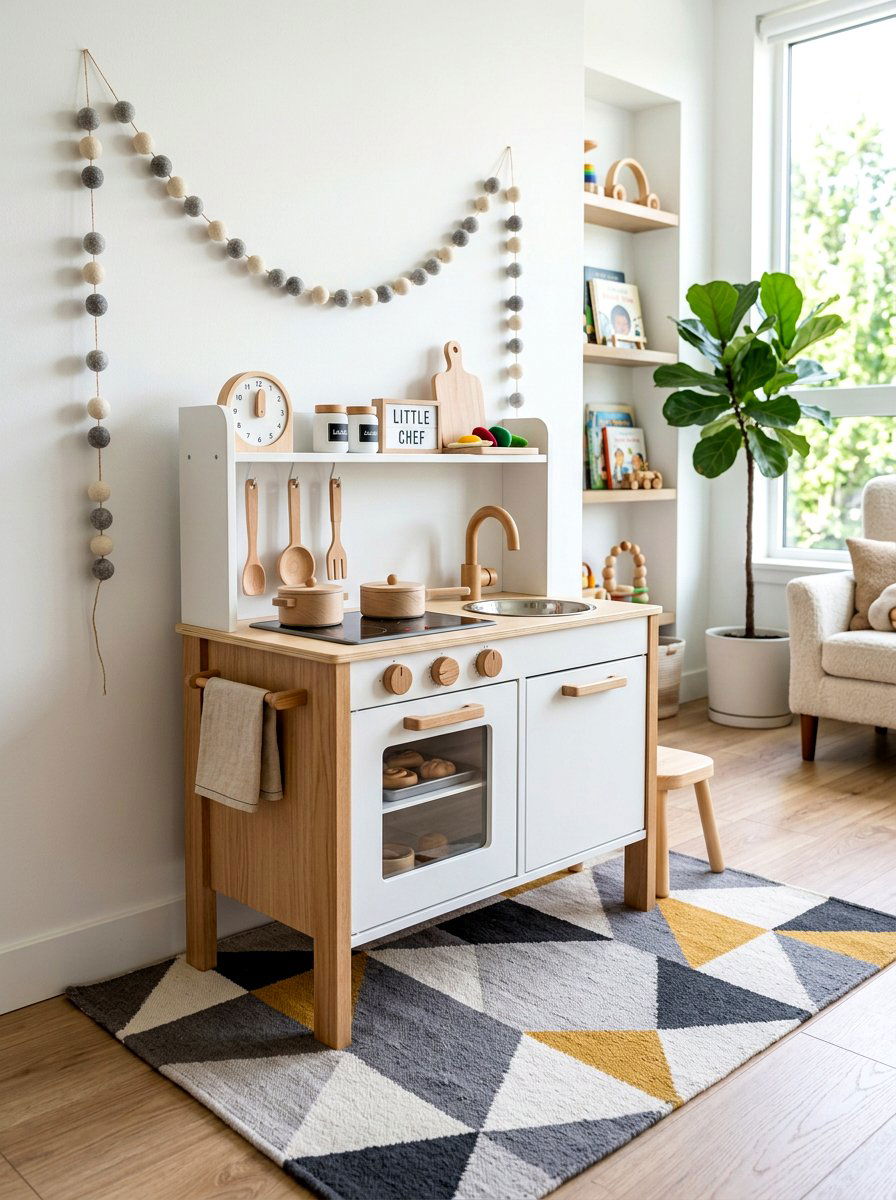
Scandinavian design is world-renowned for its focus on functionality, simplicity, and the use of light, natural materials. A Scandi-style play kitchen typically features a white and wood color scheme with very minimal decorative flourishes. The beauty lies in the clean lines and the high quality of the materials used in the construction. To complete the look, add a felt ball garland or a simple geometric rug in muted gray tones. This design philosophy creates a clutter-free environment that allows a child's imagination to take center stage without distraction. It is an ideal choice for modern homes that value a "less is more" approach to toy storage and room design.
23. Play Kitchen Rug Setup
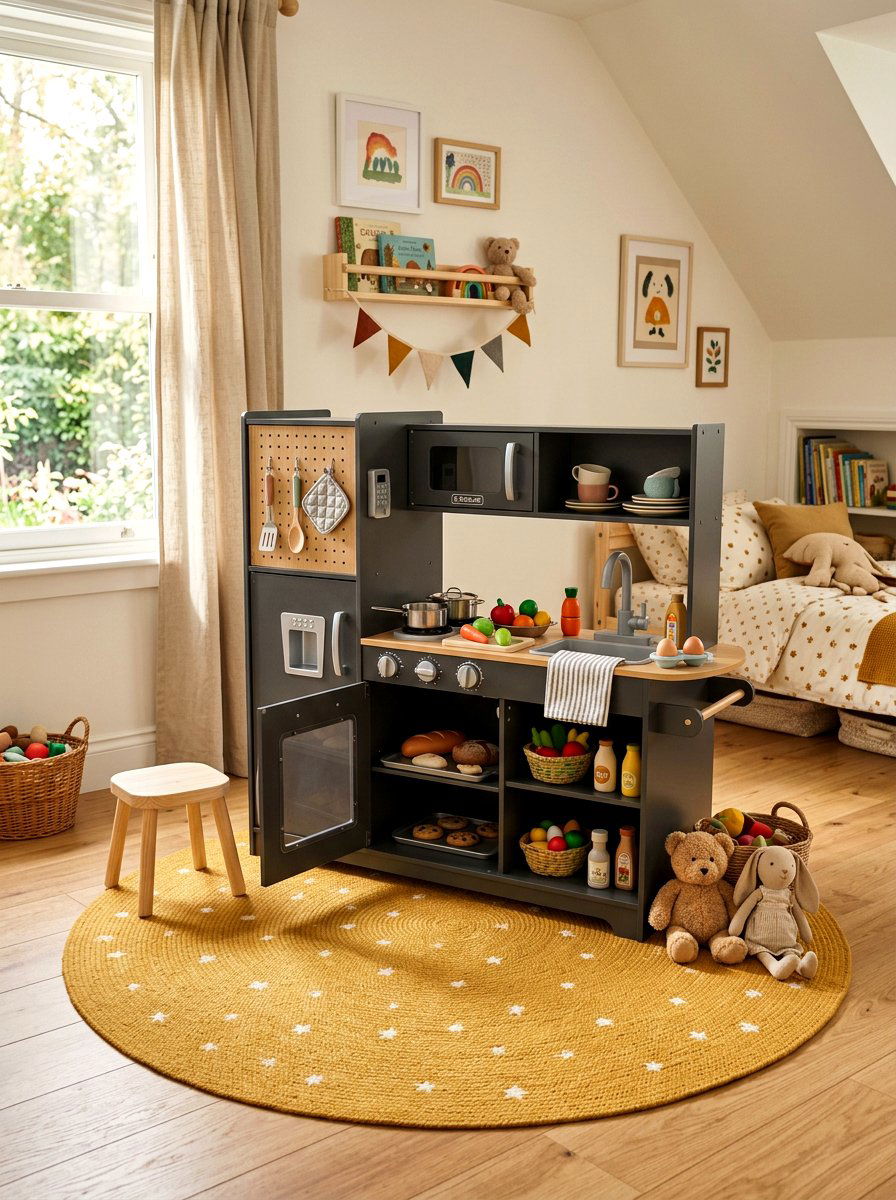
A well-chosen rug can define the boundaries of a play kitchen corner and provide a soft place for children to kneel. Choose a durable, low-pile rug that is easy to vacuum or even machine wash in case of spills. A round rug can help soften the sharp angles of a corner and make the area feel more enclosed and cozy. You can select a rug with a fun pattern, like a small town map or a subtle floral print, to spark more play ideas. The rug also protects your hardwood or tile floors from the inevitable impact of dropped wooden toys. It serves as the foundation that ties all the design elements of the corner together.
24. Play Kitchen Toy Storage
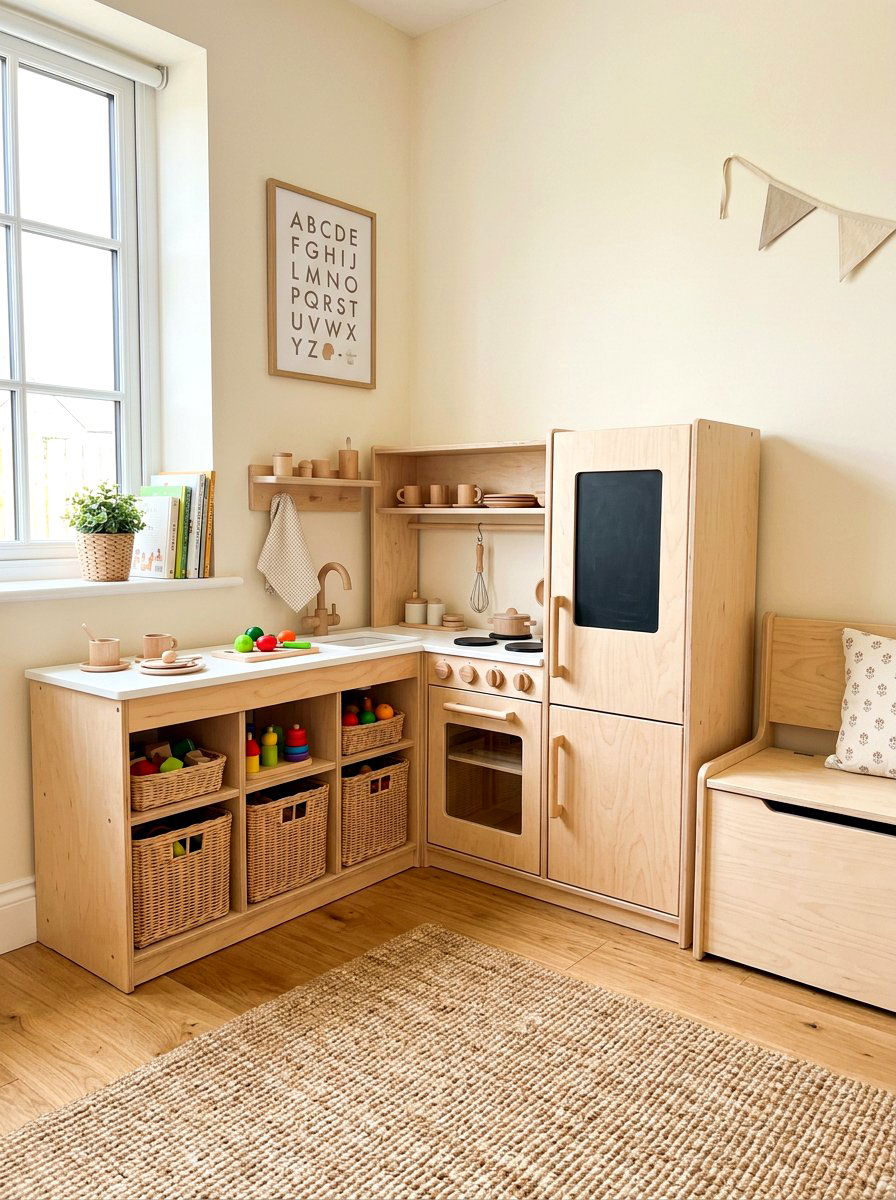
Effective storage is the key to maintaining a beautiful play kitchen corner that does not overwhelm your living space. Use matching woven baskets or clear bins tucked into the lower cabinets of the kitchen to hold play food and small appliances. A nearby small bookshelf or a set of wall-mounted bins can handle the overflow of grocery items and "dishes. " Labeling the bins with pictures can help even non-reading children learn where everything goes during cleanup time. When every toy has a specific home, the corner stays tidy and is much more inviting for the next play session. Organized storage teaches children valuable life skills while keeping your home looking pristine.
25. Pastel Play Kitchen Decor
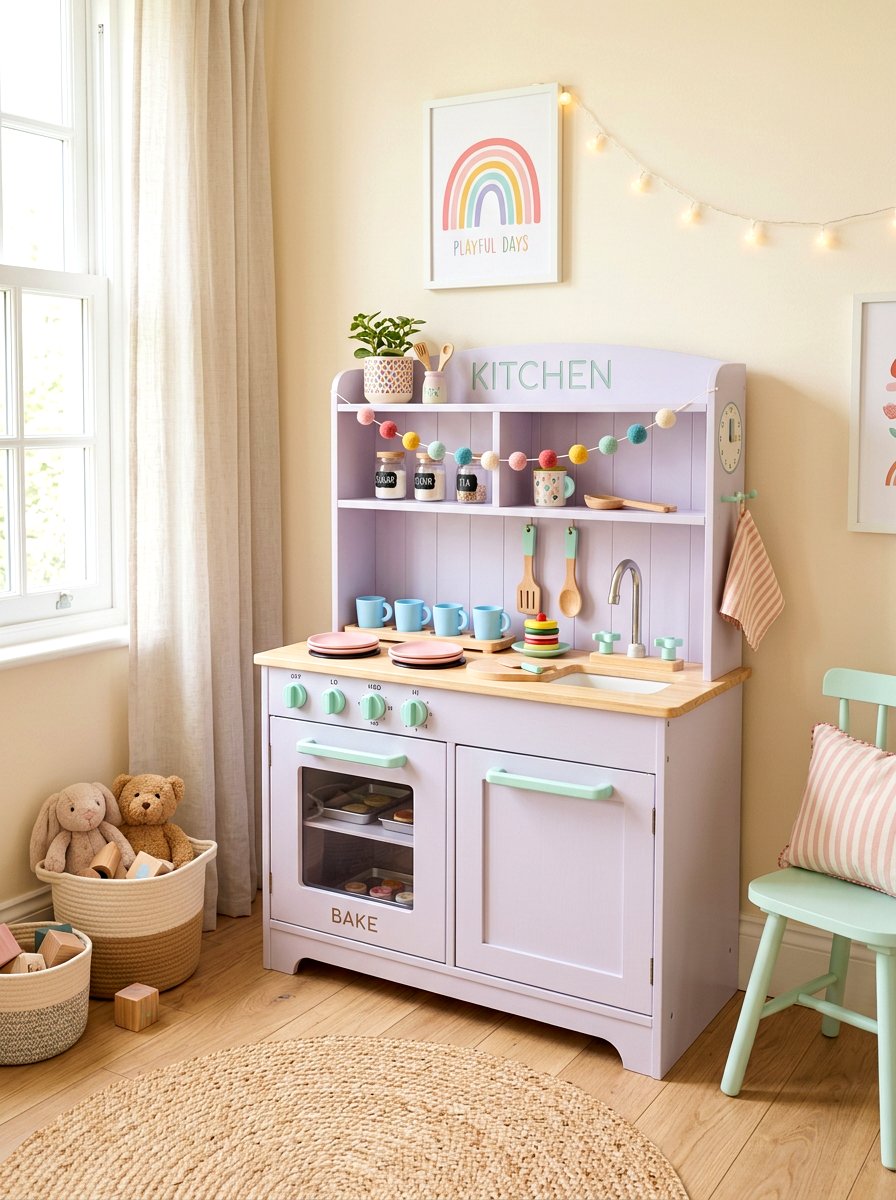
Soft pastel colors like lavender, mint, and pale blue create a dreamlike and gentle atmosphere in a child's play area. These colors are easy on the eyes and work beautifully when mixed together in a variety of accessories. You can paint the knobs of the kitchen different pastel shades or hang a row of colorful bunting above the unit. This theme is often associated with a "bakery" or "sweet shop" play style, which kids find incredibly fun and engaging. Using pastel-colored plates and cups further enhances the cohesive and whimsical look of the corner. It is a cheerful and bright design choice that brings a sense of joy to any room.
26. Play Kitchen Canopy Nook
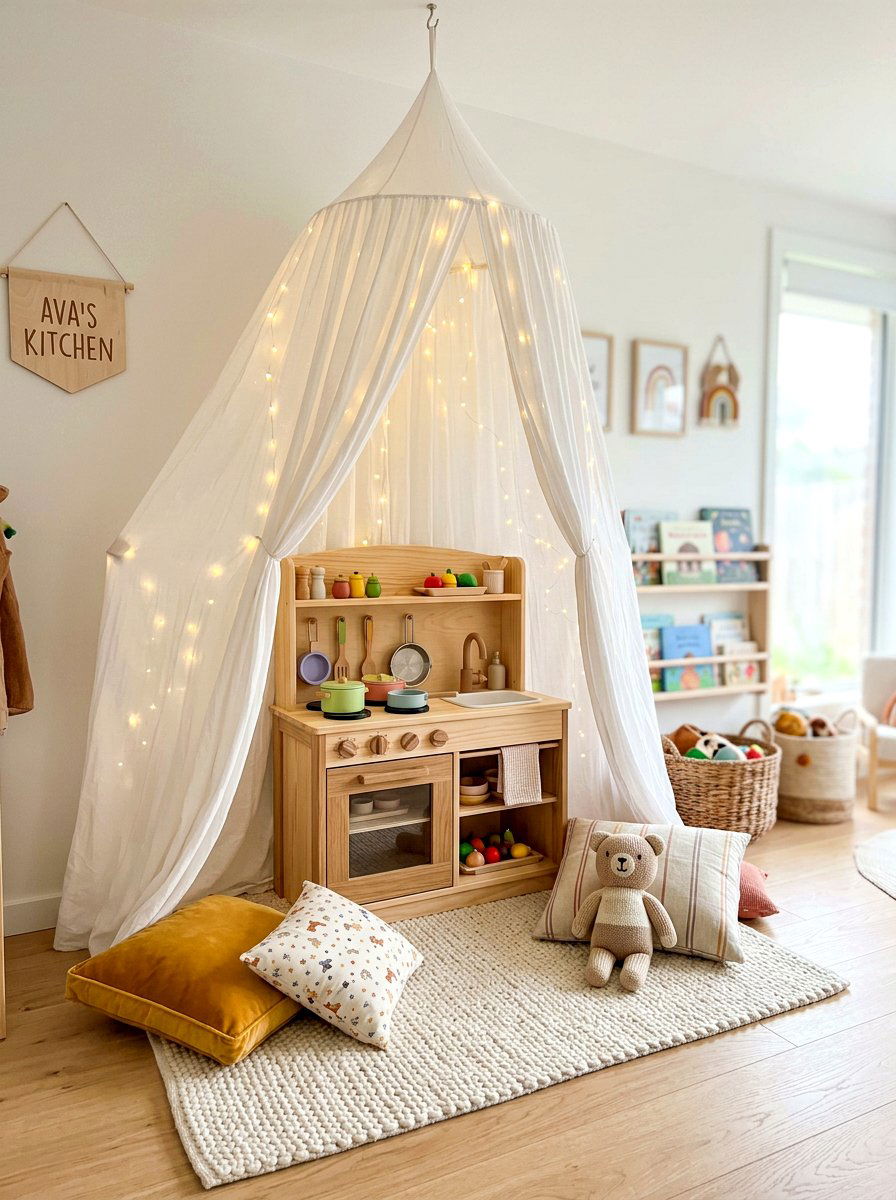
Installing a fabric canopy over the play kitchen corner creates a magical "house within a house" feel for your child. The canopy provides a sense of enclosure and privacy that many children crave during their imaginative play sessions. You can drape fairy lights inside the canopy to give the kitchen a warm and enchanting glow during the evening. This setup turns a simple toy into a cozy destination where a child can spend hours lost in their own little world. Choose a breathable cotton fabric in a neutral color to keep the space feeling light and airy. It is a dramatic and beautiful way to make a play corner feel extra special.
27. Realistic Play Kitchen Appliances
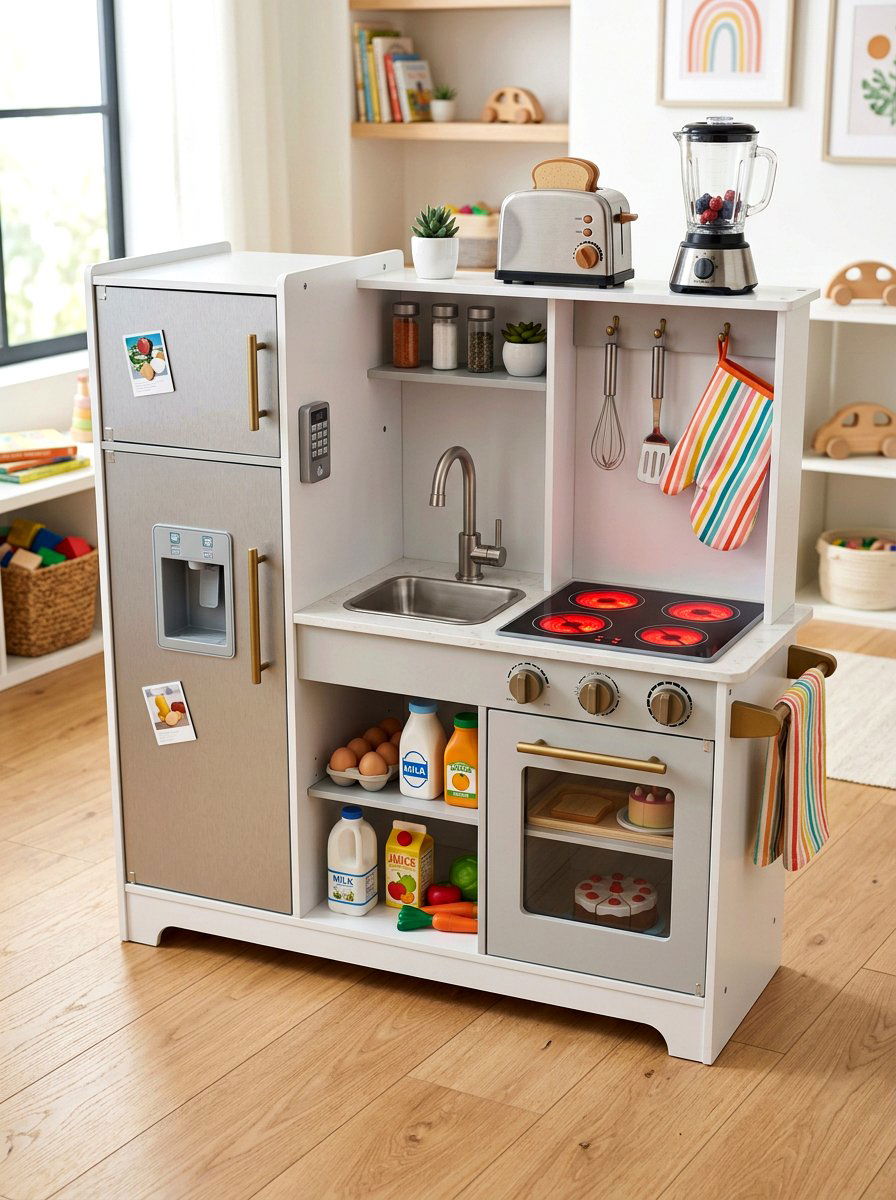
Some children are most engaged when their toys look and feel exactly like the real things found in an adult kitchen. Look for play kitchens that feature "stainless steel" finishes, clicking knobs, and ice dispensers that actually drop wooden cubes. You can add small realistic touches like an old-fashioned kitchen timer or a real (but non-functioning) cord on a play toaster. These small details provide sensory feedback that makes the role-play feel more consequential and exciting for the child. When children feel like they are using "real" tools, they often take more pride in their play and engage in more complex scenarios. It bridges the gap between toy and reality.
28. Gender Neutral Play Kitchen
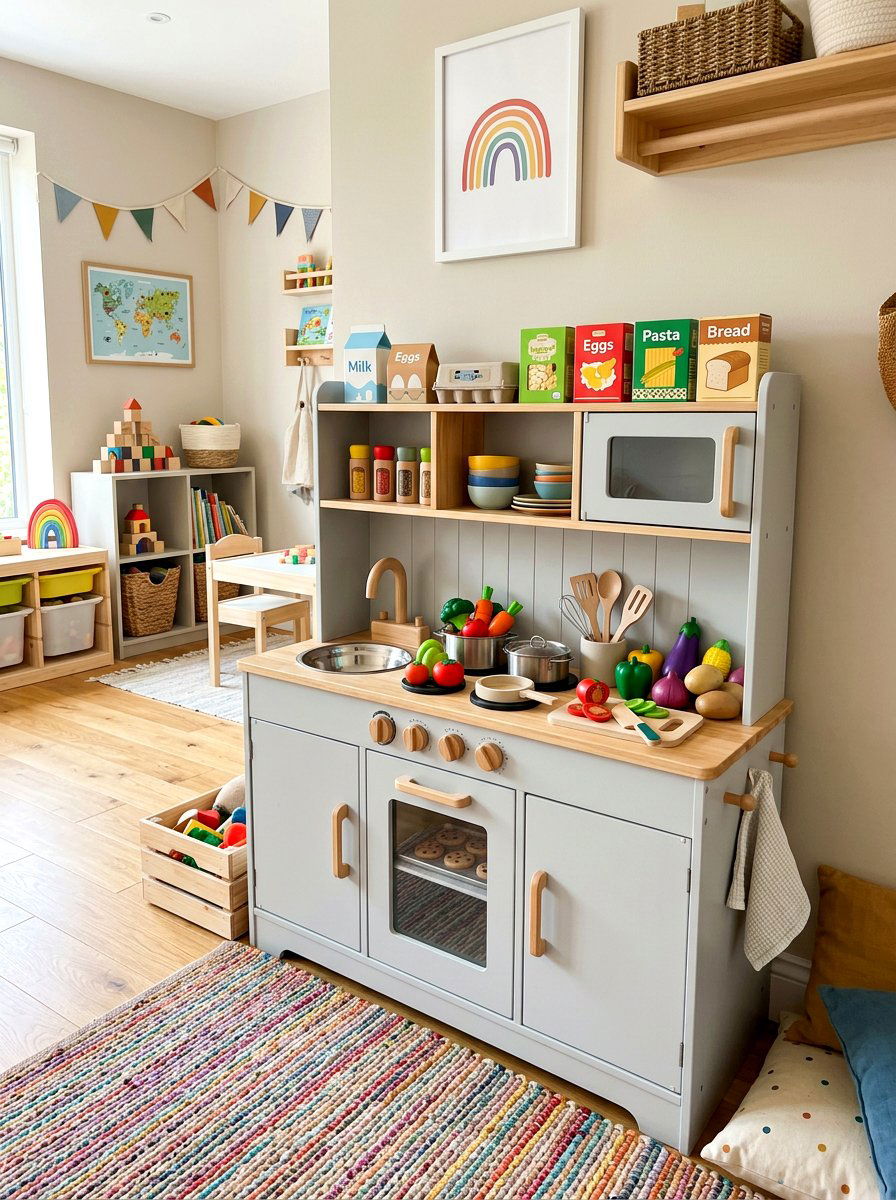
Designing a play kitchen that appeals to all children involves choosing a versatile color palette and avoided stereotyped themes. Gray, white, navy, or natural wood are excellent base colors that look great in any home and for any child. Focus on themes like "the chef, " "the baker, " or "the grocer" rather than gendered associations. Provide a wide variety of play food from different cultures to encourage a broad and inclusive understanding of the culinary world. This approach ensures the toy remains a favorite for all siblings and friends who come over to play. A gender-neutral corner is timeless, sophisticated, and promotes the idea that cooking is a skill for everyone to enjoy.
29. Play Kitchen Wallpaper Accent
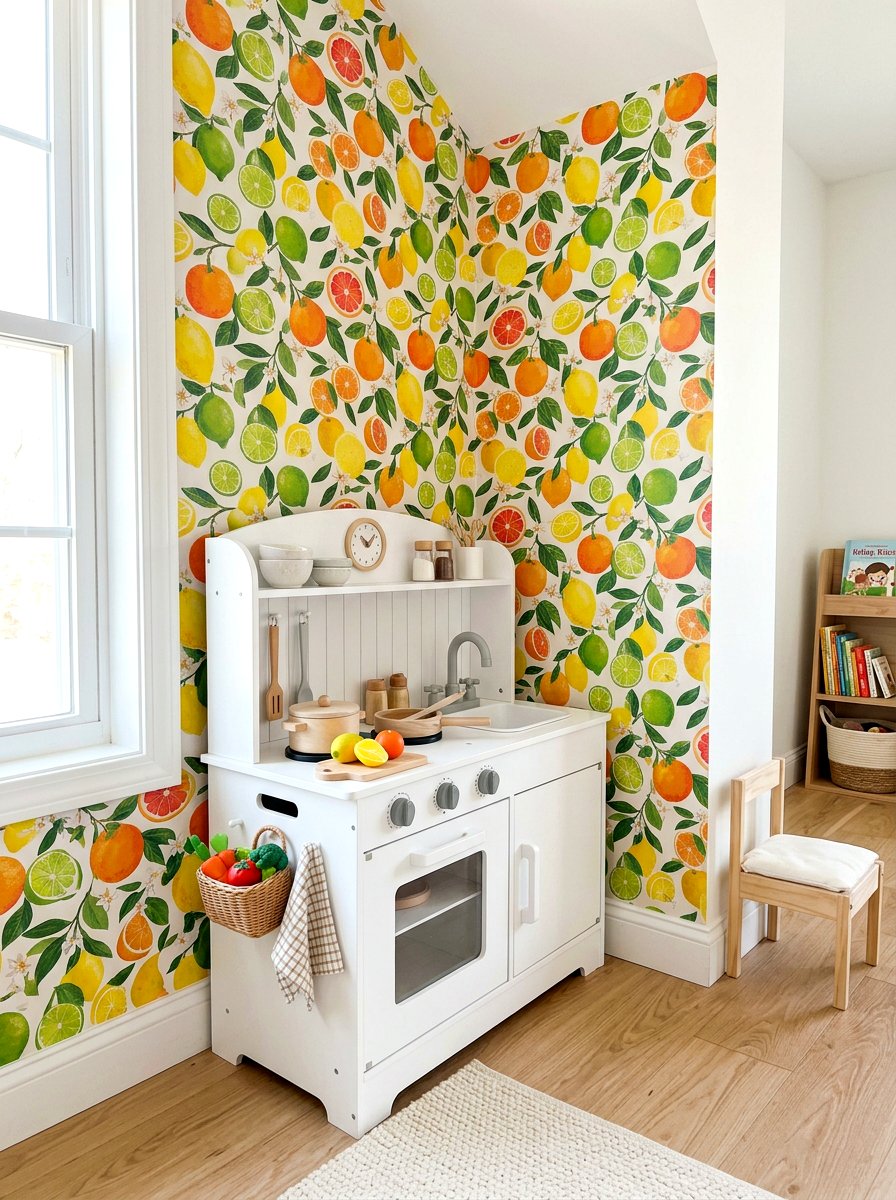
Using a bold wallpaper on the two walls of a play corner is a fantastic way to create a distinct zone within a larger room. You can choose a pattern that reflects the theme, such as a citrus print, a vegetable garden motif, or even a classic gingham. This visual boundary makes the play kitchen feel like a built-in part of the architecture rather than just a toy sitting in the room. If you are worried about a permanent change, use removable peel-and-stick wallpaper for an easy update later on. This design trick adds personality and depth to the corner, making it a vibrant and stylish part of your home’s overall interior design.
30. Outdoor Play Kitchen Area
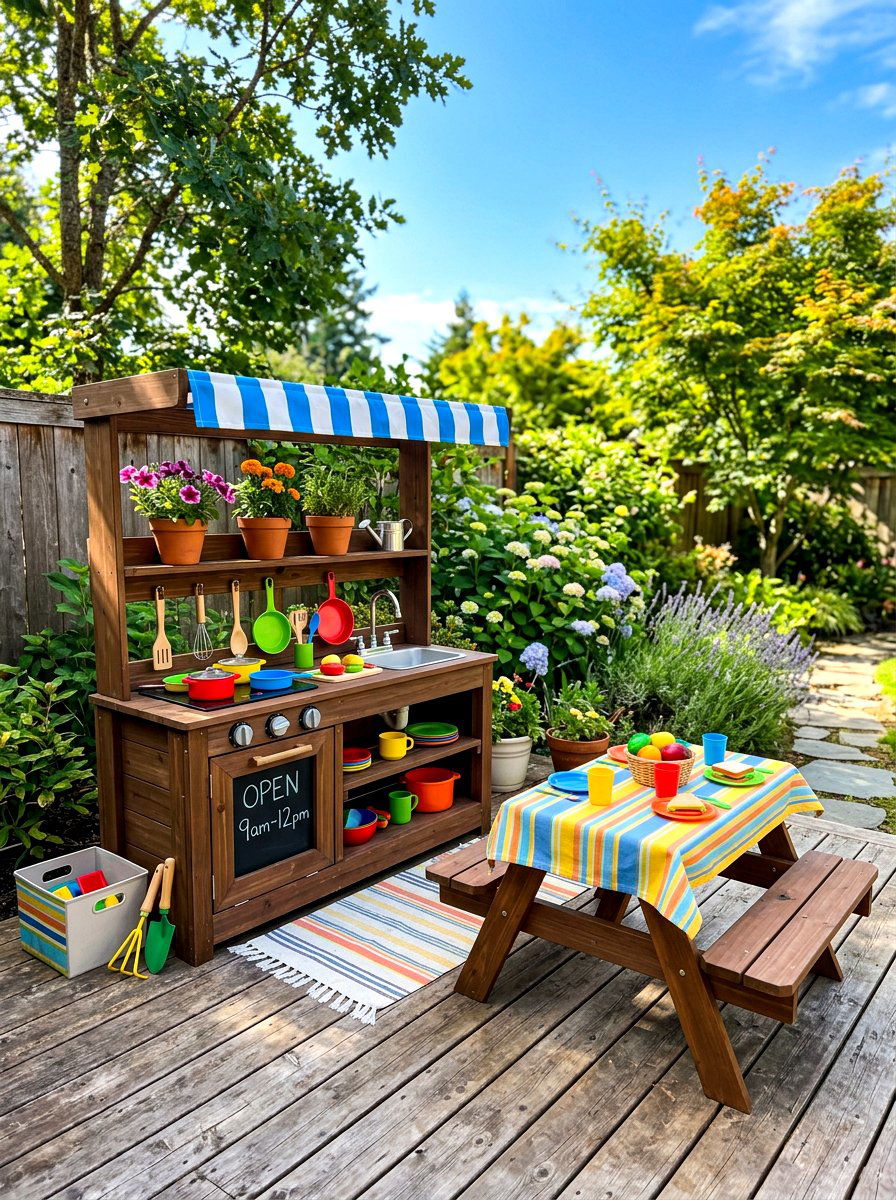
Creating a permanent play kitchen on a deck or patio encourages children to spend more time in the fresh air. Use weather-resistant materials like cedar or high-density plastic to ensure the kitchen lasts through several seasons of outdoor play. You can integrate the kitchen with a nearby herb garden where children can pick real mint or rosemary to add to their "soups. " This setup is perfect for summer playdates where kids can run between the kitchen and the grass freely. Providing a small outdoor table nearby allows them to "serve" their creations to guests in a true al fresco dining experience. It is a wonderful way to extend the living space outdoors.
Conclusion:
Designing the perfect play kitchen corner is an investment in your child 's creativity and a beautiful addition to your home' s interior. Whether you choose a minimalist Scandinavian look or a vibrant retro theme, the key is to create a space that feels intentional and inviting. By focusing on organization, safety, and aesthetic harmony, you can provide a high-quality environment that supports years of imaginative role-play. These small culinary nooks do more than just entertain; they help children develop social skills, master fine motor movements, and gain confidence in their abilities. Your thoughtful design will turn a simple corner into a cherished sanctuary where countless "meals" and memories will be made for a lifetime.

Related posts: