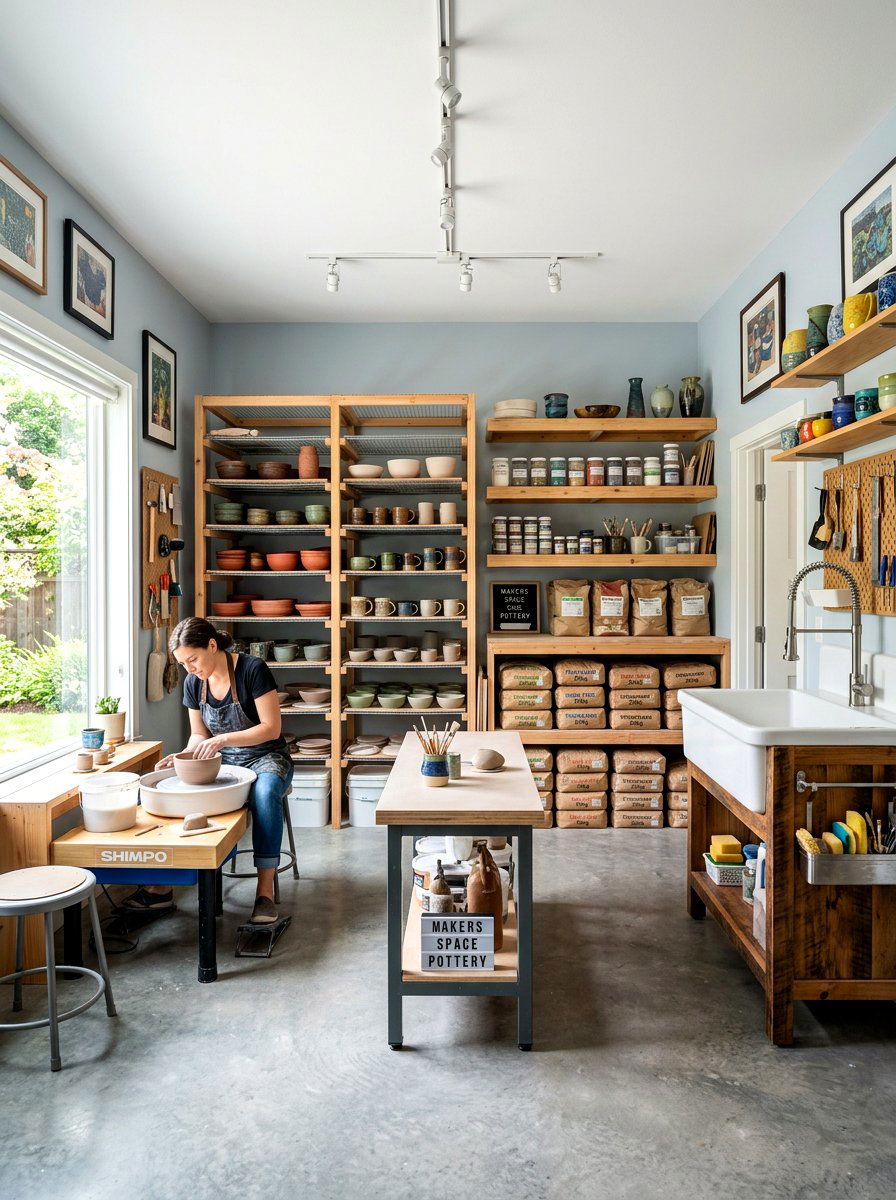
Creating a dedicated space for your hobbies can transform how you feel about your creative projects every single day. Whether you are into sewing, painting, or scrapbooking, a well-organized craft corner provides a sanctuary where your imagination can truly run wild without the stress of clutter. Many people struggle with finding enough room in their homes, but you really do not need an entire spare bedroom to make it work. A simple nook or a repurposed closet can easily become the most inspiring part of your house. By focusing on smart storage solutions and personal touches, you can build a workspace that motivates you to finish those projects while keeping supplies within reach.
1. Small closet craft space
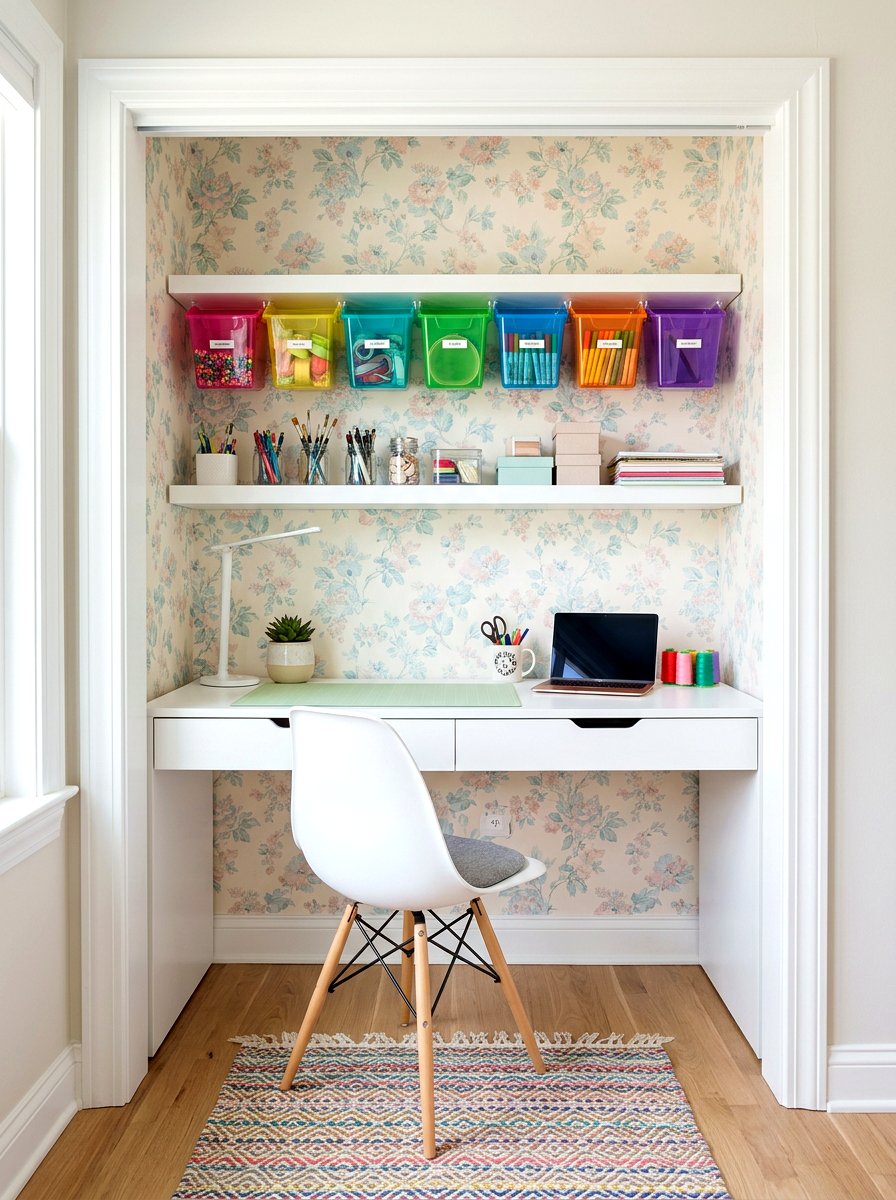
Turning an unused reach-in closet into a functional workspace is a brilliant way to maximize your square footage. You can start by removing the doors to create an open alcove or keep them to hide your supplies when you are not working. Install a sturdy desktop across the width of the closet and add floating shelves above for easy access to bins. This setup allows you to keep your mess contained in one specific area without taking over the living room or bedroom floor. Using bright peel-and-stick wallpaper inside the closet adds a pop of personality that makes the small space feel intentionally designed and very inviting for your afternoon crafting sessions.
2. Pegboard wall tool organization
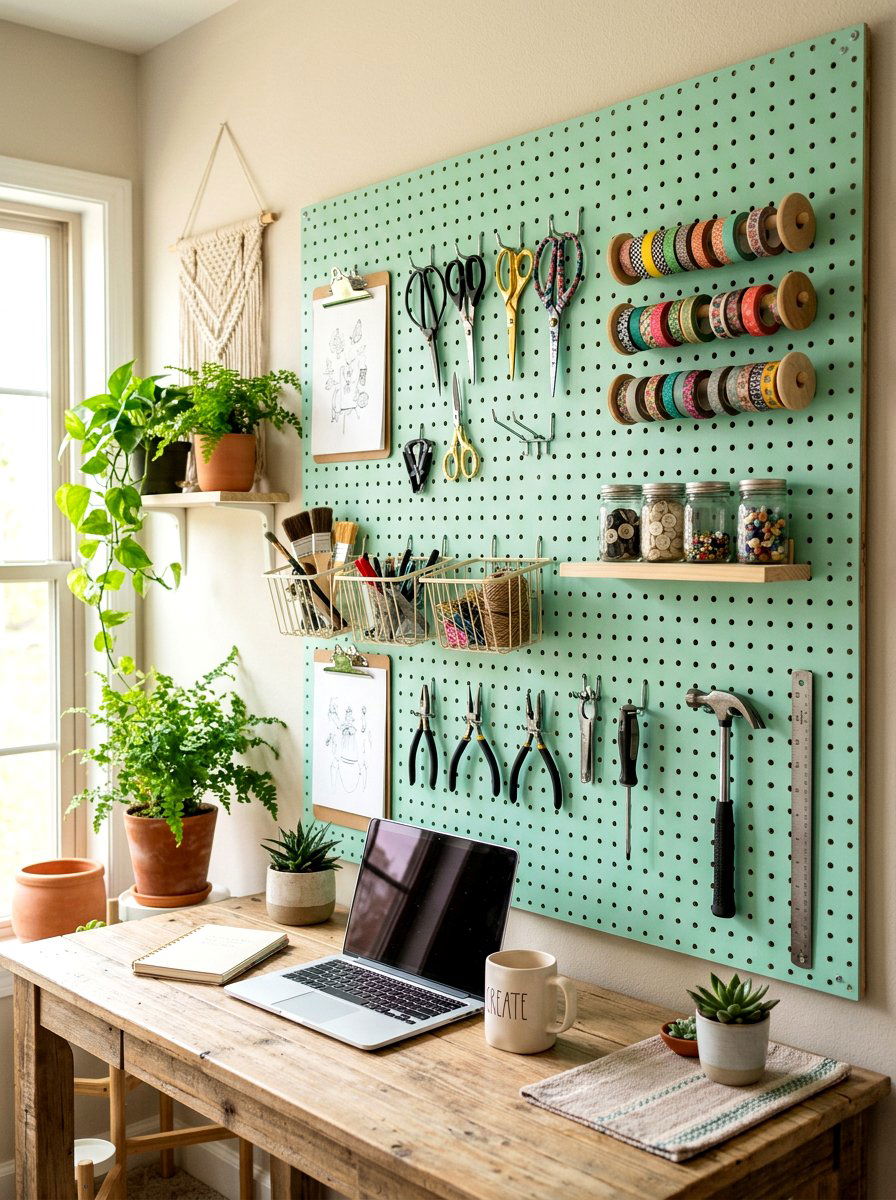
A pegboard is one of the most versatile storage solutions for any creative person looking to keep their tools visible. You can mount a large board directly above your desk to hang scissors, washi tape, and various rulers within arm 's reach. Painting the board a bold color or a crisp white can help it blend into your room' s overall aesthetic perfectly. Use metal hooks and small baskets to hold items that do not have hanging loops, like glue sticks or small paint bottles. This vertical arrangement frees up valuable desk space, allowing you to focus entirely on your project rather than digging through messy drawers for a single tool.
3. Rolling craft storage cart
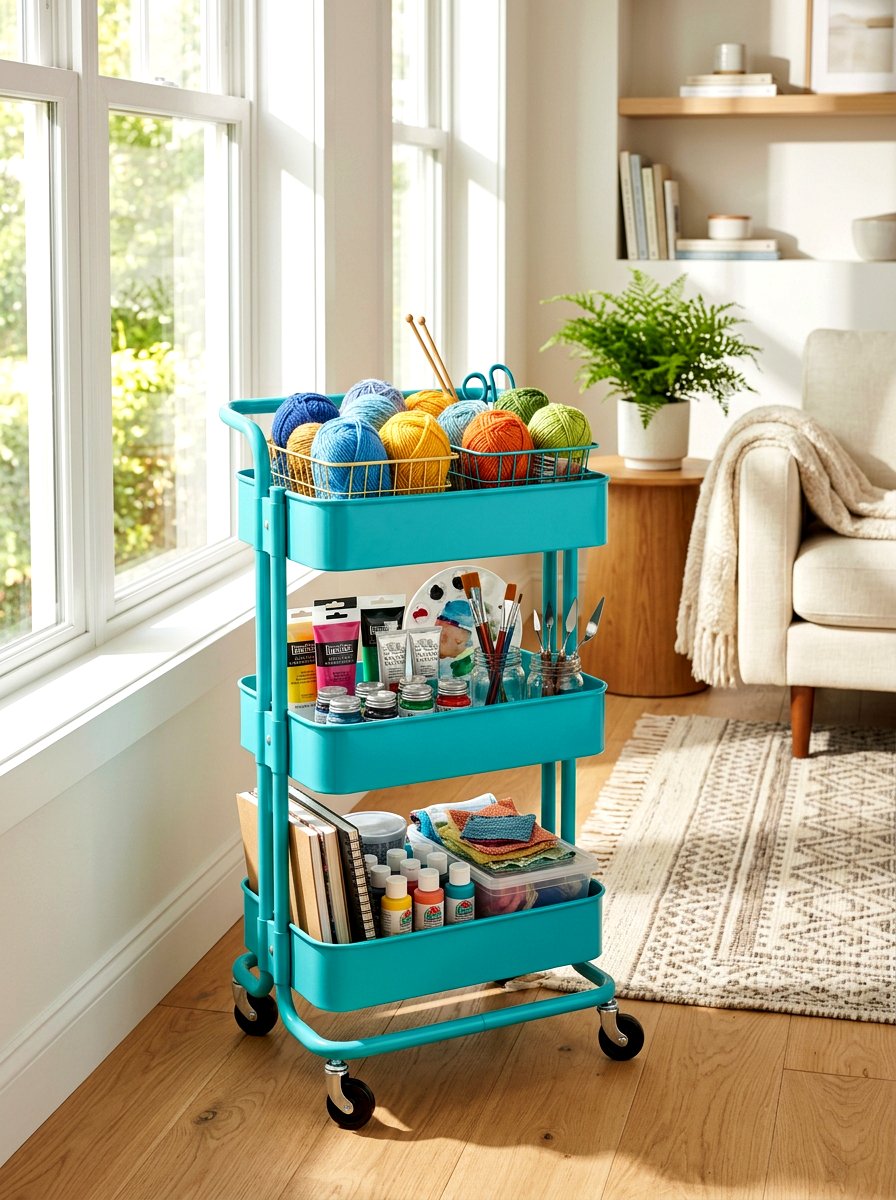
For those who like to craft in different parts of the house, a three-tier rolling metal cart is an absolute essential. These carts are compact enough to tuck into a corner but spacious enough to hold a variety of different supplies. You can dedicate each tier to a specific category, such as paper on the bottom, paints in the middle, and frequently used tools on top. Magnetic hooks can be attached to the sides for extra hanging space for ribbons or measuring tapes. When you are finished working, you can simply roll the entire cart back into a closet or against a wall to keep your home tidy.
4. Folding wall mounted desk
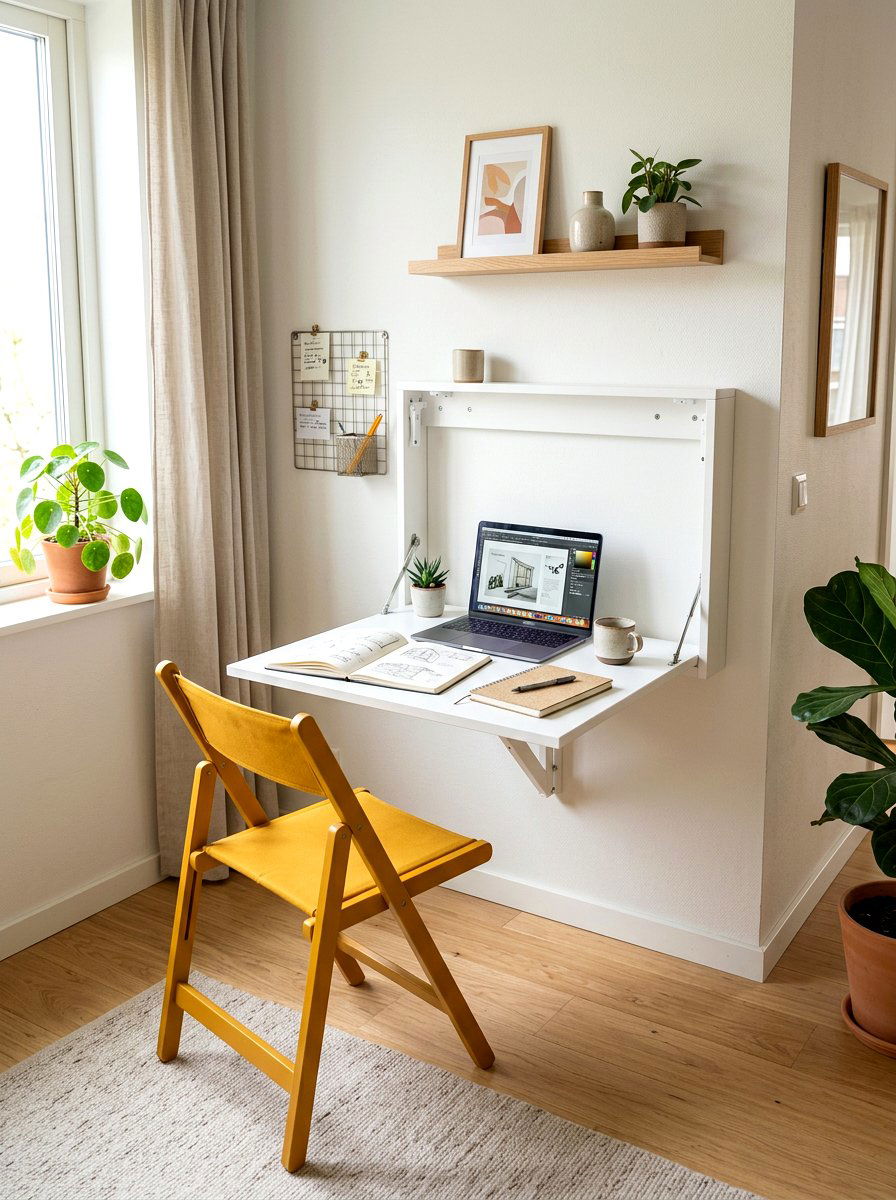
If you live in a very small apartment, a folding wall-mounted desk provides a workspace that disappears when you are done. These desks typically look like a small cabinet on the wall until you pull the front panel down to reveal a flat surface. Inside the cabinet, you can store smaller items like pens, markers, and pads of paper that stay secure even when the desk is closed. It is a perfect solution for a multi-purpose room where you need a desk for only a few hours a week. Adding a comfortable folding chair makes this setup complete while ensuring it never interferes with your daily foot traffic.
5. IKEA Kallax craft station
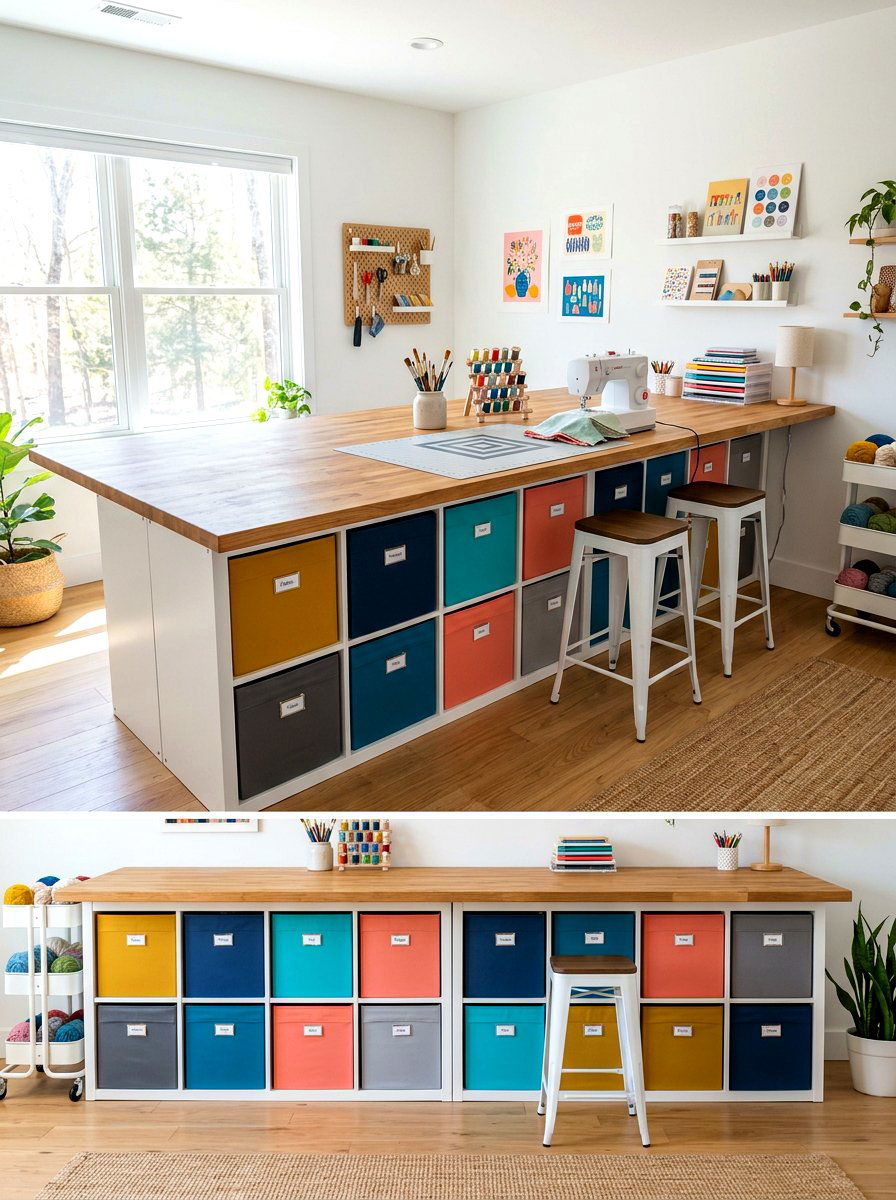
The IKEA Kallax unit is a favorite among crafters because its square cubbies are perfectly sized for standard craft bins and paper. You can use a larger unit as a room divider to separate your creative zone from the rest of your living area. By adding specialized inserts like drawers or wine bottle racks, you can customize the storage for yarn or rolled-up vinyl. Placing two smaller units side-by-side with a wooden countertop on top creates a sturdy standing-height work island. This configuration offers massive amounts of storage directly beneath your primary workspace, making it easy to grab whatever you need without having to stop.
6. Corner desk crafting nook
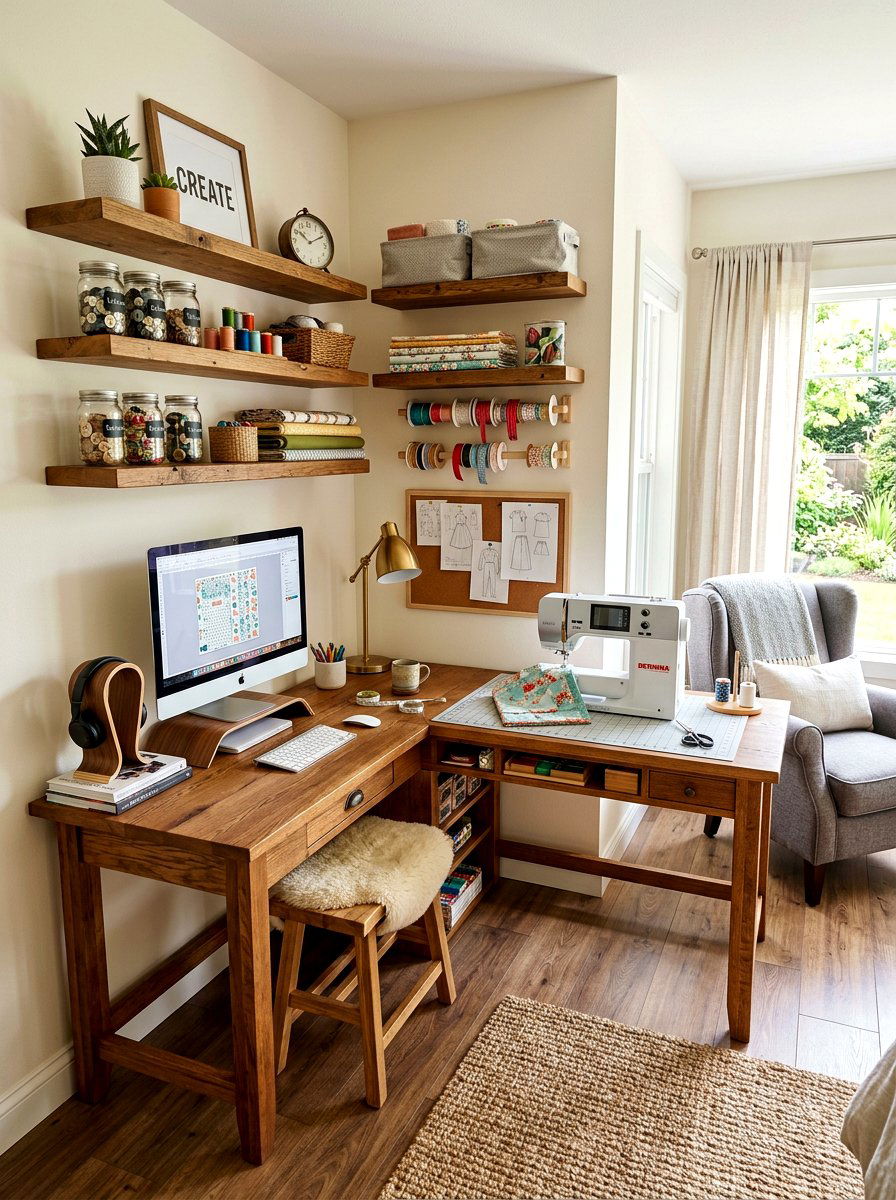
Utilizing the corner of a bedroom or living room with an L-shaped desk can provide twice the surface area without feeling bulky. One side of the desk can be dedicated to your computer or sewing machine, while the other remains clear for assembly or painting. Placing a lamp in the corner ensures that both sides of your workspace are well-lit during late-night sessions. You can also mount corner shelves above the desk to store decorative items or jars of colorful buttons and beads. This layout feels cozy and tucked away, creating a psychological boundary that helps you focus on your artistic work without any outside distractions.
7. Hidden craft armoire storage
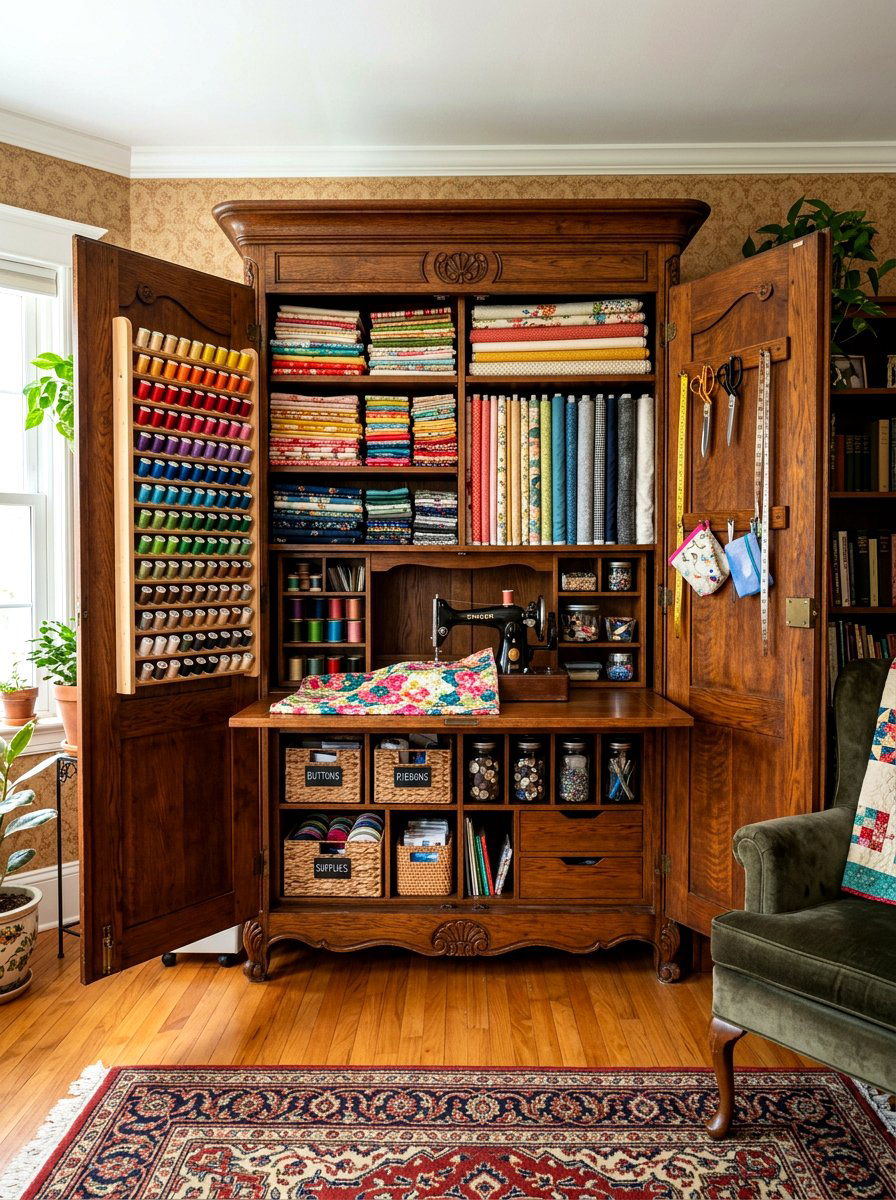
An armoire is a beautiful piece of furniture that can completely hide a massive amount of craft supplies behind closed doors. When the doors are open, the inside can be outfitted with a pull-out keyboard tray that serves as a small desk surface. You can install corkboard or magnetic strips on the inside of the doors to hold inspiration photos or small metal tools. This is an ideal choice for people who want to keep their crafting hobby private or maintain a formal look in their home. Once your project is finished for the day, you simply close the doors to hide any remaining creative mess instantly.
8. Vertical craft paper shelving
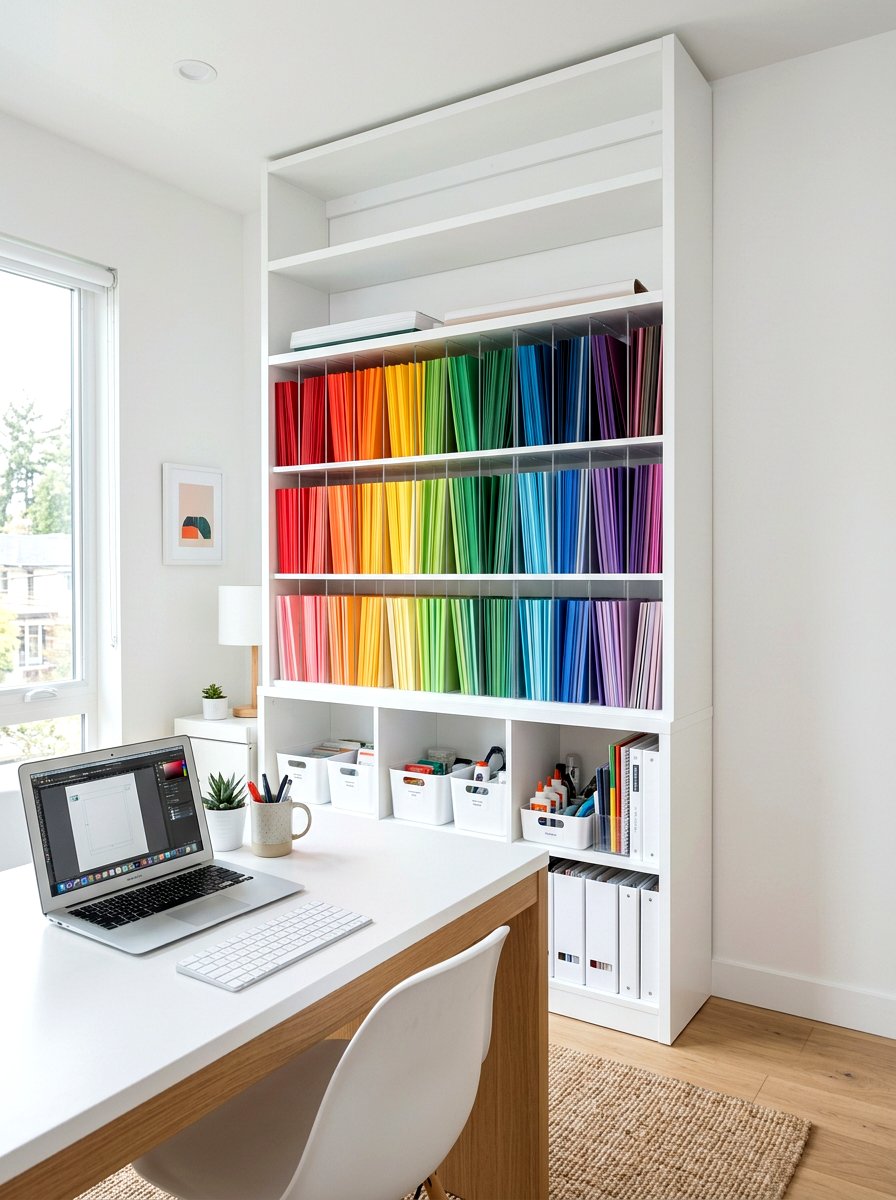
Managing large stacks of cardstock and decorative paper can be difficult without the right shelving system. Vertical paper holders allow you to see all your colors and patterns at a glance without having to dig through a horizontal pile. You can find specialized wire racks or wooden dividers that fit into standard shelving units to keep your paper perfectly upright. This method prevents the bottom sheets from getting wrinkled or damaged over time by the weight of the stack. Organizing your paper by color or theme within these vertical slots makes the entire process of choosing materials much faster and more enjoyable during your crafting.
9. Kids art and craft table
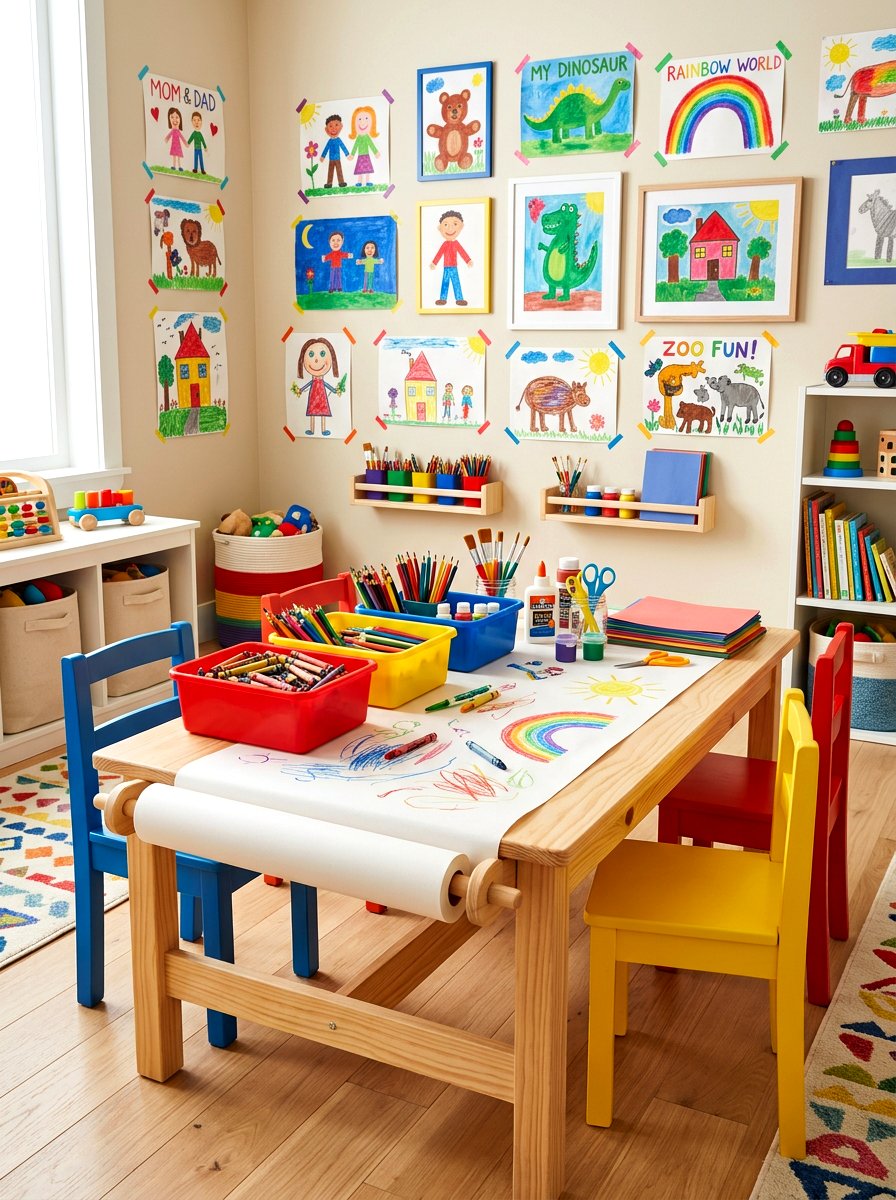
A dedicated art station for children encourages creativity while keeping their messy supplies away from your dining table. Look for a low table with built-in rolls of paper so they can pull out a fresh sheet whenever they feel inspired. Sturdy plastic bins tucked into the table legs can hold crayons, markers, and washable paints that are easy for little hands to reach. Adding a washable rug underneath the table will protect your floors from the inevitable spills and stains. By giving kids their own space, they feel more ownership over their projects and are more likely to spend time engaged in quiet, creative play.
10. Sewing machine corner setup
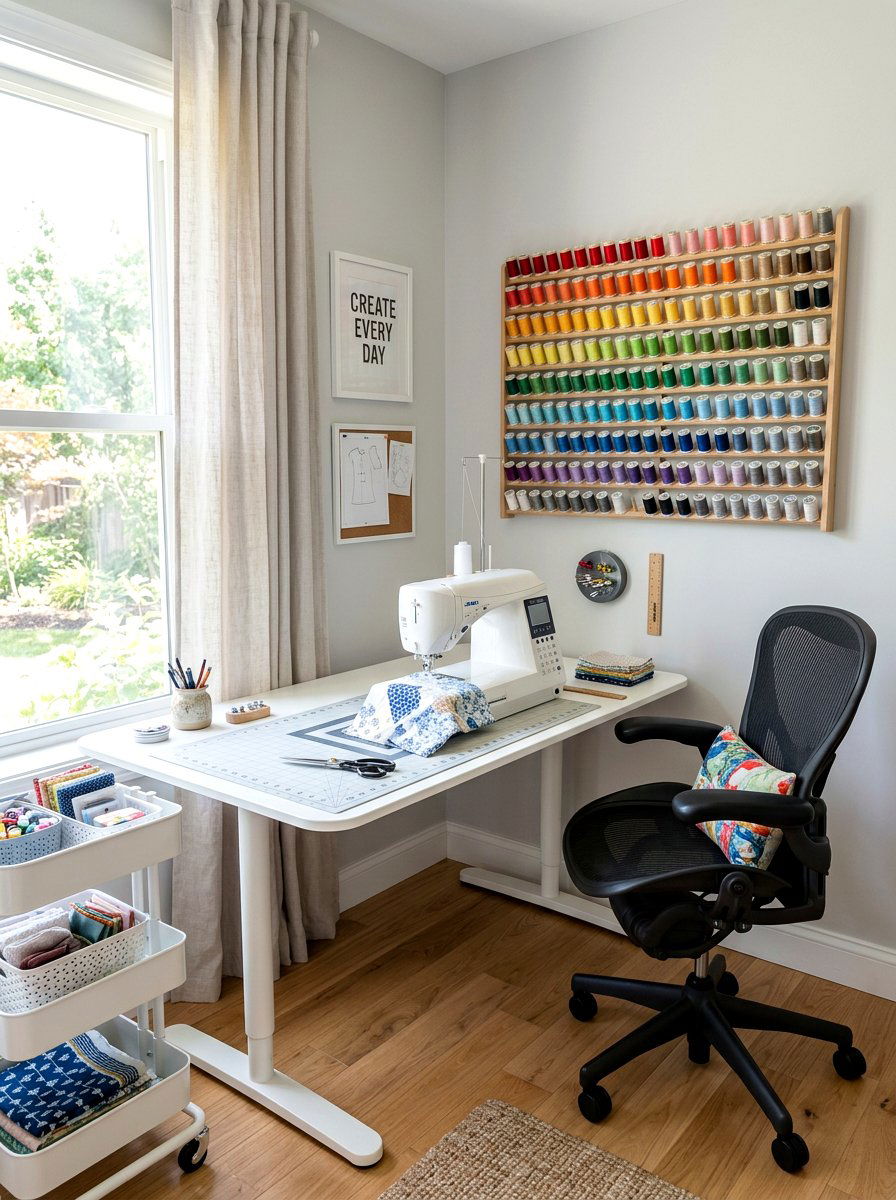
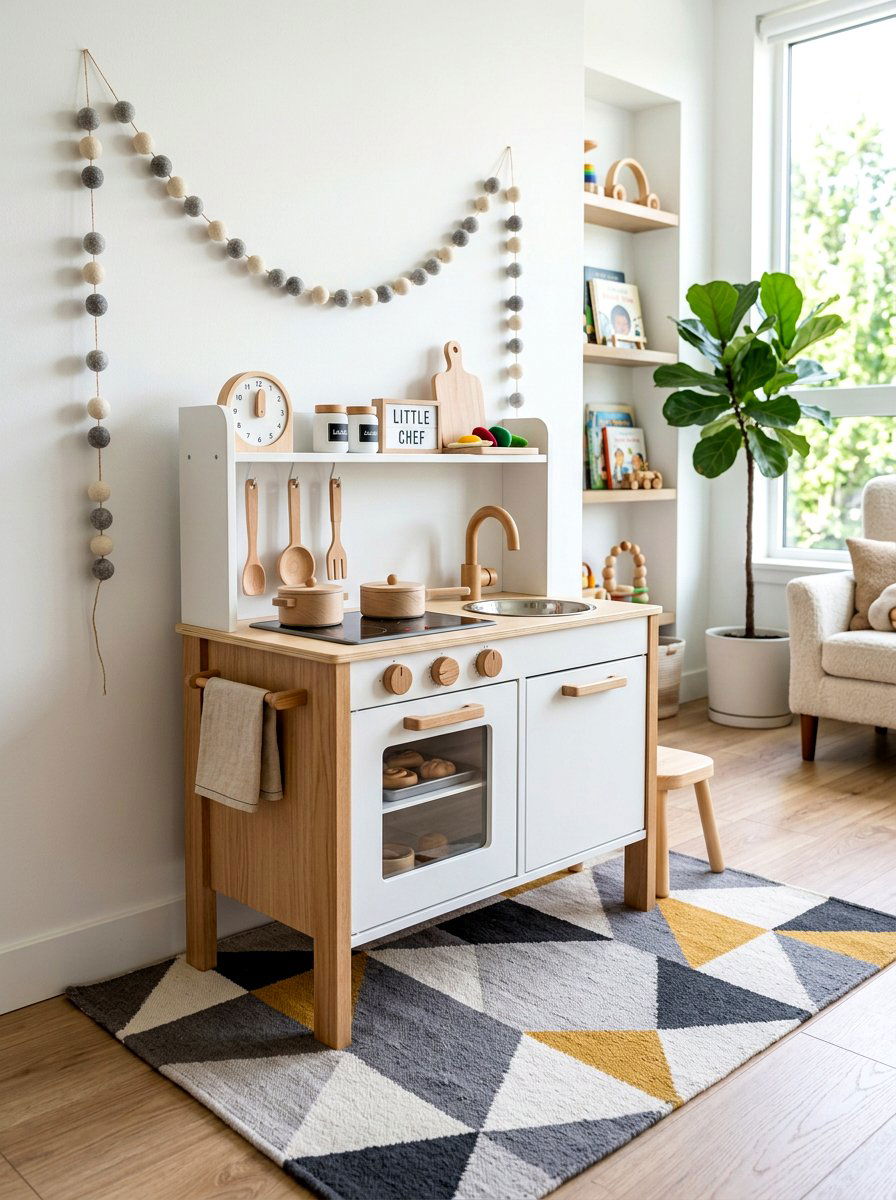
A sewing corner requires a stable table that can handle the vibration of a machine and plenty of surrounding space for fabric. Positioning your sewing table near a window provides natural light, which is essential for seeing fine stitches and matching thread colors accurately. You can use a wall-mounted thread rack to keep all your spools organized by color, turning them into a decorative feature for the room. Underneath the table, clear plastic bins are perfect for storing fabric scraps and patterns so they do not get dusty. A comfortable chair with good back support is a must for those long hours spent working on intricate sewing projects.
11. Gift wrapping station closet
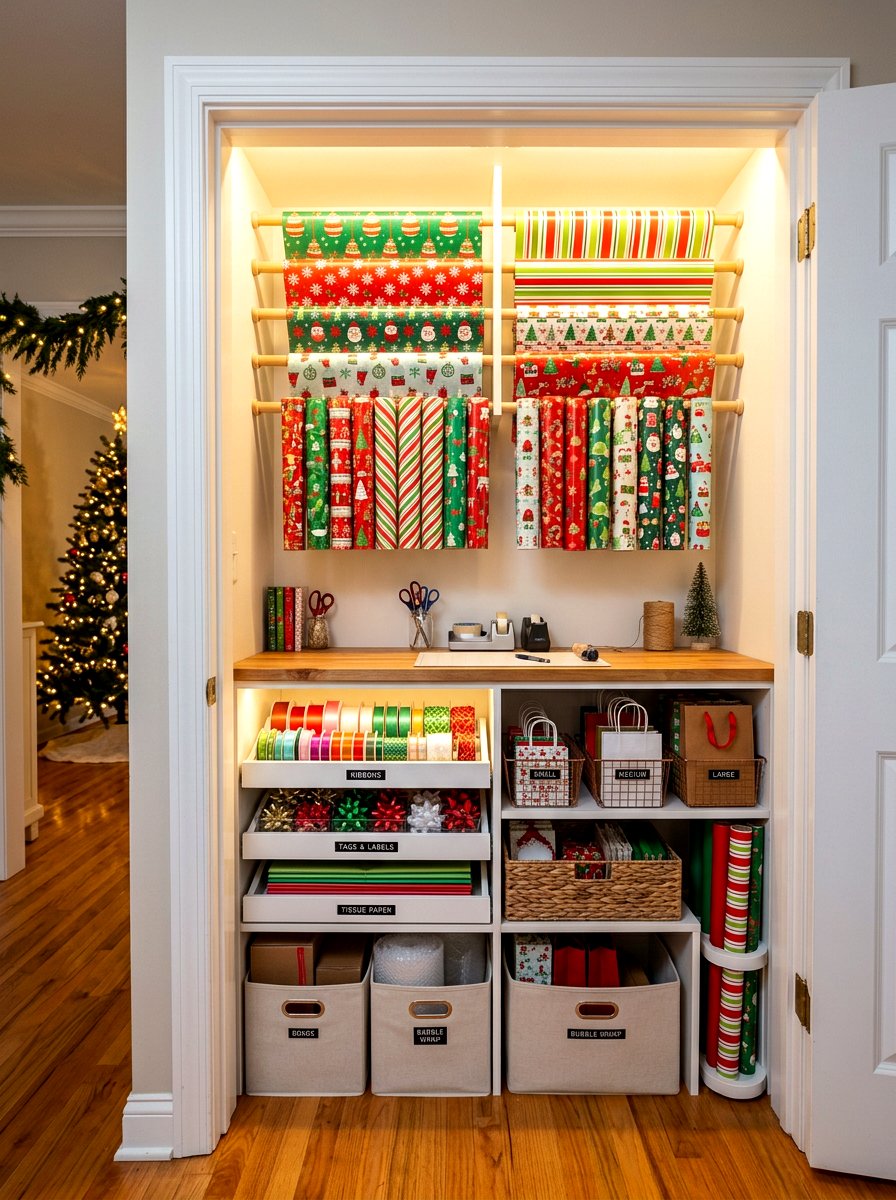
Repurposing a small pantry or linen closet into a gift wrapping station keeps all your rolls of paper from getting crushed. You can install curtain rods or dowels across the width of the closet to hang your wrapping paper rolls for easy dispensing. A small chest of drawers inside the closet can hold gift bags, tissue paper, and boxes of various sizes. Use small clear containers for ribbons, bows, and gift tags so you can find exactly what you need for any occasion. This setup makes the holiday season much less stressful because everything you need to wrap beautiful gifts is organized and ready in one central location.
12. Magnetic tool wall strip
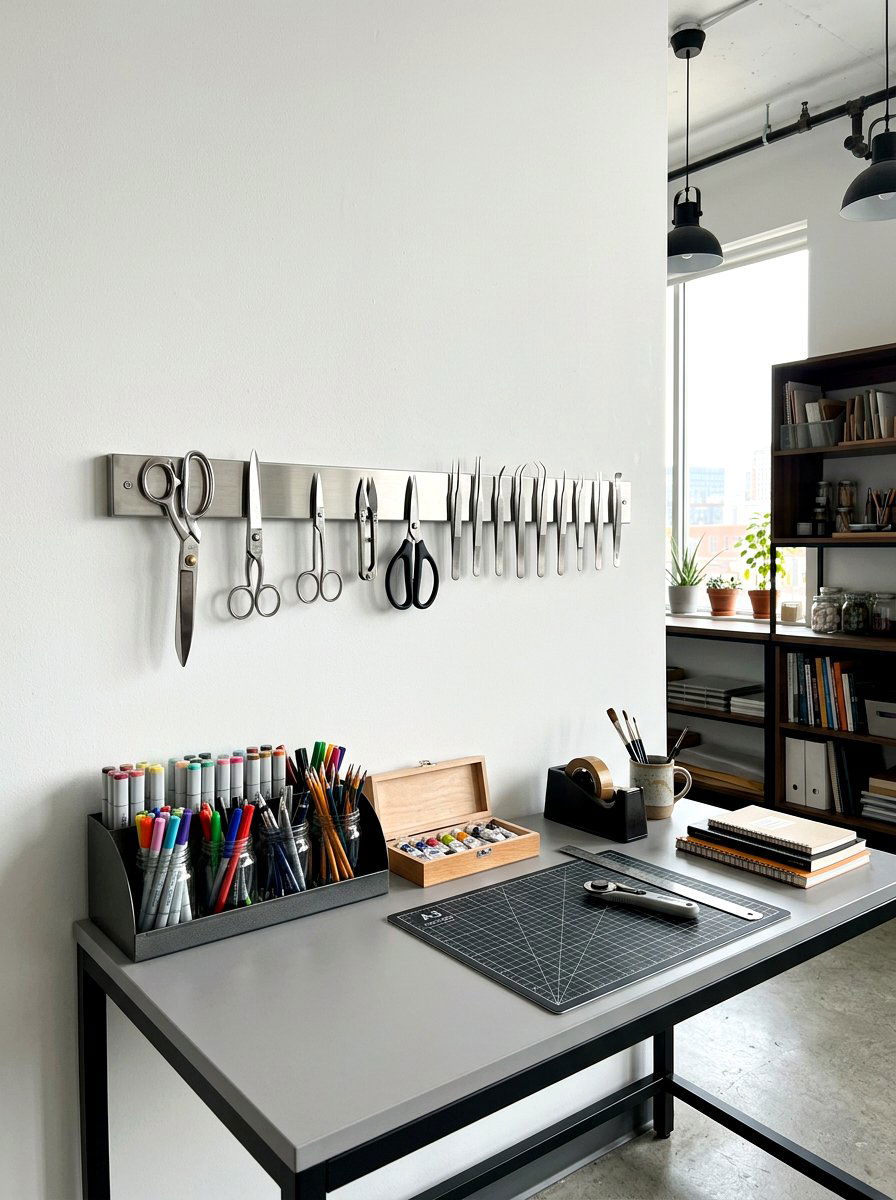
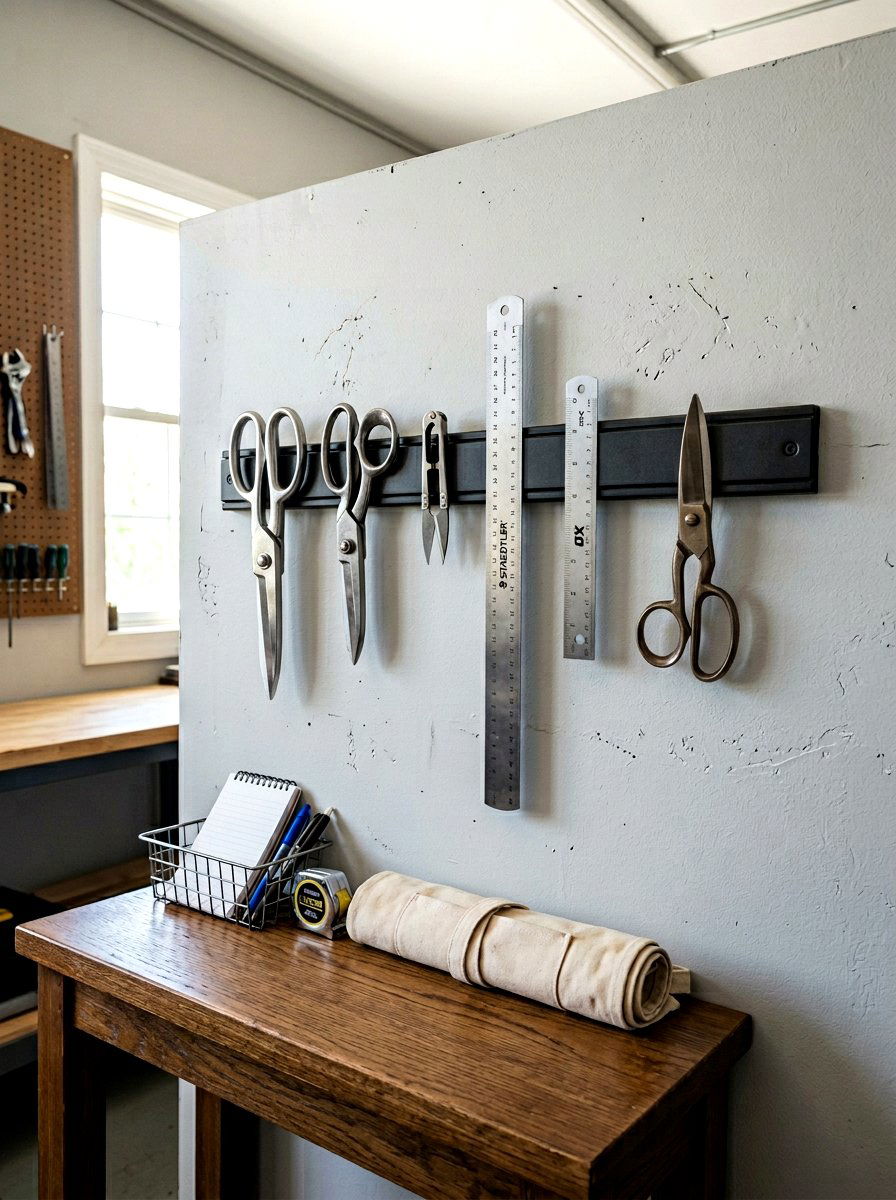
Magnetic strips are not just for the kitchen; they are incredible for holding metal craft tools like scissors, tweezers, and palettes. Mounting a few of these strips on the wall next to your workspace keeps your most-used items easily accessible. You can see every tool clearly, which prevents you from accidentally buying duplicates because something was hidden in a drawer. The magnets are strong enough to hold even heavier metal rulers or pliers securely in place. This sleek and modern storage solution looks professional and saves significant drawer space for items that are not magnetic, like wooden brushes or plastic tubes of paint.
13. Over the door craft organizer
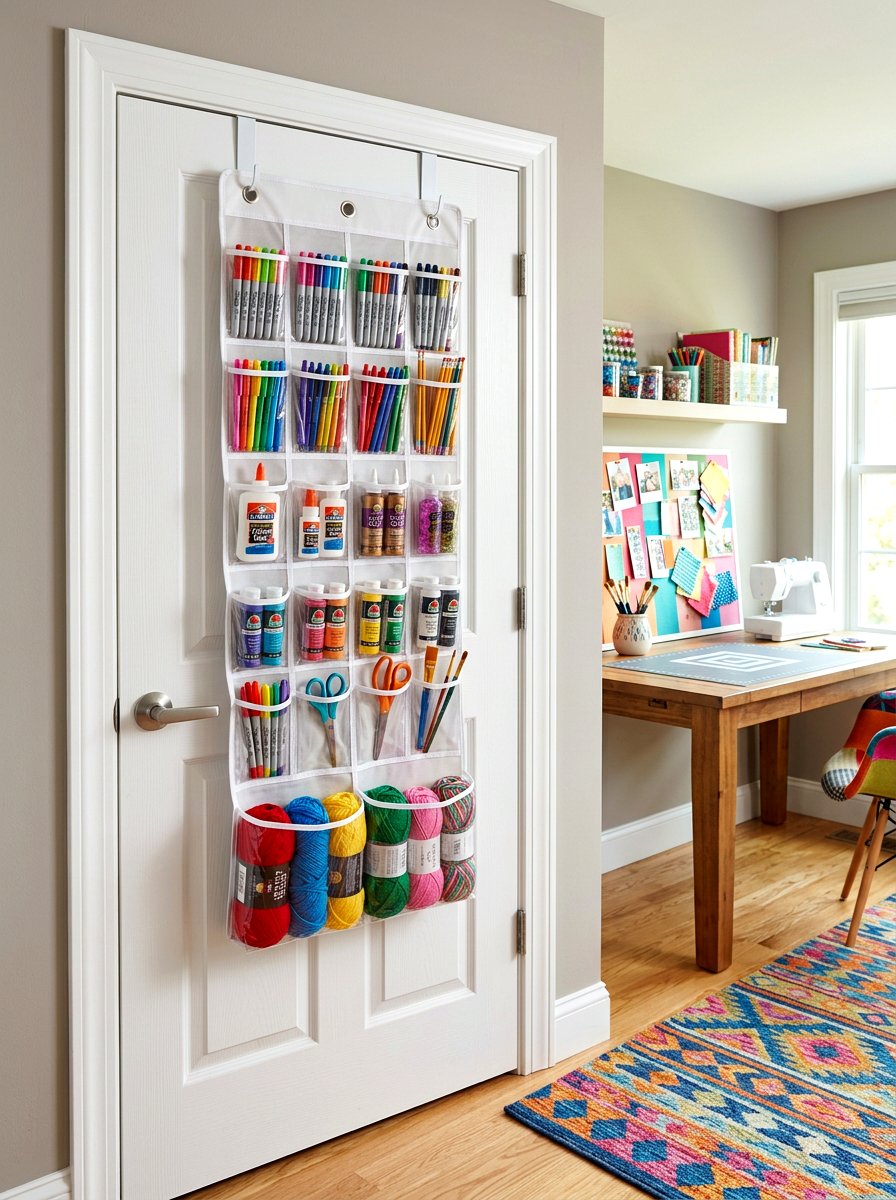
When floor and wall space are at a premium, the back of a door is a hidden goldmine for storage. Clear pocket organizers are perfect for holding smaller items like glue bottles, markers, yarn, or rolls of vinyl. Because the pockets are transparent, you can easily identify what is inside each one without having to open anything. This is a great way to use the door to your craft room or even a bedroom door to keep supplies organized. It keeps the clutter off your desk and shelves while making sure that every inch of your room is working hard to support your creative hobby and goals.
14. Portable craft storage caddy
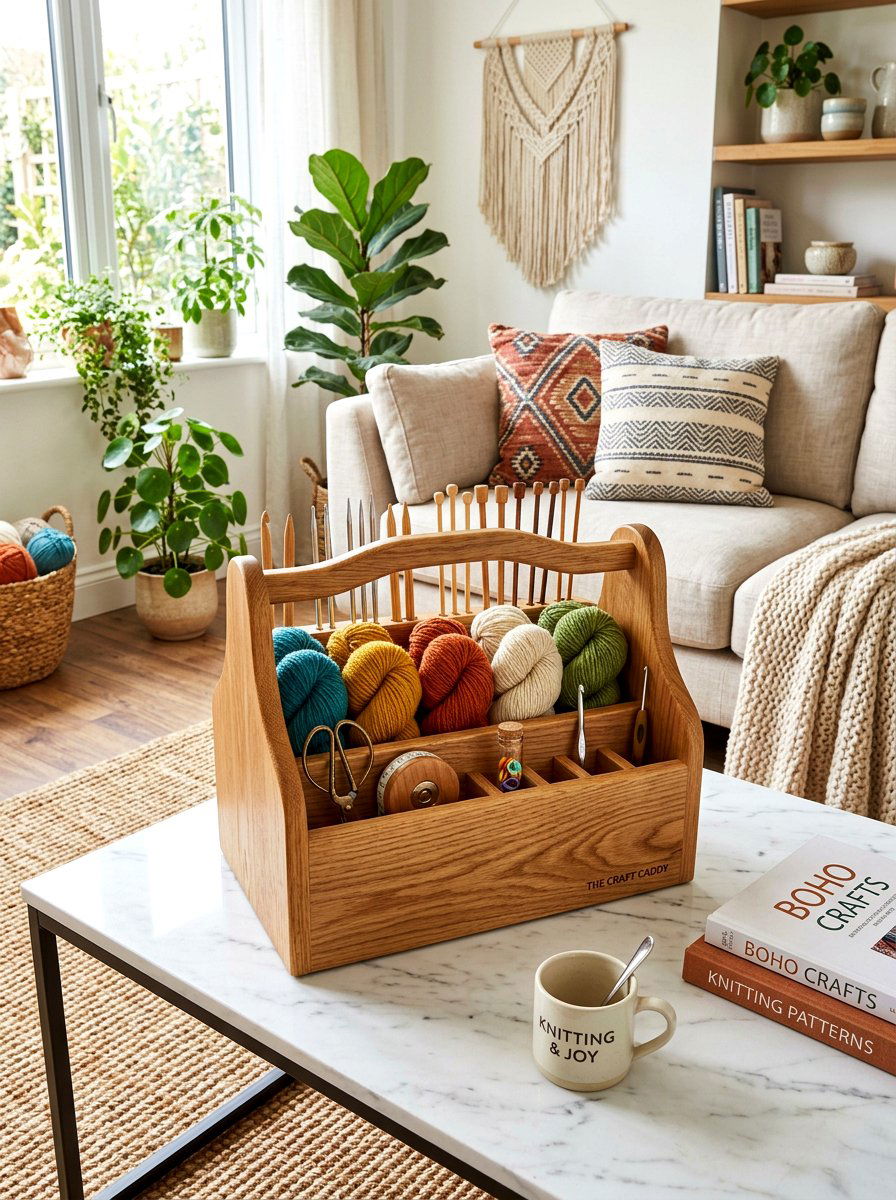
A portable caddy is the perfect solution for small projects that you want to work on while sitting on the couch or at the kitchen island. These caddies usually have a handle and multiple compartments for things like knitting needles, crochet hooks, or embroidery hoops. You can easily move your current project from room to room as you follow the light or join your family for a movie. When the project is done, the caddy can be tucked onto a shelf or under a side table. It is an excellent way to keep your essential supplies together so you never lose your momentum while you are working.
15. Under stair craft workspace
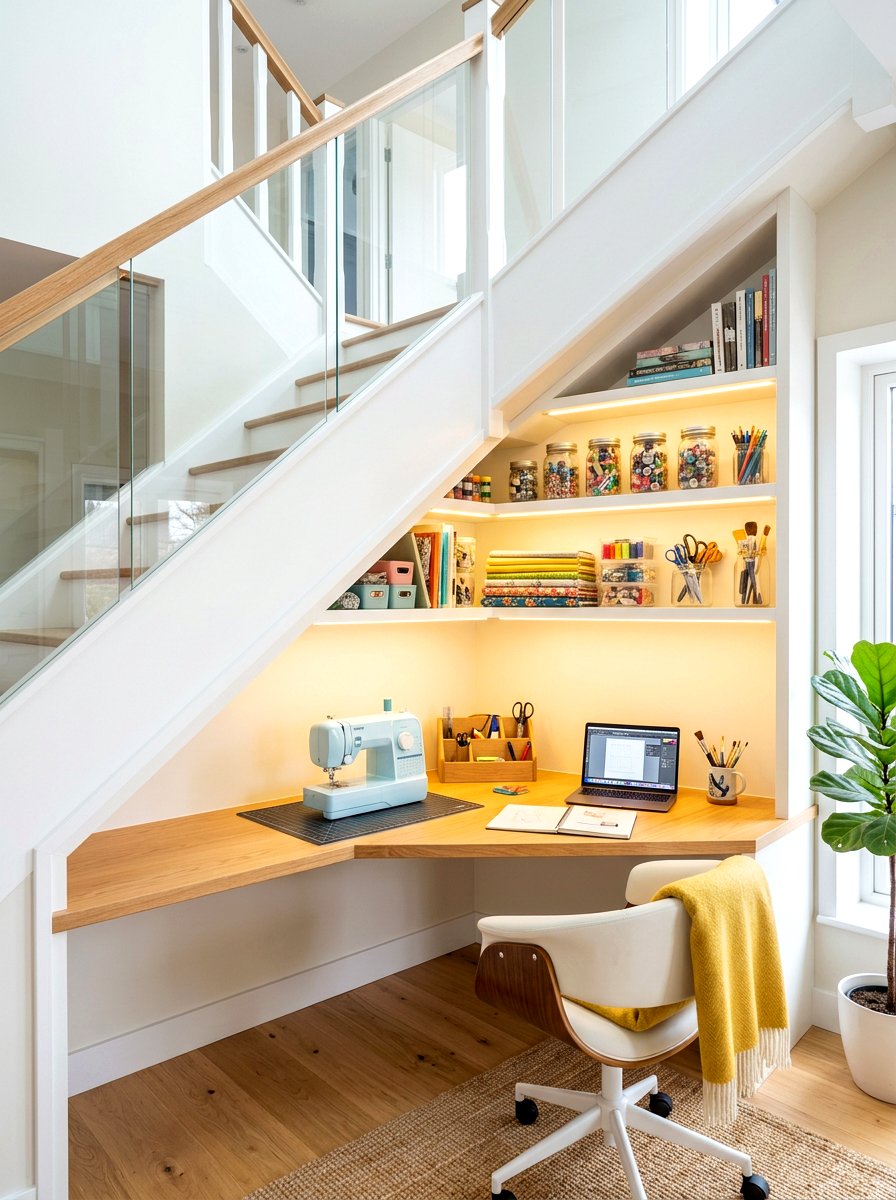
The triangular space beneath a staircase is often wasted, but it is actually the perfect size for a cozy craft nook. You can build a custom desk that fits the unique angles of the wall and add built-in cabinets for storage. Because this area is usually tucked away from the main flow of the house, it feels like a private retreat where you can truly focus. Use bright lighting to compensate for the lack of windows and choose light-colored paint to make the small alcove feel more open. This creative use of space adds significant value to your home while providing you with a functional and very stylish work area.
16. Attic craft room renovation
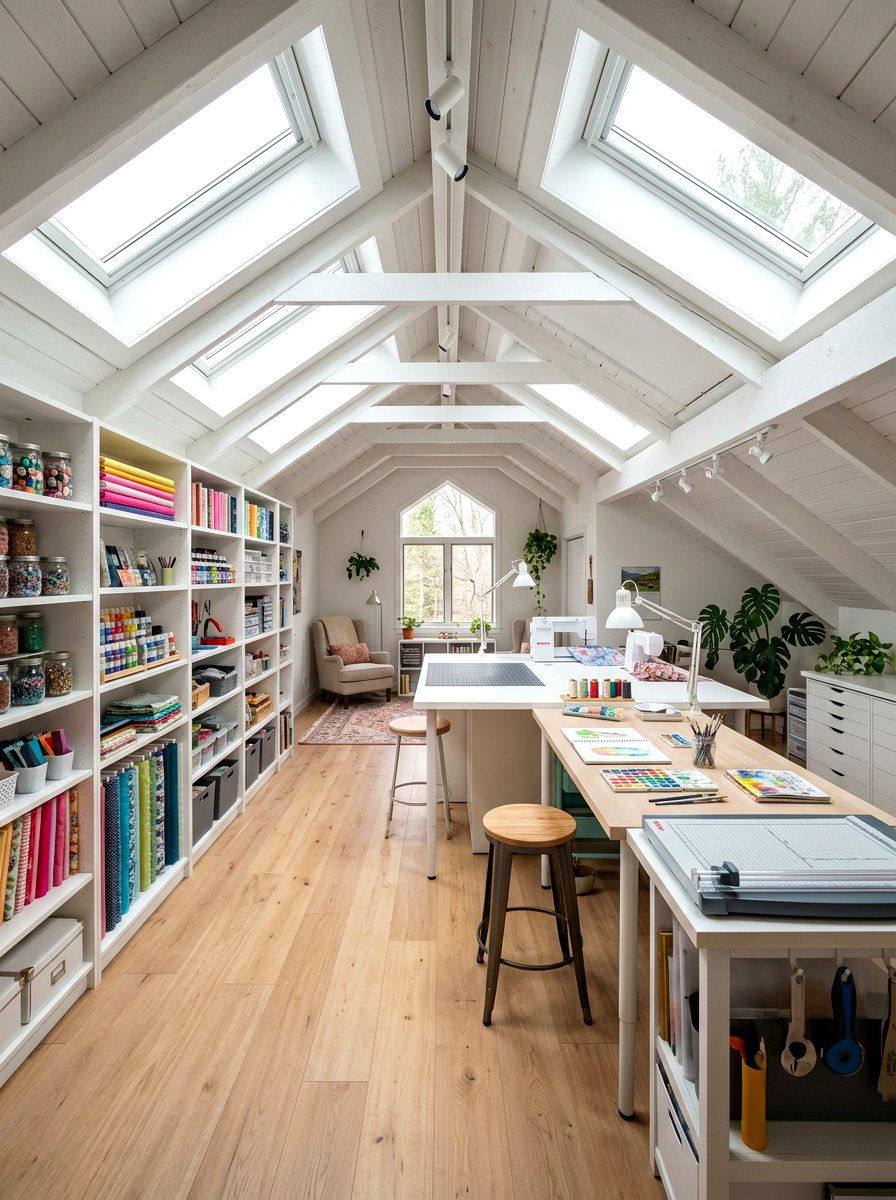
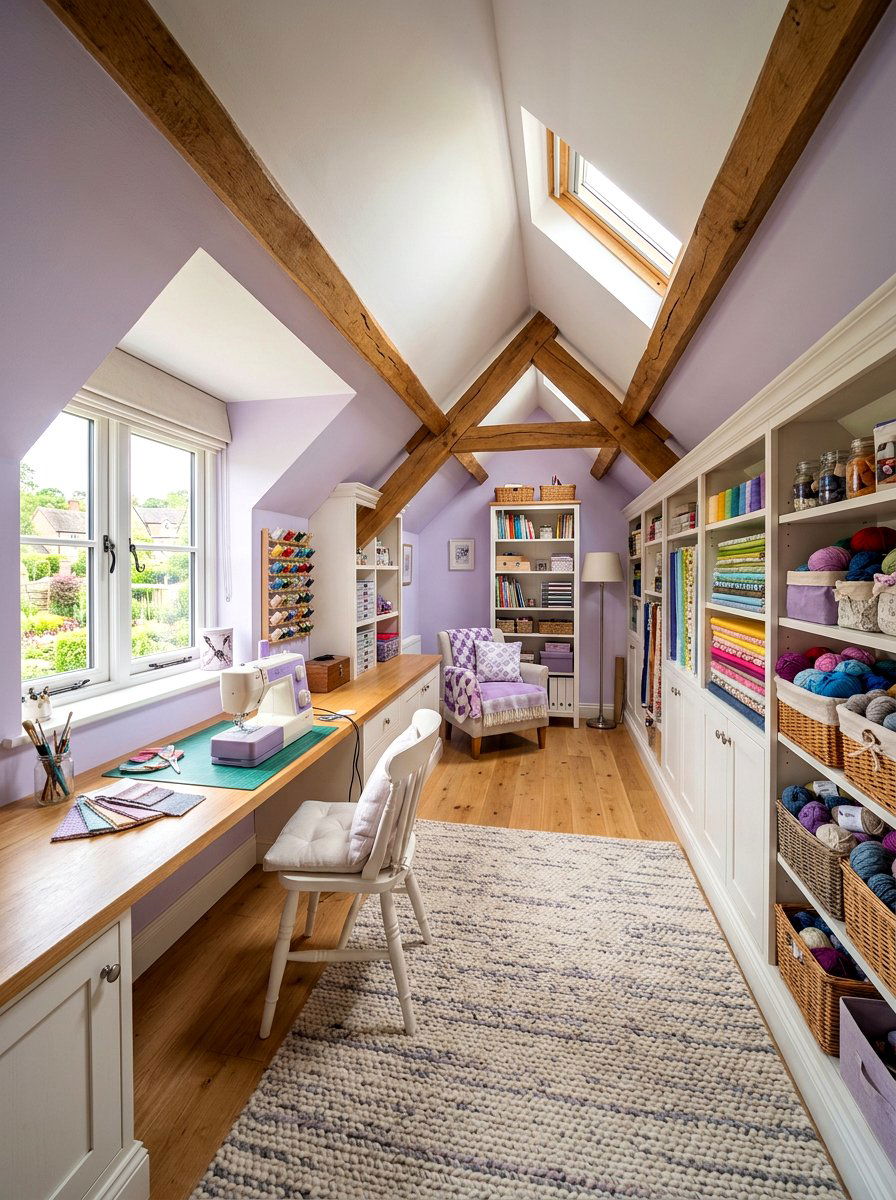
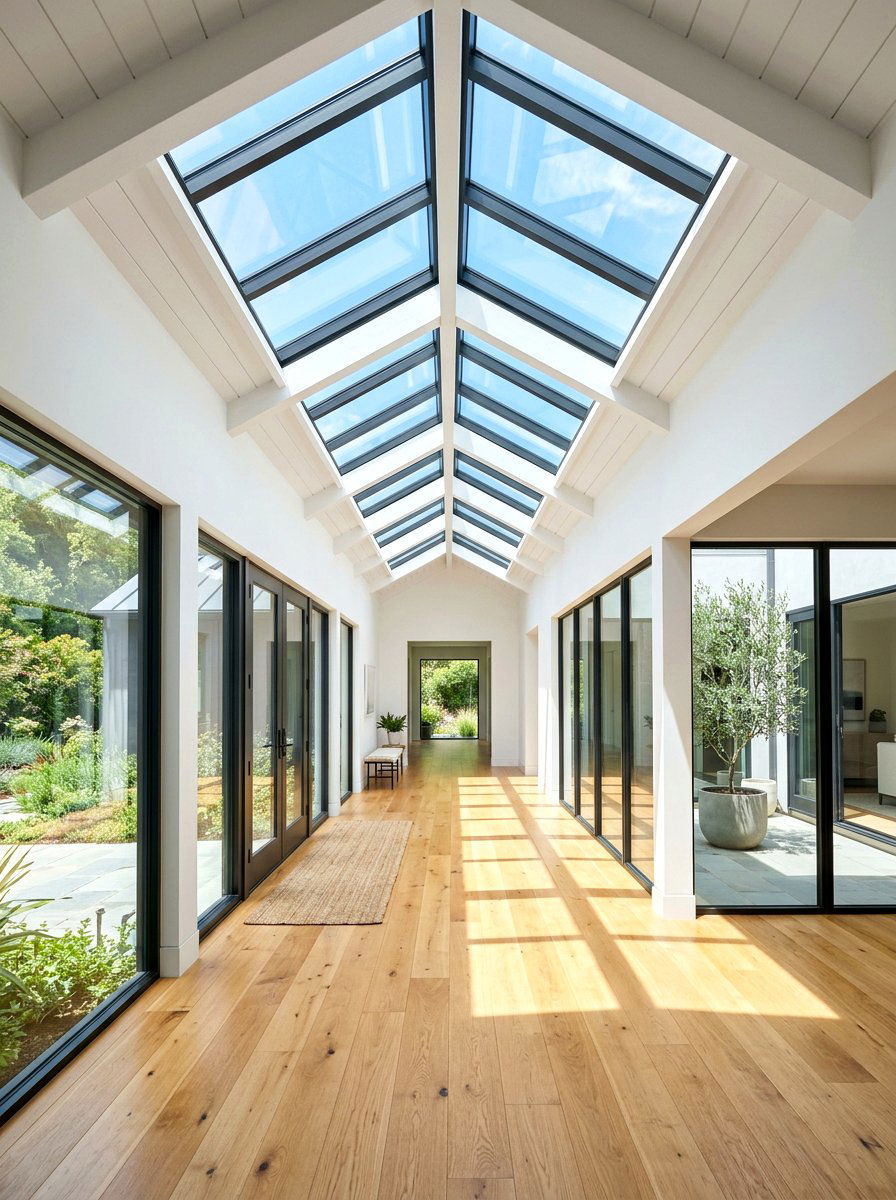
An attic can be transformed into the ultimate dream craft studio with plenty of floor space for large projects and tables. The slanted ceilings provide a unique architectural look that can be emphasized with exposed beams or skylights for natural illumination. You can line the perimeter of the room with low shelving to take advantage of the shorter wall heights. This isolated location keeps the noise of sewing machines or power tools away from the rest of the family, allowing you to work whenever inspiration strikes. It is a fantastic way to turn an underused storage area into a beautiful and highly productive creative environment for your hobbies.
17. Minimalist white craft studio
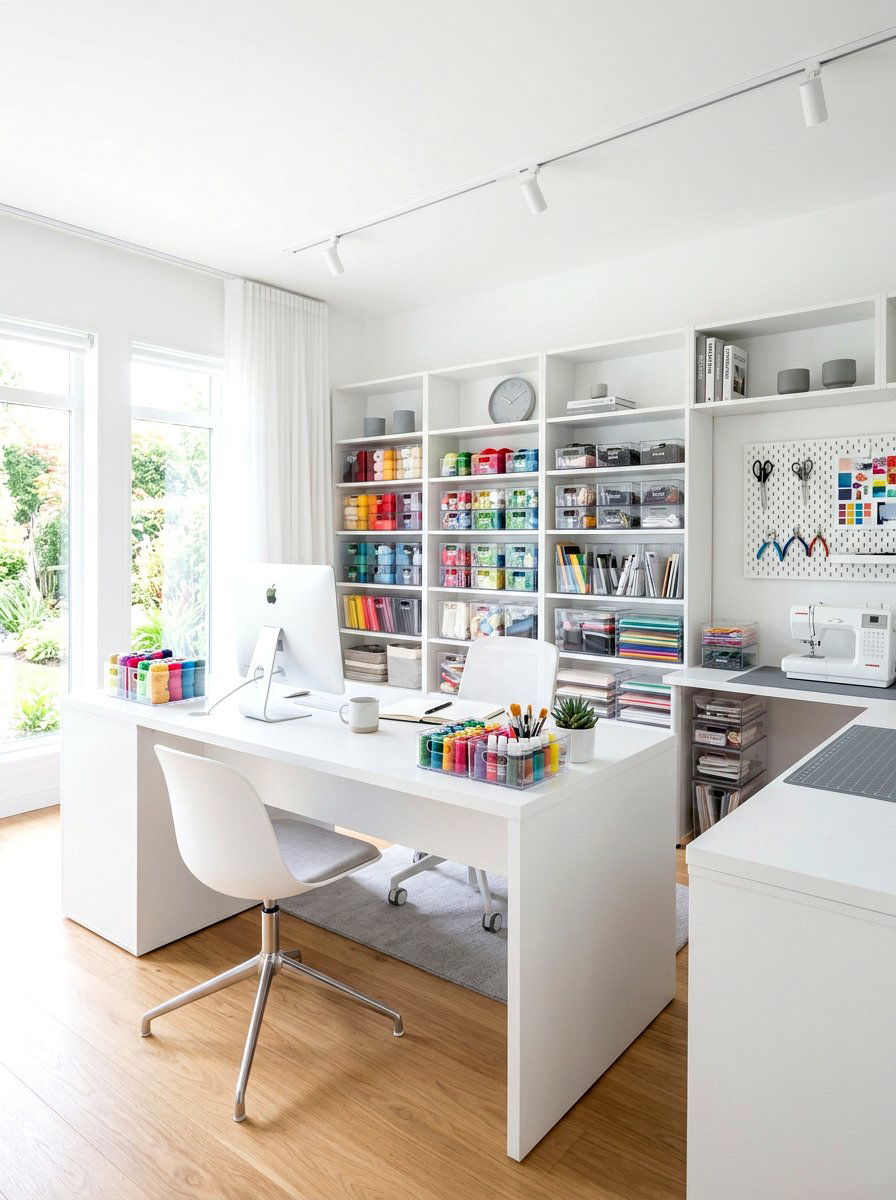
A minimalist craft space focuses on clean lines and a neutral color palette to create a calm and focused atmosphere. By using white furniture and clear storage containers, the colors of your actual supplies become the main decorative element of the room. This style encourages you to keep only what you truly need, which can help reduce the feeling of being overwhelmed by too many options. Hidden storage behind white cabinet doors keeps the visual clutter to a minimum, making the room feel larger and more airy. It is a sophisticated approach to design that prioritizes functionality and mental clarity during your long creative sessions.
18. Colorful craft room decor
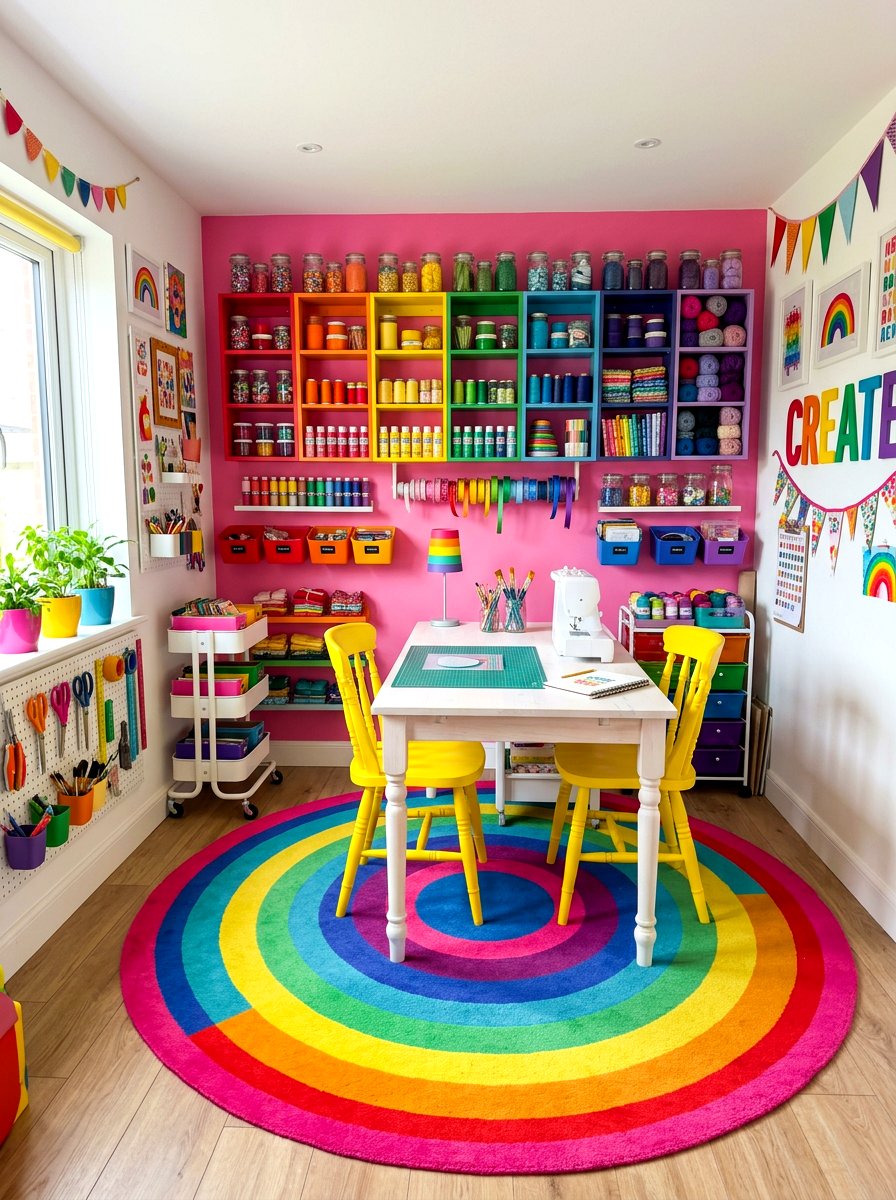
If you find bright colors inspiring, do not be afraid to decorate your craft corner with a bold and vibrant theme. You can paint your furniture in contrasting shades or use colorful rugs and curtains to bring energy into the space. Organizing your supplies in rainbow order on open shelves creates a stunning visual display that doubles as a functional system. Adding fun artwork or a gallery wall of your own finished projects can keep you motivated to keep creating. A colorful workspace reflects a playful and energetic personality, making every moment you spend crafting feel like a celebration of your unique and wonderful creative spirit.
19. Greenhouse outdoor craft space
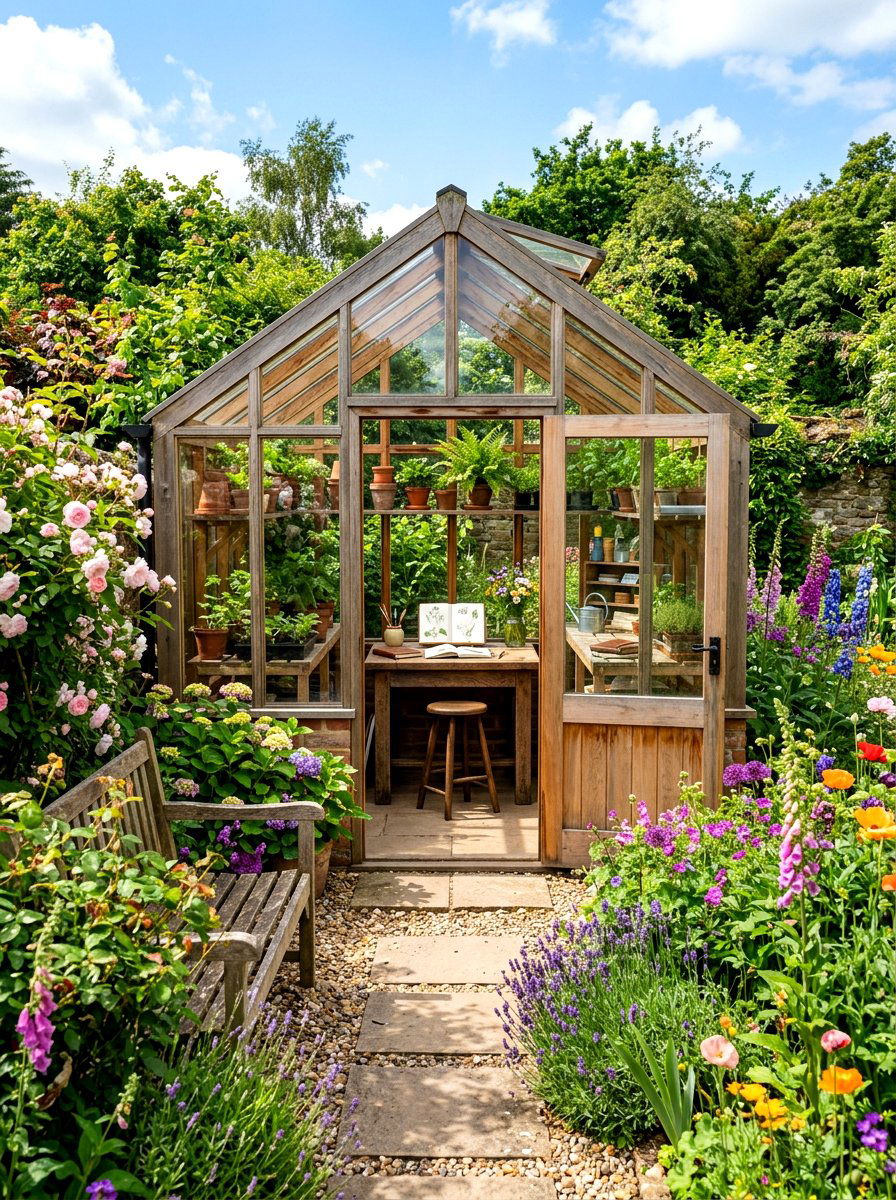
An outdoor greenhouse or a shed can be repurposed into a beautiful garden-themed craft studio surrounded by nature. The glass walls of a greenhouse provide incredible natural light that is perfect for artists, painters, or anyone working with detailed crafts. You can surround your desk with potted plants and flowers to create a lush and peaceful environment that stimulates the senses. Using weather-resistant furniture ensures that your workspace stays in good condition throughout the different seasons. Being away from the distractions of the main house allows you to fully immerse yourself in your work while enjoying the beauty and tranquility of your own backyard.
20. Industrial style craft workshop
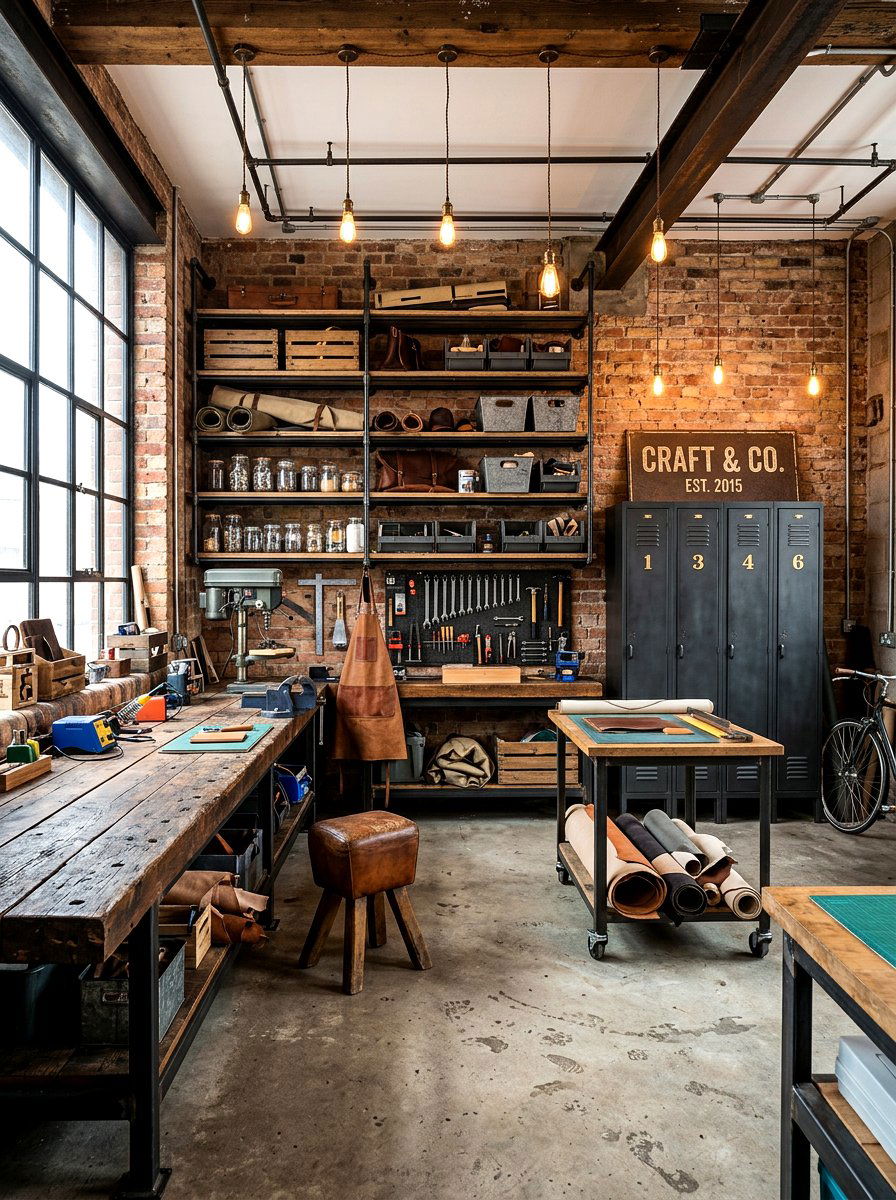
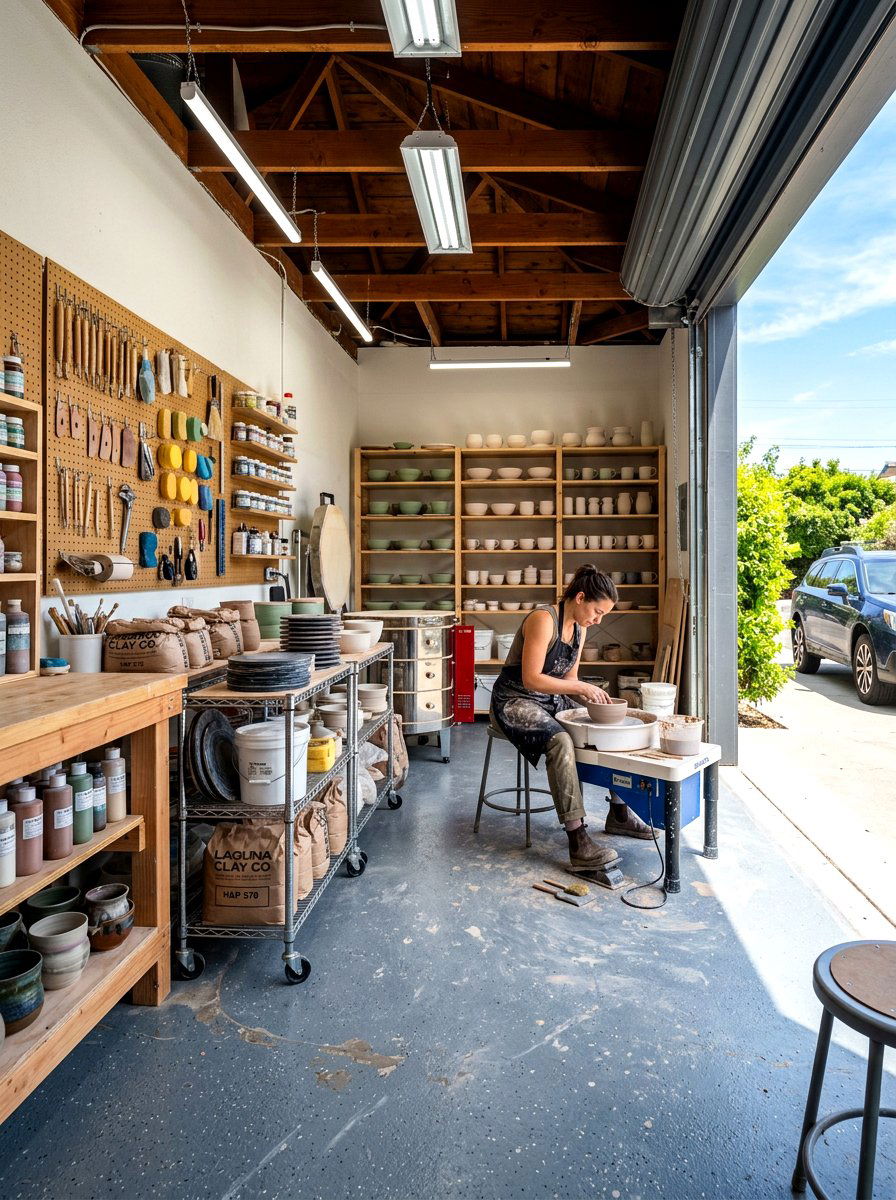
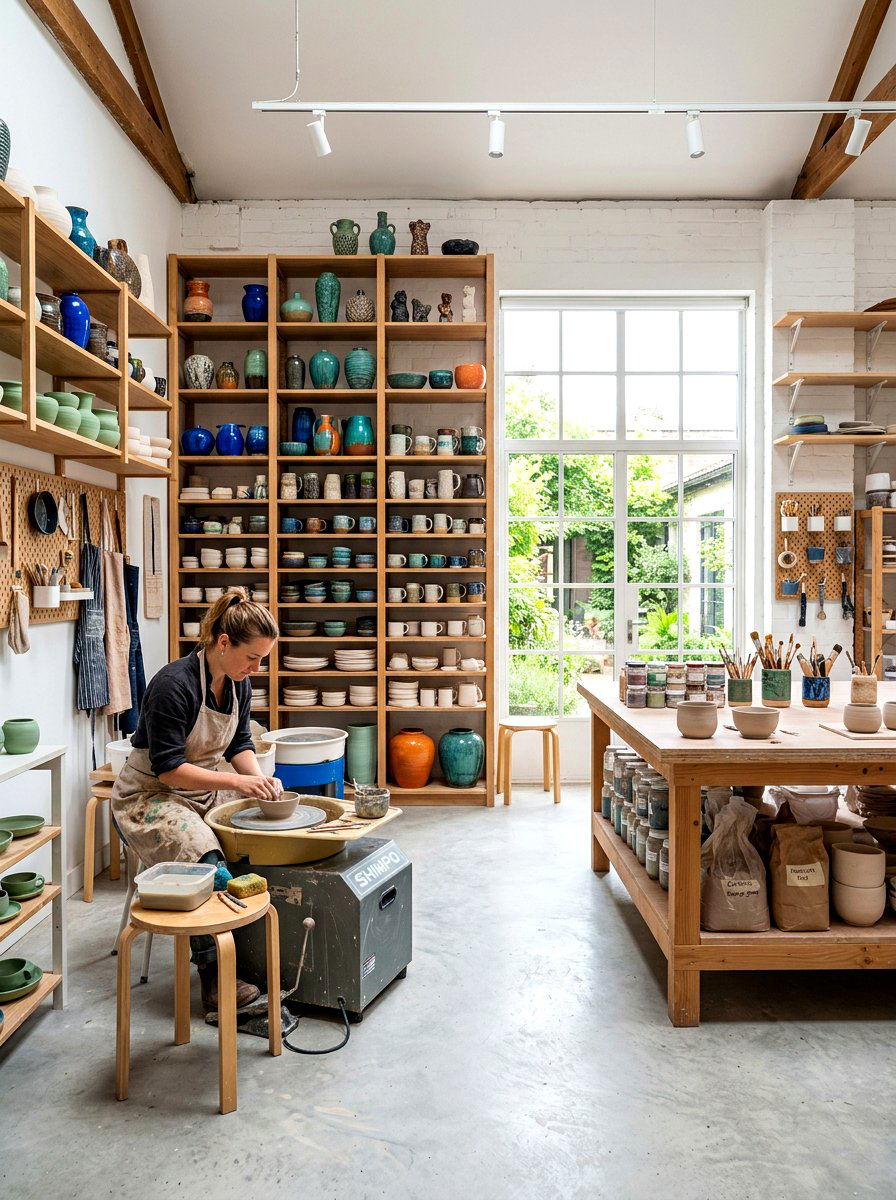
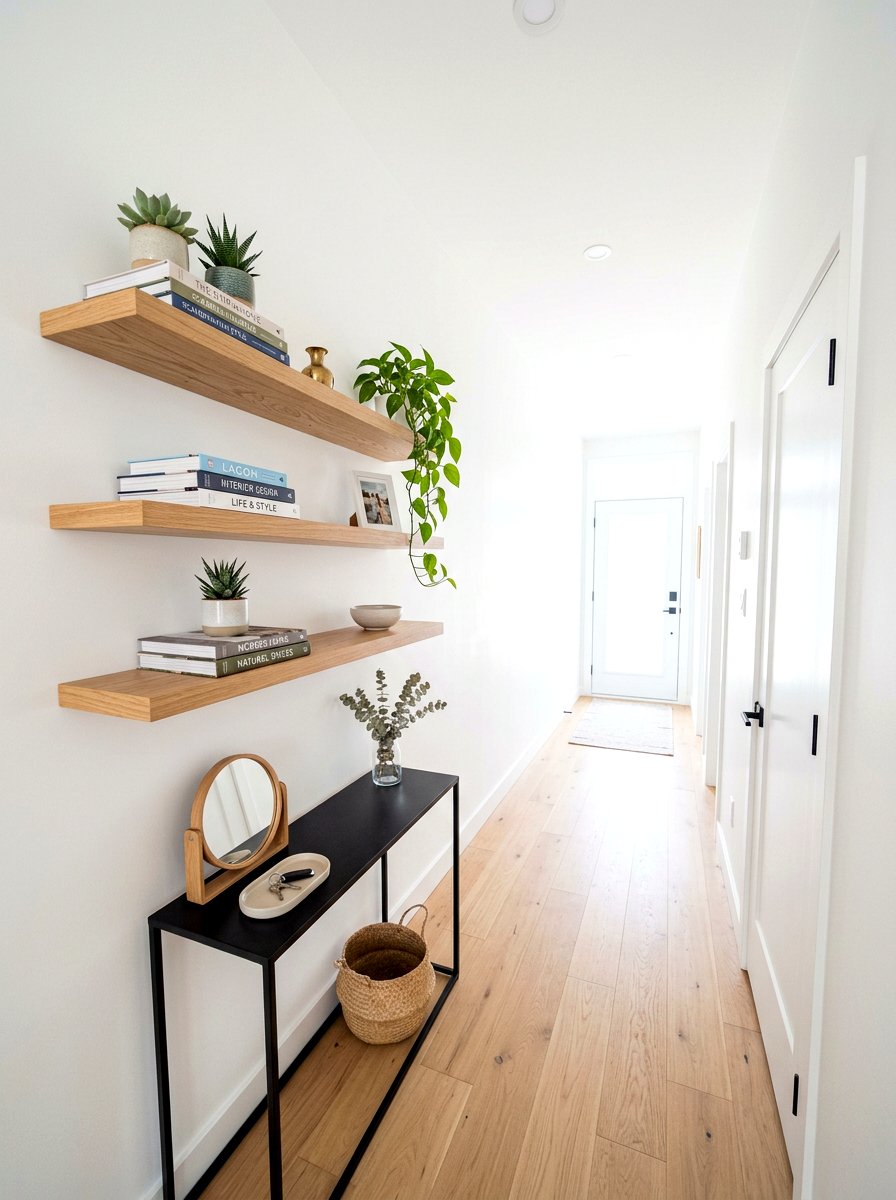
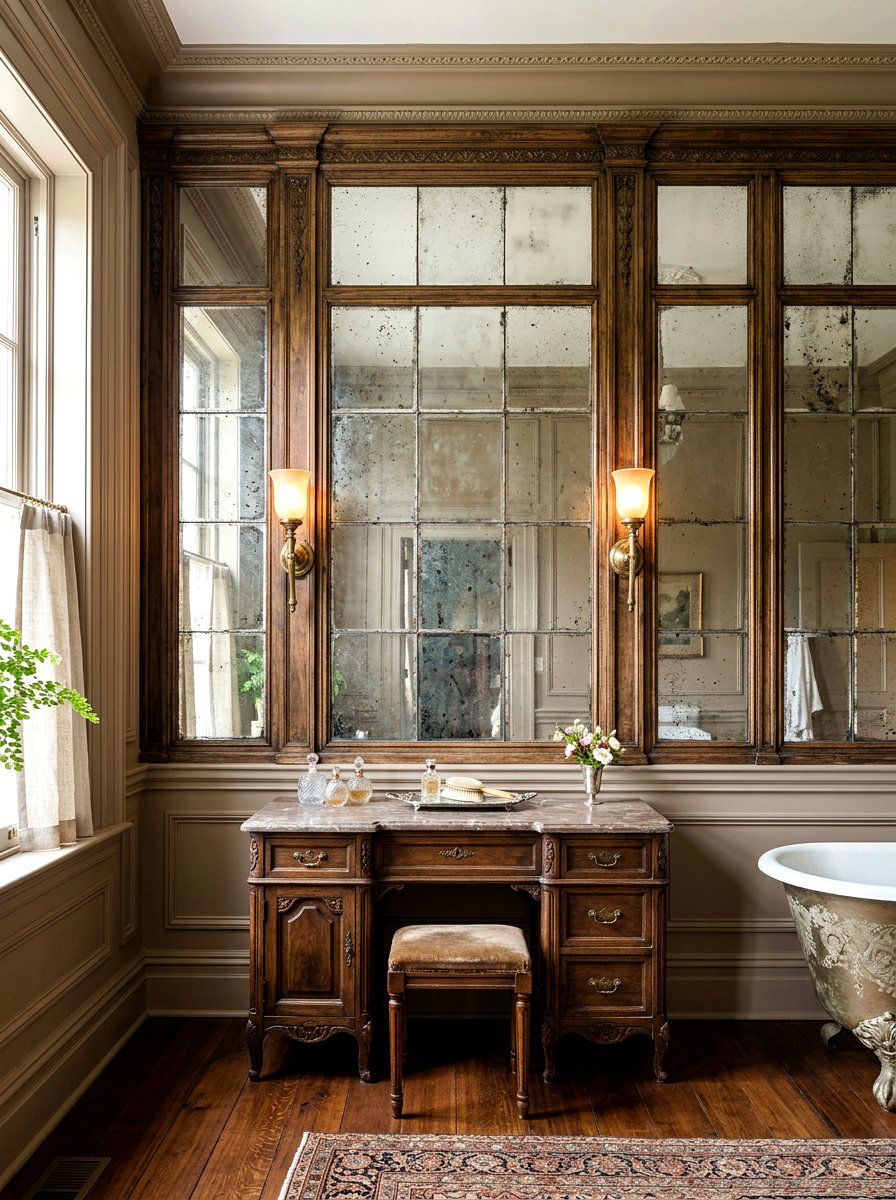
An industrial craft corner uses raw materials like reclaimed wood, metal piping, and concrete to create a rugged and durable workspace. This style is perfect for those who work with heavier tools, wood, or metal, as the furniture is built to withstand significant wear and tear. You can use metal lockers for storage and large Edison bulbs for a vintage lighting feel. A heavy-duty workbench with a thick wooden top provides a solid surface for hammering or sawing without any wobbling. This aesthetic is both functional and trendy, giving your craft area a professional workshop vibe that feels substantial and very cool.
21. Floating shelf craft storage
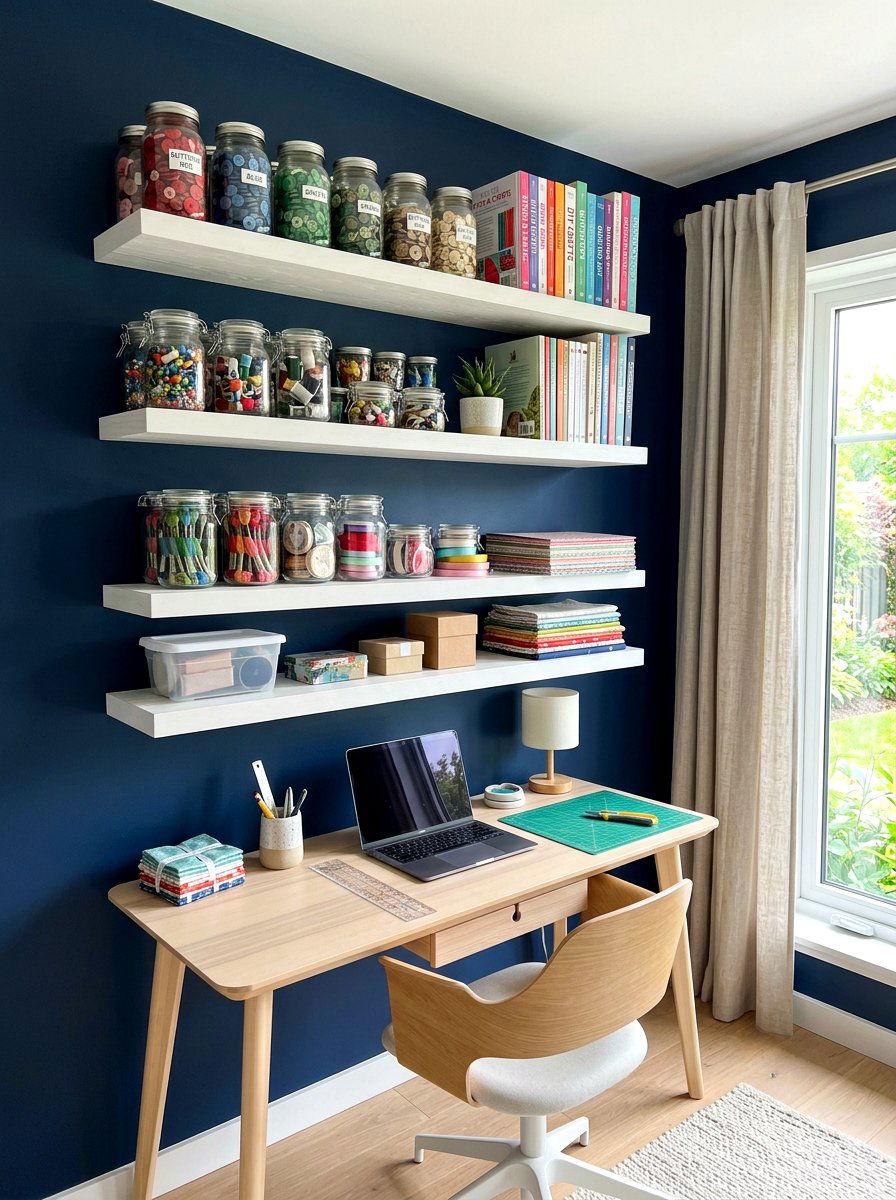
Floating shelves are a great way to add storage to a craft corner without the bulky look of traditional bookcases. You can install them in a staggered pattern on the wall to hold decorative jars, books, or small baskets of supplies. Because they do not have visible brackets, they create a clean and modern look that makes your walls feel lighter. Using these shelves to display your most beautiful supplies, like vintage tins or glass bottles, turns your storage into a work of art. They are easy to install and can be placed at any height to keep dangerous tools away from children or pets.
22. Mason jar supply organization
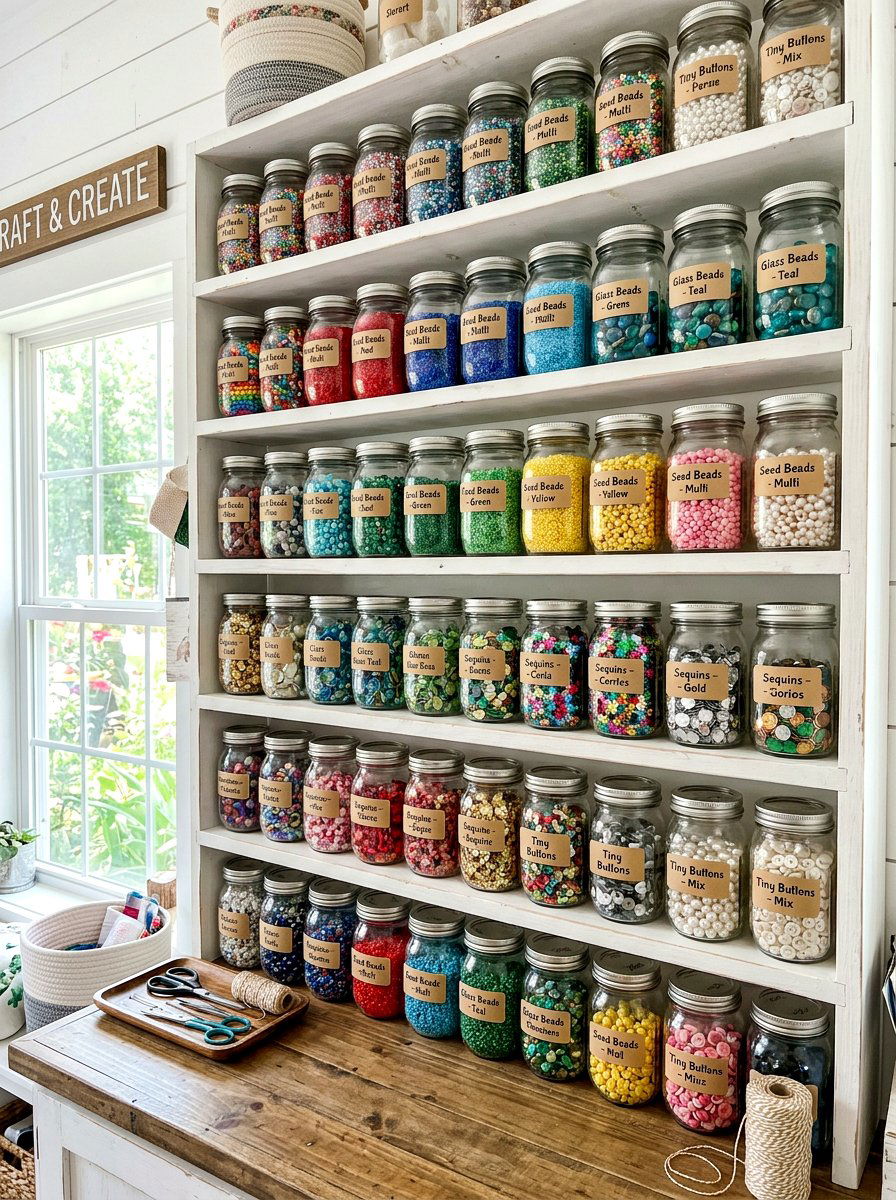
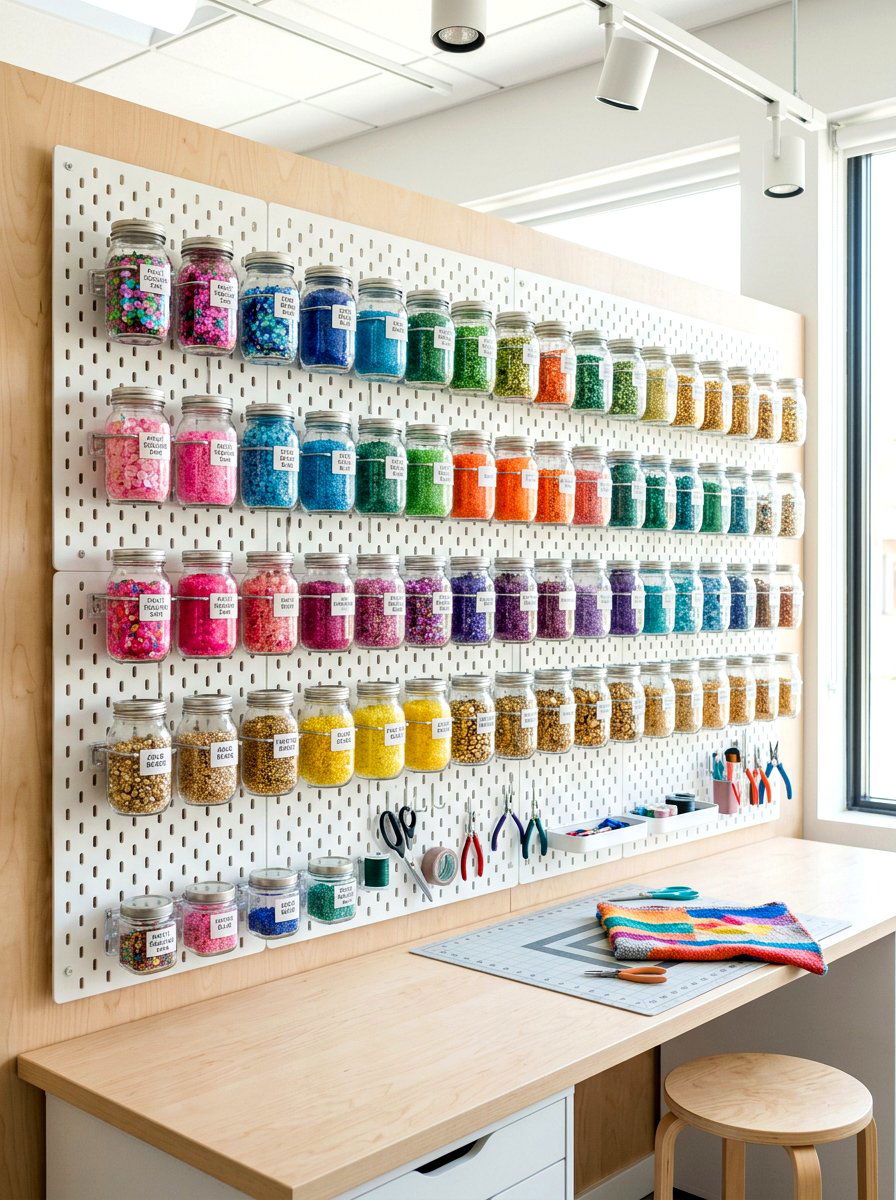
Mason jars are a budget-friendly and charming way to organize small items like buttons, sequins, glitter, and beads. Because the jars are clear, you can easily see the colors and quantities of your supplies without opening them. You can store them on a shelf, in a drawer, or even mount the lids to the underside of a shelf to save space. Adding pretty labels or painting the lids can help coordinate the jars with the rest of your room's decor. This classic storage method is timeless and allows you to recycle household items while keeping your craft supplies perfectly sorted and very easy to access.
23. Ribbon and washi tape wall
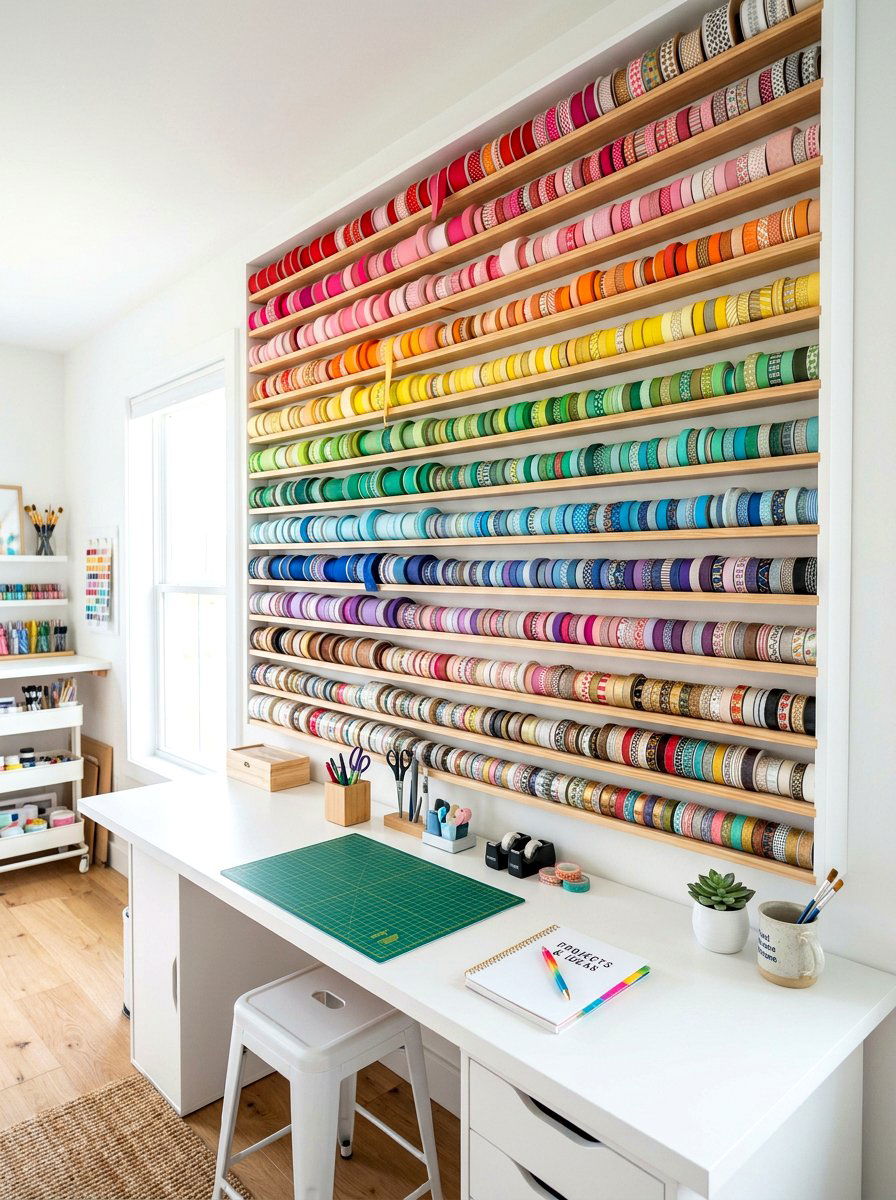
A dedicated wall for ribbons and washi tape keeps these rolls from becoming a tangled mess in the bottom of a drawer. You can use thin dowels or specialized racks to display your collection by color and width. This setup allows you to pull off exactly what you need for a project without having to remove the entire roll from the rack. Seeing all your options spread out in front of you can provide instant inspiration for gift wrapping or scrapbooking projects. It turns your supplies into a vibrant and colorful feature wall that adds a lot of personality and charm to your workspace.
24. Cricut and die cutting station
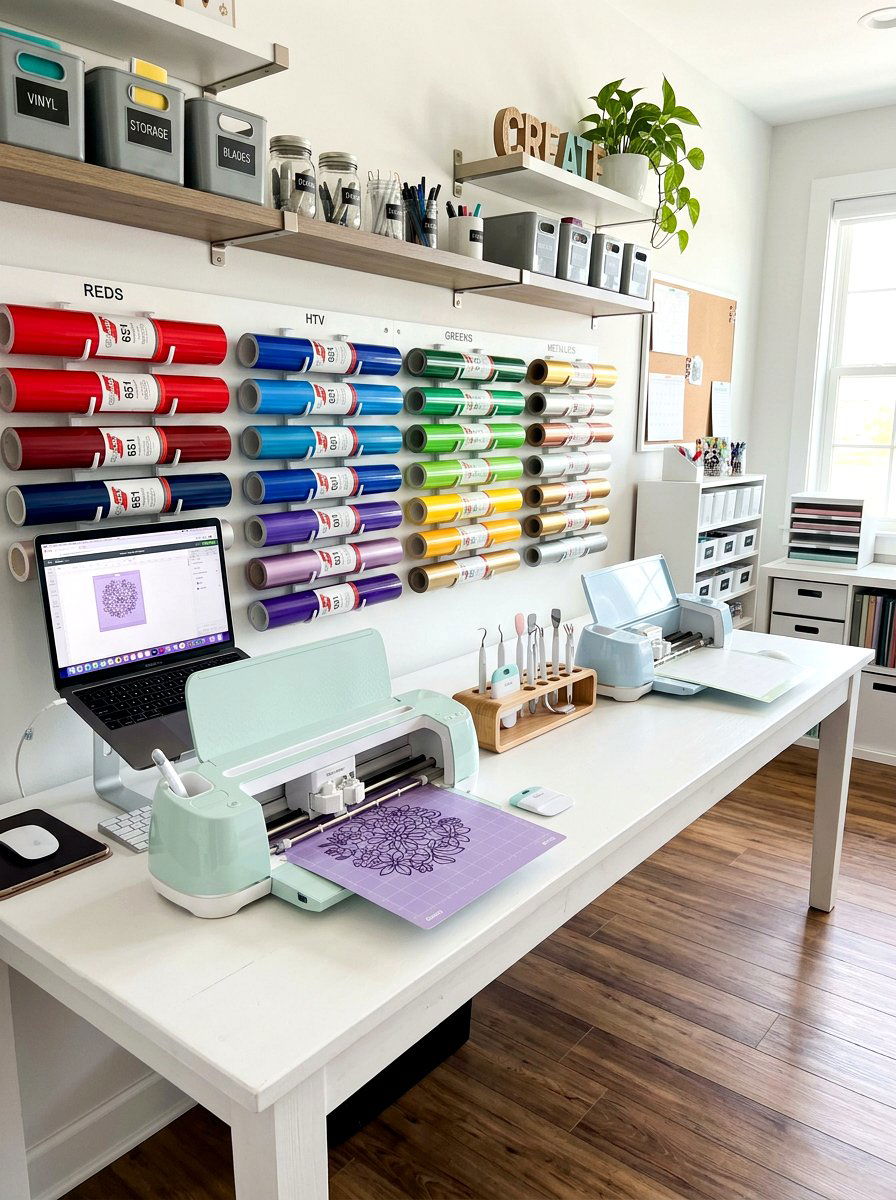
If you use a die-cutting machine like a Cricut, having a dedicated station with enough room for the machine to operate is essential. You need a deep desk so the cutting mat has enough clearance to move back and forth without hitting the wall. Underneath the desk, you can store your various rolls of vinyl on specialized racks or in bins labeled by material type. A nearby drawer can hold your different blades, weeding tools, and transfer tape so everything is in one place. This organized setup saves time and prevents frustration, allowing you to move quickly from a design on your screen to a finished product.
25. Fabric storage shelving unit
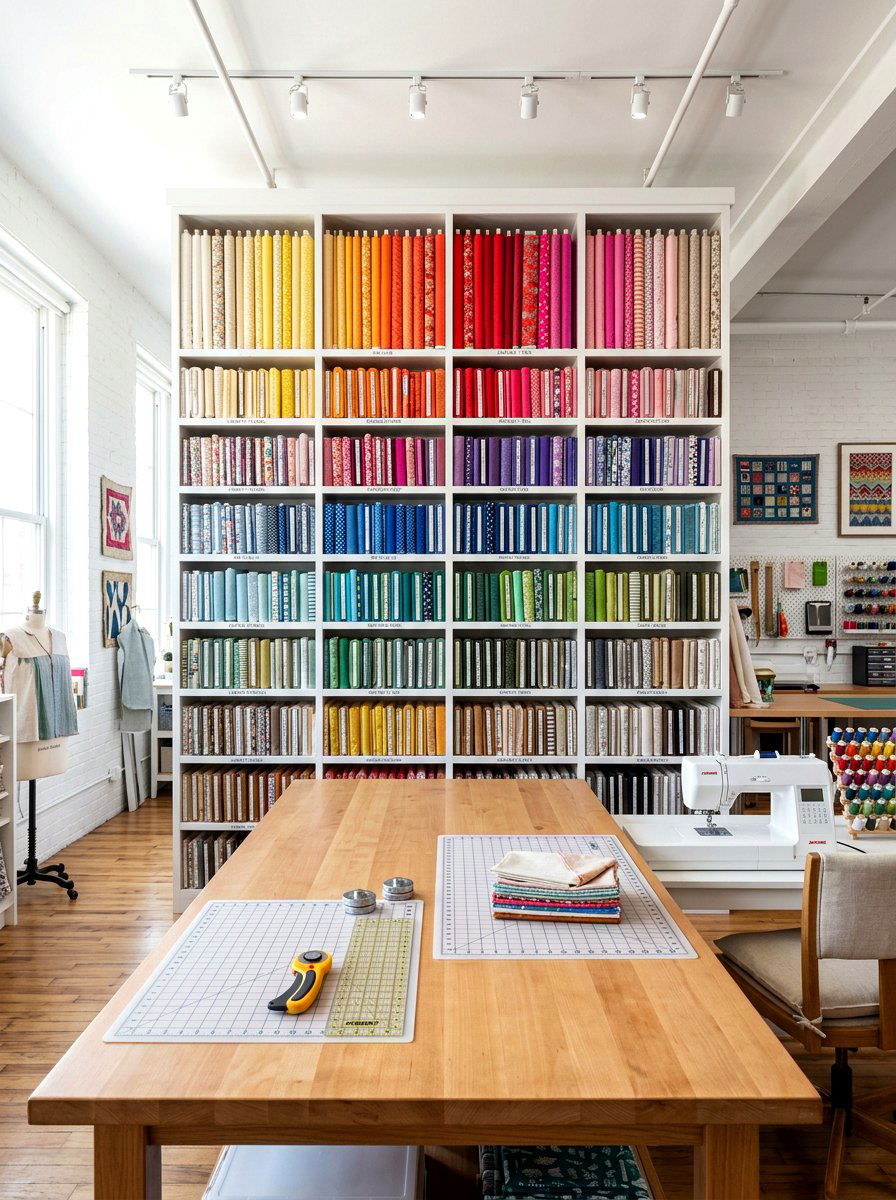
Fabric lovers know how quickly a collection can grow and become difficult to manage without a proper shelving system. Folding your fabric over acid-free cardboard pieces creates "mini bolts" that can be lined up on a shelf like books. This method allows you to see every pattern and color in your stash without having to unfold anything to find what you want. You can organize your fabric by material, color, or project type to make the selection process much faster. Keeping your fabric off the floor and away from direct sunlight will prevent it from getting dusty or fading, ensuring that your materials stay in perfect condition.
26. Jewelry making work bench
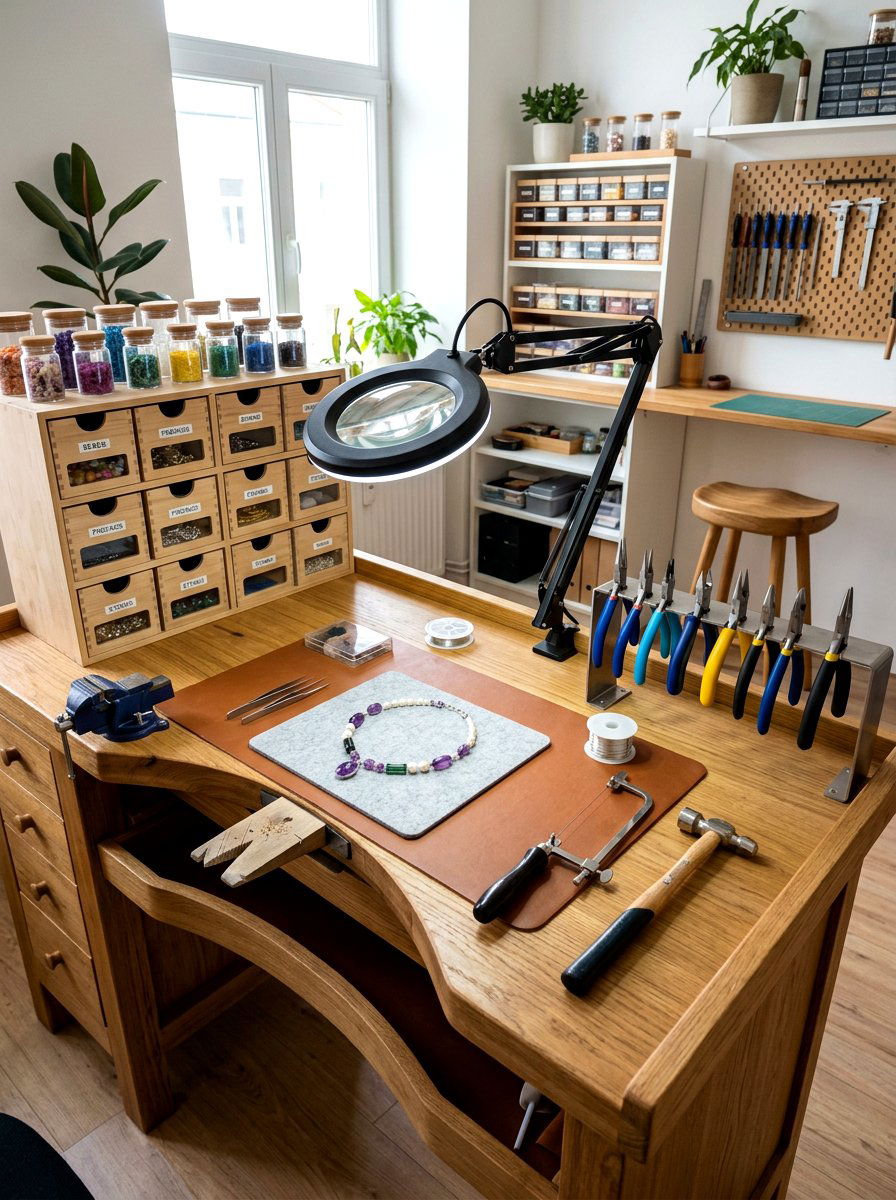
A jewelry making station requires a desk with small drawers or organizers to manage tiny components like jump rings, clasps, and beads. A desk with a lipped edge is a great choice because it prevents small beads from rolling off the table and onto the floor. You can use specialized pliers racks to keep your hand tools organized and ready for use. Good task lighting is absolutely critical for this type of work to ensure you can see small details and work with precision. Adding a magnifying lamp can be a game-changer for intricate wire wrapping or delicate beadwork, making the entire process much more comfortable for your eyes.
27. Painting and art studio corner
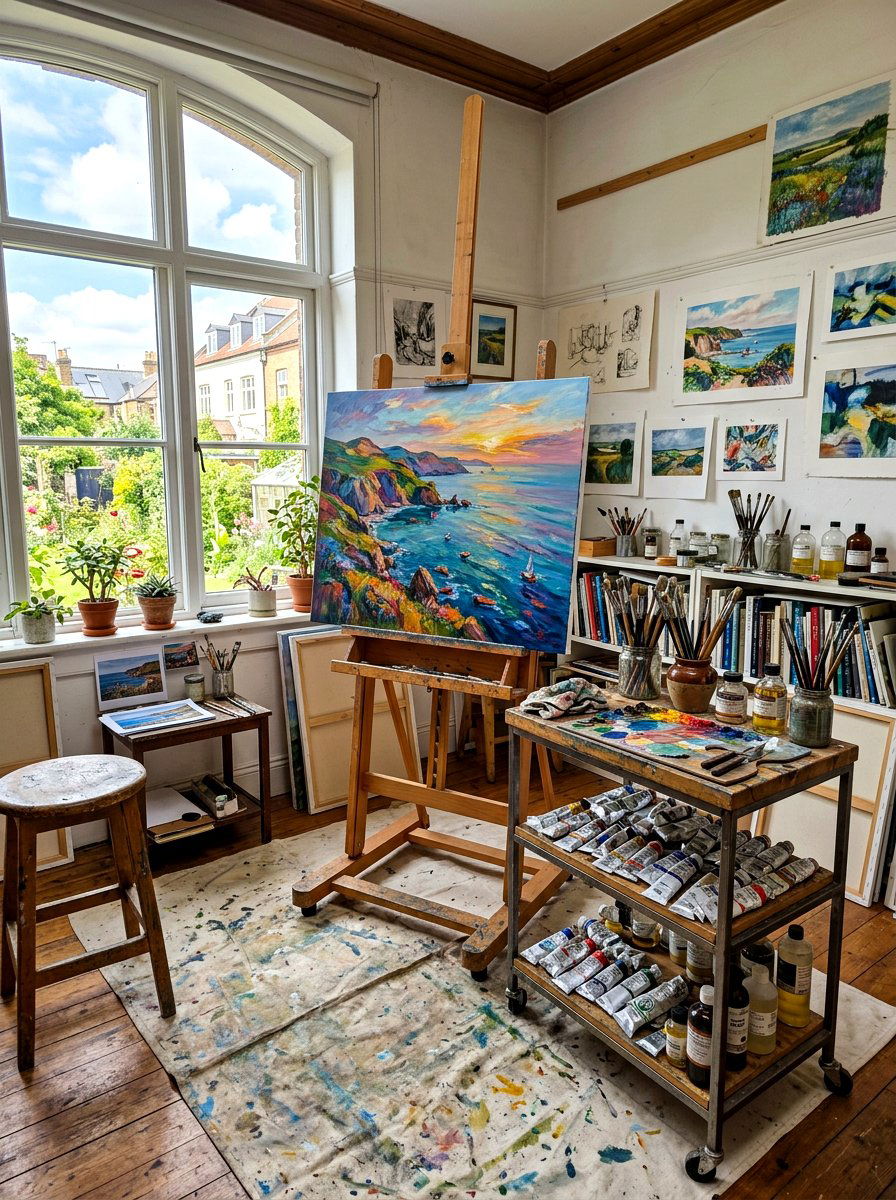
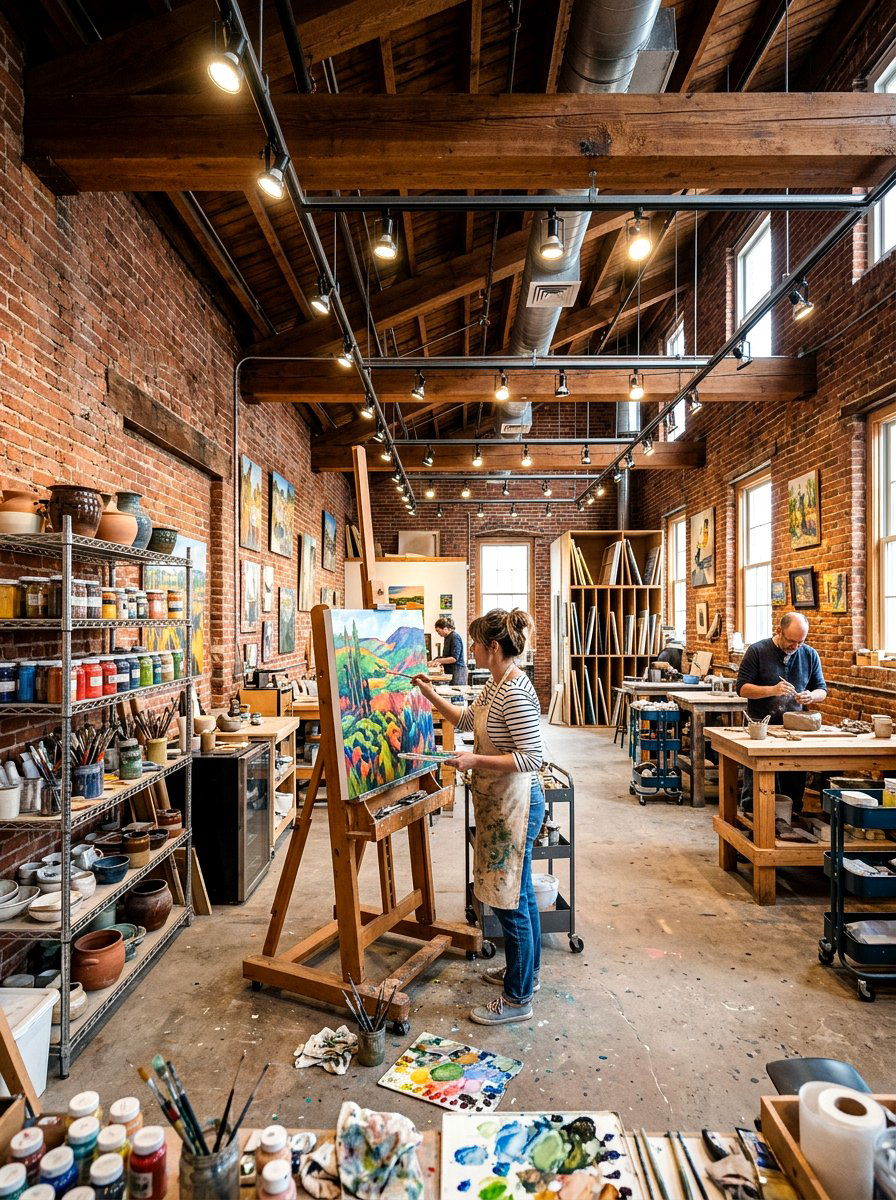
An art corner for painting should be located near a window for the best light and feature an easel that can be adjusted to your height. You can use a rolling cart to hold your palettes, brushes, and tubes of paint so they can be moved easily around your canvas. A small sink or a dedicated area for water jars and cleaning supplies will make the cleanup process much faster. Using an old rug or a drop cloth under your easel will protect your floors from paint splatters and spills. Having all your art supplies ready to go encourages you to paint more often and explore different techniques.
28. Scrapbooking table with drawers
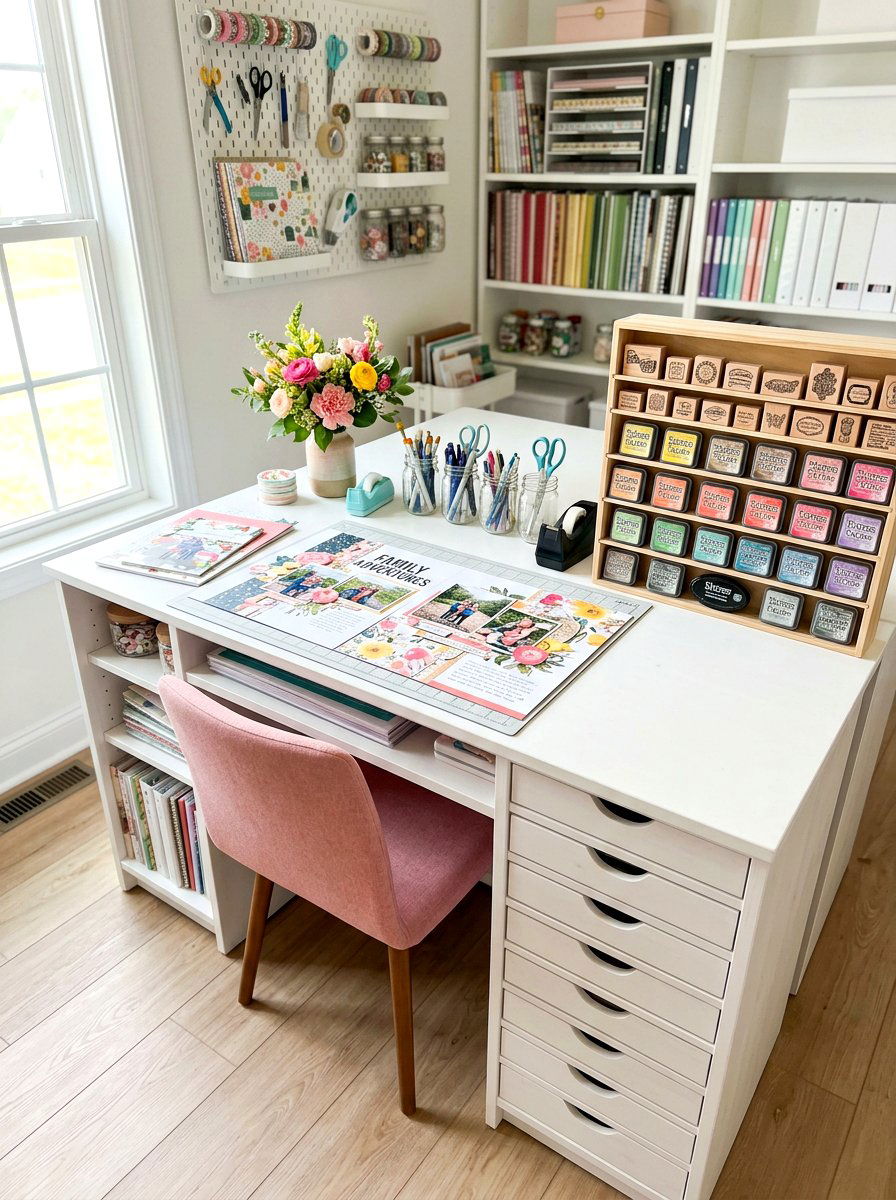
Scrapbooking involves a lot of small embellishments, stickers, and paper scraps that need to be carefully organized to avoid a mess. A desk with many shallow drawers is ideal for keeping these items sorted by theme or color. You can use drawer dividers to create smaller sections for things like stamps, ink pads, and photos. A large, flat workspace is necessary for laying out your pages and seeing the overall composition of your design. Adding a dedicated space for your paper trimmer and adhesive runners ensures that you can work efficiently without having to clear off your desk every time you need to cut a piece of paper.
29. Mobile craft island table
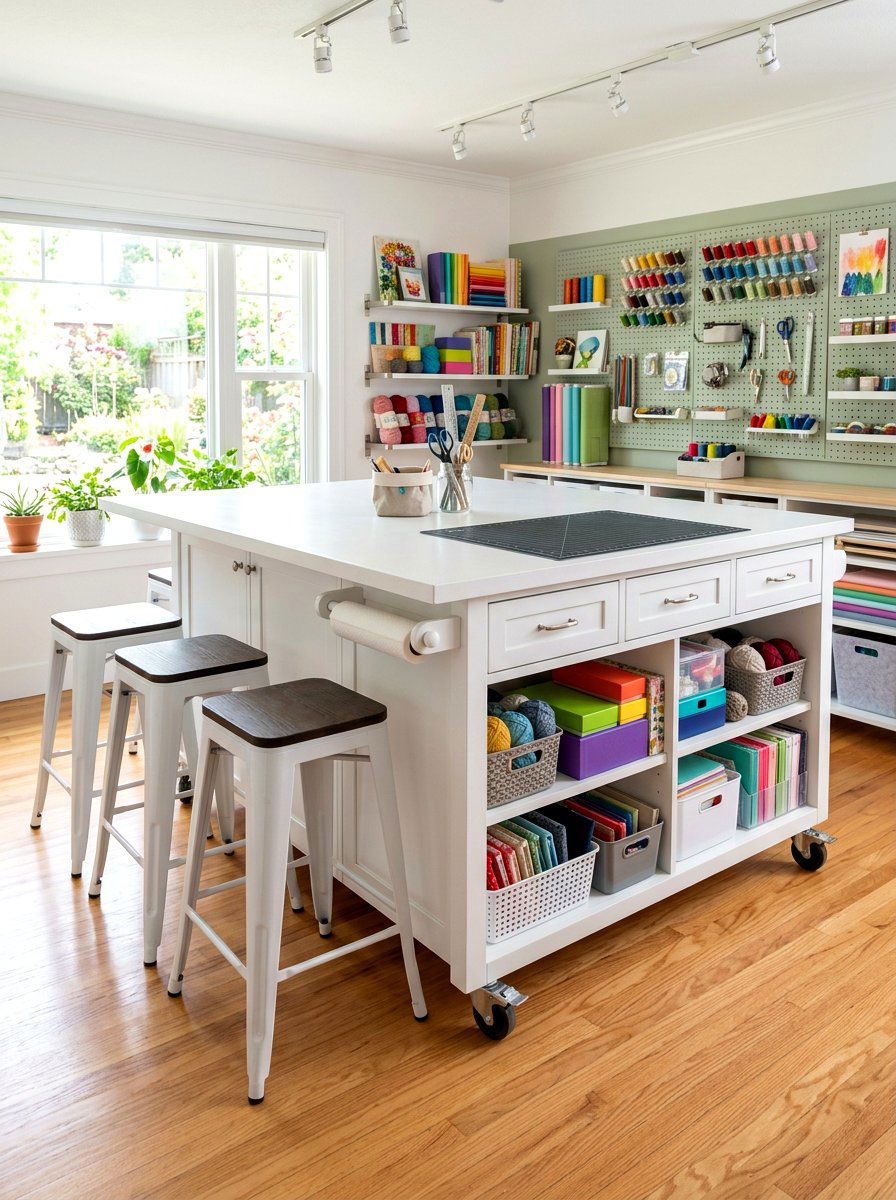
A mobile island table provides a large, flat surface that you can walk around, which is perfect for cutting large pieces of fabric or assembling big projects. These tables often have storage shelves or cabinets underneath, making them a dual-purpose furniture piece. Because they are on wheels, you can move the table to the center of the room when you are working and push it against a wall when you need more floor space. This flexibility is great for multi-use rooms where the layout needs to change frequently. A counter-height table allows you to work comfortably while standing, which can be a nice break from sitting at a desk.
30. Budget friendly craft storage bins
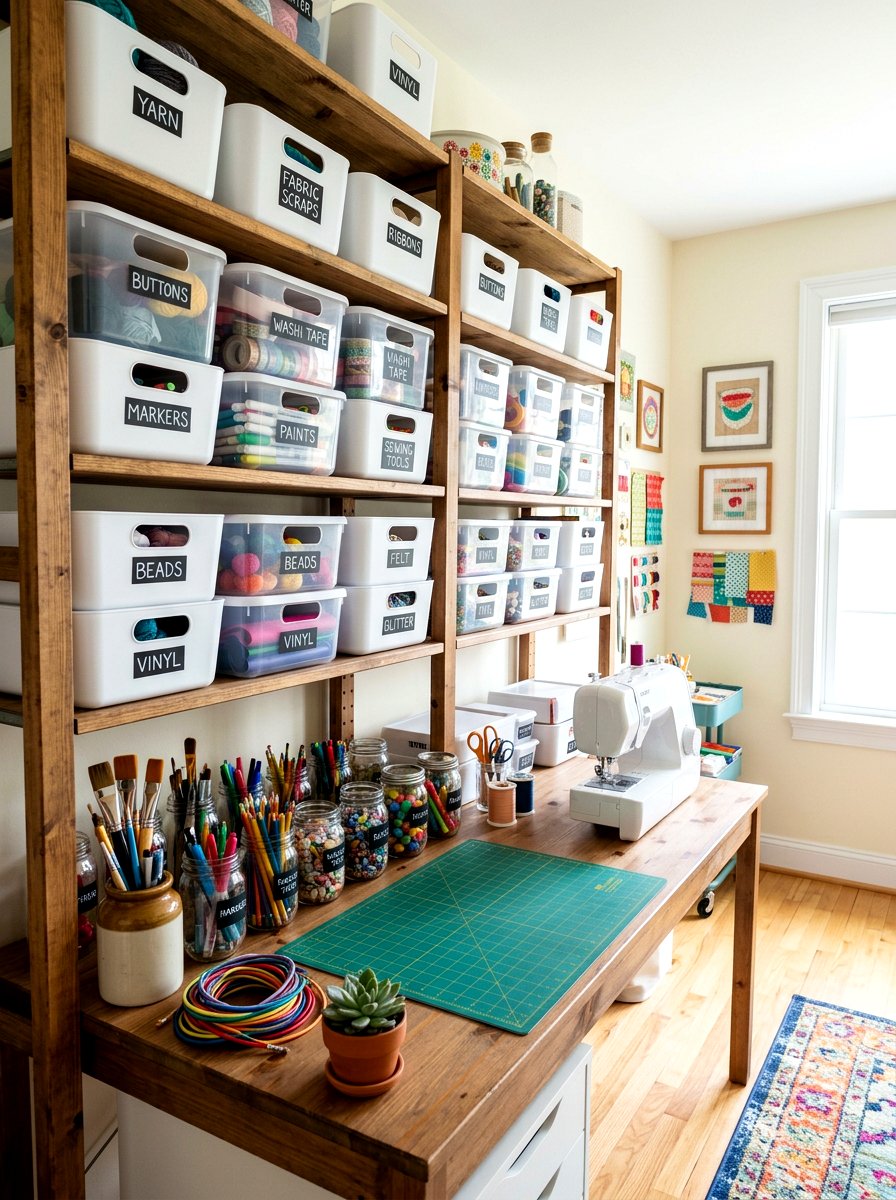
You do not have to spend a fortune to have an organized craft corner by using affordable plastic bins and recycled containers. Uniform bins from a dollar store can be labeled and stacked on open shelves to create a clean and cohesive look. You can also repurpose sturdy boxes from deliveries by covering them in pretty contact paper or fabric to match your room. Clear bins are often the best choice because they allow you to see what is inside without having to pull the bin down from the shelf. This practical approach to organization proves that with a little creativity, you can build a beautiful workspace on any budget.
Conclusion:
Setting up a dedicated craft corner is one of the best ways to nurture your creativity and make your home feel more personalized. By choosing the right furniture and organization systems, you can turn even the smallest nook into a powerhouse of productivity and inspiration. Whether you prefer a minimalist white studio or a colorful room filled with rainbow-ordered supplies, the key is to create a space that reflects your personality and supports your specific hobbies. Once everything has its own place, you will find yourself spending less time searching for tools and more time actually making the things you love. Your craft space should be a reflection of your artistic journey.

Related posts: