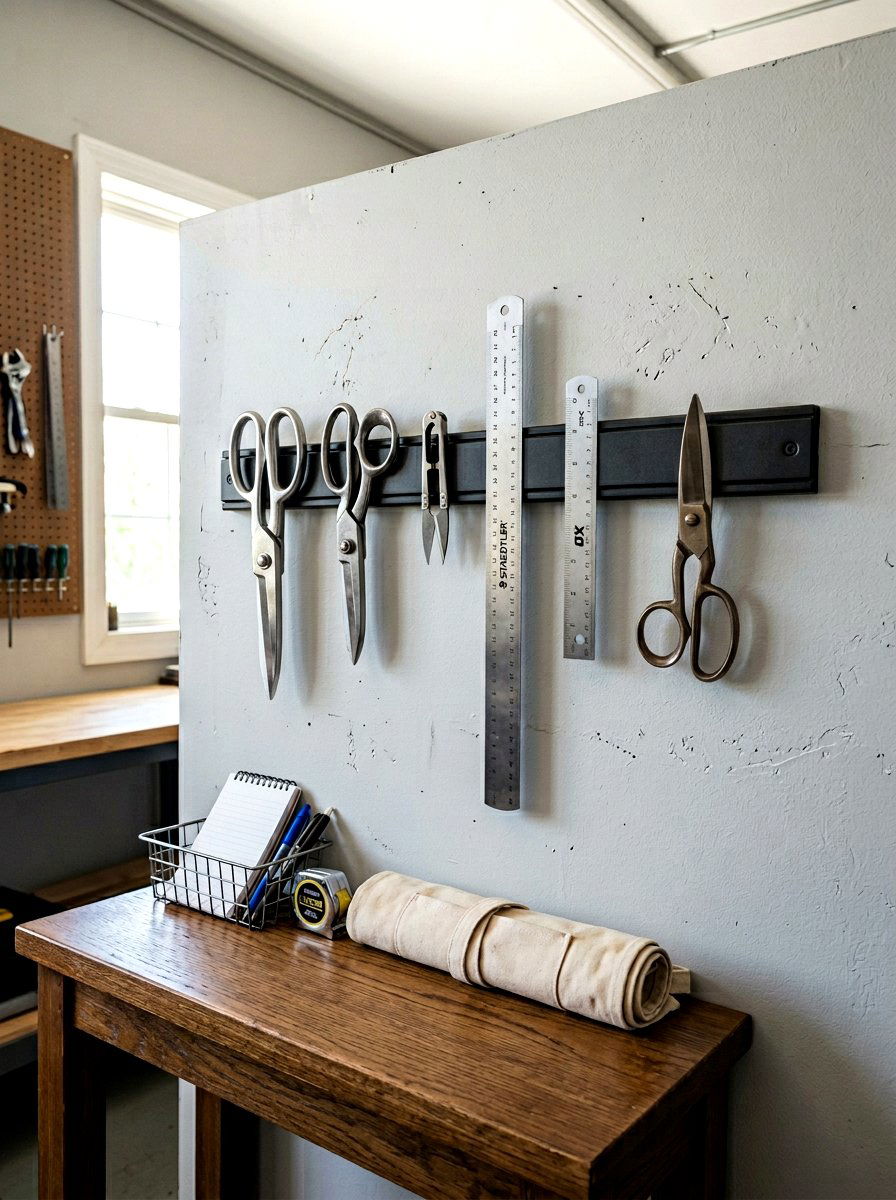
Creating a maker space is about more than just organizing tools; it is about building an environment that sparks endless creativity and innovation. Whether you are a professional craftsman, a dedicated hobbyist, or a student exploring the worlds of STEM, having a dedicated area for hands-on projects makes a significant difference in your productivity. A well-designed maker space provides the physical room to experiment, fail, and eventually succeed with your unique inventions. By focusing on layout, accessibility, and the right equipment, you can transform any corner of your home or school into a powerhouse of imagination and practical skill-building. These spaces encourage everyone to become active creators rather than just passive consumers today.
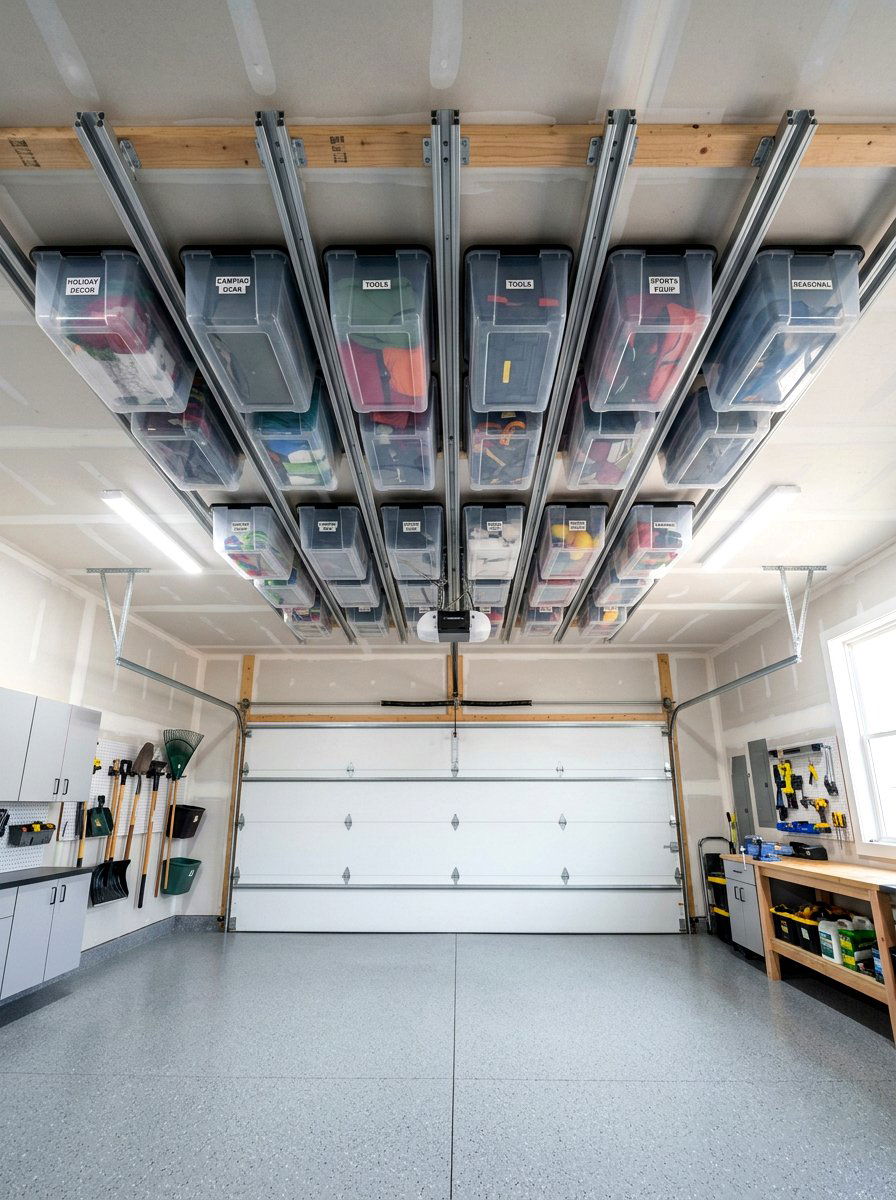
1. Garage workshop maker space
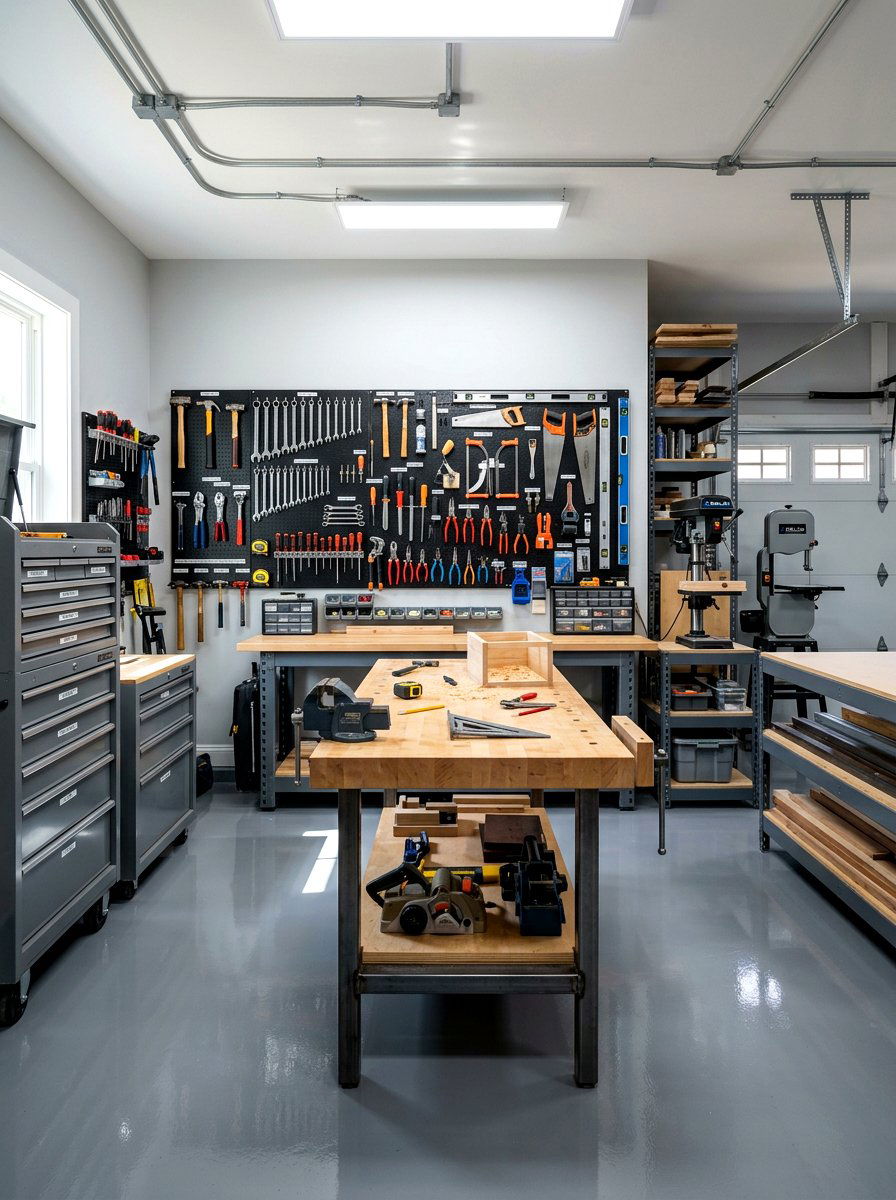
Transforming your garage into a maker space allows for heavy-duty projects that require durable surfaces and ample ventilation. This setup often focuses on a central workbench that can handle sawing, drilling, and assembly without the fear of damaging residential flooring. High-quality lighting is essential here to ensure precision and safety while using power tools or doing intricate handwork. Utilizing vertical wall space with sturdy pegboards keeps wrenches, hammers, and screwdrivers within reach but off the main work surface. The garage environment provides the ruggedness needed for woodworking or automotive projects while keeping the rest of your living space clean and free from messy sawdust or oil.
2. Classroom maker space
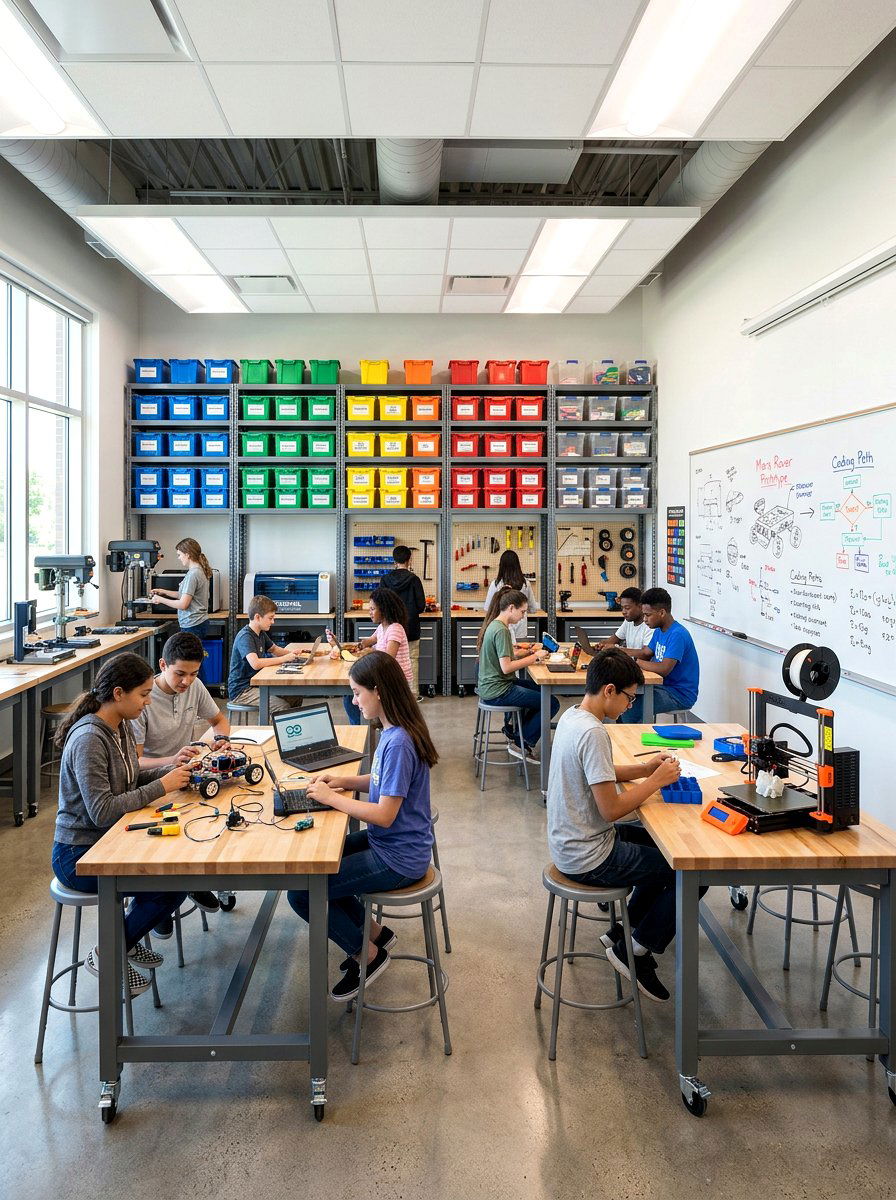
A classroom maker space fosters collaborative learning and hands-on exploration for students of all ages. This environment usually features modular tables that can be easily rearranged for group projects or individual tasks. Open shelving units provide quick access to supplies like cardboard, glue, and basic electronics kits, encouraging students to prototype their thoughts immediately. The focus is on safety and accessibility, with designated zones for different activities like building, drawing, or digital design. By integrating a maker space into the school day, teachers provide students with the opportunity to apply theoretical knowledge to real-world problems, helping them develop critical thinking and problem-solving skills very naturally.
3. Kids maker space
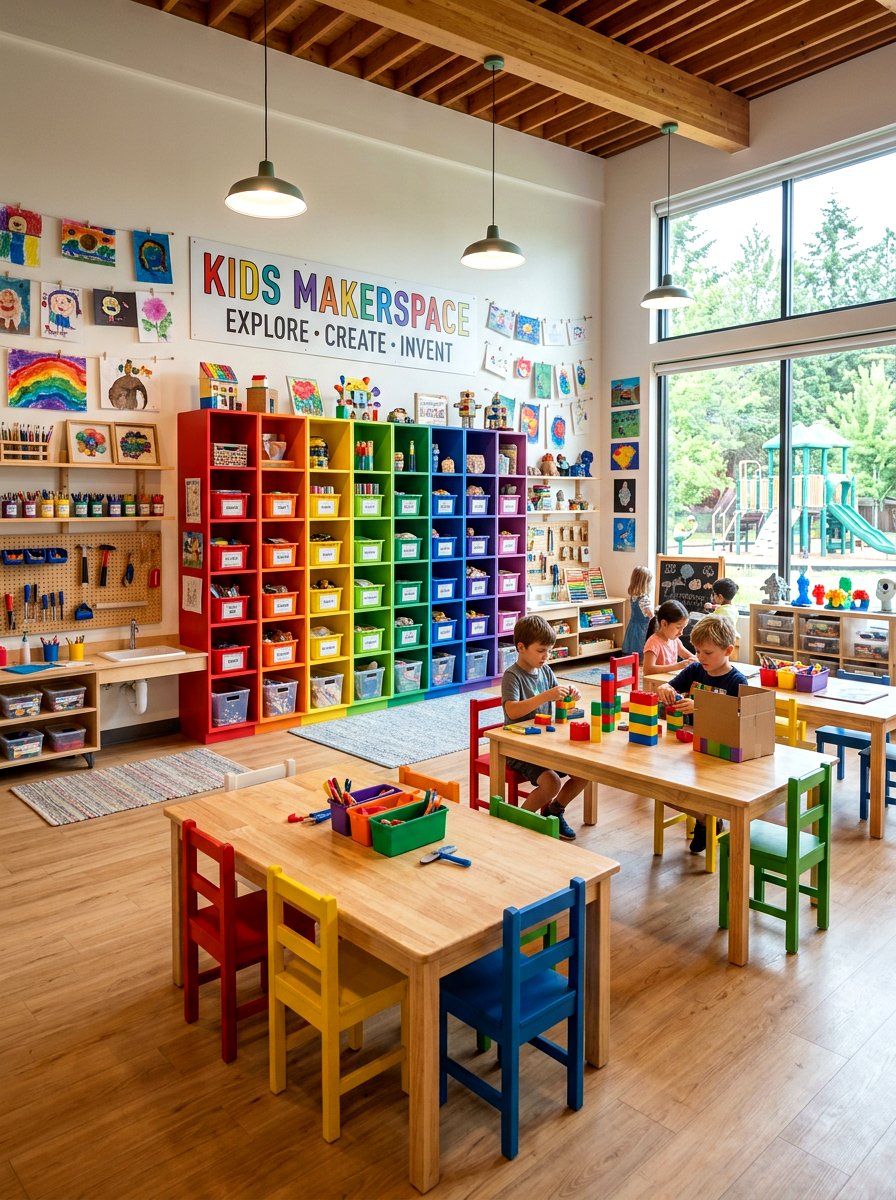
Designing a kids maker space involves creating a playful yet organized area where children can safely explore their curiosity. Lowered work surfaces and colorful bins make it easy for small hands to reach materials like clay, markers, and building blocks. This space should be highly visual, with artwork displayed on the walls to celebrate every creation, no matter how messy. Durability is key, so choosing wipeable surfaces and stain-resistant flooring ensures the area remains functional for years. Encouraging self-directed play in this specialized zone helps children build confidence in their creative abilities and teaches them the value of tidying up after a fun project session.
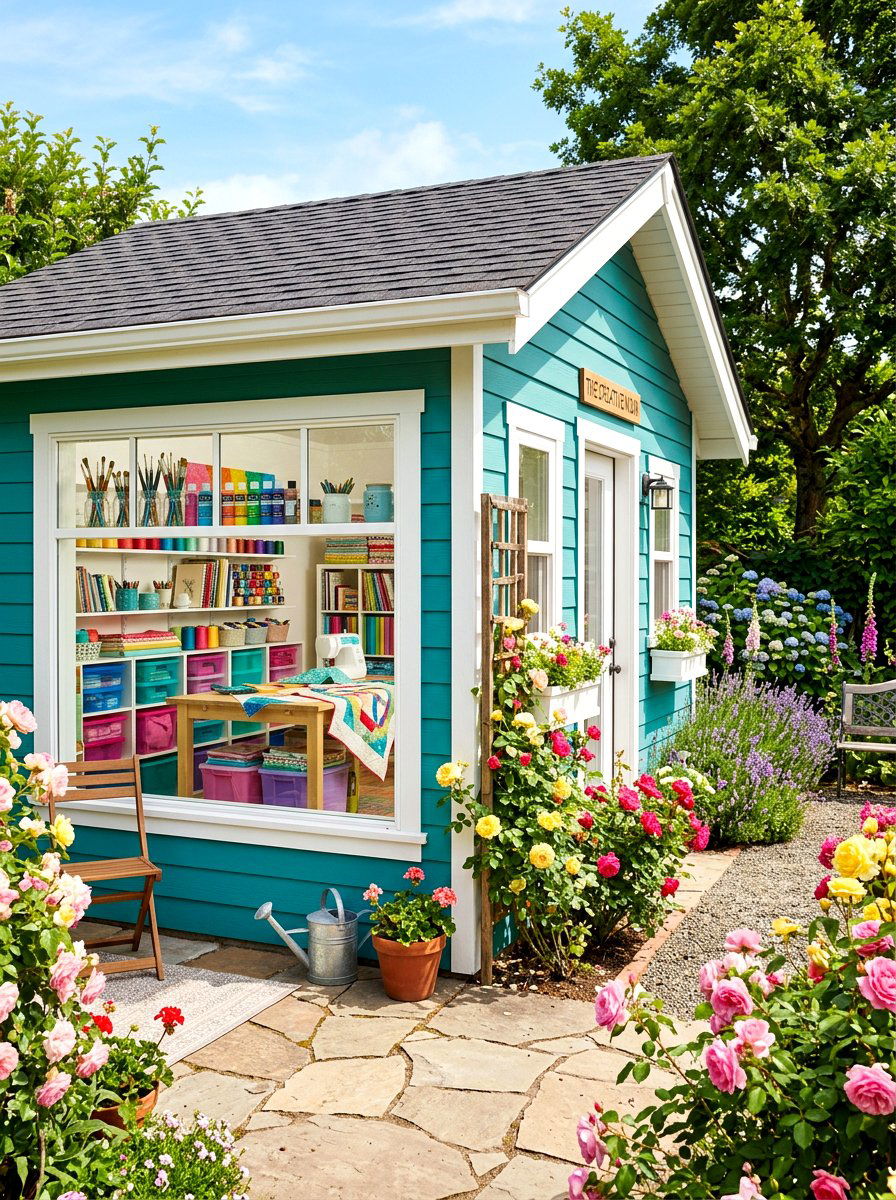
4. Sewing room maker space
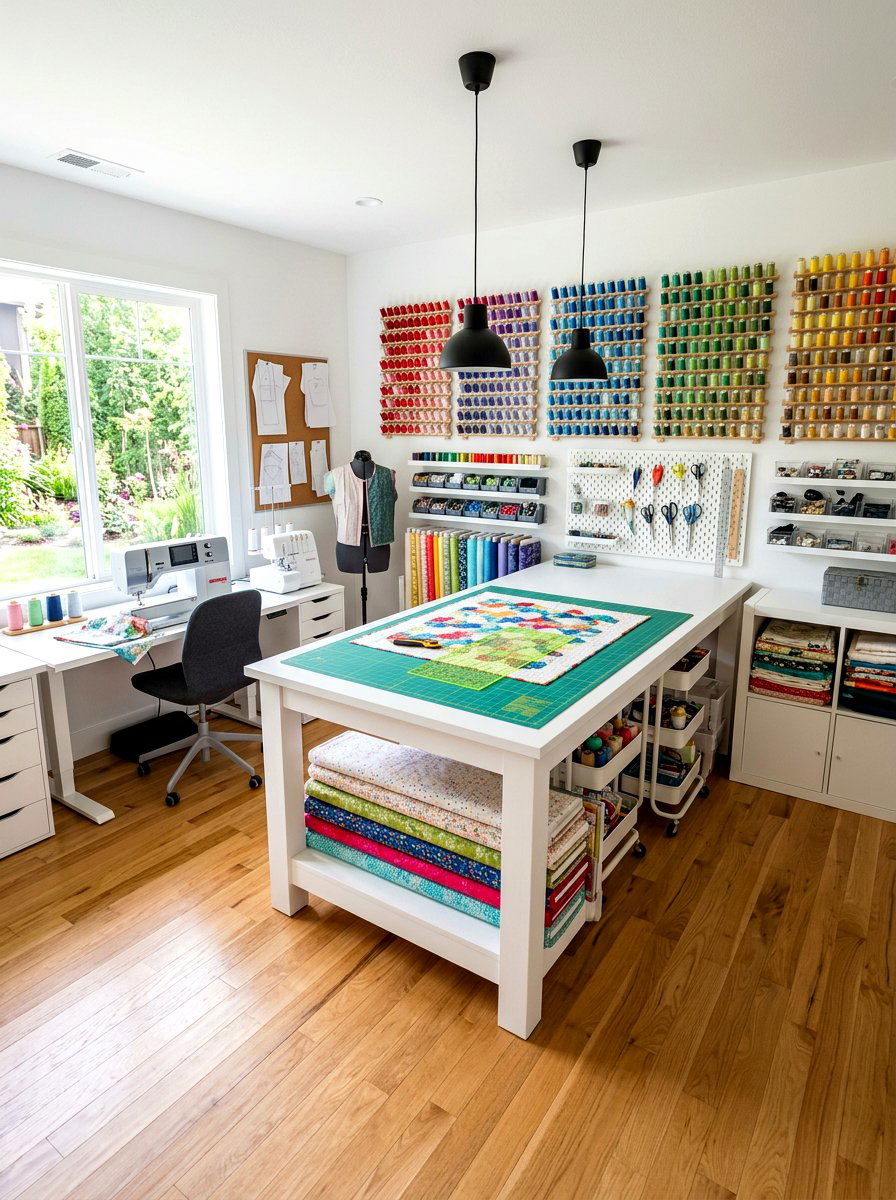
A sewing room maker space is a dream for those who love working with textiles and fashion design. Central to this design is a large, flat cutting table that allows for fabric layout without folding or bunching. Storage for threads, buttons, and patterns is often organized in clear jars or labeled drawers to keep the workflow smooth. Natural light is highly beneficial for color matching, but adjustable task lamps are also necessary for detailed stitching work. By dedicating a specific area to the sewing machine and serger, you eliminate the need to set up and take down equipment, allowing for more spontaneous and frequent creative sessions.
5. 3D printing maker space
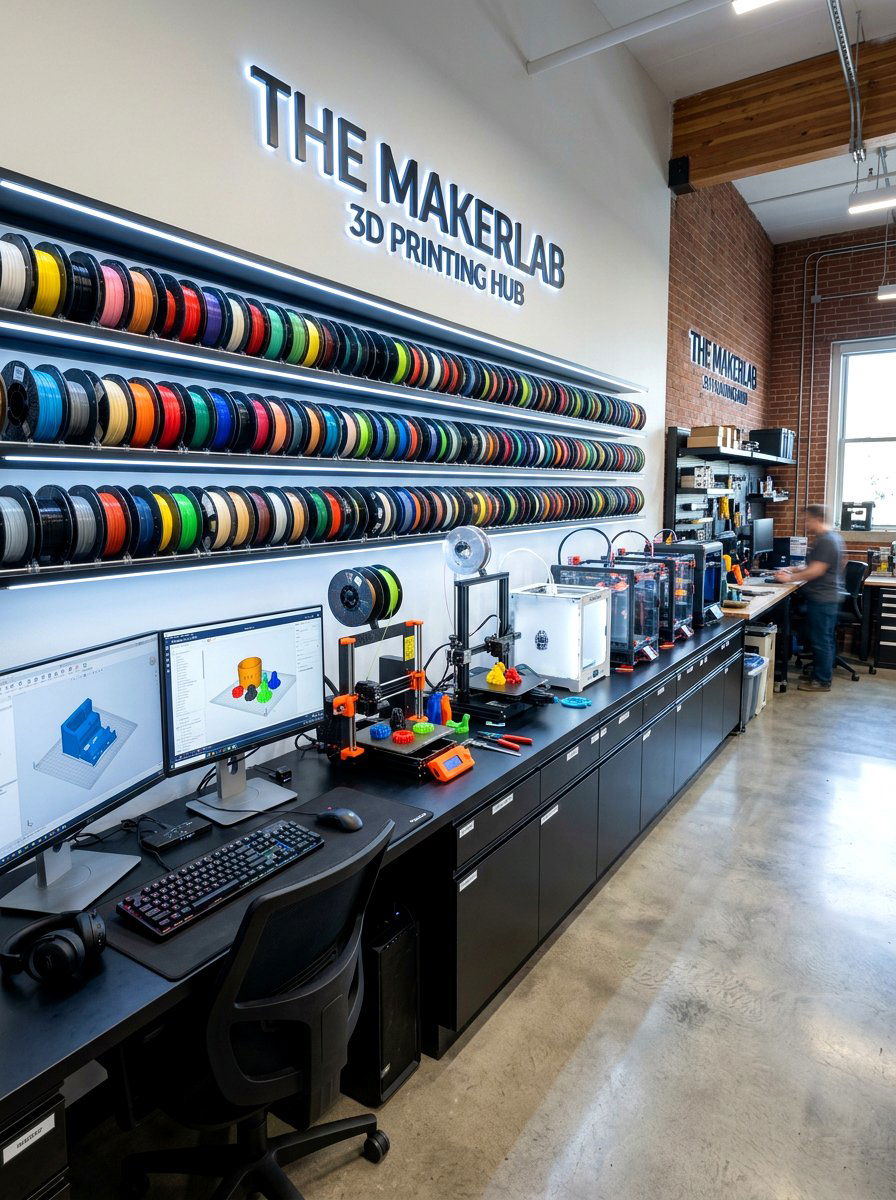
Focusing on digital fabrication, a 3D printing maker space requires a stable, level surface to ensure high-quality prints. This area should include proper ventilation to manage any fumes from melting plastic and enough storage for various filament spools. A nearby computer station is essential for designing models and slicing files before they are sent to the printer. Small tool kits containing scrapers, pliers, and calipers should be kept in a dedicated drawer for post-processing and finishing the 3D objects. This modern setup bridges the gap between digital design and physical reality, making it a favorite for tech enthusiasts and rapid prototyping projects alike.
6. Woodworking maker space
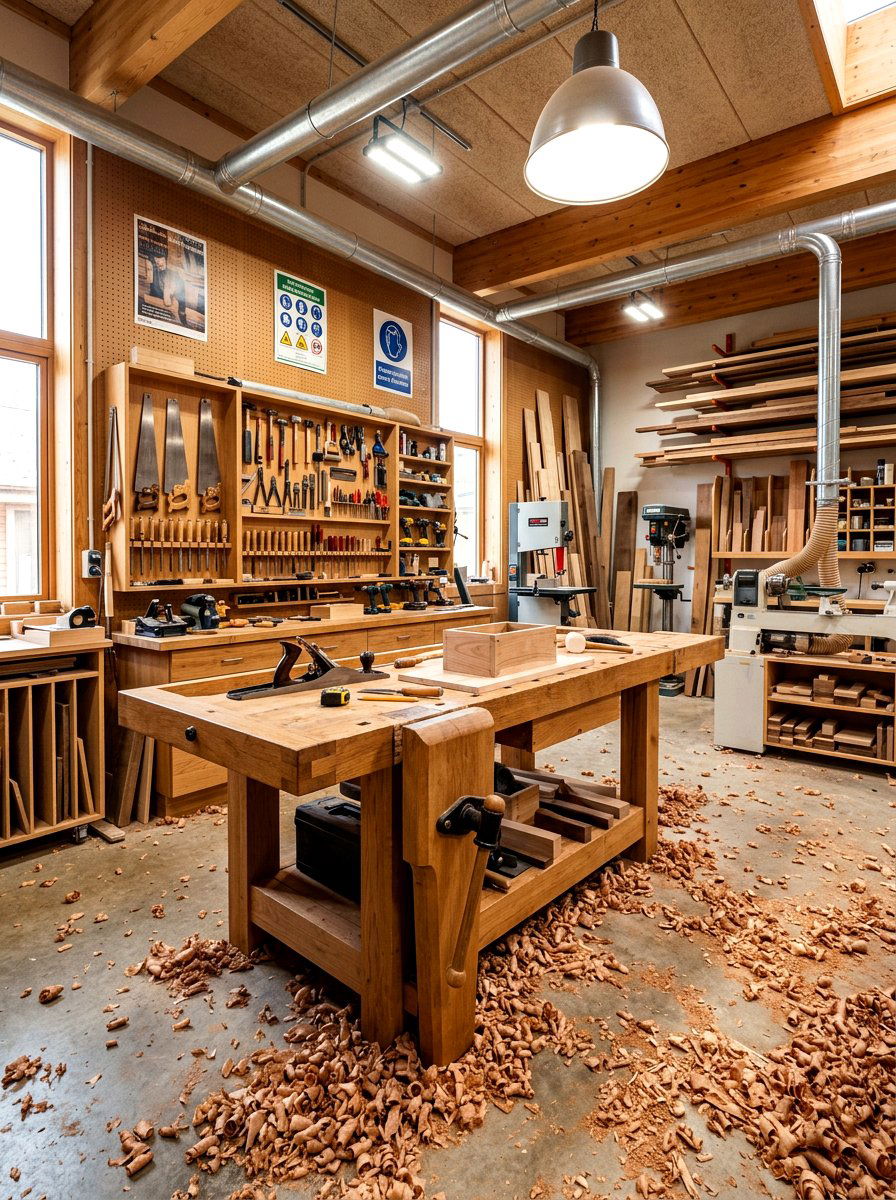
A woodworking maker space is centered around a heavy, solid wood workbench equipped with integrated vises for securing projects. This environment requires specialized storage for lumber, such as wall racks or under-bench bins, to keep the floor clear and safe. Dust collection systems are a top priority to maintain air quality while sanding or cutting wood. Tools are typically organized by frequency of use, with hand planes and chisels displayed on a tool wall for easy access. The atmosphere is grounded and tactile, providing a satisfying place to transform raw timber into beautiful furniture or functional household items through careful craftsmanship and time.
7. Art studio maker space
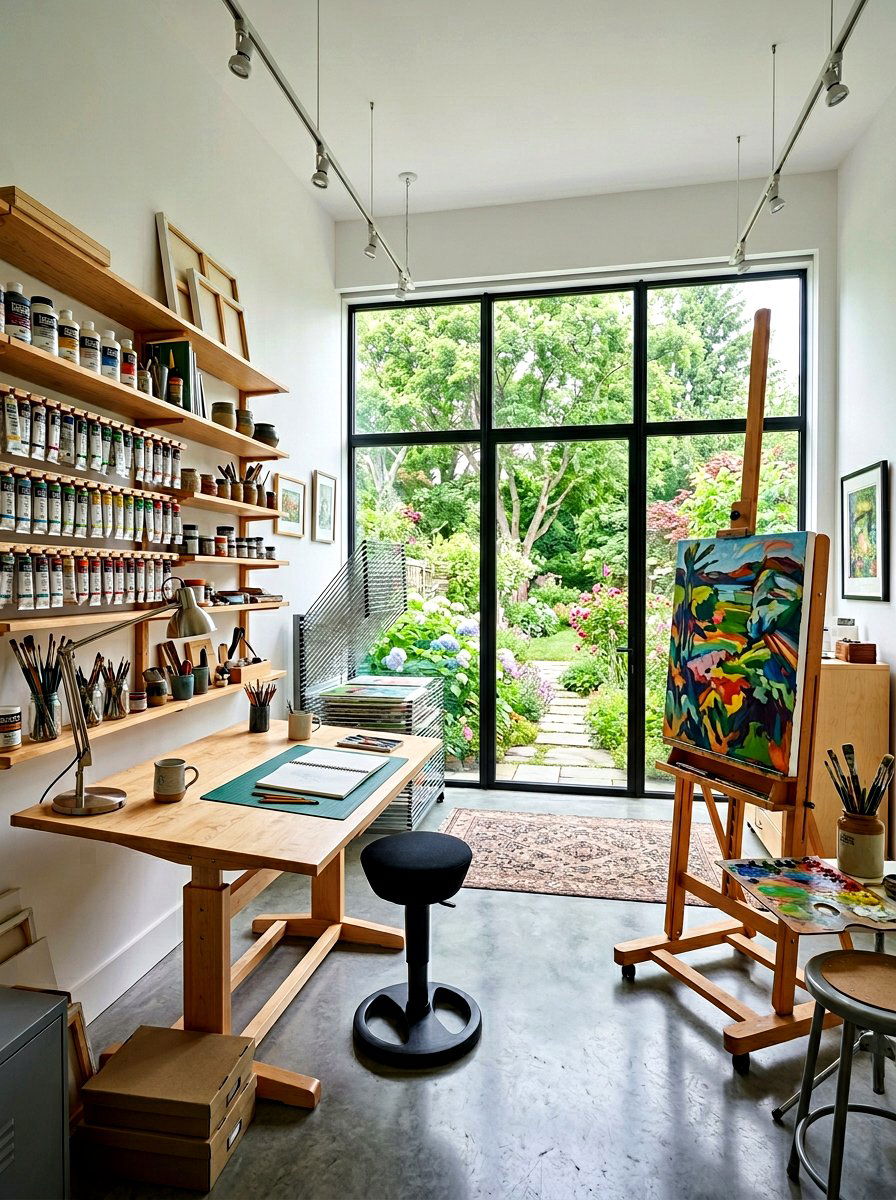
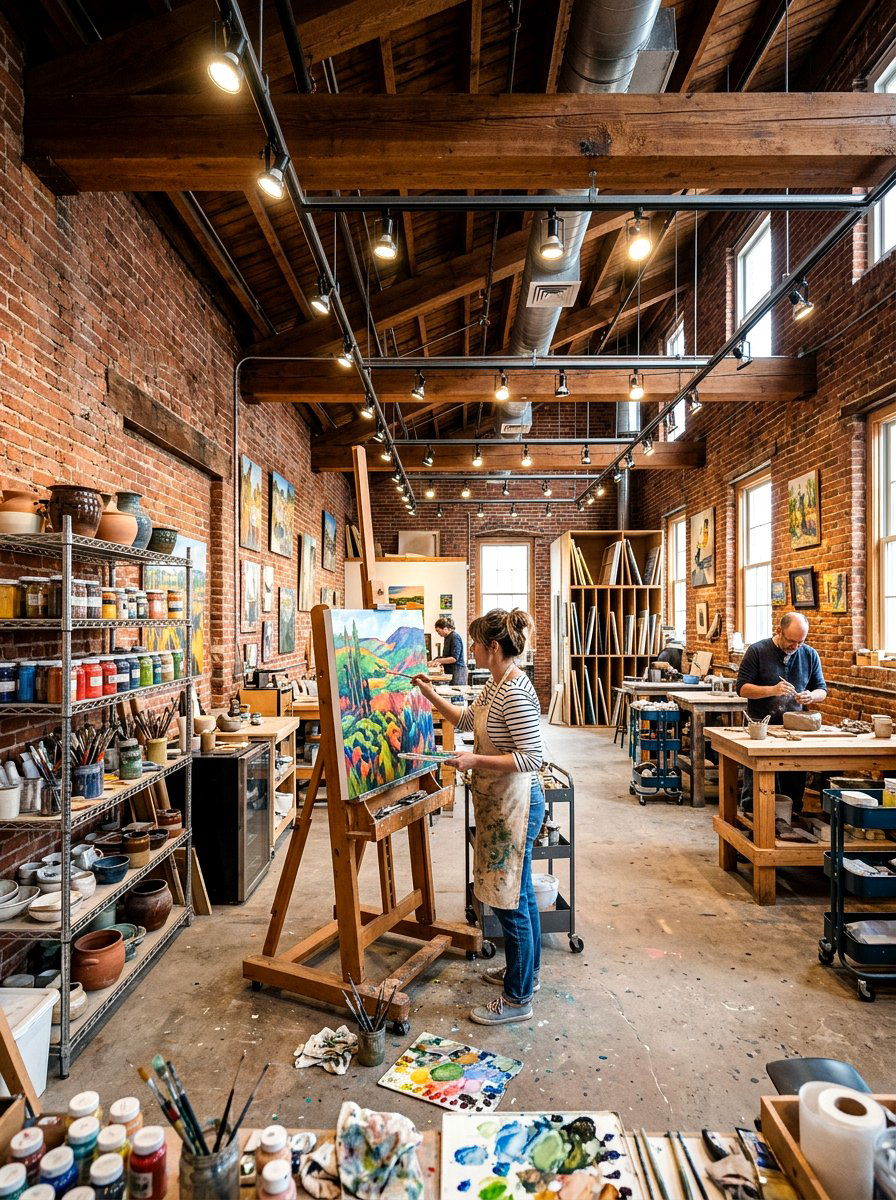
Creating an art studio maker space emphasizes light, color, and a variety of creative mediums. Large windows are ideal for consistent lighting, but overhead daylight bulbs can also work well for evening projects. Sturdy easels and flat-top desks provide versatile surfaces for painting, sketching, or sculpting with clay. Storage for brushes, palettes, and canvases should be easily accessible but out of the way to prevent clutter. This space serves as a personal sanctuary where the mess is embraced as part of the creative process. A sink for cleaning tools and hands is a practical addition that makes the transition from work to rest much easier.
8. Electronics maker space
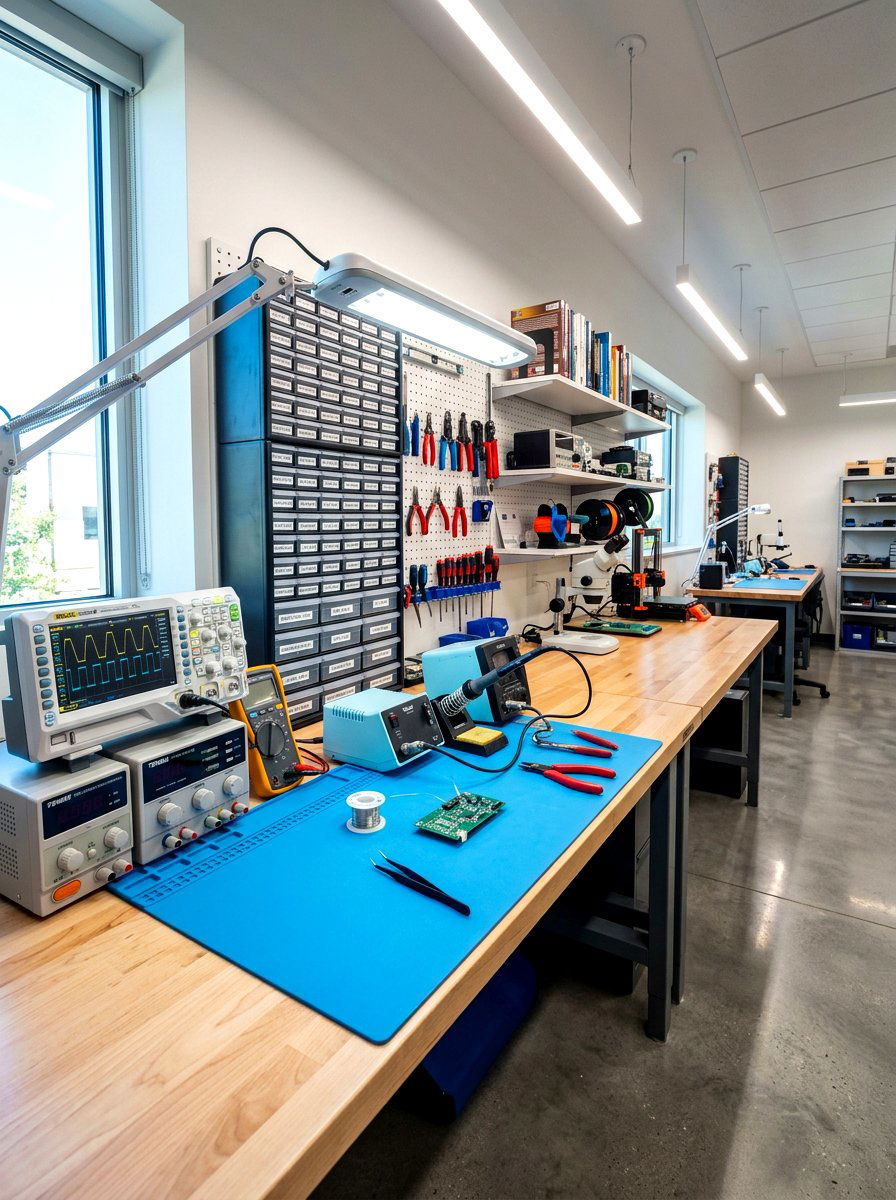
An electronics maker space is designed for precision work involving soldering, circuit building, and microcontrollers. The workstation usually features an anti-static mat and a dedicated soldering station with a smoke extractor for safety. Organized storage is vital here, with small-component cabinets used to hold resistors, capacitors, and LEDs in labeled drawers. Good task lighting and a magnifying glass help when working with tiny parts on a breadboard. This tech-focused area allows for the development of smart home gadgets, robots, or wearable technology. It is a quiet, focused environment where logic and creativity meet to bring complex digital ideas to physical life.
9. Library maker space
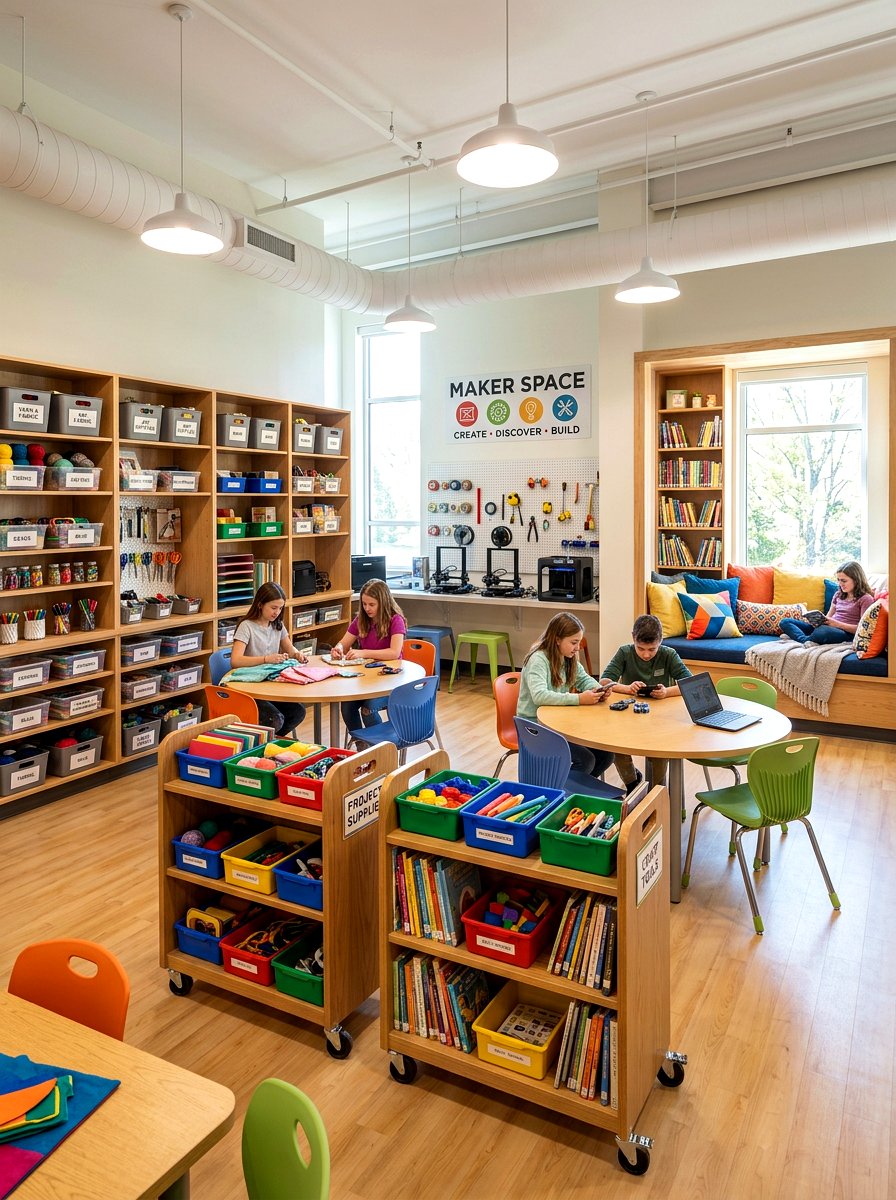
A library maker space transforms a quiet reading area into a hub of community innovation and shared learning. This concept often utilizes low-tech materials like paper, glue, and recyclables to encourage creative problem-solving without a steep learning curve. Mobile shelving and rolling carts allow the space to be tucked away when not in use, maintaining the library's primary function. It provides a low-barrier entry point for patrons to try new hobbies, such as knitting or basic coding, in a supportive environment. By adding a maker space, the library becomes a more dynamic destination that values hands-on creation just as much as traditional book-based research.
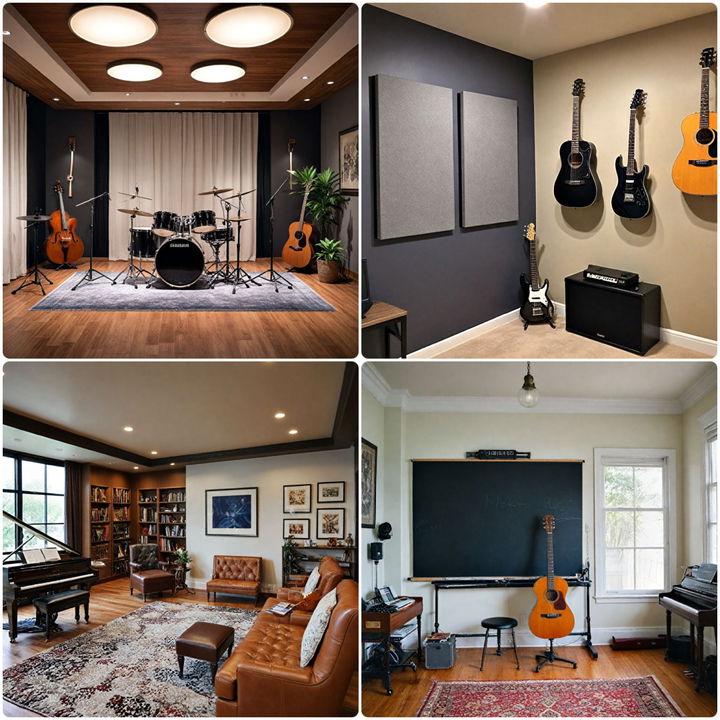
10. Home office maker space
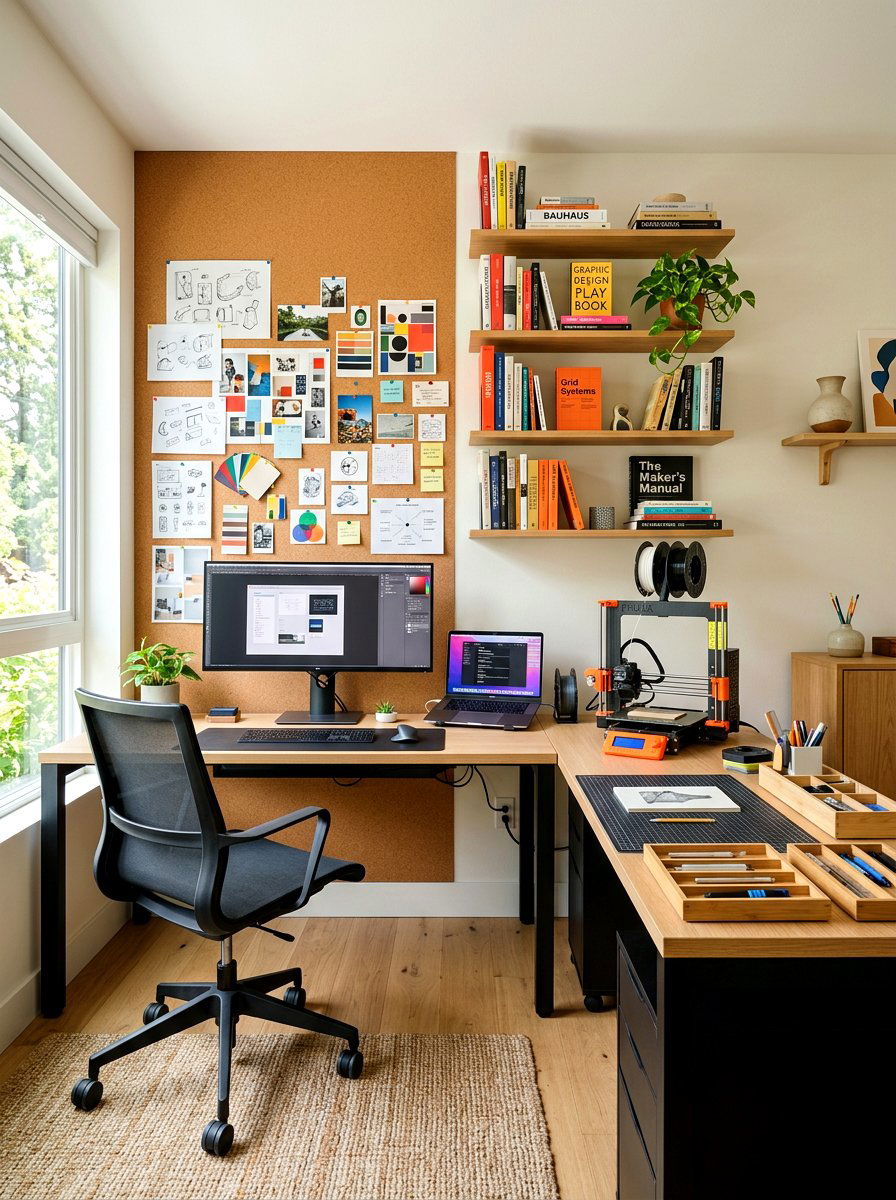
Integrating a maker space into a home office allows you to switch between professional tasks and creative hobbies seamlessly. This design often features a dual-desk setup where one side is for a computer and the other is for hands-on making. Floating shelves above the work area provide a place for books and inspirational objects without taking up valuable desk real estate. The color palette is usually calming to maintain focus during work hours but includes bright accents to stimulate creativity during project time. This efficient use of space ensures that your passions have a home, even if you do not have a separate spare room.
11. Basement maker space
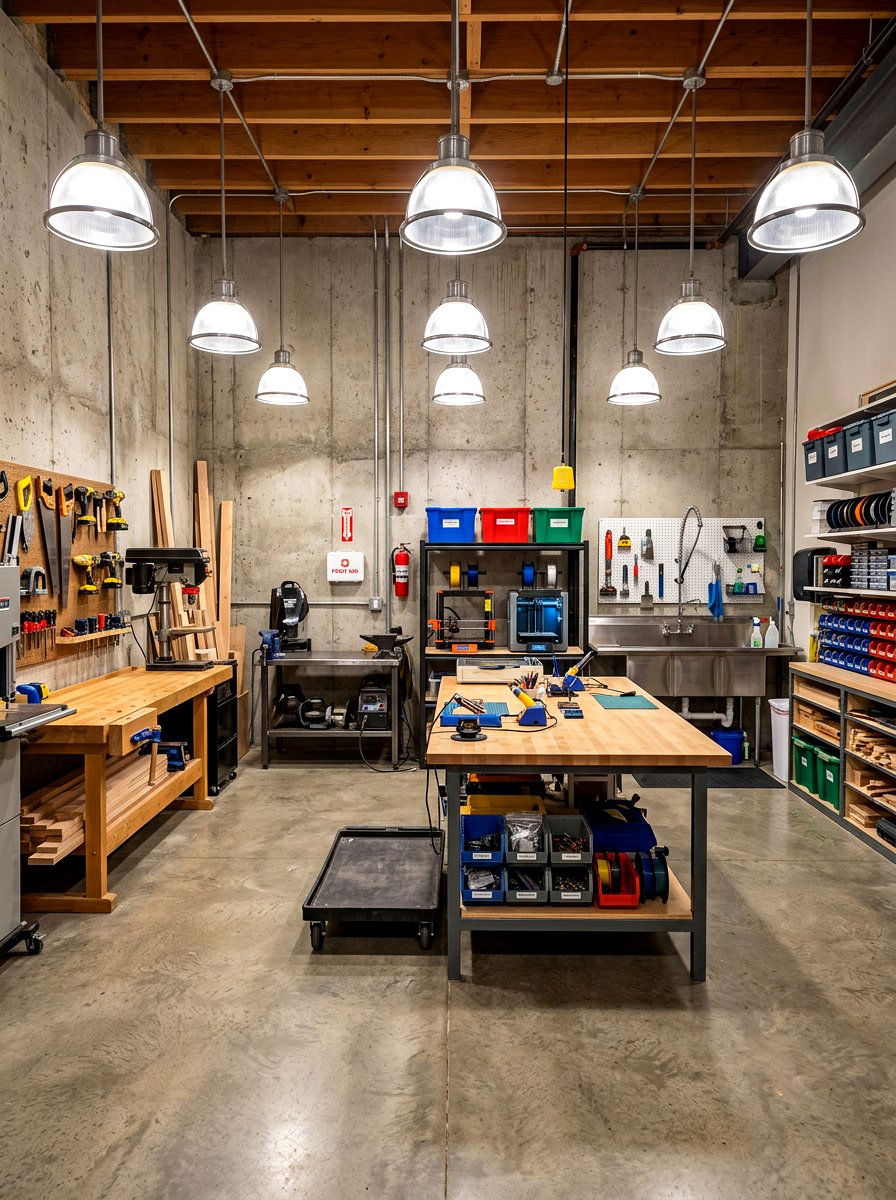
Utilizing a basement for a maker space provides a secluded and often spacious area for larger projects and noisy equipment. This environment is perfect for activities that generate dust or loud sounds, as the underground location helps dampen noise for the rest of the house. Installing bright, industrial-style lighting is crucial to counteract the natural lack of windows in most basements. Epoxy-coated floors are a popular choice because they are easy to clean and can withstand heavy use. This dedicated zone allows for a permanent setup of various stations, from a metalworking bench to a large-scale painting area, without interfering with daily living.
12. Small apartment maker space
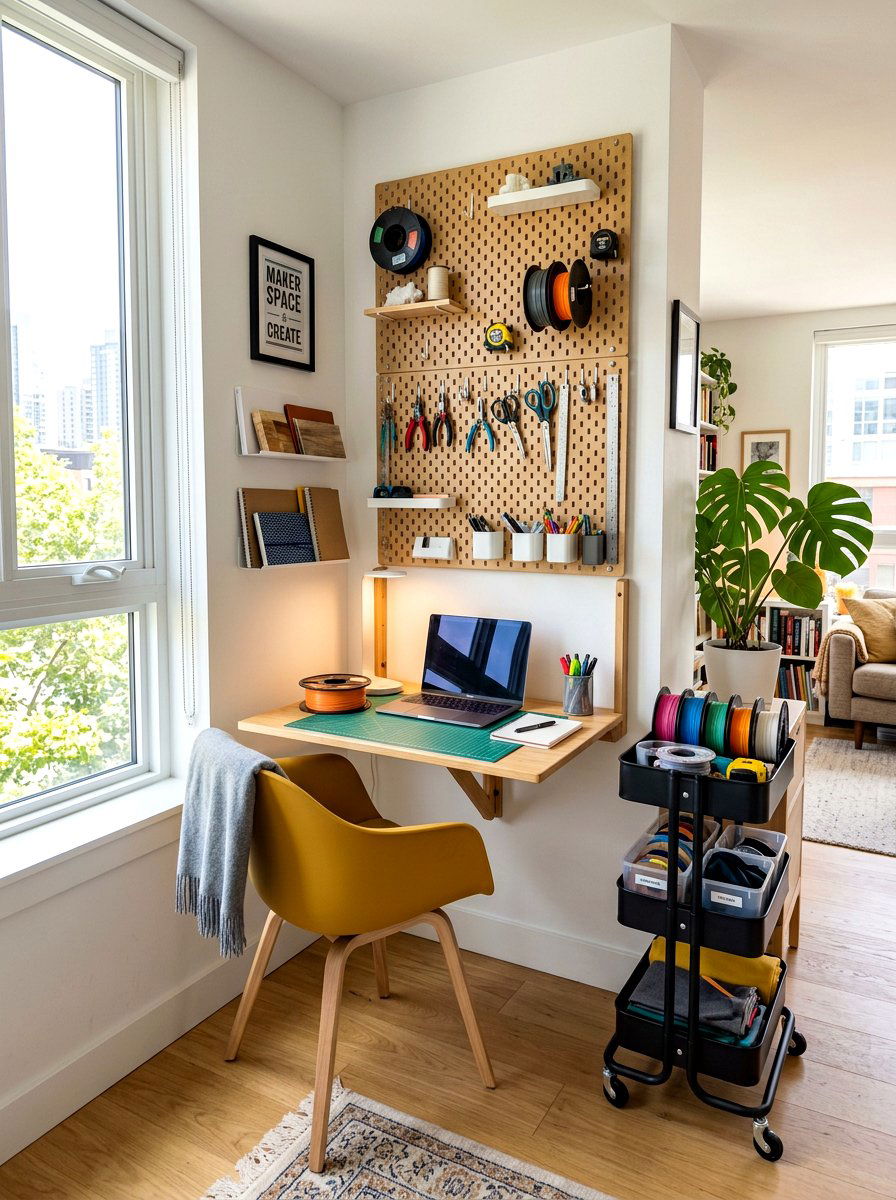
Living in a small apartment does not mean you have to give up on having a maker space. This design relies on clever, multi-functional furniture like a fold-down wall desk or a mobile storage cart that can be tucked into a closet. Vertical storage is maximized using wall-mounted bins and hooks to keep supplies off the floor and out of the way. Choosing compact, portable tools ensures that everything can be packed up quickly if you need the space for entertaining. By focusing on a specific craft, such as embroidery or jewelry making, you can create a highly efficient and inspiring workspace in even the smallest square footage.
13. Mobile maker space cart
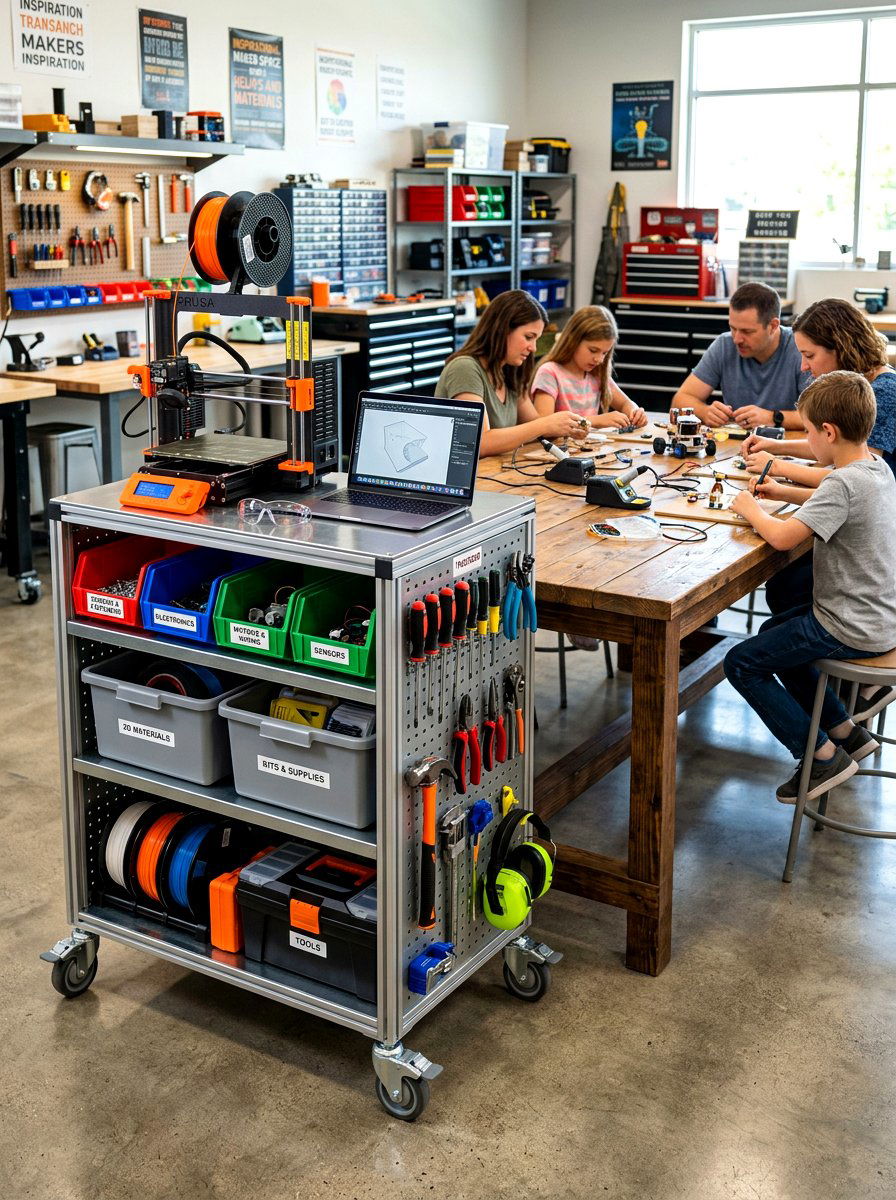
A mobile maker space cart is the ultimate solution for flexibility and sharing tools across different rooms or classrooms. These carts are usually equipped with heavy-duty casters and multiple tiers of organized bins for easy transport of supplies. Side attachments like pegboards or magnetic strips can hold frequently used tools like scissors and pliers securely. This idea is perfect for schools where a dedicated room is not available, allowing the maker experience to travel directly to the students. At home, a maker cart can be rolled out to the dining table for an afternoon project and then hidden away in a corner when finished.
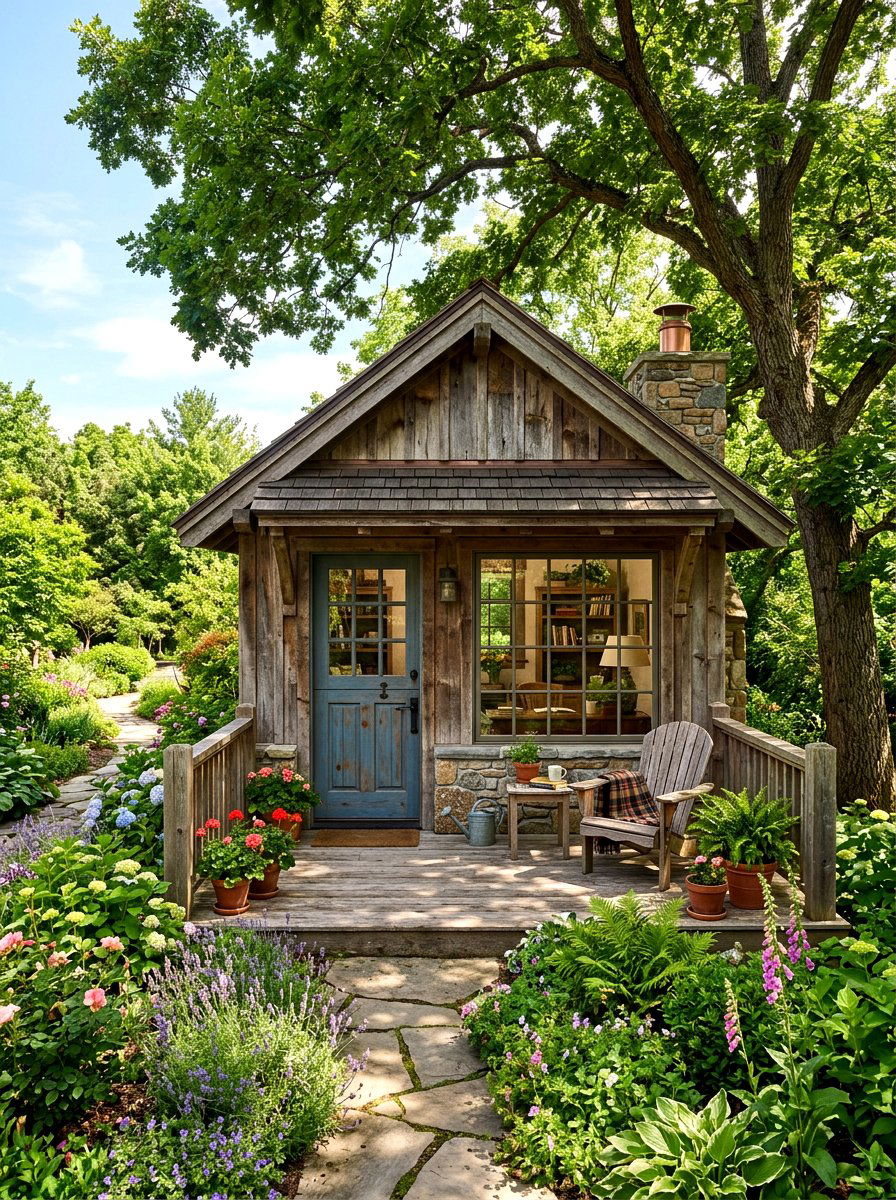
14. Outdoor maker space
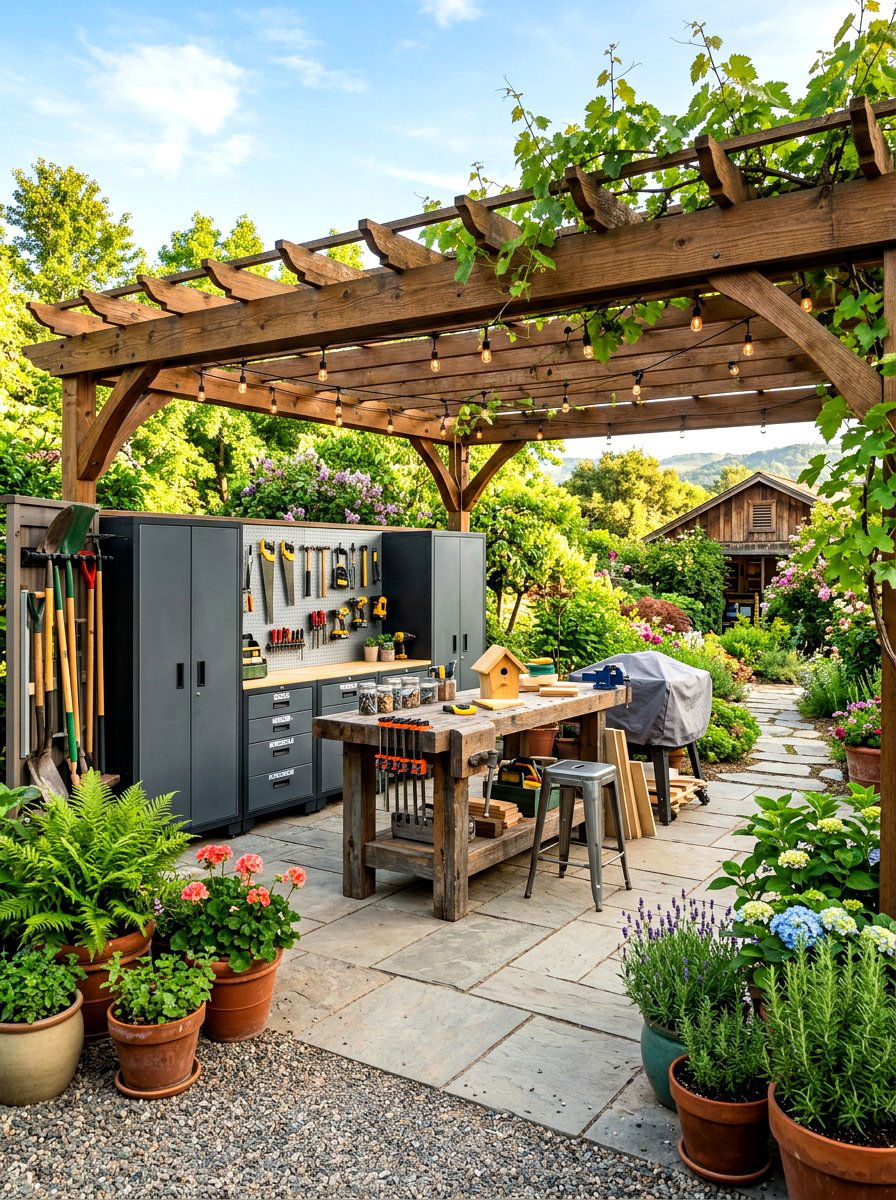
An outdoor maker space provides a refreshing environment for messy or large-scale projects that benefit from fresh air and natural sunlight. This setup might include a covered patio area with weather-resistant workbenches and storage bins to protect tools from the elements. It is an ideal spot for spray painting, concrete casting, or large-scale gardening projects where cleanup is as simple as using a garden hose. The open space allows for a more relaxed and expansive creative process, connecting your work with the surrounding natural beauty. It is a perfect choice for those who enjoy being outside while they build, tinker, and create something brand new.

15. STEM maker space
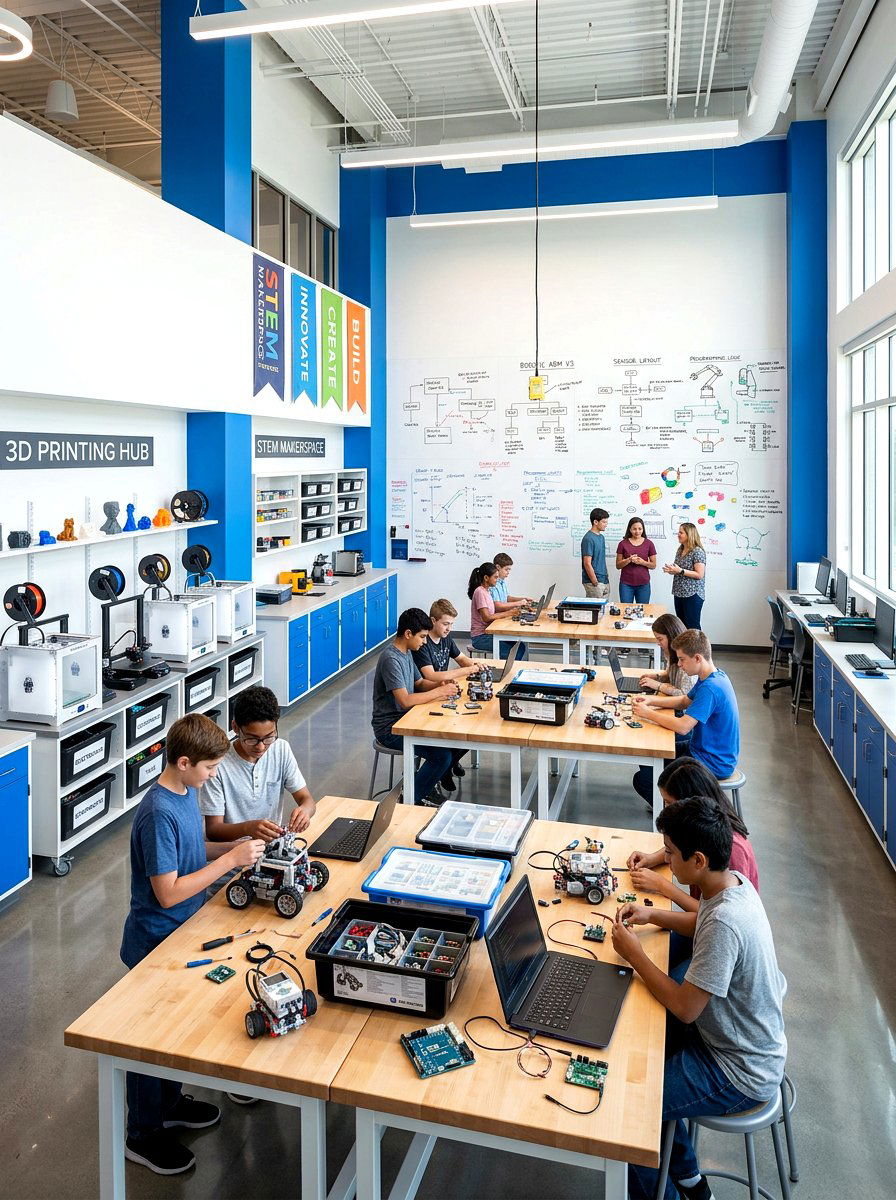
A STEM maker space is specifically designed to support science, technology, engineering, and math projects through hands-on learning. This area often includes a mix of high-tech tools like robotics kits and low-tech materials like straws and tape for building bridges. Large whiteboards are essential for sketching out complex diagrams and collaborative brainstorming sessions with peers. The layout is usually open and flexible to accommodate different stages of the design process, from research to testing. By providing a dedicated place for STEM exploration, this space helps bridge the gap between abstract concepts and practical applications, making learning more engaging and memorable for everyone involved.
16. Jewelry making maker space
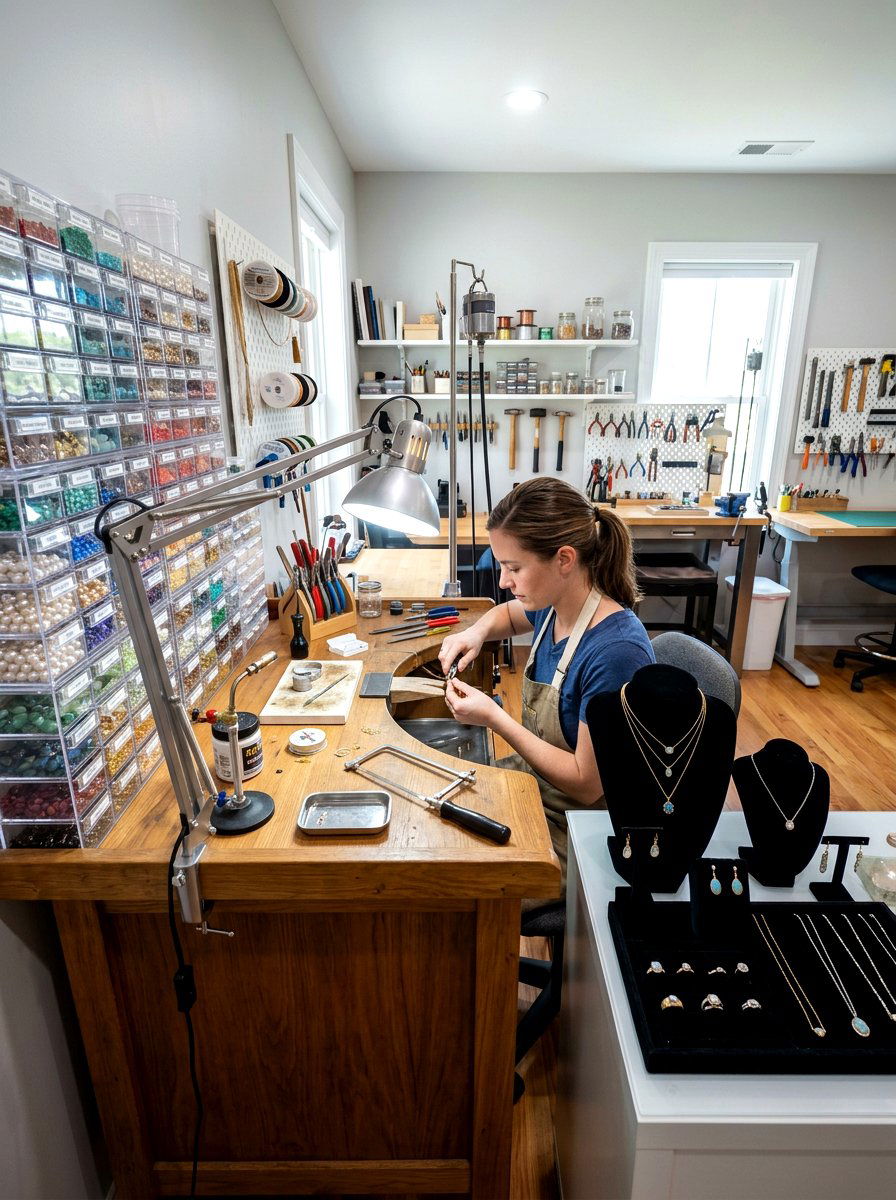
A jewelry making maker space requires a clean, focused area with specialized lighting for working with tiny beads and delicate wires. A small bench with a raised edge prevents beads from rolling off, while organized trays keep different materials separated and easy to find. Comfortable seating is a must for the long hours spent on intricate designs and assembly. Storage for pliers, hammers, and polishing cloths should be kept within arm's reach for a smooth creative flow. This specialized space is often decorated with finished pieces for inspiration, creating a beautiful and functional environment that reflects the artistic nature of the craft itself.
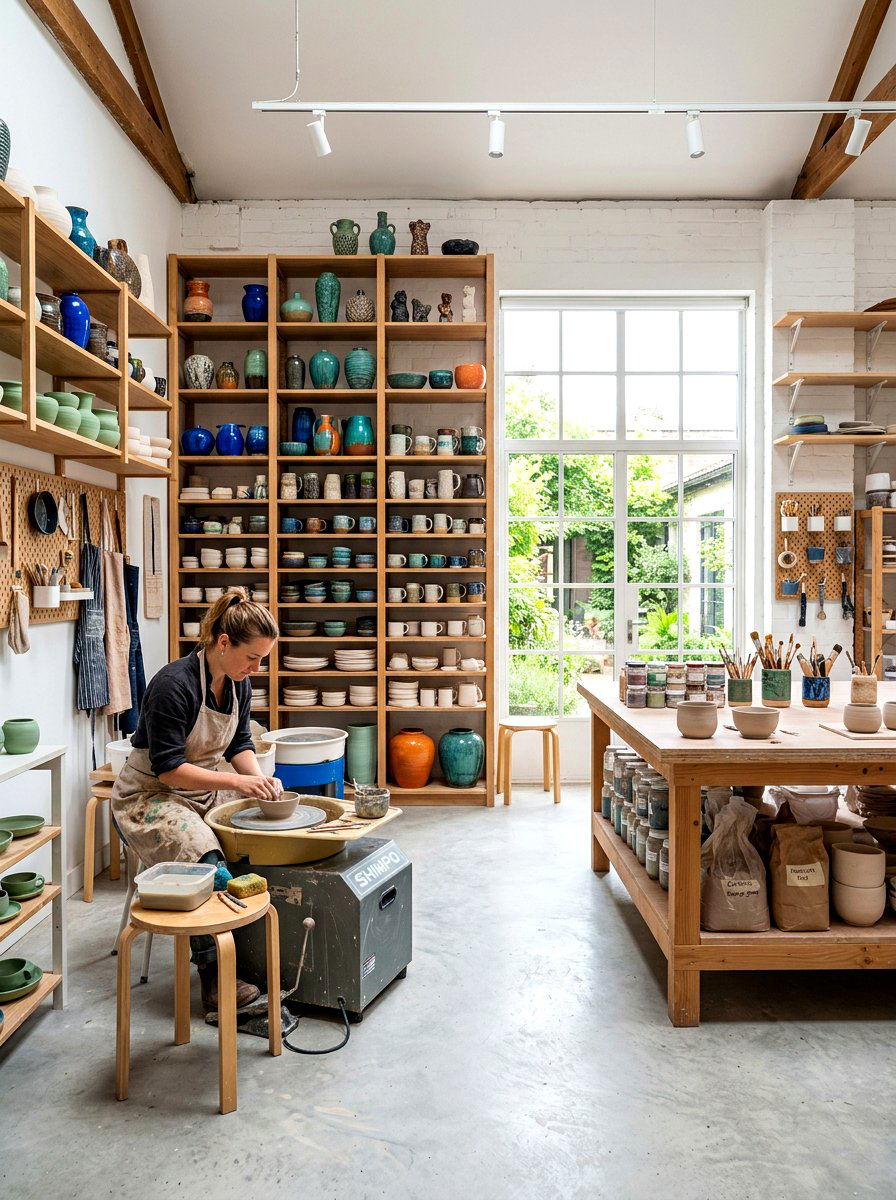
17. Pottery studio maker space
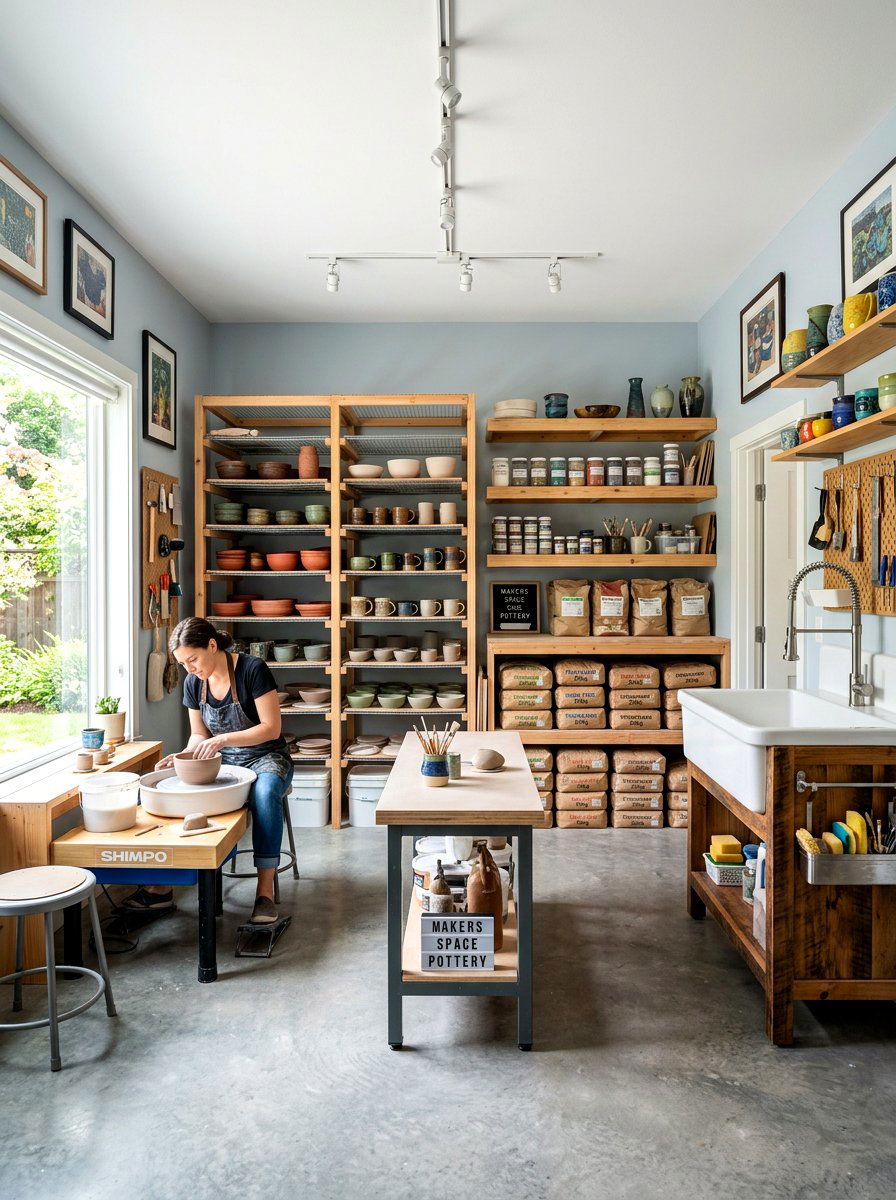
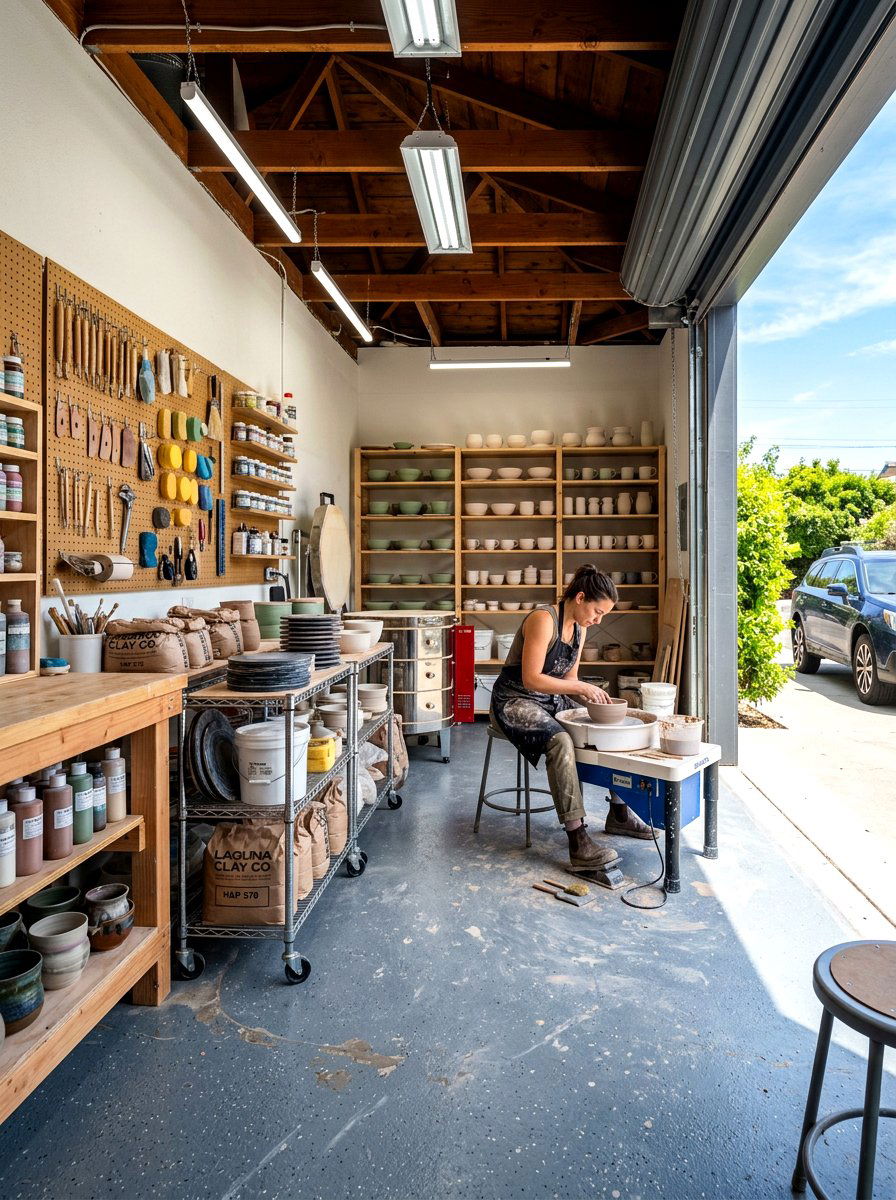
Setting up a pottery studio maker space involves planning for the specific needs of working with wet clay and water. A sturdy pottery wheel is the focal point, surrounded by easy-to-clean surfaces and waterproof flooring. Shelving is necessary for storing clay at different stages of drying, as well as for displaying finished glazed pieces. A large sink with a clay trap is a critical addition to prevent plumbing issues from leftover material during cleanup. This space is often earthy and minimalist, allowing the focus to remain on the tactile and meditative process of shaping raw clay into functional and artistic ceramic objects.
18. Metalworking maker space
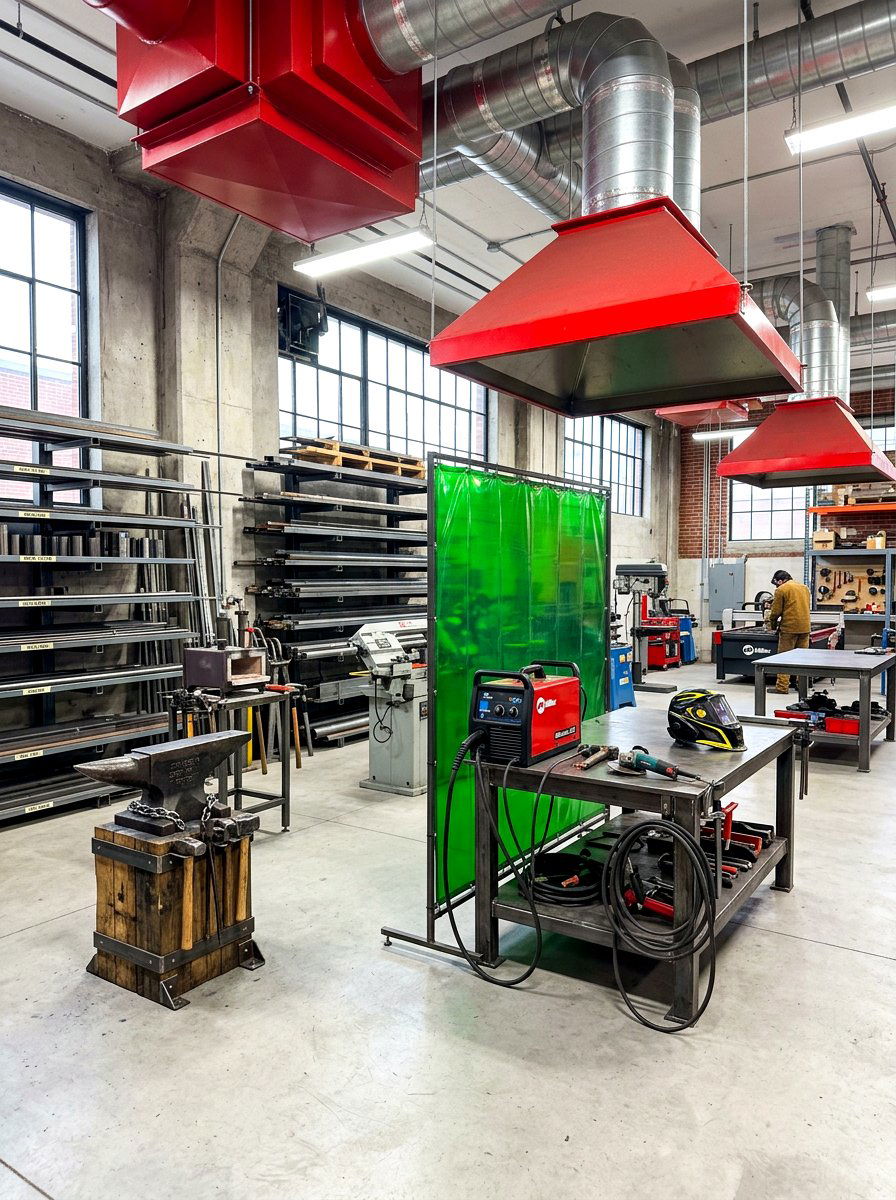
A metalworking maker space is a rugged environment designed for welding, grinding, and forming various metal materials. Safety is the top priority here, requiring fire-resistant surfaces and professional-grade ventilation to clear away sparks and fumes. Heavy-duty metal workbenches and specialized storage for steel rods and sheets are essential for organization. This space usually includes a variety of large tools like anvils, drill presses, and welders that stay in permanent positions. It is a powerful and industrial-style area where heat and force are used to create everything from custom car parts to intricate sculptures, offering a unique and satisfying creative challenge for the dedicated maker.
19. Photography studio maker space
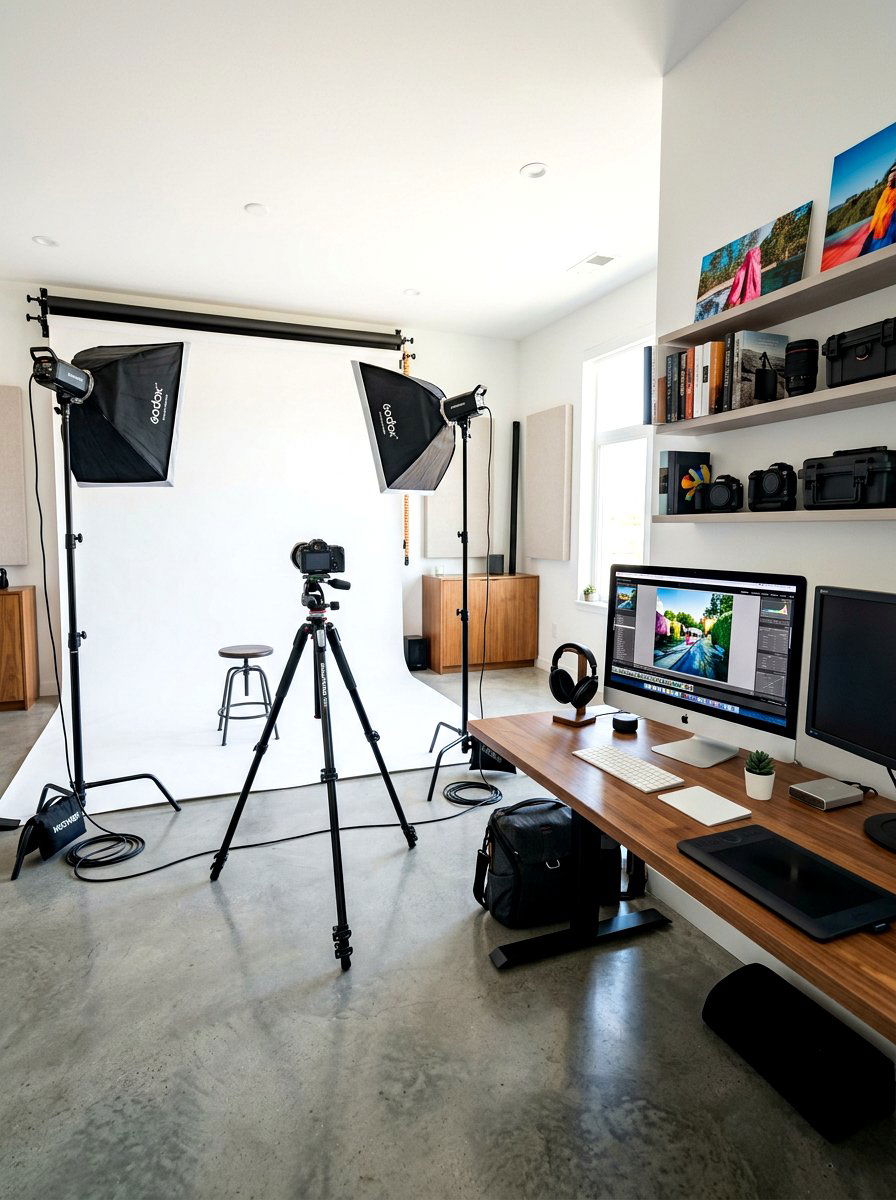
A photography studio maker space is centered around light control and versatile backdrops for capturing stunning images. This area requires a large, clear floor space for positioning tripods, lights, and subjects without any obstructions. Storage for cameras, lenses, and lighting equipment should be padded and secure to protect sensitive gear from dust or damage. A nearby computer desk for photo editing and printing is a practical addition that completes the professional workflow. This space is often painted in neutral tones to prevent color casting, providing a blank canvas where you can experiment with shadows, light, and composition to tell a compelling visual story.
20. Robotics maker space
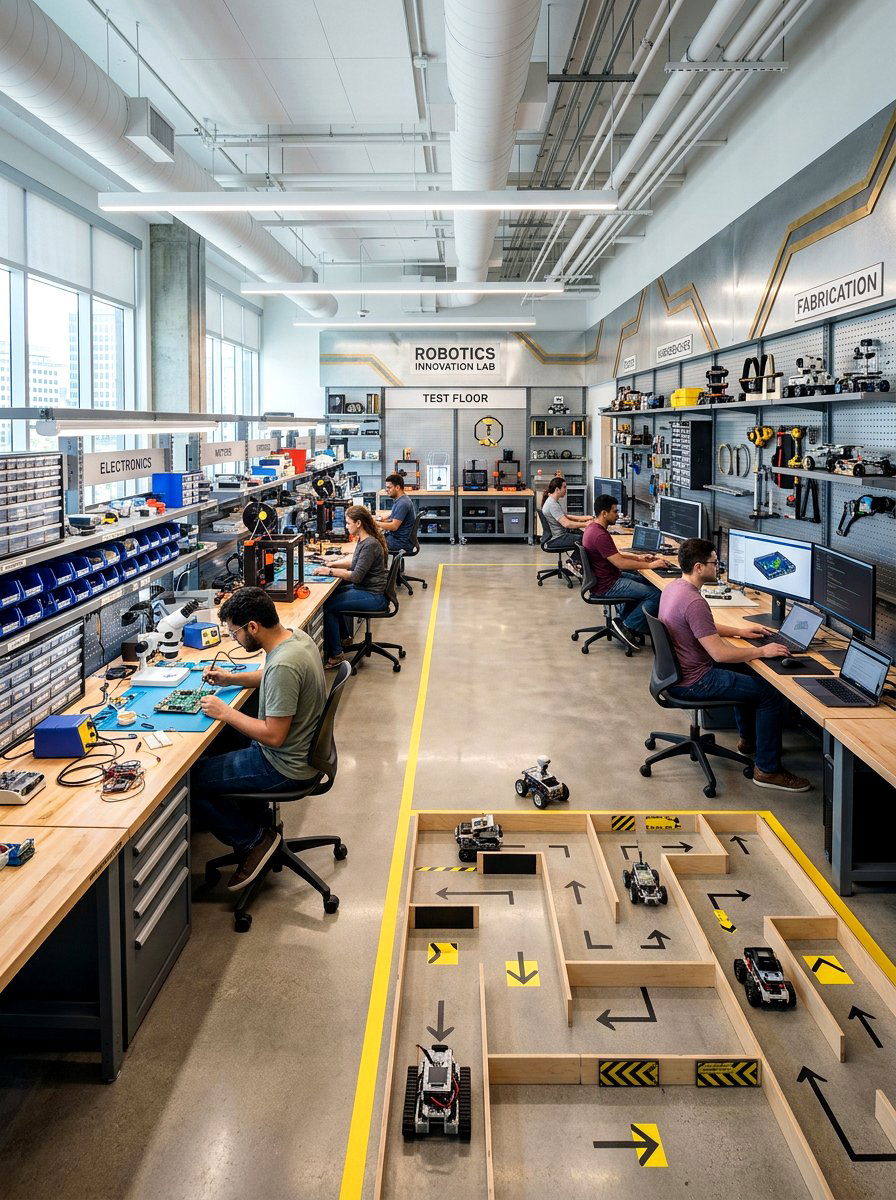
A robotics maker space combines electronics, engineering, and programming into one high-tech creative hub. This environment features large, flat tables for testing robot movements and obstacle courses for trial and error. Storage bins are often filled with gears, motors, and sensors, meticulously organized for quick assembly. A dedicated computer station is necessary for writing code and uploading instructions to the robot's brain. The atmosphere is one of high energy and experimentation, where students or hobbyists can see their code come to life through mechanical movement. This space is perfect for fostering innovation and technical skills in an increasingly automated and digital world.
21. Textile maker space
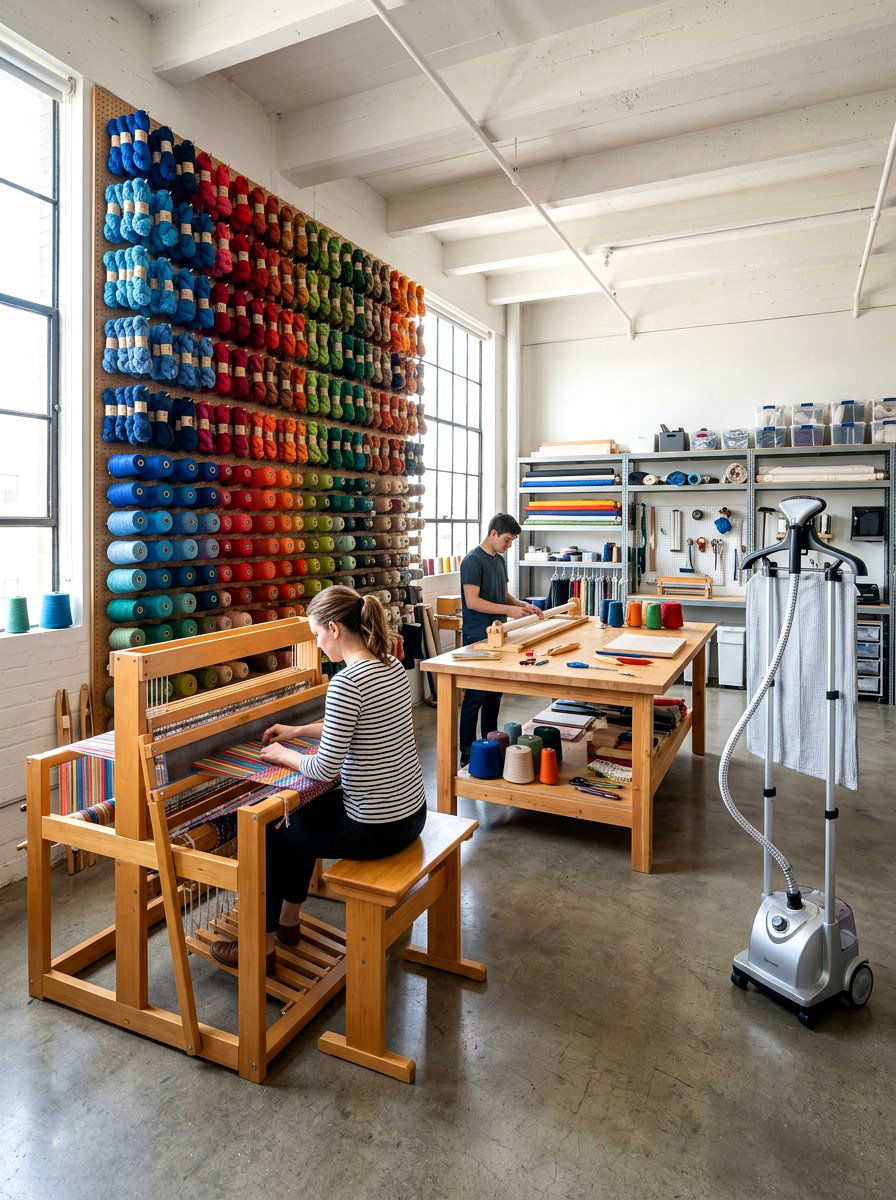
A textile maker space goes beyond just sewing to include weaving, knitting, and fabric dyeing projects. This area often features a large loom or knitting machine as a central piece, with wall-to-wall storage for colorful yarns and fabric bolts. A dedicated wet area for dyeing and rinsing fabrics is helpful for maintaining a clean workspace. The environment is usually soft and tactile, filled with natural textures and patterns that provide endless inspiration. This space encourages the exploration of traditional crafts in a modern way, allowing for the creation of unique home decor, clothing, and artistic wall hangings through careful fiber work and design.
22. Paper craft maker space
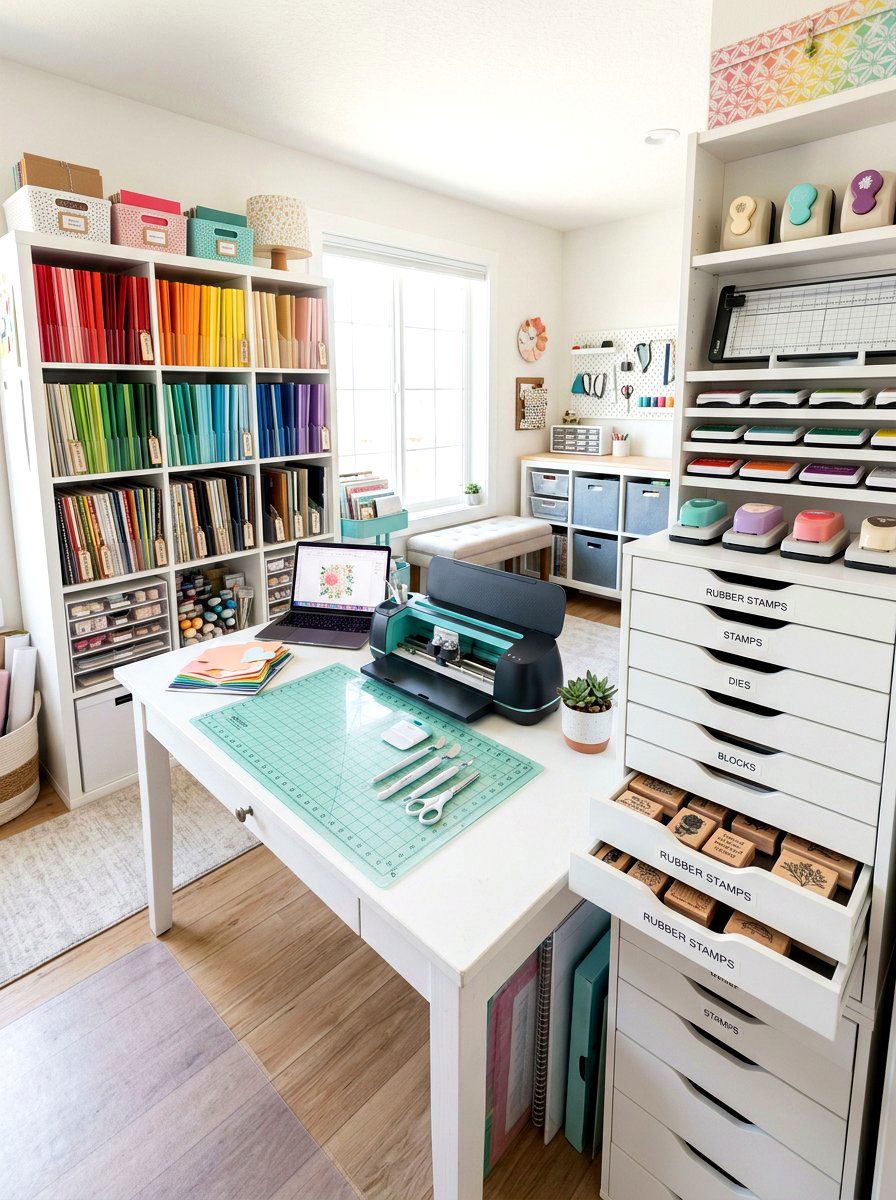
A paper craft maker space is a vibrant area dedicated to scrapbooking, card making, and intricate paper cutting projects. Large, flat surfaces are essential for laying out designs and using precision cutting machines or manual stamps. Vertical storage for various paper weights and colors keeps the workspace organized and visually inspiring at the same time. This space often includes a variety of punches, glues, and embellishments stored in clear, easy-to-reach containers. It is a colorful and inviting environment where simple paper is transformed into beautiful works of art, memories, and gifts, making it a favorite for those who enjoy detail-oriented and tactile creative hobbies.
23. Upcycling maker space
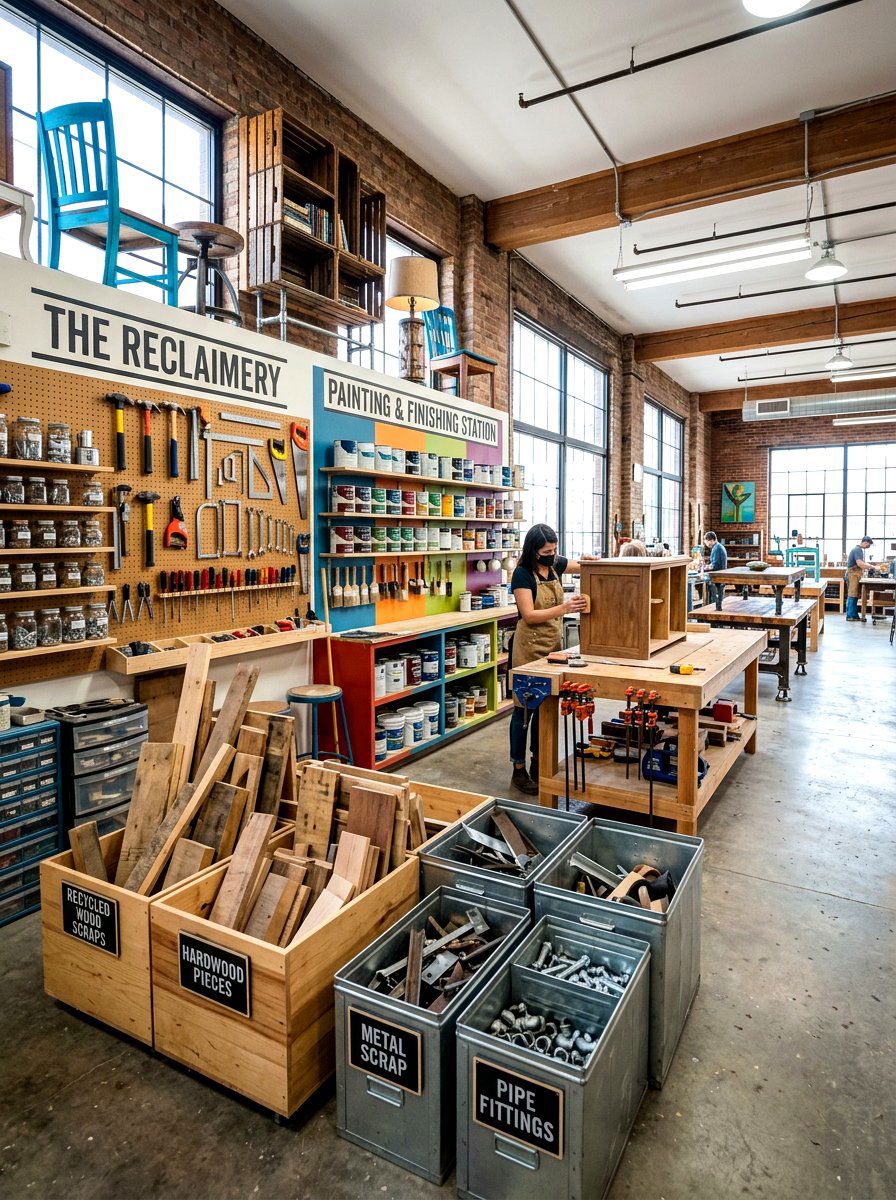
An upcycling maker space focuses on the sustainable practice of turning discarded items into new, functional products. This environment often looks like a hybrid workshop, with storage for rescued materials like glass bottles, old wood, and scrap metal. Tools for cleaning, sanding, and repainting are essential for the transformation process of these found objects. This space encourages a resourceful mindset, challenging makers to see the potential in what others consider waste. The layout is usually flexible to accommodate projects of all shapes and sizes, from refinishing furniture to creating art from recycled plastics. It is a rewarding and environmentally conscious way to create.
24. High school maker space
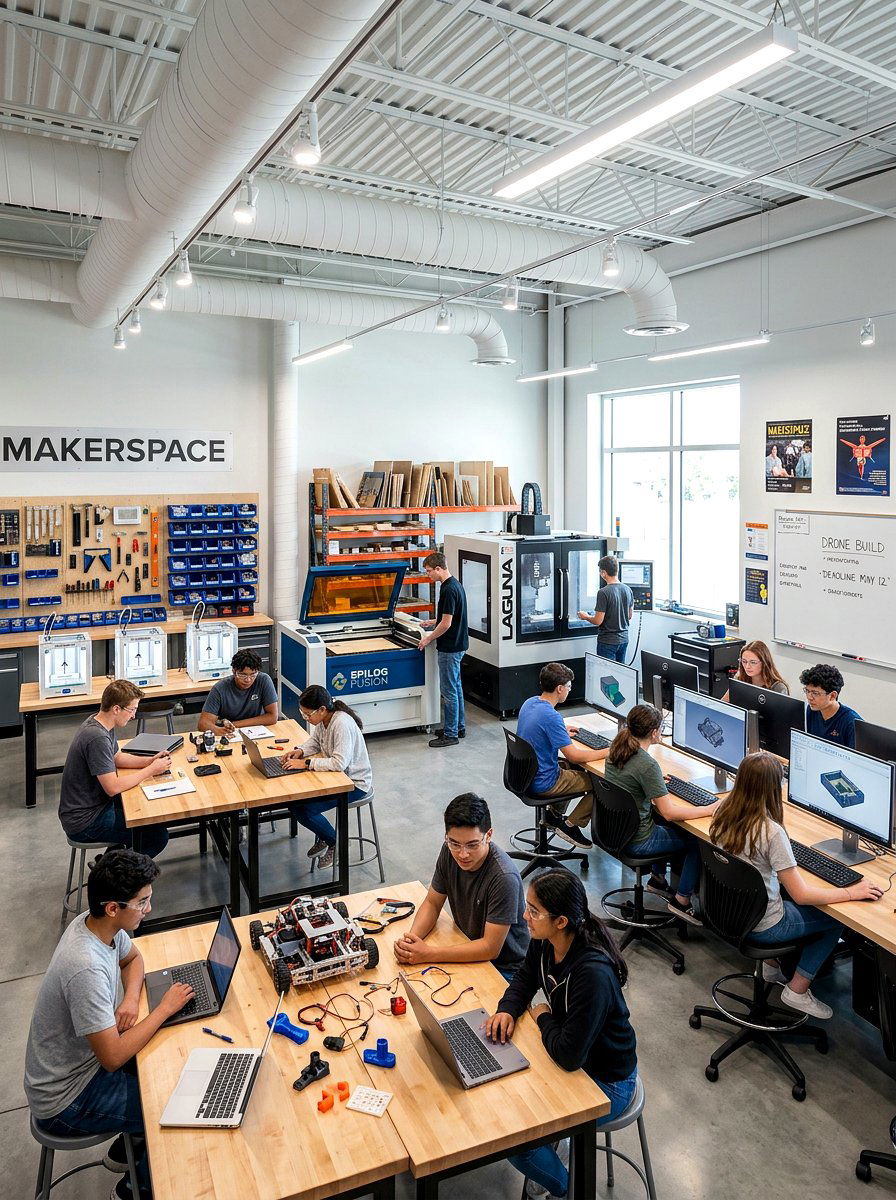
A high school maker space provides advanced students with the tools and technology needed for complex engineering and design projects. This area often features industrial-grade equipment like laser cutters, CNC routers, and high-performance computers for 3D modeling. The layout promotes a professional atmosphere where students can work on long-term assignments independently or in small teams. Collaborative zones with whiteboards and lounge seating encourage the sharing of ideas and peer-to-peer learning. By providing access to professional tools, this space prepares students for future careers in design, engineering, and manufacturing, fostering a sense of independence and technical competence before they head off to college or work.

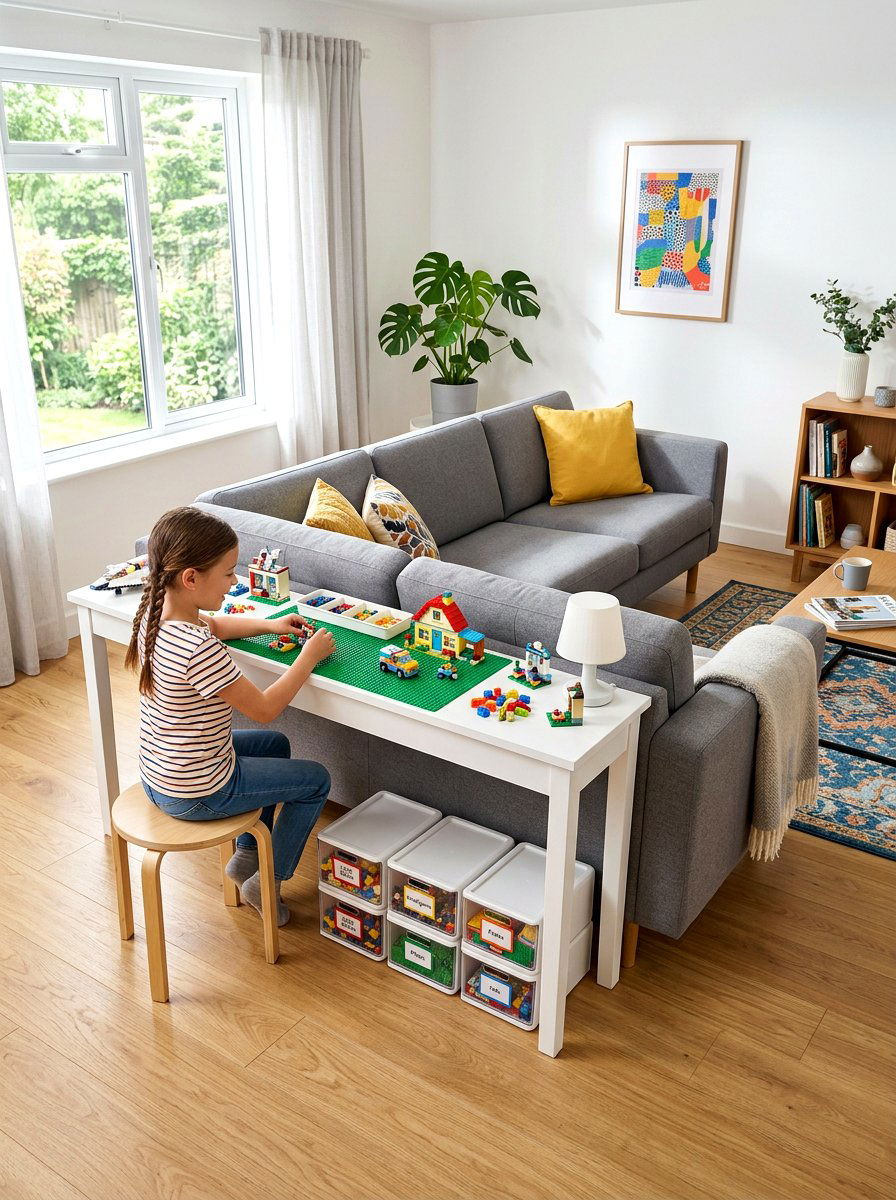
25. Community maker space
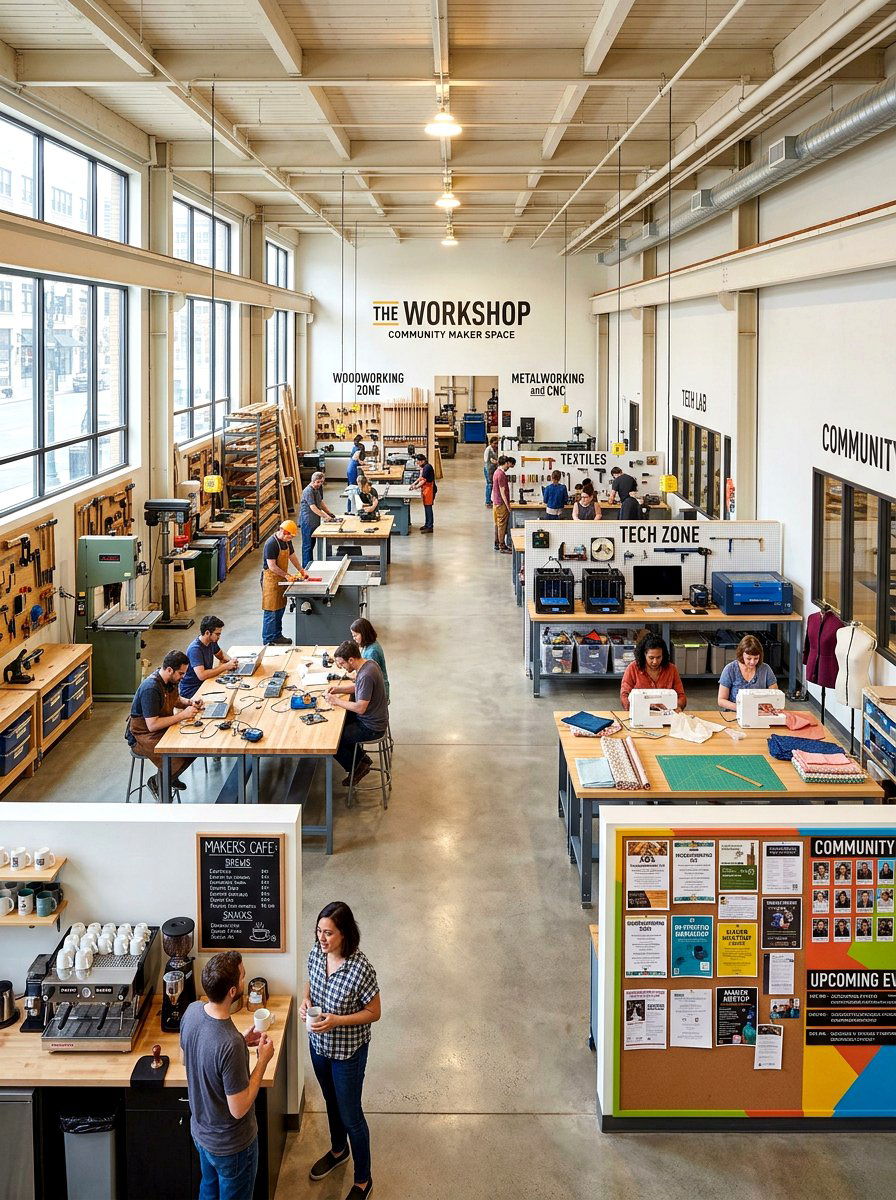
A community maker space is a shared resource that brings together people of diverse backgrounds and skill levels to learn and create. This large-scale environment often includes multiple zones for different crafts, from a woodshop and metalworking area to a digital lab and textile room. Membership-based access provides affordable use of expensive equipment that individuals might not be able to own themselves. The focus is on collaboration and knowledge sharing, with workshops and classes held regularly to teach new techniques. This social and creative hub strengthens local bonds, encourages entrepreneurship, and ensures that the joy of making is accessible to everyone in the neighborhood.
26. Tech lab maker space
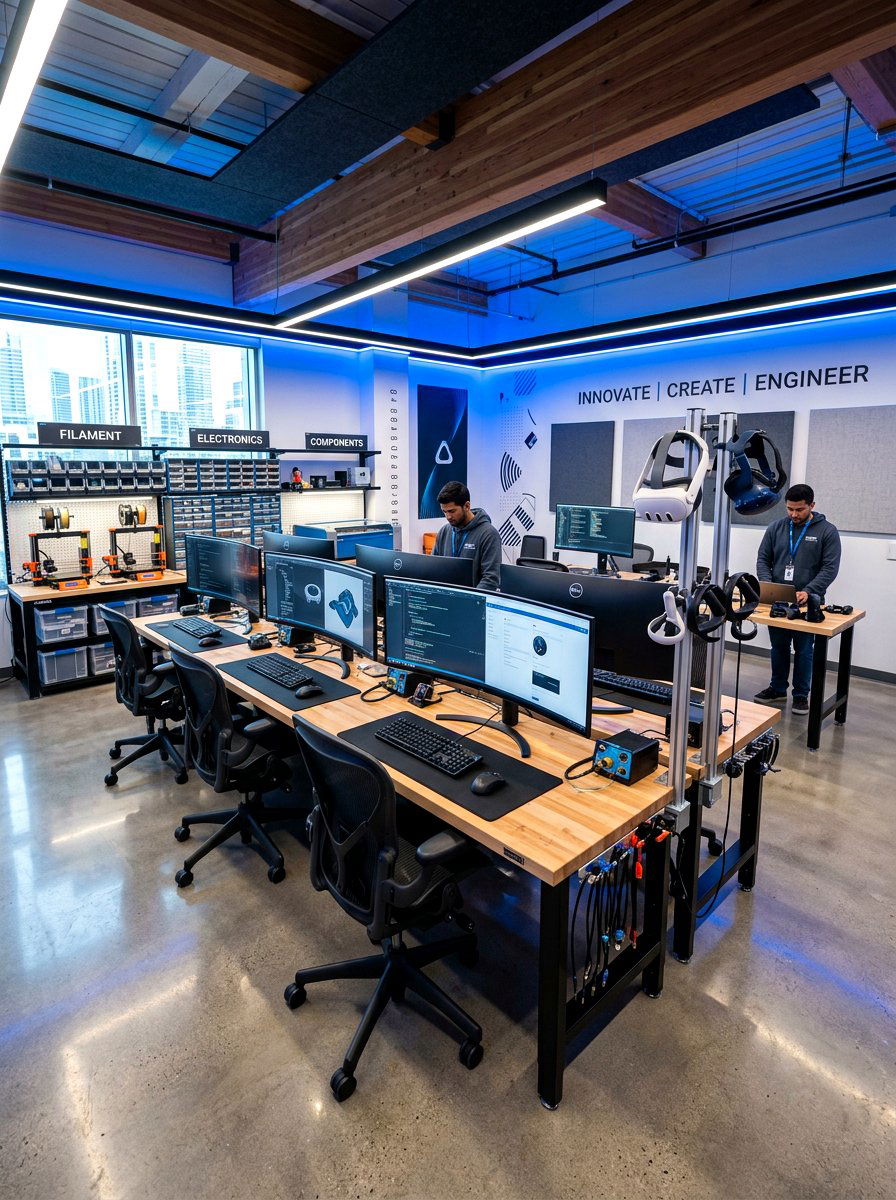
A tech lab maker space is a modern environment dedicated to software development, virtual reality, and advanced digital fabrication. This space is characterized by sleek workstations with multiple monitors, high-speed internet, and the latest design software for creators. Comfortable, ergonomic seating is a priority for those spending long hours coding or designing complex digital worlds. Large screens are often used for presentations or collaborative coding sessions where multiple people can view the work at once. This clean and focused atmosphere is ideal for tech-forward projects like app development, game design, or exploring the future of the metaverse through hands-on creative experimentation.
27. Kitchen maker space
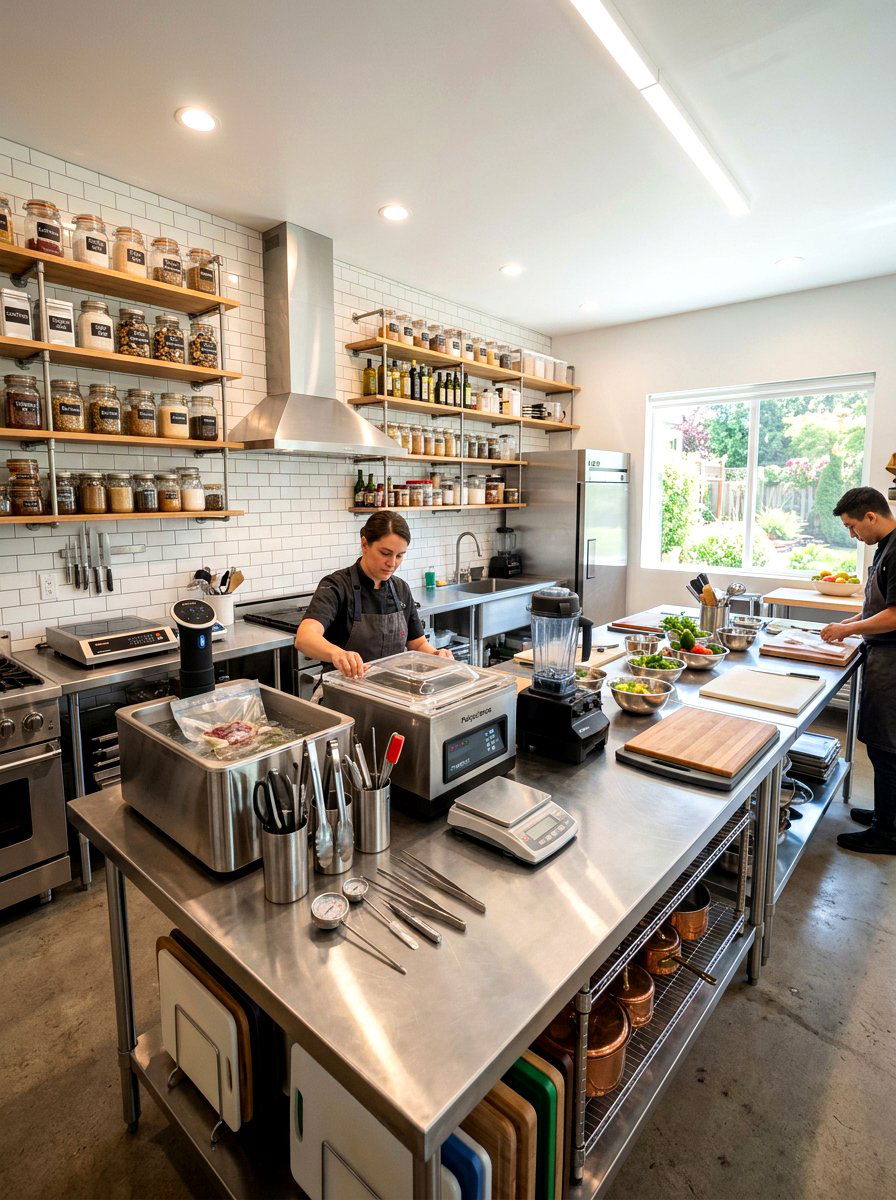
A kitchen maker space is an innovative area dedicated to the art of food science and creative cooking. This setup goes beyond everyday meal prep to include specialized equipment like sous-vide machines, dehydrators, and molecular gastronomy kits. Large, stainless steel islands provide ample room for experimentation and collaborative cooking with friends or family. Storage for unique spices, oils, and specialty ingredients is often displayed in a way that feels like a laboratory. This space encourages a scientific approach to cooking, where recipes are tested and iterated upon just like any other project. It is a delicious way to explore creativity through the senses.
28. Loft maker space
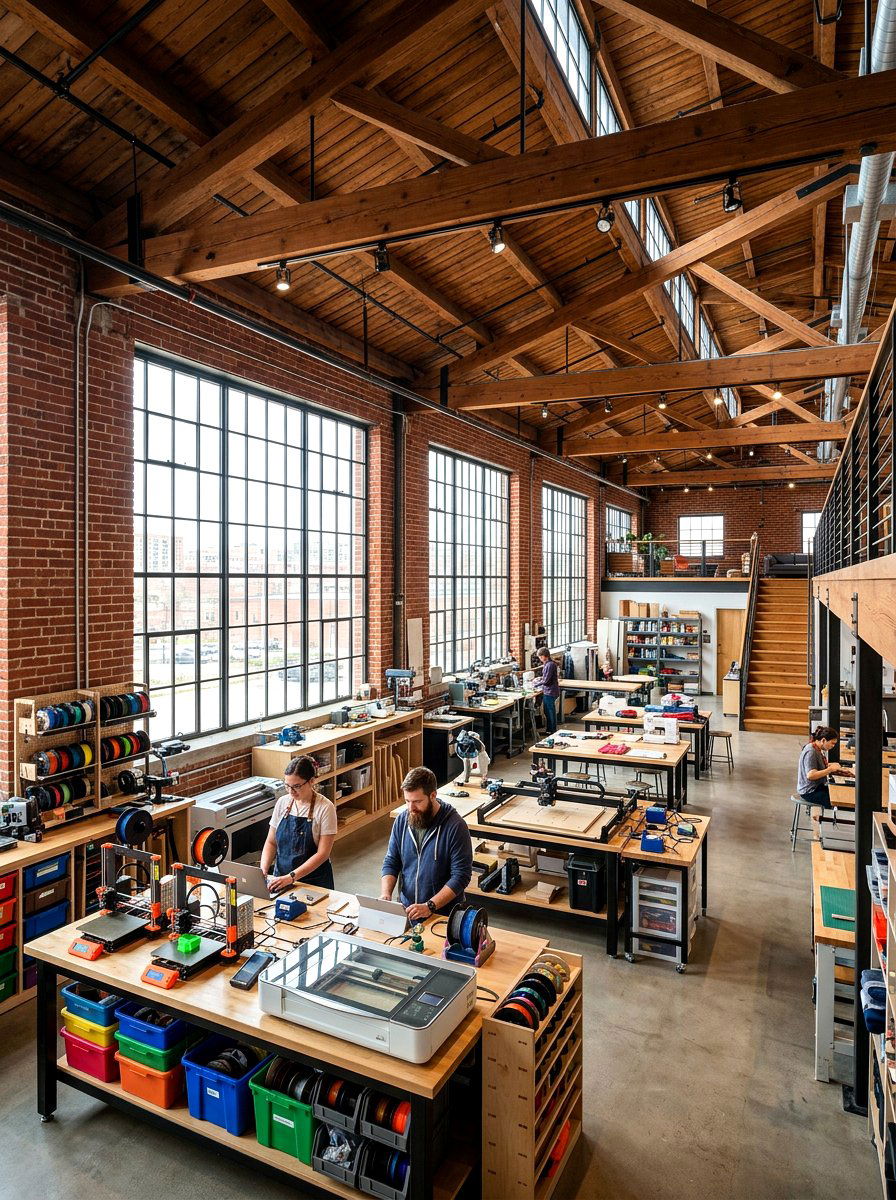
A loft maker space utilizes an open, airy upper floor to create an inspiring and expansive creative environment. The high ceilings and often large windows provide excellent natural light and a sense of freedom for the artistic process. This design often leaves the architectural features, like exposed bricks or beams, visible to add to the industrial and creative vibe. Zoned areas are created using furniture or rugs rather than walls, allowing for a seamless transition between different types of projects. This spacious setup is perfect for artists, designers, and makers who need room to spread out and see their work from a distance.
29. Shared maker space
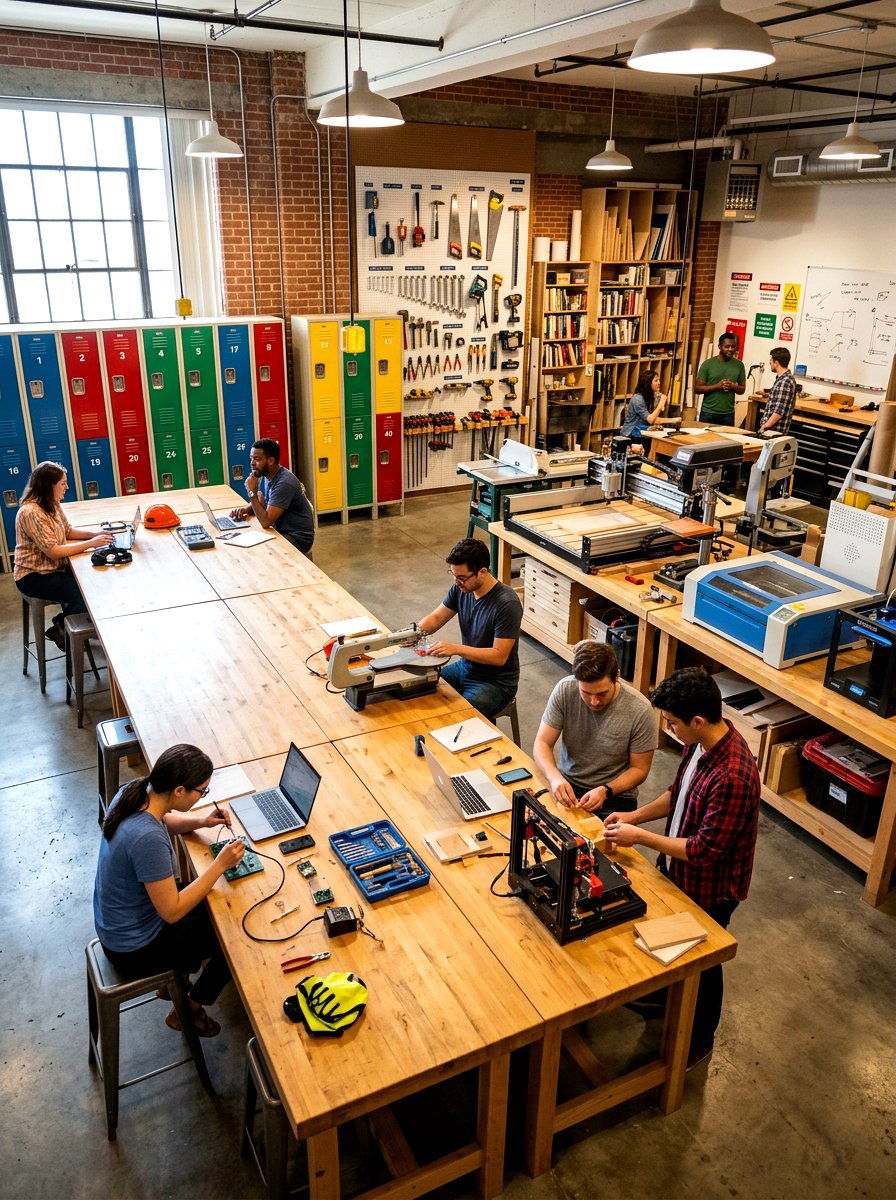
A shared maker space is a collaborative environment where multiple individuals work side-by-side on their own or joint projects. This design emphasizes community-owned tools and materials, with clear rules for organization and cleanup to maintain a functional workspace for everyone. Large, communal tables are the center of activity, fostering spontaneous conversations and the exchange of creative tips. Storage is usually divided into personal lockers and shared bulk bins to keep the area tidy. This social atmosphere is perfect for those who find motivation in the presence of others, creating a supportive network of makers who help each other grow their skills.
30. Minimalist maker space
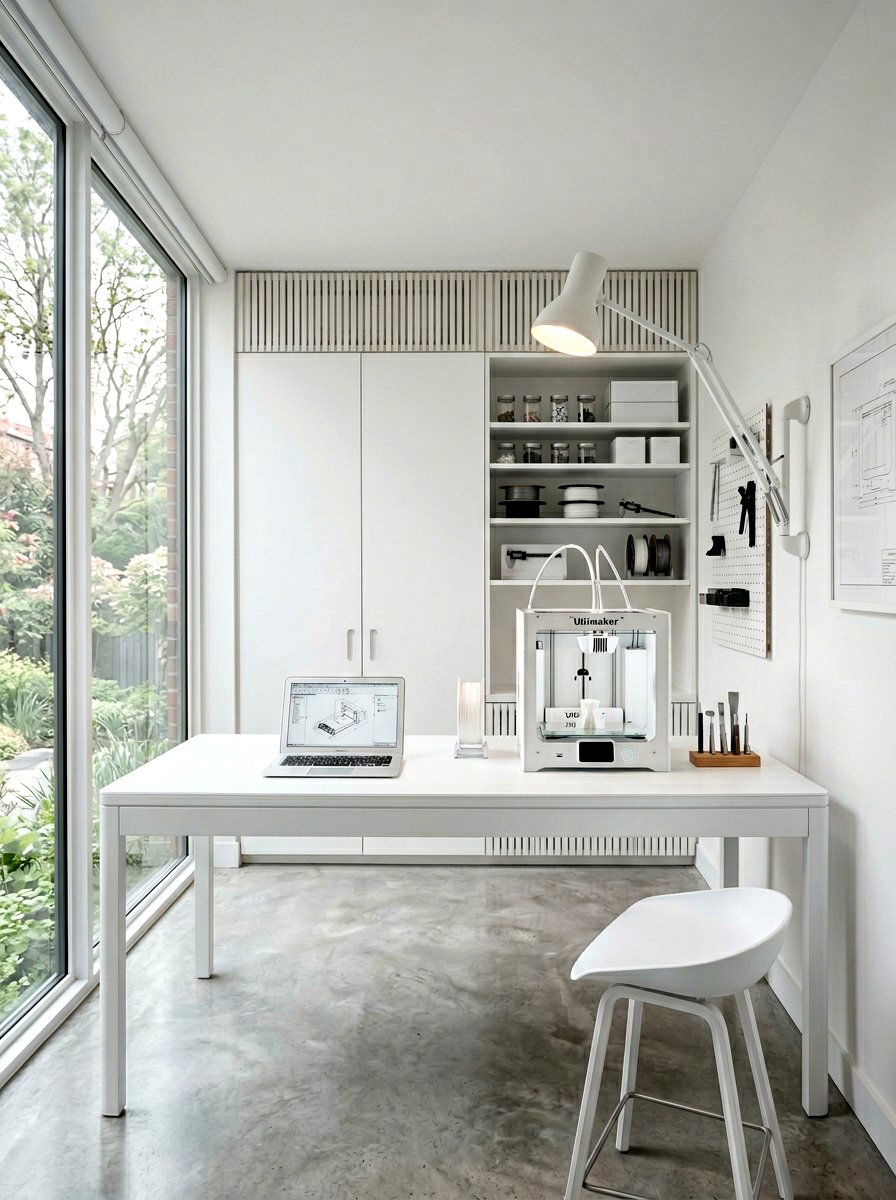
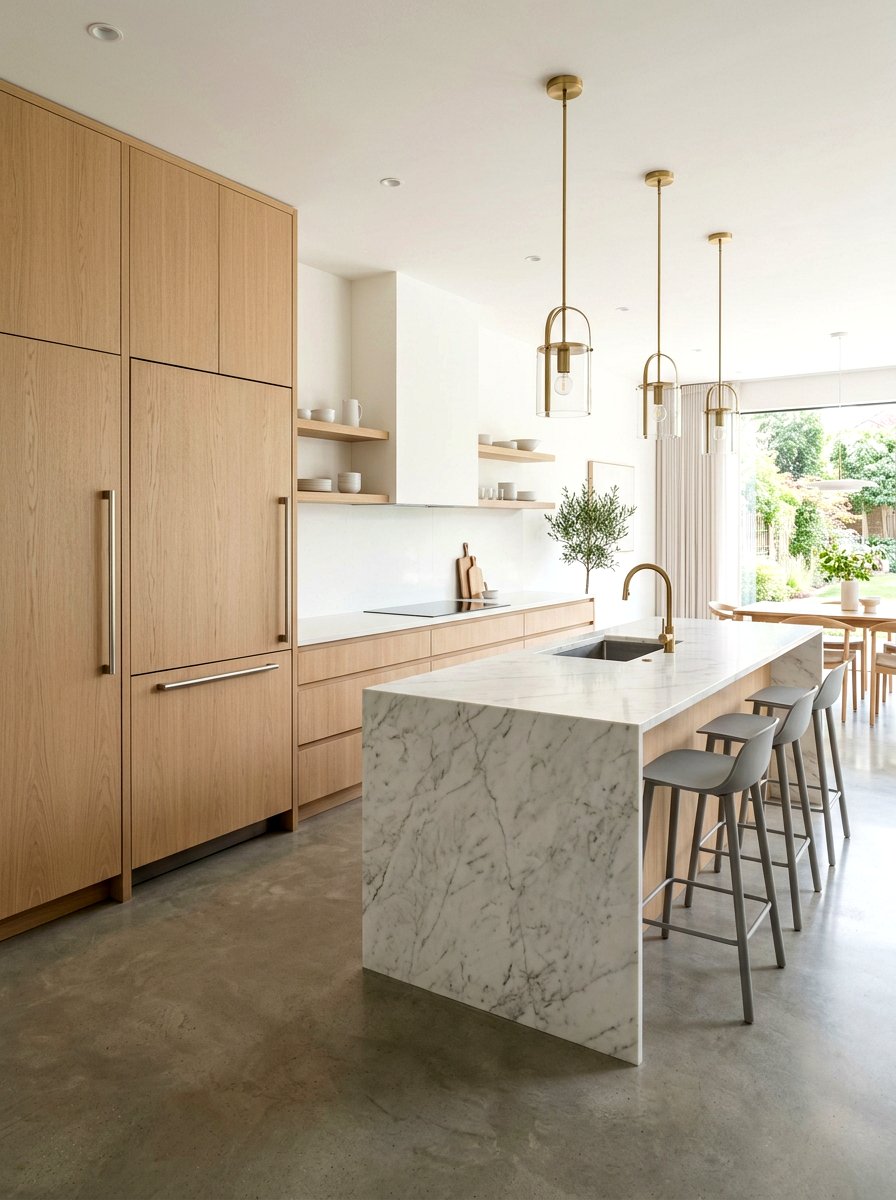
A minimalist maker space focuses on a clean, clutter-free environment that prioritizes high-quality tools and essential materials only. This design often features hidden storage, like cabinets with doors, to keep visual distractions to a minimum during the creative process. A single, high-quality workbench serves as the main focal point, with only the necessary items kept on the surface. Neutral colors and simple lines create a calm and focused atmosphere where the mind can truly wander and invent. This approach is perfect for those who feel overwhelmed by too many supplies and prefer a quiet, disciplined space where every tool has its own dedicated place.
Conclusion:
A well-designed maker space is the heart of any creative journey, offering a dedicated sanctuary where ideas are transformed into reality. By carefully selecting the right layout and tools for your specific needs, you create an environment that not only supports your current projects but also inspires future innovations. Whether it is a rugged garage workshop or a high-tech lab, the key is to build a space that feels accessible, organized, and uniquely yours. Embracing the maker mindset helps foster a lifetime of learning and problem-solving through hands-on experience. Start building your perfect creative zone today and watch your imagination flourish in spectacular new ways.

Related posts: