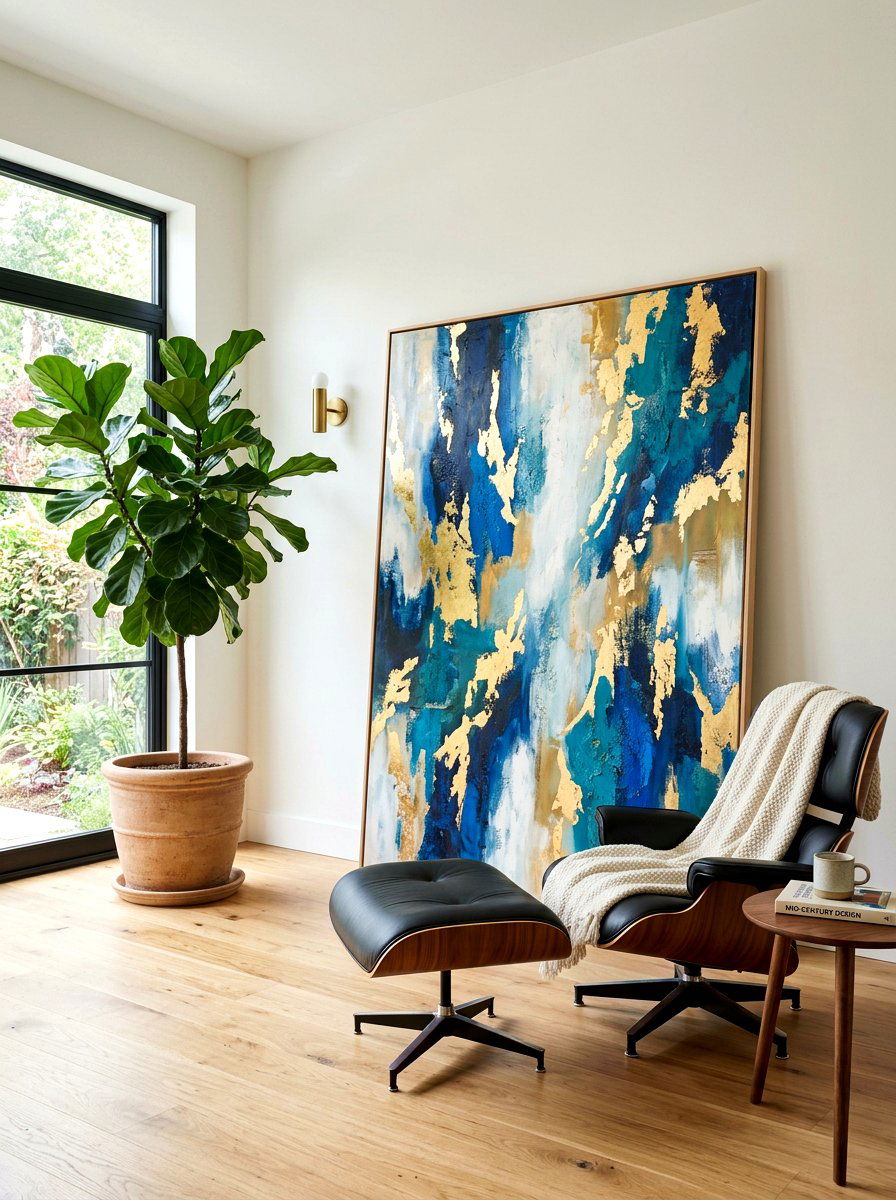
Creating a dedicated space for your creativity is one of the most fulfilling home projects you can undertake. Whether you are a professional painter or a weekend hobbyist, having a room that inspires you is essential. An art studio should be a perfect blend of functionality and personal expression. It needs to handle the mess of your medium while providing the comfort required for long hours of work. From choosing the right lighting to organizing your various supplies, every detail matters in a creative environment. This guide explores thirty unique ways to set up an art studio that fits your lifestyle. You will find inspiration for small corners and sprawling basements. Let’s dive into these diverse layouts to help you build the ultimate sanctuary for your artistic journey today.
1. Attic Art Studio
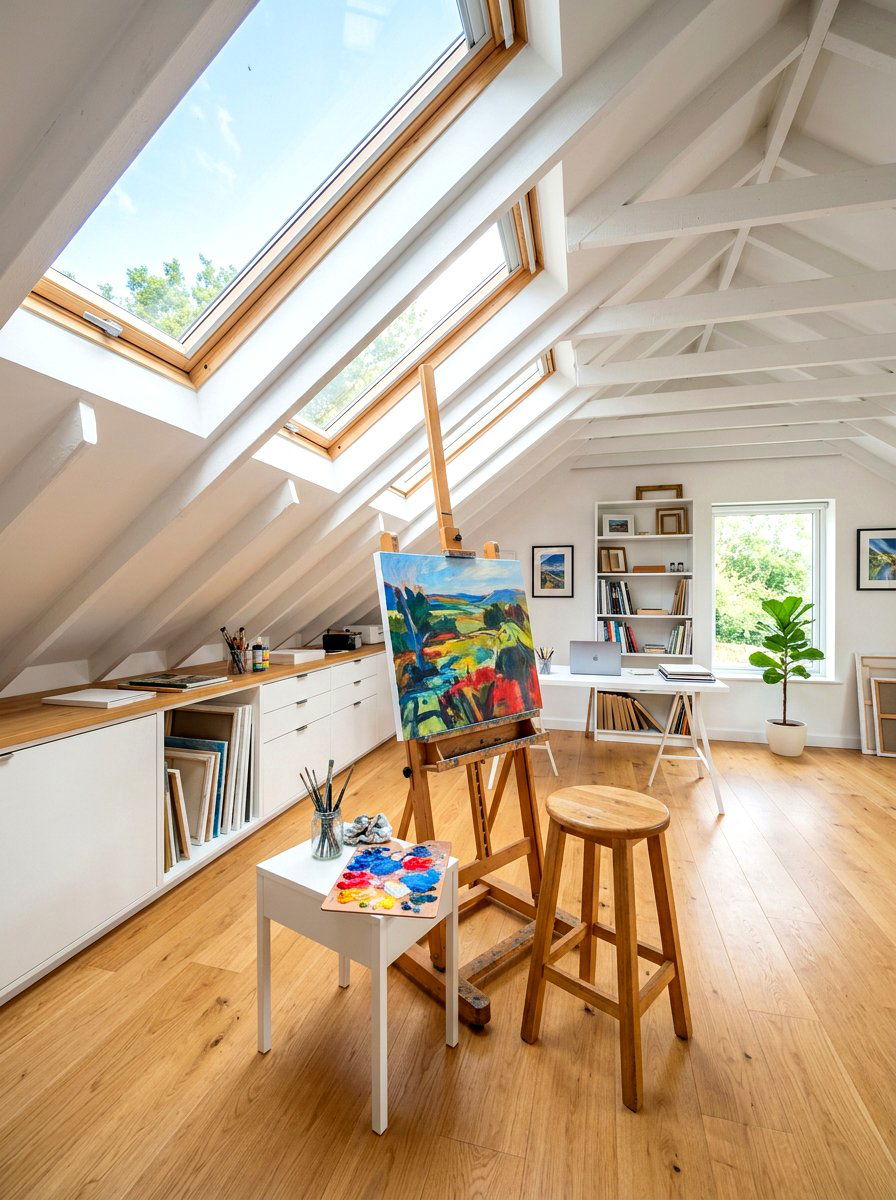
Have you ever considered turning the highest point of your home into a private creative getaway? An attic conversion offers a unique architectural charm that most rooms cannot replicate. The slanted ceilings and tucked-away feeling create an intimate atmosphere perfect for deep focus. You can install large skylights to flood the space with consistent, overhead natural light throughout the day. This setup keeps your work area separate from the busy energy of the rest of the house. Use the low walls under the eaves for custom storage cabinets or low bookshelves. White paint helps brighten the angled surfaces and makes the room feel much larger. It is the perfect escape for any artist seeking peace and quiet.
2. Small Corner Art Studio
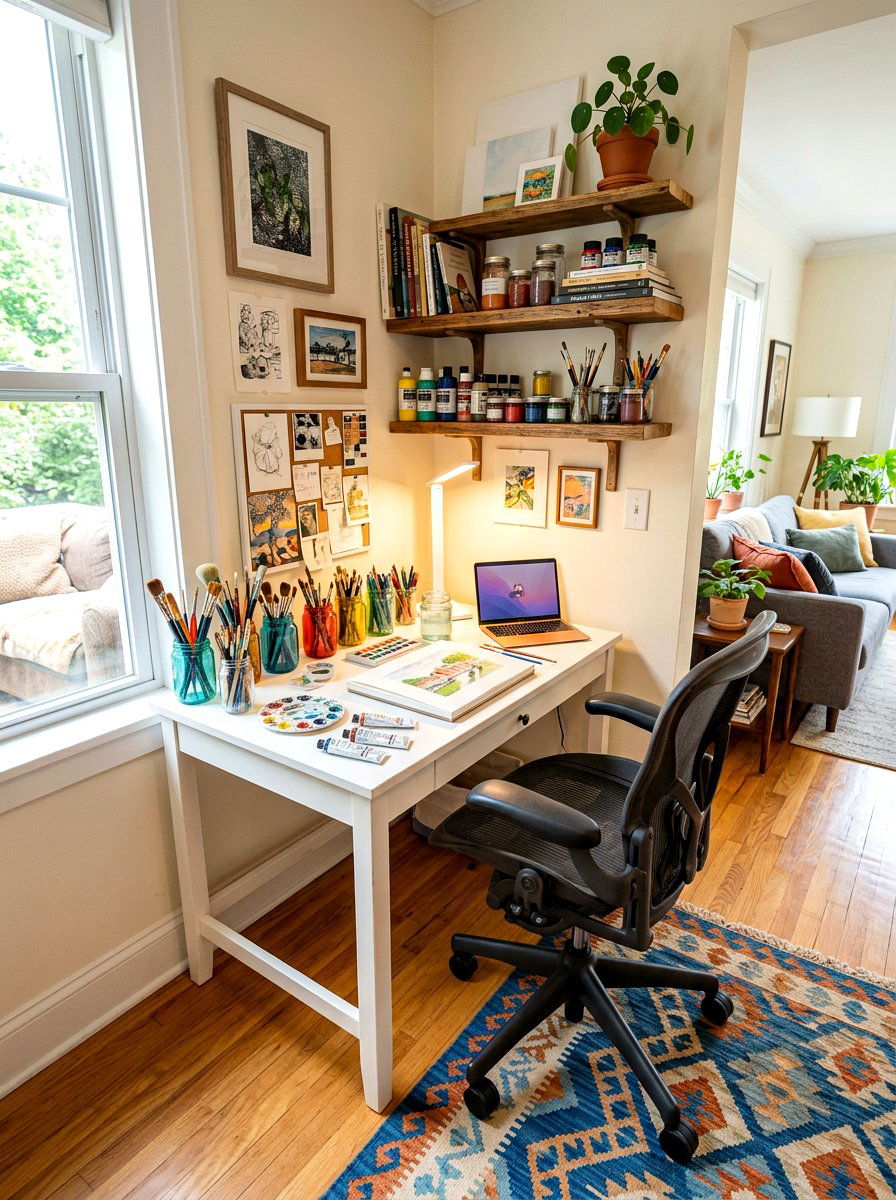
Do you feel like you lack enough square footage for a full creative room? You can easily carve out a highly functional workspace in any unused corner of your living area. A compact desk paired with a few wall-mounted shelves can hold all your essential supplies. Use a stylish rug to visually define the boundary between your studio and the rest of the room. This approach is perfect for apartment dwellers or those living in smaller homes. Choosing furniture with a slim profile keeps the area from feeling cluttered or overwhelming. Adding a small floor lamp ensures you have focused task lighting during evening sessions. It proves that great art does not require a massive room.
3. Natural Light Art Studio
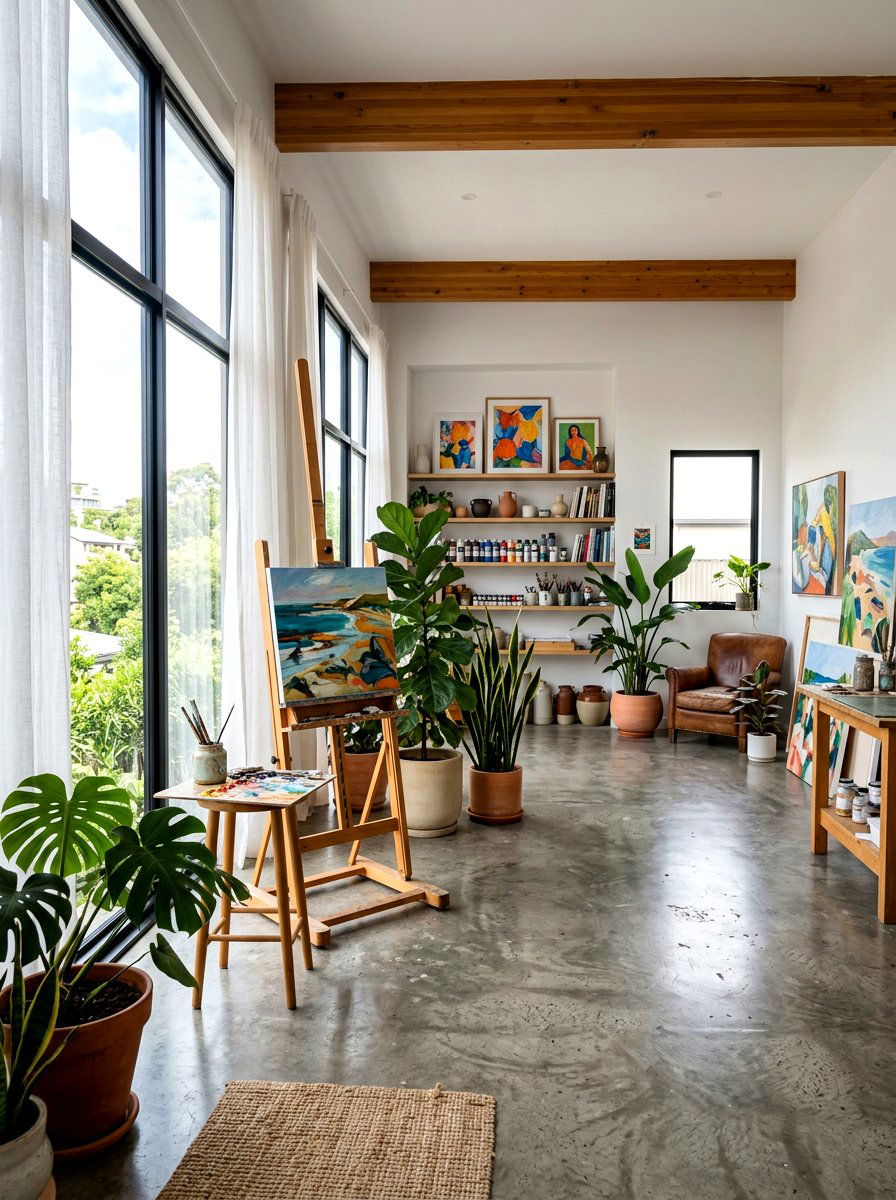
Is there anything more vital for an artist than seeing colors in their truest form? Designing a room around massive windows ensures you get the best possible lighting for your paintings. North-facing windows are particularly prized because they provide steady, indirect light that does not change drastically. Consider using sheer curtains to soften harsh midday sun while still keeping the room bright. Positioning your easel or drafting table directly in front of the window connects you with the world outside. This constant flow of daylight can significantly boost your mood and energy levels during long projects. It creates a serene and airy atmosphere that makes the creative process feel much more effortless and natural.
4. Minimalist Art Studio
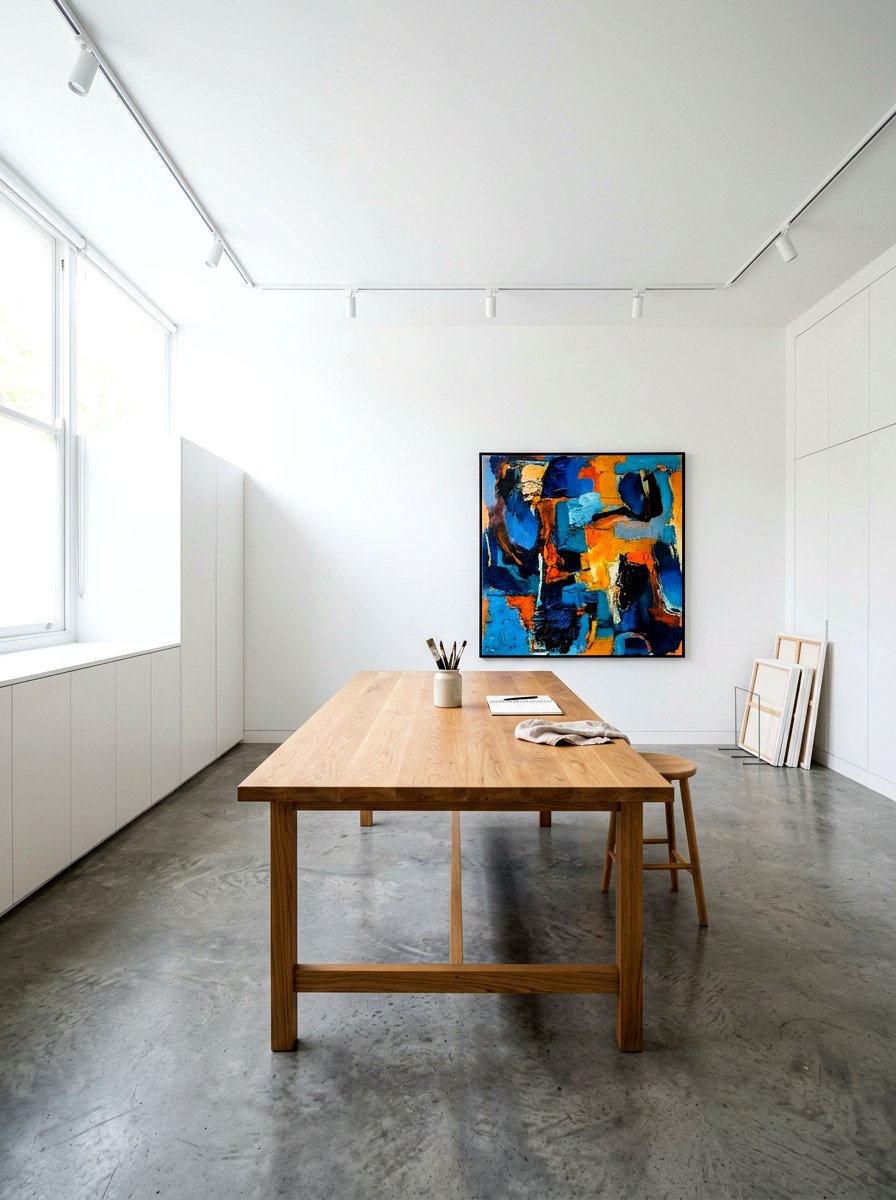
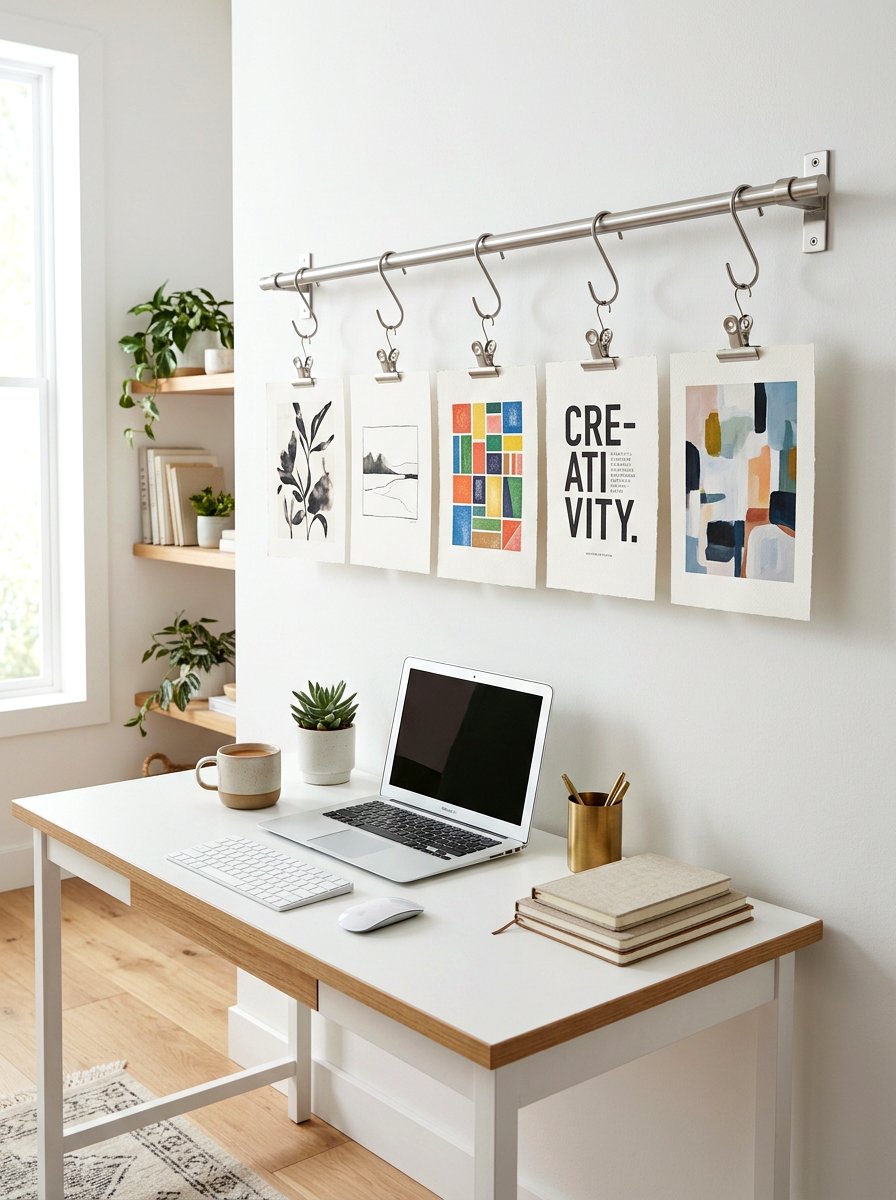
Are you someone who finds peace in simplicity and clean lines? A minimalist studio focuses on keeping only the absolute essentials within reach to reduce mental distractions. Use sleek, white cabinetry to hide away colorful supplies when they are not in use. A single, high-quality wooden table can serve as your primary workspace without cluttering the floor. This design style often features a neutral color palette of whites, grays, and soft woods. The lack of visual noise allows your current project to be the true focal point of the room. It is a modern approach that emphasizes quality over quantity. Such a space feels organized, professional, and incredibly calm for any type of creative work.
5. Industrial Loft Art Studio
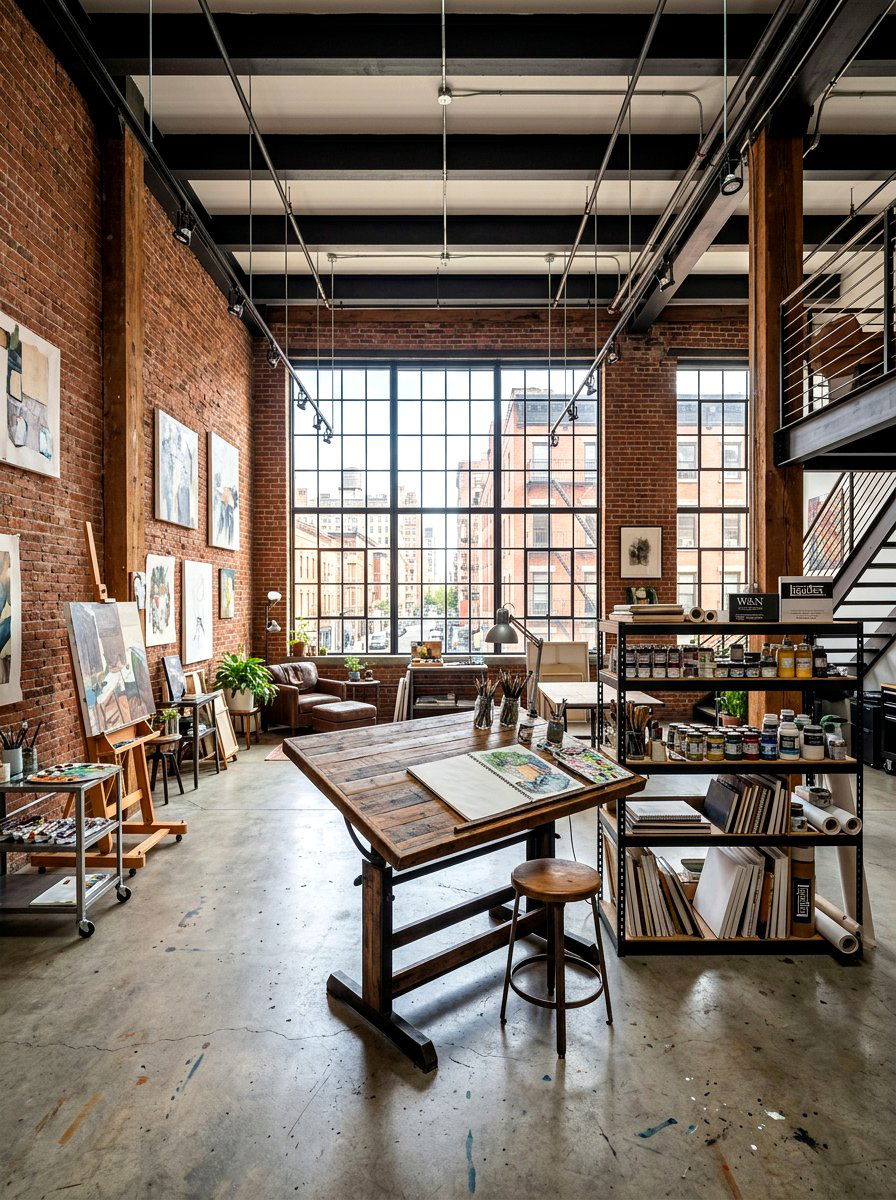
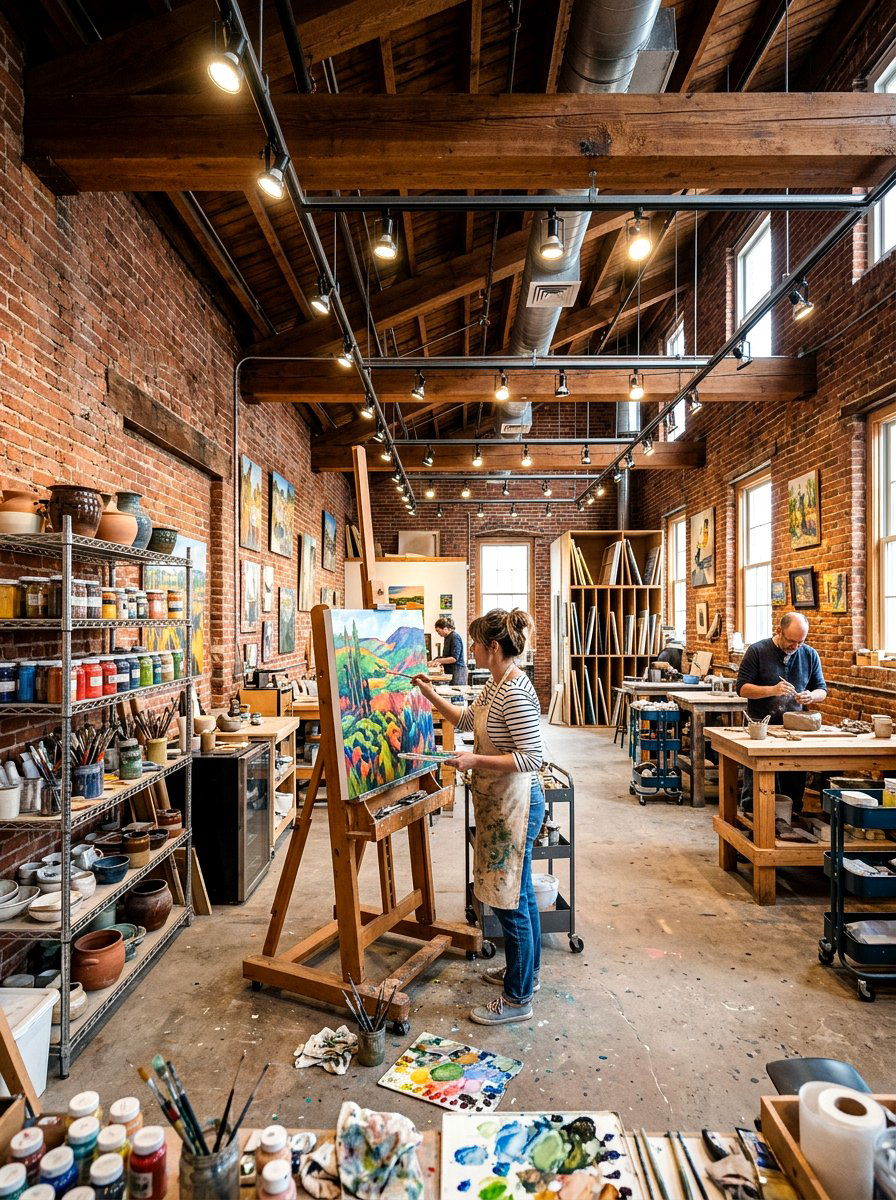
Does the raw beauty of exposed brick and metal piping inspire your creative side? An industrial-style studio brings a gritty, urban energy to your home that feels both modern and timeless. Large factory-style windows and open ceilings provide a sense of vastness and freedom. You can use heavy-duty metal shelving and reclaimed wood tables to match the aesthetic. Concrete floors are not only stylish but also incredibly practical for easy cleanup after messy projects. Adding large-scale art pieces to the brick walls enhances the gallery-like feel of the space. This design works exceptionally well for artists who work with larger canvases or sculptural materials. It is a bold, high-energy environment that encourages big ideas.
6. Modern Home Office Art Studio
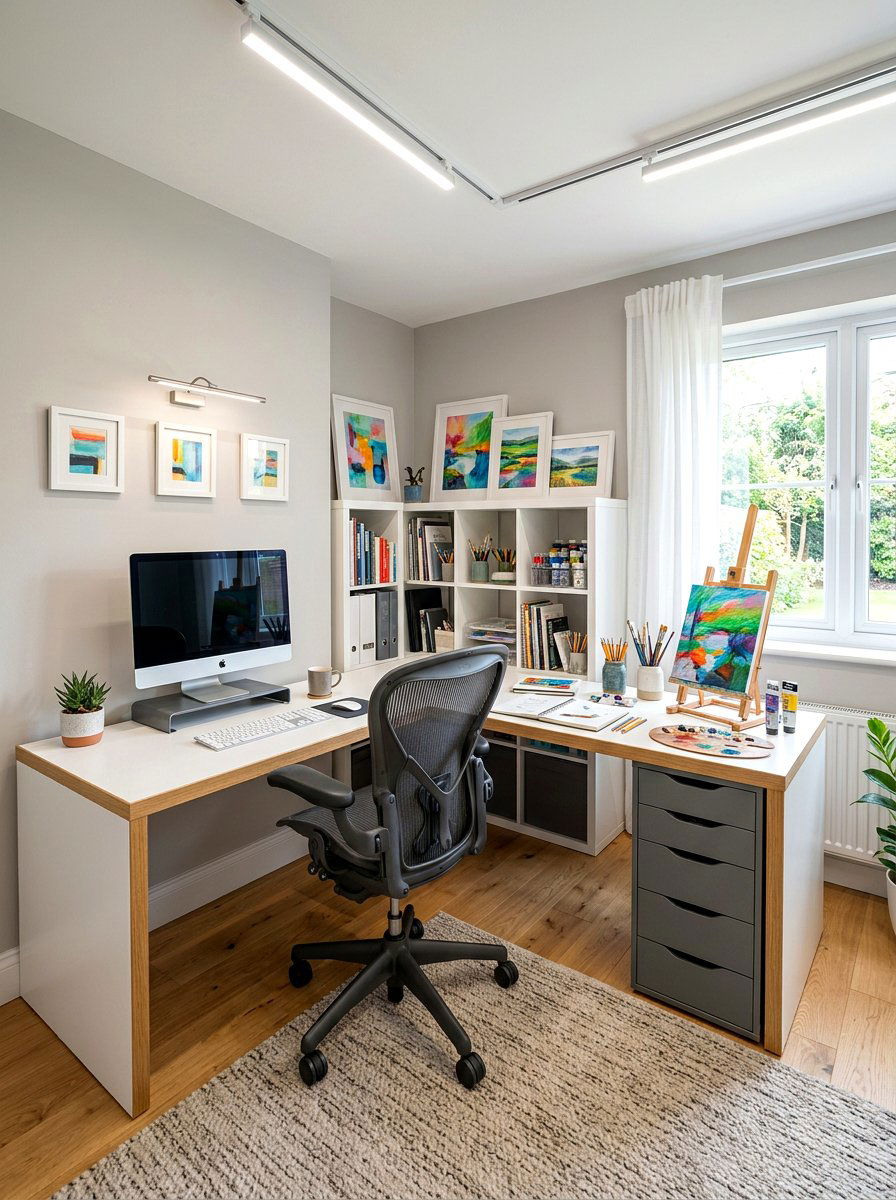
Do you need a space that works as hard as you do for both business and art? A dual-purpose room allows you to switch between professional tasks and creative hobbies seamlessly. Use a long L-shaped desk to separate your computer setup from your messy art supplies. Modern storage solutions like sleek drawers can keep your paperwork and paints organized in the same room. Neutral wall colors provide a professional backdrop for video calls while still feeling bright for your creative sessions. This layout is ideal for digital illustrators or those who balance a day job with their artistic passions. It maximizes the utility of a single room without sacrificing style or functionality.
7. Garden Art Studio Shed
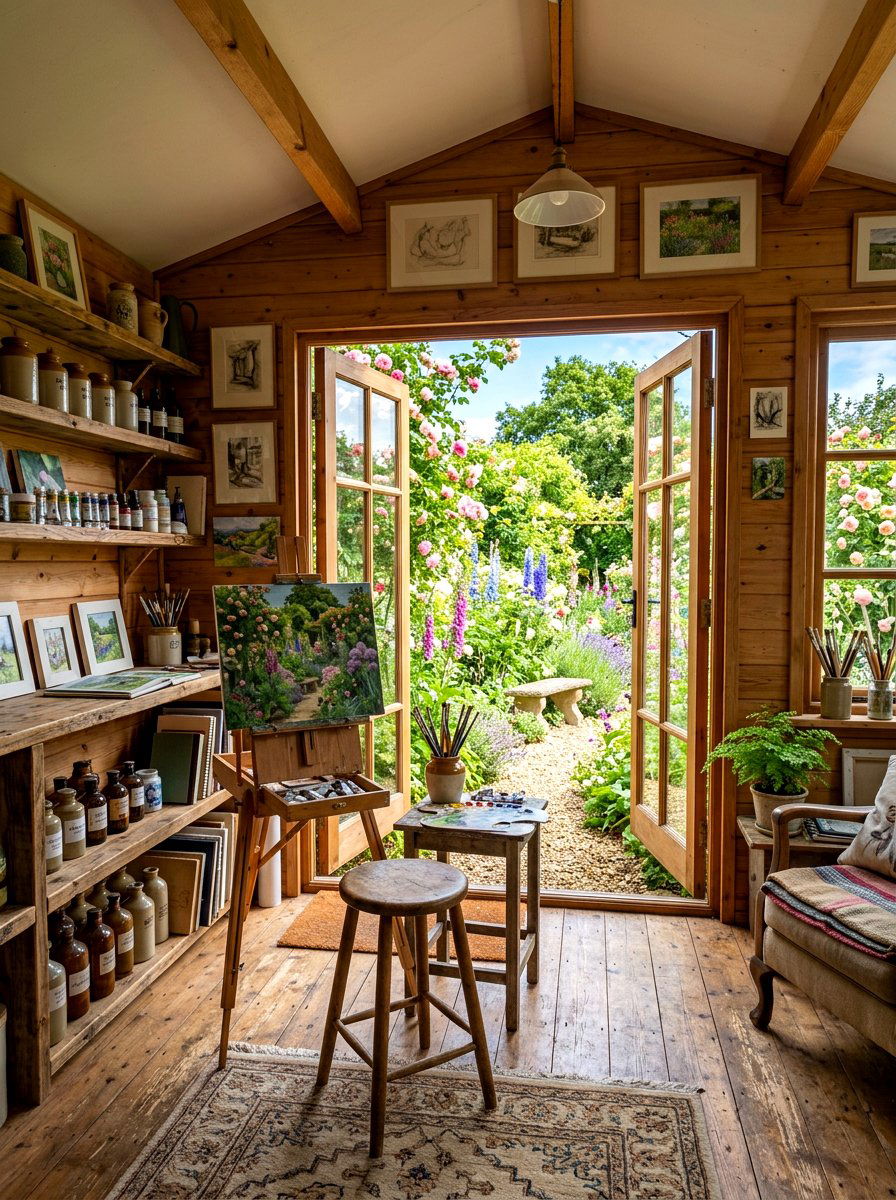
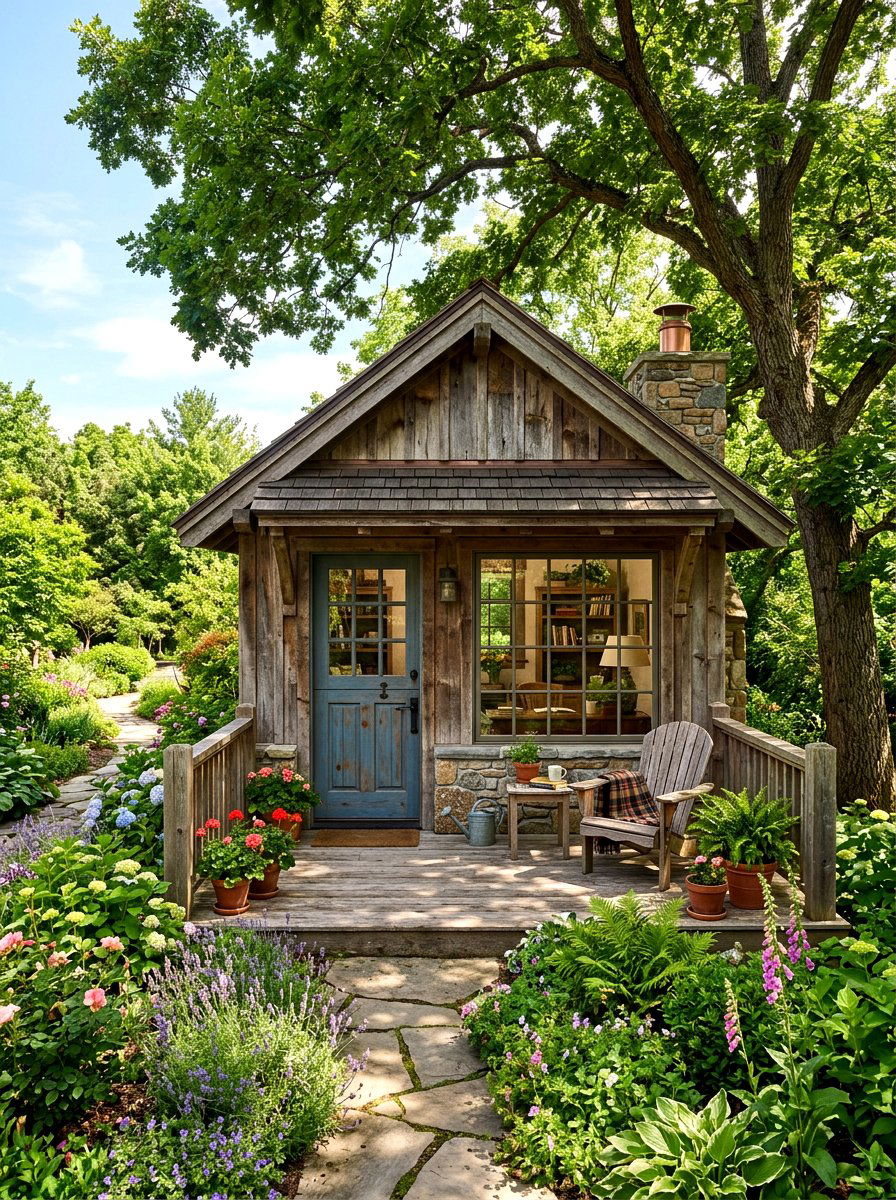
Have you dreamt of a private sanctuary nestled among the trees in your backyard? Converting a garden shed into a studio provides a complete physical separation from your home life. This isolation is perfect for avoiding daily distractions and immersing yourself in your work. You can install French doors to let in fresh air and beautiful views of your greenery. The rustic charm of a wood-clad interior creates a cozy and grounded atmosphere. It is also an excellent option if you work with materials that produce strong odors or dust. Being surrounded by nature provides a constant source of organic inspiration. It is a peaceful retreat that feels like a destination of its own.
8. Colorful Creative Art Studio
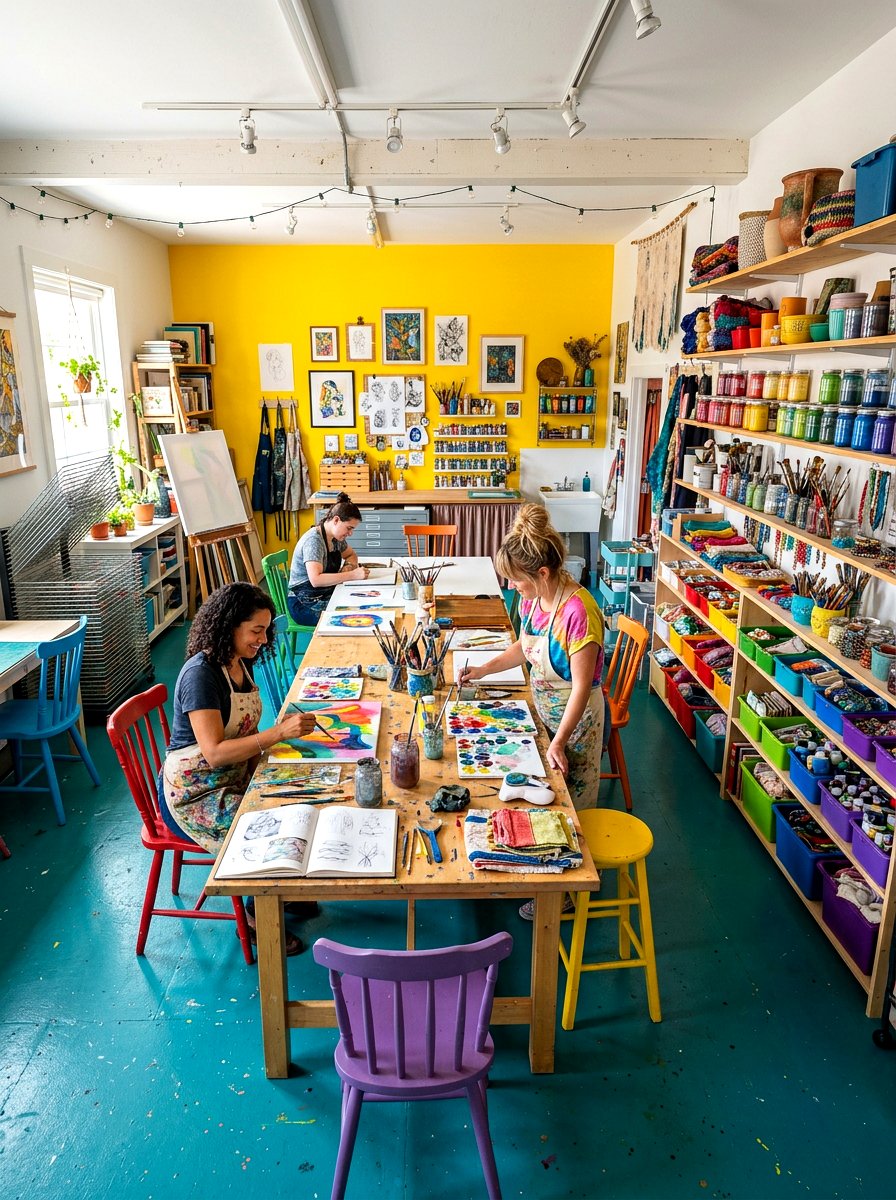
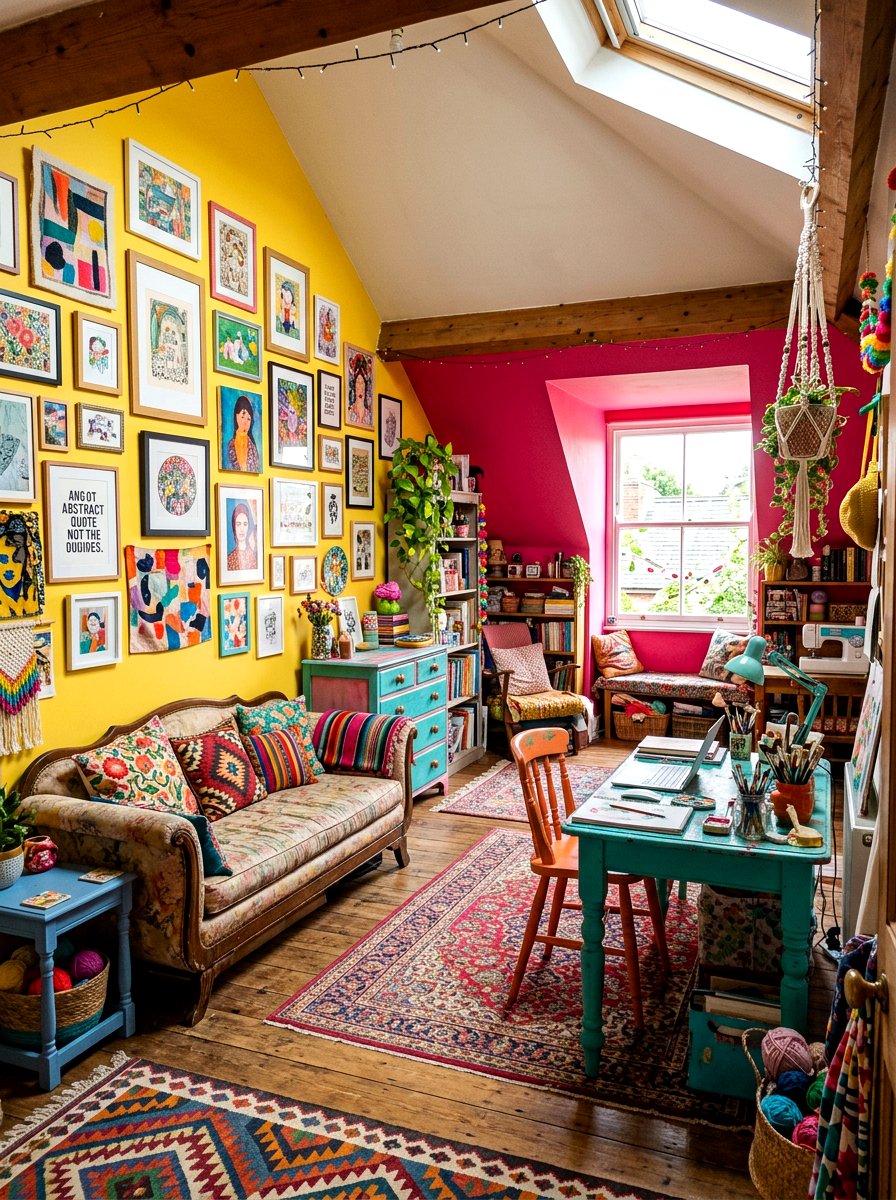
Why should an art room be plain when it is meant for vibrant expression? A colorful studio uses bold wall shades and eclectic decor to spark immediate inspiration. You can use a bright accent wall or even paint the floor in a playful hue. Open shelving allows your rainbow of supplies to serve as part of the room's decoration. Mix and match different patterns and textures to create a space that feels alive and energetic. This design style is perfect for artists who thrive in high-stimulation environments. It reflects a joyful personality and encourages you to take risks with your own work. It is a fun, non-traditional space where rules are meant to be broken.
9. Professional Fine Art Studio
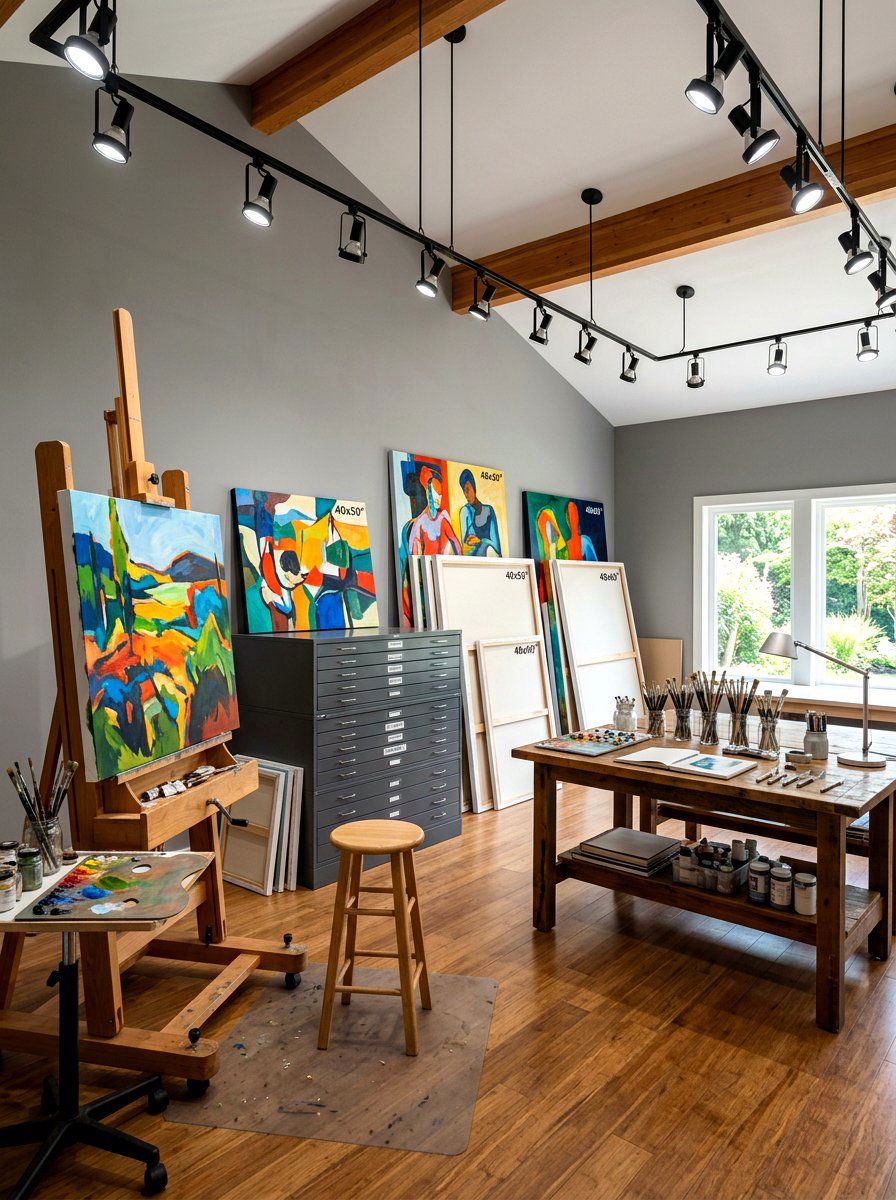
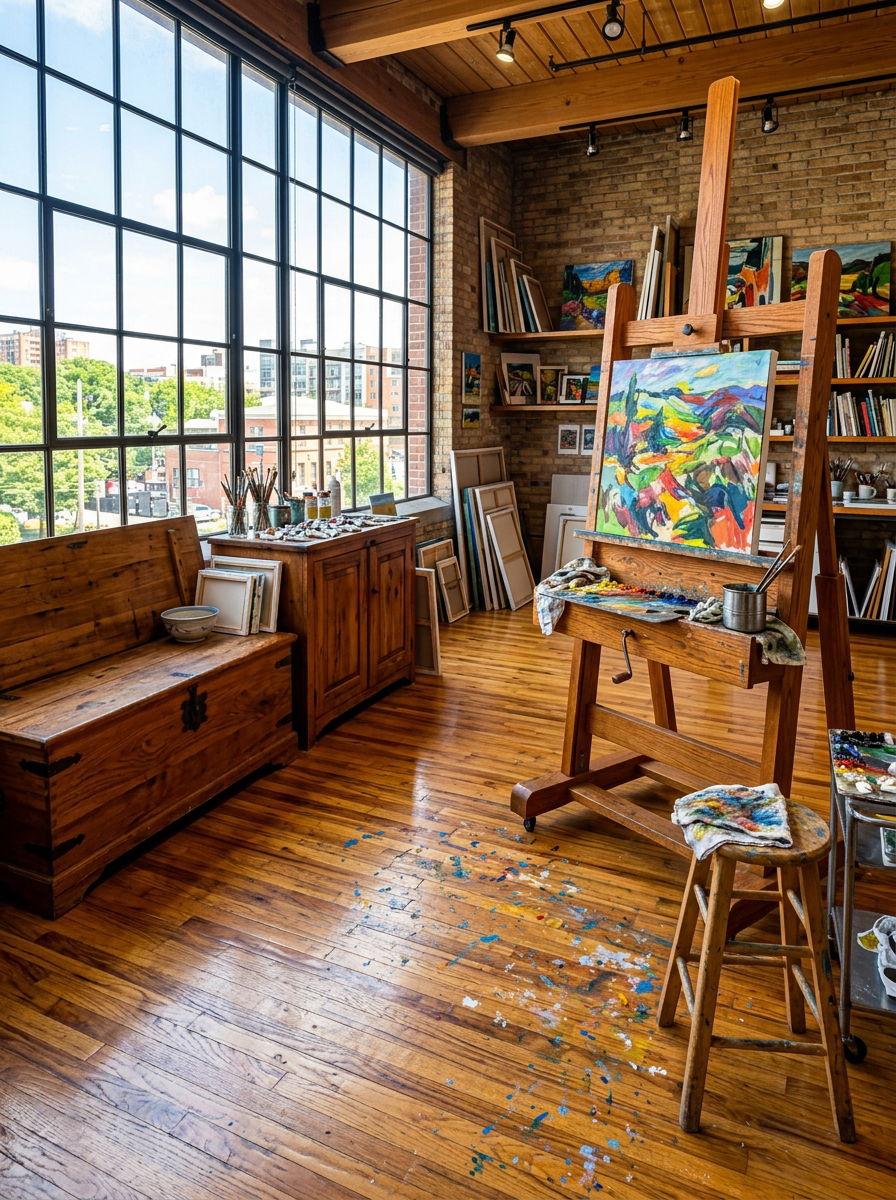
Are you ready to take your artistic career to the next level with a dedicated professional setup? A fine art studio prioritizes high-end equipment and ample space for large-scale production. Invest in a heavy-duty H-frame easel and professional-grade storage for finished canvases. Large flat-file cabinets are essential for organizing delicate prints and paper stock. The room should feature adjustable gallery lighting to help you see fine details and prepare work for exhibitions. Keep the walls a neutral white or light gray to ensure they do not distort your perception of color. This space is designed for serious output and long-term durability. It provides the structured environment needed for a successful and focused artistic practice.
10. Kids Art Studio Room
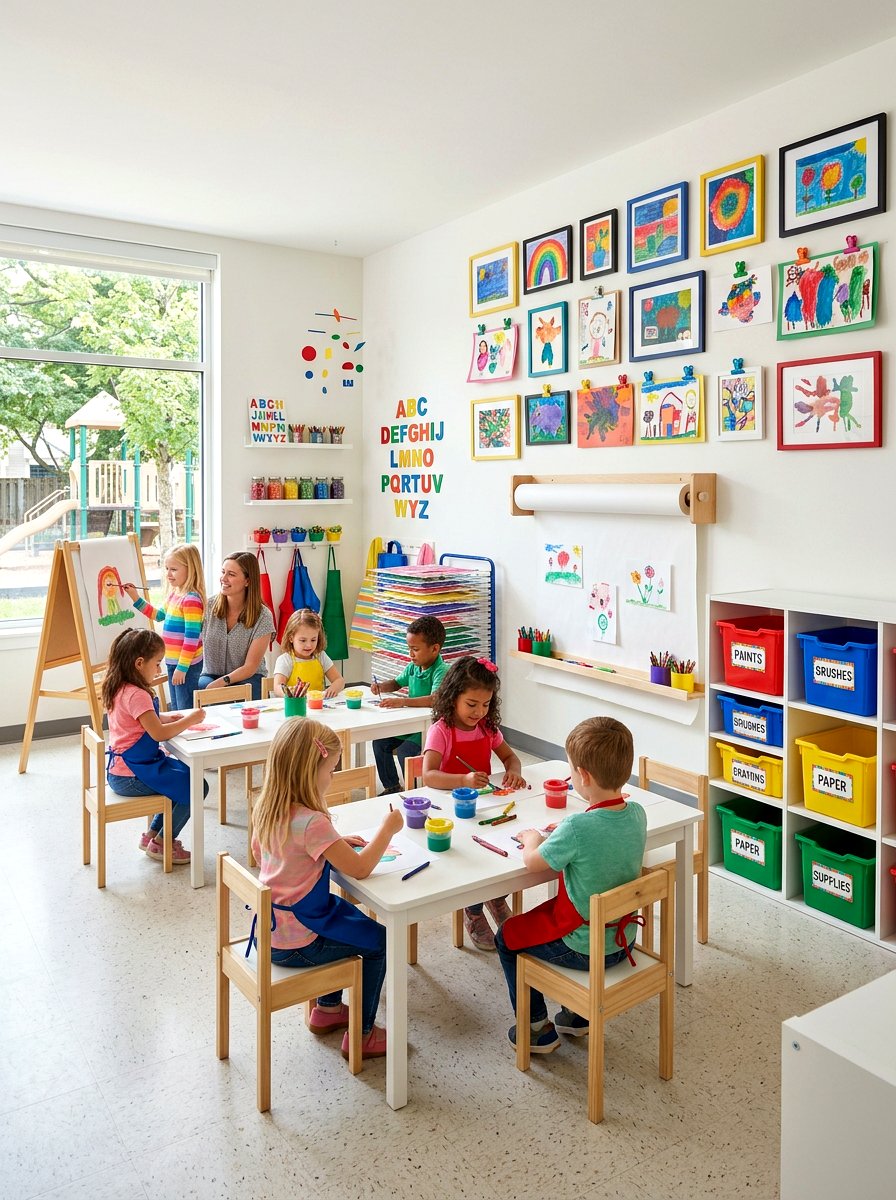
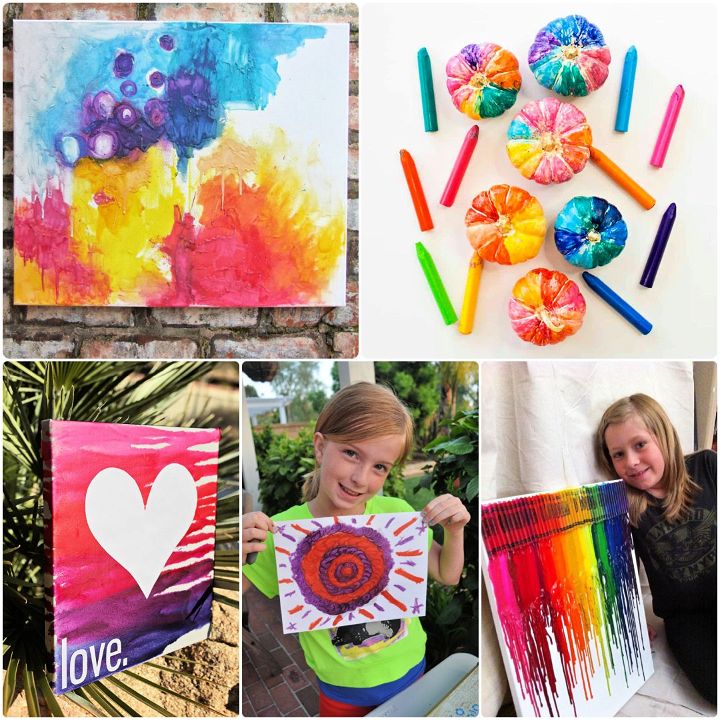
Do you want to encourage the next generation of artists with a space of their own? A dedicated art room for children should focus on durability and easy accessibility. Use low-profile tables and chairs that are the right size for little bodies. Wall-mounted rolls of paper allow kids to draw as much as they want without limits. Install easy-to-clean flooring like linoleum or colorful foam mats to handle spills. Bright storage bins at eye level make it simple for children to find and put away their supplies. Displaying their finished masterpieces on a dedicated gallery wall boosts their confidence and pride. It is a playful and safe environment where creativity can truly flourish without worry.
11. Basement Art Studio
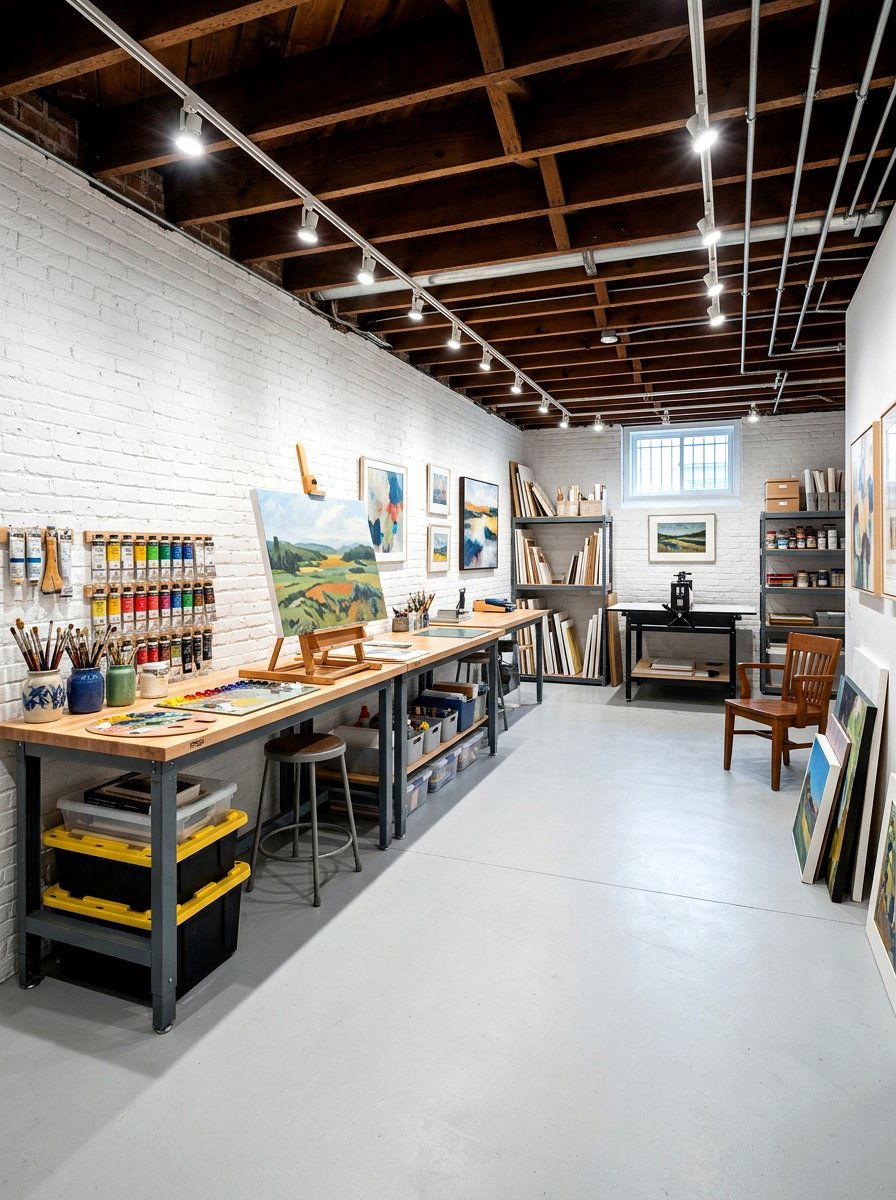
Could the lowest level of your home become your new favorite place to create? A basement studio offers plenty of square footage and a quiet, subterranean atmosphere. Since natural light might be limited, you can focus on installing high-quality LED lighting that mimics daylight. The cooler temperatures of a basement are often perfect for working during hot summer months. You can use industrial-style furniture and open layouts to make the space feel less enclosed. Painted white ceilings and walls help bounce light around the room to keep it bright. It is an excellent choice for loud or messy projects that you want to keep away from main living areas. This hidden gem provides a vast canvas for your imagination.
12. Vintage Inspired Art Studio
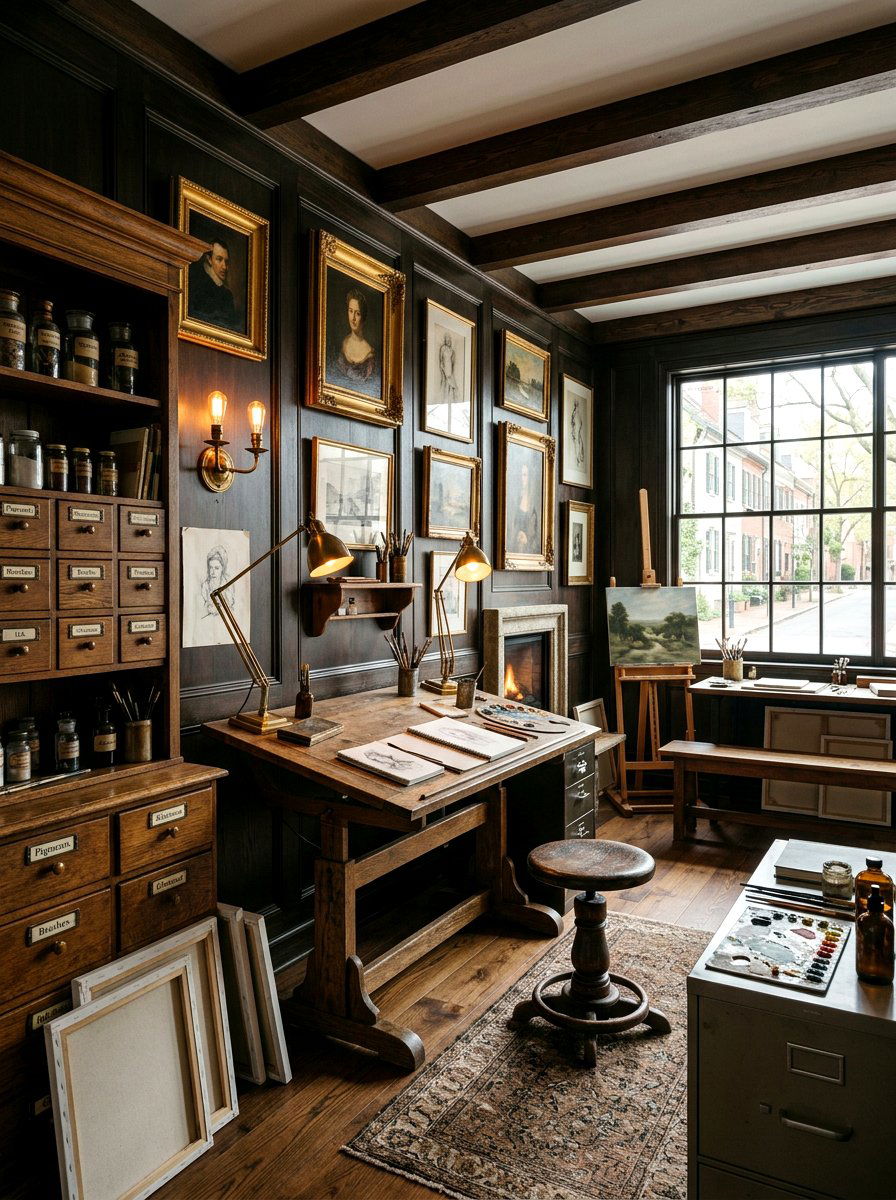
Do you love the nostalgia of antique furniture and classic design elements? A vintage-inspired studio uses reclaimed pieces like old library card catalogs or apothecary jars for supply storage. An ornate wooden desk or a weathered drafting stool adds character and history to the room. Use warm, moody lighting and rich textures like velvet or leather to create a cozy feel. Displaying old art books and antique frames on the walls enhances the timeless aesthetic. This style is perfect for those who feel more connected to the art of the past. It creates a soulful and storied environment that feels deeply personal. It is a beautiful way to blend your love for history with your modern creative practice.
13. Mobile Art Studio Caddy
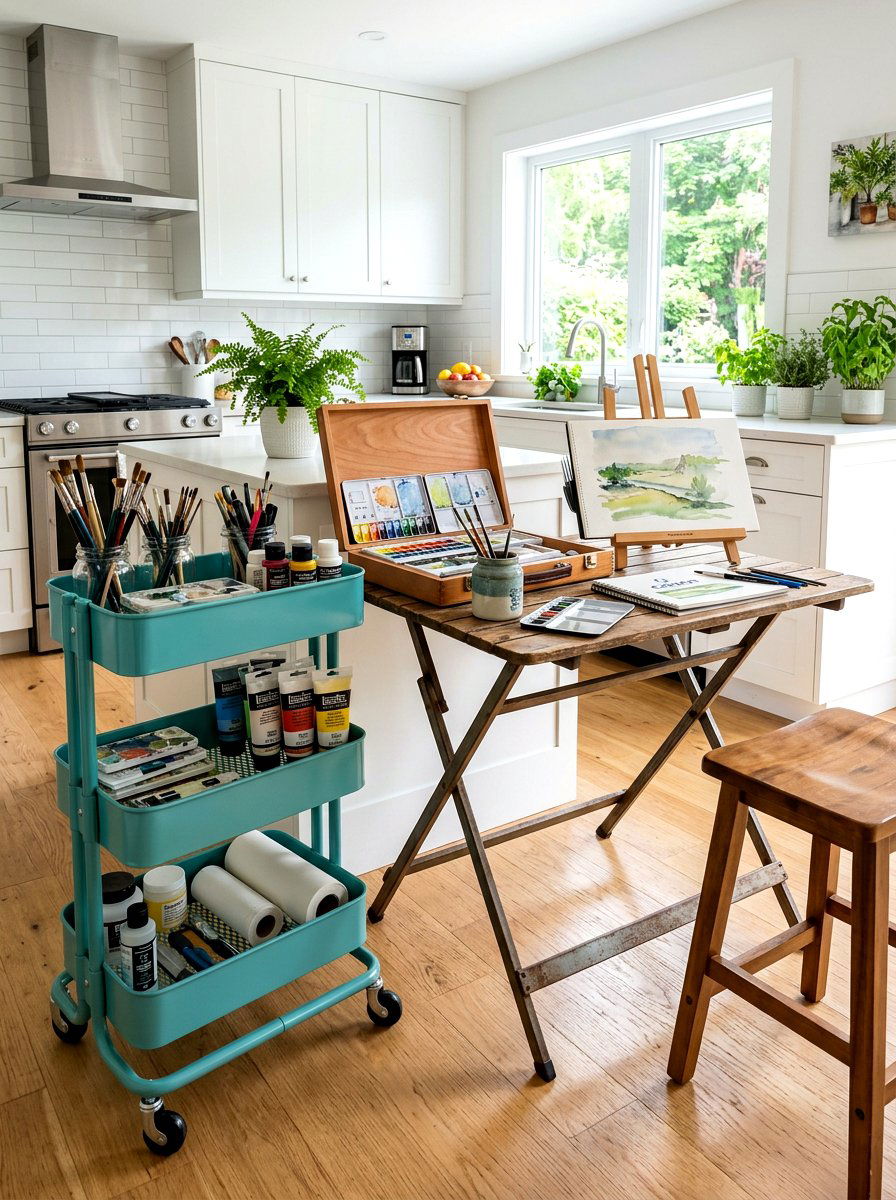
Are you looking for a way to stay organized while moving between different rooms? A mobile art studio uses rolling carts and portable cases to keep your supplies within reach. This setup is ideal for those who do not have a permanent room for their hobby. You can easily wheel your paints and brushes to the kitchen table or out onto the patio. Use tiered metal carts to categorize your materials by medium or frequency of use. When you are finished, simply tuck the cart into a closet or corner to keep the house tidy. It offers incredible flexibility and ensures you can create whenever the mood strikes. This smart solution makes artistic expression possible in any living situation.
14. Large Format Art Studio
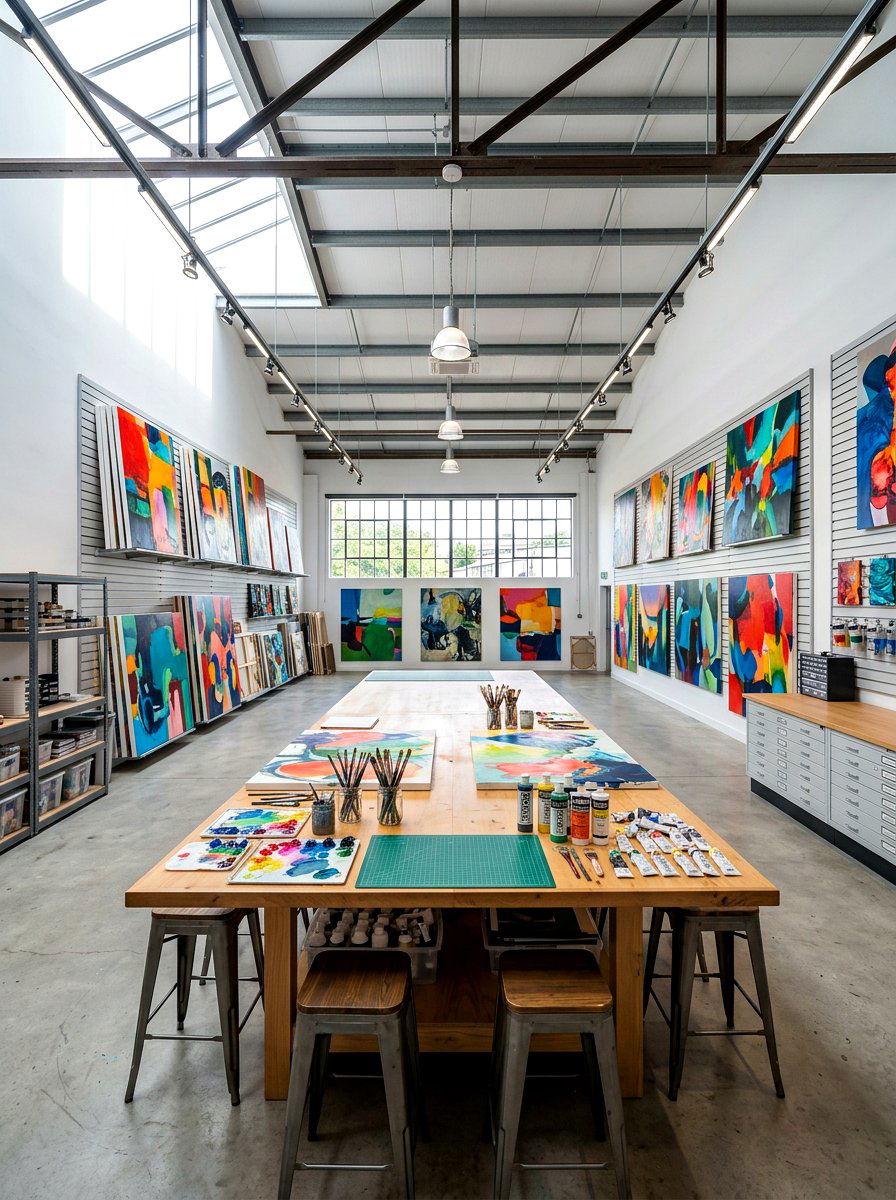
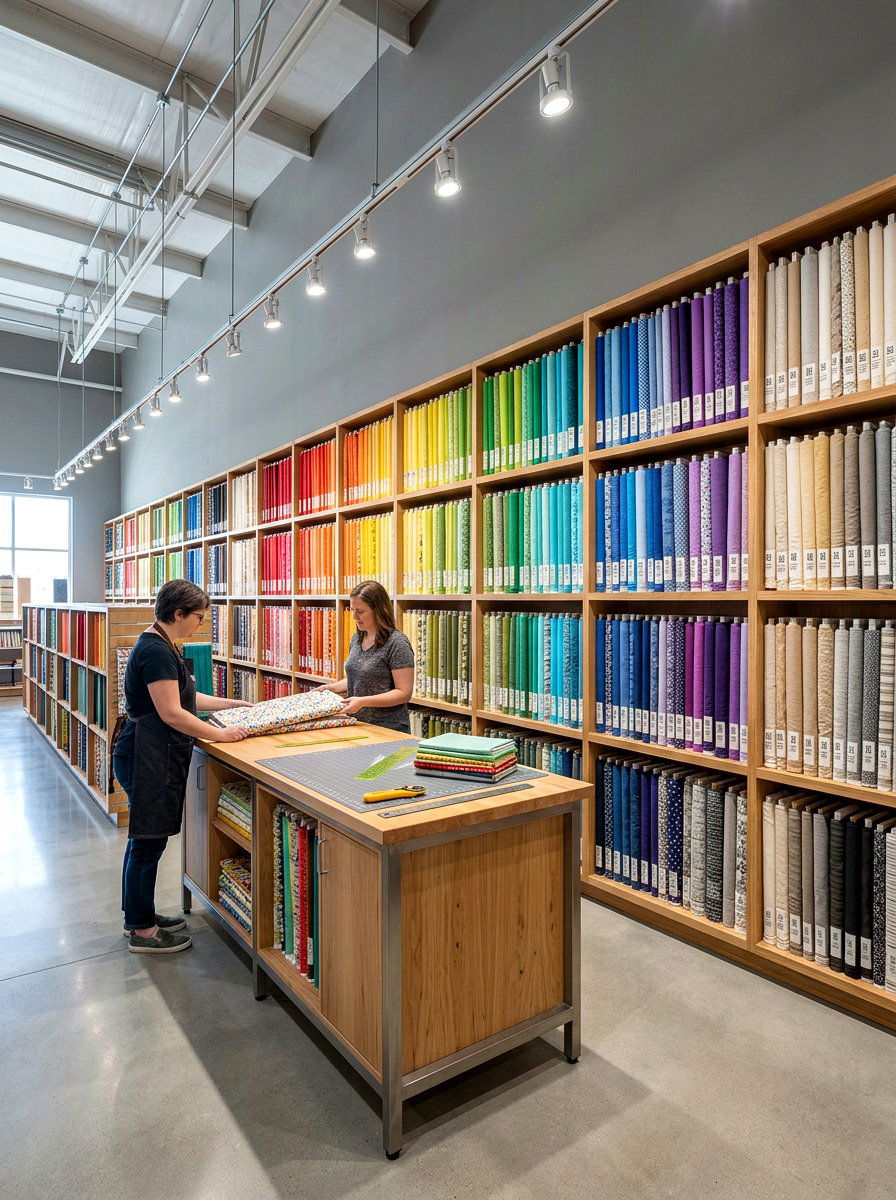
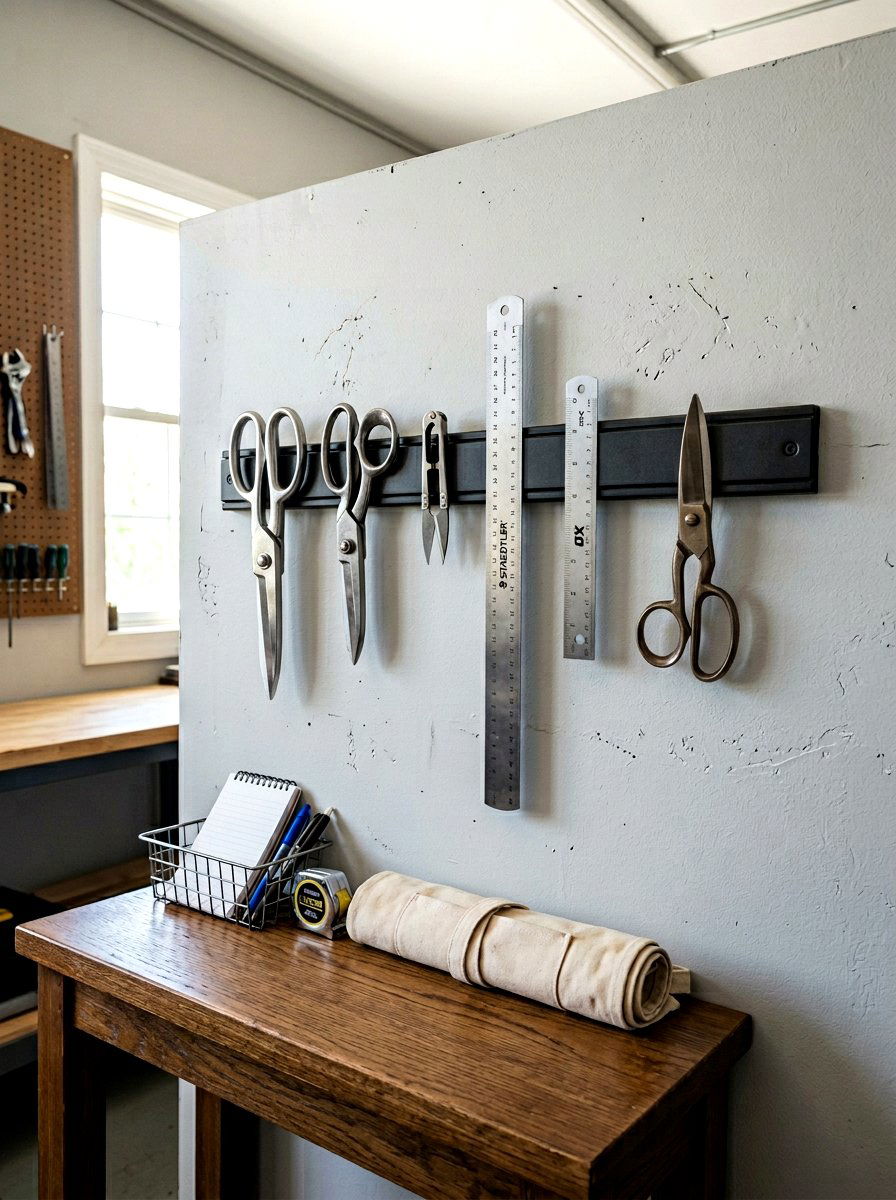
Do you work on massive canvases that require significant floor and wall space? A large format studio focuses on open floor plans and high ceilings to accommodate big projects. You can install "slat walls" or large vertical racks to store and dry multiple oversized pieces at once. A massive central island or work table provides enough surface area for rolling out large sheets of paper or fabric. Use powerful overhead lighting to ensure every inch of your work is visible. The goal of this room is to eliminate physical barriers that might restrict your movement or scale. It is a liberating environment that encourages you to think and create bigger than ever before. This space is all about power and presence.
15. Guest Room Art Studio
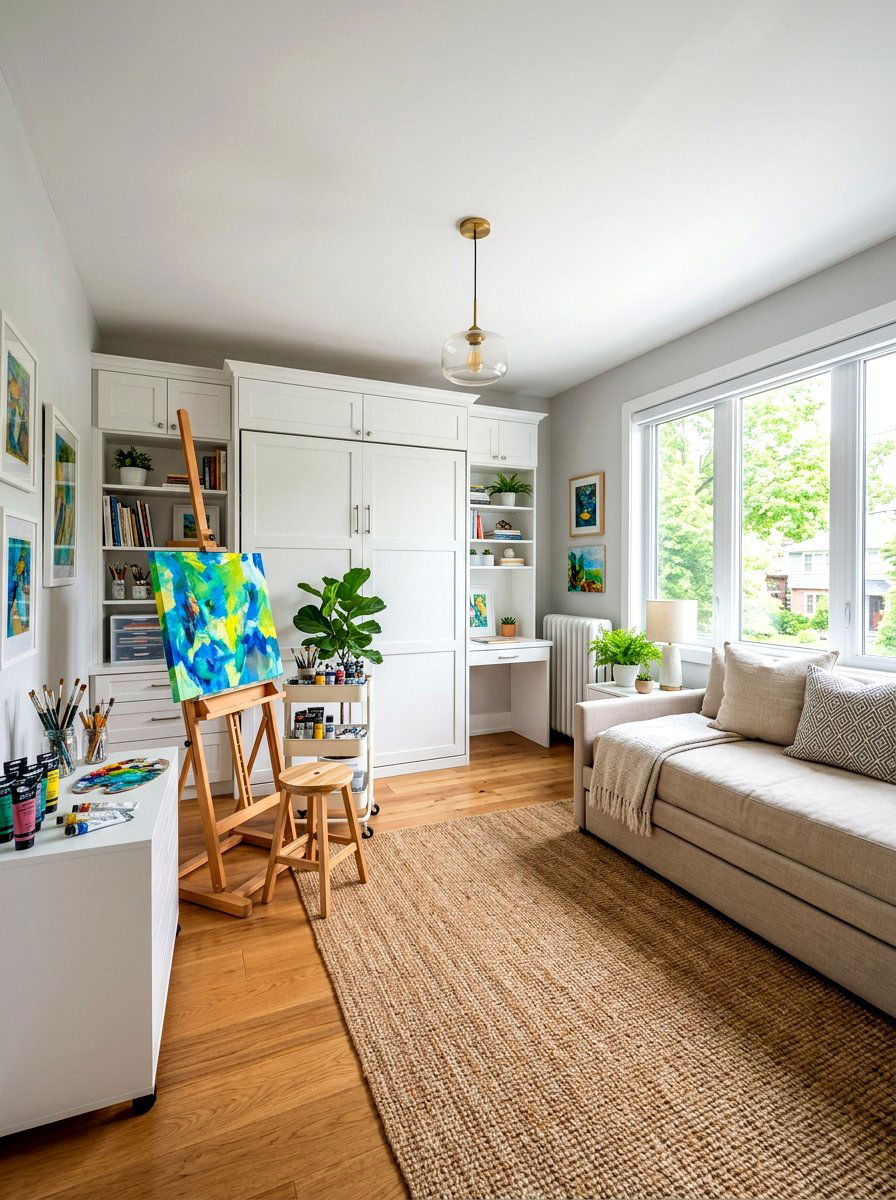
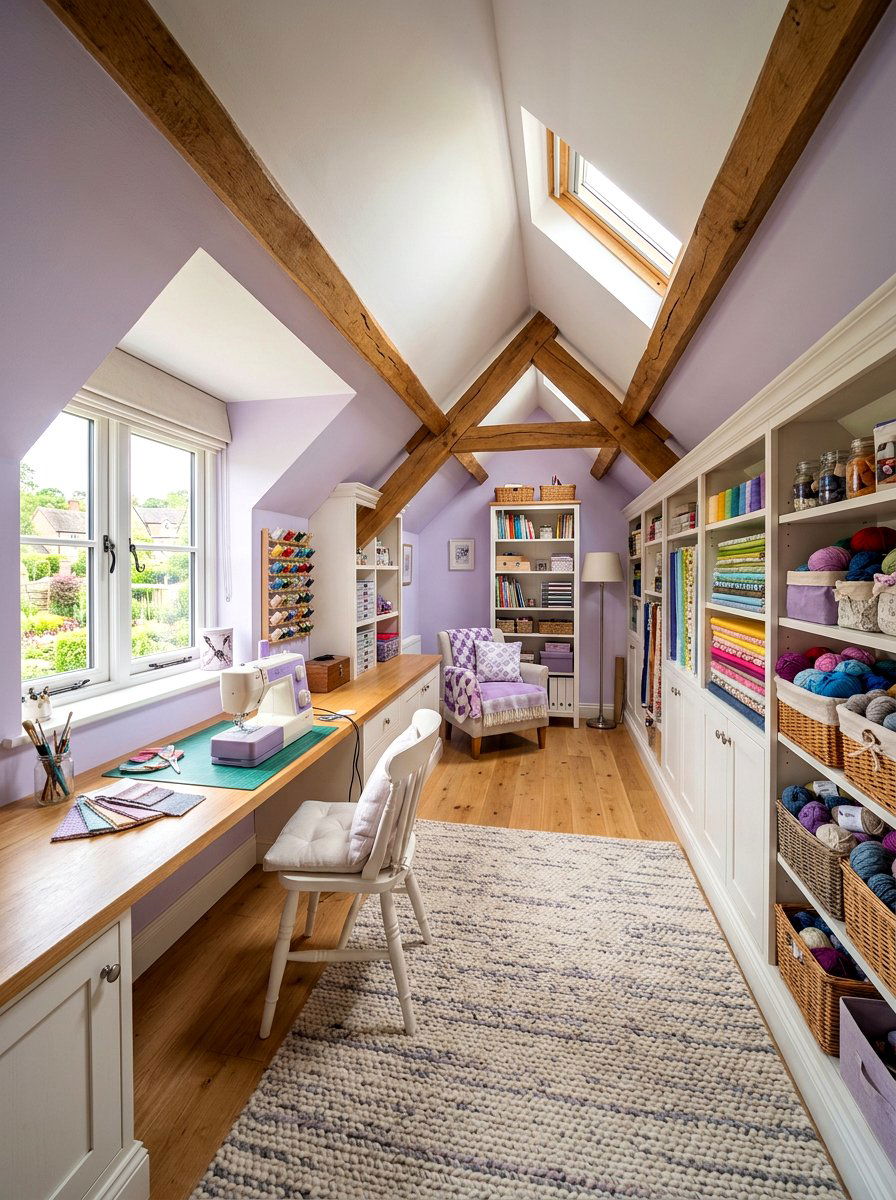
Can you maximize your home 's utility by combining a spare bedroom with your creative passions? A guest room art studio uses clever furniture like a murphy bed or a stylish daybed to save space. When you don' t have visitors, the majority of the room is dedicated to your easel and supplies. Use matching cabinetry to hide art materials so the room still feels welcoming for guests. A neutral and cohesive design helps the room transition between its two functions effortlessly. This is a practical way to have a permanent studio without losing a guest bedroom. It ensures that every square foot of your home is working for you. This smart layout offers the best of both worlds for busy homeowners.
16. Scandi Style Art Studio
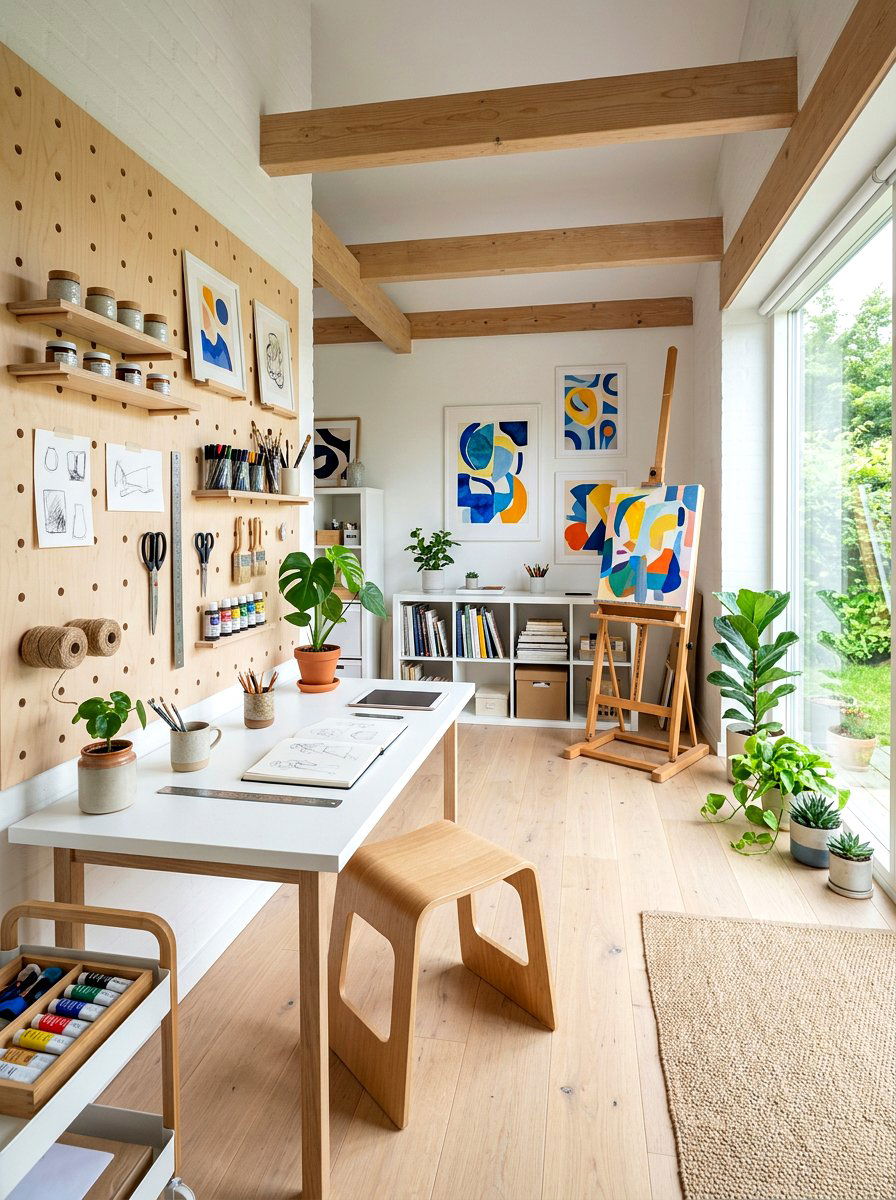
Do you appreciate the functional beauty and airy feel of Scandinavian design? A Scandi-style studio emphasizes light woods, soft textiles, and a very bright color palette. The goal is to maximize the feeling of light and space through simple, high-quality furniture. Use pegboards made of light plywood to organize your tools in a visually pleasing way. A few well-placed plants add a touch of nature and life to the clean environment. This style is incredibly popular because it feels both modern and warm at the same time. The uncluttered look helps you stay organized and focused on your creative tasks. It is a refreshing and timeless aesthetic that supports a calm and productive artistic workflow.
17. Dark Academia Art Studio
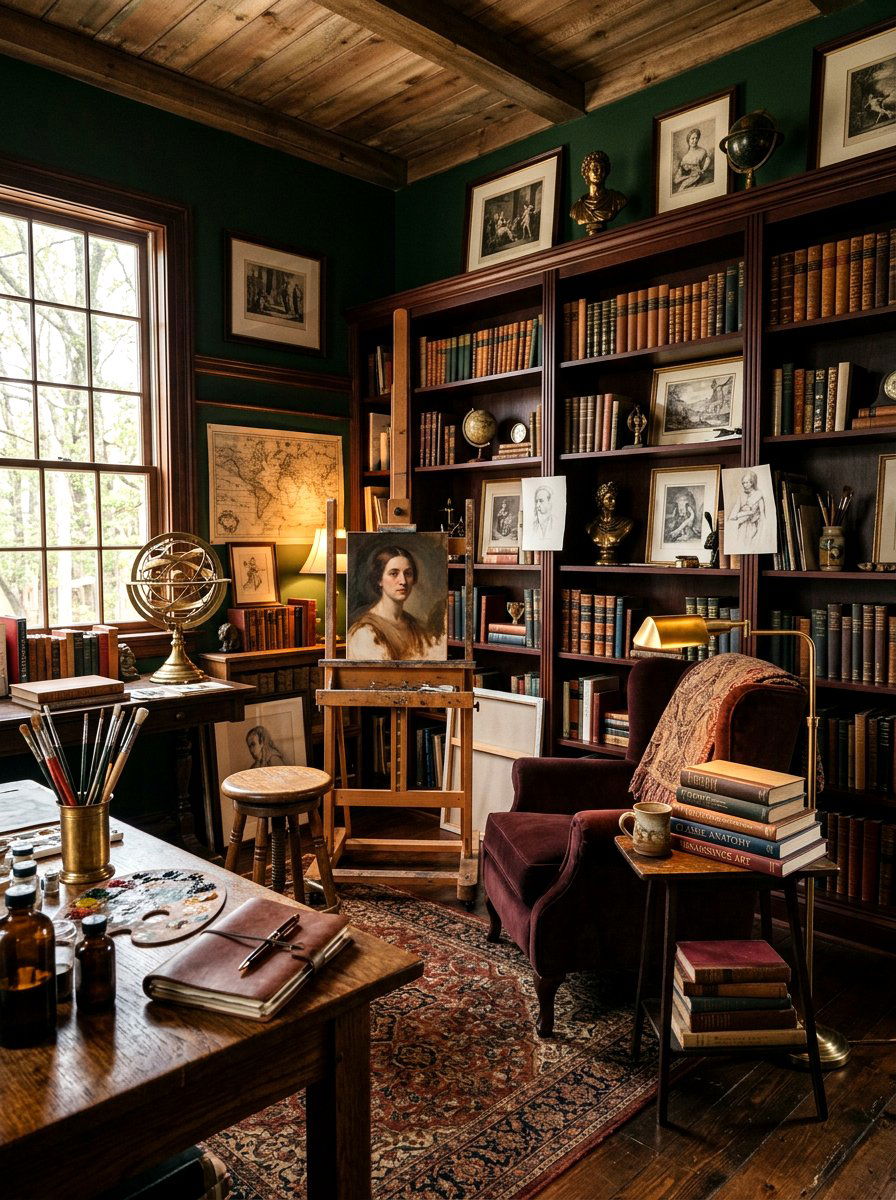
Are you drawn to the moody and intellectual vibe of old libraries and classic studies? A dark academia studio features deep wall colors like navy, forest green, or charcoal. Use dark wood furniture and brass accents to create a sophisticated and dramatic atmosphere. Soft, warm lamp lighting is essential to maintain the cozy and mysterious feel of the room. Surround yourself with stacks of books, botanical sketches, and vintage globes for constant inspiration. This design style is perfect for writers, illustrators, and traditional painters who enjoy a focused environment. It feels like a secret sanctuary where you can get lost in your thoughts and your work. It is a rich, evocative space that celebrates the beauty of knowledge.
18. Eco Friendly Art Studio
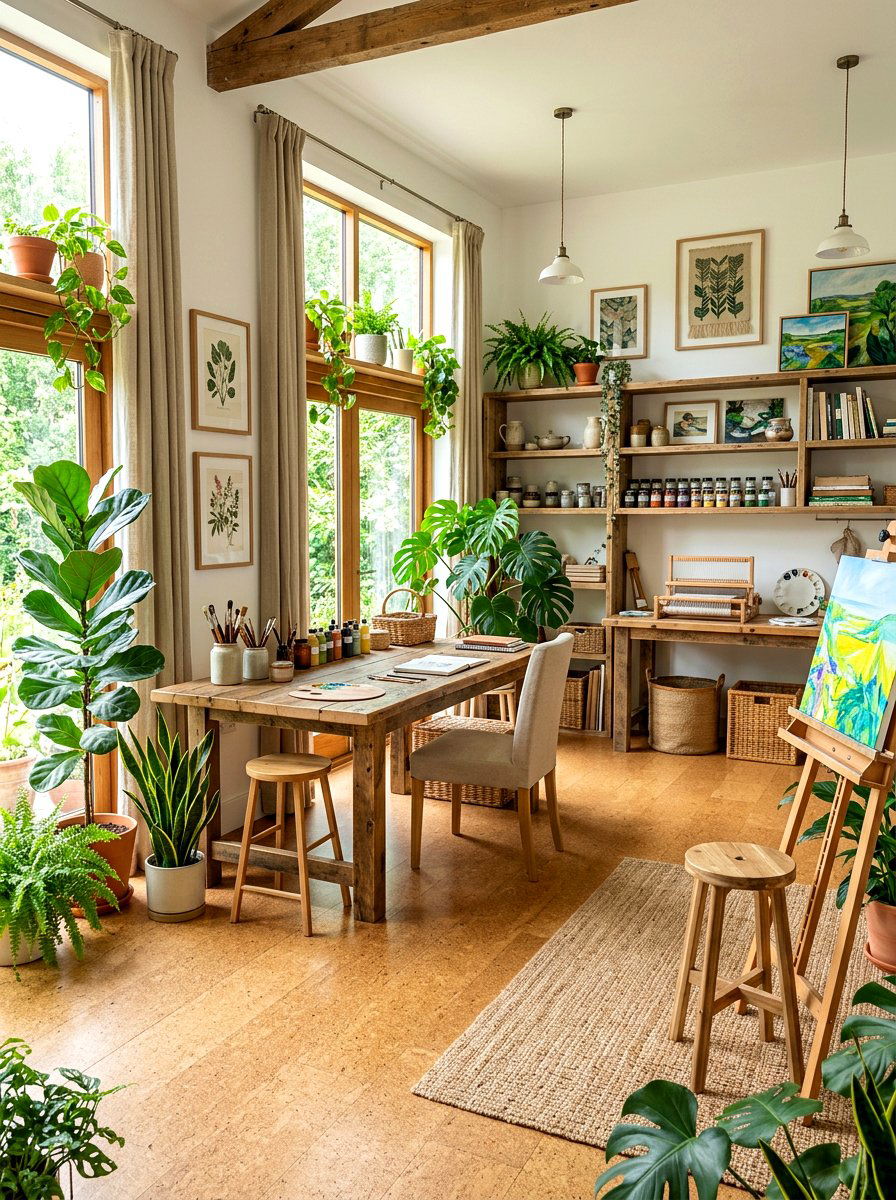
Do you want your creative space to reflect your commitment to the planet? An eco-friendly studio focuses on using sustainable materials and non-toxic supplies throughout the room. Choose furniture made from reclaimed wood or recycled metal to reduce your environmental impact. Natural fibers like cork or bamboo make excellent flooring choices that are both durable and sustainable. Ensure the room has great ventilation and use low-VOC paints for the walls to maintain air quality. Large plants can help purify the air while adding a lush, green aesthetic to your workspace. This design approach is healthy for both you and the earth. It creates a conscious environment that aligns your artistic practice with your personal values and ethics.
19. Floating Shelf Art Studio
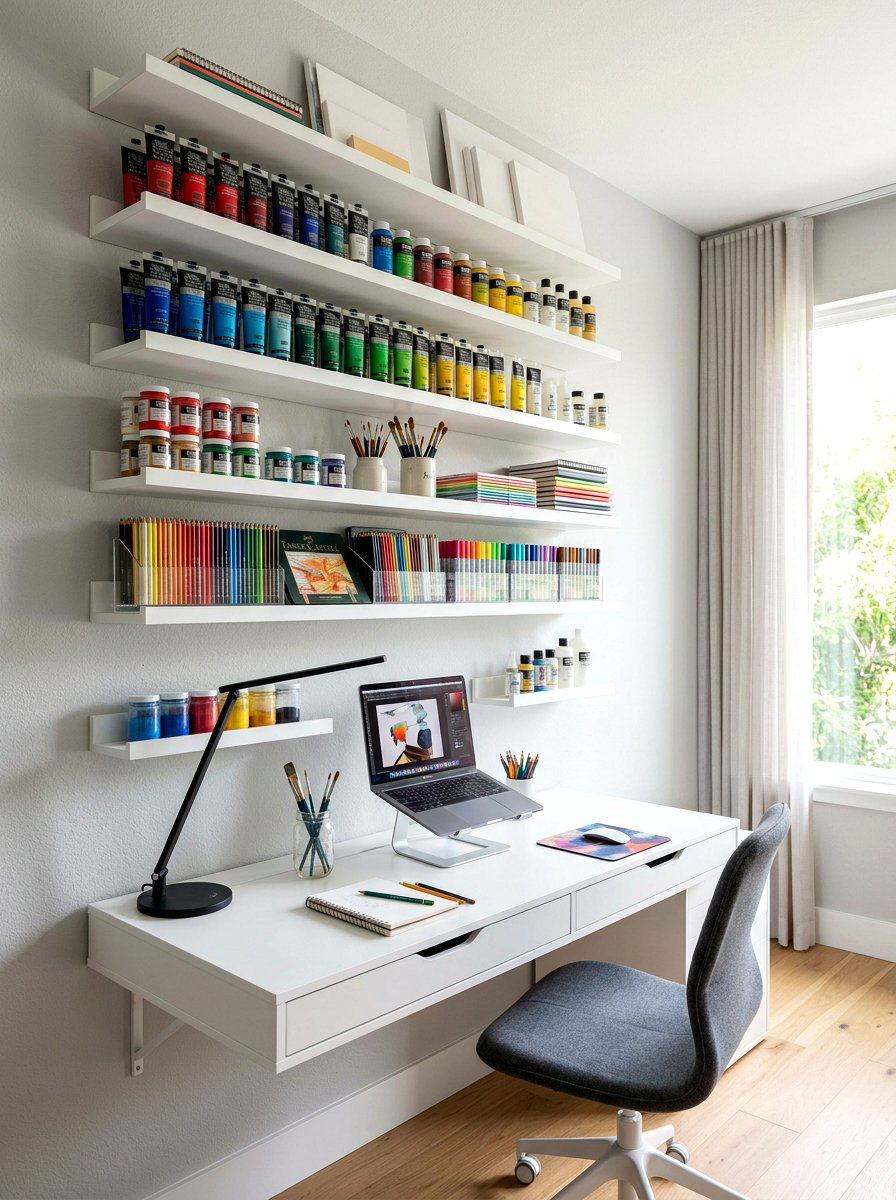
Are you trying to save floor space while still keeping your supplies organized? A floating shelf system utilizes vertical wall space to create a clean and modern storage solution. You can install shelves at different heights to accommodate everything from tall jars of brushes to flat canvases. This keeps your work surfaces clear and allows you to see all your materials at a glance. It also turns your colorful supplies into a piece of wall art itself. Combine the shelves with a simple wall-mounted desk for a sleek and integrated look. This setup is perfect for hallways or small bedrooms where every inch of floor space counts. It is a minimalist's dream that prioritizes both form and function.

20. Garage Art Studio Conversion
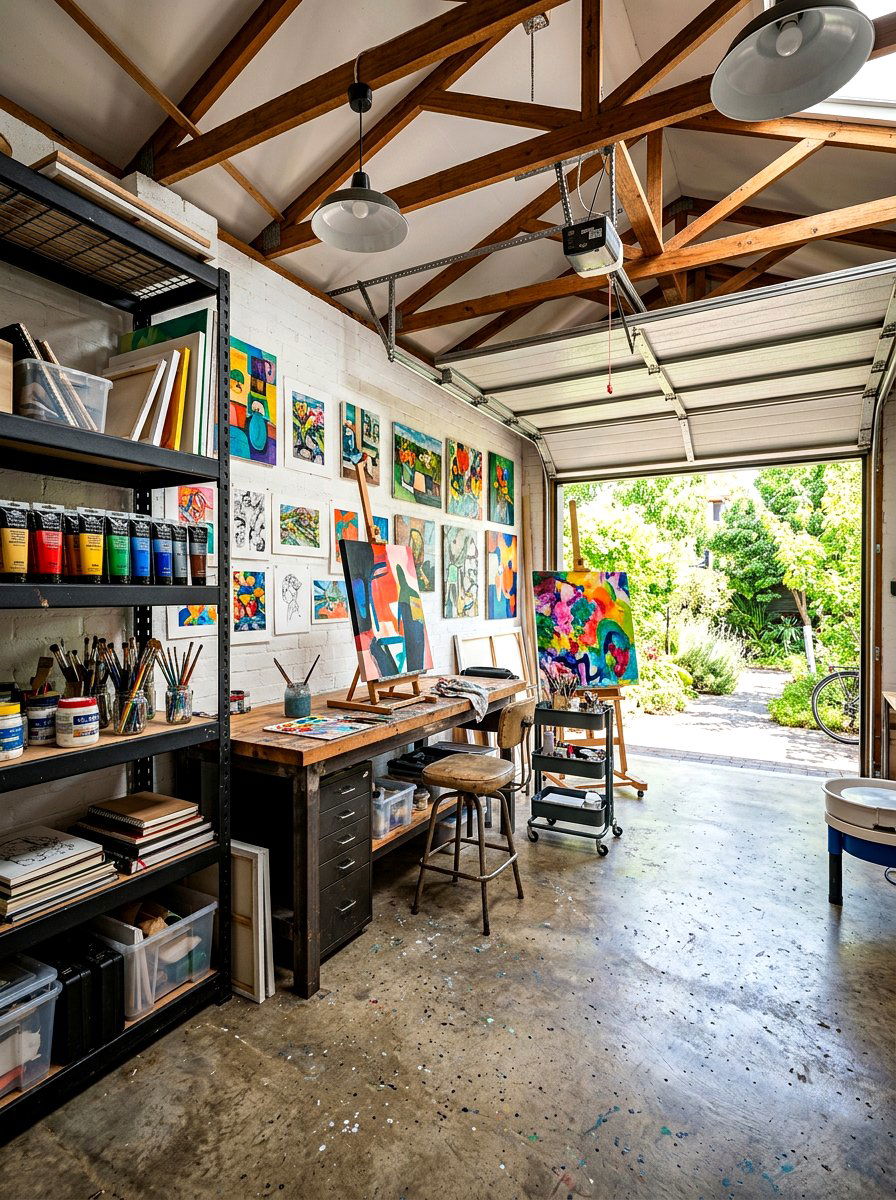
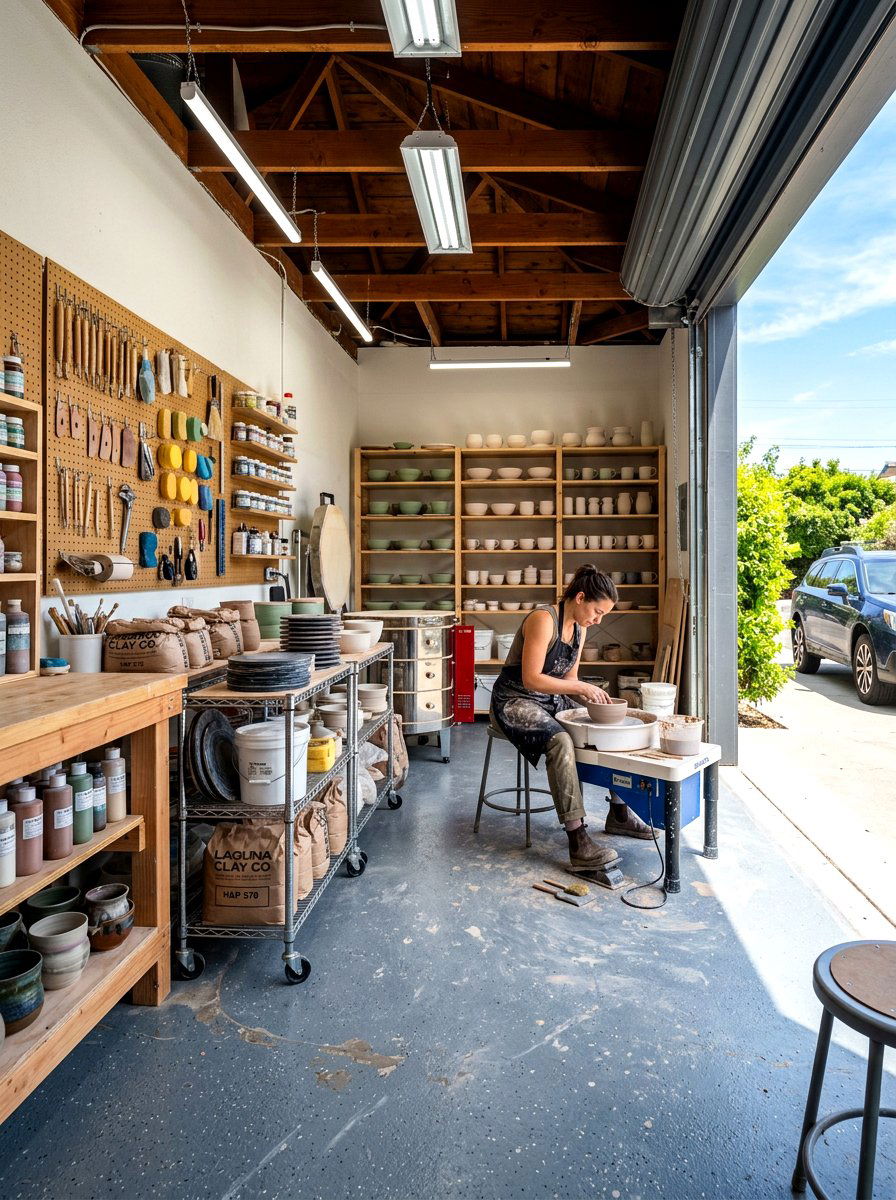
Could the place where you park your car become your new creative headquarters? A garage conversion is a fantastic way to gain a large, industrial-feeling studio without adding to your home's footprint. The concrete floors are incredibly durable and can handle any amount of paint spills or heavy equipment. You can leave the garage door functional to provide massive amounts of ventilation and light when needed. Install insulation and proper heating to ensure the space is comfortable year-round. Use tall metal racks and workbenches to take advantage of the high ceilings and open layout. This rugged environment is ideal for messy projects like sculpture, woodworking, or large-scale spray painting. It is a powerful and flexible workspace.
21. Boho Chic Art Studio
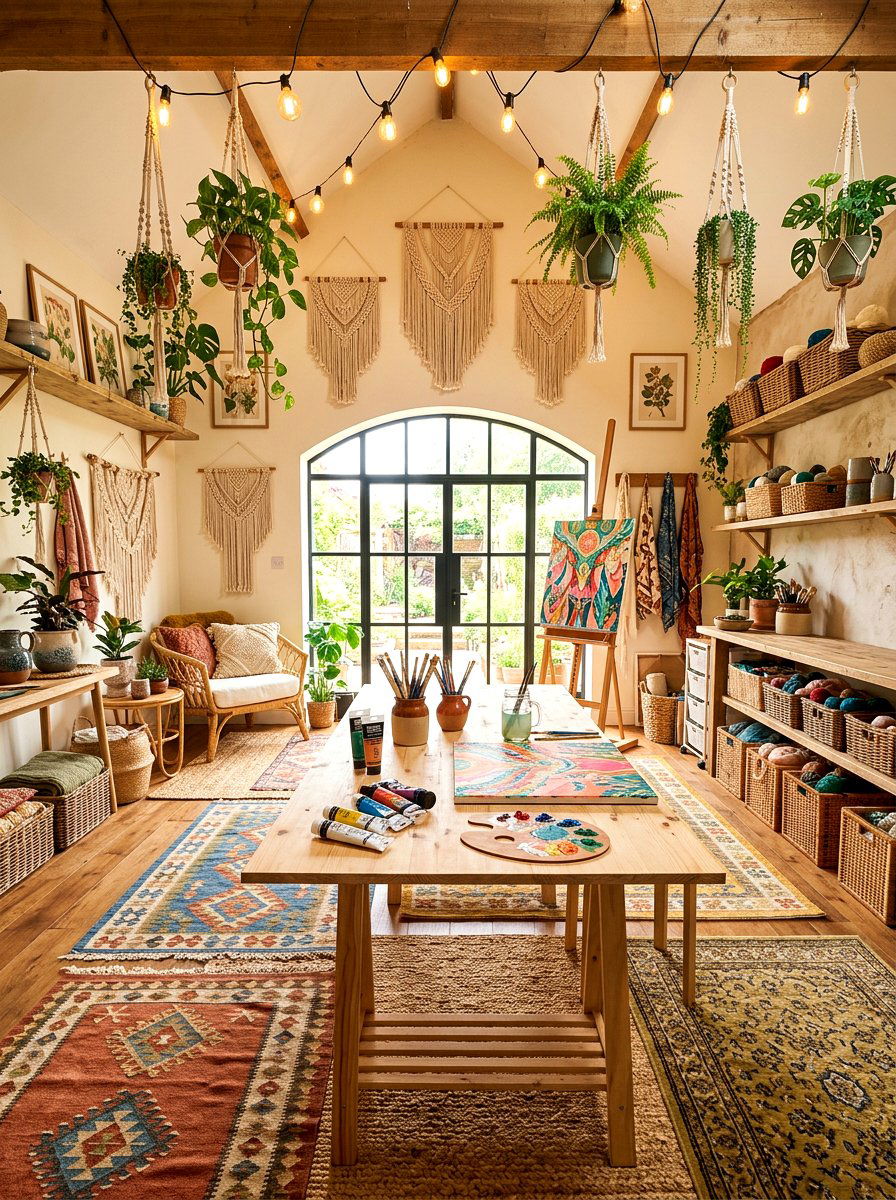
Do you want a creative room that feels relaxed, textured, and full of life? A boho chic studio combines eclectic patterns, woven textures, and plenty of greenery to create a cozy atmosphere. Use floor cushions, layered rugs, and macramé wall hangings to add softness to the space. Wicker baskets and wooden crates make for beautiful and organic-feeling storage solutions. This style encourages a more casual and intuitive way of working, often with music playing in the background. The warm and inviting vibe makes it a place where you truly want to spend time. It is perfect for textile artists, watercolorists, or anyone who enjoys a free-spirited and comfortable environment. It is a space that feels like a warm hug.
22. High Ceiling Art Studio
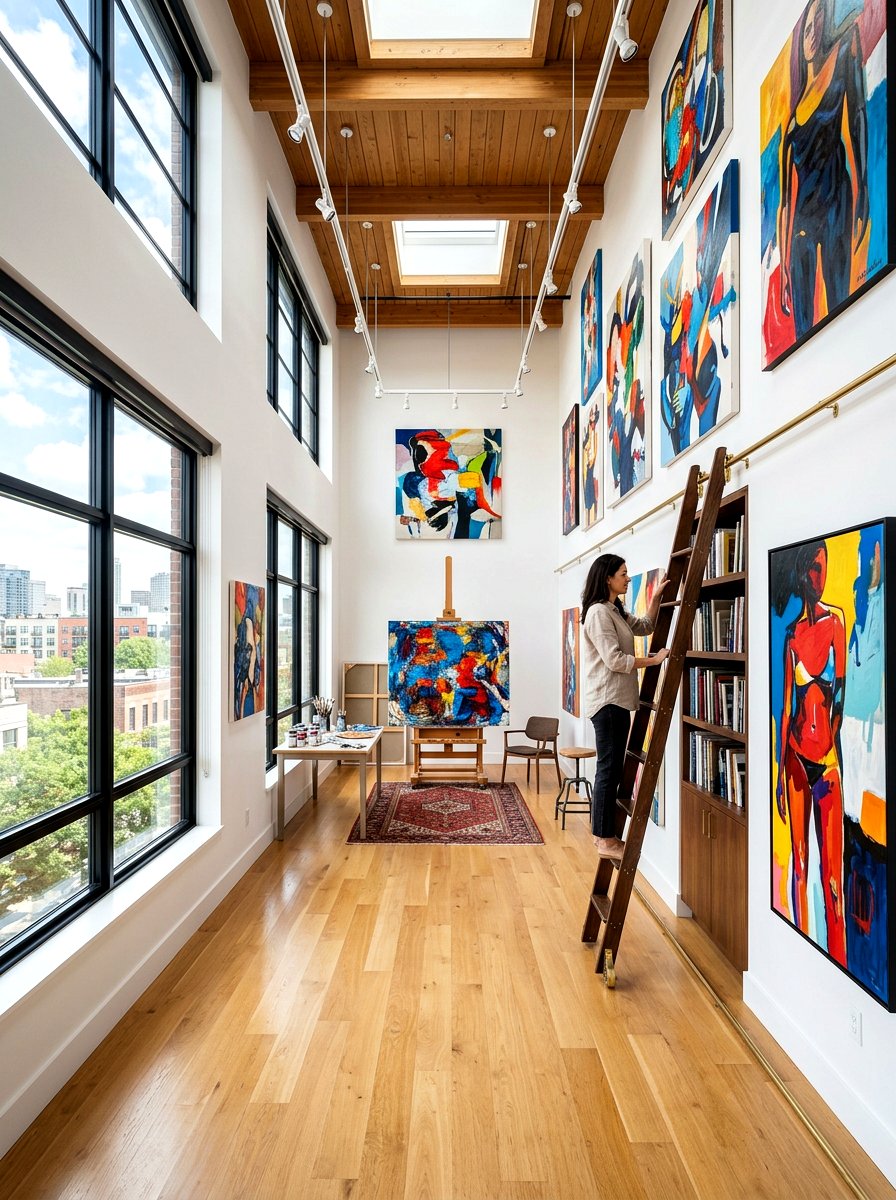
Does the feeling of vertical space inspire you to reach for bigger goals? A room with high ceilings offers a sense of grandeur and airiness that is perfect for artistic thought. You can use the extra wall height to display your largest works or install floor-to-ceiling storage. Tall windows or transoms can be added to bring light deep into the room. This architectural feature prevents even a small room from feeling cramped or claustrophobic. Consider adding a rolling ladder to reach high shelves, which adds a professional and classic touch. The acoustics in a high-ceiling room can also be wonderful for those who like to listen to music while they work. It is a majestic and inspiring setting for any artist.
23. Closet Art Studio Nook
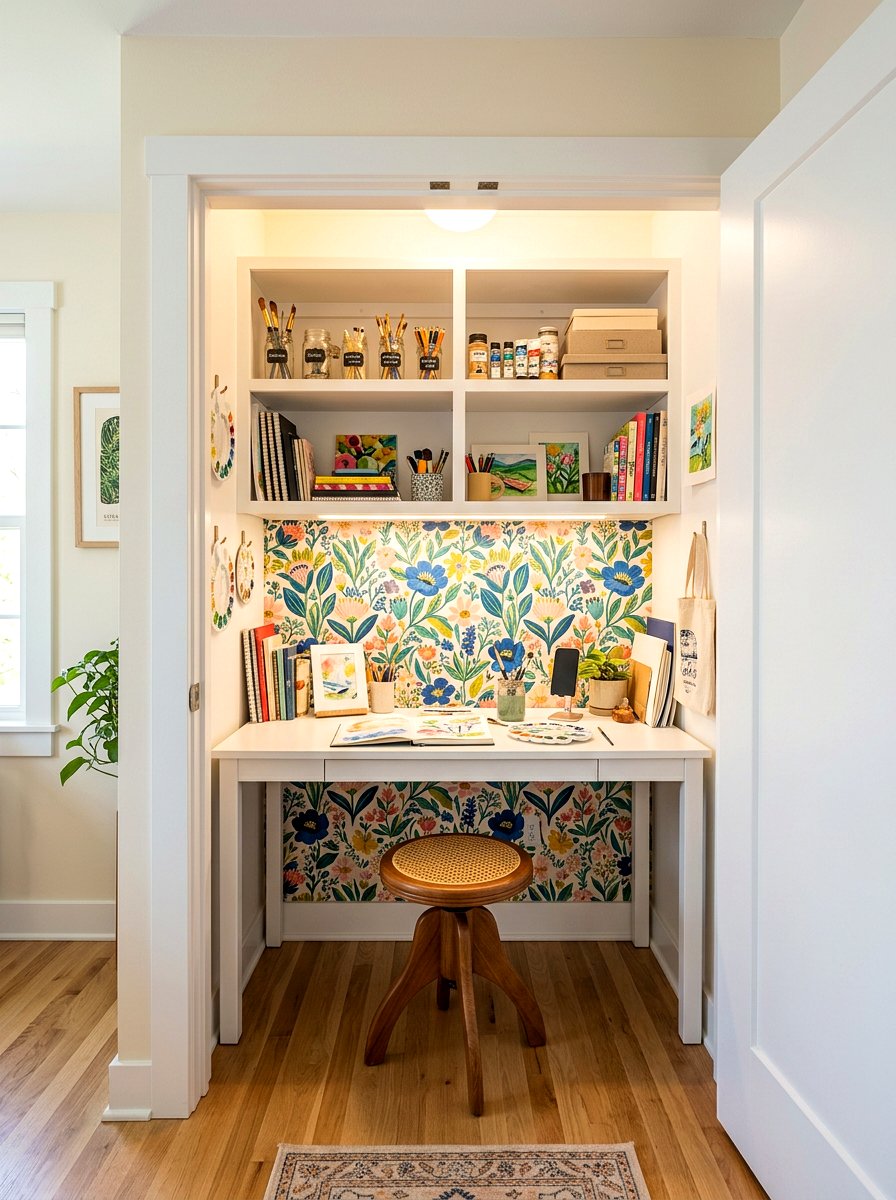
Have you ever thought about what is hiding behind your closet doors? You can transform a standard reach-in closet into a fully functional "cloffice" or art nook. Simply remove the doors and install a desktop with shelving above it to create a compact workspace. This is a brilliant solution for those living in small apartments or shared homes. When you are finished working, you can even hang a stylish curtain to hide the mess from the rest of the room. Use bright task lighting inside the nook to ensure you have enough visibility. This small-scale studio proves that you don't need a whole room to have a dedicated place for your art. It is a clever and space-saving design.
24. Coastal Art Studio
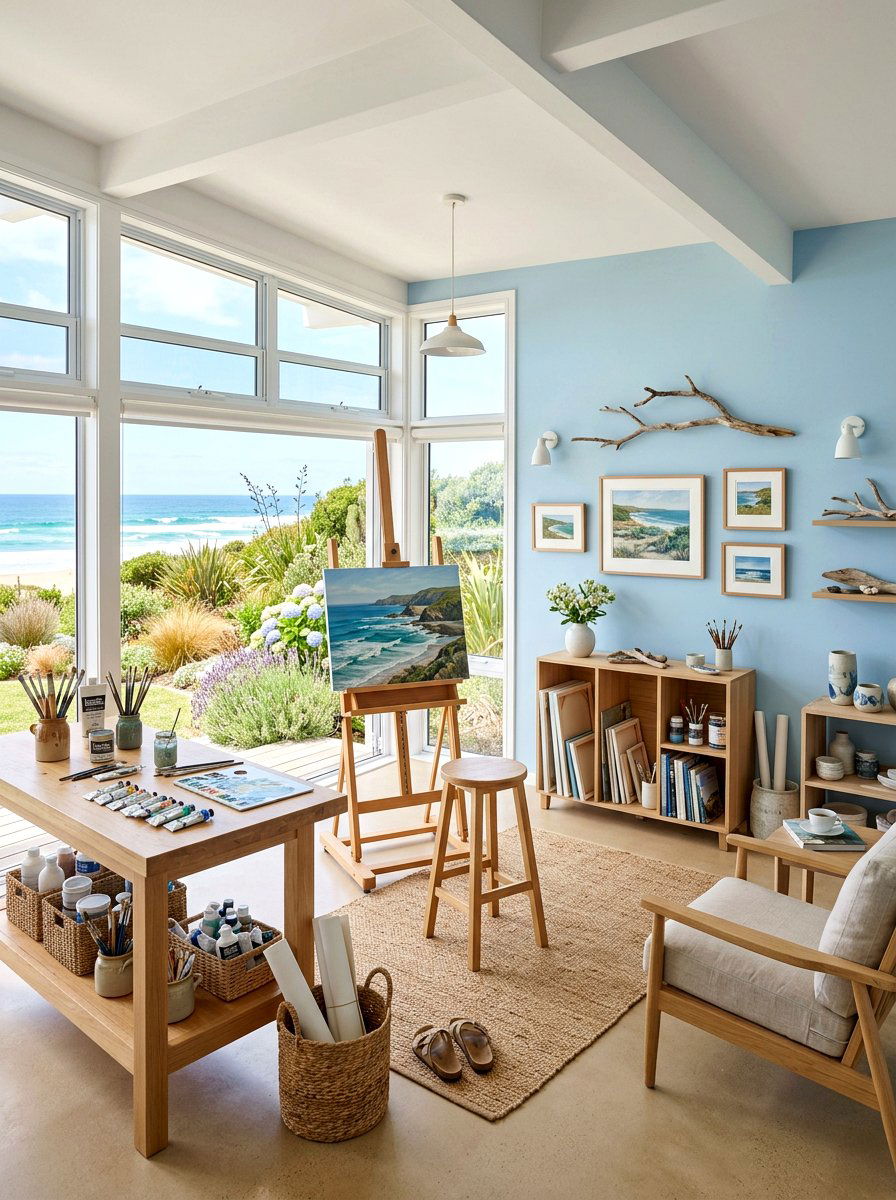
Do you find your greatest inspiration in the colors and textures of the sea? A coastal art studio uses a palette of soft blues, sandy beiges, and crisp whites to create a breezy feel. Use light-colored wood and natural textures like jute or linen to enhance the beachy aesthetic. Large windows that look out toward water or a garden help maintain a connection to the natural world. Decorate with found objects like driftwood or seashells to add a personal and organic touch. This style is incredibly calming and helps to lower stress levels while you create. It is a refreshing and light-filled environment that feels like a permanent vacation. This space is perfect for artists who enjoy a serene and peaceful atmosphere.

25. Contemporary White Art Studio
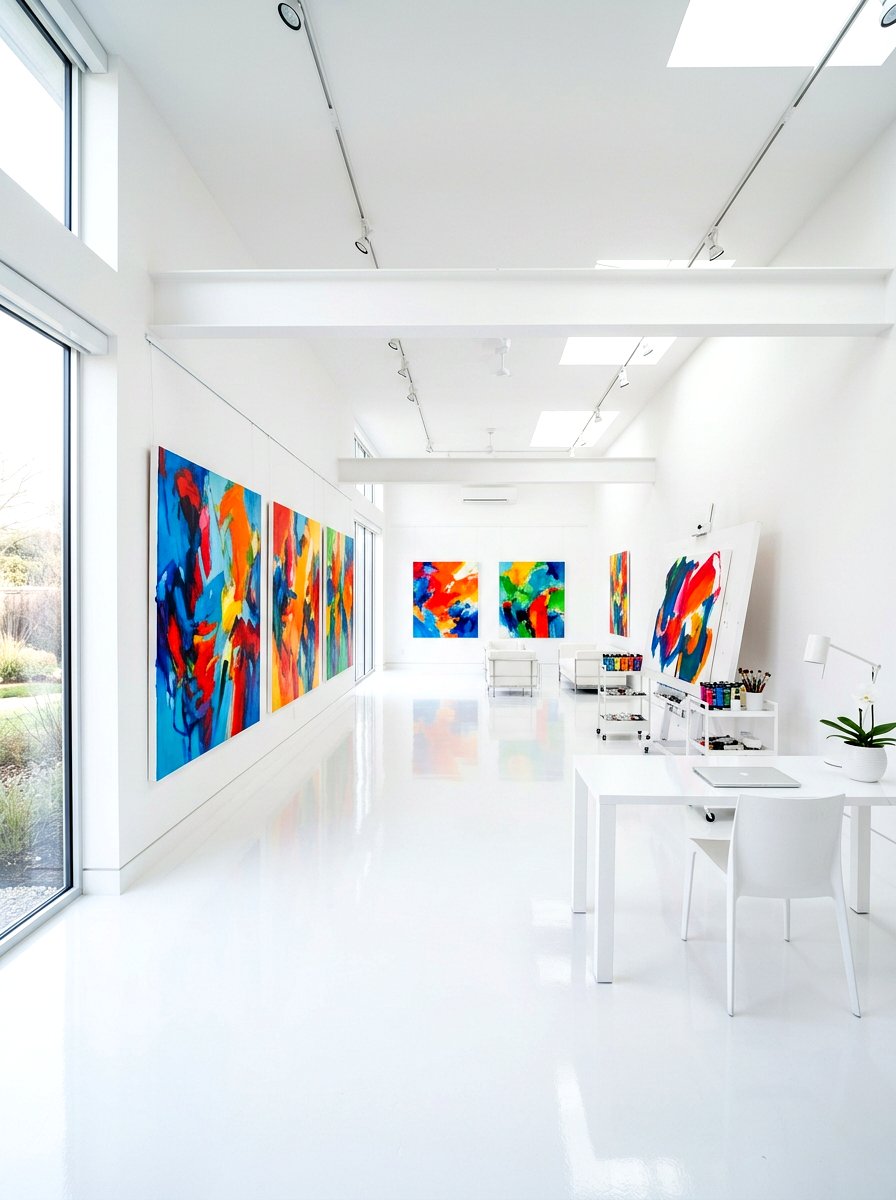
Are you looking for a gallery-like experience within the walls of your own home? A contemporary white studio uses an all-white palette for the walls, floor, and furniture to create a seamless look. This extreme neutrality ensures that the only colors in the room come from your artwork and supplies. It provides a bright and reflective environment that makes the most of any available light. Use sleek, modern furniture with hidden storage to maintain the clean and uncluttered aesthetic. This design style is perfect for those who want their work to be the absolute center of attention. It feels professional, high-end, and incredibly focused. It is a sophisticated choice for any modern artist who values clarity and precision.
26. Shared Couple Art Studio
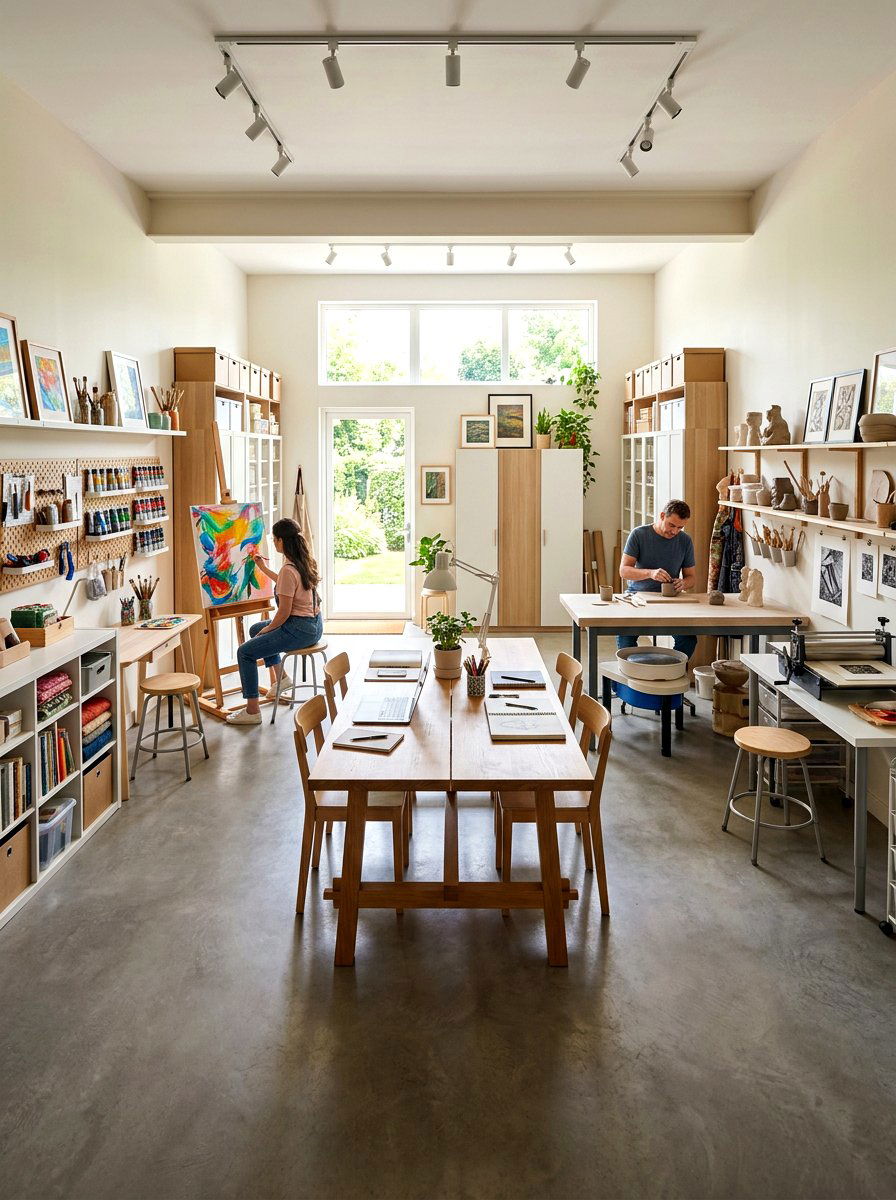
Do you and your partner both love to create and want to share a space together? A shared studio requires a layout that provides both collaborative areas and individual workstations. Use a large central table for joint projects while having separate desks against opposite walls. This ensures that you can work near each other without getting in each other's way. Use matching storage units to keep the room looking cohesive and organized. Communication is key when designing this space to ensure both of your needs are met. It is a wonderful way to bond and inspire one another through your unique creative processes. This shared environment fosters a sense of community and mutual support within your own home.
27. Pottery Art Studio
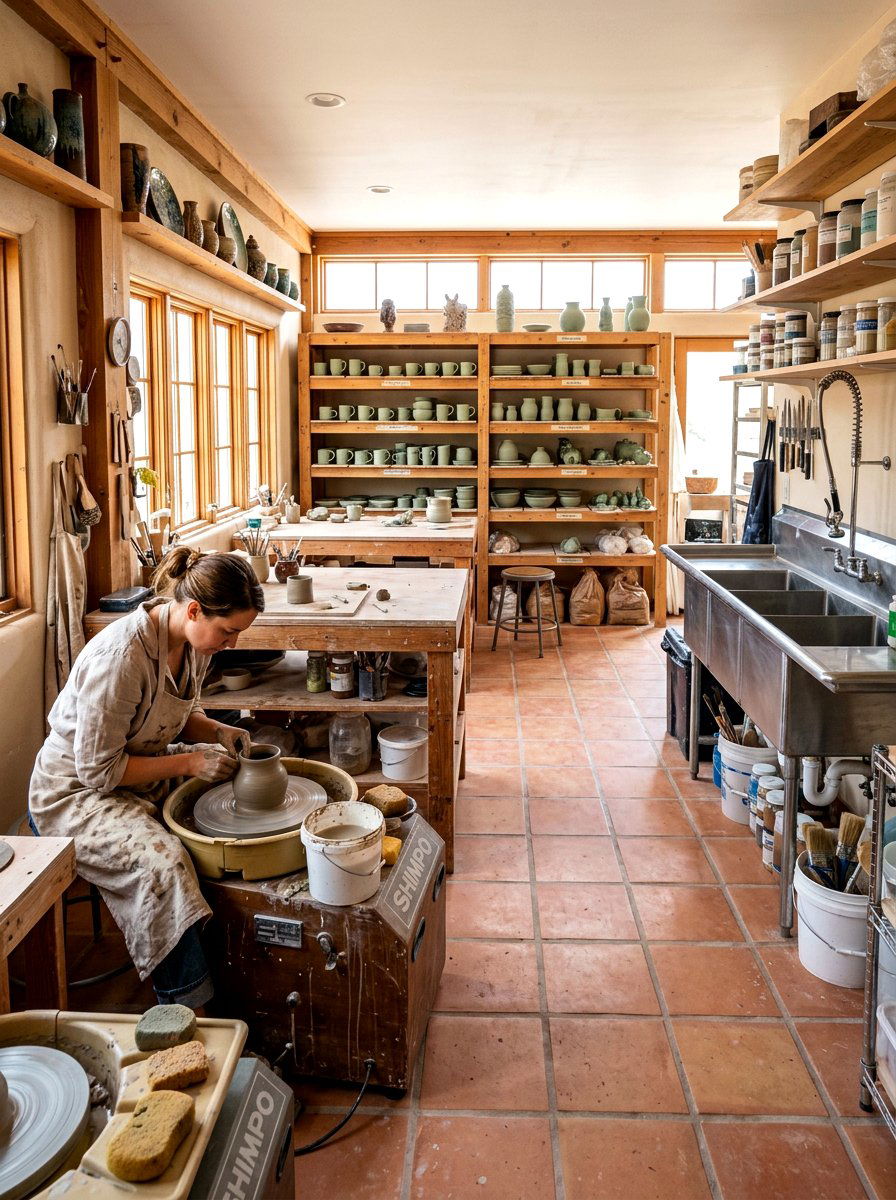
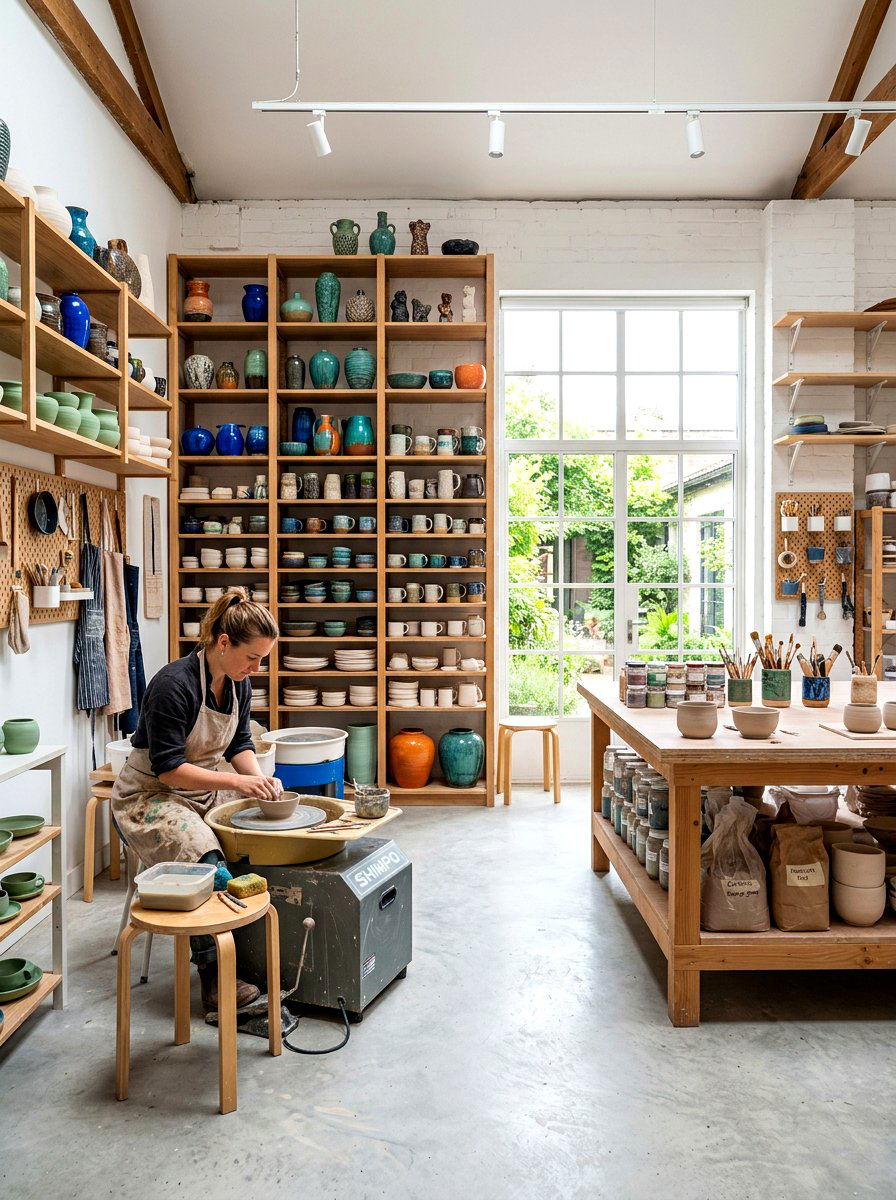
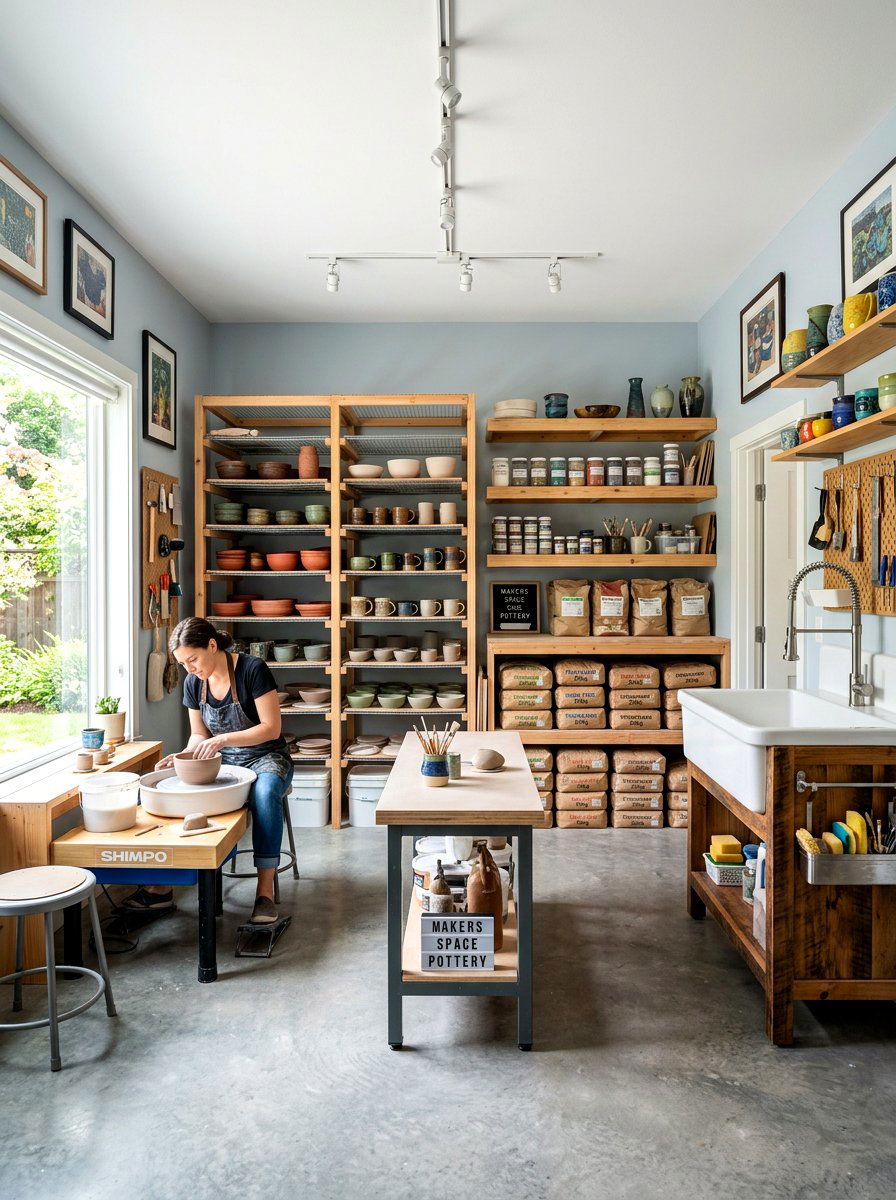
Are you a ceramicist looking to bring the joy of clay into your daily home life? A pottery studio requires specific features like easy-to-clean surfaces and a dedicated area for a kiln. Use heavy-duty tables that can support the weight of wet clay and a pottery wheel. Sturdy shelving is essential for drying greenware and storing finished pieces before they are fired. Consider installing a utility sink with a clay trap to protect your home's plumbing from clogs. The flooring should be waterproof and easy to mop, such as tile or sealed concrete. This functional space is designed to handle the unique mess and equipment of the ceramic arts. It is a tactile and rewarding environment for any clay lover.
28. Digital Art Studio
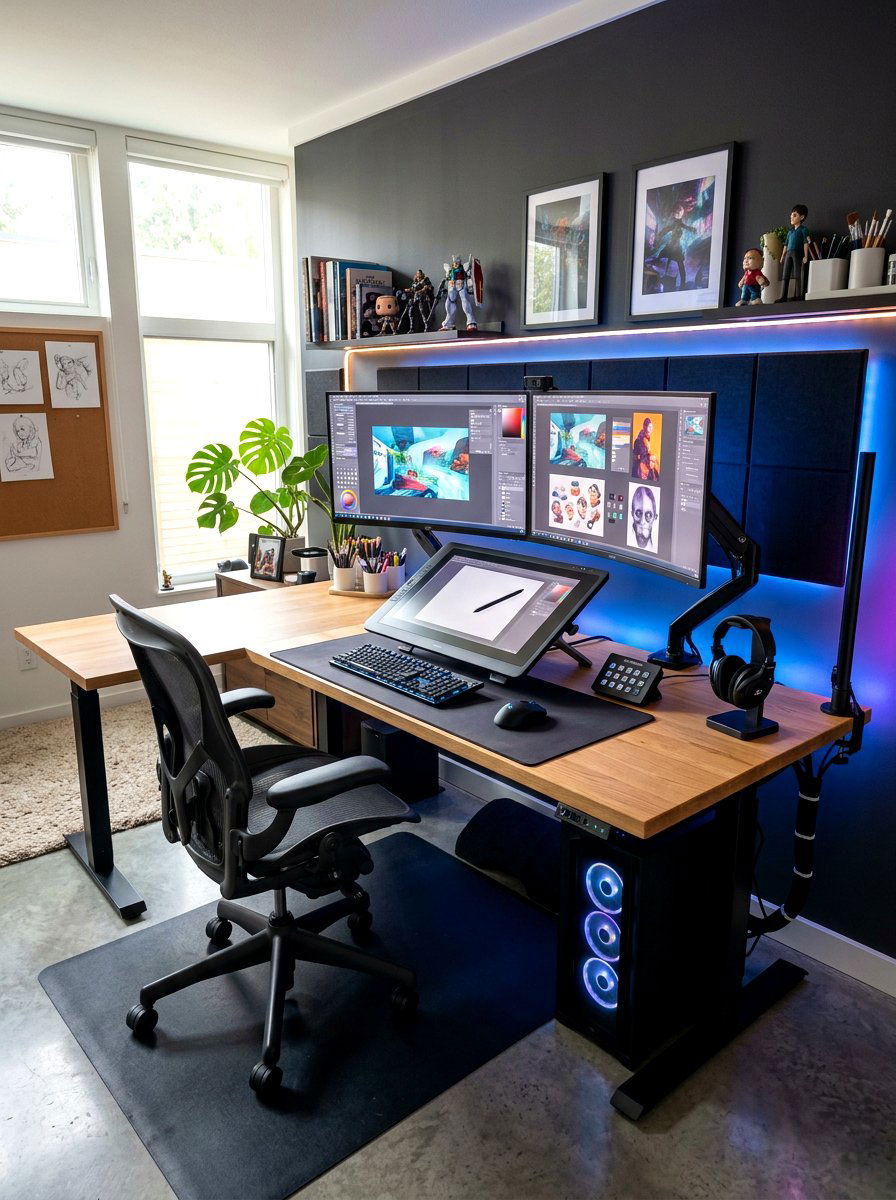
Do you create your masterpieces primarily on a screen rather than a canvas? A digital art studio focuses on ergonomic furniture and high-tech equipment setups. Invest in a high-quality adjustable chair and a desk with plenty of room for your computer and drawing tablet. Proper lighting is crucial to reduce screen glare and eye strain, so consider using dimmable smart bulbs. Use cable management systems to keep your workspace looking clean and professional. You can still incorporate physical art elements by displaying your printed works on the walls. This modern studio is built for long hours of focused digital creation and comfort. It is a streamlined and efficient space that supports the latest in artistic technology and creative software.
29. Traditional Oil Painting Art Studio
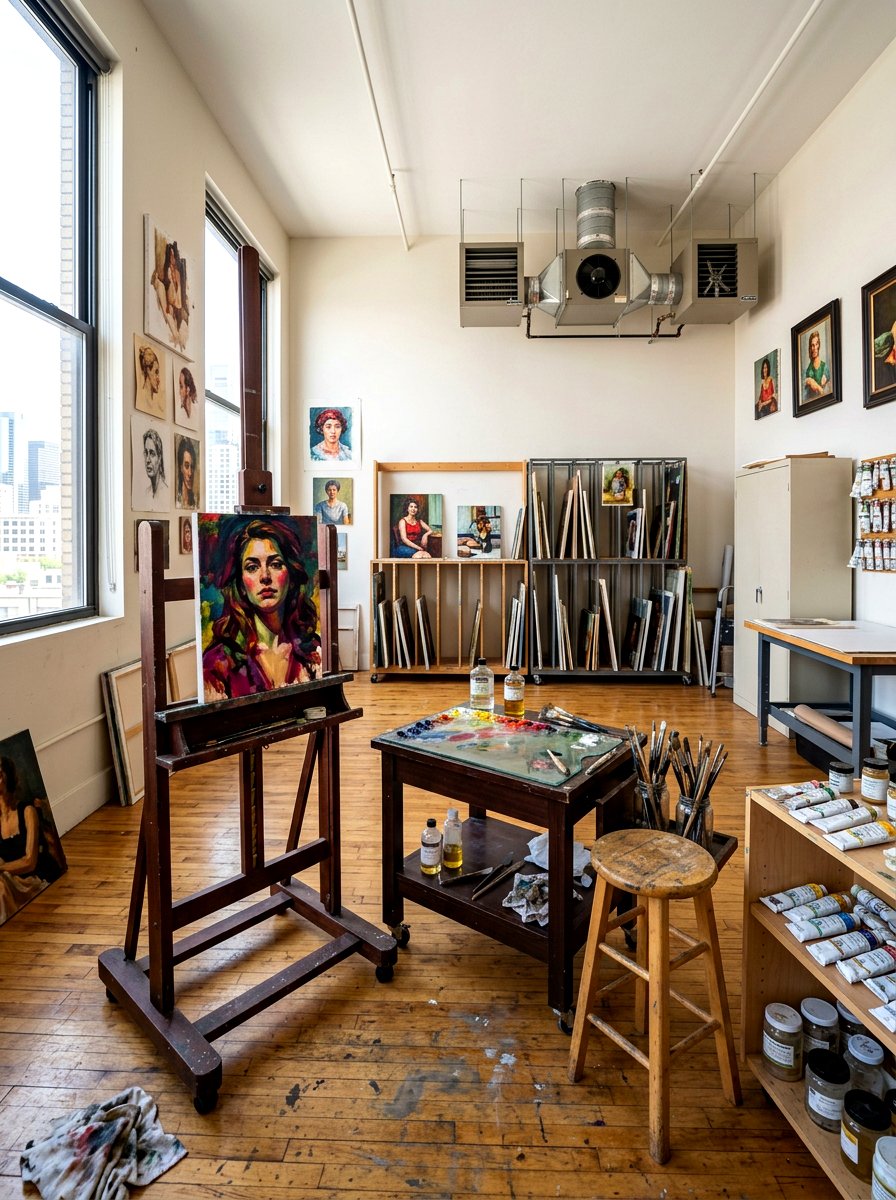
Do you love the classic process and rich scents of traditional oil painting? An oil painting studio must prioritize excellent ventilation to handle the fumes from solvents and mediums. Use a sturdy, adjustable easel that can hold large, heavy canvases securely. A glass-topped palette table makes for easy cleanup and a professional mixing surface. Install racks for drying finished oil paintings, which can take a long time to fully cure. Neutral-colored walls help you judge color and value accurately without outside interference. This space is all about the craft and history of one of the most respected artistic mediums. it provides the structured and safe environment needed for serious painters to master their skills and create lasting works.
30. Maximalist Art Studio
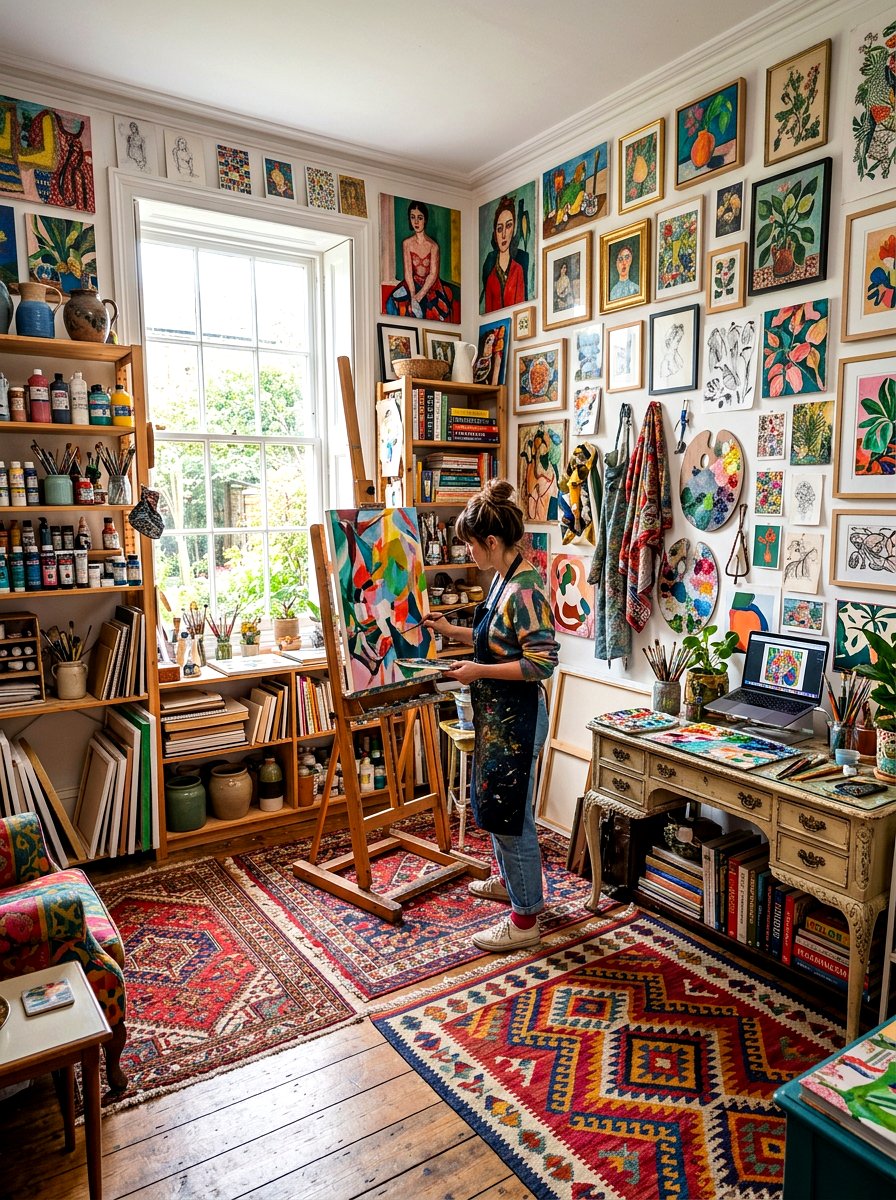
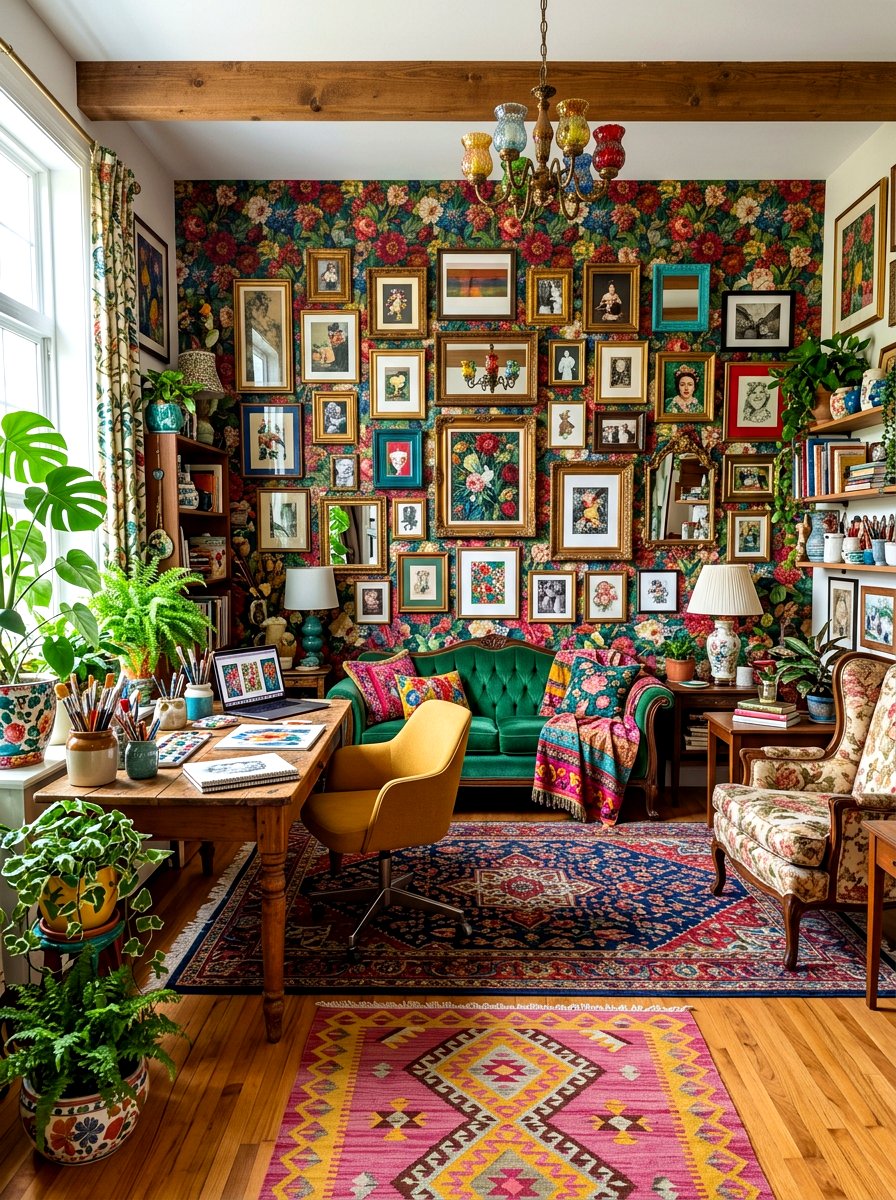
Are you someone who believes that "more is more" when it comes to creative inspiration? A maximalist art studio is a celebration of abundance, color, and layered personality. Every inch of the walls can be covered with art, sketches, and objects that you find meaningful. Use a mix of different furniture styles and vibrant colors to create a high-energy and stimulating environment. Open storage allows your vast collection of supplies to be part of the overall decor. This style is perfect for those who find that a busy and eclectic room fuels their imagination. It is a deeply personal and expressive space that tells the story of your artistic journey. It is a joyful, chaotic, and incredibly inspiring place.
Conclusion:
Building the perfect art studio is a journey that should reflect your unique personality and creative needs. Whether you choose a tiny closet nook or a sprawling garage conversion, the goal is to create a sanctuary where you feel free to experiment. Remember that the best studios are those that balance practical storage with inspiring aesthetics. Do not be afraid to change your layout as your skills grow and your medium evolves over time. Your creative space should be a living part of your home that moves and breathes with your artistic energy. By prioritizing lighting, organization, and comfort, you can create a room that not only supports your work but also brings you immense joy every single day.

Related posts: