Creating a dedicated space for your artistic expression is one of the most transformative decisions you can make as a painter. Whether you are a seasoned professional or a weekend hobbyist, having a sanctuary where your tools are always ready and your inspiration can flourish is essential for creative growth. A well-designed studio does more than just hold your supplies; it serves as a physical manifestation of your commitment to your craft. From light-filled attics to compact corner nooks, the possibilities for building a functional and beautiful workspace are endless. This guide explores thirty unique concepts to help you design a painting studio that perfectly balances organization, lighting, and personal style.
1. Attic Painting Studio
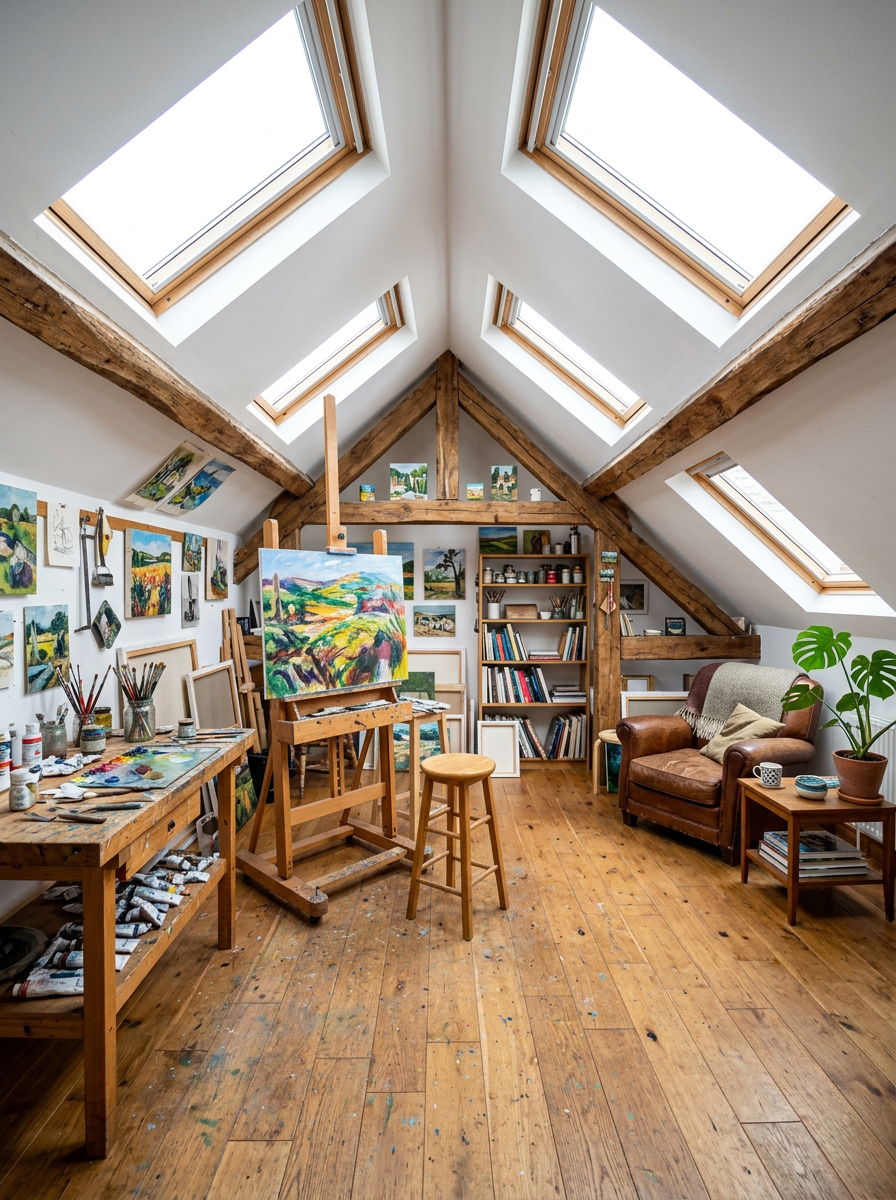
Converting an unused attic into a private painting retreat is a brilliant way to escape the daily noise of your household. These secluded spaces often feature unique architectural elements like sloped ceilings and exposed beams that add instant character to your creative environment. Because attics are tucked away at the top of the house, they provide the quietest atmosphere for deep focus and experimental work. You can maximize the potential of a loft by installing large skylights that flood the room with consistent overhead light. This elevated perspective often offers inspiring views of the surrounding landscape, providing natural beauty that can directly influence your color palette and overall artistic vision.
2. Garage Art Workspace
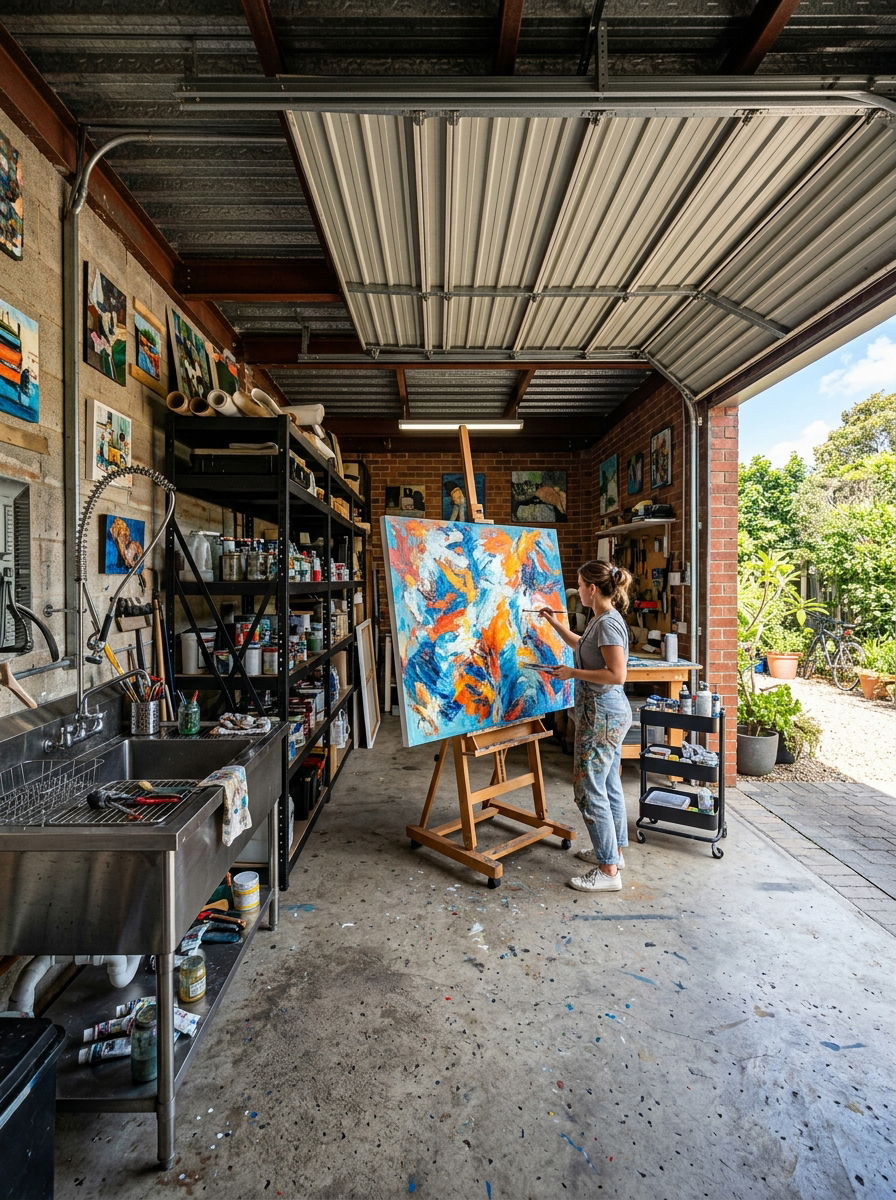
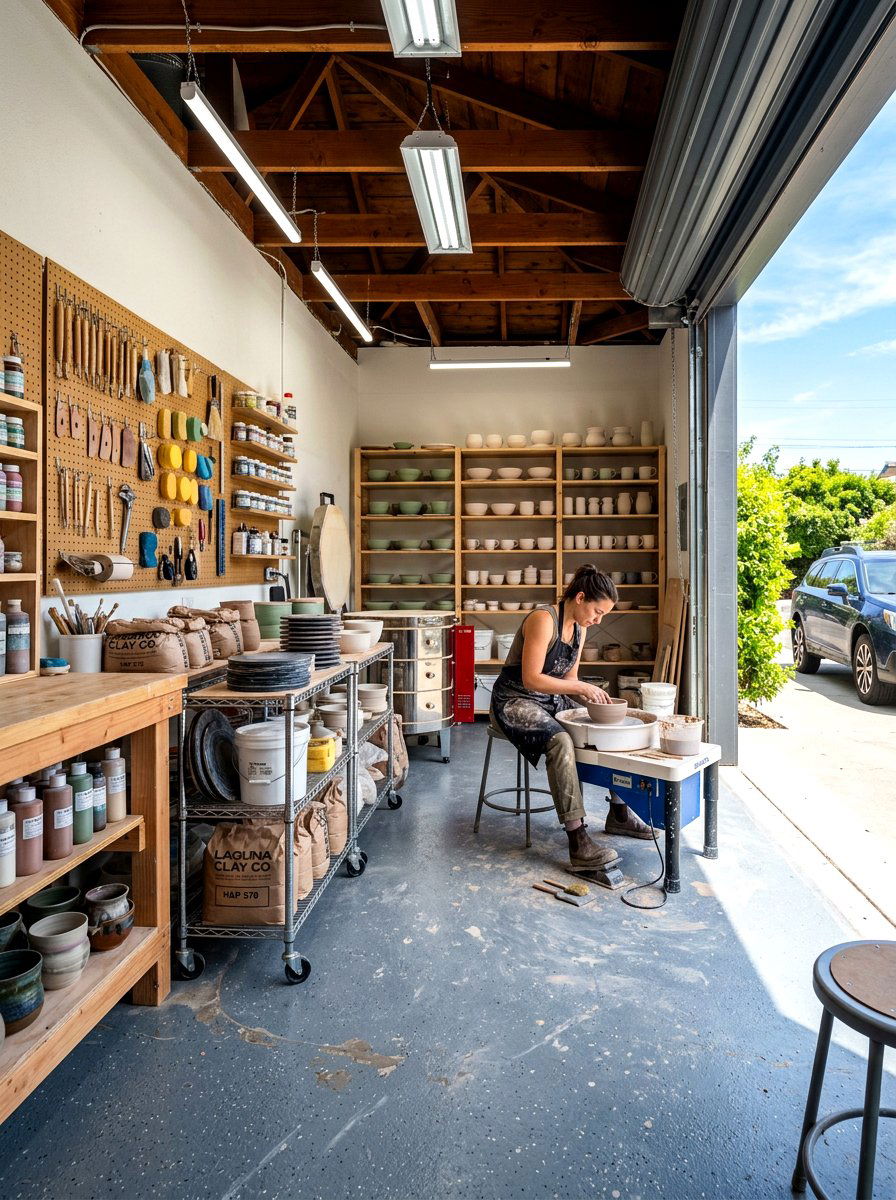
Transforming a garage into a functional art space is a practical solution for painters who work with large-scale canvases or messy materials. The durable concrete flooring in most garages is incredibly easy to clean, making it the perfect surface for accidental drips and heavy splattering. One of the biggest advantages of this setup is the massive door, which can be opened to provide exceptional ventilation and massive amounts of natural light. You can easily install heavy-duty shelving along the walls to organize bulky supplies like gallon-sized paint tubs and extra-large stretching bars. This industrial environment encourages a bold, experimental approach to art without the fear of damaging interior home finishes.
3. Corner Painting Nook
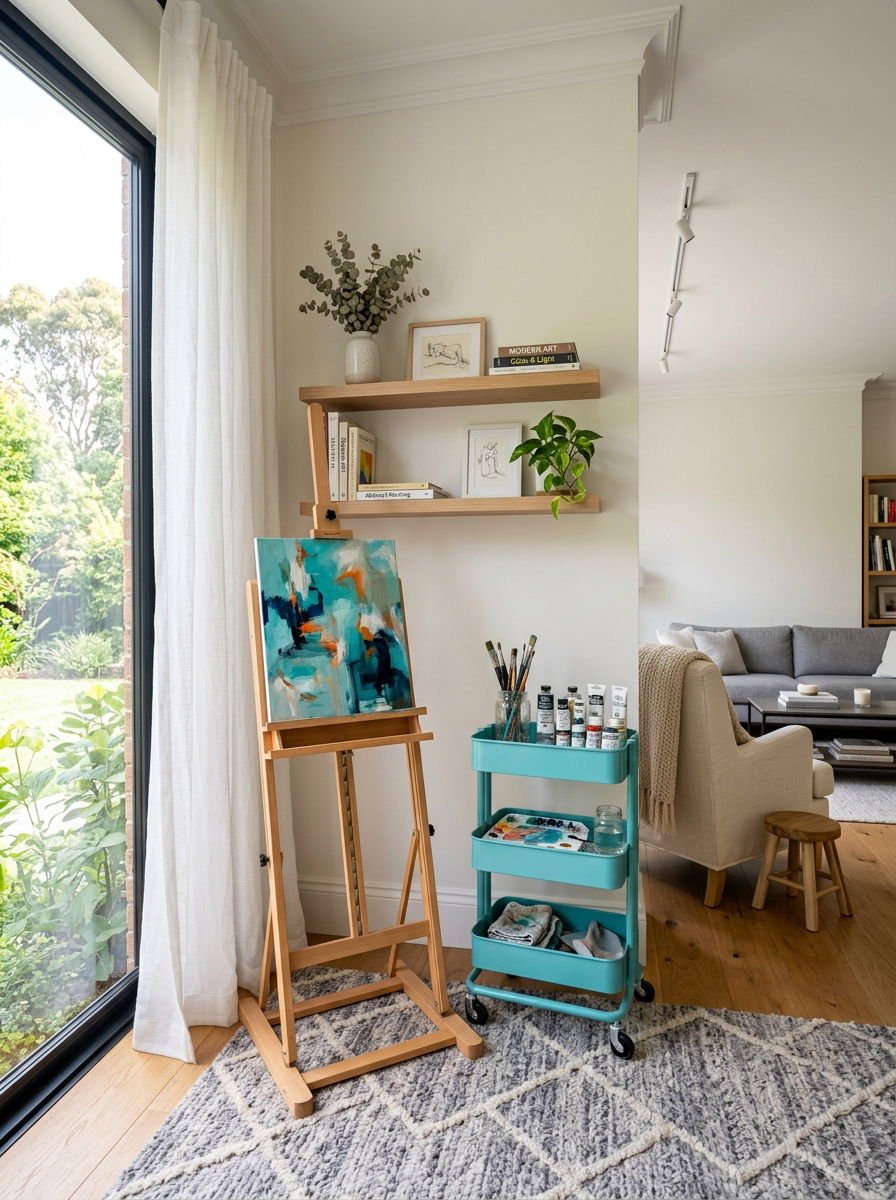
You do not need an entire spare room to create a professional-grade painting area within your existing home layout. A corner painting nook can be established in a living room or bedroom by using a high-quality easel and a compact rolling storage cart. To define the boundaries of your creative zone, consider using a stylish area rug or a decorative room divider that separates your work from the living space. Choosing a corner near a window ensures you still benefit from natural illumination during the daytime hours. This small-scale setup is ideal for watercolorists or illustrators who prefer an intimate, reachable workspace that integrates seamlessly into their daily life and household routine.
4. North Facing Window Studio
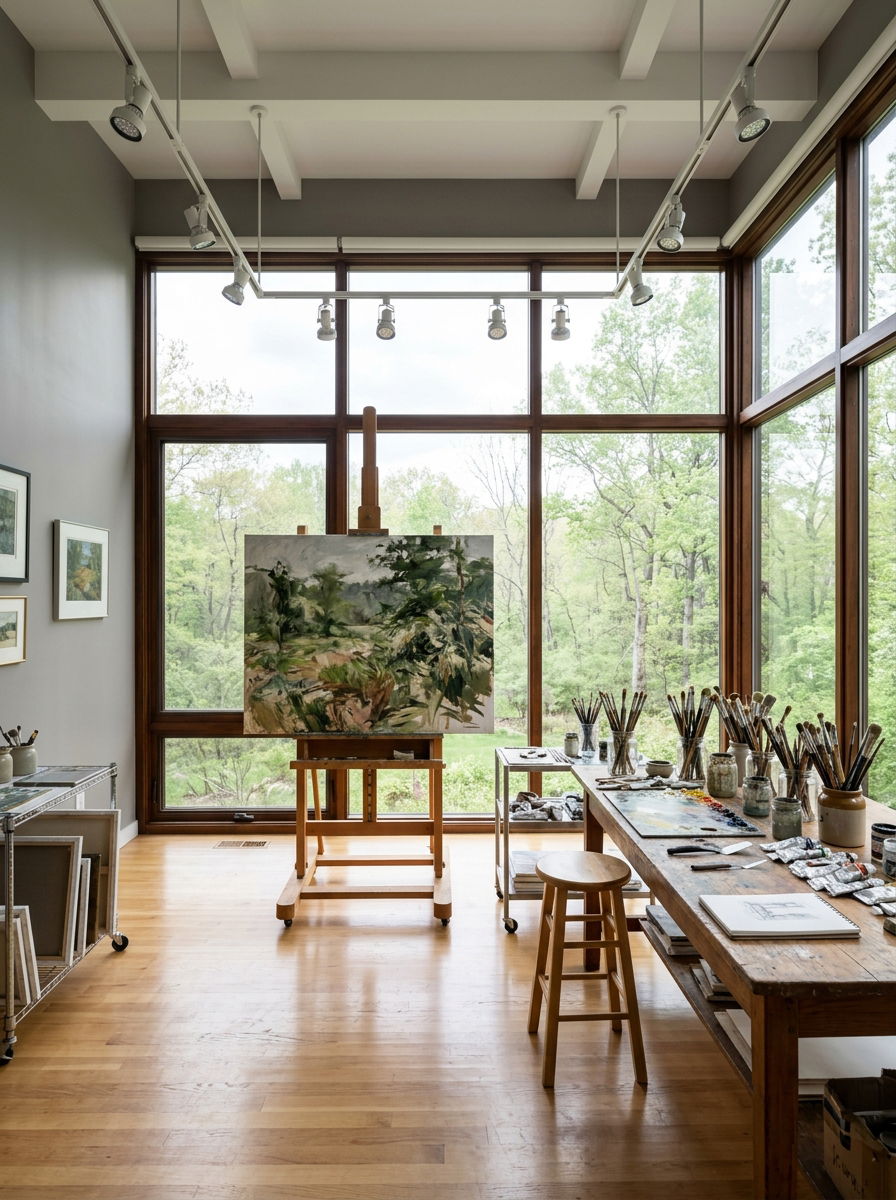
Experienced artists often search for a room with north-facing windows because this specific orientation provides the most consistent, diffused light throughout the day. Unlike south-facing windows that can create harsh shadows and shifting highlights, a northern exposure keeps your colors looking accurate and stable for hours. Setting up your primary easel directly in front of these windows allows you to see every subtle detail of your brushwork without glare. To enhance this effect, keep the surrounding walls painted in a neutral white or soft gray to prevent unwanted color reflections. This classic studio arrangement is the gold standard for portrait painters and traditional oil artists who prioritize absolute visual precision.
5. Minimalist Art Room
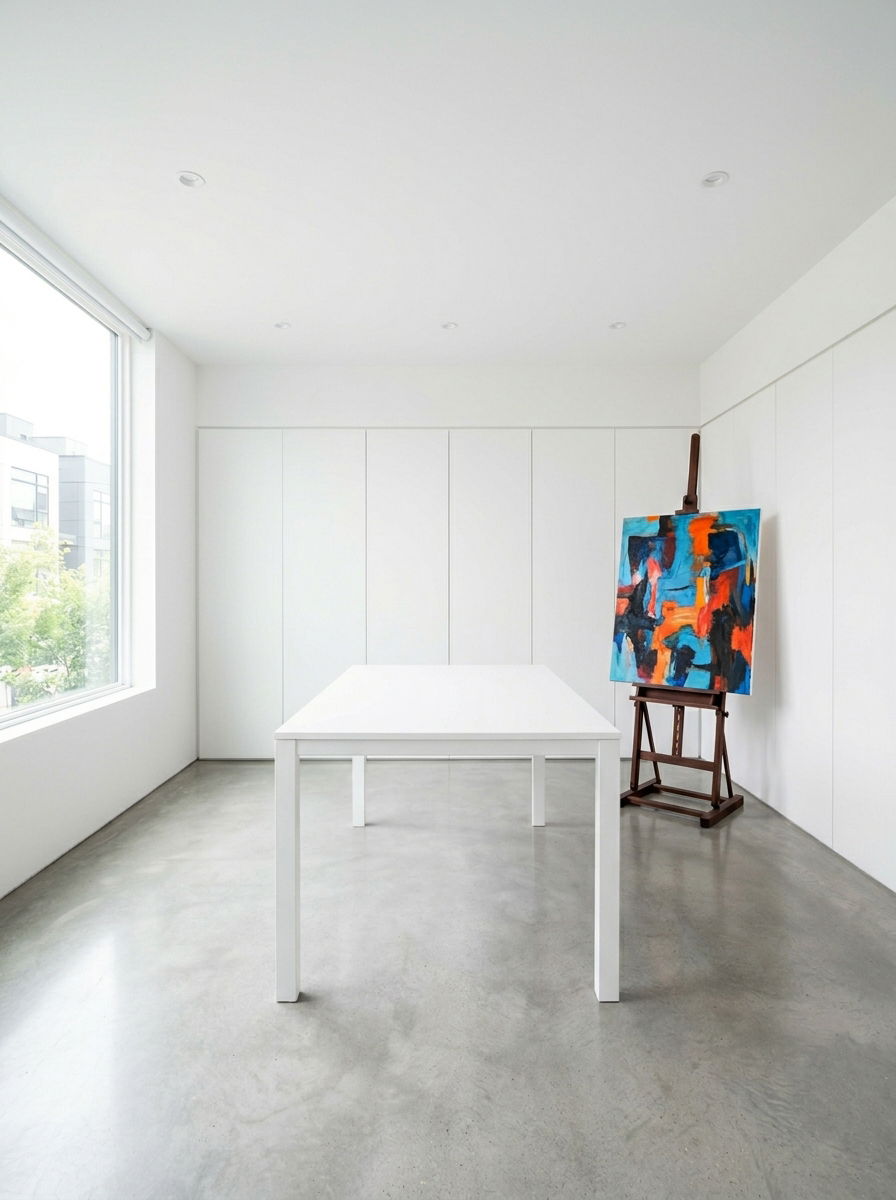
A minimalist art room focuses on reducing visual clutter to keep the artist’s mind clear and focused on the canvas. This design style typically features clean white walls, a single high-quality work table, and hidden storage solutions that keep supplies out of sight when not in use. By limiting the number of decorative objects in the room, you create a serene environment where the art itself becomes the main focal point. Smooth, easy-to-clean surfaces and a monochromatic color palette help maintain a professional and organized atmosphere. This approach is particularly effective for contemporary abstract painters who require a neutral background to evaluate their work without any competing visual or colorful distractions.
6. Industrial Style Loft
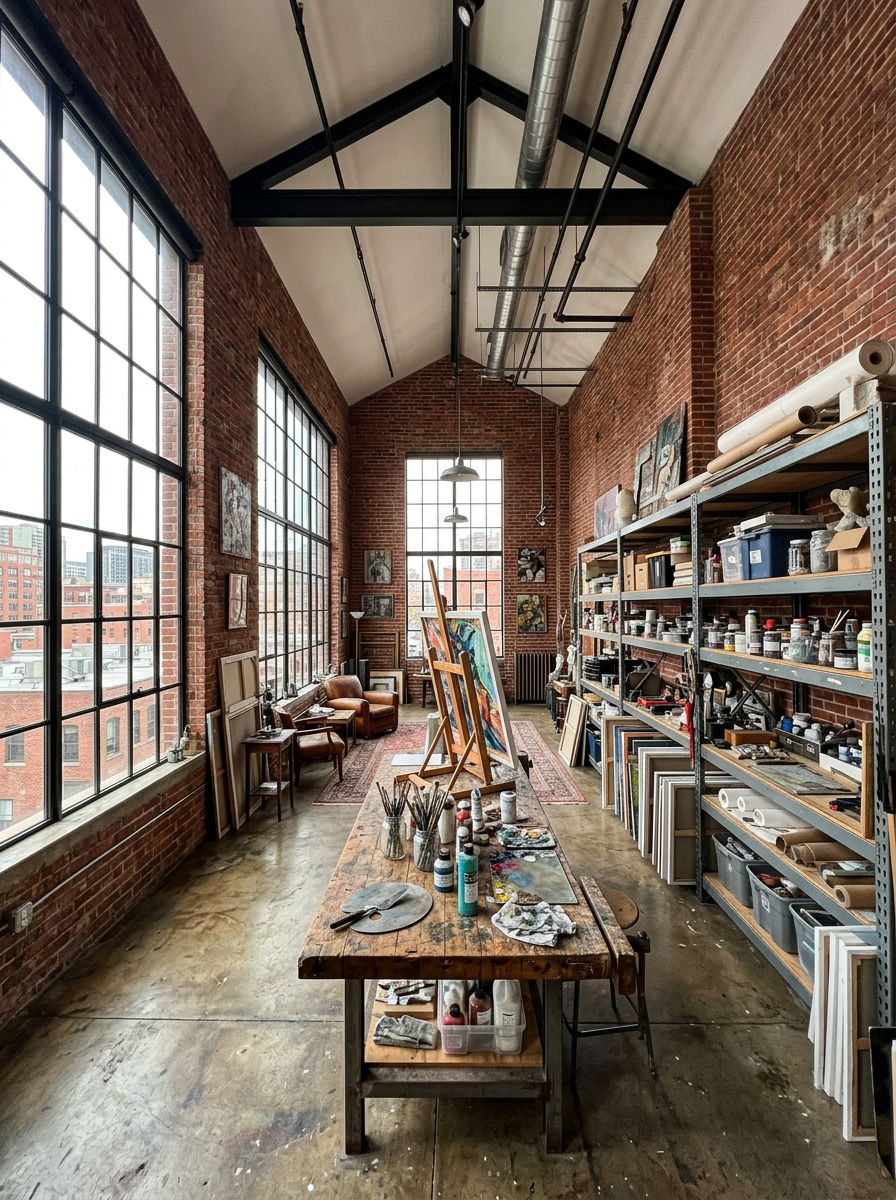
Embracing an industrial aesthetic can give your painting studio a trendy, urban vibe that feels both professional and edgy. High ceilings, exposed brick walls, and metal piping are common features that define this look, providing a raw and inspiring backdrop for creativity. You can use large-scale metal shelving units and reclaimed wood workbenches to store your heavy tools and jars of medium. The vast, open floor plan of a loft allows for multiple workstations, such as a dedicated area for stretching canvases and another for final varnishing. Large factory-style windows are perfect for letting in dramatic light, while the sturdy architectural elements can easily support heavy, wall-mounted storage systems.
7. Backyard Garden Shed
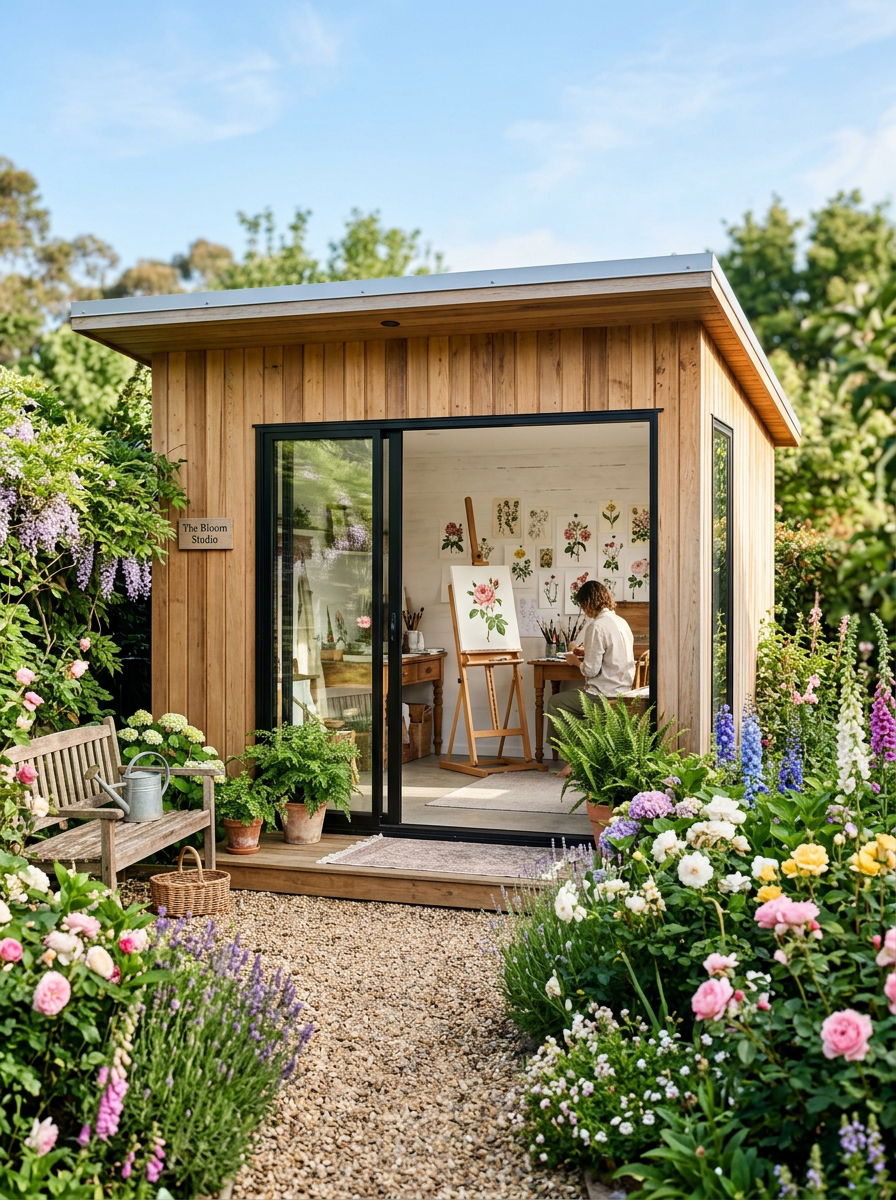
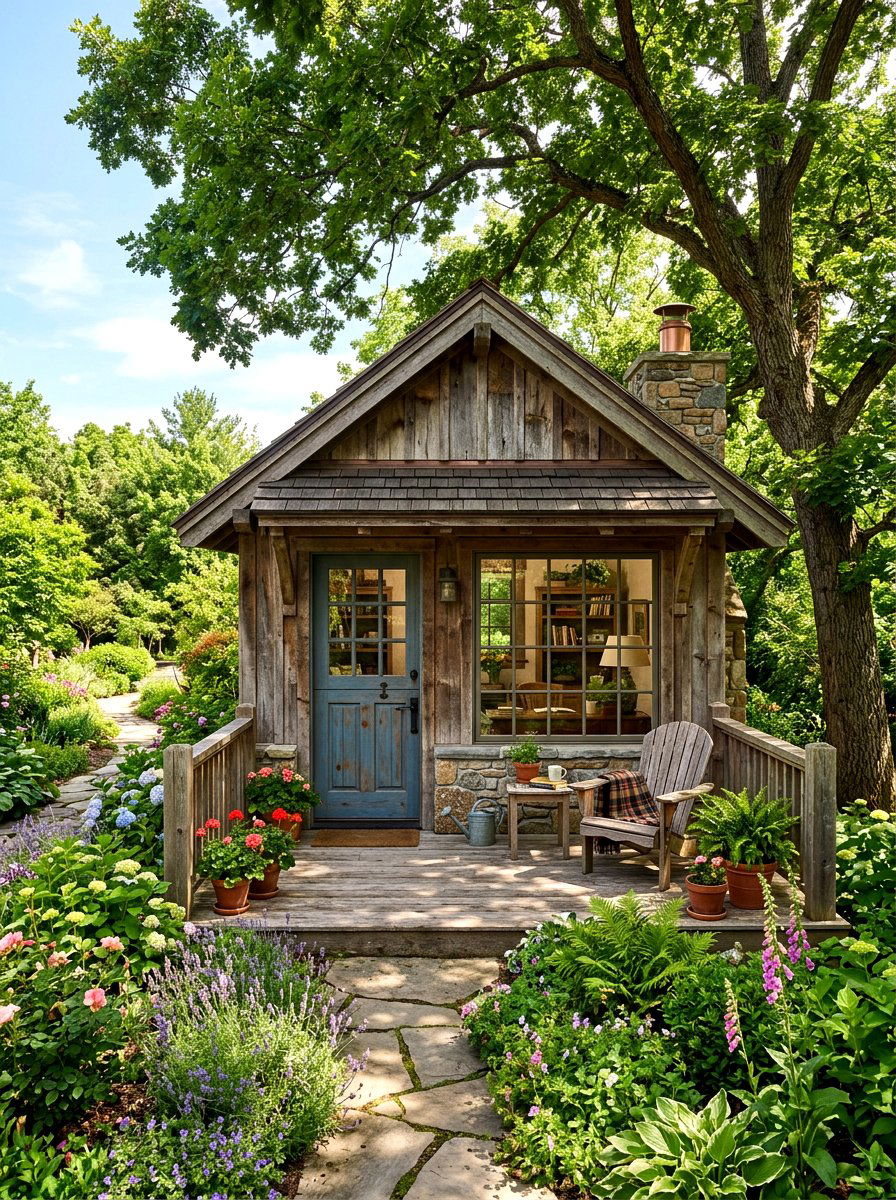
Building a backyard garden shed studio creates a physical and mental separation between your personal life and your creative professional work. Being surrounded by nature provides a peaceful atmosphere that can significantly reduce stress and spark new ideas for botanical or landscape paintings. Most modern sheds can be customized with large glass doors and insulation to ensure a comfortable working temperature throughout every season. The compact footprint of a shed encourages you to stay organized and only keep the most essential supplies on hand. Walking across the lawn to your studio feels like a short commute, helping you transition into a productive mindset the moment you step inside.
8. Bohemian Artist Space
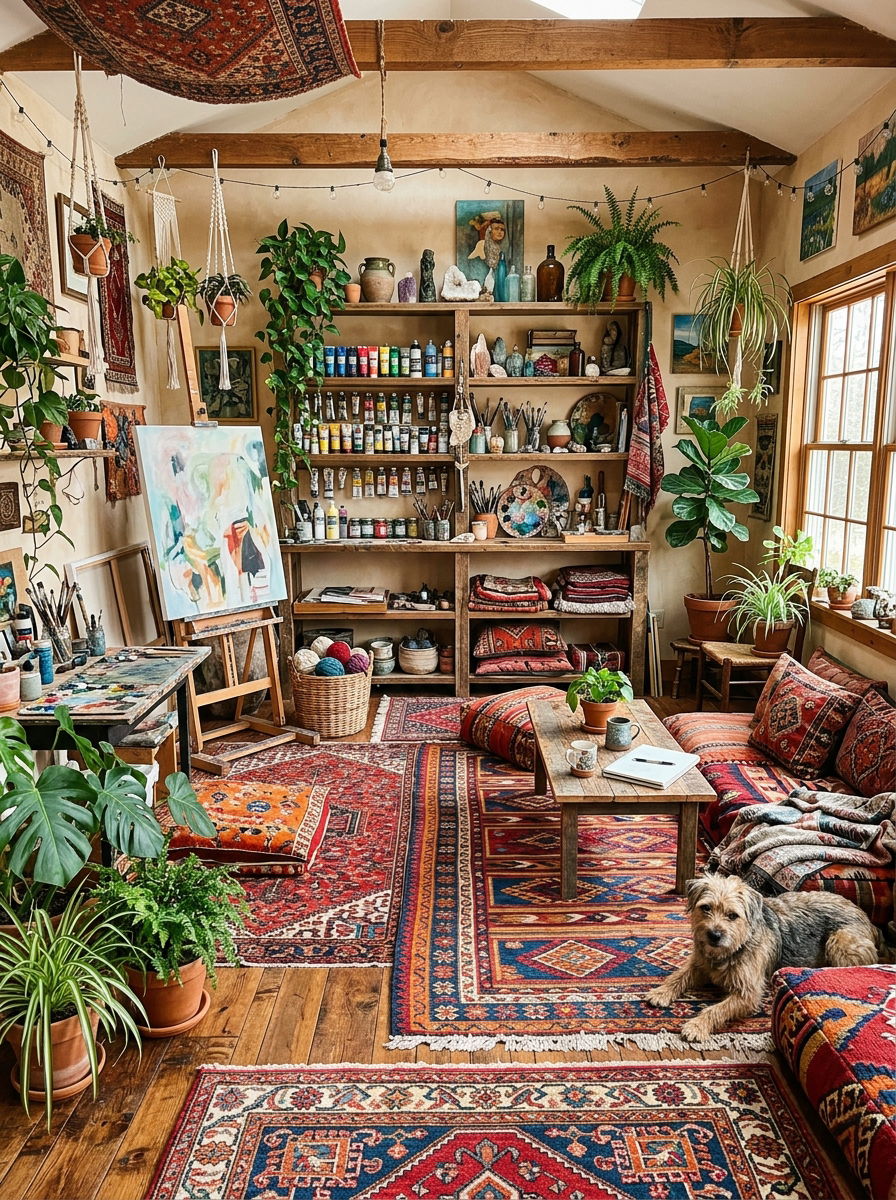
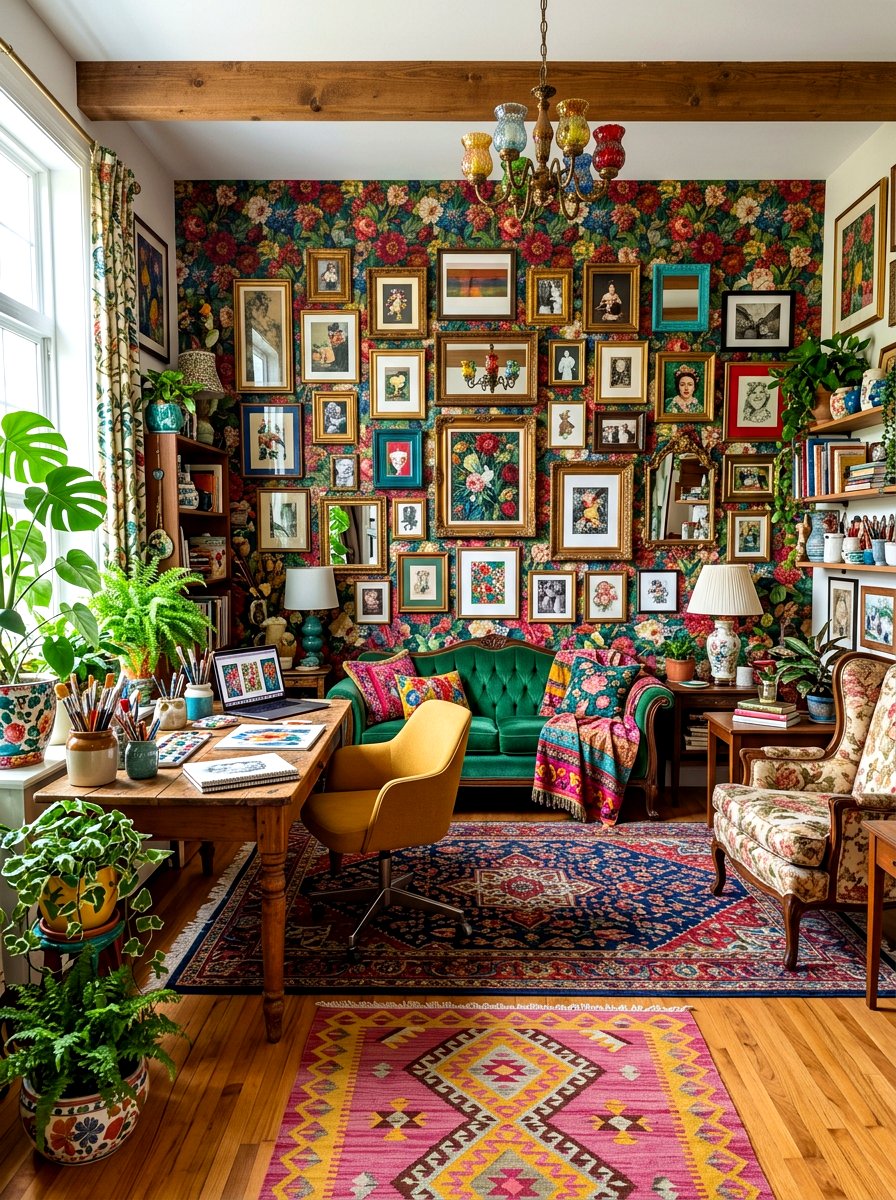
A bohemian artist space is characterized by rich textures, vibrant colors, and a relaxed, cozy atmosphere that invites long hours of creativity. You can fill this type of studio with vintage rugs, floor pillows, and hanging plants to create a soulful environment that feels deeply personal. Open shelving allows you to display your favorite art books and found objects alongside your jars of colorful paint and brushes. String lights or decorative lanterns can provide soft, warm illumination for evening sessions, while eclectic wall hangings add to the creative energy. This style is perfect for artists who find inspiration in a layered, lived-in space that celebrates a free-spirited and expressive lifestyle.
9. Basement Art Studio
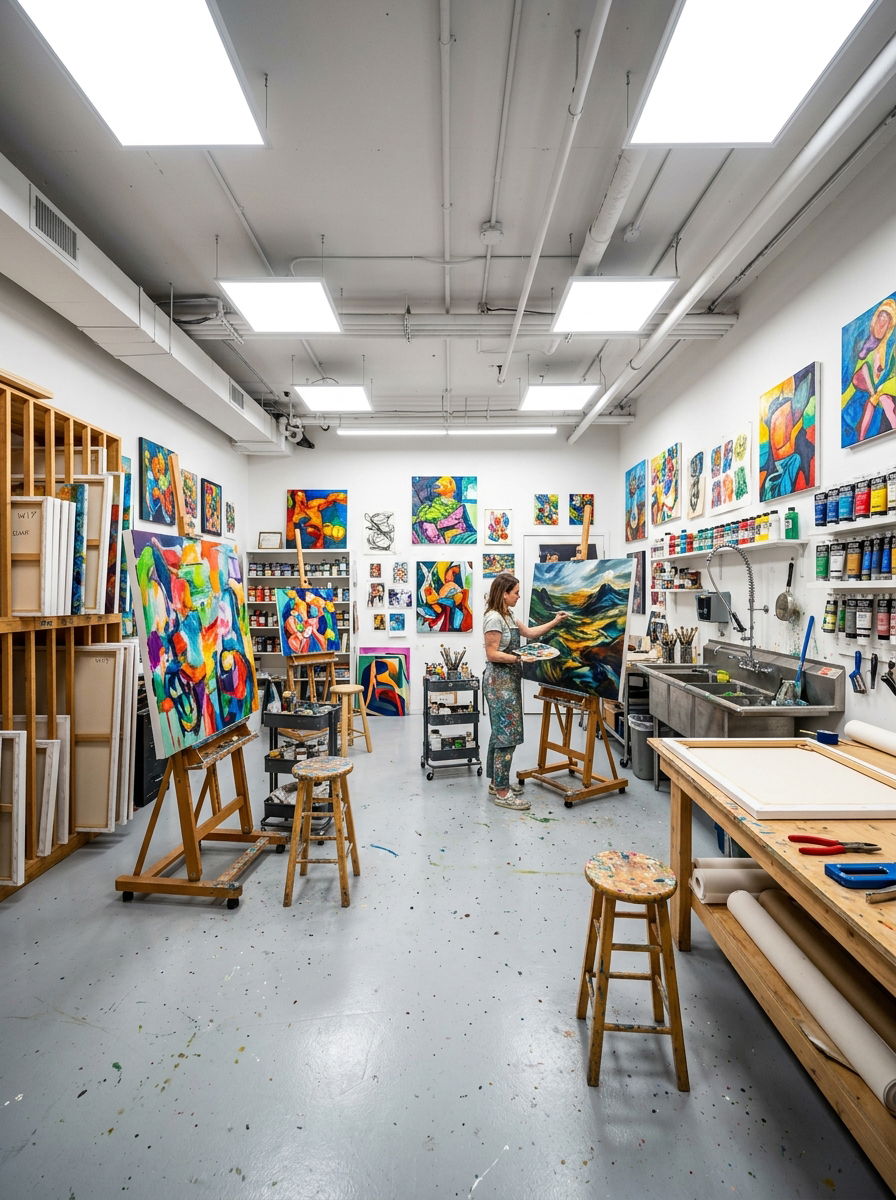
Utilizing a basement for your art studio is an excellent way to gain a large amount of square footage without taking over the main floors. While basements can sometimes feel dark, you can easily transform them into bright workspaces by installing high-intensity daylight LED panels and painting the walls bright white. The naturally cooler temperature of a basement is often beneficial for storing certain types of paints and chemicals that require a stable environment. Since basement floors are typically concrete, you can easily install a utility sink for washing brushes and cleaning up large spills. This underground retreat offers a quiet, private sanctuary where you can work late into the night.
10. Professional Easel Station
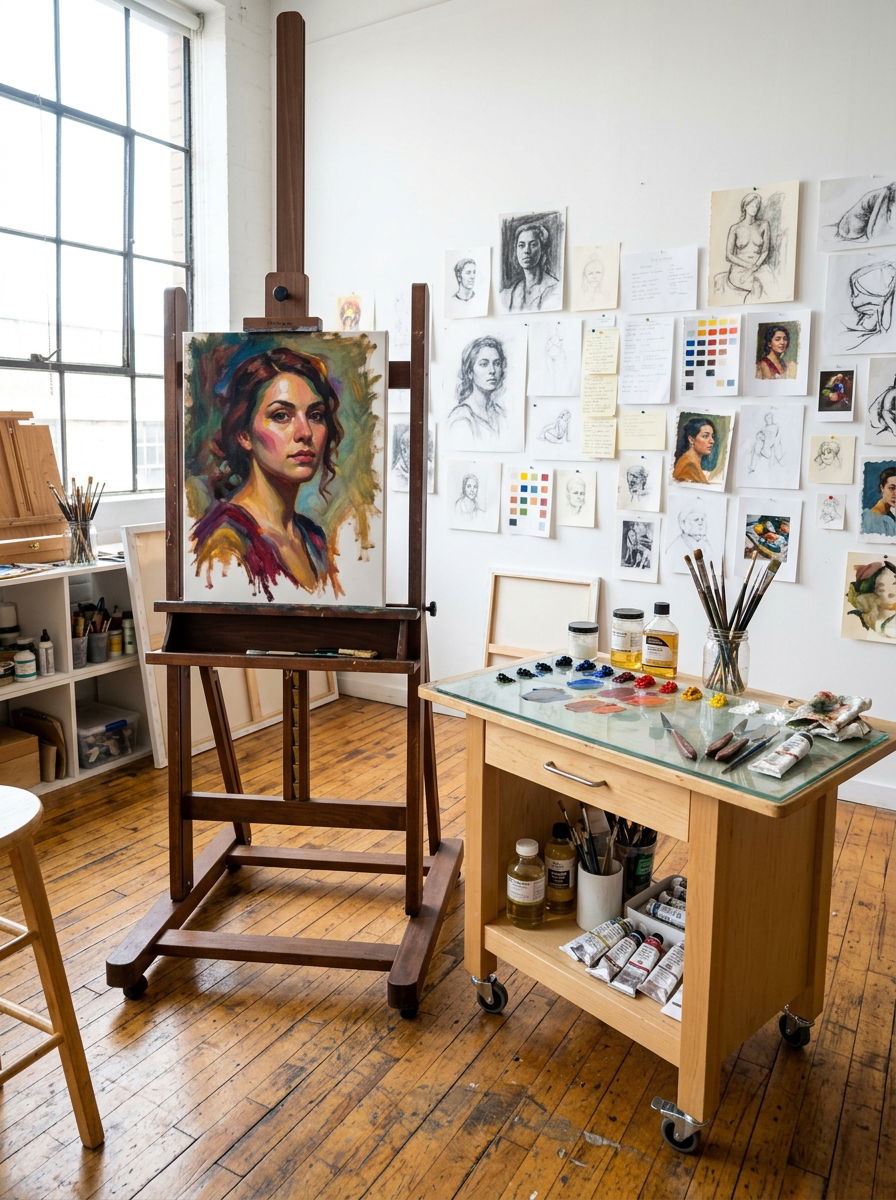
Centering your studio around a professional easel station is the best way to ensure ergonomic comfort during long hours of intense painting. A heavy-duty H-frame easel provides the stability needed for large canvases, while a crank-handle model allows you to adjust the height with minimal physical effort. Surround your easel with a mobile taboret or a dedicated side table to keep your palette, brushes, and solvents within arm’s reach at all times. Positioning a high-quality task light directly above the station ensures that your work surface is perfectly illuminated even after the sun goes down. This focused setup creates a clear headquarters for your creative process, making every painting session more efficient.
11. Wall Paint Storage
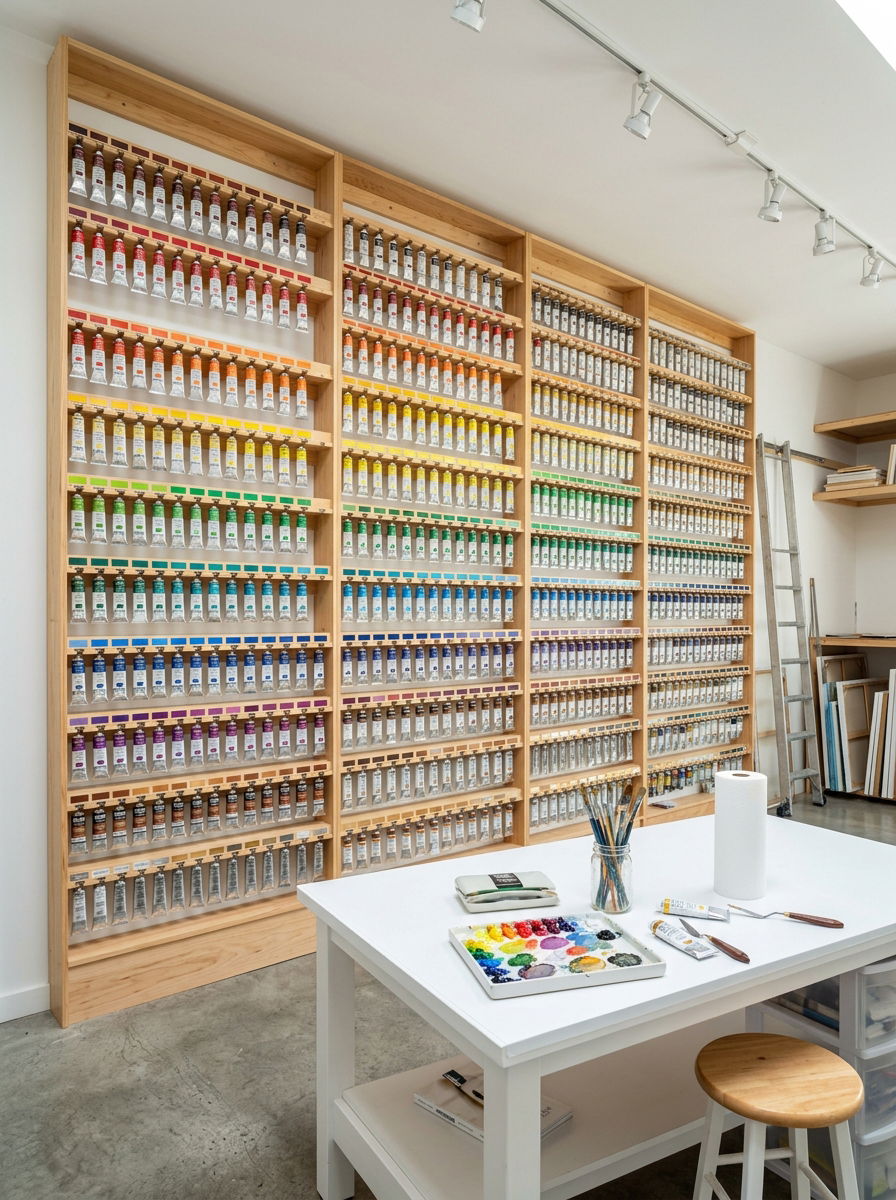
Installing a comprehensive wall paint storage system is a game-changer for maintaining an organized and visually inspiring studio environment. Instead of digging through messy bins, you can mount narrow ledges or pegboards to display your paint tubes by color or brand. This vertical arrangement makes it incredibly easy to see exactly which pigments you have in stock and which ones need to be replenished soon. Using clear acrylic shelves or custom-built wooden racks adds a professional touch to the room while keeping your limited floor space clear of clutter. Seeing all your colors lined up like a rainbow can also provide instant inspiration for your next masterpiece during a creative block.
12. Large Format Studio
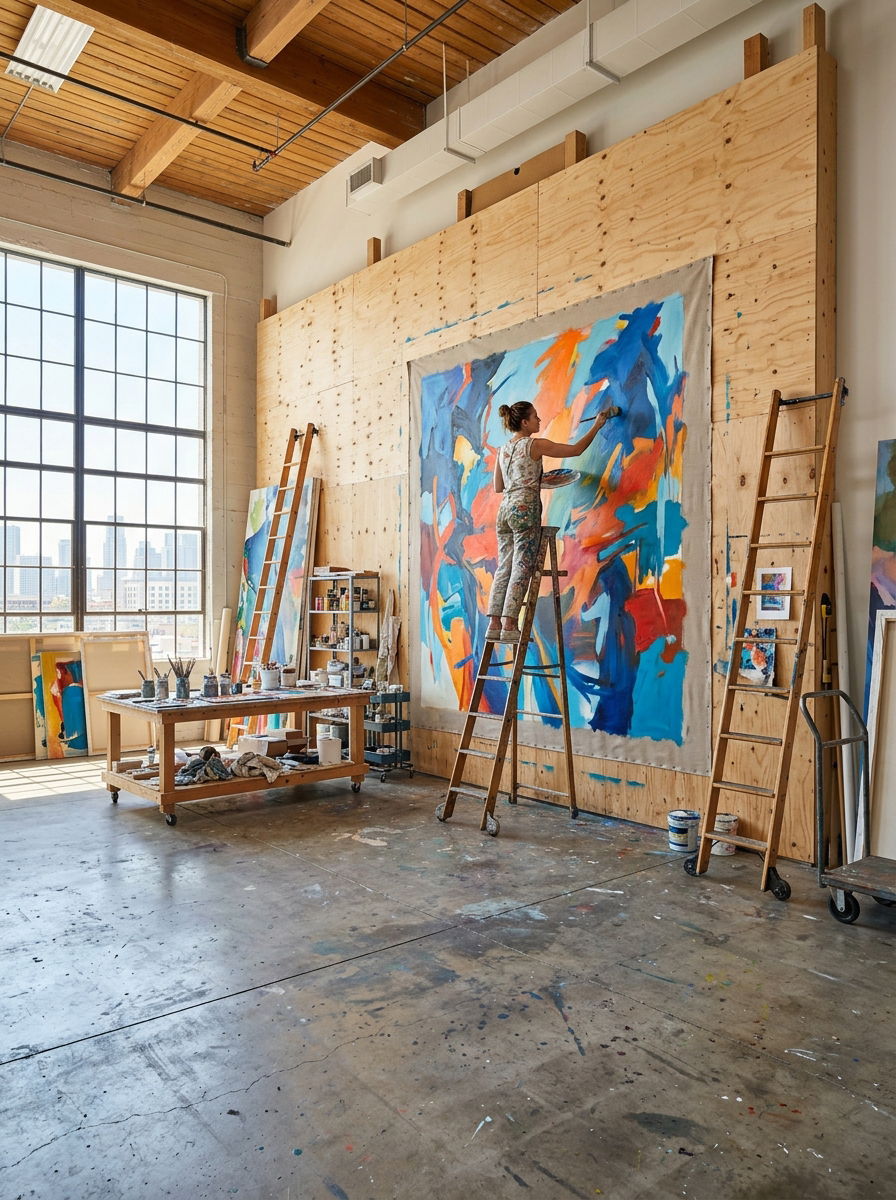
Designing a large format studio requires a focus on open floor space and sturdy wall surfaces that can accommodate massive, oversized canvases. Many artists choose to install a "painting wall" using plywood sheets, which allows them to staple large rolls of raw canvas directly to the surface. This setup eliminates the need for giant, bulky easels and gives you the freedom to move across the entire length of your work. Ensure that your studio has extra-wide doors so you can easily move your finished, large-scale pieces out of the room for shipping or gallery exhibitions. Ample floor space also allows you to step back and view your progress from a distance.
13. Modern Home Studio
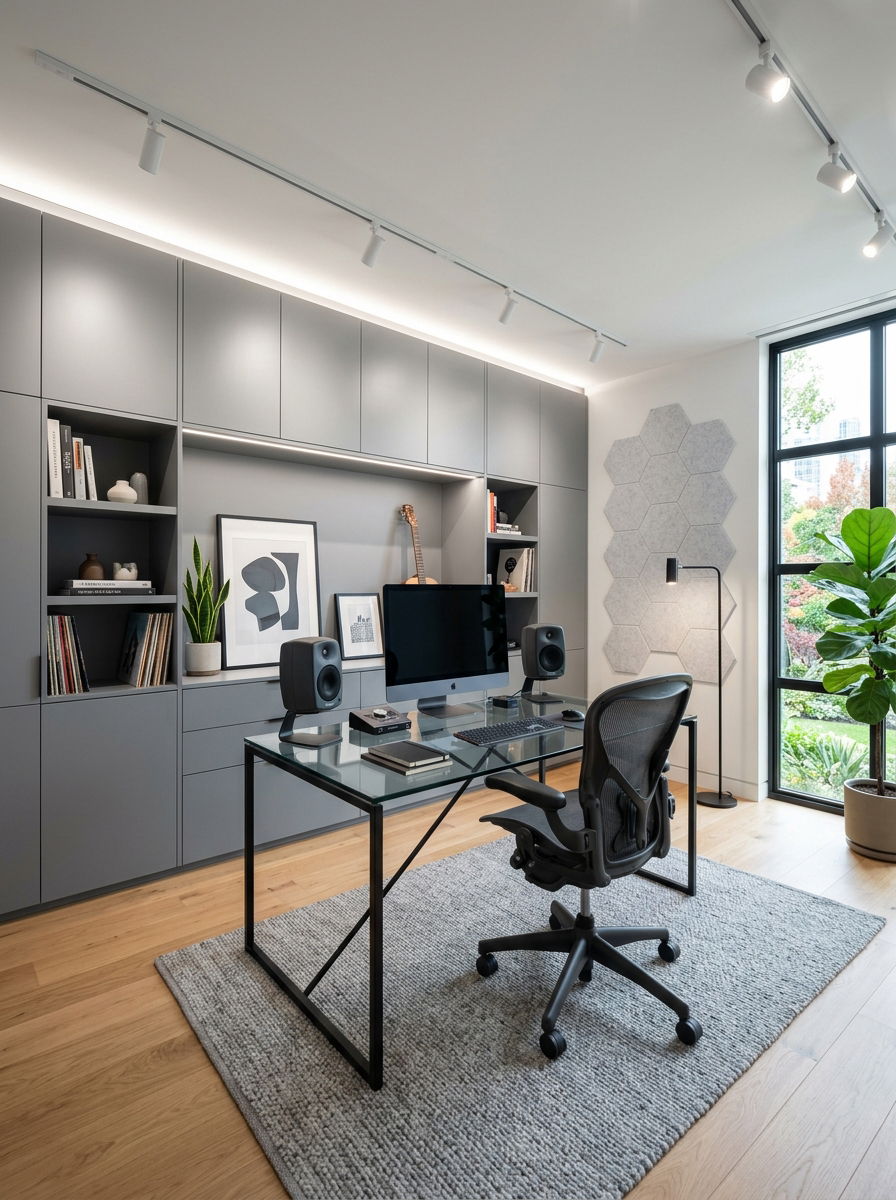
A modern home studio blends high-tech functionality with sleek interior design to create a workspace that is both efficient and aesthetically pleasing. This style often incorporates smart lighting systems that can be adjusted to mimic different times of day, helping you see how your colors will look in various environments. Integrated storage cabinets with soft-close drawers provide a clean, uncluttered look that fits perfectly into a contemporary house. Using materials like tempered glass for your palettes and stainless steel for your brush washers adds a polished, professional feel to the space. This design is ideal for artists who value a sophisticated environment that reflects a high-end and disciplined creative practice.
14. Vertical Shelving Studio
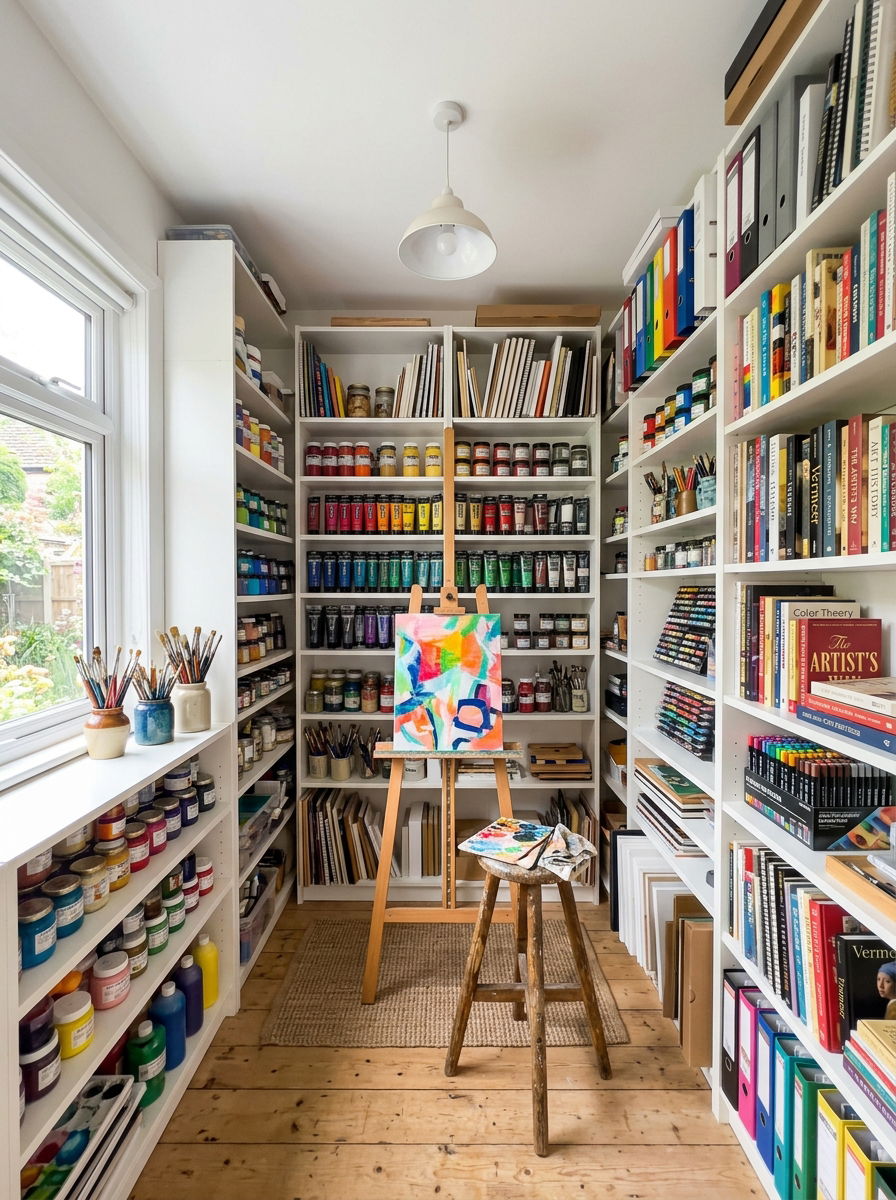
In a compact studio, maximizing your vertical space with floor-to-ceiling shelving is the most effective way to store a high volume of art supplies. Tall bookcases or custom-built wall units can hold everything from stacks of drawing paper to bulky containers of gesso and varnish. By utilizing the upper areas of your walls, you leave the floor open for your easel and a comfortable chair. Use the lower shelves for items you reach for daily, such as your current palette and favorite brushes, while keeping seasonal or rarely used tools on the higher levels. This organized approach ensures that even a tiny room can feel spacious, functional, and completely ready for any project.
15. Rolling Art Cart
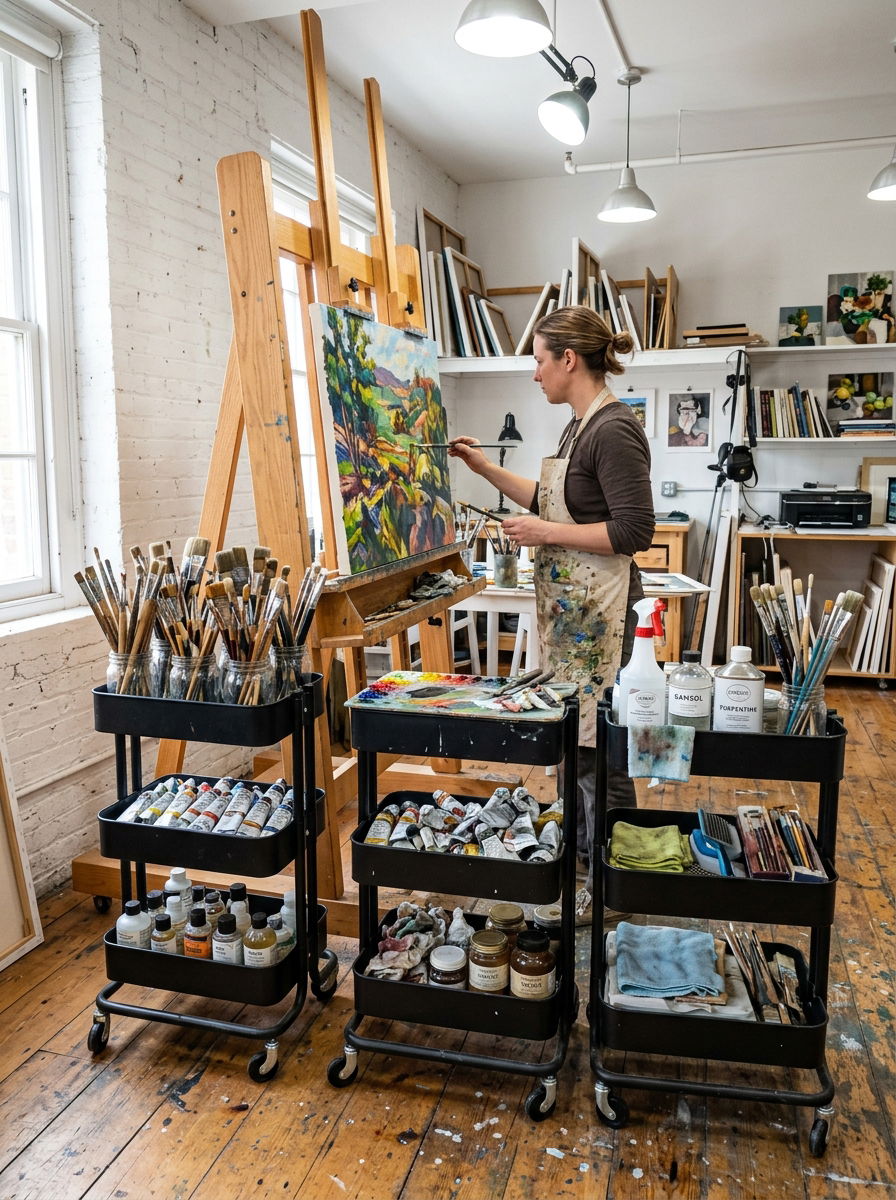
A rolling art cart is the ultimate organizational tool for painters who need flexibility and mobility within their creative workspace. These multi-tiered trolleys allow you to group specific supplies together, such as one level for oil paints and another for watercolor sets. You can easily wheel the cart next to your easel during a session and then tuck it away into a closet when you are finished. Many models feature side attachments for holding brushes and paper towels, keeping your most-used items always within reach. This mobile solution is particularly useful for artists who share their studio with other household members or who enjoy moving around to catch different light.
16. All White Studio
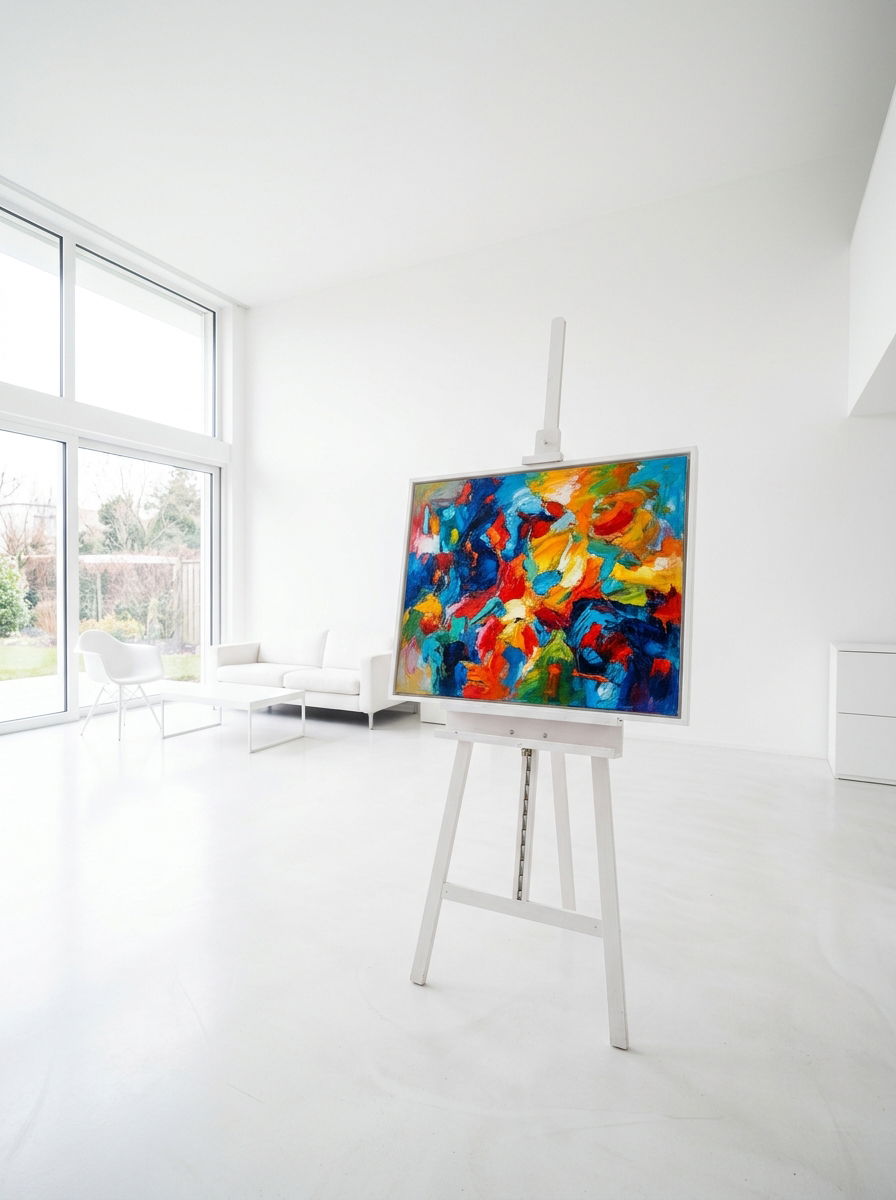
Choosing an all-white color scheme for your painting studio creates a bright, airy environment that feels expansive and full of potential. White walls reflect the maximum amount of natural light, which is crucial for seeing the true vibrancy and subtle undertones of your pigments. This neutral backdrop also prevents any unwanted color casting from interfering with your visual perception of the canvas. You can carry the white theme into your furniture choices, using white desks and storage bins to maintain a cohesive and professional look. The resulting aesthetic is clean and modern, providing a blank canvas that allows your colorful artwork to truly pop and take center stage.
17. Vintage Art Workspace
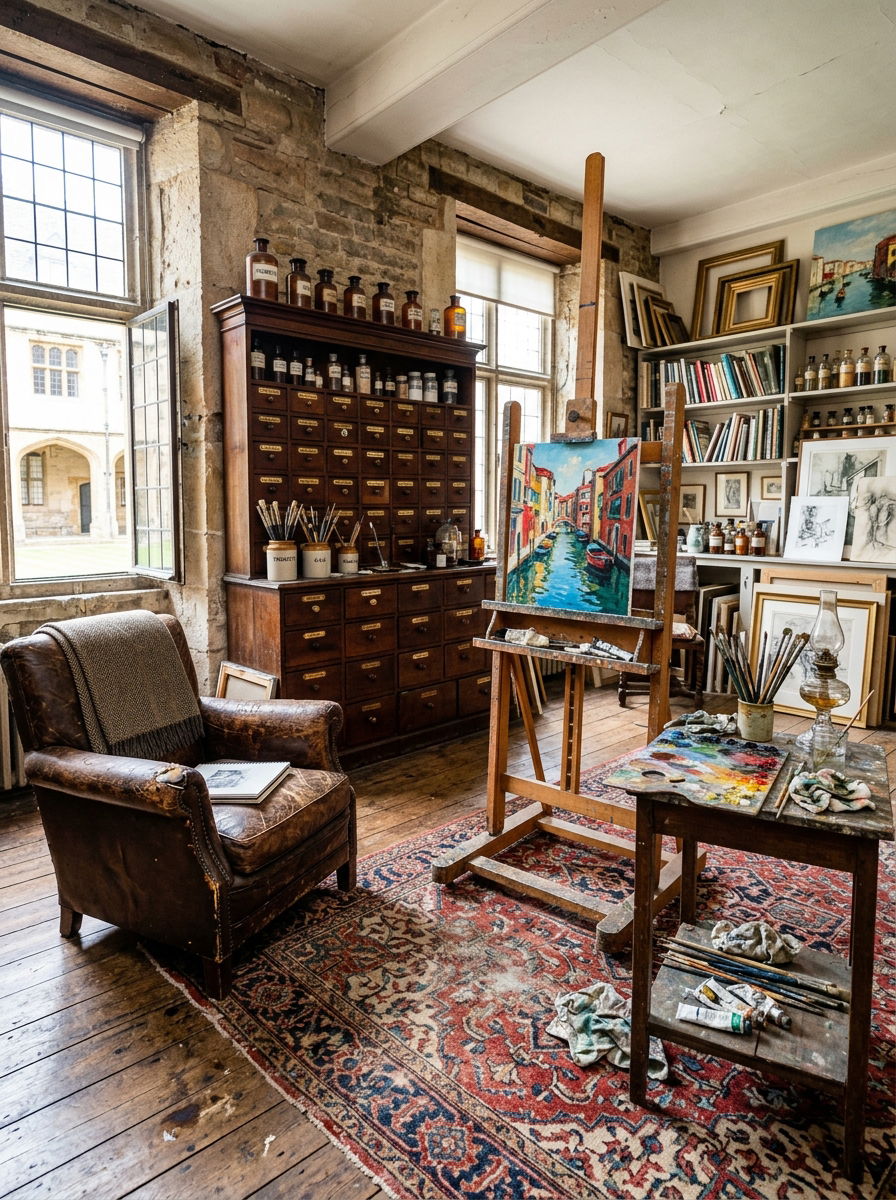
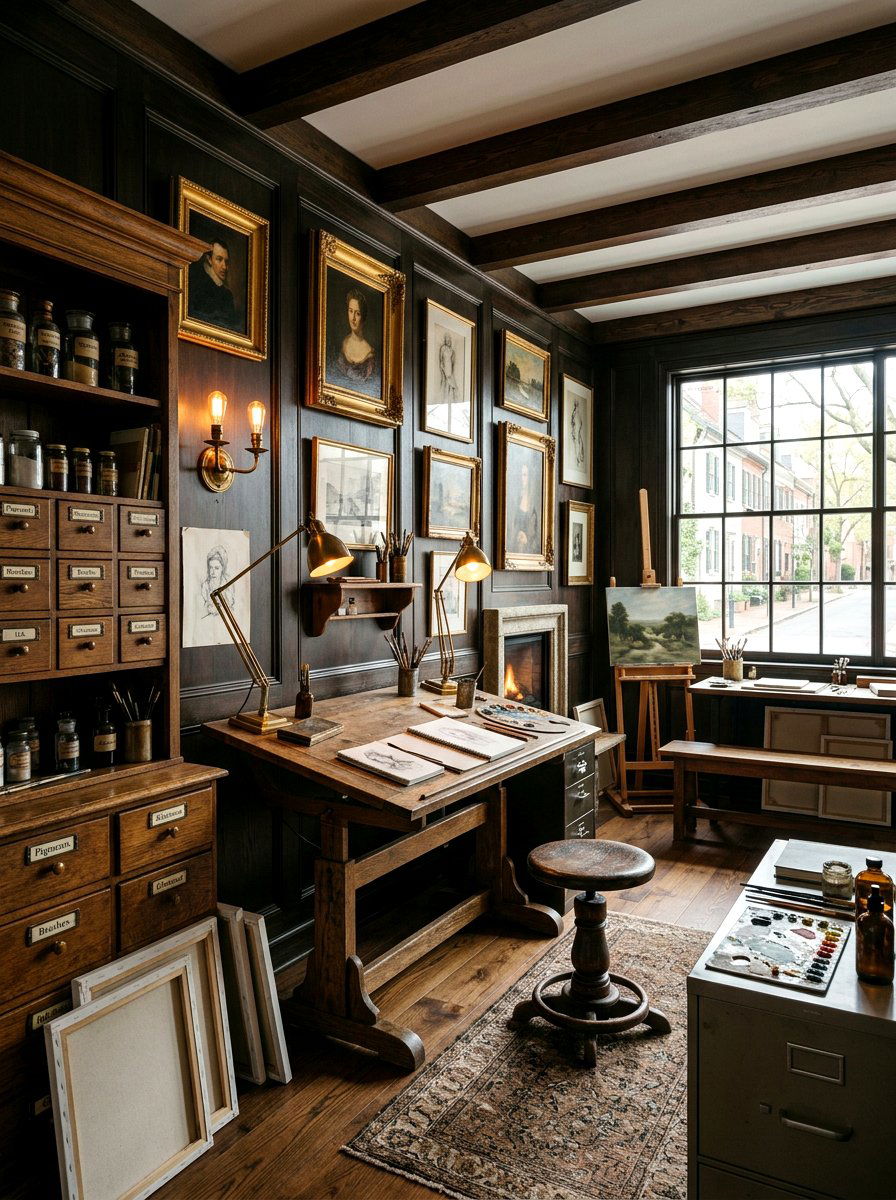
Creating a vintage art workspace involves incorporating antique furniture and historic decorative elements to build a studio with a sense of timeless charm. An old apothecary cabinet can be repurposed to store small tubes of paint and drawing pencils, while a weathered wooden drafting table provides a sturdy surface for sketching. Using classic glass jars for brush storage and vintage rugs for floor protection adds character and warmth to the room. This nostalgic environment can be deeply inspiring for artists who feel a connection to the masters of the past. The mix of worn textures and historical pieces creates a unique, soulful atmosphere that encourages a thoughtful and patient creative process.
18. Hardwood Floor Studio
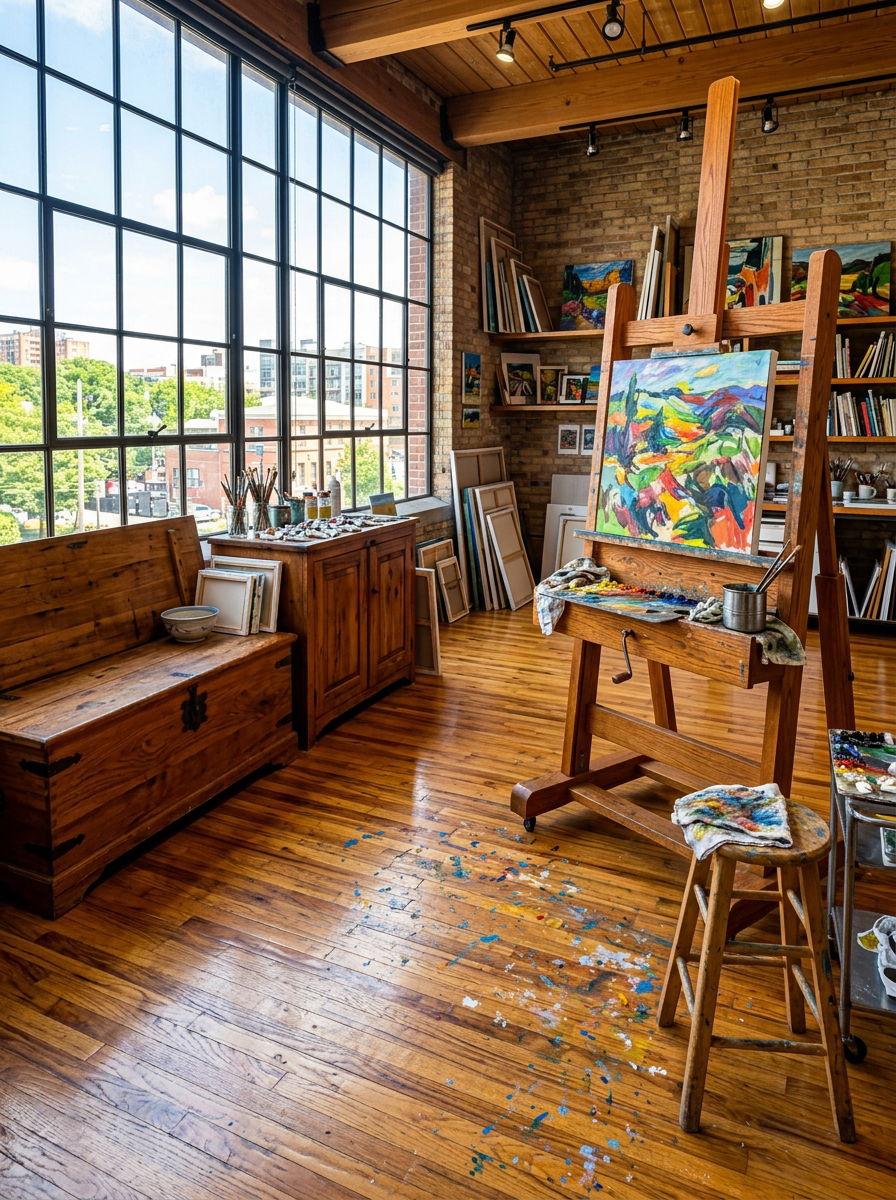
Installing hardwood floors in your painting studio offers a beautiful and durable surface that stands up well to the rigors of artistic work. While many people worry about getting paint on wood, a high-quality finish makes it surprisingly easy to wipe away wet spills with a damp cloth. Over time, the inevitable splatters of color can actually add a unique, lived-in character to the space that tells the story of your creative journey. Wood flooring also provides a warmer and more comfortable feel underfoot than cold concrete or tile, which is important for long hours spent standing at an easel. It creates a classic, professional look that complements any design style.
19. Guest Room Studio
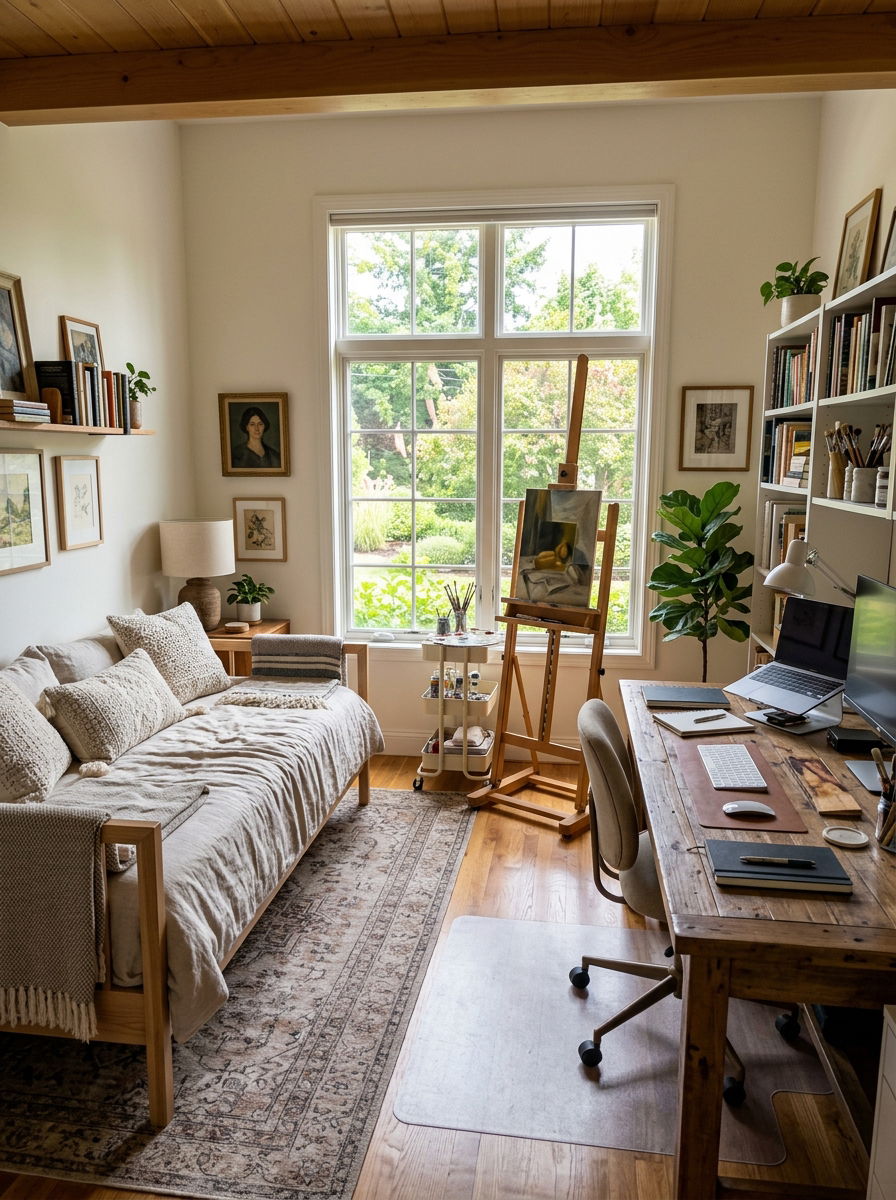
Repurposing a spare guest bedroom into a part-time painting studio is a smart way to maximize the utility of your home's square footage. By choosing furniture that is both functional and stylish, you can maintain a room that works for artists during the week and visitors during the weekend. A large, sturdy desk can serve as a workstation, while a decorative armoire can hide your messy paints and brushes when guests arrive. Consider using a stylish daybed instead of a traditional bed to save floor space for your easel. This dual-purpose arrangement allows you to have a dedicated creative sanctuary without sacrificing the ability to host friends and family.
20. Accent Wall Studio
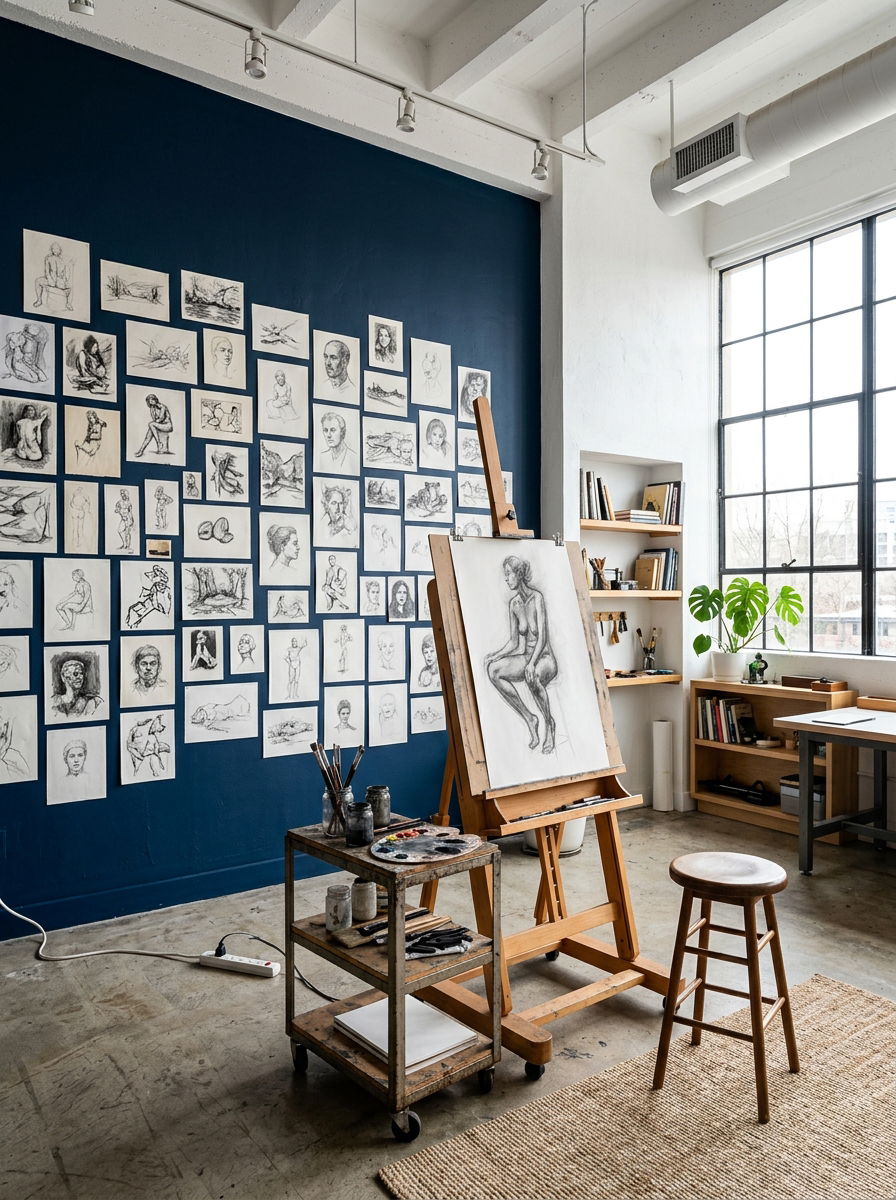
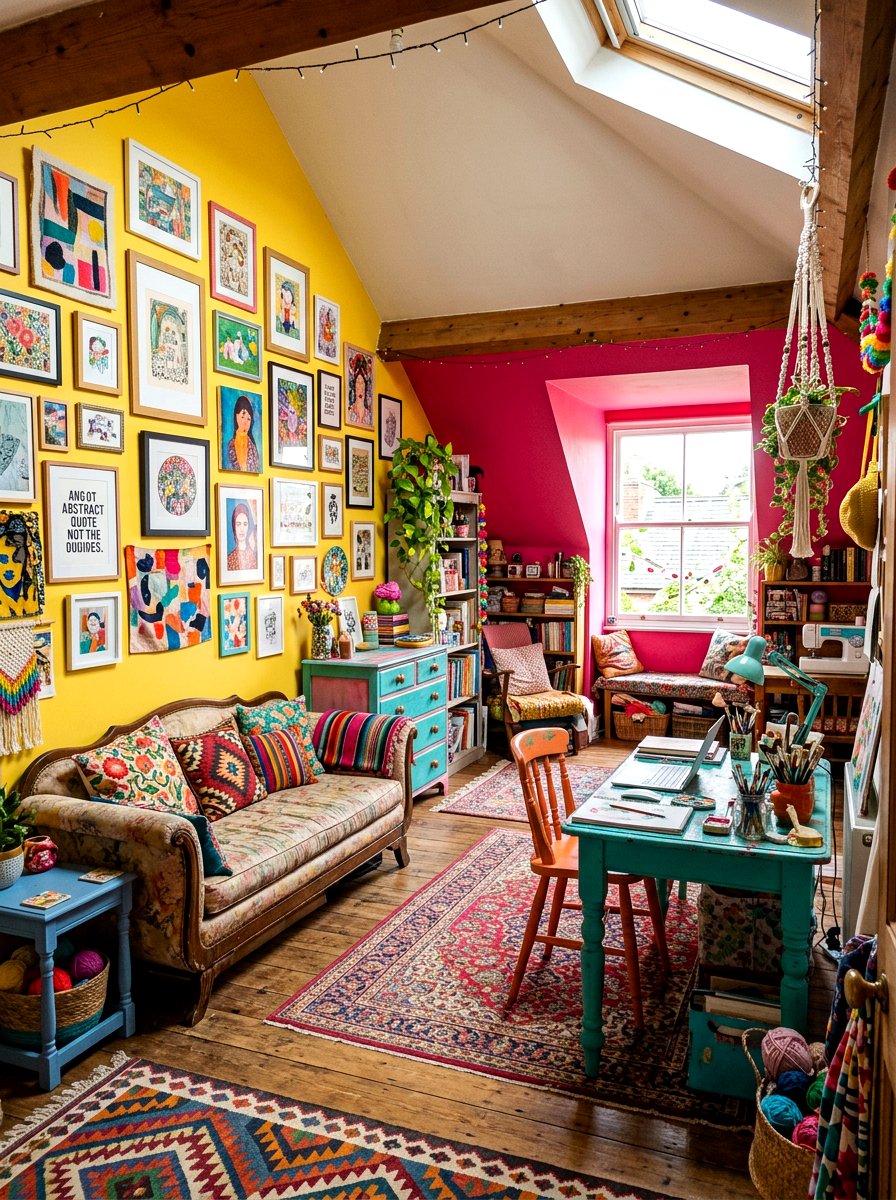
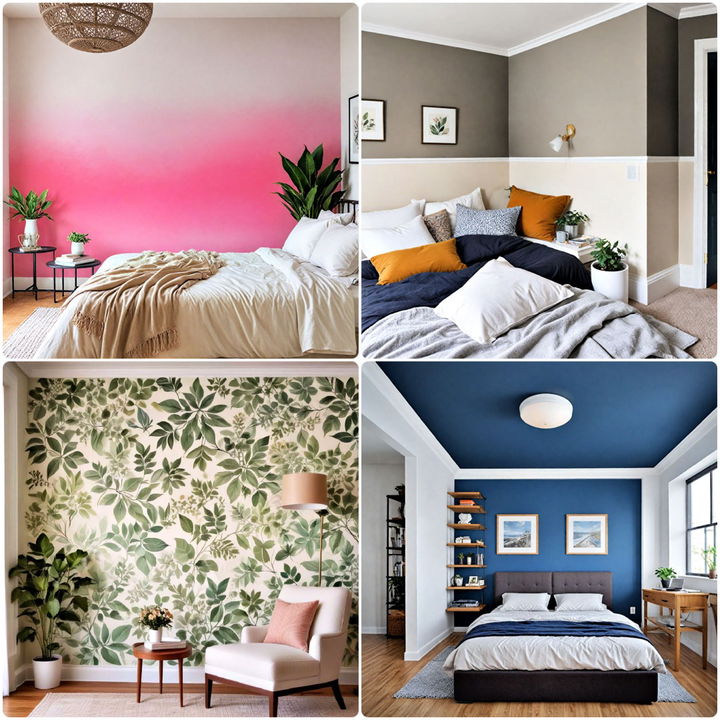
Designing your studio with a bold accent wall can provide a striking visual focal point that energizes your creative spirit every time you walk into the room. Whether you choose a deep charcoal for a dramatic effect or a vibrant teal for a burst of energy, a colored wall can serve as a beautiful backdrop for displaying your finished work. Some artists use their accent wall as a giant chalkboard or a corkboard for pinning up sketches, reference photos, and color swatches. This functional and decorative element helps organize your thoughts and provides a place for your ideas to grow. A well-placed pop of color can also improve the overall mood of the workspace.
21. Overhead Track Lighting
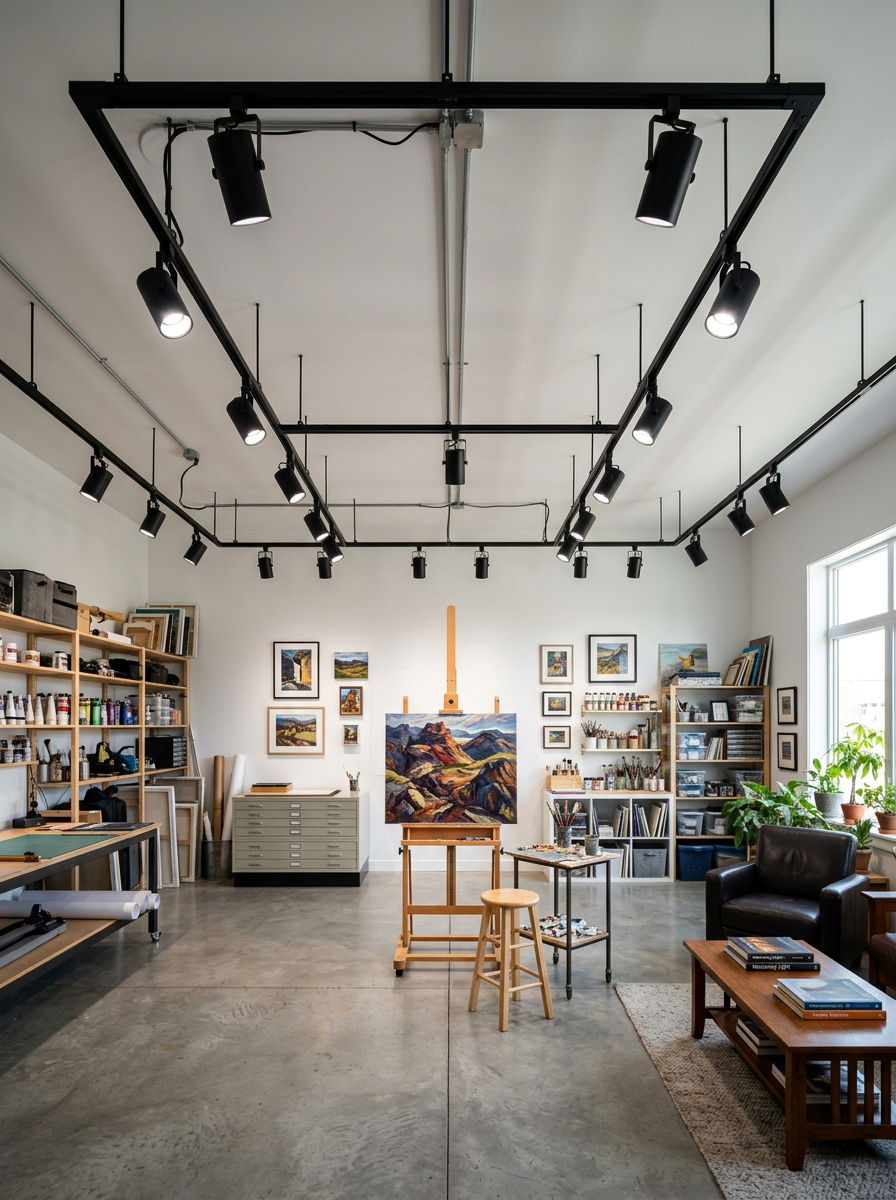
Installing a professional overhead track lighting system is essential for artists who frequently work during the evening or in rooms with limited natural light. Track lighting allows you to position multiple individual lamps along a rail, enabling you to direct bright, focused light exactly where you need it most. You can aim one light directly at your easel to illuminate the canvas and another at your palette for accurate color mixing. Choosing high-CRI (Color Rendering Index) LED bulbs ensures that the artificial light mimics the spectrum of natural daylight, preventing your colors from looking muddy or distorted. This adjustable setup provides the ultimate control over the visual conditions of your studio.
22. Open Floor Studio
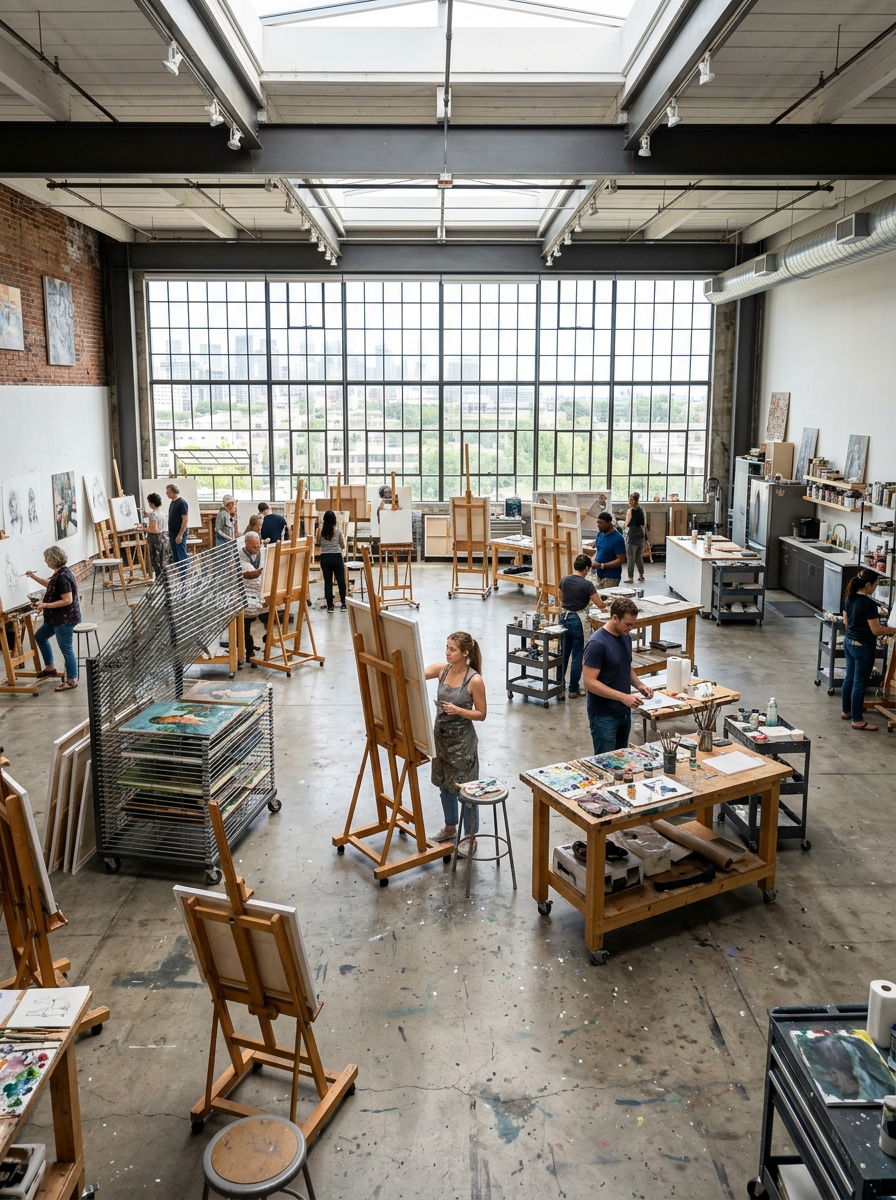
An open floor studio emphasizes a lack of permanent partitions, allowing for a fluid and adaptable workspace that can change based on the size of your current project. This layout is perfect for artists who move between different mediums, such as switching from delicate watercolor painting on a flat table to vigorous oil painting on a standing easel. By keeping furniture and storage units on the perimeter of the room, you maintain a large central area for movement and observation. This sense of spaciousness can make even a medium-sized room feel grand and professional. The open design also facilitates better airflow and ventilation, which is vital for artists using strong-smelling solvents.
23. Small Apartment Studio
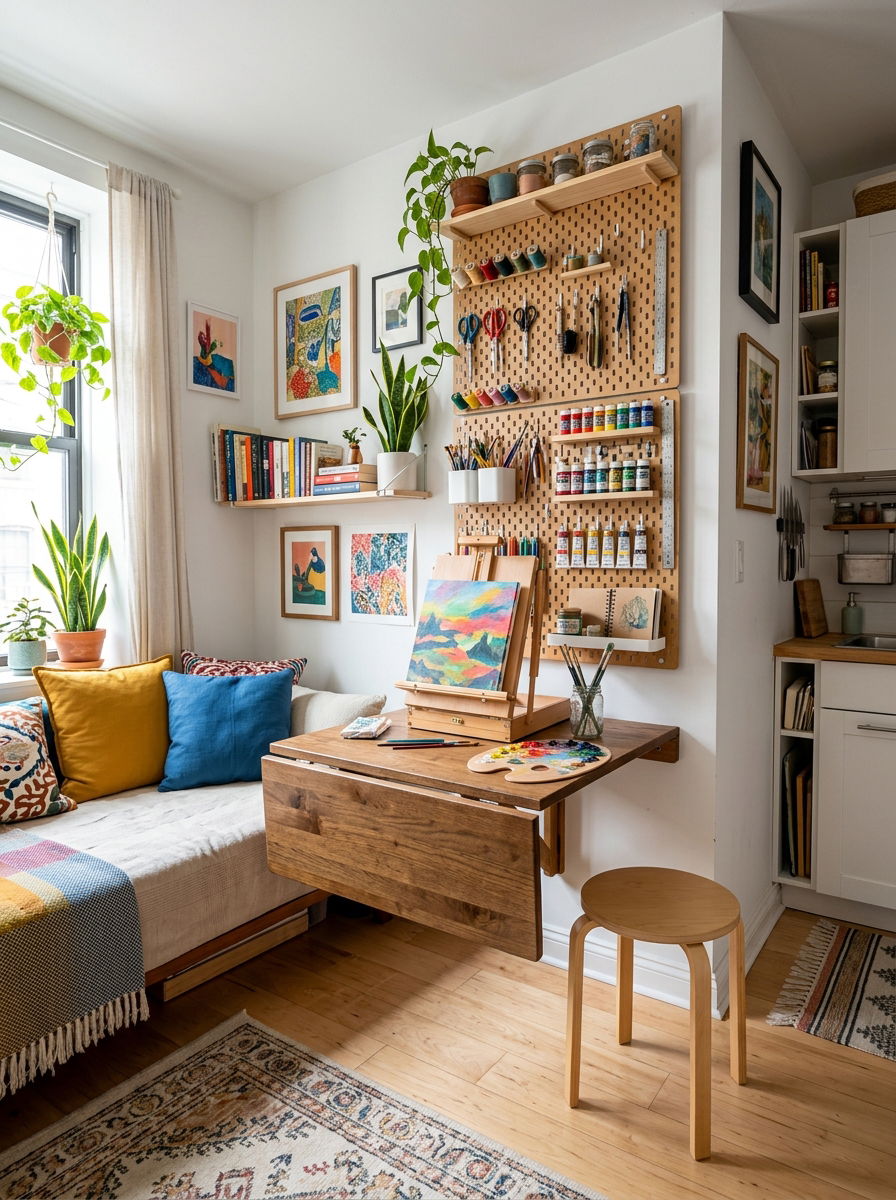
Living in a small apartment should never stop you from pursuing your passion for painting, as long as you use clever, space-saving design strategies. A wall-mounted drop-leaf table can serve as a sturdy work surface that folds flat against the wall when your painting session is finished. Utilizing vertical space with hanging organizers and over-the-door storage allows you to keep your supplies neatly tucked away without taking up any precious floor area. A portable, foldable easel can be easily stored under a bed or behind a sofa when not in use. By being intentional about your organization, you can transform even a tiny studio apartment into a highly efficient and inspiring art studio.
24. Vibrant Color Studio
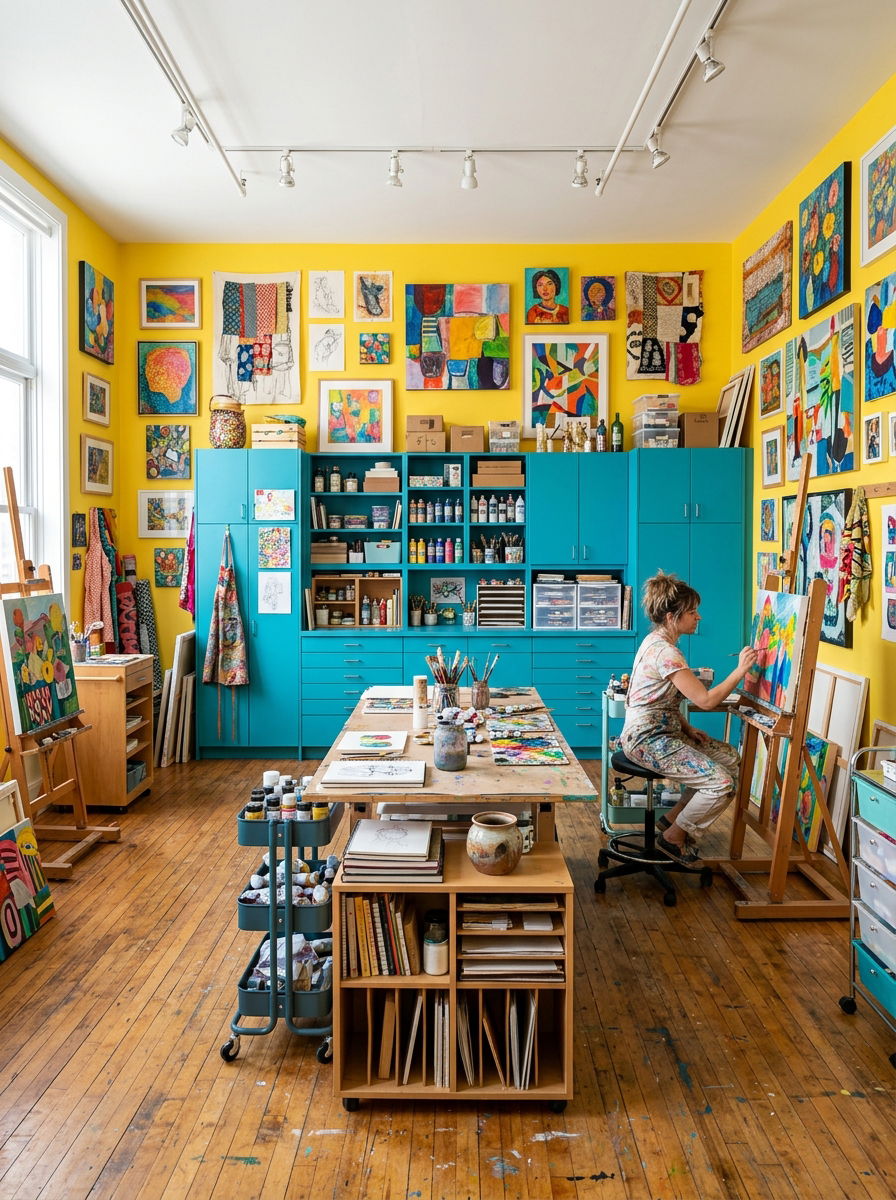
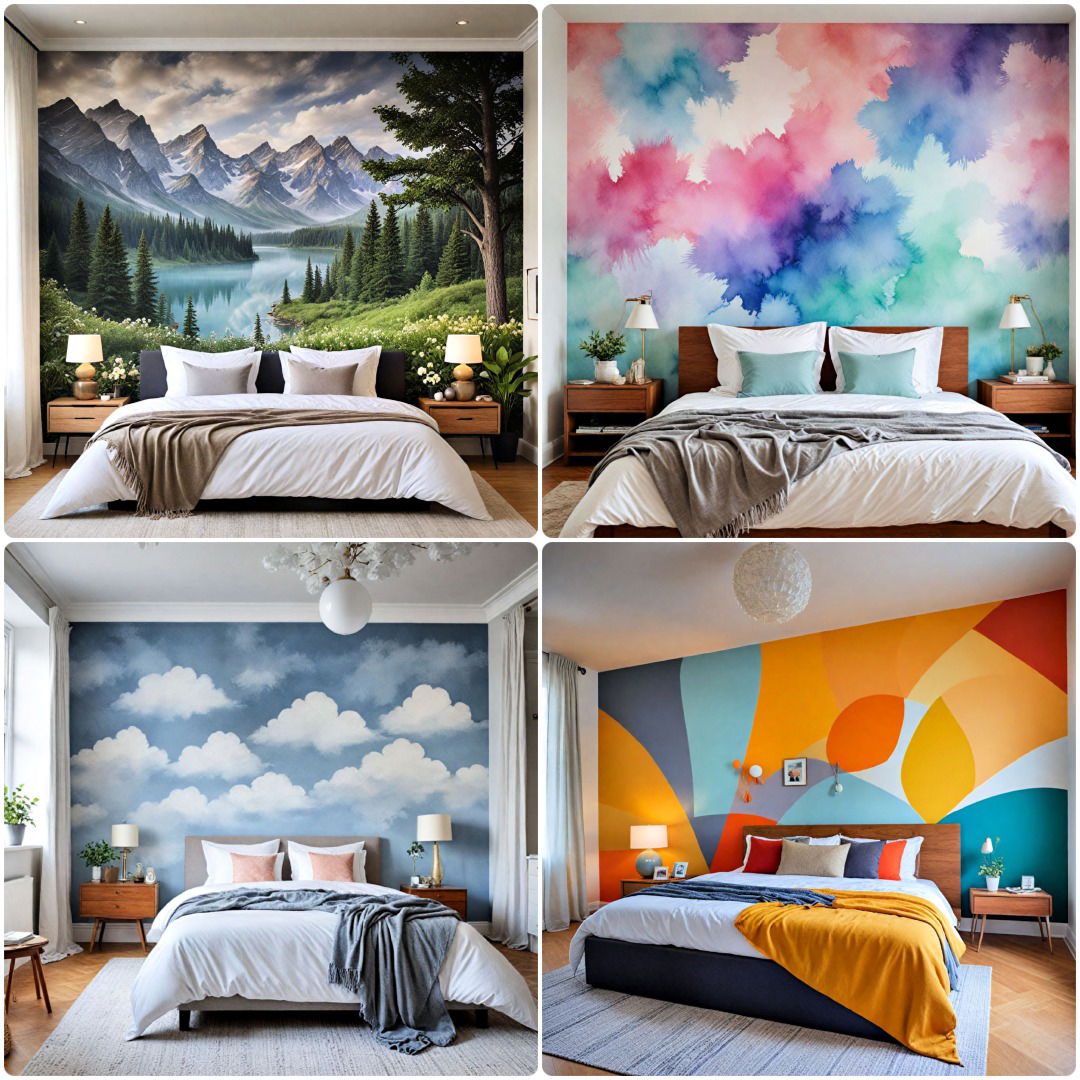
Embracing a vibrant color palette for your studio walls and decor can create a high-energy environment that stimulates the brain and encourages bold artistic choices. Shades like sunny yellow, bright orange, or energetic pink are known to boost mood and creativity, making them excellent choices for an expressive artist’s workspace. You can balance these intense hues with neutral flooring and white shelving to prevent the room from feeling overwhelming. Colorful storage bins and artistic accessories can further enhance the playful and imaginative atmosphere. This design approach is perfect for painters who want their studio to be a place of joy and excitement where they feel free to experiment with wild ideas.
25. Reclaimed Wood Studio
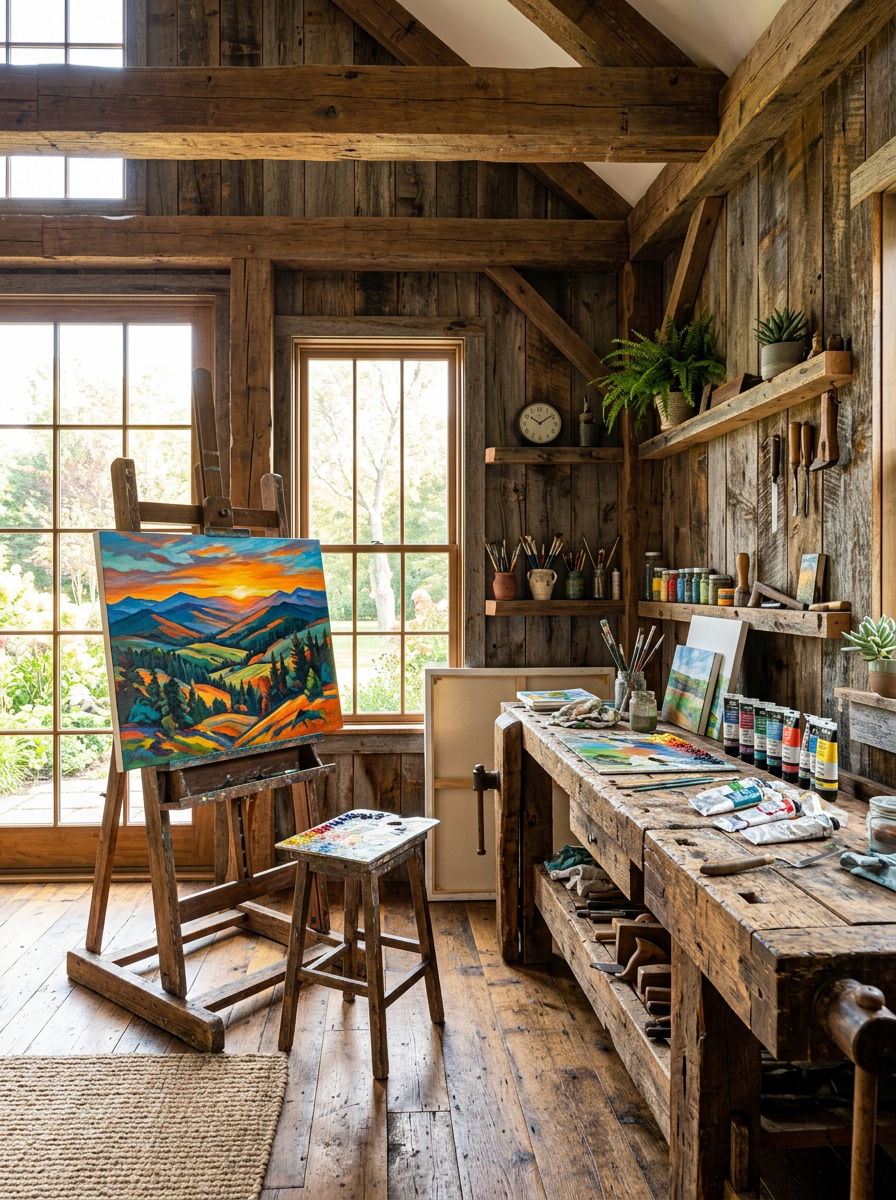
Incorporating reclaimed wood into your studio design adds a sense of history, warmth, and organic beauty to your creative professional workspace. You can use old barn wood for wall paneling or create a custom-built workbench from salvaged timber to provide a rustic and durable surface. The natural textures and varied grain patterns of the wood offer a tactile and grounded feeling that can be very soothing during intense painting sessions. This eco-friendly choice also gives new life to old materials, reflecting a commitment to sustainability that many artists find meaningful. The earthy tones of the wood provide a neutral yet interesting backdrop that complements a wide variety of artistic styles.
26. Dual Artist Workspace
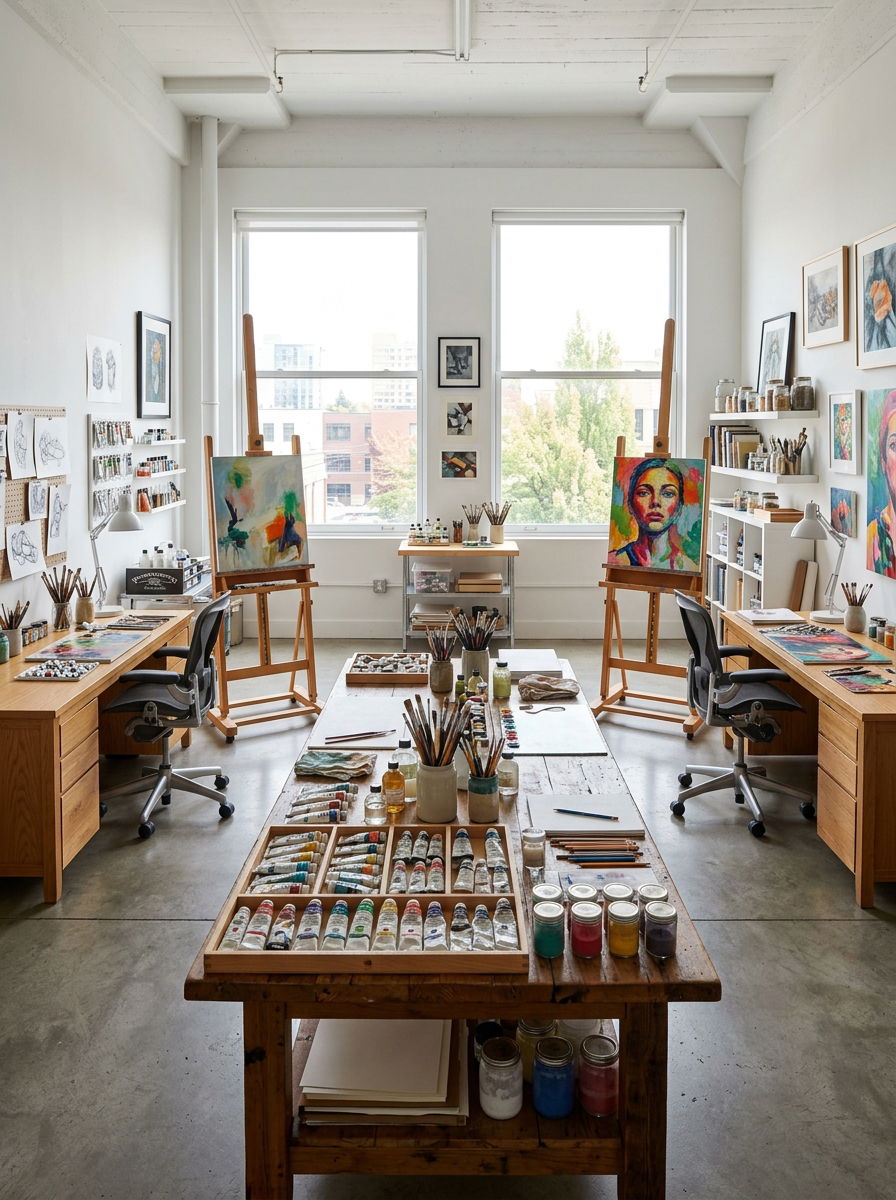
A dual artist workspace is designed for partners or roommates who enjoy creating together while still needing their own distinct areas for focus. Setting up two separate easels on opposite sides of the room ensures that each person has enough physical space to work without interference. A large, shared central table can be used for collaborative projects, stretching canvases, or just having a cup of coffee during a break. Using matching storage systems helps keep the room looking cohesive and professional, while individual accent pieces allow each artist to express their unique personality. This social setup provides constant inspiration and the opportunity for immediate feedback and creative support from a fellow artist.
27. Vaulted Ceiling Studio
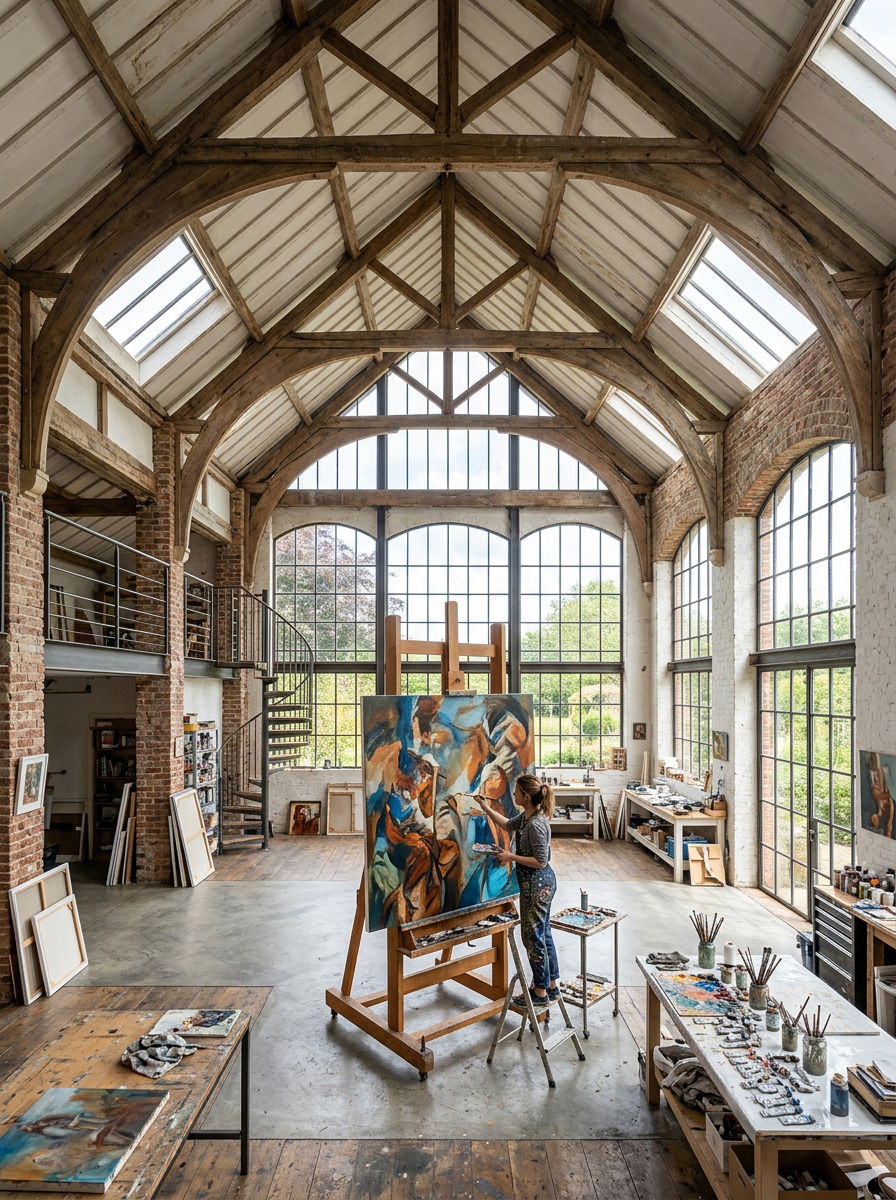
Rooms with vaulted or double-height ceilings provide a grand, church-like atmosphere that can make the act of painting feel like a sacred and important ritual. The extra vertical space allows for massive windows and skylights, ensuring that the room is bathed in an abundance of natural light throughout the day. High ceilings also provide better air circulation, which is a major health benefit for artists working with traditional oil paints and mediums. You can use the high wall space to display very large finished works or to install a mezzanine level for a quiet reading and research nook. This architectural feature creates a sense of limitlessness that can expand your creative thinking.
28. Gallery Wall Studio
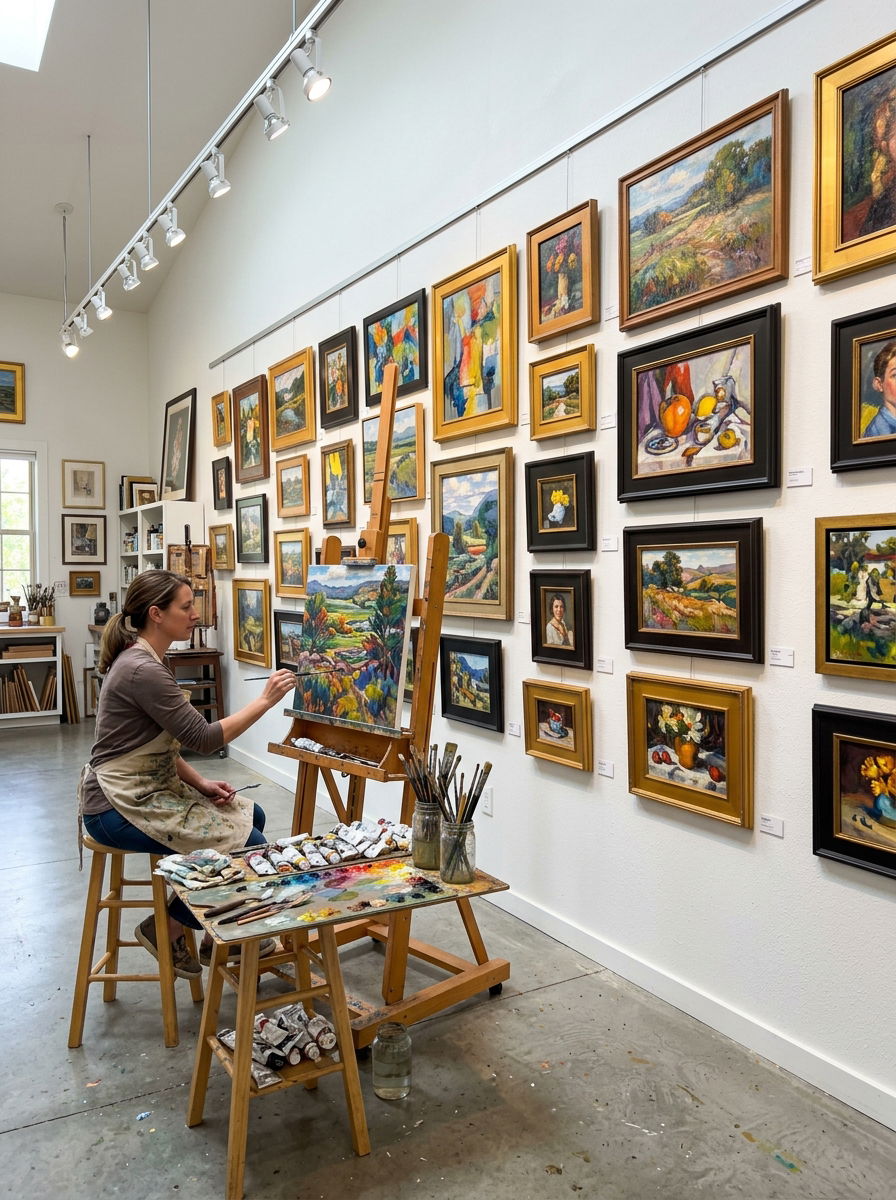
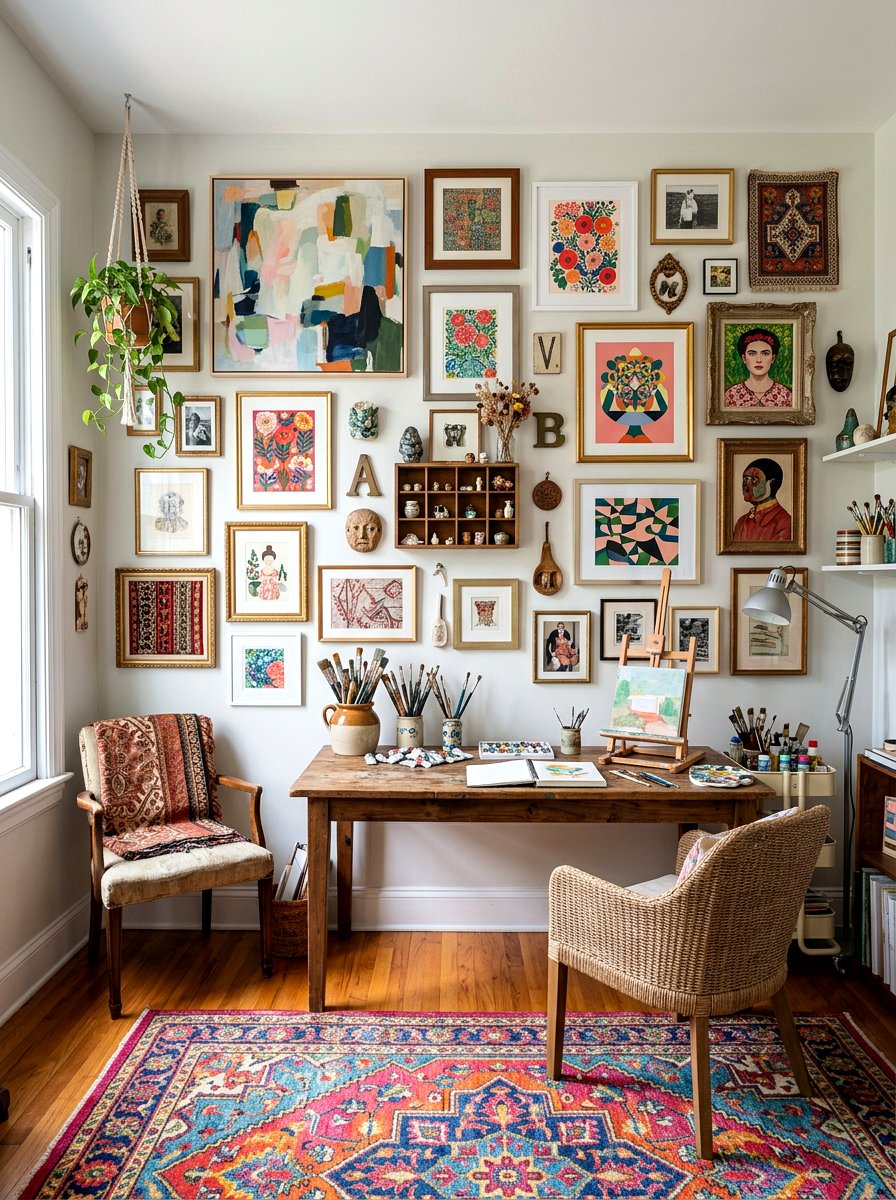
Transforming one or more walls of your studio into a dedicated gallery space allows you to surround yourself with your own progress and inspiration. By installing a professional picture rail or a simple wire hanging system, you can easily rotate your current paintings and reference materials. Seeing your finished pieces framed and hung in a professional manner helps you evaluate your body of work and plan for future exhibitions. You can also mix in artwork from other artists you admire to create a rich visual tapestry that fuels your imagination. This constant visual feedback loop is an incredibly powerful tool for maintaining motivation and tracking your artistic growth.
29. Cozy Window Nook
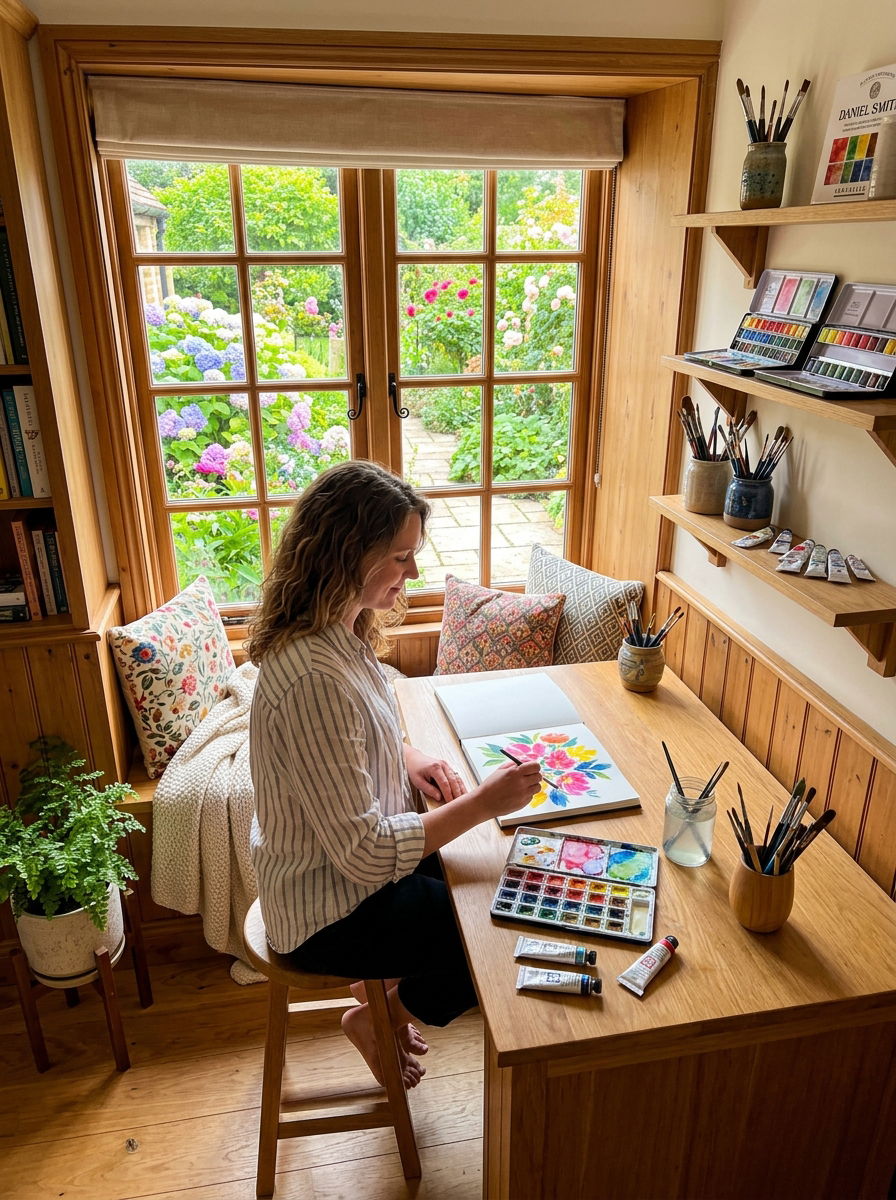
A cozy window nook is the perfect spot for a small-scale painting studio, especially for artists who work with watercolors, ink, or detailed illustrations. Placing a small desk or a built-in bench directly under a window provides you with the best possible light for close-up, intricate work. You can install narrow shelves on either side of the window to keep your favorite jars of pens and brushes neatly organized and within reach. This intimate setup allows you to feel connected to the outside world while remaining focused on your small canvas. Adding a comfortable chair and a soft rug makes the space feel like a welcoming retreat you look forward to visiting.
30. Professional Artist Lab
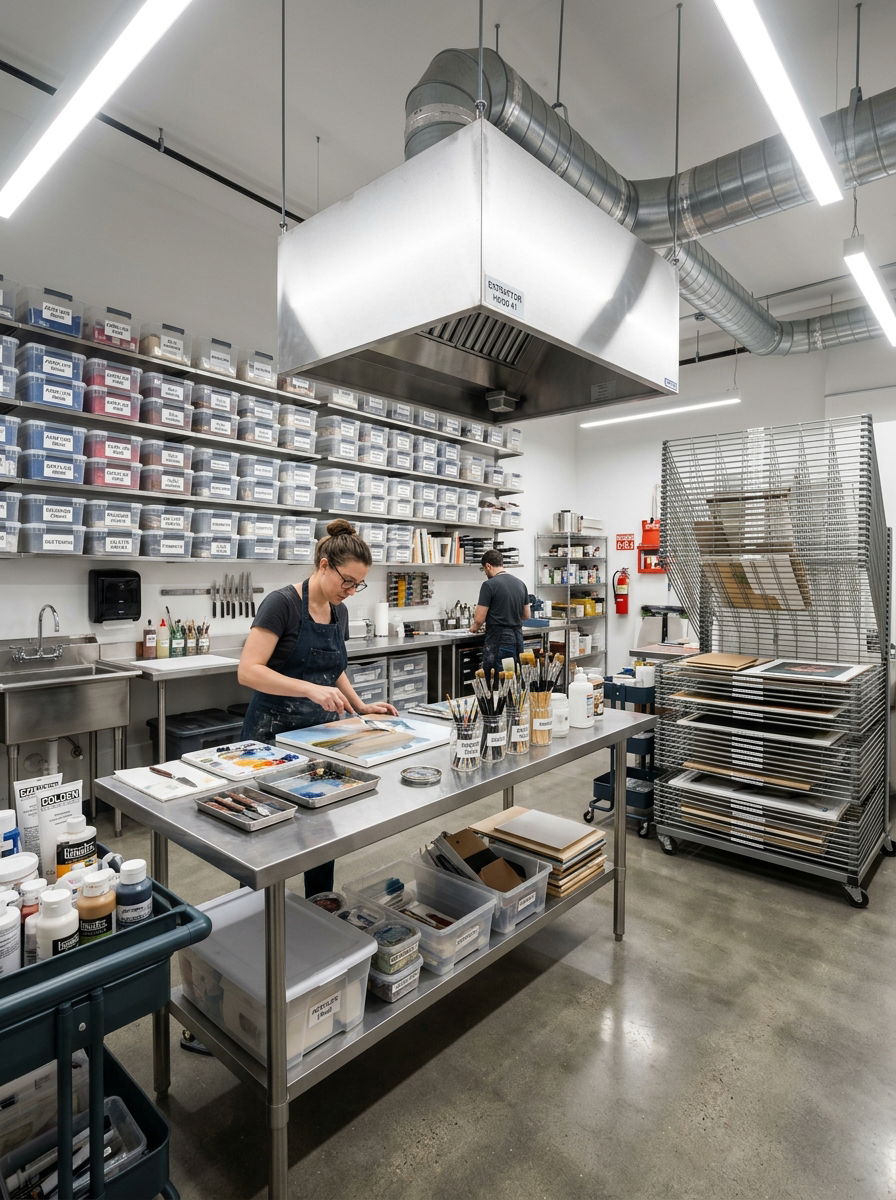
A professional artist lab focuses on the technical aspects of painting, featuring specialized zones for various stages of the creative and finishing process. This might include a dedicated area with high-ventilation fans for spraying varnish, a sink station for cleaning brushes, and a flat drying rack for multiple canvases. Sturdy metal workbenches and chemical-resistant surfaces ensure that the studio can handle the rigors of experimental techniques and professional production. Keeping a clean, laboratory-like organization helps prevent cross-contamination of materials and ensures that your tools are always in top condition. This highly functional approach is ideal for artists who produce a high volume of work or who enjoy the science of their craft.
Conclusion:
Building the perfect painting studio is a deeply personal journey that evolves alongside your unique artistic style and professional needs. Whether you choose to convert a quiet attic, set up a mobile cart in a corner, or build a dedicated backyard shed, the key is to prioritize functionality and inspiration. A successful workspace provides the right balance of consistent lighting, smart organization, and a comfortable atmosphere that allows you to focus entirely on your canvas. By carefully considering your layout and storage options, you can create a sanctuary that not only holds your supplies but also actively supports and nurtures your creative spirit.

Related posts: