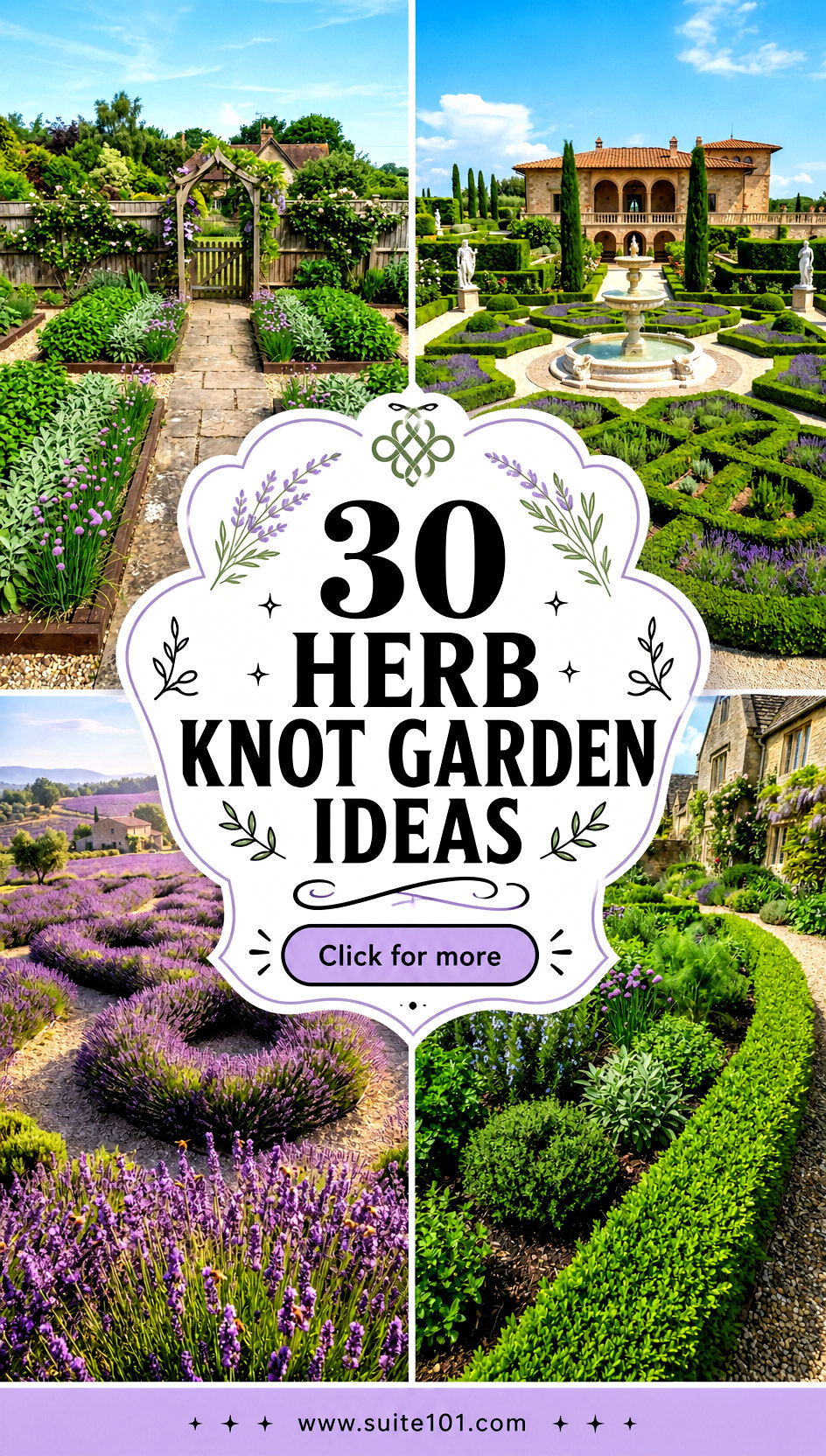
Creating a herb knot garden is one of the most rewarding ways to blend historical elegance with practical home gardening. These intricate patterns, originally popular in the Tudor and Elizabethan eras, offer a visually stunning focal point for any backyard or terrace. By carefully selecting different varieties of herbs with contrasting colors and textures, you can create a living tapestry that changes throughout the seasons. Beyond their aesthetic appeal, these gardens are incredibly functional, providing a fresh supply of culinary and medicinal herbs right outside your door. Whether you have a sprawling estate or a tiny urban courtyard, a well-planned knot garden adds structure, fragrance, and a sense of timeless charm to your outdoor living space.
1. Traditional Elizabethan Herb Knot
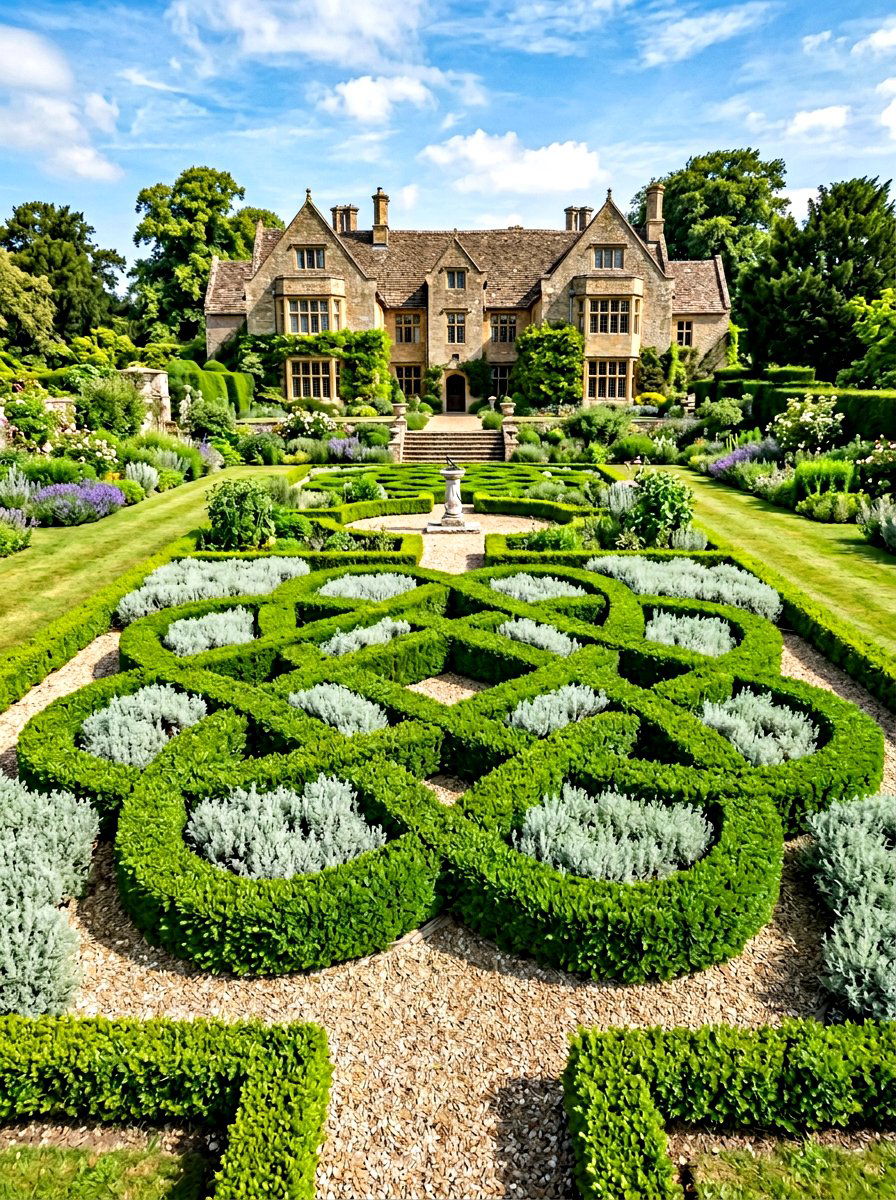
Have you ever wondered how royalty decorated their outdoor spaces in the 16th century? The traditional Elizabethan herb knot is a masterpiece of symmetry and interlacing lines that mimic the intricate embroidery found on period clothing. To achieve this look, gardeners typically use low-growing evergreen herbs such as hyssop, dwarf boxwood, or winter savory to create the threads of the knot. These plants are meticulously clipped to maintain a sharp, clean appearance that emphasizes the woven effect. Inside the loops created by these hedges, you can plant softer herbs like marjoram or parsley to add a contrast in texture and color. This style brings a sense of historical grandeur and formal structure to any modern garden.
2. Low Boxwood Hedge Pattern
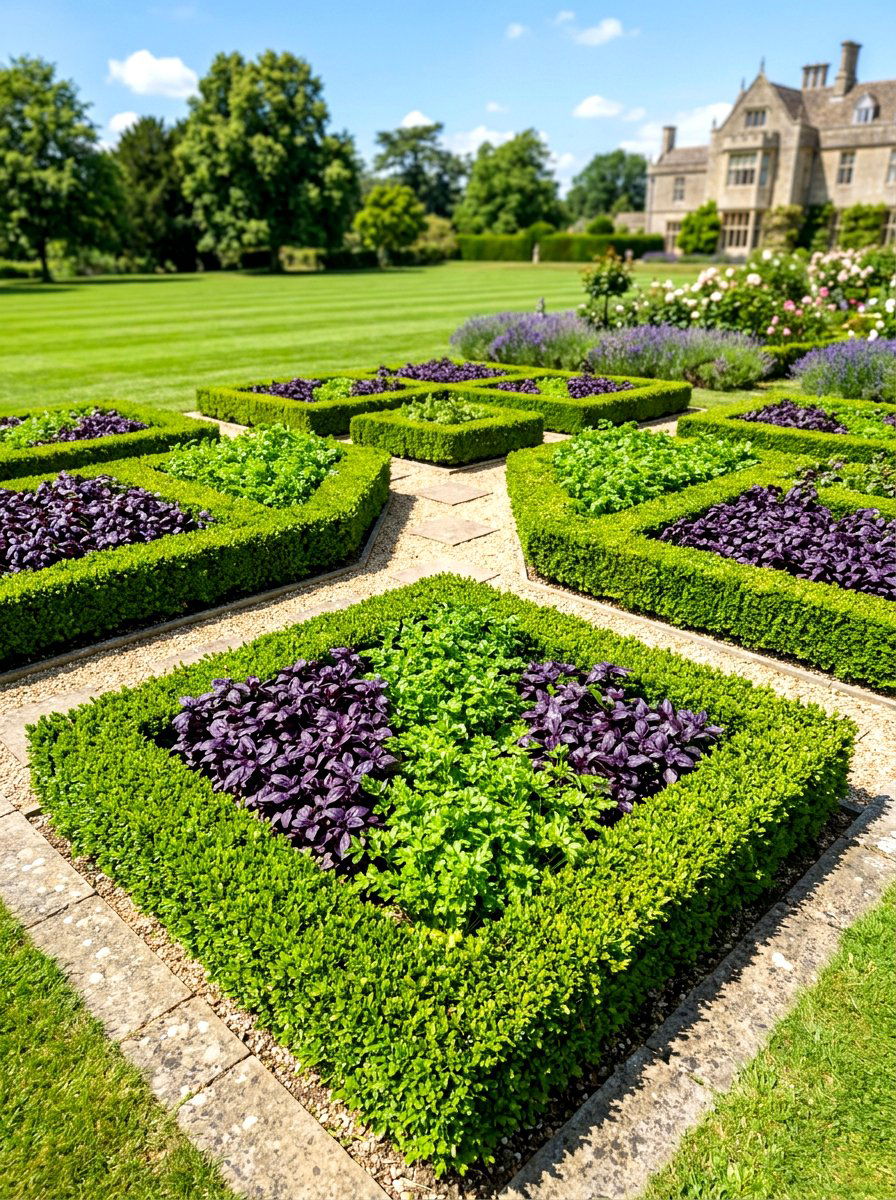
Using a low boxwood hedge pattern is perhaps the most iconic way to define a formal garden space. Boxwood provides a solid, evergreen structure that stays green throughout the entire year, even in colder climates. By planting these small shrubs in geometric shapes like squares or circles, you create a permanent frame for your more delicate herbs. Inside the boxwood borders, you can rotate seasonal culinary herbs like basil or cilantro without losing the overall shape of the garden. This approach is perfect for homeowners who want a tidy and organized look. The dark green leaves of the boxwood make the lighter greens and silvers of the inner herbs pop with a very high contrast.
3. Silver Foliage Santolina Knot
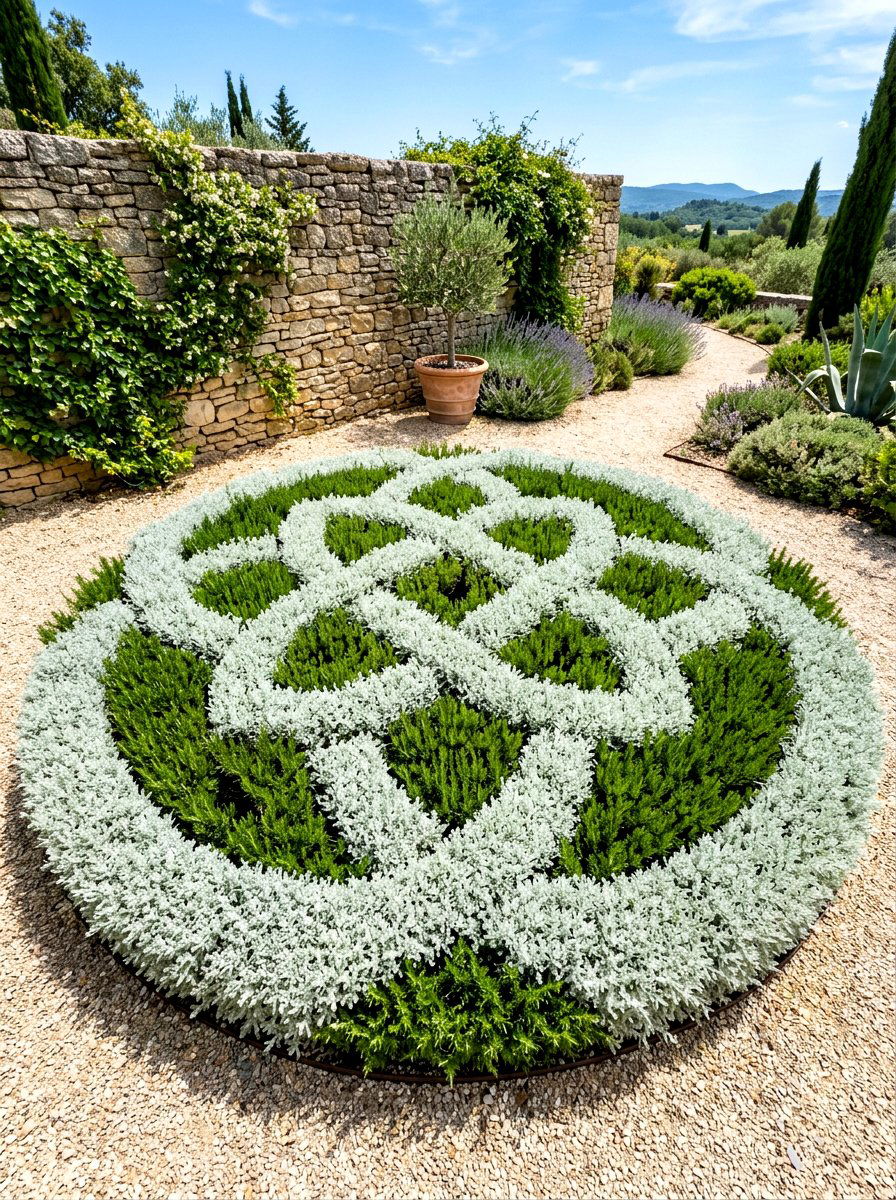
Are you looking for a unique color palette for your outdoor space? A silver foliage santolina knot offers a striking alternative to the standard green hedge. Santolina, also known as cotton lavender, features beautiful silvery-gray leaves that look almost white under the bright summer sun. This plant is very drought-tolerant and responds well to regular pruning, making it an excellent choice for creating intricate interlacing patterns. When the santolina is used alongside a darker green herb like rosemary, the visual depth of the knot pattern is significantly enhanced. This type of garden thrives in full sun and well-drained soil, providing a cool and sophisticated aesthetic that feels both antique and modern at once.
4. Dwarf Rosemary Hedge Pattern
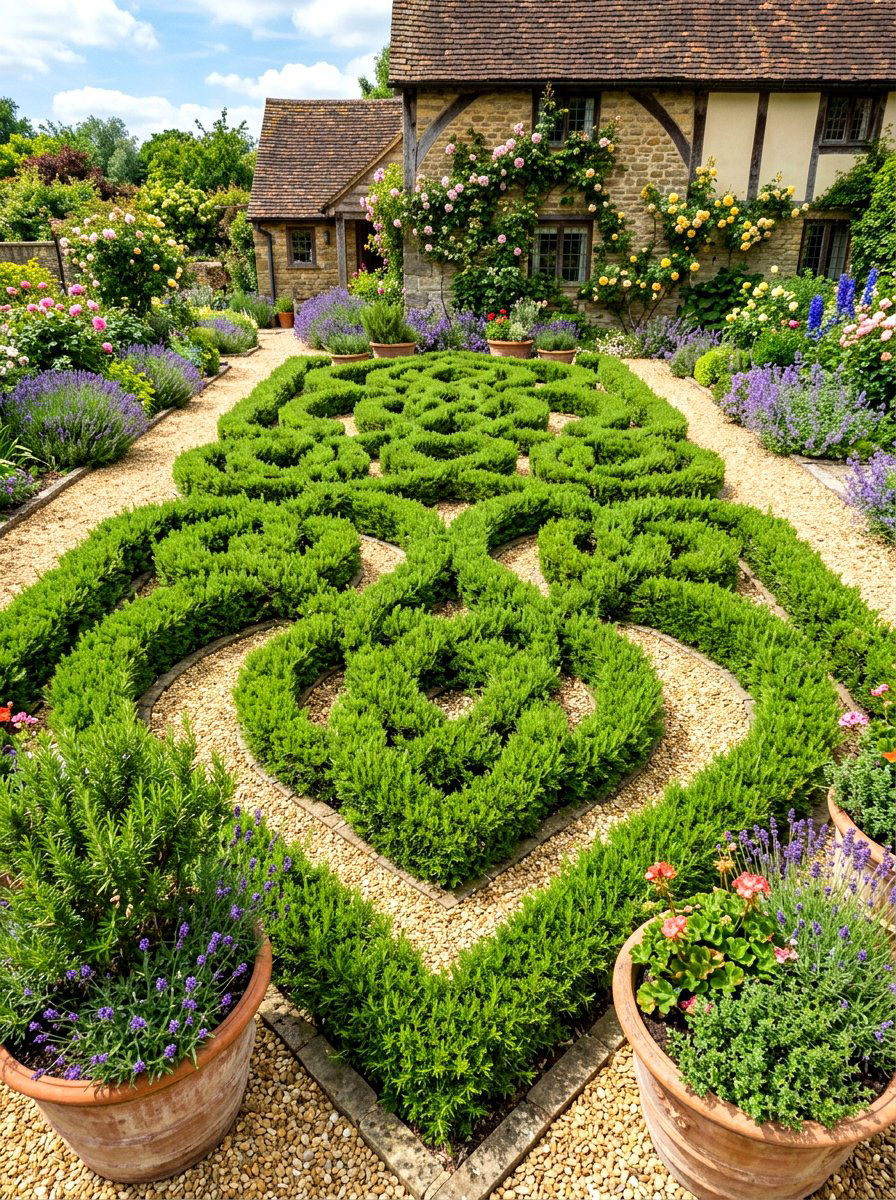
Dwarf rosemary hedge patterns are an excellent choice for gardeners who want a functional yet highly decorative herb layout. Rosemary is a hardy perennial that offers both fragrance and culinary value, making it a double-duty plant for any home. The dwarf variety is specifically bred to stay compact, which is essential for maintaining the crisp lines required in a knot garden. As you walk past, the scent of the rosemary is released into the air, creating a sensory experience. These hedges can be trimmed into low, dense walls that weave over and under one another. This creates a beautiful 3D effect that looks impressive from both a ground-level view and from a higher balcony.
5. Circular Herb Knot Pattern
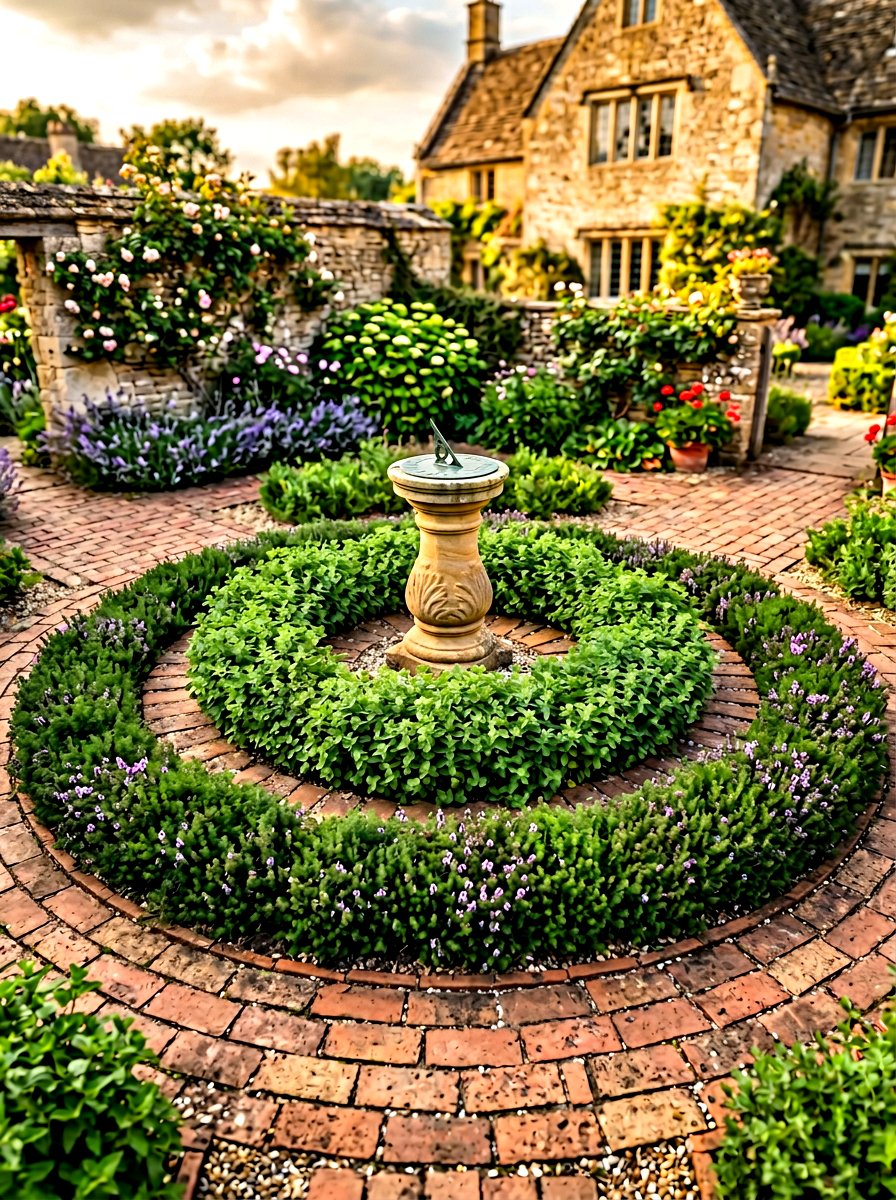
A circular herb knot pattern brings a softer, more organic feel to the traditional geometric garden. Instead of sharp corners and straight lines, this design uses concentric circles and sweeping curves to create a sense of movement. You can start with a central focal point, such as a sundial or a stone urn, and build the knot outward from there. Using different shades of green herbs, such as dark green thyme and light green oregano, helps to define the overlapping layers of the circle. This layout is particularly effective in smaller, square courtyards where it can break up the rigid lines of the surrounding walls. It offers a very balanced and harmonious visual experience.
6. Symmetrical Culinary Herb Layout
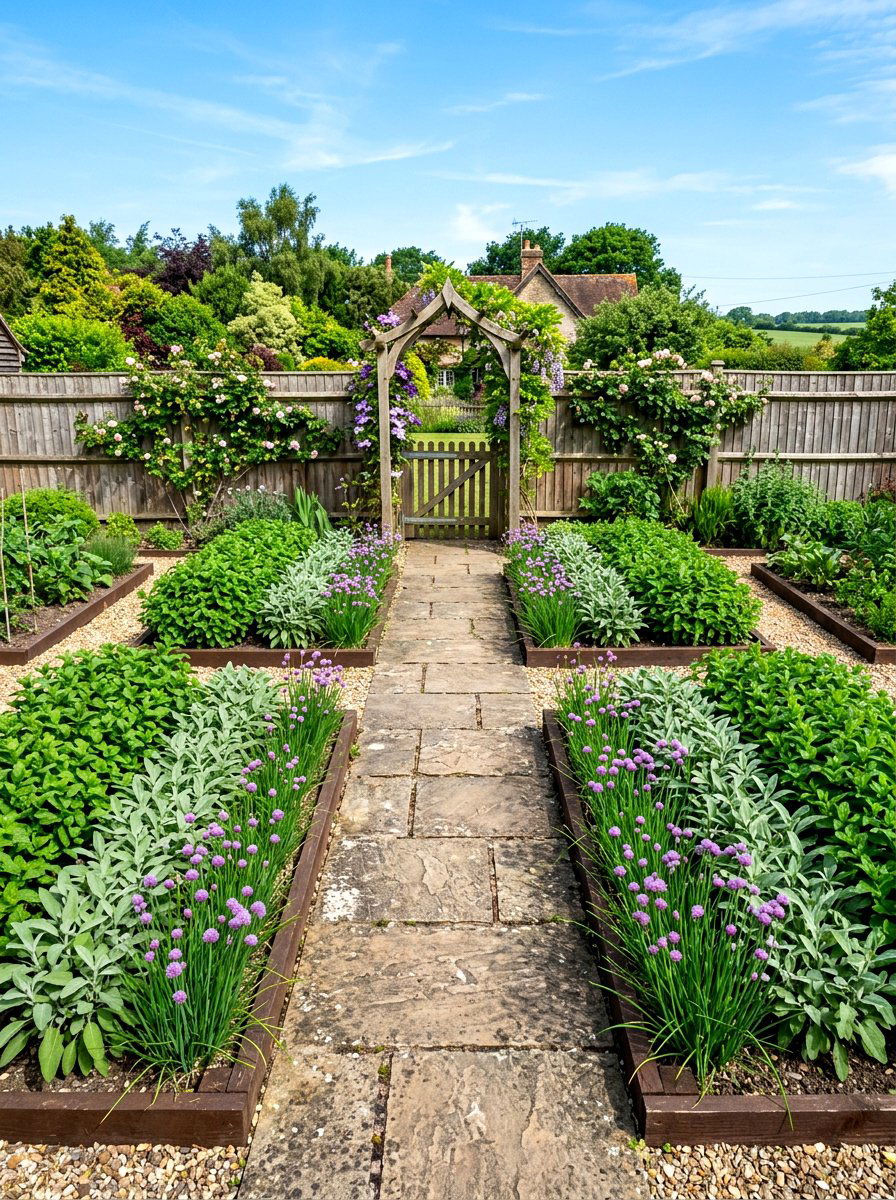
Creating a symmetrical culinary herb layout is the perfect way to organize your kitchen garden for both beauty and efficiency. This design focuses on a central axis, with identical plantings on either side to create a mirrored effect. You might choose to plant tall sage in the corners and low-growing chives along the edges to frame the space. By keeping the heights balanced, you ensure that every plant receives adequate sunlight. This formal arrangement makes harvesting incredibly easy, as everything is laid out in a logical and accessible manner. The clean lines of a symmetrical layout provide a sense of order that can make even a small backyard feel much larger and more professional.
7. Lavender Boxwood Garden Pattern
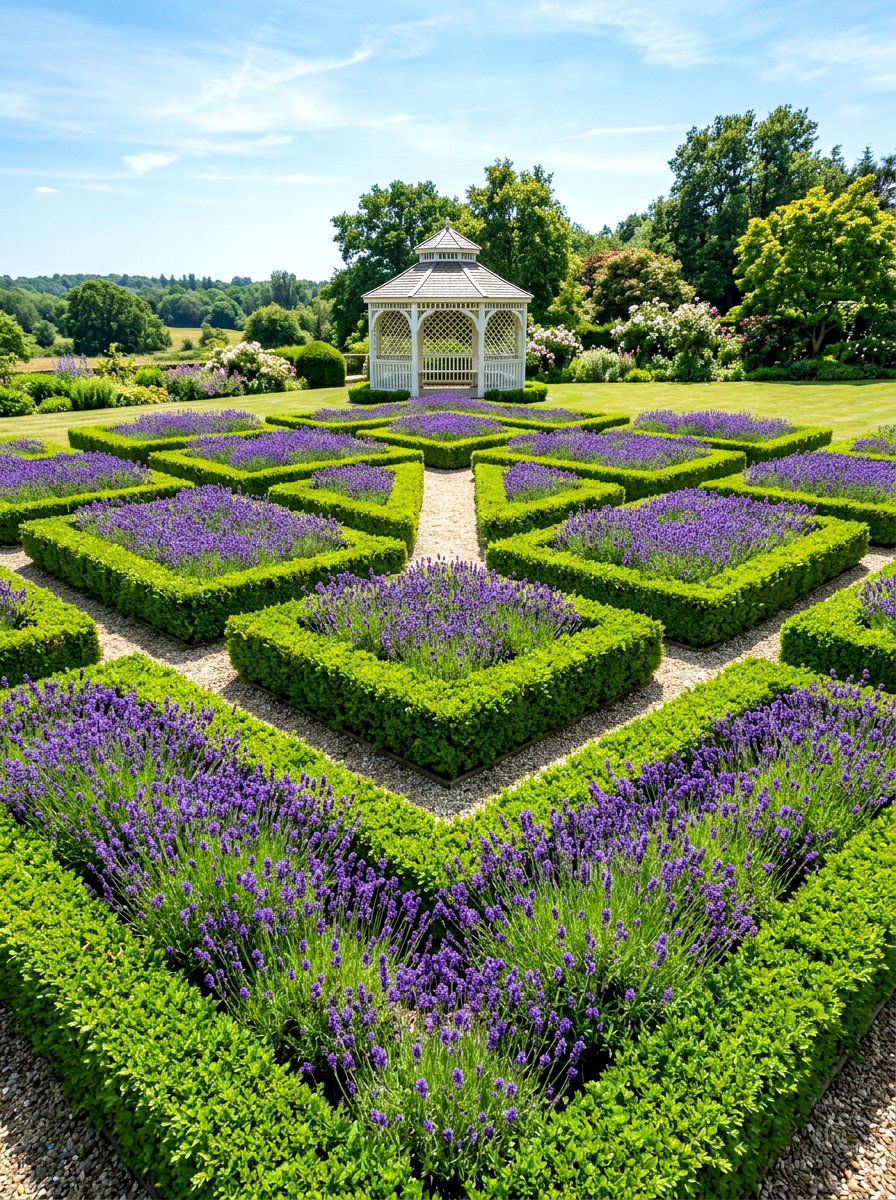
Combining lavender and boxwood in a garden pattern creates a classic and romantic look that never goes out of style. In this layout, the boxwood serves as the rigid structural frame, while the lavender provides a soft, hazy texture and beautiful purple blooms. The contrast between the stiff green boxwood and the waving spikes of lavender is visually stunning during the summer months. This pairing is also practical, as both plants enjoy similar growing conditions and require minimal water once established. The lavender fills the garden with a relaxing scent that attracts beneficial pollinators like bees and butterflies. This creates a living, breathing ecosystem that is as functional as it is beautiful to look at.
8. English Cottage Herb Knot
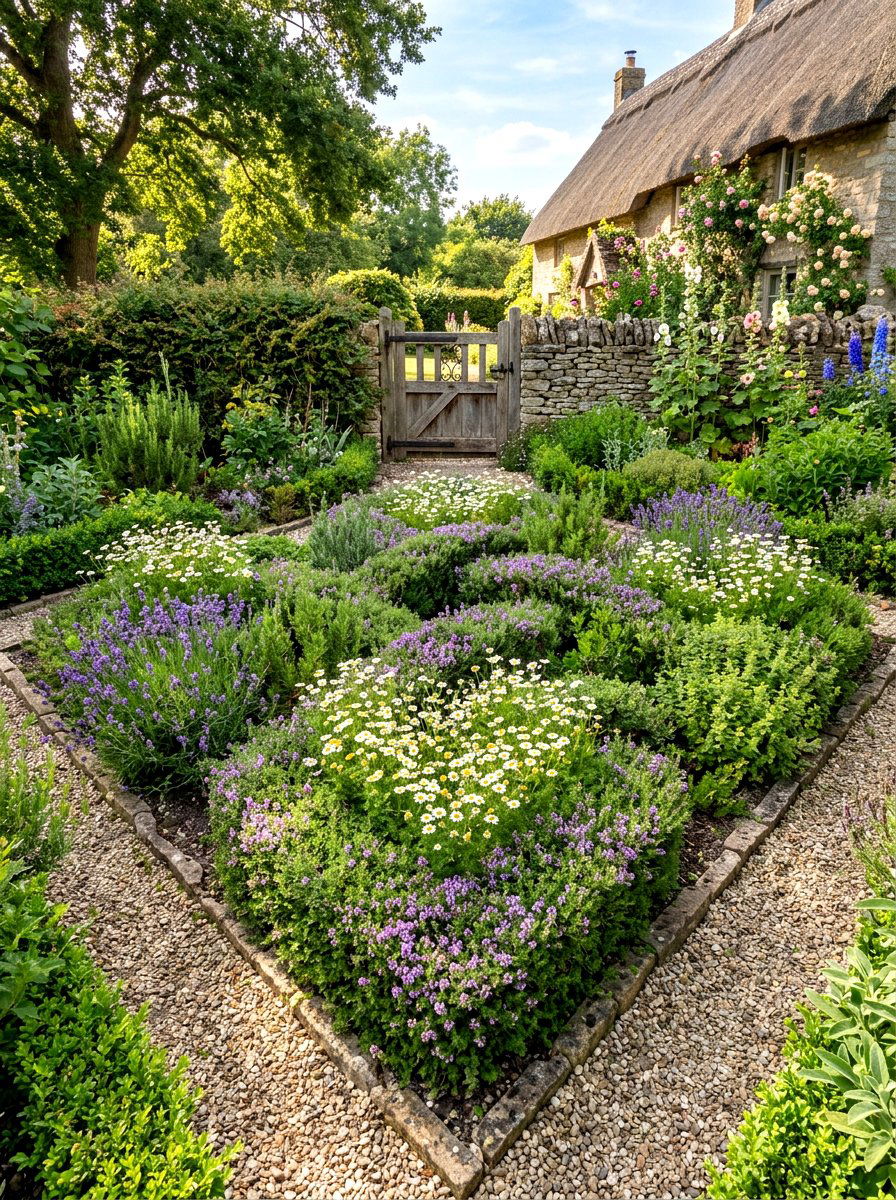
The English cottage herb knot is a more relaxed and informal take on the traditional formal knot garden. While it still uses the basic principles of interlacing patterns, the plants are allowed to grow a bit more freely for a lush and overflowing appearance. You can mix classic cottage favorites like feverfew, borage, and chamomile within the structured borders of a thyme or hyssop hedge. This style celebrates the abundance of nature and often features a wider variety of colors and textures. It is perfect for a smaller backyard where you want a cozy and whimsical atmosphere. The result is a charming garden that feels lived-in and productive, providing a wealth of flowers and herbs.
9. Formal Geometric Herb Pattern
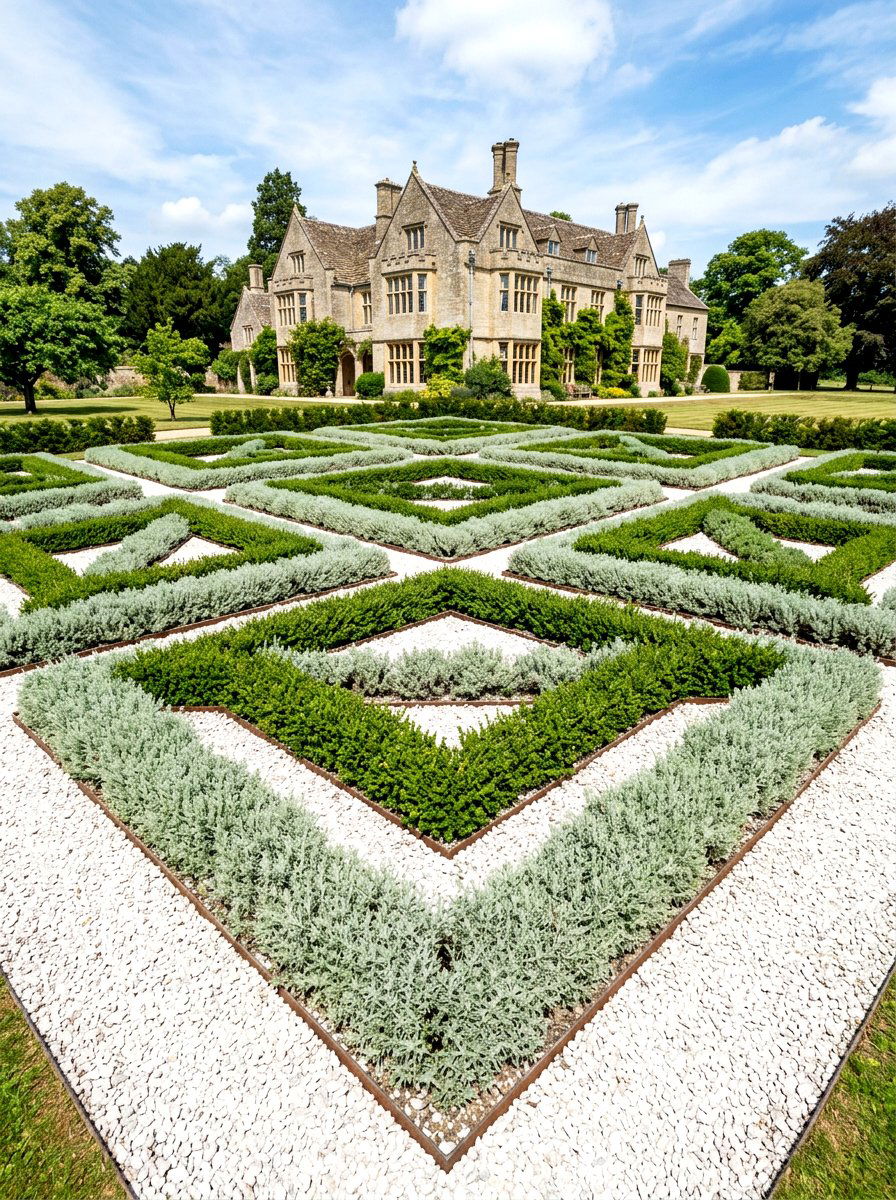
A formal geometric herb pattern is the ultimate expression of control and precision in landscape design. This style relies on perfect squares, triangles, and diamonds to create a high-impact visual statement. To maintain the integrity of these shapes, you must commit to regular clipping and weeding. Using gravel or crushed stone between the rows of herbs can help emphasize the geometric lines and keep the garden looking neat. This approach is often seen in large estate gardens but can be adapted for a modern suburban home. By selecting herbs with very different foliage types, such as the feathery leaves of fennel and the broad leaves of sage, you highlight the complex geometry of the space.
10. Small Courtyard Herb Knot
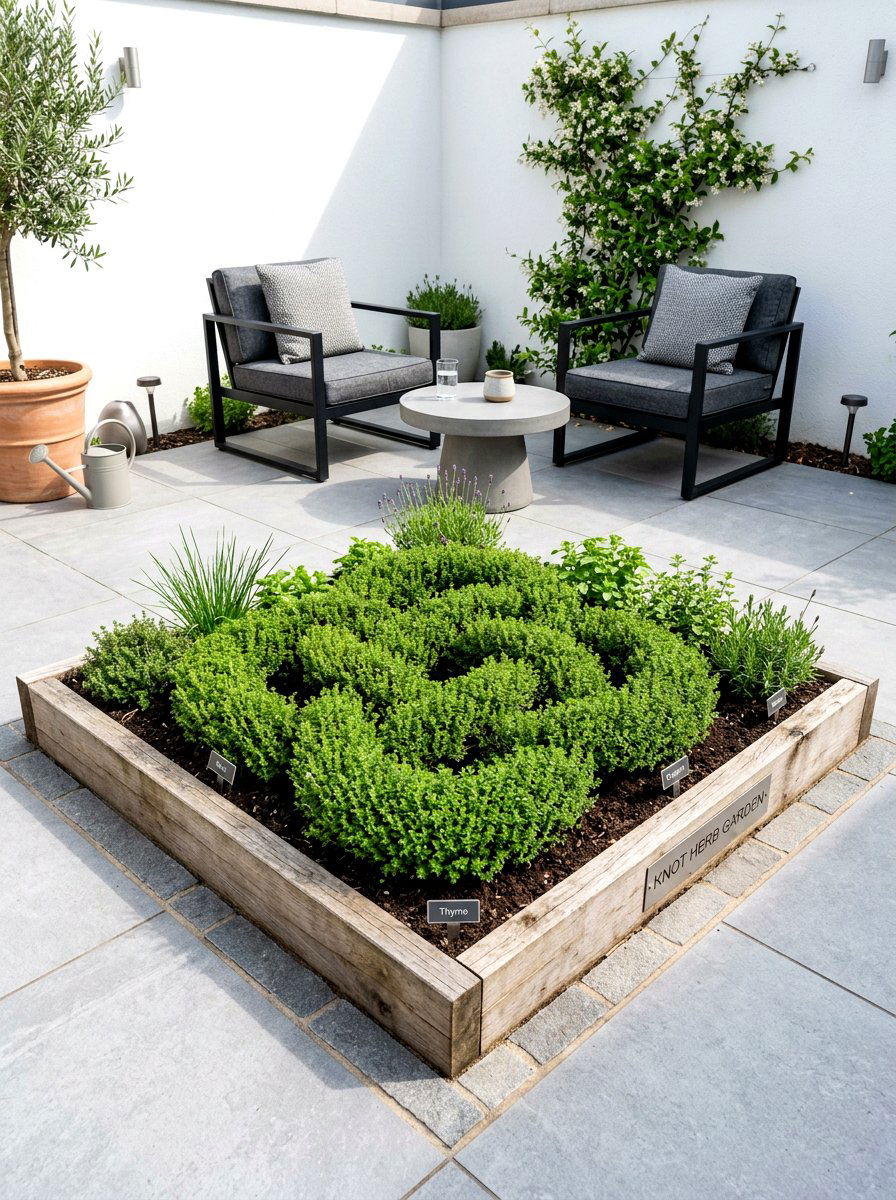
Do you have a limited amount of space but still want a high-end garden look? A small courtyard herb knot is a fantastic solution for urban environments. This design scales down the traditional knot to fit into a tiny patio or a corner of a deck. You can use large planters or a raised bed to contain the knot, ensuring the soil is perfectly drained. Choose miniature or dwarf herb varieties to keep the pattern from becoming overgrown too quickly. Even in a small area, the interlacing lines create a sense of depth and architectural interest. This small-scale garden becomes a functional piece of art that provides fresh herbs for your kitchen every single day.
11. Edible Flower Herb Layout
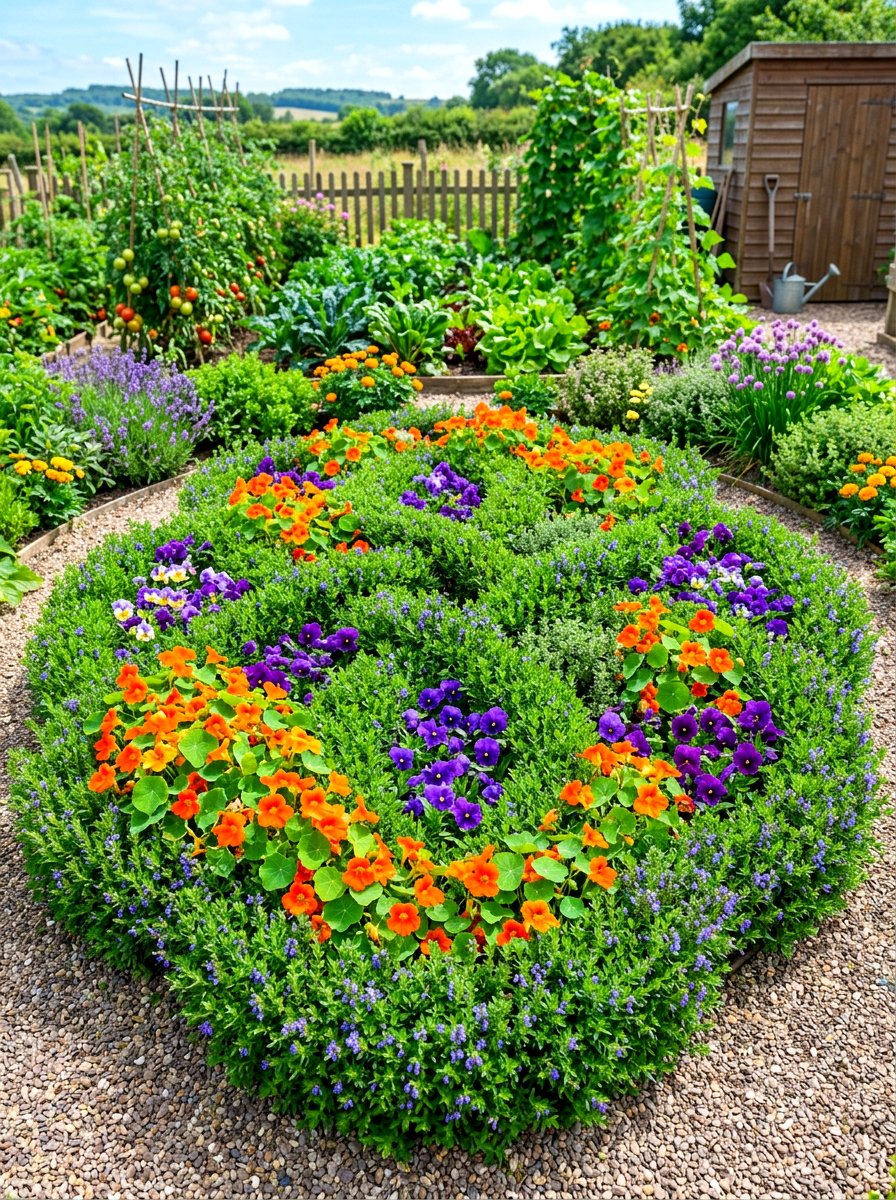
An edible flower herb layout adds a vibrant splash of color to the typically green and silver palette of a knot garden. By incorporating plants like pansies, nasturtiums, and calendula into the spaces between your herb hedges, you create a garden that is entirely edible. These flowers are not only beautiful to look at but can also be used to garnish salads, desserts, and cocktails. The bright oranges, yellows, and purples of the flowers contrast beautifully against the dark green backdrop of herbs like rosemary or thyme. This type of garden is a delight for the senses and provides a unique talking point for guests who visit your home for outdoor dining.
12. Raised Stone Herb Bed
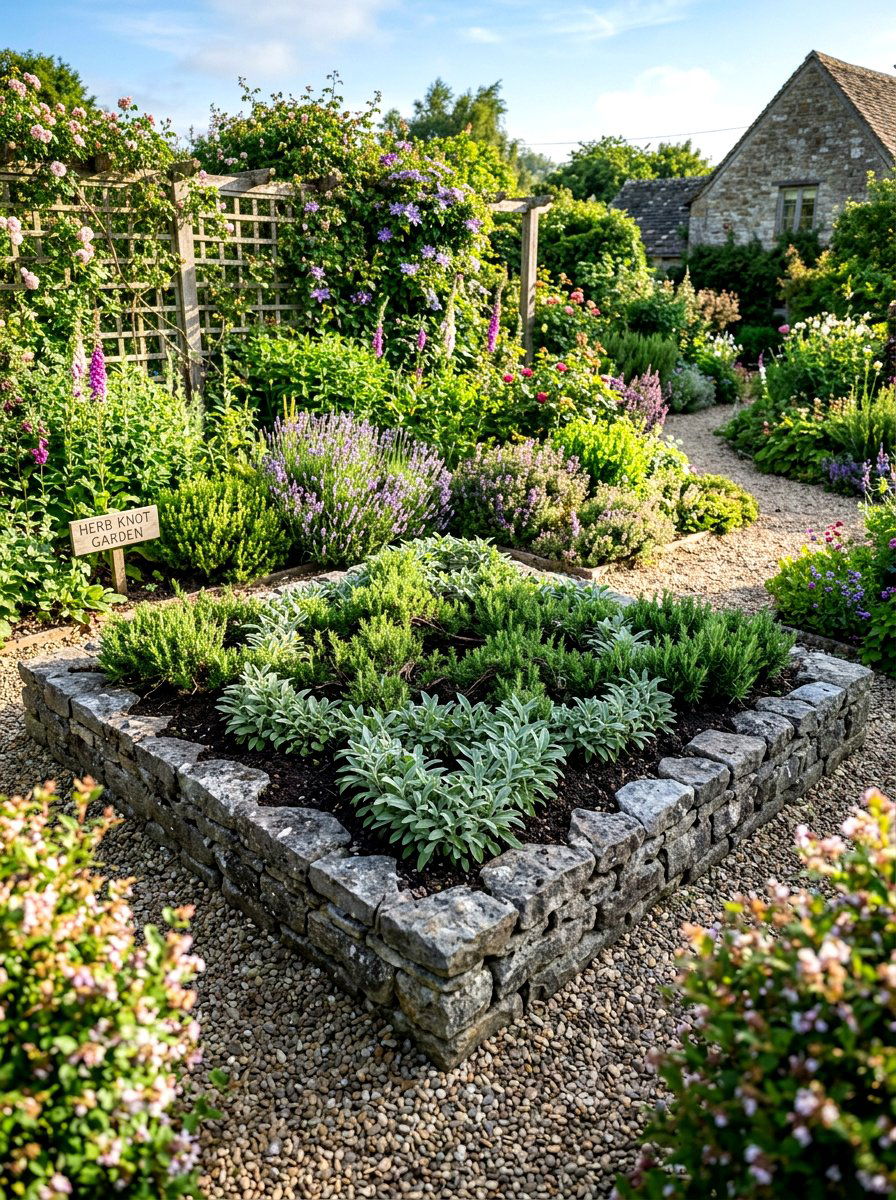
Building a raised stone herb bed is a practical way to create a knot garden while also improving drainage and accessibility. The stone walls provide a permanent structure that helps to define the knot pattern even during the winter months when some herbs may go dormant. Raised beds also allow you to control the soil quality more effectively, which is crucial for Mediterranean herbs that prefer gritty and lean soil. The height of the bed makes harvesting much easier on your back and helps to protect the plants from pests. Using natural stone adds a rustic and timeless quality to the garden, making it feel like a permanent part of the landscape.
13. Medicinal Herb Garden Pattern
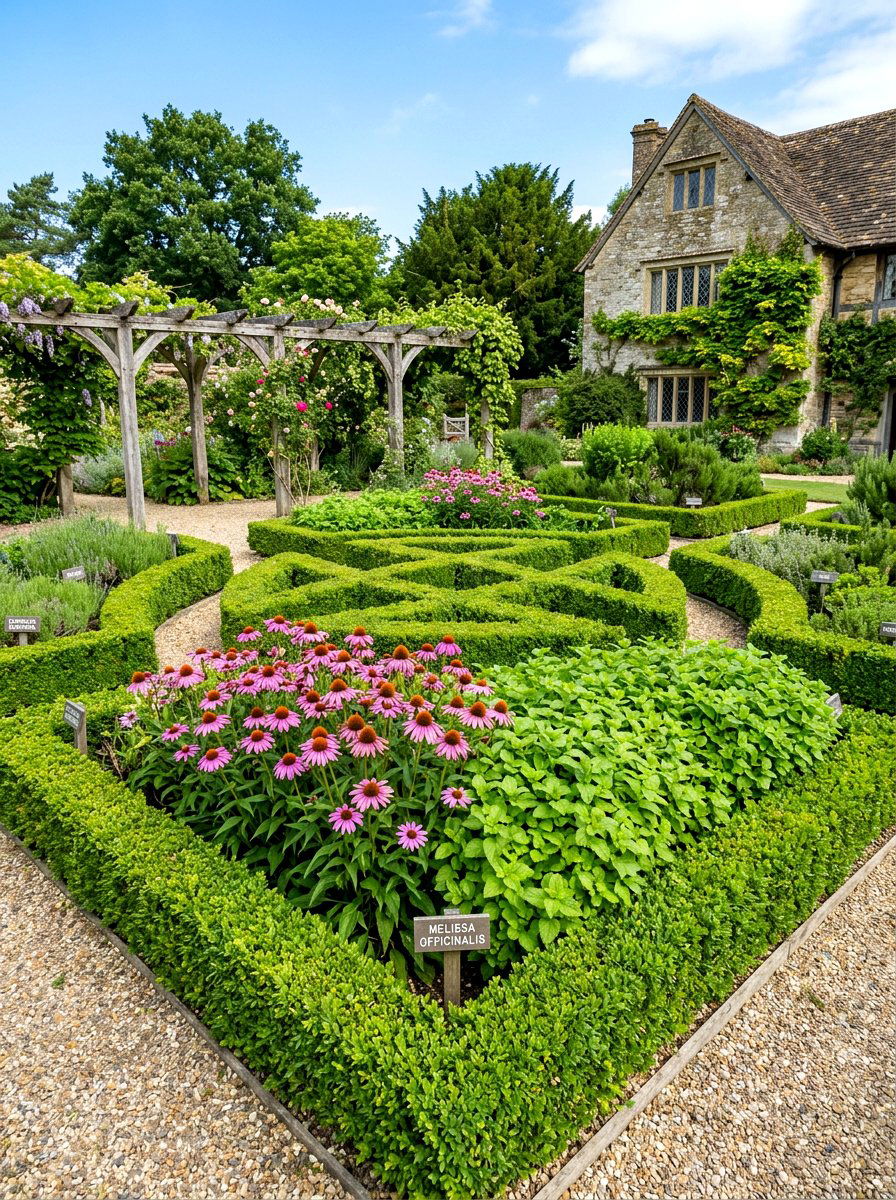
Focusing on a medicinal herb garden pattern allows you to create a space that is both beautiful and healing. Many traditional knot gardens were originally designed as "physic gardens" to grow plants used in ancient remedies. You can include herbs like echinacea, lemon balm, and valerian within the structured borders of a germander or boxwood hedge. This layout organizes your healing plants into a clear and beautiful arrangement, making it easy to identify and harvest specific varieties. The structured pattern also reflects the order and balance that medicinal gardens were meant to provide. It is a thoughtful way to connect with history while growing plants that support your health and well-being.
14. Woven Thyme Hedge Look
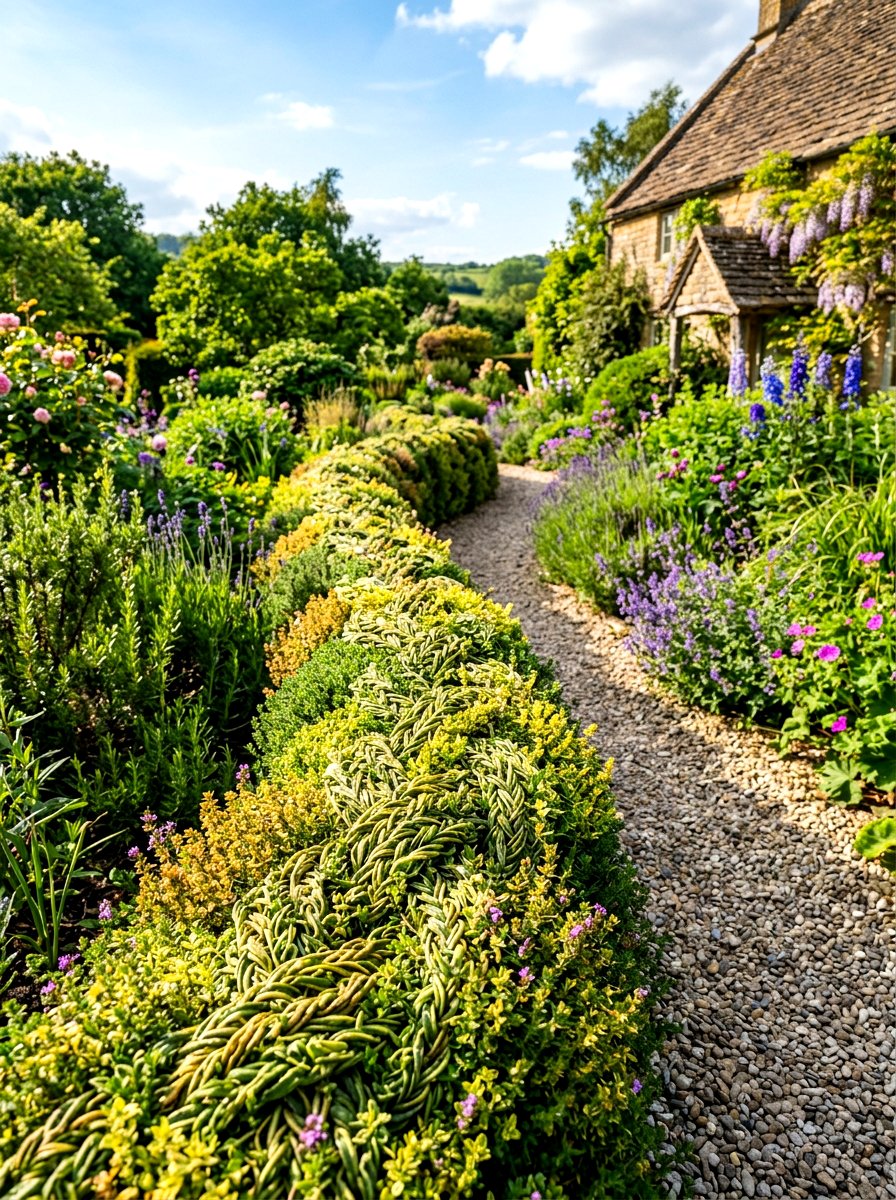
The woven thyme hedge look is a subtle and low-maintenance way to achieve the knot garden effect. Different varieties of thyme, such as lemon thyme, silver thyme, and common green thyme, have distinct foliage colors that can be used to create the interlacing threads. Because thyme is naturally low-growing, it requires much less clipping than boxwood or rosemary. The different shades of green and gold blend together to create a soft and textured carpet of herbs. This style is particularly effective for ground-level gardens where you can look down and see the full pattern. When you walk on the paths nearby, the thyme releases a wonderful citrusy and earthy fragrance.
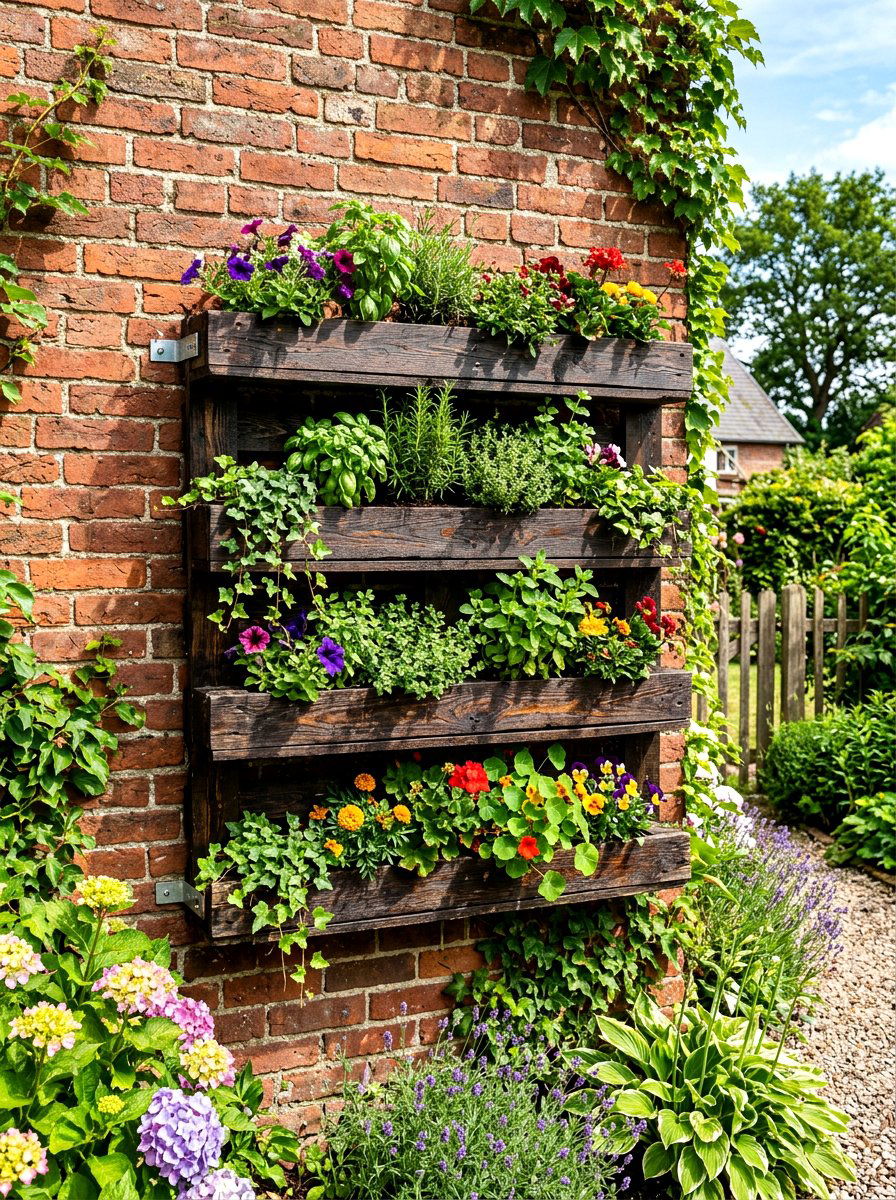
15. Renaissance Style Garden Knot
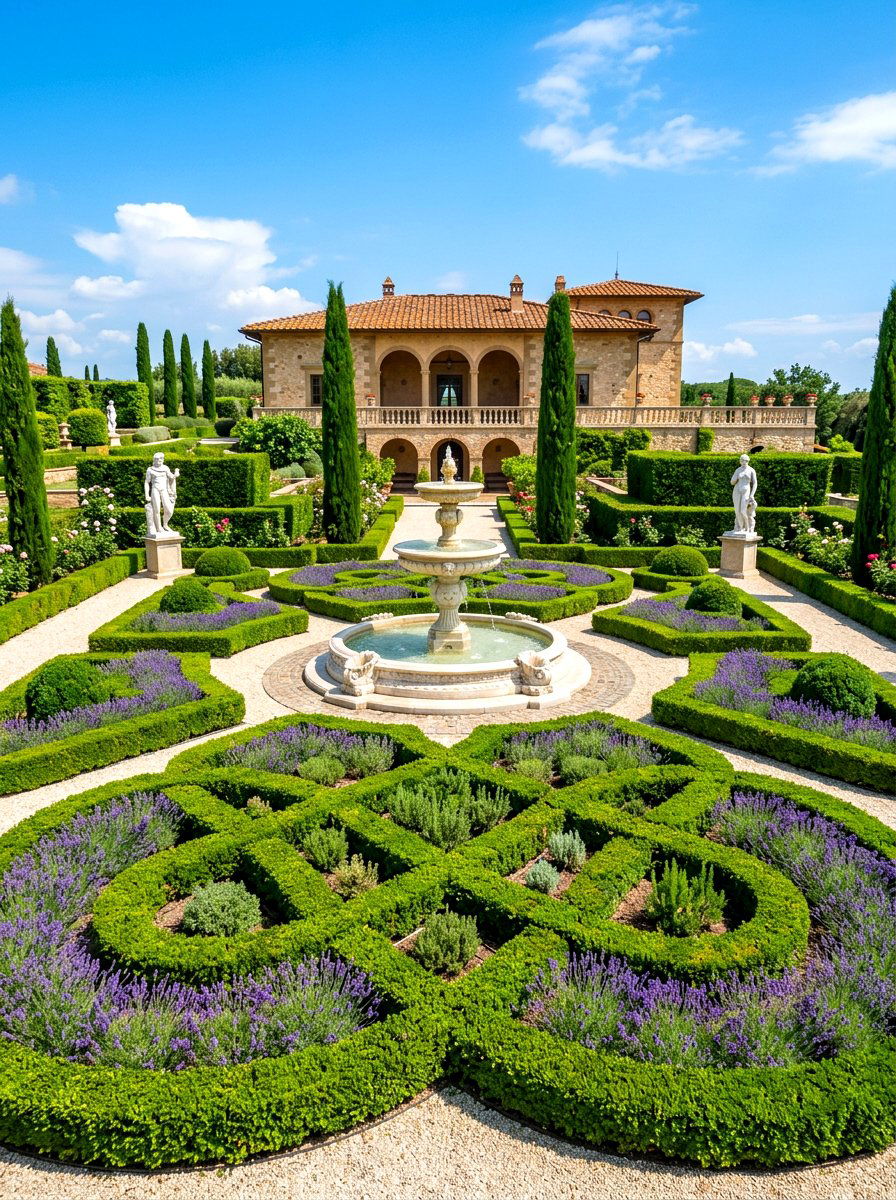
A Renaissance style garden knot focuses on extreme symmetry and the use of classic architectural elements. This design often incorporates central features like a stone pedestal, a marble statue, or a small fountain to act as the anchor for the knot. The patterns are usually more complex, featuring multiple layers of interlacing hedges that create a sense of luxury and sophistication. Herbs like hyssop and lavender are frequently used for their historical accuracy and their ability to be shaped into dense, low walls. This style is ideal for larger gardens where there is enough room to appreciate the full complexity of the design. It transforms any outdoor space into a grand and elegant retreat.
16. Fragrant Lavender Garden Pattern
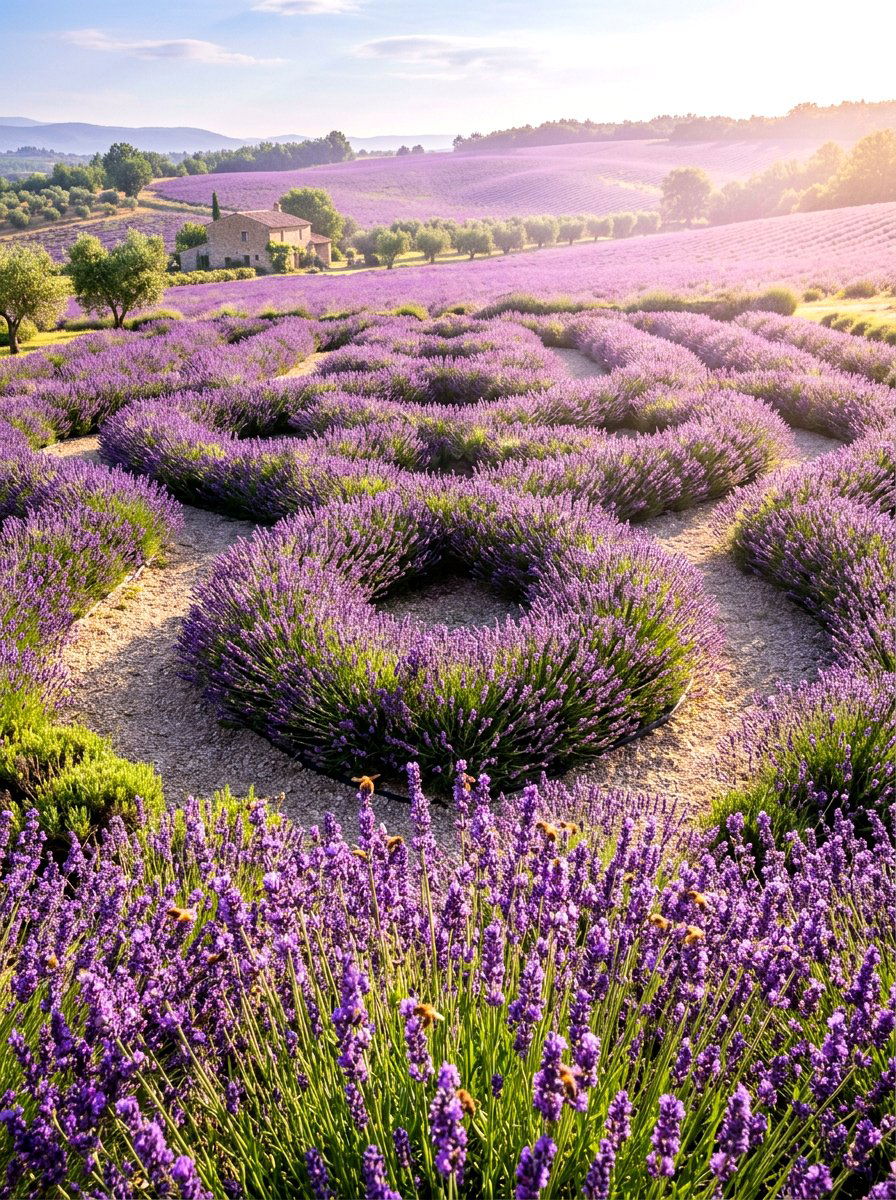
A fragrant lavender garden pattern is a treat for both the eyes and the nose. By using different varieties of lavender, such as English and French types, you can create a knot that features various shades of purple and gray. The taller lavender plants can form the main structure of the knot, while lower-growing herbs like chamomile can fill in the gaps. During the peak of summer, the garden will be filled with the soothing scent of lavender, making it the perfect place to relax after a long day. This layout is also highly attractive to pollinators, ensuring your garden is full of life and movement. The result is a sensory-rich outdoor experience.
17. Gravel Path Herb Garden
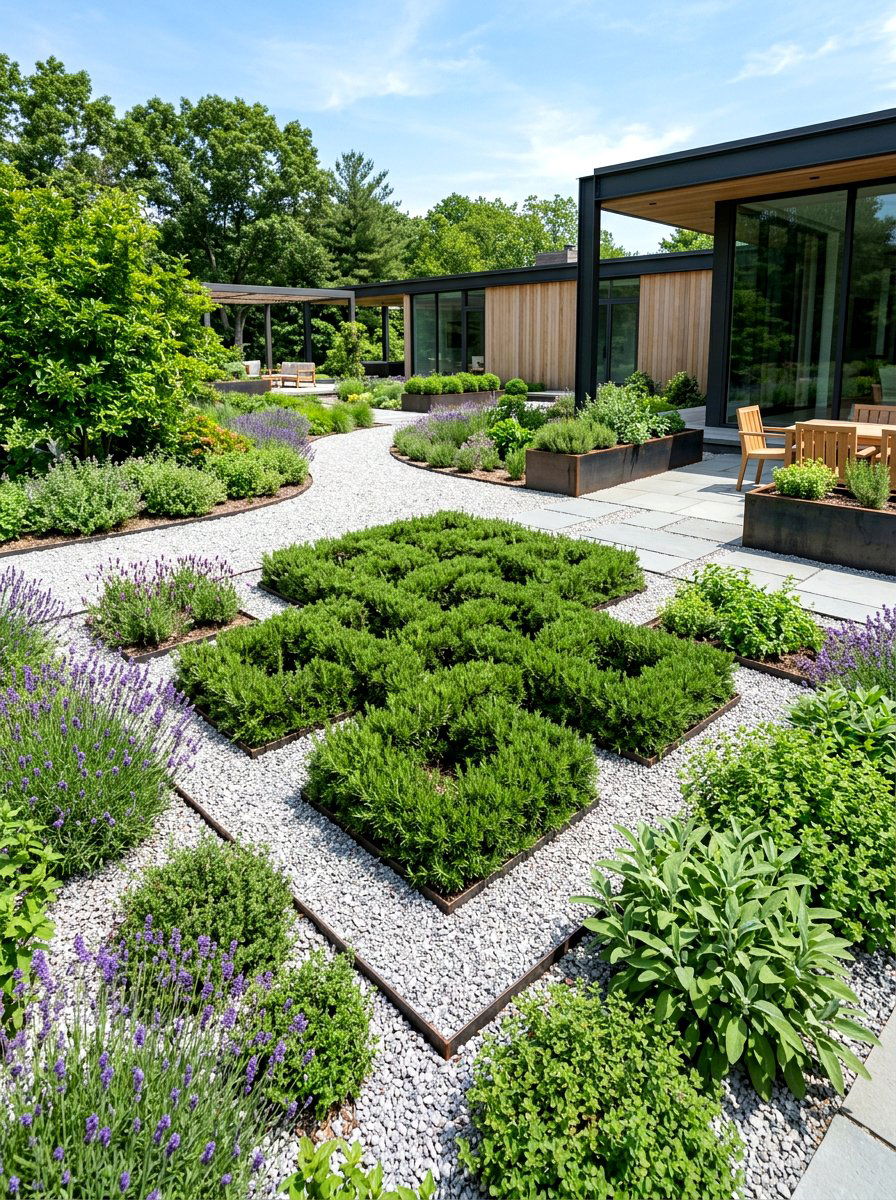
Incorporating a gravel path herb garden layout is a smart way to emphasize the design of your knot while keeping maintenance low. The light color of the gravel provides a sharp contrast to the green and silver foliage of the herbs, making the knot pattern stand out clearly. Gravel also helps with drainage and prevents weeds from encroaching on your herb beds. You can design the paths to weave in and around the knot, allowing you easy access for harvesting and pruning. This style has a very clean and modern feel, but it also nods to traditional European garden designs. It is a practical and stylish choice for any contemporary backyard or front yard.
18. Multi Textured Green Knot
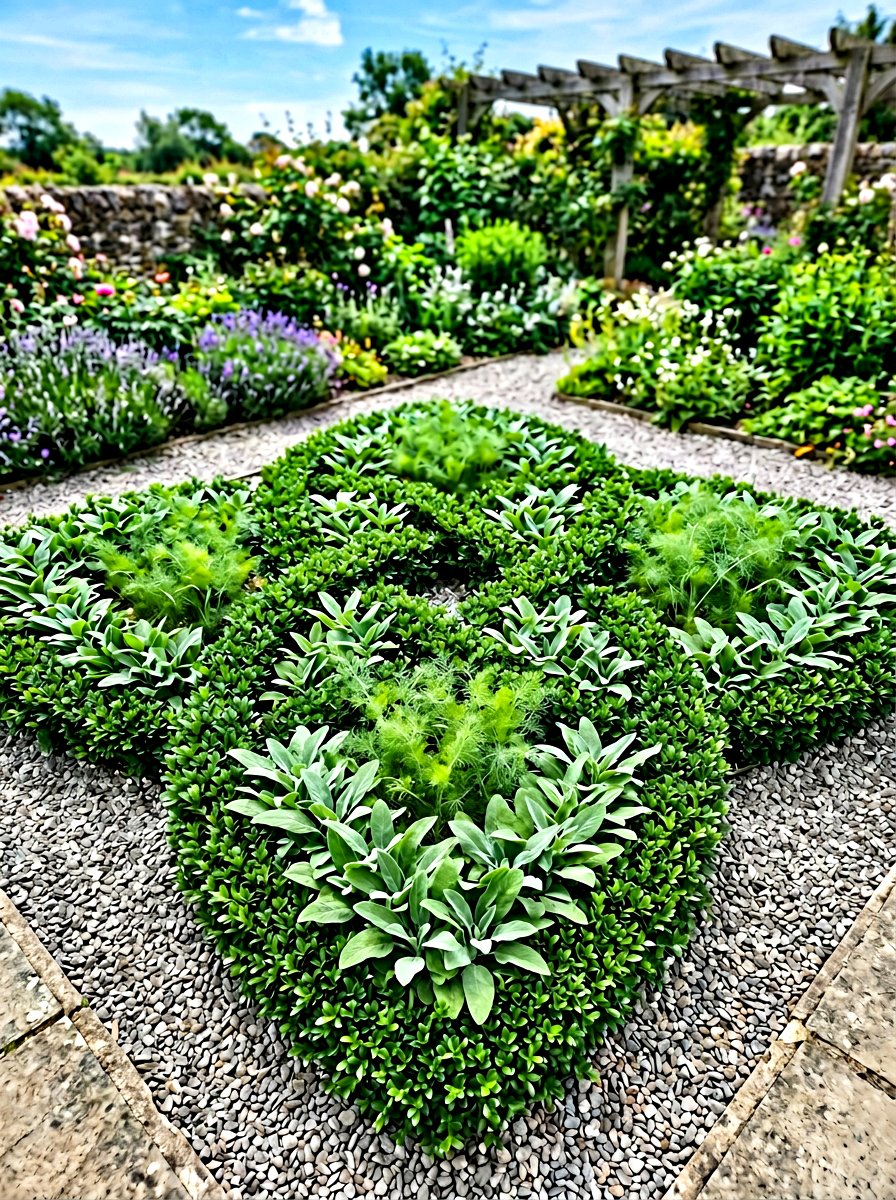
A multi textured green knot focuses on the subtle beauty of foliage rather than bright flowers. By choosing herbs with widely different leaf shapes and textures, you can create a complex and interesting pattern using only shades of green. For example, you might pair the smooth, glossy leaves of germander with the fine, needle-like foliage of rosemary and the fuzzy leaves of sage. This creates a tactile garden that invites you to reach out and touch the plants. The different textures catch the light in different ways, adding depth and visual interest to the knot pattern throughout the day. It is a sophisticated and understated approach to formal herb garden design.
19. Pollinator Friendly Herb Pattern
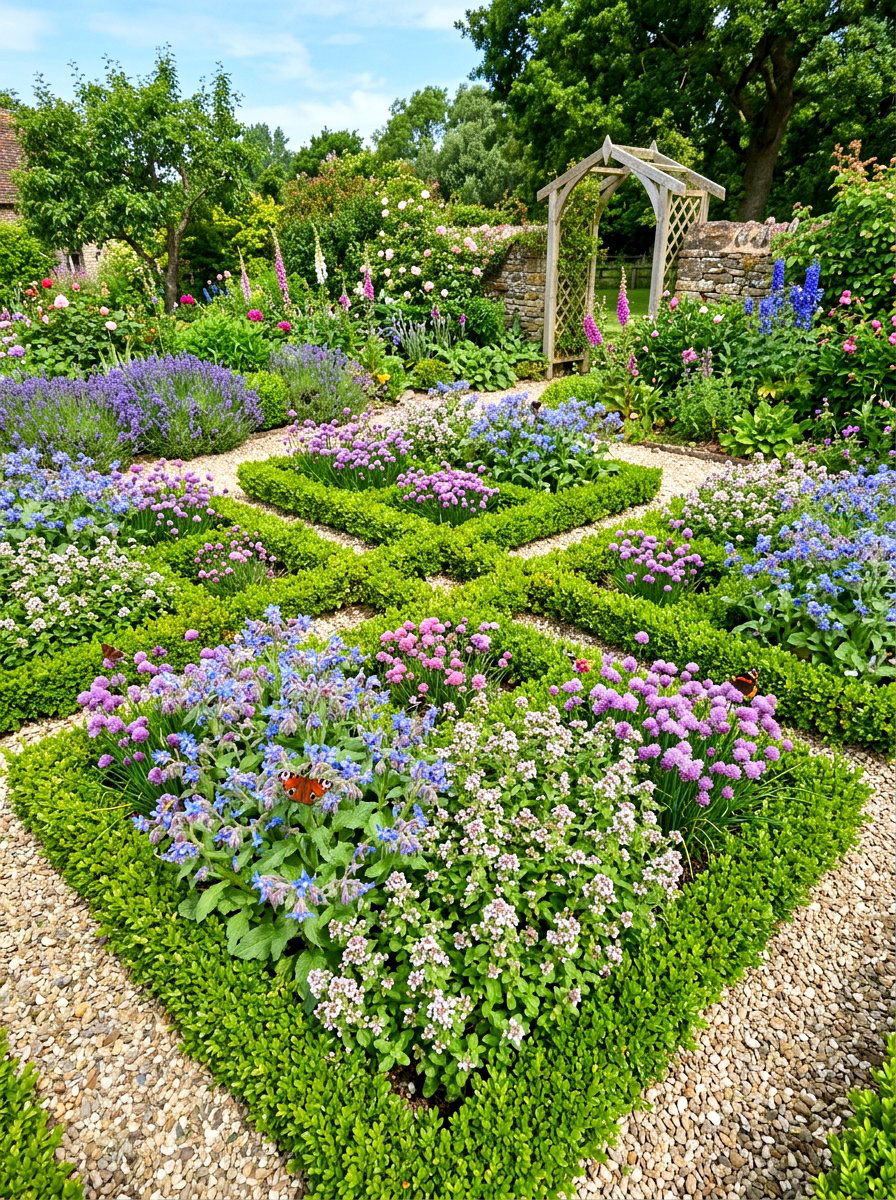
Designing a pollinator friendly herb pattern is a great way to support local wildlife while enjoying a beautiful knot garden. Many of the best herbs for knot gardens, such as lavender, thyme, and marjoram, are also favorites of bees and butterflies. By arranging these plants in a structured pattern, you create a concentrated source of nectar that is easy for pollinators to find. You can also include flowering herbs like chives and borage to add even more color and food for the insects. This type of garden feels vibrant and alive, as there is always something buzzing or fluttering among the leaves. It is a responsible and rewarding way to garden at home.

20. Winter Evergreen Herb Pattern
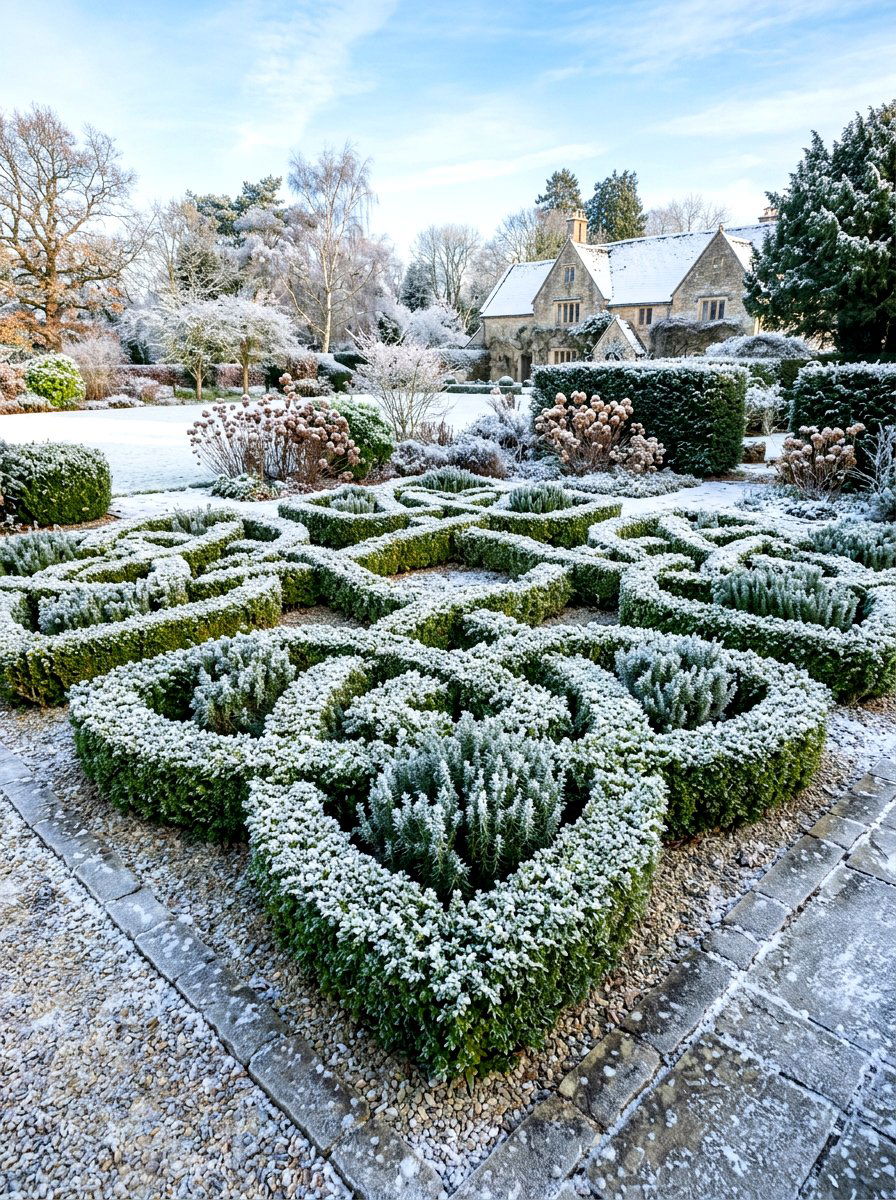
A winter evergreen herb pattern ensures that your knot garden remains attractive even during the coldest months of the year. By using only hardy evergreen herbs like boxwood, rosemary, and winter savory, the structure of the knot stays visible when other plants have died back. In snowy climates, the low hedges catch the snow and create a beautiful architectural effect in the garden. This year-round interest is one of the biggest benefits of a well-planned knot garden. You won 't have to look at a bare patch of dirt during the winter; instead, you' ll have a permanent living sculpture. This provides a sense of continuity and structure to your landscape throughout the entire year.
21. Central Fountain Herb Knot
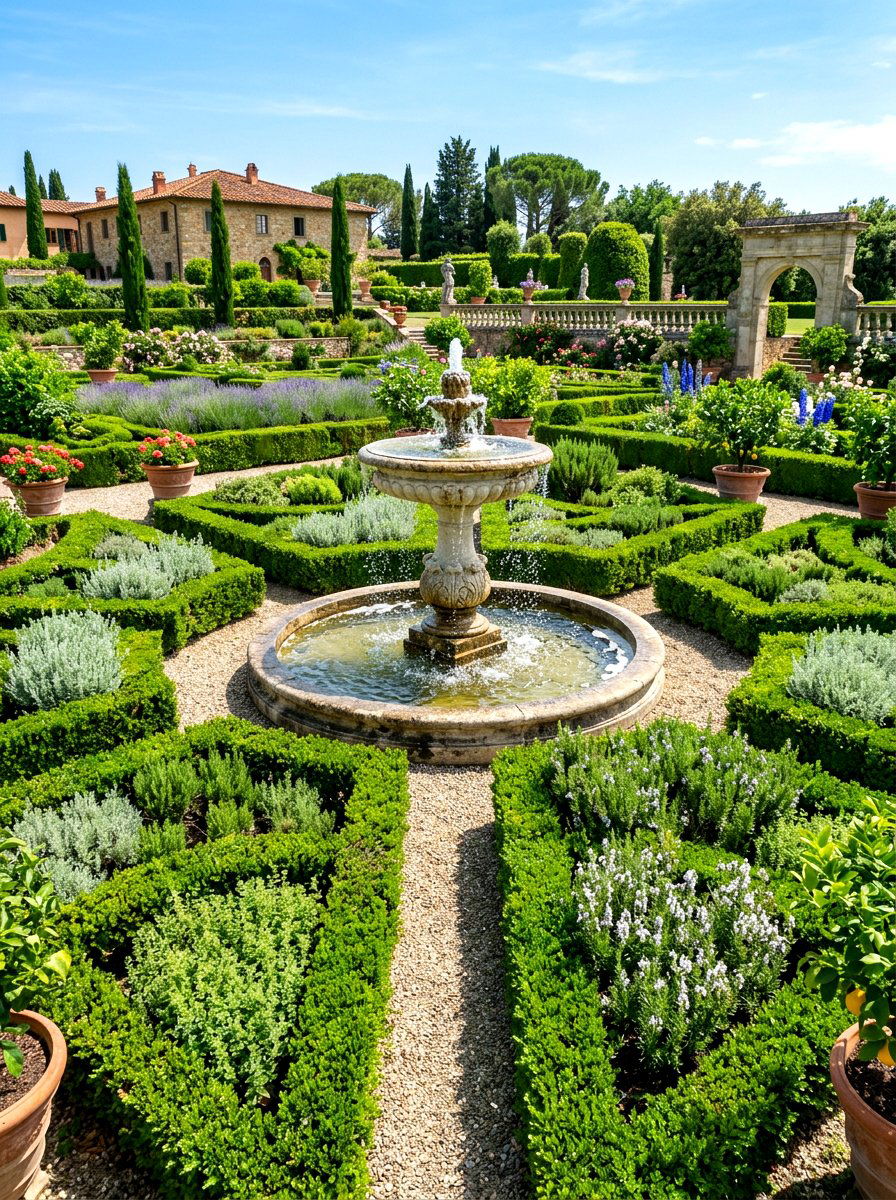
Adding a central fountain to your herb knot garden creates a sense of luxury and peace. The sound of trickling water provides a relaxing backdrop as you work in your garden or relax nearby. The fountain acts as the heart of the design, with the herb patterns radiating outward in symmetrical loops. This layout is very common in traditional European parterres and adds a sophisticated focal point to any backyard. Moisture-loving herbs like mint or parsley can be planted closer to the fountain, where they can benefit from the occasional splash of water. This combination of water and fragrant herbs creates a refreshing and tranquil oasis that feels completely separate from the busy outside world.
22. Dwarf Germander Knot Hedge
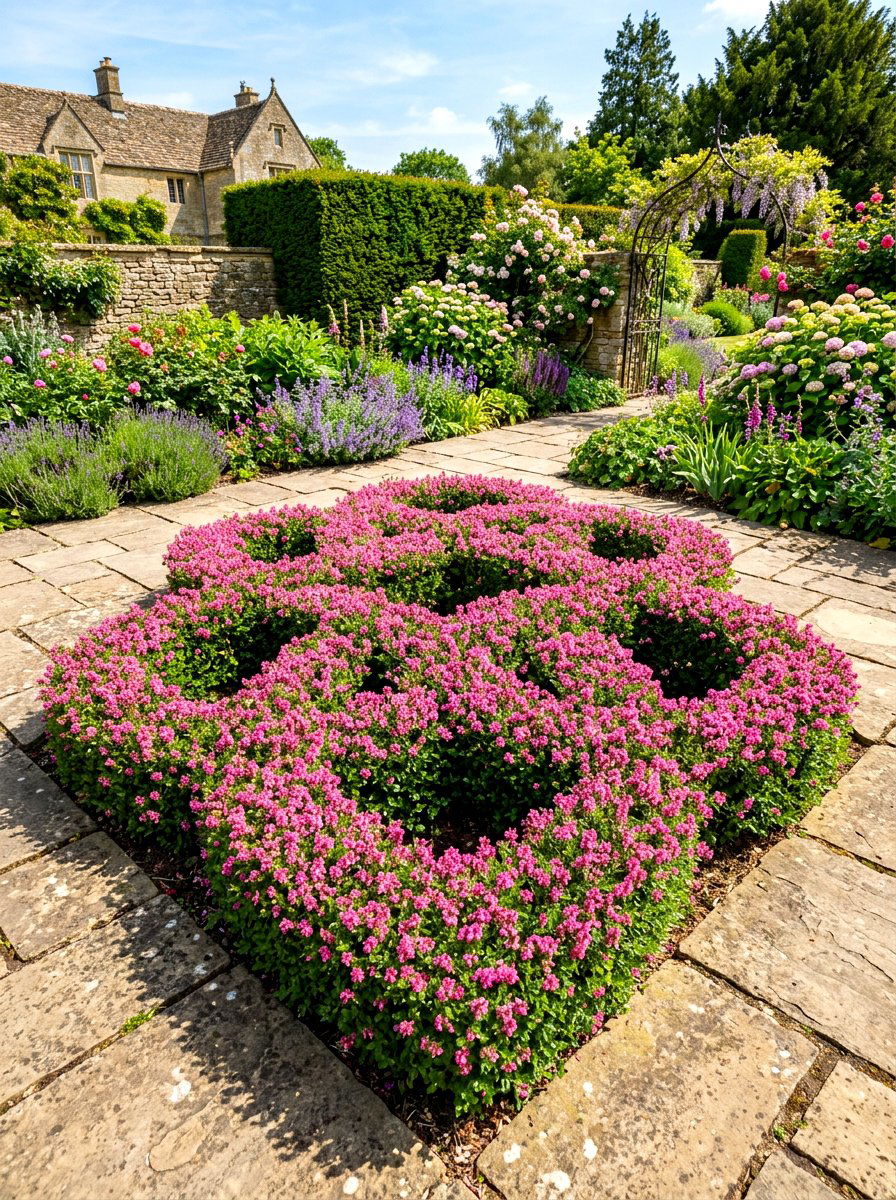
Dwarf germander is an underutilized herb that is absolutely perfect for creating knot garden hedges. It features small, glossy green leaves and produces beautiful pink or purple flowers in the summer. Germander is very hardy and can be clipped into tight, formal shapes just like boxwood, but it offers more seasonal color. In a knot garden, it can be used to create the main outlines of the pattern, providing a dense and tidy frame. It is also quite drought-tolerant once established, making it a practical choice for sun-drenched gardens. The combination of its formal structure and delicate flowers makes it a standout choice for anyone wanting a unique and high-quality herb garden.
23. Low Maintenance Herb Pattern
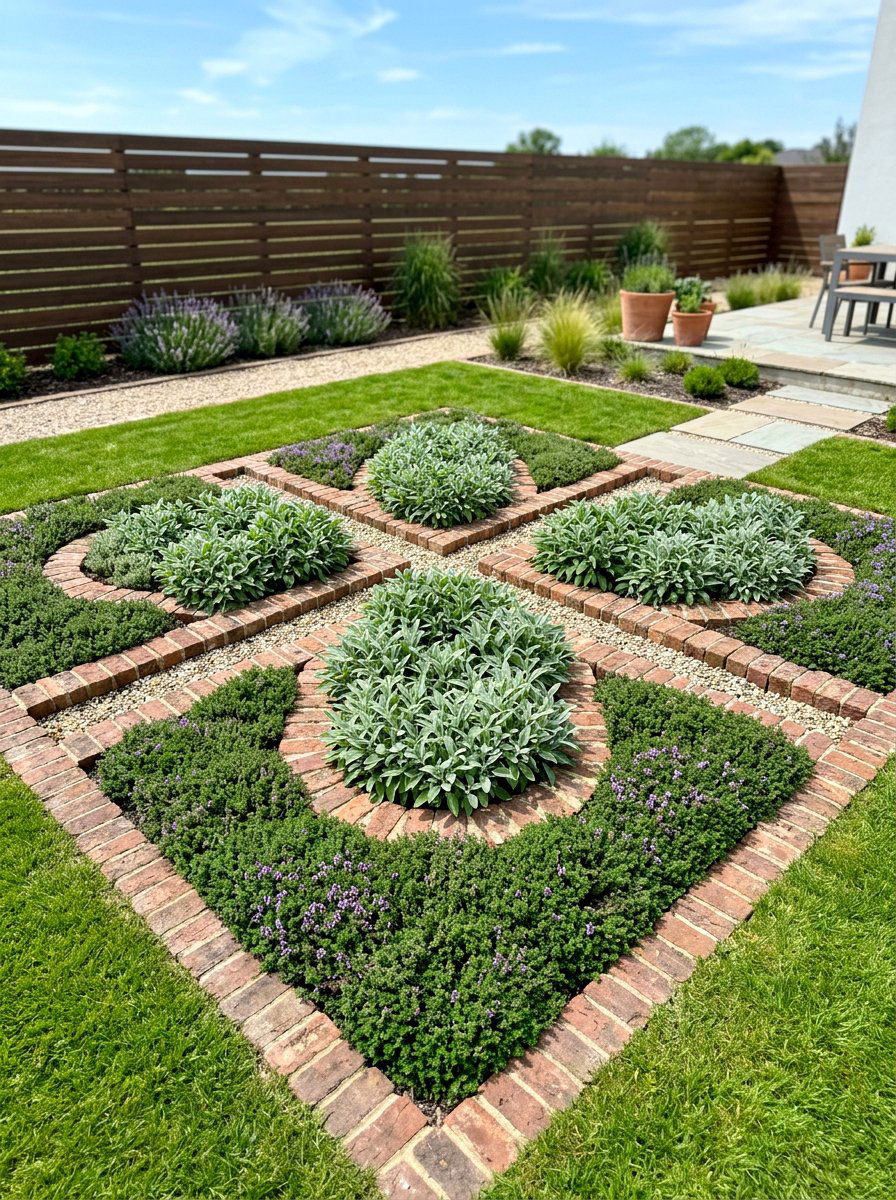
Can you have a beautiful knot garden without spending hours pruning? A low maintenance herb pattern focuses on plants that naturally stay compact or grow slowly. Using a ground-cover herb like creeping thyme for the pattern lines allows the garden to maintain its shape with very little intervention. Instead of high-maintenance boxwood, you can use materials like brick or stone to define the knot lines and fill the spaces with slow-growing herbs like dwarf sage. This approach gives you the visual appeal of a knot garden with a much lighter workload. It is perfect for busy homeowners who want an elegant garden but don't have the time for intensive weekly maintenance or clipping.
24. Modern Minimalist Knot Garden
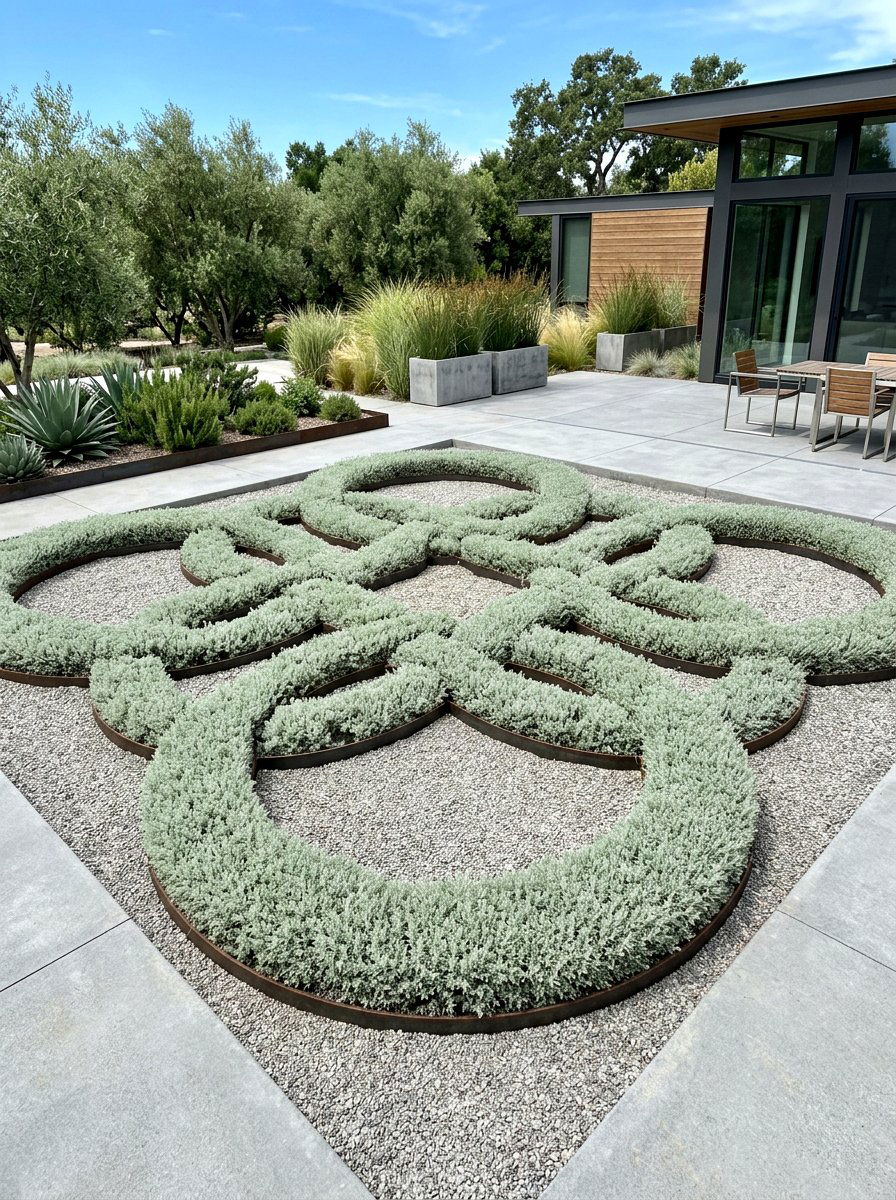
A modern minimalist knot garden takes the traditional concept and strips it down to its most basic elements. Instead of complex interlacing lines, this style uses simple, bold shapes like large overlapping circles or clean squares. The plant palette is usually limited to just two or three types of herbs to maintain a clean and uncluttered look. Using modern materials like steel edging or large concrete pavers can help to define the space and add an industrial-chic vibe. This style is all about negative space and sharp contrasts, making it a great choice for contemporary homes with clean architectural lines. It provides a sophisticated and high-end feel with a very limited plant list.
25. Square Herb Knot Layout
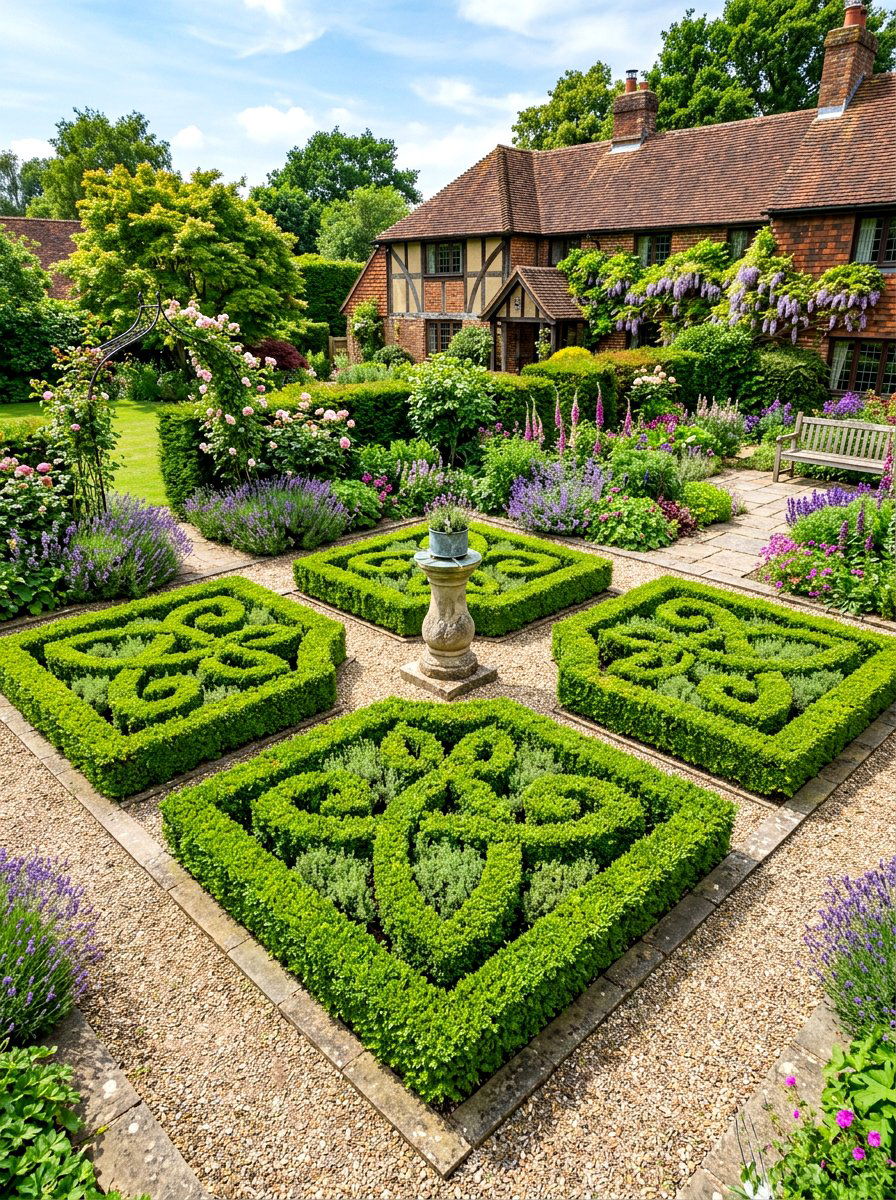
The square herb knot layout is the most straightforward and classic way to organize a formal garden. This design fits perfectly into standard backyard plots and is easy to measure and plant. You can divide a large square into four smaller quadrants, each featuring its own mini-knot or a different selection of herbs. This quartered design was very popular in medieval monastery gardens and provides a sense of deep historical continuity. By using tall herbs in the center and shorter ones toward the edges, you create a tiered effect that makes the garden look more substantial. This layout is incredibly versatile and can be adapted to any size or style of home.
26. Tall Sage Herb Pattern
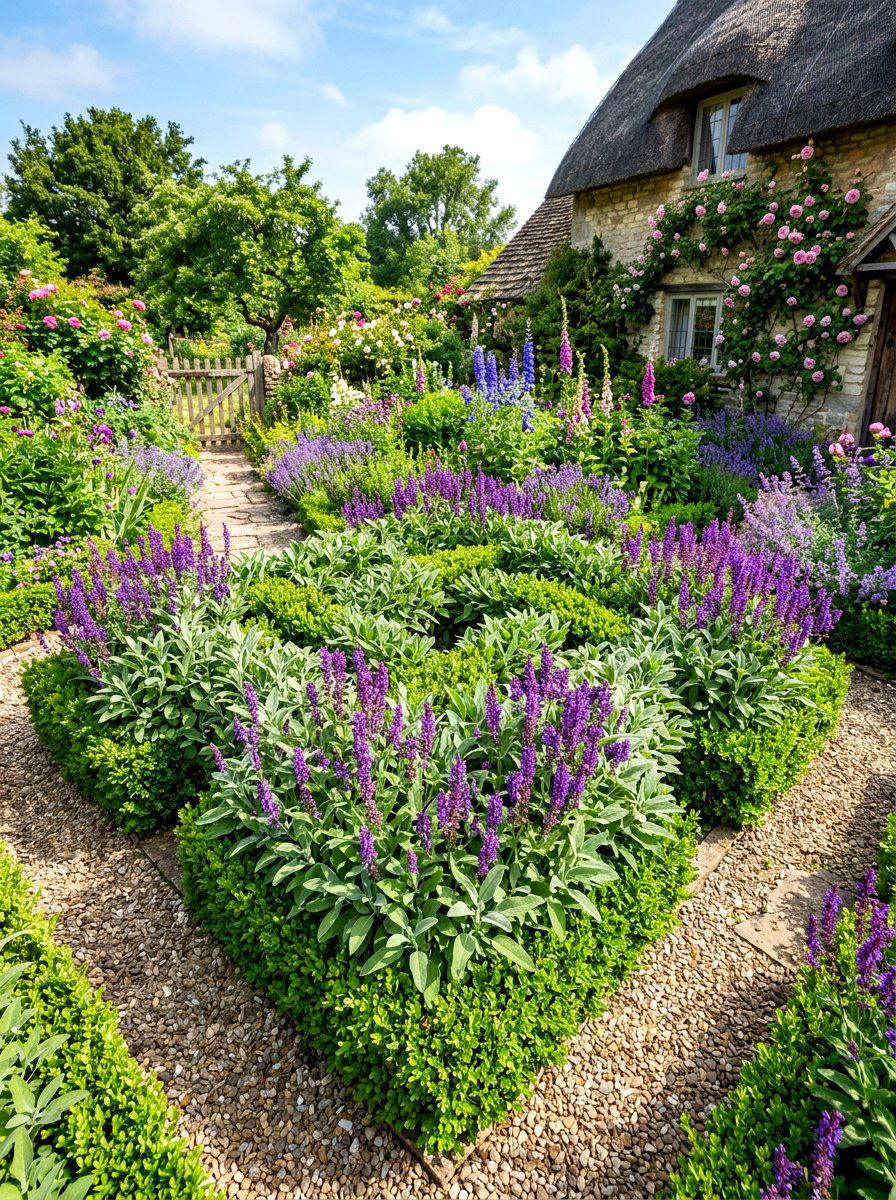
Using tall sage as a key element in your herb pattern adds height and a beautiful silvery-green color to the garden. Garden sage is a robust plant that can be used to create the outer boundary of a knot or to fill in large loops. Its broad, velvety leaves provide a wonderful contrast to the fine textures of rosemary or thyme. When allowed to bloom, sage produces spikes of purple flowers that are highly attractive to bees. To keep it looking neat in a knot garden, you can prune it back after flowering to maintain a dense shape. The strong, earthy scent of sage adds another layer of sensory enjoyment to your formal herb display.
27. Interlocking Clover Herb Pattern
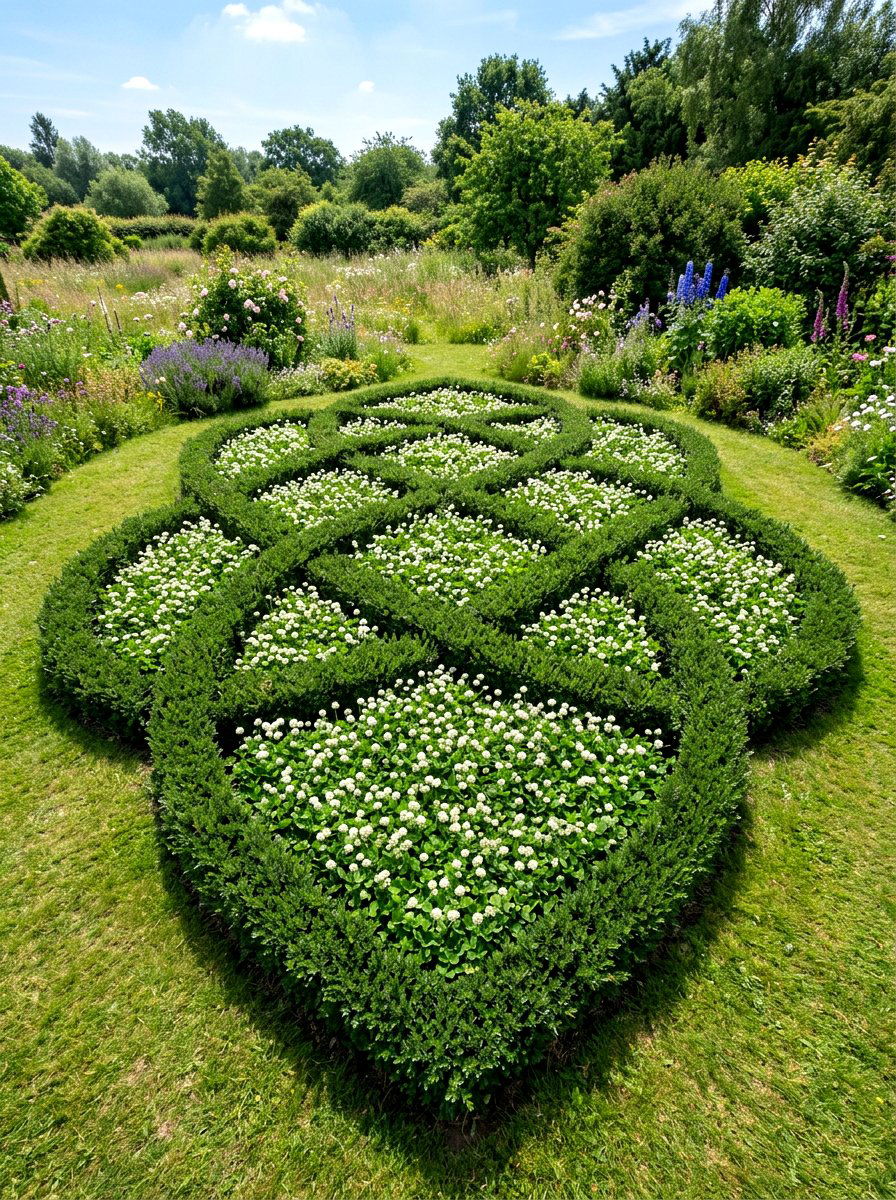
For a softer and more eco-friendly look, an interlocking clover and herb pattern is a unique choice. White clover can be used as a lush, green filler between the more structured herb hedges. Clover stays low to the ground, requires little water, and stays green even in poor soil. When paired with a darker hedge like hyssop, the bright green of the clover makes the pattern stand out beautifully. This design is much more relaxed than a traditional boxwood knot and has a natural, meadow-like feel. It is also excellent for soil health, as clover fixes nitrogen. This creates a sustainable and low-impact garden that still offers the beauty of a formal pattern.
28. Mediterranean Herb Garden Pattern
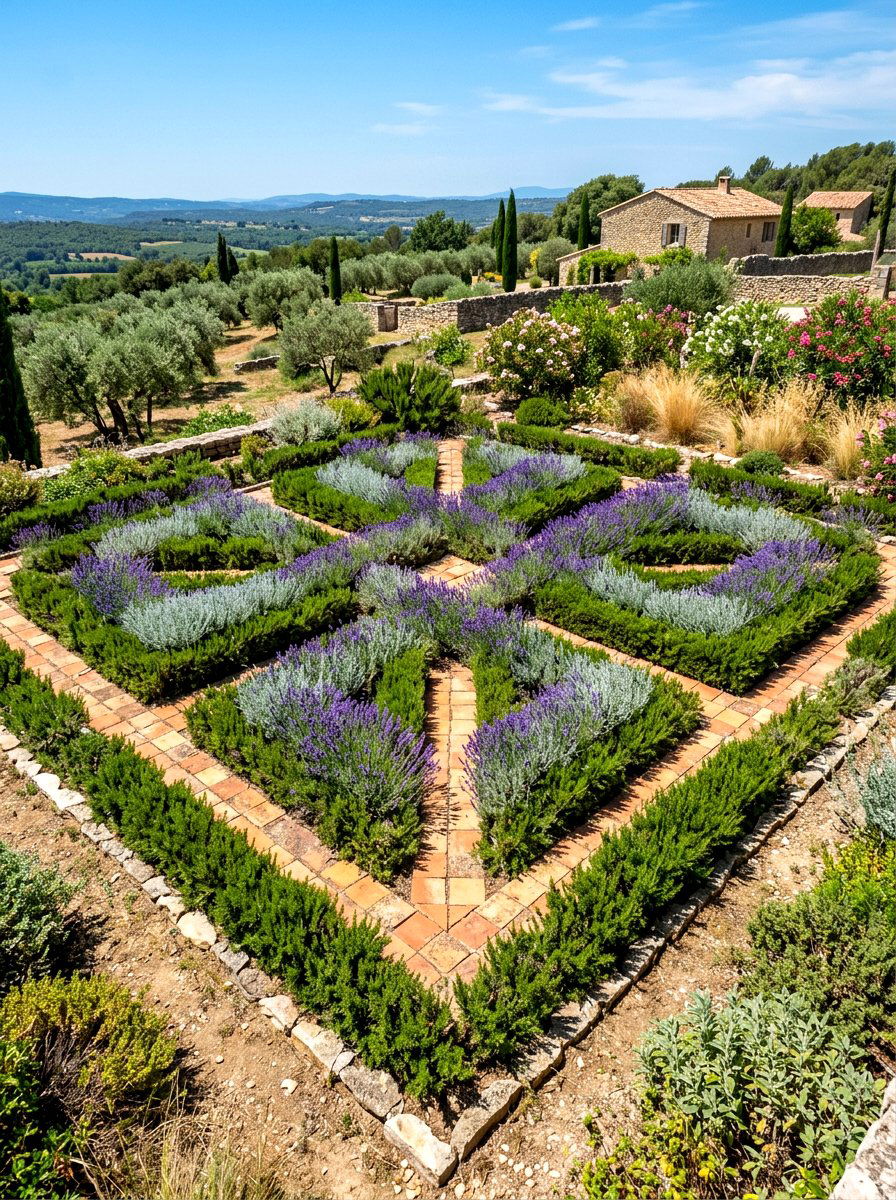
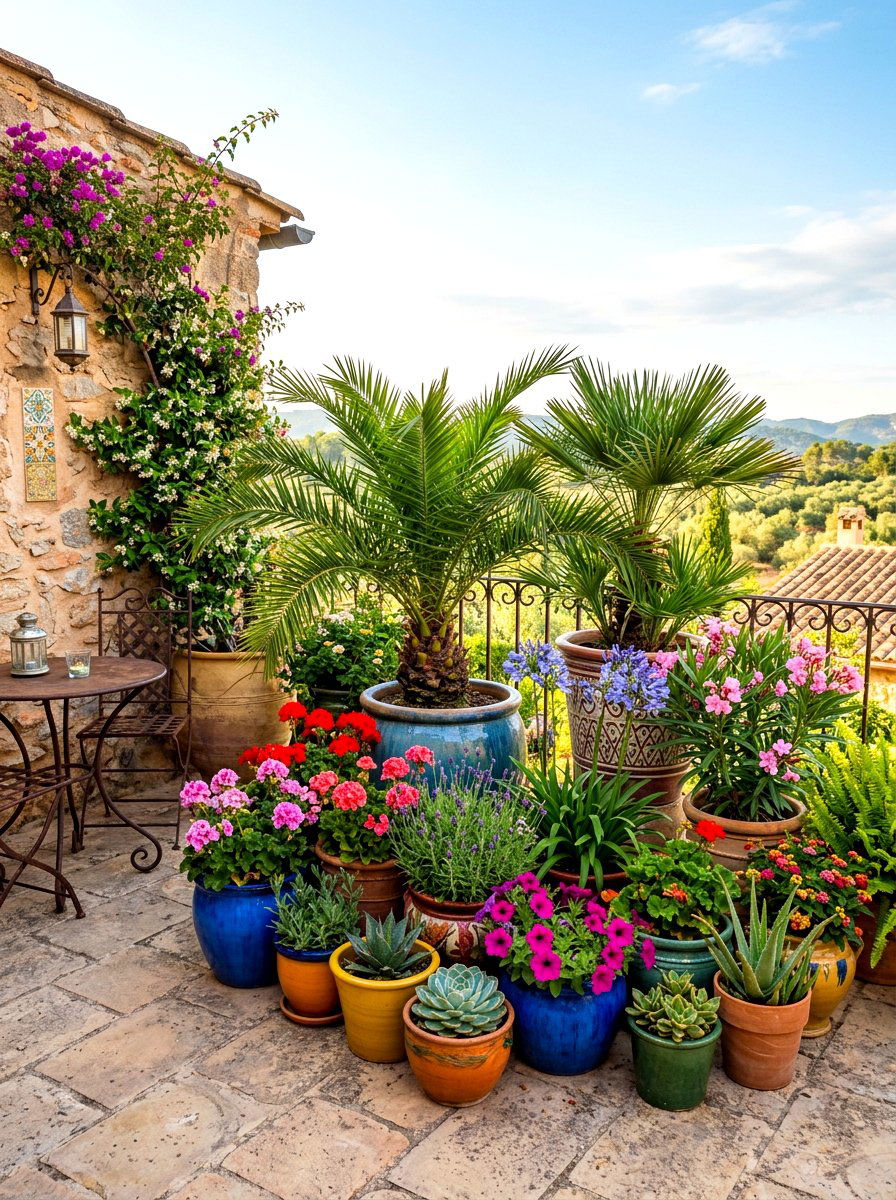
A Mediterranean herb garden pattern focuses on the silver and gray tones of drought-tolerant plants. This style is perfect for hot, sunny locations where water may be scarce. You can use herbs like lavender, santolina, rosemary, and sage to create a knot that feels right at home in a dry climate. These plants all share similar needs for full sun and well-drained, sandy soil. The overall look is one of cool elegance, with the muted colors of the foliage reflecting the bright sunlight. Adding some terracotta pots or a few large stones can enhance the Mediterranean feel of the space. This is a practical and stunning way to garden in a warmer environment.
29. Sensory Herb Garden Layout
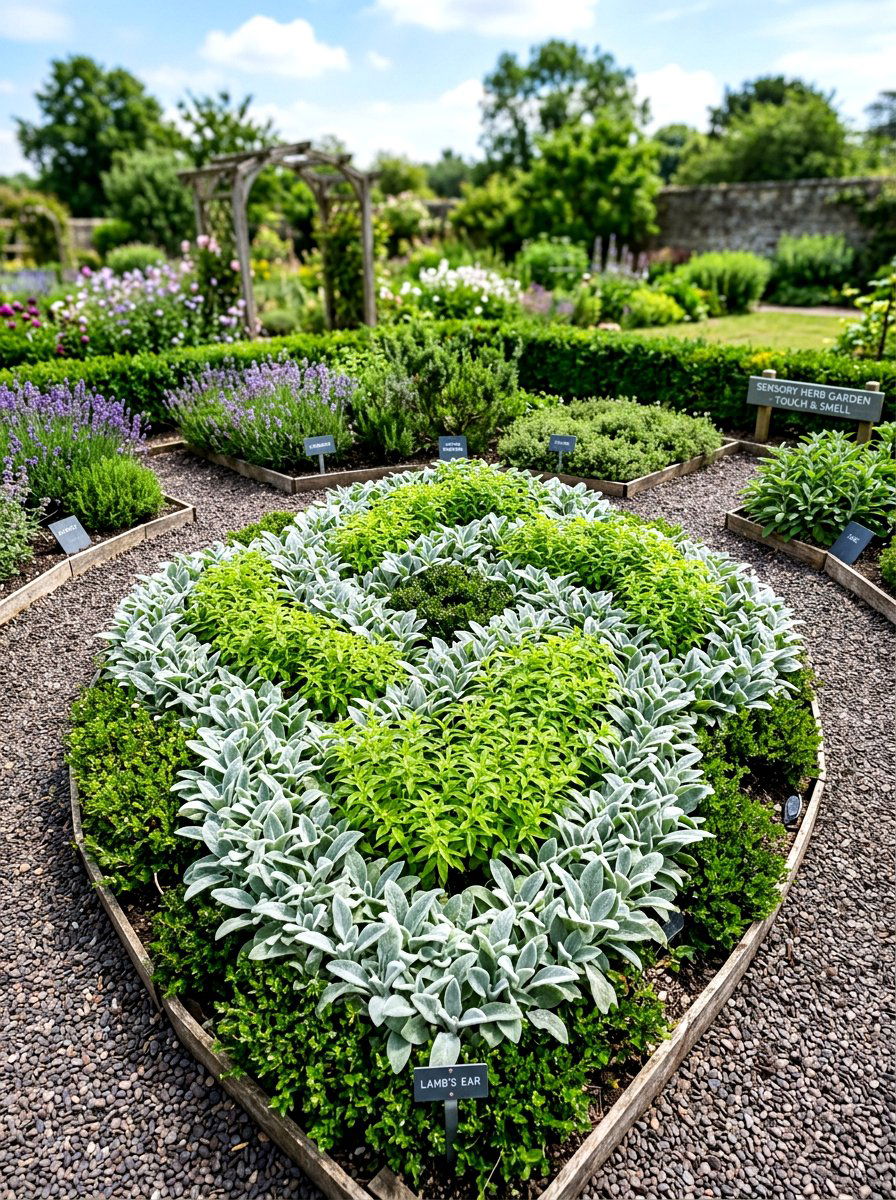
A sensory herb garden layout is designed to be experienced with all five senses. In this knot garden, you choose plants specifically for their fragrance, texture, and taste. Include lemon verbena for its bright citrus scent, woolly thyme for its soft and fuzzy leaves, and peppermint for its refreshing flavor. The structured pattern of the knot makes it easy to guide visitors through the different sensory experiences. This type of garden is particularly wonderful for children or for use in therapeutic settings. The combination of beautiful patterns, amazing smells, and interesting textures creates a deeply engaging and memorable outdoor space. It turns a simple garden into an immersive and healing experience for everyone.
30. Formal Boxwood Herb Border
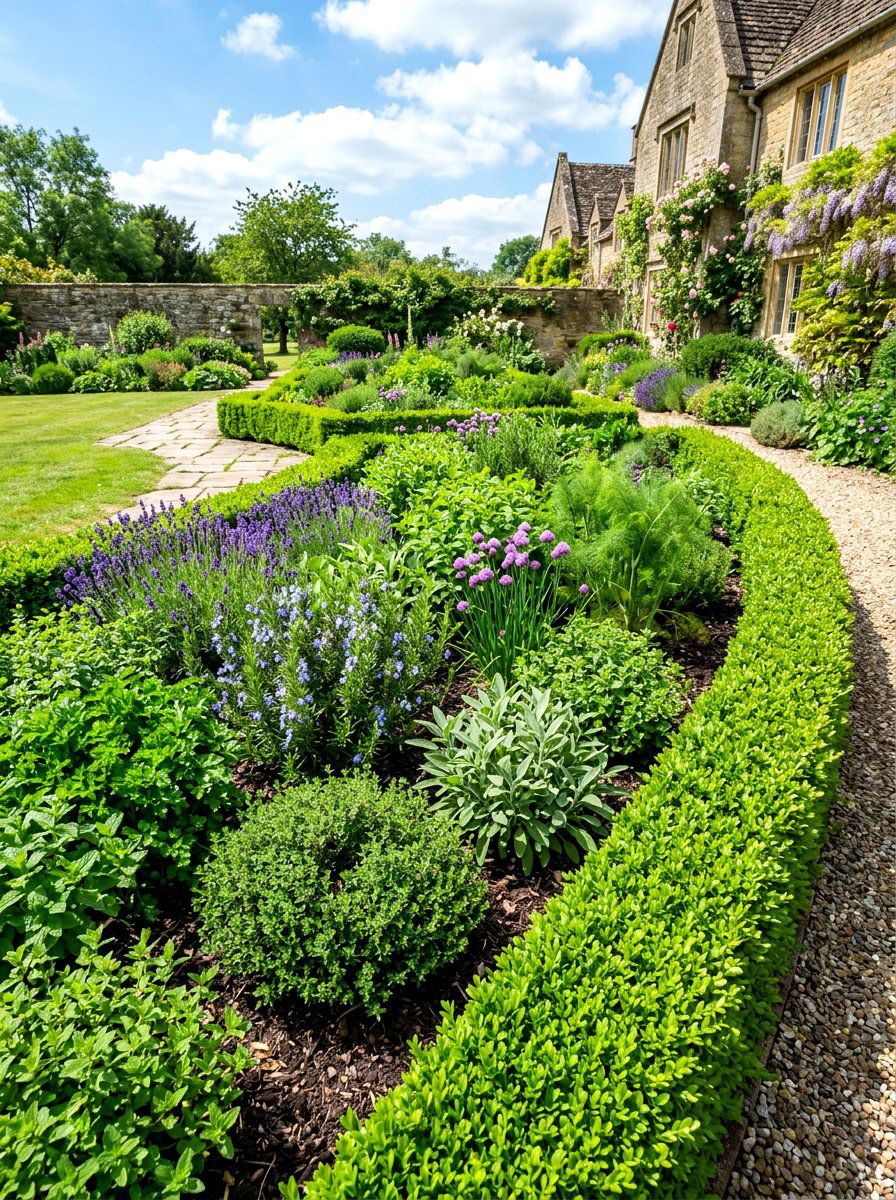
A formal boxwood herb border is a simple yet high-impact way to bring structure to any garden bed. Instead of a full interlacing knot, you can use a low boxwood hedge to create a crisp border around a mixed herb planting. This provides a clean edge that separates the garden from the lawn or path, making the whole area look more intentional and professional. Inside the border, you can plant a variety of taller herbs like dill, fennel, and lovage, which might otherwise look a bit messy. The rigid line of the boxwood keeps everything looking tidy and contained. This is a great starting point for anyone who wants to experiment with formal garden design.
Conclusion:
Creating a herb knot garden is a timeless way to elevate your outdoor space while enjoying the many benefits of fresh, home-grown plants. Whether you choose a strictly traditional Elizabethan layout or a more modern minimalist design, these gardens offer a unique combination of beauty and utility. By following a structured pattern, you can organize your herbs in a way that is both visually stunning and easy to manage. From the relaxing scent of lavender to the crisp structure of boxwood, every element works together to create a living masterpiece. We hope these thirty ideas have inspired you to start your own knot garden and bring a touch of formal elegance to your home landscape.

Related posts: