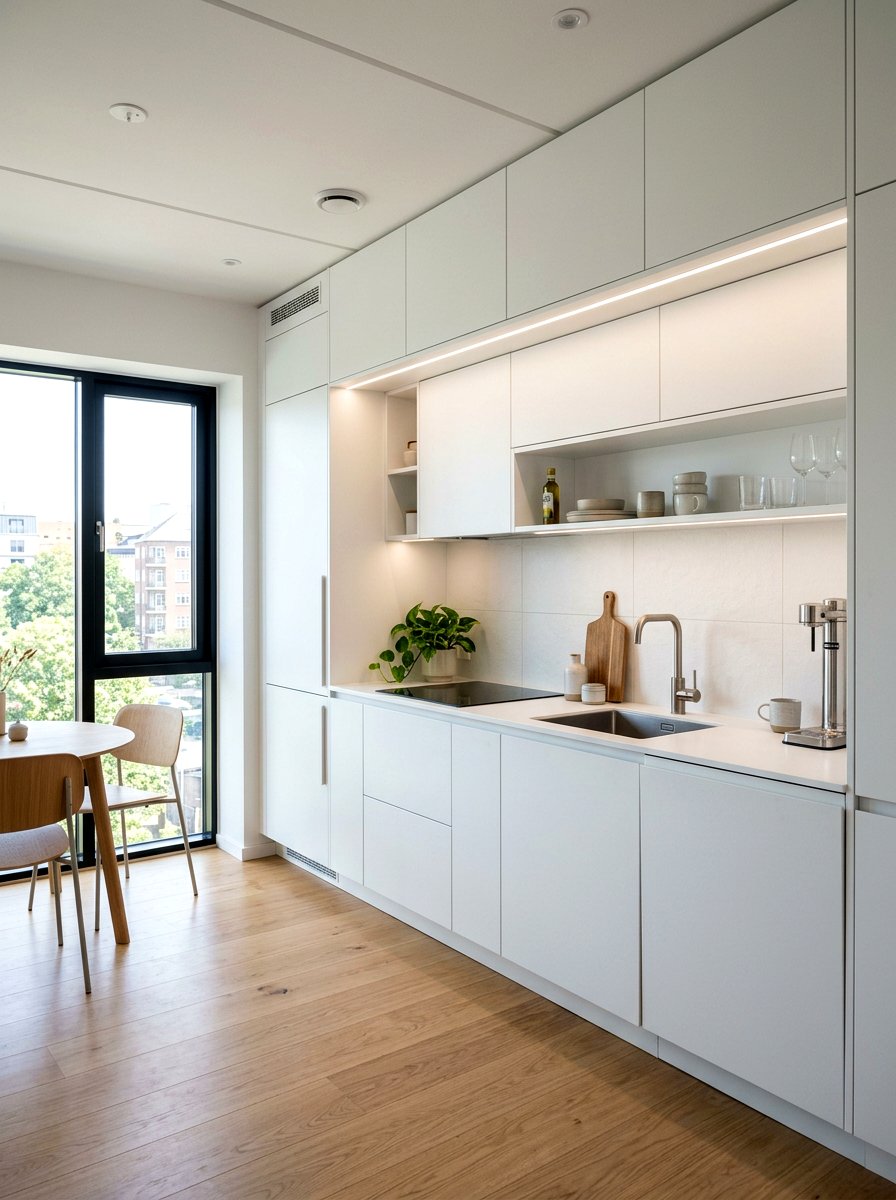
Narrow hallways often feel like forgotten transition zones in the home, but they actually hold massive styling potential for creative homeowners. These tight corridors can be dark, cramped, and purely utilitarian, but treating them as a blank canvas allows you to show off your personal style. By using the right combinations of lighting, texture, and color, you can transform a simple passage into a seamless flow between rooms. Whether you want to make the space feel wider with light tones or add drama with bold textures, these strategies help you maximize every square inch. A beautiful thoroughfare requires careful planning to ensure it remains functional yet highly aesthetic.
1. Narrow Hallway Runner Rug
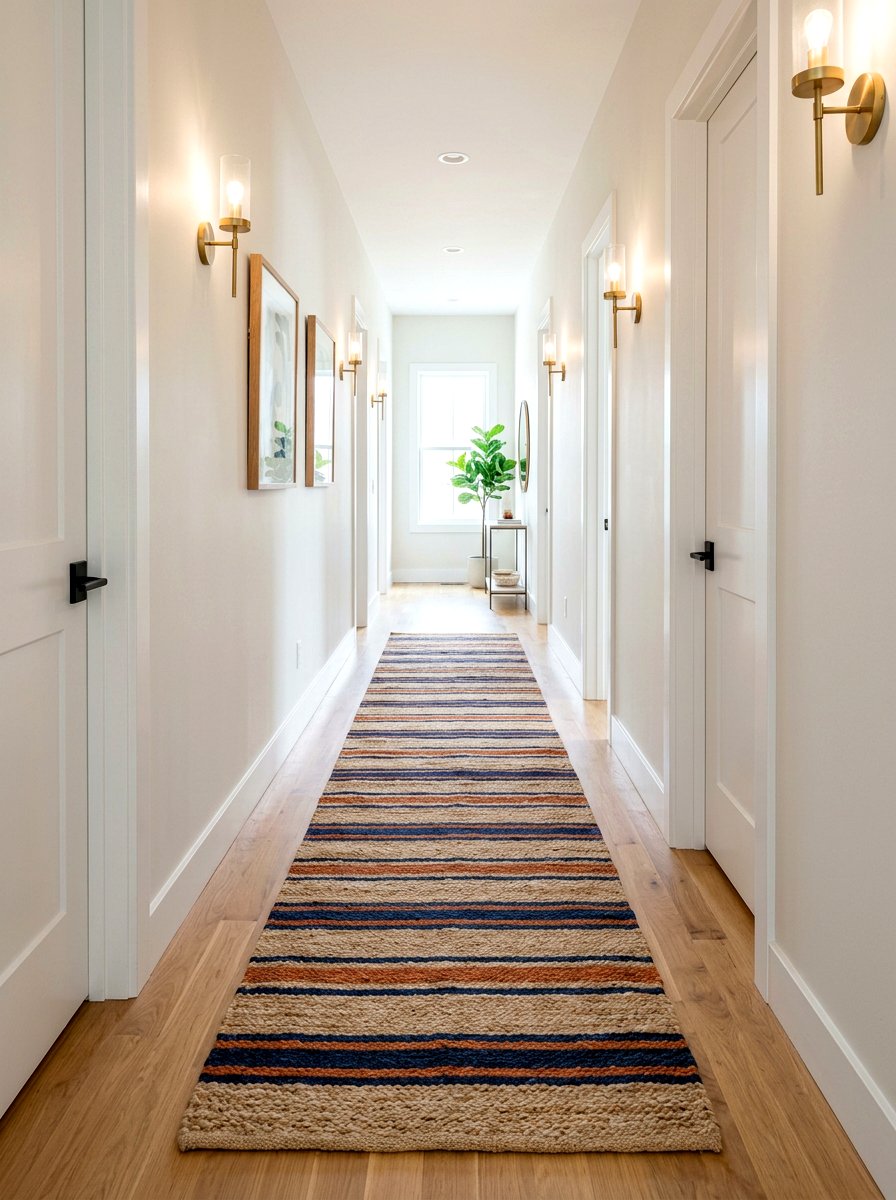
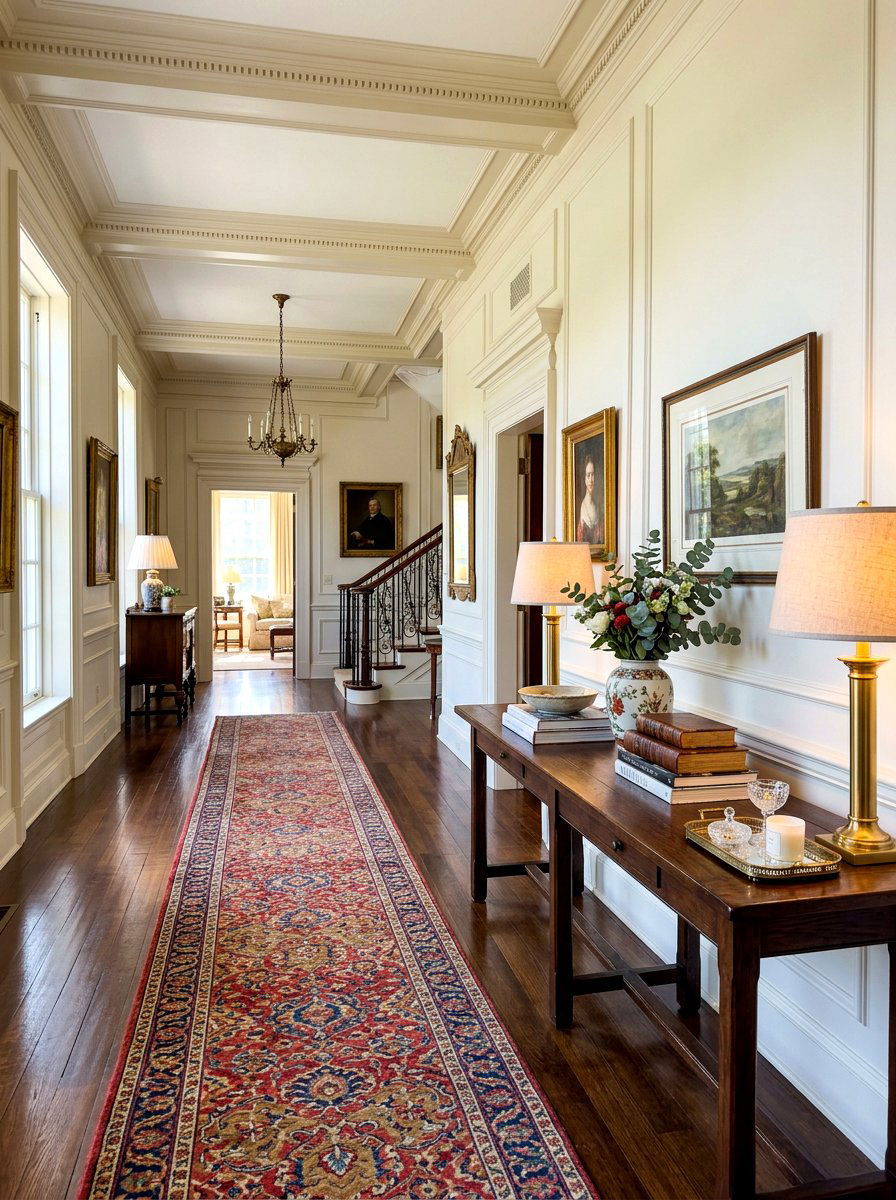
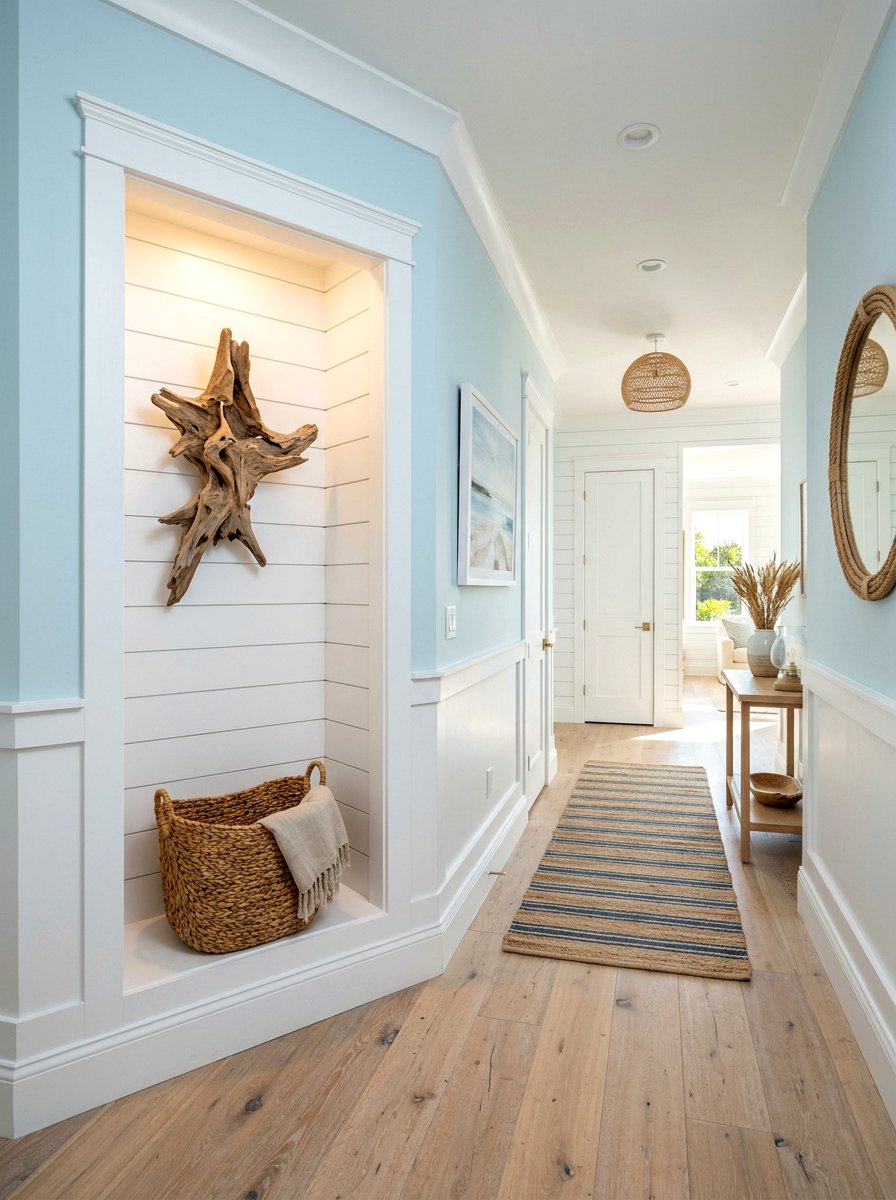
Adding a long runner rug is one of the easiest ways to bring warmth and texture into a cramped corridor. A well-chosen rug draws the eye forward, making the long walk feel more intentional and cozy underfoot. You should look for durable materials like jute or high-quality wool that can withstand high foot traffic over time. Choosing a pattern with horizontal stripes can actually trick the eye into thinking the floor is wider than it really is. Always make sure to leave a few inches of flooring visible on each side of the rug to prevent the space from feeling overcrowded. This simple addition softens the hard lines of a long, narrow entryway effectively.
2. Hallway Gallery Wall
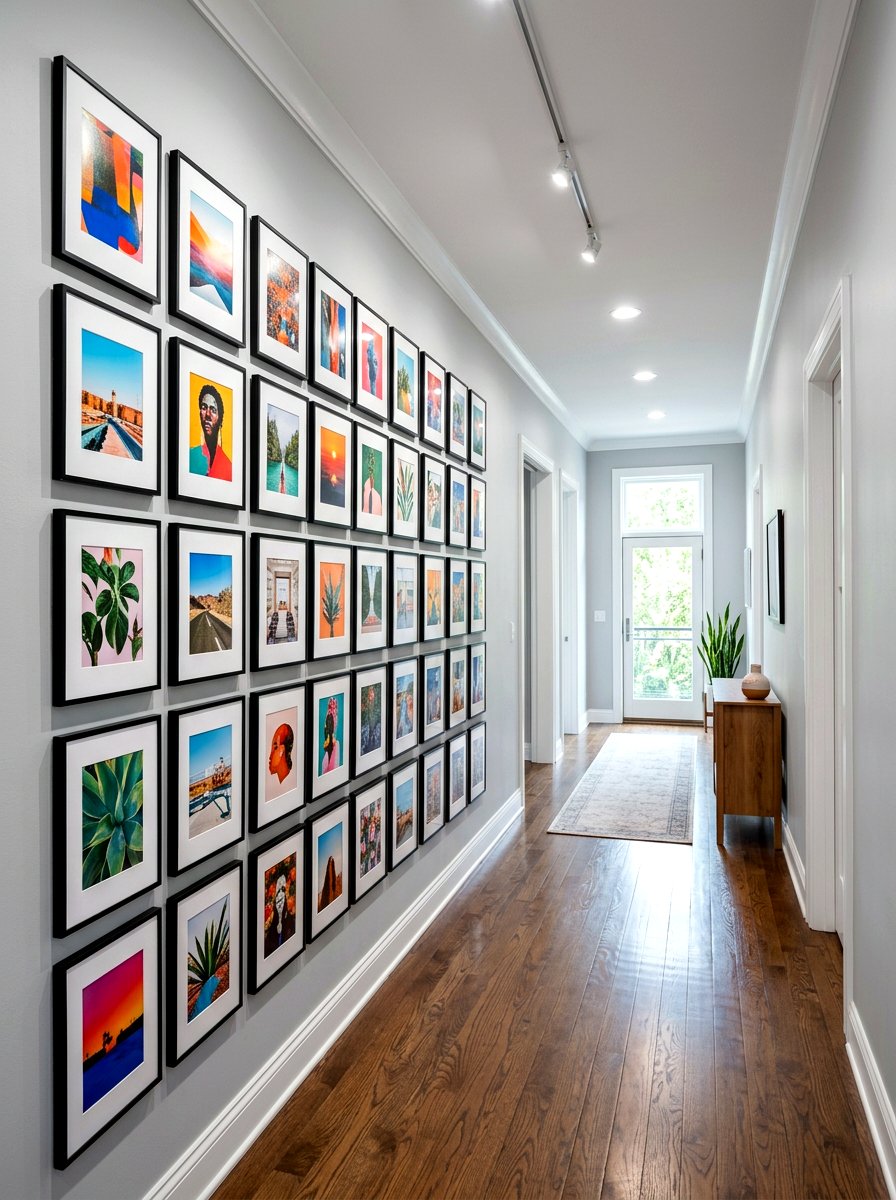
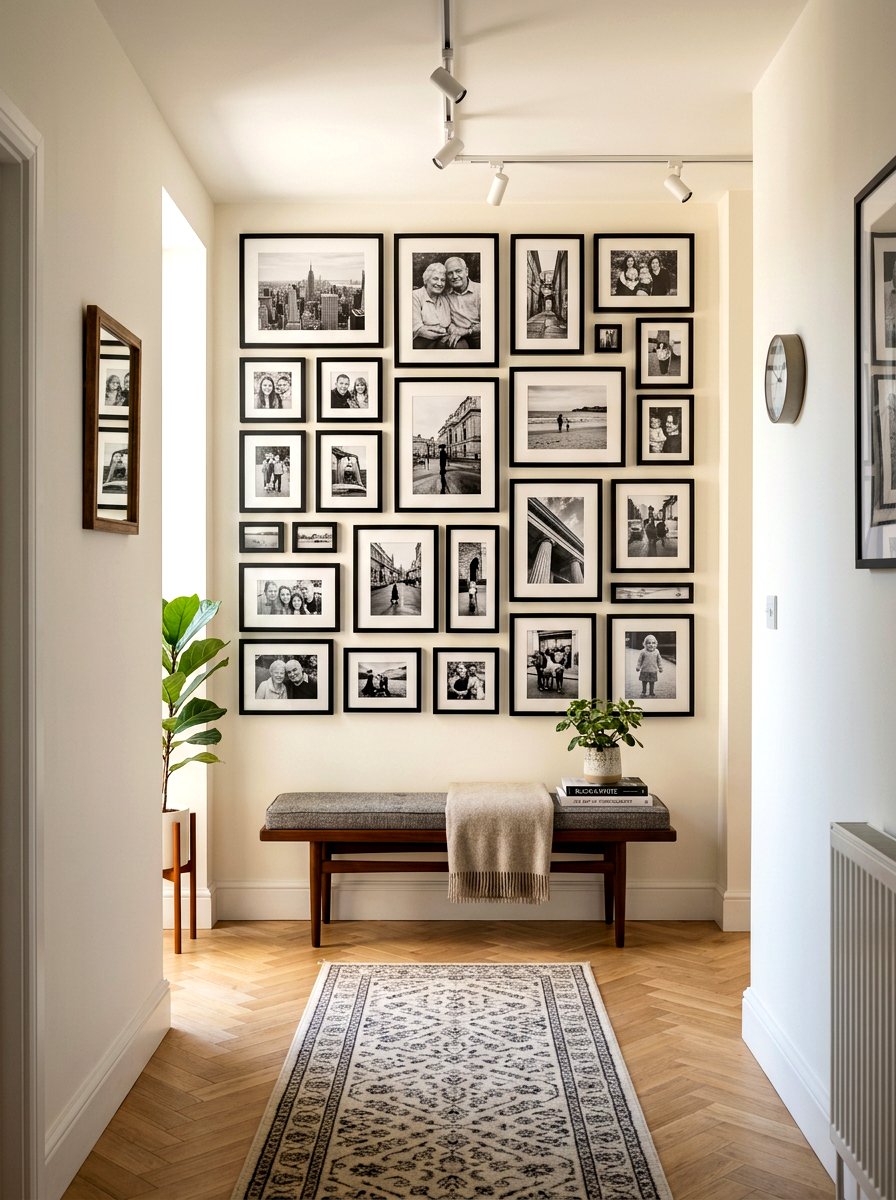
Creating a curated gallery wall is a fantastic way to turn a boring transition space into a personal museum. Instead of using large, bulky frames that might protrude too far into the walking path, opt for slim, uniform frames for a cohesive look. You can mix and match family photography, modern art prints, and vintage sketches to create a rhythmic pattern that leads the viewer through the home. Spacing the frames evenly helps maintain a sense of order in a tight area. Using white or light-colored mats around the artwork can prevent the wall from feeling too heavy or cluttered. This setup adds personality without sacrificing any floor space.
3. Large Wall Mirror
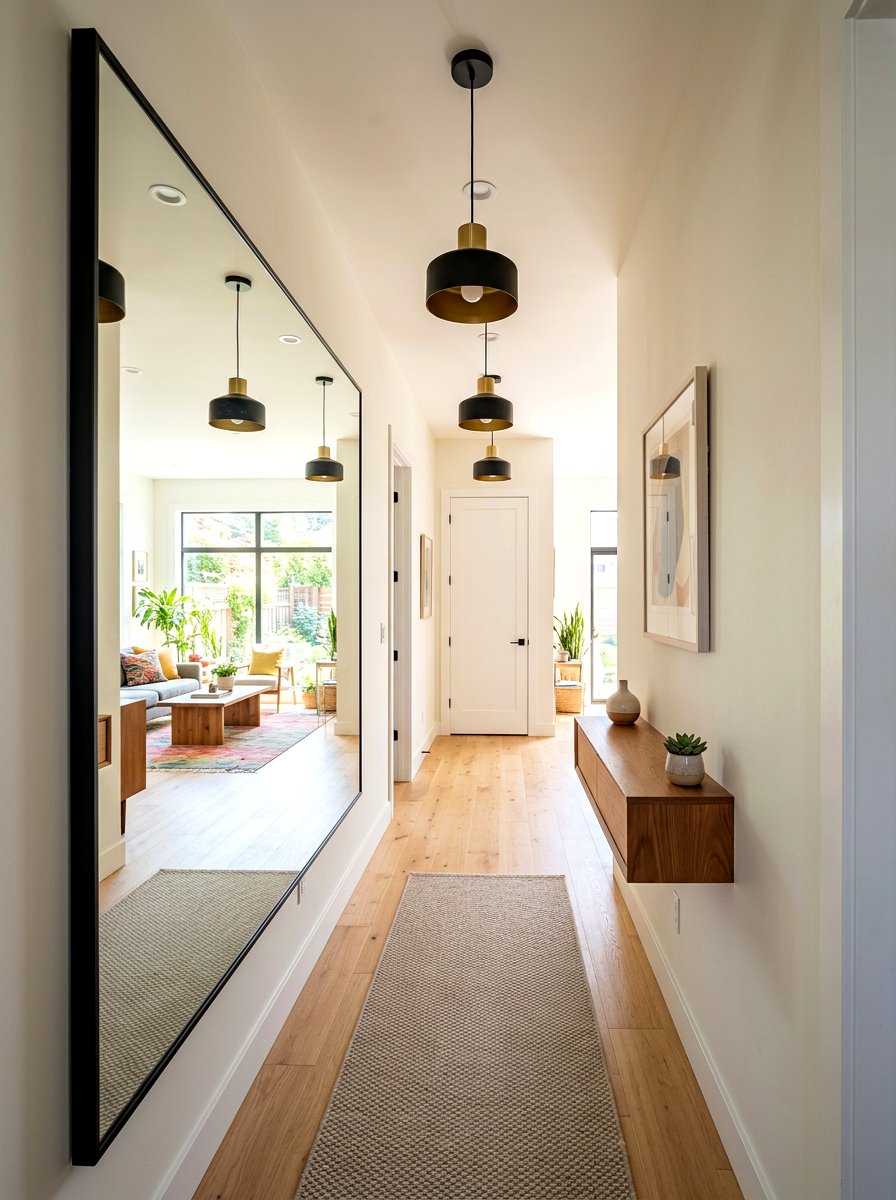
Installing a large wall mirror is a classic designer trick for making any small or narrow space feel much larger. Mirrors reflect both natural and artificial light, which immediately brightens up a typically dark and windowless corridor. If you place a mirror opposite a doorway or a window, it creates a "window" effect that adds depth and the illusion of an extra room. For a modern look, consider a large round mirror or a sleek, frameless rectangular design that spans a significant portion of the wall. The reflection breaks up the solid wall surface, making the passage feel airy and open rather than tight and claustrophobic.
4. Slim Console Table
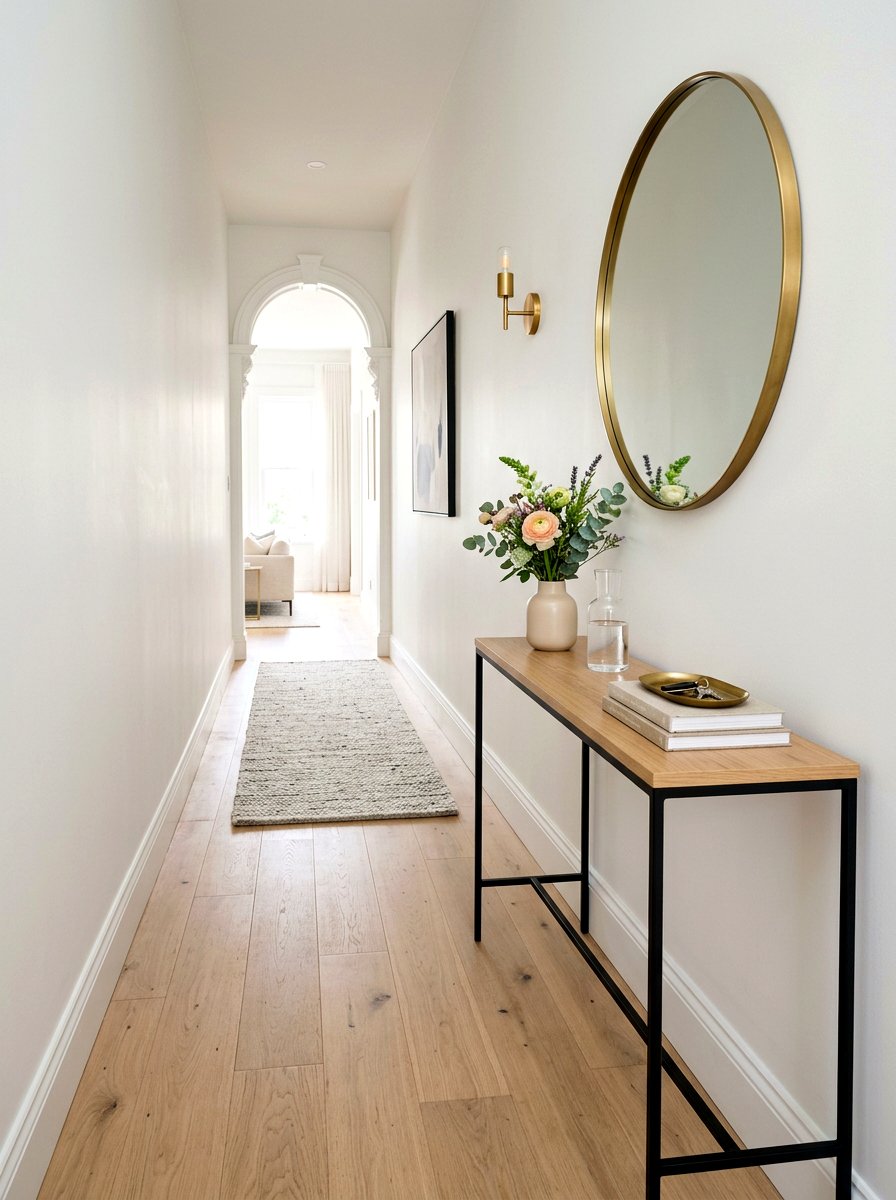
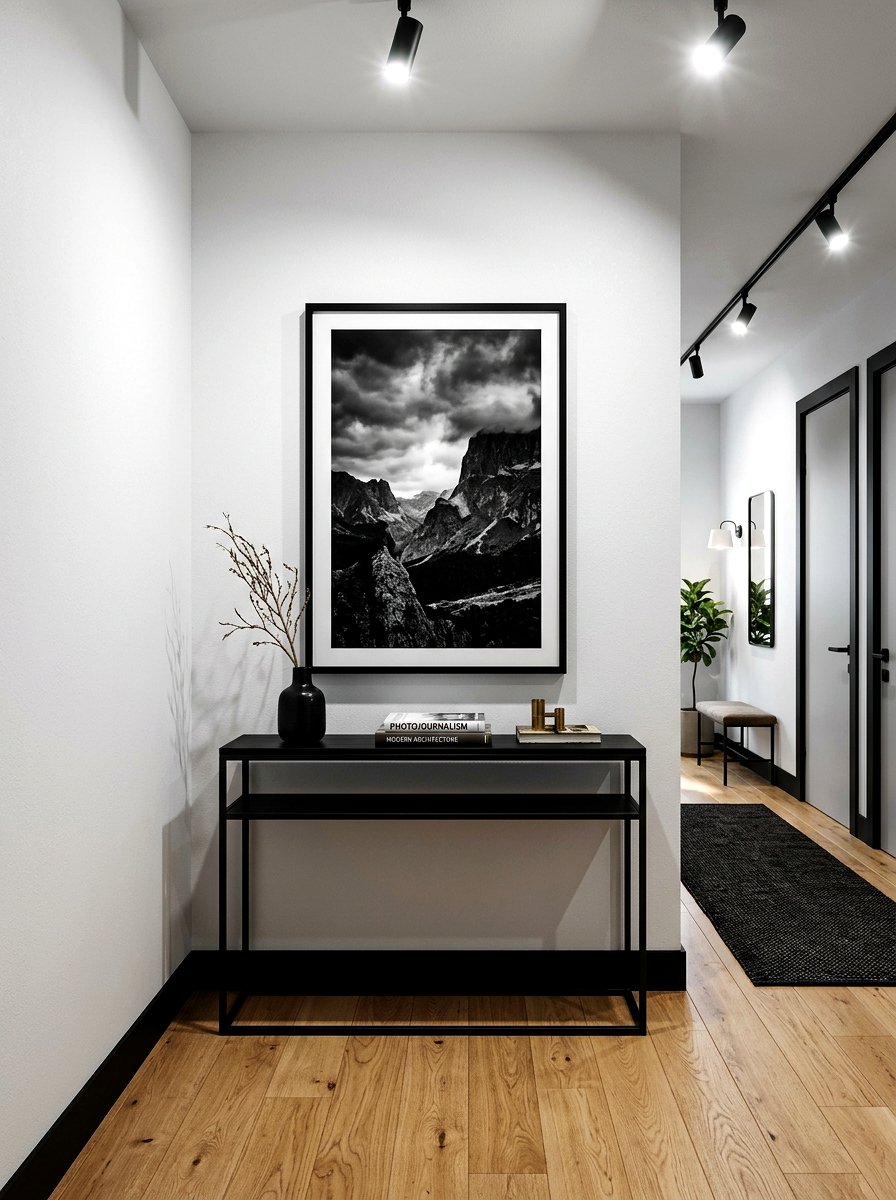
A slim console table provides a functional focal point without encroaching on the precious walking area of a narrow hallway. Look for a piece that is specifically designed for tight spaces, usually measuring between eight and twelve inches in depth. This surface allows you to style small decorative items like a tray for keys, a ceramic vase with fresh flowers, or a stylish table lamp. To keep the look airy, choose a table with thin metal legs or an open base that keeps the floor visible. This visual transparency ensures the furniture doesn't feel like a heavy block in the middle of your home’s main artery.
5. Hallway Wall Sconce
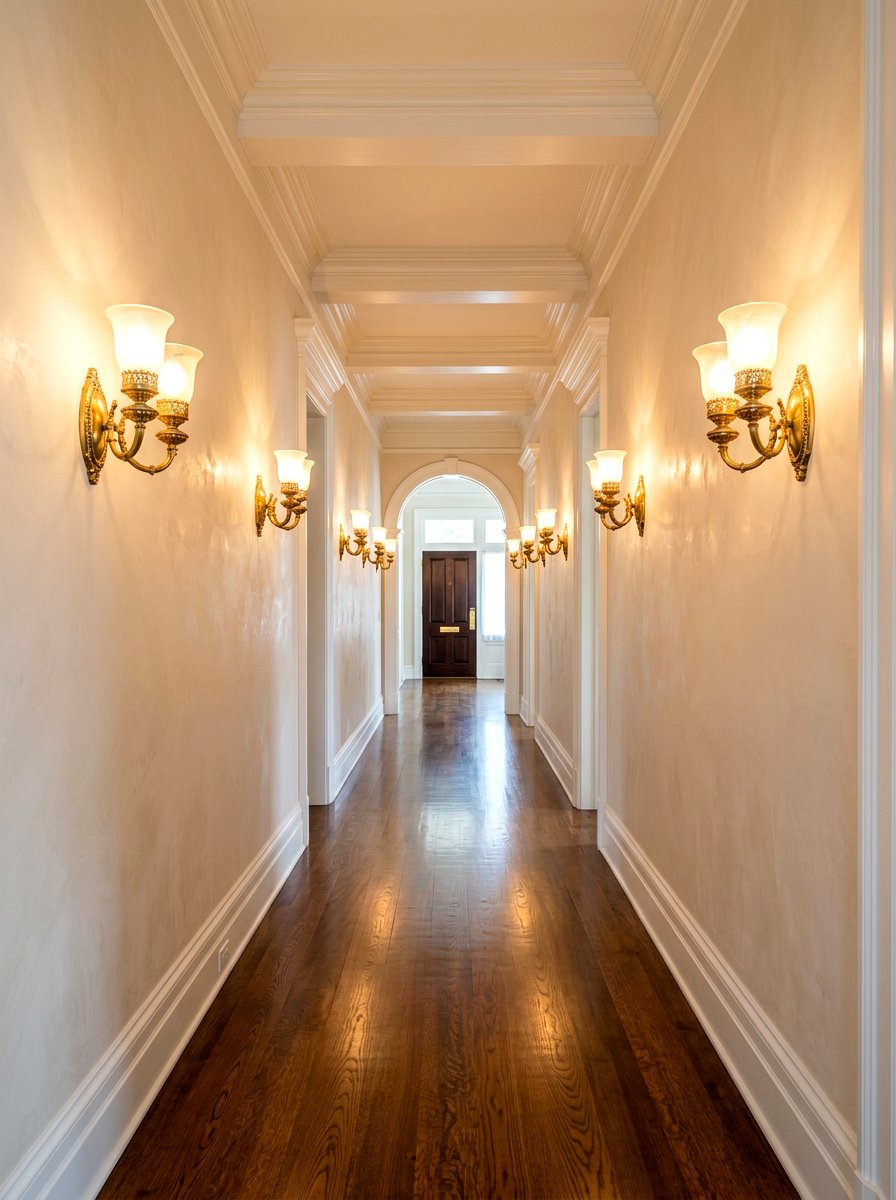
Replacing harsh overhead lighting with elegant wall sconces can completely change the ambiance of a long passage. Sconces provide a soft, layered glow that washes over the walls, highlighting textures and architectural details. For narrow halls, choose low-profile fixtures that don't stick out too far from the wall to avoid accidental bumps. Brass or matte black finishes are popular choices for adding a touch of modern sophistication to the area. Positioning multiple sconces at equal intervals creates a rhythmic lighting pattern that guides you through the house. This approach eliminates dark corners and makes the ceiling feel taller by drawing the gaze upward and outward.
6. Modern Wall Molding
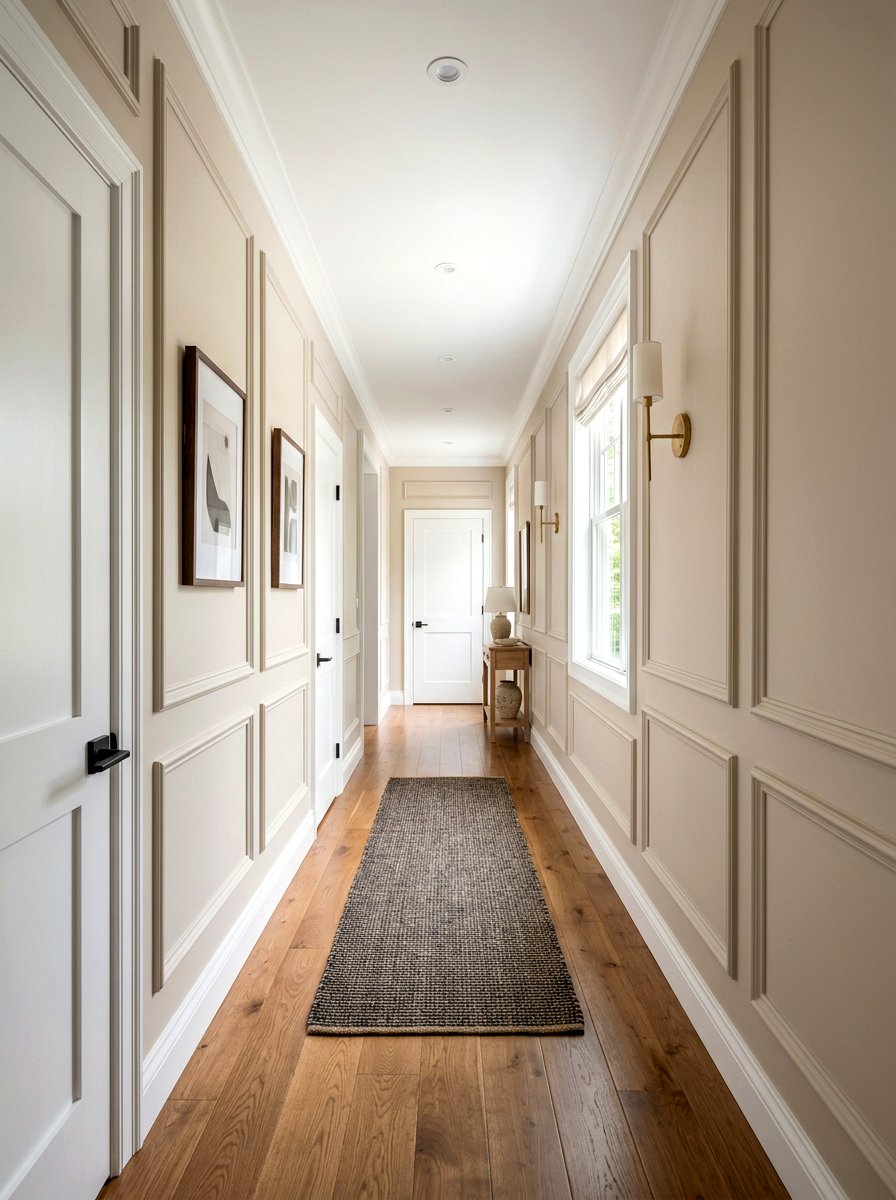
Modern wall molding, such as picture frame molding or board and batten, adds architectural depth and character to flat hallway walls. These decorative treatments create shadows and highlights that make a long corridor feel like a deliberate part of the home's design. By painting the molding and the wall in the same color, you achieve a sophisticated, high-end look that feels textured but not overwhelming. If you want a more traditional feel, you can paint the lower portion of the wall in a different shade than the top. This vertical detail draws the eyes up, effectively making the ceiling appear higher while providing a polished, custom-built finish.
7. Floating Hallway Shelf
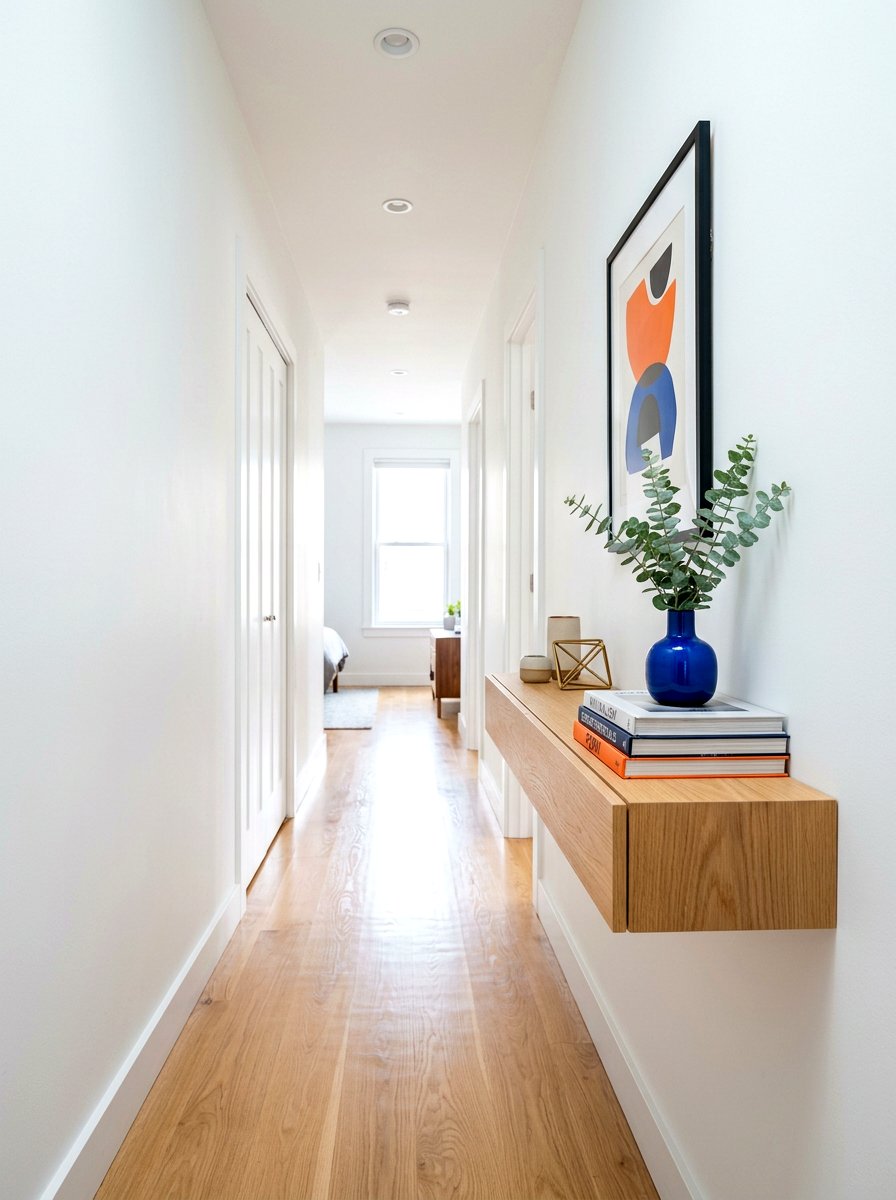
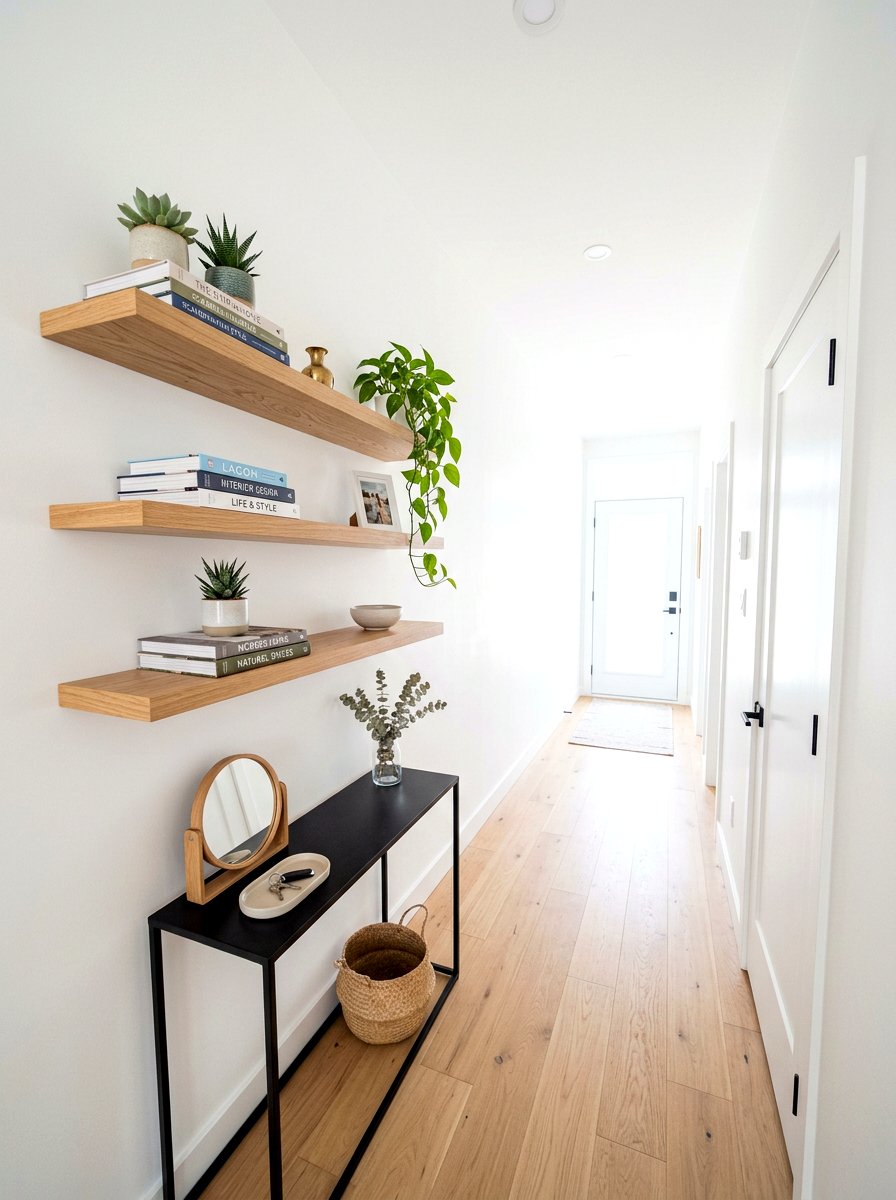
A floating hallway shelf is a minimalist alternative to a bulky console table, perfect for the most restricted spaces. By mounting a long, narrow shelf directly onto the wall, you keep the floor area completely clear, which maintains a sense of openness. You can use this shelf to display a rotating collection of art, small potted succulents, or decorative bowls. It functions as a ledge for everyday essentials while serving as a visual anchor for the space. Choosing a wood finish that matches your flooring can create a cohesive look, while a white shelf can blend seamlessly into light-colored walls for a truly sleek appearance.
8. Hallway Wallpaper
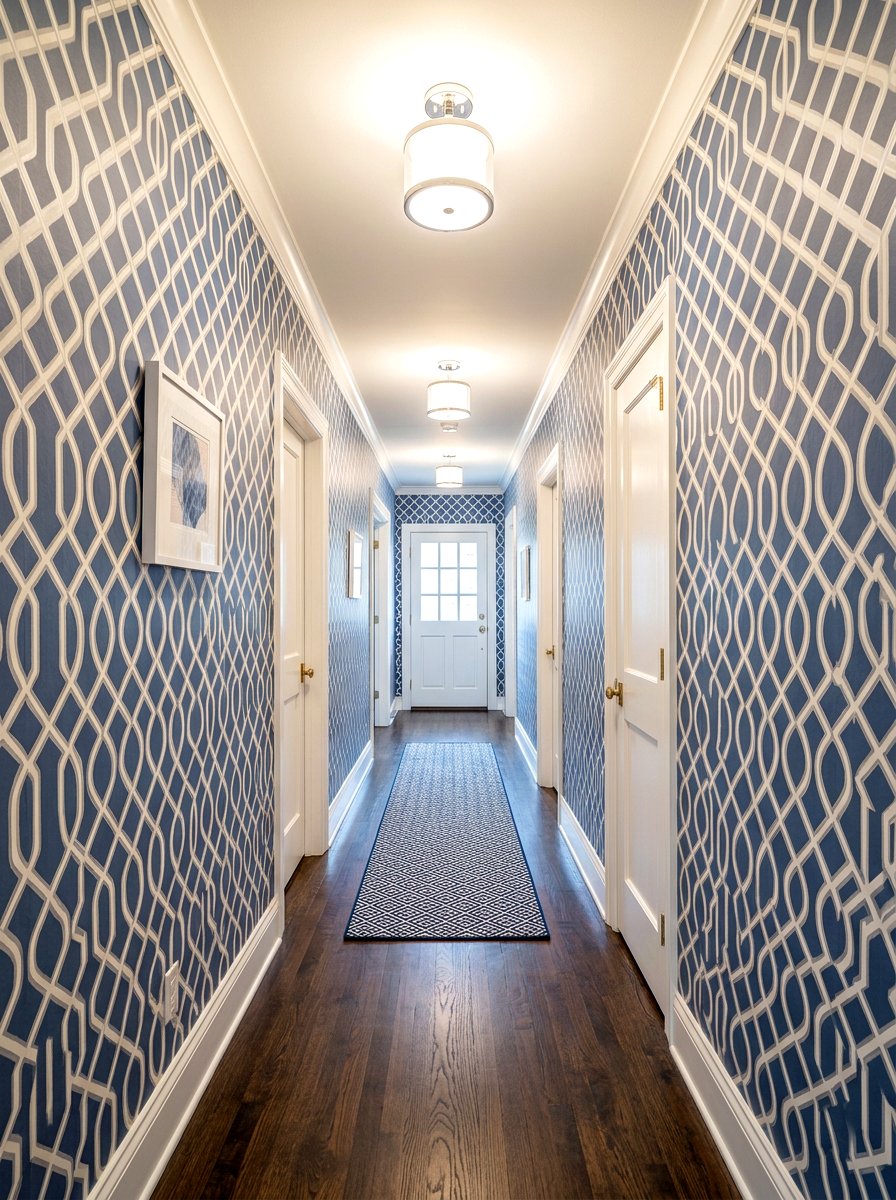
Using bold or textured wallpaper in a narrow hall is a great way to distract from the limited width of the space. A striking pattern can create a "jewel box" effect, turning a simple passage into a high-impact design feature. If you are worried about the pattern being too overwhelming, consider using a subtle geometric design or a light grasscloth texture. Wallpapering just one accent wall or the far end wall can also create a sense of depth that pulls the eye through the corridor. This styling choice adds a layer of sophistication and luxury that paint alone sometimes cannot achieve in such a compact area.
9. Built In Shelving
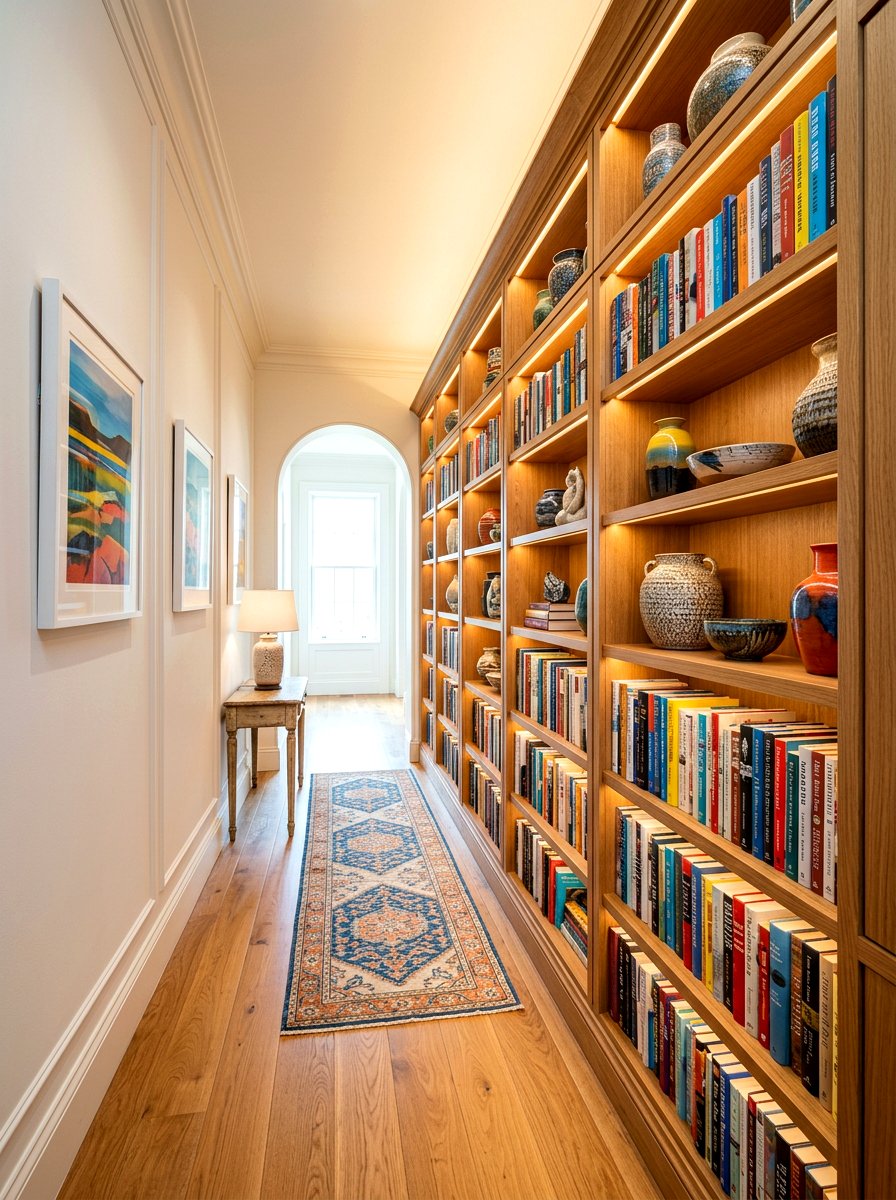
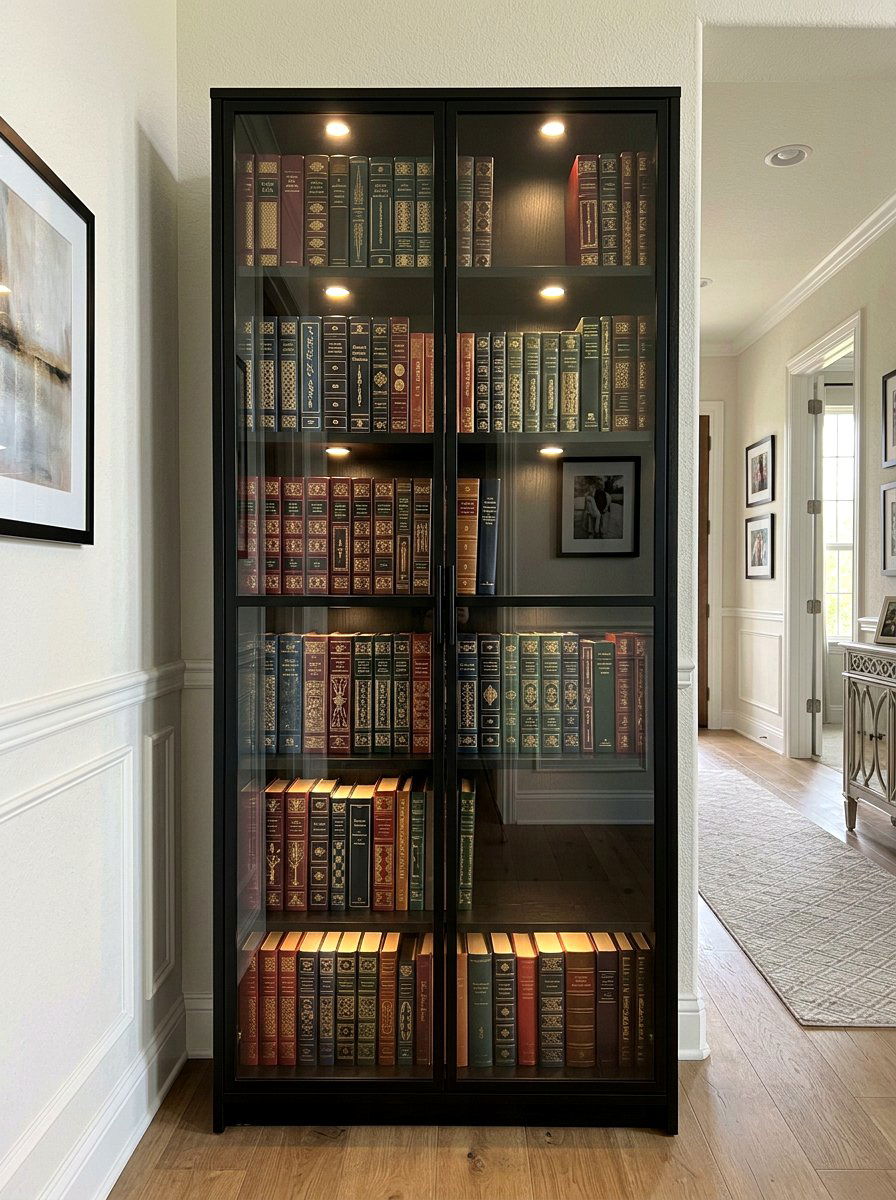
Built-in shelving offers a custom, permanent solution for adding storage and style to a long, narrow hallway wall. By recessing the shelves into the wall cavity, you can gain valuable display space without losing any actual walking width. These shelves are perfect for housing a home library, displaying travel souvenirs, or organizing baskets of household supplies. To keep the built-ins from feeling too heavy, paint them the same color as the surrounding walls so they visually recede into the architecture. Adding small puck lights inside the shelving units can illuminate your collections and provide a warm, secondary light source for the entire hallway area.
10. Wood Slat Wall
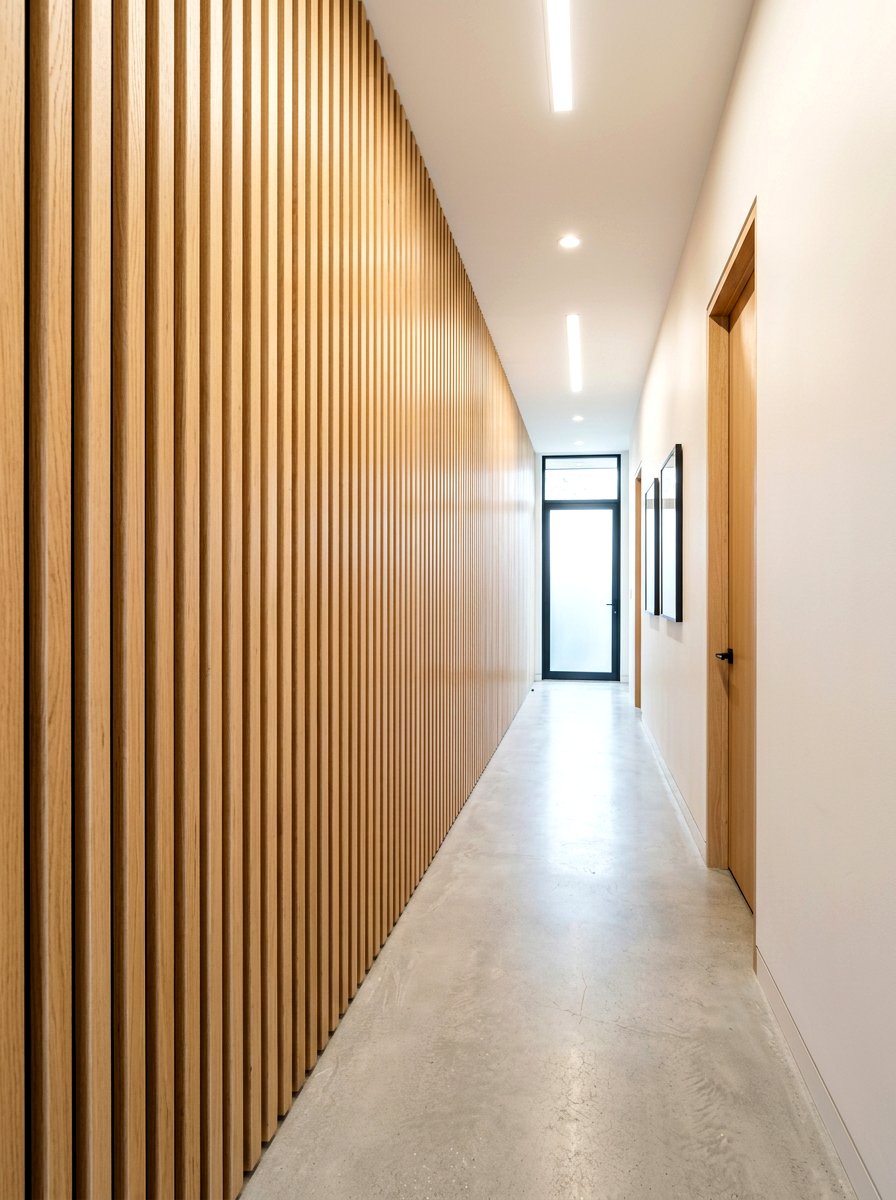
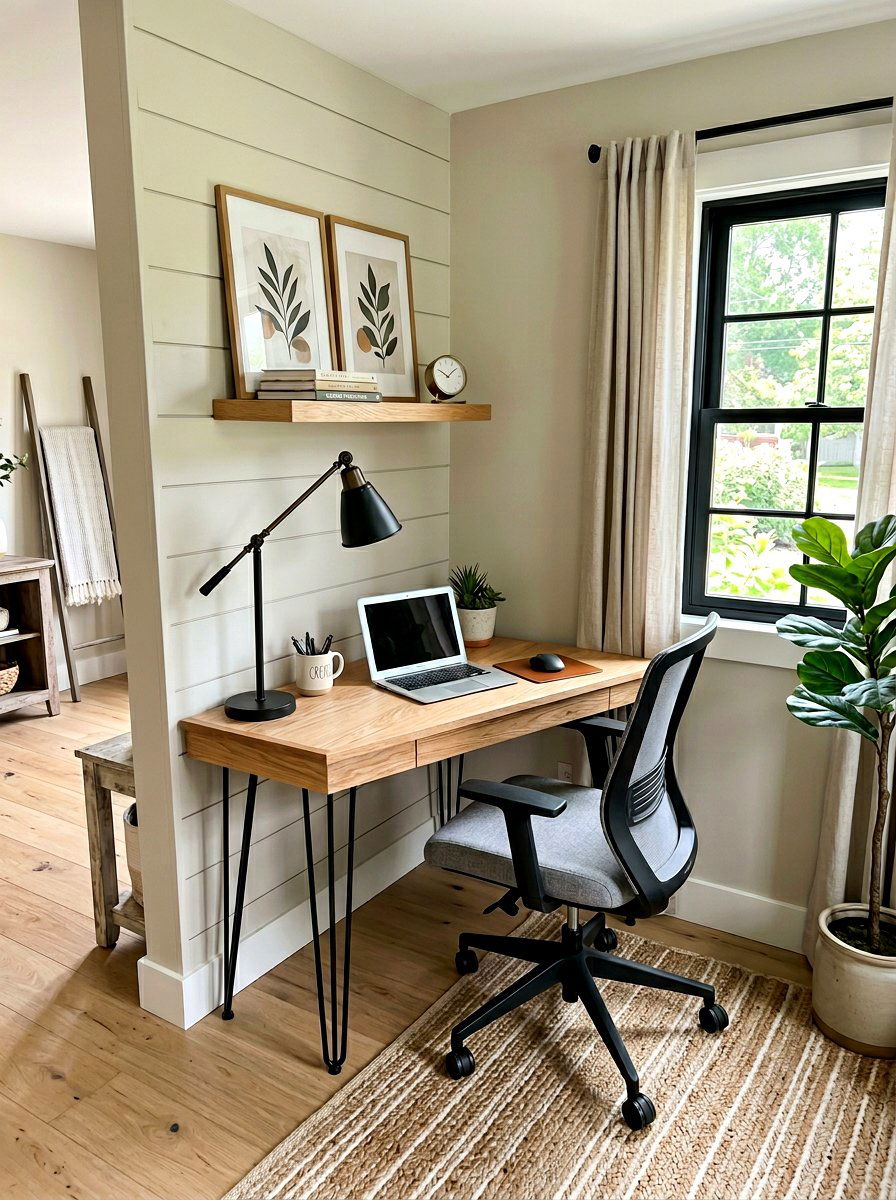
A wood slat wall is a contemporary styling choice that introduces natural warmth and vertical lines to a narrow corridor. The repeated vertical slats draw the eye upward, emphasizing the height of the space rather than its narrowness. This architectural feature works beautifully as a backdrop for a floating bench or as a standalone statement wall. The gaps between the slats provide a sense of depth and can even help with acoustics in a long, echoey hallway. Whether you use light oak for a Scandinavian feel or dark walnut for a moody look, wood slats add a tactile, high-end quality to the home's transition zones.
11. Hallway Bench
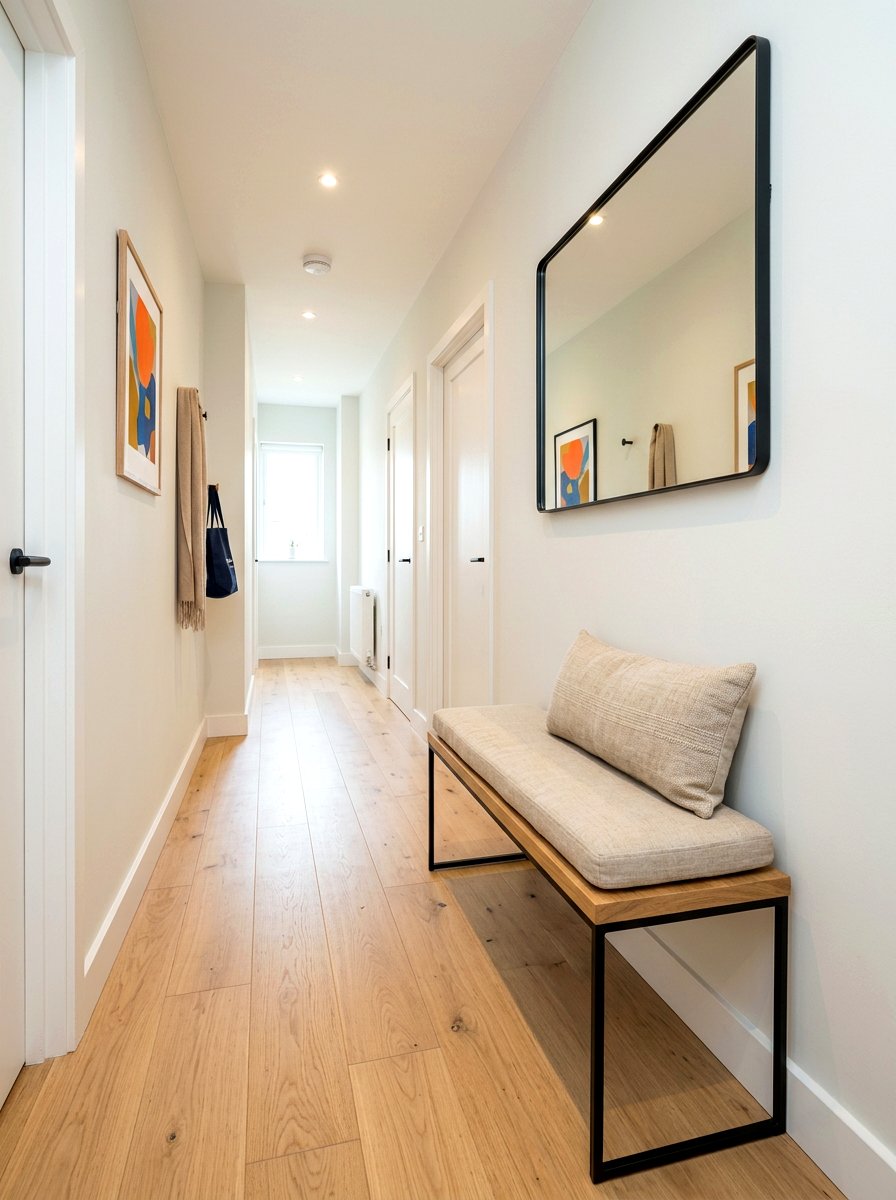
Placing a low-profile hallway bench at the end of a long corridor or along a wider section creates a functional and inviting zone. A bench provides a convenient spot to sit while putting on shoes and offers an opportunity to introduce soft textiles like cushions or a throw. Choose a design with narrow legs or a floating mount to keep the floor underneath visible, which helps maintain an airy feel. If the bench has built-in storage, it can even hide away clutter like shoes or seasonal gear. This addition makes a hallway feel more like a purposeful room rather than just a way to get around.
12. Modern Pendant Light
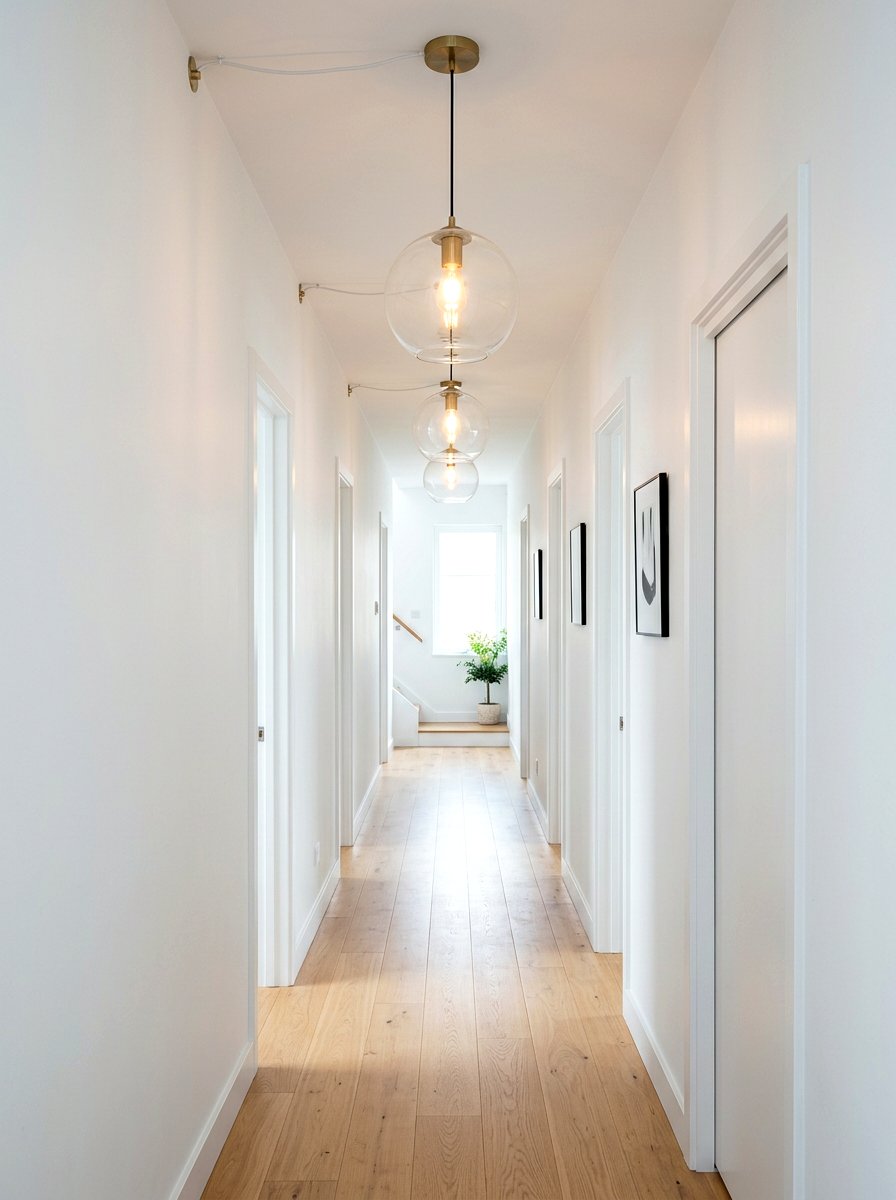
A series of modern pendant lights hanging along the length of a hallway can create a stunning visual runway effect. Instead of a single flush mount fixture, multiple pendants add a sense of rhythm and lead the eye toward the rooms ahead. For narrow spaces, look for slim or glass-domed pendants that don't block the sightlines too much. You can choose sculptural shapes to add an artistic element or simple globes for a clean, mid-century modern aesthetic. Ensuring the lights are hung at a consistent height provides a professional, high-design look that elevates the entire corridor from a utilitarian path to a major design feature.
13. Painted Ceiling
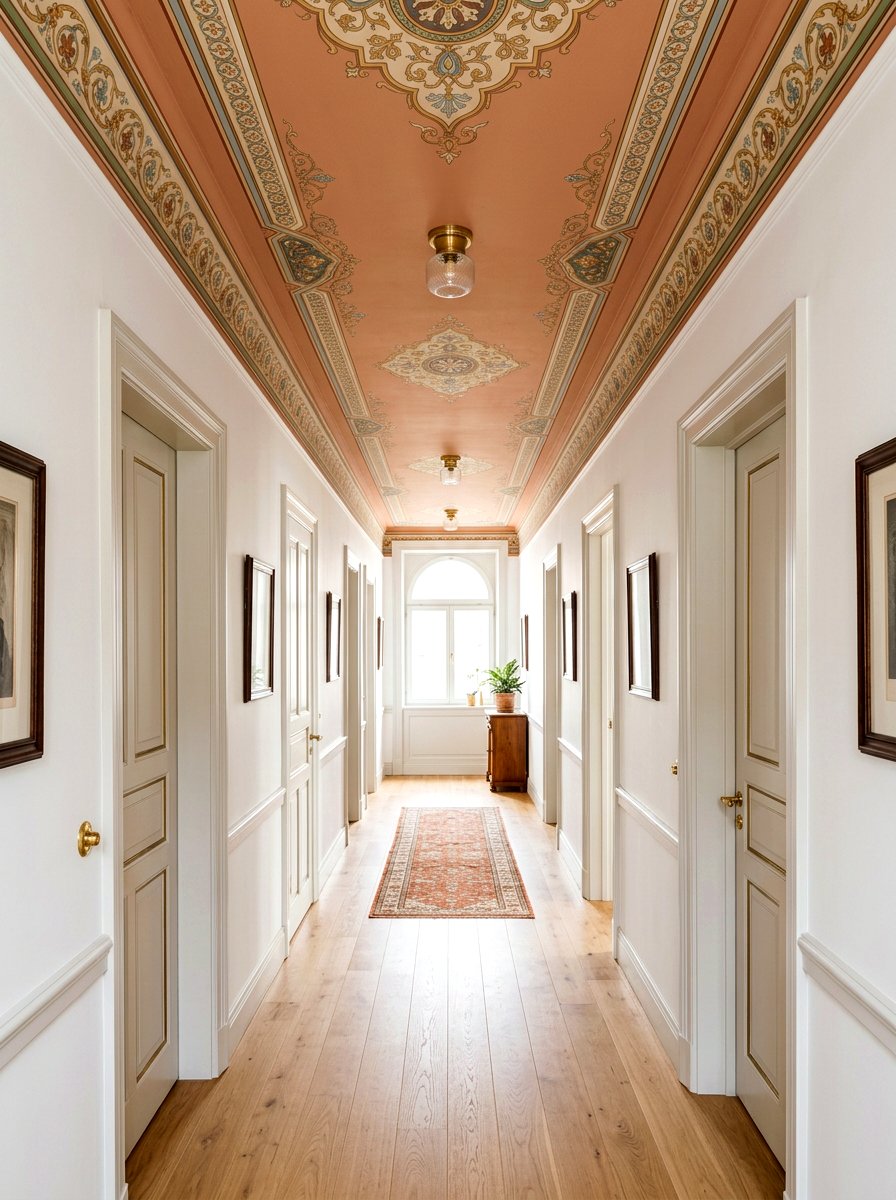
Painting the ceiling of a narrow hallway is an unexpected way to add color and personality without crowding the walls. A light, airy color can make a low ceiling feel much higher, while a bold, dark shade can create a cozy, dramatic atmosphere. If you match the ceiling color to a patterned runner on the floor, you create a cohesive "sandwich" effect that feels very intentional. This styling trick draws the gaze upward, taking the focus away from the close proximity of the side walls. It is a budget-friendly way to make a big impact in a space that is often ignored by homeowners.
14. Picture Ledge
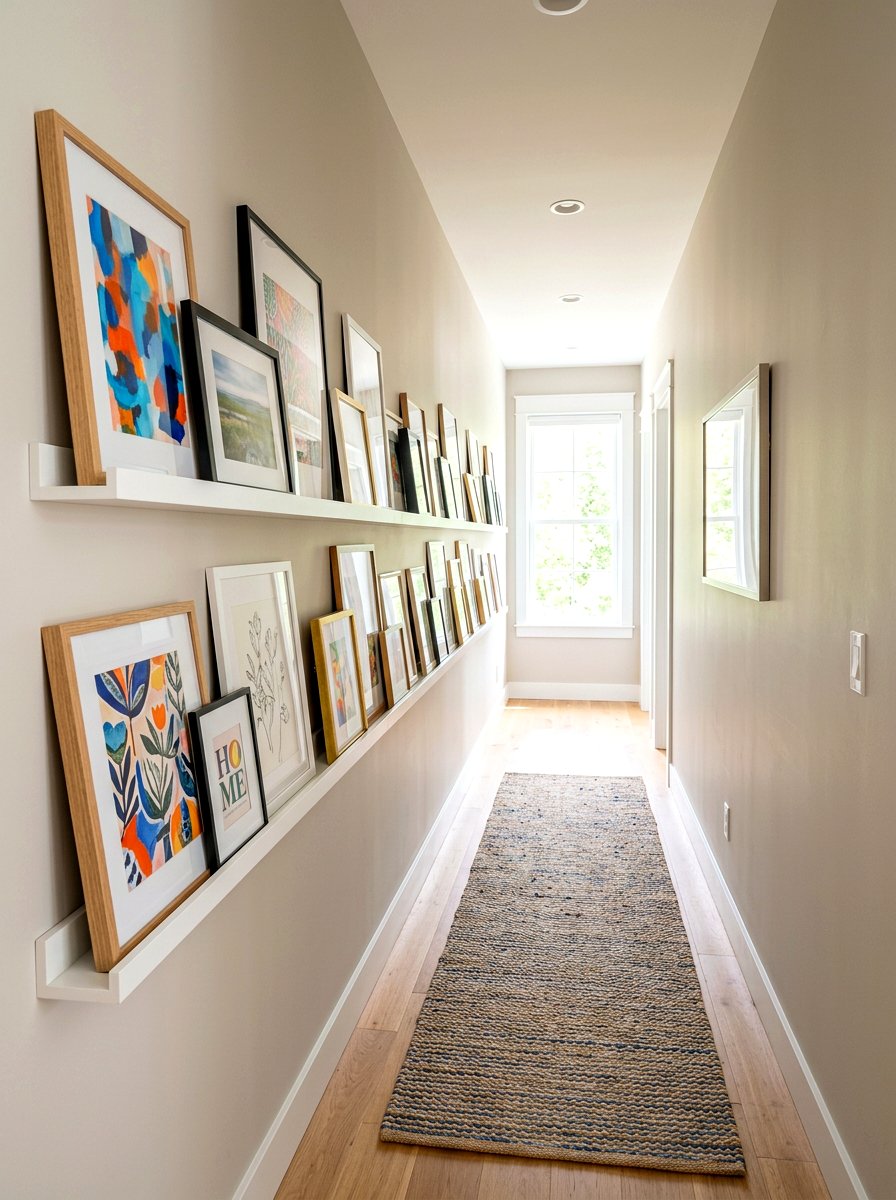
A picture ledge is a slim, stylish way to display art without the permanence of multiple individual wall hooks. These thin ledges allow you to lean and layer various frames of different sizes, creating a casual yet curated gallery look. Because the ledge is so narrow, it is perfect for halls where a full-depth shelf would be too intrusive. You can easily swap out artwork or photos whenever you want a fresh look without having to patch any holes in the wall. This flexibility makes it a favorite for those who love to update their decor frequently. It adds a lovely horizontal line that breaks up tall walls.
15. Floor Tile Pattern
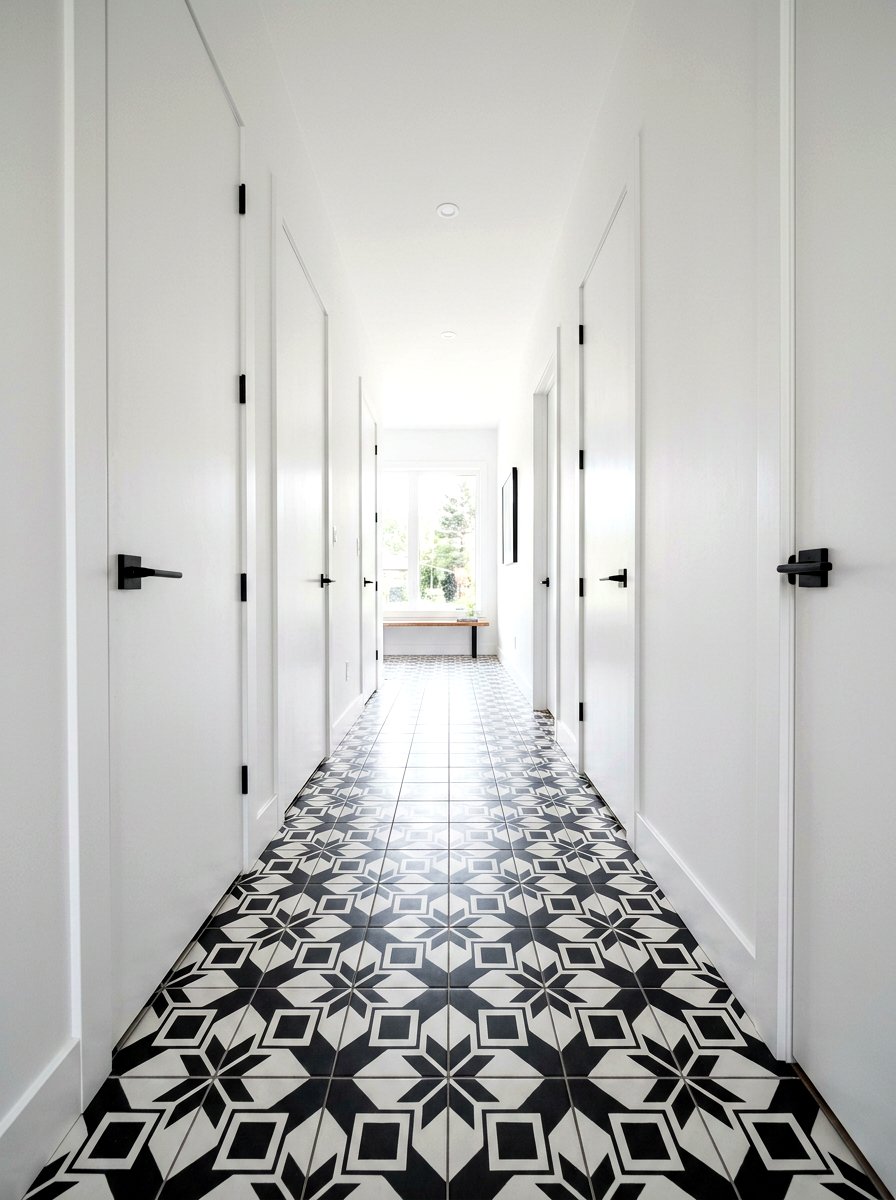
Using patterned floor tiles is a bold way to make a narrow hallway feel like a high-design destination. Geometric patterns, checkerboard layouts, or intricate encaustic tiles draw the eye downward and make the floor the main focal point of the space. To help widen the corridor visually, consider laying tiles in a diagonal or herringbone pattern. This directional shift tricks the brain into perceiving more width than actually exists. When using a busy floor pattern, keep the walls relatively simple with light paint or subtle molding to ensure the space doesn't feel too cluttered. It’s a durable and stylish solution for a very high-traffic area.
16. Vertical Shiplap
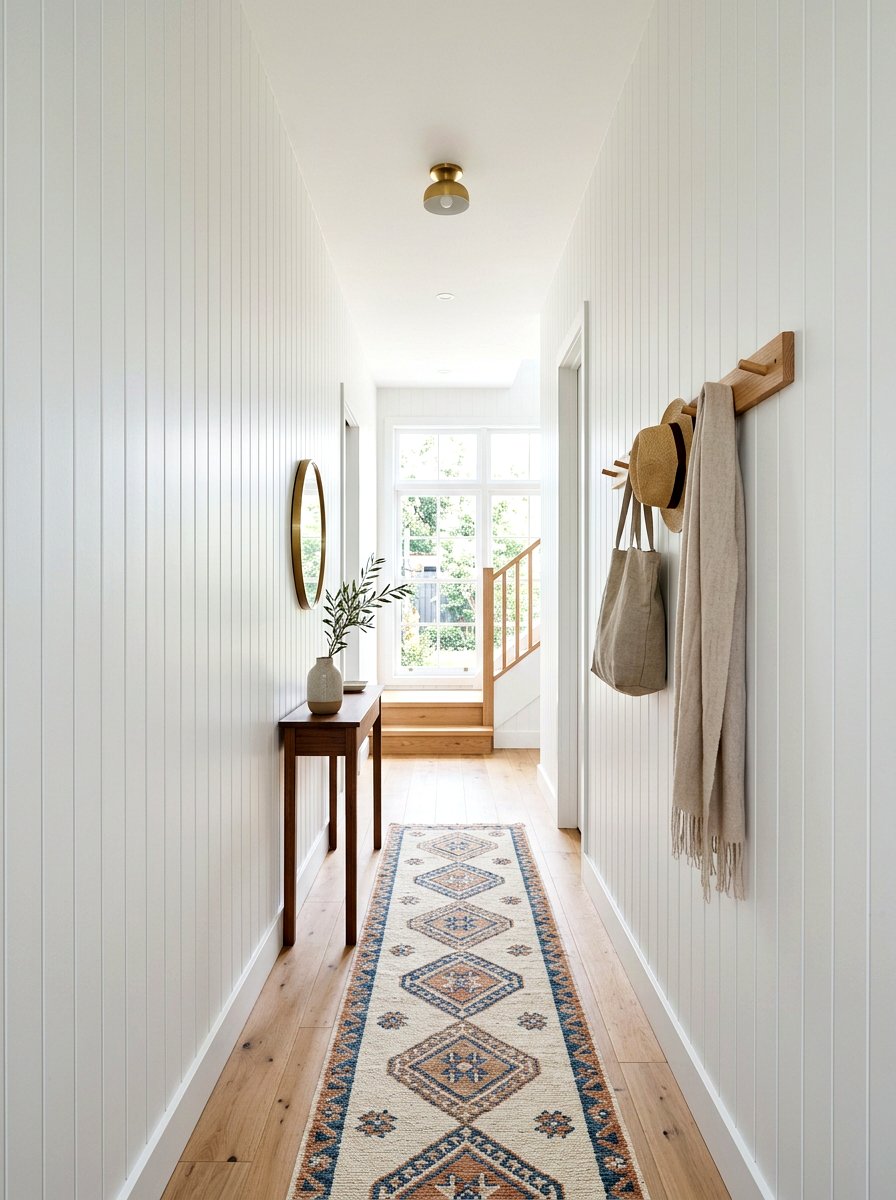
Installing vertical shiplap is a fantastic way to add a touch of farmhouse or coastal charm while making a hallway feel taller. The vertical grooves guide the eye from the floor to the ceiling, which is especially helpful in tight spaces with standard height. Painting the shiplap in a crisp white or a soft neutral shade keeps the hallway feeling bright and fresh. This wall treatment also provides a durable surface that can handle the occasional bumps and scuffs that happen in narrow passages. It adds a subtle texture that feels much more sophisticated than a plain drywall finish, giving the corridor a custom, high-quality architectural feel.
17. Wall Mounted Hooks
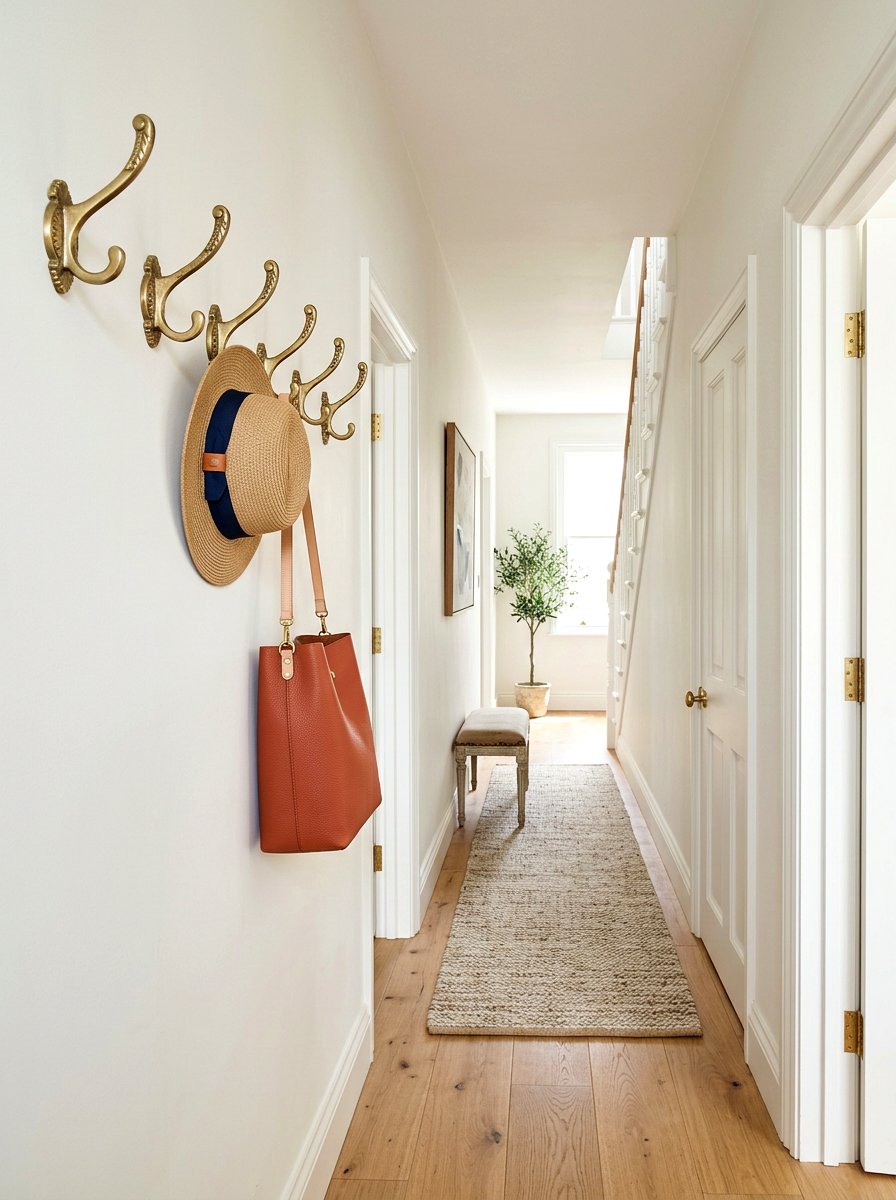
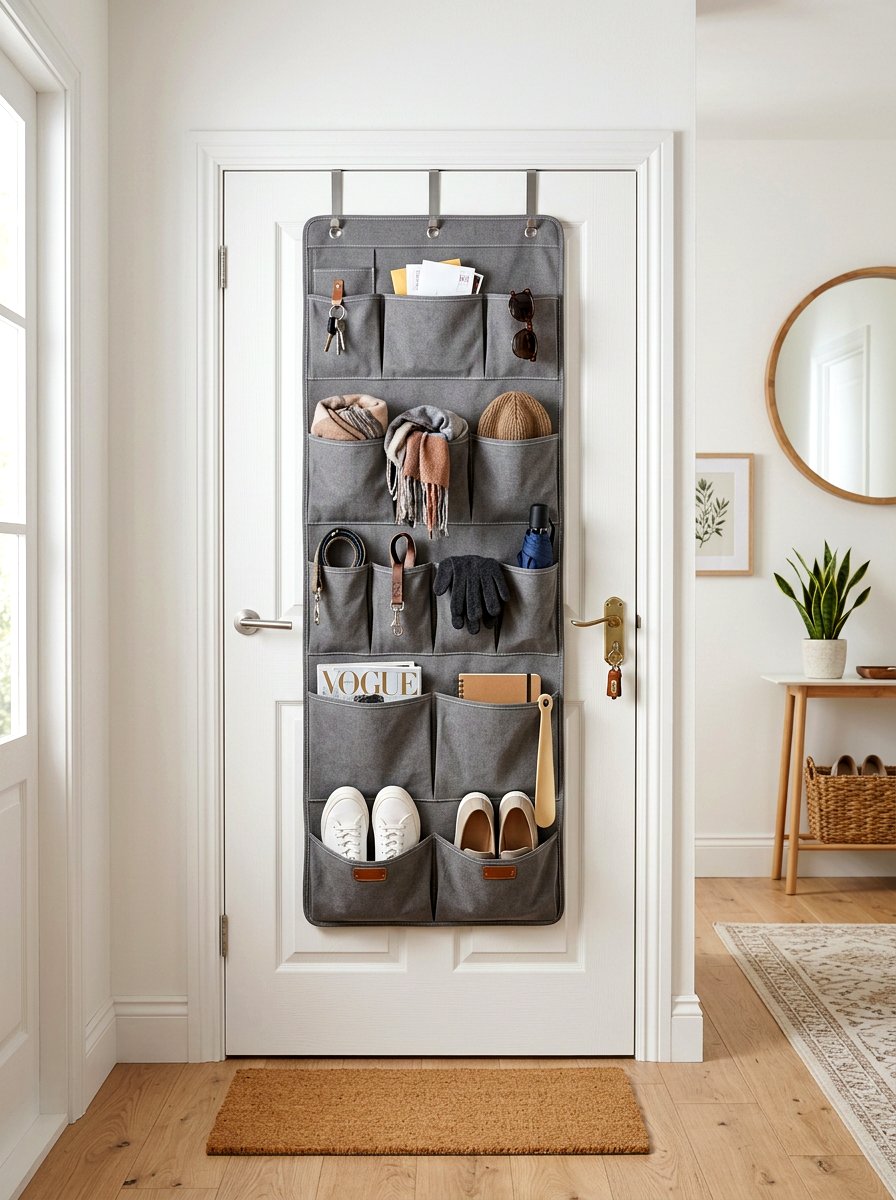
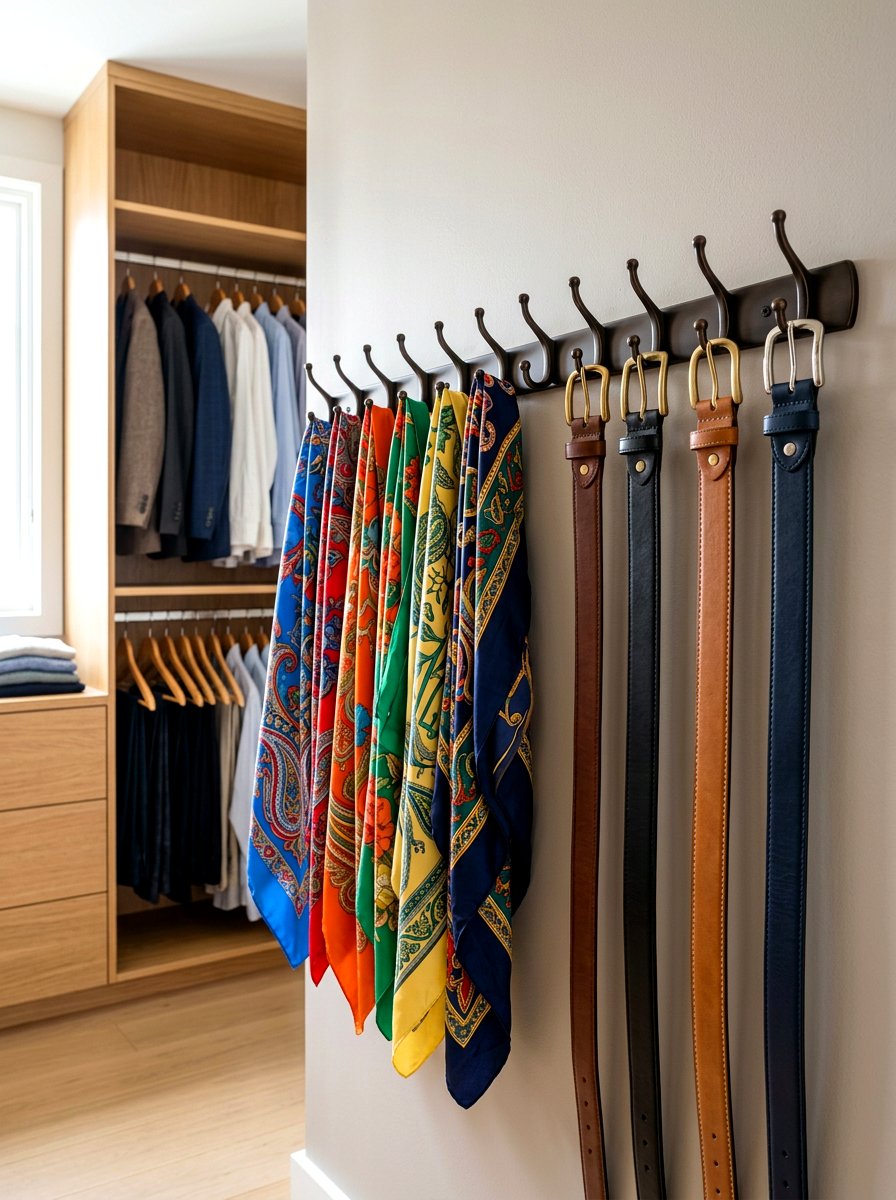
Wall mounted hooks or a peg rail system can turn a narrow hallway into a highly organized and functional entryway. Instead of a bulky coat rack, these slim hooks provide a place to hang bags, hats, and coats while keeping the floor completely clear. You can choose stylish brass hooks for a modern look or a wooden peg rail for a more traditional, shaker-style aesthetic. To keep the area looking tidy, try to only hang a few beautiful items at a time rather than overloading the hooks. This styling choice combines practicality with a lived-in, cozy feel that makes a house feel like a home.
18. Glass Door
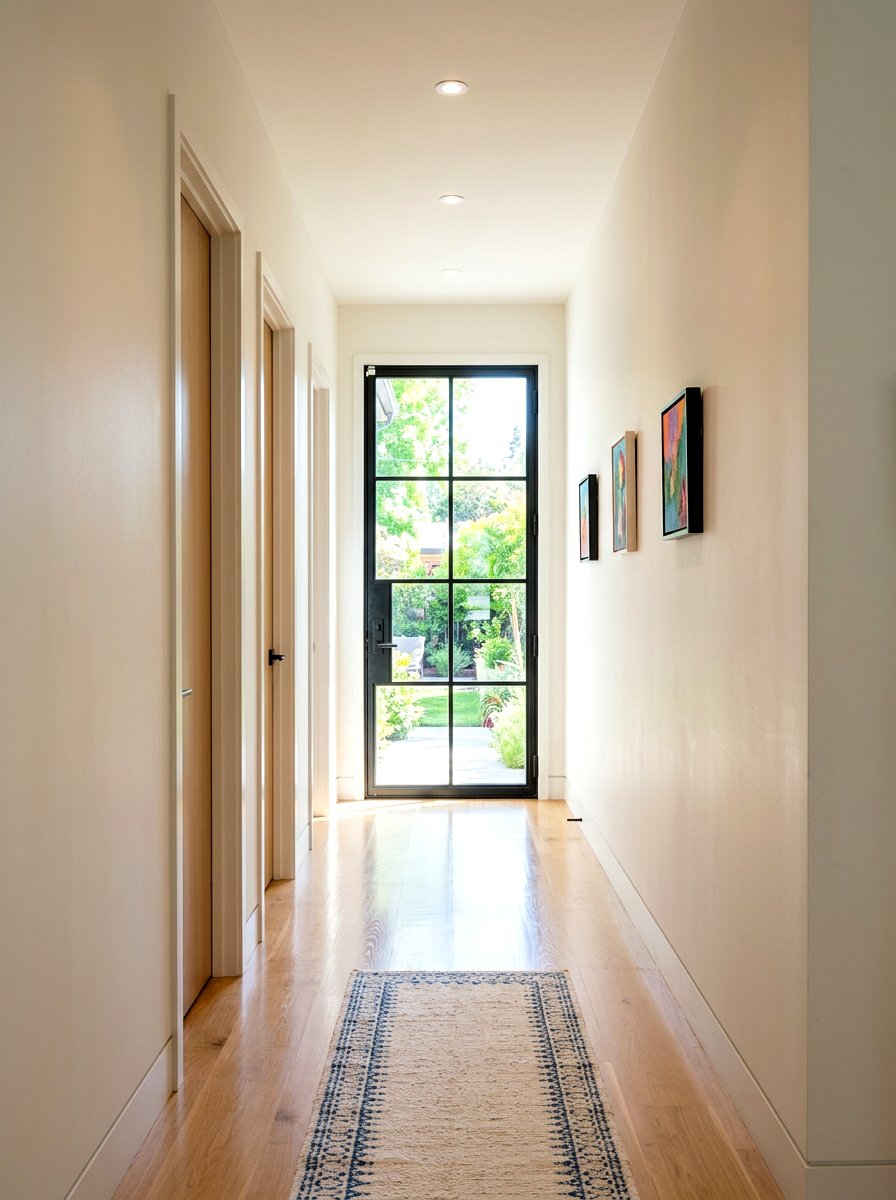
Replacing a solid interior door at the end of a narrow hallway with a glass-paneled door can completely transform the light quality of the space. Glass doors allow natural light from adjoining rooms to spill into the corridor, eliminating that dark, tunnel-like feeling. You can choose frosted glass for privacy or clear panes for a more open, airy look that extends the visual sightlines. This simple architectural change makes the hallway feel like a bridge between bright spaces rather than a closed-off passage. It is an effective way to borrow light and views, making the narrow width feel significantly less confining for anyone walking through.
19. Hallway Plants
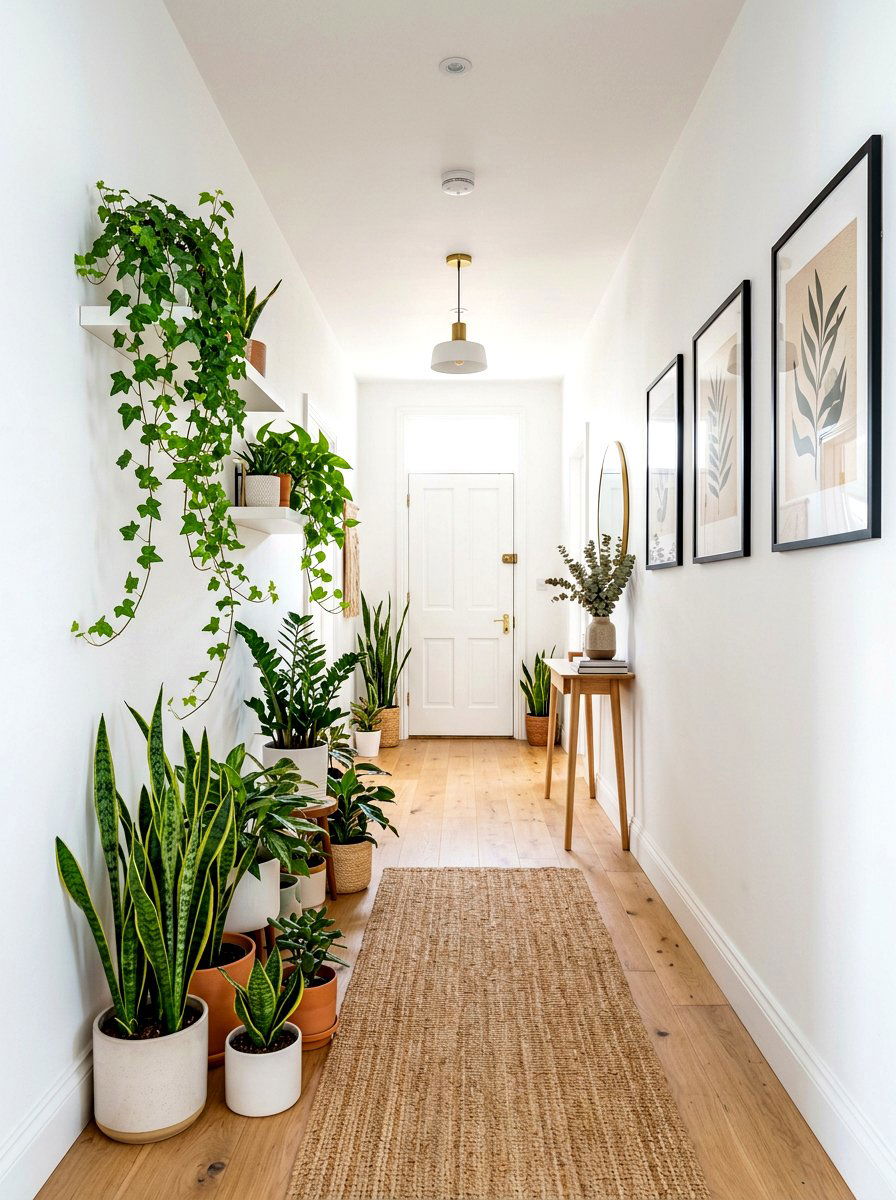
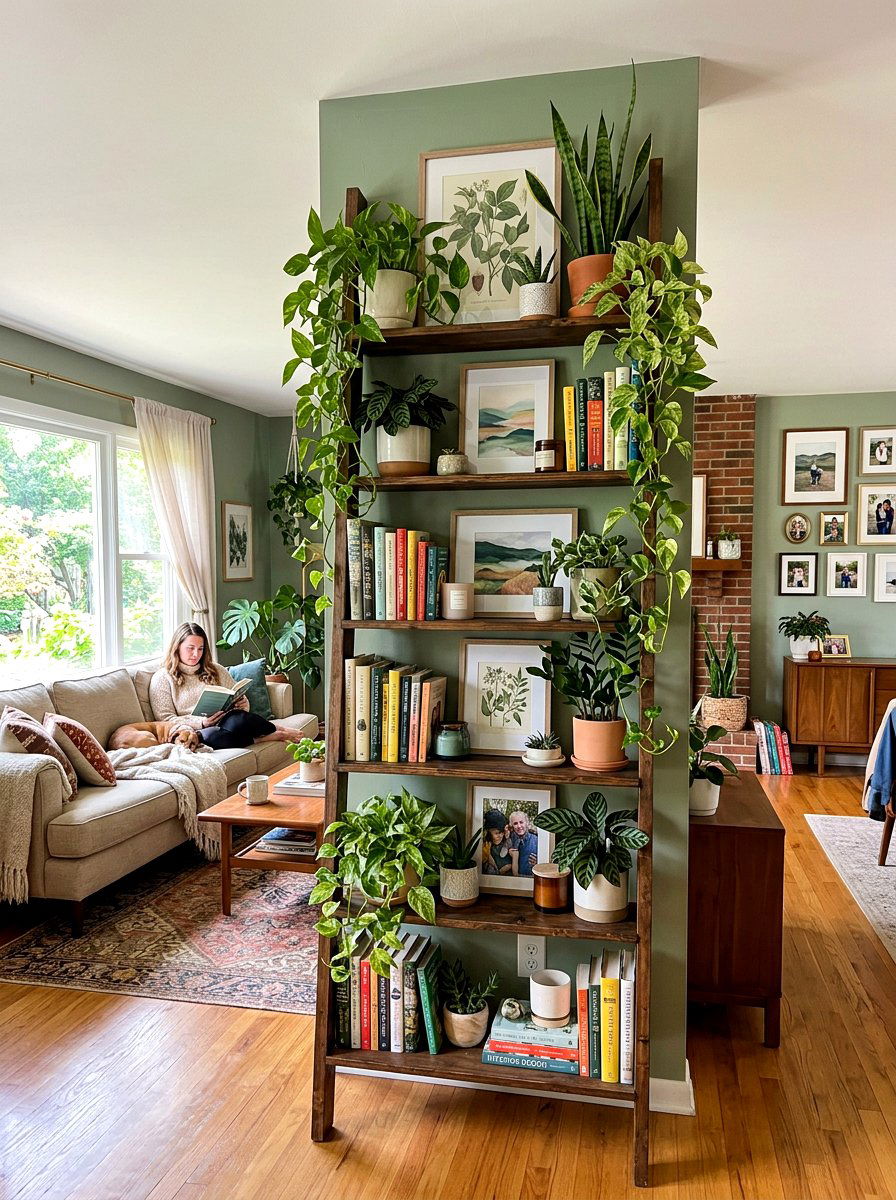
Bringing greenery into a narrow hallway adds life, color, and a sense of freshness to an otherwise static space. Since hallways can be low on light, opt for shade-loving plants like snake plants, pothos, or zz plants that thrive in indirect conditions. You can place a tall, slender plant in a corner or use wall-mounted planters to keep the floor space clear. Hanging a trailing plant from a high shelf or the ceiling adds vertical interest and a soft, organic texture that contrasts beautifully with hard walls. Greenery softens the overall look and makes the transition through the home feel much more pleasant and connected to nature.
20. Neutral Paint Color
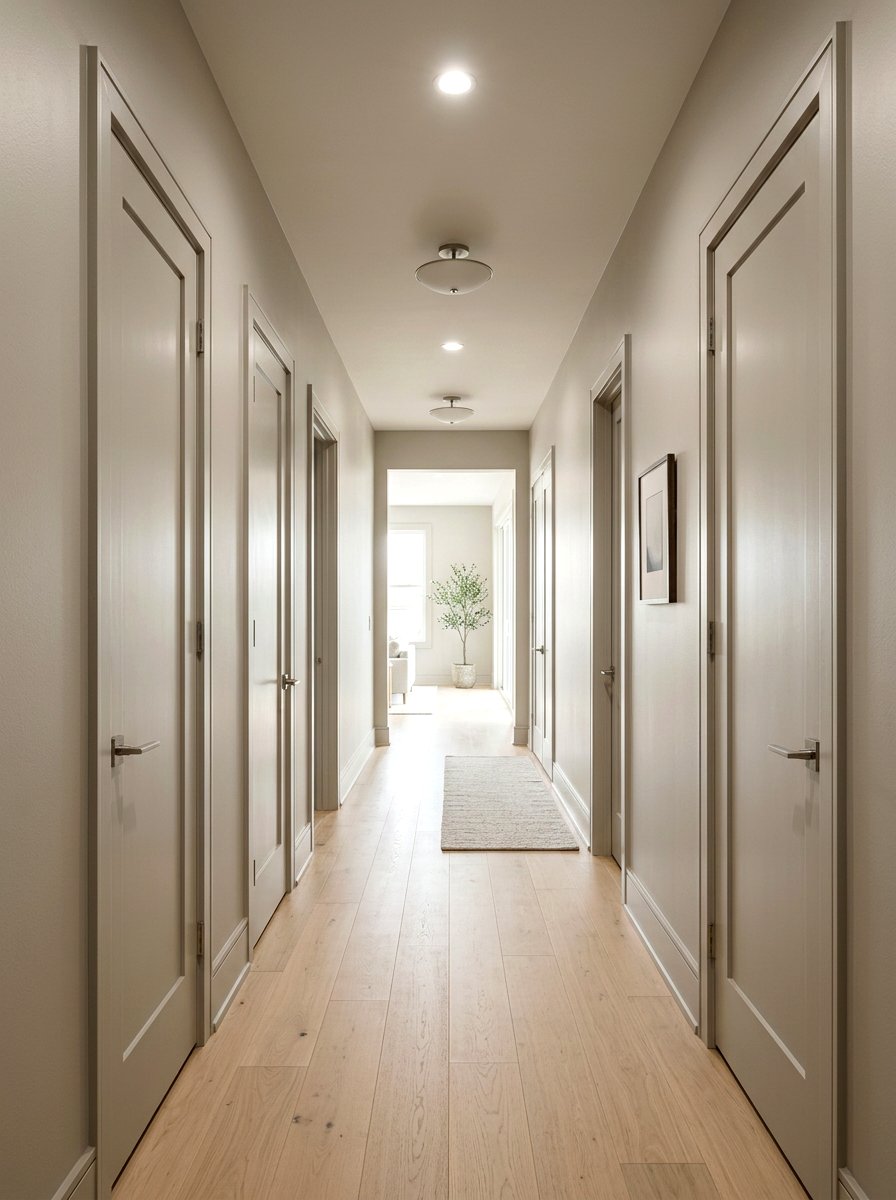
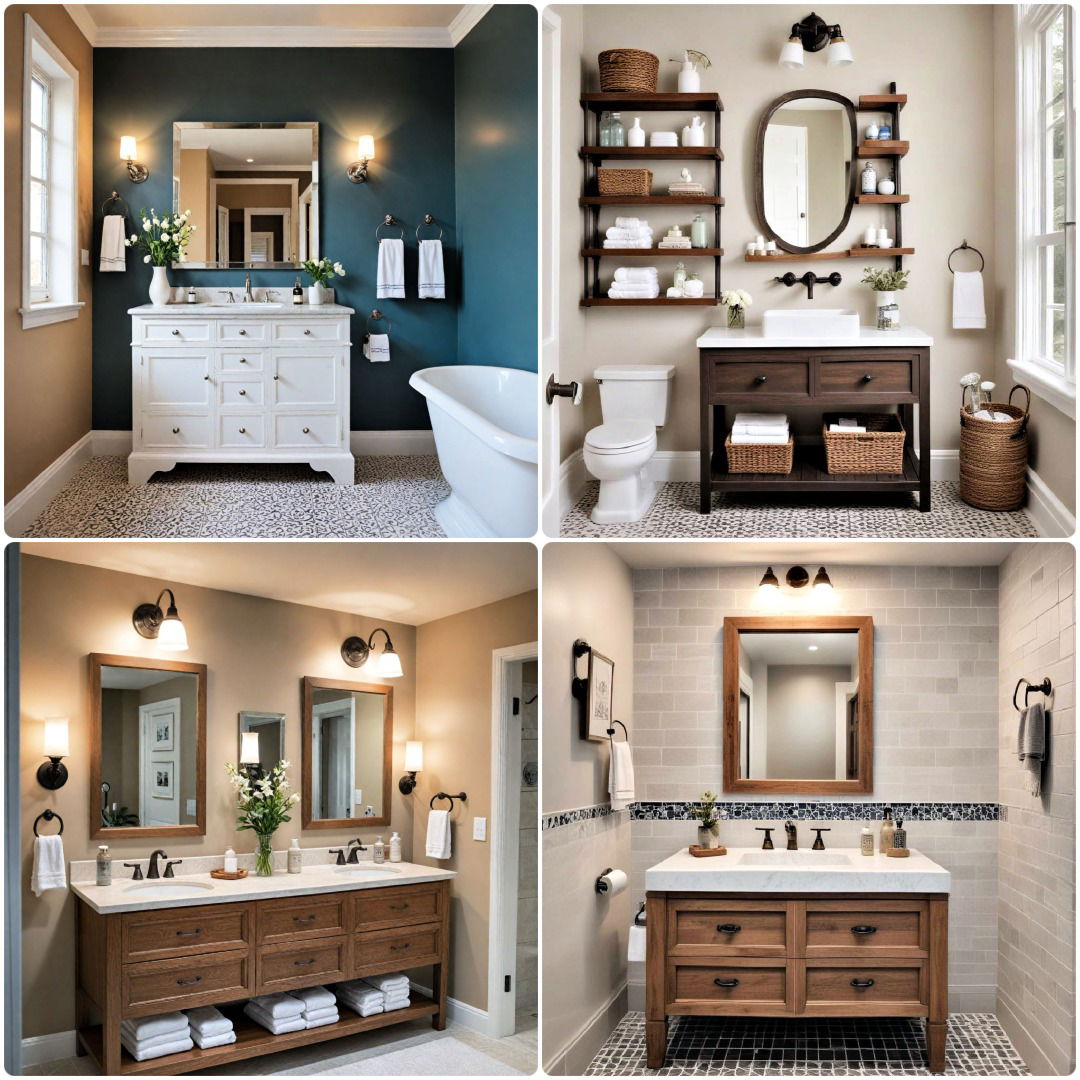
Sticking to a light, neutral paint color is one of the most effective ways to make a narrow hallway feel more expansive. Shades of off-white, soft greige, or pale gray reflect the maximum amount of light, which helps push the walls back visually. For a truly seamless look, paint the trim, baseboards, and even the doors in the same color as the walls. This monochromatic approach eliminates visual breaks, allowing the eye to travel smoothly down the length of the hall without distraction. High-quality, washable paint is a must for these high-traffic areas to ensure your neutral walls stay looking fresh and clean for years to come.
21. Interior Archway
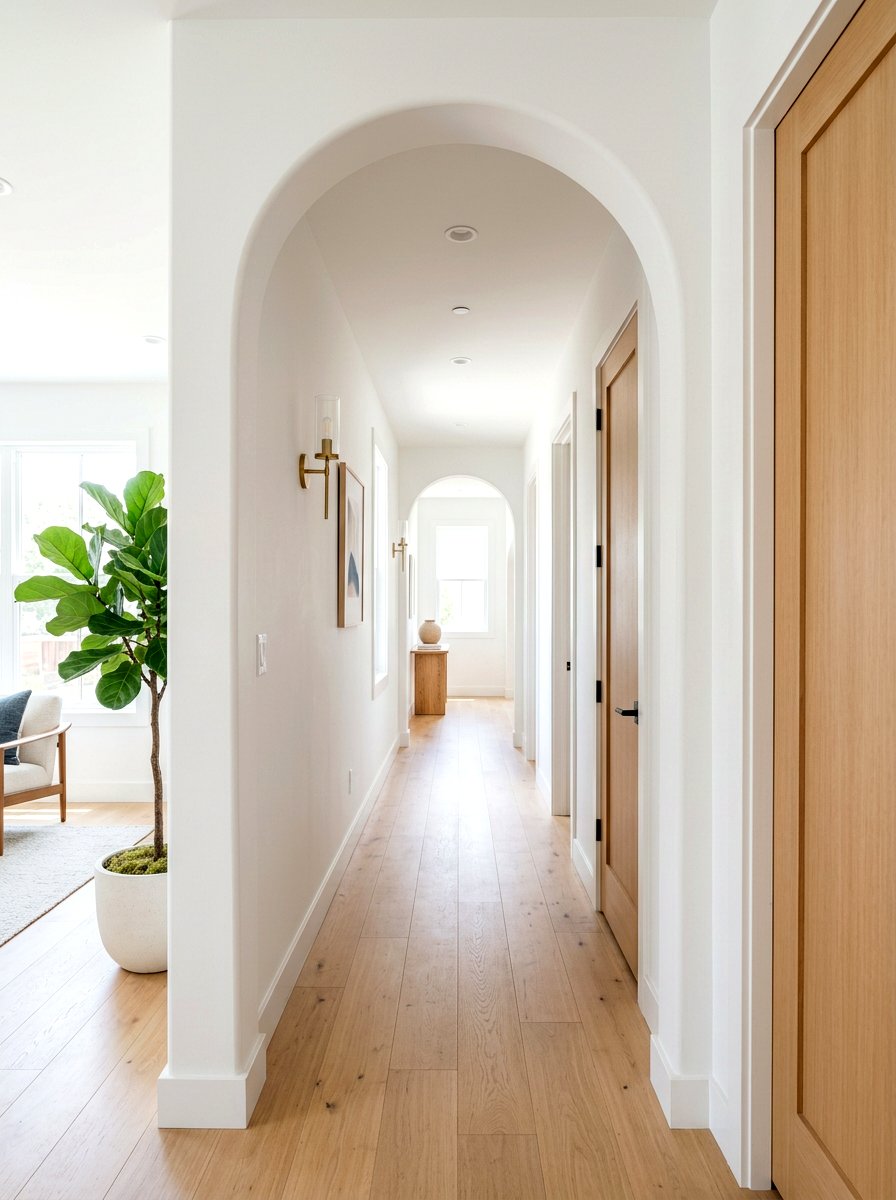
Adding or emphasizing an interior archway at the entrance of a hallway can provide a sense of elegance and architectural interest. Arches soften the sharp corners typical of narrow corridors and create a beautiful frame for the view down the passage. If your home doesn 't have an existing arch, you can use a simple DIY kit or decorative trim to create the illusion of one. Painting the interior of the arch in a slightly different shade can add depth and make the transition feel even more special. This classic design element elevates the home' s architecture and makes the narrow hallway feel like a well-planned, sophisticated feature of the house.
22. Black And White Decor
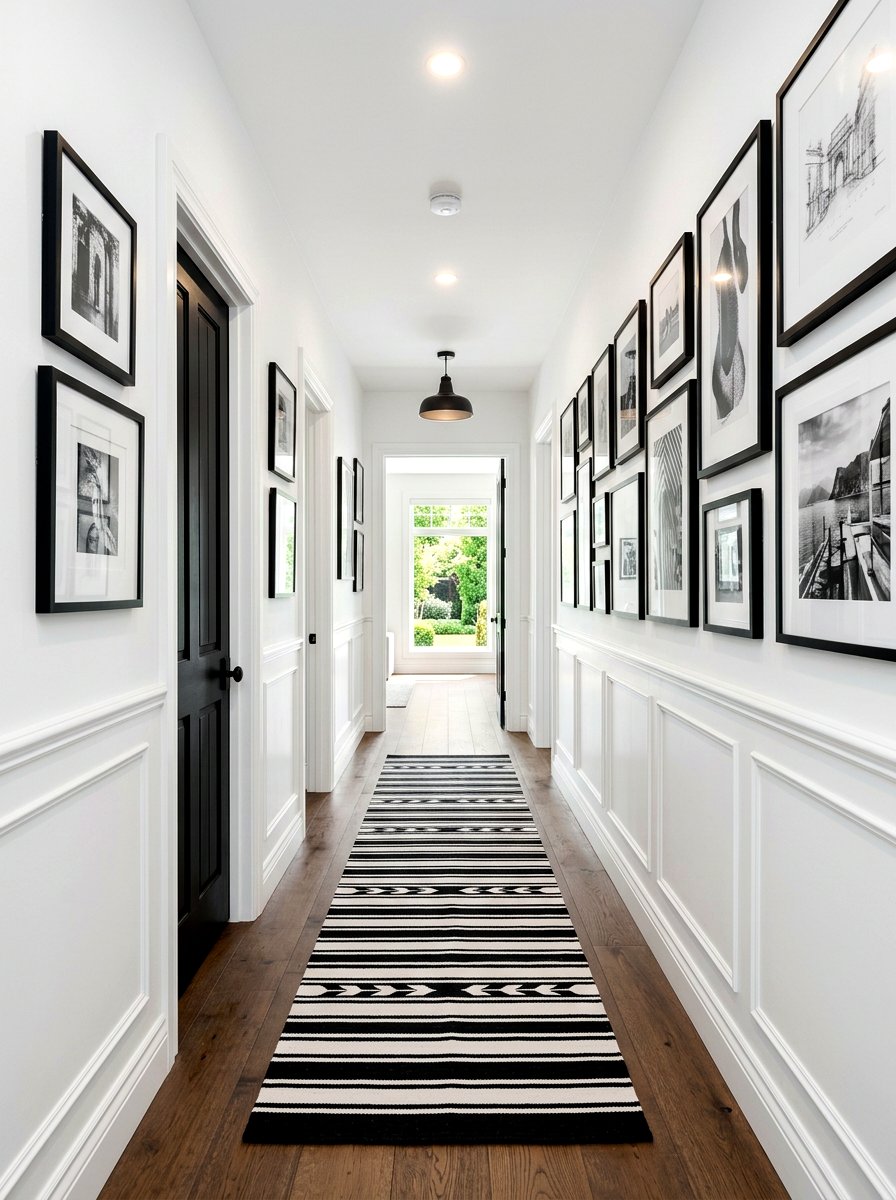
A black and white color scheme is a timeless choice that adds a sharp, sophisticated edge to a narrow hallway. You can achieve this look with a black-and-white patterned runner, dark frames on light walls, or a bold checkerboard floor. The high contrast creates a sense of rhythm and visual interest that keeps the eye moving through the space. To prevent the look from feeling too cold, you can add warm wood accents or a few pops of green from indoor plants. This classic palette works with almost any design style, from modern minimalist to traditional, and ensures your hallway always looks polished and intentionally styled.
23. Storage Baskets
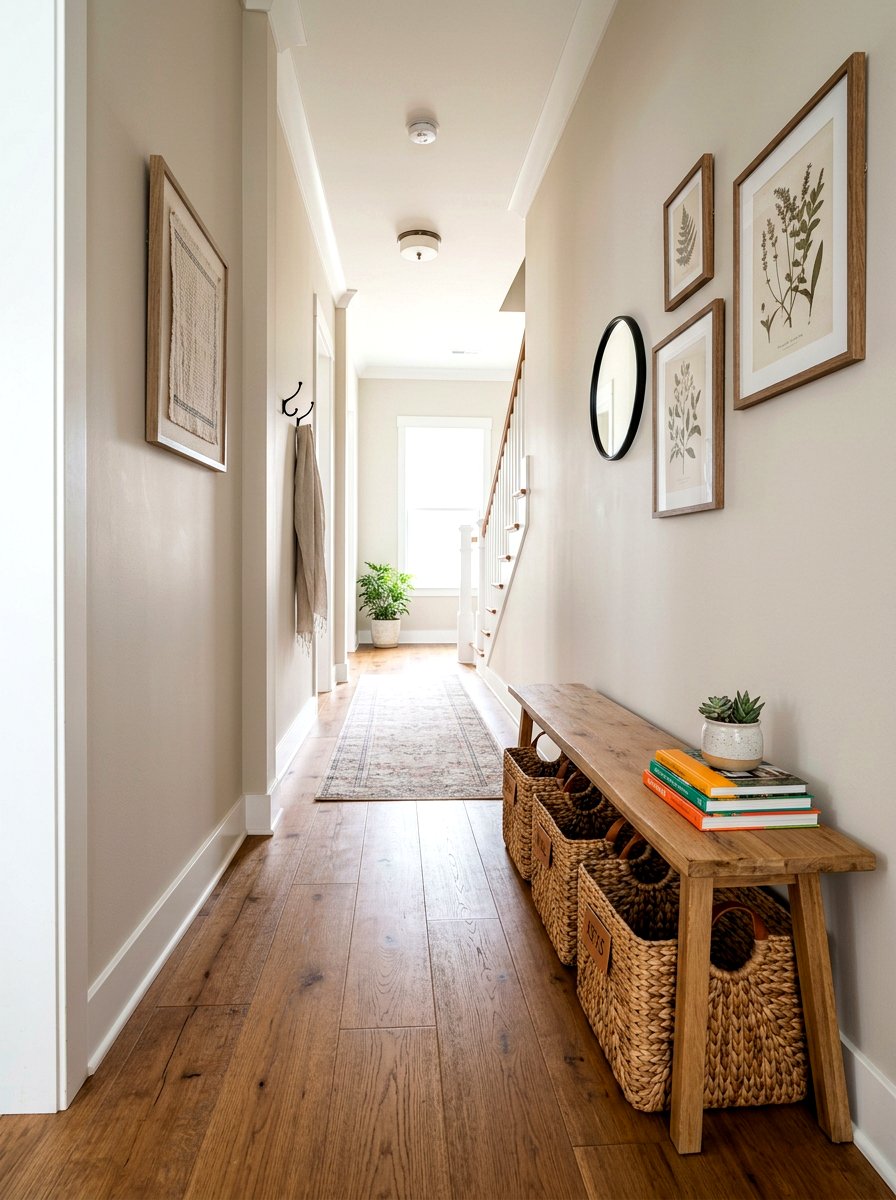
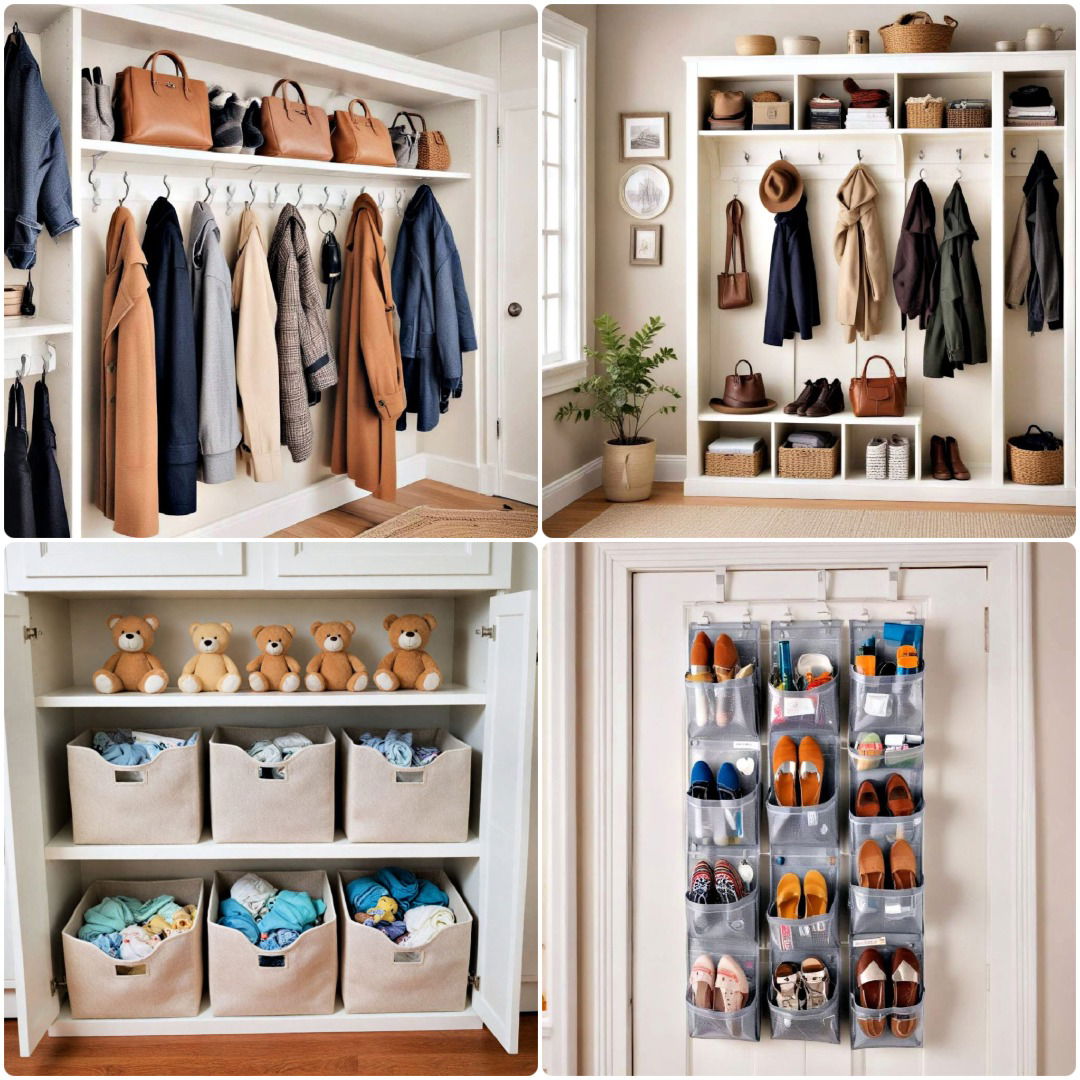
Woven storage baskets are a great styling tool for narrow hallways that need to handle a bit of daily clutter. Tucking a few matching baskets under a slim console table or a bench provides a designated spot for shoes, umbrellas, or dog leashes. The natural texture of the wicker or seagrass adds a layer of warmth and organic beauty to the corridor. Baskets help keep the floor clear while hiding away items that might otherwise make the space feel messy. Choosing baskets in a consistent style creates a sense of order and makes the hallway feel organized and thoughtfully decorated, even in a very busy household.
24. Framed Art
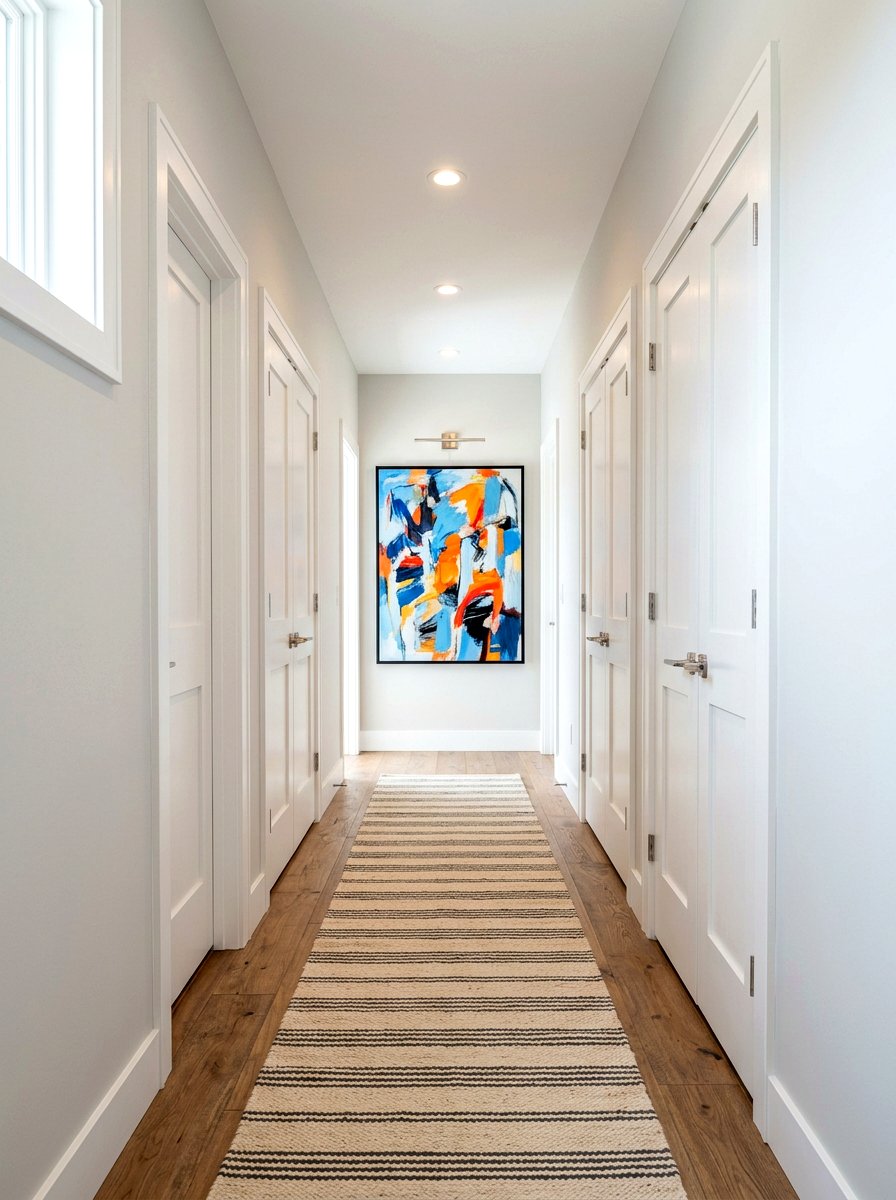
Hanging a large, singular piece of framed art at the end of a narrow hallway can create a stunning focal point that draws the viewer inward. This "destination" art piece makes the long walk feel purposeful and gives the eye a place to rest. If you prefer a more dynamic look, you can line one wall with a series of smaller, identically framed prints. This creates a sense of movement and rhythm that complements the linear nature of the corridor. Using high-quality glass or acrylic on the frames can also help reflect light, further brightening the space while showcasing your personal taste in art and photography.
25. Hallway Skylight
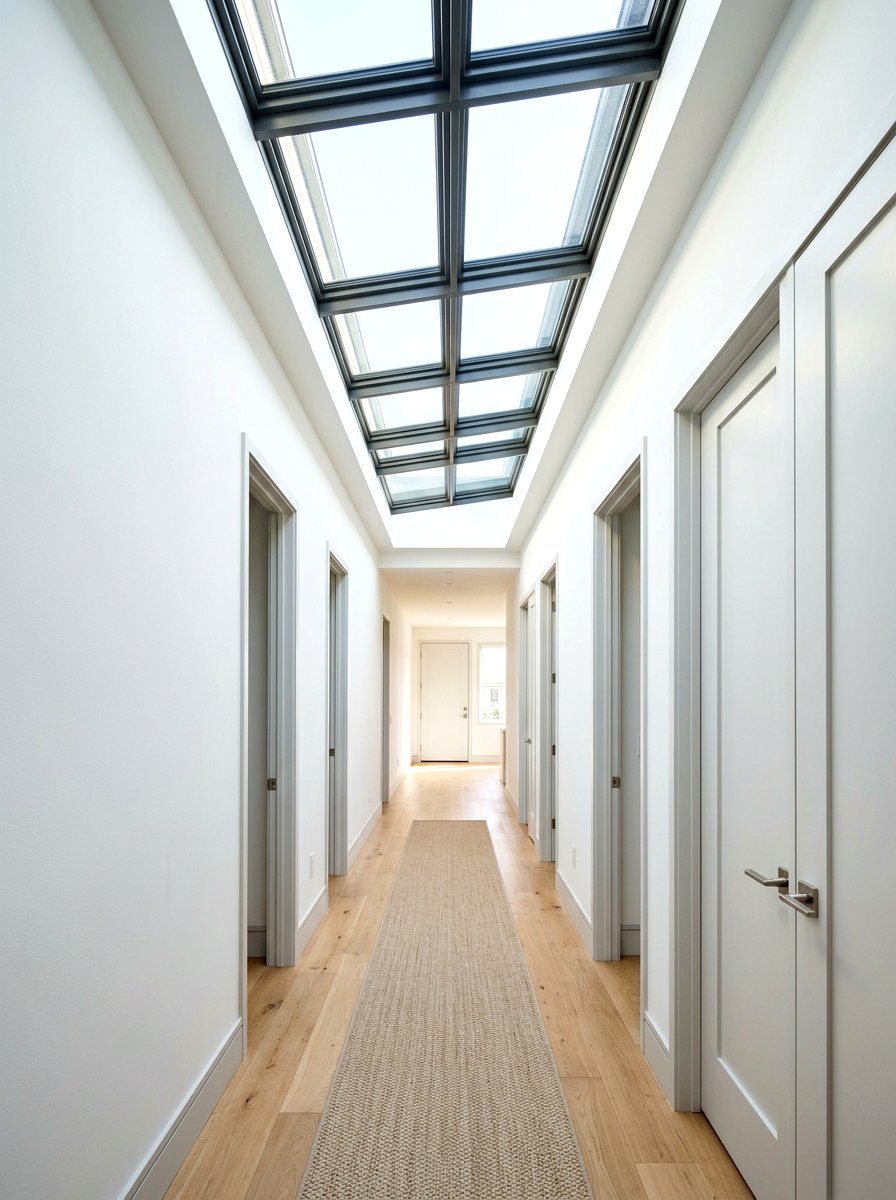
If you have a narrow hallway on the top floor of your home, installing a skylight can be a total game-changer. Natural light flooding in from above eliminates the need for artificial lighting during the day and makes the space feel incredibly open and airy. A skylight transforms a dark, claustrophobic tunnel into a bright, cheerful passage that feels connected to the sky. Even a small "sun tunnel" can provide a surprising amount of brightness for a windowless area. This architectural addition not only increases the value of your home but also creates a dramatic and beautiful lighting effect that changes throughout the day.
26. Minimalist Decor
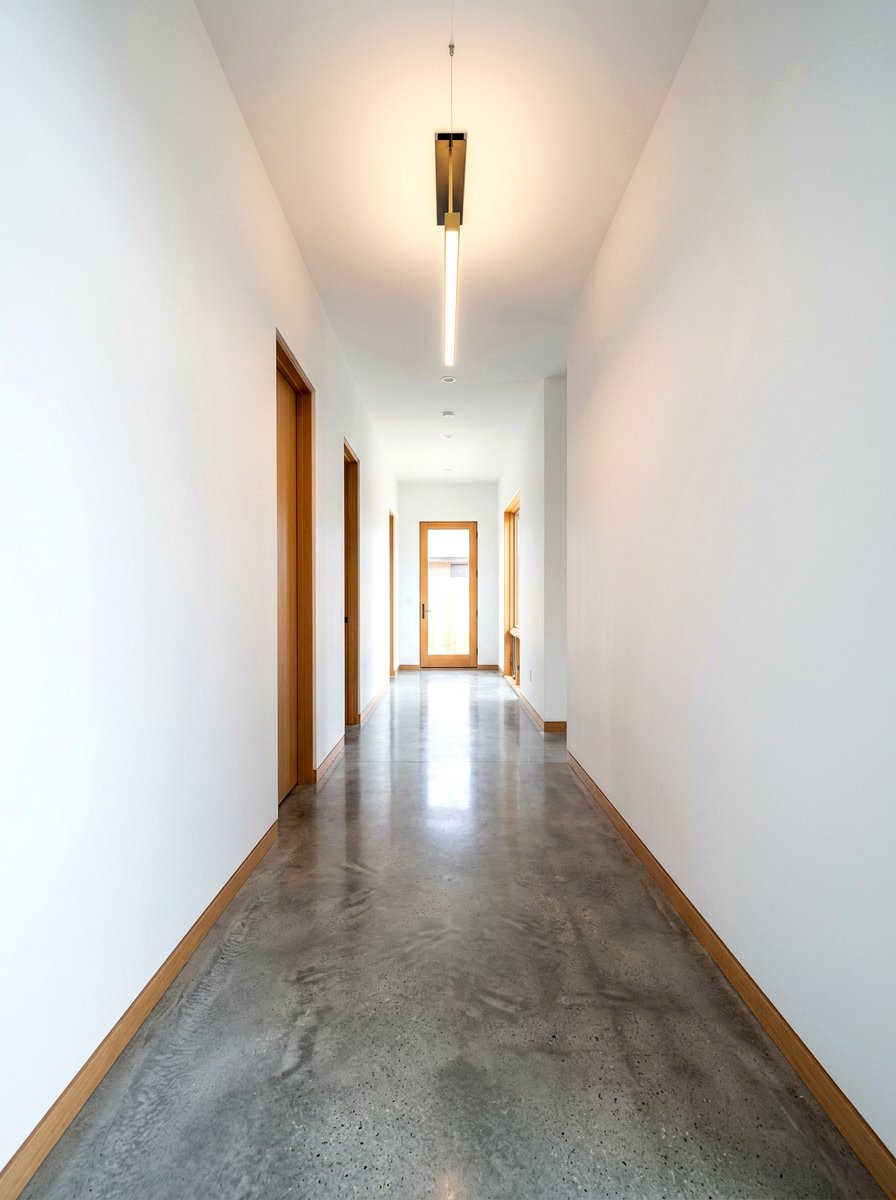
A minimalist approach to hallway styling is often the best choice for extremely narrow spaces where every inch counts. By keeping the walls clear and the floor unobstructed, you allow the architecture of the home to speak for itself. Focus on high-quality materials, such as a beautiful hardwood floor or a perfectly smooth paint finish, rather than layering on too many accessories. A single, well-placed wall sconce or one beautiful mirror can be enough to make the space feel intentional without being crowded. Minimalism creates a calm, peaceful transition between rooms that feels modern, clean, and entirely effortless for any contemporary home.
27. White Wainscoting
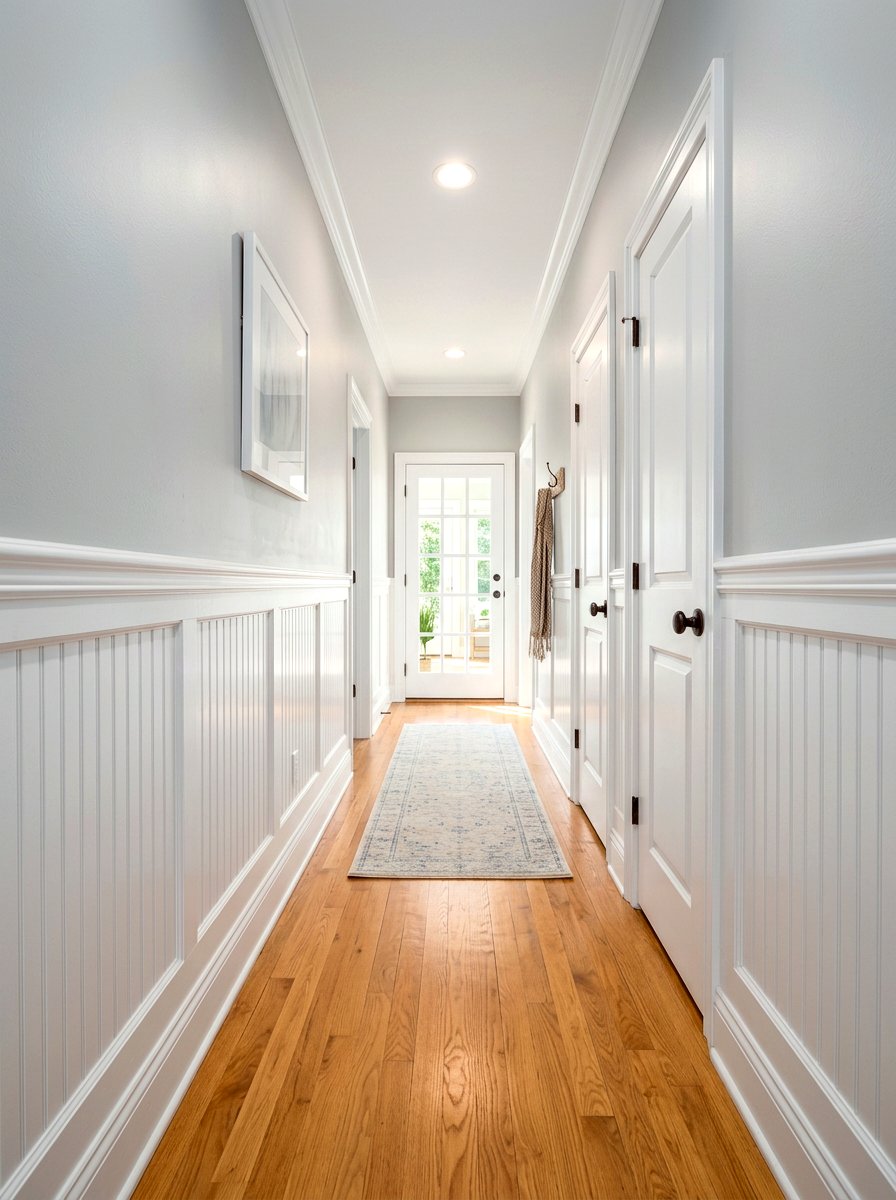
White wainscoting is a classic design element that adds a sense of structure and brightness to a narrow hallway. By covering the lower third of the wall with white panels, you create a reflective surface that bounces light around the space. This traditional detail also protects the walls from the inevitable scuffs and marks that come with a high-traffic corridor. You can pair white wainscoting with a darker paint color on the top half of the wall for a sophisticated contrast that doesn 't feel too heavy. It adds a layer of timeless charm and makes the hallway feel like a refined, high-end part of the home' s overall design.
28. Round Mirror
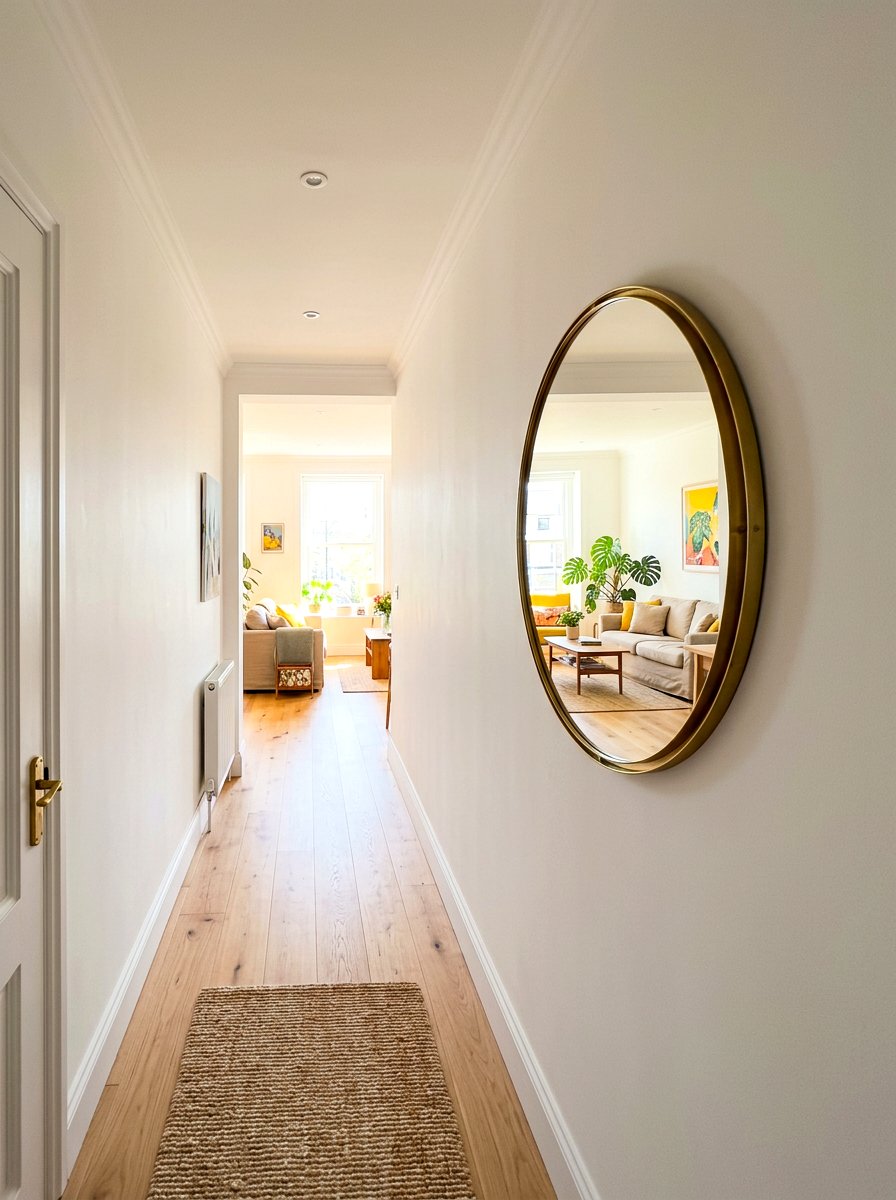
While rectangular mirrors are common, a large round mirror can be a more stylish and unexpected choice for a narrow hallway. The soft, circular shape breaks up the long, straight lines of the corridor and adds a touch of modern elegance. A round mirror acts as a focal point that feels less formal and more artistic than traditional shapes. It still provides all the light-reflecting benefits of a standard mirror, making the passage feel wider and brighter. Choosing a mirror with a thin brass or black frame can add a subtle metallic accent that ties the rest of your home’s decor together beautifully.
29. Colorful Runner
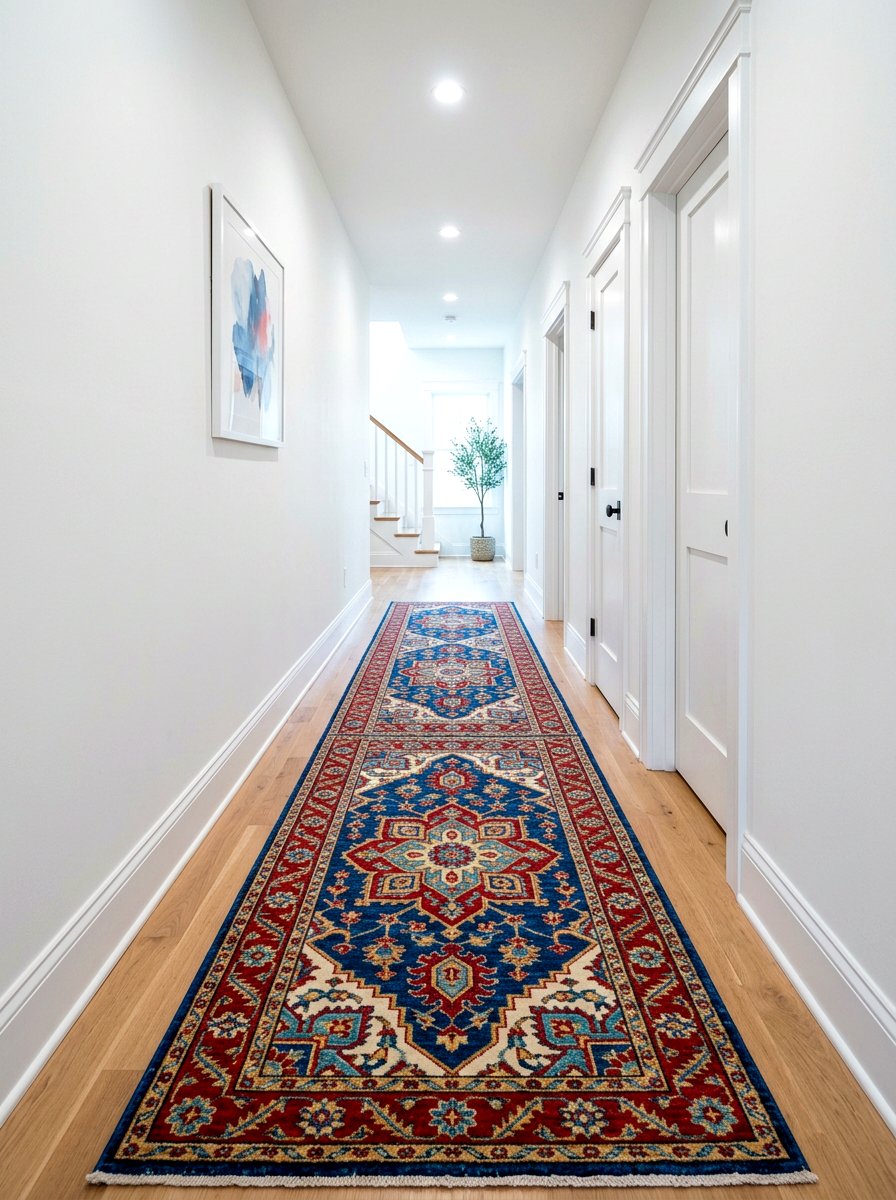
If your narrow hallway feels a bit sterile, a colorful runner rug is the perfect way to inject personality and vibrance into the space. A rug with rich tones like deep navy, terra cotta, or sage green can anchor the area and make it feel like a cozy, inhabited room. The color draws the eye along the floor, emphasizing the length of the hall in a way that feels intentional rather than restrictive. A patterned runner is also incredibly practical for hiding the occasional dirt or footprints in a busy walkway. It’s an easy, non-permanent way to experiment with color in your home’s transition zones.
30. Accent Wall
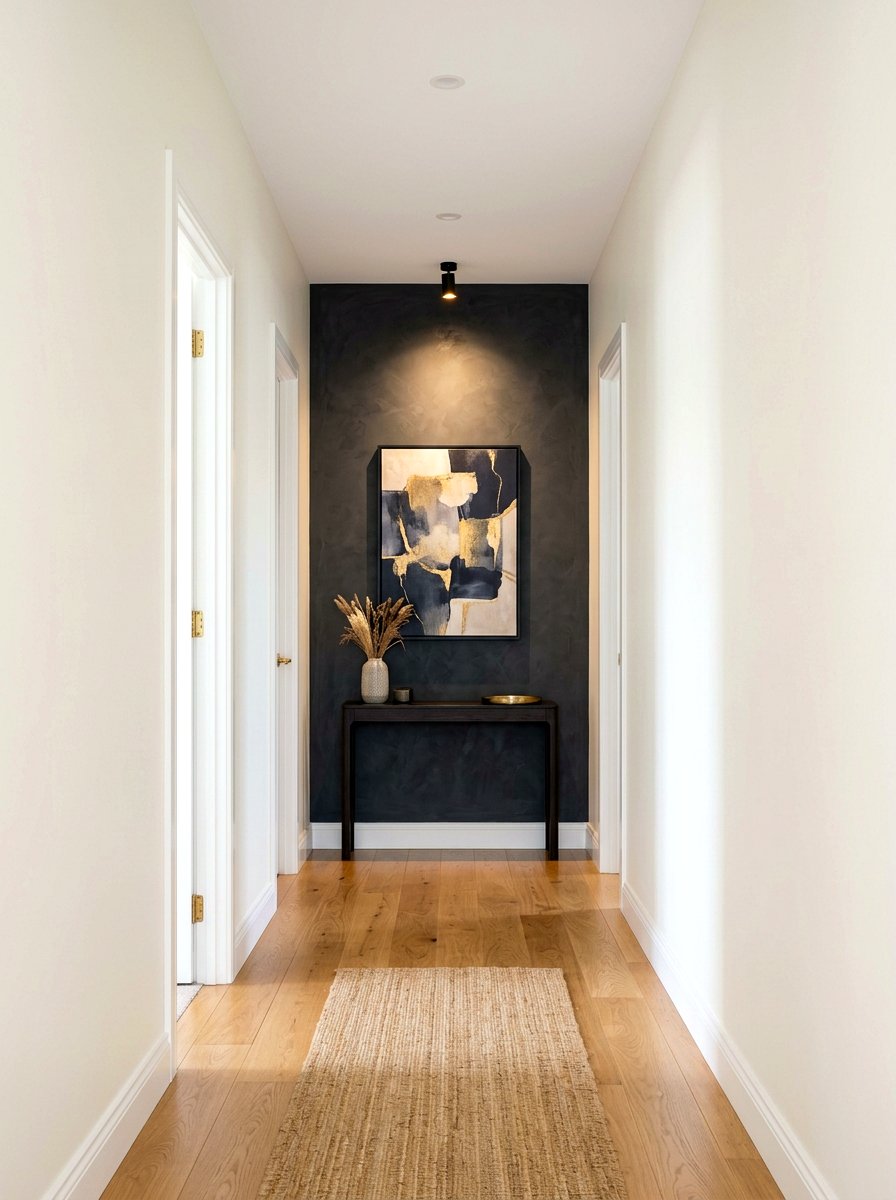
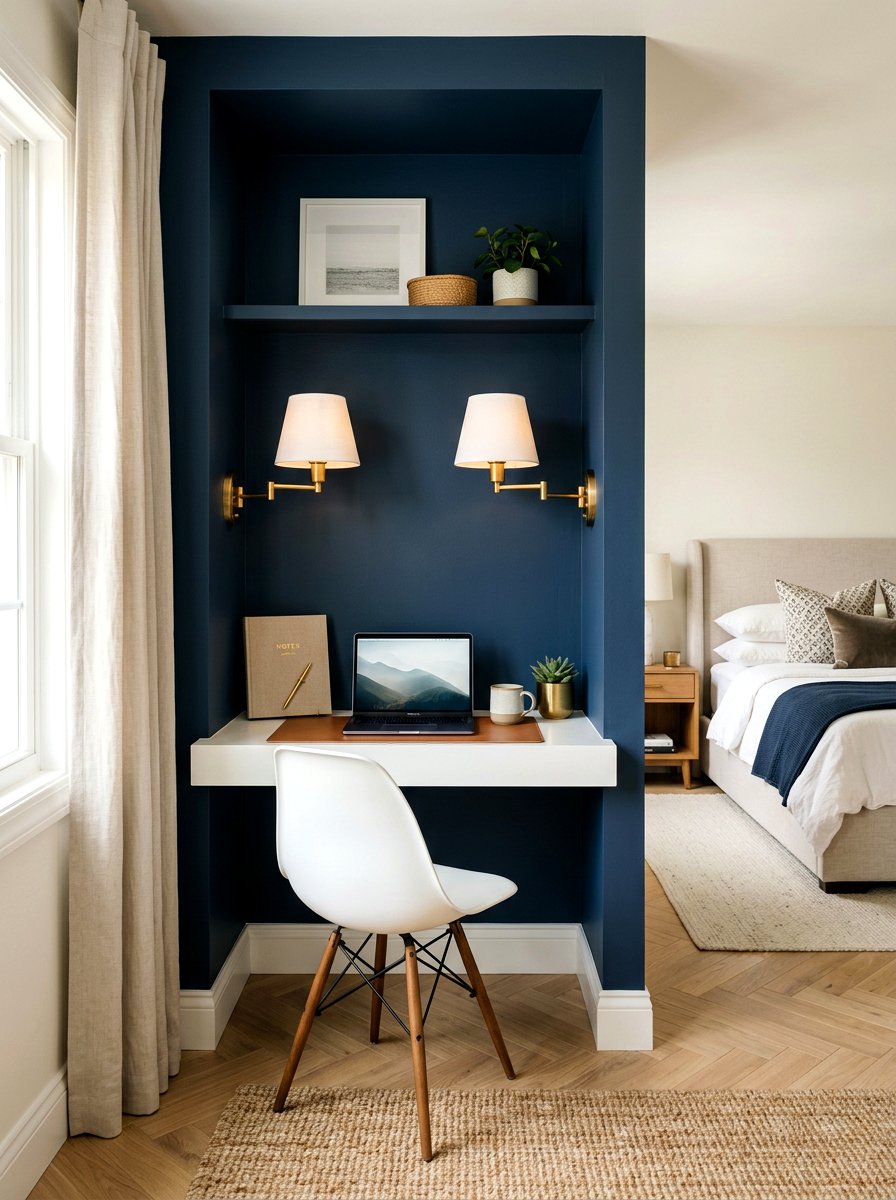
Creating an accent wall at the very end of a narrow hallway can help "shorten" a long, tunnel-like space and make it feel more proportional. By painting the far wall in a darker or more vibrant color than the side walls, you pull that surface forward visually. This creates a sense of depth and gives the hallway a clear destination. You could also use a bold wallpaper or a gallery of art on this specific wall to create a high-impact focal point. This styling trick makes the entire corridor feel more like a curated gallery and less like a never-ending passage, adding a lot of character.
Conclusion:
Styling a narrow hallway is all about balancing functionality with aesthetic appeal to turn a simple passage into a highlight of your home. By utilizing clever tricks like oversized mirrors, layered lighting, and strategic use of color, you can easily overcome the challenges of a tight floor plan. Whether you prefer a minimalist look or a more textured, architectural approach, every detail matters in creating a sense of flow and openness. These ideas prove that even the most restricted spaces can feel grand and welcoming with the right design choices. Investing time into your hallway ensures your entire home feels cohesive, stylish, and thoughtfully planned.

Related posts: