Small closets often feel like a puzzle that is impossible to solve, leaving many homeowners frustrated by the constant clutter and lack of visibility. However, mastering micro closet organization is not just about having more room; it is about maximizing every square inch with intentionality and clever systems. When you focus on the finer details, even the most cramped reach-in or tiny walk-in can become a highly functional sanctuary for your wardrobe. By implementing strategic tools and smart layouts, you can transform chaos into a curated space that simplifies your morning routine and preserves the quality of your favorite garments and accessories.

1. Vertical Hanging Rod
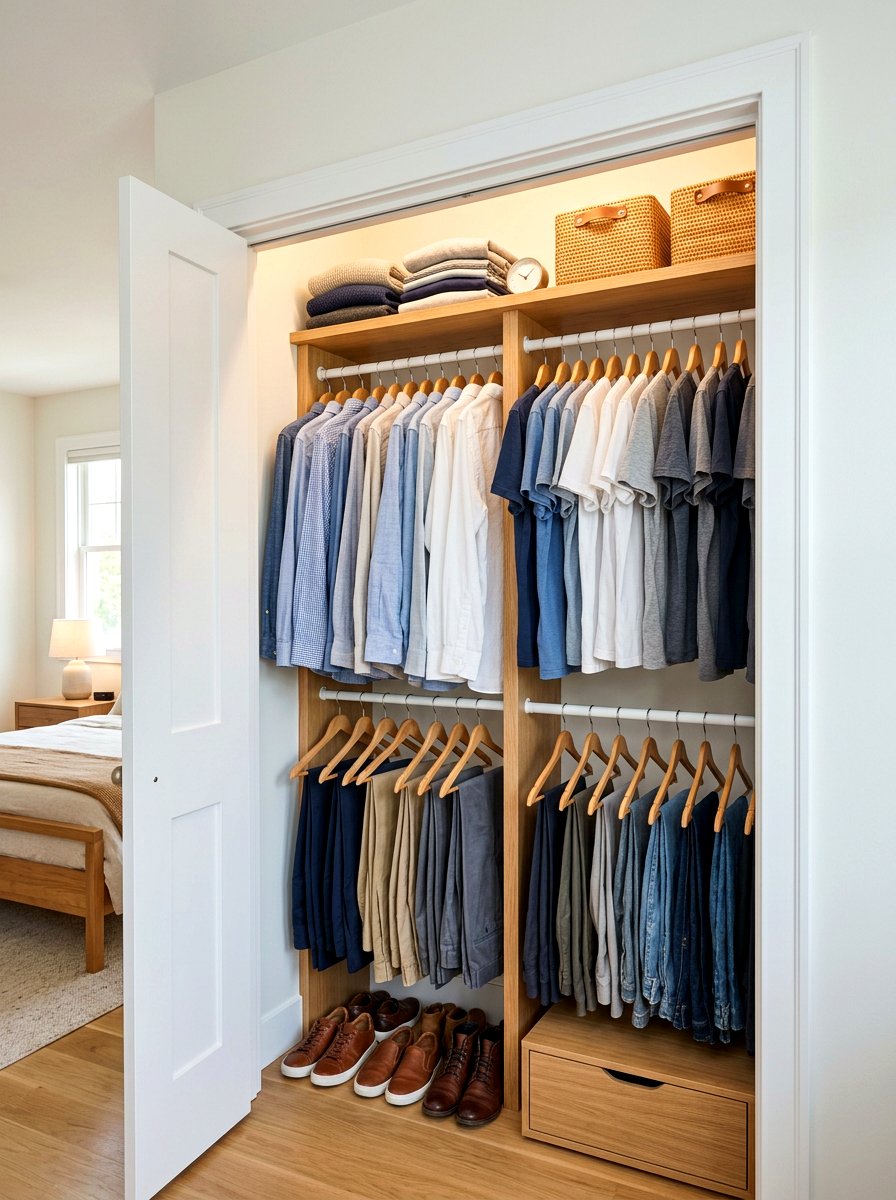
Maximizing the vertical height of your closet is the most effective way to create space where it previously did not exist. By adding a second rod below your main hanging area, you instantly double the capacity for shorter items like shirts, skirts, and folded trousers. This simple adjustment makes use of the often-negated bottom half of the closet, keeping your clothes off the floor and neatly displayed. For a more flexible approach, consider an adjustable tension rod that requires no drilling and can be moved as your wardrobe evolves. This strategy is particularly useful for seasonal rotations, allowing you to keep current essentials within easy reach.
2. Acrylic Shelf Divider
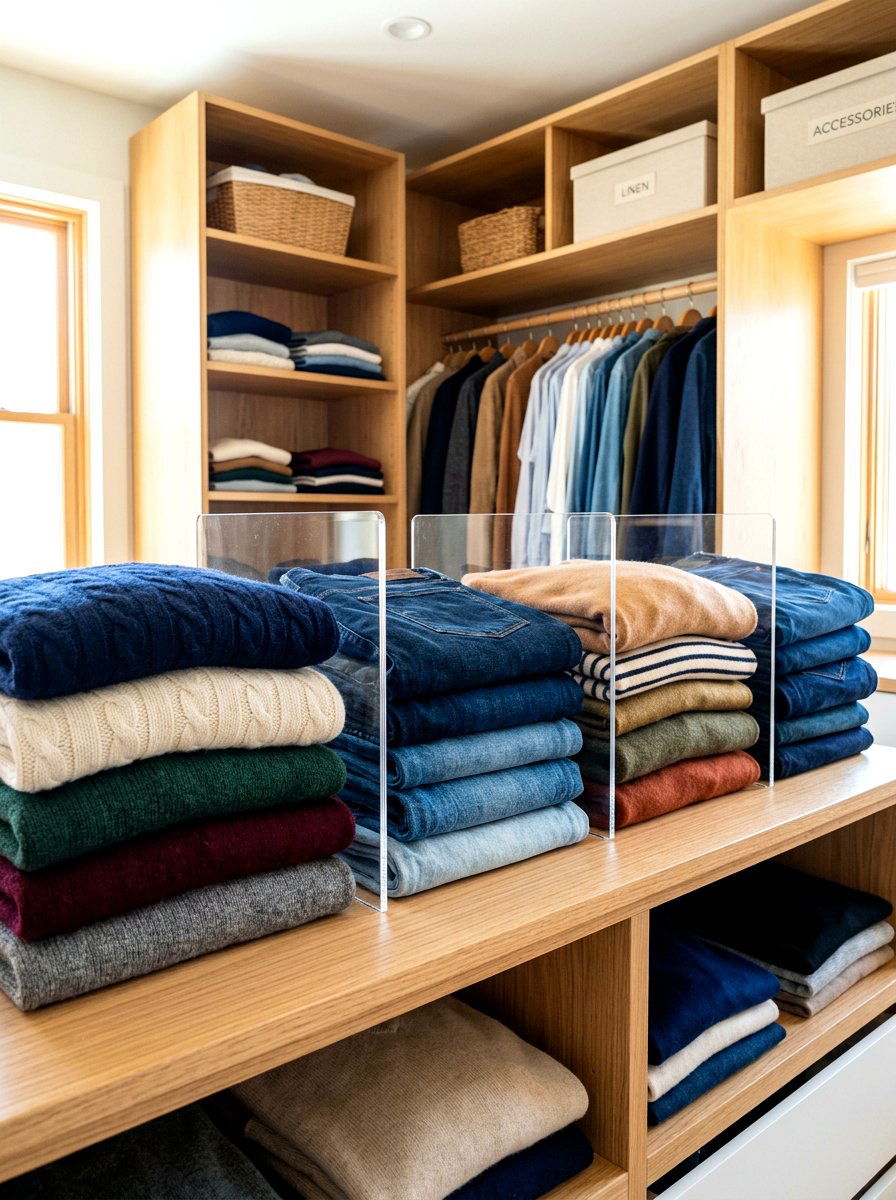
Maintaining neat stacks of sweaters or jeans can be a constant struggle without the right physical boundaries to keep them upright. Clear acrylic shelf dividers provide a sleek and nearly invisible solution that prevents your clothing from toppling over into a messy pile. These dividers slide easily onto existing solid shelving, creating dedicated zones for different categories of clothing without blocking your line of sight. Because they are transparent, the closet maintains a bright and airy feel while offering the structure needed for a boutique-style aesthetic. They are also excellent for keeping handbags and clutches upright, ensuring they retain their shape and remain visible.
3. Velvet Slim Hanger
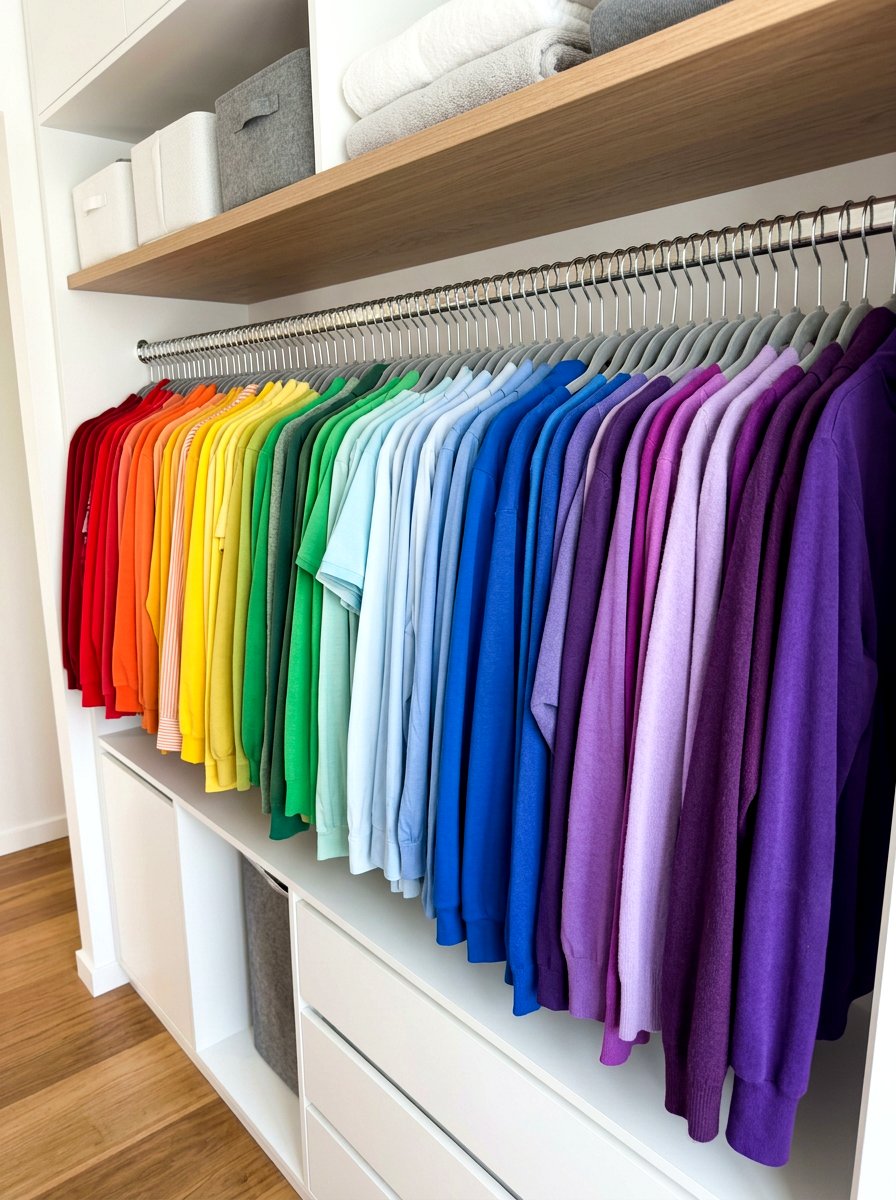
The type of hanger you choose can significantly impact how many items you can actually fit onto a single closet rod. Switching from bulky plastic or wood hangers to velvet slim versions can save a remarkable amount of horizontal space while providing a non-slip surface. These thin profiles allow you to pack garments more closely together without causing wrinkles or tangles in the fabric. The velvet texture ensures that even delicate silk blouses or wide-neck tops stay securely in place rather than sliding off onto the floor. Consistency in hanger style also creates a unified, professional look that makes the entire closet feel organized.
4. Over The Door Shoe Organizer
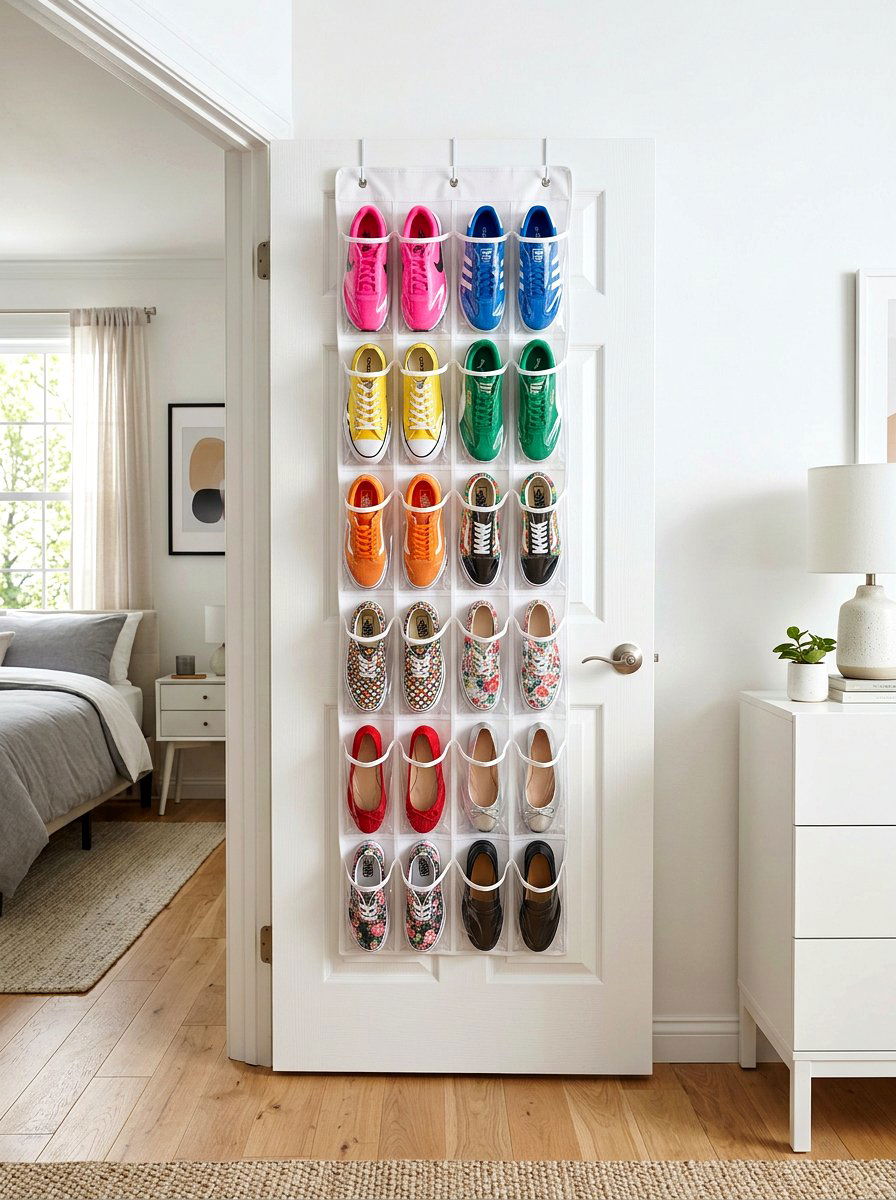
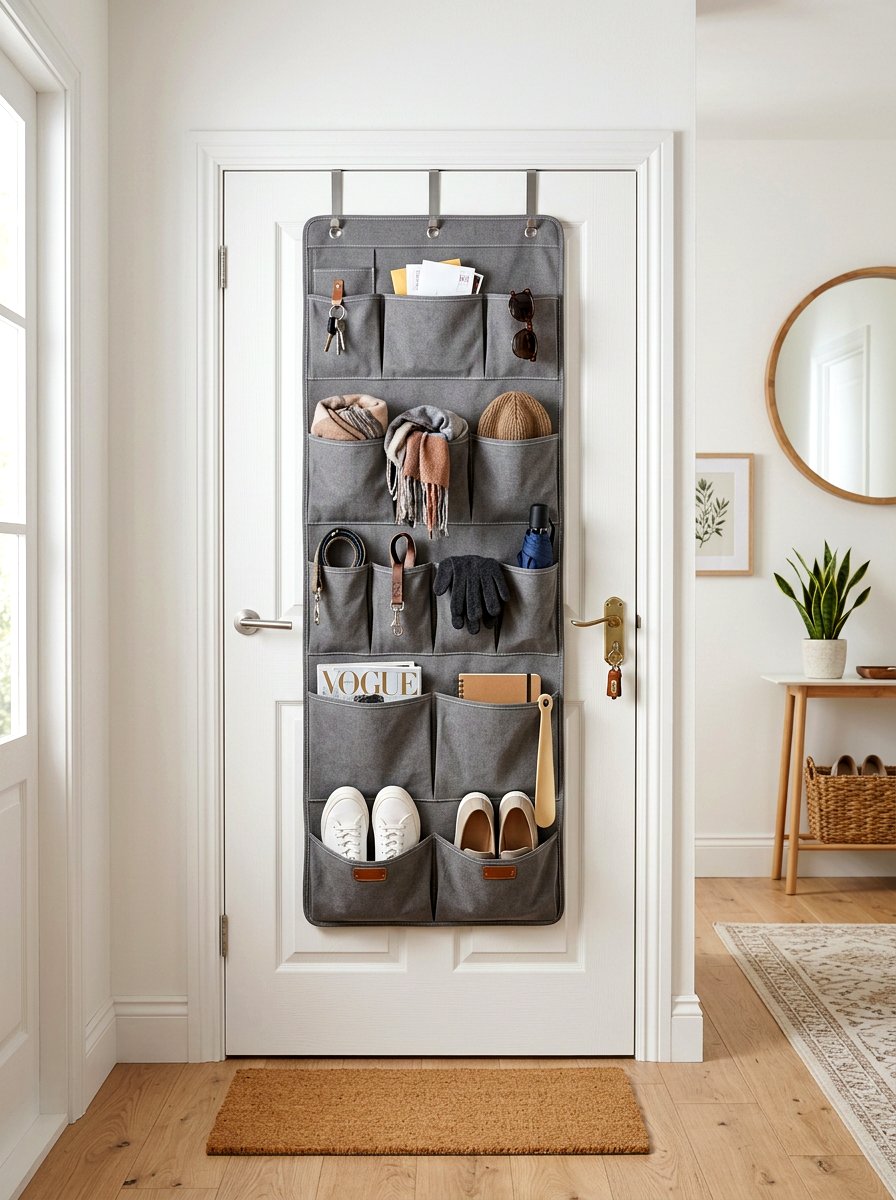
When floor space is at a premium, the back of the closet door becomes a valuable landscape for additional storage opportunities. An over-the-door shoe organizer with clear pockets is a classic yet powerful tool for clearing the ground of footwear and small accessories. Beyond just shoes, these versatile pockets can house rolled-up leggings, scarves, belts, or even cleaning supplies and lint rollers. By utilizing this vertical surface, you free up the floor for larger items like hampers or bins while keeping your most-used items at eye level. This approach ensures that every pair is visible and accessible, reducing the time spent searching.
5. Stackable Storage Bin
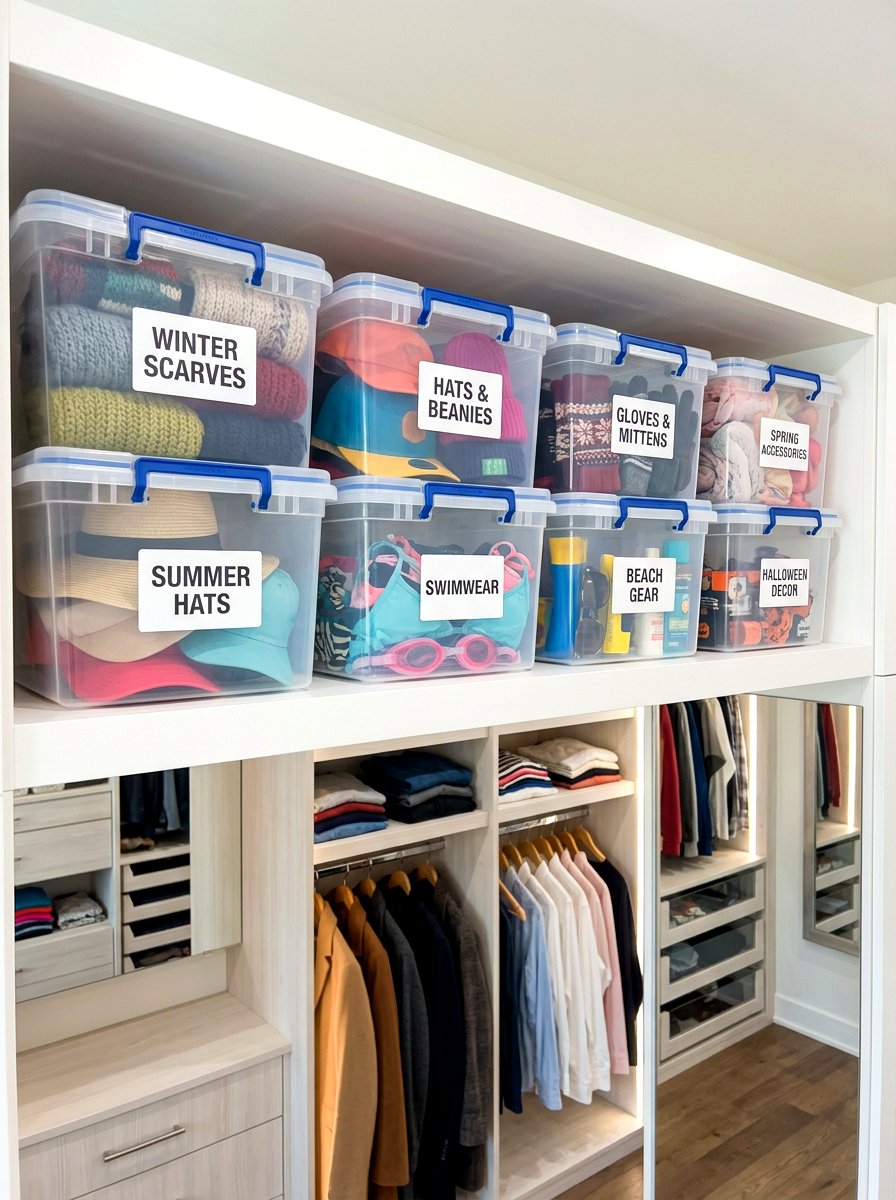
Vertical stacking is a fundamental principle of micro-organization, especially when dealing with deep shelves that tend to swallow up smaller items. Stackable storage bins allow you to utilize the full height and depth of your shelving units while keeping your belongings sorted and protected. Opt for clear containers so you can quickly identify the contents without having to unstack and open every single box during your morning rush. These bins are perfect for seasonal accessories like hats and gloves or for items that do not hang well, such as workout gear. Labeling each bin further enhances the system, making maintenance effortless for everyone.
6. Pull Out Basket
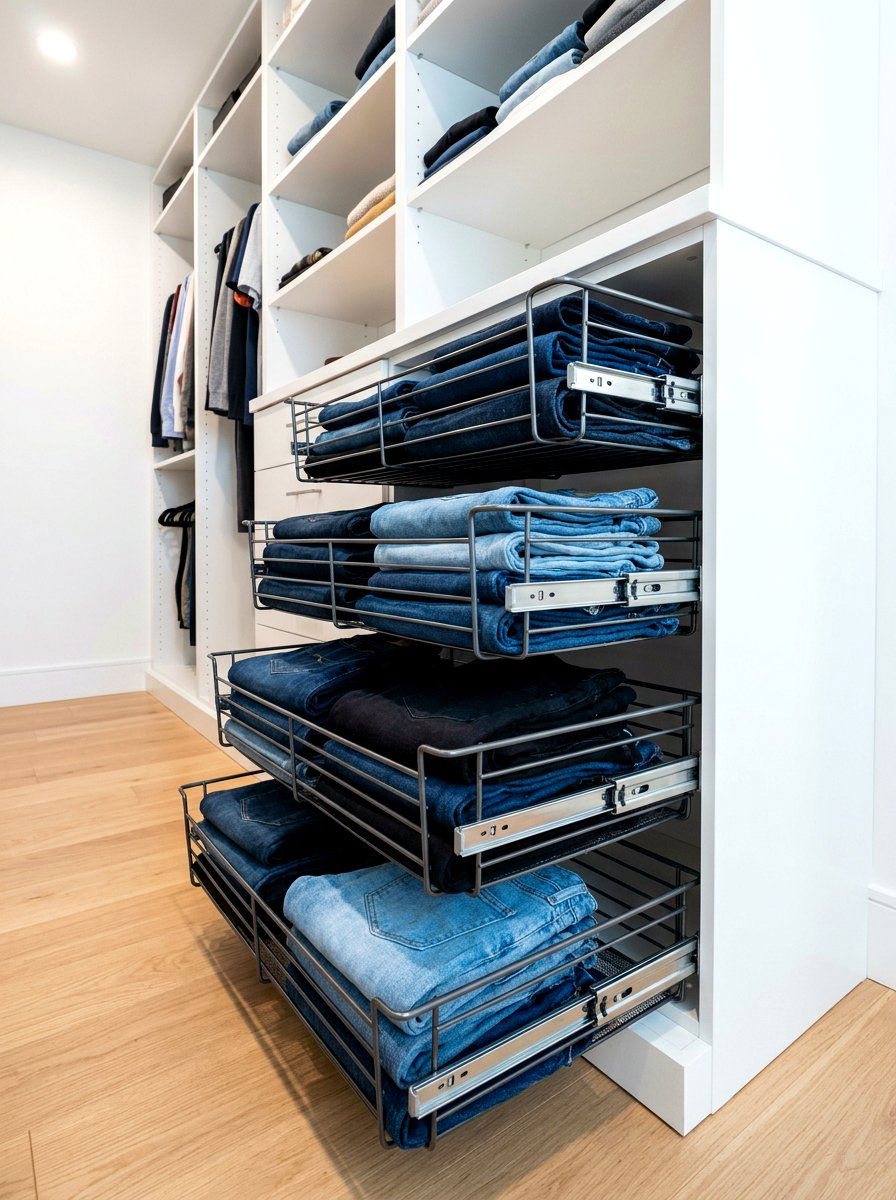
Deep closet corners or low-level shelves are often difficult to reach, leading to forgotten items and wasted space at the back. Installing pull-out baskets transforms these awkward areas into functional drawers that bring your belongings directly to you with a simple glide. These sliding systems are ideal for storing bulky items like denim or hoodies that take up too much room on traditional hangers. By being able to see everything from front to back, you eliminate the need to dig through dark corners, which helps maintain the organization over time. This micro-adjustment creates a high-end feel while significantly improving the everyday usability of the space.
7. Hanging Sweater Organizer
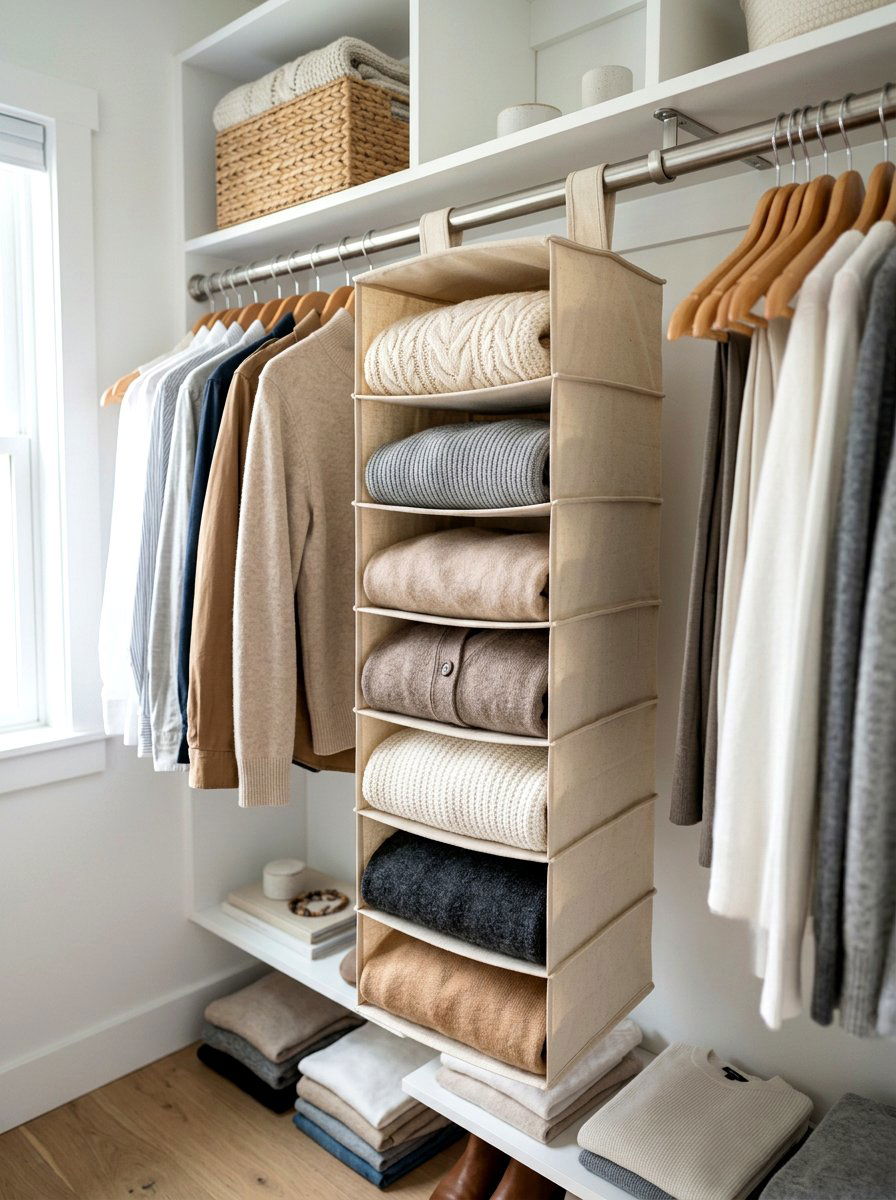
If your closet lacks sufficient shelving, a fabric hanging organizer can provide much-needed cubby space for your folded garments and soft goods. These units attach directly to the closet rod and offer multiple vertical compartments that are perfect for sweaters, t-shirts, or even handbags. Using a hanging organizer helps prevent delicate knits from stretching out on hangers while keeping them separated and easy to grab. You can even add small fabric drawers into the cubbies to hide away intimates or socks, creating a modular dresser-like system within your hanging area. This is an excellent low-cost solution for renters who cannot install permanent built-ins.
8. Multi Tiered Pant Hanger
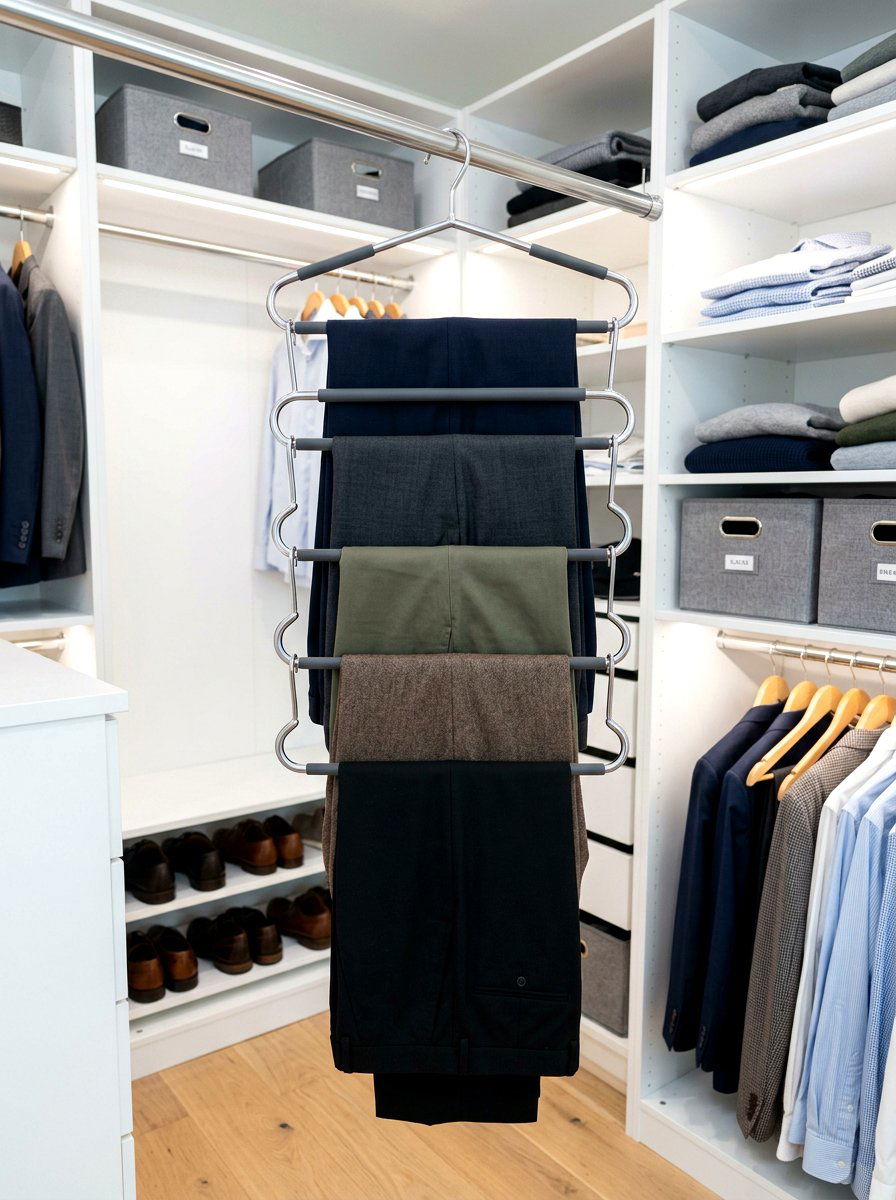
Pants and trousers often take up a disproportionate amount of rod space when hung individually on standard hangers or bulky clips. A multi-tiered pant hanger allows you to stack several pairs vertically on a single hook, drastically reducing the horizontal footprint of your bottoms. These hangers usually feature swing-out arms that make it easy to remove one pair without disturbing the others in the stack. This tool is particularly effective for organizing by color or style, such as keeping all your work slacks in one compact location. By consolidating your trousers, you create more room for longer items like dresses or coats on the main rod.
9. Closet Door Rack
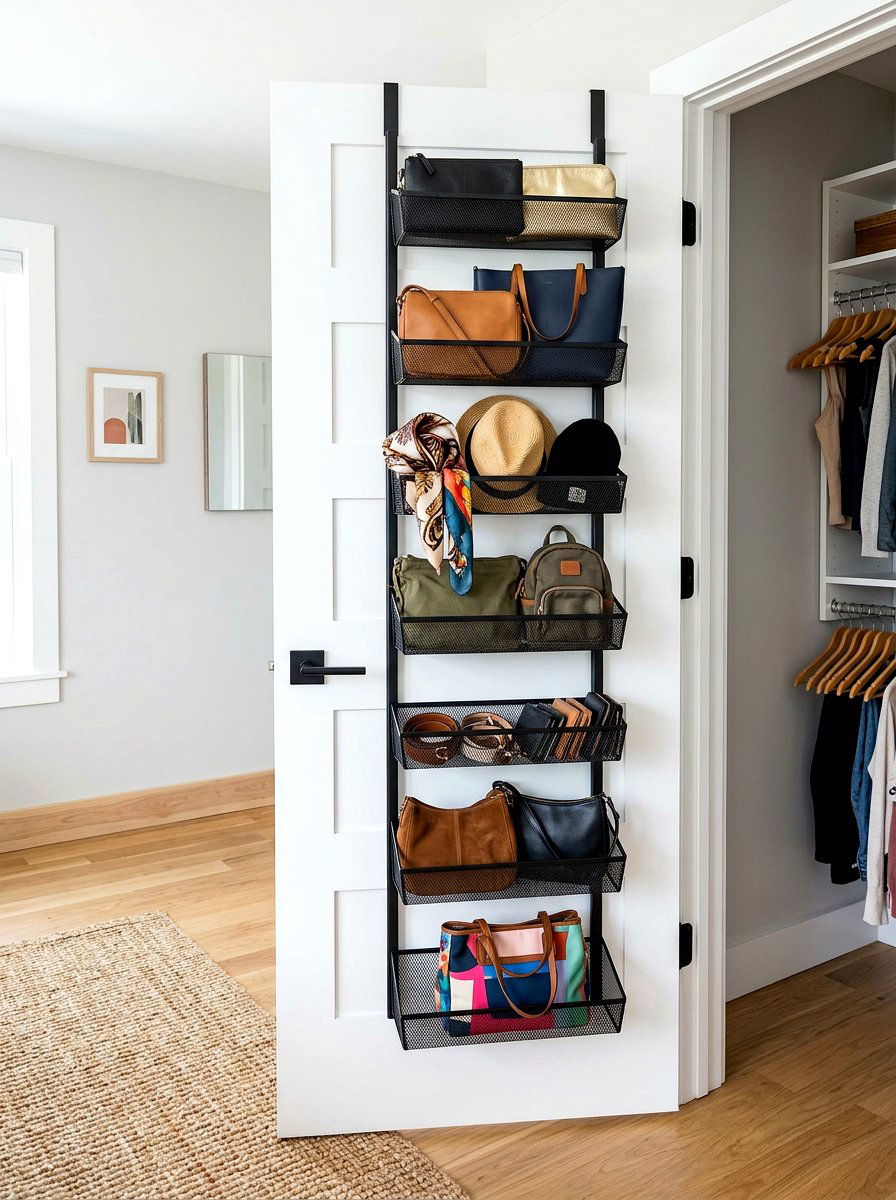
For those with a significant collection of accessories, a heavy-duty rack mounted to the closet door provides a centralized hub for utility. These metal or wood systems often feature adjustable baskets and hooks that can be customized to hold everything from handbags to umbrellas. Unlike flimsy plastic organizers, a mounted rack offers stability and can support the weight of heavier items without sagging or falling off. This setup turns the door into a functional extension of the closet, perfect for staging tomorrow's outfit or storing bulky winter gear. It utilizes the often-forgotten "air space" in front of your clothes, making the room feel larger.

10. Led Closet Lighting
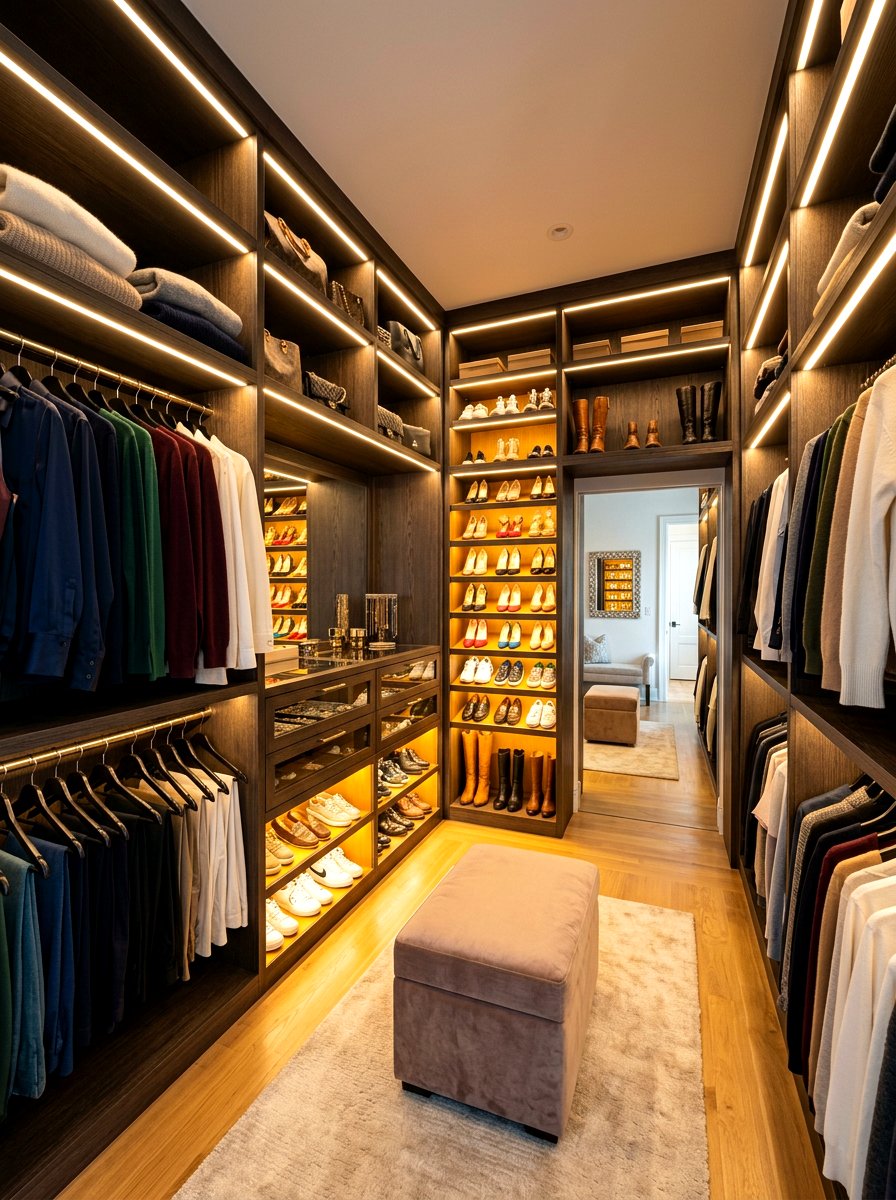
A well-organized closet is only effective if you can actually see what is inside, especially in deep or windowless spaces. Motion-activated LED lighting strips or puck lights can be easily installed under shelves or along the door frame to illuminate every corner. Bright, white light makes colors pop and helps you distinguish between similar shades, such as navy and black, which prevents frustration. These battery-operated or rechargeable options require no complicated wiring and can be placed exactly where you need them most. Good lighting transforms a dark, cramped closet into a boutique-like experience, making the act of getting dressed feel more intentional and enjoyable.
11. Small Space Drawer Divider
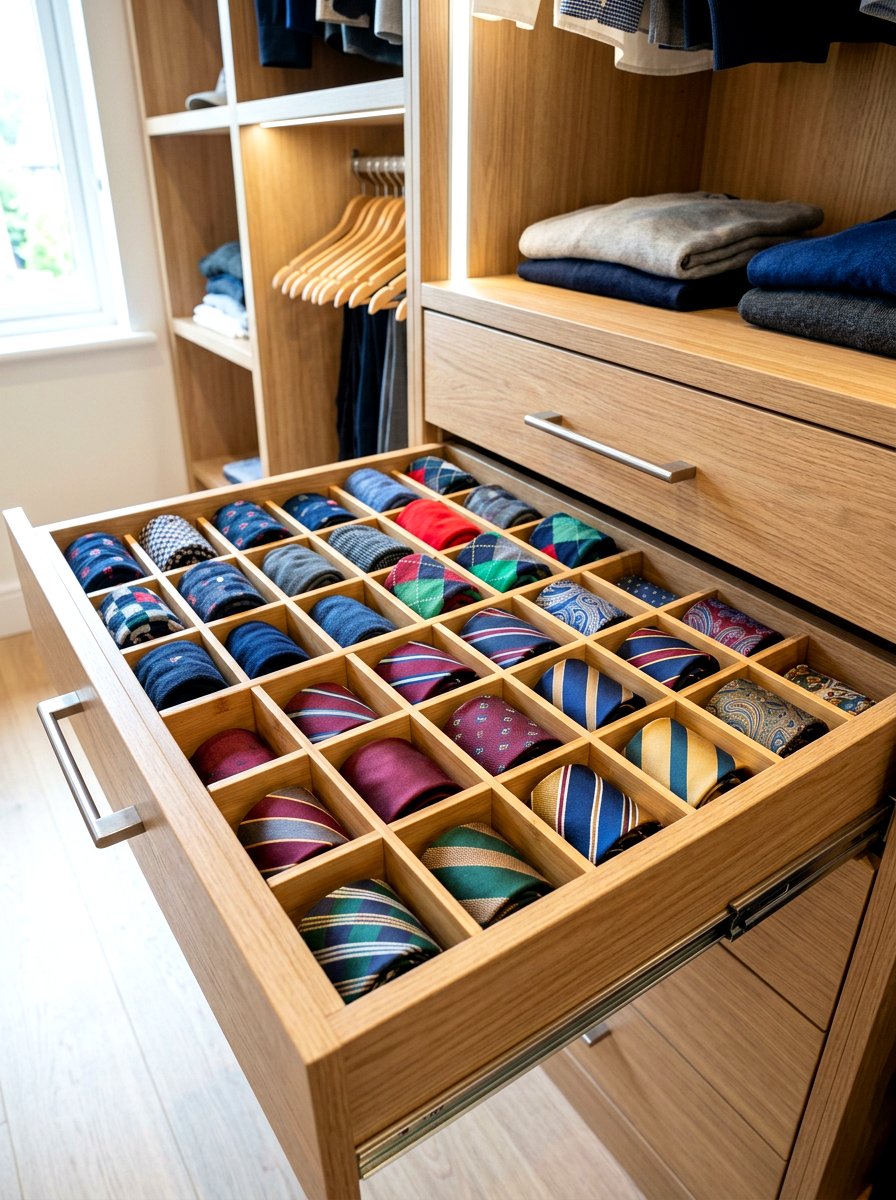
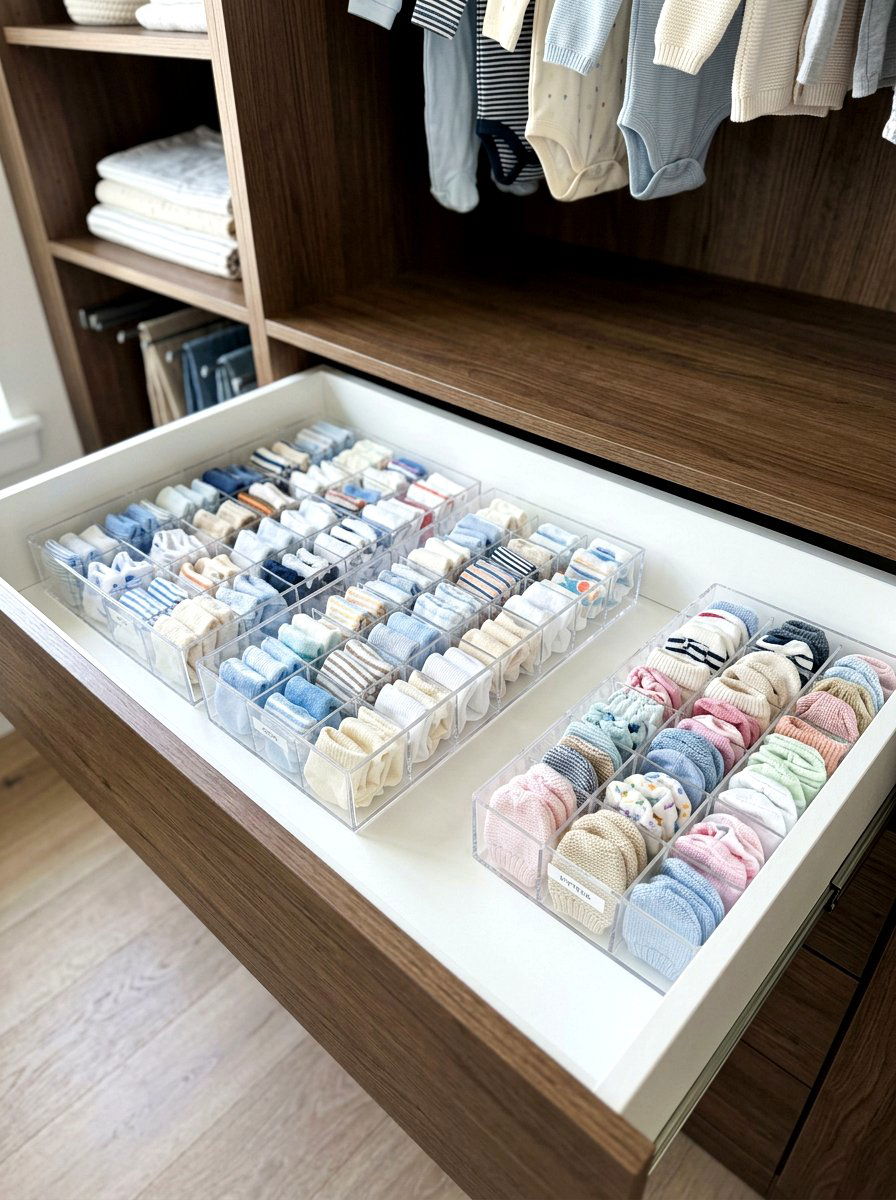
Drawers often become catch-all zones for socks, underwear, and accessories, leading to a tangled mess that is difficult to navigate quickly. Adjustable drawer dividers allow you to create custom-sized compartments within your existing storage to keep different categories strictly separated and easy to find. Whether you use bamboo, plastic, or fabric inserts, the goal is to ensure that every item has a specific home. This prevents the "shifting" that happens when drawers are opened and closed, keeping your folding work intact. Organizing by color or frequency of use within these micro-sections can further streamline your routine and make your drawers look beautiful.
12. Adjustable Closet Shelving
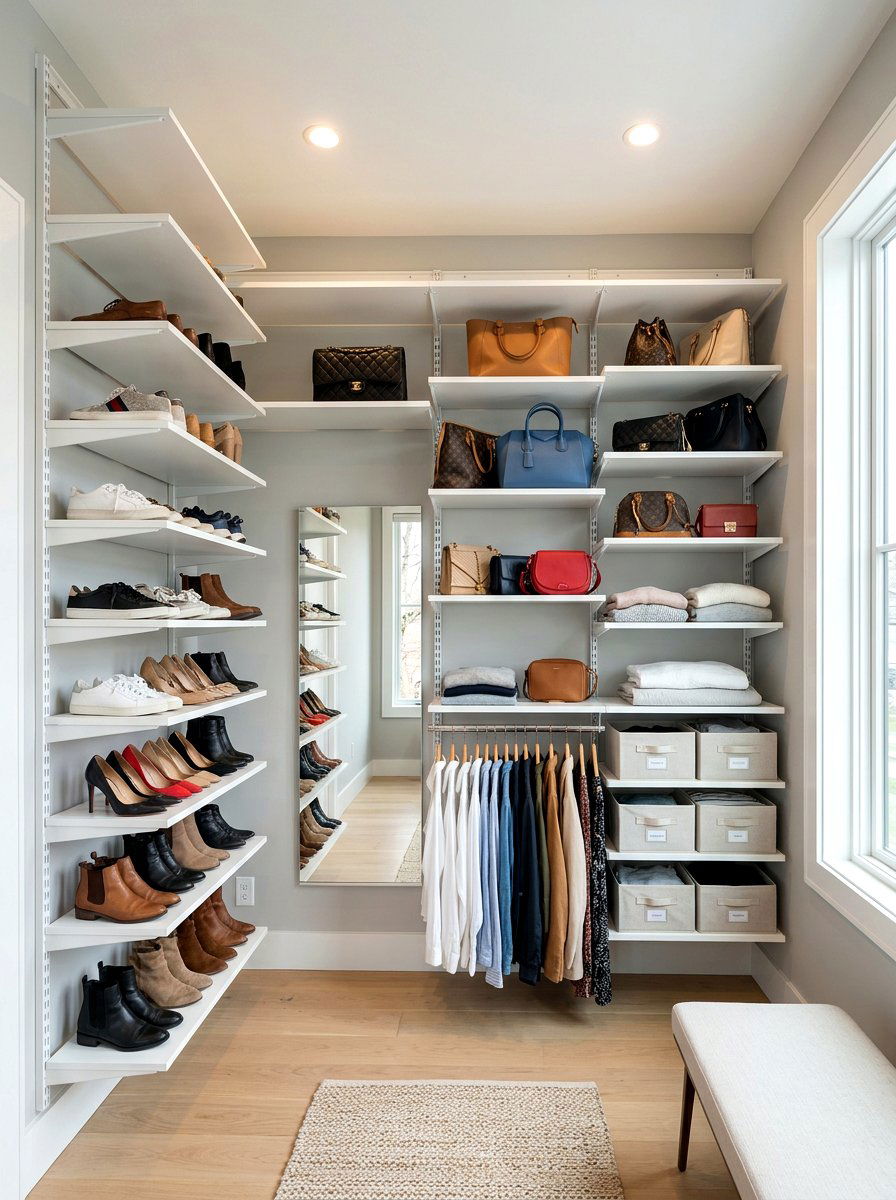
Fixed shelves are often spaced too far apart, leaving large gaps of wasted air that could be better utilized for storage. An adjustable shelving system allows you to customize the height of each level based on the specific items you need to store. For example, you can move shelves closer together for flat shoes or further apart for tall boots and bulky bedding. This flexibility ensures that you are not wasting any vertical real estate and can adapt the closet as your needs change over time. Being able to reconfigure the layout without tools is a major advantage for maintaining long-term organization in a small home.
13. Woven Storage Basket
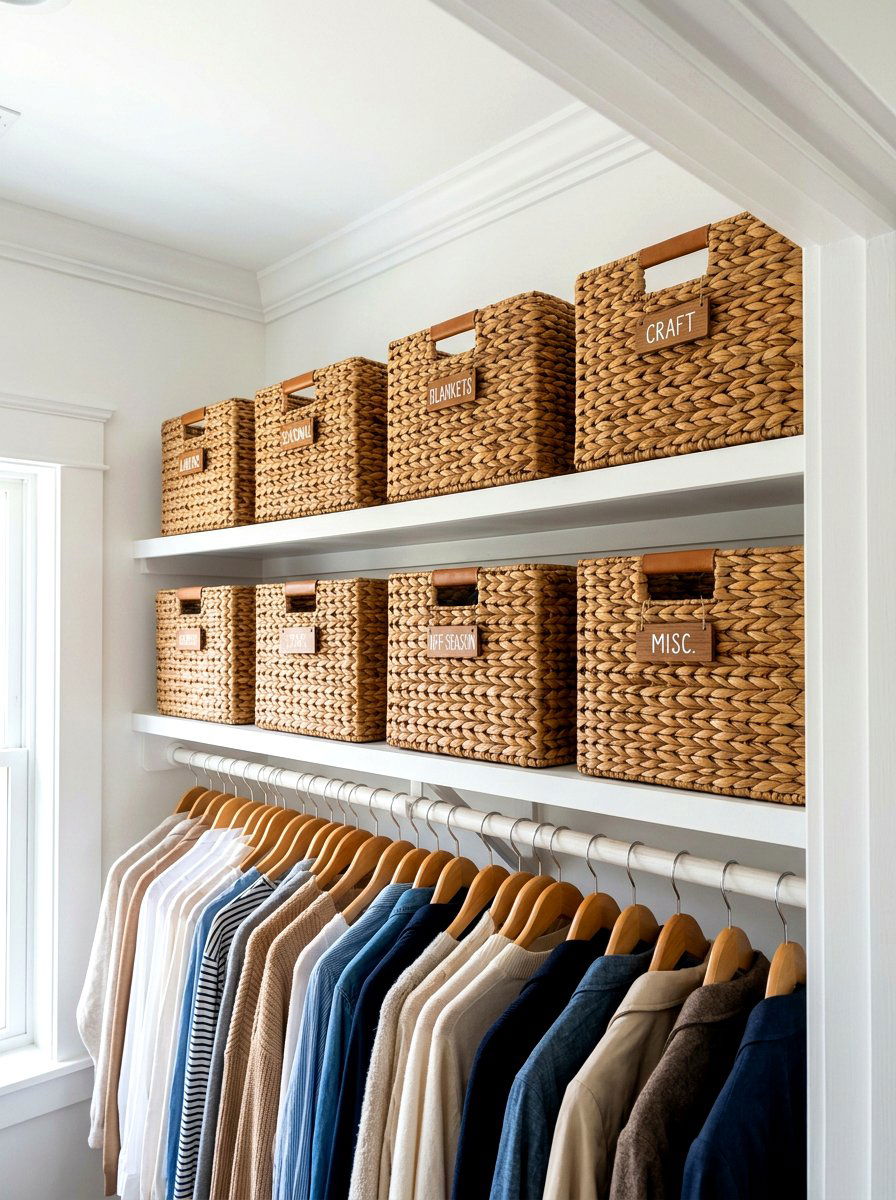
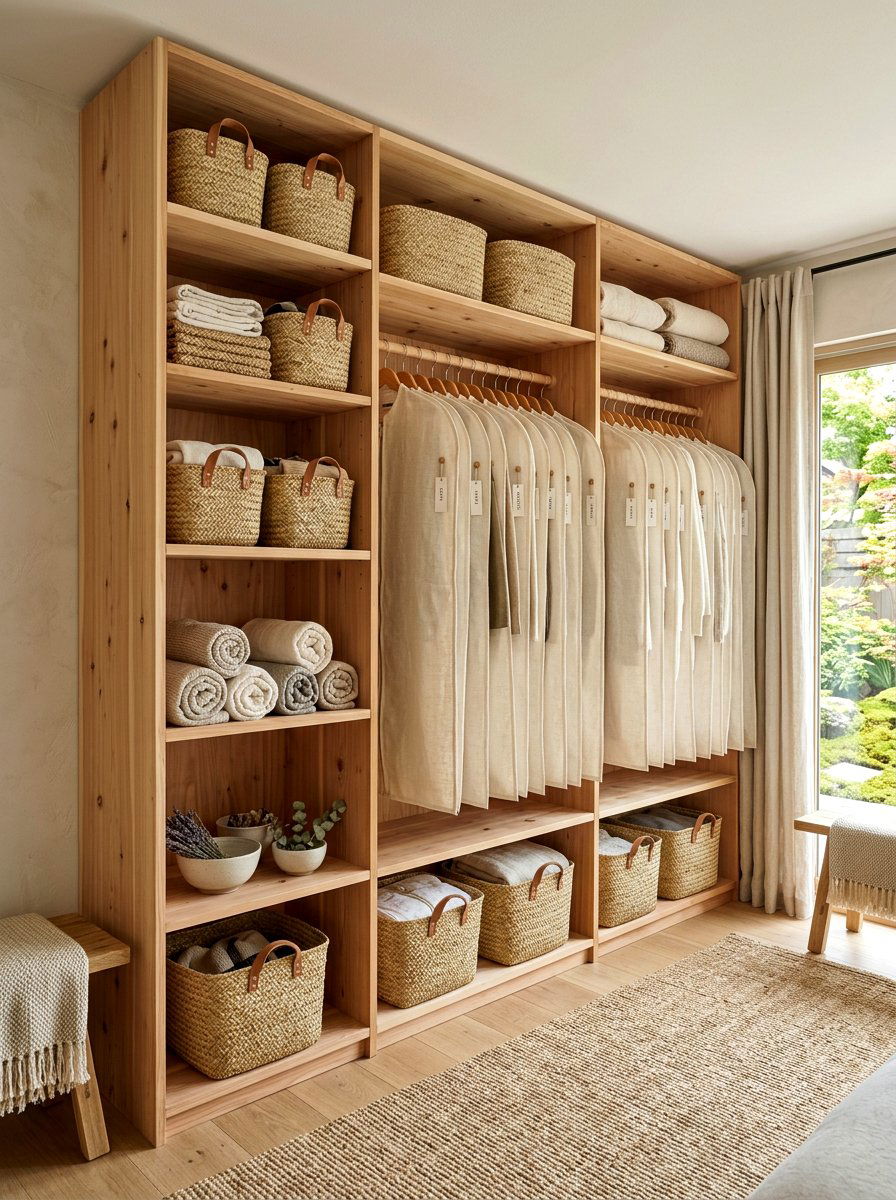
While functionality is the priority, the aesthetic appeal of your closet can motivate you to keep it organized and tidy. Woven storage baskets made of natural materials like seagrass or water hyacinth add texture and warmth to the space while hiding visual clutter. These baskets are perfect for the top shelf, where they can hold items you do not use every day, such as extra linens or off-season swimsuits. Because they are opaque, they provide a uniform look that hides the varied shapes and colors of the items stored inside. Using matching baskets creates a cohesive, high-end feel that makes your closet look professionally designed.
14. Scarf and Belt Hook
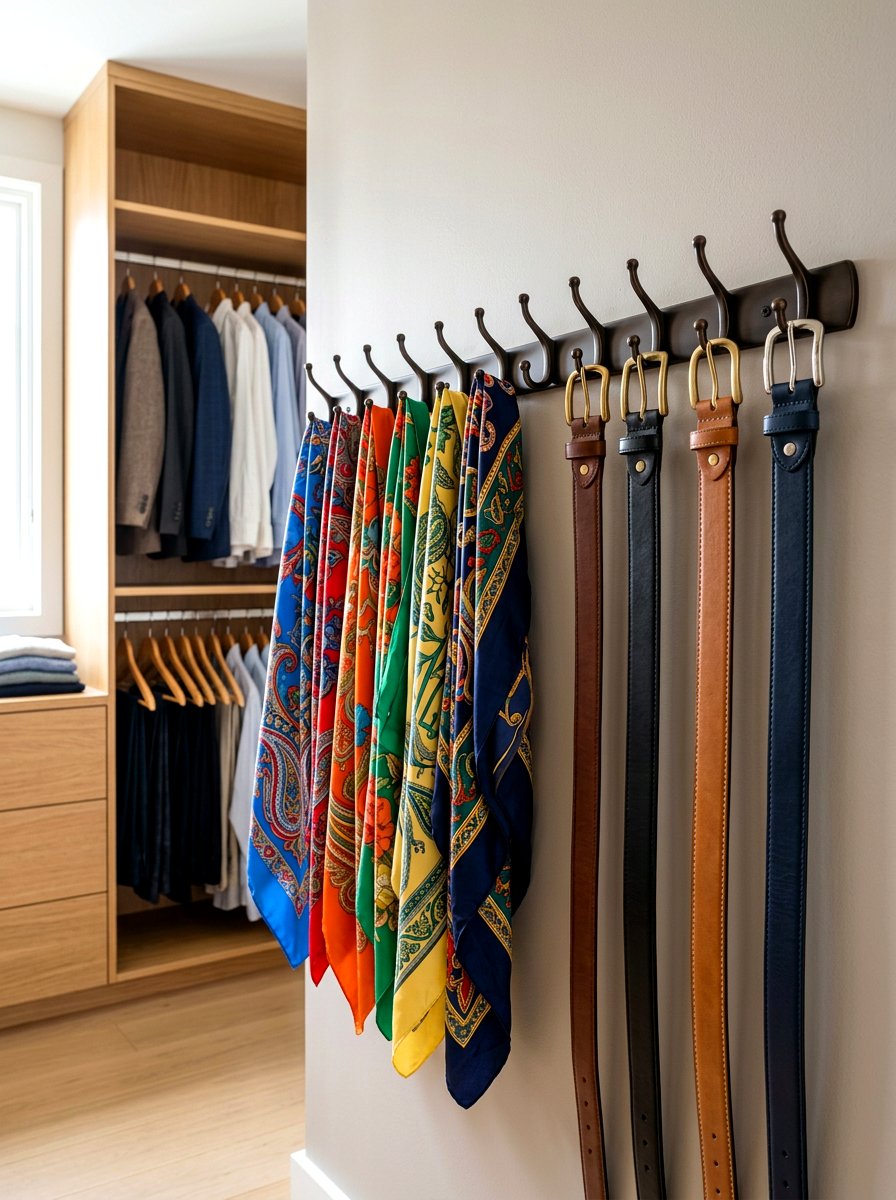
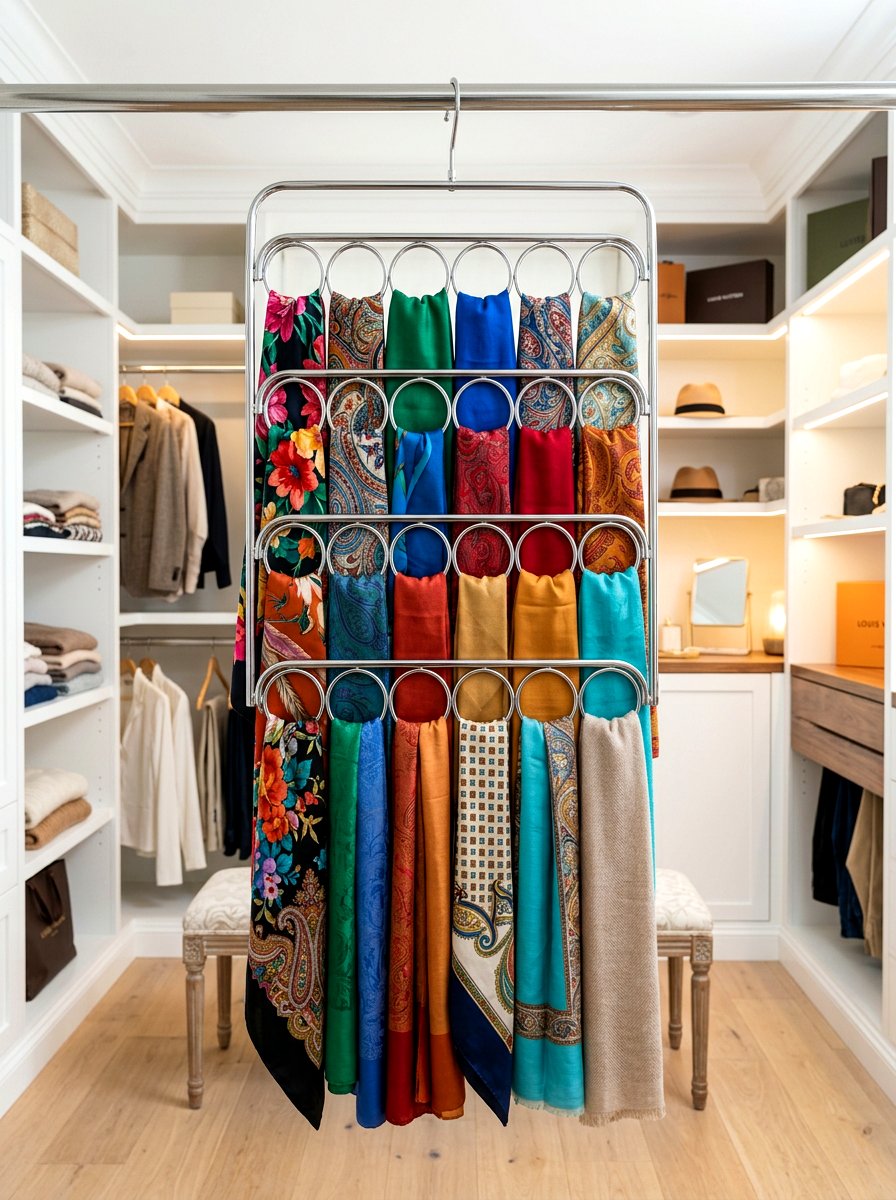
Small accessories like scarves, belts, and neckties often end up draped over hangers or shoved into corners where they get wrinkled. Dedicated accessory hooks or specialized rings allow you to hang these items individually and vertically, keeping them visible and in pristine condition. You can install a row of small hooks on an empty wall patch inside the closet or use a multi-ring hanger that fits on the rod. This micro-organization step ensures that your delicate silk scarves do not snag and that your leather belts do not develop permanent creases. Having these items displayed properly makes it much easier to coordinate your final look.
15. Under Shelf Wire Basket
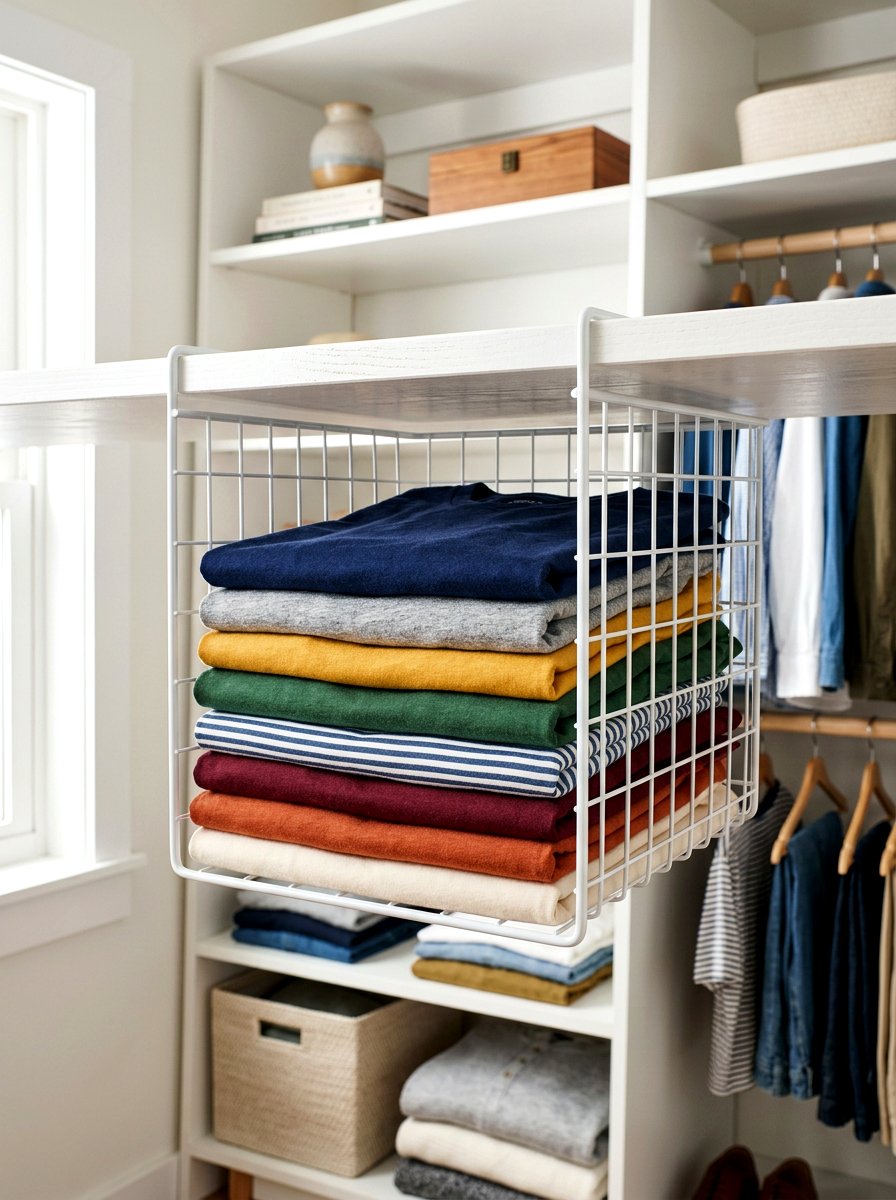
The space directly beneath a solid shelf is frequently left empty, but it can be easily reclaimed with slide-on wire baskets. These clever organizers clip onto the front of your existing shelf, creating a "mezzanine" level for flat items like t-shirts, clutches, or linens. They are particularly useful in reach-in closets where every inch of height matters for maximizing storage capacity. Because they do not require any hardware or permanent installation, they are a favorite for renters looking to expand their storage without damage. These baskets keep smaller items accessible and stop them from getting lost at the very back of a deep shelf.
16. Modular Cube Organizer
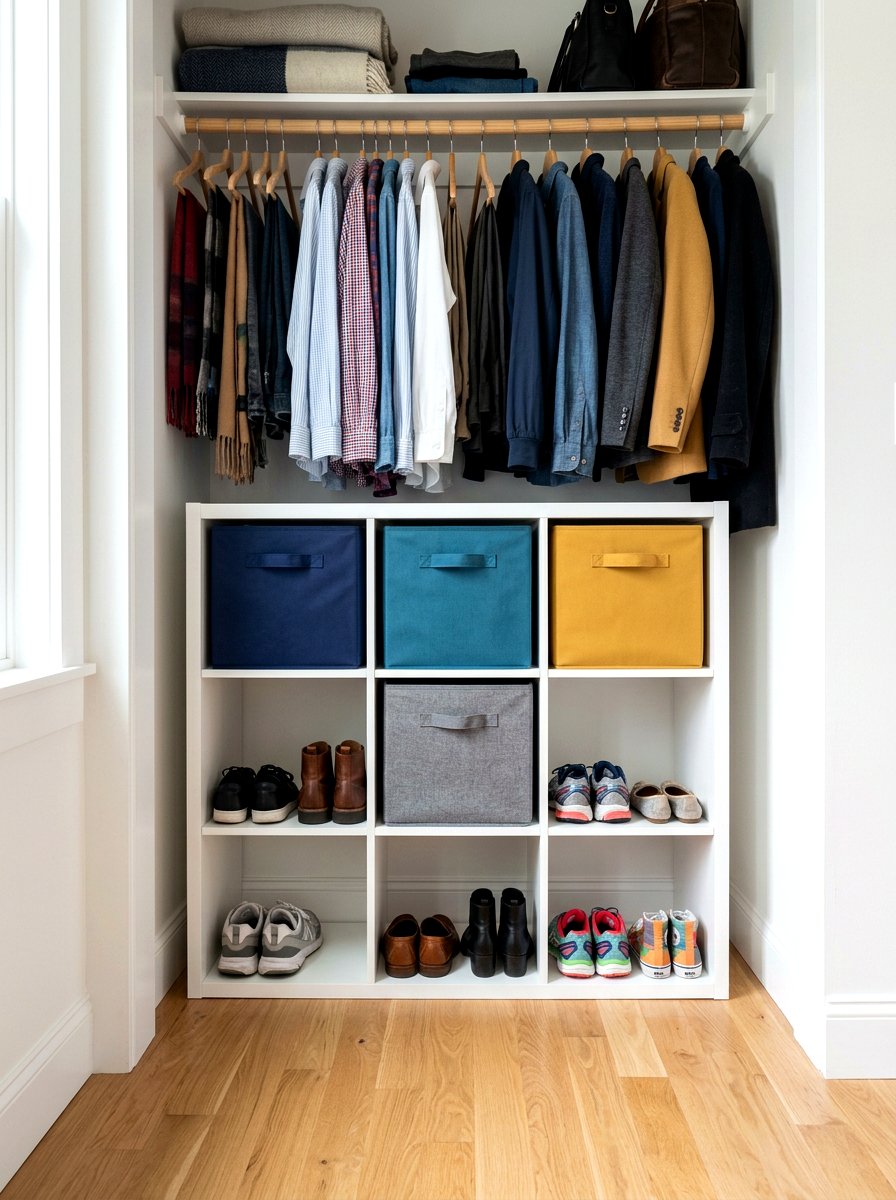
If you have a large amount of floor space at the bottom of your closet, a modular cube organizer can act as a secondary dresser. These square units can be stacked or arranged side-by-side to fit the specific dimensions of your closet floor, providing a sturdy base for bins or folded clothes. The open-front design allows you to see everything at a glance, or you can insert fabric drawers for a cleaner, more concealed appearance. Modular units are excellent for kids' closets because the heights can be adjusted as they grow, and the cubbies are the perfect size for small shoes and toy storage.
17. Jewelry Tray Insert
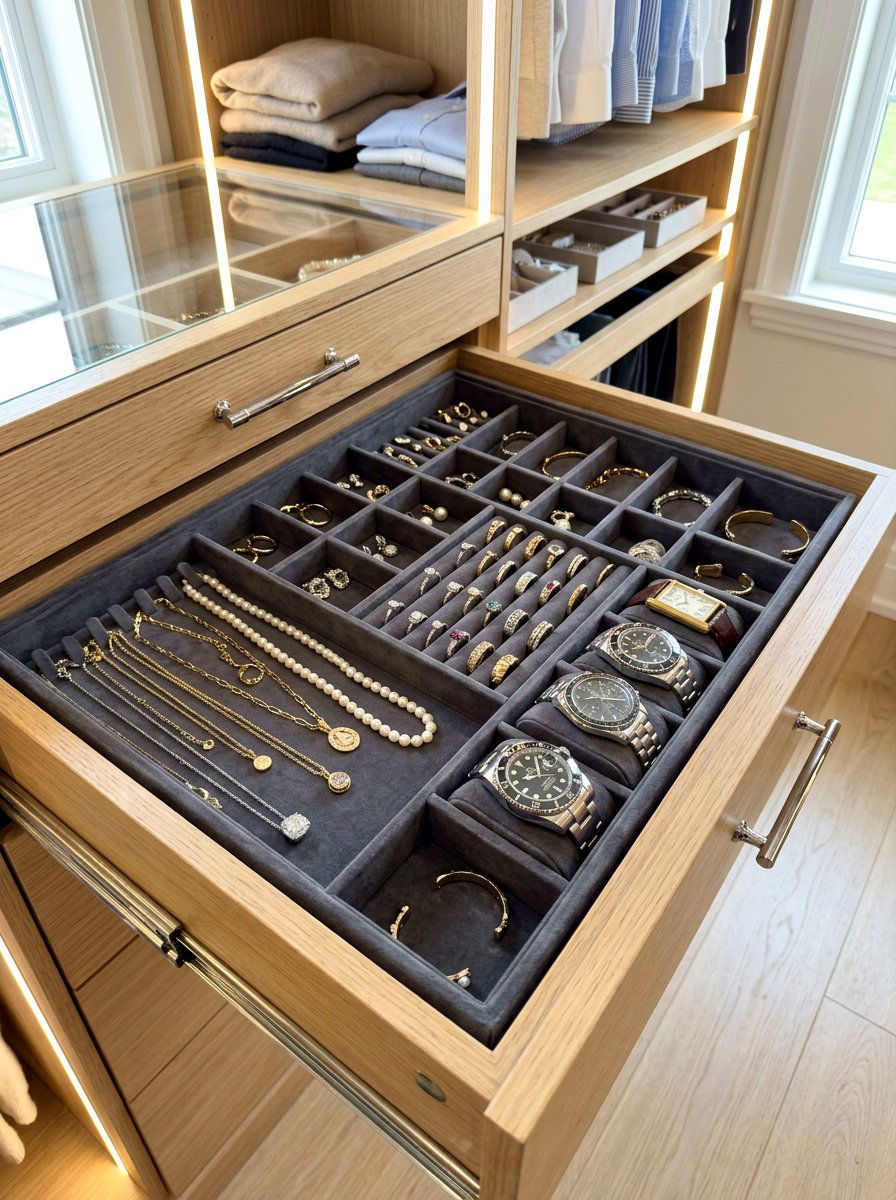
Fine jewelry and daily accessories deserve a dedicated space where they will not get tangled or lost in the general closet chaos. Velvet-lined jewelry tray inserts can be placed inside a drawer or on a shelf to provide micro-compartments for rings, watches, and necklaces. This level of organization protects your investment by preventing pieces from scratching each other while making it easy to select the perfect accessory. If you have a walk-in closet, placing a tray on a central island or vanity area creates a luxurious boutique feel. Even in a small reach-in, a slim tray tucked away can make a massive difference.
18. Handbag Storage Rack
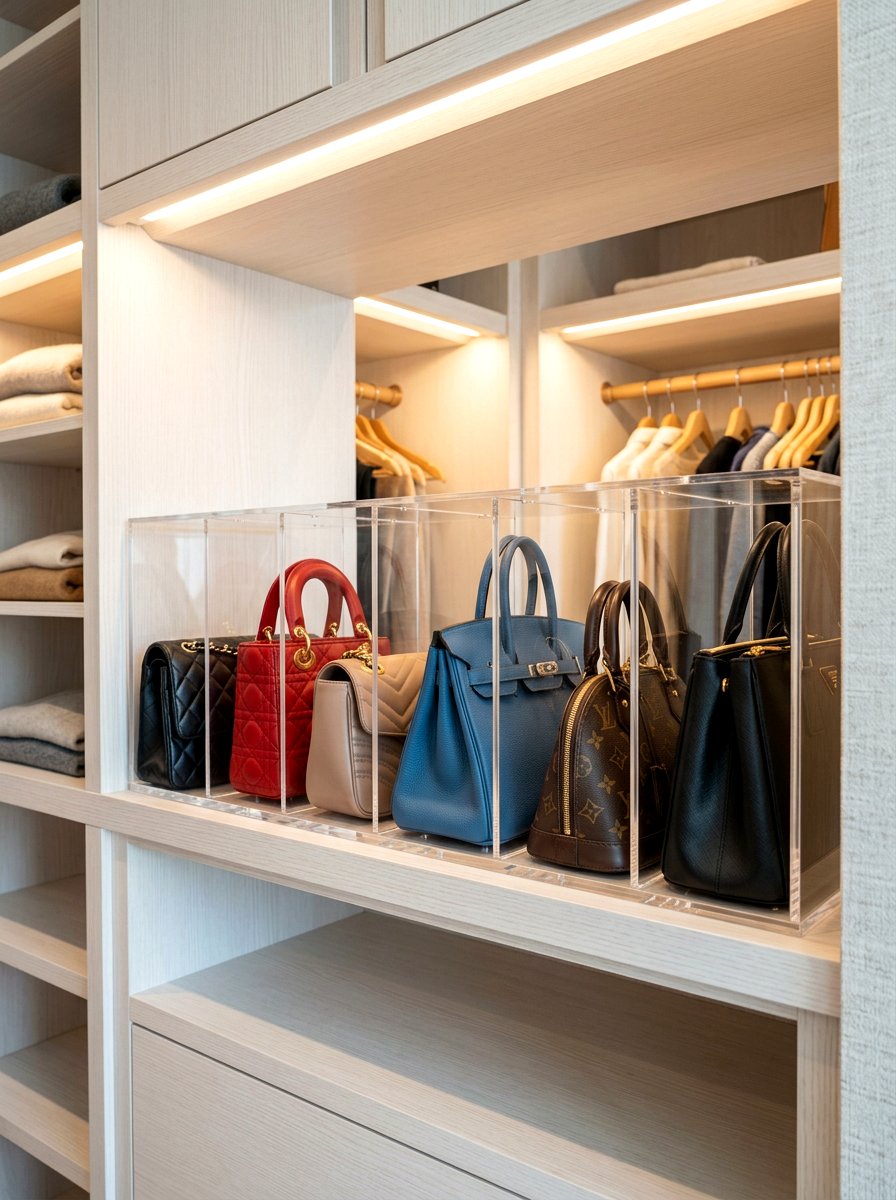
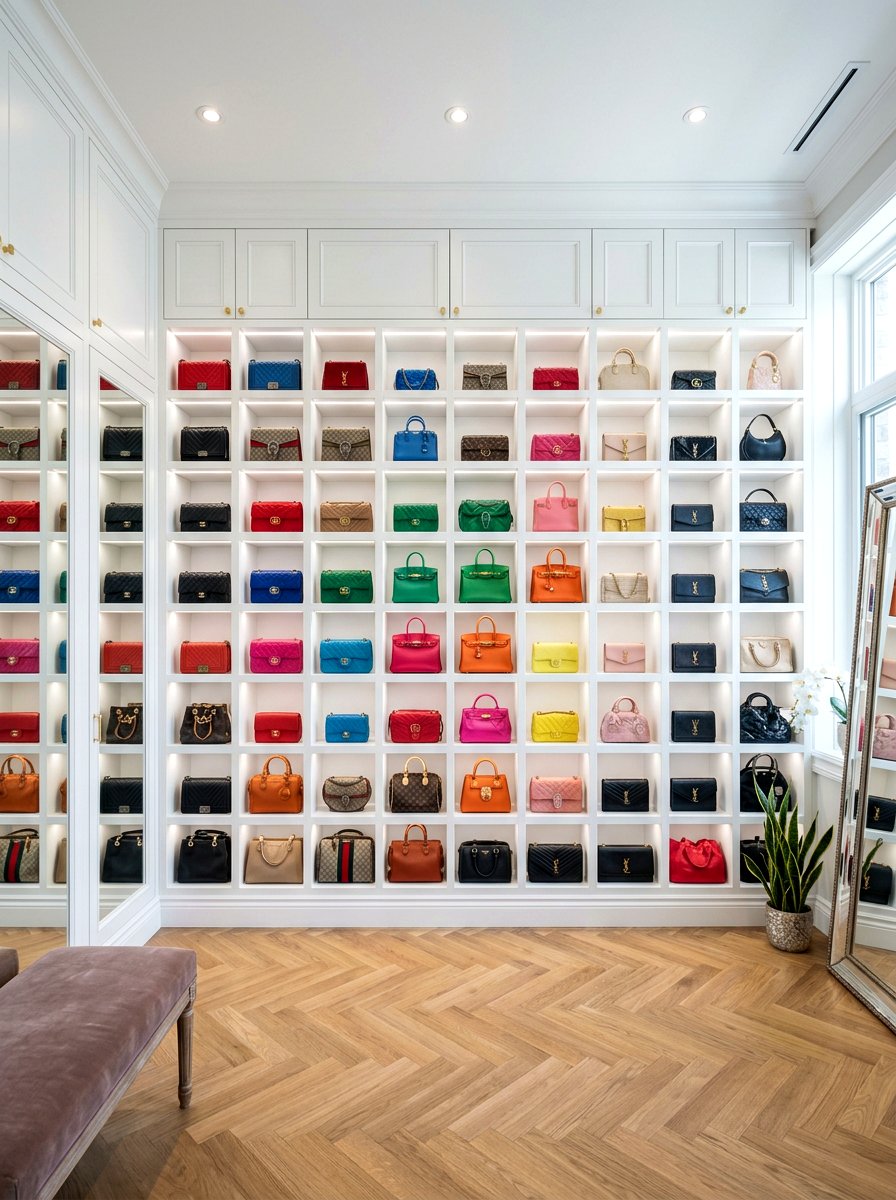
Handbags are notoriously difficult to store because they come in various sizes and can easily lose their shape if crowded or hung improperly. A dedicated handbag rack or vertical shelf organizer keeps your bags standing upright and separated, ensuring they remain in great condition for years. Using clear dividers between bags allows you to see your entire collection at once, making it easier to switch purses to match your outfit. For smaller clutches, consider using a specialized "purse file" that hangs on the closet rod. Proper handbag storage not only preserves the leather and fabric but also turns your accessories into a beautiful display.
19. Hat Wall Display
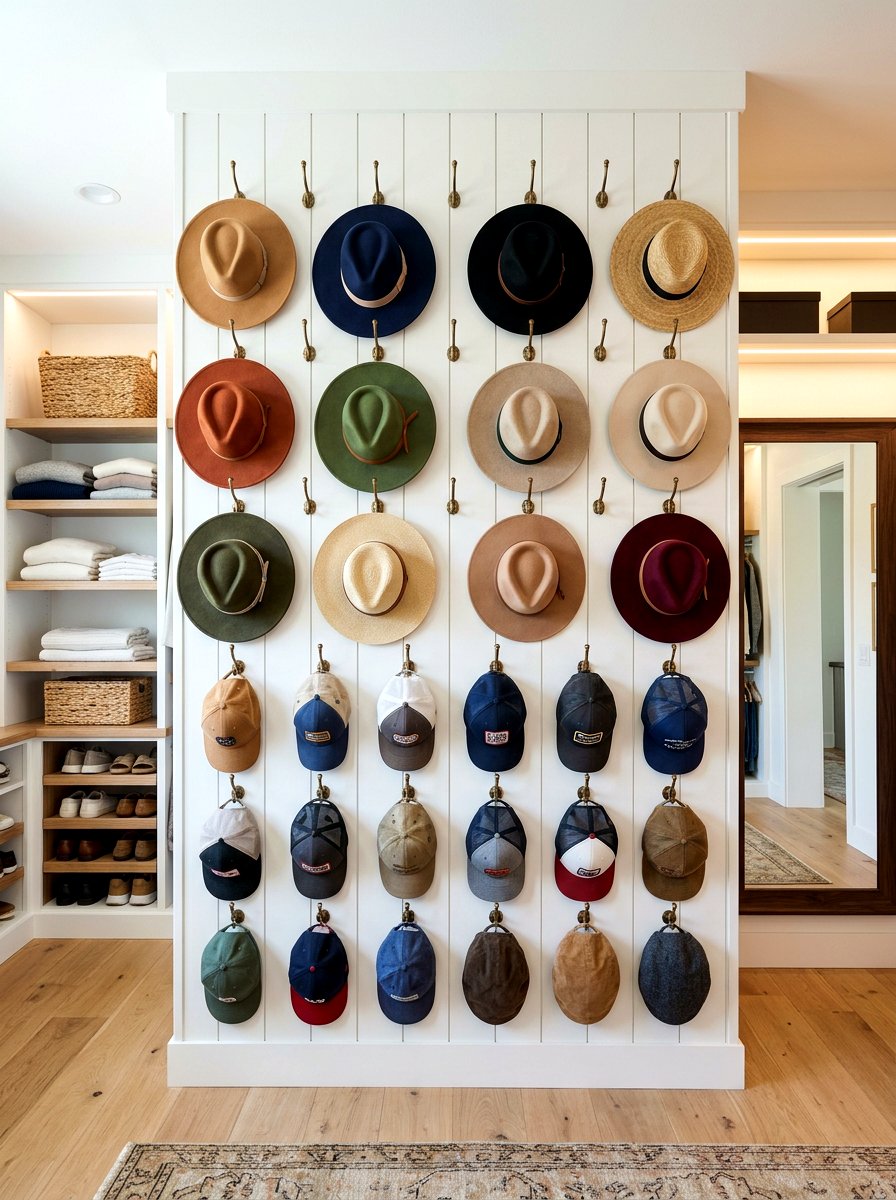
Hats are often bulky and prone to being crushed when stored in traditional bins or stacked on high shelves where they are forgotten. Creating a hat wall or using a door-mounted clip system allows you to store your headwear vertically without compromising their structural integrity. For baseball caps, a simple hook-and-clip strap on the door can hold dozens of items in a very small footprint. For wide-brimmed sun hats or fedoras, using decorative wall hooks inside the closet can turn your collection into a visual feature. This approach keeps your hats within easy reach while freeing up valuable shelf space for other essentials.

20. Label Maker Organization
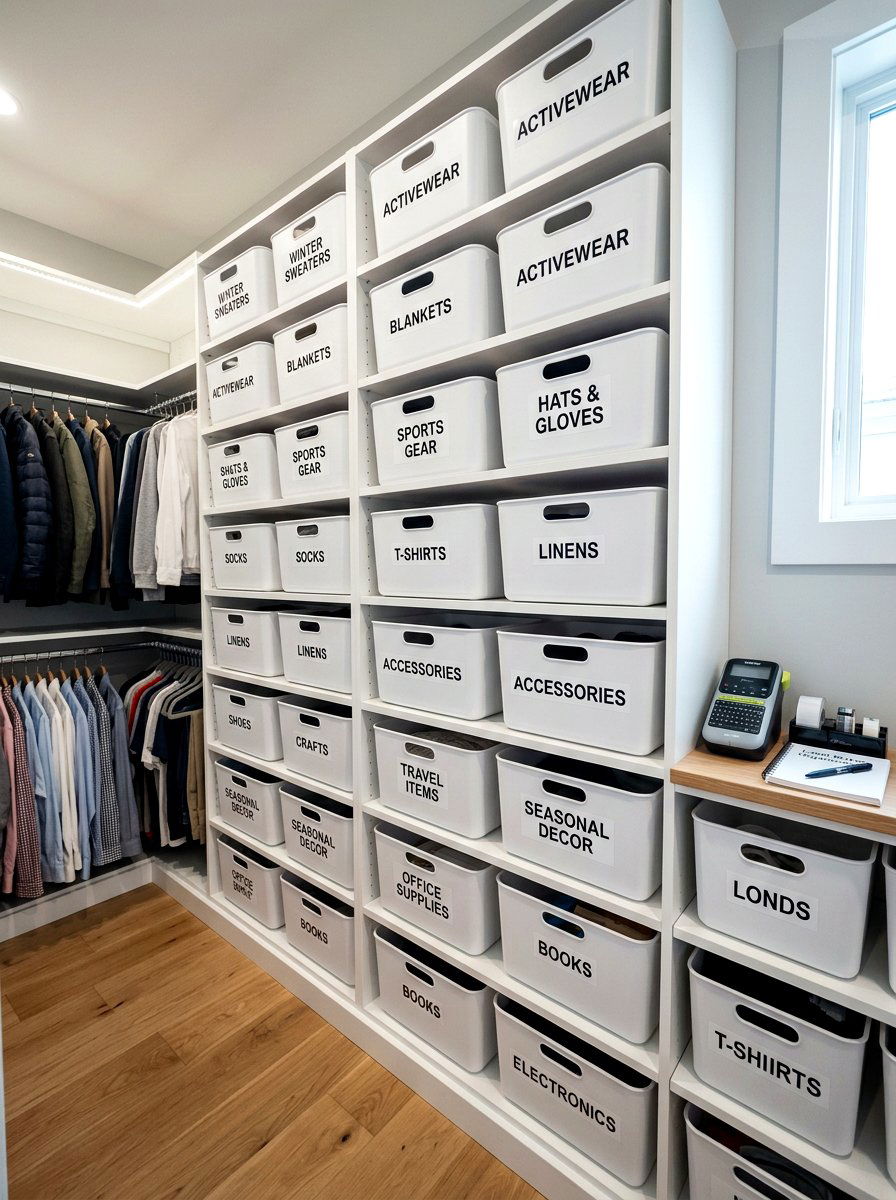
One of the most effective ways to maintain a micro-organized closet long-term is to implement a clear and consistent labeling system for all bins. Using a label maker to identify the contents of opaque baskets or high-shelf boxes ensures that everything is returned to its proper home after use. Labels are especially helpful in shared closets or for seasonal items that you only access a few times a year. You can use classic adhesive labels, hanging tags, or even chalkboard stickers for a more stylish and flexible look. When every container has a name, it removes the guesswork and helps prevent the buildup of random clutter.
21. Rolling Utility Cart
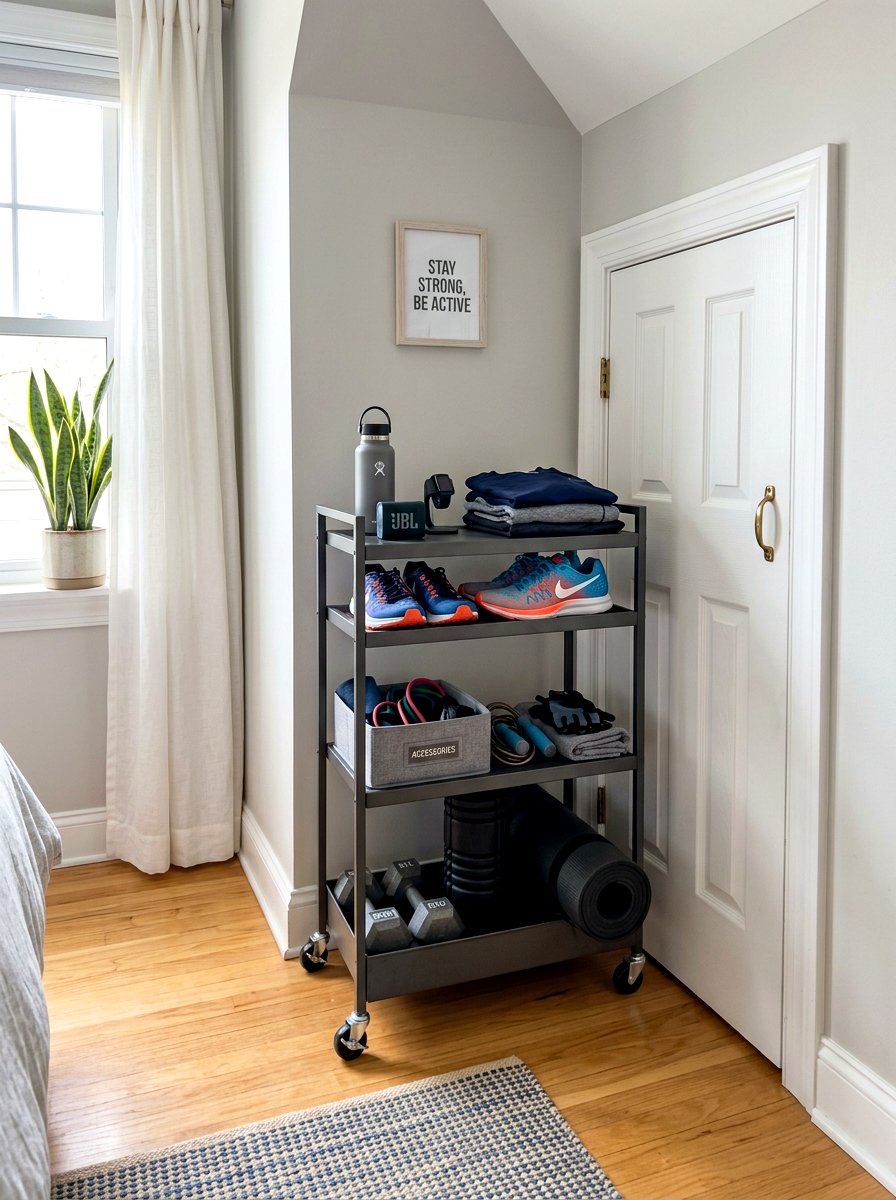
In exceptionally small bedrooms where the closet is overflowing, a rolling utility cart can serve as a mobile extension of your storage system. These multi-tiered carts are perfect for housing items that do not fit in the main closet, such as hair tools, makeup, or gym gear. Because they are on wheels, you can easily tuck the cart into a corner or beside a dresser and pull it out only when needed. Some homeowners use these carts to stage outfits for the upcoming week or to store frequently used shoes. This flexible solution prevents the main closet from becoming overstuffed while keeping your daily essentials organized and portable.
22. Vacuum Seal Storage Bag
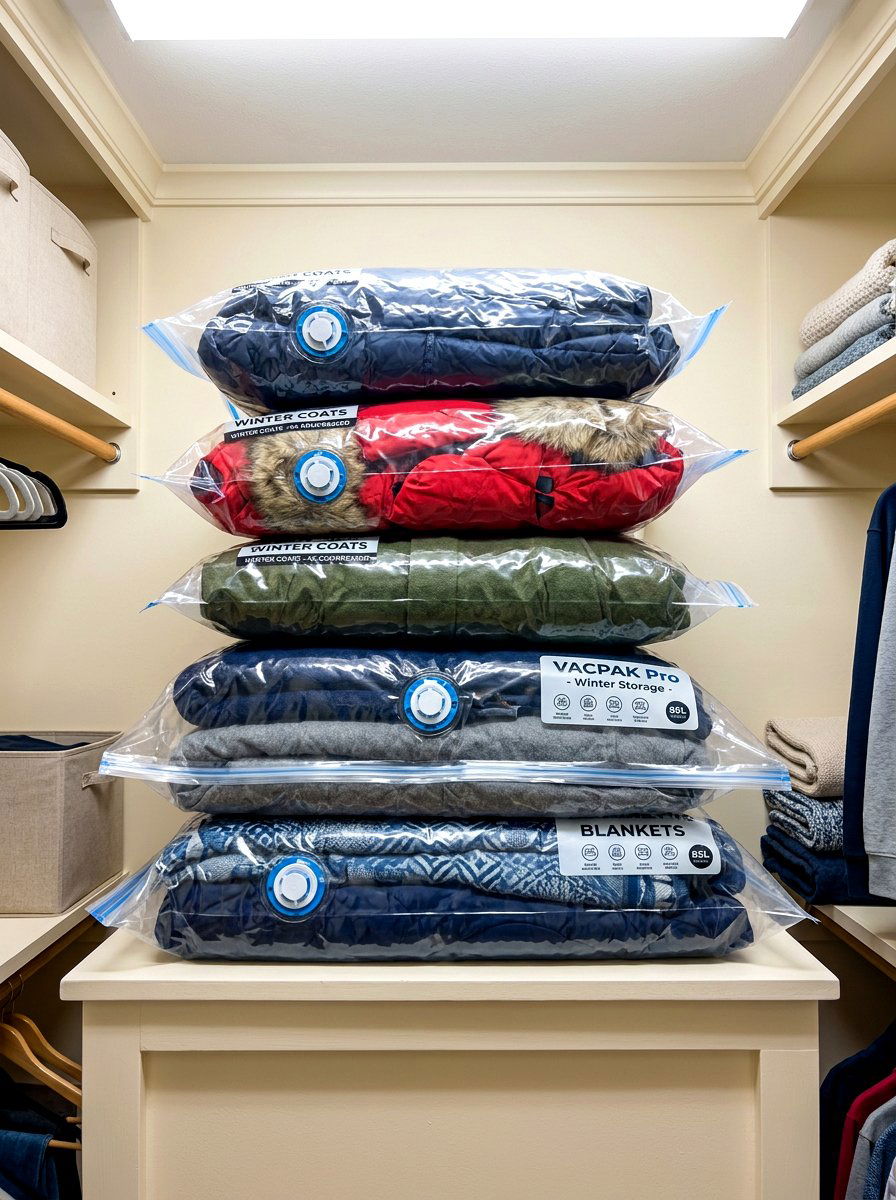
Seasonal items like heavy winter parkas, bulky comforters, and thick knit sweaters can consume a massive amount of closet space when not in use. Vacuum seal storage bags allow you to compress these items into flat, airtight packages that can be tucked away under the bed or on the highest shelf. By removing the excess air, you can reduce the volume of your off-season wardrobe by up to seventy-five percent, leaving more room for your current clothes. These bags also protect your garments from dust, moisture, and pests during the long months of storage. It is a vital strategy for anyone living in a small space.
23. Tie Rack Wall Mount
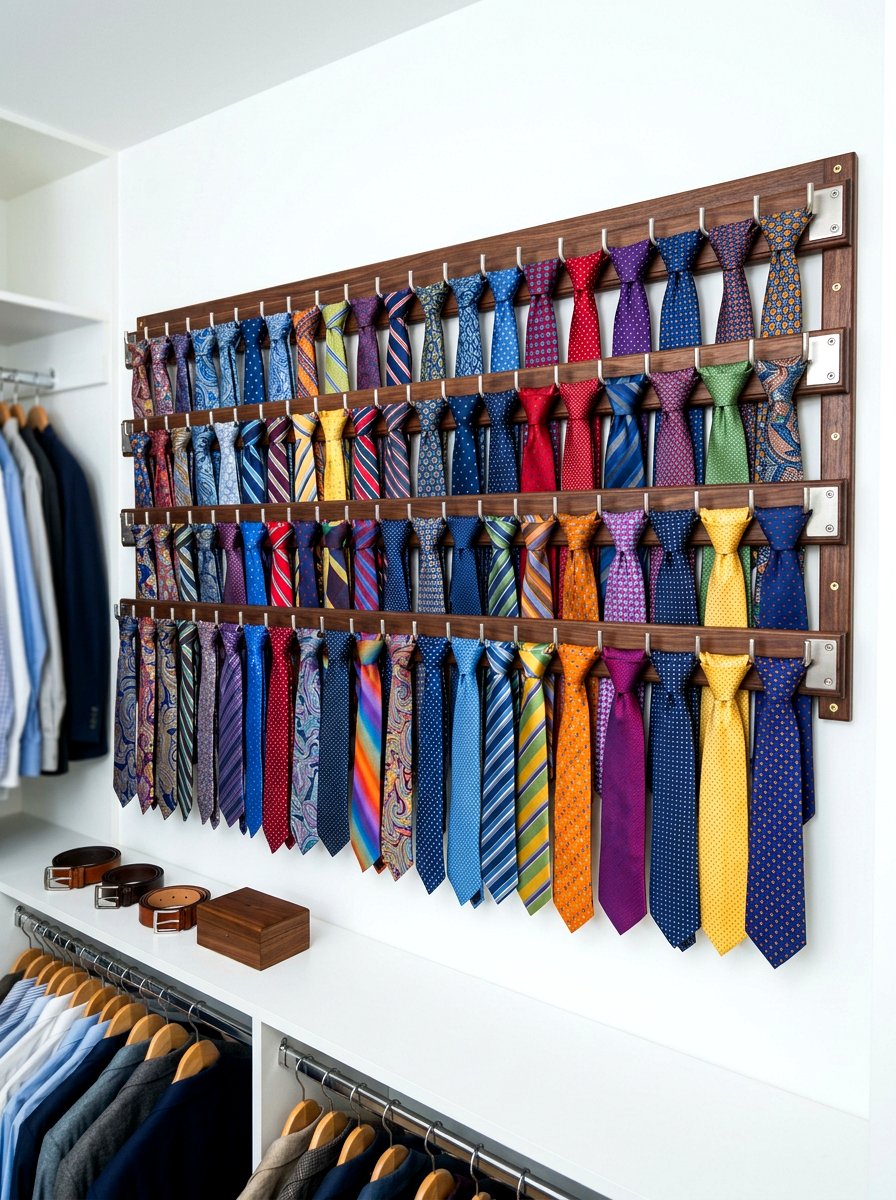
Ties are delicate and often slip off standard hangers, ending up in a crumpled mess on the floor of the closet. A wall-mounted tie rack provides a series of small, specialized hooks that keep each tie separate, visible, and securely in place. These racks can be installed on the side wall of the closet or the back of the door, taking up almost zero usable space. Some models even feature a motorized rotating system that allows you to browse through dozens of ties with the touch of a button. Keeping ties organized this way ensures they remain wrinkle-free and easy to coordinate with your suits.
24. Corner Closet Shelf
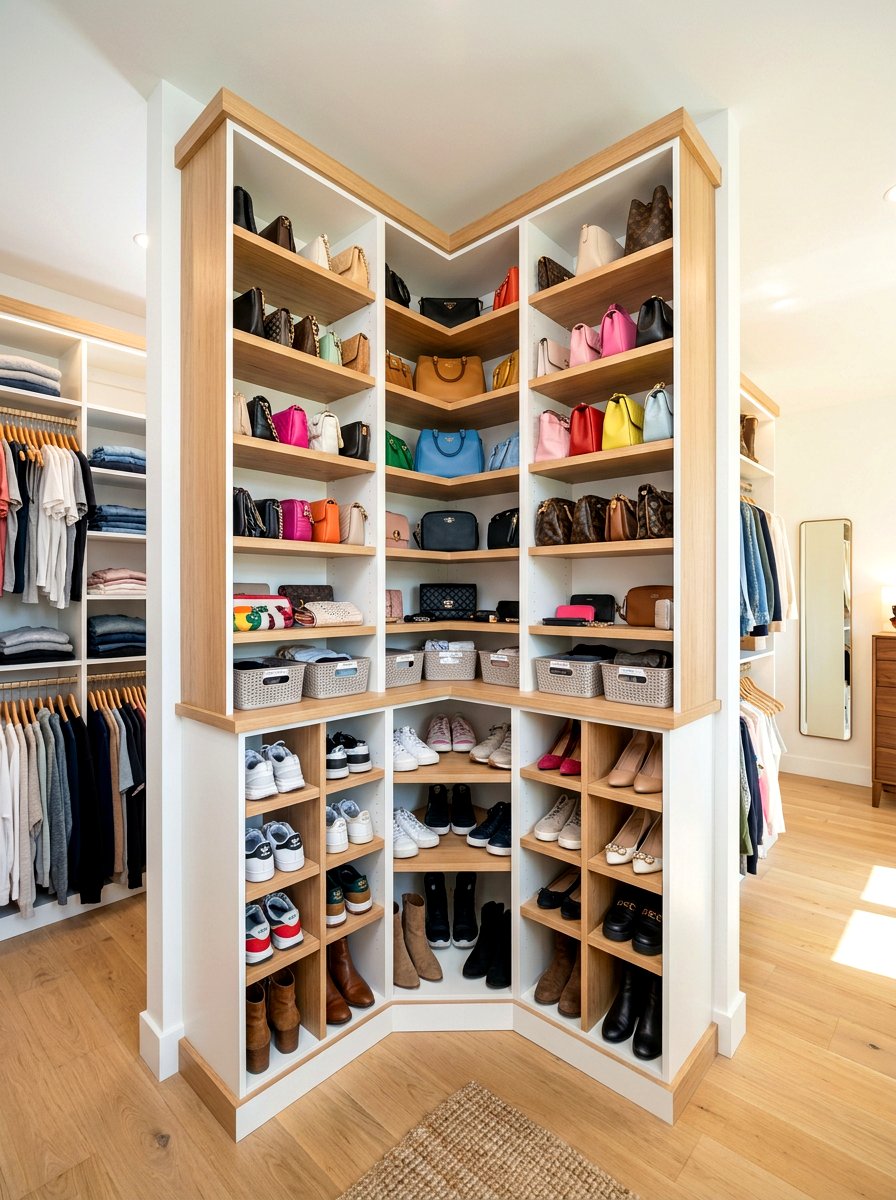
The corners of a reach-in or walk-in closet are often "dead zones" where space is wasted because traditional straight shelves do not reach them effectively. Installing custom corner shelving units allows you to wrap your storage around the perimeter of the closet, maximizing every available inch of the wall. These curved or angled shelves are perfect for displaying shoes, handbags, or small decorative baskets that would otherwise be lost in the shadows. By utilizing the corners, you create a continuous flow of storage that makes the closet feel more integrated and spacious. It is a smart architectural adjustment that pays off in daily functionality.
25. Sliding Tie Belt Rack
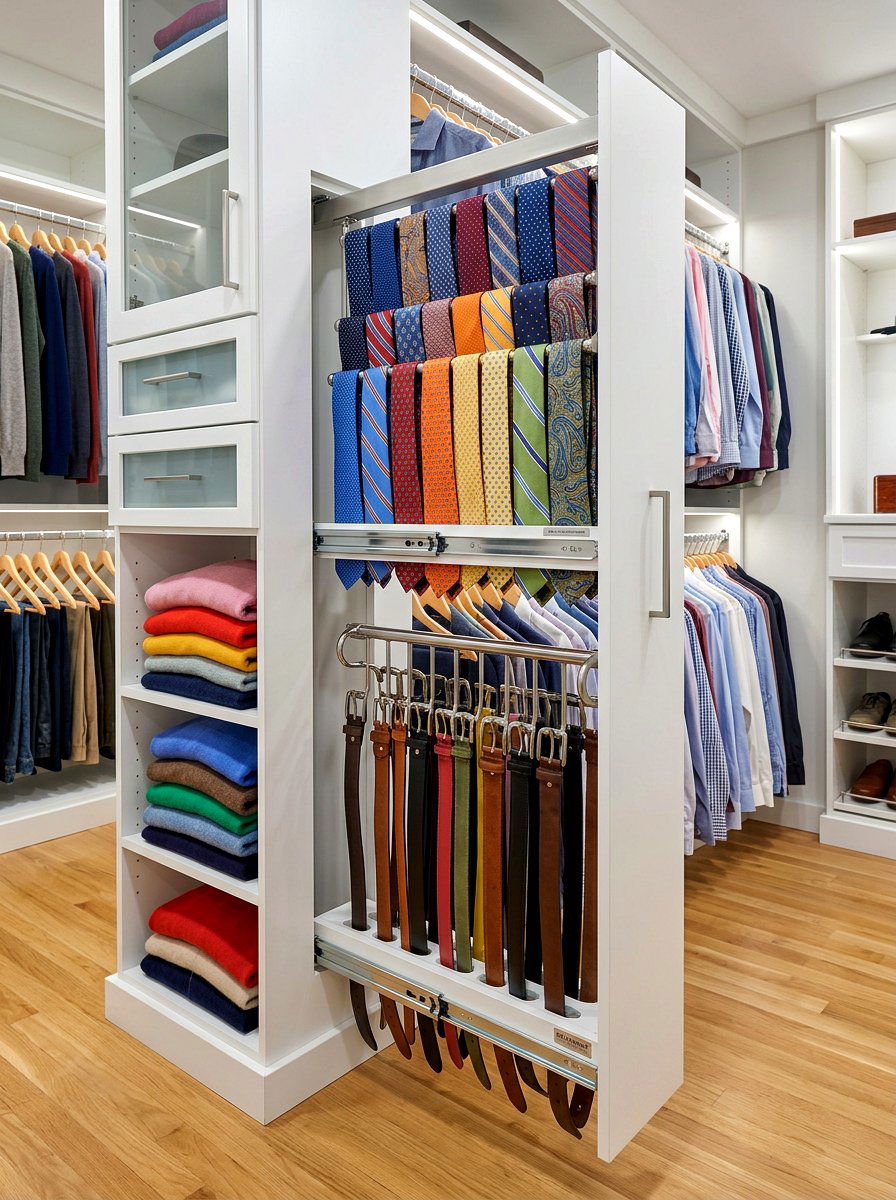
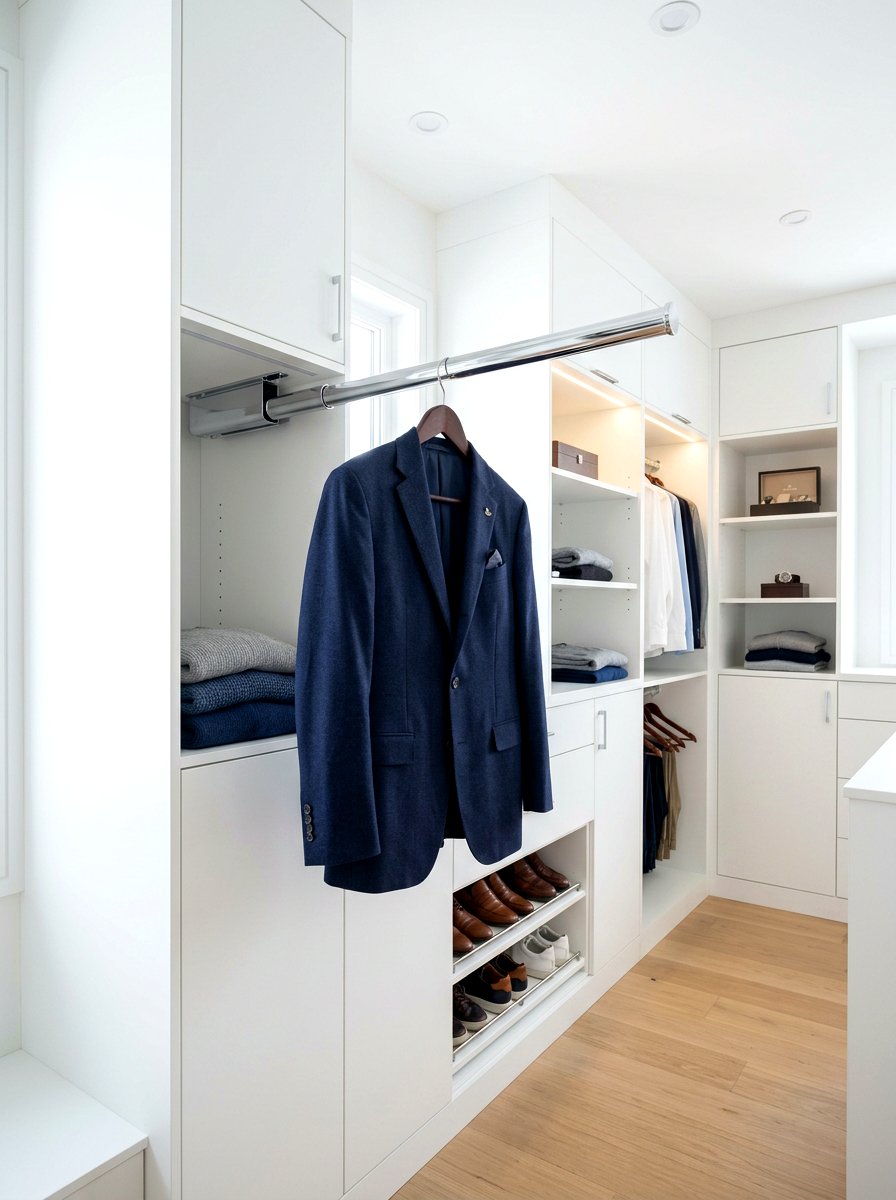
For a truly high-end and space-efficient solution, a sliding belt and tie rack can be integrated directly into your closet shelving system. These racks pull out like a drawer, allowing you to see your entire collection of accessories at once before tucking them neatly back into a slim profile. Because the rack is mounted to the side of a shelf or a vertical partition, it uses a very narrow strip of space that would otherwise go unused. This micro-organization tool is perfect for those who want a minimalist look without sacrificing accessibility. It keeps belts and ties from tangling while adding a touch of sophistication.
26. Foldable Fabric Box
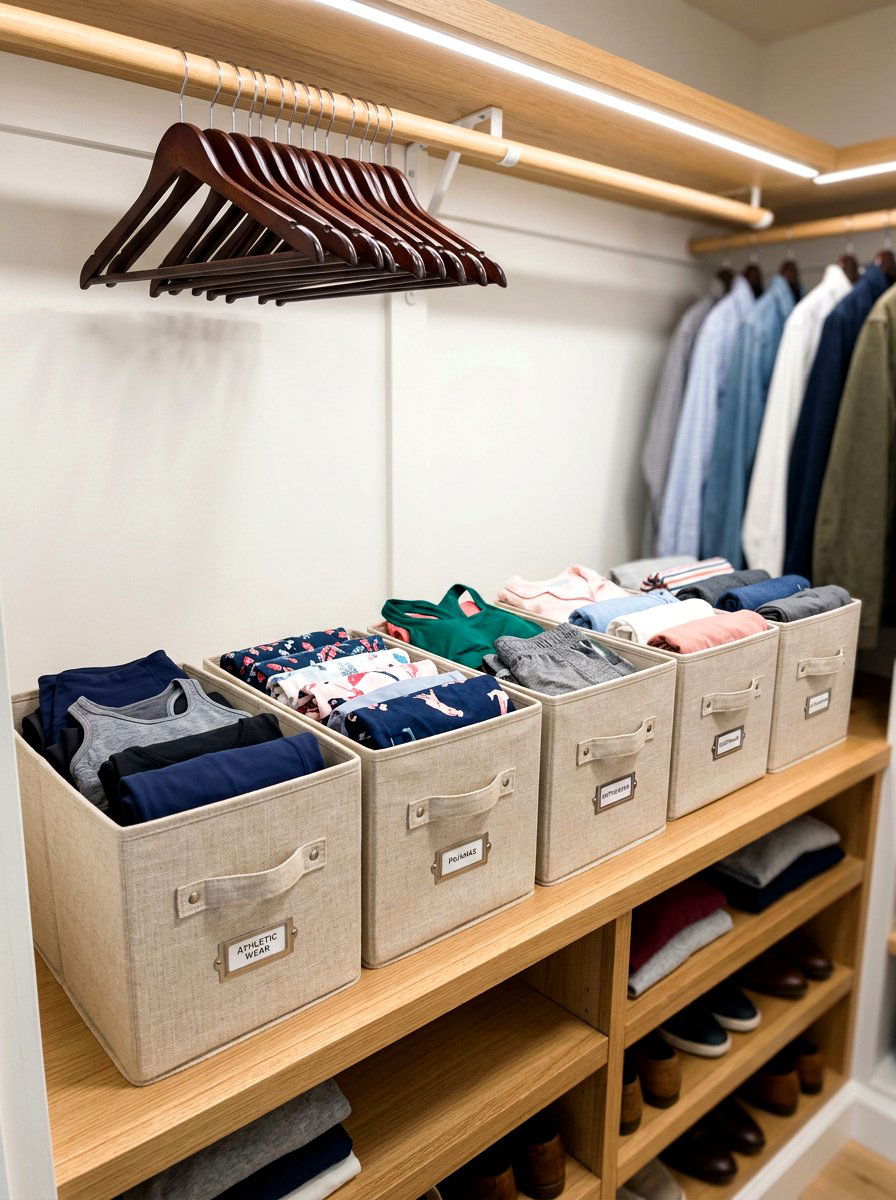
Foldable fabric boxes are a versatile and budget-friendly way to add structure to open shelves or the floor of your closet. These bins come in various sizes and colors, allowing you to color-code your organization for different family members or categories of clothing. When not in use, they can be collapsed flat, making them easy to store until you need them again. Use them for items that are hard to stack, like pajamas, athletic leggings, or swimsuits, to keep your shelves looking tidy. The soft fabric is gentle on delicate materials, and the integrated handles make them easy to pull down from high locations.
27. Double Closet Rod
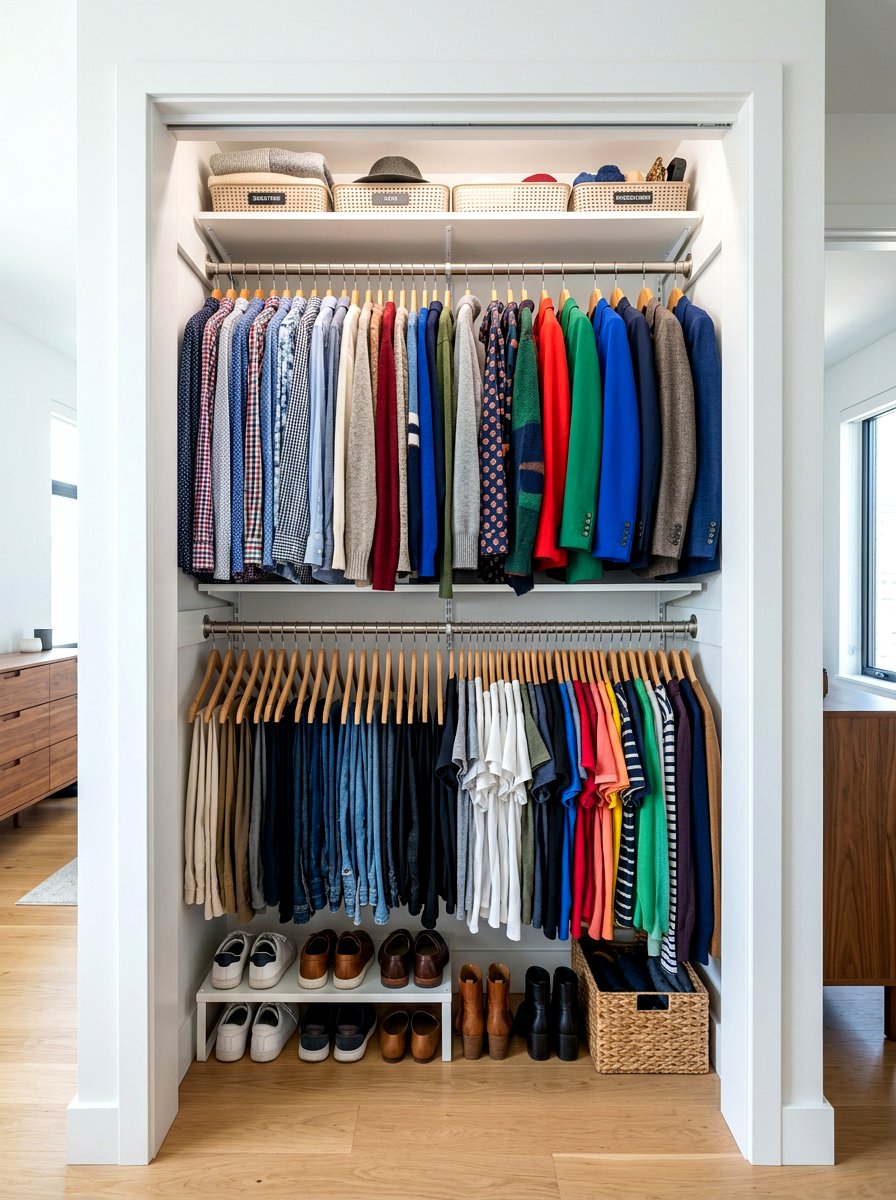
If your closet currently features only one high rod, you are likely wasting the entire bottom half of your storage area. Installing a double closet rod system — where one rod sits at eye level and another sits about three feet below — immediately doubles your hanging capacity. This setup is ideal for shorter garments like blouses, jackets, and folded trousers, which do not need the full height of the closet. You can leave one small section with a single rod for long dresses or coats while doubling up everywhere else. This simple structural change is the single most effective way to manage a large wardrobe in a small room.
28. Clear Shoe Box
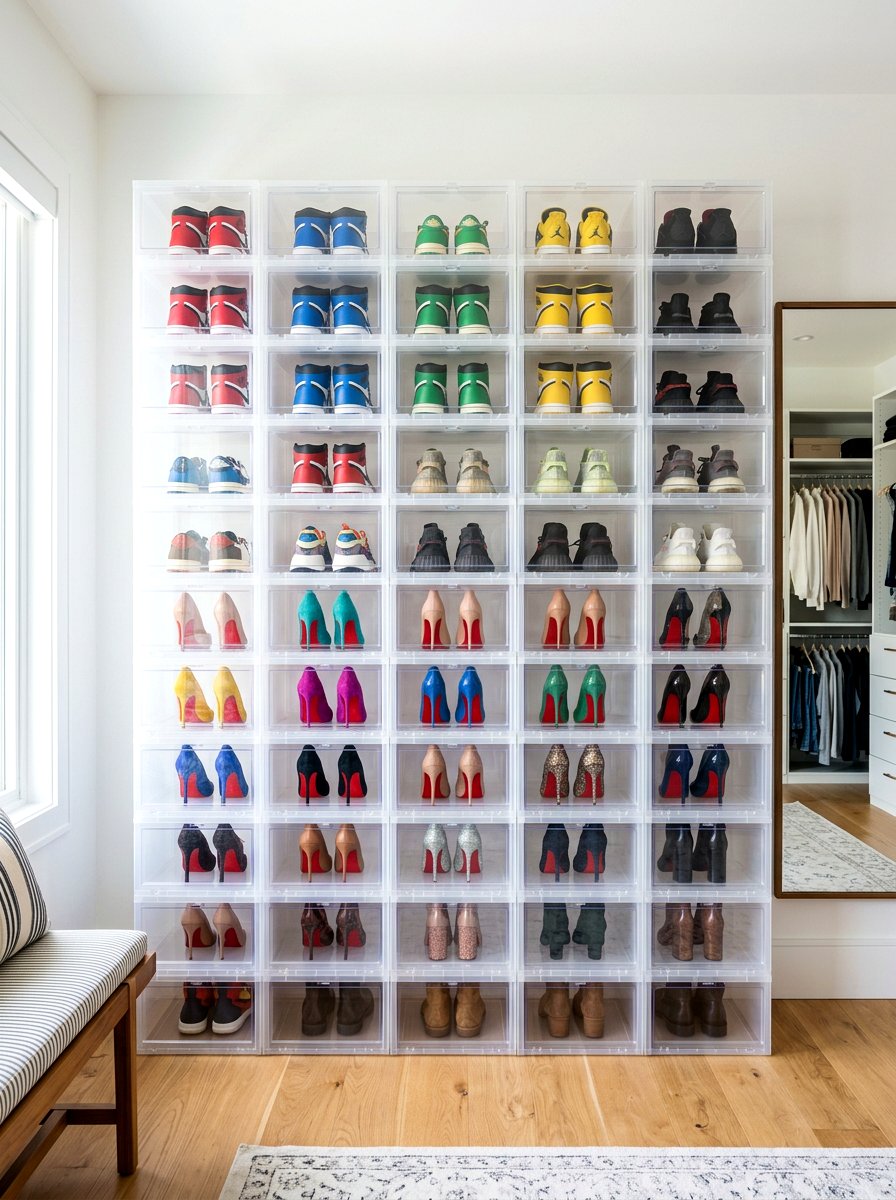
Cardboard shoe boxes are bulky, inconsistent in size, and hide the footwear inside, making it difficult to find the pair you want. Replacing them with uniform clear shoe boxes creates a clean, organized look while providing instant visibility to your entire collection. These boxes are designed to be stacked securely, allowing you to build a custom shoe wall that utilizes the full height of your closet floor or shelves. Many versions feature drop-front doors, so you can retrieve a pair of shoes without having to unstack the boxes above. This system keeps your shoes dust-free and prevents them from getting scuffed in a pile.
29. Door Mounted Mirror
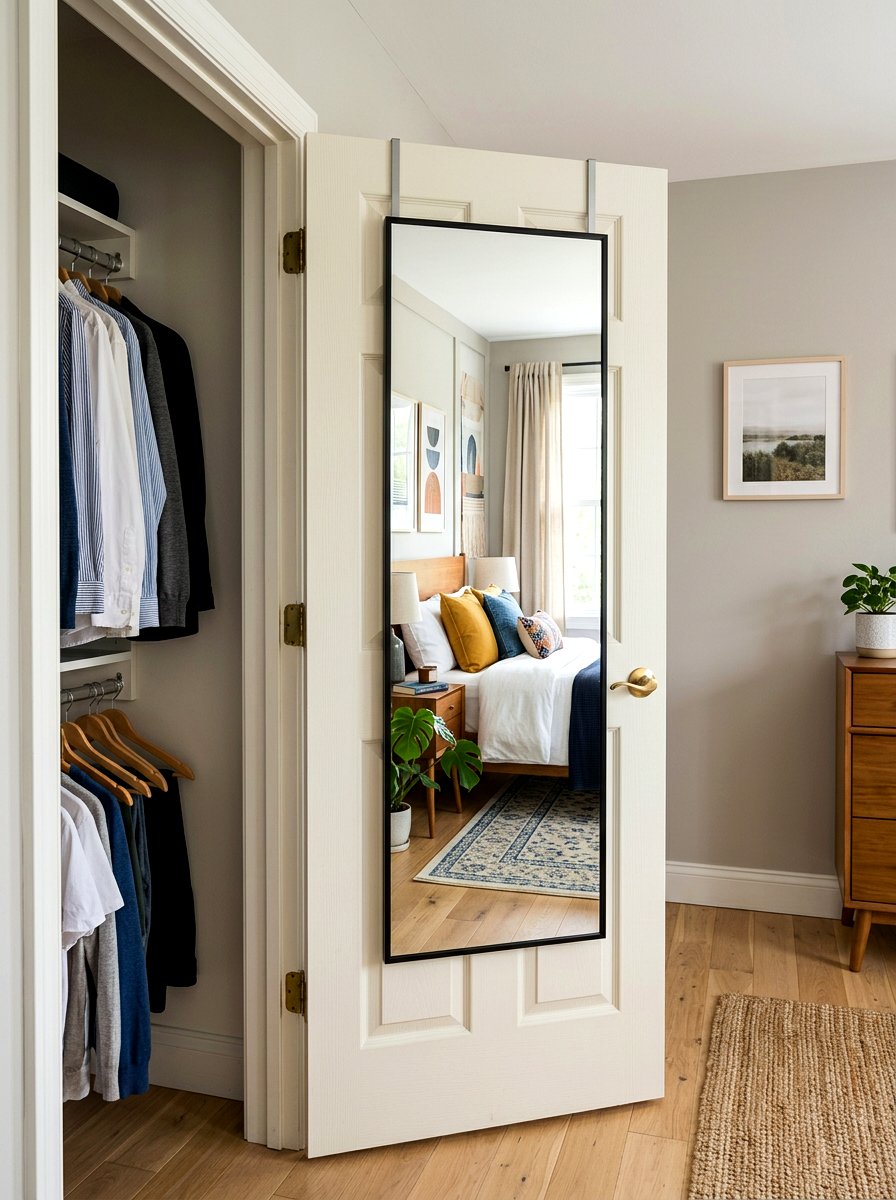
In a small bedroom or closet, finding space for a full-length mirror can be a challenge, yet it is an essential tool for getting dressed. Mounting a high-quality mirror to the back of the closet door saves valuable floor and wall space while providing a functional dressing station. This simple addition makes the closet feel larger and brighter by reflecting light into the often-dim interior. Some over-the-door mirrors even include hidden storage compartments behind them for jewelry or small accessories, providing double the utility. It is a practical finishing touch that completes the organization of the space and enhances your daily morning routine.
30. Linen Closet Basket
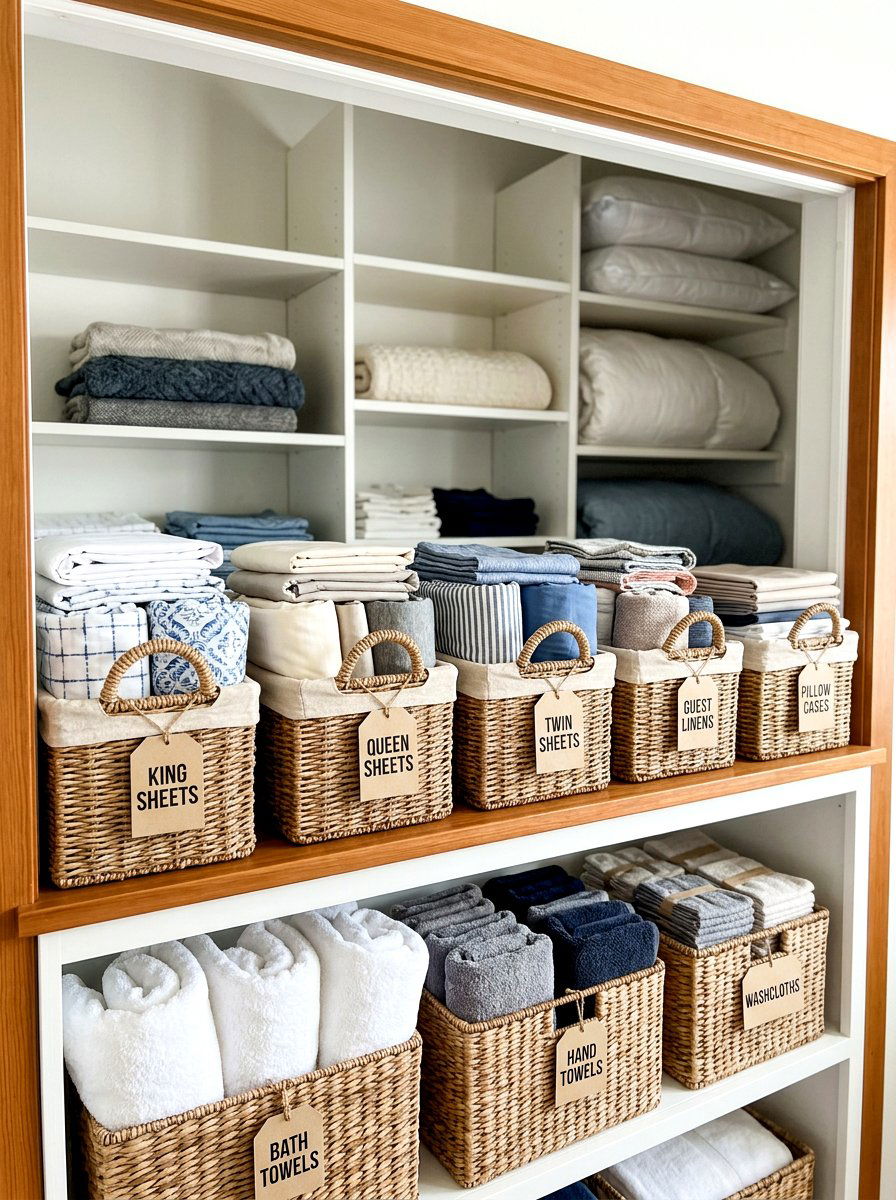
Keeping sheets and towels organized can be difficult in a small closet where stacks tend to lean or become disorganized when you pull one item out. Using specialized linen baskets or "sheet cubes" allows you to keep entire bedding sets together in one neat package. By folding the flat sheet, fitted sheet, and pillowcases into a single compact bundle inside a basket, you eliminate the frustration of searching for matching pieces. These baskets can be labeled by bed size or room, making it easy for guests or family members to find what they need. This micro-organization technique keeps your linens fresh and perfectly sorted.
Conclusion:
Mastering micro closet organization is a transformative process that turns a cluttered, stressful space into a streamlined and beautiful part of your home. By focusing on the small details — from the type of hangers you use to the placement of motion-sensor lighting — you can unlock the hidden potential of any small closet. These thirty ideas demonstrate that you do not need a massive walk-in to have a functional and aesthetic wardrobe; you simply need the right tools and a strategic layout. Investing time in these micro-adjustments will not only save you time every morning but also bring a sense of calm and order to your daily life.

Related posts: