Preparing for a new arrival often sparks a deep nesting instinct that leads many parents straight to the nursery closet. This compact space serves as the central command center for your baby’s daily needs, from those tiny newborn onesies to the mountains of diapers and cozy swaddle blankets. A well-organized closet does more than just look beautiful for social media; it creates a functional environment where you can find exactly what you need during those exhausted, late-night changes. By implementing strategic storage solutions, you can maximize every square inch of a small nursery, ensuring that your home remains a peaceful sanctuary. These thirty creative organization methods will help you transition from the chaos of baby gear to a streamlined, accessible system that grows alongside your little one through every milestone and growth spurt.
1. Baby Closet Dividers
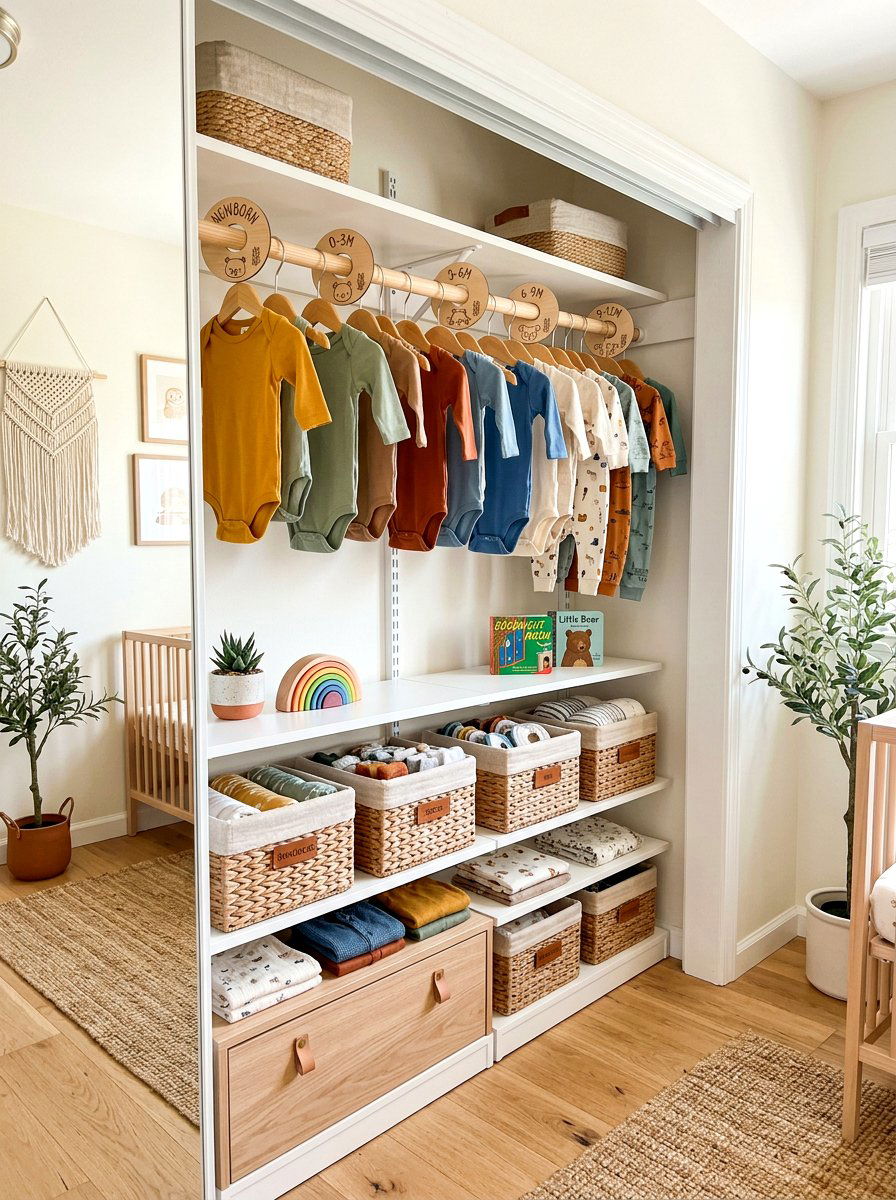
Organizing a baby 's wardrobe by size is perhaps the most effective way to manage the rapid growth spurts that happen during the first year of life. Baby closet dividers act as essential visual markers on the hanging rod, clearly separating newborn, three-month, and six-month clothing so you never miss the opportunity to use a cute outfit. These simple tools prevent the frustration of discovering a brand-new item tucked away after your child has already outgrown the size. You can find these dividers in various materials, including natural wood or colorful acrylic, ensuring they match your nursery' s specific aesthetic perfectly while making laundry day much more efficient.
2. Double Hanging Rod
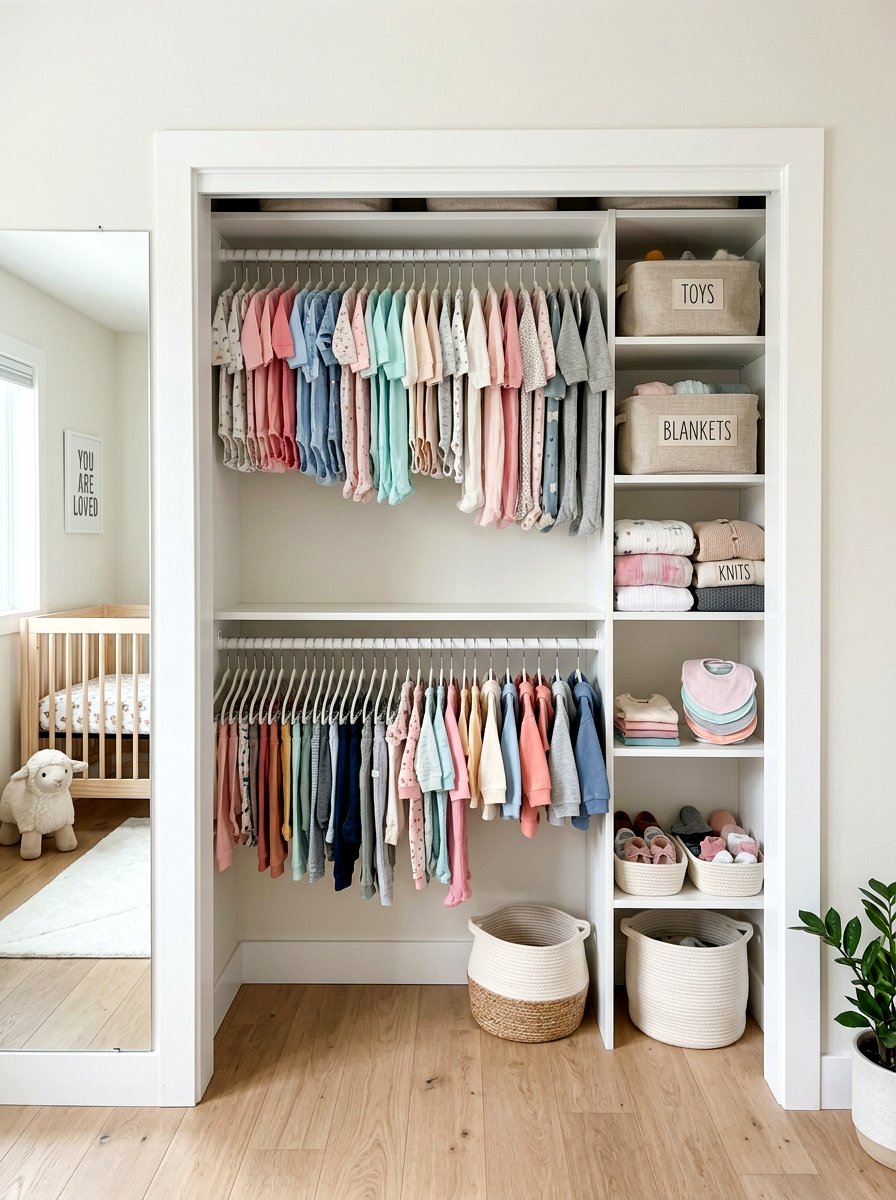
Maximizing vertical space is a game-changer in a nursery because baby clothes are significantly shorter than adult garments. By installing a double hanging rod, you effectively double the amount of usable storage space without needing a larger closet footprint. This layout allows you to hang daily essentials like onesies and sleepers on the lower, more accessible rod while keeping special occasion outfits or next-size-up items on the higher level. It creates a layered look that is visually satisfying and incredibly practical for high-volume storage. This setup also leaves plenty of room for additional shelving or bins below the bottom rod for shoes and heavy blankets.
3. Woven Storage Baskets
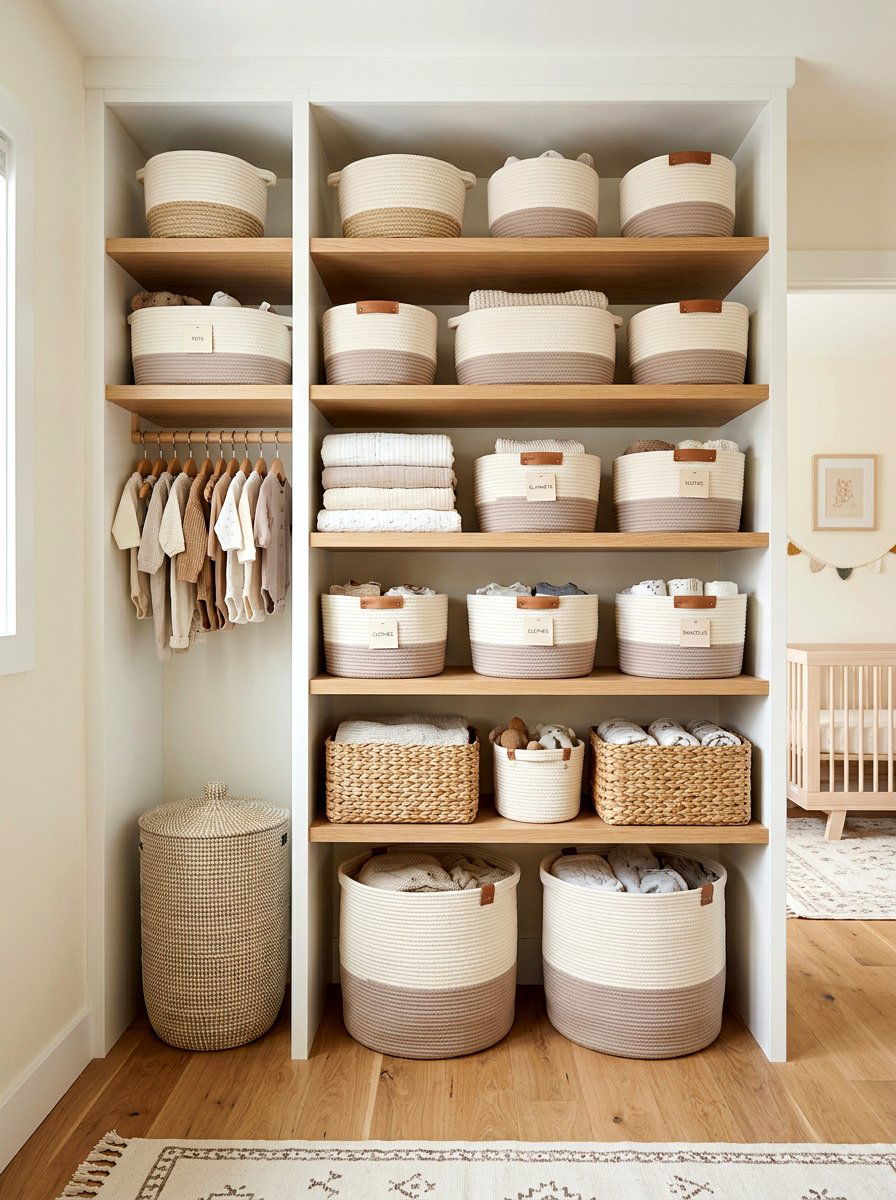
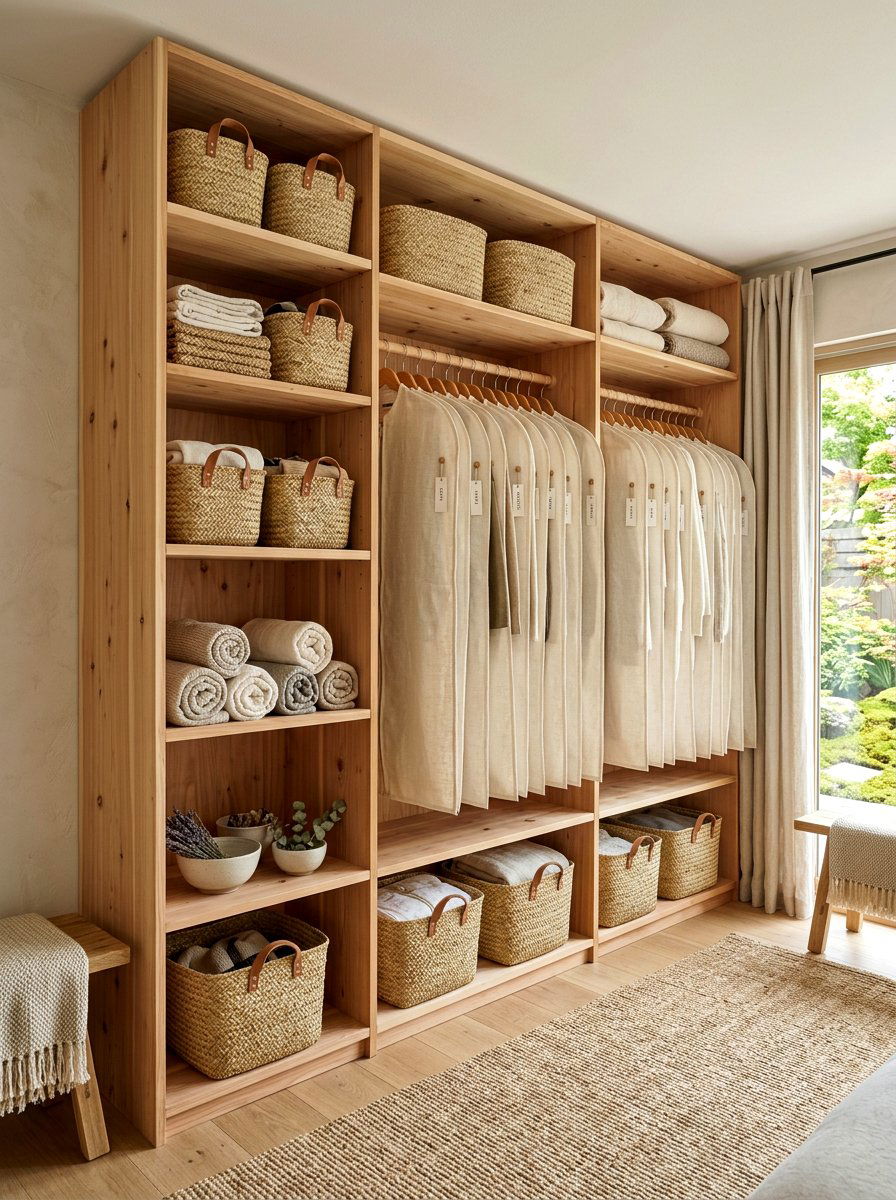
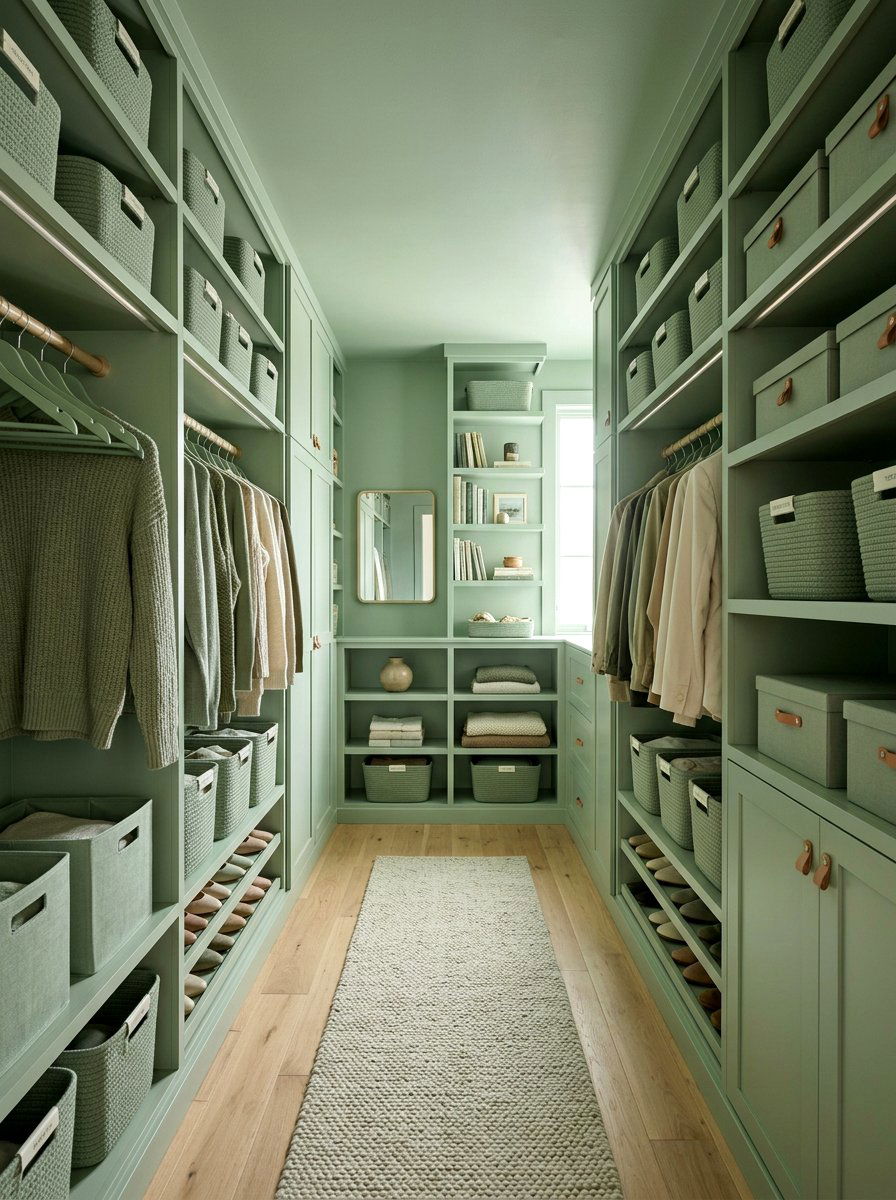
Woven storage baskets bring a touch of organic texture and warmth to a nursery closet while hiding the inevitable clutter of small baby items. These versatile containers are perfect for grouping similar objects like burp cloths, bibs, or extra pacifiers that tend to get lost on large, open shelves. Choosing a set of matching baskets creates a cohesive and high-end look that feels intentional and calm. Because they are soft and lightweight, they are easy to pull down from higher shelves even when you are balancing a baby in one arm. Using natural materials like seagrass or cotton rope also ensures the nursery feels cozy and inviting.
4. Over The Door Organizer
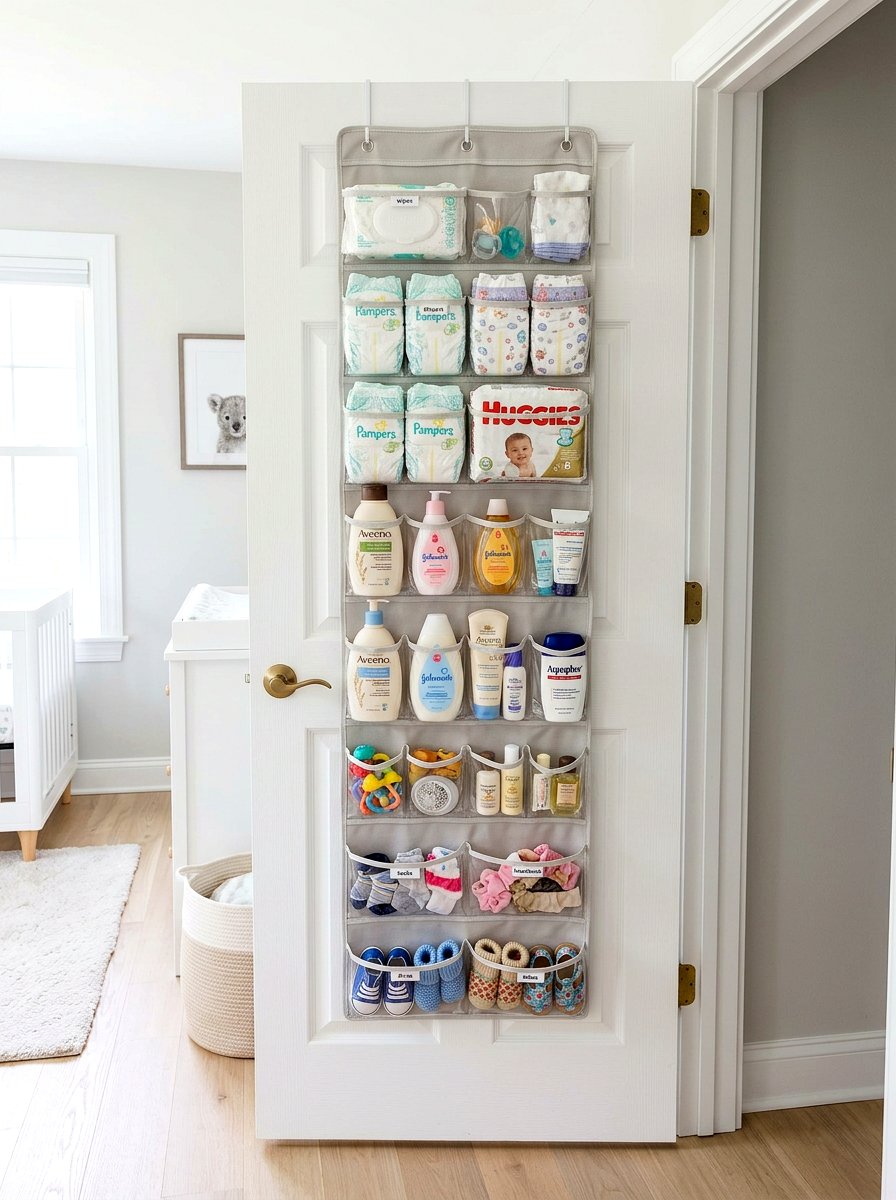
When floor and shelf space are limited, the back of the closet door becomes a valuable storage asset. An over the door organizer with clear pockets or fabric cubbies provides the perfect home for frequently used items like diapers, wipes, and lotions. This keeps the most necessary supplies at eye level and within arm's reach, saving you from bending over or digging through deep drawers. It is an ideal solution for small nurseries where every inch counts toward maintaining a clutter-free floor. Many parents use these pockets to organize baby shoes or rolled-up leggings, turning a flat surface into a multi-functional vertical storage hub.
5. Acrylic Drawer Organizers
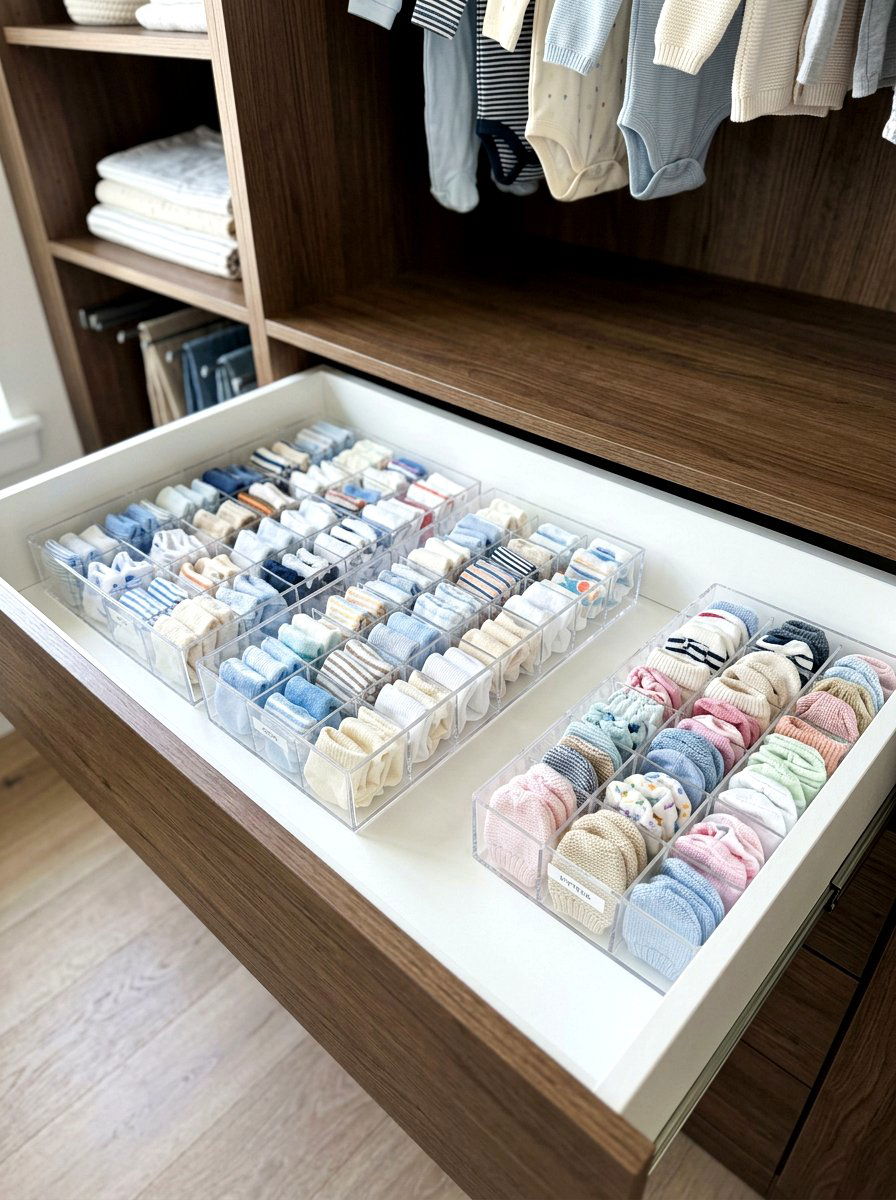
Maintaining order inside a nursery dresser or closet drawer can be difficult with such tiny pieces of clothing. Acrylic drawer organizers solve this problem by creating rigid compartments that keep socks, hats, and mittens perfectly separated and easy to see. Because the material is transparent, the drawers look clean and modern while allowing the colors of the baby's clothing to shine through. These inserts prevent small items from shifting around every time a drawer is opened or closed, which is a common frustration for busy parents. This level of internal organization ensures that you can always find a matching pair of socks in seconds.
6. Velvet Baby Hangers
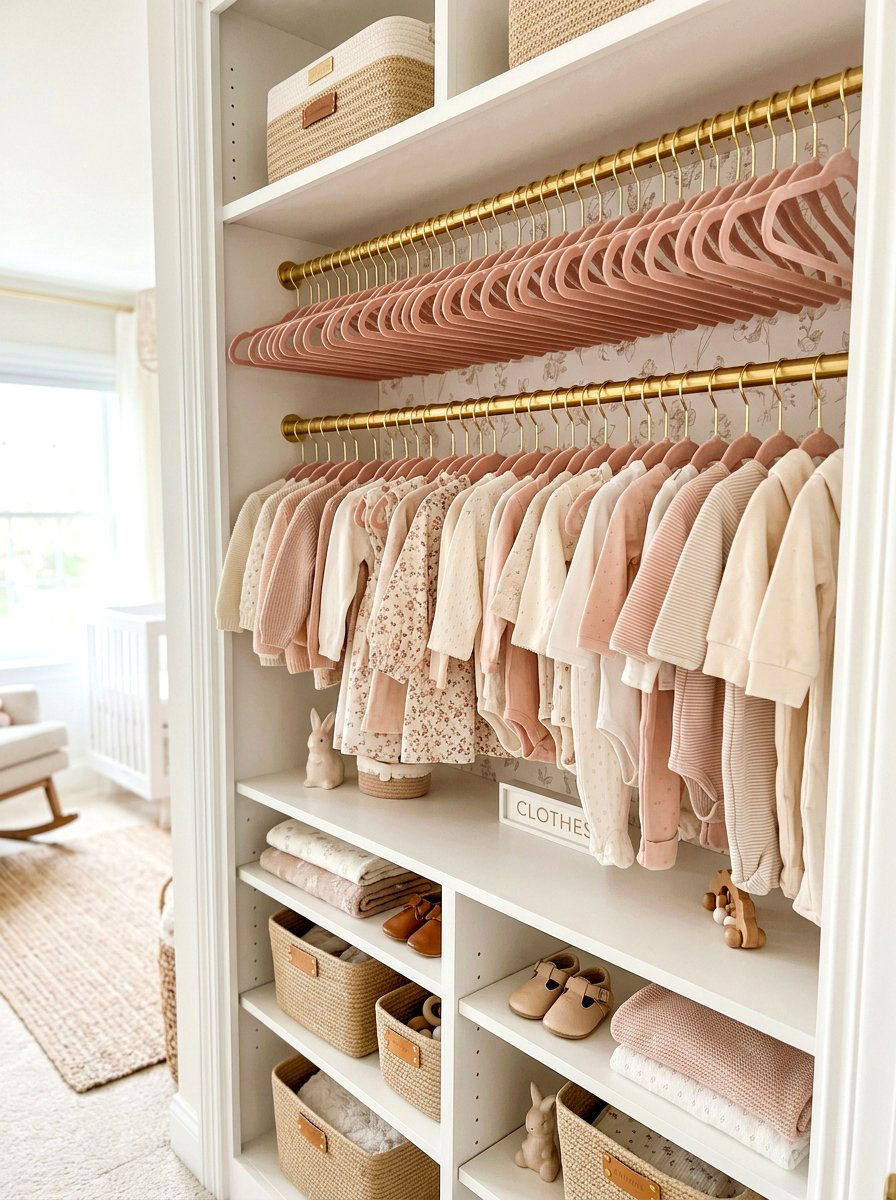
Standard plastic hangers are often too bulky for tiny newborn clothes and can cause delicate fabrics to slip off onto the floor. Switching to slim, velvet baby hangers provides a non-slip surface that keeps even the smallest straps and silky gowns securely in place. The thin profile of these hangers allows you to fit significantly more clothing on a single rod compared to traditional wood or plastic versions. Choosing a uniform color like soft grey, cream, or blush pink instantly upgrades the look of the closet, making it appear professional and streamlined. This simple swap is one of the easiest ways to achieve a high-end designer feel.
7. Cube Storage Unit
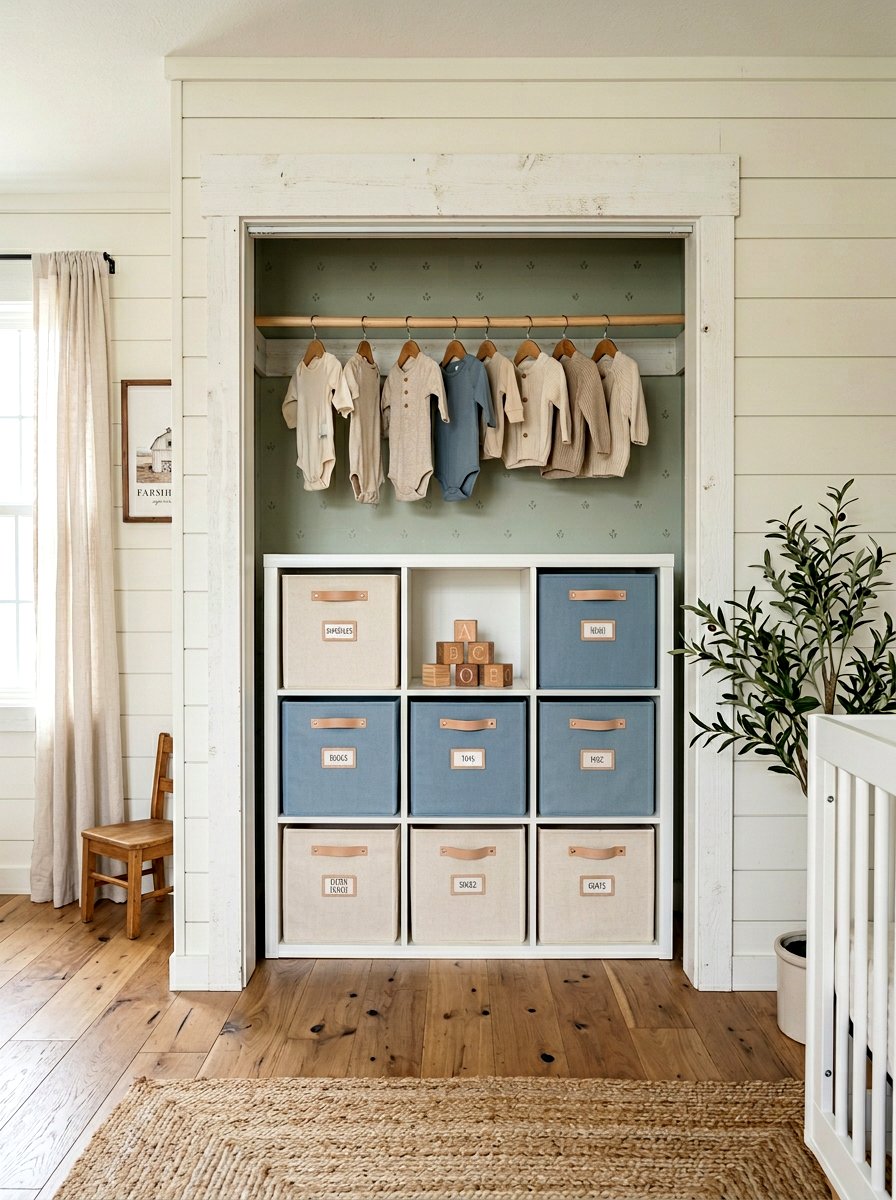
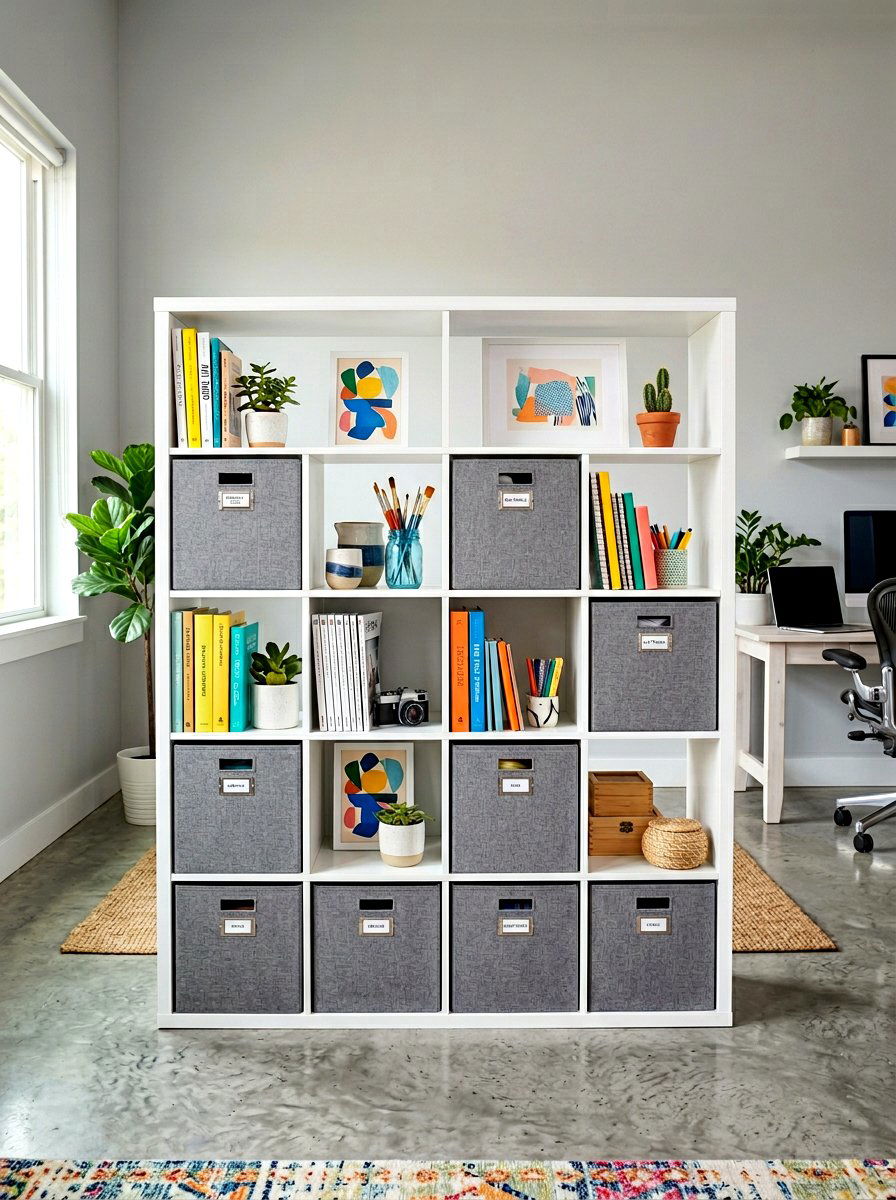
A cube storage unit is a highly versatile foundation for any nursery closet because it can be customized to fit your specific needs. You can leave some cubes open to display decorative toys and books while filling others with fabric bins to hide less attractive essentials like bulk diaper packs. This modular approach allows the closet to evolve as the baby grows, eventually transitioning into a spot for toddler toys or school supplies. Placing a low cube unit on the closet floor utilizes space that often goes to waste, providing a sturdy surface for shoes or a small lamp to keep the area bright.
8. Nursery Closet Labels
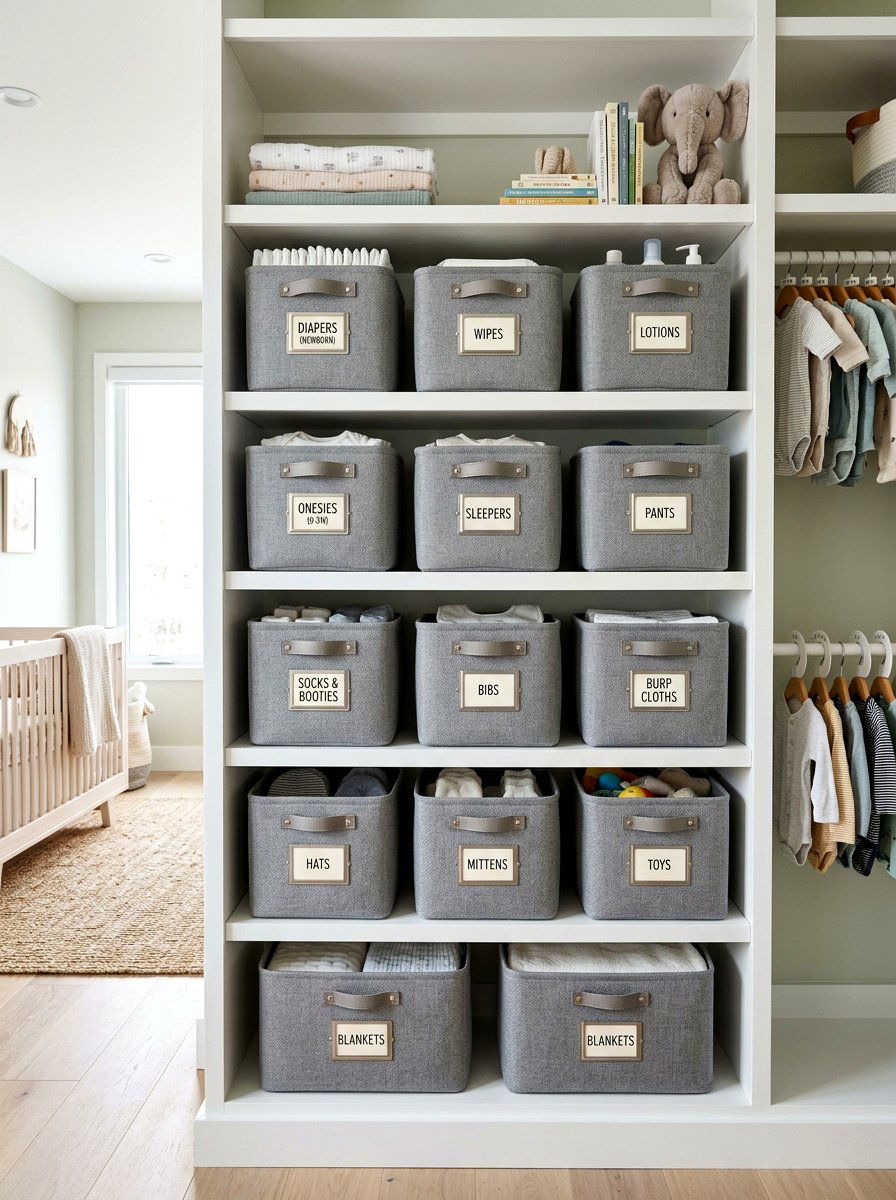
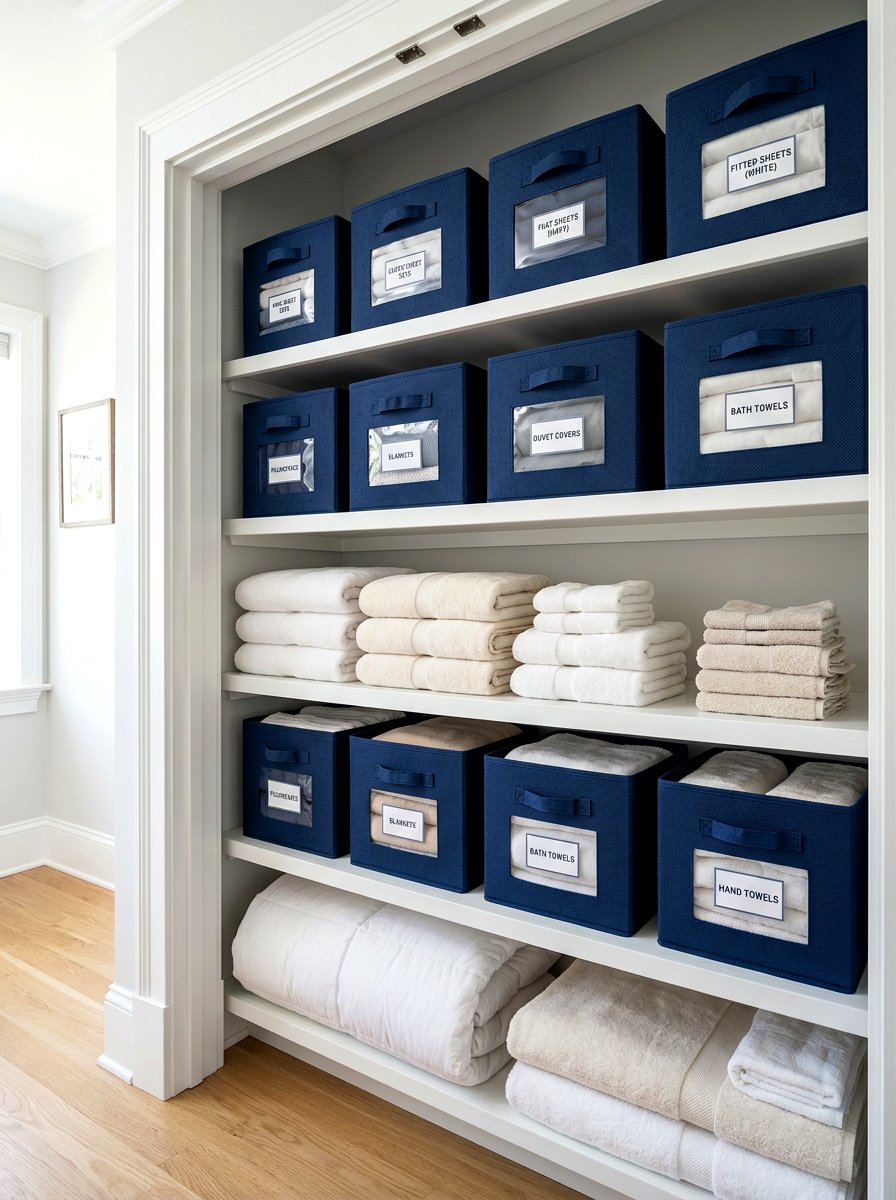
Labeling your bins and shelves is the final step in creating a truly sustainable organization system that everyone in the household can follow. Using clear, aesthetic labels for categories like "swaddles, " "pajamas, " and "toys" ensures that items are always returned to their proper place after use. This is particularly helpful for partners, grandparents, or babysitters who may not be as familiar with your specific storage logic. You can use clip-on bin tags, adhesive vinyl stickers, or even chalkboard labels for a custom look. Consistent labeling eliminates the guesswork of finding items, reducing stress during the busy morning routine or when preparing for a quick outing.
9. Custom Closet System
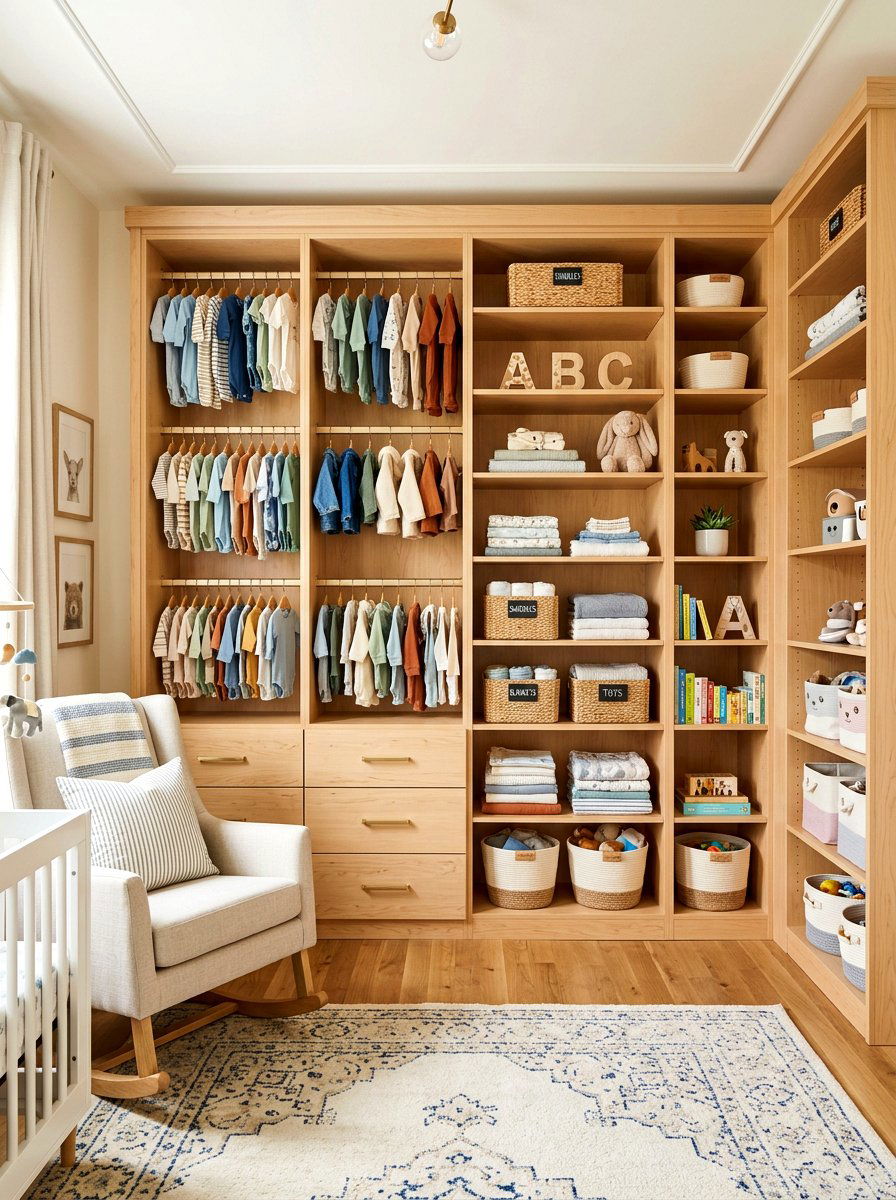
Investing in a custom closet system allows you to design a layout that perfectly matches your inventory of baby gear. These systems often include a mix of adjustable shelving, built-in drawers, and specialized hanging sections that can be reconfigured as your child’s wardrobe expands. By tailoring the height of each shelf to specific storage bins, you eliminate dead space and create a highly efficient environment. A built-in look adds significant value to your home and creates a polished, architectural feel within the nursery. Whether you choose a high-end wood finish or a modern wire system, customization ensures that every item has a dedicated home.

10. Baby Shoe Rack
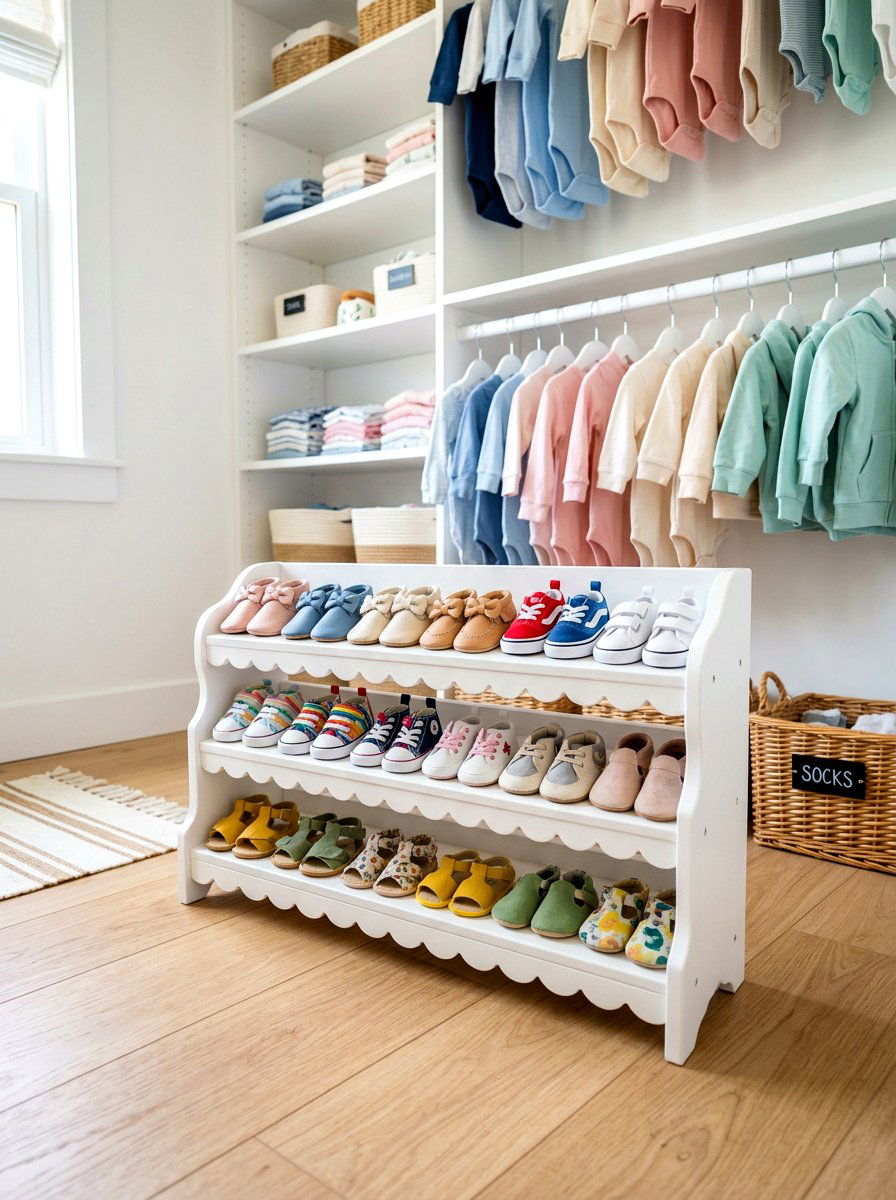
Even though they are small, baby shoes can quickly become a disorganized pile if they don 't have a designated spot. A dedicated baby shoe rack or a set of small tiered risers allows you to display these adorable items clearly while keeping them off the floor. Placing the rack at a lower level makes it easy to grab a pair while you are dressing the baby on a nearby changing table. This organization method also protects the shape of soft-soled shoes and prevents them from getting squashed under heavier items. It turns a functional necessity into a charming decor element that celebrates your child' s growing wardrobe.
11. Pull Out Wire Bins
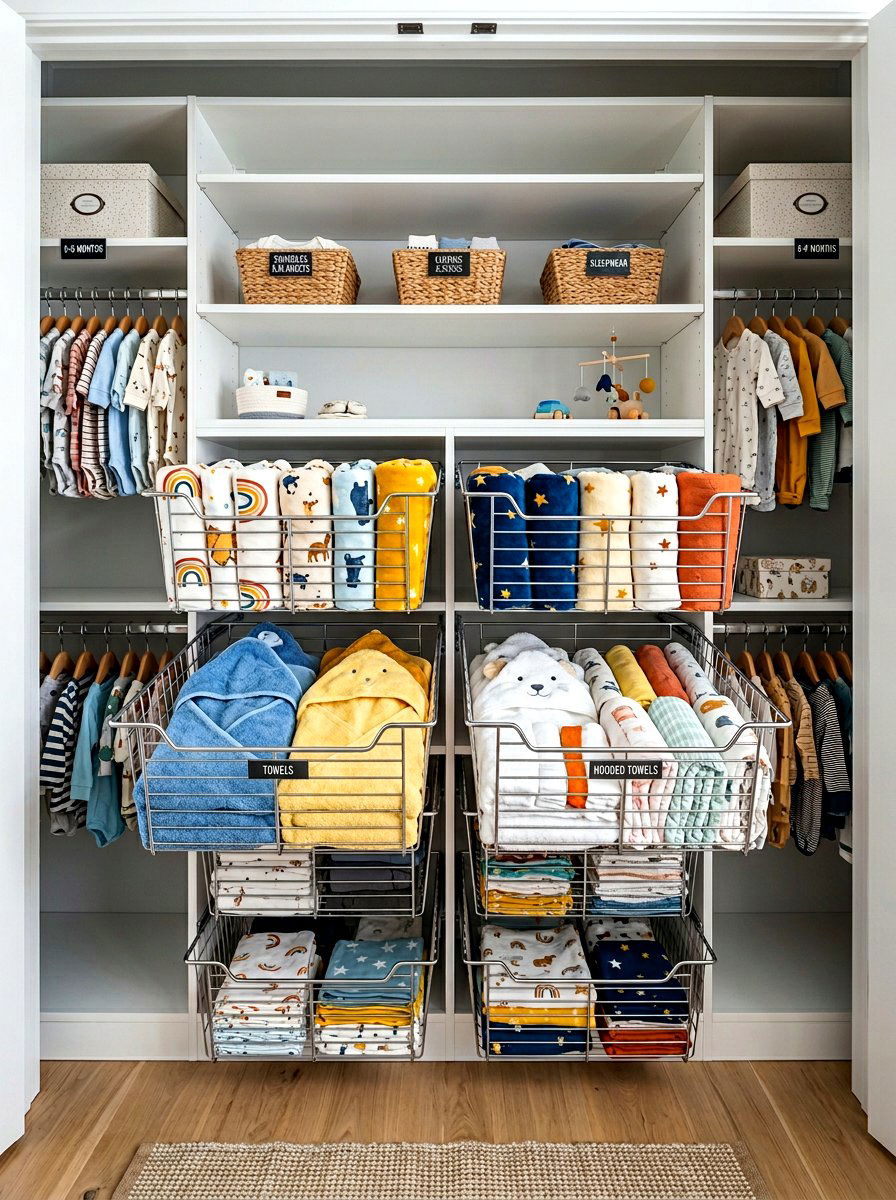
Pull out wire bins are an excellent choice for nursery closets because they provide visibility and breathability for stored items. Unlike solid plastic bins, the wire mesh allows you to see exactly what is inside from any angle, which is helpful when searching for a specific blanket or toy. These bins glide out smoothly on tracks, making it easy to access items at the back of a deep shelf without moving everything in front. They are particularly useful for storing bulky items like winter coats or extra bedding that need airflow to stay fresh. The industrial-chic look of wire accents adds a modern touch to the closet.
12. Wall Mounted Hooks
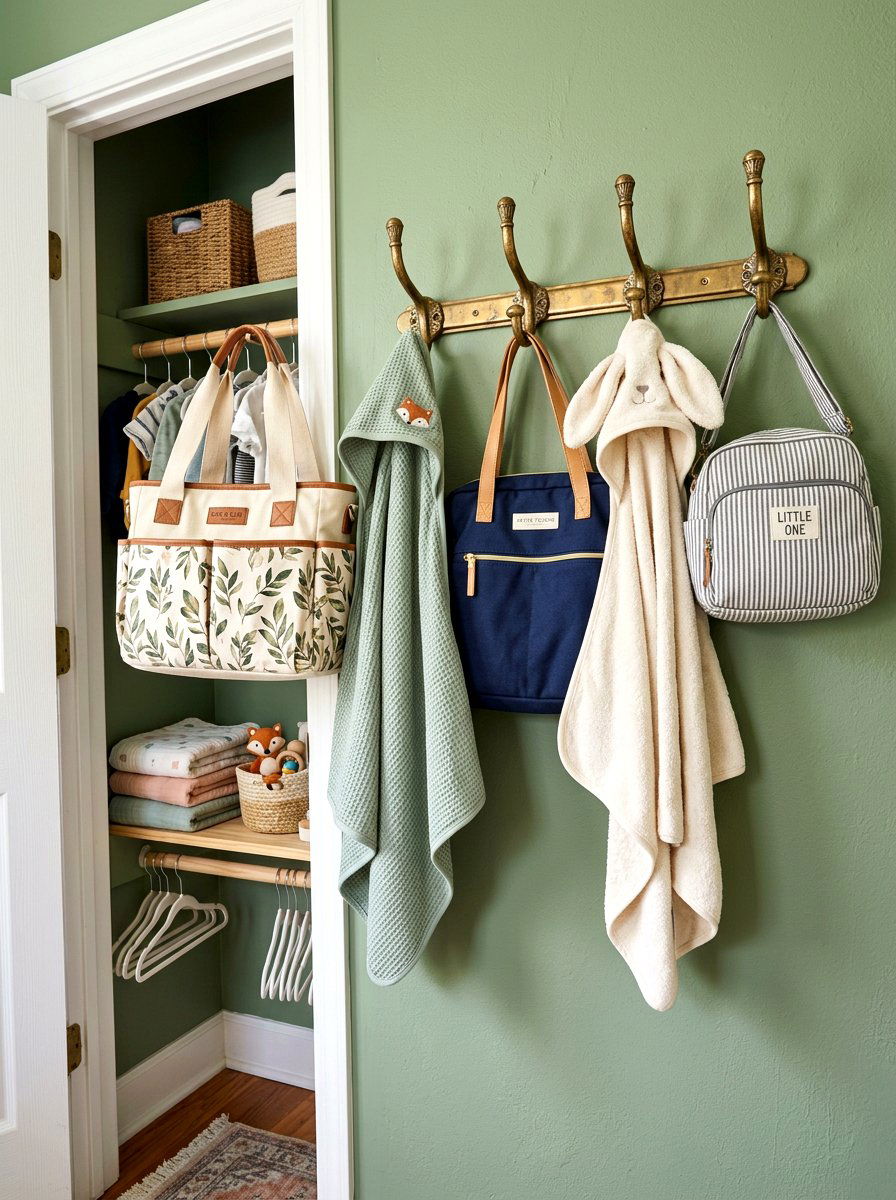
Utilizing the side walls of a nursery closet is a clever way to add extra storage for items that are used daily. Wall mounted hooks are perfect for hanging diaper bags, hooded towels, or the baby's current favorite sweater. By moving these larger items to the walls, you free up valuable space on the main hanging rod and shelves. You can choose decorative hooks that match the nursery theme, such as animal shapes or vintage brass, to add a bit of personality to the space. This keeps frequently grabbed items at a height that is easy to reach while you are heading out the door.
13. Nursery Dresser Insert
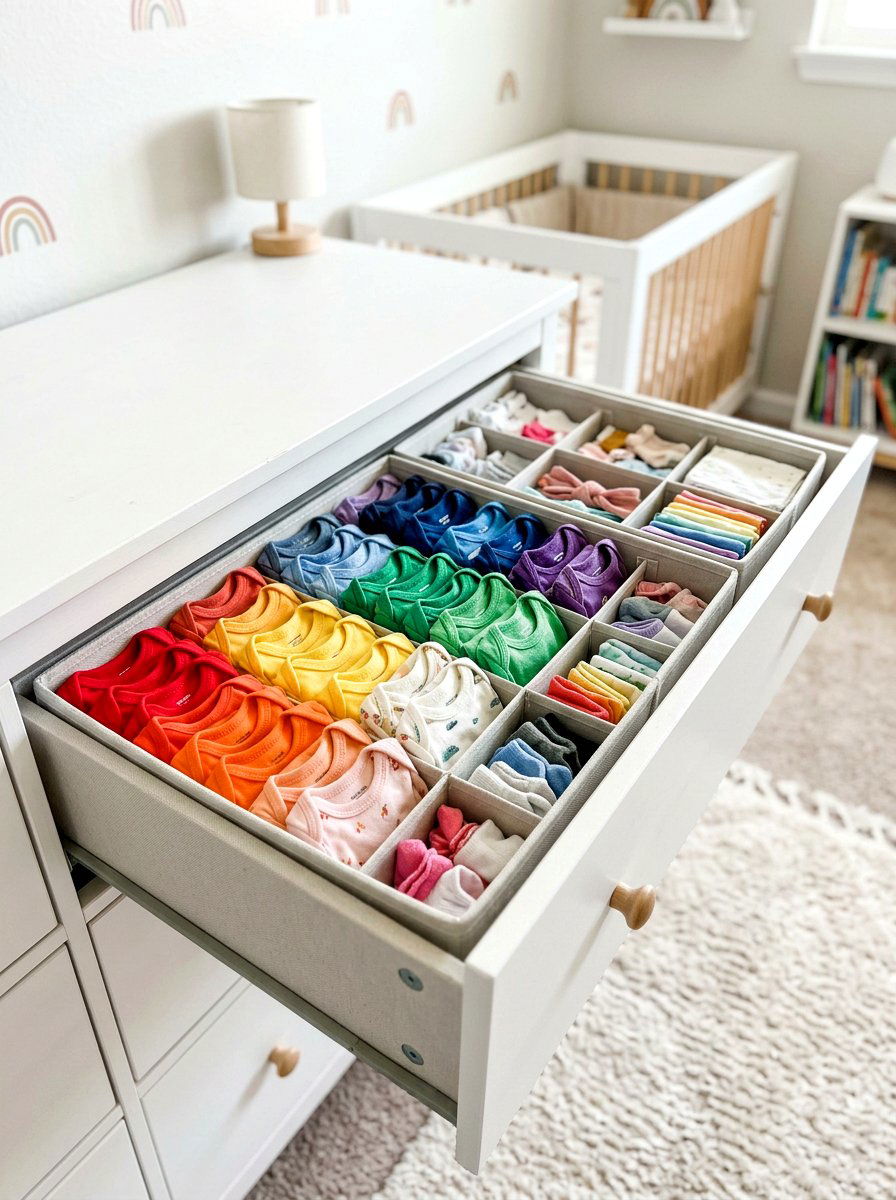
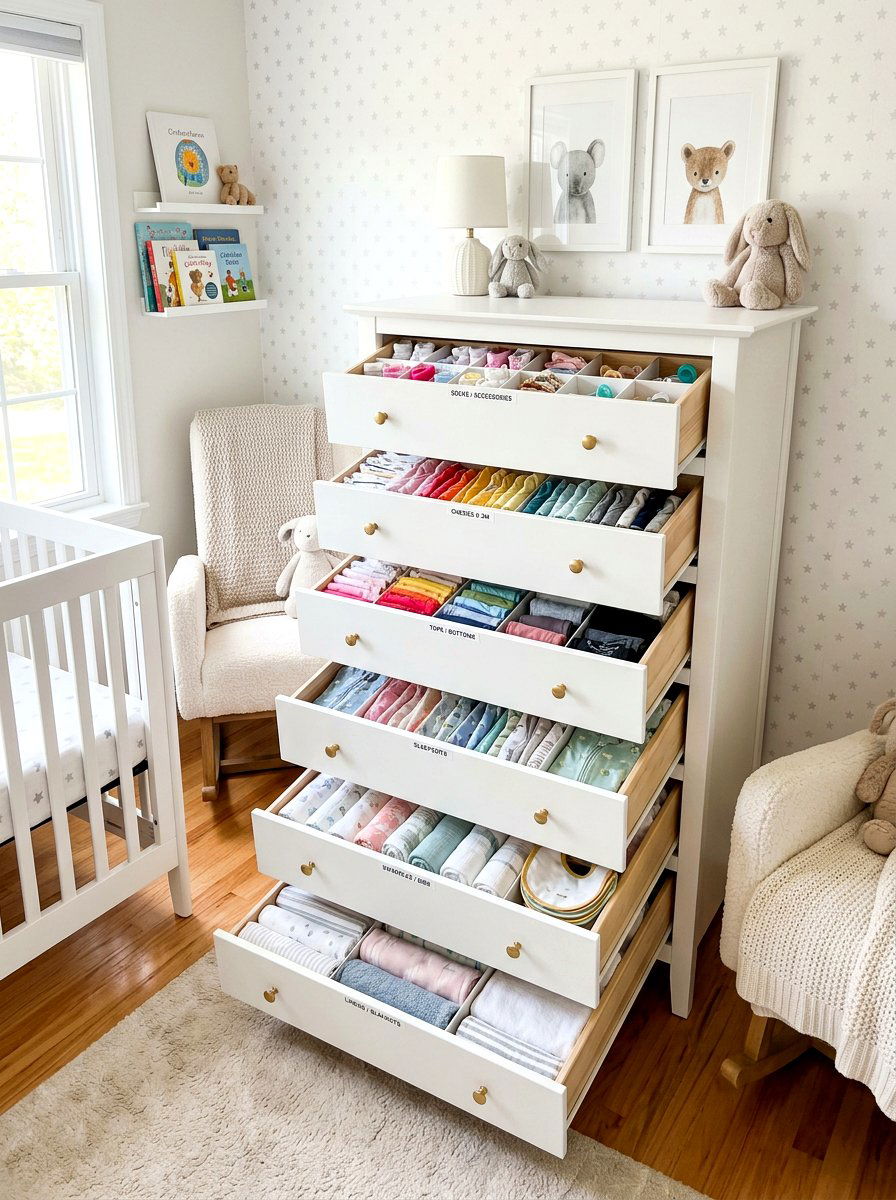
If you have a dresser tucked inside your closet, using specialized inserts can transform deep, cavernous drawers into highly organized compartments. These inserts are designed to fit standard drawer dimensions and provide various slot sizes for different types of clothing and accessories. Using them allows you to implement the "file folding" method, where every onesie is visible from the top rather than buried in a stack. This prevents the bottom layer of clothes from being forgotten and makes it much easier to put away laundry quickly. A structured drawer keeps everything tight and tidy, even when you are rushing through a quick outfit change.
14. Hanging Sweater Organizer
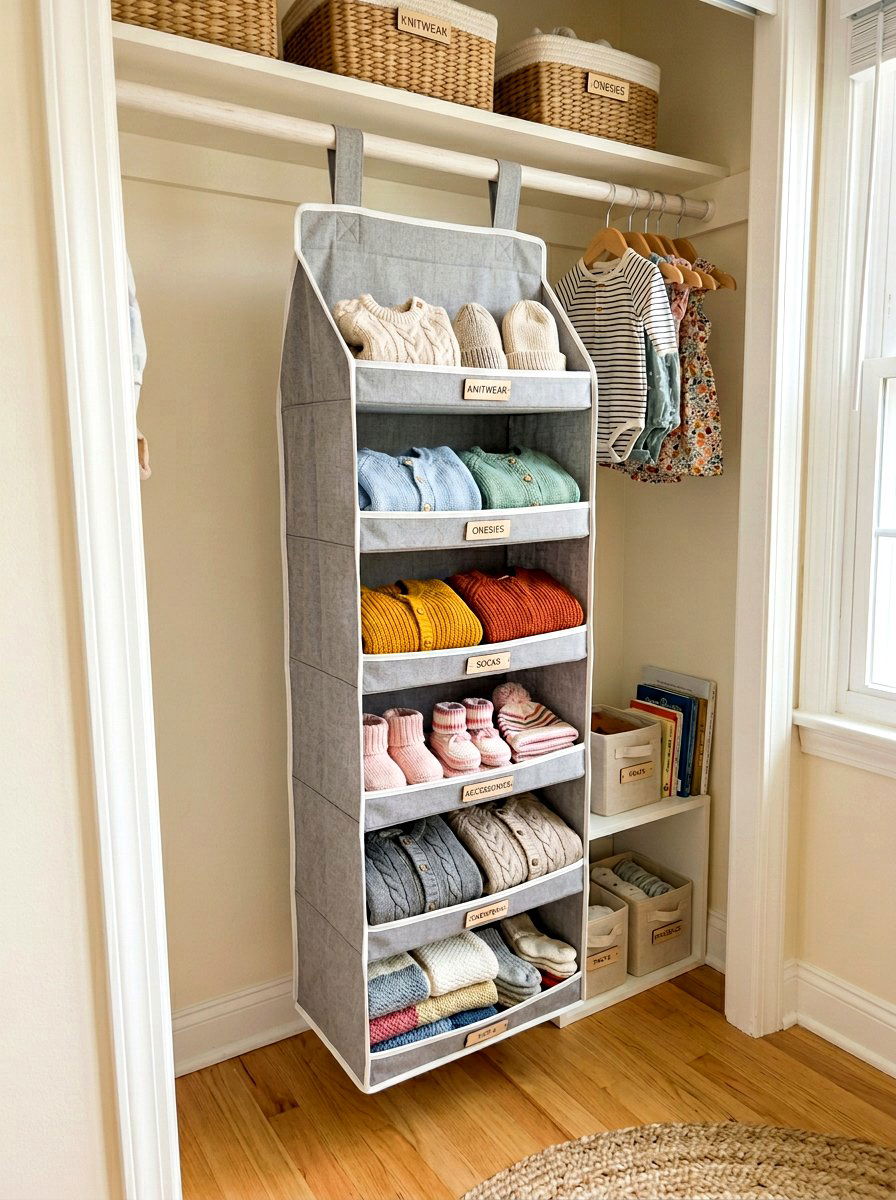
A hanging sweater organizer with open cubbies is a fantastic vertical solution for closets that lack built-in shelving. These fabric units simply strap onto the existing closet rod and provide several tiers of storage for folded items like sweaters, leggings, and hats. Because they are soft-sided, they are safe for a nursery and won't scratch delicate items. Many parents use these organizers to prep "outfits of the week, " placing a complete set of clothes in each cubby for easy morning selection. When no longer needed, they fold flat for easy storage, making them a great temporary solution for renters or growing families.

15. Clear Plastic Bins
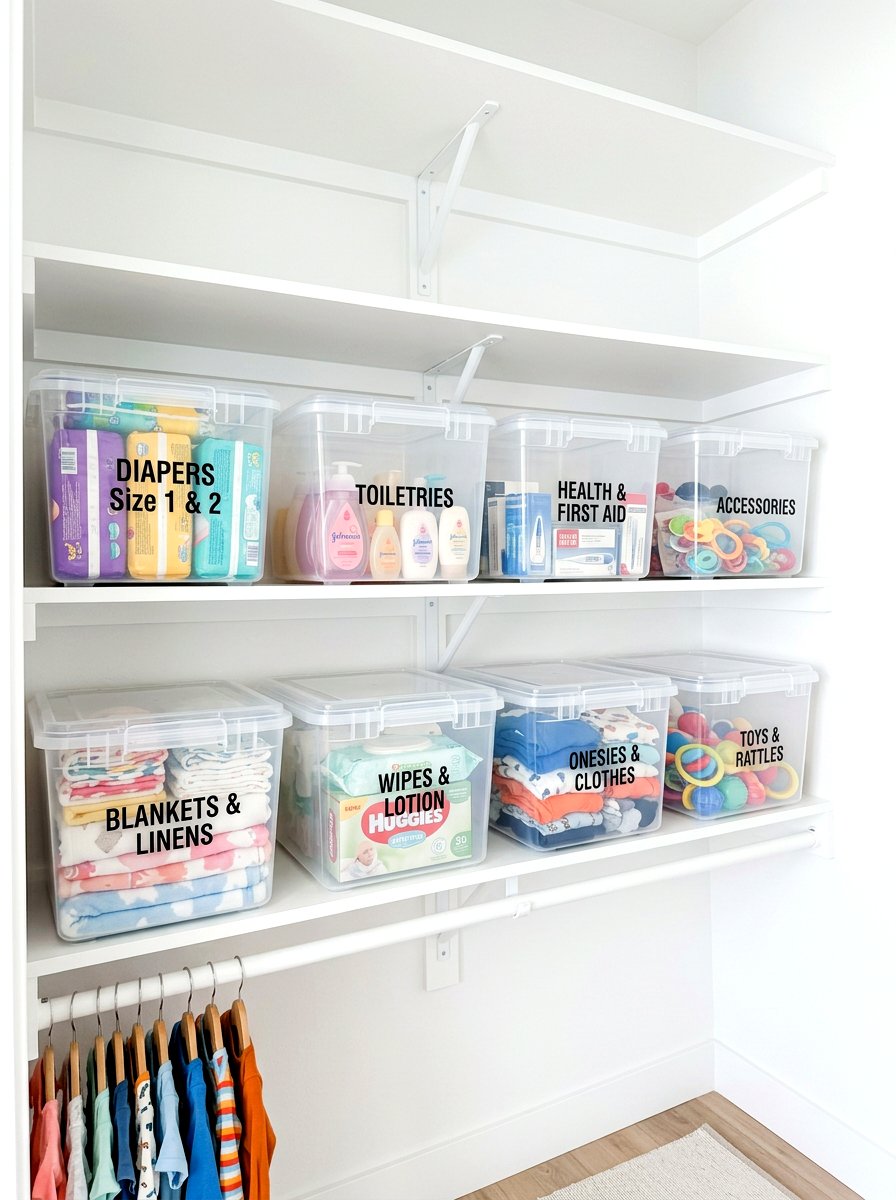
For items that need to be kept clean and dry, such as extra pacifiers, teething toys, or medical supplies, clear plastic bins are the ultimate choice. The transparency allows you to perform a quick visual inventory so you know exactly when you are running low on essentials like wipes or diapers. These bins are easy to sanitize and stack perfectly on top of one another, making the most of vertical shelf space. Using bins with lids protects items from dust while keeping the overall look of the closet crisp and orderly. They work especially well on high shelves for items used less frequently but still visible.
16. Floating Closet Shelves
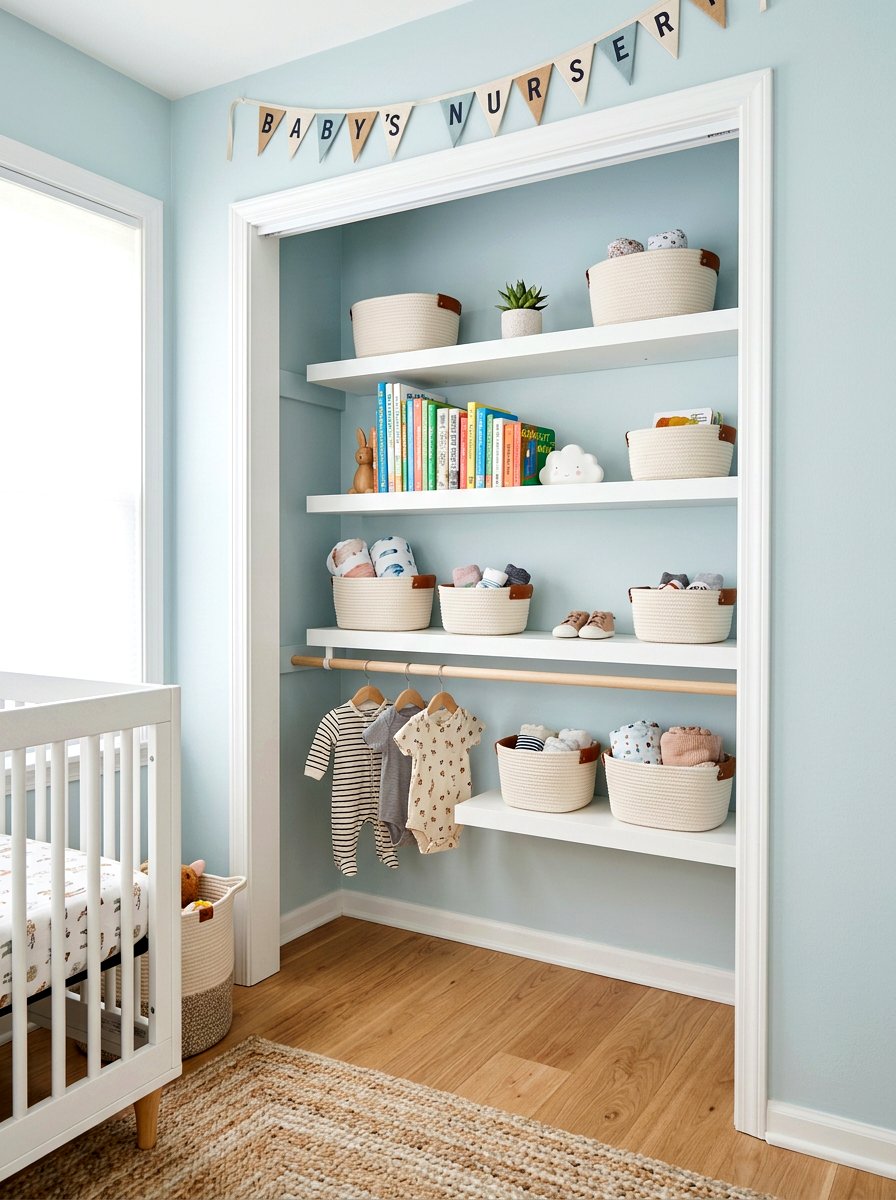
If your nursery closet has an unusual layout or empty corners, floating shelves can be installed to add tailored storage wherever it is needed. These shelves provide a clean, minimal look without the need for bulky brackets, making them perfect for displaying sentimental items like heirloom silver rattles or framed ultrasound photos. Beyond decor, they can hold small baskets of socks or a row of storybooks for easy access. Installing floating shelves at different heights creates visual interest and allows you to utilize the full height of the closet walls. This flexibility makes them a favorite for DIY-focused parents looking to maximize every inch.
17. Built In Drawers
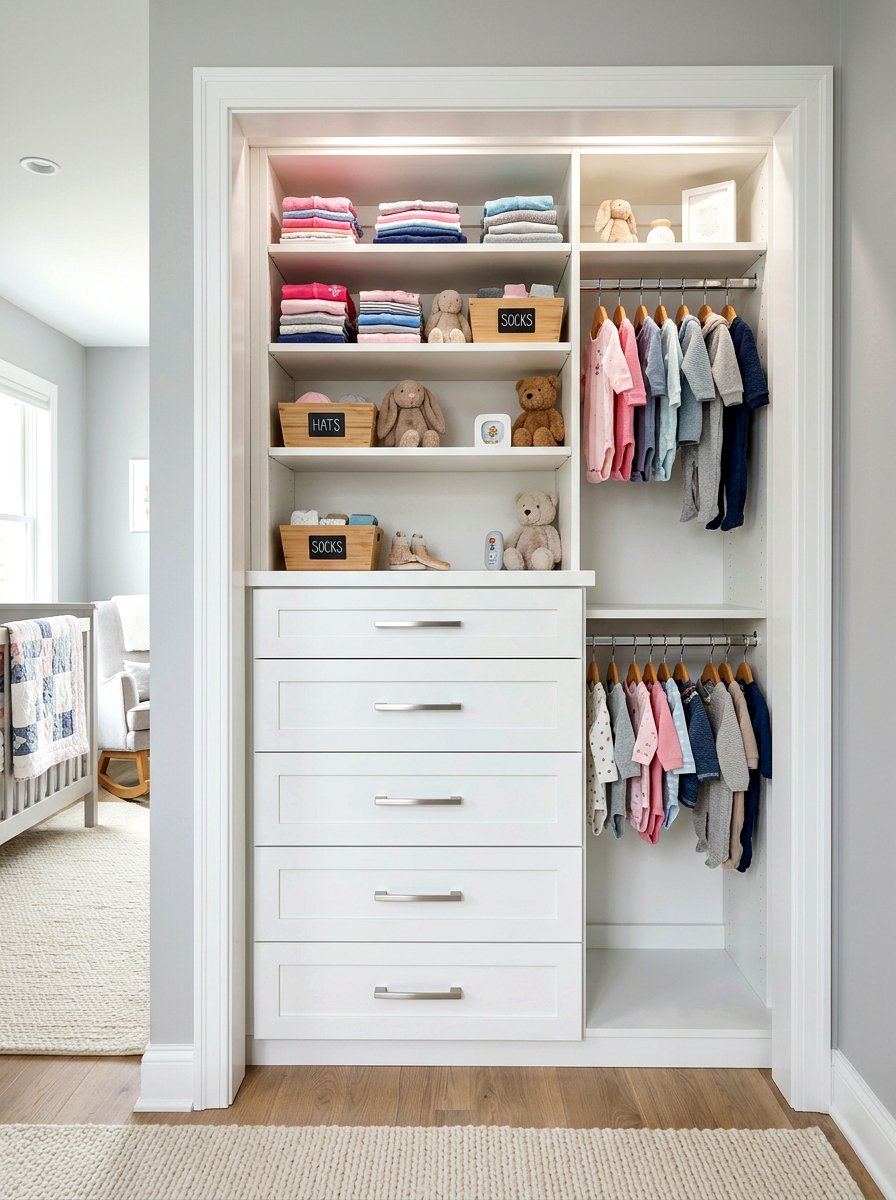
Incorporating built in drawers directly into the closet design eliminates the need for a separate dresser in the main nursery area, freeing up valuable floor space for play. These drawers provide a permanent, sturdy solution for storing everyday essentials like pajamas and undergarments. Having drawers at waist height makes them ergonomically friendly for parents, while lower drawers can eventually be used by the child as they learn to dress themselves. The seamless integration of drawers into the closet shelving creates a high-end, custom-built appearance that looks organized and intentional. This architectural feature is a long-term investment that provides excellent functionality through various childhood stages.
18. Foldable Fabric Bins
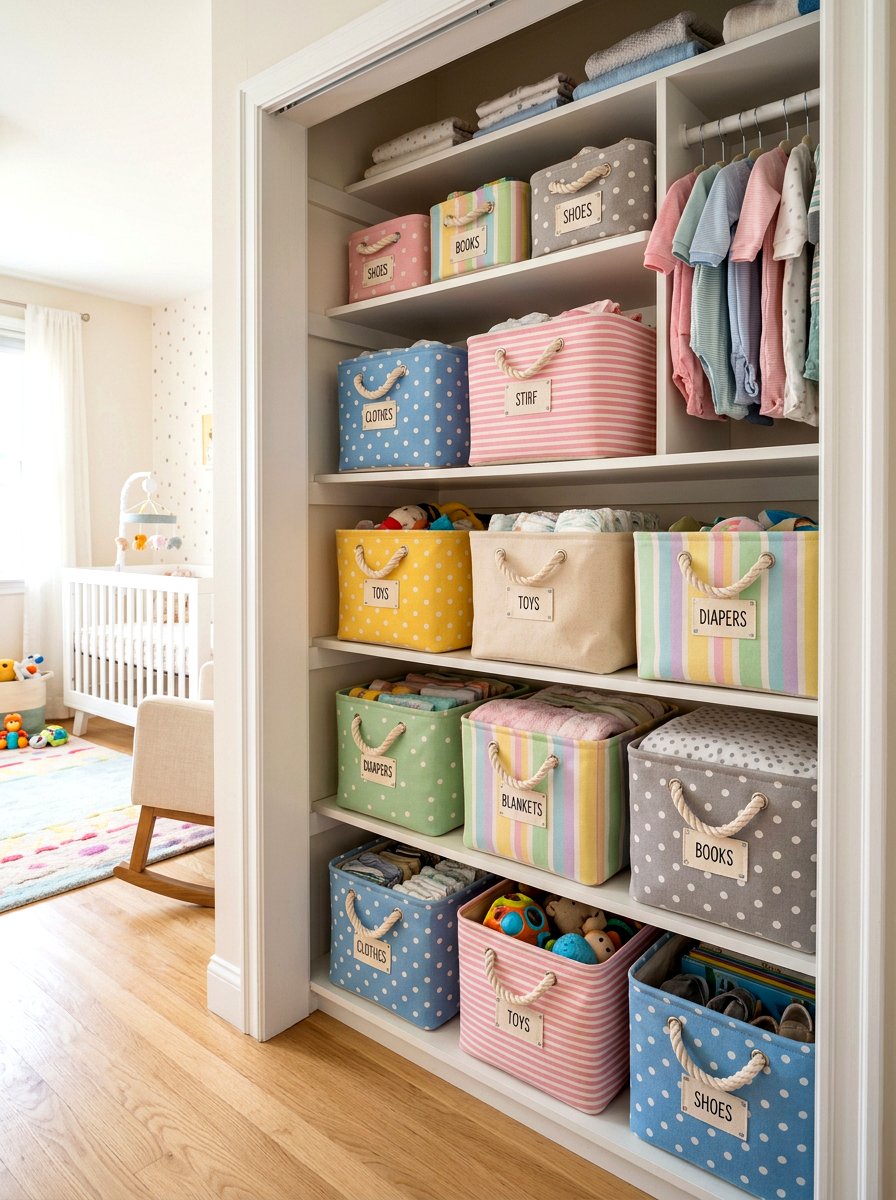
Foldable fabric bins offer a soft and colorful way to organize larger items like stuffed animals, blankets, and bulky toys. Available in a wide variety of patterns and hues, they allow you to easily incorporate the nursery's color palette into the closet space. These bins are lightweight enough for a child to eventually handle and have no sharp edges, making them a safe choice for a nursery. When you have an influx of items, they provide a quick way to tidy up the room by hiding toys out of sight. Their ability to fold flat when empty makes them highly convenient for changing storage needs.
19. Pegboard Wall Storage
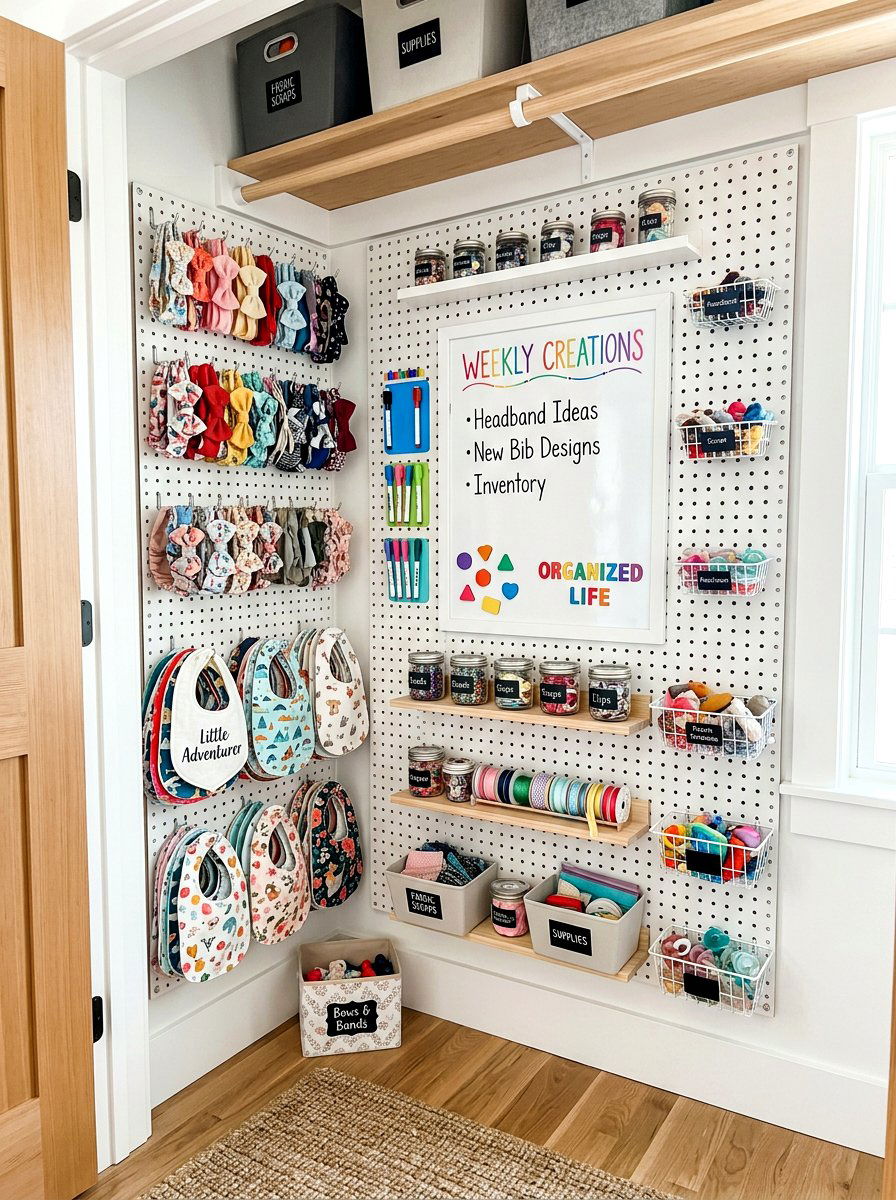
A pegboard installed on the back or side wall of a nursery closet offers endless possibilities for custom organization. You can use various hooks, baskets, and shelves to create a modular display for headbands, bibs, and small accessories. The beauty of a pegboard is that you can move the attachments around as your needs change without drilling new holes in the wall. It keeps small, easily lost items visible and organized in a way that feels like a boutique display. Adding a coat of paint to the pegboard can make it a vibrant focal point that adds a playful energy to the closet.
20. Nursery Closet Hamper
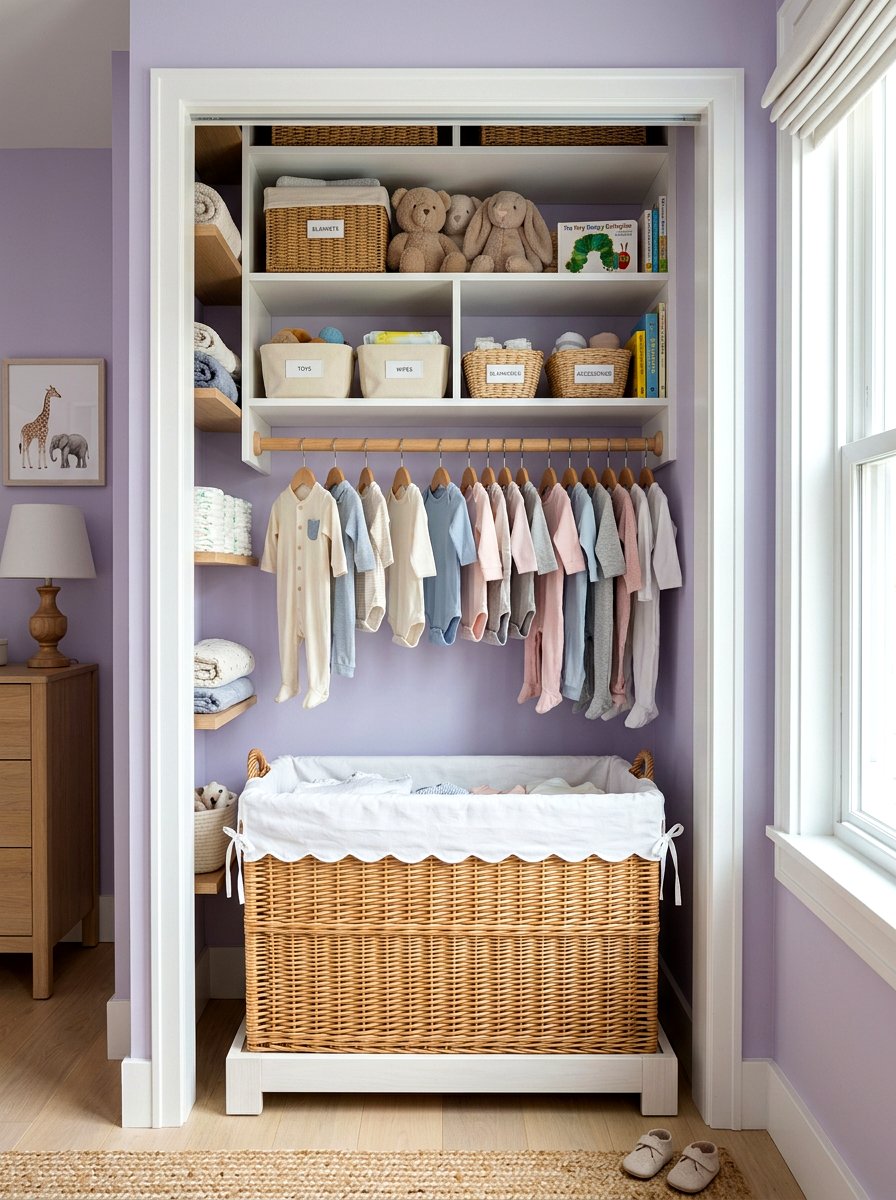
Integrating a laundry hamper directly into the closet keeps dirty clothes off the floor and out of sight, maintaining the serene atmosphere of the nursery. Choosing a slim, upright hamper that fits perfectly under the hanging rod ensures it doesn't take up much-needed space. A removable mesh liner makes it easy to transport laundry to the washing machine when it gets full. Having a dedicated spot for soiled items right where you undress the baby streamlines the process and prevents piles from forming. This simple addition is crucial for staying on top of the high volume of laundry that comes with a new baby.
21. Rolling Storage Cart
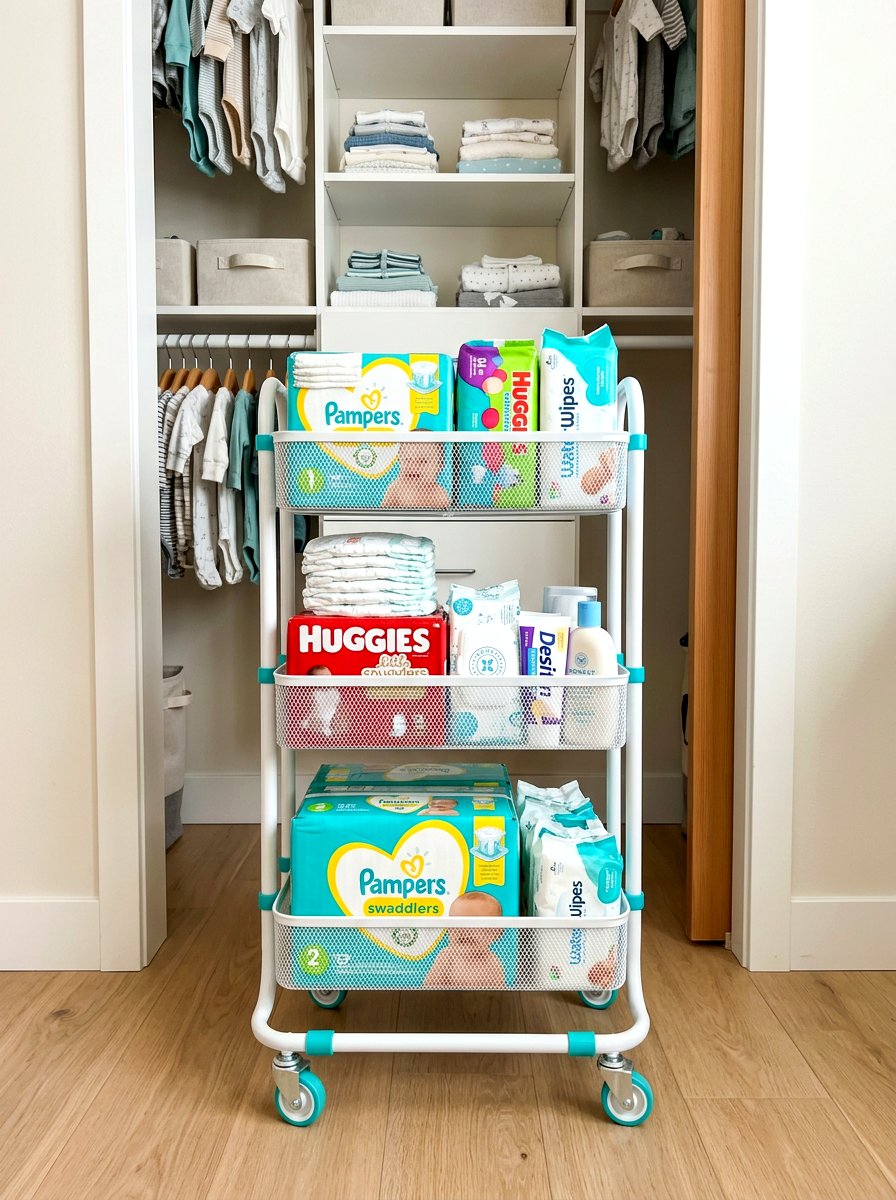
A rolling storage cart is a versatile addition that can live inside the closet but be easily pulled out during diaper changes or bath time. These multi-tiered carts can hold everything from diapers and creams to grooming kits and small toys. Because it is on wheels, you can move your entire "station" to wherever the baby is, making it a highly functional mobile organizer. When not in use, it tucks neatly into a corner of the closet, keeping the main floor area clear for tummy time. The open tiers allow for quick access and easy visibility of all your most important baby supplies.
22. Headband Accessory Rack
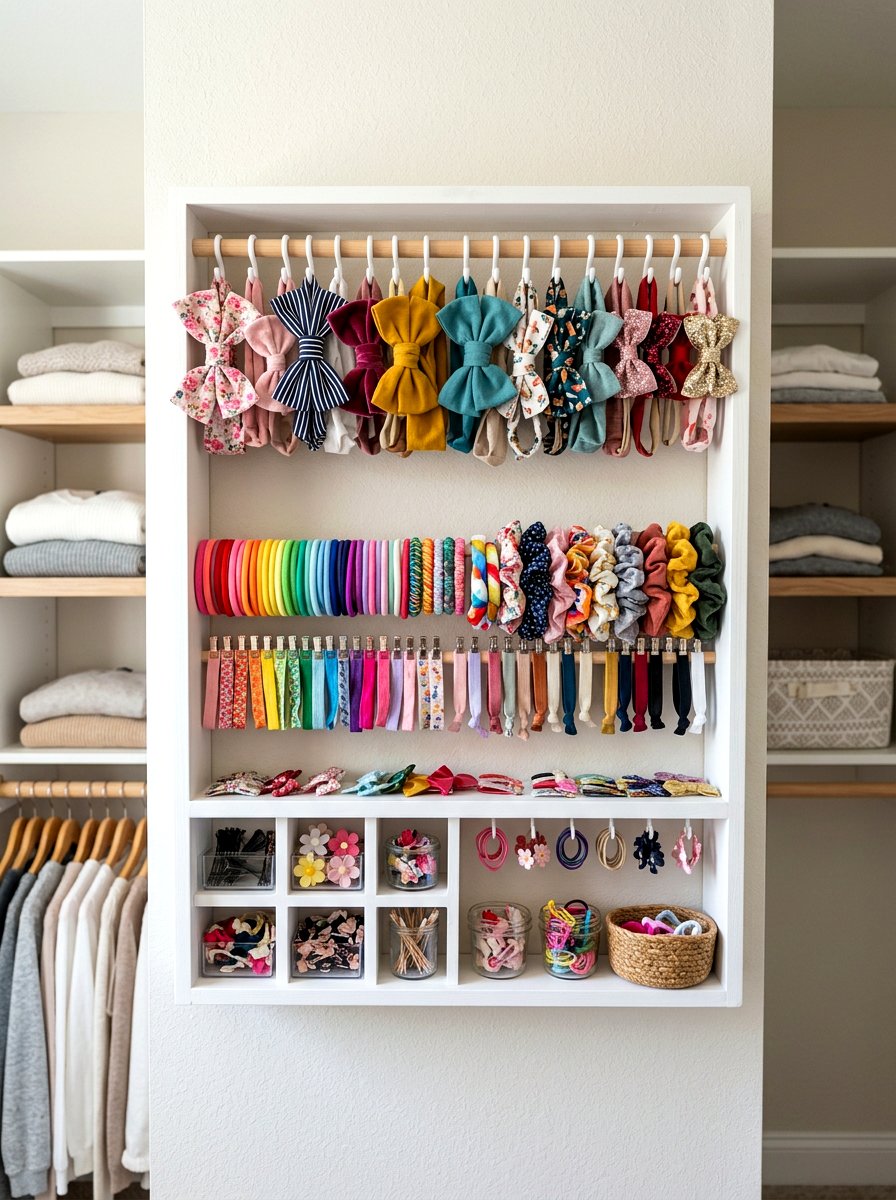
For parents of little girls, headbands and bows can quickly become a tangled mess if not properly stored. A dedicated accessory rack or a hanging ribbon display allows you to clip bows and slide headbands into place, keeping them organized by color or style. This prevents delicate elastic from getting stretched out in a drawer and makes it easy to find the perfect finishing touch for any outfit. You can hang this rack on the inside of the closet door or on an available side wall. Seeing all the options at once turns accessorizing into a fun and creative part of the day.
23. Top Shelf Storage
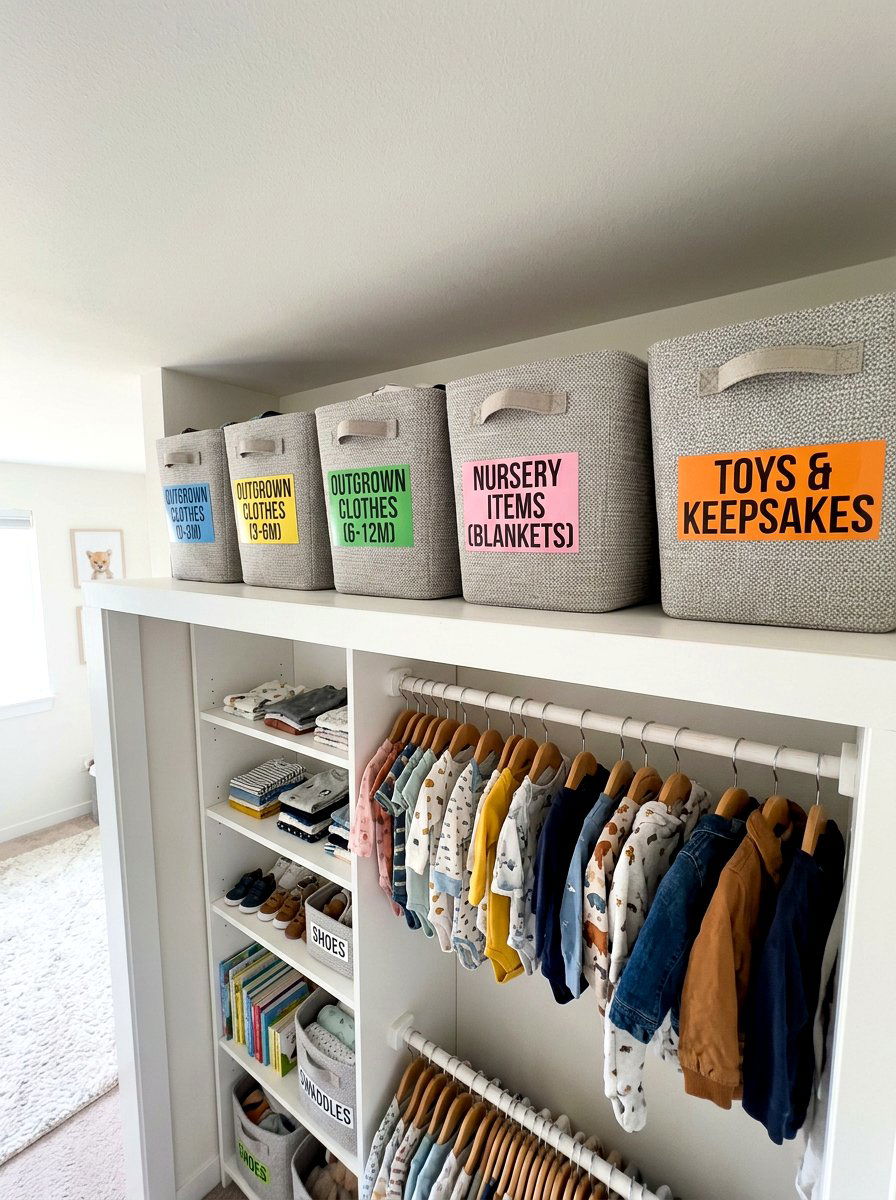
The highest shelf in a nursery closet is the perfect location for items that are not needed on a daily basis. This is where you should store next-size-up clothing, seasonal items like heavy snowsuits, or bulk packages of diapers and wipes. Using large, labeled bins on the top shelf keeps these items organized and out of the way, preventing the lower, reachable areas from becoming cluttered. It is also a safe spot for keepsakes and memory boxes that you want to preserve for the future. Storing items vertically ensures that you are utilizing the full volume of the closet space effectively and efficiently.
24. Color Coordinated Clothing
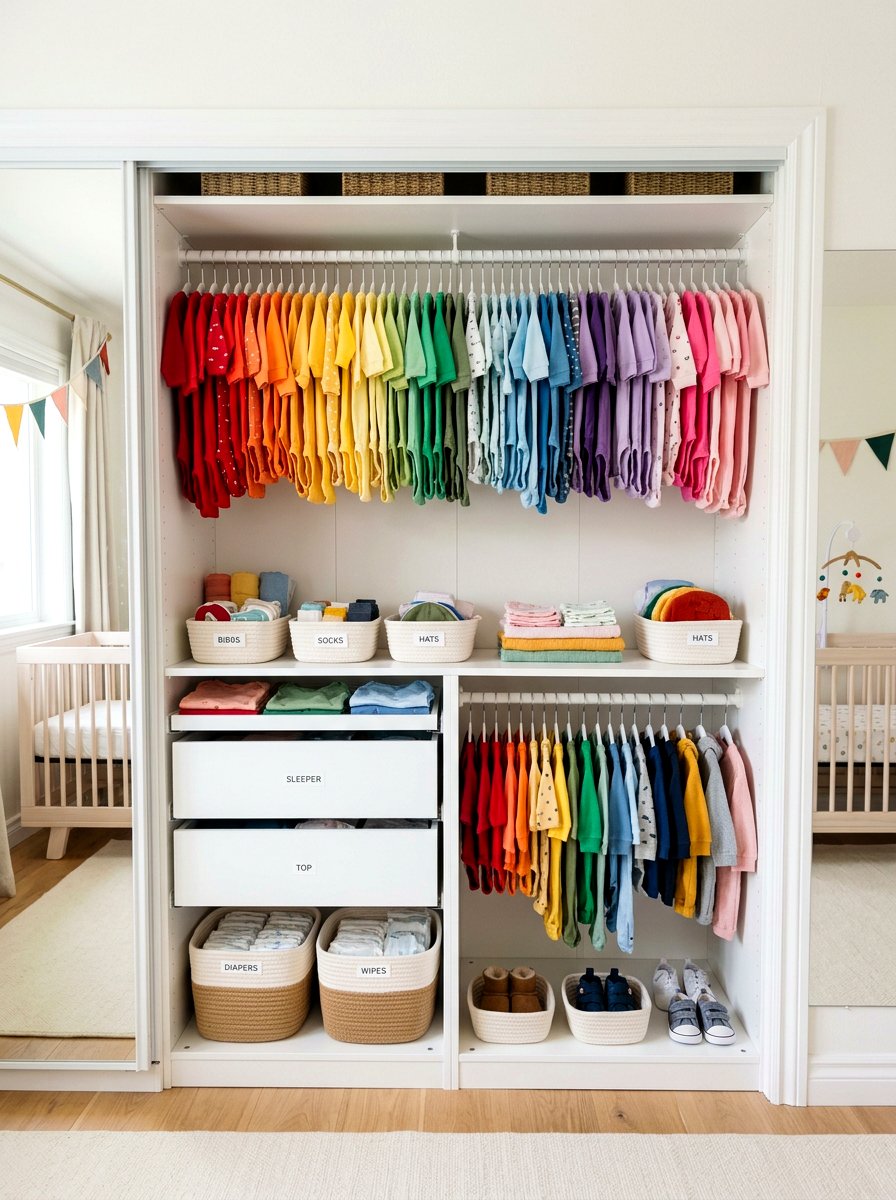
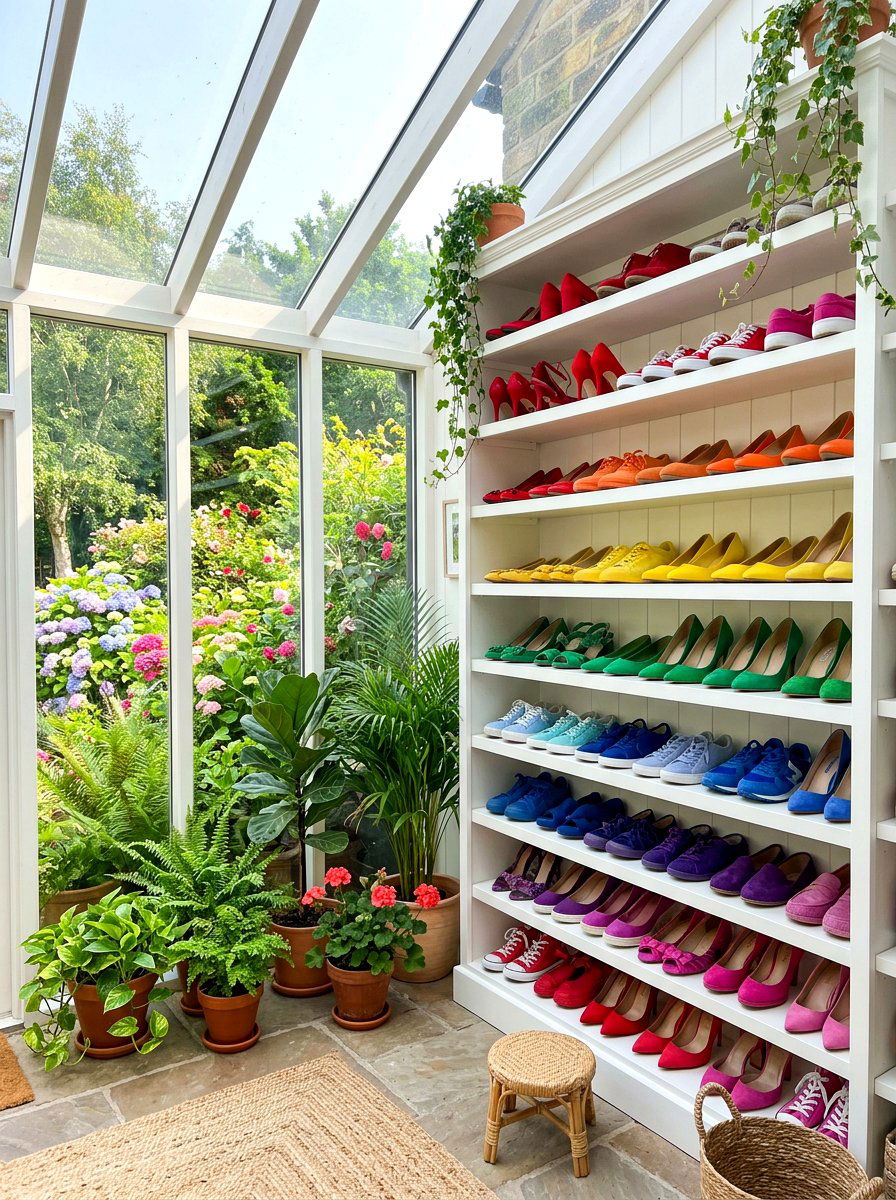
Organizing your baby's hanging clothes by color is a simple yet high-impact way to make the closet feel more harmonious and visually appealing. This technique makes it incredibly easy to find a matching top for a specific pair of pants, saving time during the morning rush. The rainbow effect created by color grouping is a popular aesthetic for Pinterest-worthy nurseries, adding a sense of curated beauty to the room. Beyond the looks, it helps you quickly identify how many items you have in each color, preventing you from overbuying certain shades. This method works beautifully when paired with uniform hangers for a polished finish.


25. Sliding Closet Doors
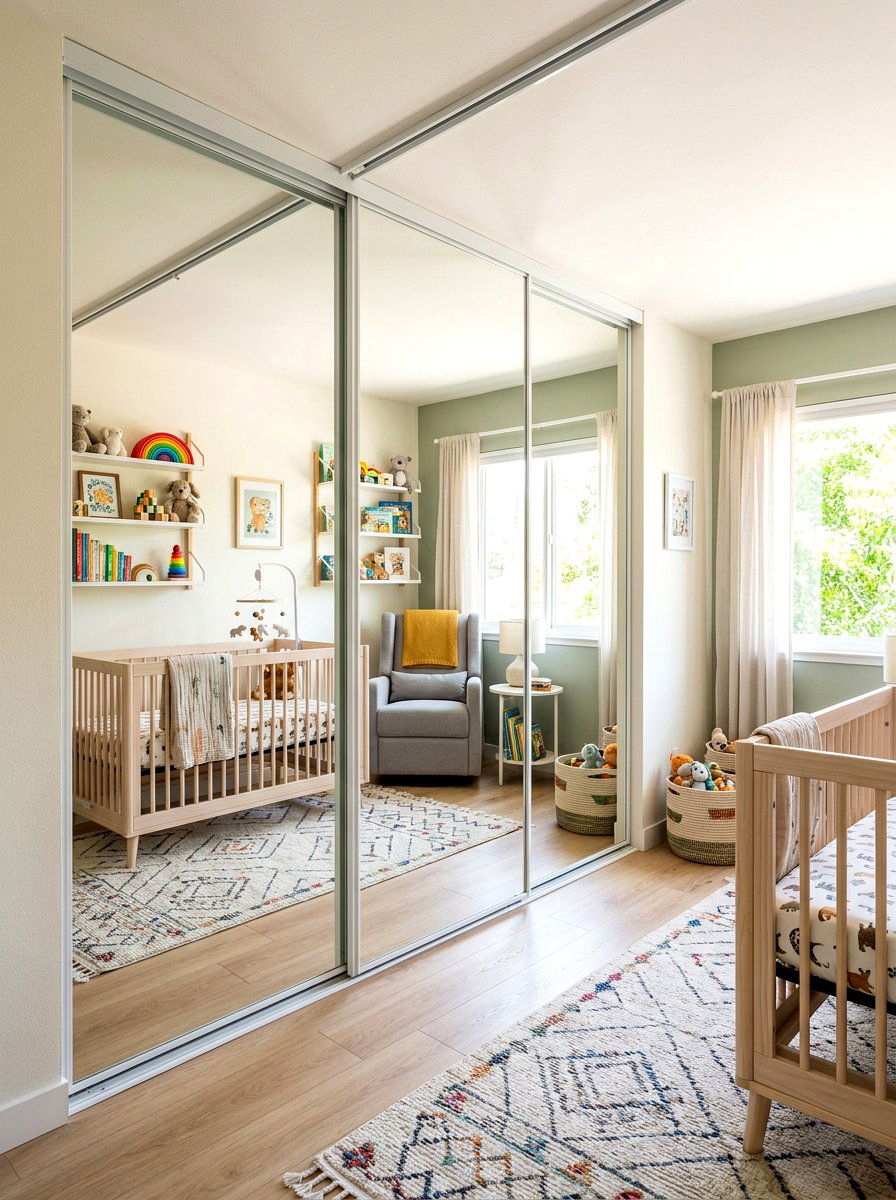
If you are working with a tight nursery layout, replacing traditional swing-out doors with sliding closet doors can save significant floor space. Sliding doors allow you to place furniture like the crib or a rocking chair closer to the closet without blocking access to the storage inside. Many modern sliding doors come with large mirrors, which can help bounce light around a small room and make the nursery feel much larger. Alternatively, choosing sleek wooden or painted doors can add a decorative element to the room. This architectural change improves the overall flow and functionality of the nursery while maintaining a clean, modern aesthetic.
26. Open Closet Layout
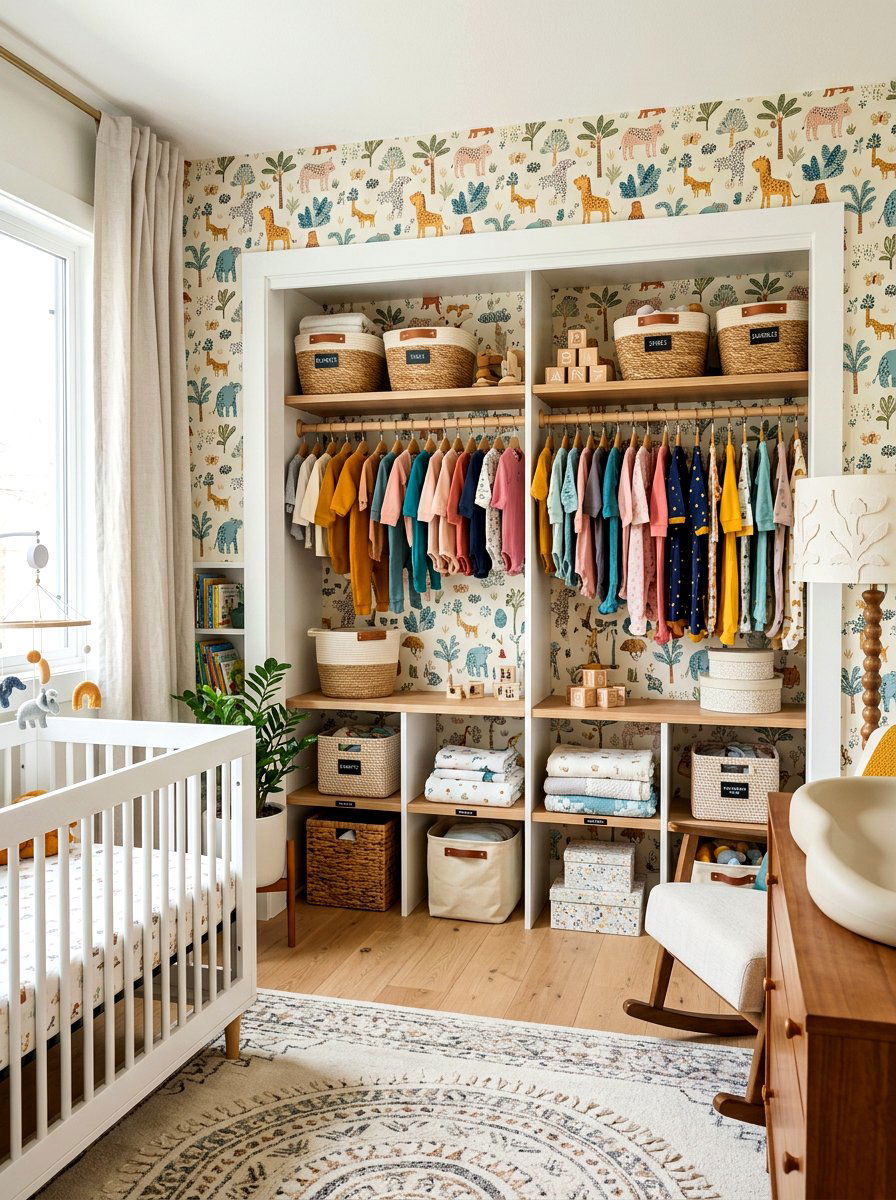
Removing the closet doors entirely to create an open layout is a popular trend that makes the nursery feel more spacious and accessible. This approach allows the organized closet to become a beautiful focal point of the room's design, showcasing cute outfits and stylish storage bins. An open closet encourages you to keep the space tidy since everything is always on display. It also eliminates the risk of little fingers getting pinched in doors as your baby starts to crawl and explore. You can define the space by painting the interior a contrasting color or adding a beautiful wallpaper backdrop to make it pop.
27. Corner Shelving Unit
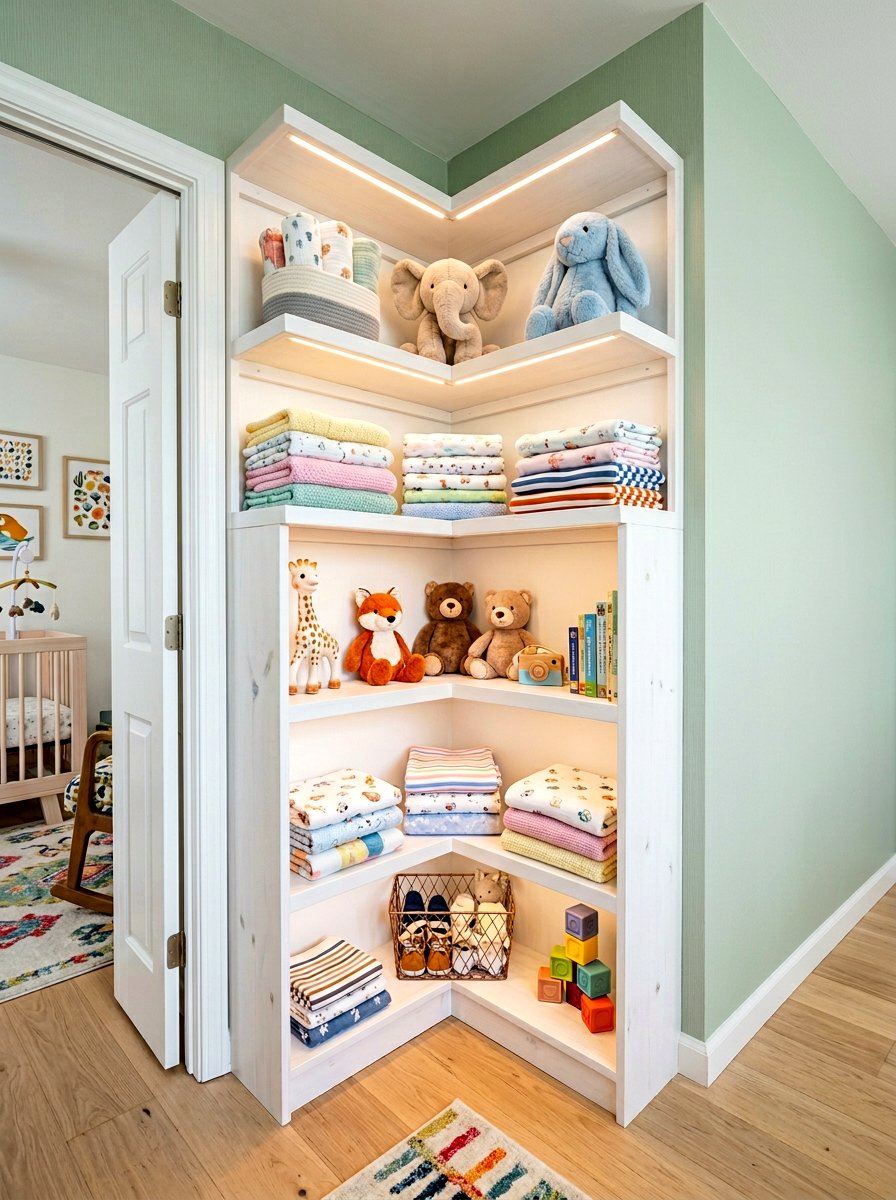
Closets often have deep corners that are difficult to reach and frequently end up as wasted space. Installing a dedicated corner shelving unit transforms these awkward areas into functional storage for folded blankets, toys, or shoes. These triangular shelves fit snugly into the corner, providing a sturdy surface for items that might otherwise get lost in the back of the closet. This is an excellent way to gain extra storage in small reach-in closets where every inch is precious. Using these shelves for decor items like small plants or framed art can also add a touch of personality to the closet's interior.
28. Adjustable Closet Rack
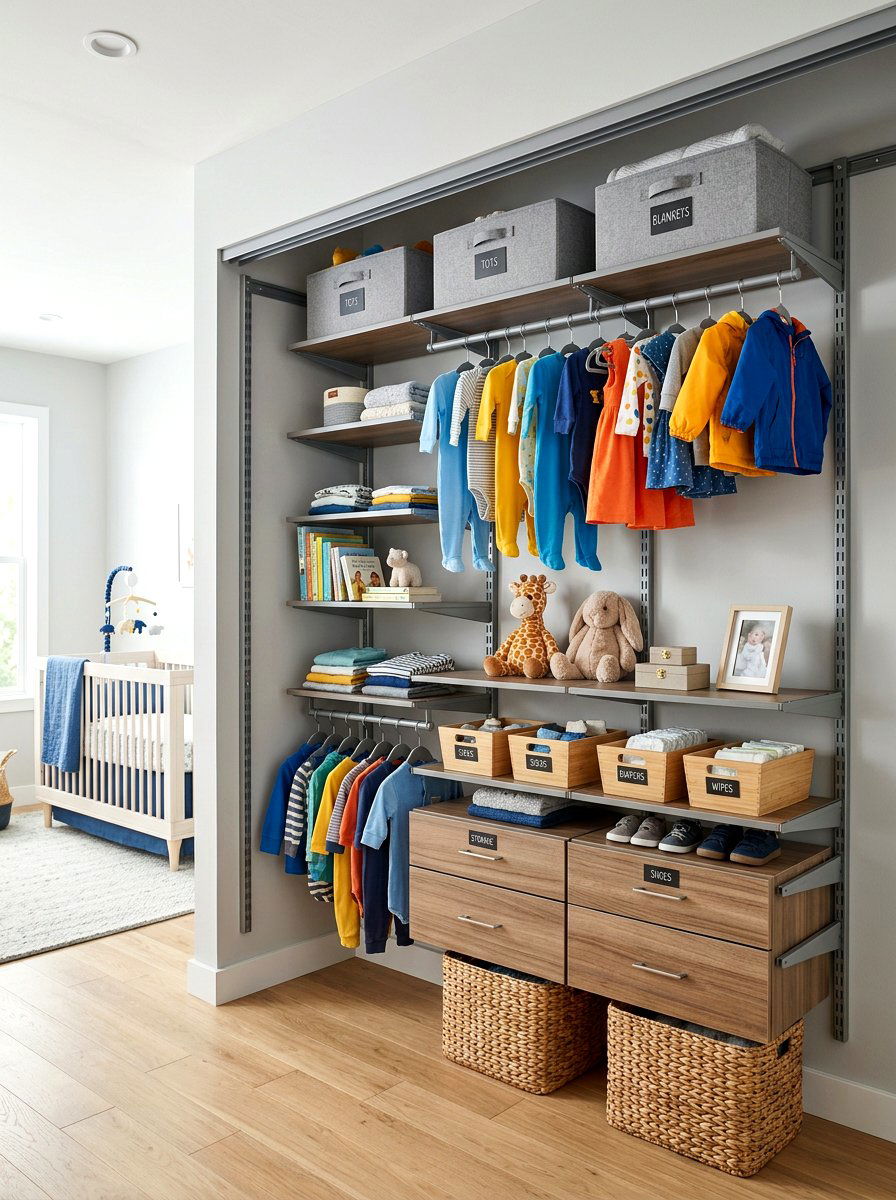
An adjustable closet rack system is the ultimate solution for a space that needs to evolve as your child grows from an infant to a teenager. These systems allow you to move rods and shelves up or down with ease, accommodating longer clothes and bigger shoes over time. During the nursery phase, you can set the rods low for tiny onesies and add multiple shelves for diaper supplies. As your child gets older, you can raise the rods for dresses and coats. This adaptability ensures that your initial investment in closet organization continues to provide value and functionality for many years to come.
29. Nursery Linen Storage
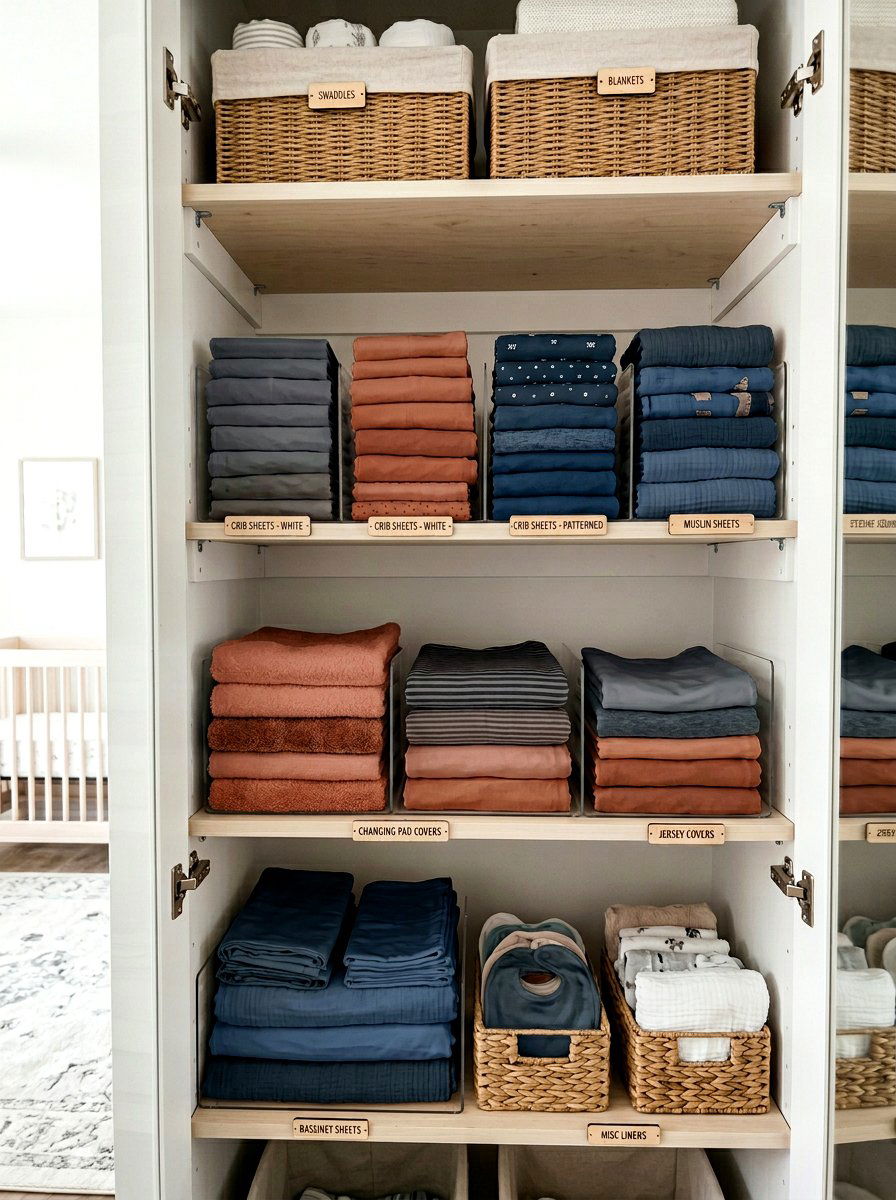
A dedicated section for nursery linens ensures that you always have fresh sheets and blankets ready for the frequent bed changes that come with a baby. Folding crib sheets, mattress protectors, and changing pad covers into neat stacks on a middle shelf keeps them within easy reach. You can use shelf dividers to prevent the stacks from toppling over or place them in shallow baskets for a more contained look. Keeping all textiles together in the closet prevents you from having to search through multiple drawers when a mess occurs. Having a clear view of your linen supply helps you stay organized during laundry cycles.
30. Closet Wallpaper Accent
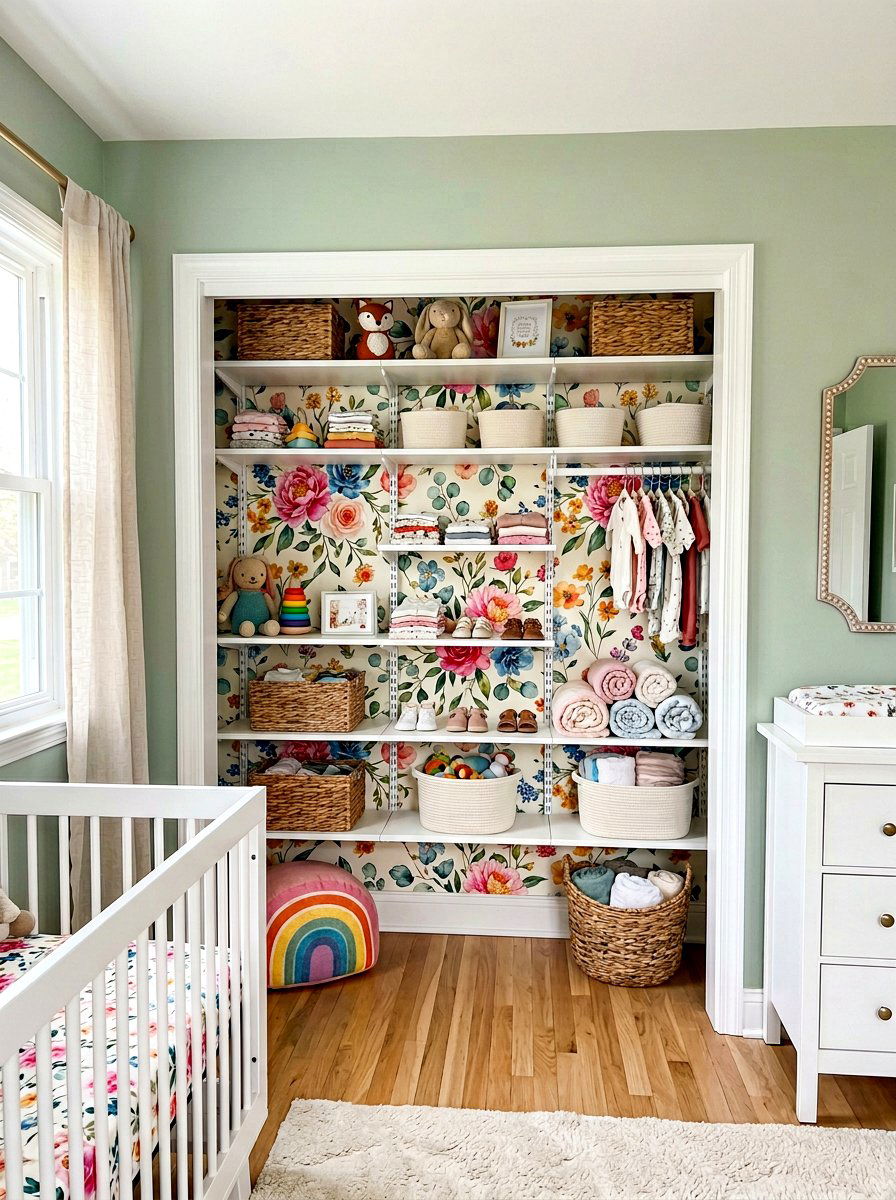
Adding a vibrant wallpaper accent to the back wall of a nursery closet is a brilliant way to inject personality and style into the space. Because it is a small, enclosed area, you can choose a bold pattern or bright color that might feel overwhelming on a larger room wall. This design choice turns a functional storage area into a beautiful "jewel box" that makes you smile every time you open the doors. Whether you choose a whimsical floral, a modern geometric, or a classic animal print, the wallpaper ties the nursery's theme together. It is an affordable way to achieve a custom, high-end look.
Conclusion:
Transforming your nursery closet into a masterclass of organization is a rewarding project that pays dividends in your daily life as a parent. By combining smart vertical storage with aesthetic elements like uniform hangers and woven baskets, you create a space that is both beautiful and highly functional. These thirty ideas prove that regardless of your closet's size, there are endless ways to maximize efficiency and keep baby essentials within easy reach. A tidy closet reduces the mental load of parenting, allowing you to focus more on the precious moments with your little one. Start with one or two strategies and watch as your nursery becomes a perfectly organized sanctuary for your growing family.

Related posts: