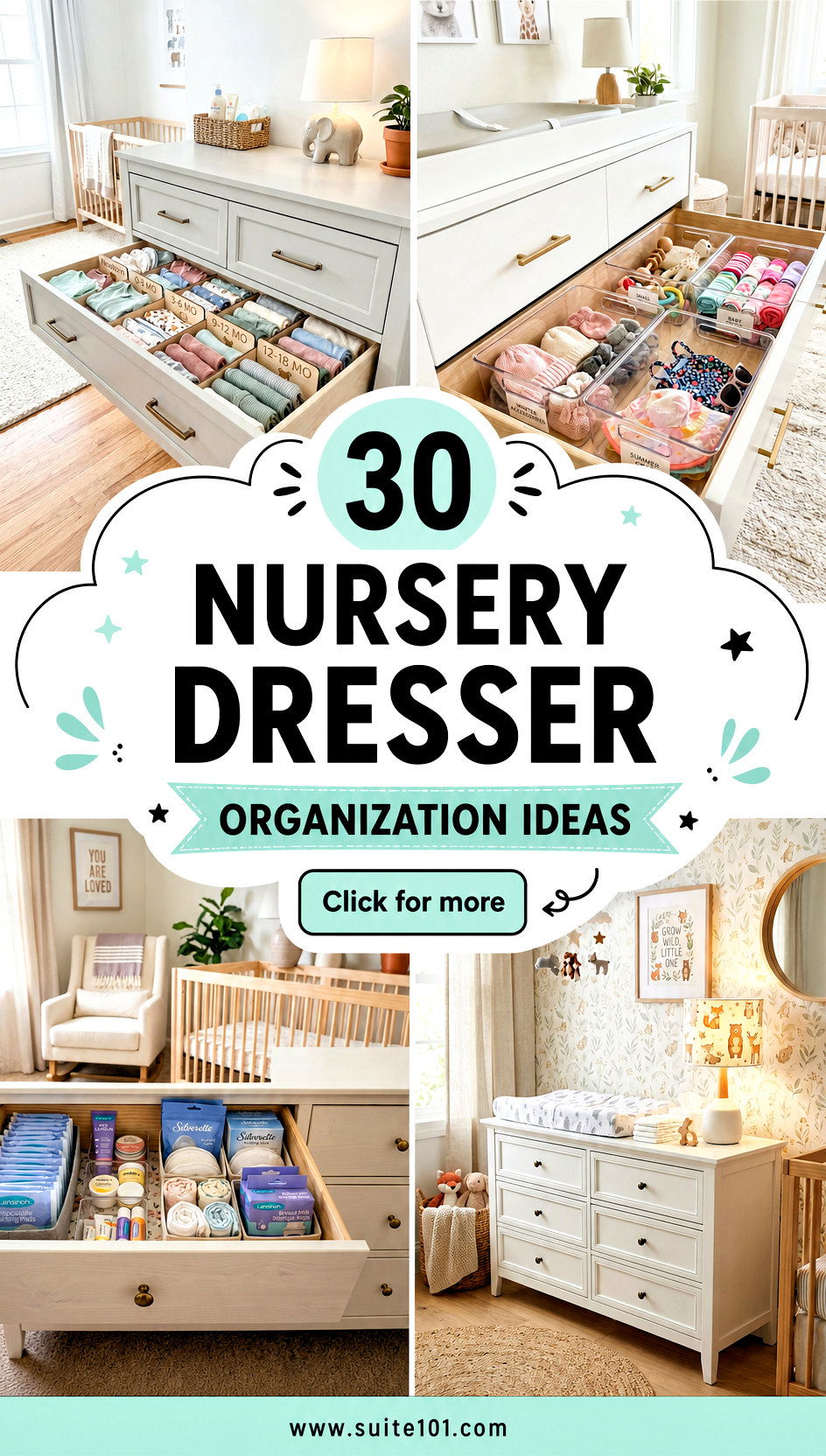
Preparing for a new arrival involves many moving parts, but creating an efficient nursery dresser organization system is truly a game-changer for new parents. When you are navigating the blur of newborn days and sleepless nights, having a designated spot for every tiny sock and onesie makes life significantly smoother. A well-organized dresser is more than just a place to store clothes; it is the functional heart of the room where diaper changes and outfit swaps happen hundreds of times. By implementing smart storage solutions, you transform a simple piece of furniture into a highly efficient workstation that saves you time and reduces daily stress.
1. Nursery dresser drawer dividers
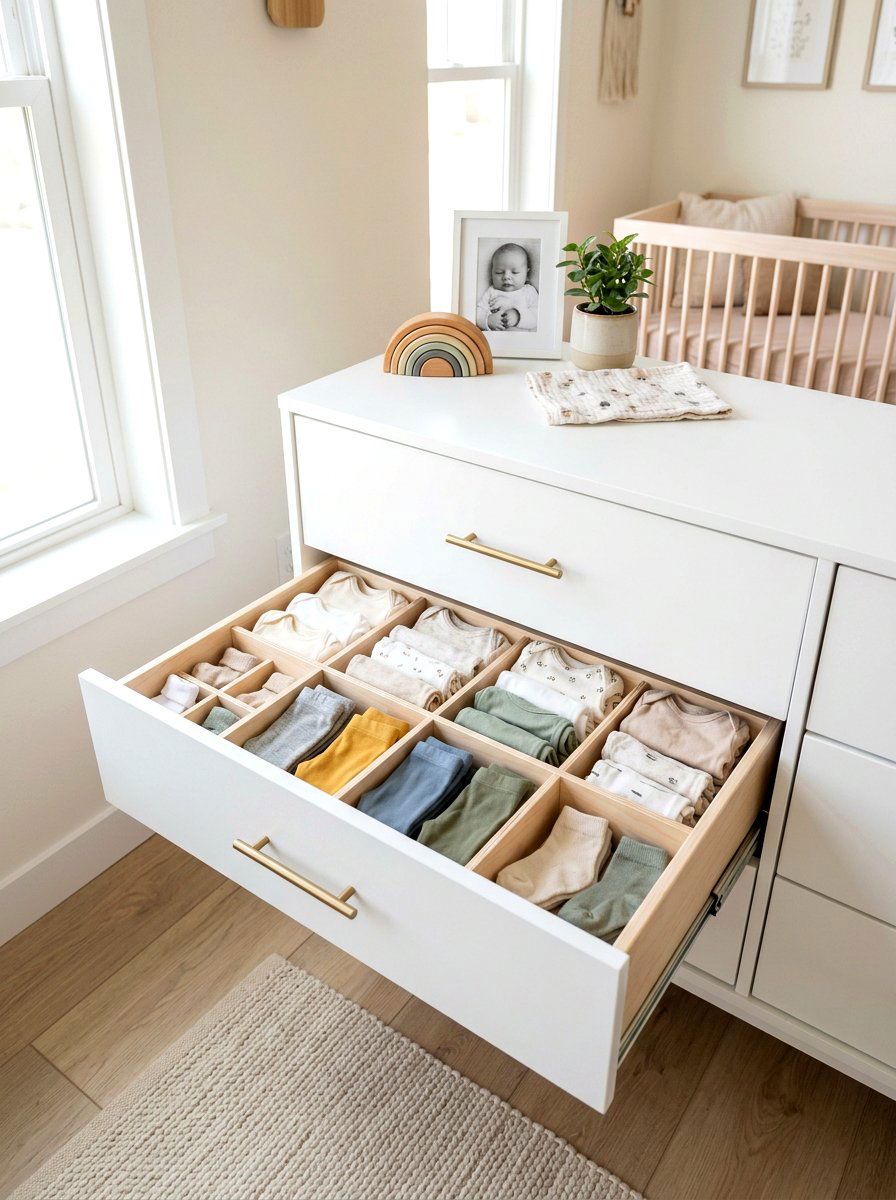
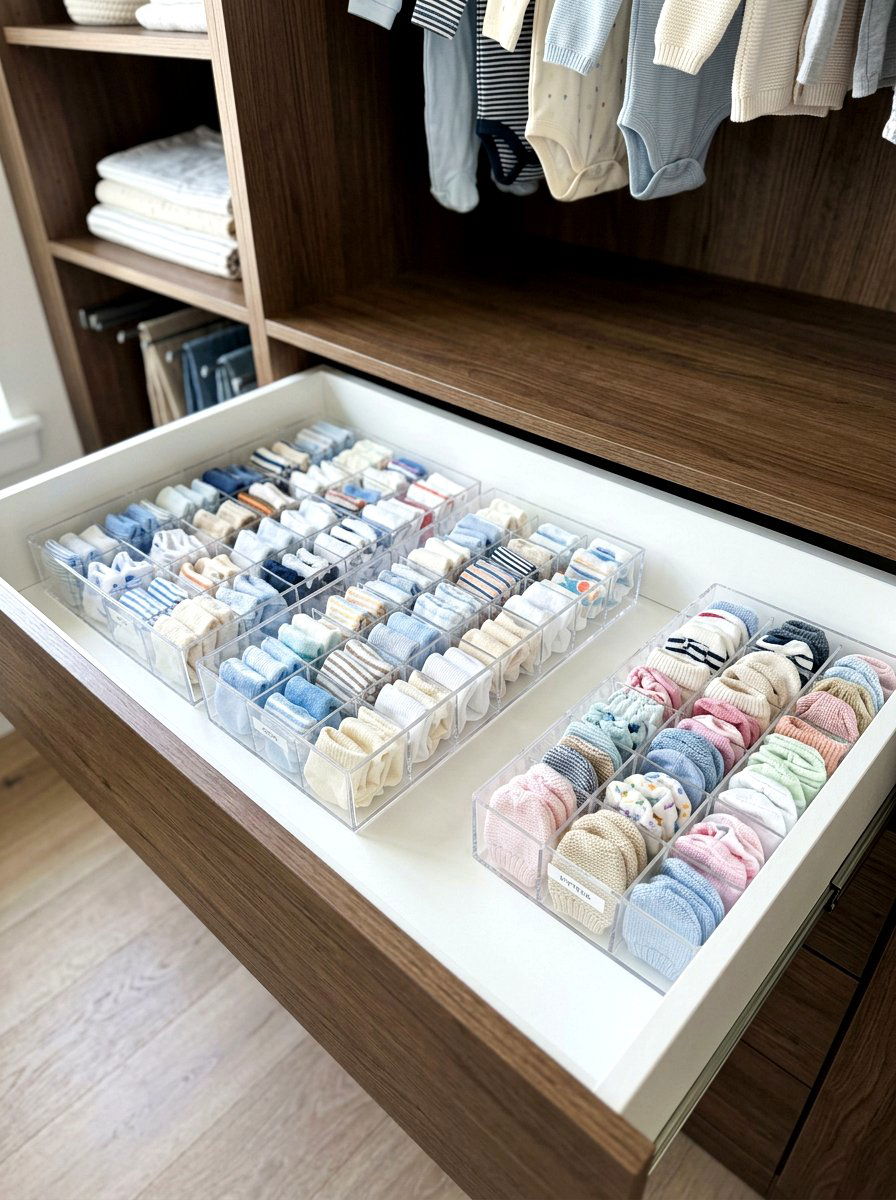
Using adjustable drawer dividers is one of the most effective ways to maintain order within a large nursery dresser. These simple tools allow you to create customized compartments that fit the specific size of baby garments, preventing tiny onesies from shifting into a messy pile. You can choose between bamboo slats for a natural look or clear acrylic for a modern feel. By separating pajamas, leggings, and bodysuits into their own sections, you can quickly find exactly what you need without rummaging through the entire drawer. This systematic approach ensures that even the smallest items remain visible and accessible, making laundry day and morning dressing routines much more manageable.
2. Baby clothes size dividers
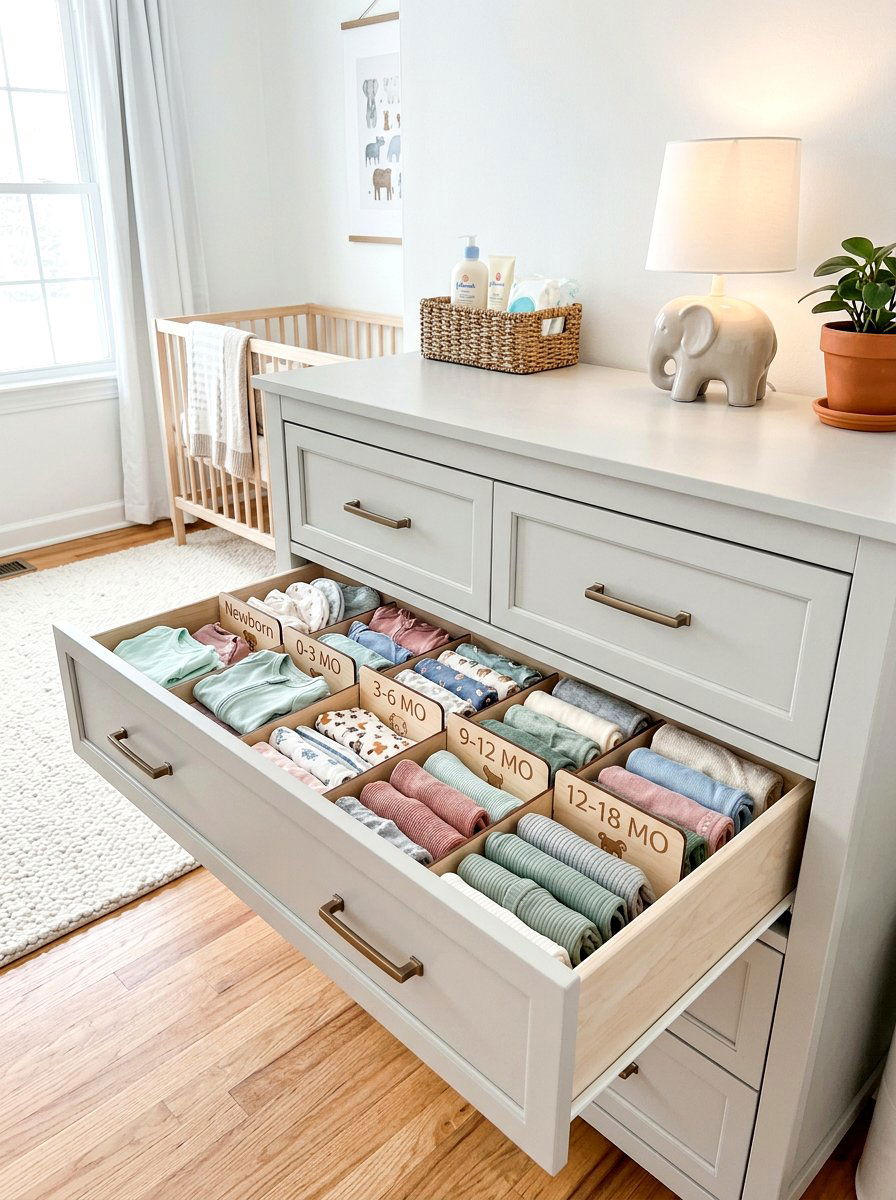
Managing a growing baby's wardrobe is much easier when you implement size dividers within your dresser drawers. Babies transition through clothing sizes incredibly fast, and keeping 0-3 month items separate from 6-9 month pieces prevents confusion during outfit changes. You can use sturdy cardstock or plastic dividers that sit vertically between stacks of clothes to clearly mark the transition from one size to the next. This method ensures you are always using the clothes that fit currently while keeping future sizes ready for their turn. It also helps you identify when it is time to shop for the next stage or clear out items that have been outgrown.
3. Acrylic drawer organizers
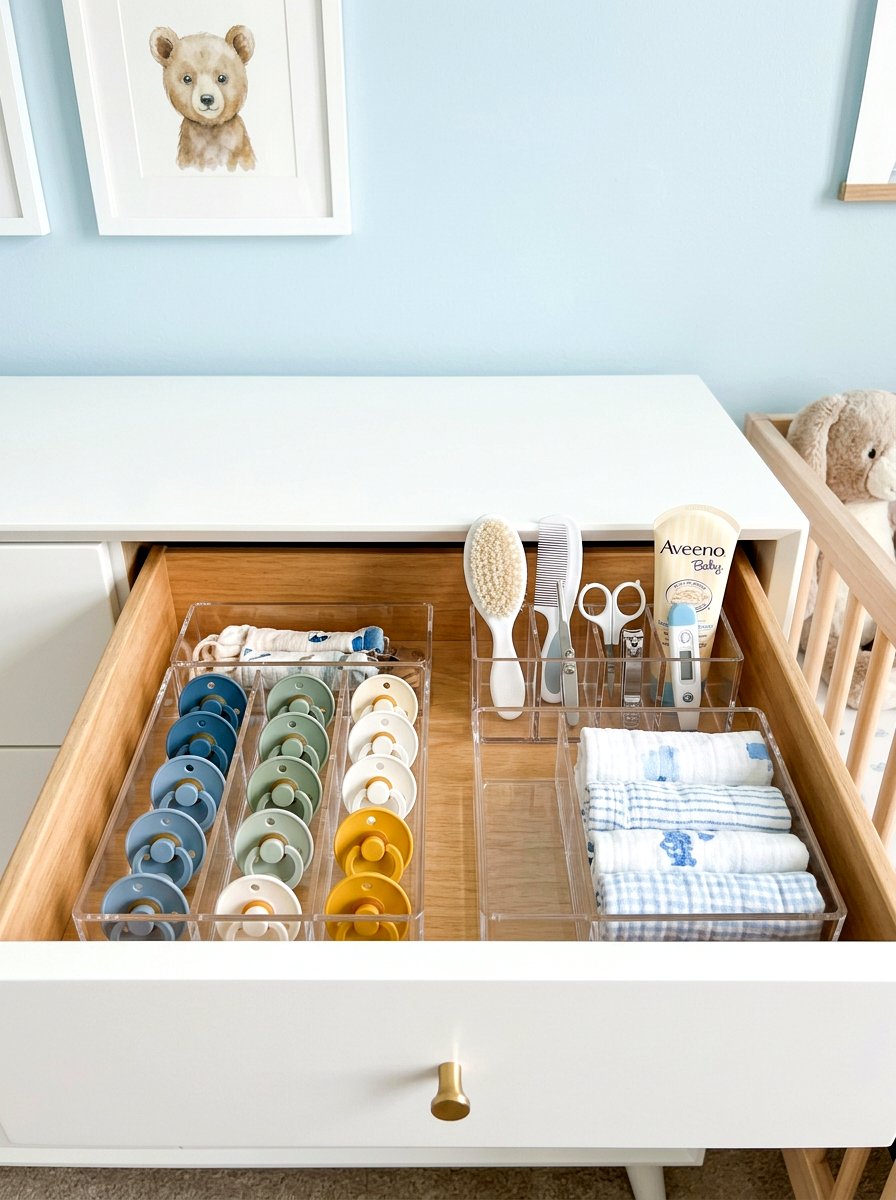
For parents who appreciate a clean and modern aesthetic, acrylic drawer organizers offer a sleek way to categorize small nursery essentials. These transparent bins are perfect for holding tiny accessories like pacifiers, thermometer kits, and grooming supplies that might otherwise get lost in a large drawer. Because they are clear, you can easily see the contents at a glance, which is vital when you are holding a wiggly baby with one hand. They come in various sizes, allowing you to build a modular grid that fits your drawer dimensions perfectly. This durable storage solution keeps your nursery dresser looking polished while providing high-level functionality for everyday baby care.
4. Changing table topper
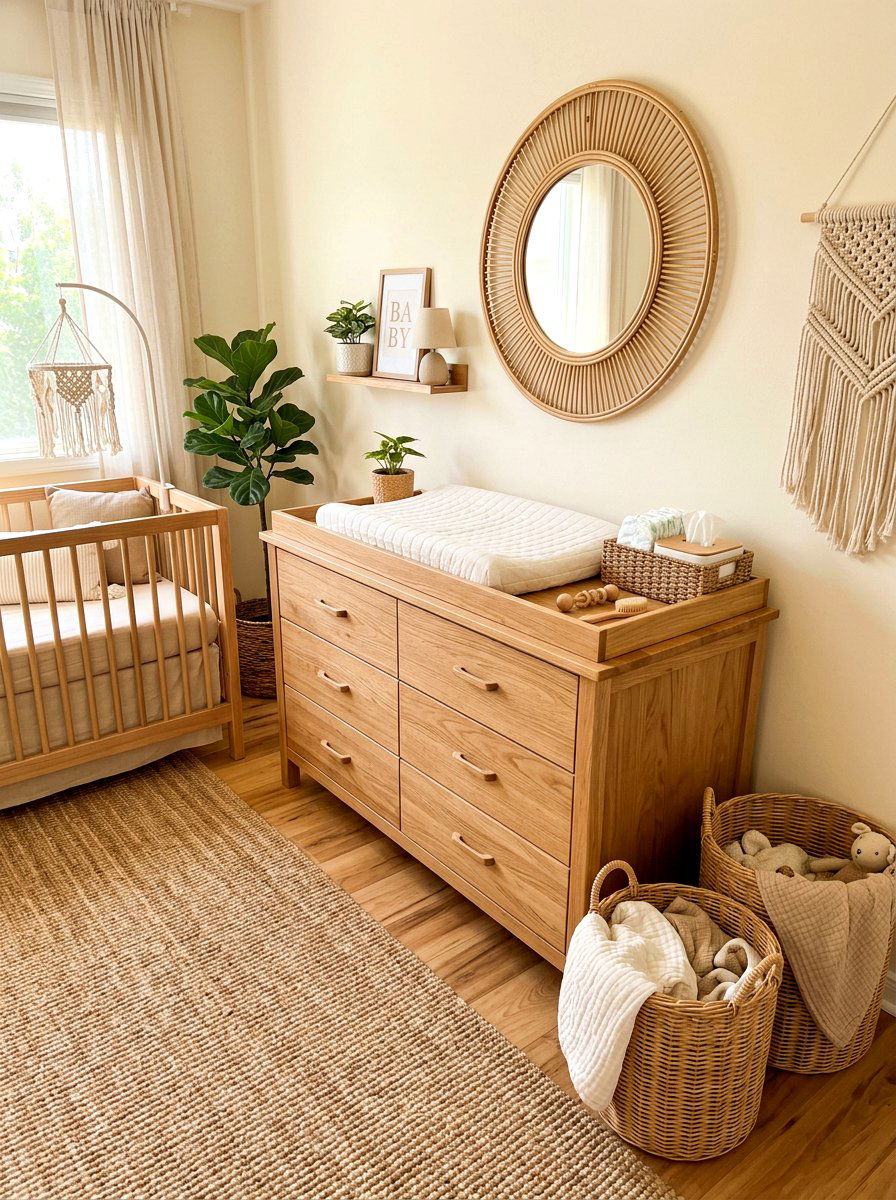
Transforming the top of your dresser into a functional changing station is a brilliant space-saving strategy for any nursery. By adding a secure changing table topper, you create a dedicated area for diaper changes without needing a separate piece of furniture. These toppers usually feature high sides for safety and a partitioned section for frequently used items like wipes and creams. This setup anchors the room and keeps all your primary care tools within arm’s reach while you stand at the dresser. It effectively utilizes the horizontal surface area, leaving more floor space for a comfortable glider or a cozy play rug for your growing little one.
5. Diaper storage bins
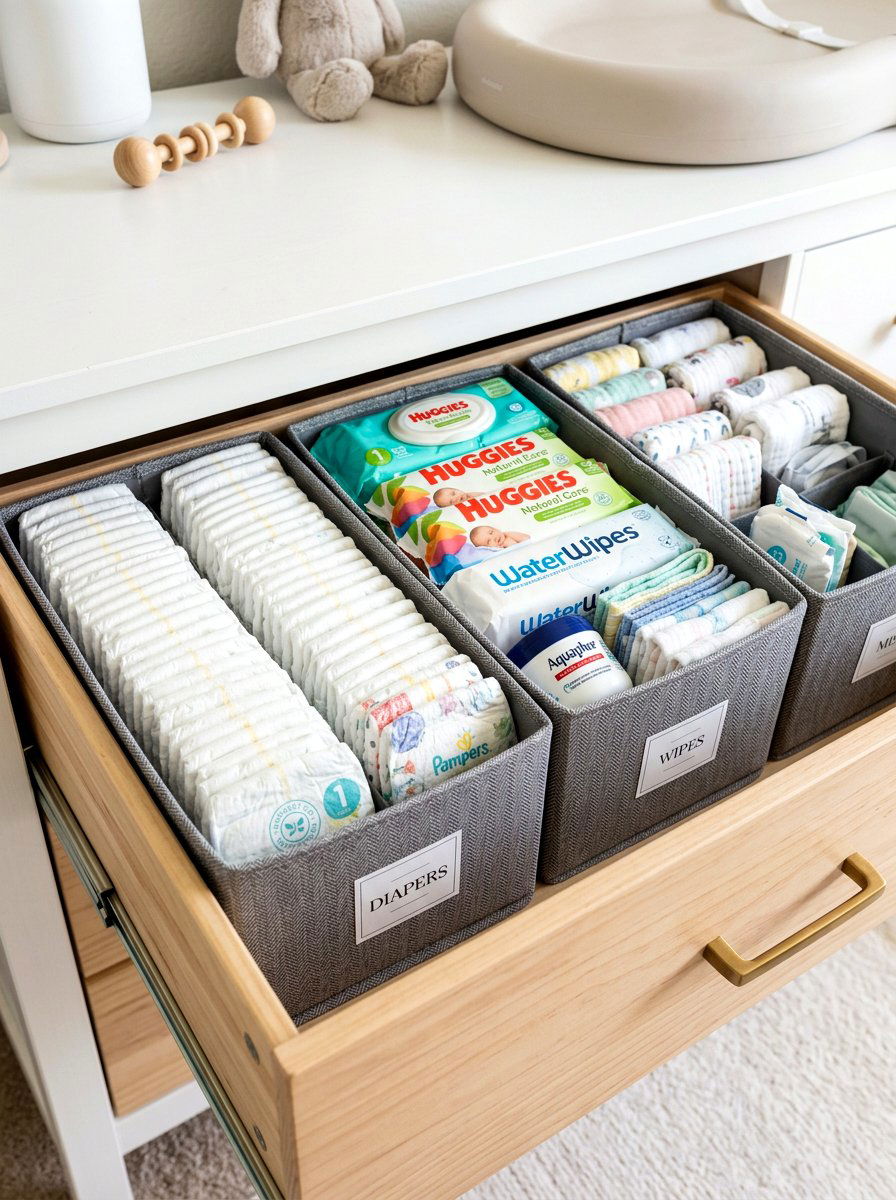
Keeping a large supply of diapers organized and within reach is essential for a stress-free nursery experience. Dedicated diaper storage bins can be placed either inside a top drawer or directly on the dresser surface for immediate access. Using open-top baskets or structured fabric bins allows you to grab a fresh diaper quickly with one hand during a change. If you choose to store them in a drawer, standing them vertically in rows maximizes the count you can fit while making it easy to see when your stock is running low. This simple organizational habit ensures you are never caught unprepared during those frequent and urgent newborn diapering moments.
6. Scented drawer liners
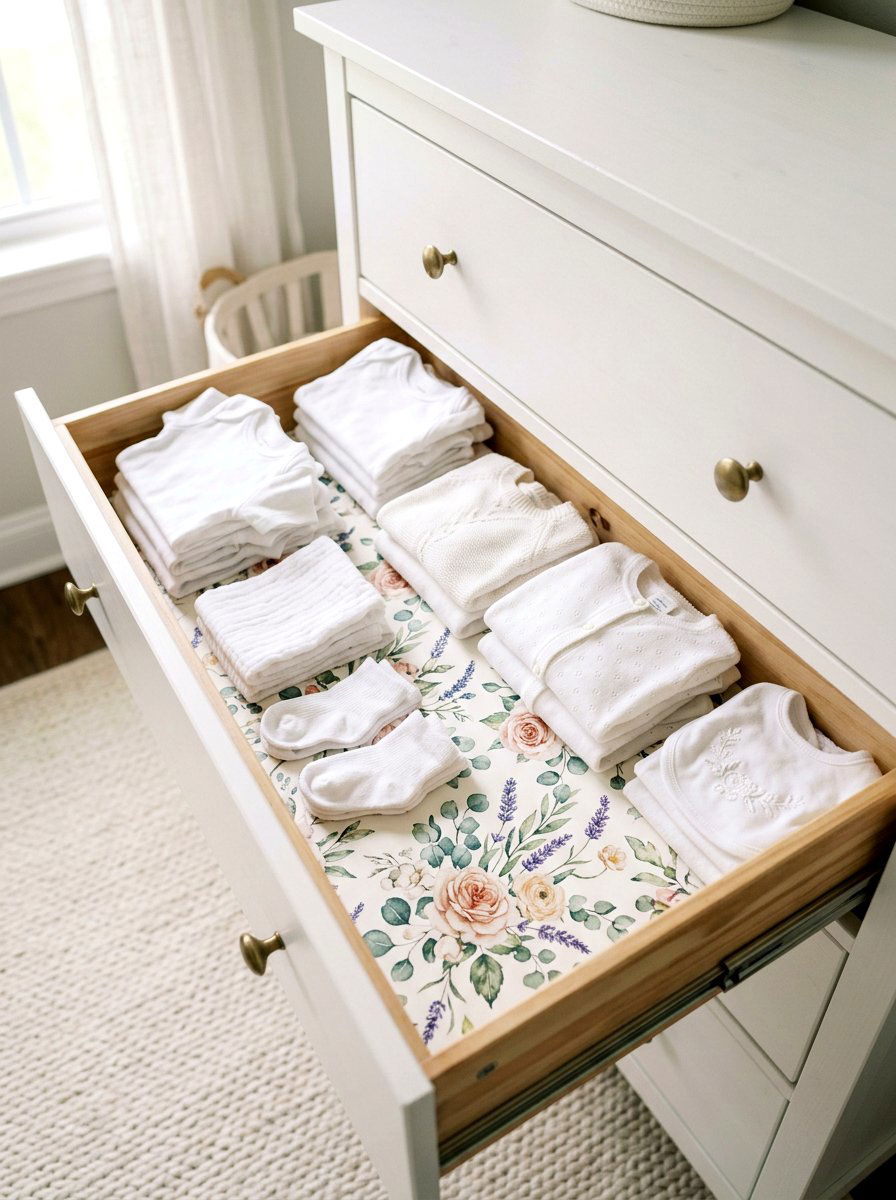
Adding scented drawer liners to your nursery dresser provides a subtle and pleasant touch that keeps baby clothes smelling fresh. These liners do more than just add a light fragrance; they also protect the interior wood of the dresser from moisture and potential snags. You can find liners with gentle, baby-safe scents like lavender or vanilla that create a calming atmosphere every time you open a drawer. They are easy to cut to size and provide a clean, decorative base for your organized piles of clothing. This small detail adds a layer of luxury to the nursery while maintaining a hygienic environment for your baby’s most delicate garments.
7. Hanging dresser organizer
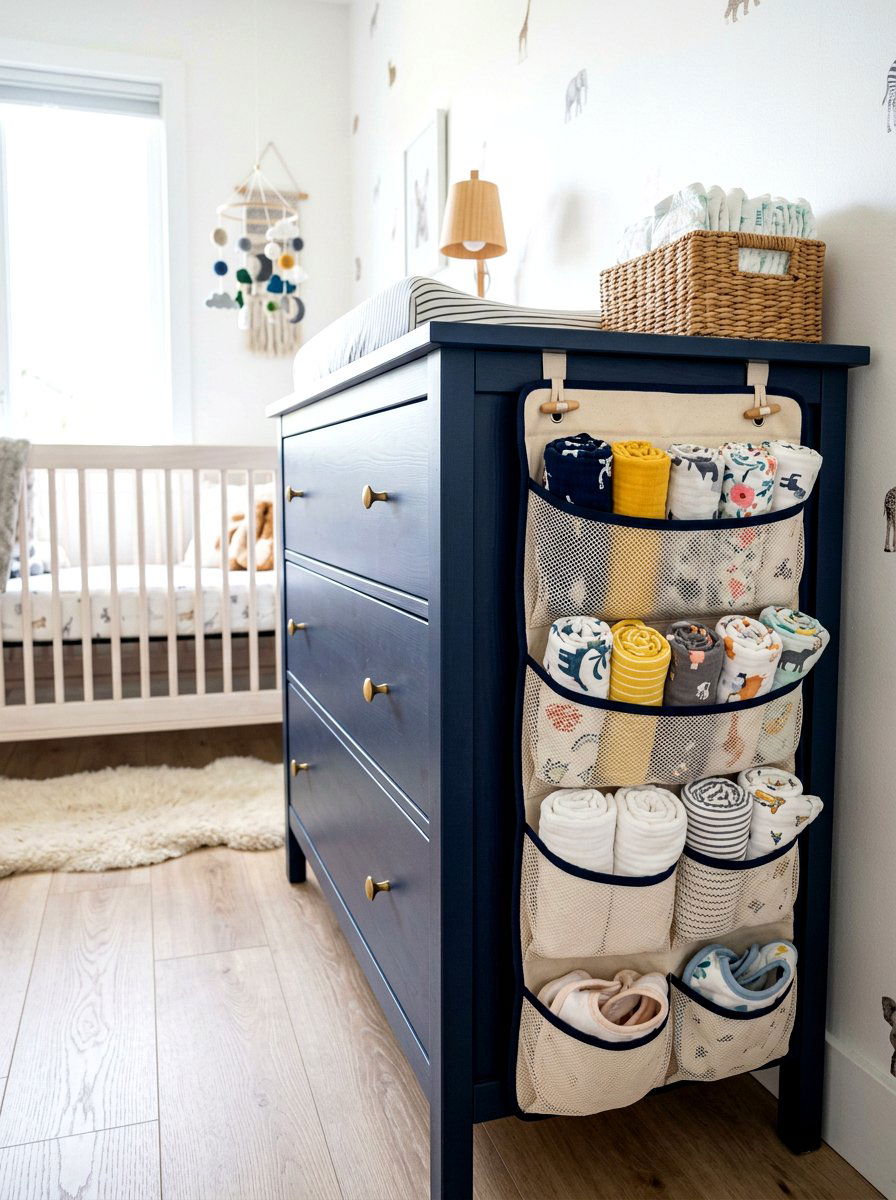
A hanging dresser organizer is an excellent way to utilize the often-ignored vertical space on the side of your furniture. These clever accessories usually attach via hooks or adhesive and feature several pockets or small baskets for extra storage. They are perfect for holding items you need frequently but don't want taking up drawer space, such as burp cloths, swaddles, or even a small toy to distract the baby during changes. By moving these essentials to the exterior of the dresser, you free up internal room for bulkier items like blankets and winter coats. This setup keeps your most-used supplies visible and extremely easy to grab.
8. Woven storage baskets
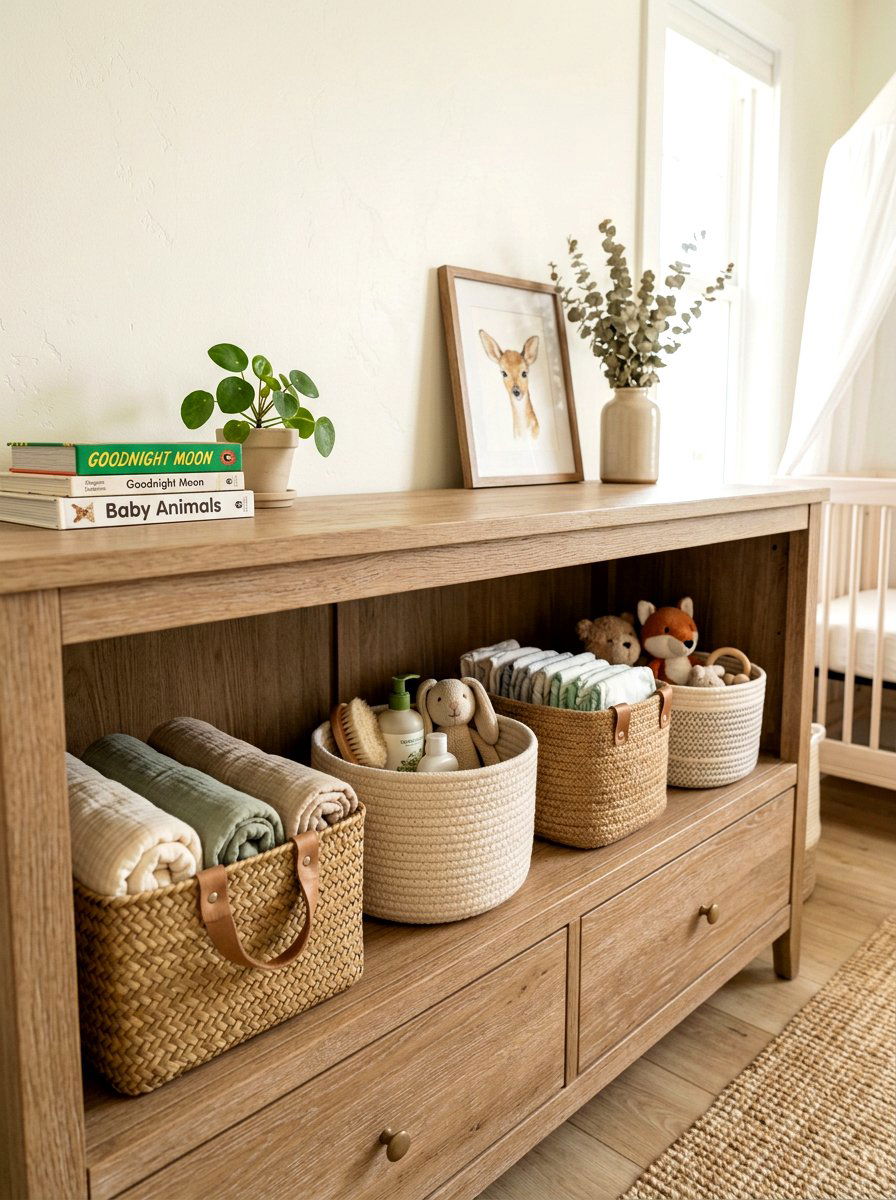
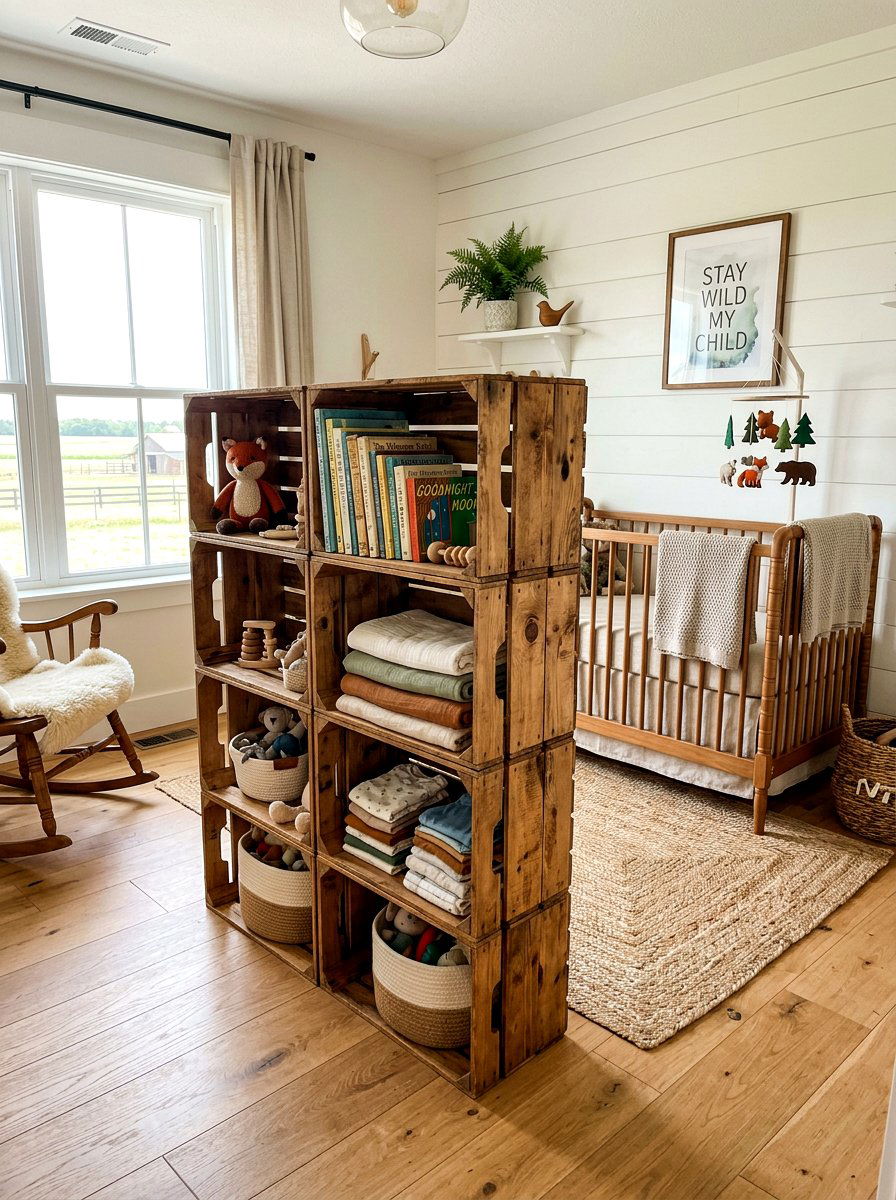
Woven storage baskets bring a touch of texture and warmth to a nursery dresser while serving as highly versatile organizational tools. These baskets are ideal for grouping like items together, such as a collection of plush toys, extra bedding, or nursing supplies. You can place smaller baskets inside the drawers to act as soft dividers or arrange larger ones on the bottom shelf of the dresser for easy access. The natural materials used in woven baskets complement many nursery themes, from boho-chic to traditional styles. Their sturdy construction ensures they hold their shape over time, providing a reliable and beautiful way to contain the inevitable clutter of babyhood.
9. Honeycomb drawer organizer
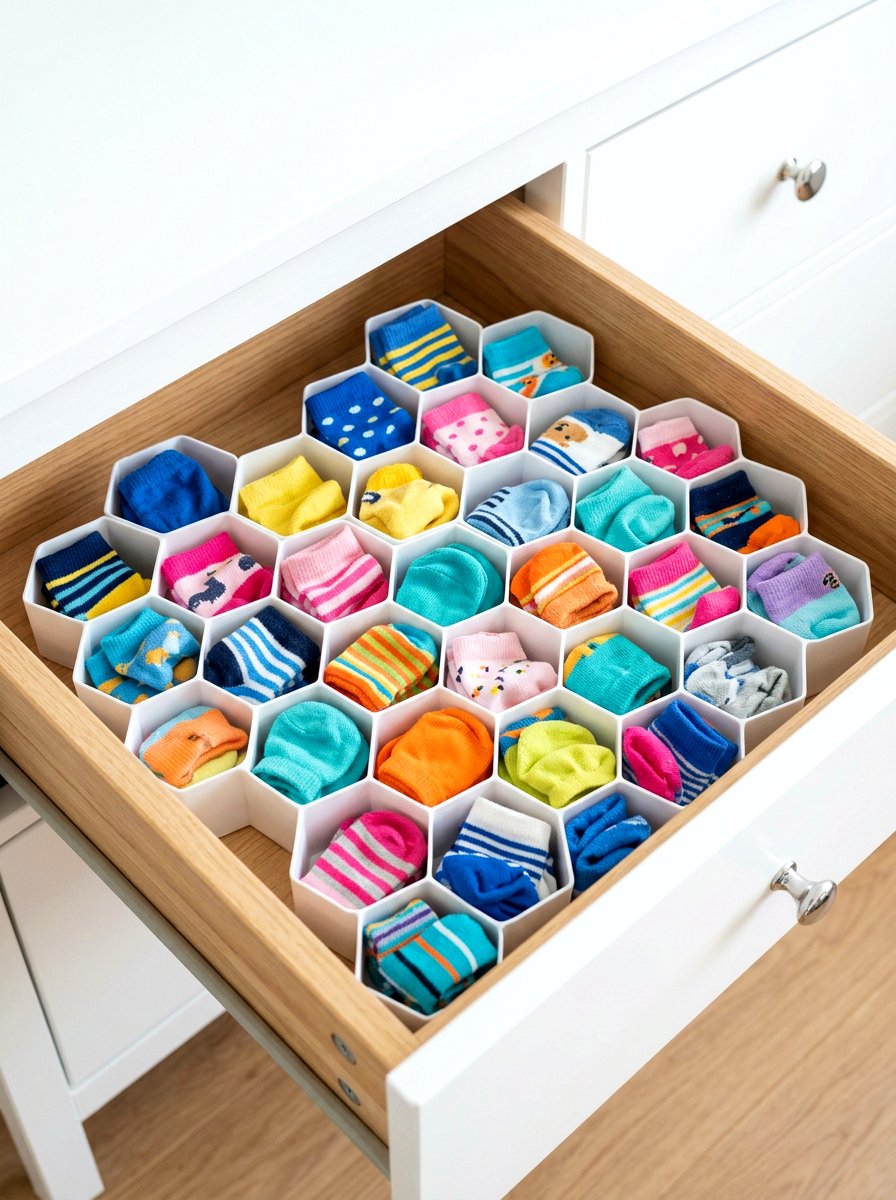
A honeycomb drawer organizer is a specialized tool designed to keep small, loose items like socks and mittens perfectly separated. This unique hexagonal grid fits snugly into a dresser drawer, providing dozens of tiny compartments for individual pairs. It eliminates the frustration of searching for a matching sock in a sea of tiny garments, as each pair has its own dedicated cell. This system is particularly helpful for organizing newborn accessories that are too small for traditional dividers. By using a honeycomb layout, you maximize the use of every square inch in the drawer, creating a visually satisfying and highly practical storage solution for your baby’s wardrobe.

10. KonMari baby clothes folding
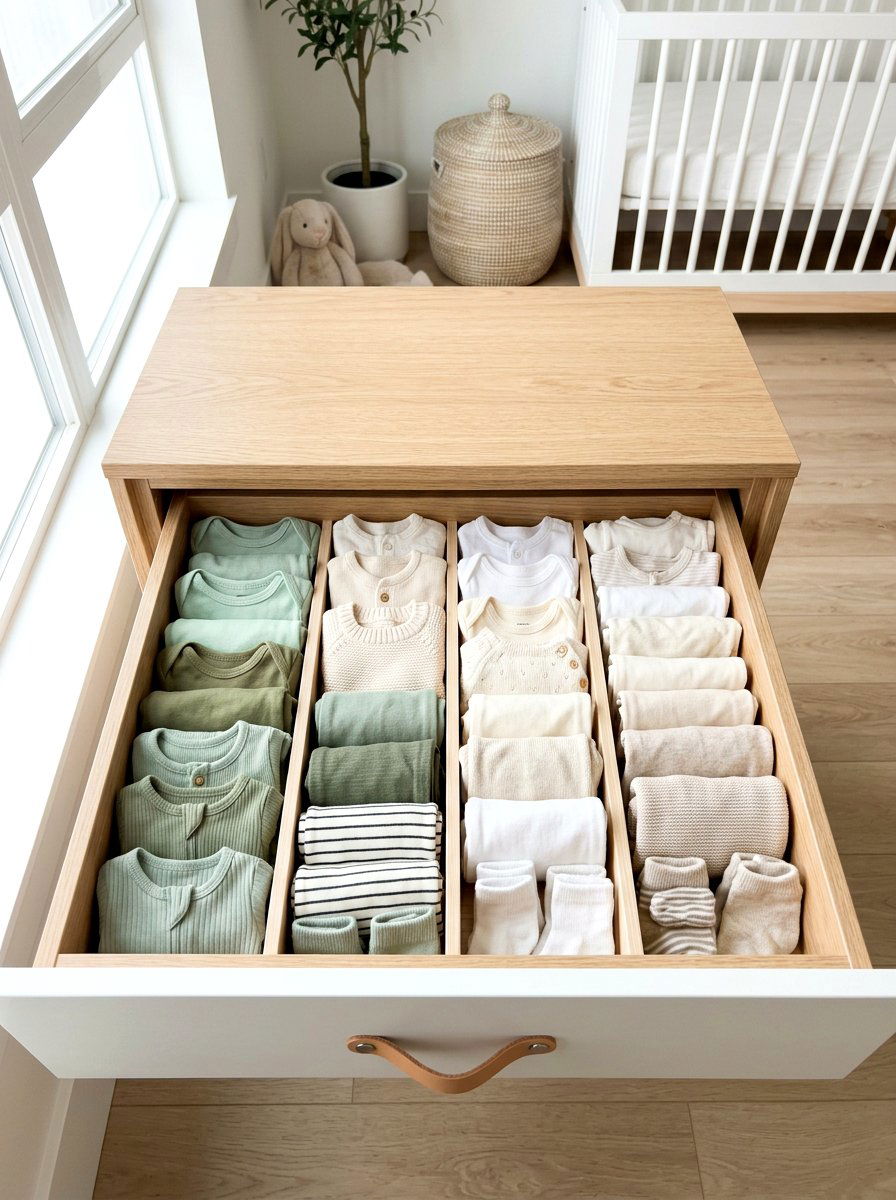
Adopting the KonMari folding method for baby clothes can revolutionize how you use your nursery dresser space. This technique involves folding garments into small, sturdy rectangles and filing them vertically in the drawer rather than stacking them on top of each other. When clothes are stored this way, you can see every single item at once, which prevents hidden pieces from being forgotten or outgrown. This vertical filing system makes it incredibly easy to pull out one onesie without disturbing the rest of the drawer. It is a simple yet powerful habit that keeps the dresser looking immaculate and ensures you get the most out of your baby's wardrobe.
11. Newborn essentials drawer
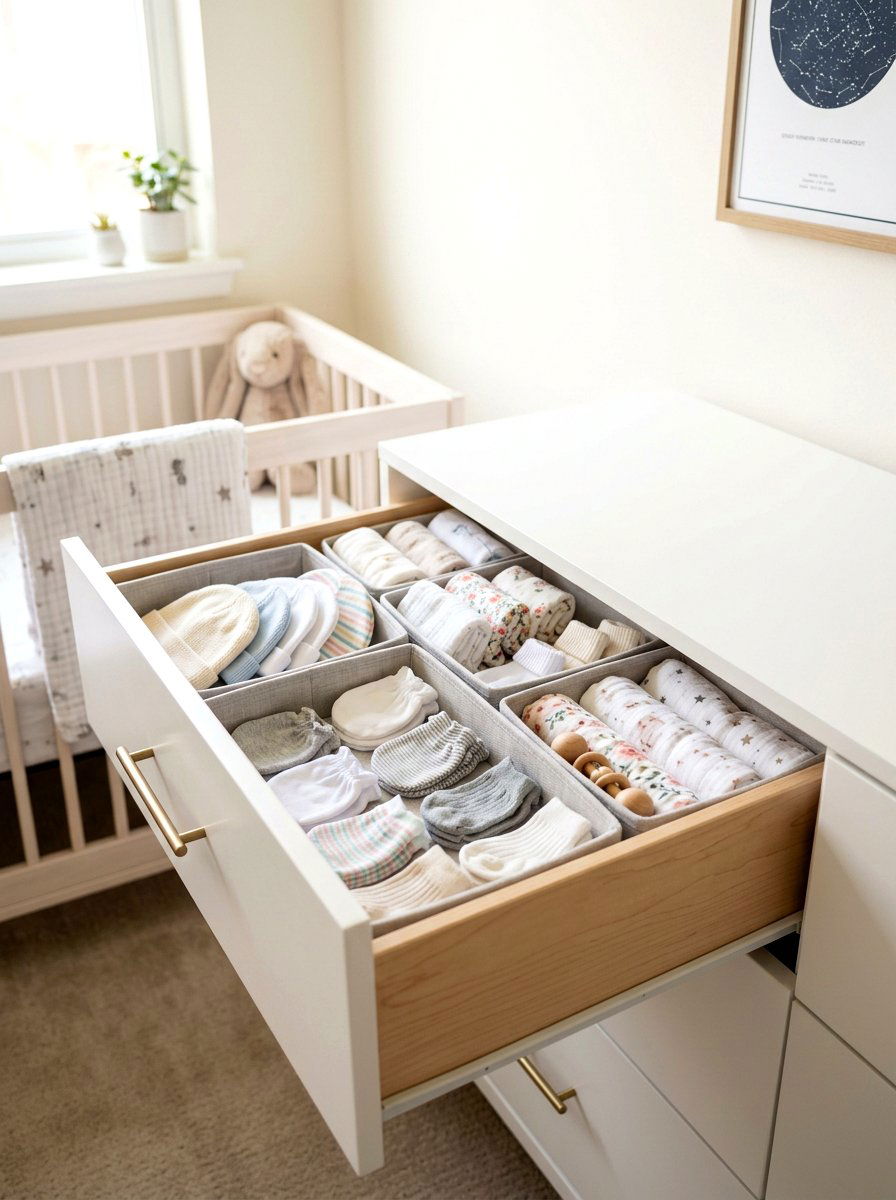
Dedicate the most accessible top drawer of your nursery dresser to a curated collection of newborn essentials. This "quick-grab" drawer should contain everything you need for the first few weeks, including soft onesies, gentle hats, and delicate hand mittens. By grouping these high-rotation items in one spot, you minimize the amount of movement needed during those early, tiring days of parenthood. You might also include a few pacifiers and a soft brush for grooming in this specific section. Having a specialized newborn drawer ensures that the items you reach for ten times a day are always exactly where you expect them to be, streamlining your care routine.
12. Nursery medicine drawer
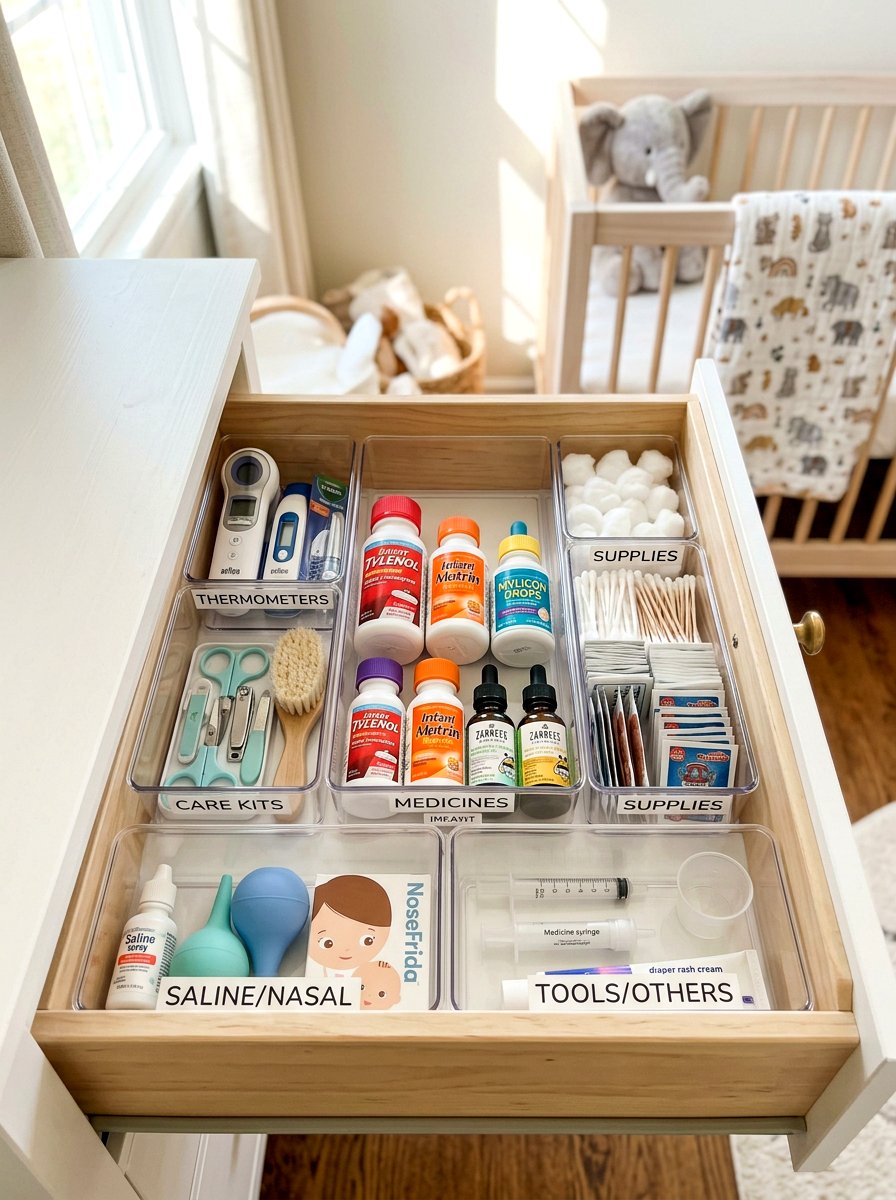
Safety and organization go hand-in-hand when you create a dedicated nursery medicine drawer within your dresser. This section should be out of reach of older children but easily accessible for parents during late-night fevers or teething episodes. Use small, clear bins to separate different types of care items, such as a digital thermometer, nasal aspirator, and vitamin drops. Keeping these supplies in a cool, dry dresser drawer ensures they remain in good condition and are easy to locate in an emergency. Being able to find the infant nail clippers or a soothing balm instantly reduces stress and allows you to care for your baby with confidence and speed.
13. Baby bow storage
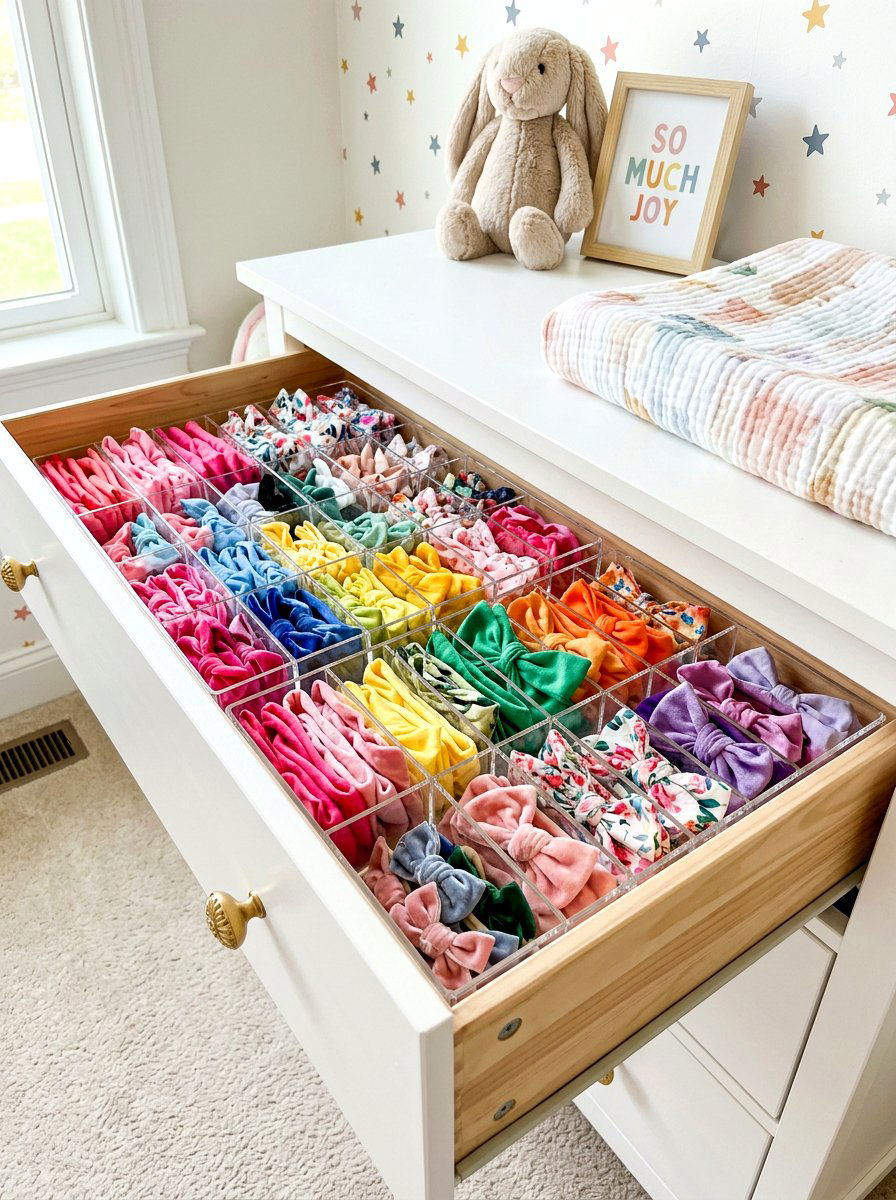
For families with a large collection of hair accessories, a dedicated baby bow storage system within a dresser drawer is essential. You can use shallow acrylic trays or small fabric-lined bins to keep headbands and clips from becoming a tangled mess. Sorting bows by color or style makes it fun and easy to choose the perfect finishing touch for any outfit. Some parents prefer to use a ribbon board that fits inside the drawer, allowing clips to be attached for clear visibility. This organizational method protects the delicate shapes of the bows and ensures you can always find the matching accessory to complete your little one's charming look for the day.
14. Dresser drawer labels
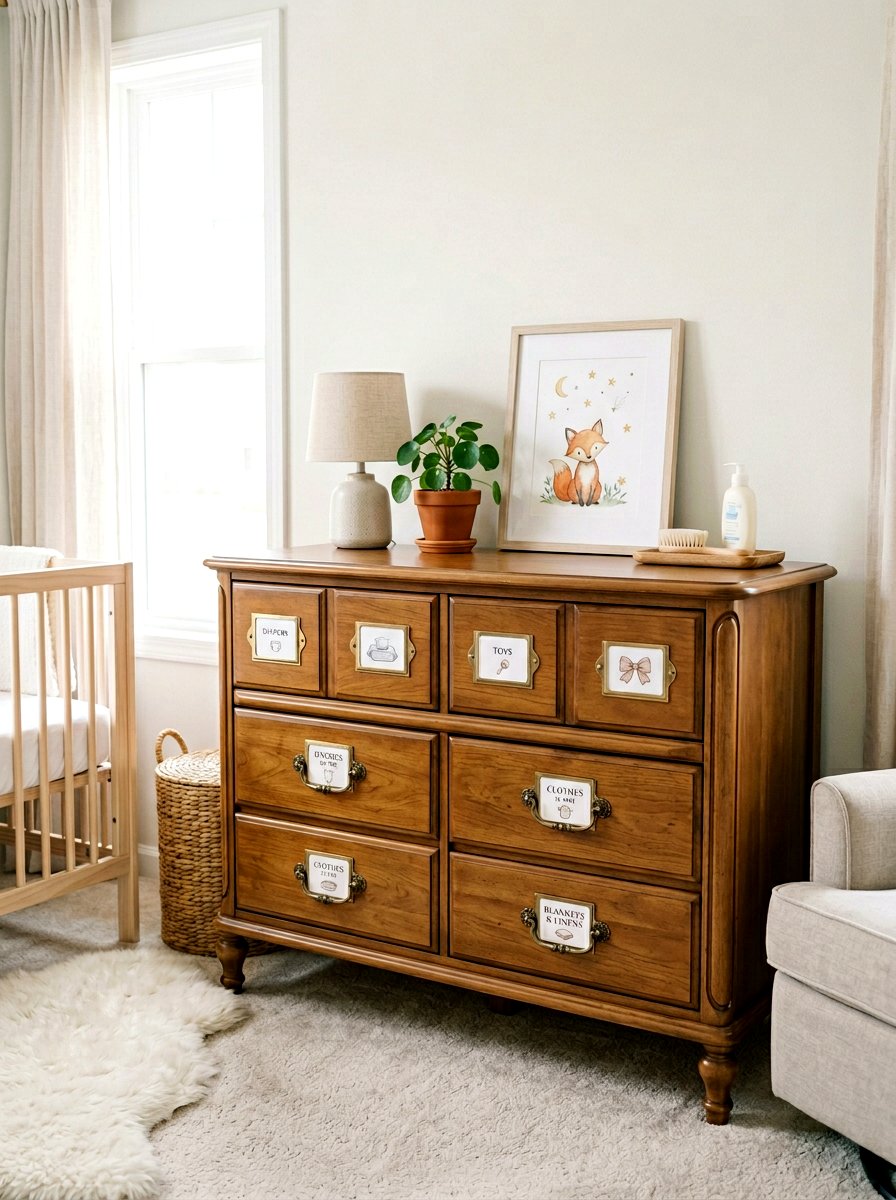
Applying clear and stylish labels to your nursery dresser drawers is a functional design choice that helps keep the whole family organized. Whether you use a sleek label maker or beautiful hand-lettered stickers, labeling ensures that everyone knows exactly where items belong. This is especially helpful when partners, grandparents, or babysitters are helping with laundry or dressing the baby. You can label the exterior of the drawers or place labels on the inside lip for a more minimalist look. By clearly identifying sections for "Sleepers, " "Tops, " and "Bottoms, " you maintain the integrity of your organizational system over time, even during the busiest and most chaotic weeks.
15. Top drawer diapering station
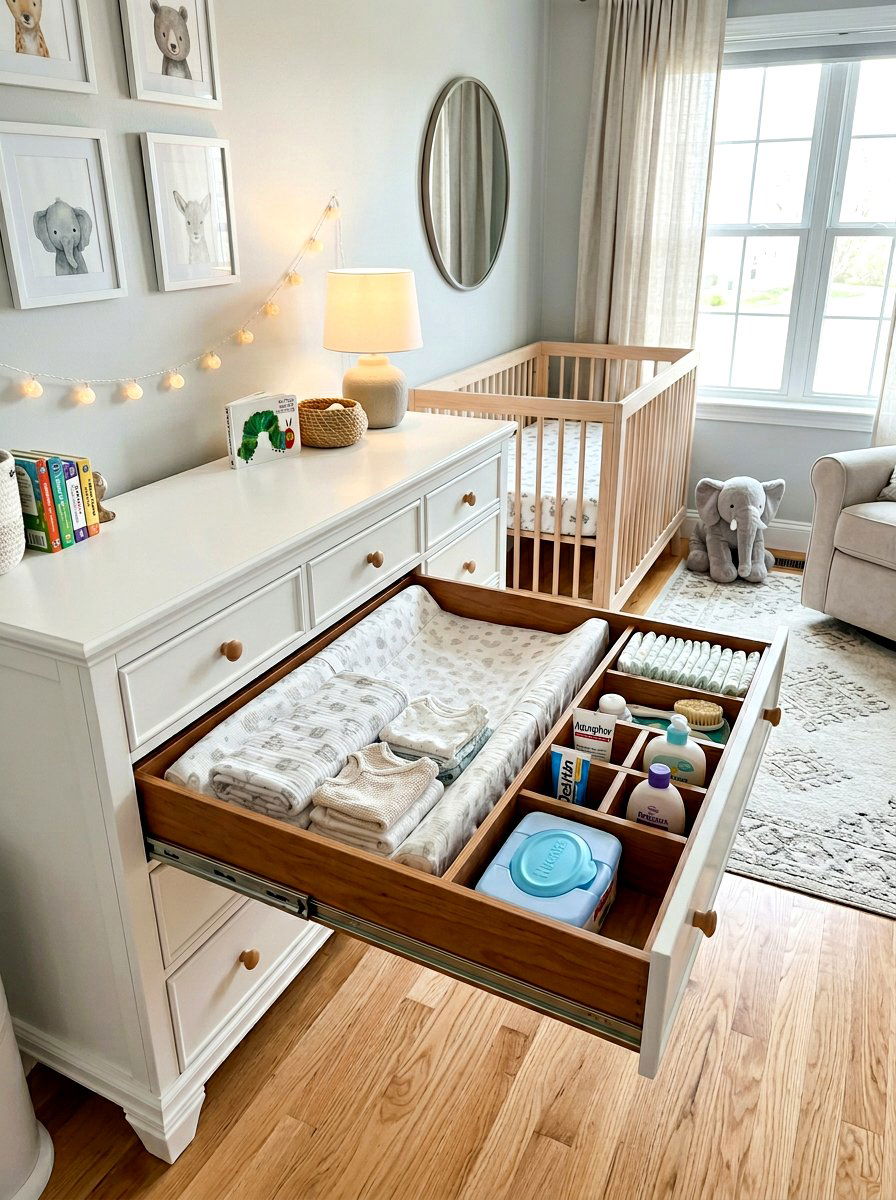
A top drawer diapering station is the ultimate convenience for parents who use their dresser as a changing table. By reserving the uppermost drawer for diapers, wipes, and barrier creams, you keep these essential supplies hidden but within immediate reach. This layout prevents the top of the dresser from becoming cluttered with plastic packaging and loose supplies, maintaining a clean and serene nursery environment. Use sturdy bins to separate the diapers from the wipes, and consider adding a small tray for smaller items like ointments and hand sanitizer. This hidden station creates a seamless workflow during changes, allowing you to keep one hand safely on the baby at all times.
16. Spare crib sheets storage
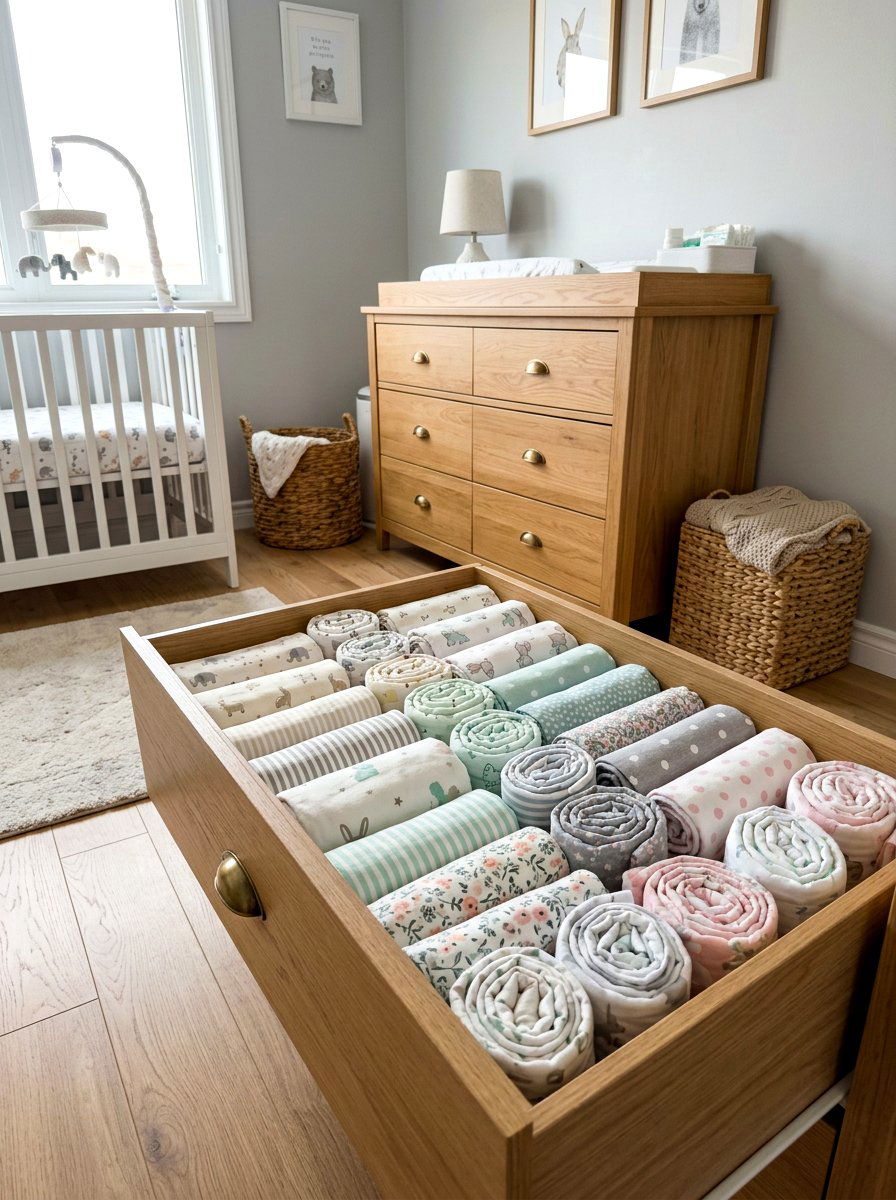
Storing spare crib sheets in the bottom drawer of your nursery dresser keeps them clean and ready for those inevitable middle-of-the-night bed changes. Because sheets are relatively bulky, they are best suited for the deeper drawers where they can be folded flat or rolled to save space. Having them nearby means you won't have to leave the room to find a fresh set when an accident happens. You can even tuck a waterproof mattress protector in the same section so everything needed for a full bed reset is in one convenient location. This practical storage choice ensures your nursery remains a functional space that supports quick and easy maintenance.
17. Swaddle blanket drawer
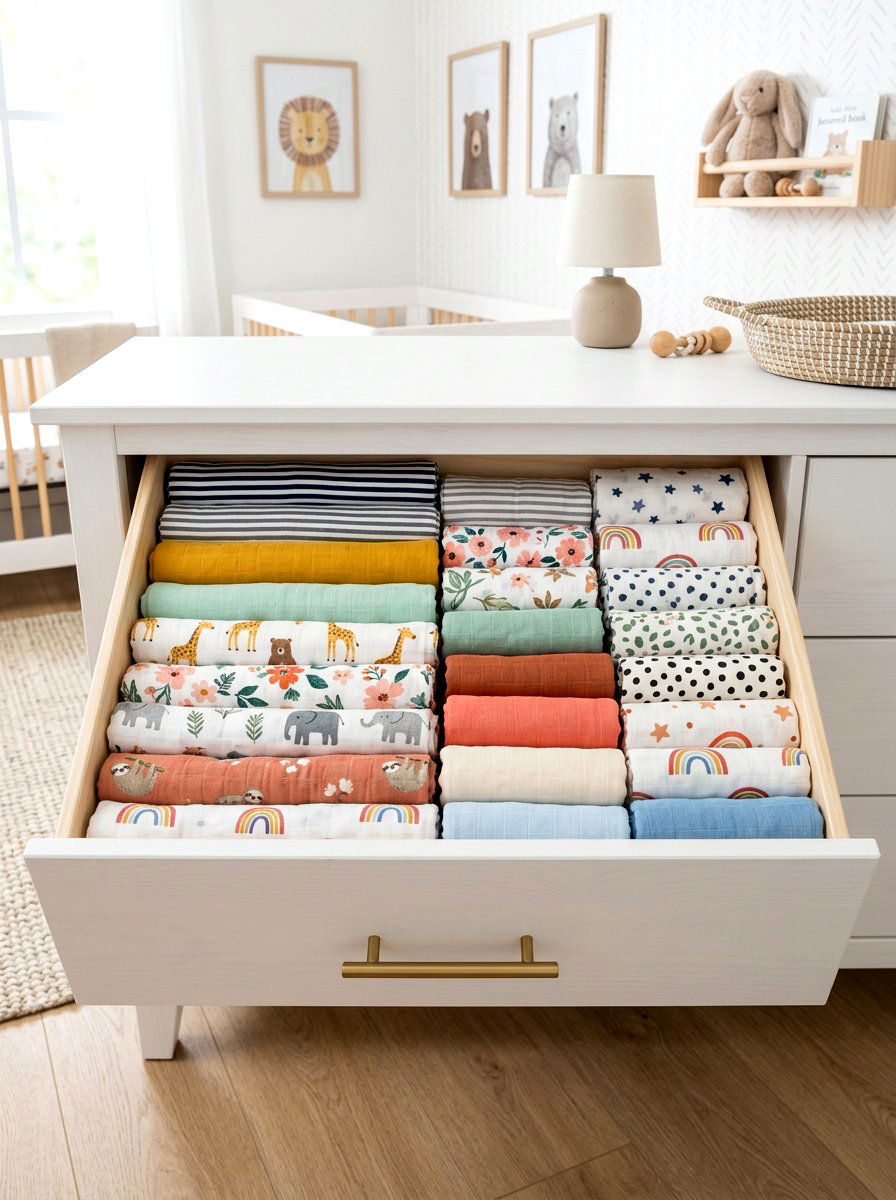
Swaddle blankets are a nursery staple, and dedicating a specific drawer to them ensures they stay tidy and accessible. These versatile pieces of fabric can be folded into squares or rolled into cylinders to fit perfectly into dresser compartments. If you have a large collection, you can organize them by weight or material, such as lightweight muslin for summer and cozy flannel for winter. Keeping them in their own drawer prevents them from getting mixed up with smaller clothing items, which can make the dresser feel cluttered. A well-organized swaddle drawer allows you to grab the perfect wrap for naptime or bedtime with ease and efficiency.
18. Baby bib drawer
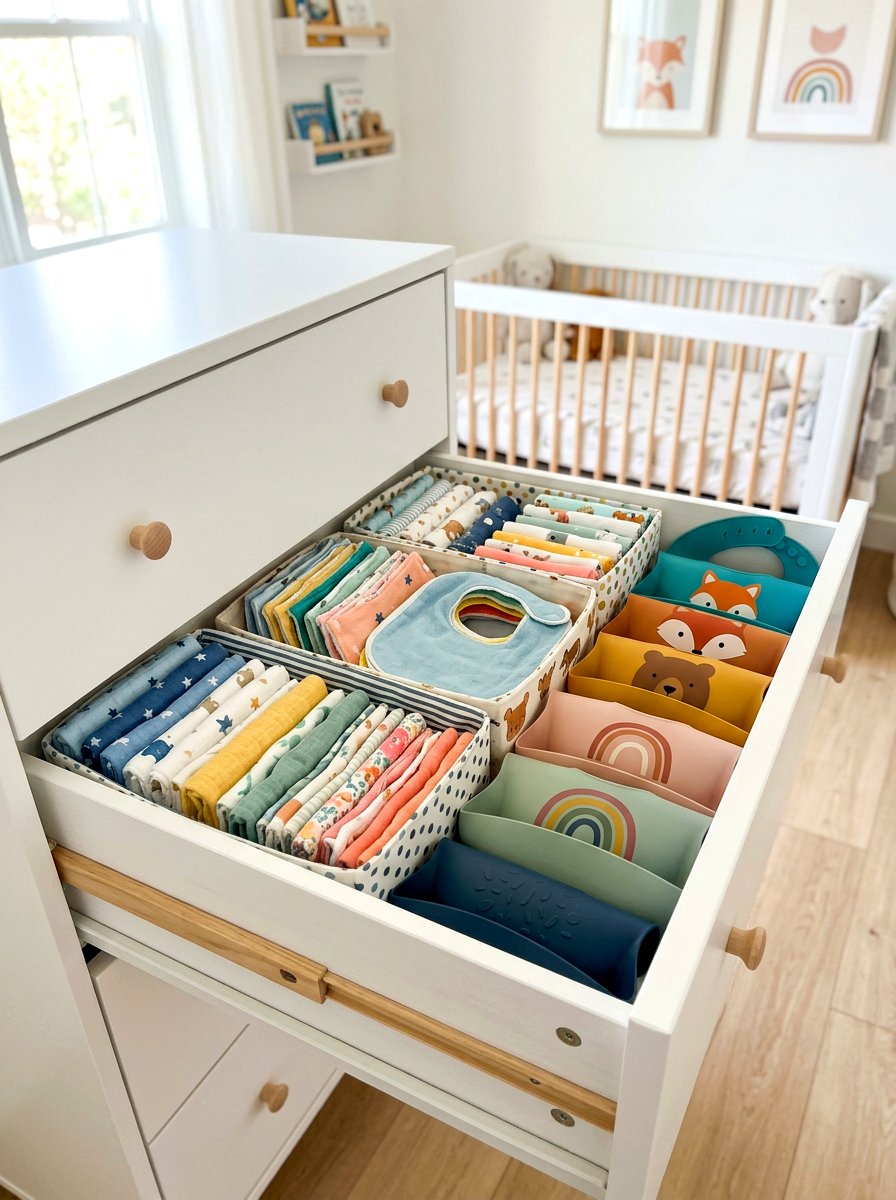
A dedicated drawer for baby bibs and burp cloths is a must-have for managing the frequent messes that come with feeding. These items are used multiple times a day, so keeping them in an easy-to-reach drawer makes sense for any nursery layout. You can use fabric bins to separate cloth bibs from waterproof silicone versions, ensuring you always have the right tool for the job. Folding them uniformly helps maximize space and allows you to see all your options at once. This system ensures that when a spill occurs, you have a fresh cloth ready in seconds, keeping your baby clean and comfortable throughout the day and night.
19. Clear plastic bins
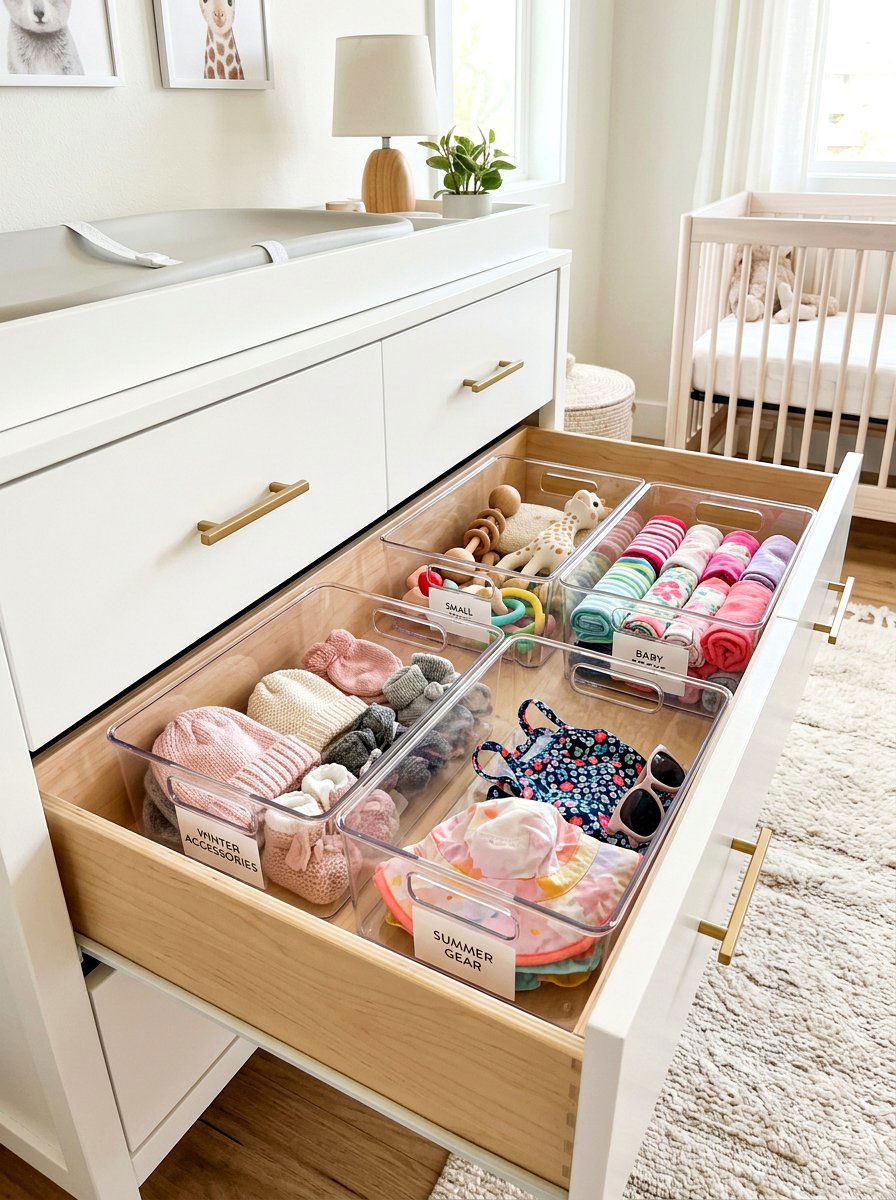
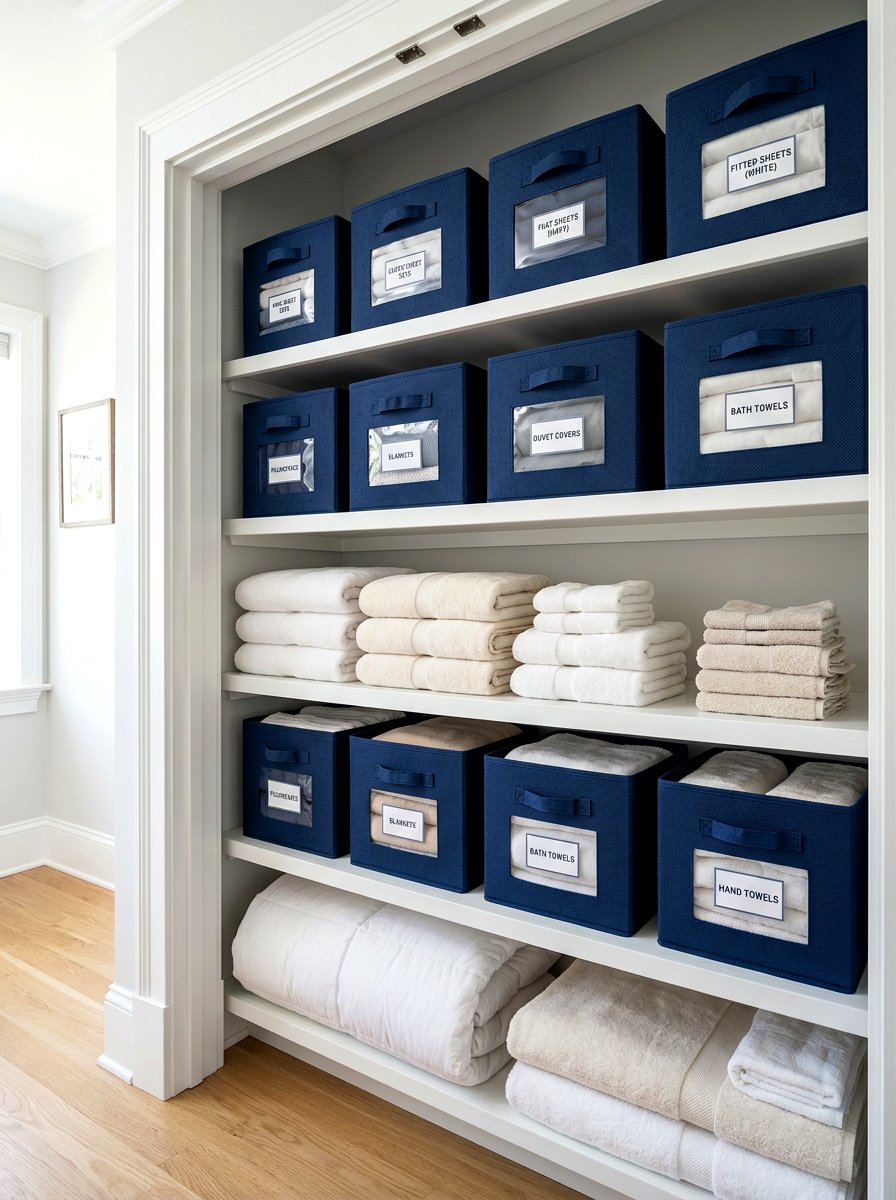
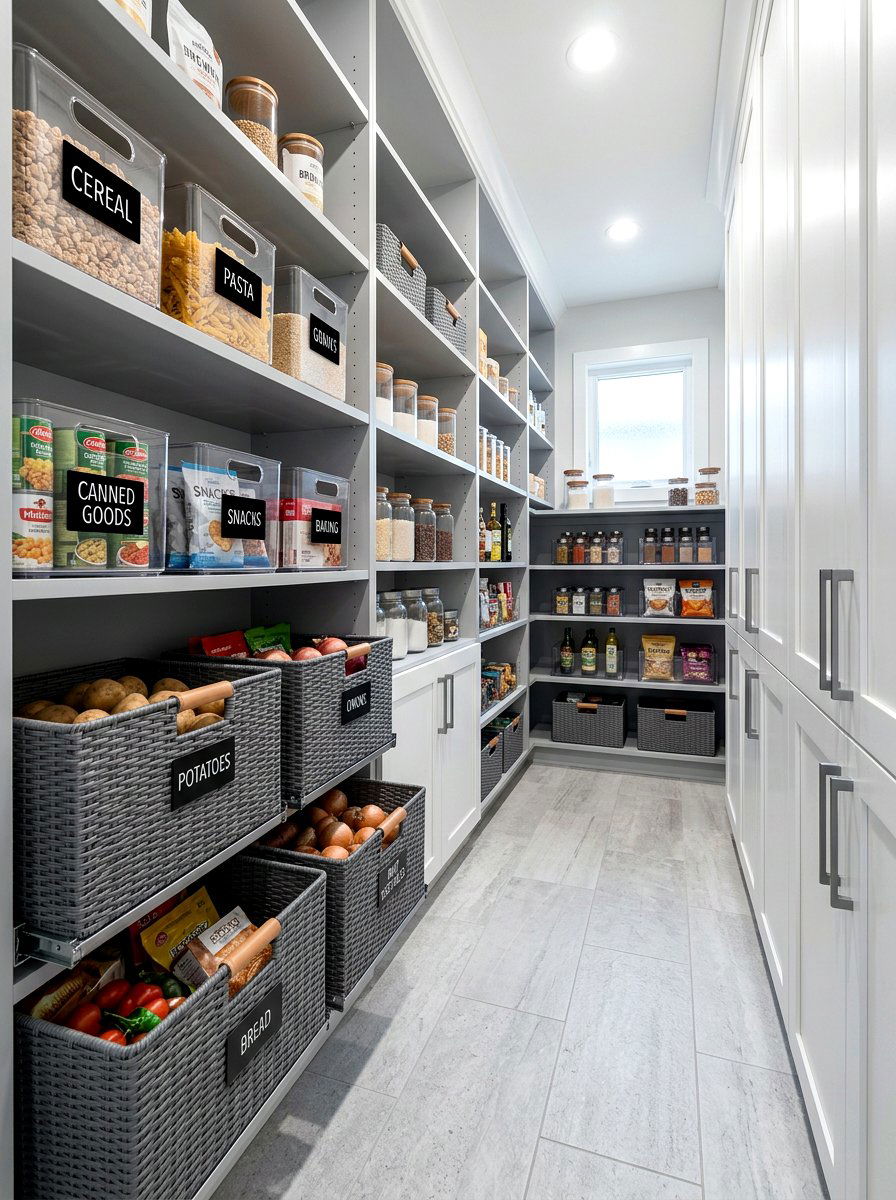
Clear plastic bins are a versatile and affordable storage solution that can be adapted for various nursery dresser needs. These bins are perfect for containing loose items that don't fit well into traditional dividers, such as seasonal hats or small toys. Because they are transparent, they maintain a sense of openness within the drawer and allow you to inventory your supplies without digging. You can stack smaller bins to take advantage of the vertical height in deeper drawers, effectively doubling your storage capacity. Using clear containers helps create a visually organized space that feels light and airy, contributing to the overall calm and peaceful atmosphere of the nursery.

20. Breastfeeding supplies drawer
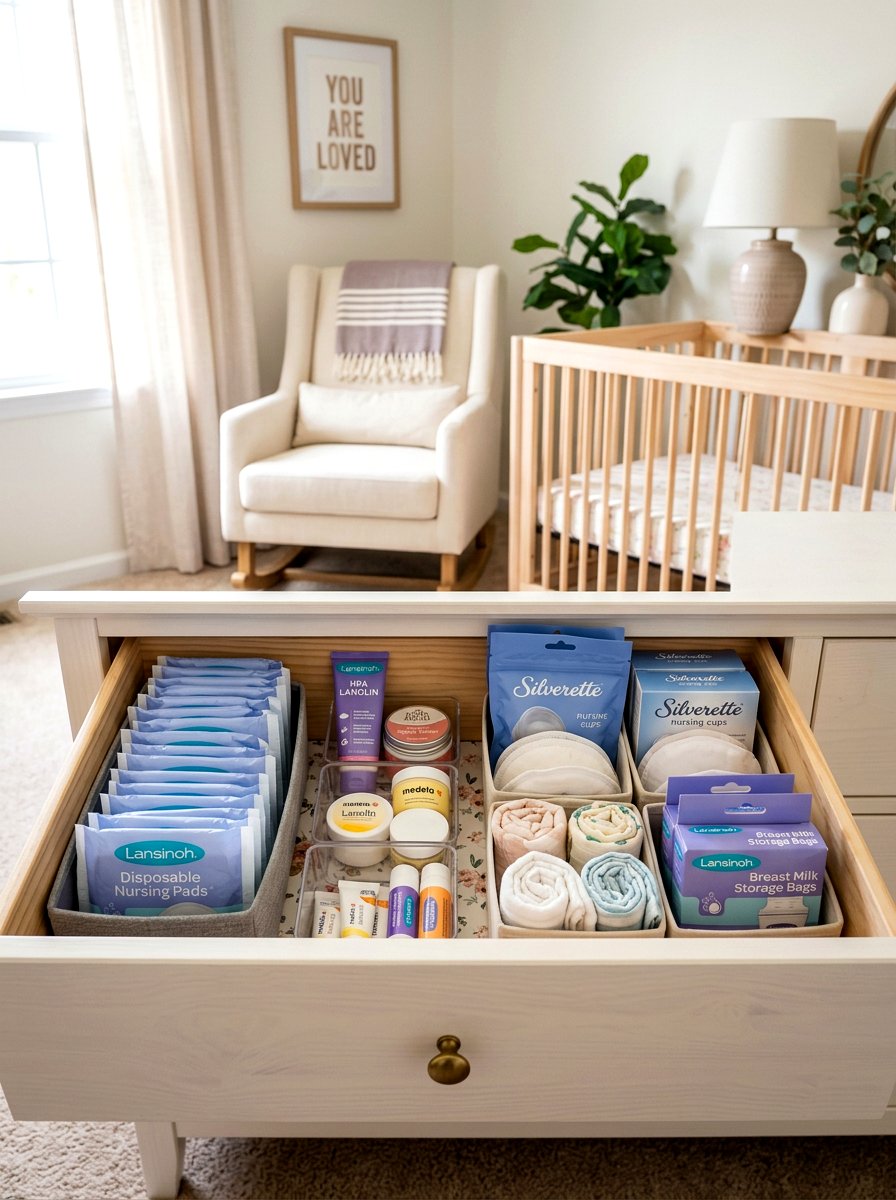
If you are nursing, having a dedicated breastfeeding supplies drawer in the nursery dresser can provide much-needed convenience. This drawer can house items like nursing pads, nipple creams, and spare pump parts, keeping them close to your nursing chair or glider. By organizing these essentials in the dresser, you avoid having them scattered around the room or taking up valuable space on side tables. Use small dividers to keep the items separated and easy to grab, even in low light. This thoughtful addition to your nursery organization supports your comfort and ensures that everything you need for a successful feeding session is tucked away neatly and ready for use.
21. Baby grooming kit
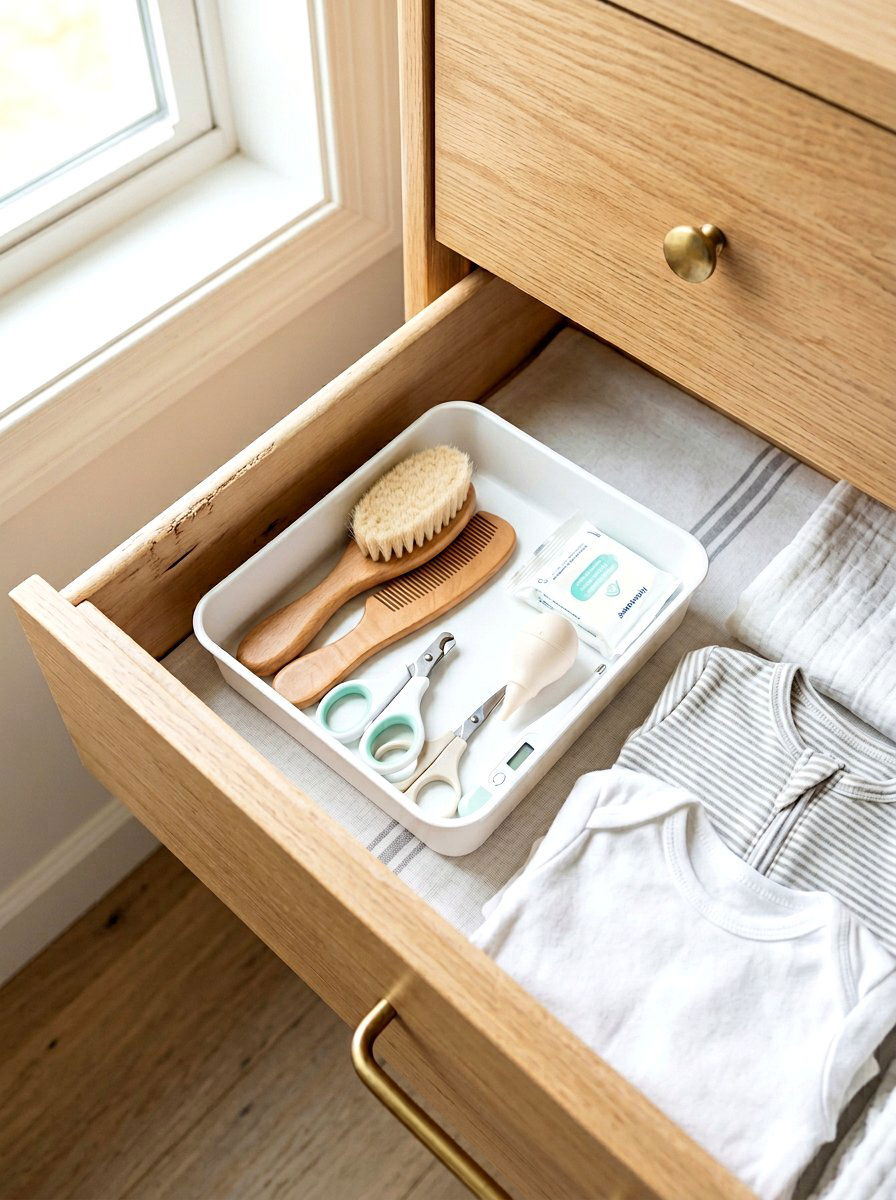
Keeping a baby grooming kit in a specific spot within your nursery dresser ensures that hygiene tasks remain simple and organized. This kit typically includes a soft-bristled brush, a fine-toothed comb, infant nail clippers, and perhaps a small bottle of baby-safe lotion. Instead of letting these items float loosely in a large drawer, keep them together in a small pouch or a dedicated organizer tray. This prevents sharp nail clippers from getting lost and ensures the hairbrush stays clean and ready for use. Having a designated grooming station within your dresser makes it easy to incorporate these small but important care steps into your daily post-bath or morning routine.
22. Outgrown clothes bin
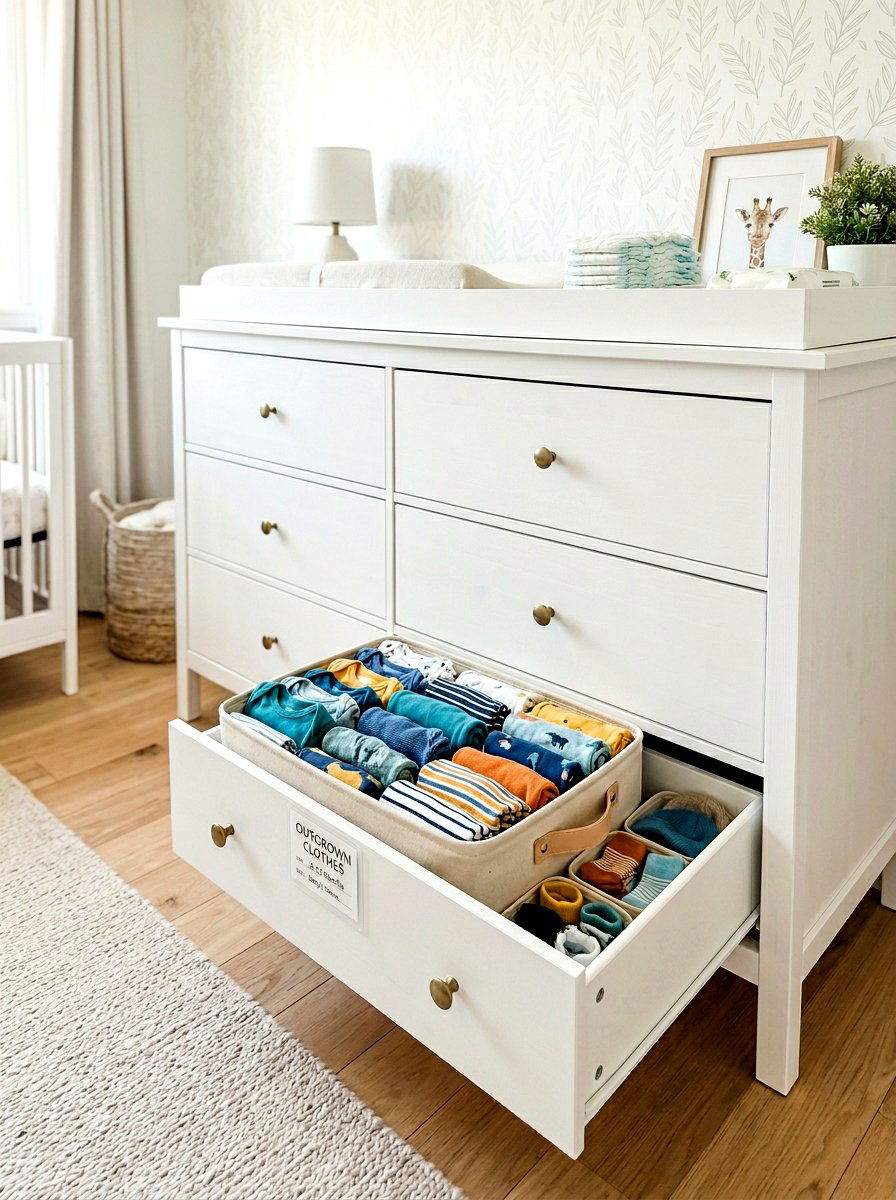
As your baby grows, having a designated bin for outgrown clothes nearby or inside the bottom dresser drawer is incredibly helpful. This bin serves as a temporary landing spot for items that no longer fit, preventing them from being mixed back in with the current wardrobe. Once the bin is full, you can easily transfer the clothes to long-term storage or prepare them for donation. This simple habit keeps your active dresser drawers clutter-free and filled only with clothes that actually fit your baby right now. It is a proactive way to manage the constant cycle of outgrowing garments, making the transition to larger sizes much more organized.
23. Nursery dresser lamp
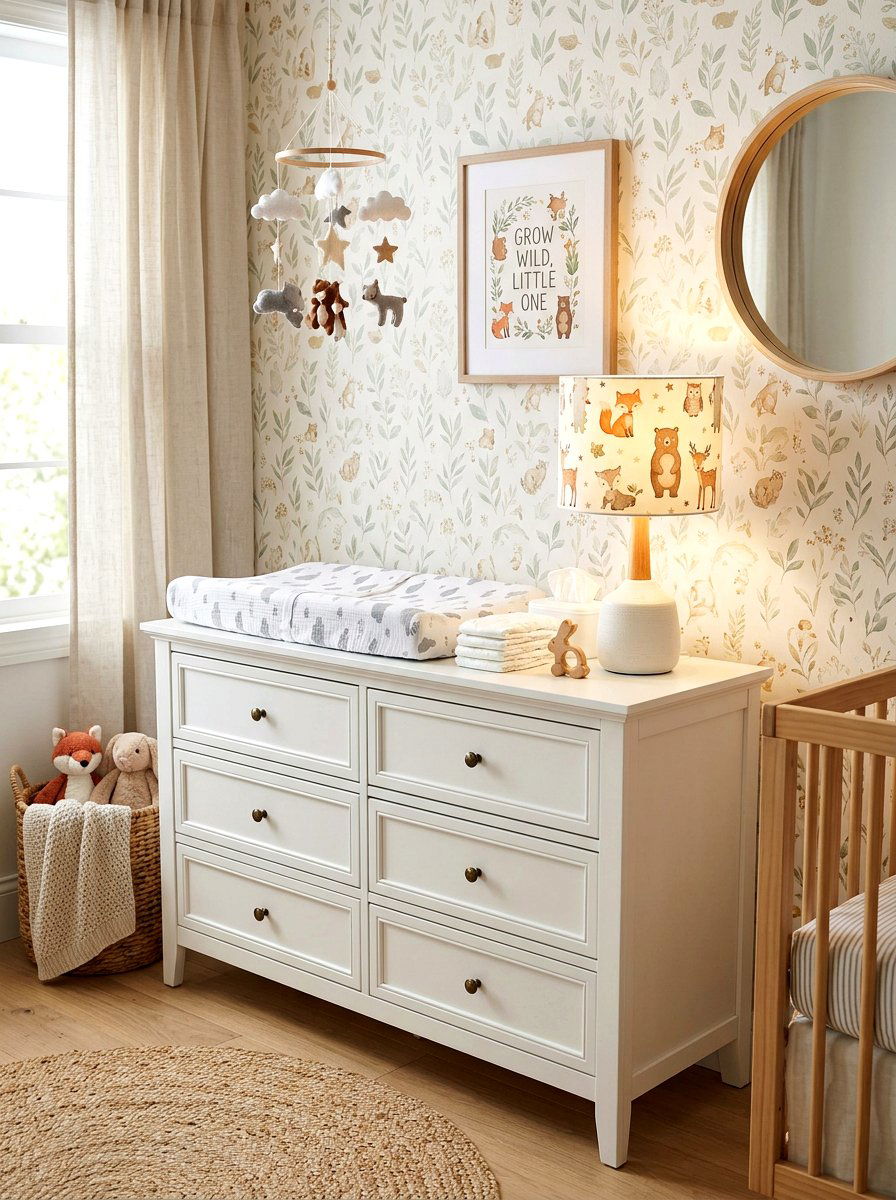
Placing a dedicated lamp on your nursery dresser provides essential task lighting for late-night diaper changes and bedtime prep. A lamp with a soft, warm glow is much better than harsh overhead lights, helping to keep the baby in a sleepy state during nighttime care. Many modern nursery lamps come with dimmable features or touch sensors, allowing you to adjust the brightness with ease. This lighting choice not only serves a functional purpose but also adds to the overall ambiance and decor of the room. It acts as a focal point on the dresser surface, making the space feel cozy, inviting, and well-prepared for any time of day.
24. Custom wooden dividers
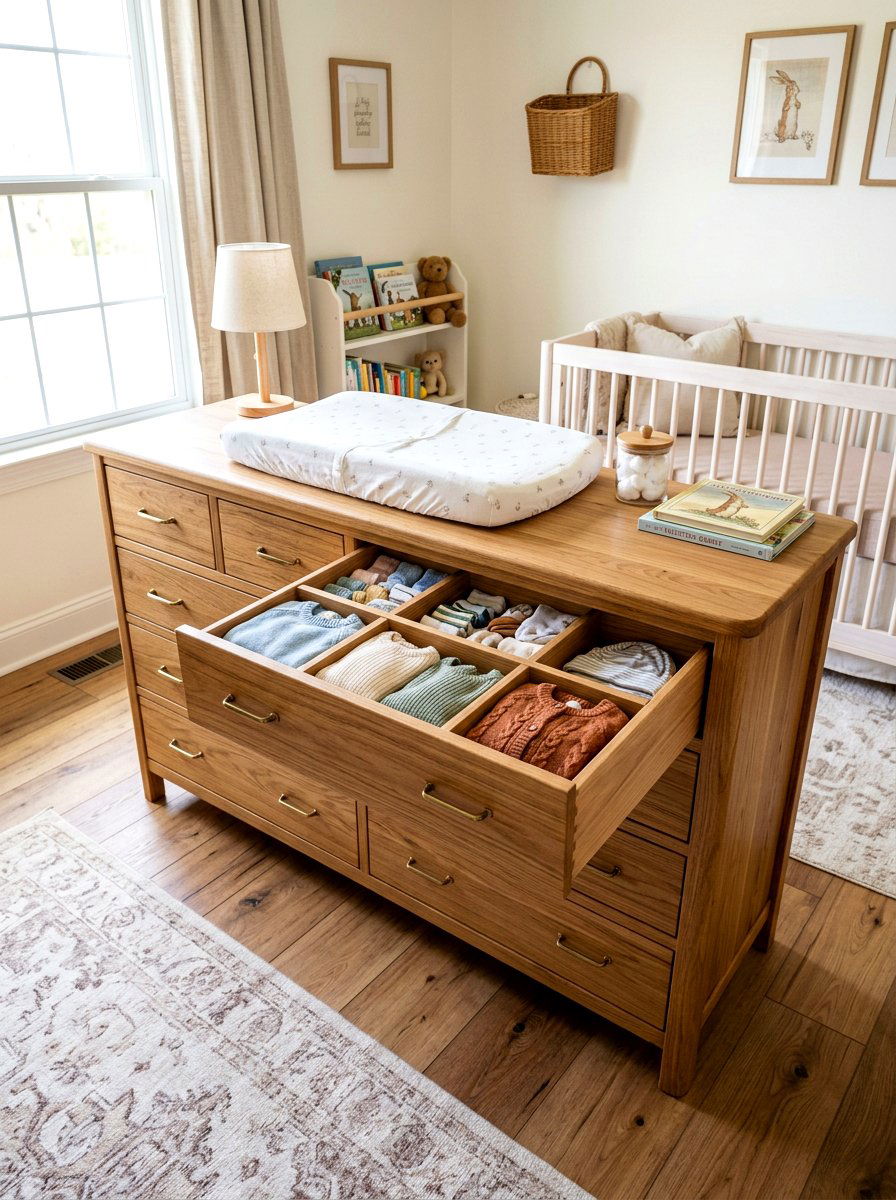
For a high-end and permanent organization solution, custom wooden dividers can be installed to perfectly match the interior of your nursery dresser. These dividers are often made from cedar or pine and provide a sturdy, high-quality feel that fabric or plastic alternatives cannot match. They can be fixed into place to create specific zones for different types of baby clothing, such as sweaters and heavy knits. Wooden dividers add a touch of craftsmanship to the furniture and are durable enough to last through several children. This investment in organization elevates the entire look of the nursery while providing a robust system for keeping everything in its proper place.
25. Collapsible fabric bins
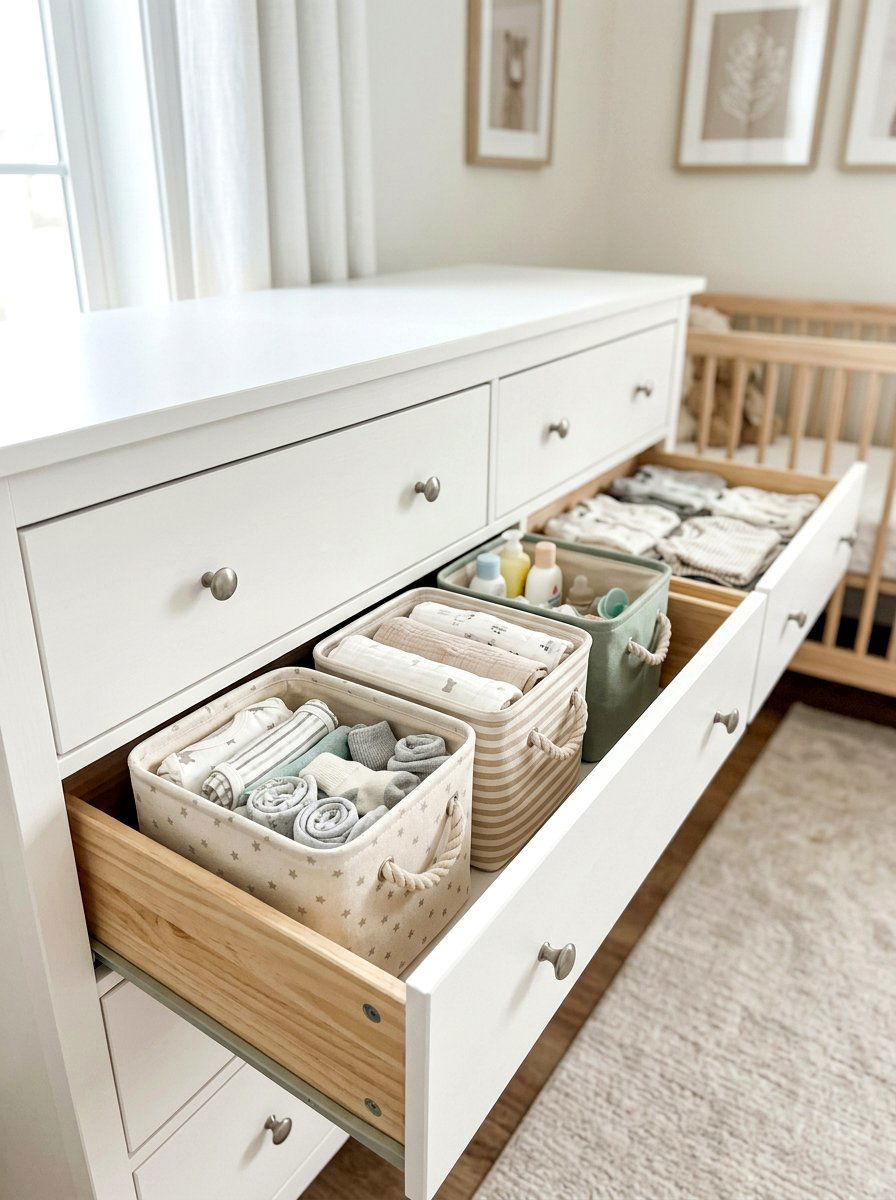
Collapsible fabric bins offer a flexible and soft storage option that is ideal for the ever-changing needs of a growing nursery. These bins are perfect for organizing larger items like thick winter blankets or a collection of hooded bath towels. When not in use, they can be folded flat and tucked away, making them a great choice for parents who want to adapt their storage over time. They come in a wide variety of colors and patterns, allowing you to coordinate them with your nursery's wallpaper or bedding. Fabric bins provide a gentle touch inside the dresser, protecting delicate baby fabrics while keeping everything neatly categorized and easy to access.
26. Deep dresser drawers
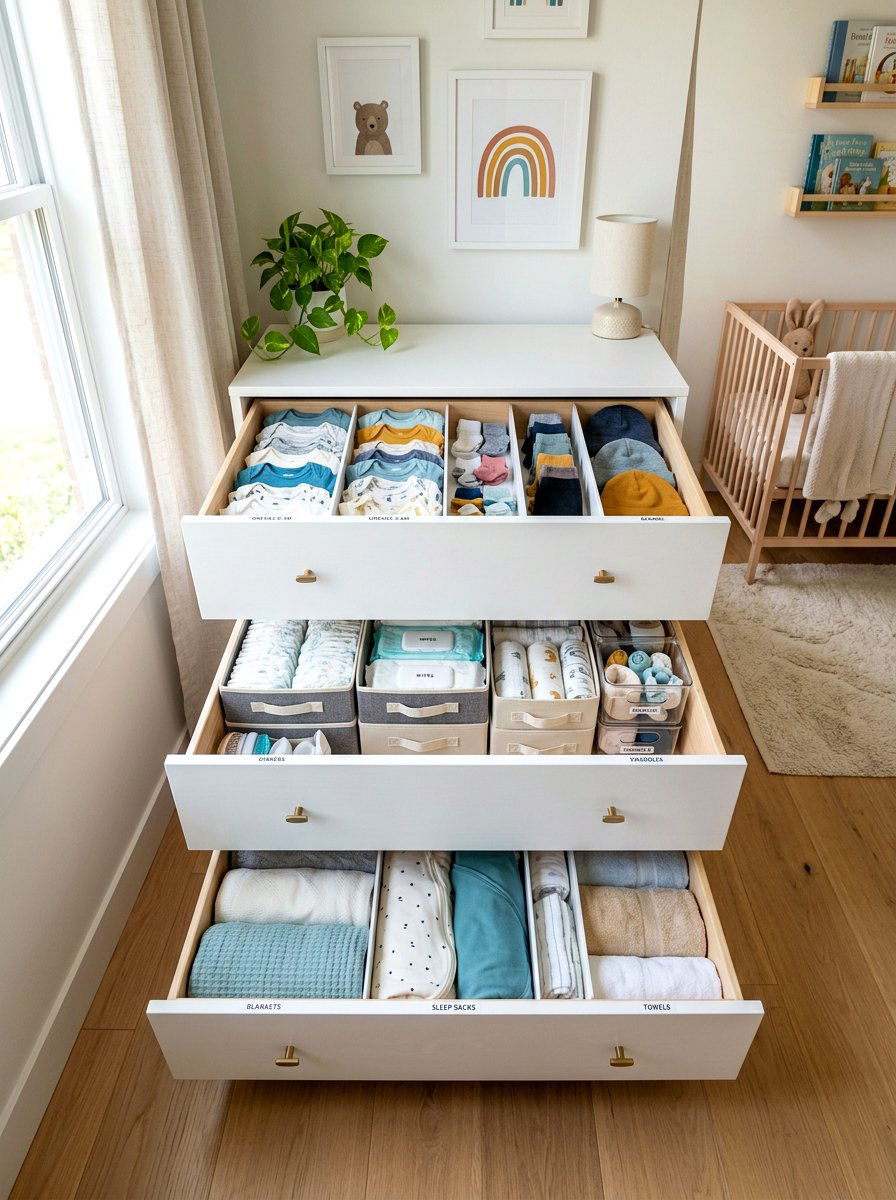
Deep dresser drawers offer a unique organizational challenge but can be incredibly useful for storing bulky nursery items. To make the most of this space, use stackable bins or tall dividers to prevent items from becoming a tangled mess at the bottom. These deep sections are perfect for storing extra packages of wipes, heavy sleep sacks, or even a small collection of board books. By layering your storage thoughtfully, you can maximize every inch of the dresser's volume. Using vertical space within these deep drawers ensures that nothing gets lost at the back, allowing you to maintain a high level of organization throughout the entire piece of furniture.
27. Baby memory box
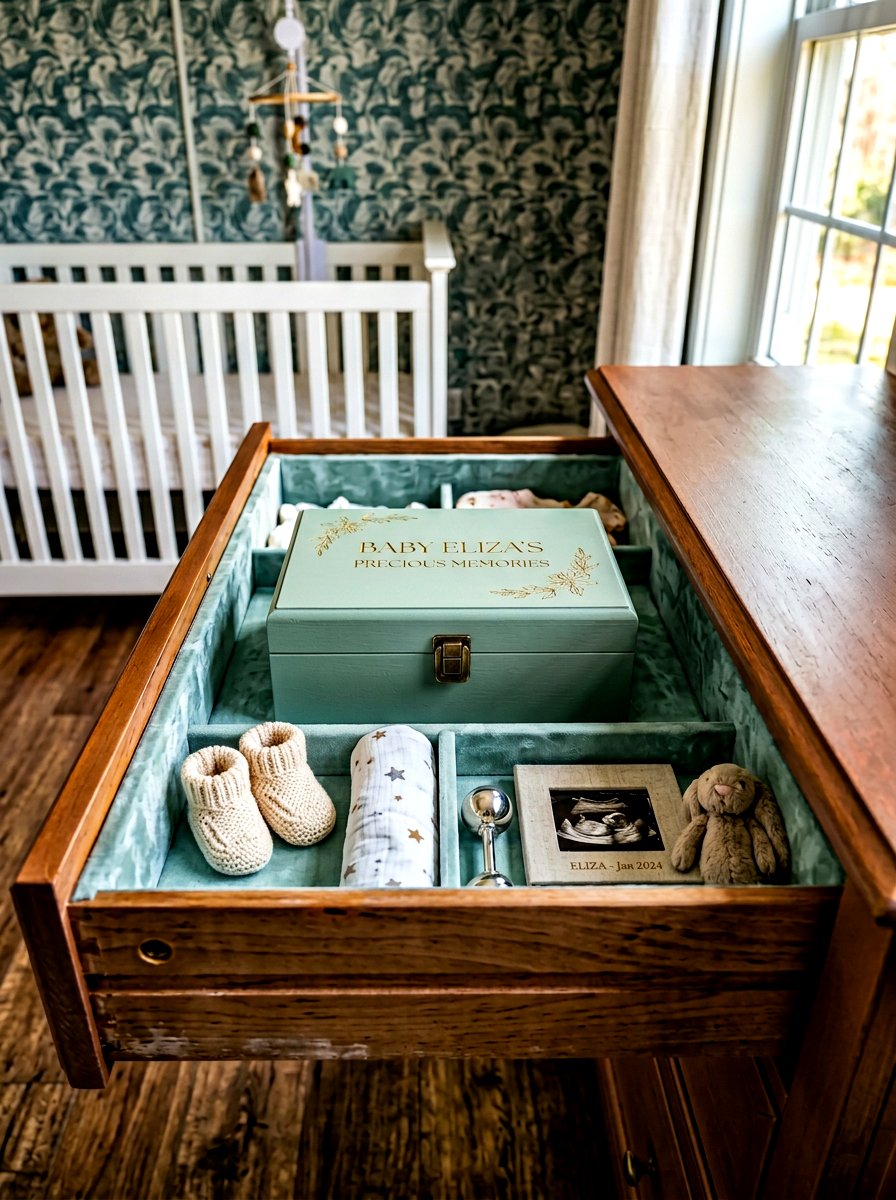
Including a dedicated baby memory box within one of the lower dresser drawers is a beautiful way to organize and protect precious keepsakes. This box can hold items like the hospital's first hat, ultrasound photos, and special cards received during the baby shower. By keeping these mementos in the nursery dresser, you ensure they are safe from dust and damage while being close to the room where your baby is growing. It provides a central location for those small but significant tokens of the early days that you will want to cherish for years to come. This organizational habit blends practical storage with sentimental value in the nursery.
28. Nursery dresser mirror
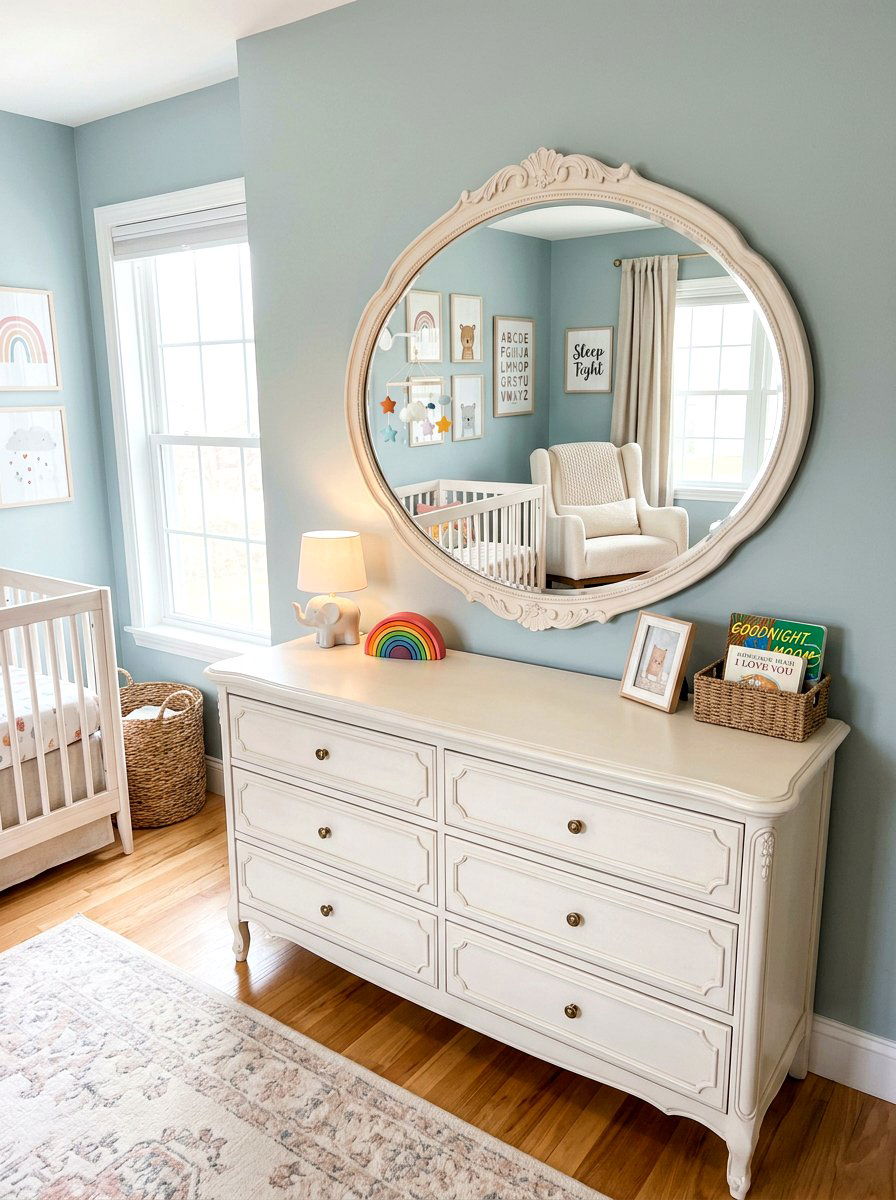
Adding a mirror above your nursery dresser is a classic design choice that also serves several practical purposes for both parent and baby. A mirror reflects light, making the nursery feel larger and brighter, which is especially beneficial in smaller rooms. For your baby, a mirror provides endless entertainment during diaper changes, as they love to look at their own reflection and practice facial expressions. For parents, it offers a quick way to check your own appearance or see what is happening in the room behind you while you are focused on the changing table. It anchors the dresser as a primary design element while adding functionality and visual interest.
29. Side dresser hamper
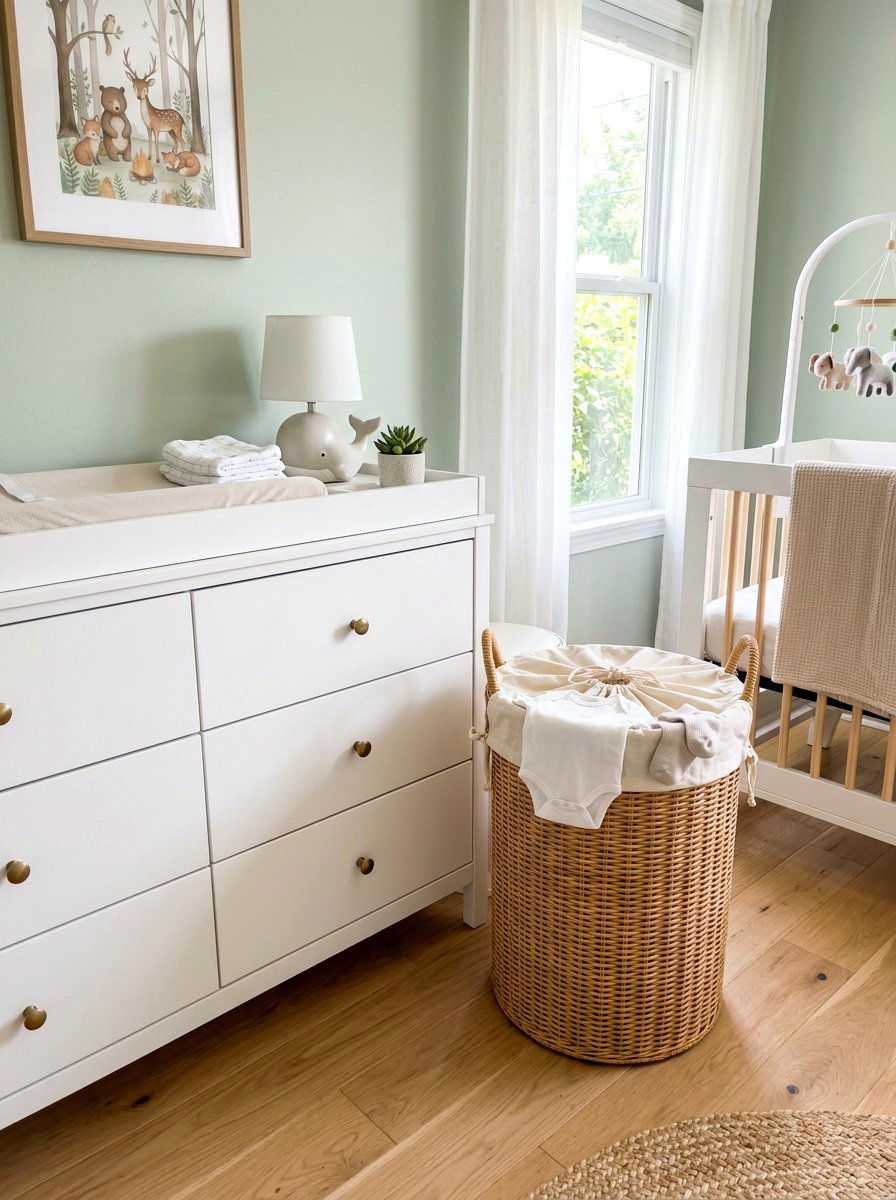
Placing a small laundry hamper directly next to the nursery dresser is a smart organizational move that streamlines the process of managing dirty clothes. Babies can go through several outfits a day, and having a dedicated spot to toss soiled items immediately prevents them from piling up on the floor or the dresser top. Choose a hamper that coordinates with your nursery decor and features a removable liner for easy transport to the laundry room. This proximity ensures that the area around the dresser remains clean and tidy, allowing you to focus on caring for your baby rather than constantly picking up stray socks and onesies.
30. Vertical dresser organization
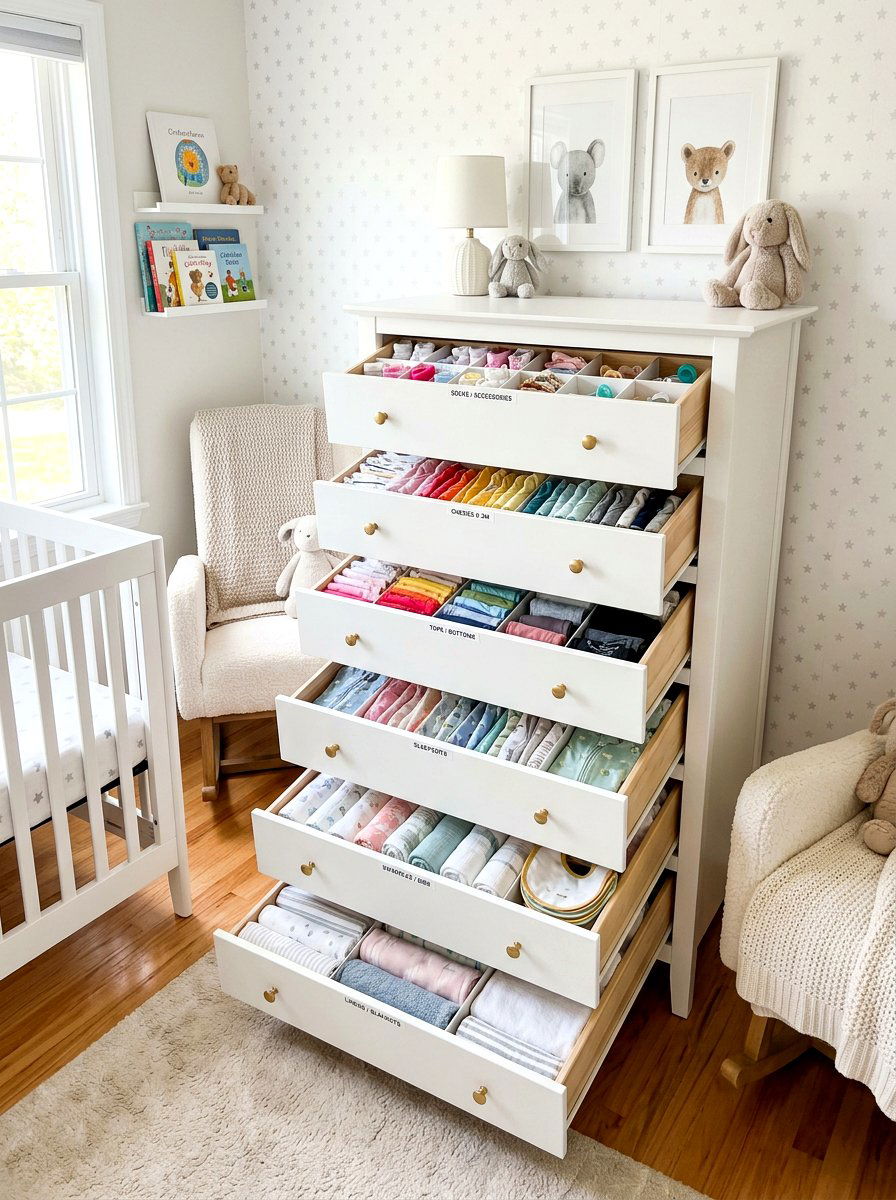
Implementing a vertical organization mindset throughout your entire nursery dresser ensures that every item is visible and easy to reach. This means avoiding high stacks of clothes where the bottom items are forgotten and instead opting for filing methods and upright storage for everything from diapers to leggings. When you open a drawer, the goal should be to see the edges of every garment at a single glance. This comprehensive approach to organization saves time during busy mornings and helps you keep track of your inventory. It creates a highly functional and visually peaceful environment that supports the daily rhythms of life with your new little one.
Conclusion:
Organizing a nursery dresser is a rewarding project that pays dividends in daily convenience and peace of mind. By choosing the right combination of dividers, bins, and folding techniques, you can create a customized system that perfectly fits your family 's needs and your baby' s growing wardrobe. Remember that the best organization is one that you can realistically maintain even during the busiest weeks of parenthood. As your child grows, do not be afraid to adjust your layout and tools to accommodate larger clothes and changing needs. A well-ordered nursery dresser sets the stage for a calm, efficient, and beautiful space where you can enjoy every precious moment with your baby.

Related posts: